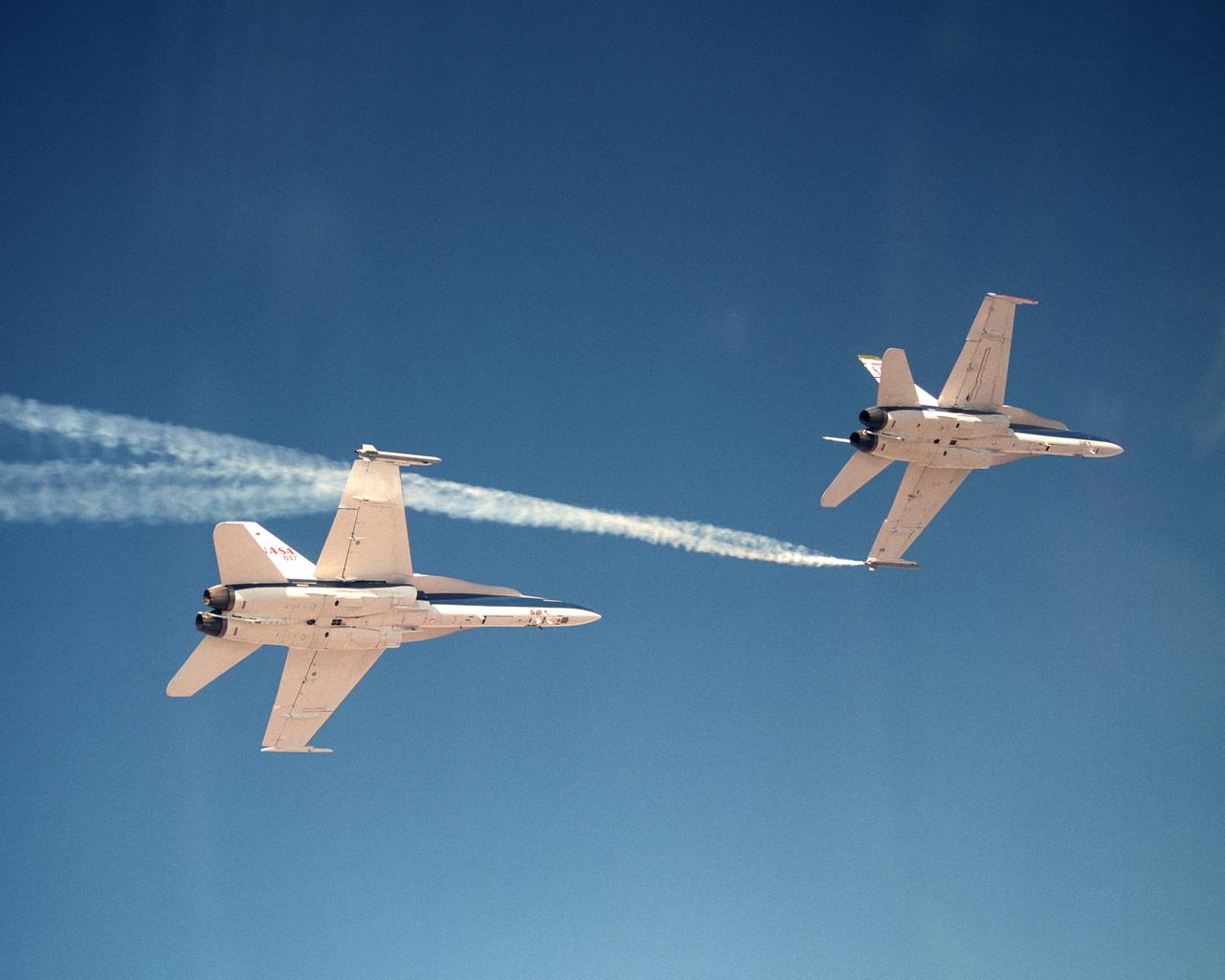
Smoke generators show the twisting paths of wingtip vortices behind two NASA Dryden F/A-18 jets used in the Autonomous Formation Flight (AFF) program
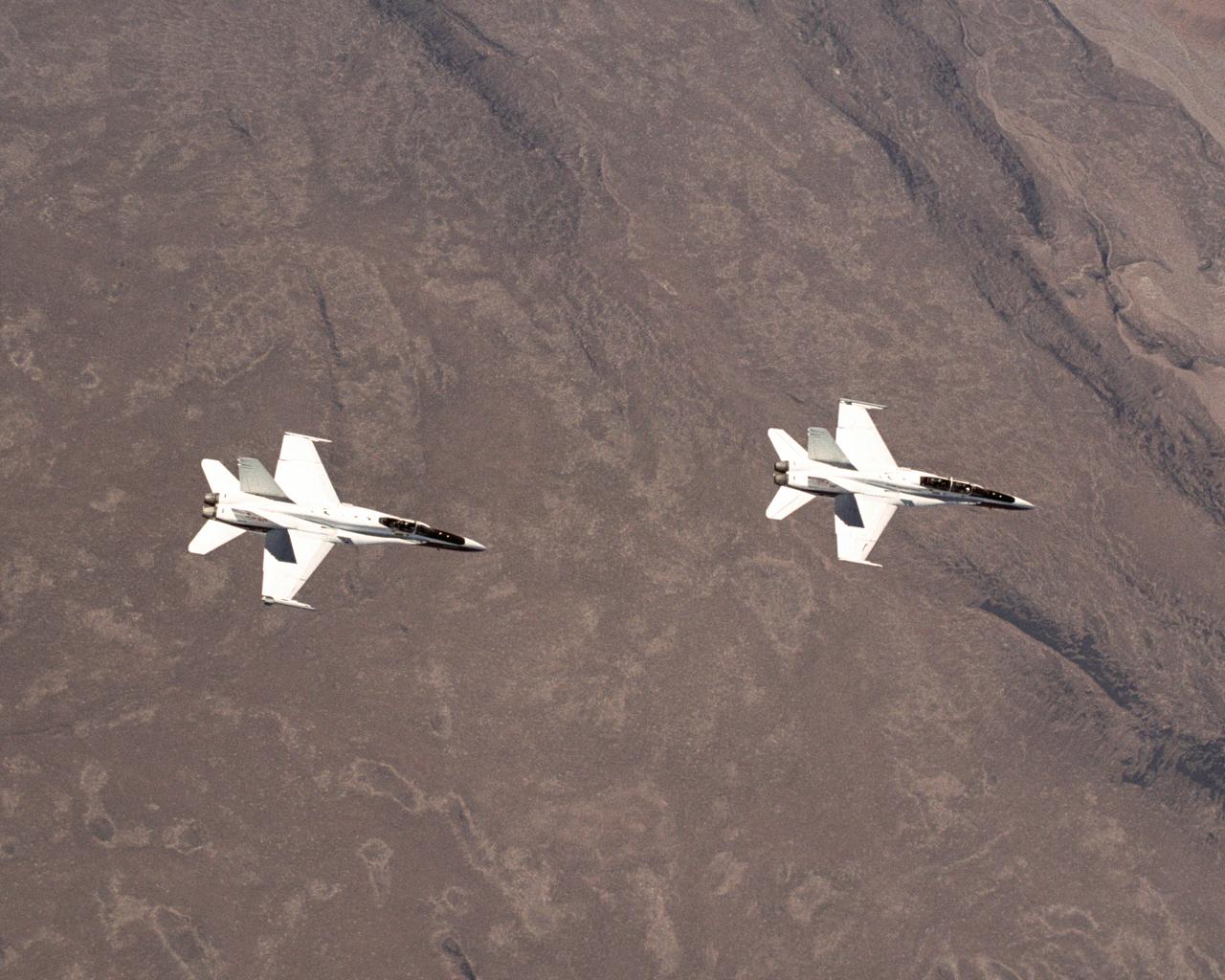
These two NASA F/A-18 aircraft are flying a test point for the Autonomous Formation Flight project over California's Mojave Desert.
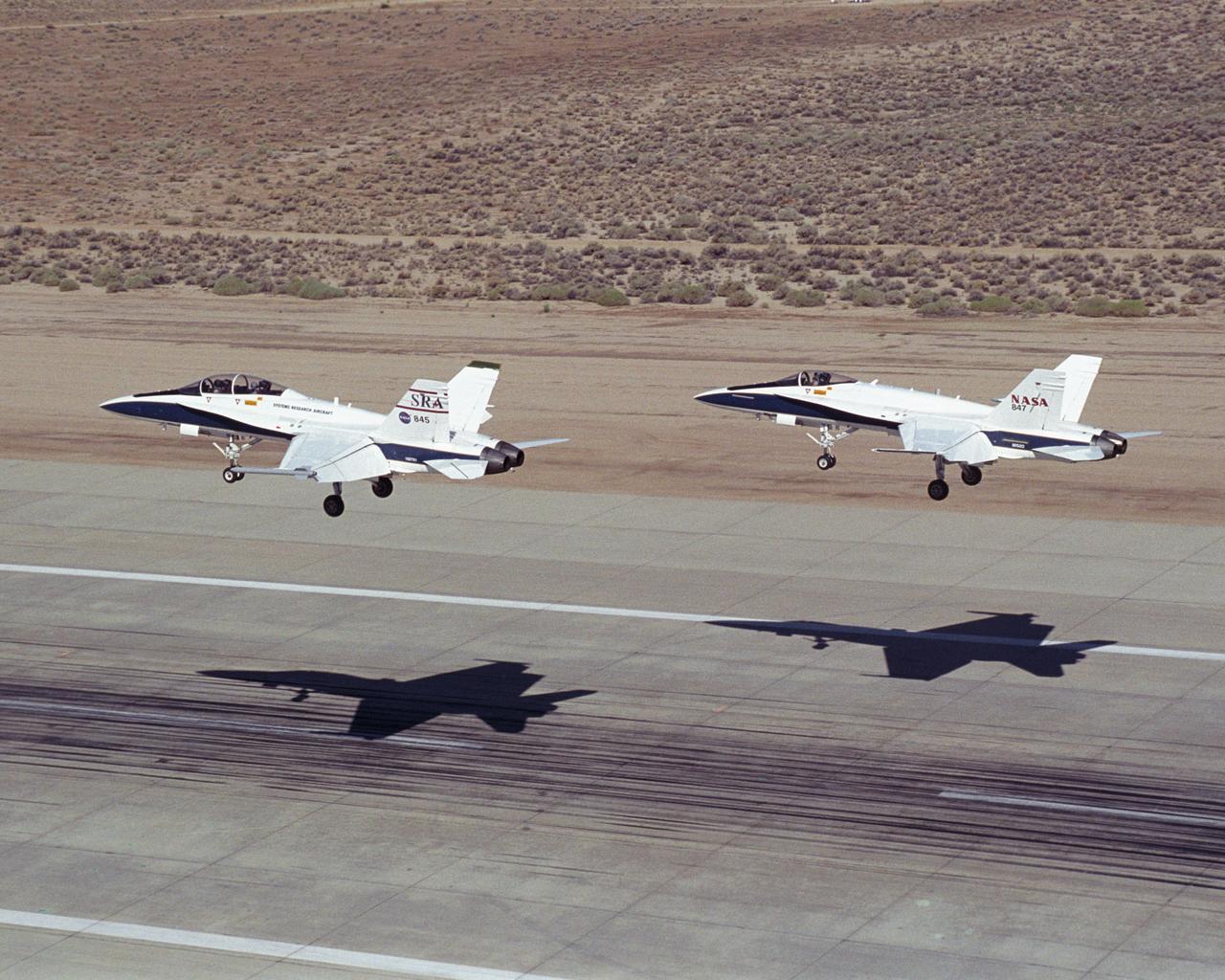
Two NASA Dryden F/A-18's land on the Edwards Air Force Base runway after completion of an Autonomous Formation Flight (AFF) mission.
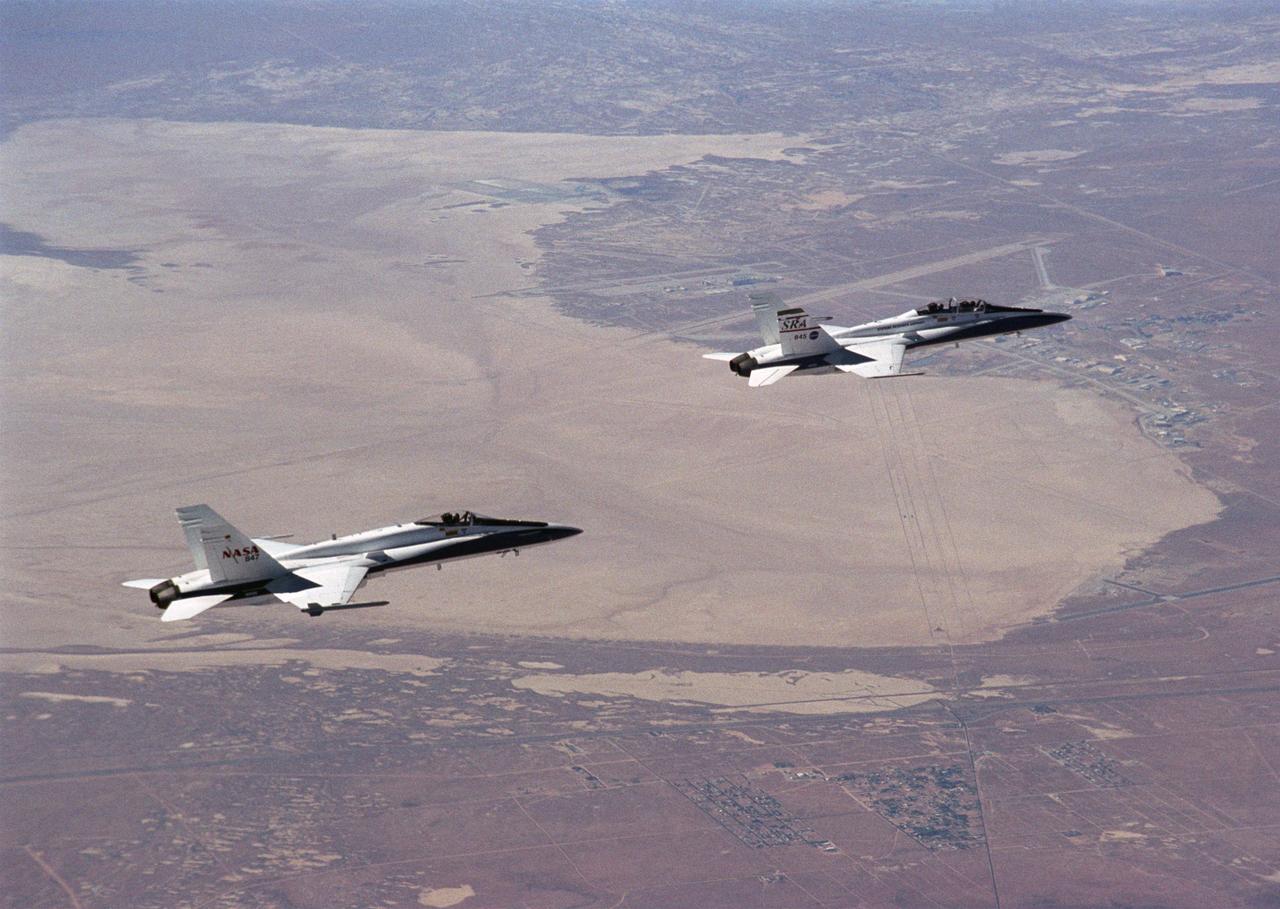
Flying an Autonomous Formation Flight mission, two F/A-18s from the NASA Dryden Flight Research Center, Edwards, California, gain altitude near Rogers Dry Lake.
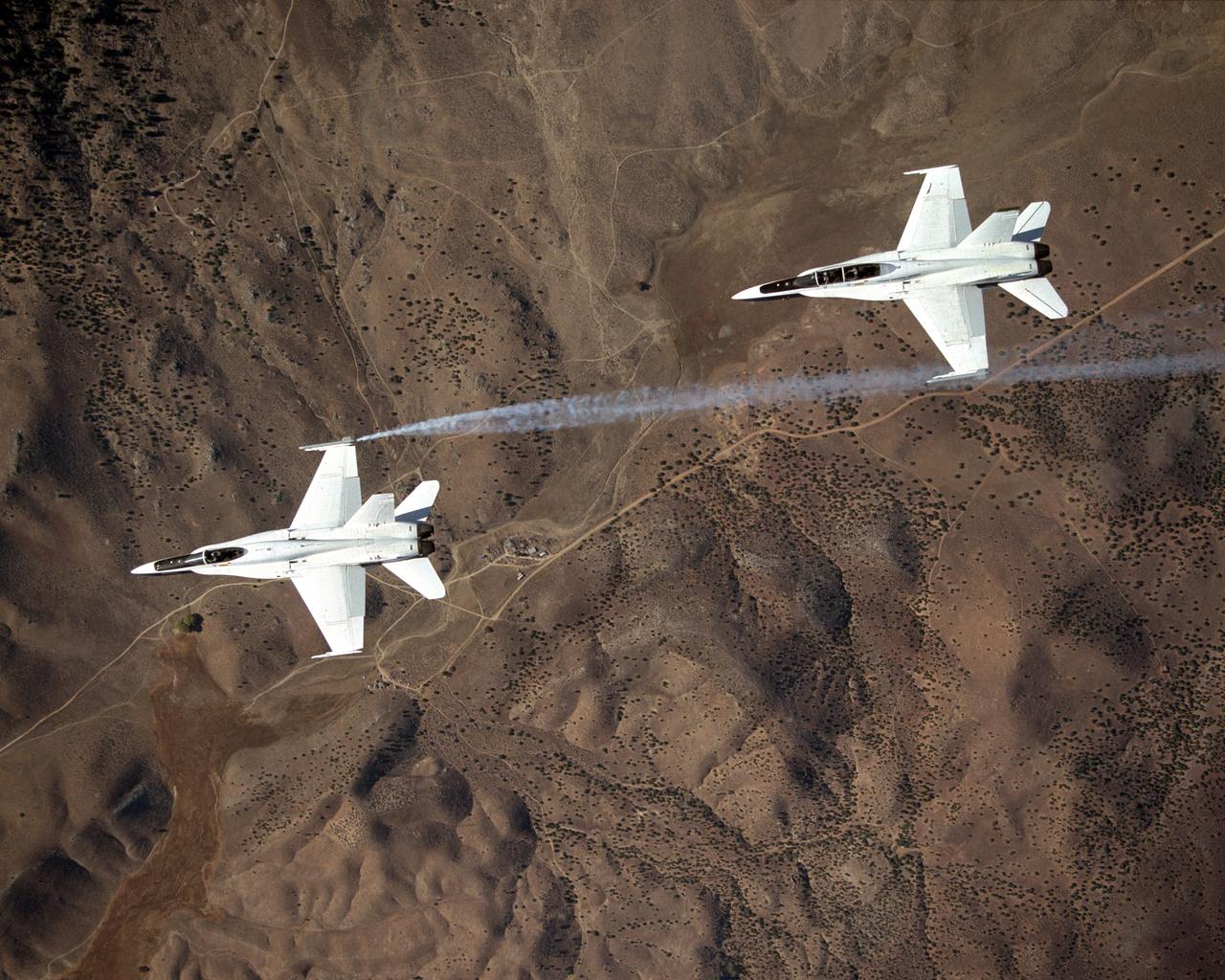
Smoke generators show the twisting paths of wingtip vortices behind two NASA Dryden F/A-18's used in the Autonomous Formation Flight (AFF) program during flight #743.
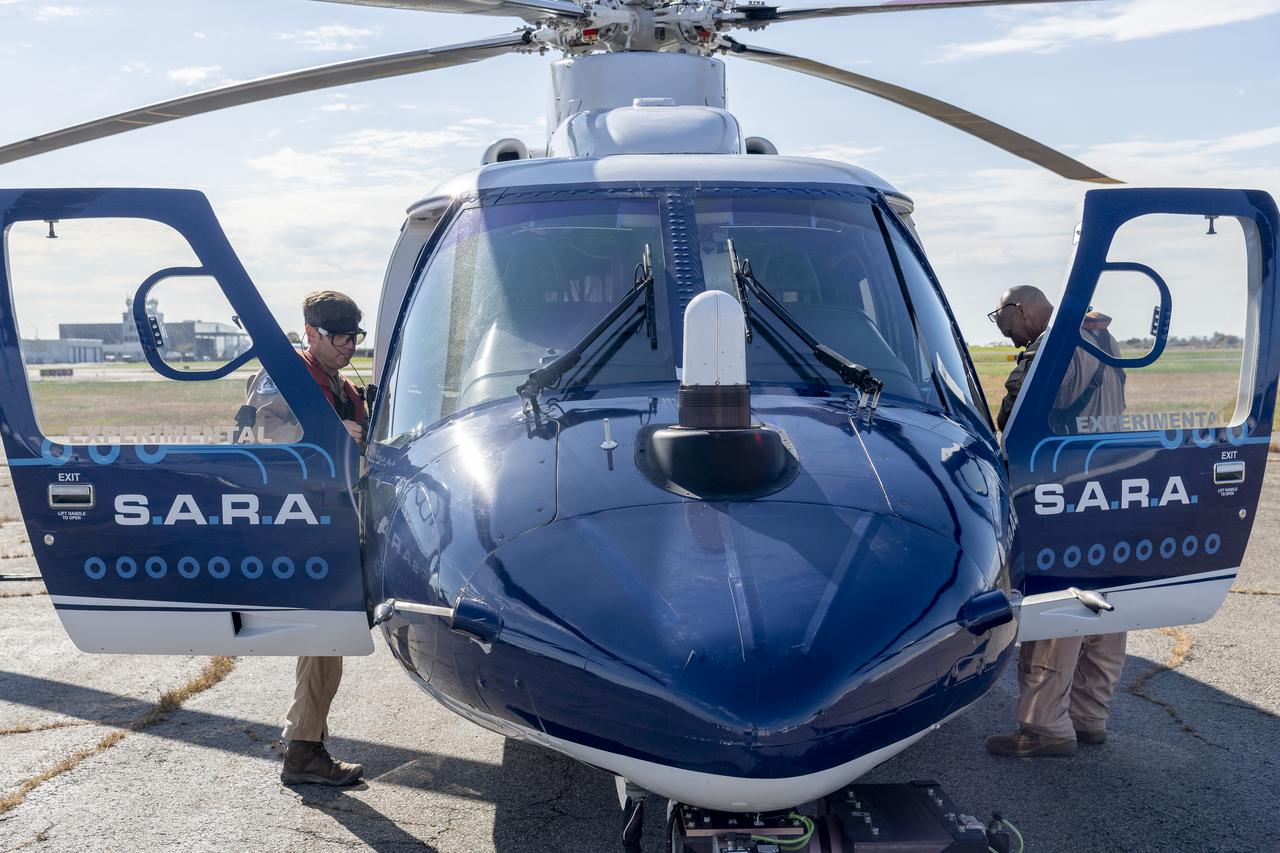
NASA pilot Scott Howe, left, and Sikorsky safety pilot Brent Davis, prepare to board Sikorsky’s SARA S-76B experimental aircraft at Sikorsky Memorial Airport, Bridgeport, Connecticut on Tuesday, Oct. 24, 2023. In addition to Sikorsky’s MATRIX autonomous flight technology, SARA is also outfitted with multiple NASA autonomous flight software systems the pilots and test team will evaluate during their flights over Long Island Sound.
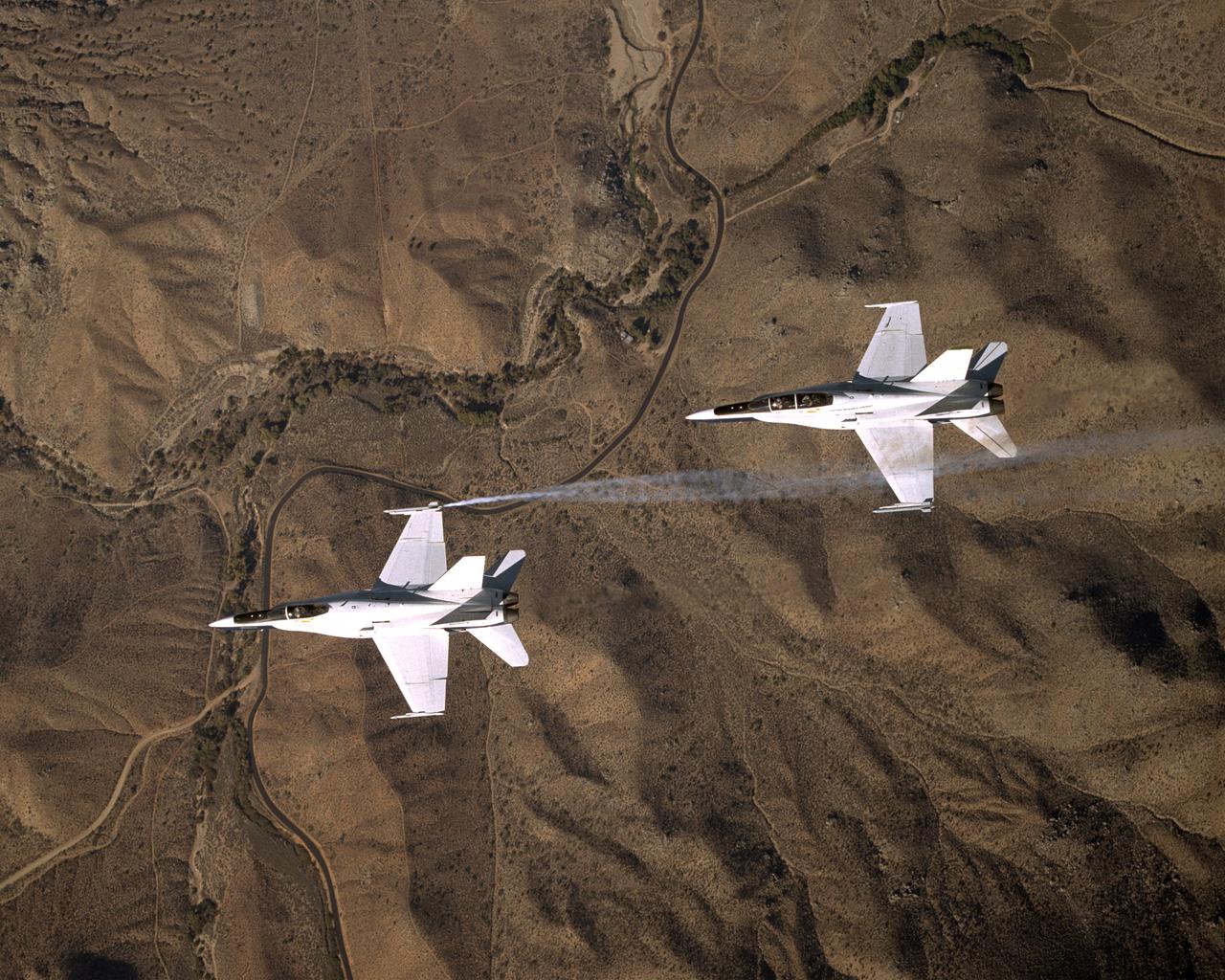
Smoke generators show the twisting paths of wingtip vortices behind two NASA Dryden F/A-18's used in the Autonomous Formation Flight (AFF) program during flight #743.
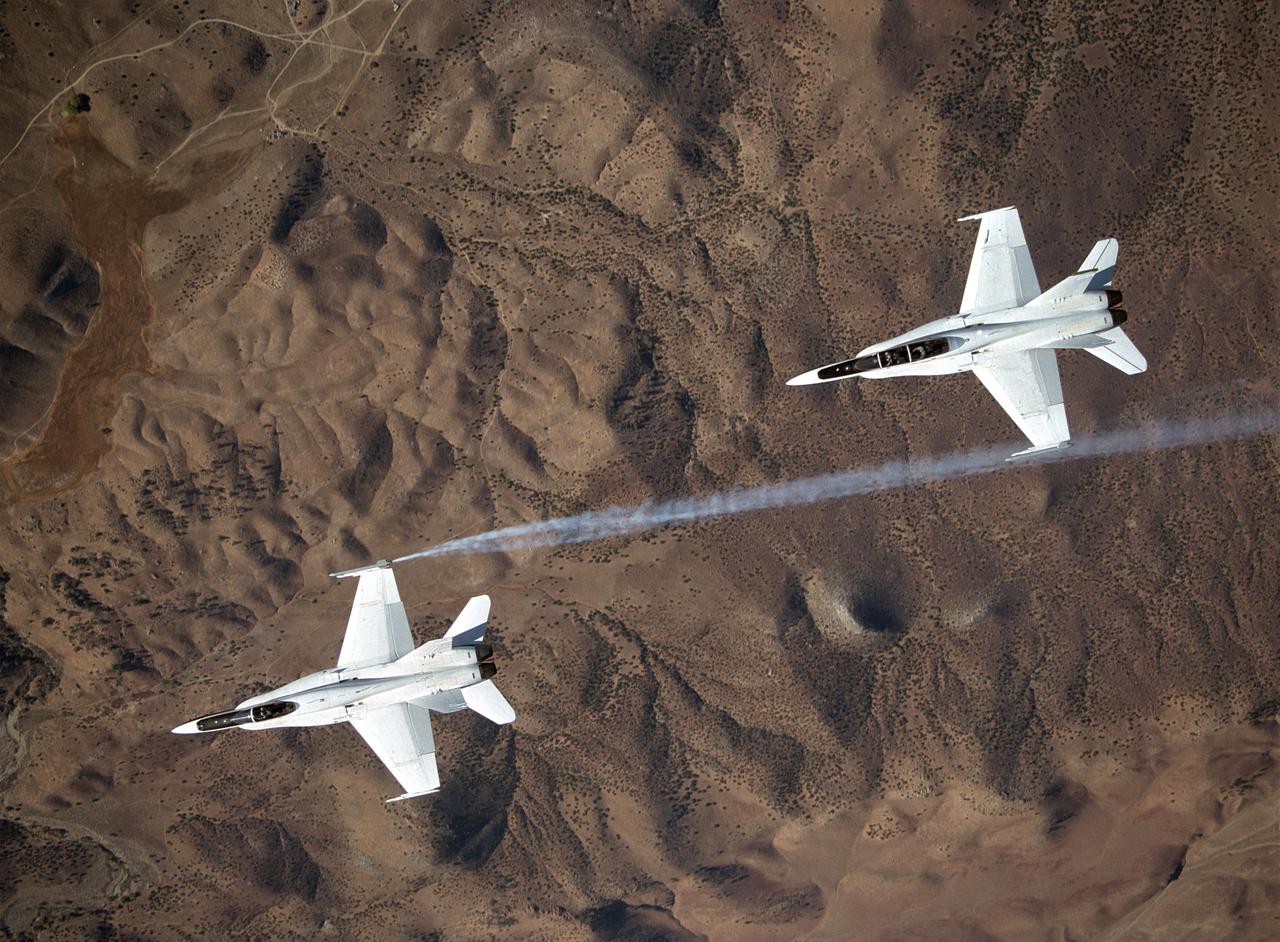
Smoke generators show the twisting paths of wingtip vortices behind two NASA Dryden F/A-18's used in the Autonomous Formation Flight (AFF) program during flight #743.
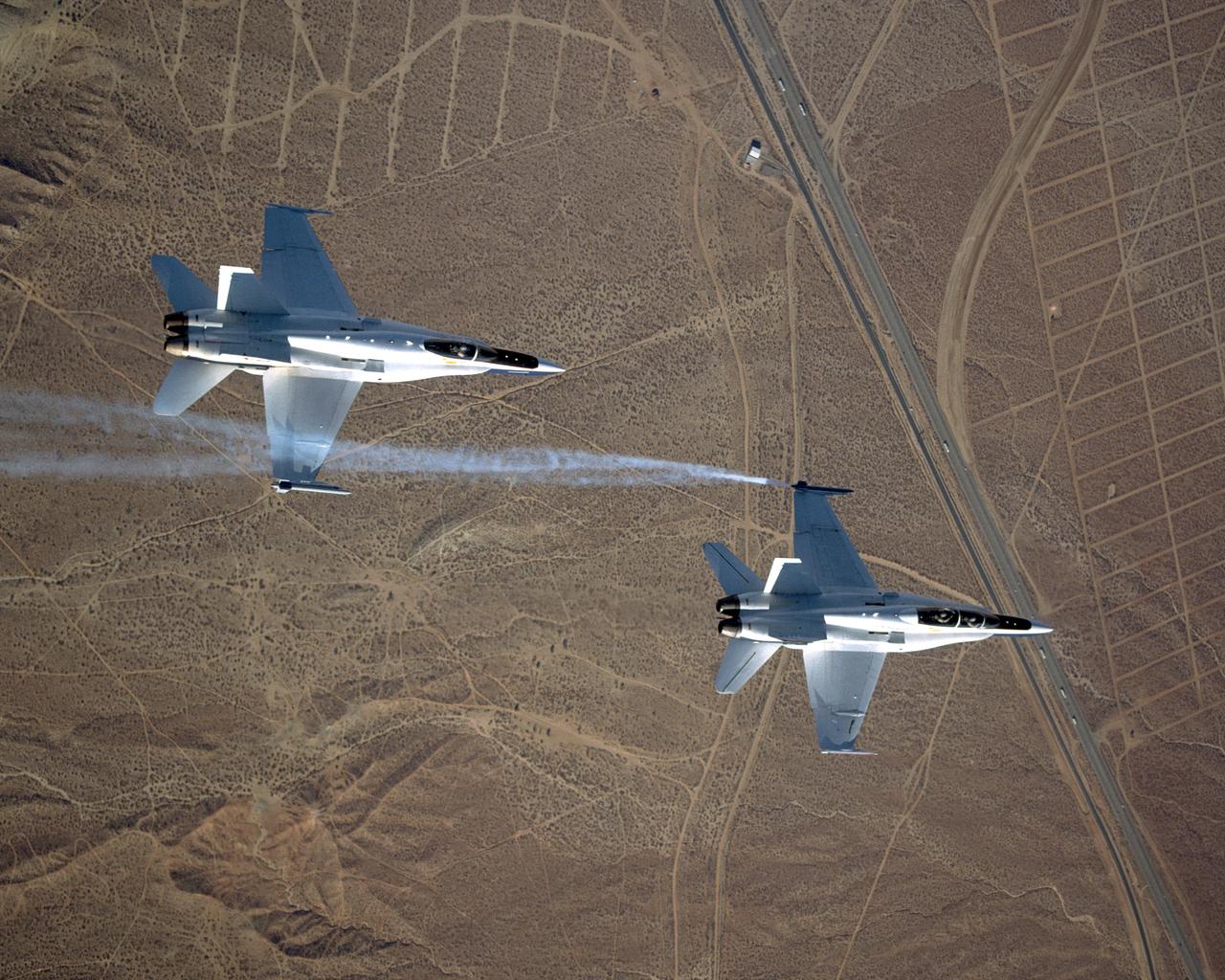
Smoke generators show the twisting paths of wingtip vortices behind two NASA Dryden F/A-18's used in the Autonomous Formation Flight (AFF) program during flight #743.

This unique view, looking directly up at two NASA Dryden F/A-18's used in the Autonomous Formation Flight (AFF) program, was captured by Carla Thomas from another F-18 flying safety/chase.
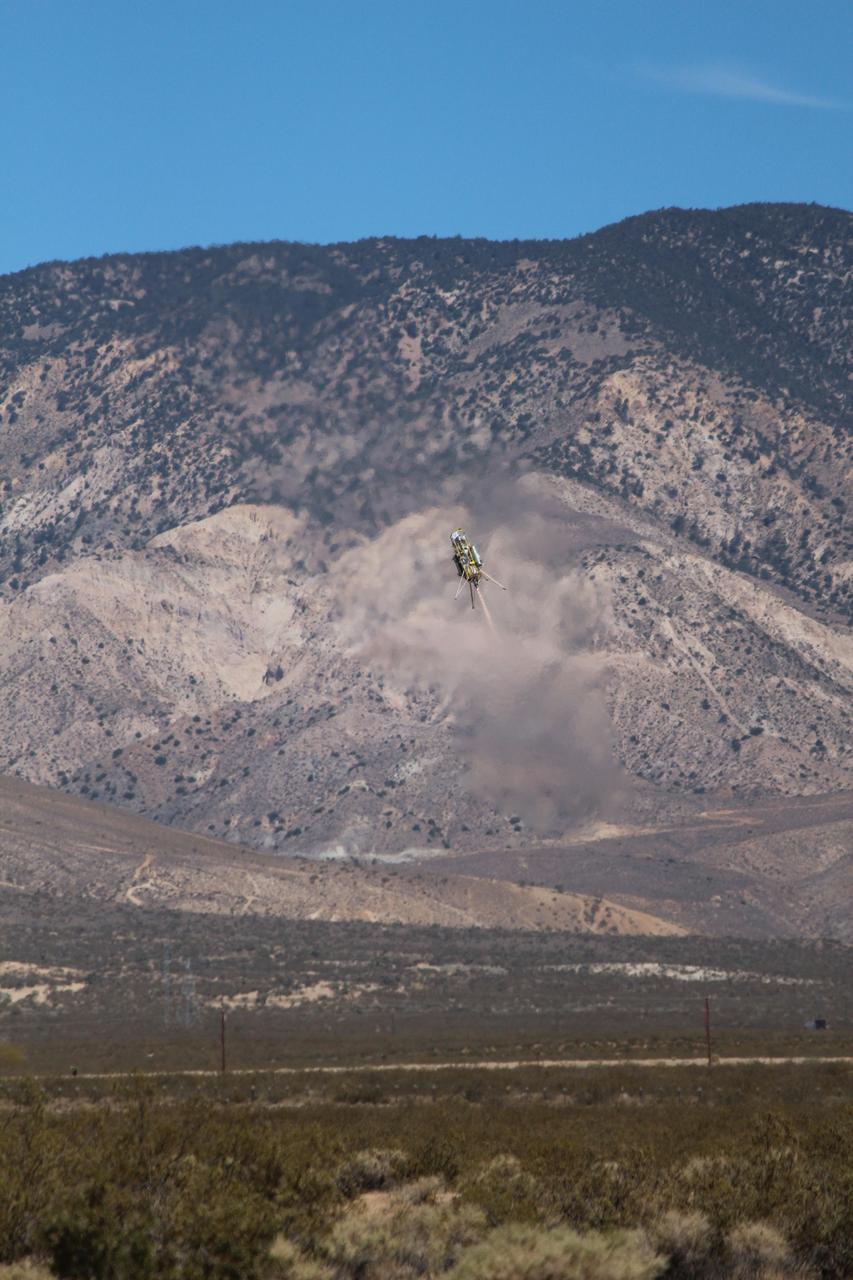
This image was taken during a flight test of JPL Autonomous Descent and Ascent Powered-Flight Testbed ADAPT. The testbed was flown aboard a Masten Space System Xombie rocket.-Flight Testbed ADAPT.
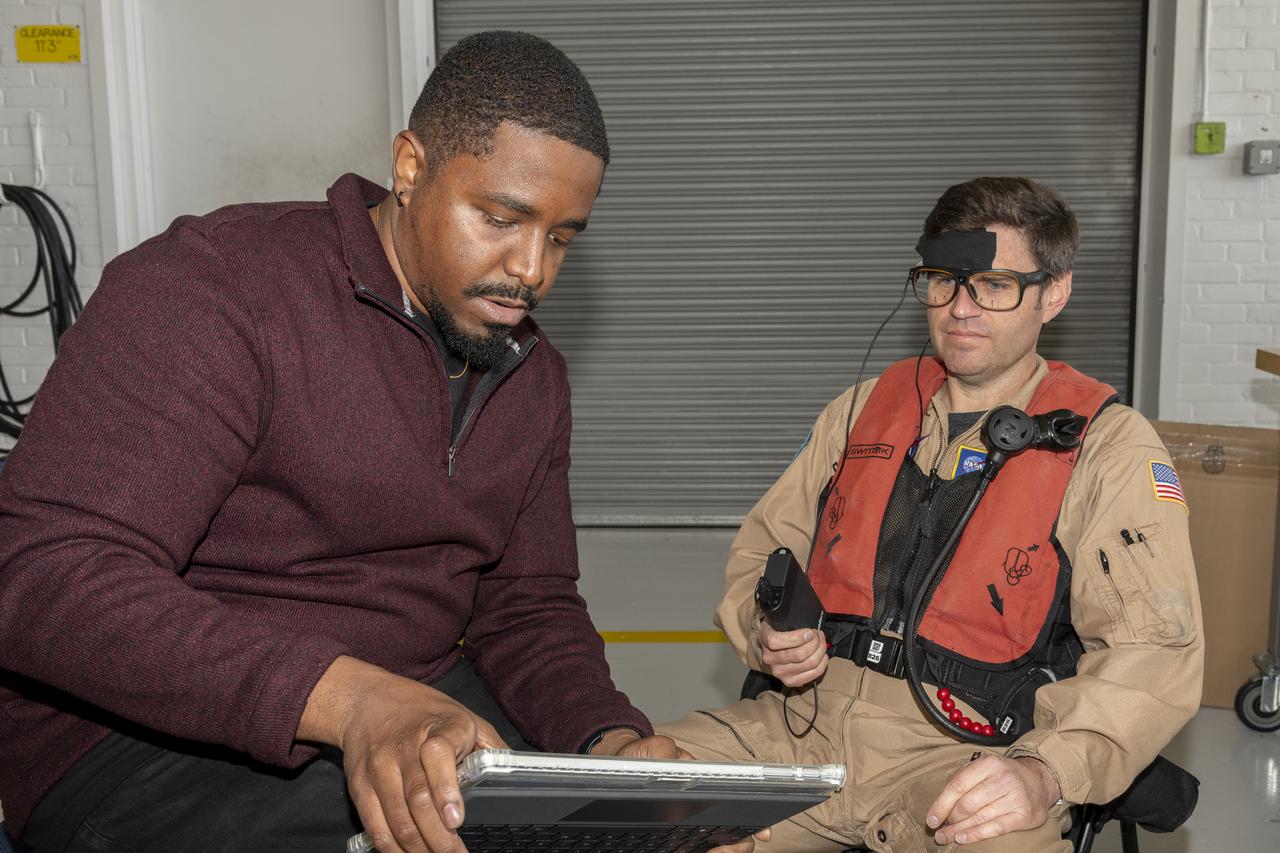
NASA human factors researcher Kevin J. Monk, left, and NASA pilot Scott Howe verify the connectivity and accuracy of the biometric sensors placed on Howe for test flight at Sikorsky Memorial Airport, Bridgeport, Connecticut on Tuesday, Oct. 24, 2023. These sensors will track various physiological responses sending the data to Monk’s computer as Howe engages with the autonomous flight software used to fly the aircraft.
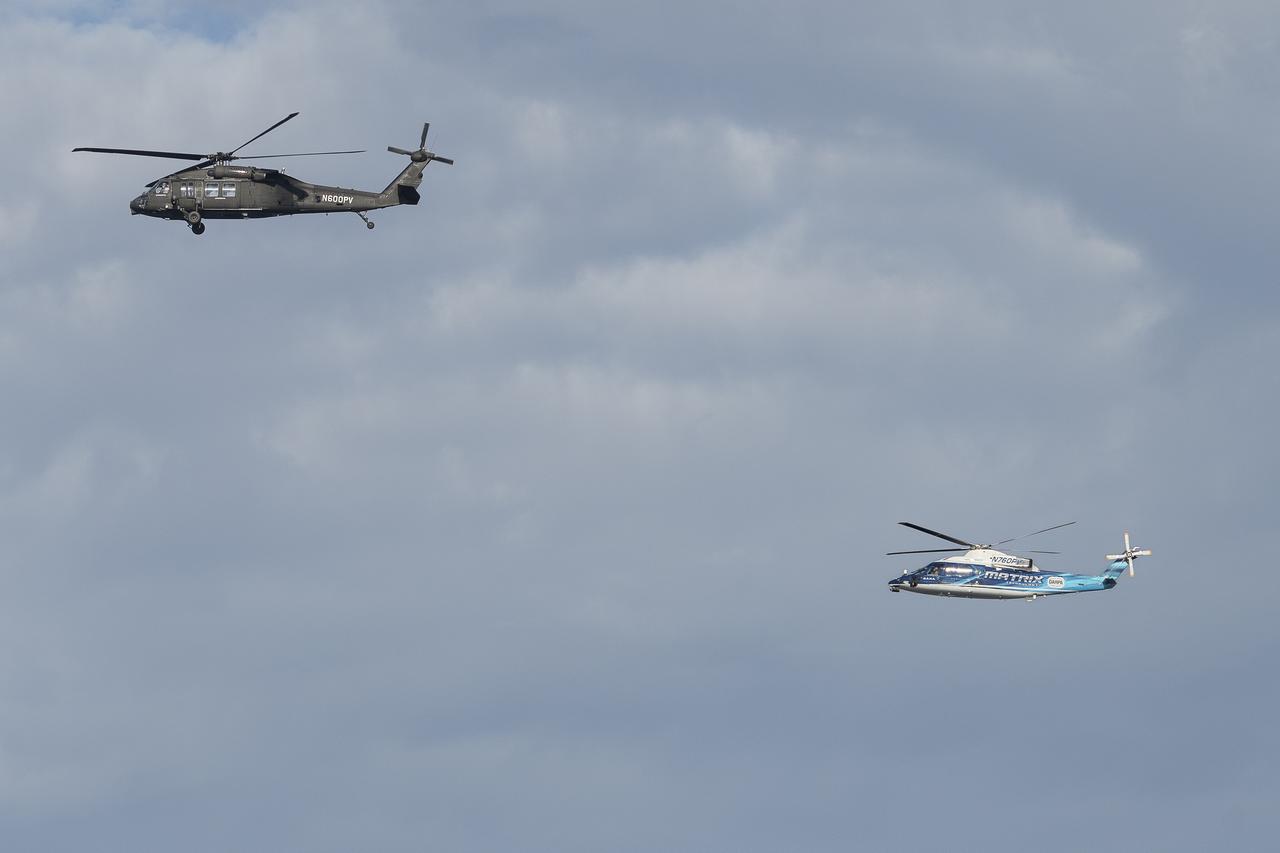
NASA pilots along with Sikorsky safety pilots flying Sikorsky’s Black Hawk Optionally Piloted Vehicle, left, and SARA S-76B over Long Island Sound Thursday, Oct. 26, 2023. These flights will allow NASA researchers to test and evaluate multiple Advanced Air Mobility autonomous flight software products designed by NASA.
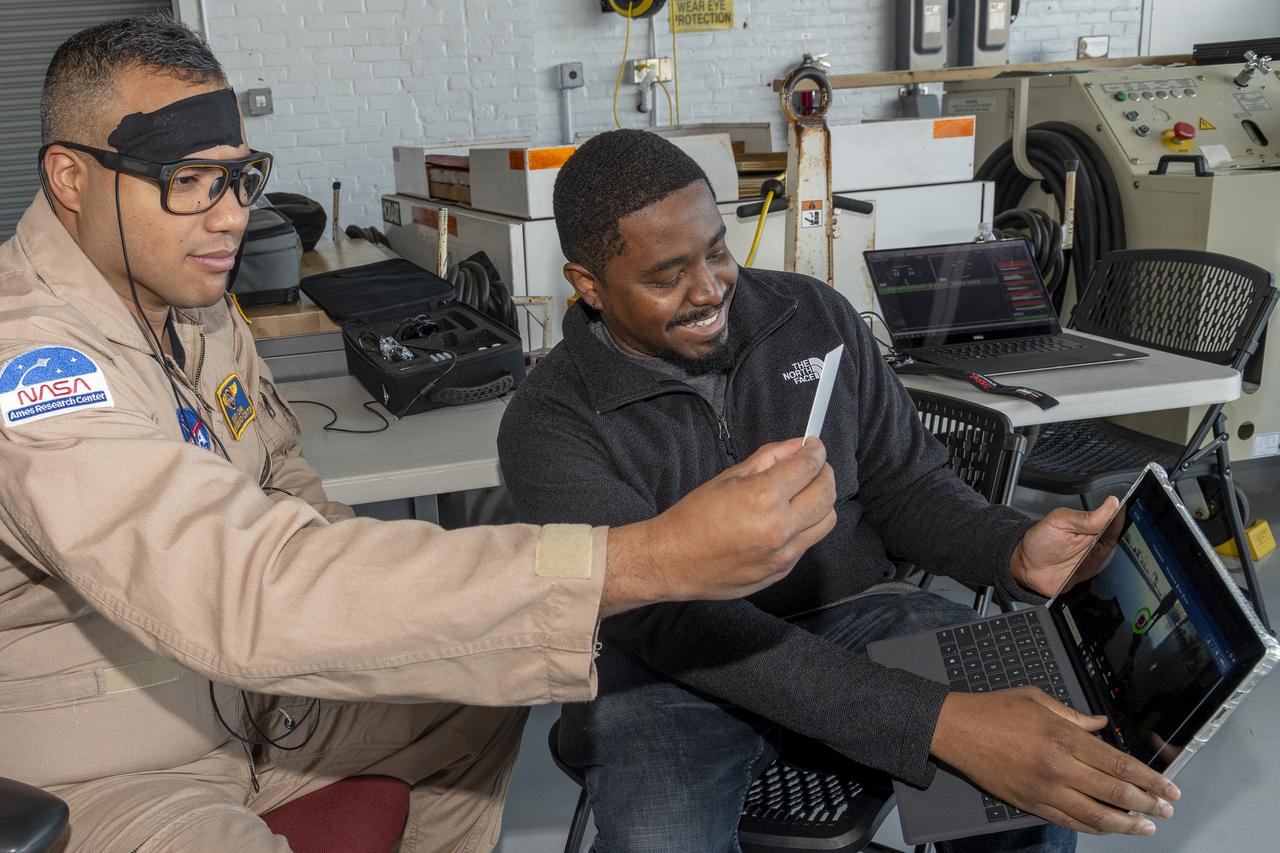
NASA research pilot David Zahn, left, wearing a temporal sensor and pupil tracking glasses works with NASA human factors researcher Kevin J. Monk to calibrate the glasses for accuracy, Thursday, Oct. 26, 2023. The researchers will use the glasses for Advanced Air Mobility autonomous flight research at Sikorsky Memorial Airport in Bridgeport, Connecticut to evaluate the time a pilot spends looking at a navigation tablet along with their vision pattern while using the tablet.
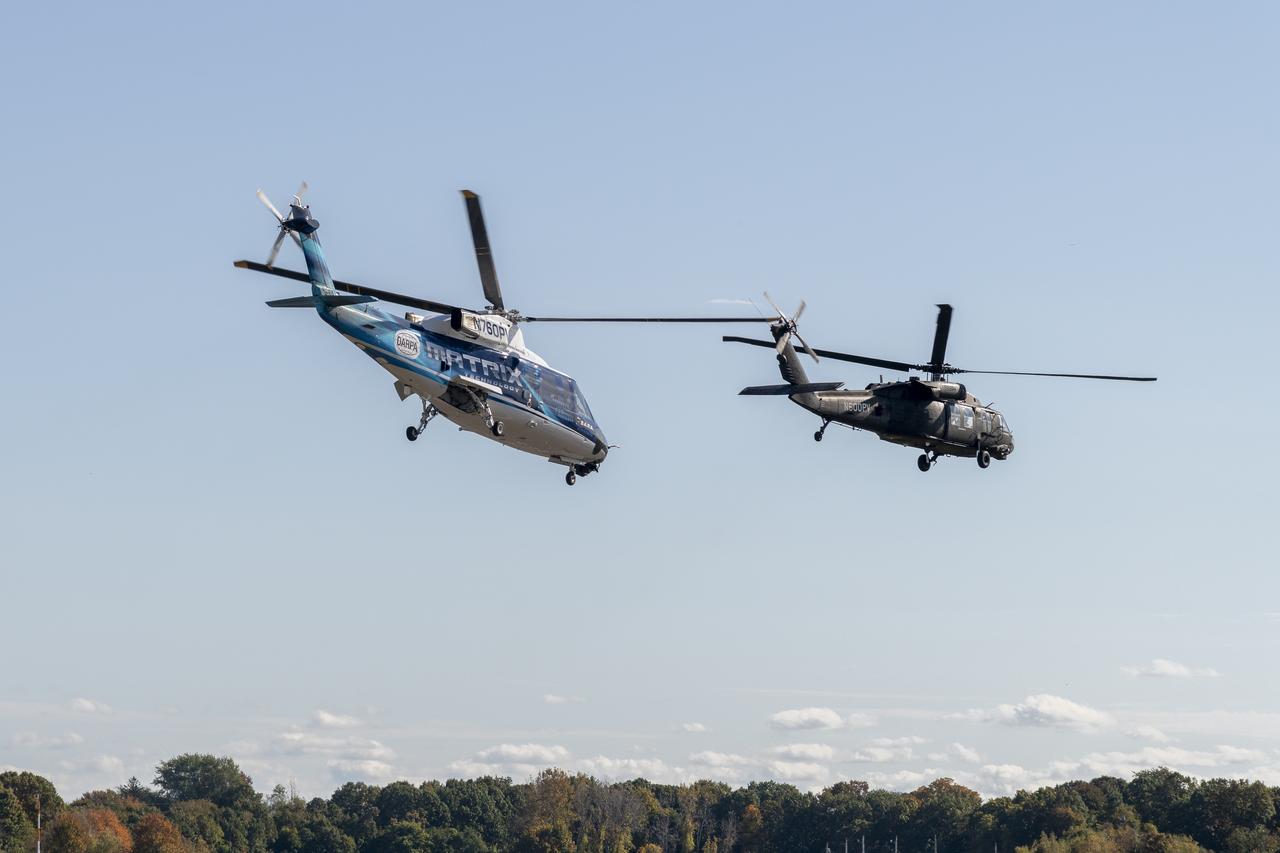
NASA pilots along with Sikorsky safety pilots take off in Sikorsky’s SARA S-76B, left, and Black Hawk Optionally Piloted Vehicle from Sikorsky Memorial Airport, Bridgeport, Connecticut on Tuesday, Oct. 24, 2023. NASA is using these experimental aircraft to test and evaluate multiple autonomous flight software systems designed for Advanced Air Mobility concepts.
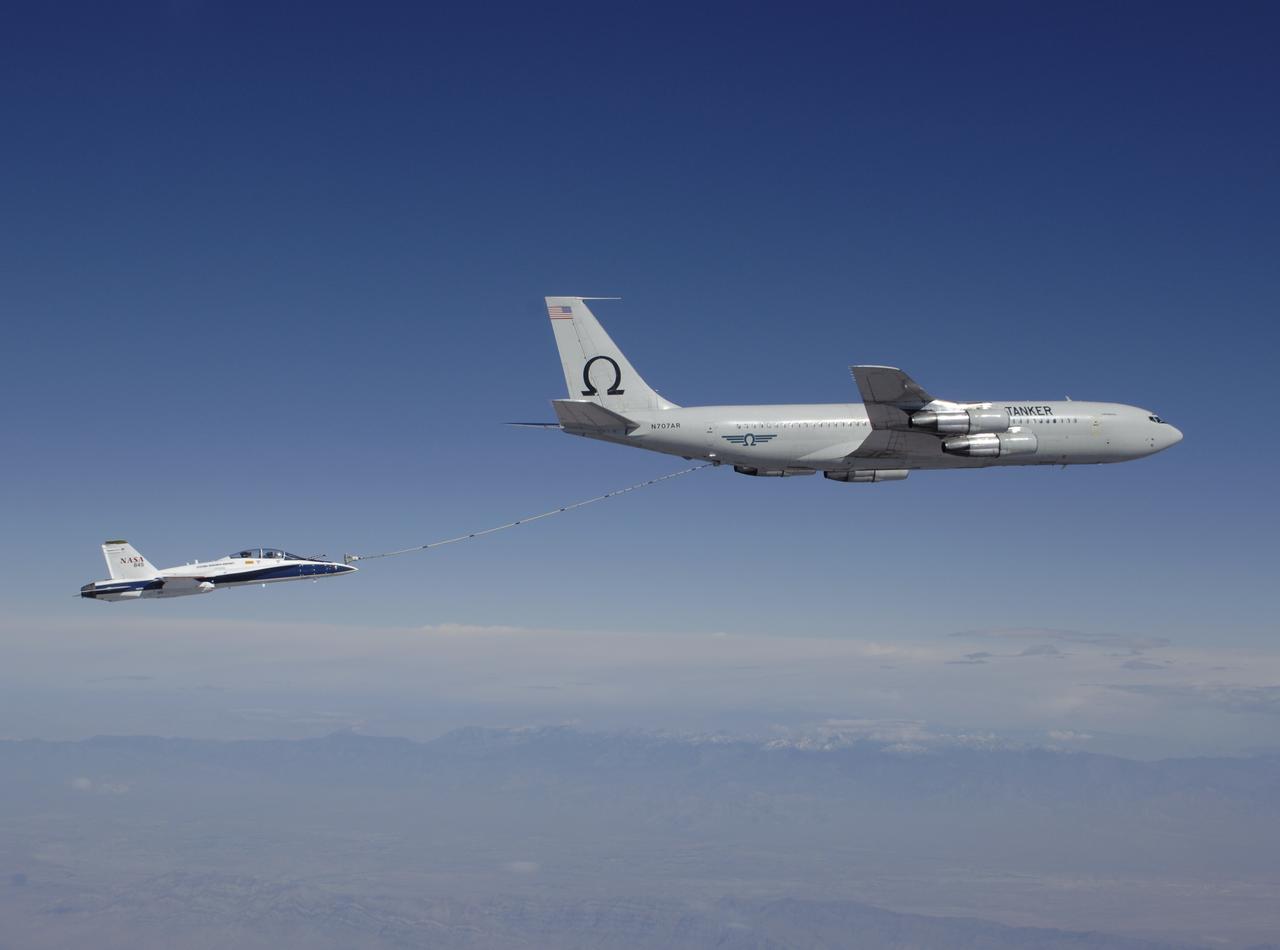
F/A-18 #845 behind an Omega Air Boeing 707 tanker during an Autonomous Airborne Refueling Demonstration (AARD) flight.
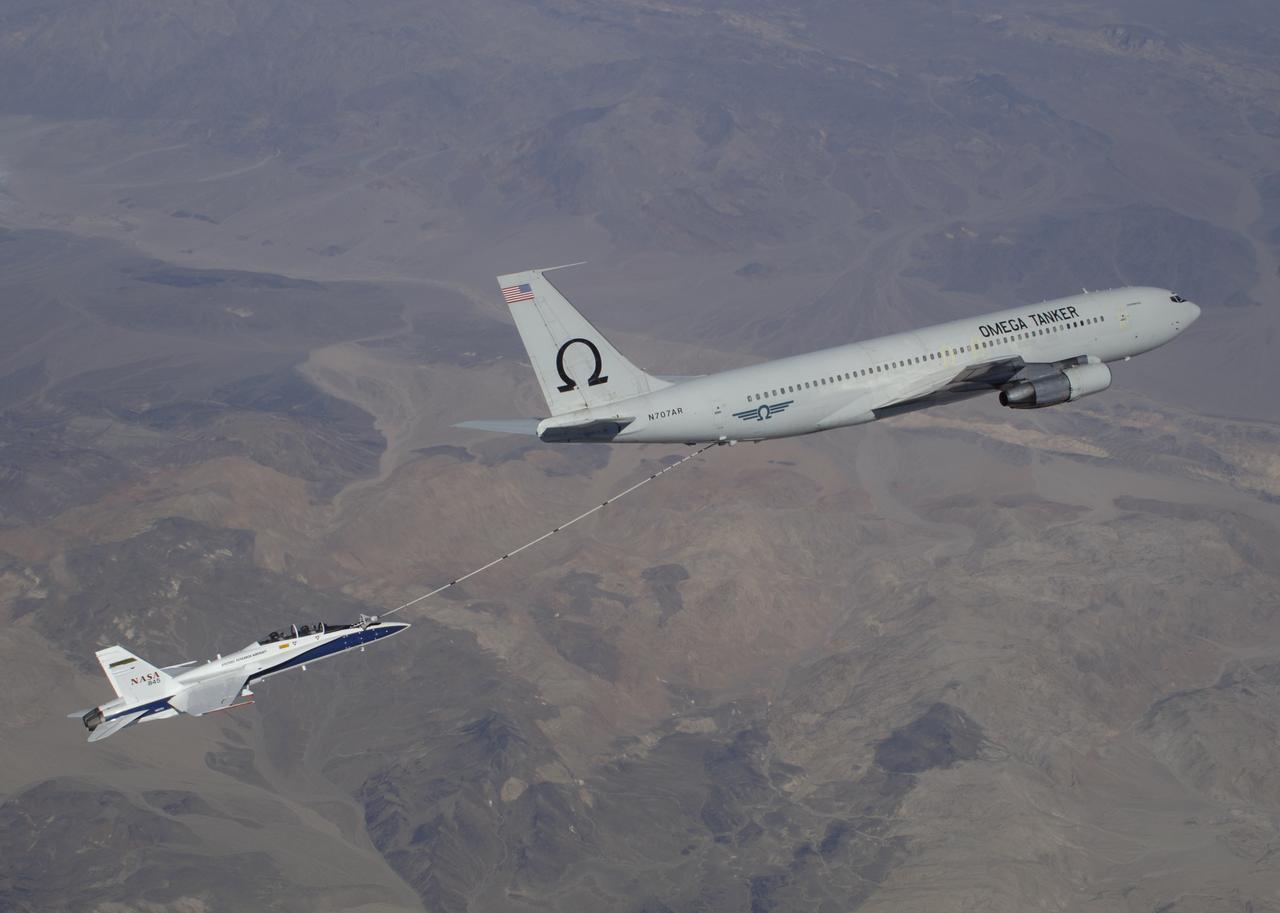
F/A-18 #845 behind an Omega Air Boeing 707 tanker during an Autonomous Airborne Refueling Demonstration (AARD) flight.
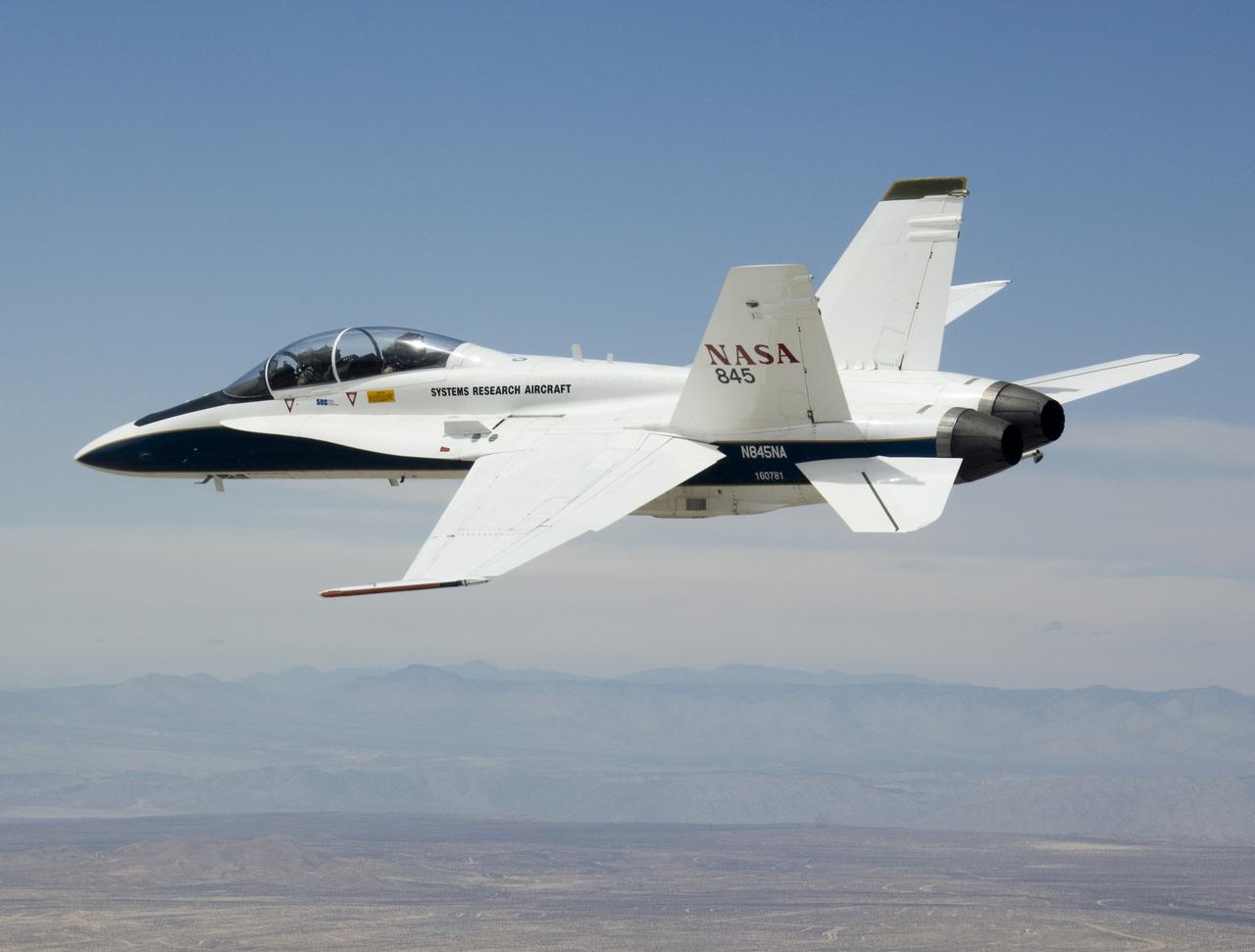
NASA's F/A-18B #845 was captured by the photographer as it returned from its final flight in the Autonomous Airborne Refueling Demonstration research project.
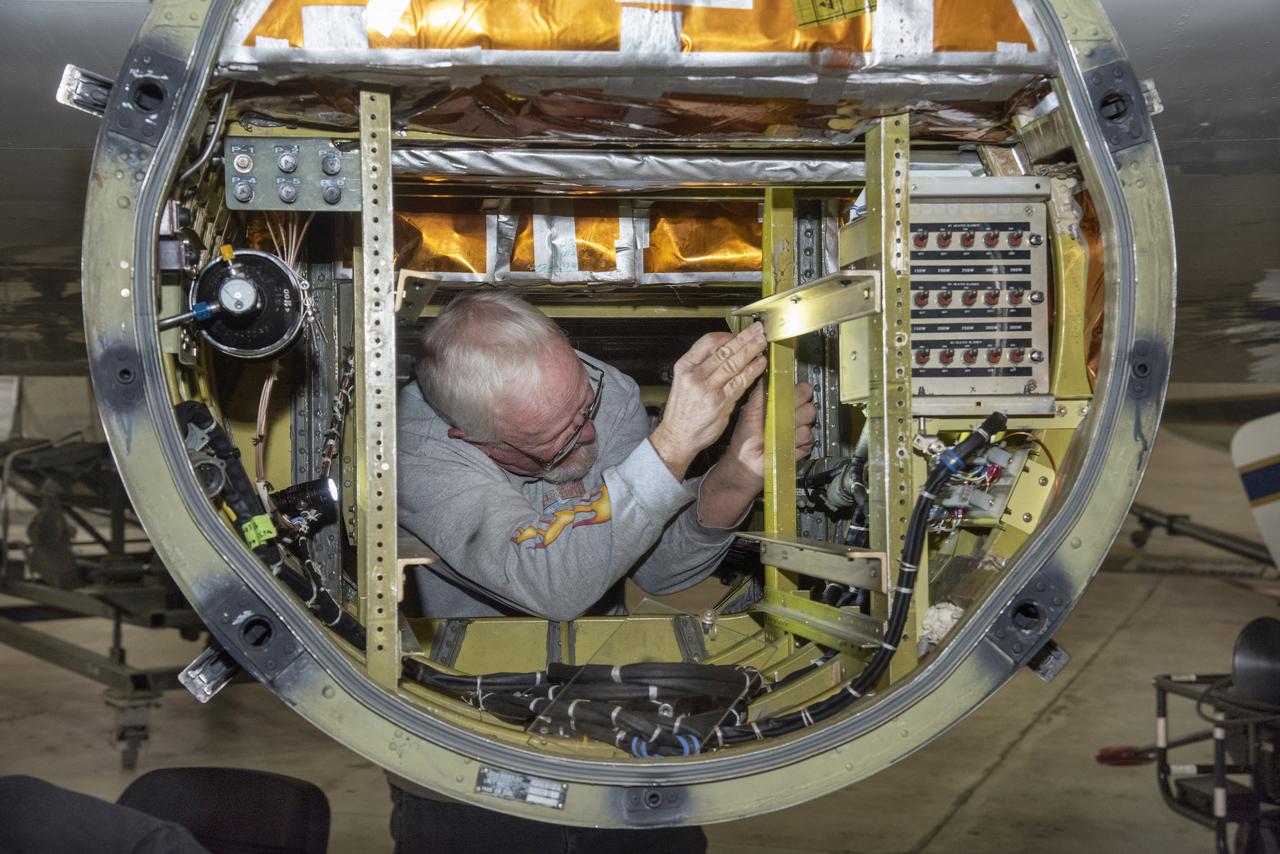
Ground crewman at NASA’s Armstrong Flight Research Center in Palmdale, CA install a rail to support the Autonomous, Robotic Telescope Mount Instrument Subsystem, which is part of air-LUSI and has a camera that scans the sky to find the Moon.
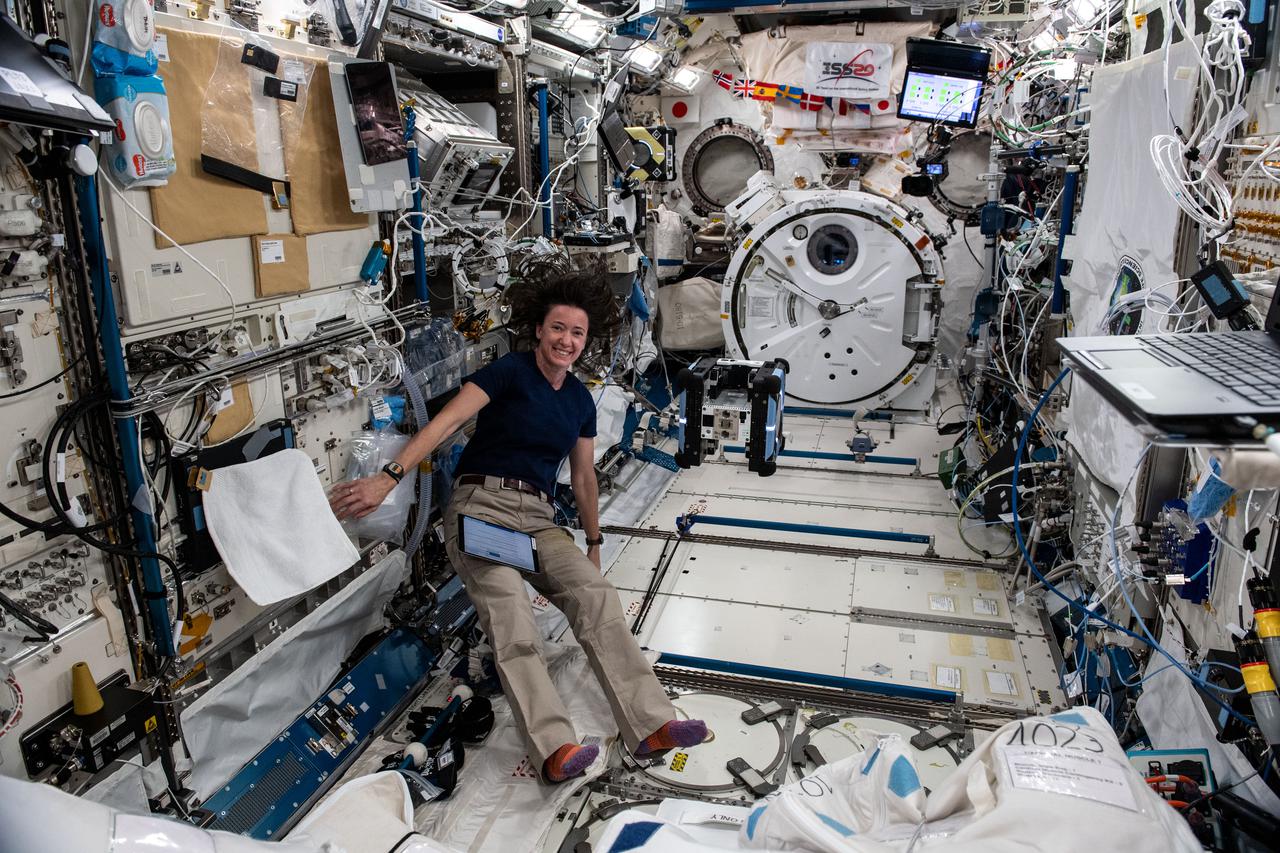
iss065e277667 (Aug. 19, 2021) --- NASA astronaut and Expedition 65 Flight Engineer Megan McArthur is monitoring an Astrobee free-flyer during an autonomous demonstration inside the International Space Station's Kibo laboratory module.
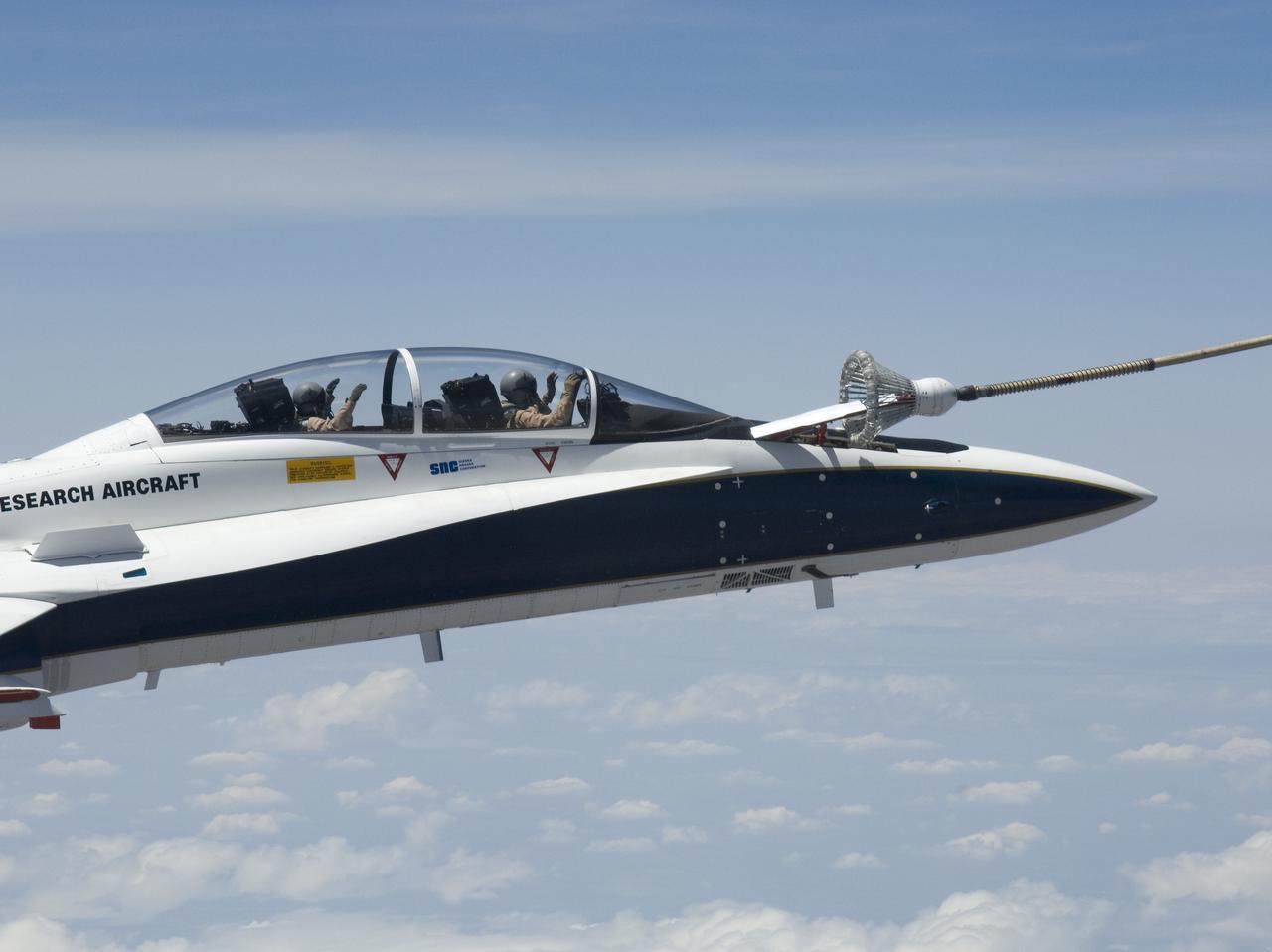
Pilot Dick Ewers and flight test engineer Leslie Molzahn were hands-off as NASA F/A-18 #845 flew itself into the drogue on an autonomous refueling demonstration.
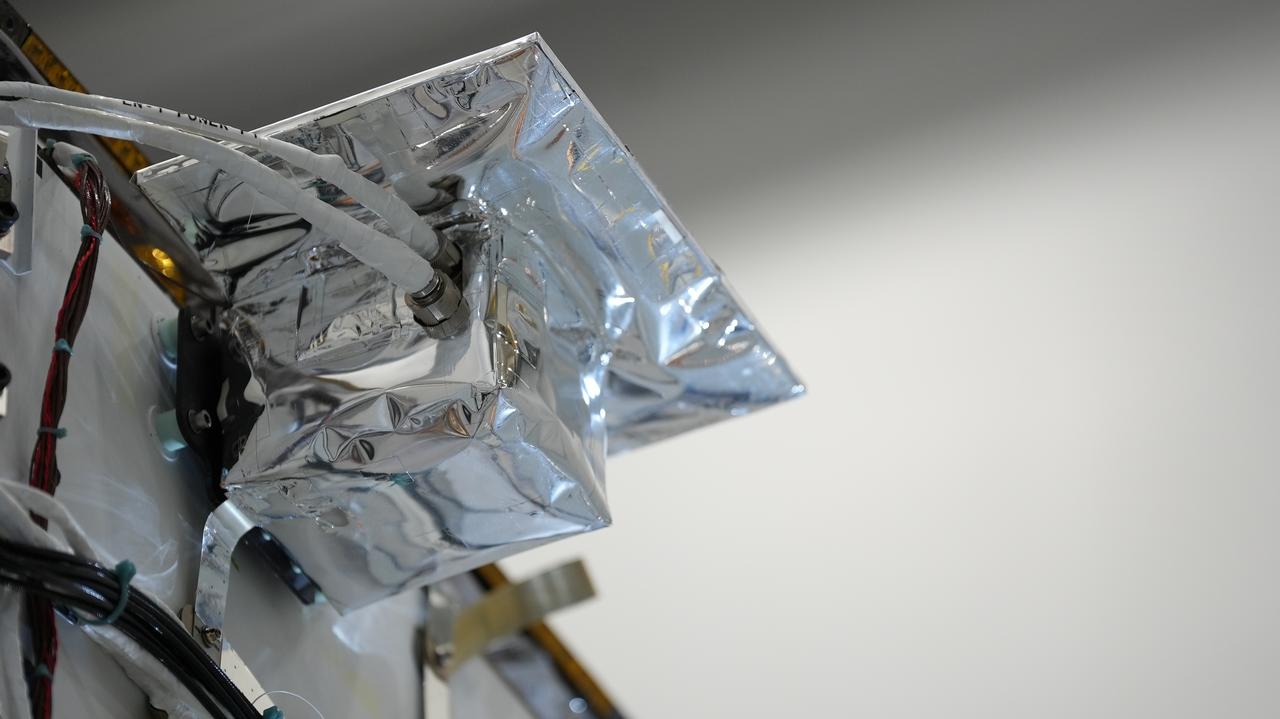
Lunar Node-1, an autonomous navigation payload that will change how human explorers safely traverse the Moon’s surface and live and work in lunar orbit, awaits liftoff as part of Intuitive Machines’ IM-1 mission, its first under NASA’s Commercial Lunar Payload Services initiative. LN-1 was developed, built, and tested at NASA’s Marshall Space Flight Center in Huntsville, Alabama.
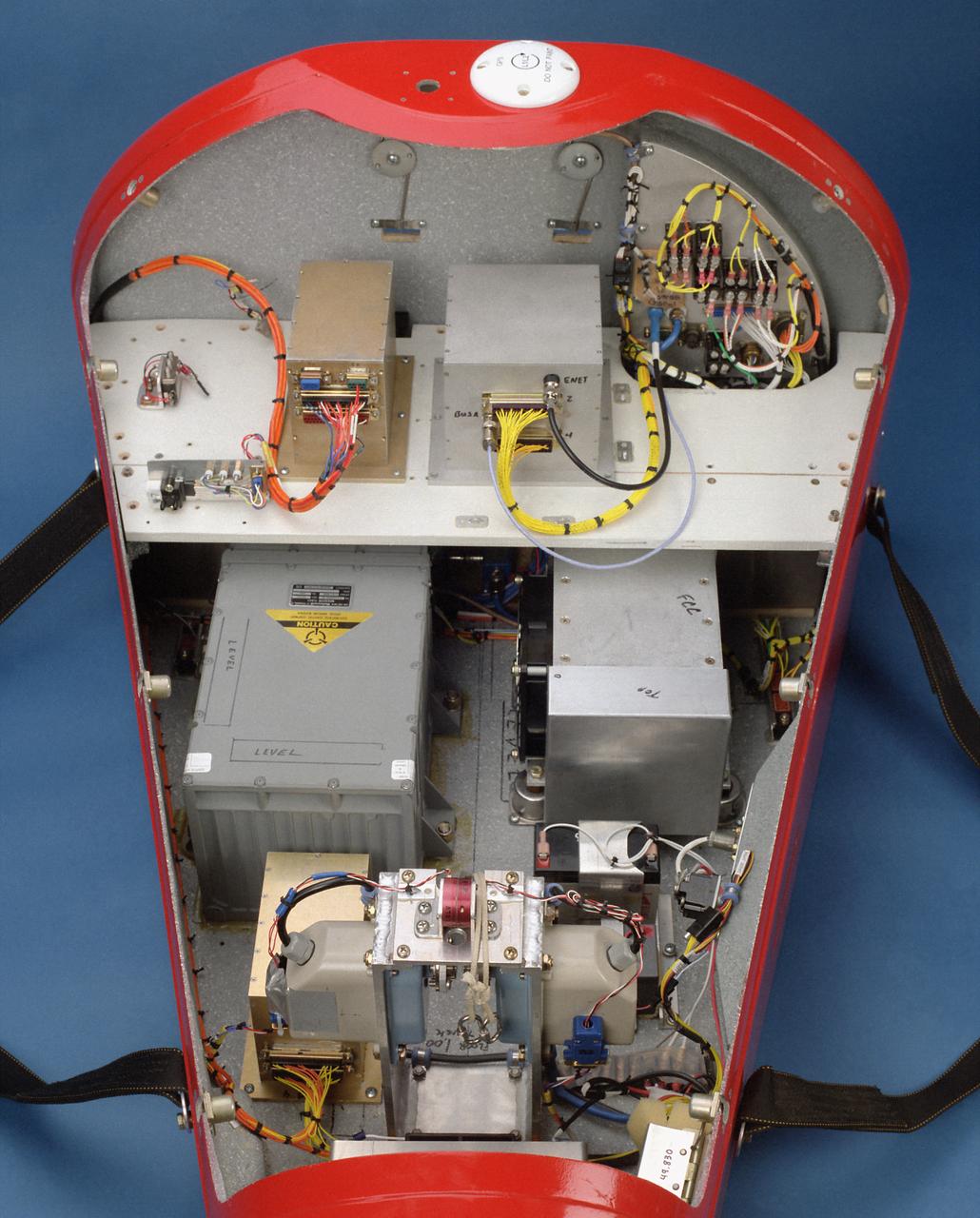
This photo shows the instrumentation and equipment inside the Spacewedge #3, a remotely-piloted research vehicle flown at the Dryden Flight Research Center, Edwards, California, to help develop technology for autonomous return systems for spacecraft as well as methods to deliver large Army cargo payloads to precise landings.
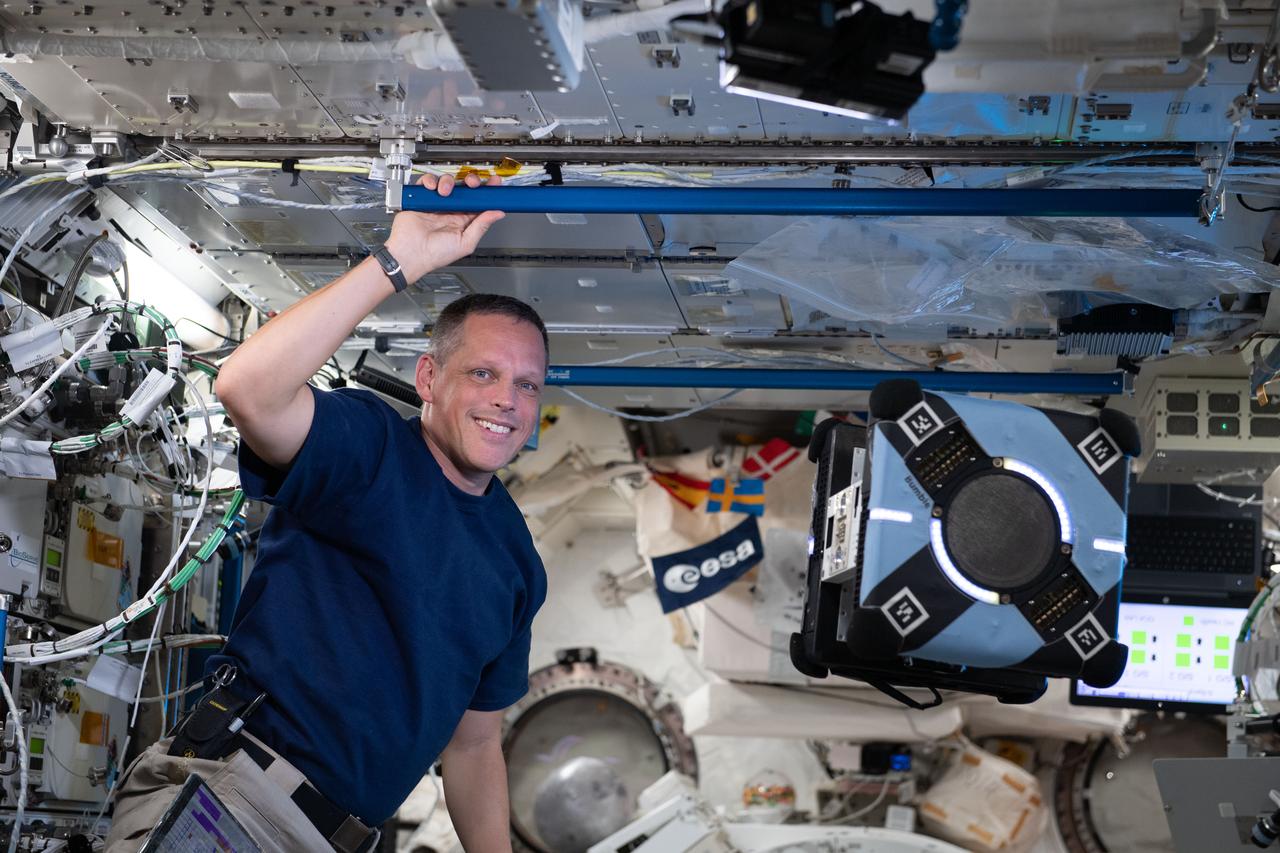
iss067e149715 (June 24, 2022) --- NASA astronaut and Expedition 67 Flight Engineer Bob Hines monitors an Astrobee robotic free-flyer as it tests its ability to autonomously navigate and maneuver inside the Kibo laboratory module using smartphone technology
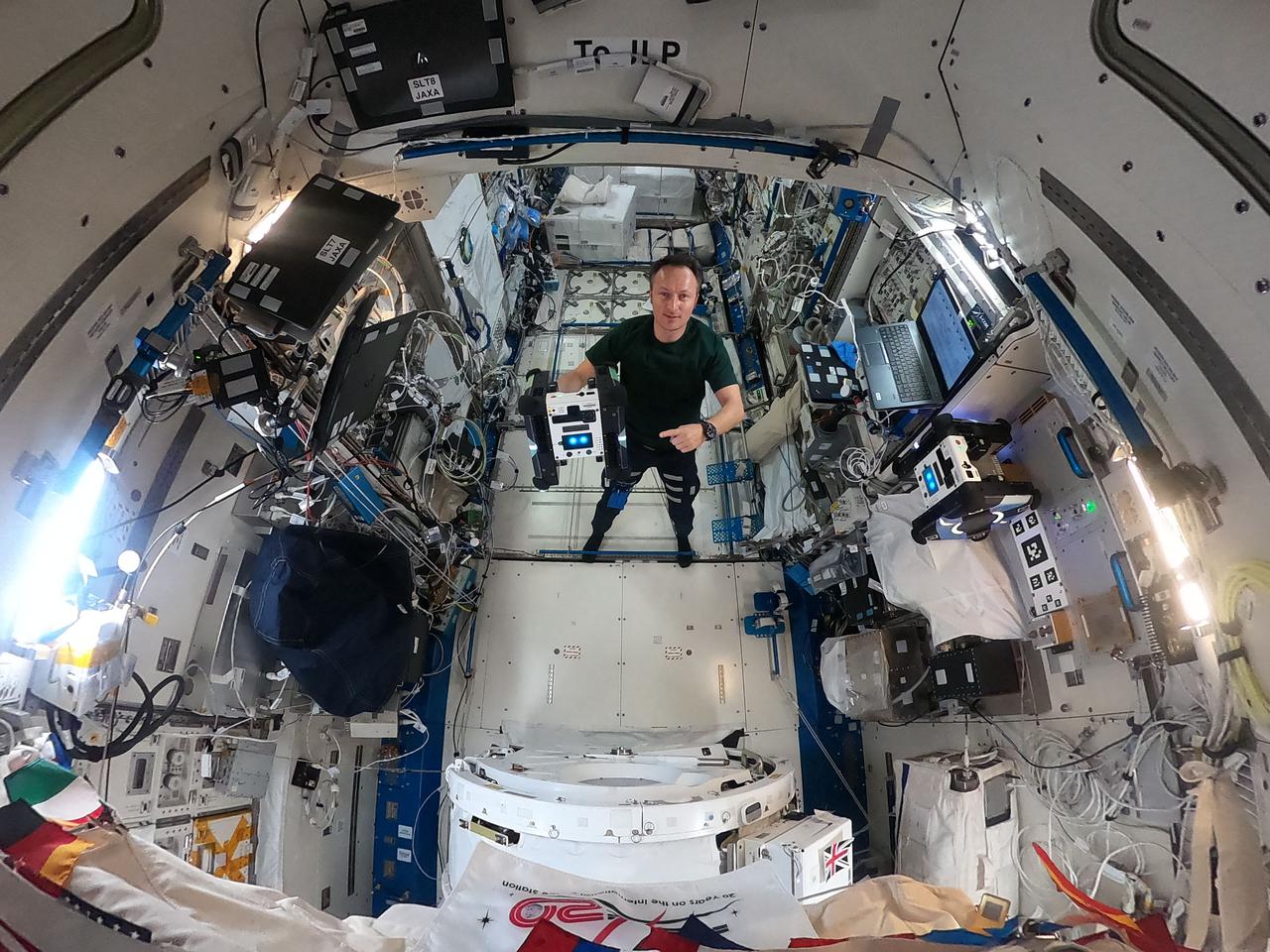
iss066e087003 (Dec. 4, 2021) --- ESA (European Space Agency) astronaut and Expedition 66 Flight Engineer Matthias Maurer is pictured inside the Kibo laboratory module setting up an Astrobee robotic free-flyer for the ReSWARM experiment. The robotics demonstration tests autonomous microgravity motion planning and control for on-orbit assembly and coordinated motion.
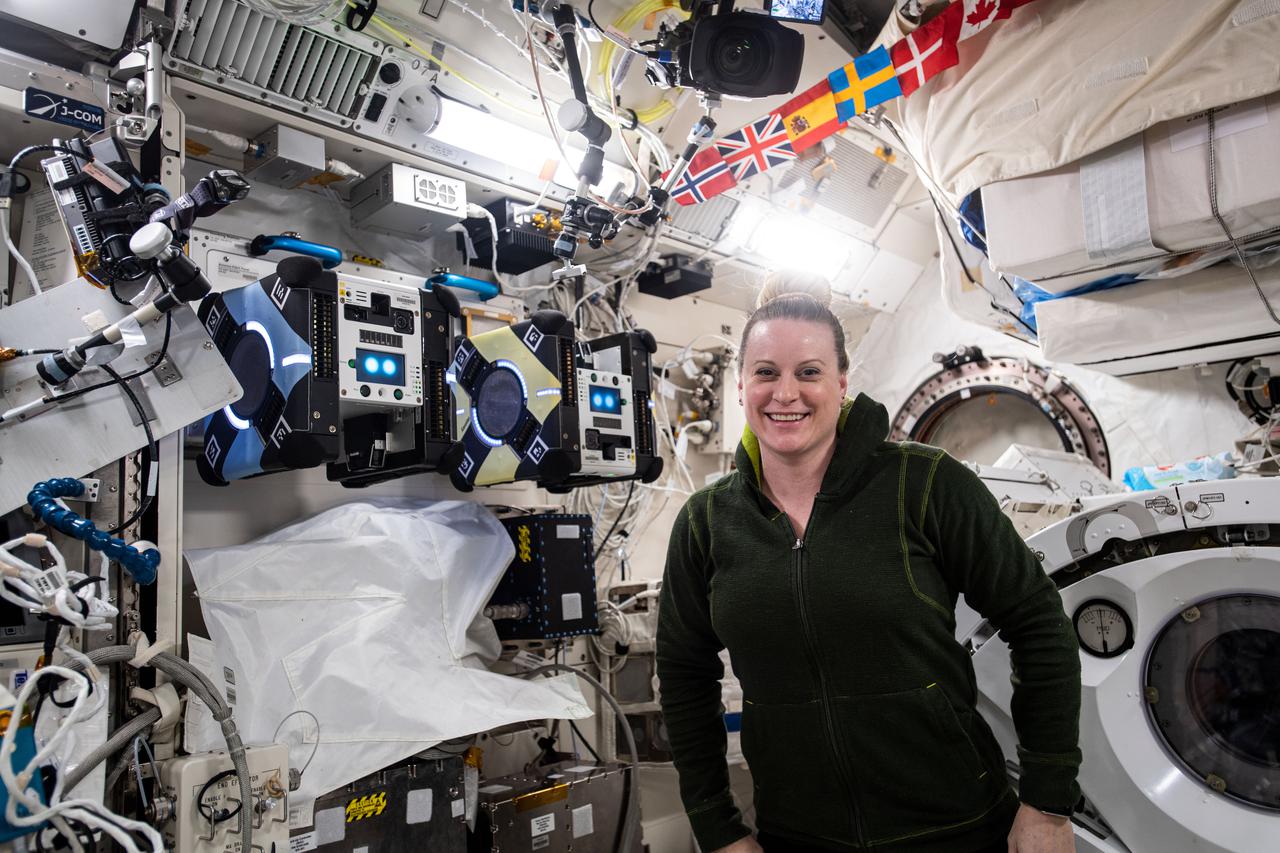
iss064e029280 (Feb. 4, 2021) --- NASA astronaut and Expedition 64 Flight Engineer Kate Rubins poses with a pair of AstroBee robotic assistants inside the Japanese Kibo laboratory module. The cube-shaped, toaster-sized robots are being tested for their ability to autonomously navigate and maneuver inside the orbiting lab.
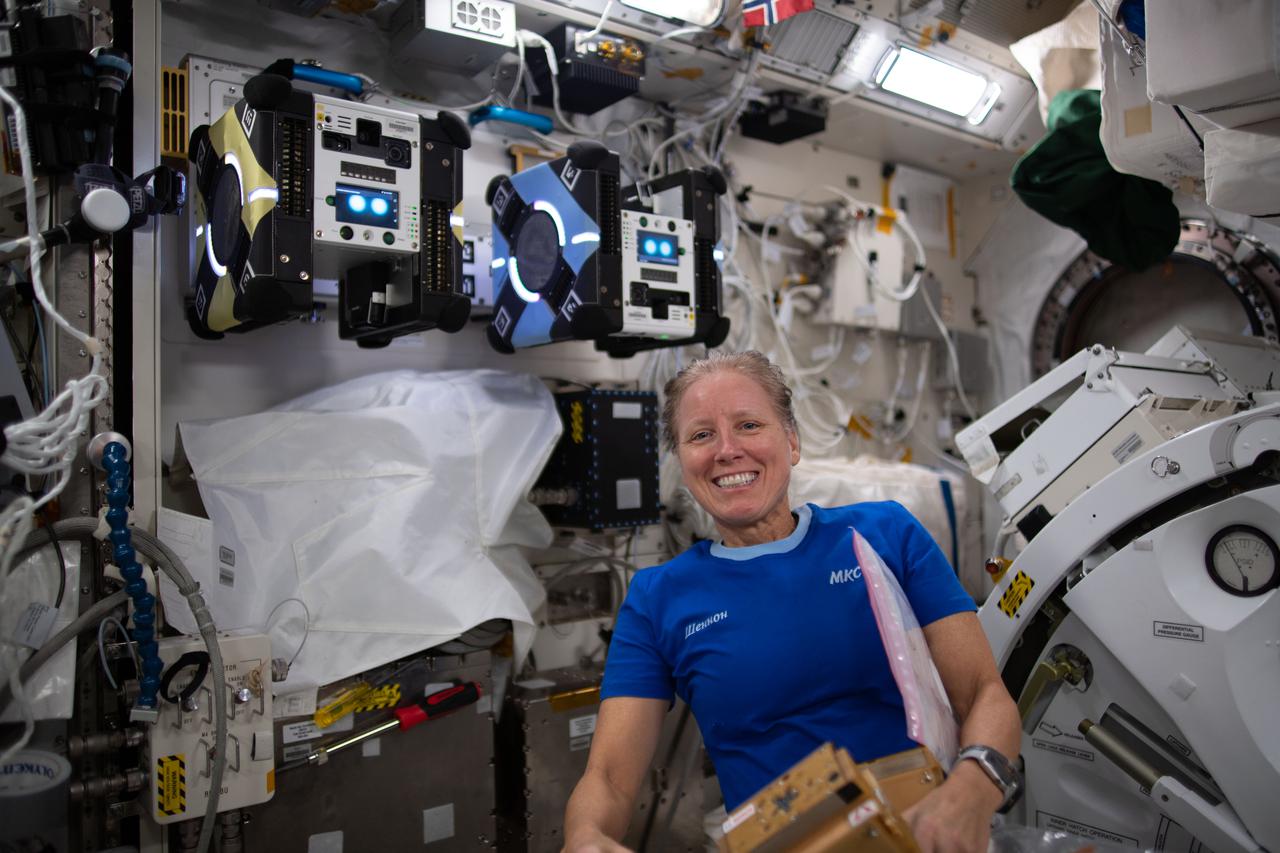
iss064e023424 (Jan. 18, 2021) --- NASA astronaut and Expedition 64 Flight Engineer Shannon Walker poses with a pair of free-flying, cube-shaped robots that are part of the Astrobee study that is investigating their ability navigate autonomously and assist astronauts with routine chores aboard the International Space Station.
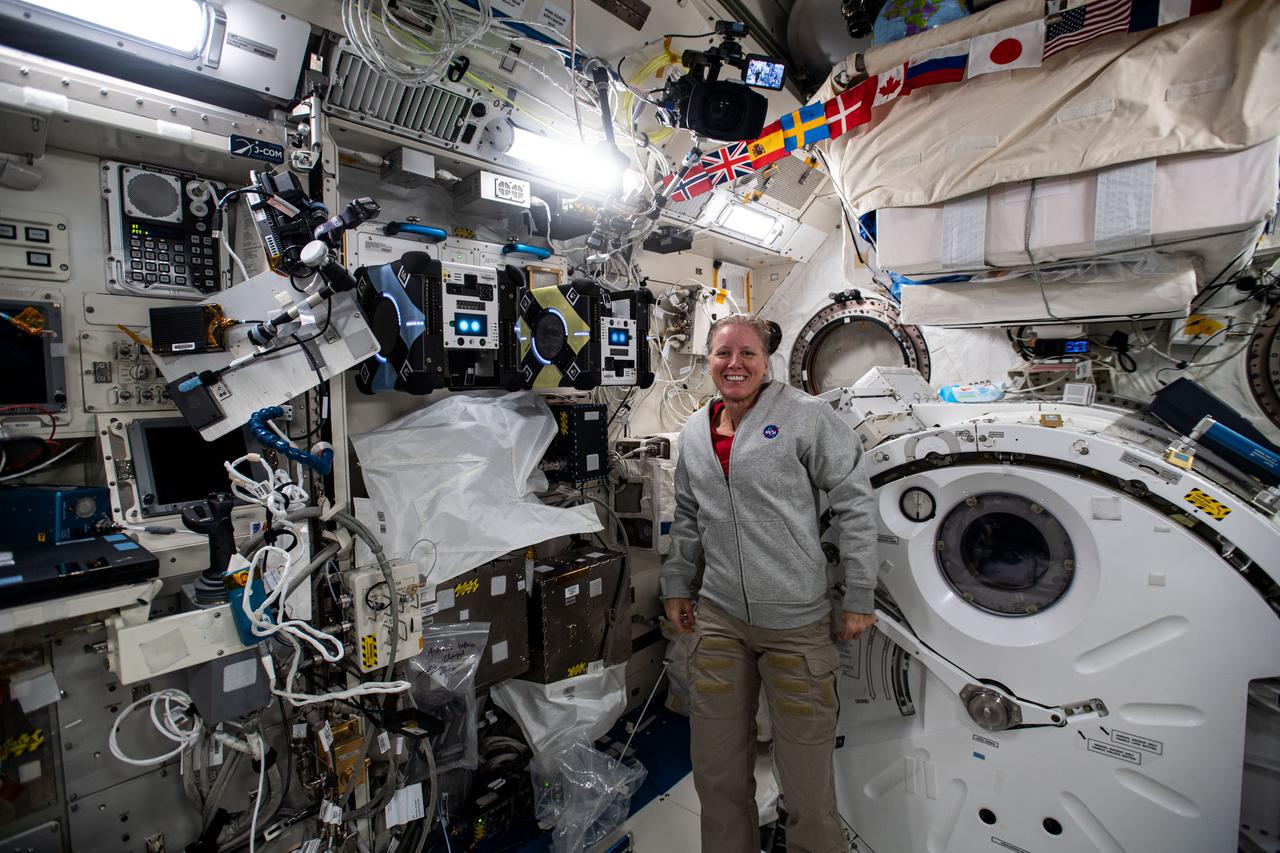
iss064e029277 (Feb. 4, 2021) --- NASA astronaut and Expedition 64 Flight Engineer Shannon Walker poses with a pair of Astrobee robotic assistants docked to their ports inside the Japanese Kibo laboratory module. The cube-shaped, toaster-sized robots are being tested for their ability to autonomously navigate and maneuver inside the orbiting lab.

iss065e299319 (Aug. 19, 2021) --- NASA astronaut and Expedition 65 Flight Engineer Megan McArthur sets up an Astrobee robotic free-flyer inside the International Space Station's Kibo laboratory module. The Astrobee was testing autonomous microgravity motion planning and control for on-orbit assembly and coordinated motion.

Two F/A-18B aircraft involved in the AFF program return to base in close formation with the autonomous function disengaged.
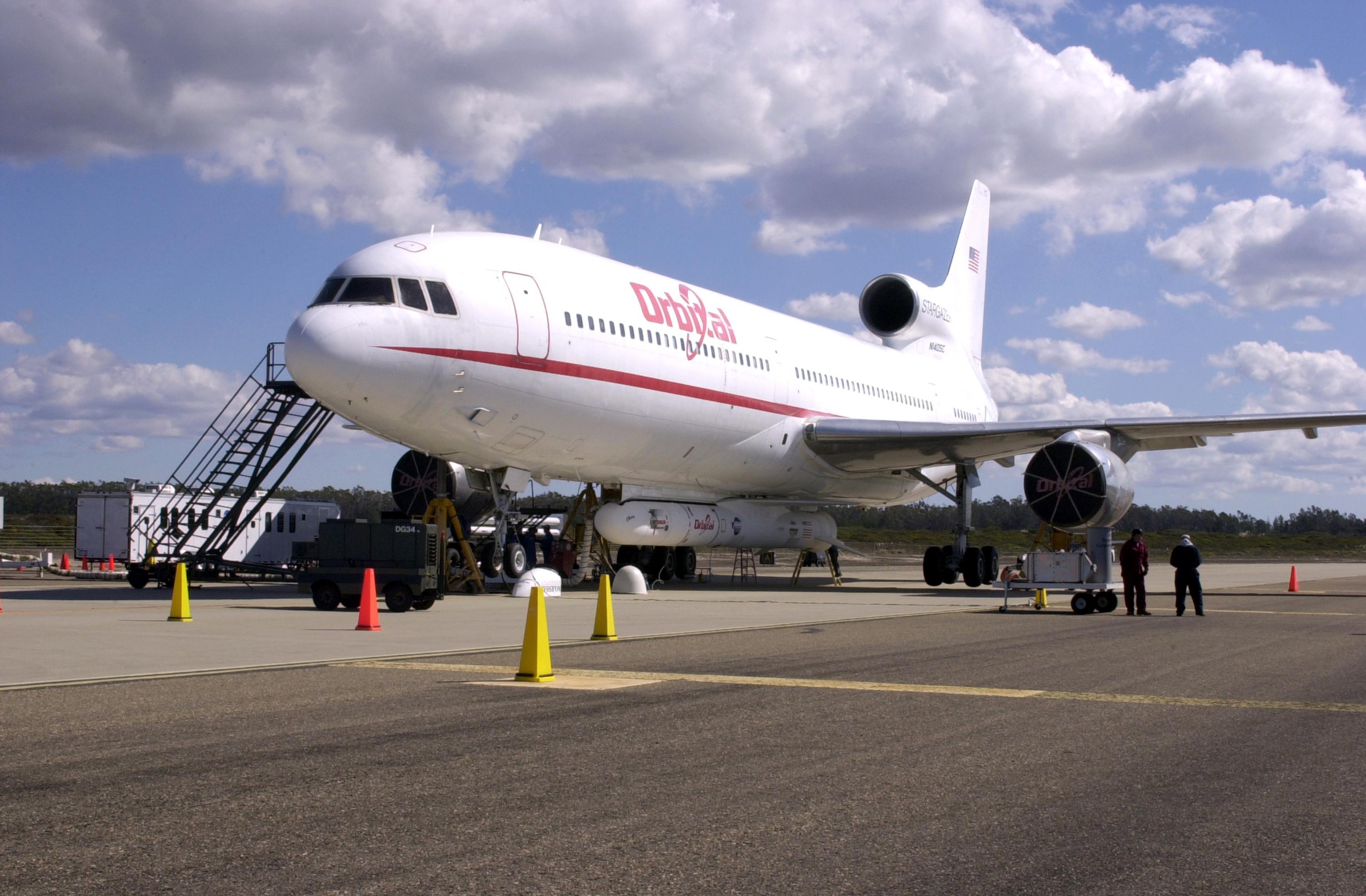
KENNEDY SPACE CENTER, FLA. - At Vandenberg Air Force Base in California, Orbital Sciences Corporation’s Stargazer L-1011 aircraft is ready for flight with the Demonstration of Autonomous Rendezvous Technology (DART) spacecraft and Orbital Sciences Pegasus launch vehicle attached underneath. The Pegasus XL will launch DART at approximately 40,000 feet above the Pacific Ocean into a circular polar orbit of approximately 475 miles. DART was designed and built for NASA by Orbital Sciences as an advanced flight demonstrator to locate and maneuver near an orbiting satellite. The DART spacecraft weighs about 800 pounds and is nearly 6 feet long and 3 feet in diameter. The DART satellite provides a key step in establishing autonomous rendezvous capabilities for the U.S. Space Program. While previous rendezvous and docking efforts have been piloted by astronauts, the unmanned DART satellite will have computers and cameras to perform its rendezvous functions.
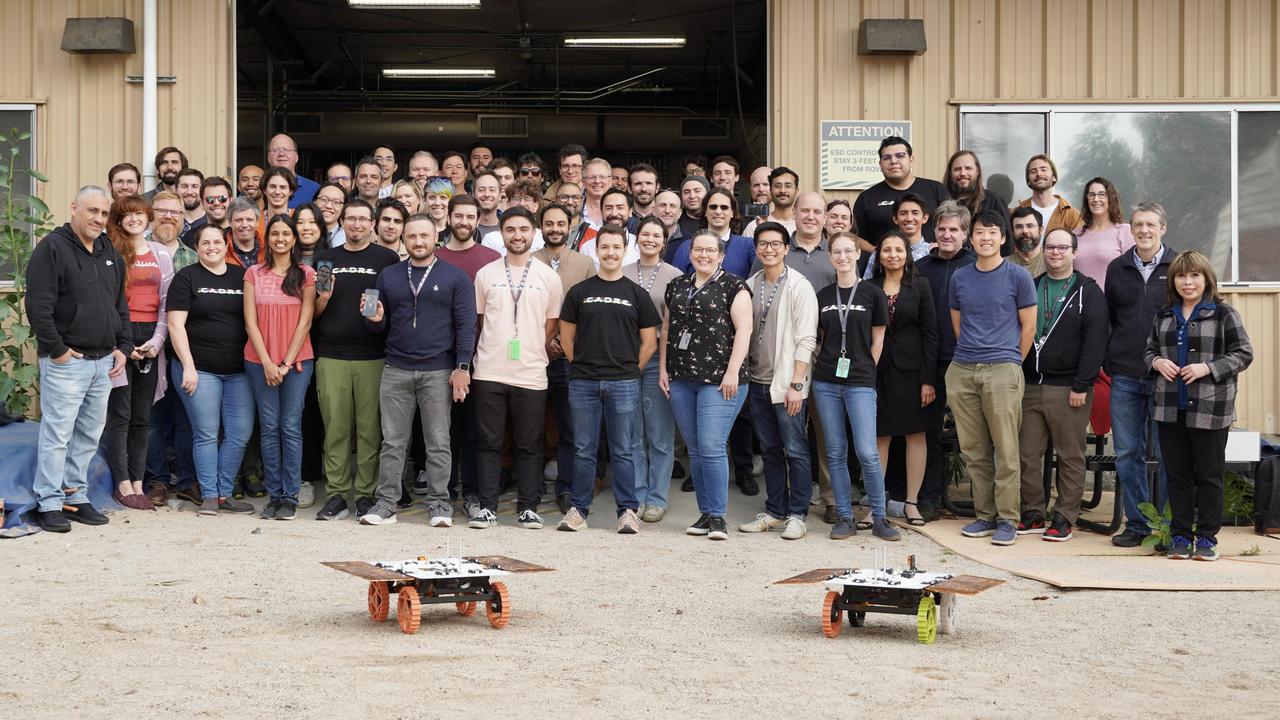
Members of NASA's CADRE (Cooperative Autonomous Distributed Robotic Exploration) technology demonstration team pose with two full-scale development model rovers in the Mars Yard at the agency's Jet Propulsion Laboratory in Southern California in January 2024. The project is designed to show that a group of robotic spacecraft can work together as a team to accomplish tasks and record data autonomously – without explicit commands from mission controllers on Earth. Three small rovers will ride aboard a lunar lander that will carry the project's base station and camera assembly. The rovers shown here are similar in size and appearance to the flight models that will travel to the Moon. Equipped with flight software and autonomy capabilities, these development models were used in a series of Mars Yard tests that helped confirm CADRE hardware and software can work together to accomplish key goals for the project. https://photojournal.jpl.nasa.gov/catalog/PIA26170
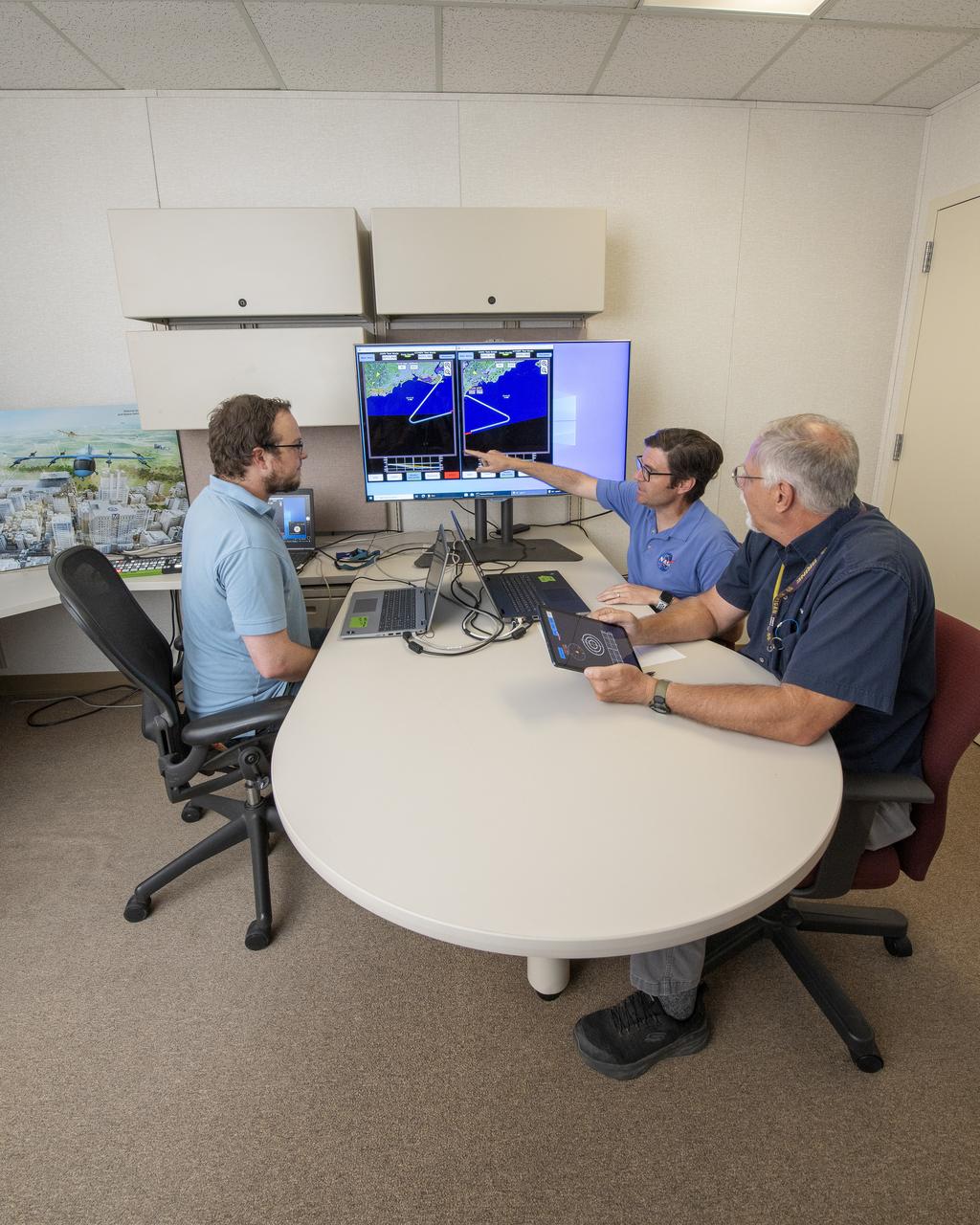
NASA software developer, Ethan Williams, left, pilot Scott Howe, and operations test consultant Jan Scofield run a flight path management software simulation at NASA’s Armstrong Flight Research Center in Edwards, California in May 2023. This simulation research supports the integration of automated systems for the advanced air mobility mission.
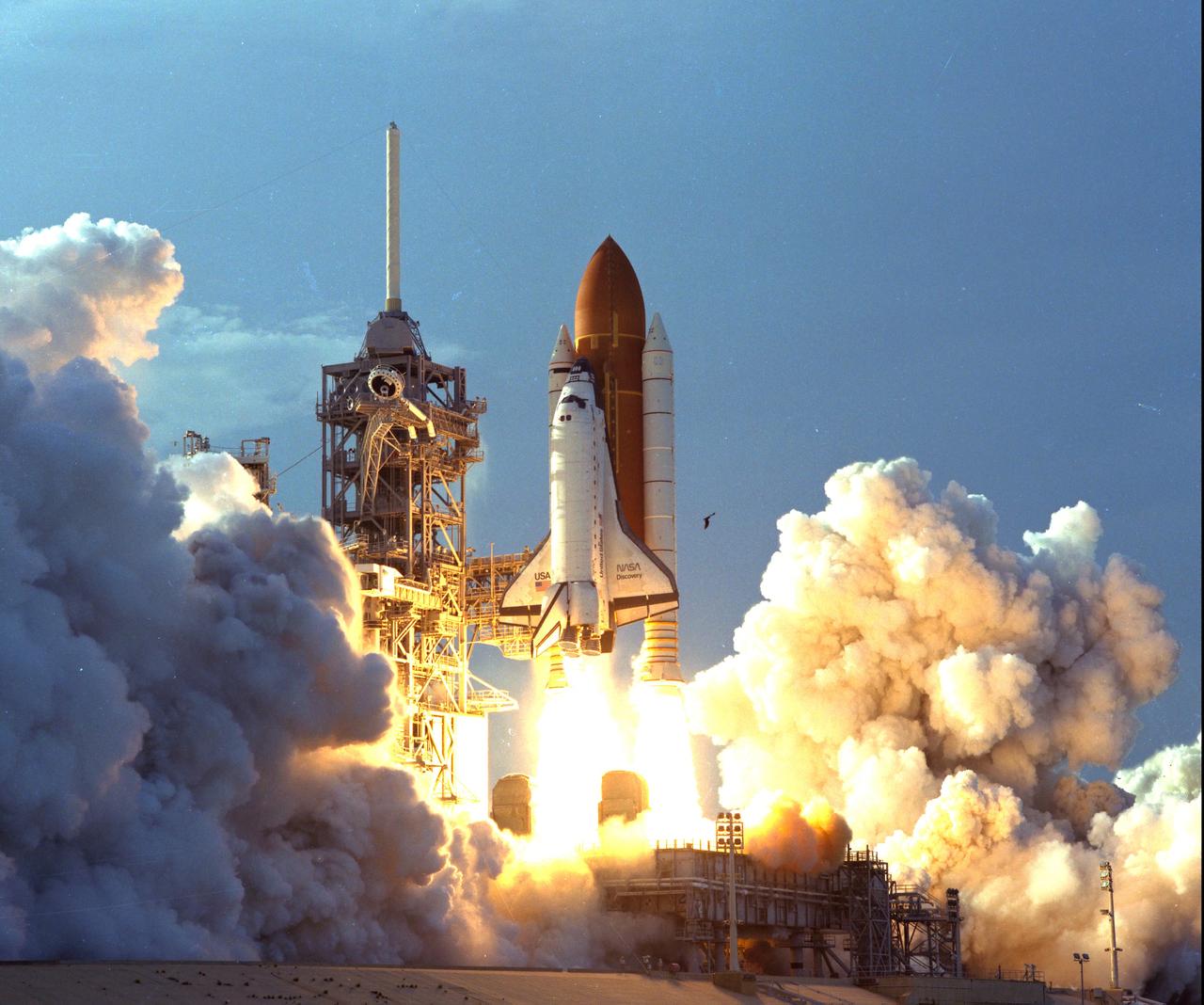
KENNEDY SPACE CENTER, FLA. - The turbulent weather common to a Florida afternoon in the summer subsides into a serene canopy of cornflower blue, and a manmade "bird" takes flight. The Space Shuttle Discovery soars skyward from Launch Pad 39B on Mission STS-64 at 6:22:35 p.m. EDT, Sept. 9. On board are a crew of six: Commander Richard N. Richards; Pilot L. Blaine Hammond Jr.; and Mission Specialists Mark C. Lee, Carl J. Meade, Susan J. Helms and Dr. J.M. Linenger. Payloads for the flight include the Lidar In-Space Technology Experiment (LITE), the Shuttle Pointed Autonomous Research Tool for Astronomy-201 (SPARTAN-201) and the Robot Operated Material Processing System (ROMPS). Mission Specialists Lee and Meade also are scheduled to perform an extravehicular activity during the 64th Shuttle mission.
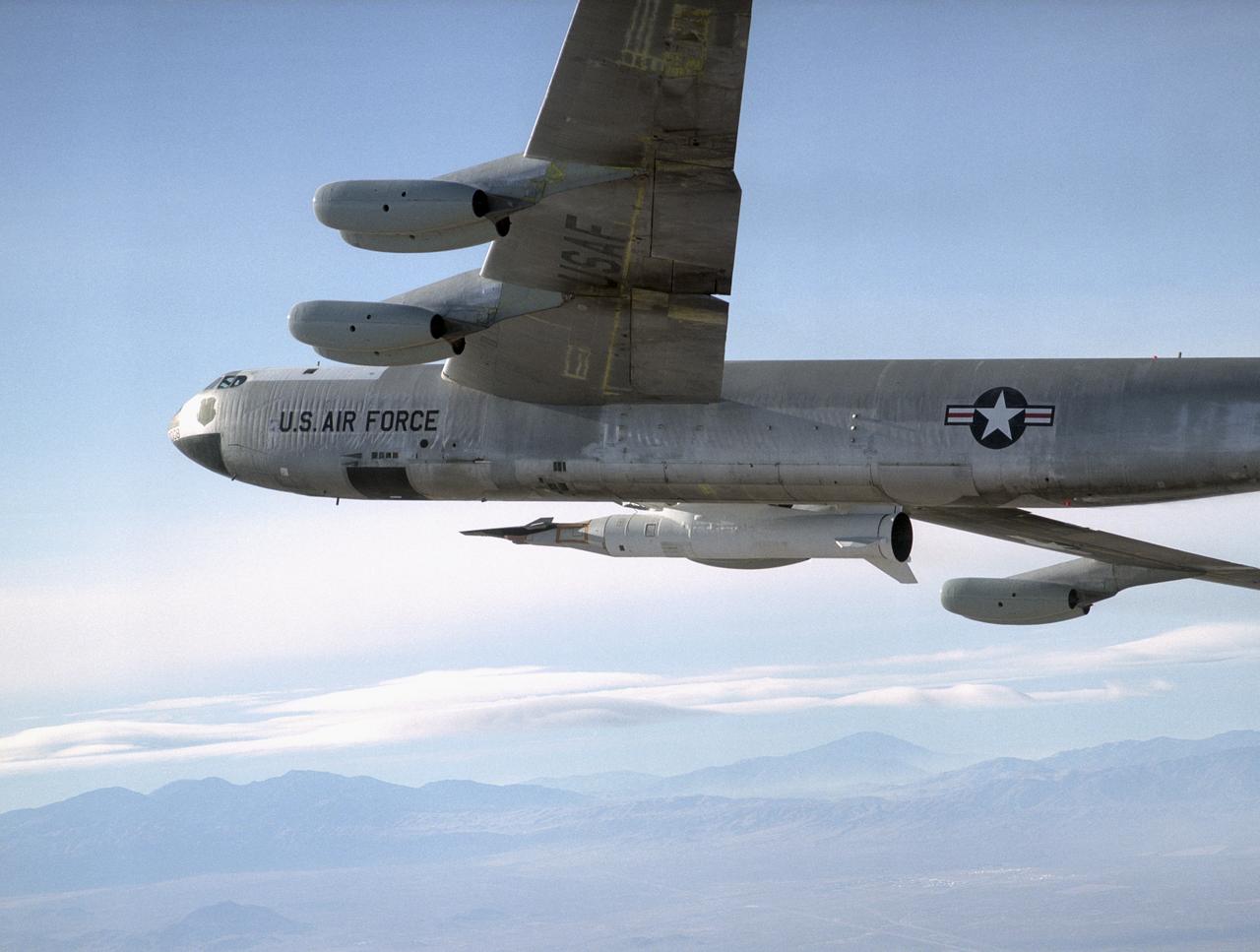
NASA's historic B-52 mother ship carried the X-43A and its Pegasus booster rocket on a captive carry flight from Edwards Air Force Base Jan. 26, 2004. The X-43A and its booster remained mated to the B-52 throughout the two-hour flight, intended to check its readiness for launch. The hydrogen-fueled aircraft is autonomous and has a wingspan of approximately 5 feet, measures 12 feet long and weighs about 2,800 pounds.

iss064e015134 (Dec. 28, 2020) --- NASA astronaut and Expedition 64 Flight Engineer Michael Hopkins conducts research operations inside a portable glovebag for the HemoCue experiment that seeks to verify an autonomous medical capability for blood analysis in microgravity. Accurate blood analysis can be used to diagnose illness, monitor conditions such as bacterial and viral infections or radiation exposure, track response to treatment, and assess the severity of an illness during space flight.
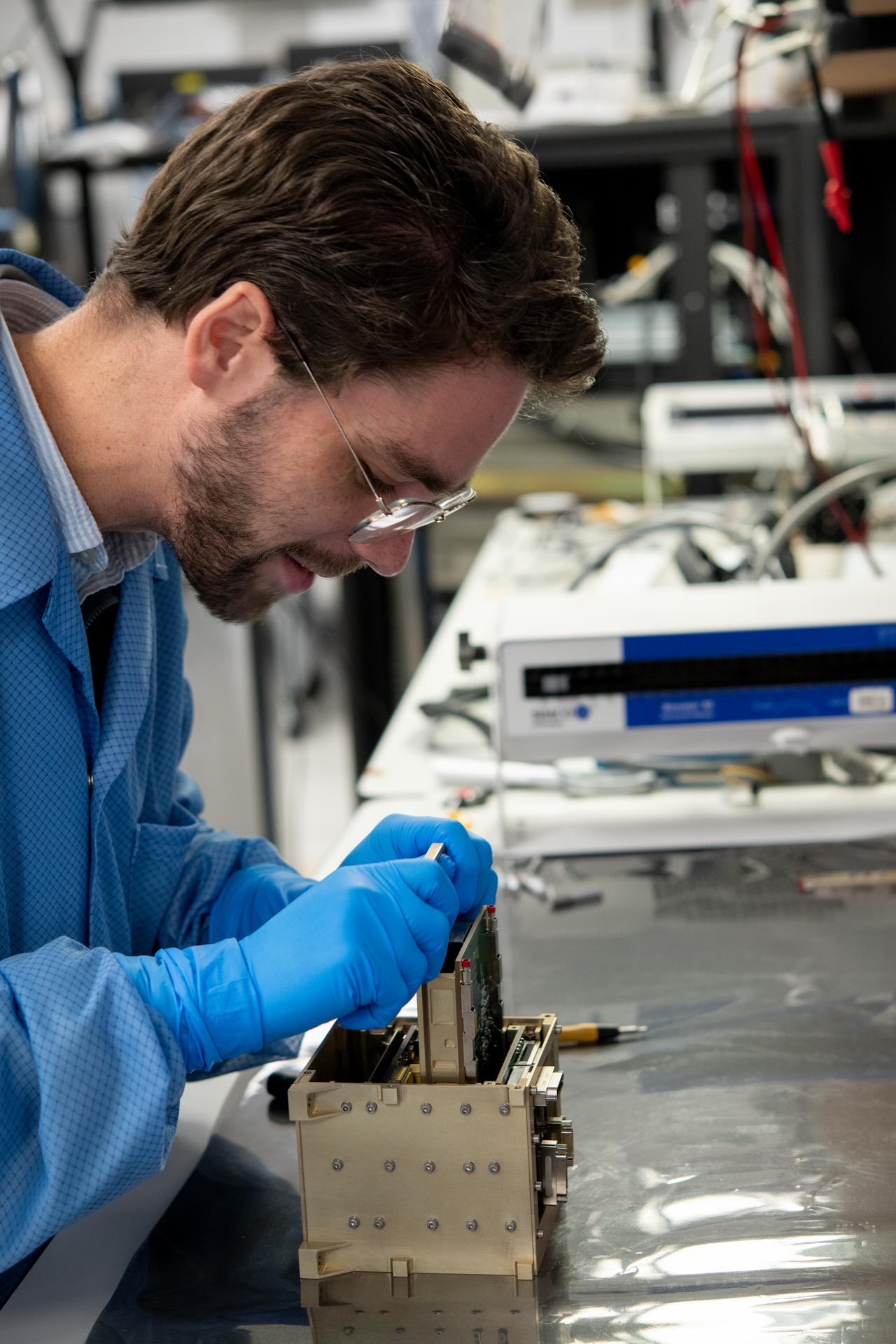
Mechanical Engineer Mitchell Hamann disassembles a Lunar Environment Monitoring Station (LEMS) flight electrical board chassis in the avoinics lab at NASA's Goddard Space Flight Center in Greenbelt, Maryland on October 22, 2025. LEMS is a compact, autonomous, and self-sustaining seismometer suite designed to carry out continuous, long-term, monitoring of the lunar seismic environment at the South Polar region. NASA/Desiree Stover.
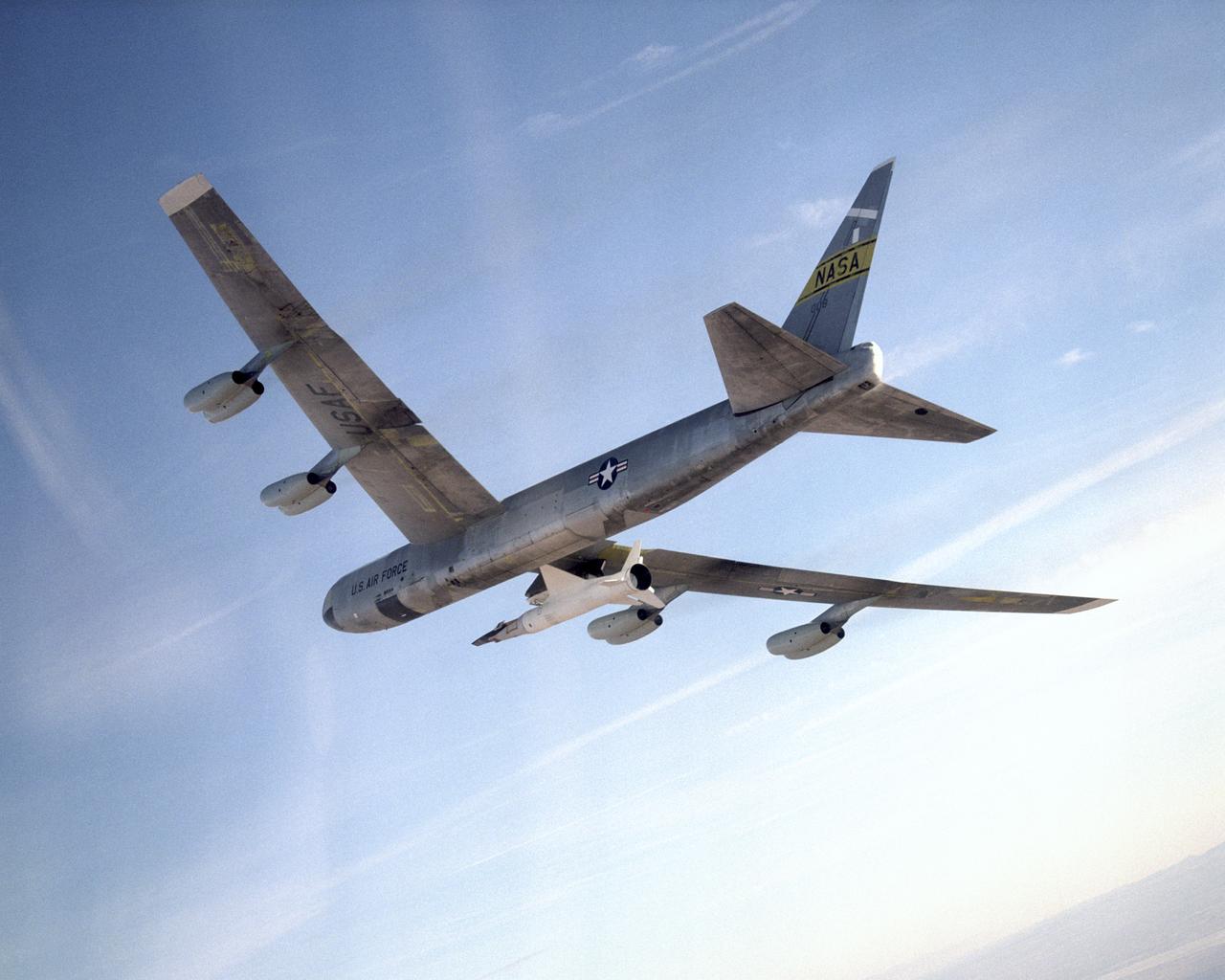
NASA's historic B-52 mother ship carried the X-43A and its Pegasus booster rocket on a captive carry flight from Edwards Air Force Base Jan. 26, 2004. The X-43A and its booster remained mated to the B-52 throughout the two-hour flight, intended to check its readiness for launch. The hydrogen-fueled aircraft is autonomous and has a wingspan of approximately 5 feet, measures 12 feet long and weighs about 2,800 pounds.
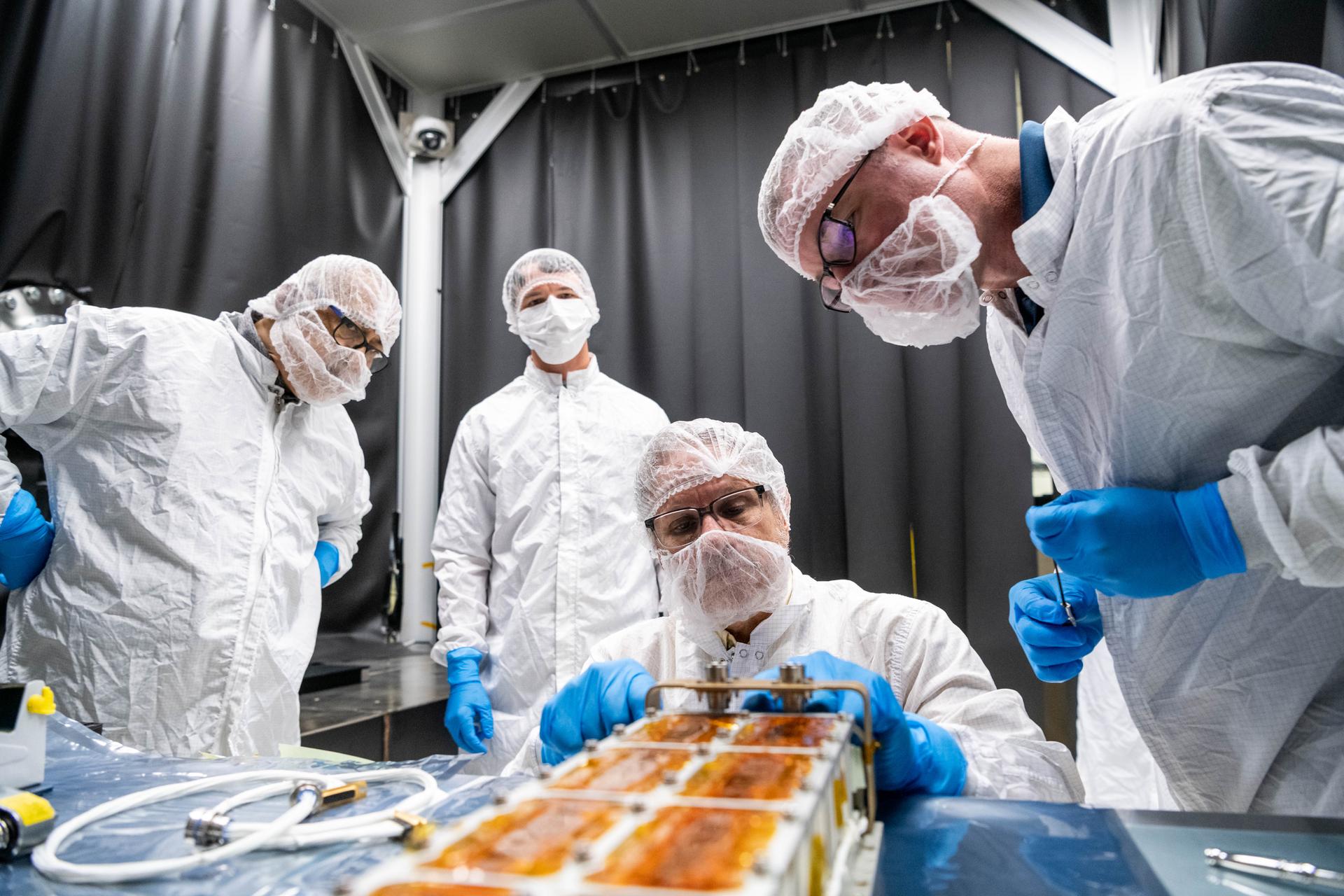
Lunar Environment Monitoring Station (LEMS) team members assemble the flight battery connectors to the connector bracket in a lab at Goddard Space Flight Center in Greenbelt, Maryland on September 9th, 2025. LEMS is a compact, autonomous, and self-sustaining seismometer suite designed to carry out continuous, long-term, monitoring of the lunar seismic environment at the South Polar region. NASA/Katie Mellos.
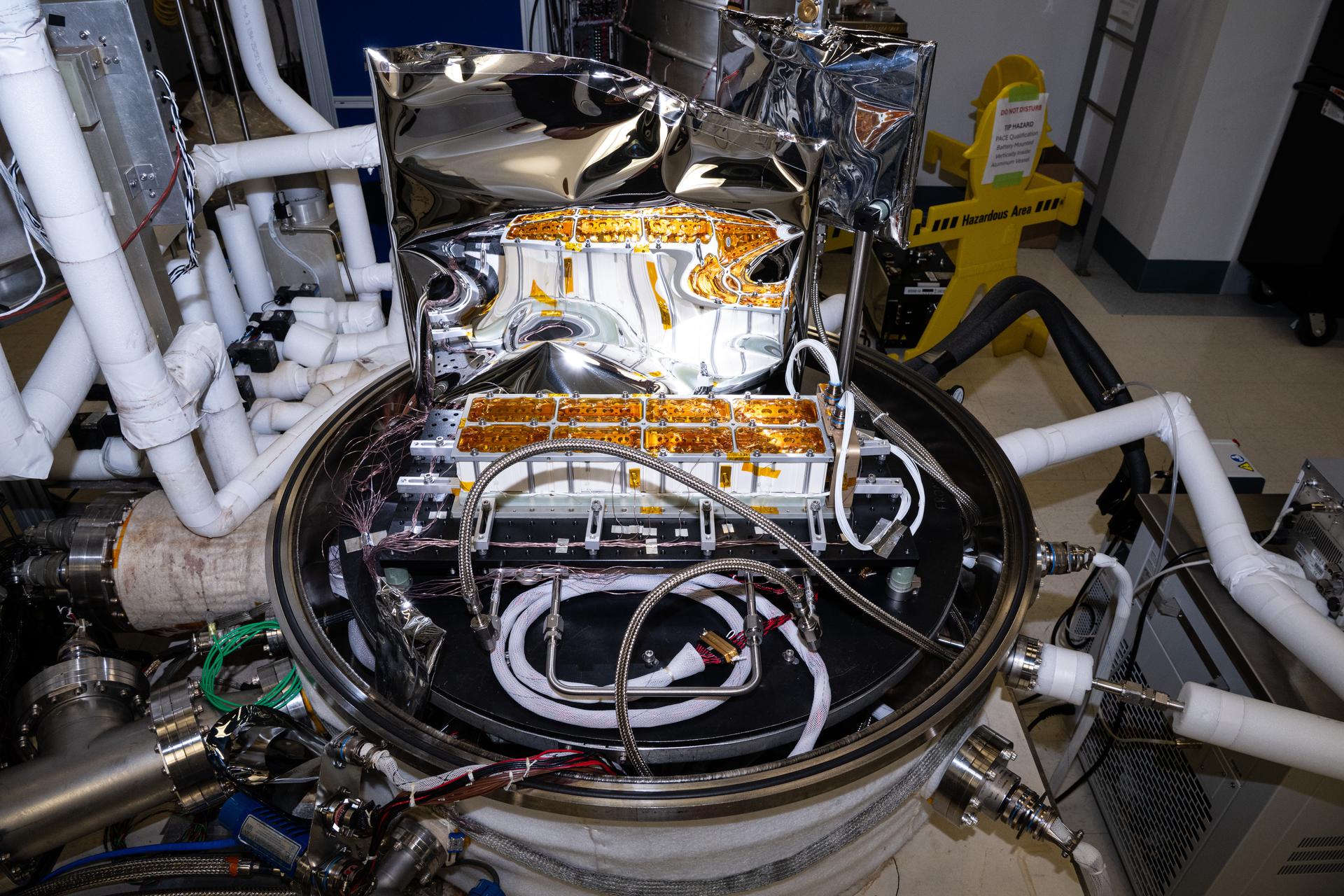
The Lunar Environment Monitoring Station (LEMS) flight battery is installed for testing in a thermal vacuum chamber at Goddard Space Flight Center, Greenbelt Md., October 8th, 2025.. LEMS is a compact, autonomous, and self-sustaining seismometer suite designed to carry out continuous, long-term, monitoring of the lunar seismic environment at the South Polar region. Photo Credit: NASA/Denny Henry
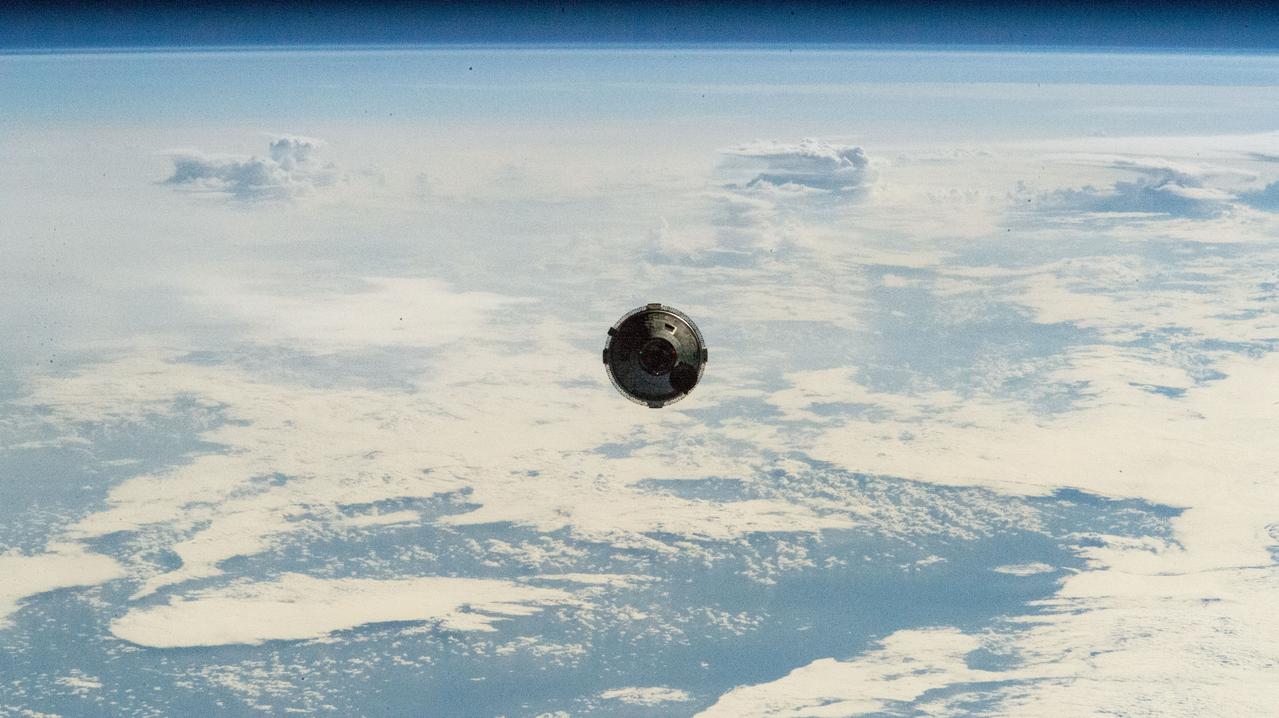
iss071e170979 (June 6, 2024) -- Boeing's Starliner spacecraft is pictured approaching the International Space Station for an autonomous docking on June 6, 2024 as the spacecraft and orbiting laboratory soared 257 miles above the South Pacific Ocean. Starliner launched on June 5, with NASA astronauts Butch Wilmore and Suni Williams aboard, as part of NASA's Boeing Crew Flight Test. This first crewed flight of Starliner aims to certify the spacecraft for rotational missions to the space station.
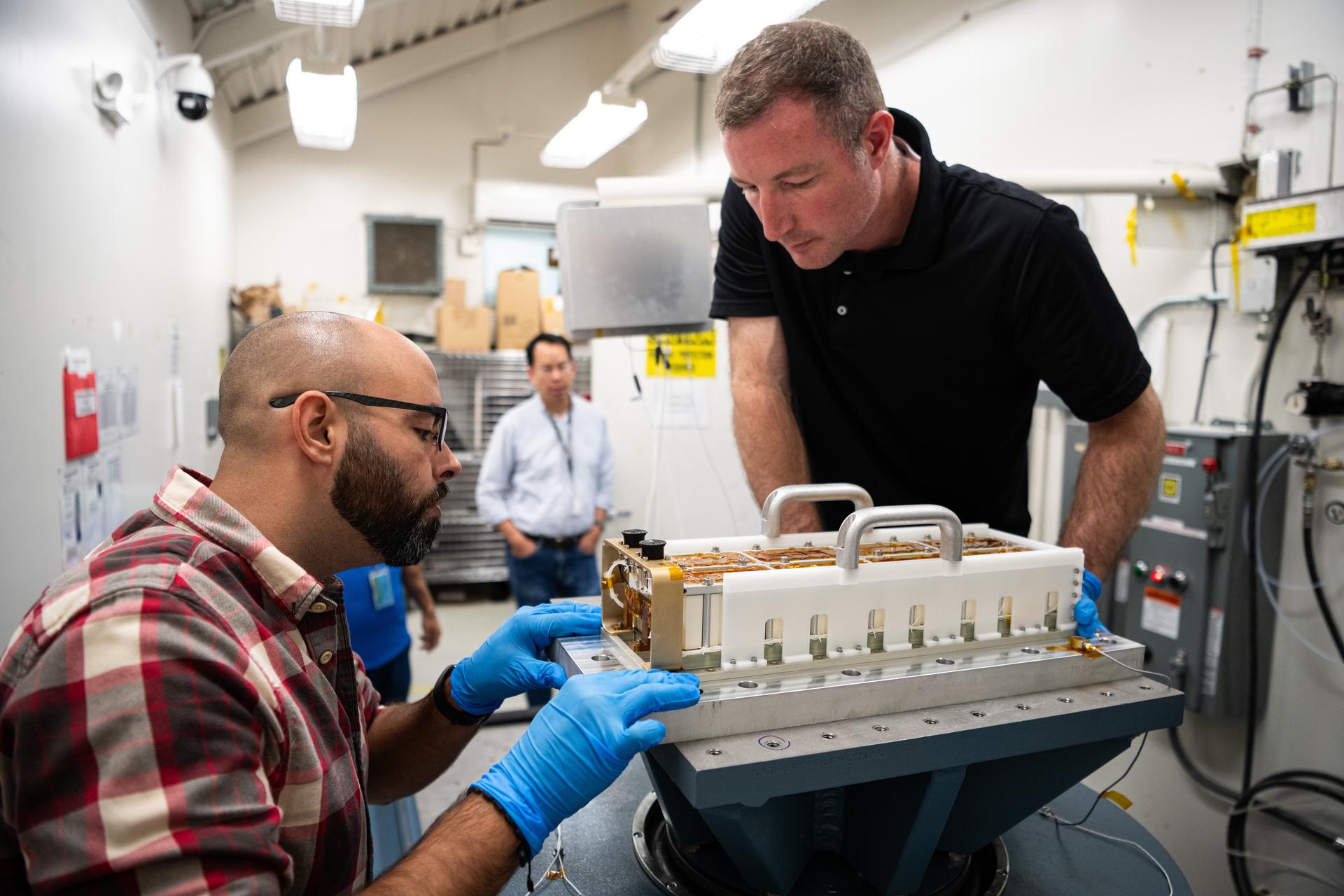
Mechanical Engineer John Seixal (left) and Engineering Technician Alex Schaeffer prepare the Lunar Environment Monitoring Station (LEMS) flight battery for vibration testing in a lab at NASA's Goddard Space Flight Center in Greenbelt, Maryland on September 29th, 2025. LEMS is a compact, autonomous, and self-sustaining seismometer suite designed to carry out continuous, long-term, monitoring of the lunar seismic environment at the South Polar region. NASA/Denny Henry.
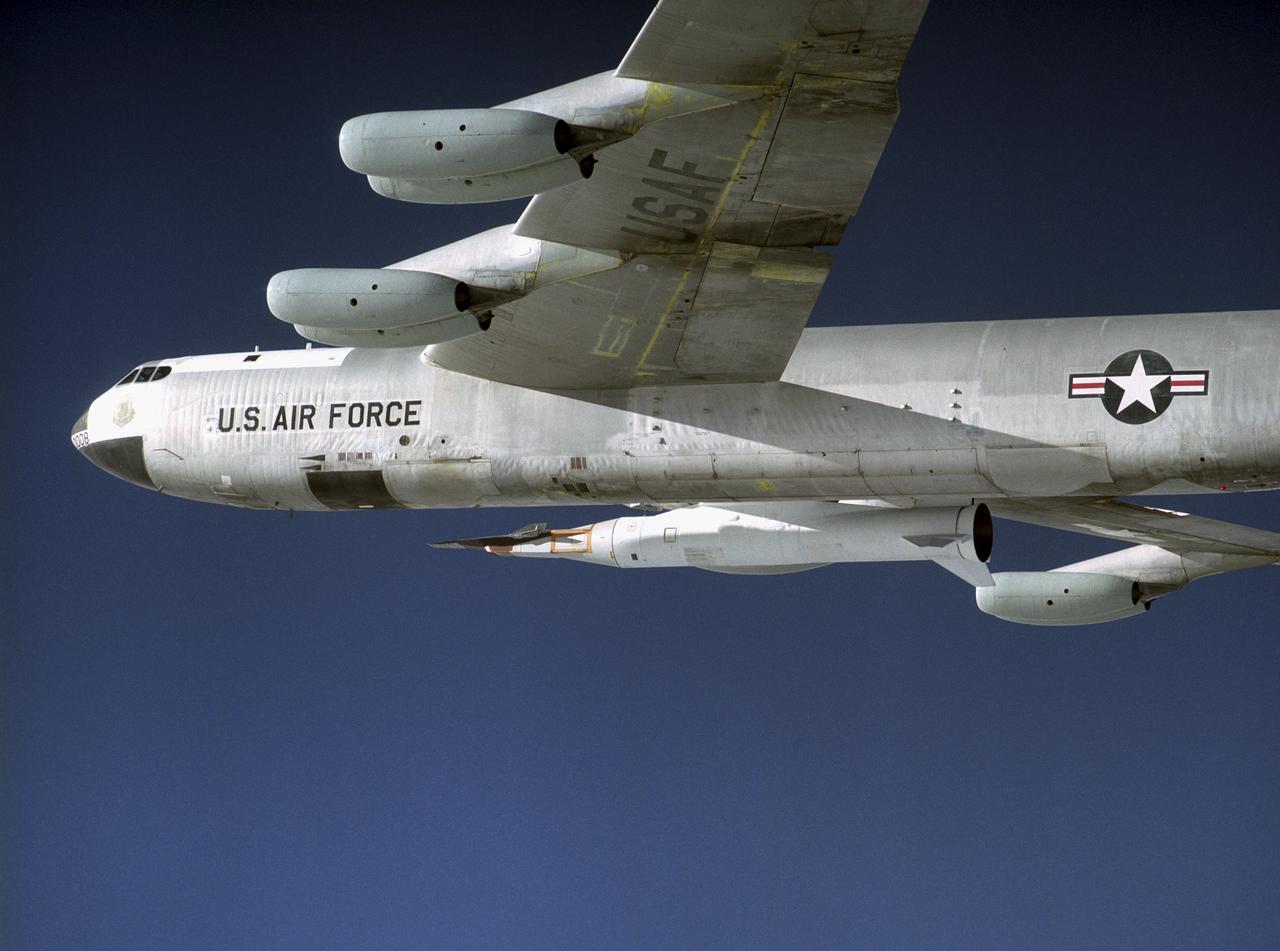
NASA's historic B-52 mother ship carried the X-43A and its Pegasus booster rocket on a captive carry flight from Edwards Air Force Base Jan. 26, 2004. The X-43A and its booster remained mated to the B-52 throughout the two-hour flight, intended to check its readiness for launch. The hydrogen-fueled aircraft is autonomous and has a wingspan of approximately 5 feet, measures 12 feet long and weighs about 2,800 pounds.

A development model rover that is part of NASA's CADRE (Cooperative Autonomous Distributed Robotic Exploration) technology demonstration took its first autonomous drive around the Mars Yard at the agency's Jet Propulsion Laboratory in Southern California in June 2023. The CADRE team tested a new wheel design, surface navigation software, and mobility capabilities, among other aspects of the project. Engineer Kristopher Sherrill is shown recording video of the test. The rover being tested is similar in size and appearance to the flight models of the CADRE rovers, which are still being built. Slated to arrive at the Moon in spring 2024 as part of NASA's CLPS (Commercial Lunar Payload Services) initiative, CADRE is designed to demonstrate that multiple robots can cooperate and explore together autonomously – without direct input from human mission controllers. A trio of the miniature solar-powered rovers, each about the size of a carry-on suitcase, will explore the Moon as a team, communicating via radio with each other and a base station aboard a lunar lander. By taking simultaneous measurements from multiple locations, CADRE will also demonstrate how multirobot missions can record data impossible for a single robot to achieve – a tantalizing prospect for future missions. Movie available at https://photojournal.jpl.nasa.gov/catalog/PIA25665
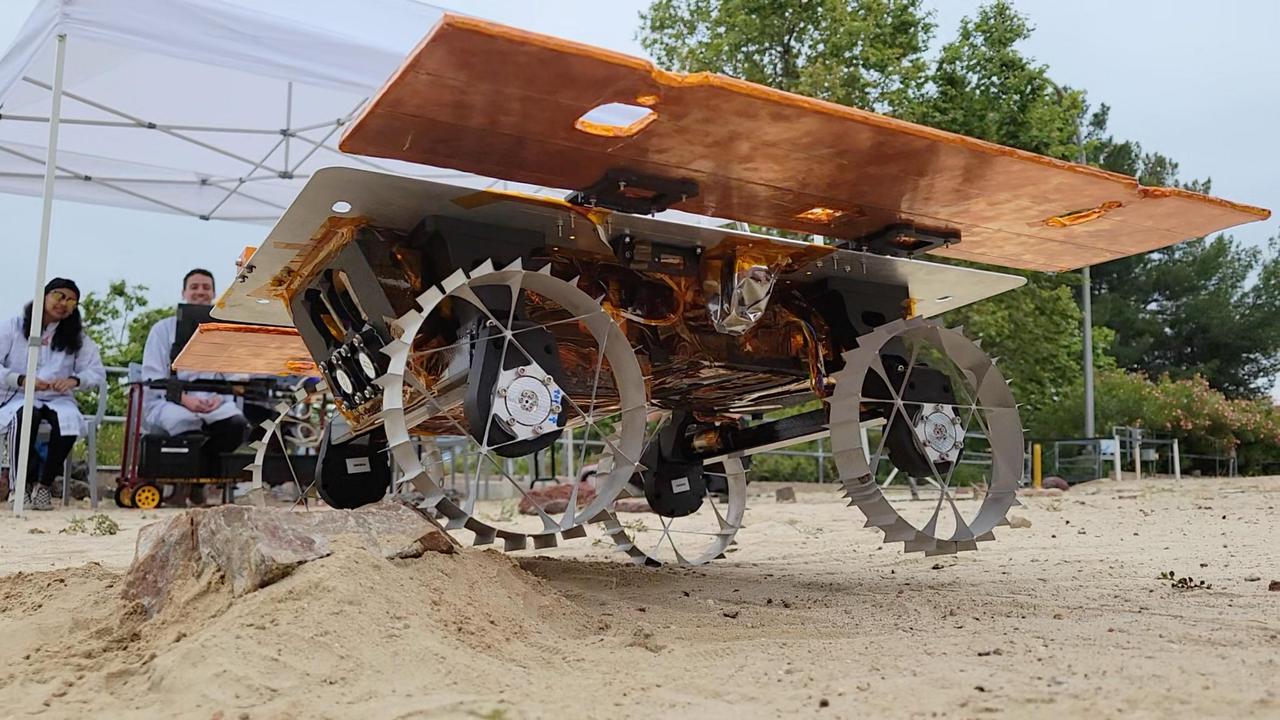
A development rover that is part of NASA's CADRE (Cooperative Autonomous Distributed Robotic Exploration) technology demonstration drives over a rock during its first autonomous drive around the Mars Yard at the agency's Jet Propulsion Laboratory in Southern California in June 2023. Under a canopy behind the rover are, from left, graduate student intern Natalie Deo and CADRE verification and validation lead Sawyer Brooks of JPL. The CADRE team successfully tested a new wheel design, surface navigation software, and mobility capabilities, among other aspects of the project. The rover being tested is similar in size and appearance to the flight models of the CADRE rovers, which are still being built. Slated to arrive at the Moon in spring 2024 as part of NASA's CLPS (Commercial Lunar Payload Services) initiative, CADRE is designed to demonstrate that multiple robots can cooperate and explore together autonomously – without direct input from human mission controllers. A trio of the miniature solar-powered rovers, each about the size of a carry-on suitcase, will explore the Moon as a team, communicating via radio with each other and a base station aboard a lunar lander. By taking simultaneous measurements from multiple locations, CADRE will also demonstrate how multirobot missions can record data impossible for a single robot to achieve – a tantalizing prospect for future missions. Movie available at https://photojournal.jpl.nasa.gov/catalog/PIA25667

KENNEDY SPACE CENTER, FLA. - At Vandenberg Air Force Base in California, Orbital Sciences Corporation technicians complete attachment of the Demonstration of Autonomous Rendezvous Technology (DART) spacecraft and Orbital Sciences Pegasus launch vehicle, to the Stargazer L-1011 aircraft above. The Pegasus XL will launch DART at approximately 40,000 feet above the Pacific Ocean into a circular polar orbit of approximately 475 miles. DART was designed and built for NASA by Orbital Sciences as an advanced flight demonstrator to locate and maneuver near an orbiting satellite. The DART spacecraft weighs about 800 pounds and is nearly 6 feet long and 3 feet in diameter. The DART satellite provides a key step in establishing autonomous rendezvous capabilities for the U.S. Space Program. While previous rendezvous and docking efforts have been piloted by astronauts, the unmanned DART satellite will have computers and cameras to perform its rendezvous functions.

KENNEDY SPACE CENTER, FLA. - At Vandenberg Air Force Base in California, Orbital Sciences Corporation technicians get ready to attach the Demonstration of Autonomous Rendezvous Technology (DART) spacecraft and Orbital Sciences Pegasus launch vehicle, mated earlier, to the Stargazer L-1011 aircraft above. The Pegasus XL will launch DART at approximately 40,000 feet above the Pacific Ocean into a circular polar orbit of approximately 475 miles. DART was designed and built for NASA by Orbital Sciences as an advanced flight demonstrator to locate and maneuver near an orbiting satellite. The DART spacecraft weighs about 800 pounds and is nearly 6 feet long and 3 feet in diameter. The DART satellite provides a key step in establishing autonomous rendezvous capabilities for the U.S. Space Program. While previous rendezvous and docking efforts have been piloted by astronauts, the unmanned DART satellite will have computers and cameras to perform its rendezvous functions.

CAPE CANAVERAL, Fla. - NASA's Morpheus lander, a vertical test bed vehicle, is unloaded at the Kennedy Space Center in Florida. Morpheus is designed to demonstrate new green propellant propulsion systems and autonomous landing and an Autonomous Landing and Hazard Avoidance Technology, or ALHAT, system. Checkout of the prototype lander has been ongoing at NASA’s Johnson Space Center in Houston in preparation for its first free flight. The SLF site will provide the lander with the kind of field necessary for realistic testing. Project Morpheus is one of 20 small projects comprising the Advanced Exploration Systems, or AES, program in NASA’s Human Exploration and Operations Mission Directorate. AES projects pioneer new approaches for rapidly developing prototype systems, demonstrating key capabilities and validating operational concepts for future human missions beyond Earth orbit. For more information on Project Morpheus, visit http://www.nasa.gov/centers/johnson/exploration/morpheus/index.html Photo credit: NASA/ Charisse Nahser
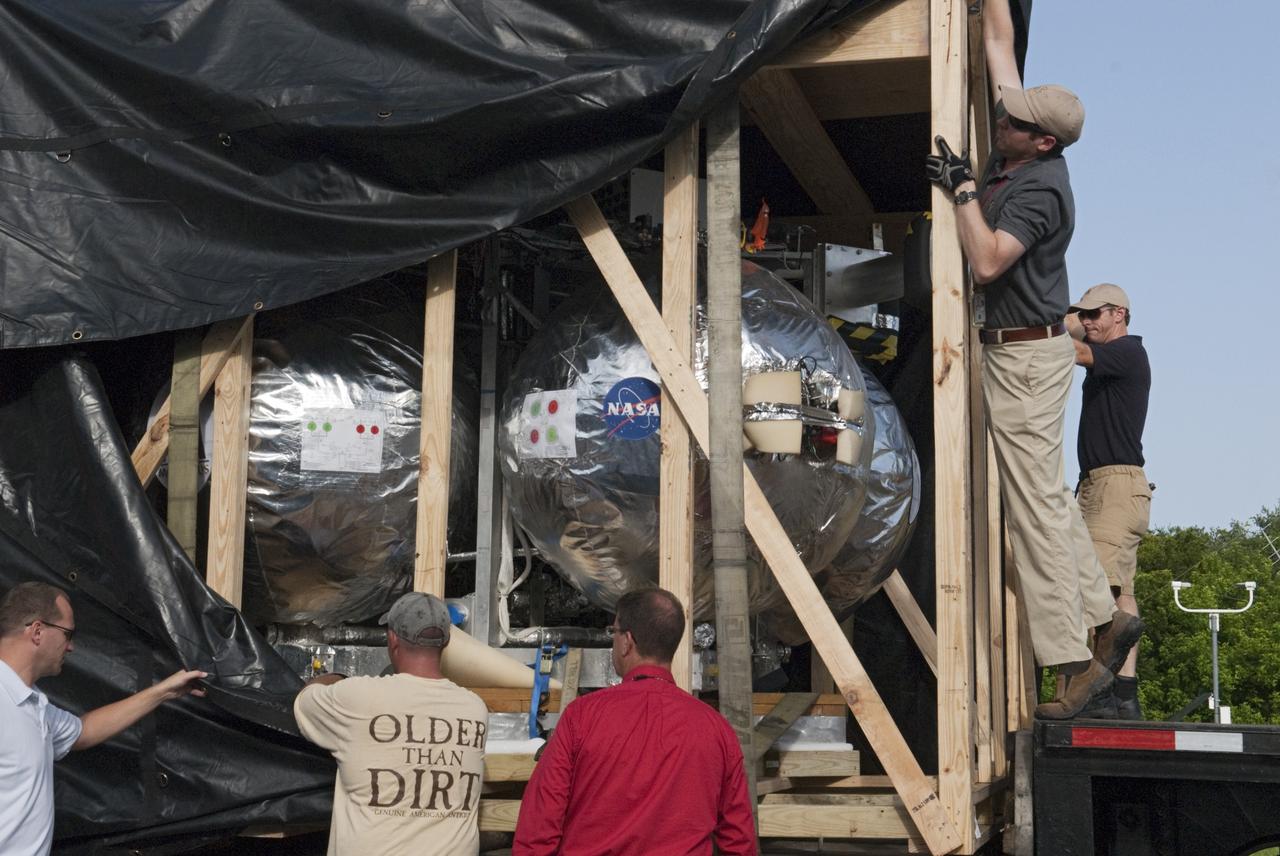
CAPE CANAVERAL, Fla. - NASA's Morpheus lander, a vertical test bed vehicle, is unloaded at the Kennedy Space Center in Florida. Morpheus is designed to demonstrate new green propellant propulsion systems and autonomous landing and an Autonomous Landing and Hazard Avoidance Technology, or ALHAT, system. Checkout of the prototype lander has been ongoing at NASA’s Johnson Space Center in Houston in preparation for its first free flight. The SLF site will provide the lander with the kind of field necessary for realistic testing. Project Morpheus is one of 20 small projects comprising the Advanced Exploration Systems, or AES, program in NASA’s Human Exploration and Operations Mission Directorate. AES projects pioneer new approaches for rapidly developing prototype systems, demonstrating key capabilities and validating operational concepts for future human missions beyond Earth orbit. For more information on Project Morpheus, visit http://www.nasa.gov/centers/johnson/exploration/morpheus/index.html Photo credit: NASA/ Charisse Nahser
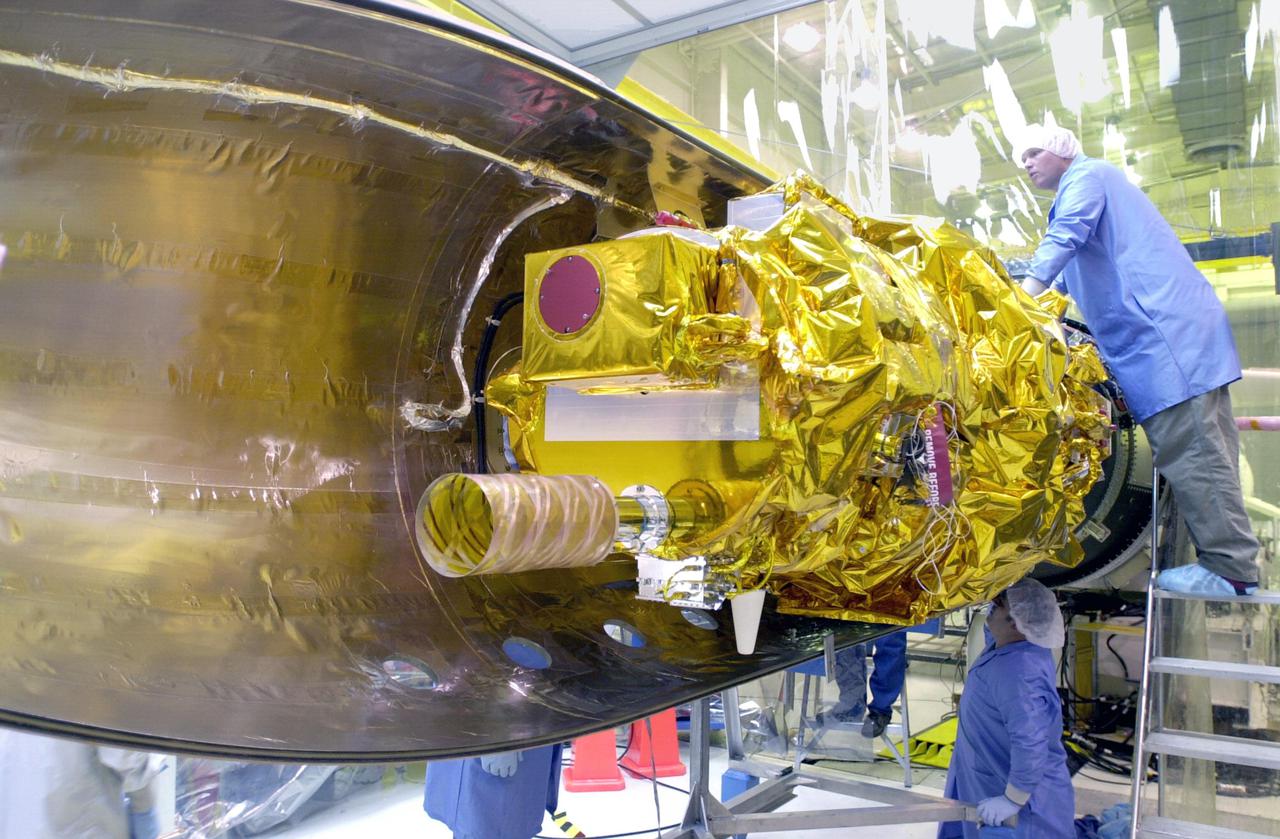
KENNEDY SPACE CENTER, FLA. - In preparation for launch, Orbital Sciences Corporation technicians at Vandenberg AFB in California check the placement of the first fairing half around the Demonstration of Autonomous Rendezvous Technology (DART) spacecraft. The fairing will encapsulate DART and protect it while on the launch pad and during ascent. DART was designed and built for NASA by Orbital Sciences as an advanced flight demonstrator to locate and maneuver near an orbiting satellite. The DART spacecraft weighs about 800 pounds and is nearly 6 feet long and 3 feet in diameter. From beneath the belly of the Orbital Sciences L-1011 aircraft, the Pegasus XL vehicle will launch DART into a circular polar orbit of approximately 475 miles. The DART satellite provides a key step in establishing autonomous rendezvous capabilities for the U.S. Space Program. While previous rendezvous and docking efforts have been piloted by astronauts, the unmanned DART satellite will have computers and cameras to perform its rendezvous functions.
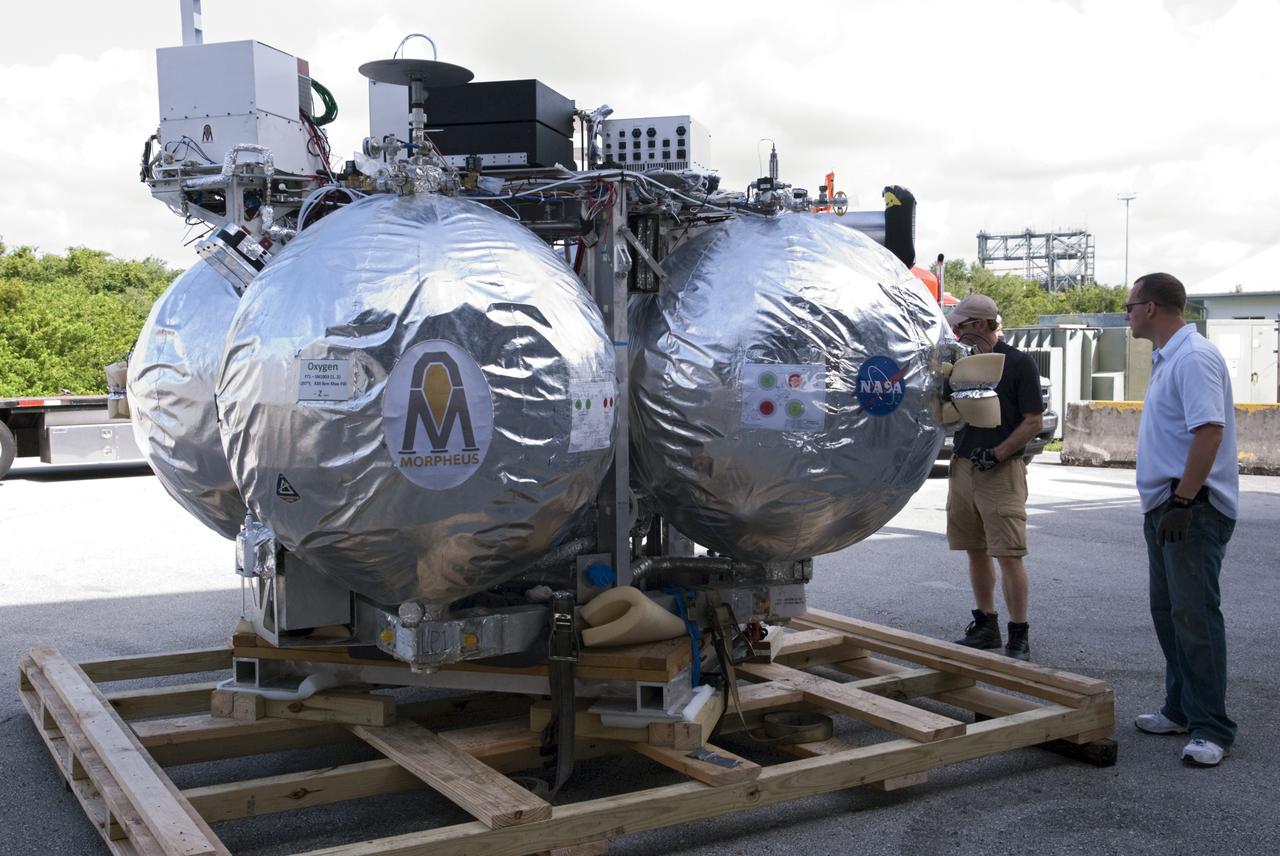
CAPE CANAVERAL, Fla. - NASA's Morpheus lander, a vertical test bed vehicle, is unloaded at the Kennedy Space Center in Florida. Morpheus is designed to demonstrate new green propellant propulsion systems and autonomous landing and an Autonomous Landing and Hazard Avoidance Technology, or ALHAT, system. Checkout of the prototype lander has been ongoing at NASA’s Johnson Space Center in Houston in preparation for its first free flight. The SLF site will provide the lander with the kind of field necessary for realistic testing. Project Morpheus is one of 20 small projects comprising the Advanced Exploration Systems, or AES, program in NASA’s Human Exploration and Operations Mission Directorate. AES projects pioneer new approaches for rapidly developing prototype systems, demonstrating key capabilities and validating operational concepts for future human missions beyond Earth orbit. For more information on Project Morpheus, visit http://www.nasa.gov/centers/johnson/exploration/morpheus/index.html Photo credit: NASA/ Charisse Nahser

KENNEDY SPACE CENTER, FLA. - At Vandenberg Air Force Base in California, the Demonstration of Autonomous Rendezvous Technology (DART) is mated to the belly of the Orbital Sciences Corporation Stargazer L-1011 aircraft. DART was designed and built for NASA by Orbital Sciences as an advanced flight demonstrator to locate and maneuver near an orbiting satellite. The DART spacecraft weighs about 800 pounds and is nearly 6 feet long and 3 feet in diameter. From beneath the belly of the Orbital Sciences L-1011 aircraft, the Pegasus XL vehicle will launch DART into a circular polar orbit of approximately 475 miles. The DART satellite provides a key step in establishing autonomous rendezvous capabilities for the U.S. Space Program. While previous rendezvous and docking efforts have been piloted by astronauts, the unmanned DART satellite will have computers and cameras to perform its rendezvous functions.
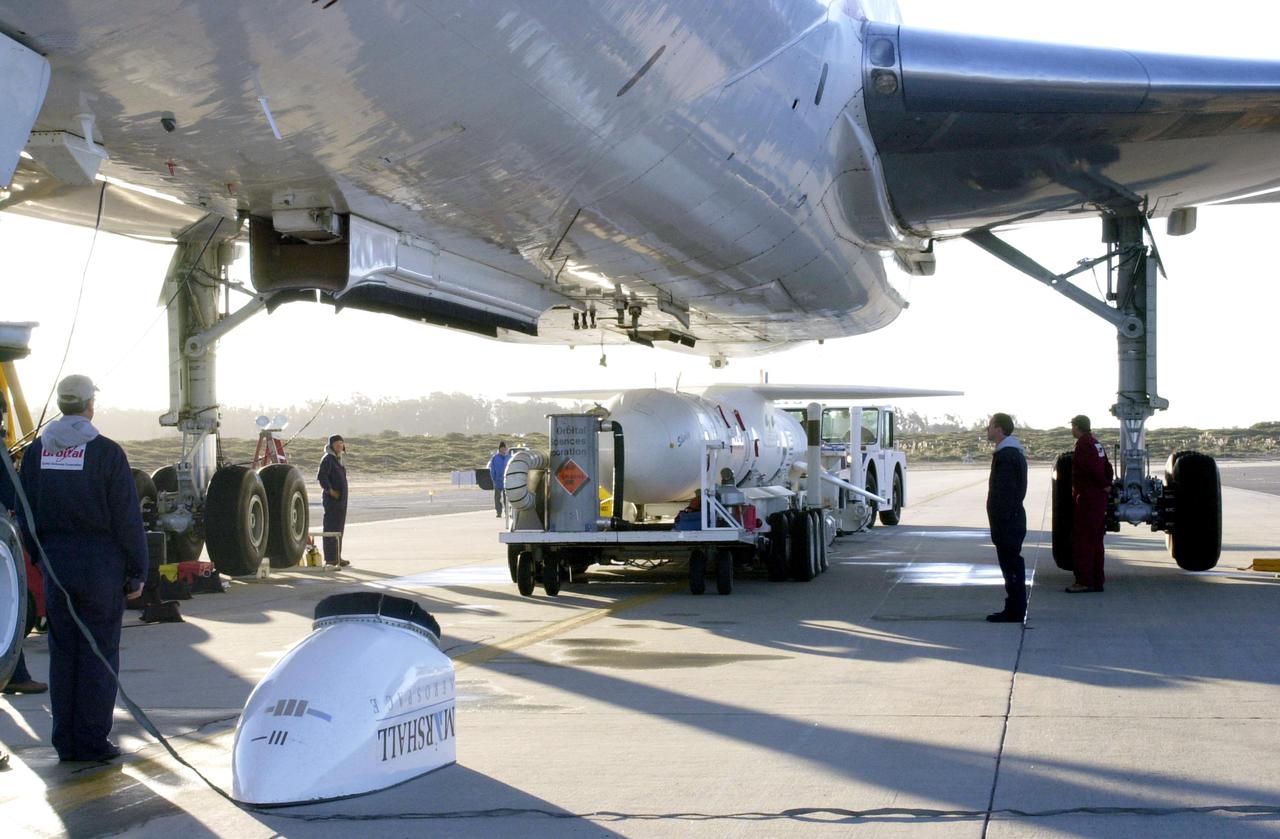
KENNEDY SPACE CENTER, FLA. - The Demonstration of Autonomous Rendezvous Technology (DART) spacecraft and Orbital Sciences Pegasus launch vehicle, mated earlier, arrive at the Vandenberg Air Force Base runway for mating to the belly of the Stargazer L-1011 aircraft (foreground). The Pegasus XL will launch DART at approximately 40,000 feet above the Pacific Ocean into a circular polar orbit of approximately 475 miles. DART was designed and built for NASA by Orbital Sciences as an advanced flight demonstrator to locate and maneuver near an orbiting satellite. The DART spacecraft weighs about 800 pounds and is nearly 6 feet long and 3 feet in diameter. The DART satellite provides a key step in establishing autonomous rendezvous capabilities for the U.S. Space Program. While previous rendezvous and docking efforts have been piloted by astronauts, the unmanned DART satellite will have computers and cameras to perform its rendezvous functions.
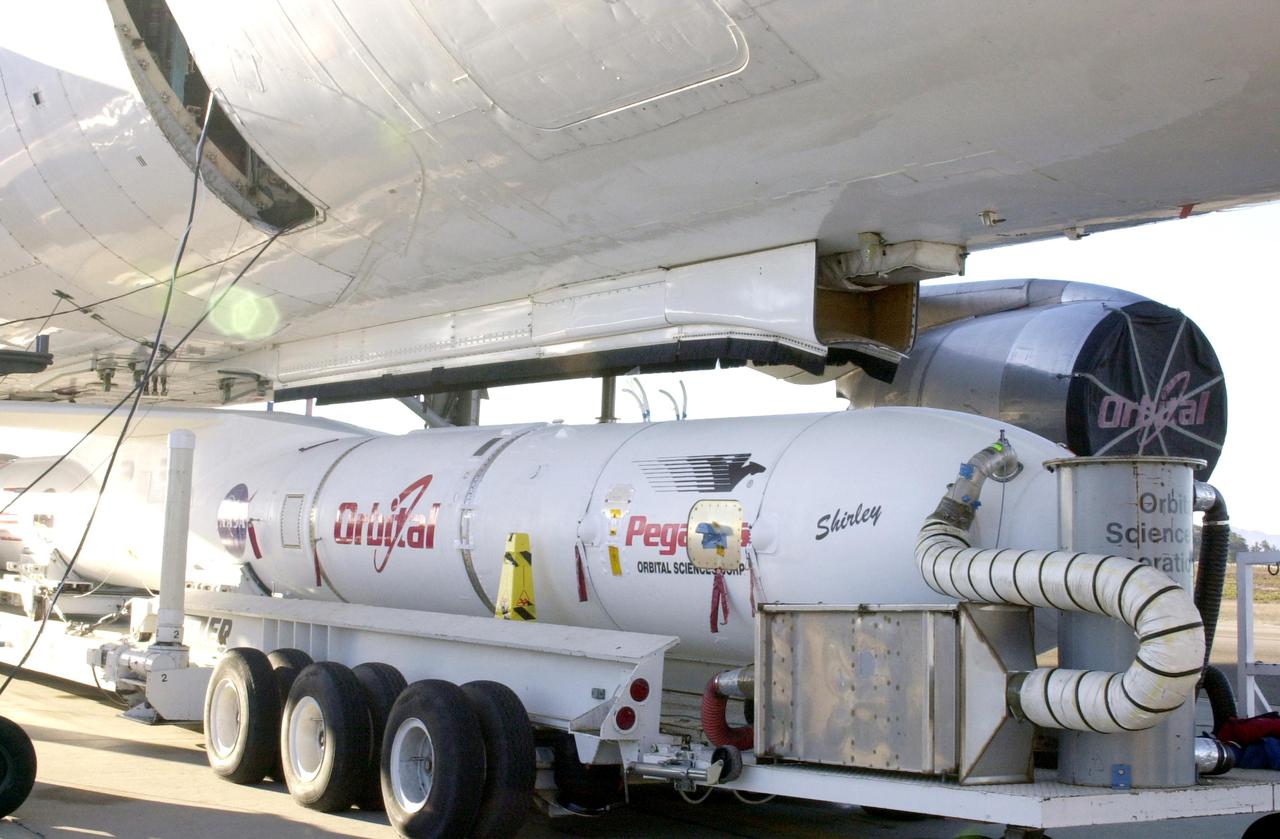
KENNEDY SPACE CENTER, FLA. - At Vandenberg Air Force Base in California, the Demonstration of Autonomous Rendezvous Technology (DART) spacecraft and Orbital Sciences Pegasus launch vehicle, mated earlier, are being attached to the Stargazer L-1011 aircraft above. The Pegasus XL will launch DART at approximately 40,000 feet above the Pacific Ocean into a circular polar orbit of approximately 475 miles. DART was designed and built for NASA by Orbital Sciences as an advanced flight demonstrator to locate and maneuver near an orbiting satellite. The DART spacecraft weighs about 800 pounds and is nearly 6 feet long and 3 feet in diameter. The DART satellite provides a key step in establishing autonomous rendezvous capabilities for the U.S. Space Program. While previous rendezvous and docking efforts have been piloted by astronauts, the unmanned DART satellite will have computers and cameras to perform its rendezvous functions.
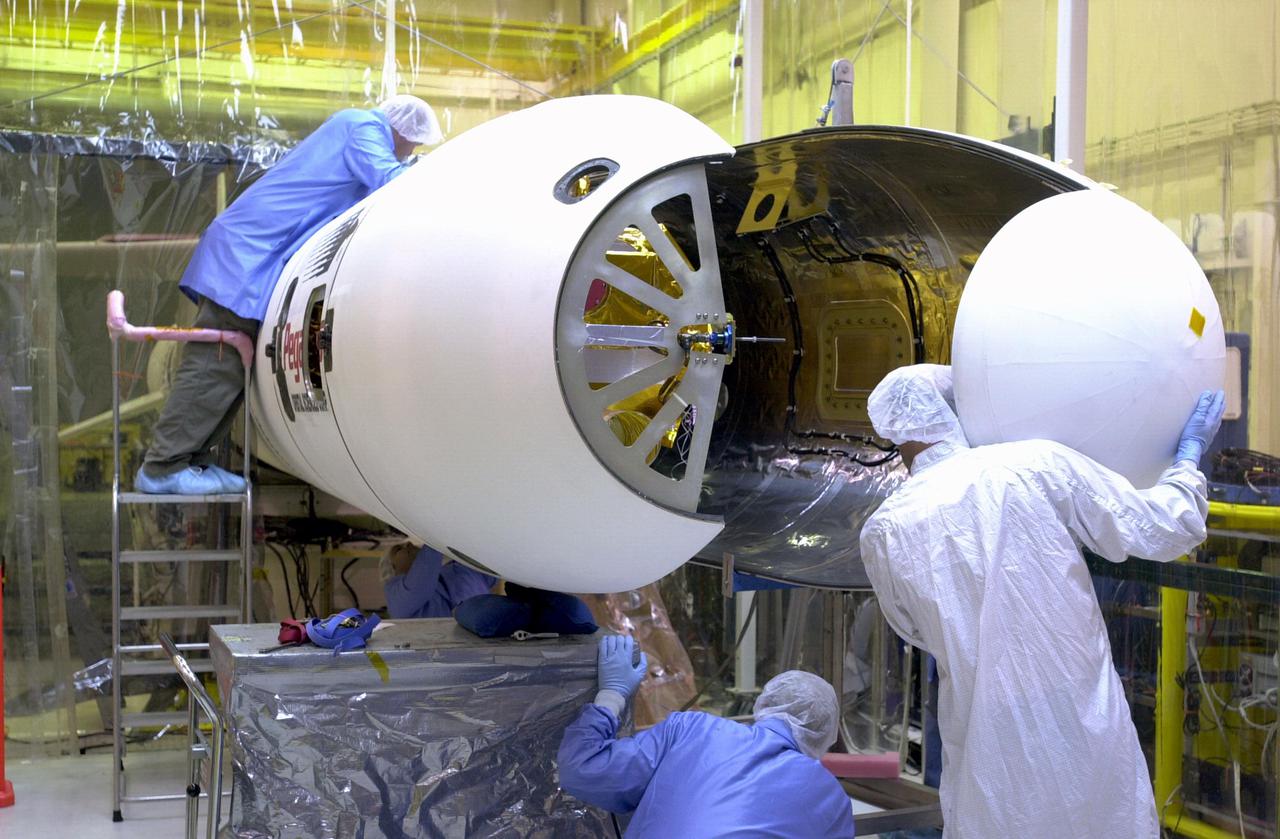
KENNEDY SPACE CENTER, FLA. - Orbital Sciences Corporation technicians at Vandenberg AFB in California maneuver the second fairing half into place around the Demonstration of Autonomous Rendezvous Technology (DART) spacecraft in preparation for launch. The fairing will encapsulate DART and protect it while on the launch pad and during ascent. DART was designed and built for NASA by Orbital Sciences as an advanced flight demonstrator to locate and maneuver near an orbiting satellite. The DART spacecraft weighs about 800 pounds and is nearly 6 feet long and 3 feet in diameter. From beneath the belly of the Orbital Sciences L-1011 aircraft, the Pegasus XL vehicle will launch DART into a circular polar orbit of approximately 475 miles. The DART satellite provides a key step in establishing autonomous rendezvous capabilities for the U.S. Space Program. While previous rendezvous and docking efforts have been piloted by astronauts, the unmanned DART satellite will have computers and cameras to perform its rendezvous functions.
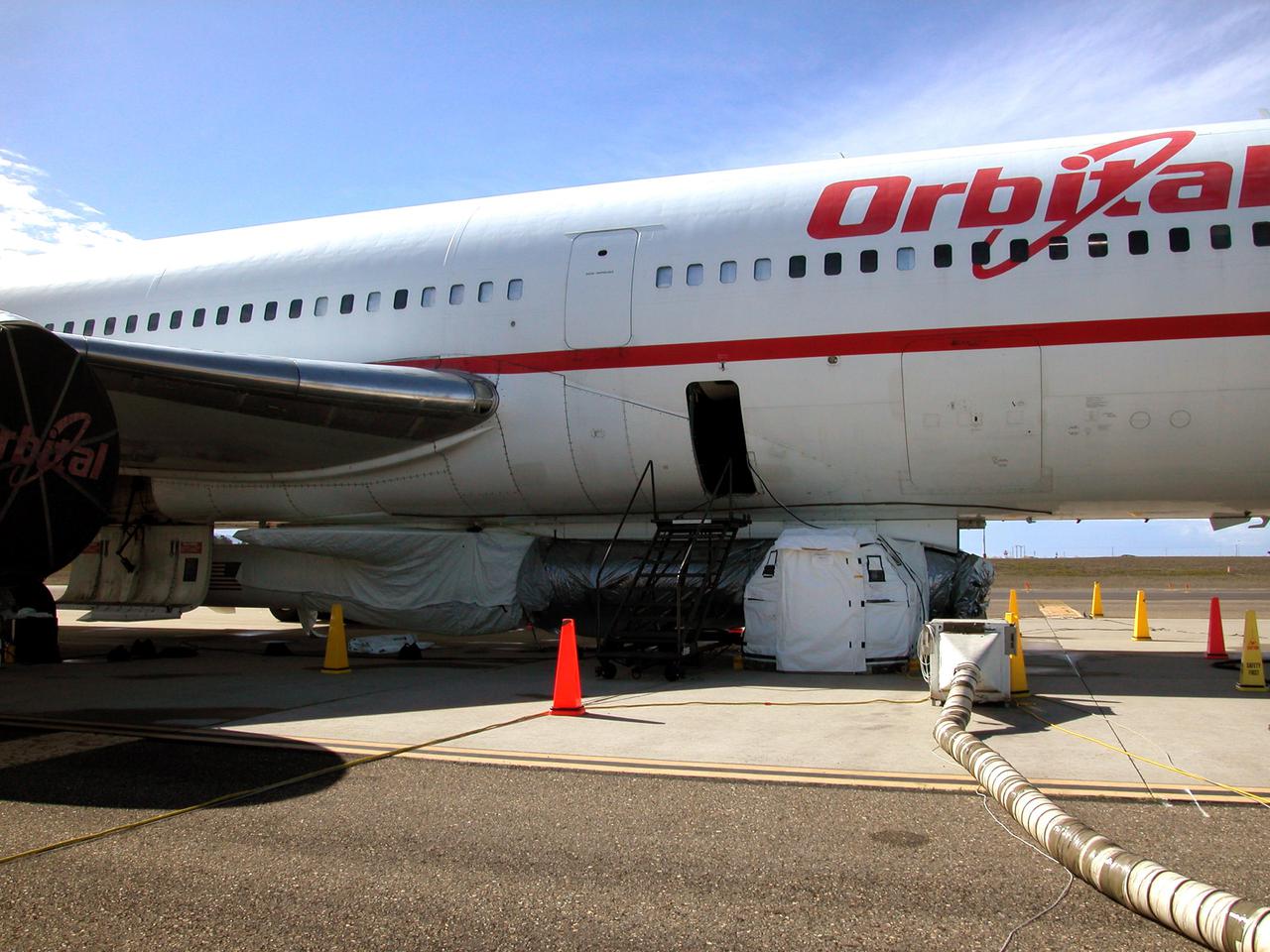
KENNEDY SPACE CENTER, FLA. - After postponement of the launch, the Demonstration of Autonomous Rendezvous Technology (DART) spacecraft is covered with protective material. DART is mated to Orbital Sciences Corporation’s Stargazer L-1011 aircraft, which will release its cargo over the Pacific Ocean at 40,000 feet. The Pegasus XL vehicle will launch DART into a circular polar orbit of approximately 475 miles. DART was designed and built for NASA by Orbital Sciences as an advanced flight demonstrator to locate and maneuver near an orbiting satellite. The DART satellite provides a key step in establishing autonomous rendezvous capabilities for the U.S. Space Program. While previous rendezvous and docking efforts have been piloted by astronauts, the unmanned DART satellite will have computers and cameras to perform its rendezvous functions.
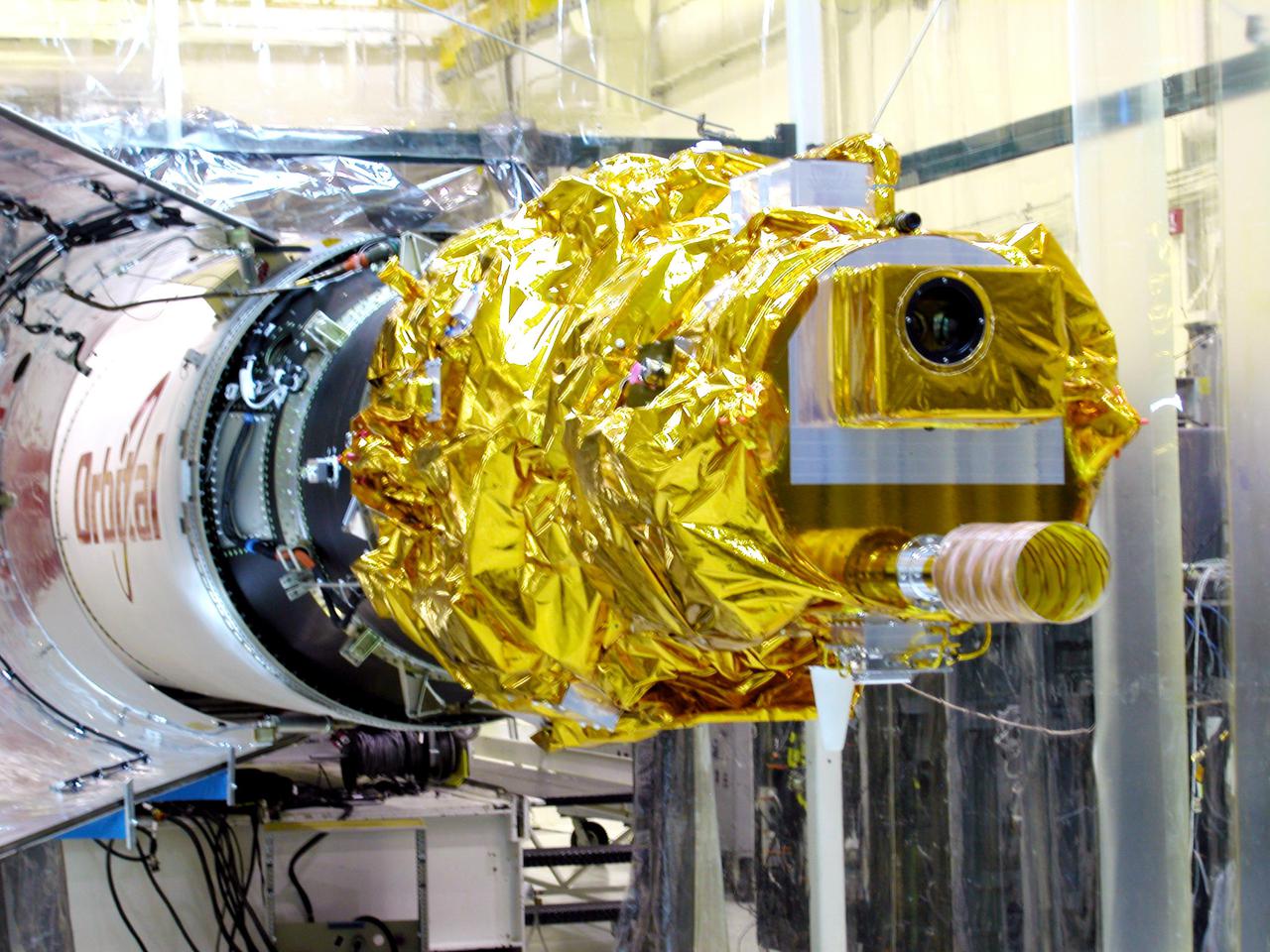
KENNEDY SPACE CENTER, FLA. - At Vandenberg Air Force Base in California, the Demonstration of Autonomous Rendezvous Technology (DART) waits for fairing installation. The fairing will encapsulate DART and protect it while on the launch pad and during ascent. DART was designed and built for NASA by Orbital Sciences as an advanced flight demonstrator to locate and maneuver near an orbiting satellite. The DART spacecraft weighs about 800 pounds and is nearly 6 feet long and 3 feet in diameter. From beneath the belly of the Orbital Sciences L-1011 aircraft, the Pegasus XL vehicle will launch DART into a circular polar orbit of approximately 475 miles. The DART satellite provides a key step in establishing autonomous rendezvous capabilities for the U.S. Space Program. While previous rendezvous and docking efforts have been piloted by astronauts, the unmanned DART satellite will have computers and cameras to perform its rendezvous functions.
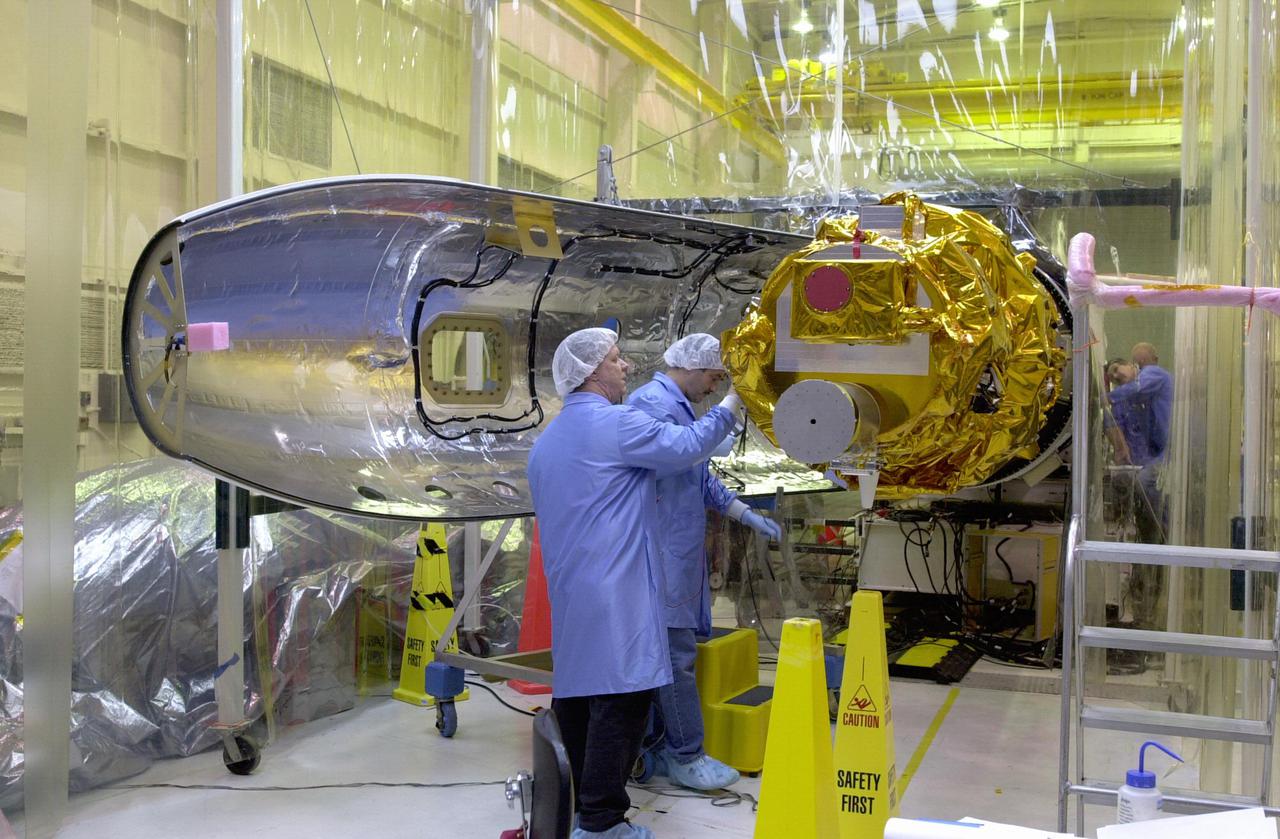
KENNEDY SPACE CENTER, FLA. - In preparation for launch, Orbital Sciences Corporation technicians at Vandenberg AFB in California get ready to place the first fairing half around the Demonstration of Autonomous Rendezvous Technology (DART) spacecraft. The fairing will encapsulate DART and protect it while on the launch pad and during ascent. DART was designed and built for NASA by Orbital Sciences as an advanced flight demonstrator to locate and maneuver near an orbiting satellite. The DART spacecraft weighs about 800 pounds and is nearly 6 feet long and 3 feet in diameter. From beneath the belly of the Orbital Sciences L-1011 aircraft, the Pegasus XL vehicle will launch DART into a circular polar orbit of approximately 475 miles. The DART satellite provides a key step in establishing autonomous rendezvous capabilities for the U.S. Space Program. While previous rendezvous and docking efforts have been piloted by astronauts, the unmanned DART satellite will have computers and cameras to perform its rendezvous functions.

KENNEDY SPACE CENTER, FLA. - At Vandenberg Air Force Base in California, the Demonstration of Autonomous Rendezvous Technology (DART) is mated to the belly of the Orbital Sciences Corporation Stargazer L-1011 aircraft. DART was designed and built for NASA by Orbital Sciences as an advanced flight demonstrator to locate and maneuver near an orbiting satellite. The DART spacecraft weighs about 800 pounds and is nearly 6 feet long and 3 feet in diameter. From beneath the belly of the Orbital Sciences L-1011 aircraft, the Pegasus XL vehicle will launch DART into a circular polar orbit of approximately 475 miles. The DART satellite provides a key step in establishing autonomous rendezvous capabilities for the U.S. Space Program. While previous rendezvous and docking efforts have been piloted by astronauts, the unmanned DART satellite will have computers and cameras to perform its rendezvous functions.
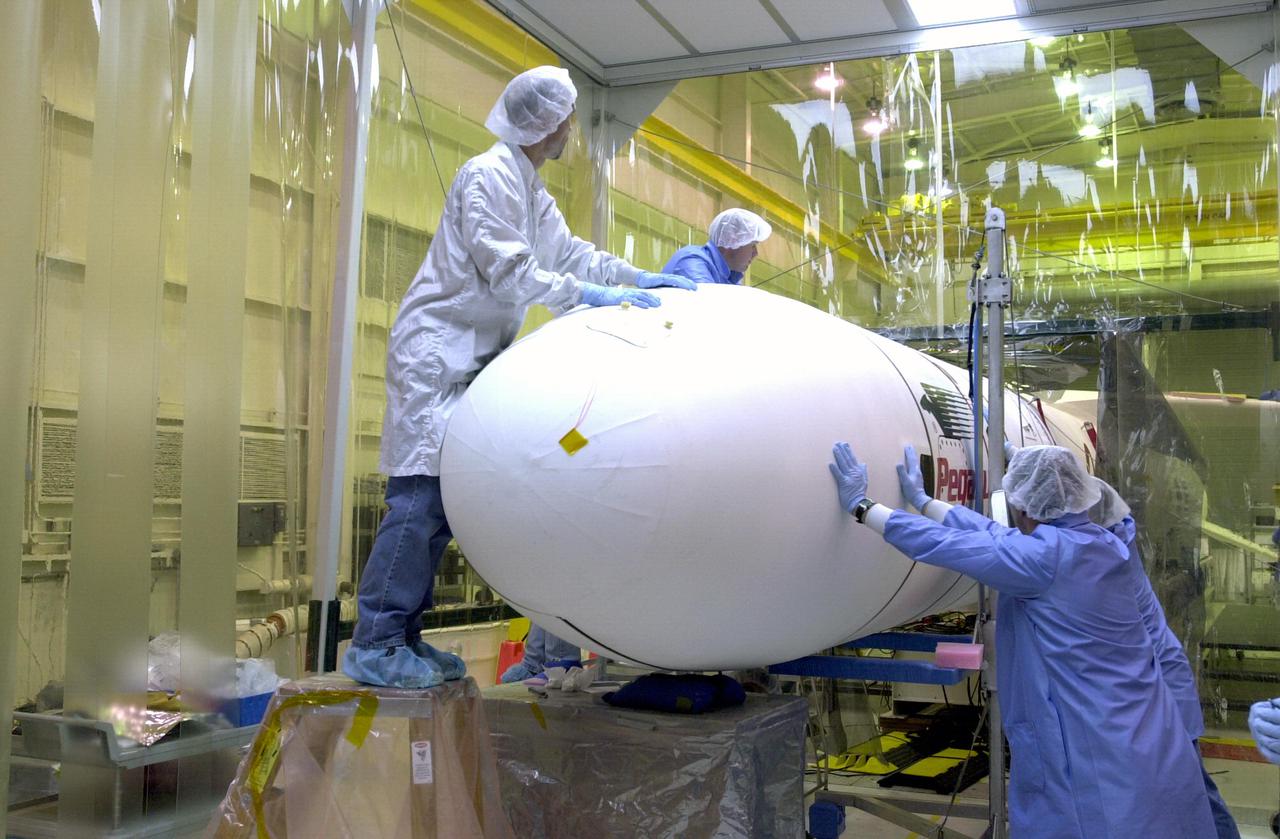
KENNEDY SPACE CENTER, FLA. - Orbital Sciences Corporation technicians at Vandenberg AFB in California finish installation of the fairing around the Demonstration of Autonomous Rendezvous Technology (DART) spacecraft in preparation for launch. The fairing will encapsulate DART and protect it while on the launch pad and during ascent. DART was designed and built for NASA by Orbital Sciences as an advanced flight demonstrator to locate and maneuver near an orbiting satellite. The DART spacecraft weighs about 800 pounds and is nearly 6 feet long and 3 feet in diameter. From beneath the belly of the Orbital Sciences L-1011 aircraft, the Pegasus XL vehicle will launch DART into a circular polar orbit of approximately 475 miles. The DART satellite provides a key step in establishing autonomous rendezvous capabilities for the U.S. Space Program. While previous rendezvous and docking efforts have been piloted by astronauts, the unmanned DART satellite will have computers and cameras to perform its rendezvous functions.
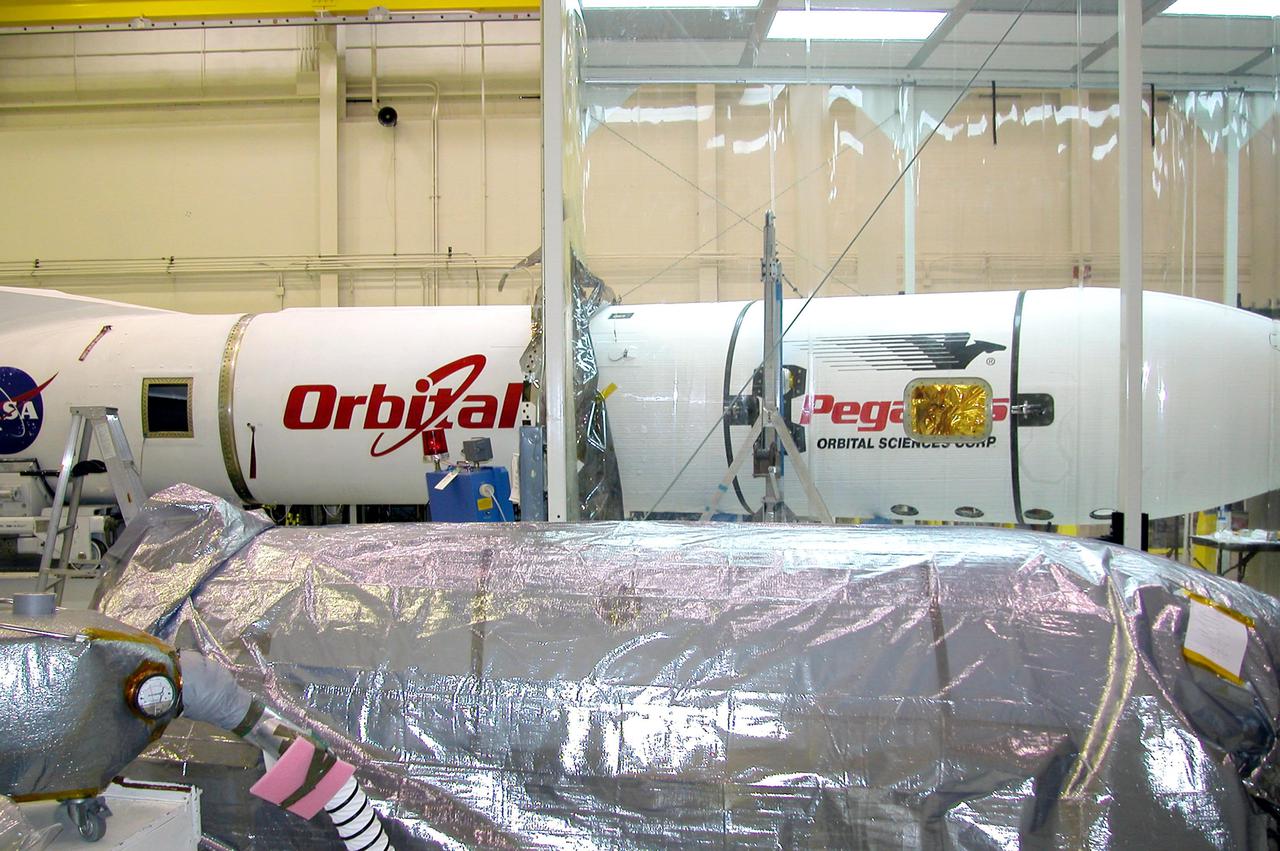
KENNEDY SPACE CENTER, FLA. - At Vandenberg Air Force Base in California, the Demonstration of Autonomous Rendezvous Technology (DART) is encapsulated and ready to be moved to the runway where it will be attached to the Orbital Sciences Corporation Stargazer L-1011 aircraft. DART was designed and built for NASA by Orbital Sciences as an advanced flight demonstrator to locate and maneuver near an orbiting satellite. The DART spacecraft weighs about 800 pounds and is nearly 6 feet long and 3 feet in diameter. From beneath the belly of the Orbital Sciences L-1011 aircraft, the Pegasus XL vehicle will launch DART into a circular polar orbit of approximately 475 miles. The DART satellite provides a key step in establishing autonomous rendezvous capabilities for the U.S. Space Program. While previous rendezvous and docking efforts have been piloted by astronauts, the unmanned DART satellite will have computers and cameras to perform its rendezvous functions.
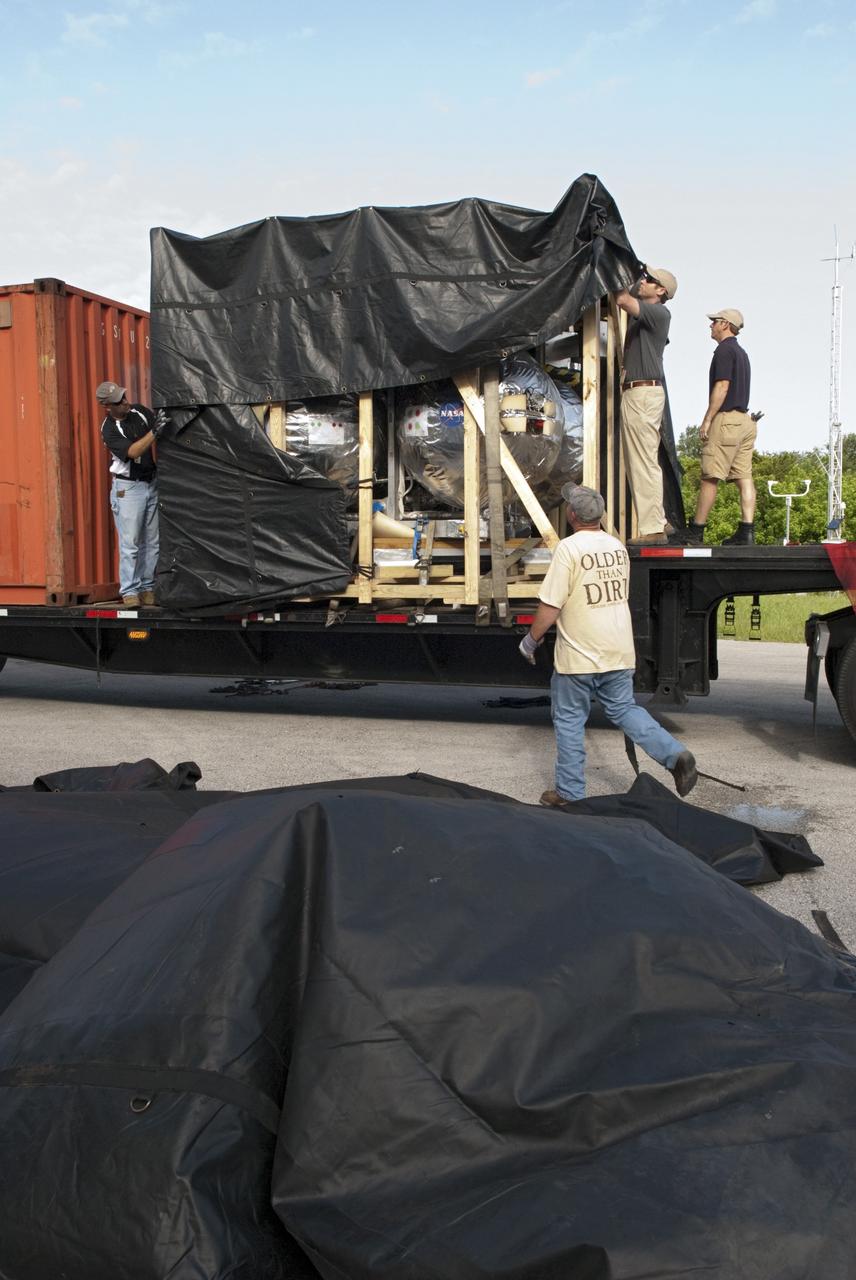
CAPE CANAVERAL, Fla. - NASA's Morpheus lander, a vertical test bed vehicle, is unloaded at the Kennedy Space Center in Florida. Morpheus is designed to demonstrate new green propellant propulsion systems and autonomous landing and an Autonomous Landing and Hazard Avoidance Technology, or ALHAT, system. Checkout of the prototype lander has been ongoing at NASA’s Johnson Space Center in Houston in preparation for its first free flight. The SLF site will provide the lander with the kind of field necessary for realistic testing. Project Morpheus is one of 20 small projects comprising the Advanced Exploration Systems, or AES, program in NASA’s Human Exploration and Operations Mission Directorate. AES projects pioneer new approaches for rapidly developing prototype systems, demonstrating key capabilities and validating operational concepts for future human missions beyond Earth orbit. For more information on Project Morpheus, visit http://www.nasa.gov/centers/johnson/exploration/morpheus/index.html Photo credit: NASA/ Charisse Nahser
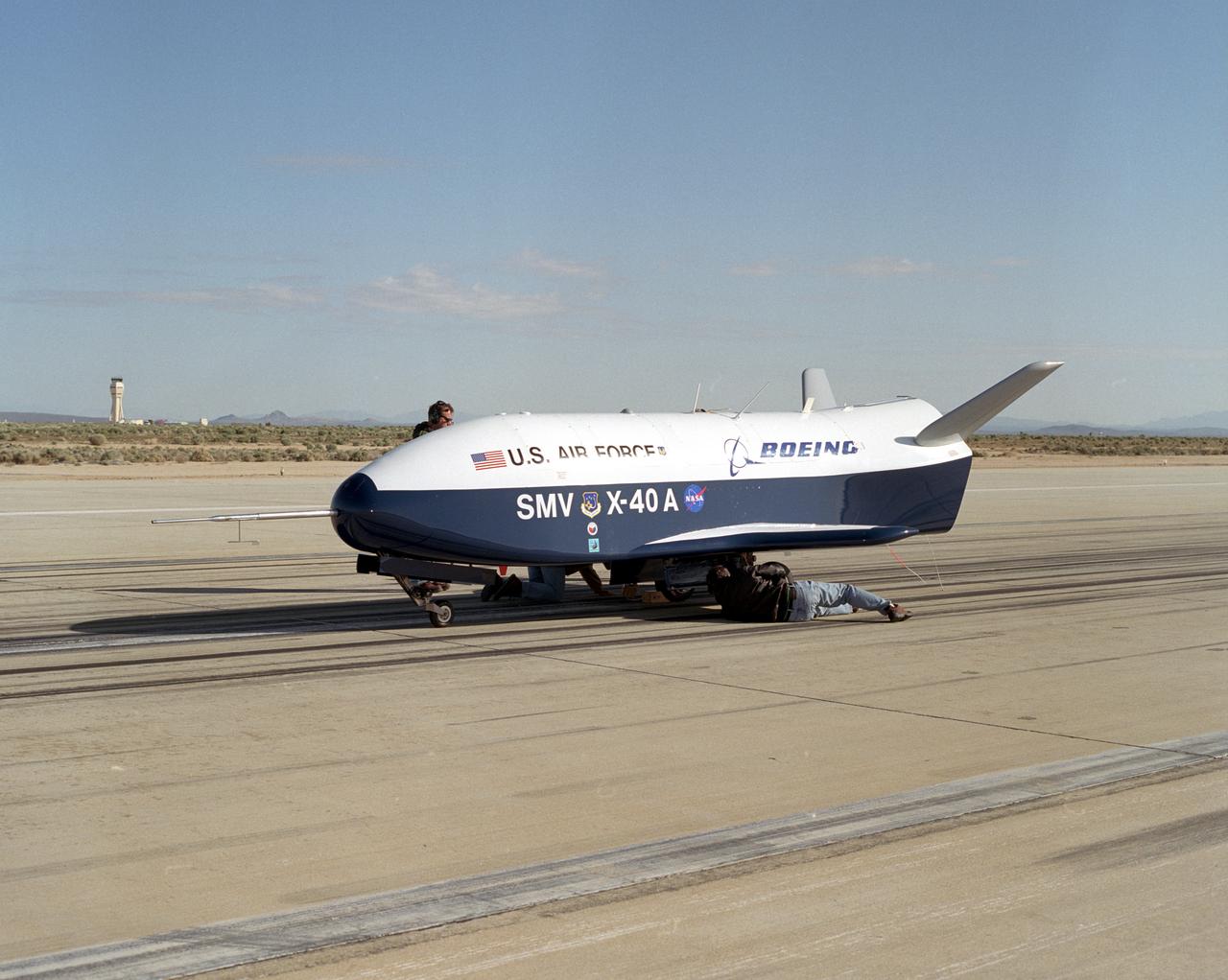
Second free-flight of the X-40A at the NASA Dryden Flight Research Center, on Edwards AFB, Calif., was made on Apr. 12, 2001. The unpowered X-40A, an 85 percent scale risk reduction version of the proposed X-37, is proving the capability of an autonomous flight control and landing system in a series of glide flights at Edwards. The April 12 flight introduced complex vehicle maneuvers during the landing sequence. The X-40A was released from an Army Chinook helicopter flying 15,050 feet overhead. Ultimately, the unpiloted X-37 is intended as an orbital testbed and technology demonstrator, capable of landing like an airplane and being quickly serviced for a follow-up mission.
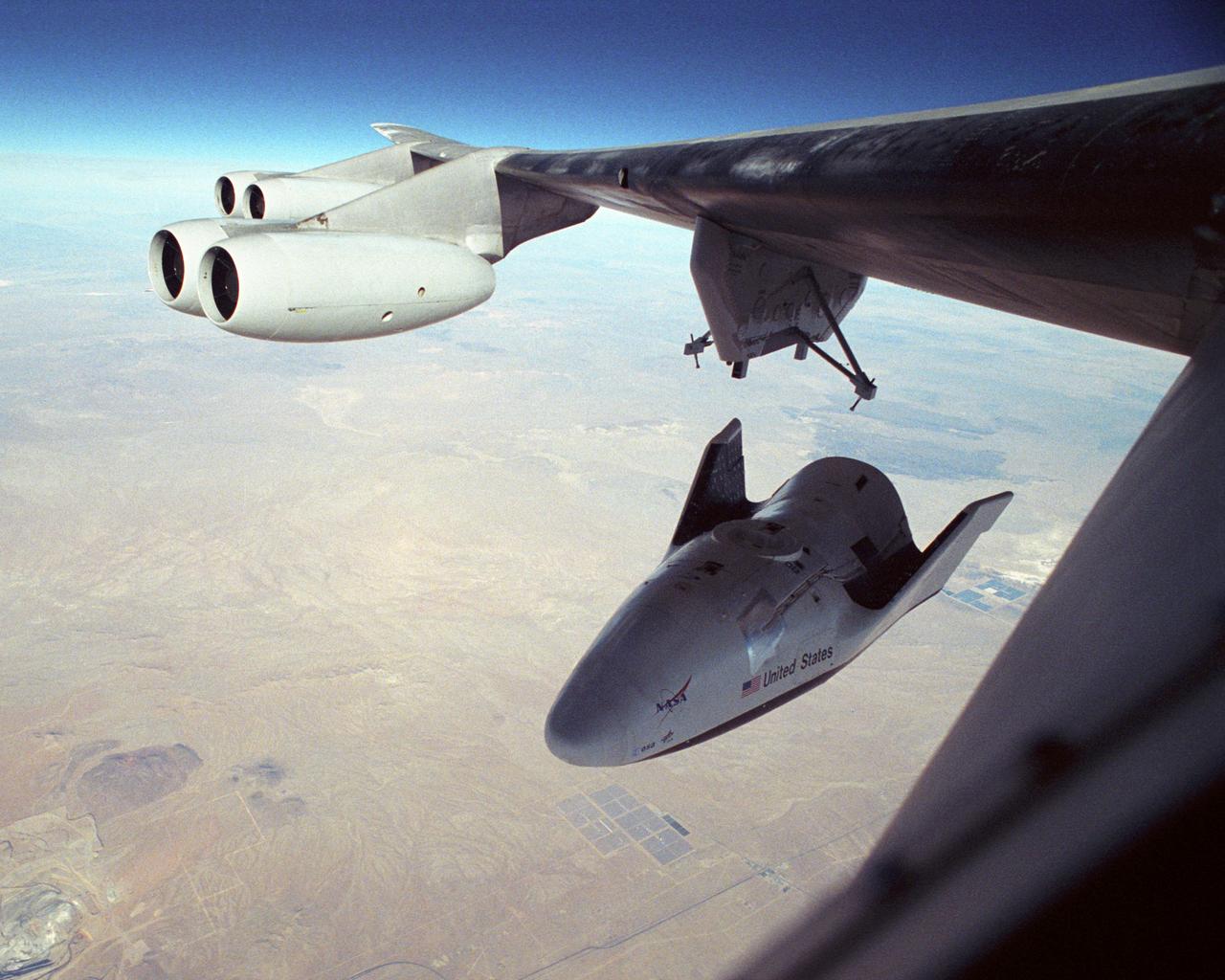
The X-38 prototype of the Crew Return Vehicle for the International Space Station drops away from its launch pylon on the wing of NASA's NB-52B mothership as it begins its eighth free flight on Thursday, Dec. 13, 2001. The 13-minute test flight of X-38 vehicle 131R was the longest and fastest and was launched from the highest altitude to date in the X-38's atmospheric flight test program. A portion of the descent was flown under remote control by a NASA astronaut from a ground vehicle configured like the CRV's interior before the X-38 made an autonomous landing on Rogers Dry Lake.
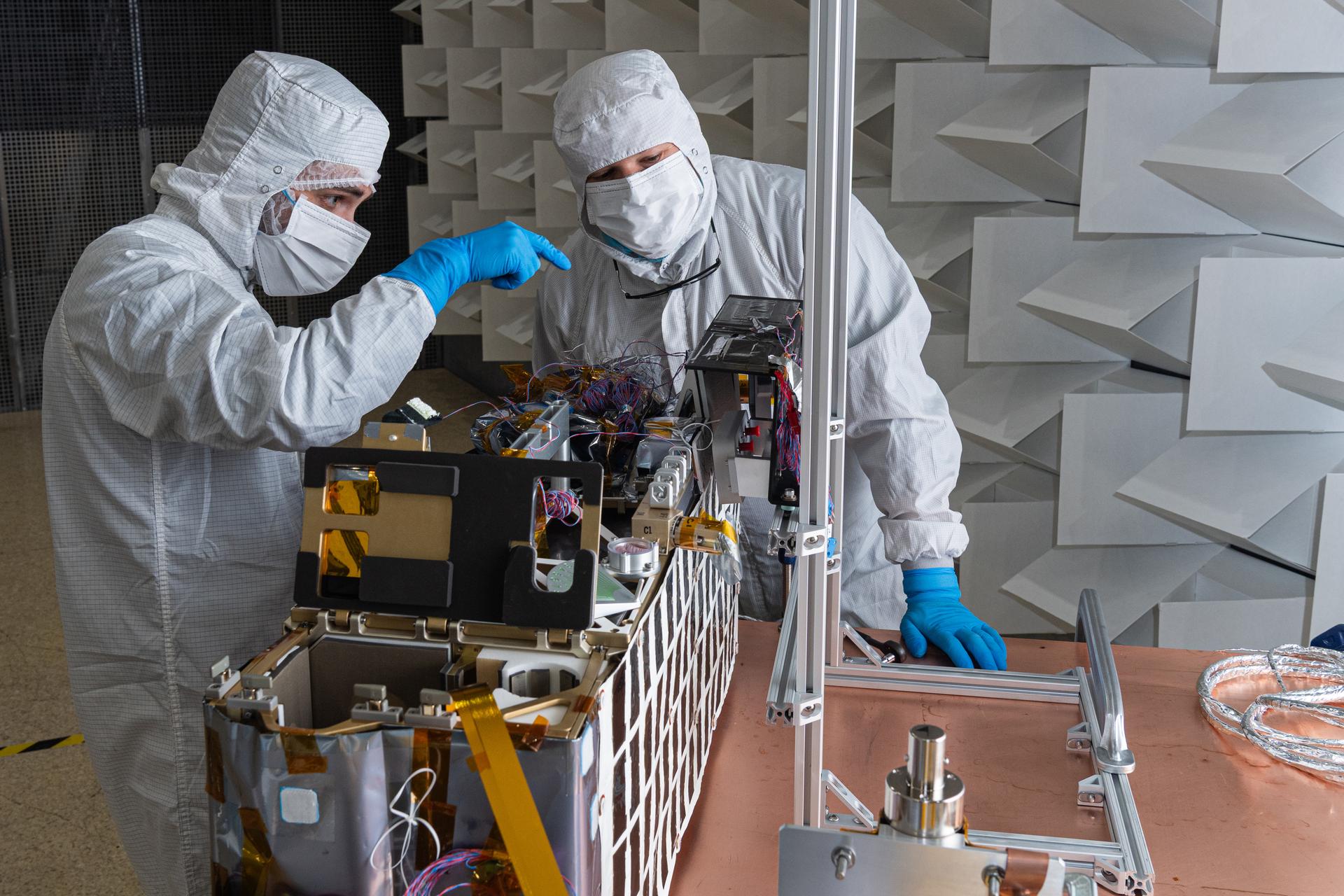
Mitchell Hamann and John Pindell configure the Lunar Environment Monitoring Station (LEMS) instrument for testing in the Electromagnetic Interference/Electromagnetic Compatibility (EMI/EMC) Chamber at Goddard Space Flight Center, Greenbelt Md., Feb 17, 2026. LEMS is a compact, autonomous, and self-sustaining seismometer suite designed to carry out continuous, long-term, monitoring of the lunar seismic environment at the South Polar region. Photo Credit: NASA/Mike Guinto
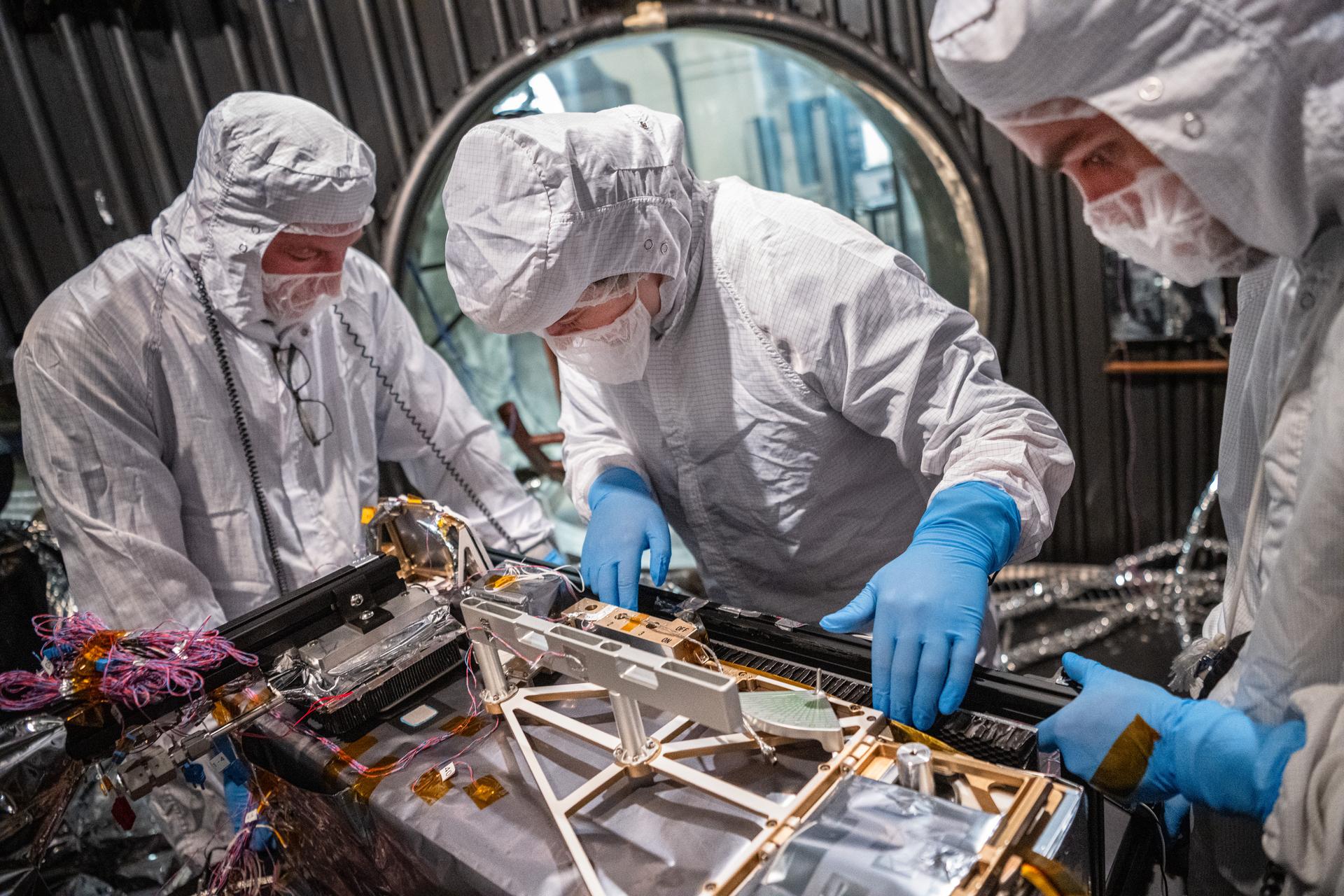
(L-R) Engineering Technician Alex Schaeffer, Mechanical Engineer Brie Ludwig , and Mechanical Engineer Mitchell Hamann inspect the Lunar Environment Monitoring Station (LEMS) instrument in preparation for testing in a thermal vacuum chamber at Goddard Space Flight Center in Greenbelt Md. on March 31, 2026. LEMS is a compact, autonomous, and self-sustaining seismometer suite designed to carry out continuous, long-term, monitoring of the lunar seismic environment at the South Polar region. Photo Credit: NASA/Denny Henry
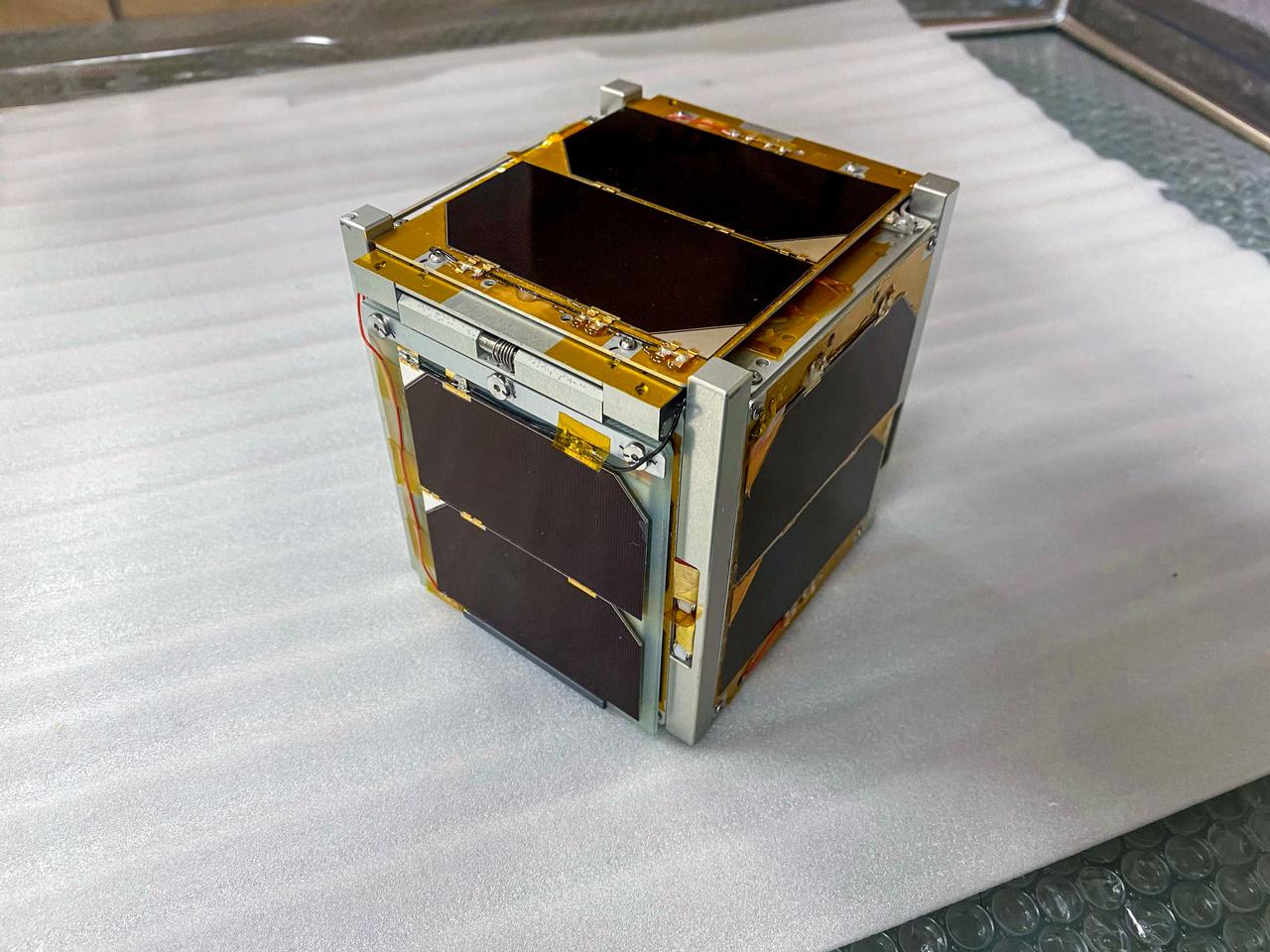
jsc2025e064343 (9/19/2023) --- Shown is the Space Tethered Autonomous Robotic Satellite Mini-elevator #2 - STARS-Me2 flight unit. STARS-Me2 is a 1U CubeSat developed by the Shizuoka University as part of the STARS project. The purpose of the STARS-Me2 mission is to demonstrate a technology to control orbital descending. This is achieved by step-by-step deployment and retrieval of a steel convex tether of approximately 10 meters...Image Credit: Shizuoka University
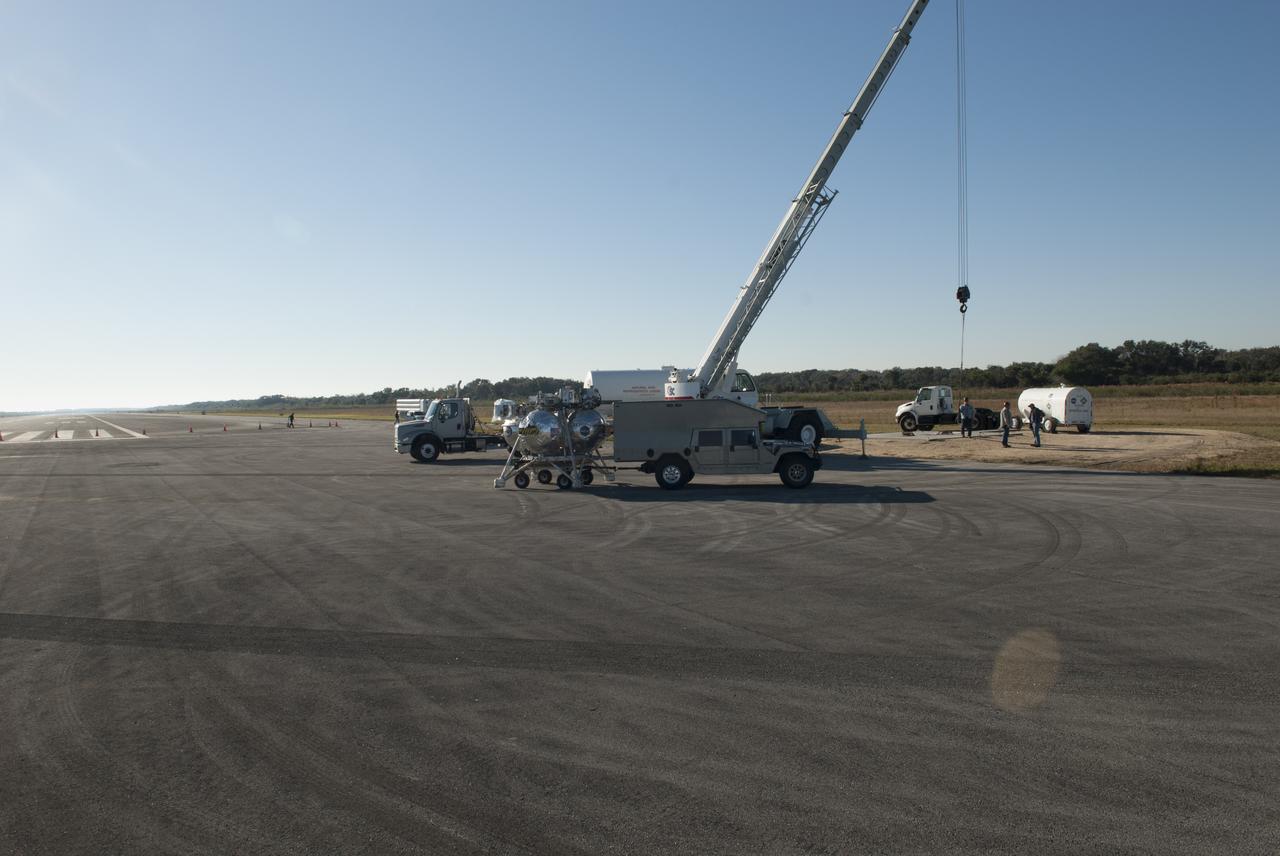
NASA’s Project Morpheus prototype lander is moved into position at the north end of the Shuttle Landing Facility at Kennedy Space Center in Florida in preparation for free flight test No. 15. During the 97-second test, onboard autonomous landing and hazard avoidance technology sensors, or ALHAT, surveyed the hazard field for safe landing sites, then guided the lander forward and downward to a successful landing.
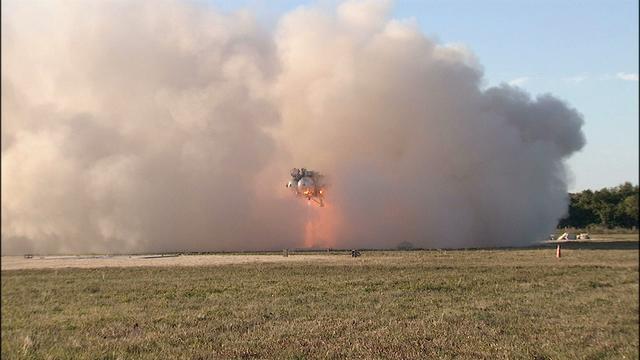
NASA’s Project Morpheus prototype lander is enveloped in a cloud of dust as it takes off on free flight test No. 15 at the north end of the Shuttle Landing Facility at Kennedy Space Center in Florida. During the 97-second test, onboard autonomous landing and hazard avoidance technology sensors, or ALHAT, surveyed the hazard field for safe landing sites, then guided the lander forward and downward to a successful landing.
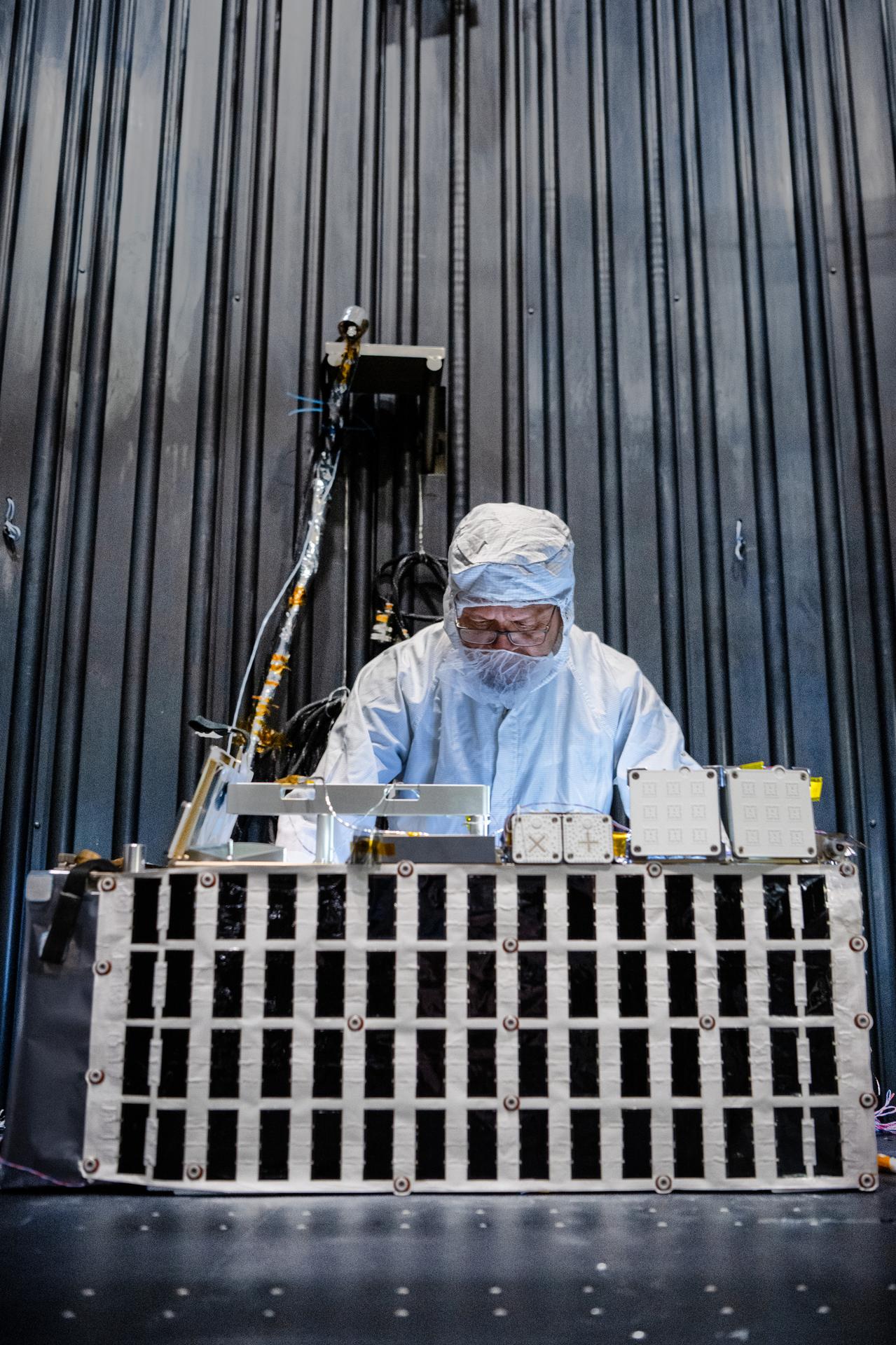
Engineering technician Jancilon Viegas installs thermocouples onto the The Lunar Environment Monitoring Station (LEMS) instrument in preparation for testing in a thermal vacuum chamber at Goddard Space Flight Center, Greenbelt Md., March 30, 2026. LEMS is a compact, autonomous, and self-sustaining seismometer suite designed to carry out continuous, long-term, monitoring of the lunar seismic environment at the South Polar region. Photo Credit: NASA/Denny Henry
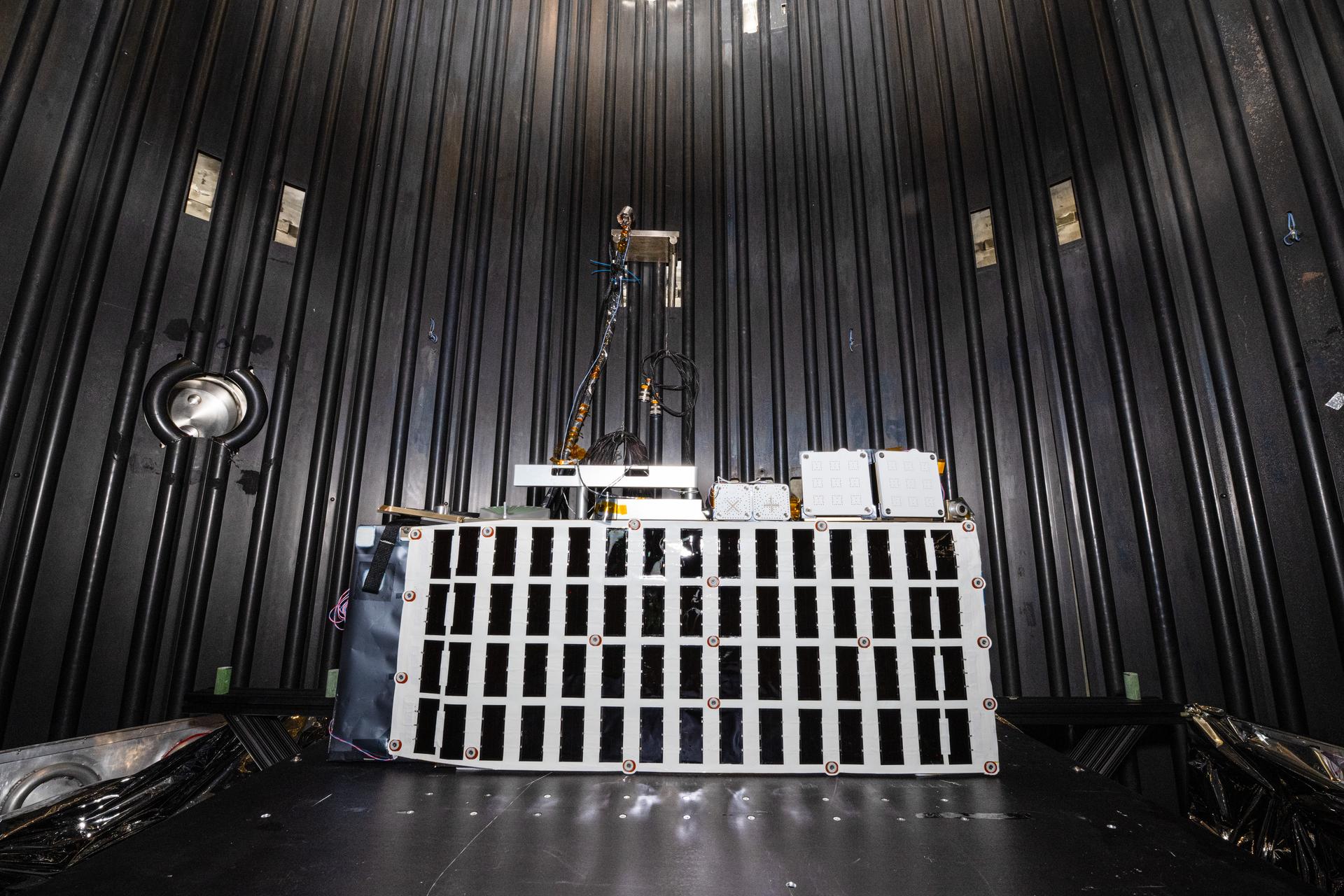
The Lunar Environment Monitoring Station (LEMS) instrument is installed for testing in a thermal vacuum chamber at Goddard Space Flight Center, Greenbelt Md., March 30, 2026. LEMS is a compact, autonomous, and self-sustaining seismometer suite designed to carry out continuous, long-term, monitoring of the lunar seismic environment at the South Polar region. Photo Credit: NASA/Denny Henry
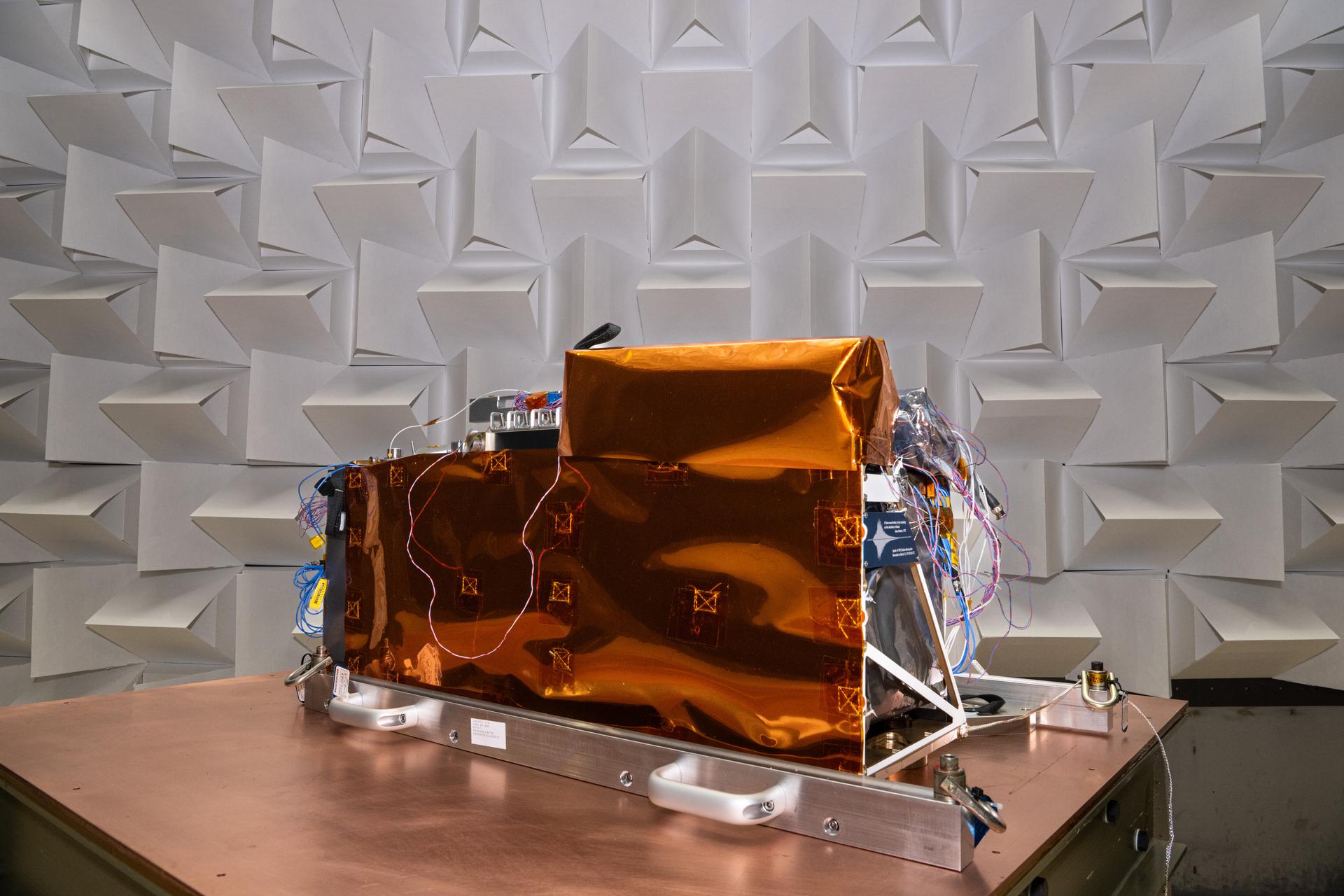
The Lunar Environment Monitoring Station (LEMS) in Electromagnetic Interference/Electromagnetic Compatibility (EMI/EMC) Chamber at Goddard Space Flight Center, Greenbelt Md., Feb 11, 2026. LEMS is a compact, autonomous, and self-sustaining seismometer suite designed to carry out continuous, long-term, monitoring of the lunar seismic environment at the South Polar region. Photo Credit: NASA/Denny Henry
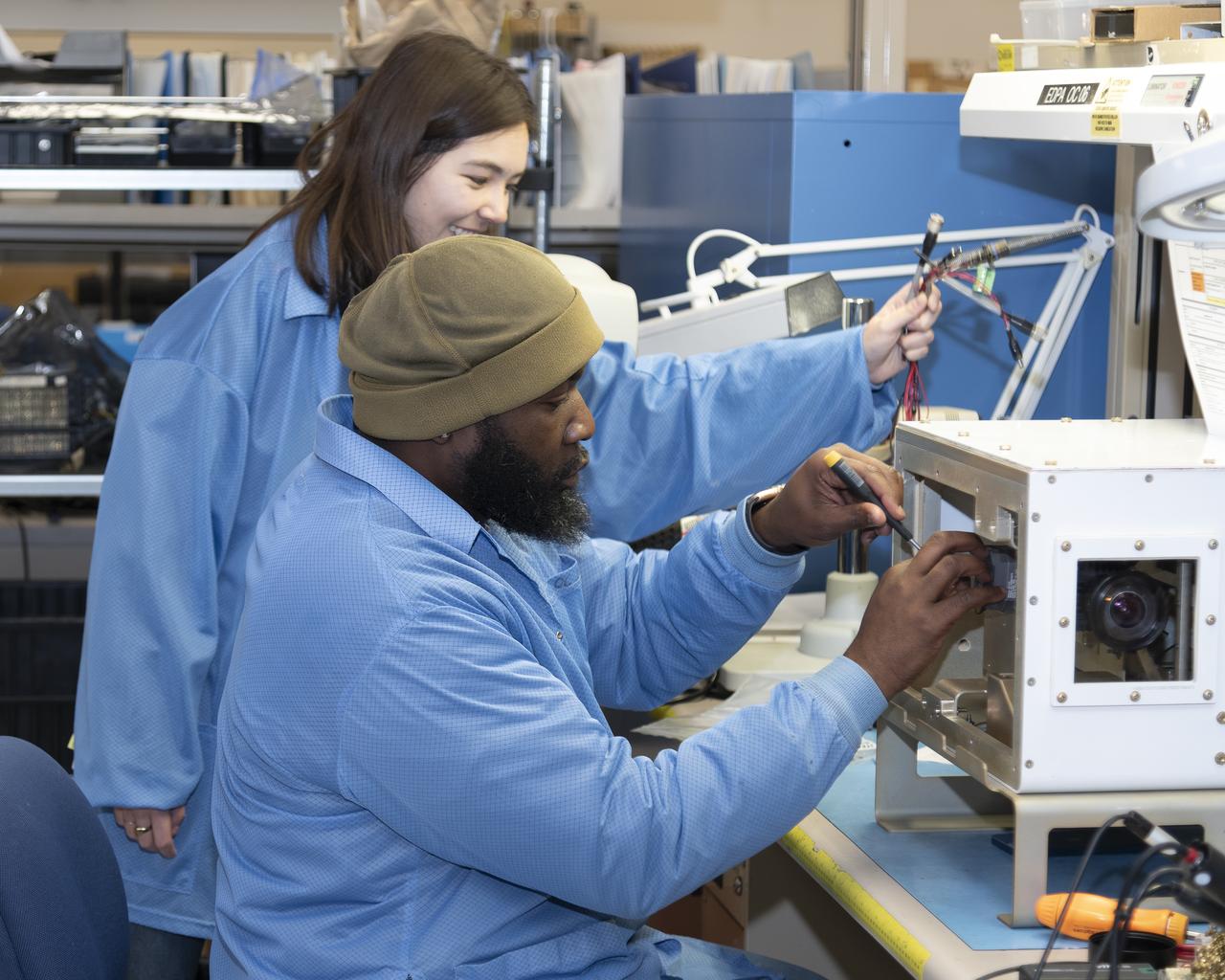
NASA researchers James Cowart and Elizabeth Nail add sensors, wiring and cameras, to the NASA Airborne Instrumentation for Real-world Video of Urban Environments (AIRVUE) sensor pod at NASA’s Armstrong Flight Research Center in Edwards, California in late February 2024. The AIRVUE pod was flown on a helicopter at NASA’s Kennedy Space Center in Florida and is used to collect data for future autonomous aircraft.

CAPE CANAVERAL, Fla. – Engineers and technicians prepare NASA's Project Morpheus prototype lander for free flight test No. 15 at the north end of the Shuttle Landing Facility at Kennedy Space Center in Florida. During the 97-second test, onboard autonomous landing and hazard avoidance technology sensors, or ALHAT, surveyed the hazard field for safe landing sites, then guided the lander forward and downward to a successful landing. For more information on Morpheus, visit: http://www.morpheuslander.jsc.nasa.gov. Photo credit: NASA/Jim Grossman
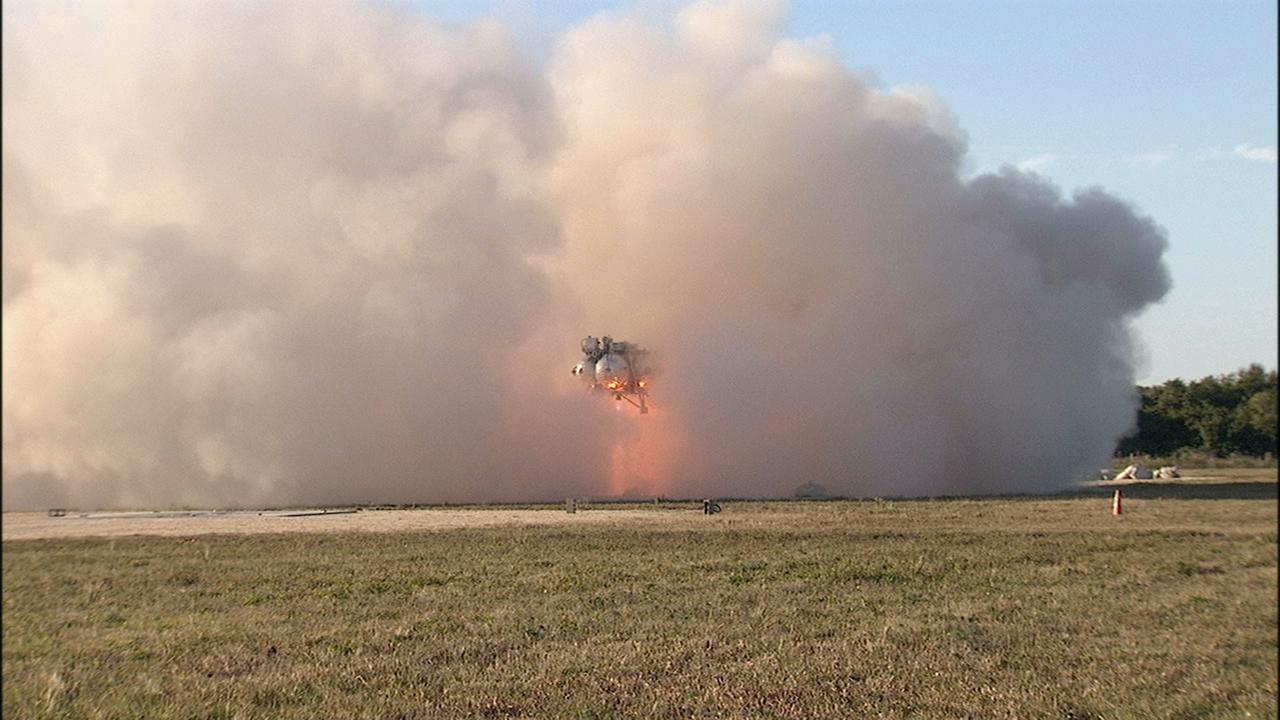
CAPE CANAVERAL, Fla. – NASA’s Project Morpheus prototype lander is enveloped in a cloud of dust as it takes off on free flight test No. 15 at the north end of the Shuttle Landing Facility at Kennedy Space Center in Florida. During the 97-second test, onboard autonomous landing and hazard avoidance technology sensors, or ALHAT, surveyed the hazard field for safe landing sites, then guided the lander forward and downward to a successful landing. For more information on Morpheus, visit: http://www.morpheuslander.jsc.nasa.gov. Photo credit: NASA

CAPE CANAVERAL, Fla. – NASA’s Project Morpheus prototype lander is enveloped in a cloud of dust as it takes off on free flight test No. 15 at the north end of the Shuttle Landing Facility at Kennedy Space Center in Florida. During the 97-second test, onboard autonomous landing and hazard avoidance technology sensors, or ALHAT, surveyed the hazard field for safe landing sites, then guided the lander forward and downward to a successful landing. For more information on Morpheus, visit: http://www.morpheuslander.jsc.nasa.gov. Photo credit: NASA

CAPE CANAVERAL, Fla. – NASA’s Project Morpheus prototype lander is enveloped in a cloud of dust as it takes off on free flight test No. 15 at the north end of the Shuttle Landing Facility at Kennedy Space Center in Florida. During the 97-second test, onboard autonomous landing and hazard avoidance technology sensors, or ALHAT, surveyed the hazard field for safe landing sites, then guided the lander forward and downward to a successful landing. For more information on Morpheus, visit: http://www.morpheuslander.jsc.nasa.gov. Photo credit: NASA
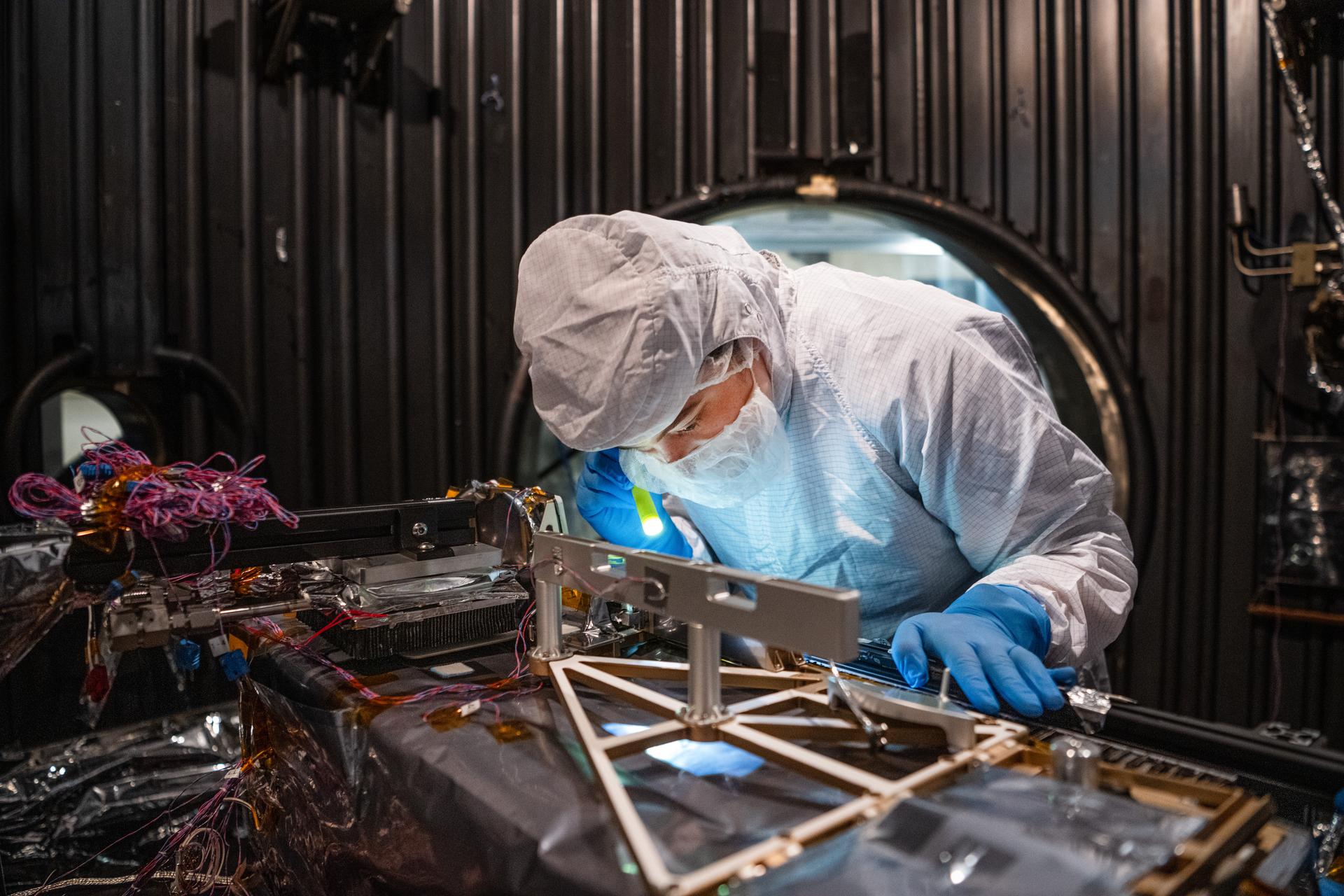
Mechanical Engineer Brie Ludwig inspects the Lunar Environment Monitoring Station (LEMS) instrument in preparation for testing in a thermal vacuum chamber at Goddard Space Flight Center in Greenbelt Md. on March 31, 2026. LEMS is a compact, autonomous, and self-sustaining seismometer suite designed to carry out continuous, long-term, monitoring of the lunar seismic environment at the South Polar region. Photo Credit: NASA/Denny Henry
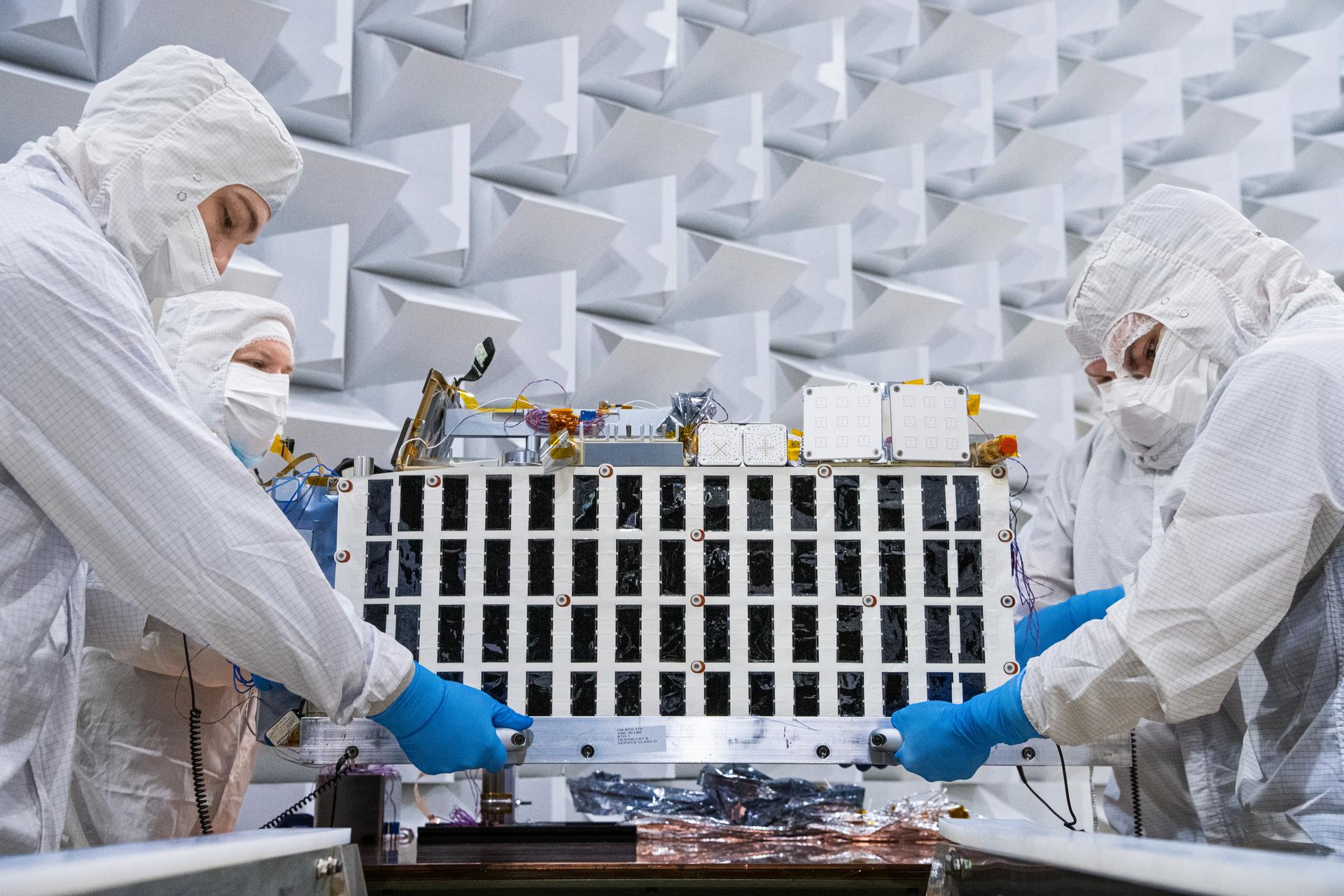
Lunar Environment Monitoring Station (LEMS) team members install the instrument for testing in the Electromagnetic Interference/Electromagnetic Compatibility (EMI/EMC) Chamber at Goddard Space Flight Center, Greenbelt Md., Feb 13, 2026. LEMS is a compact, autonomous, and self-sustaining seismometer suite designed to carry out continuous, long-term, monitoring of the lunar seismic environment at the South Polar region. Photo Credit: NASA/Denny Henry
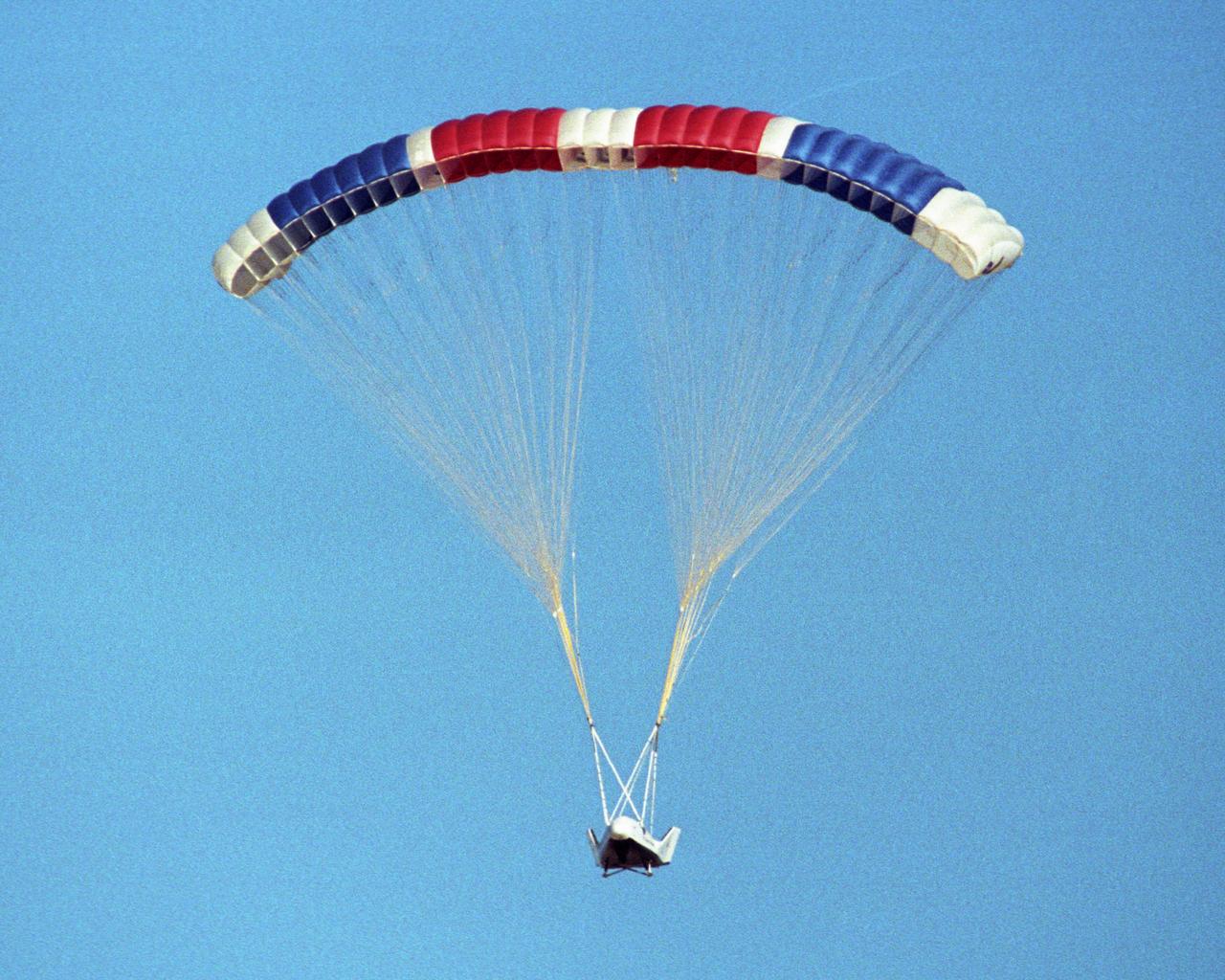
The X-38 prototype of the Crew Return Vehicle for the International Space Station is suspended under its giant 7,500-square-foot parafoil during its eighth free flight on Thursday, Dec. 13, 2001. A portion of the descent was flown by remote control by a NASA astronaut from a ground vehicle configured like the CRV's interior before the X-38 made an autonomous landing on Rogers Dry Lake.
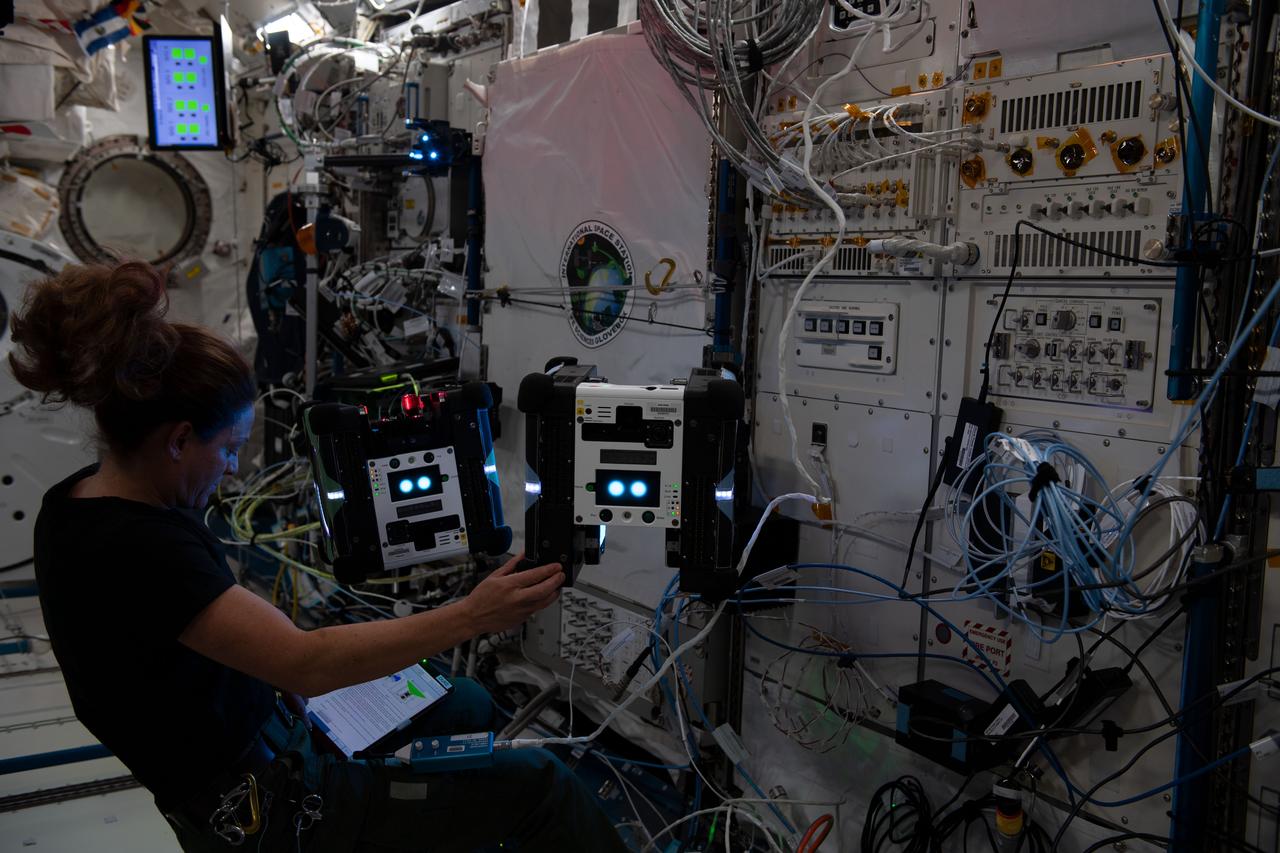
iss068e020703 (Nov. 7, 2022) --- NASA astronaut and Expedition 68 Flight Engineer Nicole Mann works with a pair of free-flying, cube-shaped Astrobee robotic helpers inside the Kibo laboratory module. The toaster-sized, autonomous robots were demonstrating the use of a photogrammetric vision-based technology for guidance, navigation, and control as part of the Smartphone Vision Guidance Sensor experiment.
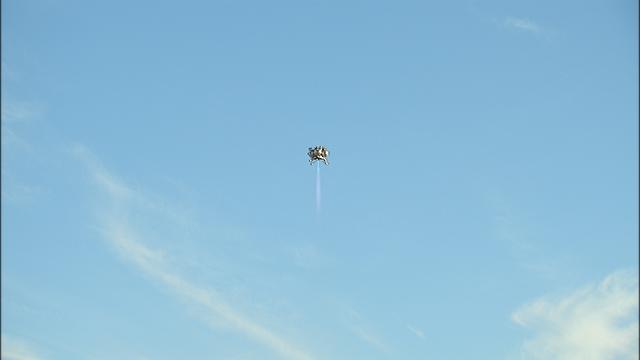
NASA’s Project Morpheus prototype lander soars 800 feet above the north end of the Shuttle Landing Facility at Kennedy Space Center in Florida on free flight test No. 15. During the 97-second test, onboard autonomous landing and hazard avoidance technology sensors, or ALHAT, surveyed the hazard field for safe landing sites, then guided the lander forward and downward to a successful landing.
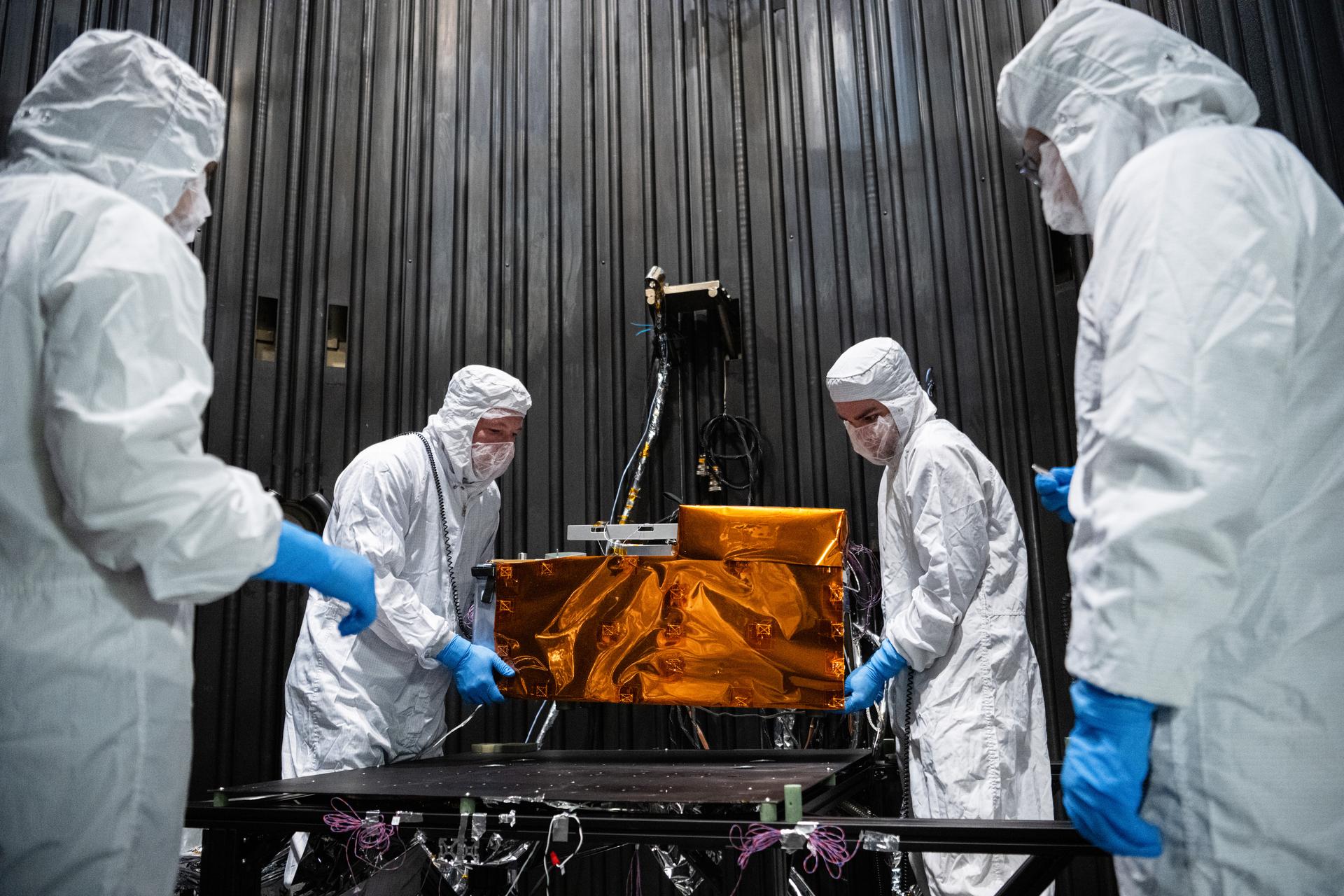
Team members install the Lunar Environment Monitoring Station (LEMS) instrument for testing in a thermal vacuum chamber at Goddard Space Flight Center, Greenbelt Md., March 30, 2026. LEMS is a compact, autonomous, and self-sustaining seismometer suite designed to carry out continuous, long-term, monitoring of the lunar seismic environment at the South Polar region. Photo Credit: NASA/Denny Henry
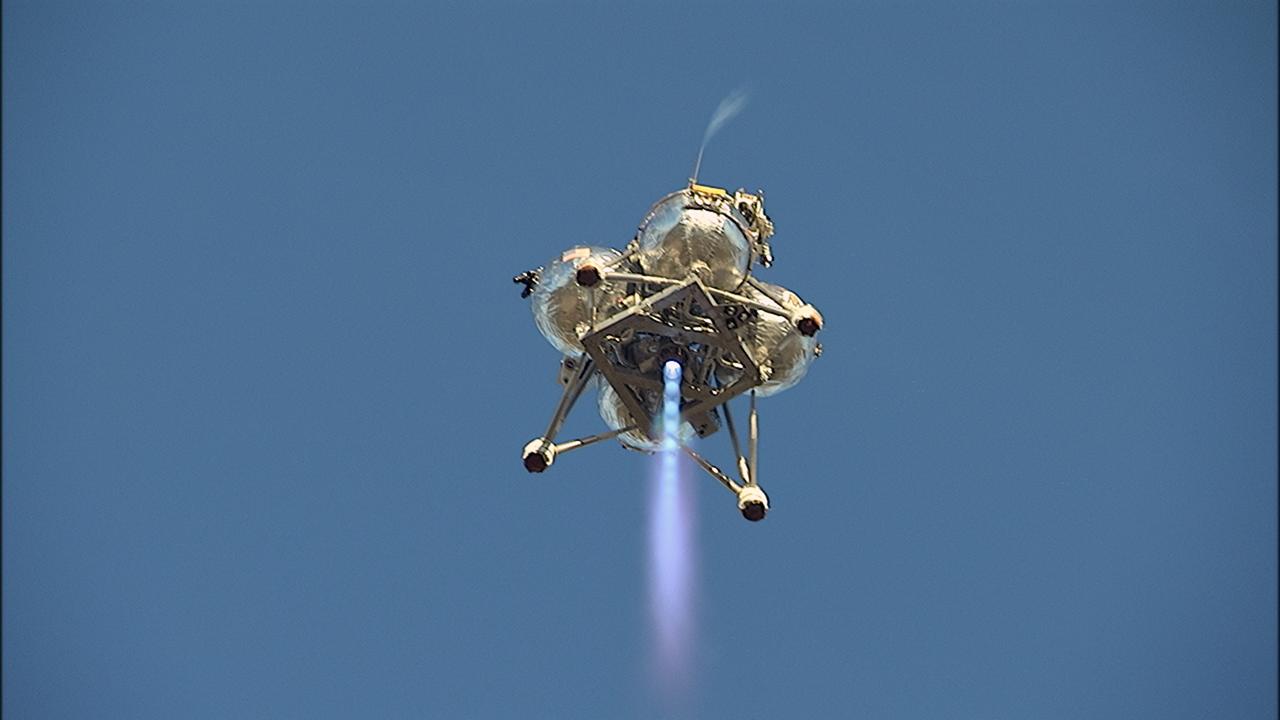
CAPE CANAVERAL, Fla. – NASA’s Project Morpheus prototype lander soars overhead during free flight test No. 15 at the north end of the Shuttle Landing Facility at Kennedy Space Center in Florida. During the 97-second test, onboard autonomous landing and hazard avoidance technology sensors, or ALHAT, surveyed the hazard field for safe landing sites, then guided the lander forward and downward to a successful landing. For more information on Morpheus, visit: http://www.morpheuslander.jsc.nasa.gov. Photo credit: NASA
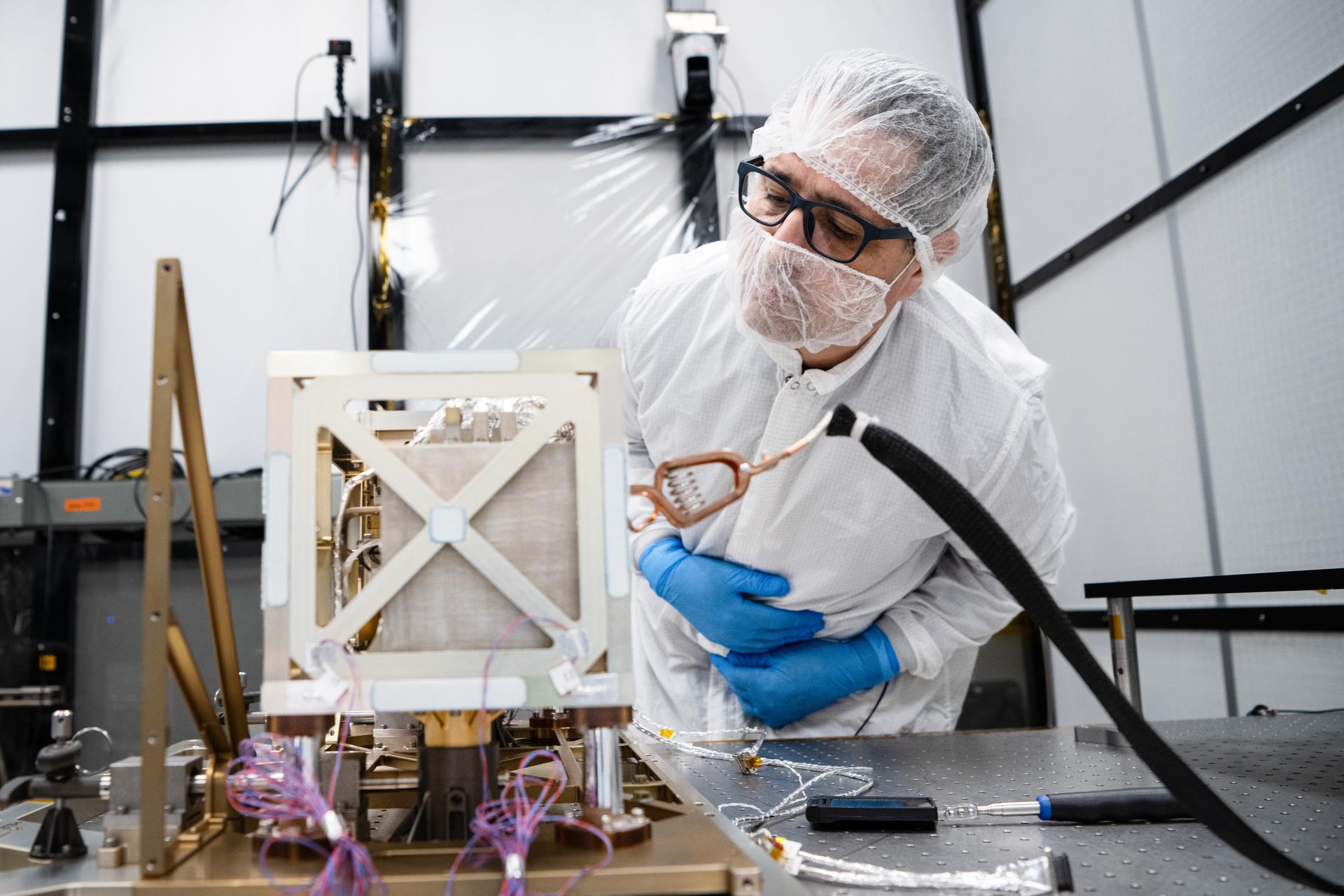
Principal Investigator Dr. Mehdi Benna inspects the Lunar Environment Monitoring Station (LEMS) instrument in the cleanroom at Goddard Space Flight Center in Greenbelt Md. on January 9th, 2026. LEMS is a compact, autonomous, and self-sustaining seismometer suite designed to carry out continuous, long-term, monitoring of the lunar seismic environment at the South Polar region. Photo Credit: NASA/Denny Henry

CAPE CANAVERAL, Fla. – NASA’s Project Morpheus prototype lander is moved into position at the north end of the Shuttle Landing Facility at Kennedy Space Center in Florida in preparation for free flight test No. 15. During the 97-second test, onboard autonomous landing and hazard avoidance technology sensors, or ALHAT, surveyed the hazard field for safe landing sites, then guided the lander forward and downward to a successful landing. For more information on Morpheus, visit: http://www.morpheuslander.jsc.nasa.gov. Photo credit: NASA/Jim Grossman
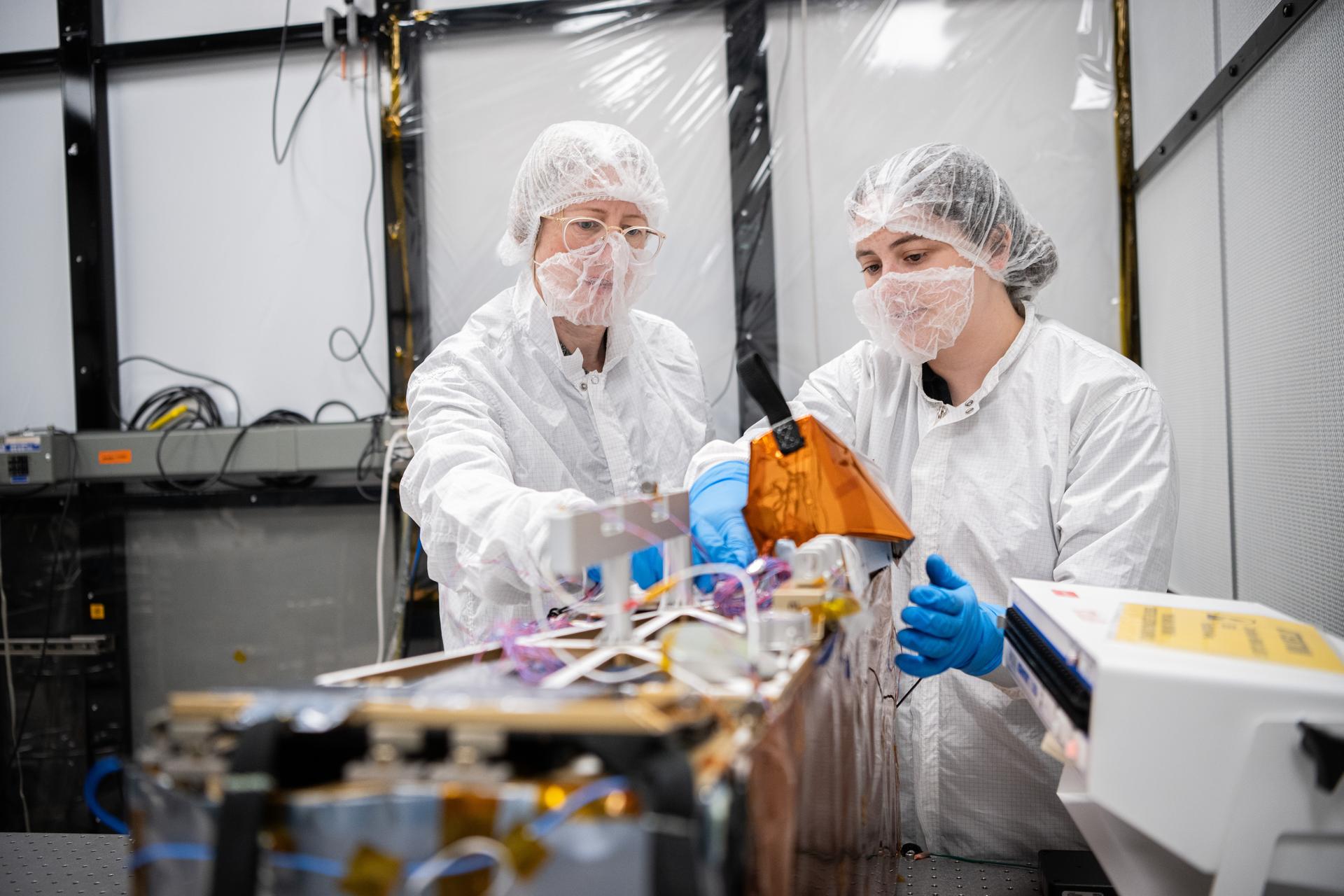
Naoma McCall (Left), Science Co-Investigator and deployment lead and Mechanical Engineer Brie Ludwig inspect the Lunar Environment Monitoring Station (LEMS) instrument in the cleanroom at Goddard Space Flight Center in Greenbelt Md. on February 5th, 2026. LEMS is a compact, autonomous, and self-sustaining seismometer suite designed to carry out continuous, long-term, monitoring of the lunar seismic environment at the South Polar region. Photo Credit: NASA/Denny Henry
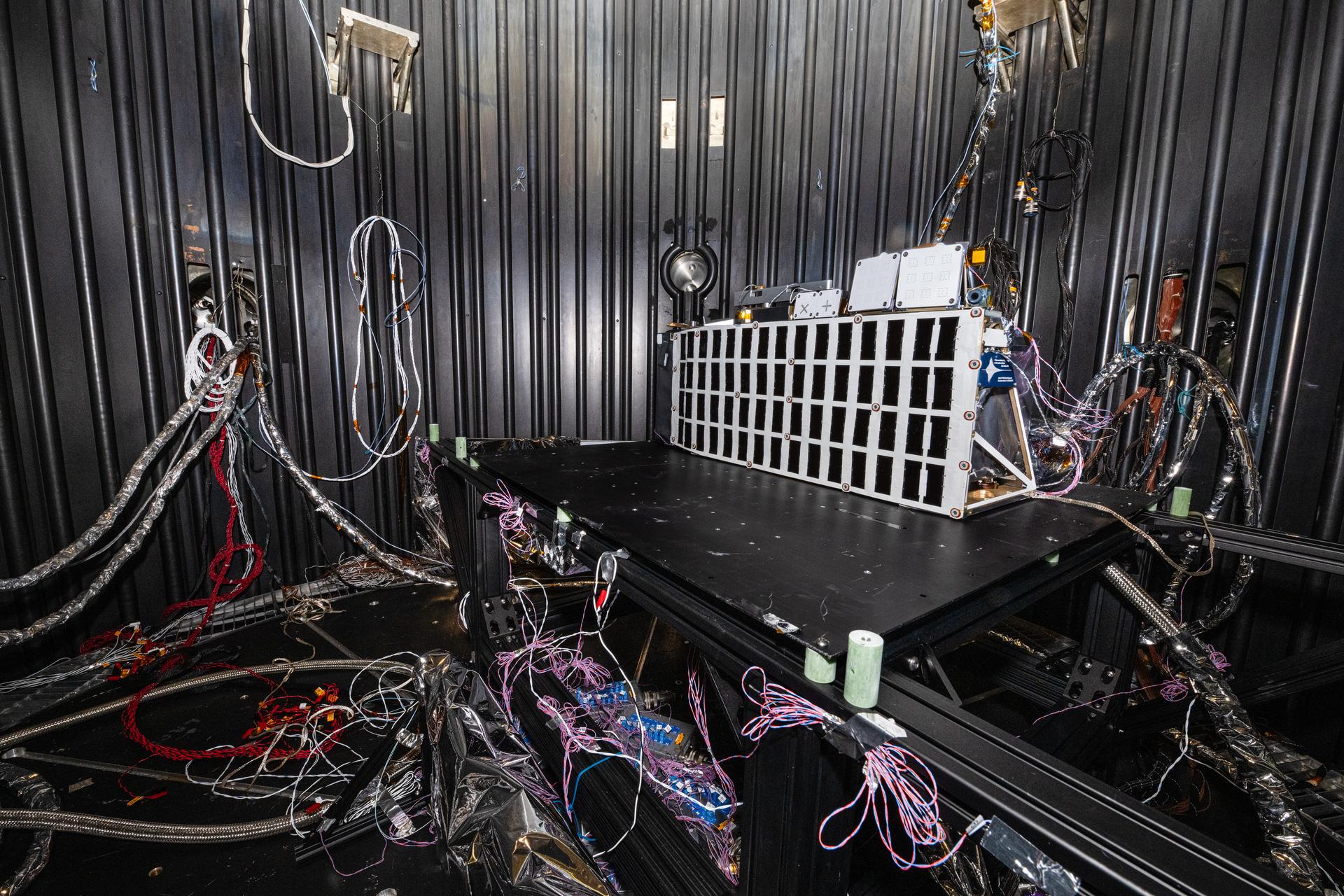
The Lunar Environment Monitoring Station (LEMS) instrument is installed for testing in a thermal vacuum chamber at Goddard Space Flight Center, Greenbelt Md., March 30, 2026. LEMS is a compact, autonomous, and self-sustaining seismometer suite designed to carry out continuous, long-term, monitoring of the lunar seismic environment at the South Polar region. Photo Credit: NASA/Denny Henry
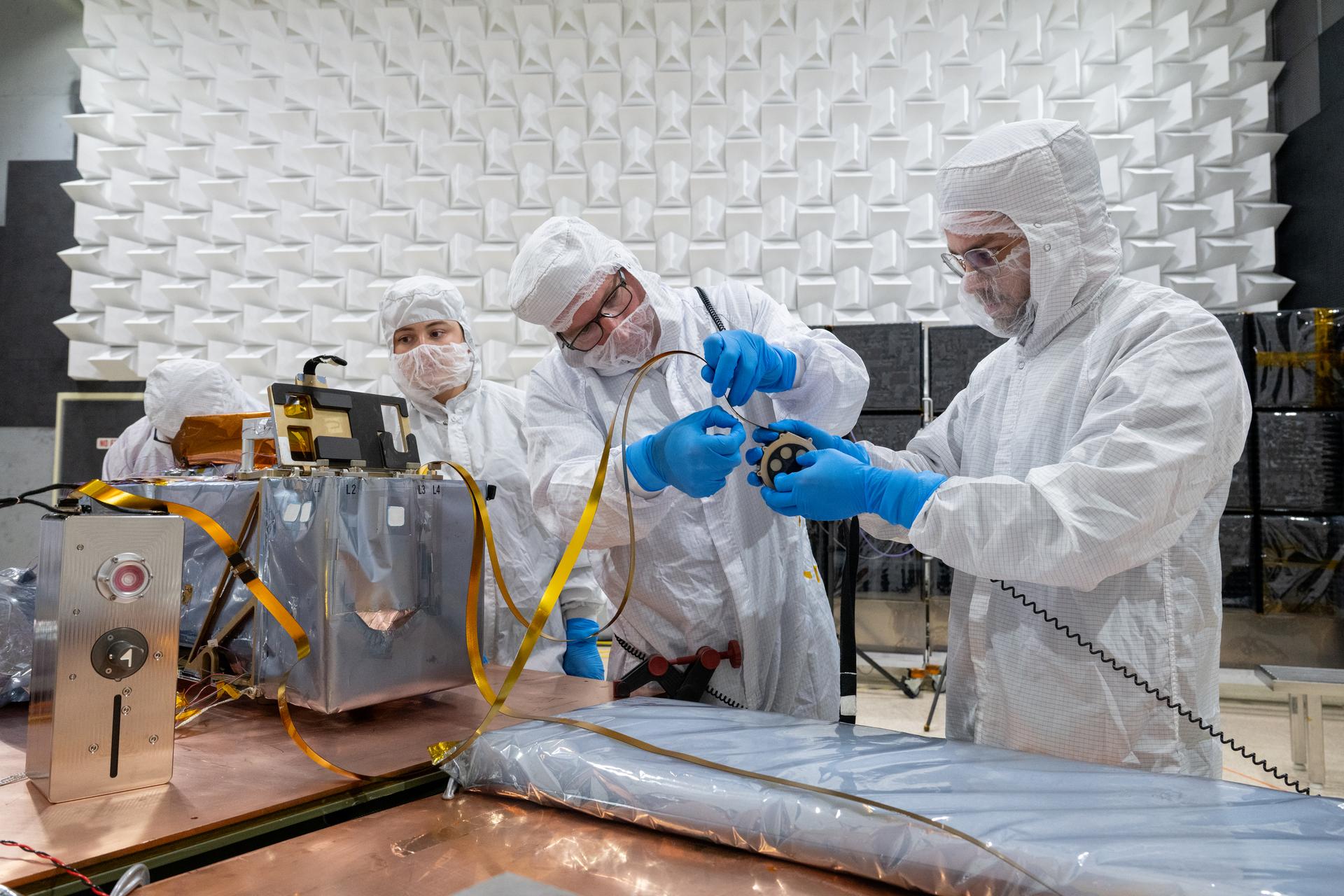
From left, mechanical engineer Brie Ludwig, technician Alex Schaeffer, and mechanical engineer Mitchell Hamann stow a seismometer after Electromagnetic Interference testing of the Lunar Environment Monitoring Station (LEMS) instrument at Goddard Space Flight Center, Greenbelt Md., May 15, 2026. LEMS is a compact, autonomous, and self-sustaining seismometer suite designed to carry out continuous, long-term, monitoring of the lunar seismic environment at the South Polar region. Photo Credit: NASA/Desiree Stover
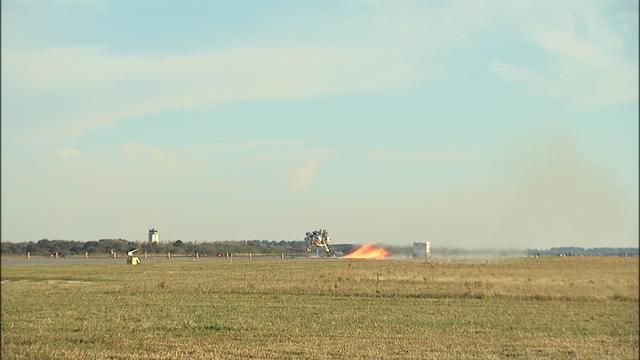
NASA’s Project Morpheus prototype lander takes off on free flight test No. 15 at the north end of the Shuttle Landing Facility at Kennedy Space Center in Florida. During the 97-second test, onboard autonomous landing and hazard avoidance technology sensors, or ALHAT, surveyed the hazard field for safe landing sites, then guided the lander forward and downward to a successful landing.
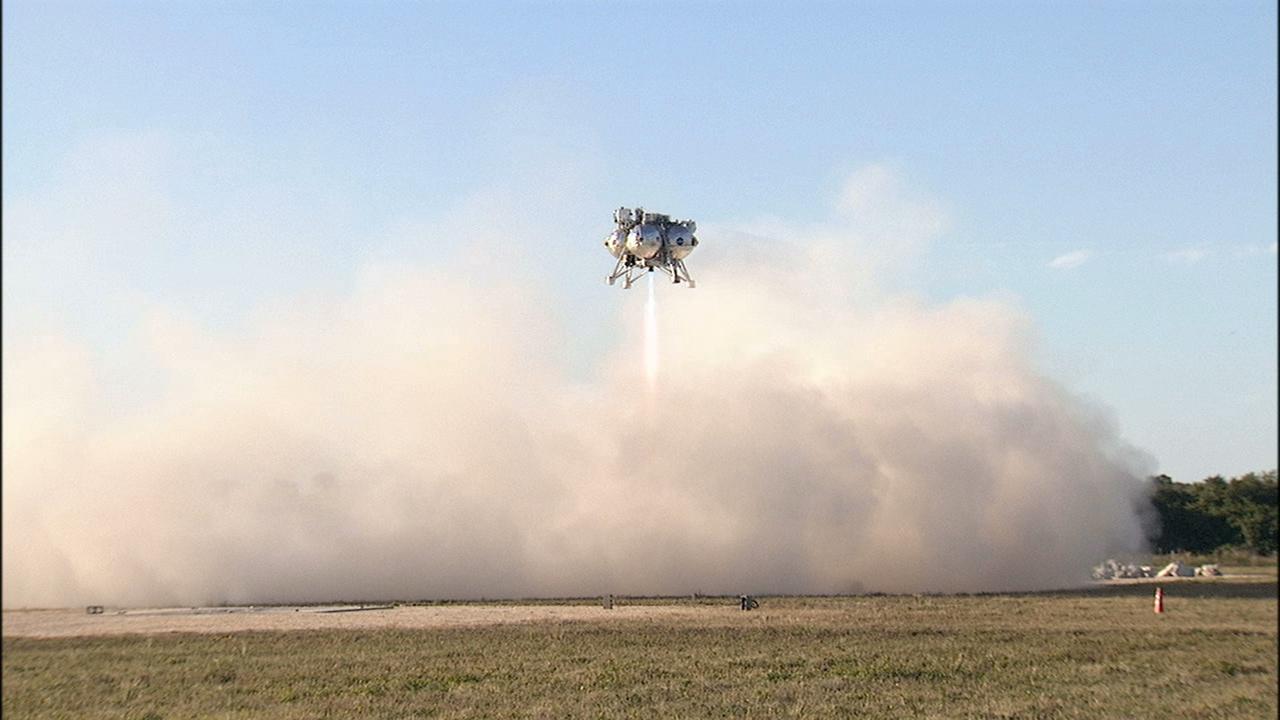
CAPE CANAVERAL, Fla. – NASA’s Project Morpheus prototype lander rises above a cloud of dust as it takes off on free flight test No. 15 at the north end of the Shuttle Landing Facility at Kennedy Space Center in Florida. During the 97-second test, onboard autonomous landing and hazard avoidance technology sensors, or ALHAT, surveyed the hazard field for safe landing sites, then guided the lander forward and downward to a successful landing. For more information on Morpheus, visit: http://www.morpheuslander.jsc.nasa.gov. Photo credit: NASA
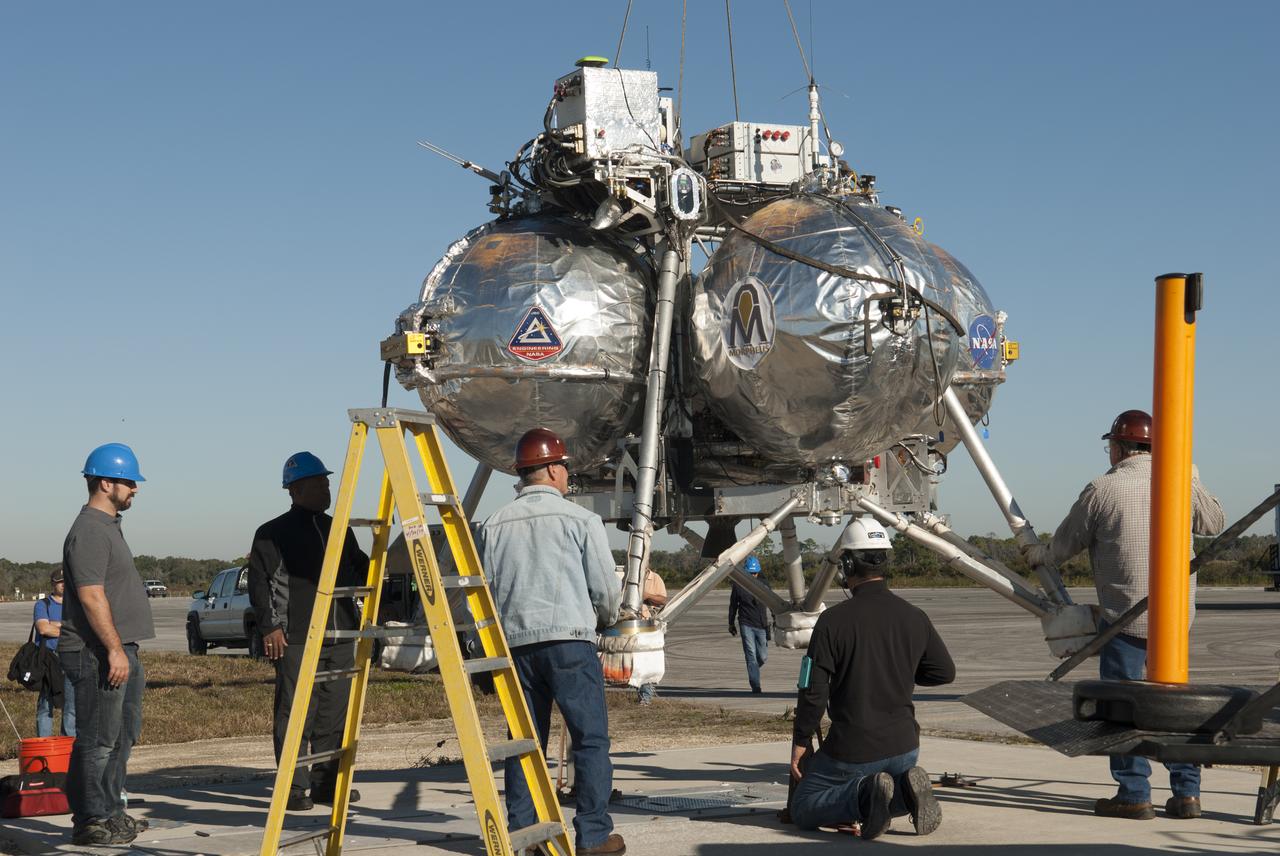
Engineers and technicians prepare NASA's Project Morpheus prototype lander for free flight test No. 15 at the north end of the Shuttle Landing Facility at Kennedy Space Center in Florida. During the 97-second test, onboard autonomous landing and hazard avoidance technology sensors, or ALHAT, surveyed the hazard field for safe landing sites, then guided the lander forward and downward to a successful landing.
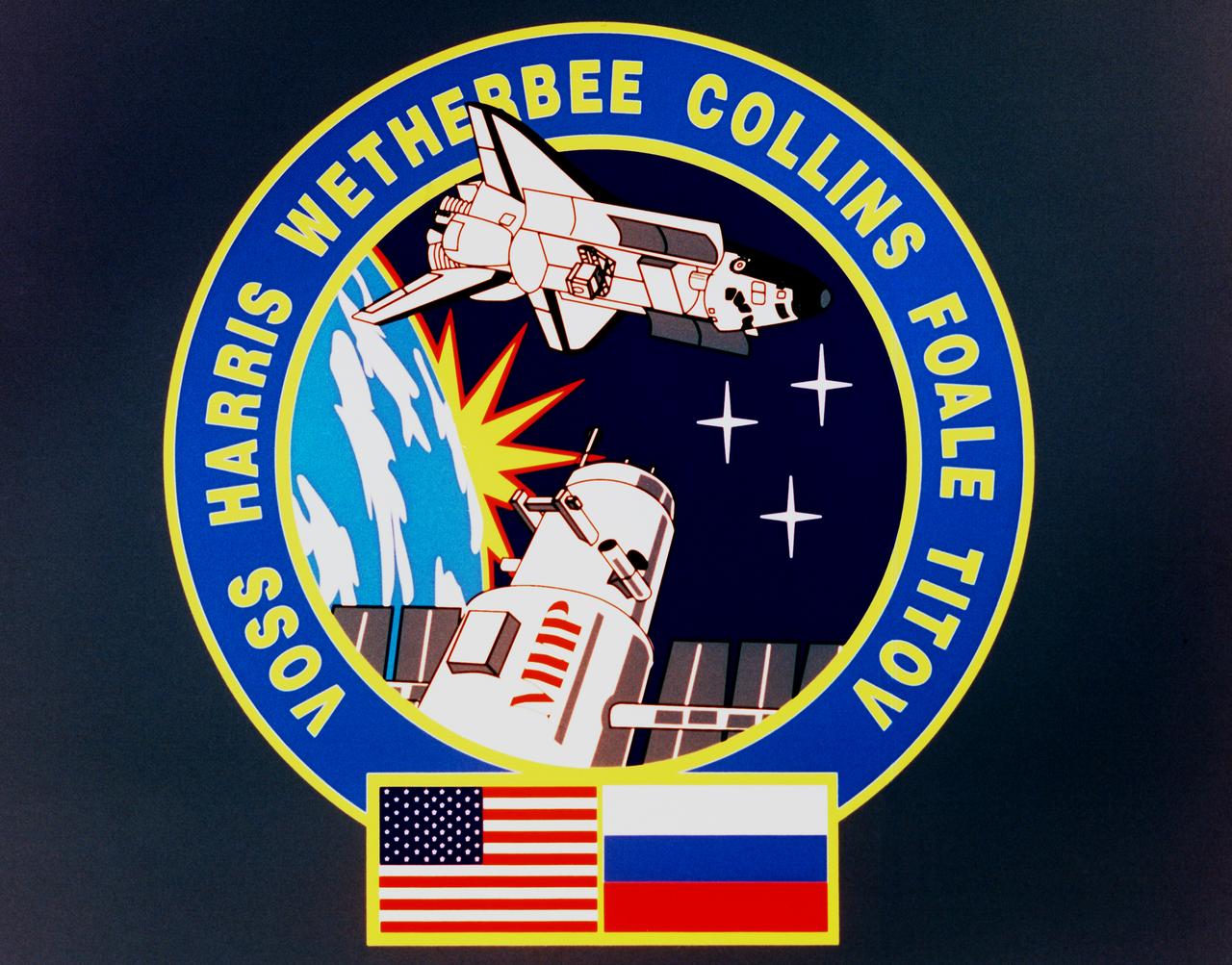
Designed by the crew members, the STS-63 crew patch depicts the orbiter maneuvering to rendezvous with Russia's Space Station Mir. The name is printed in Cyrillic on the side of the station. Visible in the Orbiter's payload bay are the commercial space laboratory Spacehab and the Shuttle Pointed Autonomous Research Tool for Astronomy (SPARTAN) satellite which are major payloads on the flight. The six points on the rising sun and the three stars are symbolic of the mission's Space Transportation System (STS) numerical designation. Flags of the United States and Russia at the bottom of the patch symbolize the cooperative operations of this mission.
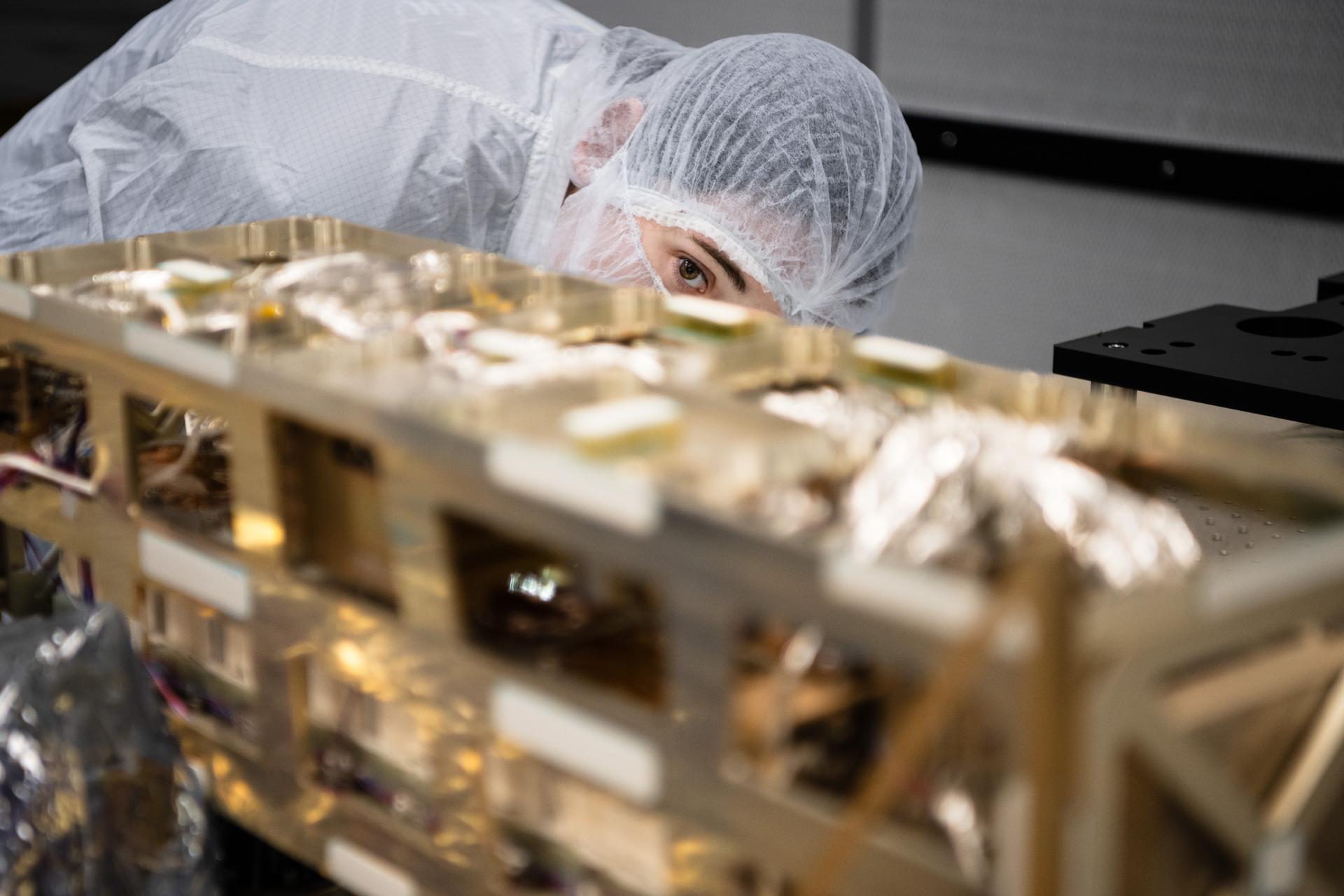
Lead Payload Systems Engineer Sam Hicks inspects the Lunar Environment Monitoring Station (LEMS) instrument in the cleanroom at Goddard Space Flight Center in Greenbelt Md. on January 12th, 2026. LEMS is a compact, autonomous, and self-sustaining seismometer suite designed to carry out continuous, long-term, monitoring of the lunar seismic environment at the South Polar region. Photo Credit: NASA/Denny Henry

CAPE CANAVERAL, Fla. – NASA’s Project Morpheus prototype lander is enveloped in a cloud of dust as it takes off on free flight test No. 15 at the north end of the Shuttle Landing Facility at Kennedy Space Center in Florida. During the 97-second test, onboard autonomous landing and hazard avoidance technology sensors, or ALHAT, surveyed the hazard field for safe landing sites, then guided the lander forward and downward to a successful landing. For more information on Morpheus, visit: http://www.morpheuslander.jsc.nasa.gov. Photo credit: NASA
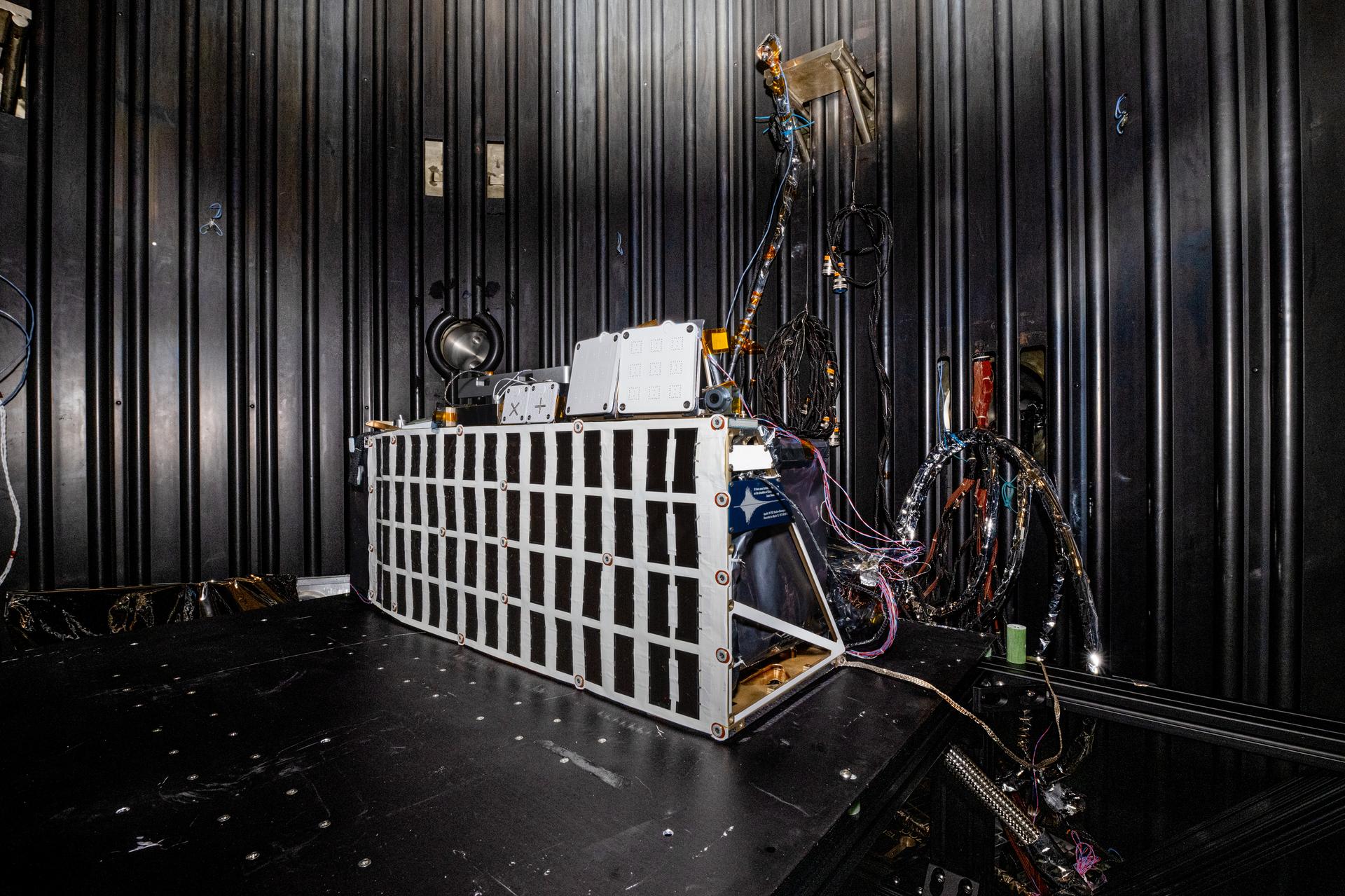
The Lunar Environment Monitoring Station (LEMS) instrument is installed for testing in a thermal vacuum chamber at Goddard Space Flight Center, Greenbelt Md., March 30, 2026. LEMS is a compact, autonomous, and self-sustaining seismometer suite designed to carry out continuous, long-term, monitoring of the lunar seismic environment at the South Polar region. Photo Credit: NASA/Denny Henry
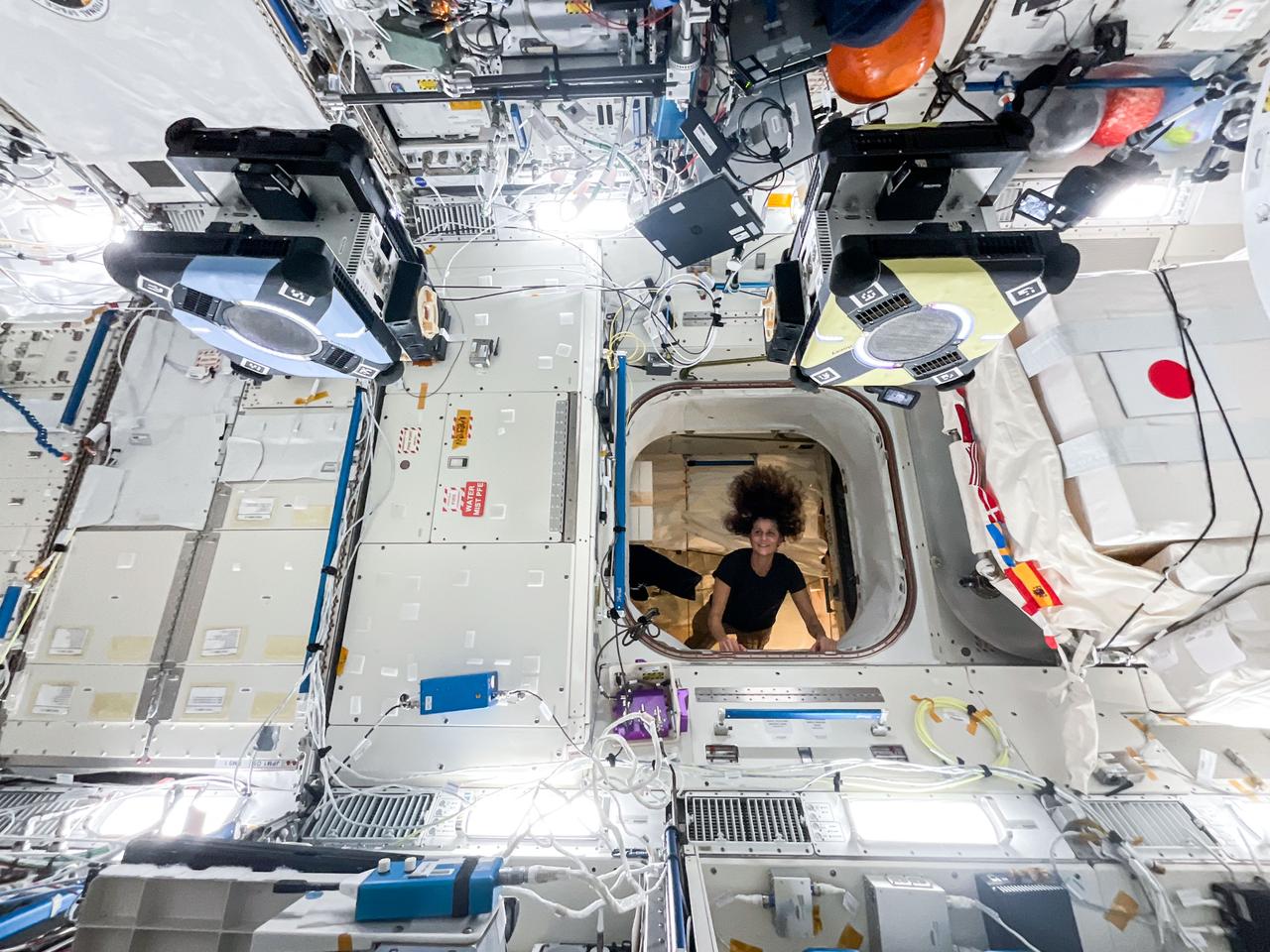
iss071e464315 (Aug. 12, 2024) --- NASA astronaut and Boeing's Crew Flight Test Pilot Suni Williams observes a pair of Astrobee robotic free-flying assistants demonstrating autonomous docking maneuvers inside the International Space Station's Kibo laboratory module. Williams was inside Kibo's logistics module which serves as a storage area that houses materials for experiments, maintenance tools, and crew supplies.
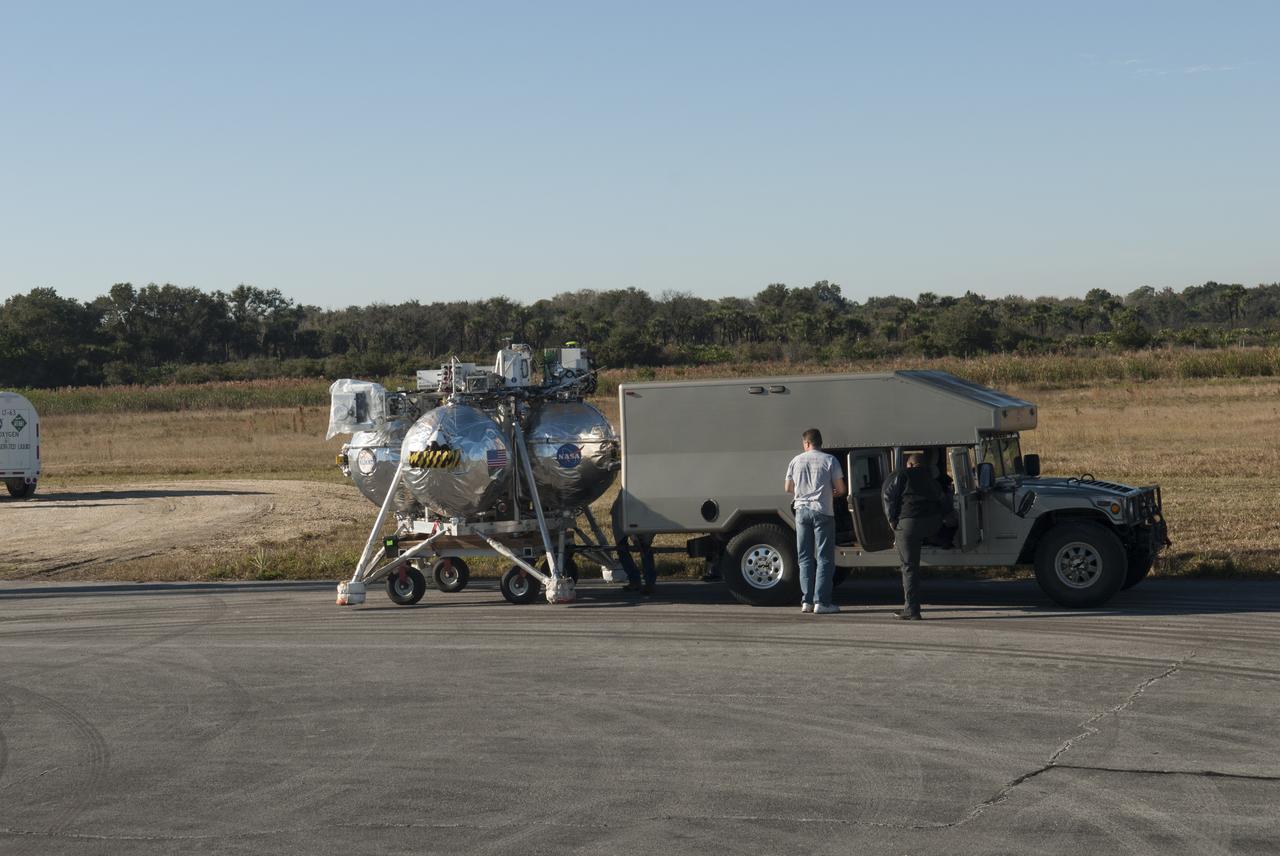
NASA’s Project Morpheus prototype lander is moved into position at the north end of the Shuttle Landing Facility at Kennedy Space Center in Florida in preparation for free flight test No. 15. During the 97-second test, onboard autonomous landing and hazard avoidance technology sensors, or ALHAT, surveyed the hazard field for safe landing sites, then guided the lander forward and downward to a successful landing.
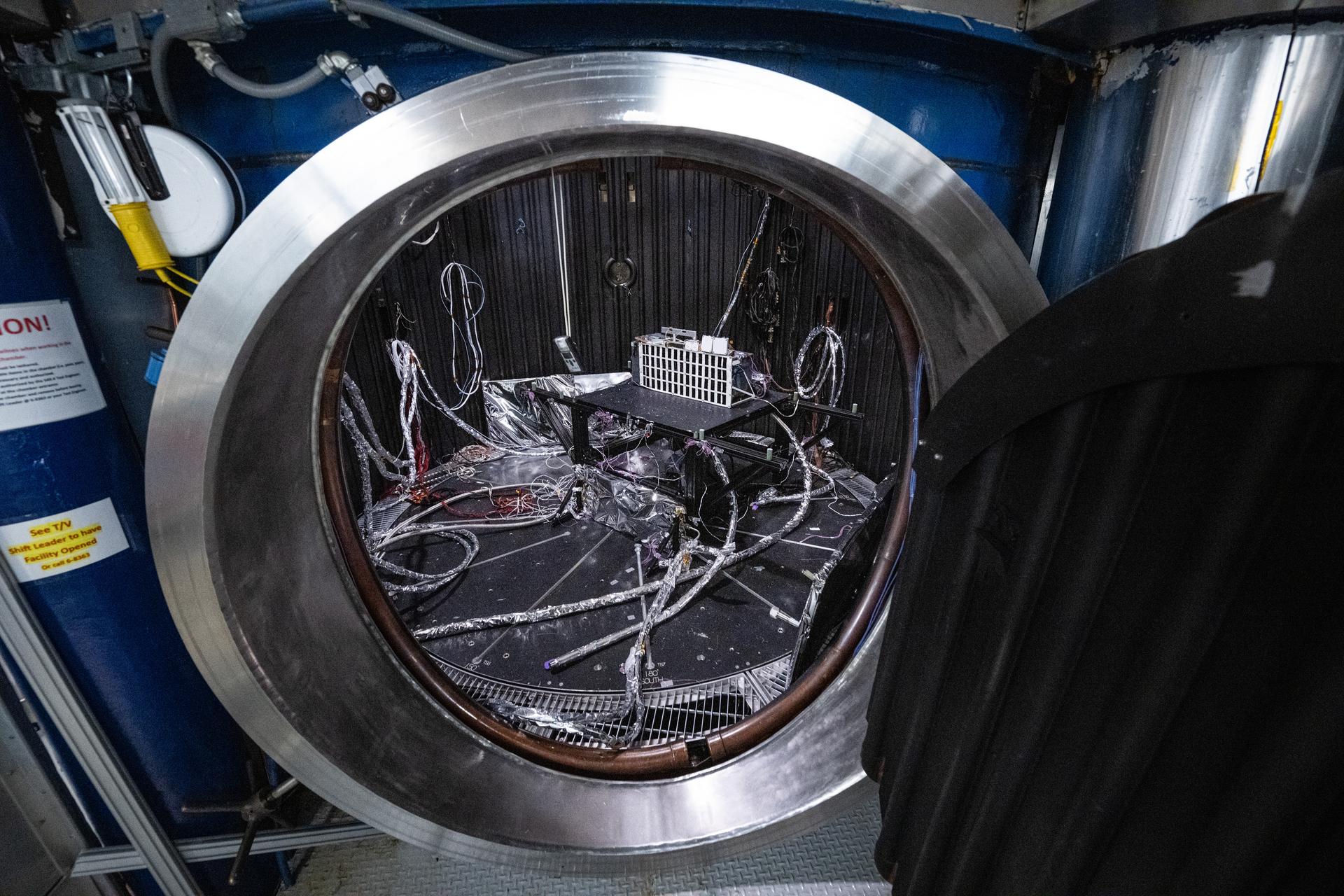
The Lunar Environment Monitoring Station (LEMS) instrument is installed for testing in a thermal vacuum chamber at Goddard Space Flight Center, Greenbelt Md., March 30, 2026. LEMS is a compact, autonomous, and self-sustaining seismometer suite designed to carry out continuous, long-term, monitoring of the lunar seismic environment at the South Polar region. Photo Credit: NASA/Denny Henry
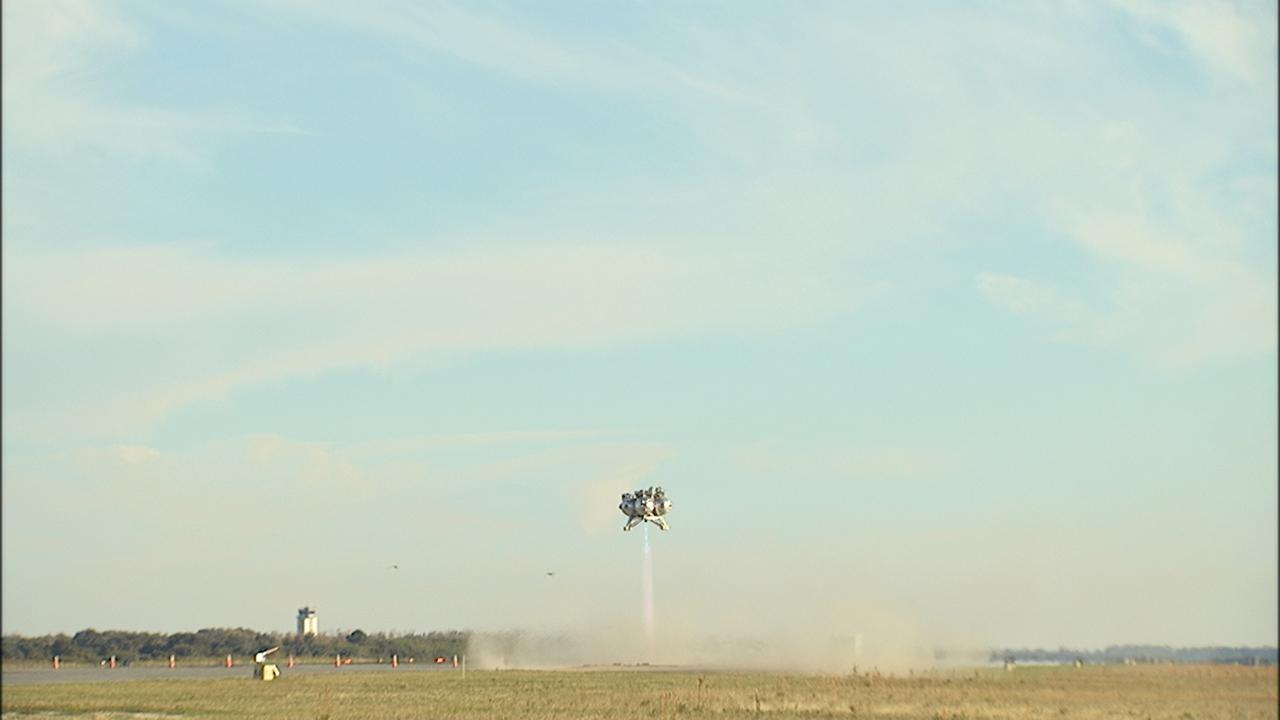
CAPE CANAVERAL, Fla. – NASA’s Project Morpheus prototype lander soars 800 feet above the north end of the Shuttle Landing Facility at Kennedy Space Center in Florida on free flight test No. 15 at. During the 97-second test, onboard autonomous landing and hazard avoidance technology sensors, or ALHAT, surveyed the hazard field for safe landing sites, then guided the lander forward and downward to a successful landing. For more information on Morpheus, visit: http://www.morpheuslander.jsc.nasa.gov. Photo credit: NASA