
You might see a DeLorean zipping around Greenbelt, Maryland, on Oct. 21, 2015, the day Marty McFly and Doc Brown arrive from 1985 in "Back to the Future, Part II," but don't look for flaming tread marks in its wake. The DeLorean DMC-12, commonly seen on the roads of NASA’s Goddard Space Flight Center in Greenbelt, Maryland, is better known for the version that starred as a plutonium-powered time machine in the “Back to the Future” trilogy. After some investigation, Goddard’s Office of Communications found the owner of the stainless steel, gull-winged, two-door coupe. Goddard software test engineer, Brendan Rebo bought the 1982 DeLorean off eBay about four and a half years ago. “The car attracts a lot more attention than I expected,” Rebo admitted. “I hear a lot of jokes about whether or not I’ve reached 88 miles per hour yet.” As “Back to the Future” fans around the world celebrate today, Rebo also celebrates his birthday. While the second film predicted technology, such as flying cars, that doesn’t yet exist, people can still marvel at the classic car and movie reference. Credit: NASA/Goddard/Rebecca Roth

You might see a DeLorean zipping around Greenbelt, Maryland, on Oct. 21, 2015, the day Marty McFly and Doc Brown arrive from 1985 in "Back to the Future, Part II," but don't look for flaming tread marks in its wake. The DeLorean DMC-12, commonly seen on the roads of NASA’s Goddard Space Flight Center in Greenbelt, Maryland, is better known for the version that starred as a plutonium-powered time machine in the “Back to the Future” trilogy. After some investigation, Goddard’s Office of Communications found the owner of the stainless steel, gull-winged, two-door coupe. Goddard software test engineer, Brendan Rebo bought the 1982 DeLorean off eBay about four and a half years ago. “The car attracts a lot more attention than I expected,” Rebo admitted. “I hear a lot of jokes about whether or not I’ve reached 88 miles per hour yet.” As “Back to the Future” fans around the world celebrate today, Rebo also celebrates his birthday. While the second film predicted technology, such as flying cars, that doesn’t yet exist, people can still marvel at the classic car and movie reference. Credit: NASA/Goddard/Rebecca Roth

You might see a DeLorean zipping around Greenbelt, Maryland, on Oct. 21, 2015, the day Marty McFly and Doc Brown arrive from 1985 in "Back to the Future, Part II," but don't look for flaming tread marks in its wake. The DeLorean DMC-12, commonly seen on the roads of NASA’s Goddard Space Flight Center in Greenbelt, Maryland, is better known for the version that starred as a plutonium-powered time machine in the “Back to the Future” trilogy. After some investigation, Goddard’s Office of Communications found the owner of the stainless steel, gull-winged, two-door coupe. Goddard software test engineer, Brendan Rebo bought the 1982 DeLorean off eBay about four and a half years ago. “The car attracts a lot more attention than I expected,” Rebo admitted. “I hear a lot of jokes about whether or not I’ve reached 88 miles per hour yet.” As “Back to the Future” fans around the world celebrate today, Rebo also celebrates his birthday. While the second film predicted technology, such as flying cars, that doesn’t yet exist, people can still marvel at the classic car and movie reference. Credit: NASA/Goddard/Rebecca Roth

You might see a DeLorean zipping around Greenbelt, Maryland, on Oct. 21, 2015, the day Marty McFly and Doc Brown arrive from 1985 in "Back to the Future, Part II," but don't look for flaming tread marks in its wake. The DeLorean DMC-12, commonly seen on the roads of NASA’s Goddard Space Flight Center in Greenbelt, Maryland, is better known for the version that starred as a plutonium-powered time machine in the “Back to the Future” trilogy. After some investigation, Goddard’s Office of Communications found the owner of the stainless steel, gull-winged, two-door coupe. Goddard software test engineer, Brendan Rebo bought the 1982 DeLorean off eBay about four and a half years ago. “The car attracts a lot more attention than I expected,” Rebo admitted. “I hear a lot of jokes about whether or not I’ve reached 88 miles per hour yet.” As “Back to the Future” fans around the world celebrate today, Rebo also celebrates his birthday. While the second film predicted technology, such as flying cars, that doesn’t yet exist, people can still marvel at the classic car and movie reference. Credit: NASA/Goddard/Rebecca Roth

You might see a DeLorean zipping around Greenbelt, Maryland, on Oct. 21, 2015, the day Marty McFly and Doc Brown arrive from 1985 in "Back to the Future, Part II," but don't look for flaming tread marks in its wake. The DeLorean DMC-12, commonly seen on the roads of NASA’s Goddard Space Flight Center in Greenbelt, Maryland, is better known for the version that starred as a plutonium-powered time machine in the “Back to the Future” trilogy. After some investigation, Goddard’s Office of Communications found the owner of the stainless steel, gull-winged, two-door coupe. Goddard software test engineer, Brendan Rebo bought the 1982 DeLorean off eBay about four and a half years ago. “The car attracts a lot more attention than I expected,” Rebo admitted. “I hear a lot of jokes about whether or not I’ve reached 88 miles per hour yet.” As “Back to the Future” fans around the world celebrate today, Rebo also celebrates his birthday. While the second film predicted technology, such as flying cars, that doesn’t yet exist, people can still marvel at the classic car and movie reference. Credit: NASA/Goddard/Rebecca Roth
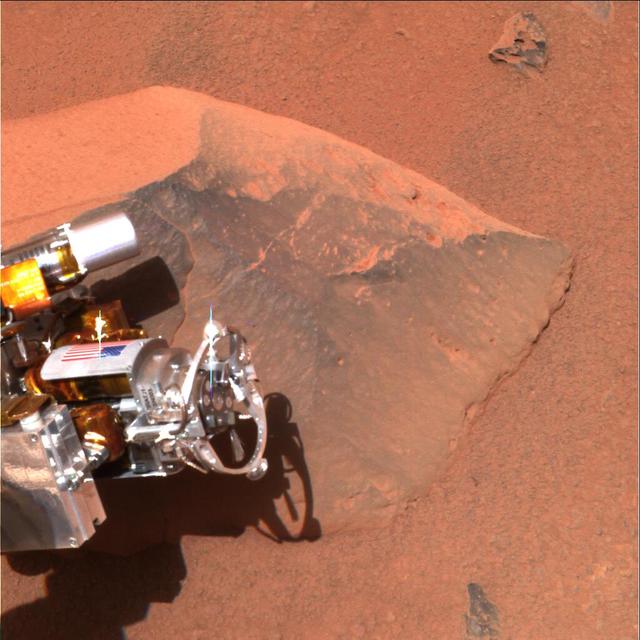
Back in Action
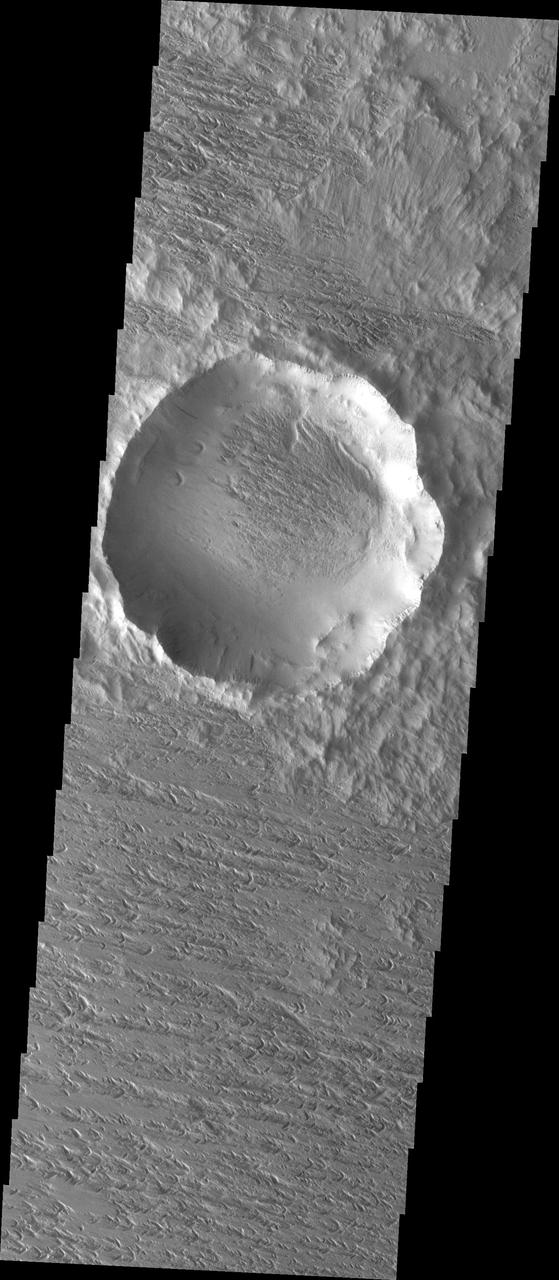
Back in View
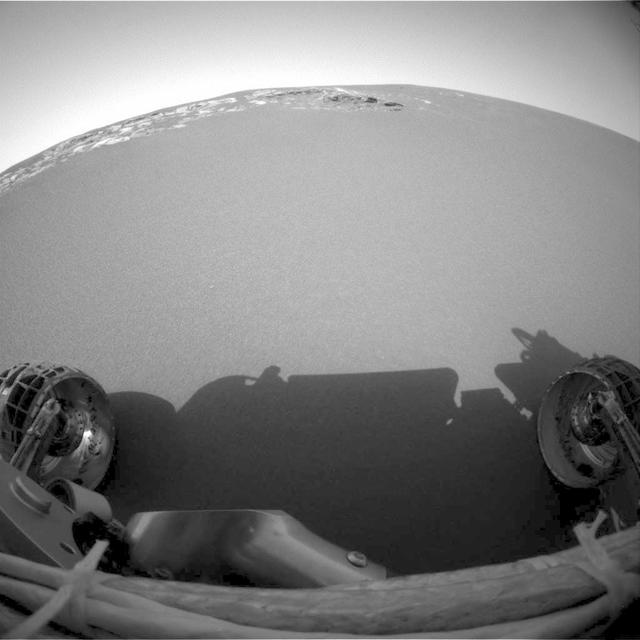
No Looking Back
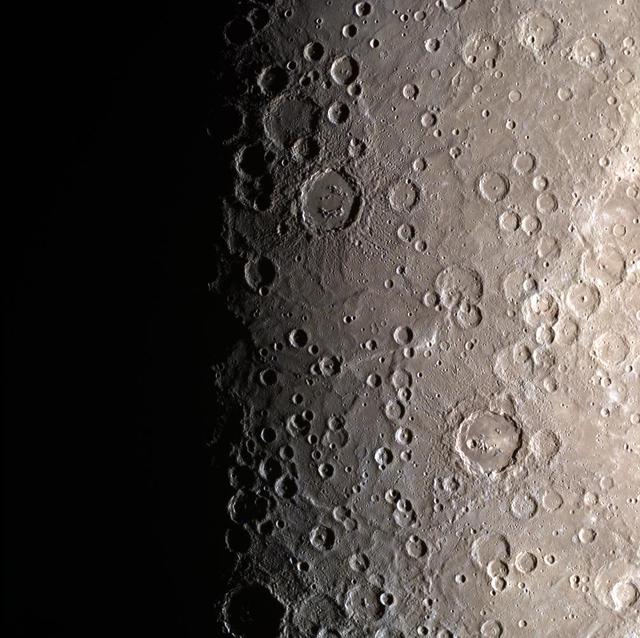
Ill Be Back!

Surging to take advantage of near-perfect launch conditions, NASA’s Scientific Balloon Team launched two balloons within 24 hours Sept. 27-28 from the Agency’s launch site at Fort Sumner, New Mexico. Clear, calm weather paved the way for launching a balloon technology test flight at 8:20 a.m. MDT, Sept. 28, via a 29.47 million-cubic-foot scientific balloon. Just less than 24 hours earlier, the balloon team launched the Jet Propulsion Laboratory (JPL) Remote payload via a 29.47-million-cubic-foot scientific balloon at 8:28 a.m. MDT, Sept. 27. Technicians successfully completed the JPL Remote mission at 10:28 p.m. MDT, Sept. 27, issuing flight termination commands to safely return the balloon material and payload back to Earth. “An enormous amount of planning, coordination, and labor goes into every balloon launch,” said Debbie Fairbrother, NASA’s Balloon Program Office chief. “To do two in a day’s time is nothing short of phenomenal work by an incredible team.” Read more: <a href="http://go.nasa.gov/2cLgslt" rel="nofollow">go.nasa.gov/2cLgslt</a> Credit: NASA/Wallops/Jeremy Eggers <b><a href="http://www.nasa.gov/audience/formedia/features/MP_Photo_Guidelines.html" rel="nofollow">NASA image use policy.</a></b> <b><a href="http://www.nasa.gov/centers/goddard/home/index.html" rel="nofollow">NASA Goddard Space Flight Center</a></b> enables NASA’s mission through four scientific endeavors: Earth Science, Heliophysics, Solar System Exploration, and Astrophysics. Goddard plays a leading role in NASA’s accomplishments by contributing compelling scientific knowledge to advance the Agency’s mission. <b>Follow us on <a href="http://twitter.com/NASAGoddardPix" rel="nofollow">Twitter</a></b> <b>Like us on <a href="http://www.facebook.com/pages/Greenbelt-MD/NASA-Goddard/395013845897?ref=tsd" rel="nofollow">Facebook</a></b> <b>Find us on <a href="http://instagrid.me/nasagoddard/?vm=grid" rel="nofollow">Instagram</a></b>
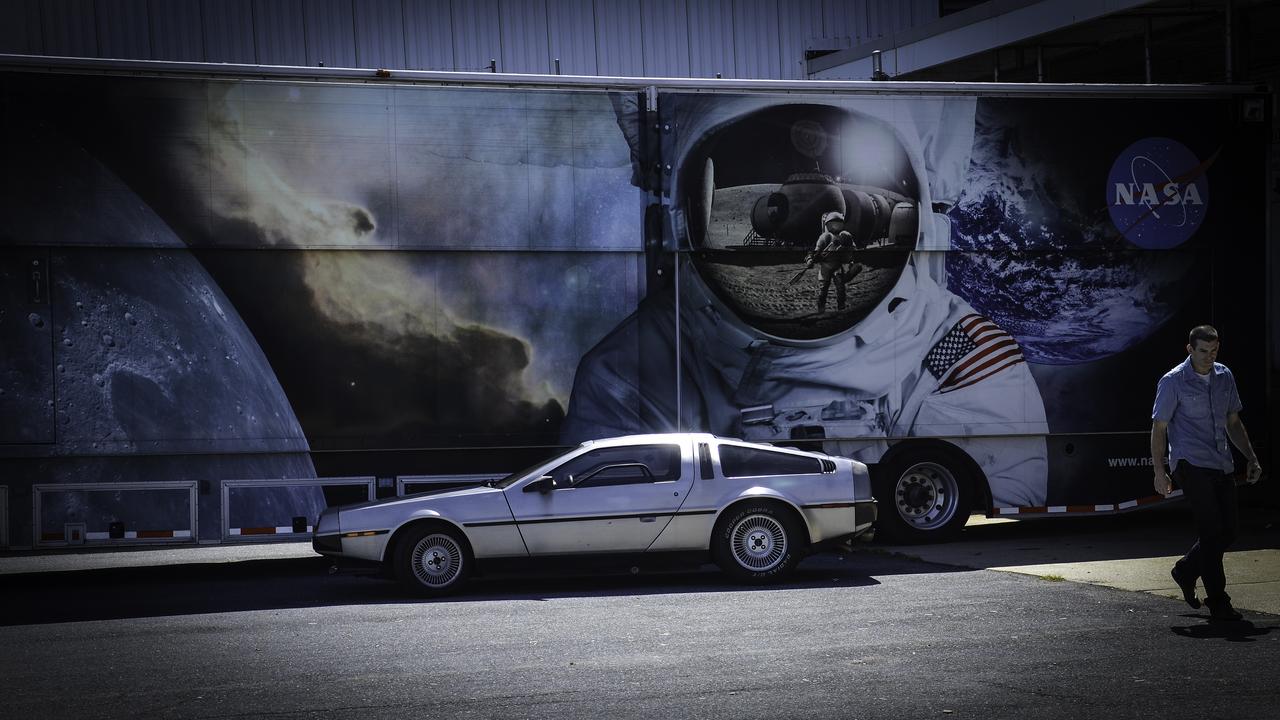
Great Scott, This is Heavy! You might see a DeLorean zipping around Greenbelt, Maryland, on Oct. 21, 2015, the day Marty McFly and Doc Brown arrive from 1985 in "Back to the Future, Part II," but don't look for flaming tread marks in its wake. The DeLorean DMC-12, commonly seen on the roads of NASA’s Goddard Space Flight Center in Greenbelt, Maryland, is better known for the version that starred as a plutonium-powered time machine in the “Back to the Future” trilogy. After some investigation, Goddard’s Office of Communications found the owner of the stainless steel, gull-winged, two-door coupe. Goddard software test engineer, Brendan Rebo bought the 1982 DeLorean off eBay about four and a half years ago. “The car attracts a lot more attention than I expected,” Rebo admitted. “I hear a lot of jokes about whether or not I’ve reached 88 miles per hour yet.” As “Back to the Future” fans around the world celebrate today, Rebo also celebrates his birthday. While the second film predicted technology, such as flying cars, that doesn’t yet exist, people can still marvel at the classic car and movie reference. Credit: NASA/Goddard/Rebecca Roth <b><a href="http://www.nasa.gov/audience/formedia/features/MP_Photo_Guidelines.html" rel="nofollow">NASA image use policy.</a></b> <b><a href="http://www.nasa.gov/centers/goddard/home/index.html" rel="nofollow">NASA Goddard Space Flight Center</a></b> enables NASA’s mission through four scientific endeavors: Earth Science, Heliophysics, Solar System Exploration, and Astrophysics. Goddard plays a leading role in NASA’s accomplishments by contributing compelling scientific knowledge to advance the Agency’s mission. <b>Follow us on <a href="http://twitter.com/NASAGoddardPix" rel="nofollow">Twitter</a></b> <b>Like us on <a href="http://www.facebook.com/pages/Greenbelt-MD/NASA-Goddard/395013845897?ref=tsd" rel="nofollow">Facebook</a></b> <b>Find us on <a href="http://instagrid.me/nasagoddard/?vm=grid" rel="nofollow">Instagram</a></b>
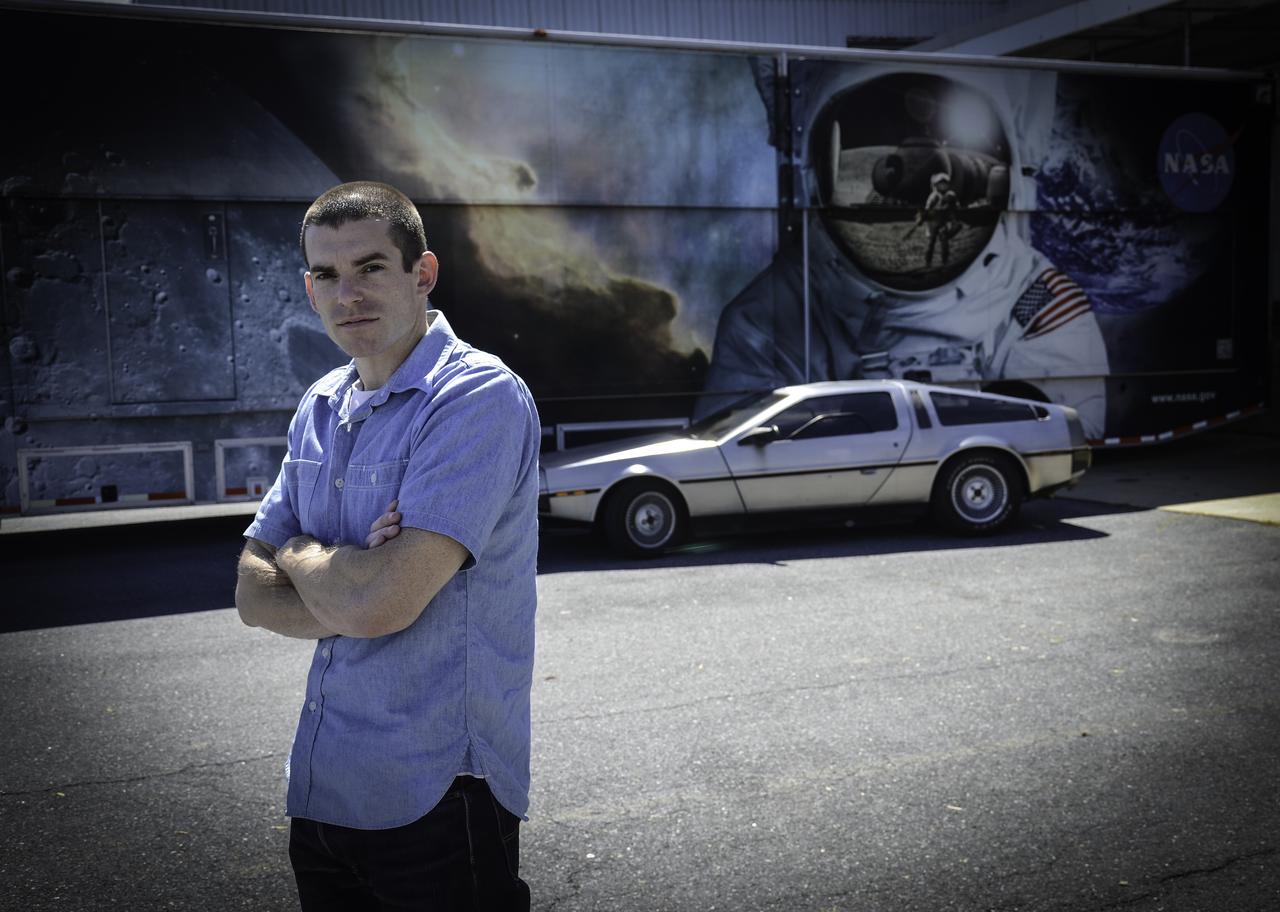
Great Scott, This is Heavy! You might see a DeLorean zipping around Greenbelt, Maryland, on Oct. 21, 2015, the day Marty McFly and Doc Brown arrive from 1985 in "Back to the Future, Part II," but don't look for flaming tread marks in its wake. The DeLorean DMC-12, commonly seen on the roads of NASA’s Goddard Space Flight Center in Greenbelt, Maryland, is better known for the version that starred as a plutonium-powered time machine in the “Back to the Future” trilogy. After some investigation, Goddard’s Office of Communications found the owner of the stainless steel, gull-winged, two-door coupe. Goddard software test engineer, Brendan Rebo bought the 1982 DeLorean off eBay about four and a half years ago. “The car attracts a lot more attention than I expected,” Rebo admitted. “I hear a lot of jokes about whether or not I’ve reached 88 miles per hour yet.” As “Back to the Future” fans around the world celebrate today, Rebo also celebrates his birthday. While the second film predicted technology, such as flying cars, that doesn’t yet exist, people can still marvel at the classic car and movie reference. Credit: NASA/Goddard/Rebecca Roth <b><a href="http://www.nasa.gov/audience/formedia/features/MP_Photo_Guidelines.html" rel="nofollow">NASA image use policy.</a></b> <b><a href="http://www.nasa.gov/centers/goddard/home/index.html" rel="nofollow">NASA Goddard Space Flight Center</a></b> enables NASA’s mission through four scientific endeavors: Earth Science, Heliophysics, Solar System Exploration, and Astrophysics. Goddard plays a leading role in NASA’s accomplishments by contributing compelling scientific knowledge to advance the Agency’s mission. <b>Follow us on <a href="http://twitter.com/NASAGoddardPix" rel="nofollow">Twitter</a></b> <b>Like us on <a href="http://www.facebook.com/pages/Greenbelt-MD/NASA-Goddard/395013845897?ref=tsd" rel="nofollow">Facebook</a></b> <b>Find us on <a href="http://instagrid.me/nasagoddard/?vm=grid" rel="nofollow">Instagram</a></b>
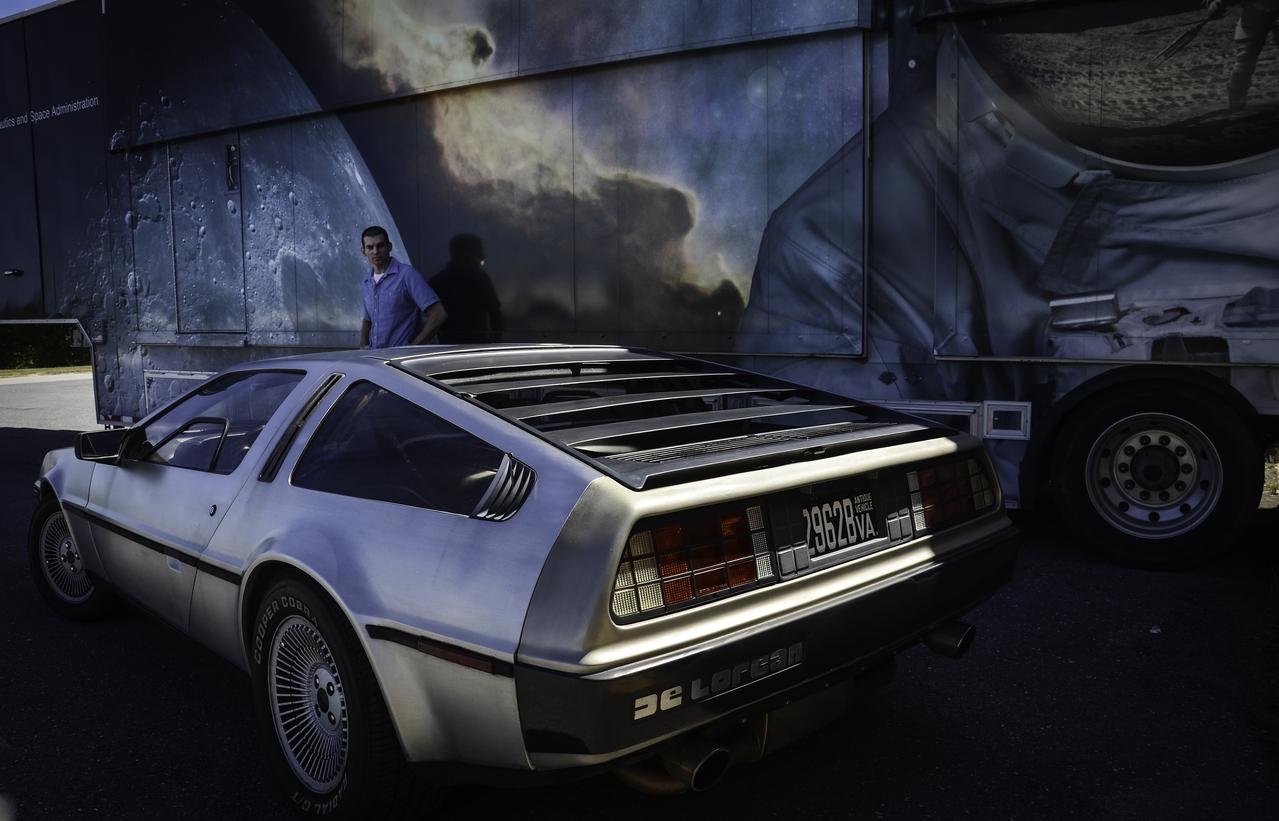
Great Scott, This is Heavy! You might see a DeLorean zipping around Greenbelt, Maryland, on Oct. 21, 2015, the day Marty McFly and Doc Brown arrive from 1985 in "Back to the Future, Part II," but don't look for flaming tread marks in its wake. The DeLorean DMC-12, commonly seen on the roads of NASA’s Goddard Space Flight Center in Greenbelt, Maryland, is better known for the version that starred as a plutonium-powered time machine in the “Back to the Future” trilogy. After some investigation, Goddard’s Office of Communications found the owner of the stainless steel, gull-winged, two-door coupe. Goddard software test engineer, Brendan Rebo bought the 1982 DeLorean off eBay about four and a half years ago. “The car attracts a lot more attention than I expected,” Rebo admitted. “I hear a lot of jokes about whether or not I’ve reached 88 miles per hour yet.” As “Back to the Future” fans around the world celebrate today, Rebo also celebrates his birthday. While the second film predicted technology, such as flying cars, that doesn’t yet exist, people can still marvel at the classic car and movie reference. Credit: NASA/Goddard/Rebecca Roth <b><a href="http://www.nasa.gov/audience/formedia/features/MP_Photo_Guidelines.html" rel="nofollow">NASA image use policy.</a></b> <b><a href="http://www.nasa.gov/centers/goddard/home/index.html" rel="nofollow">NASA Goddard Space Flight Center</a></b> enables NASA’s mission through four scientific endeavors: Earth Science, Heliophysics, Solar System Exploration, and Astrophysics. Goddard plays a leading role in NASA’s accomplishments by contributing compelling scientific knowledge to advance the Agency’s mission. <b>Follow us on <a href="http://twitter.com/NASAGoddardPix" rel="nofollow">Twitter</a></b> <b>Like us on <a href="http://www.facebook.com/pages/Greenbelt-MD/NASA-Goddard/395013845897?ref=tsd" rel="nofollow">Facebook</a></b> <b>Find us on <a href="http://instagrid.me/nasagoddard/?vm=grid" rel="nofollow">Instagram</a></b>
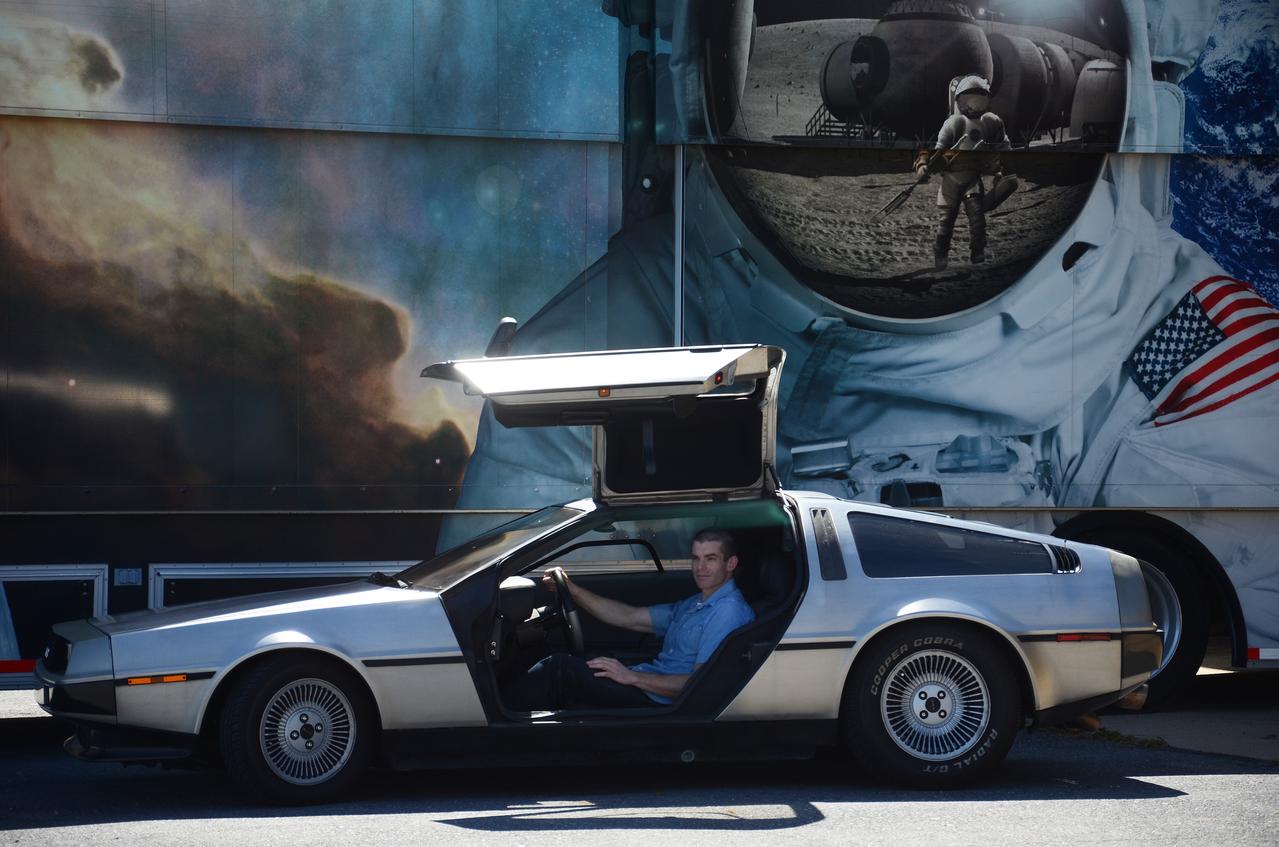
Great Scott, This is Heavy! You might see a DeLorean zipping around Greenbelt, Maryland, on Oct. 21, 2015, the day Marty McFly and Doc Brown arrive from 1985 in "Back to the Future, Part II," but don't look for flaming tread marks in its wake. The DeLorean DMC-12, commonly seen on the roads of NASA’s Goddard Space Flight Center in Greenbelt, Maryland, is better known for the version that starred as a plutonium-powered time machine in the “Back to the Future” trilogy. After some investigation, Goddard’s Office of Communications found the owner of the stainless steel, gull-winged, two-door coupe. Goddard software test engineer, Brendan Rebo bought the 1982 DeLorean off eBay about four and a half years ago. “The car attracts a lot more attention than I expected,” Rebo admitted. “I hear a lot of jokes about whether or not I’ve reached 88 miles per hour yet.” As “Back to the Future” fans around the world celebrate today, Rebo also celebrates his birthday. While the second film predicted technology, such as flying cars, that doesn’t yet exist, people can still marvel at the classic car and movie reference. Credit: NASA/Goddard/Rebecca Roth <b><a href="http://www.nasa.gov/audience/formedia/features/MP_Photo_Guidelines.html" rel="nofollow">NASA image use policy.</a></b> <b><a href="http://www.nasa.gov/centers/goddard/home/index.html" rel="nofollow">NASA Goddard Space Flight Center</a></b> enables NASA’s mission through four scientific endeavors: Earth Science, Heliophysics, Solar System Exploration, and Astrophysics. Goddard plays a leading role in NASA’s accomplishments by contributing compelling scientific knowledge to advance the Agency’s mission. <b>Follow us on <a href="http://twitter.com/NASAGoddardPix" rel="nofollow">Twitter</a></b> <b>Like us on <a href="http://www.facebook.com/pages/Greenbelt-MD/NASA-Goddard/395013845897?ref=tsd" rel="nofollow">Facebook</a></b> <b>Find us on <a href="http://instagrid.me/nasagoddard/?vm=grid" rel="nofollow">Instagram</a></b>
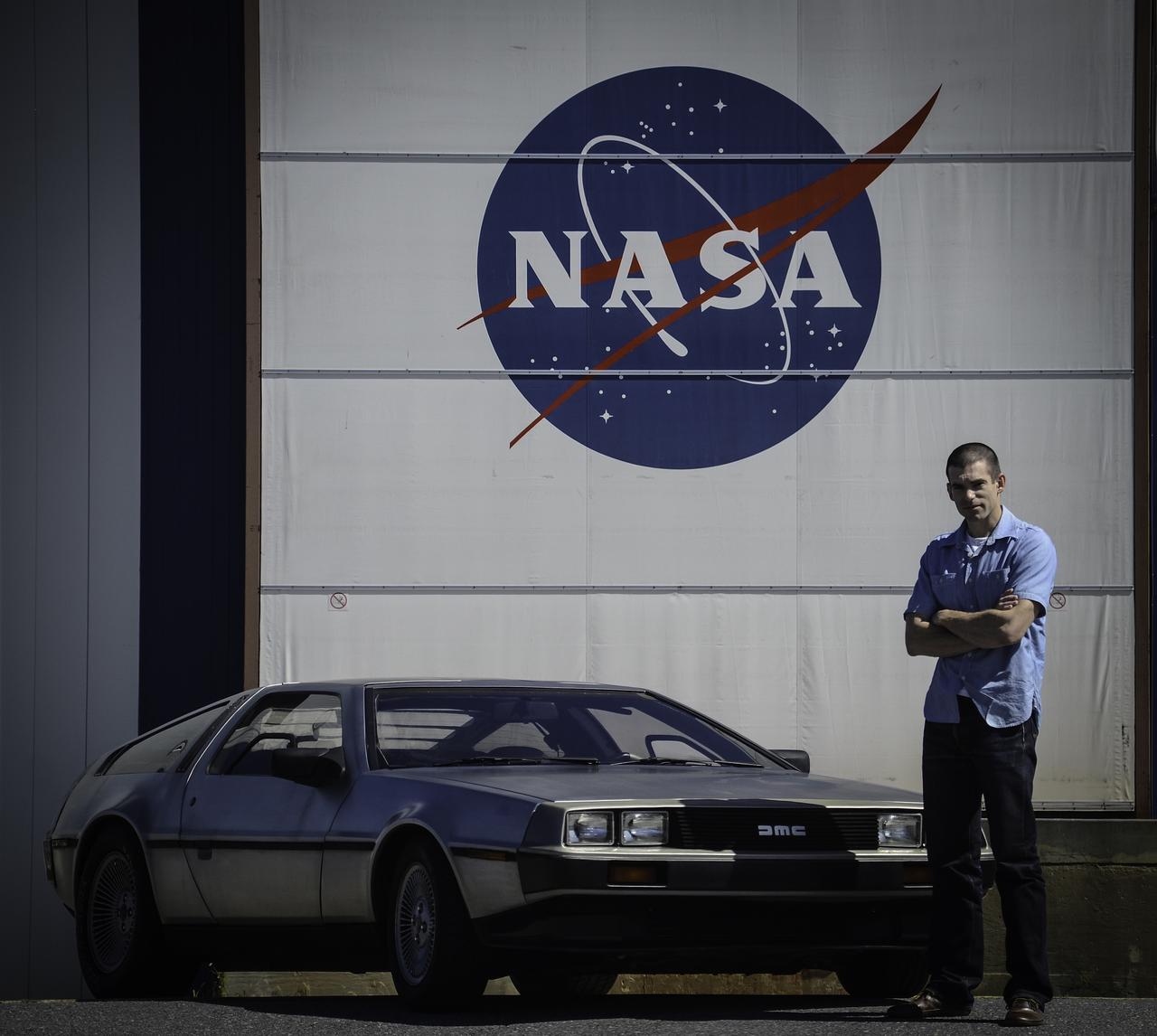
Great Scott, This is Heavy! You might see a DeLorean zipping around Greenbelt, Maryland, on Oct. 21, 2015, the day Marty McFly and Doc Brown arrive from 1985 in "Back to the Future, Part II," but don't look for flaming tread marks in its wake. The DeLorean DMC-12, commonly seen on the roads of NASA’s Goddard Space Flight Center in Greenbelt, Maryland, is better known for the version that starred as a plutonium-powered time machine in the “Back to the Future” trilogy. After some investigation, Goddard’s Office of Communications found the owner of the stainless steel, gull-winged, two-door coupe. Goddard software test engineer, Brendan Rebo bought the 1982 DeLorean off eBay about four and a half years ago. “The car attracts a lot more attention than I expected,” Rebo admitted. “I hear a lot of jokes about whether or not I’ve reached 88 miles per hour yet.” As “Back to the Future” fans around the world celebrate today, Rebo also celebrates his birthday. While the second film predicted technology, such as flying cars, that doesn’t yet exist, people can still marvel at the classic car and movie reference. Credit: NASA/Goddard/Rebecca Roth <b><a href="http://www.nasa.gov/audience/formedia/features/MP_Photo_Guidelines.html" rel="nofollow">NASA image use policy.</a></b> <b><a href="http://www.nasa.gov/centers/goddard/home/index.html" rel="nofollow">NASA Goddard Space Flight Center</a></b> enables NASA’s mission through four scientific endeavors: Earth Science, Heliophysics, Solar System Exploration, and Astrophysics. Goddard plays a leading role in NASA’s accomplishments by contributing compelling scientific knowledge to advance the Agency’s mission. <b>Follow us on <a href="http://twitter.com/NASAGoddardPix" rel="nofollow">Twitter</a></b> <b>Like us on <a href="http://www.facebook.com/pages/Greenbelt-MD/NASA-Goddard/395013845897?ref=tsd" rel="nofollow">Facebook</a></b> <b>Find us on <a href="http://instagrid.me/nasagoddard/?vm=grid" rel="nofollow">Instagram</a></b>
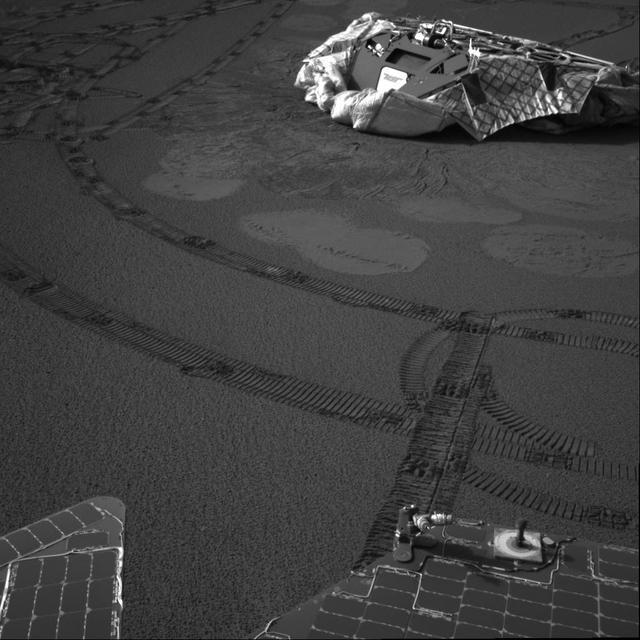
Home and Back Again
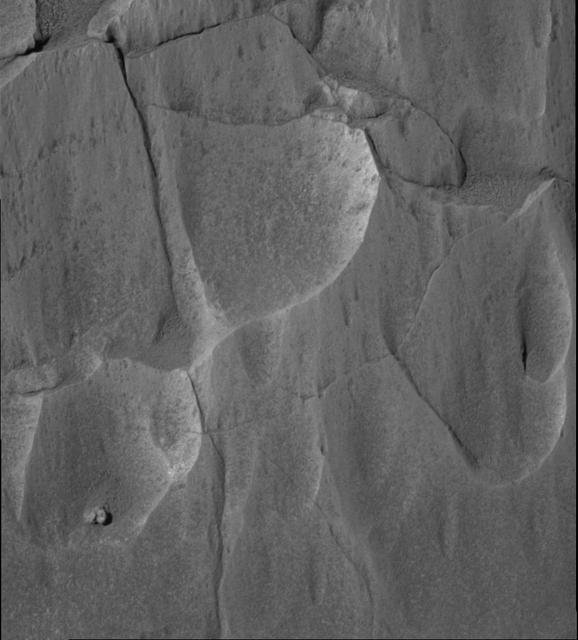
Peeling Back the Layers
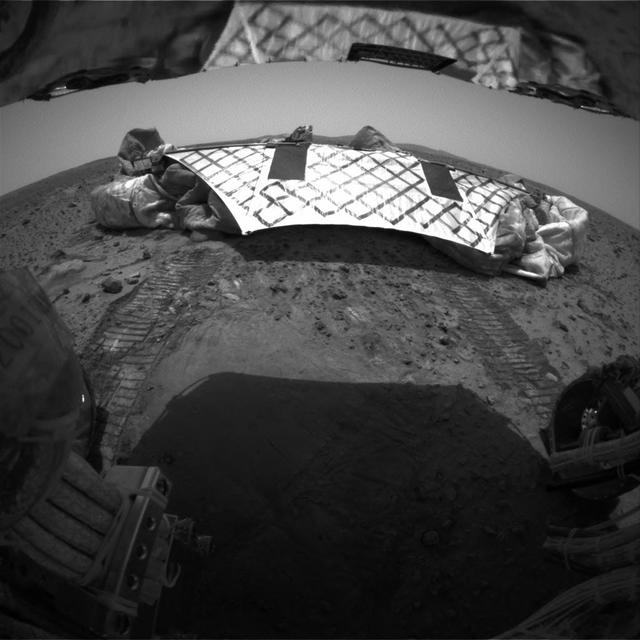
Spirit Looks Back
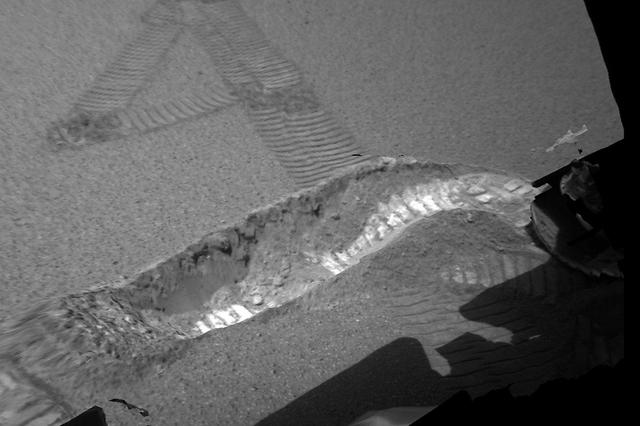
Peeling Back the Layers of Mars
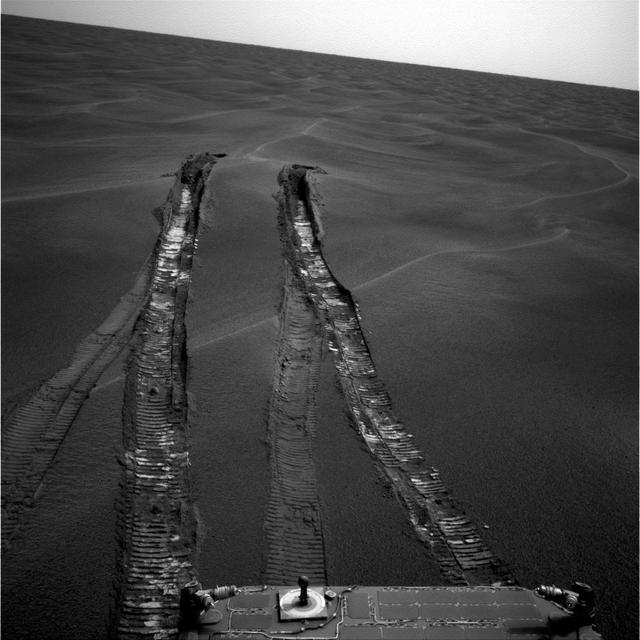
Looking Back at Purgatory Dune

Looking Back at Eagle Crater
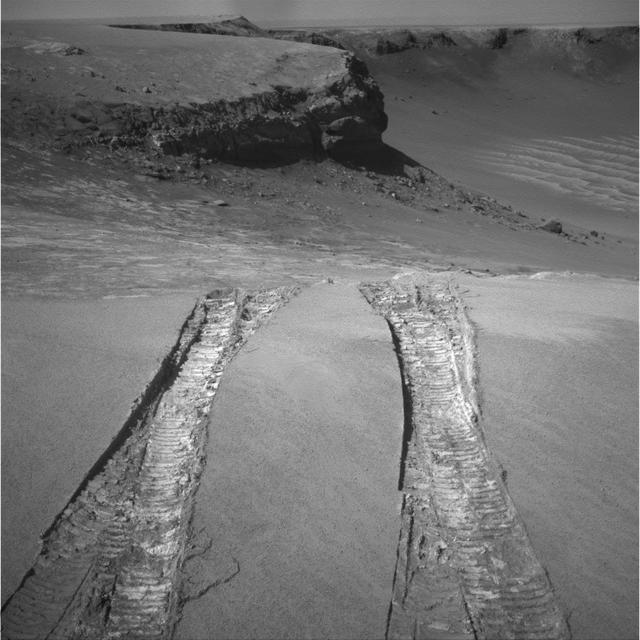
Looking Back at Arena of Exploration
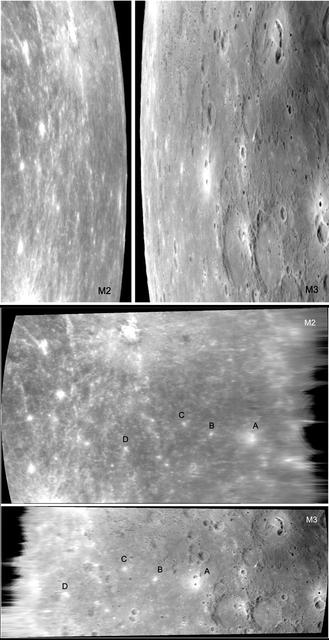
Look Back -- Look Ahead
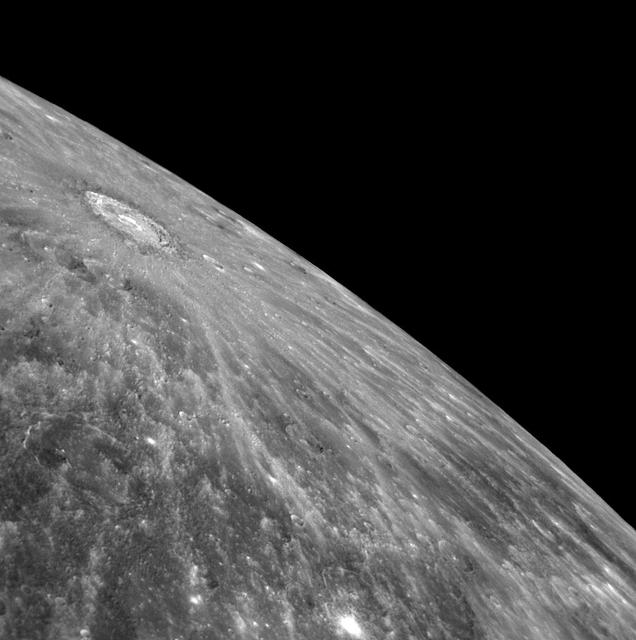
Looking Back to the Source
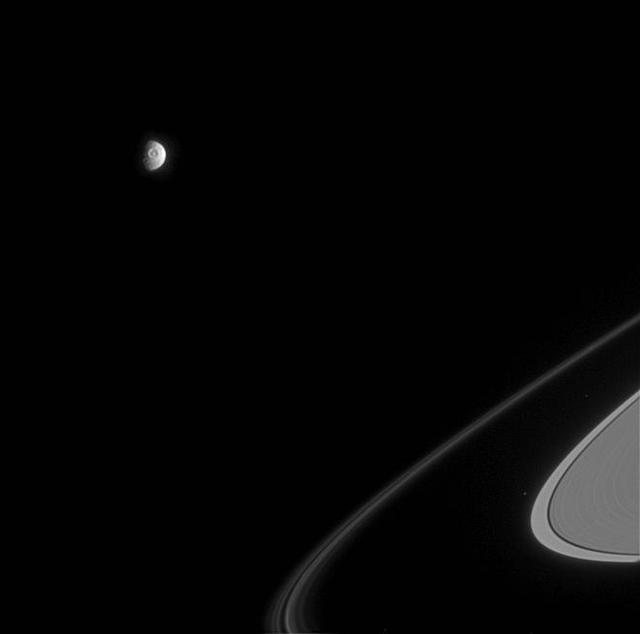
Mimas Stares Back
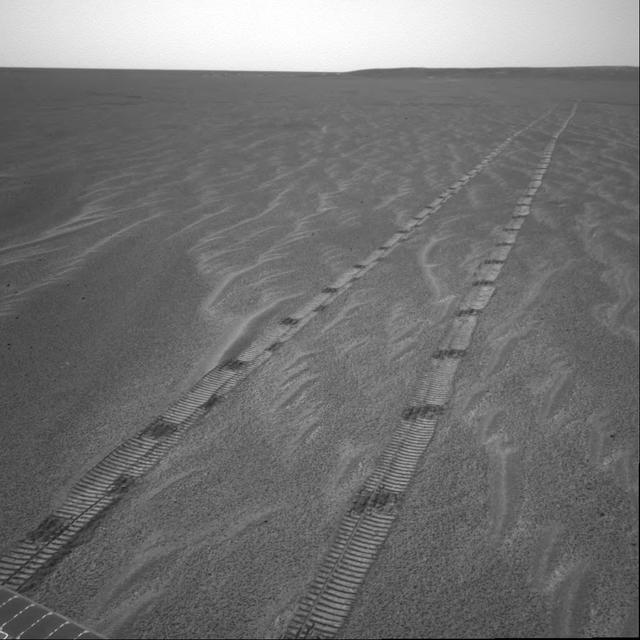
Looking Back Across the Plains
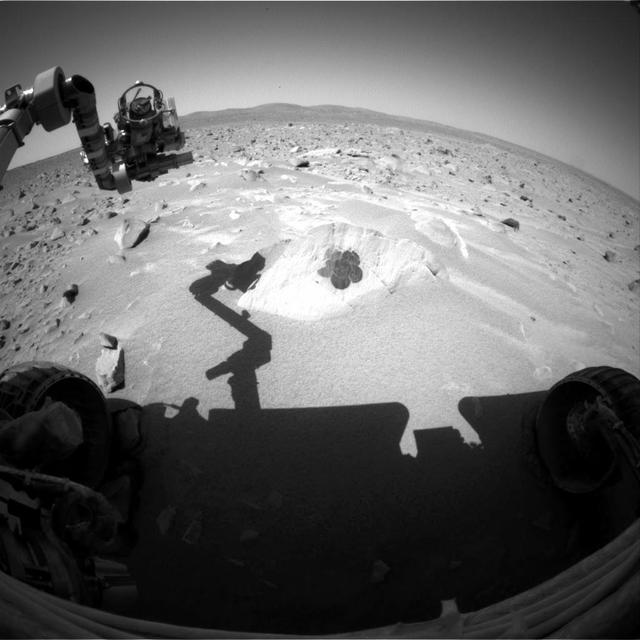
Spirit Back at Work
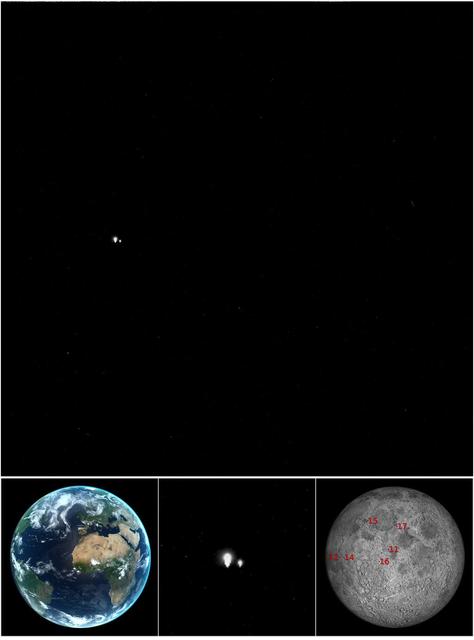
Looking Back at Us

Heat shield back shell panels are prefitted on the Orion spacecraft inside the Neil Armstrong Operations and Checkout Building high bay at NASA's Kennedy Space Center in Florida. The back shell panels serve as the outer layer of the spacecraft and will protect it against the extreme temperatures of re-entry from deep space. Orion is being prepared for its first integrated uncrewed flight atop NASA's Space Launch System rocket on Exploration Mission-1 from Launch Pad 39B at Kennedy Space Center.
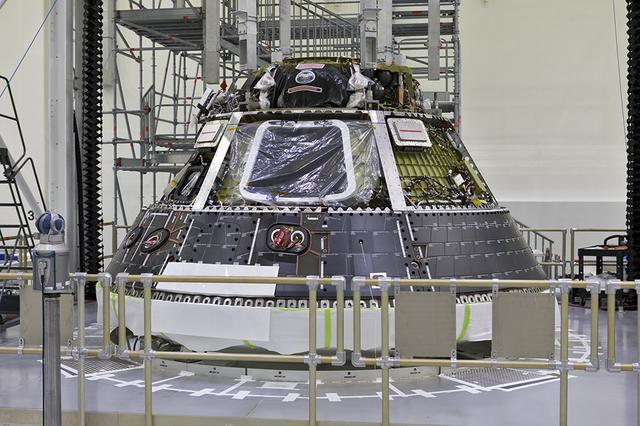
Heat shield back shell panels are prefitted on the Orion spacecraft inside the Neil Armstrong Operations and Checkout Building high bay at NASA's Kennedy Space Center in Florida. The back shell panels serve as the outer layer of the spacecraft and will protect it against the extreme temperatures of re-entry from deep space. Orion is being prepared for its first integrated uncrewed flight atop NASA's Space Launch System rocket on Exploration Mission-1 from Launch Pad 39B at Kennedy Space Center.
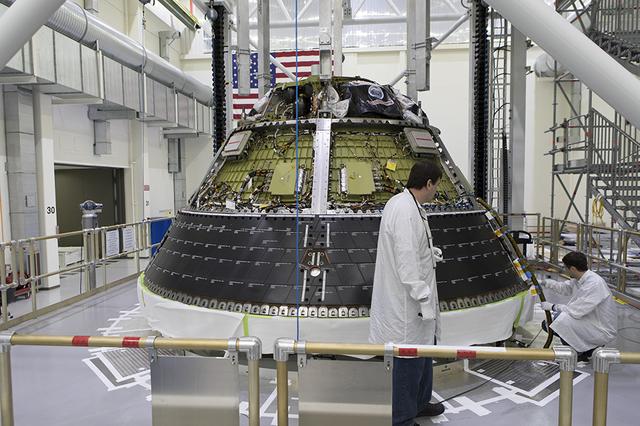
Lockheed Martin technicians test the fitting of the Orion spacecraft's heat shield back shell panels inside the Neil Armstrong Operations and Checkout Building high bay at NASA's Kennedy Space Center in Florida. The back shell panels serve as the outer layer of the spacecraft and will protect it against the extreme temperatures of re-entry from deep space. Orion is being prepared for its first integrated uncrewed flight atop NASA's Space Launch System rocket on Exploration Mission-1 from Launch Pad 39B at Kennedy Space Center.
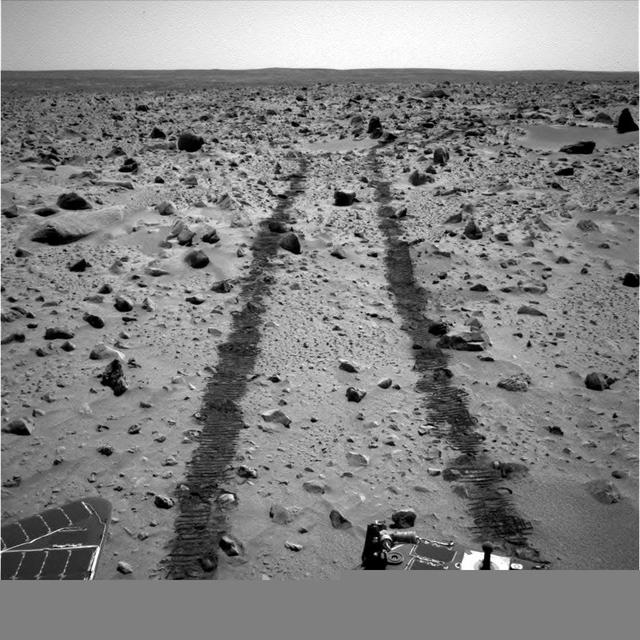
Looking Back, Spirit Sol 90
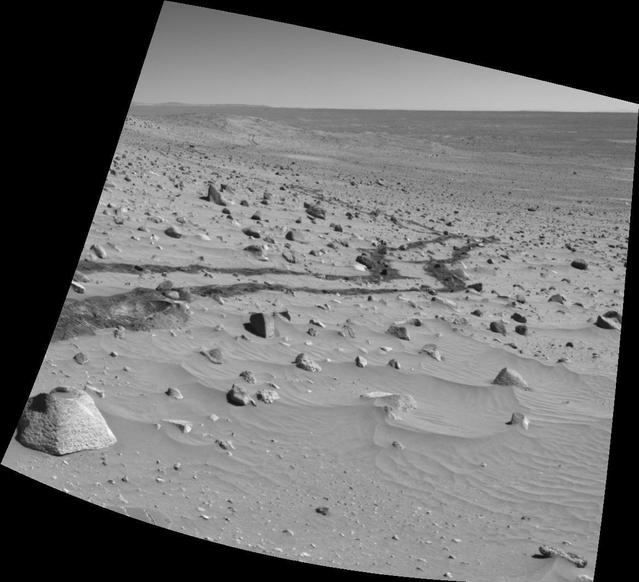
Spirit Looks Back on Sol 332

Looking Back at Spirit Trail to the Summit

Looking Back at Eagle CraterRight-eye
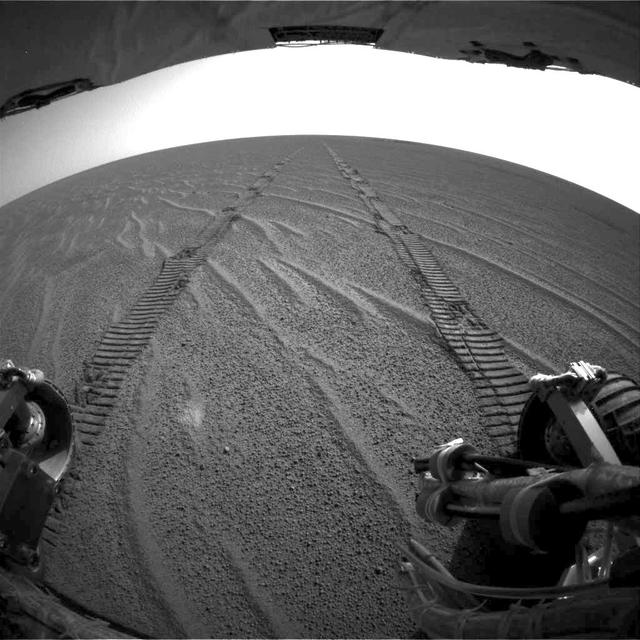
Looking Back, Opportunity Sol 70

Looking Back at Eagle CraterLeft-eye
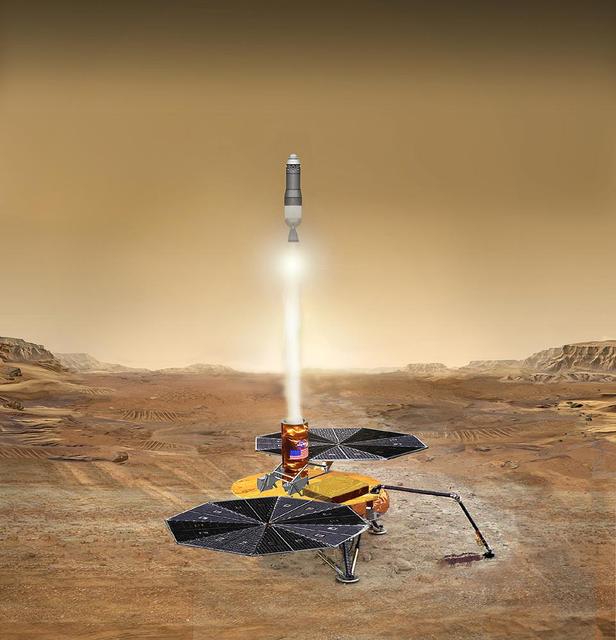
This artist concept of the proposed NASA Mars Sample Return mission shows the launch of the martian sample back toward Earth.
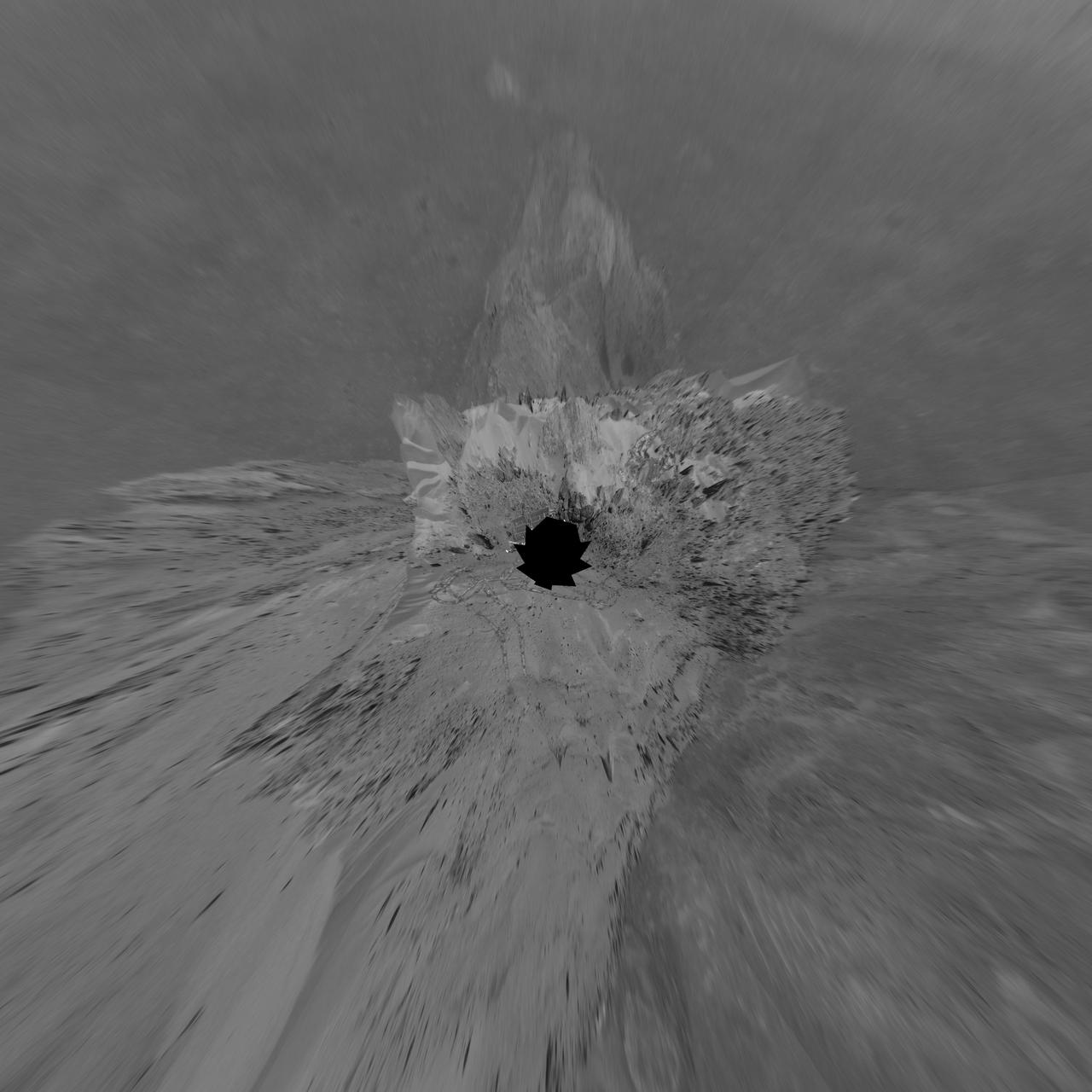
Looking Back at Spirit Trail to the Summit Polar
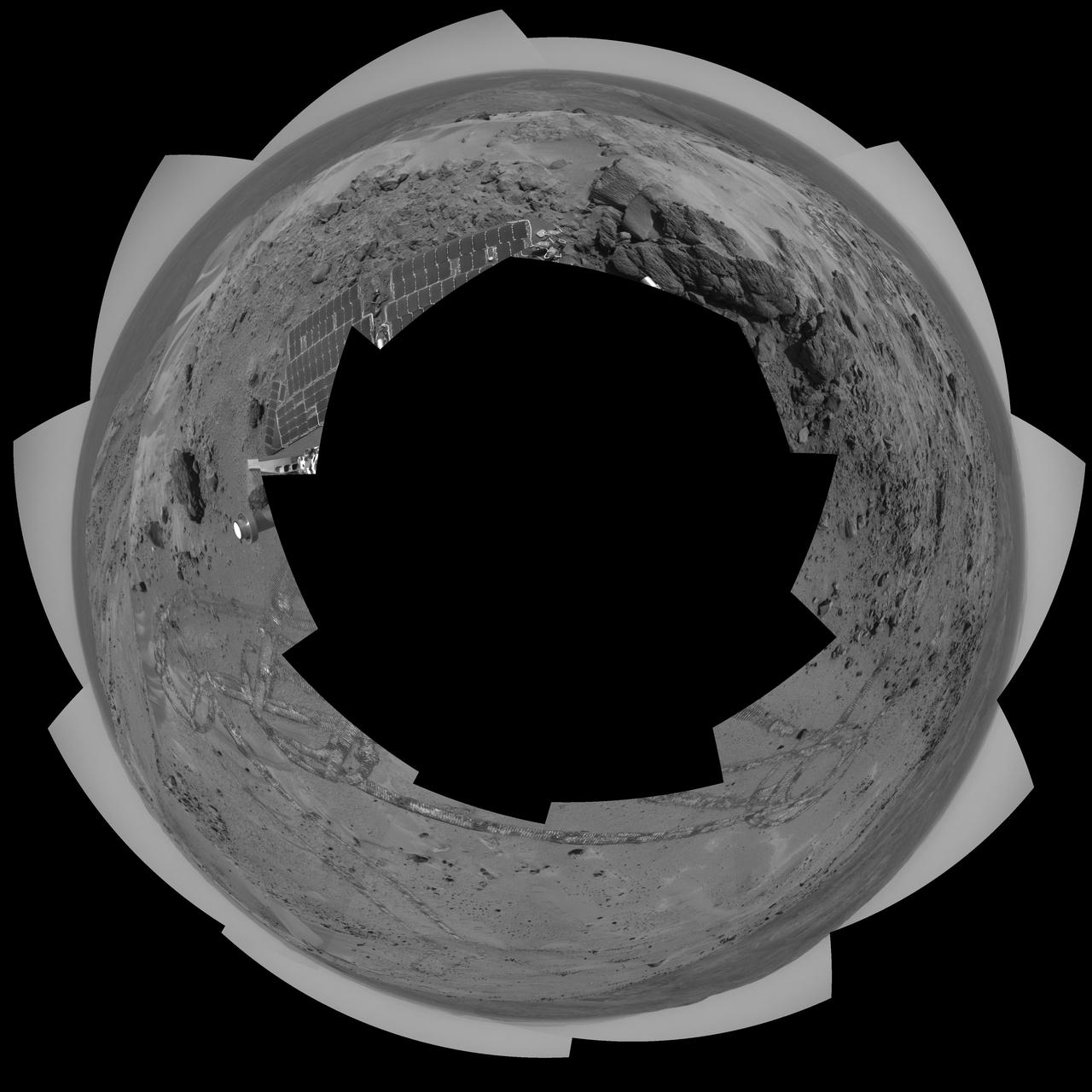
Looking Back at Spirit Trail to the Summit Vertical
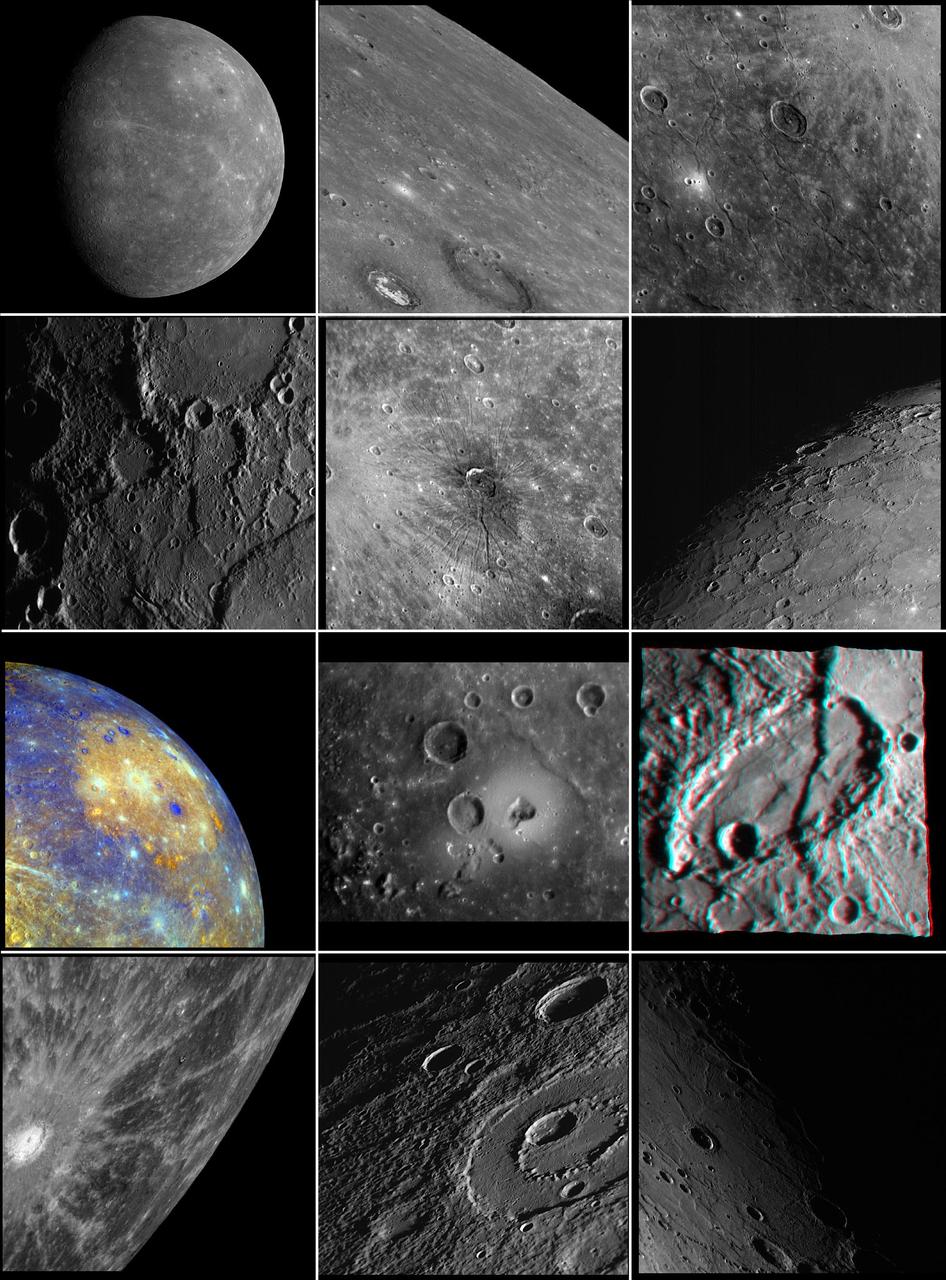
2008: Looking Back at the Year with MESSENGER Images
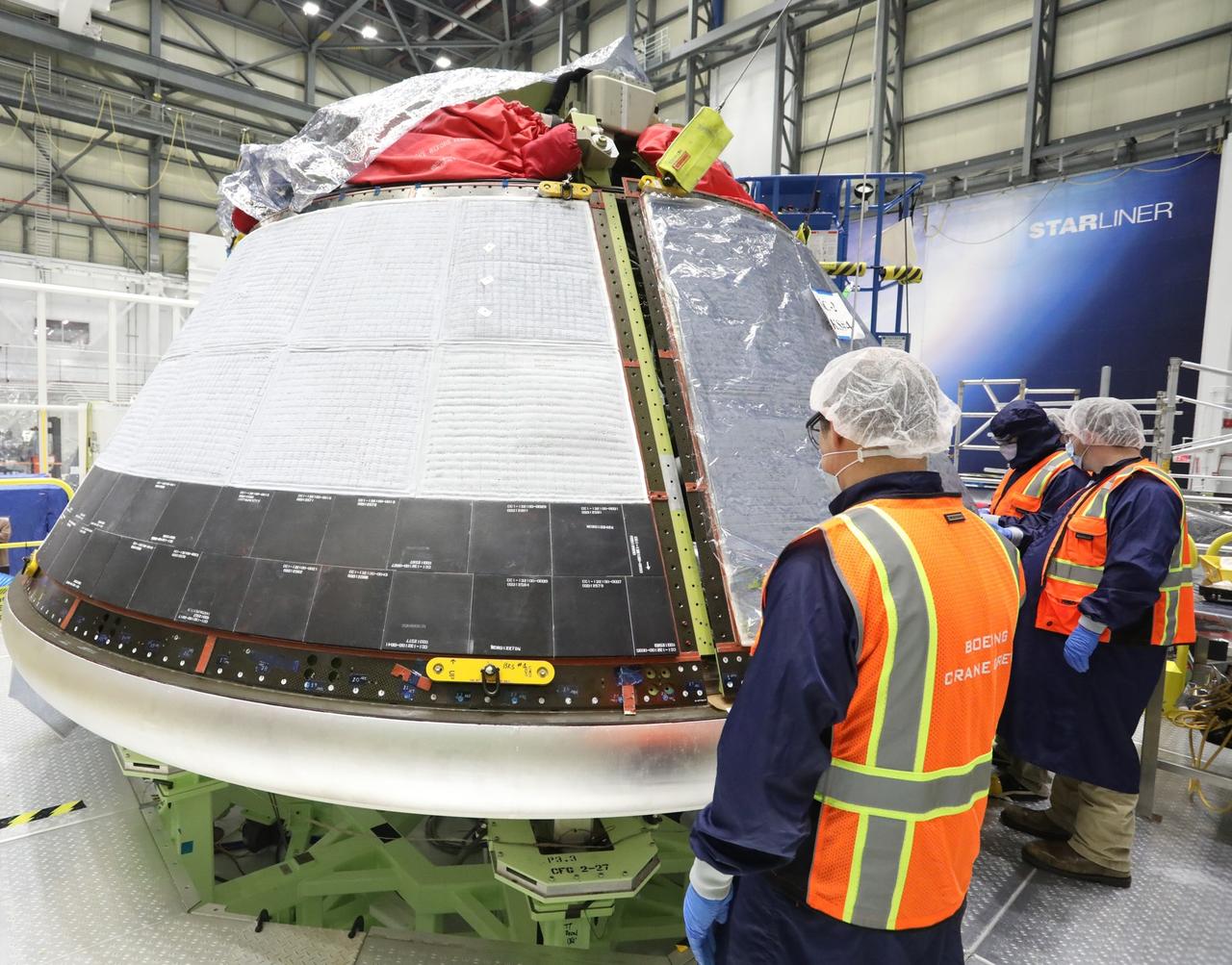
Boeing technicians install back shells on the Orbital Flight Test-2 (OFT-2) Starliner crew module inside the company’s Commercial Crew and Cargo Processing Facility at NASA’s Kennedy Space Center in Florida on December 2, 2020. During the OFT-2 mission, the uncrewed Starliner spacecraft will fly to the International Space Station for NASA’s Commercial Crew Program.
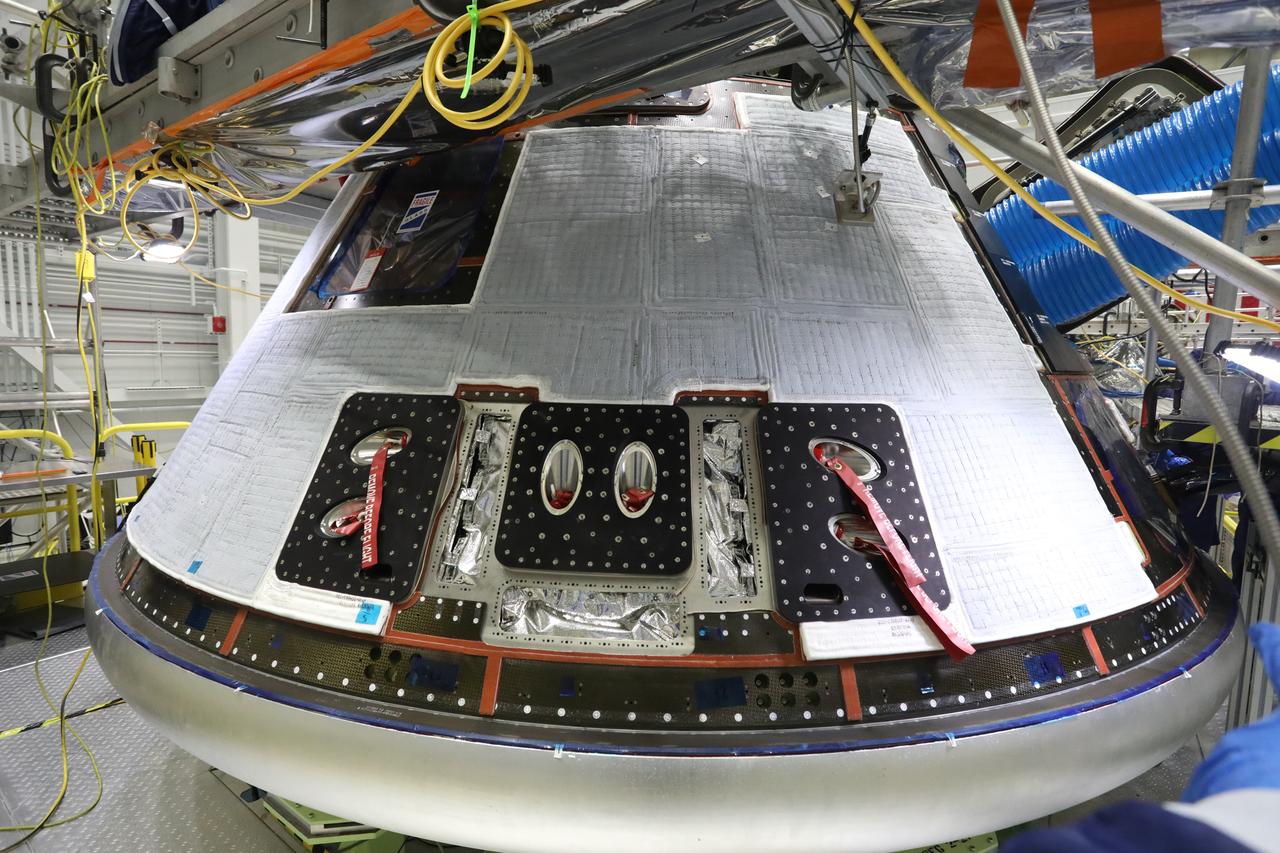
Boeing’s Starliner crew module, with back shells installed, is inside the company’s Commercial Crew and Cargo Processing Facility at Kennedy Space Center on December 8, 2020, in preparation for the Orbital Flight Test-2 (OFT-2). During the OFT-2 mission, the uncrewed Starliner spacecraft will fly to the International Space Station for NASA’s Commercial Crew Program.
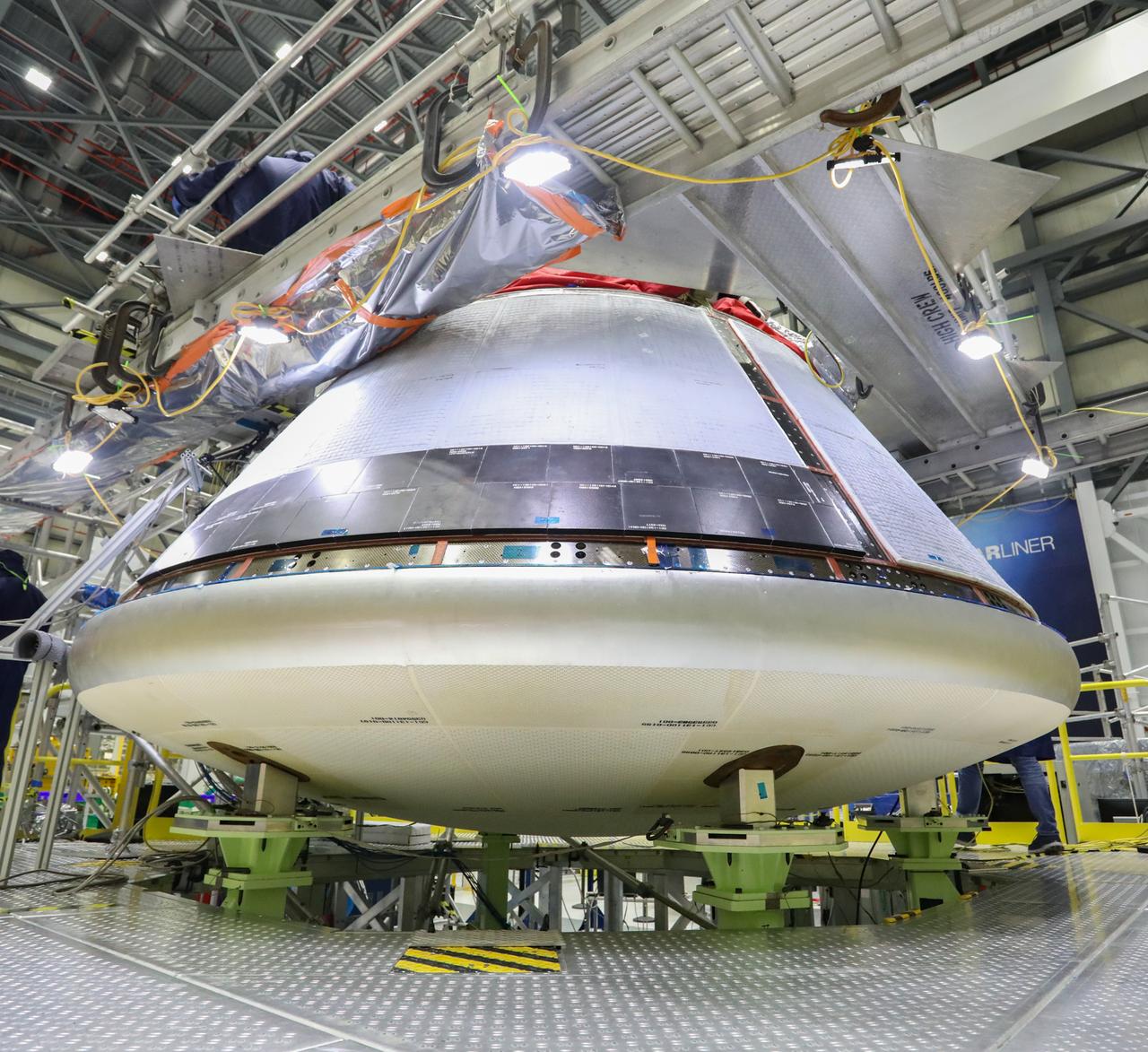
Boeing’s Starliner crew module, with back shells installed, is inside the company’s Commercial Crew and Cargo Processing Facility at Kennedy Space Center on December 8, 2020, in preparation for the Orbital Flight Test-2 (OFT-2). During the OFT-2 mission, the uncrewed Starliner spacecraft will fly to the International Space Station for NASA’s Commercial Crew Program.
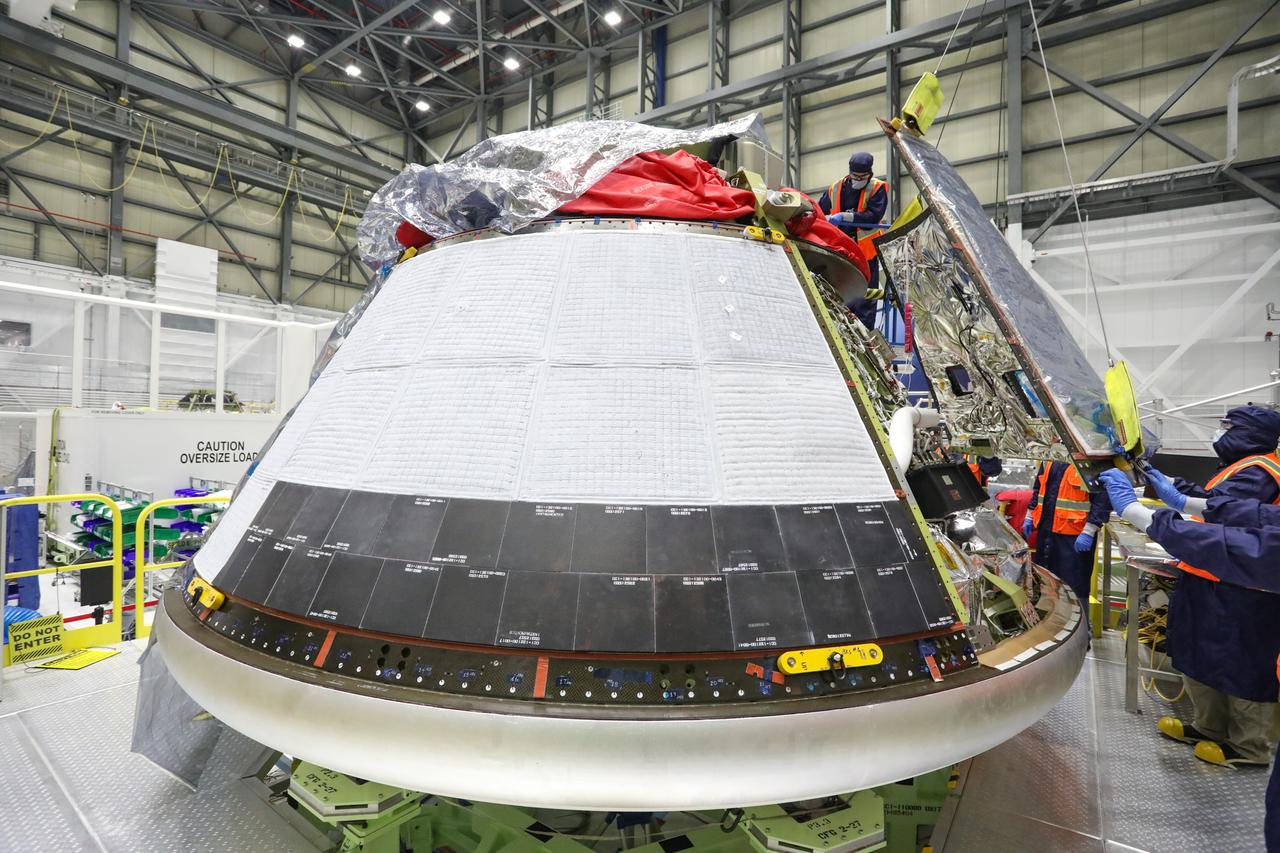
Boeing technicians install back shells on the Orbital Flight Test-2 (OFT-2) Starliner crew module inside the company’s Commercial Crew and Cargo Processing Facility at NASA’s Kennedy Space Center in Florida on December 2, 2020. During the OFT-2 mission, the uncrewed Starliner spacecraft will fly to the International Space Station for NASA’s Commercial Crew Program.
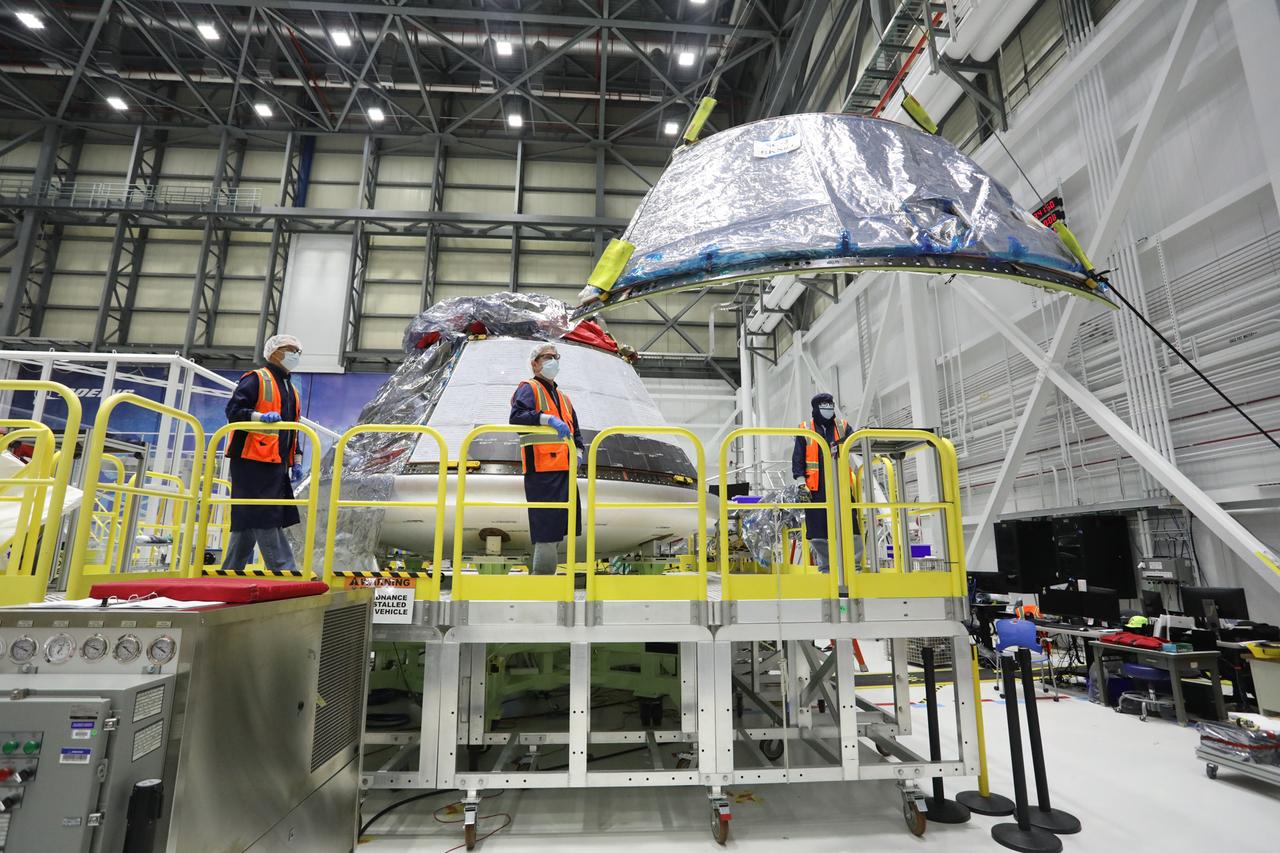
Boeing technicians install back shells on the Orbital Flight Test-2 (OFT-2) Starliner crew module inside the company’s Commercial Crew and Cargo Processing Facility at NASA’s Kennedy Space Center in Florida on December 2, 2020. During the OFT-2 mission, the uncrewed Starliner spacecraft will fly to the International Space Station for NASA’s Commercial Crew Program.
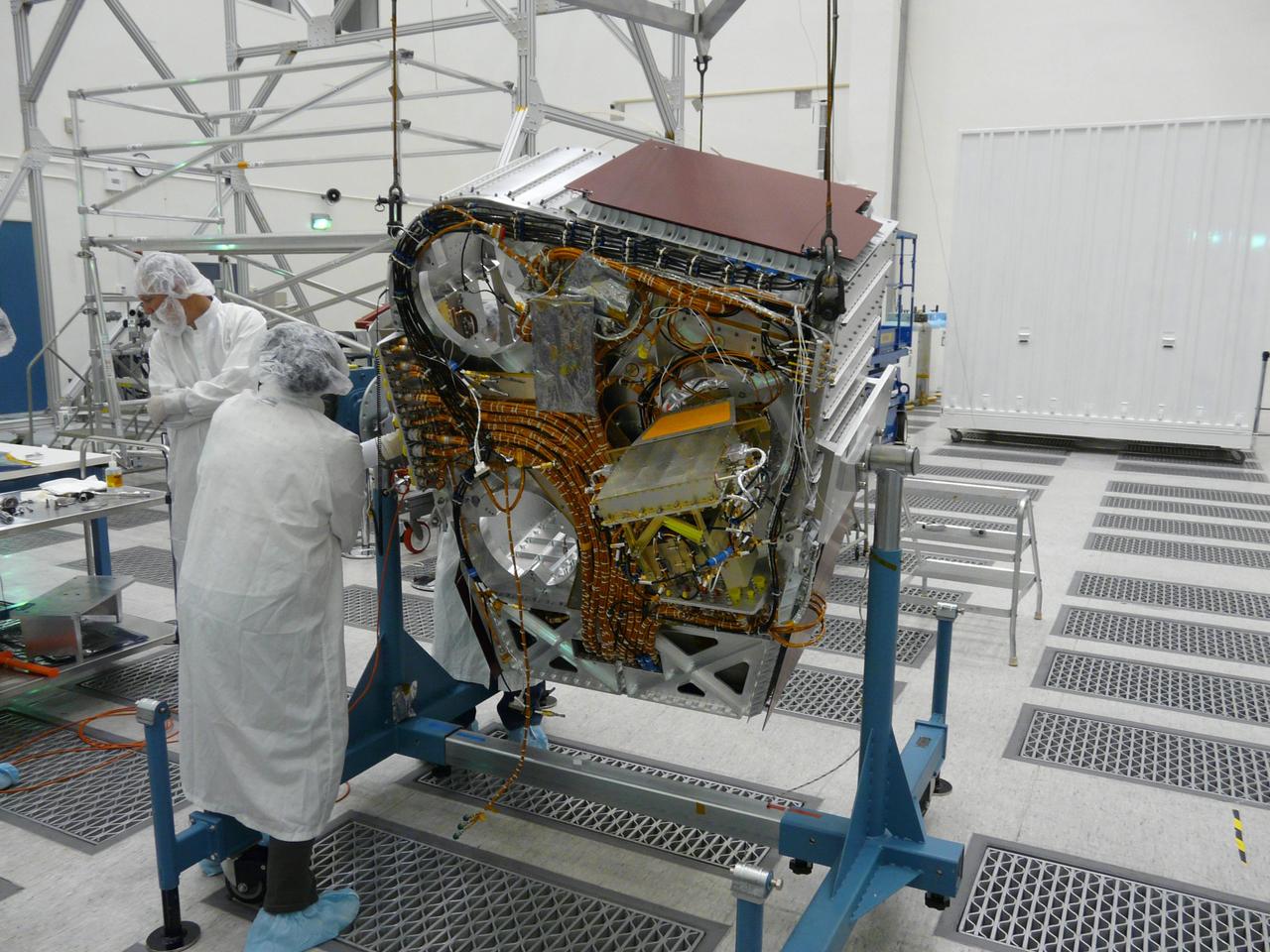
Engineers check cables on back of Aquarius instrument in the clean room at NASA Jet Propulsion Laboratory in Pasadena, Calif.
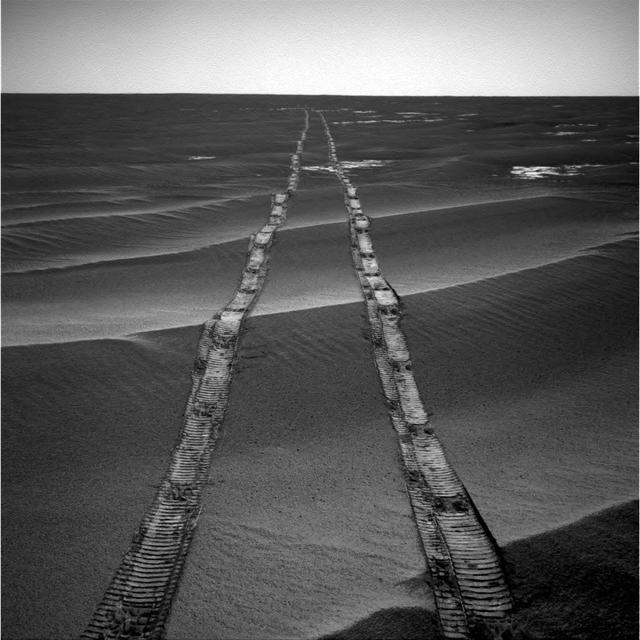
In this navigation camera raw image, NASA's Opportunity Rover looks back over its own tracks on Aug. 4, 2010. https://photojournal.jpl.nasa.gov/catalog/PIA22928
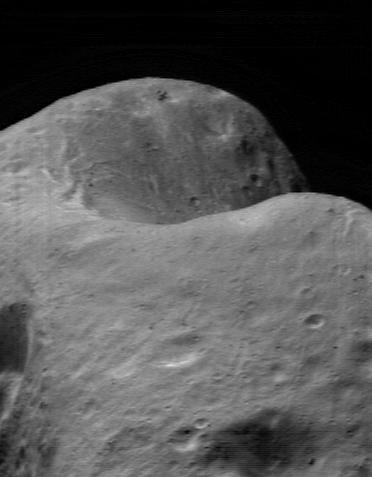
Again and again, NEAR Shoemaker's imager is being directed at the "saddle region" of Eros, to observe this feature under the widest variety of lighting conditions. This image of the saddle was taken March 22, 2000, from a range of 208 kilometers (129 miles). Generically speaking, a saddle is a low ridge connecting two mountains. The definition does not include an explanation for the origin of the curvature. Similarly, on Eros, the term "saddle region" is a description of a physical feature and doesn't imply any particular origin. Perhaps the most frequently asked question about Eros' surface is, "What is the origin of the saddle?" Was it formed as a spallation scar resulting from the impact that created the large 5.5-kilometer (3.4-mile) diameter crater on the opposite side of the asteroid? To determine its origin will take time. Right now, the southern part of the feature is still in shadow. Over the next few months, as the Sun moves south in Eros' sky, the whole saddle will become visible. As NEAR Shoemaker continues to take more and more pictures of the saddle region, we will be better able to answer key questions about this feature. http://photojournal.jpl.nasa.gov/catalog/PIA02900

This stereo anaglyph shows the parachute and back shell that helped guide NASA Curiosity to the surface of Mars. You need 3-D glasses to view this image.

The Worm is Back
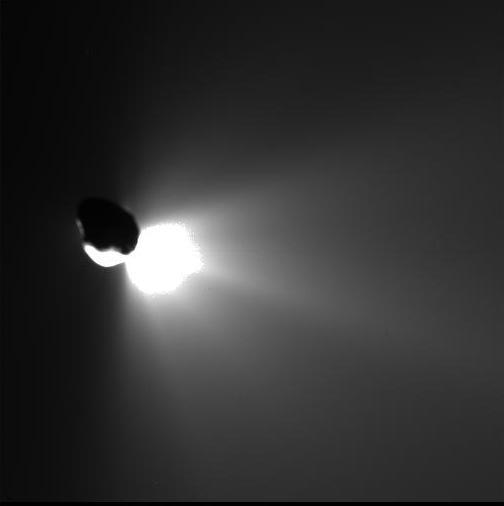
This image shows the view from NASA Deep Impact flyby spacecraft as it turned back to look at comet Tempel 1. Fifty minutes earlier, the spacecraft probe was run over by the comet.
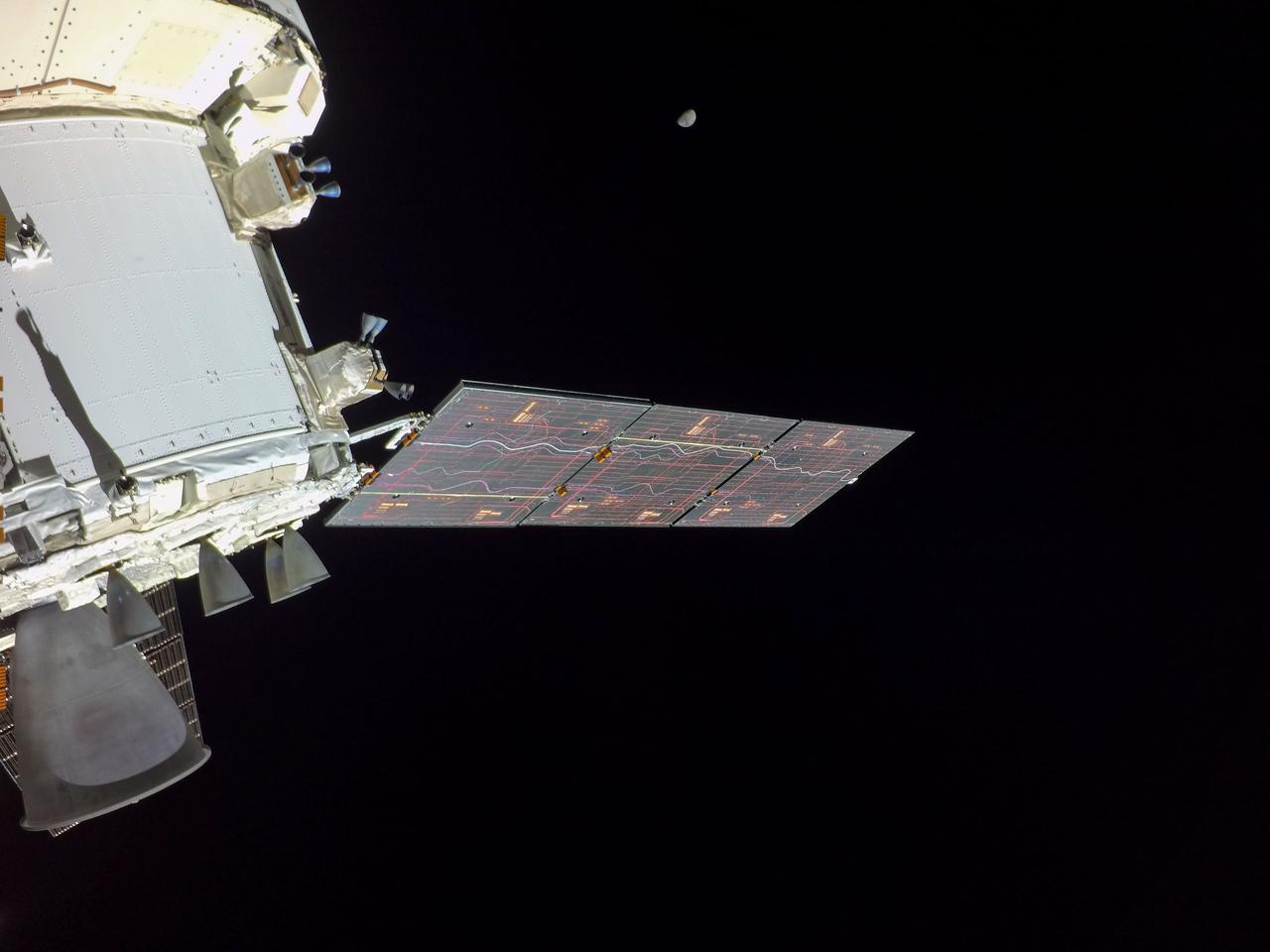
art001e002202 (Dec. 8, 2022) On flight day 23 of NASA’s Artemis I mission, Orion’s solar array wing camera looked back at the Moon as the spacecraft continued its journey back to Earth ahead of a splashdown off the west coast of North America on Dec. 11.

EXPLODING WIRE GUN, BLDG 4205, WITH BACKING BLOCK, BARREL, COPPER RIBBON WITH WIRE
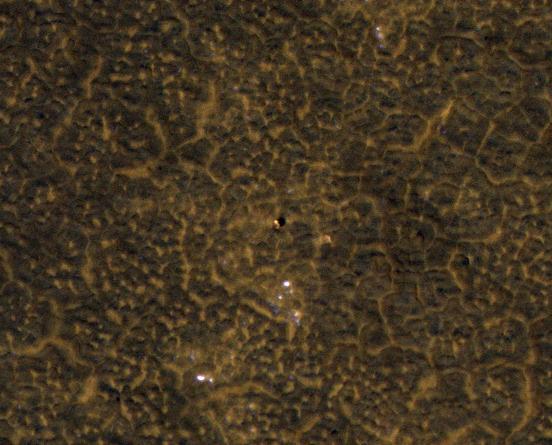
This image, taken Jan. 26, 2012, shows the back shell of NASA Phoenix Mars Lander spacecraft after its second Martian arctic winter.
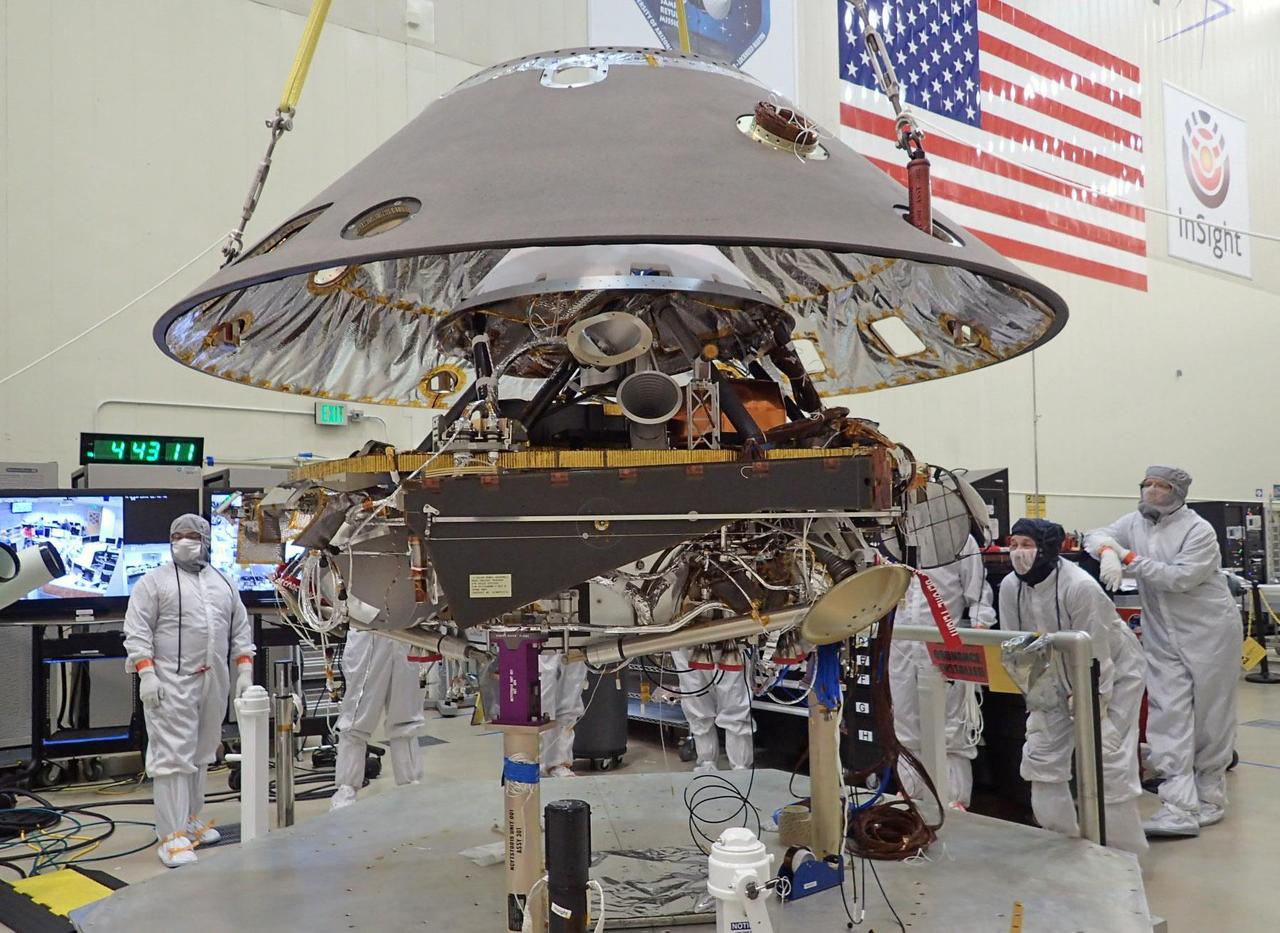
In this photo, the back shell of NASA's InSight spacecraft is being lowered onto the mission's lander, which is folded into its stowed configuration. The back shell and a heat shield form the aeroshell, which will protect the lander as the spacecraft plunges into the upper atmosphere of Mars. The photo was taken on April 29, 2015, in a spacecraft assembly clean room at Lockheed Martin Space Systems, Denver. InSight, for Interior Exploration Using Seismic Investigations, Geodesy and Heat Transport, is scheduled for launch in March 2016 and landing in September 2016. It will study the deep interior of Mars to advance understanding of the early history of all rocky planets, including Earth. Note: After thorough examination, NASA managers have decided to suspend the planned March 2016 launch of the Interior Exploration using Seismic Investigations Geodesy and Heat Transport (InSight) mission. The decision follows unsuccessful attempts to repair a leak in a section of the prime instrument in the science payload. http://photojournal.jpl.nasa.gov/catalog/PIA19666
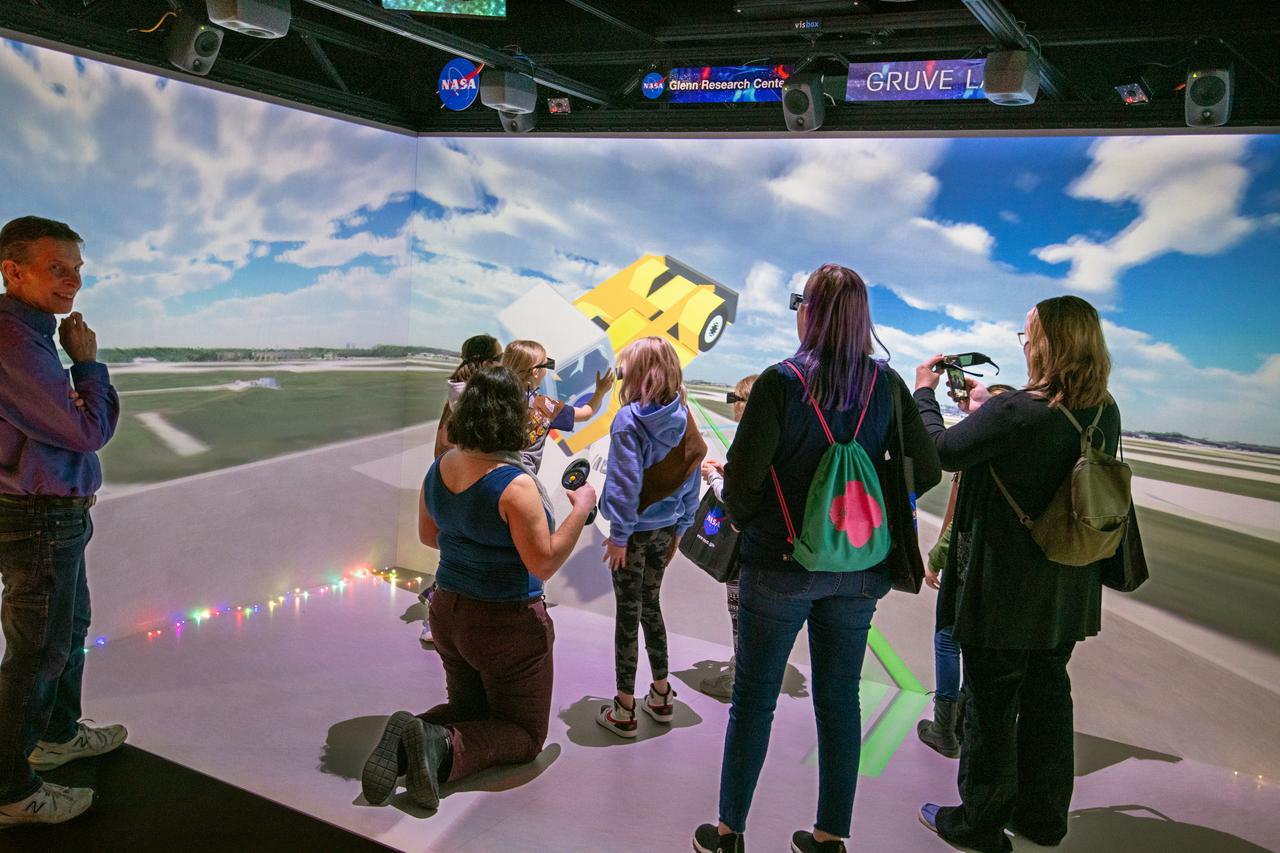
Local area girl scouts competed in a "Girl Scouts to the Moon and Back" essay contest. The essay contest gave the girls scouts a chance to win a Space Science badge that has actually been to space on NASA's Artemis I mission. After the award ceremony the girl scouts got to tour some of the NASA Glenn facilities. Picture is the "cave" at the Graphics and Visualization Lab, also known as the GRUVE Lab. Looking on is Richard Rinehart who is an engineer who works in the GRUVE LAB and creates 3D simulated experiences that demonstrate NASA's technology.
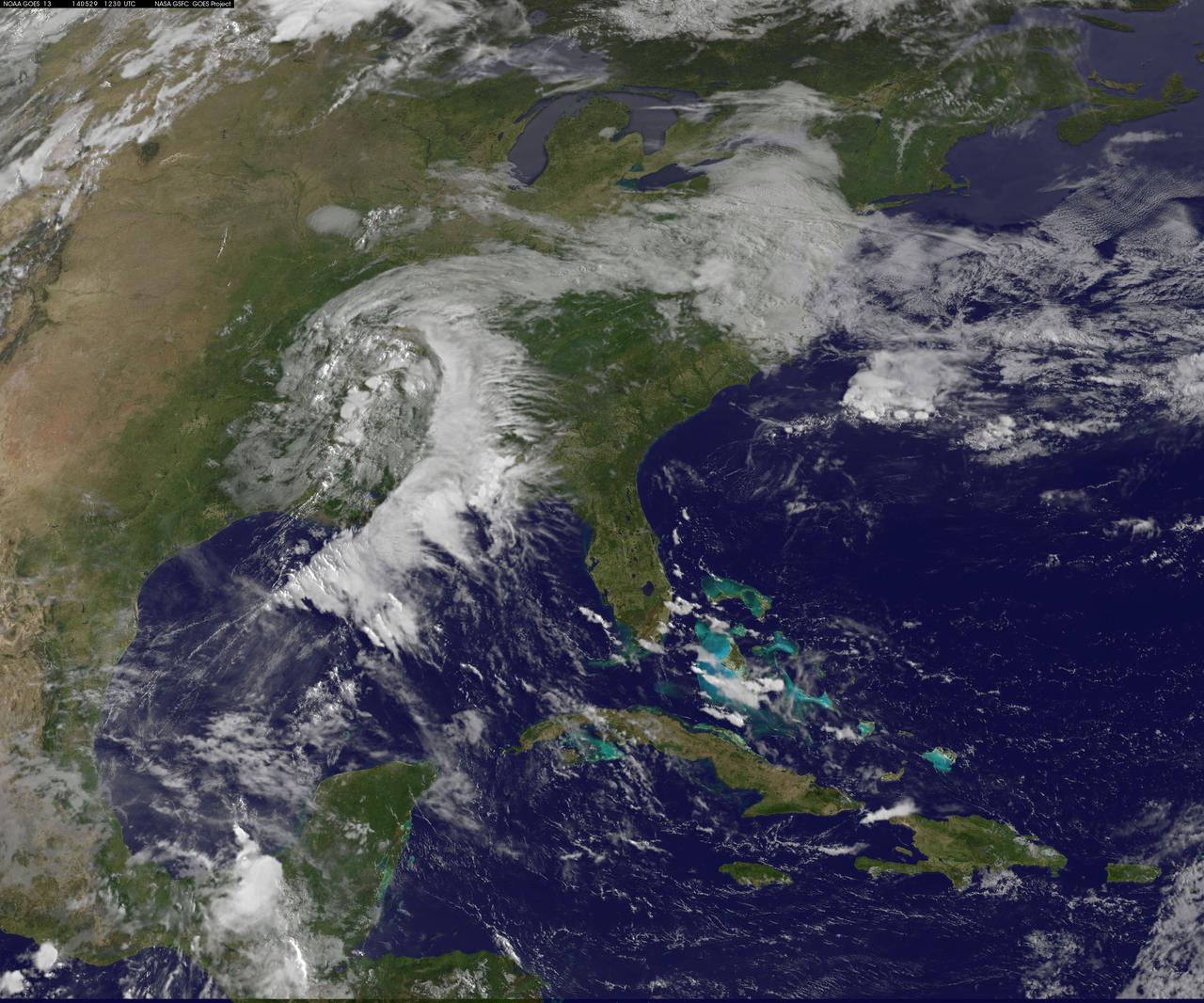
A "backdoor cold front" is bringing April temperatures to the U.S. northeast and Mid-Atlantic today, May 29. The backdoor cold front brings relief to the Mid-Atlantic after temperatures in Washington, D.C. hit 92F on Tuesday, May 27 and 88F on Wednesday, May 28 at Reagan National Airport, according to the National Weather Service (NWS). NWS forecasters expect the high temperature for May 29 to only reach 60F in the District of Columbia. NOAA's GOES-East satellite captured a view of the clouds associated with the backdoor cold front that stretch from southern Illinois to North Carolina. The National Weather Service forecast expects the backdoor cold front to bring showers to the Midwest, Northeast, and Mid-Atlantic today, May 29. According to the National Oceanic and Atmospheric Administration, a backdoor cold front is a cold front moving south or southwest along the Atlantic seaboard and Great Lakes; these are especially common during the spring months. This visible image was taken by NOAA's GOES-East satellite on May 29 at 12:30 UTC (8:30 a.m. EDT). The image was created at NASA/NOAA's GOES Project at NASA's Goddard Space Flight Center in Greenbelt, Maryland. In addition to the backdoor cold front clouds, the GOES-East image shows clouds circling around a low pressure area located in eastern Texas. That low pressure area is expected to bring rain from Texas eastward over the southeastern U.S. According to NOAA's National Weather Service, the slow-moving low pressure area in the Deep South "will bring heavy showers and thunderstorms from Louisiana to Alabama through Thursday. This area is already saturated from previous rainfall, so flash flooding will be possible." Image: NASA/NOAA GOES Project Caption: NASA Goddard/Rob Gutro
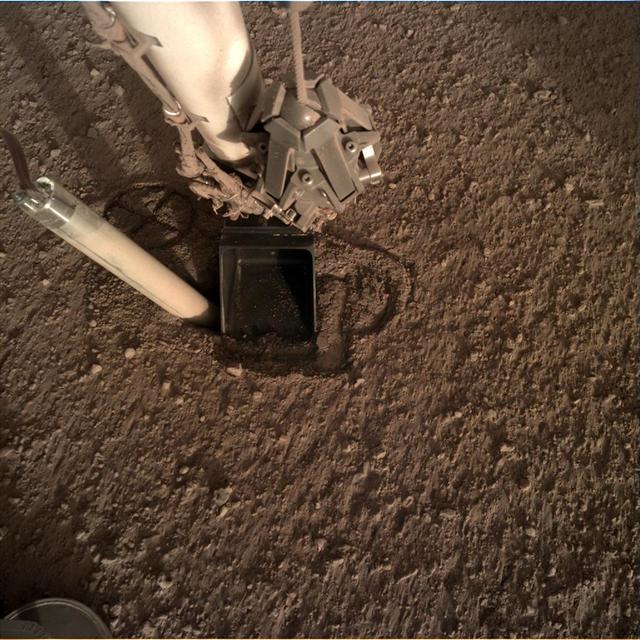
In this image from Oct. 26, 2019 — the 325th Martian day, or sol, of the mission — InSight's heat probe, or "mole," is seen after backing about halfway out of the hole it had burrowed. Animation available at https://photojournal.jpl.nasa.gov/catalog/PIA23213
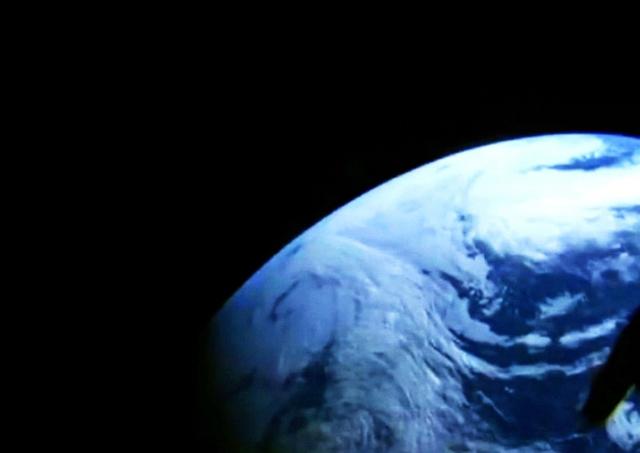
A camera in the window of NASA's Orion spacecraft looks back at Earth during its unpiloted flight test in orbit on Dec. 5, 2014 Part of Batch image transfer from Flickr.
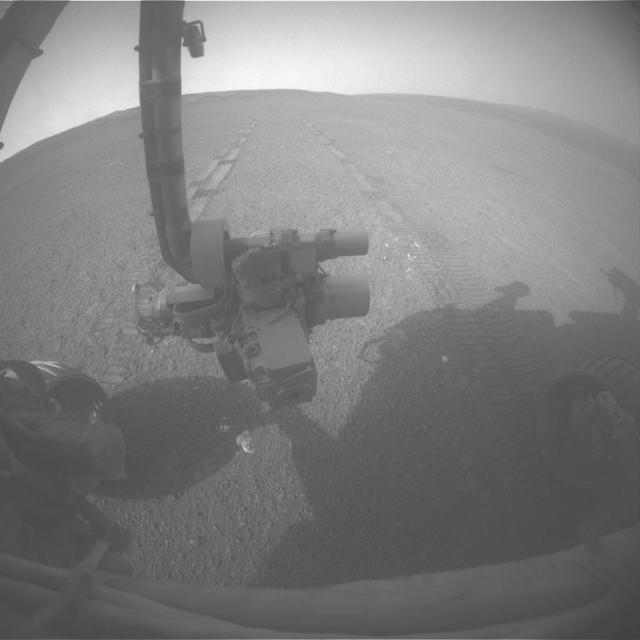
This image was taken by Opportunity front hazard-avoidance camera after the Sol 3309 drive, looking back at the tracks produced while the rover was driving in reverse, as it often does.
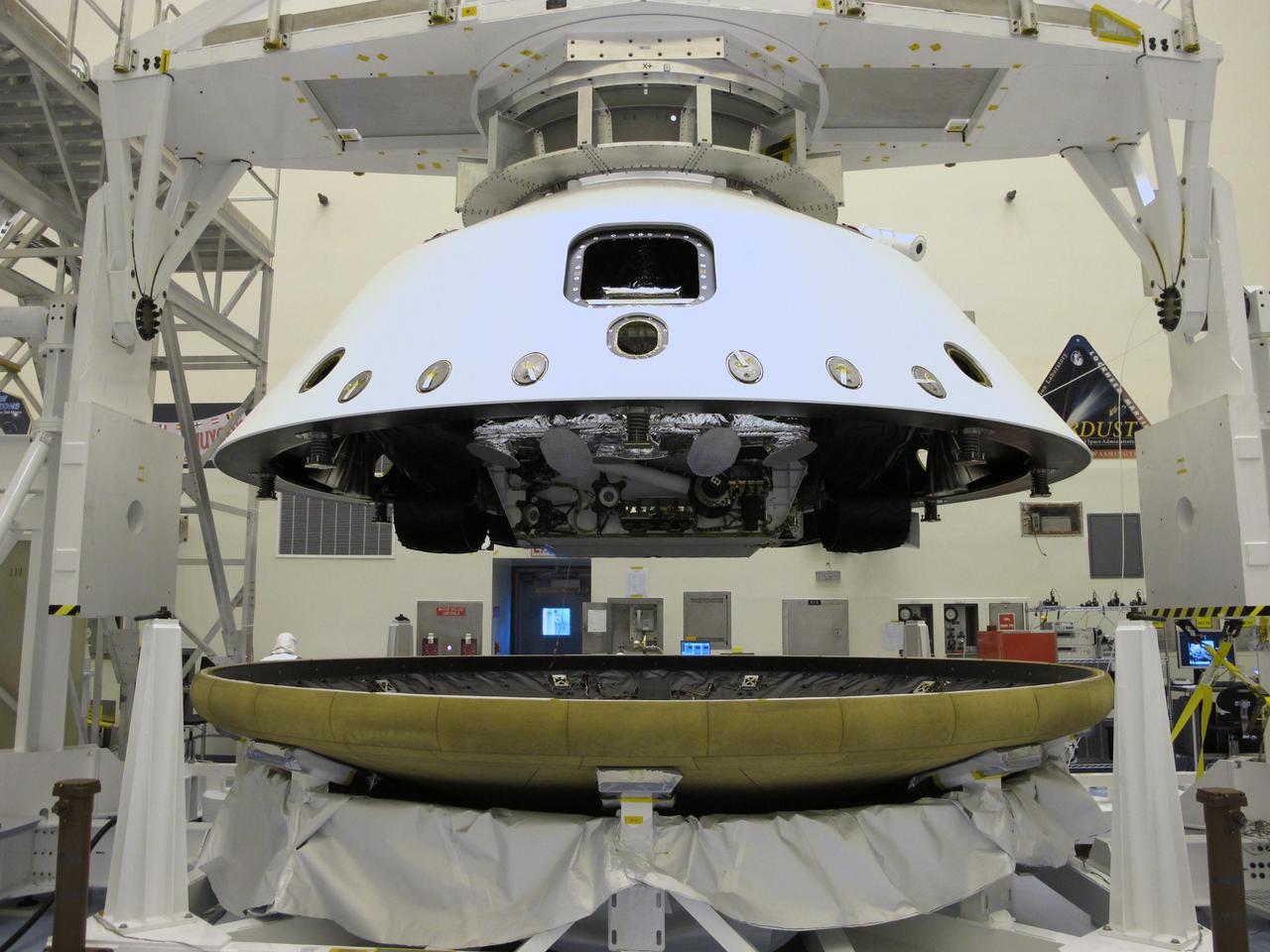
At the Payload Hazardous Servicing Facility at NASA Kennedy Space Center in Florida, the back shell powered descent vehicle configuration, containing NASA Mars Science Laboratory rover, Curiosity, is being placed on the spacecraft heat shield.
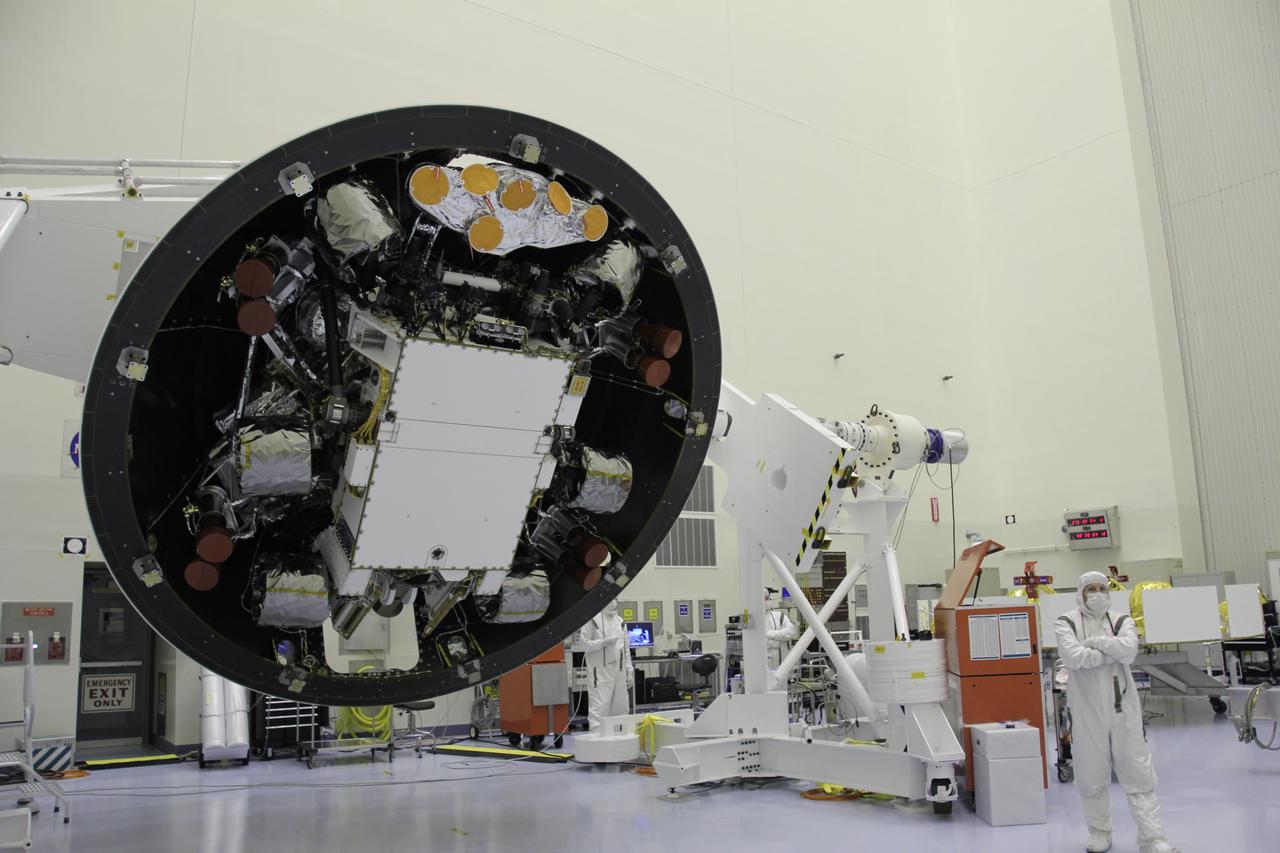
At the Payload Hazardous Servicing Facility at NASA Kennedy Space Center in Florida, the back shell powered descent vehicle configuration of NASA Mars Science Laboratory is being rotated for final closeout actions.
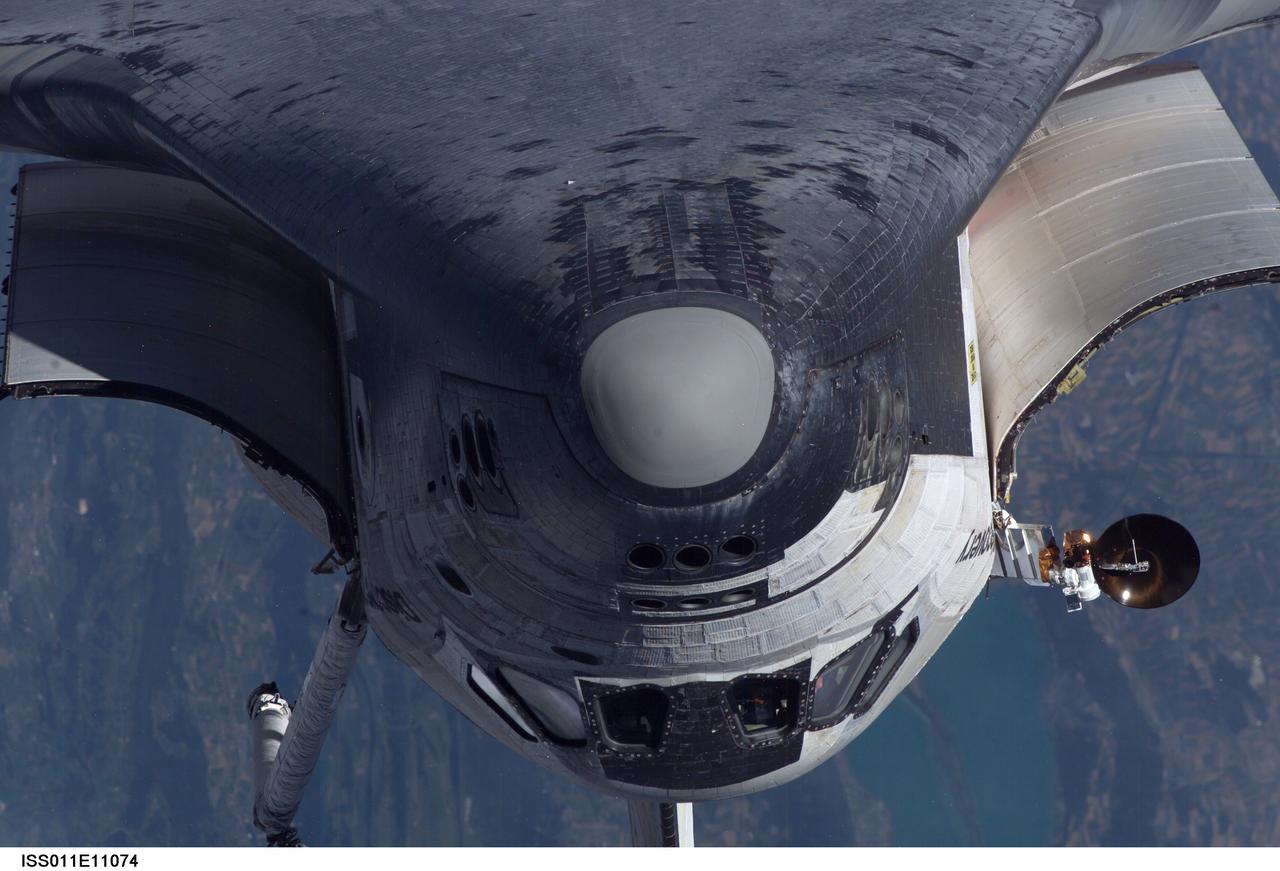
Launched on July 26, 2005 from the Kennedy Space Center in Florida, STS-114 was classified as Logistics Flight 1. Among the Station-related activities of the mission were the delivery of new supplies and the replacement of one of the orbital outpost's Control Moment Gyroscopes (CMGs). STS-114 also carried the Raffaello Multi-Purpose Logistics Module and the External Stowage Platform-2. A major focus of the mission was the testing and evaluation of new Space Shuttle flight safety, which included new inspection and repair techniques. Upon its approach to the International Space Station (ISS), the Space Shuttle Discovery underwent a photography session in order to assess any damages that may have occurred during its launch and/or journey through Space. Discovery was over Switzerland, about 600 feet from the ISS, when Cosmonaut Sergei K. Kriklev, Expedition 11 Commander, and John L. Phillips, NASA Space Station officer and flight engineer photographed the spacecraft as it performed a back flip to allow photography of its heat shield. Astronaut Eileen M. Collins, STS-114 Commander, guided the shuttle through the flip. The photographs were analyzed by engineers on the ground to evaluate the condition of Discovery’s heat shield. The crew safely returned to Earth on August 9, 2005. The mission historically marked the Return to Flight after nearly a two and one half year delay in flight after the Space Shuttle Columbia tragedy in February 2003.
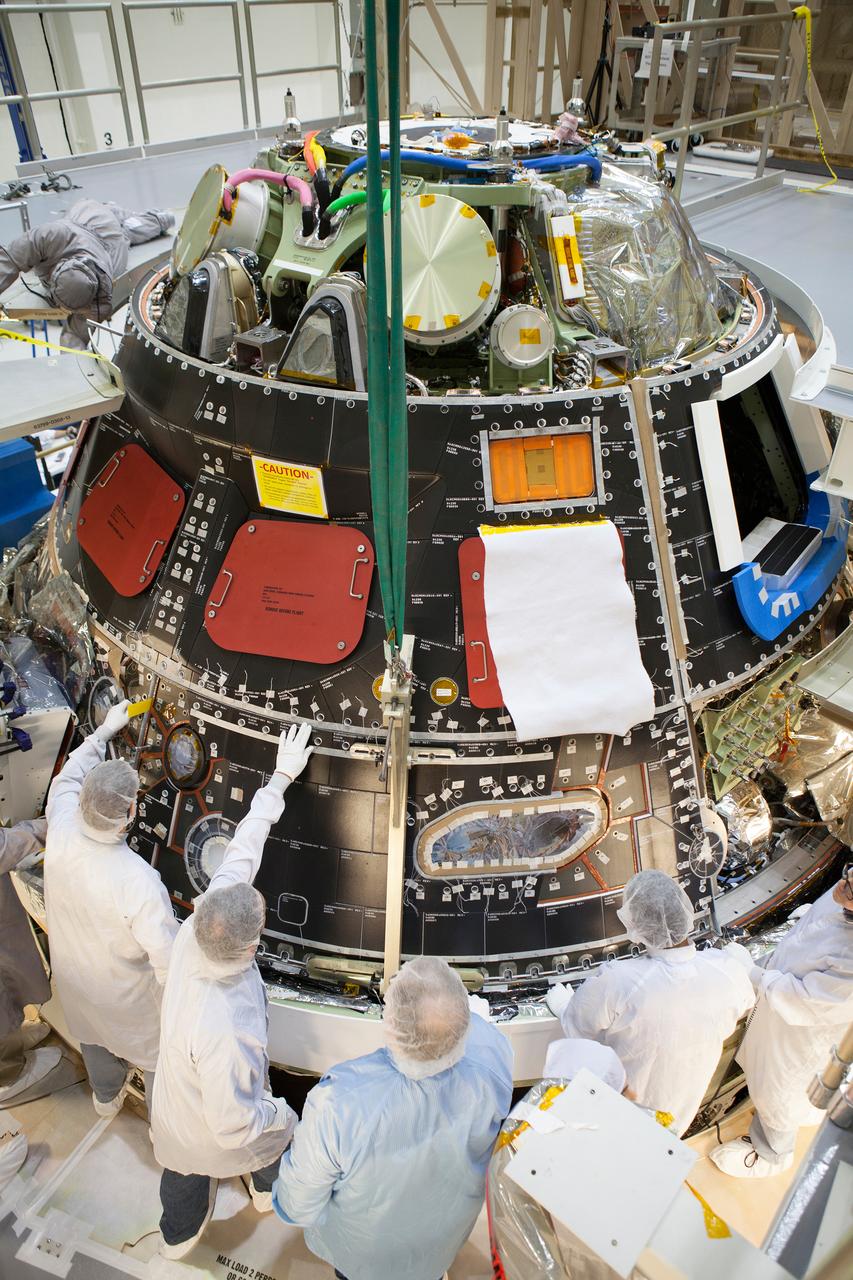
Inside the Operations and Checkout (O&C) Building high bay at NASA's Kennedy Space Center in Florida, technicians dressed in clean-room suits have installed a back shell tile panel onto the Orion Exploration Flight Test-1 (EFT-1) crew module and check the fit next to the middle back shell tile panel on Aug. 7, 2014. Part of Batch image transfer from Flickr.
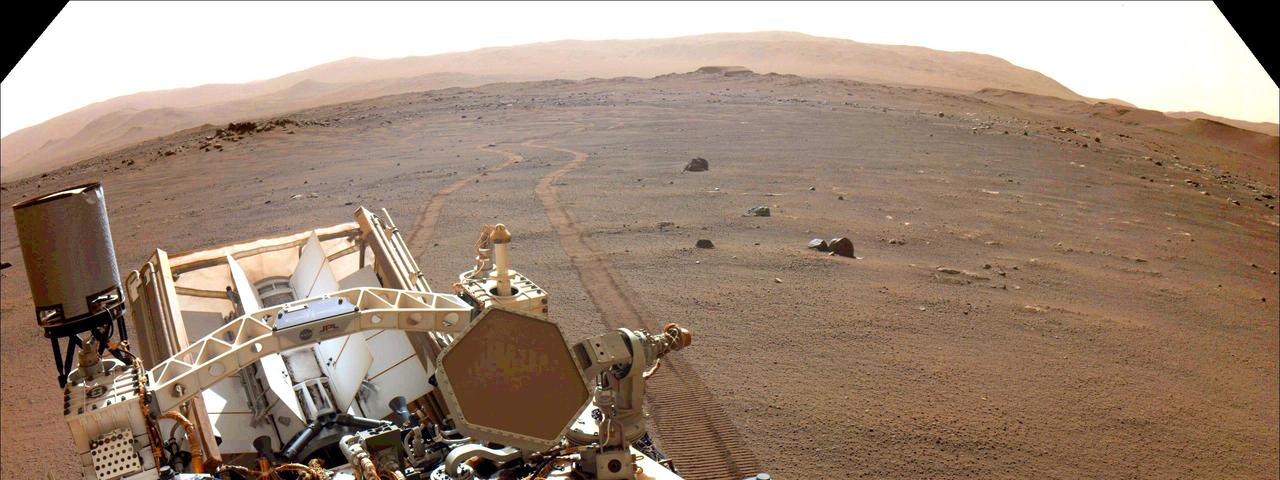
NASA's Perseverance Mars rover looks back at its wheel tracks on March 17, 2022, the 381st Martian day, or sol, of the mission. A key objective for Perseverance's mission on Mars is astrobiology, including the search for signs of ancient microbial life. The rover will characterize the planet's geology and past climate, pave the way for human exploration of the Red Planet, and be the first mission to collect and cache Martian rock and regolith (broken rock and dust). Subsequent NASA missions, in cooperation with ESA (European Space Agency), would send spacecraft to Mars to collect these sealed samples from the surface and return them to Earth for in-depth analysis. The Mars 2020 Perseverance mission is part of NASA's Moon to Mars exploration approach, which includes Artemis missions to the Moon that will help prepare for human exploration of the Red Planet. https://photojournal.jpl.nasa.gov/catalog/PIA25171
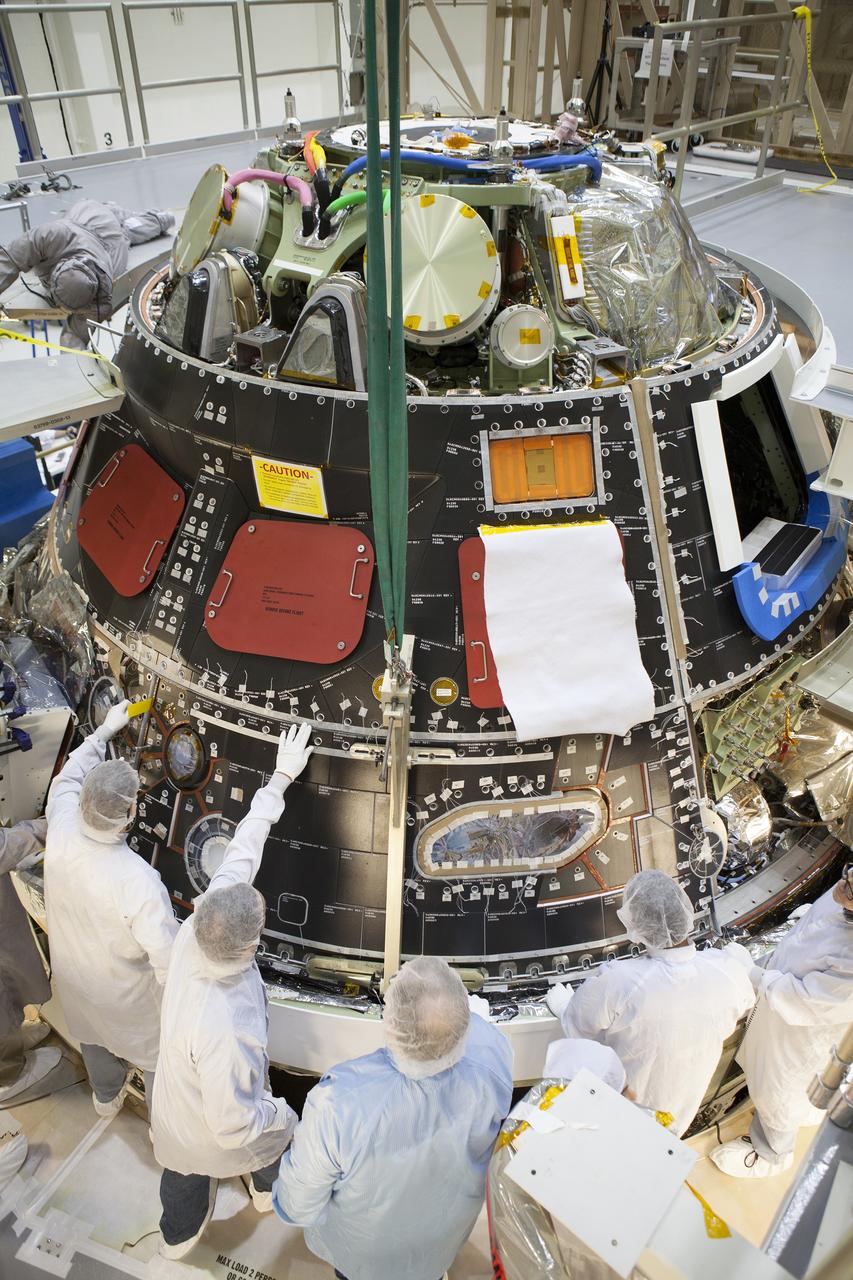
CAPE CANAVERAL, Fla. – Inside the Operations and Checkout Building high bay at NASA's Kennedy Space Center in Florida, technicians dressed in clean-room suits have installed a back shell tile panel onto the Orion crew module and are checking the fit next to the middle back shell tile panel. Preparations are underway for Exploration Flight Test-1, or EFT-1. Orion is the exploration spacecraft designed to carry astronauts to destinations not yet explored by humans, including an asteroid and Mars. It will have emergency abort capability, sustain the crew during space travel and provide safe re-entry from deep space return velocities. The first unpiloted test flight of the Orion is scheduled to launch later this year atop a Delta IV rocket from Cape Canaveral Air Force Station in Florida to an altitude of 3,600 miles above the Earth's surface. The two-orbit, four-hour flight test will help engineers evaluate the systems critical to crew safety including the heat shield, parachute system and launch abort system. For more information, visit http://www.nasa.gov/orion. Photo credit: NASA/Dimitri Gerondidakis
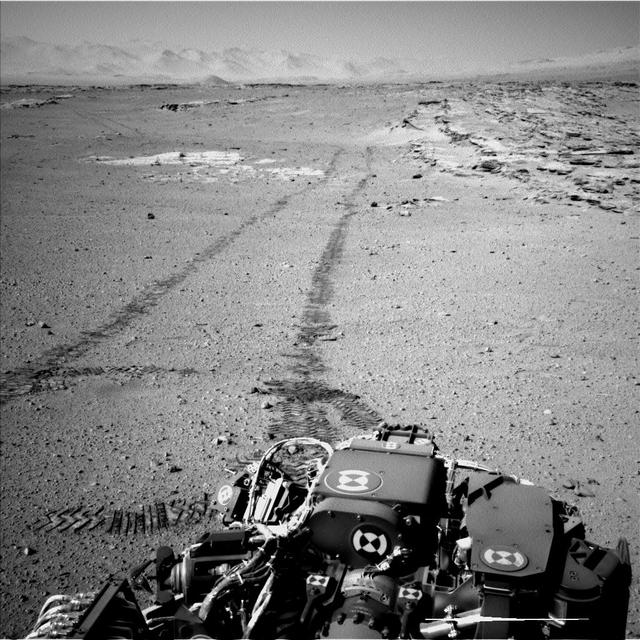
On Feb. 19, 2014, NASA Curiosity Mars rover looked back after finishing a long drive. The rows of rocks just to the right of the fresh wheel tracks in this view are an outcrop called Junda. This view is looking toward the east-northeast.
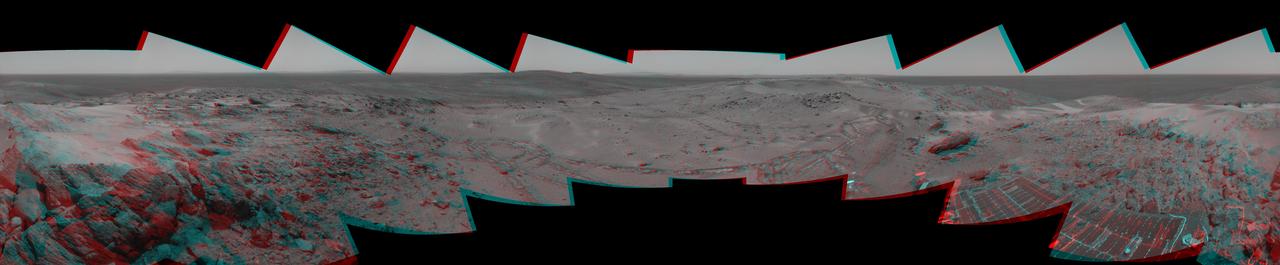
Before moving on to explore more of Mars, NASA Mars Exploration Rover Spirit looked back at the long and winding trail of twin wheel tracks the rover created to get to the top of Husband Hill. 3D glasses are necessary to view this image.
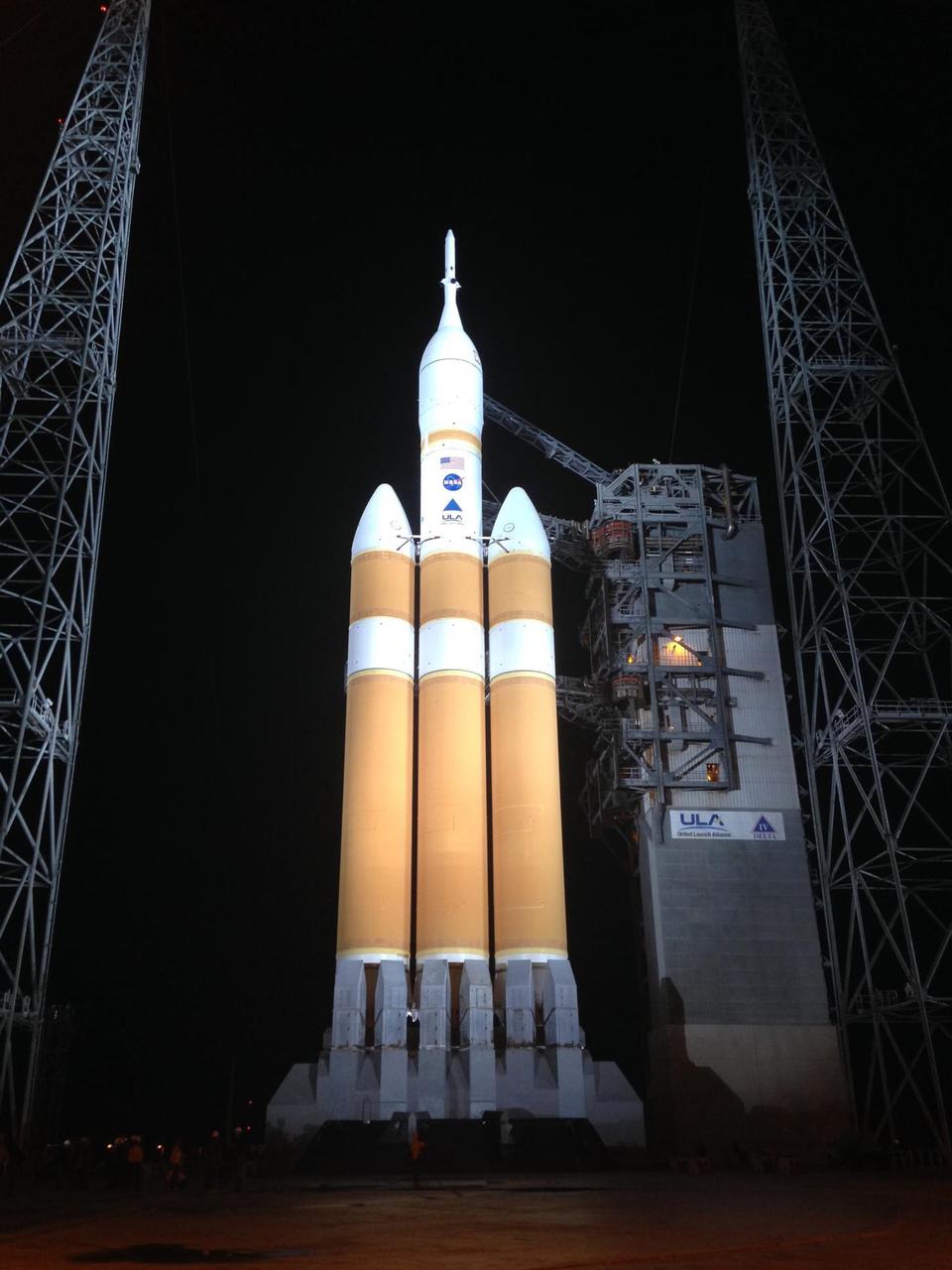
The launch gantry is rolled back to reveal NASA's Orion spacecraft for Exploration Flight Test-1 (EFT-1) mounted atop a United Launch Alliance Delta IV Heavy rocket at Cape Canaveral Air Force Station's Space Launch Complex 37 on Dec. 3, 2014. Orion is NASA’s new spacecraft built to carry humans, designed to allow us to journey to destinations never before visited by humans, including an asteroid and Mars.
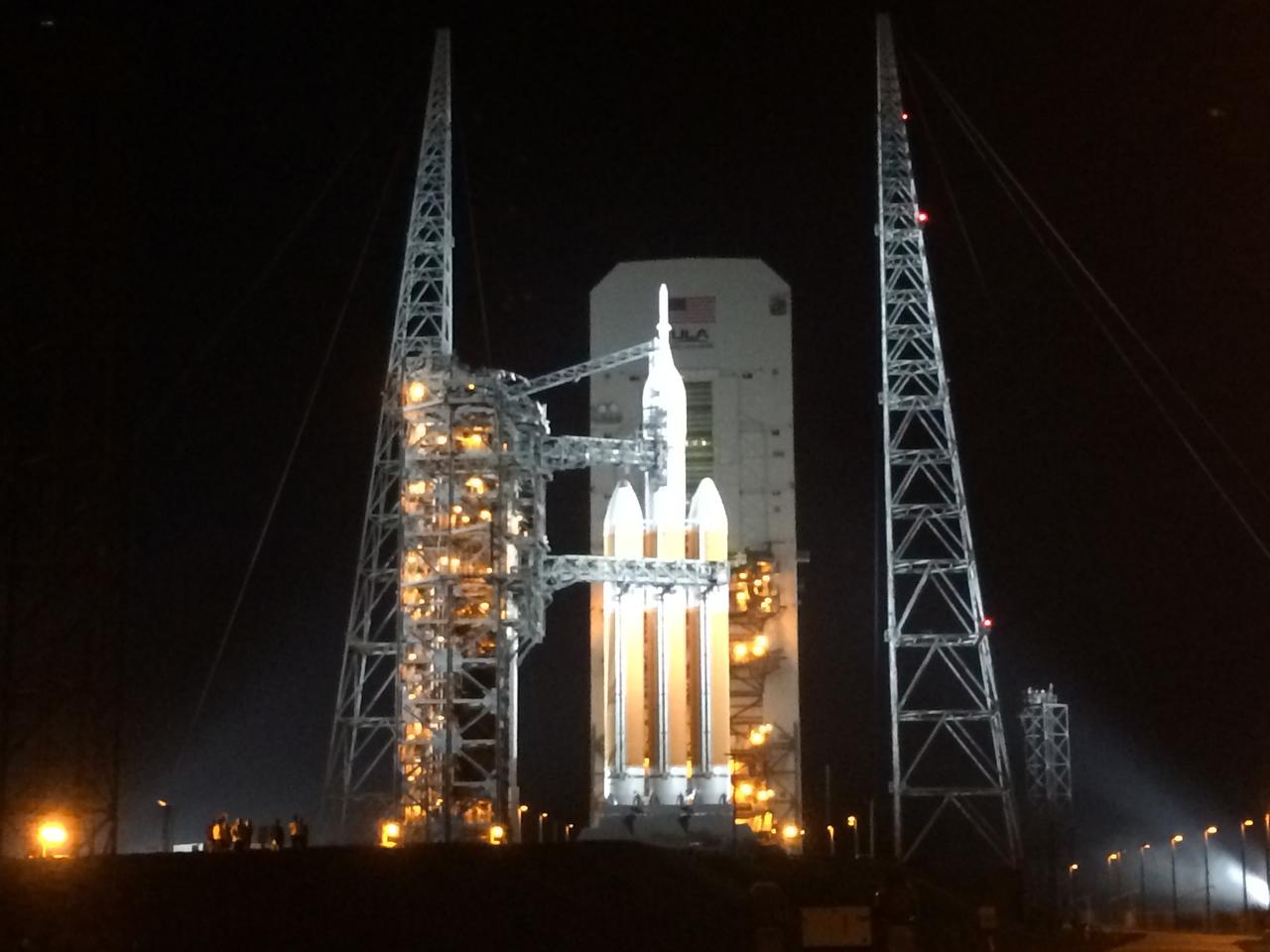
The launch gantry is rolled back to reveal NASA's Orion spacecraft mounted atop a United Launch Alliance Delta IV Heavy rocket ready for Exploration Flight Test-1 (EFT-1) at Cape Canaveral Air Force Station's Space Launch Complex 37 on Dec. 4, 2014. Part of Batch image transfer from Flickr.
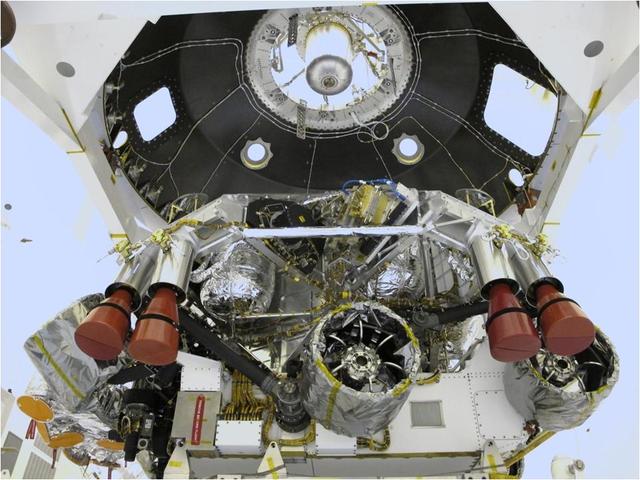
The powered descent vehicle of NASA Mars Science Laboratory spacecraft is being prepared for final integration into the spacecraft back shell in this photograph from inside the Payload Hazardous Servicing Facility at NASA Kennedy Space Center, Fla.
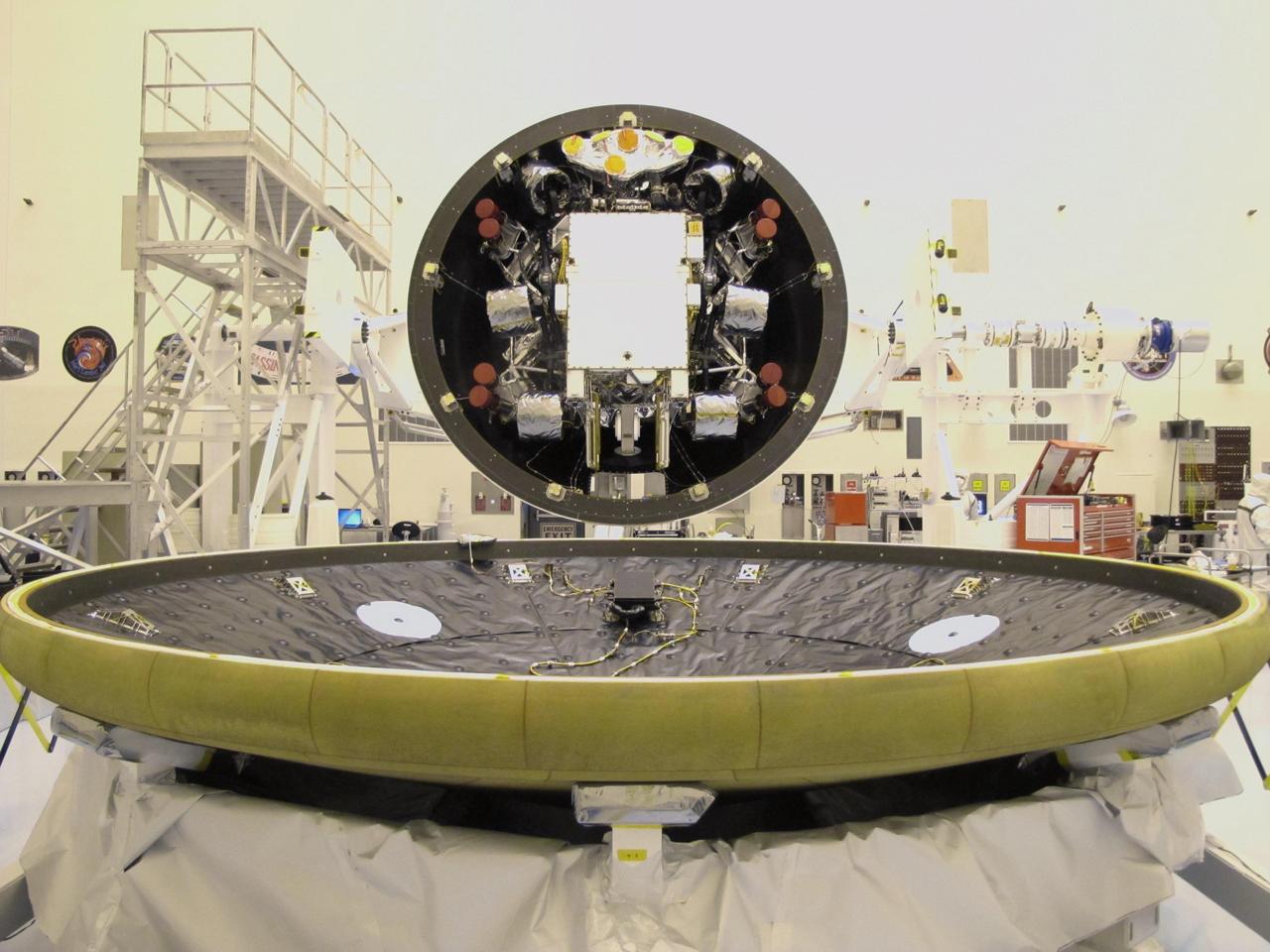
At the Payload Hazardous Servicing Facility at NASA Kennedy Space Center in Florida, the back shell powered descent vehicle configuration of NASA Mars Science Laboratory is being rotated for final closeout actions.
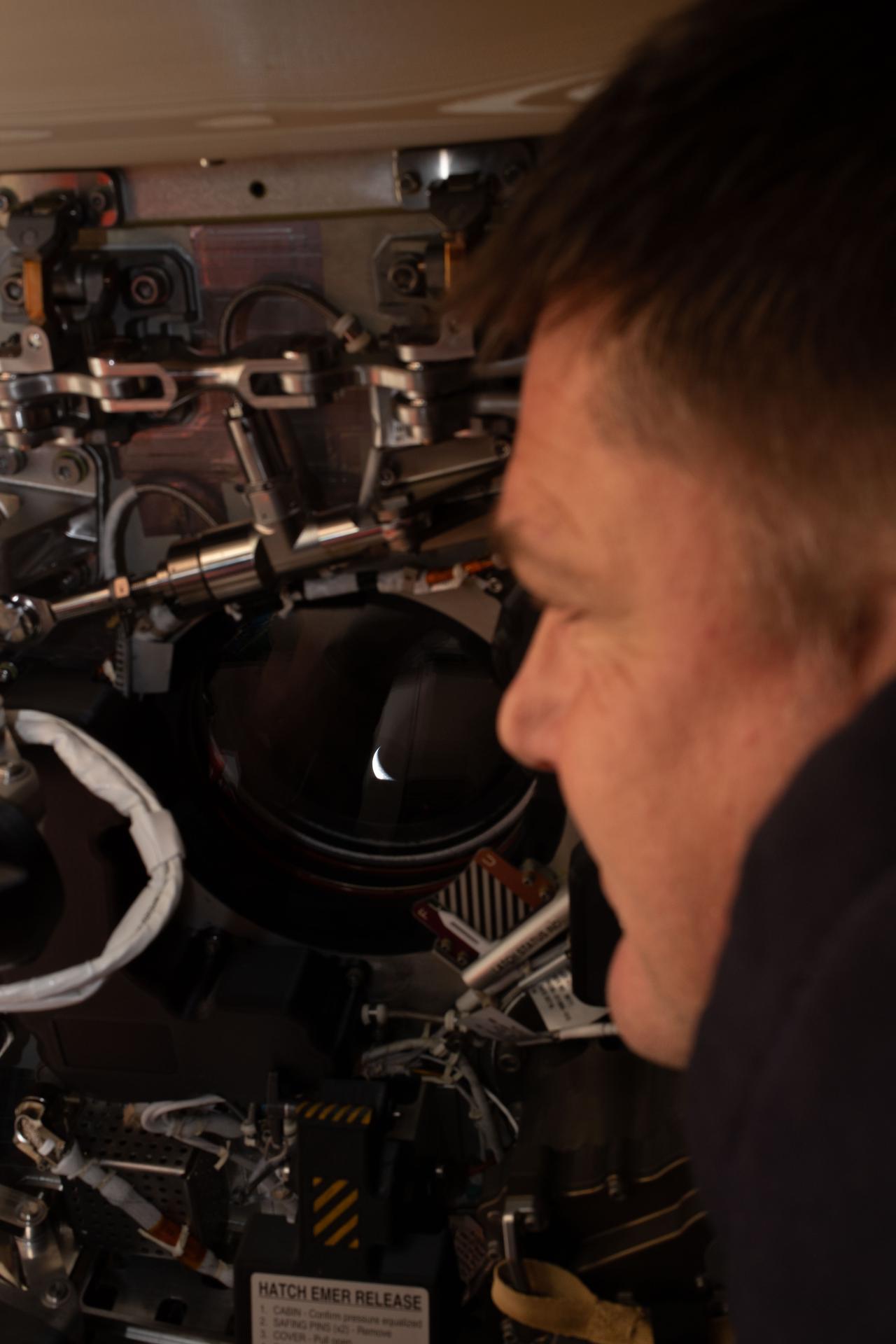
art002e009272 (April 6, 2026) - Artemis II mission specialist and CSA (Canadian Space Agency) astronaut Jeremy Hansen peers out one of the Orion spacecraft's windows looking back at Earth ahead of the crew's lunar flyby on April 6, 2026.
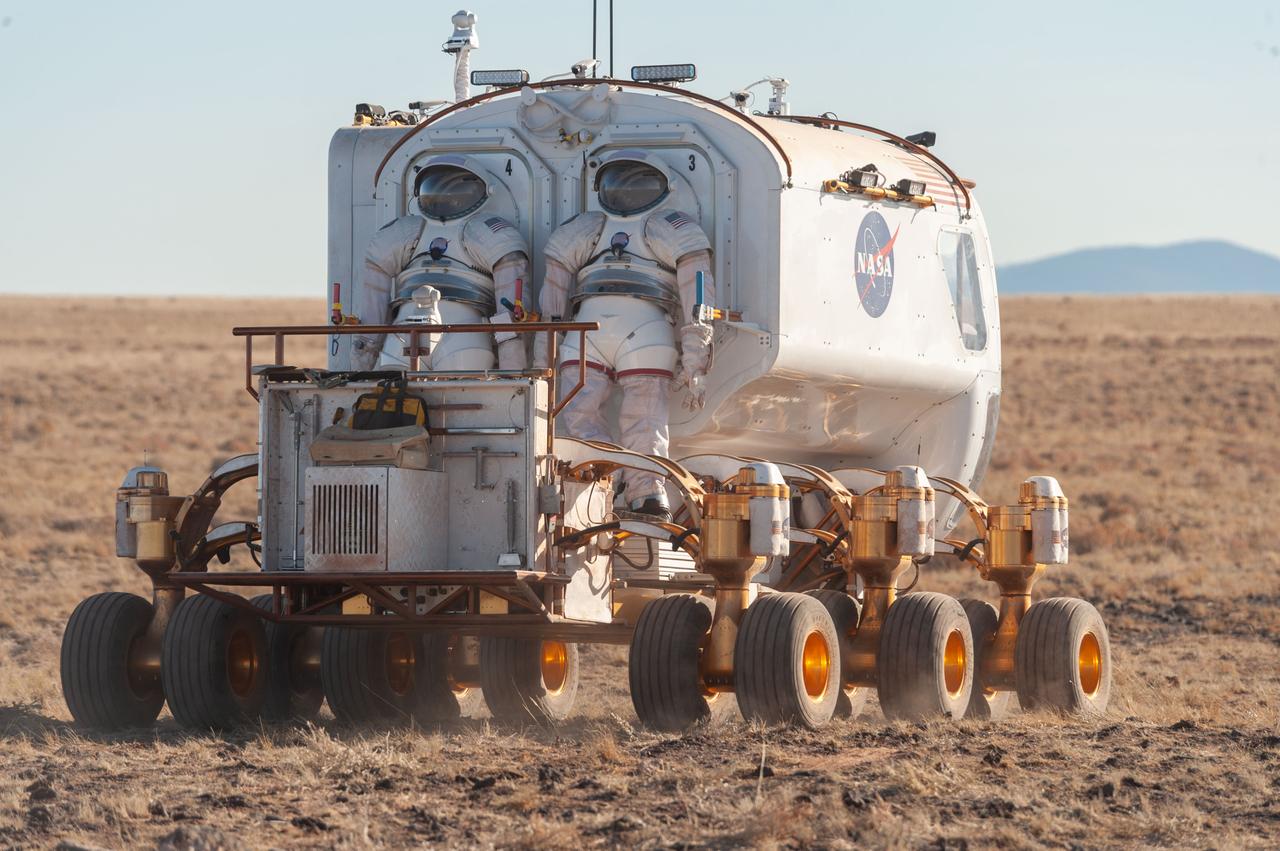
A back view of the Lunar Electric Rover (LER) during the Desert Research and Technology Studies (RATS) remote field test at Black Point Lava Flow, Arizona in 2008. Two Mark III spacesuits are visibly mounted on the LER suit port.
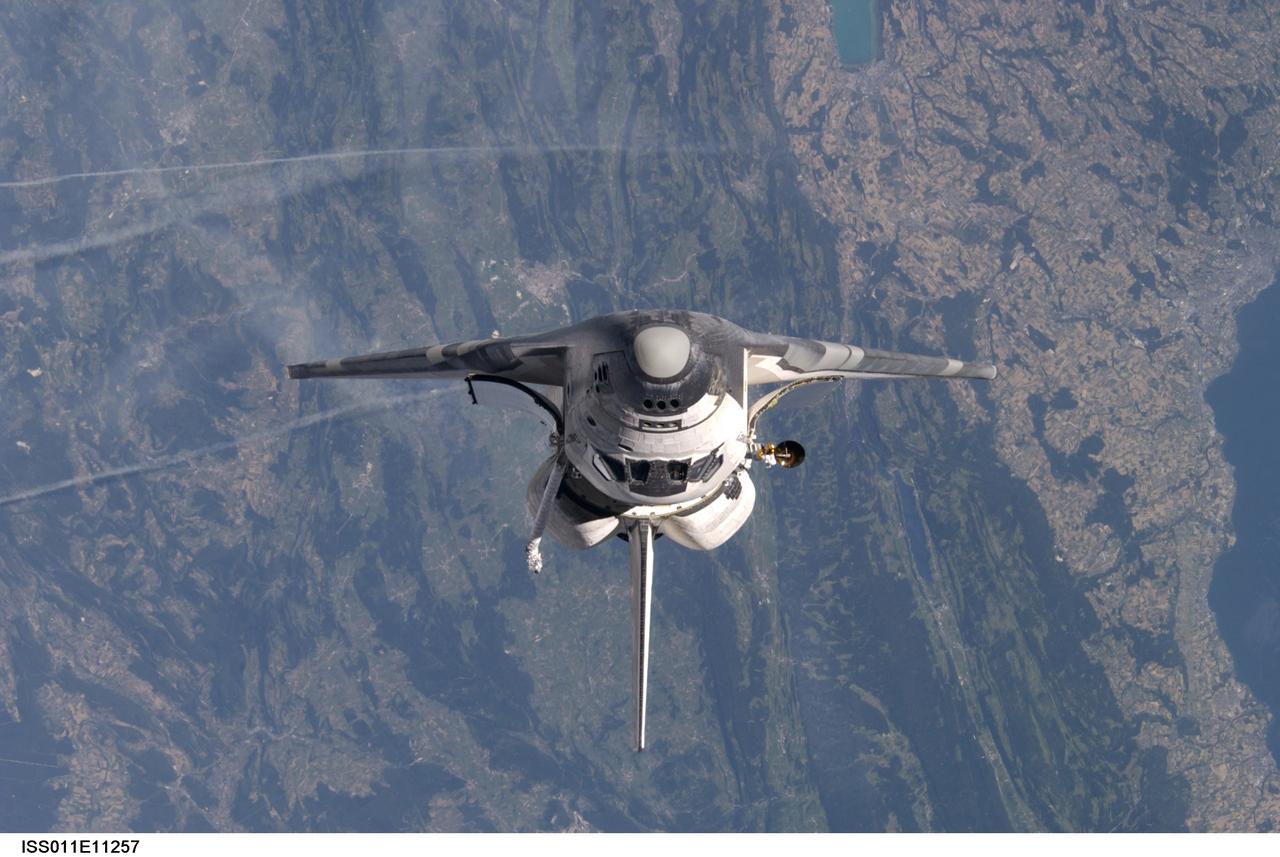
Launched on July 26, 2005 from the Kennedy Space Center in Florida, STS-114 was classified as Logistics Flight 1. Among the Station-related activities of the mission were the delivery of new supplies and the replacement of one of the orbital outpost's Control Moment Gyroscopes (CMGs). STS-114 also carried the Raffaello Multi-Purpose Logistics Module and the External Stowage Platform-2. A major focus of the mission was the testing and evaluation of new Space Shuttle flight safety, which included new inspection and repair techniques. Upon its approach to the International Space Station (ISS), the Space Shuttle Discovery underwent a photography session in order to assess any damages that may have occurred during its launch and/or journey through Space. Discovery was over Switzerland, about 600 feet from the ISS, when Cosmonaut Sergei K. Kriklev, Expedition 11 Commander, and John L. Phillips, NASA Space Station officer and flight engineer photographed the spacecraft as it performed a back flip to allow photography of its heat shield. Astronaut Eileen M. Collins, STS-114 Commander, guided the shuttle through the flip. The photographs were analyzed by engineers on the ground to evaluate the condition of Discovery’s heat shield. The crew safely returned to Earth on August 9, 2005. The mission historically marked the Return to Flight after nearly a two and one half year delay in flight after the Space Shuttle Columbia tragedy in February 2003.
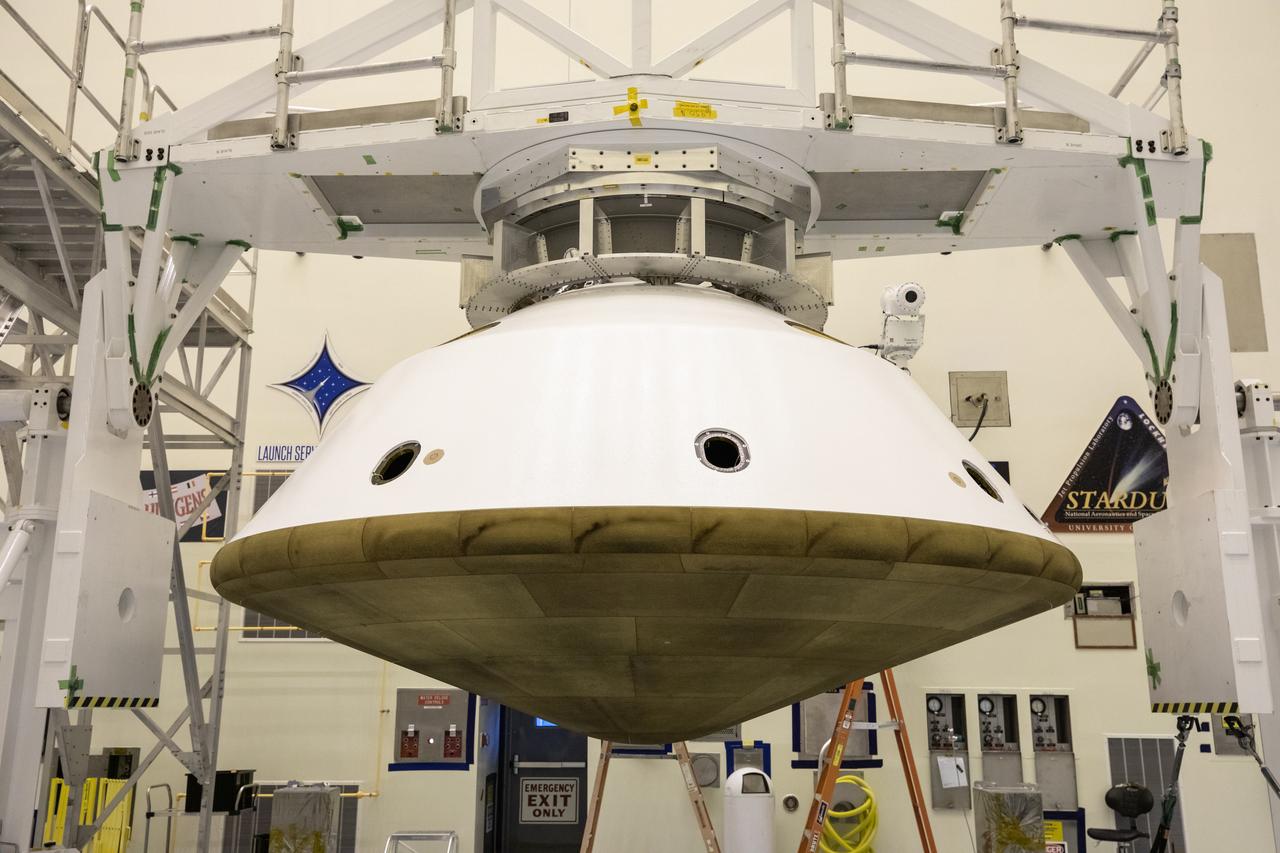
The Mars 2020 rover heat shield is mated to the back shell in the Payload Hazardous Servicing Facility at Kennedy Space Center in Florida on Jan. 10, 2020. Built by Lockheed Martin Space, the heat shield and back shell will protect the rover during its passage to Mars. The Mars 2020 rover is being manufactured at NASA’s Jet Propulsion Laboratory (JPL) in California and, once complete, will be delivered to Kennedy next month. The mission is scheduled to launch from Cape Canaveral Air Force Station in Florida in the summer of 2020.
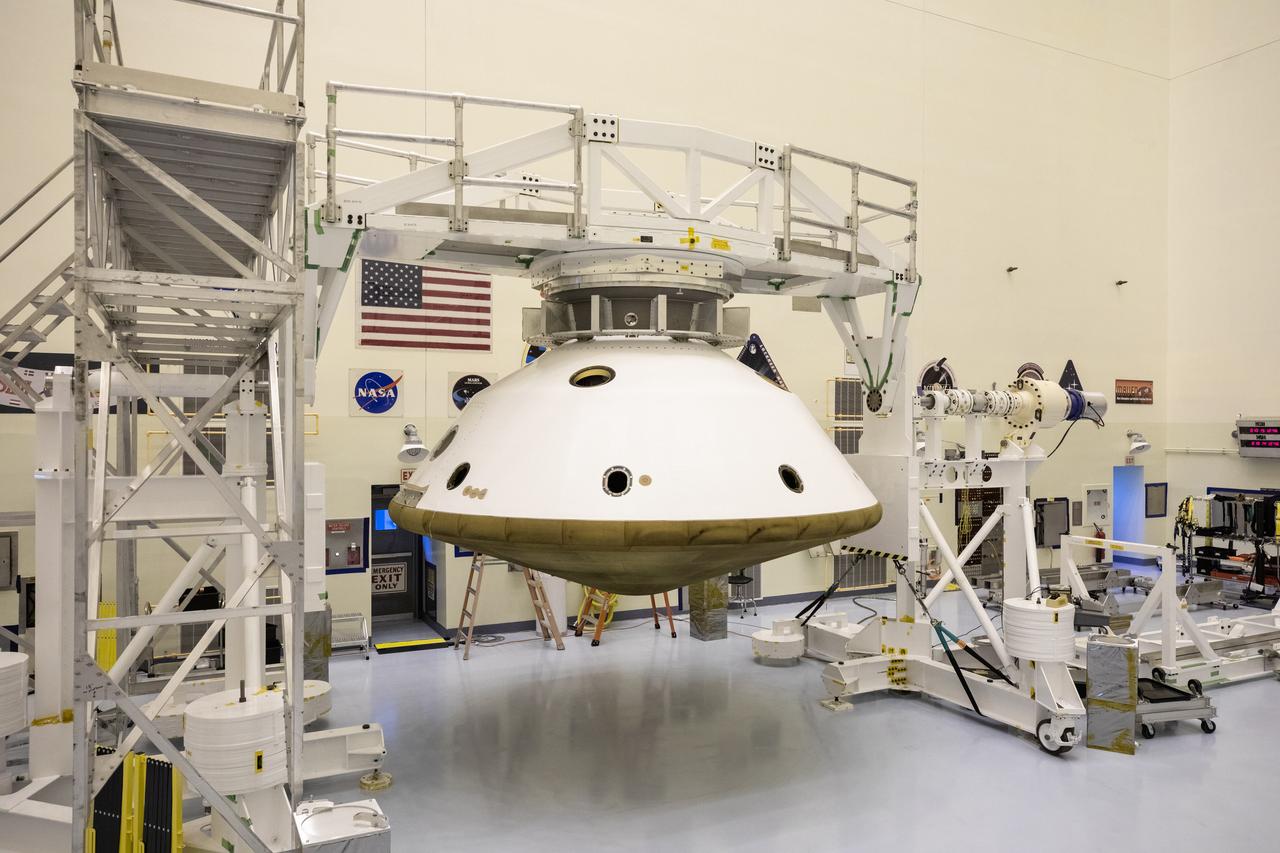
The Mars 2020 rover heat shield is mated to the back shell in the Payload Hazardous Servicing Facility at Kennedy Space Center in Florida on Jan. 10, 2020. Built by Lockheed Martin Space, the heat shield and back shell will protect the rover during its passage to Mars. The Mars 2020 rover is being manufactured at NASA’s Jet Propulsion Laboratory (JPL) in California and, once complete, will be delivered to Kennedy next month. The mission is scheduled to launch from Cape Canaveral Air Force Station in Florida in the summer of 2020.
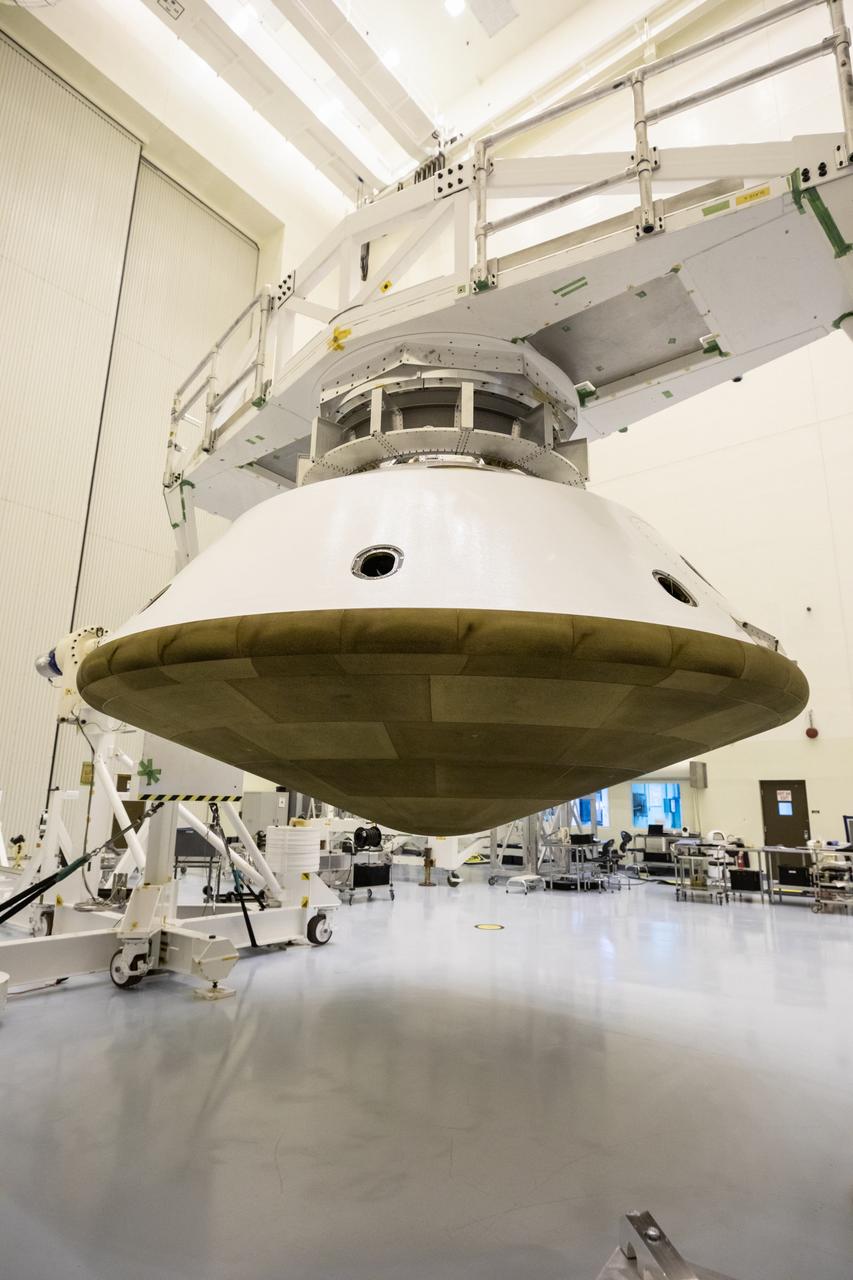
The Mars 2020 rover heat shield is mated to the back shell in the Payload Hazardous Servicing Facility at Kennedy Space Center in Florida on Jan. 10, 2020. Built by Lockheed Martin Space, the heat shield and back shell will protect the rover during its passage to Mars. The Mars 2020 rover is being manufactured at NASA’s Jet Propulsion Laboratory (JPL) in California and, once complete, will be delivered to Kennedy next month. The mission is scheduled to launch from Cape Canaveral Air Force Station in Florida in the summer of 2020.
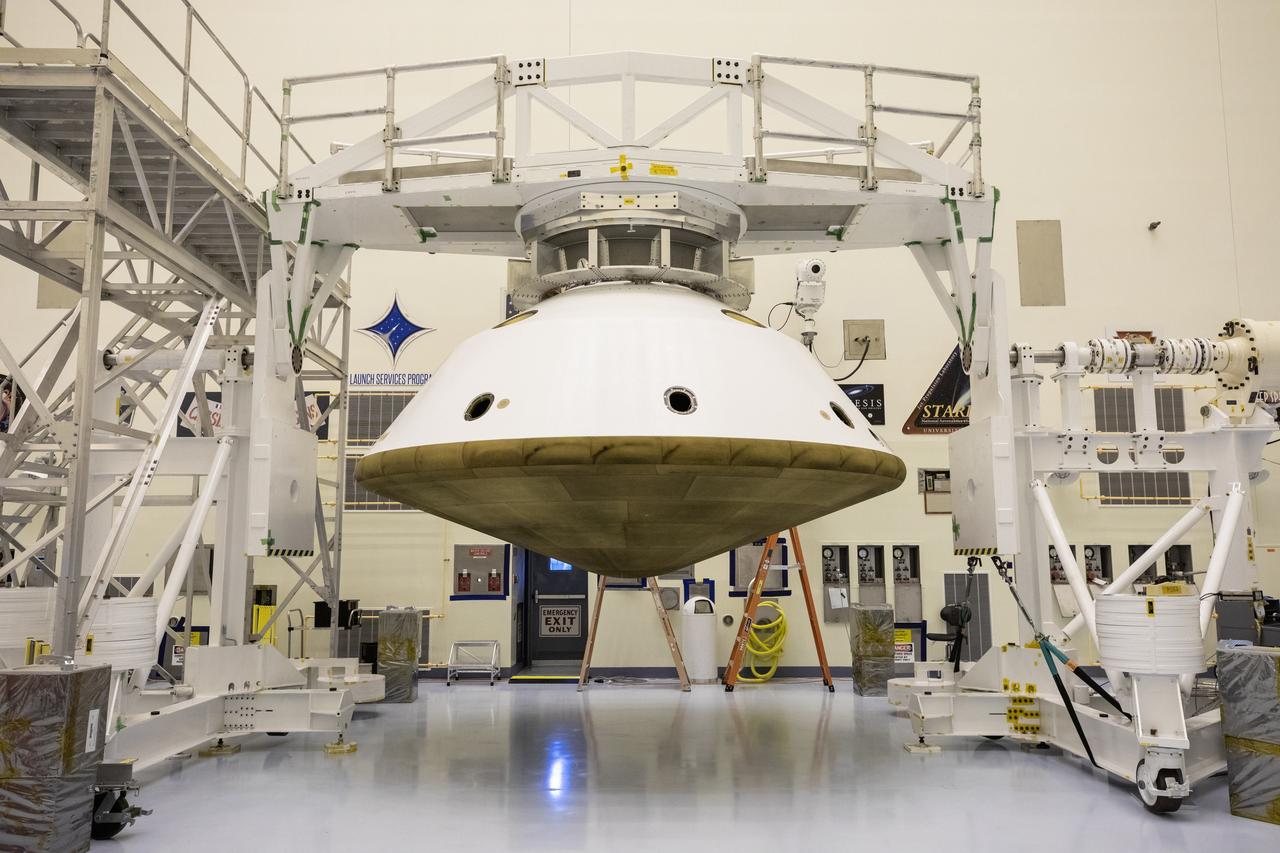
The Mars 2020 rover heat shield is mated to the back shell in the Payload Hazardous Servicing Facility at Kennedy Space Center in Florida on Jan. 10, 2020. Built by Lockheed Martin Space, the heat shield and back shell will protect the rover during its passage to Mars. The Mars 2020 rover is being manufactured at NASA’s Jet Propulsion Laboratory (JPL) in California and, once complete, will be delivered to Kennedy next month. The mission is scheduled to launch from Cape Canaveral Air Force Station in Florida in the summer of 2020.
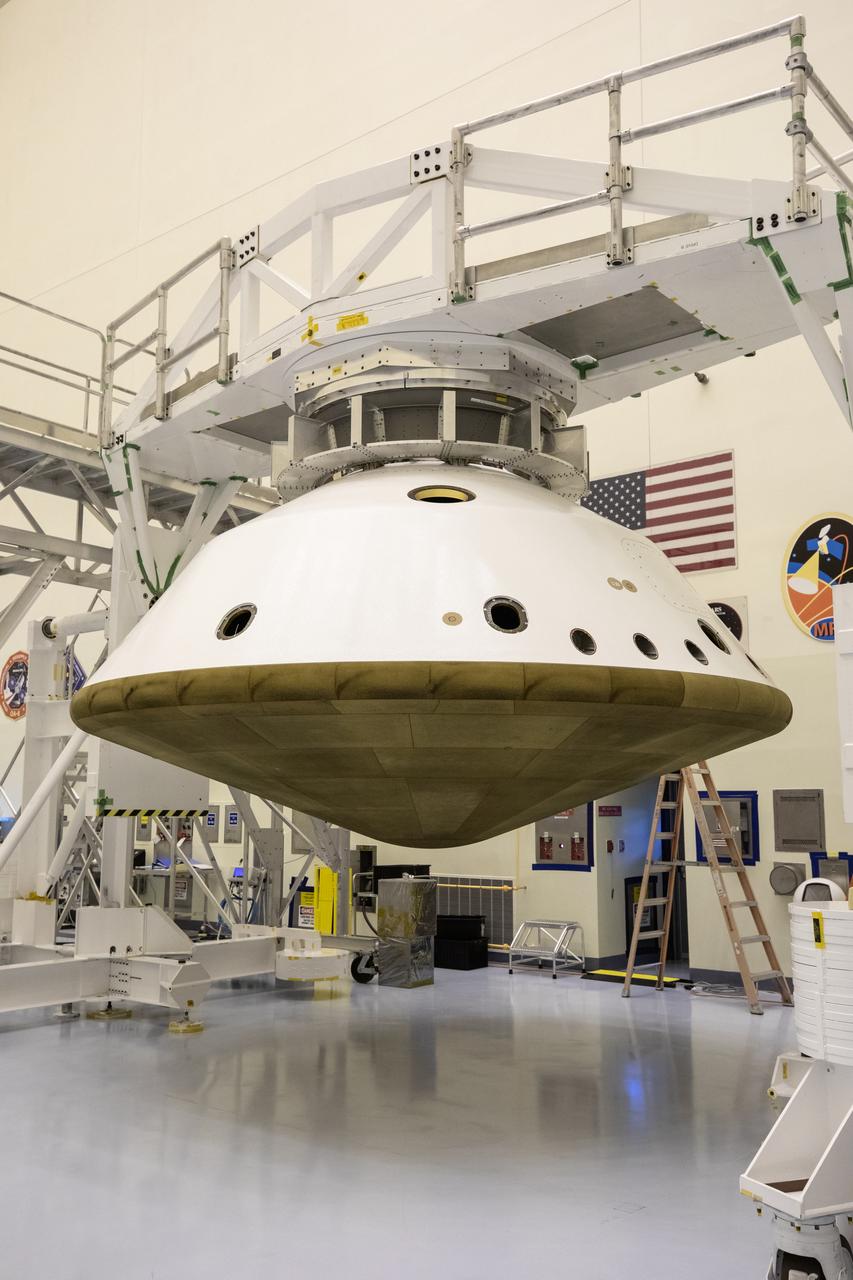
The Mars 2020 rover heat shield is mated to the back shell in the Payload Hazardous Servicing Facility at Kennedy Space Center in Florida on Jan. 10, 2020. Built by Lockheed Martin Space, the heat shield and back shell will protect the rover during its passage to Mars. The Mars 2020 rover is being manufactured at NASA’s Jet Propulsion Laboratory (JPL) in California and, once complete, will be delivered to Kennedy next month. The mission is scheduled to launch from Cape Canaveral Air Force Station in Florida in the summer of 2020.
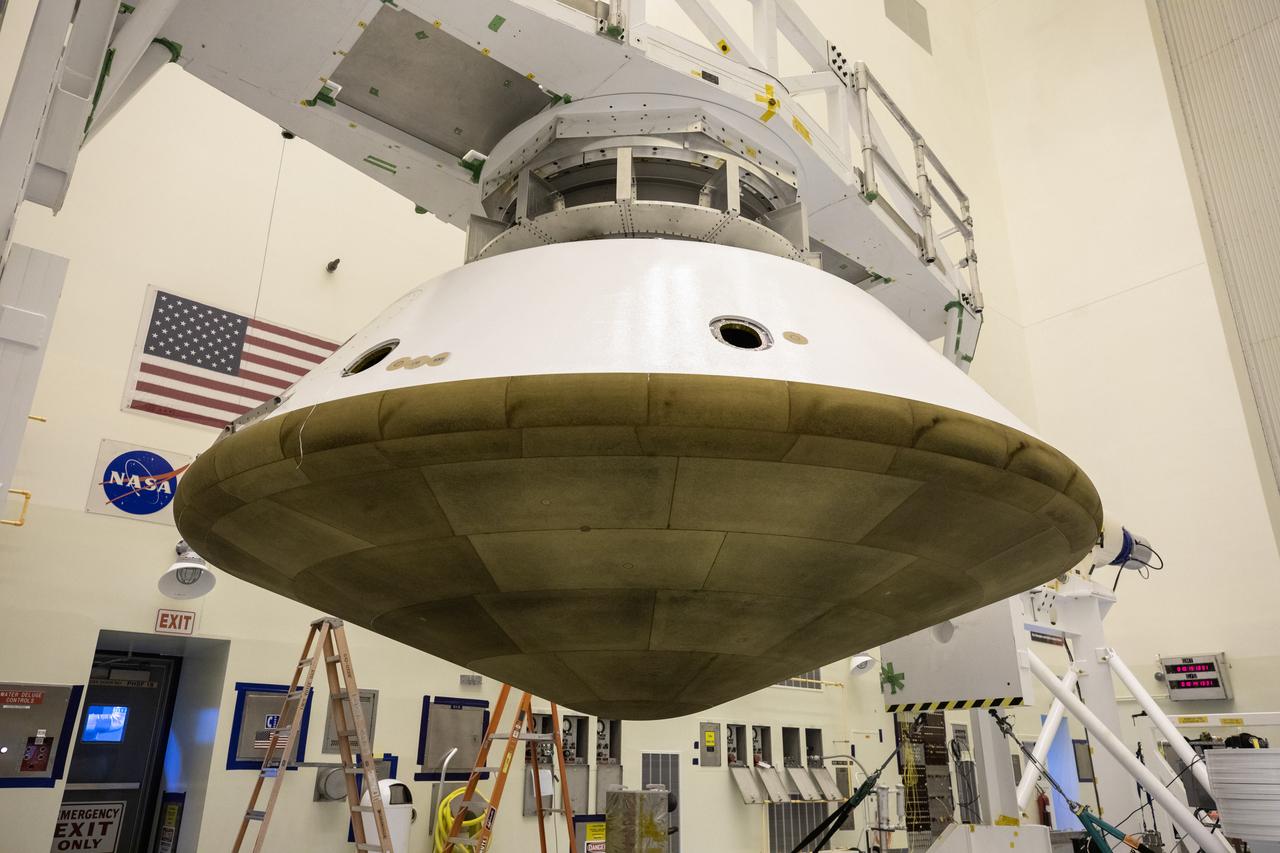
The Mars 2020 rover heat shield is mated to the back shell in the Payload Hazardous Servicing Facility at Kennedy Space Center in Florida on Jan. 10, 2020. Built by Lockheed Martin Space, the heat shield and back shell will protect the rover during its passage to Mars. The Mars 2020 rover is being manufactured at NASA’s Jet Propulsion Laboratory (JPL) in California and, once complete, will be delivered to Kennedy next month. The mission is scheduled to launch from Cape Canaveral Air Force Station in Florida in the summer of 2020.
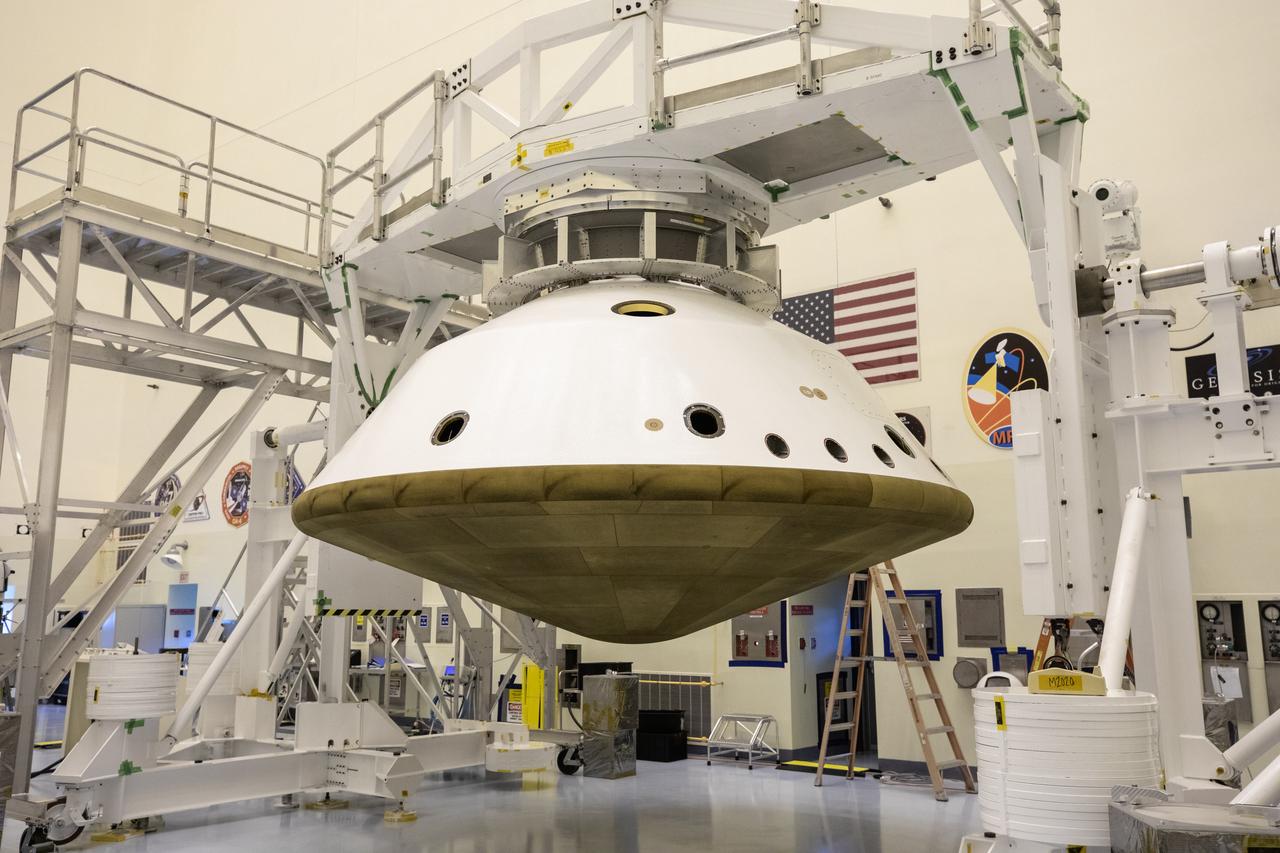
The Mars 2020 rover heat shield is mated to the back shell in the Payload Hazardous Servicing Facility at Kennedy Space Center in Florida on Jan. 10, 2020. Built by Lockheed Martin Space, the heat shield and back shell will protect the rover during its passage to Mars. The Mars 2020 rover is being manufactured at NASA’s Jet Propulsion Laboratory (JPL) in California and, once complete, will be delivered to Kennedy next month. The mission is scheduled to launch from Cape Canaveral Air Force Station in Florida in the summer of 2020.
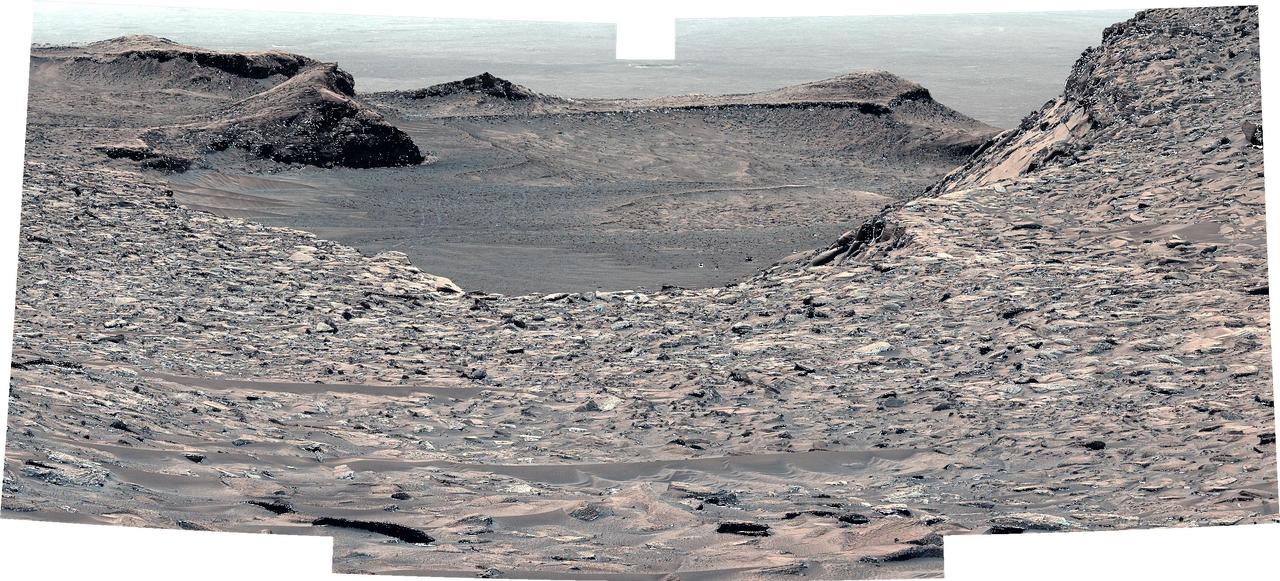
NASA's Curiosity Mars rover looks back down at "Marker Band Valley" after climbing a steep slope. This mosaic, made of five images that were stitched together after being sent to Earth, was captured by the rover's Mastcam on June 21, 2023, the 3,865th Martian day, or sol, of the mission. The color has been adjusted to match lighting conditions as the human eye would see them on Earth. Curiosity struggled to climb a 23-degree slope that had slippery sand and wheel-size boulders. These three factors – the incline, the sand, and the large boulders – combined to make this Curiosity's toughest climb yet. https://photojournal.jpl.nasa.gov/catalog/PIA26011

The back seat instrument panel on the NASA T-34C chase plane. In its role as a military trainer, the instructor pilot would ride in the back seat, while the student would be in the front seat. As a chase plane, the back seat would be occupied by a photographer. The aircraft was previously used at the Lewis Research Center in propulsion experiments involving turboprop engines, and was used as a chase aircraft at Dryden for smaller and slower research projects. Chase aircraft accompany research flights for photography and video purposes, and also as support for safety and research. At Dryden, the T-34 is used mainly for smaller remotely piloted vehicles which fly slower than NASA's F-18's, used for larger scale projects. This aircraft was returned to the U.S. Navy in May of 2002. The T-34C, built by Beech, carries a crew of 2 and is nicknamed the Mentor.
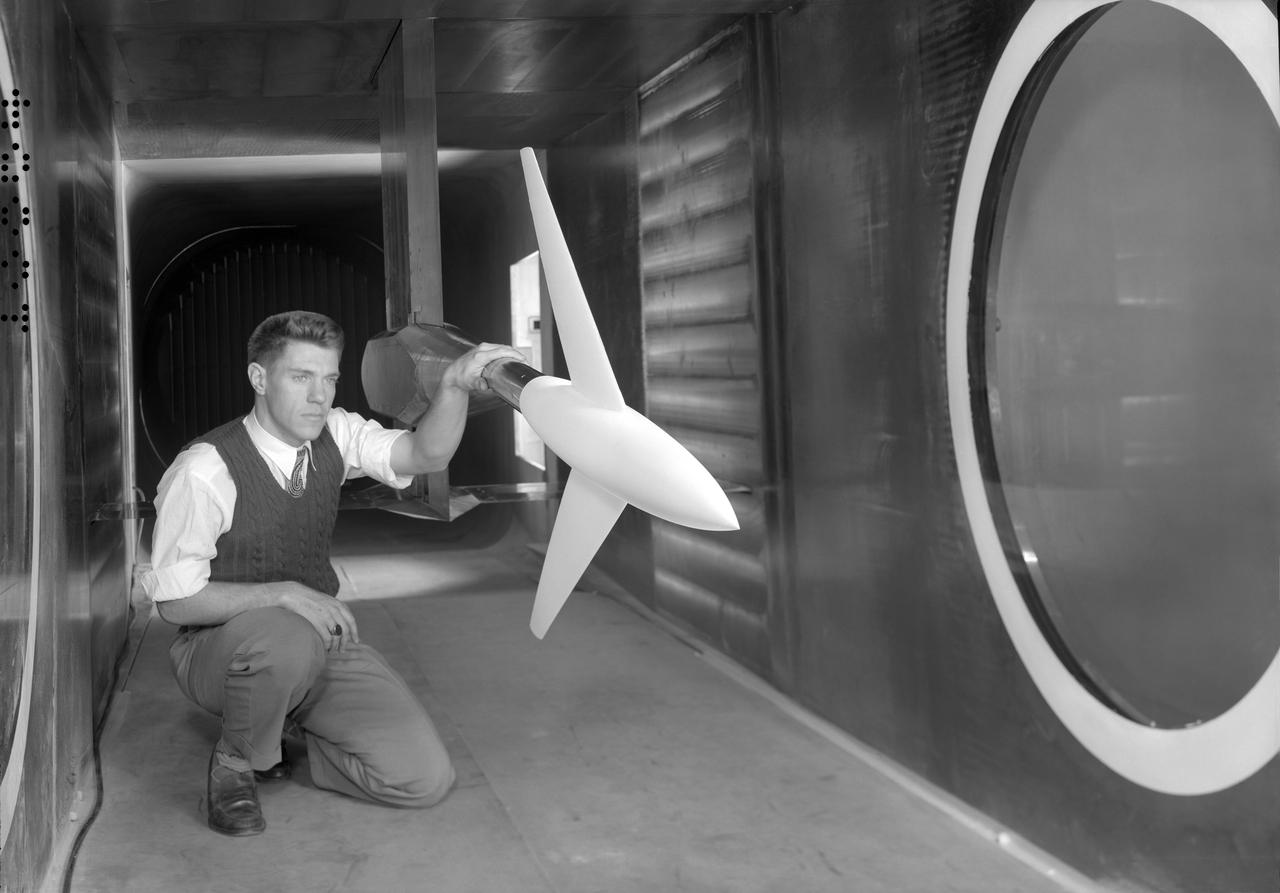
6x6 wind tunnel test on the effects of wing sweep.
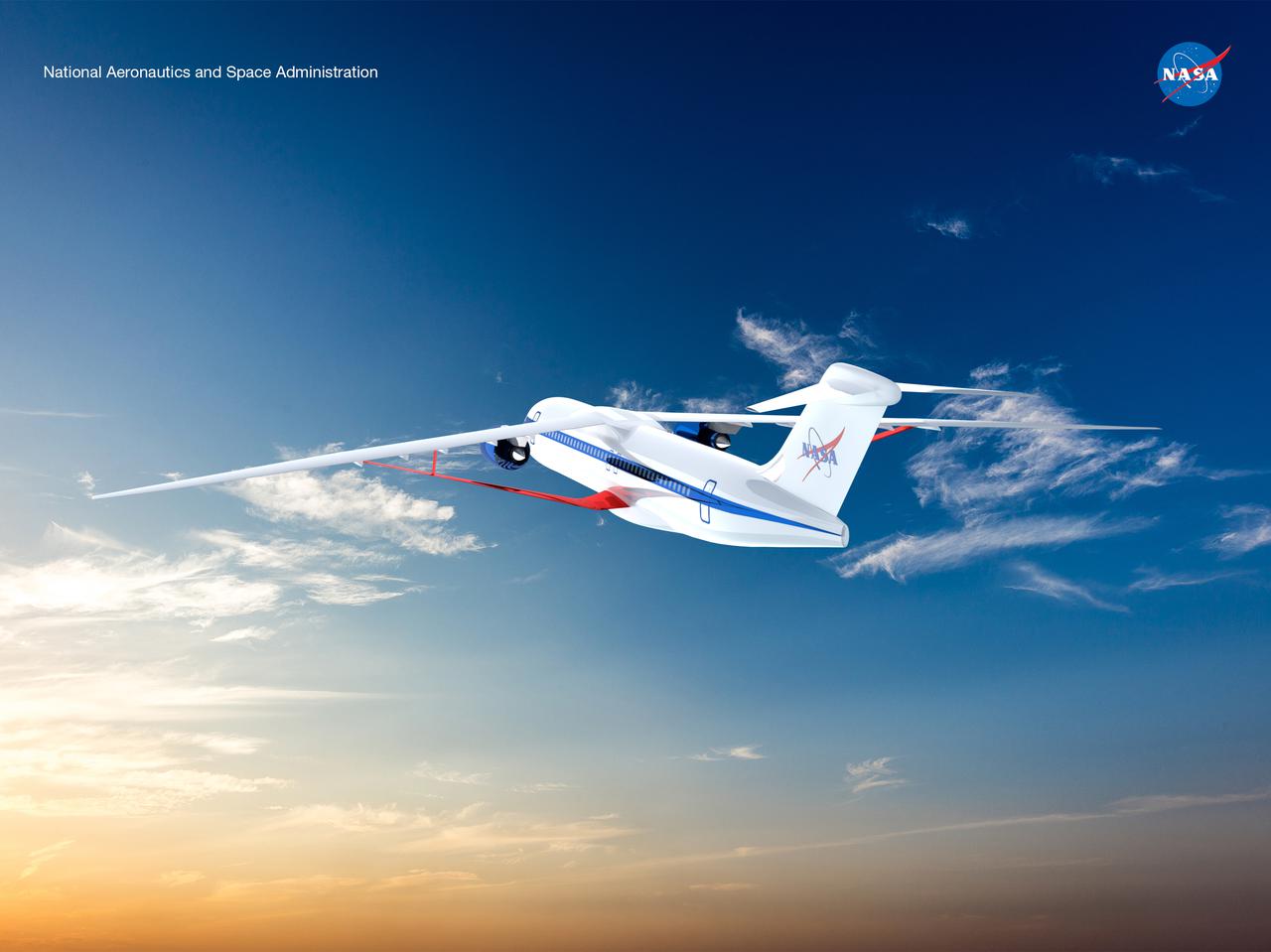
Notice anything different about the wings on this airliner? This conceptual truss-braced wing narrowbody is an aircraft with a 170ft span folding wing. By utilizing trusses, the aircraft can have longer, thinner wings with greater aspect ratios. This, in turn, translates into less drag and 5-10% less fuel burned. The Transonic Truss-Braced Wing aircraft originated from a joint effort by NASA and Boeing to develop subsonic commercial transport concepts – meeting NASA-defined metrics in terms of reduced noise, emissions, and fuel consumption. The design is currently undergoing wind tunnel testing and other studies by NASA researchers.
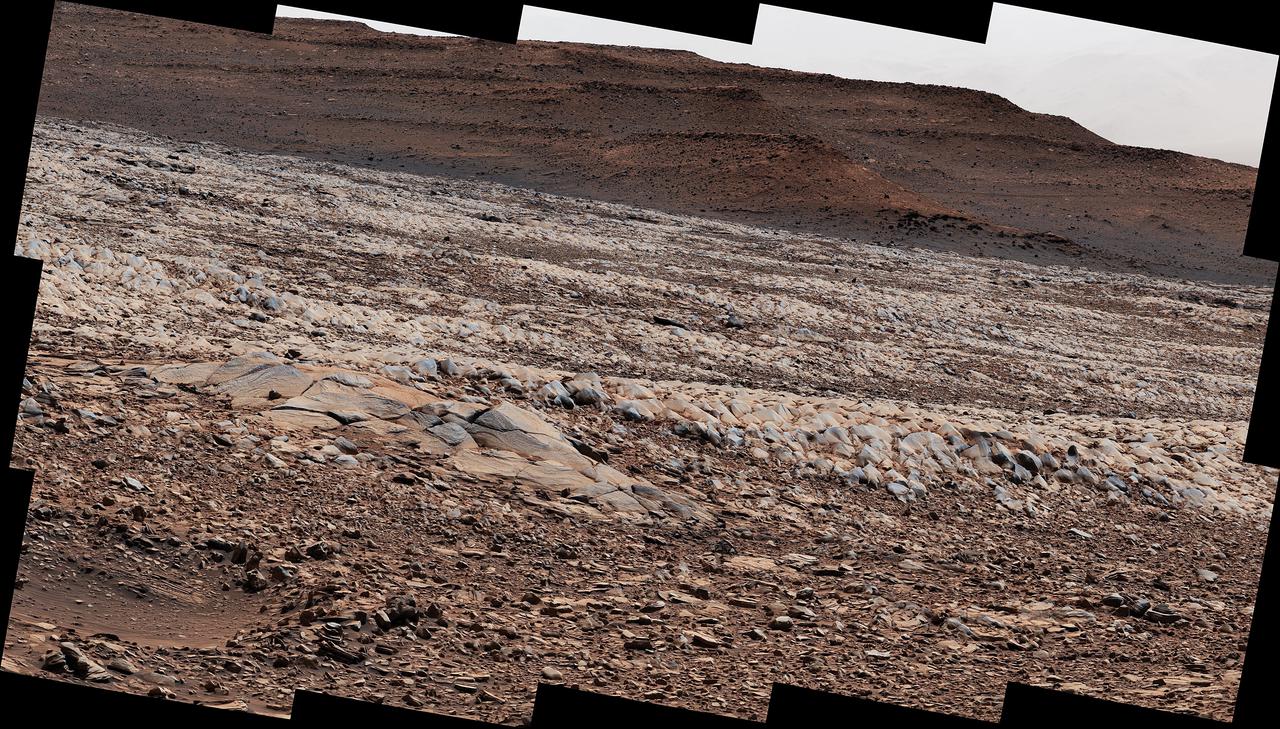
NASA's Curiosity Mars rover used its Mast Camera, or Mastcam, to survey these wind-sharpened rocks, called ventifacts, on March 15, 2022, the 3,415th Martian day, or sol, of the mission. The team has informally described these patches of ventifacts as "gator-back" rocks because of their scaly appearance. Ventifacts chewed up Curiosity's wheels earlier in the mission. Since then, rover engineers have found ways to slow wheel wear, including a traction control algorithm. They also plan rover routes that avoid driving over such rocks, including these latest ventifacts, which are made of sandstone &ndsh; the hardest type of rock Curiosity has encountered on Mars. These rocks form the surface of the "Greenheugh Pediment," a broad, sloping plain in the foothills of Mount Sharp. The floor of Gale Crater is visible along the edges of the mosaic. When Curiosity's team saw the gator-back rocks, they ultimately decided to turn the rover around and take an alternative path to continue climbing Mount Sharp, a 3.4-mile-tall (5.5-kilometer-tall) mountain that Curiosity has been ascending since 2014. As it climbs, Curiosity is able to study different sedimentary layers shaped by water billions of years ago. These layers help scientists understand whether microscopic life could have survived in the ancient Martian environment. https://photojournal.jpl.nasa.gov/catalog/PIA25175
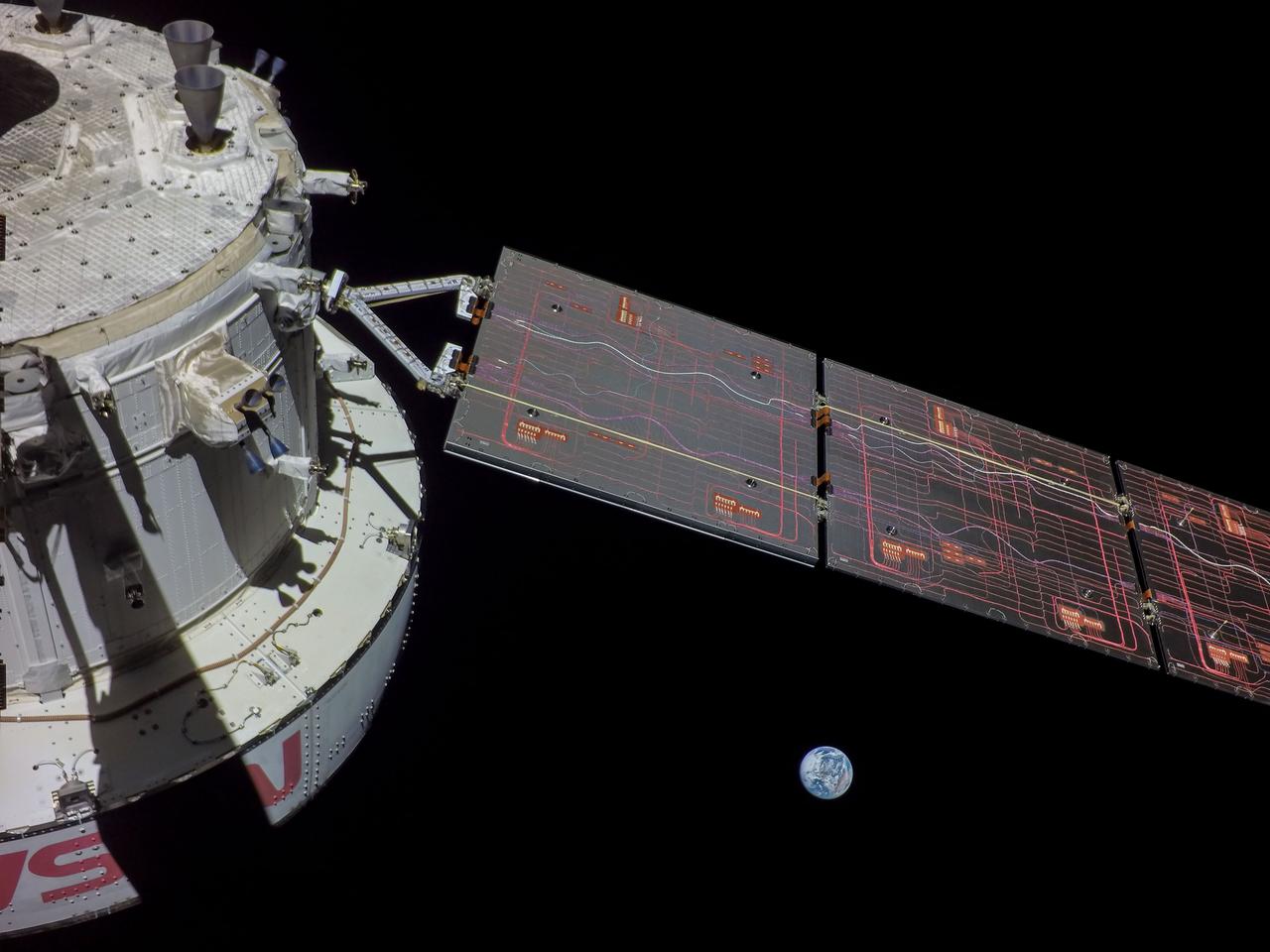
art001e000475 (Nov. 24, 2022) – On Flight Day 9, NASA’s Orion spacecraft captured imagery looking back at the Earth from a camera mounted on one of its solar arrays. The spacecraft is enroute to distant retrograde orbit of the Moon.
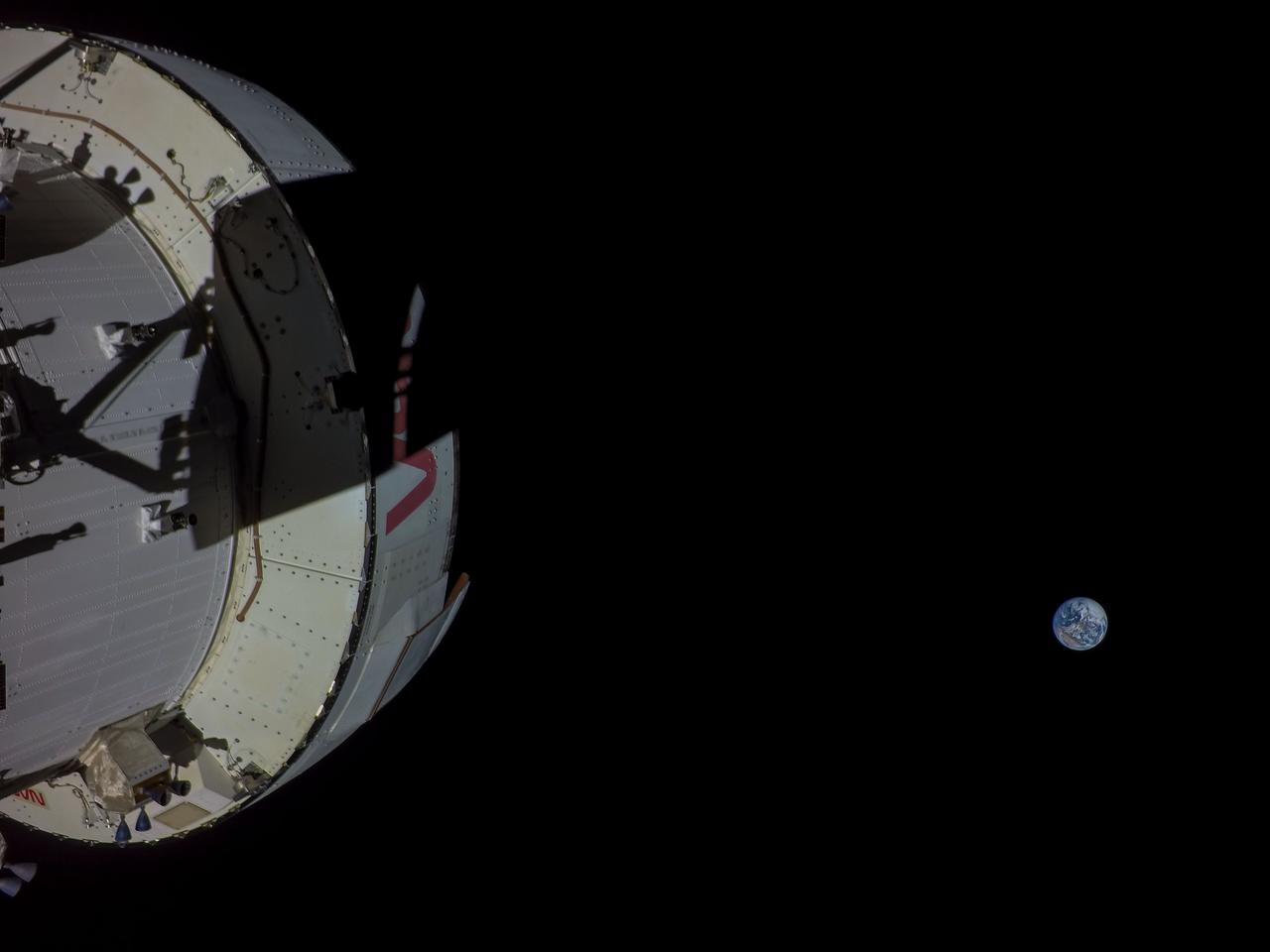
art001e000473 (Nov. 24, 2022) – On Flight Day 9, NASA’s Orion spacecraft captured imagery looking back at the Earth from a camera mounted on one of its solar arrays. The spacecraft is enroute to distant retrograde orbit of the Moon.
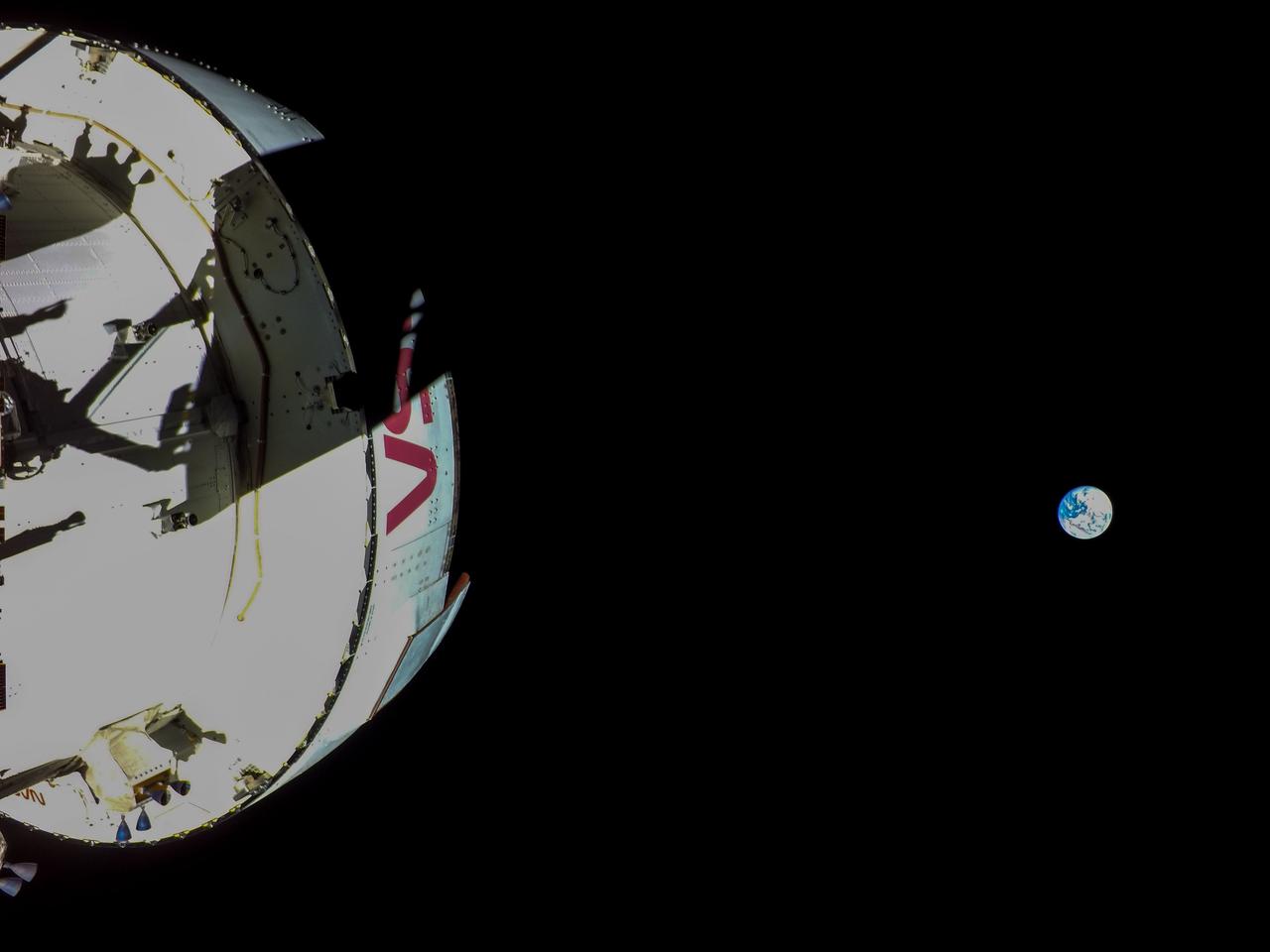
art001e000472 (Nov. 24, 2022) – On Flight Day 9, NASA’s Orion spacecraft captured imagery looking back at the Earth from a camera mounted on one of its solar arrays. The spacecraft is enroute to distant retrograde orbit of the Moon.
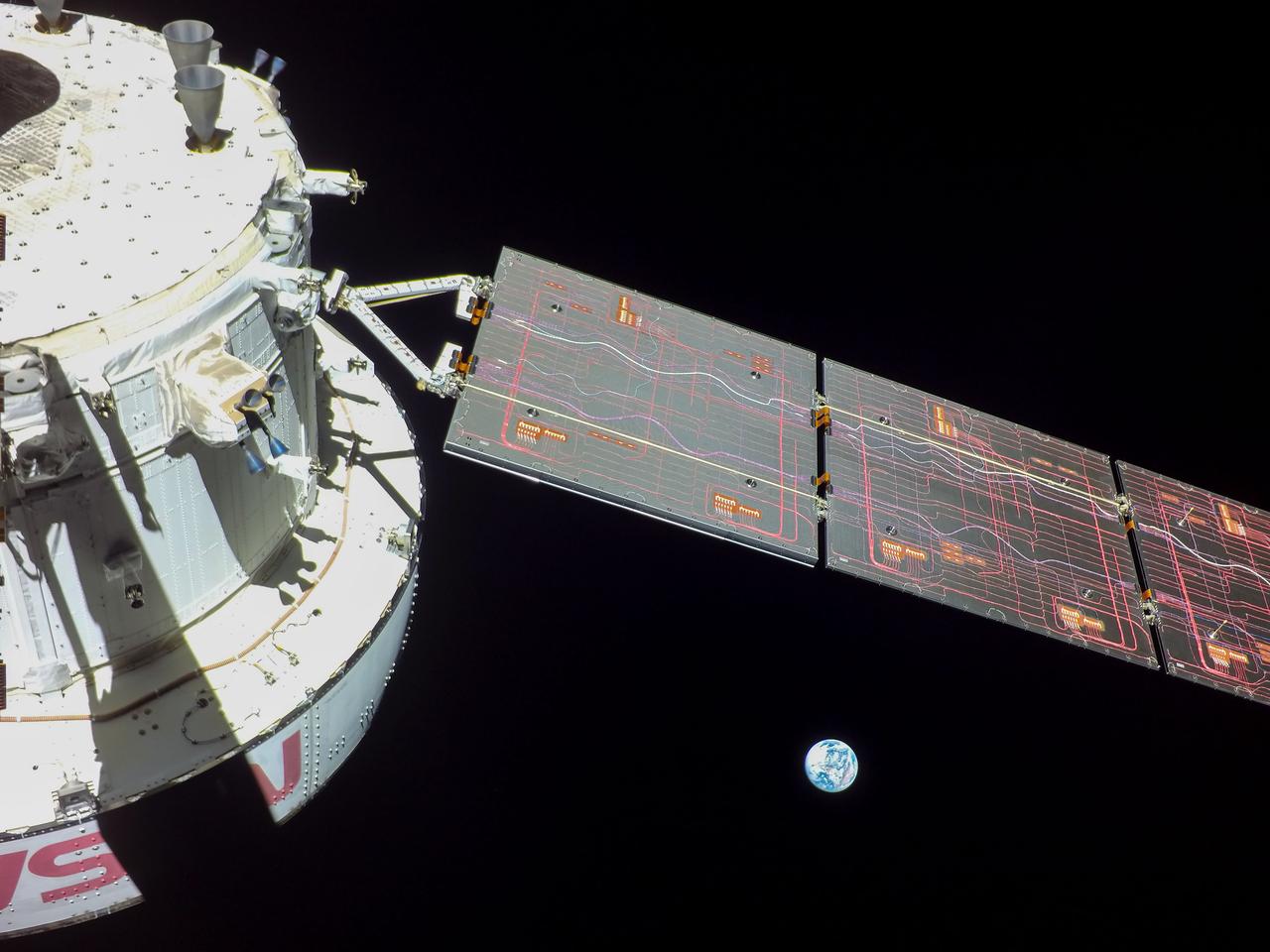
art001e000476 (Nov. 24, 2022) – On Flight Day 9, NASA’s Orion spacecraft captured imagery looking back at the Earth from a camera mounted on one of its solar arrays. The spacecraft is enroute to distant retrograde orbit of the Moon.
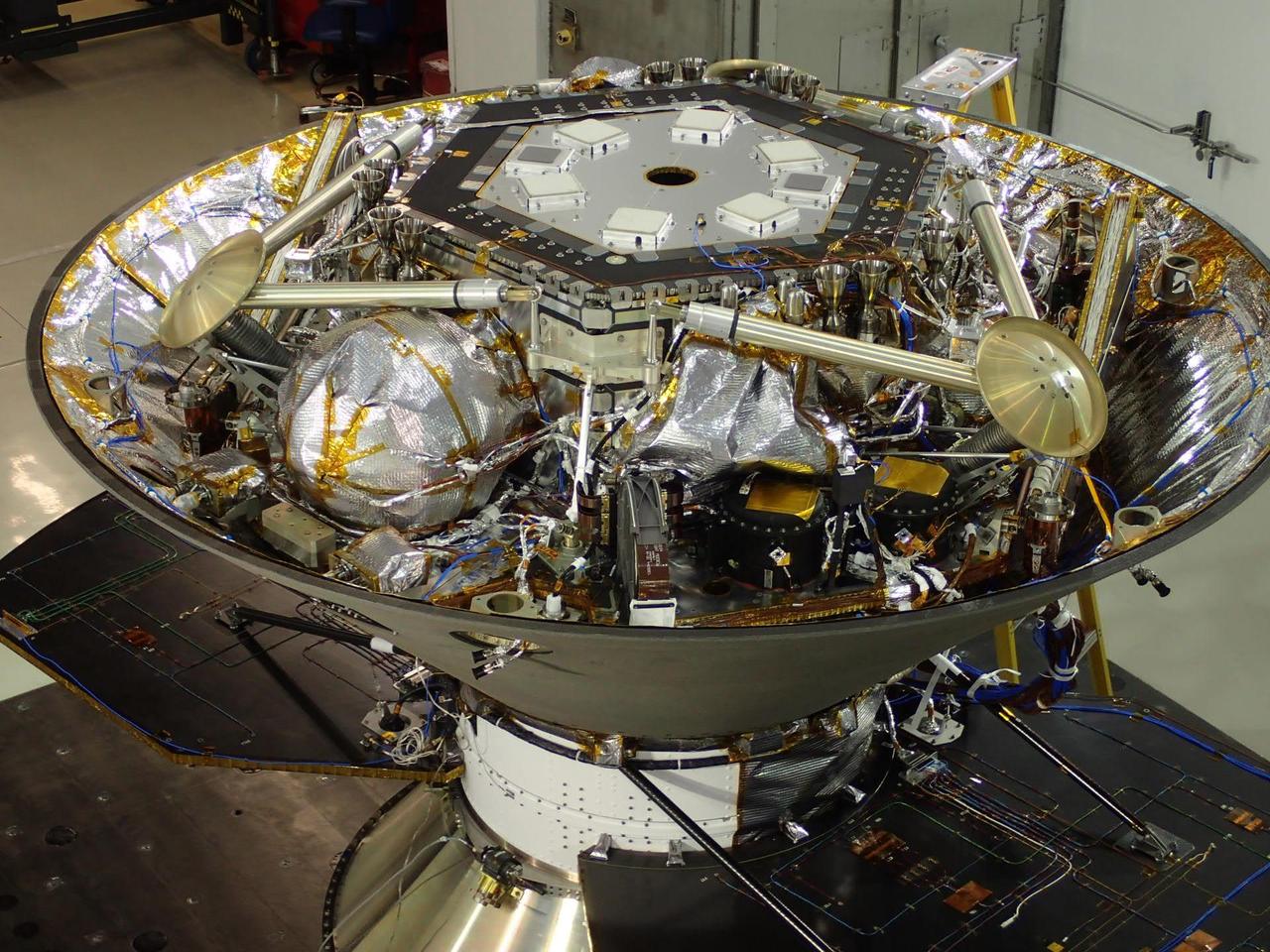
In this photo, NASA's InSight Mars lander is stowed inside the inverted back shell of the spacecraft's protective aeroshell. It was taken on July 13, 2015, in a clean room of spacecraft assembly and test facilities at Lockheed Martin Space Systems, Denver, during preparation for vibration testing of the spacecraft. InSight, for Interior Exploration Using Seismic Investigations, Geodesy and Heat Transport, is scheduled for launch in March 2016 and landing in September 2016. It will study the deep interior of Mars to advance understanding of the early history of all rocky planets, including Earth. Note: After thorough examination, NASA managers have decided to suspend the planned March 2016 launch of the Interior Exploration using Seismic Investigations Geodesy and Heat Transport (InSight) mission. The decision follows unsuccessful attempts to repair a leak in a section of the prime instrument in the science payload. http://photojournal.jpl.nasa.gov/catalog/PIA19813
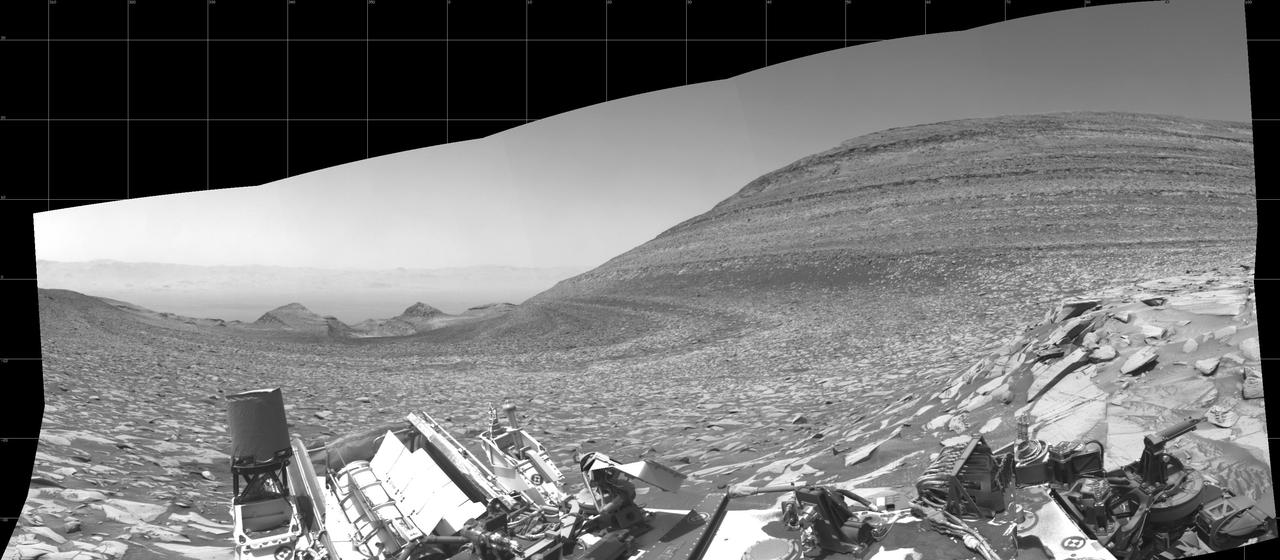
NASA's Curiosity Mars rover captured this panorama – showing the area it climbed to reach Gediz Vallis channel – using its left black-and-white navigation camera on Feb. 1, 2024, the 4,084th Martian day, or sol, of the mission. The panorama is made up of 10 images that were stitched together after being sent back to Earth. At center is the slope Curiosity ascended, which is striped with alternating dark and light bands of sedimentary rock. Farther down the slope are two buttes: "Chenapau" on the left and "Orinoco" on the right. Farther still is the floor of Gale Crater, with the crater's rim in the far distance. At right rises a banded butte nicknamed "Kukenán." Since 2014, Curiosity has been ascending the foothills of Mount Sharp, which stands 3 miles (5 kilometers) above the floor of Gale Crater. The layers in this lower part of the mountain formed over millions of years under a changing Martian climate, providing scientists with a way to study how the presence of both water and the chemical ingredients required for life changed over time. https://photojournal.jpl.nasa.gov/catalog/PIA26247
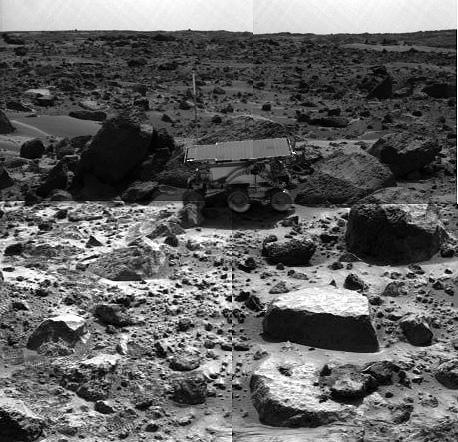
Sojourner Rover Backing Away From Moe - Left Eye
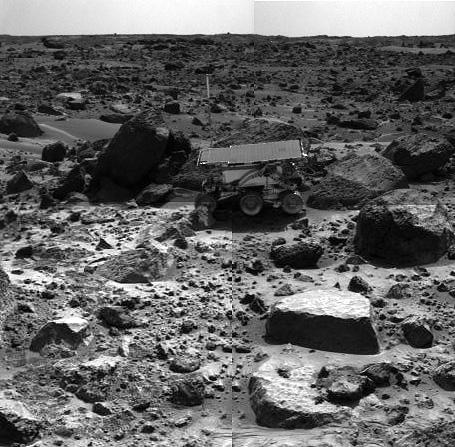
Sojourner Rover Backing Away from Moe - Right Eye
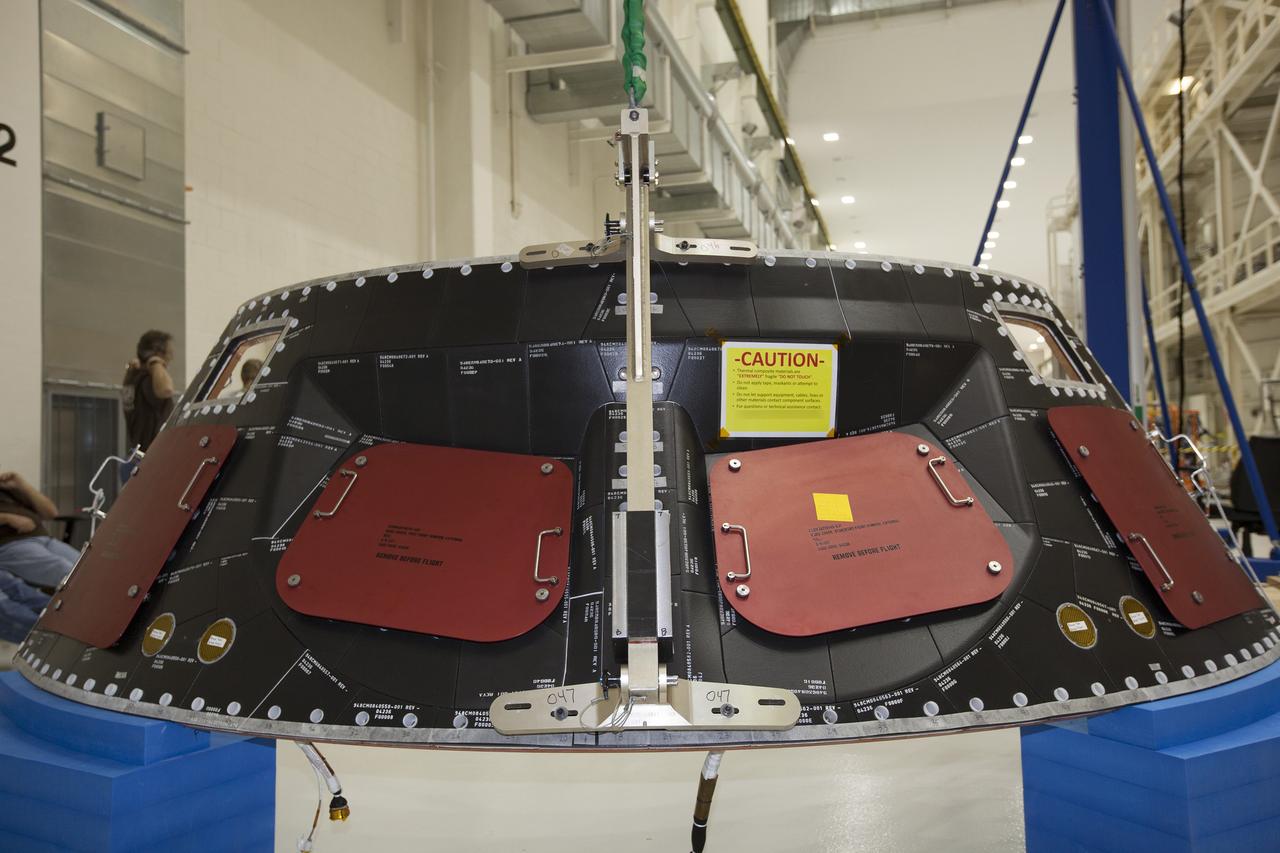
CAPE CANAVERAL, Fla. – Inside the Operations and Checkout Building high bay at NASA's Kennedy Space Center in Florida, a crane is attached to the middle back shell tile panel in order to lift it for installation on the Orion crew module. Preparations are underway for Exploration Flight Test-1, or EFT-1. Orion is the exploration spacecraft designed to carry astronauts to destinations not yet explored by humans, including an asteroid and Mars. It will have emergency abort capability, sustain the crew during space travel and provide safe re-entry from deep space return velocities. The first unpiloted test flight of the Orion is scheduled to launch later this year atop a Delta IV rocket from Cape Canaveral Air Force Station in Florida to an altitude of 3,600 miles above the Earth's surface. The two-orbit, four-hour flight test will help engineers evaluate the systems critical to crew safety including the heat shield, parachute system and launch abort system. For more information, visit http://www.nasa.gov/orion. Photo credit: NASA/Dimitri Gerondidakis
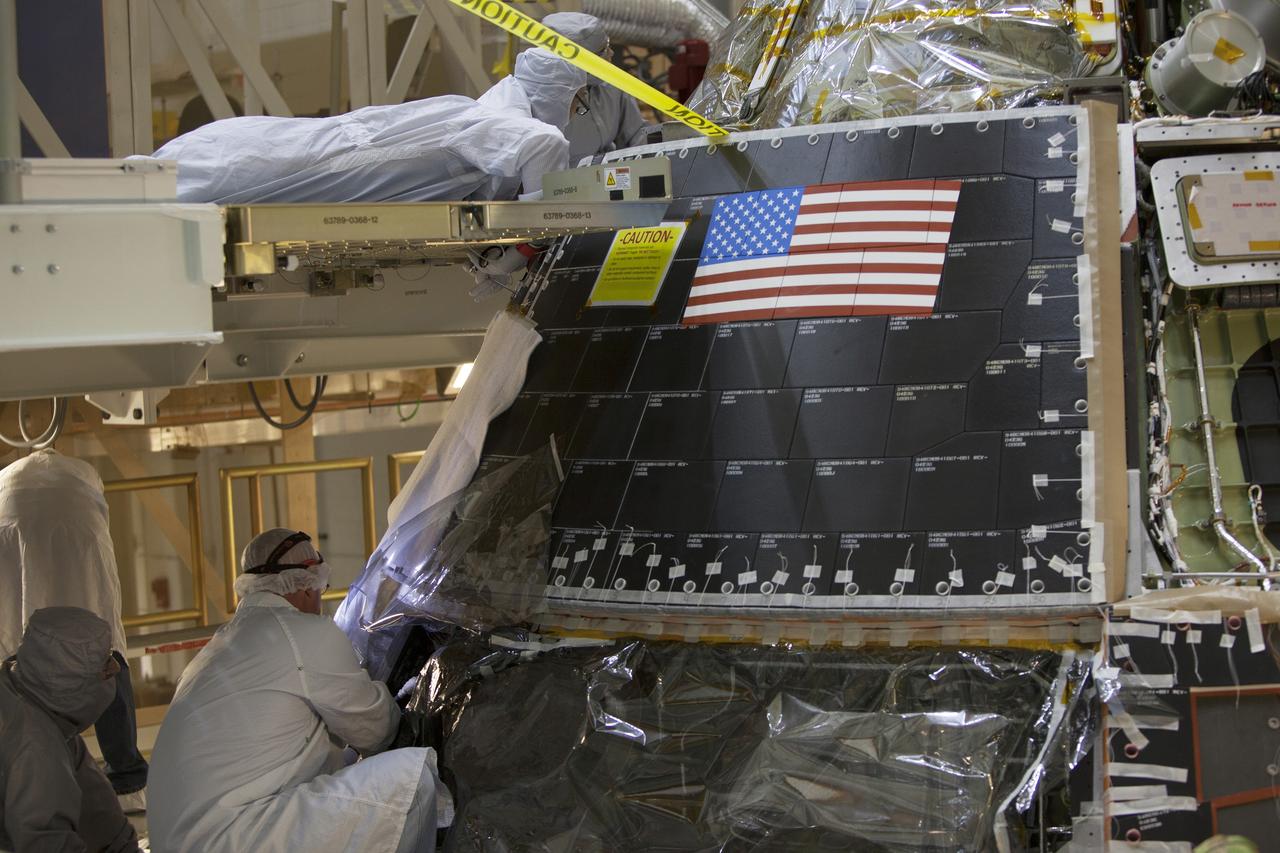
CAPE CANAVERAL, Fla. – Inside the Operations and Checkout Building high bay at NASA's Kennedy Space Center in Florida, technicians dressed in clean-room suits attach the middle back shell tile panel to the Orion crew module. Preparations are underway for Exploration Flight Test-1, or EFT-1. Orion is the exploration spacecraft designed to carry astronauts to destinations not yet explored by humans, including an asteroid and Mars. It will have emergency abort capability, sustain the crew during space travel and provide safe re-entry from deep space return velocities. The first unpiloted test flight of the Orion is scheduled to launch later this year atop a Delta IV rocket from Cape Canaveral Air Force Station in Florida to an altitude of 3,600 miles above the Earth's surface. The two-orbit, four-hour flight test will help engineers evaluate the systems critical to crew safety including the heat shield, parachute system and launch abort system. For more information, visit http://www.nasa.gov/orion. Photo credit: NASA/Dimitri Gerondidakis
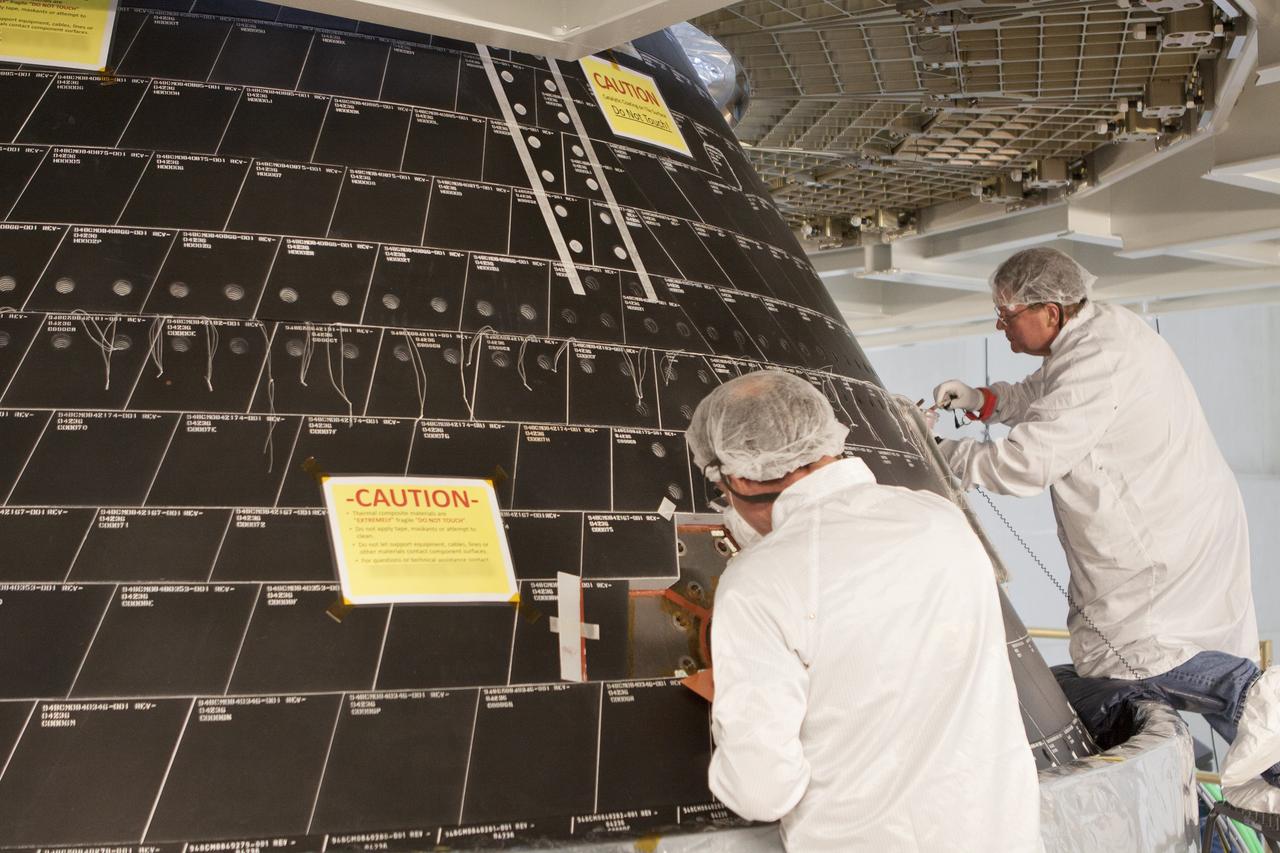
CAPE CANAVERAL, Fla. – Inside the Neil Armstrong Operations and Checkout Building high bay at NASA's Kennedy Space Center in Florida, Lockheed Martin technicians dressed in clean-room suits work on the back shell tile panels on the Orion crew module. Preparations are underway for Orion's first flight test. Orion is the exploration spacecraft designed to carry astronauts to destinations not yet explored by humans, including an asteroid and Mars. It will have emergency abort capability, sustain the crew during space travel and provide safe re-entry from deep space return velocities. Orion's first flight test is scheduled to launch in December atop a United Launch Alliance Delta IV Heavy rocket from Cape Canaveral Air Force Station in Florida to an altitude of 3,600 miles above the Earth's surface. The two-orbit, four-hour flight test will help engineers evaluate the systems critical to crew safety including the heat shield, parachute system and launch abort system. For more information, visit http://www.nasa.gov/orion. Photo credit: NASA/Gianni Woods
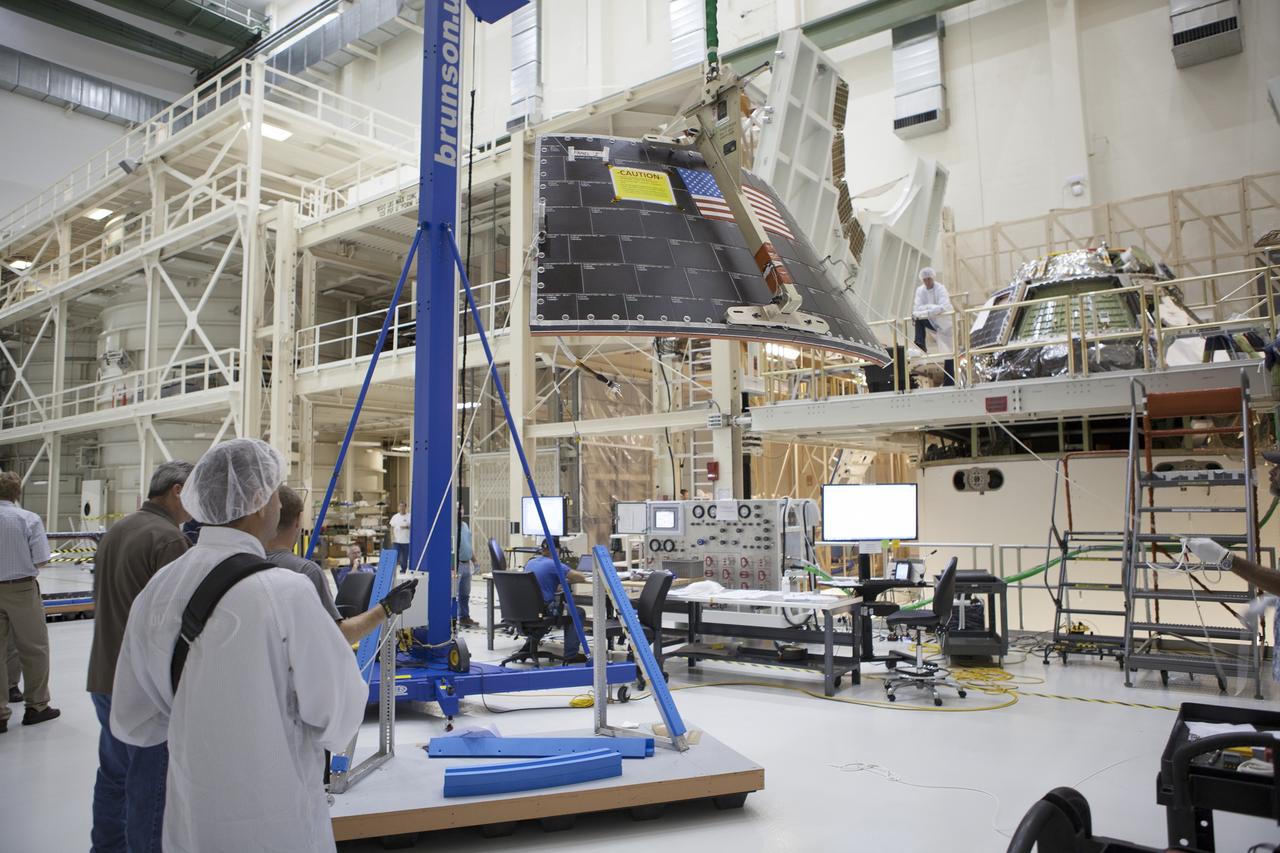
CAPE CANAVERAL, Fla. – Inside the Operations and Checkout Building high bay at NASA's Kennedy Space Center in Florida, technicians and engineers monitor the progress as a crane is used to lift the middle back shell tile panel for installation on the Orion crew module. Preparations are underway for Exploration Flight Test-1, or EFT-1. Orion is the exploration spacecraft designed to carry astronauts to destinations not yet explored by humans, including an asteroid and Mars. It will have emergency abort capability, sustain the crew during space travel and provide safe re-entry from deep space return velocities. The first unpiloted test flight of the Orion is scheduled to launch later this year atop a Delta IV rocket from Cape Canaveral Air Force Station in Florida to an altitude of 3,600 miles above the Earth's surface. The two-orbit, four-hour flight test will help engineers evaluate the systems critical to crew safety including the heat shield, parachute system and launch abort system. For more information, visit http://www.nasa.gov/orion. Photo credit: NASA/Dimitri Gerondidakis