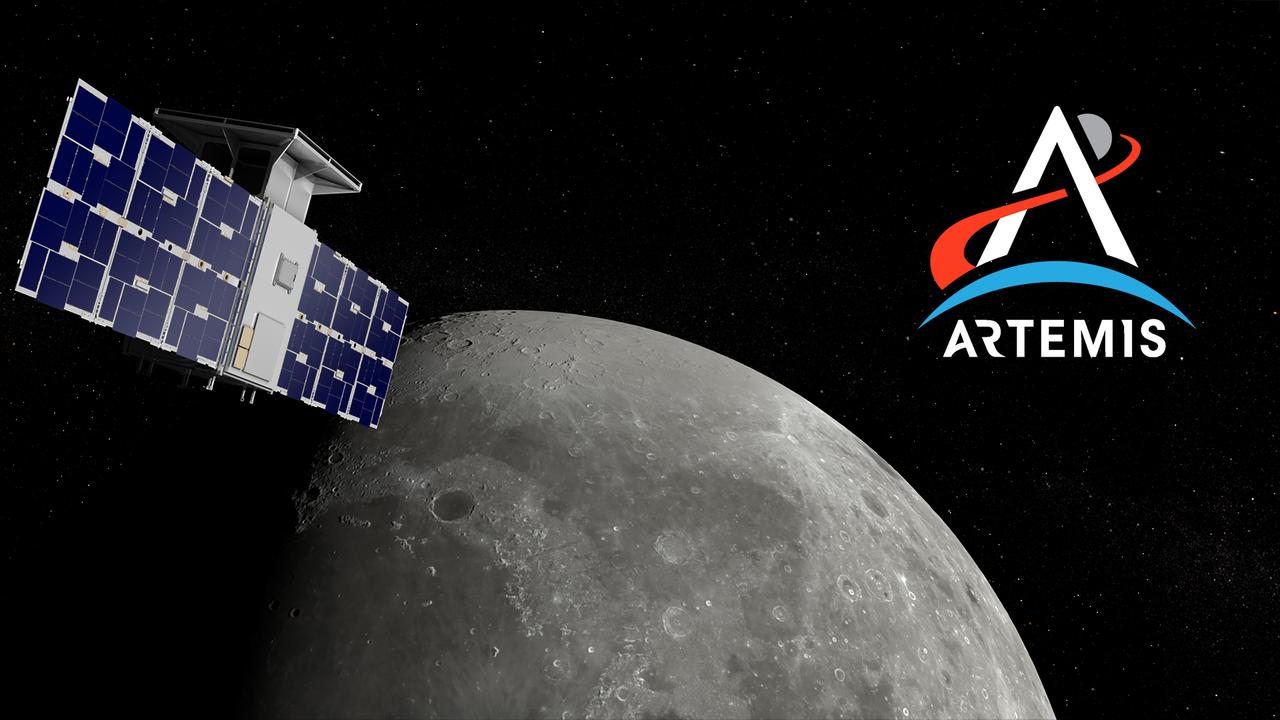
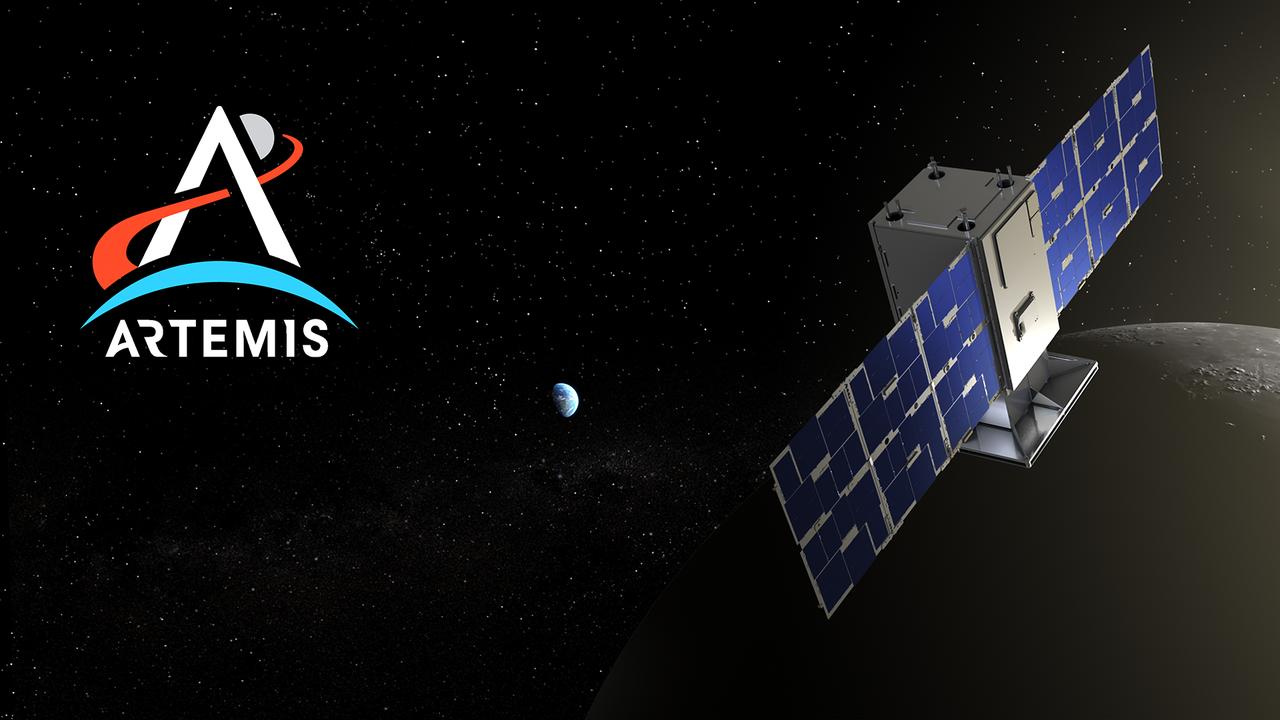
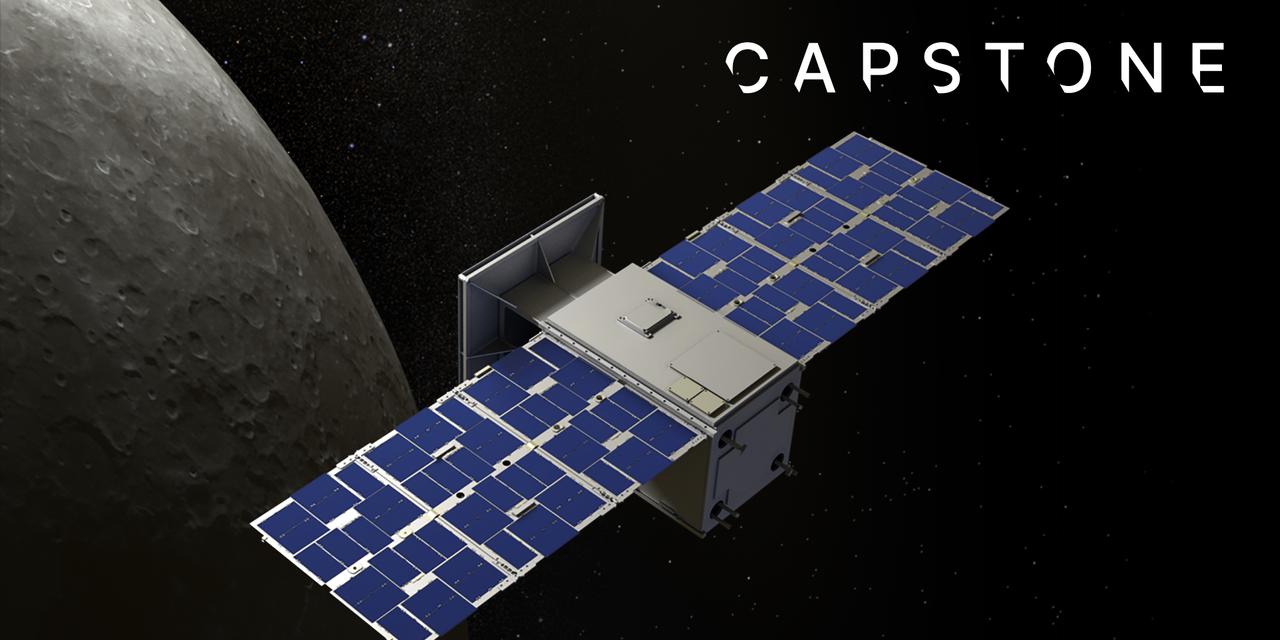
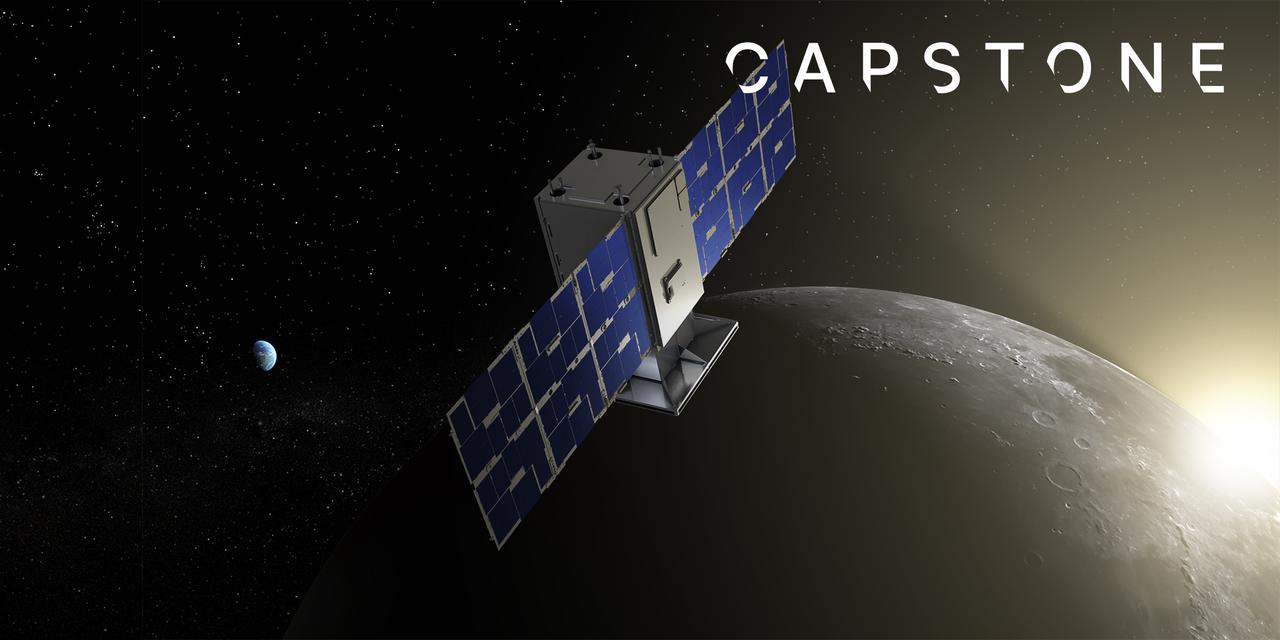
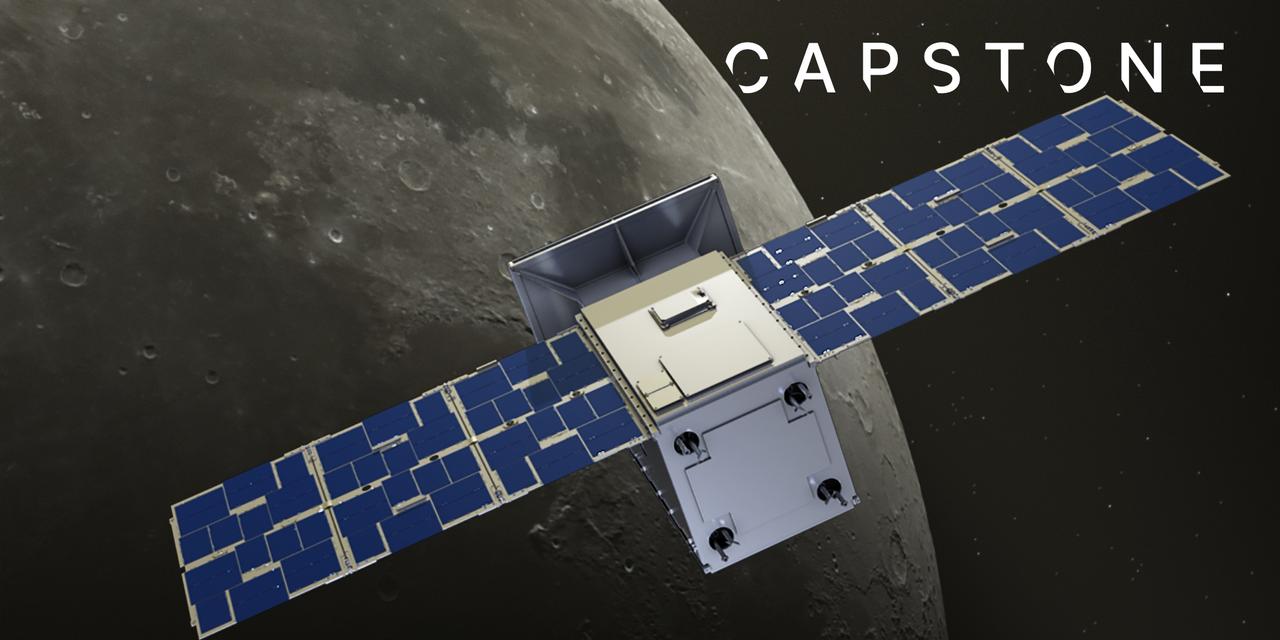
Virtual background of CAPSTONE spacecraft optimized for phone use (9:16). The CAPSTONE mission will demonstrate an innovative spacecraft-to-spacecraft navigation solution at the Moon from a near rectilinear halo orbit slated for Artemis’ Gateway. Illustration by Daniel Rutter.
CAPSTONE Virtual Background
Virtual background of CAPSTONE spacecraft optimized for phone use (9:16). The CAPSTONE mission will demonstrate an innovative spacecraft-to-spacecraft navigation solution at the Moon from a near rectilinear halo orbit slated for Artemis’ Gateway. Illustration by Daniel Rutter.
CAPSTONE Virtual Background
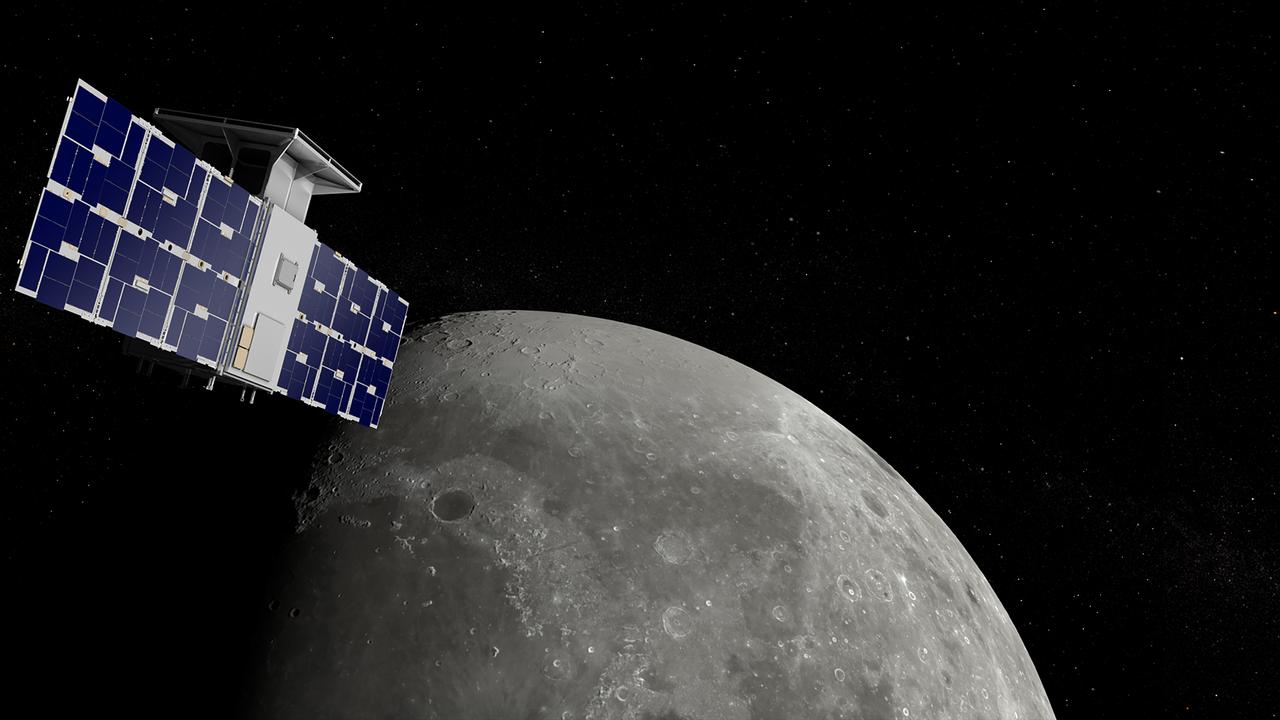
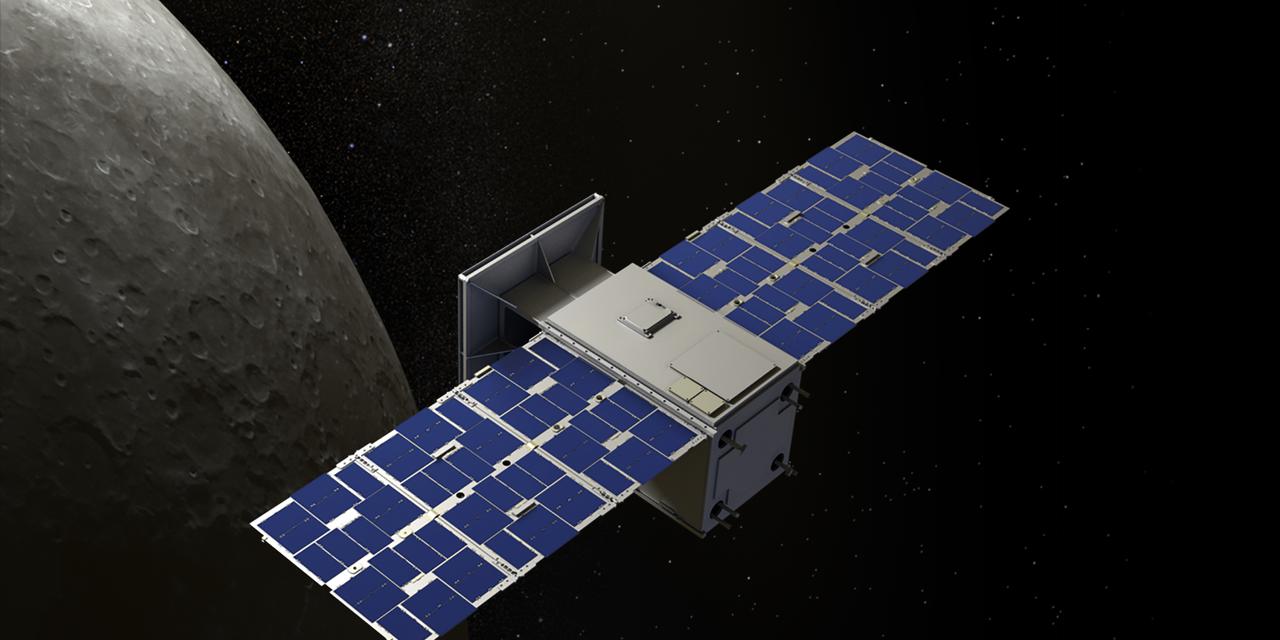
Virtual background of CAPSTONE spacecraft optimized for desktop use (16:9). The CAPSTONE mission will demonstrate an innovative spacecraft-to-spacecraft navigation solution at the Moon from a near rectilinear halo orbit slated for Artemis’ Gateway. Illustration by Daniel Rutter.
CAPSTONE Virtual Background
Virtual background of CAPSTONE spacecraft optimized for desktop use (16:9). The CAPSTONE mission will demonstrate an innovative spacecraft-to-spacecraft navigation solution at the Moon from a near rectilinear halo orbit slated for Artemis’ Gateway. Illustration by Daniel Rutter.
CAPSTONE Virtual Background
Virtual background of CAPSTONE spacecraft optimized for phone use (9:16). The CAPSTONE mission will demonstrate an innovative spacecraft-to-spacecraft navigation solution at the Moon from a near rectilinear halo orbit slated for Artemis’ Gateway.  Illustration by Daniel Rutter.
CAPSTONE Virtual Background
Virtual background of CAPSTONE spacecraft optimized for phone use (9:16). The CAPSTONE mission will demonstrate an innovative spacecraft-to-spacecraft navigation solution at the Moon from a near rectilinear halo orbit slated for Artemis’ Gateway. Illustration by Daniel Rutter.
CAPSTONE Virtual Background
Virtual background of CAPSTONE spacecraft optimized for desktop use (16:9). The CAPSTONE mission will demonstrate an innovative spacecraft-to-spacecraft navigation solution at the Moon from a near rectilinear halo orbit slated for Artemis’ Gateway. Illustration by Daniel Rutter.
CAPSTONE Virtual Background
Virtual background of CAPSTONE spacecraft optimized for phone use (9:16). The CAPSTONE mission will demonstrate an innovative spacecraft-to-spacecraft navigation solution at the Moon from a near rectilinear halo orbit slated for Artemis’ Gateway. Illustration by Daniel Rutter.
CAPSTONE Virtual Background
Background Planet
Background Planet
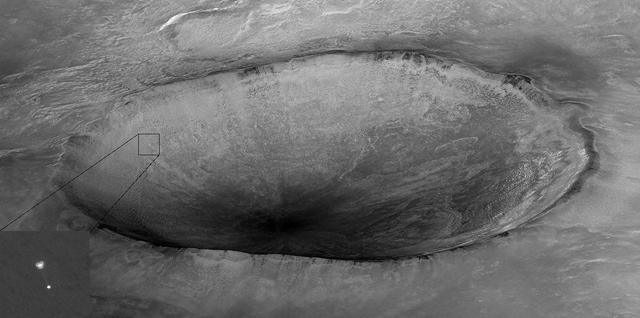
Phoenix Descending with Crater in the Background
Artemis II virtual background
Artemis II Crew Poster - Virtual Background
This plot shows data from the Cosmic Infrared Background Experiment, or CIBER, rockets launched in 2010 and 2012. The experiment measures a diffuse glow of infrared light in the sky, known as the cosmic infrared background.
Background Light Bluer Than Expected
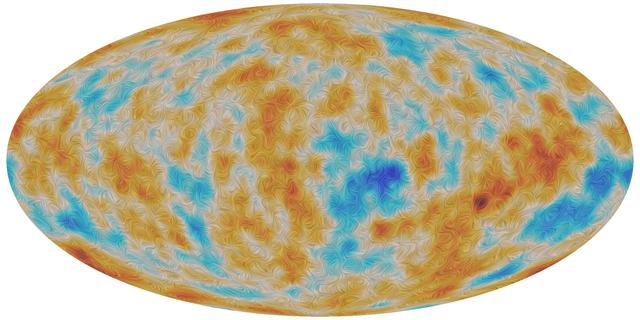
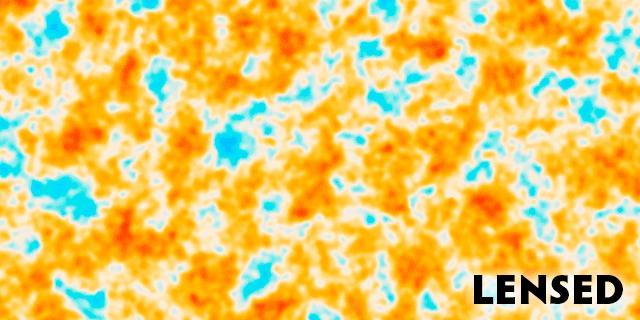
A visualization of the polarization of the Cosmic Microwave Background, or CMB, as detected by ESA Planck satellite over the entire sky.
Polarization of the Cosmic Microwave Background
The oldest light in the universe, called the cosmic microwave background, as observed by the Planck space telescope is shown in the oval sky map. An artist concept of Planck is next to the map.
Planck and the Cosmic Microwave Background Artist Concept
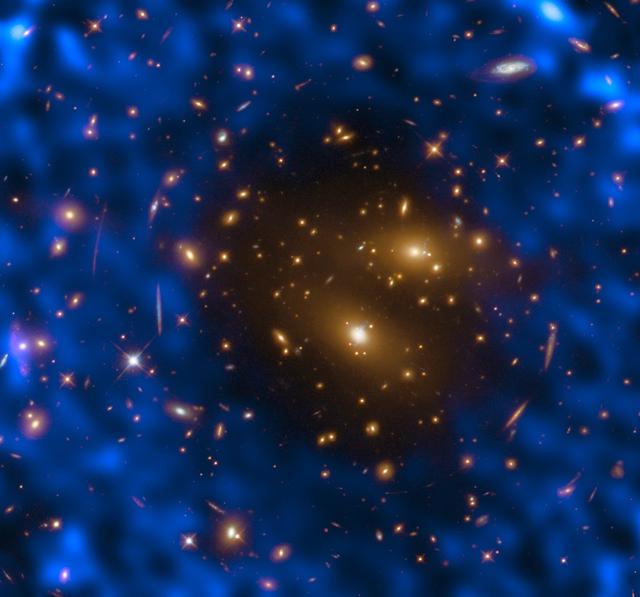
The events surrounding the Big Bang were so cataclysmic that they left an indelible imprint on the fabric of the cosmos. We can detect these scars today by observing the oldest light in the universe. As it was created nearly 14 billion years ago, this light — which exists now as weak microwave radiation and is thus named the cosmic microwave background (CMB) — permeates the entire cosmos, filling it with detectable photons.  The CMB can be used to probe the cosmos via something known as the Sunyaev-Zel’dovich (SZ) effect, which was first observed over 30 years ago. We detect the CMB here on Earth when its constituent microwave photons travel to us through space. On their journey to us, they can pass through galaxy clusters that contain high-energy electrons. These electrons give the photons a tiny boost of energy. Detecting these boosted photons through our telescopes is challenging but important — they can help astronomers to understand some of the fundamental properties of the universe, such as the location and distribution of dense galaxy clusters.  The NASA/ESA (European Space Agency) Hubble Space Telescope observed one of most massive known galaxy clusters, RX J1347.5–1145, seen in this Picture of the Week, as part of the Cluster Lensing And Supernova survey with Hubble (CLASH). This observation of the cluster, 5 billion light-years from Earth, helped the Atacama Large Millimeter/submillimeter Array (ALMA) in Chile to study the cosmic microwave background using the thermal Sunyaev-Zel’dovich effect. The observations made with ALMA are visible as the blue-purple hues.  Image credit: ESA/Hubble &amp; NASA, T. Kitayama (Toho University, Japan)/ESA/Hubble &amp; NASA  <b><a href="http://www.nasa.gov/audience/formedia/features/MP_Photo_Guidelines.html" rel="nofollow">NASA image use policy.</a></b>  <b><a href="http://www.nasa.gov/centers/goddard/home/index.html" rel="nofollow">NASA Goddard Space Flight Center</a></b> enables NASA’s mission through four scientific endeavors: Earth Science, Heliophysics, Solar System Exploration, and Astrophysics. Goddard plays a leading role in NASA’s accomplishments by contributing compelling scientific knowledge to advance the Agency’s mission.  <b>Follow us on <a href="http://twitter.com/NASAGoddardPix" rel="nofollow">Twitter</a></b>  <b>Like us on <a href="http://www.facebook.com/pages/Greenbelt-MD/NASA-Goddard/395013845897?ref=tsd" rel="nofollow">Facebook</a></b>  <b>Find us on <a href="http://instagrid.me/nasagoddard/?vm=grid" rel="nofollow">Instagram</a></b>
The Big Bang left a permanent scare in the cosmic background, 5 billion light-years from Earth
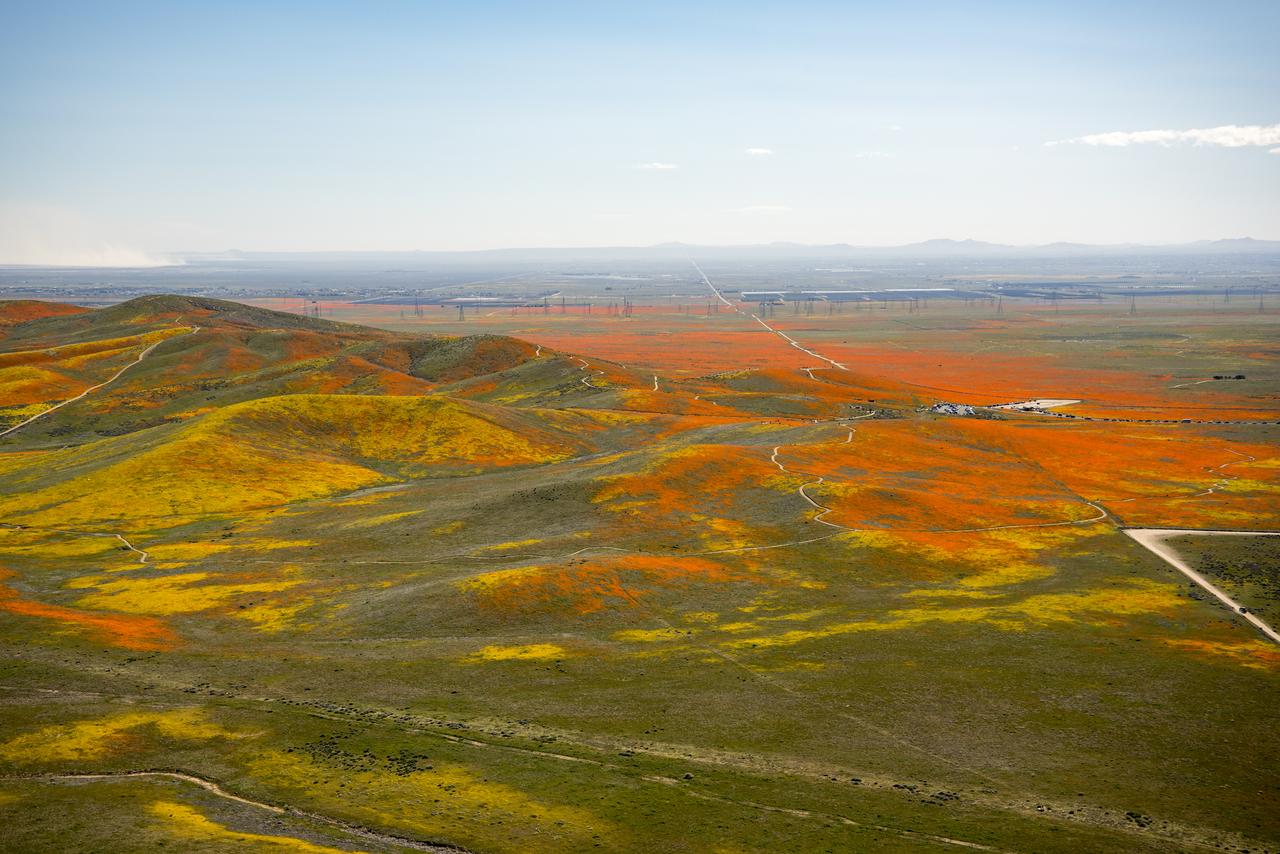
View from a NASA aircraft, TG-14, over the Superbloom of wildflowers and poppies from the Antelope Valley in Southern California, Poppy Reserve and solar panels are in the background.
Rainy Winter Season Brings Abundance of Wildflowers and Poppies in Southern California’s Antelope Valley. Solar panels are in the background.
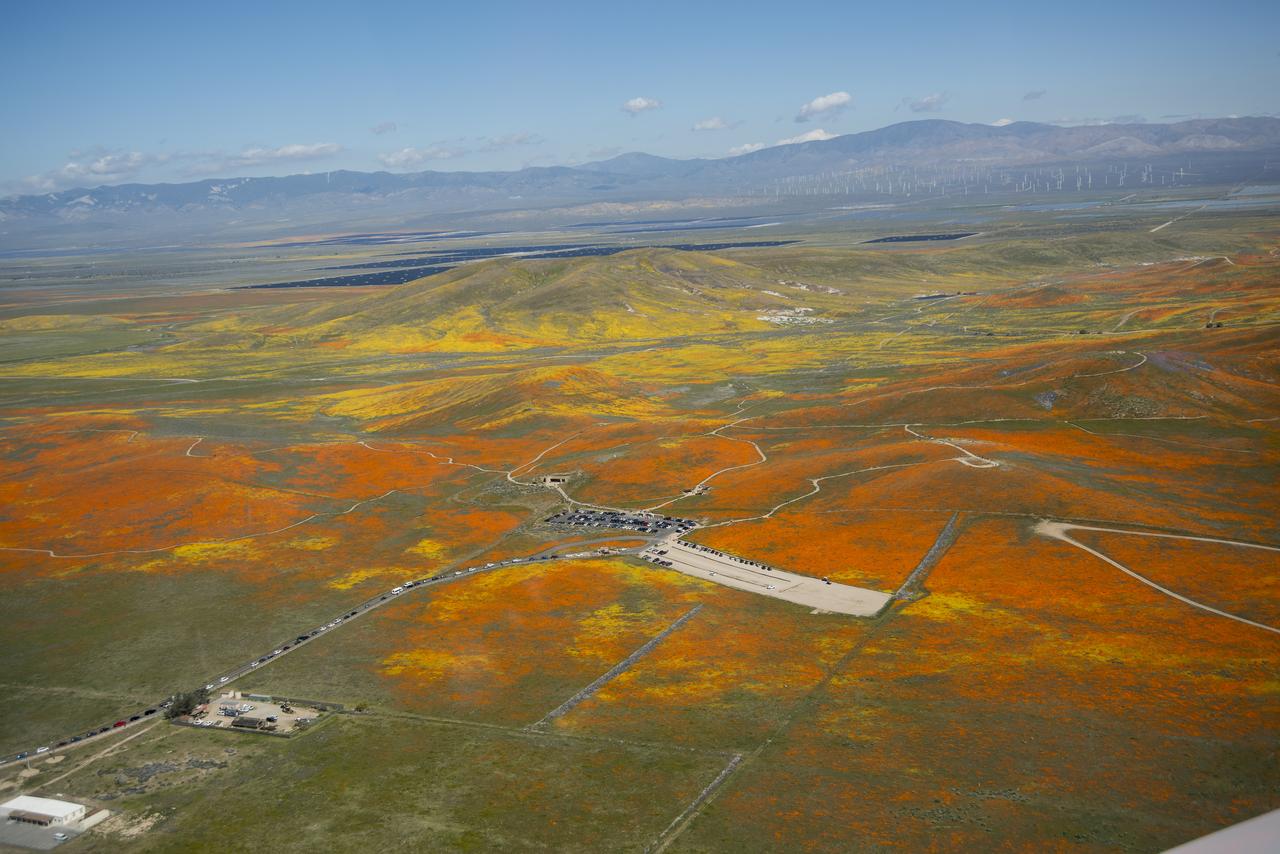
View from a NASA aircraft, TG-14, over the Superbloom of wildflowers and poppies from the Antelope Valley in Southern California. The Poppy Reserve is in the foreground and solar panels are in the background.
Rainy Winter Season Brings Abundance of Wildflowers and Poppies in Southern California’s Antelope Valley showing Poppy Reserve and solar panels are in the background.
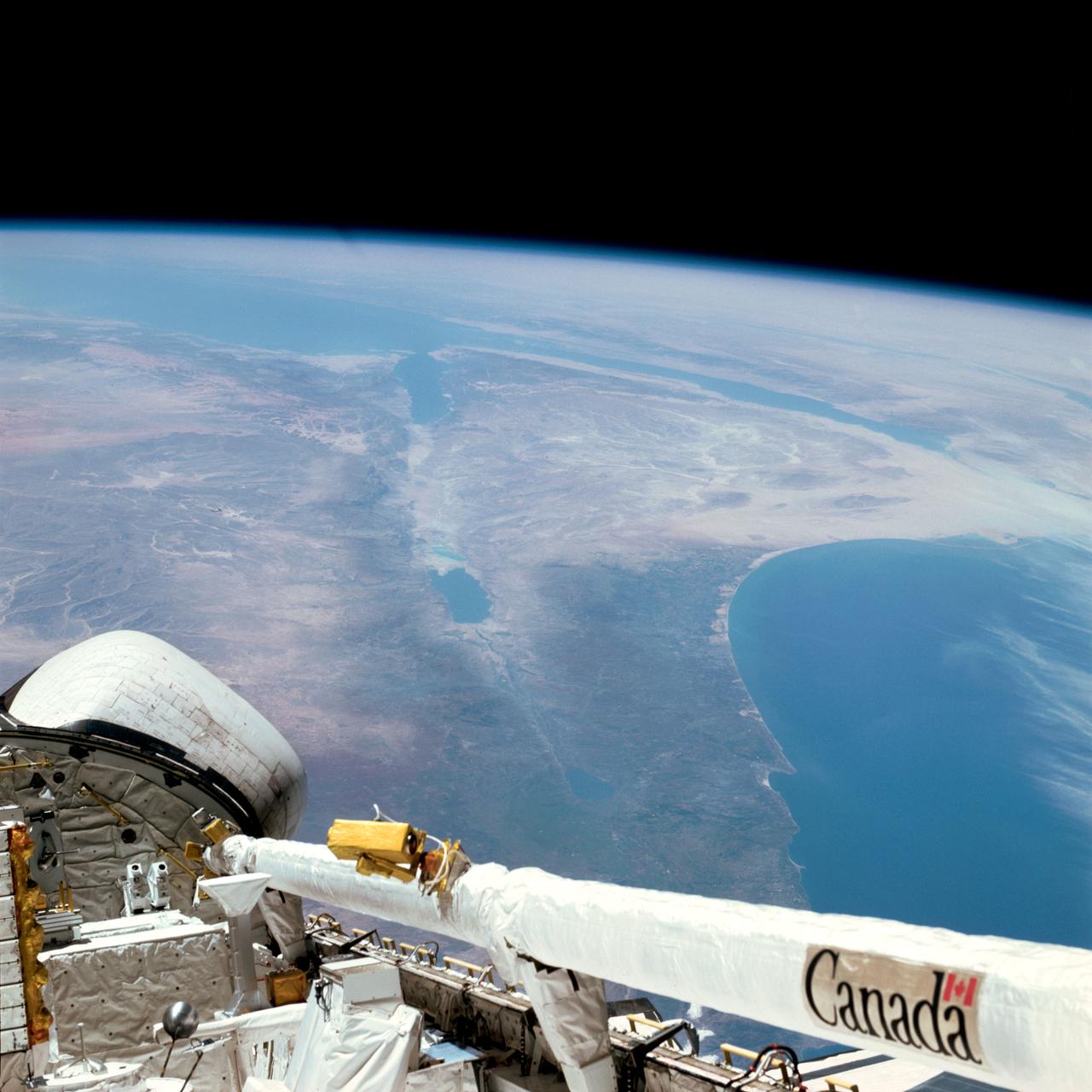
STS003-17-806 (22-30 March 1982) --- A 70mm out-the-window view showing Israel, the Dead Sea, Sea of Galilee, Jordan River, Sinai, Jordan, the Red Sea and Egypt (in background). Rested Remote Manipulator System (RMS) arm and part of the aft section of space shuttle Columbia in foreground. Photo credit: NASA
Columbia's payload bay with Earth in the background
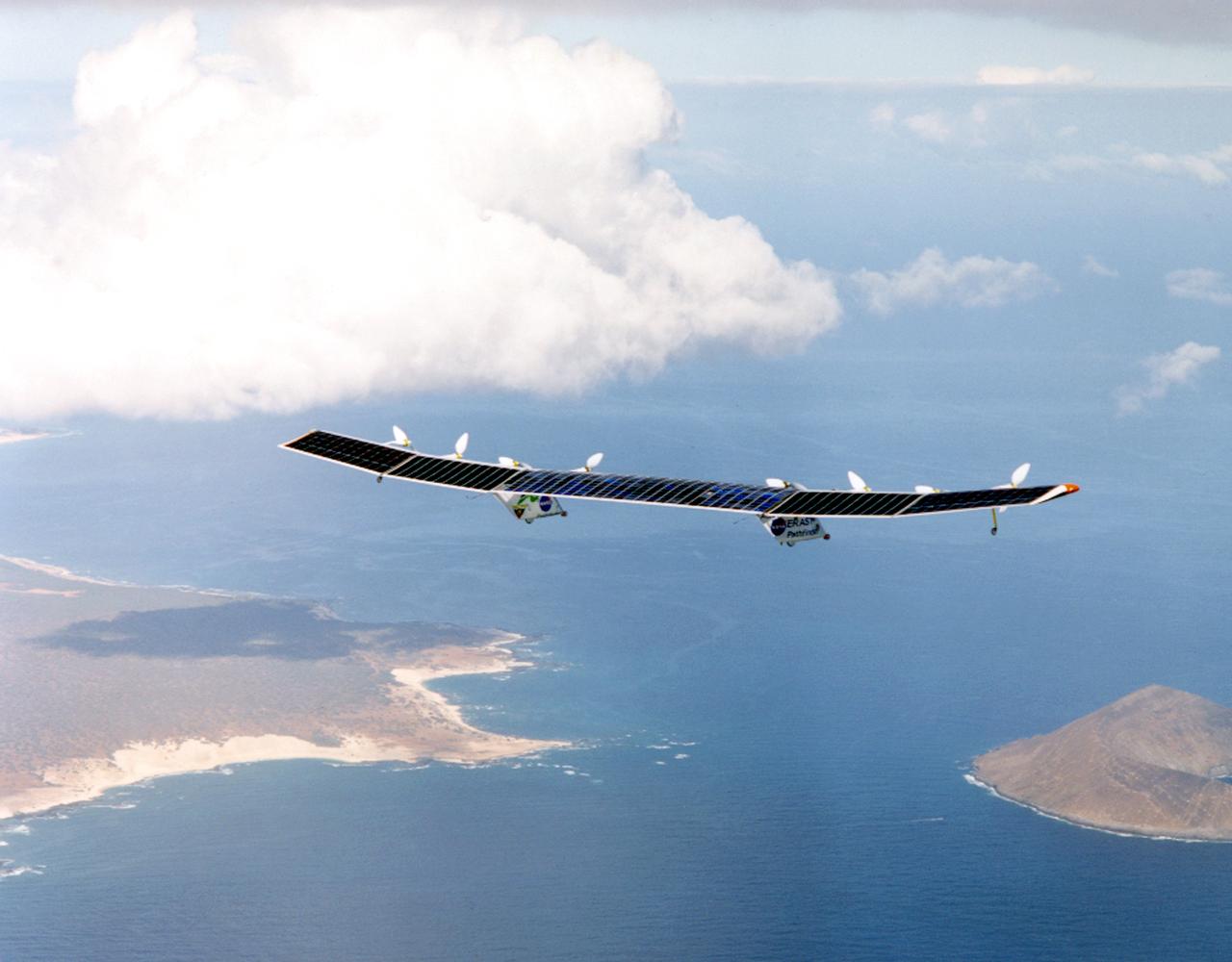
Pathfinder-Plus on flight over Hawaiian Islands, with N'ihau and Lehua in the background.
Pathfinder-Plus on flight over Hawaiian Islands, with N'ihau and Lehua in the background
Commercial Crew Program (CCP) SpaceX Merlin Engine Gas Generator (GG) Baffle Assessment, Mr. Brian Richardson (background), and Mr. Chad Eberhart (foreground)
Commercial Crew Program (CCP) SpaceX Merlin Engine Gas Generator
NASA 60th Anniversary Logo (square) on black background
NASA_60TH_FULLCOLOR_V2_BLKGRD_300DPI
NASA 60th Anniversary Logo (vertical) on black background
NASA_60TH_FULLCOLOR_BLKGRD_300DPI
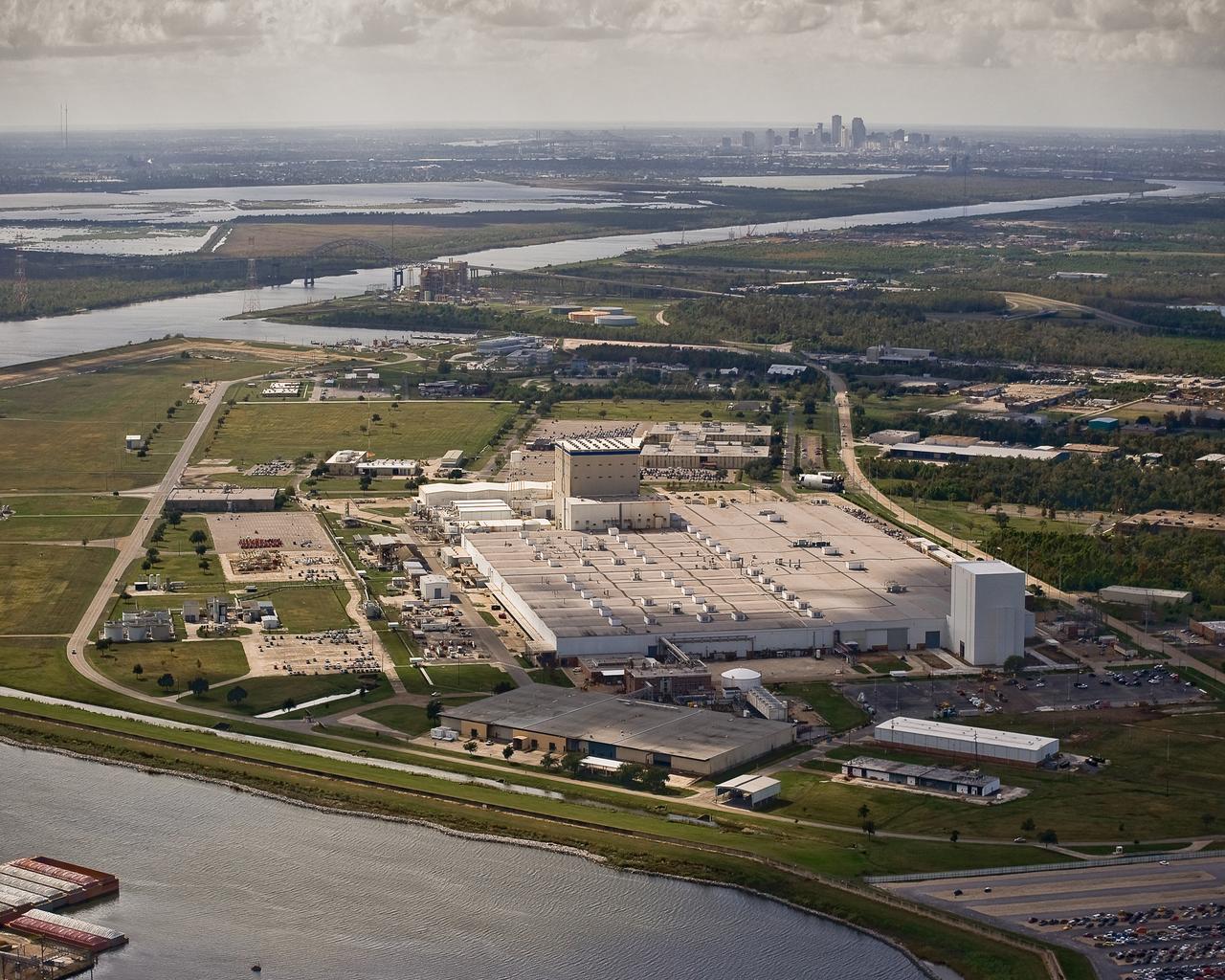
NASA's Michoud Assembly Facility with a view of New Orleans in the background.
NASA's Michoud Assembly Facility
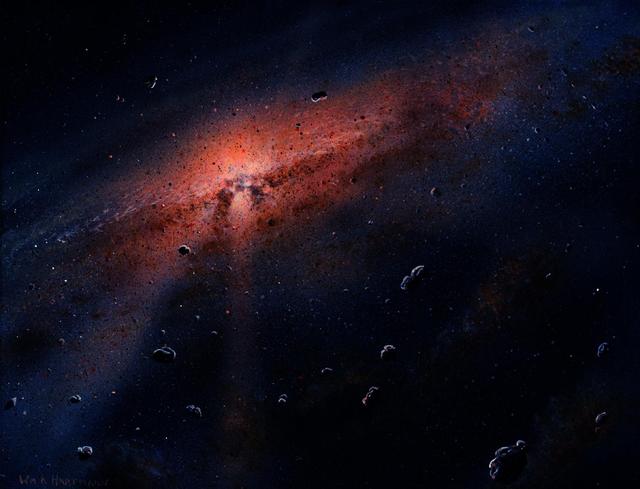
Artist rendition, part of the Dawn Mission Art series.  http://photojournal.jpl.nasa.gov/catalog/PIA19377
Hartmann Background
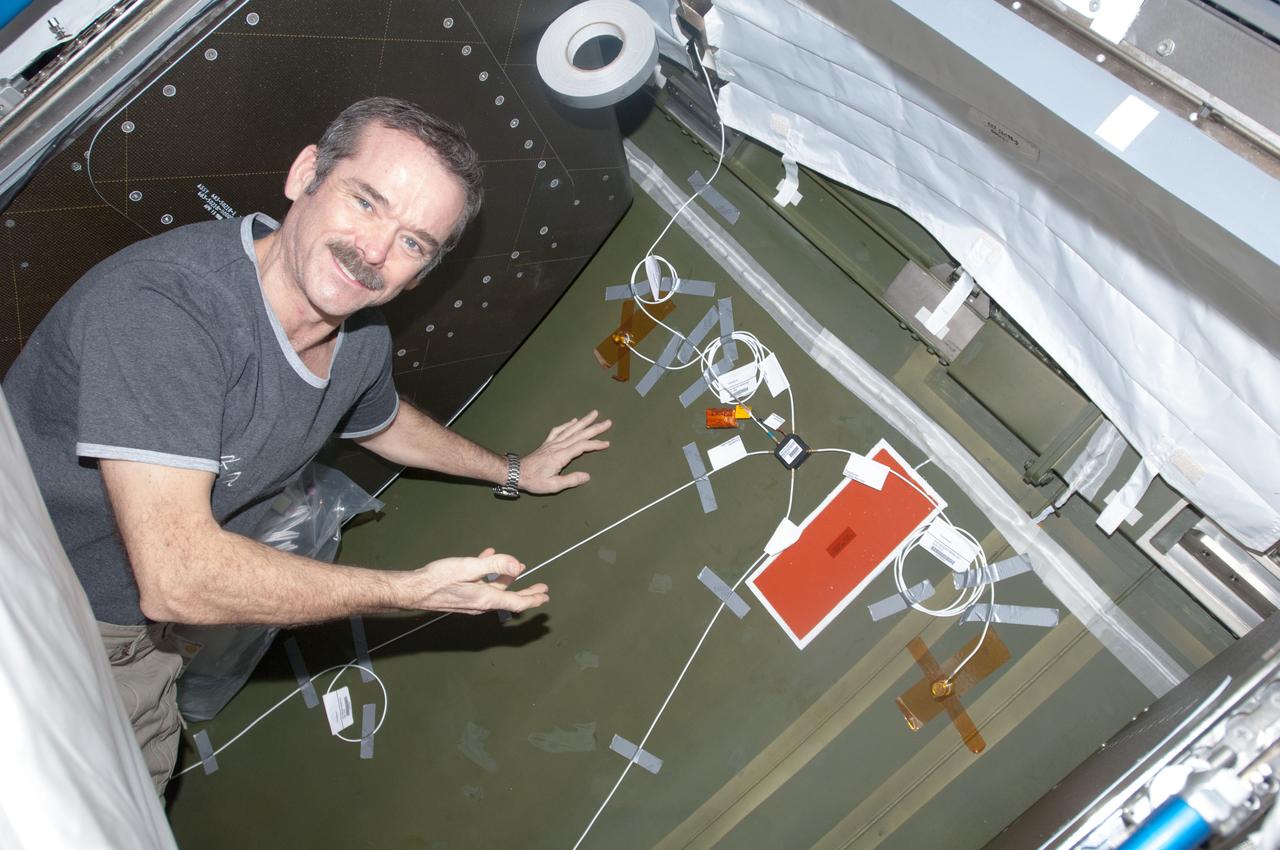
View of Canadian Space Agency (CSA) Chris Hadfield,Expedition 34 Flight Engineer (FE),installing Ultra-Sonic Background Noise Tests (UBNT) sensors behind rack in the U.S. Laboratory using the International Space Station (ISS) as Testbed for Analog Research (ISTAR) procedures.  These sensors detect high frequency noise levels generated by ISS hardware and equipment operating within the U.S. Laboratory.  Photo was taken during Expedition 34.
Hadfield installing UBNT Sensors in the U.S. Laboratory
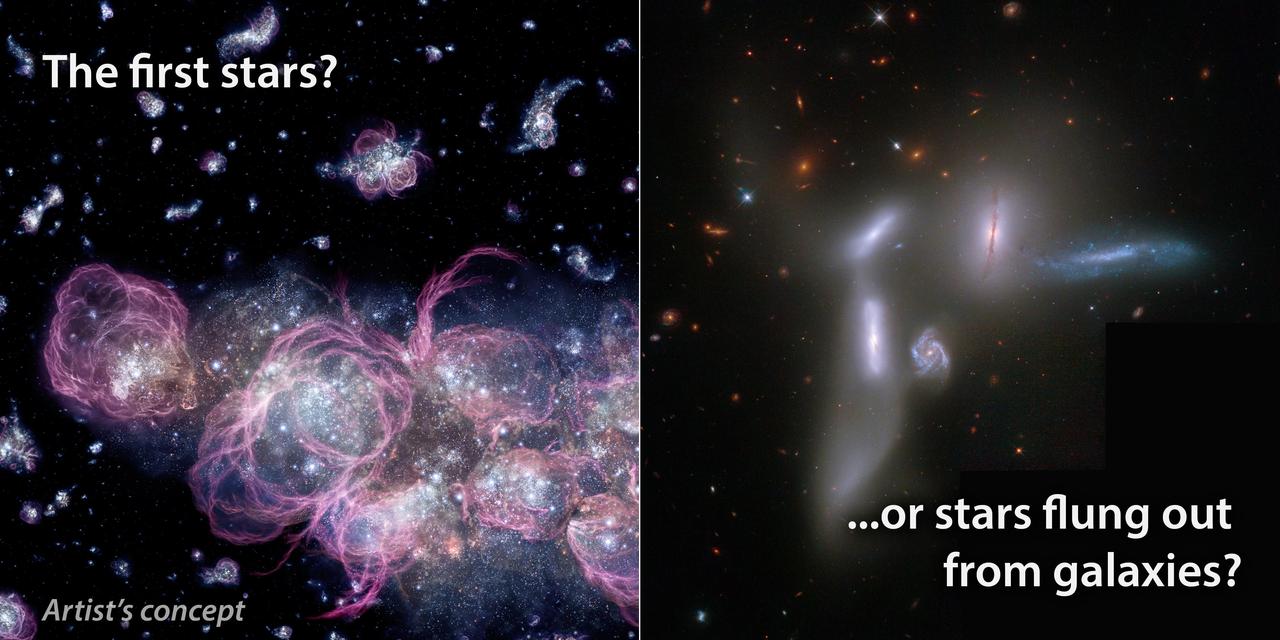
Our sky is filled with a diffuse background glow, known as the cosmic infrared background. Much of the light is from galaxies we know about, but previous Spitzer measurements have shown an extra component of unknown origin.
First Stars or Stray Stars? A Cosmic Infrared Mystery
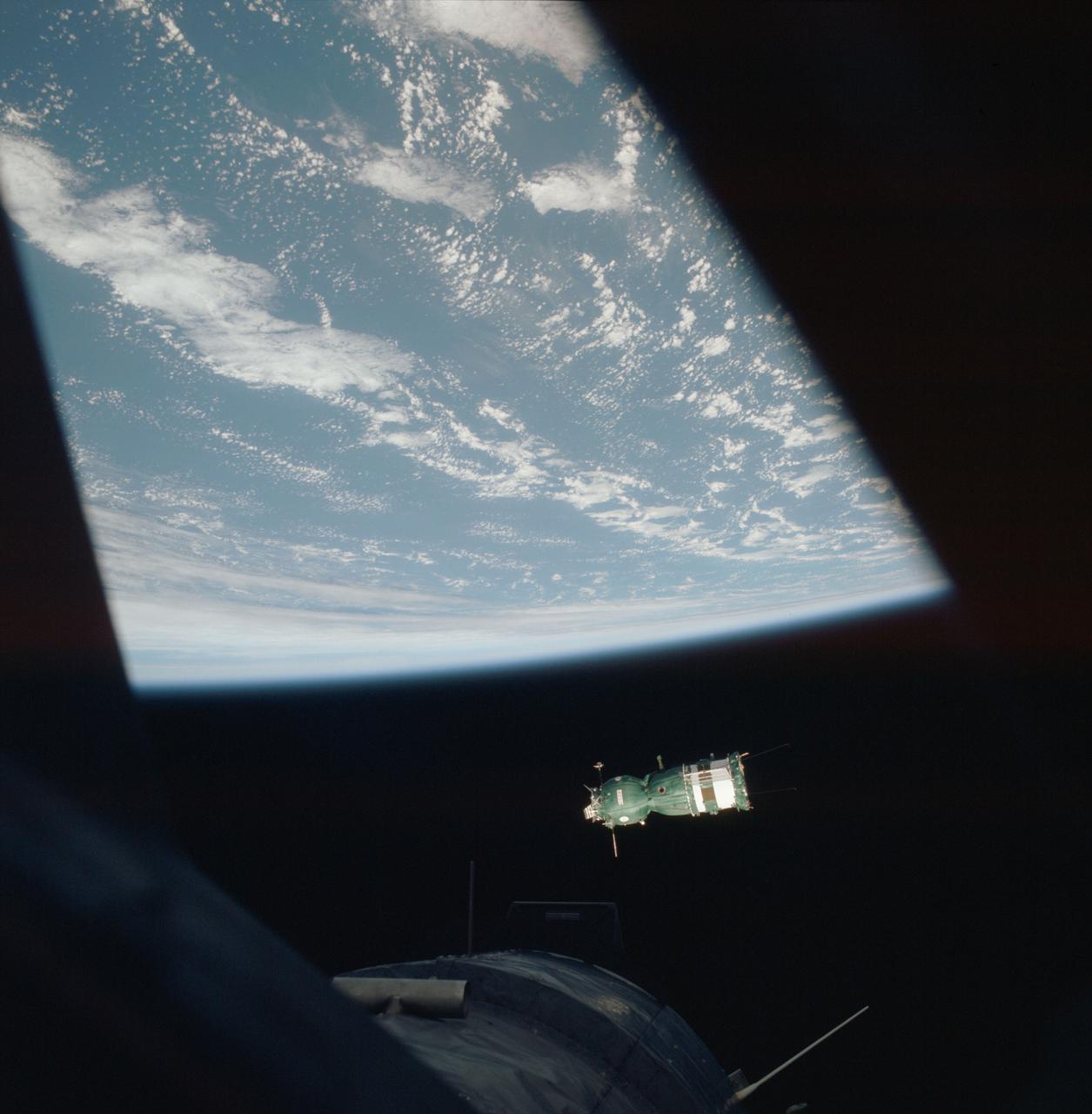
AST-02-096 (18 July 1975) --- This scene photograph from a rendezvous window of the American Apollo spacecraft in Earth orbit shows the Soviet Soyuz spacecraft contrasted against a black-sky background with a heavily cloud-covered Earth below. The three major components of the Soyuz are the spherical-shaped Orbital Module, the bell-shaped Descent Vehicle, the cylindrical-shaped Instrument Assembly Module. The docking system on the Orbital Module was specially designed to interface with the docking system on the Apollo's Docking Module. The ASTP astronauts and cosmonauts visited each other's spacecraft while the Soyuz and Apollo were docked in Earth orbit for two days.
Soviet Soyuz spacecraft contrasted against a black-sky background
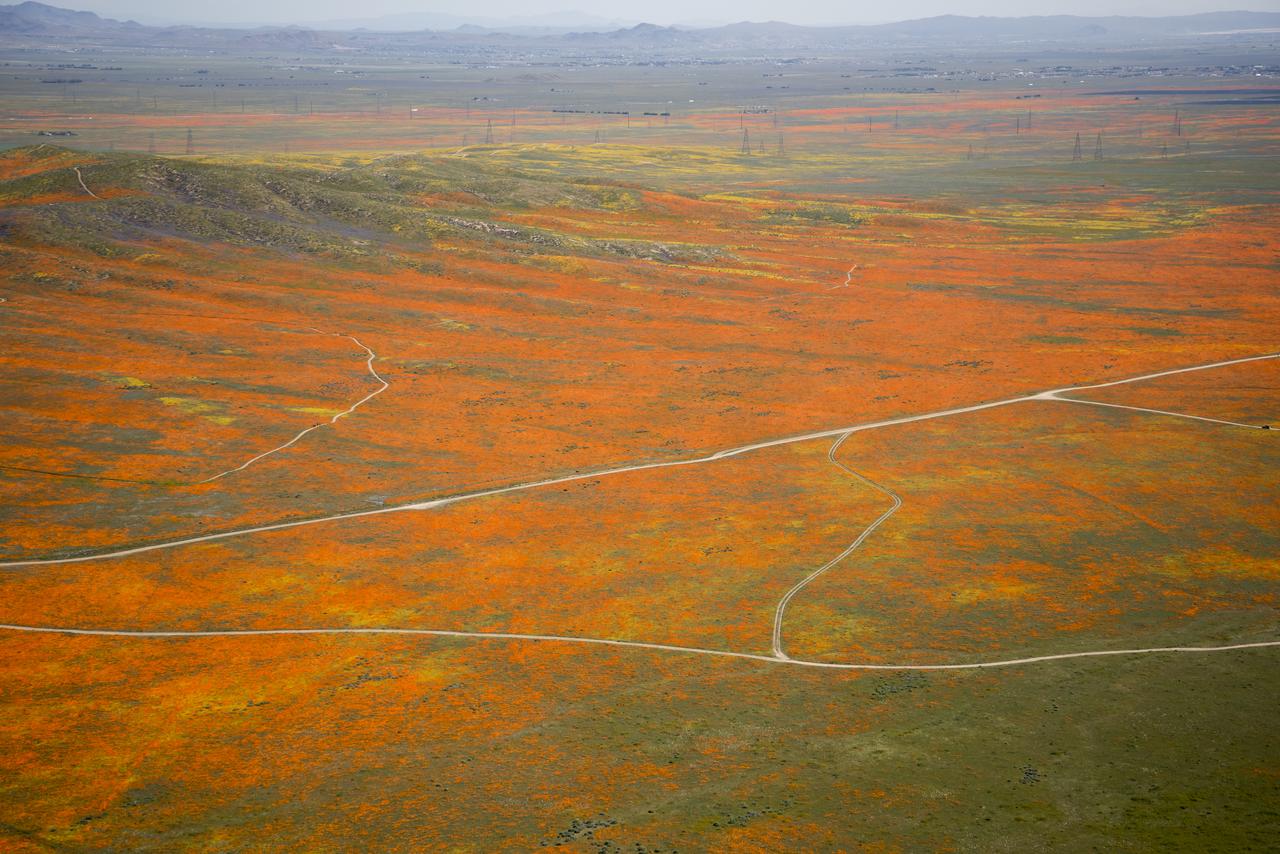
View from a NASA aircraft, TG-14, over the Superbloom of yellow wildflowers and orange poppies from the Antelope Valley in Southern California, Poppy Reserve and solar panels are in the background.
Rainy Winter Season Brings Abundance of Wildflowers and Poppies in Southern California’s Antelope Valley. The Poppy is the state flower.
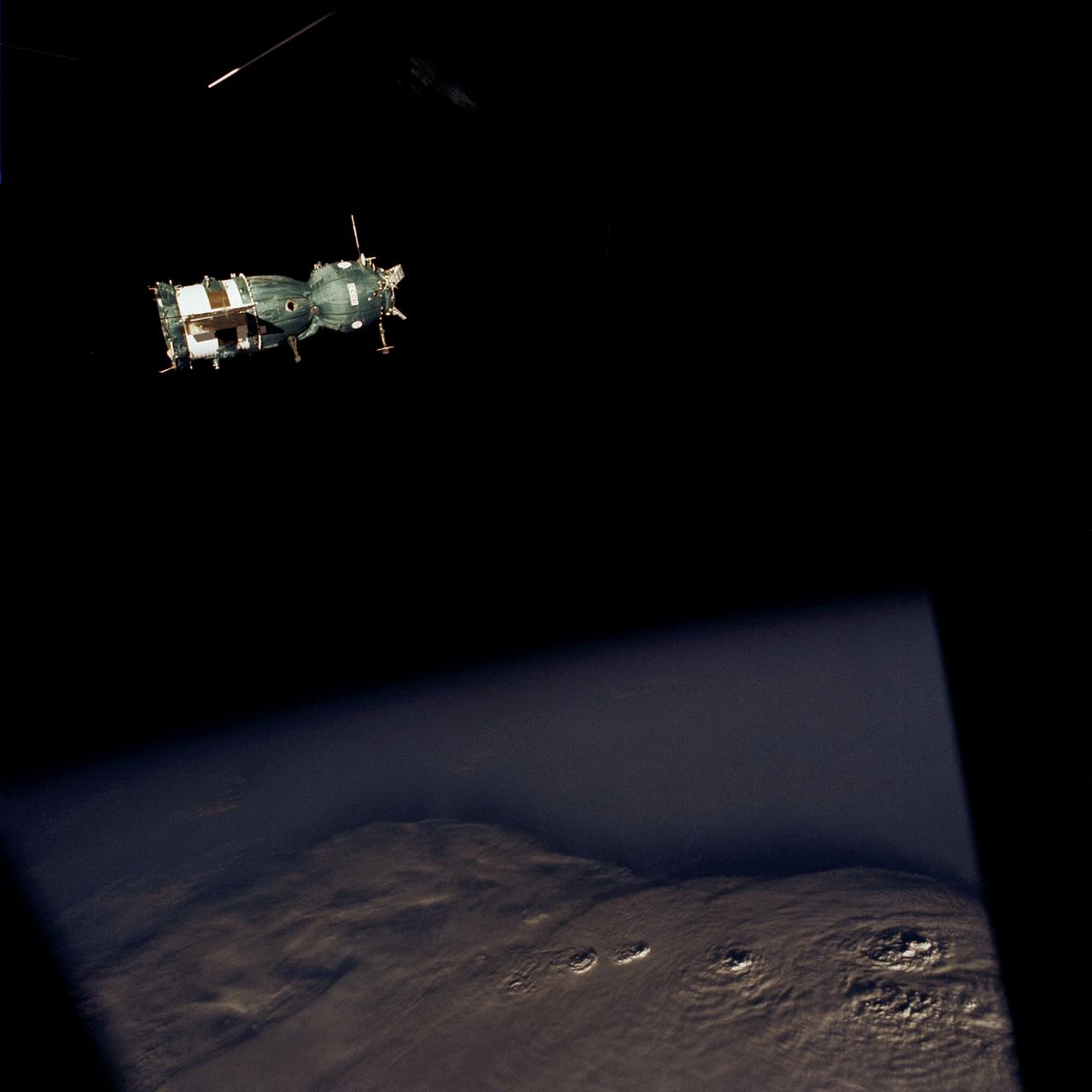
AST-02-093 (18 July 1975) --- This scene photographed with a hand-held 70mm camera from a rendezvous window of the American Apollo spacecraft in Earth orbit shows the Soviet Soyuz spacecraft contrasted against a black-sky background with Earth's horizon below.  The three major components of the Soyuz are the spherical-shaped Orbital Module (OM), the bell-shaped Descent Vehicle (DV) and the cylindrical-shaped instrument Assembly Module (AM). The docking system on the Orbital Module was specially designed to interface with the docking system on the Apollo's Docking Module (DM). The DM is visible very faintly at the bottom of the picture. The ASTP astronauts and cosmonauts visited each other's spacecraft while the Soyuz and Apollo were docked in Earth orbit for two days.
Soviet Soyuz spacecraft contrasted against a black-sky background
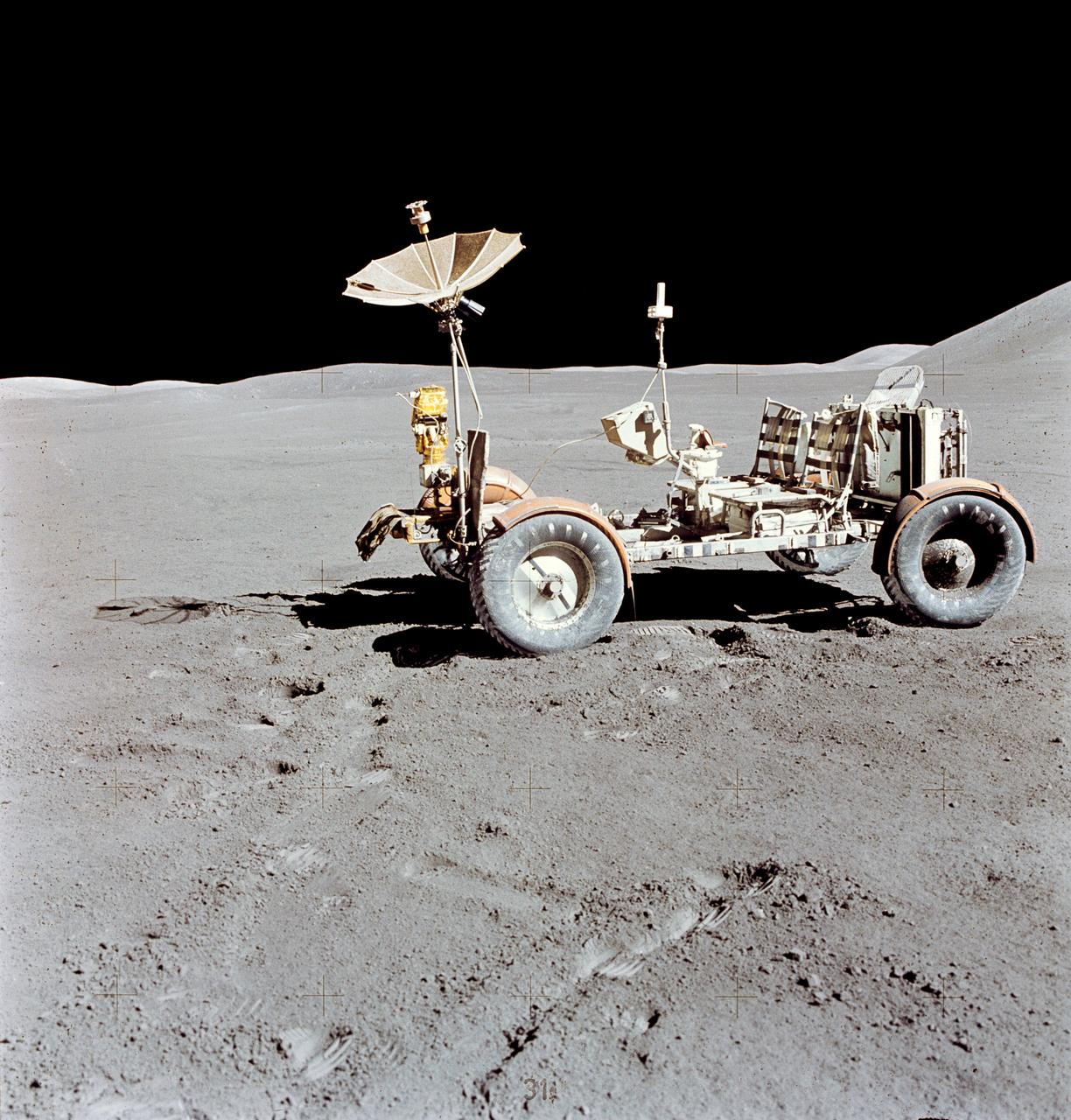
AS15-88-11901 (31 July-2 Aug. 1971) --- The Lunar Roving Vehicle (LRV) is photographed alone against the desolate lunar background during the third Apollo 15 lunar surface extravehicular activity (EVA) at the Hadley-Apennine landing site. This view is looking north. The west edge of Mount Hadley is at the upper right edge of the picture. Mount Hadley rises approximately 4,500 meters (about 4,765 feet) above the plain. The most distant lunar feature visible is approximately 25 kilometers (about 15.5 statute miles) away. While astronauts David R. Scott, commander; and James B. Irwin, lunar module pilot, descended in the Lunar Module (LM) "Falcon" to explore the moon, astronaut Alfred M. Worden, command module pilot, remained with the Command and Service Modules (CSM) in lunar orbit.
Lunar Roving Vehicle photographed against lunar background during EVA
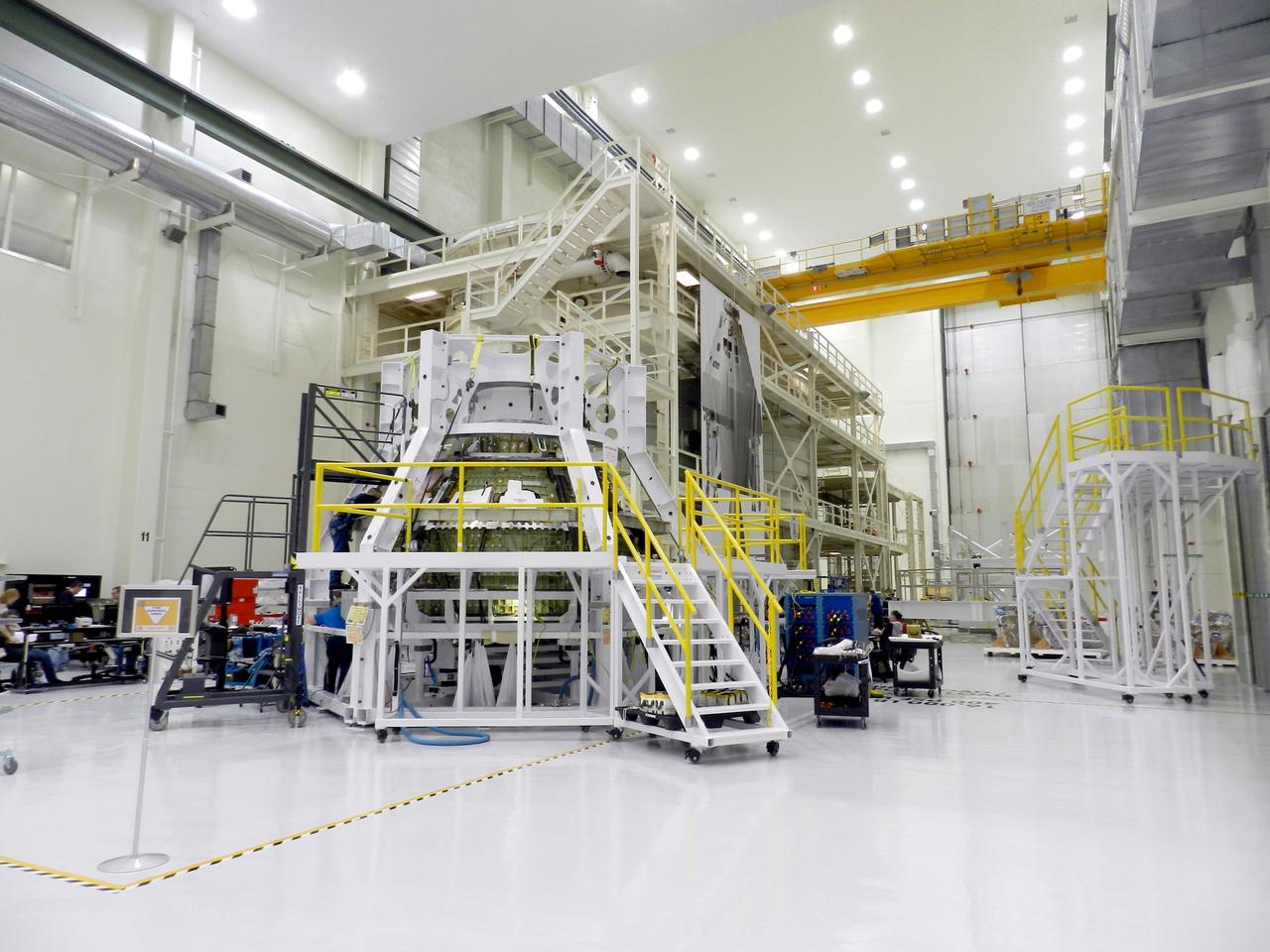
The Orion Exploration Flight Test-1 (EFT-1) crew module inside the Operations and Checkout (O&amp;C) Building at NASA's Kennedy Space Center in Florida on Feb. 26, 2013. Part of Batch image transfer from Flickr.
DSCN1579 - CM with Chambers in background
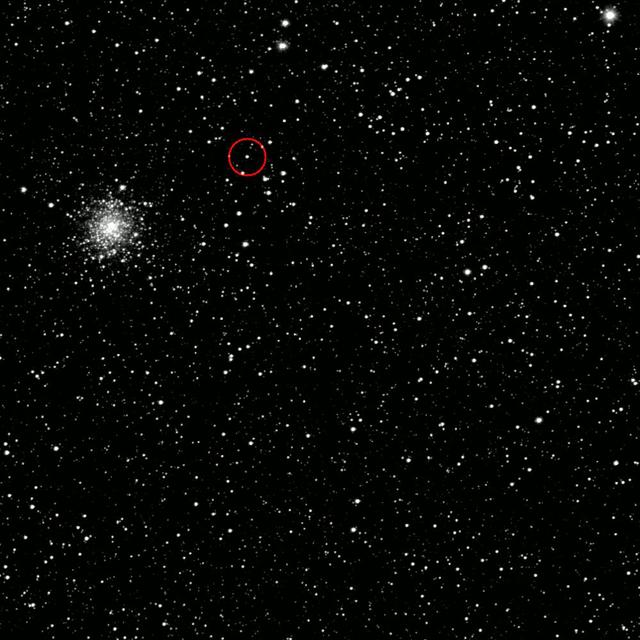
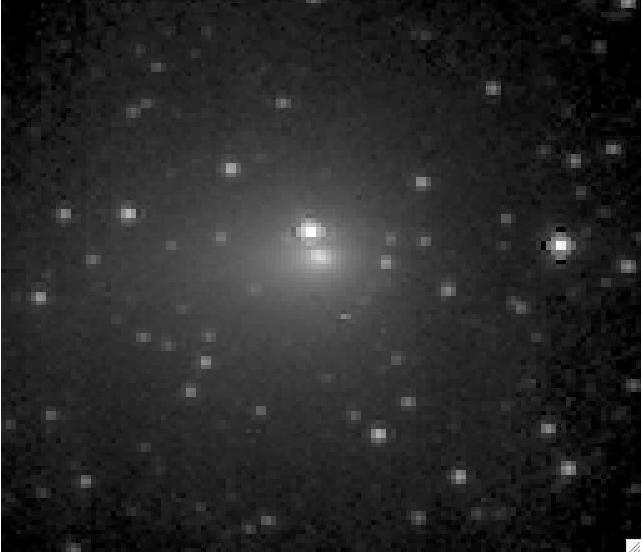
This still from a sequence of images shows comet 67P/Churyumov-Gerasimenko moving against the background star field.
Rosetta Comet Comes Alive
ESA Planck has imaged the most distant light we can observe, called the cosmic microwave background, with unprecedented precision.
Through the Universe Looking Glass
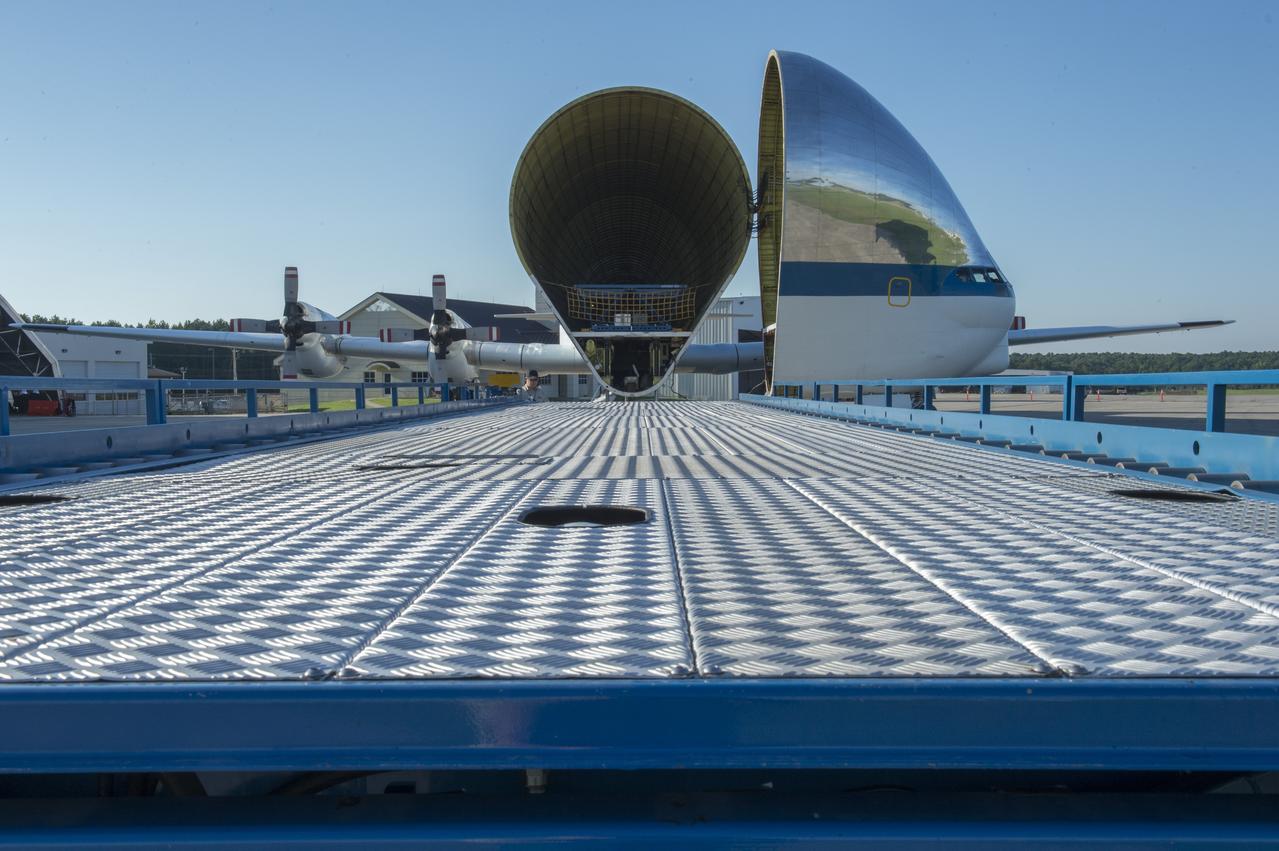
The platform which will be used to load the Orion stage adapter into NASA's Super Guppie aircraft is shown in the foreground with the Guppie aircraft in the background
MSFC-1700818
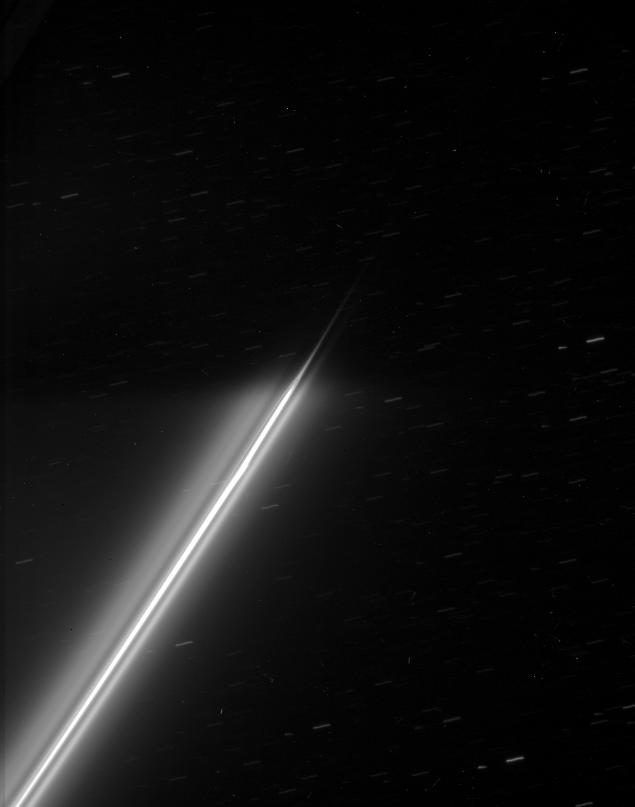
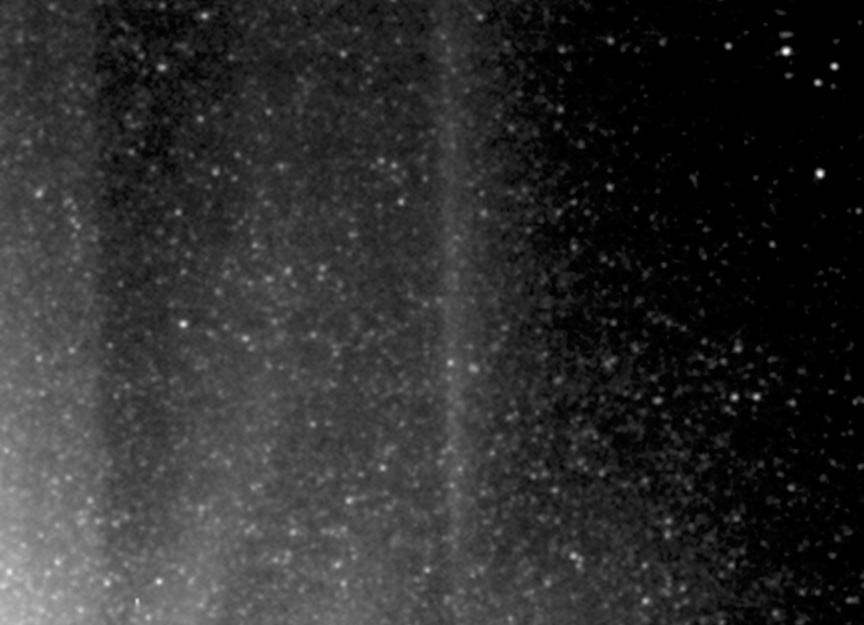
Stars trail across the background during this exposure, timed to capture the faint light from these D ring features
Rings in Orbit
In this artist's rendering of NASA's Spitzer Space Telescope in space, the background is shown in infrared light.  https://photojournal.jpl.nasa.gov/catalog/PIA23643
Spitzer Space Telescope (Illustration)
S90-27594 (November 1989) --- Manley L. "Sonny" Carter Jr., STS-33 mission specialist, wearing a Launch and Entry Suit (LES), poses in front of the space shuttle Discovery, Orbiter Vehicle (OV) 103 at the Kennedy Space Center (KSC) Launch Complex Pad 39B, at the 195 feet level elevator entrance at Pad 39B.  Visible in the background is the catwalk to OV-103's side hatch and the Atlantic Ocean.  Note:  Carter died April 5, 1991 at age 43, in a civil aviation accident.
STS-33 MS Carter on KSC LC Pad 39B 195 ft level with OV-103 in background
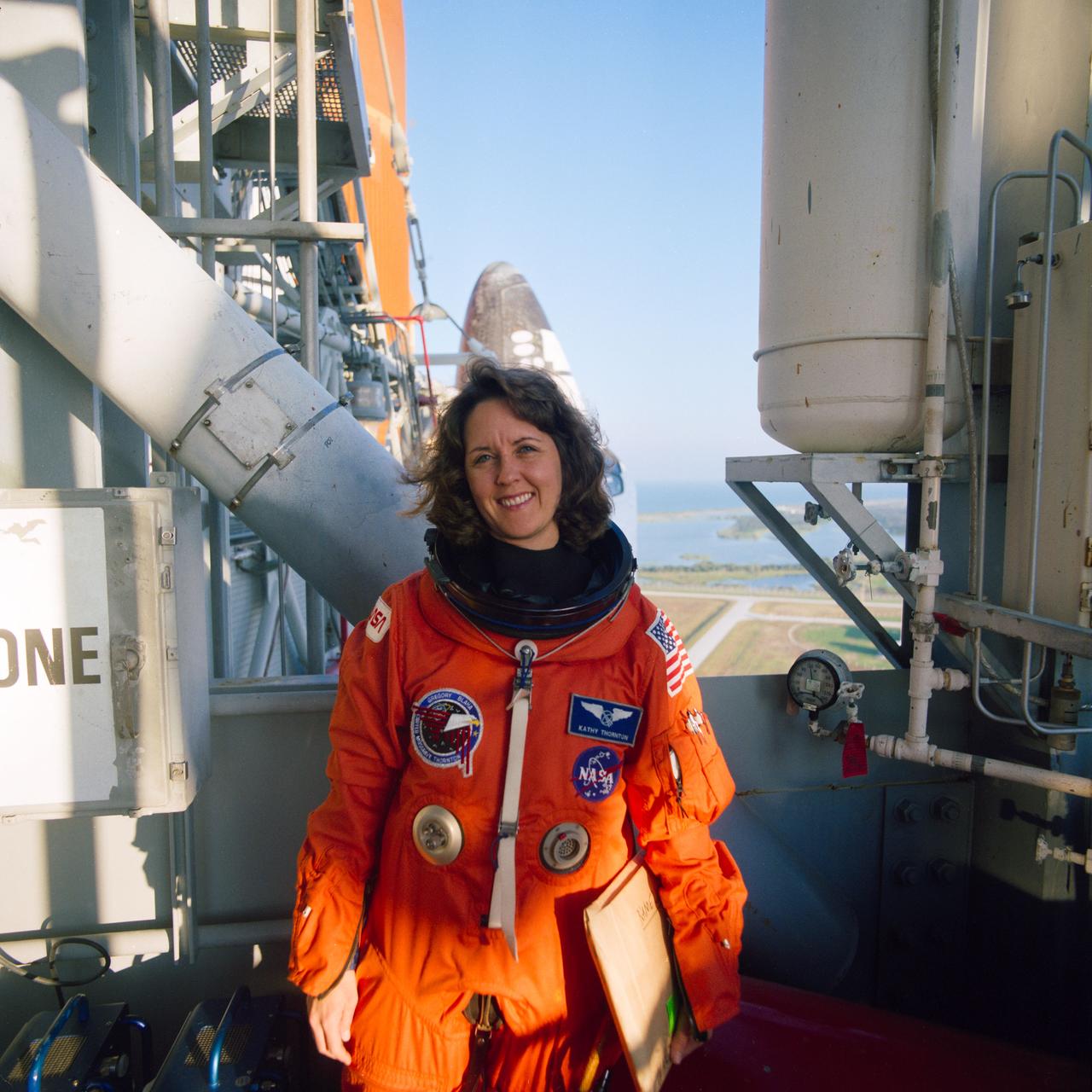
STS-33 Mission Specialist (MS) Kathryn C. Thornton, wearing launch and entry suit (LES) and holding file folder, poses in front of Discovery, Orbiter Vehicle (OV) 103, at the 195 ft level elevator entrance at Kennedy Space Center (KSC) Launch Complex (LC) Pad 39B. Visible in the background is the catwalk to OV-103's side hatch and the Atlantic Ocean.
STS-33 MS Thornton on KSC LC Pad 39B 195 ft level with OV-103 in background
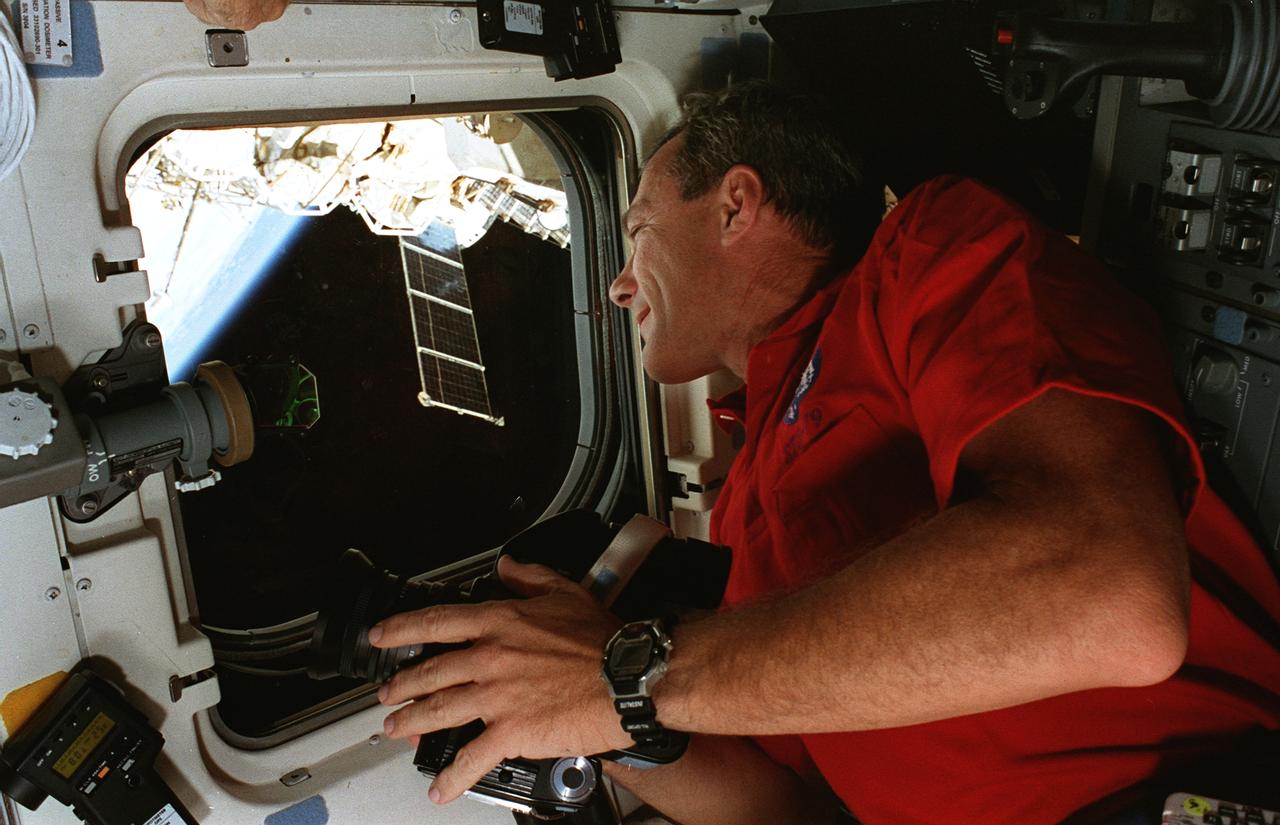
STS079-353-007 (16-26 Sept. 1996) --- Astronaut Terrence W. Wilcutt, on the Space Shuttle Atlantis' aft flight deck, takes pictures of Earth for study by Earth observations scientists at the Johnson Space Center (JSC).  Several components of the docked Russia's Mir Space Station can be seen in the background.  This photograph is one of fifteen 35mm frames (along with four 70mm frames) of still photography documenting the activities of NASA's STS-79 mission, which began with a September 16, 1996, liftoff from Launch Pad 39A the Kennedy Space Center (KSC) and ended with a landing at KSC on September 26, 1996.  Onboard for the launch were astronauts William F. Readdy, commander; Wilcutt, pilot; John E. Blaha, Jerome (Jay) Apt, Thomas D. Akers and Carl E. Walz, all mission specialists.  On flight day 4, the crew docked with Russia's Mir Space Station.  Shannon W. Lucid, who had spent six months aboard Mir, switched cosmonaut guest researcher roles with Blaha.  The latter joined fellow Mir-22 crew members Valeri G. Korzun, commander, and Aleksandr Y. Kaleri, flight engineer.
STS-79 crew at aft flight deck overhead windows with Mir in background
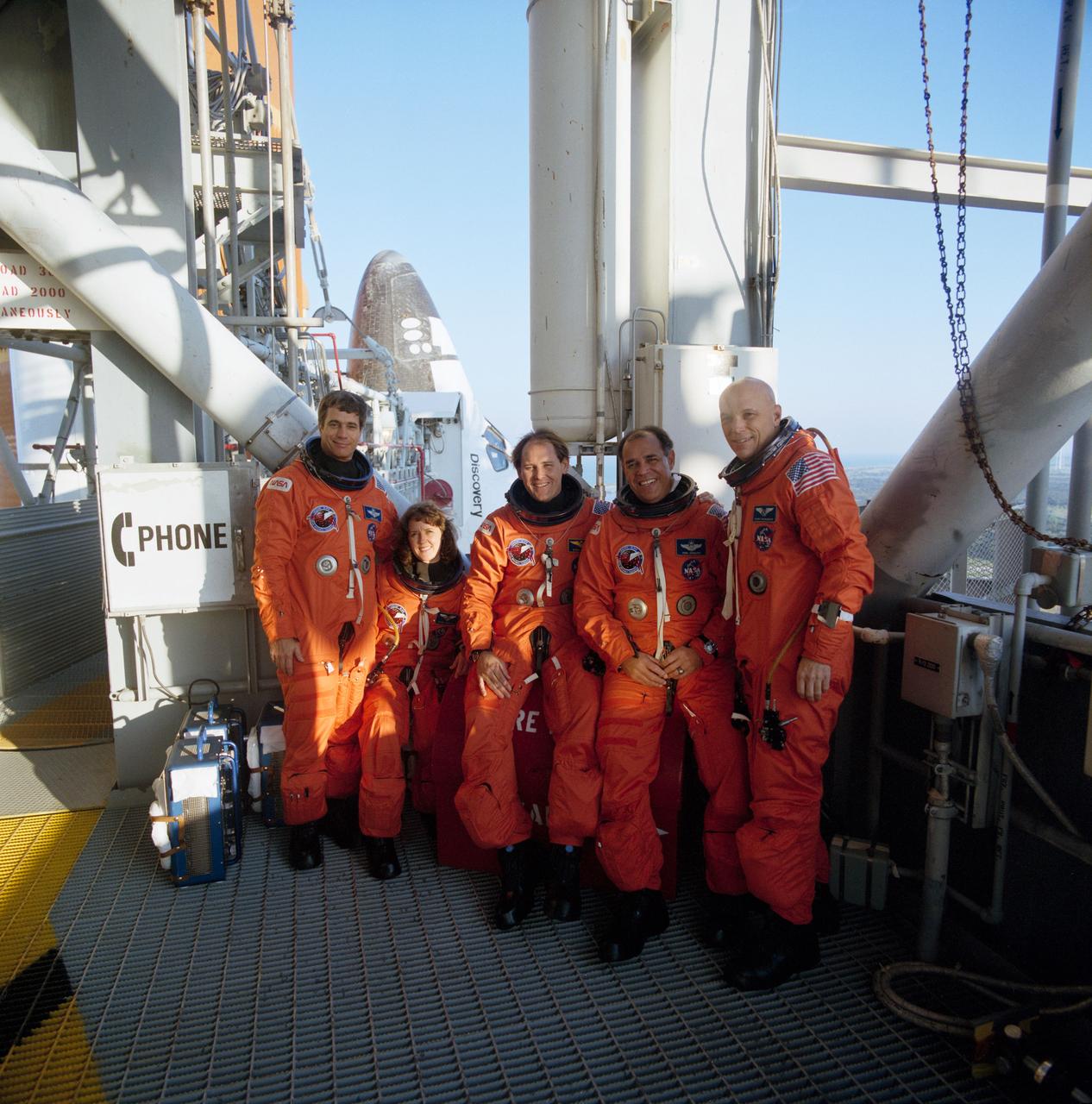
S90-27591 (23 Jan 1990) --- STS-33 crewmembers, wearing launch and entry suit (LES), take a break from training activities to pose for group portrait in front of Discovery, Orbiter Vehicle (OV) 103, at the 195 ft level elevator entrance at Kennedy Space Center (KSC) Launch Complex (LC) Pad 39B. Left to right are Pilot John E. Blaha, Mission Specialist (MS) Kathryn C. Thornton, MS Manley L. Carter, Jr, Commander Frederick D. Gregory, and MS F. Story Musgrave. Visible in the background is the catwalk to OV-103's side hatch.
STS-33 crewmembers on KSC LC Pad 39B 195 ft level with OV-103 in background
Observations from NASA Cosmic Infrared Background Experiment, or CIBER, have shown a surprising surplus of infrared light filling the spaces between galaxies.
Measuring the Tip of Cosmic Icebergs
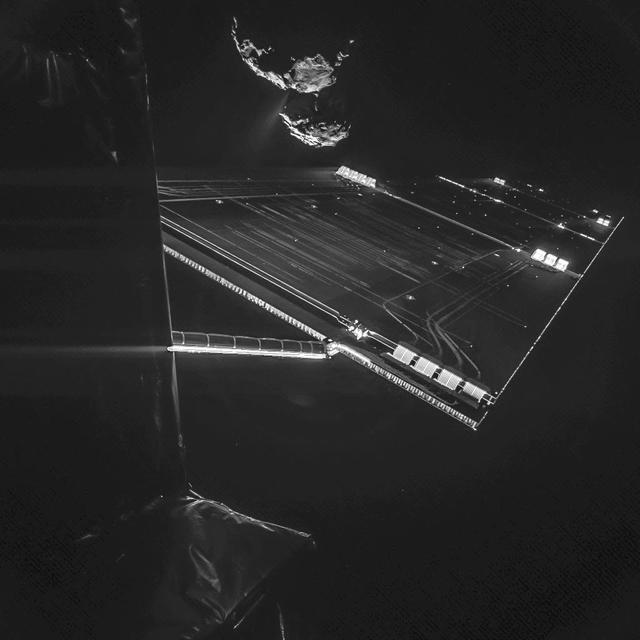
A composite image from a camera on ESA Rosetta mission Philae comet lander shows a solar array, with comet 67P/Churyumov-Gerasimenko in the background.
Rosetta Selflessly Offers Beautiful Comet Selfie
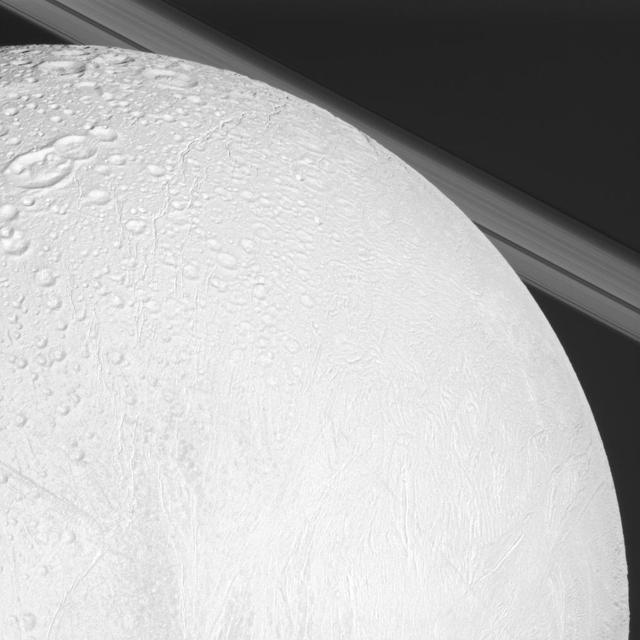
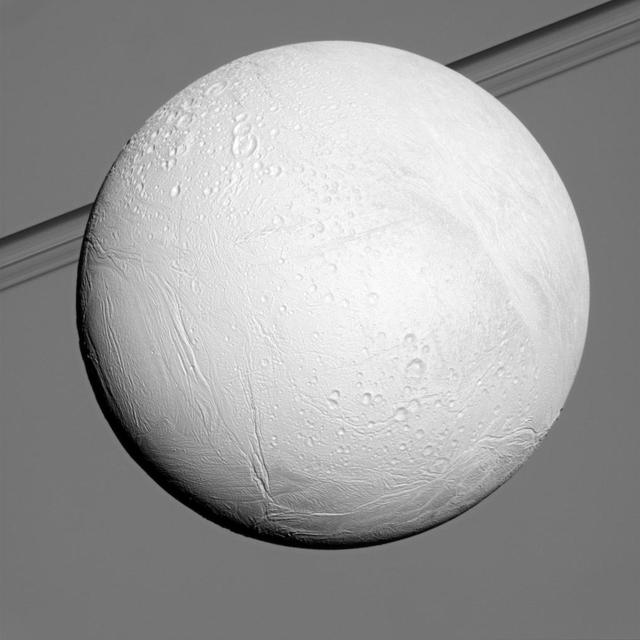
NASA Cassini spacecraft looks over cratered and tectonically deformed terrain on Saturn moon Enceladus as the camera also catches a glimpse of the planet rings in the background.
Looking Over Enceladus
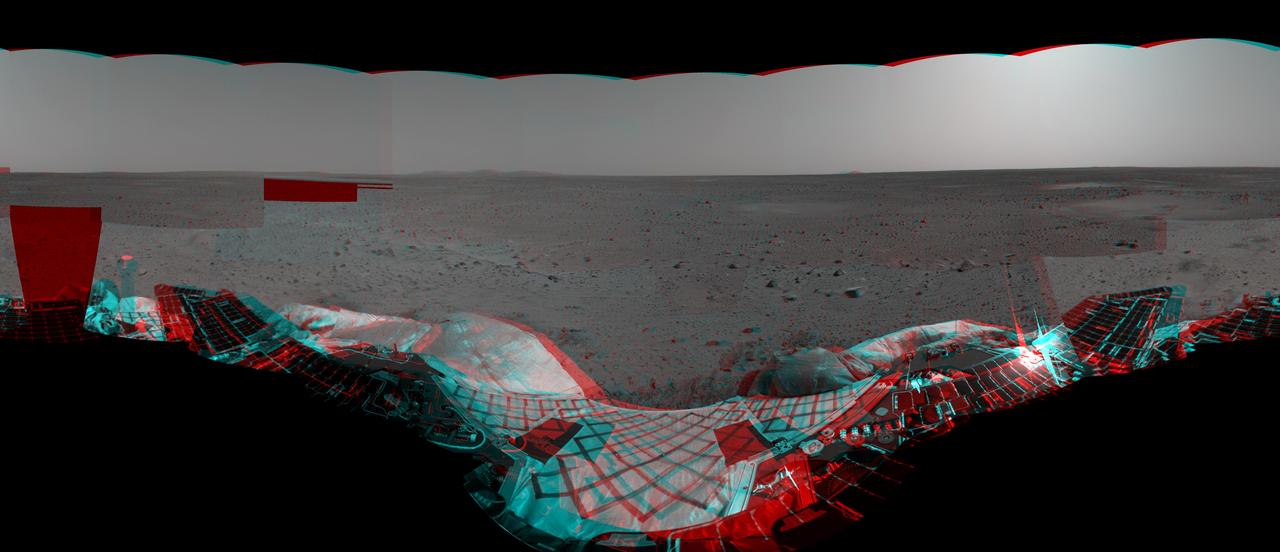
This anaglyph from NASA Mars Exploration Rover, Spirit, shows the rover lander and, in the background, the surrounding martian terrain. 3D glasses are necessary to view this image.
Martian Landscape in 3-D
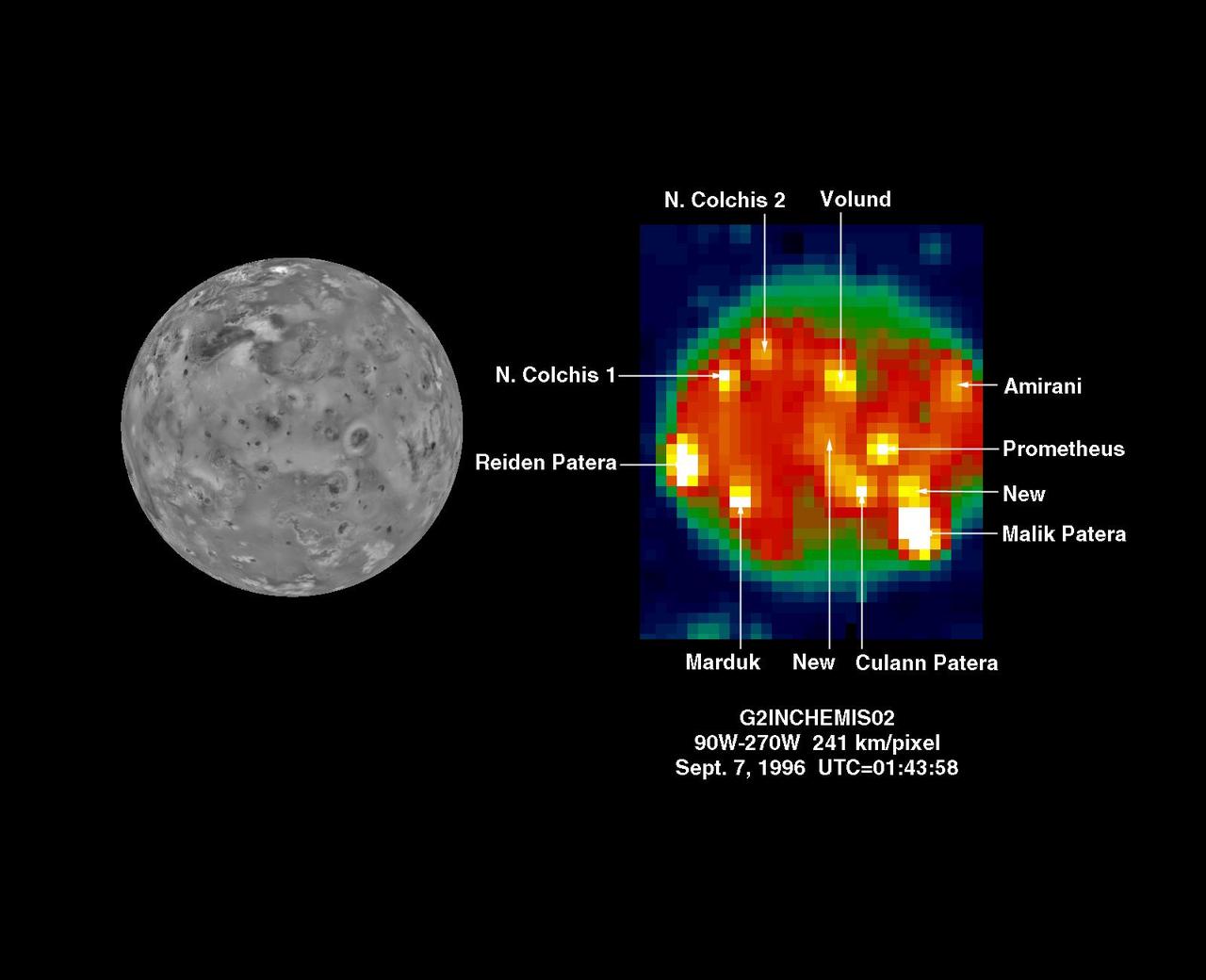
This is an image of Io, taken by NASA Galileo spacecraft during the G2 encounter in September 1996. This is a dayside image of Io on the right against the clouds of Jupiter the blue background.
NIMS: hotspots on Io during G2 continued
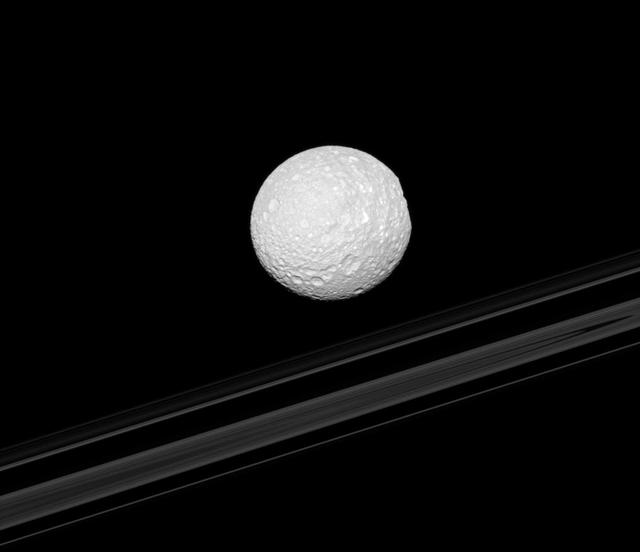
The right-hand limb of Saturn moon Mimas appears flattened as Herschel Crater is viewed edge-on in this image from NASA Cassini spacecraft. The planet rings are in the background.
Mimas Flat Spot
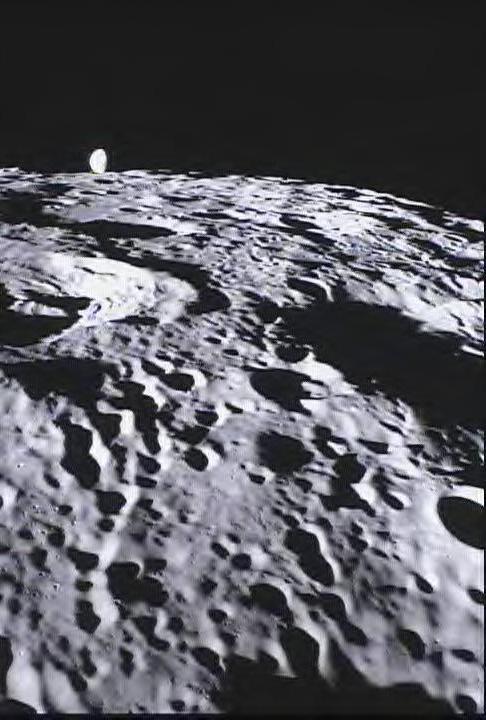
This image of the far side of the lunar surface, with Earth in the background, is of crater De Forest and was taken by NASA MoonKAM system onboard the Ebb spacecraft.
MoonKAM Looks Homeward
Saturn tiny moon Atlas, just to the left of the center of the image, appears almost indistinguishable from the background stars seen in this image captured by NASA Cassini spacecraft.
Lost Among Stars
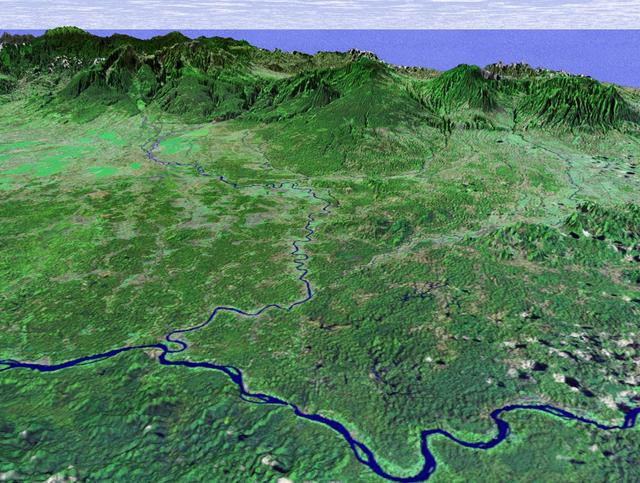
This perspective view shows the northern coastal plain of Costa Rica with the Cordillera Central, composed of a number of active and dormant volcanoes, rising in the background.
SRTM Perspective View with Landsat Overlay: Costa Rica Coastal Plain
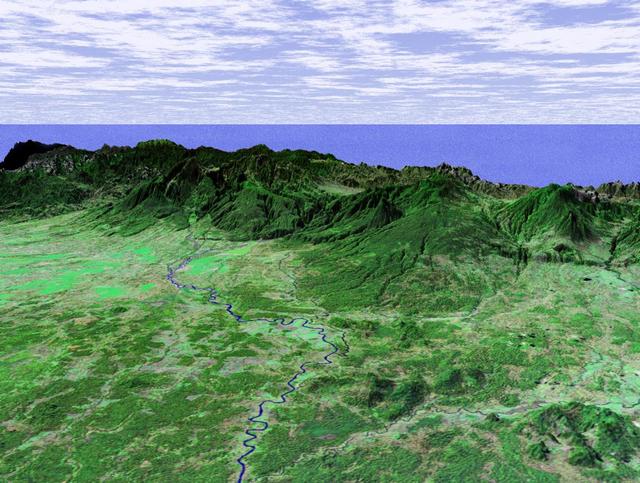
This perspective view taken in February 2000 from NASA Landsat and SRTM shows the Caribbean coastal plain of Costa Rica, with the Cordillera Central rising in the background.
Perspective View with Landsat Overlay, Costa Rica
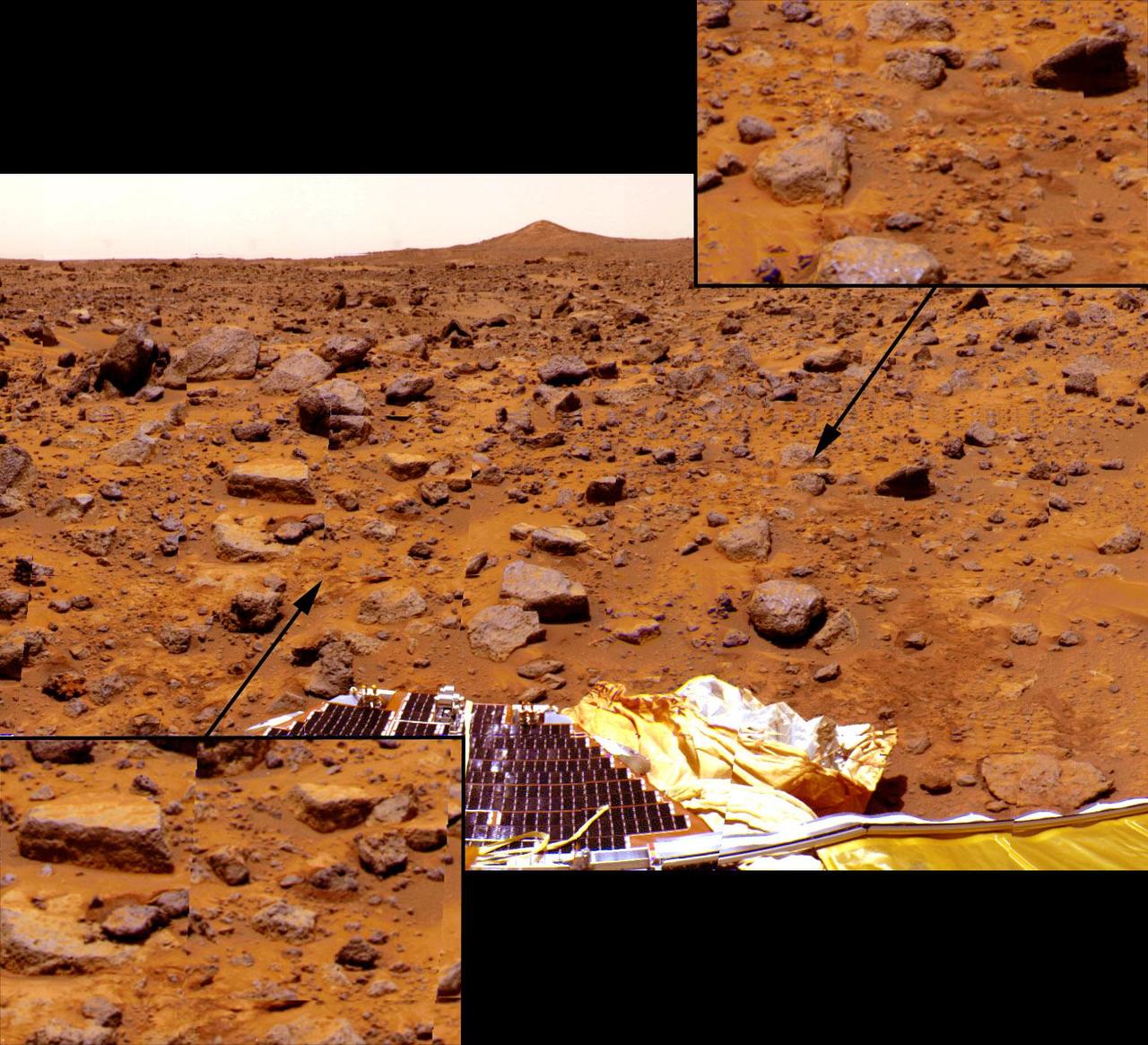
A close up of NASA Sojourner as it placed its Alpha Proton X-Ray Spectrometer APXS upon the surface of the rock Yogi. Distortion in the background is due to parallax.
Airbag Roll Marks & Displaced Rocks and Soil
The strands of Saturn F ring disappear into the darkness of the planet shadow. Background stars make trails across the sky during the long exposure
Into the Shadow
This is an illustration of a planet that is four times the mass of Jupiter and orbits 5 billion miles from a brown-dwarf companion the bright red object seen in the background.
Artist View of a Super-Jupiter around a Brown Dwarf 2M1207
This graph shows the temperature differences in the oldest light in the universe, called the cosmic microwave background, detected by ESA Planck at different distances apart on the sky.
The Universe, Summed Up in a Squiggly Line
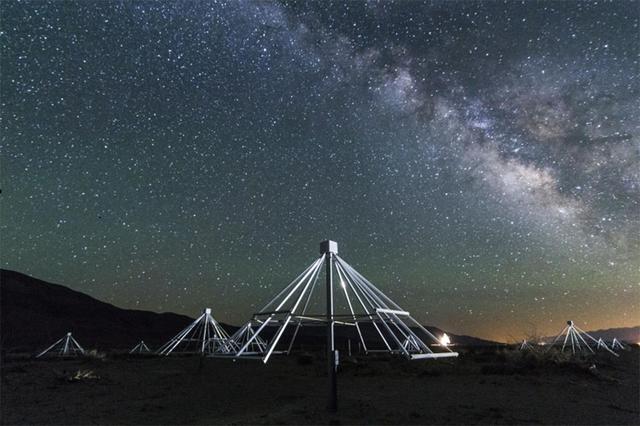
A nighttime shot shows some of the antennas of the Owens Valley Long Wavelength Array in California, with the center of our galaxy in the background.  A video can be seen at https://www.youtube.com/watch?v=vXvHqyOaJrU&feature=youtu.be.   http://photojournal.jpl.nasa.gov/catalog/PIA19336  Copyright: Gregg Hallinan
Scanning the Radio Sky
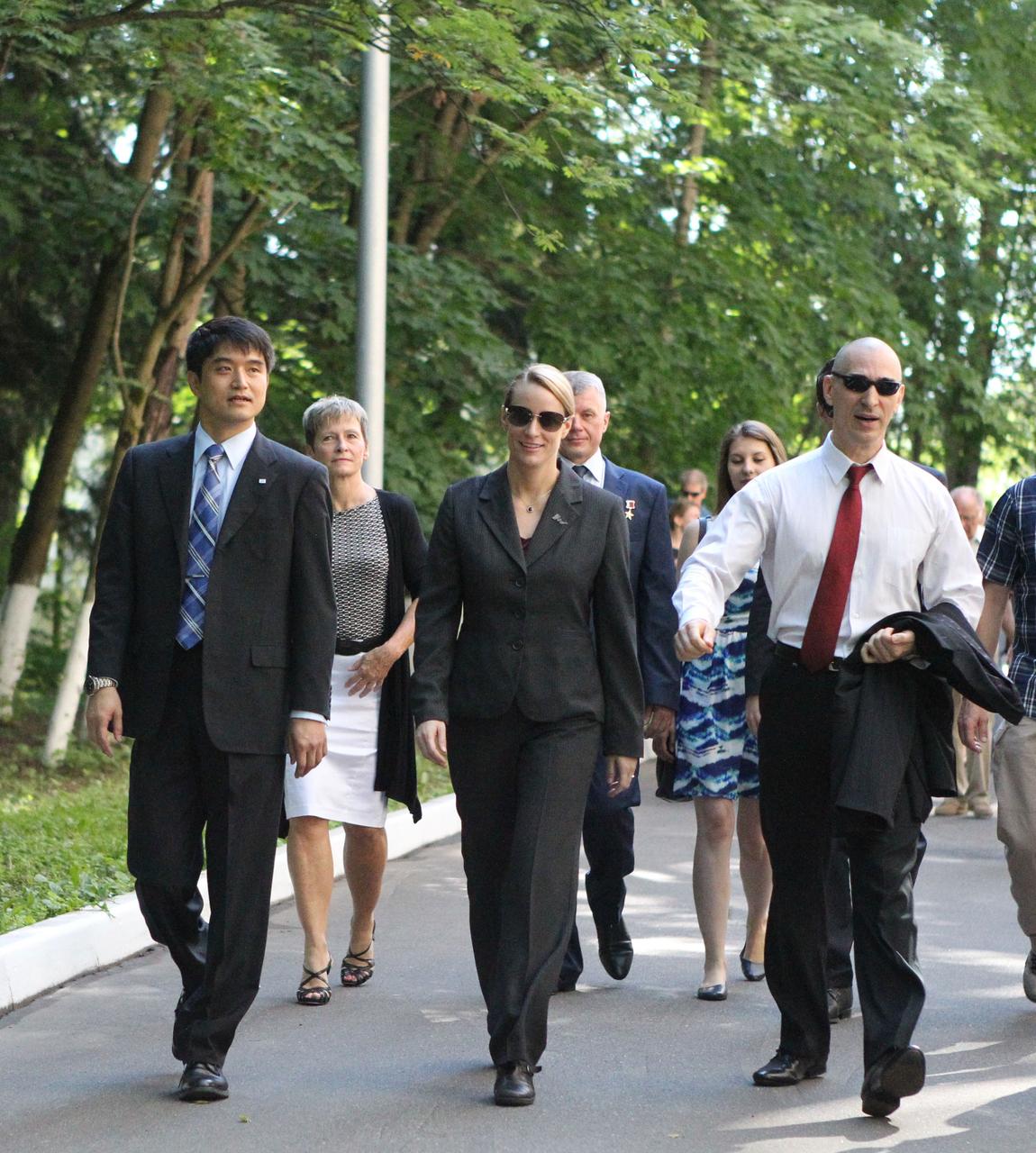
At the Gagarin Cosmonaut Training Center in Star City, Russia, ISS Expedition 48-49 prime crewmembers Takuya Onishi of the Japan Aerospace Exploration Agency (left), Kate Rubins of NASA (center) and Anatoly Ivanishin of Roscosmos (right) walk to their bus June 24 as they departed for their launch site at the Baikonur Cosmodrome in Kazakhstan. In the background on the left is backup crewmember Peggy Whitson of NASA and in the background center is backup crewmember Oleg Novitskiy of Roscosmos. Rubins, Ivanishin and Onishi will launch July 7 from the Baikonur Cosmodrome in Kazakhstan on the Soyuz MS-01 spacecraft for a planned four-month mission on the International Space Station.  NASA/Stephanie Stoll
At the Gagarin Cosmonaut Training Center in Star City, Russia, ISS Expedition 48-49 prime crewmembers Takuya Onishi of the Japan Aerospace Exploration Agency (left), Kate Rubins of NASA (center) and Anatoly Ivanishin of Roscosmos (right) walk to their bus June 24 as they departed for their launch site at the Baikonur Cosmodrome in Kazakhstan. In the background on the left is backup crewmember Peggy Whitson of NASA and in the background center is backup crewmember Oleg Novitskiy of Roscosmos. Rubins, Ivanishin and Onishi will launch July 7 from the Baikonur Cosmodrome in Kazakhstan on the Soyuz MS-01 spacecraft for a planned four-month mission on the International Space Station...NASA/Stephanie Stoll.
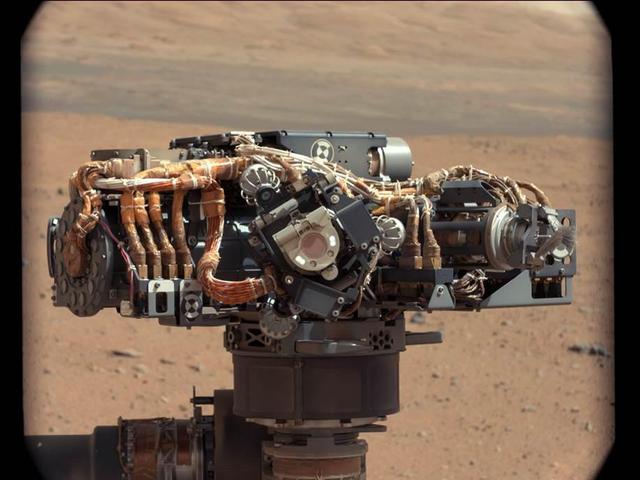
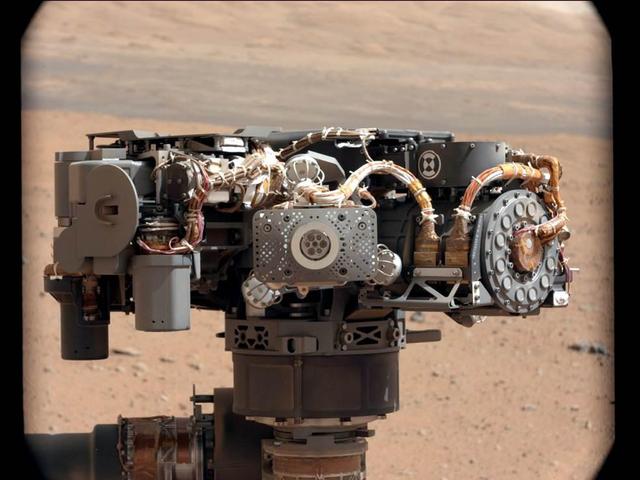
This image shows the Mars Hand Lens Imager MAHLI on NASA Curiosity rover, with the Martian landscape in the background. The image was taken by Curiosity Mast Camera on the 32nd Martian day, or sol, of operations on the surface.
Hello, MAHLI
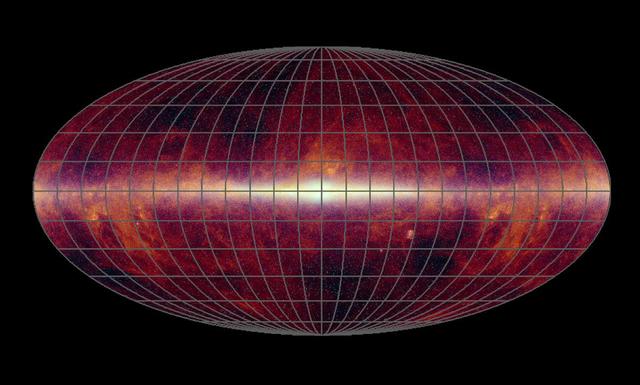
This image is an all-sky infrared map consisting of data taken by previous missions: the Infrared Astronomical Satellite; NASA Cosmic Background Explorer; and the Two-Micron All-Sky Survey.
WISE Eyes the Whole Sky
This image shows one of the NASA detectors from the BICEP2 project, developed in collaboration with the NSF. The sensors were used to make the first detection of gravitational waves in the ancient background light from the early universe.
Detector Suspended in Free Space
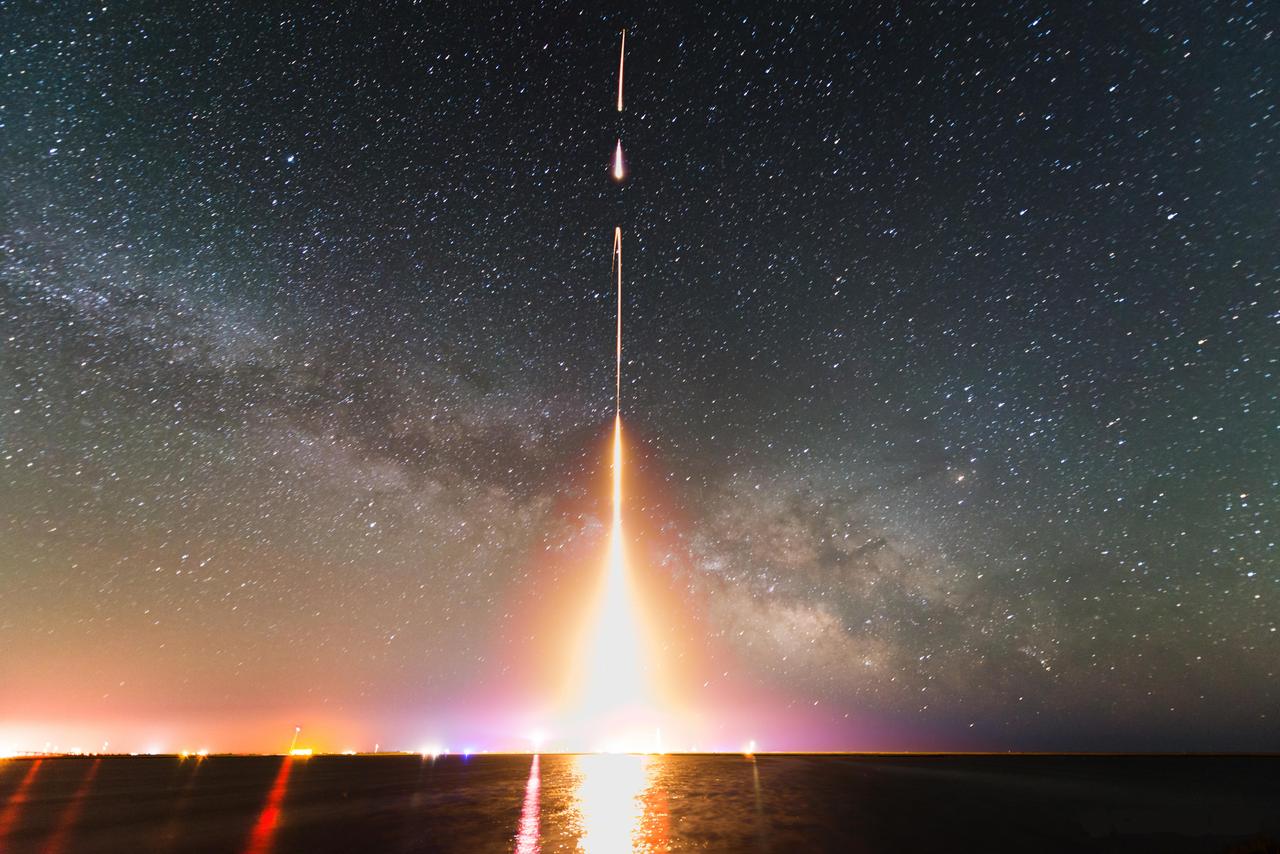
A time-lapse photograph of the CIBER rocket launch, taken from NASA Wallops Flight Facility in Virginia in 2013. This was the last of four launches of the Cosmic Infrared Background Experiment CIBER.
CIBER Launch
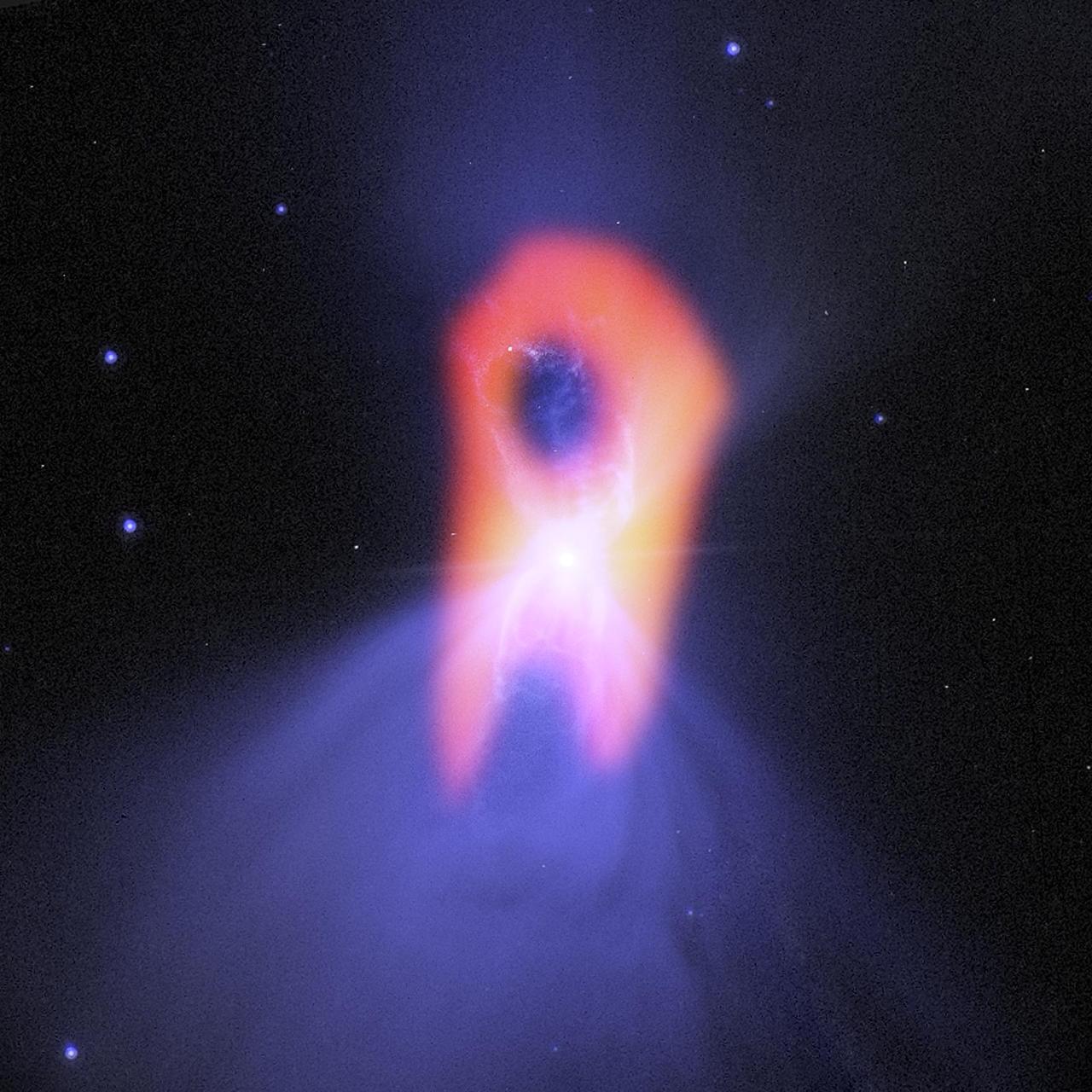
The Boomerang nebula, called the coldest place in the universe, reveals its true shape to the Atacama Large Millimeter/submillimeter Array ALMA telescope. The background blue structure, is seen in visible light by NASA Hubble Space Telescope.
Ghostly Boomerang
This image shows the Alpha Particle X-Ray Spectrometer APXS on NASA Curiosity rover, with the Martian landscape in the background. This image let researchers know that the APXS instrument had not become caked with dust during Curiosity landing.
Portrait of APXS on Mars
This image from NASA EPOXI mission shows Hartley 2 moving across the background field of stars. The coma, or cloud of gas and dust around the comet, expands and brightens over this time period. Animation available at the Photojournal.
Hartley 2 on the Move
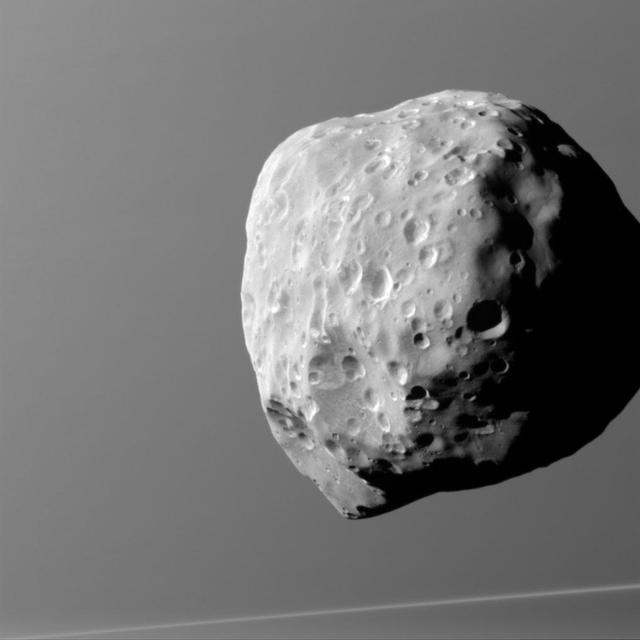
Epimetheus, seen here by NASA Cassini spacecraft, with Saturn in the background, is lumpy and misshapen, thanks in part to its size and formation process. Bombardment over the eons has left this tiny moon surface heavily pitted.
Hard Knock Life
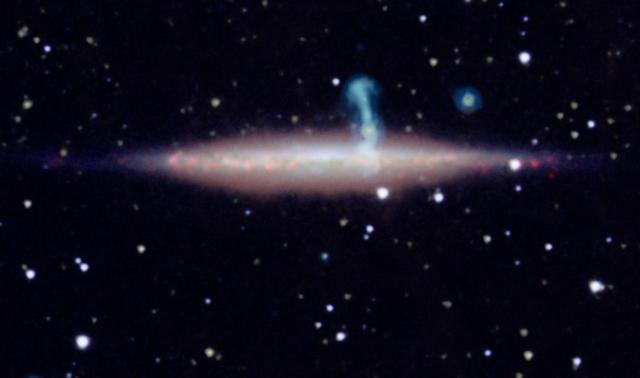
New detailed radio data from the NRAO Jansky Very Large Array VLA revealed that the large perpendicular extension of UGC 10288 halo blue is really a distant background galaxy with radio jets.
Two Galaxies Masquerading as One
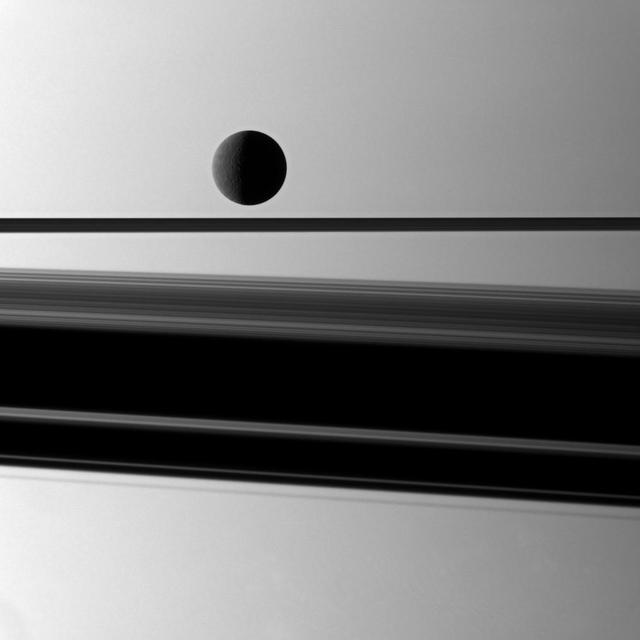
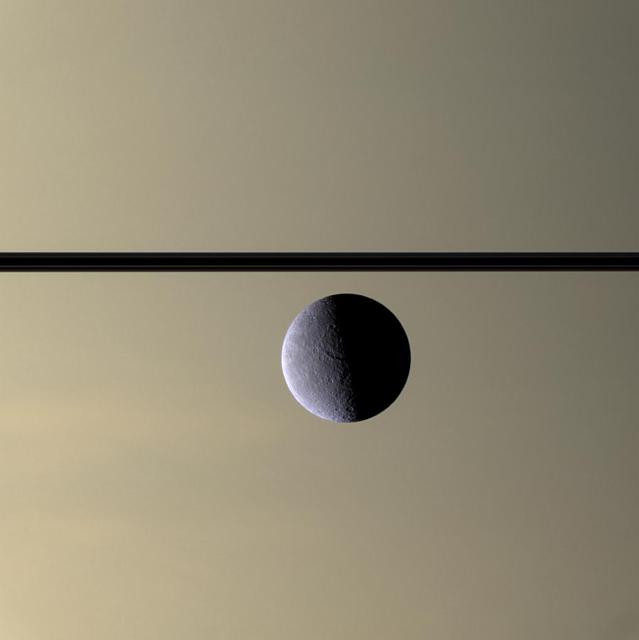
The Cassini spacecraft looks toward Rhea cratered, icy landscape with the dark line of Saturn ringplane and the planet murky atmosphere as a background. Rhea is Saturn second-largest moon, at 1,528 kilometers 949 miles across.
Icy Profile
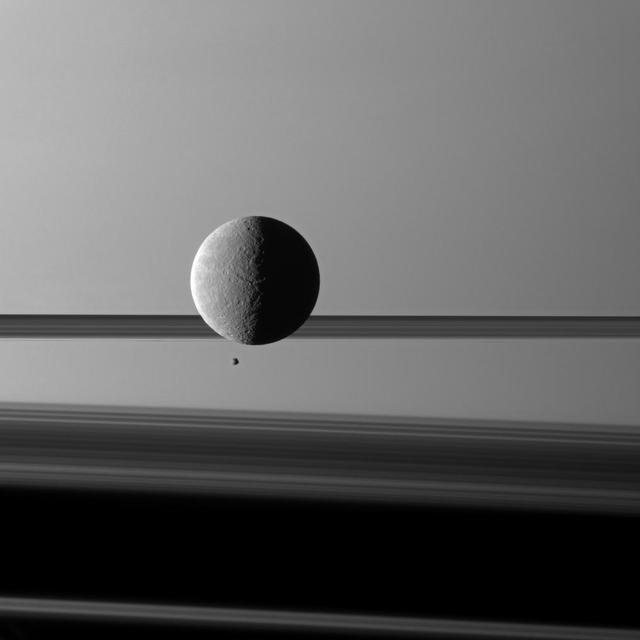
Saturn moon Rhea looms over a smaller and more distant Epimetheus against a striking background of planet and rings. The two moons arent actually close to each other.
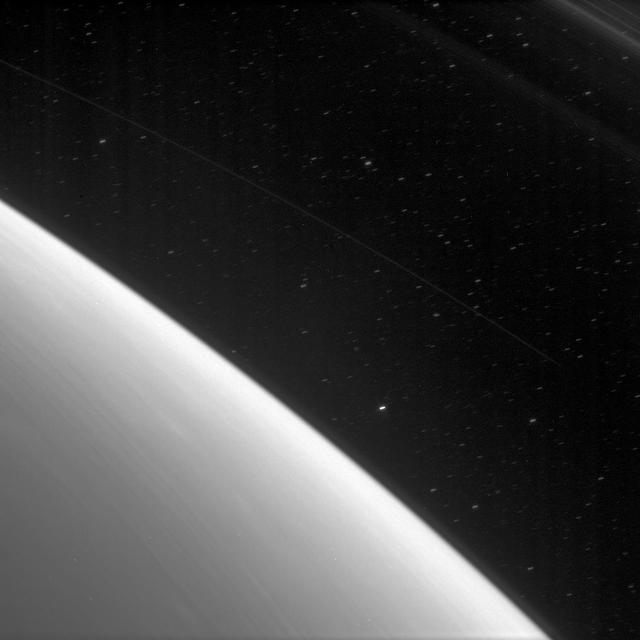
Big and Small Before Rings
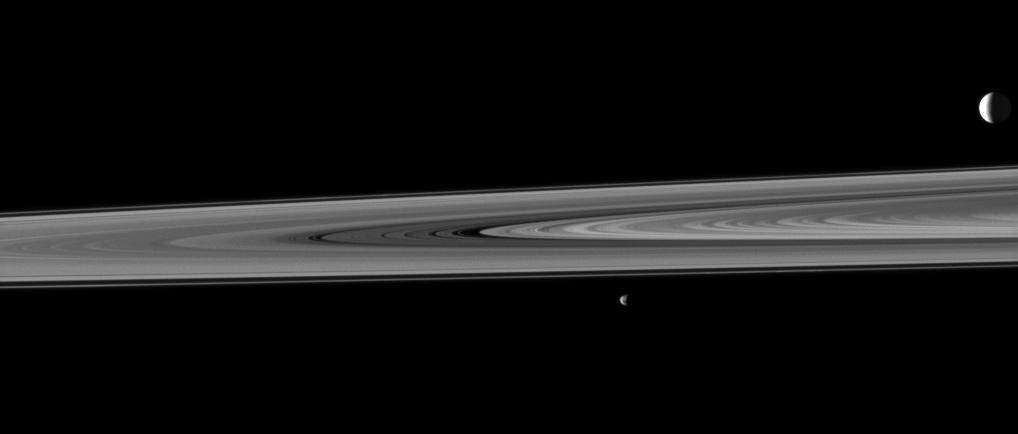
Saturn rings occupy the space between two of the planet moons in this image, taken by NASA Cassini spacecraft, which shows the highly reflective moon Enceladus in the background and the smaller moon Janus in the fore.
The Space Between
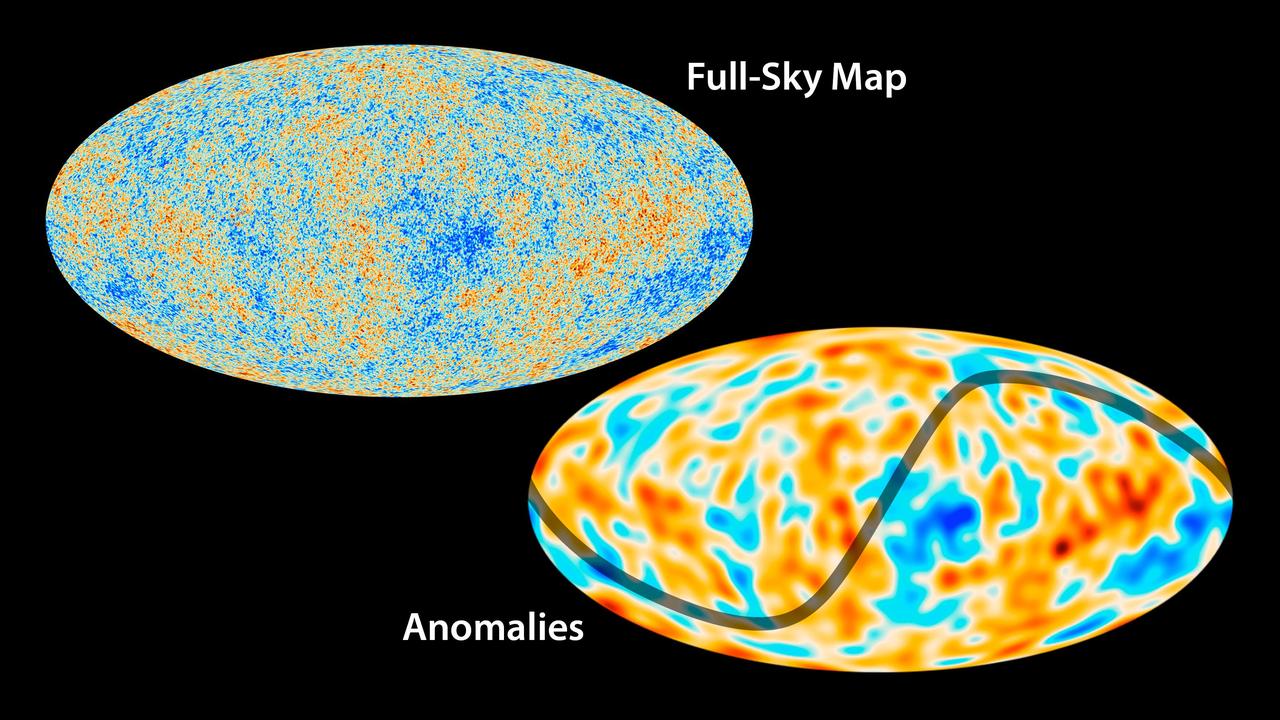
ESA Planck mission has imaged the oldest light in our universe. The top map shows Planck all-sky map of the cosmic microwave background, whereas the bottom map shows the largest-scale features of the map.
Peculiar Features in Patterns of Ancient Light
Saturn moon Rhea is gently lit in front of a background of the planet with a wide shadow cast by the rings which are seen nearly edge-on in this image captured by NASA Cassini spacecraft.
Rhea, Rings and Shadow
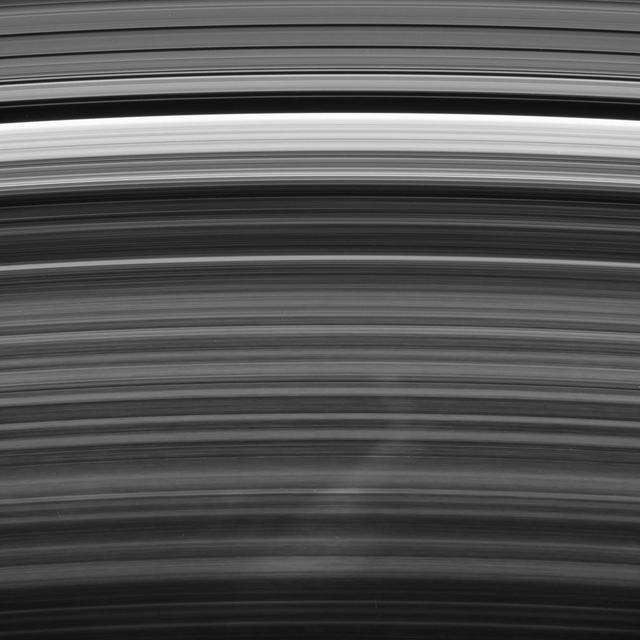
A bright spoke extends across the unilluminated side of Saturn B ring about the same distance as that from London to Cairo. The background ring material displays some azimuthal i.e., left to right asymmetry
Bent Spoke
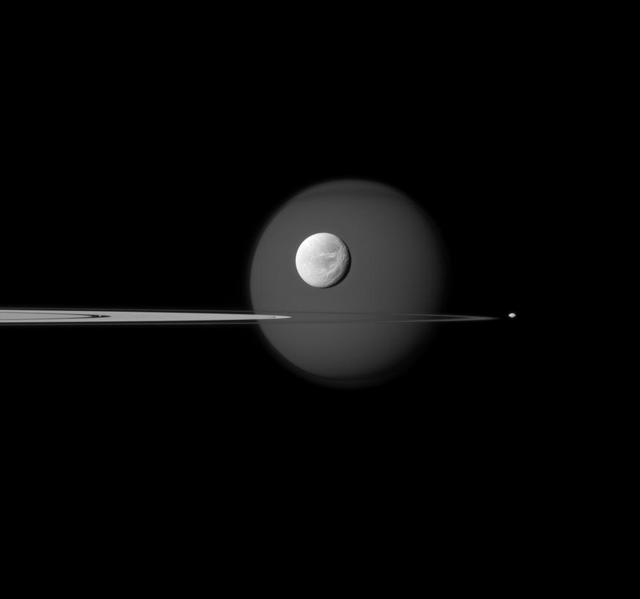
A quartet of Saturn moons, from tiny to huge, surround and are embedded within the planet rings in this Cassini composition. Saturn largest moon, Titan, in the background, and the moon north polar hood is clearly visible.
In, Around, Beyond Rings
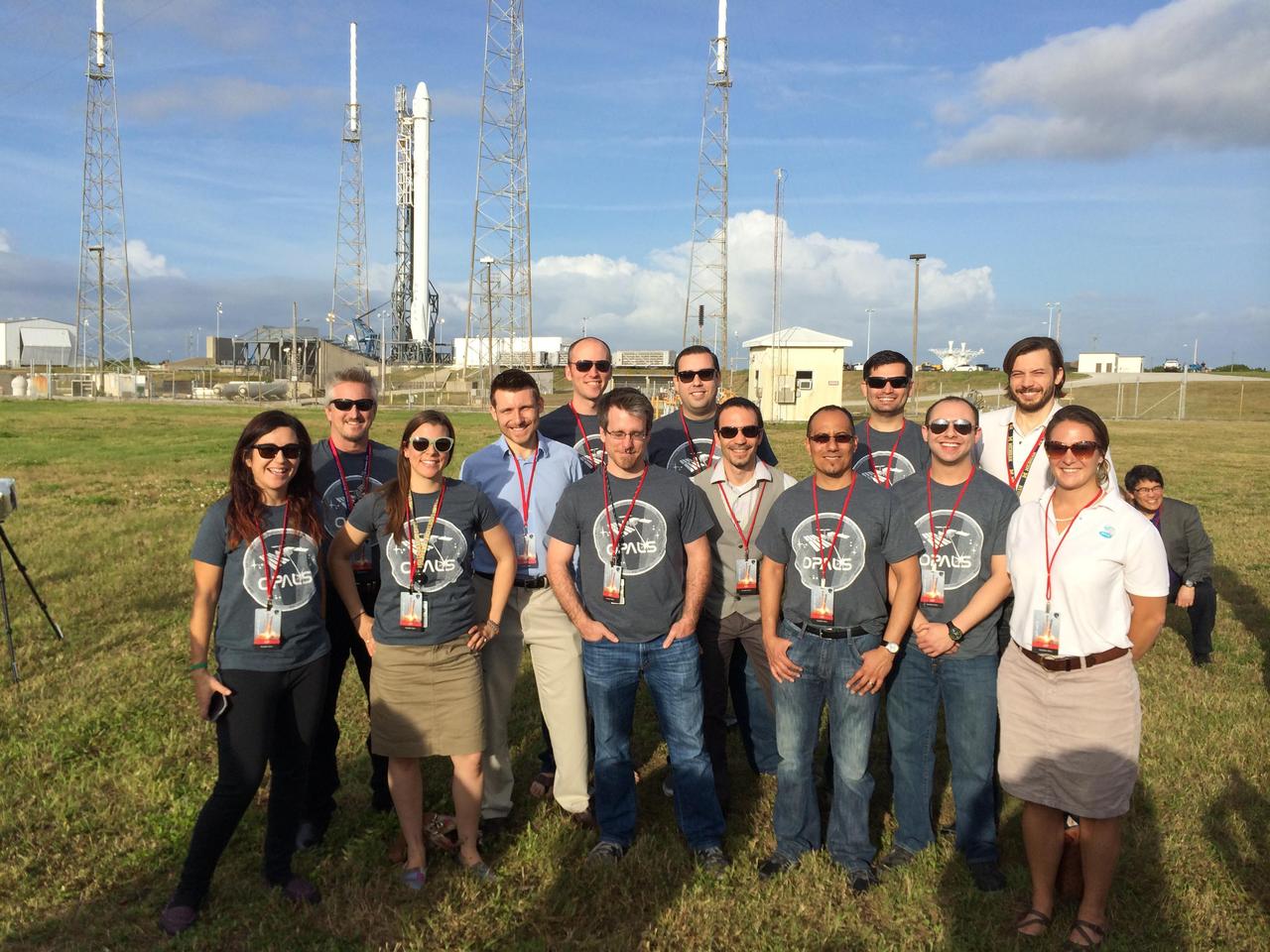
NASA Optical PAyload for Lasercomm Science OPALS operations team at Kennedy Space Center Space Launch Complex-40 on April 14, 2014, with the SpaceX Falcon 9 rocket carrying OPALS in the background.
OPALS Operations Team At Launch
This is a close-up view of the northern two-thirds of one of the quadrangles number 50 that were mapped onto the landing region of NASA Curiosity rover; background image obtained by NASA Mars Reconnaissance Orbiter.
Close-up of Curiosity Landing Region
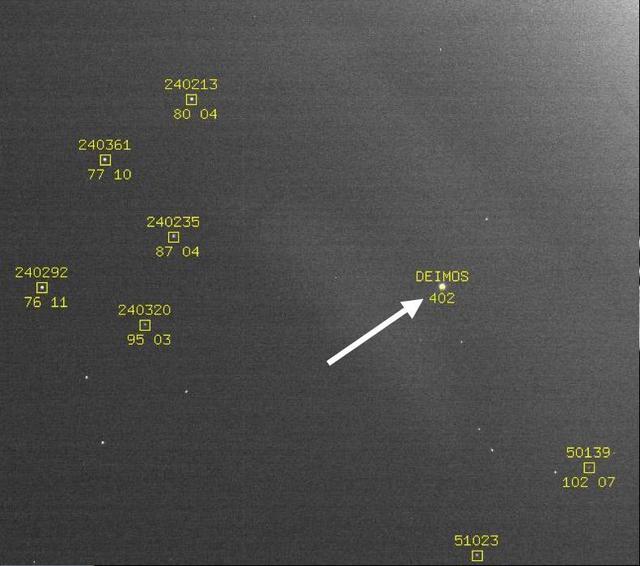
This image showing the position of the Martian moon Deimos against a   background of stars is part of a successful technology demonstration   completed by NASA Mars Reconnaissance Orbiter before arrival at Mars
Optical Navigation Demonstration Near Mars
Saturn moon Enceladus reflects sunlight brightly while the planet and its rings fill the background in this view from NASA Cassini spacecraft. Enceladus is one of the most reflective bodies in the solar system.
Bright Enceladus
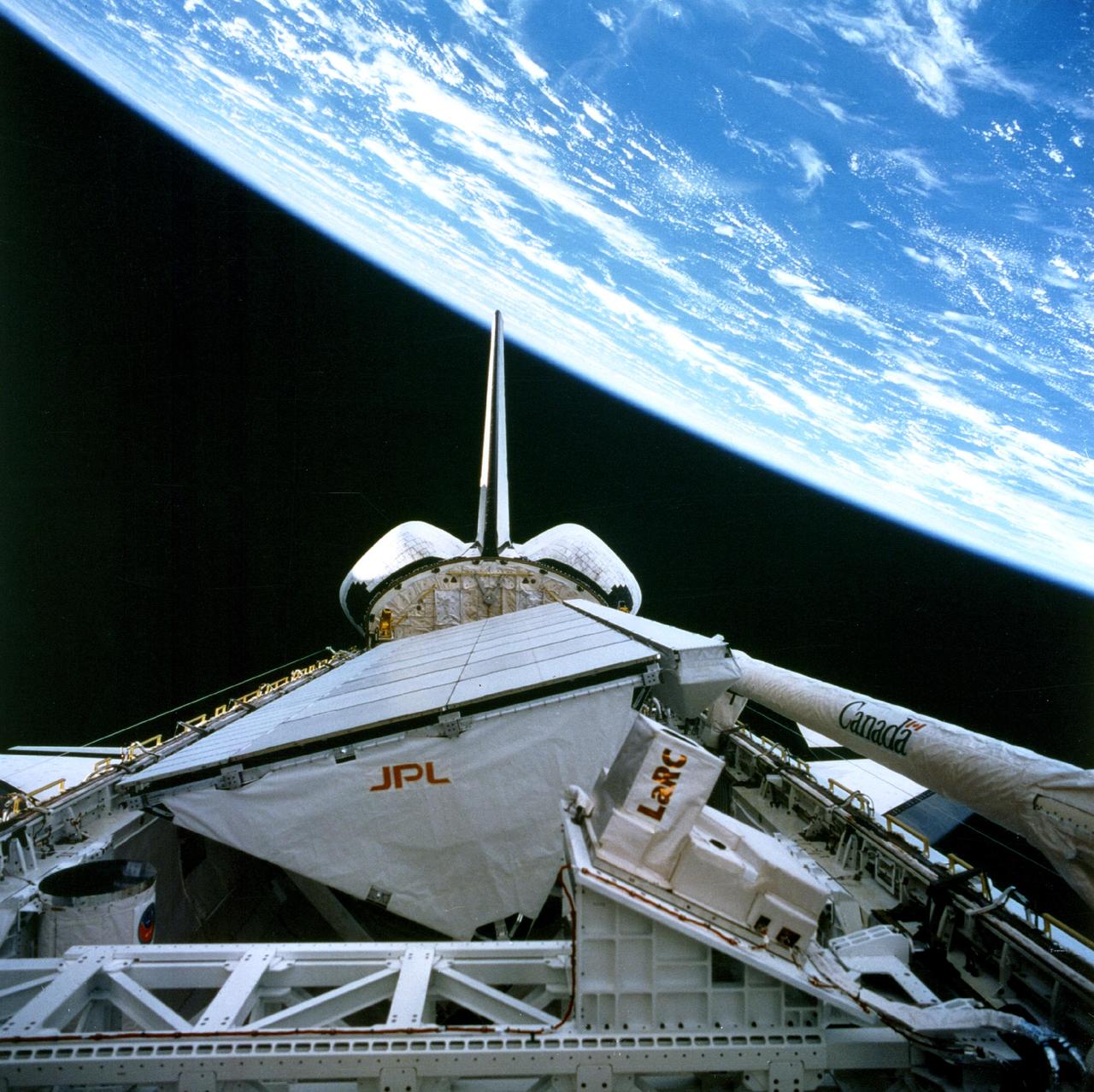
NASA SIR-C/X-SAR is shown here in the payload bay of the orbiting space shuttle Endeavour STS-59, with an area of the Pacific Ocean northeast of Hawaii in the background.
Onboard View - Space Shuttle Endeavour
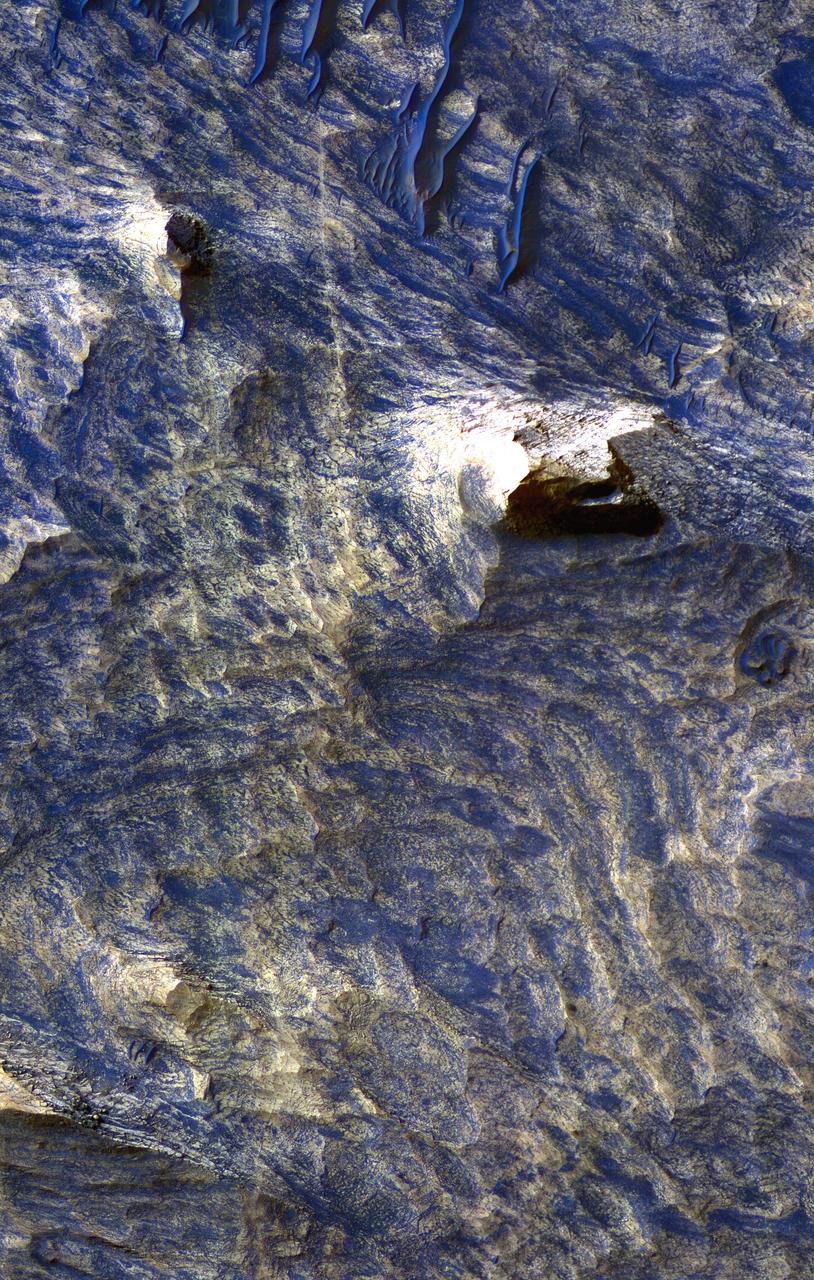
This enhanced-color image from the HiRISE camera on NASA Mars Reconnaissance Orbiter shows a landscape of sand dunes and buttes among a background of light-toned bands and dark-toned bands in the Candor Chasma region
Light-Toned Bedrock Along Cracks as Evidence of Fluid Alteration
NASA NuSTAR will be able to identify individual black holes making up the diffuse X-ray glow, also called the X-ray background. At bottom right is a simulated view of what NuSTAR will see.
Bringing Black Holes Into Focus
This image shows the first, unprocessed image obtained by NASA Dawn spacecraft of the giant asteroid Vesta in front of a background of stars. It was obtained by Dawn framing camera on May 3, 2011.
Dawn First Glimpse of Vesta -- Unprocessed
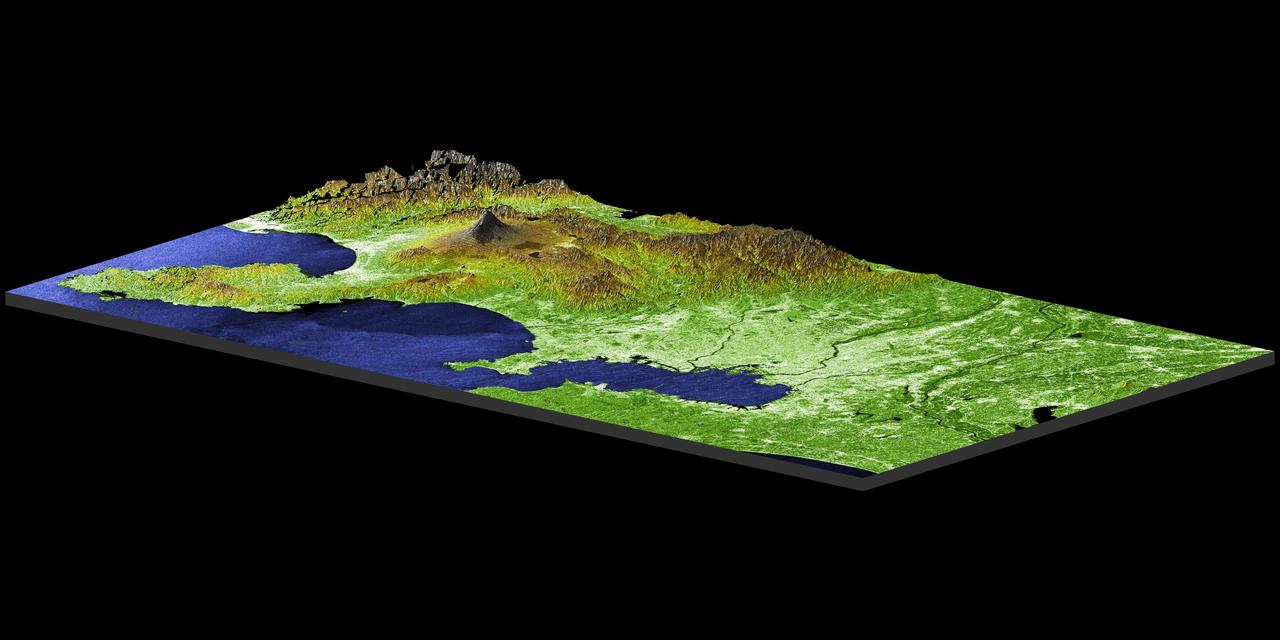
Tokyo, located on the island of Honshu, with Mt. Fuji in the background as seen in this image generated from NASA Shuttle Radar Topography Mission SRTM data on February 21, 2000.
Perspective View with Radar Image Overlaid, Color as Height: Mt. Fuji and Tokyo, Japan
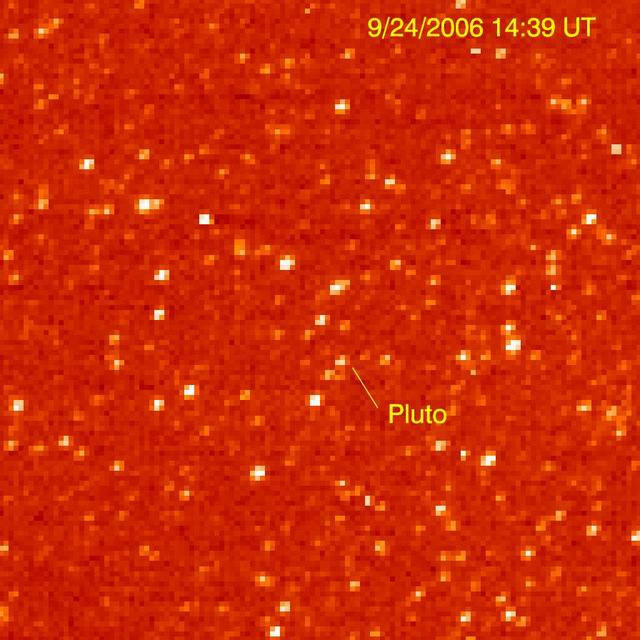
The Long Range Reconnaissance Imager on NASA New Horizons acquired images of the Pluto field three days apart in late September 2006, in order to see Pluto motion against a dense background of stars.
New Horizons Sees Pluto
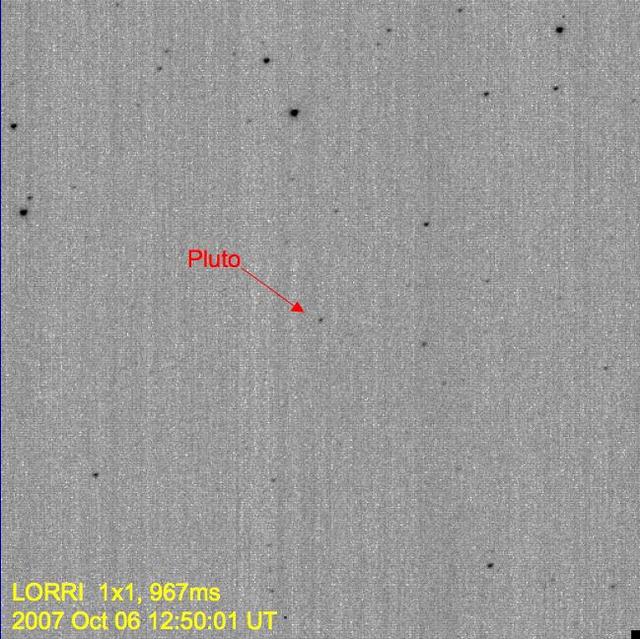
This image demonstrates the first detection of Pluto using the high-resolution mode on the NASA New Horizons Long-Range Reconnaissance Imager. The mode provides a clear separation between Pluto and numerous nearby background stars.
Pluto in Hi-Def
This map shows the oldest light in our universe, as detected with the greatest precision yet by ESA Planck mission. The ancient light, called the cosmic microwave background, was imprinted on the sky when the universe was 370,000 years old.
Best Map Ever of the Universe
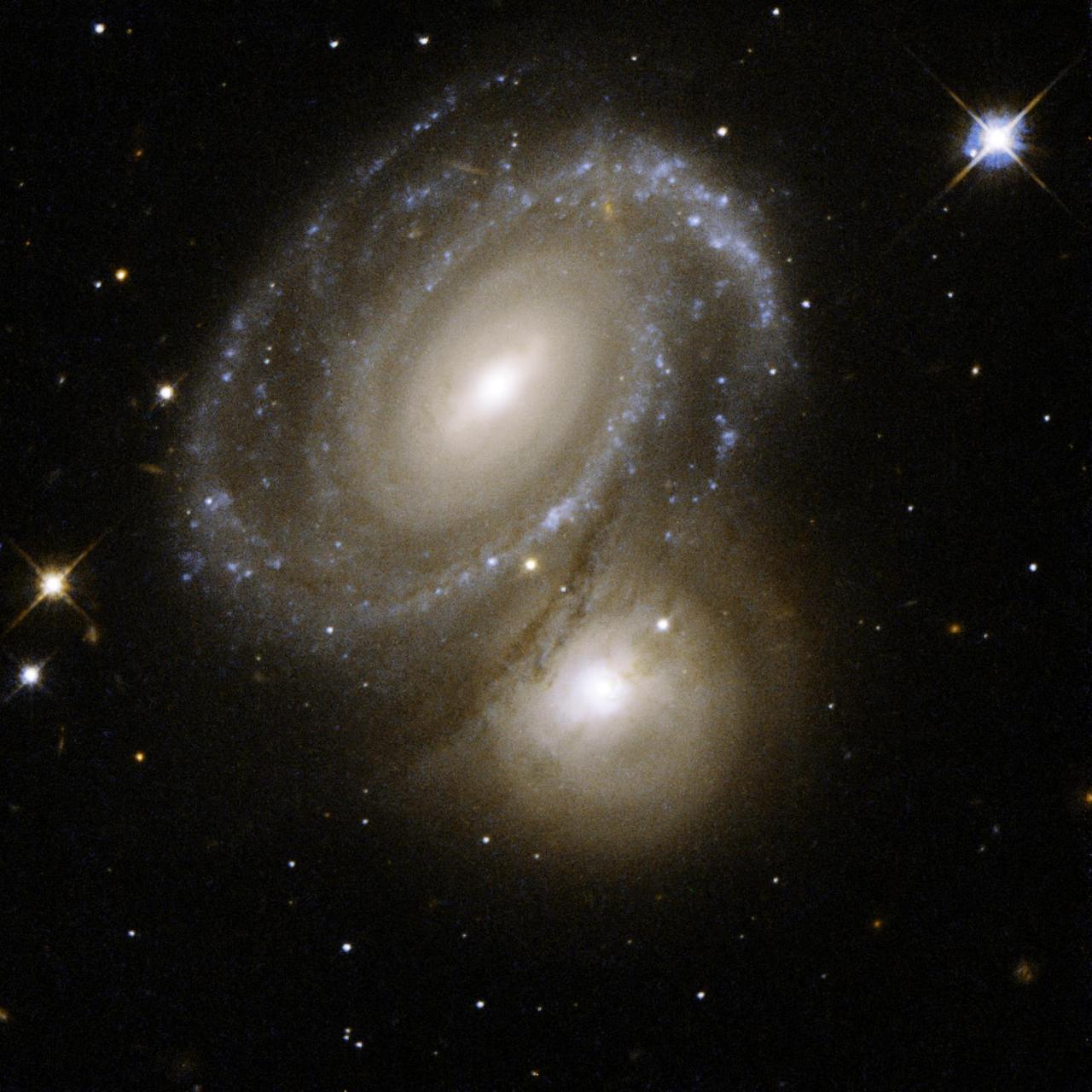
AM 0500-620 consists of a highly symmetric spiral galaxy seen nearly face-on and partially backlit by a background galaxy. This image is part of a large collection of images of merging galaxies taken by NASA Hubble Space Telescope.
AM 0500-620 - Spiral Arms and Bright Knots
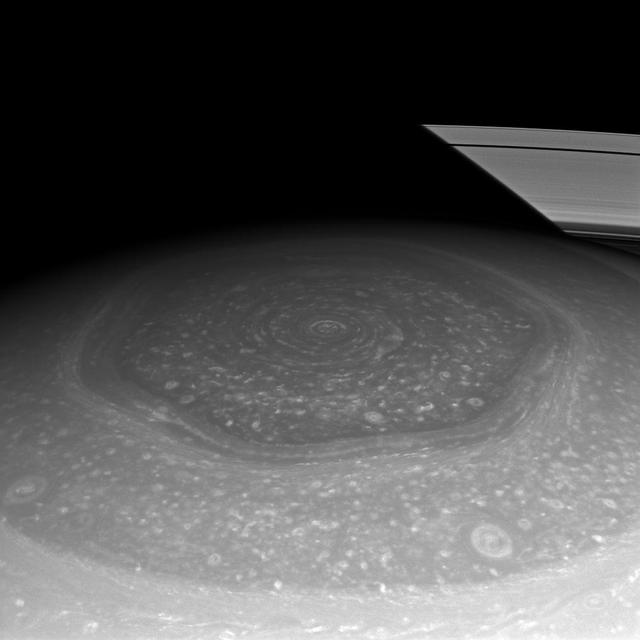
Saturn north polar hexagon basks in the Sun light now that spring has come to the northern hemisphere. Many smaller storms dot the north polar region and Saturn signature rings put in an appearance in the background.
Hexagon and Rings
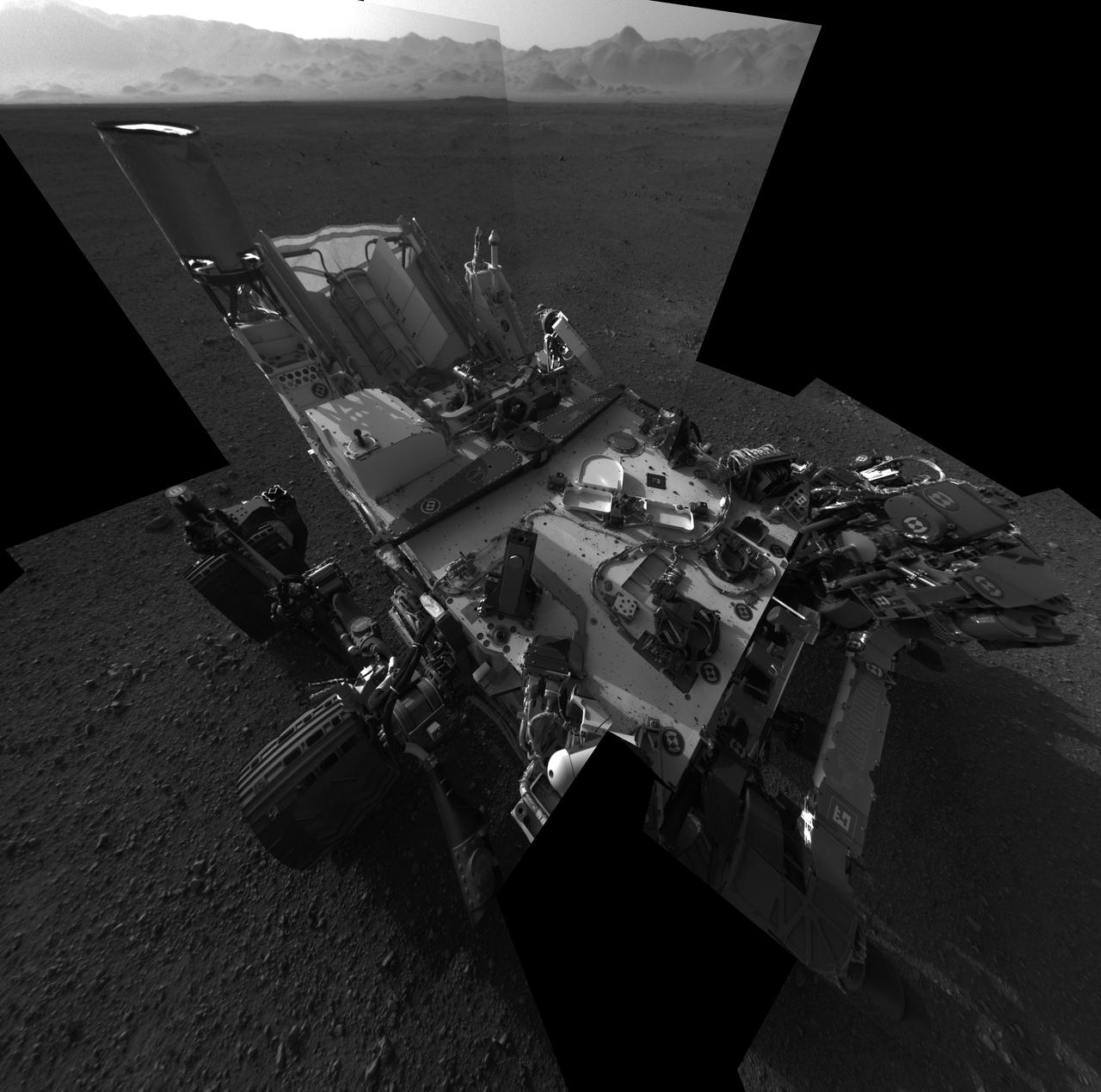
This full-resolution self-portrait shows the deck of NASA Curiosity rover. The back of the rover can be at top left, two of the right side wheels at left, and the undulating rim of Gale Crater forms the lighter color strip in the background.
Still Life with Rover
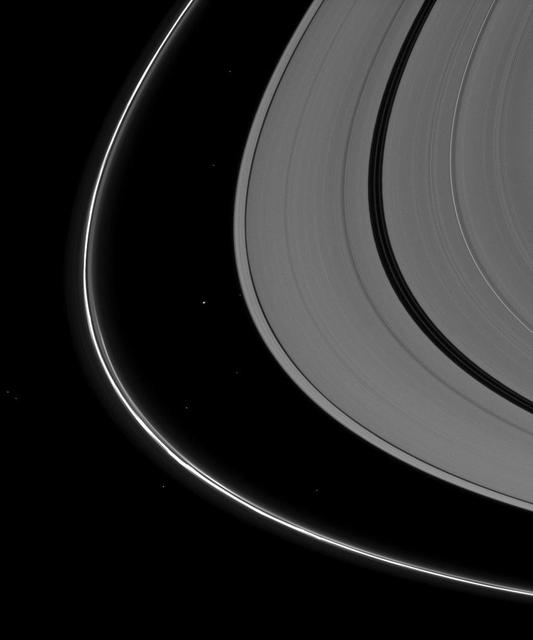
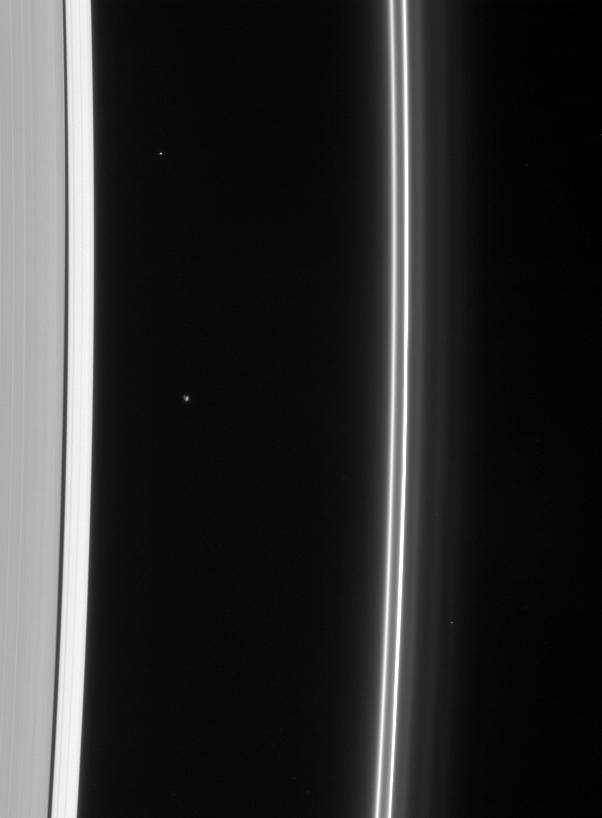
The Cassini spacecraft gazes toward the multiple strands of the ever-changing F ring, also sighting Atlas at its station just beyond the A ring edge. A few faint background stars are visible in the image
Atlas and the F Ring
Icy particles in the cloud around Hartley 2, as seen by NASA EPOXI mission spacecraft. A star moving through the background is marked with red and moves in a particular direction, with a particular speed; icy particles move in random directions.
Tracking Snowballs
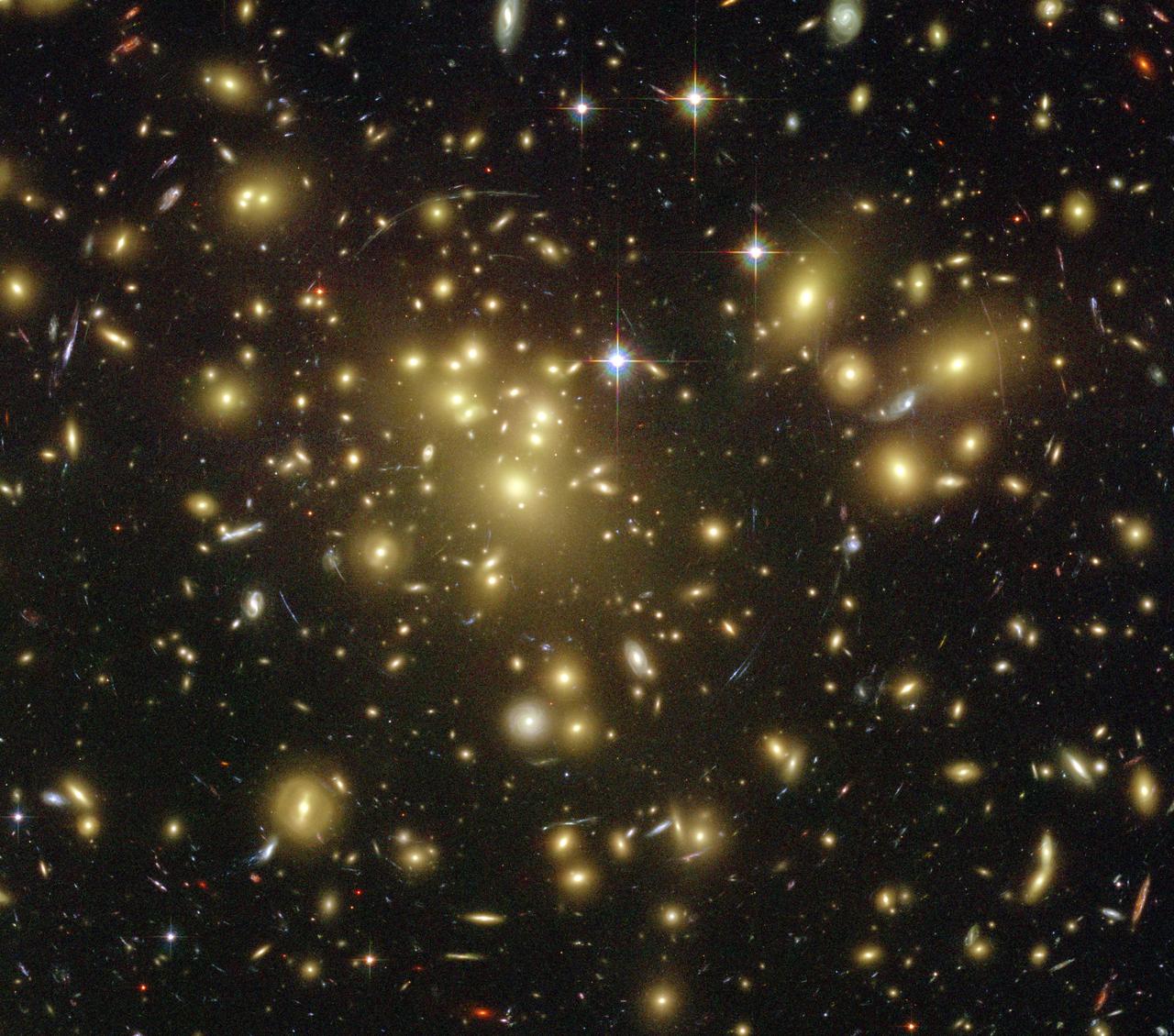
A massive cluster of yellowish galaxies is seemingly caught in a spider web of eerily distorted background galaxies in the left-hand image, taken with the Advanced Camera for Surveys ACS aboard NASA Hubble Space Telescope.
Astronomers Uncover One of the Youngest and Brightest Galaxies in the Early Universe
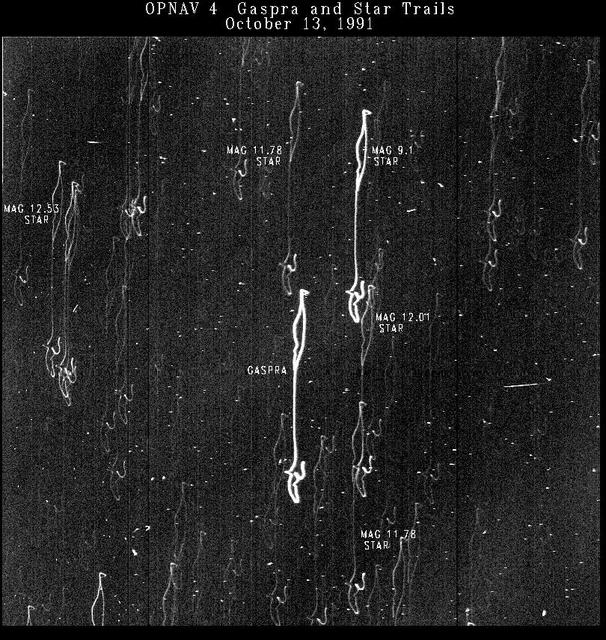
This time-exposure picture of the asteroid Gaspra and background stars is one of four optical navigation images made by NASA Galileo imaging system to improve knowledge of Gaspra location for the spacecraft flyby.  http://photojournal.jpl.nasa.gov/catalog/PIA00229
Gaspra Optical Navigation Image
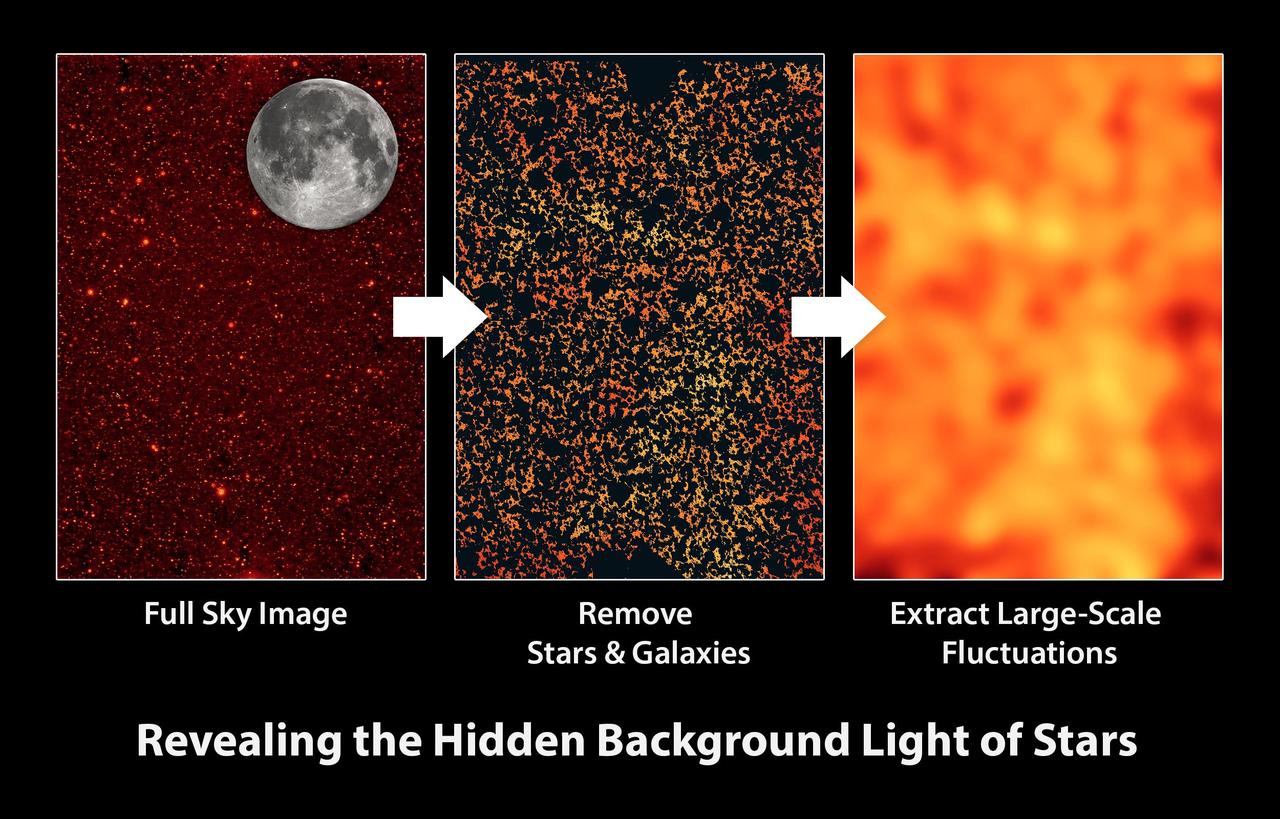
This graphic illustrates how the Cosmic Infrared Background Experiment, or CIBER, team measures a diffuse glow of infrared light filling the spaces between galaxies. The glow does not come from any known stars and galaxies.
Masking Out Galaxies
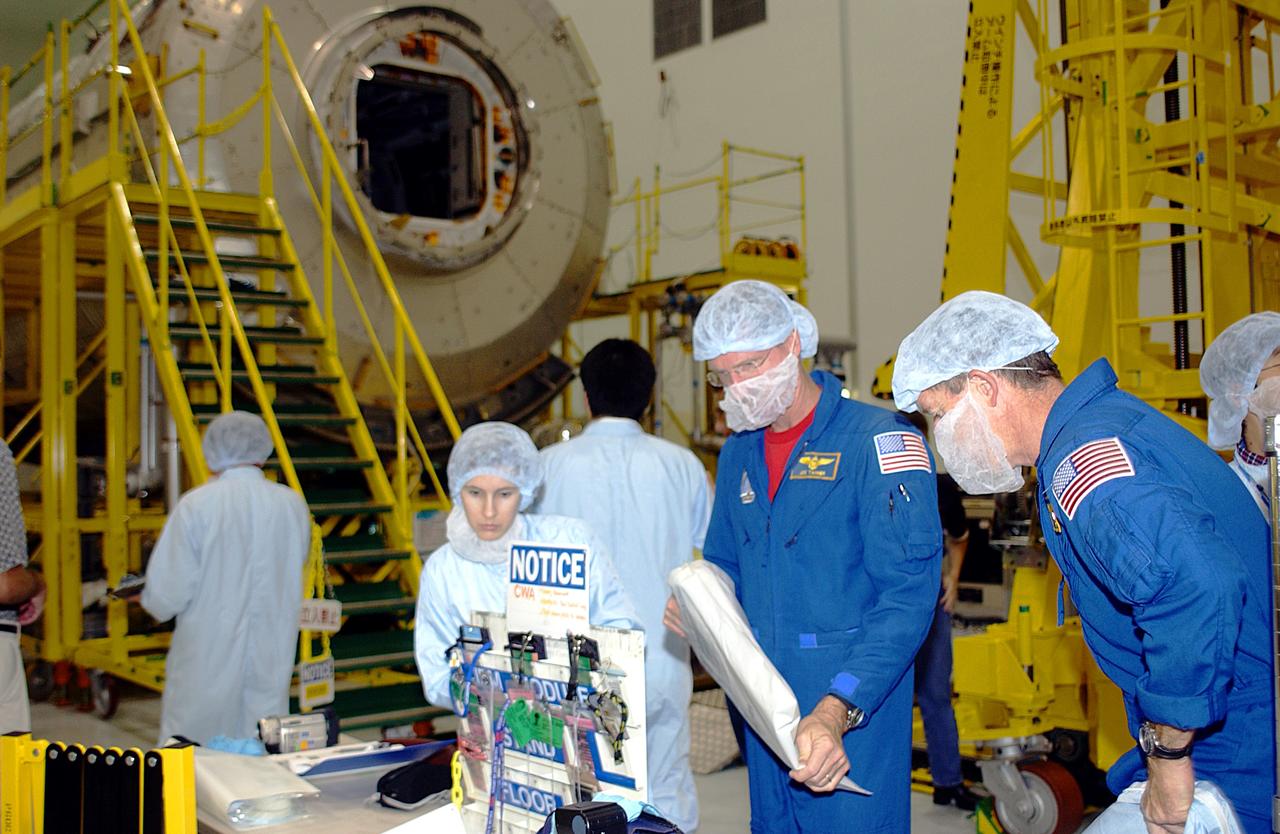
KENNEDY SPACE CENTER, FLA. - In the Space Station Processing Facility, STS-115 Mission Specialist Joseph Tanner (left) and STS-117 Mission Specialist James Reilly (right) are donning protective clothing to interface with the Japanese Experiment Module (JEM), in the background.  Equipment familiarization is a routine part of astronaut training and launch preparations.
KENNEDY SPACE CENTER, FLA. - In the Space Station Processing Facility, STS-115 Mission Specialist Joseph Tanner (left) and STS-117 Mission Specialist James Reilly (right) are donning protective clothing to interface with the Japanese Experiment Module (JEM), in the background. Equipment familiarization is a routine part of astronaut training and launch preparations.
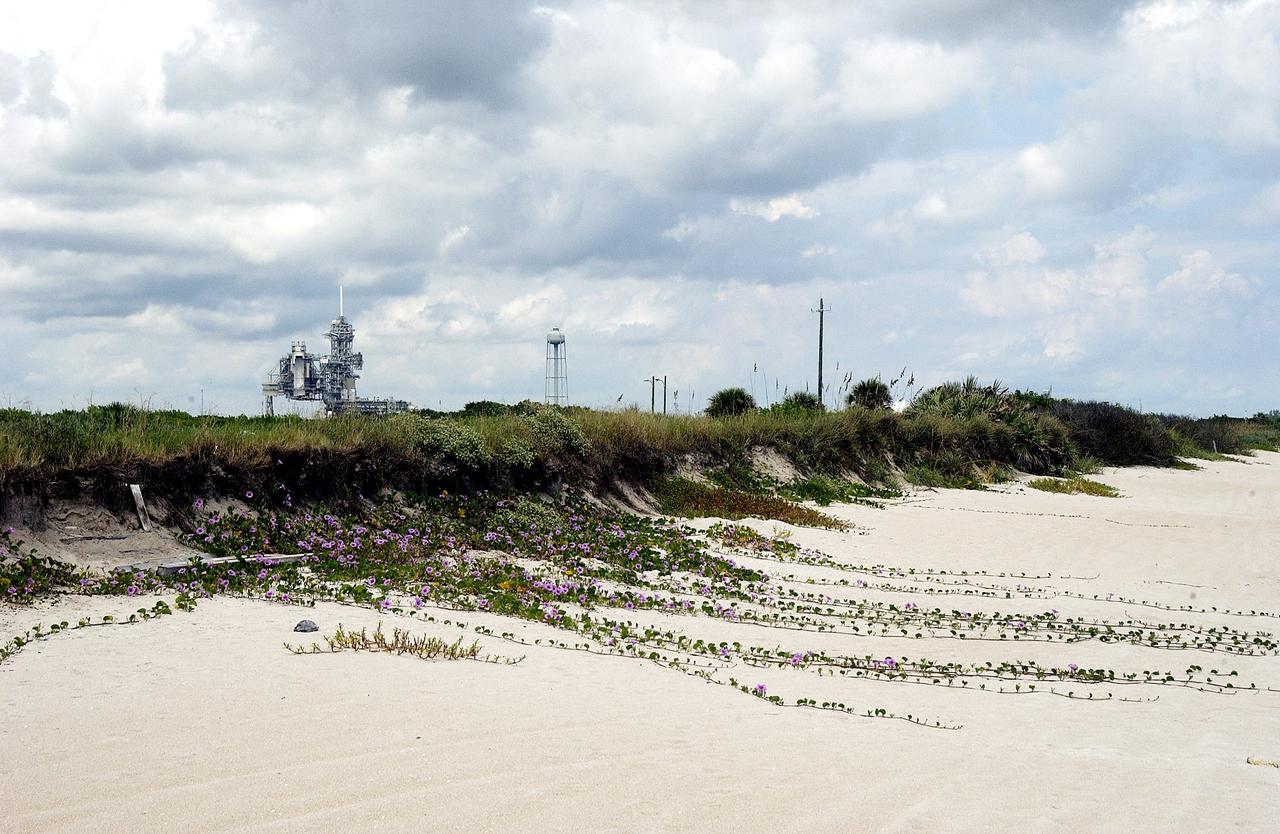
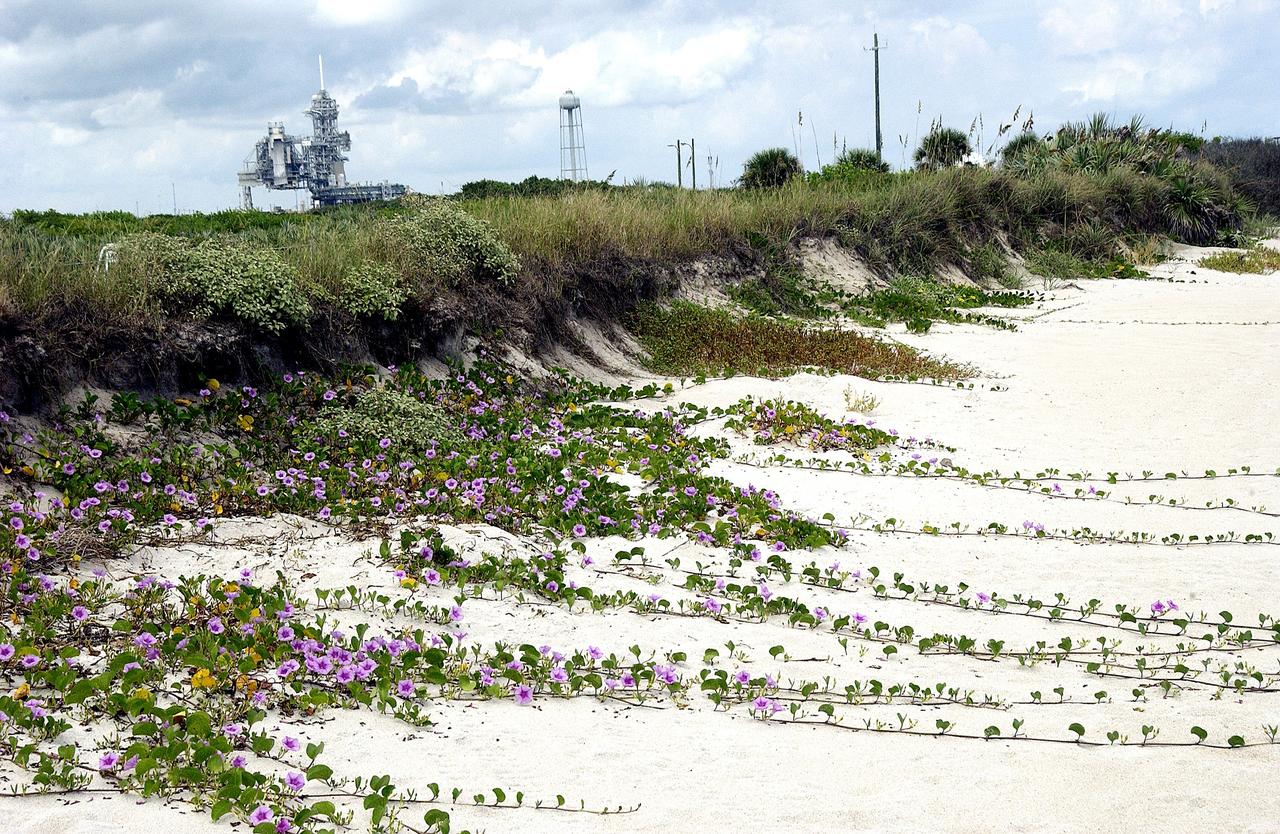
KENNEDY SPACE CENTER, FLA.  -    The sand dunes facing the Atlantic Ocean near Launch Pad 39A (background) at KSC spill purple flowers down its banks.  The beach is just south of the Canaveral National Seashore, managed by the National Wildlife Service.
KENNEDY SPACE CENTER, FLA. - The sand dunes facing the Atlantic Ocean near Launch Pad 39A (background) at KSC spill purple flowers down its banks. The beach is just south of the Canaveral National Seashore, managed by the National Wildlife Service.
KENNEDY SPACE CENTER, FLA.  -  Several exhibit entrances within the KSC Visitor Complex are seen: The Universe Theatre, which shows the film “Quest for Life”;  Mad Mission to Mars 2025, a live-action stage show; and, in the background, the Rocket Garden, featuring eight authentic rockets from the past.
KENNEDY SPACE CENTER, FLA. - Several exhibit entrances within the KSC Visitor Complex are seen: The Universe Theatre, which shows the film “Quest for Life”; Mad Mission to Mars 2025, a live-action stage show; and, in the background, the Rocket Garden, featuring eight authentic rockets from the past.
KENNEDY SPACE CENTER, FLA.  -   Purple flowers flow across the sand from the dunes facing the Atlantic Ocean near Launch Pad 39A (background) at KSC.  The beach is just south of the Canaveral National Seashore, which is managed by the National Wildlife Service.
KENNEDY SPACE CENTER, FLA. - Purple flowers flow across the sand from the dunes facing the Atlantic Ocean near Launch Pad 39A (background) at KSC. The beach is just south of the Canaveral National Seashore, which is managed by the National Wildlife Service.
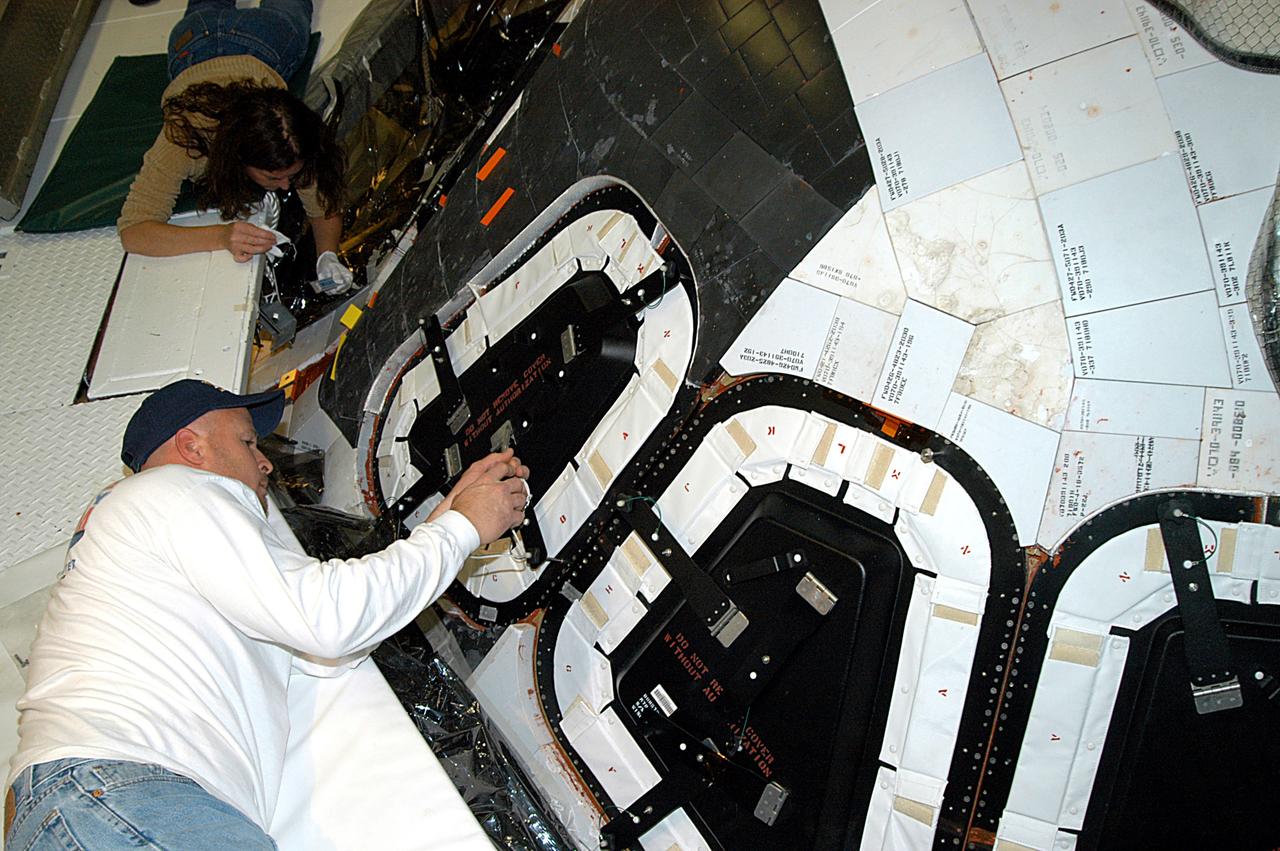
KENNEDY SPACE CENTER, FLA. -- Les Hanks (foreground) and Darlene Beville (background), with United Space Alliance,  prepare a window on Atlantis for removal.  The windows are being removed to inspect them for contaminants in the thermal seal.  Atlantis has been undergoing routine maintenance in the Orbiter Processing Facility for Return to Flight, on mission STS-114.
KENNEDY SPACE CENTER, FLA. -- Les Hanks (foreground) and Darlene Beville (background), with United Space Alliance, prepare a window on Atlantis for removal. The windows are being removed to inspect them for contaminants in the thermal seal. Atlantis has been undergoing routine maintenance in the Orbiter Processing Facility for Return to Flight, on mission STS-114.
In July, 2018 an eruption began from Piton de la Fournaise volcano on Reunion Island in the western Indian Ocean. Activity continued through November, when these ASTER data were acquired. More than 150 eruptions have occurred since the 17th century. The active flow, derived from the thermal infrared band, is shown in red. The background is a pre-eruption image. The background image was acquired July 16, 2018, and the thermal image on November 1, 2018. The images cover an area of 18 miles by 21 miles (28.9 by 34.2 kilometers), and in the area of 21.3 degrees south, 55.8 degrees east.  https://photojournal.jpl.nasa.gov/catalog/PIA22755
NASA's ASTER Captures Piton de la Fournaise Eruption