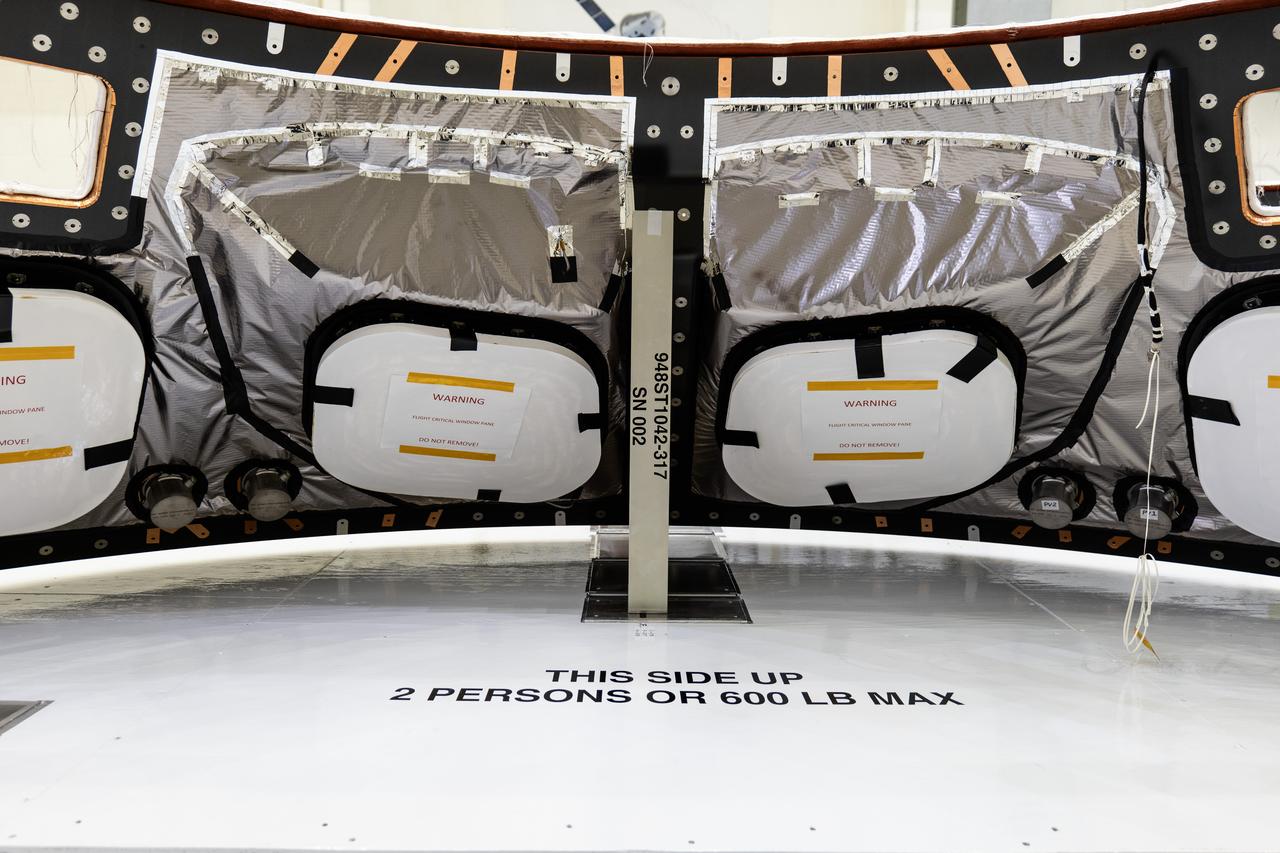
Back shell panels are visible on the Orion spacecraft for the Artemis II mission inside the Neil A. Armstrong Operations and Checkout Building high bay at NASA's Kennedy Space Center in Florida on Monday, Dec. 15, 2024. The back shell panels serve as the outer layer of the spacecraft and will protect it against the extreme temperatures of re-entry from deep space.
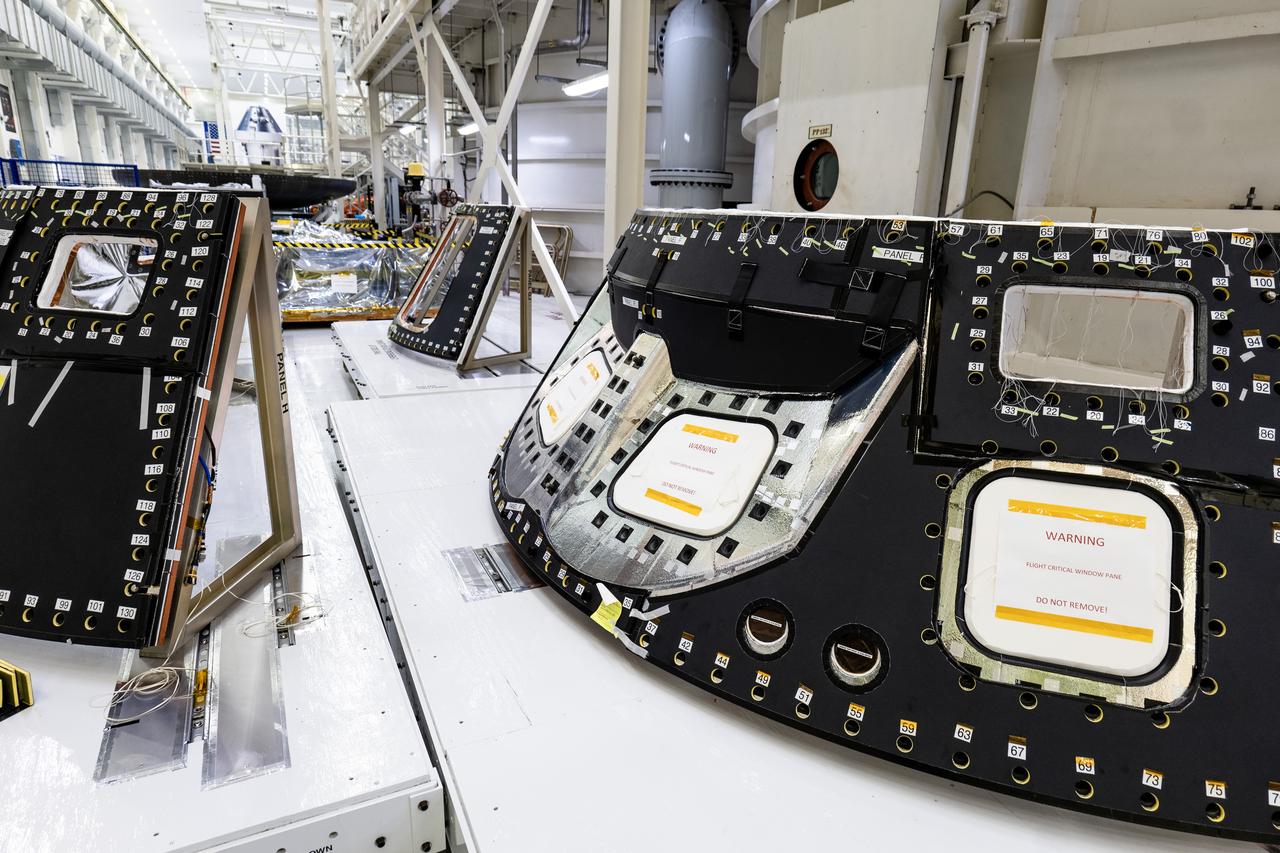
Visible in the foreground are back shell panels on the Orion spacecraft for the Artemis II mission inside the Neil A. Armstrong Operations and Checkout Building high bay at NASA's Kennedy Space Center in Florida on Monday, Dec. 15, 2024. The back shell panels serve as the outer layer of the spacecraft and will protect it against the extreme temperatures of re-entry from deep space. In the background are the heat shield for Orion’s Artemis IV mission secured on a work stand, as well as the Orion spacecraft for NASA’s Artemis II mission.
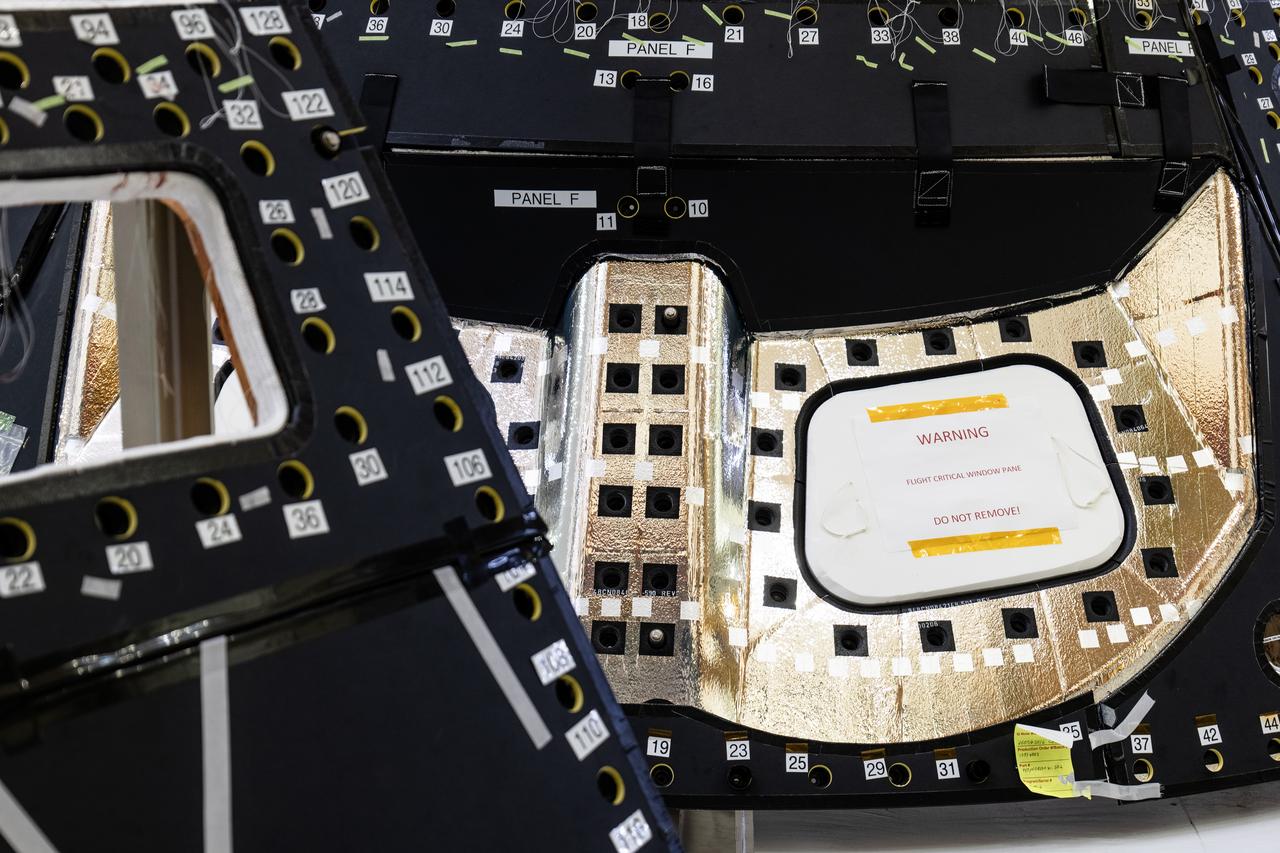
Back shell panels are visible on the Orion spacecraft for the Artemis IV mission inside the Neil A. Armstrong Operations and Checkout Building high bay at NASA's Kennedy Space Center in Florida on Monday, Dec. 15, 2024. The back shell panels serve as the outer layer of the spacecraft and will protect it against the extreme temperatures of re-entry from deep space.
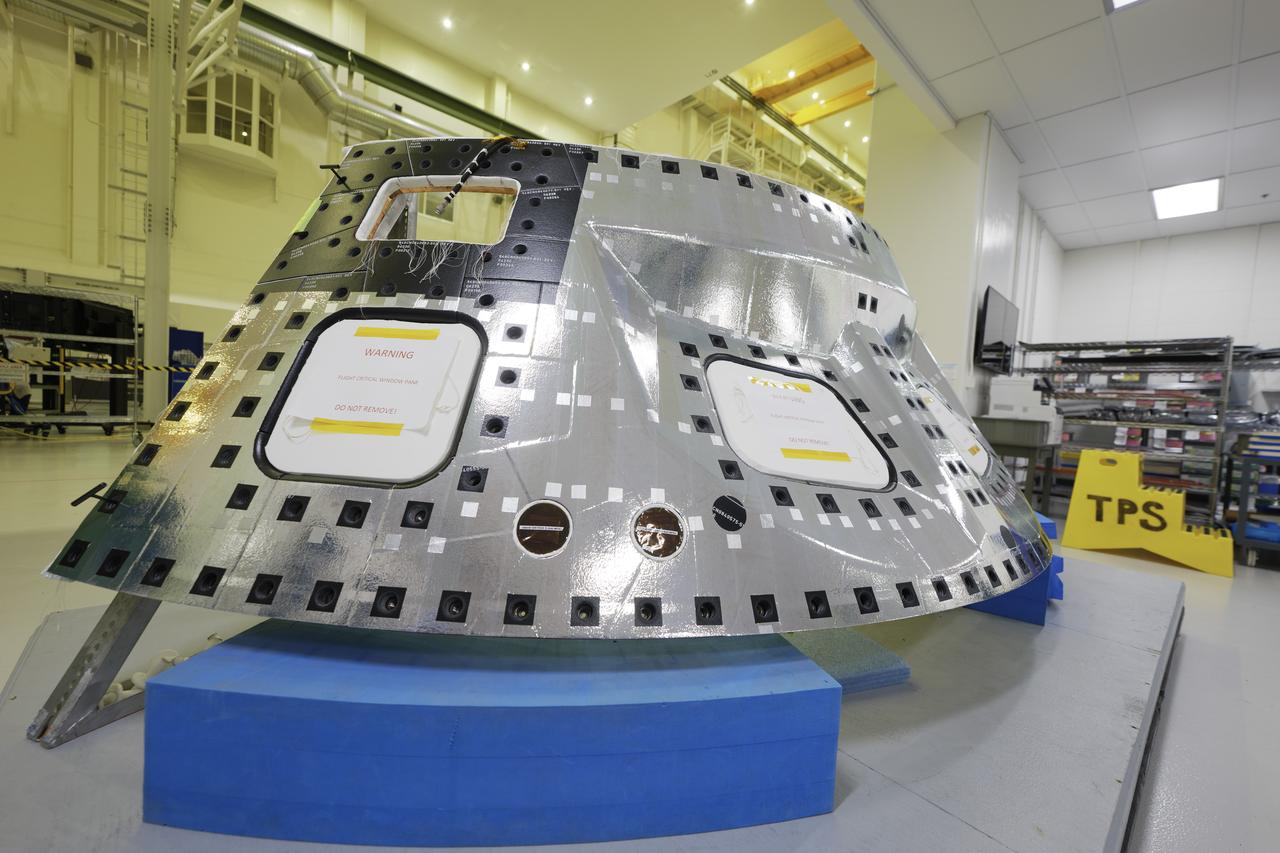
Inside the Operations and Checkout building at NASA's Kennedy Space Center in Florida on Thursday, Feb. 1, 2024, backshell panels and insulation for the Artemis II Orion spacecraft’s exterior are prepped for install. The spacecraft’s exterior will protect the Orion spacecraft and the astronauts inside from the harsh environments they will encounter on their mission.

Inside the Operations and Checkout building at NASA's Kennedy Space Center in Florida on Thursday, Feb. 1, 2024, backshell panels and insulation for the Artemis II Orion spacecraft’s exterior are prepped for install. The spacecraft’s exterior will protect the Orion spacecraft and the astronauts inside from the harsh environments they will encounter on their mission.
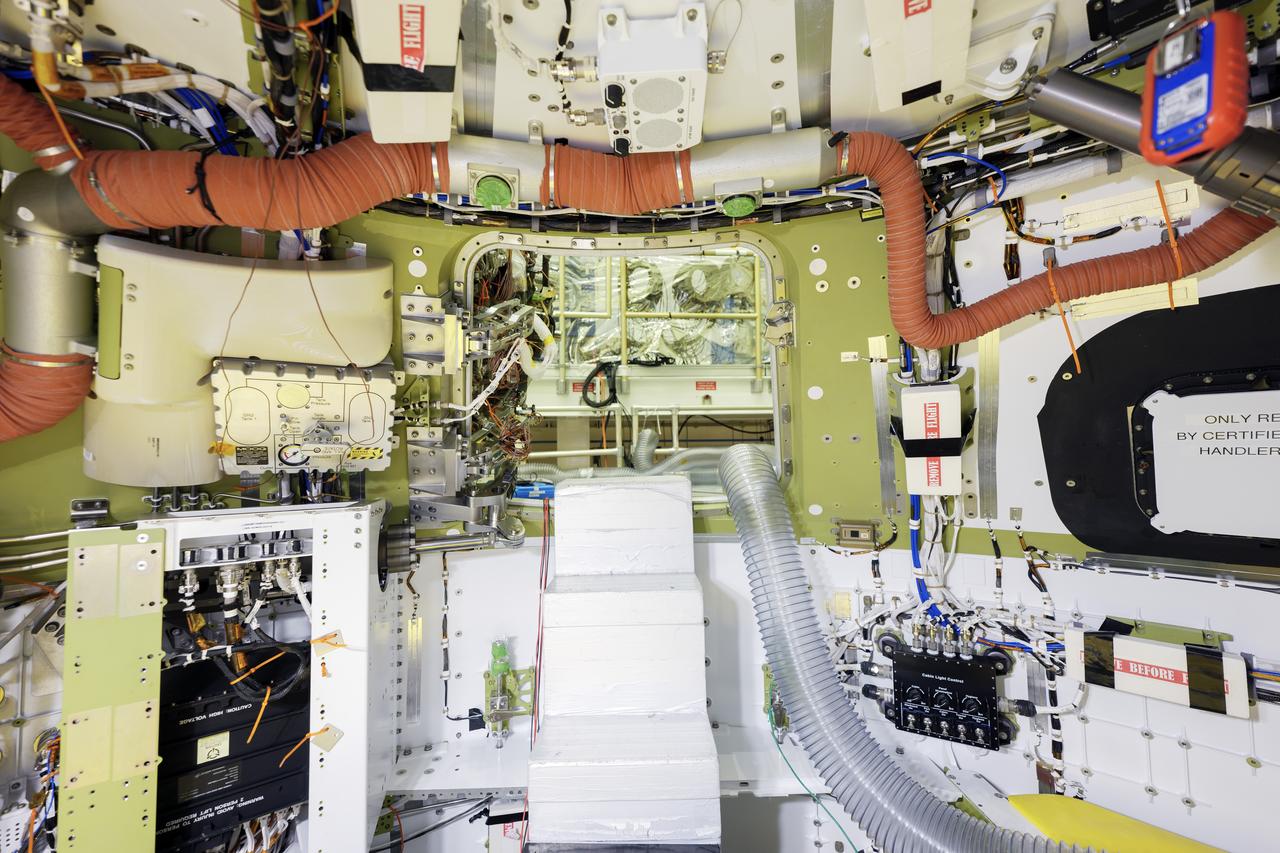
Teams inside the Operations and Checkout building at NASA’s Kennedy Space Center in Florida on Thursday, Feb. 1, 2024, work on the Orion spacecraft crew module that will carry the Artemis II astronauts on their 10-day journey around the Moon. Technicians are finalizing the crew cabin’s interior, and installing backshell panels and insulation on the spacecraft’s exterior that will protect Orion and the astronauts inside from the harsh environments they will encounter on their mission.
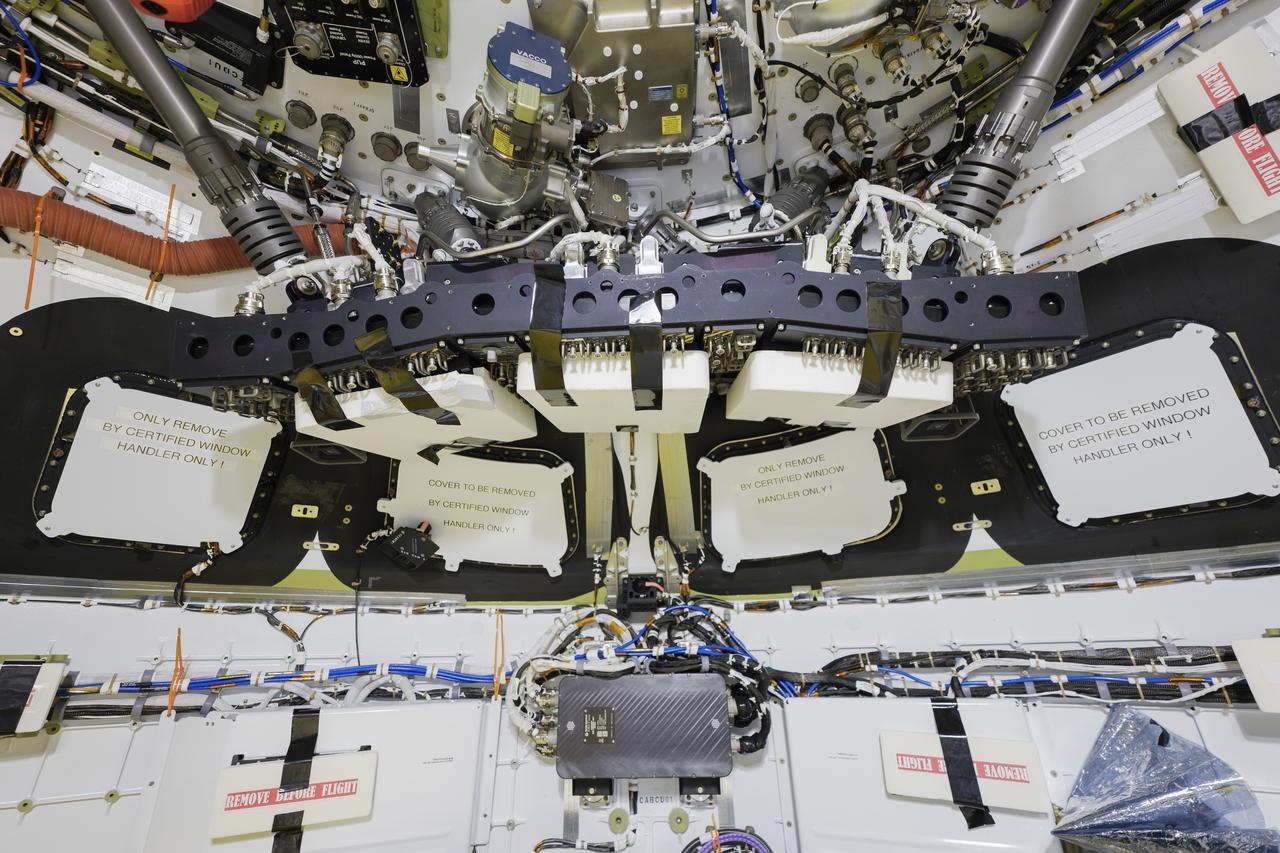
Teams inside the Operations and Checkout building at NASA’s Kennedy Space Center in Florida on Thursday, Feb. 1, 2024, work on the Orion spacecraft crew module that will carry the Artemis II astronauts on their 10-day journey around the Moon. Technicians are finalizing the crew cabin’s interior, and installing backshell panels and insulation on the spacecraft’s exterior that will protect Orion and the astronauts inside from the harsh environments they will encounter on their mission.
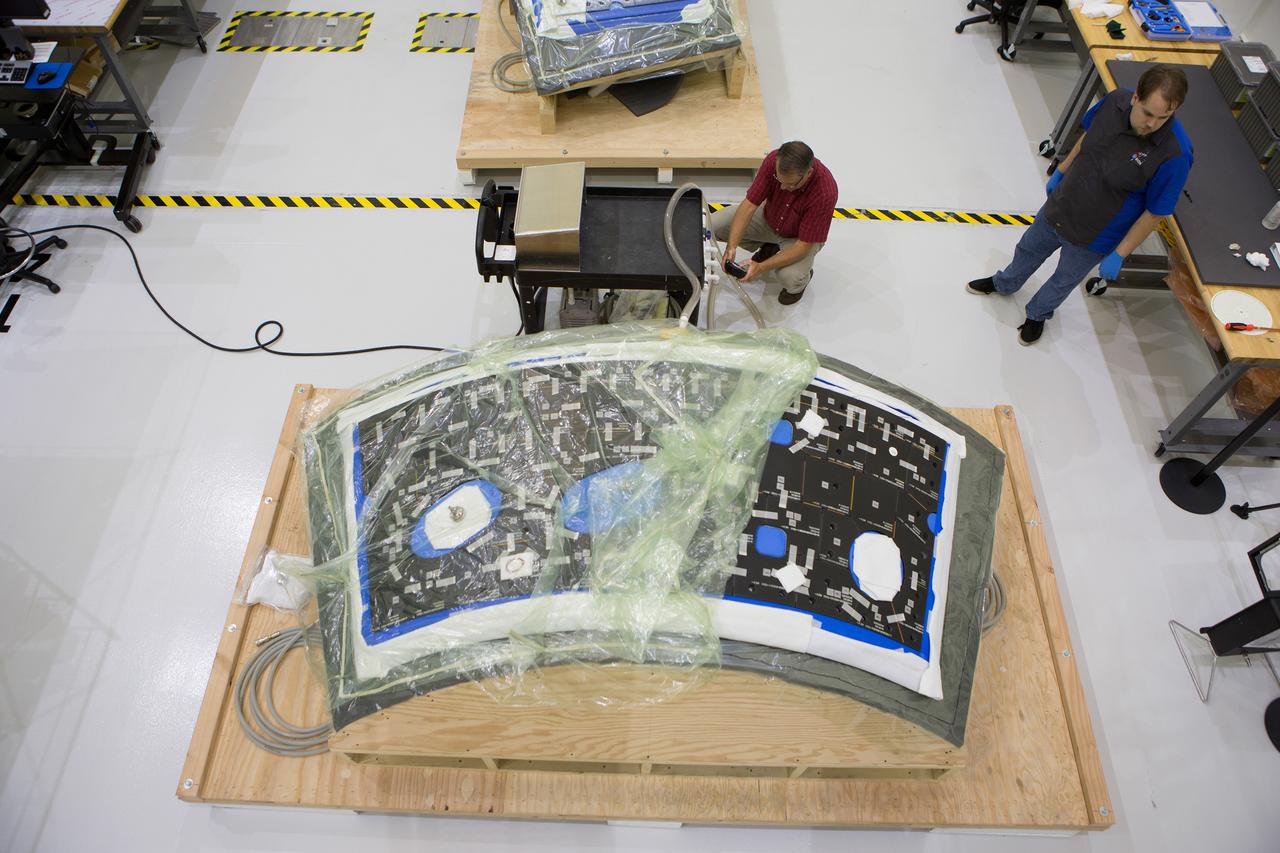
At Kennedy Space Center in Florida, technicians bond thermal protection system tiles to Orion's backshell panels on July 8, 2016...While similar to those used on the space shuttle, Orion only requires about 1,300 tiles compared to more than 24,000 on the shuttle. The tiles, along with the spacecraft’s heat shield, will protect Orion from the 5,000 degree Fahrenheit heat of re-entry.
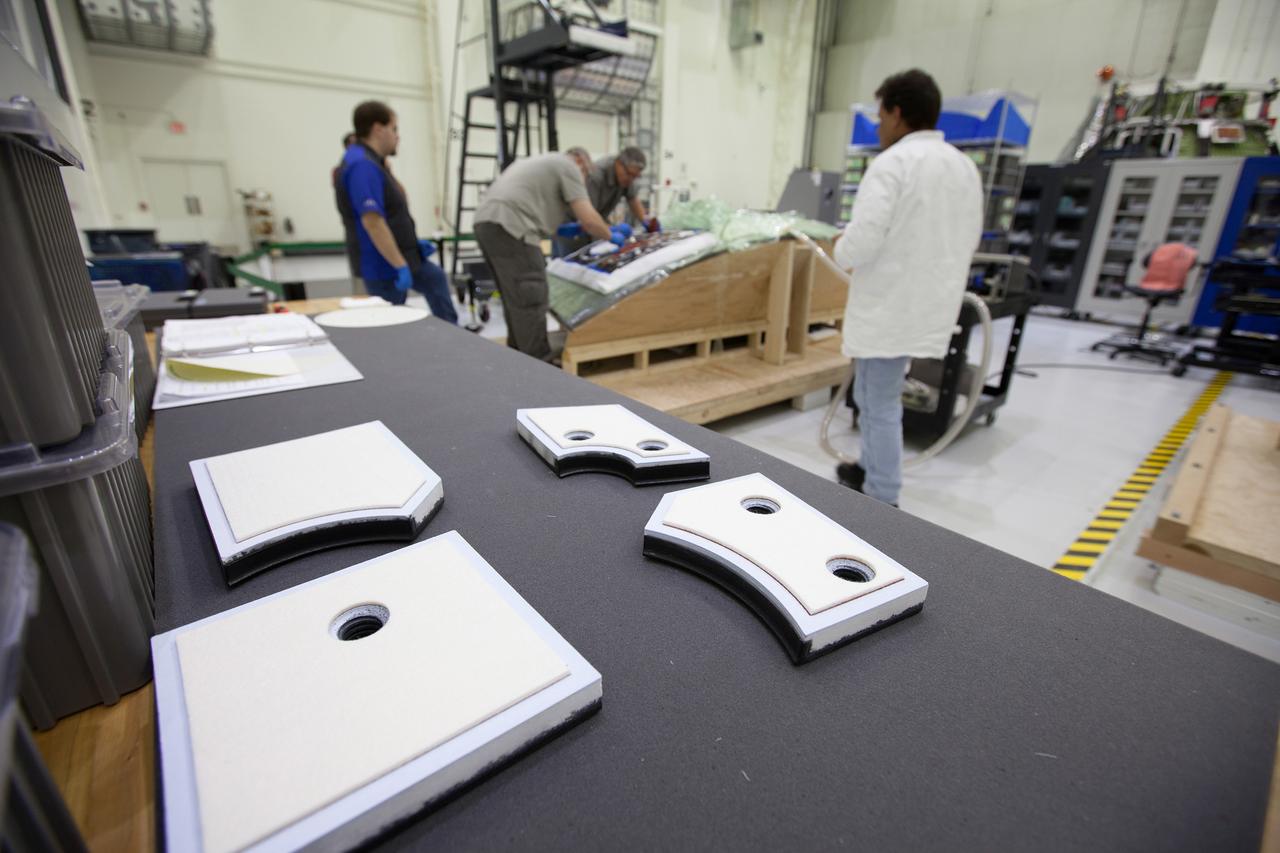
At Kennedy Space Center in Florida, technicians bond thermal protection system tiles to Orion's backshell panels on July 8, 2016...While similar to those used on the space shuttle, Orion only requires about 1,300 tiles compared to more than 24,000 on the shuttle. The tiles, along with the spacecraft’s heat shield, will protect Orion from the 5,000 degree Fahrenheit heat of re-entry.

KENNEDY SPACE CENTER, FLA. -- In the Payload Hazardous Servicing Facility at Cape Canaveral Air Force Station, the backshell of the Phoenix Mars Lander spacecraft is nestled inside the cruise stage (at top). The solar array panels on the Phoenix will be deployed for pre-launch testing. Phoenix will land in icy soils near the north polar permanent ice cap of Mars and explore the history of the water in these soils and any associated rocks, while monitoring polar climate. Landing on Mars is planned in May 2008 on arctic ground where a mission currently in orbit, Mars Odyssey, has detected high concentrations of ice just beneath the top layer of soil. Phoenix is scheduled to launch Aug. 3. Photo credit: NASA/George Shelton
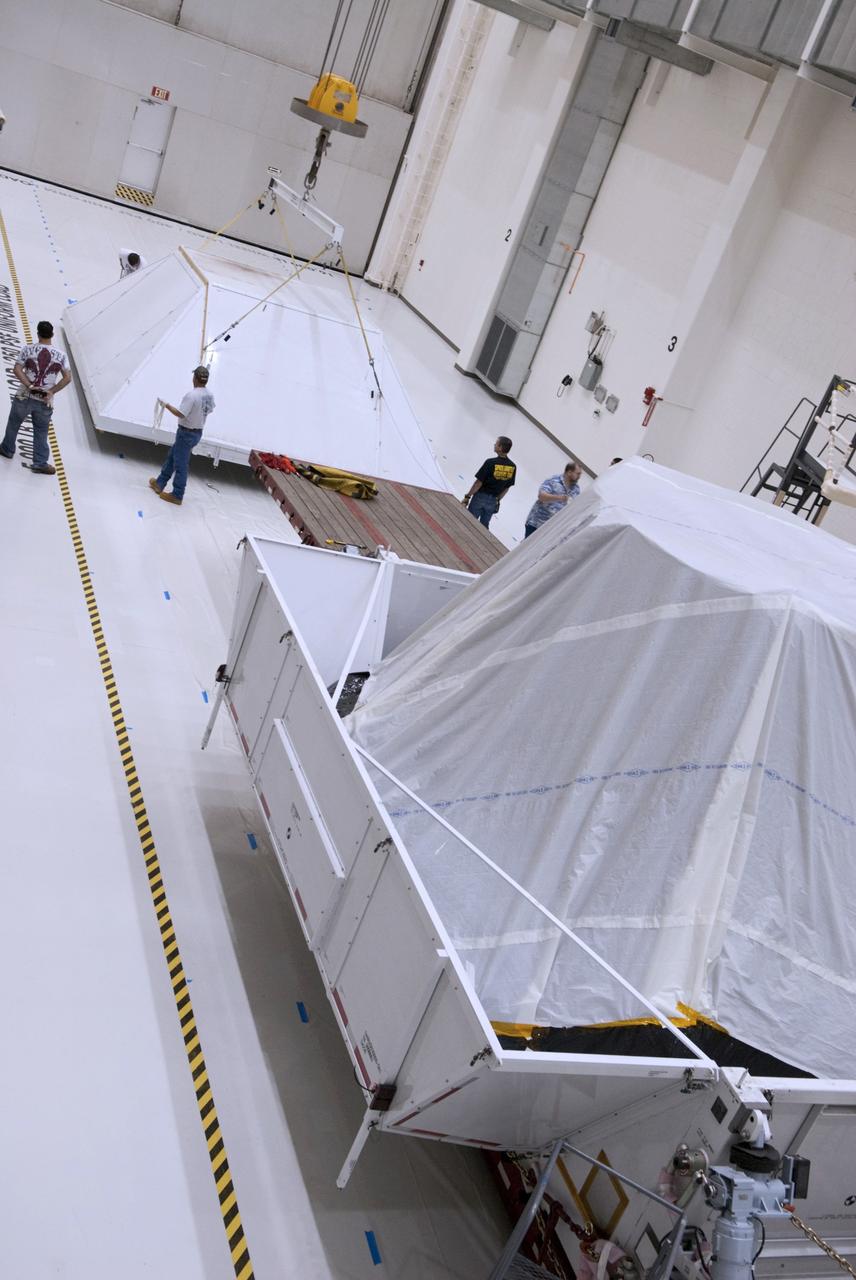
CAPE CANAVERAL, Fla. -- Lockheed Martin crews begin unpacking the Orion ground test vehicle in the Operations and Checkout O&C Facility at NASA's Kennedy Space Center in Florida. The vehicle traveled more than 1,800 miles from the company's Waterton Facility near Denver where it successfully completed a series of rigorous tests that simulated launch and spaceflight environments. The ground test vehicle will be used for pathfinding operations in the O&C, including simulated manufacturing and assembly procedures. After those operations are completed, new backshell panels will be installed on the ground test vehicle at the O&C prior to the vehicle’s trek to NASA's Langley Research Center in Virginia for splashdown testing at the agency's Hydro Impact Basin. Launching atop NASA's heavy-lift Space Launch System SLS, which also is under development, the Orion Multi-Purpose Crew Vehicle MPCV will serve as the exploration vehicle that will carry astronaut crews beyond low Earth orbit. It also will provide emergency abort capabilities, sustain the crew during space travel and provide safe re-entry from deep space return velocities. For more information, visit www.nasa.gov/orion. Photo credit: Charisse Nahser
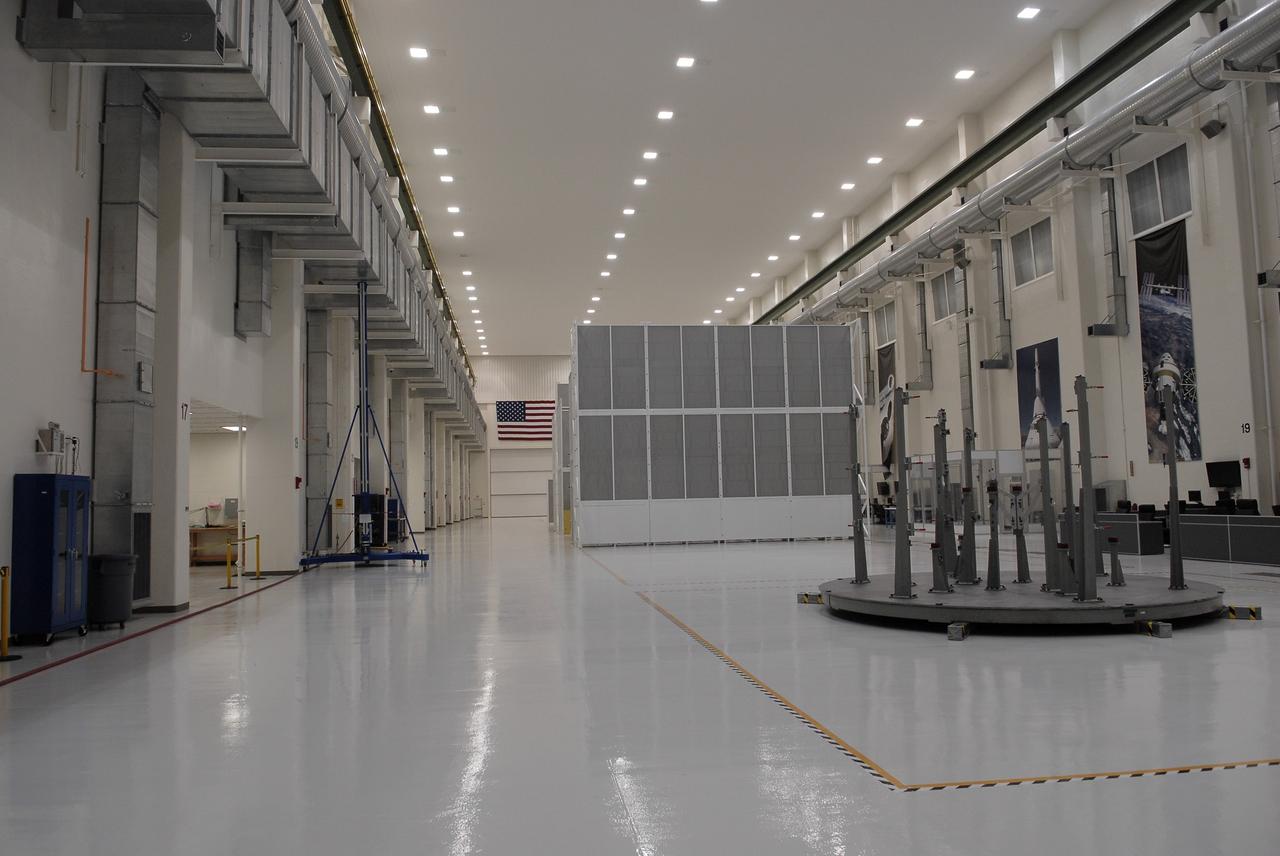
CAPE CANAVERAL, Fla. -- A view of the high bay in the Operations and Checkout O&C Facility at NASA’s Kennedy Space Center in Florida where the Orion ground test vehicle has arrived. The vehicle traveled more than 1,800 miles from the company's Waterton Facility near Denver where it successfully completed a series of rigorous tests that simulated launch and spaceflight environments. The ground test vehicle will be used for pathfinding operations in the O&C, including simulated manufacturing and assembly procedures. After those operations are completed, new backshell panels will be installed on the ground test vehicle at the O&C prior to the vehicle’s trek to NASA's Langley Research Center in Virginia for splashdown testing at the agency's Hydro Impact Basin. Launching atop NASA's heavy-lift Space Launch System SLS, which also is under development, the Orion Multi-Purpose Crew Vehicle MPCV will serve as the exploration vehicle that will carry astronaut crews beyond low Earth orbit. It also will provide emergency abort capabilities, sustain the crew during space travel and provide safe re-entry from deep space return velocities. For more information, visit www.nasa.gov/orion. Photo credit: Charisse Nahser
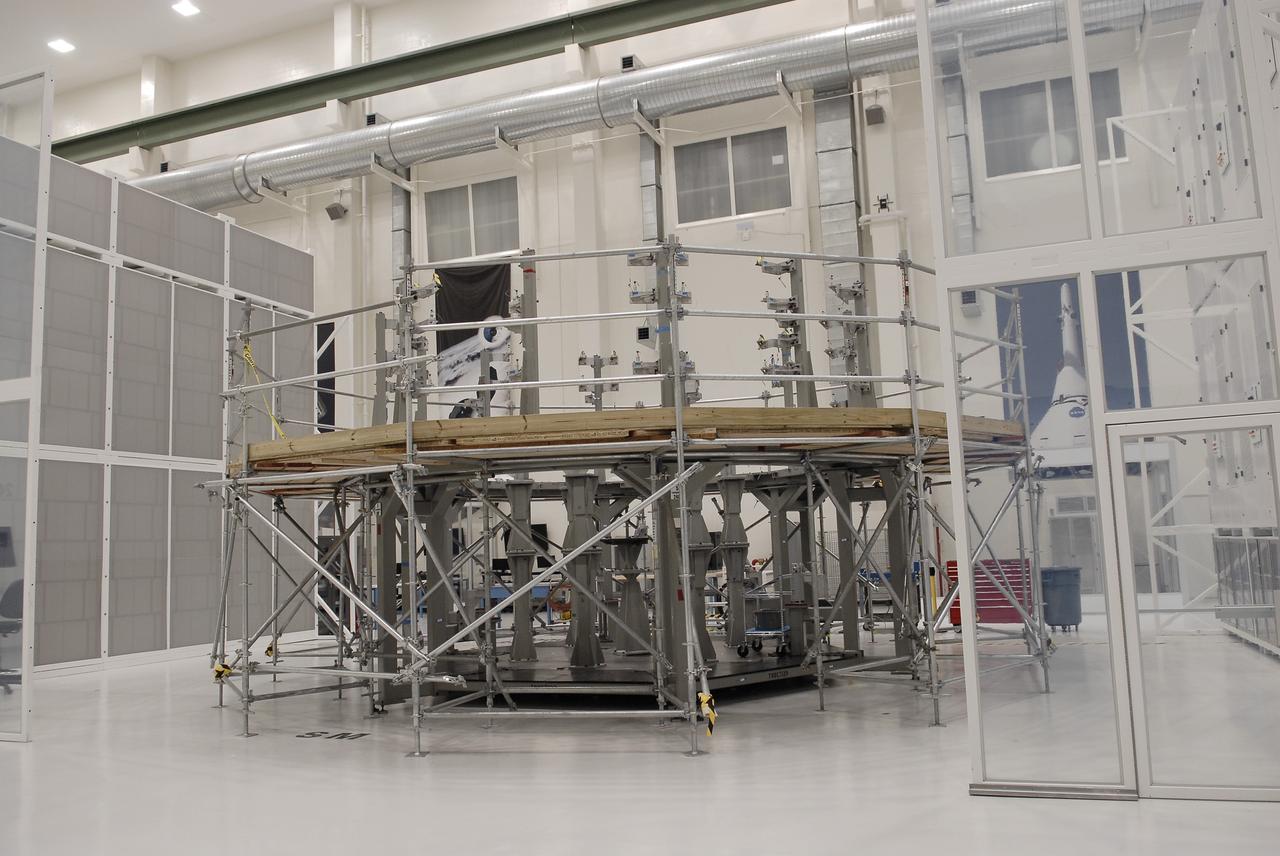
CAPE CANAVERAL, Fla. -- A view of one of the work stands in the Operations and Checkout O&C Facility at NASA's Kennedy Space Center in Florida where the Orion ground test vehicle has arrived. The vehicle traveled more than 1,800 miles from the company's Waterton Facility near Denver where it successfully completed a series of rigorous tests that simulated launch and spaceflight environments. The ground test vehicle will be used for pathfinding operations in the O&C, including simulated manufacturing and assembly procedures. After those operations are completed, new backshell panels will be installed on the ground test vehicle at the O&C prior to the vehicle’s trek to NASA's Langley Research Center in Virginia for splashdown testing at the agency's Hydro Impact Basin. Launching atop NASA's heavy-lift Space Launch System SLS, which also is under development, the Orion Multi-Purpose Crew Vehicle MPCV will serve as the exploration vehicle that will carry astronaut crews beyond low Earth orbit. It also will provide emergency abort capabilities, sustain the crew during space travel and provide safe re-entry from deep space return velocities. For more information, visit www.nasa.gov/orion. Photo credit: Charisse Nahser
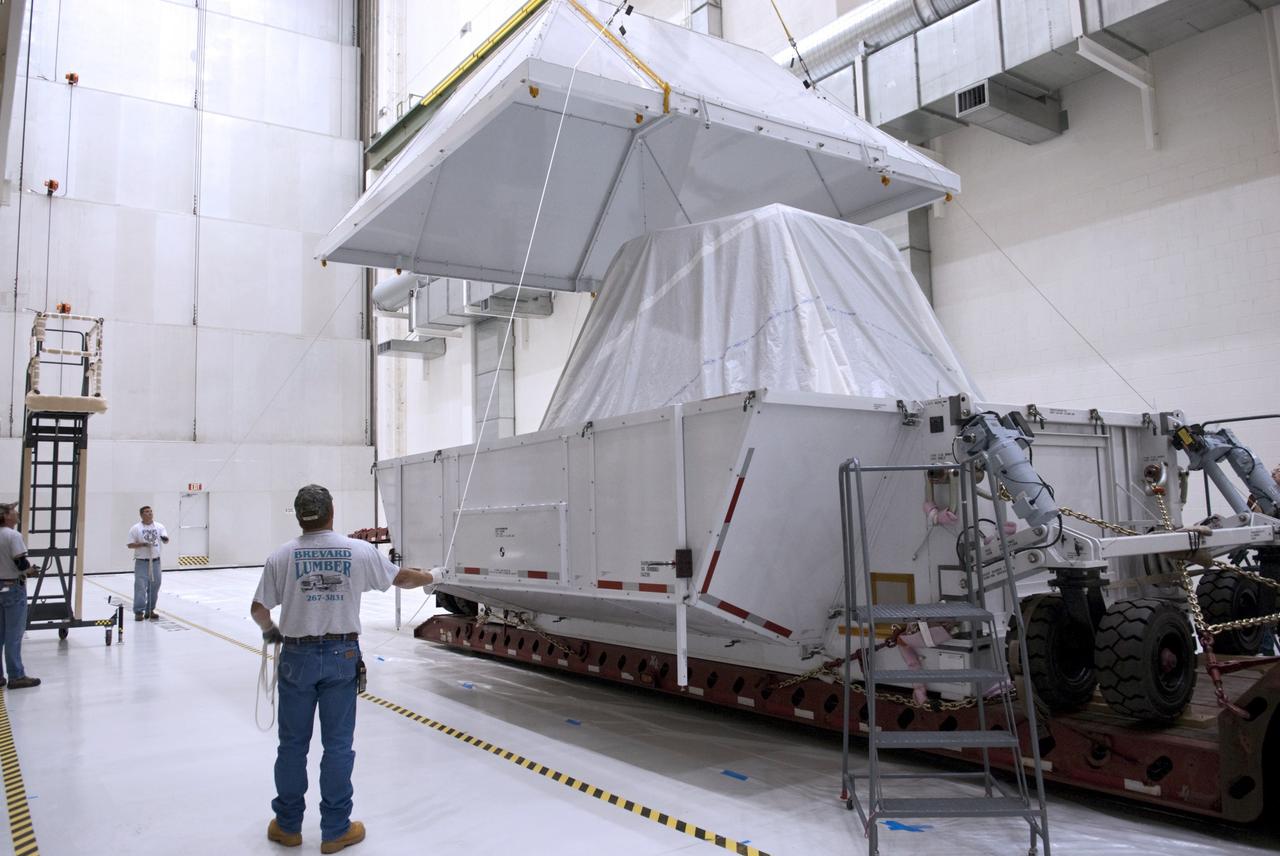
CAPE CANAVERAL, Fla. -- Lockheed Martin crews begin unpacking the Orion ground test vehicle in the Operations and Checkout O&C Facility at NASA's Kennedy Space Center in Florida. The vehicle traveled more than 1,800 miles from the company's Waterton Facility near Denver where it successfully completed a series of rigorous tests that simulated launch and spaceflight environments. The ground test vehicle will be used for pathfinding operations in the O&C, including simulated manufacturing and assembly procedures. After those operations are completed, new backshell panels will be installed on the ground test vehicle at the O&C prior to the vehicle’s trek to NASA's Langley Research Center in Virginia for splashdown testing at the agency's Hydro Impact Basin. Launching atop NASA's heavy-lift Space Launch System SLS, which also is under development, the Orion Multi-Purpose Crew Vehicle MPCV will serve as the exploration vehicle that will carry astronaut crews beyond low Earth orbit. It also will provide emergency abort capabilities, sustain the crew during space travel and provide safe re-entry from deep space return velocities. For more information, visit www.nasa.gov/orion. Photo credit: Charisse Nahser
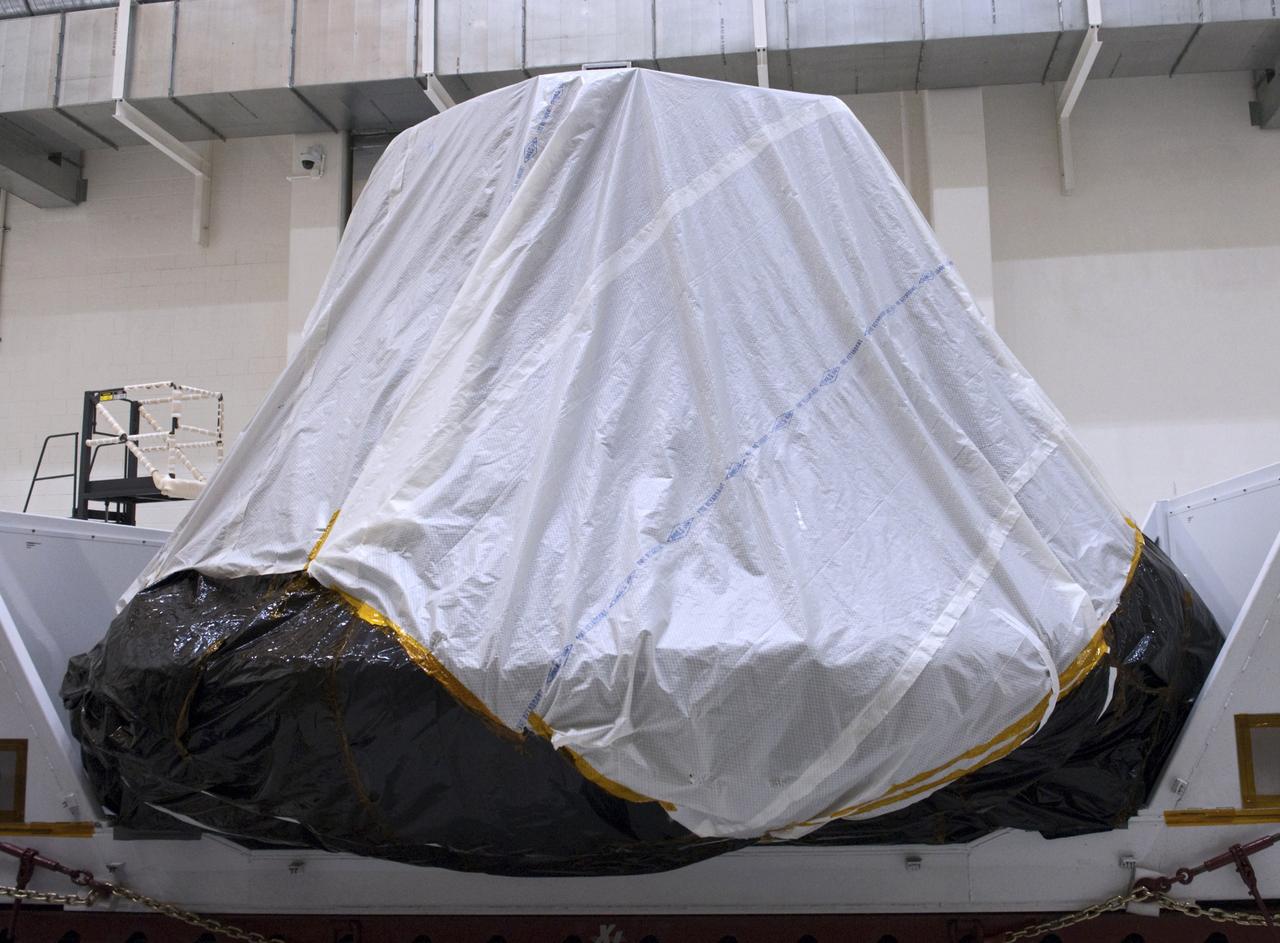
CAPE CANAVERAL, Fla. -- The Orion ground test vehicle awaits unpacking on a stand in the Operations and Checkout O&C Facility at NASA's Kennedy Space Center in Florida. The vehicle traveled more than 1,800 miles from the company's Waterton Facility near Denver where it successfully completed a series of rigorous tests that simulated launch and spaceflight environments. The ground test vehicle will be used for pathfinding operations in the O&C, including simulated manufacturing and assembly procedures. After those operations are completed, new backshell panels will be installed on the ground test vehicle at the O&C prior to the vehicle’s trek to NASA's Langley Research Center in Virginia for splashdown testing at the agency's Hydro Impact Basin. Launching atop NASA's heavy-lift Space Launch System SLS, which also is under development, the Orion Multi-Purpose Crew Vehicle MPCV will serve as the exploration vehicle that will carry astronaut crews beyond low Earth orbit. It also will provide emergency abort capabilities, sustain the crew during space travel and provide safe re-entry from deep space return velocities. For more information, visit www.nasa.gov/orion. Photo credit: Charisse Nahser
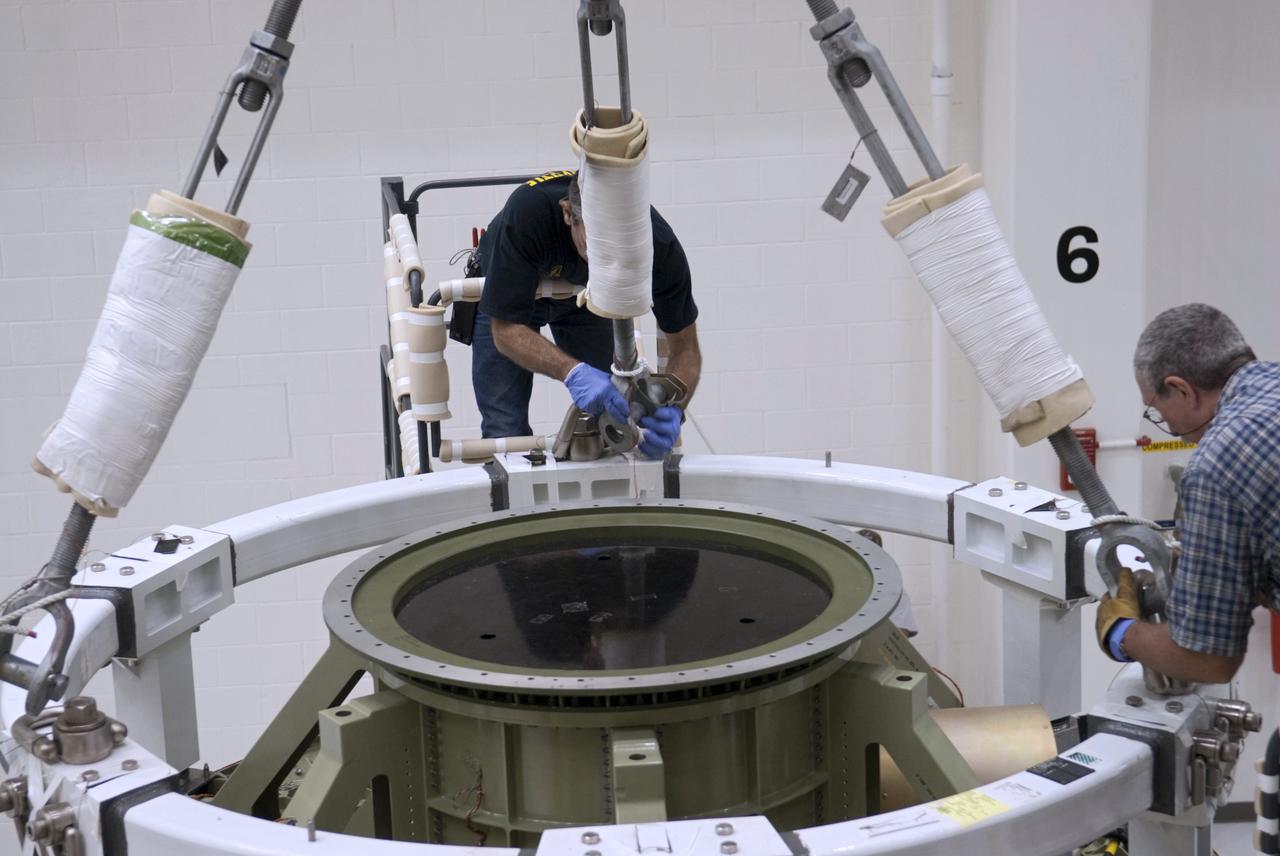
CAPE CANAVERAL, Fla. -- Lockheed Martin crews attach a crane to the Orion ground test vehicle in the Operations and Checkout O&C Facility at NASA's Kennedy Space Center in Florida. The vehicle traveled more than 1,800 miles from the company's Waterton Facility near Denver where it successfully completed a series of rigorous tests that simulated launch and spaceflight environments. The ground test vehicle will be used for pathfinding operations in the O&C, including simulated manufacturing and assembly procedures. After those operations are completed, new backshell panels will be installed on the ground test vehicle at the O&C prior to the vehicle’s trek to NASA's Langley Research Center in Virginia for splashdown testing at the agency's Hydro Impact Basin. Launching atop NASA's heavy-lift Space Launch System SLS, which also is under development, the Orion Multi-Purpose Crew Vehicle MPCV will serve as the exploration vehicle that will carry astronaut crews beyond low Earth orbit. It also will provide emergency abort capabilities, sustain the crew during space travel and provide safe re-entry from deep space return velocities. For more information, visit www.nasa.gov/orion. Photo credit: Charisse Nahser
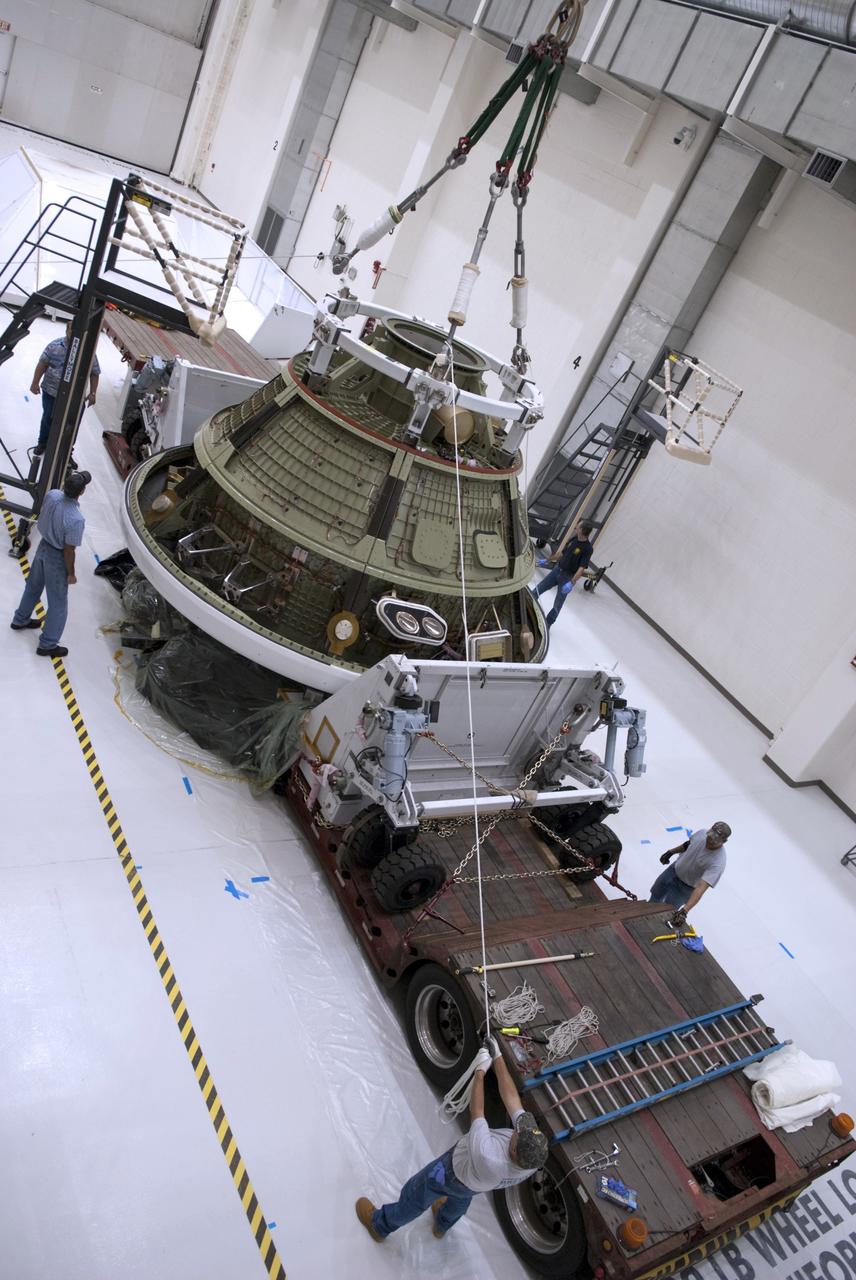
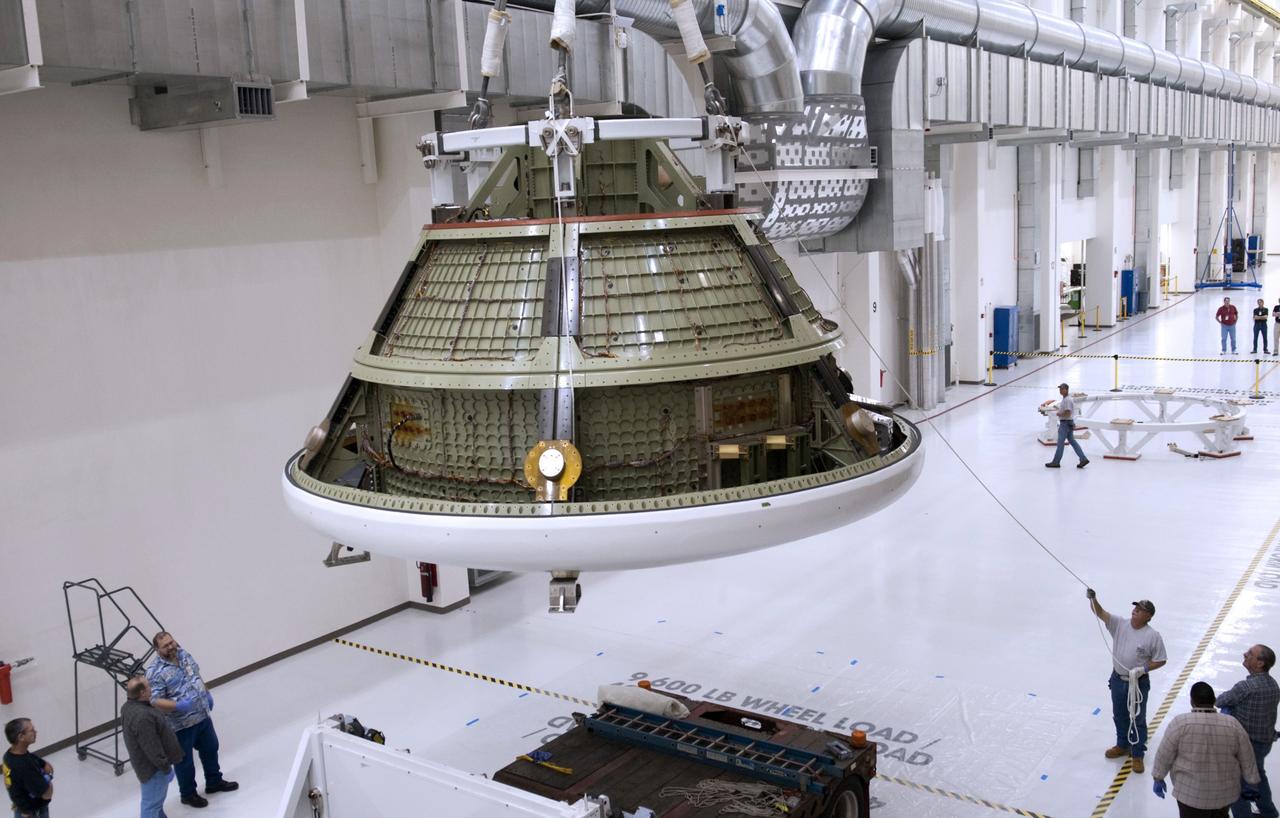
CAPE CANAVERAL, Fla. -- A crane is used to lift the Orion ground test vehicle in the Operations and Checkout O&C Facility at NASA's Kennedy Space Center in Florida. The vehicle traveled more than 1,800 miles from the company's Waterton Facility near Denver where it successfully completed a series of rigorous tests that simulated launch and spaceflight environments. The ground test vehicle will be used for pathfinding operations in the O&C, including simulated manufacturing and assembly procedures. After those operations are completed, new backshell panels will be installed on the ground test vehicle at the O&C prior to the vehicle’s trek to NASA's Langley Research Center in Virginia for splashdown testing at the agency's Hydro Impact Basin. Launching atop NASA's heavy-lift Space Launch System SLS, which also is under development, the Orion Multi-Purpose Crew Vehicle MPCV will serve as the exploration vehicle that will carry astronaut crews beyond low Earth orbit. It also will provide emergency abort capabilities, sustain the crew during space travel and provide safe re-entry from deep space return velocities. For more information, visit www.nasa.gov/orion. Photo credit: Charisse Nahser
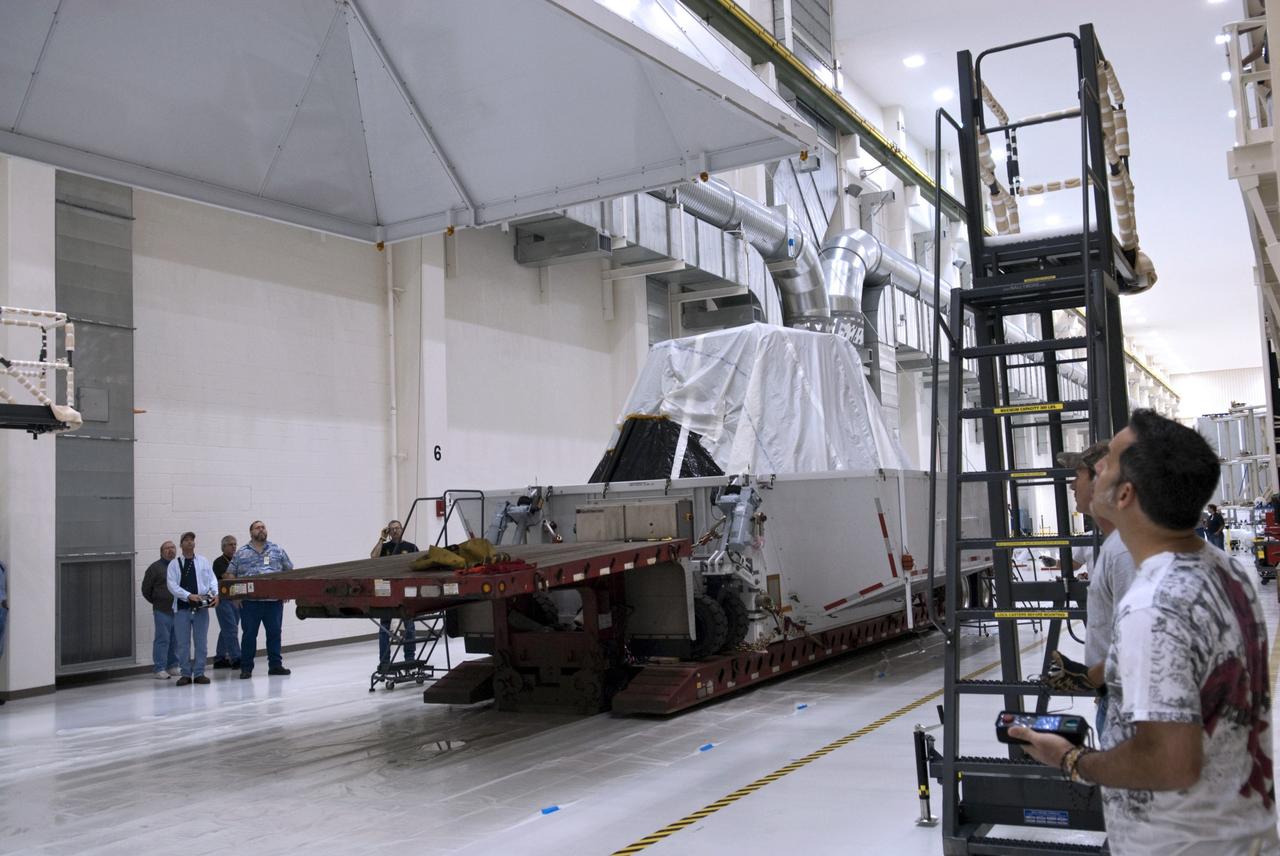
CAPE CANAVERAL, Fla. -- Lockheed Martin crews begin unpacking the Orion ground test vehicle in the Operations and Checkout O&C Facility at NASA's Kennedy Space Center in Florida. The vehicle traveled more than 1,800 miles from the company's Waterton Facility near Denver where it successfully completed a series of rigorous tests that simulated launch and spaceflight environments. The ground test vehicle will be used for pathfinding operations in the O&C, including simulated manufacturing and assembly procedures. After those operations are completed, new backshell panels will be installed on the ground test vehicle at the O&C prior to the vehicle’s trek to NASA's Langley Research Center in Virginia for splashdown testing at the agency's Hydro Impact Basin. Launching atop NASA's heavy-lift Space Launch System SLS, which also is under development, the Orion Multi-Purpose Crew Vehicle MPCV will serve as the exploration vehicle that will carry astronaut crews beyond low Earth orbit. It also will provide emergency abort capabilities, sustain the crew during space travel and provide safe re-entry from deep space return velocities. For more information, visit www.nasa.gov/orion. Photo credit: Charisse Nahser

CAPE CANAVERAL, Fla. -- Lockheed Martin crews begin unpacking the Orion ground test vehicle in the Operations and Checkout O&C Facility at NASA's Kennedy Space Center in Florida. The vehicle traveled more than 1,800 miles from the company's Waterton Facility near Denver where it successfully completed a series of rigorous tests that simulated launch and spaceflight environments. The ground test vehicle will be used for pathfinding operations in the O&C, including simulated manufacturing and assembly procedures. After those operations are completed, new backshell panels will be installed on the ground test vehicle at the O&C prior to the vehicle’s trek to NASA's Langley Research Center in Virginia for splashdown testing at the agency's Hydro Impact Basin. Launching atop NASA's heavy-lift Space Launch System SLS, which also is under development, the Orion Multi-Purpose Crew Vehicle MPCV will serve as the exploration vehicle that will carry astronaut crews beyond low Earth orbit. It also will provide emergency abort capabilities, sustain the crew during space travel and provide safe re-entry from deep space return velocities. For more information, visit www.nasa.gov/orion. Photo credit: Charisse Nahser
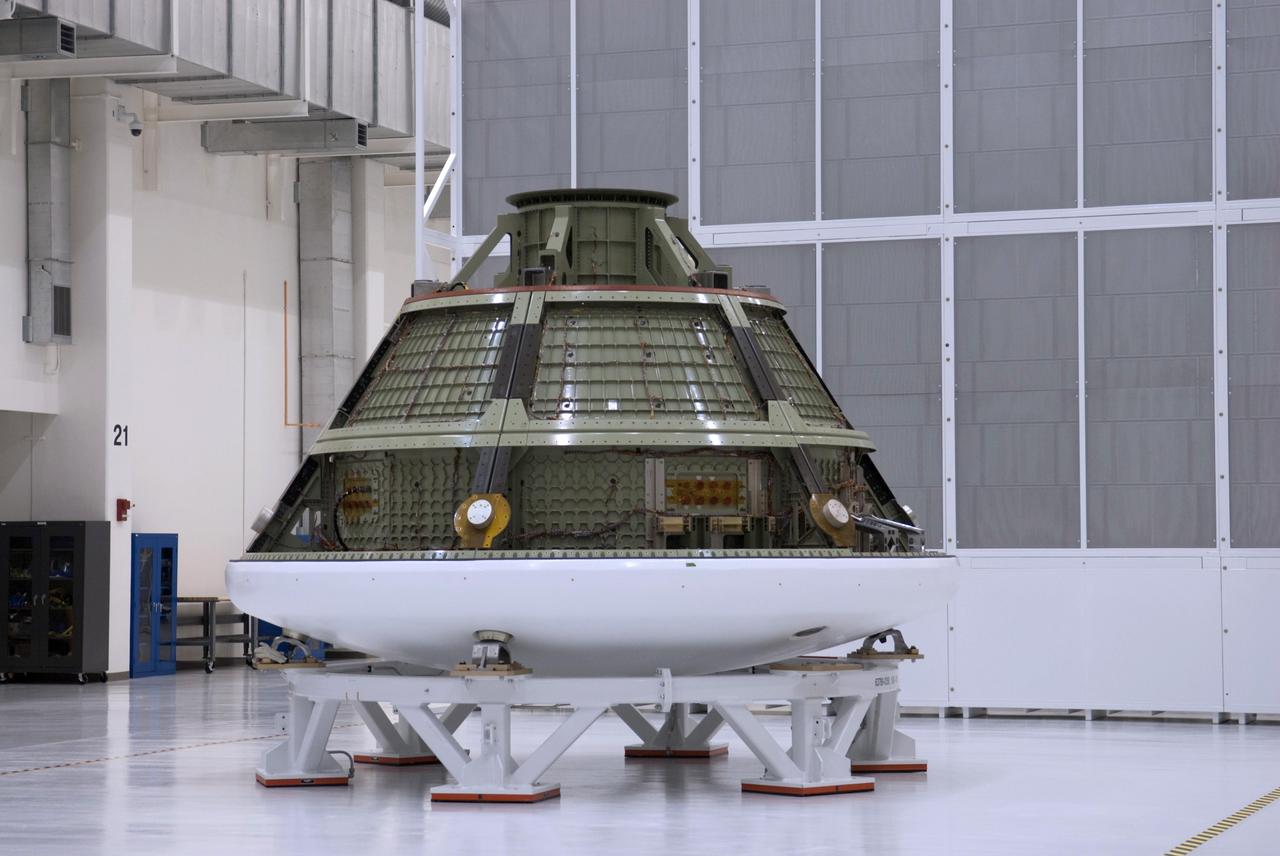
CAPE CANAVERAL, Fla. -- The Orion ground test vehicle in the Operations and Checkout O&C Facility is in NASA's Kennedy Space Center in Florida. The vehicle traveled more than 1,800 miles from Lockheed Martin's Waterton Facility near Denver where it successfully completed a series of rigorous tests that simulated launch and spaceflight environments. The ground test vehicle will be used for pathfinding operations in the O&C, including simulated manufacturing and assembly procedures. After those operations are completed, new backshell panels will be installed on the ground test vehicle at the O&C prior to the vehicle’s trek to NASA's Langley Research Center in Virginia for splashdown testing at the agency's Hydro Impact Basin. Launching atop NASA's heavy-lift Space Launch System SLS, which also is under development, the Orion Multi-Purpose Crew Vehicle MPCV will serve as the exploration vehicle that will carry astronaut crews beyond low Earth orbit. It also will provide emergency abort capabilities, sustain the crew during space travel and provide safe re-entry from deep space return velocities. For more information, visit www.nasa.gov/orion. Photo credit: Charisse Nahser
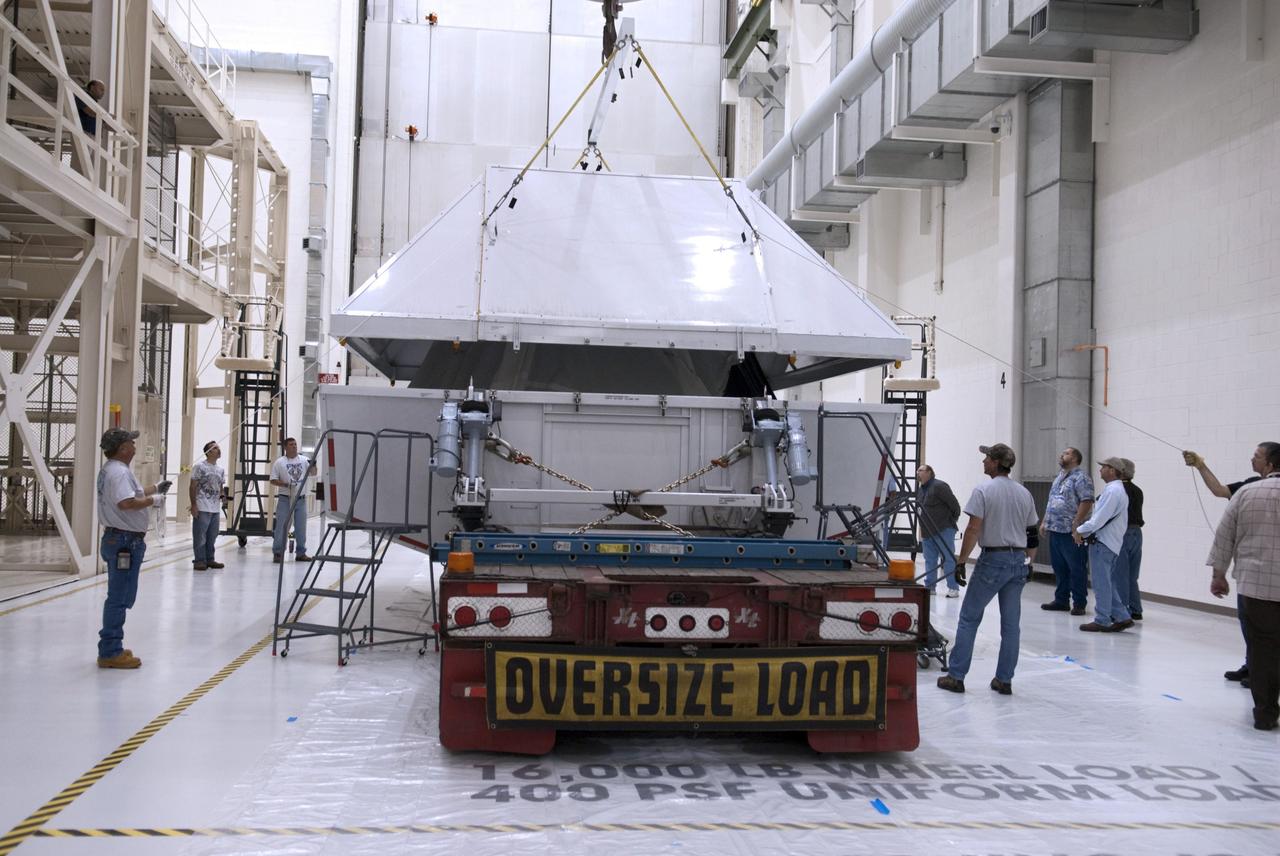
CAPE CANAVERAL, Fla. -- Lockheed Martin crews begin unpacking the Orion ground test vehicle in the Operations and Checkout O&C Facility at NASA's Kennedy Space Center in Florida. The vehicle traveled more than 1,800 miles from the company's Waterton Facility near Denver where it successfully completed a series of rigorous tests that simulated launch and spaceflight environments. The ground test vehicle will be used for pathfinding operations in the O&C, including simulated manufacturing and assembly procedures. After those operations are completed, new backshell panels will be installed on the ground test vehicle at the O&C prior to the vehicle’s trek to NASA's Langley Research Center in Virginia for splashdown testing at the agency's Hydro Impact Basin. Launching atop NASA's heavy-lift Space Launch System SLS, which also is under development, the Orion Multi-Purpose Crew Vehicle MPCV will serve as the exploration vehicle that will carry astronaut crews beyond low Earth orbit. It also will provide emergency abort capabilities, sustain the crew during space travel and provide safe re-entry from deep space return velocities. For more information, visit www.nasa.gov/orion. Photo credit: Charisse Nahser
CAPE CANAVERAL, Fla. -- Lockheed Martin crews remove the Orion ground test vehicle from its packaging in the Operations and Checkout O&C Facility at NASA's Kennedy Space Center in Florida. The vehicle traveled more than 1,800 miles from the company's Waterton Facility near Denver where it successfully completed a series of rigorous tests that simulated launch and spaceflight environments. The ground test vehicle will be used for pathfinding operations in the O&C, including simulated manufacturing and assembly procedures. After those operations are completed, new backshell panels will be installed on the ground test vehicle at the O&C prior to the vehicle’s trek to NASA's Langley Research Center in Virginia for splashdown testing at the agency's Hydro Impact Basin. Launching atop NASA's heavy-lift Space Launch System SLS, which also is under development, the Orion Multi-Purpose Crew Vehicle MPCV will serve as the exploration vehicle that will carry astronaut crews beyond low Earth orbit. It also will provide emergency abort capabilities, sustain the crew during space travel and provide safe re-entry from deep space return velocities. For more information, visit www.nasa.gov/orion. Photo credit: Charisse Nahser
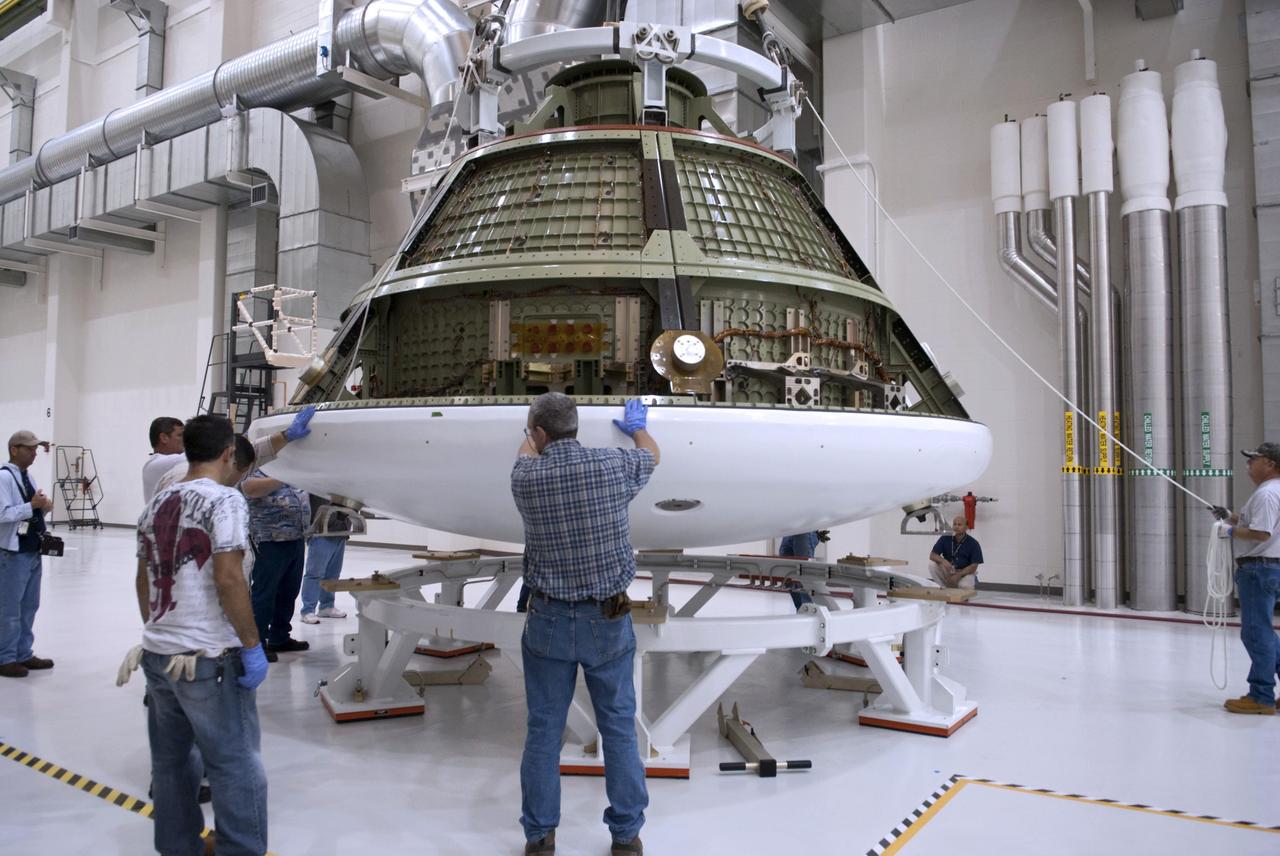
CAPE CANAVERAL, Fla. -- Lockheed Martin crews assist as a crane is used to lower the Orion ground test vehicle on to a work stand in the Operations and Checkout O&C Facility at NASA's Kennedy Space Center in Florida. The vehicle traveled more than 1,800 miles from the company's Waterton Facility near Denver where it successfully completed a series of rigorous tests that simulated launch and spaceflight environments. The ground test vehicle will be used for pathfinding operations in the O&C, including simulated manufacturing and assembly procedures. After those operations are completed, new backshell panels will be installed on the ground test vehicle at the O&C prior to the vehicle’s trek to NASA's Langley Research Center in Virginia for splashdown testing at the agency's Hydro Impact Basin. Launching atop NASA's heavy-lift Space Launch System SLS, which also is under development, the Orion Multi-Purpose Crew Vehicle MPCV will serve as the exploration vehicle that will carry astronaut crews beyond low Earth orbit. It also will provide emergency abort capabilities, sustain the crew during space travel and provide safe re-entry from deep space return velocities. For more information, visit www.nasa.gov/orion. Photo credit: Charisse Nahser
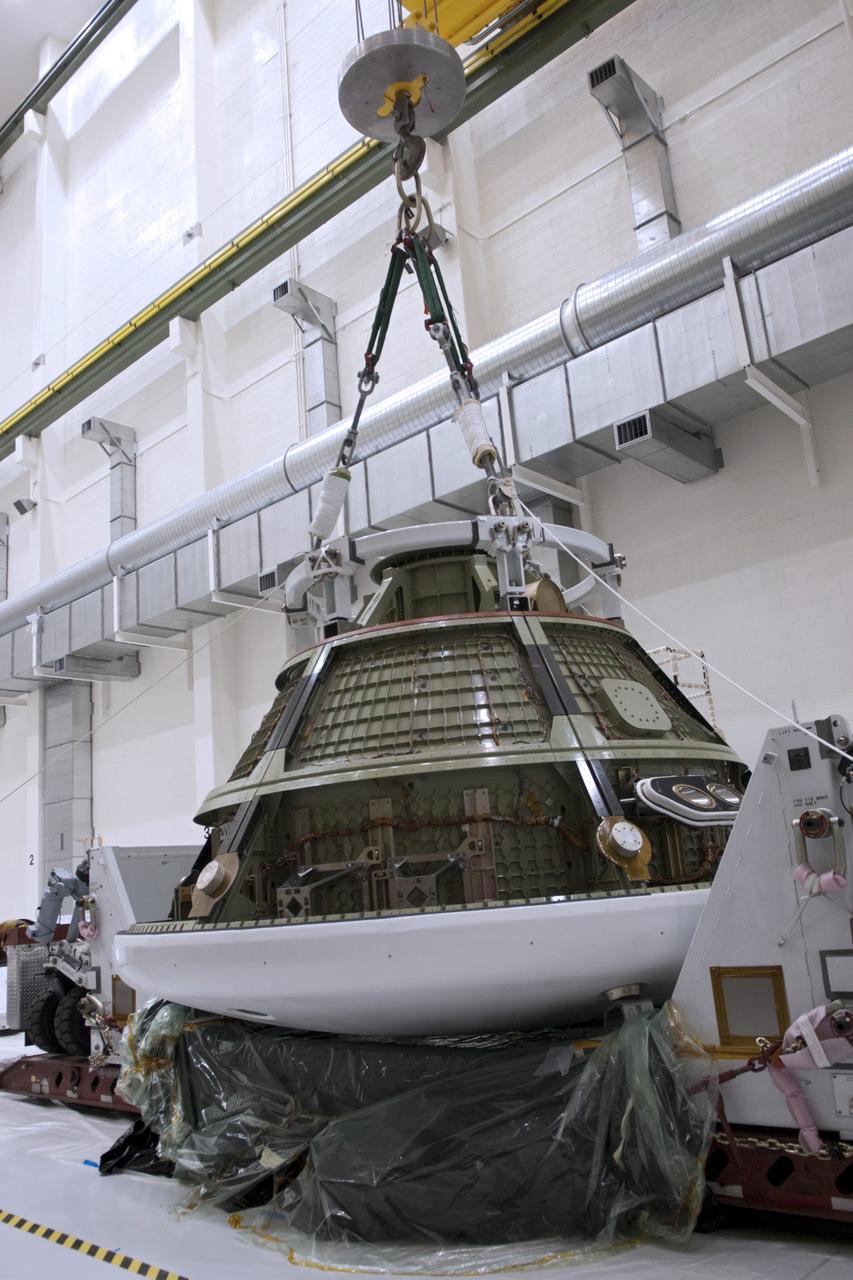
CAPE CANAVERAL, Fla. -- A crane is used to lift the Orion ground test vehicle in the Operations and Checkout O&C Facility at NASA's Kennedy Space Center in Florida. The vehicle traveled more than 1,800 miles from the company's Waterton Facility near Denver where it successfully completed a series of rigorous tests that simulated launch and spaceflight environments. The ground test vehicle will be used for pathfinding operations in the O&C, including simulated manufacturing and assembly procedures. After those operations are completed, new backshell panels will be installed on the ground test vehicle at the O&C prior to the vehicle’s trek to NASA's Langley Research Center in Virginia for splashdown testing at the agency's Hydro Impact Basin. Launching atop NASA's heavy-lift Space Launch System SLS, which also is under development, the Orion Multi-Purpose Crew Vehicle MPCV will serve as the exploration vehicle that will carry astronaut crews beyond low Earth orbit. It also will provide emergency abort capabilities, sustain the crew during space travel and provide safe re-entry from deep space return velocities. For more information, visit www.nasa.gov/orion. Photo credit: Charisse Nahser
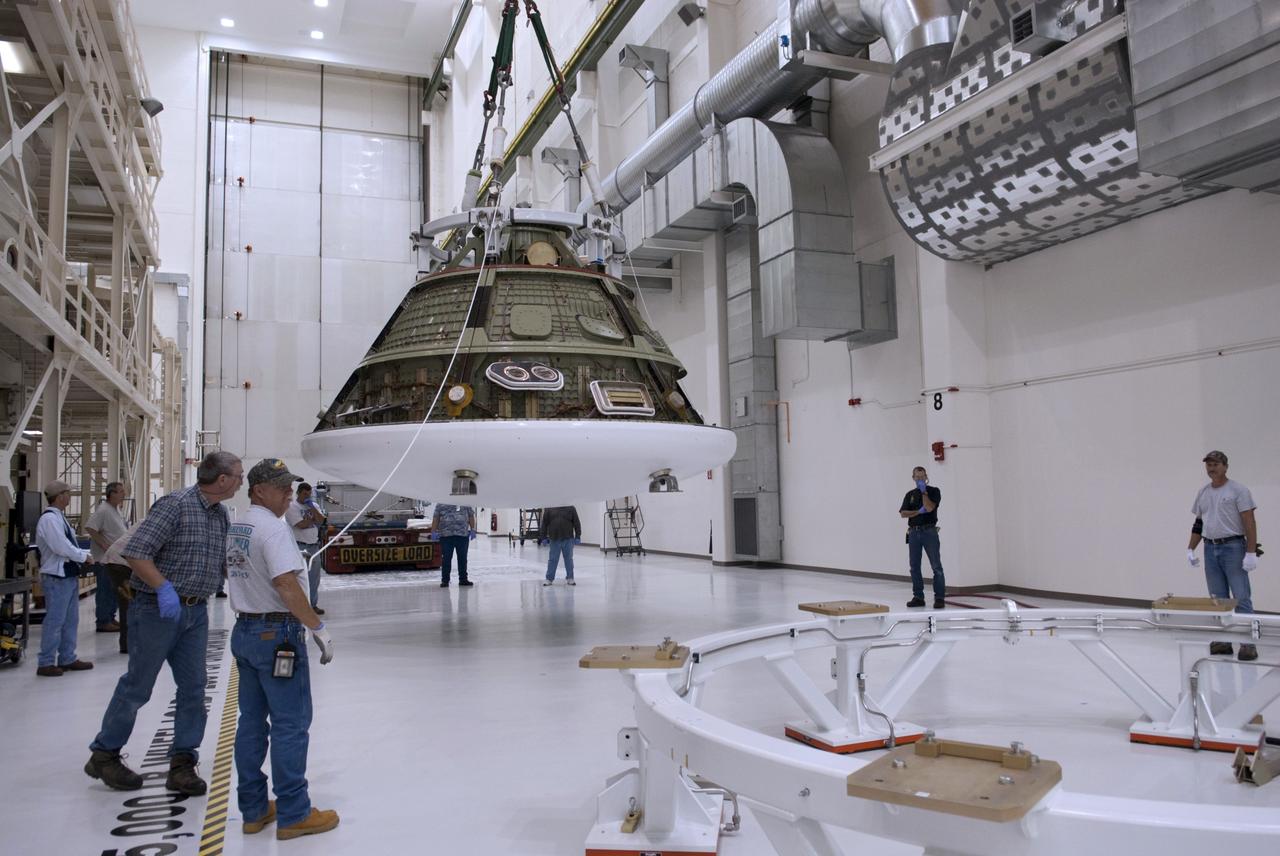
CAPE CANAVERAL, Fla. -- Lockheed Martin crews assist as a crane is used to move the Orion ground test vehicle toward a work stand in the Operations and Checkout O&C Facility at NASA's Kennedy Space Center in Florida. The vehicle traveled more than 1,800 miles from the company's Waterton Facility near Denver where it successfully completed a series of rigorous tests that simulated launch and spaceflight environments. The ground test vehicle will be used for pathfinding operations in the O&C, including simulated manufacturing and assembly procedures. After those operations are completed, new backshell panels will be installed on the ground test vehicle at the O&C prior to the vehicle’s trek to NASA's Langley Research Center in Virginia for splashdown testing at the agency's Hydro Impact Basin. Launching atop NASA's heavy-lift Space Launch System SLS, which also is under development, the Orion Multi-Purpose Crew Vehicle MPCV will serve as the exploration vehicle that will carry astronaut crews beyond low Earth orbit. It also will provide emergency abort capabilities, sustain the crew during space travel and provide safe re-entry from deep space return velocities. For more information, visit www.nasa.gov/orion. Photo credit: Charisse Nahser
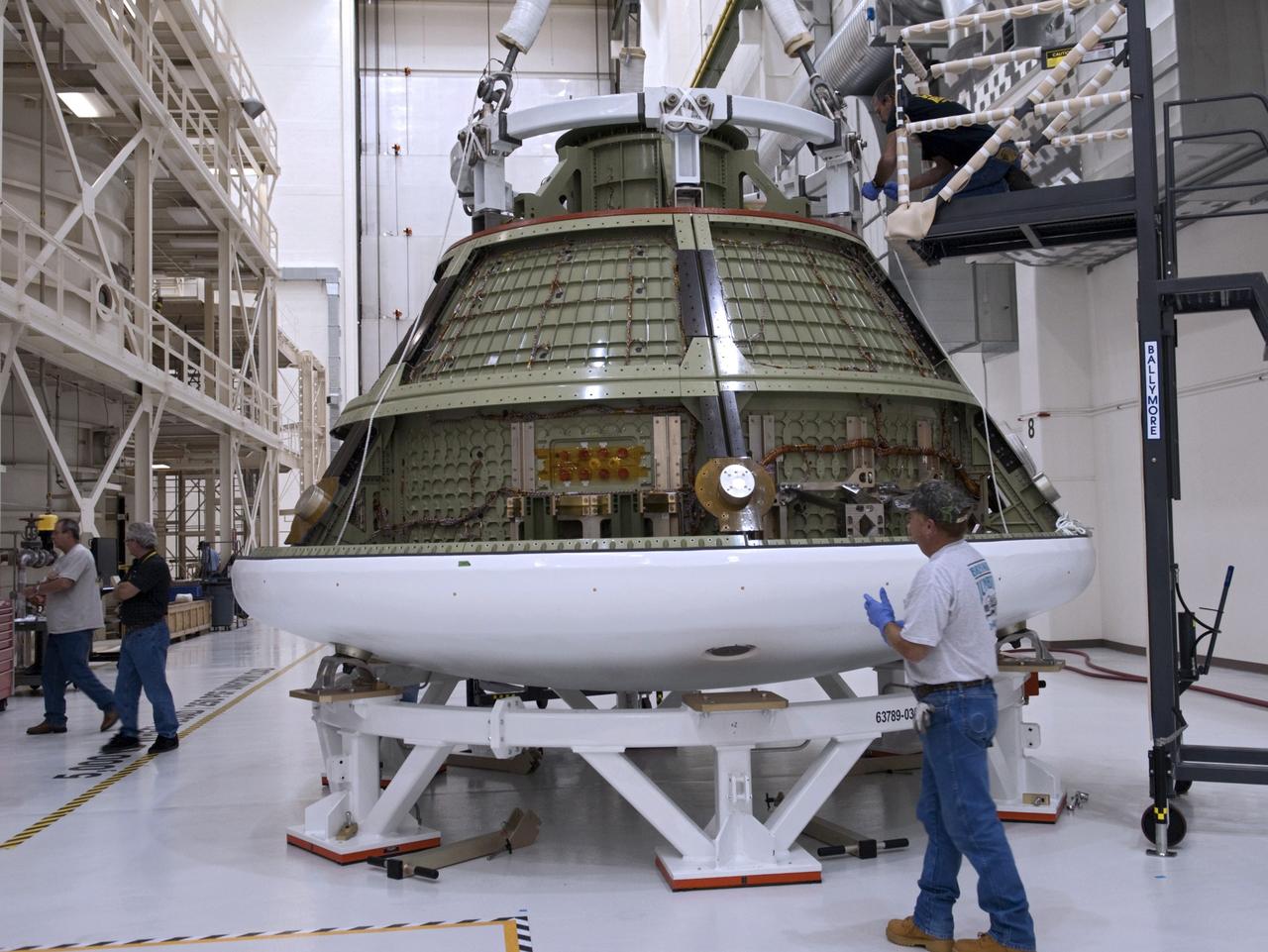
CAPE CANAVERAL, Fla. -- Lockheed Martin crews assist as a crane lowers the Orion ground test vehicle on to a work stand in the Operations and Checkout O&C Facility at NASA's Kennedy Space Center in Florida. The vehicle traveled more than 1,800 miles from the company's Waterton Facility near Denver where it successfully completed a series of rigorous tests that simulated launch and spaceflight environments. The ground test vehicle will be used for pathfinding operations in the O&C, including simulated manufacturing and assembly procedures. After those operations are completed, new backshell panels will be installed on the ground test vehicle at the O&C prior to the vehicle’s trek to NASA's Langley Research Center in Virginia for splashdown testing at the agency's Hydro Impact Basin. Launching atop NASA's heavy-lift Space Launch System SLS, which also is under development, the Orion Multi-Purpose Crew Vehicle MPCV will serve as the exploration vehicle that will carry astronaut crews beyond low Earth orbit. It also will provide emergency abort capabilities, sustain the crew during space travel and provide safe re-entry from deep space return velocities. For more information, visit www.nasa.gov/orion. Photo credit: Charisse Nahser
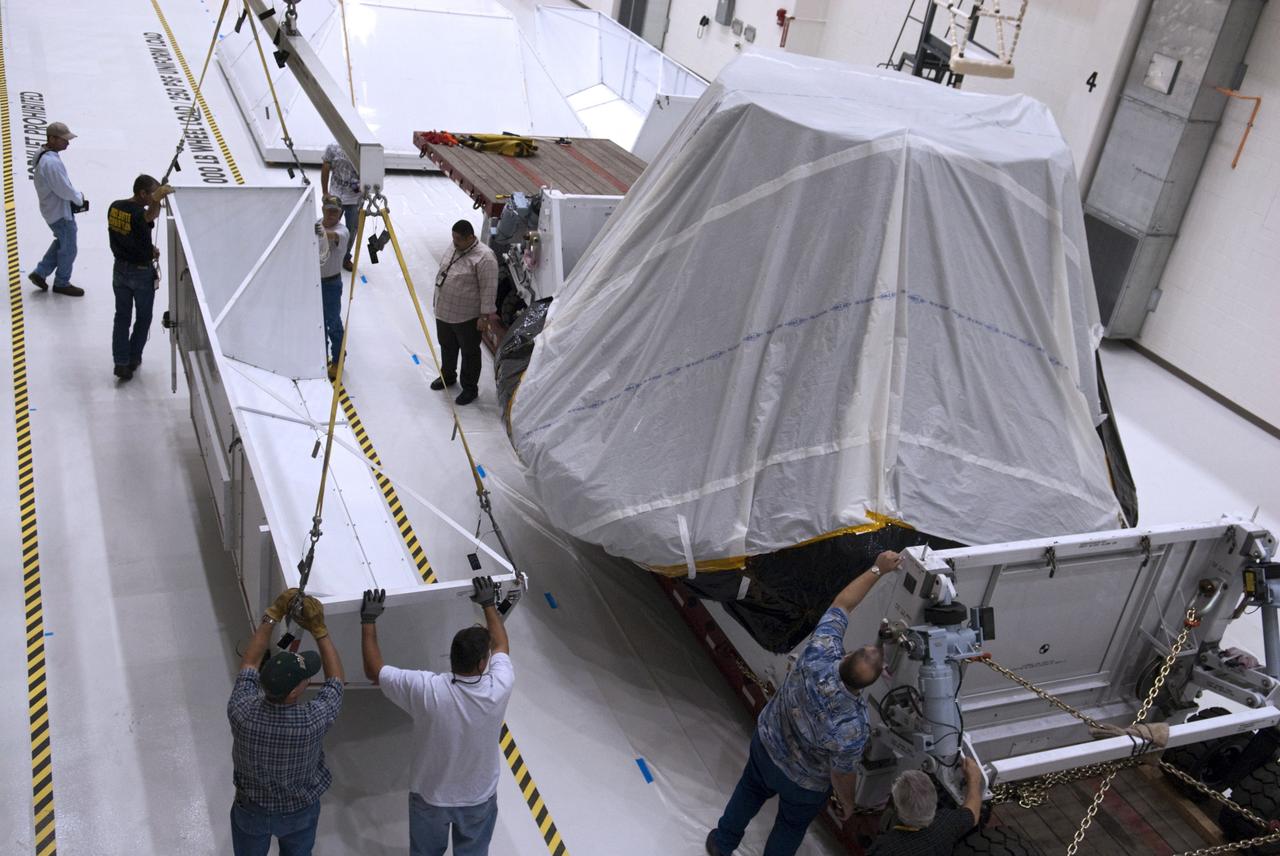
CAPE CANAVERAL, Fla. -- Lockheed Martin crews unpack the Orion ground test vehicle in the Operations and Checkout O&C Facility at NASA's Kennedy Space Center in Florida. The vehicle traveled more than 1,800 miles from the company's Waterton Facility near Denver where it successfully completed a series of rigorous tests that simulated launch and spaceflight environments. The ground test vehicle will be used for pathfinding operations in the O&C, including simulated manufacturing and assembly procedures. After those operations are completed, new backshell panels will be installed on the ground test vehicle at the O&C prior to the vehicle’s trek to NASA's Langley Research Center in Virginia for splashdown testing at the agency's Hydro Impact Basin. Launching atop NASA's heavy-lift Space Launch System SLS, which also is under development, the Orion Multi-Purpose Crew Vehicle MPCV will serve as the exploration vehicle that will carry astronaut crews beyond low Earth orbit. It also will provide emergency abort capabilities, sustain the crew during space travel and provide safe re-entry from deep space return velocities. For more information, visit www.nasa.gov/orion. Photo credit: Charisse Nahser
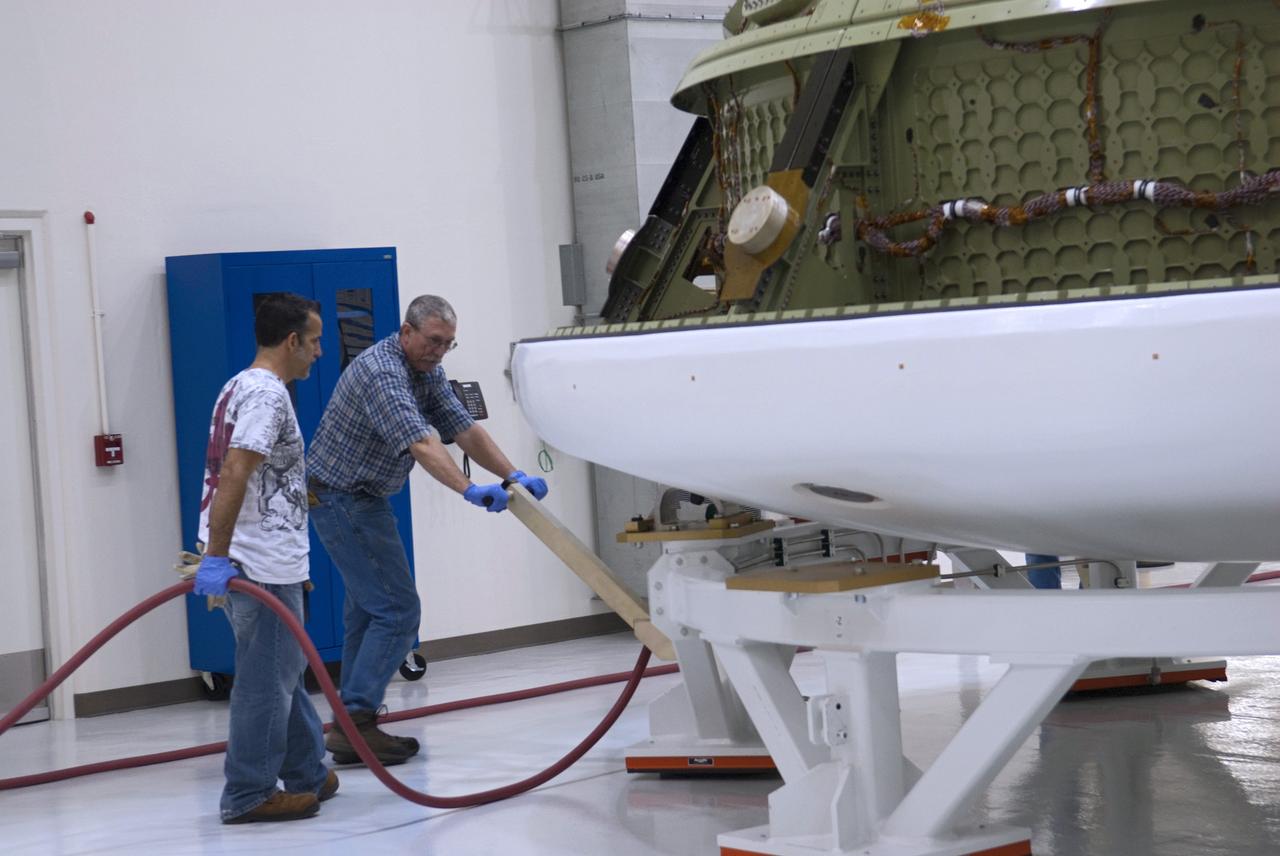
CAPE CANAVERAL, Fla. -- Lockheed Martin crews secure the Orion ground test vehicle on a work stand in the Operations and Checkout O&C Facility at NASA's Kennedy Space Center in Florida. The vehicle traveled more than 1,800 miles from the company's Waterton Facility near Denver where it successfully completed a series of rigorous tests that simulated launch and spaceflight environments. The ground test vehicle will be used for pathfinding operations in the O&C, including simulated manufacturing and assembly procedures. After those operations are completed, new backshell panels will be installed on the ground test vehicle at the O&C prior to the vehicle’s trek to NASA's Langley Research Center in Virginia for splashdown testing at the agency's Hydro Impact Basin. Launching atop NASA's heavy-lift Space Launch System SLS, which also is under development, the Orion Multi-Purpose Crew Vehicle MPCV will serve as the exploration vehicle that will carry astronaut crews beyond low Earth orbit. It also will provide emergency abort capabilities, sustain the crew during space travel and provide safe re-entry from deep space return velocities. For more information, visit www.nasa.gov/orion. Photo credit: Charisse Nahser

CAPE CANAVERAL, Fla. -- Lockheed Martin crews begin unpacking the Orion ground test vehicle in the Operations and Checkout O&C Facility at NASA's Kennedy Space Center in Florida. The vehicle traveled more than 1,800 miles from the company's Waterton Facility near Denver where it successfully completed a series of rigorous tests that simulated launch and spaceflight environments. The ground test vehicle will be used for pathfinding operations in the O&C, including simulated manufacturing and assembly procedures. After those operations are completed, new backshell panels will be installed on the ground test vehicle at the O&C prior to the vehicle’s trek to NASA's Langley Research Center in Virginia for splashdown testing at the agency's Hydro Impact Basin. Launching atop NASA's heavy-lift Space Launch System SLS, which also is under development, the Orion Multi-Purpose Crew Vehicle MPCV will serve as the exploration vehicle that will carry astronaut crews beyond low Earth orbit. It also will provide emergency abort capabilities, sustain the crew during space travel and provide safe re-entry from deep space return velocities. For more information, visit www.nasa.gov/orion. Photo credit: Charisse Nahser
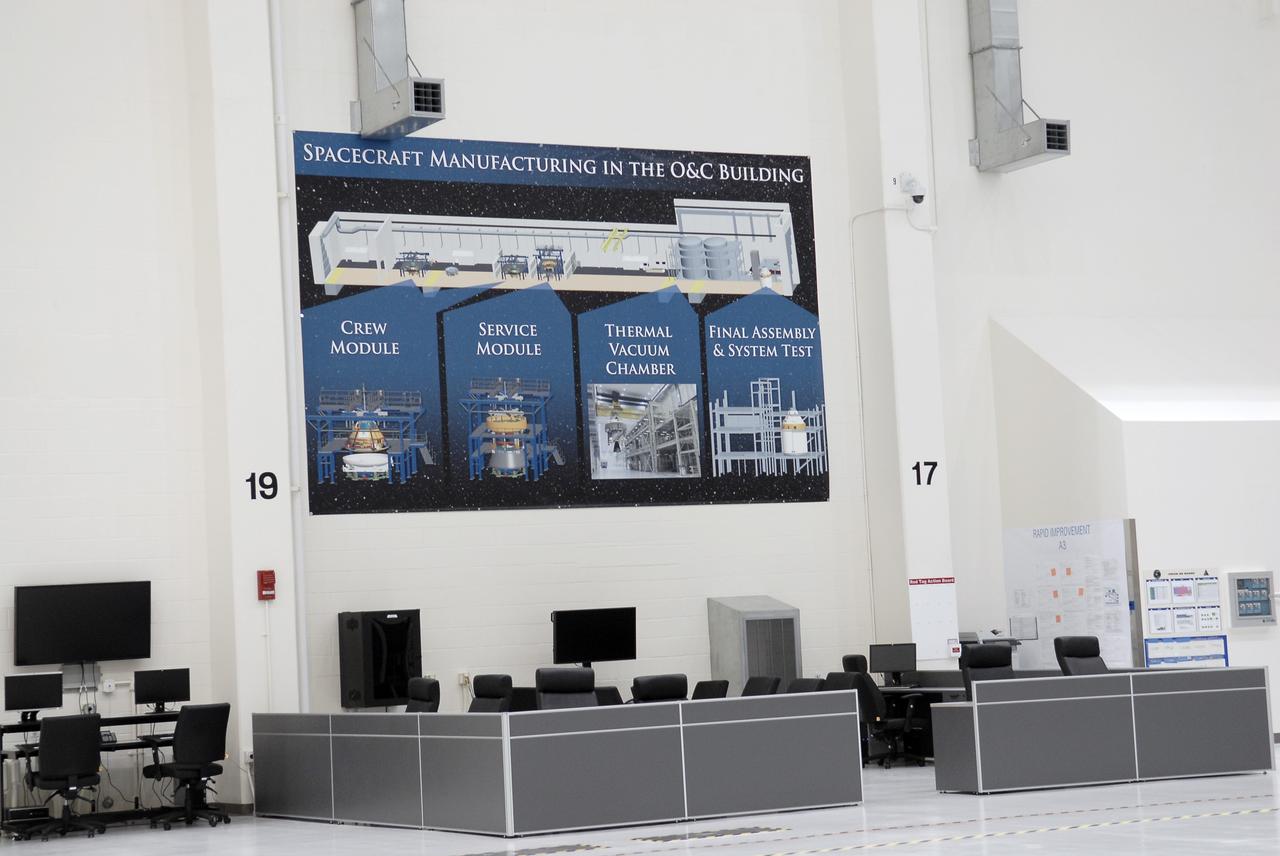
CAPE CANAVERAL, Fla. -- A view of one of the work areas in the Operations and Checkout O&C Facility at NASA's Kennedy Space Center in Florida where the Orion ground test vehicle has arrived. The vehicle traveled more than 1,800 miles from the company's Waterton Facility near Denver where it successfully completed a series of rigorous tests that simulated launch and spaceflight environments. The ground test vehicle will be used for pathfinding operations in the O&C, including simulated manufacturing and assembly procedures. After those operations are completed, new backshell panels will be installed on the ground test vehicle at the O&C prior to the vehicle’s trek to NASA's Langley Research Center in Virginia for splashdown testing at the agency's Hydro Impact Basin. Launching atop NASA's heavy-lift Space Launch System SLS, which also is under development, the Orion Multi-Purpose Crew Vehicle MPCV will serve as the exploration vehicle that will carry astronaut crews beyond low Earth orbit. It also will provide emergency abort capabilities, sustain the crew during space travel and provide safe re-entry from deep space return velocities. For more information, visit www.nasa.gov/orion. Photo credit: Charisse Nahser
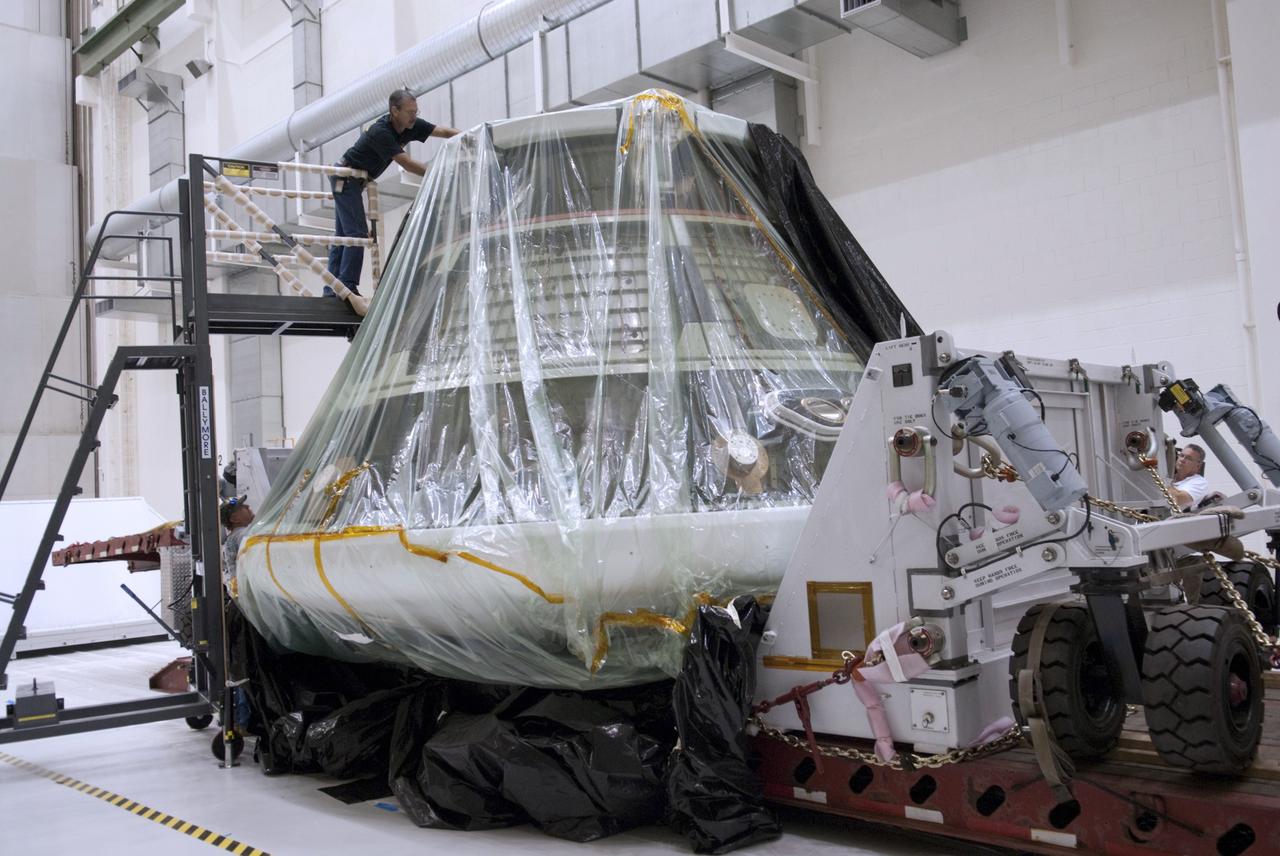
CAPE CANAVERAL, Fla. -- Lockheed Martin crews unpack the Orion ground test vehicle in the Operations and Checkout O&C Facility at NASA's Kennedy Space Center in Florida. The vehicle traveled more than 1,800 miles from the company's Waterton Facility near Denver where it successfully completed a series of rigorous tests that simulated launch and spaceflight environments. The ground test vehicle will be used for pathfinding operations in the O&C, including simulated manufacturing and assembly procedures. After those operations are completed, new backshell panels will be installed on the ground test vehicle at the O&C prior to the vehicle’s trek to NASA's Langley Research Center in Virginia for splashdown testing at the agency's Hydro Impact Basin. Launching atop NASA's heavy-lift Space Launch System SLS, which also is under development, the Orion Multi-Purpose Crew Vehicle MPCV will serve as the exploration vehicle that will carry astronaut crews beyond low Earth orbit. It also will provide emergency abort capabilities, sustain the crew during space travel and provide safe re-entry from deep space return velocities. For more information, visit www.nasa.gov/orion. Photo credit: Charisse Nahser

CAPE CANAVERAL, Fla. -- A view of one of the test stands in the Operations and Checkout O&C Facility at NASA's Kennedy Space Center in Florida where the Orion ground test vehicle has arrived. The vehicle traveled more than 1,800 miles from the company's Waterton Facility near Denver where it successfully completed a series of rigorous tests that simulated launch and spaceflight environments. The ground test vehicle will be used for pathfinding operations in the O&C, including simulated manufacturing and assembly procedures. After those operations are completed, new backshell panels will be installed on the ground test vehicle at the O&C prior to the vehicle’s trek to NASA's Langley Research Center in Virginia for splashdown testing at the agency's Hydro Impact Basin. Launching atop NASA's heavy-lift Space Launch System SLS, which also is under development, the Orion Multi-Purpose Crew Vehicle MPCV will serve as the exploration vehicle that will carry astronaut crews beyond low Earth orbit. It also will provide emergency abort capabilities, sustain the crew during space travel and provide safe re-entry from deep space return velocities. For more information, visit www.nasa.gov/orion. Photo credit: Charisse Nahser
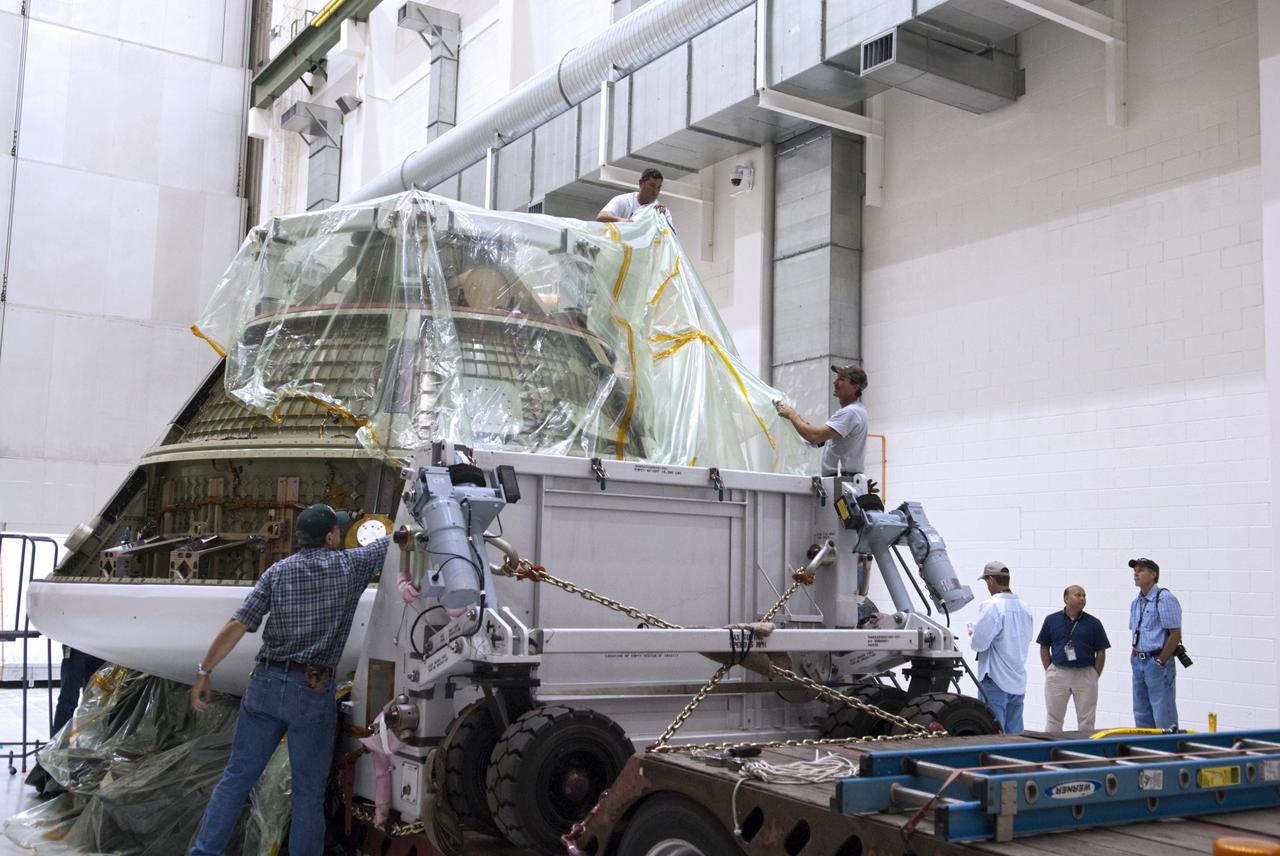
CAPE CANAVERAL, Fla. -- Lockheed Martin crews unpack the Orion ground test vehicle in the Operations and Checkout O&C Facility at NASA's Kennedy Space Center in Florida. The vehicle traveled more than 1,800 miles from the company's Waterton Facility near Denver where it successfully completed a series of rigorous tests that simulated launch and spaceflight environments. The ground test vehicle will be used for pathfinding operations in the O&C, including simulated manufacturing and assembly procedures. After those operations are completed, new backshell panels will be installed on the ground test vehicle at the O&C prior to the vehicle’s trek to NASA's Langley Research Center in Virginia for splashdown testing at the agency's Hydro Impact Basin. Launching atop NASA's heavy-lift Space Launch System SLS, which also is under development, the Orion Multi-Purpose Crew Vehicle MPCV will serve as the exploration vehicle that will carry astronaut crews beyond low Earth orbit. It also will provide emergency abort capabilities, sustain the crew during space travel and provide safe re-entry from deep space return velocities. For more information, visit www.nasa.gov/orion. Photo credit: Charisse Nahser
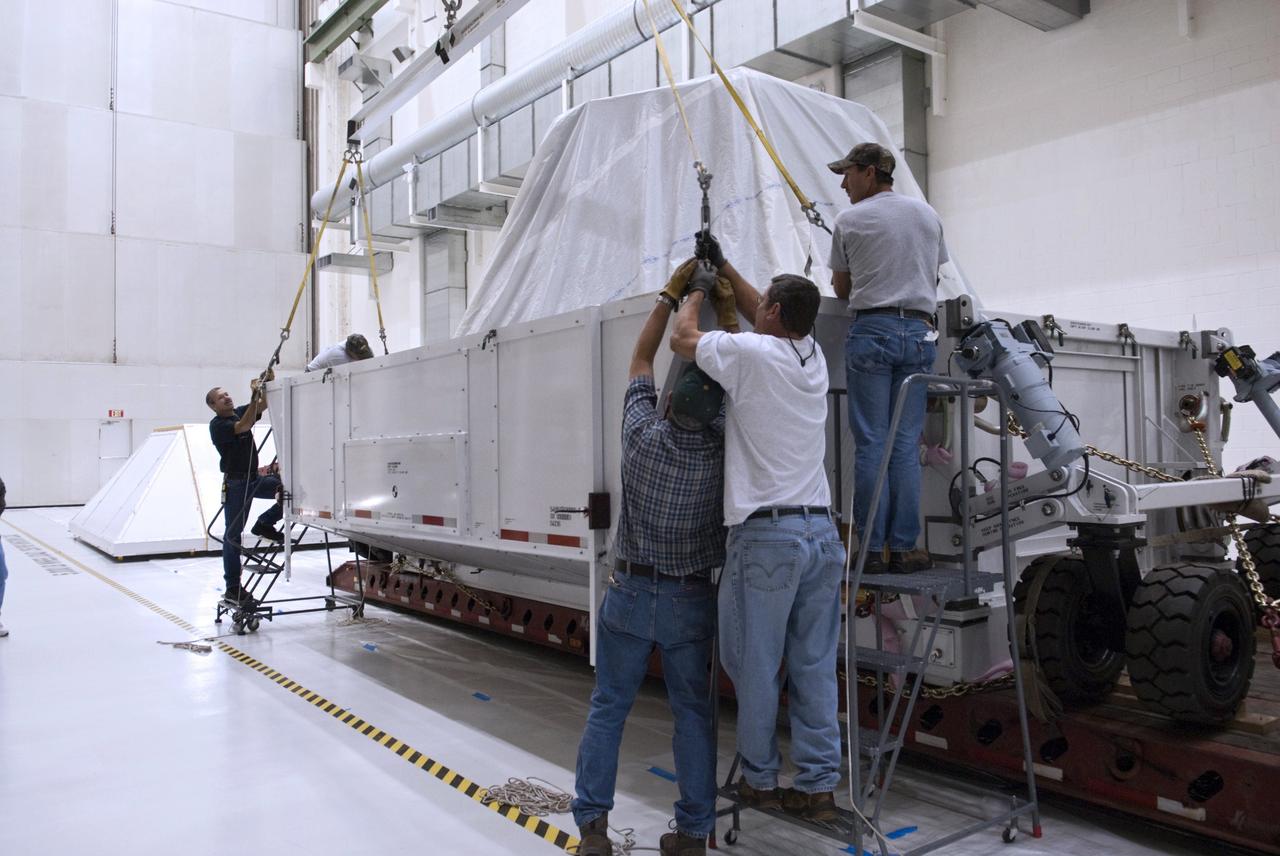
CAPE CANAVERAL, Fla. -- Lockheed Martin crews unpack the Orion ground test vehicle in the Operations and Checkout O&C Facility at NASA's Kennedy Space Center in Florida. The vehicle traveled more than 1,800 miles from the company's Waterton Facility near Denver where it successfully completed a series of rigorous tests that simulated launch and spaceflight environments. The ground test vehicle will be used for pathfinding operations in the O&C, including simulated manufacturing and assembly procedures. After those operations are completed, new backshell panels will be installed on the ground test vehicle at the O&C prior to the vehicle’s trek to NASA's Langley Research Center in Virginia for splashdown testing at the agency's Hydro Impact Basin. Launching atop NASA's heavy-lift Space Launch System SLS, which also is under development, the Orion Multi-Purpose Crew Vehicle MPCV will serve as the exploration vehicle that will carry astronaut crews beyond low Earth orbit. It also will provide emergency abort capabilities, sustain the crew during space travel and provide safe re-entry from deep space return velocities. For more information, visit www.nasa.gov/orion. Photo credit: Charisse Nahser
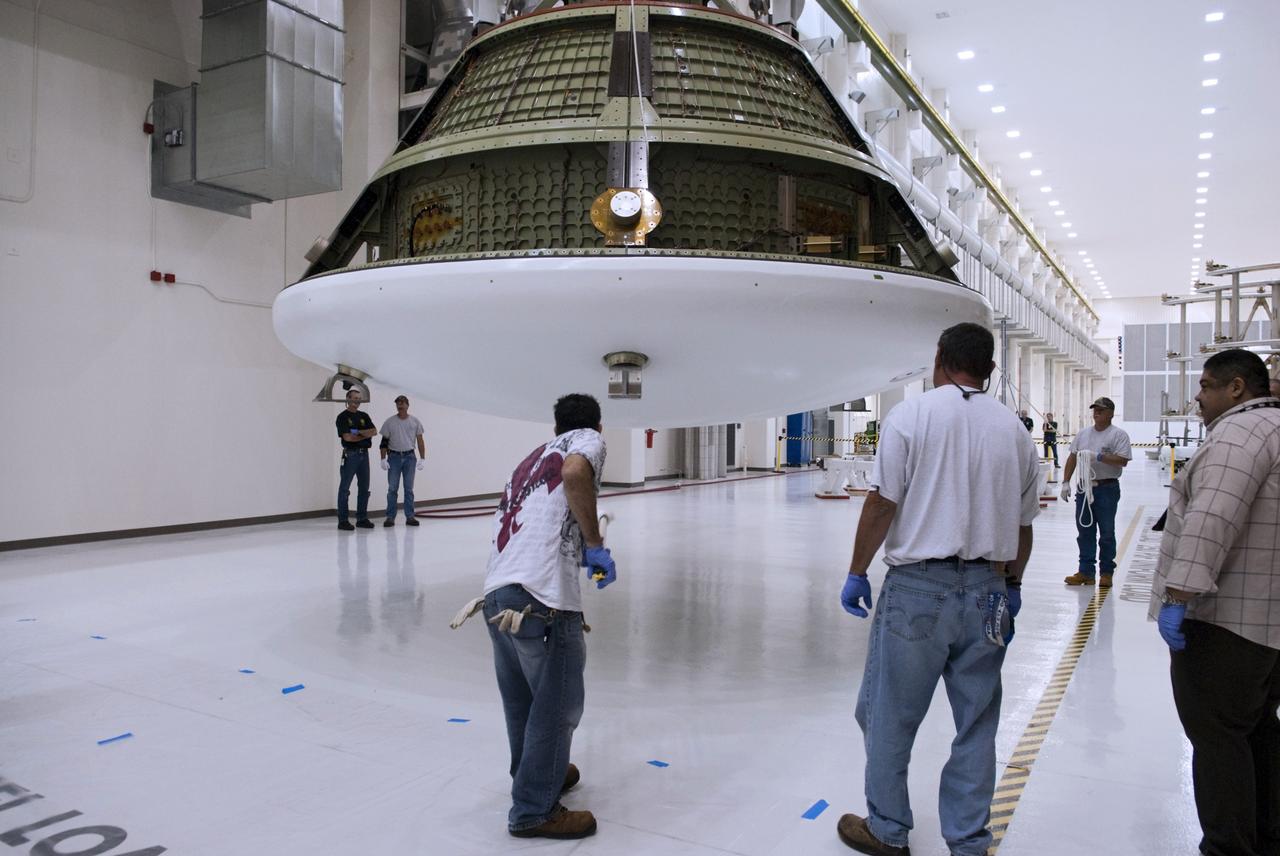
CAPE CANAVERAL, Fla. -- Lockheed Martin crews assist as a crane is used to move the Orion ground test vehicle in the Operations and Checkout O&C Facility at NASA's Kennedy Space Center in Florida. The vehicle traveled more than 1,800 miles from the company's Waterton Facility near Denver where it successfully completed a series of rigorous tests that simulated launch and spaceflight environments. The ground test vehicle will be used for pathfinding operations in the O&C, including simulated manufacturing and assembly procedures. After those operations are completed, new backshell panels will be installed on the ground test vehicle at the O&C prior to the vehicle’s trek to NASA's Langley Research Center in Virginia for splashdown testing at the agency's Hydro Impact Basin. Launching atop NASA's heavy-lift Space Launch System SLS, which also is under development, the Orion Multi-Purpose Crew Vehicle MPCV will serve as the exploration vehicle that will carry astronaut crews beyond low Earth orbit. It also will provide emergency abort capabilities, sustain the crew during space travel and provide safe re-entry from deep space return velocities. For more information, visit www.nasa.gov/orion. Photo credit: Charisse Nahser
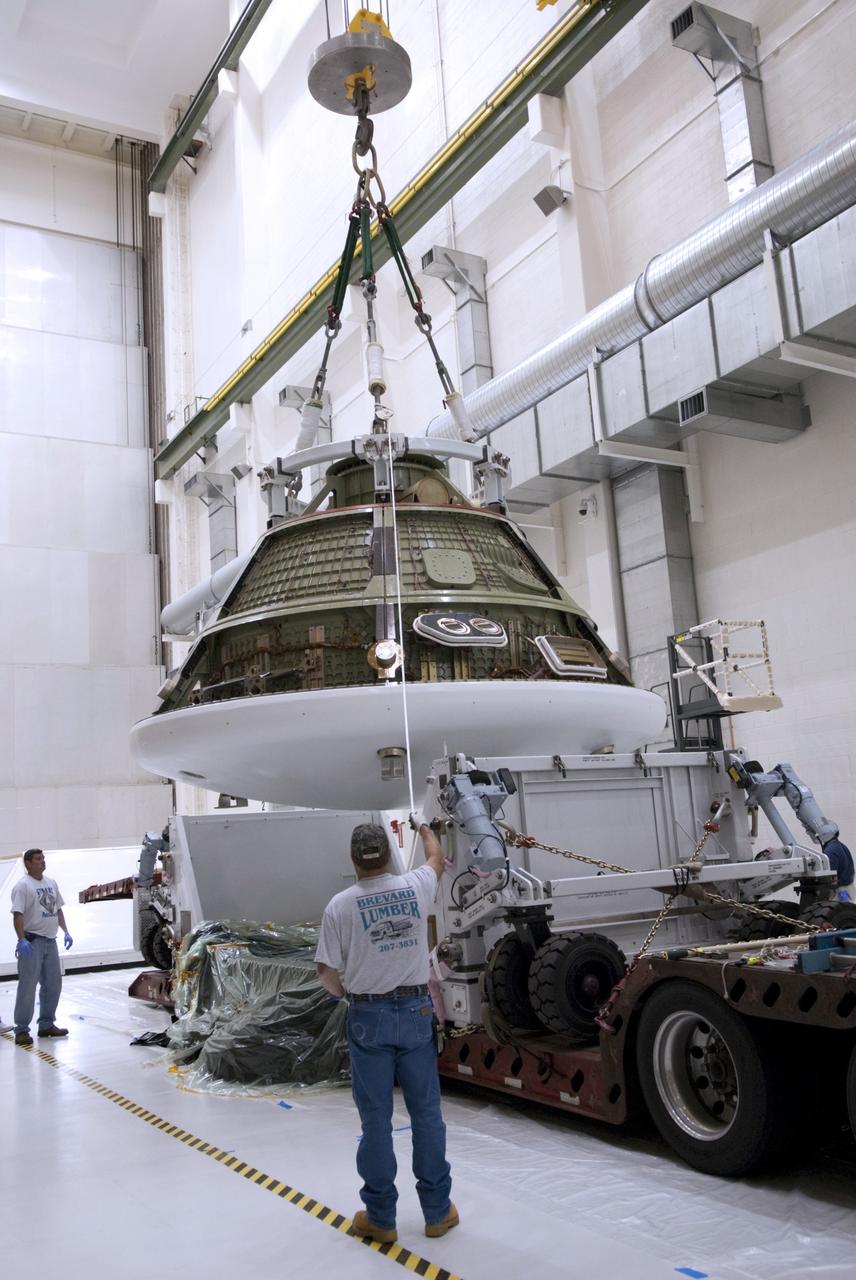
CAPE CANAVERAL, Fla. -- Lockheed Martin crews assist as a crane is used to lift the Orion ground test vehicle away from its packaging in the Operations and Checkout O&C Facility at NASA's Kennedy Space Center in Florida. The vehicle traveled more than 1,800 miles from the company's Waterton Facility near Denver where it successfully completed a series of rigorous tests that simulated launch and spaceflight environments. The ground test vehicle will be used for pathfinding operations in the O&C, including simulated manufacturing and assembly procedures. After those operations are completed, new backshell panels will be installed on the ground test vehicle at the O&C prior to the vehicle’s trek to NASA's Langley Research Center in Virginia for splashdown testing at the agency's Hydro Impact Basin. Launching atop NASA's heavy-lift Space Launch System SLS, which also is under development, the Orion Multi-Purpose Crew Vehicle MPCV will serve as the exploration vehicle that will carry astronaut crews beyond low Earth orbit. It also will provide emergency abort capabilities, sustain the crew during space travel and provide safe re-entry from deep space return velocities. For more information, visit www.nasa.gov/orion. Photo credit: Charisse Nahser

CAPE CANAVERAL, Fla. -- The Orion ground test vehicle sits on a work stand in the Operations and Checkout O&C Facility at NASA's Kennedy Space Center in Florida. The vehicle traveled more than 1,800 miles from the company's Waterton Facility near Denver where it successfully completed a series of rigorous tests that simulated launch and spaceflight environments. The ground test vehicle will be used for pathfinding operations in the O&C, including simulated manufacturing and assembly procedures. After those operations are completed, new backshell panels will be installed on the ground test vehicle at the O&C prior to the vehicle’s trek to NASA's Langley Research Center in Virginia for splashdown testing at the agency's Hydro Impact Basin. Launching atop NASA's heavy-lift Space Launch System SLS, which also is under development, the Orion Multi-Purpose Crew Vehicle MPCV will serve as the exploration vehicle that will carry astronaut crews beyond low Earth orbit. It also will provide emergency abort capabilities, sustain the crew during space travel and provide safe re-entry from deep space return velocities. For more information, visit www.nasa.gov/orion. Photo credit: Charisse Nahser
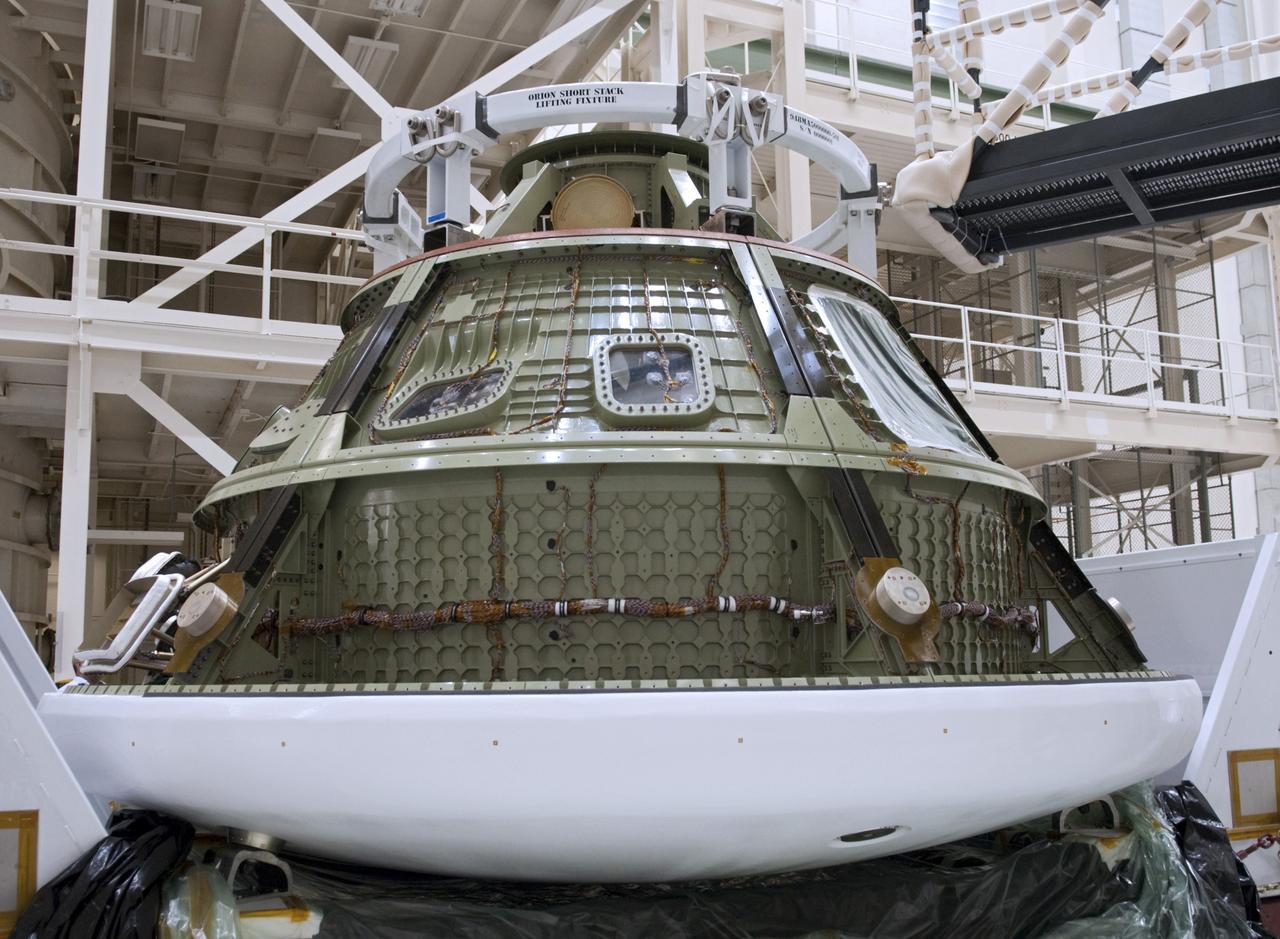
CAPE CANAVERAL, Fla. -- Lockheed Martin crews have unpacked the Orion ground test vehicle in the Operations and Checkout O&C Facility at NASA's Kennedy Space Center in Florida. The vehicle traveled more than 1,800 miles from the company's Waterton Facility near Denver where it successfully completed a series of rigorous tests that simulated launch and spaceflight environments. The ground test vehicle will be used for pathfinding operations in the O&C, including simulated manufacturing and assembly procedures. After those operations are completed, new backshell panels will be installed on the ground test vehicle at the O&C prior to the vehicle’s trek to NASA's Langley Research Center in Virginia for splashdown testing at the agency's Hydro Impact Basin. Launching atop NASA's heavy-lift Space Launch System SLS, which also is under development, the Orion Multi-Purpose Crew Vehicle MPCV will serve as the exploration vehicle that will carry astronaut crews beyond low Earth orbit. It also will provide emergency abort capabilities, sustain the crew during space travel and provide safe re-entry from deep space return velocities. For more information, visit www.nasa.gov/orion. Photo credit: Charisse Nahser
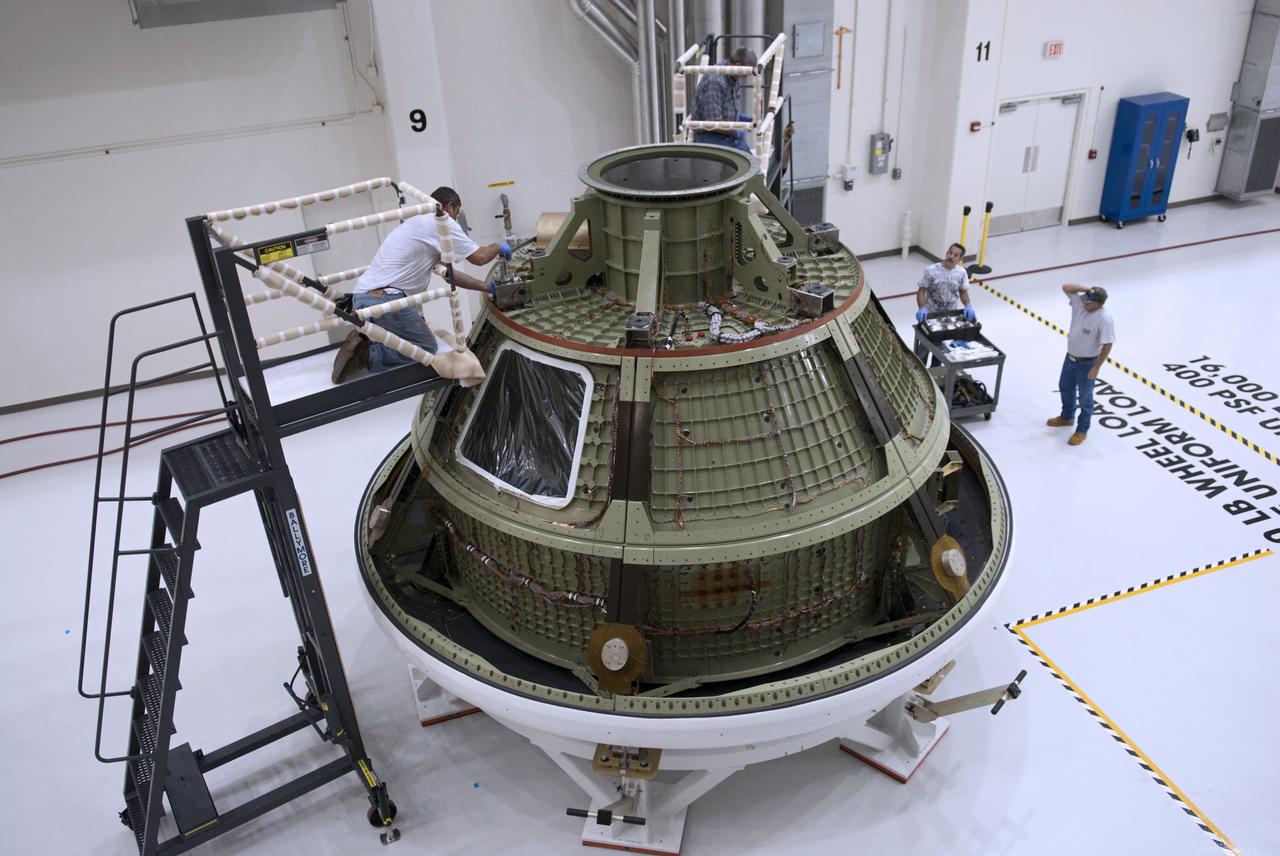
CAPE CANAVERAL, Fla. -- The Orion ground test vehicle sits on a work stand in the Operations and Checkout O&C Facility at NASA's Kennedy Space Center in Florida. The vehicle traveled more than 1,800 miles from the company's Waterton Facility near Denver where it successfully completed a series of rigorous tests that simulated launch and spaceflight environments. The ground test vehicle will be used for pathfinding operations in the O&C, including simulated manufacturing and assembly procedures. After those operations are completed, new backshell panels will be installed on the ground test vehicle at the O&C prior to the vehicle’s trek to NASA's Langley Research Center in Virginia for splashdown testing at the agency's Hydro Impact Basin. Launching atop NASA's heavy-lift Space Launch System SLS, which also is under development, the Orion Multi-Purpose Crew Vehicle MPCV will serve as the exploration vehicle that will carry astronaut crews beyond low Earth orbit. It also will provide emergency abort capabilities, sustain the crew during space travel and provide safe re-entry from deep space return velocities. For more information, visit www.nasa.gov/orion. Photo credit: Charisse Nahser