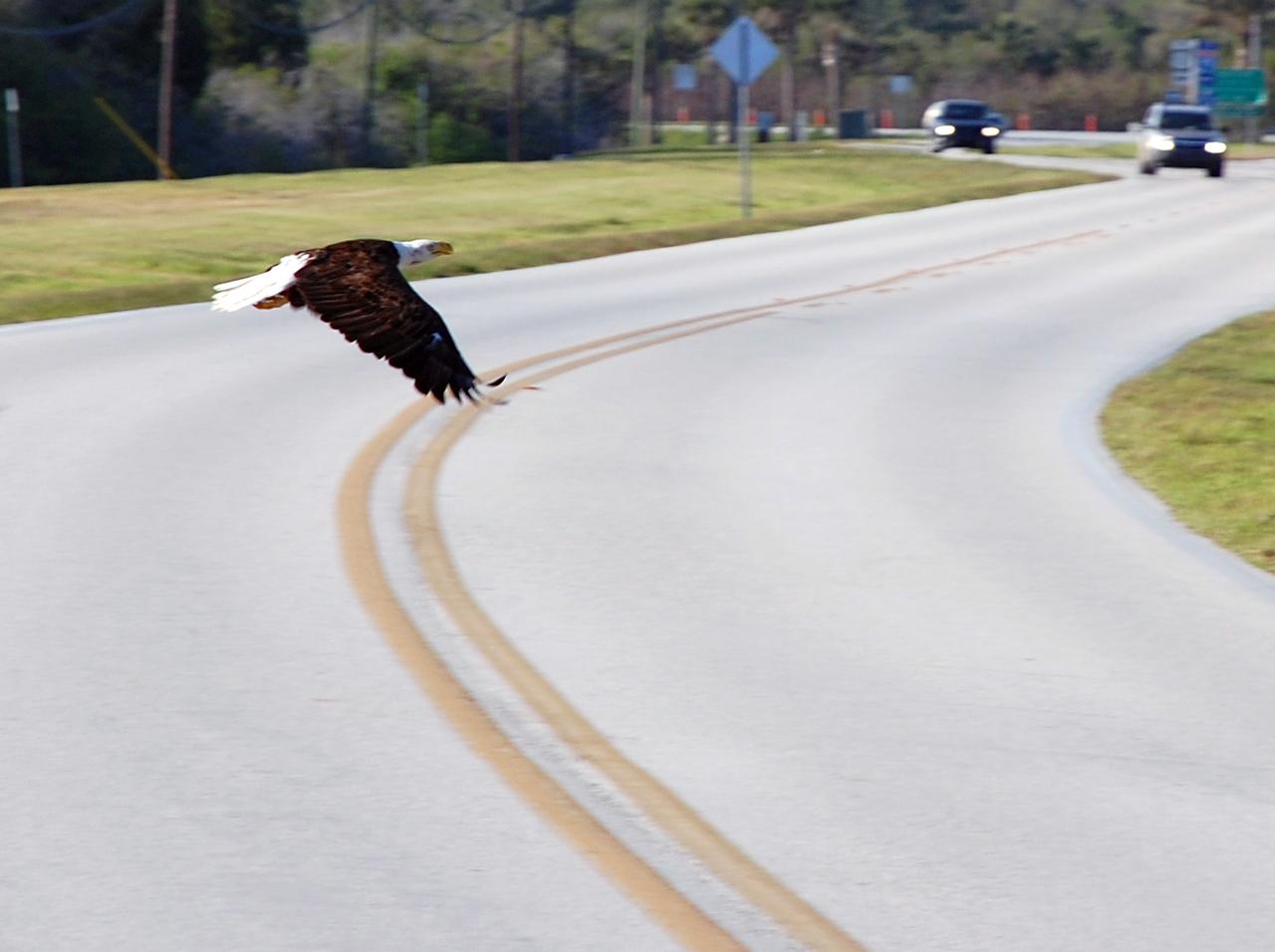
CAPE CANAVERAL, Fla. – At NASA's Kennedy Space Center in Florida, a bald eagle flies across the road in front of vehicles on the road. There are a dozen eagle nests within Kennedy and in the surrounding Merritt Island National Wildlife Refuge, some of them close to roads through the center. Bald eagles use a specific territory for nesting (they mate for life), winter feeding or a year-round residence. Eagles' natural domain is from Alaska to Baja, California, and from Maine to Florida. The Merritt Island refuge also includes several wading bird rookeries, many osprey nests, up to 400 manatees during the spring, and approximately 2,500 Florida scrub jays. It also is a major wintering area for migratory birds. More than 500 species of wildlife inhabit the refuge, with 15 considered federally threatened or endangered. Photo credit: NASA/Ben Smegelsky
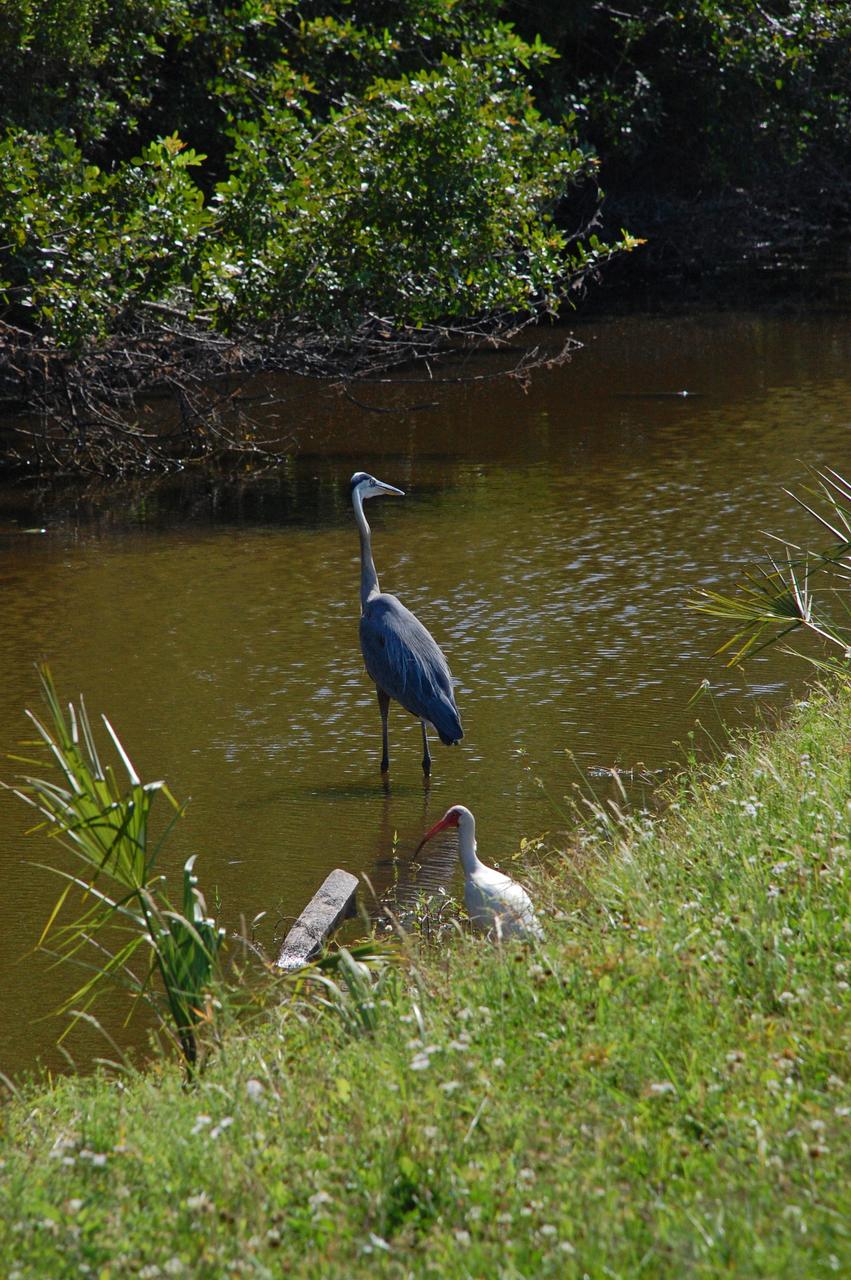
CAPE CANAVERAL, Fla. – A great blue heron stands tall in the water, perhaps looking for food, on grounds of NASA's Kennedy Space Center in Florida. More gray than blue, with a yellowish bill and black legs, it has a brownish-buff colored neck with a black border and white in front of its neck with a vertical black streak. The bird's head is white with a black stripe above its eye. They range throughout the U.S., inhabiting lakes, ponds, rivers and marshes. Their principal food is fish or frogs but may feed on small mammals, reptiles and occasionally birds. Kennedy shares a boundary with the Merritt Island National Wildlife Refuge, which is a habitat for more than 310 species of birds, 25 mammals, 117 fishes and 65 amphibians and reptiles. Photo credit: NASA/Ben Smegelsky