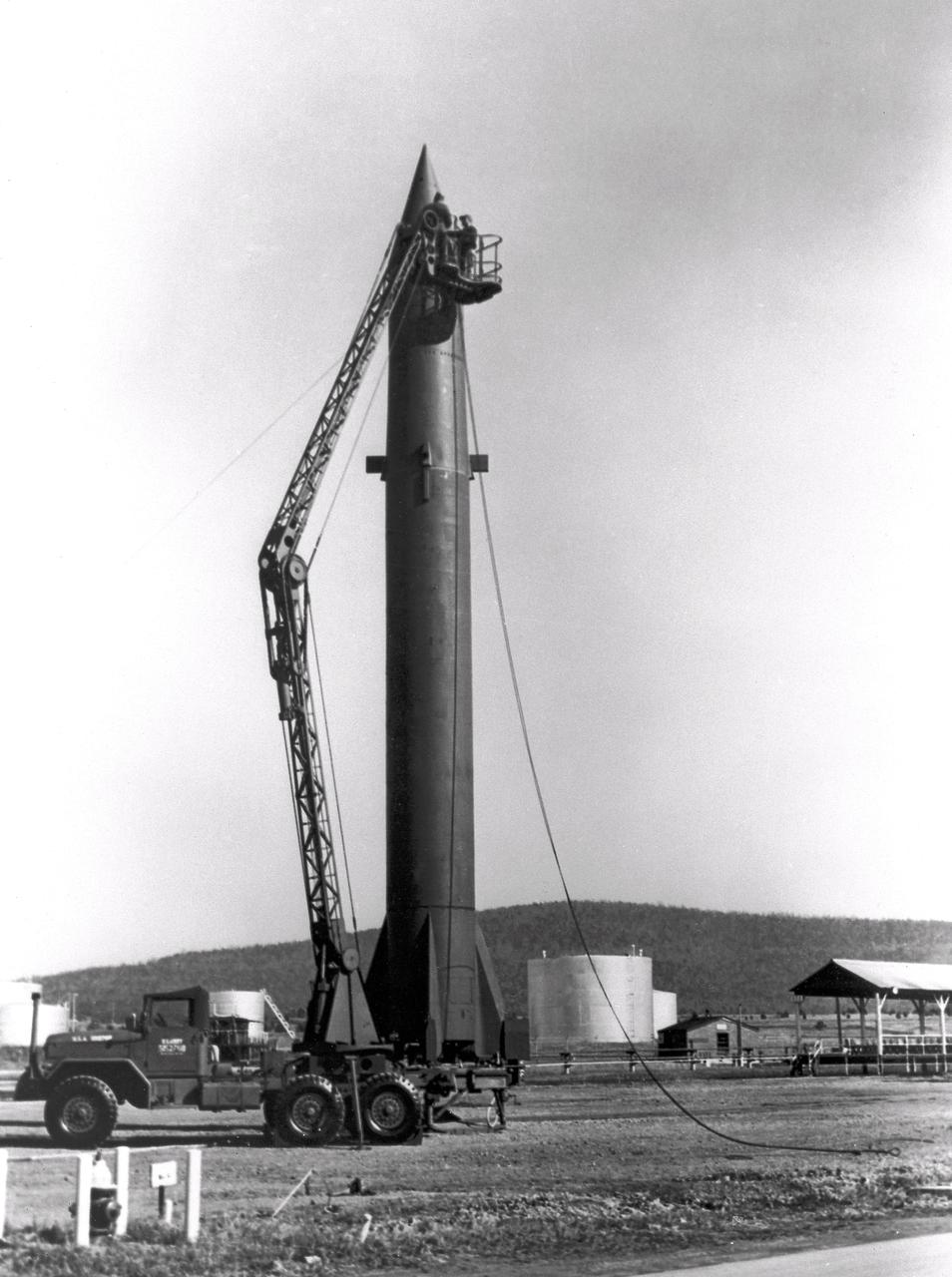
The image depicts Redstone missile being erected. The Redstone ballistic missile was a high-accuracy, liquid-propelled, surface-to-surface missile developed by Army Ballistic Missile Agency, Redstone Arsenal, in Huntsville, Alabama, under the direction of Dr. von Braun. The Redstone engine was a modified and improved version of the Air Force's Navaho cruise missile engine of the late forties. The A-series, as this would be known, utilized a cylindrical combustion chamber as compared with the bulky, spherical V-2 chamber. By 1951, the Army was moving rapidly toward the design of the Redstone missile, and the production was begun in 1952. Redstone rockets became the "reliable workhorse" for America's early space program. As an example of the versatility, Redstone was utilized in the booster for Explorer 1, the first American satellite, with no major changes to the engine or missile
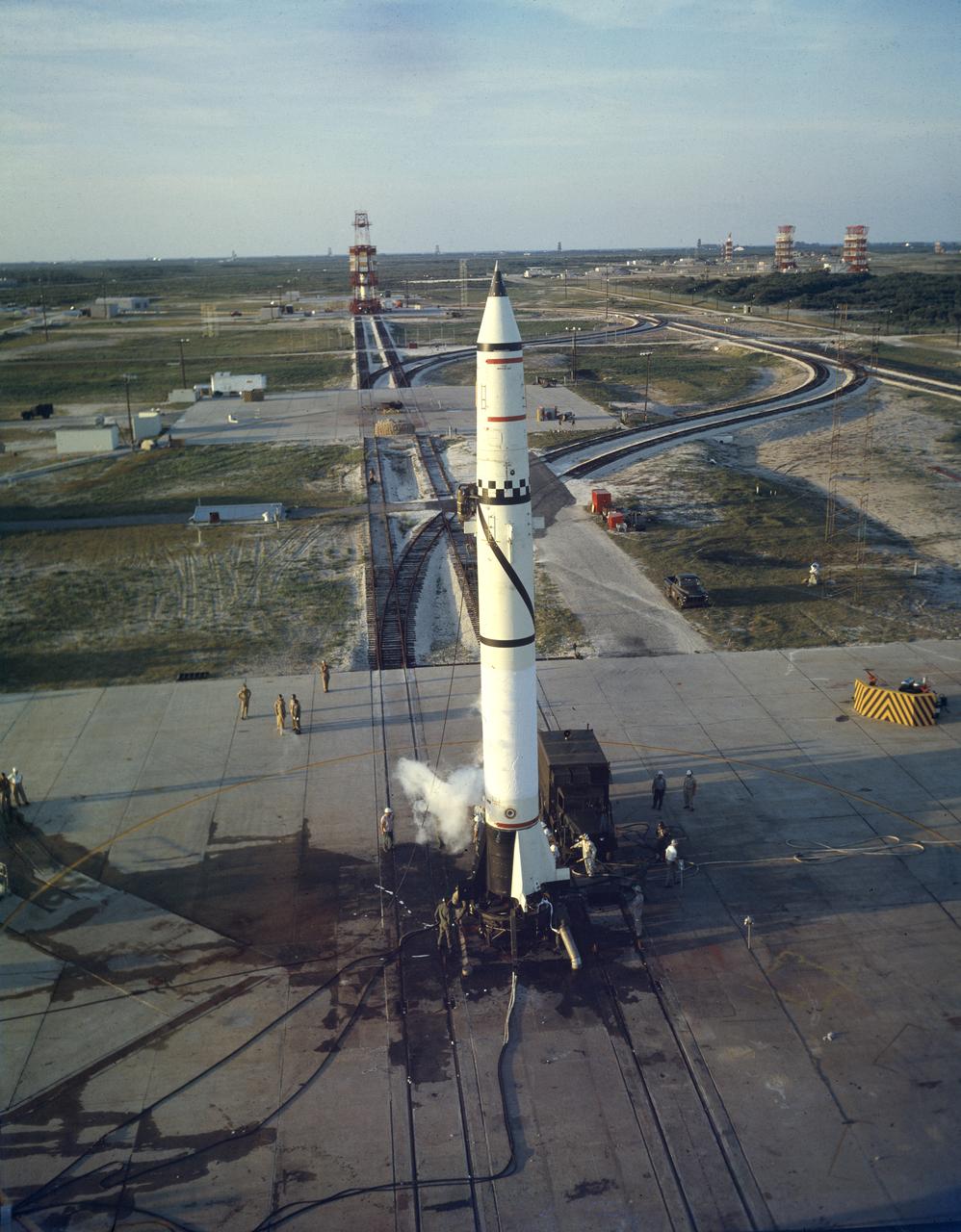
Redstone missile No. 1002 on the launch pad at Cape Canaveral, Florida, on May 16, 1958. The Redstone ballistic missile was a high-accuracy, liquid-propelled, surface-to-surface missile developed by the Army Ballistic Missile Agency, Redstone Arsenal, in Huntsville, Alabama, under the direction of Dr. von Braun. The Redstone engine was a modified and improved version of the Air Force's Navaho cruise missile engine of the late forties. The A-series, as this would be known, utilized a cylindrical combustion chamber as compared with the bulky, spherical V-2 chamber. By 1951, the Army was moving rapidly toward the design of the Redstone missile, and production was begun in 1952. Redstone rockets became the "reliable workhorse" for America's early space program. As an example of the versatility, Redstone was utilized in the booster for Explorer 1, the first American satellite, with no major changes to the engine or missile
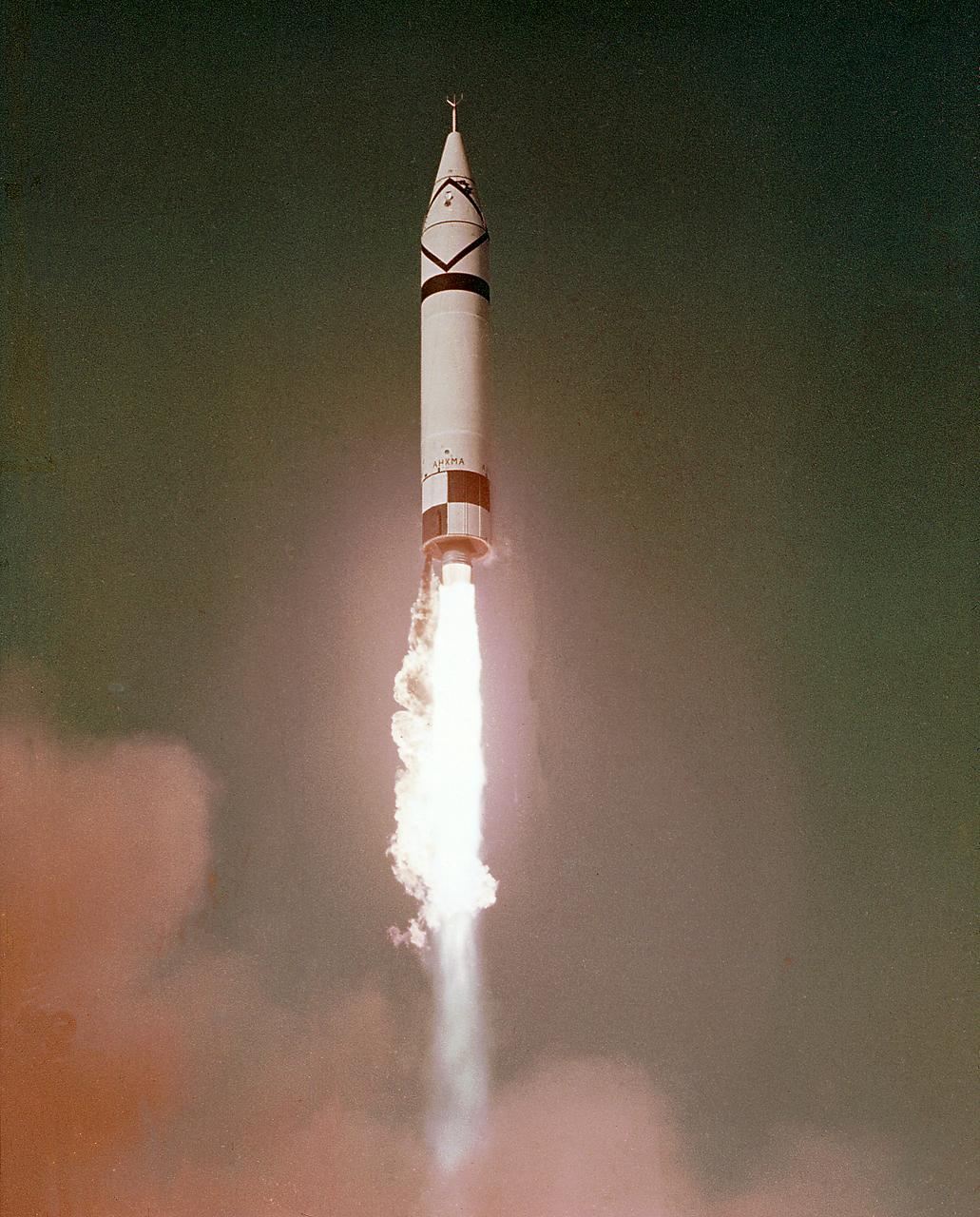
The Jupiter rocket was designed and developed by the Army Ballistic Missile Agency (ABMA). ABMA launched the Jupiter-A at Cape Canaveral, Florida, on March 1, 1957. The Jupiter vehicle was a direct derivative of the Redstone. The Army Ballistic Missile Agency (ABMA) at Redstone Arsenal, Alabama, continued Jupiter development into a successful intermediate ballistic missile, even though the Department of Defense directed its operational development to the Air Force. ABMA maintained a role in Jupiter RD, including high-altitude launches that added to ABMA's understanding of rocket vehicle operations in the near-Earth space environment. It was knowledge that paid handsome dividends later.
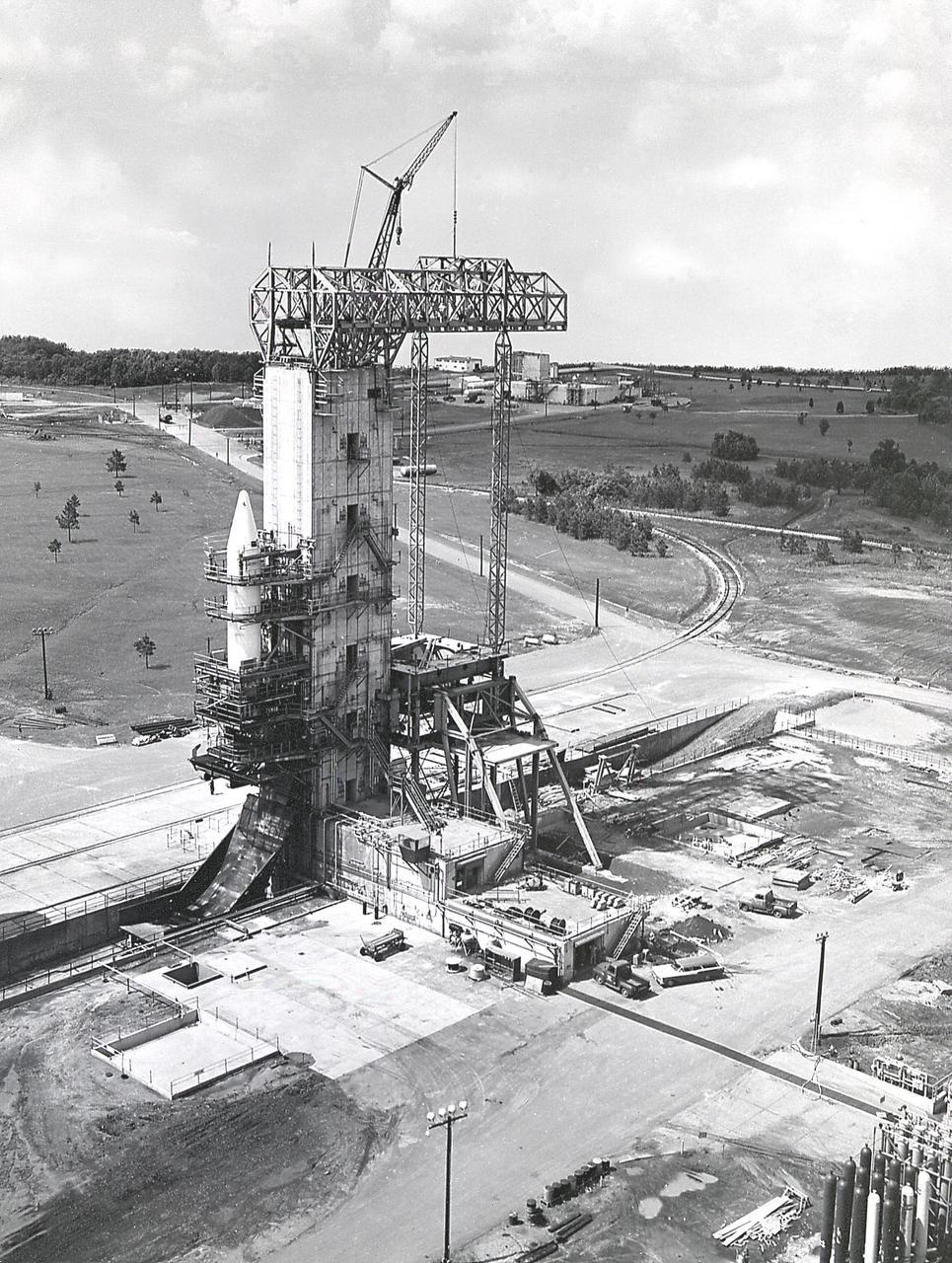
The Army Ballistic Missile Agency (ABMA) test tower being modified for testing the Saturn booster.
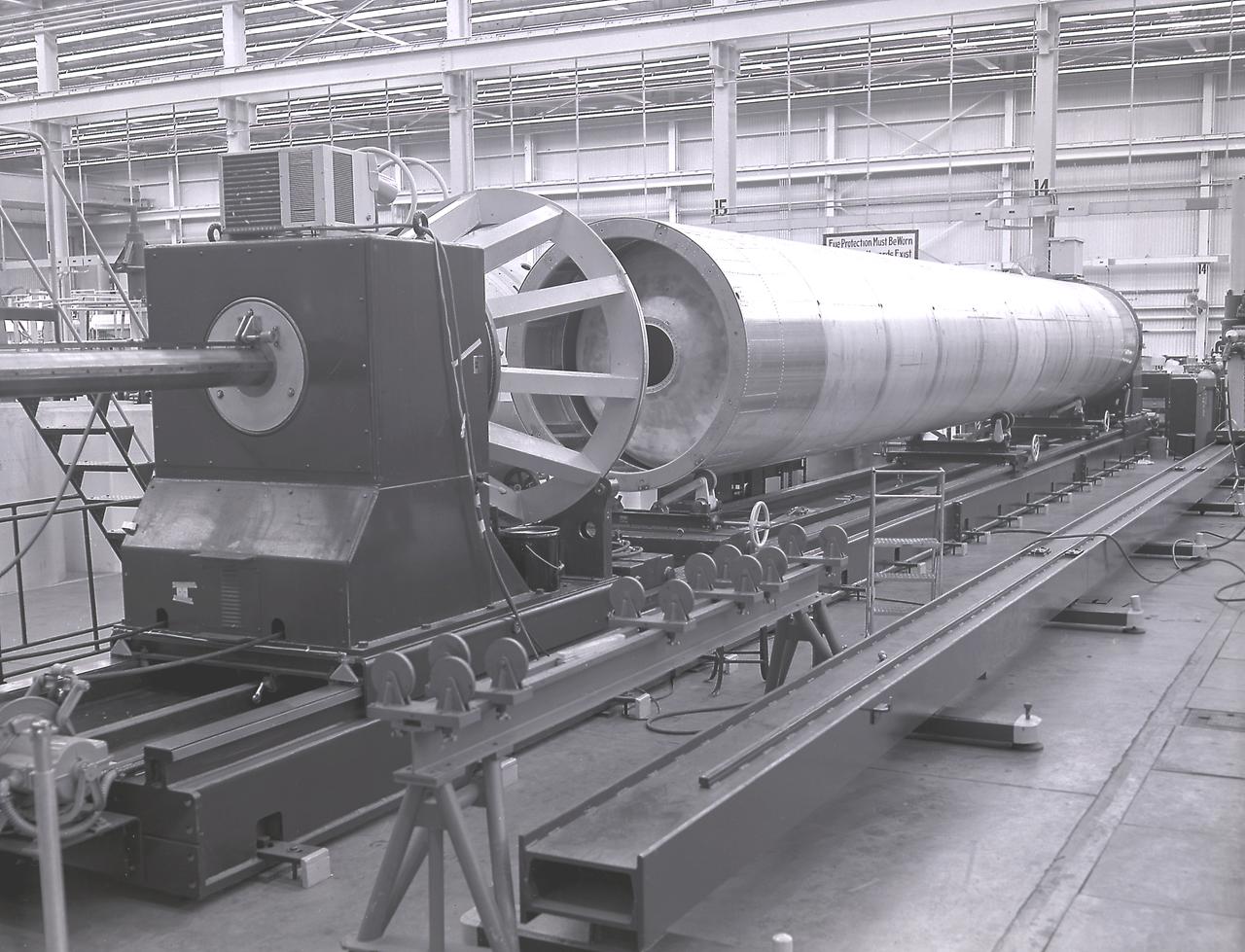
The first circumferential welding being applied on a Saturn fuel container in the Army Ballistic Missile Agency (ABMA) fabrication laboratory, Building 4707, in May 1959.
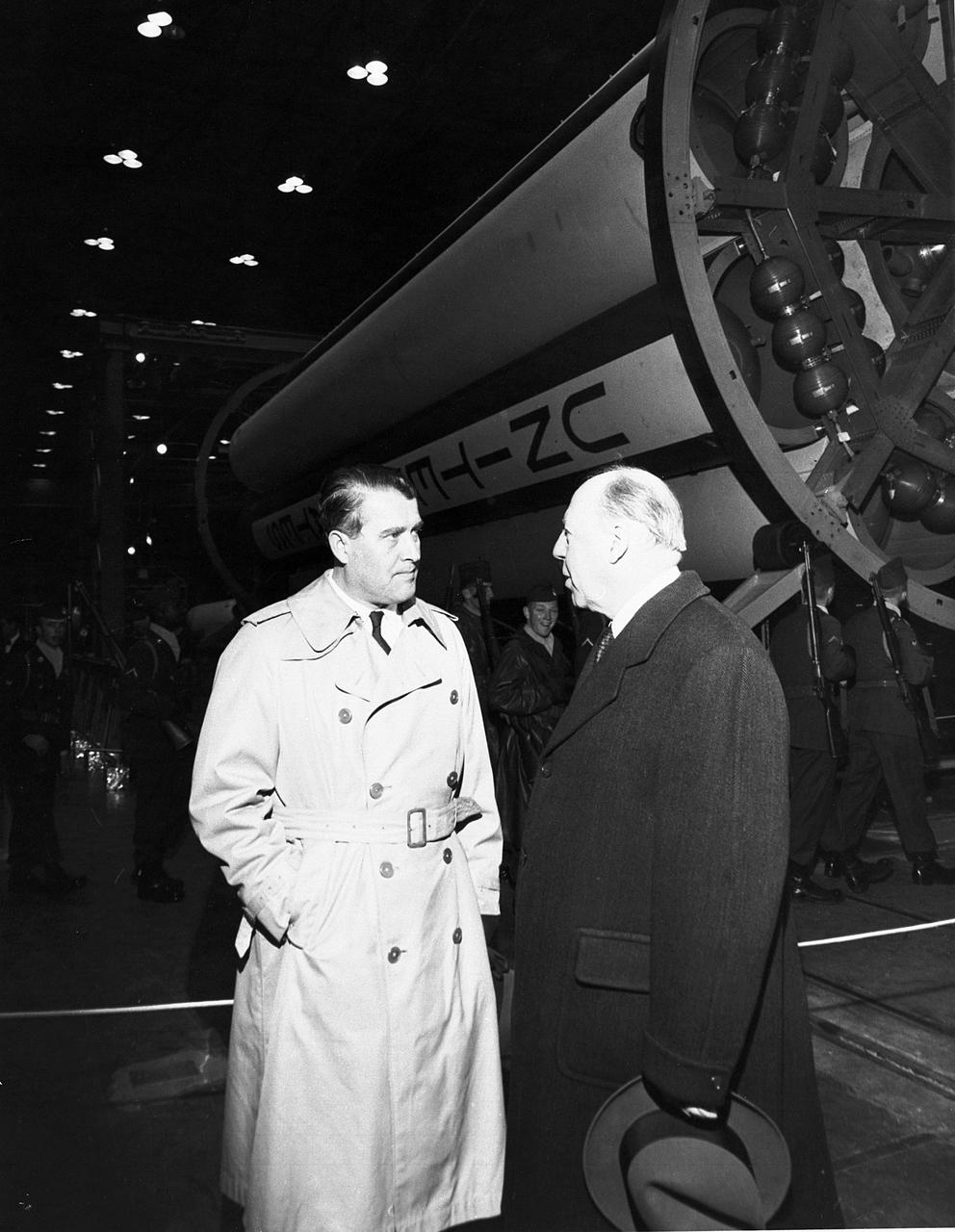
This photograph was taken in 1960 and shows Dr. von Braun, left, and Secretary of the Army, Wilbur Brucker in the Army Ballistic Missile Agency (ABMA) Fabrication Laboratory.
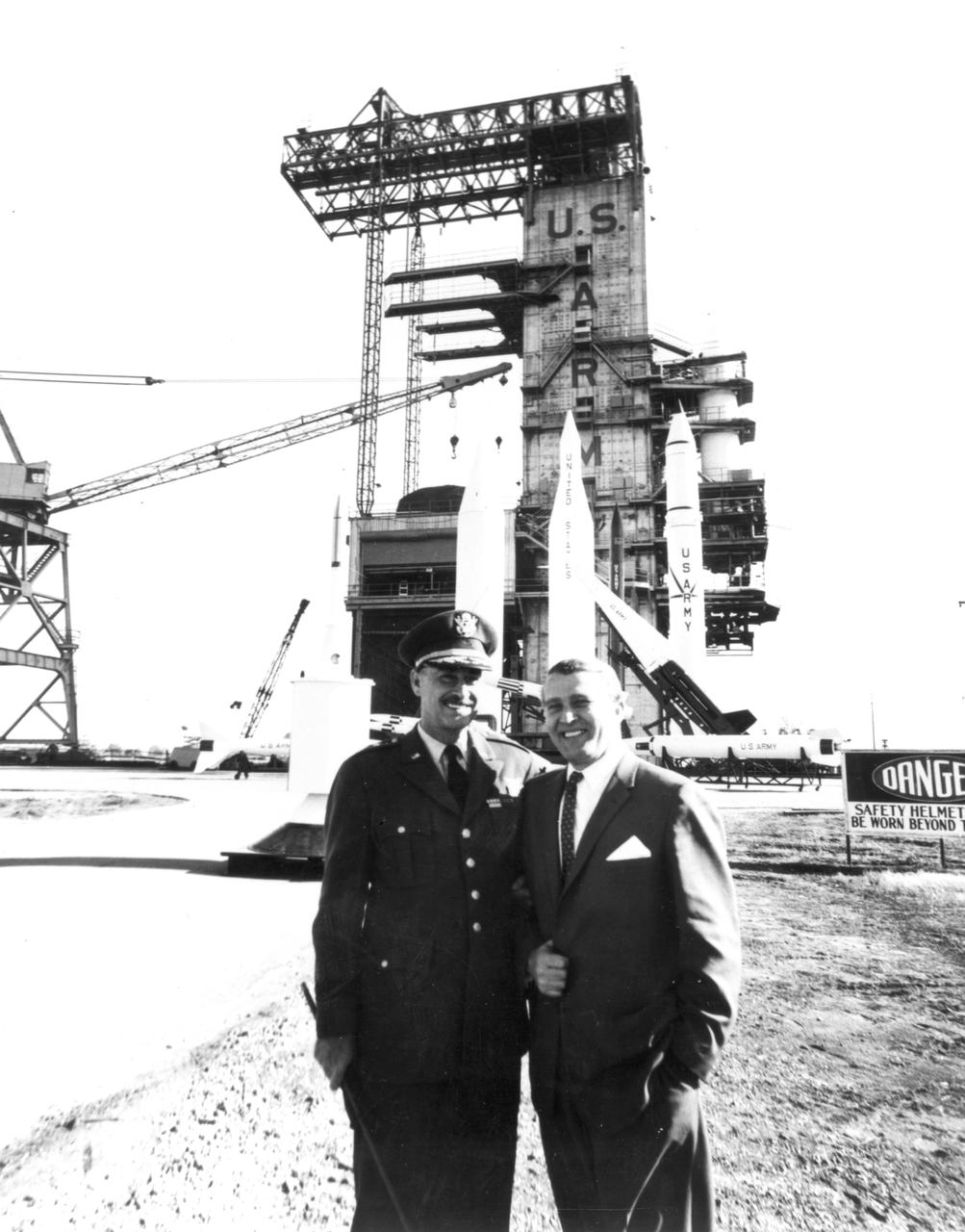
Marshall Space Flight Center’s (MSFC) Director, Dr. Wernher von Braun, is pictured here with Army Ballistic Missile Agency’s (ABMA) Commanding General, J.B. Medaris, before a display of Army missles at the ABMA test lab.
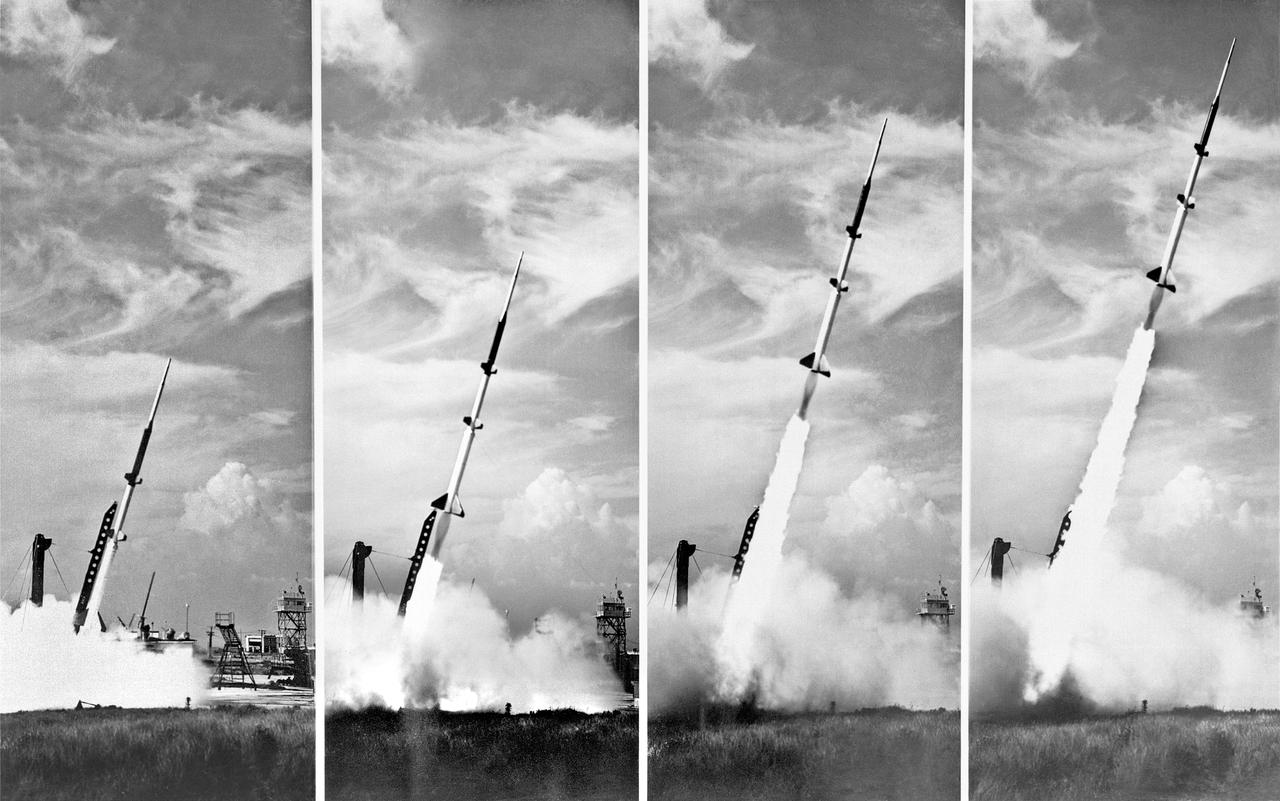
**Note also copied and numbered as L90-3749. -- L57-4827 caption: Take off of a five-stage missile research rocket from Wallops Island in 1957. The first two stages propelled the model to about 100,000 feet the last three stages were fired on a descending path to simulate the reentry conditions of ballistic missiles. -- Photograph published in Winds of Change, 75th Anniversary NASA publication (page 72), by James Schultz. -- Photograph also published in Engineer in Charge: A History of the Langley Aeronautical Laboratory, 1917-1958 by James R. Hansen (page 380).
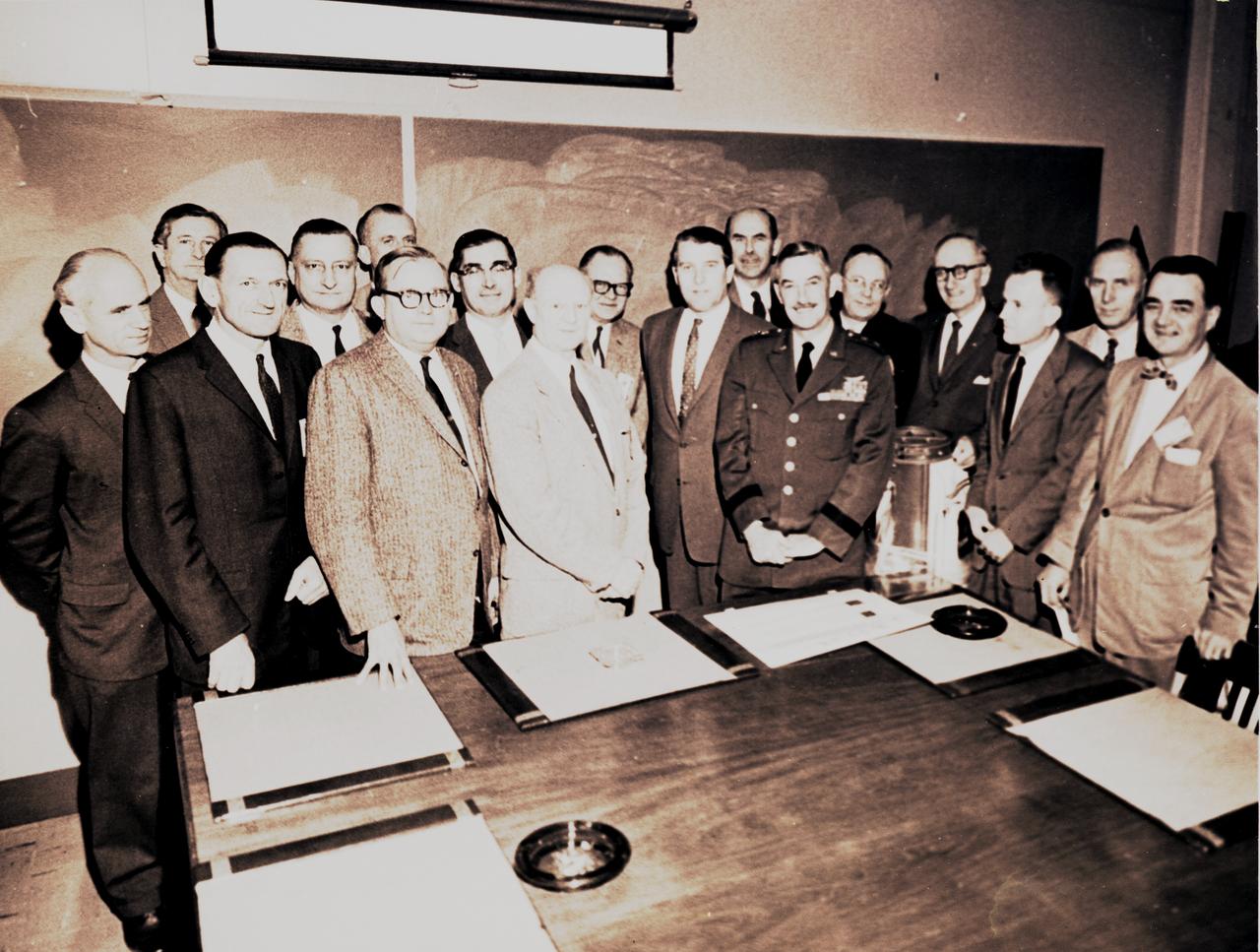
This photograph of Dr. von Braun, shown here to the left of General Bruce Medaris, was taken in the fall of 1959, immediately prior to Medaris' retirement from the Army. At the time, von Braun and his associates worked for the Army Ballistics Missile Agency in Huntsville, Alabama. Those in the photograph have been identified as Ernst Stuhlinger, Frederick von Saurma, Fritz Mueller, Hermarn Weidner, E.W. Neubert (partially hidden), W.A. Mrazek, Karl Heimburg, Arthur Rudolph, Otto Hoberg, von Braun, Oswald Lange, Medaris, Helmut Hoelzer, Hans Maus, E.D. Geissler, Hans Heuter, and George Constan.
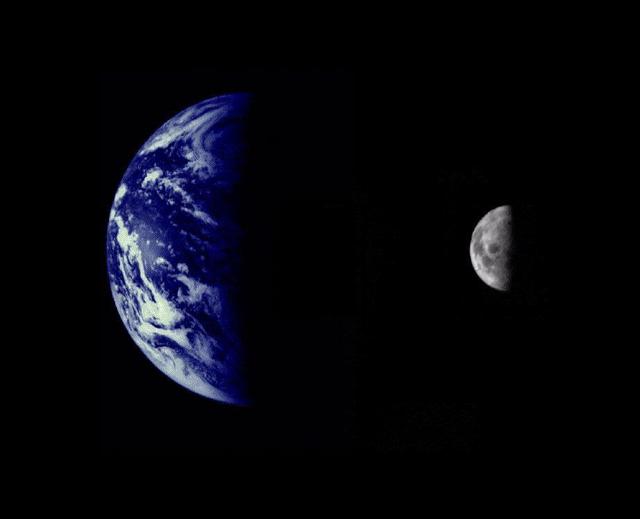
NASA Mariner 10 was launched on November 3, 1973, 12:45 am PST, from Cape Canaveral on an Atlas/Centaur rocket a reconditioned Intercontinental Ballistic Missile - ICBM.
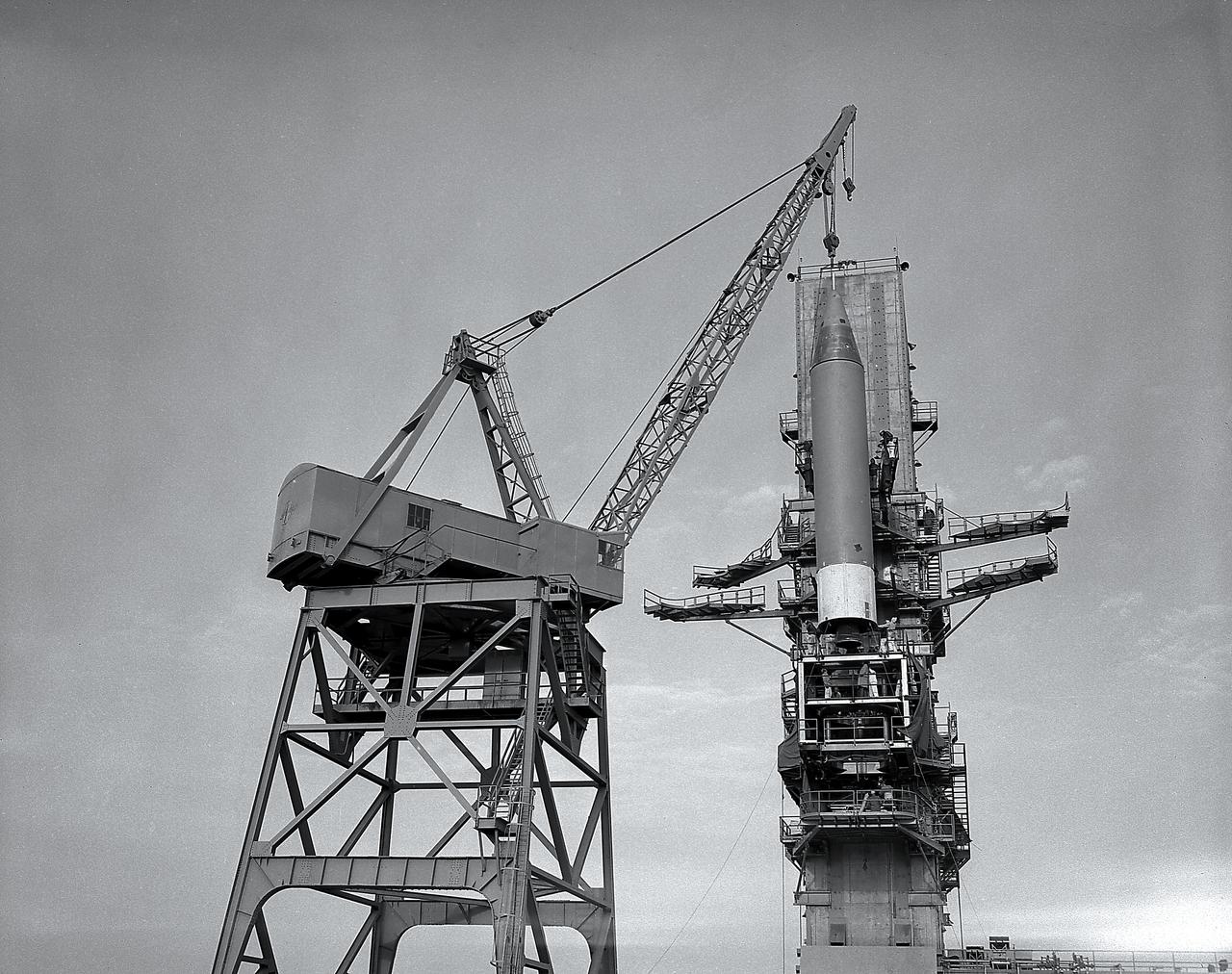
Installation of a Jupiter missile in ABMA (Army Ballistic Missile Agency) West Test Stand, Jan. 16, 1957. Jupiter was a 1500-mile range missile
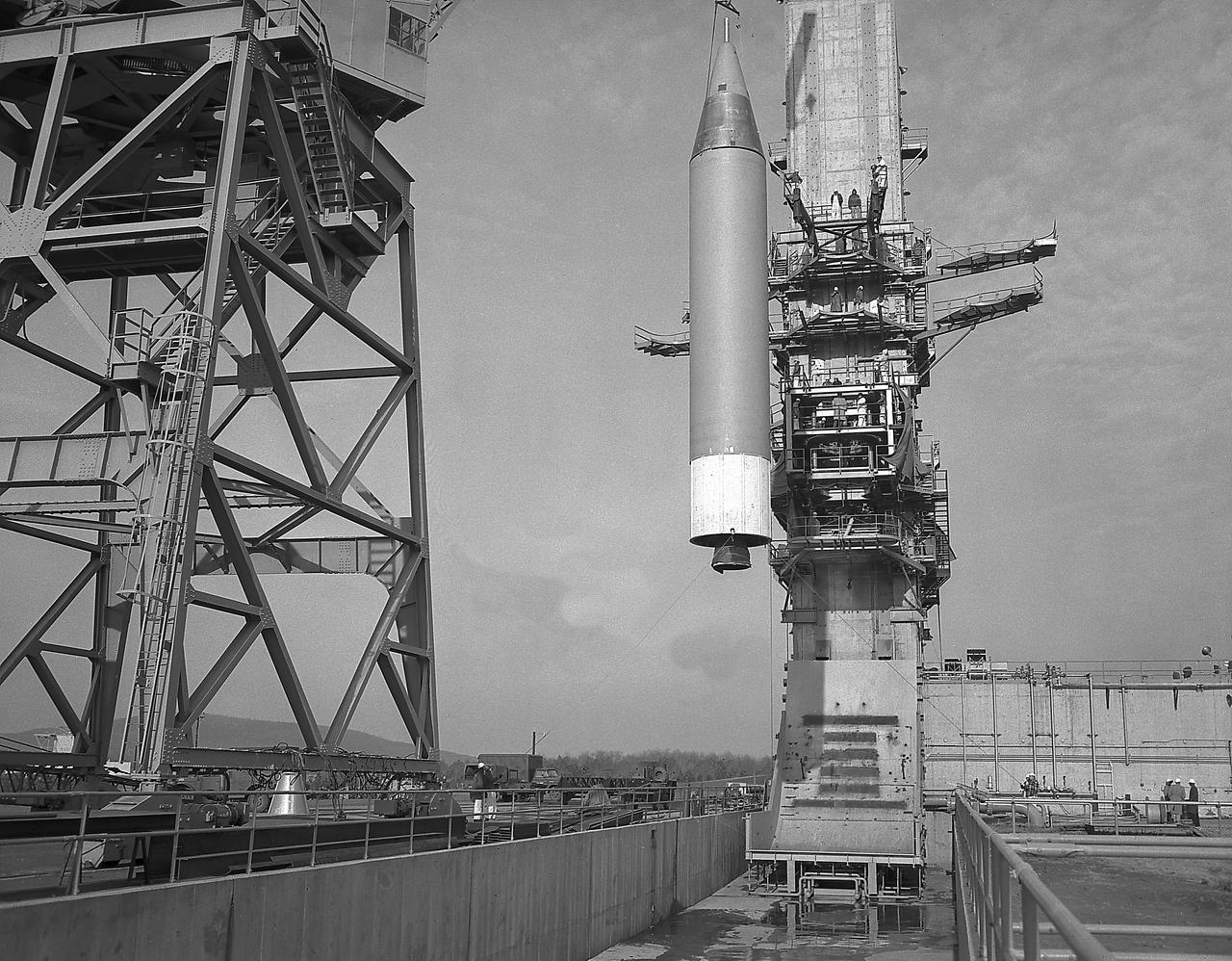
Installation of a Jupiter Missile in ABMA (Army Ballistic Missile Agency) West Test Stand, Jan. 16, 1957. Jupiter was a 1500-mile range missile
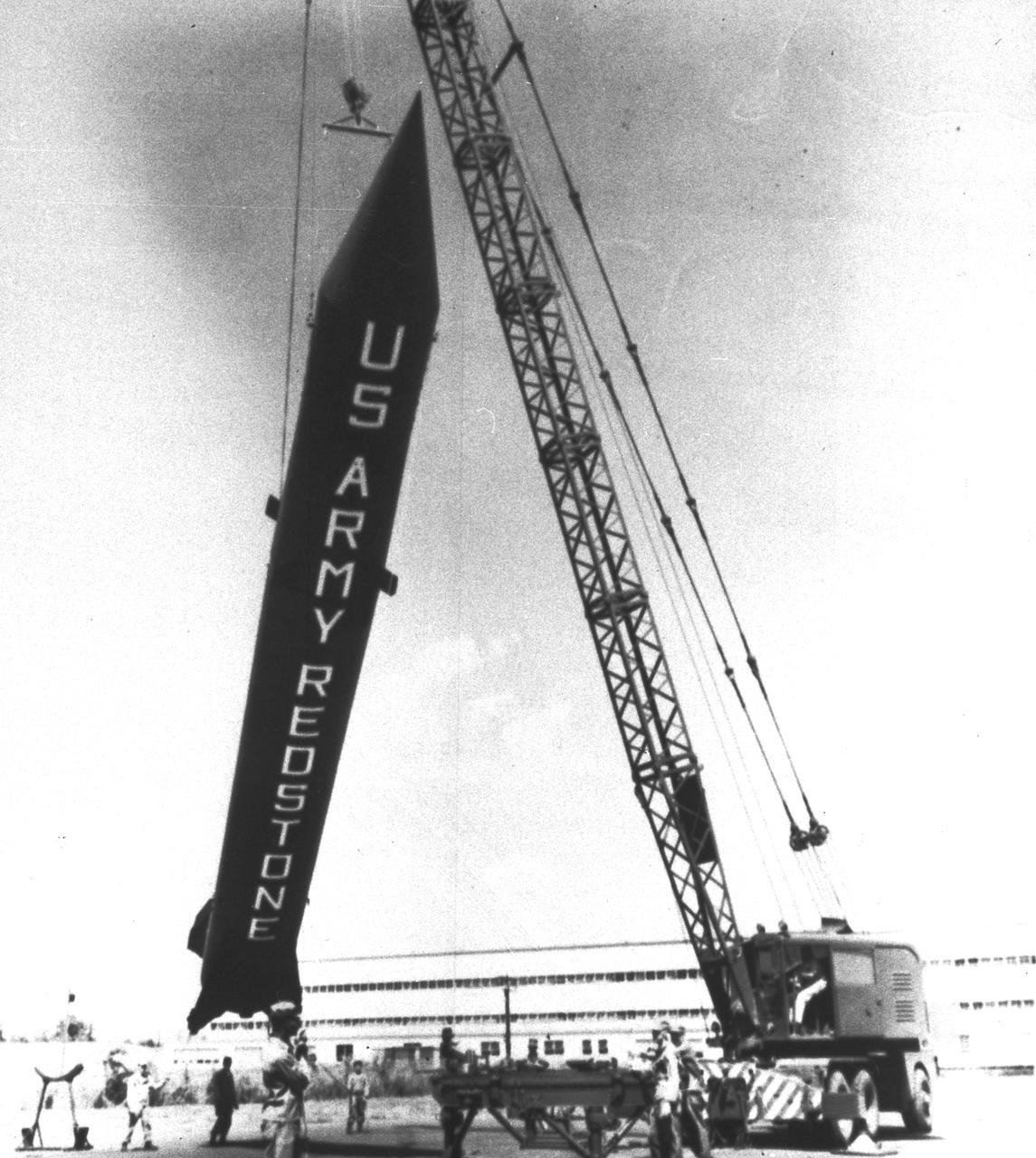
U.S. Army Redstone Rocket: The Redstone ballistic missile was a high-accuracy, liquid-propelled, surface-to-surface missile developed by the Army Ballistic Missile Agency, Redstone Arsenal, in Huntsville, Alabama, under the direction of Dr. von Braun. The Redstone rocket was also known as "Old Reliable" because of its many diverse missions. The first Redstone Missile was launched from Cape Canaveral, Florida on August 30, 1953.
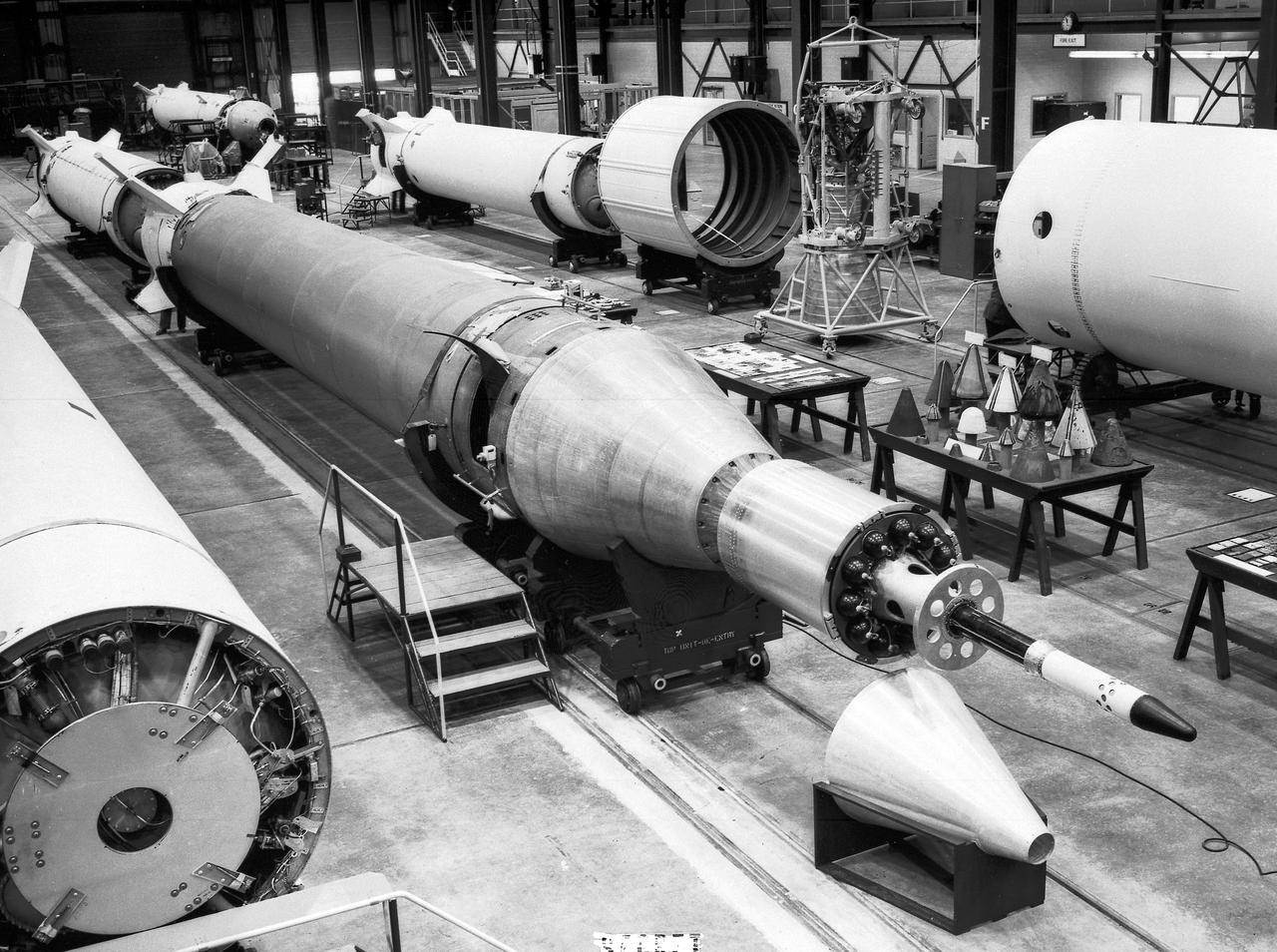
Jupiter-C Missile No. 27 assembly at the Army Ballistic Missile Agency (ABMA), Redstone Arsenal, in Huntsville, Aalabama. The Jupiter-C was a modification of the Redstone Missile, and originally developed as a nose cone re-entry test vehicle for the Jupiter Intermediate Range Ballistic Missile (IRBM). Jupiter-C successfully launched the first American Satellite, Explorer 1, in orbit on January 31, 1958.
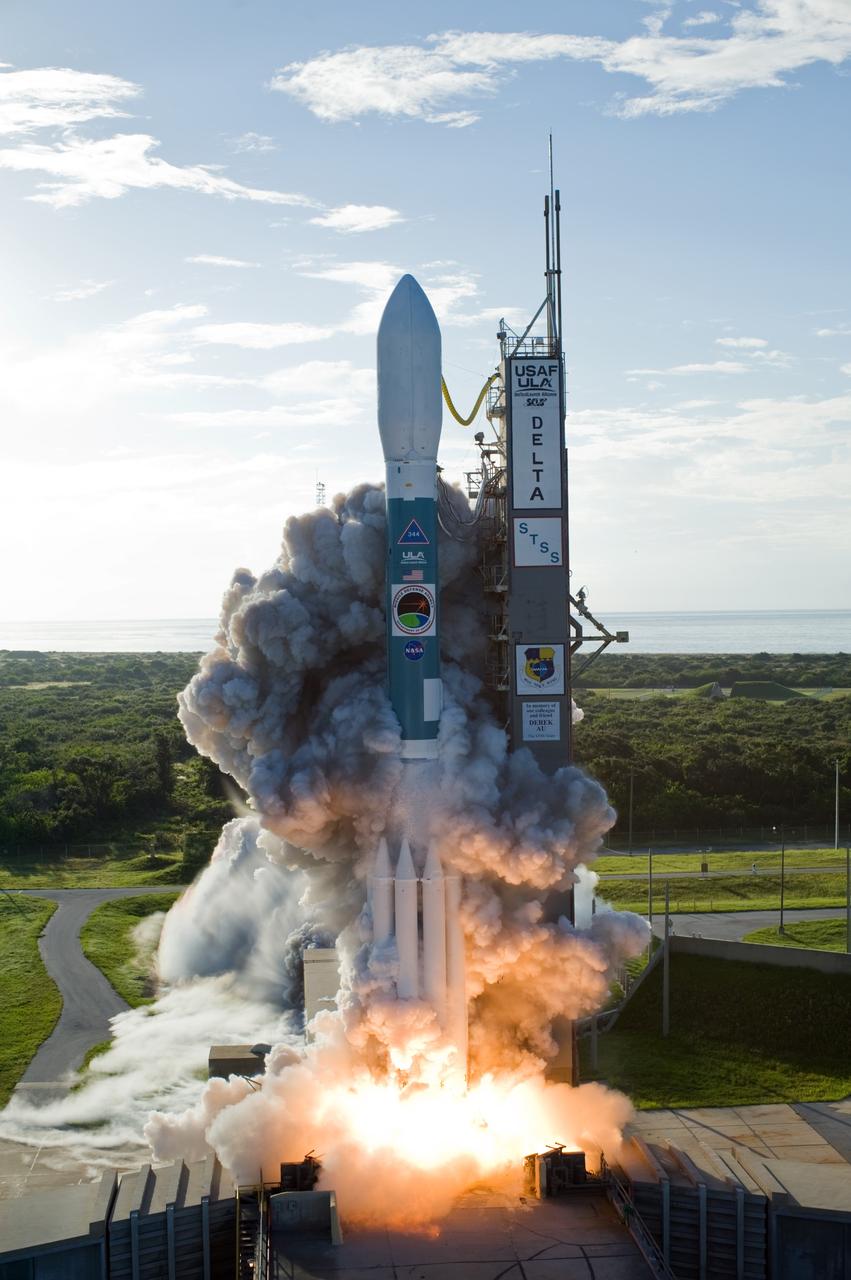
CAPE CANAVERAL, Fla. – Smoke billows around the United Launch Alliance Delta II rocket as it launches into space carrying the Space Tracking and Surveillance System - Demonstrator, or STSS-Demo, spacecraft. STSS-Demo was launched at 8:20:22 a.m. EDT by NASA for the U.S. Missile Defense Agency. The STSS-Demo is a space-based sensor component of a layered Ballistic Missile Defense System designed for the overall mission of detecting, tracking and discriminating ballistic missiles. Photo credit: NASA/Regina Mitchell-Tom Farrar
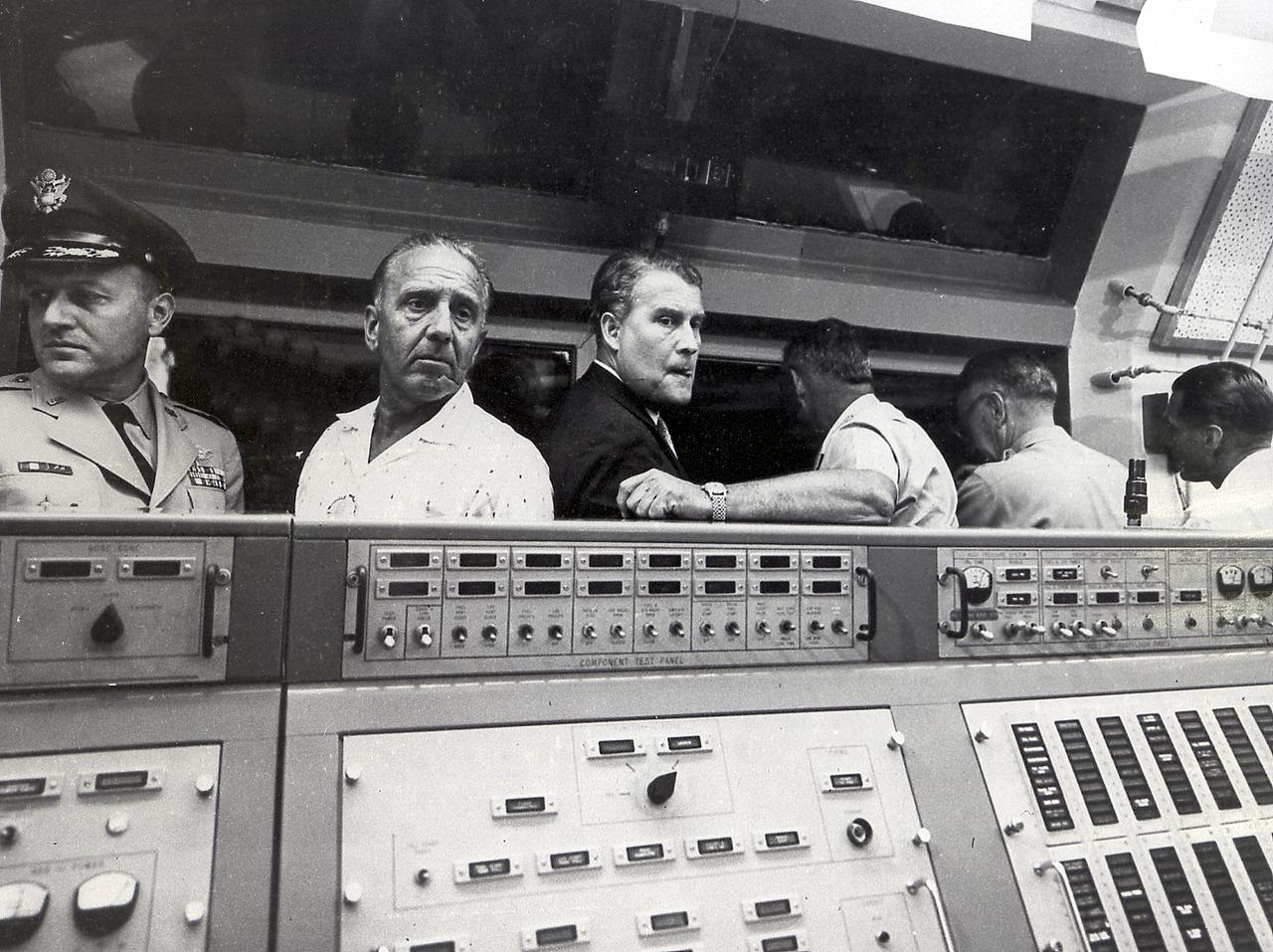
Dr. von Braun, Director of the Development Operations Divisons, and Dr. Debus, Director of the Missile Firing Laboratory; Army Ballistic Missile Agency (ABMA), in the blockhouse during the launch of the Pioneer IV, March 3, 1959.
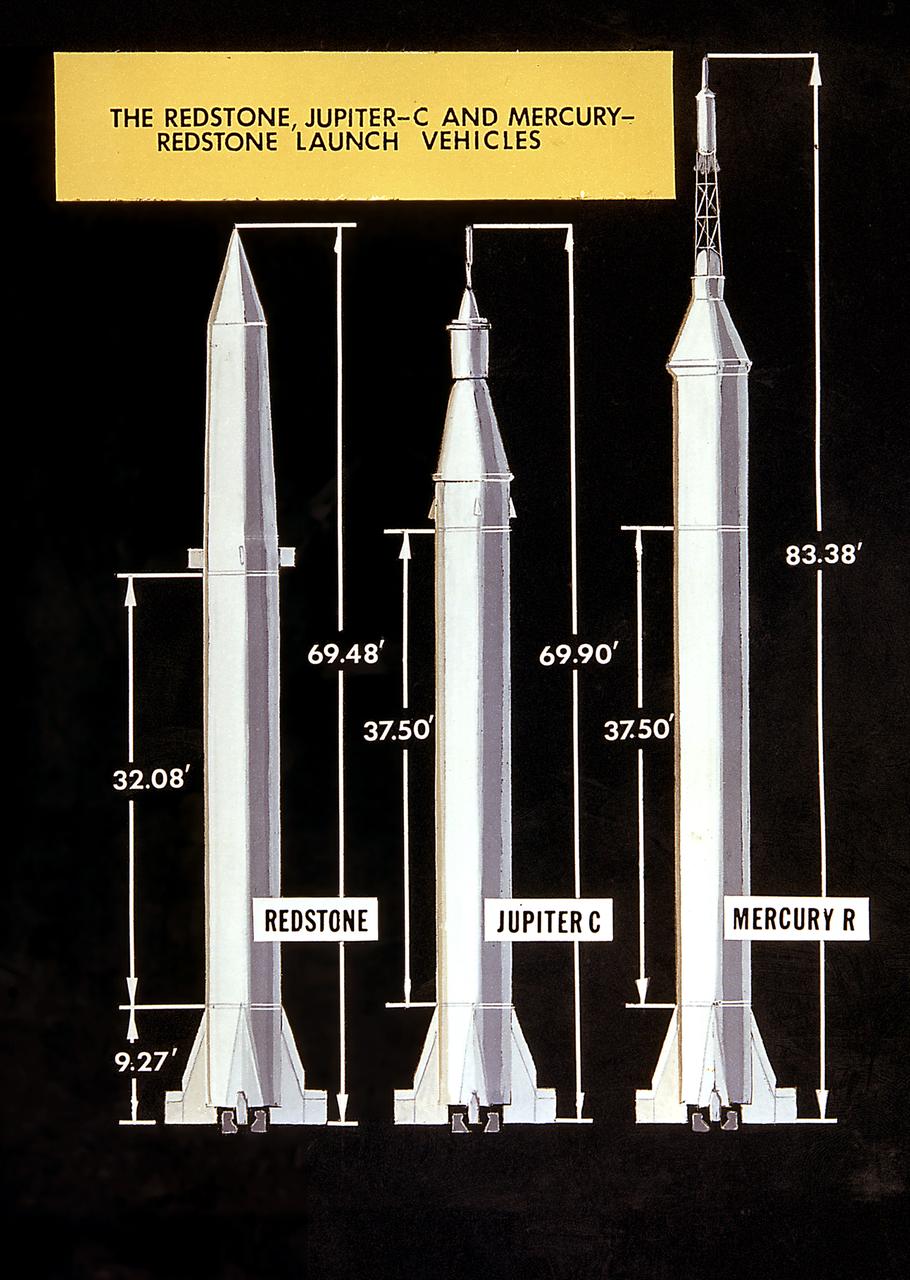
This is a comparison illustration of the Redstone, Jupiter-C, and Mercury Redstone launch vehicles. The Redstone ballistic missile was a high-accuracy, liquid-propelled, surface-to-surface missile. Originally developed as a nose cone re-entry test vehicle for the Jupiter intermediate range ballistic missile, the Jupiter-C was a modification of the Redstone missile and successfully launched the first American Satellite, Explorer-1, in orbit on January 31, 1958. The Mercury Redstone lifted off carrying the first American, astronaut Alan Shepard, in his Mercury spacecraft Freedom 7, on May 5, 1961.
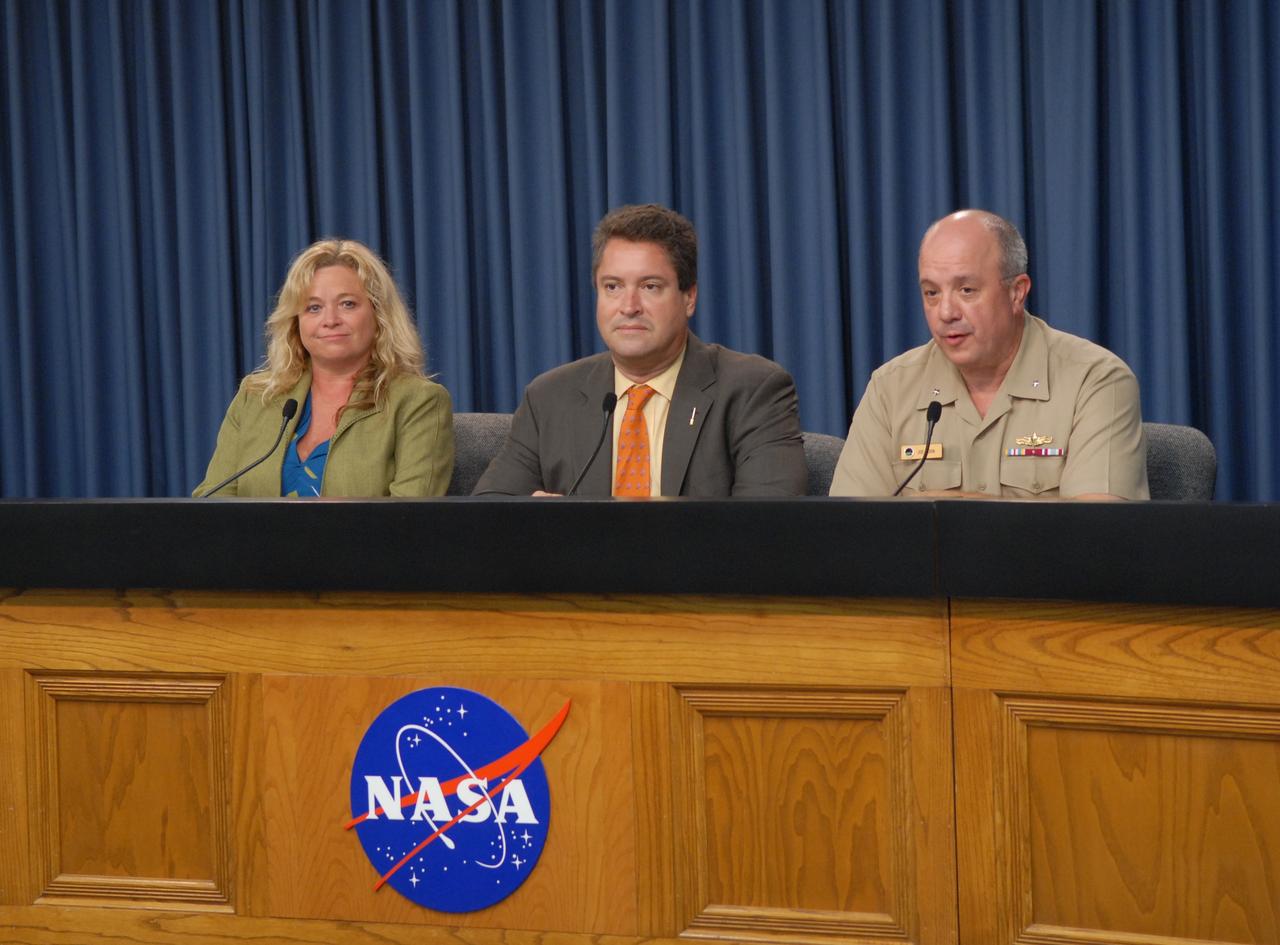
CAPE CANAVERAL, Fla. – At a post-launch news conference for the media about launch of the Space Tracking and Satellite System – Demonstrator spacecraft, Rear Adm. Joseph Horn, deputy director with the U.S. Missile Defense Agency, answers a question. NASA Launch Manager Omar Baez is at center. At left, Public Affairs Officer Tracy Young moderates. The STSS-Demo is a space-based sensor component of a layered Ballistic Missile Defense System designed for the overall mission of detecting, tracking and discriminating ballistic missiles. The spacecraft was launched by NASA for the U.S. Missile Defense Agency. Photo credit: NASA/Jim Grossmann
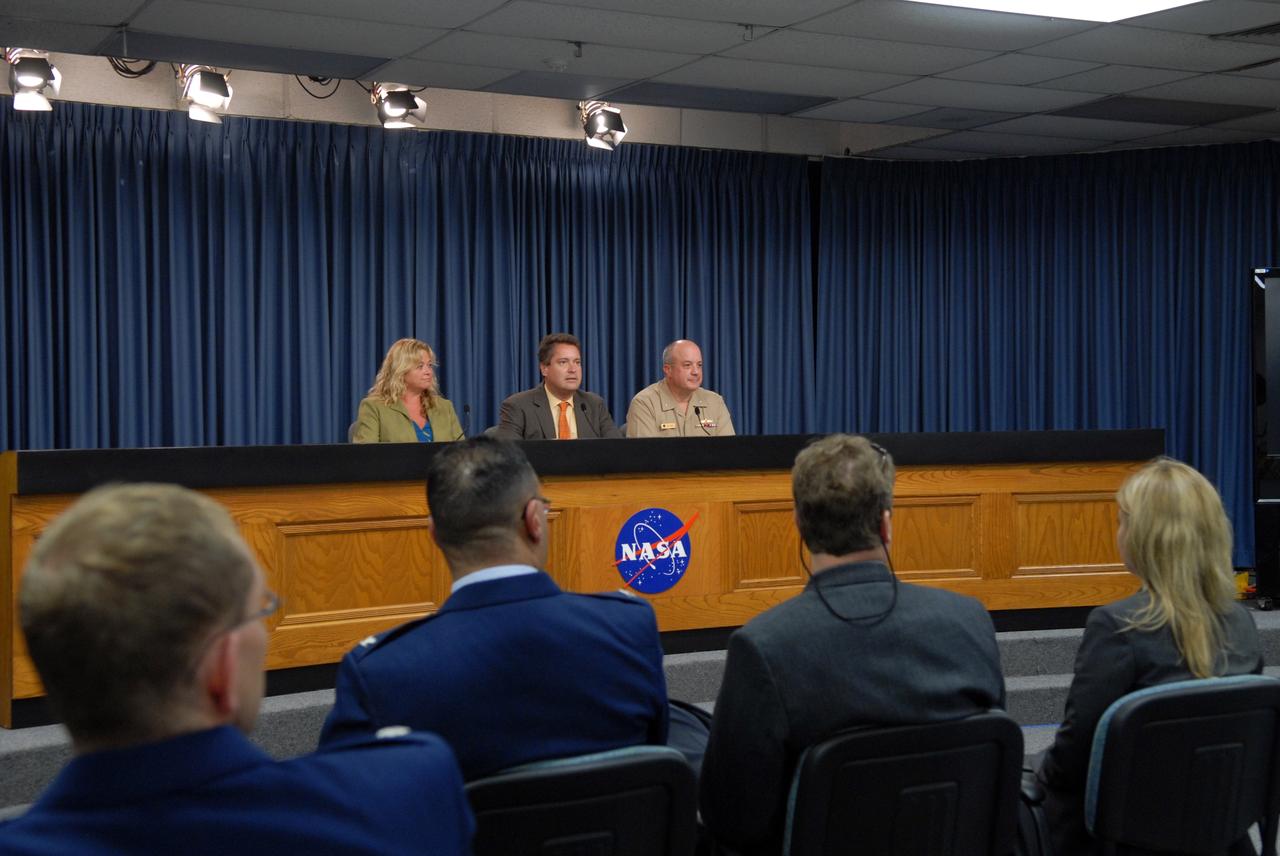
CAPE CANAVERAL, Fla. – Public Affairs Officer Tracy Young moderates a post-launch news conference for the media about the Space Tracking and Satellite System – Demonstrator spacecraft. Seated at center is Omar Baez, NASA launch manager, and Rear Adm. Joseph Horn, deputy director, with the U.S. Missile Defense Agency. The STSS-Demo is a space-based sensor component of a layered Ballistic Missile Defense System designed for the overall mission of detecting, tracking and discriminating ballistic missiles. The spacecraft was launched by NASA for the U.S. Missile Defense Agency. Photo credit: NASA/Jim Grossmann
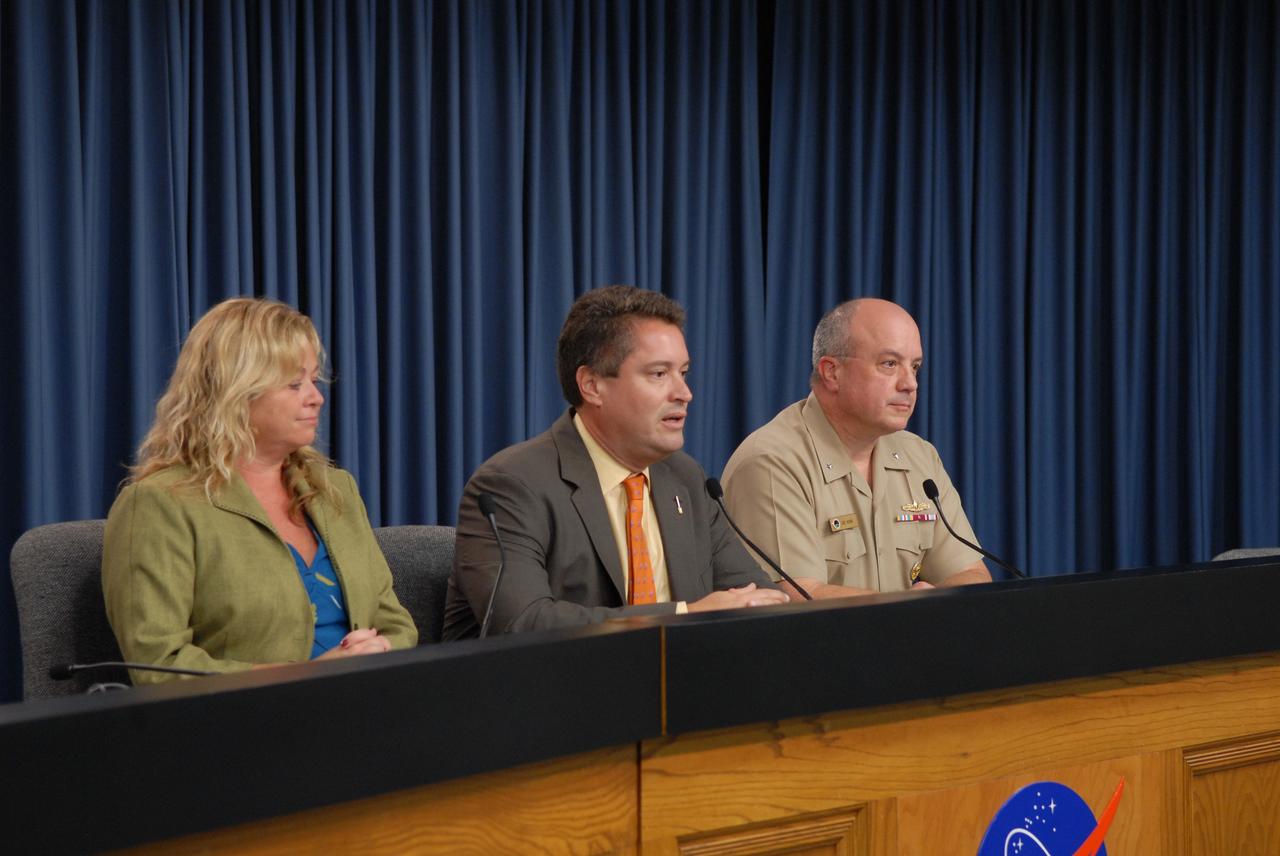
CAPE CANAVERAL, Fla. – At a post-launch news conference for the media about launch of the Space Tracking and Satellite System – Demonstrator spacecraft, NASA Launch Manager Omar Baez, at center, responds to a question. At right is Rear Adm. Joseph Horn, deputy director, with the U.S. Missile Defense Agency. At left, Public Affairs Officer Tracy Young moderates. The STSS-Demo is a space-based sensor component of a layered Ballistic Missile Defense System designed for the overall mission of detecting, tracking and discriminating ballistic missiles. The spacecraft was launched by NASA for the U.S. Missile Defense Agency. Photo credit: NASA/Jim Grossmann
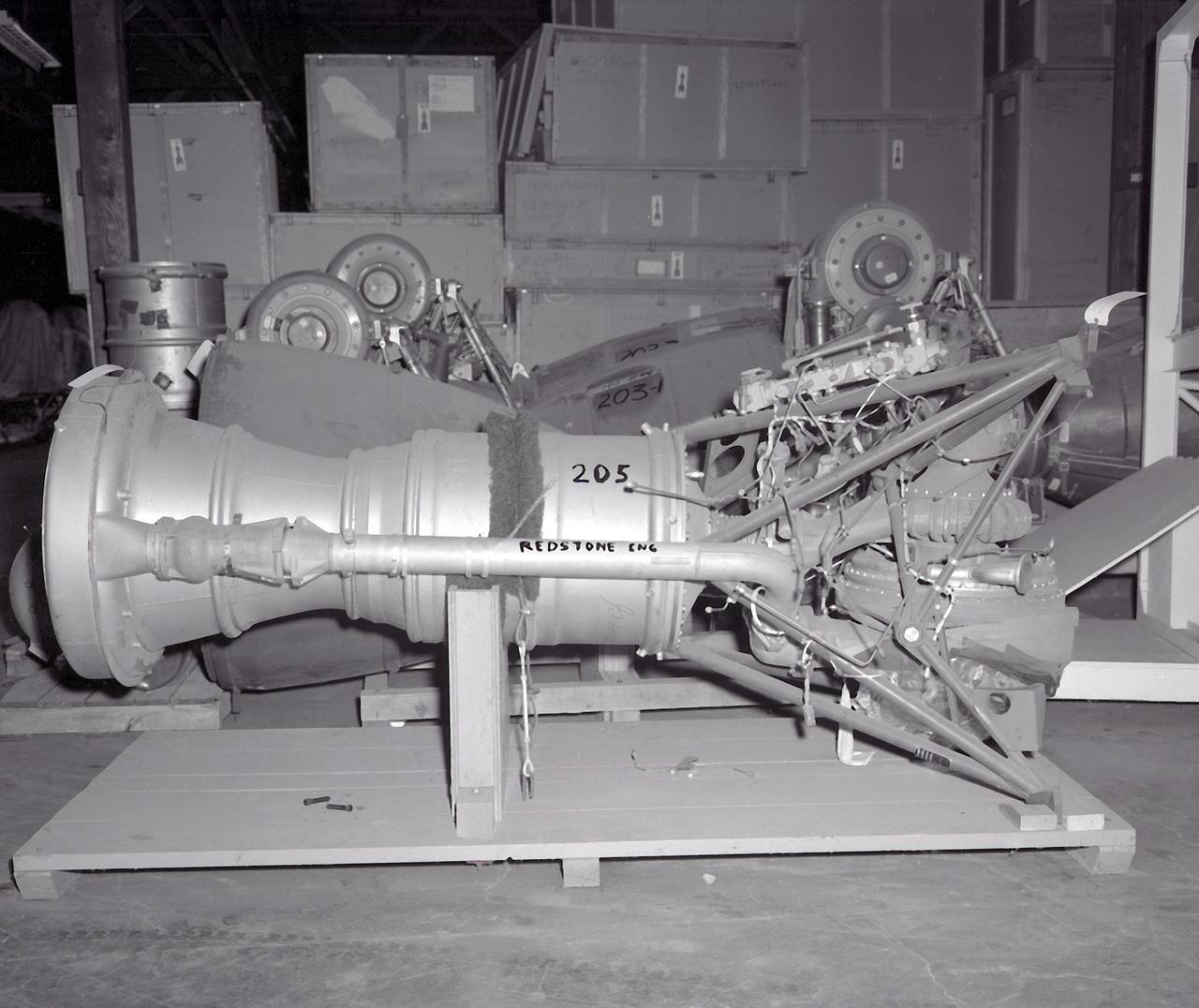
This photograph is of the engine for the Redstone rocket. The Redstone ballistic missile was a high-accuracy, liquid-propelled, surface-to-surface missile developed by the Army Ballistic Missile Agency, Redstone Arsenal, in Huntsville, Alabama, under the direction of Dr. von Braun. The Redstone engine was a modified and improved version of the Air Force's Navaho cruise missile engine of the late forties. The A-series, as this would be known, utilized a cylindrical combustion chamber as compared with the bulky, spherical V-2 chamber. By 1951, the Army was moving rapidly toward the design of the Redstone missile, and the production was begun in 1952. Redstone rockets became the "reliable workhorse" for America's early space program. As an example of its versatility, the Redstone was utilized in the booster for Explorer 1, the first American satellite, with no major changes to the engine or missile.
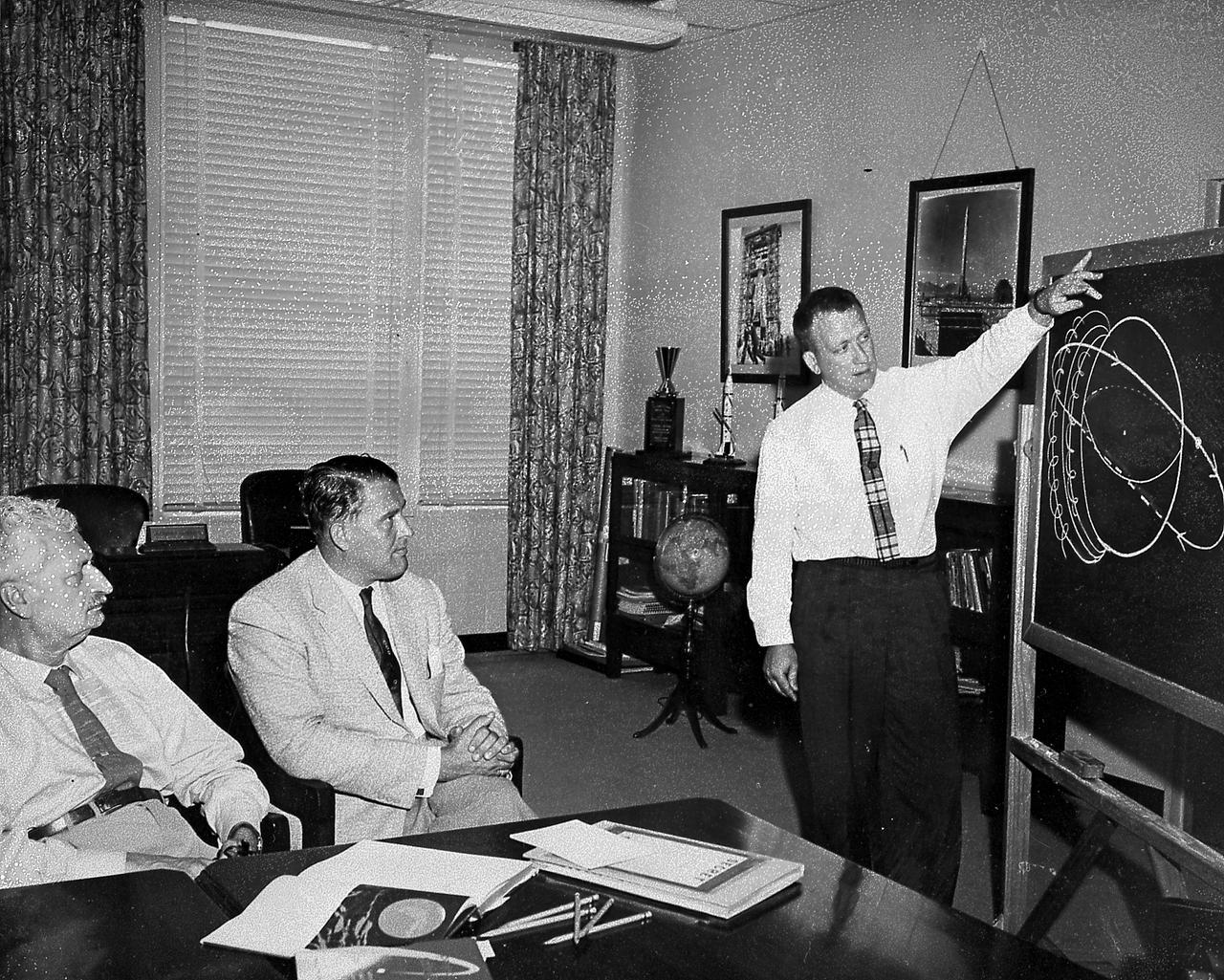
Professor Hermann Oberth and Dr. von Braun are briefed on satellite orbits by Dr. Charles A. Lundquist at Army Ballistic Missile Agency, Redstone Arsenal, Huntsville, Alabama.
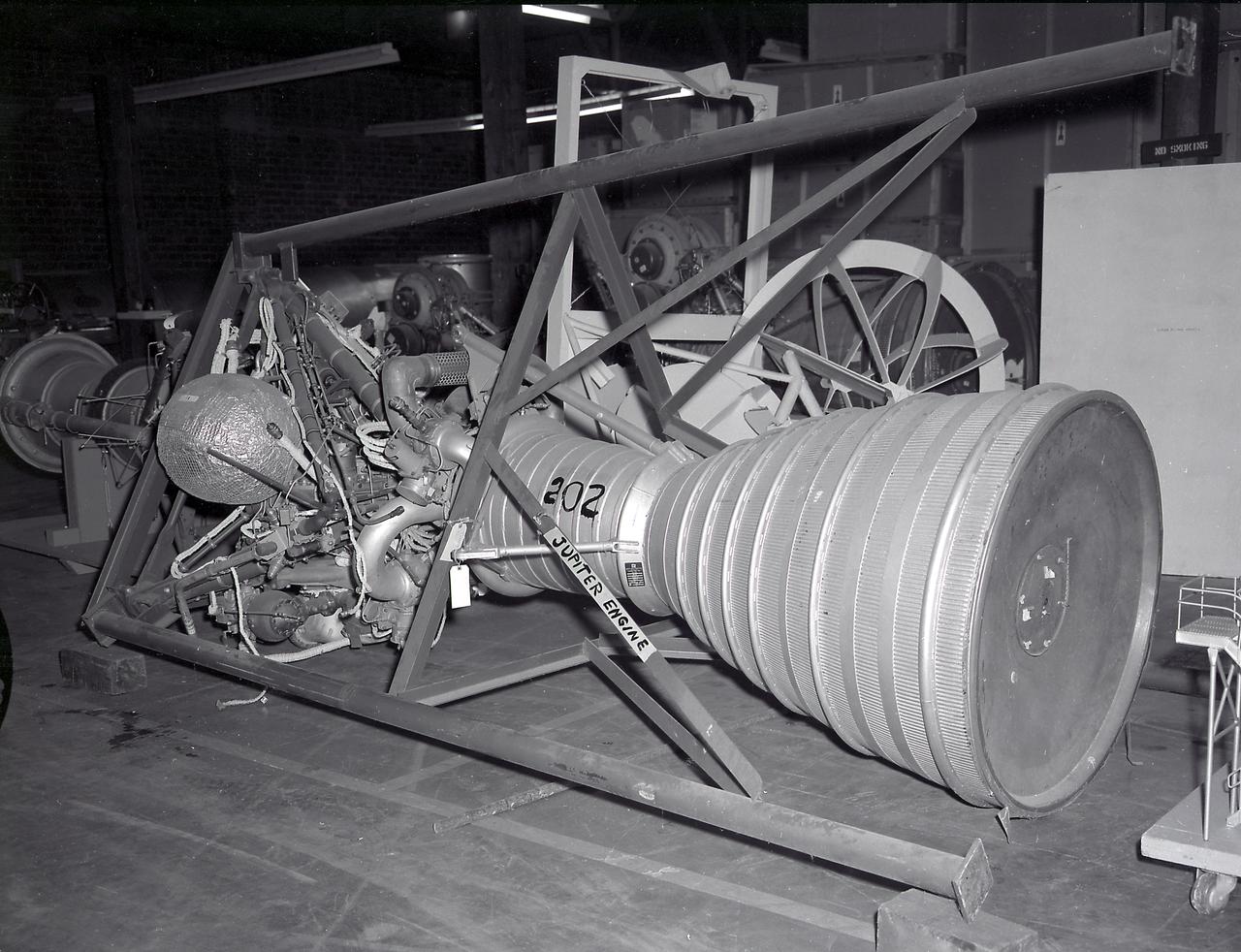
Engine for the Jupiter rocket. The Jupiter vehicle was a direct derivative of the Redstone. The Army Ballistic Missile Agency (ABMA) at Redstone Arsenal, Alabama, continued Jupiter development into a successful intermediate ballistic missile, even though the Department of Defense directed its operational development to the Air Force. ABMA maintained a role in Jupiter RD, including high-altitude launches that added to ABMA's understanding of rocket vehicle operations in the near-Earth space environment. It was knowledge that paid handsome dividends later.
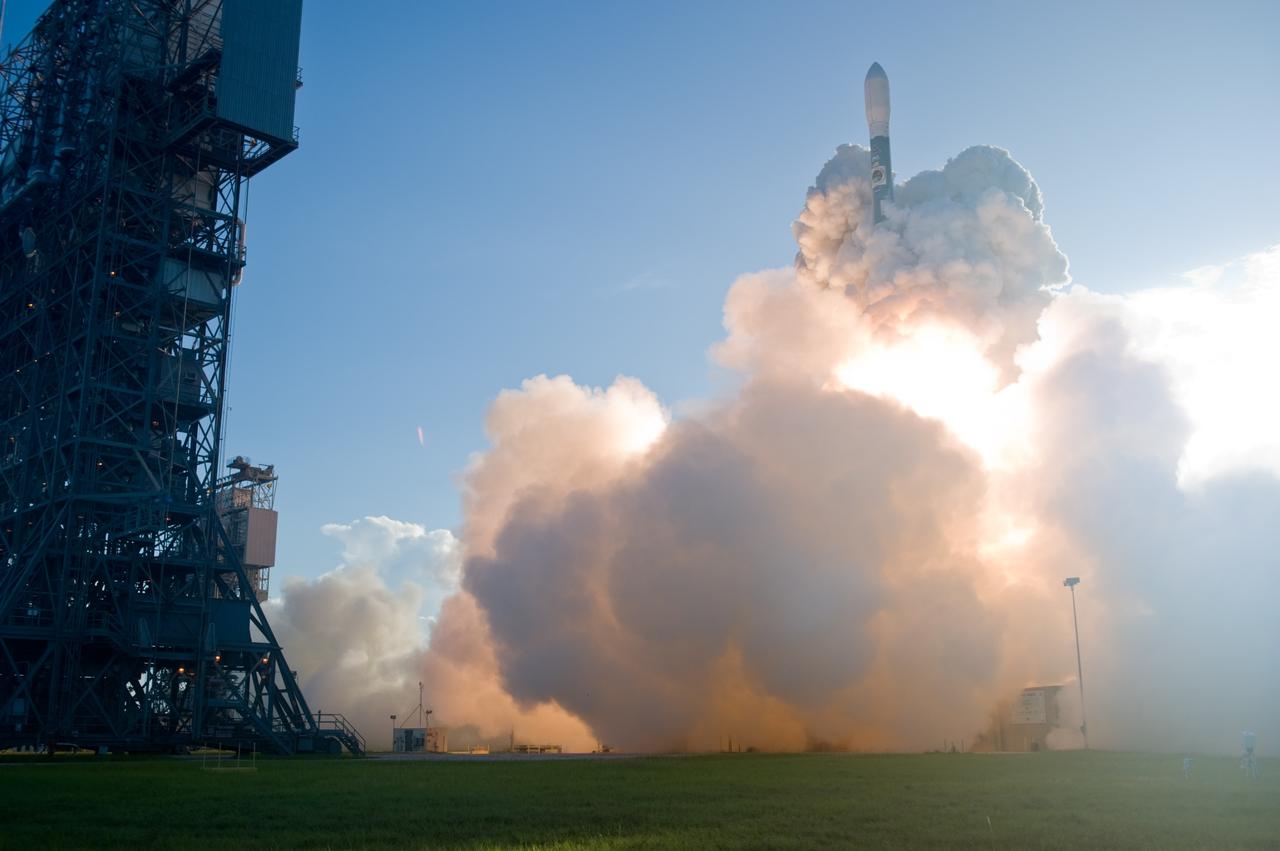
CAPE CANAVERAL, Fla. – The United Launch Alliance Delta II rocket with Space Tracking and Surveillance System - Demonstrator, or STSS-Demo, spacecraft emerges from a blanket of smoke after liftoff from Launch Pad 17-B at Cape Canaveral Air Force Station. STSS-Demo was launched at 8:20:22 a.m. EDT by NASA for the Missile Defense System. The STSS-Demo is a space-based sensor component of a layered Ballistic Missile Defense System designed for the overall mission of detecting, tracking and discriminating ballistic missiles. Photo credit: NASA/Tony Gray-Tim Powers
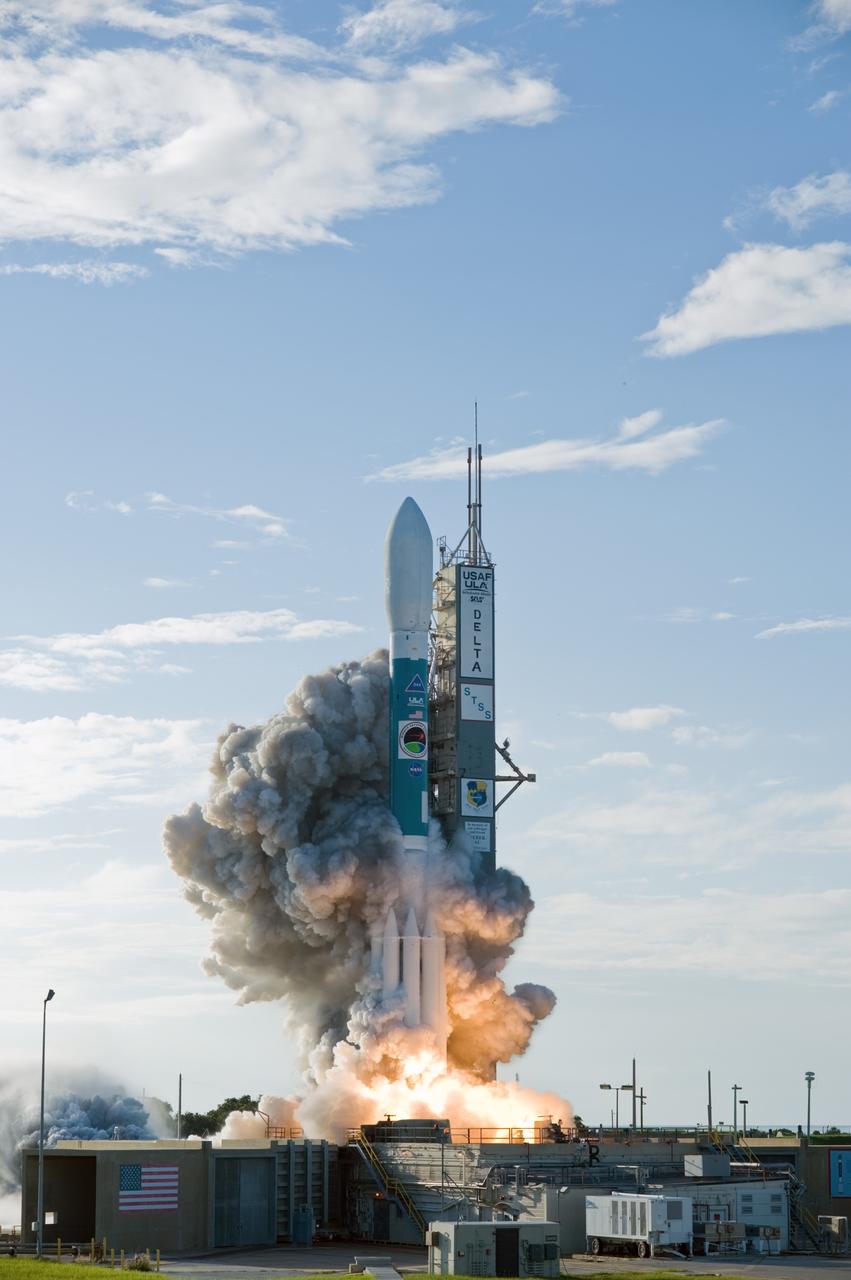
CAPE CANAVERAL, Fla. – The United Launch Alliance Delta II rocket with Space Tracking and Surveillance System - Demonstrator, or STSS-Demo, spacecraft leaps from Launch Pad 17-B at Cape Canaveral Air Force Station amid clouds of smoke. STSS-Demo was launched at 8:20:22 a.m. EDT by NASA for the U.S. Missile Defense Agency. The STSS-Demo is a space-based sensor component of a layered Ballistic Missile Defense System designed for the overall mission of detecting, tracking and discriminating ballistic missiles. STSS is capable of tracking objects after boost phase and provides trajectory information to other sensors. Photo credit: NASA/Sandra Joseph- Kevin O'Connell

CAPE CANAVERAL, Fla. – Approaching rain clouds at dawn hover over Central Florida's east coast, effectively causing the scrub of the Space Tracking and Surveillance System - Demonstrator spacecraft from Launch Pad 17-B at Cape Canaveral Air Force Station. STSS Demo is a space-based sensor component of a layered Ballistic Missile Defense System designed for the overall mission of detection, tracking and discriminating ballistic missiles. STSS is capable of tracking objects after boost phase and provides trajectory information to other sensors. It will be launched by NASA for the Missile Defense Agency between 8 and 8:58 a.m. EDT Sept. 24. Photo credit: NASA/Jack Pfaller
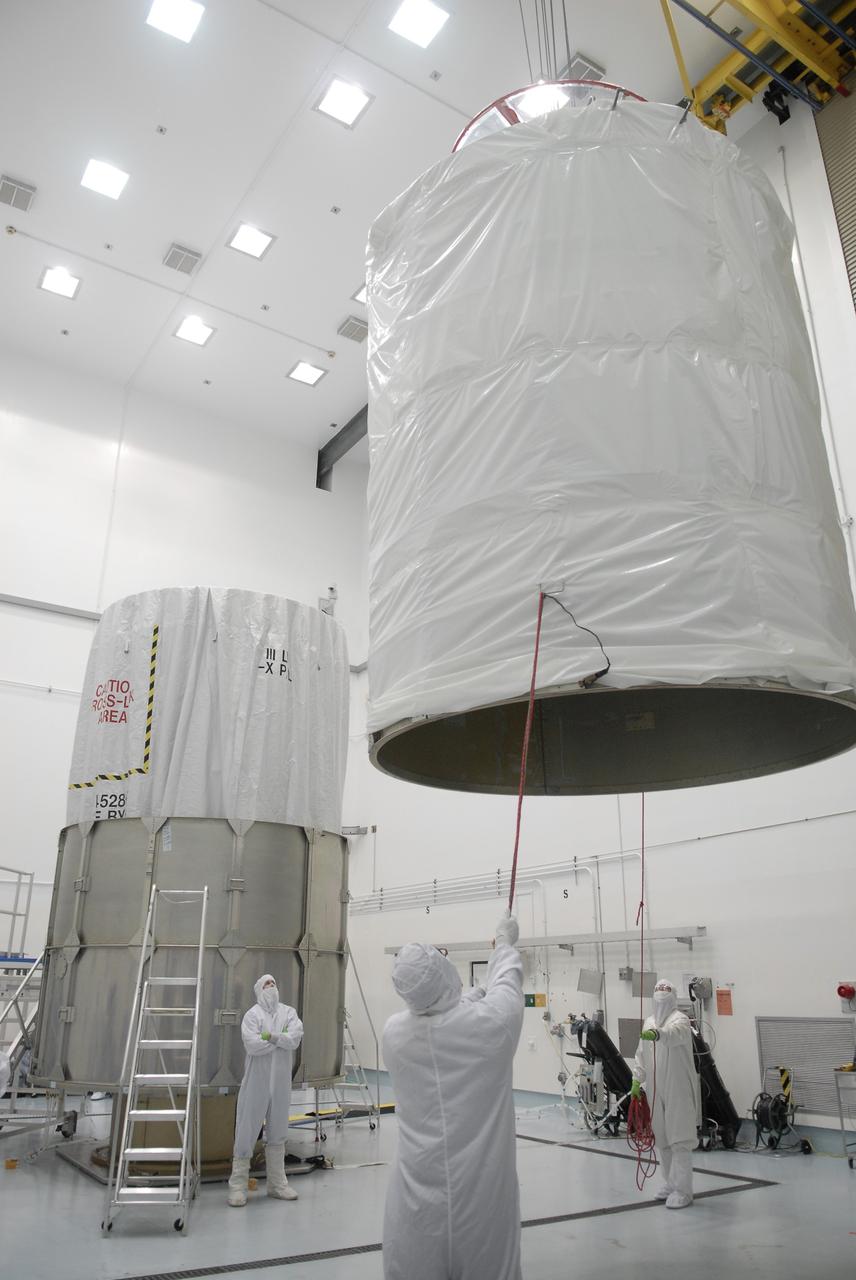
CAPE CANAVERAL, Fla. – At the Astrotech payload processing facility in Titusville, Fla., the upper segment of the transportation canister is moved toward the Space Tracking and Surveillance System – Demonstrators, or STSS Demo, spacecraft, at left. The STSS Demo is a space-based sensor component of a layered Ballistic Missile Defense System designed for the overall mission of detecting, tracking and discriminating ballistic missiles. STSS is capable of tracking objects after boost phase and provides trajectory information to other sensors. It will be launched by NASA for the Missile Defense Agency between 8 and 8:58 a.m. EDT Sept. 18. Approved for Public Release 09-MDA-04886 (10 SEPT 09) Photo credit: NASA/Kim Shiflett
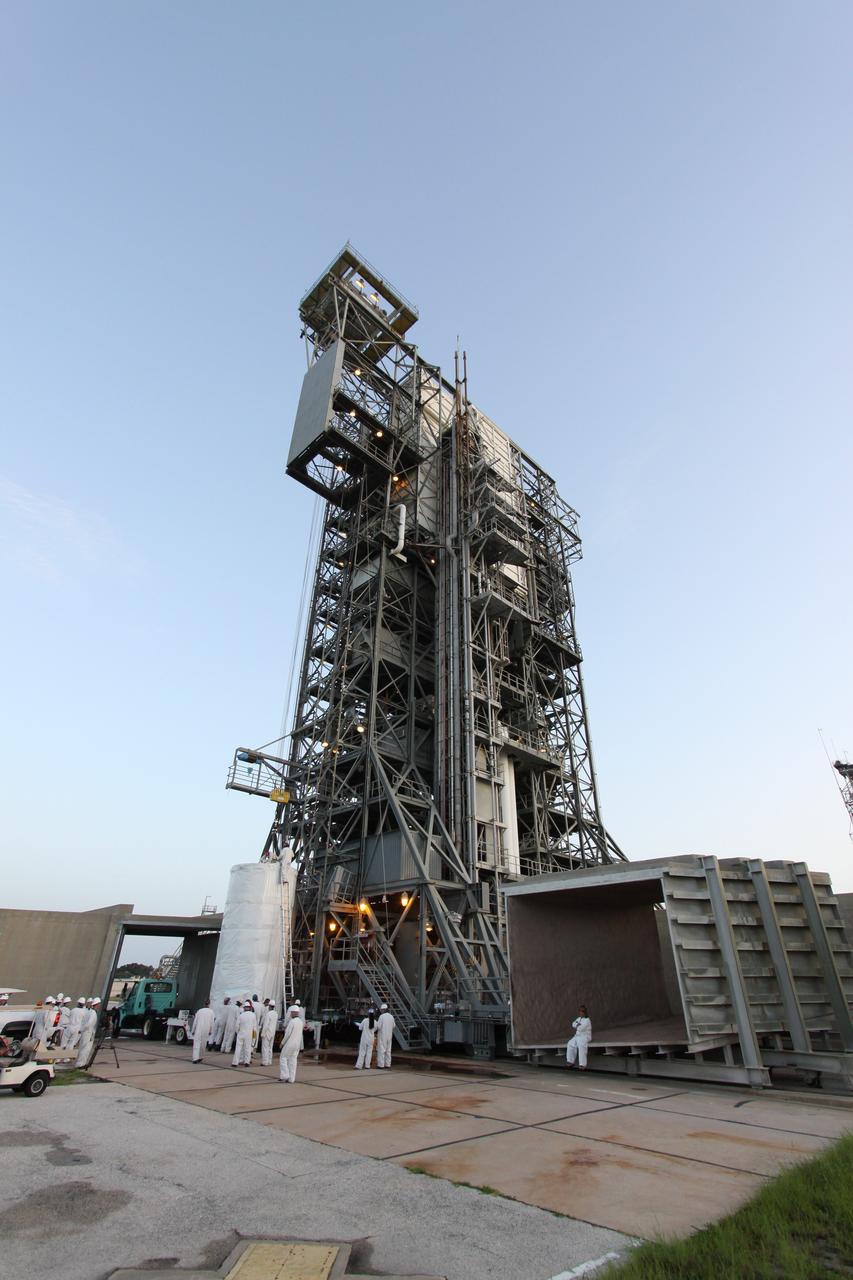
CAPE CANAVERAL, Fla. – The enclosed Space Tracking and Surveillance System – Demonstrators, or STSS-Demo, spacecraft arrives on Cape Canaveral Air Force Station's Launch Pad 17-B. The STSS Demo is a space-based sensor component of a layered Ballistic Missile Defense System designed for the overall mission of detecting, tracking and discriminating ballistic missiles. STSS is capable of tracking objects after boost phase and provides trajectory information to other sensors. It will be launched by NASA for the Missile Defense Agency between 8 and 8:58 a.m. EDT Sept. 18. Approved for Public Release 09-MDA-04886 (10 SEPT 09) Photo credit: NASA/Jack Pfaller
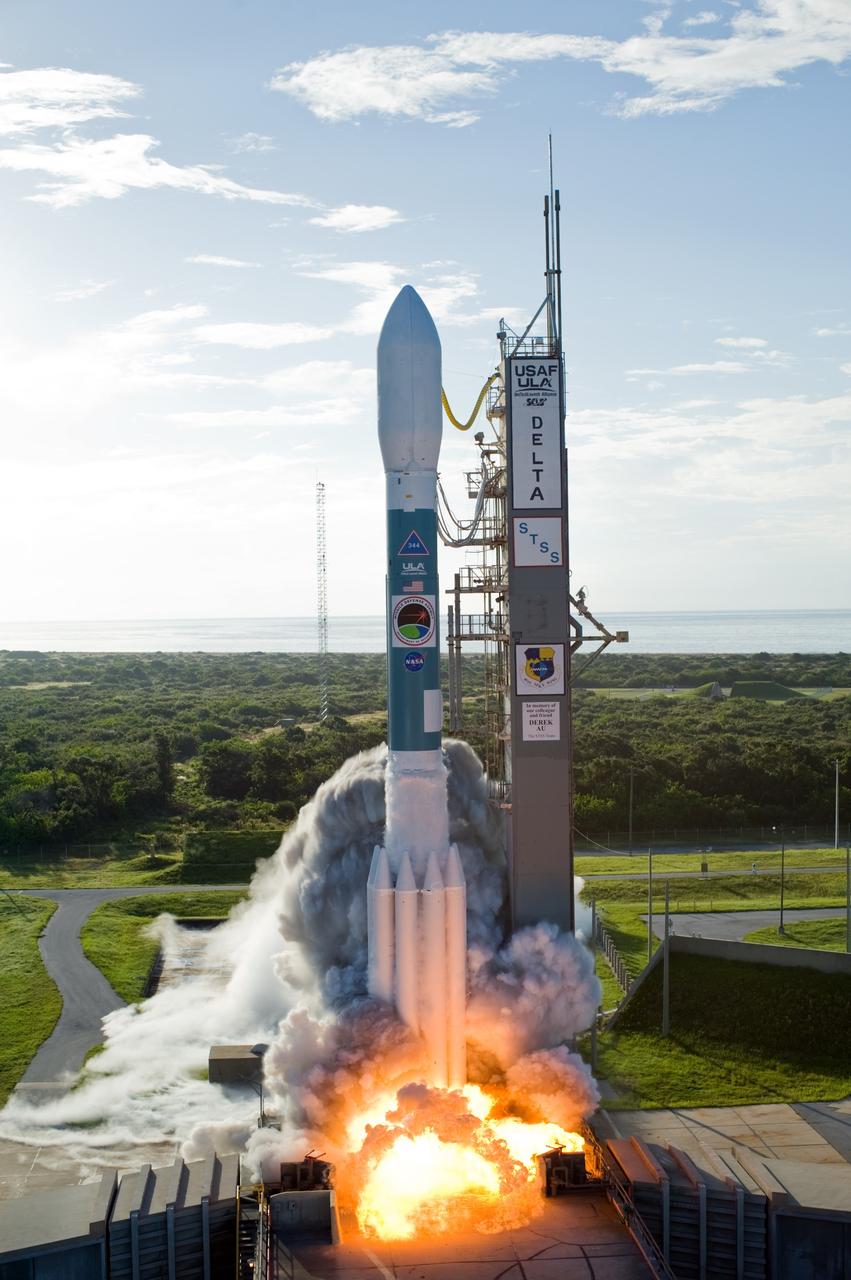
CAPE CANAVERAL, Fla. – Fire erupts across Launch Pad 17-B at Cape Canaveral Air Force Station as the United Launch Alliance Delta II rocket lifts off with the Space Tracking and Surveillance System - Demonstrator, or STSS-Demo, spacecraft. STSS-Demo was launched at 8:20:22 a.m. EDT by NASA for the U.S. Missile Defense Agency. The STSS-Demo is a space-based sensor component of a layered Ballistic Missile Defense System designed for the overall mission of detecting, tracking and discriminating ballistic missiles. Photo credit: NASA/Regina Mitchell-Tom Farrar
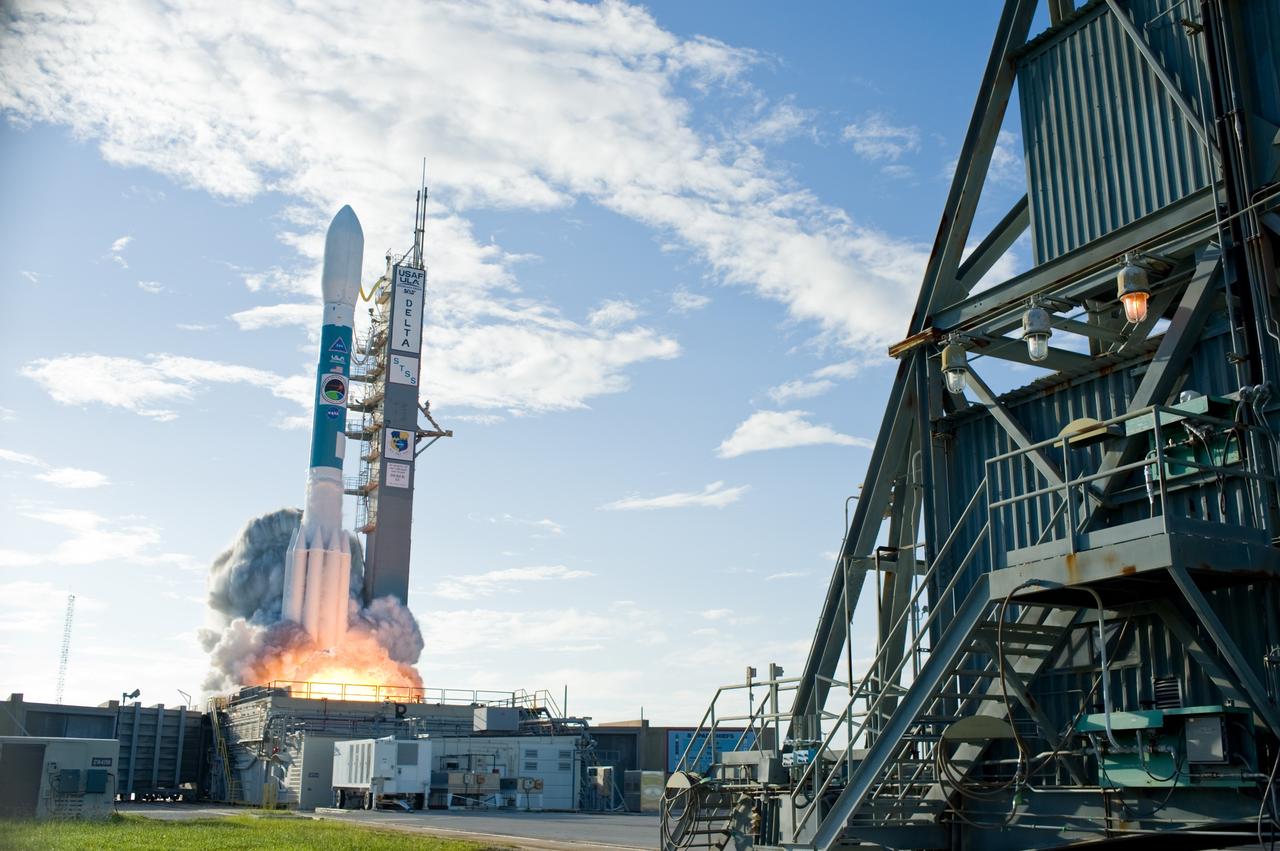
CAPE CANAVERAL, Fla. – The Space Tracking and Surveillance System - Demonstrator, or STSS-Demo, spacecraft lifts off through a cloud of smoke from Launch Pad 17-B at Cape Canaveral Air Force Station aboard a United Launch Alliance Delta II rocket. It was launched by NASA for the U.S. Missile Defense Agency. Launch was at 8:20:22 a.m. EDT. The STSS-Demo is a space-based sensor component of a layered Ballistic Missile Defense System designed for the overall mission of detecting, tracking and discriminating ballistic missiles. Photo credit: NASA/Regina Mitchell-Tom Farrar

CAPE CANAVERAL, Fla. –The United Launch Alliance Delta II rocket with Space Tracking and Surveillance System - Demonstrator, or STSS-Demo, spacecraft leaps from Launch Pad 17-B at Cape Canaveral Air Force Station amid clouds of smoke. STSS-Demo was launched at 8:20:22 a.m. EDT by NASA for the U.S. Missile Defense Agency. The STSS-Demo is a space-based sensor component of a layered Ballistic Missile Defense System designed for the overall mission of detecting, tracking and discriminating ballistic missiles. STSS is capable of tracking objects after boost phase and provides trajectory information to other sensors. Photo credit: NASA/Tony Gray-Tim Powers
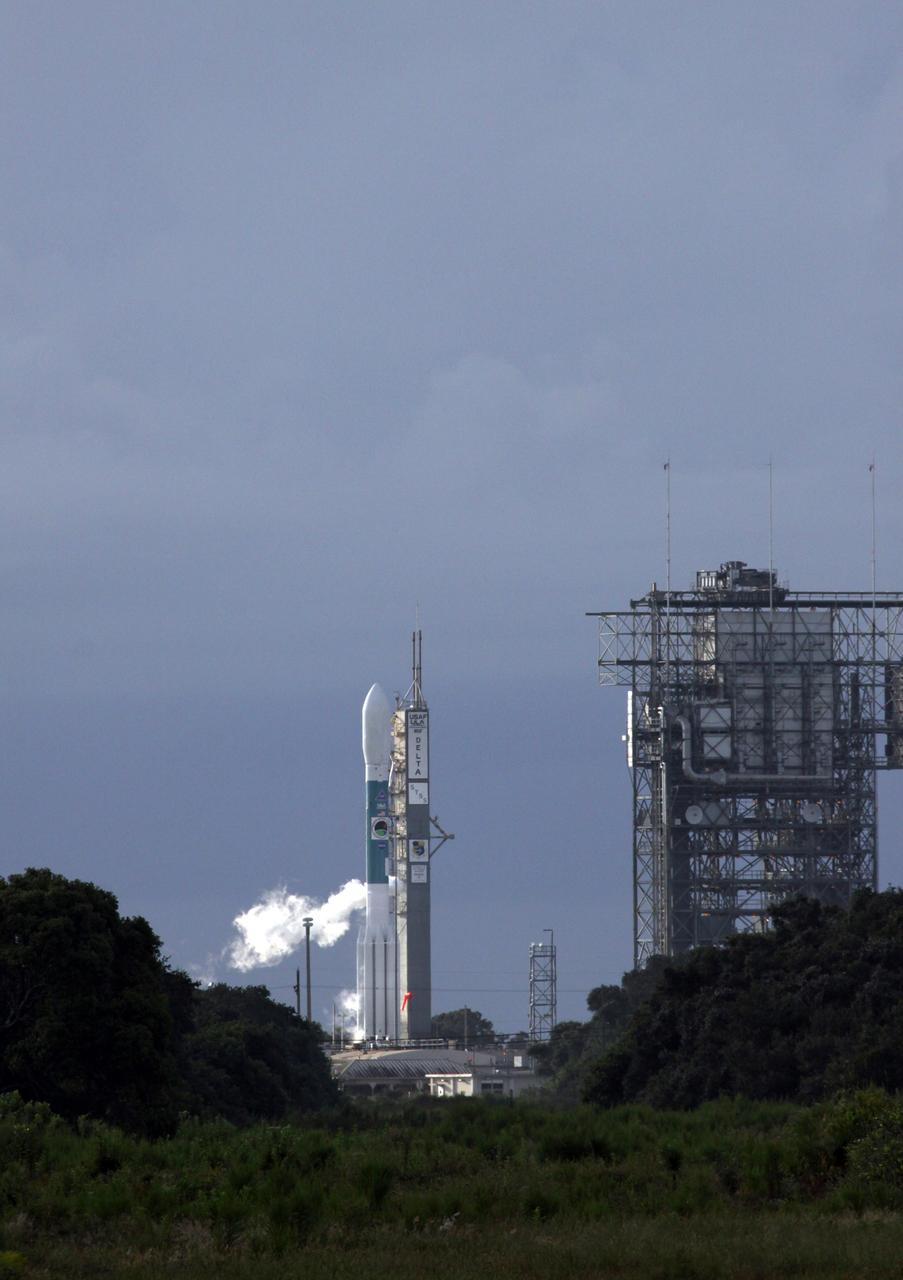
CAPE CANAVERAL, Fla. – On Launch Pad 17-B at Cape Canaveral Air Force Station in Florida, the Space Tracking and Surveillance System Demonstrator spacecraft waits for launch under dark, cloudy sky. Rain over Central Florida's east coast caused the scrub of the launch. STSS Demo is a space-based sensor component of a layered Ballistic Missile Defense System designed for the overall mission of detection, tracking and discriminating ballistic missiles. STSS is capable of tracking objects after boost phase and provides trajectory information to other sensors. It will be launched by NASA for the Missile Defense Agency between 8 and 8:58 a.m. EDT Sept. 24. Photo credit: NASA/Jack Pfaller
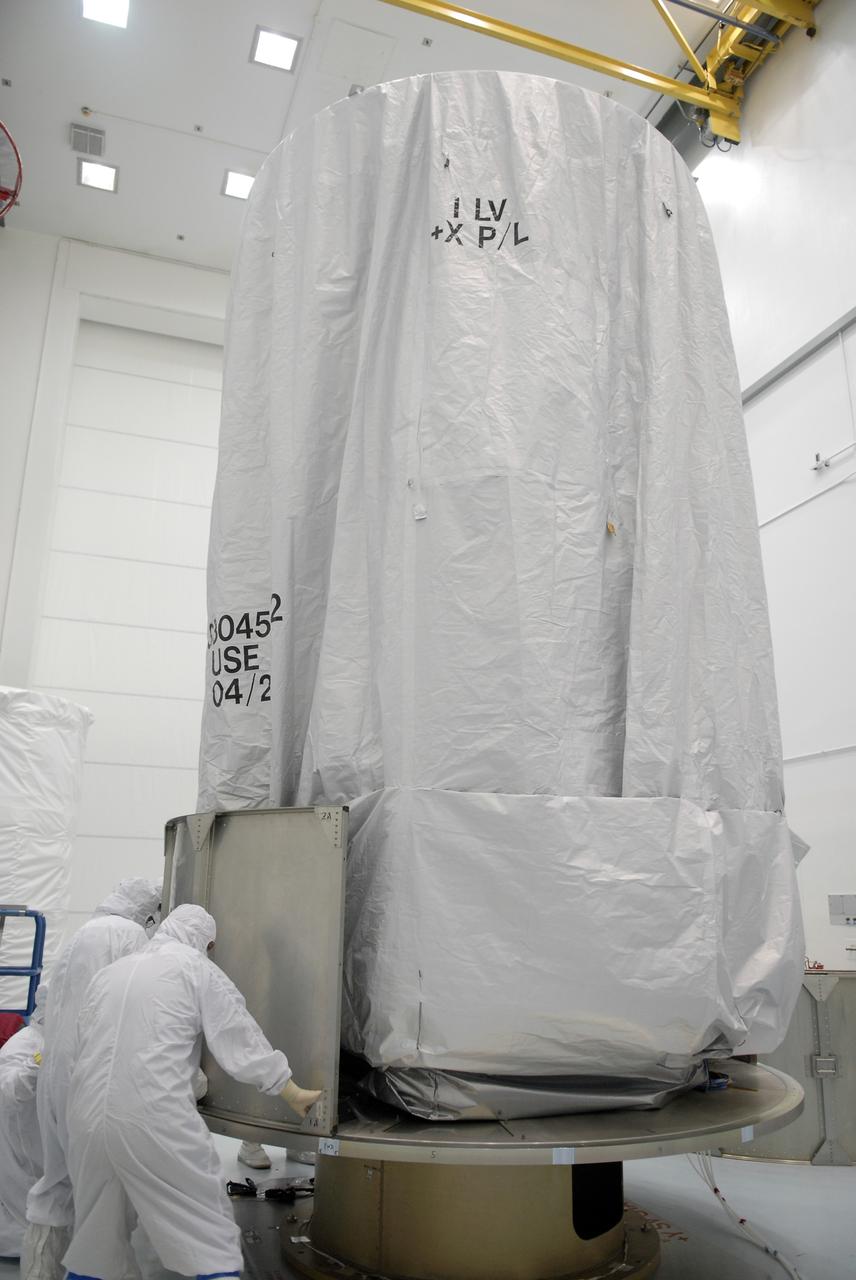
CAPE CANAVERAL, Fla. – At the Astrotech payload processing facility in Titusville, Fla., workers place the first segments of the transportation canister around the base of the Space Tracking and Surveillance System – Demonstrators, or STSS Demo, spacecraft. The STSS Demo is a space-based sensor component of a layered Ballistic Missile Defense System designed for the overall mission of detecting, tracking and discriminating ballistic missiles. STSS is capable of tracking objects after boost phase and provides trajectory information to other sensors. It will be launched by NASA for the Missile Defense Agency between 8 and 8:58 a.m. EDT Sept. 18. Approved for Public Release 09-MDA-04886 (10 SEPT 09) Photo credit: NASA/Kim Shiflett
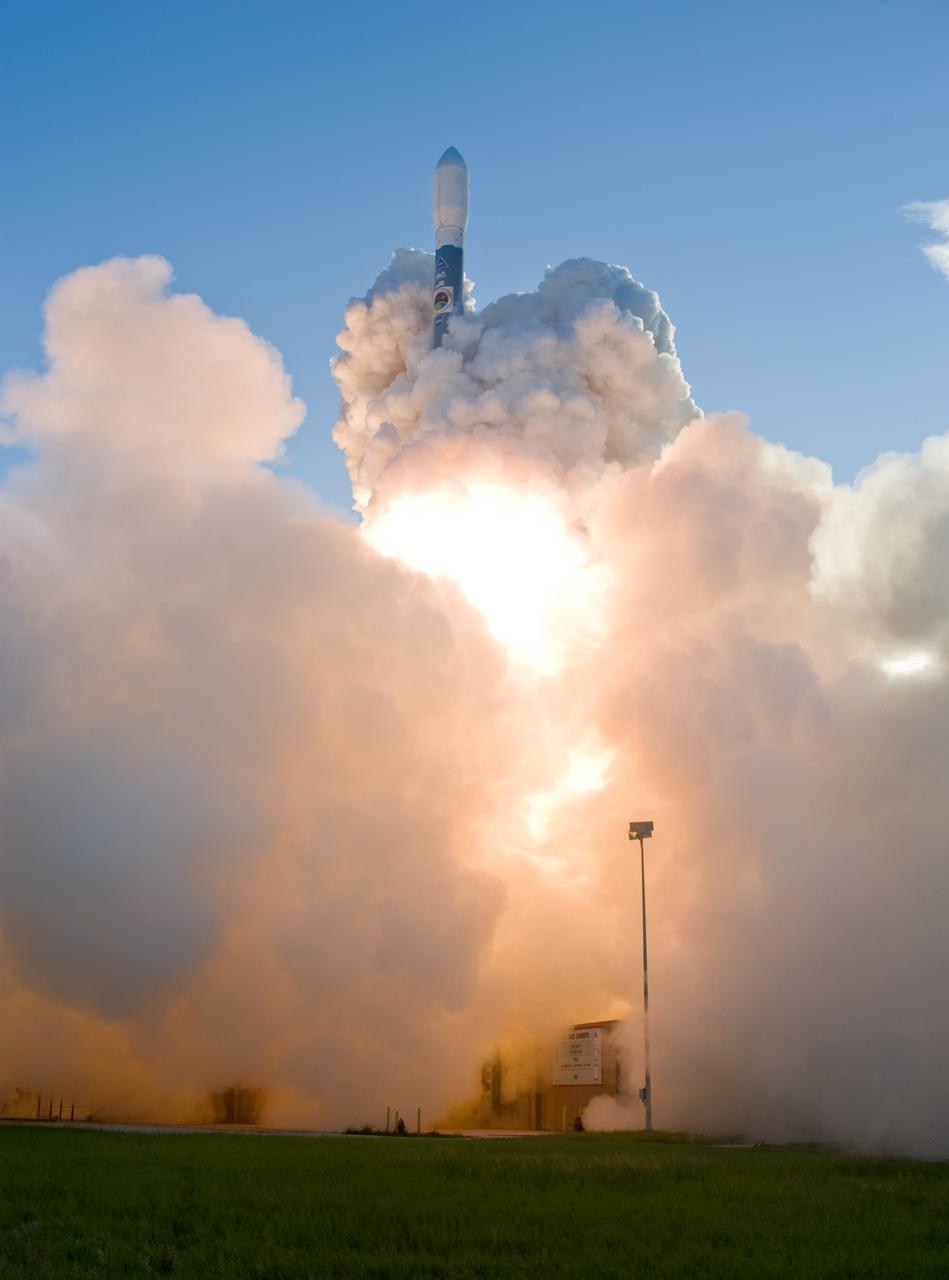
CAPE CANAVERAL, Fla. – The United Launch Alliance Delta II rocket with Space Tracking and Surveillance System - Demonstrator, or STSS-Demo, spacecraft emerges from a blanket of smoke after liftoff from Launch Pad 17-B at Cape Canaveral Air Force Station. STSS-Demo was launched at 8:20:22 a.m. EDT by NASA for the U.S. Missile Defense Agency. The STSS-Demo is a space-based sensor component of a layered Ballistic Missile Defense System designed for the overall mission of detecting, tracking and discriminating ballistic missiles. Photo credit: NASA/Tony Gray-Tim Powers

CAPE CANAVERAL, Fla. – At the Astrotech payload processing facility in Titusville, Fla., workers place the second row of segments of the transportation canister around the Space Tracking and Surveillance System – Demonstrators, or STSS Demo, spacecraft. The STSS Demo is a space-based sensor component of a layered Ballistic Missile Defense System designed for the overall mission of detecting, tracking and discriminating ballistic missiles. STSS is capable of tracking objects after boost phase and provides trajectory information to other sensors. It will be launched by NASA for the Missile Defense Agency between 8 and 8:58 a.m. EDT Sept. 18. Approved for Public Release 09-MDA-04886 (10 SEPT 09) Photo credit: NASA/Kim Shiflett
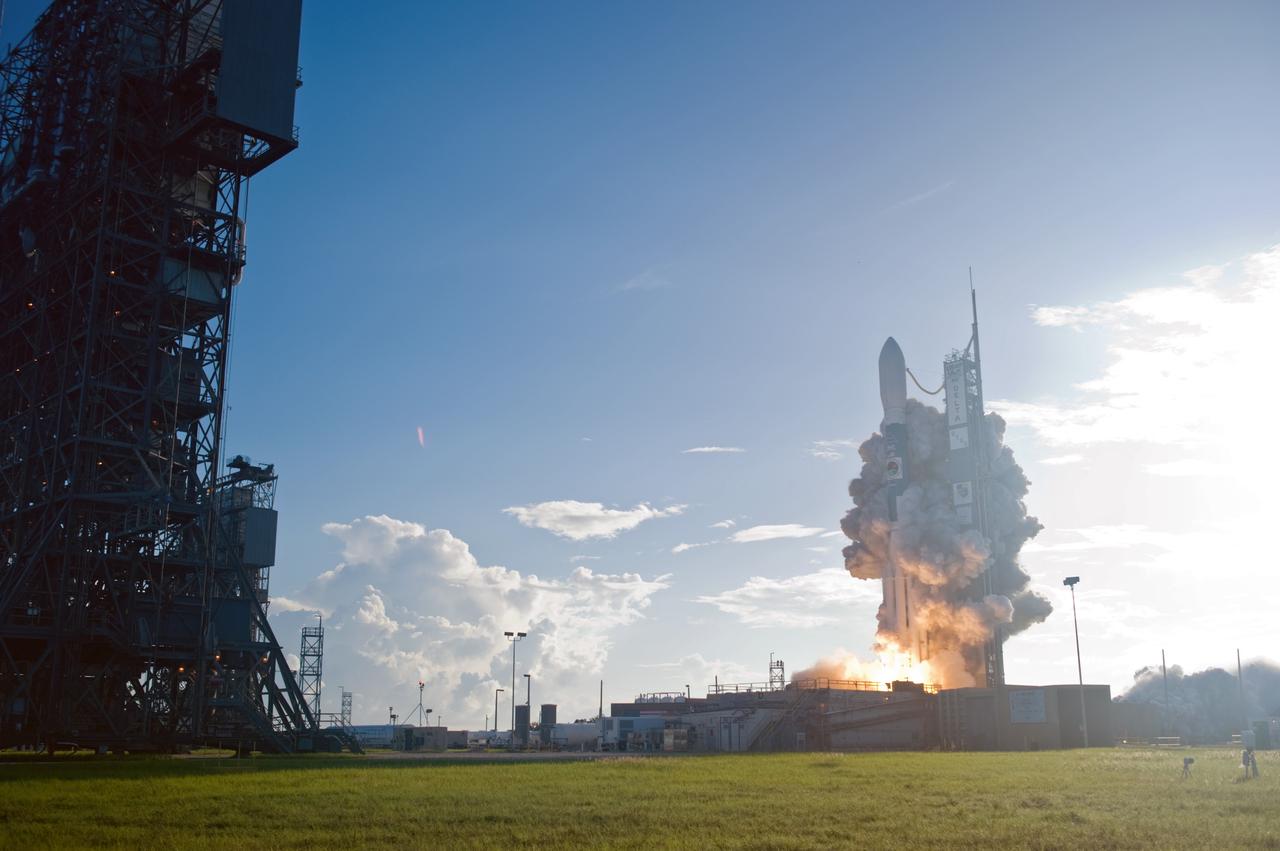
CAPE CANAVERAL, Fla. – The United Launch Alliance Delta II rocket with Space Tracking and Surveillance System - Demonstrator, or STSS-Demo, spacecraft leaps from Launch Pad 17-B at Cape Canaveral Air Force Station amid clouds of smoke. STSS-Demo was launched at 8:20:22 a.m. EDT by NASA for the U.S. Missile Defense Agency. The STSS-Demo is a space-based sensor component of a layered Ballistic Missile Defense System designed for the overall mission of detecting, tracking and discriminating ballistic missiles. Photo credit: NASA/Tony Gray-Tim Powers
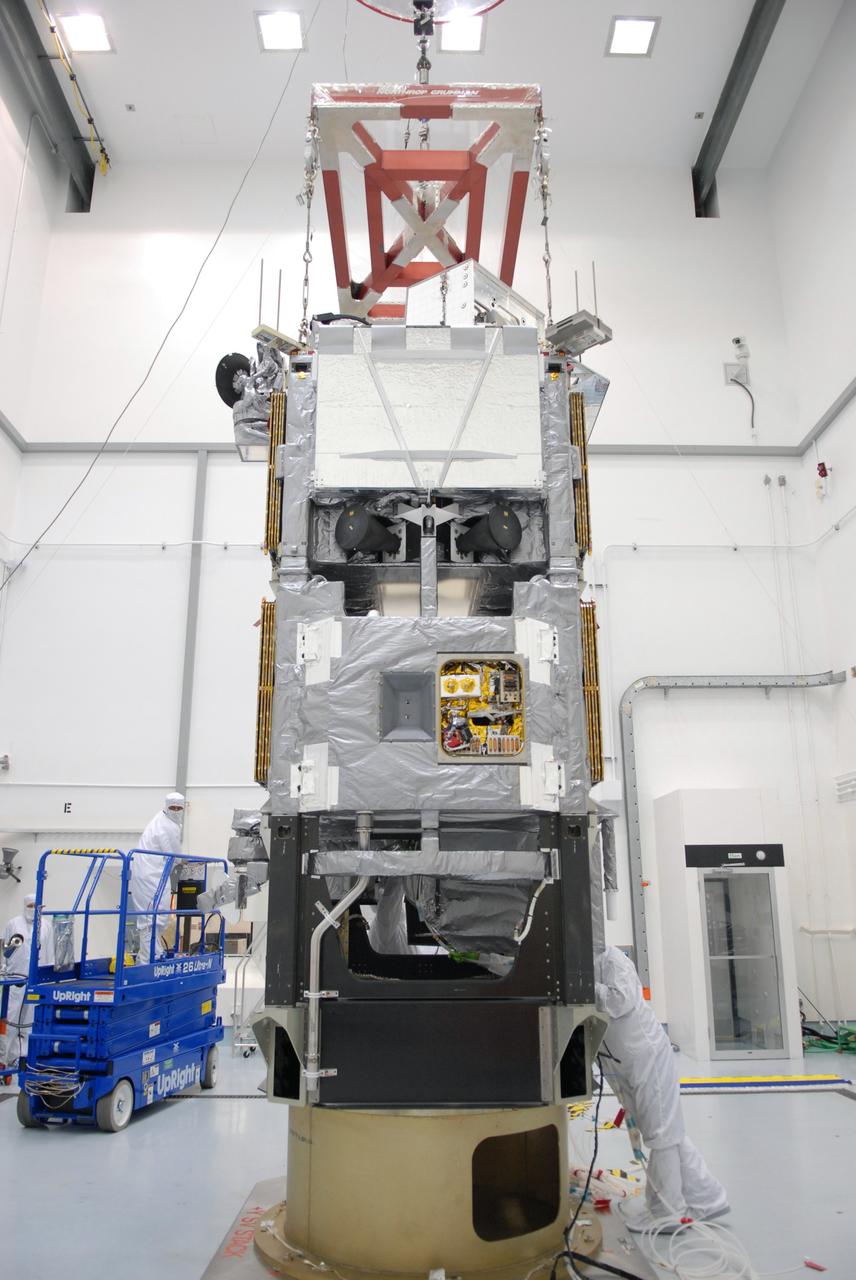
CAPE CANAVERAL, Fla. – At the Astrotech payload processing facility in Titusville, Fla., the SV1-SV2 spacecraft is ready to be weighed. The two spacecraft are known as the Space Tracking and Surveillance System – Demonstrators, or STSS Demo, which is a space-based sensor component of a layered Ballistic Missile Defense System designed for the overall mission of detecting, tracking and discriminating ballistic missiles. STSS is capable of tracking objects after boost phase and provides trajectory information to other sensors. It will be launched by NASA for the Missile Defense Agency between 8 and 8:58 a.m. EDT Sept. 18. Approved for Public Release 09-MDA-04886 (10 SEPT 09) Photo credit: NASA/Jim Grossmann
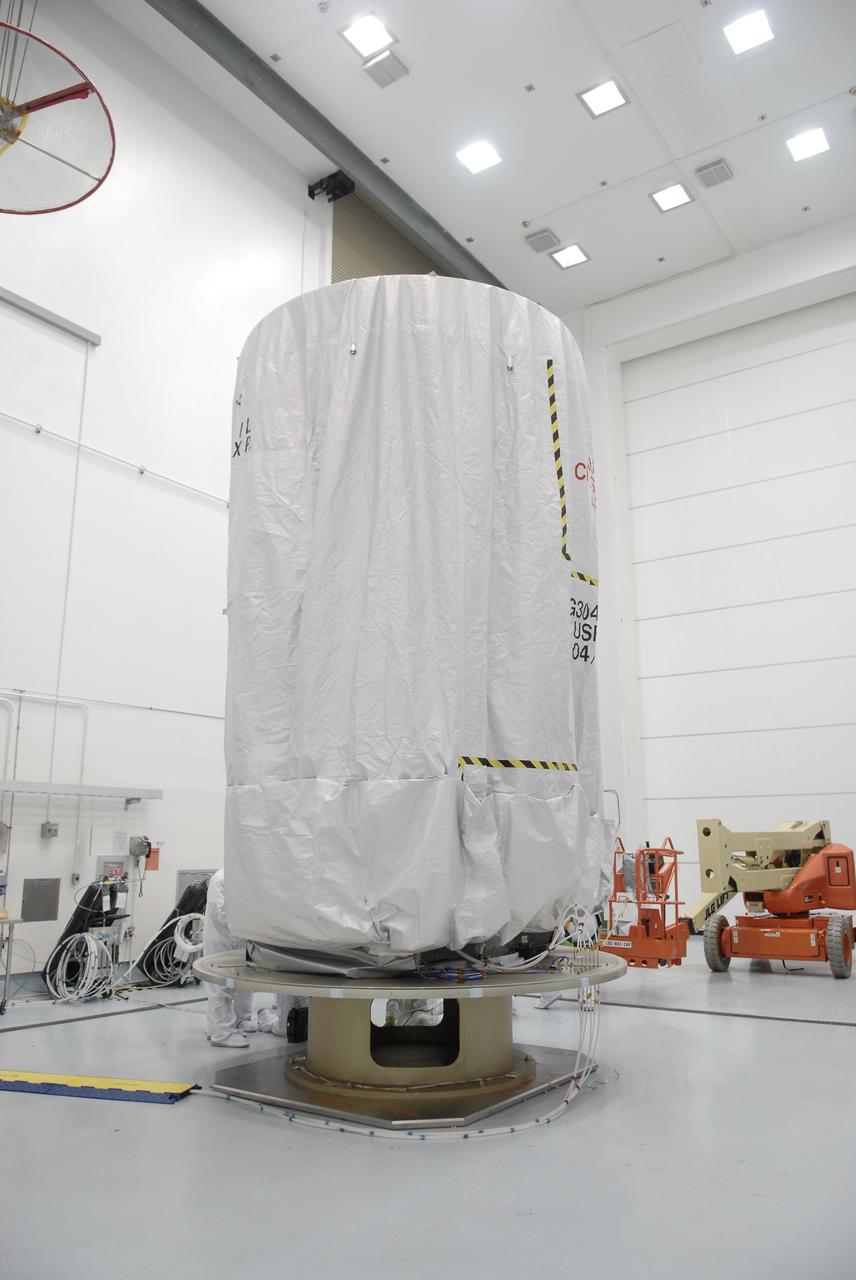
CAPE CANAVERAL, Fla. – At the Astrotech payload processing facility in Titusville, Fla., the Space Tracking and Surveillance System – Demonstrators, or STSS Demo, spacecraft is under a protective cover before being encased in the transportation canister. The STSS Demo is a space-based sensor component of a layered Ballistic Missile Defense System designed for the overall mission of detecting, tracking and discriminating ballistic missiles. STSS is capable of tracking objects after boost phase and provides trajectory information to other sensors. It will be launched by NASA for the Missile Defense Agency between 8 and 8:58 a.m. EDT Sept. 18. Approved for Public Release 09-MDA-04886 (10 SEPT 09) Photo credit: NASA/Kim Shiflett

CAPE CANAVERAL, Fla. – The United Launch Alliance Delta II rocket with Space Tracking and Surveillance System - Demonstrator, or STSS-Demo, spacecraft leaps through a mantle of smoke as it lifts off from Launch Pad 17-B at Cape Canaveral Air Force Station. STSS-Demo was launched at 8:20:22 a.m. EDT by NASA for the U.S. Missile Defense Agency. The STSS-Demo is a space-based sensor component of a layered Ballistic Missile Defense System designed for the overall mission of detecting, tracking and discriminating ballistic missiles. Photo credit: NASA/Regina Mitchell-Tom Farrar
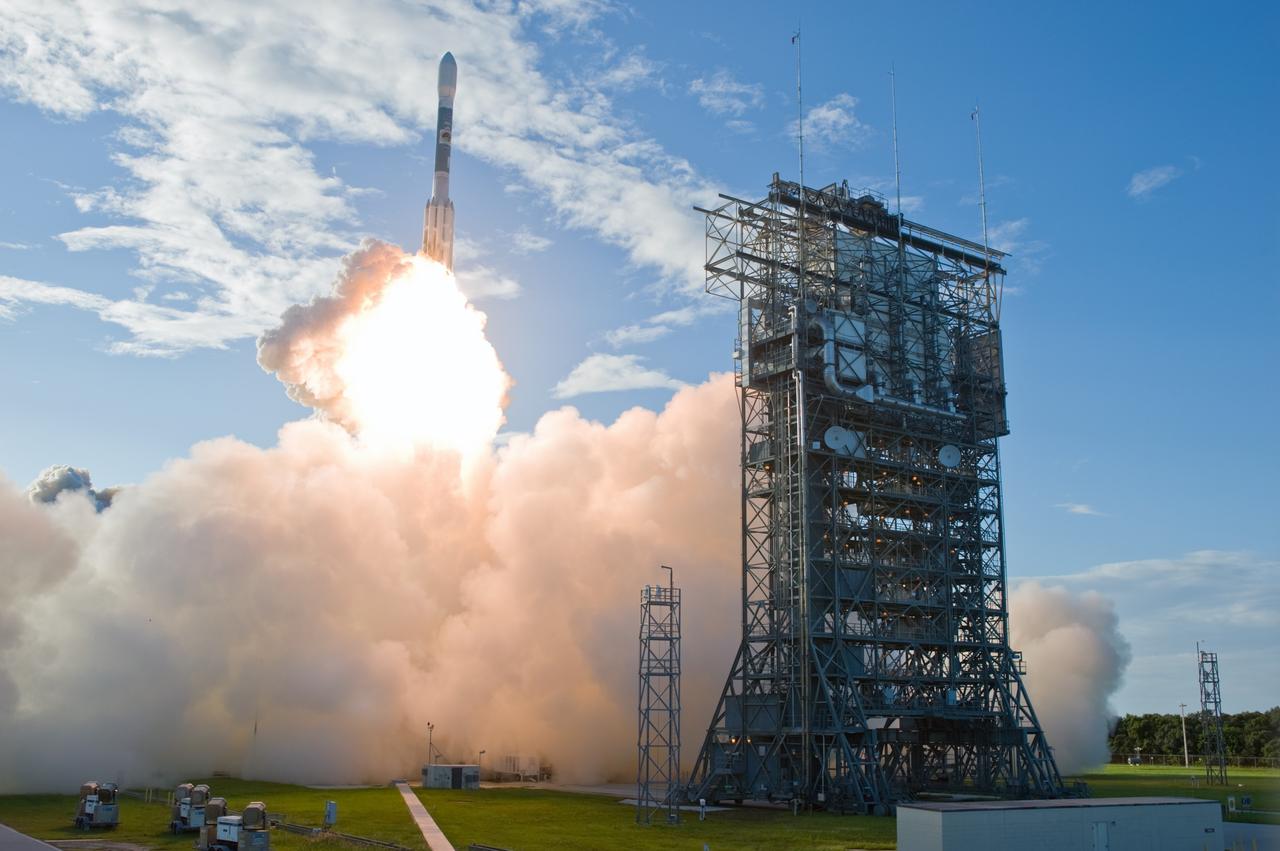
CAPE CANAVERAL, Fla. – The United Launch Alliance Delta II rocket carrying the Space Tracking and Surveillance System - Demonstrator, or STSS-Demo, spacecraft leaps into the sky from Launch Pad 17-B at Cape Canaveral Air Force Station. STSS-Demo was launched at 8:20:22 a.m. EDT by NASA for the U.S. Missile Defense Agency. The STSS-Demo is a space-based sensor component of a layered Ballistic Missile Defense System designed for the overall mission of detecting, tracking and discriminating ballistic missiles. STSS is capable of tracking objects after boost phase and provides trajectory information to other sensors. Photo credit: NASA/Sandra Joseph- Kevin O'Connell
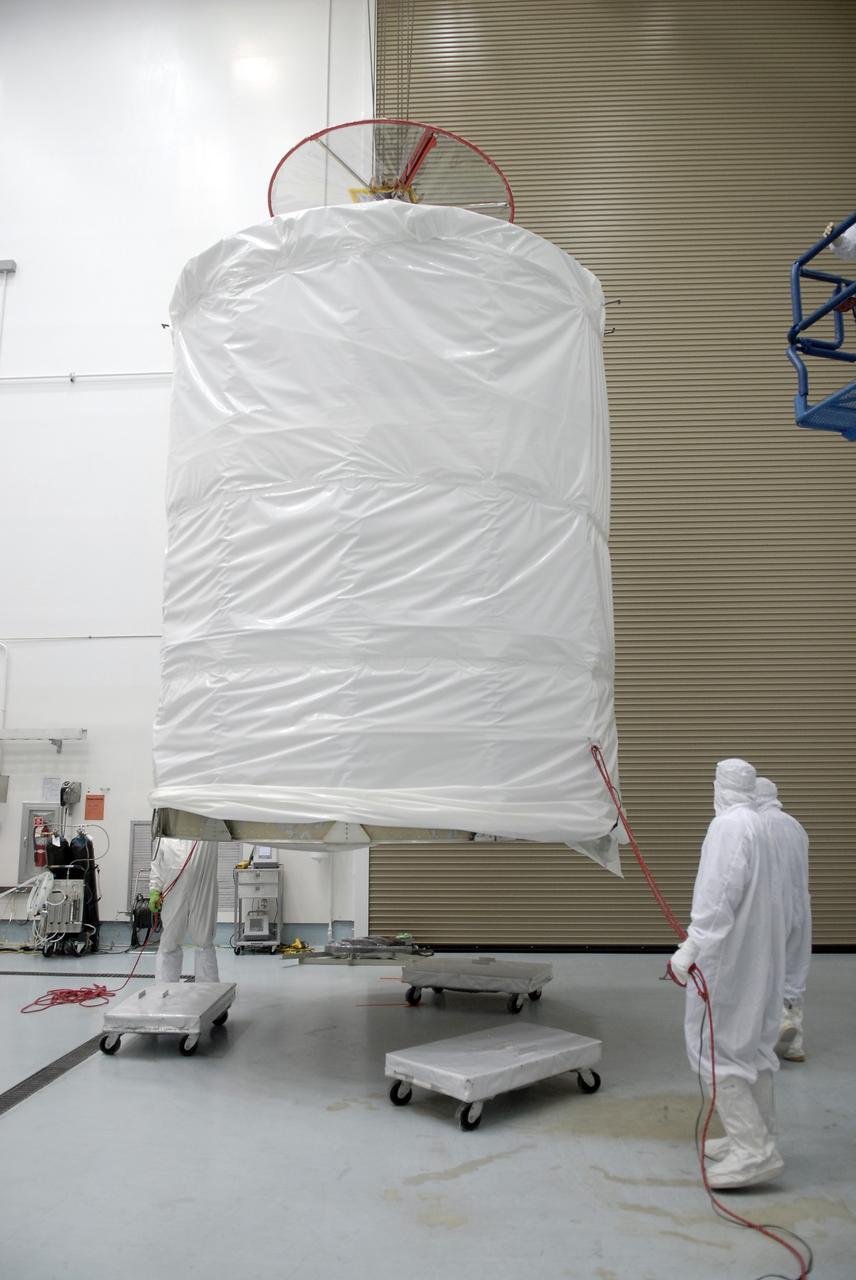
CAPE CANAVERAL, Fla. – At the Astrotech payload processing facility in Titusville, Fla., the upper segment of the transportation canister is lifted to be placed on the top of the Space Tracking and Surveillance System – Demonstrators, or STSS Demo, spacecraft. The STSS Demo is a space-based sensor component of a layered Ballistic Missile Defense System designed for the overall mission of detecting, tracking and discriminating ballistic missiles. STSS is capable of tracking objects after boost phase and provides trajectory information to other sensors. It will be launched by NASA for the Missile Defense Agency between 8 and 8:58 a.m. EDT Sept. 18. Approved for Public Release 09-MDA-04886 (10 SEPT 09) Photo credit: NASA/Kim Shiflett
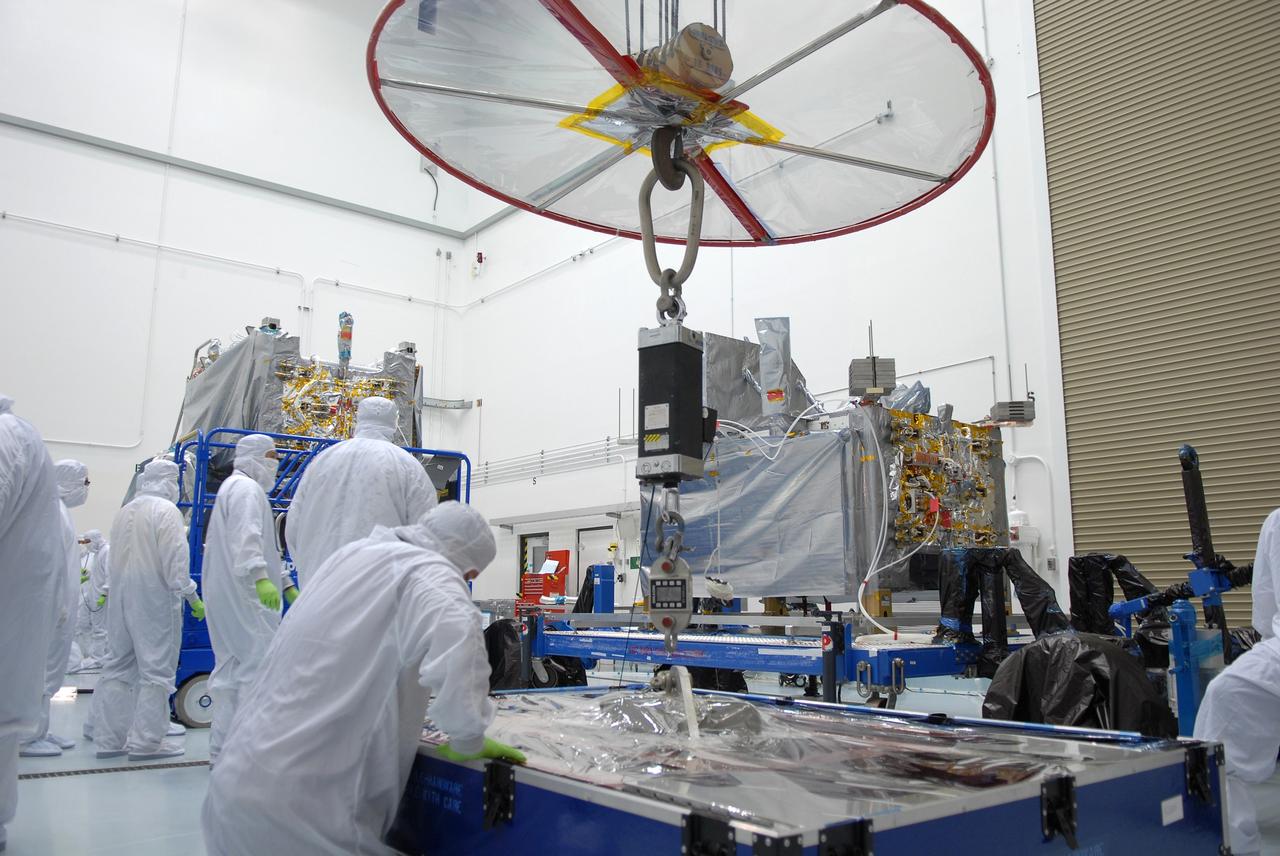
CAPE CANAVERAL, Fla. – At the Astrotech payload processing facility in Titusville, Fla., workers prepare to lift the SV1 and mate it to the SV2 spacecraft for the Space Tracking and Surveillance System – Demonstrators, or STSS Demo, Program. STSS-Demo is a space-based sensor component of a layered Ballistic Missile Defense System designed for the overall mission of detecting, tracking and discriminating ballistic missiles. The spacecraft is capable of tracking objects after boost phase and provides trajectory information to other sensors. It will be launched by NASA for the Missile Defense Agency between 8 and 8:58 a.m. EDT Sept. 18. Approved for Public Release 09-MDA-04886 (10 SEPT 09) Photo credit: NASA/Jim Grossmann
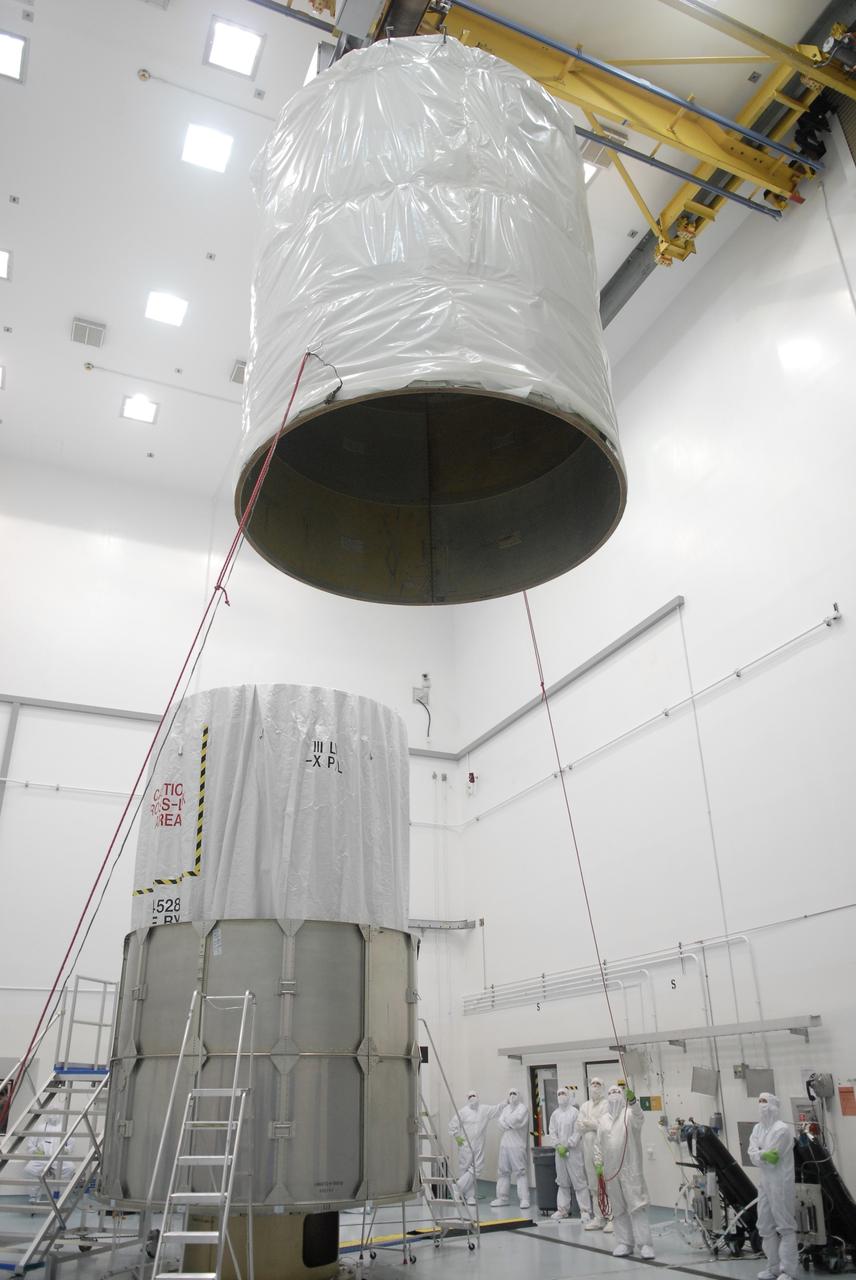
CAPE CANAVERAL, Fla. – At the Astrotech payload processing facility in Titusville, Fla., the upper segment of the transportation canister is moved toward the Space Tracking and Surveillance System – Demonstrators, or STSS Demo, spacecraft, at bottom left. The STSS Demo is a space-based sensor component of a layered Ballistic Missile Defense System designed for the overall mission of detecting, tracking and discriminating ballistic missiles. STSS is capable of tracking objects after boost phase and provides trajectory information to other sensors. It will be launched by NASA for the Missile Defense Agency between 8 and 8:58 a.m. EDT Sept. 18. Approved for Public Release 09-MDA-04886 (10 SEPT 09) Photo credit: NASA/Kim Shiflett

CAPE CANAVERAL, Fla. – From Hangar AE at Cape Canaveral Air Force Station in Florida, Garrett Lee Skrobot, who is NASA's mission manager for the Space Tracking and Surveillance System – Demonstrator, oversees the launch. The STSS-Demo spacecraft launched at 8:20:22 a.m. EDT aboard a United Launch Alliance Delta II rocket. It was launched by NASA for the U.S. Missile Defense Agency. The STSS-Demo is a space-based sensor component of a layered Ballistic Missile Defense System designed for the overall mission of detecting, tracking and discriminating ballistic missiles. Photo credit: NASA/Kim Shiflett
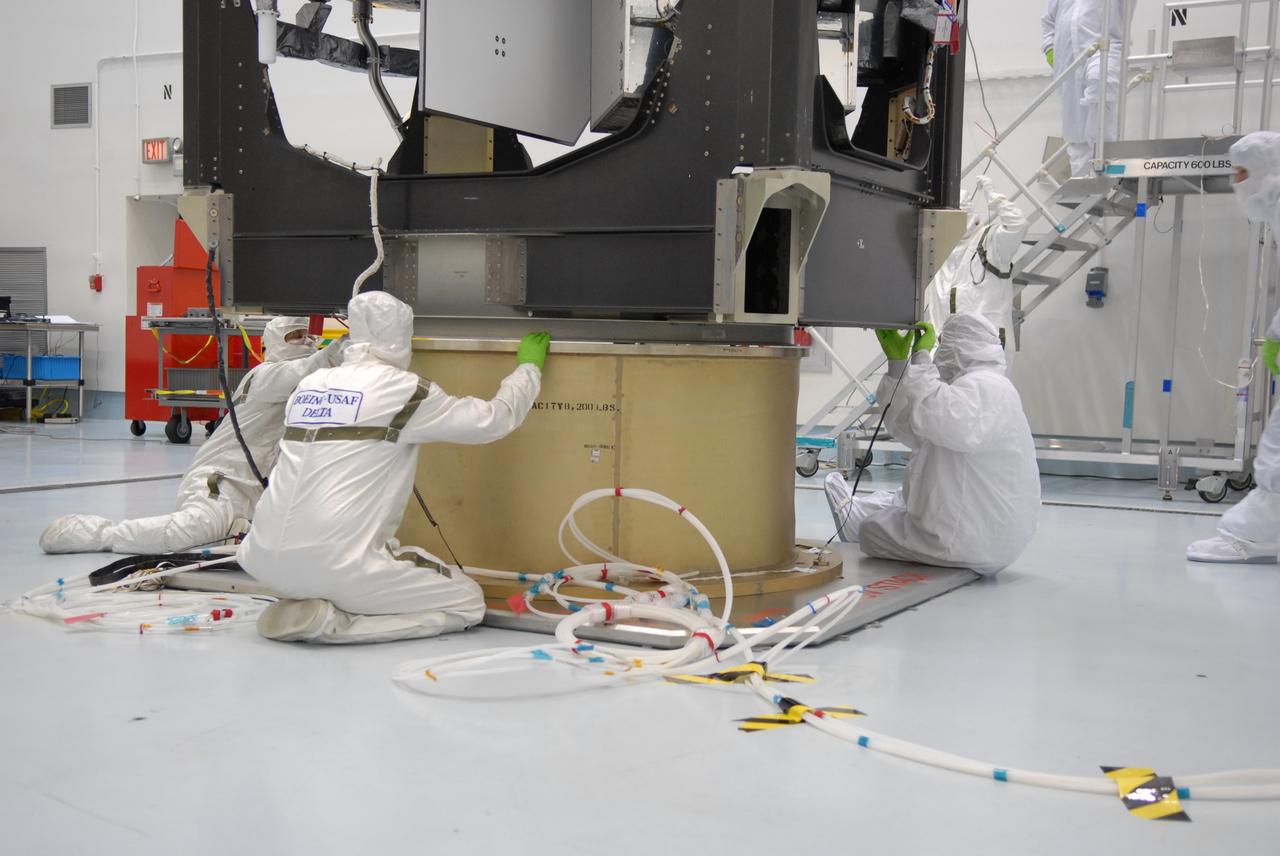
CAPE CANAVERAL, Fla. – At the Astrotech payload processing facility in Titusville, Fla., workers observe as the SV1-SV2 spacecraft is lifted for weighing. The two spacecraft are known as the Space Tracking and Surveillance System – Demonstrators, or STSS Demo, which is a space-based sensor component of a layered Ballistic Missile Defense System designed for the overall mission of detecting, tracking and discriminating ballistic missiles. STSS is capable of tracking objects after boost phase and provides trajectory information to other sensors. It will be launched by NASA for the Missile Defense Agency between 8 and 8:58 a.m. EDT Sept. 18. Approved for Public Release 09-MDA-04886 (10 SEPT 09) Photo credit: NASA/Jim Grossmann
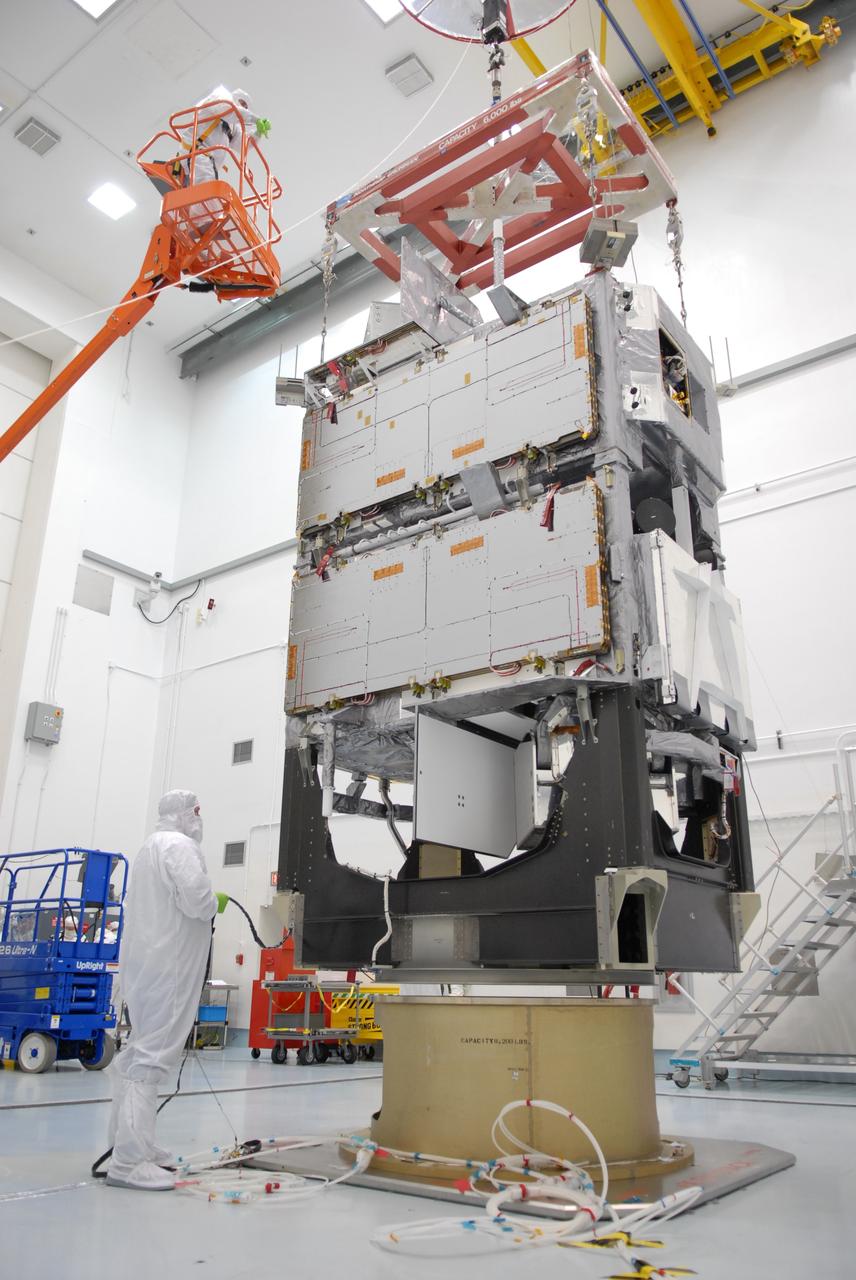
CAPE CANAVERAL, Fla. – At the Astrotech payload processing facility in Titusville, Fla., the SV1-SV2 spacecraft is lifted for weighing. The two spacecraft are known as the Space Tracking and Surveillance System – Demonstrators, or STSS Demo, which is a space-based sensor component of a layered Ballistic Missile Defense System designed for the overall mission of detecting, tracking and discriminating ballistic missiles. STSS is capable of tracking objects after boost phase and provides trajectory information to other sensors. It will be launched by NASA for the Missile Defense Agency between 8 and 8:58 a.m. EDT Sept. 18. Approved for Public Release 09-MDA-04886 (10 SEPT 09) Photo credit: NASA/Jim Grossmann
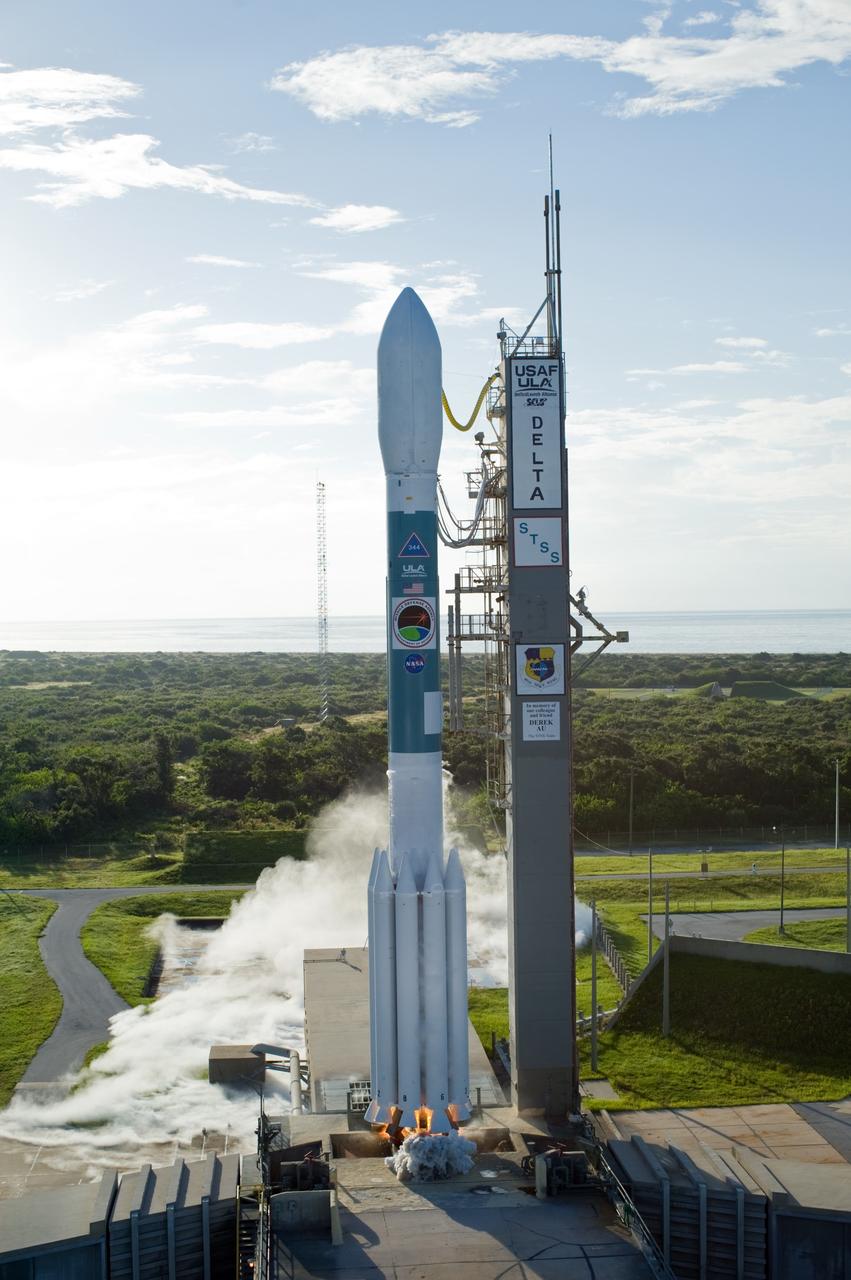
CAPE CANAVERAL, Fla. – The United Launch Alliance Delta II rocket with Space Tracking and Surveillance System - Demonstrator, or STSS-Demo, spacecraft leaps through a mantle of smoke as it lifts off from Launch Pad 17-B at Cape Canaveral Air Force Station. STSS-Demo was launched at 8:20:22 a.m. EDT by NASA for the U.S. Missile Defense Agency. The STSS-Demo is a space-based sensor component of a layered Ballistic Missile Defense System designed for the overall mission of detecting, tracking and discriminating ballistic missiles. Photo credit: NASA/Regina Mitchell-Tom Farrar
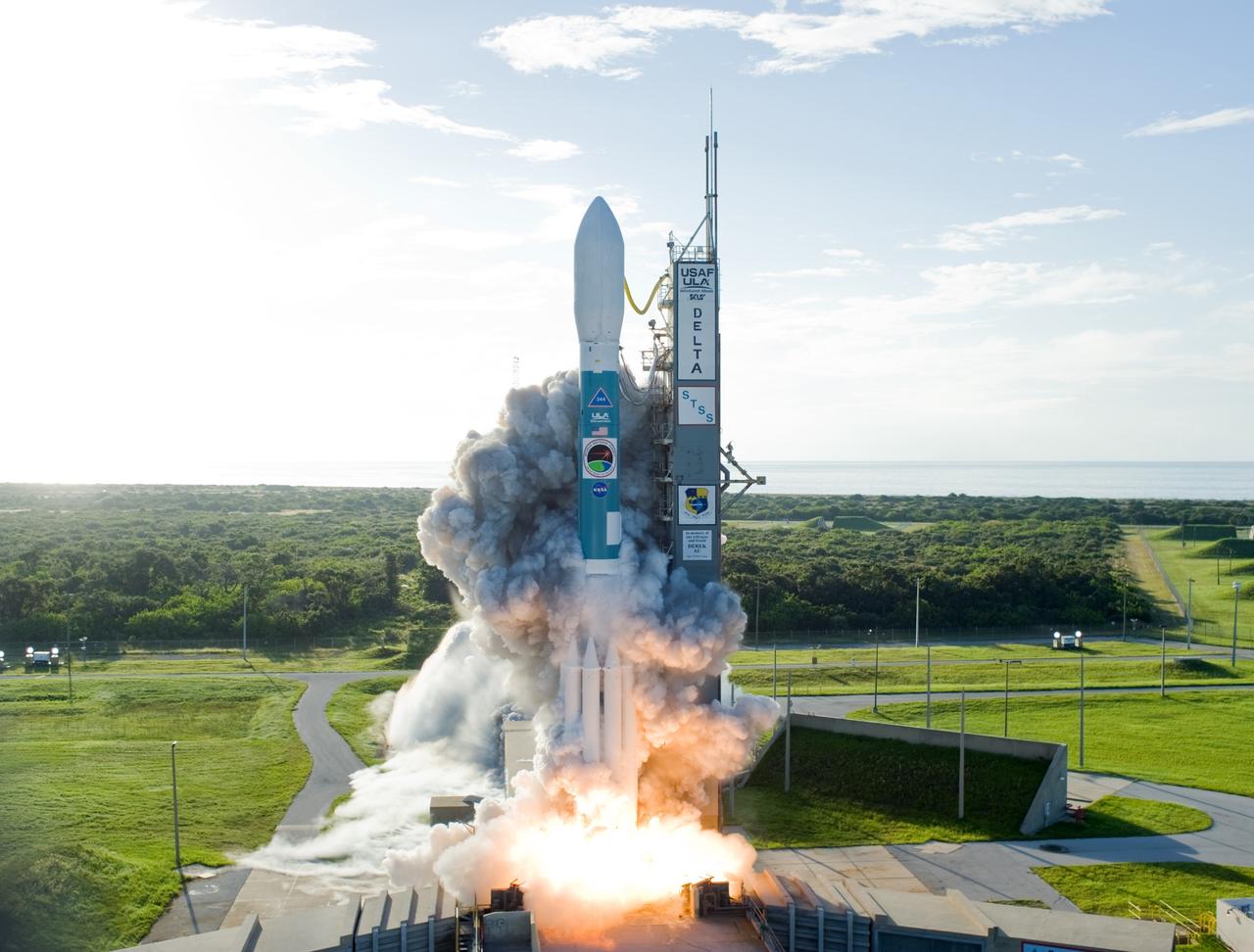
CAPE CANAVERAL, Fla. – The United Launch Alliance Delta II rocket with Space Tracking and Surveillance System - Demonstrator, or STSS-Demo, spacecraft leaps from Launch Pad 17-B at Cape Canaveral Air Force Station amid clouds of smoke. STSS-Demo was launched at 8:20:22 a.m. EDT by NASA for the U.S. Missile Defense Agency. The STSS-Demo is a space-based sensor component of a layered Ballistic Missile Defense System designed for the overall mission of detecting, tracking and discriminating ballistic missiles. Photo credit: NASA/Regina Mitchell-Tom Farrar
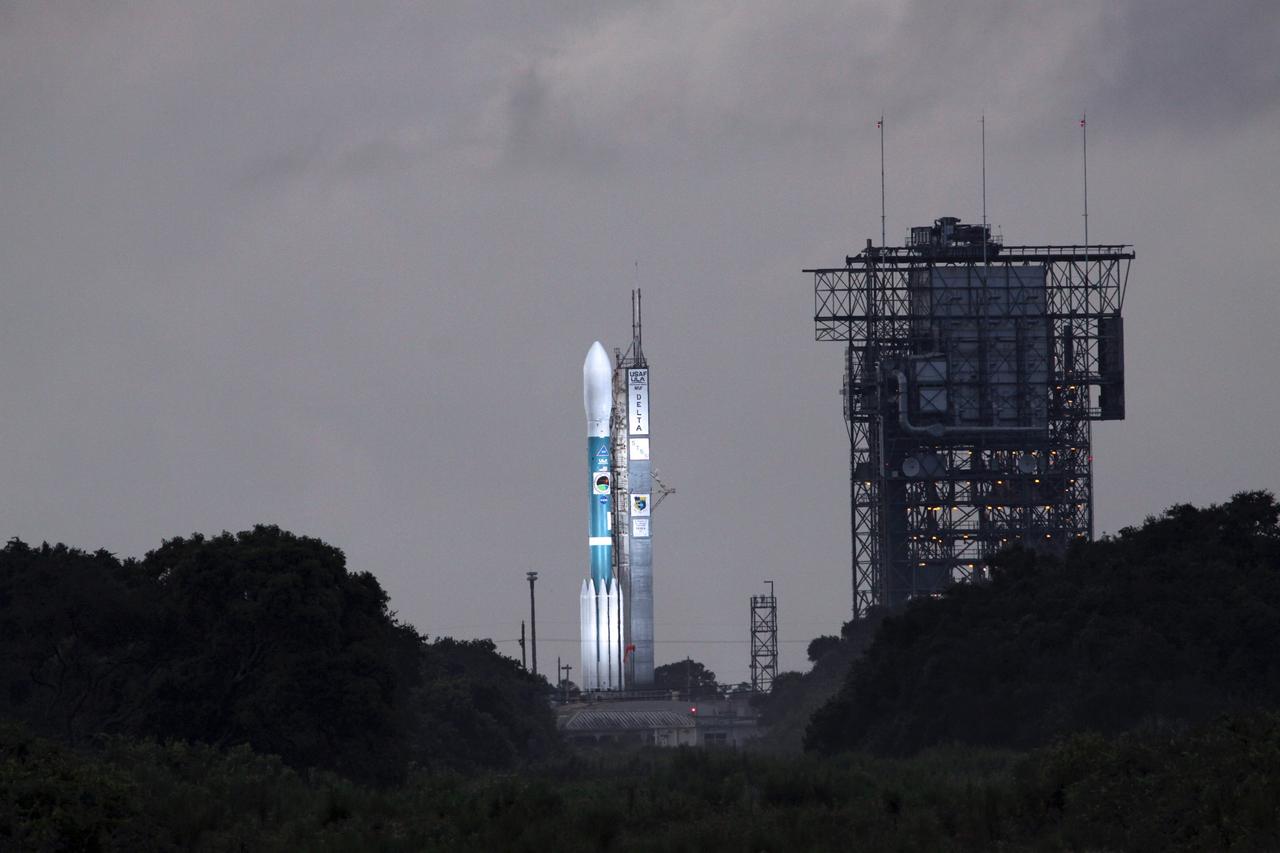
CAPE CANAVERAL, Fla. – On Launch Pad 17-B at Cape Canaveral Air Force Station in Florida, the Space Tracking and Surveillance System - Demonstrator spacecraft is bathed in light under a dark, cloudy sky. Rain over Central Florida's east coast caused the scrub of the launch. STSS Demo is a space-based sensor component of a layered Ballistic Missile Defense System designed for the overall mission of detection, tracking and discriminating ballistic missiles. STSS is capable of tracking objects after boost phase and provides trajectory information to other sensors. It will be launched by NASA for the Missile Defense Agency between 8 and 8:58 a.m. EDT Sept. 24. Photo credit: NASA/Jack Pfaller
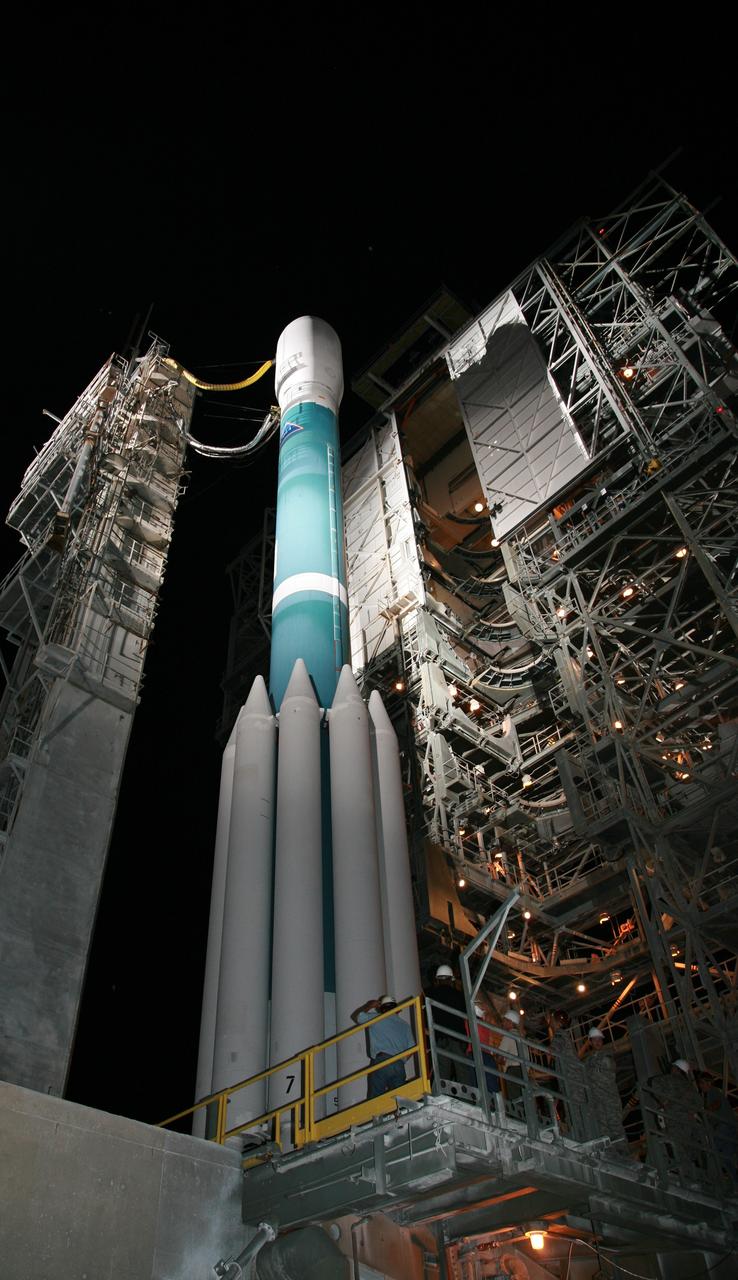
CAPE CANAVERAL, Fla. – The mobile service tower on Launch Pad 17-B at Cape Canaveral Air Force Station rolls back to reveal the United Launch Alliance Delta II rocket that will launch the Space Tracking and Surveillance System - Demonstrator into orbit. It is being launched by NASA for the Missile Defense System. The hour-long launch window opens at 8 a.m. EDT today. The STSS Demo is a space-based sensor component of a layered Ballistic Missile Defense System designed for the overall mission of detecting, tracking and discriminating ballistic missiles. STSS is capable of tracking objects after boost phase and provides trajectory information to other sensors. Photo credit: NASA/Dimitri Gerondidakis

CAPE CANAVERAL, Fla. – The United Launch Alliance Delta II rocket with Space Tracking and Surveillance System - Demonstrator, or STSS-Demo, spacecraft aboard races into the sky leaving a trail of fire and smoke after liftoff from Launch Pad 17-B at Cape Canaveral Air Force Station. It was launched by NASA for the U.S. Missile Defense Agency at 8:20:22 a.m. EDT. The STSS-Demo is a space-based sensor component of a layered Ballistic Missile Defense System designed for the overall mission of detecting, tracking and discriminating ballistic missiles. STSS is capable of tracking objects after boost phase and provides trajectory information to other sensors. Photo credit: NASA/Alan Ault

CAPE CANAVERAL, Fla. – The Space Tracking and Surveillance System - Demonstrator, or STSS-Demo, spacecraft lifts off through a cloud of smoke from Launch Pad 17-B at Cape Canaveral Air Force Station aboard a United Launch Alliance Delta II rocket. It was launched by NASA for the U.S. Missile Defense Agency. Launch was at 8:20:22 a.m. EDT. The STSS-Demo is a space-based sensor component of a layered Ballistic Missile Defense System designed for the overall mission of detecting, tracking and discriminating ballistic missiles. STSS is capable of tracking objects after boost phase and provides trajectory information to other sensors. Photo credit: NASA/Jack Pfaller
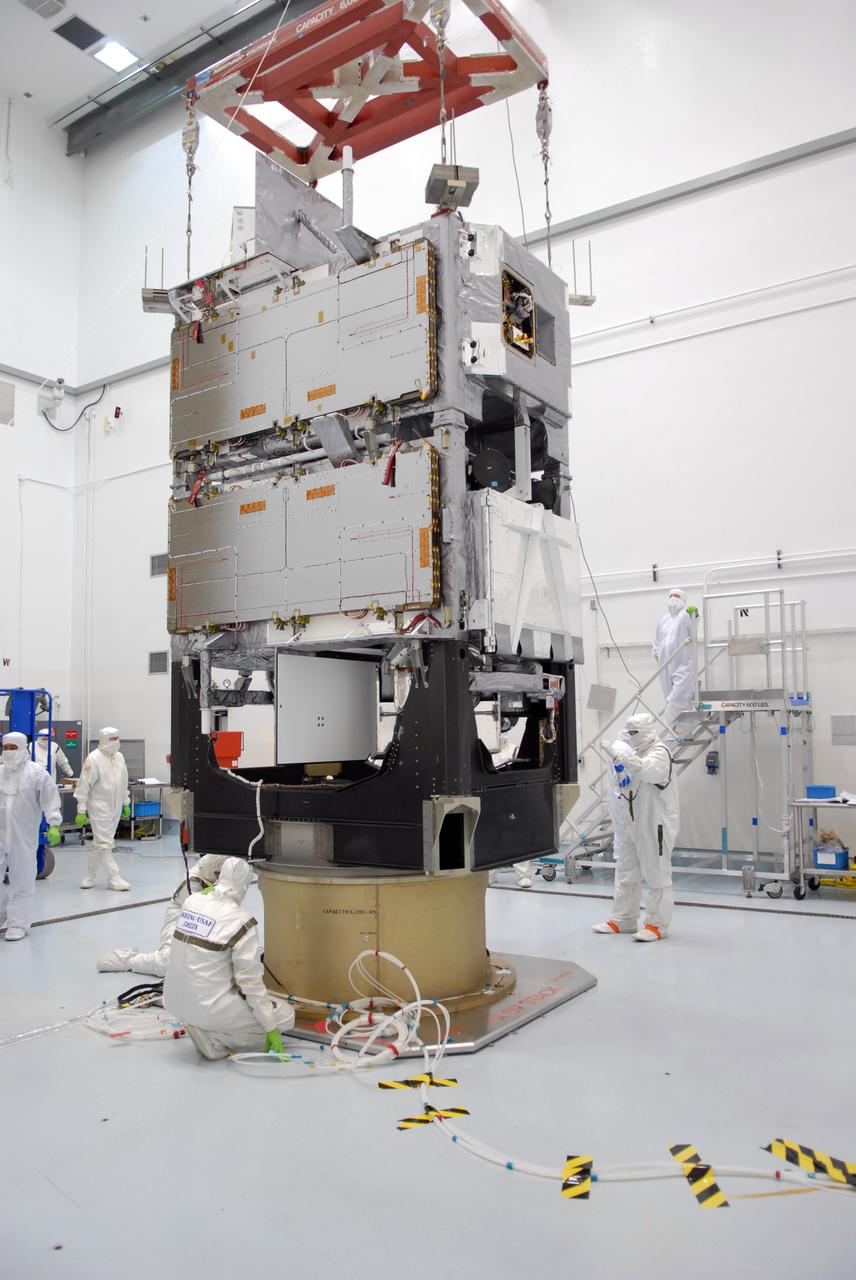
CAPE CANAVERAL, Fla. – At the Astrotech payload processing facility in Titusville, Fla., workers observe as the SV1-SV2 spacecraft is lifted for weighing. The two spacecraft are known as the Space Tracking and Surveillance System – Demonstrators, or STSS Demo, which is a space-based sensor component of a layered Ballistic Missile Defense System designed for the overall mission of detecting, tracking and discriminating ballistic missiles. STSS is capable of tracking objects after boost phase and provides trajectory information to other sensors. It will be launched by NASA for the Missile Defense Agency between 8 and 8:58 a.m. EDT Sept. 18. Approved for Public Release 09-MDA-04886 (10 SEPT 09) Photo credit: NASA/Jim Grossmann
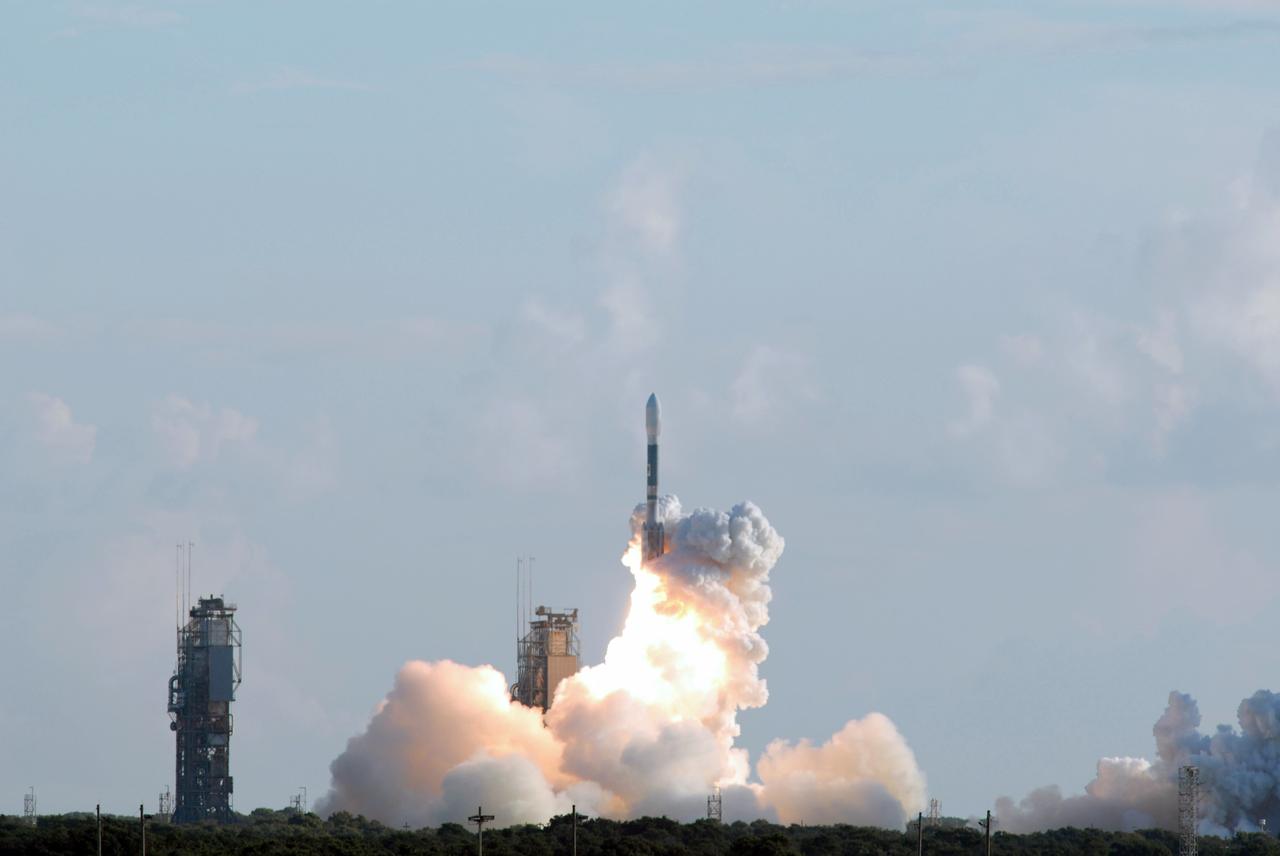
CAPE CANAVERAL, Fla. – The Space Tracking and Surveillance System - Demonstrator, or STSS-Demo, spacecraft lifts off through a cloud of smoke from Launch Pad 17-B at Cape Canaveral Air Force Station aboard a United Launch Alliance Delta II rocket. It was launched by NASA for the U.S. Missile Defense Agency. Launch was at 8:20:22 a.m. EDT. The STSS-Demo is a space-based sensor component of a layered Ballistic Missile Defense System designed for the overall mission of detecting, tracking and discriminating ballistic missiles. STSS is capable of tracking objects after boost phase and provides trajectory information to other sensors. Photo credit: NASA/Alan Ault
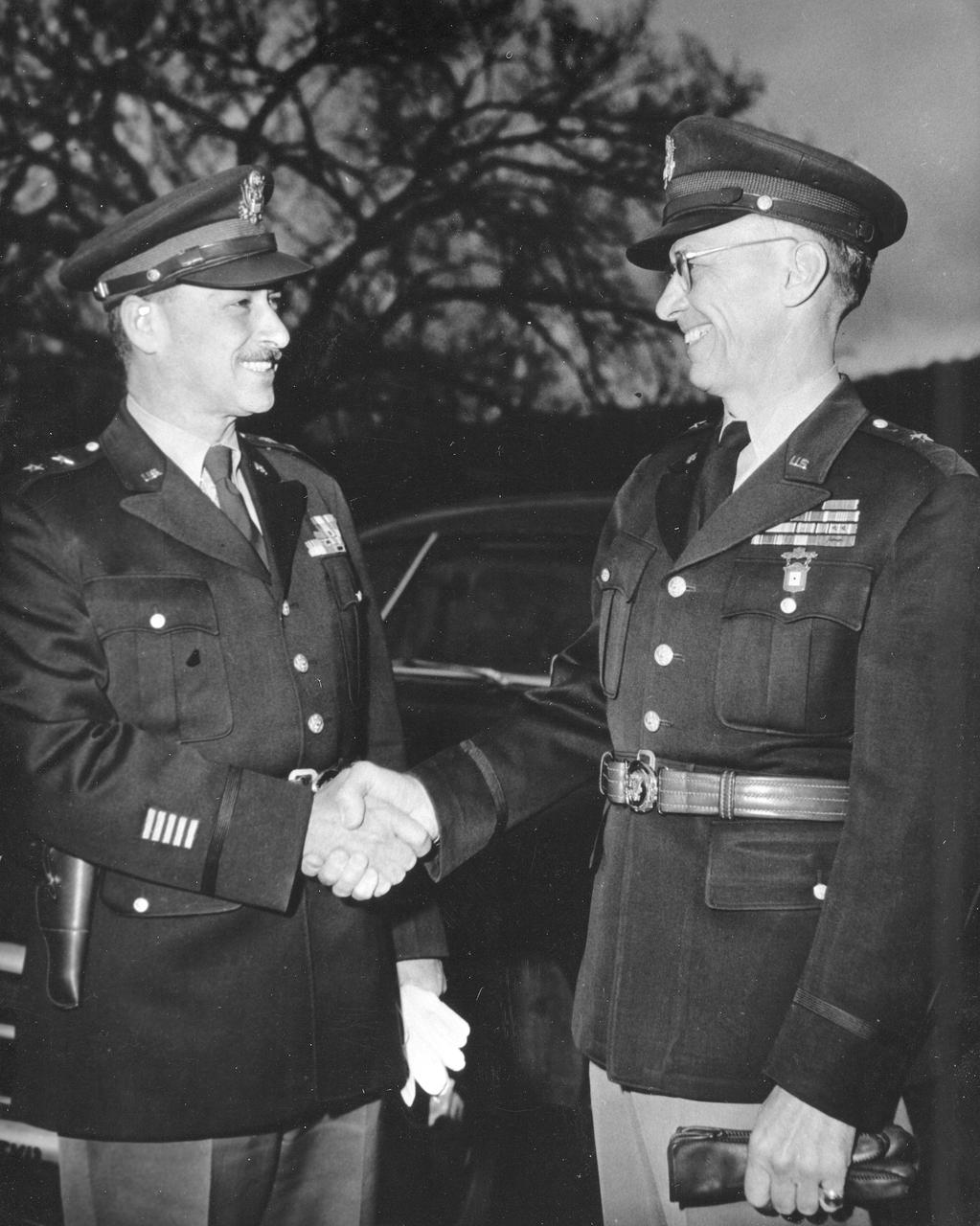
General Medaris, (left) who was a Commander of the Army Ballistic Missile Agency (ABMA) in Redstone Arsenal, Alabama, during 1955 to 1958, shakes hands with Major General Holger Toftoy (right), who consolidated U.S. missile and rocketry development.
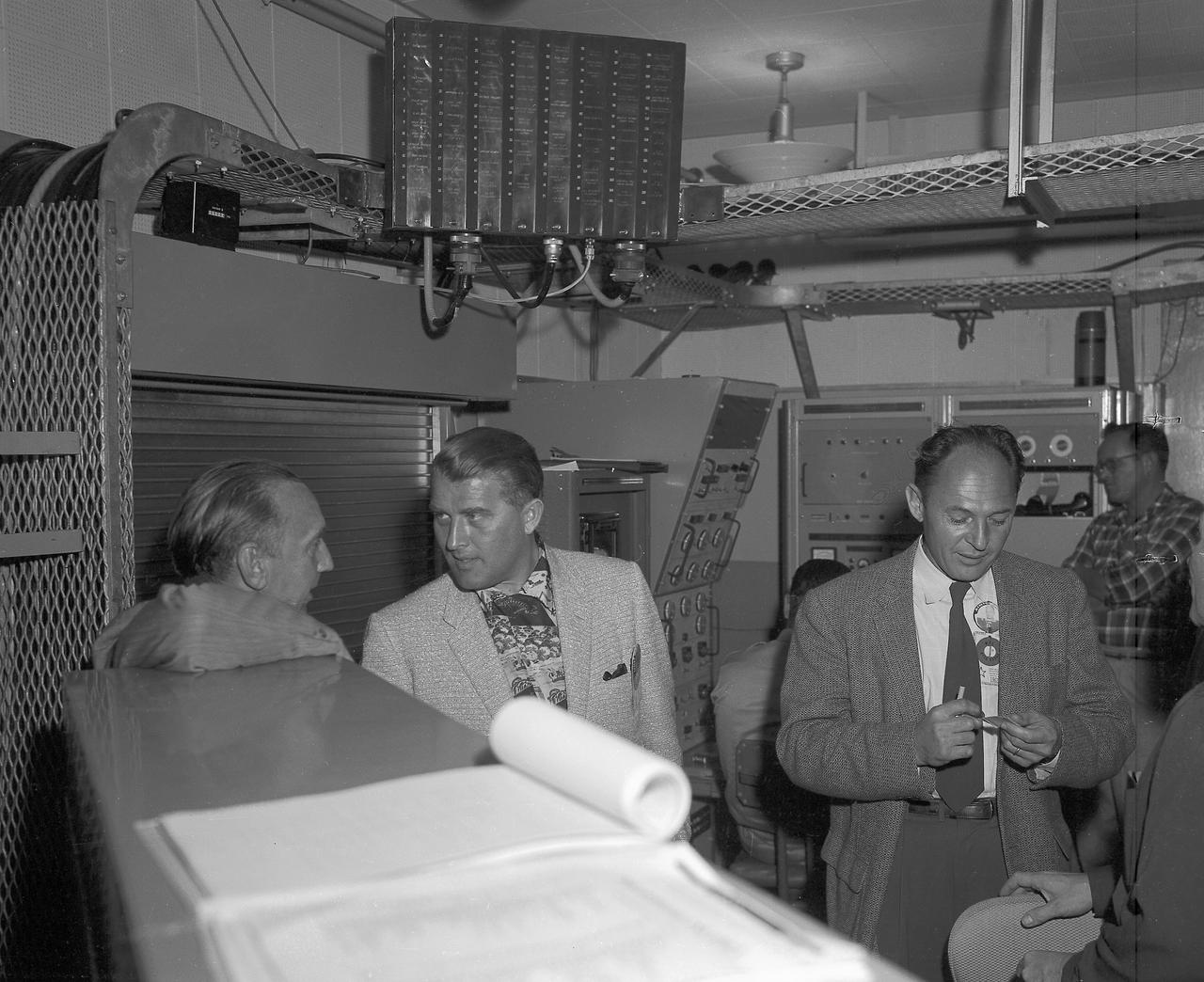
In this photo, (left to right) Army Ballistic Missile Agency (ABMA) Missile Firing Laboratory Chief Dr. Kurt Debus, Director of the ABMA Development Operations Division, Dr. von Braun and an unidentified individual in blockhouse during the CM-21 (Jupiter) firing. The Jupiter missile CM-21 became the first Chrysler production qualification missile to be fired and in March 1959 launched the Pioneer IV.
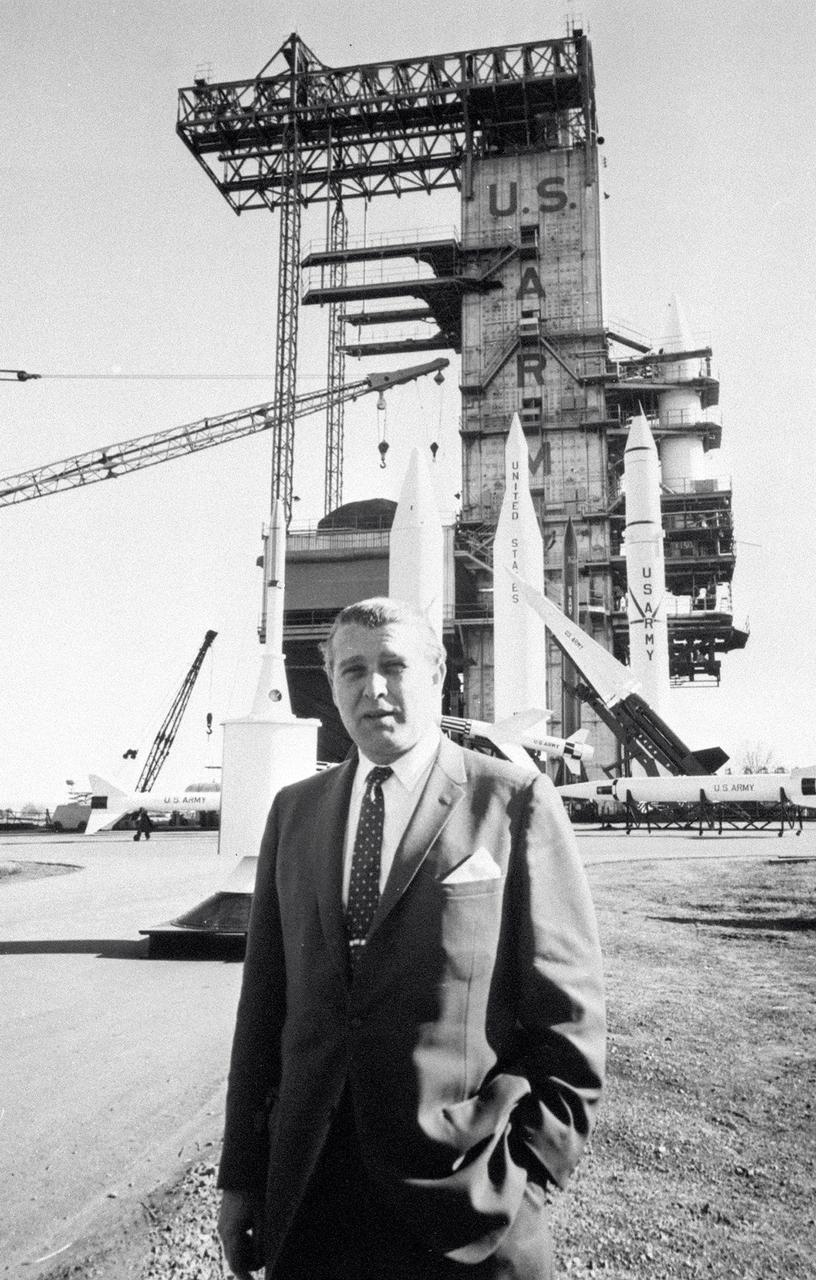
In this photo, Director of the US Army Ballistic Missile Agency (ABMA) Development Operations Division, Dr. Wernher von Braun, is standing before a display of Army missiles celebrating ABMA's Fourth Open House. The missiles in the background include (left to right) a satellite on a Juno II shroud with a Nike Ajax pointing left in front of a Jupiter missile. The Lacrosse is in front of the Juno II. The Nike Hercules points skyward in front of the Juno II and the Redstone.
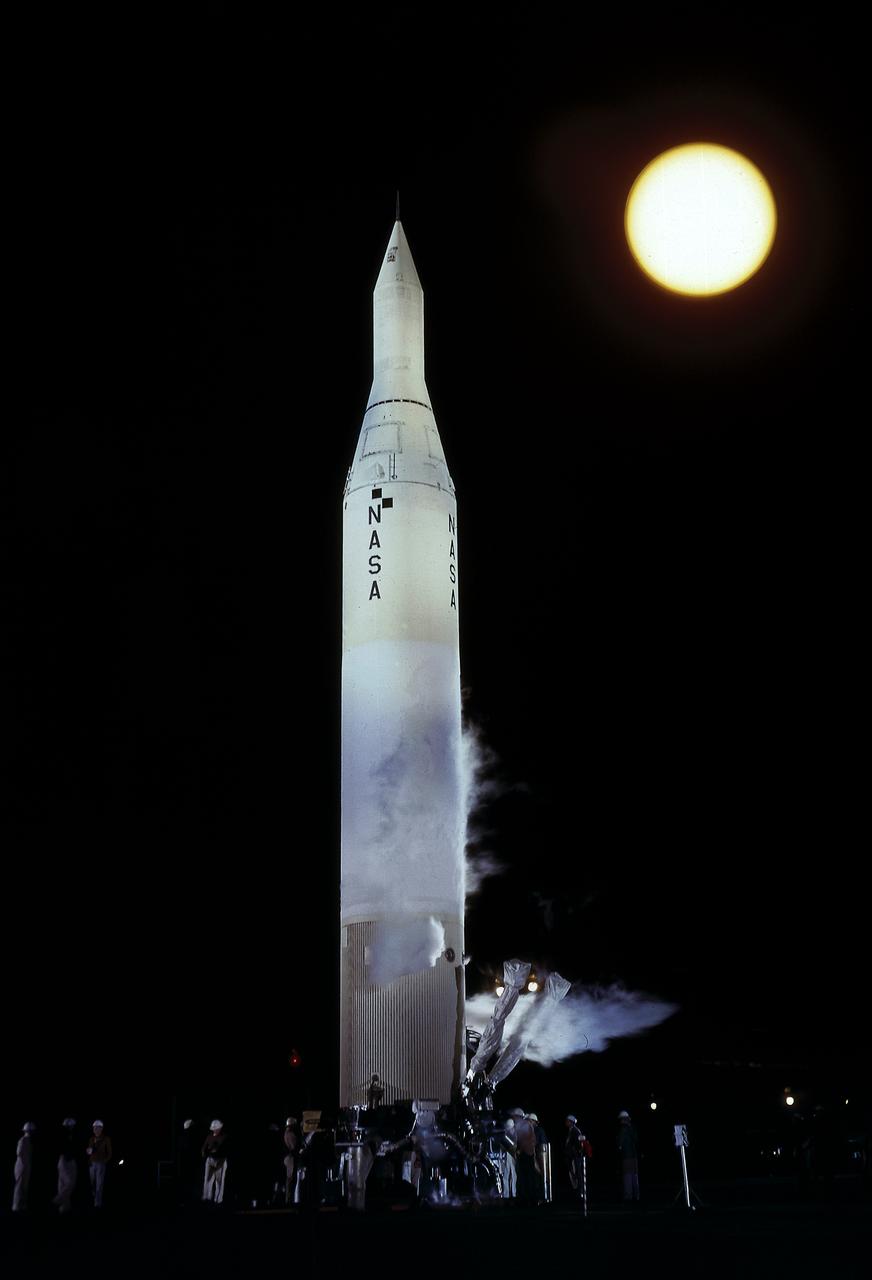
Juno II (AM-14) on the launch pad just prior to launch, March 3, 1959. The payload of AM-14 was Pioneer IV, America's first successful lunar mission. The Juno II was a modification of Jupiter ballistic missile
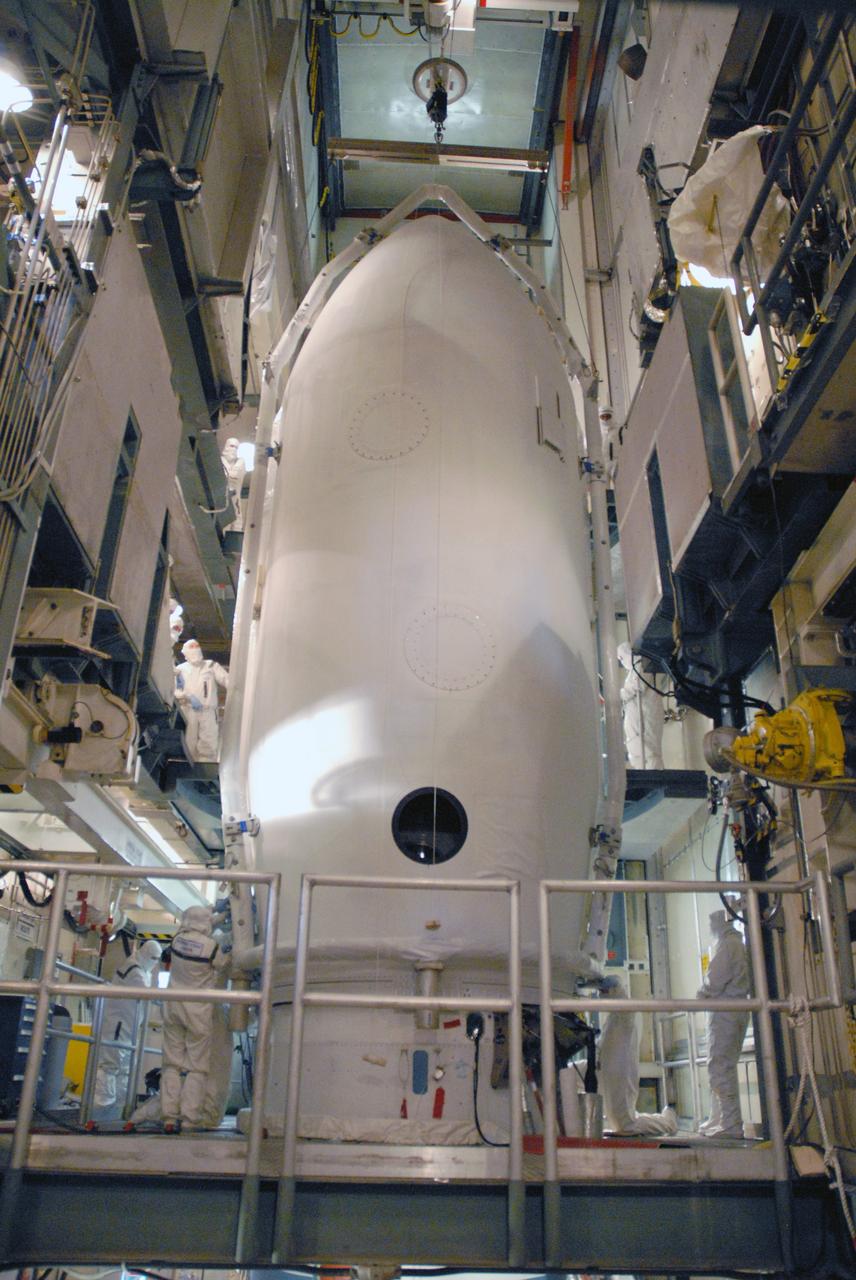
CAPE CANAVERAL, Fla. – Inside the mobile service tower on Launch Pad 17-B at Cape Canaveral Air Force Station in Florida, workers check the progress of the second half of the fairing as it moves into place around the Space Tracking and Surveillance System – Demonstrator spacecraft. The fairing is a two-part molded structure that fits flush with the outside surface of the rocket and forms an aerodynamically smooth nose cone, protecting the spacecraft during launch and ascent. STSS Demo is a space-based sensor component of a layered Ballistic Missile Defense System designed for the overall mission of detection, tracking and discriminating ballistic missiles. STSS is capable of tracking objects after boost phase and provides trajectory information to other sensors. It will be launched by NASA for the Missile Defense Agency between 8 and 8:58 a.m. EDT Sept. 18. Approved for Public Release 09-MDA-4934 (09-22-09) Photo credit: NASA/Cory Huston
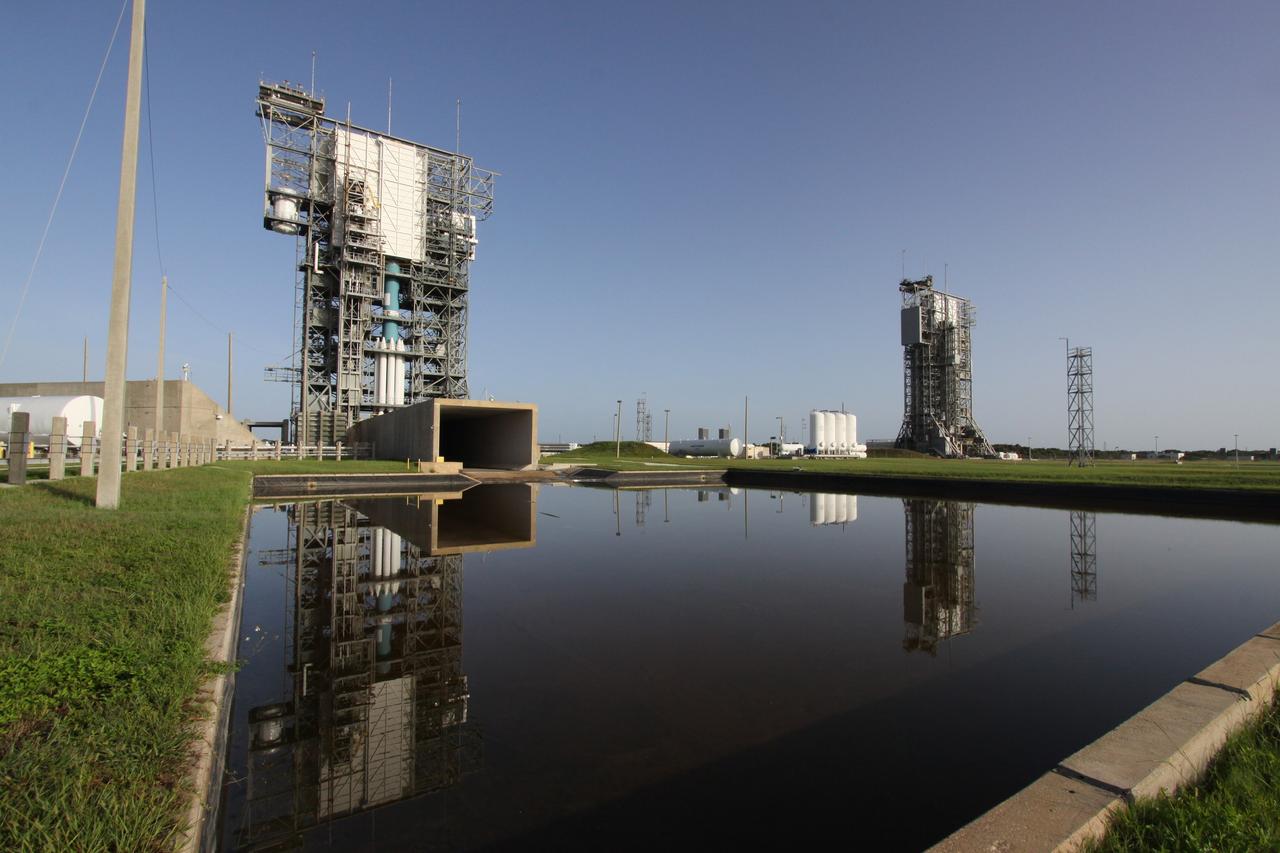
CAPE CANAVERAL, Fla. – The enclosed Space Tracking and Surveillance System – Demonstrators, or STSS-Demo, spacecraft is being lifted into the mobile service tower on Cape Canaveral Air Force Station's Launch Pad 17-B. The United Launch Alliance Delta II launch vehicle is already in place in the tower. The STSS Demo is a space-based sensor component of a layered Ballistic Missile Defense System designed for the overall mission of detecting, tracking and discriminating ballistic missiles. STSS is capable of tracking objects after boost phase and provides trajectory information to other sensors. It will be launched by NASA for the Missile Defense Agency between 8 and 8:58 a.m. EDT Sept. 18. Approved for Public Release 09-MDA-04886 (10 SEPT 09) Photo credit: NASA/Jack Pfaller

CAPE CANAVERAL, Fla. – At the Astrotech payload processing facility in Titusville, Fla., workers maneuver one of the second-row segments of the transportation canister that will be placed around the Space Tracking and Surveillance System – Demonstrators, or STSS Demo, spacecraft. The STSS Demo is a space-based sensor component of a layered Ballistic Missile Defense System designed for the overall mission of detecting, tracking and discriminating ballistic missiles. STSS is capable of tracking objects after boost phase and provides trajectory information to other sensors. It will be launched by NASA for the Missile Defense Agency between 8 and 8:58 a.m. EDT Sept. 18. Approved for Public Release 09-MDA-04886 (10 SEPT 09) Photo credit: NASA/Kim Shiflett
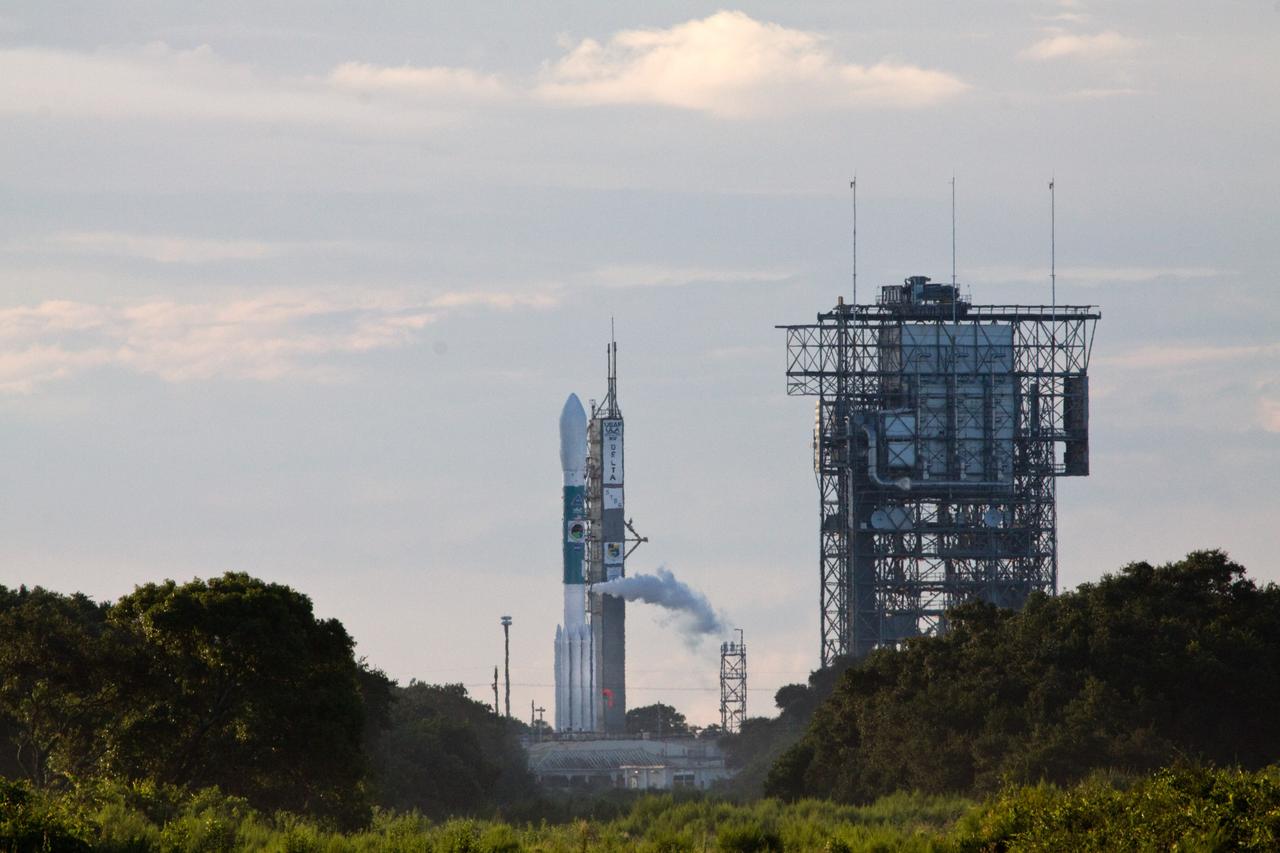
CAPE CANAVERAL, Fla. – Under a cloud-streaked sky, the Space Tracking and Surveillance System – Demonstrator, or STSS-Demo, waits through the countdown to liftoff Launch Pad 17-B at Cape Canaveral Air Force Station aboard a United Launch Alliance Delta II rocket. STSS-Demo is being launched by NASA for the U.S. Missile Defense Agency. Liftoff is at 8:20 a.m. EDT. The STSS-Demo is a space-based sensor component of a layered Ballistic Missile Defense System designed for the overall mission of detecting, tracking and discriminating ballistic missiles. STSS is capable of tracking objects after boost phase and provides trajectory information to other sensors. Photo credit: NASA/Jack Pfaller
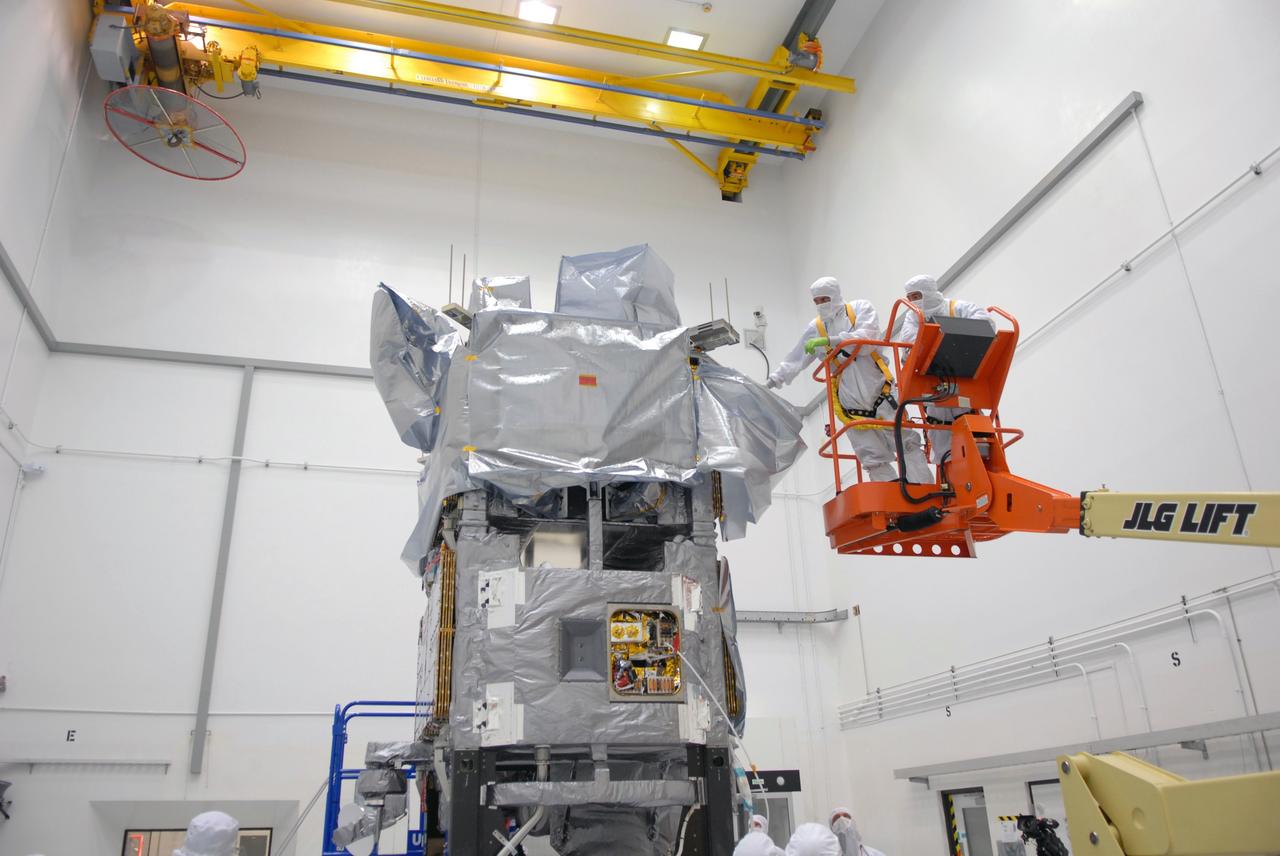
CAPE CANAVERAL, Fla. – At the Astrotech payload processing facility in Titusville, Fla., workers remove covers around the mated SV1 and SV2 spacecraft before center of gravity testing, weighing and balancing. The two spacecraft are known as the Space Tracking and Surveillance System – Demonstrators, or STSS Demo, which is a space-based sensor component of a layered Ballistic Missile Defense System designed for the overall mission of detecting, tracking and discriminating ballistic missiles. STSS is capable of tracking objects after boost phase and provides trajectory information to other sensors. It will be launched by NASA for the Missile Defense Agency between 8 and 8:58 a.m. EDT Sept. 18. Approved for Public Release 09-MDA-04886 (10 SEPT 09) Photo credit: NASA/Jim Grossmann
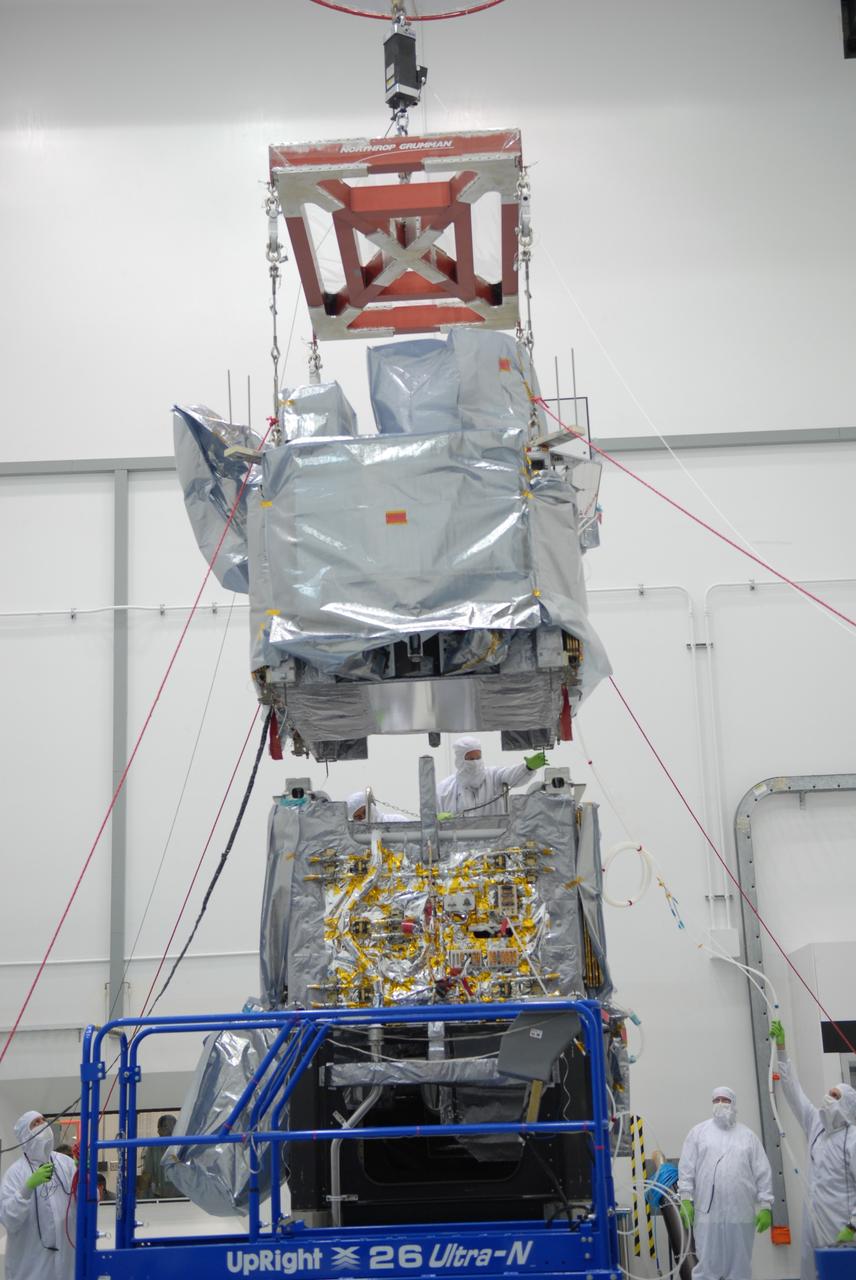
CAPE CANAVERAL, Fla. – At the Astrotech payload processing facility in Titusville, Fla., the SV1 spacecraft is lowered toward the SV2 for mating. The two spacecraft are part of the Space Tracking and Surveillance System – Demonstrators, or STSS Demo, Program. The STSS Demo is a space-based sensor component of a layered Ballistic Missile Defense System designed for the overall mission of detecting, tracking and discriminating ballistic missiles. STSS is capable of tracking objects after boost phase and provides trajectory information to other sensors. It will be launched by NASA for the Missile Defense Agency between 8 and 8:58 a.m. EDT Sept. 18. Approved for Public Release 09-MDA-04886 (10 SEPT 09) Photo credit: NASA/Jim Grossmann
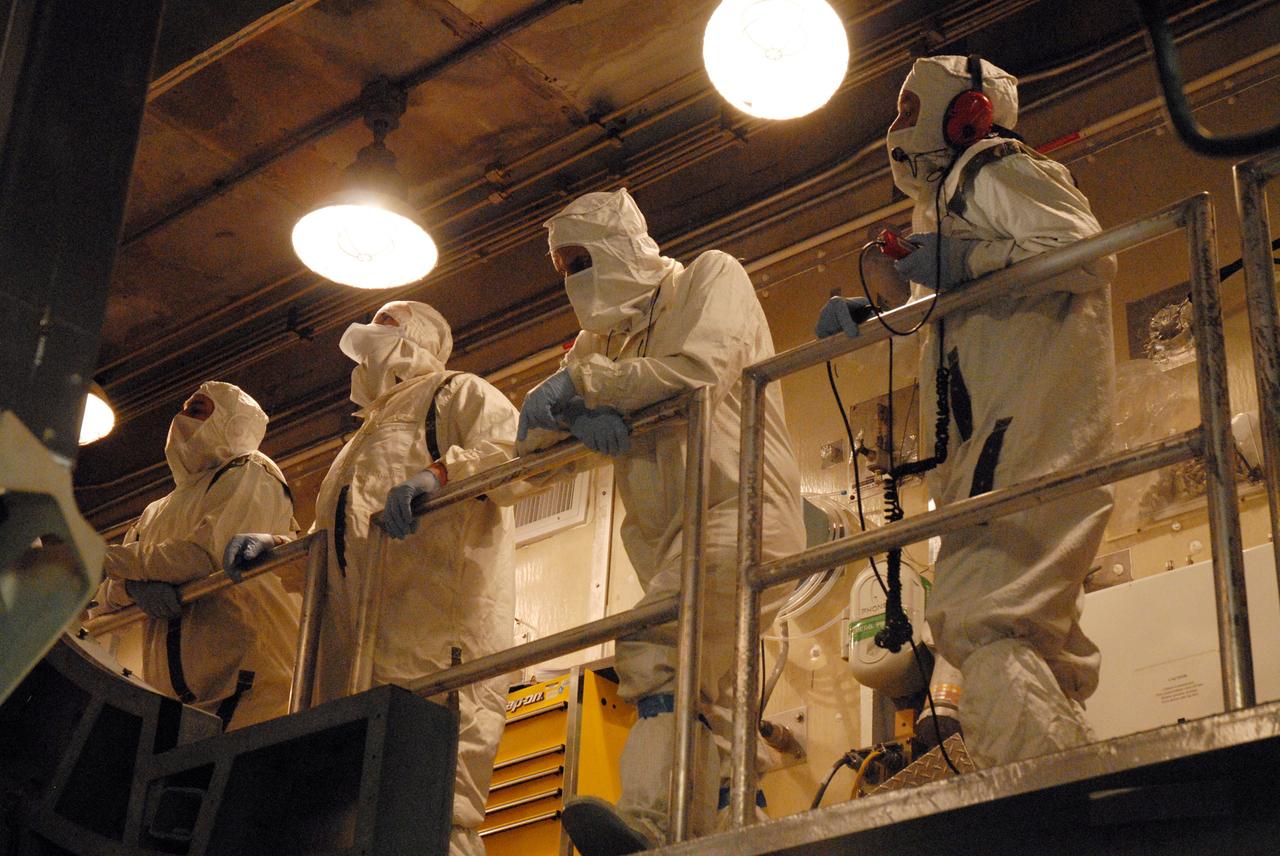
CAPE CANAVERAL, Fla. – Inside the mobile service tower on Launch Pad 17-B at Cape Canaveral Air Force Station in Florida, workers check the progress of the fairing being moved toward the Space Tracking and Surveillance System – Demonstrator spacecraft for encapsulation. The fairing is a two-part molded structure that fits flush with the outside surface of the rocket and forms an aerodynamically smooth nose cone, protecting the spacecraft during launch and ascent. STSS Demo is a space-based sensor component of a layered Ballistic Missile Defense System designed for the overall mission of detection, tracking and discriminating ballistic missiles. STSS is capable of tracking objects after boost phase and provides trajectory information to other sensors. It will be launched by NASA for the Missile Defense Agency between 8 and 8:58 a.m. EDT Sept. 18. Approved for Public Release 09-MDA-4934 (09-22-09) Photo credit: NASA/Cory Huston
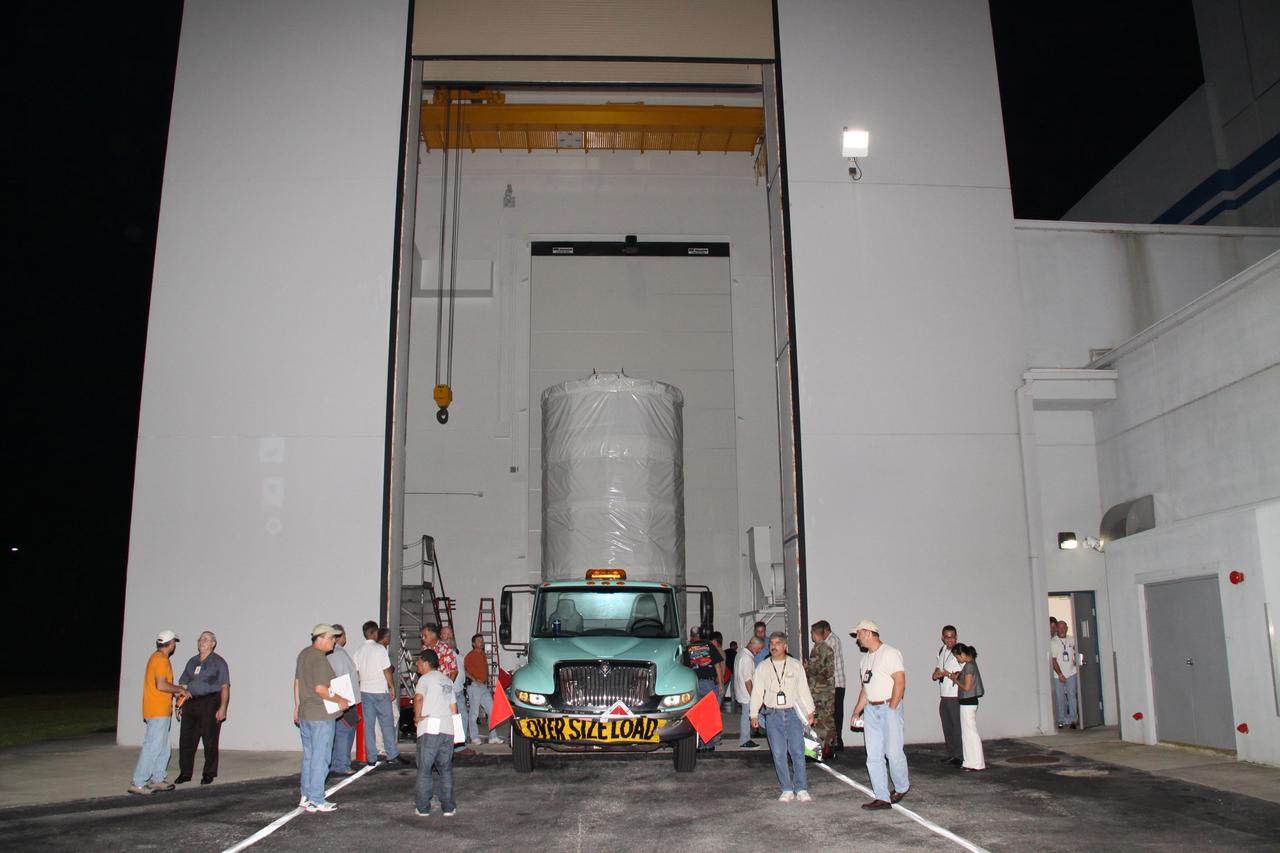
CAPE CANAVERAL, Fla. – The enclosed Space Tracking and Surveillance System – Demonstrators, or STSS-Demo, spacecraft moves out of the Astrotech payload processing facility. It is being moved to Cape Canaveral Air Force Station's Launch Pad 17-B. The STSS Demo is a space-based sensor component of a layered Ballistic Missile Defense System designed for the overall mission of detecting, tracking and discriminating ballistic missiles. STSS is capable of tracking objects after boost phase and provides trajectory information to other sensors. It will be launched by NASA for the Missile Defense Agency between 8 and 8:58 a.m. EDT Sept. 18. Approved for Public Release 09-MDA-04886 (10 SEPT 09) Photo credit: NASA/Jack Pfaller
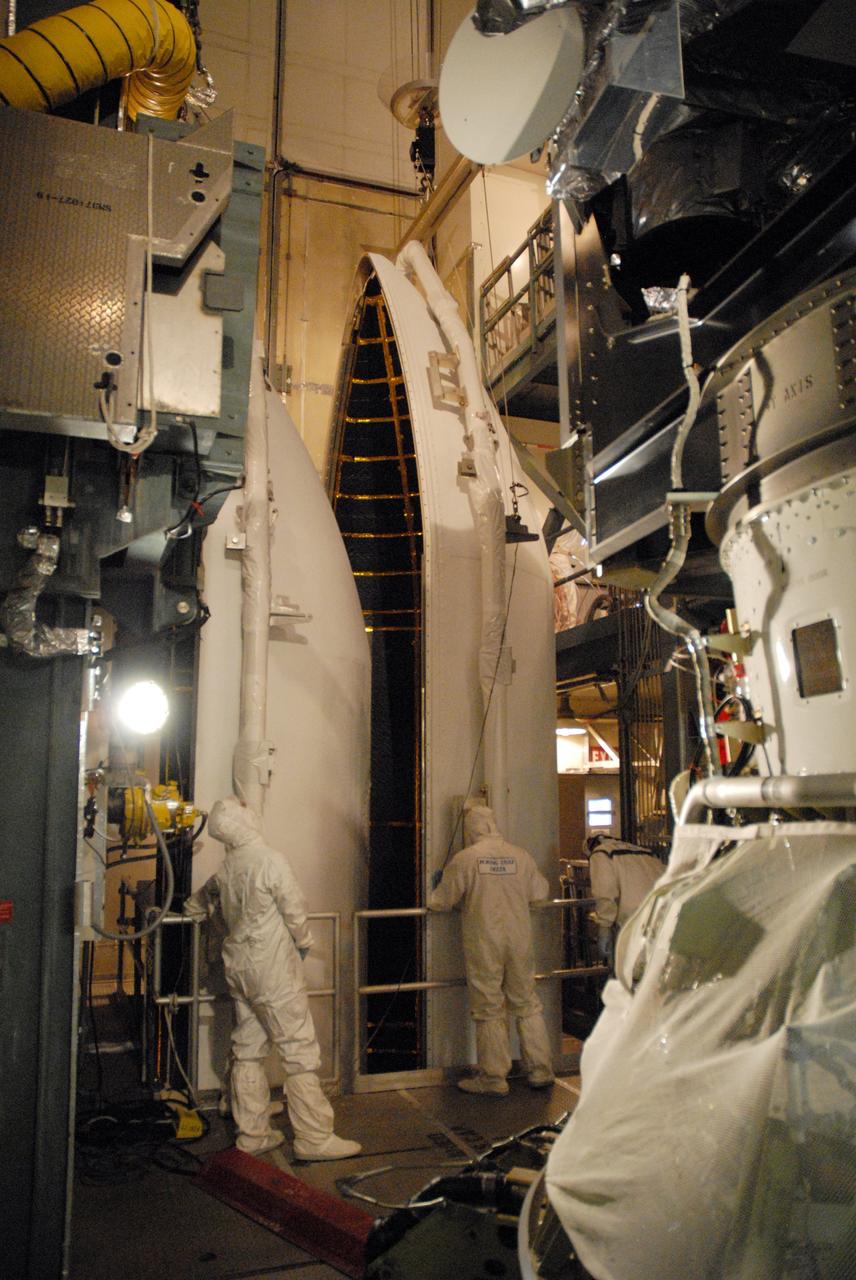
CAPE CANAVERAL, Fla. – The two halves of the fairing are moved into the mobile service tower on Launch Pad 17-B at Cape Canaveral Air Force Station in Florida. The two-part fairing will be placed around the Space Tracking and Surveillance System – Demonstrator spacecraft for protection during launch. STSS Demo is a space-based sensor component of a layered Ballistic Missile Defense System designed for the overall mission of detection, tracking and discriminating ballistic missiles. STSS is capable of tracking objects after boost phase and provides trajectory information to other sensors. It will be launched by NASA for the Missile Defense Agency between 8 and 8:58 a.m. EDT Sept. 18. Approved for Public Release 09-MDA-4934 (09-22-09) Photo credit: NASA/Cory Huston
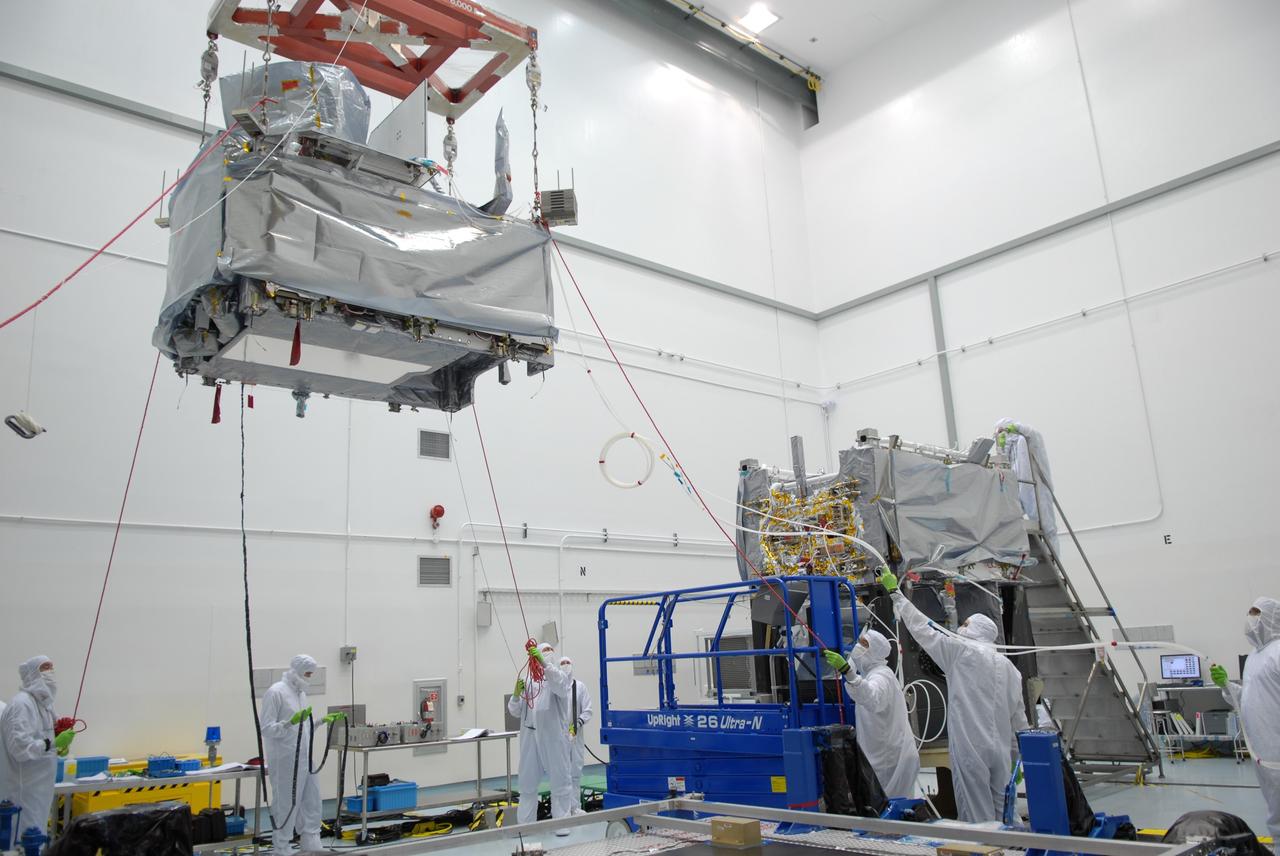
CAPE CANAVERAL, Fla. – At the Astrotech payload processing facility in Titusville, Fla., workers help guide the movement of the SV1 spacecraft as it is moved toward the SV2 at right. The two spacecraft are part of the Space Tracking and Surveillance System – Demonstrators, or STSS Demo, Program. The STSS Demo is a space-based sensor component of a layered Ballistic Missile Defense System designed for the overall mission of detecting, tracking and discriminating ballistic missiles. STSS is capable of tracking objects after boost phase and provides trajectory information to other sensors. It will be launched by NASA for the Missile Defense Agency between 8 and 8:58 a.m. EDT Sept. 18. Approved for Public Release 09-MDA-04886 (10 SEPT 09) Photo credit: NASA/Jim Grossmann
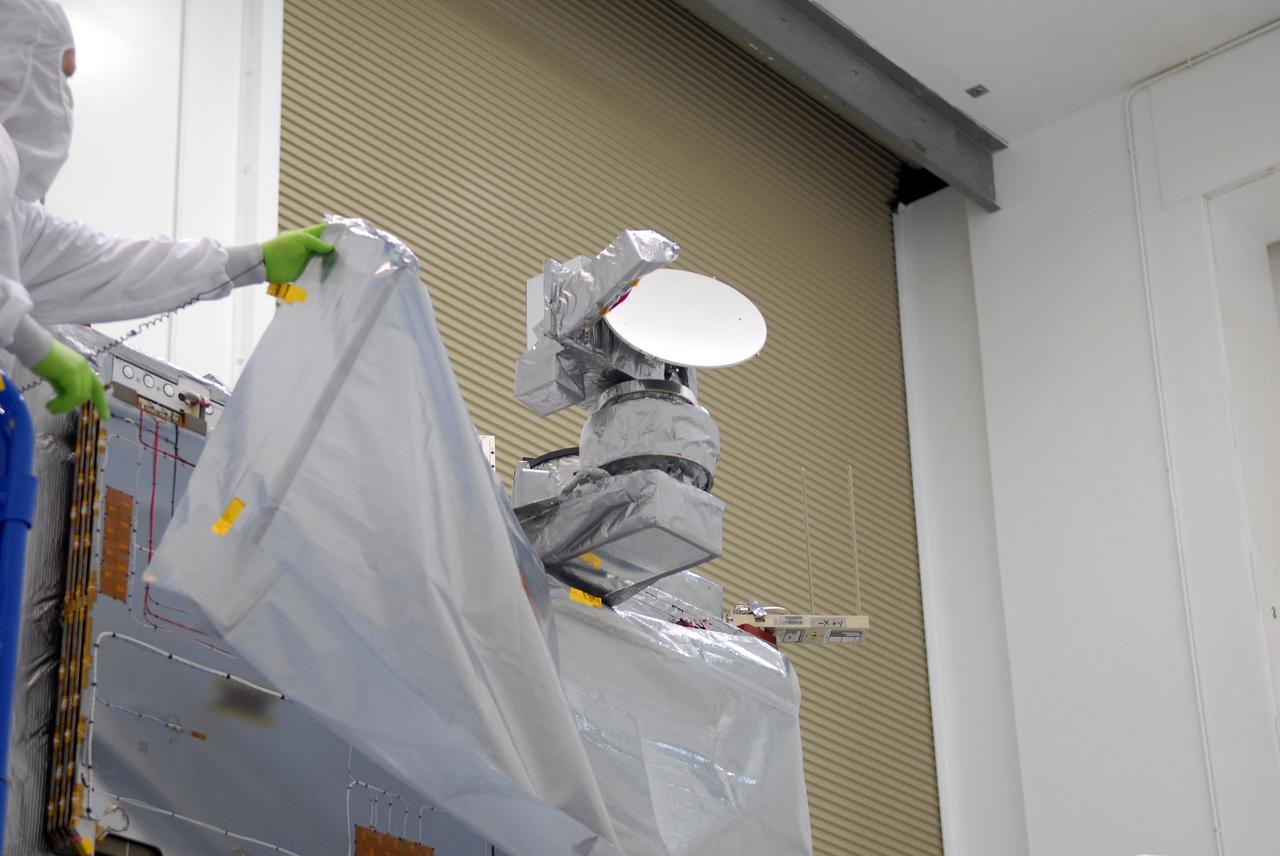
CAPE CANAVERAL, Fla. – At the Astrotech payload processing facility in Titusville, Fla., workers remove covers around the mated SV1 and SV2 spacecraft before center of gravity testing, weighing and balancing. The two spacecraft are known as the Space Tracking and Surveillance System – Demonstrators, or STSS Demo, which is a space-based sensor component of a layered Ballistic Missile Defense System designed for the overall mission of detecting, tracking and discriminating ballistic missiles. STSS is capable of tracking objects after boost phase and provides trajectory information to other sensors. It will be launched by NASA for the Missile Defense Agency between 8 and 8:58 a.m. EDT Sept. 18. Approved for Public Release 09-MDA-04886 (10 SEPT 09) Photo credit: NASA/Jim Grossmann
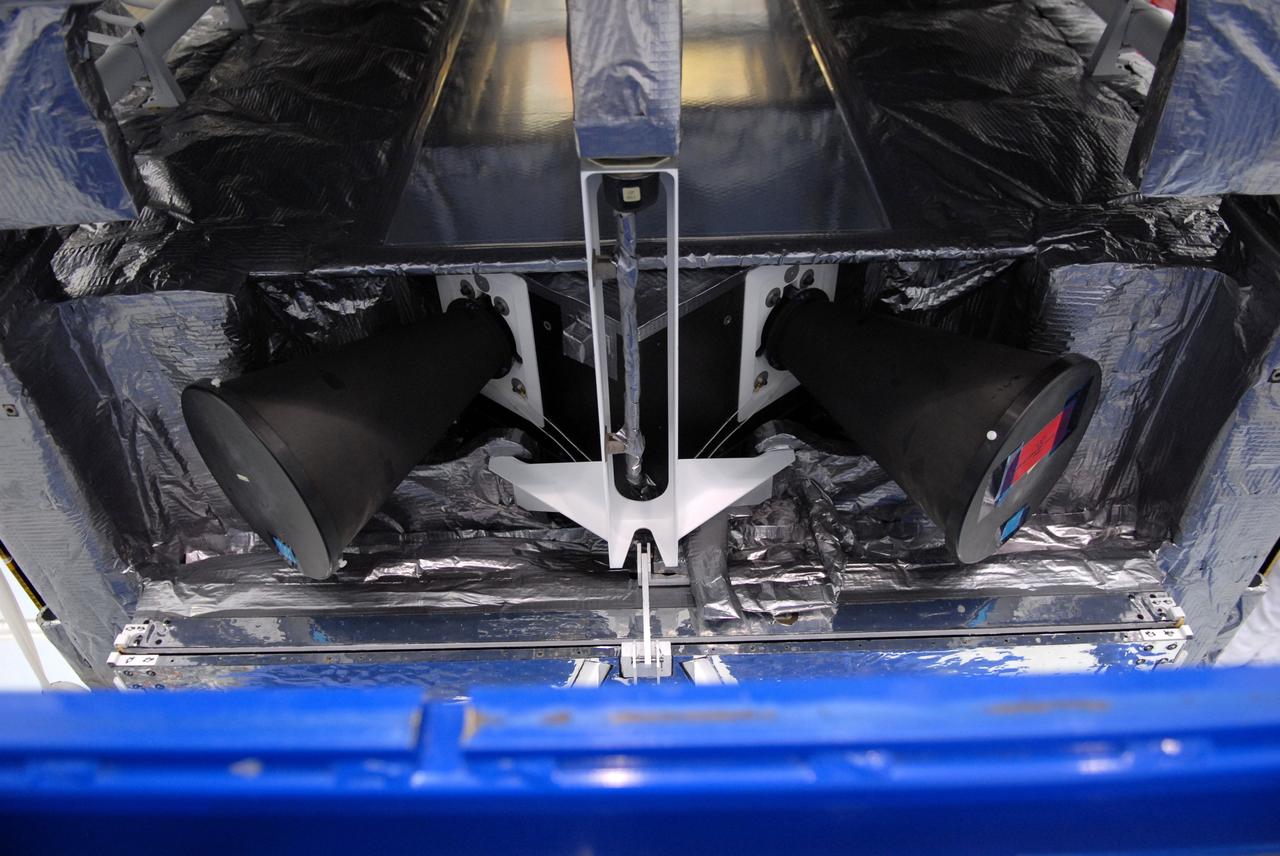
CAPE CANAVERAL, Fla. – At the Astrotech payload processing facility in Titusville, Fla., this closeup shows part of the mated SV1 and SV2 spacecraft, which is being prepared for center of gravity testing, weighing and balancing. The two spacecraft are known as the Space Tracking and Surveillance System – Demonstrators, or STSS Demo, which is a space-based sensor component of a layered Ballistic Missile Defense System designed for the overall mission of detecting, tracking and discriminating ballistic missiles. STSS is capable of tracking objects after boost phase and provides trajectory information to other sensors. It will be launched by NASA for the Missile Defense Agency between 8 and 8:58 a.m. EDT Sept. 18. Approved for Public Release 09-MDA-04886 (10 SEPT 09) Photo credit: NASA/Jim Grossmann
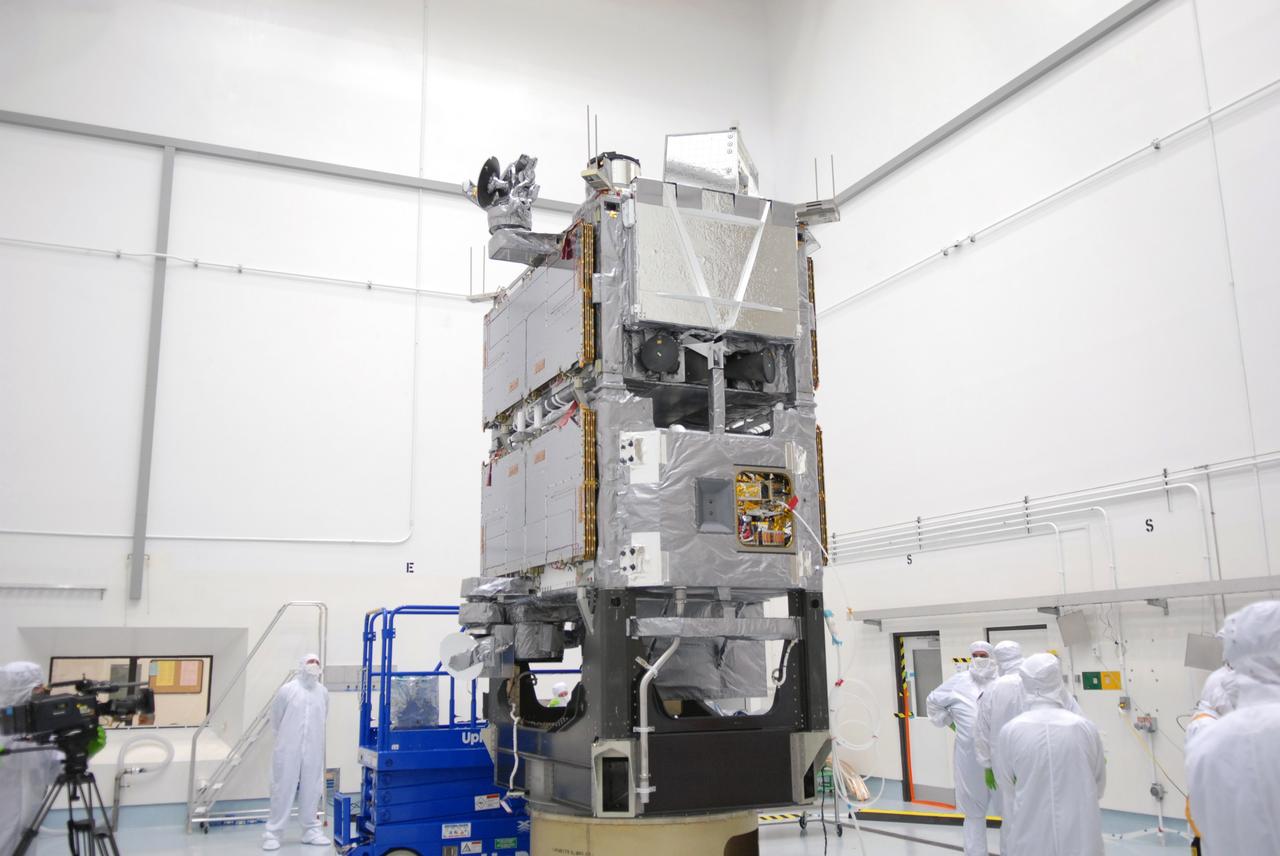
CAPE CANAVERAL, Fla. – At the Astrotech payload processing facility in Titusville, Fla., the mated SV1 and SV2 spacecraft are largely uncovered before center of gravity testing, weighing and balancing. The two spacecraft are known as the Space Tracking and Surveillance System – Demonstrators, or STSS Demo, which is a space-based sensor component of a layered Ballistic Missile Defense System designed for the overall mission of detecting, tracking and discriminating ballistic missiles. STSS is capable of tracking objects after boost phase and provides trajectory information to other sensors. It will be launched by NASA for the Missile Defense Agency between 8 and 8:58 a.m. EDT Sept. 18. Approved for Public Release 09-MDA-04886 (10 SEPT 09) Photo credit: NASA/Jim Grossmann
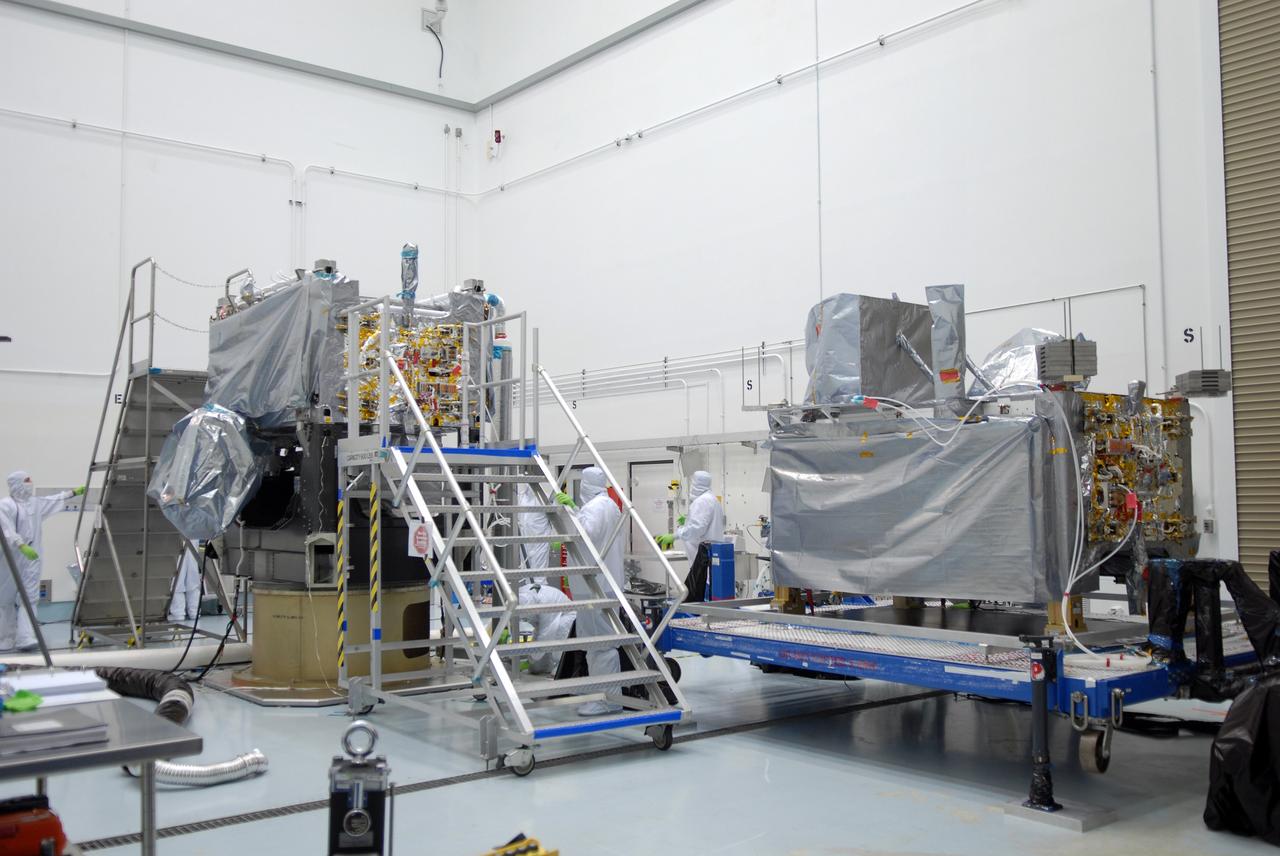
CAPE CANAVERAL, Fla. – At the Astrotech payload processing facility in Titusville, Fla., the SV1 and SV2 spacecraft are ready for mating for launch. The two spacecraft are part of the Space Tracking and Surveillance System – Demonstrators, or STSS Demo, Program. STSS-Demo is a space-based sensor component of a layered Ballistic Missile Defense System designed for the overall mission of detecting, tracking and discriminating ballistic missiles. The spacecraft is capable of tracking objects after boost phase and provides trajectory information to other sensors. It will be launched by NASA for the Missile Defense Agency between 8 and 8:58 a.m. EDT Sept. 18. Approved for Public Release 09-MDA-04886 (10 SEPT 09) Photo credit: NASA/Jim Grossmann
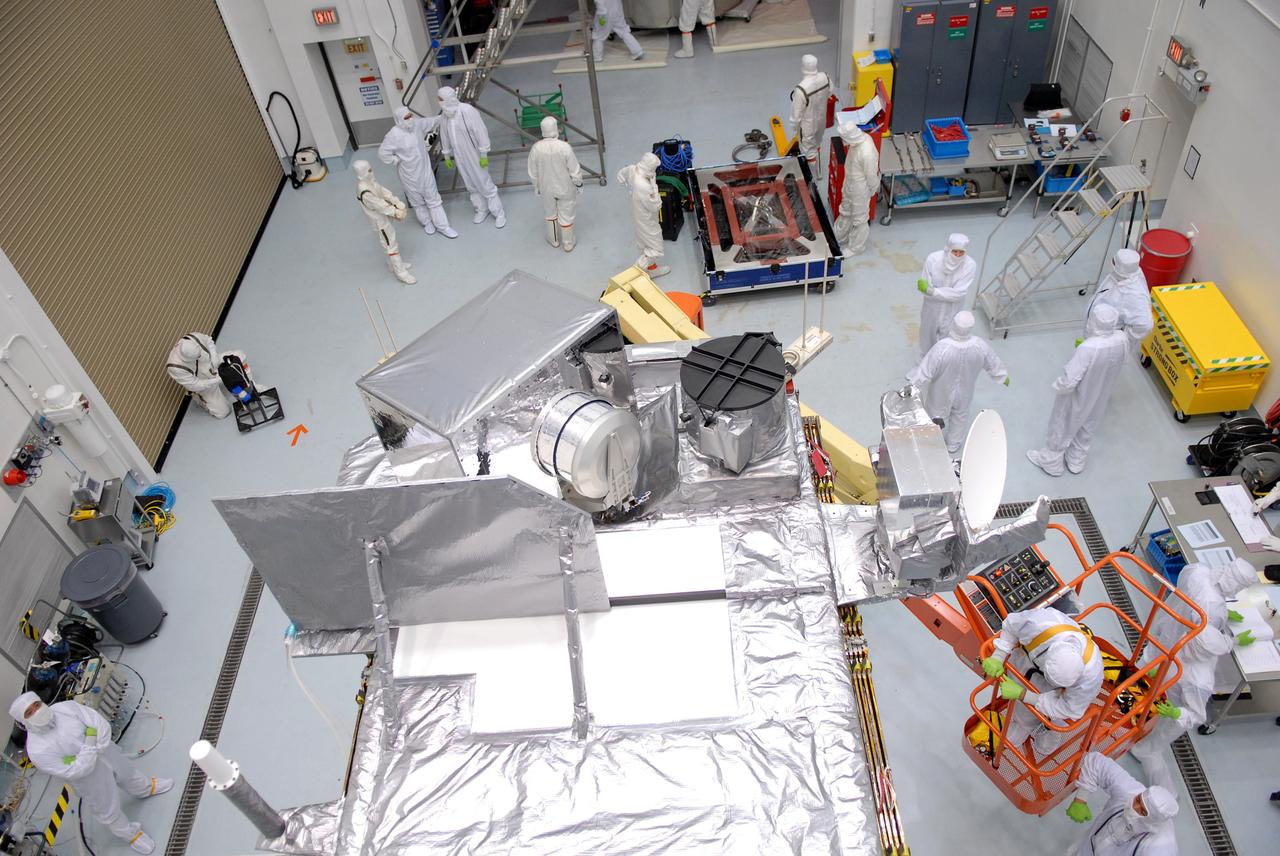
CAPE CANAVERAL, Fla. – At the Astrotech payload processing facility in Titusville, Fla., the top of the mated SV1 and SV2 remains covered. The spacecraft are being prepared for center of gravity testing, weighing and balancing. The two spacecraft are known as the Space Tracking and Surveillance System – Demonstrators, or STSS Demo, which is a space-based sensor component of a layered Ballistic Missile Defense System designed for the overall mission of detecting, tracking and discriminating ballistic missiles. STSS is capable of tracking objects after boost phase and provides trajectory information to other sensors. It will be launched by NASA for the Missile Defense Agency between 8 and 8:58 a.m. EDT Sept. 18. Approved for Public Release 09-MDA-04886 (10 SEPT 09) Photo credit: NASA/Jim Grossmann
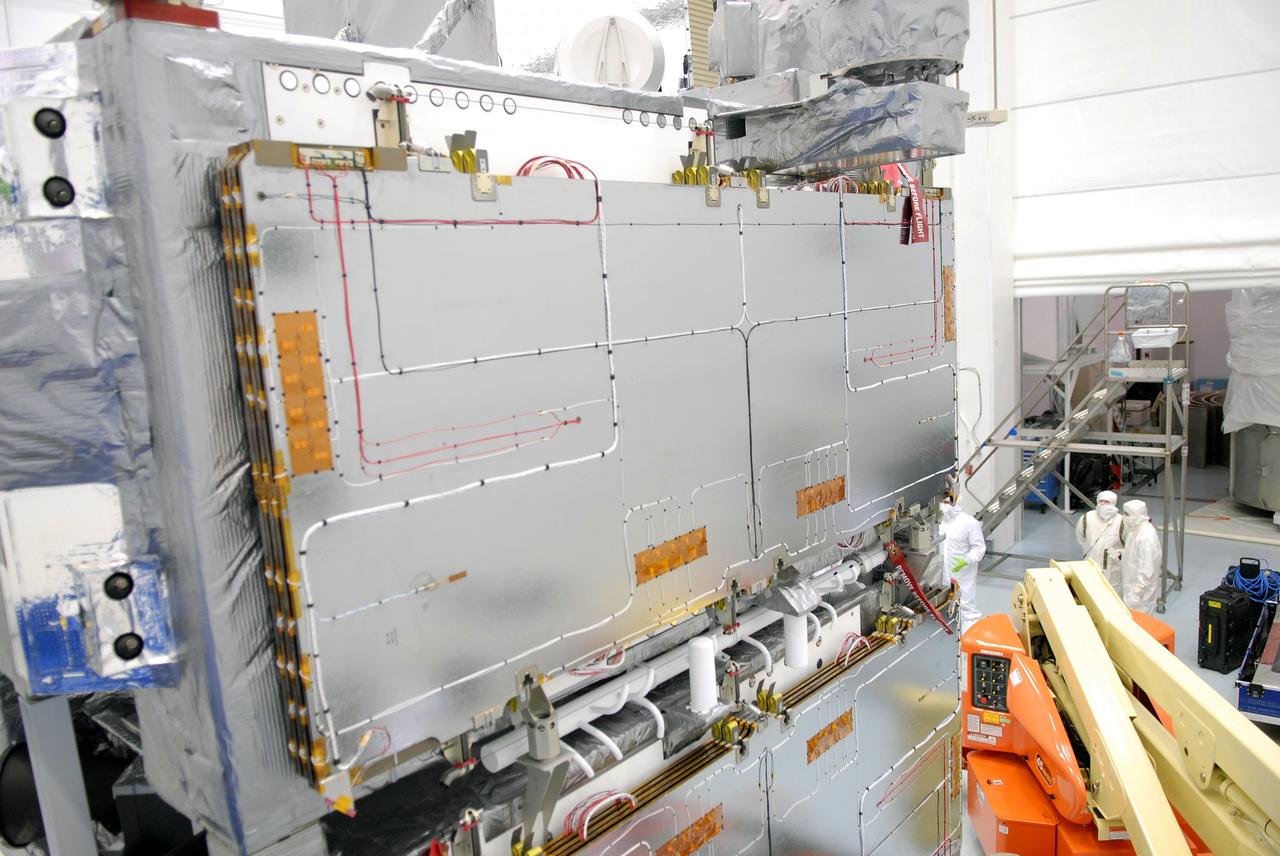
CAPE CANAVERAL, Fla. – At the Astrotech payload processing facility in Titusville, Fla., the mated SV1 and SV2 spacecraft are being prepared for center of gravity testing, weighing and balancing. The two spacecraft are known as the Space Tracking and Surveillance System – Demonstrators, or STSS Demo, which is a space-based sensor component of a layered Ballistic Missile Defense System designed for the overall mission of detecting, tracking and discriminating ballistic missiles. STSS is capable of tracking objects after boost phase and provides trajectory information to other sensors. It will be launched by NASA for the Missile Defense Agency between 8 and 8:58 a.m. EDT Sept. 18. Approved for Public Release 09-MDA-04886 (10 SEPT 09) Photo credit: NASA/Jim Grossmann
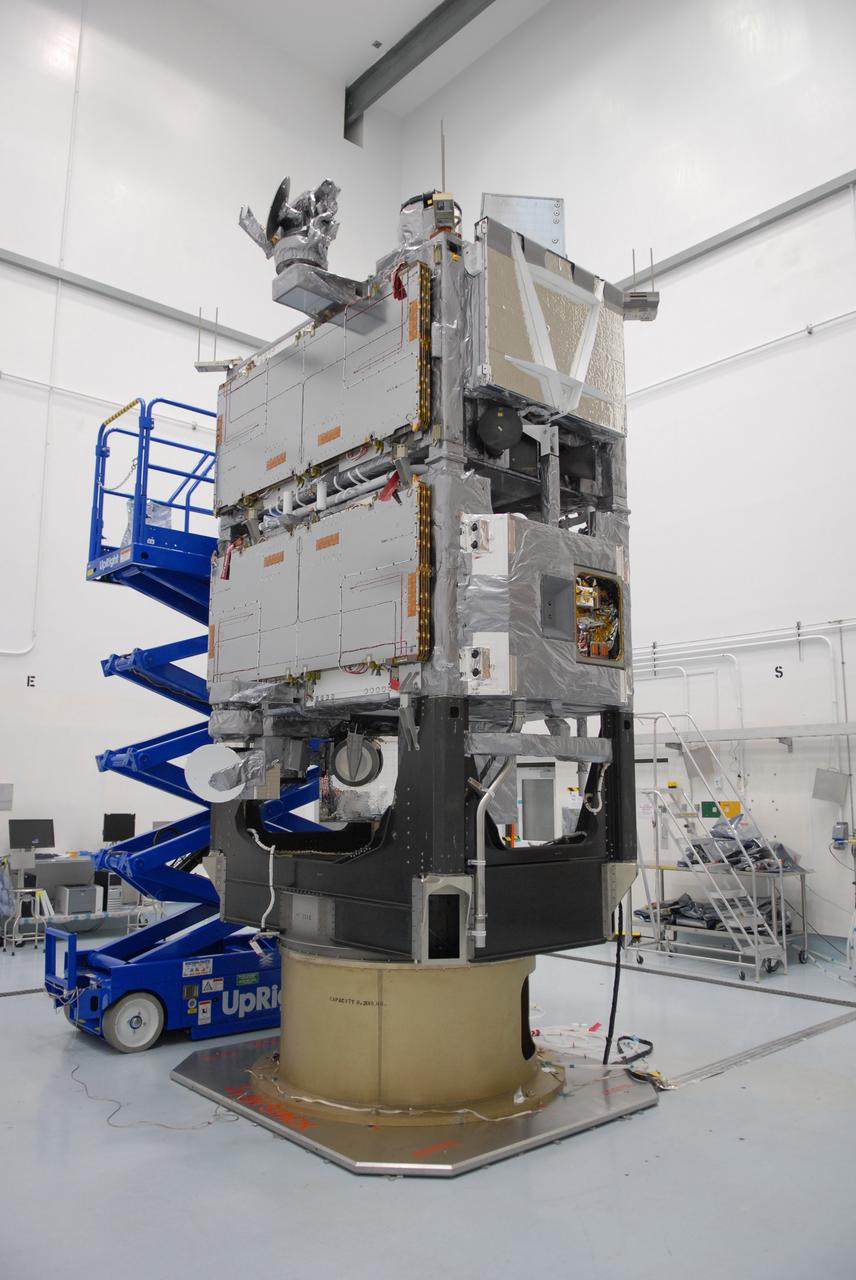
CAPE CANAVERAL, Fla. – At the Astrotech payload processing facility in Titusville, Fla., the SV1-SV2 spacecraft sits on the rotation stand after weighing. The two spacecraft are known as the Space Tracking and Surveillance System – Demonstrators, or STSS Demo, which is a space-based sensor component of a layered Ballistic Missile Defense System designed for the overall mission of detecting, tracking and discriminating ballistic missiles. STSS is capable of tracking objects after boost phase and provides trajectory information to other sensors. It will be launched by NASA for the Missile Defense Agency between 8 and 8:58 a.m. EDT Sept. 18. Approved for Public Release 09-MDA-04886 (10 SEPT 09) Photo credit: NASA/Jim Grossmann
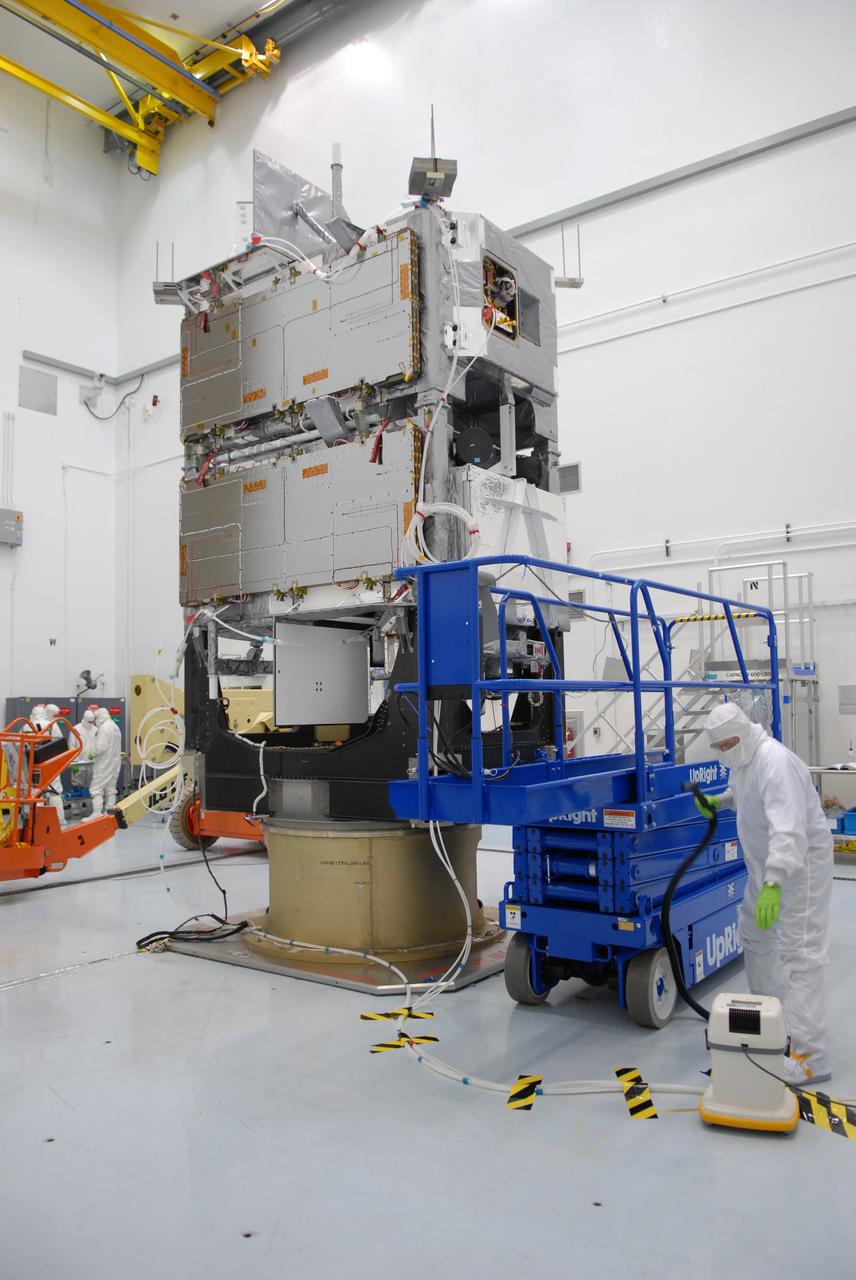
CAPE CANAVERAL, Fla. – At the Astrotech payload processing facility in Titusville, Fla., workers begin center of gravity testing, weighing and balancing on the SV1-SV2 spacecraft. The two spacecraft are known as the Space Tracking and Surveillance System – Demonstrators, or STSS Demo, which is a space-based sensor component of a layered Ballistic Missile Defense System designed for the overall mission of detecting, tracking and discriminating ballistic missiles. STSS is capable of tracking objects after boost phase and provides trajectory information to other sensors. It will be launched by NASA for the Missile Defense Agency between 8 and 8:58 a.m. EDT Sept. 18. Approved for Public Release 09-MDA-04886 (10 SEPT 09) Photo credit: NASA/Jim Grossmann
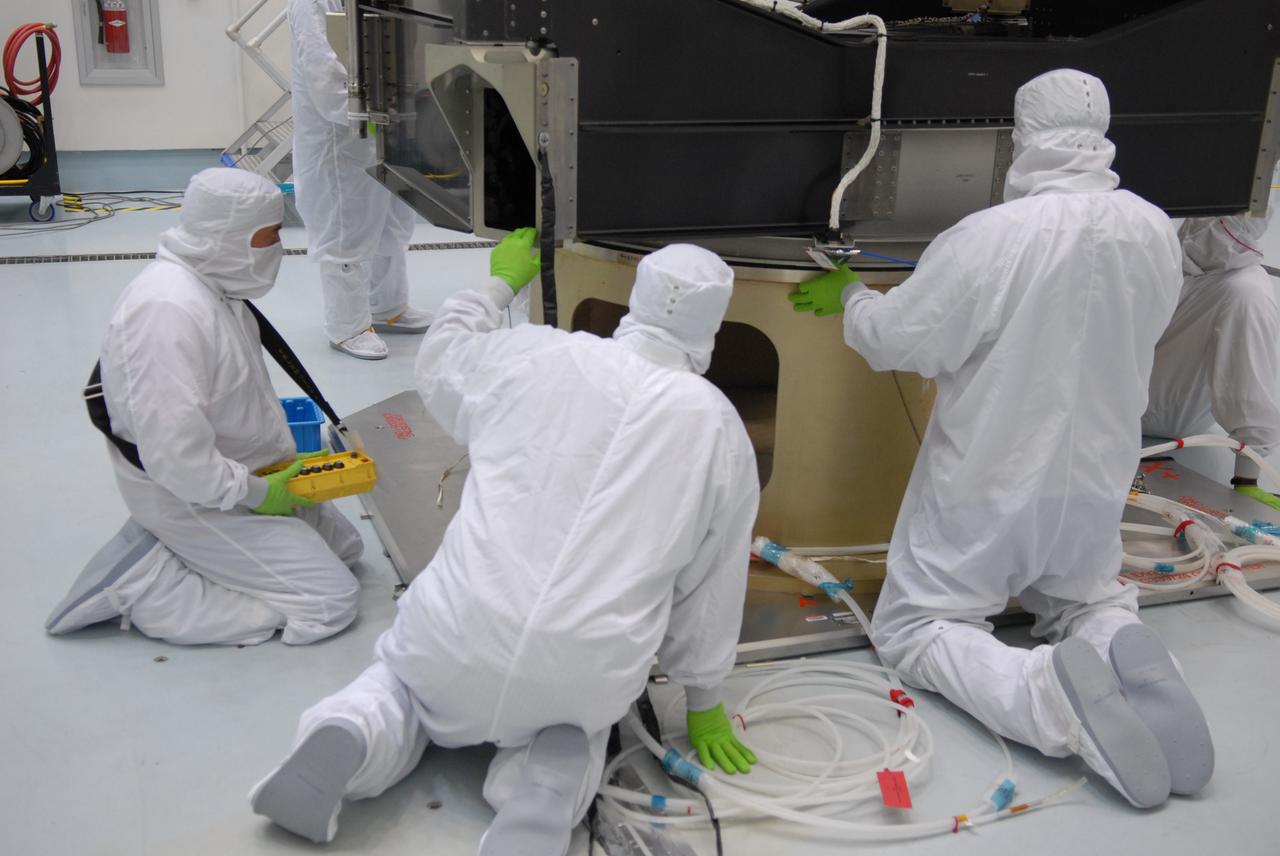
CAPE CANAVERAL, Fla. – At the Astrotech payload processing facility in Titusville, Fla., workers observe as the SV1-SV2 spacecraft is lowered again onto the rotation stand after weighing. The two spacecraft are known as the Space Tracking and Surveillance System – Demonstrators, or STSS Demo, which is a space-based sensor component of a layered Ballistic Missile Defense System designed for the overall mission of detecting, tracking and discriminating ballistic missiles. STSS is capable of tracking objects after boost phase and provides trajectory information to other sensors. It will be launched by NASA for the Missile Defense Agency between 8 and 8:58 a.m. EDT Sept. 18. Approved for Public Release 09-MDA-04886 (10 SEPT 09) Photo credit: NASA/Jim Grossmann
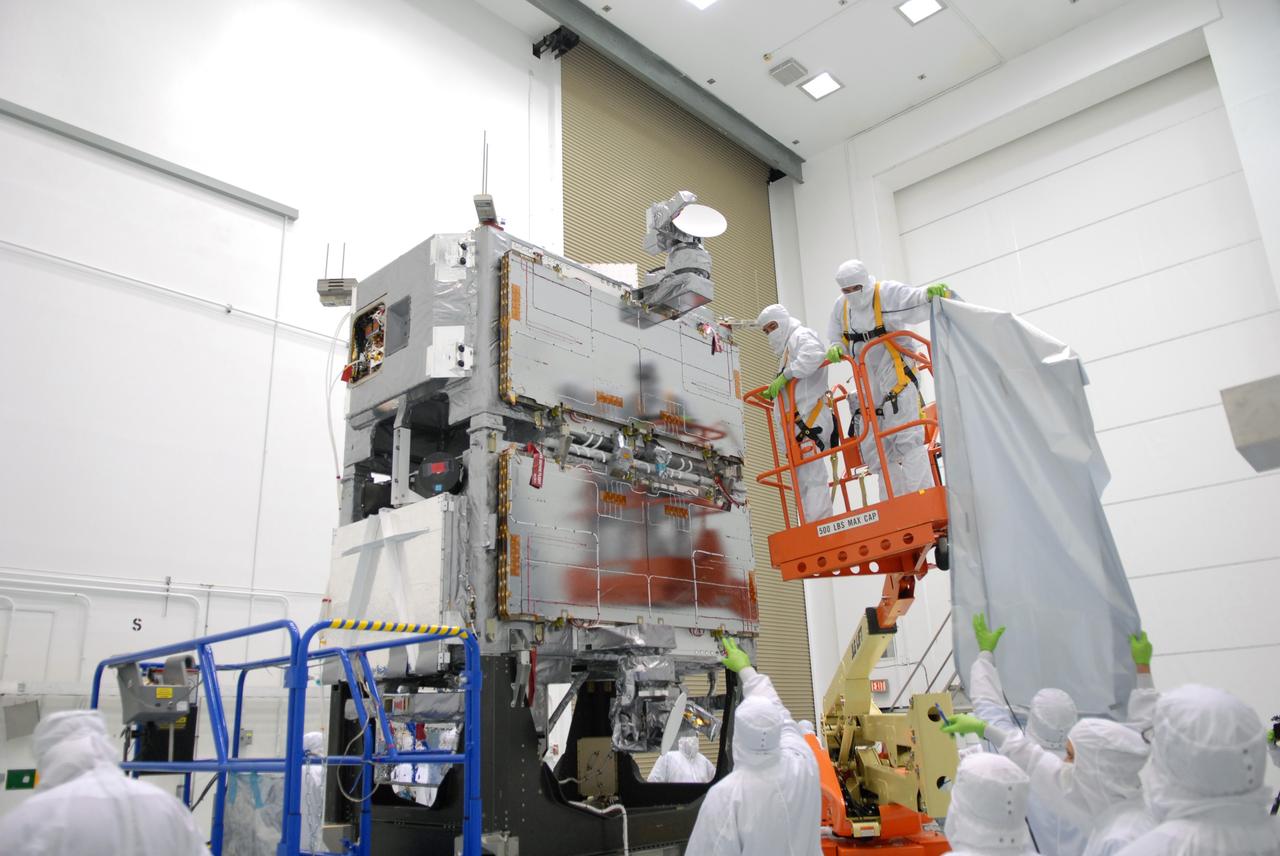
CAPE CANAVERAL, Fla. – At the Astrotech payload processing facility in Titusville, Fla., workers remove a cover from around the mated SV1 and SV2 spacecraft before center of gravity testing, weighing and balancing. The two spacecraft are known as the Space Tracking and Surveillance System – Demonstrators, or STSS Demo, which is a space-based sensor component of a layered Ballistic Missile Defense System designed for the overall mission of detecting, tracking and discriminating ballistic missiles. STSS is capable of tracking objects after boost phase and provides trajectory information to other sensors. It will be launched by NASA for the Missile Defense Agency between 8 and 8:58 a.m. EDT Sept. 18. Approved for Public Release 09-MDA-04886 (10 SEPT 09) Photo credit: NASA/Jim Grossmann
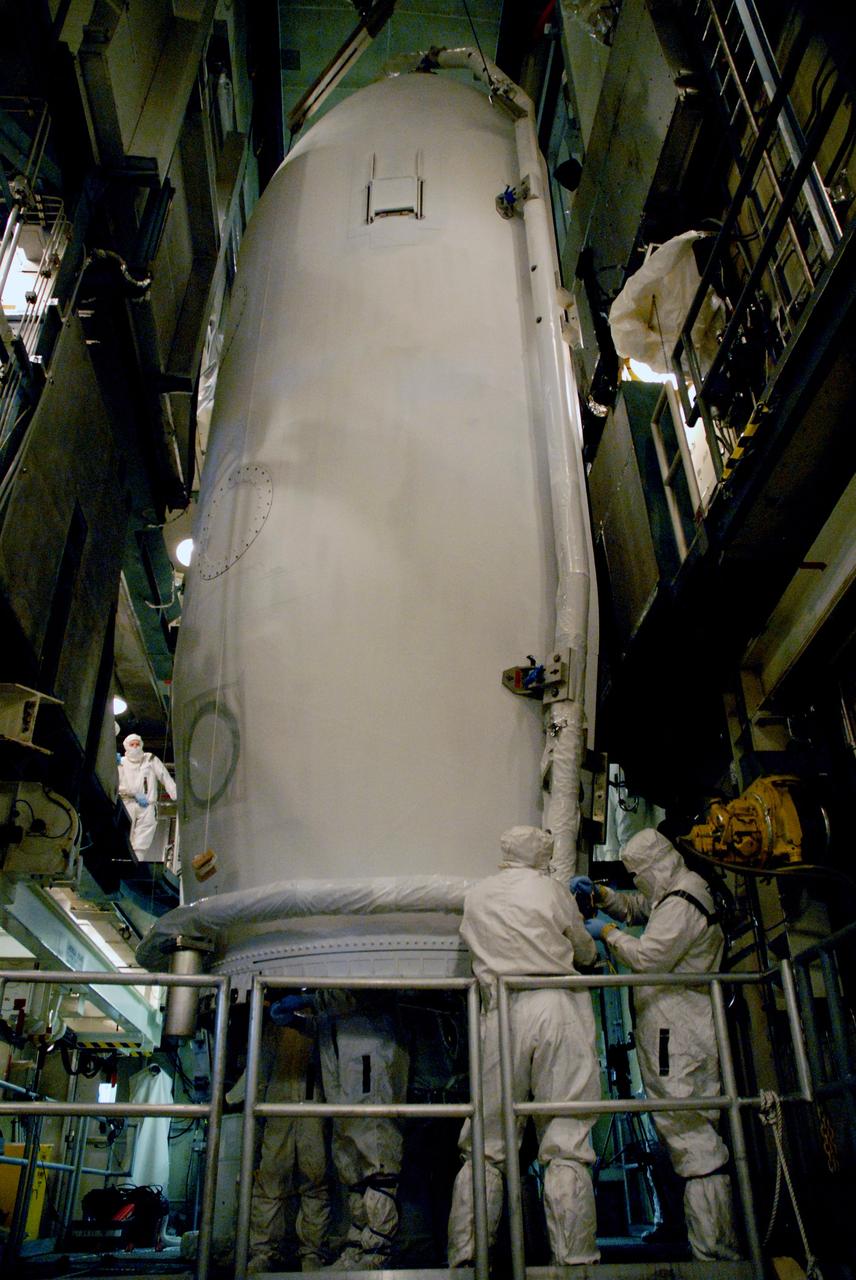
CAPE CANAVERAL, Fla. – Inside the mobile service tower on Launch Pad 17-B at Cape Canaveral Air Force Station in Florida, the second half of the fairing is being moved toward the Space Tracking and Surveillance System – Demonstrator spacecraft. The fairing is a two-part molded structure that fits flush with the outside surface of the rocket and forms an aerodynamically smooth nose cone, protecting the spacecraft during launch and ascent. STSS Demo is a space-based sensor component of a layered Ballistic Missile Defense System designed for the overall mission of detection, tracking and discriminating ballistic missiles. STSS is capable of tracking objects after boost phase and provides trajectory information to other sensors. It will be launched by NASA for the Missile Defense Agency between 8 and 8:58 a.m. EDT Sept. 18. Approved for Public Release 09-MDA-4934 (09-22-09) Photo credit: NASA/Cory Huston
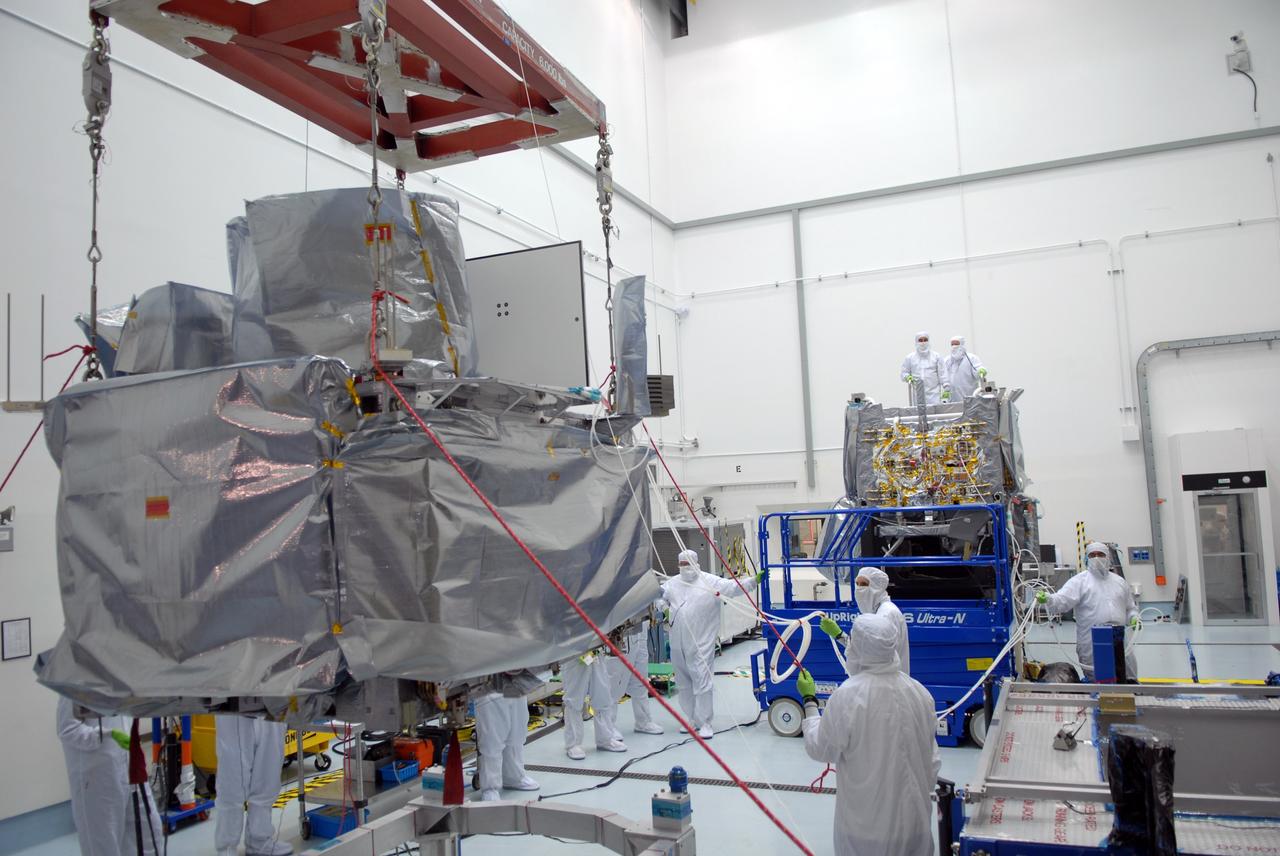
CAPE CANAVERAL, Fla. – At the Astrotech payload processing facility in Titusville, Fla., a crane moves the SV1 spacecraft, toward the SV2 at right. The two spacecraft , which will be mated, are part of the Space Tracking and Surveillance System – Demonstrators, or STSS Demo, Program. The STSS Demo is a space-based sensor component of a layered Ballistic Missile Defense System designed for the overall mission of detecting, tracking and discriminating ballistic missiles. STSS is capable of tracking objects after boost phase and provides trajectory information to other sensors. It will be launched by NASA for the Missile Defense Agency between 8 and 8:58 a.m. EDT Sept. 18. Approved for Public Release 09-MDA-04886 (10 SEPT 09) Photo credit: NASA/Jim Grossmann

CAPE CANAVERAL, Fla. – The enclosed Space Tracking and Surveillance System – Demonstrators, or STSS-Demo, spacecraft leaves the Astrotech payload processing facility on its way to Cape Canaveral Air Force Station's Launch Pad 17-B. The STSS Demo is a space-based sensor component of a layered Ballistic Missile Defense System designed for the overall mission of detecting, tracking and discriminating ballistic missiles. STSS is capable of tracking objects after boost phase and provides trajectory information to other sensors. It will be launched by NASA for the Missile Defense Agency between 8 and 8:58 a.m. EDT Sept. 18. Approved for Public Release 09-MDA-04886 (10 SEPT 09) Photo credit: NASA/Jack Pfaller
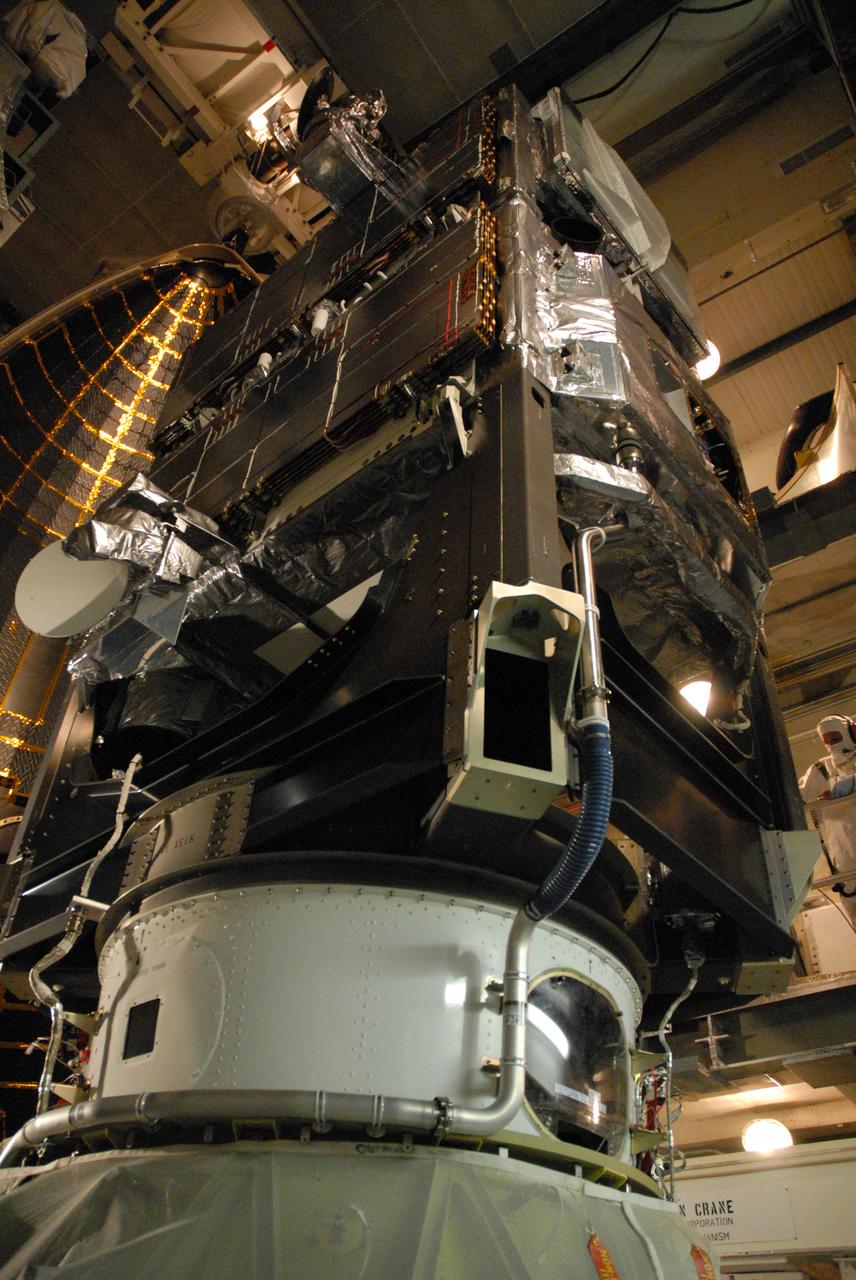
CAPE CANAVERAL, Fla. – Inside the mobile service tower on Launch Pad 17-B at Cape Canaveral Air Force Station in Florida, the Space Tracking and Surveillance System – Demonstrator spacecraft (foreground) is waiting for encapsulation in the fairing, behind it at left. The fairing is a two-part molded structure that fits flush with the outside surface of the rocket and forms an aerodynamically smooth nose cone, protecting the spacecraft during launch and ascent. STSS Demo is a space-based sensor component of a layered Ballistic Missile Defense System designed for the overall mission of detection, tracking and discriminating ballistic missiles. STSS is capable of tracking objects after boost phase and provides trajectory information to other sensors. It will be launched by NASA for the Missile Defense Agency between 8 and 8:58 a.m. EDT Sept. 18. Approved for Public Release 09-MDA-4934 (09-22-09) Photo credit: NASA/Cory Huston
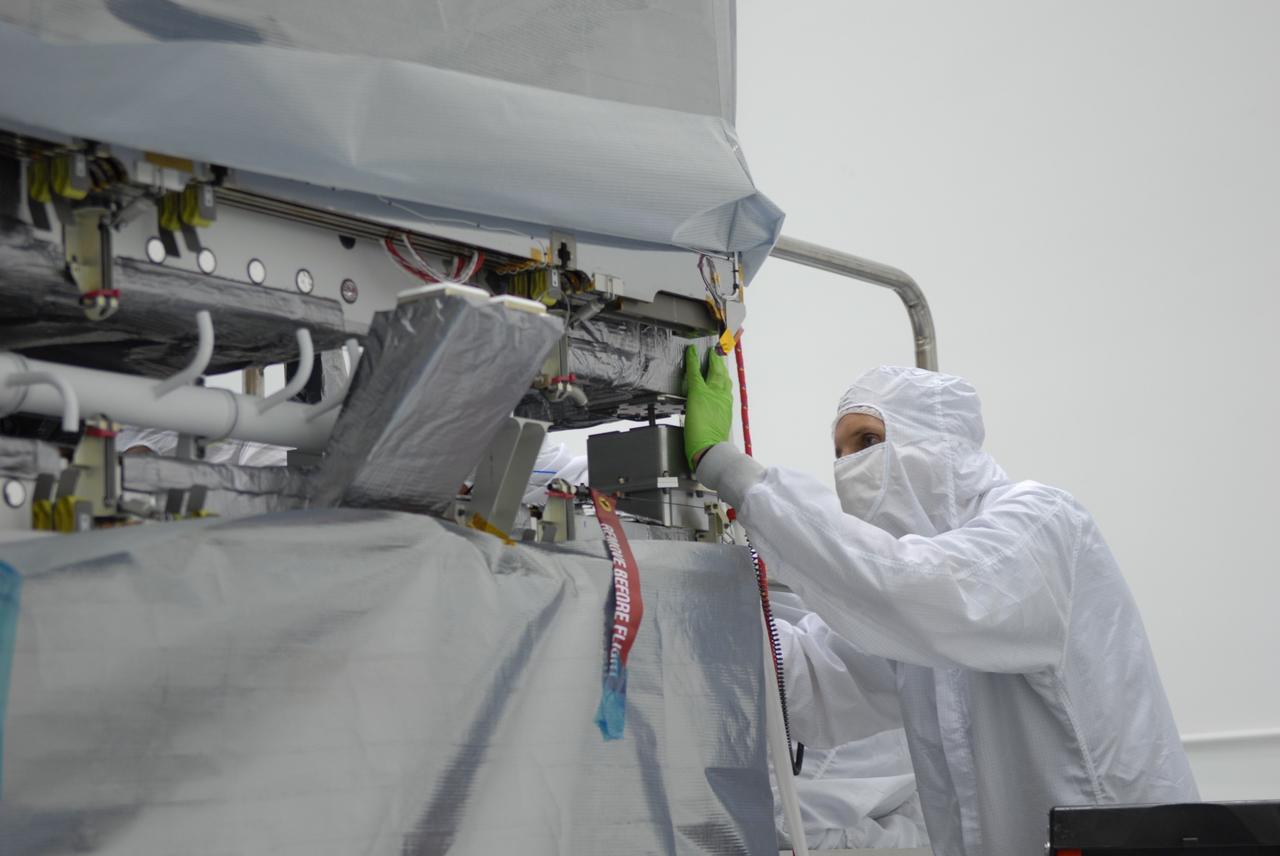
CAPE CANAVERAL, Fla. – At the Astrotech payload processing facility in Titusville, Fla., a worker checks the mating of the SV1 spacecraft onto the SV2. The two spacecraft are part of the Space Tracking and Surveillance System – Demonstrators, or STSS Demo, Program. The STSS Demo is a space-based sensor component of a layered Ballistic Missile Defense System designed for the overall mission of detecting, tracking and discriminating ballistic missiles. STSS is capable of tracking objects after boost phase and provides trajectory information to other sensors. It will be launched by NASA for the Missile Defense Agency between 8 and 8:58 a.m. EDT Sept. 18. Approved for Public Release 09-MDA-04886 (10 SEPT 09) Photo credit: NASA/Jim Grossmann
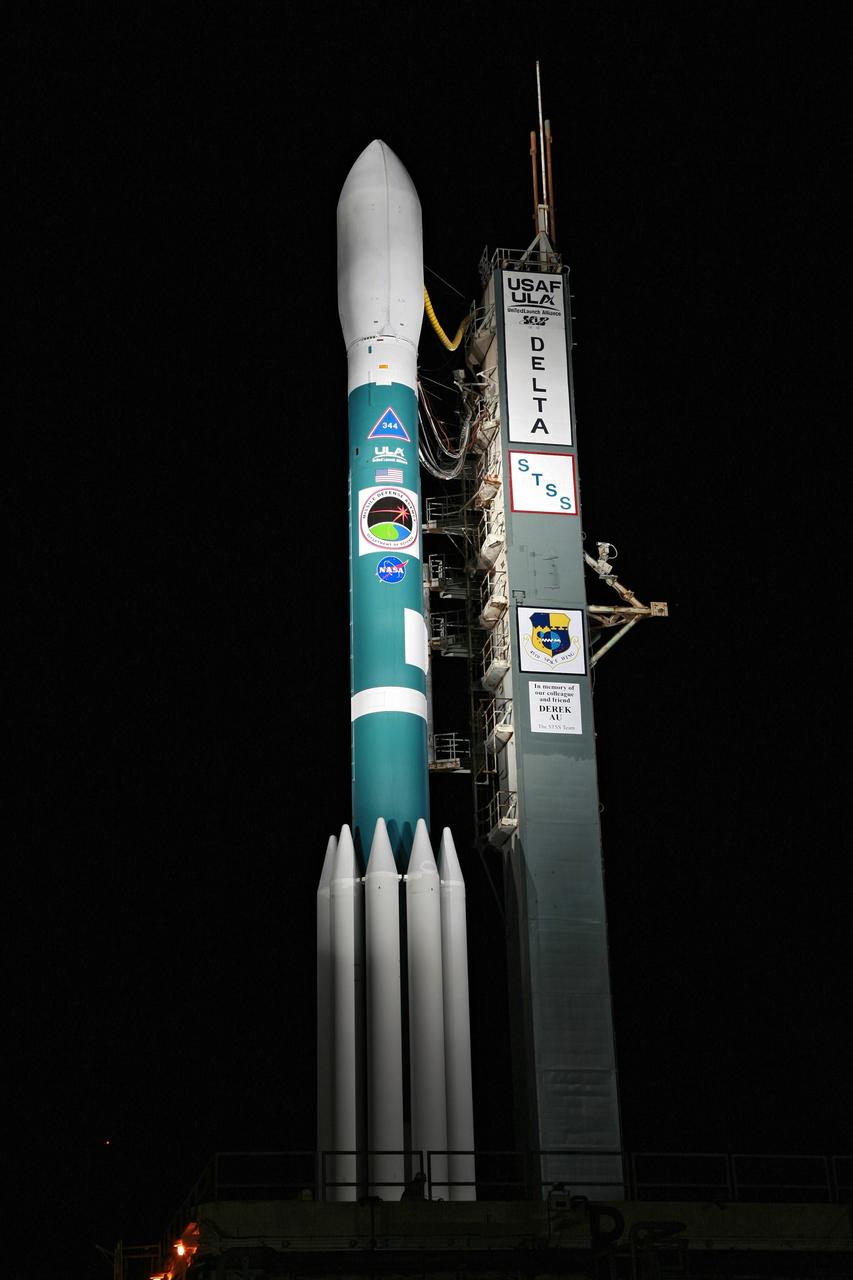
CAPE CANAVERAL, Fla. – The mobile service tower on Launch Pad 17-B at Cape Canaveral Air Force Station has been rolled back to reveal the United Launch Alliance Delta II rocket ready to launch the Space Tracking and Surveillance System - Demonstrator into orbit. It is being launched by NASA for the Missile Defense System. The hour-long launch window opens at 8 a.m. EDT today. The STSS Demo is a space-based sensor component of a layered Ballistic Missile Defense System designed for the overall mission of detecting, tracking and discriminating ballistic missiles. STSS is capable of tracking objects after boost phase and provides trajectory information to other sensors. Photo credit: NASA/Dimitri Gerondidakis
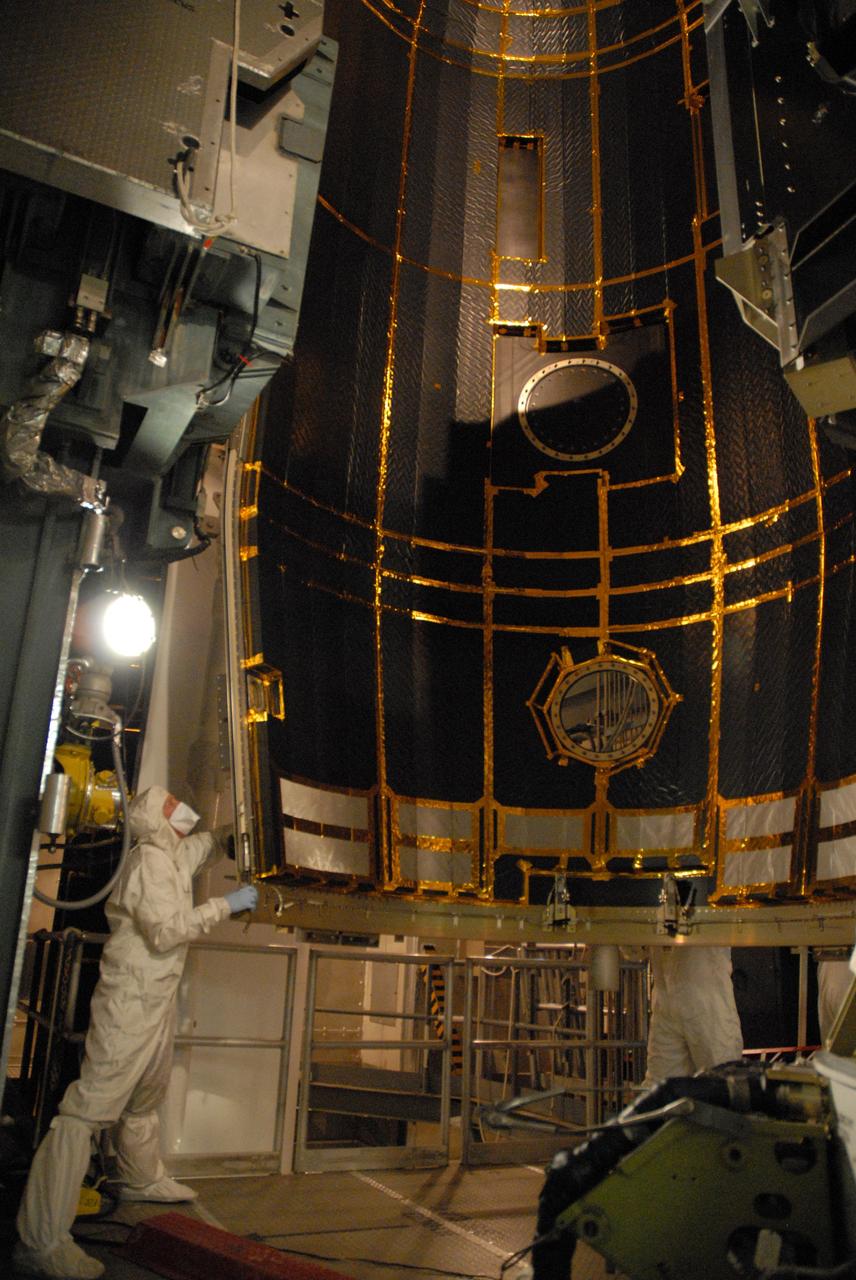
CAPE CANAVERAL, Fla. – Inside the mobile service tower on Launch Pad 17-B at Cape Canaveral Air Force Station in Florida, workers help guide the fairing as it moves closer to the Space Tracking and Surveillance System – Demonstrator spacecraft for encapsulation. The fairing is a two-part molded structure that fits flush with the outside surface of the rocket and forms an aerodynamically smooth nose cone, protecting the spacecraft during launch and ascent. STSS Demo is a space-based sensor component of a layered Ballistic Missile Defense System designed for the overall mission of detection, tracking and discriminating ballistic missiles. STSS is capable of tracking objects after boost phase and provides trajectory information to other sensors. It will be launched by NASA for the Missile Defense Agency between 8 and 8:58 a.m. EDT Sept. 18. Approved for Public Release 09-MDA-4934 (09-22-09) Photo credit: NASA/Cory Huston
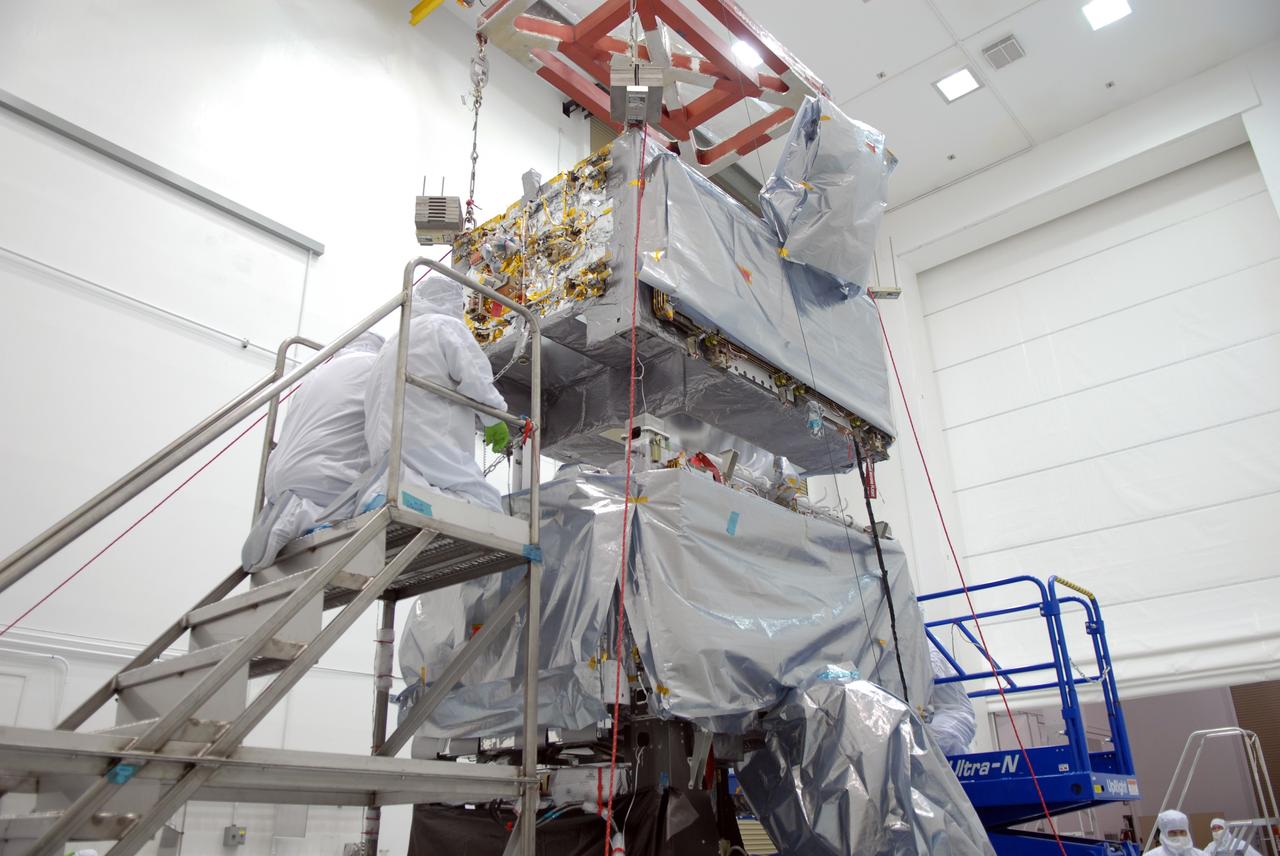
CAPE CANAVERAL, Fla. –At the Astrotech payload processing facility in Titusville, Fla., the SV1 spacecraft is lowered onto the SV2 for mating. The two spacecraft are part of the Space Tracking and Surveillance System – Demonstrators, or STSS Demo, Program. The STSS Demo is a space-based sensor component of a layered Ballistic Missile Defense System designed for the overall mission of detecting, tracking and discriminating ballistic missiles. STSS is capable of tracking objects after boost phase and provides trajectory information to other sensors. It will be launched by NASA for the Missile Defense Agency between 8 and 8:58 a.m. EDT Sept. 18. Approved for Public Release 09-MDA-04886 (10 SEPT 09) Photo credit: NASA/Jim Grossmann
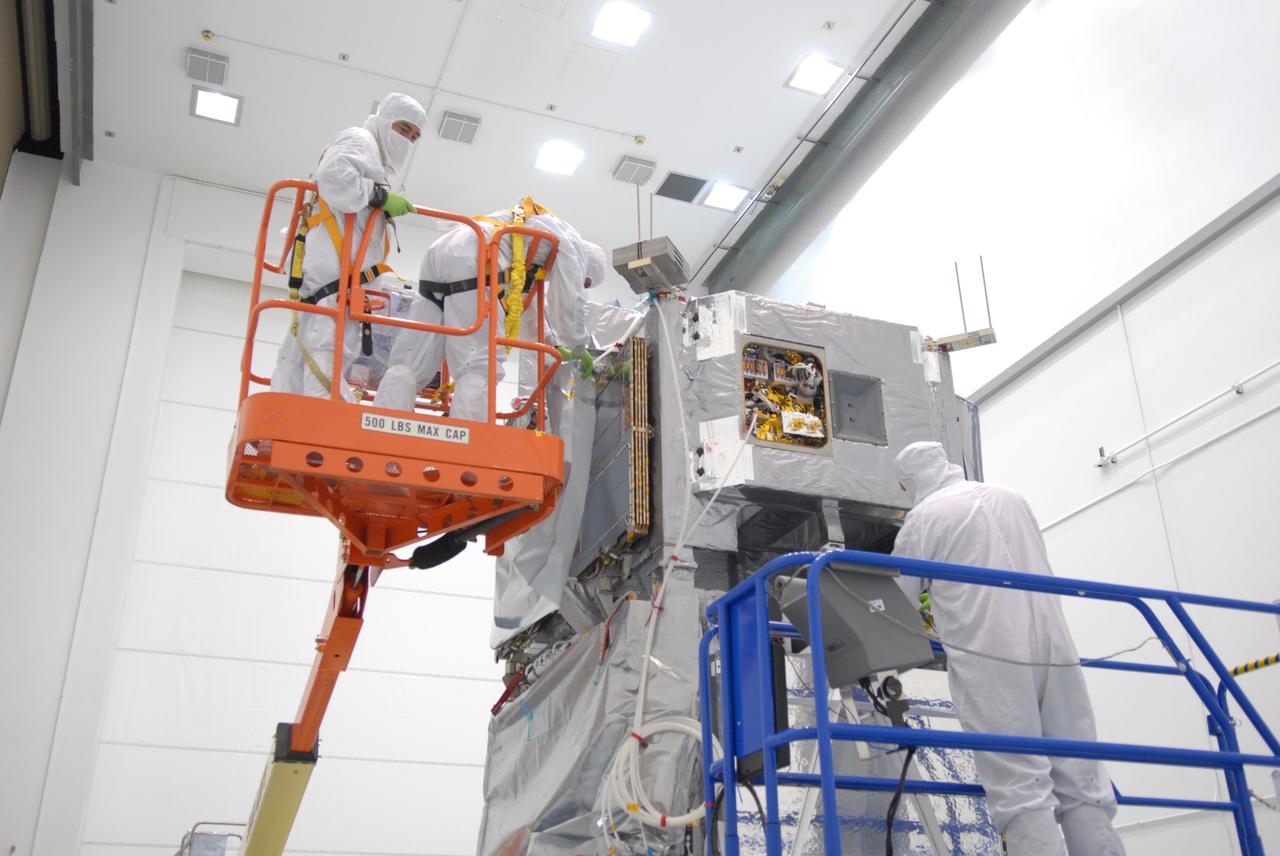
CAPE CANAVERAL, Fla. – At the Astrotech payload processing facility in Titusville, Fla., workers remove covers around the mated SV1 and SV2 spacecraft before center of gravity testing, weighing and balancing. The two spacecraft are known as the Space Tracking and Surveillance System – Demonstrators, or STSS Demo, which is a space-based sensor component of a layered Ballistic Missile Defense System designed for the overall mission of detecting, tracking and discriminating ballistic missiles. STSS is capable of tracking objects after boost phase and provides trajectory information to other sensors. It will be launched by NASA for the Missile Defense Agency between 8 and 8:58 a.m. EDT Sept. 18. Approved for Public Release 09-MDA-04886 (10 SEPT 09) Photo credit: NASA/Jim Grossmann
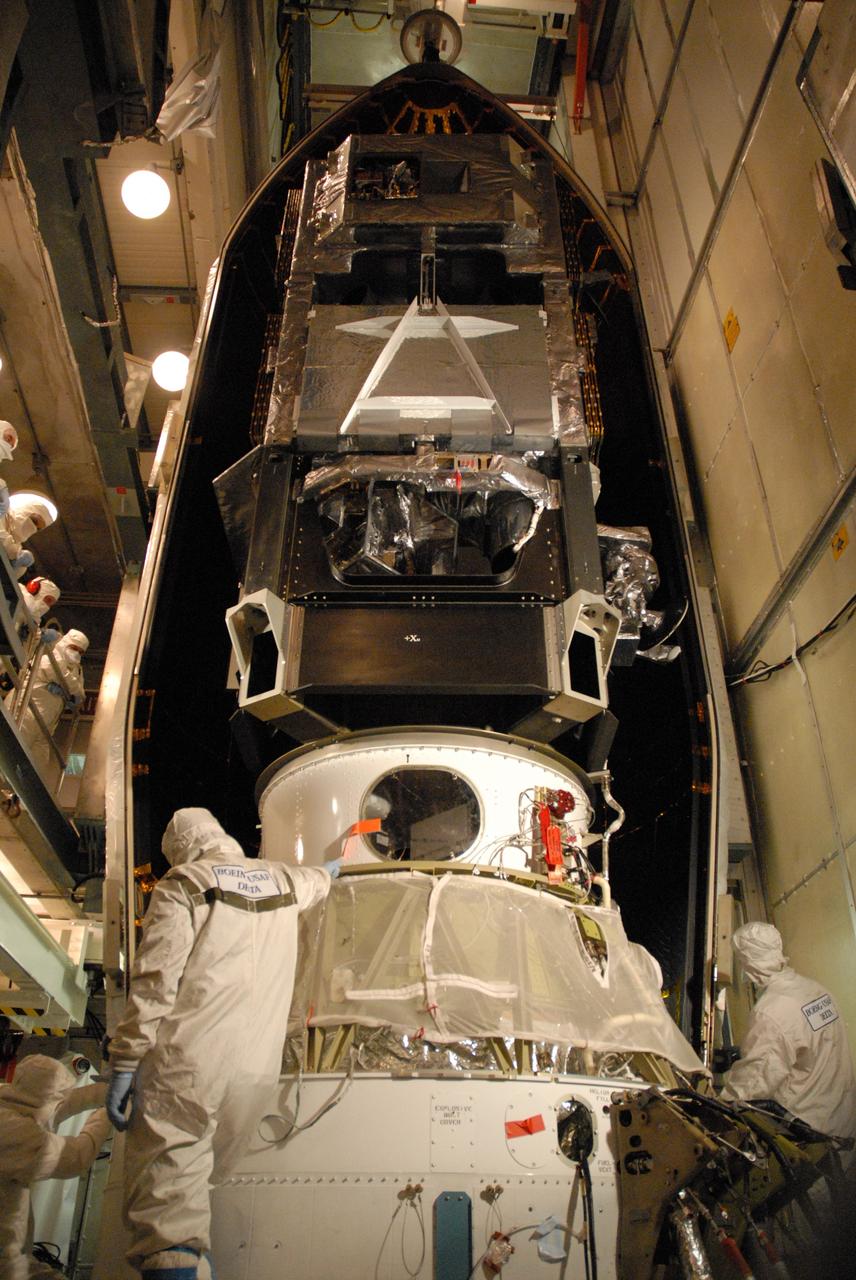
CAPE CANAVERAL, Fla. – Inside the mobile service tower on Launch Pad 17-B at Cape Canaveral Air Force Station in Florida, workers check the fit of the first half of the fairing around the Space Tracking and Surveillance System – Demonstrator spacecraft. The fairing is a two-part molded structure that fits flush with the outside surface of the rocket and forms an aerodynamically smooth nose cone, protecting the spacecraft during launch and ascent. STSS Demo is a space-based sensor component of a layered Ballistic Missile Defense System designed for the overall mission of detection, tracking and discriminating ballistic missiles. STSS is capable of tracking objects after boost phase and provides trajectory information to other sensors. It will be launched by NASA for the Missile Defense Agency between 8 and 8:58 a.m. EDT Sept. 18. Approved for Public Release 09-MDA-4934 (09-22-09) Photo credit: NASA/Cory Huston

CAPE CANAVERAL, Fla. – At the Astrotech payload processing facility in Titusville, Fla., workers attach the upper segment of the transportation canister to the lower segments around the Space Tracking and Surveillance System – Demonstrators, or STSS Demo, spacecraft. The STSS Demo is a space-based sensor component of a layered Ballistic Missile Defense System designed for the overall mission of detecting, tracking and discriminating ballistic missiles. STSS is capable of tracking objects after boost phase and provides trajectory information to other sensors. It will be launched by NASA for the Missile Defense Agency between 8 and 8:58 a.m. EDT Sept. 18. Approved for Public Release 09-MDA-04886 (10 SEPT 09) Photo credit: NASA/Kim Shiflett

CAPE CANAVERAL, Fla. – At the Astrotech payload processing facility in Titusville, Fla., an overhead crane with a scale is being moved to attach to the SV1-SV2 spacecraft, which will be weighed. The two spacecraft are known as the Space Tracking and Surveillance System – Demonstrators, or STSS Demo, which is a space-based sensor component of a layered Ballistic Missile Defense System designed for the overall mission of detecting, tracking and discriminating ballistic missiles. STSS is capable of tracking objects after boost phase and provides trajectory information to other sensors. It will be launched by NASA for the Missile Defense Agency between 8 and 8:58 a.m. EDT Sept. 18. Approved for Public Release 09-MDA-04886 (10 SEPT 09) Photo credit: NASA/Jim Grossmann

CAPE CANAVERAL, Fla. – Inside the mobile service tower on Launch Pad 17-B at Cape Canaveral Air Force Station in Florida, the second half of the fairing is being moved into place around the Space Tracking and Surveillance System – Demonstrator spacecraft. The fairing is a two-part molded structure that fits flush with the outside surface of the rocket and forms an aerodynamically smooth nose cone, protecting the spacecraft during launch and ascent. STSS Demo is a space-based sensor component of a layered Ballistic Missile Defense System designed for the overall mission of detection, tracking and discriminating ballistic missiles. STSS is capable of tracking objects after boost phase and provides trajectory information to other sensors. It will be launched by NASA for the Missile Defense Agency between 8 and 8:58 a.m. EDT Sept. 18. Approved for Public Release 09-MDA-4934 (09-22-09) Photo credit: NASA/Cory Huston

CAPE CANAVERAL, Fla. – At the Astrotech payload processing facility in Titusville, Fla., workers remove covers around the mated SV1 and SV2 spacecraft before center of gravity testing, weighing and balancing. The two spacecraft are known as the Space Tracking and Surveillance System – Demonstrators, or STSS Demo, which is a space-based sensor component of a layered Ballistic Missile Defense System designed for the overall mission of detecting, tracking and discriminating ballistic missiles. STSS is capable of tracking objects after boost phase and provides trajectory information to other sensors. It will be launched by NASA for the Missile Defense Agency between 8 and 8:58 a.m. EDT Sept. 18. Approved for Public Release 09-MDA-04886 (10 SEPT 09) Photo credit: NASA/Jim Grossmann
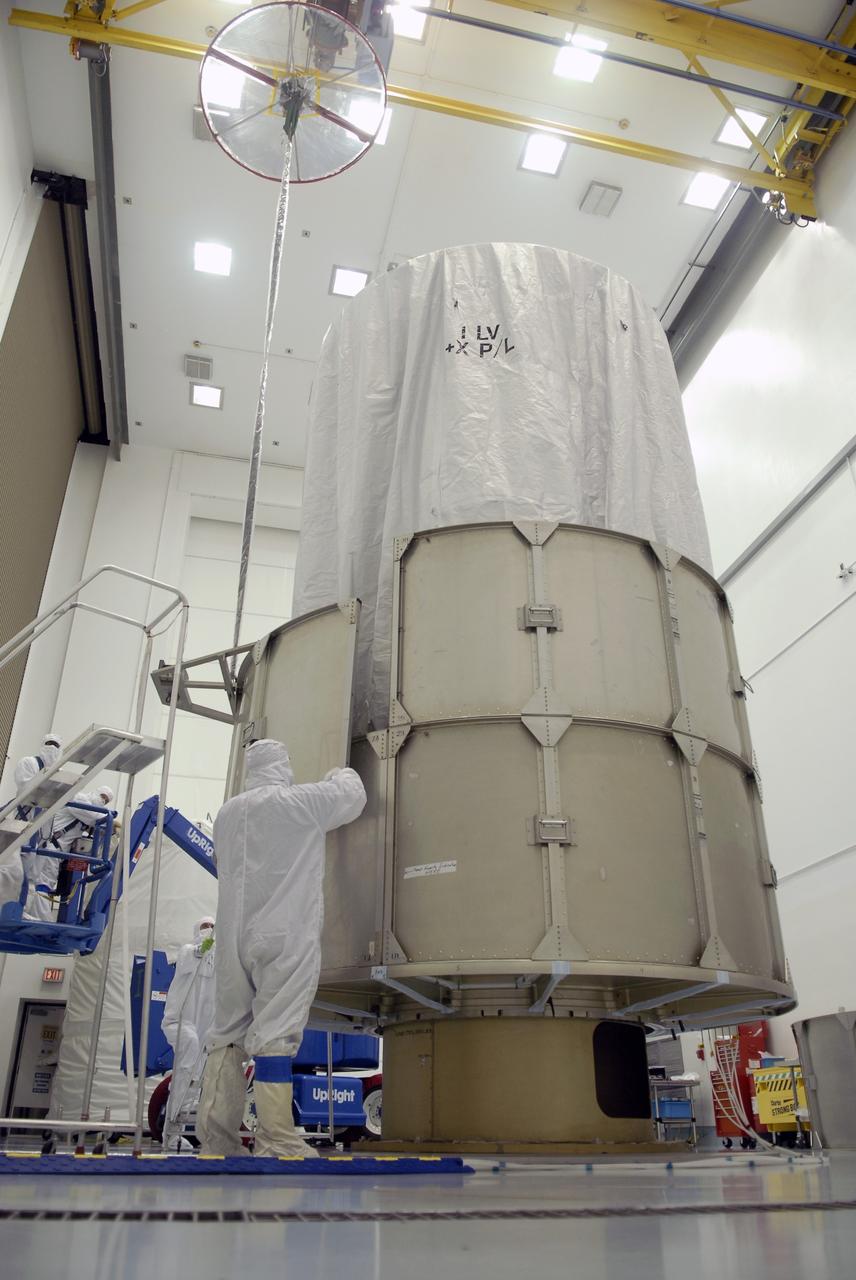
CAPE CANAVERAL, Fla. – At the Astrotech payload processing facility in Titusville, Fla., workers maneuver one of the second-row segments of the transportation canister that will be placed around the Space Tracking and Surveillance System – Demonstrators, or STSS Demo, spacecraft. The STSS Demo is a space-based sensor component of a layered Ballistic Missile Defense System designed for the overall mission of detecting, tracking and discriminating ballistic missiles. STSS is capable of tracking objects after boost phase and provides trajectory information to other sensors. It will be launched by NASA for the Missile Defense Agency between 8 and 8:58 a.m. EDT Sept. 18. Approved for Public Release 09-MDA-04886 (10 SEPT 09) Photo credit: NASA/Kim Shiflett

CAPE CANAVERAL, Fla. – The mobile service tower on Launch Pad 17-B at Cape Canaveral Air Force Station has been rolled back as the countdown proceeds to launch of the United Launch Alliance Delta II rocket with the Space Tracking and Surveillance System - Demonstrator spacecraft aboard. It is being launched by NASA for the Missile Defense System. The hour-long launch window opens at 8 a.m. EDT today. The STSS Demo is a space-based sensor component of a layered Ballistic Missile Defense System designed for the overall mission of detecting, tracking and discriminating ballistic missiles. STSS is capable of tracking objects after boost phase and provides trajectory information to other sensors. Photo credit: NASA/Dimitri Gerondidakis
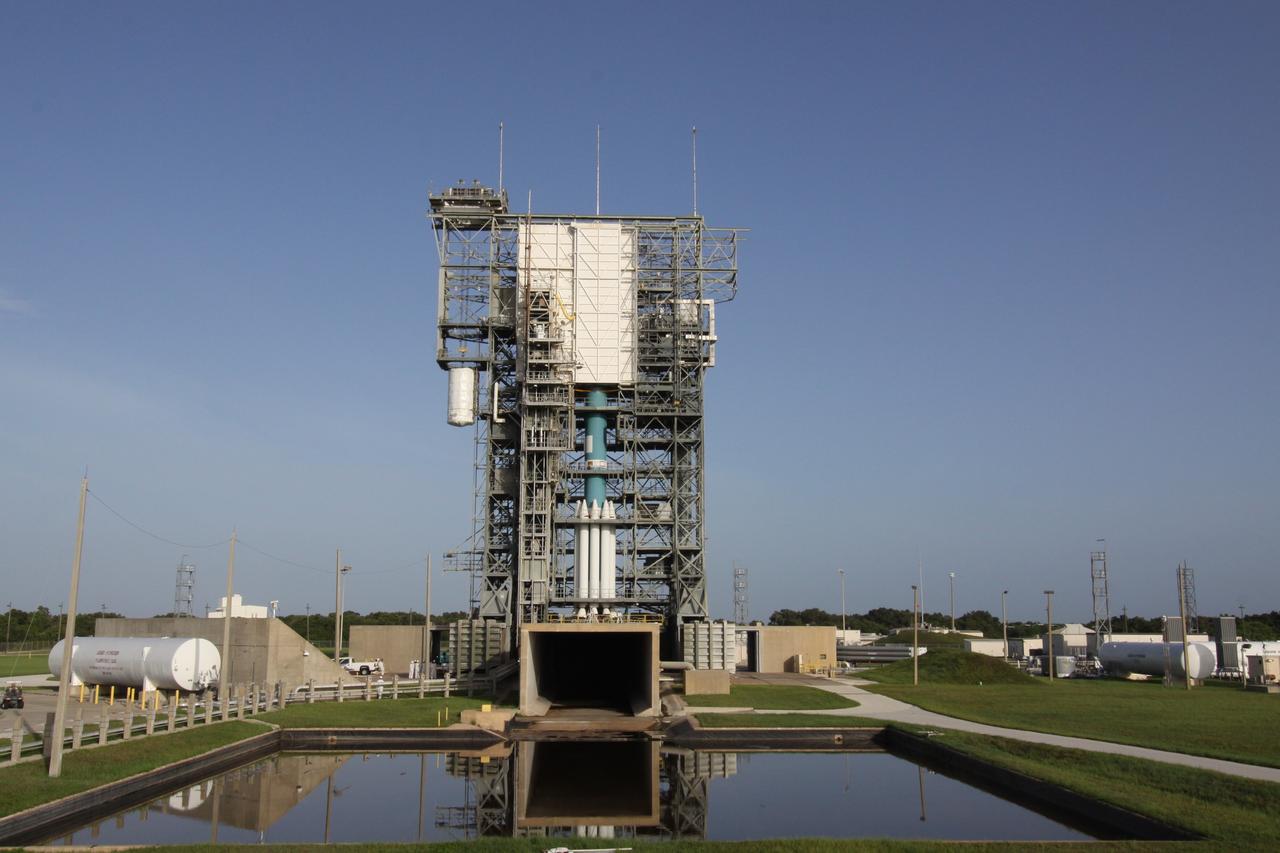
CAPE CANAVERAL, Fla. – The enclosed Space Tracking and Surveillance System – Demonstrators, or STSS-Demo, spacecraft is being lifted into the mobile service tower on Cape Canaveral Air Force Station's Launch Pad 17-B. The United Launch Alliance Delta II launch vehicle is already in place in the tower. The STSS Demo is a space-based sensor component of a layered Ballistic Missile Defense System designed for the overall mission of detecting, tracking and discriminating ballistic missiles. STSS is capable of tracking objects after boost phase and provides trajectory information to other sensors. It will be launched by NASA for the Missile Defense Agency between 8 and 8:58 a.m. EDT Sept. 18. Approved for Public Release 09-MDA-04886 (10 SEPT 09) Photo credit: NASA/Jack Pfaller
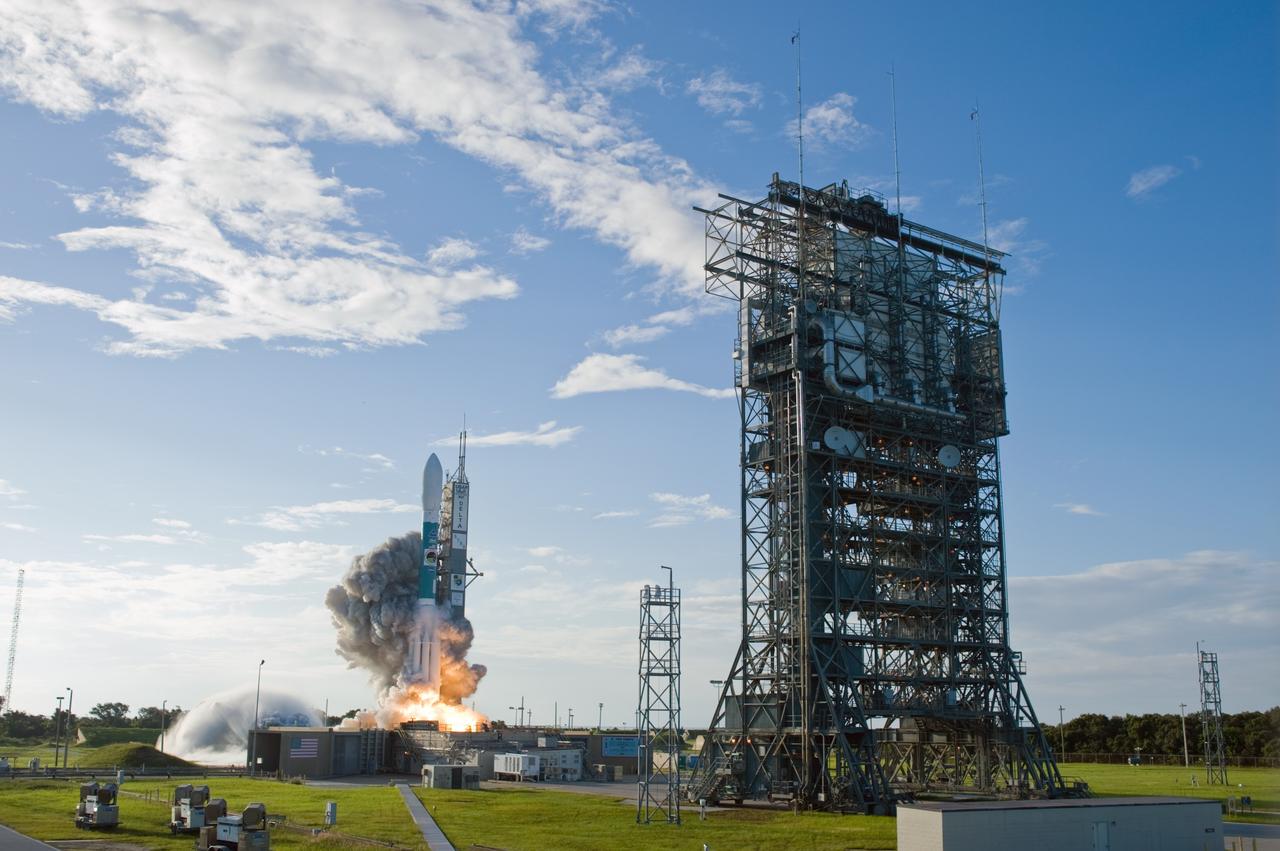
CAPE CANAVERAL, Fla. – Water at left is seen flooding Launch Pad 17-B at Cape Canaveral Air Force Station as the United Launch Alliance Delta II rocket carrying the Space Tracking and Surveillance System - Demonstrator, or STSS-Demo, spacecraft lifts off. STSS-Demo was launched at 8:20:22 a.m. EDT by NASA for the U.S. Missile Defense Agency. The STSS-Demo is a space-based sensor component of a layered Ballistic Missile Defense System designed for the overall mission of detecting, tracking and discriminating ballistic missiles. STSS is capable of tracking objects after boost phase and provides trajectory information to other sensors. Photo credit: NASA/Sandra Joseph- Kevin O'Connell
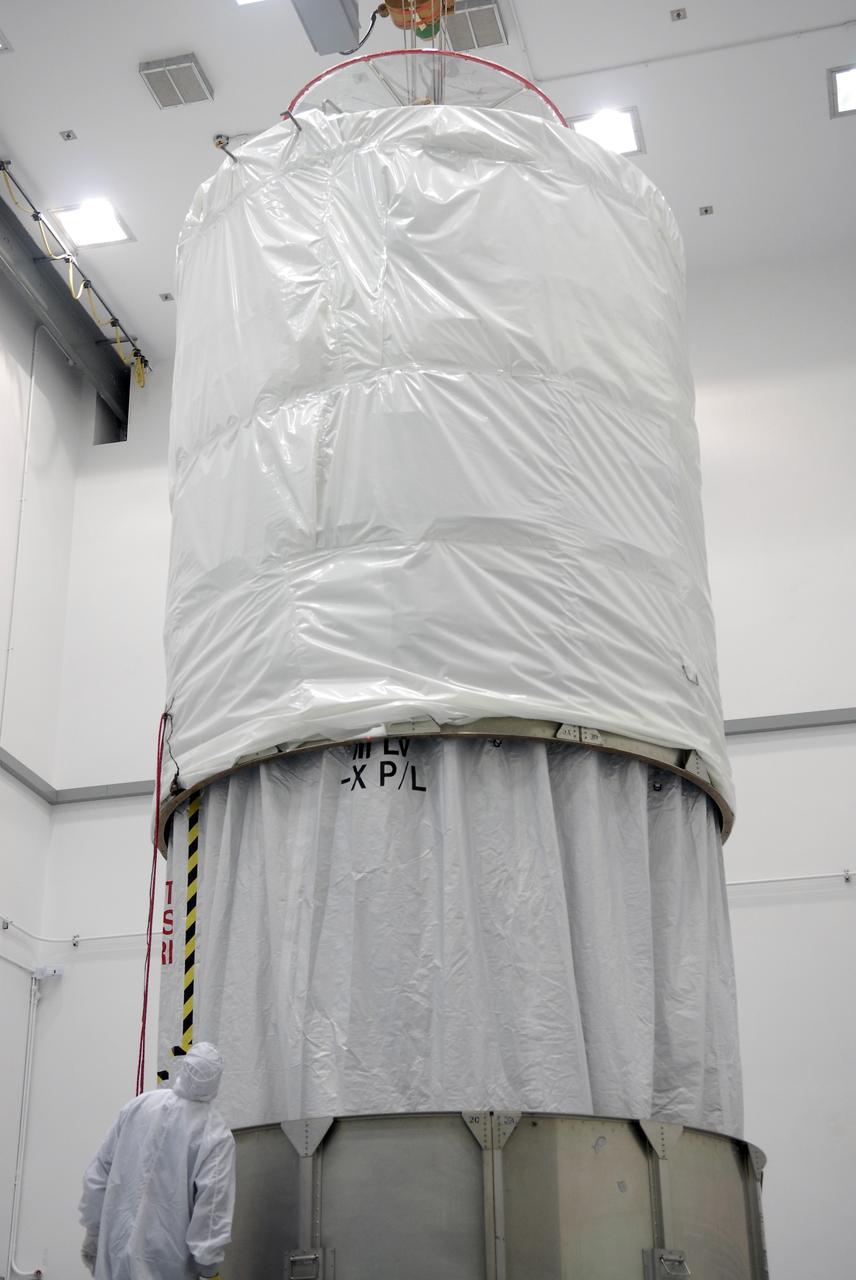
CAPE CANAVERAL, Fla. – At the Astrotech payload processing facility in Titusville, Fla., the upper segment of the transportation canister is lowered over the Space Tracking and Surveillance System – Demonstrators, or STSS Demo, spacecraft. It will be installed onto the lower segments already in place. The STSS Demo is a space-based sensor component of a layered Ballistic Missile Defense System designed for the overall mission of detecting, tracking and discriminating ballistic missiles. STSS is capable of tracking objects after boost phase and provides trajectory information to other sensors. It will be launched by NASA for the Missile Defense Agency between 8 and 8:58 a.m. EDT Sept. 18. Approved for Public Release 09-MDA-04886 (10 SEPT 09) Photo credit: NASA/Kim Shiflett
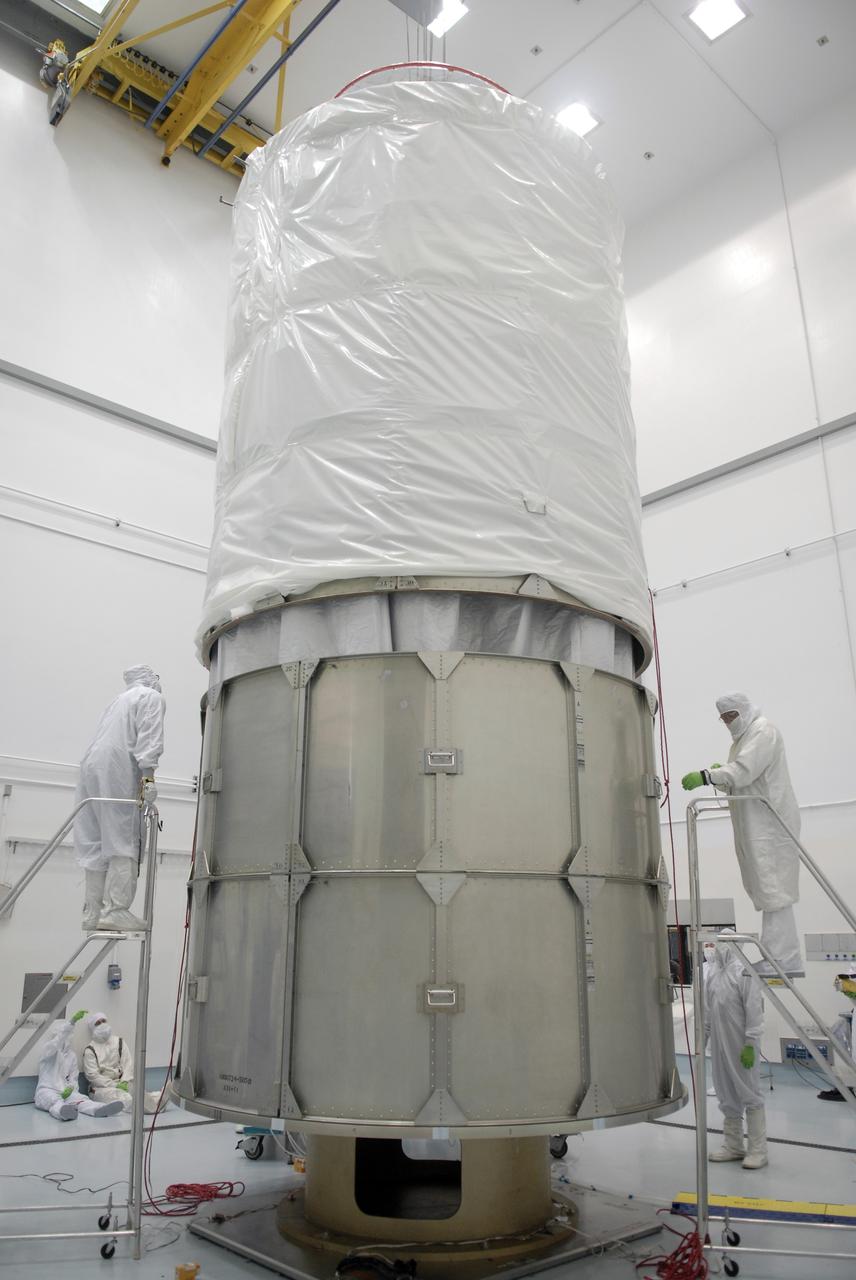
CAPE CANAVERAL, Fla. – At the Astrotech payload processing facility in Titusville, Fla., the upper segment of the transportation canister is lowered over the Space Tracking and Surveillance System – Demonstrators, or STSS Demo, spacecraft. It will be installed onto the lower segments already in place. The STSS Demo is a space-based sensor component of a layered Ballistic Missile Defense System designed for the overall mission of detecting, tracking and discriminating ballistic missiles. STSS is capable of tracking objects after boost phase and provides trajectory information to other sensors. It will be launched by NASA for the Missile Defense Agency between 8 and 8:58 a.m. EDT Sept. 18. Approved for Public Release 09-MDA-04886 (10 SEPT 09) Photo credit: NASA/Kim Shiflett

CAPE CANAVERAL, Fla. – The enclosed Space Tracking and Surveillance System – Demonstrators, or STSS-Demo, spacecraft is being lifted off the transporter into the mobile service tower on Cape Canaveral Air Force Station's Launch Pad 17-B. The STSS Demo is a space-based sensor component of a layered Ballistic Missile Defense System designed for the overall mission of detecting, tracking and discriminating ballistic missiles. STSS is capable of tracking objects after boost phase and provides trajectory information to other sensors. It will be launched by NASA for the Missile Defense Agency between 8 and 8:58 a.m. EDT Sept. 18. Approved for Public Release 09-MDA-04886 (10 SEPT 09) Photo credit: NASA/Jack Pfaller
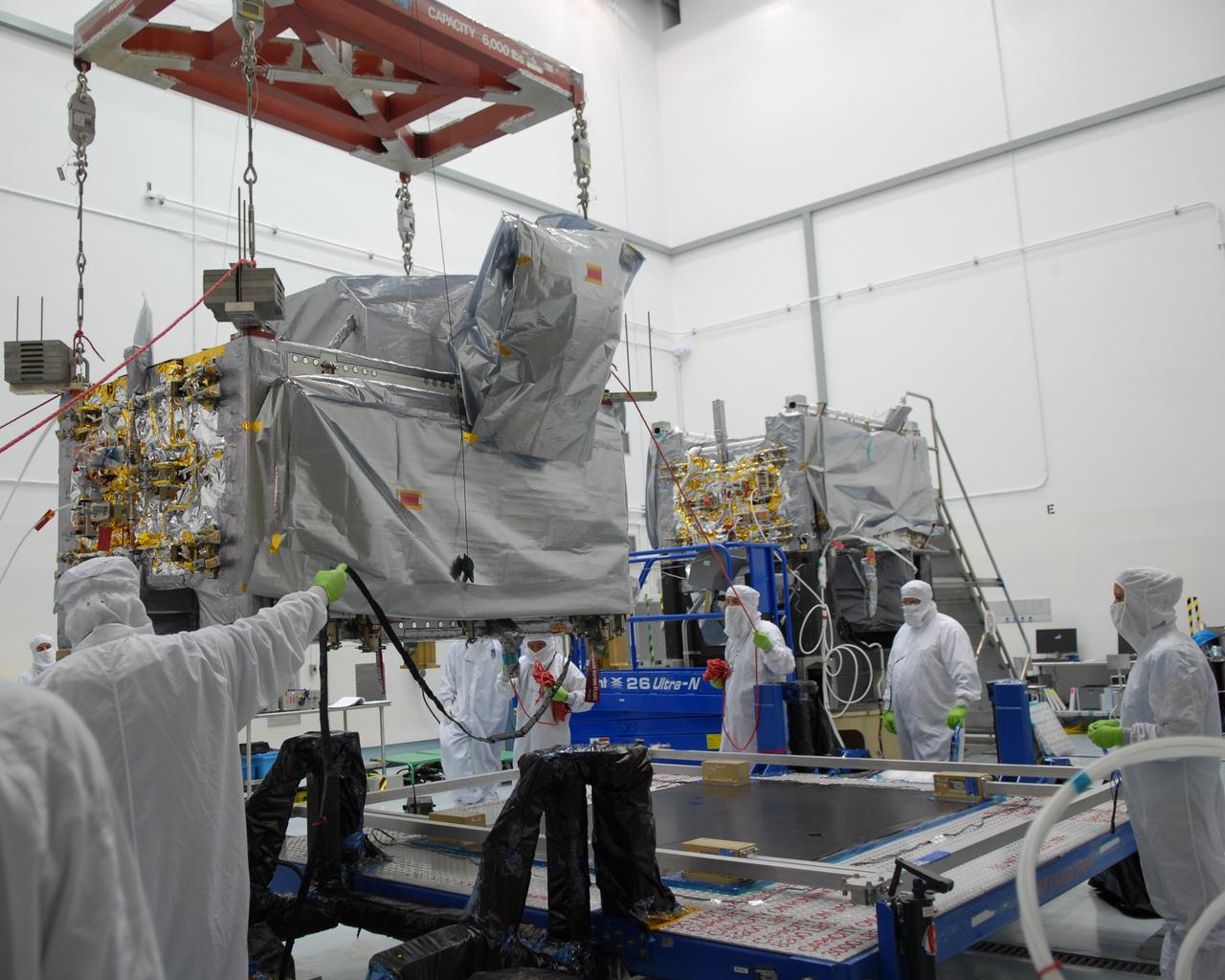
CAPE CANAVERAL, Fla. – At the Astrotech payload processing facility in Titusville, Fla., a crane moves the SV1 spacecraft, which will be mated with the SV2 at right. The two spacecraft are part of the Space Tracking and Surveillance System – Demonstrators, or STSS Demo, Program. STSS-Demo is a space-based sensor component of a layered Ballistic Missile Defense System designed for the overall mission of detecting, tracking and discriminating ballistic missiles. The spacecraft is capable of tracking objects after boost phase and provides trajectory information to other sensors. It will be launched by NASA for the Missile Defense Agency between 8 and 8:58 a.m. EDT Sept. 18. Approved for Public Release 09-MDA-04886 (10 SEPT 09) Photo credit: NASA/Jim Grossmann