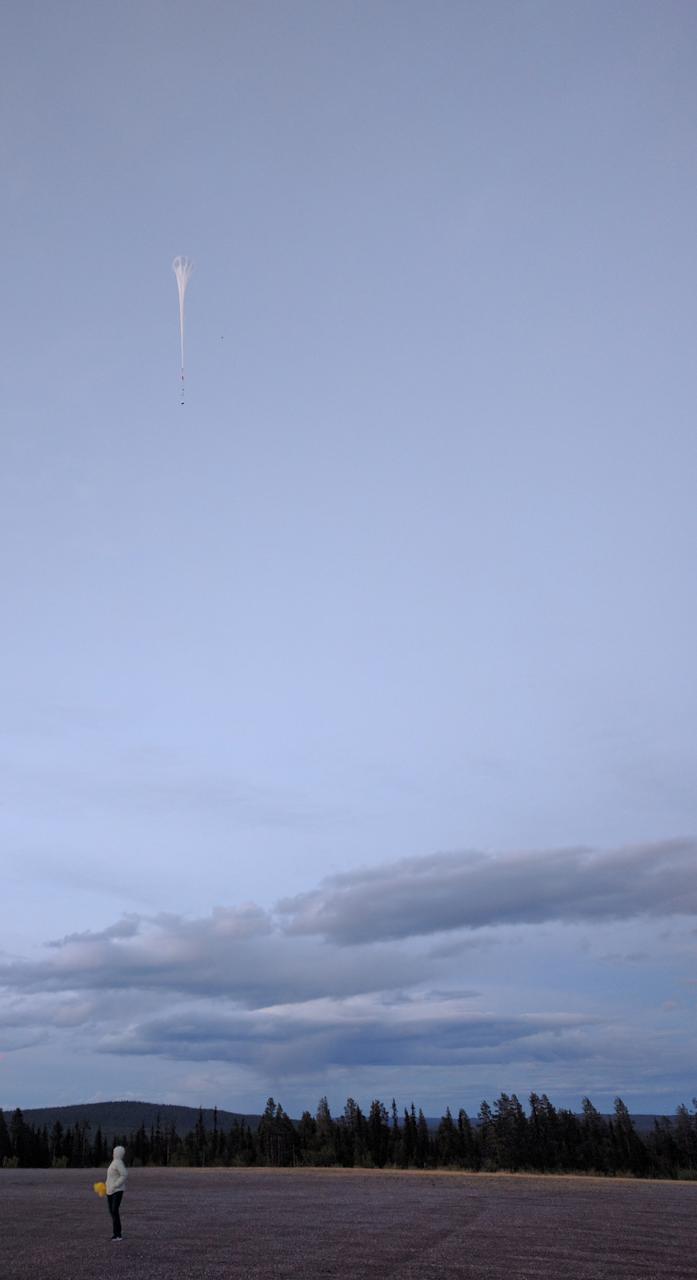
A BARREL team member watches as one of their payloads launches from Esrange Space Center on Aug. 29, 2016. Throughout August 2016, the BARREL team was at Esrange Space Center near Kiruna, Sweden, launching a series of six scientific payloads on miniature scientific balloons. The NASA-funded BARREL – which stands for Balloon Array for Radiation-belt Relativistic Electron Losses – primarily measures X-rays in Earth’s atmosphere near the North and South Poles. These X-rays are produced by electrons raining down into the atmosphere from two giant swaths of radiation that surround Earth, called the Van Allen belts. Learning about the radiation near Earth helps us to better protect our satellites. Several of the BARREL balloons also carried instruments built by undergraduate students to measure the total electron content of Earth’s ionosphere, as well as the low-frequency electromagnetic waves that help to scatter electrons into Earth’s atmosphere. Though about 90 feet in diameter, the BARREL balloons are much smaller than standard football stadium-sized scientific balloons. This is the fourth campaign for the BARREL mission. BARREL is led by Dartmouth College in Hanover, New Hampshire. The undergraduate student instrument team is led by the University of Houston and funded by the Undergraduate Student Instrument Project out of NASA’s Wallops Flight Facility. For more information on NASA’s scientific balloon program, visit: <a href="http://www.nasa.gov/scientificballoons" rel="nofollow">www.nasa.gov/scientificballoons</a>. Credit: NASA/Dartmouth/Alexa Halford <b><a href="http://www.nasa.gov/audience/formedia/features/MP_Photo_Guidelines.html" rel="nofollow">NASA image use policy.</a></b> <b><a href="http://www.nasa.gov/centers/goddard/home/index.html" rel="nofollow">NASA Goddard Space Flight Center</a></b> enables NASA’s mission through four scientific endeavors: Earth Science, Heliophysics, Solar System Exploration, and Astrophysics. Goddard plays a leading role in NASA’s accomplishments by contributing compelling scientific knowledge to advance the Agency’s mission. <b>Follow us on <a href="http://twitter.com/NASAGoddardPix" rel="nofollow">Twitter</a></b> <b>Like us on <a href="http://www.facebook.com/pages/Greenbelt-MD/NASA-Goddard/395013845897?ref=tsd" rel="nofollow">Facebook</a></b> <b>Find us on <a href="http://instagrid.me/nasagoddard/?vm=grid" rel="nofollow">Instagram</a></b>
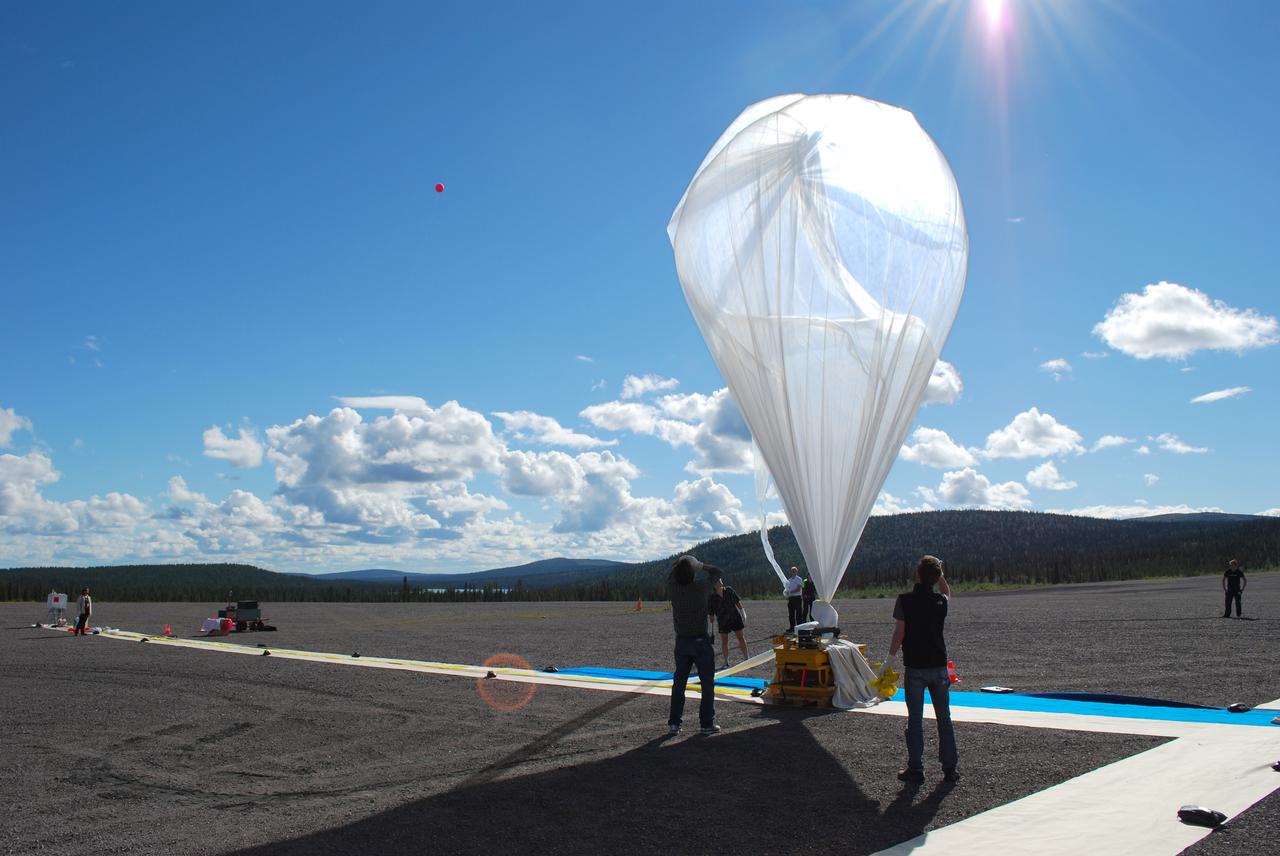
The BARREL team prepares to launch their third payload from Esrange Space Center near Kiruna, Sweden, on Aug. 21, 2016. The BARREL team is at Esrange Space Center launching a series of six scientific payloads on miniature scientific balloons. The NASA-funded BARREL – which stands for Balloon Array for Radiation-belt Relativistic Electron Losses – primarily measures X-rays in Earth’s atmosphere near the North and South Poles. These X-rays are produced by electrons raining down into the atmosphere from two giant swaths of radiation that surround Earth, called the Van Allen belts. Learning about the radiation near Earth helps us to better protect our satellites. Several of the BARREL balloons also carry instruments built by undergraduate students to measure the total electron content of Earth’s ionosphere, as well as the low-frequency electromagnetic waves that help to scatter electrons into Earth’s atmosphere. Though about 90 feet in diameter, the BARREL balloons are much smaller than standard football stadium-sized scientific balloons. This is the fourth campaign for the BARREL mission. BARREL is led by Dartmouth College in Hanover, New Hampshire. The undergraduate student instrument team is led by the University of Houston and funded by the Undergraduate Student Instrument Project out of NASA’s Wallops Flight Facility. For more information on NASA’s scientific balloon program, visit: <a href="http://www.nasa.gov/scientificballoons" rel="nofollow">www.nasa.gov/scientificballoons</a>. Credit: NASA/University of Houston/Michael Greer <b><a href="http://www.nasa.gov/audience/formedia/features/MP_Photo_Guidelines.html" rel="nofollow">NASA image use policy.</a></b> <b><a href="http://www.nasa.gov/centers/goddard/home/index.html" rel="nofollow">NASA Goddard Space Flight Center</a></b> enables NASA’s mission through four scientific endeavors: Earth Science, Heliophysics, Solar System Exploration, and Astrophysics. Goddard plays a leading role in NASA’s accomplishments by contributing compelling scientific knowledge to advance the Agency’s mission. <b>Follow us on <a href="http://twitter.com/NASAGoddardPix" rel="nofollow">Twitter</a></b> <b>Like us on <a href="http://www.facebook.com/pages/Greenbelt-MD/NASA-Goddard/395013845897?ref=tsd" rel="nofollow">Facebook</a></b> <b>Find us on <a href="http://instagrid.me/nasagoddard/?vm=grid" rel="nofollow">Instagram</a></b>
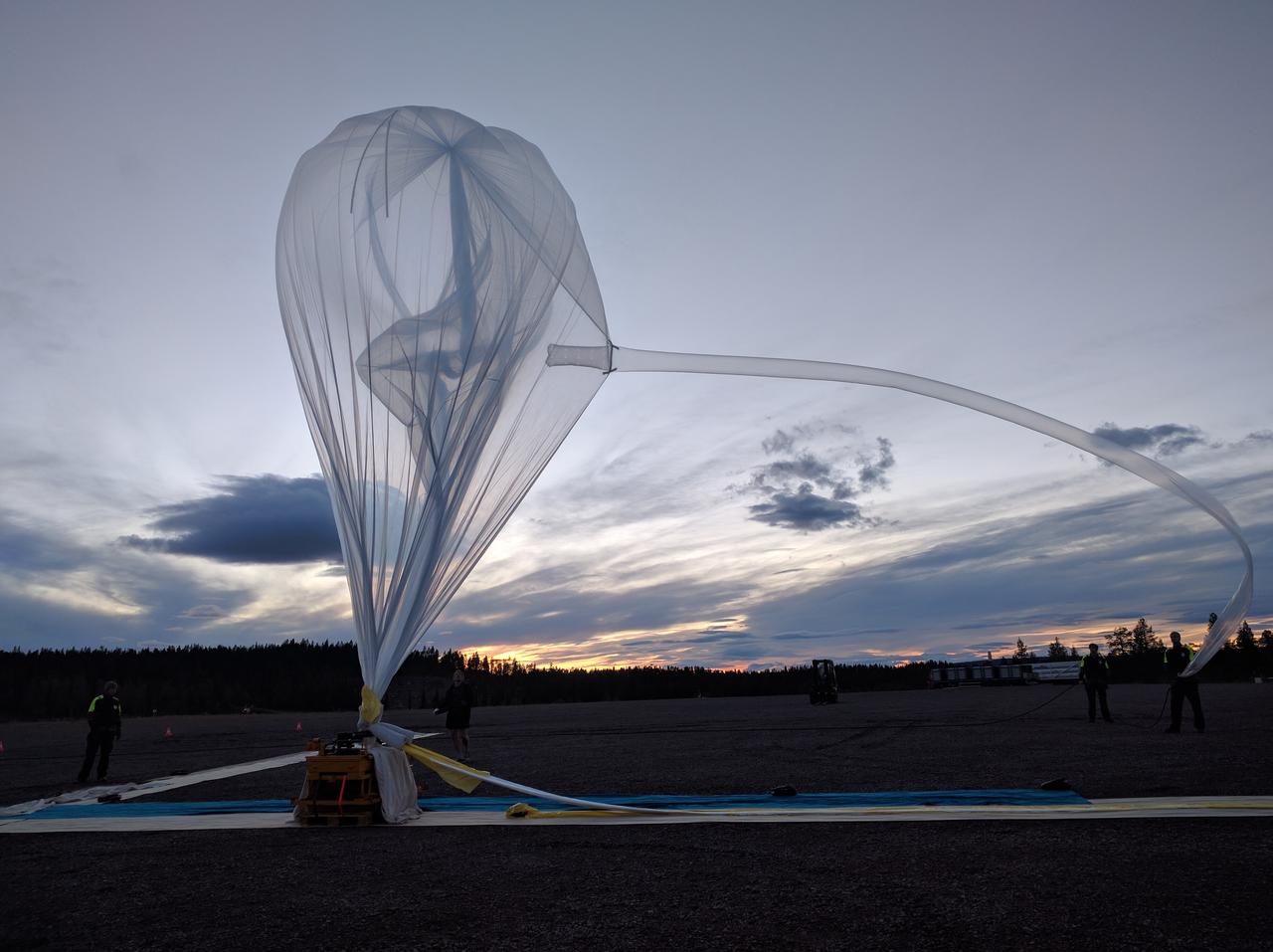
A BARREL balloon inflates on the launch pad at Esrange Space Center on Aug. 29, 2016. Throughout August 2016, the BARREL team was at Esrange Space Center near Kiruna, Sweden, launching a series of six scientific payloads on miniature scientific balloons. The NASA-funded BARREL – which stands for Balloon Array for Radiation-belt Relativistic Electron Losses – primarily measures X-rays in Earth’s atmosphere near the North and South Poles. These X-rays are produced by electrons raining down into the atmosphere from two giant swaths of radiation that surround Earth, called the Van Allen belts. Learning about the radiation near Earth helps us to better protect our satellites. Several of the BARREL balloons also carried instruments built by undergraduate students to measure the total electron content of Earth’s ionosphere, as well as the low-frequency electromagnetic waves that help to scatter electrons into Earth’s atmosphere. Though about 90 feet in diameter, the BARREL balloons are much smaller than standard football stadium-sized scientific balloons. This is the fourth campaign for the BARREL mission. BARREL is led by Dartmouth College in Hanover, New Hampshire. The undergraduate student instrument team is led by the University of Houston and funded by the Undergraduate Student Instrument Project out of NASA’s Wallops Flight Facility. For more information on NASA’s scientific balloon program, visit: <a href="http://www.nasa.gov/scientificballoons" rel="nofollow">www.nasa.gov/scientificballoons</a>. Credit: NASA/Dartmouth/Alexa Halford <b><a href="http://www.nasa.gov/audience/formedia/features/MP_Photo_Guidelines.html" rel="nofollow">NASA image use policy.</a></b> <b><a href="http://www.nasa.gov/centers/goddard/home/index.html" rel="nofollow">NASA Goddard Space Flight Center</a></b> enables NASA’s mission through four scientific endeavors: Earth Science, Heliophysics, Solar System Exploration, and Astrophysics. Goddard plays a leading role in NASA’s accomplishments by contributing compelling scientific knowledge to advance the Agency’s mission. <b>Follow us on <a href="http://twitter.com/NASAGoddardPix" rel="nofollow">Twitter</a></b> <b>Like us on <a href="http://www.facebook.com/pages/Greenbelt-MD/NASA-Goddard/395013845897?ref=tsd" rel="nofollow">Facebook</a></b> <b>Find us on <a href="http://instagrid.me/nasagoddard/?vm=grid" rel="nofollow">Instagram</a></b>

The fourth BARREL balloon of this campaign sits on the launch pad shortly before it launched on Aug. 21, 2016. The BARREL team is at Esrange Space Center near Kiruna, Sweden, launching a series of six scientific payloads on miniature scientific balloons. The NASA-funded BARREL – which stands for Balloon Array for Radiation-belt Relativistic Electron Losses – primarily measures X-rays in Earth’s atmosphere near the North and South Poles. These X-rays are produced by electrons raining down into the atmosphere from two giant swaths of radiation that surround Earth, called the Van Allen belts. Learning about the radiation near Earth helps us to better protect our satellites. Several of the BARREL balloons also carry instruments built by undergraduate students to measure the total electron content of Earth’s ionosphere, as well as the low-frequency electromagnetic waves that help to scatter electrons into Earth’s atmosphere. Though about 90 feet in diameter, the BARREL balloons are much smaller than standard football stadium-sized scientific balloons. This is the fourth campaign for the BARREL mission. BARREL is led by Dartmouth College in Hanover, New Hampshire. The undergraduate student instrument team is led by the University of Houston and funded by the Undergraduate Student Instrument Project out of NASA’s Wallops Flight Facility. For more information on NASA’s scientific balloon program, visit: <a href="http://www.nasa.gov/scientificballoons" rel="nofollow">www.nasa.gov/scientificballoons</a>. Credit: NASA/University of Houston/Michael Greer <b><a href="http://www.nasa.gov/audience/formedia/features/MP_Photo_Guidelines.html" rel="nofollow">NASA image use policy.</a></b> <b><a href="http://www.nasa.gov/centers/goddard/home/index.html" rel="nofollow">NASA Goddard Space Flight Center</a></b> enables NASA’s mission through four scientific endeavors: Earth Science, Heliophysics, Solar System Exploration, and Astrophysics. Goddard plays a leading role in NASA’s accomplishments by contributing compelling scientific knowledge to advance the Agency’s mission. <b>Follow us on <a href="http://twitter.com/NASAGoddardPix" rel="nofollow">Twitter</a></b> <b>Like us on <a href="http://www.facebook.com/pages/Greenbelt-MD/NASA-Goddard/395013845897?ref=tsd" rel="nofollow">Facebook</a></b> <b>Find us on <a href="http://instagrid.me/nasagoddard/?vm=grid" rel="nofollow">Instagram</a></b>
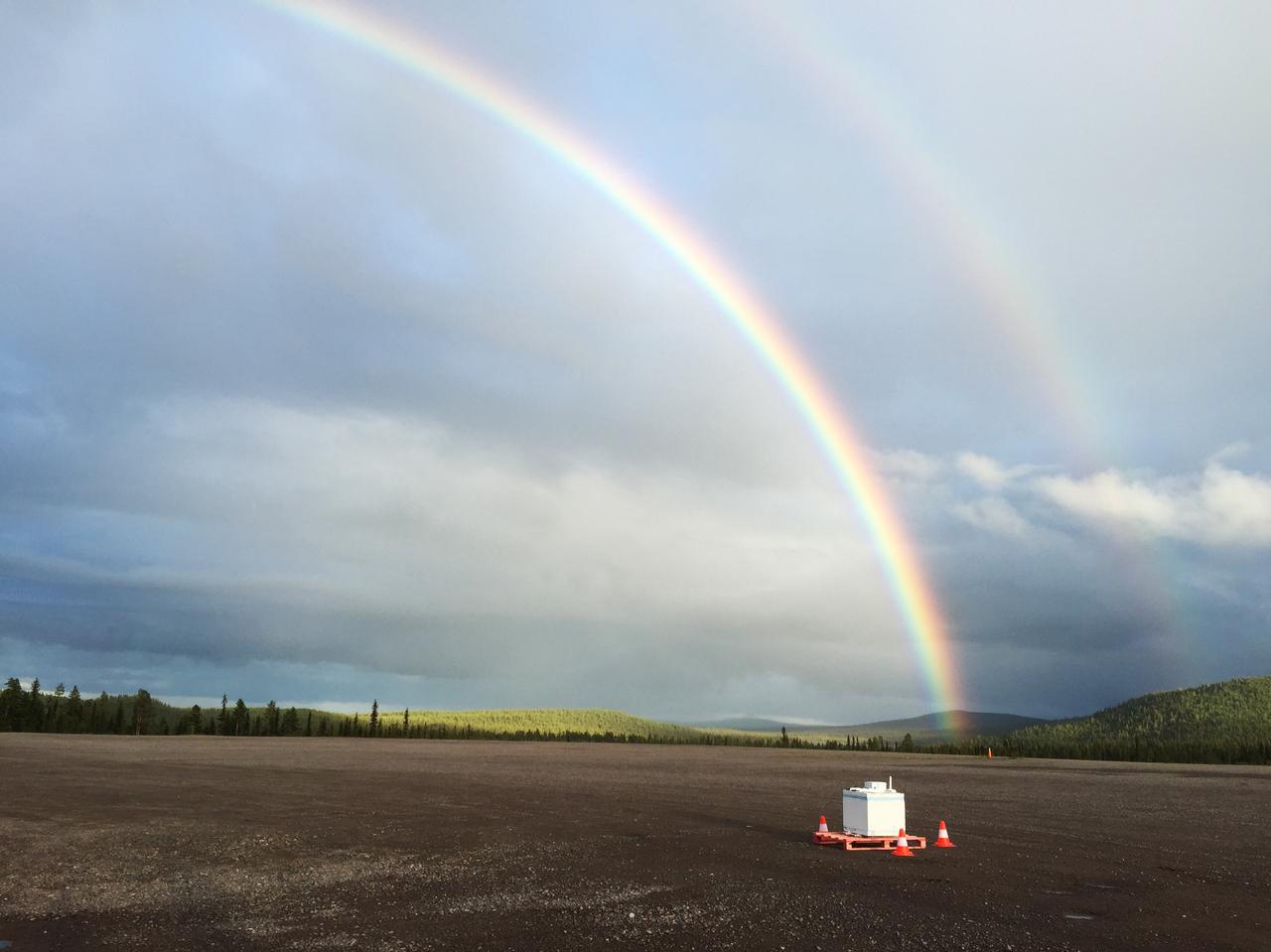
A BARREL payload sits on the launch pad at Esrange Space Center near Kiruna, Sweden. The BARREL team is at Esrange Space Center launching a series of six scientific payloads on miniature scientific balloons. The NASA-funded BARREL – which stands for Balloon Array for Radiation-belt Relativistic Electron Losses – primarily measures X-rays in Earth’s atmosphere near the North and South Poles. These X-rays are produced by electrons raining down into the atmosphere from two giant swaths of radiation that surround Earth, called the Van Allen belts. Learning about the radiation near Earth helps us to better protect our satellites. Several of the BARREL balloons also carry instruments built by undergraduate students to measure the total electron content of Earth’s ionosphere, as well as the low-frequency electromagnetic waves that help to scatter electrons into Earth’s atmosphere. Though about 90 feet in diameter, the BARREL balloons are much smaller than standard football stadium-sized scientific balloons. This is the fourth campaign for the BARREL mission. BARREL is led by Dartmouth College in Hanover, New Hampshire. The undergraduate student instrument team is led by the University of Houston and funded by the Undergraduate Student Instrument Project out of NASA’s Wallops Flight Facility. For more information on NASA’s scientific balloon program, visit: <a href="http://www.nasa.gov/scientificballoons" rel="nofollow">www.nasa.gov/scientificballoons</a>. Image credit: NASA/Dartmouth/Robyn Millan <b><a href="http://www.nasa.gov/audience/formedia/features/MP_Photo_Guidelines.html" rel="nofollow">NASA image use policy.</a></b> <b><a href="http://www.nasa.gov/centers/goddard/home/index.html" rel="nofollow">NASA Goddard Space Flight Center</a></b> enables NASA’s mission through four scientific endeavors: Earth Science, Heliophysics, Solar System Exploration, and Astrophysics. Goddard plays a leading role in NASA’s accomplishments by contributing compelling scientific knowledge to advance the Agency’s mission. <b>Follow us on <a href="http://twitter.com/NASAGoddardPix" rel="nofollow">Twitter</a></b> <b>Like us on <a href="http://www.facebook.com/pages/Greenbelt-MD/NASA-Goddard/395013845897?ref=tsd" rel="nofollow">Facebook</a></b> <b>Find us on <a href="http://instagrid.me/nasagoddard/?vm=grid" rel="nofollow">Instagram</a></b>
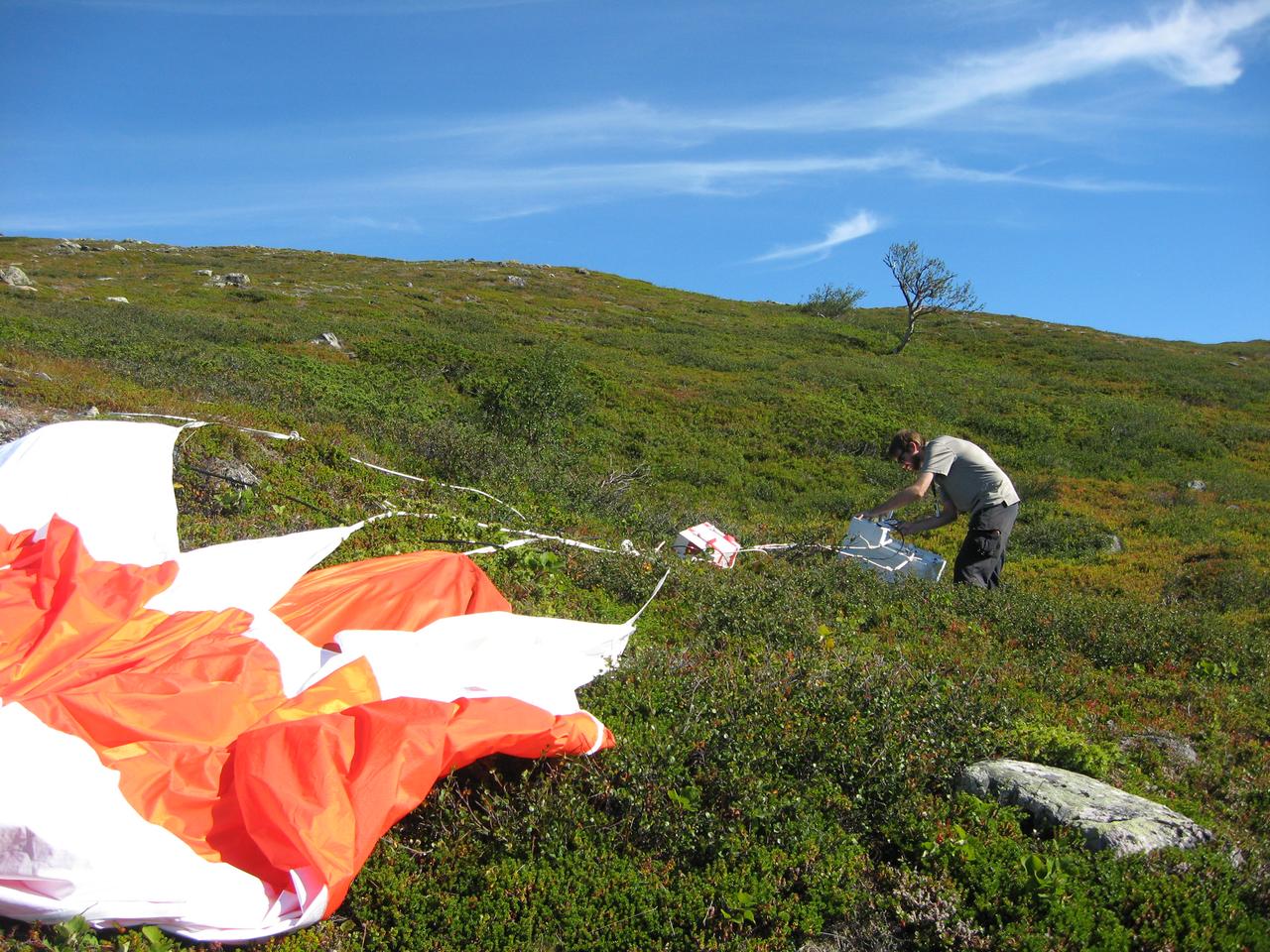
A BARREL team member recovers the second payload after it landed. The BARREL team is at Esrange Space Center near Kiruna, Sweden, launching a series of six scientific payloads on miniature scientific balloons. The NASA-funded BARREL – which stands for Balloon Array for Radiation-belt Relativistic Electron Losses – primarily measures X-rays in Earth’s atmosphere near the North and South Poles. These X-rays are produced by electrons raining down into the atmosphere from two giant swaths of radiation that surround Earth, called the Van Allen belts. Learning about the radiation near Earth helps us to better protect our satellites. Several of the BARREL balloons also carry instruments built by undergraduate students to measure the total electron content of Earth’s ionosphere, as well as the low-frequency electromagnetic waves that help to scatter electrons into Earth’s atmosphere. Though about 90 feet in diameter, the BARREL balloons are much smaller than standard football stadium-sized scientific balloons. This is the fourth campaign for the BARREL mission. BARREL is led by Dartmouth College in Hanover, New Hampshire. The undergraduate student instrument team is led by the University of Houston and funded by the Undergraduate Student Instrument Project out of NASA’s Wallops Flight Facility. For more information on NASA’s scientific balloon program, visit: <a href="http://www.nasa.gov/scientificballoons" rel="nofollow">www.nasa.gov/scientificballoons</a>. Image credit: NASA/Montana State University/Arlo Johnson <b><a href="http://www.nasa.gov/audience/formedia/features/MP_Photo_Guidelines.html" rel="nofollow">NASA image use policy.</a></b> <b><a href="http://www.nasa.gov/centers/goddard/home/index.html" rel="nofollow">NASA Goddard Space Flight Center</a></b> enables NASA’s mission through four scientific endeavors: Earth Science, Heliophysics, Solar System Exploration, and Astrophysics. Goddard plays a leading role in NASA’s accomplishments by contributing compelling scientific knowledge to advance the Agency’s mission. <b>Follow us on <a href="http://twitter.com/NASAGoddardPix" rel="nofollow">Twitter</a></b> <b>Like us on <a href="http://www.facebook.com/pages/Greenbelt-MD/NASA-Goddard/395013845897?ref=tsd" rel="nofollow">Facebook</a></b> <b>Find us on <a href="http://instagrid.me/nasagoddard/?vm=grid" rel="nofollow">Instagram</a></b>

The third BARREL balloon floats towards the stratosphere on Aug. 21, 2016. This payload flew for nearly 30 hours, measuring X-rays in Earth’s atmosphere. The BARREL team is at Esrange Space Center near Kiruna, Sweden, launching a series of six scientific payloads on miniature scientific balloons. The NASA-funded BARREL – which stands for Balloon Array for Radiation-belt Relativistic Electron Losses – primarily measures X-rays in Earth’s atmosphere near the North and South Poles. These X-rays are produced by electrons raining down into the atmosphere from two giant swaths of radiation that surround Earth, called the Van Allen belts. Learning about the radiation near Earth helps us to better protect our satellites. Several of the BARREL balloons also carry instruments built by undergraduate students to measure the total electron content of Earth’s ionosphere, as well as the low-frequency electromagnetic waves that help to scatter electrons into Earth’s atmosphere. Though about 90 feet in diameter, the BARREL balloons are much smaller than standard football stadium-sized scientific balloons. This is the fourth campaign for the BARREL mission. BARREL is led by Dartmouth College in Hanover, New Hampshire. The undergraduate student instrument team is led by the University of Houston and funded by the Undergraduate Student Instrument Project out of NASA’s Wallops Flight Facility. For more information on NASA’s scientific balloon program, visit: <a href="http://www.nasa.gov/scientificballoons" rel="nofollow">www.nasa.gov/scientificballoons</a>. Credit: NASA/University of Houston/Michael Greer <b><a href="http://www.nasa.gov/audience/formedia/features/MP_Photo_Guidelines.html" rel="nofollow">NASA image use policy.</a></b> <b><a href="http://www.nasa.gov/centers/goddard/home/index.html" rel="nofollow">NASA Goddard Space Flight Center</a></b> enables NASA’s mission through four scientific endeavors: Earth Science, Heliophysics, Solar System Exploration, and Astrophysics. Goddard plays a leading role in NASA’s accomplishments by contributing compelling scientific knowledge to advance the Agency’s mission. <b>Follow us on <a href="http://twitter.com/NASAGoddardPix" rel="nofollow">Twitter</a></b> <b>Like us on <a href="http://www.facebook.com/pages/Greenbelt-MD/NASA-Goddard/395013845897?ref=tsd" rel="nofollow">Facebook</a></b> <b>Find us on <a href="http://instagrid.me/nasagoddard/?vm=grid" rel="nofollow">Instagram</a></b>

The BARREL team inflates the balloon to launch their fifth scientific payload from Esrange Space Center near Kiruna, Sweden, on Aug. 24, 2016. The BARREL team is at Esrange Space Center launching a series of six scientific payloads on miniature scientific balloons. The NASA-funded BARREL – which stands for Balloon Array for Radiation-belt Relativistic Electron Losses – primarily measures X-rays in Earth’s atmosphere near the North and South Poles. These X-rays are produced by electrons raining down into the atmosphere from two giant swaths of radiation that surround Earth, called the Van Allen belts. Learning about the radiation near Earth helps us to better protect our satellites. Several of the BARREL balloons also carry instruments built by undergraduate students to measure the total electron content of Earth’s ionosphere, as well as the low-frequency electromagnetic waves that help to scatter electrons into Earth’s atmosphere. Though about 90 feet in diameter, the BARREL balloons are much smaller than standard football stadium-sized scientific balloons. This is the fourth campaign for the BARREL mission. BARREL is led by Dartmouth College in Hanover, New Hampshire. The undergraduate student instrument team is led by the University of Houston and funded by the Undergraduate Student Instrument Project out of NASA’s Wallops Flight Facility. For more information on NASA’s scientific balloon program, visit: <a href="http://www.nasa.gov/scientificballoons" rel="nofollow">www.nasa.gov/scientificballoons</a>. Credit: NASA/University of Houston/Michael Greer <b><a href="http://www.nasa.gov/audience/formedia/features/MP_Photo_Guidelines.html" rel="nofollow">NASA image use policy.</a></b> <b><a href="http://www.nasa.gov/centers/goddard/home/index.html" rel="nofollow">NASA Goddard Space Flight Center</a></b> enables NASA’s mission through four scientific endeavors: Earth Science, Heliophysics, Solar System Exploration, and Astrophysics. Goddard plays a leading role in NASA’s accomplishments by contributing compelling scientific knowledge to advance the Agency’s mission. <b>Follow us on <a href="http://twitter.com/NASAGoddardPix" rel="nofollow">Twitter</a></b> <b>Like us on <a href="http://www.facebook.com/pages/Greenbelt-MD/NASA-Goddard/395013845897?ref=tsd" rel="nofollow">Facebook</a></b> <b>Find us on <a href="http://instagrid.me/nasagoddard/?vm=grid" rel="nofollow">Instagram</a></b>
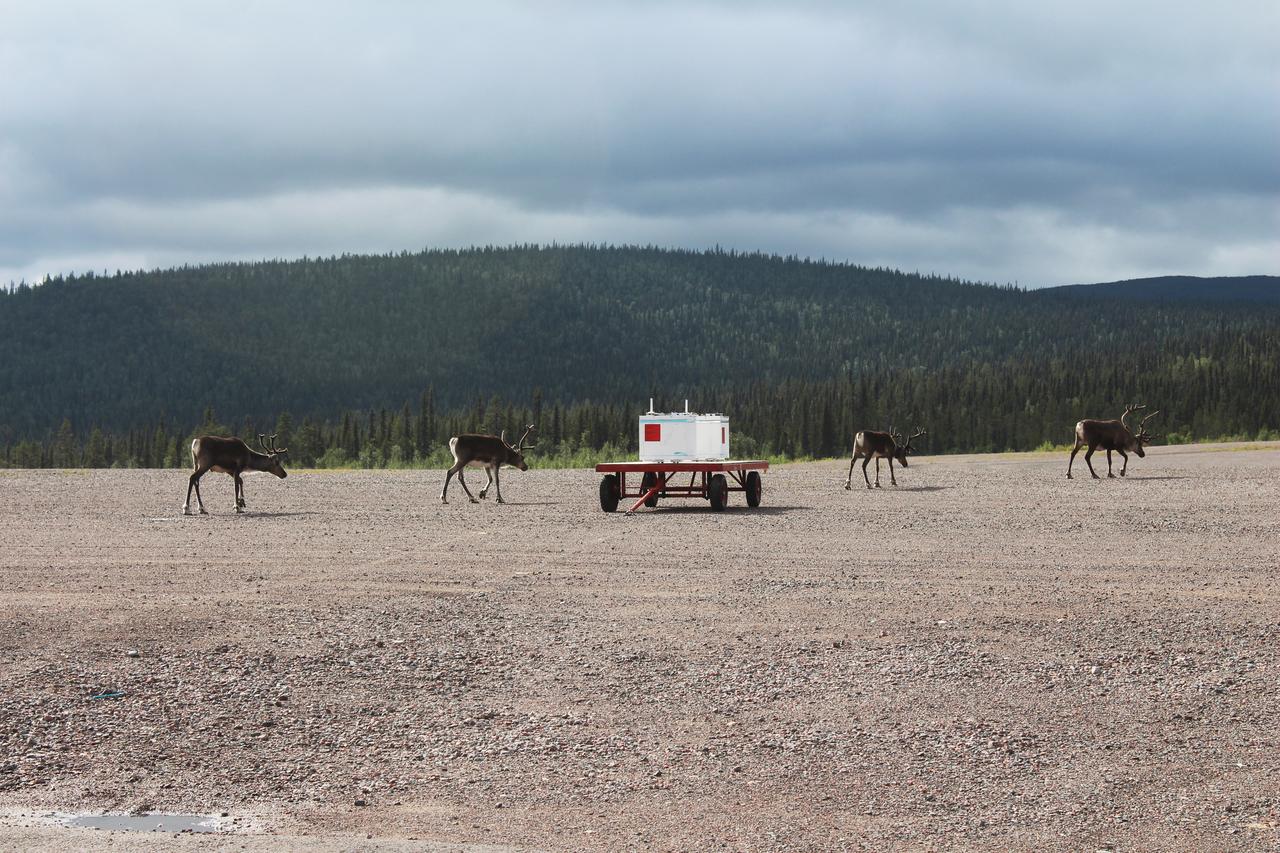
Four reindeer walk past the BARREL payload on the launch pad at Esrange Space Center near Kiruna, Sweden. The BARREL team is at Esrange Space Center launching a series of six scientific payloads on miniature scientific balloons. The NASA-funded BARREL – which stands for Balloon Array for Radiation-belt Relativistic Electron Losses – primarily measures X-rays in Earth’s atmosphere near the North and South Poles. These X-rays are produced by electrons raining down into the atmosphere from two giant swaths of radiation that surround Earth, called the Van Allen belts. Learning about the radiation near Earth helps us to better protect our satellites. Several of the BARREL balloons also carry instruments built by undergraduate students to measure the total electron content of Earth’s ionosphere, as well as the low-frequency electromagnetic waves that help to scatter electrons into Earth’s atmosphere. Though about 90 feet in diameter, the BARREL balloons are much smaller than standard football stadium-sized scientific balloons. This is the fourth campaign for the BARREL mission. BARREL is led by Dartmouth College in Hanover, New Hampshire. The undergraduate student instrument team is led by the University of Houston and funded by the Undergraduate Student Instrument Project out of NASA’s Wallops Flight Facility. For more information on NASA’s scientific balloon program, visit: <a href="http://www.nasa.gov/scientificballoons" rel="nofollow">www.nasa.gov/scientificballoons</a>. Image credit: NASA/University of Houston/Samar Mathur <b><a href="http://www.nasa.gov/audience/formedia/features/MP_Photo_Guidelines.html" rel="nofollow">NASA image use policy.</a></b> <b><a href="http://www.nasa.gov/centers/goddard/home/index.html" rel="nofollow">NASA Goddard Space Flight Center</a></b> enables NASA’s mission through four scientific endeavors: Earth Science, Heliophysics, Solar System Exploration, and Astrophysics. Goddard plays a leading role in NASA’s accomplishments by contributing compelling scientific knowledge to advance the Agency’s mission. <b>Follow us on <a href="http://twitter.com/NASAGoddardPix" rel="nofollow">Twitter</a></b> <b>Like us on <a href="http://www.facebook.com/pages/Greenbelt-MD/NASA-Goddard/395013845897?ref=tsd" rel="nofollow">Facebook</a></b> <b>Find us on <a href="http://instagrid.me/nasagoddard/?vm=grid" rel="nofollow">Instagram</a></b>
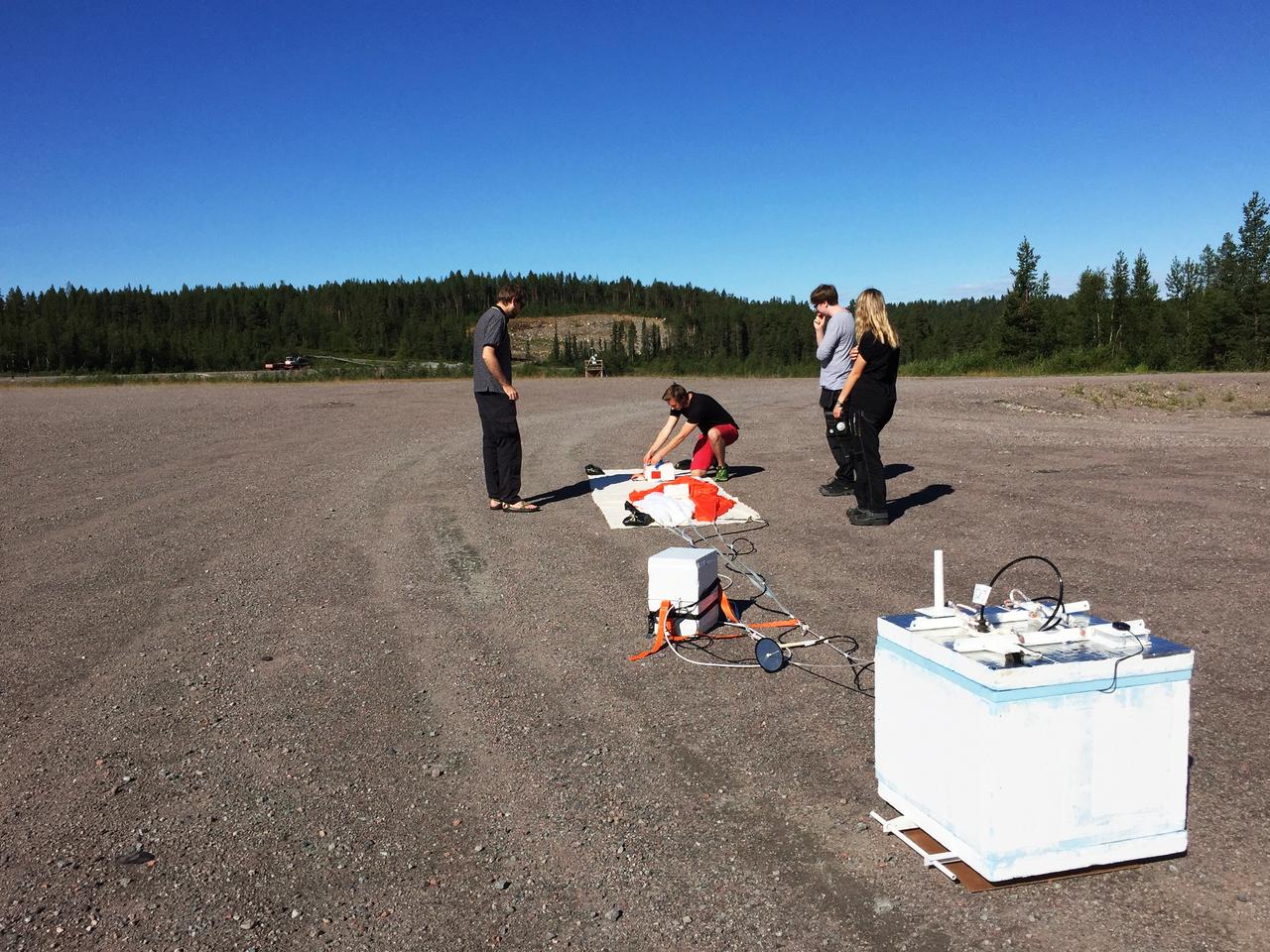
Prior to launch, the BARREL team works on the payload from the launch pad at Esrange Space Center near Kiruna, Sweden. The BARREL team is at Esrange Space Center launching a series of six scientific payloads on miniature scientific balloons. The NASA-funded BARREL – which stands for Balloon Array for Radiation-belt Relativistic Electron Losses – primarily measures X-rays in Earth’s atmosphere near the North and South Poles. These X-rays are produced by electrons raining down into the atmosphere from two giant swaths of radiation that surround Earth, called the Van Allen belts. Learning about the radiation near Earth helps us to better protect our satellites. Several of the BARREL balloons also carry instruments built by undergraduate students to measure the total electron content of Earth’s ionosphere, as well as the low-frequency electromagnetic waves that help to scatter electrons into Earth’s atmosphere. Though about 90 feet in diameter, the BARREL balloons are much smaller than standard football stadium-sized scientific balloons. This is the fourth campaign for the BARREL mission. BARREL is led by Dartmouth College in Hanover, New Hampshire. The undergraduate student instrument team is led by the University of Houston and funded by the Undergraduate Student Instrument Project out of NASA’s Wallops Flight Facility. For more information on NASA’s scientific balloon program, visit: <a href="http://www.nasa.gov/scientificballoons" rel="nofollow">www.nasa.gov/scientificballoons</a>. Image credit: NASA/Dartmouth/Robyn Millan <b><a href="http://www.nasa.gov/audience/formedia/features/MP_Photo_Guidelines.html" rel="nofollow">NASA image use policy.</a></b> <b><a href="http://www.nasa.gov/centers/goddard/home/index.html" rel="nofollow">NASA Goddard Space Flight Center</a></b> enables NASA’s mission through four scientific endeavors: Earth Science, Heliophysics, Solar System Exploration, and Astrophysics. Goddard plays a leading role in NASA’s accomplishments by contributing compelling scientific knowledge to advance the Agency’s mission. <b>Follow us on <a href="http://twitter.com/NASAGoddardPix" rel="nofollow">Twitter</a></b> <b>Like us on <a href="http://www.facebook.com/pages/Greenbelt-MD/NASA-Goddard/395013845897?ref=tsd" rel="nofollow">Facebook</a></b> <b>Find us on <a href="http://instagrid.me/nasagoddard/?vm=grid" rel="nofollow">Instagram</a></b>
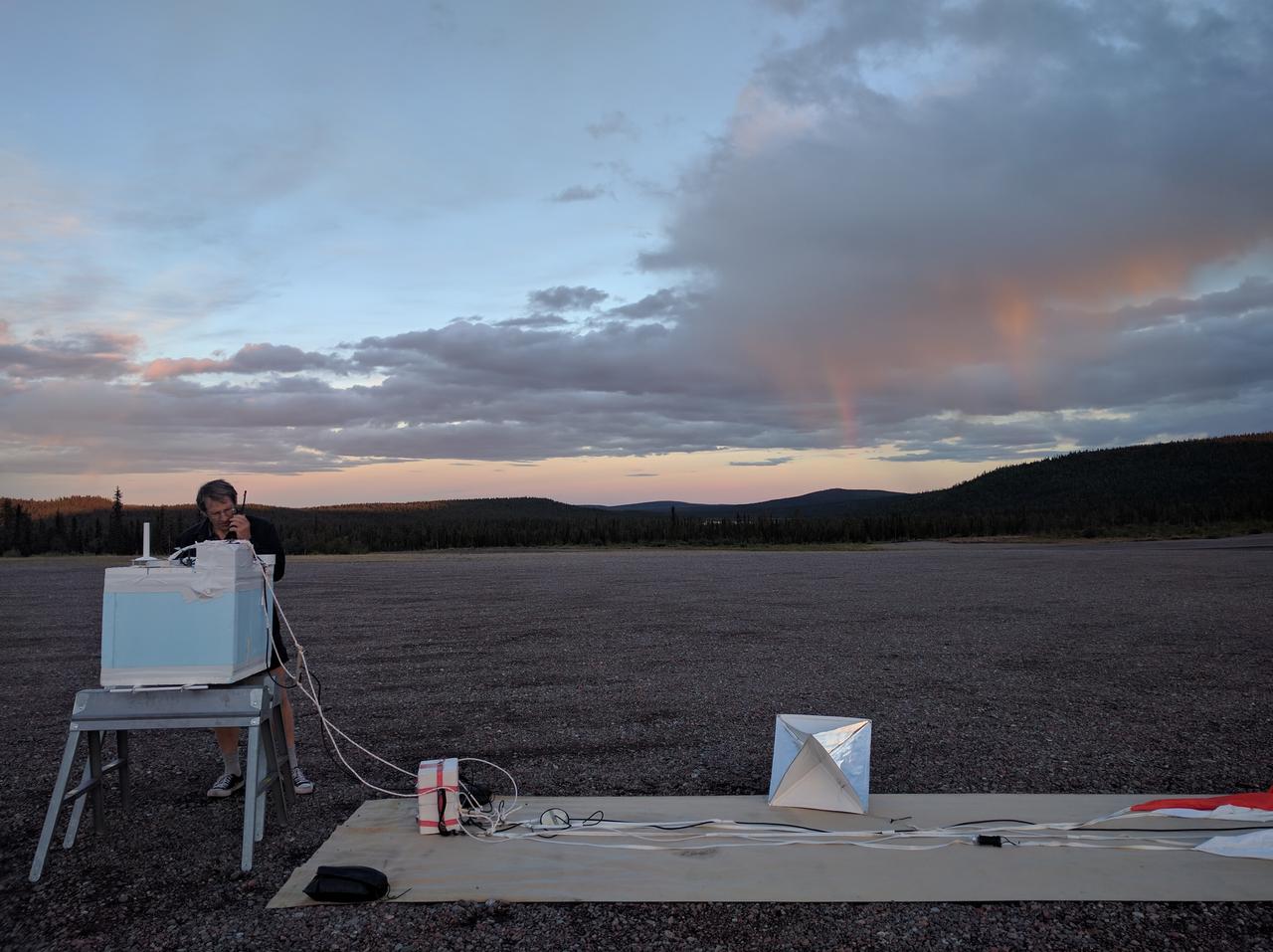
A member of the BARREL team prepares a payload for launch from Esrange Space Center on Aug. 29, 2016. Throughout August 2016, the BARREL team was at Esrange Space Center near Kiruna, Sweden, launching a series of six scientific payloads on miniature scientific balloons. The NASA-funded BARREL – which stands for Balloon Array for Radiation-belt Relativistic Electron Losses – primarily measures X-rays in Earth’s atmosphere near the North and South Poles. These X-rays are produced by electrons raining down into the atmosphere from two giant swaths of radiation that surround Earth, called the Van Allen belts. Learning about the radiation near Earth helps us to better protect our satellites. Several of the BARREL balloons also carried instruments built by undergraduate students to measure the total electron content of Earth’s ionosphere, as well as the low-frequency electromagnetic waves that help to scatter electrons into Earth’s atmosphere. Though about 90 feet in diameter, the BARREL balloons are much smaller than standard football stadium-sized scientific balloons. This is the fourth campaign for the BARREL mission. BARREL is led by Dartmouth College in Hanover, New Hampshire. The undergraduate student instrument team is led by the University of Houston and funded by the Undergraduate Student Instrument Project out of NASA’s Wallops Flight Facility. For more information on NASA’s scientific balloon program, visit: <a href="http://www.nasa.gov/scientificballoons" rel="nofollow">www.nasa.gov/scientificballoons</a>. Credit: NASA/Dartmouth/Alexa Halford <b><a href="http://www.nasa.gov/audience/formedia/features/MP_Photo_Guidelines.html" rel="nofollow">NASA image use policy.</a></b> <b><a href="http://www.nasa.gov/centers/goddard/home/index.html" rel="nofollow">NASA Goddard Space Flight Center</a></b> enables NASA’s mission through four scientific endeavors: Earth Science, Heliophysics, Solar System Exploration, and Astrophysics. Goddard plays a leading role in NASA’s accomplishments by contributing compelling scientific knowledge to advance the Agency’s mission. <b>Follow us on <a href="http://twitter.com/NASAGoddardPix" rel="nofollow">Twitter</a></b> <b>Like us on <a href="http://www.facebook.com/pages/Greenbelt-MD/NASA-Goddard/395013845897?ref=tsd" rel="nofollow">Facebook</a></b> <b>Find us on <a href="http://instagrid.me/nasagoddard/?vm=grid" rel="nofollow">Instagram</a></b>
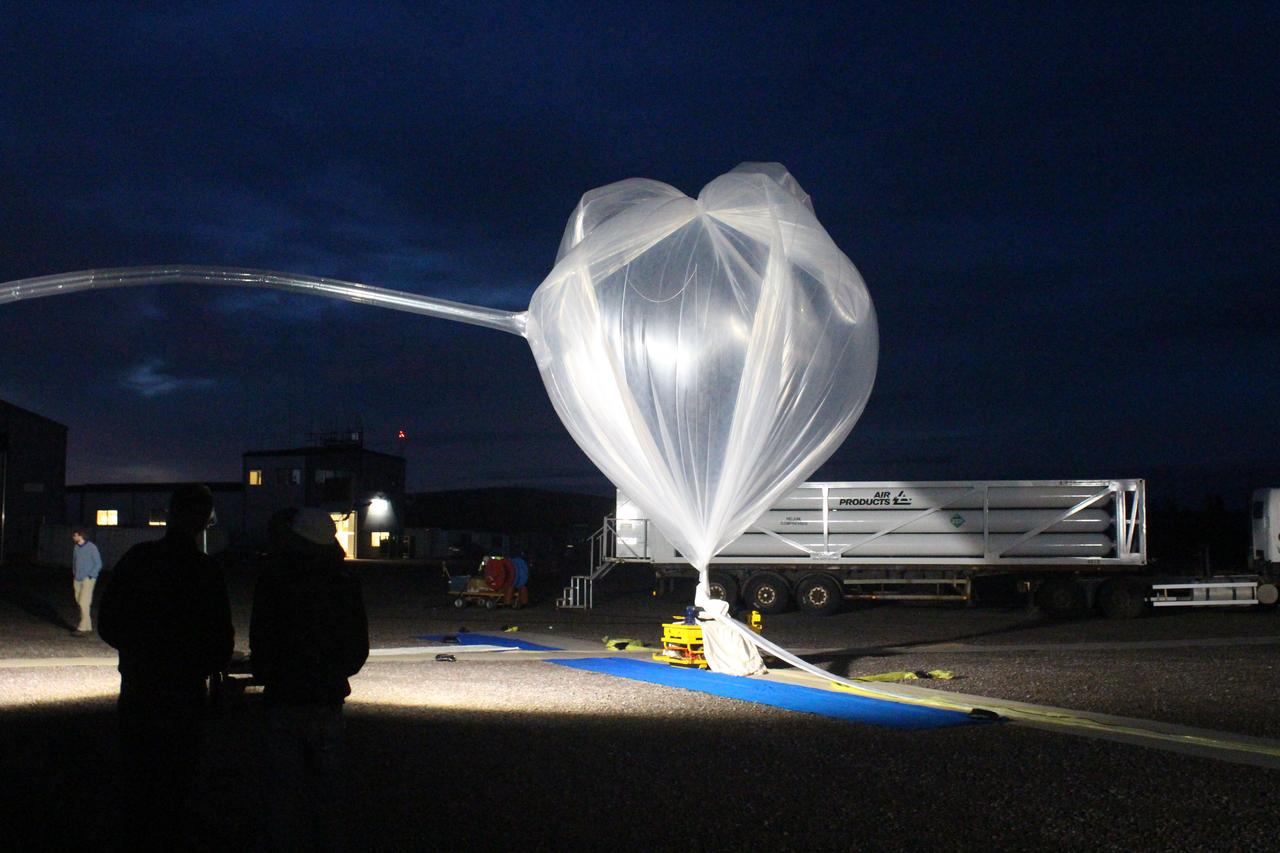
The first BARREL balloon is inflated just before its launch on Aug. 13, 2016, from Esrange Space Center near Kiruna, Sweden. The BARREL team is at Esrange Space Center launching a series of six scientific payloads on miniature scientific balloons. The NASA-funded BARREL – which stands for Balloon Array for Radiation-belt Relativistic Electron Losses – primarily measures X-rays in Earth’s atmosphere near the North and South Poles. These X-rays are produced by electrons raining down into the atmosphere from two giant swaths of radiation that surround Earth, called the Van Allen belts. Learning about the radiation near Earth helps us to better protect our satellites. Several of the BARREL balloons also carry instruments built by undergraduate students to measure the total electron content of Earth’s ionosphere, as well as the low-frequency electromagnetic waves that help to scatter electrons into Earth’s atmosphere. Though about 90 feet in diameter, the BARREL balloons are much smaller than standard football stadium-sized scientific balloons. This is the fourth campaign for the BARREL mission. BARREL is led by Dartmouth College in Hanover, New Hampshire. The undergraduate student instrument team is led by the University of Houston and funded by the Undergraduate Student Instrument Project out of NASA’s Wallops Flight Facility. For more information on NASA’s scientific balloon program, visit: <a href="http://www.nasa.gov/scientificballoons" rel="nofollow">www.nasa.gov/scientificballoons</a>. Image credit: NASA/University of Houston/Edgar Bering <b><a href="http://www.nasa.gov/audience/formedia/features/MP_Photo_Guidelines.html" rel="nofollow">NASA image use policy.</a></b> <b><a href="http://www.nasa.gov/centers/goddard/home/index.html" rel="nofollow">NASA Goddard Space Flight Center</a></b> enables NASA’s mission through four scientific endeavors: Earth Science, Heliophysics, Solar System Exploration, and Astrophysics. Goddard plays a leading role in NASA’s accomplishments by contributing compelling scientific knowledge to advance the Agency’s mission. <b>Follow us on <a href="http://twitter.com/NASAGoddardPix" rel="nofollow">Twitter</a></b> <b>Like us on <a href="http://www.facebook.com/pages/Greenbelt-MD/NASA-Goddard/395013845897?ref=tsd" rel="nofollow">Facebook</a></b> <b>Find us on <a href="http://instagrid.me/nasagoddard/?vm=grid" rel="nofollow">Instagram</a></b>
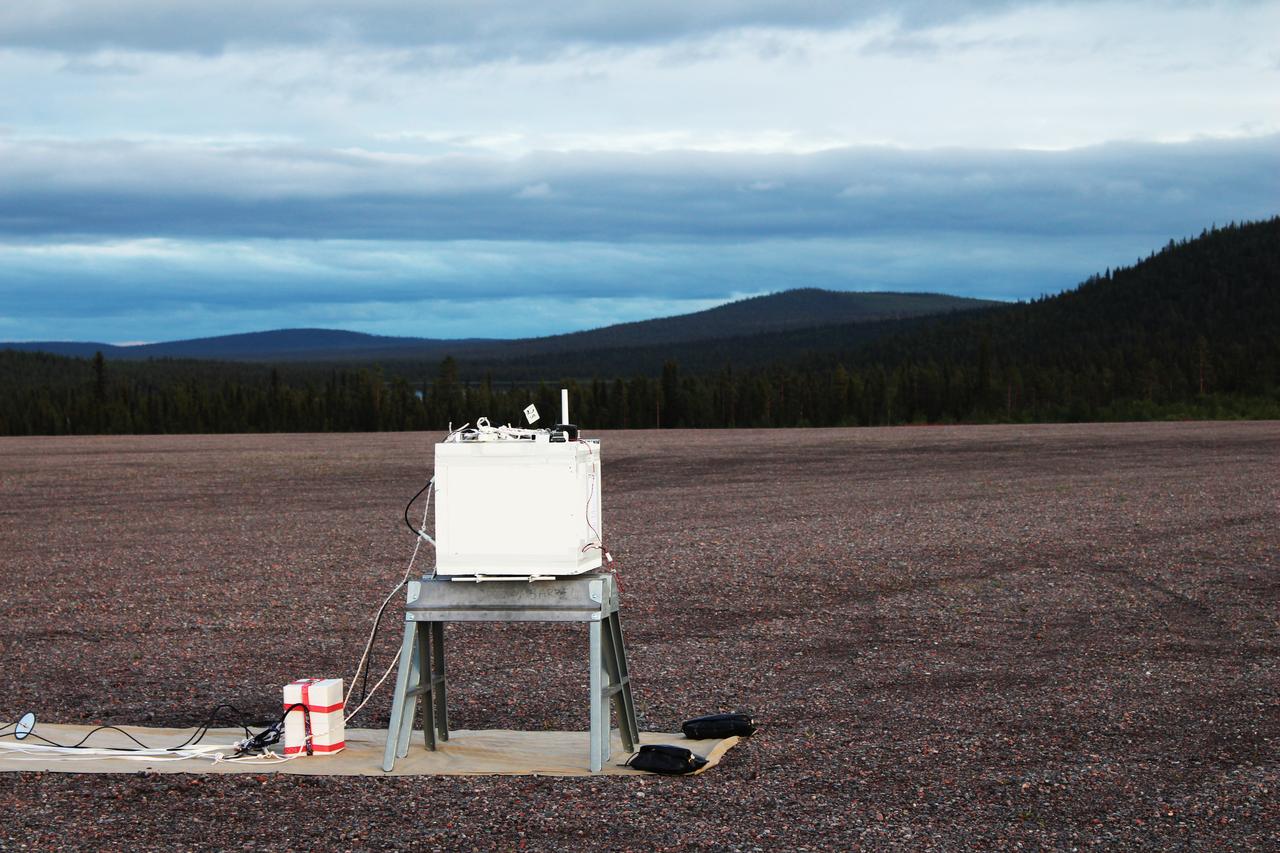
A BARREL payload sits on the launch pad at Esrange Space Center near Kiruna, Sweden. The BARREL team is at Esrange Space Center launching a series of six scientific payloads on miniature scientific balloons. The NASA-funded BARREL – which stands for Balloon Array for Radiation-belt Relativistic Electron Losses – primarily measures X-rays in Earth’s atmosphere near the North and South Poles. These X-rays are produced by electrons raining down into the atmosphere from two giant swaths of radiation that surround Earth, called the Van Allen belts. Learning about the radiation near Earth helps us to better protect our satellites. Several of the BARREL balloons also carry instruments built by undergraduate students to measure the total electron content of Earth’s ionosphere, as well as the low-frequency electromagnetic waves that help to scatter electrons into Earth’s atmosphere. Though about 90 feet in diameter, the BARREL balloons are much smaller than standard football stadium-sized scientific balloons. This is the fourth campaign for the BARREL mission. BARREL is led by Dartmouth College in Hanover, New Hampshire. The undergraduate student instrument team is led by the University of Houston and funded by the Undergraduate Student Instrument Project out of NASA’s Wallops Flight Facility. For more information on NASA’s scientific balloon program, visit: <a href="http://www.nasa.gov/scientificballoons" rel="nofollow">www.nasa.gov/scientificballoons</a>. Image credit: NASA/University of Houston/Edgar Bering <b><a href="http://www.nasa.gov/audience/formedia/features/MP_Photo_Guidelines.html" rel="nofollow">NASA image use policy.</a></b> <b><a href="http://www.nasa.gov/centers/goddard/home/index.html" rel="nofollow">NASA Goddard Space Flight Center</a></b> enables NASA’s mission through four scientific endeavors: Earth Science, Heliophysics, Solar System Exploration, and Astrophysics. Goddard plays a leading role in NASA’s accomplishments by contributing compelling scientific knowledge to advance the Agency’s mission. <b>Follow us on <a href="http://twitter.com/NASAGoddardPix" rel="nofollow">Twitter</a></b> <b>Like us on <a href="http://www.facebook.com/pages/Greenbelt-MD/NASA-Goddard/395013845897?ref=tsd" rel="nofollow">Facebook</a></b> <b>Find us on <a href="http://instagrid.me/nasagoddard/?vm=grid" rel="nofollow">Instagram</a></b>
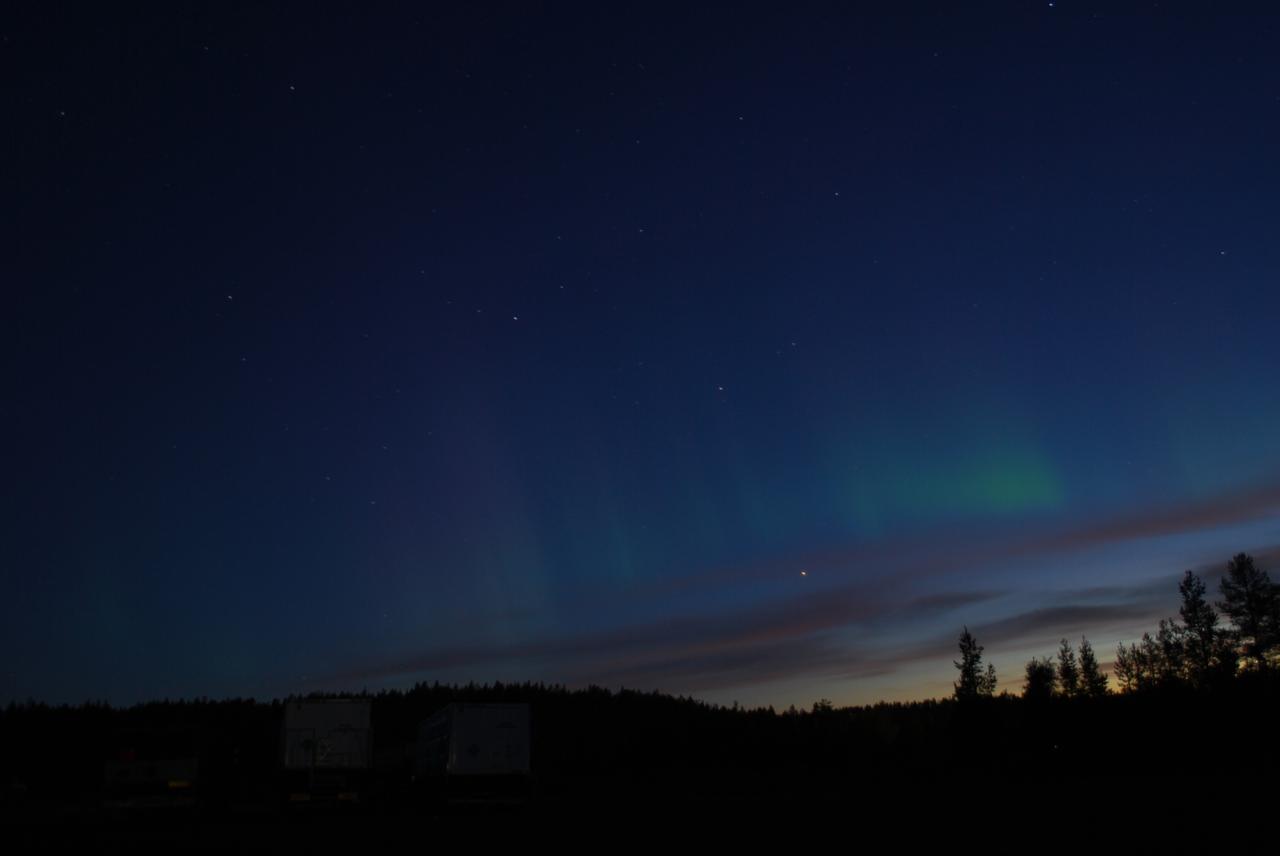
The faint green glow of aurora can be seen above the clouds at Esrange Space Center in this photo from Aug. 23, 2016. Auroras are created by energetic electrons, which rain down from Earth’s magnetic bubble and interact with particles in the upper atmosphere to create glowing lights that stretch across the sky. The BARREL team is at Esrange Space Center near Kiruna, Sweden, launching a series of six scientific payloads on miniature scientific balloons. The NASA-funded BARREL – which stands for Balloon Array for Radiation-belt Relativistic Electron Losses – primarily measures X-rays in Earth’s atmosphere near the North and South Poles. These X-rays are produced by electrons raining down into the atmosphere from two giant swaths of radiation that surround Earth, called the Van Allen belts. Learning about the radiation near Earth helps us to better protect our satellites. Several of the BARREL balloons also carry instruments built by undergraduate students to measure the total electron content of Earth’s ionosphere, as well as the low-frequency electromagnetic waves that help to scatter electrons into Earth’s atmosphere. Though about 90 feet in diameter, the BARREL balloons are much smaller than standard football stadium-sized scientific balloons. This is the fourth campaign for the BARREL mission. BARREL is led by Dartmouth College in Hanover, New Hampshire. The undergraduate student instrument team is led by the University of Houston and funded by the Undergraduate Student Instrument Project out of NASA’s Wallops Flight Facility. For more information on NASA’s scientific balloon program, visit: <a href="http://www.nasa.gov/scientificballoons" rel="nofollow">www.nasa.gov/scientificballoons</a>. Credit: NASA/University of Houston/Michael Greer <b><a href="http://www.nasa.gov/audience/formedia/features/MP_Photo_Guidelines.html" rel="nofollow">NASA image use policy.</a></b> <b><a href="http://www.nasa.gov/centers/goddard/home/index.html" rel="nofollow">NASA Goddard Space Flight Center</a></b> enables NASA’s mission through four scientific endeavors: Earth Science, Heliophysics, Solar System Exploration, and Astrophysics. Goddard plays a leading role in NASA’s accomplishments by contributing compelling scientific knowledge to advance the Agency’s mission. <b>Follow us on <a href="http://twitter.com/NASAGoddardPix" rel="nofollow">Twitter</a></b> <b>Like us on <a href="http://www.facebook.com/pages/Greenbelt-MD/NASA-Goddard/395013845897?ref=tsd" rel="nofollow">Facebook</a></b> <b>Find us on <a href="http://instagrid.me/nasagoddard/?vm=grid" rel="nofollow">Instagram</a></b>
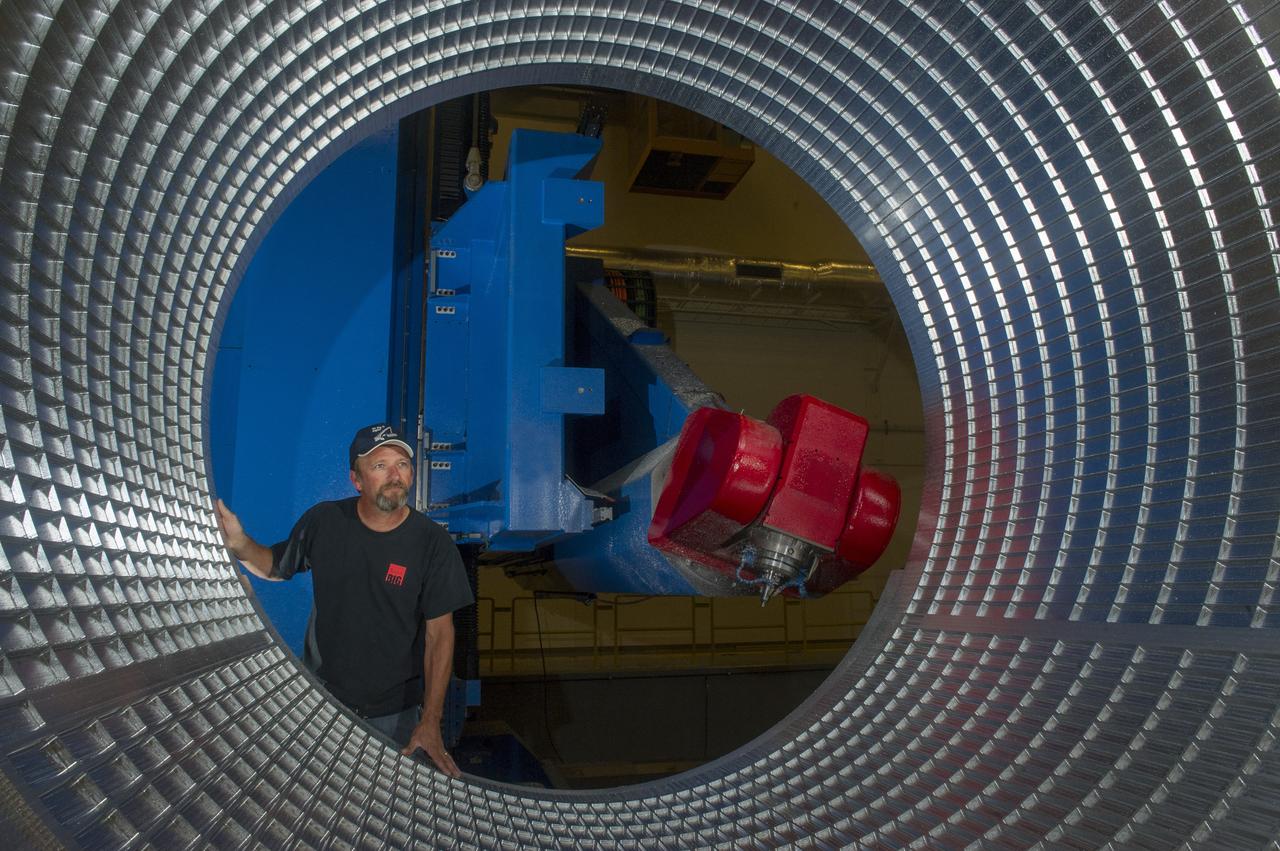
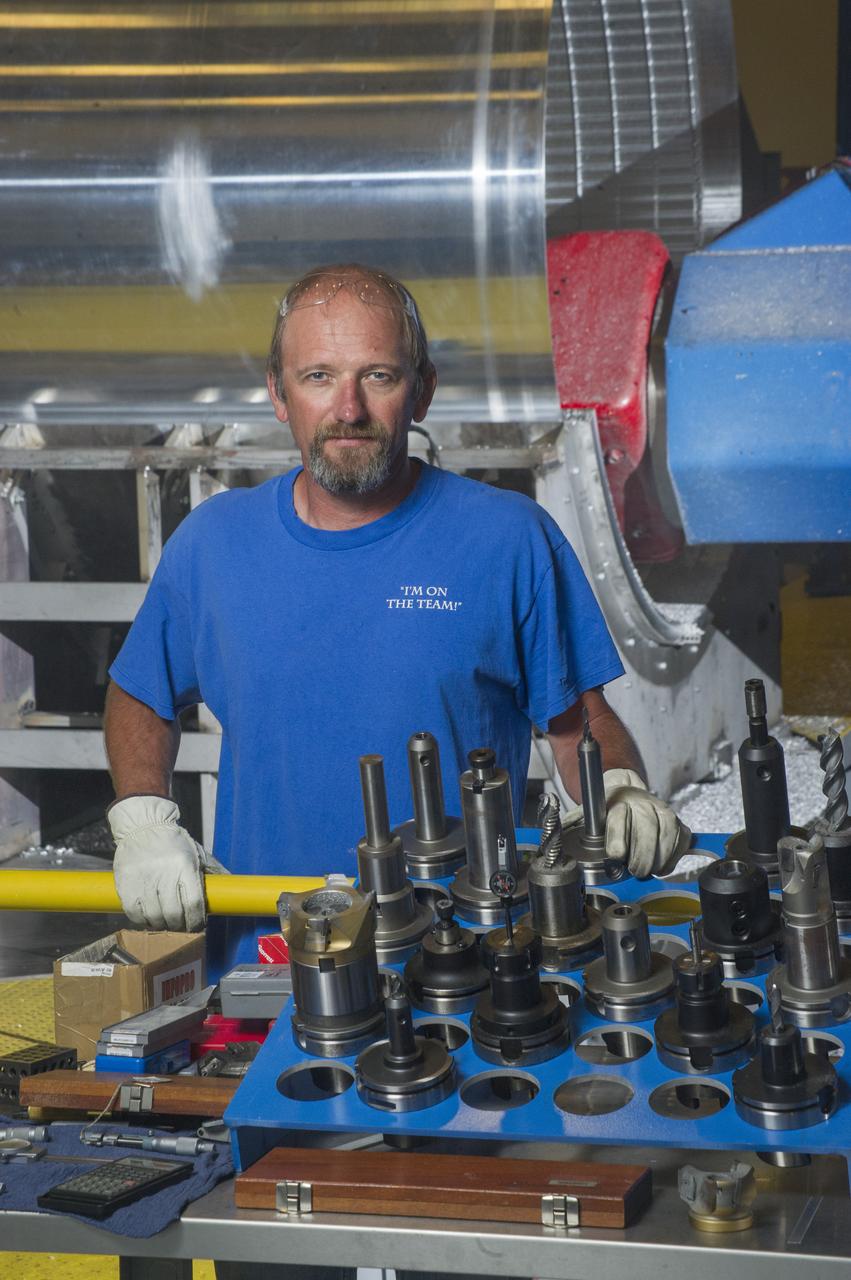
DAVID OSBORNE, A MACHINIST ON THE METTS CONTRACT, INSPECTS THE ORTHOGRID TOOL PATH ON AN 8 FOOT CF1 BARREL IN SUPPORT OF THE SHELL BUCKLING TEST FOR LANGLEY RESEARCH CENTER. THIS IS THE FIRST BARREL THAT MSFC HAS MANUFACTURED FROM EXTRUDED MATERIAL, VERSUS THE ORIGINAL DESIGN BEING 3 SECTIONS BARREL PANELS THAT WERE FRICTION STIR WELDED. THE TESTING WILL SHOW THE DIFFERENT STRENGTH PROPERTIES FROM A WELDED VERSION TO A FULLY EXTRUDED PIECE OF MATERIAL.

Pumping helium into the first BARREL balloon to launch from Halley Research Satation. Credit: NASA --- In Antarctica in January, 2013 – the summer at the South Pole – scientists launched 20 balloons up into the air to study an enduring mystery of space weather: when the giant radiation belts surrounding Earth lose material, where do the extra particles actually go? The mission is called BARREL (Balloon Array for Radiation belt Relativistic Electron Losses) and it is led by physicist Robyn Millan of Dartmouth College in Hanover, NH. Millan provided photographs from the team’s time in Antarctica. The team launched a balloon every day or two into the circumpolar winds that circulate around the pole. Each balloon floated for anywhere from 3 to 40 days, measuring X-rays produced by fast-moving electrons high up in the atmosphere. BARREL works hand in hand with another NASA mission called the Van Allen Probes, which travels through the Van Allen radiation belts surrounding Earth. The belts wax and wane over time in response to incoming energy and material from the sun, sometimes intensifying the radiation through which satellites must travel. Scientists wish to understand this process better, and even provide forecasts of this space weather, in order to protect our spacecraft. As the Van Allen Probes were observing what was happening in the belts, BARREL tracked electrons that precipitated out of the belts and hurtled down Earth’s magnetic field lines toward the poles. By comparing data, scientists will be able to track how what’s happening in the belts correlates to the loss of particles – information that can help us understand this mysterious, dynamic region that can impact spacecraft. Having launched balloons in early 2013, the team is back at home building the next set of payloads. They will launch 20 more balloons in 2014. <b><a href="http://www.nasa.gov/audience/formedia/features/MP_Photo_Guidelines.html" rel="nofollow">NASA image use policy.</a></b> <b><a href="http://www.nasa.gov/centers/goddard/home/index.html" rel="nofollow">NASA Goddard Space Flight Center</a></b> enables NASA’s mission through four scientific endeavors: Earth Science, Heliophysics, Solar System Exploration, and Astrophysics. Goddard plays a leading role in NASA’s accomplishments by contributing compelling scientific knowledge to advance the Agency’s mission. <b>Follow us on <a href="http://twitter.com/NASA_GoddardPix" rel="nofollow">Twitter</a></b> <b>Like us on <a href="http://www.facebook.com/pages/Greenbelt-MD/NASA-Goddard/395013845897?ref=tsd" rel="nofollow">Facebook</a></b> <b>Find us on <a href="http://instagram.com/nasagoddard?vm=grid" rel="nofollow">Instagram</a></b>

A crane lowers two BARREL balloon payloads onto the platform at Halley Research Station in Antarctica. Credit: NASA --- In Antarctica in January, 2013 – the summer at the South Pole – scientists launched 20 balloons up into the air to study an enduring mystery of space weather: when the giant radiation belts surrounding Earth lose material, where do the extra particles actually go? The mission is called BARREL (Balloon Array for Radiation belt Relativistic Electron Losses) and it is led by physicist Robyn Millan of Dartmouth College in Hanover, NH. Millan provided photographs from the team’s time in Antarctica. The team launched a balloon every day or two into the circumpolar winds that circulate around the pole. Each balloon floated for anywhere from 3 to 40 days, measuring X-rays produced by fast-moving electrons high up in the atmosphere. BARREL works hand in hand with another NASA mission called the Van Allen Probes, which travels through the Van Allen radiation belts surrounding Earth. The belts wax and wane over time in response to incoming energy and material from the sun, sometimes intensifying the radiation through which satellites must travel. Scientists wish to understand this process better, and even provide forecasts of this space weather, in order to protect our spacecraft. As the Van Allen Probes were observing what was happening in the belts, BARREL tracked electrons that precipitated out of the belts and hurtled down Earth’s magnetic field lines toward the poles. By comparing data, scientists will be able to track how what’s happening in the belts correlates to the loss of particles – information that can help us understand this mysterious, dynamic region that can impact spacecraft. Having launched balloons in early 2013, the team is back at home building the next set of payloads. They will launch 20 more balloons in 2014. <b><a href="http://www.nasa.gov/audience/formedia/features/MP_Photo_Guidelines.html" rel="nofollow">NASA image use policy.</a></b> <b><a href="http://www.nasa.gov/centers/goddard/home/index.html" rel="nofollow">NASA Goddard Space Flight Center</a></b> enables NASA’s mission through four scientific endeavors: Earth Science, Heliophysics, Solar System Exploration, and Astrophysics. Goddard plays a leading role in NASA’s accomplishments by contributing compelling scientific knowledge to advance the Agency’s mission. <b>Follow us on <a href="http://twitter.com/NASA_GoddardPix" rel="nofollow">Twitter</a></b> <b>Like us on <a href="http://www.facebook.com/pages/Greenbelt-MD/NASA-Goddard/395013845897?ref=tsd" rel="nofollow">Facebook</a></b> <b>Find us on <a href="http://instagram.com/nasagoddard?vm=grid" rel="nofollow">Instagram</a></b>
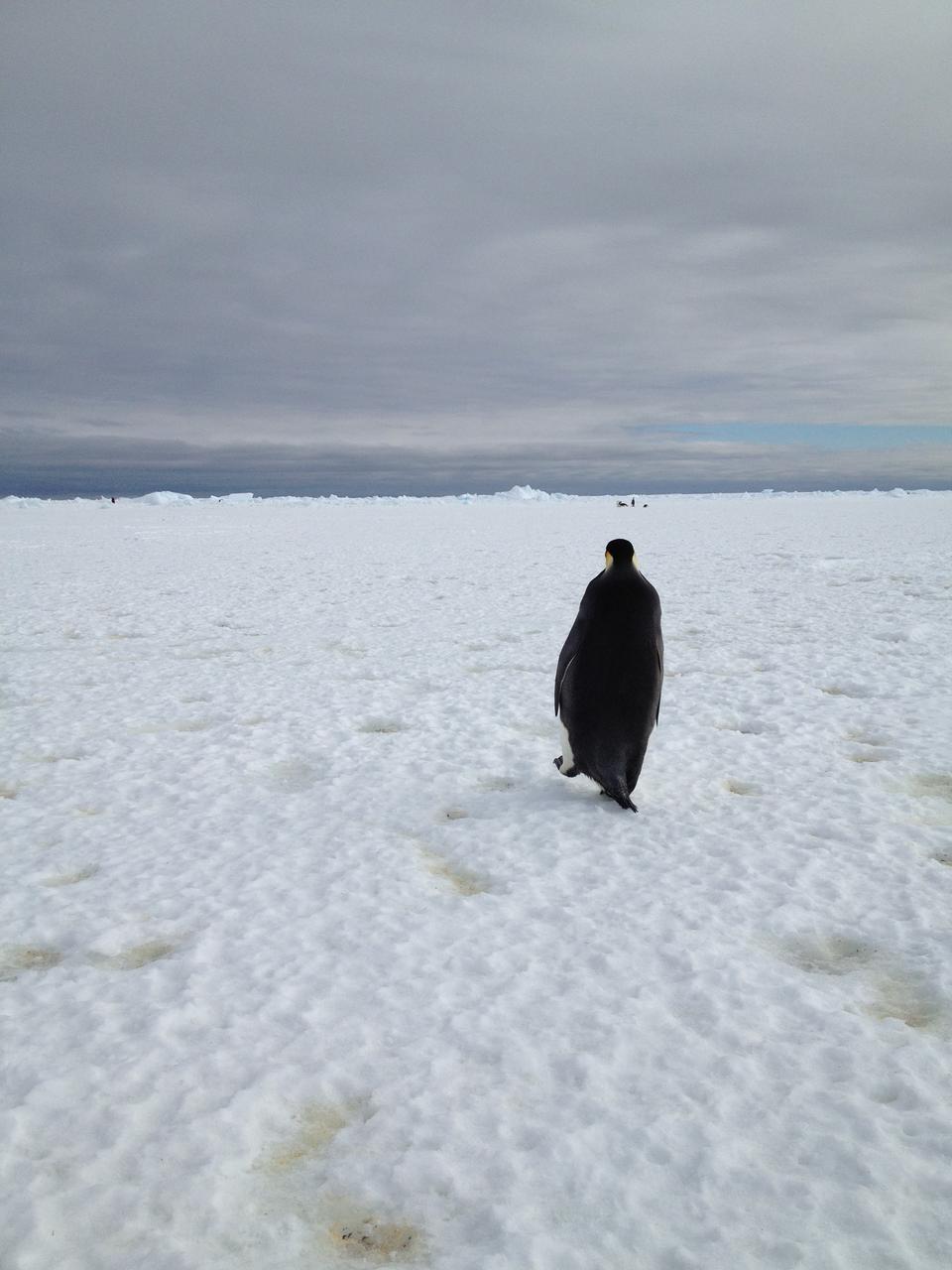
An emperor penguin waddles away on Christmas morning in Antarctica. On Christmas day, the BARREL team visited a penguin colony. Credit: NASA --- In Antarctica in January, 2013 – the summer at the South Pole – scientists launched 20 balloons up into the air to study an enduring mystery of space weather: when the giant radiation belts surrounding Earth lose material, where do the extra particles actually go? The mission is called BARREL (Balloon Array for Radiation belt Relativistic Electron Losses) and it is led by physicist Robyn Millan of Dartmouth College in Hanover, NH. Millan provided photographs from the team’s time in Antarctica. The team launched a balloon every day or two into the circumpolar winds that circulate around the pole. Each balloon floated for anywhere from 3 to 40 days, measuring X-rays produced by fast-moving electrons high up in the atmosphere. BARREL works hand in hand with another NASA mission called the Van Allen Probes, which travels through the Van Allen radiation belts surrounding Earth. The belts wax and wane over time in response to incoming energy and material from the sun, sometimes intensifying the radiation through which satellites must travel. Scientists wish to understand this process better, and even provide forecasts of this space weather, in order to protect our spacecraft. As the Van Allen Probes were observing what was happening in the belts, BARREL tracked electrons that precipitated out of the belts and hurtled down Earth’s magnetic field lines toward the poles. By comparing data, scientists will be able to track how what’s happening in the belts correlates to the loss of particles – information that can help us understand this mysterious, dynamic region that can impact spacecraft. Having launched balloons in early 2013, the team is back at home building the next set of payloads. They will launch 20 more balloons in 2014. <b><a href="http://www.nasa.gov/audience/formedia/features/MP_Photo_Guidelines.html" rel="nofollow">NASA image use policy.</a></b> <b><a href="http://www.nasa.gov/centers/goddard/home/index.html" rel="nofollow">NASA Goddard Space Flight Center</a></b> enables NASA’s mission through four scientific endeavors: Earth Science, Heliophysics, Solar System Exploration, and Astrophysics. Goddard plays a leading role in NASA’s accomplishments by contributing compelling scientific knowledge to advance the Agency’s mission. <b>Follow us on <a href="http://twitter.com/NASA_GoddardPix" rel="nofollow">Twitter</a></b> <b>Like us on <a href="http://www.facebook.com/pages/Greenbelt-MD/NASA-Goddard/395013845897?ref=tsd" rel="nofollow">Facebook</a></b> <b>Find us on <a href="http://instagram.com/nasagoddard?vm=grid" rel="nofollow">Instagram</a></b>
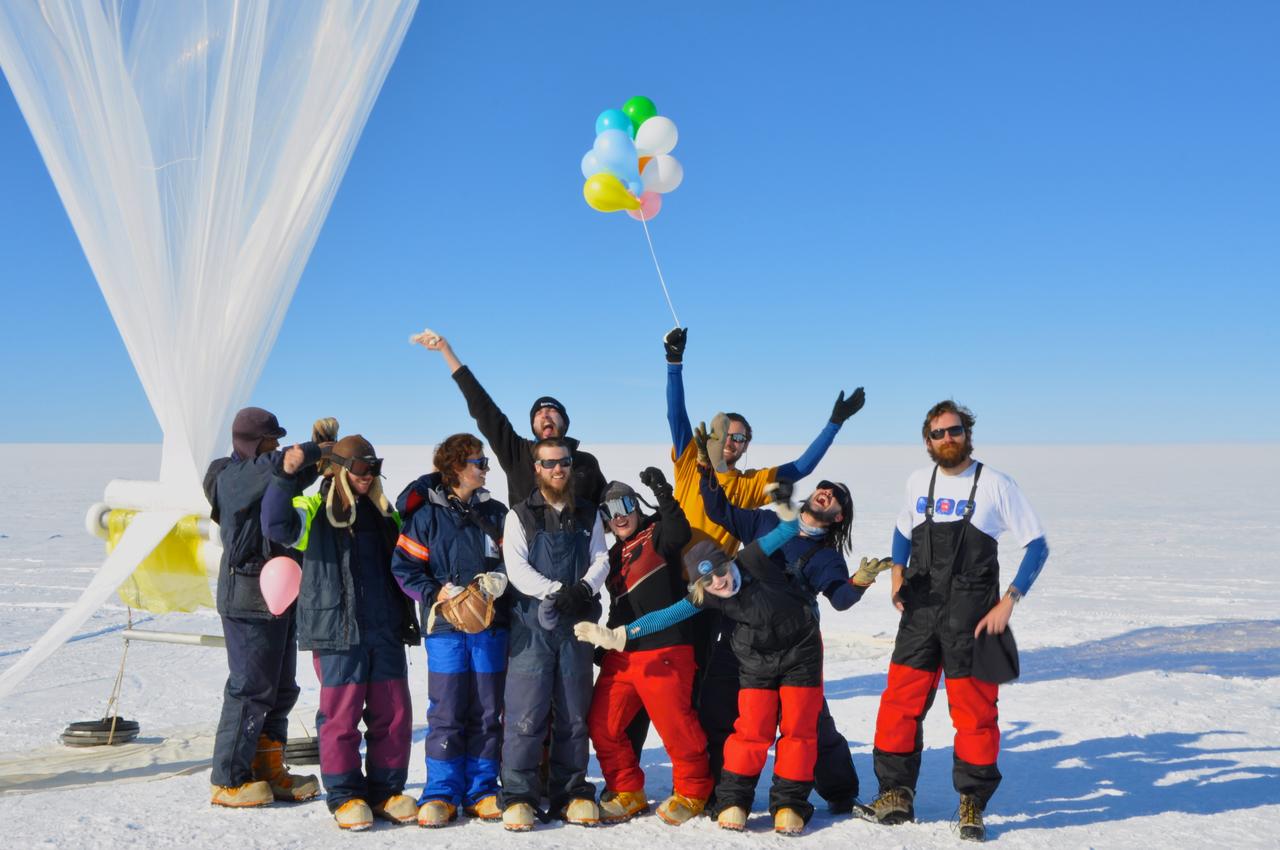
The BARREL team at the SANAE IV research station celebrates their final launch in the Antarctica sun. Credit: NASA --- In Antarctica in January, 2013 – the summer at the South Pole – scientists launched 20 balloons up into the air to study an enduring mystery of space weather: when the giant radiation belts surrounding Earth lose material, where do the extra particles actually go? The mission is called BARREL (Balloon Array for Radiation belt Relativistic Electron Losses) and it is led by physicist Robyn Millan of Dartmouth College in Hanover, NH. Millan provided photographs from the team’s time in Antarctica. The team launched a balloon every day or two into the circumpolar winds that circulate around the pole. Each balloon floated for anywhere from 3 to 40 days, measuring X-rays produced by fast-moving electrons high up in the atmosphere. BARREL works hand in hand with another NASA mission called the Van Allen Probes, which travels through the Van Allen radiation belts surrounding Earth. The belts wax and wane over time in response to incoming energy and material from the sun, sometimes intensifying the radiation through which satellites must travel. Scientists wish to understand this process better, and even provide forecasts of this space weather, in order to protect our spacecraft. As the Van Allen Probes were observing what was happening in the belts, BARREL tracked electrons that precipitated out of the belts and hurtled down Earth’s magnetic field lines toward the poles. By comparing data, scientists will be able to track how what’s happening in the belts correlates to the loss of particles – information that can help us understand this mysterious, dynamic region that can impact spacecraft. Having launched balloons in early 2013, the team is back at home building the next set of payloads. They will launch 20 more balloons in 2014. <b><a href="http://www.nasa.gov/audience/formedia/features/MP_Photo_Guidelines.html" rel="nofollow">NASA image use policy.</a></b> <b><a href="http://www.nasa.gov/centers/goddard/home/index.html" rel="nofollow">NASA Goddard Space Flight Center</a></b> enables NASA’s mission through four scientific endeavors: Earth Science, Heliophysics, Solar System Exploration, and Astrophysics. Goddard plays a leading role in NASA’s accomplishments by contributing compelling scientific knowledge to advance the Agency’s mission. <b>Follow us on <a href="http://twitter.com/NASA_GoddardPix" rel="nofollow">Twitter</a></b> <b>Like us on <a href="http://www.facebook.com/pages/Greenbelt-MD/NASA-Goddard/395013845897?ref=tsd" rel="nofollow">Facebook</a></b> <b>Find us on <a href="http://instagram.com/nasagoddard?vm=grid" rel="nofollow">Instagram</a></b>
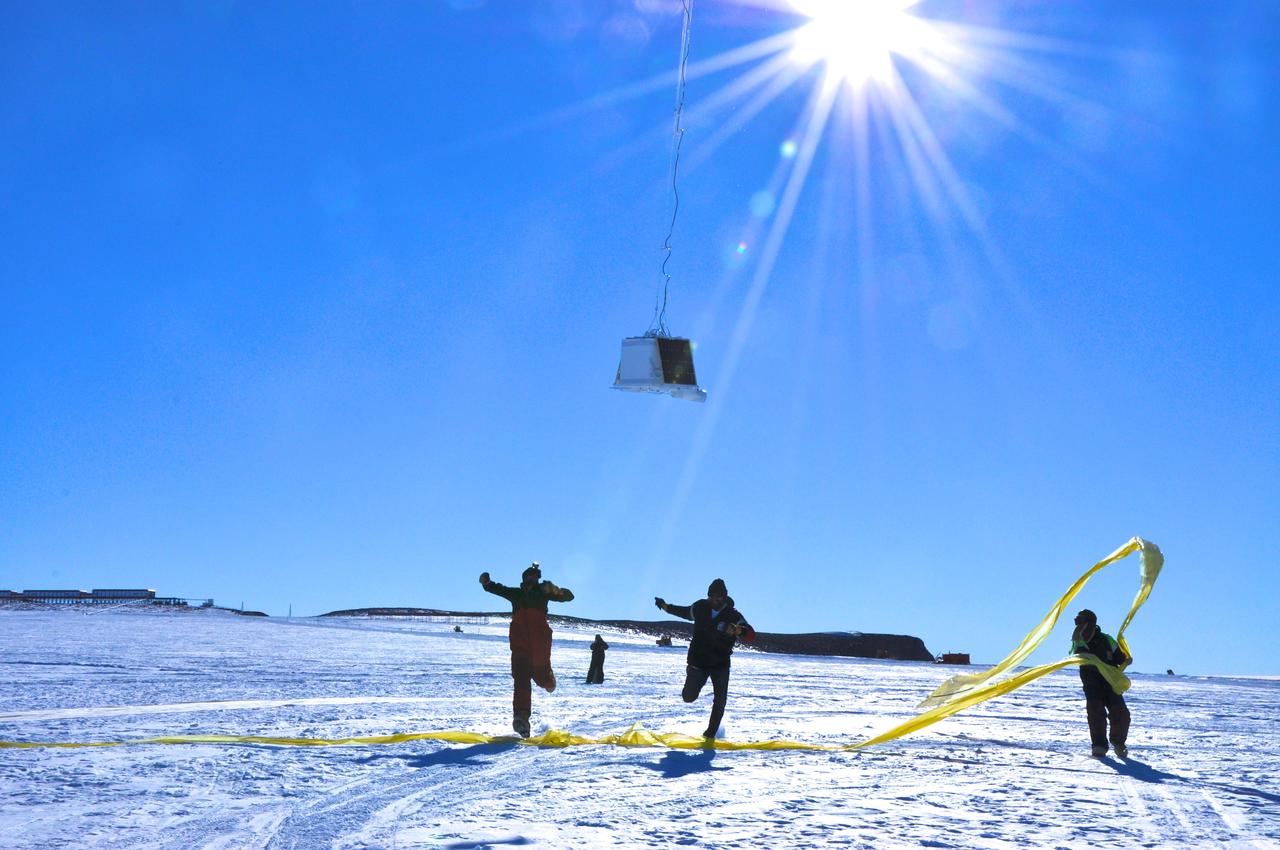
BARREL team members run under the payload as the balloon first takes flight at the SANAE IV research station in Antarctica. Credit: NASA --- In Antarctica in January, 2013 – the summer at the South Pole – scientists launched 20 balloons up into the air to study an enduring mystery of space weather: when the giant radiation belts surrounding Earth lose material, where do the extra particles actually go? The mission is called BARREL (Balloon Array for Radiation belt Relativistic Electron Losses) and it is led by physicist Robyn Millan of Dartmouth College in Hanover, NH. Millan provided photographs from the team’s time in Antarctica. The team launched a balloon every day or two into the circumpolar winds that circulate around the pole. Each balloon floated for anywhere from 3 to 40 days, measuring X-rays produced by fast-moving electrons high up in the atmosphere. BARREL works hand in hand with another NASA mission called the Van Allen Probes, which travels through the Van Allen radiation belts surrounding Earth. The belts wax and wane over time in response to incoming energy and material from the sun, sometimes intensifying the radiation through which satellites must travel. Scientists wish to understand this process better, and even provide forecasts of this space weather, in order to protect our spacecraft. As the Van Allen Probes were observing what was happening in the belts, BARREL tracked electrons that precipitated out of the belts and hurtled down Earth’s magnetic field lines toward the poles. By comparing data, scientists will be able to track how what’s happening in the belts correlates to the loss of particles – information that can help us understand this mysterious, dynamic region that can impact spacecraft. Having launched balloons in early 2013, the team is back at home building the next set of payloads. They will launch 20 more balloons in 2014. <b><a href="http://www.nasa.gov/audience/formedia/features/MP_Photo_Guidelines.html" rel="nofollow">NASA image use policy.</a></b> <b><a href="http://www.nasa.gov/centers/goddard/home/index.html" rel="nofollow">NASA Goddard Space Flight Center</a></b> enables NASA’s mission through four scientific endeavors: Earth Science, Heliophysics, Solar System Exploration, and Astrophysics. Goddard plays a leading role in NASA’s accomplishments by contributing compelling scientific knowledge to advance the Agency’s mission. <b>Follow us on <a href="http://twitter.com/NASA_GoddardPix" rel="nofollow">Twitter</a></b> <b>Like us on <a href="http://www.facebook.com/pages/Greenbelt-MD/NASA-Goddard/395013845897?ref=tsd" rel="nofollow">Facebook</a></b> <b>Find us on <a href="http://instagram.com/nasagoddard?vm=grid" rel="nofollow">Instagram</a></b>
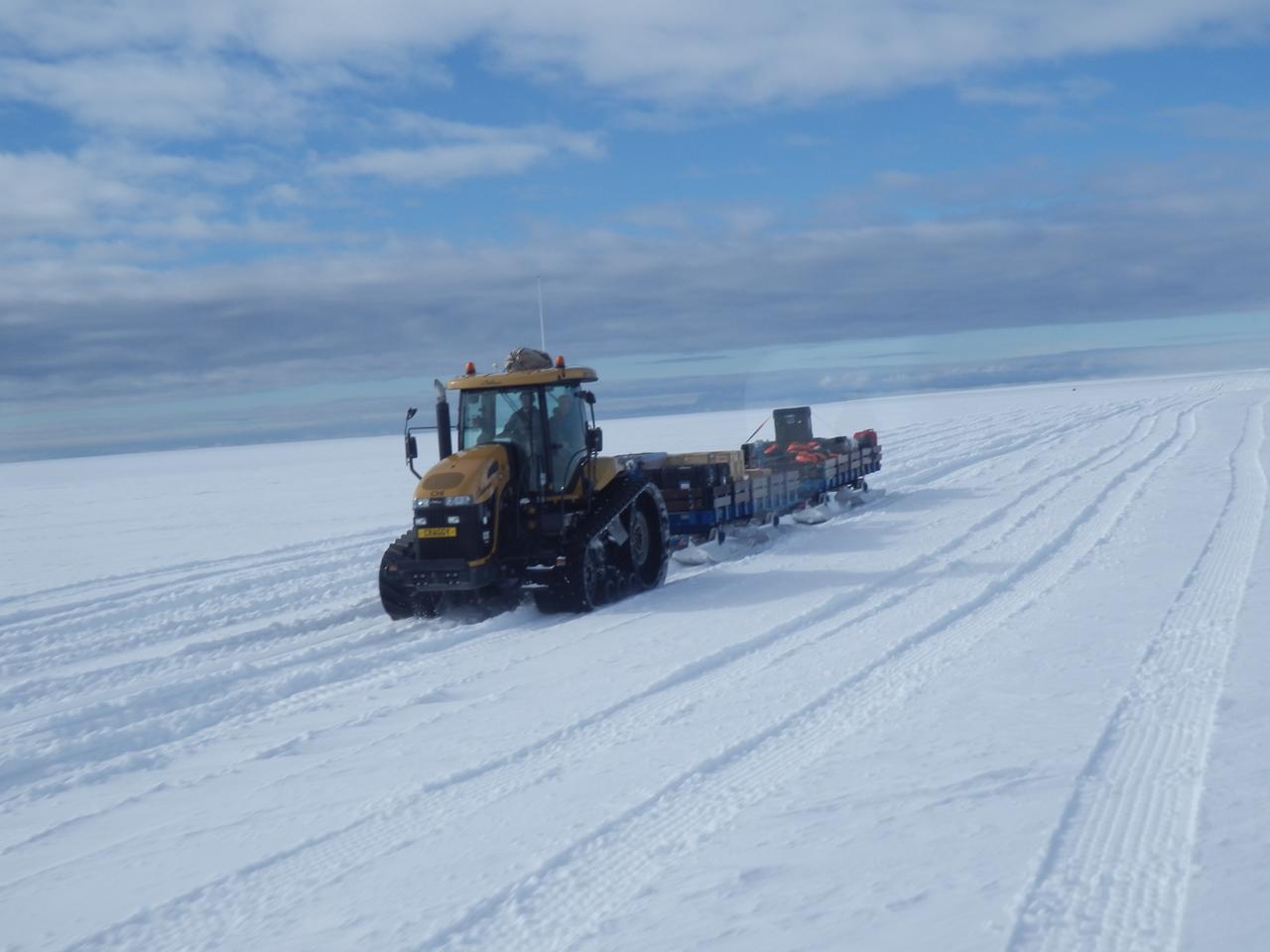
The BARREL cargo on its four-hour journey from the supply ship to the research station. Credit: NASA --- In Antarctica in January, 2013 – the summer at the South Pole – scientists launched 20 balloons up into the air to study an enduring mystery of space weather: when the giant radiation belts surrounding Earth lose material, where do the extra particles actually go? The mission is called BARREL (Balloon Array for Radiation belt Relativistic Electron Losses) and it is led by physicist Robyn Millan of Dartmouth College in Hanover, NH. Millan provided photographs from the team’s time in Antarctica. The team launched a balloon every day or two into the circumpolar winds that circulate around the pole. Each balloon floated for anywhere from 3 to 40 days, measuring X-rays produced by fast-moving electrons high up in the atmosphere. BARREL works hand in hand with another NASA mission called the Van Allen Probes, which travels through the Van Allen radiation belts surrounding Earth. The belts wax and wane over time in response to incoming energy and material from the sun, sometimes intensifying the radiation through which satellites must travel. Scientists wish to understand this process better, and even provide forecasts of this space weather, in order to protect our spacecraft. As the Van Allen Probes were observing what was happening in the belts, BARREL tracked electrons that precipitated out of the belts and hurtled down Earth’s magnetic field lines toward the poles. By comparing data, scientists will be able to track how what’s happening in the belts correlates to the loss of particles – information that can help us understand this mysterious, dynamic region that can impact spacecraft. Having launched balloons in early 2013, the team is back at home building the next set of payloads. They will launch 20 more balloons in 2014. <b><a href="http://www.nasa.gov/audience/formedia/features/MP_Photo_Guidelines.html" rel="nofollow">NASA image use policy.</a></b> <b><a href="http://www.nasa.gov/centers/goddard/home/index.html" rel="nofollow">NASA Goddard Space Flight Center</a></b> enables NASA’s mission through four scientific endeavors: Earth Science, Heliophysics, Solar System Exploration, and Astrophysics. Goddard plays a leading role in NASA’s accomplishments by contributing compelling scientific knowledge to advance the Agency’s mission. <b>Follow us on <a href="http://twitter.com/NASA_GoddardPix" rel="nofollow">Twitter</a></b> <b>Like us on <a href="http://www.facebook.com/pages/Greenbelt-MD/NASA-Goddard/395013845897?ref=tsd" rel="nofollow">Facebook</a></b> <b>Find us on <a href="http://instagram.com/nasagoddard?vm=grid" rel="nofollow">Instagram</a></b>
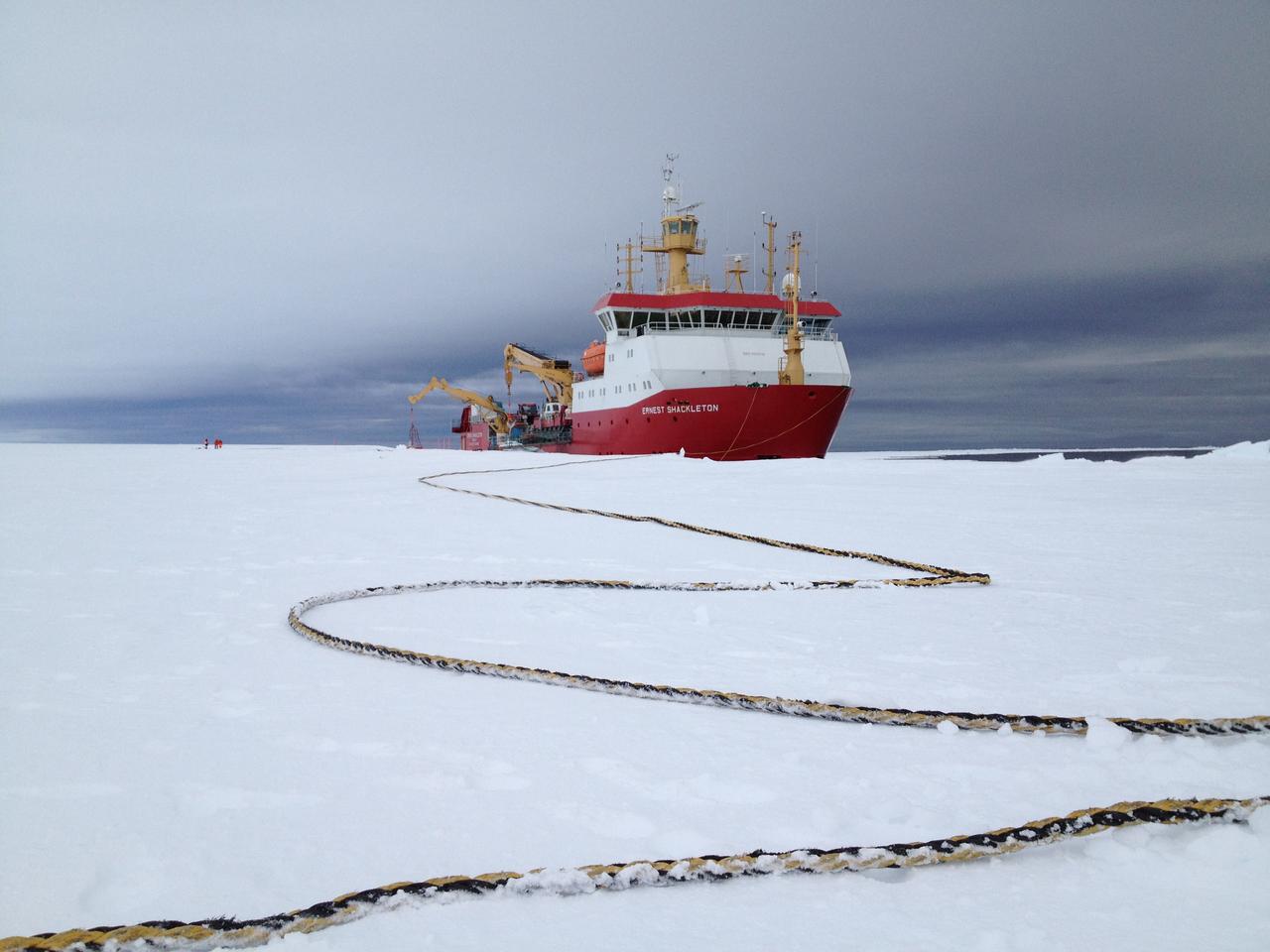
Arrival of the RRS Ernest Shackleton near Halley Research Station in Antarctica. The Shackleton is the regular resupply ship for the station and it also brought in some of the BARREL team scientists. The long tether is for the ship’s mooring. Credit: NASA --- In Antarctica in January, 2013 – the summer at the South Pole – scientists launched 20 balloons up into the air to study an enduring mystery of space weather: when the giant radiation belts surrounding Earth lose material, where do the extra particles actually go? The mission is called BARREL (Balloon Array for Radiation belt Relativistic Electron Losses) and it is led by physicist Robyn Millan of Dartmouth College in Hanover, NH. Millan provided photographs from the team’s time in Antarctica. The team launched a balloon every day or two into the circumpolar winds that circulate around the pole. Each balloon floated for anywhere from 3 to 40 days, measuring X-rays produced by fast-moving electrons high up in the atmosphere. BARREL works hand in hand with another NASA mission called the Van Allen Probes, which travels through the Van Allen radiation belts surrounding Earth. The belts wax and wane over time in response to incoming energy and material from the sun, sometimes intensifying the radiation through which satellites must travel. Scientists wish to understand this process better, and even provide forecasts of this space weather, in order to protect our spacecraft. As the Van Allen Probes were observing what was happening in the belts, BARREL tracked electrons that precipitated out of the belts and hurtled down Earth’s magnetic field lines toward the poles. By comparing data, scientists will be able to track how what’s happening in the belts correlates to the loss of particles – information that can help us understand this mysterious, dynamic region that can impact spacecraft. Having launched balloons in early 2013, the team is back at home building the next set of payloads. They will launch 20 more balloons in 2014. <b><a href="http://www.nasa.gov/audience/formedia/features/MP_Photo_Guidelines.html" rel="nofollow">NASA image use policy.</a></b> <b><a href="http://www.nasa.gov/centers/goddard/home/index.html" rel="nofollow">NASA Goddard Space Flight Center</a></b> enables NASA’s mission through four scientific endeavors: Earth Science, Heliophysics, Solar System Exploration, and Astrophysics. Goddard plays a leading role in NASA’s accomplishments by contributing compelling scientific knowledge to advance the Agency’s mission. <b>Follow us on <a href="http://twitter.com/NASA_GoddardPix" rel="nofollow">Twitter</a></b> <b>Like us on <a href="http://www.facebook.com/pages/Greenbelt-MD/NASA-Goddard/395013845897?ref=tsd" rel="nofollow">Facebook</a></b> <b>Find us on <a href="http://instagram.com/nasagoddard?vm=grid" rel="nofollow">Instagram</a></b>

Some of the BARREL balloon launches took place at the South African National Antarctic Expedition Research base, called SANAE IV, the others at Halley Research Station. This balloon is taking flight at SANAE IV. Credit: NASA --- In Antarctica in January, 2013 – the summer at the South Pole – scientists launched 20 balloons up into the air to study an enduring mystery of space weather: when the giant radiation belts surrounding Earth lose material, where do the extra particles actually go? The mission is called BARREL (Balloon Array for Radiation belt Relativistic Electron Losses) and it is led by physicist Robyn Millan of Dartmouth College in Hanover, NH. Millan provided photographs from the team’s time in Antarctica. The team launched a balloon every day or two into the circumpolar winds that circulate around the pole. Each balloon floated for anywhere from 3 to 40 days, measuring X-rays produced by fast-moving electrons high up in the atmosphere. BARREL works hand in hand with another NASA mission called the Van Allen Probes, which travels through the Van Allen radiation belts surrounding Earth. The belts wax and wane over time in response to incoming energy and material from the sun, sometimes intensifying the radiation through which satellites must travel. Scientists wish to understand this process better, and even provide forecasts of this space weather, in order to protect our spacecraft. As the Van Allen Probes were observing what was happening in the belts, BARREL tracked electrons that precipitated out of the belts and hurtled down Earth’s magnetic field lines toward the poles. By comparing data, scientists will be able to track how what’s happening in the belts correlates to the loss of particles – information that can help us understand this mysterious, dynamic region that can impact spacecraft. Having launched balloons in early 2013, the team is back at home building the next set of payloads. They will launch 20 more balloons in 2014. <b><a href="http://www.nasa.gov/audience/formedia/features/MP_Photo_Guidelines.html" rel="nofollow">NASA image use policy.</a></b> <b><a href="http://www.nasa.gov/centers/goddard/home/index.html" rel="nofollow">NASA Goddard Space Flight Center</a></b> enables NASA’s mission through four scientific endeavors: Earth Science, Heliophysics, Solar System Exploration, and Astrophysics. Goddard plays a leading role in NASA’s accomplishments by contributing compelling scientific knowledge to advance the Agency’s mission. <b>Follow us on <a href="http://twitter.com/NASA_GoddardPix" rel="nofollow">Twitter</a></b> <b>Like us on <a href="http://www.facebook.com/pages/Greenbelt-MD/NASA-Goddard/395013845897?ref=tsd" rel="nofollow">Facebook</a></b> <b>Find us on <a href="http://instagram.com/nasagoddard?vm=grid" rel="nofollow">Instagram</a></b>

Watching a BARREL balloon – and the instruments dangling below – float up over the SANAE IV research base in Antarctica. Credit: NASA --- In Antarctica in January, 2013 – the summer at the South Pole – scientists launched 20 balloons up into the air to study an enduring mystery of space weather: when the giant radiation belts surrounding Earth lose material, where do the extra particles actually go? The mission is called BARREL (Balloon Array for Radiation belt Relativistic Electron Losses) and it is led by physicist Robyn Millan of Dartmouth College in Hanover, NH. Millan provided photographs from the team’s time in Antarctica. The team launched a balloon every day or two into the circumpolar winds that circulate around the pole. Each balloon floated for anywhere from 3 to 40 days, measuring X-rays produced by fast-moving electrons high up in the atmosphere. BARREL works hand in hand with another NASA mission called the Van Allen Probes, which travels through the Van Allen radiation belts surrounding Earth. The belts wax and wane over time in response to incoming energy and material from the sun, sometimes intensifying the radiation through which satellites must travel. Scientists wish to understand this process better, and even provide forecasts of this space weather, in order to protect our spacecraft. As the Van Allen Probes were observing what was happening in the belts, BARREL tracked electrons that precipitated out of the belts and hurtled down Earth’s magnetic field lines toward the poles. By comparing data, scientists will be able to track how what’s happening in the belts correlates to the loss of particles – information that can help us understand this mysterious, dynamic region that can impact spacecraft. Having launched balloons in early 2013, the team is back at home building the next set of payloads. They will launch 20 more balloons in 2014. <b><a href="http://www.nasa.gov/audience/formedia/features/MP_Photo_Guidelines.html" rel="nofollow">NASA image use policy.</a></b> <b><a href="http://www.nasa.gov/centers/goddard/home/index.html" rel="nofollow">NASA Goddard Space Flight Center</a></b> enables NASA’s mission through four scientific endeavors: Earth Science, Heliophysics, Solar System Exploration, and Astrophysics. Goddard plays a leading role in NASA’s accomplishments by contributing compelling scientific knowledge to advance the Agency’s mission. <b>Follow us on <a href="http://twitter.com/NASA_GoddardPix" rel="nofollow">Twitter</a></b> <b>Like us on <a href="http://www.facebook.com/pages/Greenbelt-MD/NASA-Goddard/395013845897?ref=tsd" rel="nofollow">Facebook</a></b> <b>Find us on <a href="http://instagram.com/nasagoddard?vm=grid" rel="nofollow">Instagram</a></b>
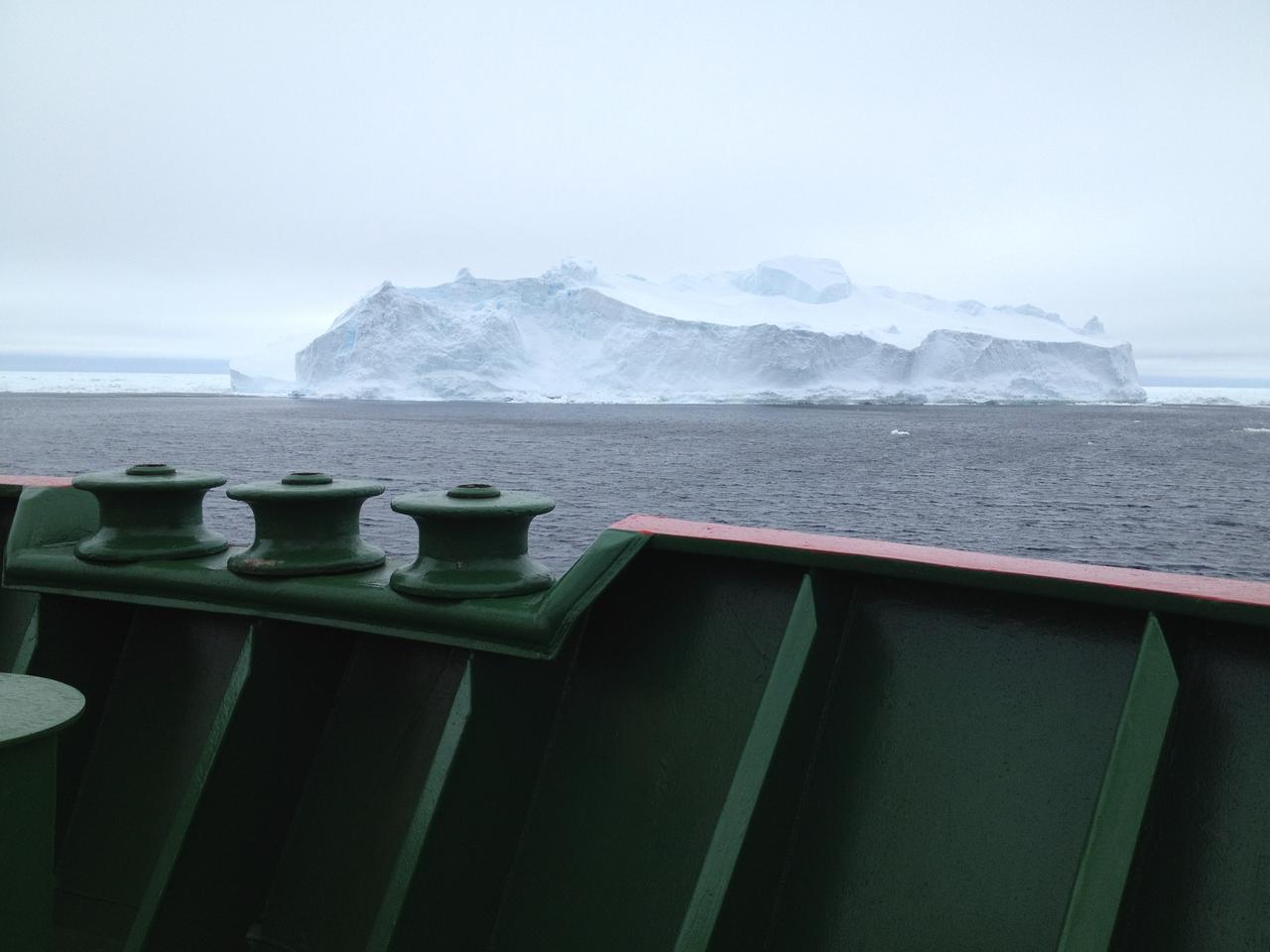
An iceberg as viewed from the bow of the RRS Ernest Shackleton a few days before the BARREL team reached Halley Research Station in Antarctica. This research vessel regularly carries scientists and supplies to Halley. Credit: NASA --- In Antarctica in January, 2013 – the summer at the South Pole – scientists launched 20 balloons up into the air to study an enduring mystery of space weather: when the giant radiation belts surrounding Earth lose material, where do the extra particles actually go? The mission is called BARREL (Balloon Array for Radiation belt Relativistic Electron Losses) and it is led by physicist Robyn Millan of Dartmouth College in Hanover, NH. Millan provided photographs from the team’s time in Antarctica. The team launched a balloon every day or two into the circumpolar winds that circulate around the pole. Each balloon floated for anywhere from 3 to 40 days, measuring X-rays produced by fast-moving electrons high up in the atmosphere. BARREL works hand in hand with another NASA mission called the Van Allen Probes, which travels through the Van Allen radiation belts surrounding Earth. The belts wax and wane over time in response to incoming energy and material from the sun, sometimes intensifying the radiation through which satellites must travel. Scientists wish to understand this process better, and even provide forecasts of this space weather, in order to protect our spacecraft. As the Van Allen Probes were observing what was happening in the belts, BARREL tracked electrons that precipitated out of the belts and hurtled down Earth’s magnetic field lines toward the poles. By comparing data, scientists will be able to track how what’s happening in the belts correlates to the loss of particles – information that can help us understand this mysterious, dynamic region that can impact spacecraft. Having launched balloons in early 2013, the team is back at home building the next set of payloads. They will launch 20 more balloons in 2014. <b><a href="http://www.nasa.gov/audience/formedia/features/MP_Photo_Guidelines.html" rel="nofollow">NASA image use policy.</a></b> <b><a href="http://www.nasa.gov/centers/goddard/home/index.html" rel="nofollow">NASA Goddard Space Flight Center</a></b> enables NASA’s mission through four scientific endeavors: Earth Science, Heliophysics, Solar System Exploration, and Astrophysics. Goddard plays a leading role in NASA’s accomplishments by contributing compelling scientific knowledge to advance the Agency’s mission. <b>Follow us on <a href="http://twitter.com/NASA_GoddardPix" rel="nofollow">Twitter</a></b> <b>Like us on <a href="http://www.facebook.com/pages/Greenbelt-MD/NASA-Goddard/395013845897?ref=tsd" rel="nofollow">Facebook</a></b> <b>Find us on <a href="http://instagram.com/nasagoddard?vm=grid" rel="nofollow">Instagram</a></b>

Teams lift a liquid hydrogen tank barrel into the Vertical Assembly Center at Michoud Assembly Facility in New Orleans, on July 25, 2025. Inside the center, teams will perform a circumferential weld to connect the barrel to the previously loaded forward dome. The barrel is one of five barrels, which along with the forward and aft domes, make up the liquid hydrogen tank for the fourth core stage manufactured at the site. Artemis will pave the way for a long-term human presence on the lunar surface while ushering in the Golden Age of Innovation and Exploration.

Teams lift a liquid hydrogen tank barrel into the Vertical Assembly Center at Michoud Assembly Facility in New Orleans, on July 25, 2025. Inside the center, teams will perform a circumferential weld to connect the barrel to the previously loaded forward dome. The barrel is one of five barrels, which along with the forward and aft domes, make up the liquid hydrogen tank for the fourth core stage manufactured at the site. Artemis will pave the way for a long-term human presence on the lunar surface while ushering in the Golden Age of Innovation and Exploration.

Teams lift a liquid hydrogen tank barrel into the Vertical Assembly Center at Michoud Assembly Facility in New Orleans, on July 25, 2025. Inside the center, teams will perform a circumferential weld to connect the barrel to the previously loaded forward dome. The barrel is one of five barrels, which along with the forward and aft domes, make up the liquid hydrogen tank for the fourth core stage manufactured at the site. Artemis will pave the way for a long-term human presence on the lunar surface while ushering in the Golden Age of Innovation and Exploration.

Teams lift a liquid hydrogen tank barrel into the Vertical Assembly Center at Michoud Assembly Facility in New Orleans, on July 25, 2025. Inside the center, teams will perform a circumferential weld to connect the barrel to the previously loaded forward dome. The barrel is one of five barrels, which along with the forward and aft domes, make up the liquid hydrogen tank for the fourth core stage manufactured at the site. Artemis will pave the way for a long-term human presence on the lunar surface while ushering in the Golden Age of Innovation and Exploration.
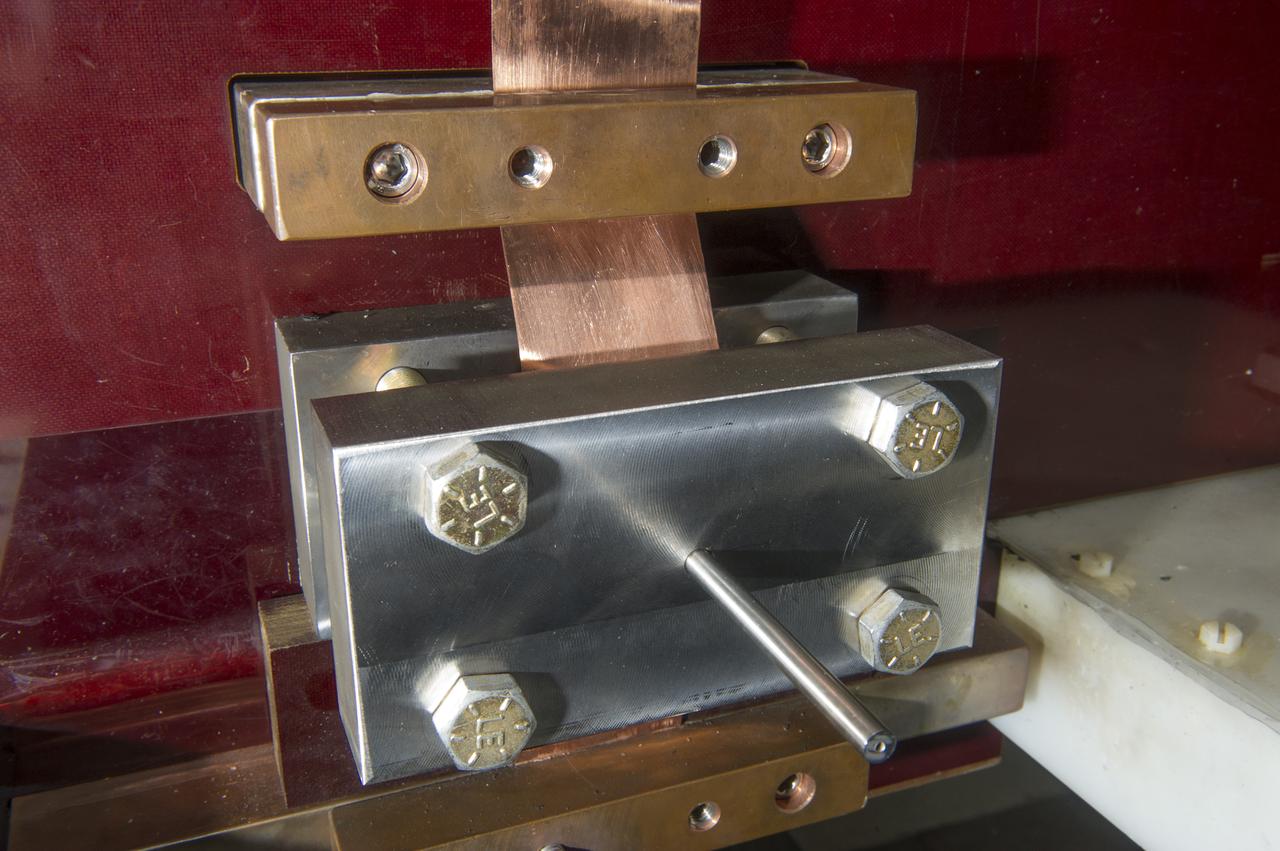
EXPLODING WIRE GUN, BARREL BLOCK ASSEMBLY, BLDG 4205
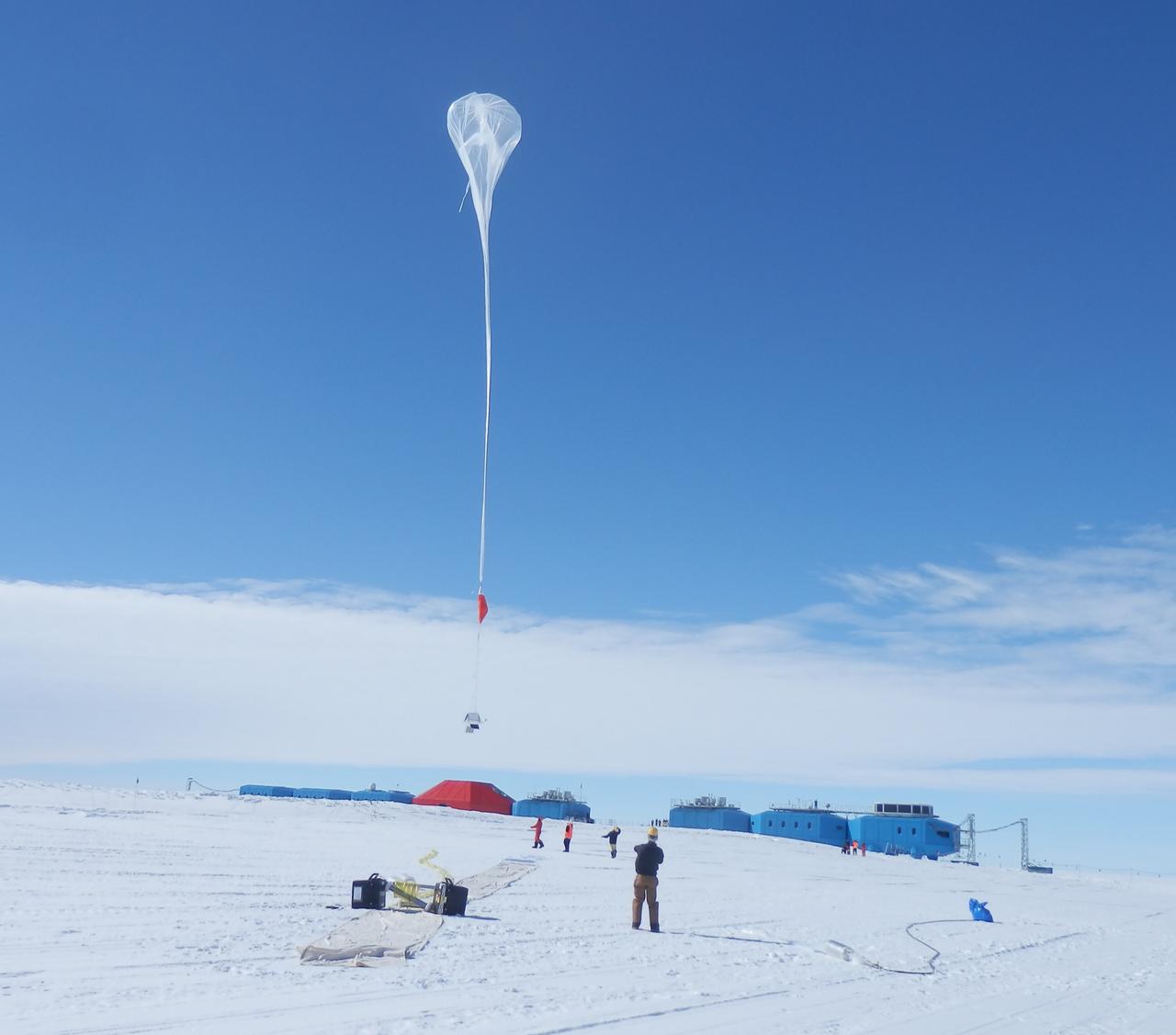
Liftoff! A balloon begins to rise over the brand new Halley VI Research Station, which had its grand opening in February 2013. Credit: NASA --- In Antarctica in January, 2013 – the summer at the South Pole – scientists launched 20 balloons up into the air to study an enduring mystery of space weather: when the giant radiation belts surrounding Earth lose material, where do the extra particles actually go? The mission is called BARREL (Balloon Array for Radiation belt Relativistic Electron Losses) and it is led by physicist Robyn Millan of Dartmouth College in Hanover, NH. Millan provided photographs from the team’s time in Antarctica. The team launched a balloon every day or two into the circumpolar winds that circulate around the pole. Each balloon floated for anywhere from 3 to 40 days, measuring X-rays produced by fast-moving electrons high up in the atmosphere. BARREL works hand in hand with another NASA mission called the Van Allen Probes, which travels through the Van Allen radiation belts surrounding Earth. The belts wax and wane over time in response to incoming energy and material from the sun, sometimes intensifying the radiation through which satellites must travel. Scientists wish to understand this process better, and even provide forecasts of this space weather, in order to protect our spacecraft. As the Van Allen Probes were observing what was happening in the belts, BARREL tracked electrons that precipitated out of the belts and hurtled down Earth’s magnetic field lines toward the poles. By comparing data, scientists will be able to track how what’s happening in the belts correlates to the loss of particles – information that can help us understand this mysterious, dynamic region that can impact spacecraft. Having launched balloons in early 2013, the team is back at home building the next set of payloads. They will launch 20 more balloons in 2014. <b><a href="http://www.nasa.gov/audience/formedia/features/MP_Photo_Guidelines.html" rel="nofollow">NASA image use policy.</a></b> <b><a href="http://www.nasa.gov/centers/goddard/home/index.html" rel="nofollow">NASA Goddard Space Flight Center</a></b> enables NASA’s mission through four scientific endeavors: Earth Science, Heliophysics, Solar System Exploration, and Astrophysics. Goddard plays a leading role in NASA’s accomplishments by contributing compelling scientific knowledge to advance the Agency’s mission. <b>Follow us on <a href="http://twitter.com/NASA_GoddardPix" rel="nofollow">Twitter</a></b> <b>Like us on <a href="http://www.facebook.com/pages/Greenbelt-MD/NASA-Goddard/395013845897?ref=tsd" rel="nofollow">Facebook</a></b> <b>Find us on <a href="http://instagram.com/nasagoddard?vm=grid" rel="nofollow">Instagram</a></b>
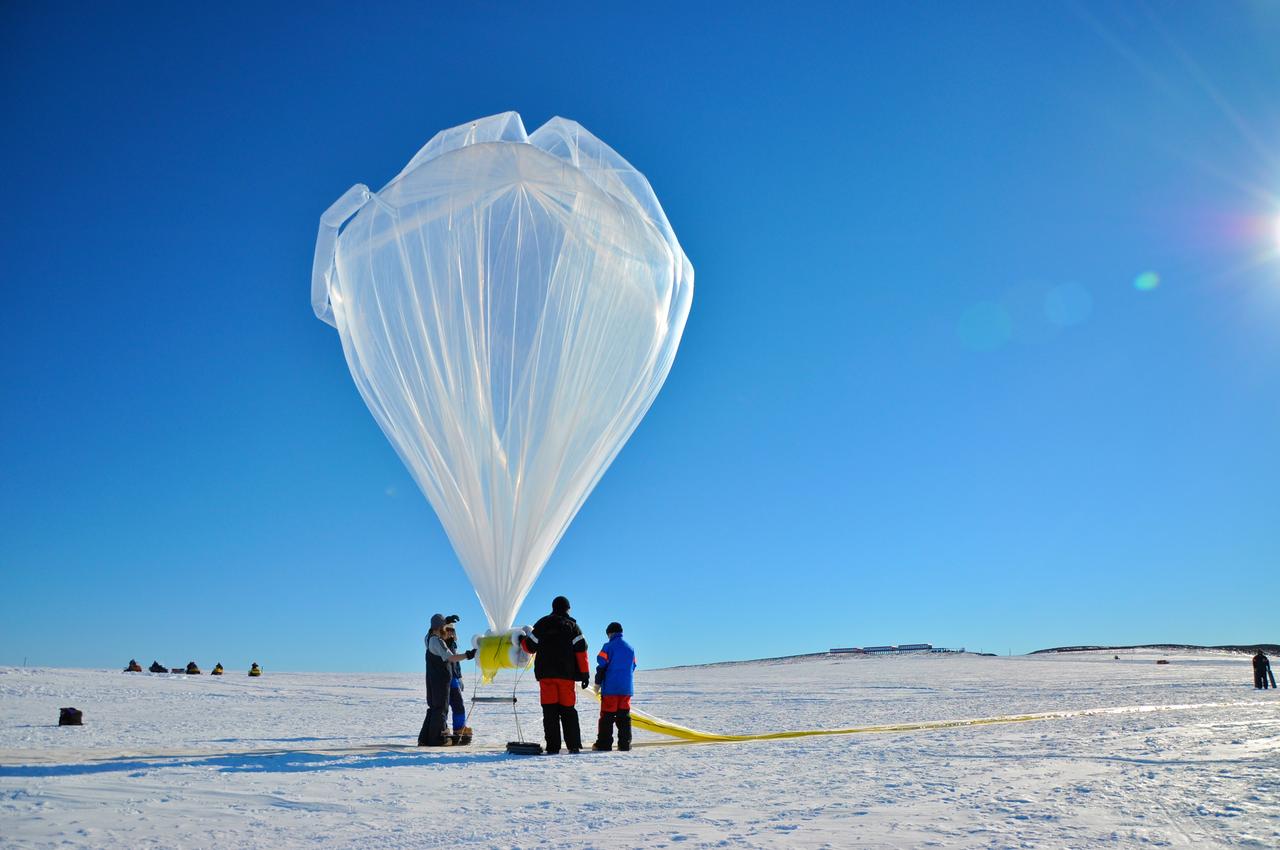
A BARREL balloon floats into the sky as it is partially filled. When fully inflated, each balloon is 90 feet in diameter and carries an instrument suite that weighs 50 pounds. This is small for an Antarctica balloon launch, which can have balloons Typical balloons l the size of a football field with payloads of some 3,000 pounds. Credit: NASA --- In Antarctica in January, 2013 – the summer at the South Pole – scientists launched 20 balloons up into the air to study an enduring mystery of space weather: when the giant radiation belts surrounding Earth lose material, where do the extra particles actually go? The mission is called BARREL (Balloon Array for Radiation belt Relativistic Electron Losses) and it is led by physicist Robyn Millan of Dartmouth College in Hanover, NH. Millan provided photographs from the team’s time in Antarctica. The team launched a balloon every day or two into the circumpolar winds that circulate around the pole. Each balloon floated for anywhere from 3 to 40 days, measuring X-rays produced by fast-moving electrons high up in the atmosphere. BARREL works hand in hand with another NASA mission called the Van Allen Probes, which travels through the Van Allen radiation belts surrounding Earth. The belts wax and wane over time in response to incoming energy and material from the sun, sometimes intensifying the radiation through which satellites must travel. Scientists wish to understand this process better, and even provide forecasts of this space weather, in order to protect our spacecraft. As the Van Allen Probes were observing what was happening in the belts, BARREL tracked electrons that precipitated out of the belts and hurtled down Earth’s magnetic field lines toward the poles. By comparing data, scientists will be able to track how what’s happening in the belts correlates to the loss of particles – information that can help us understand this mysterious, dynamic region that can impact spacecraft. Having launched balloons in early 2013, the team is back at home building the next set of payloads. They will launch 20 more balloons in 2014. <b><a href="http://www.nasa.gov/audience/formedia/features/MP_Photo_Guidelines.html" rel="nofollow">NASA image use policy.</a></b> <b><a href="http://www.nasa.gov/centers/goddard/home/index.html" rel="nofollow">NASA Goddard Space Flight Center</a></b> enables NASA’s mission through four scientific endeavors: Earth Science, Heliophysics, Solar System Exploration, and Astrophysics. Goddard plays a leading role in NASA’s accomplishments by contributing compelling scientific knowledge to advance the Agency’s mission. <b>Follow us on <a href="http://twitter.com/NASA_GoddardPix" rel="nofollow">Twitter</a></b> <b>Like us on <a href="http://www.facebook.com/pages/Greenbelt-MD/NASA-Goddard/395013845897?ref=tsd" rel="nofollow">Facebook</a></b> <b>Find us on <a href="http://instagram.com/nasagoddard?vm=grid" rel="nofollow">Instagram</a></b>
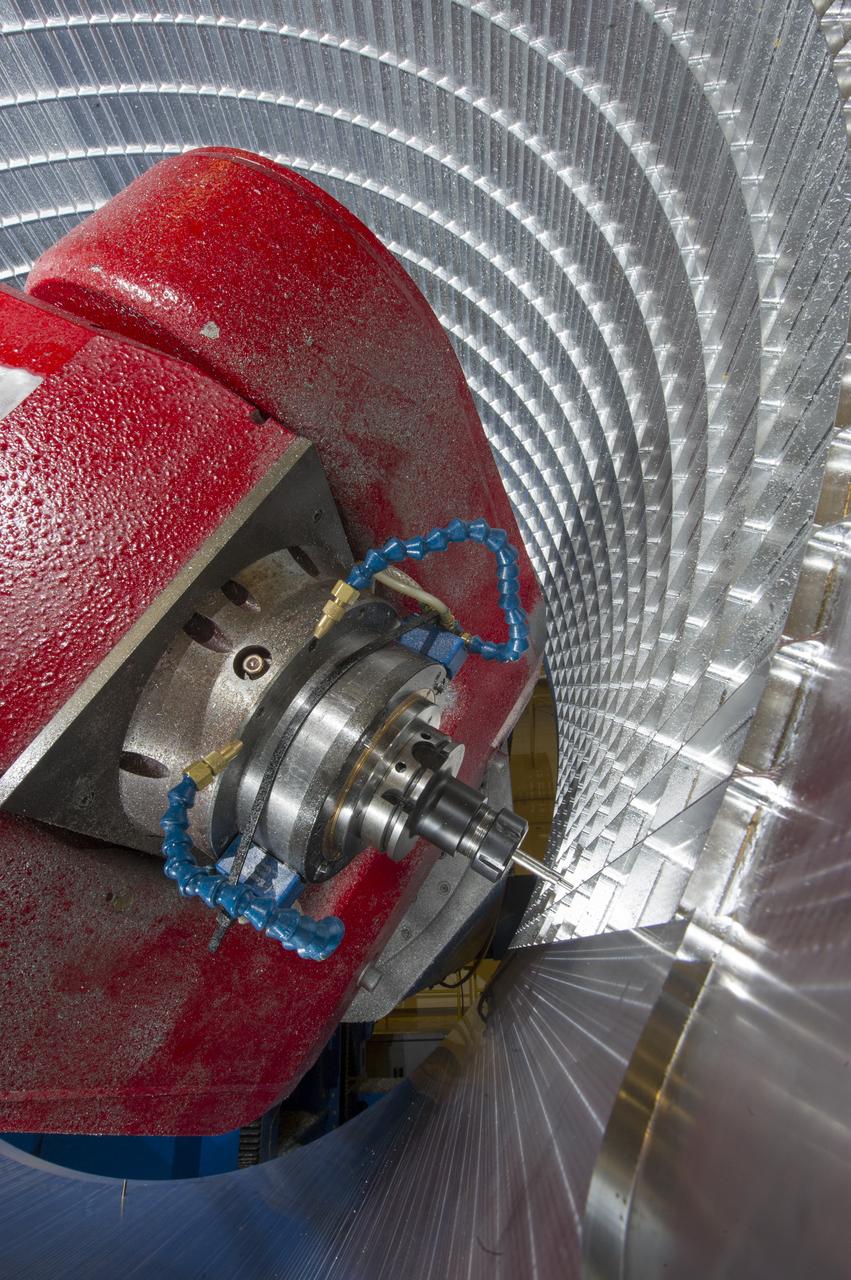
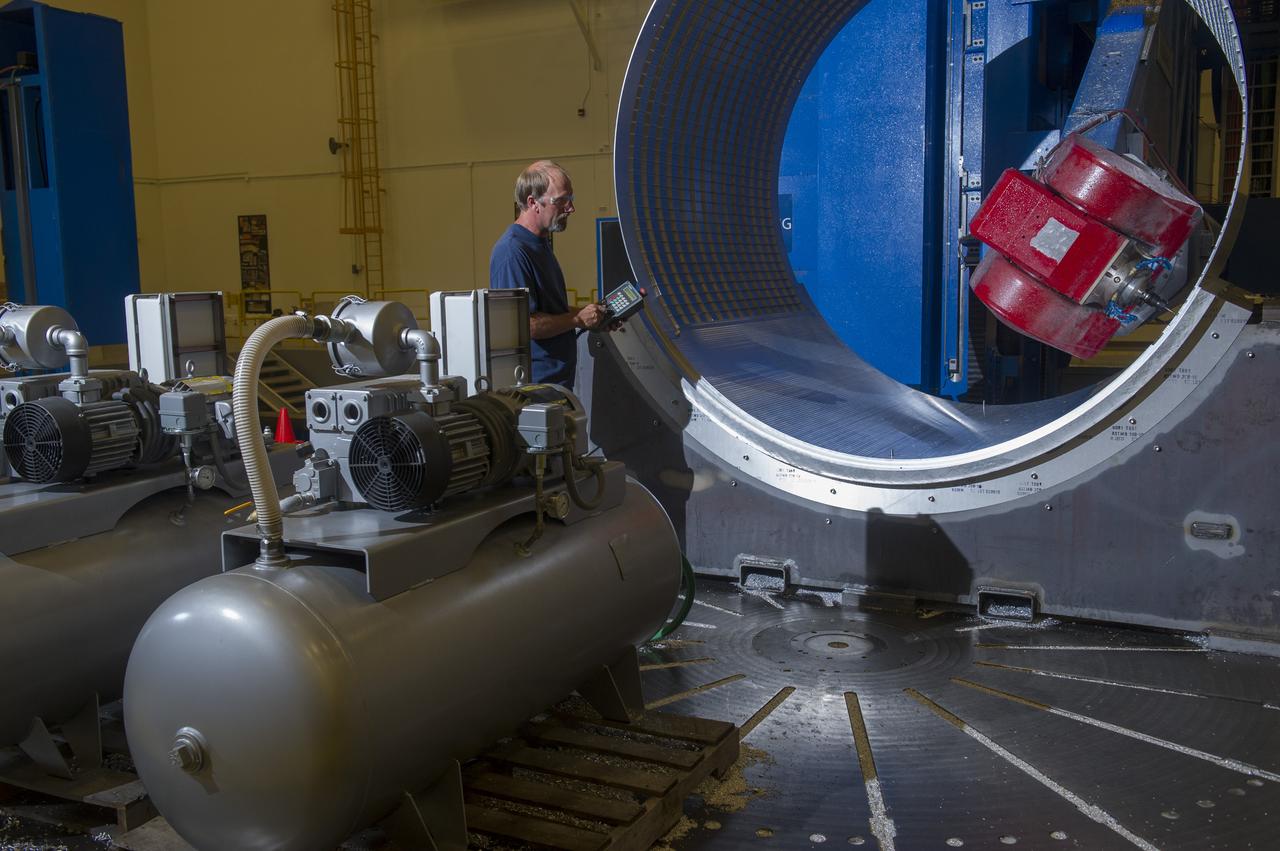
7-AXIS MILLING MACHINE CUTS ORTHOGRID TOOL PATH ON 8 FOOT CF1 BARREL IN SUPPORT OF SHELL BUCKLE TESTING
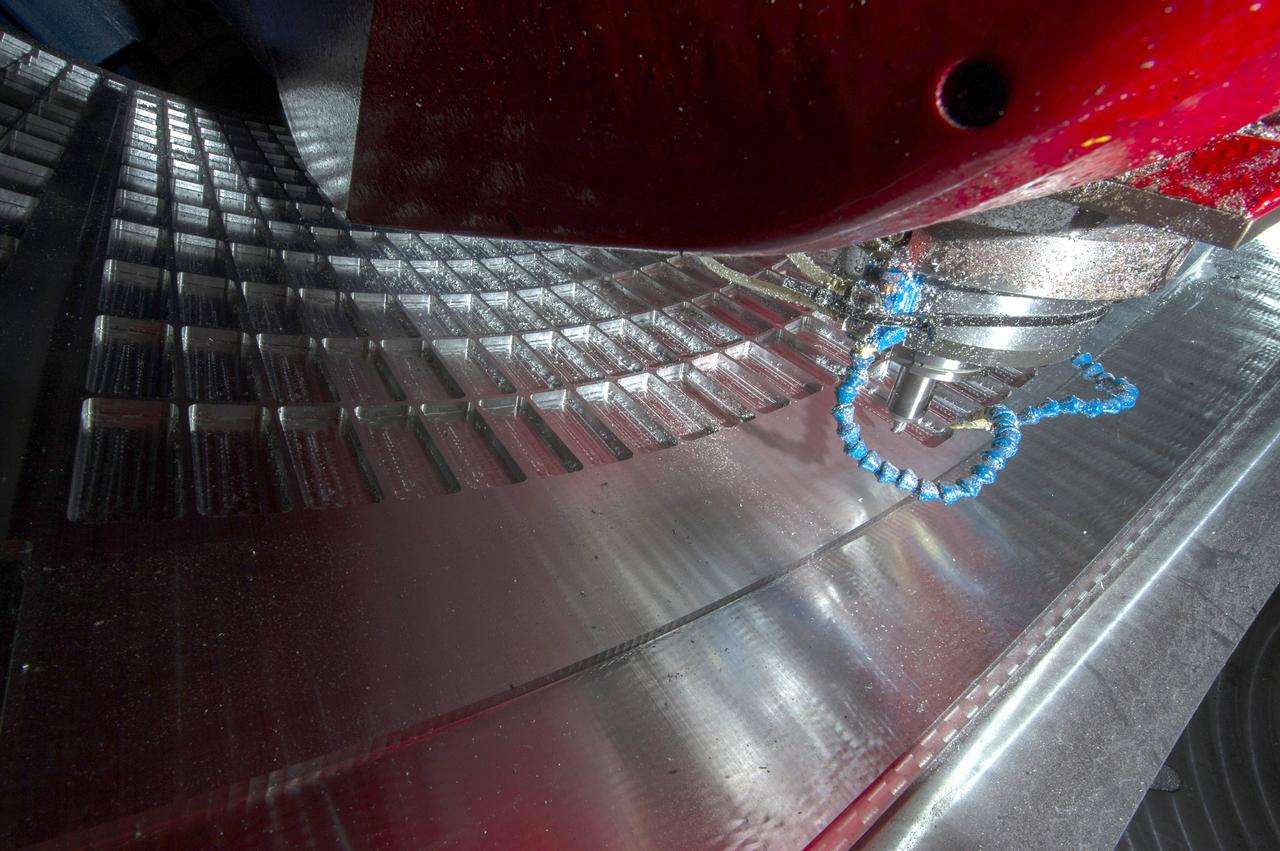
7-AXIS MILLING MACHINE CUTS ORTHOGRID TOOL PATH ON 8 FOOT CF1 BARREL IN SUPPORT OF SHELL BUCKLE TESTING
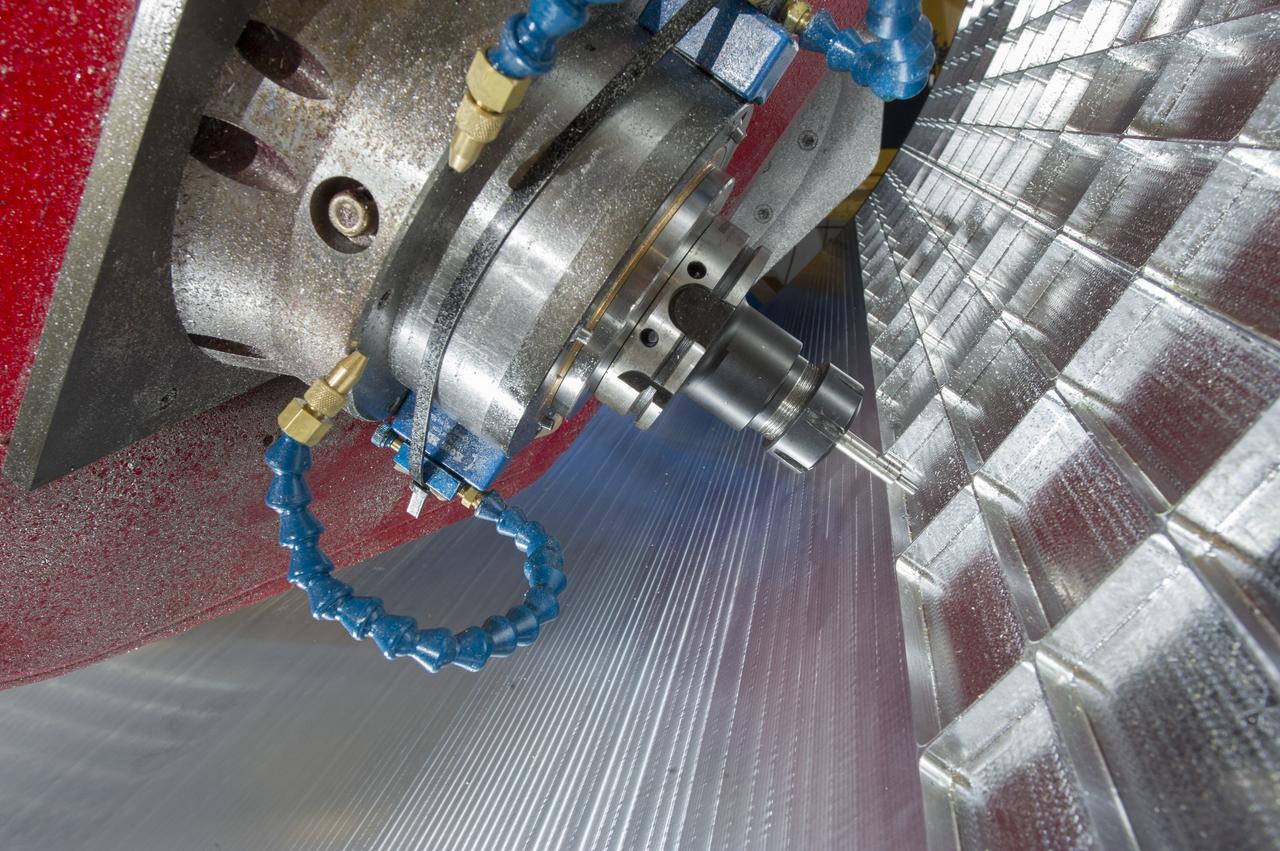
7-AXIS MILLING MACHINE CUTS ORTHOGRID TOOL PATH ON 8 FOOT CF1 BARREL IN SUPPORT OF SHELL BUCKLE TESTING
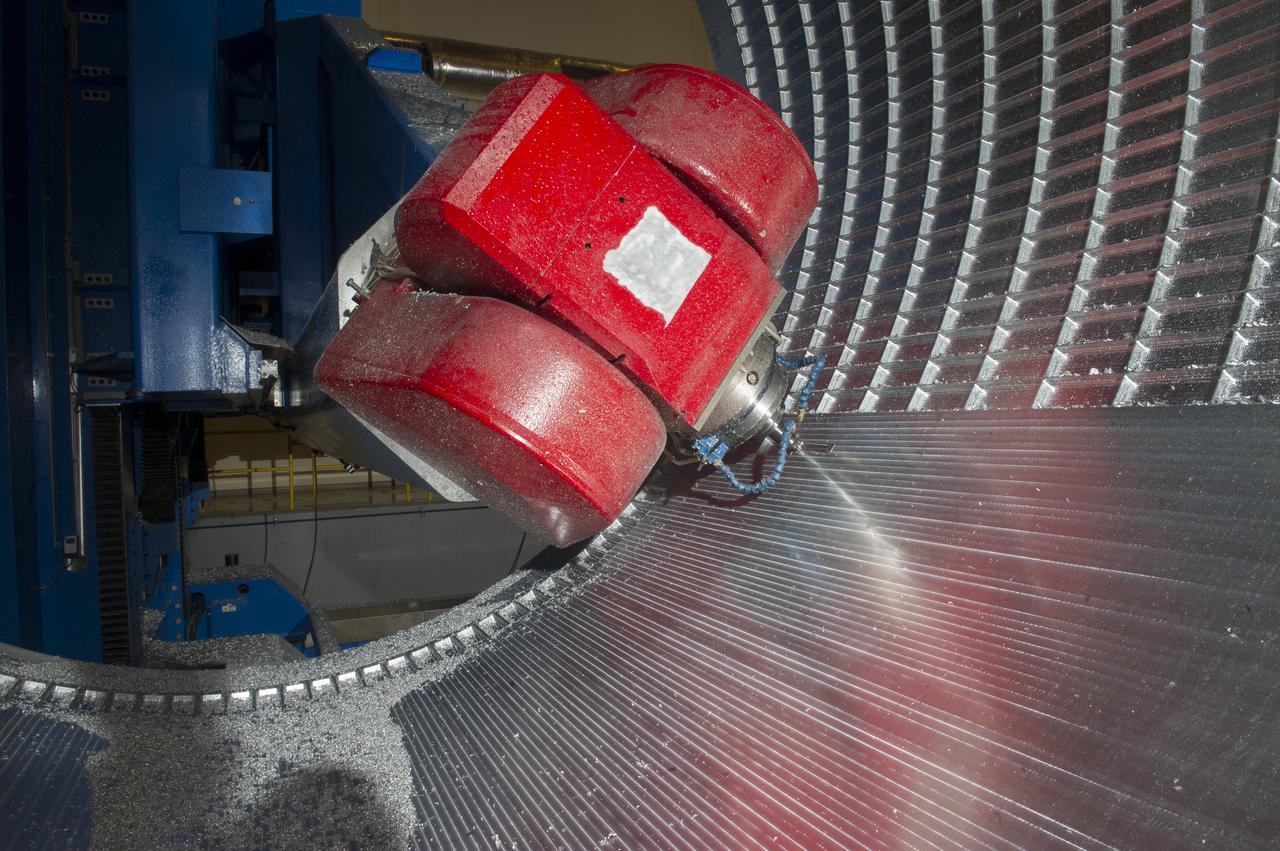
7-AXIS MILLING MACHINE CUTS ORTHOGRID TOOL PATH ON 8 FOOT CF1 BARREL IN SUPPORT OF SHELL BUCKLE TESTING
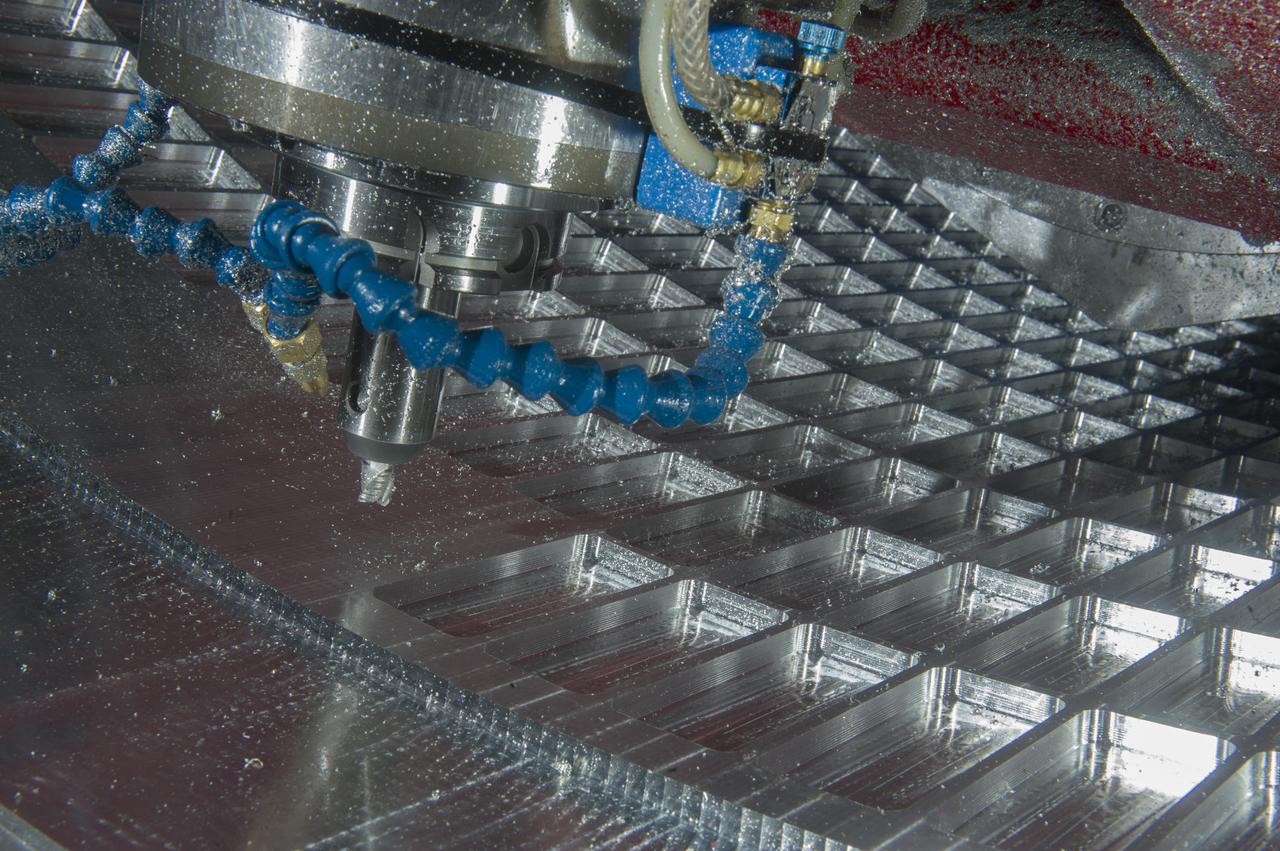
7-AXIS MILLING MACHINE CUTS ORTHOGRID TOOL PATH ON 8 FOOT CF1 BARREL IN SUPPORT OF SHELL BUCKLE TESTING
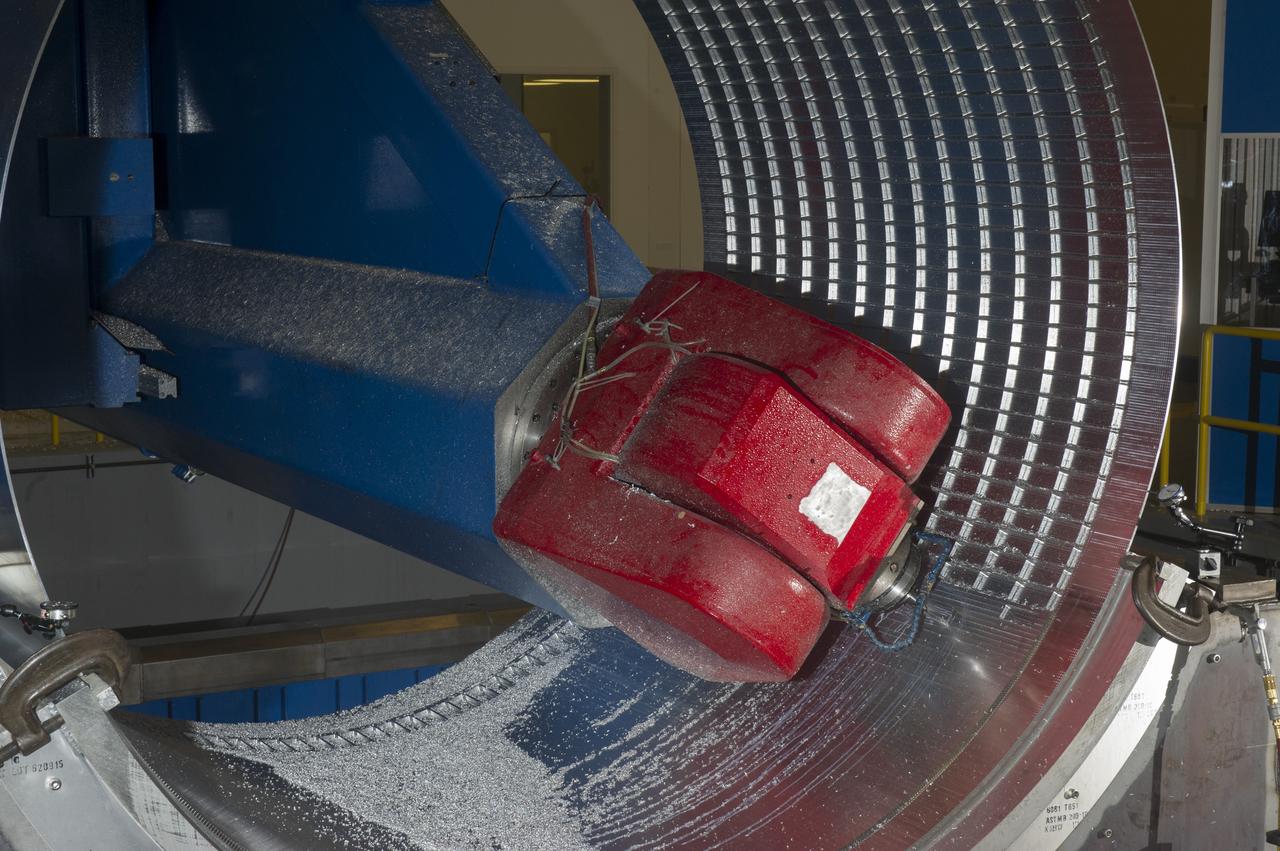
7-AXIS MILLING MACHINE CUTS ORTHOGRID TOOL PATH ON 8 FOOT CF1 BARREL IN SUPPORT OF SHELL BUCKLE TESTING
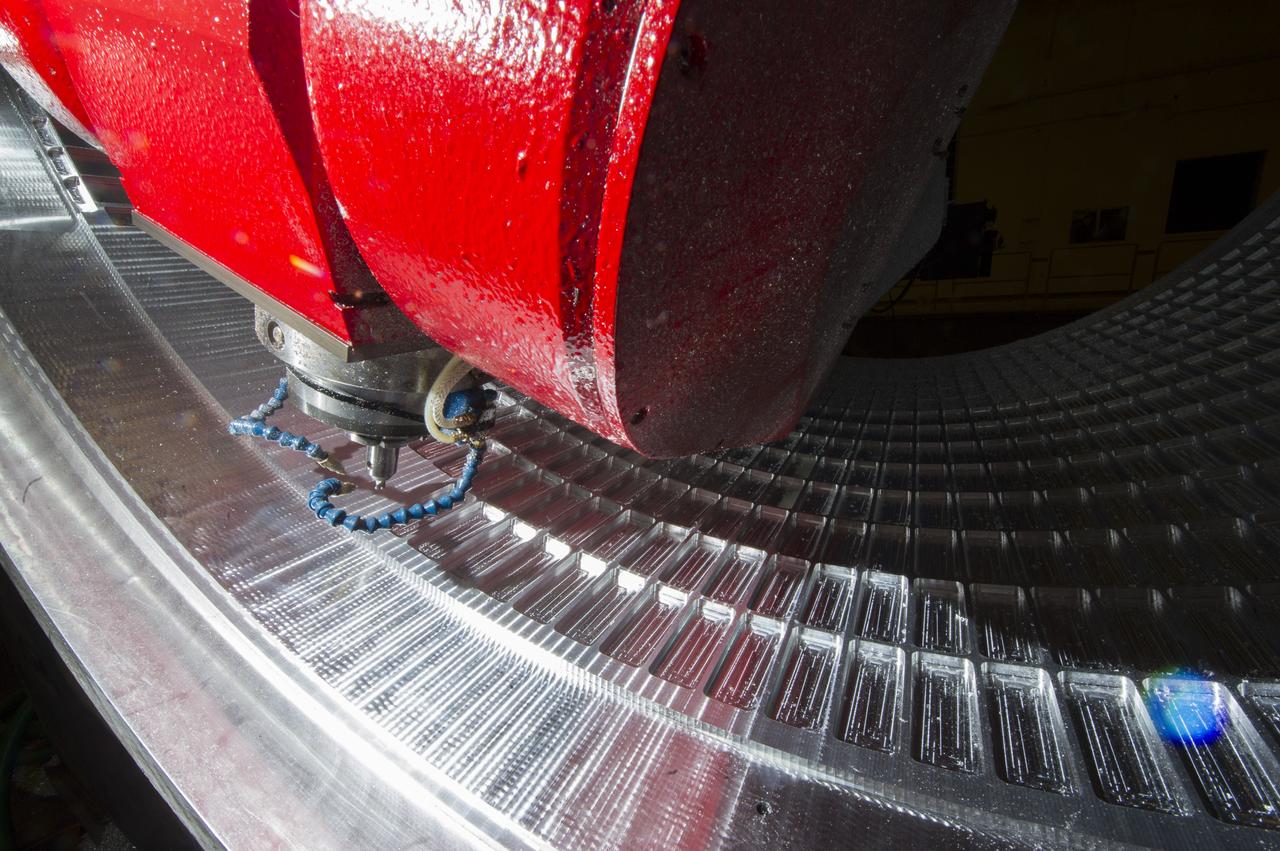
7-AXIS MILLING MACHINE CUTS ORTHOGRID TOOL PATH ON 8 FOOT CF1 BARREL IN SUPPORT OF SHELL BUCKLE TESTING
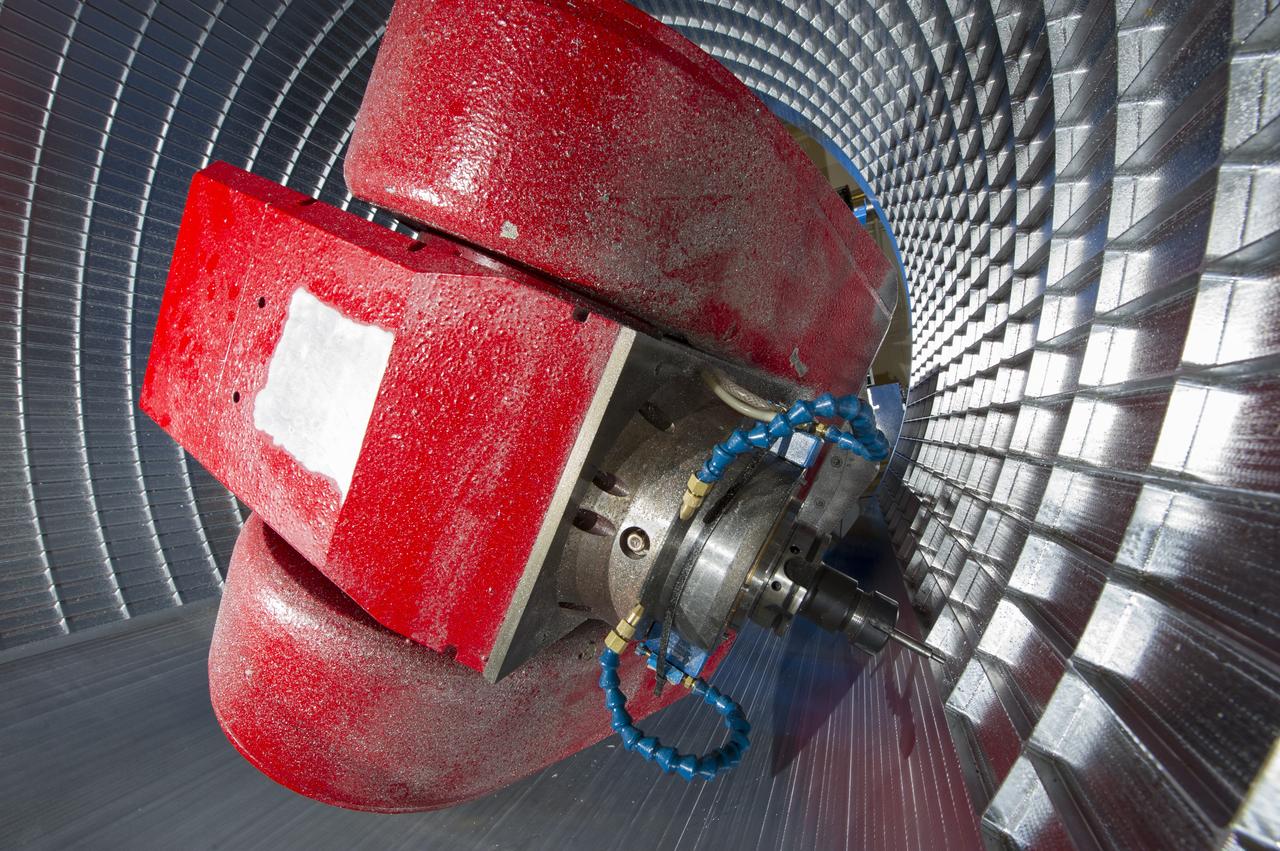
7-AXIS MILLING MACHINE CUTS ORTHOGRID TOOL PATH ON 8 FOOT CF1 BARREL IN SUPPORT OF SHELL BUCKLE TESTING
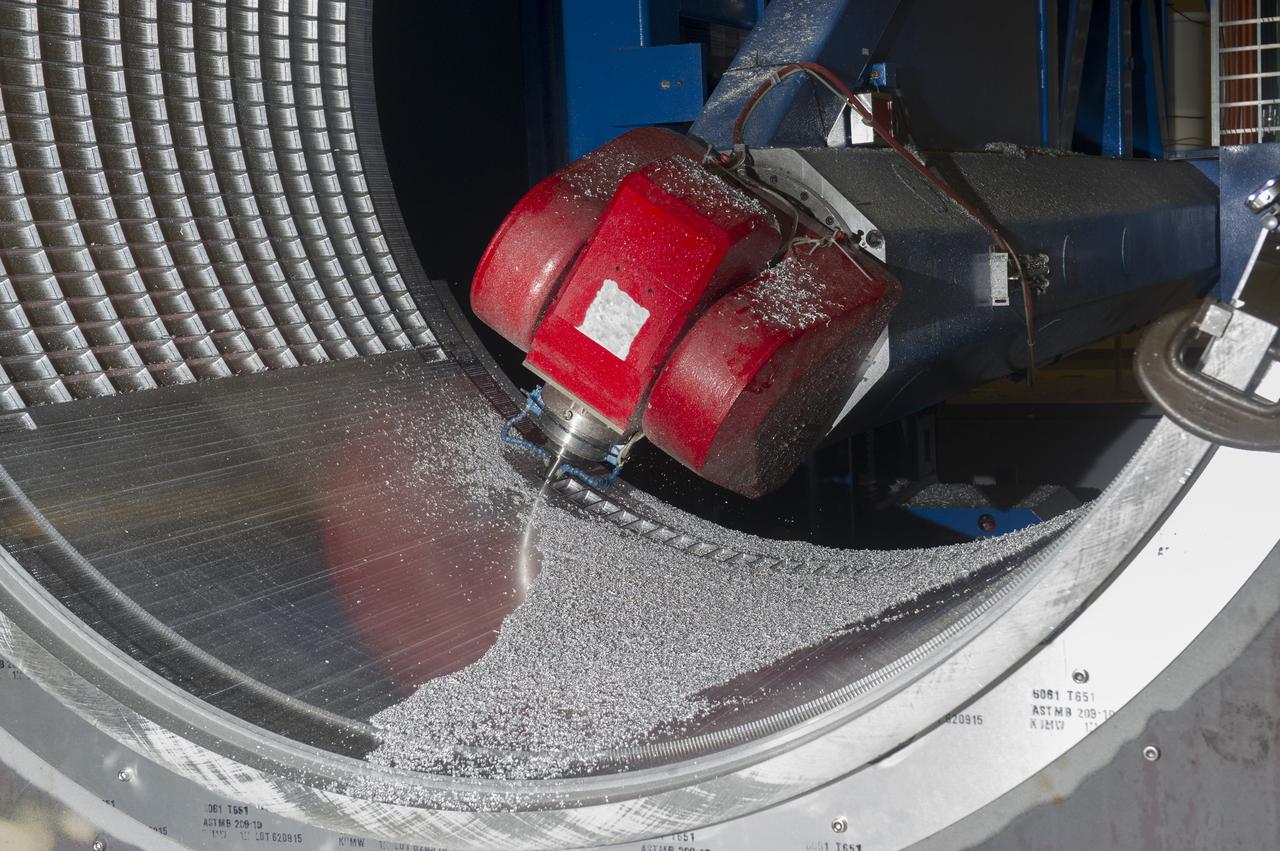
7-AXIS MILLING MACHINE CUTS ORTHOGRID TOOL PATH ON 8 FOOT CF1 BARREL IN SUPPORT OF SHELL BUCKLE TESTING
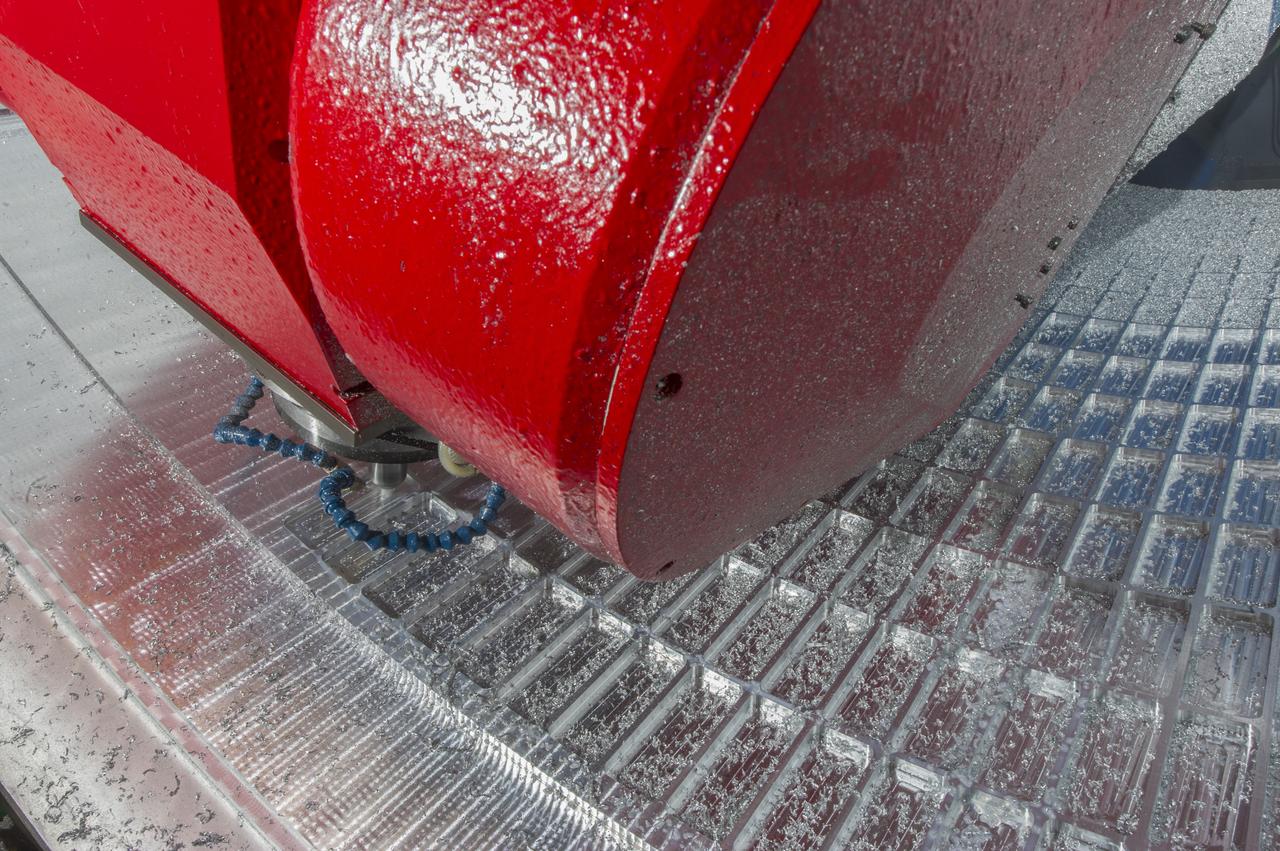
7-AXIS MILLING MACHINE CUTS ORTHOGRID TOOL PATH ON 8 FOOT CF1 BARREL IN SUPPORT OF SHELL BUCKLE TESTING
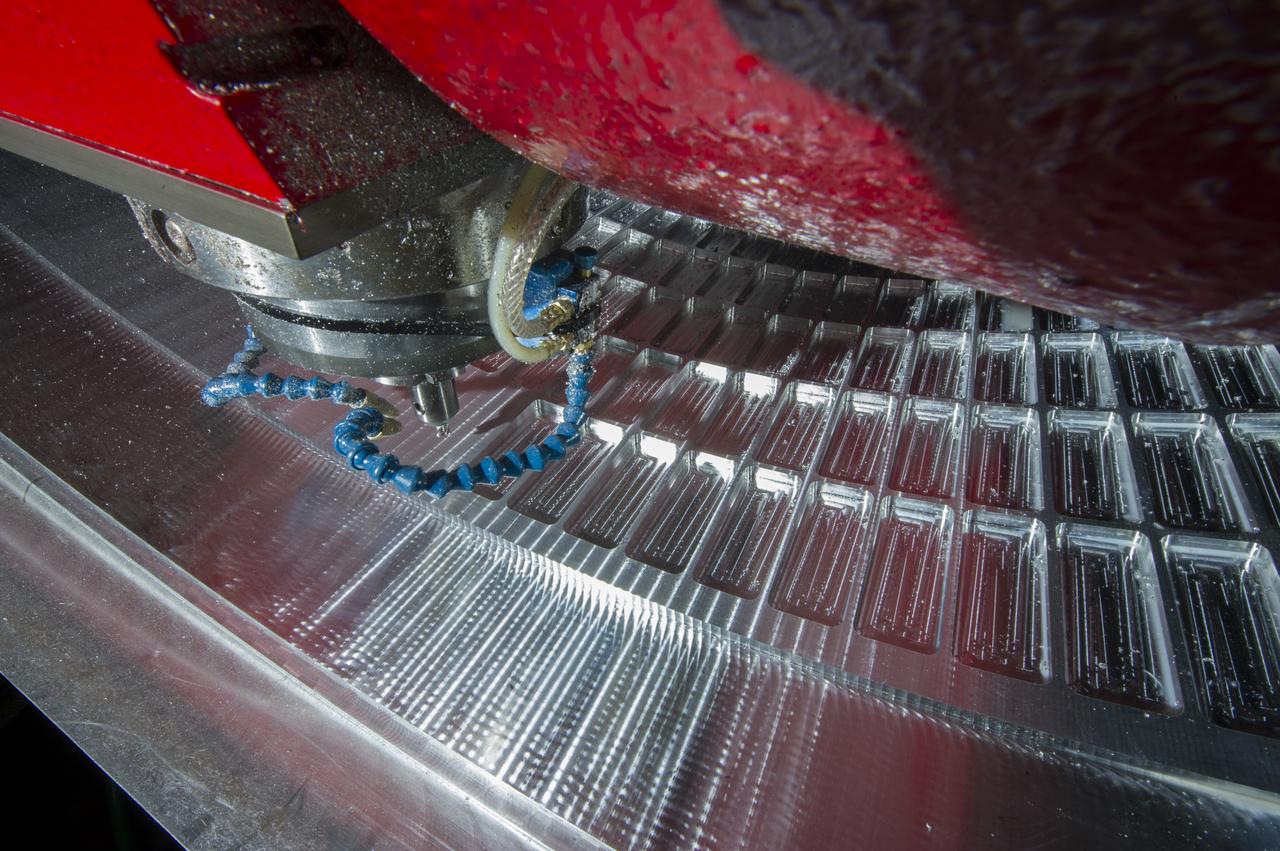
7-AXIS MILLING MACHINE CUTS ORTHOGRID TOOL PATH ON 8 FOOT CF1 BARREL IN SUPPORT OF SHELL BUCKLE TESTING

7-AXIS MILLING MACHINE CUTS ORTHOGRID TOOL PATH ON 8 FOOT CF1 BARREL IN SUPPORT OF SHELL BUCKLE TESTING
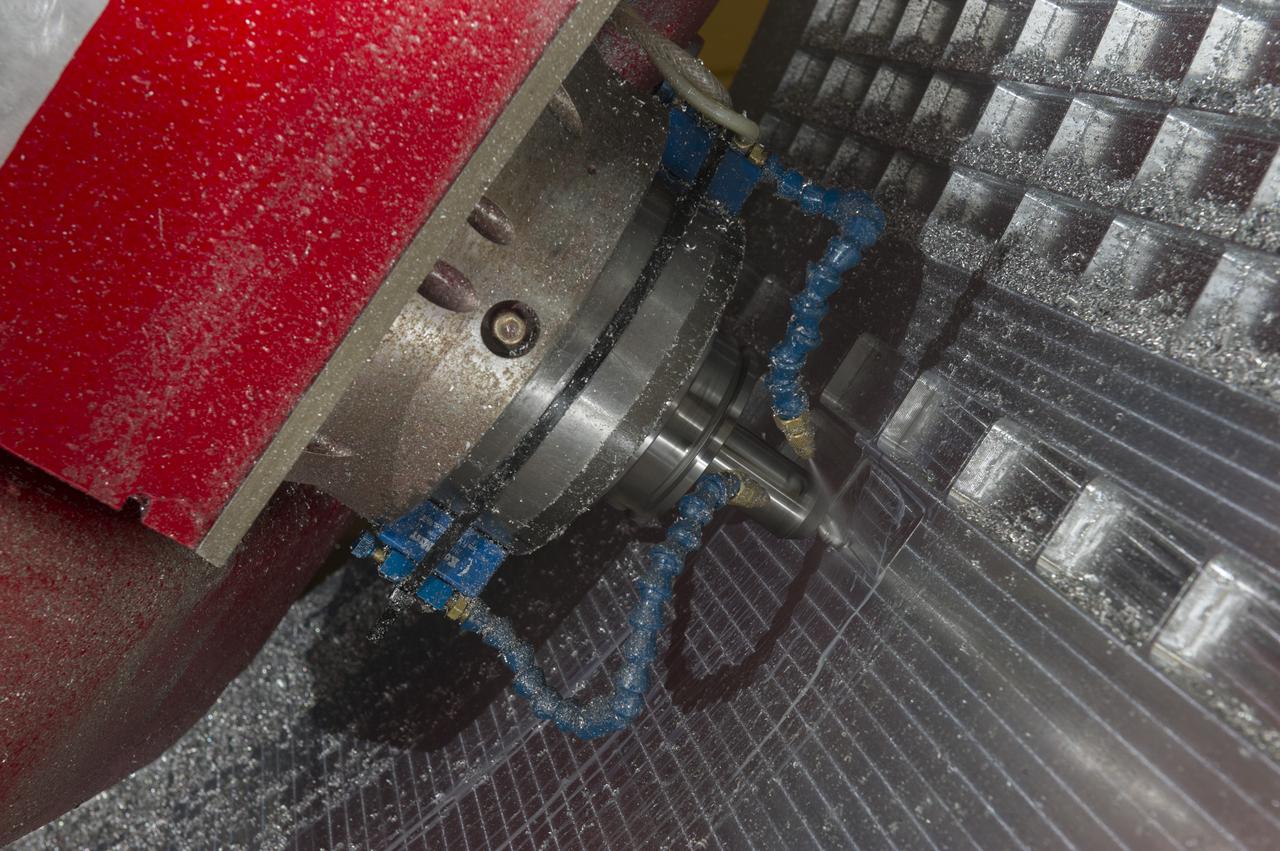
7-AXIS MILLING MACHINE CUTS ORTHOGRID TOOL PATH ON 8 FOOT CF1 BARREL IN SUPPORT OF SHELL BUCKLE TESTING
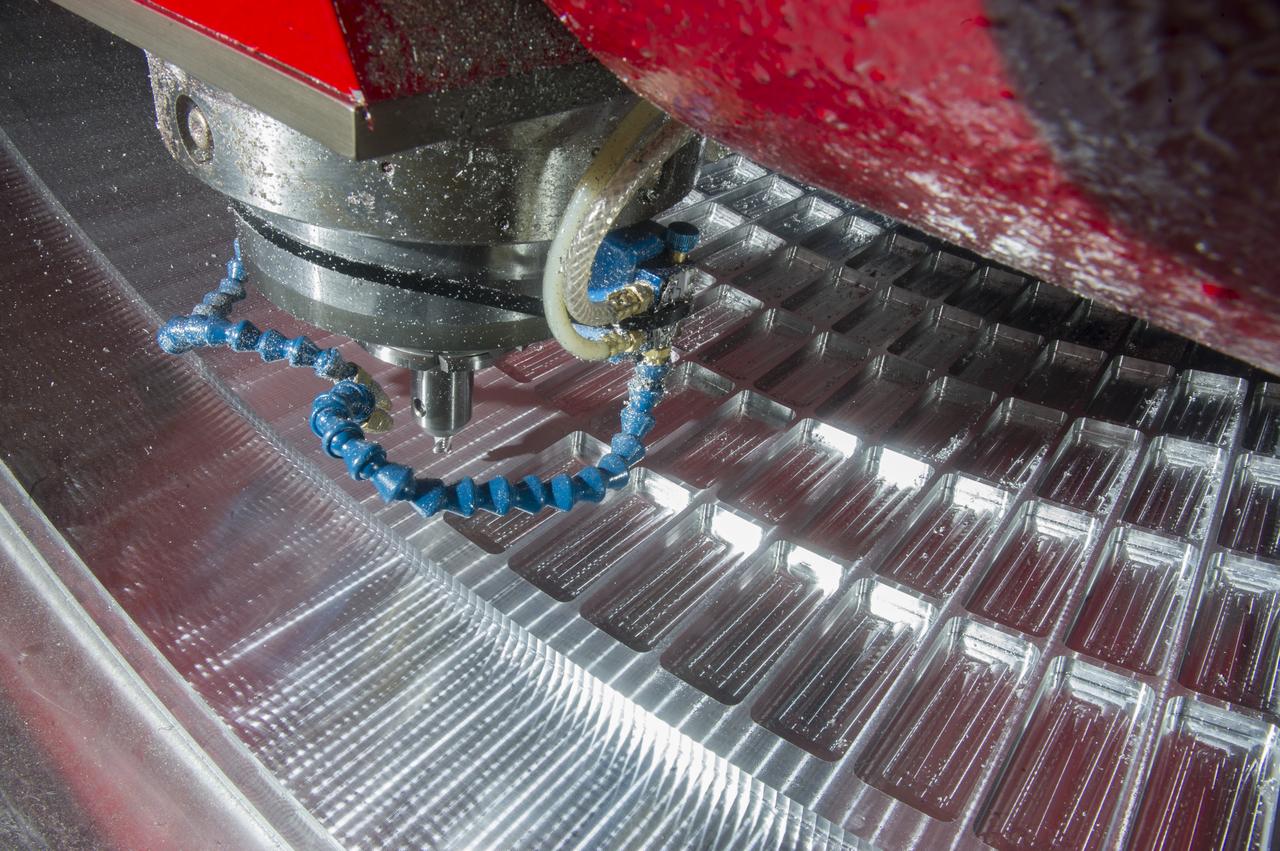
7-AXIS MILLING MACHINE CUTS ORTHOGRID TOOL PATH ON 8 FOOT CF1 BARREL IN SUPPORT OF SHELL BUCKLE TESTING
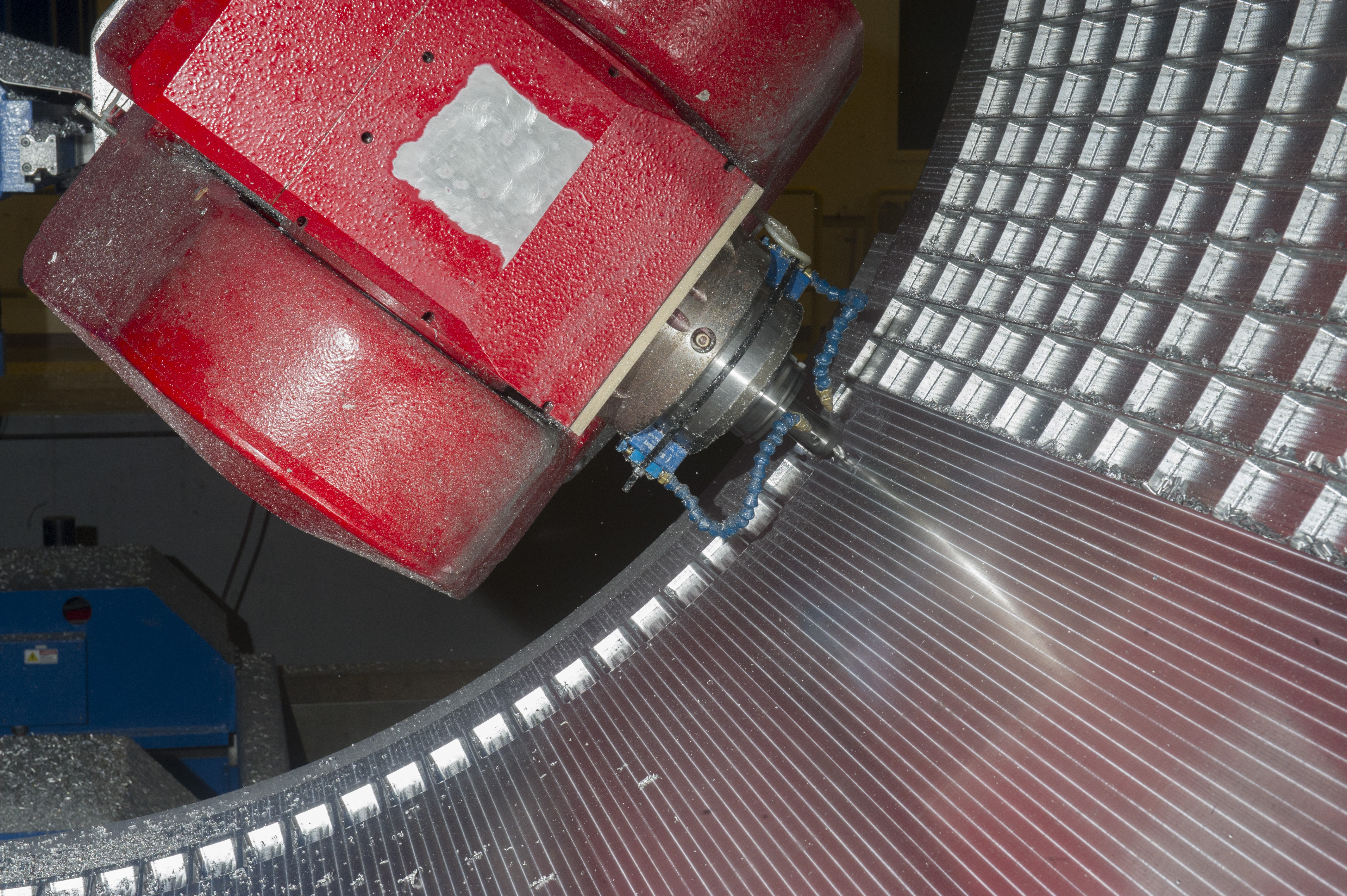
7-AXIS MILLING MACHINE CUTS ORTHOGRID TOOL PATH ON 8 FOOT CF1 BARREL IN SUPPORT OF SHELL BUCKLE TESTING
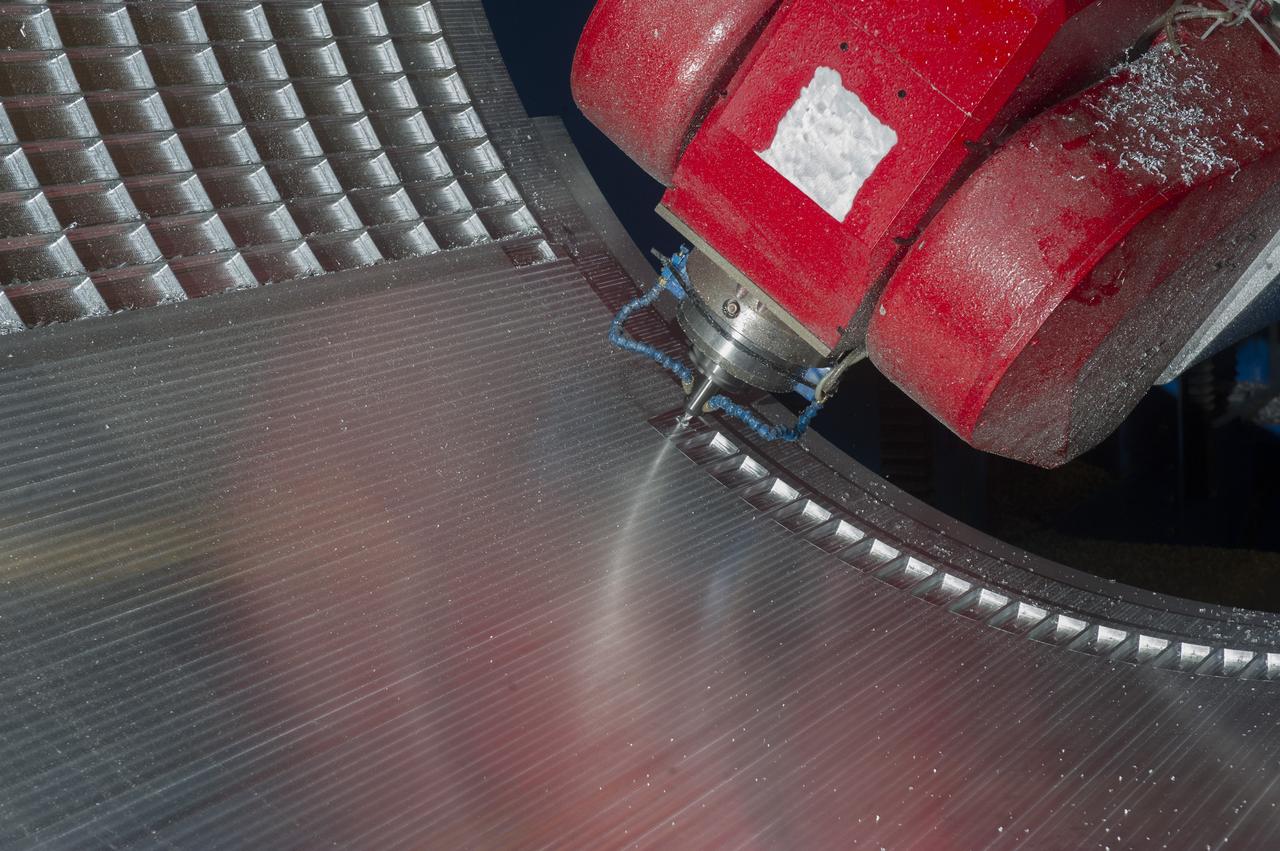
7-AXIS MILLING MACHINE CUTS ORTHOGRID TOOL PATH ON 8 FOOT CF1 BARREL IN SUPPORT OF SHELL BUCKLE TESTING
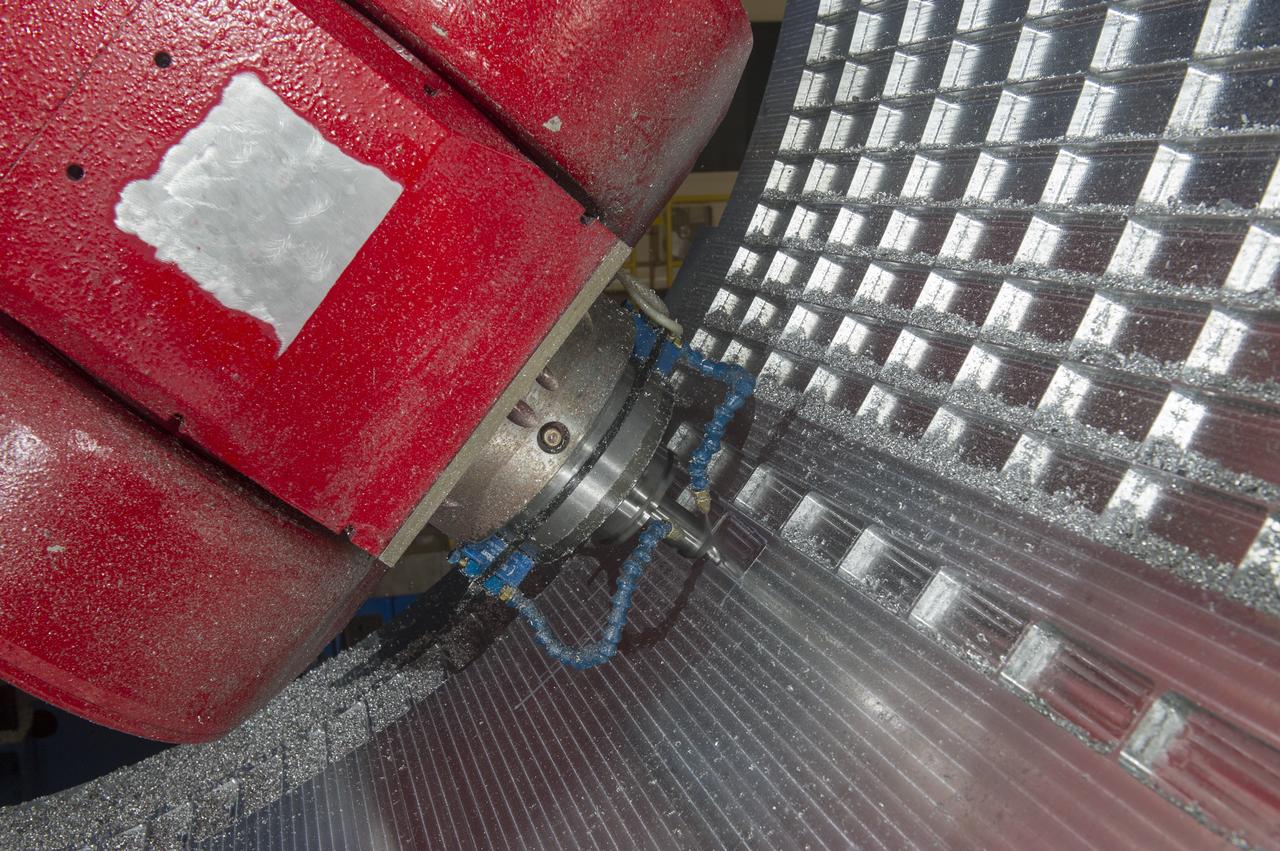
7-AXIS MILLING MACHINE CUTS ORTHOGRID TOOL PATH ON 8 FOOT CF1 BARREL IN SUPPORT OF SHELL BUCKLE TESTING
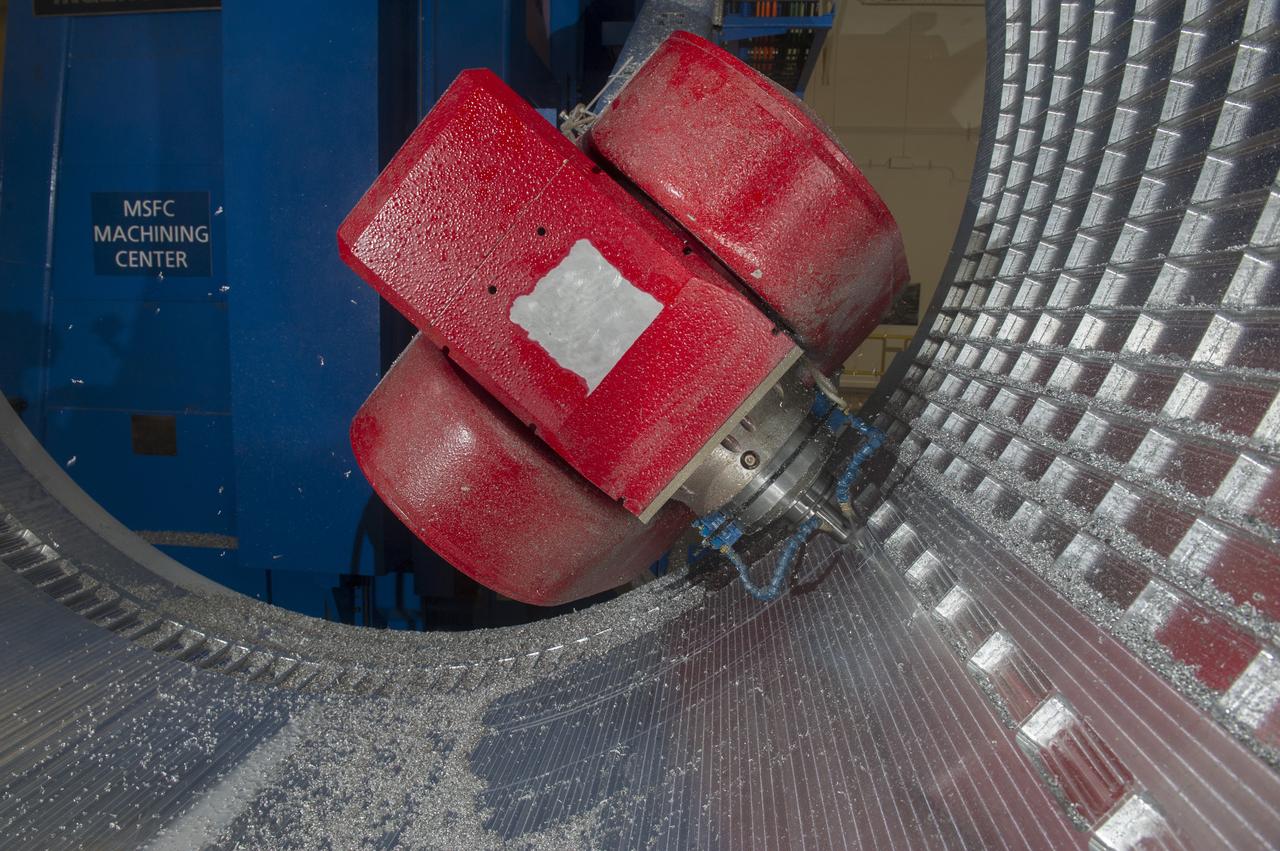
7-AXIS MILLING MACHINE CUTS ORTHOGRID TOOL PATH ON 8 FOOT CF1 BARREL IN SUPPORT OF SHELL BUCKLE TESTING
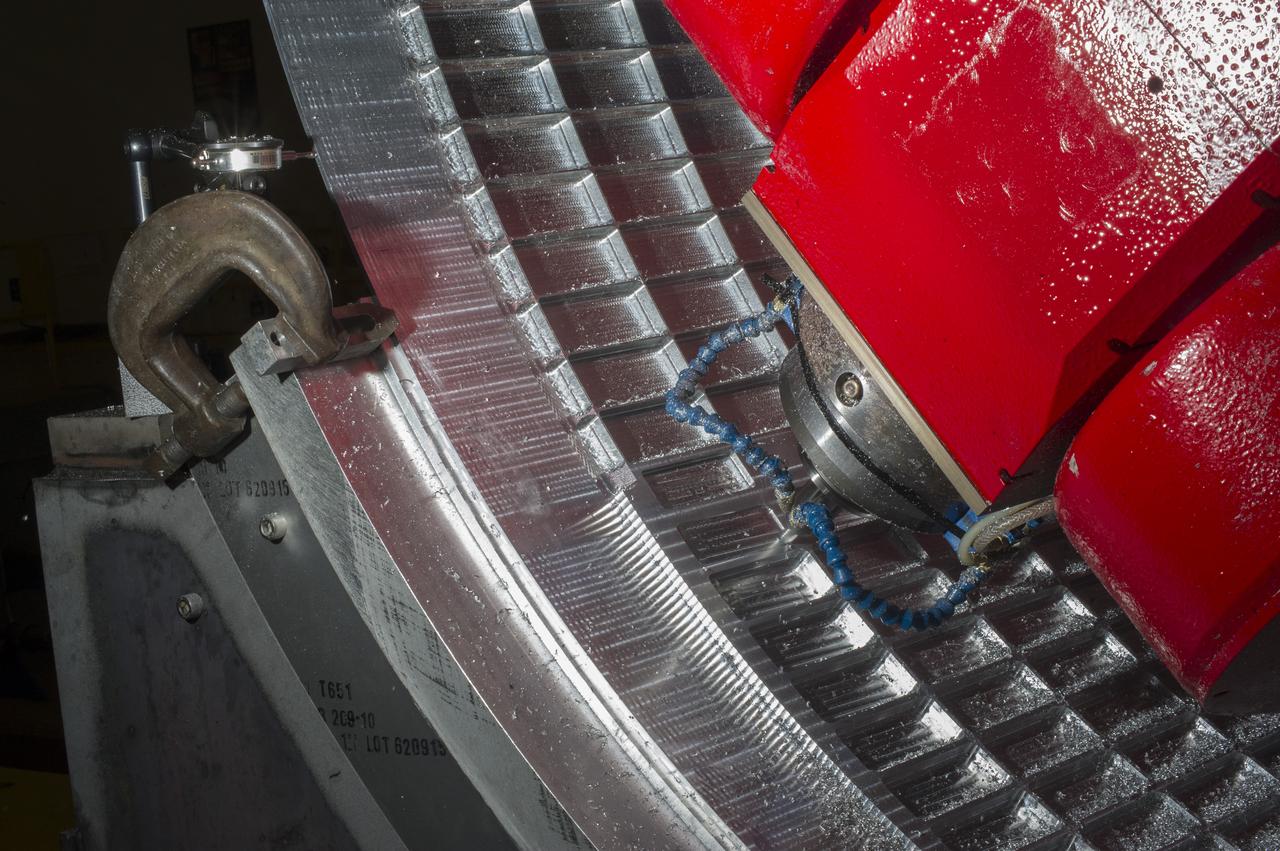
7-AXIS MILLING MACHINE CUTS ORTHOGRID TOOL PATH ON 8 FOOT CF1 BARREL IN SUPPORT OF SHELL BUCKLE TESTING
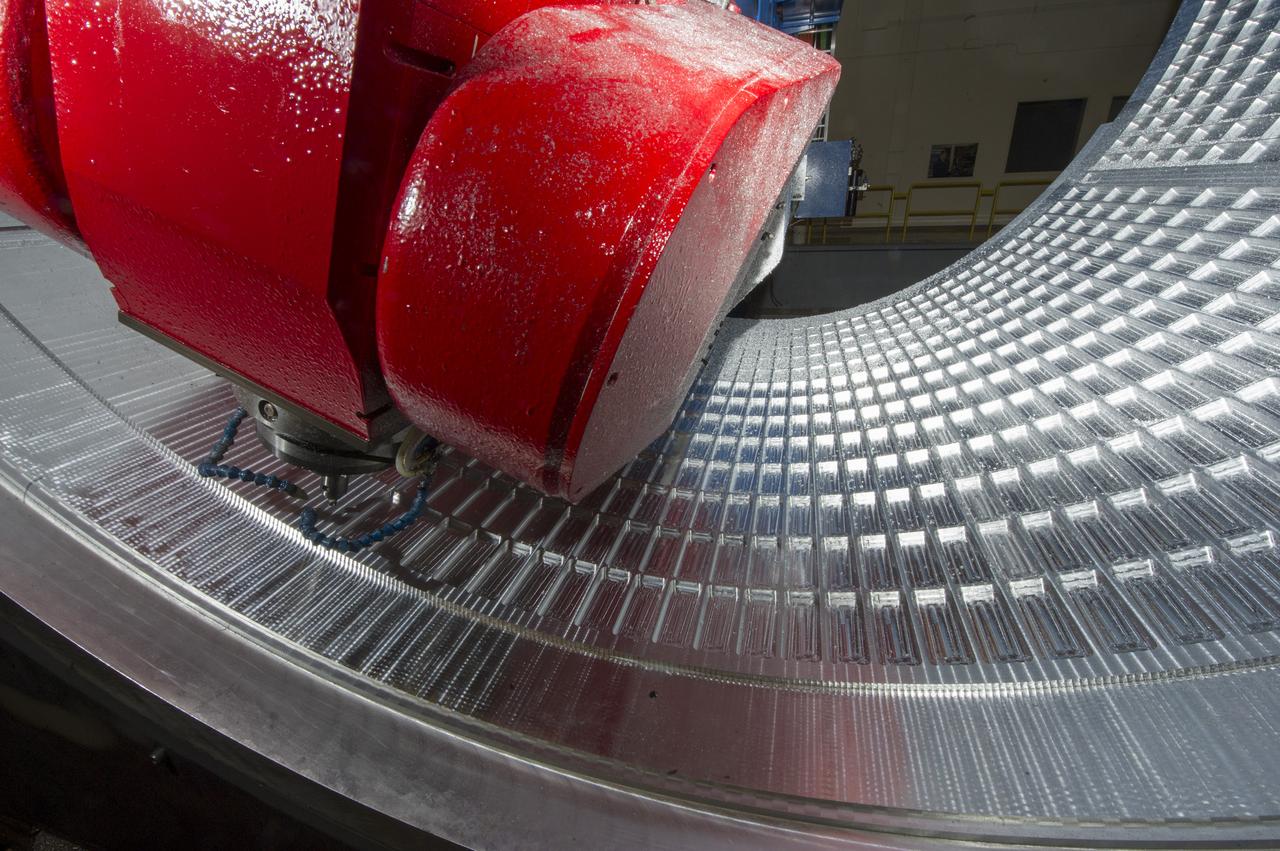
7-AXIS MILLING MACHINE CUTS ORTHOGRID TOOL PATH ON 8 FOOT CF1 BARREL IN SUPPORT OF SHELL BUCKLE TESTING
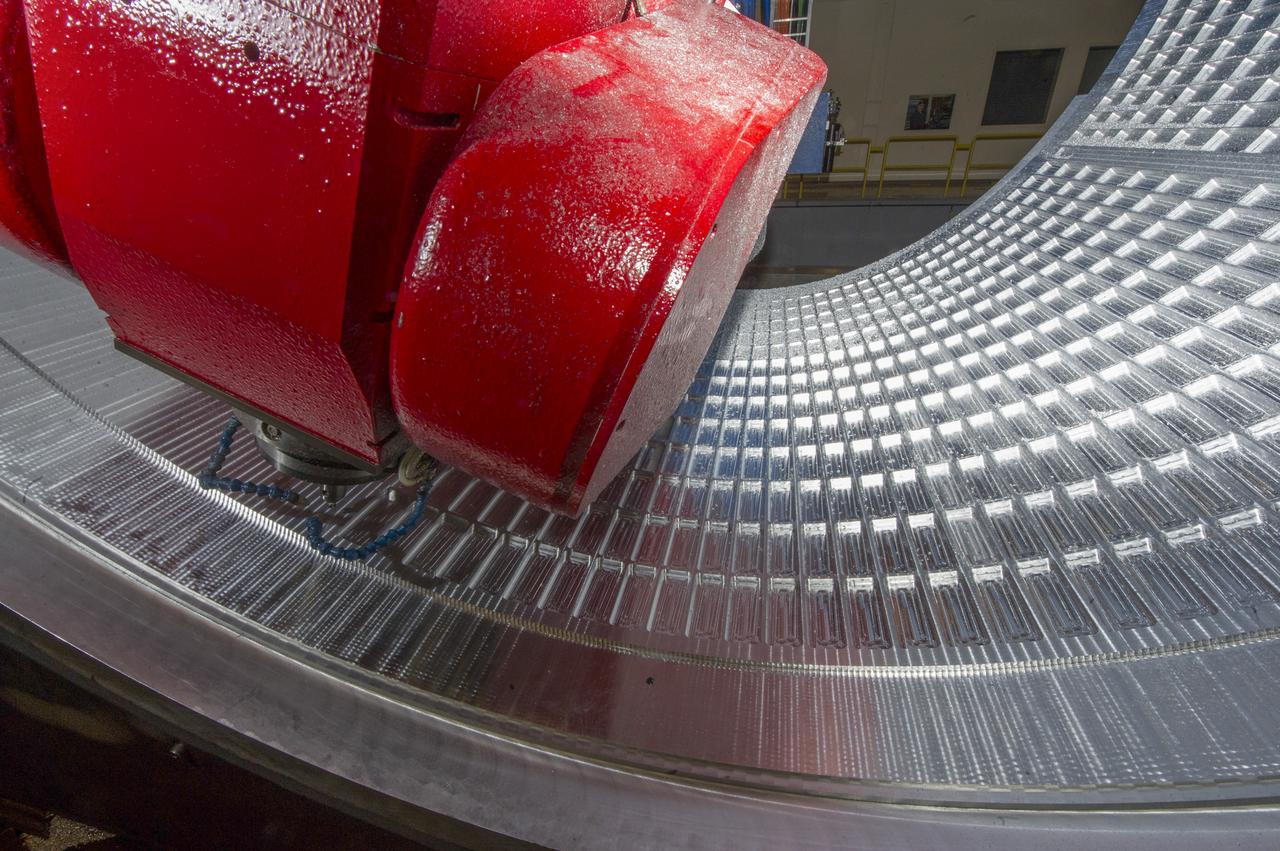
7-AXIS MILLING MACHINE CUTS ORTHOGRID TOOL PATH ON 8 FOOT CF1 BARREL IN SUPPORT OF SHELL BUCKLE TESTING
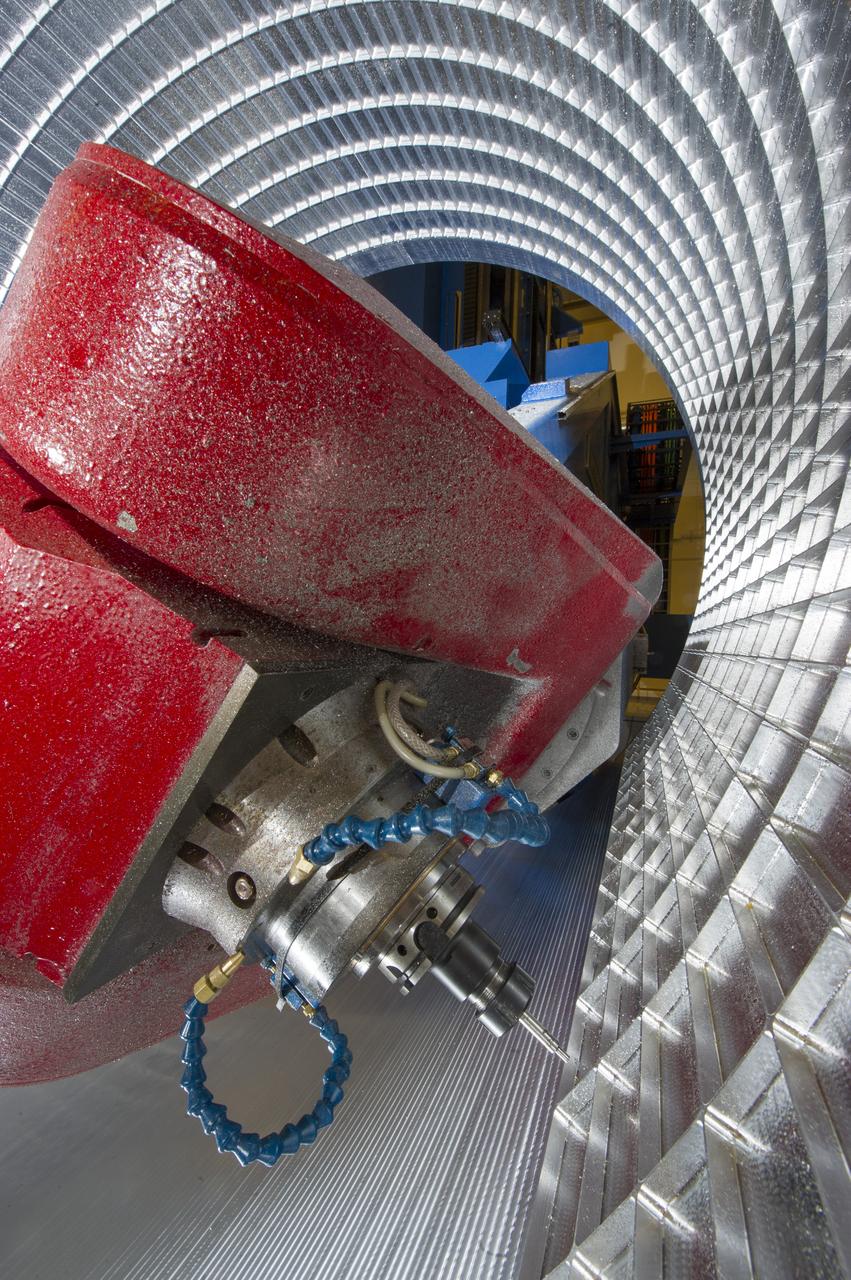
7-AXIS MILLING MACHINE CUTS ORTHOGRID TOOL PATH ON 8 FOOT CF1 BARREL IN SUPPORT OF SHELL BUCKLE TESTING
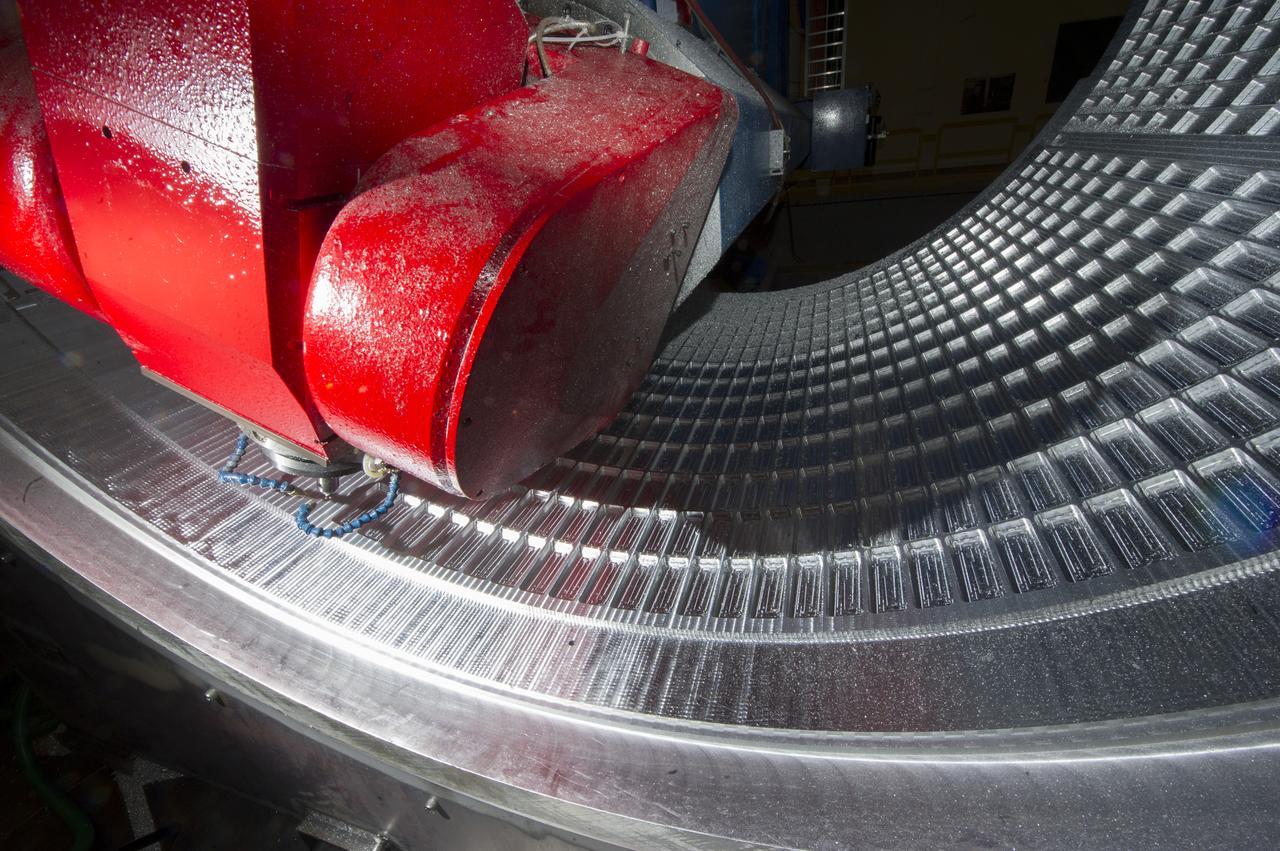
7-AXIS MILLING MACHINE CUTS ORTHOGRID TOOL PATH ON 8 FOOT CF1 BARREL IN SUPPORT OF SHELL BUCKLE TESTING
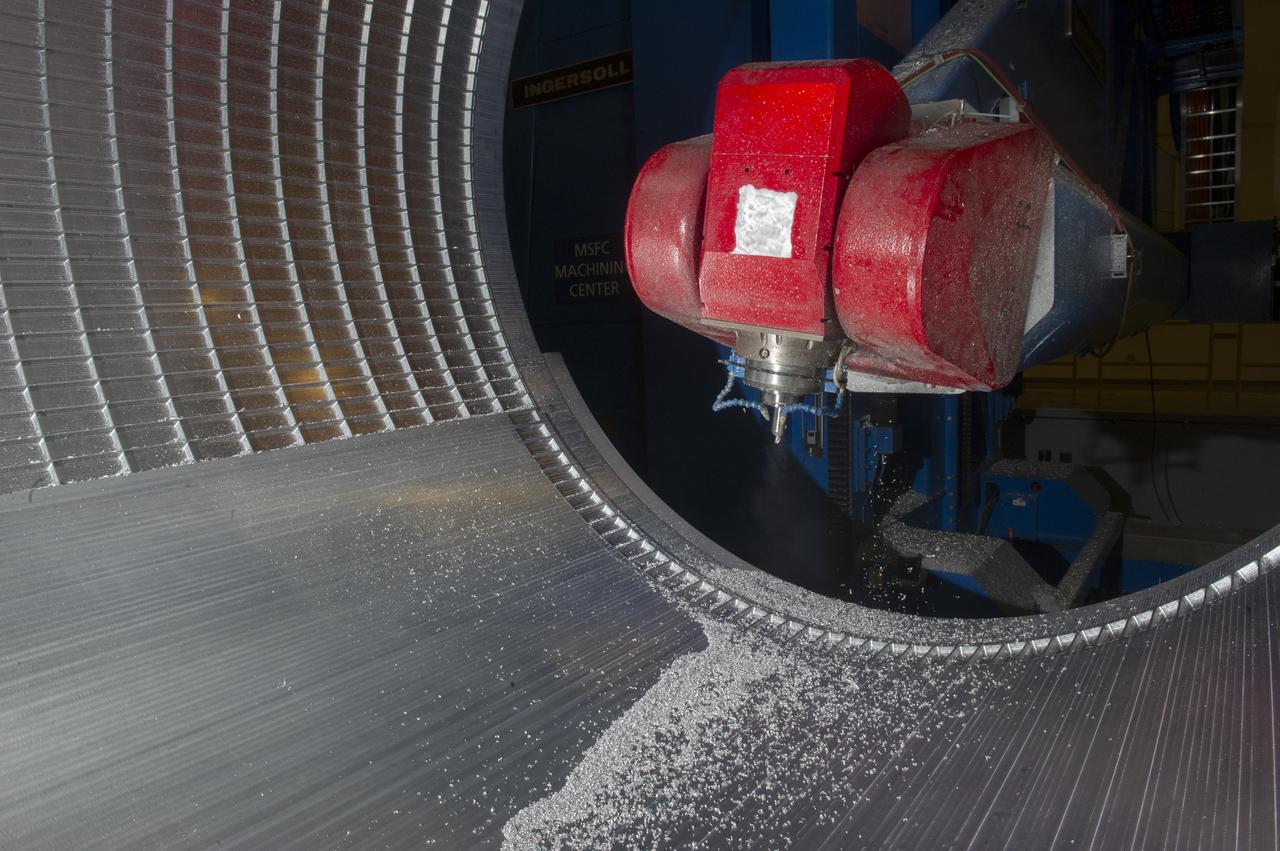
7-AXIS MILLING MACHINE CUTS ORTHOGRID TOOL PATH ON 8 FOOT CF1 BARREL IN SUPPORT OF SHELL BUCKLE TESTING
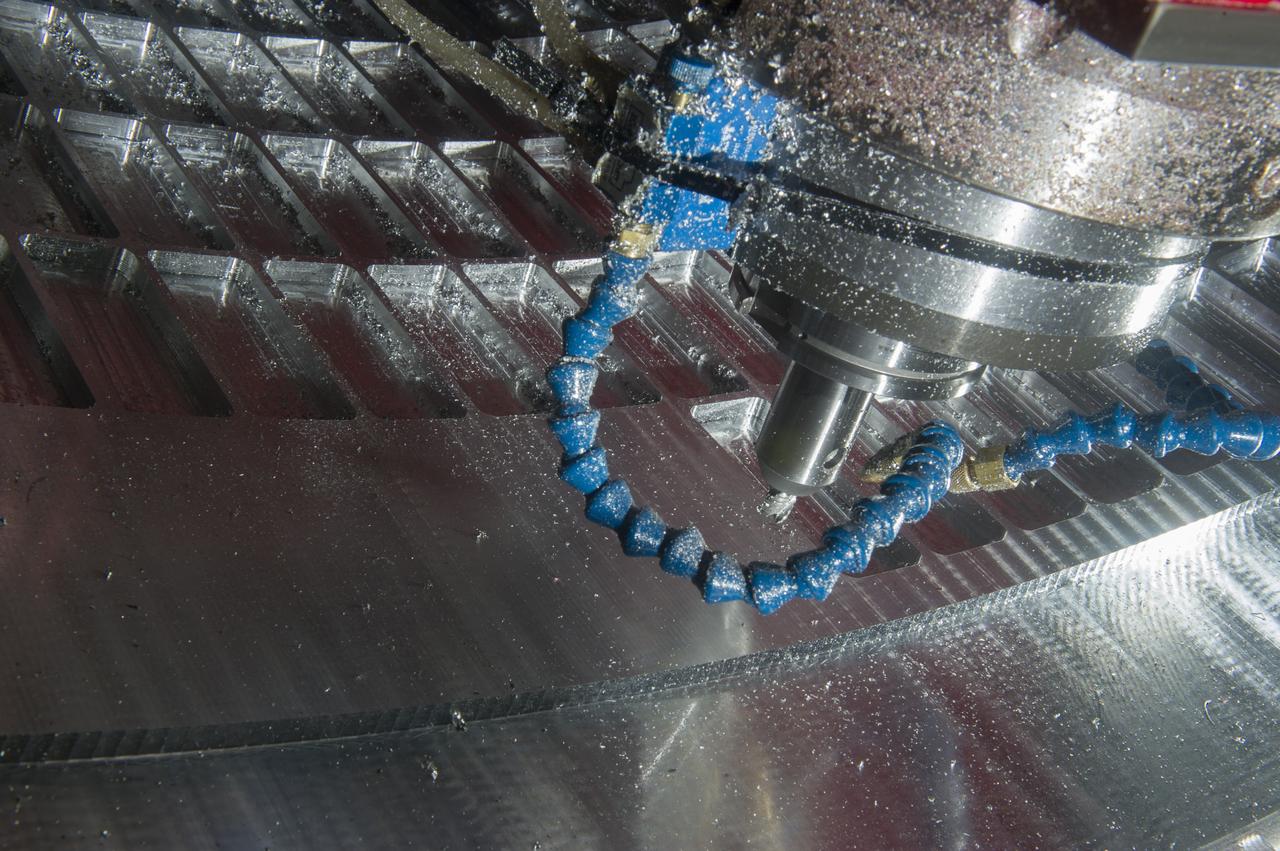
7-AXIS MILLING MACHINE CUTS ORTHOGRID TOOL PATH ON 8 FOOT CF1 BARREL IN SUPPORT OF SHELL BUCKLE TESTING
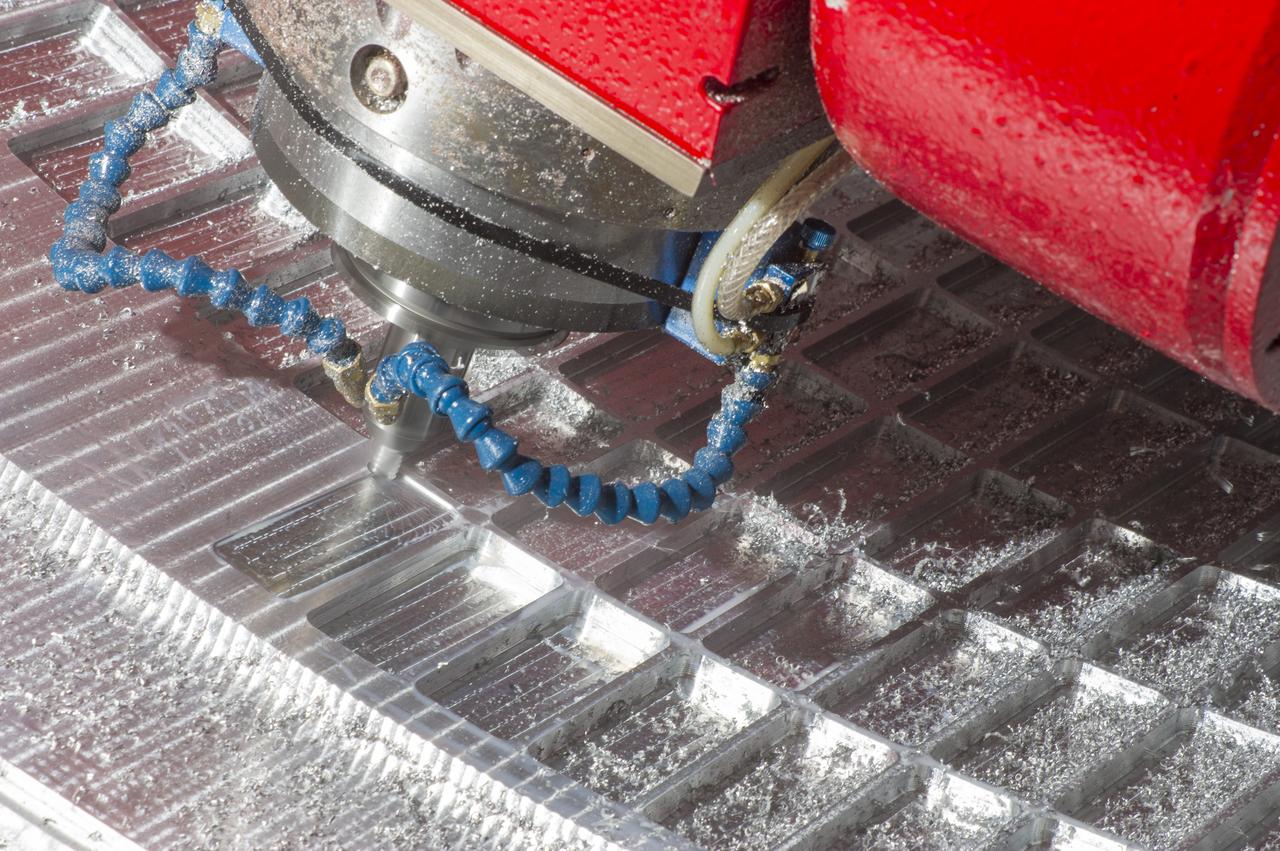
7-AXIS MILLING MACHINE CUTS ORTHOGRID TOOL PATH ON 8 FOOT CF1 BARREL IN SUPPORT OF SHELL BUCKLE TESTING
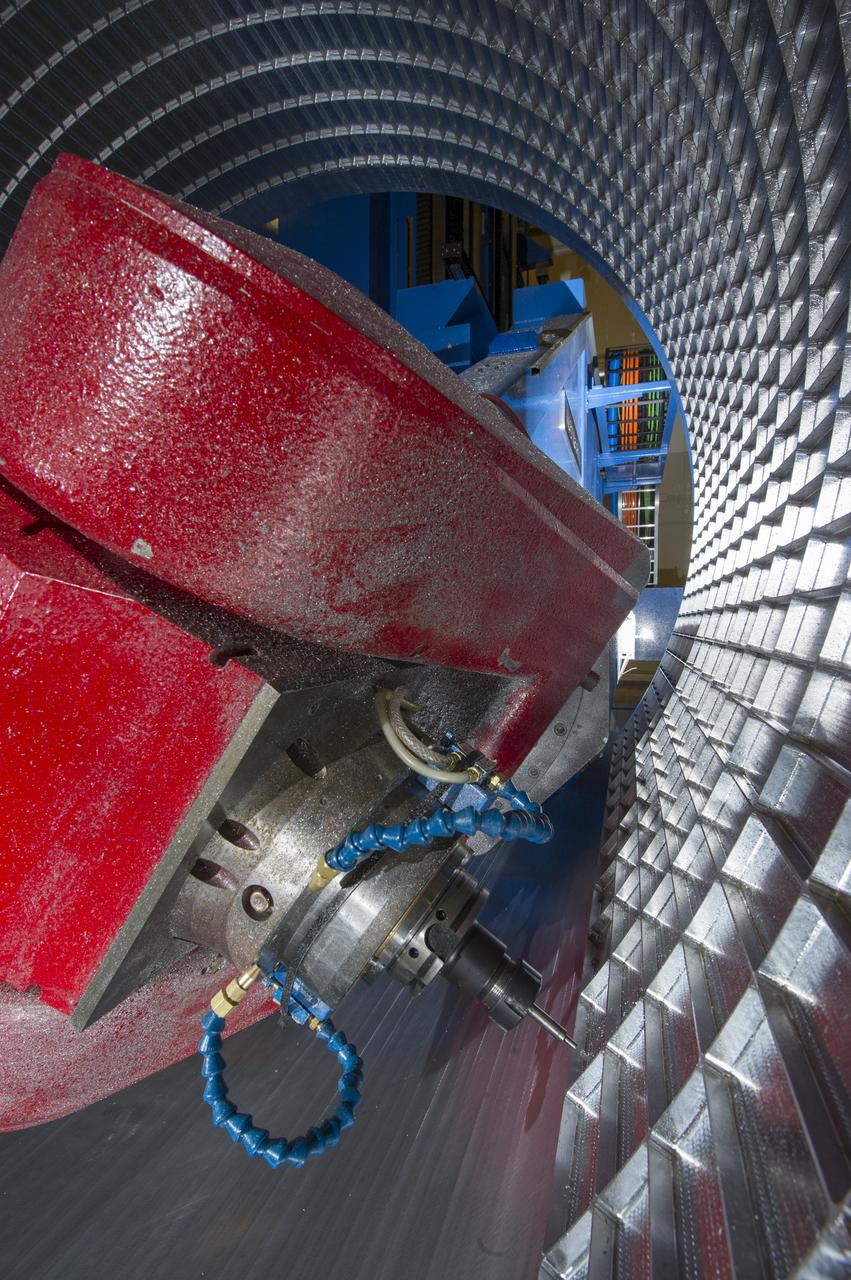
7-AXIS MILLING MACHINE CUTS ORTHOGRID TOOL PATH ON 8 FOOT CF1 BARREL IN SUPPORT OF SHELL BUCKLE TESTING
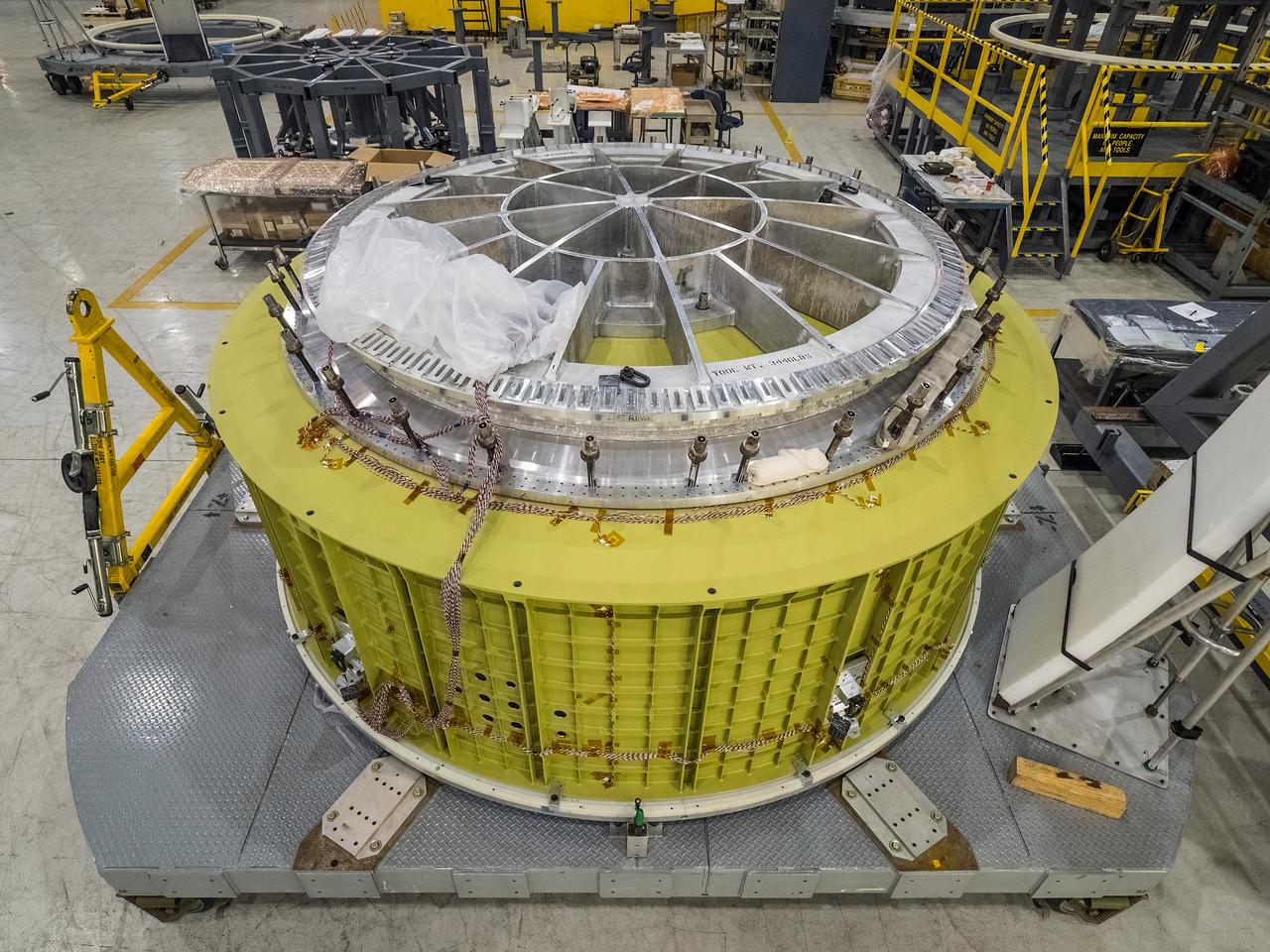
The completed barrel and aft bulkhead of the Orion Artemis I pressure vessel at NASA's Michoud Assembly Facility in New Orleans on Nov. 15, 2015. Part of Batch image transfer from Flickr.
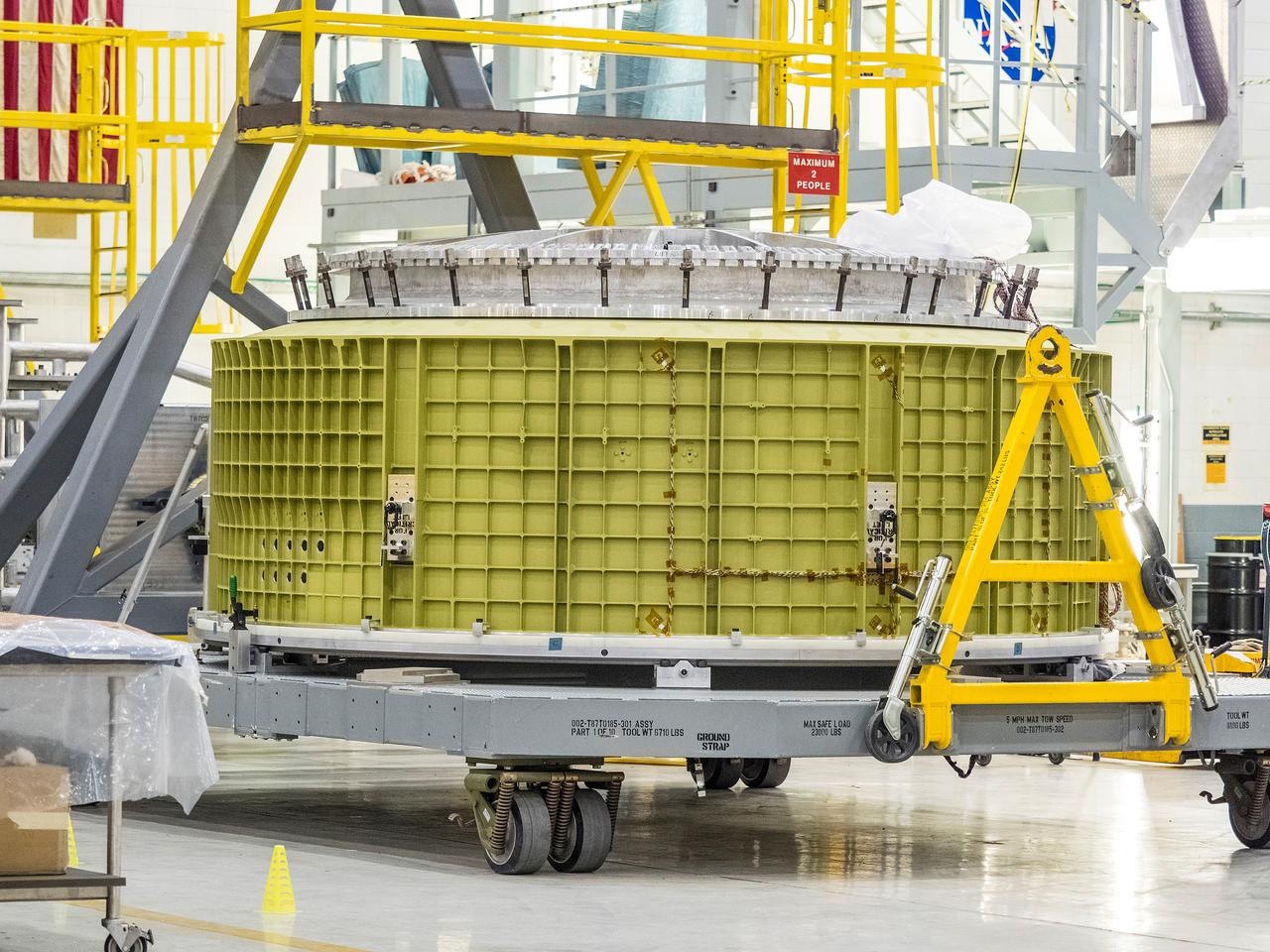
The completed barrel and aft bulkhead of the Orion Artemis I pressure vessel at NASA's Michoud Assembly Facility in New Orleans on Nov. 15, 2015. Part of Batch image transfer from Flickr.
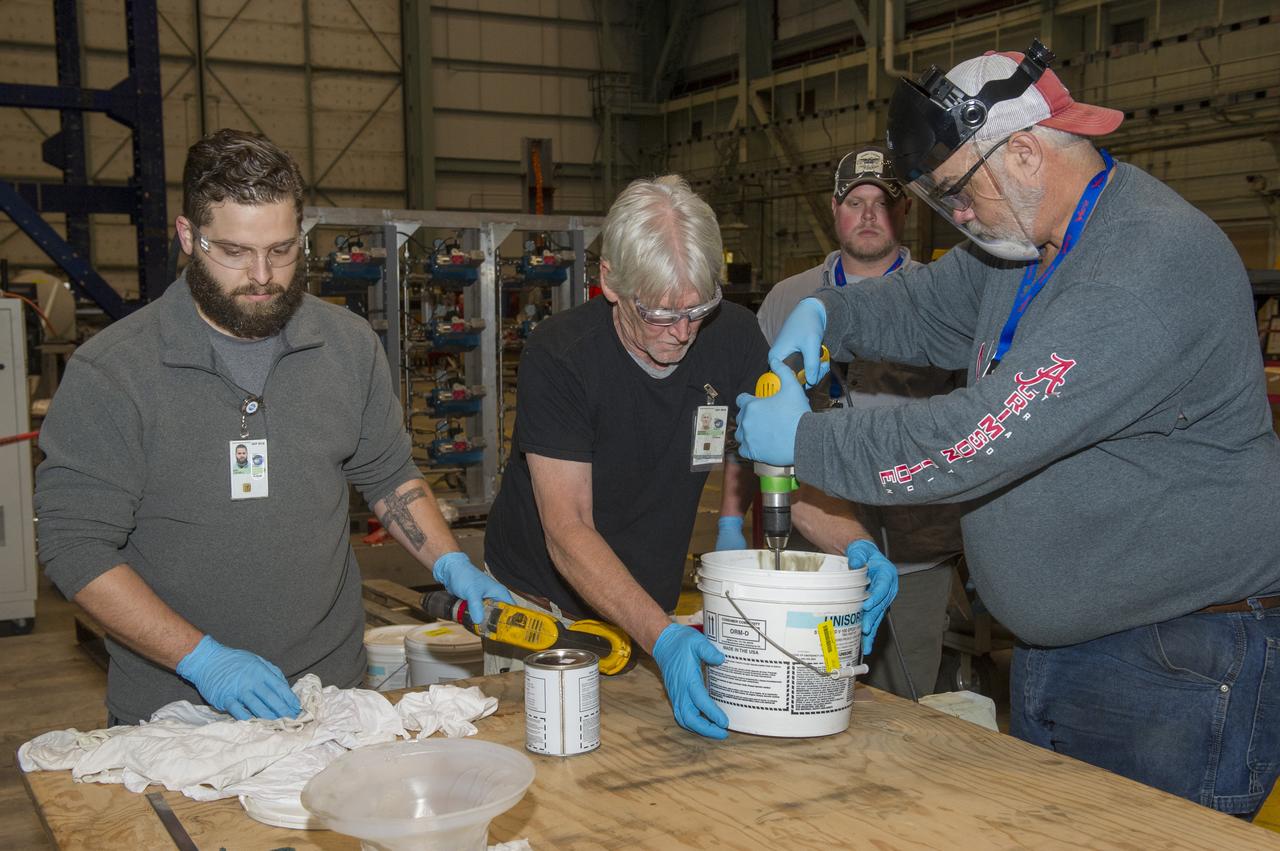
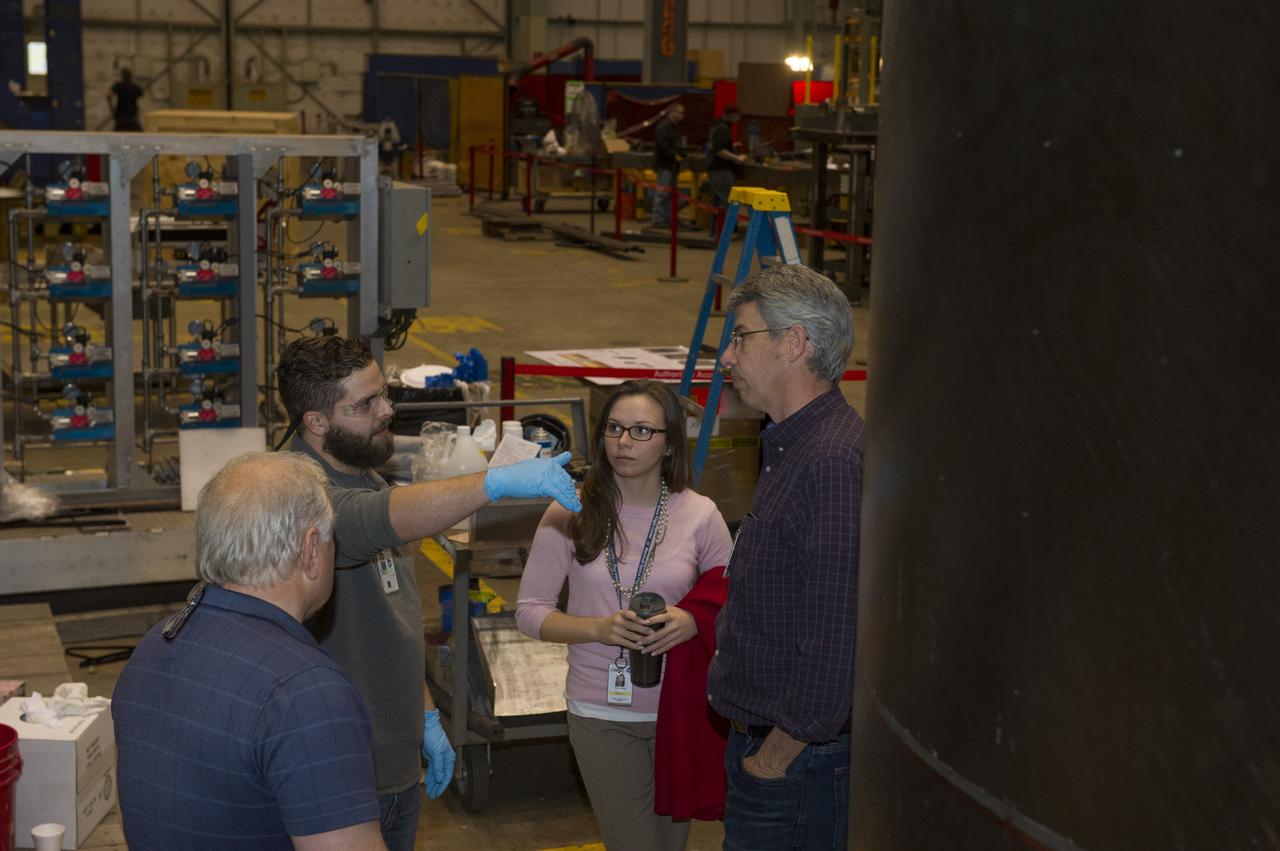
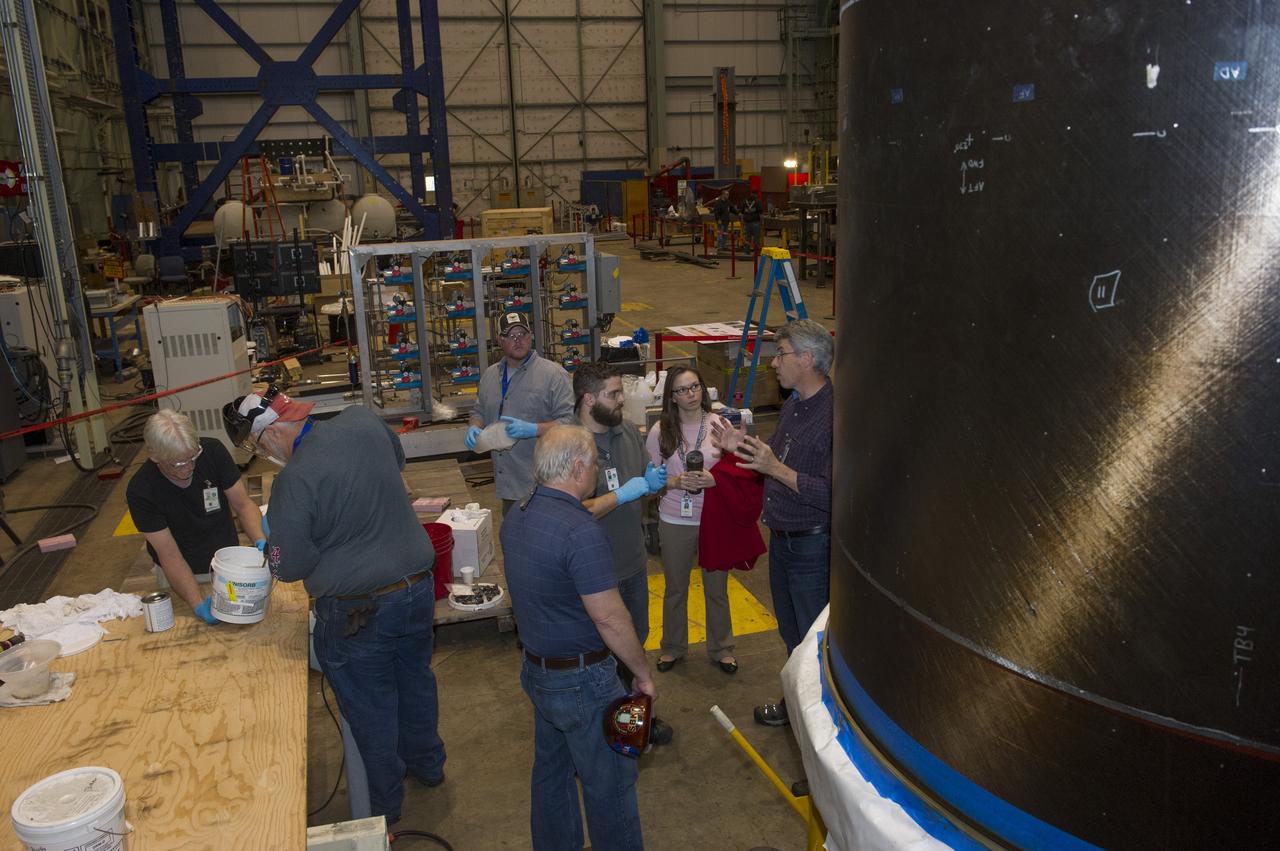
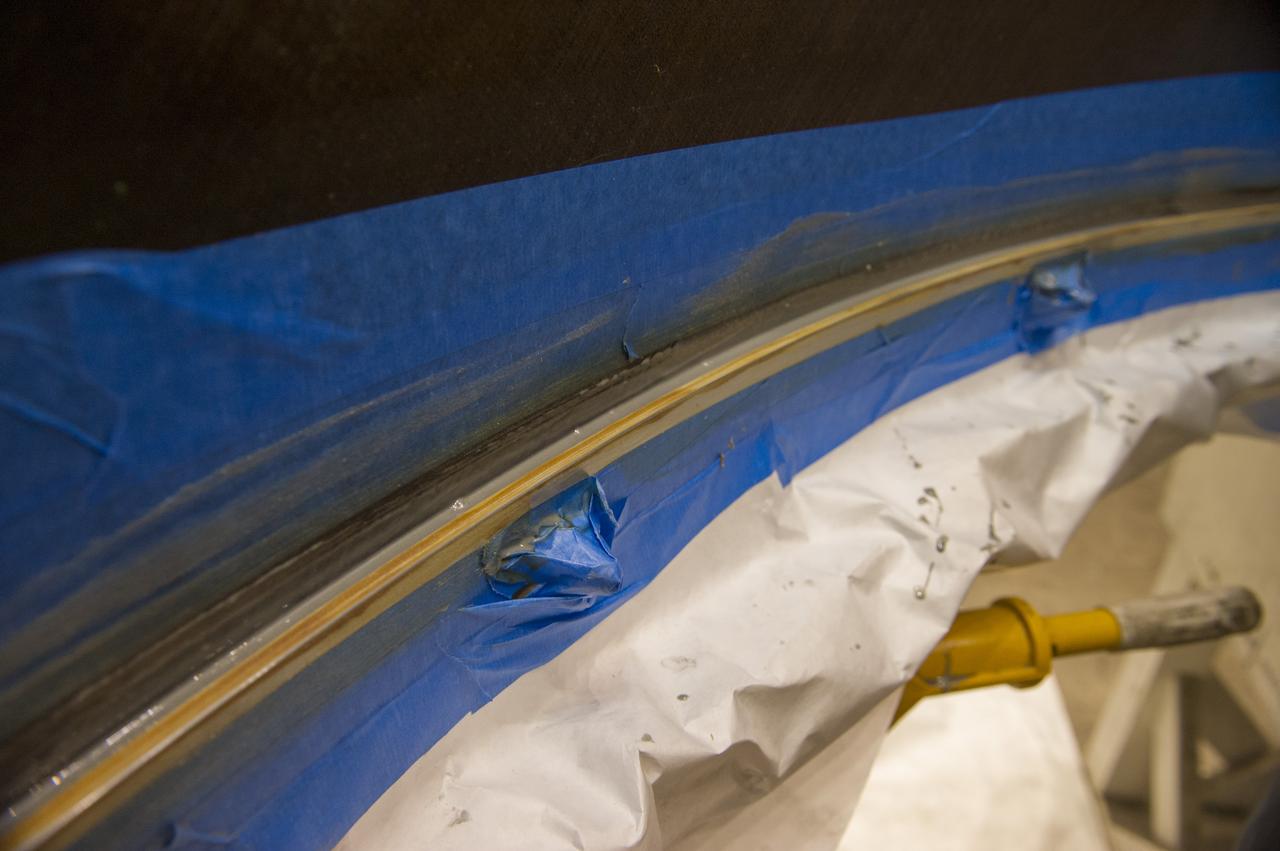
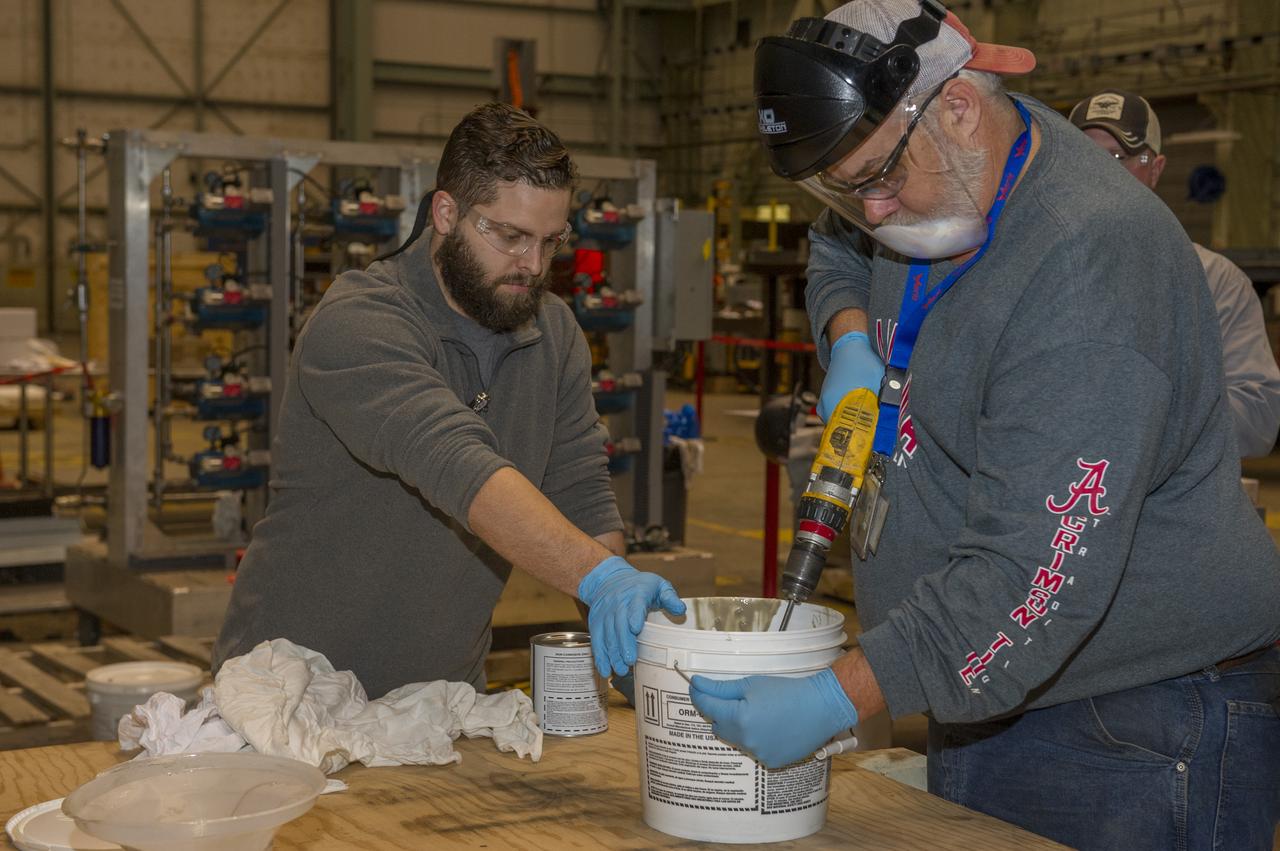
SHELL BUCKLE KNOCKDOWN FACTOR (SBKF) COMPOSITE BARREL EPOXY POUR.
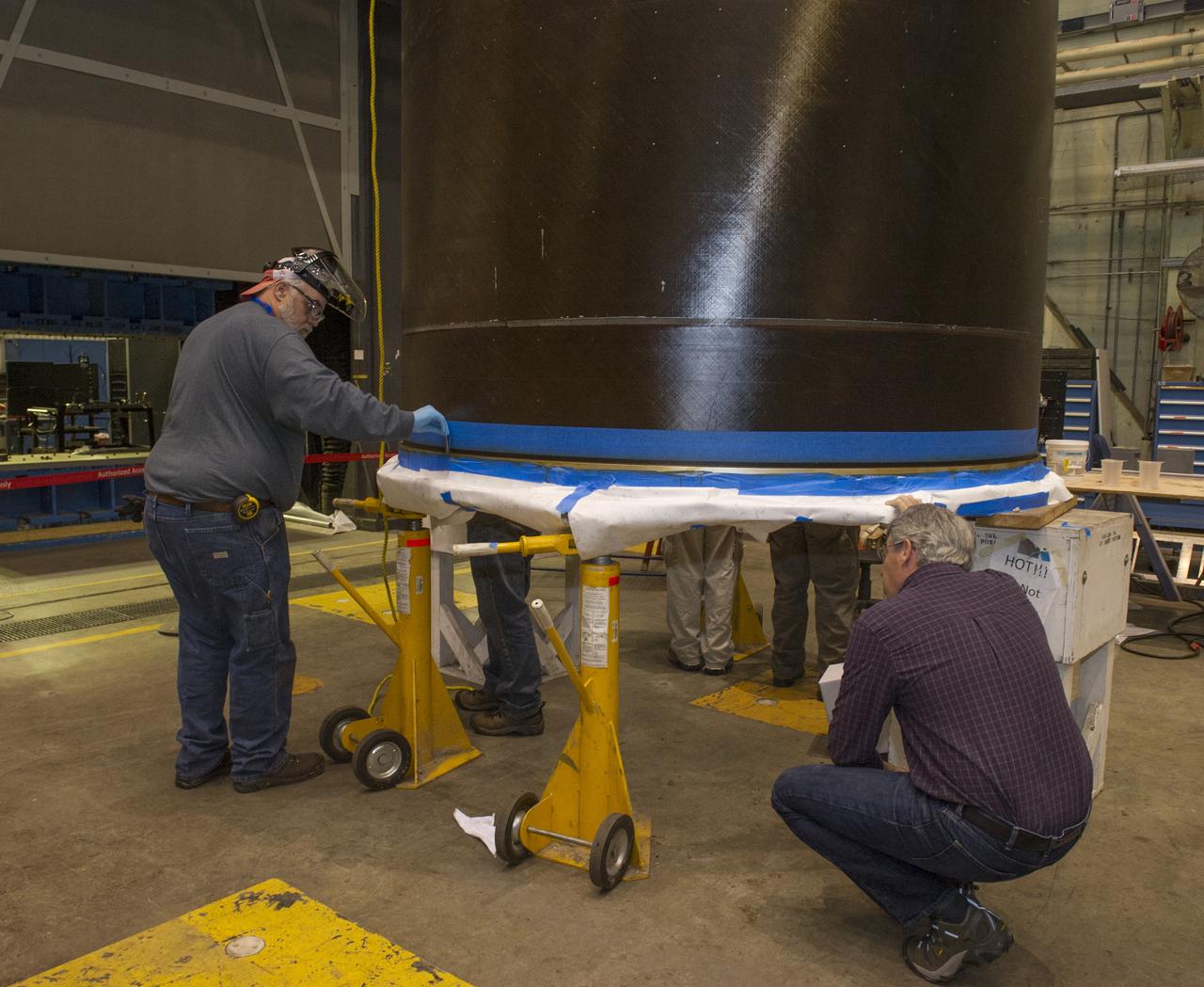
SHELL BUCKLE KNOCKDOWN FACTOR (SBKF) COMPOSITE BARREL EPOXY POUR
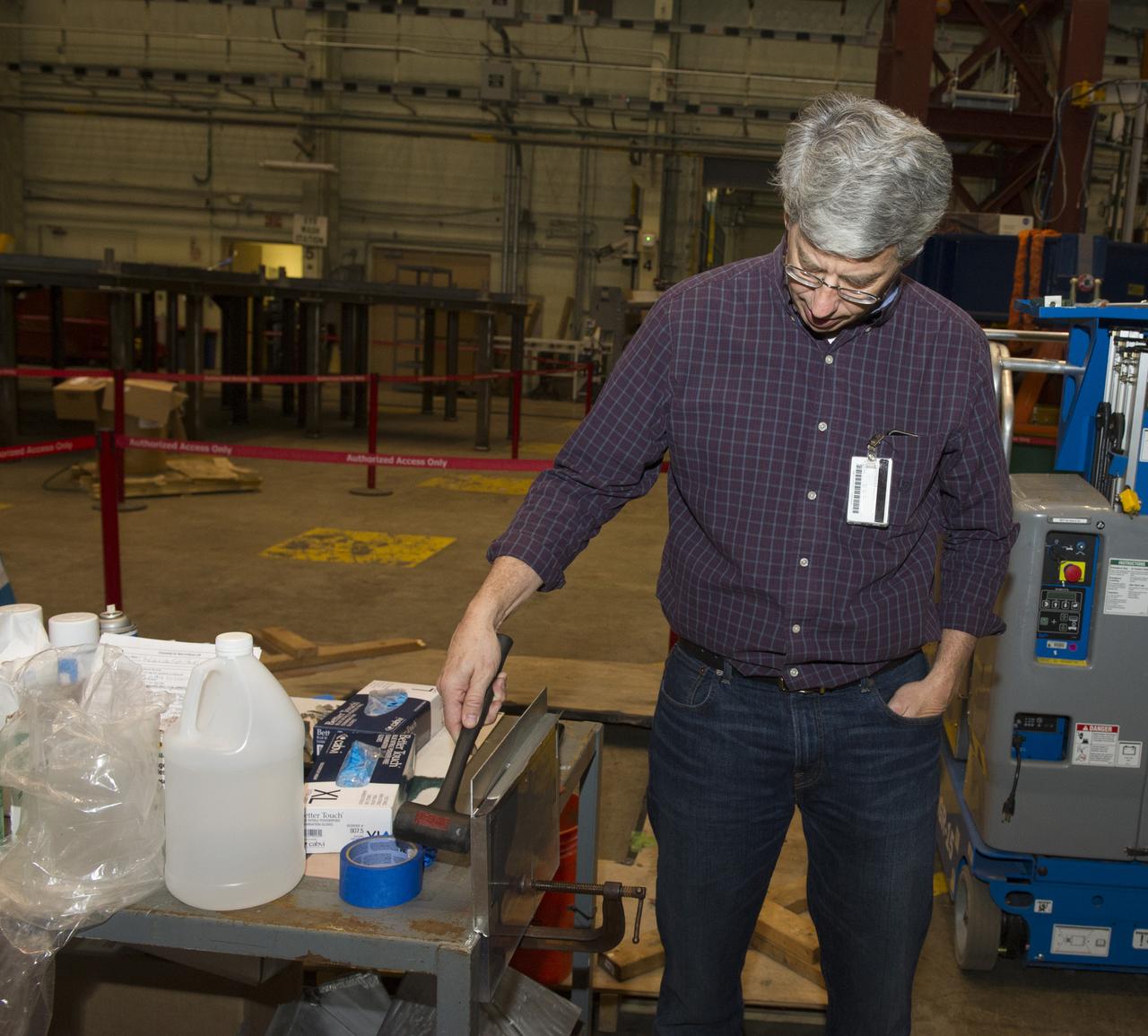
SHELL BUCKLE KNOCKDOWN FACTOR (SBKF) COMPOSITE BARREL EPOXY POUR
SHELL BUCKLE KNOCKDOWN FACTOR (SBKF) COMPOSITE BARREL EPOXY POUR.
SHELL BUCKLE KNOCKDOWN FACTOR (SBKF) COMPOSITE BARREL EPOXY POUR.
SHELL BUCKLE KNOCKDOWN FACTOR (SBKF) COMPOSITE BARREL EPOXY POUR
SHELL BUCKLE KNOCKDOWN FACTOR (SBKF) COMPOSITE BARREL EPOXY POUR.
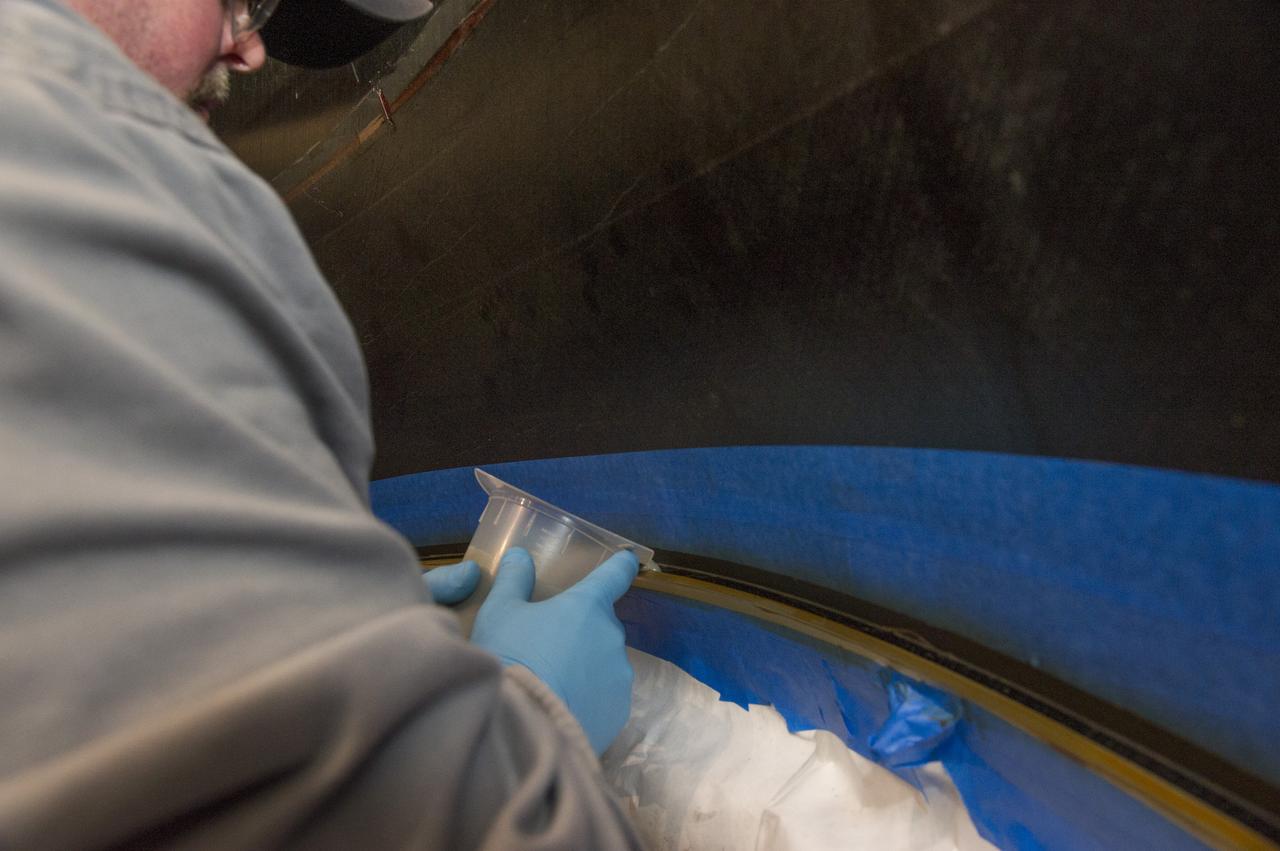
SHELL BUCKLE KNOCKDOWN FACTOR (SBKF) COMPOSITE BARREL EPOXY POUR
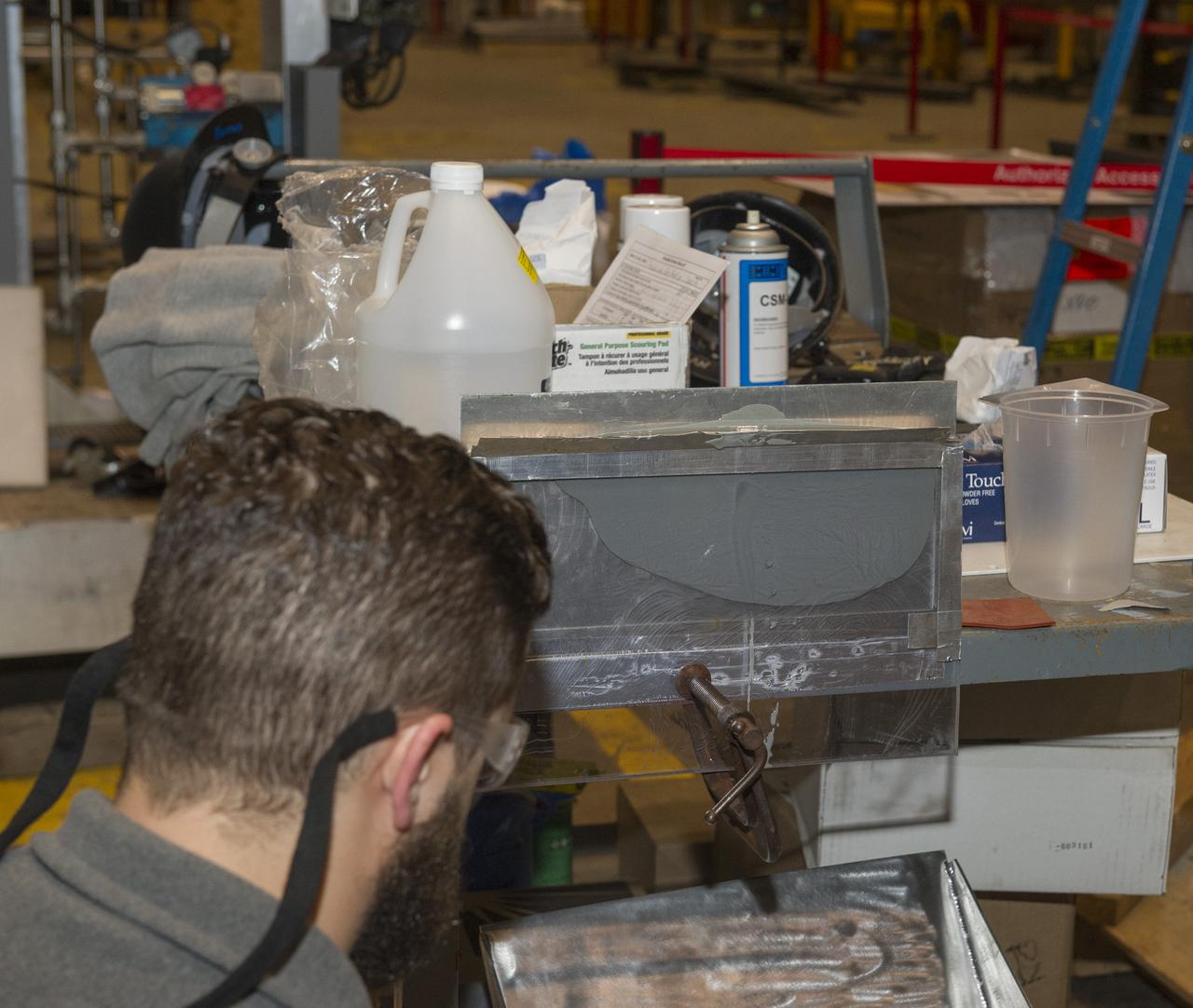
SHELL BUCKLE KNOCKDOWN FACTOR (SBKF) COMPOSITE BARREL EPOXY POUR

EXPLODING WIRE GUN, BLDG 4205, WITH BACKING BLOCK, BARREL, COPPER RIBBON WITH WIRE
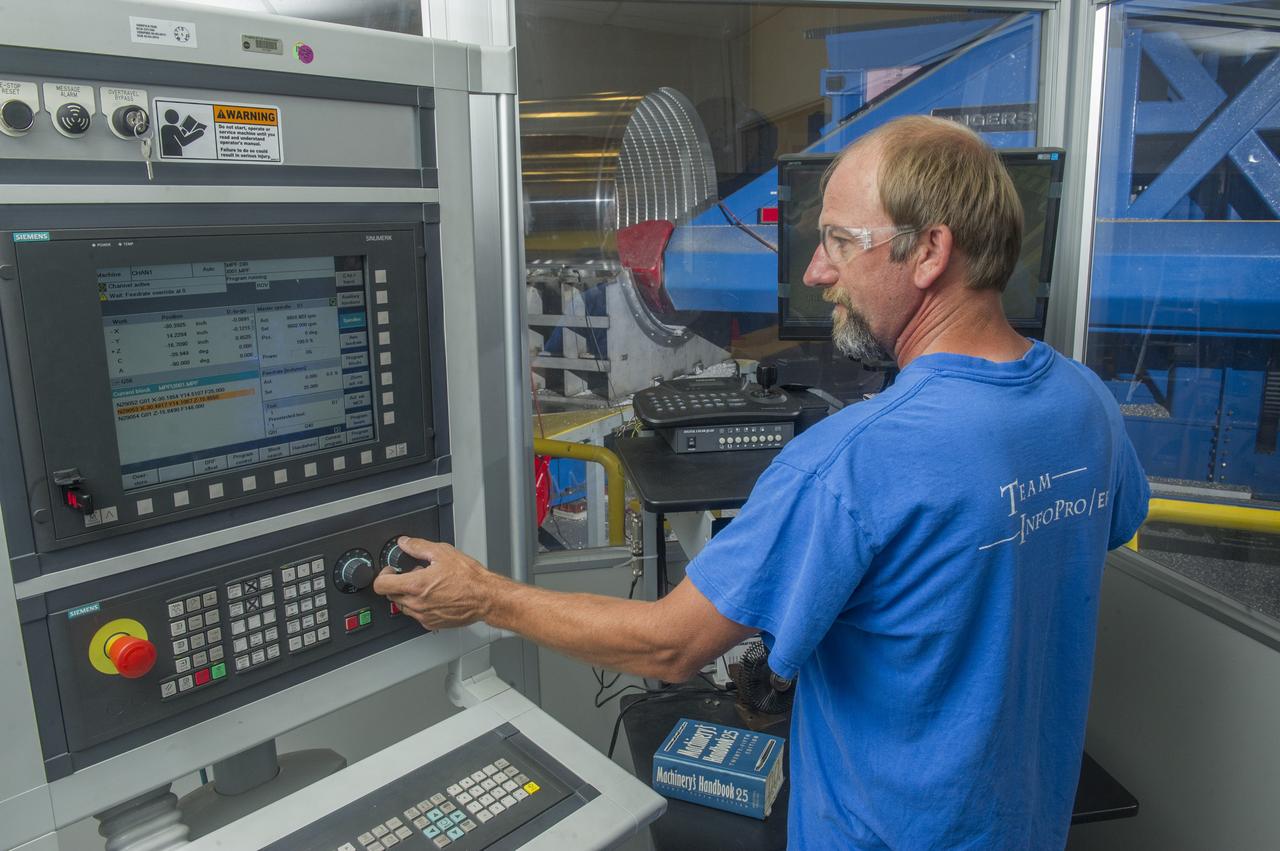
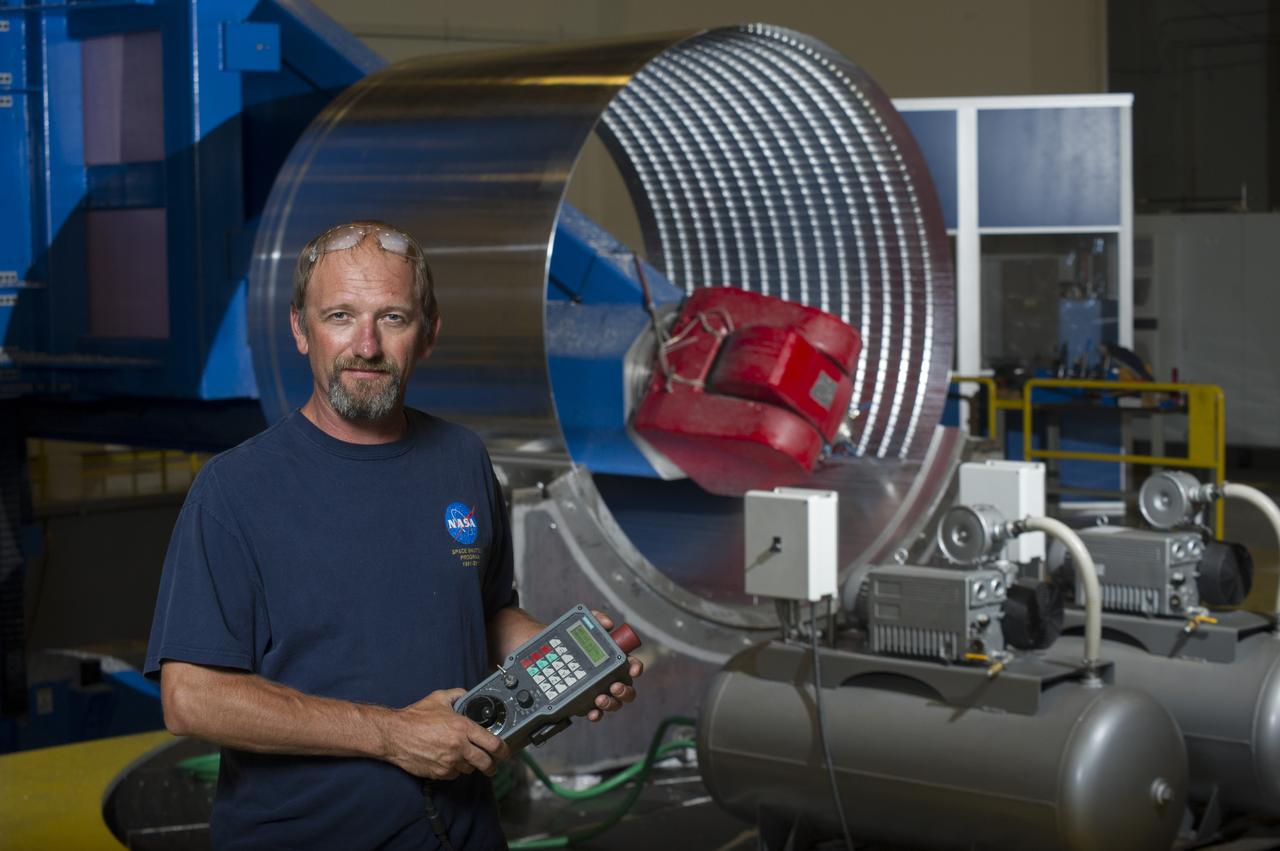
DAVID OSBORNE, A MACHINIST ON THE METTS CONTRACT, OPERATES THE 7-AXIS MILLING MACHINE WITH CF1 BARREL BEING PREPARED FOR SHELL BUCKLE TESTING
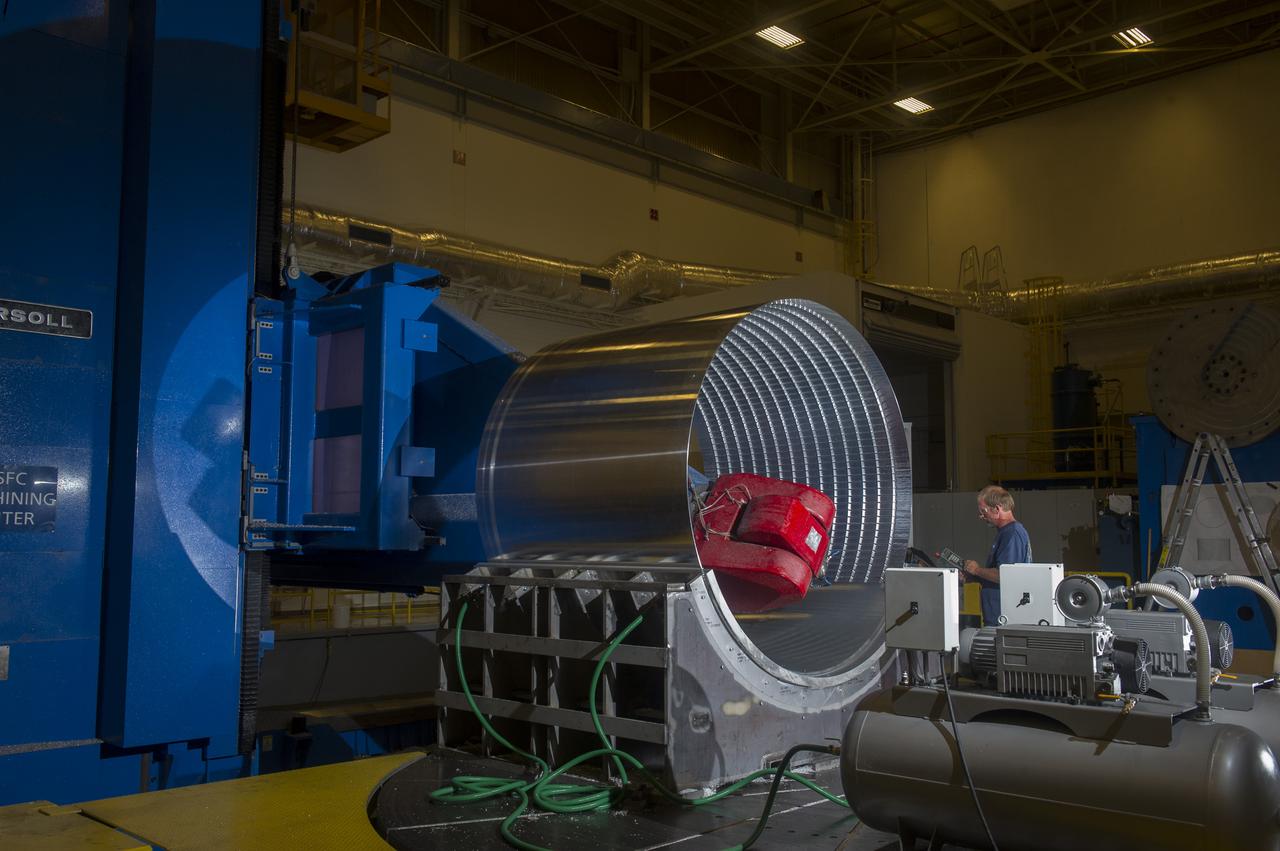
DAVID OSBORNE, A MACHINIST ON THE METTS CONTRACT, OPERATES THE 7-AXIS MILLING MACHINE WITH CF1 BARREL BEING PREPARED FOR SHELL BUCKLE TESTING
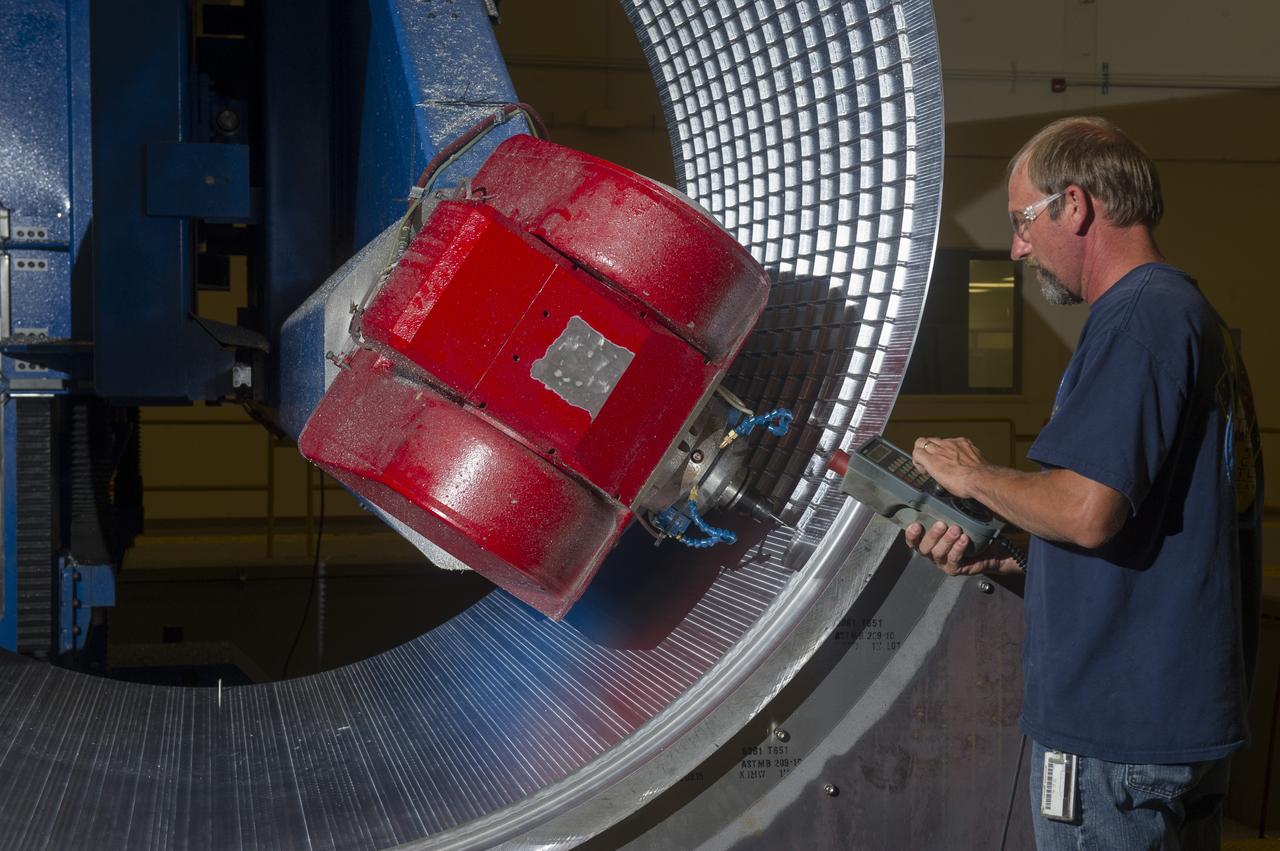
DAVID OSBORNE, A MACHINIST ON THE METTS CONTRACT, OPERATES THE 7-AXIS MILLING MACHINE WITH CF1 BARREL BEING PREPARED FOR SHELL BUCKLE TESTING
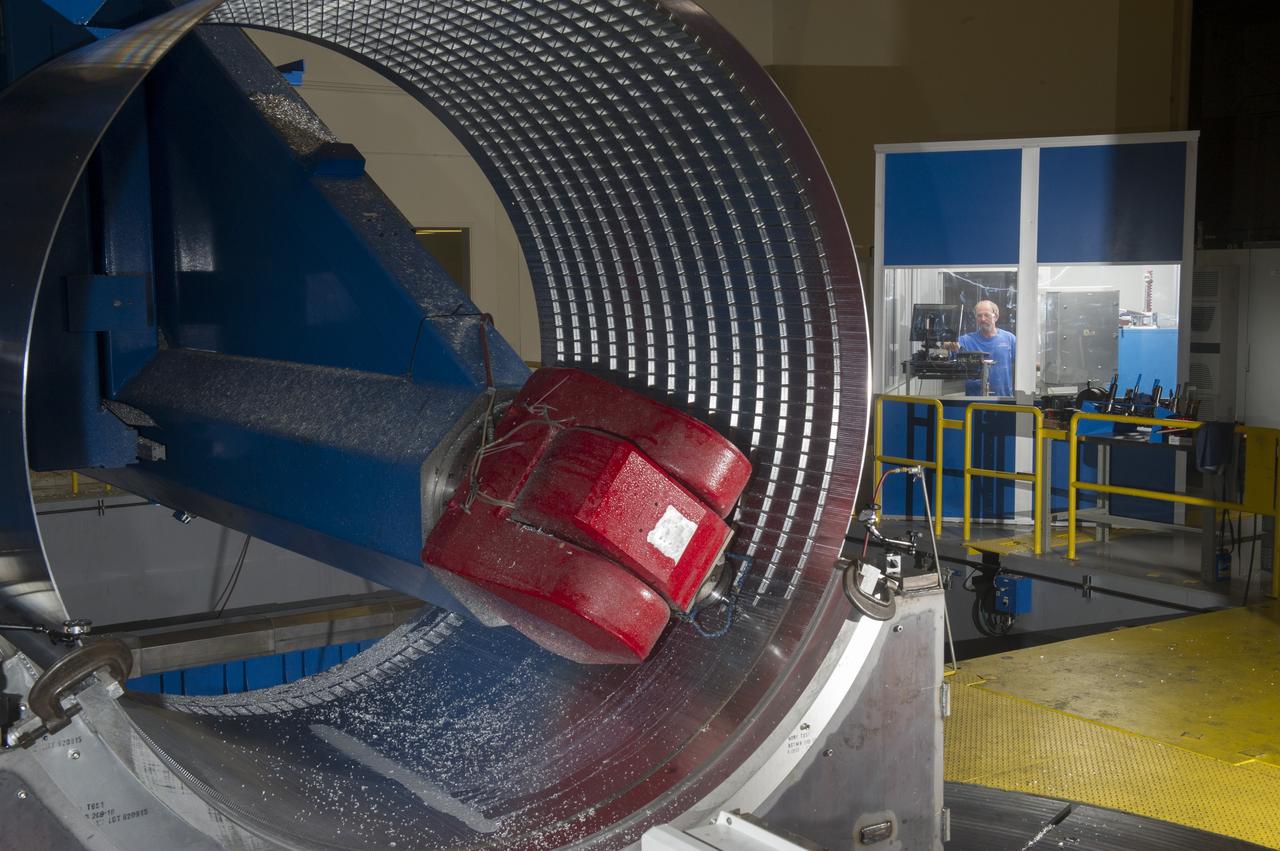
DAVID OSBORNE, A MACHINIST ON THE METTS CONTRACT, OPERATES THE 7-AXIS MILLING MACHINE WITH CF1 BARREL BEING PREPARED FOR SHELL BUCKLE TESTING
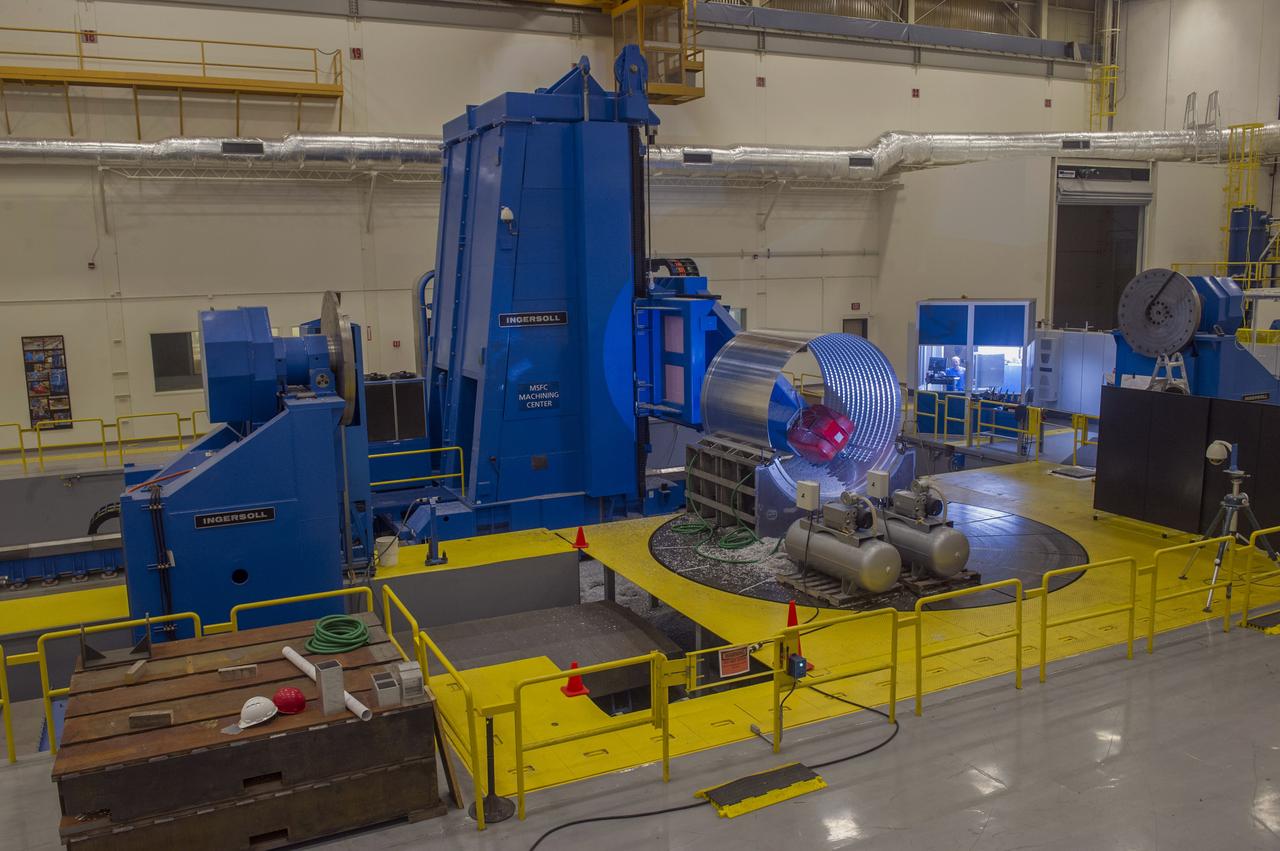
DAVID OSBORNE, A MACHINIST ON THE METTS CONTRACT, OPERATES THE 7-AXIS MILLING MACHINE WITH CF1 BARREL BEING PREPARED FOR SHELL BUCKLE TESTING
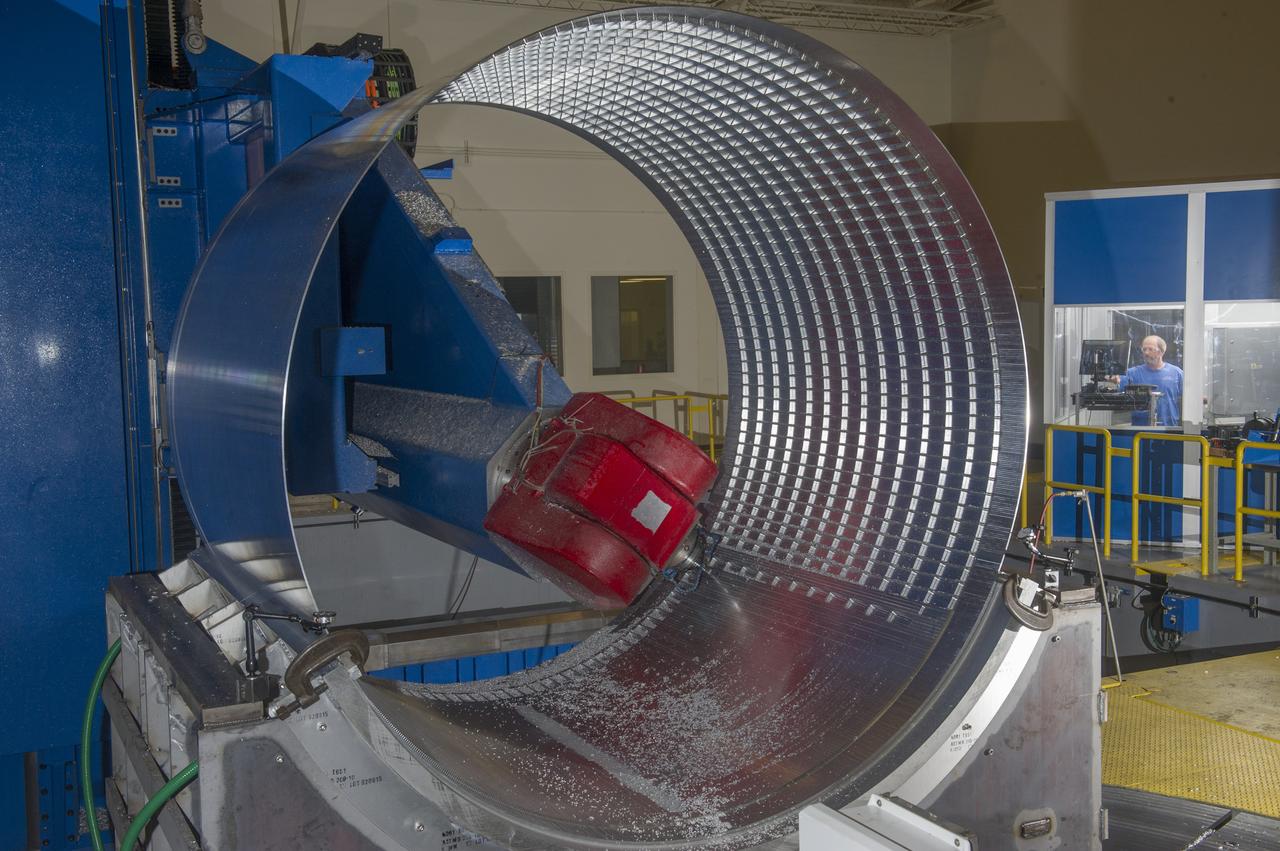
DAVID OSBORNE, A MACHINIST ON THE METTS CONTRACT, OPERATES THE 7-AXIS MILLING MACHINE WITH CF1 BARREL BEING PREPARED FOR SHELL BUCKLE TESTING
DAVID OSBORNE, A MACHINIST ON THE METTS CONTRACT, OPERATES THE 7-AXIS MILLING MACHINE WITH CF1 BARREL BEING PREPARED FOR SHELL BUCKLE TESTING
DAVID OSBORNE, A MACHINIST ON THE METTS CONTRACT, OPERATES THE 7-AXIS MILLING MACHINE WITH CF1 BARREL BEING PREPARED FOR SHELL BUCKLE TESTING
DAVID OSBORNE, A MACHINIST ON THE METTS CONTRACT, OPERATES THE 7-AXIS MILLING MACHINE WITH CF1 BARREL BEING PREPARED FOR SHELL BUCKLE TESTING
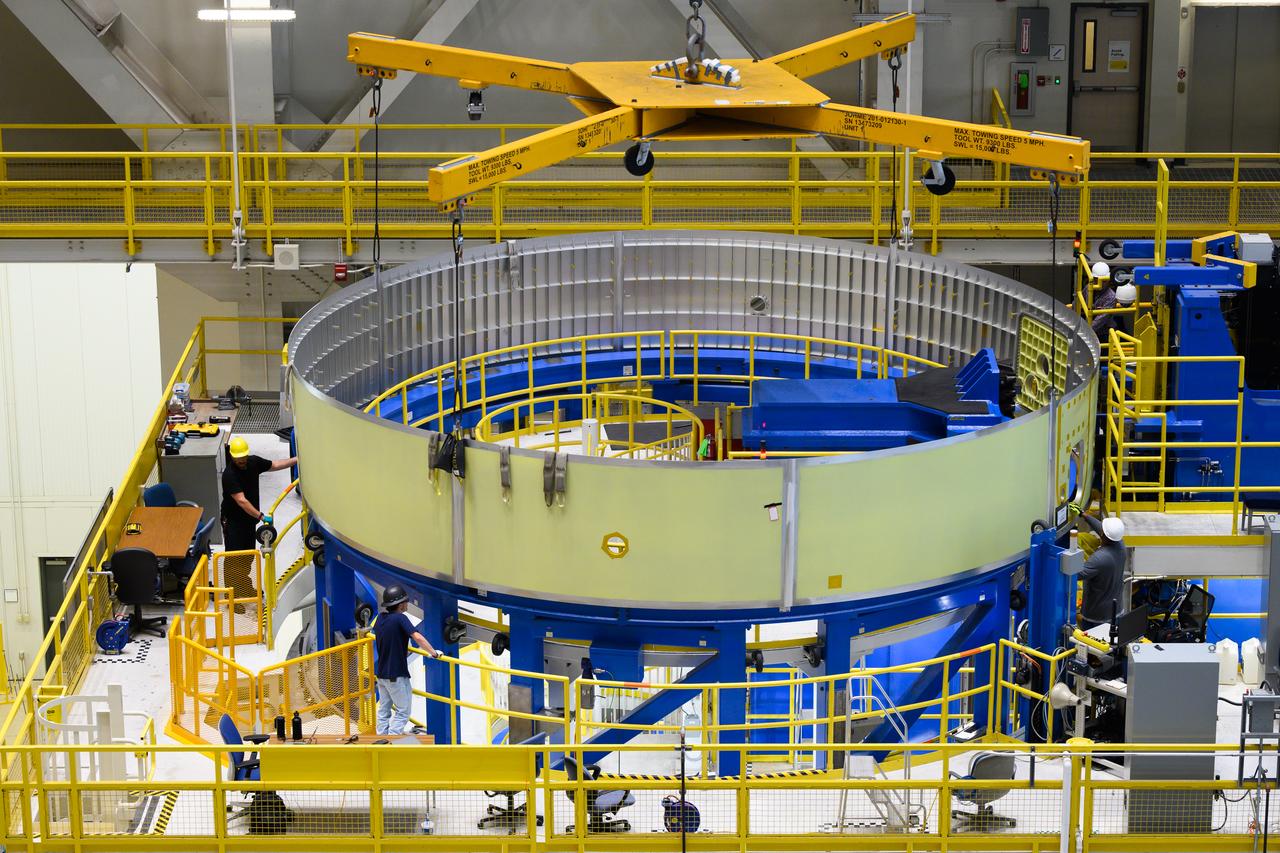
These images and videos show technicians at NASA’s Michoud Assembly Facility in New Orleans examining and lifting midbody barrels for the Exploration Upper Stage (EUS) structural test article of the SLS (Space Launch System) rocket in May 2023. The barrel sections make up the body, or main structure, of the future in-space propulsion stage for the mega rocket. The Exploration Upper Stage will be used on the second configuration of the SLS rocket, known as Block 1B, and will provide in-space propulsion to send astronauts in NASA’s Orion spacecraft and heavy cargo on a precise trajectory to the Moon. Beginning with Artemis IV, EUS will replace the interim cryogenic propulsion stage for the Block 1 configuration of SLS. It has larger propellant tanks and four RL10 engines, enabling SLS to launch 40% more cargo to the Moon along with crew. EUS flight hardware is in early production at Michoud. Crews with NASA and Boeing, the lead contractor for the SLS core stage and EUS, are also manufacturing the EUS structural test article. The test hardware is structurally identical to the flight version and will be used during a series of strenuous testing that simulates the forces the rocket will experience during launch and flight and verify its structural integrity. NASA is working to land the first woman and first person of color on the Moon under Artemis. SLS is part of NASA’s backbone for deep space exploration, along with Orion and the Gateway in orbit around the Moon. SLS is the only rocket that can send Orion, astronauts, and supplies to the Moon in a single mission.
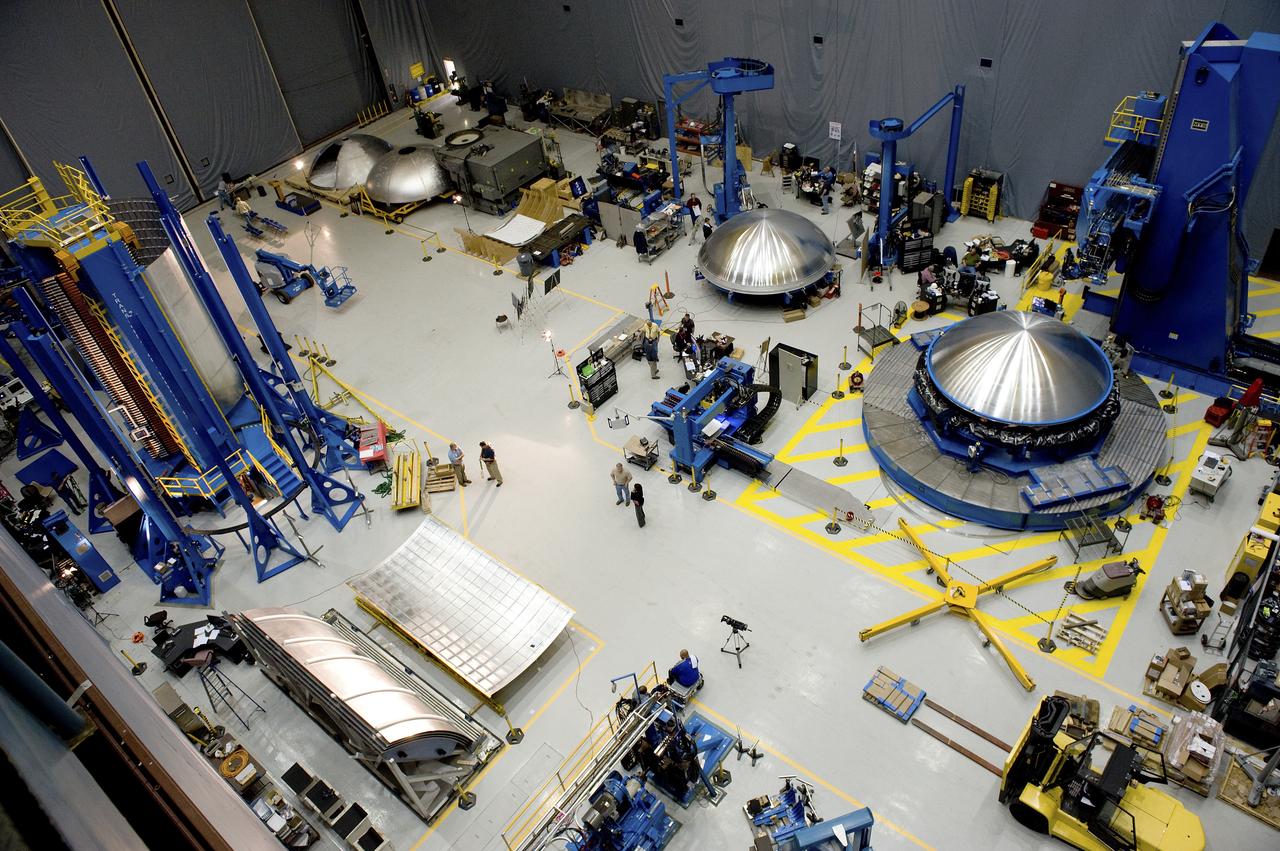
THE OVERHEAD VIEW OF THE FLOOR OF THE FRICTION STIR HIGH BAY AREA IN BUILDING 4755. THIS VIEW SHOWS FOUR DOME PIECES AS WELL AS THE SHELL BUCKLE BARREL PANEL IN THE VERTICAL WELD TOOL
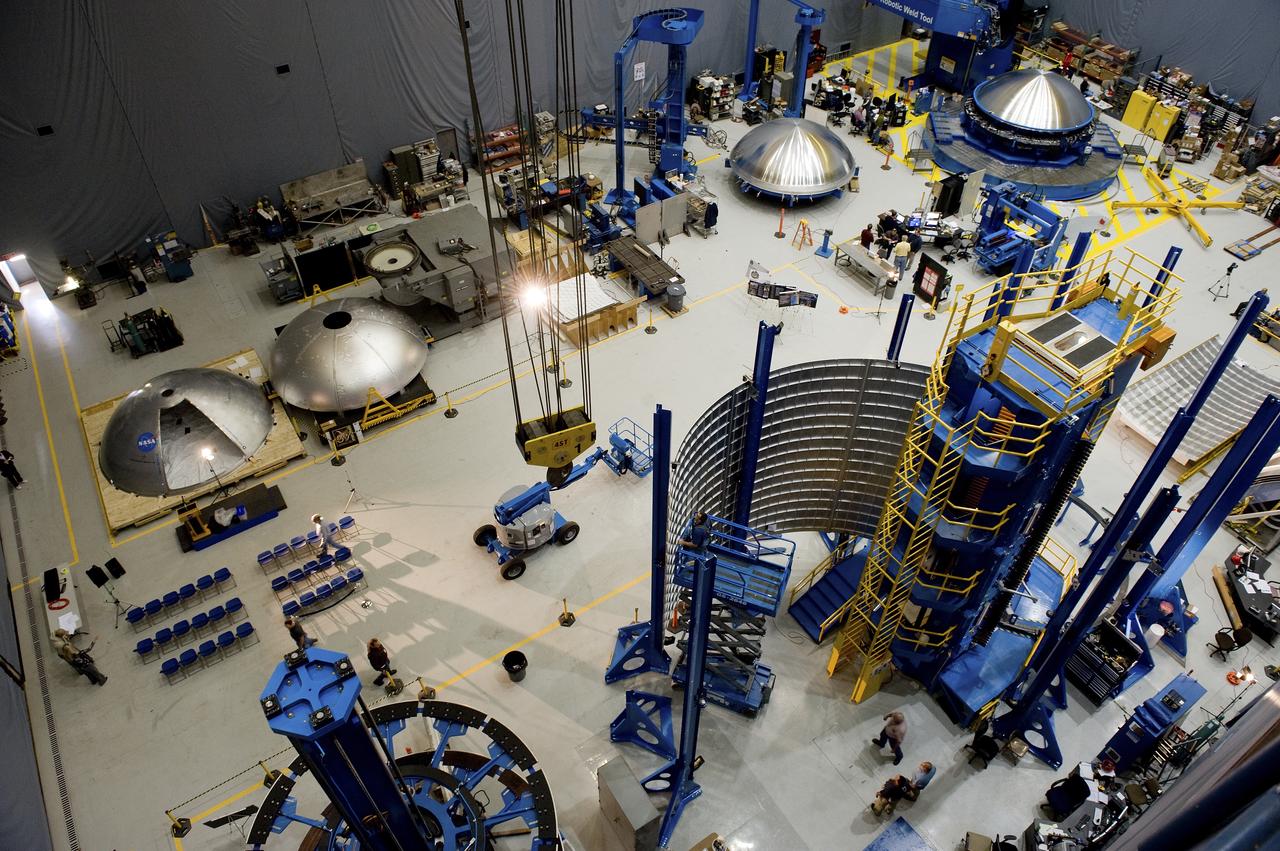
THE OVERHEAD VIEW OF THE FLOOR OF THE FRICTION STIR HIGH BAY AREA IN BUILDING 4755. THIS VIEW SHOWS FOUR DOME PIECES AS WELL AS THE SHELL BUCKLE BARREL PANEL IN THE VERTICAL WELD TOOL
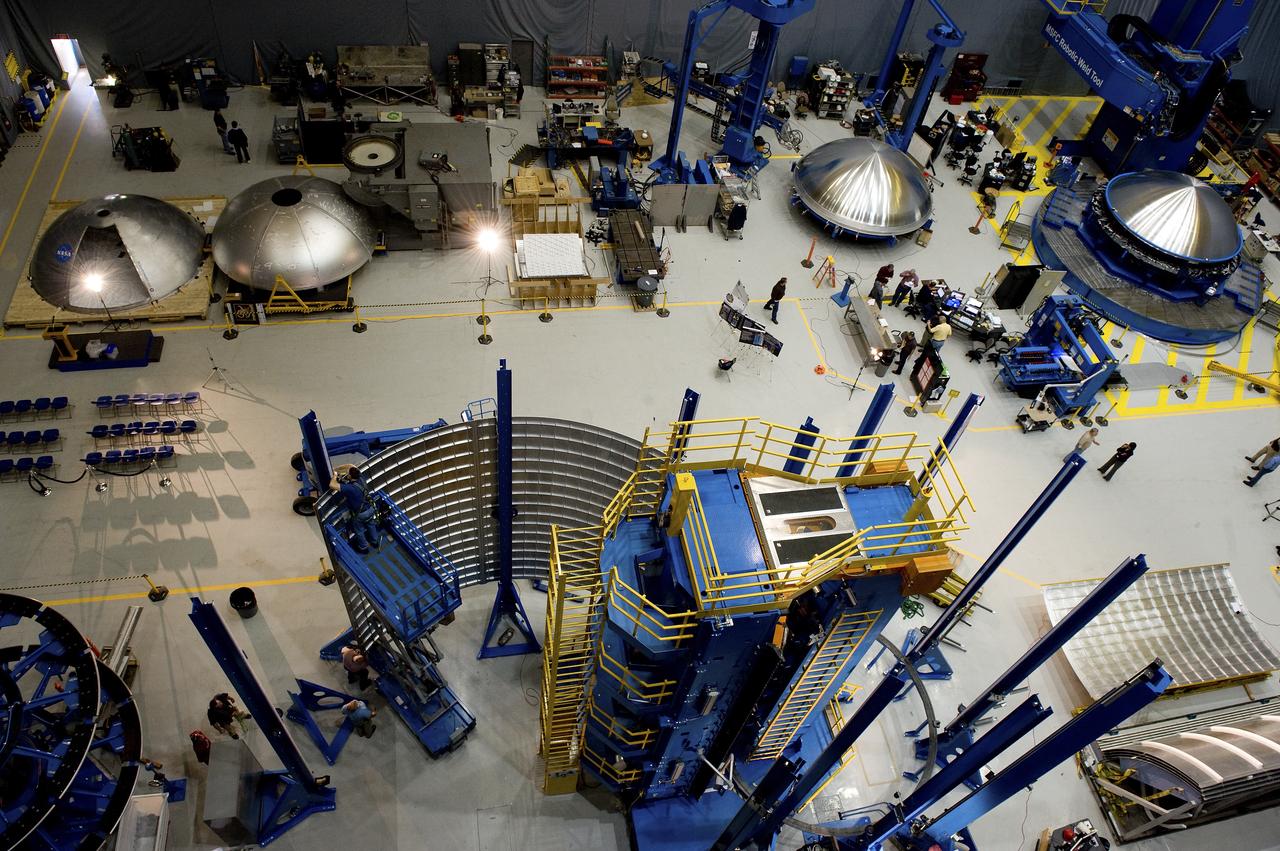
THE OVERHEAD VIEW OF THE FLOOR OF THE FRICTION STIR HIGH BAY AREA IN BUILDING 4755. THIS VIEW SHOWS FOUR DOME PIECES AS WELL AS THE SHELL BUCKLE BARREL PANEL IN THE VERTICAL WELD TOOL
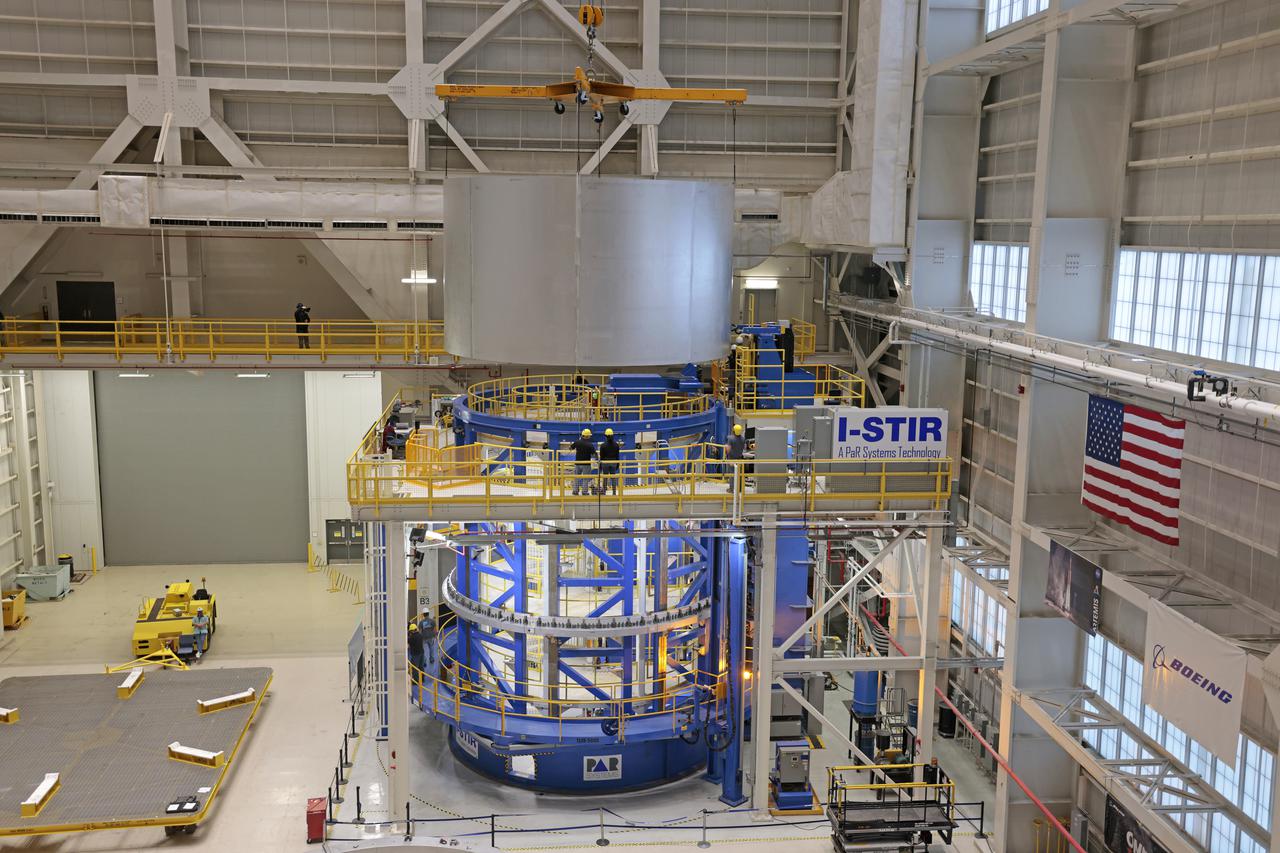
On Thursday, February 10, 2022, move crews at NASA’s Michoud Assembly Facility lift the core stage 3 liquid oxygen tank (LOX) aft barrel out of the vertical friction stir weld tool to be moved for its next phase of production. Eventually, the aft barrel will be mated with the forward barrel and forward and aft domes to create the LOX tank, which will be used for the Space Launch System’s Artemis III mission. The LOX tank holds 196,000 gallons of super-cooled liquid oxygen to help fuel four RS-25 engines. The SLS core stage is made up of five unique elements: the forward skirt, liquid oxygen tank, intertank, liquid hydrogen tank, and the engine section. The liquid oxygen hardware, along with the liquid hydrogen tank will provide propellant to the four RS-25 engines to produce more than two million pounds of thrust to help launch NASA’s Orion spacecraft, astronauts, and supplies beyond Earth’s orbit to the Moon. Image credit: NASA/Michael DeMocker
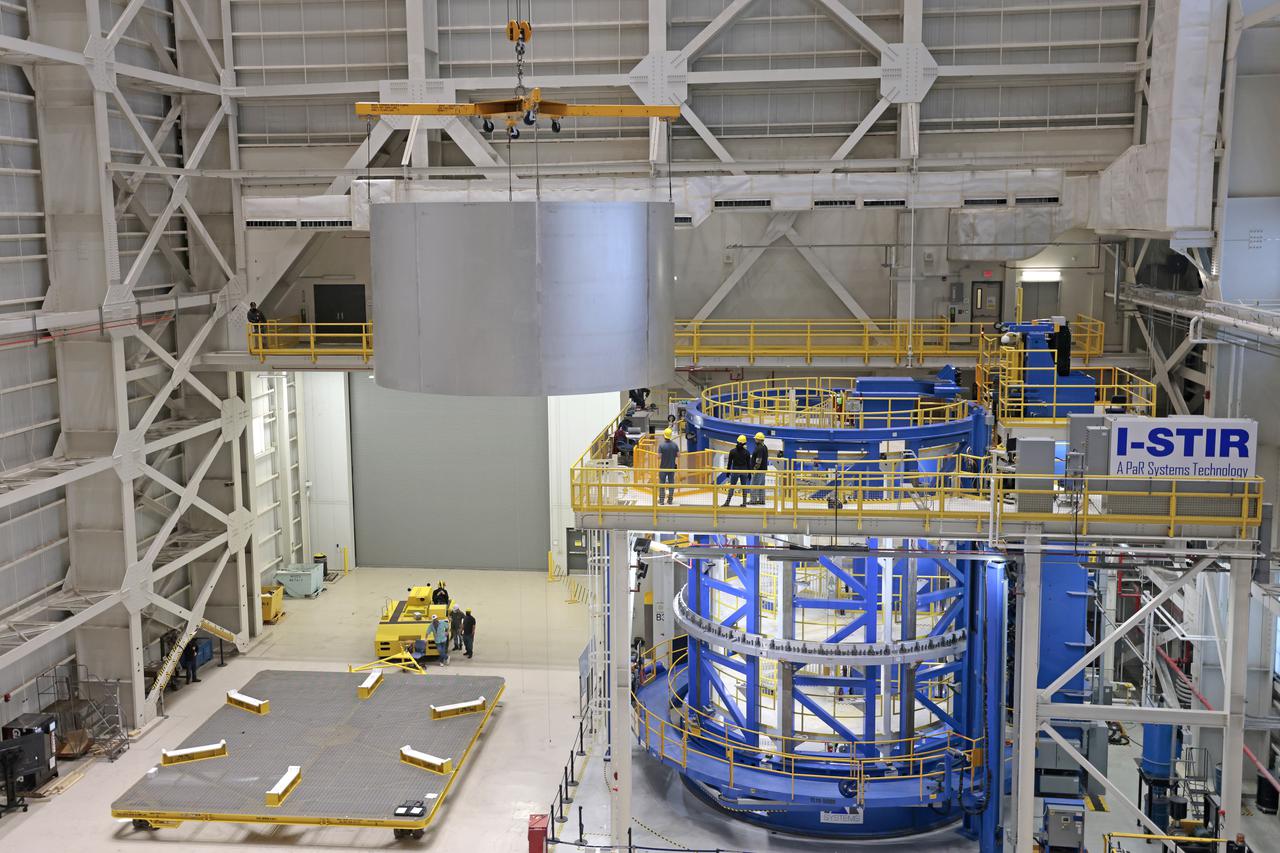
On Thursday, February 10, 2022, move crews at NASA’s Michoud Assembly Facility lift the core stage 3 liquid oxygen tank (LOX) aft barrel out of the vertical friction stir weld tool to be moved for its next phase of production. Eventually, the aft barrel will be mated with the forward barrel and forward and aft domes to create the LOX tank, which will be used for the Space Launch System’s Artemis III mission. The LOX tank holds 196,000 gallons of super-cooled liquid oxygen to help fuel four RS-25 engines. The SLS core stage is made up of five unique elements: the forward skirt, liquid oxygen tank, intertank, liquid hydrogen tank, and the engine section. The liquid oxygen hardware, along with the liquid hydrogen tank will provide propellant to the four RS-25 engines to produce more than two million pounds of thrust to help launch NASA’s Orion spacecraft, astronauts, and supplies beyond Earth’s orbit to the Moon. Image credit: NASA/Michael DeMocker

On Thursday, February 10, 2022, move crews at NASA’s Michoud Assembly Facility lift the core stage 3 liquid oxygen tank (LOX) aft barrel out of the vertical friction stir weld tool to be moved for its next phase of production. Eventually, the aft barrel will be mated with the forward barrel and forward and aft domes to create the LOX tank, which will be used for the Space Launch System’s Artemis III mission. The LOX tank holds 196,000 gallons of super-cooled liquid oxygen to help fuel four RS-25 engines. The SLS core stage is made up of five unique elements: the forward skirt, liquid oxygen tank, intertank, liquid hydrogen tank, and the engine section. The liquid oxygen hardware, along with the liquid hydrogen tank will provide propellant to the four RS-25 engines to produce more than two million pounds of thrust to help launch NASA’s Orion spacecraft, astronauts, and supplies beyond Earth’s orbit to the Moon. Image credit: NASA/Michael DeMocker
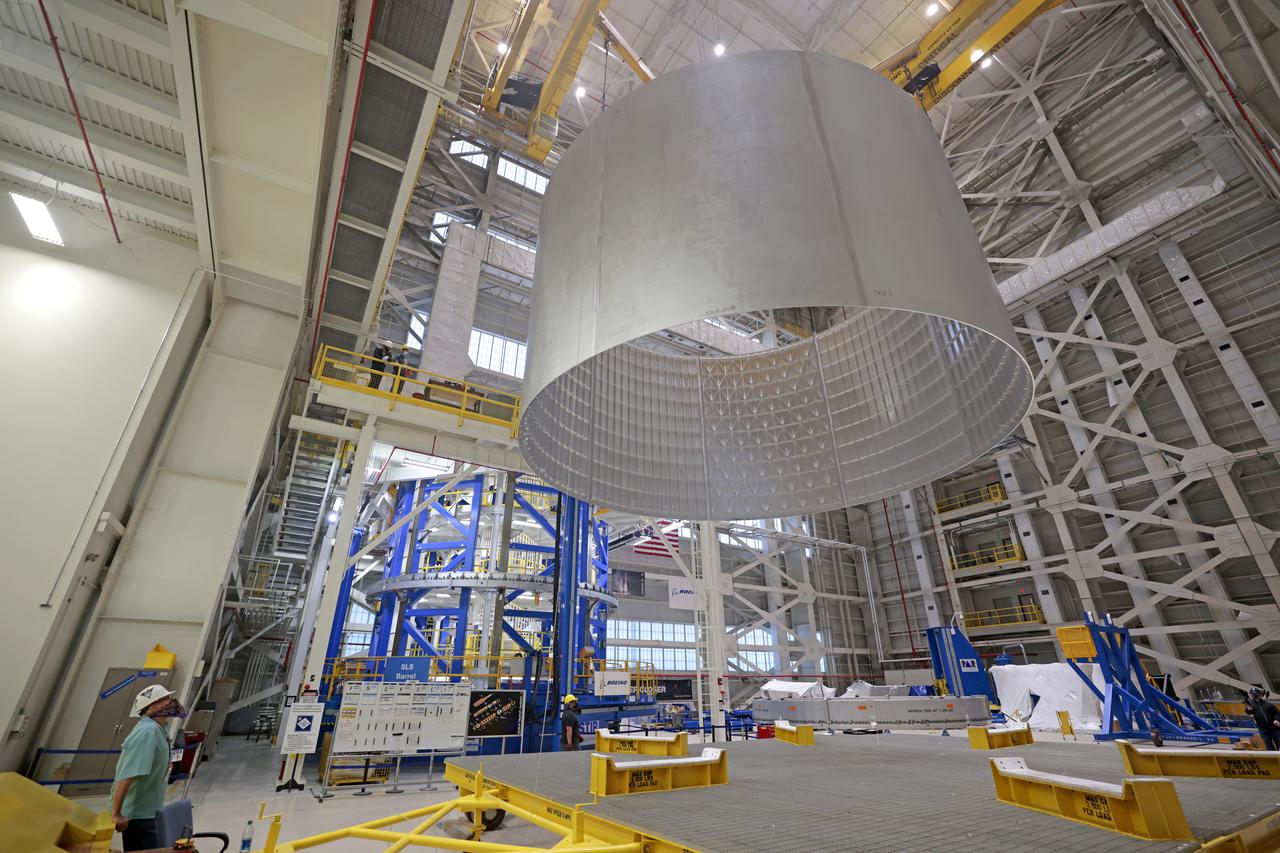
On Thursday, February 10, 2022, move crews at NASA’s Michoud Assembly Facility lift the core stage 3 liquid oxygen tank (LOX) aft barrel out of the vertical friction stir weld tool to be moved for its next phase of production. Eventually, the aft barrel will be mated with the forward barrel and forward and aft domes to create the LOX tank, which will be used for the Space Launch System’s Artemis III mission. The LOX tank holds 196,000 gallons of super-cooled liquid oxygen to help fuel four RS-25 engines. The SLS core stage is made up of five unique elements: the forward skirt, liquid oxygen tank, intertank, liquid hydrogen tank, and the engine section. The liquid oxygen hardware, along with the liquid hydrogen tank will provide propellant to the four RS-25 engines to produce more than two million pounds of thrust to help launch NASA’s Orion spacecraft, astronauts, and supplies beyond Earth’s orbit to the Moon. Image credit: NASA/Michael DeMocker
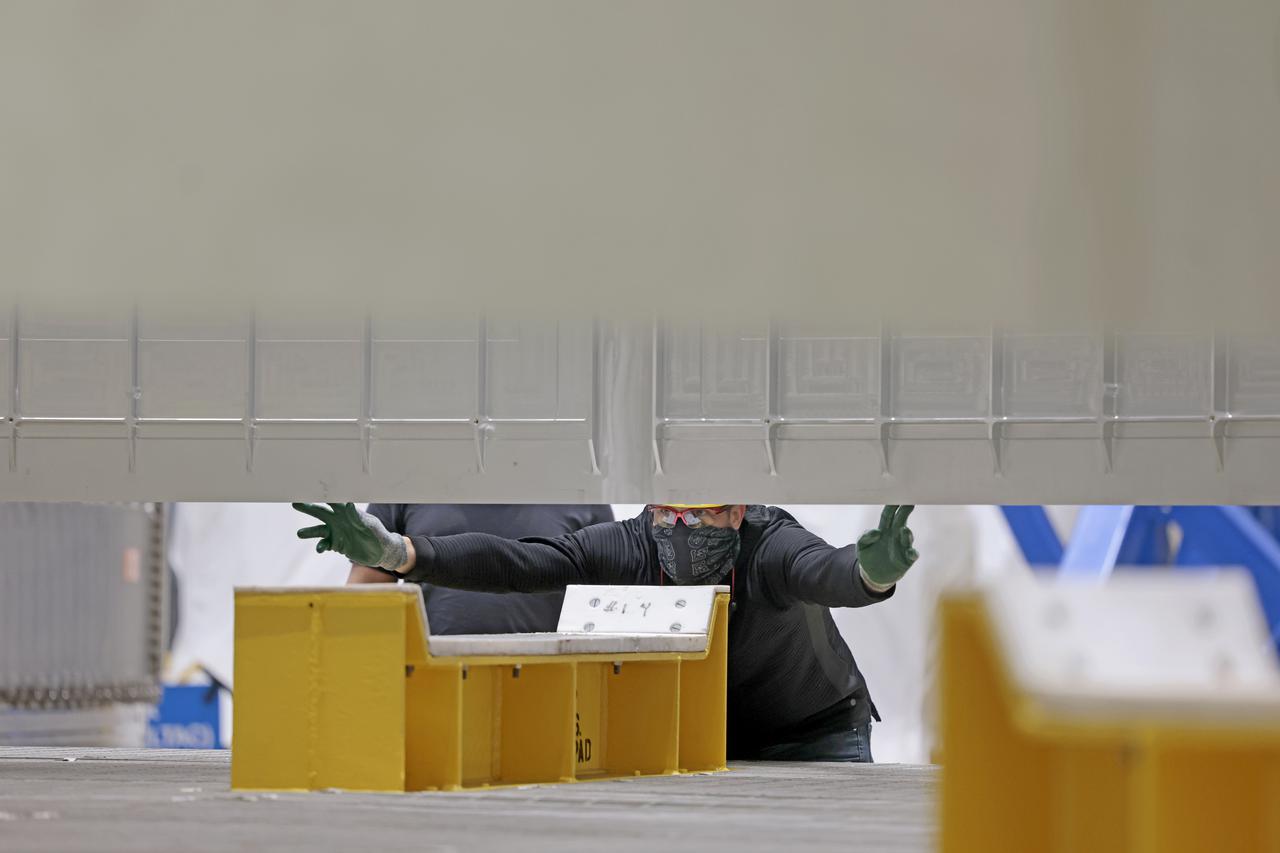
On Thursday, February 10, 2022, move crews at NASA’s Michoud Assembly Facility lift the core stage 3 liquid oxygen tank (LOX) aft barrel out of the vertical friction stir weld tool to be moved for its next phase of production. Eventually, the aft barrel will be mated with the forward barrel and forward and aft domes to create the LOX tank, which will be used for the Space Launch System’s Artemis III mission. The LOX tank holds 196,000 gallons of super-cooled liquid oxygen to help fuel four RS-25 engines. The SLS core stage is made up of five unique elements: the forward skirt, liquid oxygen tank, intertank, liquid hydrogen tank, and the engine section. The liquid oxygen hardware, along with the liquid hydrogen tank will provide propellant to the four RS-25 engines to produce more than two million pounds of thrust to help launch NASA’s Orion spacecraft, astronauts, and supplies beyond Earth’s orbit to the Moon. Image credit: NASA/Michael DeMocker
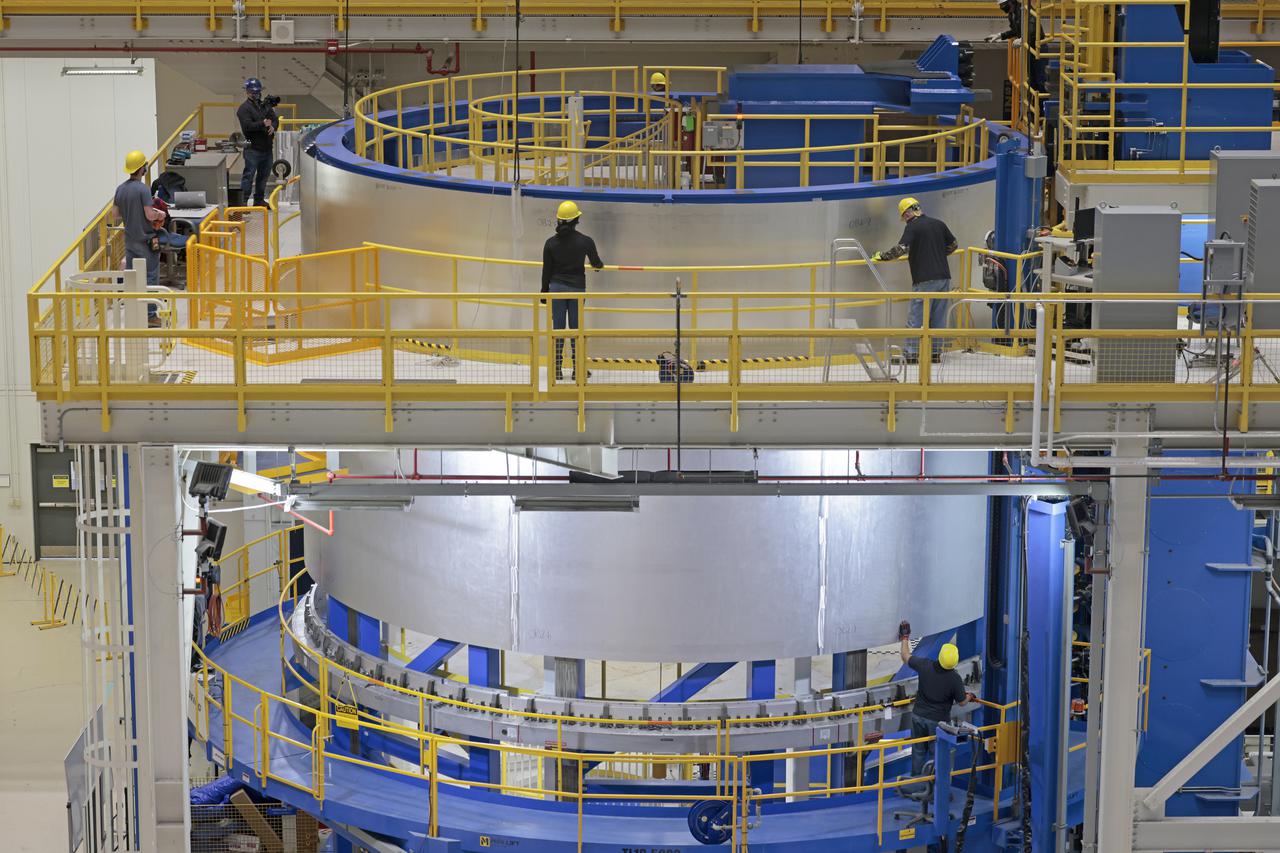
On Thursday, February 10, 2022, move crews at NASA’s Michoud Assembly Facility lift the core stage 3 liquid oxygen tank (LOX) aft barrel out of the vertical friction stir weld tool to be moved for its next phase of production. Eventually, the aft barrel will be mated with the forward barrel and forward and aft domes to create the LOX tank, which will be used for the Space Launch System’s Artemis III mission. The LOX tank holds 196,000 gallons of super-cooled liquid oxygen to help fuel four RS-25 engines. The SLS core stage is made up of five unique elements: the forward skirt, liquid oxygen tank, intertank, liquid hydrogen tank, and the engine section. The liquid oxygen hardware, along with the liquid hydrogen tank will provide propellant to the four RS-25 engines to produce more than two million pounds of thrust to help launch NASA’s Orion spacecraft, astronauts, and supplies beyond Earth’s orbit to the Moon. Image credit: NASA/Michael DeMocker
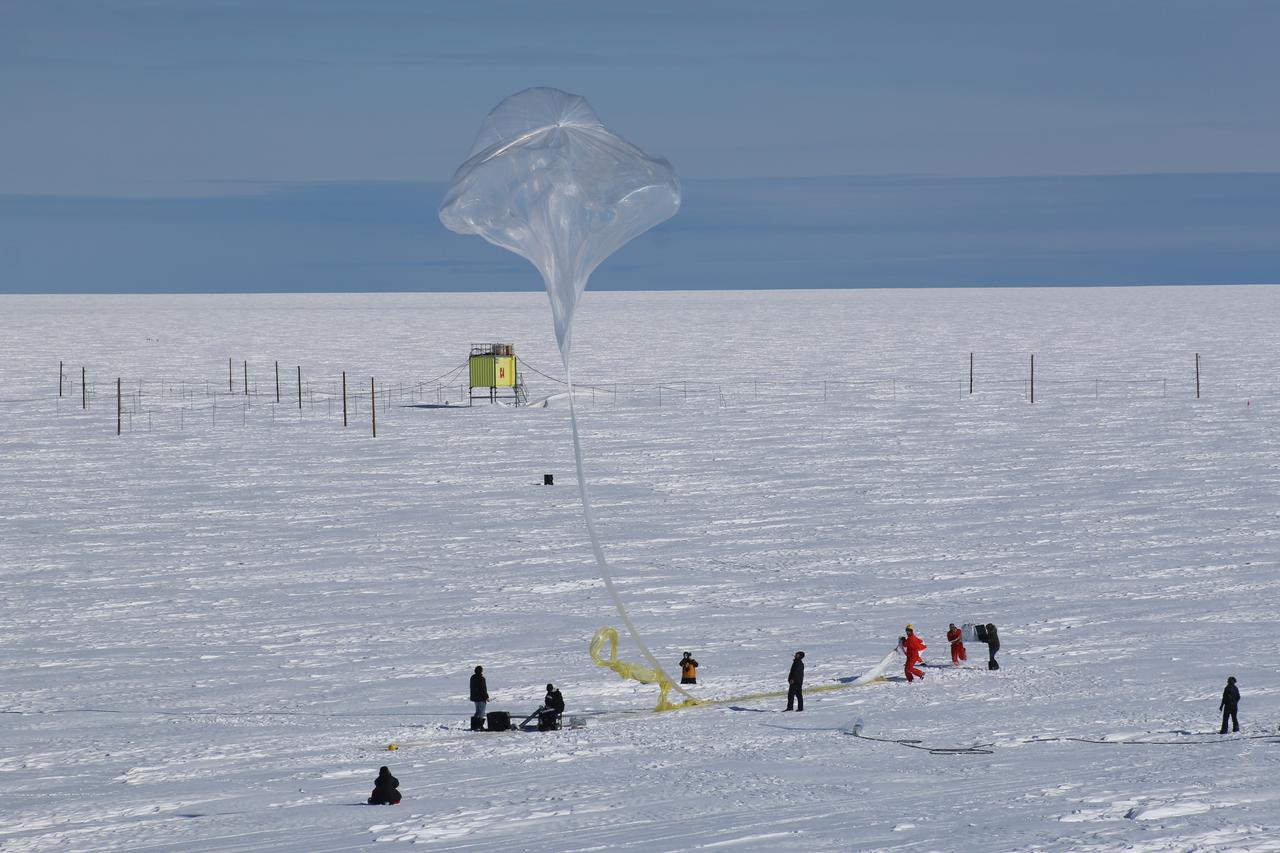
Release of a BARREL balloon. The launch crew can be seen on the right holding the payload as the top of the balloon moves overhead where they can release it. Credit: NASA/Goddard/BARREL Read more: <a href="http://www.nasa.gov/content/goddard/nasas-barrel-returns-successful-from-antarctica" rel="nofollow">www.nasa.gov/content/goddard/nasas-barrel-returns-success...</a> -- Three months, 20 balloons, and one very successful campaign. The team for NASA's BARREL – short for Balloon Array for Radiation belt Relativistic Electron Losses -- mission returned from Antarctica in March 2014. BARREL's job is to help unravel the mysterious Van Allen belts, two gigantic donuts of radiation that surround Earth, which can shrink and swell in response to incoming energy and particles from the sun and sometimes expose satellites to harsh radiation. While in Antarctica, the team launched 20 balloons carrying instruments that sense charged particles that are scattered into the atmosphere from the belts, spiraling down the magnetic fields near the South Pole. Each balloon traveled around the pole for up to three weeks. The team will coordinate the BARREL data with observations from NASA's two Van Allen Probes to better understand how occurrences in the belts relate to bursts of particles funneling down toward Earth. BARREL team members will be on hand at the USA Science and Engineering Festival in DC on April 26 and 27, 2014 for the exhibit Space Balloons: Exploring the Extremes of Space Weather. <b><a href="http://www.nasa.gov/audience/formedia/features/MP_Photo_Guidelines.html" rel="nofollow">NASA image use policy.</a></b><b><a href="http://www.nasa.gov/centers/goddard/home/index.html" rel="nofollow">NASA Goddard Space Flight Center</a></b> enables NASA’s mission through four scientific endeavors: Earth Science, Heliophysics, Solar System Exploration, and Astrophysics. Goddard plays a leading role in NASA’s accomplishments by contributing compelling scientific knowledge to advance the Agency’s mission.<b>Follow us on <a href="http://twitter.com/NASAGoddardPix" rel="nofollow">Twitter</a></b><b>Like us on <a href="http://www.facebook.com/pages/Greenbelt-MD/NASA-Goddard/395013845897?ref=tsd" rel="nofollow">Facebook</a></b><b>Find us on <a href="http://instagram.com/nasagoddard?vm=grid" rel="nofollow">Instagram</a></b>
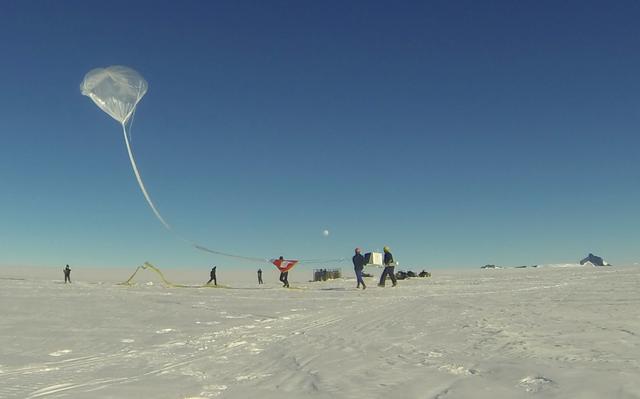
BARREL team members lift up the instrument box below an inflated BARREL balloon to help with launch. Credit: NASA/Goddard/Francois Read more: <a href="http://www.nasa.gov/content/goddard/nasas-barrel-returns-successful-from-antarctica" rel="nofollow">www.nasa.gov/content/goddard/nasas-barrel-returns-success...</a> -- Three months, 20 balloons, and one very successful campaign. The team for NASA's BARREL – short for Balloon Array for Radiation belt Relativistic Electron Losses -- mission returned from Antarctica in March 2014. BARREL's job is to help unravel the mysterious Van Allen belts, two gigantic donuts of radiation that surround Earth, which can shrink and swell in response to incoming energy and particles from the sun and sometimes expose satellites to harsh radiation. While in Antarctica, the team launched 20 balloons carrying instruments that sense charged particles that are scattered into the atmosphere from the belts, spiraling down the magnetic fields near the South Pole. Each balloon traveled around the pole for up to three weeks. The team will coordinate the BARREL data with observations from NASA's two Van Allen Probes to better understand how occurrences in the belts relate to bursts of particles funneling down toward Earth. BARREL team members will be on hand at the USA Science and Engineering Festival in DC on April 26 and 27, 2014 for the exhibit Space Balloons: Exploring the Extremes of Space Weather. <b><a href="http://www.nasa.gov/audience/formedia/features/MP_Photo_Guidelines.html" rel="nofollow">NASA image use policy.</a></b><b><a href="http://www.nasa.gov/centers/goddard/home/index.html" rel="nofollow">NASA Goddard Space Flight Center</a></b> enables NASA’s mission through four scientific endeavors: Earth Science, Heliophysics, Solar System Exploration, and Astrophysics. Goddard plays a leading role in NASA’s accomplishments by contributing compelling scientific knowledge to advance the Agency’s mission.<b>Follow us on <a href="http://twitter.com/NASAGoddardPix" rel="nofollow">Twitter</a></b><b>Like us on <a href="http://www.facebook.com/pages/Greenbelt-MD/NASA-Goddard/395013845897?ref=tsd" rel="nofollow">Facebook</a></b><b>Find us on <a href="http://instagram.com/nasagoddard?vm=grid" rel="nofollow">Instagram</a></b>

The BARREL team at the South African research station, SANAE IV, lay out the 130-foot-long balloon on the ground to prepare for inflation. The entire set up and launch process takes three to four hours. Credit: NASA/Goddard/BARREL/Nicky Knox Read more: <a href="http://www.nasa.gov/content/goddard/nasas-barrel-returns-successful-from-antarctica" rel="nofollow">www.nasa.gov/content/goddard/nasas-barrel-returns-success...</a> -- Three months, 20 balloons, and one very successful campaign. The team for NASA's BARREL – short for Balloon Array for Radiation belt Relativistic Electron Losses -- mission returned from Antarctica in March 2014. BARREL's job is to help unravel the mysterious Van Allen belts, two gigantic donuts of radiation that surround Earth, which can shrink and swell in response to incoming energy and particles from the sun and sometimes expose satellites to harsh radiation. While in Antarctica, the team launched 20 balloons carrying instruments that sense charged particles that are scattered into the atmosphere from the belts, spiraling down the magnetic fields near the South Pole. Each balloon traveled around the pole for up to three weeks. The team will coordinate the BARREL data with observations from NASA's two Van Allen Probes to better understand how occurrences in the belts relate to bursts of particles funneling down toward Earth. BARREL team members will be on hand at the USA Science and Engineering Festival in DC on April 26 and 27, 2014 for the exhibit Space Balloons: Exploring the Extremes of Space Weather. <b><a href="http://www.nasa.gov/audience/formedia/features/MP_Photo_Guidelines.html" rel="nofollow">NASA image use policy.</a></b> <b><a href="http://www.nasa.gov/centers/goddard/home/index.html" rel="nofollow">NASA Goddard Space Flight Center</a></b> enables NASA’s mission through four scientific endeavors: Earth Science, Heliophysics, Solar System Exploration, and Astrophysics. Goddard plays a leading role in NASA’s accomplishments by contributing compelling scientific knowledge to advance the Agency’s mission. <b>Follow us on <a href="http://twitter.com/NASAGoddardPix" rel="nofollow">Twitter</a></b> <b>Like us on <a href="http://www.facebook.com/pages/Greenbelt-MD/NASA-Goddard/395013845897?ref=tsd" rel="nofollow">Facebook</a></b> <b>Find us on <a href="http://instagram.com/nasagoddard?vm=grid" rel="nofollow">Instagram</a></b>
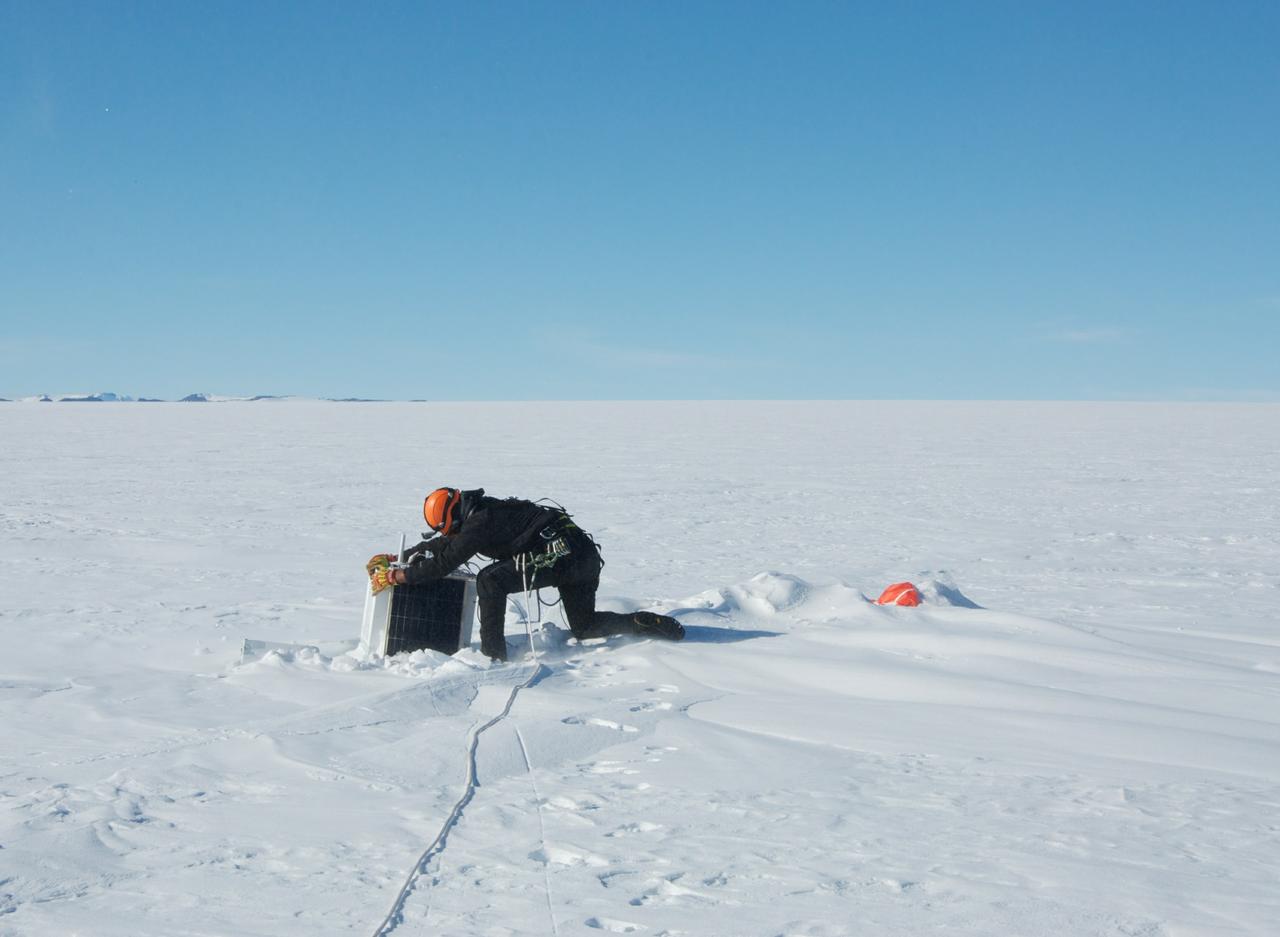
Recovery of a BARREL balloon payload after its flight. The recovery was carried out by helicopter. This area is known to be heavily crevassed so the base mountaineer is seen here with a safety rope. Credit: NASA/Goddard/BARREL/Brett Anderson Read more: <a href="http://www.nasa.gov/content/goddard/nasas-barrel-returns-successful-from-antarctica" rel="nofollow">www.nasa.gov/content/goddard/nasas-barrel-returns-success...</a> -- Three months, 20 balloons, and one very successful campaign. The team for NASA's BARREL – short for Balloon Array for Radiation belt Relativistic Electron Losses -- mission returned from Antarctica in March 2014. BARREL's job is to help unravel the mysterious Van Allen belts, two gigantic donuts of radiation that surround Earth, which can shrink and swell in response to incoming energy and particles from the sun and sometimes expose satellites to harsh radiation. While in Antarctica, the team launched 20 balloons carrying instruments that sense charged particles that are scattered into the atmosphere from the belts, spiraling down the magnetic fields near the South Pole. Each balloon traveled around the pole for up to three weeks. The team will coordinate the BARREL data with observations from NASA's two Van Allen Probes to better understand how occurrences in the belts relate to bursts of particles funneling down toward Earth. BARREL team members will be on hand at the USA Science and Engineering Festival in DC on April 26 and 27, 2014 for the exhibit Space Balloons: Exploring the Extremes of Space Weather. <b><a href="http://www.nasa.gov/audience/formedia/features/MP_Photo_Guidelines.html" rel="nofollow">NASA image use policy.</a></b> <b><a href="http://www.nasa.gov/centers/goddard/home/index.html" rel="nofollow">NASA Goddard Space Flight Center</a></b> enables NASA’s mission through four scientific endeavors: Earth Science, Heliophysics, Solar System Exploration, and Astrophysics. Goddard plays a leading role in NASA’s accomplishments by contributing compelling scientific knowledge to advance the Agency’s mission. <b>Follow us on <a href="http://twitter.com/NASAGoddardPix" rel="nofollow">Twitter</a></b> <b>Like us on <a href="http://www.facebook.com/pages/Greenbelt-MD/NASA-Goddard/395013845897?ref=tsd" rel="nofollow">Facebook</a></b> <b>Find us on <a href="http://instagram.com/nasagoddard?vm=grid" rel="nofollow">Instagram</a></b>

The BARREL instrument in Antarctica– prior to being encased in its protective box – destined to float beneath a giant balloon to study magnetic fields and energetic particles near the South Pole. Credit: NASA/Goddard/BARREL/Brett Anderson Read more: <a href="http://www.nasa.gov/content/goddard/nasas-barrel-returns-successful-from-antarctica" rel="nofollow">www.nasa.gov/content/goddard/nasas-barrel-returns-success...</a> -- Three months, 20 balloons, and one very successful campaign. The team for NASA's BARREL – short for Balloon Array for Radiation belt Relativistic Electron Losses -- mission returned from Antarctica in March 2014. BARREL's job is to help unravel the mysterious Van Allen belts, two gigantic donuts of radiation that surround Earth, which can shrink and swell in response to incoming energy and particles from the sun and sometimes expose satellites to harsh radiation. While in Antarctica, the team launched 20 balloons carrying instruments that sense charged particles that are scattered into the atmosphere from the belts, spiraling down the magnetic fields near the South Pole. Each balloon traveled around the pole for up to three weeks. The team will coordinate the BARREL data with observations from NASA's two Van Allen Probes to better understand how occurrences in the belts relate to bursts of particles funneling down toward Earth. BARREL team members will be on hand at the USA Science and Engineering Festival in DC on April 26 and 27, 2014 for the exhibit Space Balloons: Exploring the Extremes of Space Weather. <b><a href="http://www.nasa.gov/audience/formedia/features/MP_Photo_Guidelines.html" rel="nofollow">NASA image use policy.</a></b> <b><a href="http://www.nasa.gov/centers/goddard/home/index.html" rel="nofollow">NASA Goddard Space Flight Center</a></b> enables NASA’s mission through four scientific endeavors: Earth Science, Heliophysics, Solar System Exploration, and Astrophysics. Goddard plays a leading role in NASA’s accomplishments by contributing compelling scientific knowledge to advance the Agency’s mission. <b>Follow us on <a href="http://twitter.com/NASAGoddardPix" rel="nofollow">Twitter</a></b> <b>Like us on <a href="http://www.facebook.com/pages/Greenbelt-MD/NASA-Goddard/395013845897?ref=tsd" rel="nofollow">Facebook</a></b> <b>Find us on <a href="http://instagram.com/nasagoddard?vm=grid" rel="nofollow">Instagram</a></b>

BARREL researchers get ready to release the top part of the balloon, called the bubble, as it fills with enough helium to support itself. Only the top part of the balloon is inflated before launch since the helium expands as the balloon ascends. Credit: NASA/Goddard/BARREL/Nicky Knox Read more: <a href="http://www.nasa.gov/content/goddard/nasas-barrel-returns-successful-from-antarctica" rel="nofollow">www.nasa.gov/content/goddard/nasas-barrel-returns-success...</a> -- Three months, 20 balloons, and one very successful campaign. The team for NASA's BARREL – short for Balloon Array for Radiation belt Relativistic Electron Losses -- mission returned from Antarctica in March 2014. BARREL's job is to help unravel the mysterious Van Allen belts, two gigantic donuts of radiation that surround Earth, which can shrink and swell in response to incoming energy and particles from the sun and sometimes expose satellites to harsh radiation. While in Antarctica, the team launched 20 balloons carrying instruments that sense charged particles that are scattered into the atmosphere from the belts, spiraling down the magnetic fields near the South Pole. Each balloon traveled around the pole for up to three weeks. The team will coordinate the BARREL data with observations from NASA's two Van Allen Probes to better understand how occurrences in the belts relate to bursts of particles funneling down toward Earth. BARREL team members will be on hand at the USA Science and Engineering Festival in DC on April 26 and 27, 2014 for the exhibit Space Balloons: Exploring the Extremes of Space Weather. <b><a href="http://www.nasa.gov/audience/formedia/features/MP_Photo_Guidelines.html" rel="nofollow">NASA image use policy.</a></b> <b><a href="http://www.nasa.gov/centers/goddard/home/index.html" rel="nofollow">NASA Goddard Space Flight Center</a></b> enables NASA’s mission through four scientific endeavors: Earth Science, Heliophysics, Solar System Exploration, and Astrophysics. Goddard plays a leading role in NASA’s accomplishments by contributing compelling scientific knowledge to advance the Agency’s mission. <b>Follow us on <a href="http://twitter.com/NASAGoddardPix" rel="nofollow">Twitter</a></b> <b>Like us on <a href="http://www.facebook.com/pages/Greenbelt-MD/NASA-Goddard/395013845897?ref=tsd" rel="nofollow">Facebook</a></b> <b>Find us on <a href="http://instagram.com/nasagoddard?vm=grid" rel="nofollow">Instagram</a></b>

Getting ready to lay out a BARREL balloon to prepare for inflation. The helium stillages used to fill the balloon can be seen in the background. Credit: NASA/Goddard/BARREL/Brett Anderson Read more: <a href="http://www.nasa.gov/content/goddard/nasas-barrel-returns-successful-from-antarctica" rel="nofollow">www.nasa.gov/content/goddard/nasas-barrel-returns-success...</a> -- Three months, 20 balloons, and one very successful campaign. The team for NASA's BARREL – short for Balloon Array for Radiation belt Relativistic Electron Losses -- mission returned from Antarctica in March 2014. BARREL's job is to help unravel the mysterious Van Allen belts, two gigantic donuts of radiation that surround Earth, which can shrink and swell in response to incoming energy and particles from the sun and sometimes expose satellites to harsh radiation. While in Antarctica, the team launched 20 balloons carrying instruments that sense charged particles that are scattered into the atmosphere from the belts, spiraling down the magnetic fields near the South Pole. Each balloon traveled around the pole for up to three weeks. The team will coordinate the BARREL data with observations from NASA's two Van Allen Probes to better understand how occurrences in the belts relate to bursts of particles funneling down toward Earth. BARREL team members will be on hand at the USA Science and Engineering Festival in DC on April 26 and 27, 2014 for the exhibit Space Balloons: Exploring the Extremes of Space Weather. <b><a href="http://www.nasa.gov/audience/formedia/features/MP_Photo_Guidelines.html" rel="nofollow">NASA image use policy.</a></b> <b><a href="http://www.nasa.gov/centers/goddard/home/index.html" rel="nofollow">NASA Goddard Space Flight Center</a></b> enables NASA’s mission through four scientific endeavors: Earth Science, Heliophysics, Solar System Exploration, and Astrophysics. Goddard plays a leading role in NASA’s accomplishments by contributing compelling scientific knowledge to advance the Agency’s mission. <b>Follow us on <a href="http://twitter.com/NASAGoddardPix" rel="nofollow">Twitter</a></b> <b>Like us on <a href="http://www.facebook.com/pages/Greenbelt-MD/NASA-Goddard/395013845897?ref=tsd" rel="nofollow">Facebook</a></b> <b>Find us on <a href="http://instagram.com/nasagoddard?vm=grid" rel="nofollow">Instagram</a></b>
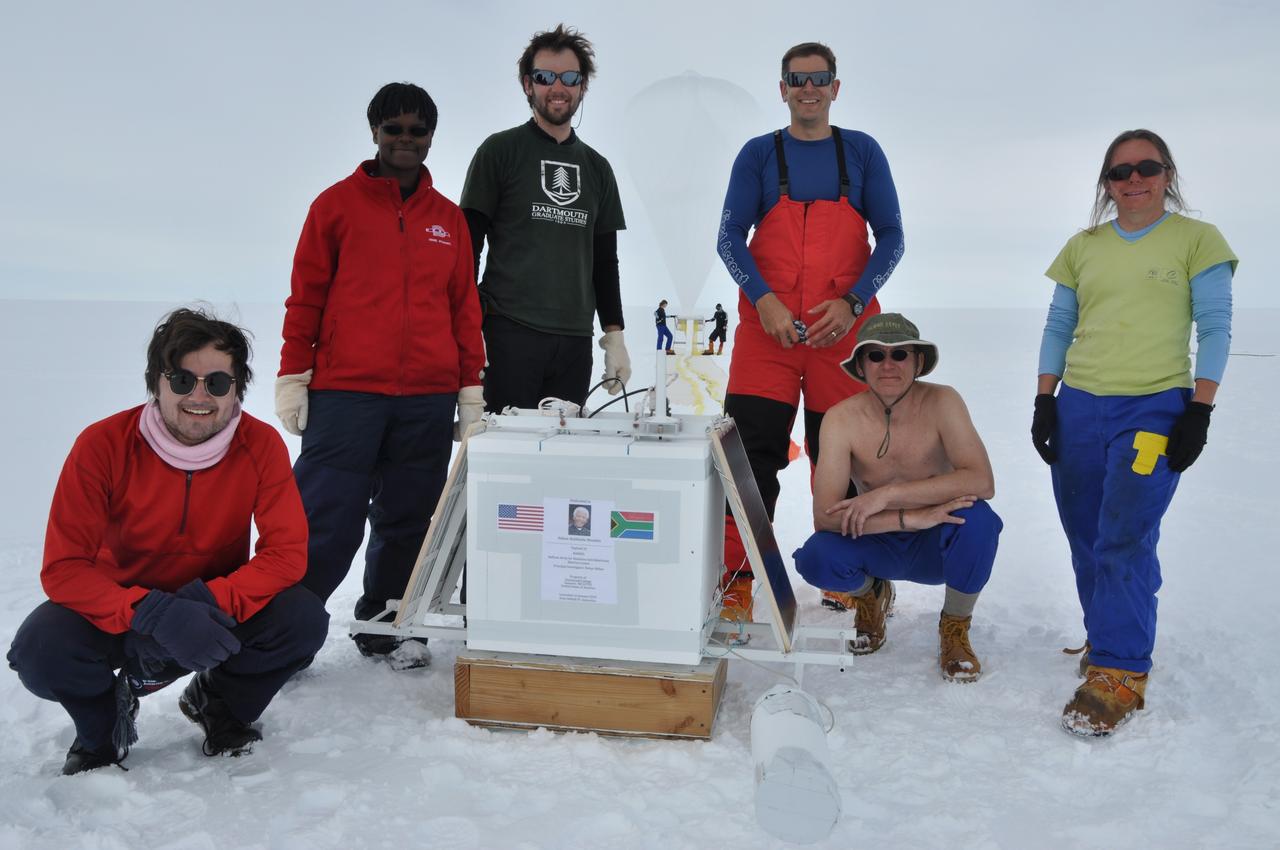
The BARREL team at the South African research station, SANAE IV, poses next to the instrument box, which will float in the atmosphere beneath the balloon that can be seen being inflated in the background. Credit: NASA/Goddard/BARREL/Brett Anderson Read more: <a href="http://www.nasa.gov/content/goddard/nasas-barrel-returns-successful-from-antarctica" rel="nofollow">www.nasa.gov/content/goddard/nasas-barrel-returns-success...</a> -- Three months, 20 balloons, and one very successful campaign. The team for NASA's BARREL – short for Balloon Array for Radiation belt Relativistic Electron Losses -- mission returned from Antarctica in March 2014. BARREL's job is to help unravel the mysterious Van Allen belts, two gigantic donuts of radiation that surround Earth, which can shrink and swell in response to incoming energy and particles from the sun and sometimes expose satellites to harsh radiation. While in Antarctica, the team launched 20 balloons carrying instruments that sense charged particles that are scattered into the atmosphere from the belts, spiraling down the magnetic fields near the South Pole. Each balloon traveled around the pole for up to three weeks. The team will coordinate the BARREL data with observations from NASA's two Van Allen Probes to better understand how occurrences in the belts relate to bursts of particles funneling down toward Earth. BARREL team members will be on hand at the USA Science and Engineering Festival in DC on April 26 and 27, 2014 for the exhibit Space Balloons: Exploring the Extremes of Space Weather. <b><a href="http://www.nasa.gov/audience/formedia/features/MP_Photo_Guidelines.html" rel="nofollow">NASA image use policy.</a></b> <b><a href="http://www.nasa.gov/centers/goddard/home/index.html" rel="nofollow">NASA Goddard Space Flight Center</a></b> enables NASA’s mission through four scientific endeavors: Earth Science, Heliophysics, Solar System Exploration, and Astrophysics. Goddard plays a leading role in NASA’s accomplishments by contributing compelling scientific knowledge to advance the Agency’s mission. <b>Follow us on <a href="http://twitter.com/NASAGoddardPix" rel="nofollow">Twitter</a></b> <b>Like us on <a href="http://www.facebook.com/pages/Greenbelt-MD/NASA-Goddard/395013845897?ref=tsd" rel="nofollow">Facebook</a></b> <b>Find us on <a href="http://instagram.com/nasagoddard?vm=grid" rel="nofollow">Instagram</a></b>

Getting fuller! A BARREL balloon is filled with helium during the 2013-2014 mission campaign in Antarctica. Credit: NASA/Goddard/BARREL Read more: <a href="http://www.nasa.gov/content/goddard/nasas-barrel-returns-successful-from-antarctica" rel="nofollow">www.nasa.gov/content/goddard/nasas-barrel-returns-success...</a> -- Three months, 20 balloons, and one very successful campaign. The team for NASA's BARREL – short for Balloon Array for Radiation belt Relativistic Electron Losses -- mission returned from Antarctica in March 2014. BARREL's job is to help unravel the mysterious Van Allen belts, two gigantic donuts of radiation that surround Earth, which can shrink and swell in response to incoming energy and particles from the sun and sometimes expose satellites to harsh radiation. While in Antarctica, the team launched 20 balloons carrying instruments that sense charged particles that are scattered into the atmosphere from the belts, spiraling down the magnetic fields near the South Pole. Each balloon traveled around the pole for up to three weeks. The team will coordinate the BARREL data with observations from NASA's two Van Allen Probes to better understand how occurrences in the belts relate to bursts of particles funneling down toward Earth. BARREL team members will be on hand at the USA Science and Engineering Festival in DC on April 26 and 27, 2014 for the exhibit Space Balloons: Exploring the Extremes of Space Weather. <b><a href="http://www.nasa.gov/audience/formedia/features/MP_Photo_Guidelines.html" rel="nofollow">NASA image use policy.</a></b><b><a href="http://www.nasa.gov/centers/goddard/home/index.html" rel="nofollow">NASA Goddard Space Flight Center</a></b> enables NASA’s mission through four scientific endeavors: Earth Science, Heliophysics, Solar System Exploration, and Astrophysics. Goddard plays a leading role in NASA’s accomplishments by contributing compelling scientific knowledge to advance the Agency’s mission.<b>Follow us on <a href="http://twitter.com/NASAGoddardPix" rel="nofollow">Twitter</a></b><b>Like us on <a href="http://www.facebook.com/pages/Greenbelt-MD/NASA-Goddard/395013845897?ref=tsd" rel="nofollow">Facebook</a></b><b>Find us on <a href="http://instagram.com/nasagoddard?vm=grid" rel="nofollow">Instagram</a></b>

While large compared to a human, BARREL balloons are actually much smaller than typical science balloons, which can be as large as a football field. Credit: NASA/Goddard/BARREL/Brett Anderson Read more: <a href="http://www.nasa.gov/content/goddard/nasas-barrel-returns-successful-from-antarctica" rel="nofollow">www.nasa.gov/content/goddard/nasas-barrel-returns-success...</a> -- Three months, 20 balloons, and one very successful campaign. The team for NASA's BARREL – short for Balloon Array for Radiation belt Relativistic Electron Losses -- mission returned from Antarctica in March 2014. BARREL's job is to help unravel the mysterious Van Allen belts, two gigantic donuts of radiation that surround Earth, which can shrink and swell in response to incoming energy and particles from the sun and sometimes expose satellites to harsh radiation. While in Antarctica, the team launched 20 balloons carrying instruments that sense charged particles that are scattered into the atmosphere from the belts, spiraling down the magnetic fields near the South Pole. Each balloon traveled around the pole for up to three weeks. The team will coordinate the BARREL data with observations from NASA's two Van Allen Probes to better understand how occurrences in the belts relate to bursts of particles funneling down toward Earth. BARREL team members will be on hand at the USA Science and Engineering Festival in DC on April 26 and 27, 2014 for the exhibit Space Balloons: Exploring the Extremes of Space Weather. <b><a href="http://www.nasa.gov/audience/formedia/features/MP_Photo_Guidelines.html" rel="nofollow">NASA image use policy.</a></b> <b><a href="http://www.nasa.gov/centers/goddard/home/index.html" rel="nofollow">NASA Goddard Space Flight Center</a></b> enables NASA’s mission through four scientific endeavors: Earth Science, Heliophysics, Solar System Exploration, and Astrophysics. Goddard plays a leading role in NASA’s accomplishments by contributing compelling scientific knowledge to advance the Agency’s mission. <b>Follow us on <a href="http://twitter.com/NASAGoddardPix" rel="nofollow">Twitter</a></b> <b>Like us on <a href="http://www.facebook.com/pages/Greenbelt-MD/NASA-Goddard/395013845897?ref=tsd" rel="nofollow">Facebook</a></b> <b>Find us on <a href="http://instagram.com/nasagoddard?vm=grid" rel="nofollow">Instagram</a></b>