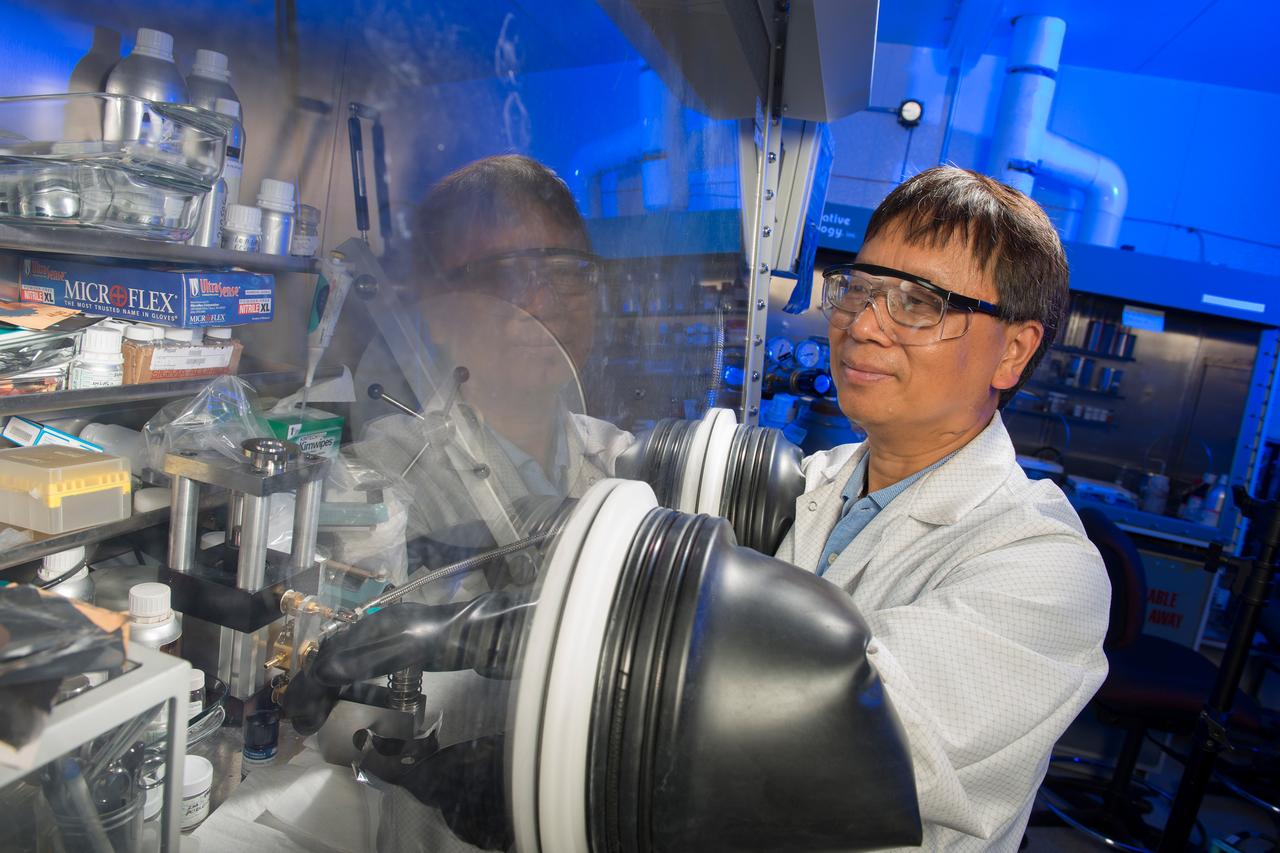
NASA Glenn Researcher James Wu assembles a lithium-metal based battery lab cell incorporating a new solid polymer nanocomposite electrolyte developed at the center.
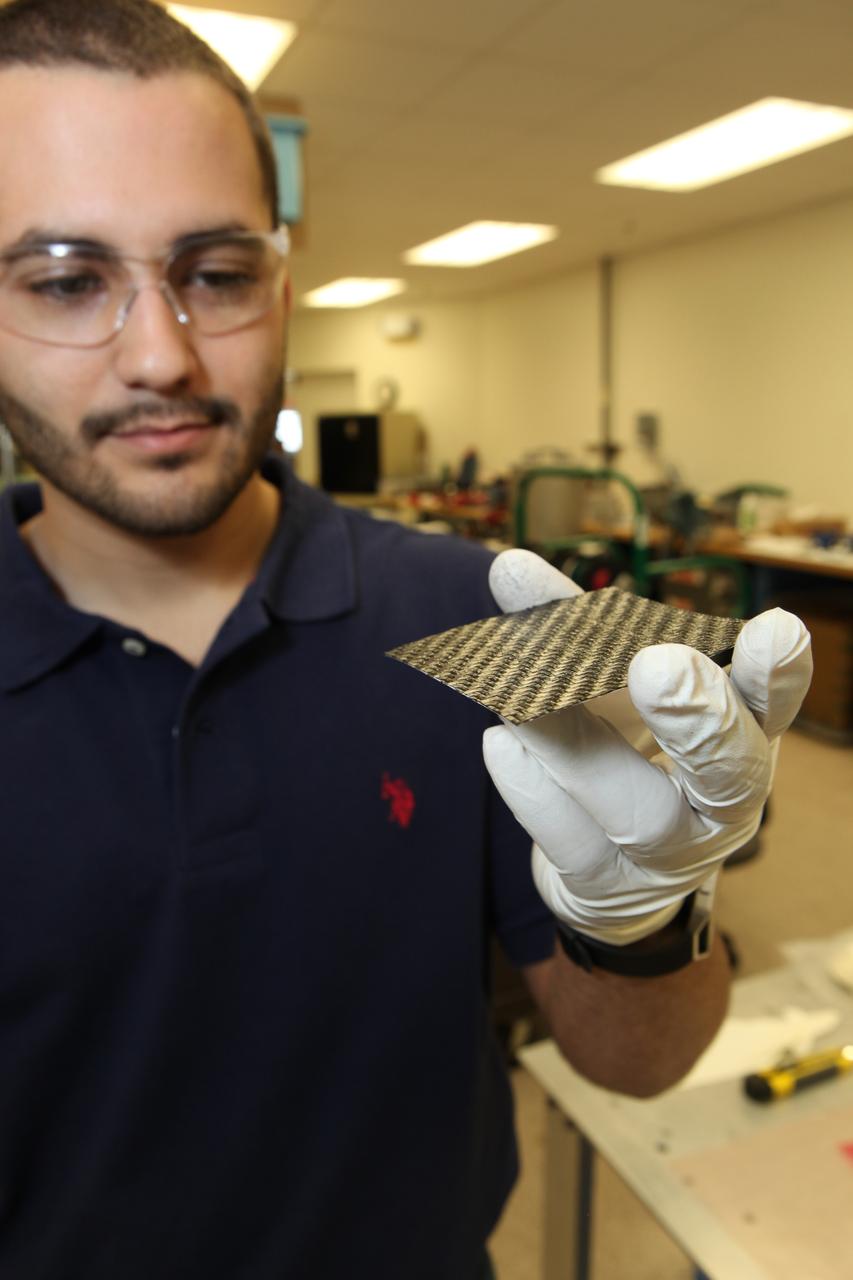
Daniel Perez, Ph.D., a graduate student from the University of Miami, displays a piece of the prototype structure for a new solid-state battery in the Prototype Laboratory at NASA's Kennedy Space Center in Florida. The size of the battery is so small that it could be a prime candidate for use in microsatellites, including CubeSats. Researchers at Kennedy are collaborating with experts at the University of Miami. The university partnership is funded through the Small Spacecraft Technology Program, in NASA's Space Technology Mission Directorate.
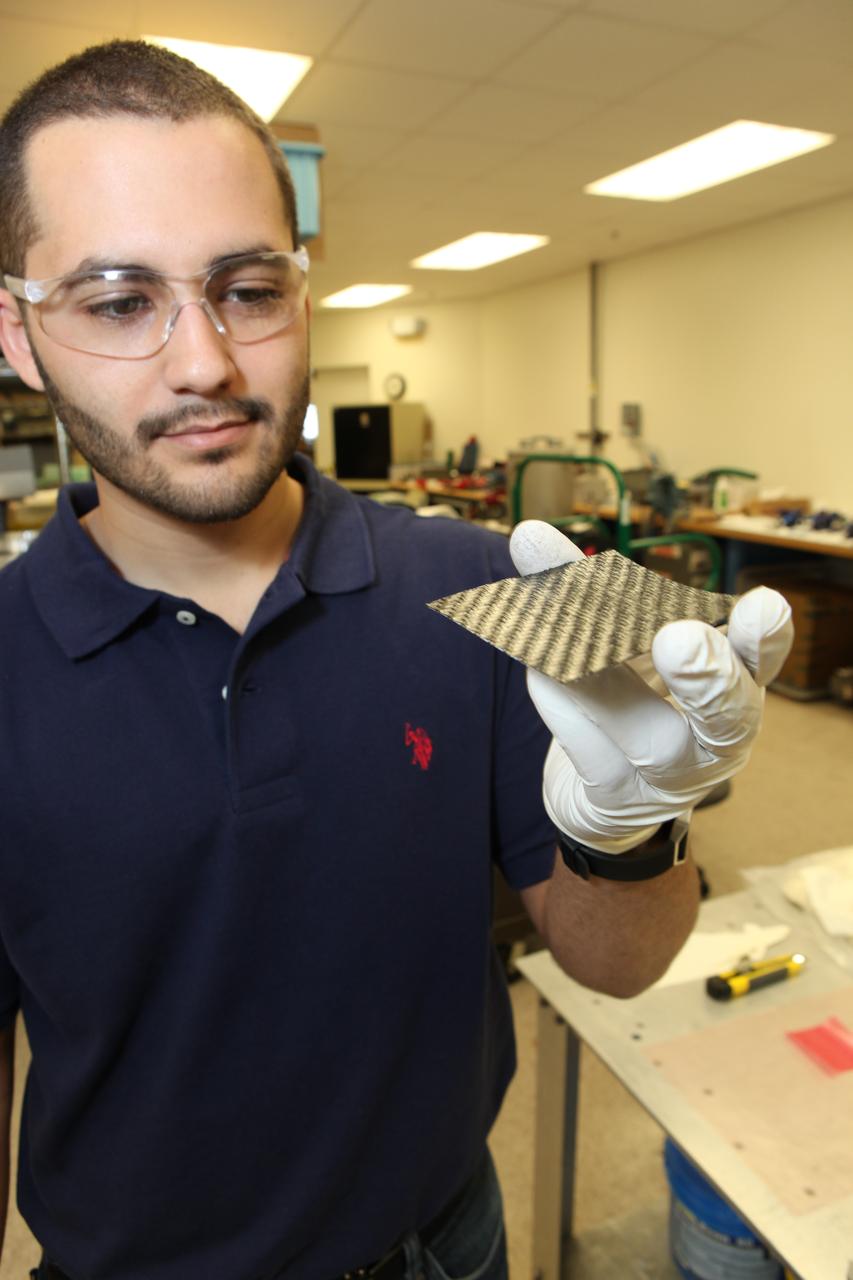
Daniel Perez, Ph.D., a graduate student from the University of Miami, displays a piece of the prototype structure for a new solid-state battery in the Prototype Laboratory at NASA's Kennedy Space Center in Florida. The size of the battery is so small that it could be a prime candidate for use in microsatellites, including CubeSats. Researchers at Kennedy are collaborating with experts at the University of Miami. The university partnership is funded through the Small Spacecraft Technology Program, in NASA's Space Technology Mission Directorate.
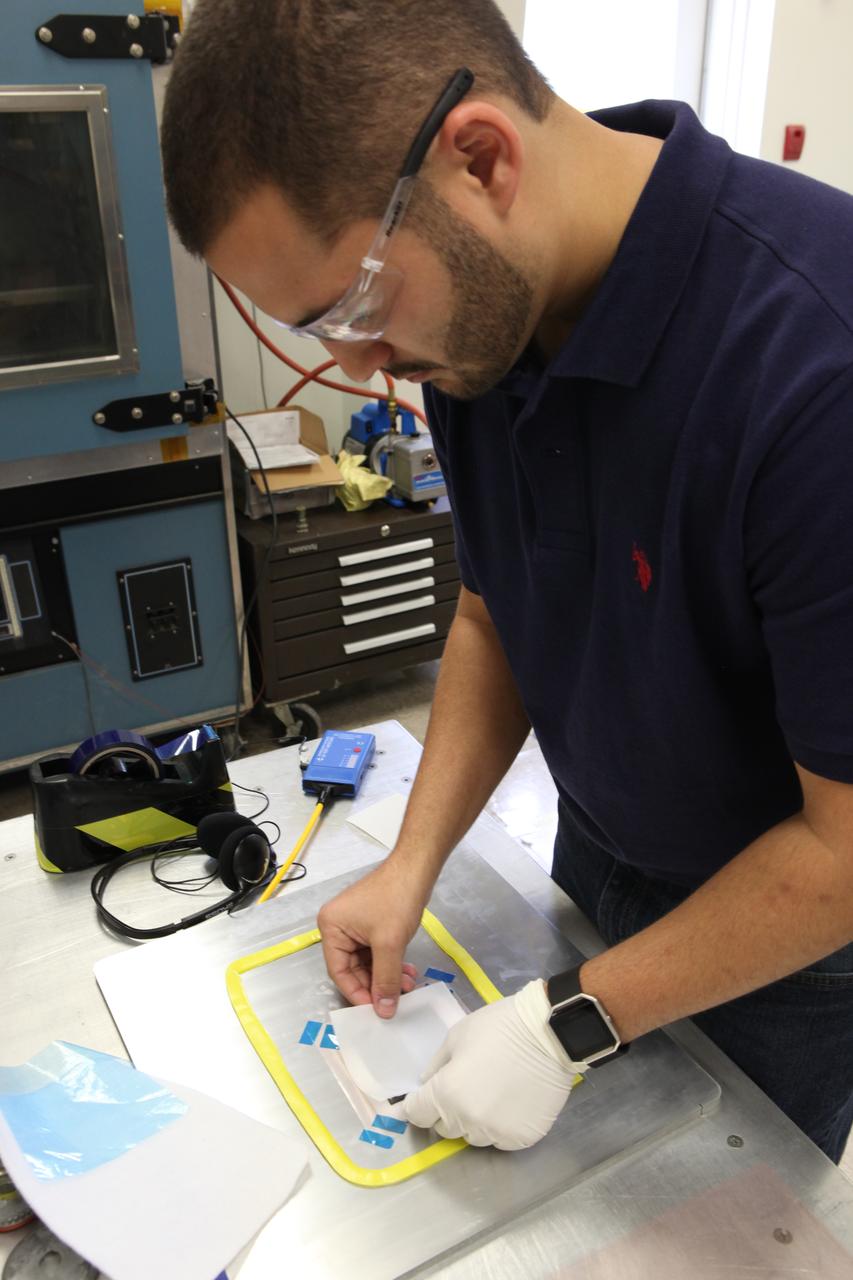
Daniel Perez, Ph.D., a graduate student from the University of Miami, prepares layers of the prototype structure for a new solid-state battery in the Prototype Laboratory at NASA's Kennedy Space Center in Florida. The size of the battery is so small that it could be a prime candidate for use in microsatellites, including CubeSats. Researchers at Kennedy are collaborating with experts at the University of Miami. The university partnership is funded through the Small Spacecraft Technology Program, in NASA's Space Technology Mission Directorate.
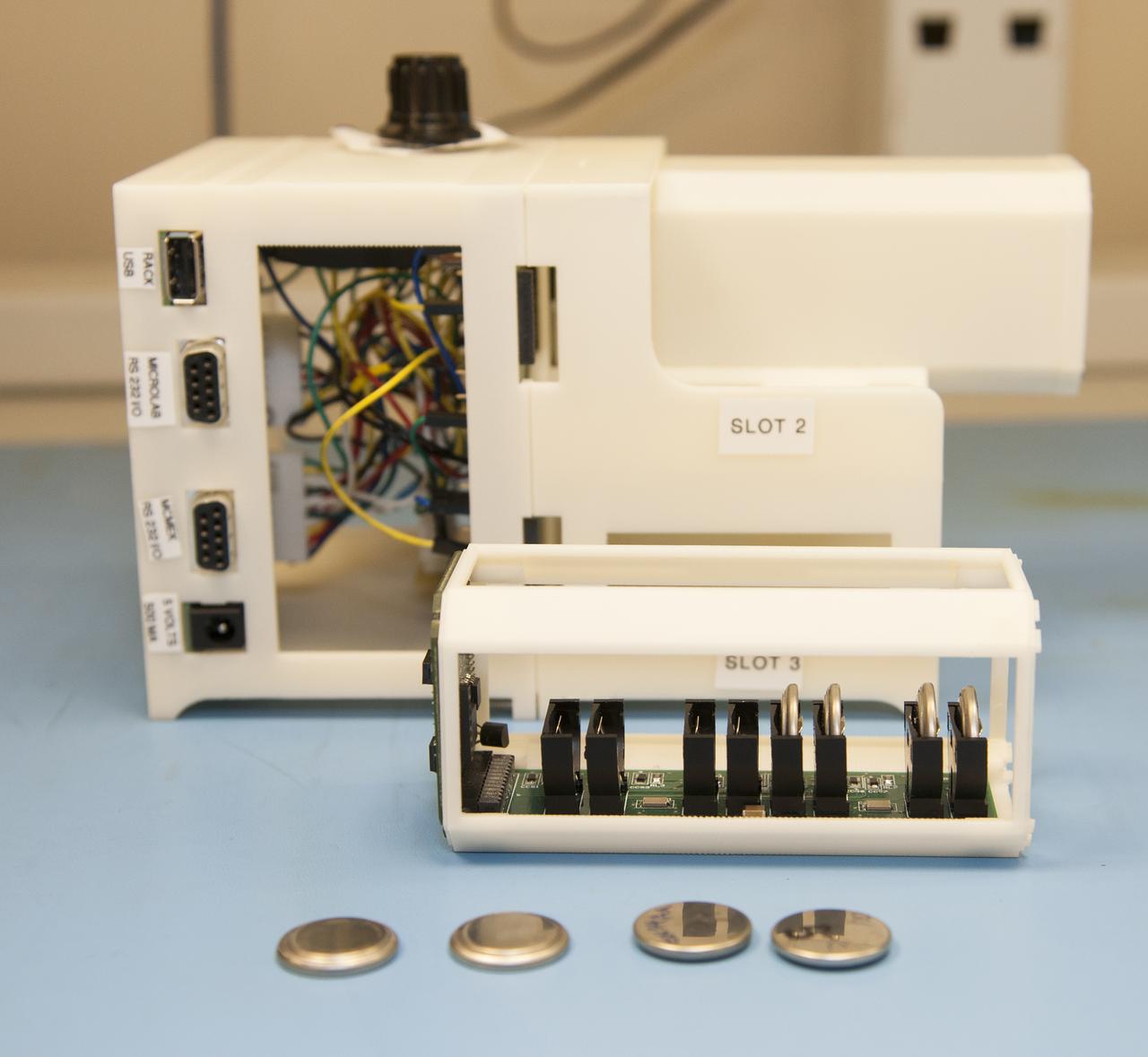
These are the components of the Desert Christian experiment launched to space Dec. 3 that could one day lead to fast-charging batteries.
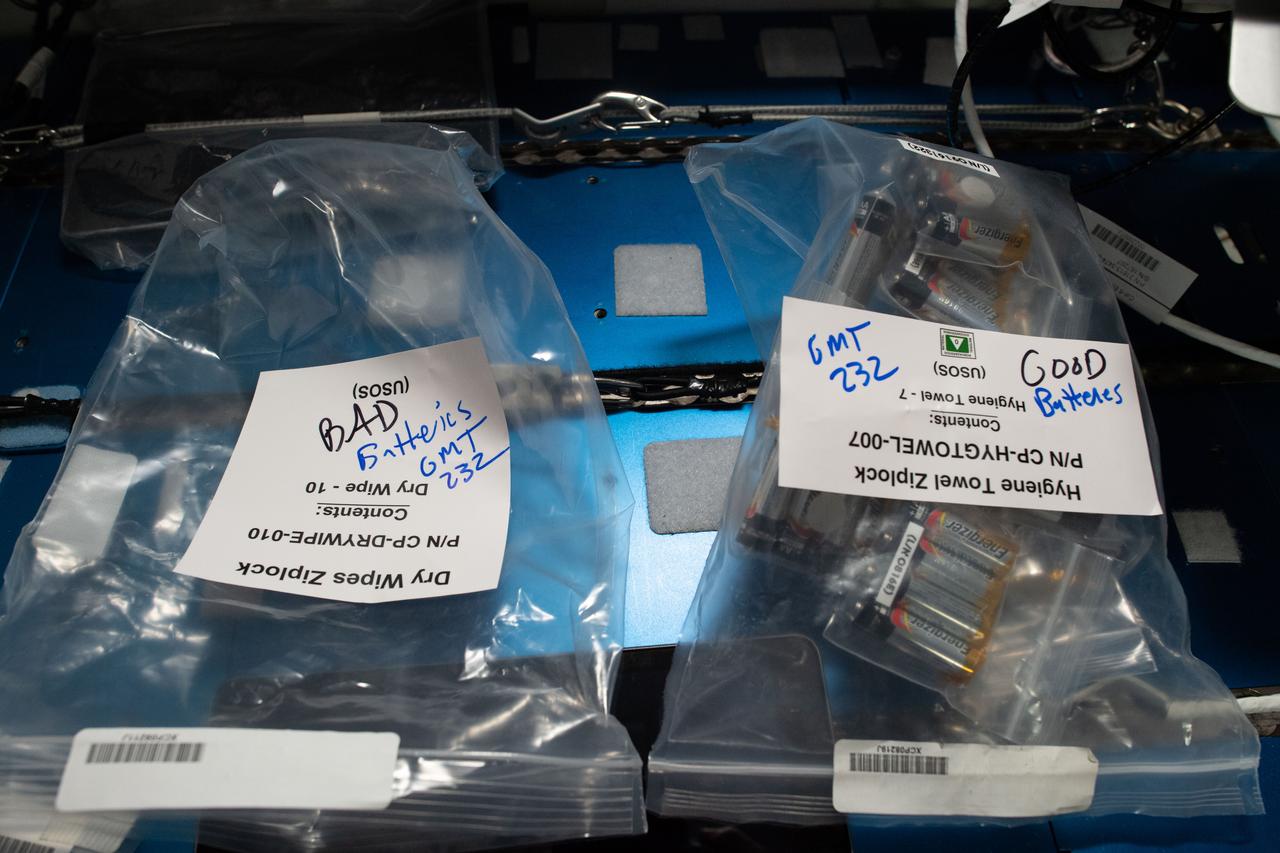
iss056e150242 (8/20/2018) --- A view of good and bad batteries within ziplock bags after Zero G battery testing aboard the International Space Station (ISS). The Zero-g Battery Testing is an initial study to investigate comments from Space Shuttle and International Space Station crew members to determine if batteries change due to zero-g. This is not intended to be an extensive study due to the short time frame available, and due to the availability of equipment.
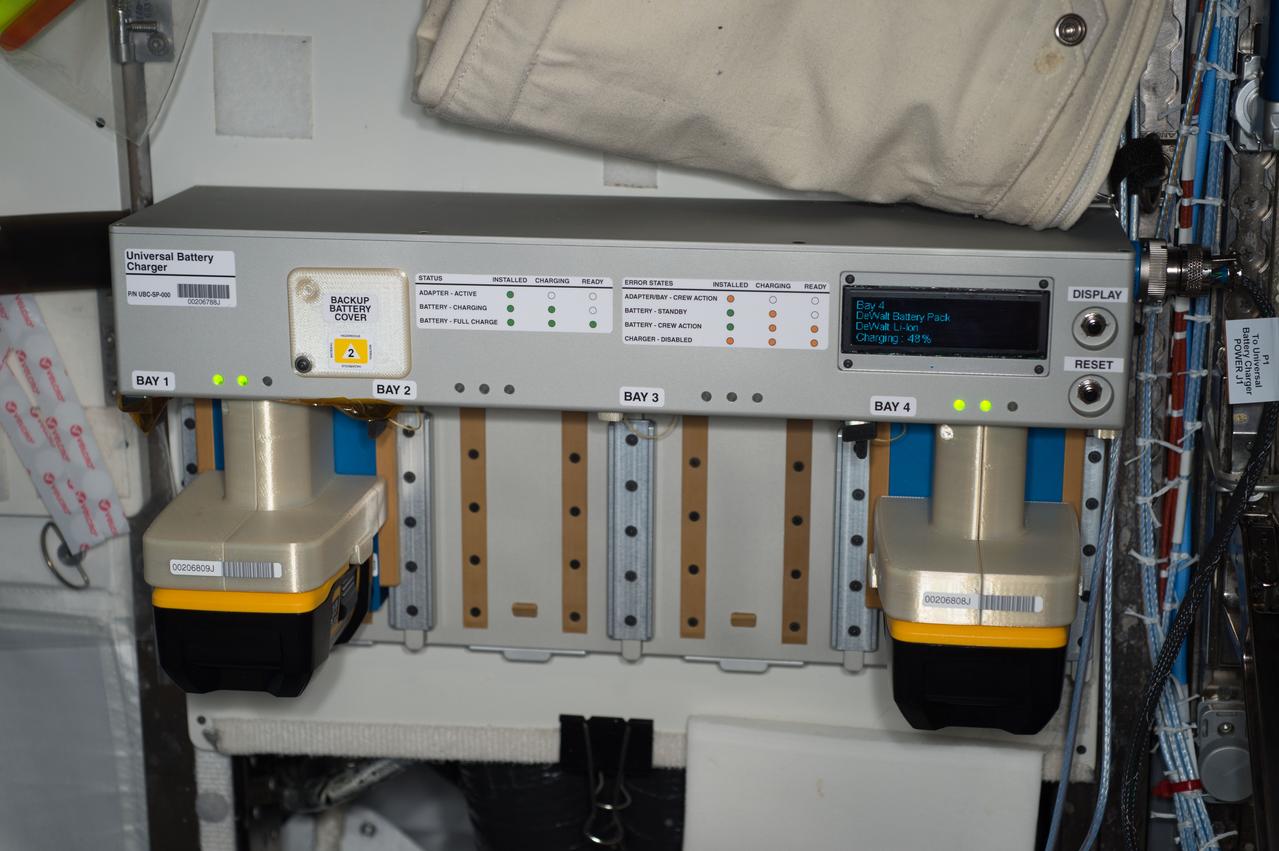
iss047e057658 (4/14/2016) --- Photo documentation during the installation of Universal Battery Charger (UBC), in the U.S. Laboratory aboard the International Space Station (ISS). The Universal Battery Charger provides a new, transformable system to charge different types of batteries aboard the International Space Station (ISS). The ability to charge multiple battery types with one system reduces the amount of cargo that must fly to the station and be stowed on board.
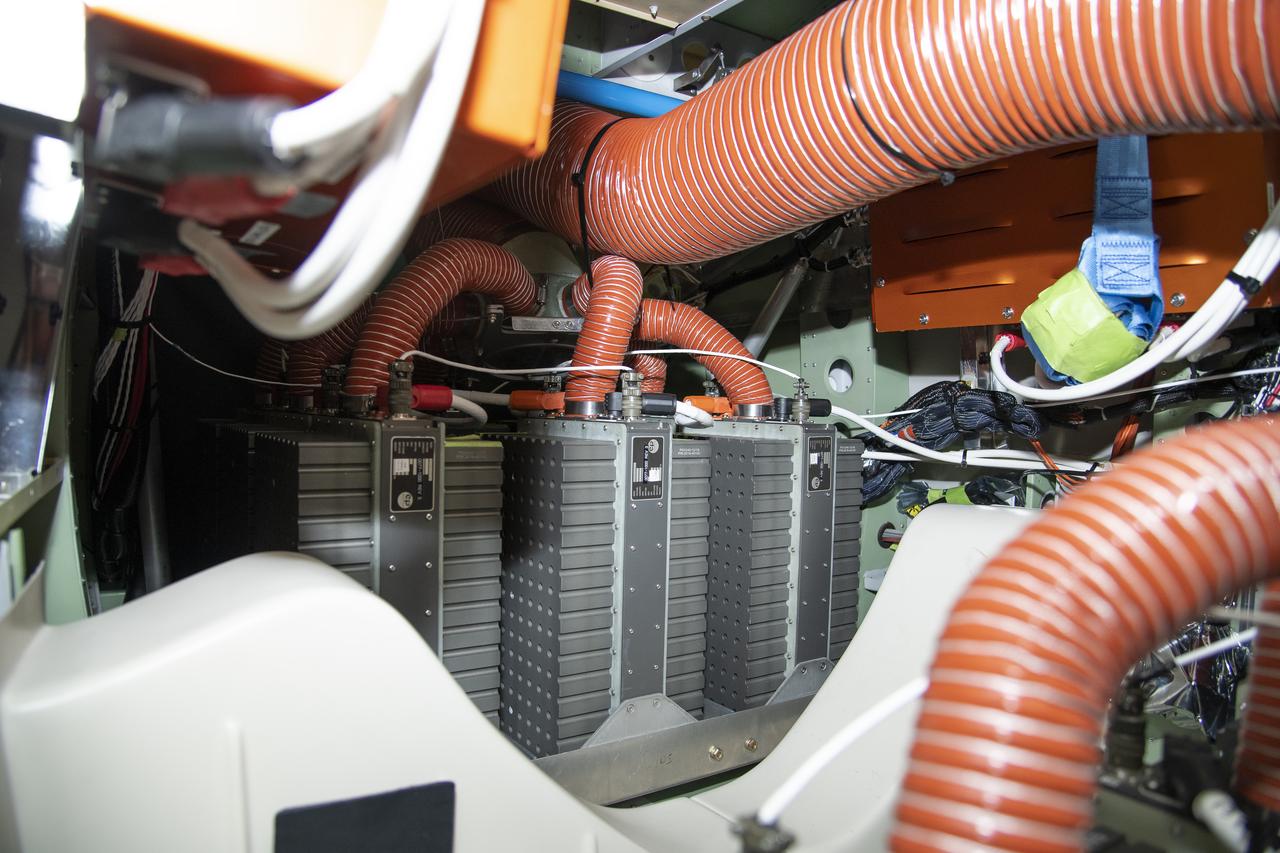
NASA's all-electric X-57 project team installed two 400-pound lithium-ion battery packs in the cabin of the plane in 2022 at NASA's Armstrong Flight Research Center in California. The X-57 project team repeatedly tested the batteries to ensure they can safely power the aircraft for an entire flight, and designed custom, lightweight cases to keep the batteries secure.
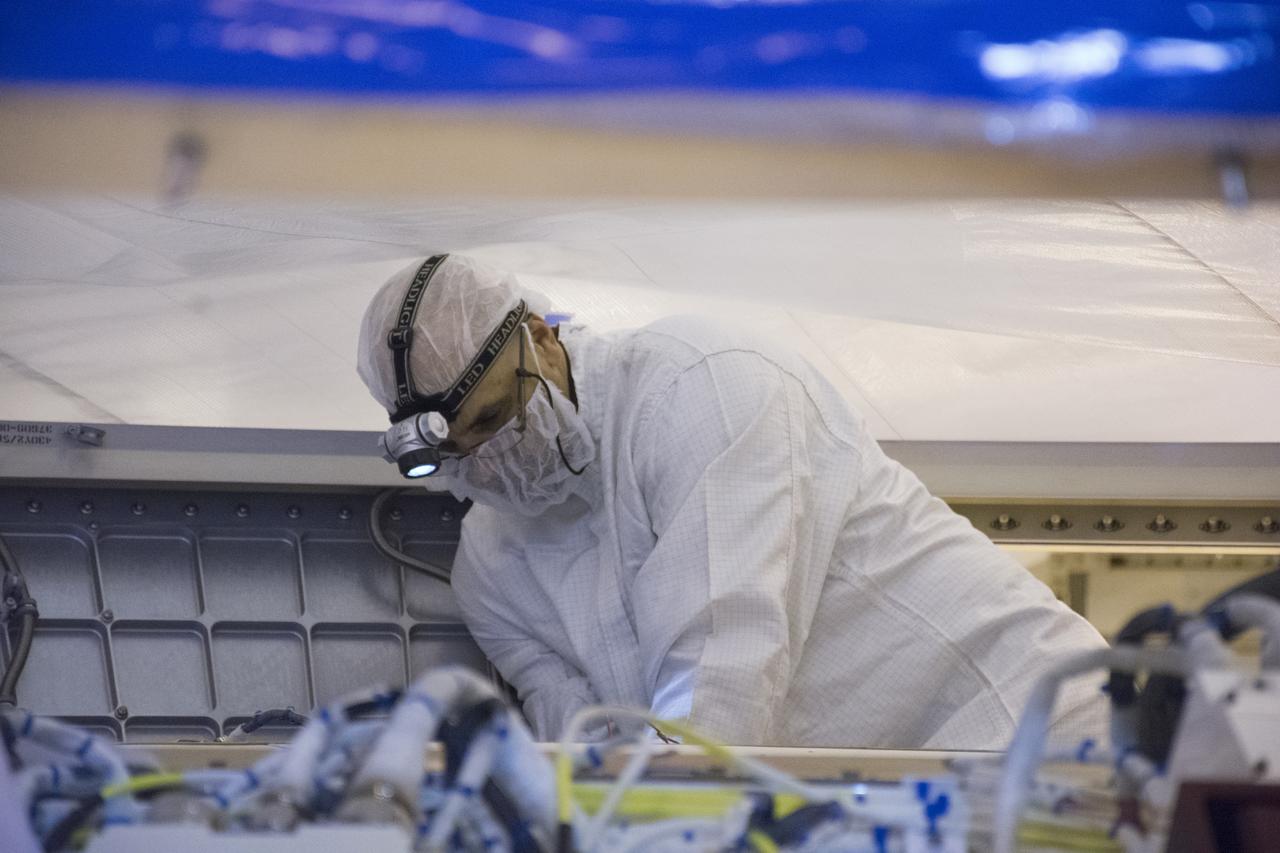
In the gantry at Space Launch Complex 3 at Vandenberg Air Force Base in California, a technician prepares batteries for installation in NASA's Interior Exploration using Seismic Investigations, Geodesy and Heat Transport, or InSight, Mars lander. InSight will be the first mission to look deep beneath the Martian surface. It will study the planet's interior by measuring its heat output and listen for marsquakes. The spacecraft will use the seismic waves generated by marsquakes to develop a map of the planet’s deep interior. The resulting insight into Mars’ formation will provide a better understanding of how other rocky planets, including Earth, were created. InSight is scheduled for liftoff May 5, 2018.
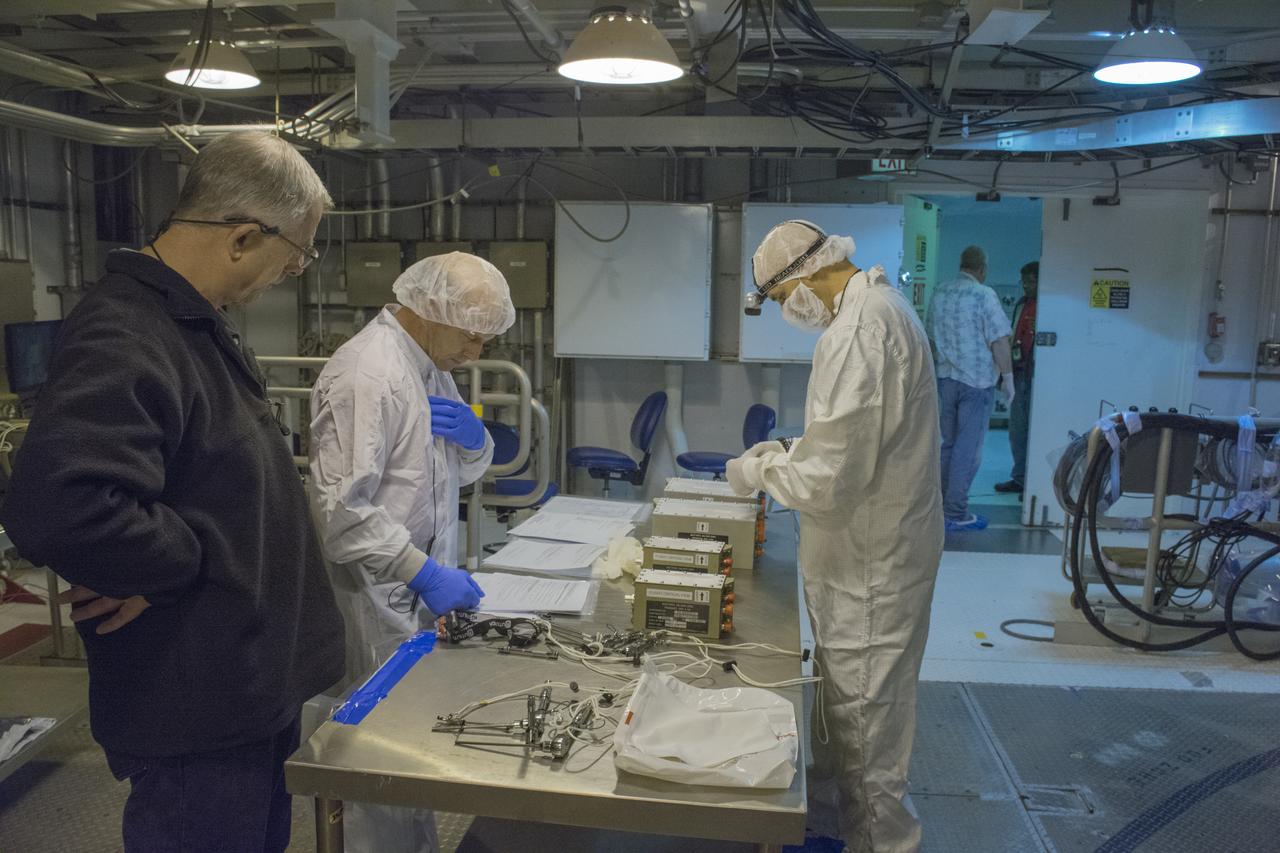
In the gantry at Space Launch Complex 3 at Vandenberg Air Force Base in California, technicians and engineers prepare batteries for installation in NASA's Interior Exploration using Seismic Investigations, Geodesy and Heat Transport, or InSight, Mars lander. InSight will be the first mission to look deep beneath the Martian surface. It will study the planet's interior by measuring its heat output and listen for marsquakes. The spacecraft will use the seismic waves generated by marsquakes to develop a map of the planet’s deep interior. The resulting insight into Mars’ formation will provide a better understanding of how other rocky planets, including Earth, were created. InSight is scheduled for liftoff May 5, 2018.
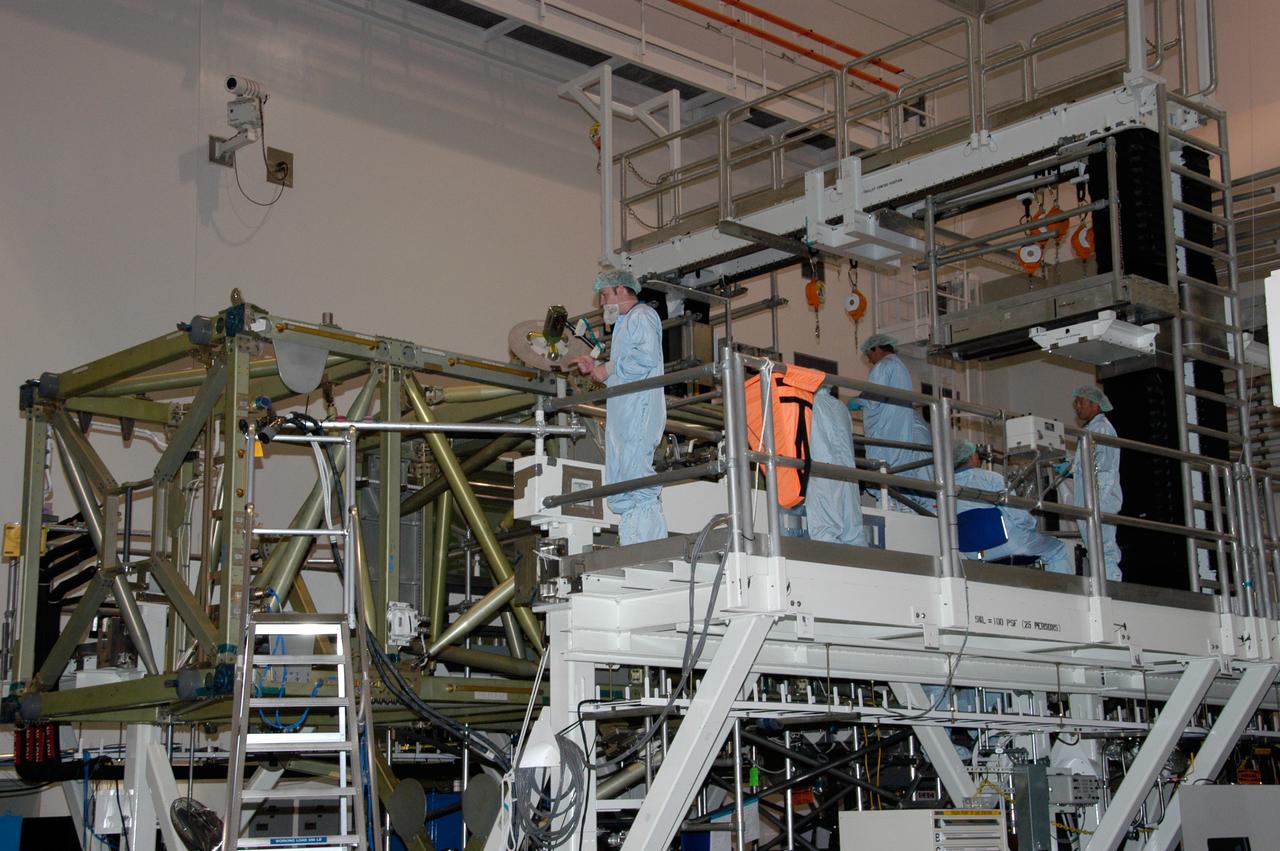
In the Space Station Processing Facility at NASA's Kennedy Space Center, workers prepare to connect cables that will recharge the battery for the S6 integrated truss. The final starboard truss in the assembly of the International Space Station, the S6 is scheduled to fly on space shuttle mission STS-119, whose launch date is not yet determined.
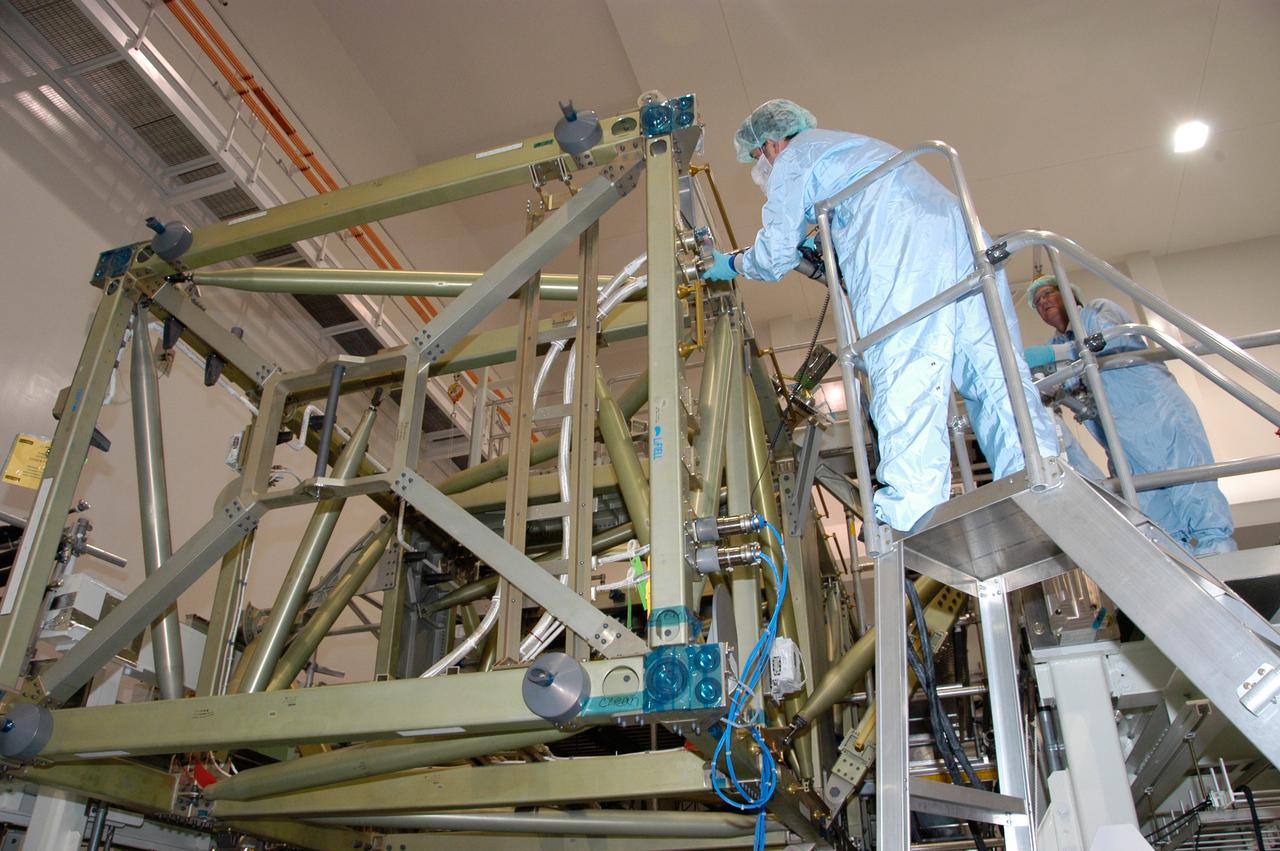
In the Space Station Processing Facility at NASA's Kennedy Space Center, a worker connects a cable to recharge the battery for the S6 integrated truss. The final starboard truss in the assembly of the International Space Station, the S6 is scheduled to fly on space shuttle mission STS-119, whose launch date is not yet determined.
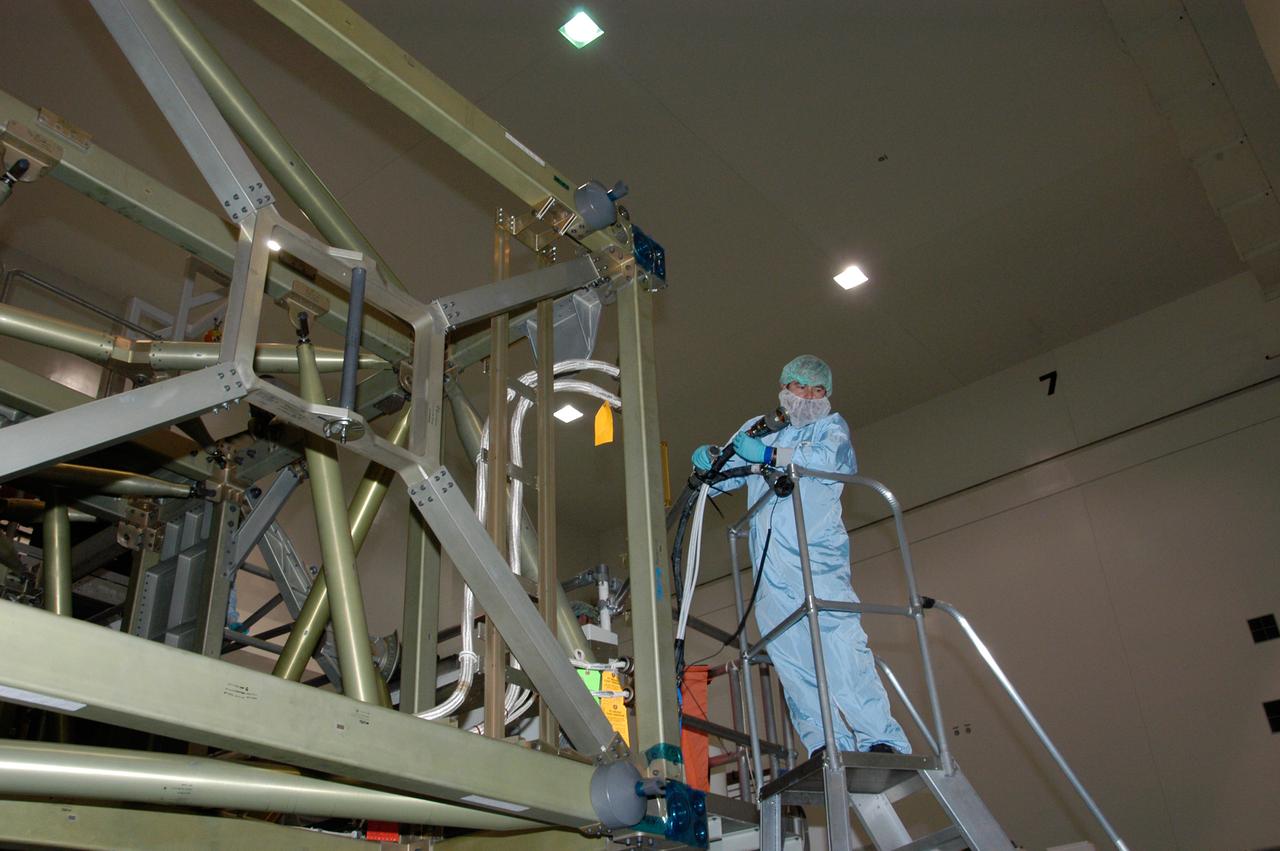
In the Space Station Processing Facility at NASA's Kennedy Space Center, a worker holds a cable that will help recharge the battery for the S6 integrated truss. The final starboard truss in the assembly of the International Space Station, the S6 is scheduled to fly on space shuttle mission STS-119, whose launch date is not yet determined.
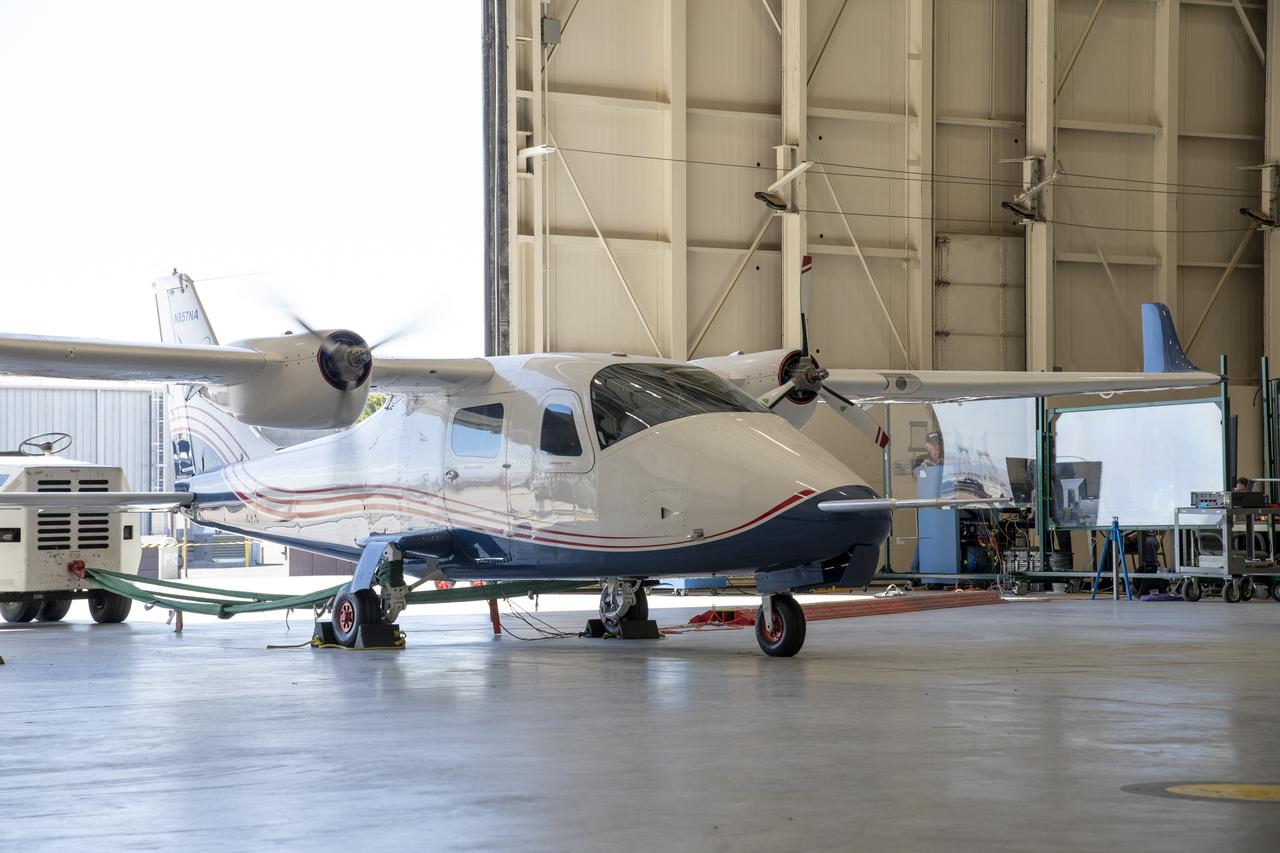
NASA's all-electric X-57 Maxwell aircraft tests the motors with the battery packs installed on the aircraft at NASA's Armstrong Flight Research Center in California. A goal of the X-57 project is to help the Federal Aviation Administration set certification standards for emerging electric aircraft markets.
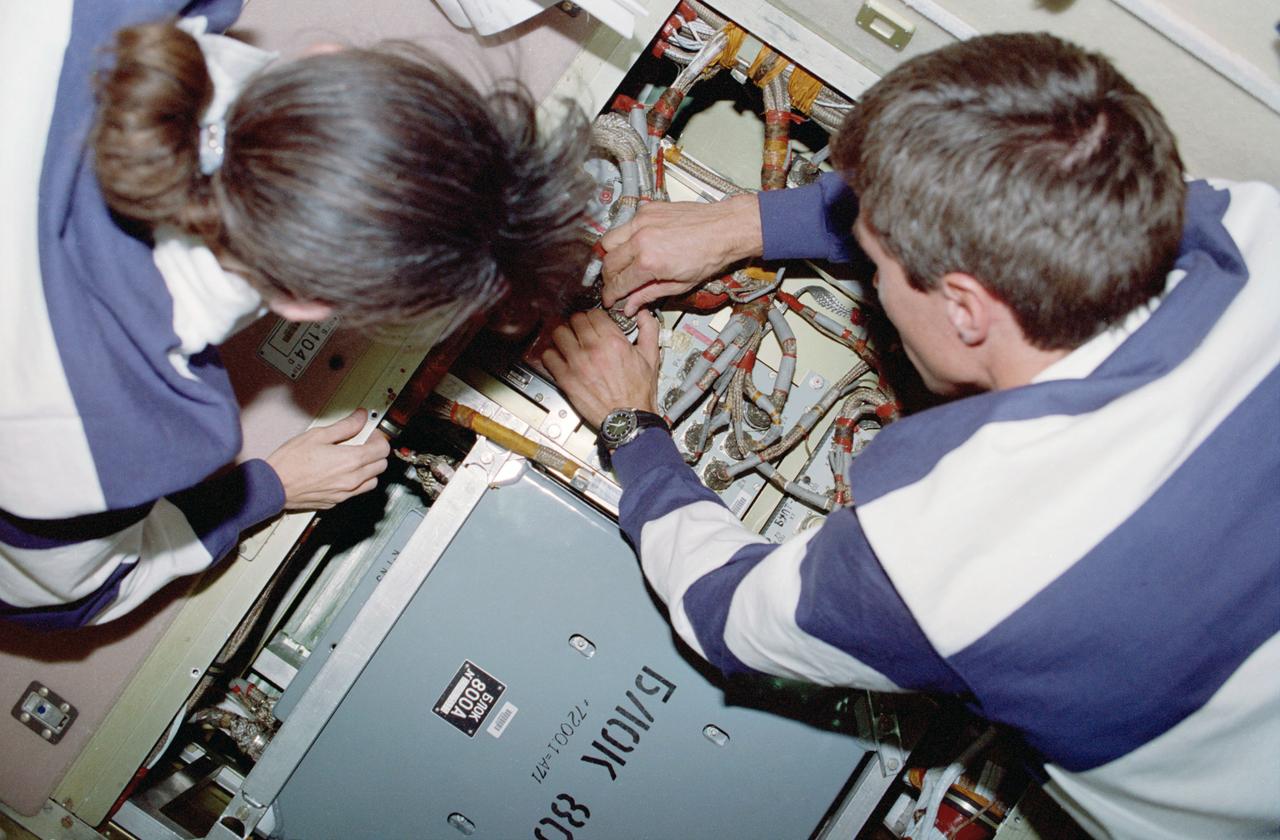
STS088-334-029 (4-15 Dec. 1998) --- Astronaut Nancy J. Currie, mission specialist, and cosmonaut Sergei K. Krikalev, mission specialist representing the Russian Space Agency (RSA), perform an in-flight maintenance on a battery charging unit on the Russian-built FGB Module (Zarya). One of Zarya's six batteries had experienced a problem discharging stored energy in its automatic configuration. Krikalev had swapped out an identical component during two previous flights on the Russia?s Mir Space Station.
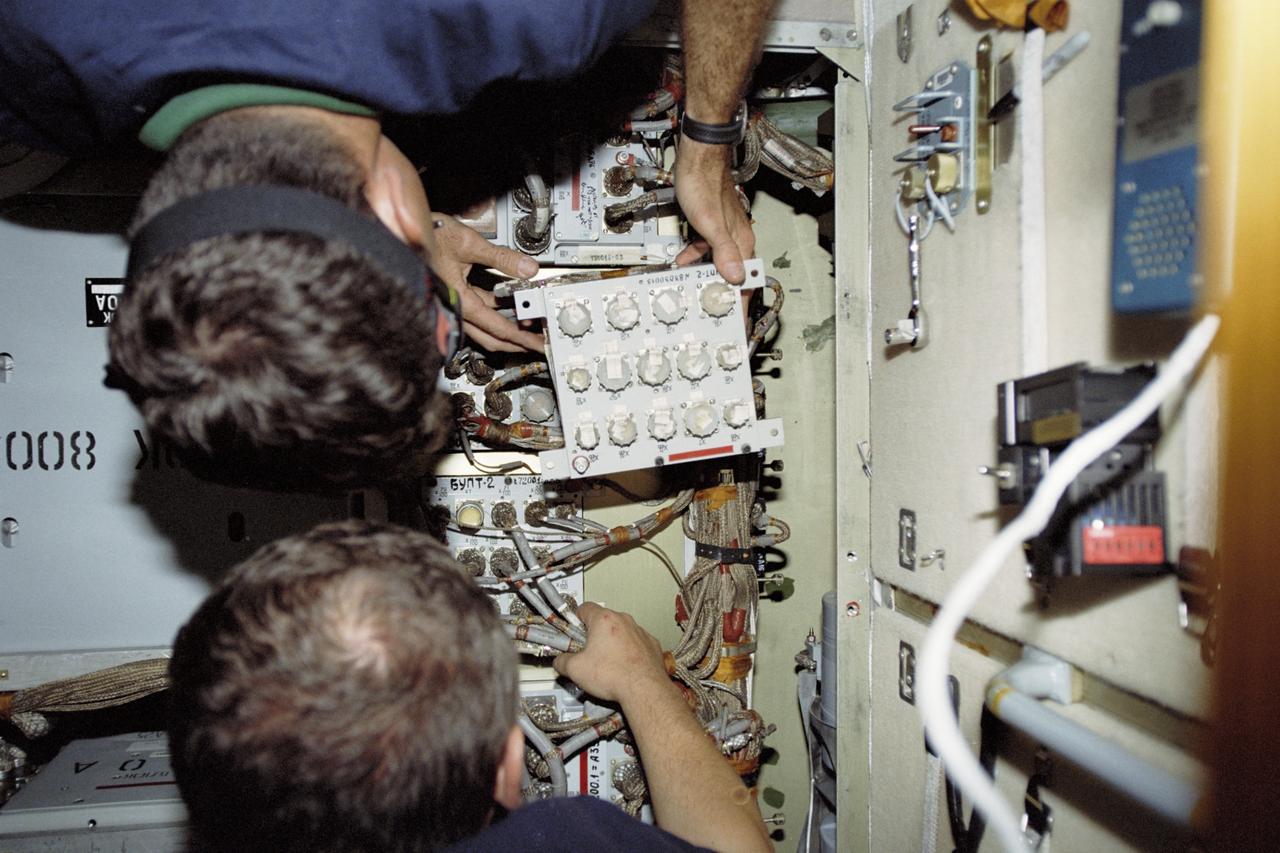
STS-106 Mission Specialist (MS) Daniel Burbank (with headband light) and MS / cosmonaut Boris Morukov work on the storage batteries in the Functional Cargo Block (FGB) / Zarya.
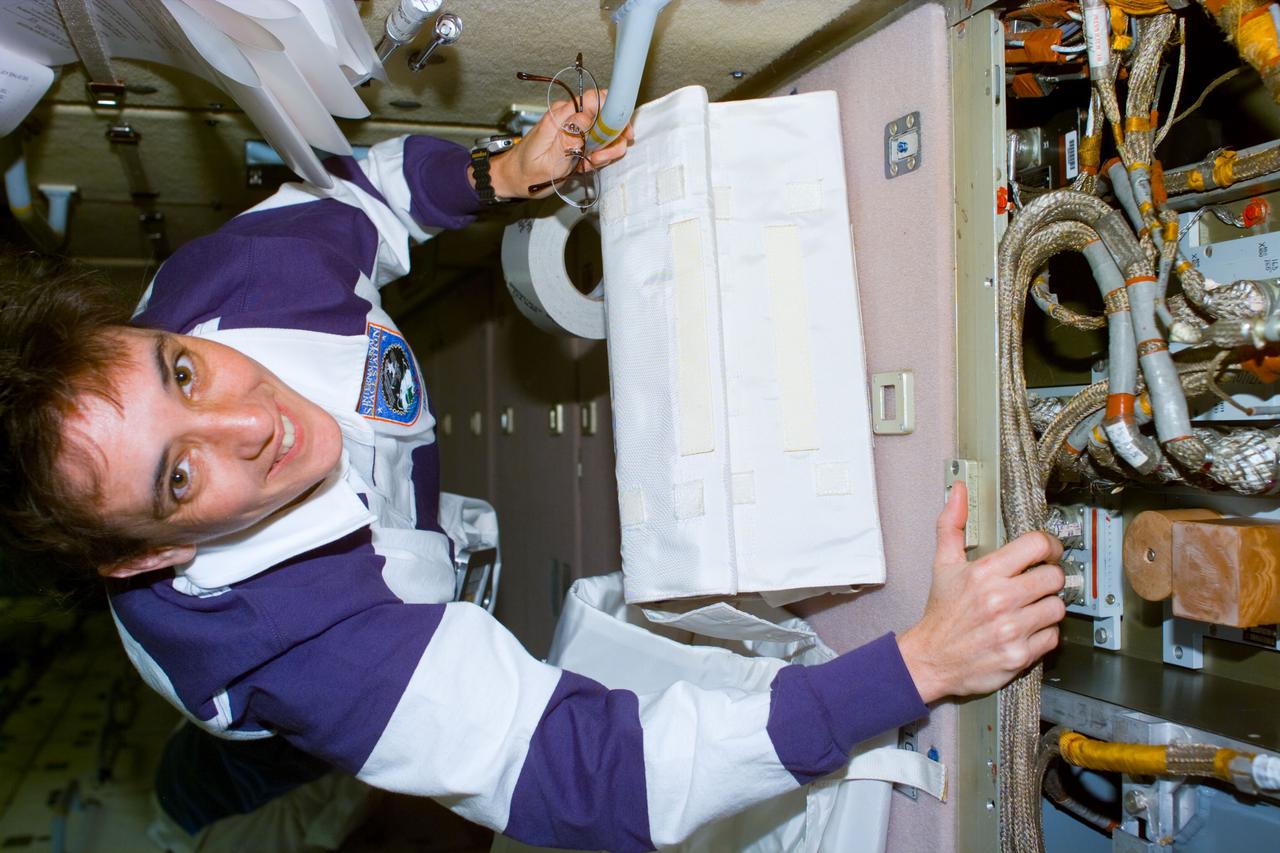
S88-E-5076 (12-11-98) --- Astronaut Nancy J. Currie, mission specialist, participates in work aboard Zarya. One of Currie's tasks was to replace a faulty unit which controls the discharging of stored energy from one of the module's six batteries. The photo was taken with an electronic still camera (ESC) at 01:58:16 GMT, Dec. 11.
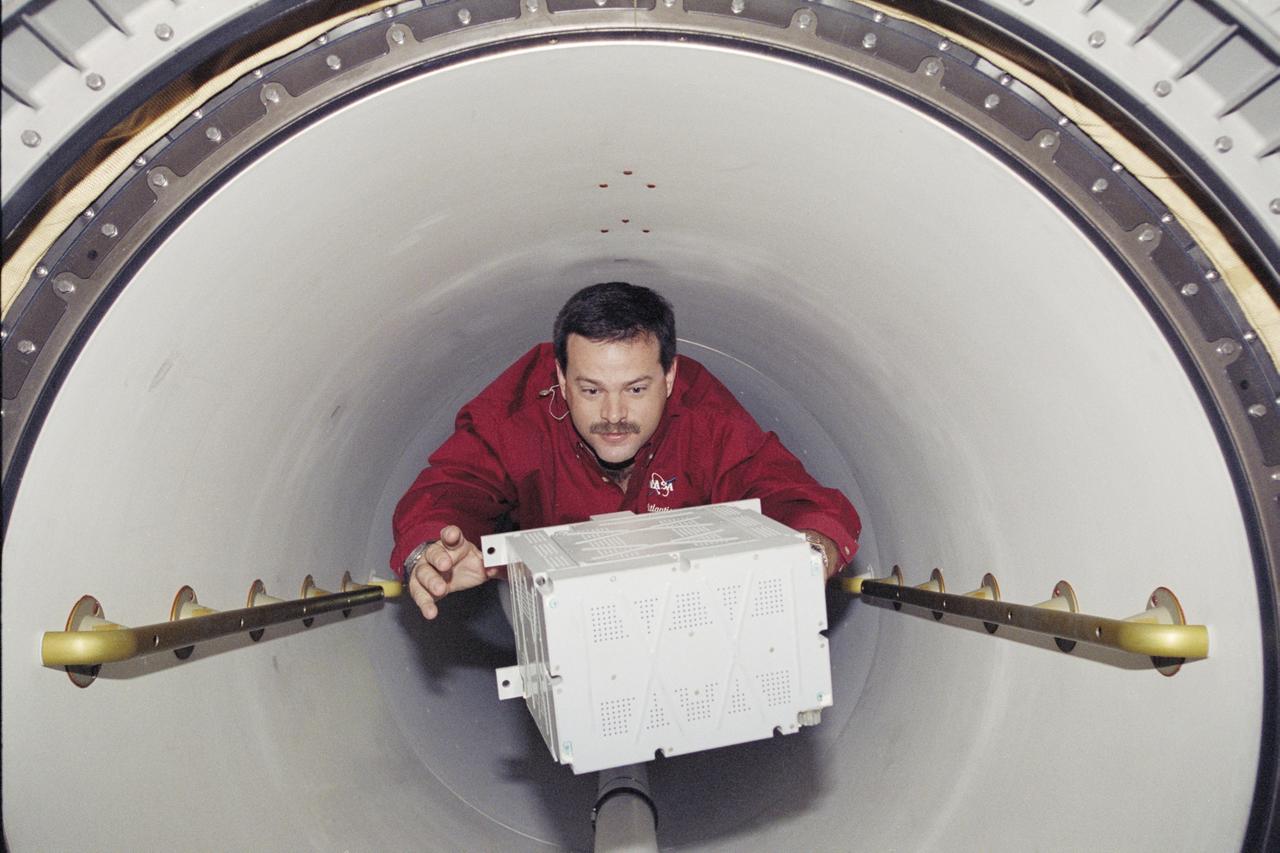
STS106-301-018 (8-20 September 2000) --- Astronaut Scott D. Altman, pilot, translates through the tunnel to the International Space Station (ISS) with a new battery in hand. The seven-man STS-106 crew was in the process of a major moving effort of supplies and hardware from the Space Shuttle Atlantis to the station.
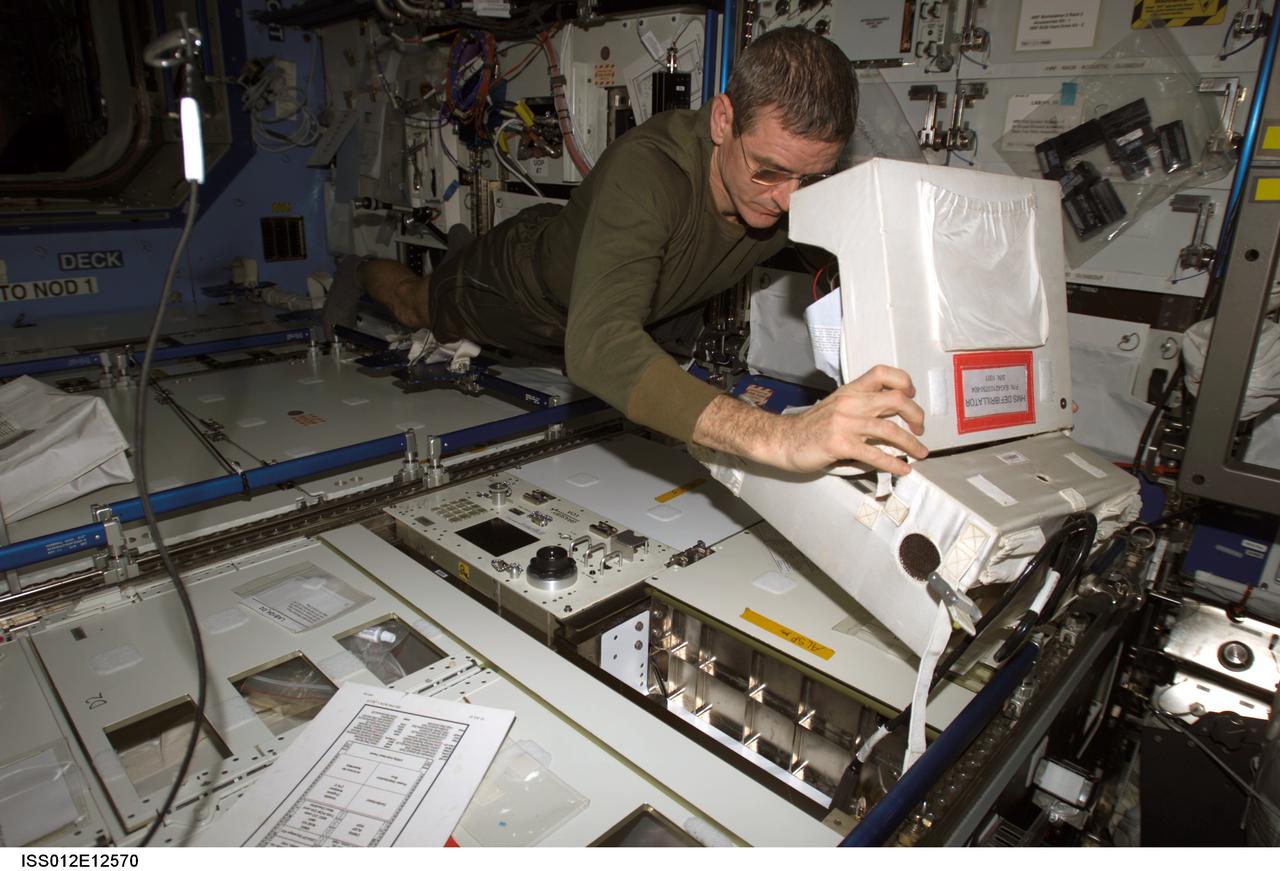
ISS012-E-12570 (16 Dec. 2005) --- Astronaut William S. (Bill) McArthur Jr., Expedition 12 commander and NASA space station science officer, completes a battery charge on a cardiac defibrillator at the Human Research Facility (HRF) in the Destiny laboratory of the International Space Station.

S132-E-008100 (17 May 2010) --- NASA astronaut Steve Bowen, STS-132 mission specialist, participates in the mission's first session of extravehicular activity (EVA) as construction and maintenance continue on the International Space Station. During the seven-hour, 25-minute spacewalk, Bowen and NASA astronaut Garrett Reisman (out of frame), mission specialist, loosened bolts holding six replacement batteries, installed a second antenna for high-speed Ku-band transmissions and adding a spare parts platform to Dextre, a two-armed extension for the station’s robotic arm.
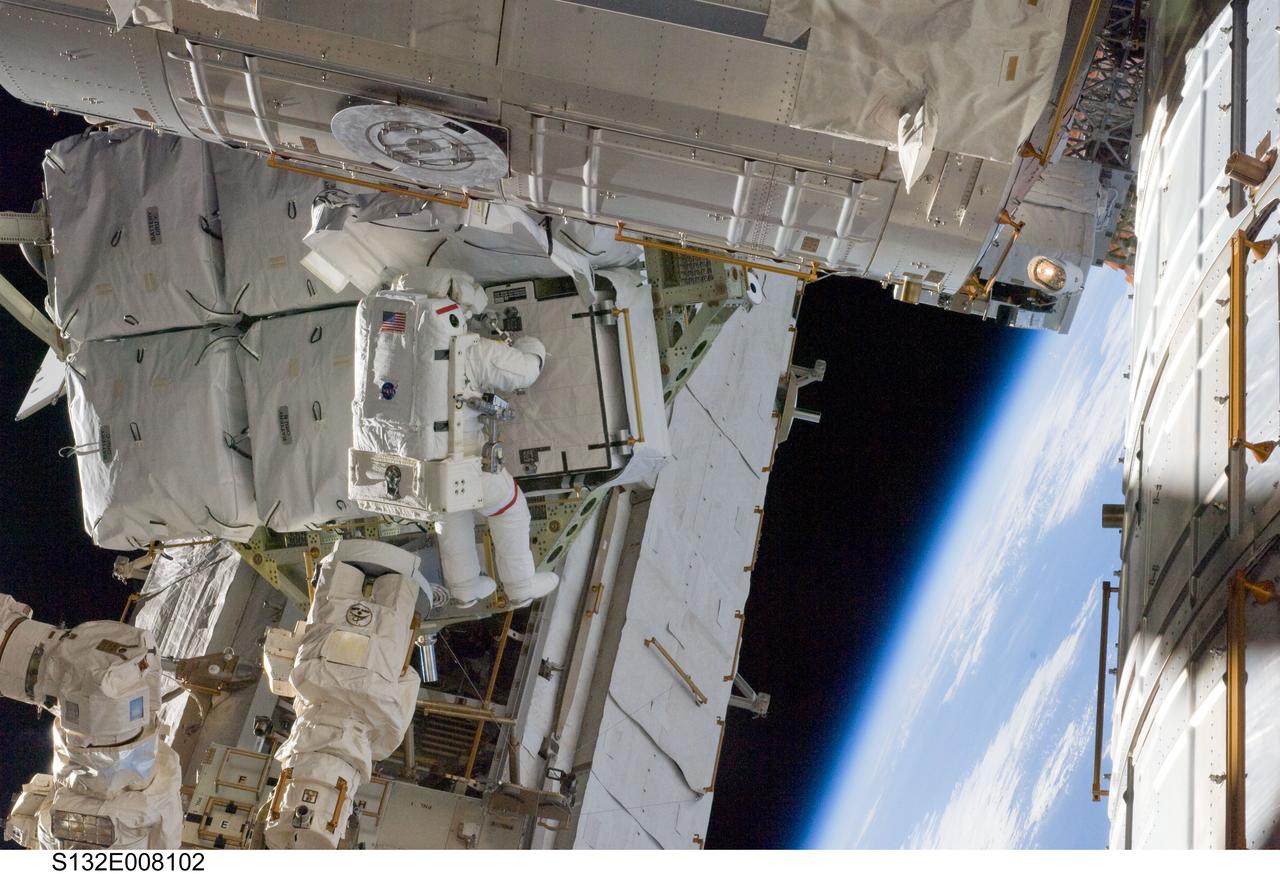
S132-E-008102 (17 May 2010) --- NASA astronaut Steve Bowen, STS-132 mission specialist, participates in the mission's first session of extravehicular activity (EVA) as construction and maintenance continue on the International Space Station. During the seven-hour, 25-minute spacewalk, Bowen and NASA astronaut Garrett Reisman (out of frame), mission specialist, loosened bolts holding six replacement batteries, installed a second antenna for high-speed Ku-band transmissions and adding a spare parts platform to Dextre, a two-armed extension for the station’s robotic arm.
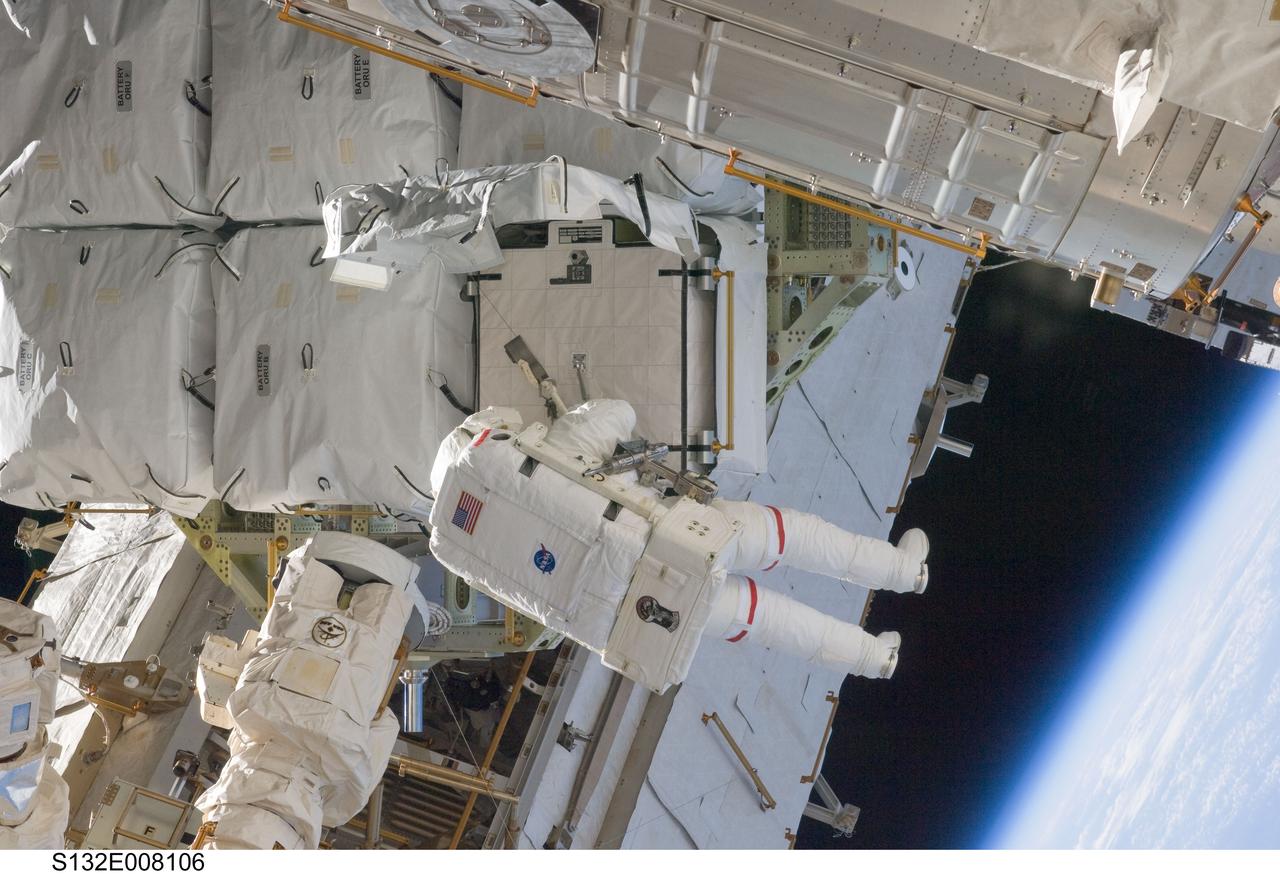
S132-E-008106 (17 May 2010) --- NASA astronaut Steve Bowen, STS-132 mission specialist, participates in the mission's first session of extravehicular activity (EVA) as construction and maintenance continue on the International Space Station. During the seven-hour, 25-minute spacewalk, Bowen and NASA astronaut Garrett Reisman (out of frame), mission specialist, loosened bolts holding six replacement batteries, installed a second antenna for high-speed Ku-band transmissions and adding a spare parts platform to Dextre, a two-armed extension for the station’s robotic arm.

STS049-S-218 (8 May 1992) --- Astronaut Richard J. Hieb, on Endeavour's middeck, changes batteries on the electronic still camera to begin a series of snapshots with the experiment, a detailed test objective. DTO 648 is making its fourth flight into space. At various times during the week-long mission, crewmembers will downlink images from the camera. The scene was recorded at 16:51:15:05 GMT, May 8, 1992.
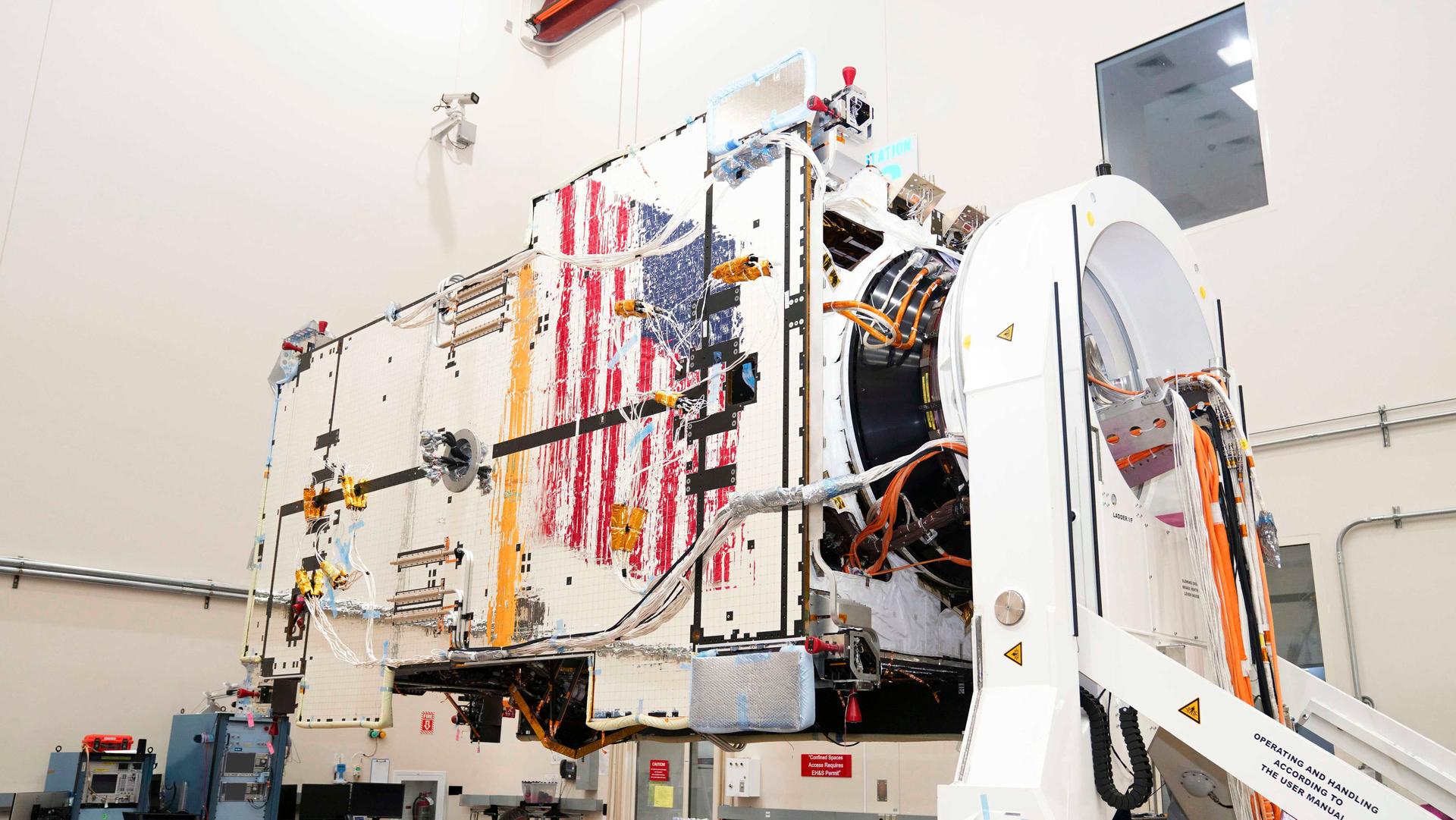
Gateway’s Power and Propulsion Element (PPE) undergoes battery installations at Lanteris Space Systems in Palo Alto, California, in January 2026. PPE is a 60-kilowatt solar electric propulsion spacecraft that will supply the lunar space station with power, high-rate communications, attitude control, orbit maintenance, and orbit transfer capabilities. Its design is based on Lanteris Space Systems’ commercial 1300 bus, enhanced with the most powerful Advanced Electric Propulsion System (AEPS) thrusters and the largest roll-out solar arrays (ROSAs) ever developed. Lanteris Space Systems is the lead industry partner for PPE’s design, manufacturing, and integration.
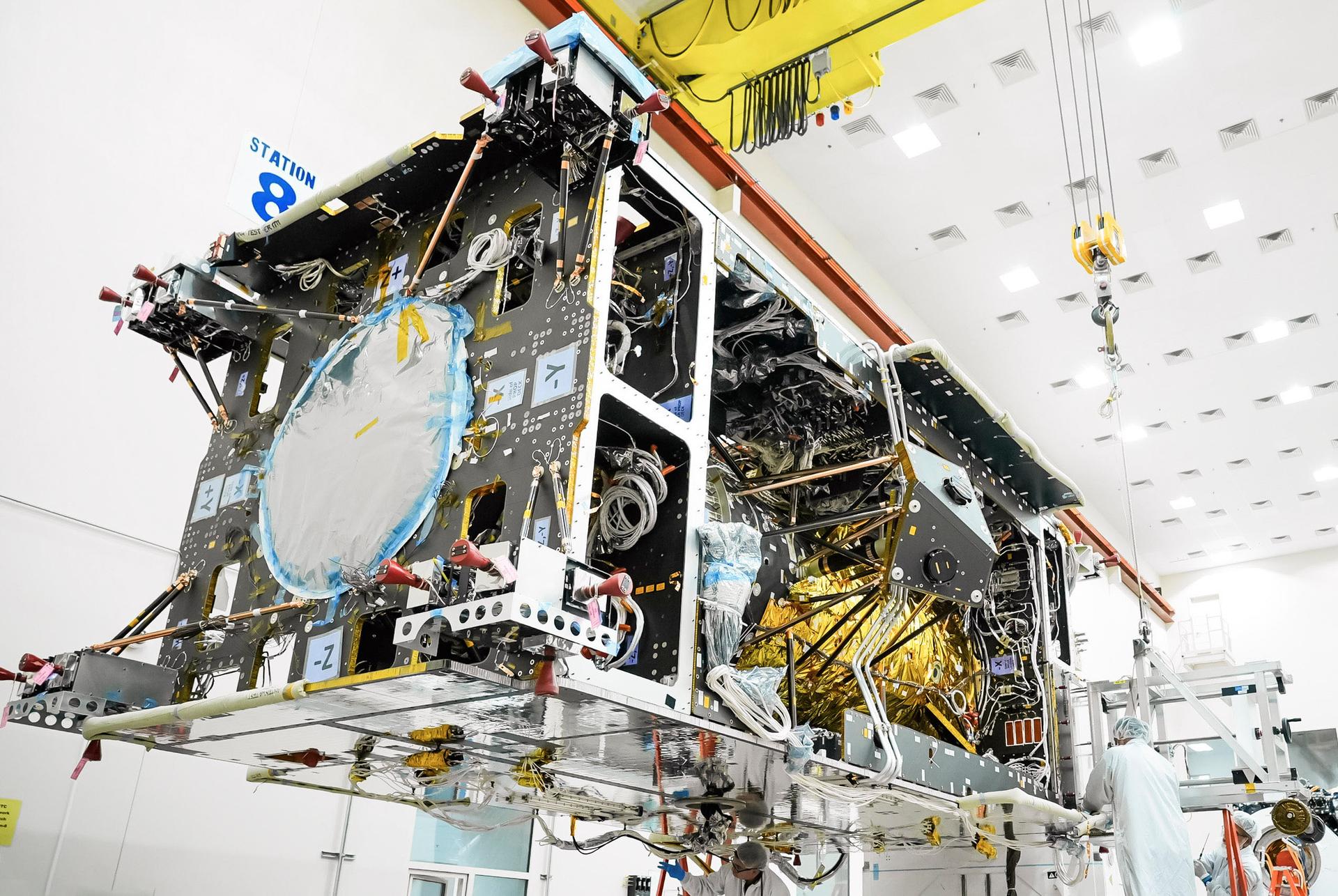
Gateway’s Power and Propulsion Element (PPE) undergoes battery installations at Lanteris Space Systems in Palo Alto, California, in January 2026. PPE is a 60-kilowatt solar electric propulsion spacecraft that will supply the lunar space station with power, high-rate communications, attitude control, orbit maintenance, and orbit transfer capabilities. Its design is based on Lanteris Space Systems’ commercial 1300 bus, enhanced with the most powerful Advanced Electric Propulsion System (AEPS) thrusters and the largest roll-out solar arrays (ROSAs) ever developed. Lanteris Space Systems is the lead industry partner for PPE’s design, manufacturing, and integration.
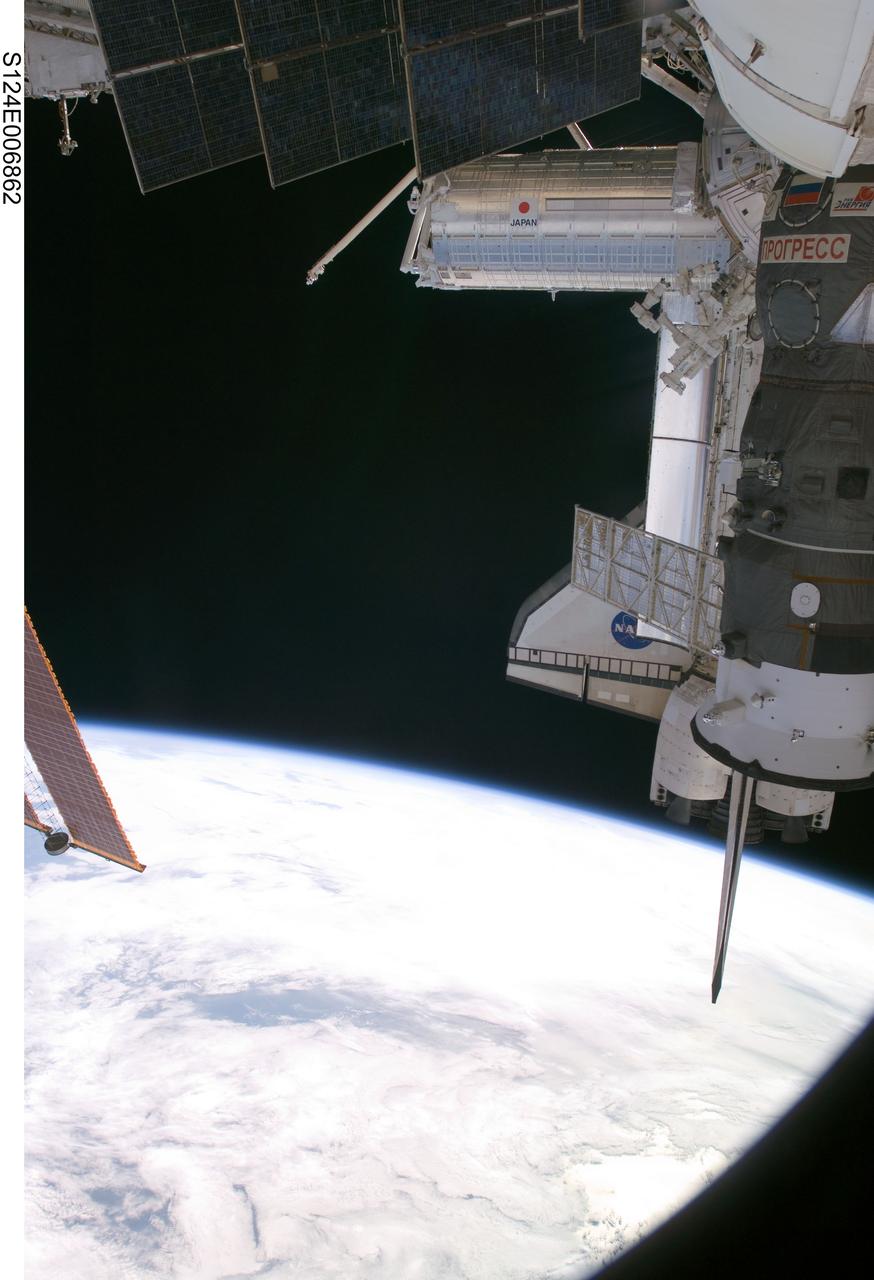
S124-E-006862 (6 June 2008) --- One of a series of digital still images documenting the Japanese Experiment Module, or JEM, also called Kibo, in its new home on the International Space Station, this view depicts Kibo's exterior in the distance, joined in the frame by some not so permanent hardware. The pictured components include the visiting Space Shuttle Discovery and a Russian Progress resupply vehicle.
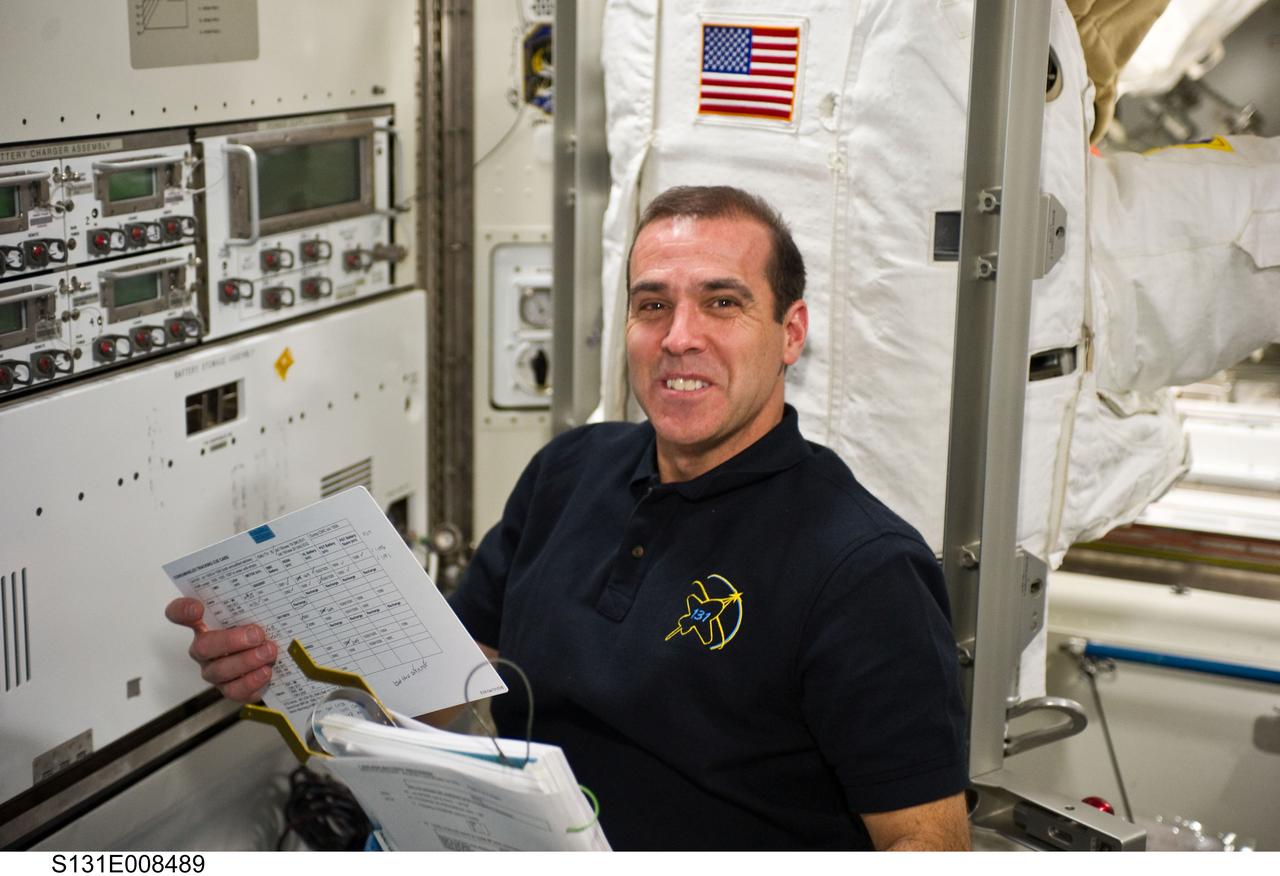
S131-E-008489 (10 April 2010) --- NASA astronaut Rick Mastracchio, STS-131 mission specialist, is pictured in the Quest airlock of the International Space Station while space shuttle Discovery remains docked with the station.
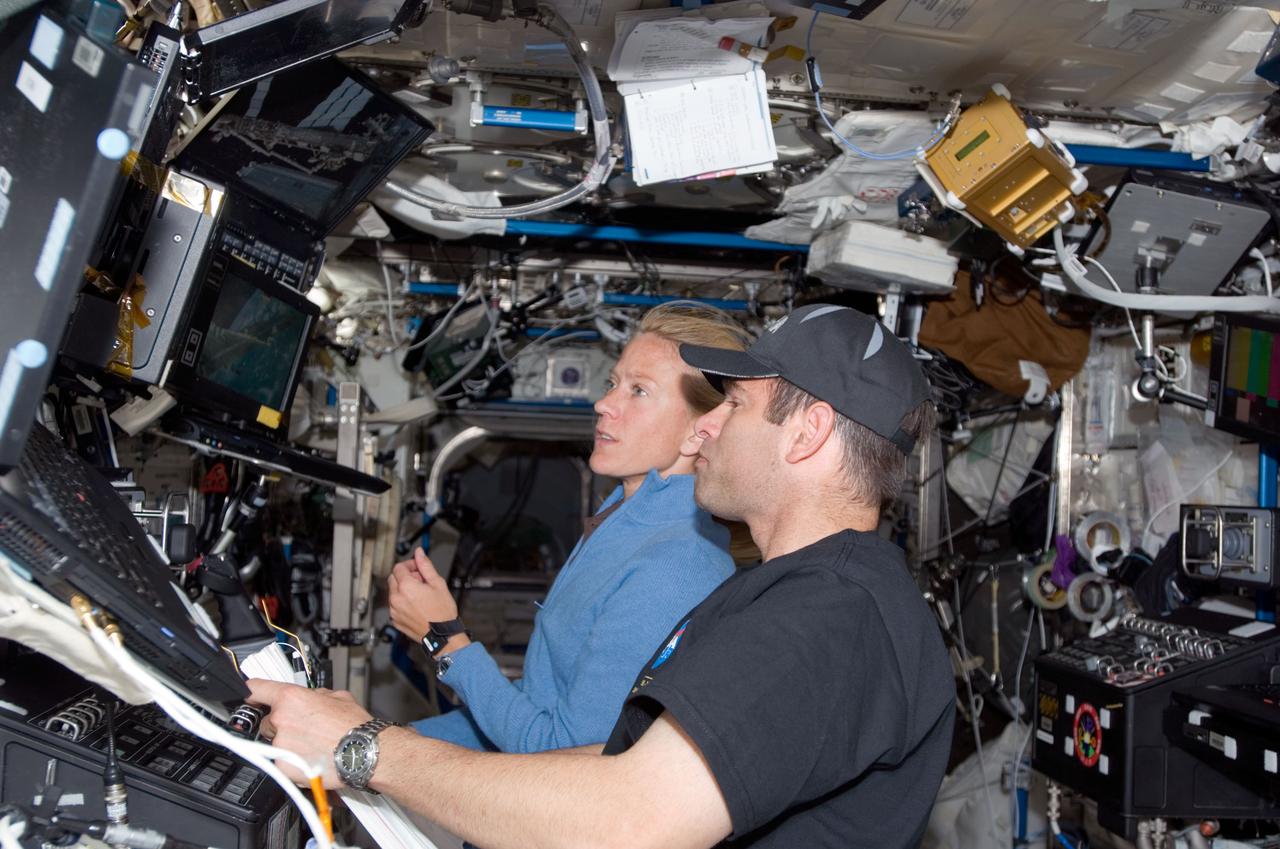
S124-E-006858 (6 June 2008) --- Astronauts Greg Chamitoff, Expedition 17 flight engineer, and Karen Nyberg, STS-124 mission specialist, use the controls of the International Space Station's robotic Canadarm2 in the Destiny laboratory to maneuver the Kibo Japanese logistics module from atop the Harmony node to the top of the Kibo Japanese Pressurized Module.
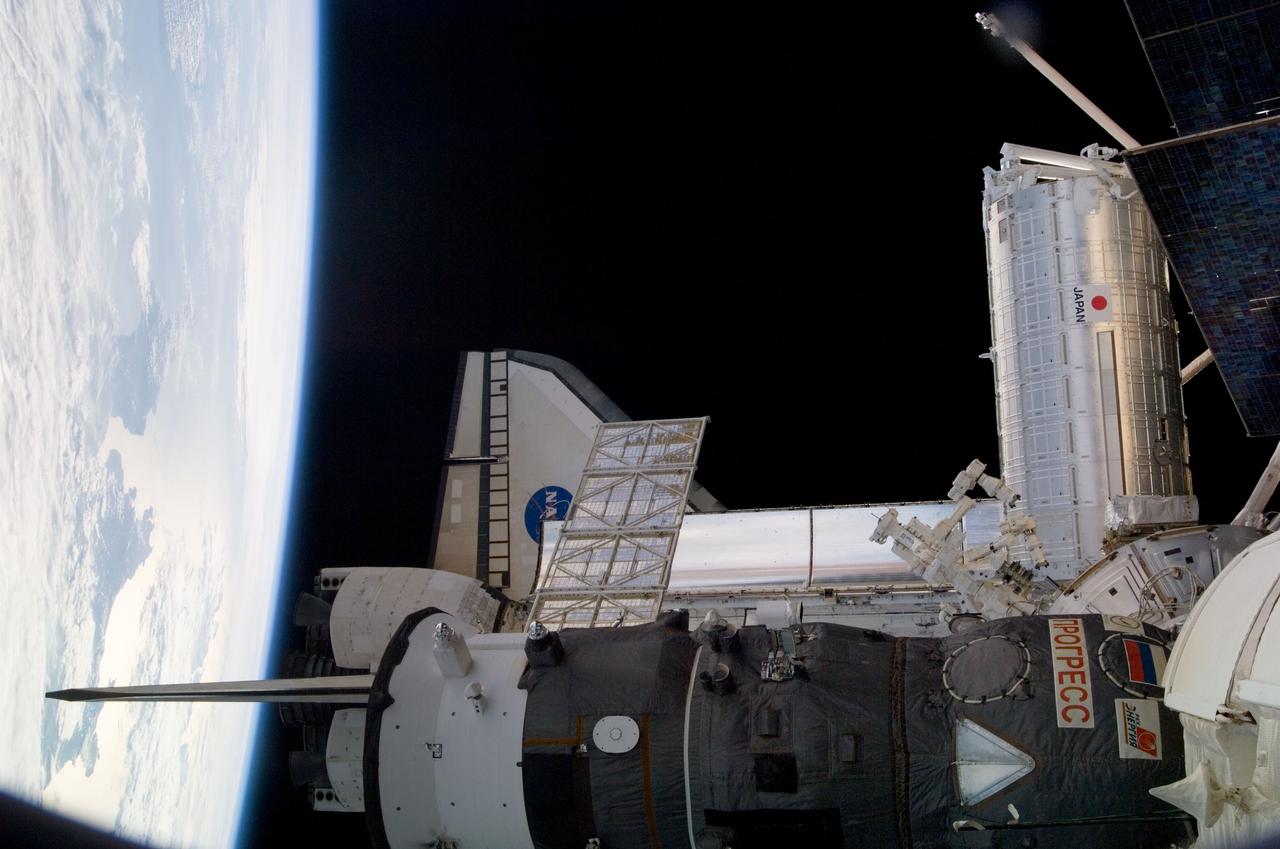
S124-E-006865 (6 June 2008) --- One of a series of digital still images documenting the Japanese Experiment Module, or JEM, also called Kibo, in its new home on the International Space Station, this view features Kibo's exterior, Earth's horizon and a couple of "visiting" spacecraft. The Space Shuttle Discovery and a Russian Progress resupply craft are seen near foreground.
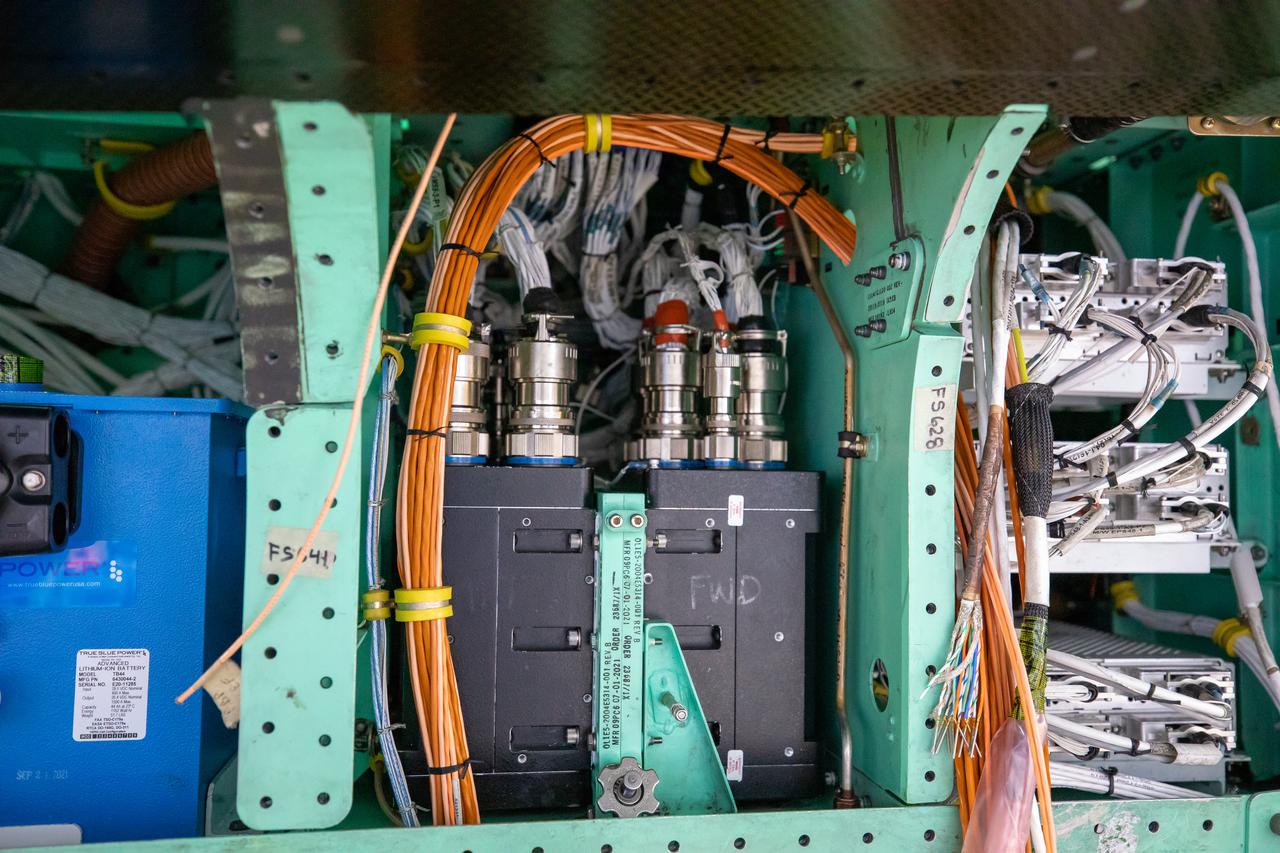
This is a closeup view of the inner workings of the X-59 aircraft. Visible are one the plane’s three lithium-ion batteries (blue box), electrical power system and other wiring components including the vehicle management systems computers (two black boxes) and the white wirings which assist in providing the power that is needed for the aircraft to function in flight. All of these components are essential to maintaining and monitoring the X-59 once it takes to the skies. The X-59 is the centerpiece of the Quesst mission which plans to help enable commercial supersonic air travel over land.

KENNEDY SPACE CENTER, FLA. - In the Space Station Processing Facility, workers begin removing the lower deck solar array wing scheduled to launch on International Space Station mission 12A, STS-115. The solar array is being removed in preparation for replacement of aging flight batteries. The currently installed batteries have an expected on-orbit lifetime of approximately four years. New batteries are being installed to ensure that the batteries do not exceed their lifetime expectancy prior to their planned logistics resupply on-orbit. The new batteries will have a lifetime expectancy of approximately 7 years.
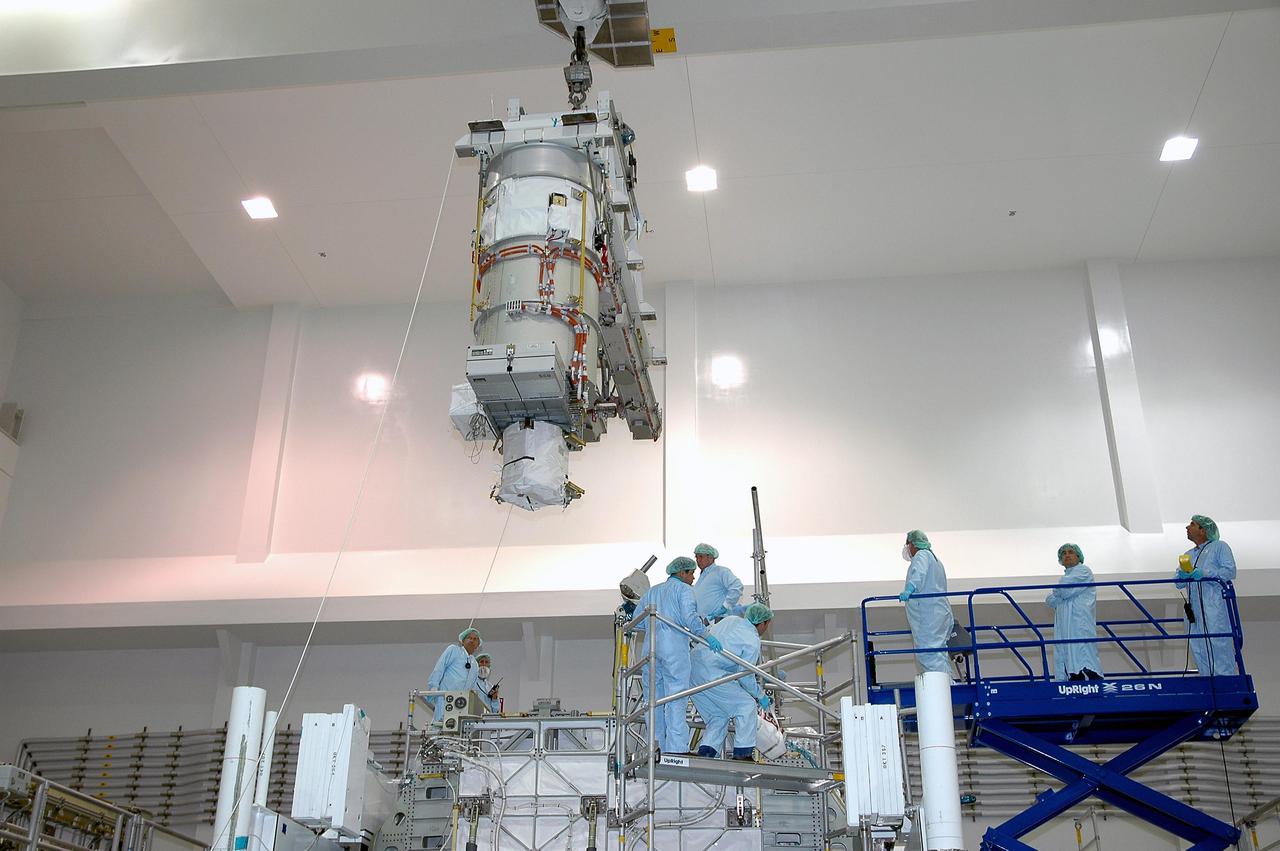
KENNEDY SPACE CENTER, FLA. - In the Space Station Processing Facility, an overhead crane lifts the lower deck solar array wing scheduled to launch on International Space Station mission 12A, STS-115. The solar array is being removed in preparation for replacement of aging flight batteries. The currently installed batteries have an expected on-orbit lifetime of approximately four years. New batteries are being installed to ensure that the batteries do not exceed their lifetime expectancy prior to their planned logistics resupply on-orbit. The new batteries will have a lifetime expectancy of approximately 7 years.

KENNEDY SPACE CENTER, FLA. - In the Space Station Processing Facility, an overhead crane moves into position to lift the lower deck solar array wing scheduled to launch on International Space Station mission 12A, STS-115. The solar array is being removed in preparation for replacement of aging flight batteries. The currently installed batteries have an expected on-orbit lifetime of approximately four years. New batteries are being installed to ensure that the batteries do not exceed their lifetime expectancy prior to their planned logistics resupply on-orbit. The new batteries will have a lifetime expectancy of approximately 7 years.
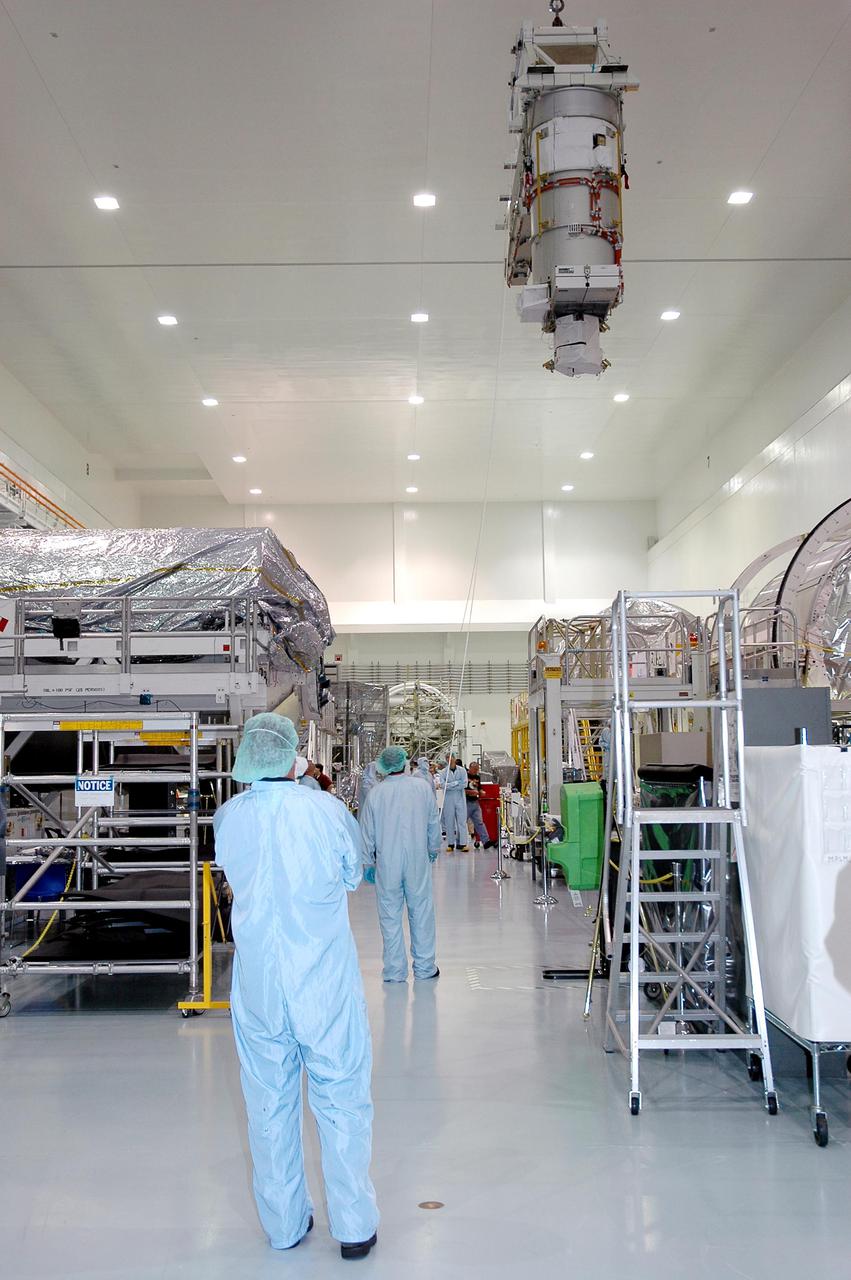
KENNEDY SPACE CENTER, FLA. - In the Space Station Processing Facility, the lower deck solar array wing scheduled to launch on International Space Station mission 12A, STS-115, is moved via an overhead crane to a work stand. The solar array is being removed in preparation for replacement of aging flight batteries. The currently installed batteries have an expected on-orbit lifetime of approximately four years. New batteries are being installed to ensure that the batteries do not exceed their lifetime expectancy prior to their planned logistics resupply on-orbit. The new batteries will have a lifetime expectancy of approximately 7 years.
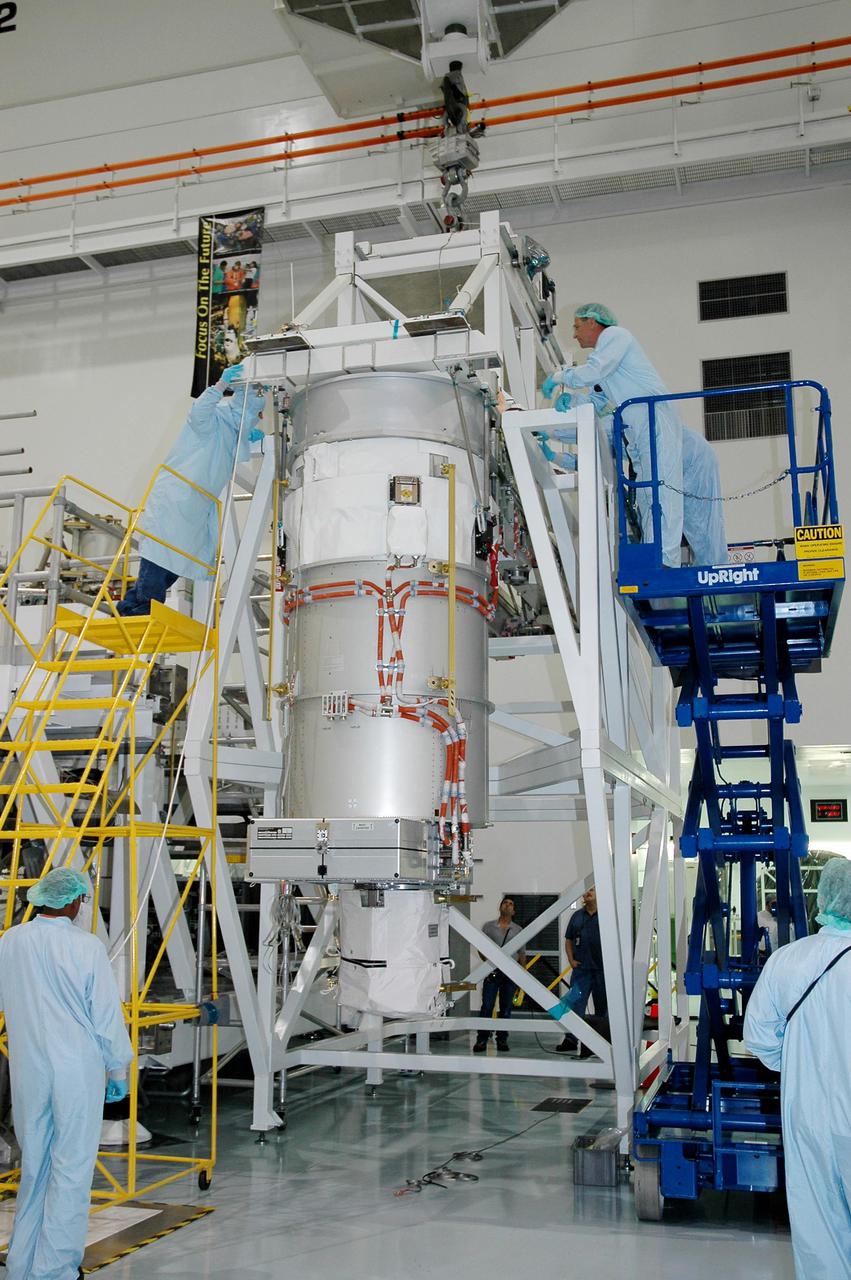
KENNEDY SPACE CENTER, FLA. - In the Space Station Processing Facility, the lower deck solar array wing scheduled to launch on International Space Station mission 12A, STS-115, is lowered onto a work stand. The solar array is being removed in preparation for replacement of aging flight batteries. The currently installed batteries have an expected on-orbit lifetime of approximately four years. New batteries are being installed to ensure that the batteries do not exceed their lifetime expectancy prior to their planned logistics resupply on-orbit. The new batteries will have a lifetime expectancy of approximately 7 years.
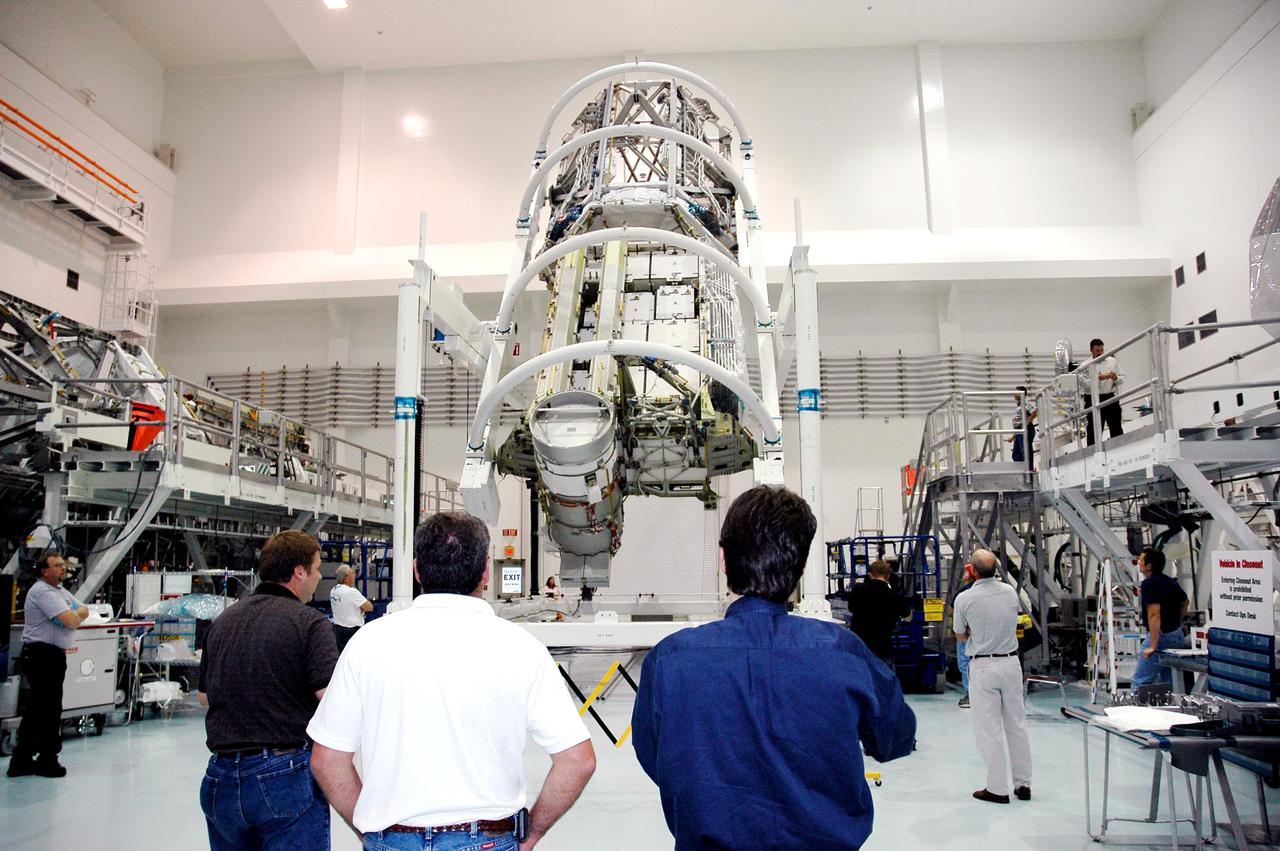
KENNEDY SPACE CENTER, FLA. -In the Space Station Processing Facility at NASA’s Kennedy Space Center, the P3_P4 Truss is rotated to the upper deck position in preparation for installation of the upper deck solar array wing. The truss is scheduled to launch on mission 12A, STS-115, to the International Space Station. The wing was removed to replace aging flight batteries. New batteries are being installed to ensure that the batteries do not exceed their lifetime expectancy prior to their planned logistics resupply on-orbit. The new batteries have a lifetime expectancy of approximately 7 years.
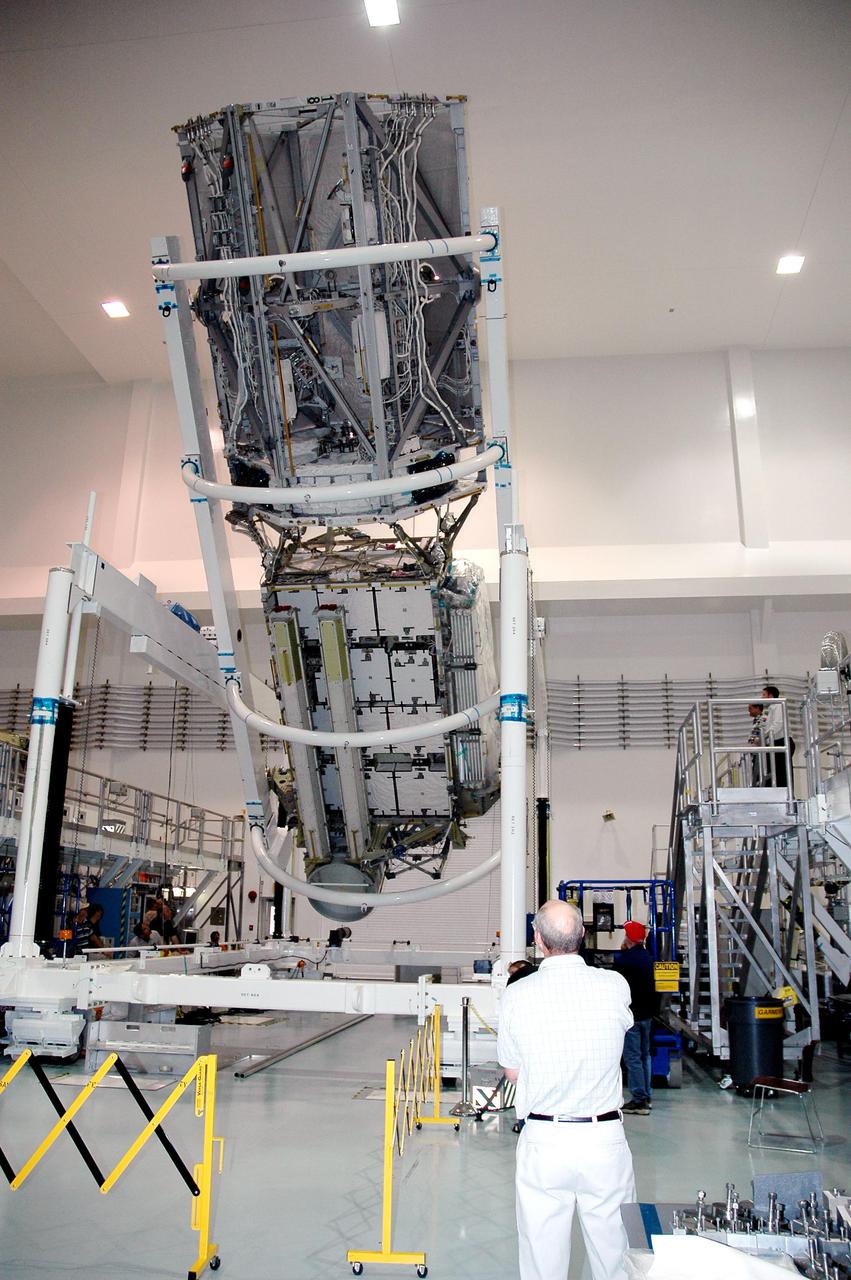
KENNEDY SPACE CENTER, FLA. - In the Space Station Processing Facility at NASA’s Kennedy Space Center, the P3_P4 Truss is rotated to the upper deck position in preparation for installation of the upper deck solar array wing. The truss is scheduled to launch on mission 12A, STS-115, to the International Space Station. The wing was removed to replace aging flight batteries. New batteries are being installed to ensure that the batteries do not exceed their lifetime expectancy prior to their planned logistics resupply on-orbit. The new batteries have a lifetime expectancy of approximately 7 years.
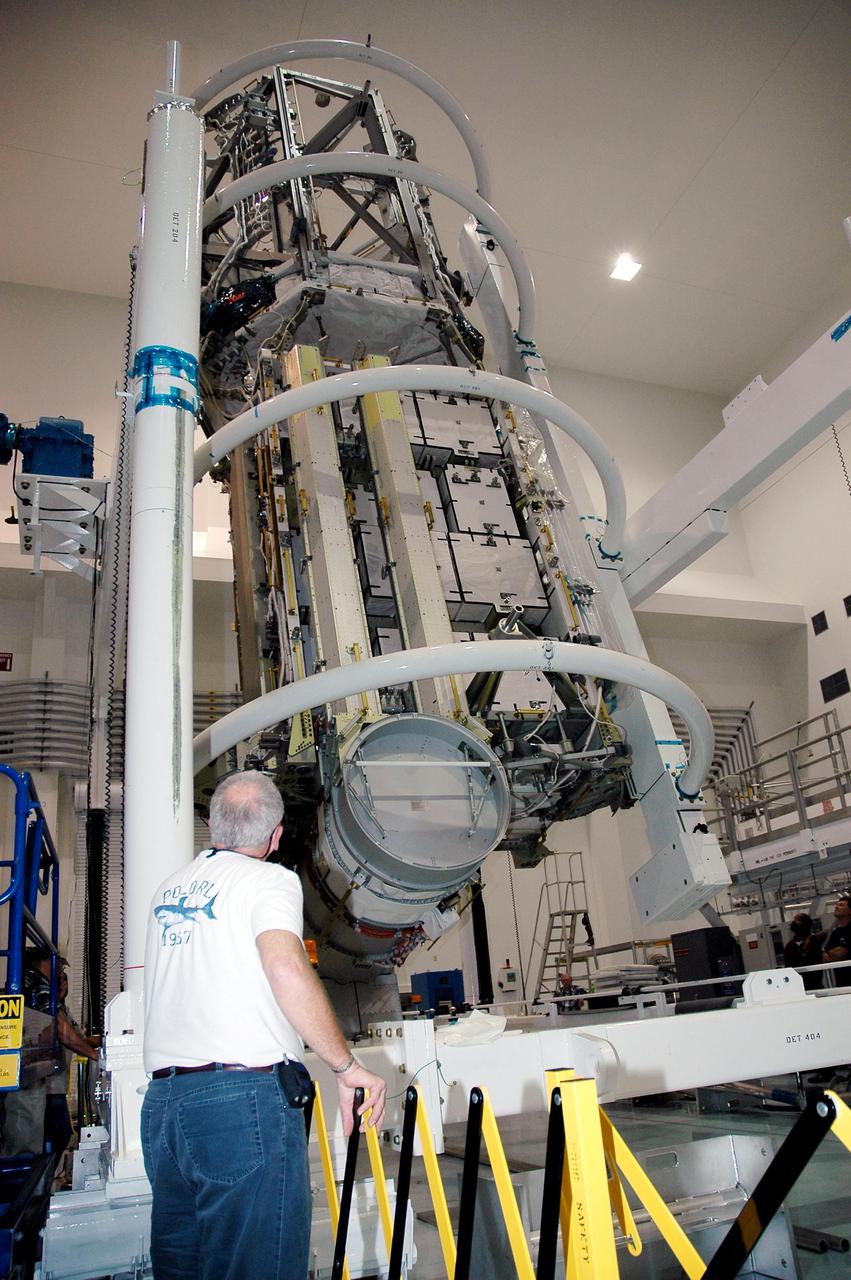
KENNEDY SPACE CENTER, FLA. - In the Space Station Processing Facility at NASA’s Kennedy Space Center, the P3_P4 Truss is rotated to the upper deck position in preparation for installation of the upper deck solar array wing. The truss is scheduled to launch on mission 12A, STS-115, to the International Space Station. The wing was removed to replace aging flight batteries. New batteries are being installed to ensure that the batteries do not exceed their lifetime expectancy prior to their planned logistics resupply on-orbit. The new batteries have a lifetime expectancy of approximately 7 years.

This composite image of the Jupiter-facing hemisphere of Europa was obtained on Nov. 25, 1999 by NASA Galileo spacecraft. Blue areas show cleanest, brightest icy surfaces, while the red areas have the highest concentrations of darker, non-ice materials.
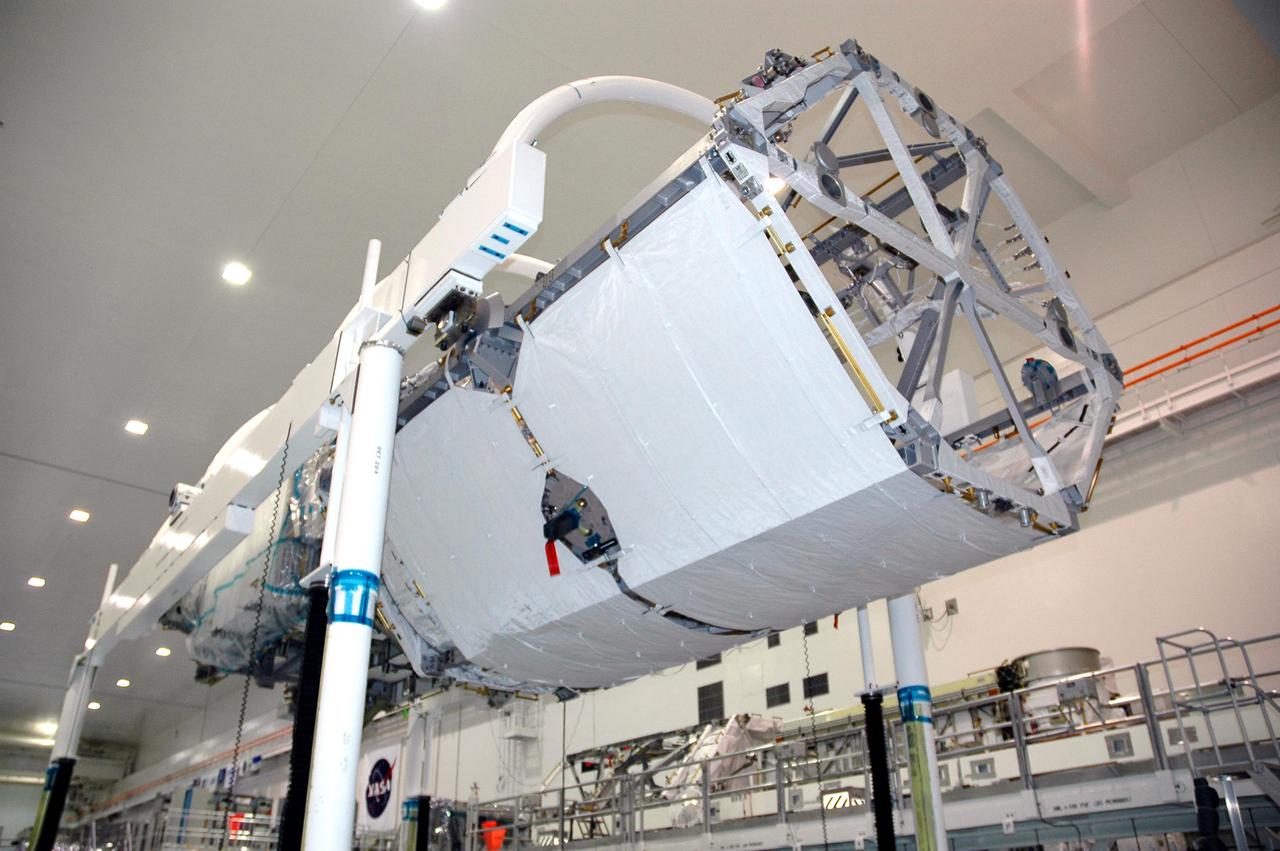
KENNEDY SPACE CENTER, FLA. - In the Space Station Processing Facility at NASA’s Kennedy Space Center, the P3_P4 Truss is prepared to be rotated to the upper deck position in preparation for installation of the upper deck solar array wing. The truss is scheduled to launch on mission 12A, STS-115, to the International Space Station. The wing was removed to replace aging flight batteries. New batteries are being installed to ensure that the batteries do not exceed their lifetime expectancy prior to their planned logistics resupply on-orbit. The new batteries have a lifetime expectancy of approximately 7 years.
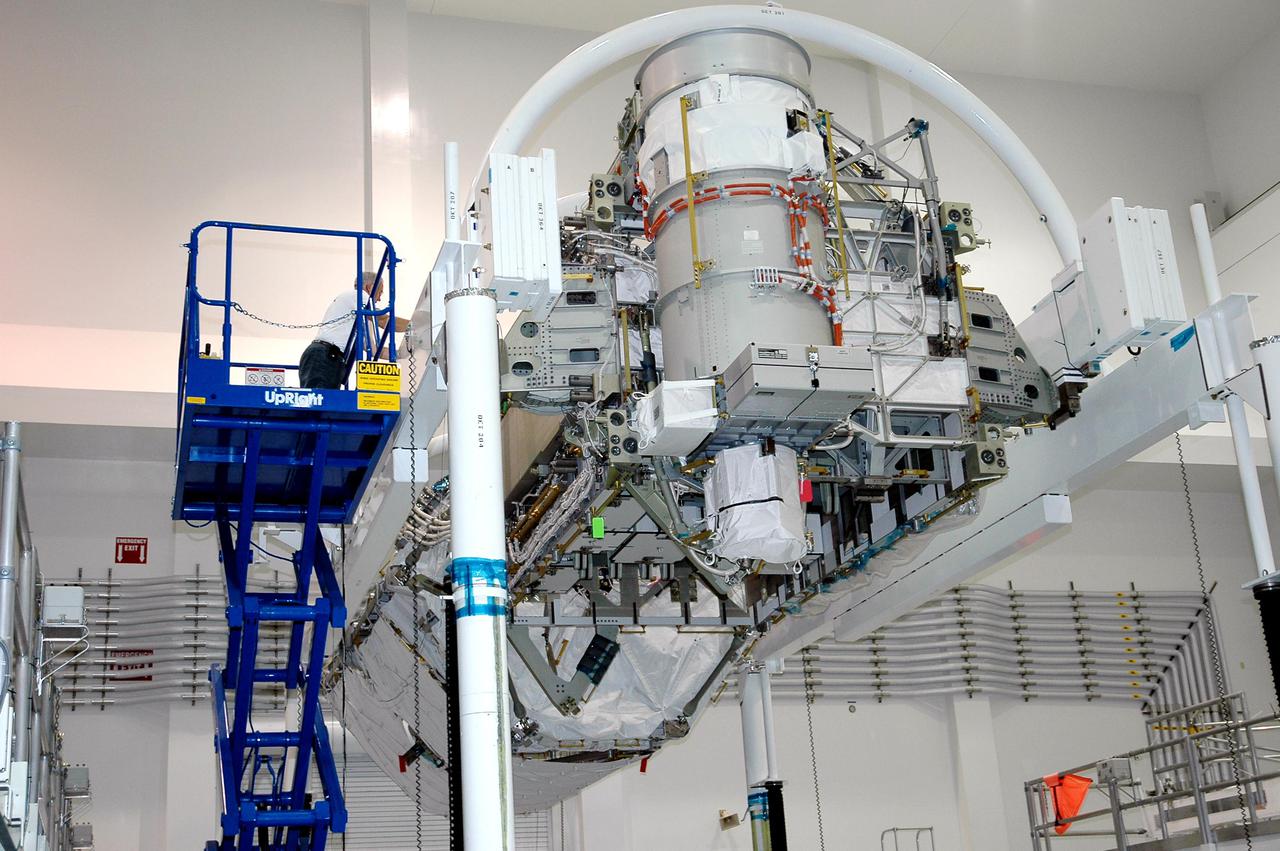
KENNEDY SPACE CENTER, FLA. - In the Space Station Processing Facility at NASA’s Kennedy Space Center, the P3_P4 Truss is being prepared to be rotated to the upper deck position in preparation for installation of the upper deck solar array wing. The truss is scheduled to launch on mission 12A, STS-115, to the International Space Station. The wing was removed to replace aging flight batteries. New batteries are being installed to ensure that the batteries do not exceed their lifetime expectancy prior to their planned logistics resupply on-orbit. The new batteries have a lifetime expectancy of approximately 7 years.
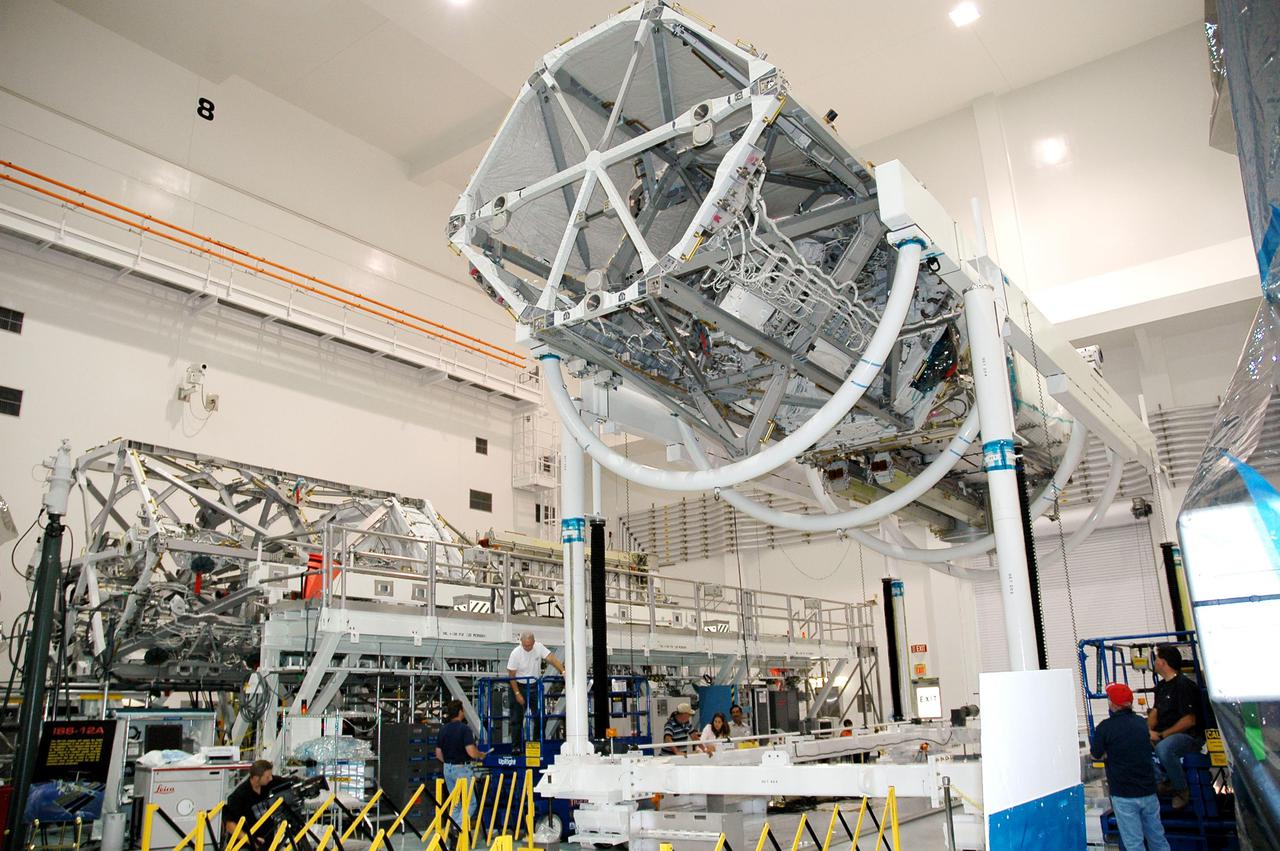
KENNEDY SPACE CENTER, FLA. - In the Space Station Processing Facility at NASA’s Kennedy Space Center, the P3_P4 Truss has been rotated to the upper deck position in preparation for installation of the upper deck solar array wing. The truss is scheduled to launch on mission 12A, STS-115, to the International Space Station. The wing was removed to replace aging flight batteries. New batteries are being installed to ensure that the batteries do not exceed their lifetime expectancy prior to their planned logistics resupply on-orbit. The new batteries have a lifetime expectancy of approximately 7 years.
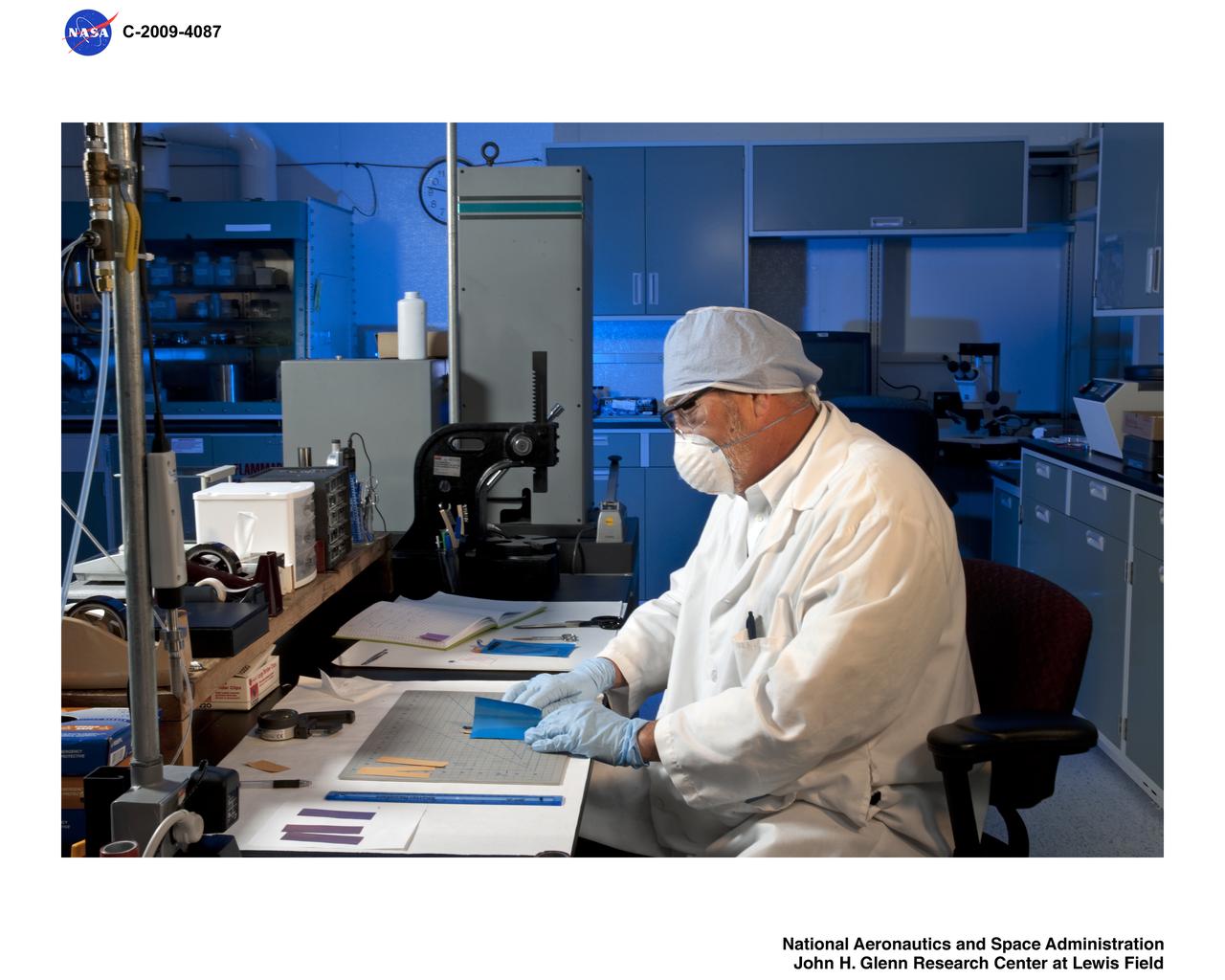
Battery Research Laboratories - Pouch Cells
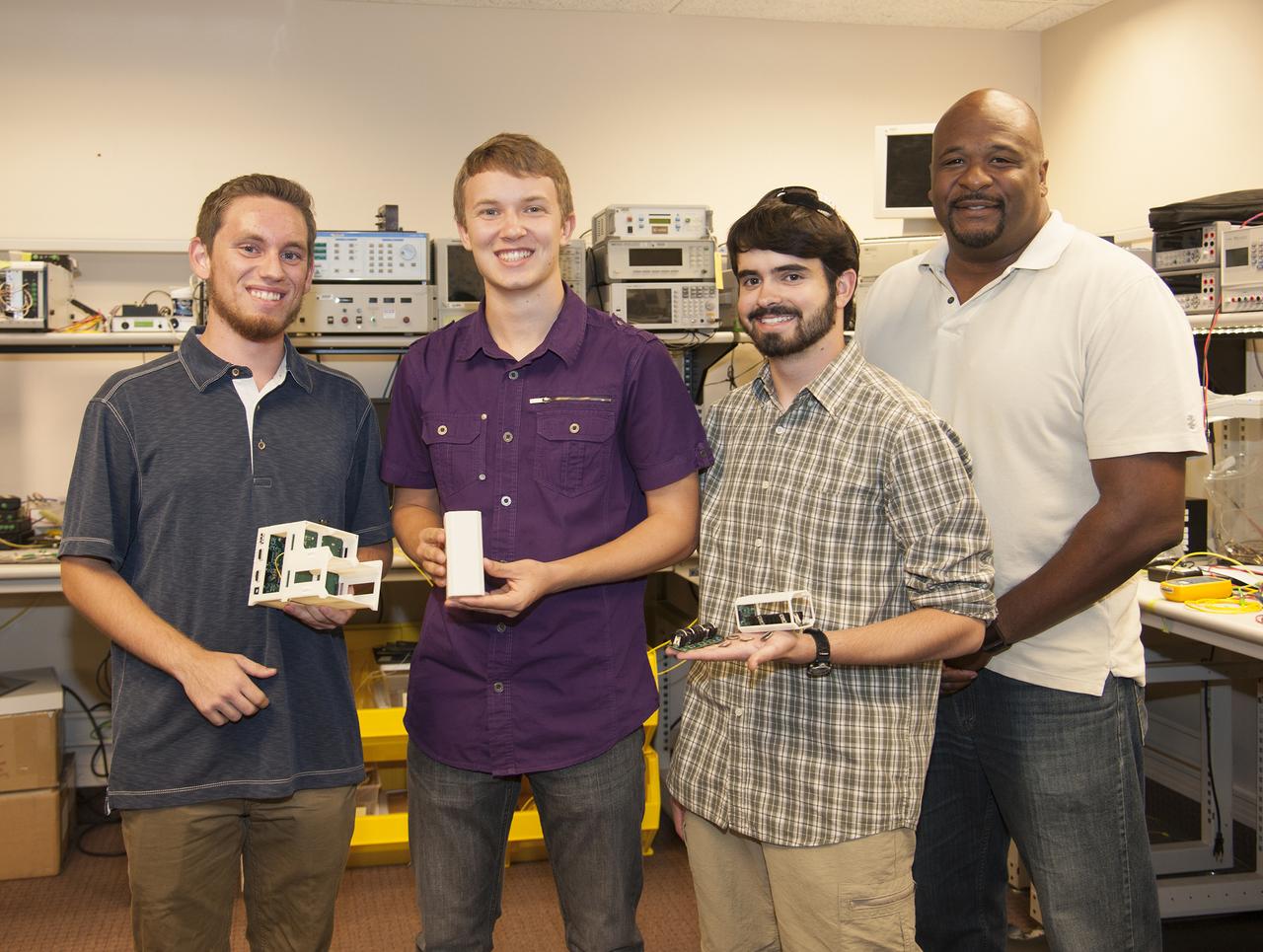
From left, former Desert Christian students Logan Francisco, Kyler Stephens and Jonathan Lokos and NASA Armstrong mentor Allen Parker show the elements of the experiment launched into space on Dec. 3.

Battery Research Laboratories - Coin Cell Crimper
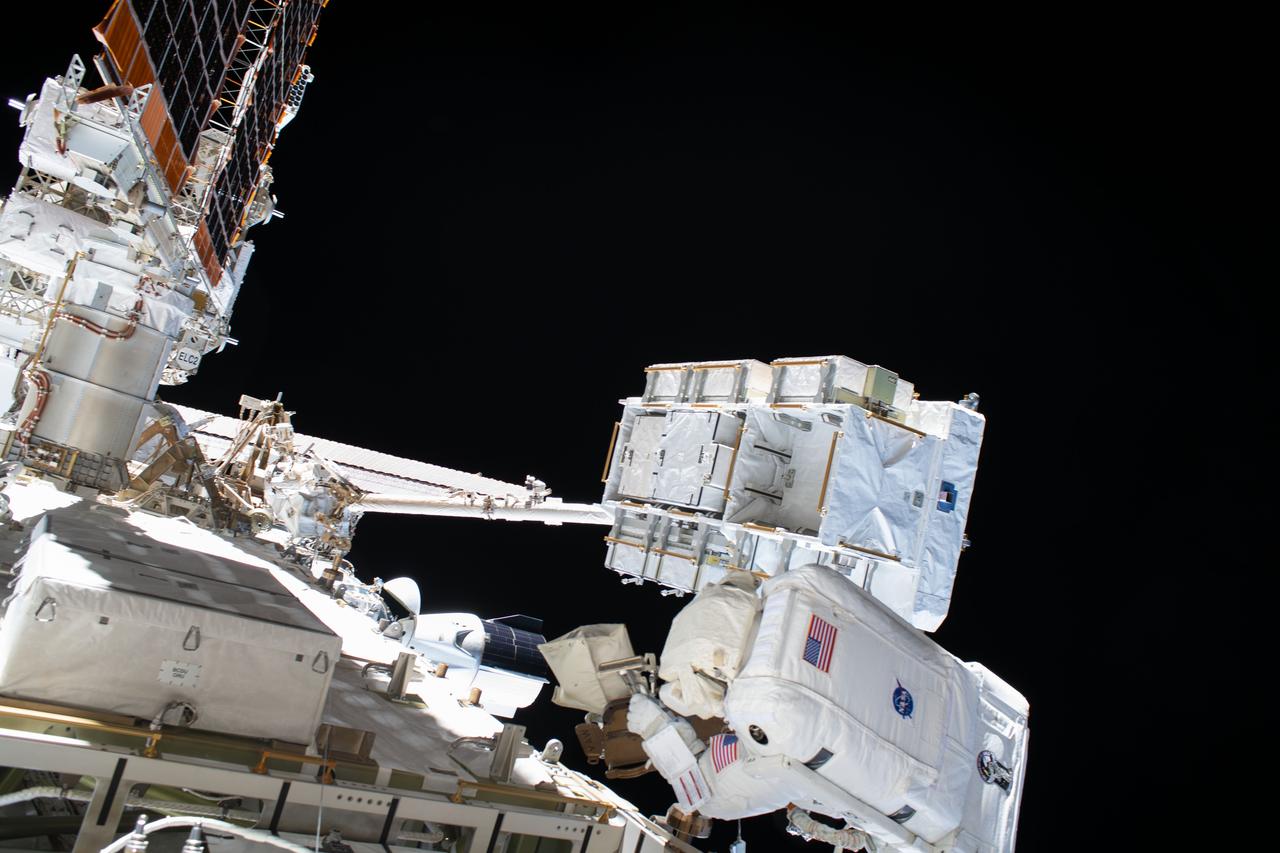
iss063e034050 (July 1, 2020) --- NASA astronaut and Expedition 63 Flight Engineer Bob Behnken (bottom right) works during a six-hour and one-minute spacewalk to swap an aging nickel-hydrogen battery for a new lithium-ion battery on the International Space Station's Starboard-6 truss structure. Behind Behnken is an external pallet, attached to the Canadarm2 robotic arm, where the batteries were stowed.
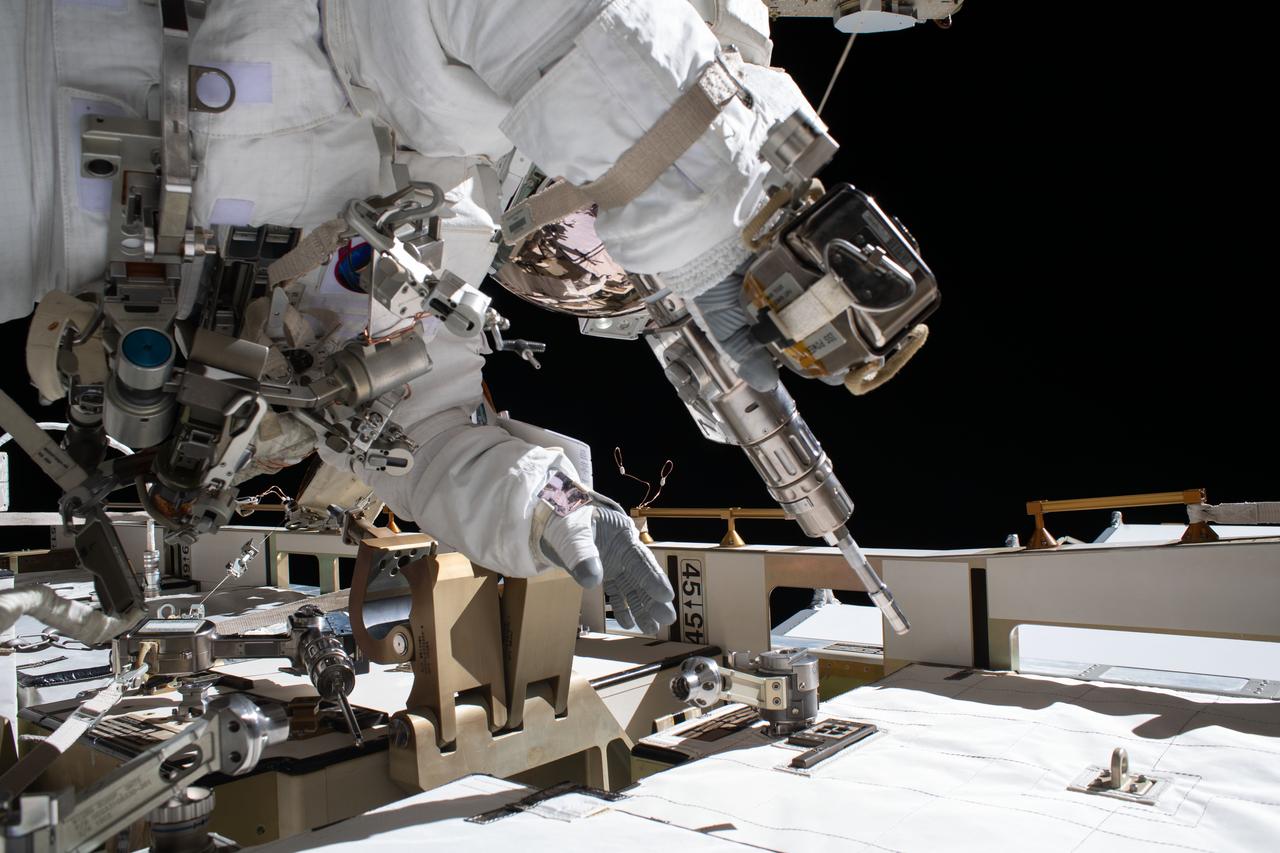
iss063e034013 (July 1, 2020) --- NASA astronaut and Expedition 63 Flight Engineer Bob Behnken works during a six-hour and one-minute spacewalk to swap an aging nickel-hydrogen battery for a new lithium-ion battery on the International Space Station's Starboard-6 truss structure. Behnken is pictured holding a pistol grip tool he used to remove and attach bolts that hold the batteries in place.

iss064e041250 (March 11, 2021) --- An external pallet packed with old nickel-hydrogen batteries is released from the Canadarm2 robotic arm as the International Space Station orbited 260 miles above the Pacific Ocean west of Central America. Mission controllers in Houston commanded the Canadarm2 to release the external pallet into space where it will orbit Earth between two to four years before burning up harmlessly in the atmosphere. The batteries were removed during previous spacewalks and replaced with newer lithium-ion batteries to continue powering the station's systems.
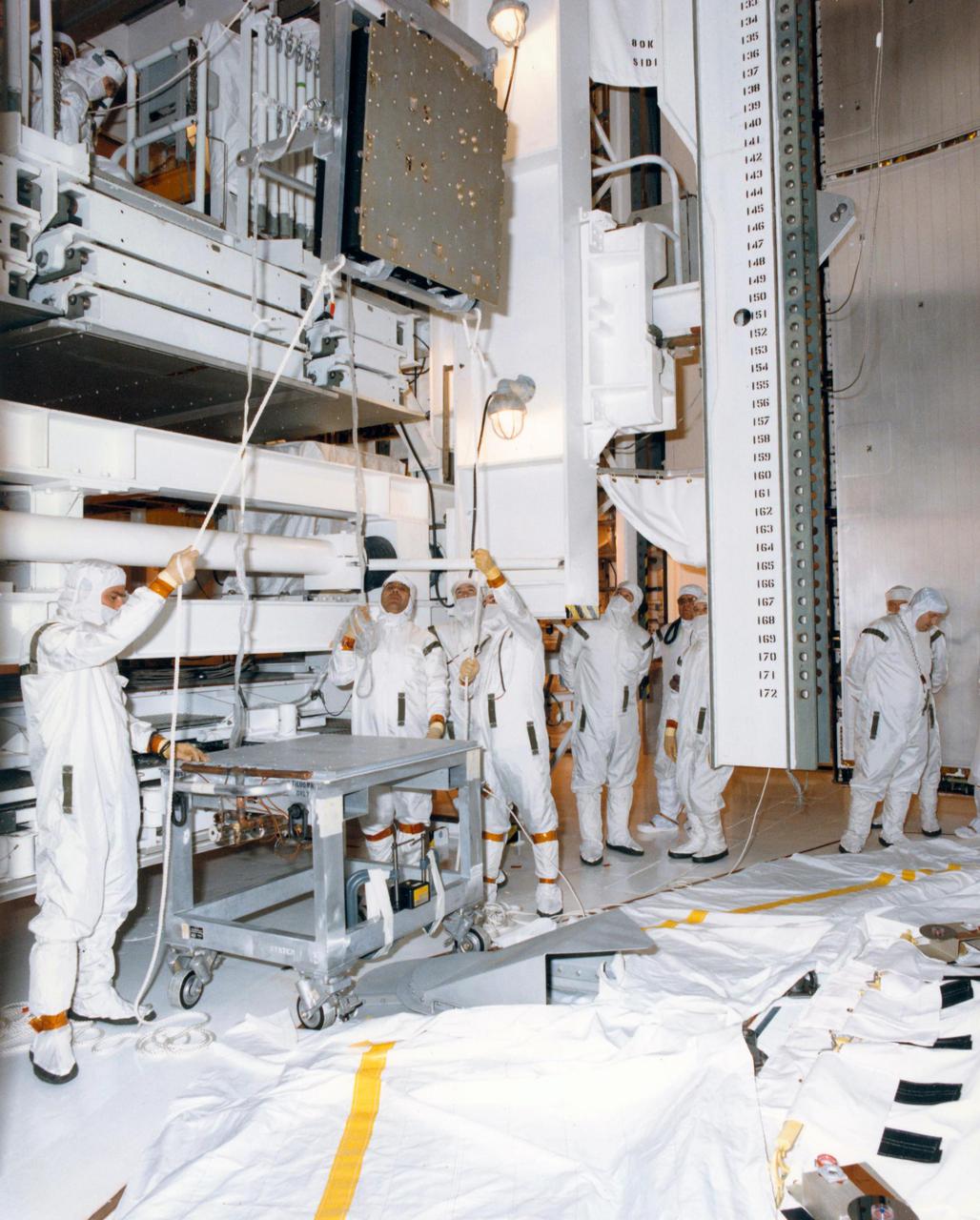
KENNEDY SPACE CENTER, FLA. -- Technicians in the Payload Changeout Room at Launch Pad 39B are removing the batteries from the Hubble Space Telescope for recharging. The two sets of six batteries apiece will be taken to the battery lab inside the Vehicle Assembly Building for 130 hours of recharging, and then reinstalled in the telescope. The recharging became necessary when the first launch attempt of Space Shuttle Mission STS-31 was scrubbed April 10. A second try is set for April 24 at 8:31 a.m. EDT.
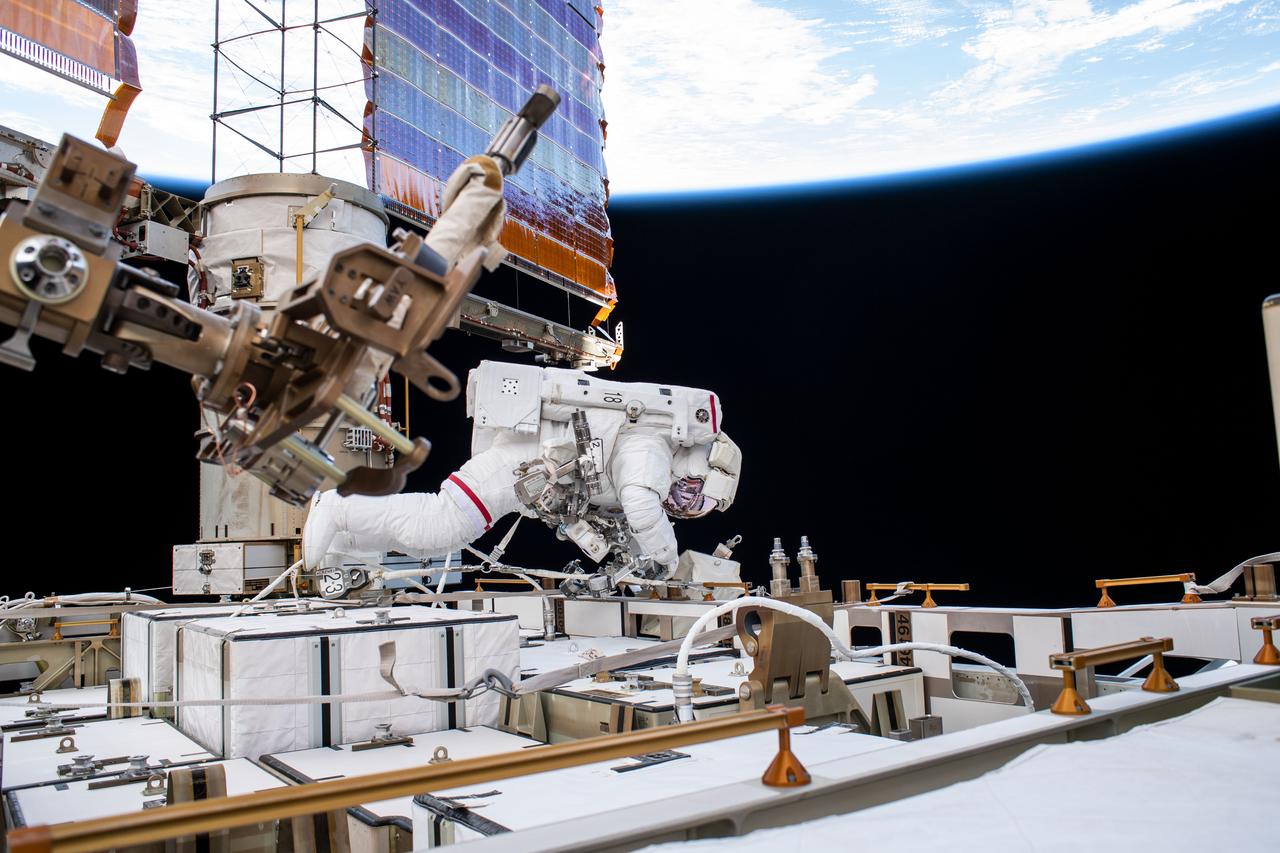
iss061e005542 (Oct. 11, 2019) --- NASA astronaut Andrew Morgan works while tethered on the Port 6 truss segment of the International Space Station to replace older hydrogen-nickel batteries with newer, more powerful lithium-ion batteries. The batteries store and distribute power collected from the station's basketball court-sized solar arrays, one of which is directly behind Morgan.
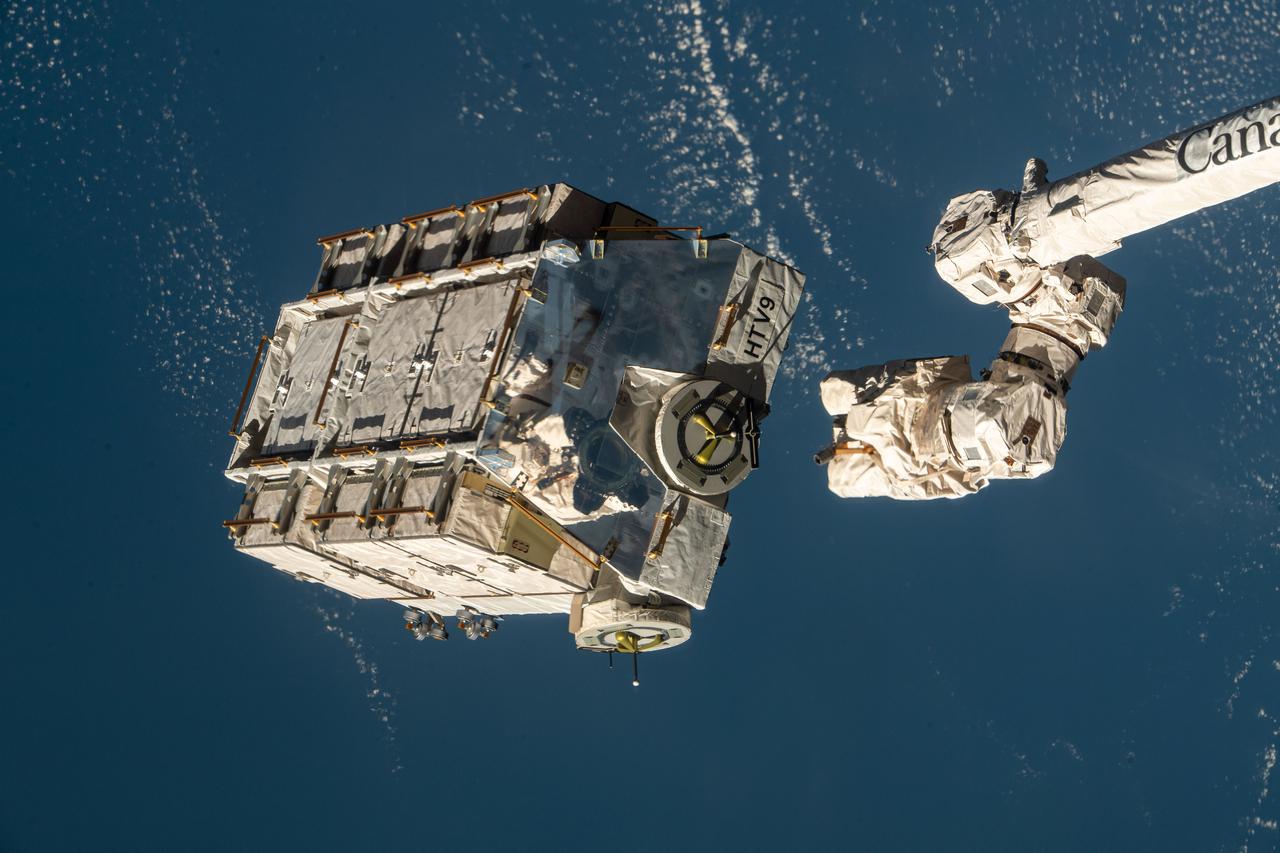
iss064e041512 (March 11, 2021) --- An external pallet packed with old nickel-hydrogen batteries is released from the Canadarm2 robotic arm as the International Space Station orbited 260 miles above the Pacific Ocean west of Central America. Mission controllers in Houston commanded the Canadarm2 to release the external pallet into space where it will orbit Earth between two to four years before burning up harmlessly in the atmosphere. The batteries were removed during previous spacewalks and replaced with newer lithium-ion batteries to continue powering the station's systems.
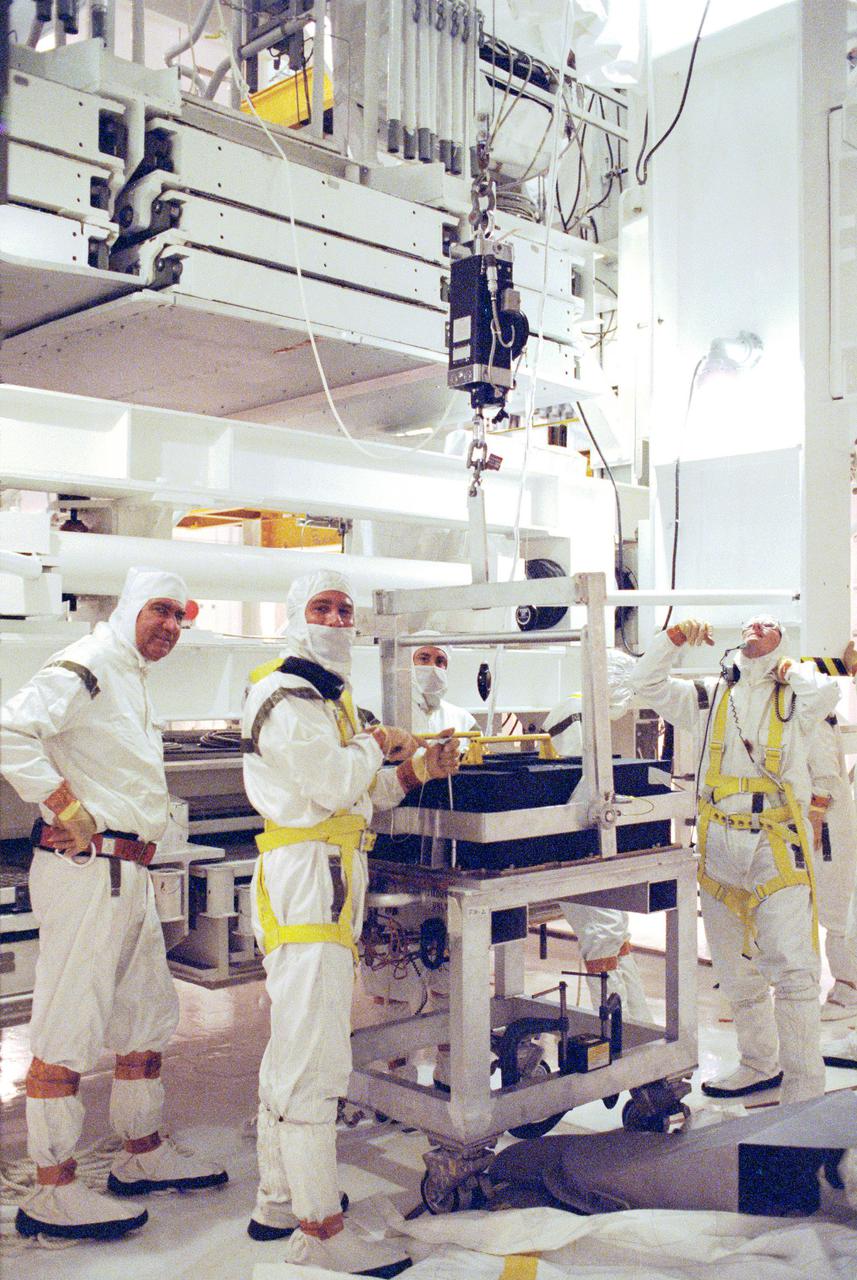
KENNEDY SPACE CENTER, FLA. -- Technicians in the Payload Changeout Room at Pad 39-B are removing the batteries from the Hubble Space Telescope for recharging. The two sets of six batteries apiece will be taken to the battery lab inside the Vehicle Assembly Building for 130 hours of recharging, and then reinstalled in the telescope. Recharging became necessary when the first launch attempt of Space Shuttle Mission STS-31 was scrubbed April 10. A second try is set for April 24 at 8:30 a.m. EDT.
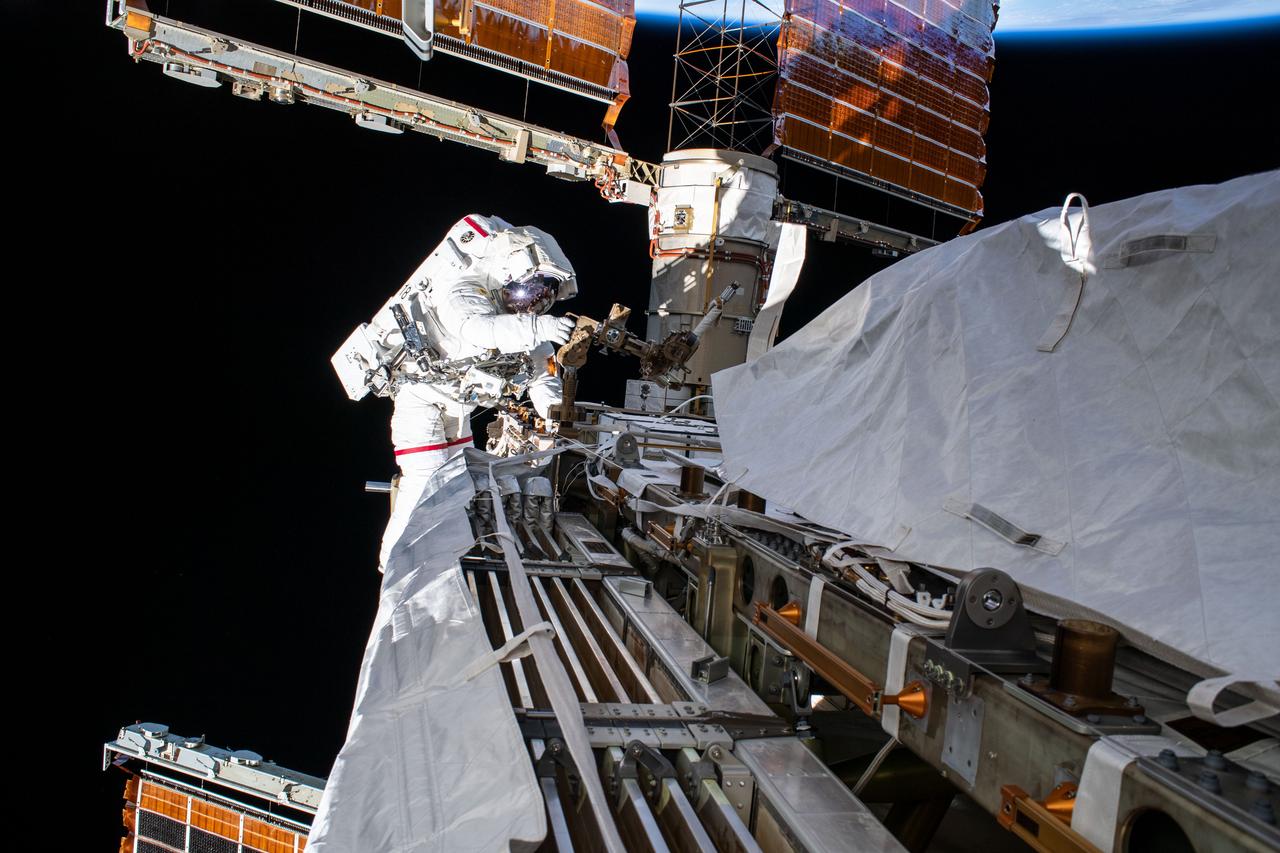
iss061e005535 (Oct. 11, 2019) --- NASA astronaut Andrew Morgan works while tethered on the Port 6 truss segment of the International Space Station to replace older hydrogen-nickel batteries with newer, more powerful lithium-ion batteries. The batteries store and distribute power collected from the station's basketball court-sized solar arrays directly behind Morgan.
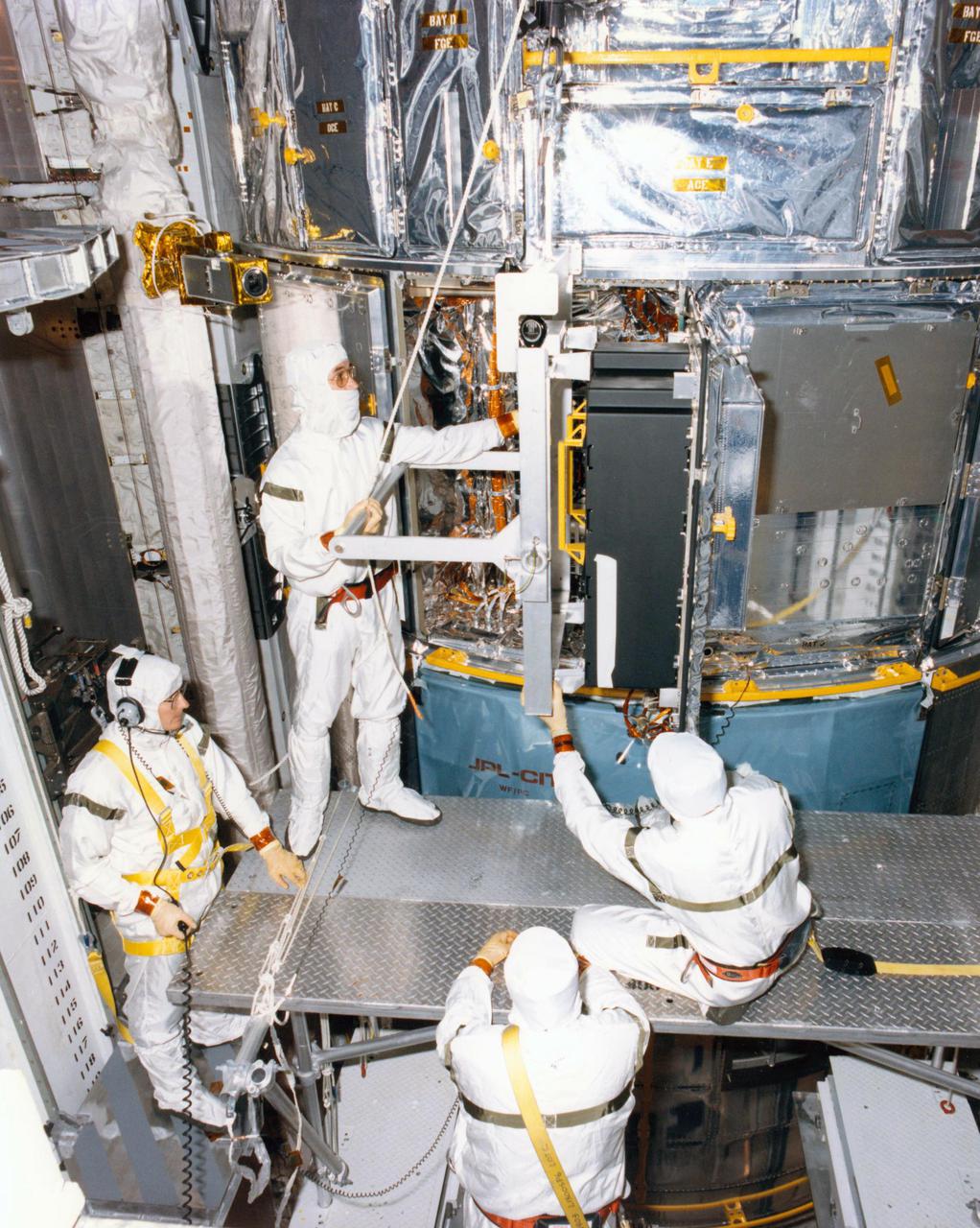
KENNEDY SPACE CENTER, FLA. -- Technicians in the Payload Changeout Room at Launch Pad 39B are removing the batteries from the Hubble Space Telescope for recharging. The two sets of six batteries apiece will be taken to the battery lab inside the Vehicle Assembly Building for 130 hours of recharging, and then reinstalled in the telescope. The recharging became necessary when the first launch attempt of Space Shuttle Mission STS-31 was scrubbed April 10. A second try is set for April 24 at 8:31 a.m. EDT.
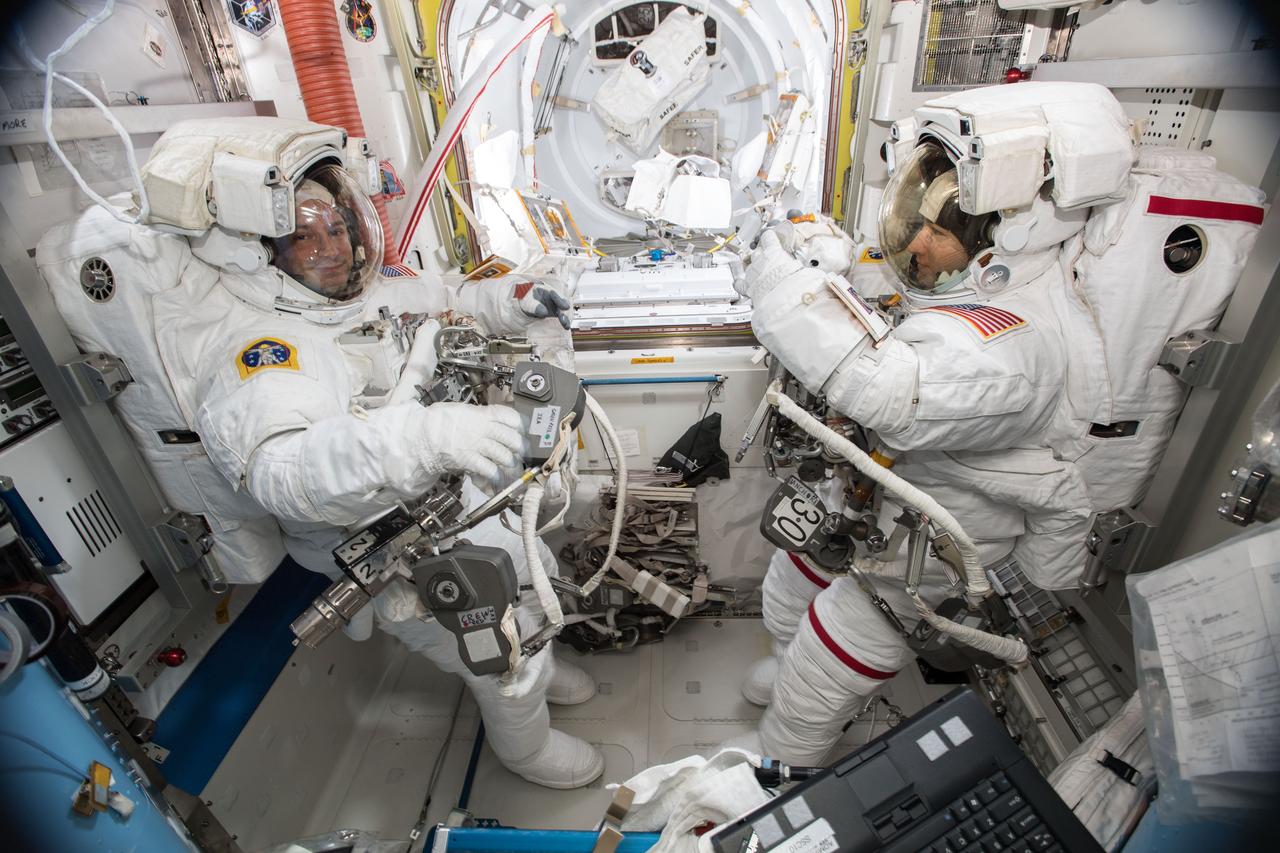
iss061e001577 (Oct. 6, 2019) --- NASA astronauts Andrew Morgan (left) and Christina Koch (right) are suited up in U.S. spacesuits inside the Quest airlock before beginning a seven hour and one minute spacewalk to upgrade the station's large nickel-hydrogen batteries with newer, more powerful lithium-ion batteries.

iss061e001616 (Oct. 6, 2019) --- NASA astronaut Andrew Morgan is suited up in a U.S. spacesuit before beginning a seven hour and one minute spacewalk to upgrade the station's large nickel-hydrogen batteries with newer, more powerful lithium-ion batteries.
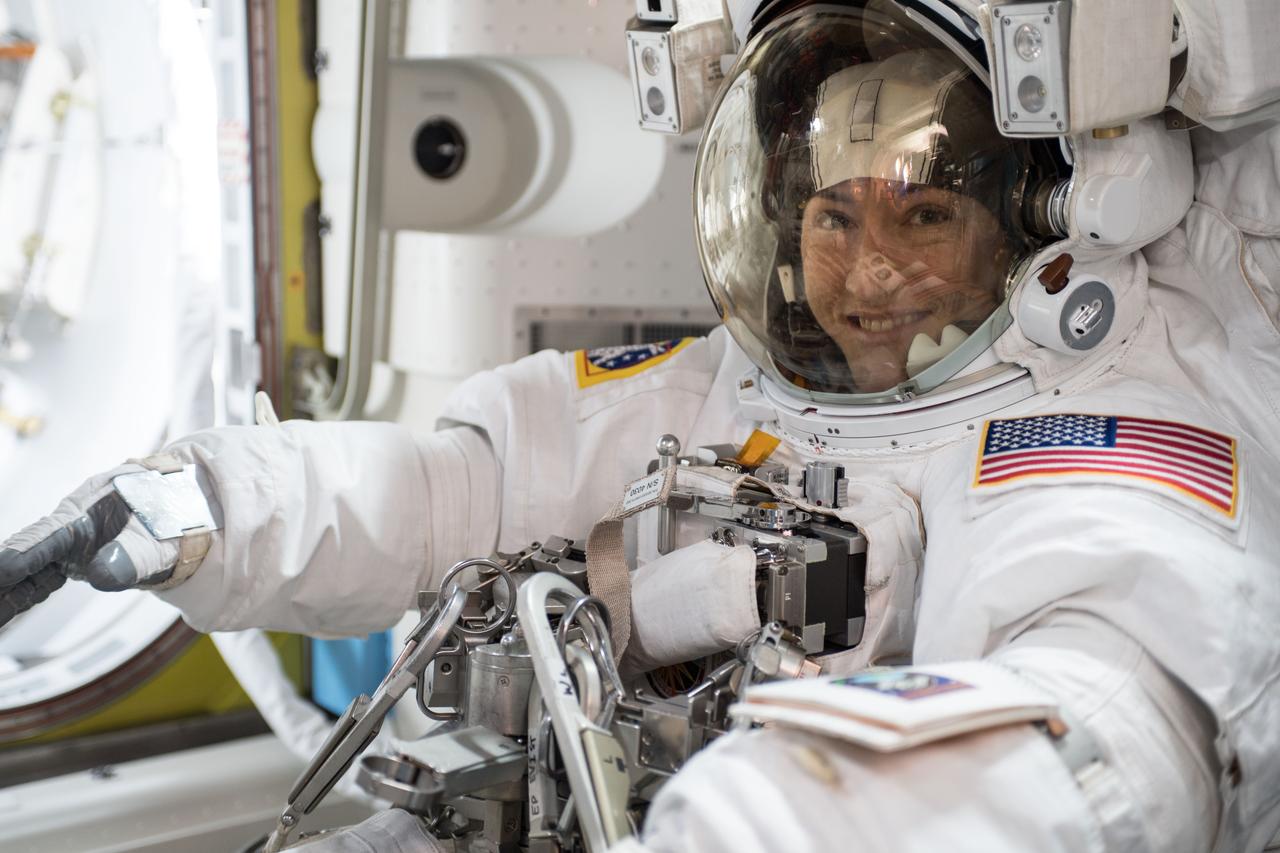
iss061e001614 (Oct. 6, 2019) --- NASA astronaut Christina Koch is suited up in a U.S. spacesuit before beginning a seven hour and one minute spacewalk to upgrade the station's large nickel-hydrogen batteries with newer, more powerful lithium-ion batteries.
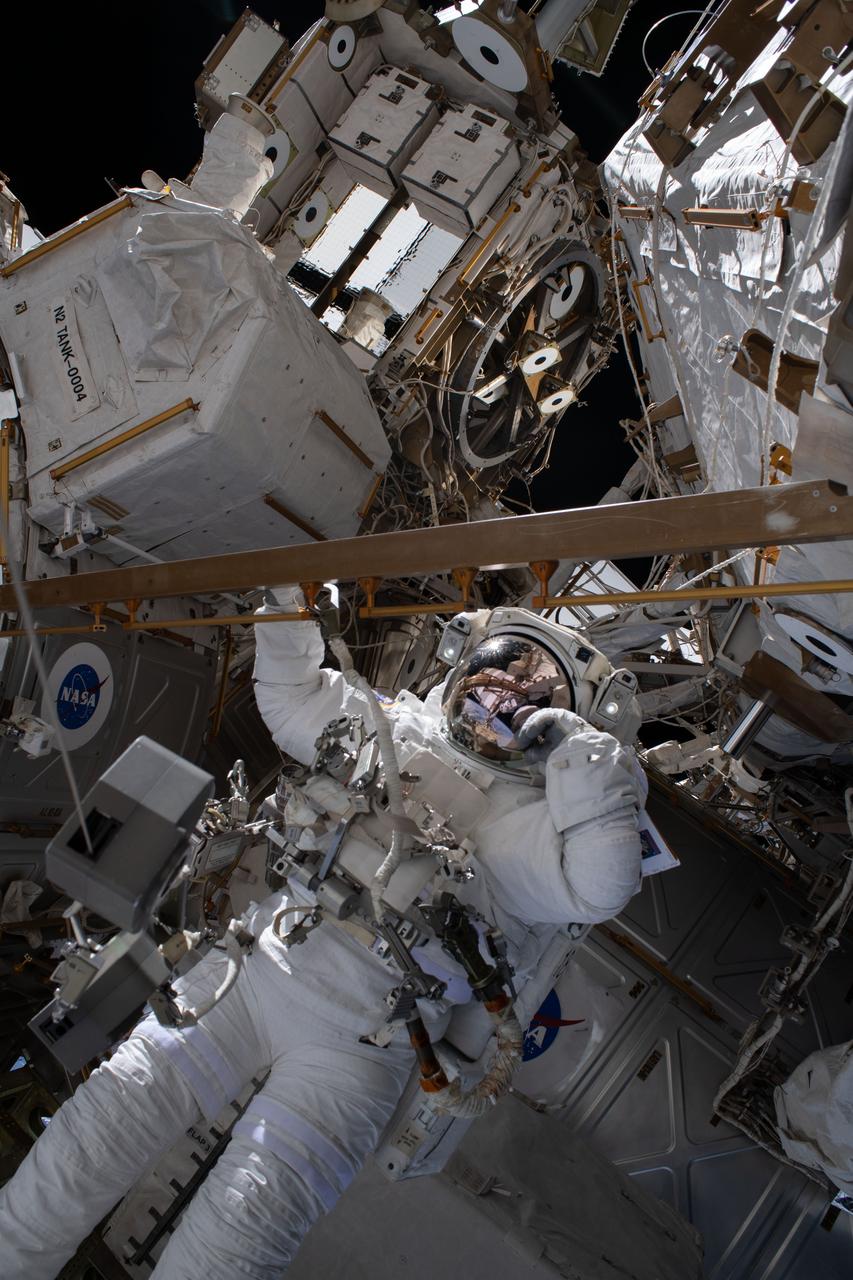
iss063e034203 (July 1, 2020) --- NASA astronaut and Expedition 63 Flight Engineer Bob Behnken works during a six-hour and one-minute spacewalk to swap an aging nickel-hydrogen battery for a new lithium-ion battery on the International Space Station's Starboard-6 truss structure.
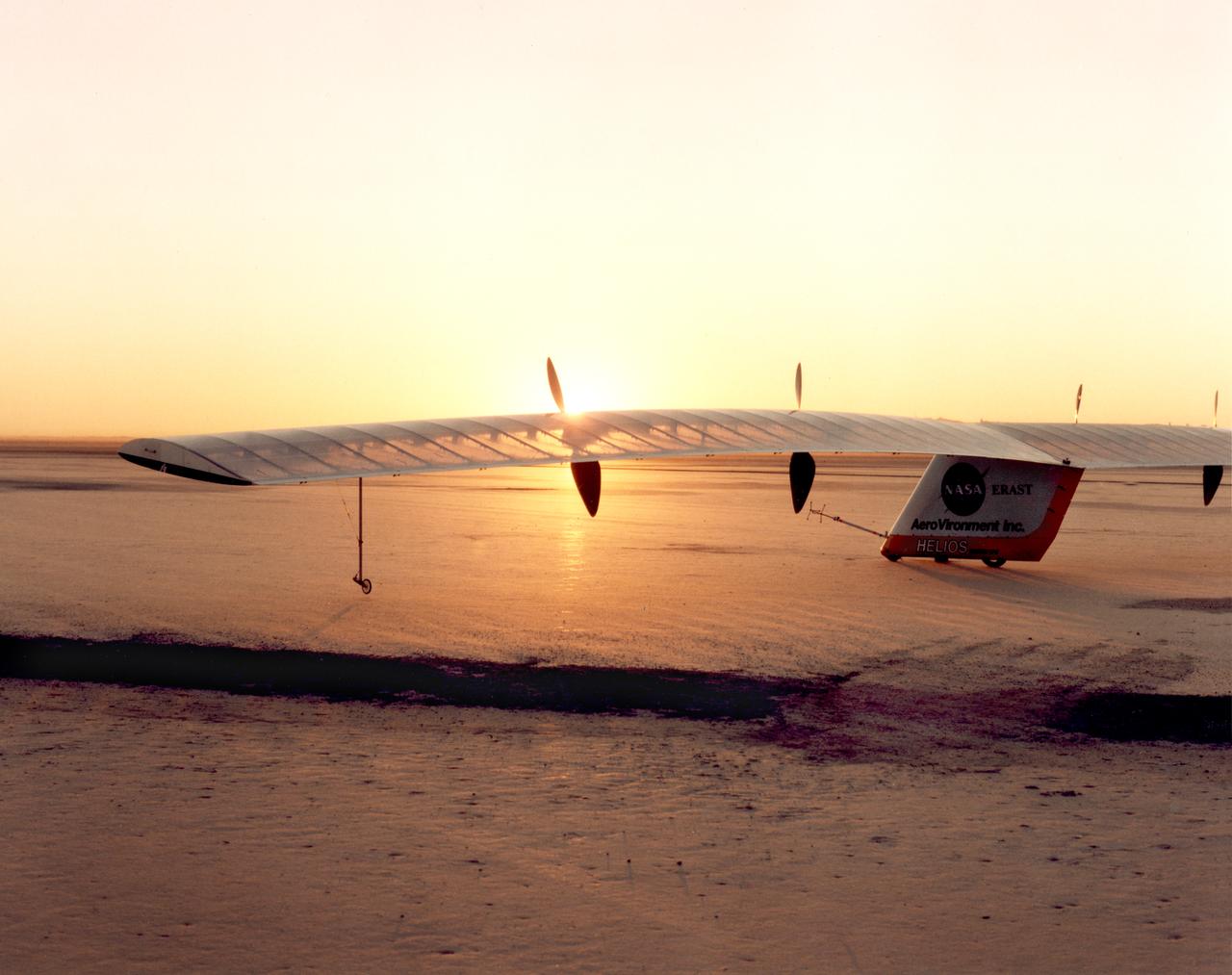
Helios Prototype on lakebed prior to first battery-powered flight

NASA astronauts Jessica Meir (left) and Christina Koch (right) put on their spacesuits as they prepare to leave the hatch of the International Space Station and begin the historical first-ever all-female spacewalk. The two ventured outside the International Space Station on Friday, Oct. 18, to replace faulty equipment on the station’s exterior. The astronauts replaced a faulty battery charge/discharge unit (BCDU) that failed to activate following the Oct. 11 installation of new lithium-ion batteries on the space station’s exterior structure. The BCDUs regulate the amount of charge put into the batteries that collect energy from the station’s solar arrays to power station systems during periods when the station orbits during nighttime passes around Earth. Though the BCDU failure has not impacted station operations or crew safety, it does prevent the new batteries from providing increased station power.
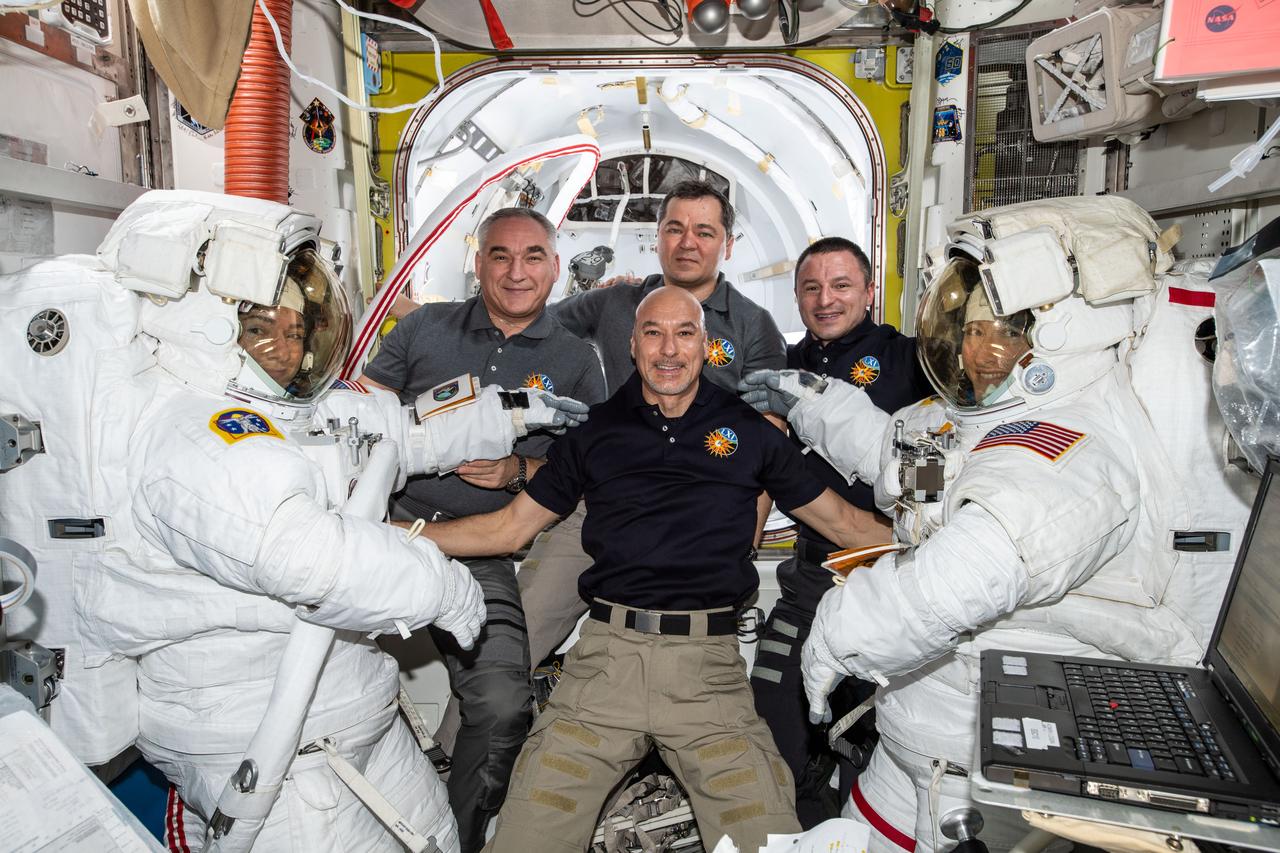
The International Space Station Expedition 61 crew pauses for a photo as NASA Astronauts Jessica Meir and Christina Koch prepare to exit the space station to begin the first all-female spacewalk in history on Oct. 18, 2019. The astronauts replaced a faulty battery charge/discharge unit (BCDU) that failed to activate following the Oct. 11 installation of new lithium-ion batteries on the space station’s exterior structure. The BCDUs regulate the amount of charge put into the batteries that collect energy from the station’s solar arrays to power station systems during periods when the station orbits during nighttime passes around Earth. Though the BCDU failure has not impacted station operations or crew safety, it does prevent the new batteries from providing increased station power.
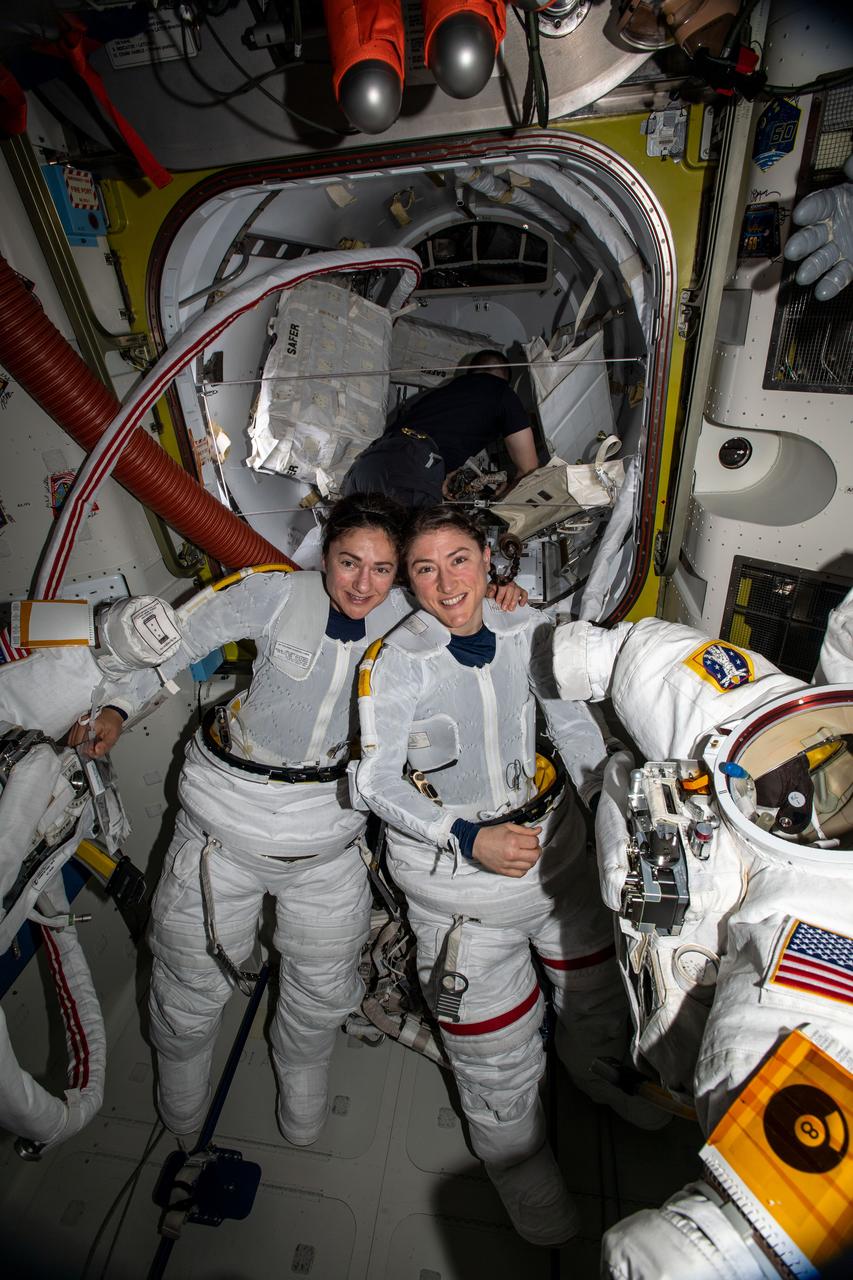
NASA astronauts Jessica Meir (left) and Christina Koch (right) put on their spacesuits as they prepare to leave the hatch of the International Space Station and begin the historical first-ever all-female spacewalk. The two ventured outside the International Space Station on Friday, Oct. 18, to replace faulty equipment on the station’s exterior. The astronauts replaced a faulty battery charge/discharge unit (BCDU) that failed to activate following the Oct. 11 installation of new lithium-ion batteries on the space station’s exterior structure. The BCDUs regulate the amount of charge put into the batteries that collect energy from the station’s solar arrays to power station systems during periods when the station orbits during nighttime passes around Earth. Though the BCDU failure has not impacted station operations or crew safety, it does prevent the new batteries from providing increased station power.
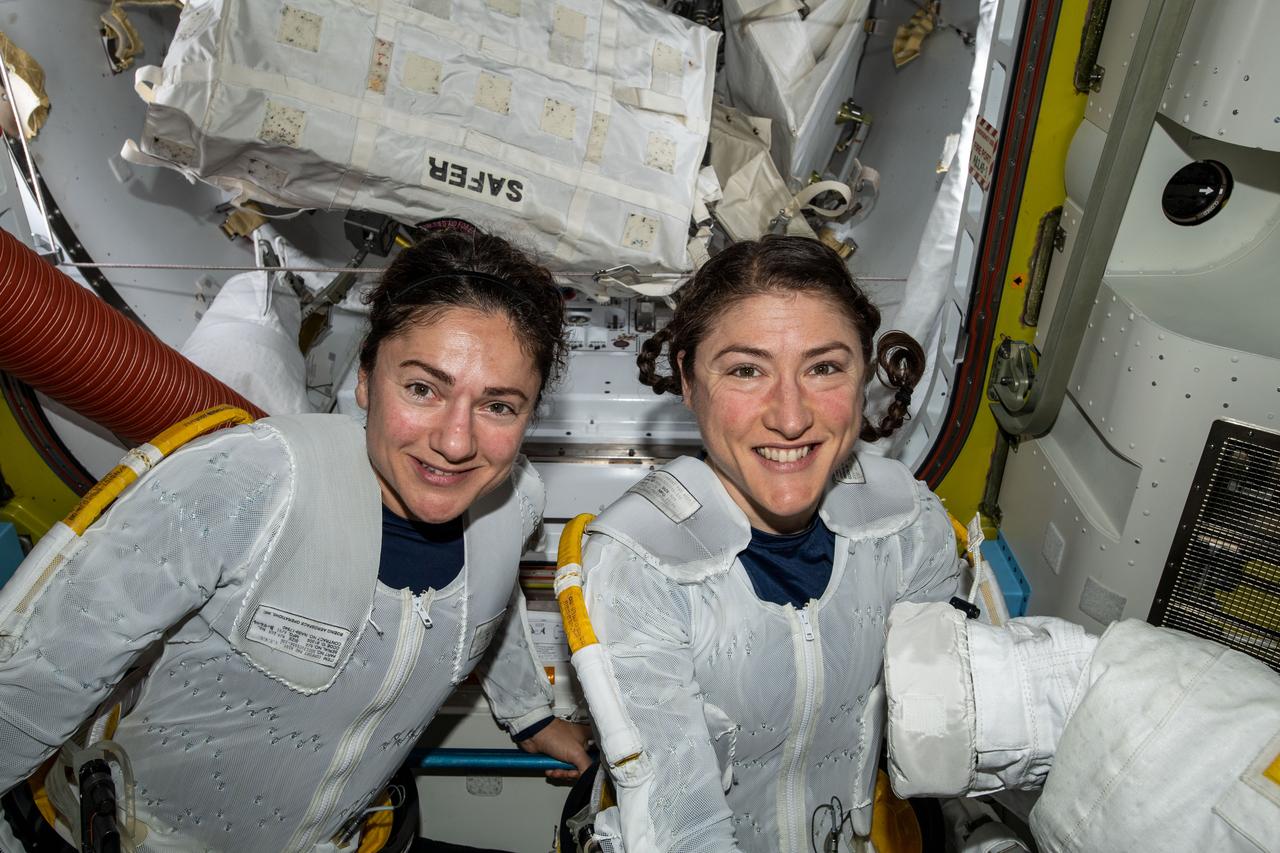
NASA astronauts Jessica Meir (left) and Christina Koch (right) put on their spacesuits as they prepare to leave the hatch of the International Space Station and begin the historical first-ever all-female spacewalk. The two ventured outside the International Space Station on Friday, Oct. 18, to replace faulty equipment on the station’s exterior. The astronauts replaced a faulty battery charge/discharge unit (BCDU) that failed to activate following the Oct. 11 installation of new lithium-ion batteries on the space station’s exterior structure. The BCDUs regulate the amount of charge put into the batteries that collect energy from the station’s solar arrays to power station systems during periods when the station orbits during nighttime passes around Earth. Though the BCDU failure has not impacted station operations or crew safety, it does prevent the new batteries from providing increased station power.

iss064e041526 (March 11, 2021) --- An external pallet packed with old nickel-hydrogen batteries is pictured shortly after mission controllers in Houston commanded the Canadarm2 robotic arm to release it into space. The International Space Station was orbiting 260 miles above the Pacific Ocean west of central America at the time this photograph was taken. The external pallet will orbit Earth between two to four years before burning up harmlessly in the atmosphere. The batteries were removed during previous spacewalks and replaced with newer lithium-ion batteries to continue powering the station's systems.
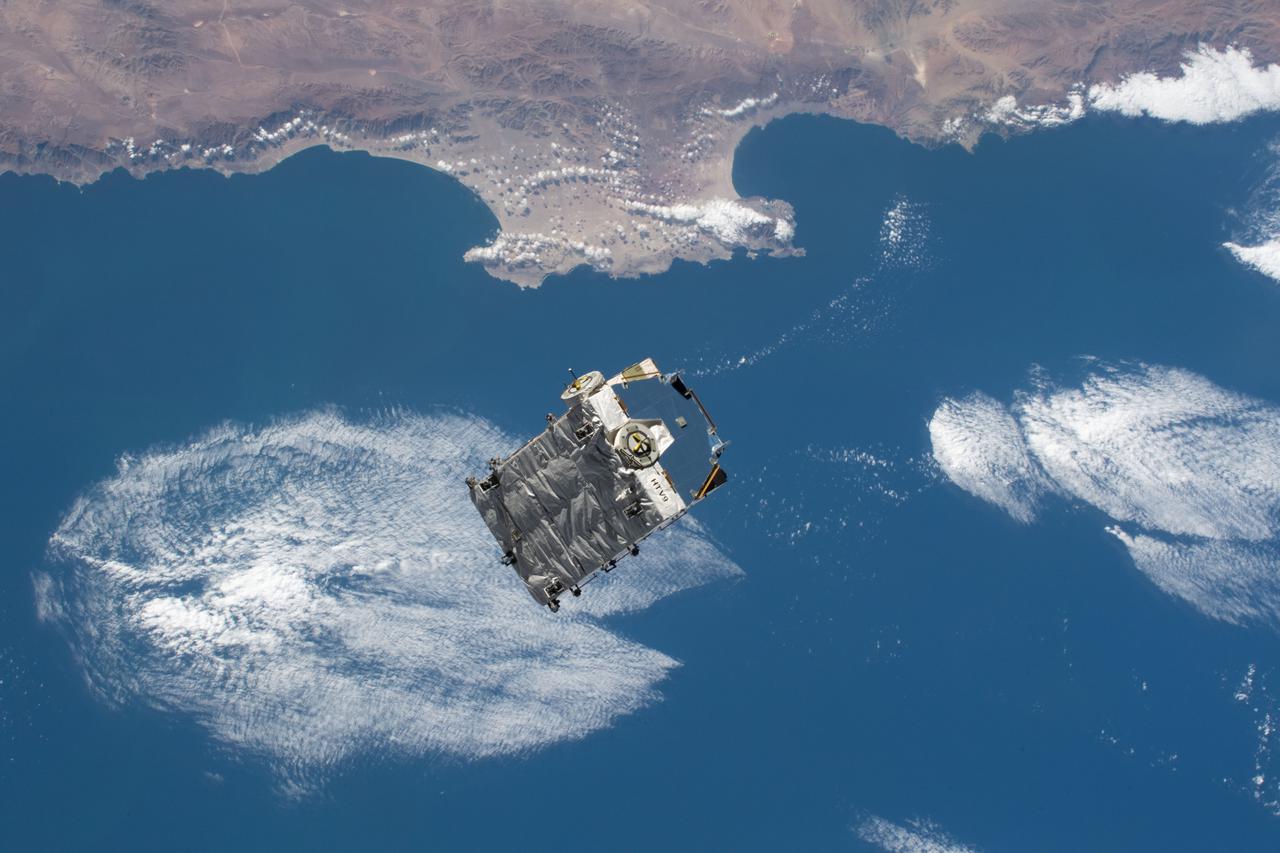
iss064e041315 (March 11, 2021) --- An external pallet packed with old nickel-hydrogen batteries is pictured shortly after mission controllers in Houston commanded the Canadarm2 robotic arm to release it into space. The International Space Station was orbiting 265 miles above the north coast of Chile in South America at the time this photograph was taken. The external pallet will orbit Earth between two to four years before burning up harmlessly in the atmosphere. The batteries were removed during previous spacewalks and replaced with newer lithium-ion batteries to continue powering the station's systems.
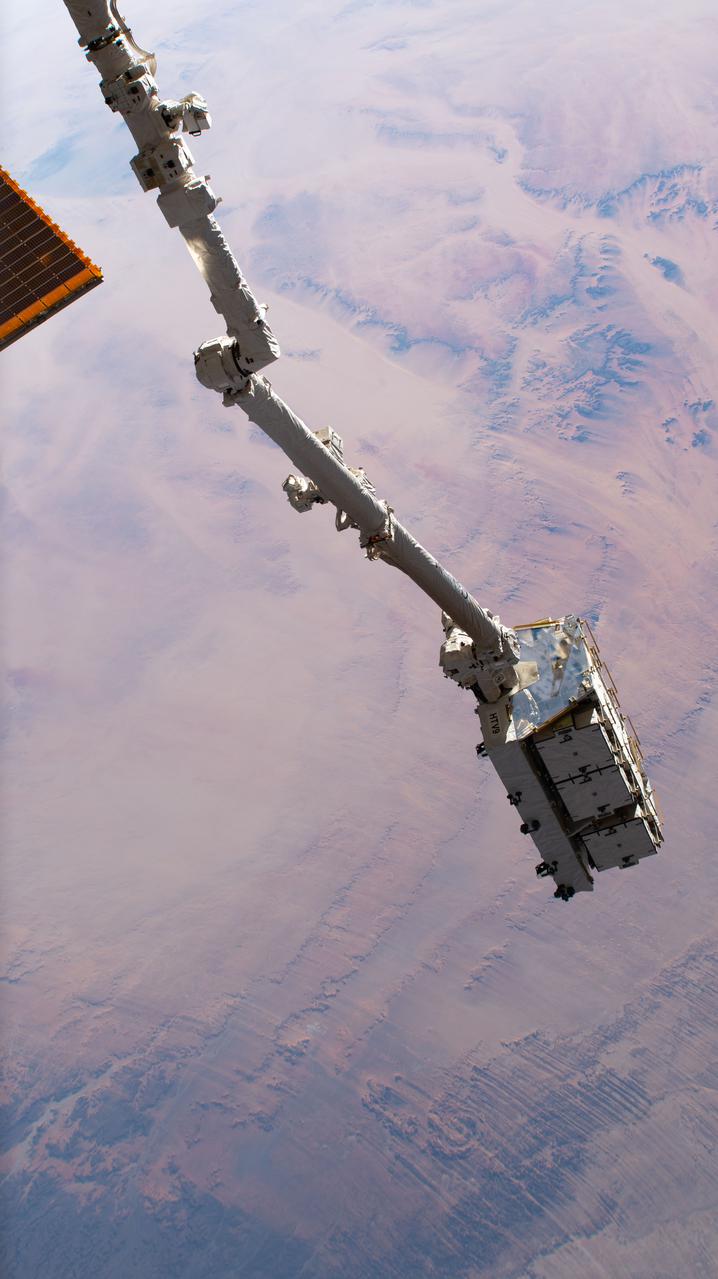
iss064e041189 (March 11, 2021) --- The Canadarm2 robotic arm, with an external pallet packed with old nickel-hydrogen batteries in its grip, is pictured as the International Space Station orbited 260 miles above the Sahara in the African nation of Chad. Mission controllers in Houston later commanded the Canadarm2 to release the external pallet into space where it will orbit Earth between two to four years before burning up harmlessly in the atmosphere. The batteries were removed during previous spacewalks and replaced with newer lithium-ion batteries to continue powering the station's systems.
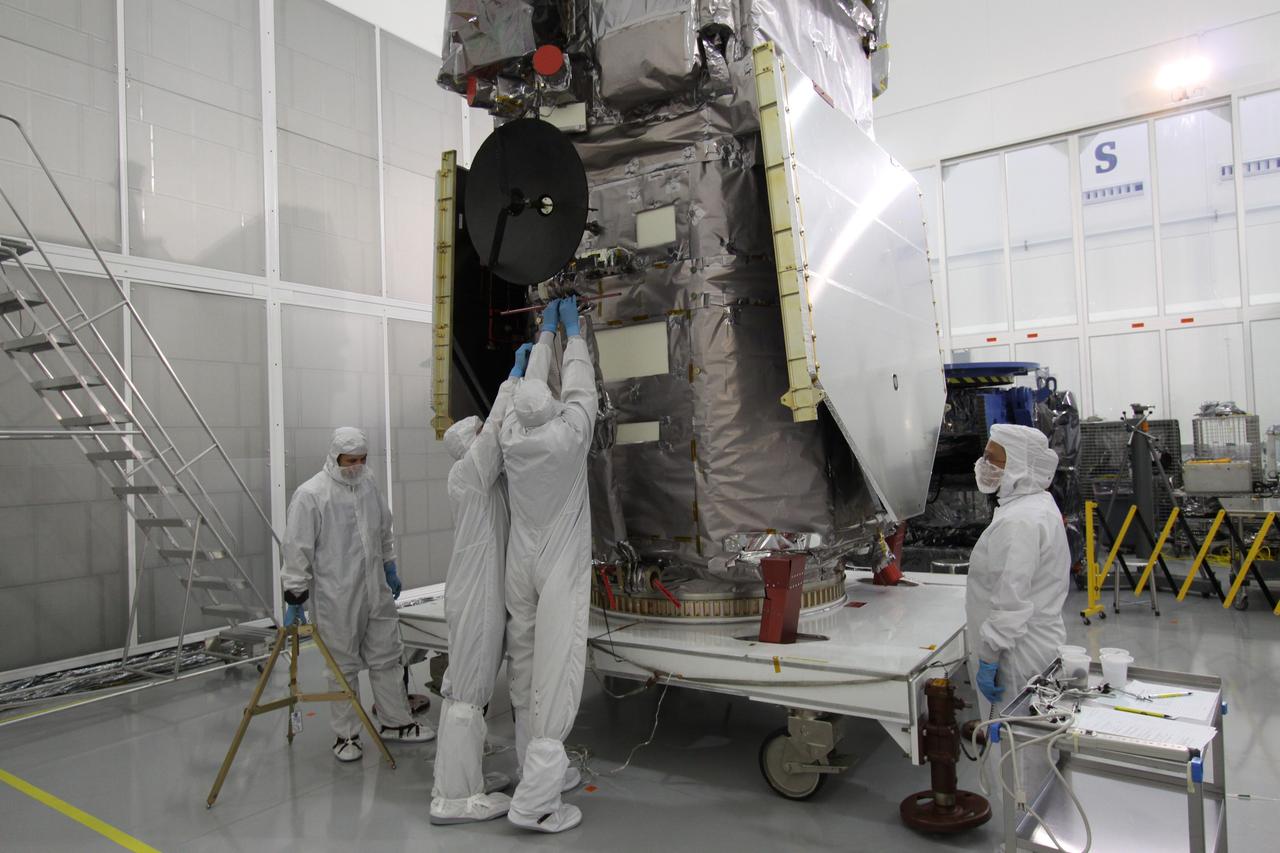
CAPE CANAVERAL, Fla. – Engineers at Astrotech Space Operations in Titusville, Fla., begin lowering the high-gain antenna on the Solar Dynamics Observatory to gain access to the battery compartment for installation of the flight battery. SDO is the first space weather research network mission in NASA's Living With a Star Program. The spacecraft's long-term measurements will give solar scientists in-depth information about changes in the sun's magnetic field and insight into how they affect Earth. In preparation for its anticipated November launch, engineers will perform a battery of comprehensive tests to ensure SDO can withstand the stresses and vibrations of the launch itself, as well as what it will encounter in the space environment after launch. Photo credit: NASA/Jack Pfaller
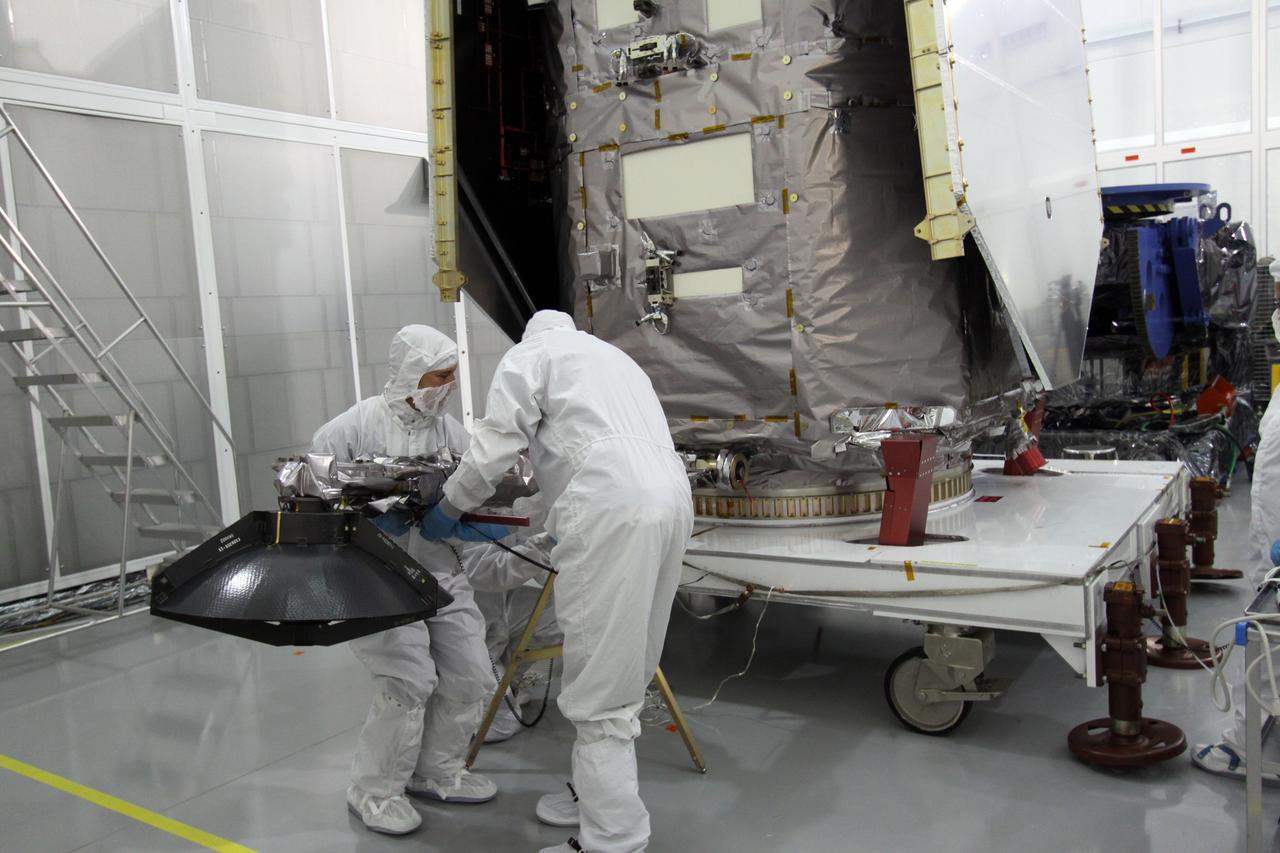
CAPE CANAVERAL, Fla. – Engineers at Astrotech Space Operations in Titusville, Fla., lower the high-gain antenna on the Solar Dynamics Observatory to gain access to the battery compartment for installation of the flight battery. SDO is the first space weather research network mission in NASA's Living With a Star Program. The spacecraft's long-term measurements will give solar scientists in-depth information about changes in the sun's magnetic field and insight into how they affect Earth. In preparation for its anticipated November launch, engineers will perform a battery of comprehensive tests to ensure SDO can withstand the stresses and vibrations of the launch itself, as well as what it will encounter in the space environment after launch. Photo credit: NASA/Jack Pfaller
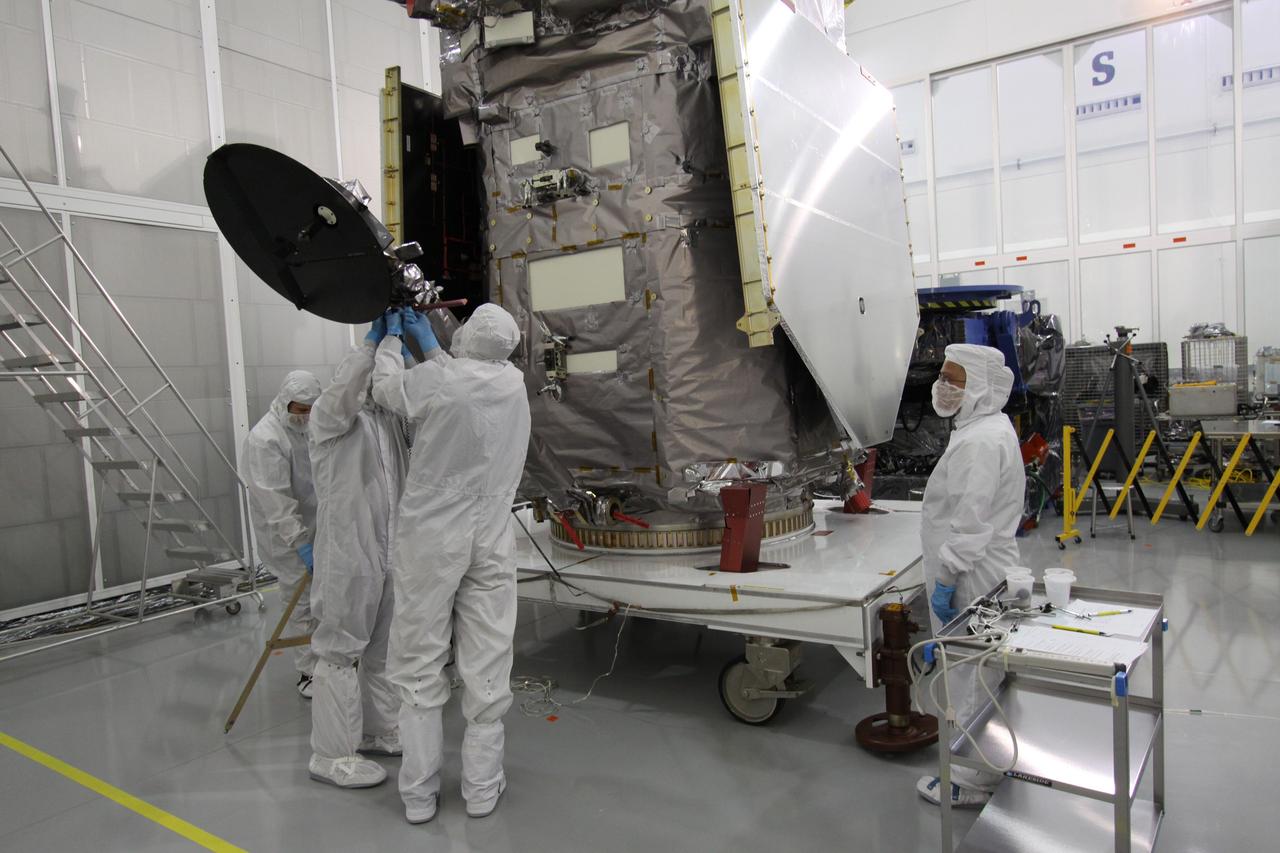
CAPE CANAVERAL, Fla. – Engineers at Astrotech Space Operations in Titusville, Fla., lower the high-gain antenna on the Solar Dynamics Observatory to gain access to the battery compartment for installation of the flight battery. SDO is the first space weather research network mission in NASA's Living With a Star Program. The spacecraft's long-term measurements will give solar scientists in-depth information about changes in the sun's magnetic field and insight into how they affect Earth. In preparation for its anticipated November launch, engineers will perform a battery of comprehensive tests to ensure SDO can withstand the stresses and vibrations of the launch itself, as well as what it will encounter in the space environment after launch. Photo credit: NASA/Jack Pfaller
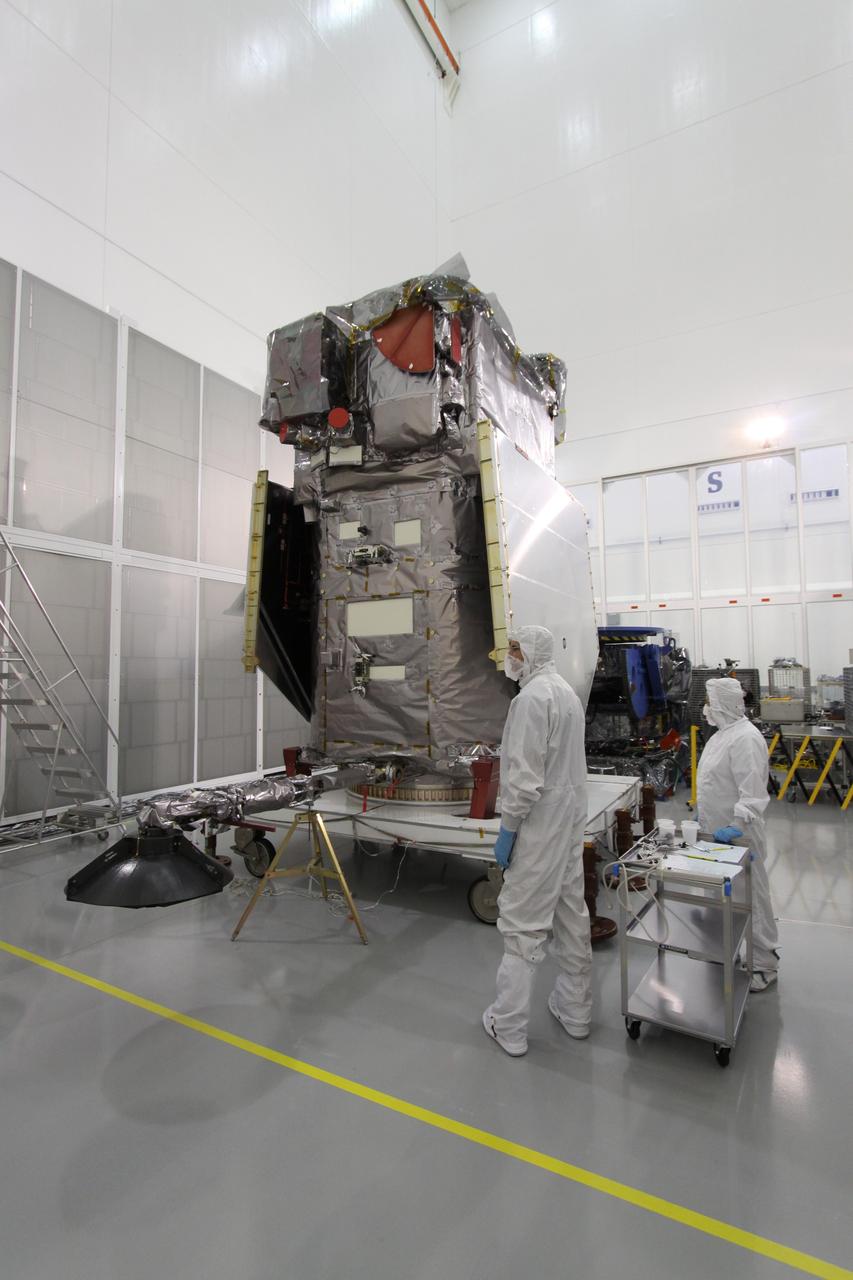
CAPE CANAVERAL, Fla. – At Astrotech Space Operations in Titusville, Fla., the lowered high-gain antenna on the Solar Dynamics Observatory will allow engineers access to the battery compartment in order to install the flight battery. SDO is the first space weather research network mission in NASA's Living With a Star Program. The spacecraft's long-term measurements will give solar scientists in-depth information about changes in the sun's magnetic field and insight into how they affect Earth. In preparation for its anticipated November launch, engineers will perform a battery of comprehensive tests to ensure SDO can withstand the stresses and vibrations of the launch itself, as well as what it will encounter in the space environment after launch. Photo credit: NASA/Jack Pfaller
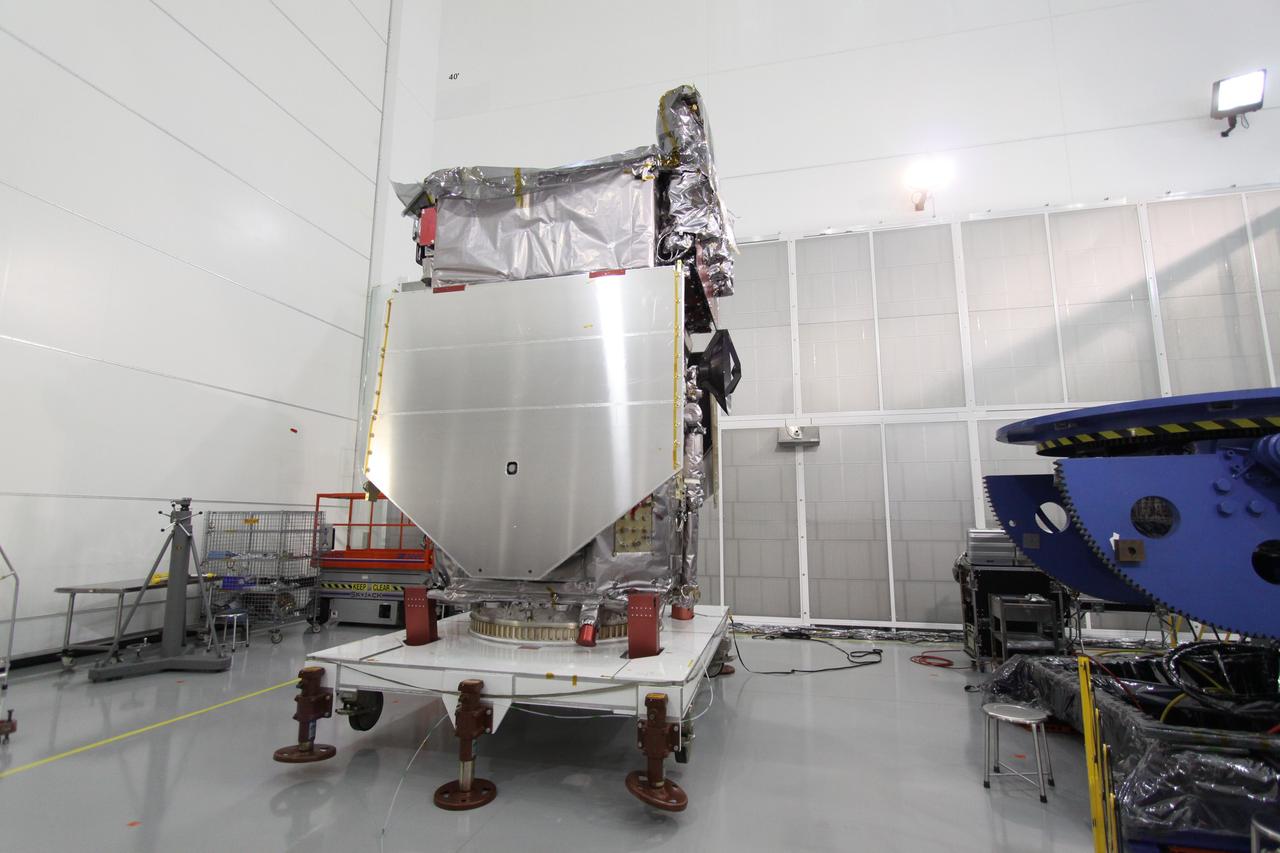
CAPE CANAVERAL, Fla. – The Solar Dynamics Observatory sits on a stand at Astrotech Space Operations in Titusville, Fla. Engineers will lower the high-gain antenna to access the battery compartment for installation of the flight battery. SDO is the first space weather research network mission in NASA's Living With a Star Program. The spacecraft's long-term measurements will give solar scientists in-depth information about changes in the sun's magnetic field and insight into how they affect Earth. In preparation for its anticipated November launch, engineers will perform a battery of comprehensive tests to ensure SDO can withstand the stresses and vibrations of the launch itself, as well as what it will encounter in the space environment after launch. Photo credit: NASA/Jack Pfaller
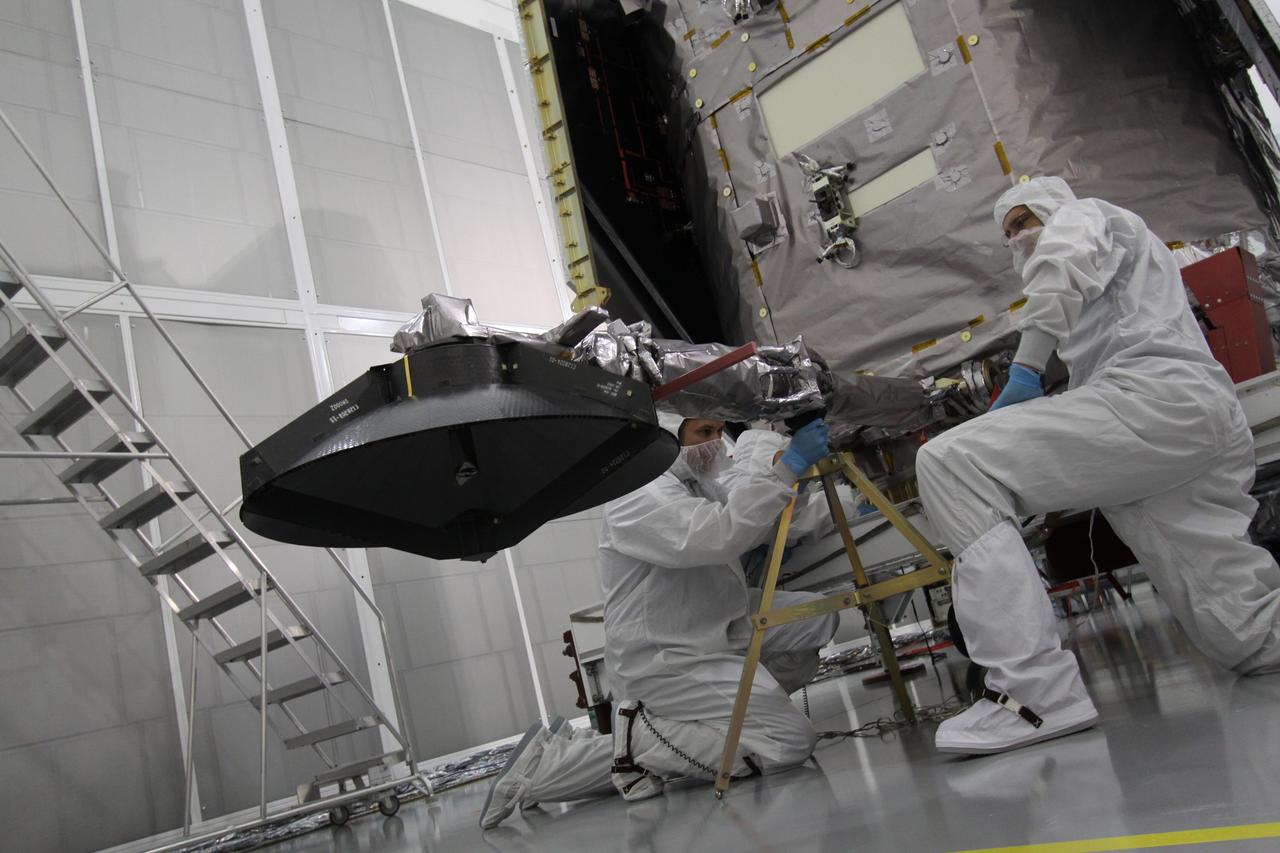
CAPE CANAVERAL, Fla. – Engineers at Astrotech Space Operations in Titusville, Fla., support the high-gain antenna lowered to allow access to the battery compartment for installation of the flight battery. SDO is the first space weather research network mission in NASA's Living With a Star Program. The spacecraft's long-term measurements will give solar scientists in-depth information about changes in the sun's magnetic field and insight into how they affect Earth. In preparation for its anticipated November launch, engineers will perform a battery of comprehensive tests to ensure SDO can withstand the stresses and vibrations of the launch itself, as well as what it will encounter in the space environment after launch. Photo credit: NASA/Jack Pfaller
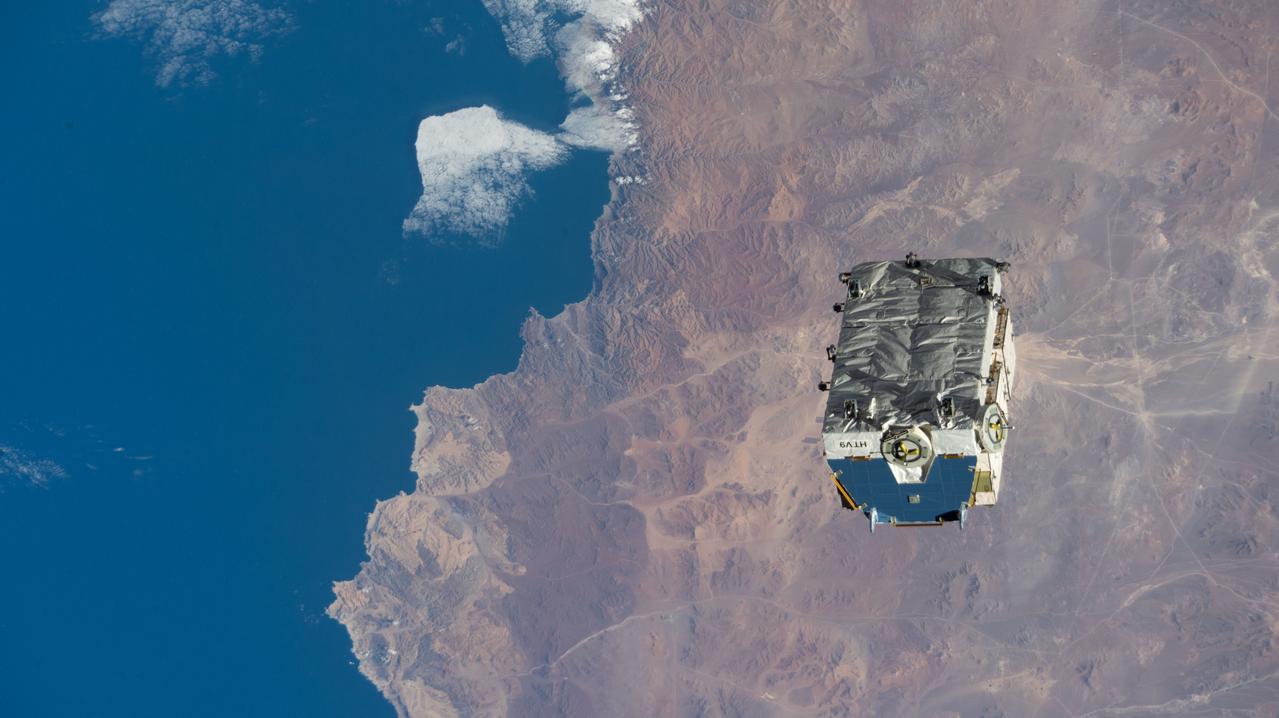
iss064e041189 (March 11, 2021) --- An external pallet packed with old nickel-hydrogen batteries is pictured shortly after mission controllers in Houston commanded the Canadarm2 robotic arm to release it into space. The International Space Station was orbiting 265 miles above the north coast of Chile in South America at the time this photograph was taken. The external pallet will orbit Earth between two to four years before burning up harmlessly in the atmosphere. The batteries were removed during previous spacewalks and replaced with newer lithium-ion batteries to continue powering the station's systems.
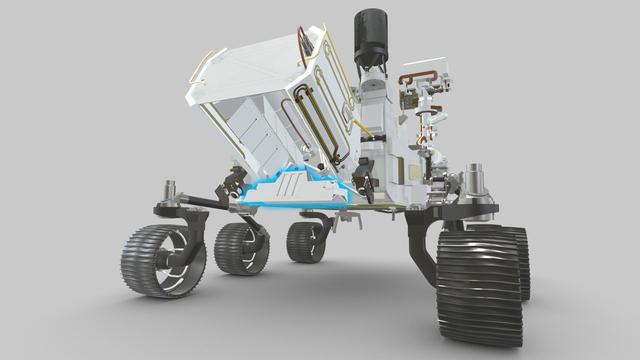
Perseverance's Radar Imager for Mars' Subsurface Experiment (RIMFAX) uses radar waves to probe the ground, revealing the unexplored world that lies beneath the Martian surface. Highlighted in blue in this visualization from the interactive tool Learn About Perseverance, the instrument's antenna is externally mounted underneath the Multi-Mission Radioisotope Thermoelectric Generator (MMRTG — the rover's nuclear battery) on the back of the Perseverance. The first ground-penetrating radar set on the surface of Mars, RIMFAX can provide a highly detailed view of subsurface structures down to at least 30 feet (10 meters) underground. In doing so, the instrument will reveal hidden layers of geology and help find clues to past environments on Mars, especially those with conditions necessary for supporting life. https://photojournal.jpl.nasa.gov/catalog/PIA24049
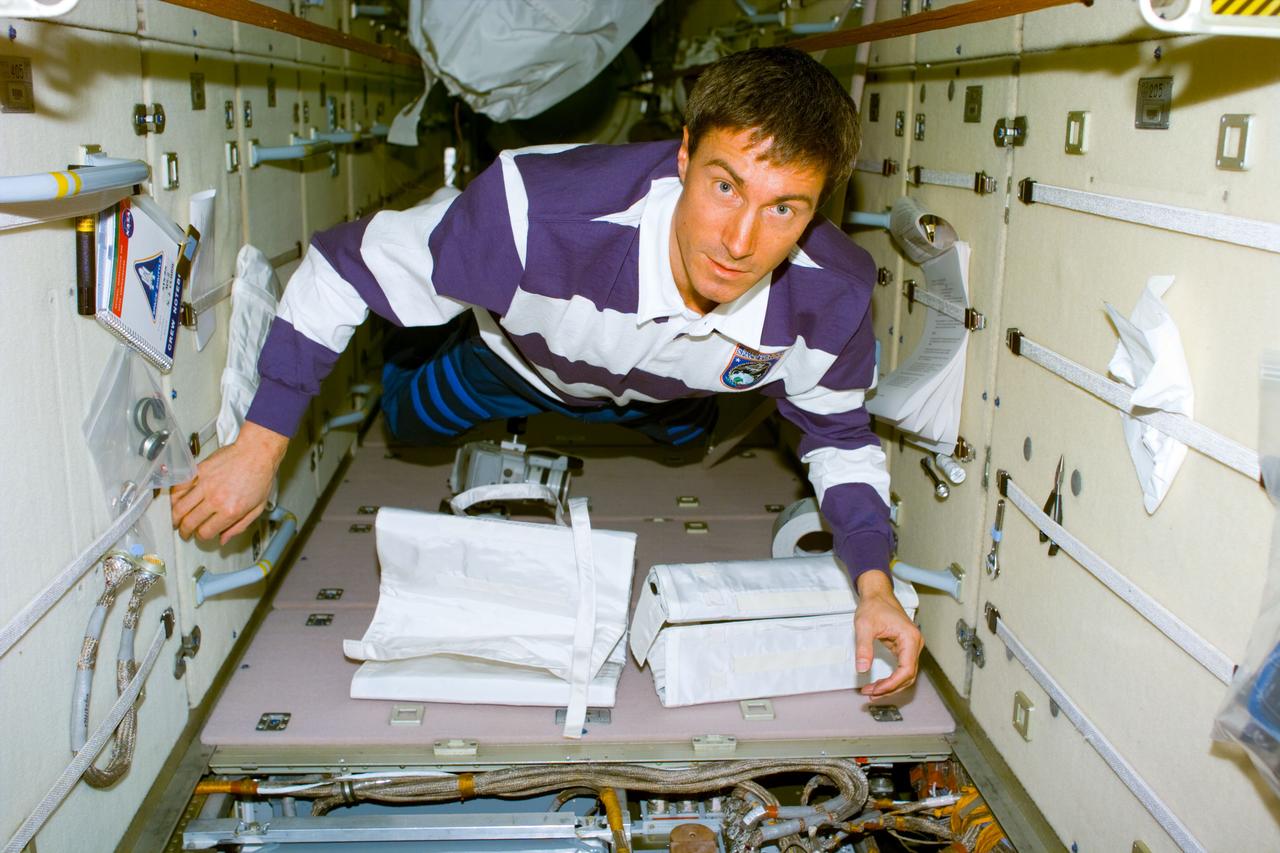
S88-E-5072 (12-11-98) --- Sergei Krikalev, mission specialist representing the Russian Space Agency (RSA), onboard Zarya. The photo was taken with an electronic still camera at 01:54:25 GMT, Dec. 11.
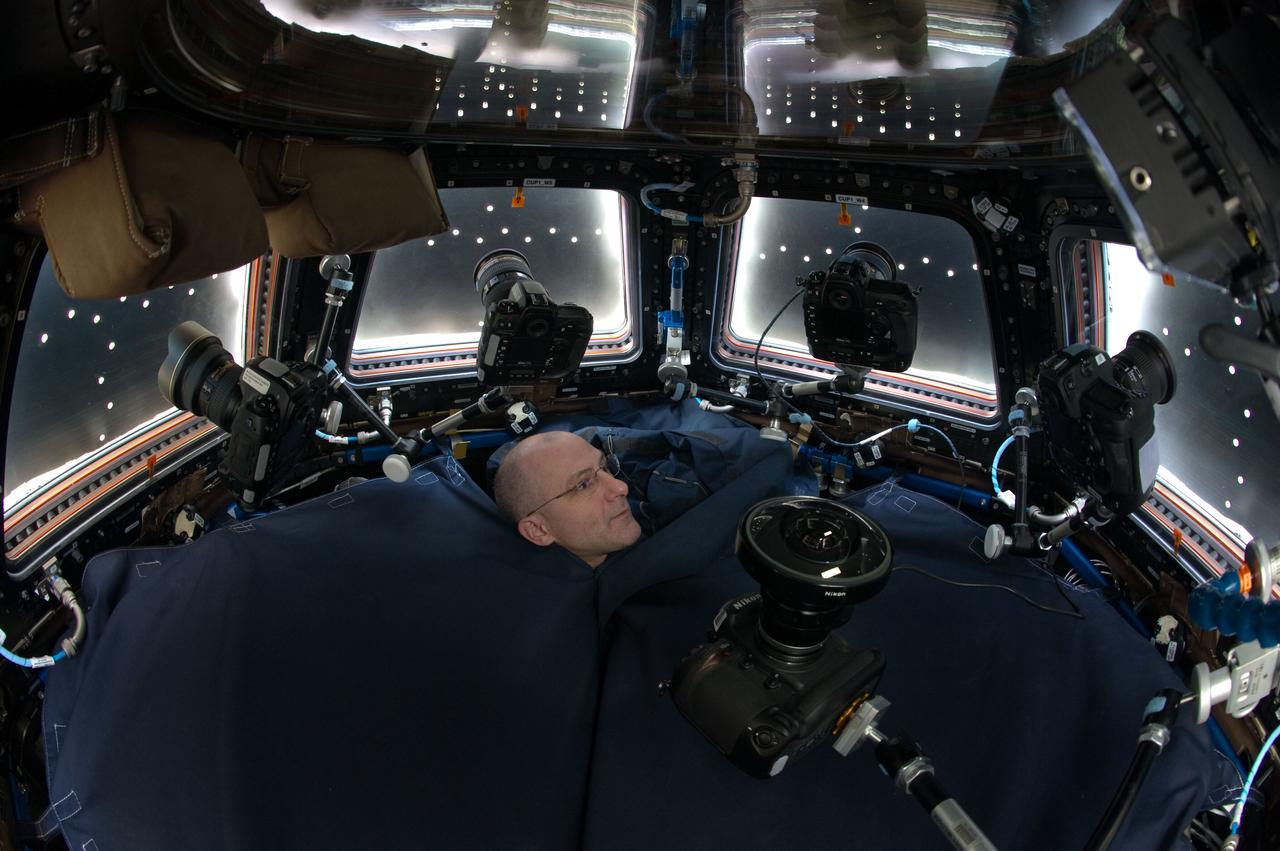
ISS031-E-112289 --- Astronaut Don Pettit, Expedition 31 flight engineer, in a special "tent" fashioned to limit light in Cupola, is surround by a battery of stationary cameras.
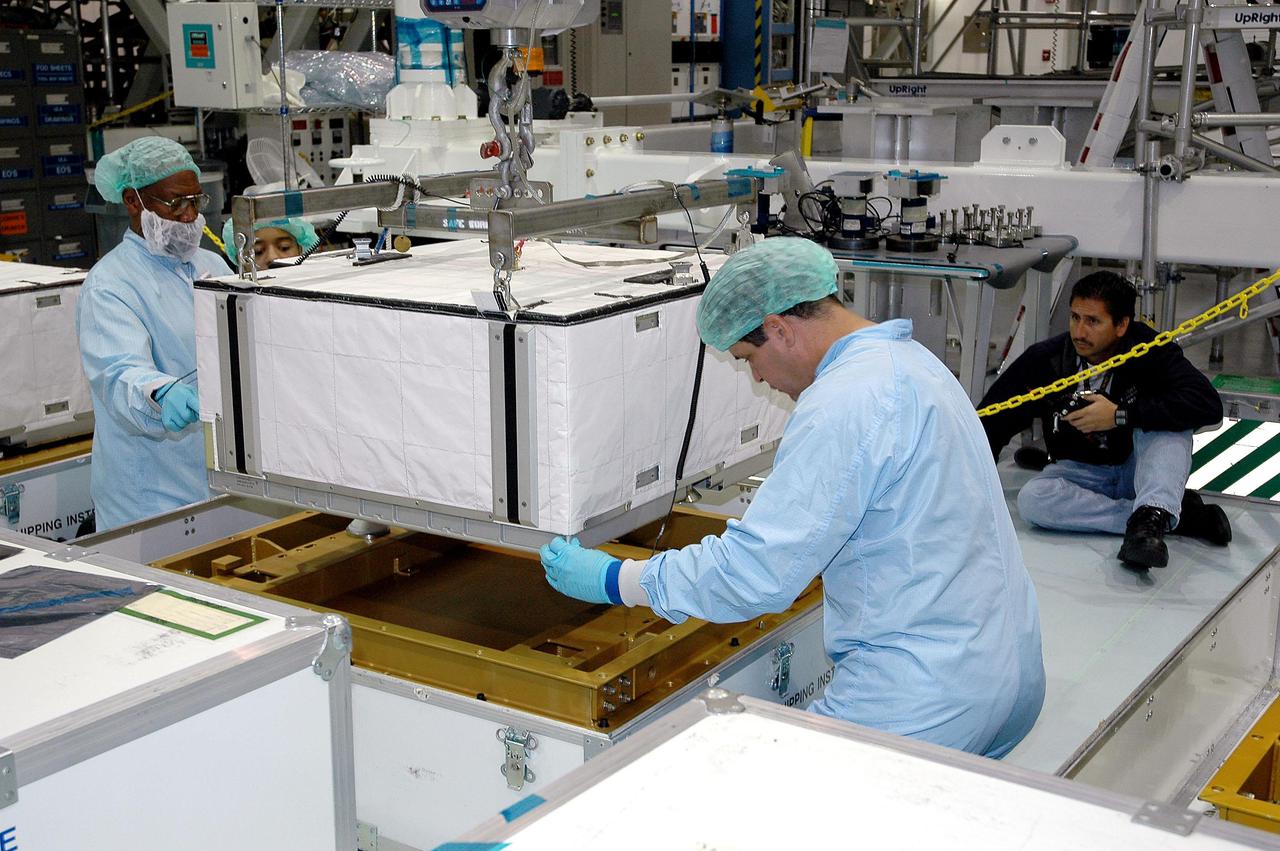
KENNEDY SPACE CENTER, FLA. - Technicians in the Space Station Processing Facility at NASA’s Kennedy Space Center help guide one of six batteries for the P4 truss onto a stand in order to replace them. A new battery is being installed on the truss to ensure it does not exceed the lifetime expectancy prior to installation on the International Space Station. The P4 truss is part of the payload for mission 12A, STS-115.
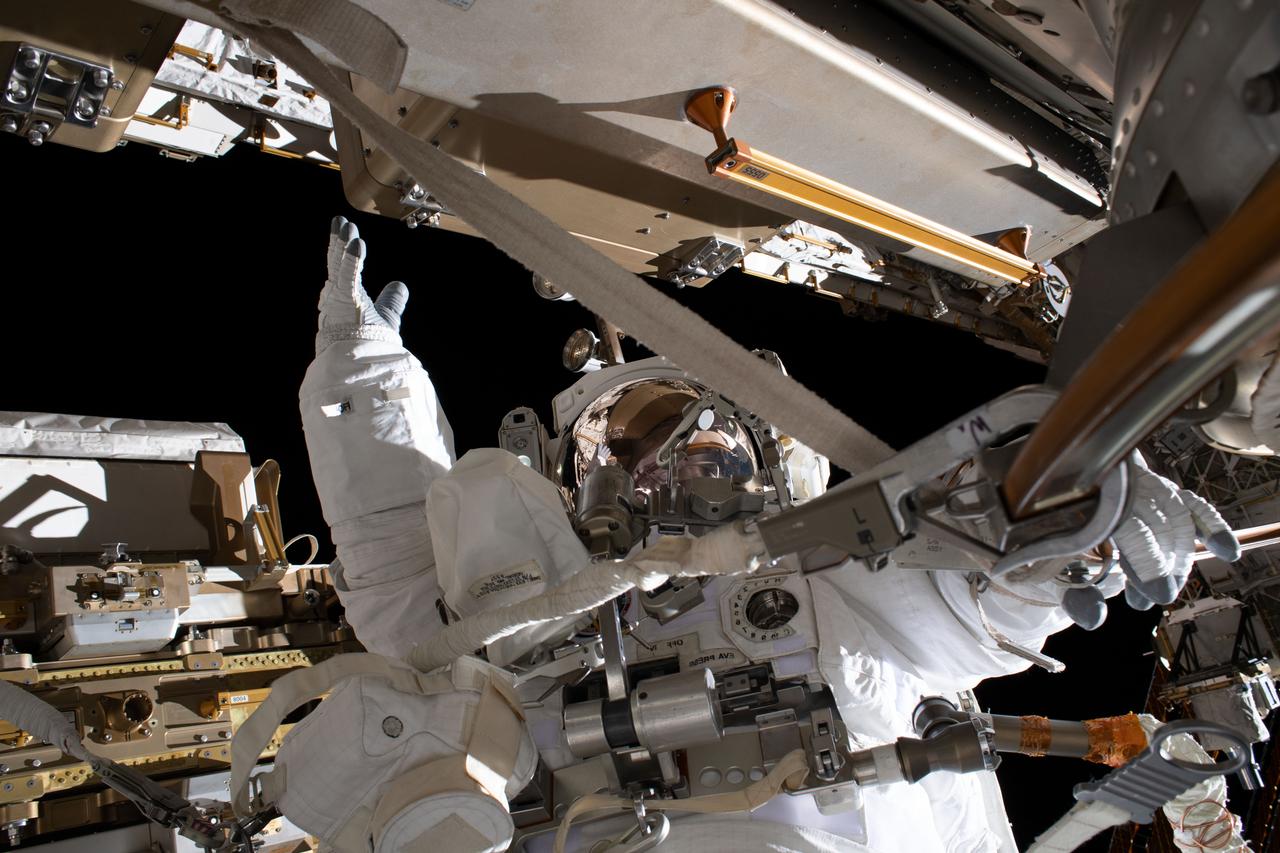
iss061e011802 (Oct. 18, 2019) --- NASA astronaut Jessica Meir is pictured during a spacewalk with fellow NASA astronaut Christina Koch (out of frame). They ventured into the vacuum of space for seven hours and 17 minutes to swap a failed battery charge-discharge unit (BCDU) with a spare during the first all-woman spacewalk. The BCDU regulates the charge to the batteries that collect and distribute solar power to the orbiting lab’s systems.
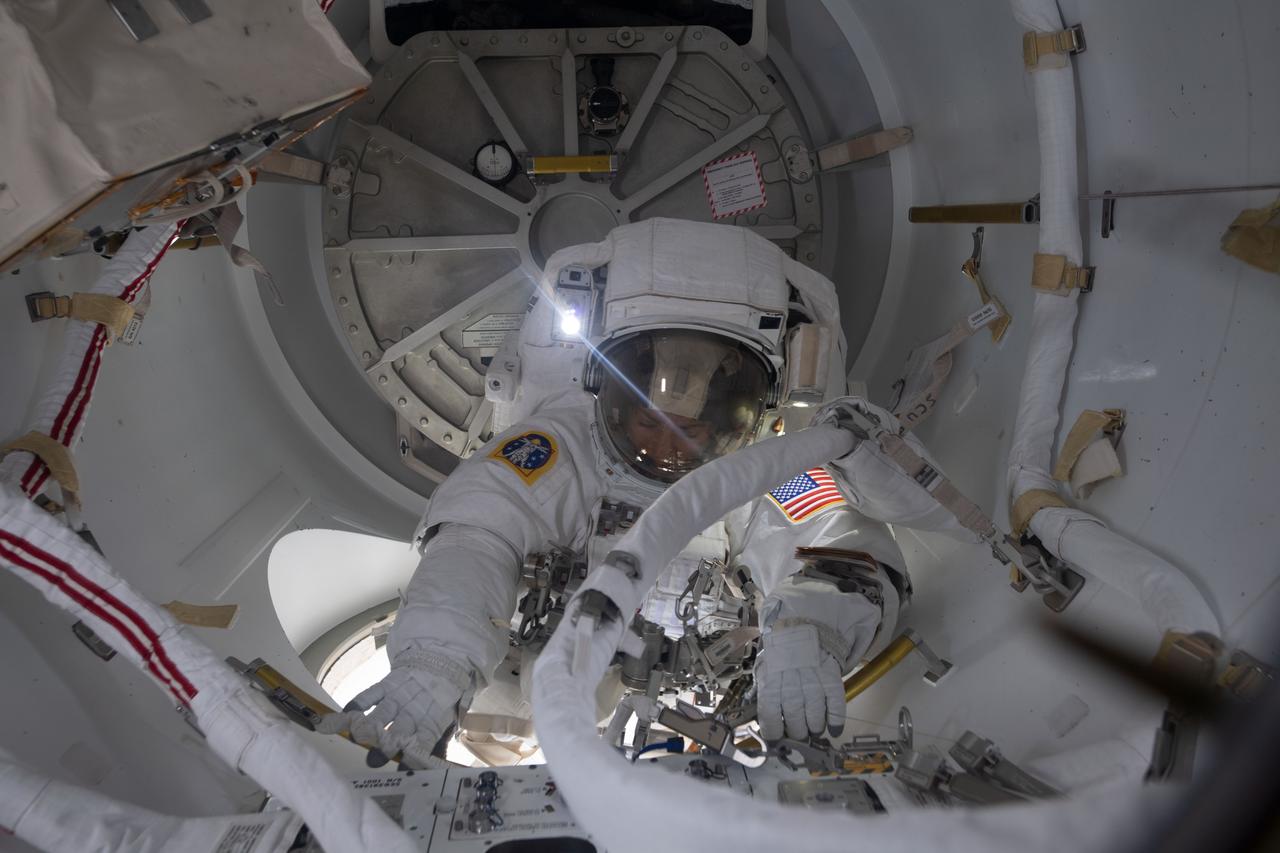
iss061e011927 (Oct. 18, 2019) --- NASA astronaut Jessica Meir prepares to exit the crew lock portion of the Quest airlock into the vacuum of space. She and fellow NASA astronaut Christina Koch (out of frame) conducted a spacewalk for seven hours and 17 minutes to swap a failed battery charge-discharge unit (BCDU) with a spare during the first all-woman spacewalk. The BCDU regulates the charge to the batteries that collect and distribute solar power to the orbiting lab’s systems.
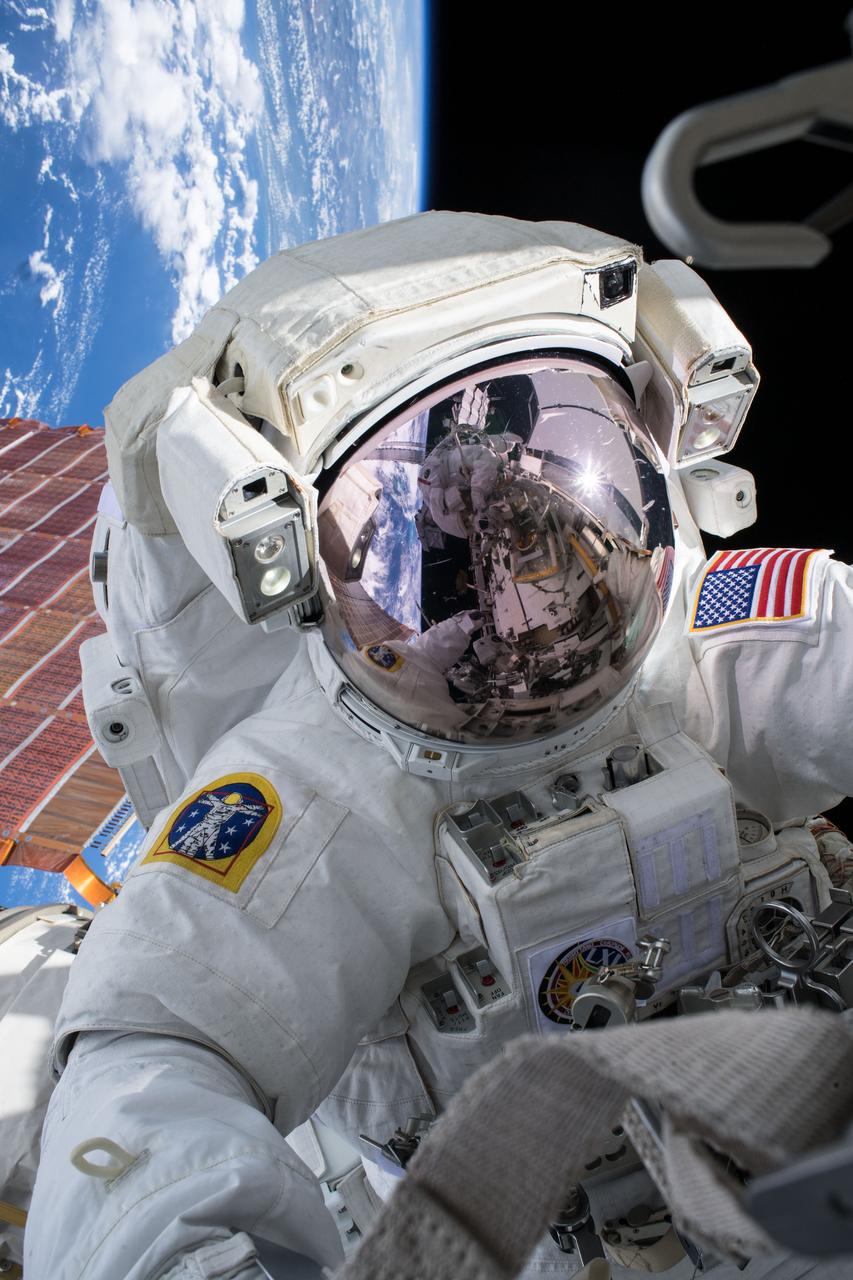
iss061e003293 (Oct. 6, 2019) --- NASA astronaut Andrew Morgan conducts a spacewalk at the Port- 6 (P6) truss structure work site to upgrade International Space Station power systems. He was photographed by fellow NASA astronaut Christina Koch as they worked outside in the vacuum of space for seven hours and one minute to begin the latest round of upgrading the station's large nickel-hydrogen batteries with newer, more powerful lithium-ion batteries.
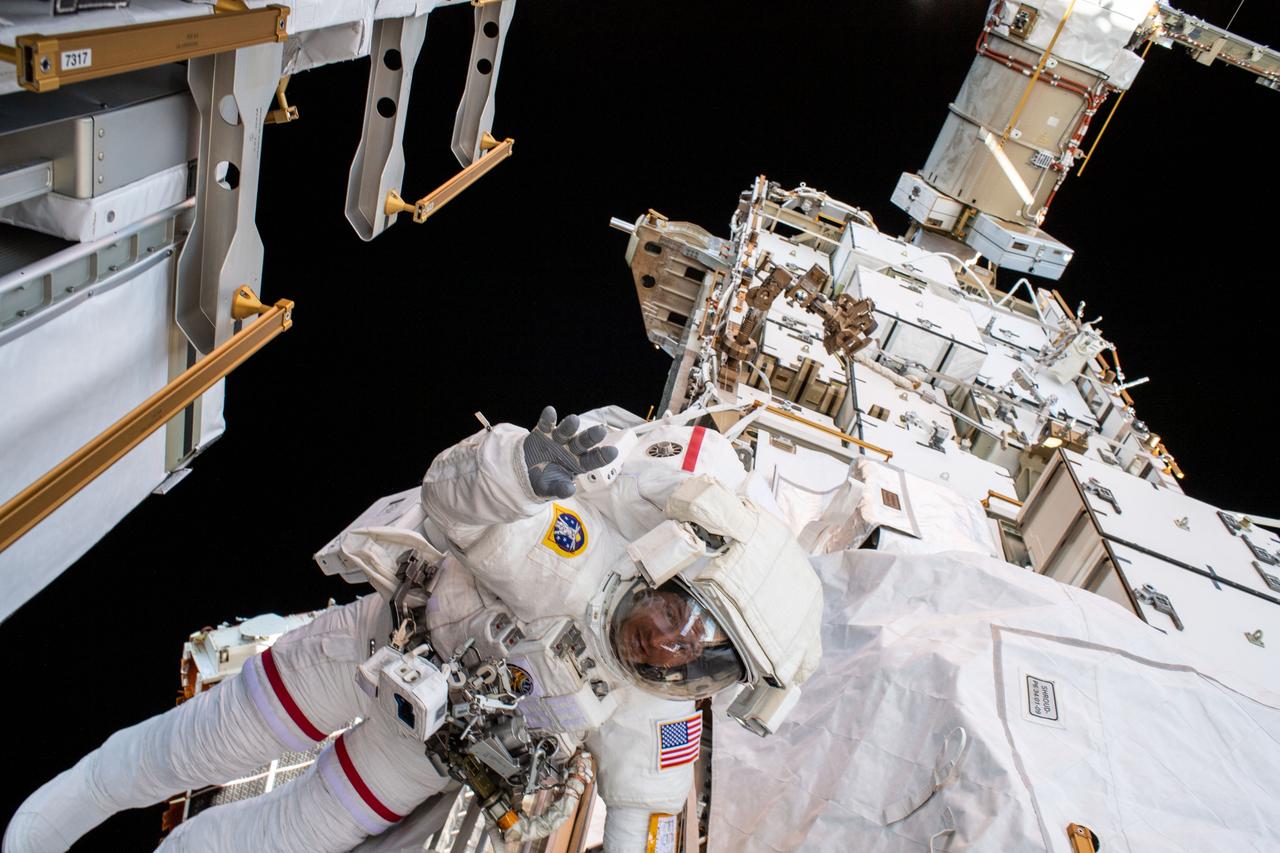
iss061e005520 (Oct. 11, 2019) --- NASA astronaut Andrew Morgan waves to the camera while tethered on the Port 6 (P6) truss segment of the International Space Stations. He and fellow NASA astronaut Christina Koch (out of frame) worked to replace older hydrogen-nickel batteries with newer, more powerful lithium-ion batteries on the P6 truss during the six-hour and 45-minute spacewalk.
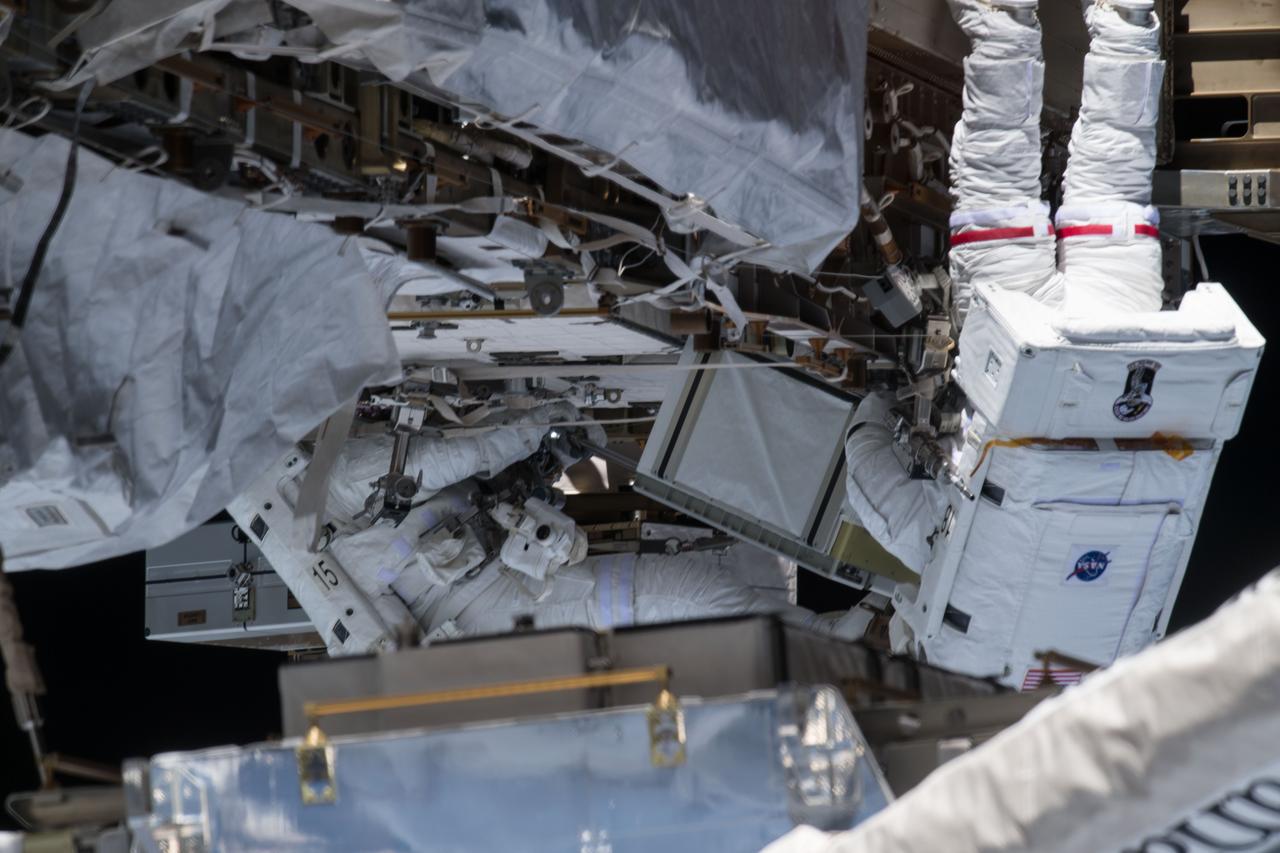
iss061e001727 (Oct. 6, 2019) --- NASA astronaut Christina Koch (right) conducts a spacewalk at the Port-6 (P6) truss structure work site to upgrade International Space Station power systems. She and fellow NASA astronaut Andrew Morgan (left) worked outside in the vacuum of space for seven hours and one minute to begin the latest round of upgrading the station's large nickel-hydrogen batteries with newer, more powerful lithium-ion batteries.

KENNEDY SPACE CENTER, FLA. - Under the watchful eyes of technicians in the Space Station Processing Facility at NASA’s Kennedy Space Center, an overhead crane lowers one of six batteries for the P4 truss in order to replace them. A new battery is being installed on the truss to ensure it does not exceed the lifetime expectancy prior to installation on the International Space Station. The P4 truss is part of the payload for mission 12A, STS-115.
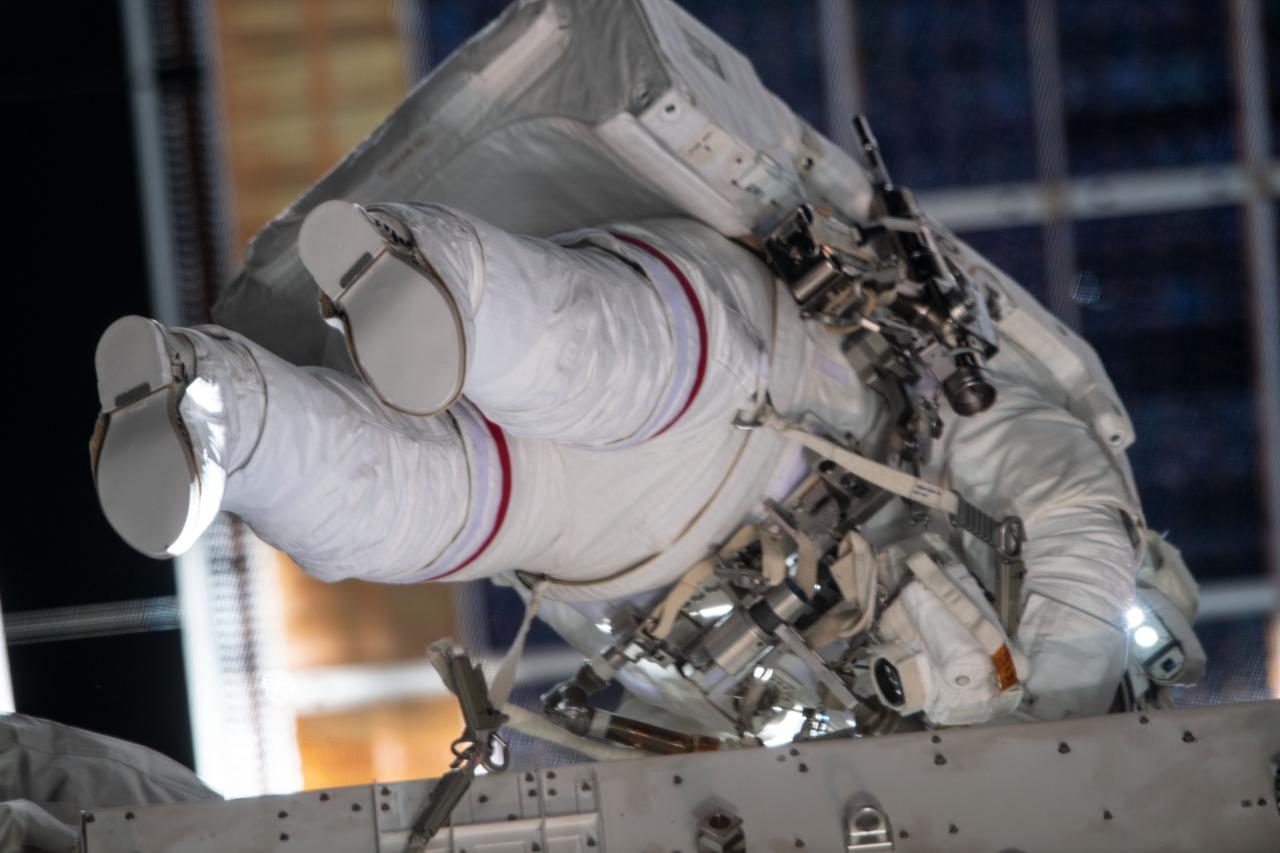
iss061e008880 (Oct. 18, 2019) --- NASA astronaut Christina Koch conducts her fourth spacewalk at the International Space Station. She and fellow NASA astronaut Jessica Meir (out of frame) ventured into the vacuum of space for seven hours and 17 minutes to swap a failed battery charge-discharge unit (BCDU) with a spare during the first all-woman spacewalk. The BCDU regulates the charge to the batteries that collect and distribute solar power to the orbiting lab’s systems.
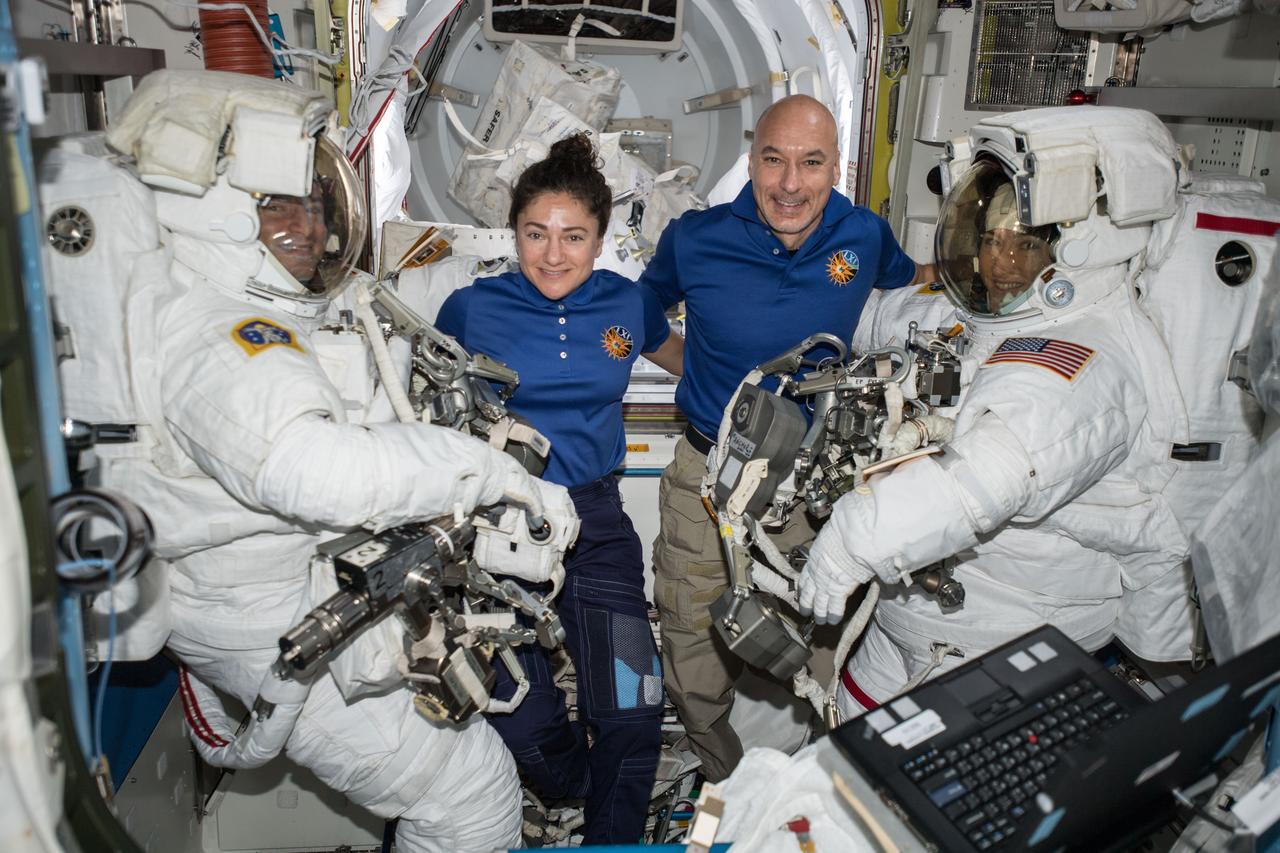
iss061e001608 (Oct. 6, 2019) --- NASA astronauts Andrew Morgan (left) and Christina Koch (right) are suited up in U.S. spacesuits before beginning a seven hour and one minute spacewalk to upgrade the station's large nickel-hydrogen batteries with newer, more powerful lithium-ion batteries. In the center, NASA Flight Engineer Jessica Meir and Commander Luca Parmitano of ESA (European Space Agency) assist the spacewalking duo.
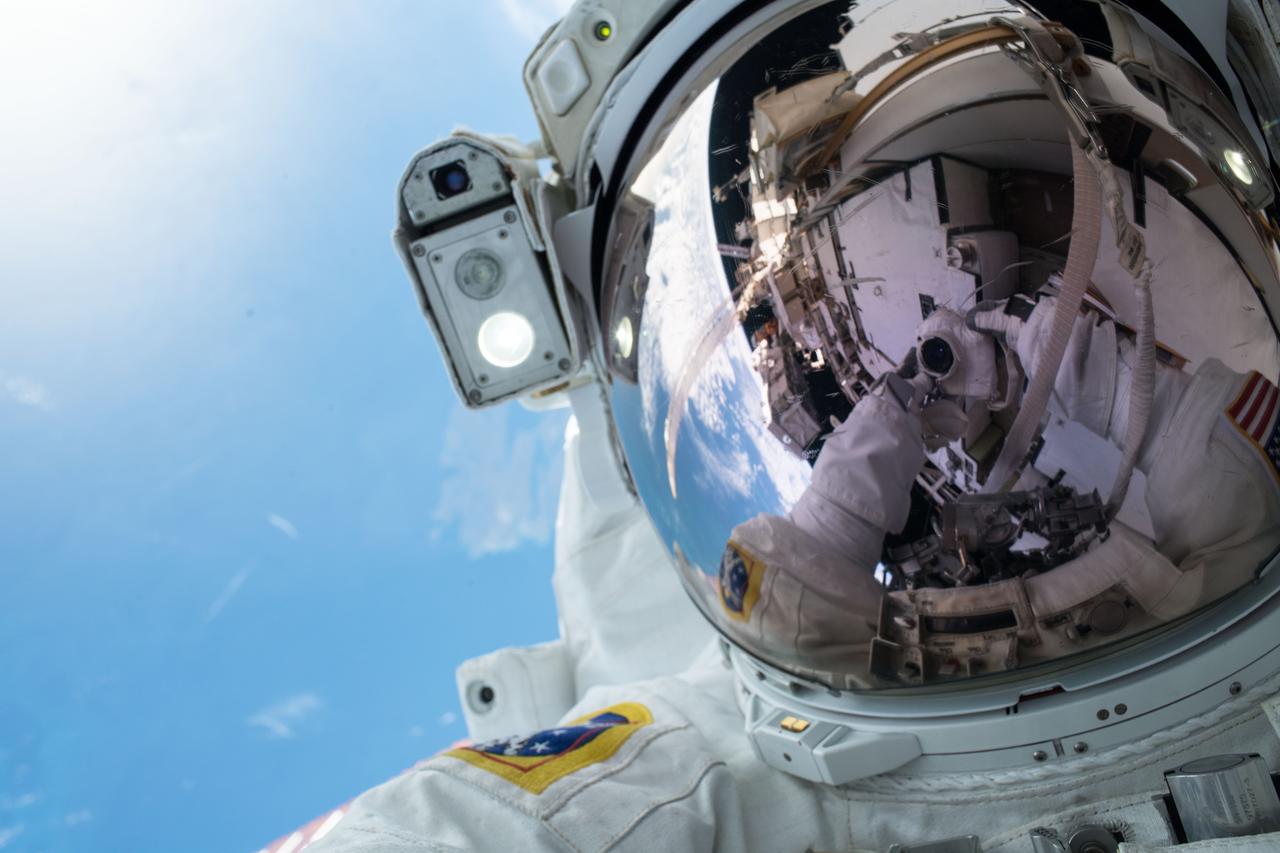
iss061e003499 (Oct. 6, 2019) --- NASA astronaut Andrew Morgan takes an out-of-this-world "space-selfie" during a spacewalk to upgrade International Space Station power systems on the Port- 6 (P6) truss structure. He and fellow NASA astronaut Christina Koch (out of frame) worked outside in the vacuum of space for seven hours and one minute to begin the latest round of upgrading the station's large nickel-hydrogen batteries with newer, more powerful lithium-ion batteries.
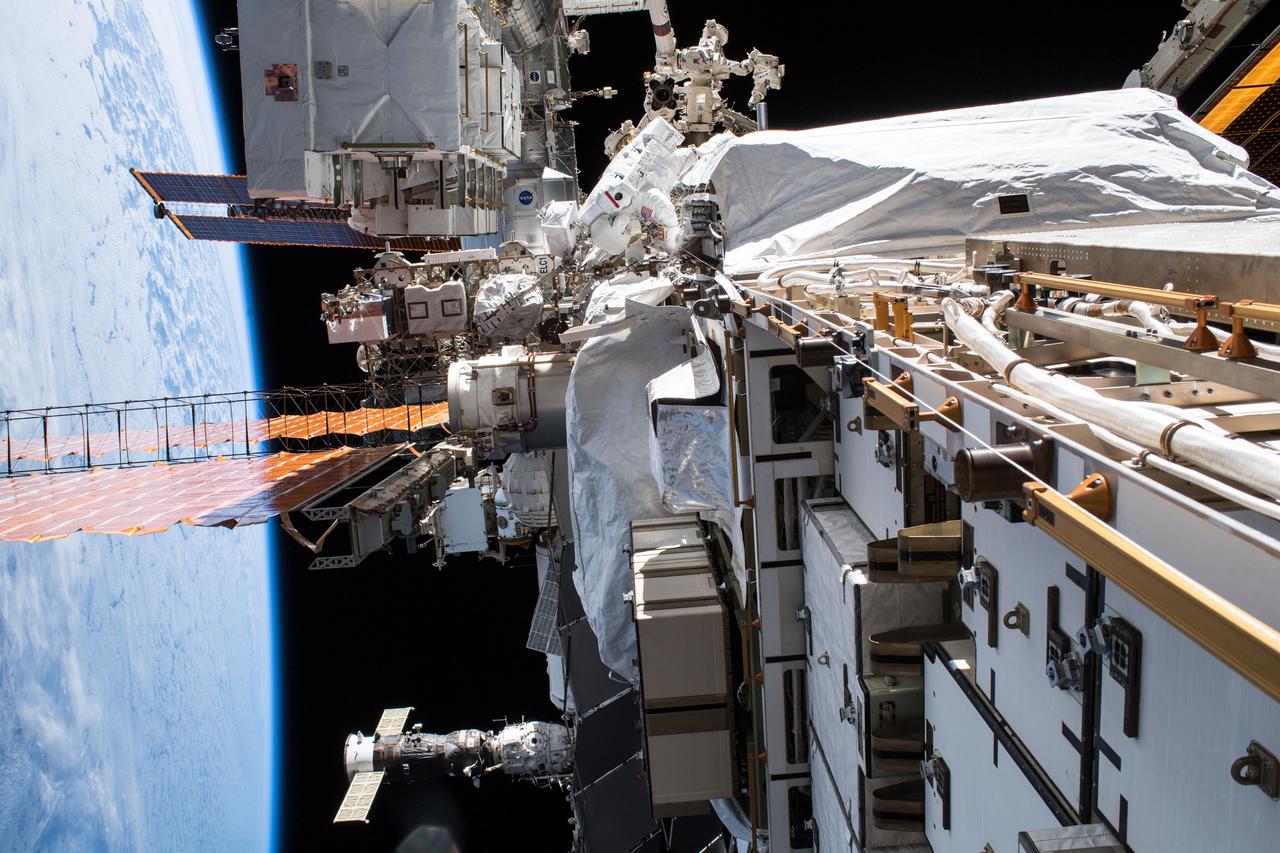
iss061e003327 (Oct. 6, 2019) --- NASA astronaut Christina Koch (top center) conducts a spacewalk at the Port-6 (P6) truss structure work site to upgrade International Space Station power systems. She and fellow NASA astronaut Andrew Morgan (out of frame) worked outside in the vacuum of space for seven hours and one minute to begin the latest round of upgrading the station's large nickel-hydrogen batteries with newer, more powerful lithium-ion batteries.
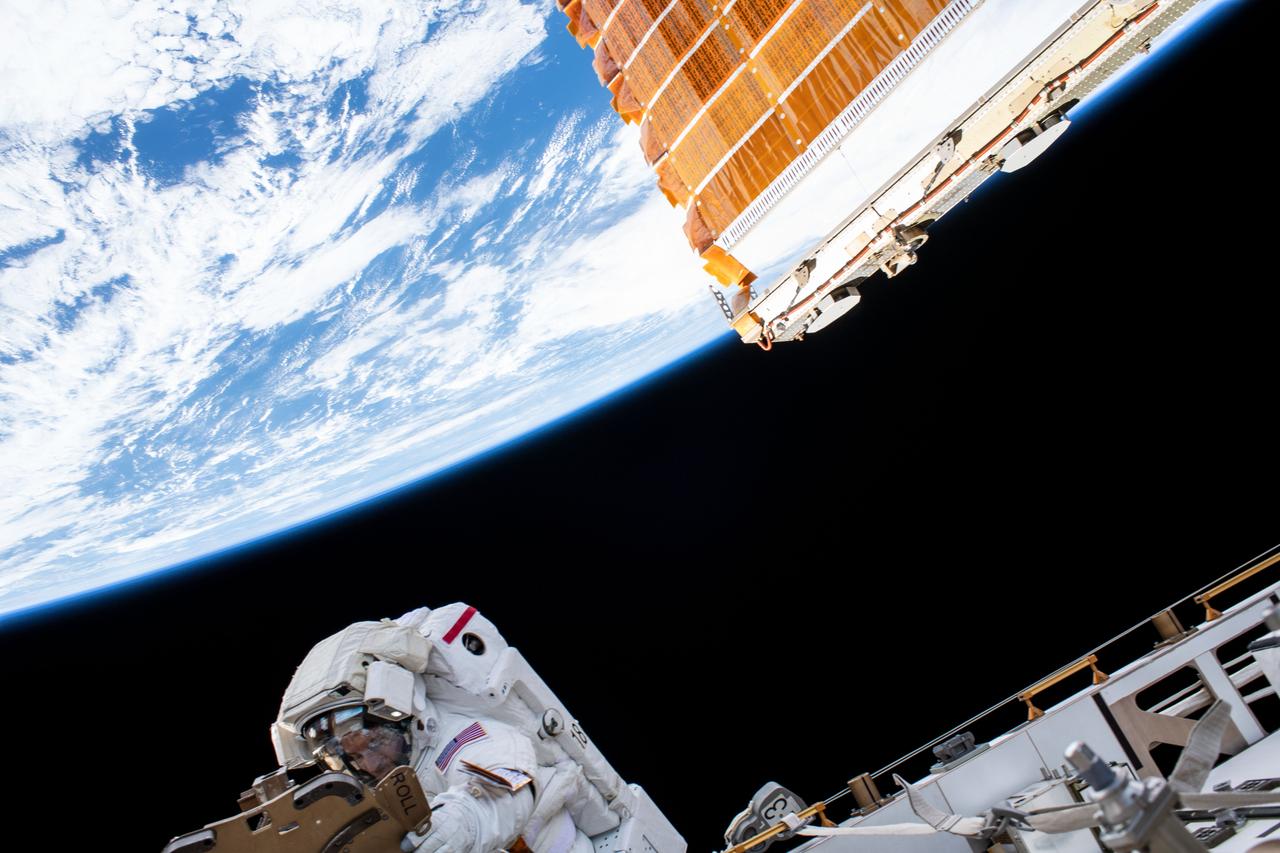
iss061e005514 (Oct. 11, 2019) --- With the Earth 250 miles below him, NASA astronaut Andrew Morgan works on the Port 6 truss segment of the International Space Station to replace older hydrogen-nickel batteries with newer, more powerful lithium-ion batteries. Fellow NASA astronaut Christina Koch (out of frame) assisted Morgan during the six-hour and 45-minute spacewalk.
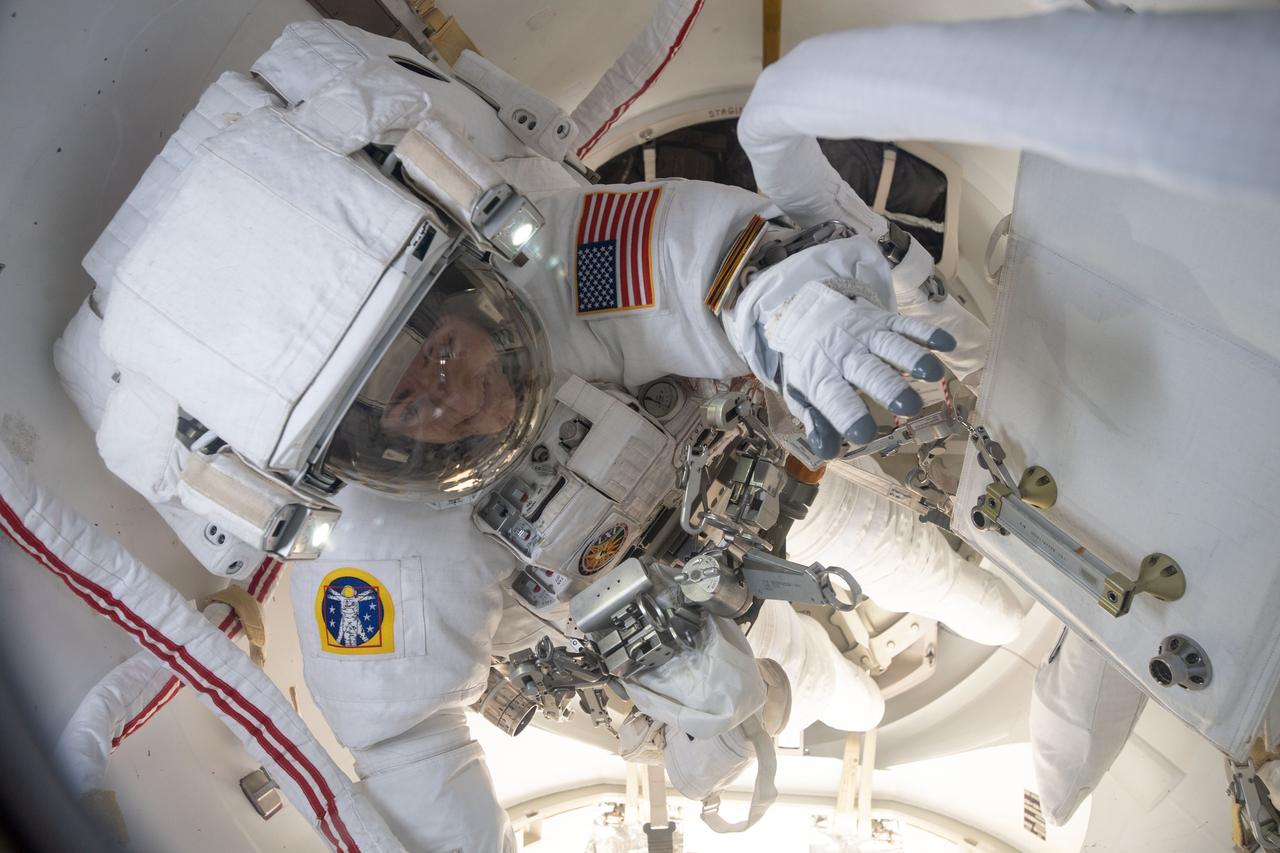
iss061e007080 (Oct. 18, 2019) --- NASA astronaut Jessica Meir is inside the crew lock portion of the U.S. Quest airlock ready to begin her first spacewalk at the International Space Station. She and fellow NASA astronaut Christina Koch (out of frame) would venture into the vacuum of space for seven hours and 17 minutes to swap a failed battery charge-discharge unit (BCDU) with a spare during the first all-woman spacewalk. The BCDU regulates the charge to the batteries that collect and distribute solar power to the orbiting lab’s systems.
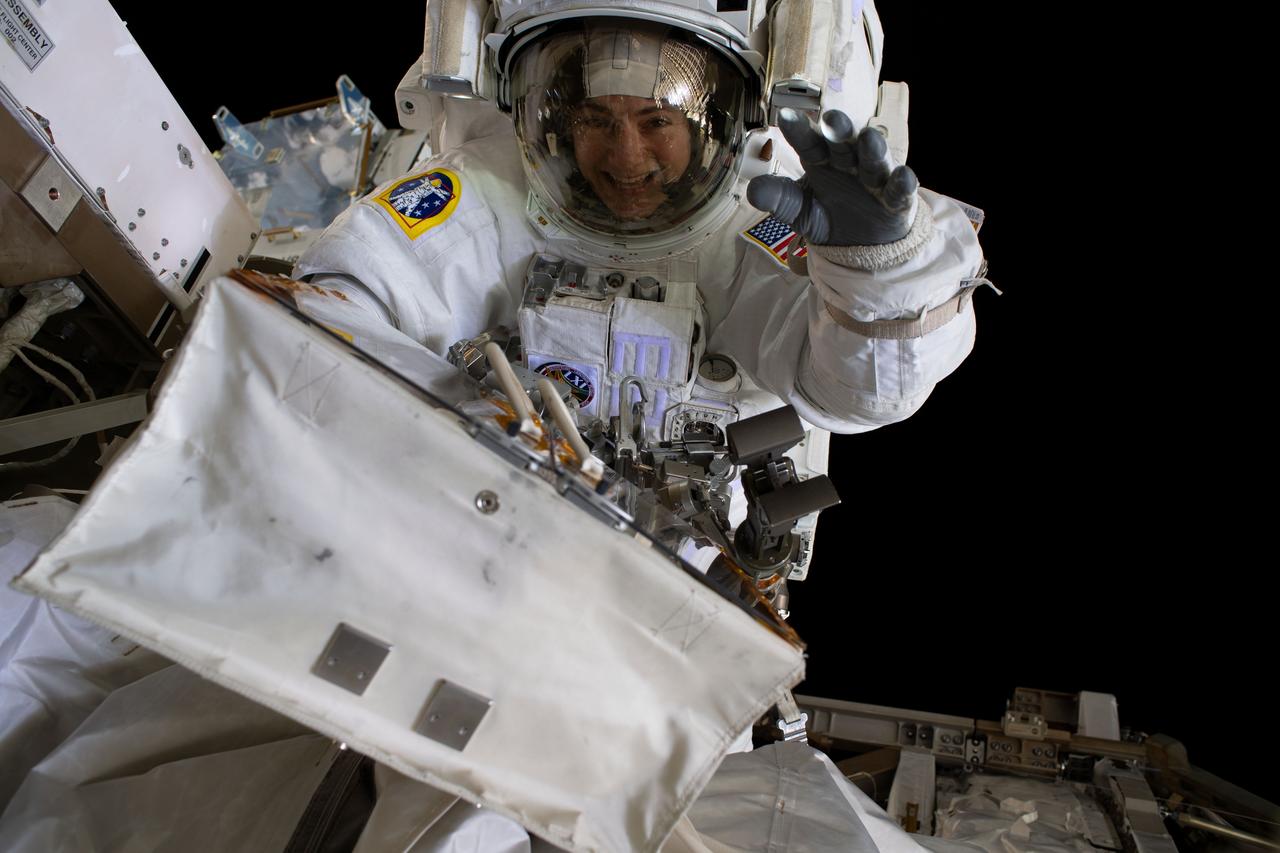
iss061e011841 (Oct. 18, 2019) --- NASA astronaut Jessica Meir waves at the camera during a spacewalk with fellow NASA astronaut Christina Koch (out of frame). They ventured into the vacuum of space for seven hours and 17 minutes to swap a failed battery charge-discharge unit (BCDU) with a spare during the first all-woman spacewalk. The BCDU regulates the charge to the batteries that collect and distribute solar power to the orbiting lab’s systems.
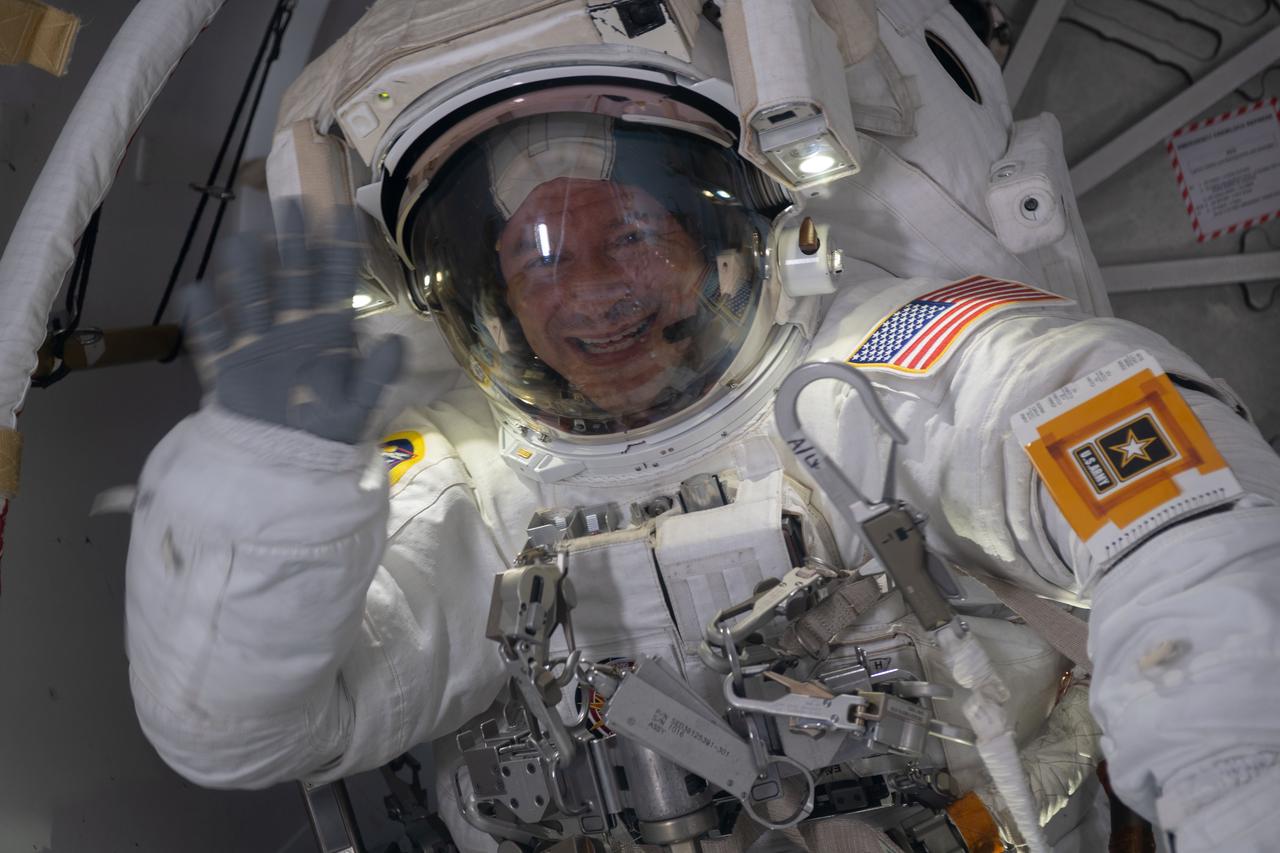
iss061e003683 (Oct. 6, 2019) --- NASA astronaut Andrew Morgan waves from inside the crew lock portion of the Quest airlock where spacewalks in U.S. spacesuits are staged. He would go on to conduct a seven hour and one minute spacewalk with NASA astronaut Christina Koch to begin the latest round of upgrading the station's large nickel-hydrogen batteries with newer, more powerful lithium-ion batteries.

iss061e005307 (Oct. 11, 2019) --- NASA astronaut Christina Koch works while tethered near the Port 6 truss segment of the International Space Station to replace older hydrogen-nickel batteries with newer, more powerful lithium-ion batteries. Fellow NASA astronaut Andrew Morgan (out of frame) assisted Koch during the six-hour and 45-minute spacewalk.
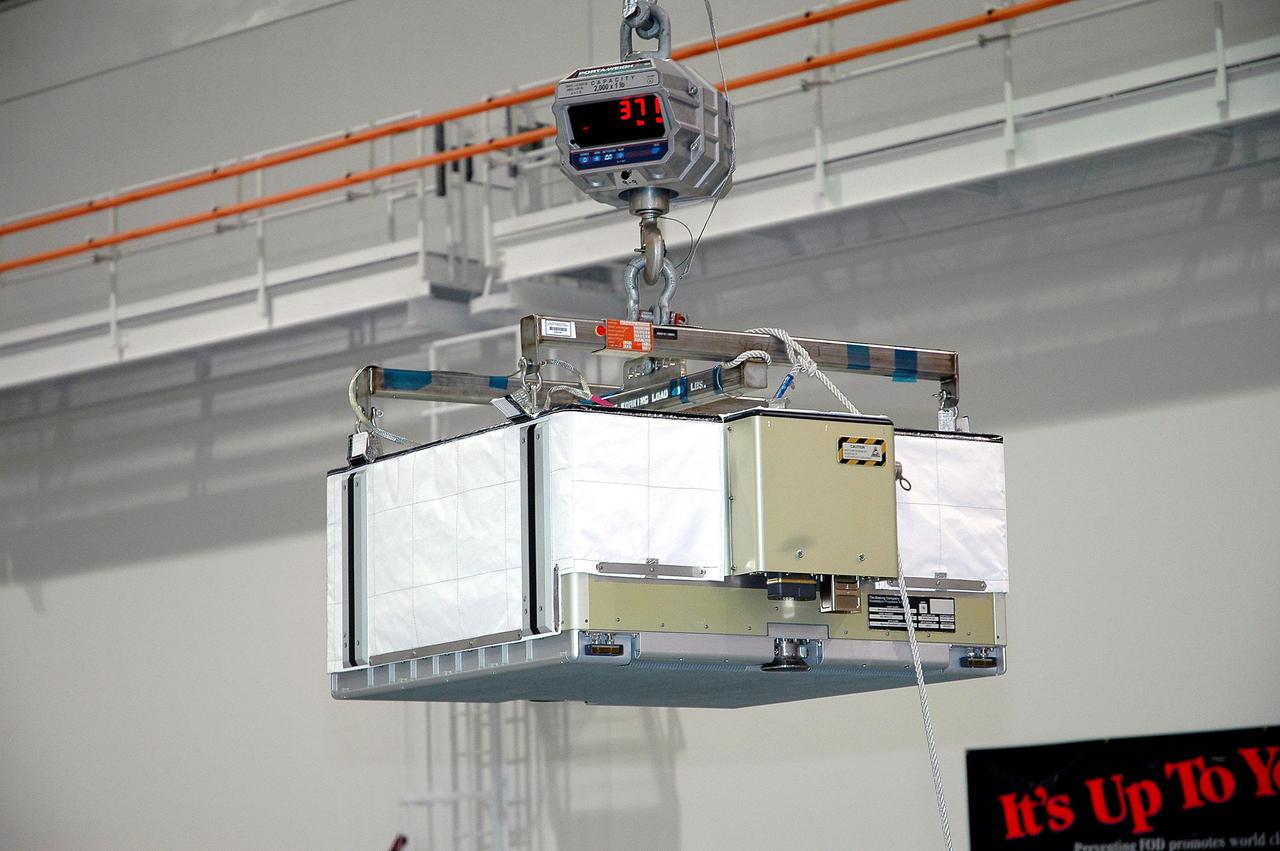
KENNEDY SPACE CENTER, FLA. - In the Space Station Processing Facility at NASA’s Kennedy Space Center, an overhead crane moves one of six batteries for the P4 truss in order to replace them. A new battery is being installed on the truss to ensure it does not exceed the lifetime expectancy prior to installation on the International Space Station. The P4 truss is part of the payload for mission 12A, STS-115.
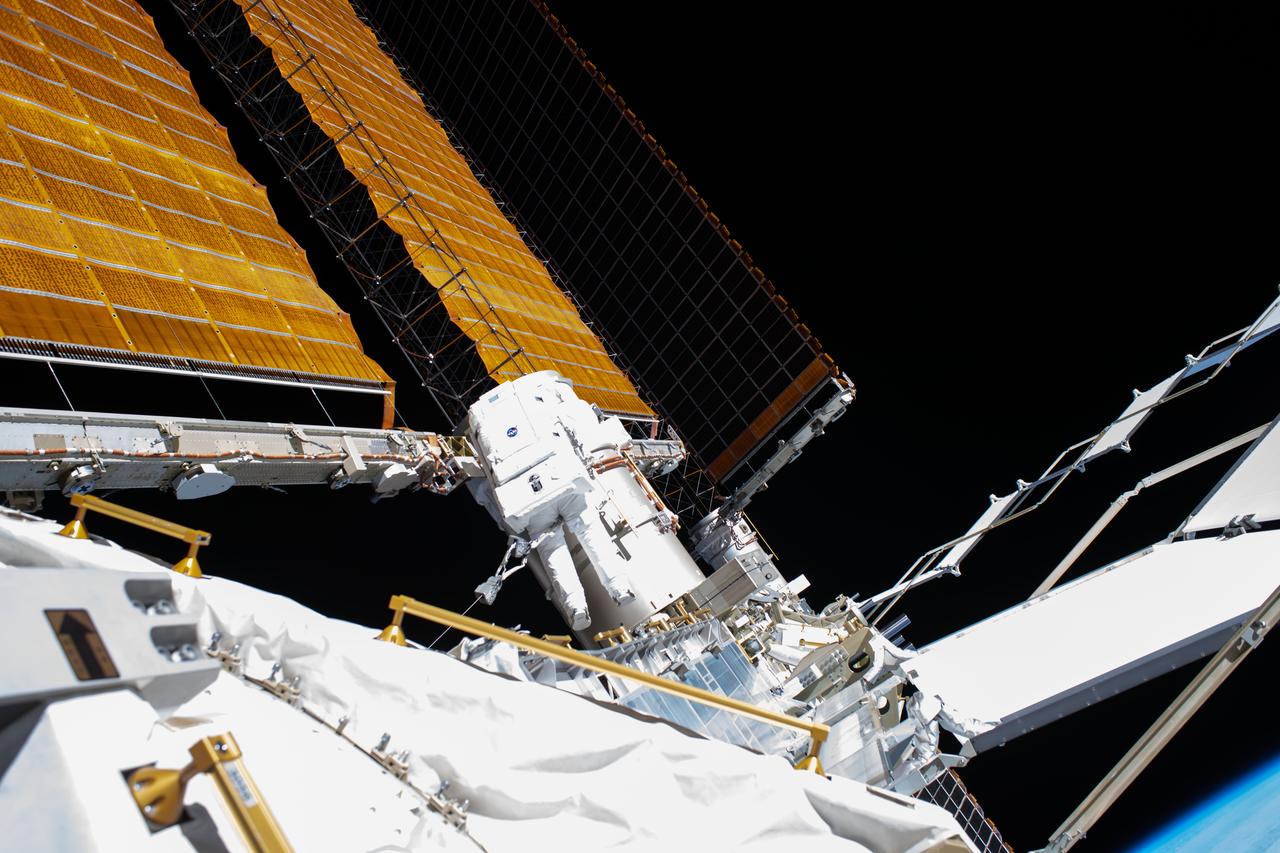
iss063e034124 (July 1, 2020) --- NASA astronaut and Expedition 63 Flight Engineer Bob Behnken (center) works during a six-hour and one-minute spacewalk to swap an aging nickel-hydrogen battery for a new lithium-ion battery on the International Space Station's Starboard-6 truss structure. Protruding diagonally towards the upper left are the station's main solar arrays which are the length of basketball court.
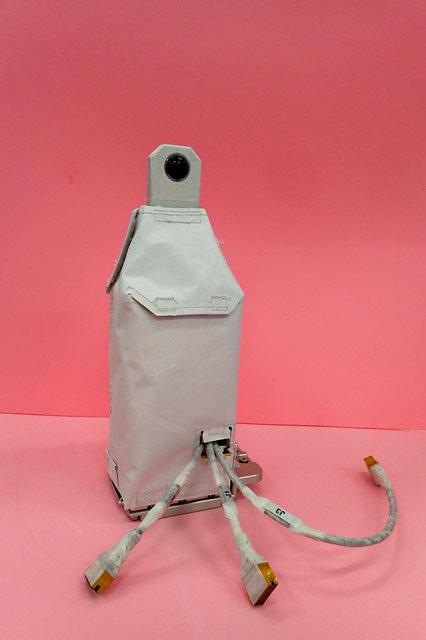
jsc2021e052199 (9/7/2021) --- A preflight view of the Space Demonstration for All Solid-state Lithium Ion Battery (Space AS-Lib) demonstration configured for exposure to the space environment. Space AS-Lib demonstrates operation of a Lithium-ion secondary battery capable of safe, stable operation under extreme temperatures and in a vacuum environment. Image Credit: ©JAXA, Hitz
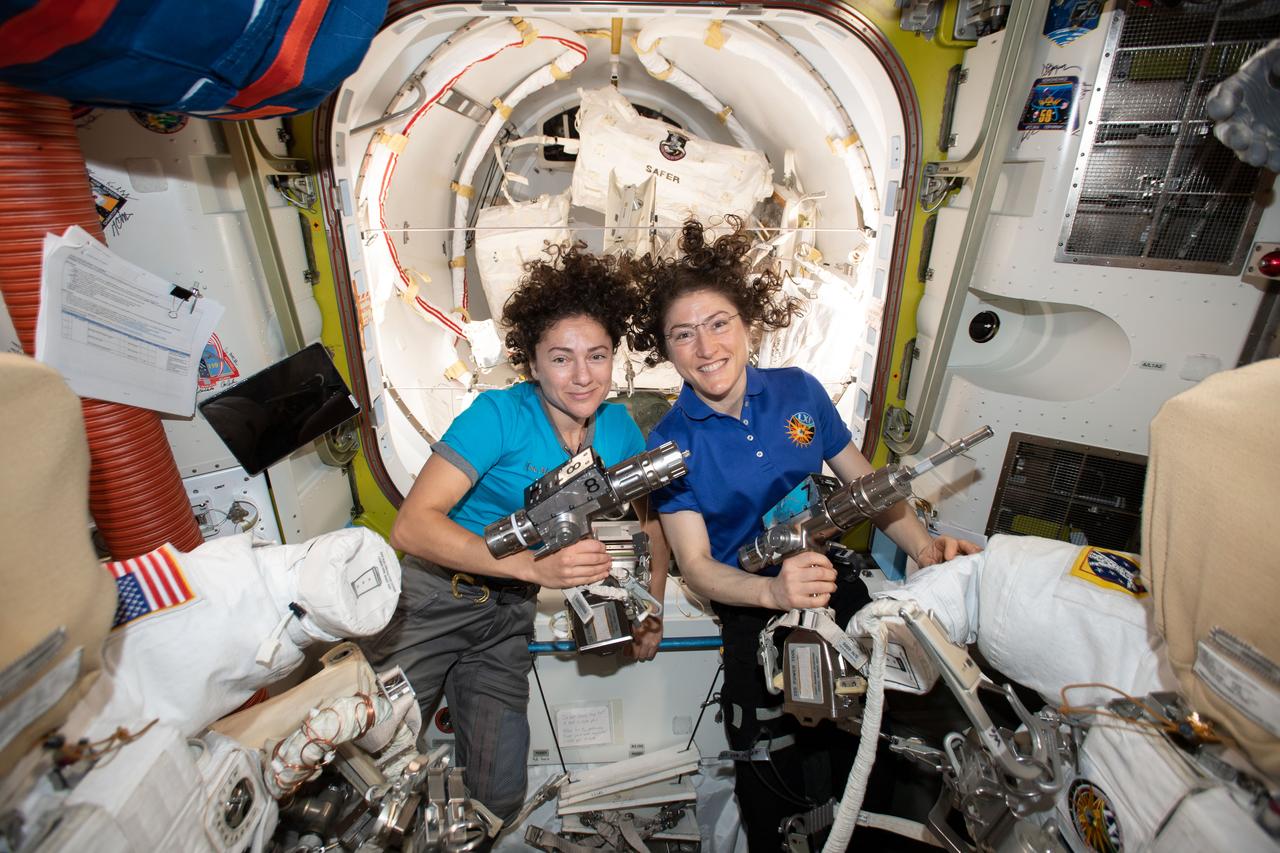
iss061e006501 (Oct. 15, 2019) --- NASA astronauts Jessica Meir (left) and Christina Koch are inside the Quest airlock preparing the U.S. spacesuits and tools they will use on their first spacewalk together. The Expedition 61 flight engineers are holding the pistol grip tools they will use to swap out a failed power controller, also known as a battery charge-discharge unit, that regulates the charge to batteries that collect and distribute power to the International Space Station.
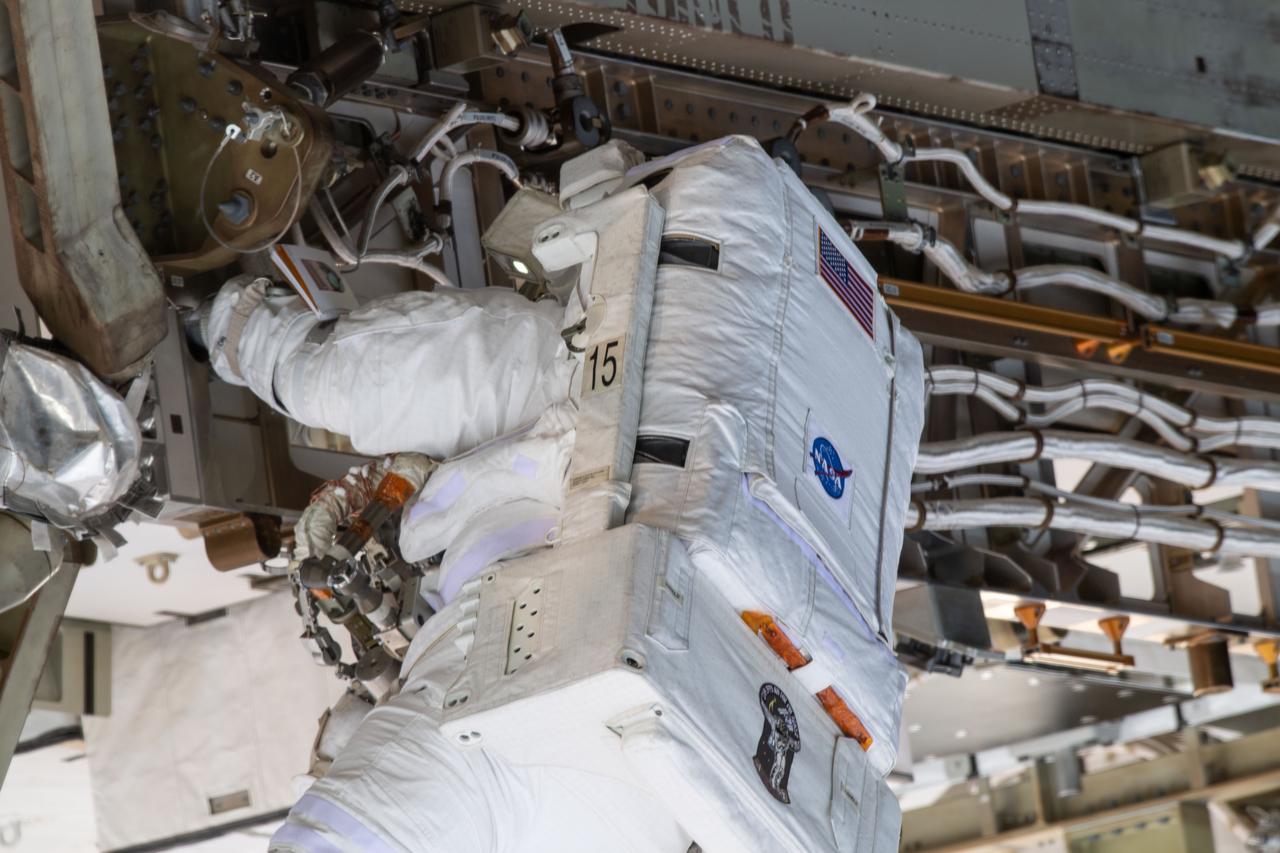
iss061e008788 (Oct. 18, 2019) --- NASA astronaut Jessica Meir conducts her first spacewalk at the International Space Station. She and fellow NASA astronaut Christina Koch (out of frame) ventured into the vacuum of space for seven hours and 17 minutes to swap a failed battery charge-discharge unit (BCDU) with a spare during the first all-woman spacewalk. The BCDU regulates the charge to the batteries that collect and distribute solar power to the orbiting lab’s systems.
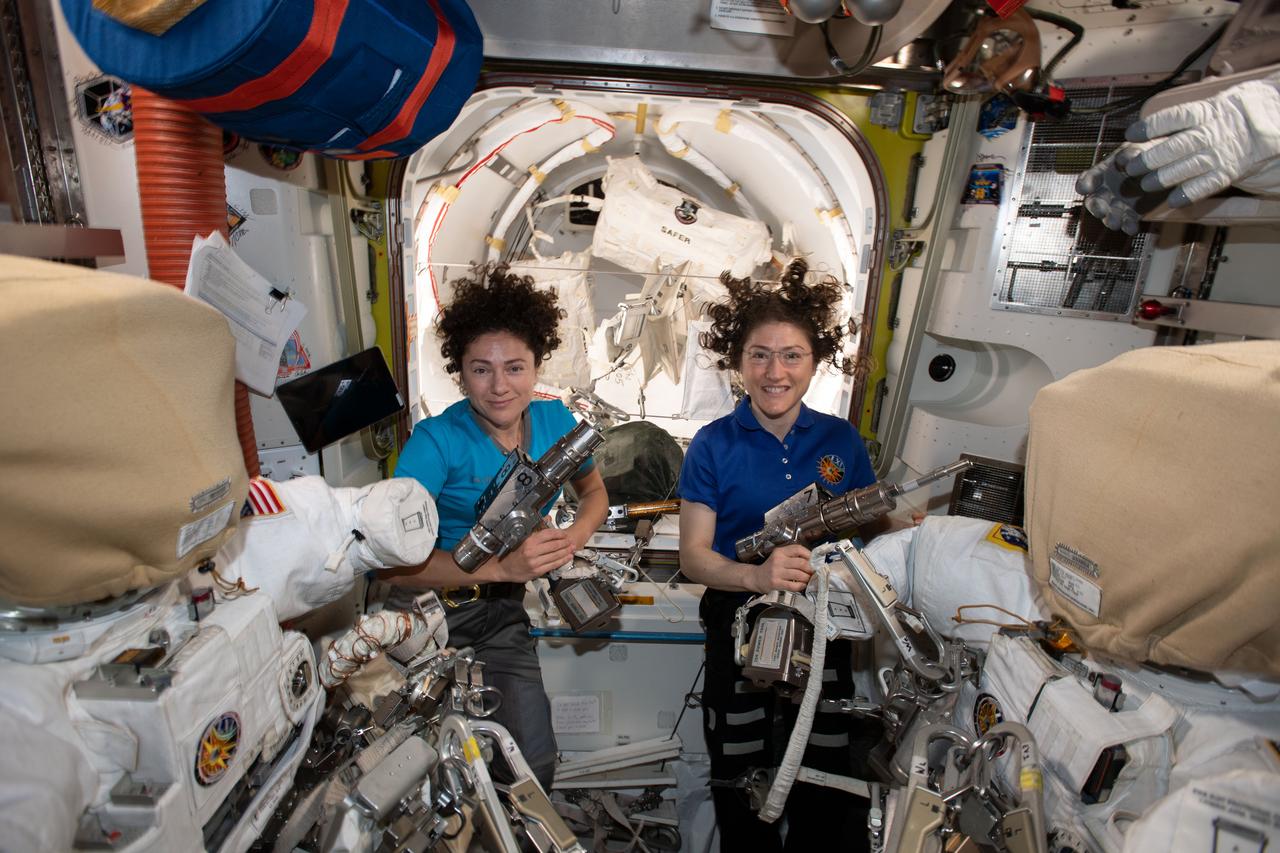
iss061e006498 (Oct. 15, 2019) --- NASA astronauts Jessica Meir (left) and Christina Koch are inside the Quest airlock preparing the U.S. spacesuits and tools they will use on their first spacewalk together. The Expedition 61 flight engineers are holding the pistol grip tools they will use to swap out a failed power controller, also known as a battery charge-discharge unit, that regulates the charge to batteries that collect and distribute power to the International Space Station.
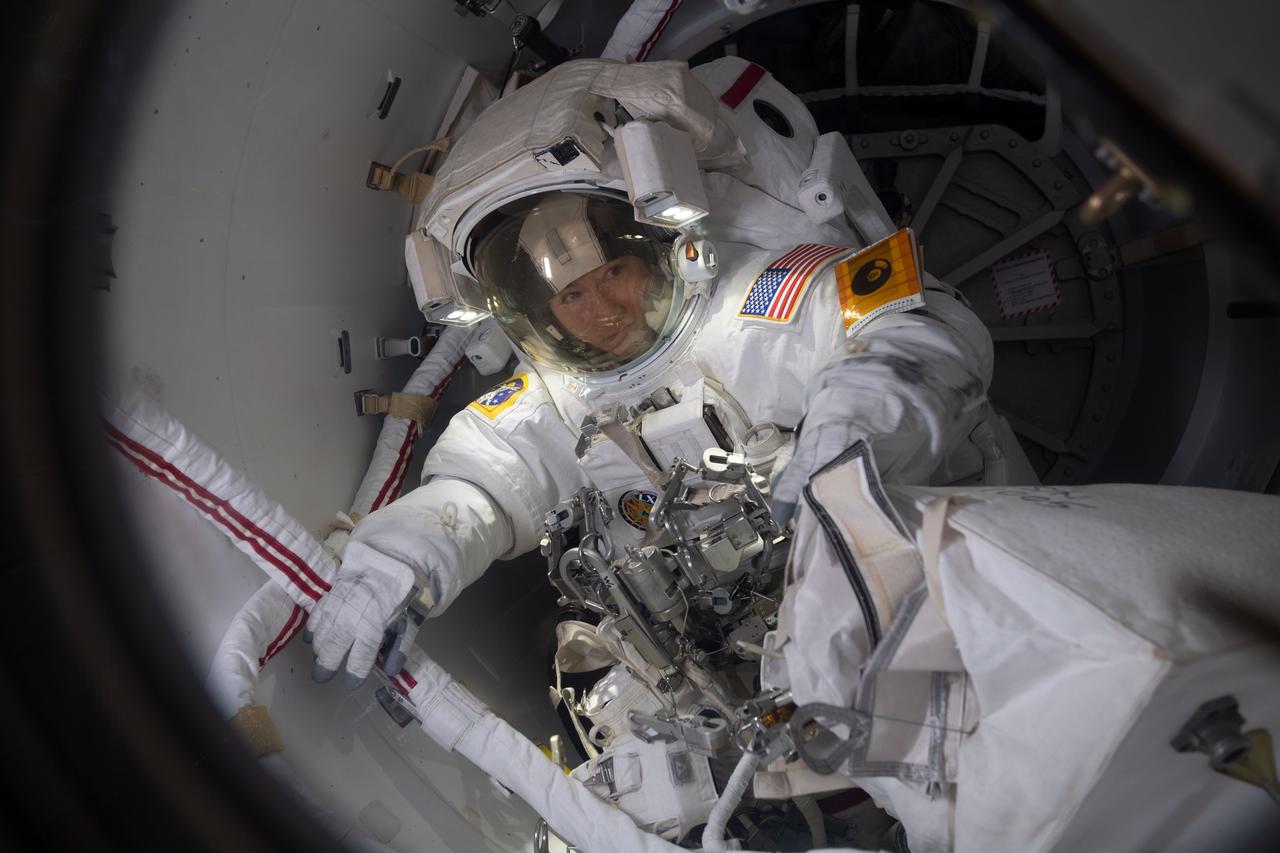
iss061e011934 (Oct. 18, 2019) --- NASA astronaut Christina Koch prepares to exit the crew lock portion of the Quest airlock into the vacuum of space. She and fellow NASA astronaut Jessica Meir (out of frame) conducted a spacewalk for seven hours and 17 minutes to swap a failed battery charge-discharge unit (BCDU) with a spare during the first all-woman spacewalk. The BCDU regulates the charge to the batteries that collect and distribute solar power to the orbiting lab’s systems.
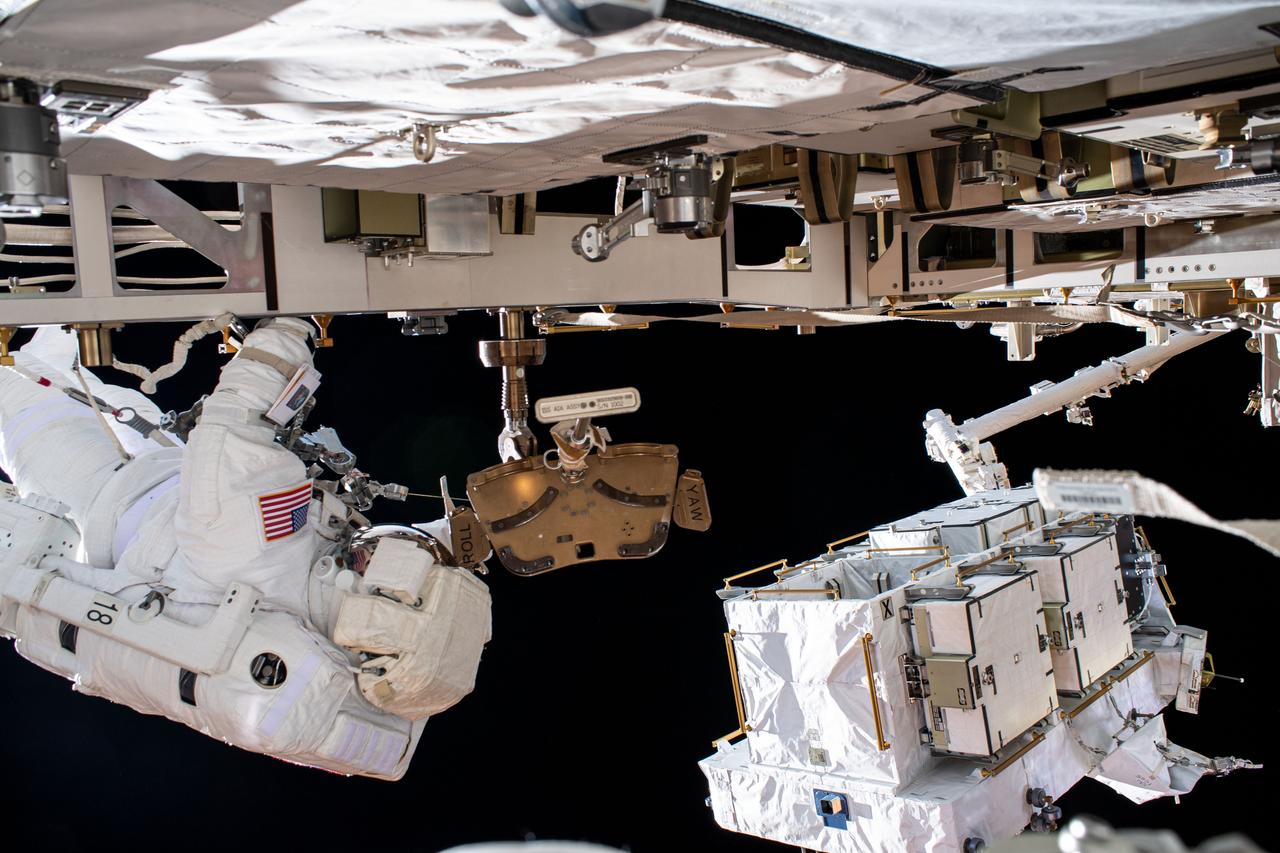
iss063e033414 (June 26, 2020) --- NASA astronaut Bob Behnken (at left) is pictured during a spacewalk to swap batteries and upgrade power systems on the International Space Station's Starboard-6 truss structure. Pictured at lower right, is an external pallet, gripped by the Canadarm2 robotic arm, that housed the batteries replaced on the orbiting lab. Behnken was joined during the six-hour and seven-minute excursion by NASA astronaut Chris Cassidy (out of frame).