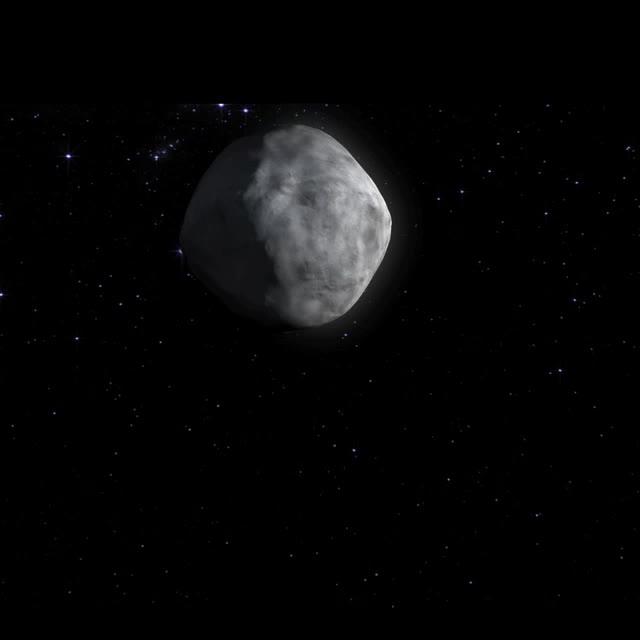
Asteroid Bennu is a time capsule, containing the raw ingredients of the solar system. Bennu has settled in a near-Earth orbit. Today, a NASA spacecraft OSIRIS-REx is going to retrieve a sample to learn more about our Solar System’s history. OSIRIRS-REx is a NASA sample return mission to visit Asteroid Bennu. We plan to grab a piece of Bennu, because it’s a time capsule that can tell us about the origins of our planet and our entire solar system. Watch the full video: <a href="http://youtu.be/gtUgarROs08" rel="nofollow">youtu.be/gtUgarROs08</a> Learn more about NASA’s OSIRIS-REx mission and the making of Bennu’s Journey: <a href="http://www.nasa.gov/content/goddard/bennus-journey/" rel="nofollow">www.nasa.gov/content/goddard/bennus-journey/</a> More information on the OSIRIS-REx mission is available at: <a href="http://www.nasa.gov/mission_pages/osiris-rex/index.html" rel="nofollow">www.nasa.gov/mission_pages/osiris-rex/index.html</a> <a href="http://www.asteroidmission.org" rel="nofollow">www.asteroidmission.org</a> <b><a href="http://www.nasa.gov/audience/formedia/features/MP_Photo_Guidelines.html" rel="nofollow">NASA image use policy.</a></b> <b><a href="http://www.nasa.gov/centers/goddard/home/index.html" rel="nofollow">NASA Goddard Space Flight Center</a></b> enables NASA’s mission through four scientific endeavors: Earth Science, Heliophysics, Solar System Exploration, and Astrophysics. Goddard plays a leading role in NASA’s accomplishments by contributing compelling scientific knowledge to advance the Agency’s mission. <b>Follow us on <a href="http://twitter.com/NASAGoddardPix" rel="nofollow">Twitter</a></b> <b>Like us on <a href="http://www.facebook.com/pages/Greenbelt-MD/NASA-Goddard/395013845897?ref=tsd" rel="nofollow">Facebook</a></b> <b>Find us on <a href="http://instagram.com/nasagoddard?vm=grid" rel="nofollow">Instagram</a></b>

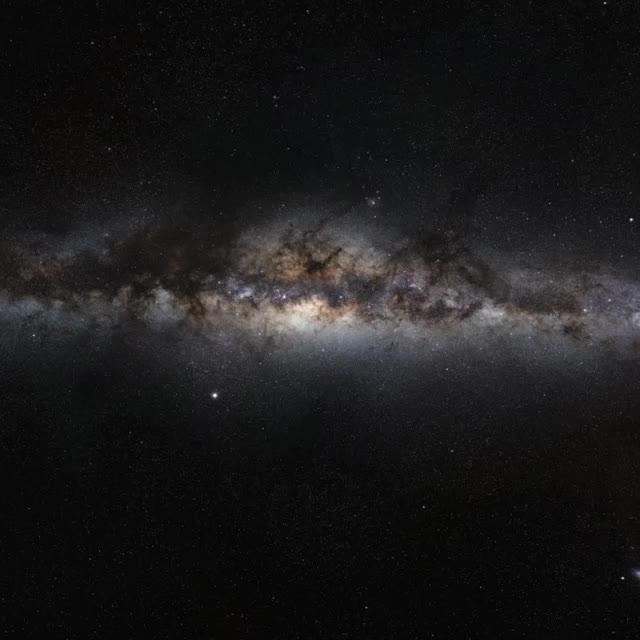
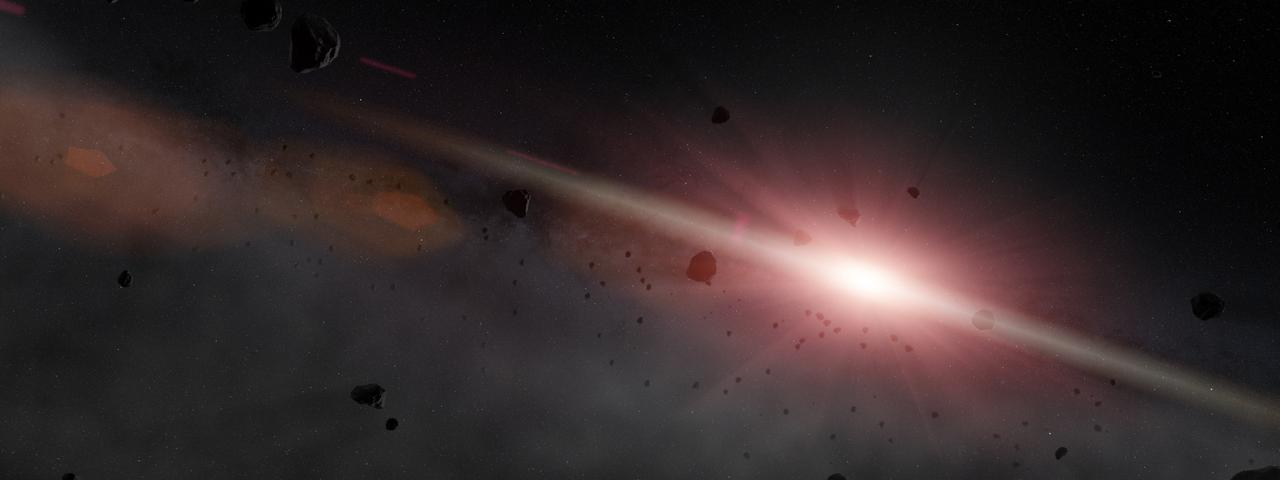
This large asteroid, a proto-star undergoes fusion and our sun is born. This is the parent of Asteroid Bennu. Today, a NASA Spacecraft has the chance to retrieve a sample from Bennu to reveal the history of our solar system. OSIRIRS-REx is a NASA sample return mission to visit Asteroid Bennu. We plan to grab a piece of Bennu, because it’s a time capsule that can tell us about the origins of our planet and our entire solar system. Watch the full video: <a href="http://youtu.be/gtUgarROs08" rel="nofollow">youtu.be/gtUgarROs08</a> Learn more about NASA’s OSIRIS-REx mission and the making of Bennu’s Journey: <a href="http://www.nasa.gov/content/goddard/bennus-journey/" rel="nofollow">www.nasa.gov/content/goddard/bennus-journey/</a> More information on the OSIRIS-REx mission is available at: <a href="http://www.nasa.gov/mission_pages/osiris-rex/index.html" rel="nofollow">www.nasa.gov/mission_pages/osiris-rex/index.html</a> <a href="http://www.asteroidmission.org" rel="nofollow">www.asteroidmission.org</a> <b><a href="http://www.nasa.gov/audience/formedia/features/MP_Photo_Guidelines.html" rel="nofollow">NASA image use policy.</a></b> <b><a href="http://www.nasa.gov/centers/goddard/home/index.html" rel="nofollow">NASA Goddard Space Flight Center</a></b> enables NASA’s mission through four scientific endeavors: Earth Science, Heliophysics, Solar System Exploration, and Astrophysics. Goddard plays a leading role in NASA’s accomplishments by contributing compelling scientific knowledge to advance the Agency’s mission. <b>Follow us on <a href="http://twitter.com/NASAGoddardPix" rel="nofollow">Twitter</a></b> <b>Like us on <a href="http://www.facebook.com/pages/Greenbelt-MD/NASA-Goddard/395013845897?ref=tsd" rel="nofollow">Facebook</a></b> <b>Find us on <a href="http://instagram.com/nasagoddard?vm=grid" rel="nofollow">Instagram</a></b>
The Origins Spectral Interpretation Resource Identification Security -- Regolith Explorer spacecraft (OSIRIS-REx) will travel to a near-Earth asteroid, called Bennu, and bring a sample back to Earth for study. The mission will help scientists investigate how planets formed and how life began, as well as improve our understanding of asteroids that could impact Earth. OSIRIS-REx is scheduled for launch in late 2016. As planned, the spacecraft will reach its asteroid target in 2018 and return a sample to Earth in 2023. Watch the full video: <a href="http://youtu.be/gtUgarROs08" rel="nofollow">youtu.be/gtUgarROs08</a> Learn more about NASA’s OSIRIS-REx mission and the making of Bennu’s Journey: <a href="http://www.nasa.gov/content/goddard/bennus-journey/" rel="nofollow">www.nasa.gov/content/goddard/bennus-journey/</a> More information on the OSIRIS-REx mission is available at: <a href="http://www.nasa.gov/mission_pages/osiris-rex/index.html" rel="nofollow">www.nasa.gov/mission_pages/osiris-rex/index.html</a> <a href="http://www.asteroidmission.org" rel="nofollow">www.asteroidmission.org</a> <b><a href="http://www.nasa.gov/audience/formedia/features/MP_Photo_Guidelines.html" rel="nofollow">NASA image use policy.</a></b> <b><a href="http://www.nasa.gov/centers/goddard/home/index.html" rel="nofollow">NASA Goddard Space Flight Center</a></b> enables NASA’s mission through four scientific endeavors: Earth Science, Heliophysics, Solar System Exploration, and Astrophysics. Goddard plays a leading role in NASA’s accomplishments by contributing compelling scientific knowledge to advance the Agency’s mission. <b>Follow us on <a href="http://twitter.com/NASAGoddardPix" rel="nofollow">Twitter</a></b> <b>Like us on <a href="http://www.facebook.com/pages/Greenbelt-MD/NASA-Goddard/395013845897?ref=tsd" rel="nofollow">Facebook</a></b> <b>Find us on <a href="http://instagram.com/nasagoddard?vm=grid" rel="nofollow">Instagram</a></b>
The Origins Spectral Interpretation Resource Identification Security -- Regolith Explorer spacecraft (OSIRIS-REx) will travel to a near-Earth asteroid, called Bennu, and bring a sample back to Earth for study. The mission will help scientists investigate how planets formed and how life began, as well as improve our understanding of asteroids that could impact Earth. OSIRIS-REx is scheduled for launch in late 2016. As planned, the spacecraft will reach its asteroid target in 2018 and return a sample to Earth in 2023. Watch the full video: <a href="http://youtu.be/gtUgarROs08" rel="nofollow">youtu.be/gtUgarROs08</a> Learn more about NASA’s OSIRIS-REx mission and the making of Bennu’s Journey: <a href="http://www.nasa.gov/content/goddard/bennus-journey/" rel="nofollow">www.nasa.gov/content/goddard/bennus-journey/</a> More information on the OSIRIS-REx mission is available at: <a href="http://www.nasa.gov/mission_pages/osiris-rex/index.html" rel="nofollow">www.nasa.gov/mission_pages/osiris-rex/index.html</a> <a href="http://www.asteroidmission.org" rel="nofollow">www.asteroidmission.org</a> <b><a href="http://www.nasa.gov/audience/formedia/features/MP_Photo_Guidelines.html" rel="nofollow">NASA image use policy.</a></b> <b><a href="http://www.nasa.gov/centers/goddard/home/index.html" rel="nofollow">NASA Goddard Space Flight Center</a></b> enables NASA’s mission through four scientific endeavors: Earth Science, Heliophysics, Solar System Exploration, and Astrophysics. Goddard plays a leading role in NASA’s accomplishments by contributing compelling scientific knowledge to advance the Agency’s mission. <b>Follow us on <a href="http://twitter.com/NASAGoddardPix" rel="nofollow">Twitter</a></b> <b>Like us on <a href="http://www.facebook.com/pages/Greenbelt-MD/NASA-Goddard/395013845897?ref=tsd" rel="nofollow">Facebook</a></b> <b>Find us on <a href="http://instagram.com/nasagoddard?vm=grid" rel="nofollow">Instagram</a></b>
The Origins Spectral Interpretation Resource Identification Security -- Regolith Explorer spacecraft (OSIRIS-REx) will travel to a near-Earth asteroid, called Bennu, and bring a sample back to Earth for study. The mission will help scientists investigate how planets formed and how life began, as well as improve our understanding of asteroids that could impact Earth. OSIRIS-REx is scheduled for launch in late 2016. As planned, the spacecraft will reach its asteroid target in 2018 and return a sample to Earth in 2023. Watch the full video: <a href="http://youtu.be/gtUgarROs08" rel="nofollow">youtu.be/gtUgarROs08</a> Learn more about NASA’s OSIRIS-REx mission and the making of Bennu’s Journey: <a href="http://www.nasa.gov/content/goddard/bennus-journey/" rel="nofollow">www.nasa.gov/content/goddard/bennus-journey/</a> More information on the OSIRIS-REx mission is available at: <a href="http://www.nasa.gov/mission_pages/osiris-rex/index.html" rel="nofollow">www.nasa.gov/mission_pages/osiris-rex/index.html</a> <a href="http://www.asteroidmission.org" rel="nofollow">www.asteroidmission.org</a> <b><a href="http://www.nasa.gov/audience/formedia/features/MP_Photo_Guidelines.html" rel="nofollow">NASA image use policy.</a></b> <b><a href="http://www.nasa.gov/centers/goddard/home/index.html" rel="nofollow">NASA Goddard Space Flight Center</a></b> enables NASA’s mission through four scientific endeavors: Earth Science, Heliophysics, Solar System Exploration, and Astrophysics. Goddard plays a leading role in NASA’s accomplishments by contributing compelling scientific knowledge to advance the Agency’s mission. <b>Follow us on <a href="http://twitter.com/NASAGoddardPix" rel="nofollow">Twitter</a></b> <b>Like us on <a href="http://www.facebook.com/pages/Greenbelt-MD/NASA-Goddard/395013845897?ref=tsd" rel="nofollow">Facebook</a></b> <b>Find us on <a href="http://instagram.com/nasagoddard?vm=grid" rel="nofollow">Instagram</a></b>
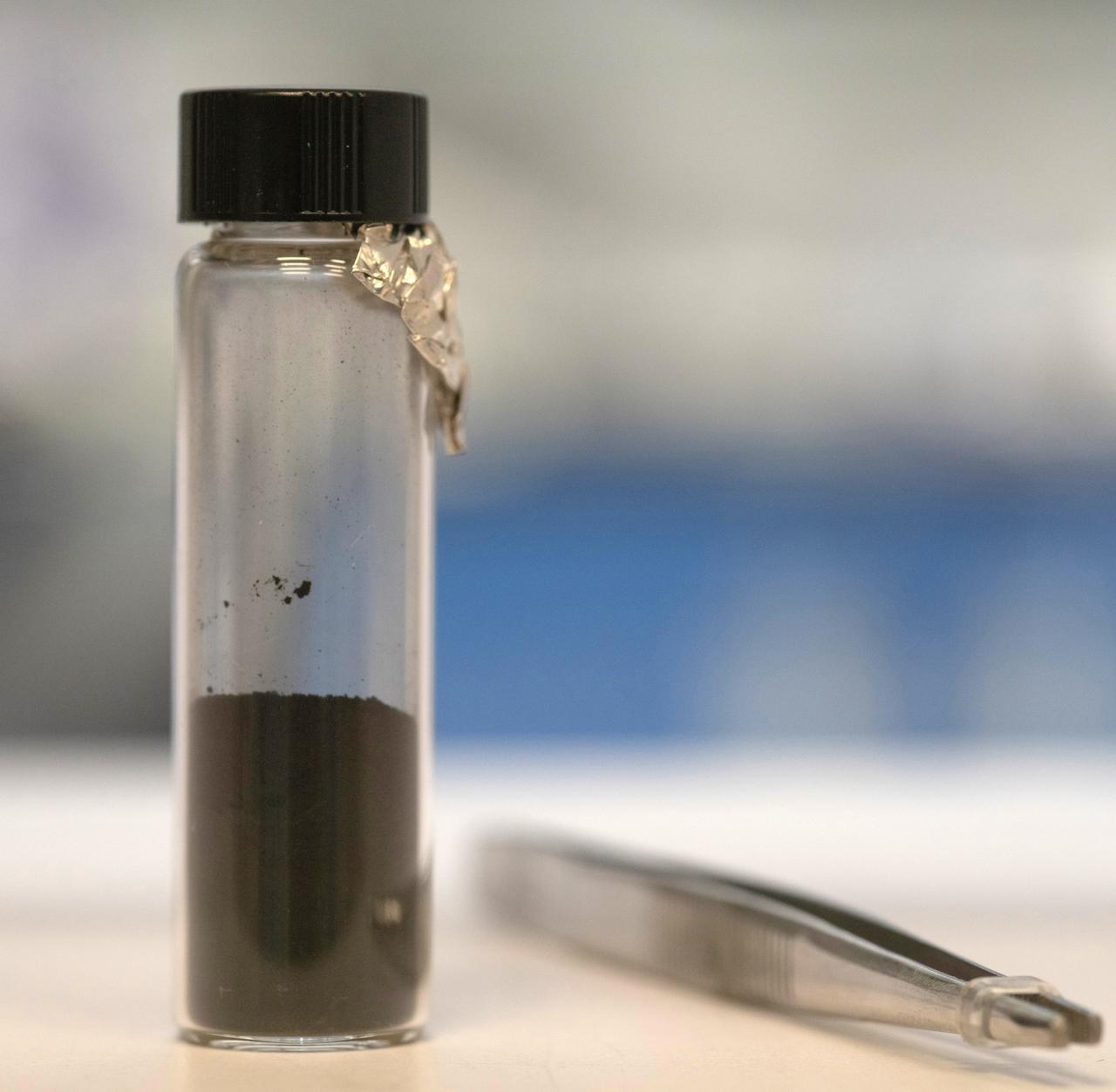
Photographed inside a laboratory at NASA's Goddard Space Flight Center in Greenbetl, Maryland, this vial contains a portion of the asteroid Bennu sample delivered to Earth by the agency's OSIRIS-REx (Origins, Spectral Interpretation, Resource Identification, and Security – Regolith Explorer) mission.
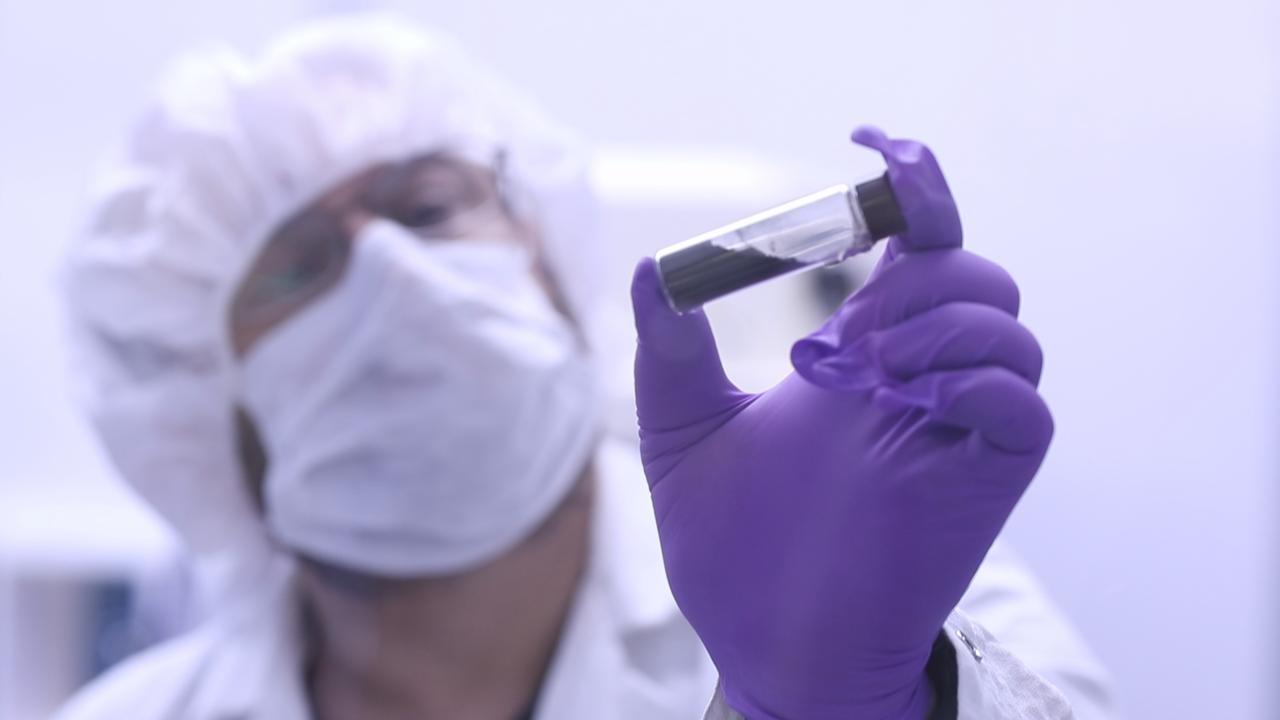
In this video frame, Jason Dworkin holds up a vial that contains part of the sample from asteroid Bennu delivered to Earth by NASA's OSIRIS-REx (Origins, Spectral Interpretation, Resource Identification, and Security – Regolith Explorer) mission in 2023. Dworkin is the mission's project scientist at NASA's Goddard Space Flight Center in Greenbelt, Maryland.

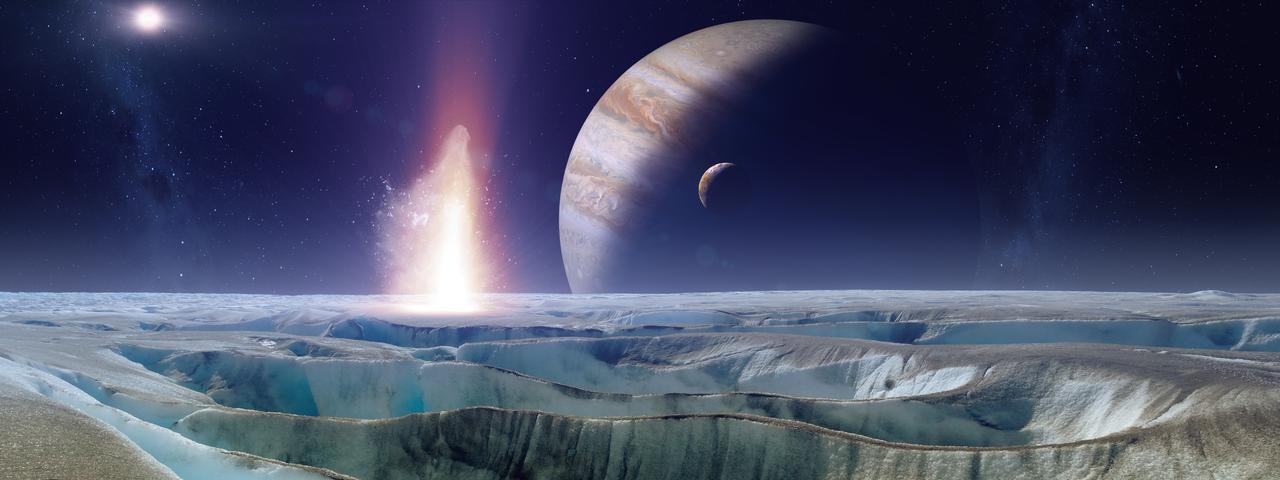
Five hundred million years after the sun was born, Jupiter’s massive gravity disrupts countless asteroids and comets. These hammer down on the inner planets. Did this impact deliver water and organics? The key ingredients to life? OSIRIRS-REx is a NASA sample return mission to visit Asteroid Bennu. We plan to grab a piece of Bennu, because it’s a time capsule that can tell us about the origins of our planet and our entire solar system. Watch the full video: <a href="http://youtu.be/gtUgarROs08" rel="nofollow">youtu.be/gtUgarROs08</a> Learn more about NASA’s OSIRIS-REx mission and the making of Bennu’s Journey: <a href="http://www.nasa.gov/content/goddard/bennus-journey/" rel="nofollow">www.nasa.gov/content/goddard/bennus-journey/</a> More information on the OSIRIS-REx mission is available at: <a href="http://www.nasa.gov/mission_pages/osiris-rex/index.html" rel="nofollow">www.nasa.gov/mission_pages/osiris-rex/index.html</a> <a href="http://www.asteroidmission.org" rel="nofollow">www.asteroidmission.org</a> <b><a href="http://www.nasa.gov/audience/formedia/features/MP_Photo_Guidelines.html" rel="nofollow">NASA image use policy.</a></b> <b><a href="http://www.nasa.gov/centers/goddard/home/index.html" rel="nofollow">NASA Goddard Space Flight Center</a></b> enables NASA’s mission through four scientific endeavors: Earth Science, Heliophysics, Solar System Exploration, and Astrophysics. Goddard plays a leading role in NASA’s accomplishments by contributing compelling scientific knowledge to advance the Agency’s mission. <b>Follow us on <a href="http://twitter.com/NASAGoddardPix" rel="nofollow">Twitter</a></b> <b>Like us on <a href="http://www.facebook.com/pages/Greenbelt-MD/NASA-Goddard/395013845897?ref=tsd" rel="nofollow">Facebook</a></b> <b>Find us on <a href="http://instagram.com/nasagoddard?vm=grid" rel="nofollow">Instagram</a></b>
The Origins Spectral Interpretation Resource Identification Security -- Regolith Explorer spacecraft (OSIRIS-REx) will travel to a near-Earth asteroid, called Bennu, and bring a sample back to Earth for study. The mission will help scientists investigate how planets formed and how life began, as well as improve our understanding of asteroids that could impact Earth. OSIRIS-REx is scheduled for launch in late 2016. As planned, the spacecraft will reach its asteroid target in 2018 and return a sample to Earth in 2023. Watch the full video: <a href="http://youtu.be/gtUgarROs08" rel="nofollow">youtu.be/gtUgarROs08</a> Learn more about NASA’s OSIRIS-REx mission and the making of Bennu’s Journey: <a href="http://www.nasa.gov/content/goddard/bennus-journey/" rel="nofollow">www.nasa.gov/content/goddard/bennus-journey/</a> More information on the OSIRIS-REx mission is available at: <a href="http://www.nasa.gov/mission_pages/osiris-rex/index.html" rel="nofollow">www.nasa.gov/mission_pages/osiris-rex/index.html</a> <a href="http://www.asteroidmission.org" rel="nofollow">www.asteroidmission.org</a> <b><a href="http://www.nasa.gov/audience/formedia/features/MP_Photo_Guidelines.html" rel="nofollow">NASA image use policy.</a></b> <b><a href="http://www.nasa.gov/centers/goddard/home/index.html" rel="nofollow">NASA Goddard Space Flight Center</a></b> enables NASA’s mission through four scientific endeavors: Earth Science, Heliophysics, Solar System Exploration, and Astrophysics. Goddard plays a leading role in NASA’s accomplishments by contributing compelling scientific knowledge to advance the Agency’s mission. <b>Follow us on <a href="http://twitter.com/NASAGoddardPix" rel="nofollow">Twitter</a></b> <b>Like us on <a href="http://www.facebook.com/pages/Greenbelt-MD/NASA-Goddard/395013845897?ref=tsd" rel="nofollow">Facebook</a></b> <b>Find us on <a href="http://instagram.com/nasagoddard?vm=grid" rel="nofollow">Instagram</a></b>
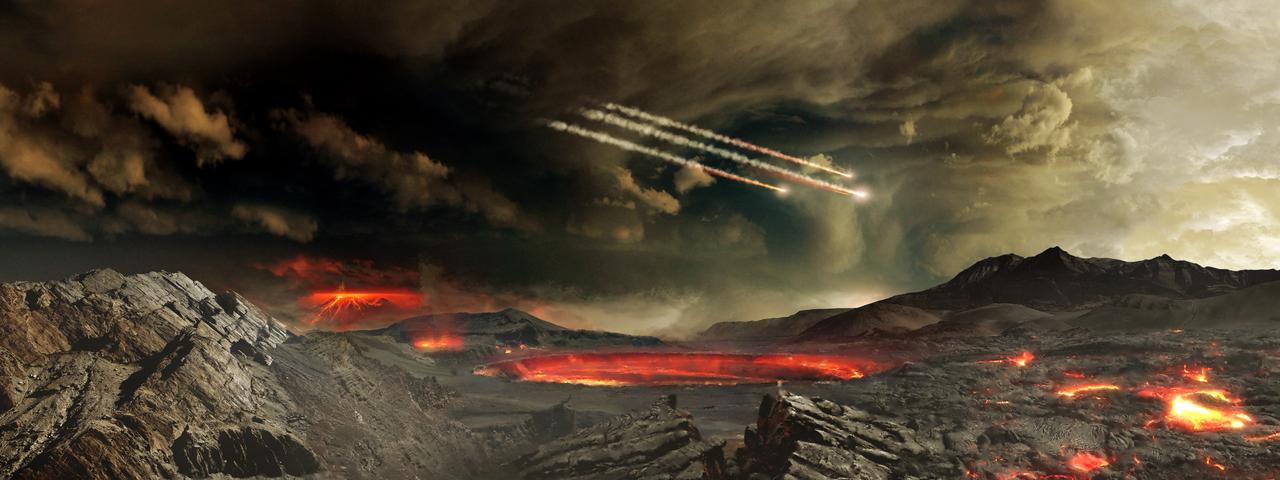
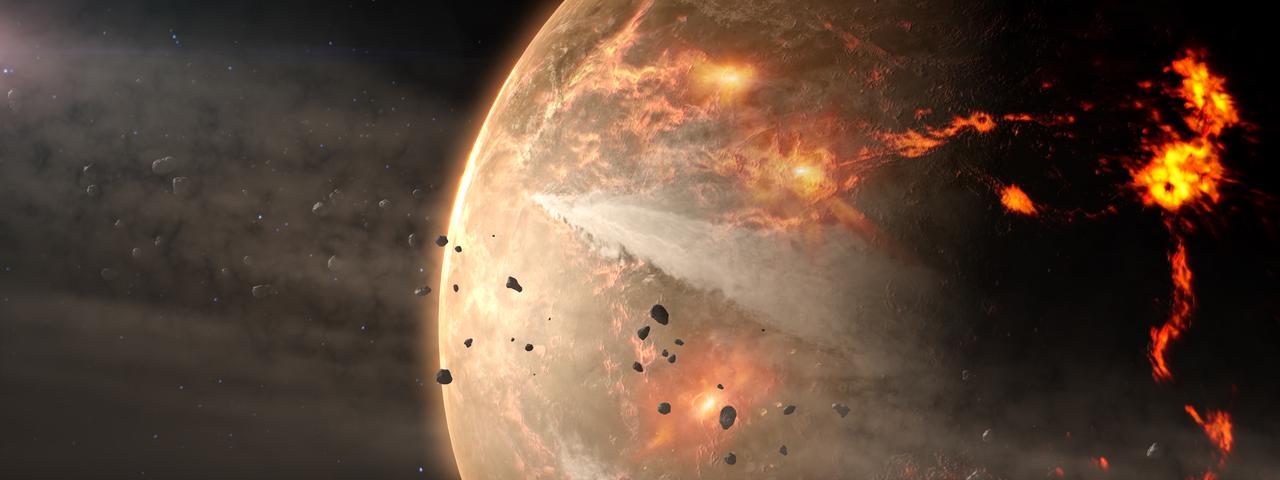
This is an artist's concept of the young Earth being bombarded by asteroids. Scientists think these impacts could have delivered significant amounts of organic matter and water to Earth. Image Credit: NASA's Goddard Space Flight Center Conceptual Image Lab The Origins Spectral Interpretation Resource Identification Security -- Regolith Explorer spacecraft (OSIRIS-REx) will travel to a near-Earth asteroid, called Bennu, and bring a sample back to Earth for study. The mission will help scientists investigate how planets formed and how life began, as well as improve our understanding of asteroids that could impact Earth. OSIRIS-REx is scheduled for launch in late 2016. As planned, the spacecraft will reach its asteroid target in 2018 and return a sample to Earth in 2023. Watch the full video: <a href="http://youtu.be/gtUgarROs08" rel="nofollow">youtu.be/gtUgarROs08</a> Learn more about NASA’s OSIRIS-REx mission and the making of Bennu’s Journey: <a href="http://www.nasa.gov/content/goddard/bennus-journey/" rel="nofollow">www.nasa.gov/content/goddard/bennus-journey/</a> More information on the OSIRIS-REx mission is available at: <a href="http://www.nasa.gov/mission_pages/osiris-rex/index.html" rel="nofollow">www.nasa.gov/mission_pages/osiris-rex/index.html</a> <a href="http://www.asteroidmission.org" rel="nofollow">www.asteroidmission.org</a> <b><a href="http://www.nasa.gov/audience/formedia/features/MP_Photo_Guidelines.html" rel="nofollow">NASA image use policy.</a></b> <b><a href="http://www.nasa.gov/centers/goddard/home/index.html" rel="nofollow">NASA Goddard Space Flight Center</a></b> enables NASA’s mission through four scientific endeavors: Earth Science, Heliophysics, Solar System Exploration, and Astrophysics. Goddard plays a leading role in NASA’s accomplishments by contributing compelling scientific knowledge to advance the Agency’s mission. <b>Follow us on <a href="http://twitter.com/NASAGoddardPix" rel="nofollow">Twitter</a></b> <b>Like us on <a href="http://www.facebook.com/pages/Greenbelt-MD/NASA-Goddard/395013845897?ref=tsd" rel="nofollow">Facebook</a></b> <b>Find us on <a href="http://instagram.com/nasagoddard?vm=grid" rel="nofollow">Instagram</a></b>
The Origins Spectral Interpretation Resource Identification Security -- Regolith Explorer spacecraft (OSIRIS-REx) will travel to a near-Earth asteroid, called Bennu, and bring a sample back to Earth for study. The mission will help scientists investigate how planets formed and how life began, as well as improve our understanding of asteroids that could impact Earth. OSIRIS-REx is scheduled for launch in late 2016. As planned, the spacecraft will reach its asteroid target in 2018 and return a sample to Earth in 2023. Watch the full video: <a href="http://youtu.be/gtUgarROs08" rel="nofollow">youtu.be/gtUgarROs08</a> Learn more about NASA’s OSIRIS-REx mission and the making of Bennu’s Journey: <a href="http://www.nasa.gov/content/goddard/bennus-journey/" rel="nofollow">www.nasa.gov/content/goddard/bennus-journey/</a> More information on the OSIRIS-REx mission is available at: <a href="http://www.nasa.gov/mission_pages/osiris-rex/index.html" rel="nofollow">www.nasa.gov/mission_pages/osiris-rex/index.html</a> <a href="http://www.asteroidmission.org" rel="nofollow">www.asteroidmission.org</a> <b><a href="http://www.nasa.gov/audience/formedia/features/MP_Photo_Guidelines.html" rel="nofollow">NASA image use policy.</a></b> <b><a href="http://www.nasa.gov/centers/goddard/home/index.html" rel="nofollow">NASA Goddard Space Flight Center</a></b> enables NASA’s mission through four scientific endeavors: Earth Science, Heliophysics, Solar System Exploration, and Astrophysics. Goddard plays a leading role in NASA’s accomplishments by contributing compelling scientific knowledge to advance the Agency’s mission. <b>Follow us on <a href="http://twitter.com/NASAGoddardPix" rel="nofollow">Twitter</a></b> <b>Like us on <a href="http://www.facebook.com/pages/Greenbelt-MD/NASA-Goddard/395013845897?ref=tsd" rel="nofollow">Facebook</a></b> <b>Find us on <a href="http://instagram.com/nasagoddard?vm=grid" rel="nofollow">Instagram</a></b>

This animation illustrates the modeled trajectories of particles that were ejected from Bennu's surface on Jan. 19, 2019. After ejecting from the asteroid's surface, the particles either briefly orbited Bennu and fell back to its surface or escaped from Bennu and into space. Animation available at https://photojournal.jpl.nasa.gov/catalog/PIA23555
/nasa-goddard-astrobio (2)~medium.jpg)
Researchers at NASA's Goddard Space Flight Center in Greenbelt, Maryland, who had a hand in studying the asteroid Bennu sample delivered to Earth by the agency's OSIRIS-REx (Origins, Spectral Interpretation, Resource Identification, and Security – Regolith Explorer) mission.
/nasa-goddard-astrobio (1)~medium.jpg)
Researchers at NASA's Goddard Space Flight Center in Greenbelt, Maryland, who had a hand in studying the asteroid Bennu sample delivered to Earth by the agency's OSIRIS-REx (Origins, Spectral Interpretation, Resource Identification, and Security – Regolith Explorer) mission.
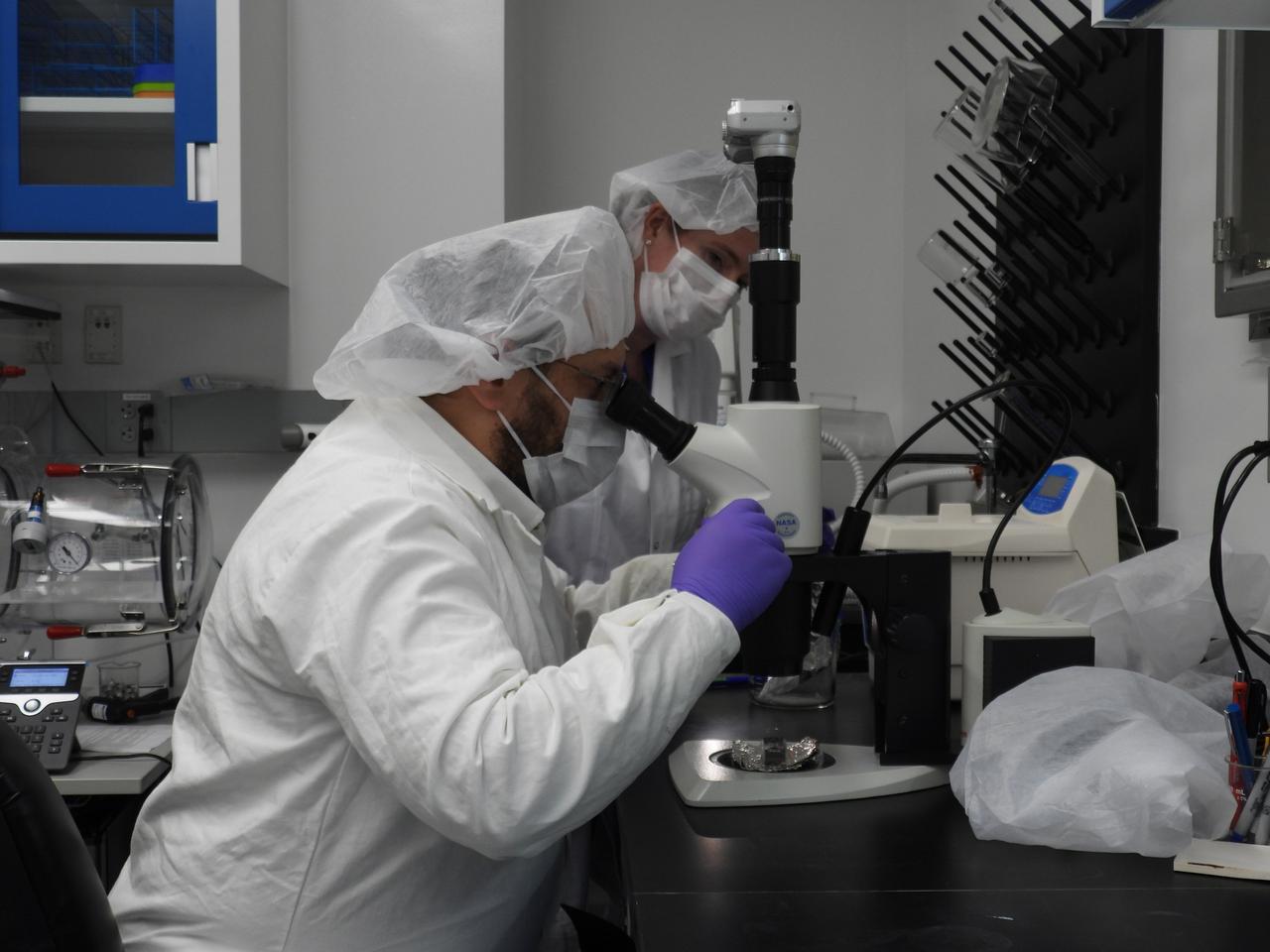
Jason Dworkin, project scientist for NASA's OSIRIS-REx (Origins, Spectral Interpretation, Resource Identification, and Security – Regolith Explorer) mission, examines a portion of the asteroid Bennu sample delivered to Earth in a laboratory at the agency's Goddard Space Flight Center in Greenbelt, Maryland.
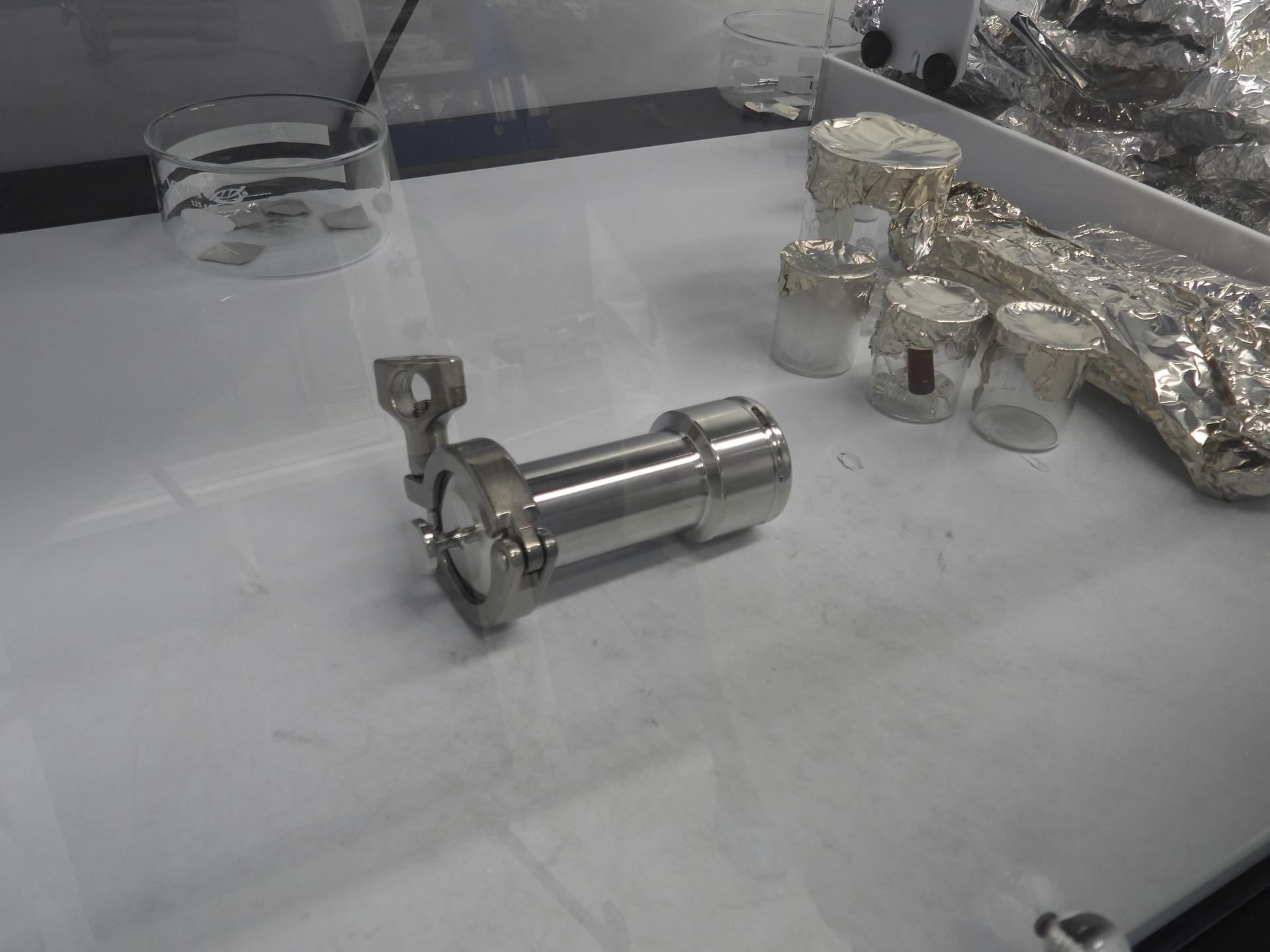
Photographed inside a laboratory at NASA's Goddard Space Flight Center in Greenbelt, Maryland, this cannister contains a portion of the asteroid Bennu sample delivered to Earth by the agency's OSIRIS-REx (Origins, Spectral Interpretation, Resource Identification, and Security – Regolith Explorer) mission.
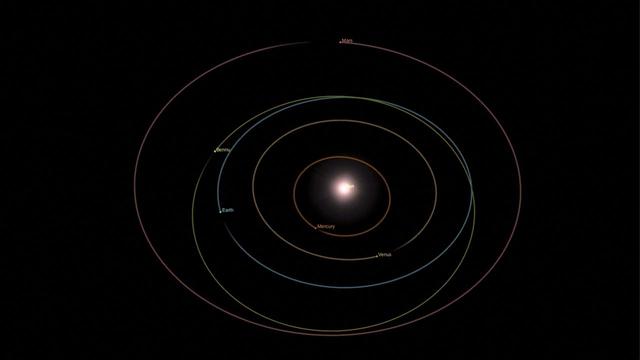
Using data collected by NASA's OSIRIS-REx mission, this animation shows the trajectories of rocky particles after being ejected from asteroid (101955) Bennu's surface. The animation emphasizes the four largest particle-ejection events detected at Bennu between December 2018 and September 2019. Additional particles not related to the ejections are also visible. Most of these pebble-size pieces of rock, typically measuring around a quarter inch (7 millimeters), were pulled back to Bennu under the asteroid's weak gravity after a short hop, sometimes even ricocheting back into space after colliding with the surface. Others remained in orbit for a few days and up to 16 revolutions. And some were ejected with enough force to completely escape from the Bennu environs. OSIRIS-REx — which stands for Origins, Spectral Interpretation, Resource Identification, and Security-Regolith Explorer — arrived at Bennu in December 2018. On Oct. 20, 2020, the mission will attempt to briefly touch down on the asteroid to scoop up material likely to include particles that were ejected before dropping back to the surface. If all goes as planned, the spacecraft will return to Earth in September 2023 with a cache of Bennu's particles for further study, including of which may even hold the physical clues as to what ejection mechanisms are at play. Movie available at https://photojournal.jpl.nasa.gov/catalog/PIA24101
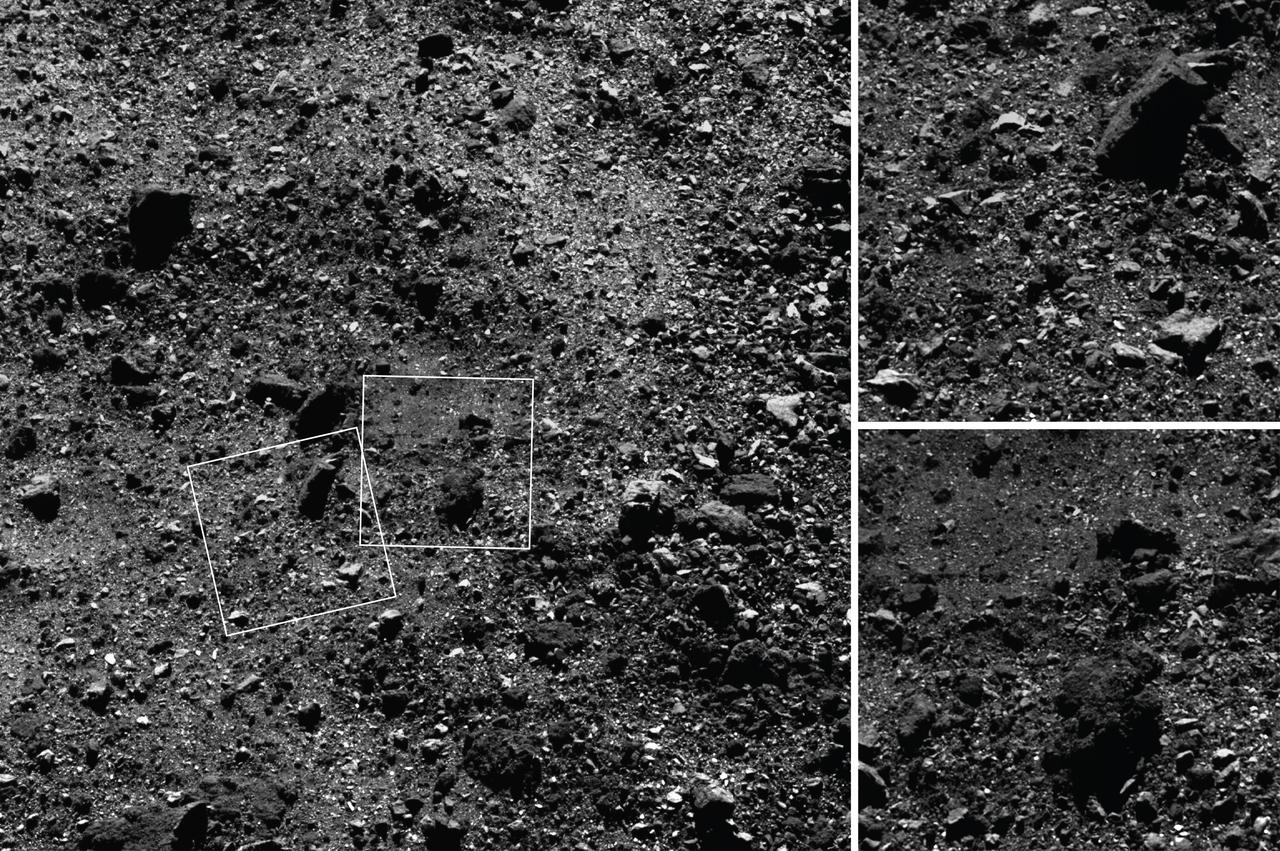
This trio of images acquired by NASA’s OSIRIS-REx spacecraft shows a wide shot and two close-ups of a region in asteroid Bennu’s northern hemisphere. The wide-angle image (left), obtained by the spacecraft’s MapCam camera, shows a 590-foot (180-meter) wide area with many rocks, including some large boulders, and a “pond” of regolith that is mostly devoid of large rocks. The two closer images, obtained by the high-resolution PolyCam camera, show details of areas in the MapCam image, specifically a 50-foot (15 meter) boulder (top) and the regolith pond (bottom). The PolyCam frames are 101 feet (31 meters) across and the boulder depicted is approximately the same size as a humpback whale. The images were taken on February 25 while the spacecraft was in orbit around Bennu, approximately 1.1 miles (1.8 km) from the asteroid’s surface. The observation plan for this day provided for one MapCam and two PolyCam images every 10 minutes, allowing for this combination of context and detail of Bennu’s surface. Credit: NASA/Goddard/University of Arizona
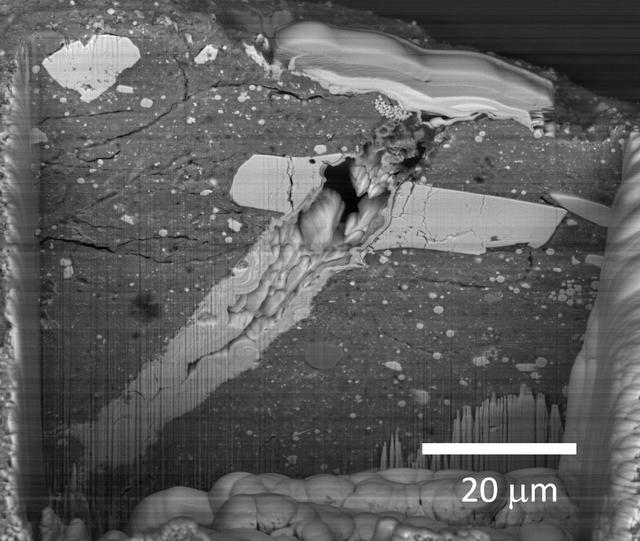
A scanning electron microscope image of a micrometeorite impact crater in a particle of asteroid Bennu material. Scientists found microscopic craters and tiny splashes of once-molten rock – known as impact melts – on the surfaces of samples, signs that the asteroid was bombarded by micrometeorites.
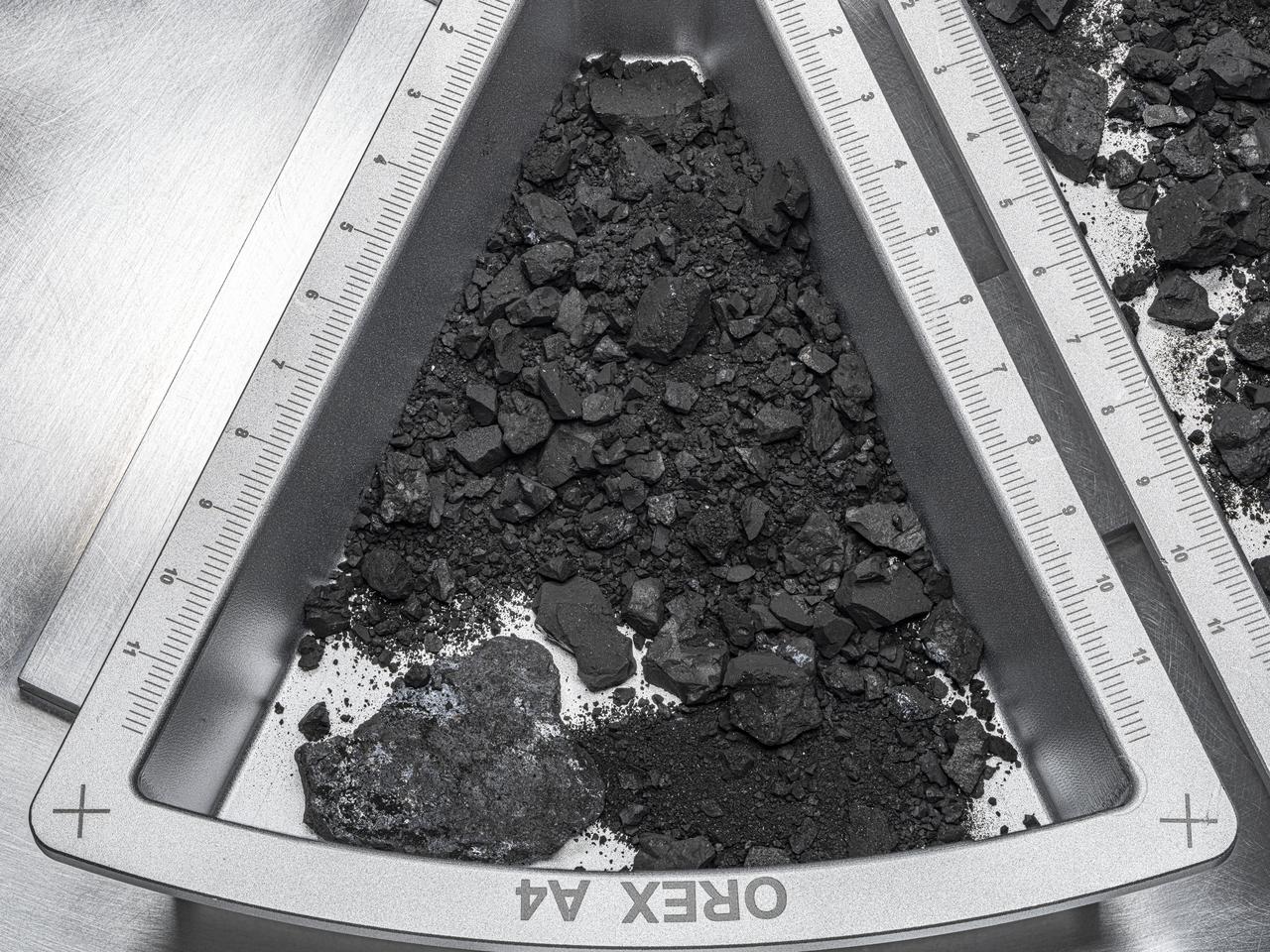
A top-down view of one of the containers holding rocks and dust from asteroid Bennu, with hardware scale marked in centimeters. Erika Blumenfeld, creative lead for the Advanced Imaging and Visualization of Astromaterials (AIVA) and Joe Aebersold, AIVA project management lead, captured this picture using manual high-resolution precision photography and a semi-automated focus stacking procedure. The result is a sample image that can be zoomed in on to show extreme detail. Credit: NASA/Erika Blumenfeld and Joseph Aebersold
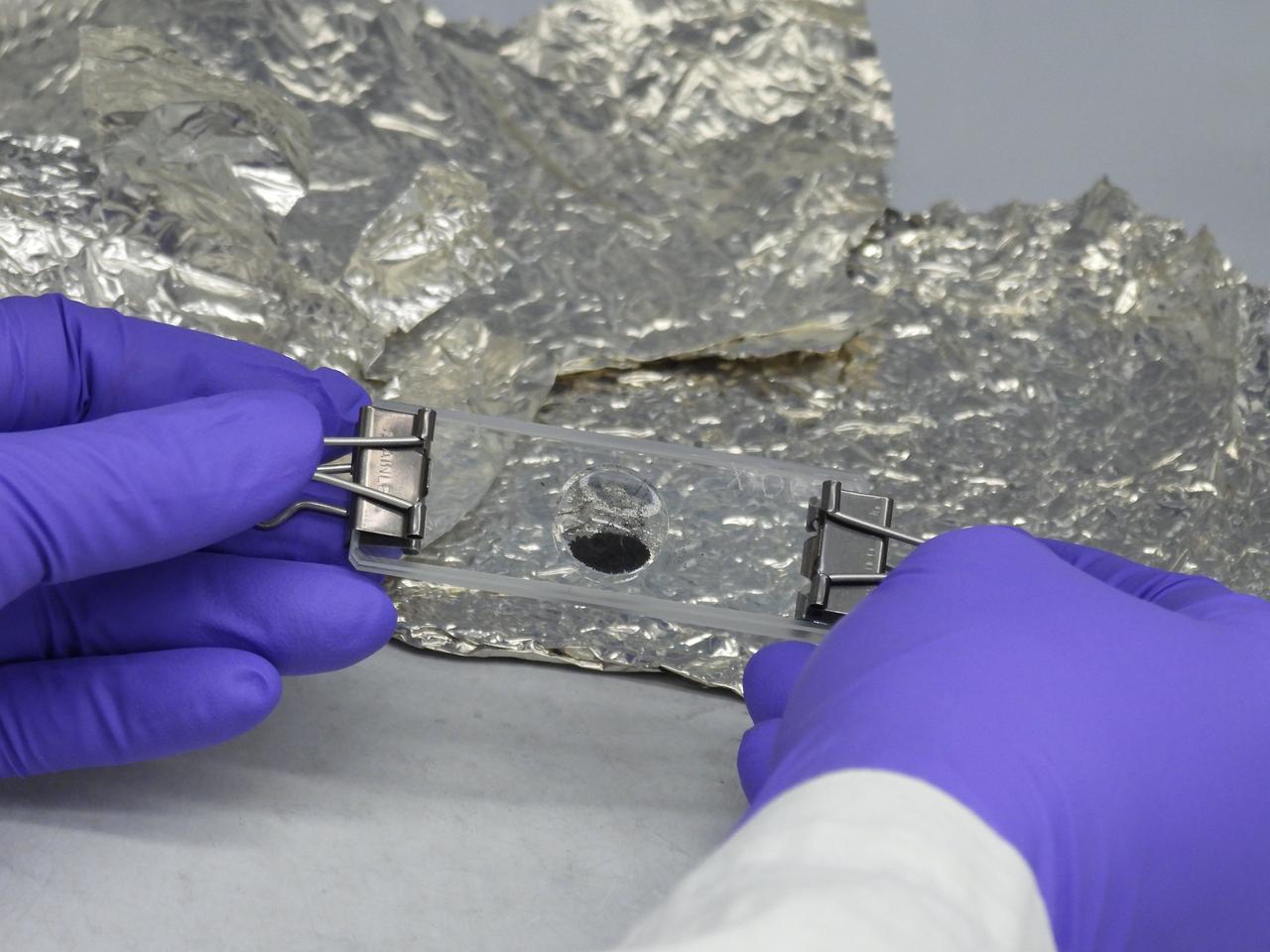
A portion of the asteroid Bennu sample delivered to Earth by NASA's OSIRIS-REx (Origins, Spectral Interpretation, Resource Identification, and Security – Regolith Explorer) mission, set into a microscope slide at the agency's Goddard Space Flight Center in Greenbelt, Maryland.
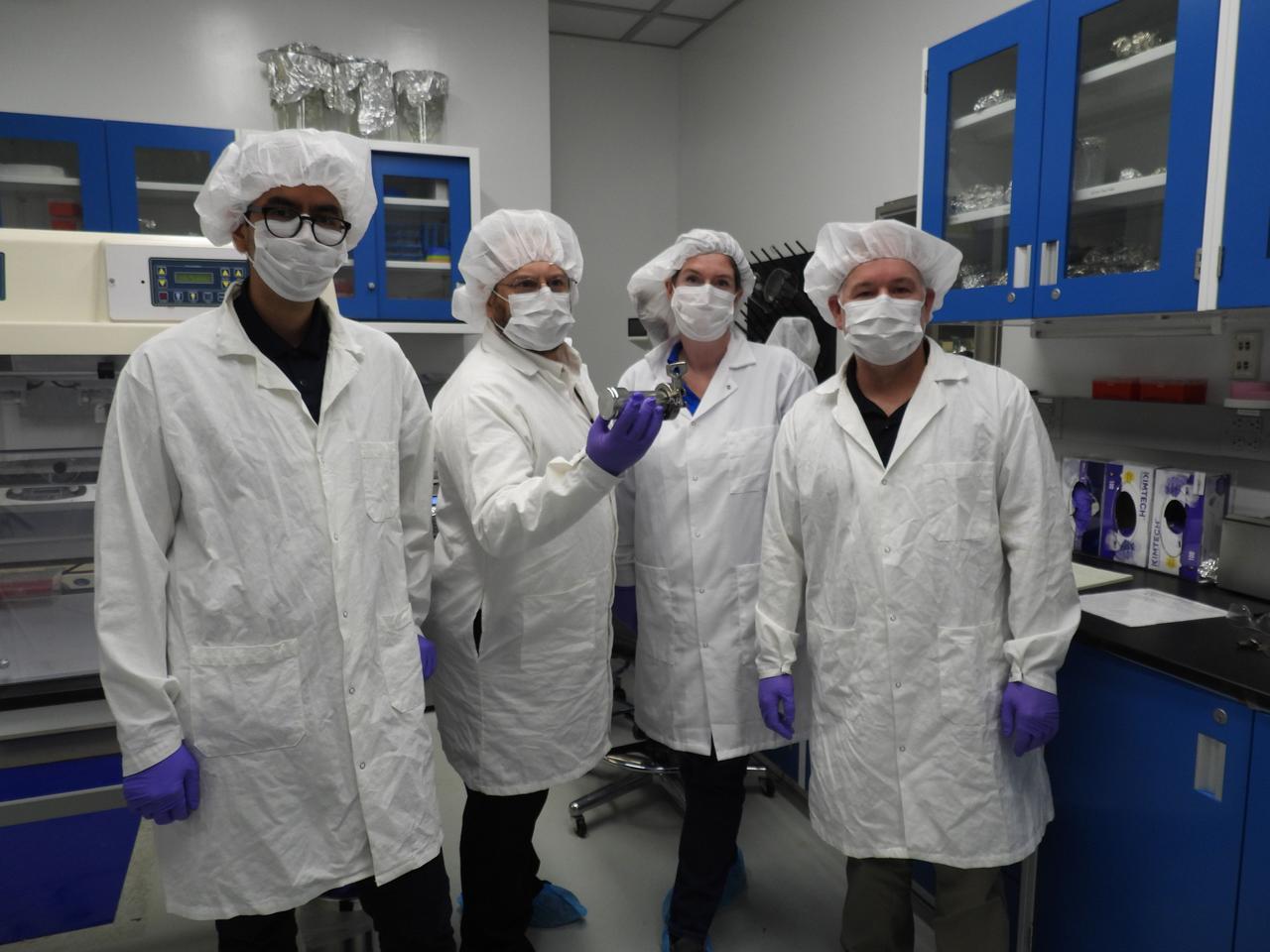
Researchers at NASA's Goddard Space Flight Center in Greenbelt, Maryland, pose with a cannister that contains a portion of the asteroid Bennu sample delivered to Earth by the agency's OSIRIS-REx (Origins, Spectral Interpretation, Resource Identification, and Security – Regolith Explorer) mission. From left to right: Angel Mojarro, organic geochemist; Jason Dworkin, OSIRIS-REX project scientist; Hannah McLain, astrobiologist; and Danny Glavin, senior sample scientist.
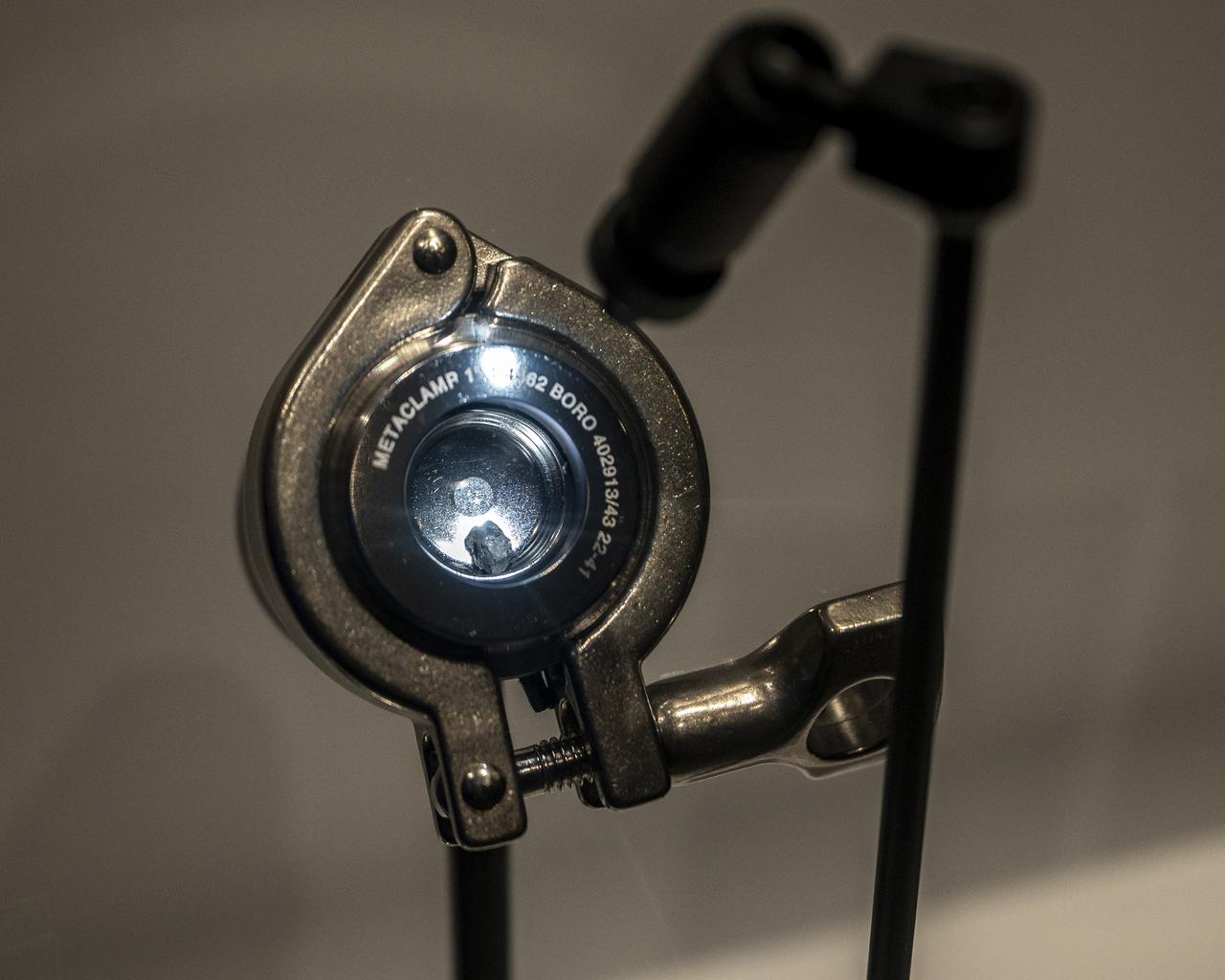
The first public display of a sample from asteroid Bennu is seen, Friday, Nov. 3, 2023, at the Smithsonian’s National Museum of Natural History in Washington. The sample was collected from the carbon rich near Earth asteroid Bennu in October 2020 by NASA’s OSIRIS-REx spacecraft. Photo Credit: (NASA/Keegan Barber)
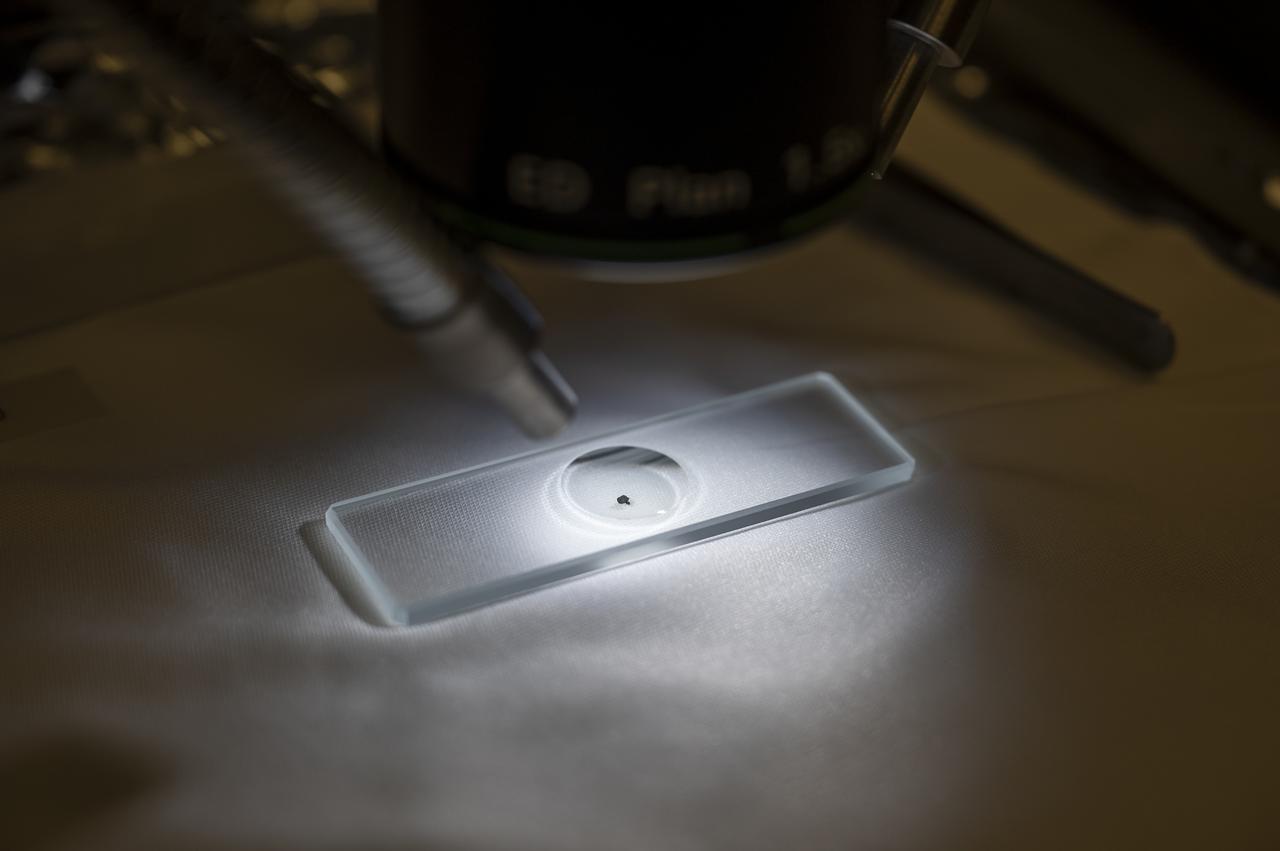
A sample from asteroid Bennu is seen prepared on a microscope slide, Friday, Nov. 3, 2023, at the Smithsonian’s National Museum of Natural History in Washington. The sample was collected from the carbon rich near Earth asteroid Bennu in October 2020 by NASA’s OSIRIS-REx spacecraft. Photo Credit: (NASA/Keegan Barber)
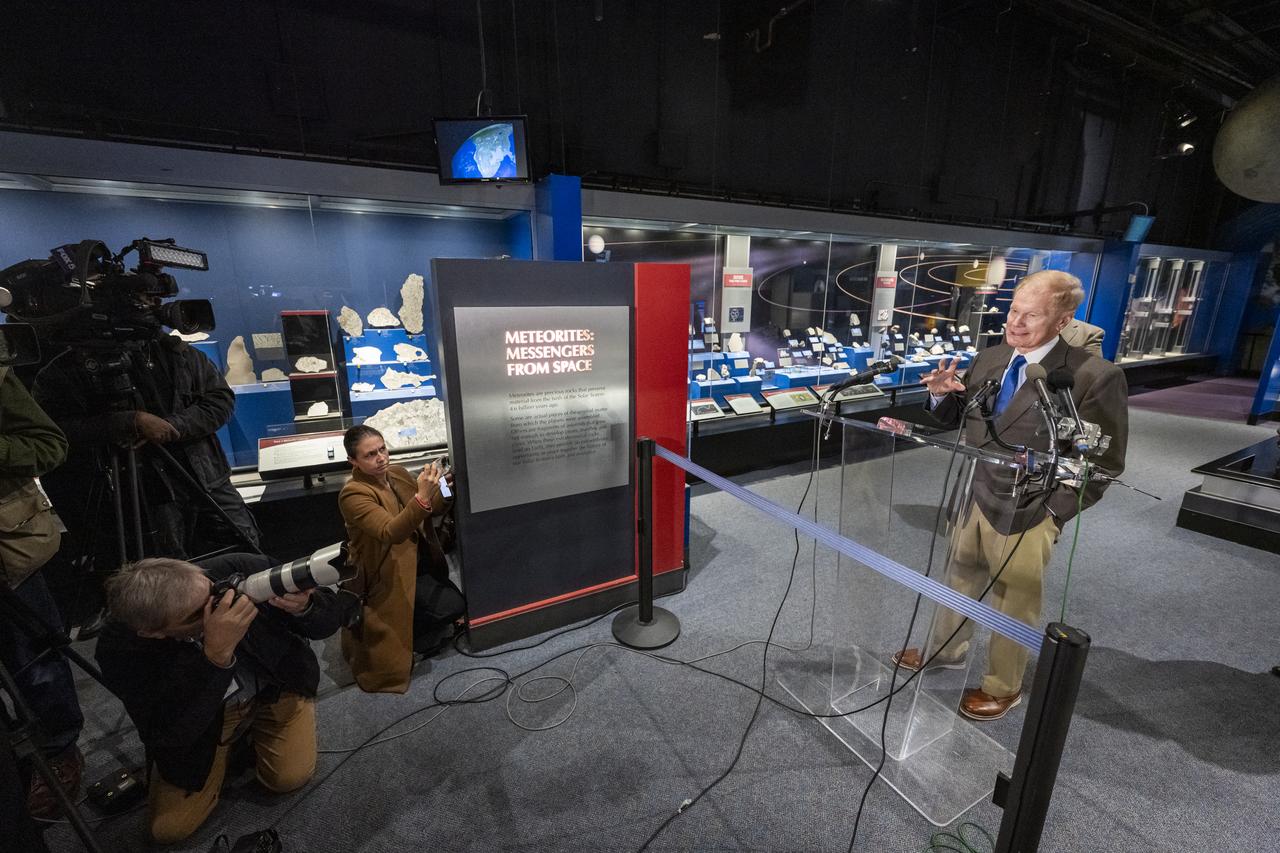
NASA Administrator Bill Nelson delivers remarks during an event to unveil the first public display of a sample from asteroid Bennu, Friday, Nov. 3, 2023, at the Smithsonian’s National Museum of Natural History in Washington. The sample was collected from the carbon rich near Earth asteroid Bennu in October 2020 by NASA’s OSIRIS-REx spacecraft. Photo Credit: (NASA/Keegan Barber)

Smithsonian Under Secretary for Science and Research Ellen Stofan delivers remarks during an event to unveil the first public display of a sample from asteroid Bennu, Friday, Nov. 3, 2023, at the Smithsonian’s National Museum of Natural History in Washington. The sample was collected from the carbon rich near Earth asteroid Bennu in October 2020 by NASA’s OSIRIS-REx spacecraft. Photo Credit: (NASA/Keegan Barber)
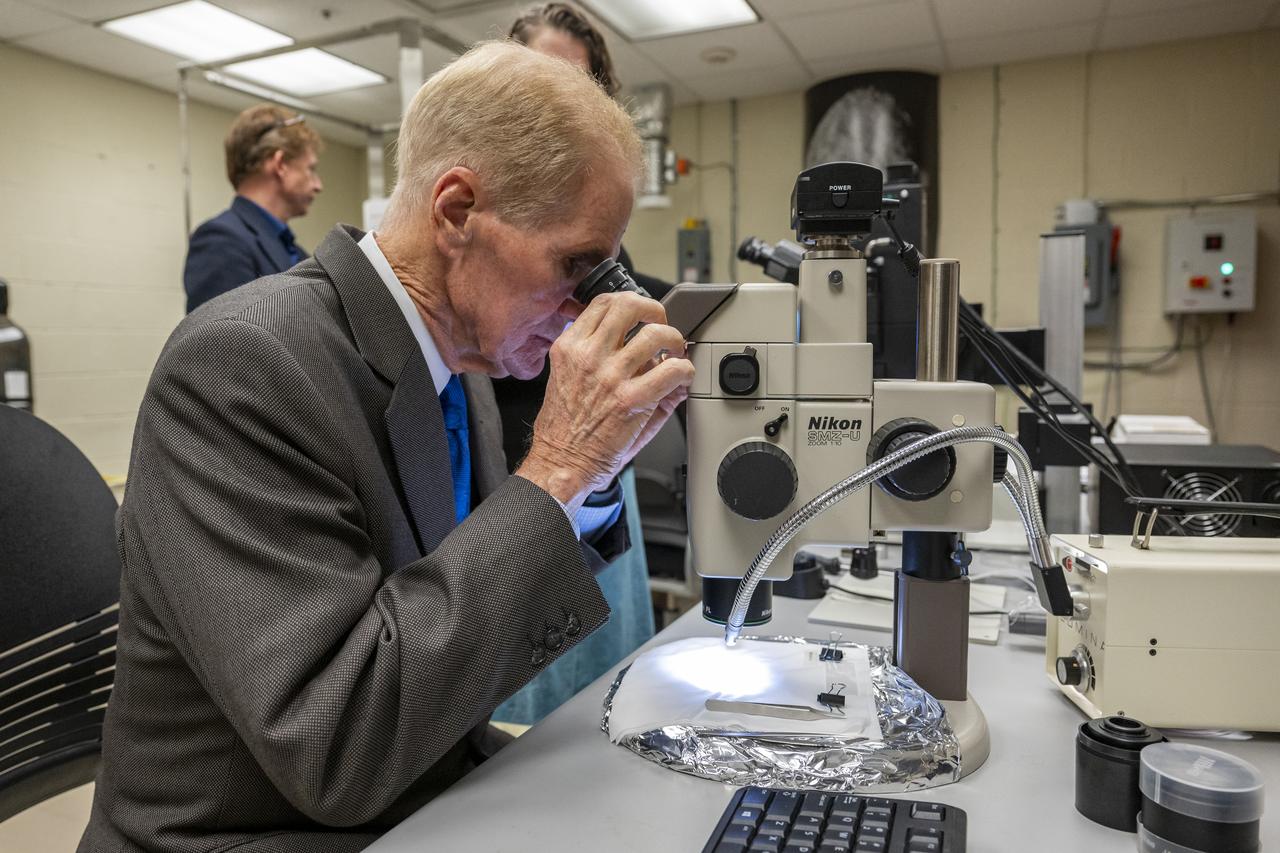
NASA Administrator Bill Nelson uses a microscope to view a sample from asteroid Bennu, Friday, Nov. 3, 2023, at the Smithsonian’s National Museum of Natural History in Washington. The sample was collected from the carbon rich near Earth asteroid Bennu in October 2020 by NASA’s OSIRIS-REx spacecraft. Photo Credit: (NASA/Keegan Barber)
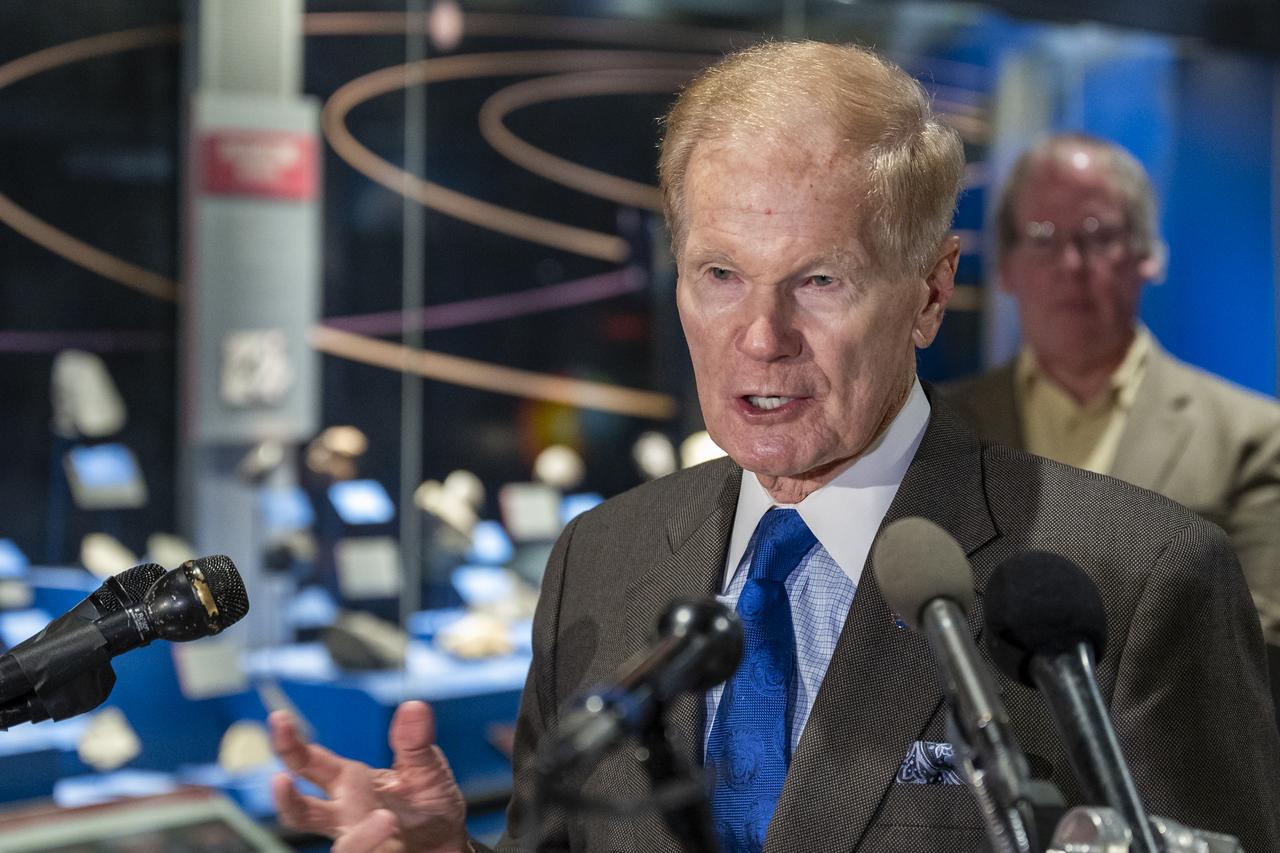
NASA Administrator Bill Nelson delivers remarks during an event to unveil the first public display of a sample from asteroid Bennu, Friday, Nov. 3, 2023, at the Smithsonian’s National Museum of Natural History in Washington. The sample was collected from the carbon rich near Earth asteroid Bennu in October 2020 by NASA’s OSIRIS-REx spacecraft. Photo Credit: (NASA/Keegan Barber)
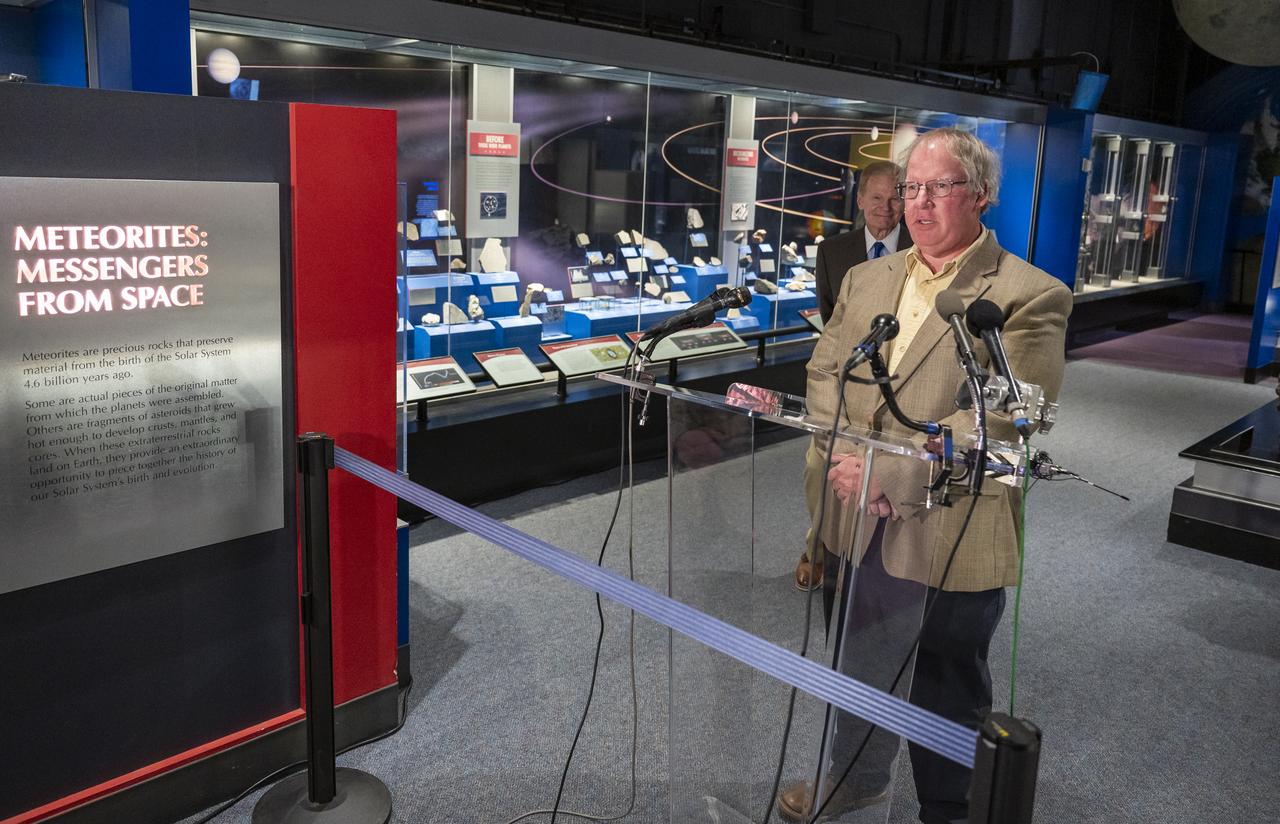
National Museum of Natural History curator of meteorites Tim McCoy delivers remarks during an event to unveil the first public display of a sample from asteroid Bennu, Friday, Nov. 3, 2023, at the Smithsonian’s National Museum of Natural History in Washington. The sample was collected from the carbon rich near Earth asteroid Bennu in October 2020 by NASA’s OSIRIS-REx spacecraft. Photo Credit: (NASA/Keegan Barber)
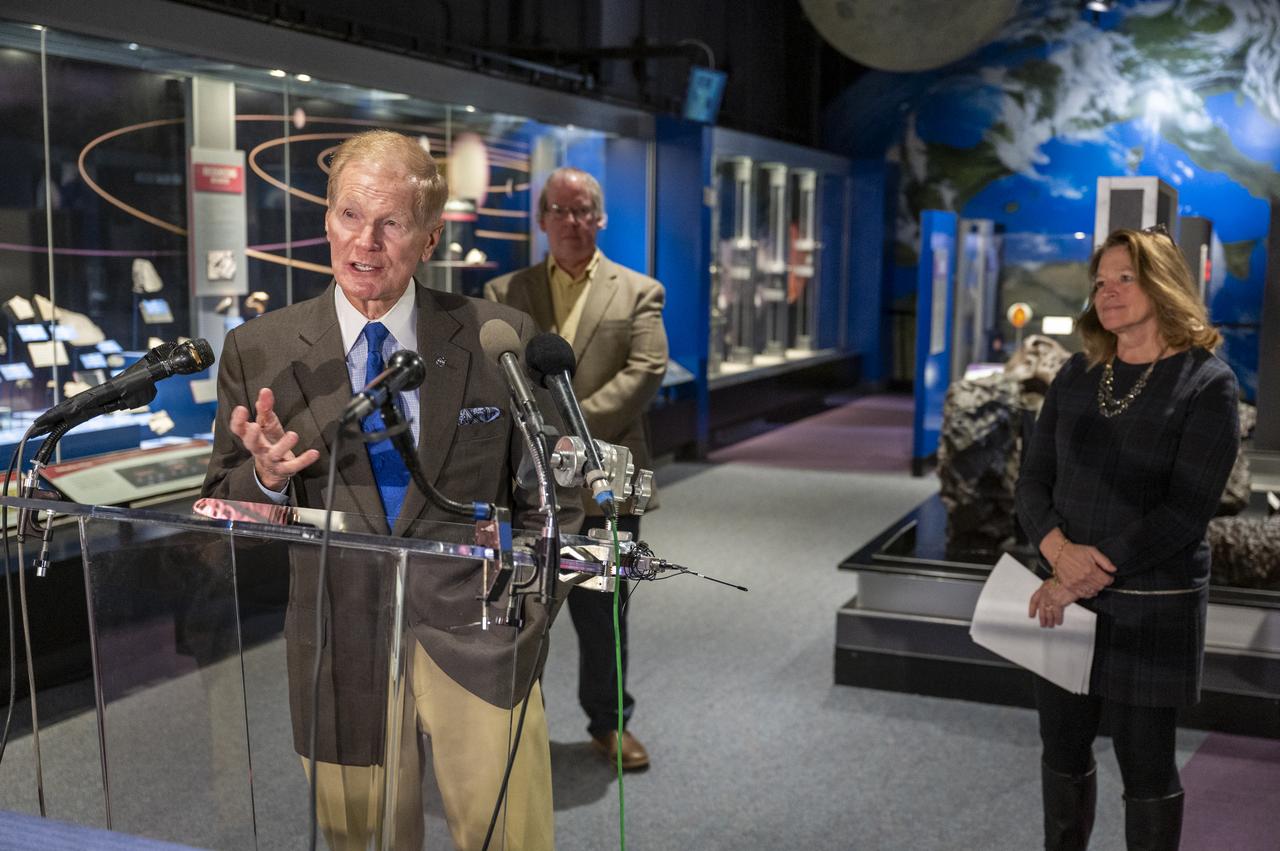
NASA Administrator Bill Nelson delivers remarks during an event to unveil the first public display of a sample from asteroid Bennu, Friday, Nov. 3, 2023, at the Smithsonian’s National Museum of Natural History in Washington. The sample was collected from the carbon rich near Earth asteroid Bennu in October 2020 by NASA’s OSIRIS-REx spacecraft. Photo Credit: (NASA/Keegan Barber)
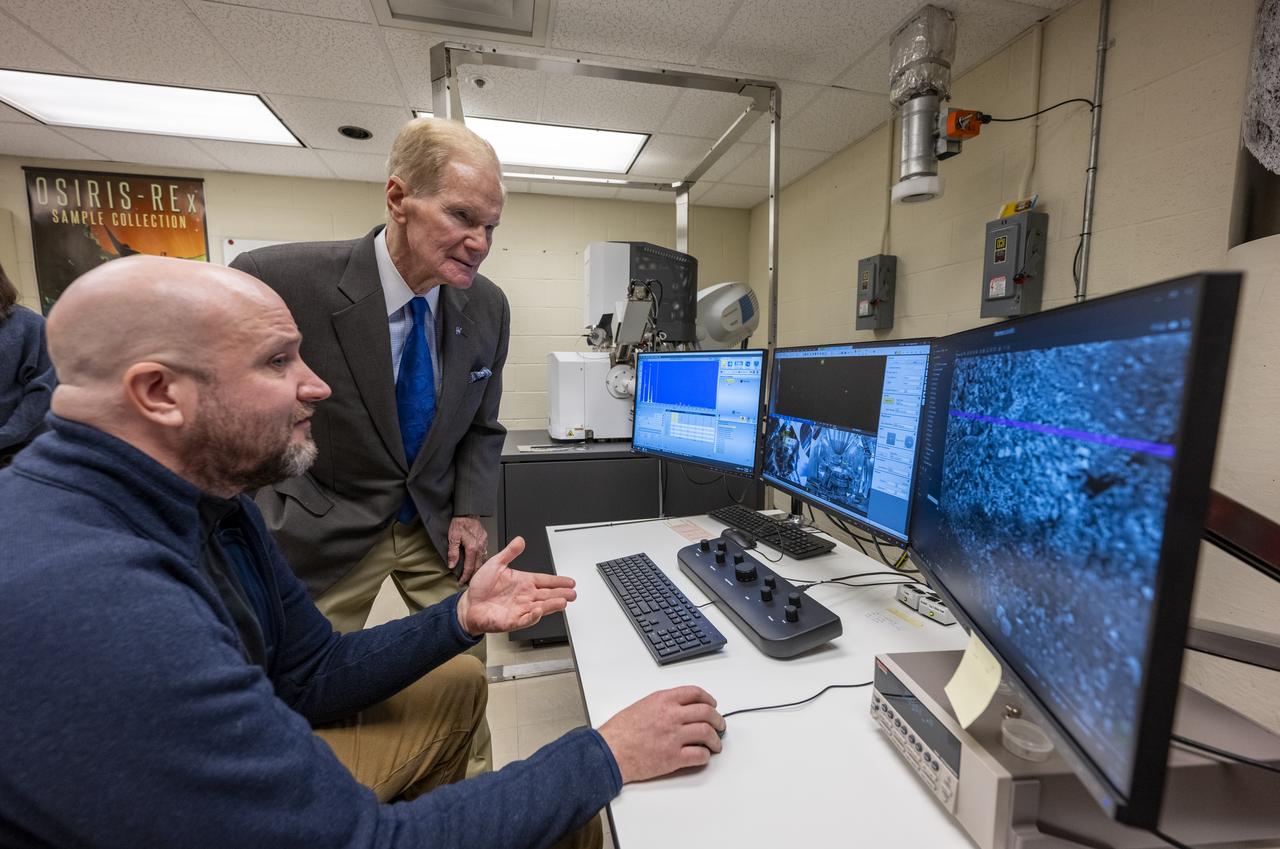
NASA Administrator Bill Nelson uses an electron microscope to view a sample from asteroid Bennu, Friday, Nov. 3, 2023, at the Smithsonian’s National Museum of Natural History in Washington. The sample was collected from the carbon rich near Earth asteroid Bennu in October 2020 by NASA’s OSIRIS-REx spacecraft. Photo Credit: (NASA/Keegan Barber)
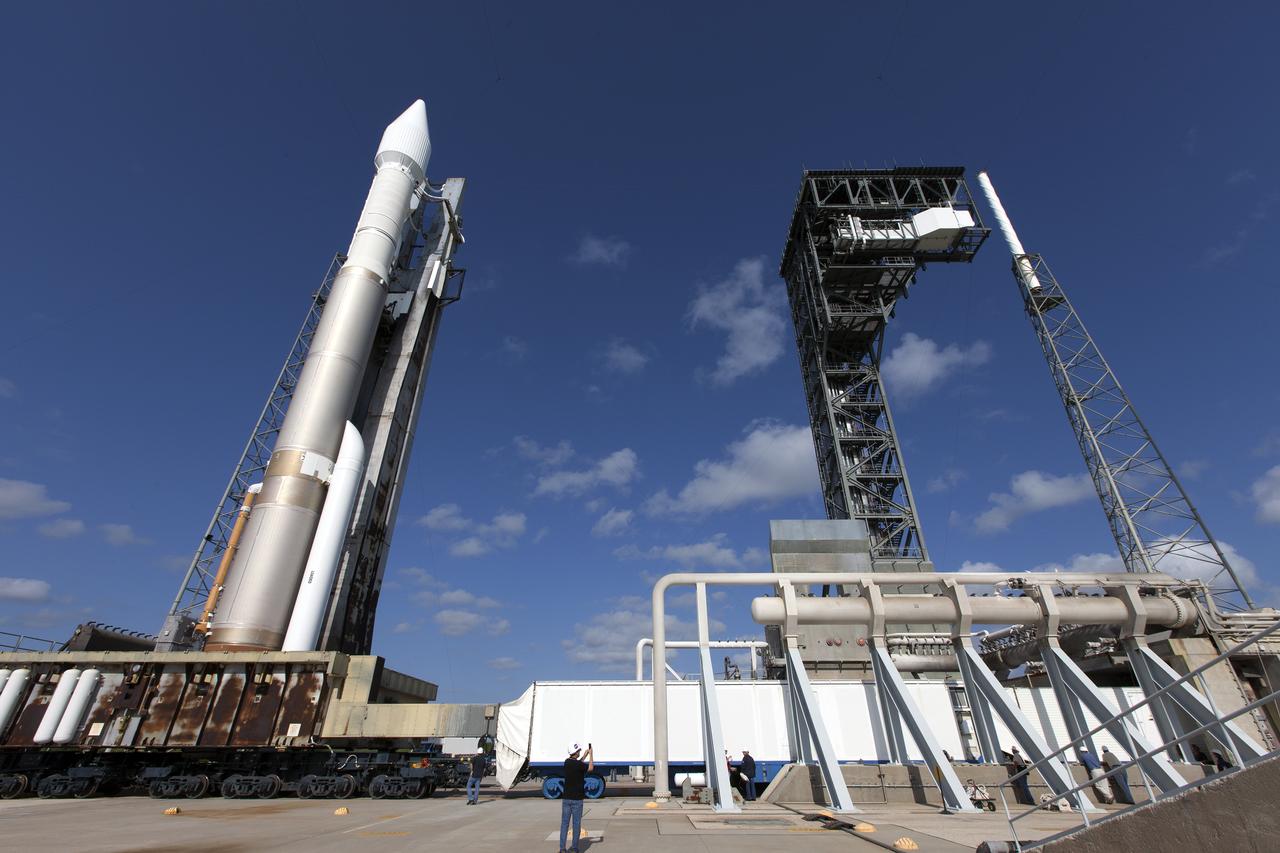
The United Launch Alliance Atlas V rocket arrives at Space Launch Complex 41 at Cape Canaveral Air Force Station in Florida. The launch vehicle will boost NASA’s Origins, Spectral Interpretation, Resource Identification, Security-Regolith Explorer, or OSIRIS-REx spacecraft. This will be the first U.S. mission to sample an asteroid, retrieve at least two ounces of surface material and return it to Earth for study. The asteroid, Bennu, may hold clues to the origin of the solar system and the source of water and organic molecules found on Earth.
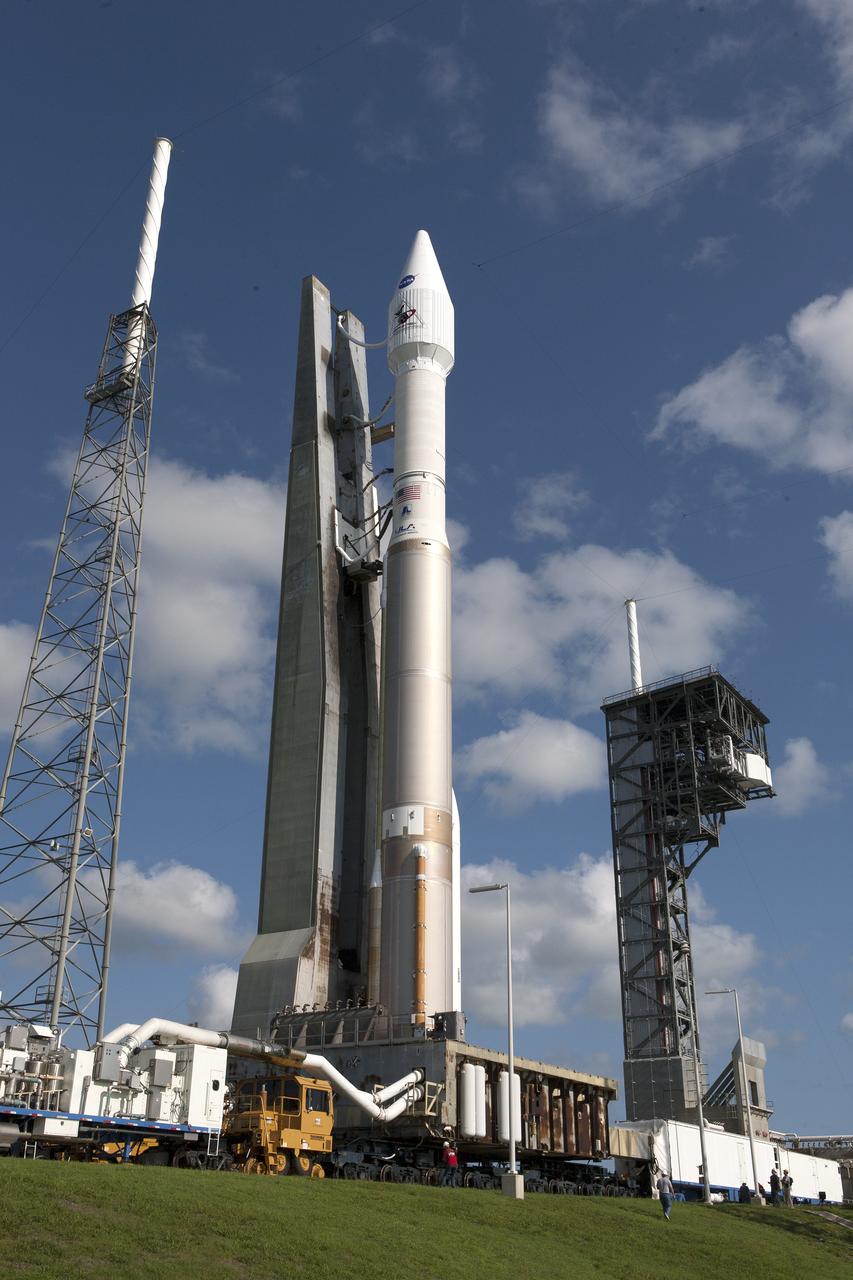
The United Launch Alliance Atlas V rocket arrives at Space Launch Complex 41 at Cape Canaveral Air Force Station in Florida. The launch vehicle will boost NASA’s Origins, Spectral Interpretation, Resource Identification, Security-Regolith Explorer, or OSIRIS-REx spacecraft. This will be the first U.S. mission to sample an asteroid, retrieve at least two ounces of surface material and return it to Earth for study. The asteroid, Bennu, may hold clues to the origin of the solar system and the source of water and organic molecules found on Earth.
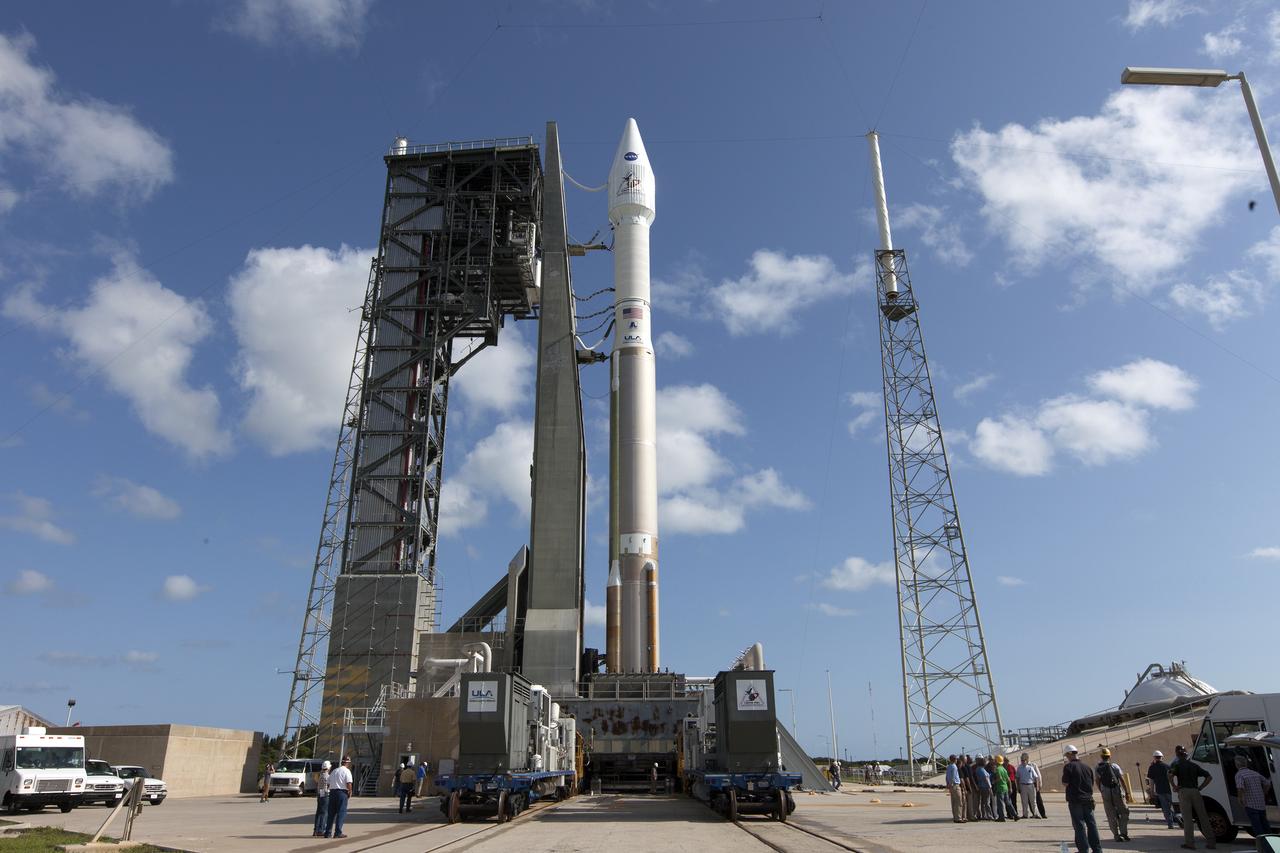
The United Launch Alliance Atlas V rocket arrives at Space Launch Complex 41 at Cape Canaveral Air Force Station in Florida. The launch vehicle will boost NASA’s Origins, Spectral Interpretation, Resource Identification, Security-Regolith Explorer, or OSIRIS-REx spacecraft. This will be the first U.S. mission to sample an asteroid, retrieve at least two ounces of surface material and return it to Earth for study. The asteroid, Bennu, may hold clues to the origin of the solar system and the source of water and organic molecules found on Earth.
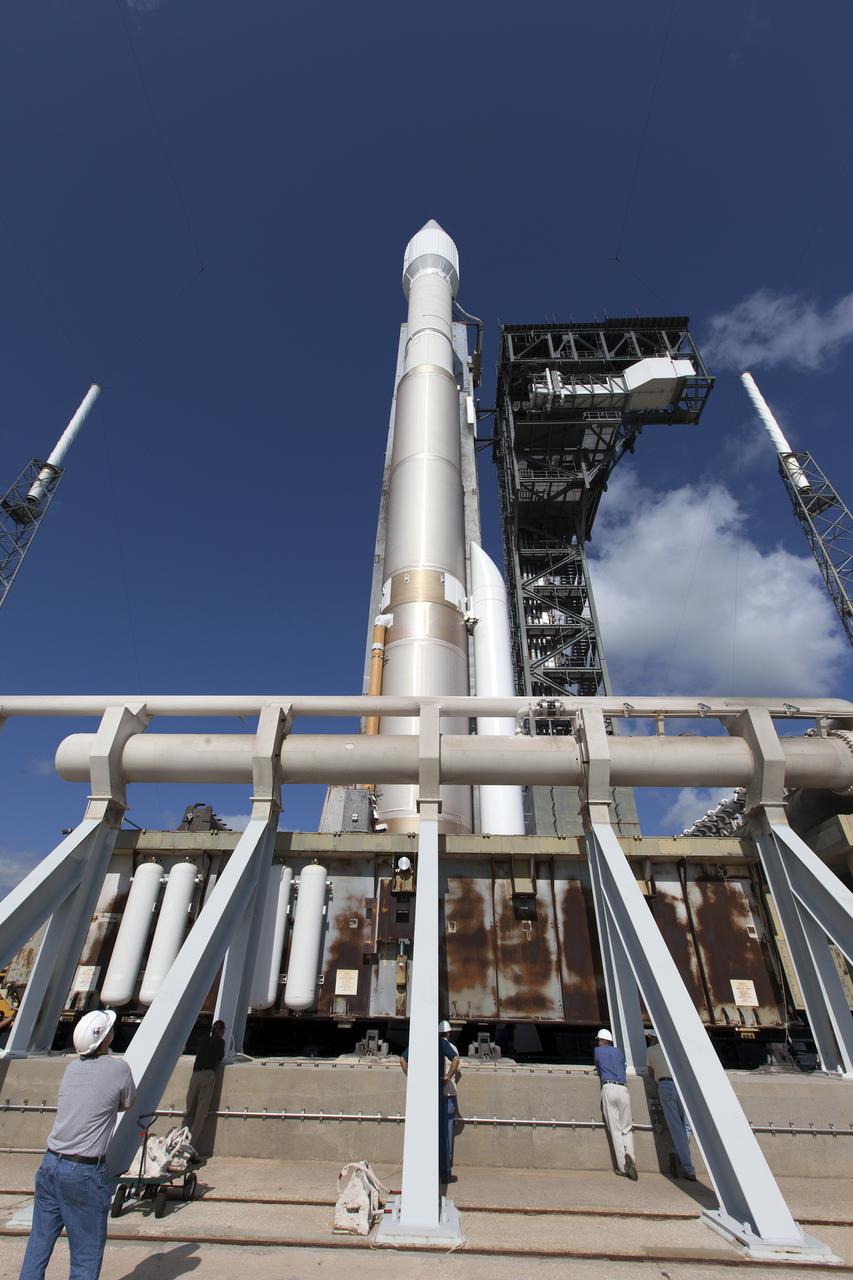
The United Launch Alliance Atlas V rocket arrives at Space Launch Complex 41 at Cape Canaveral Air Force Station in Florida. The launch vehicle will boost NASA’s Origins, Spectral Interpretation, Resource Identification, Security-Regolith Explorer, or OSIRIS-REx spacecraft. This will be the first U.S. mission to sample an asteroid, retrieve at least two ounces of surface material and return it to Earth for study. The asteroid, Bennu, may hold clues to the origin of the solar system and the source of water and organic molecules found on Earth.
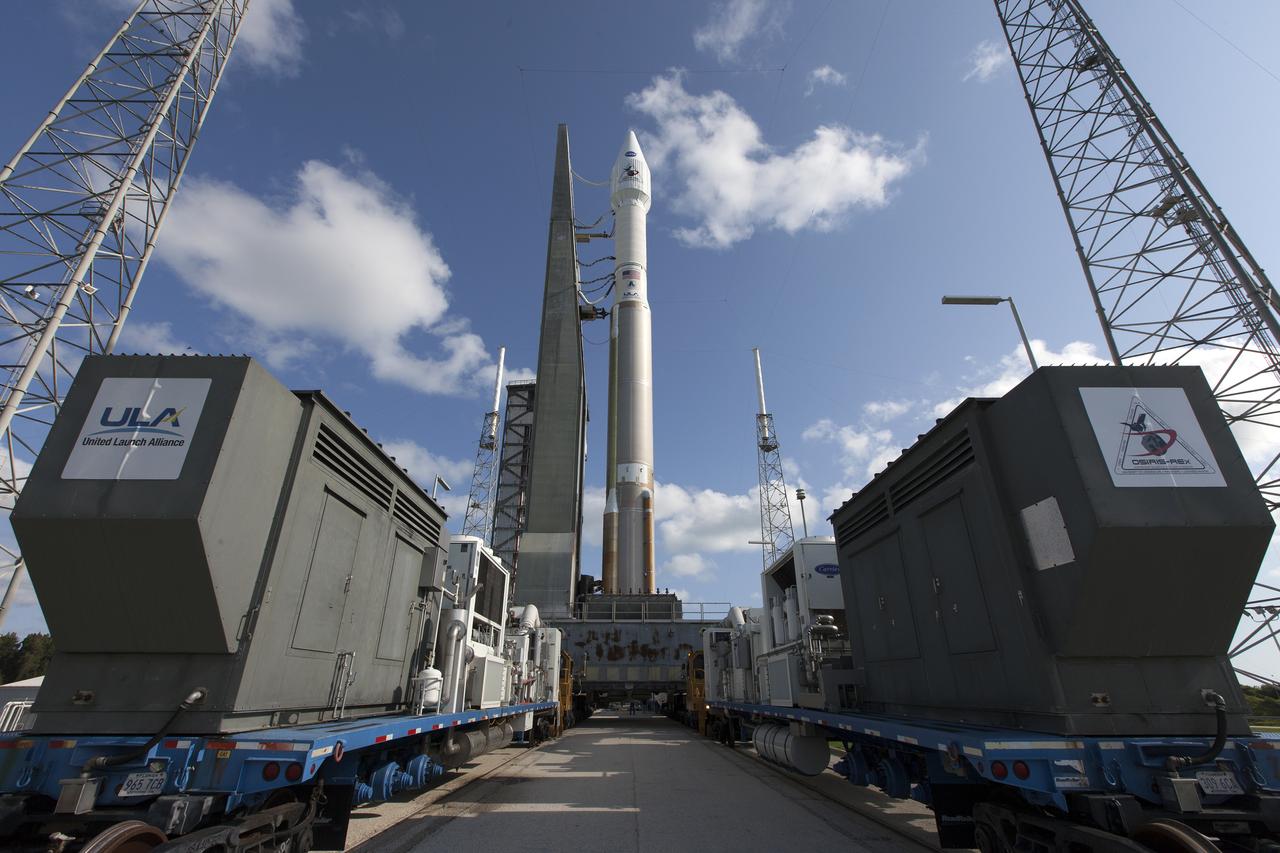
The United Launch Alliance Atlas V rocket arrives at Space Launch Complex 41 at Cape Canaveral Air Force Station in Florida. The launch vehicle will boost NASA’s Origins, Spectral Interpretation, Resource Identification, Security-Regolith Explorer, or OSIRIS-REx spacecraft. This will be the first U.S. mission to sample an asteroid, retrieve at least two ounces of surface material and return it to Earth for study. The asteroid, Bennu, may hold clues to the origin of the solar system and the source of water and organic molecules found on Earth.
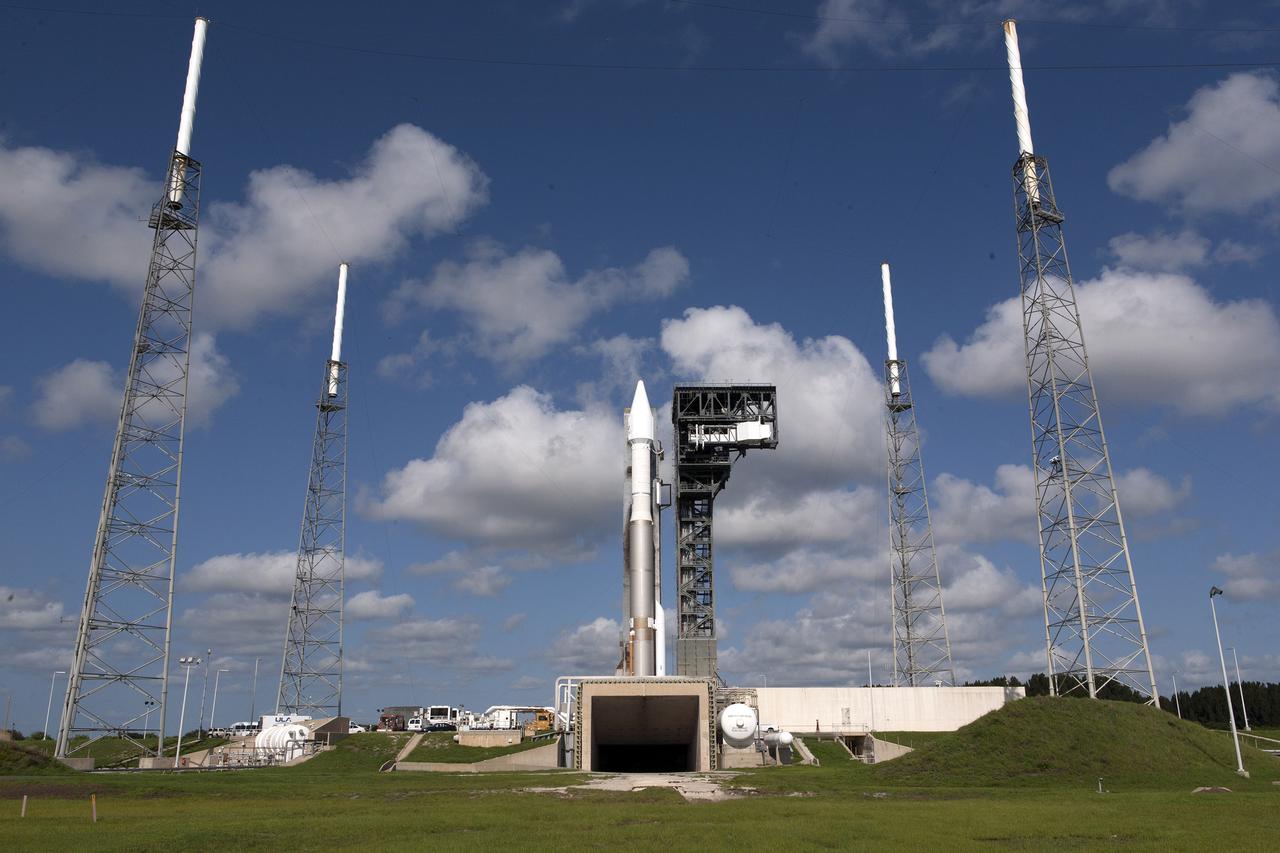
The United Launch Alliance Atlas V rocket arrives at Space Launch Complex 41 at Cape Canaveral Air Force Station in Florida. The launch vehicle will boost NASA’s Origins, Spectral Interpretation, Resource Identification, Security-Regolith Explorer, or OSIRIS-REx spacecraft. This will be the first U.S. mission to sample an asteroid, retrieve at least two ounces of surface material and return it to Earth for study. The asteroid, Bennu, may hold clues to the origin of the solar system and the source of water and organic molecules found on Earth.
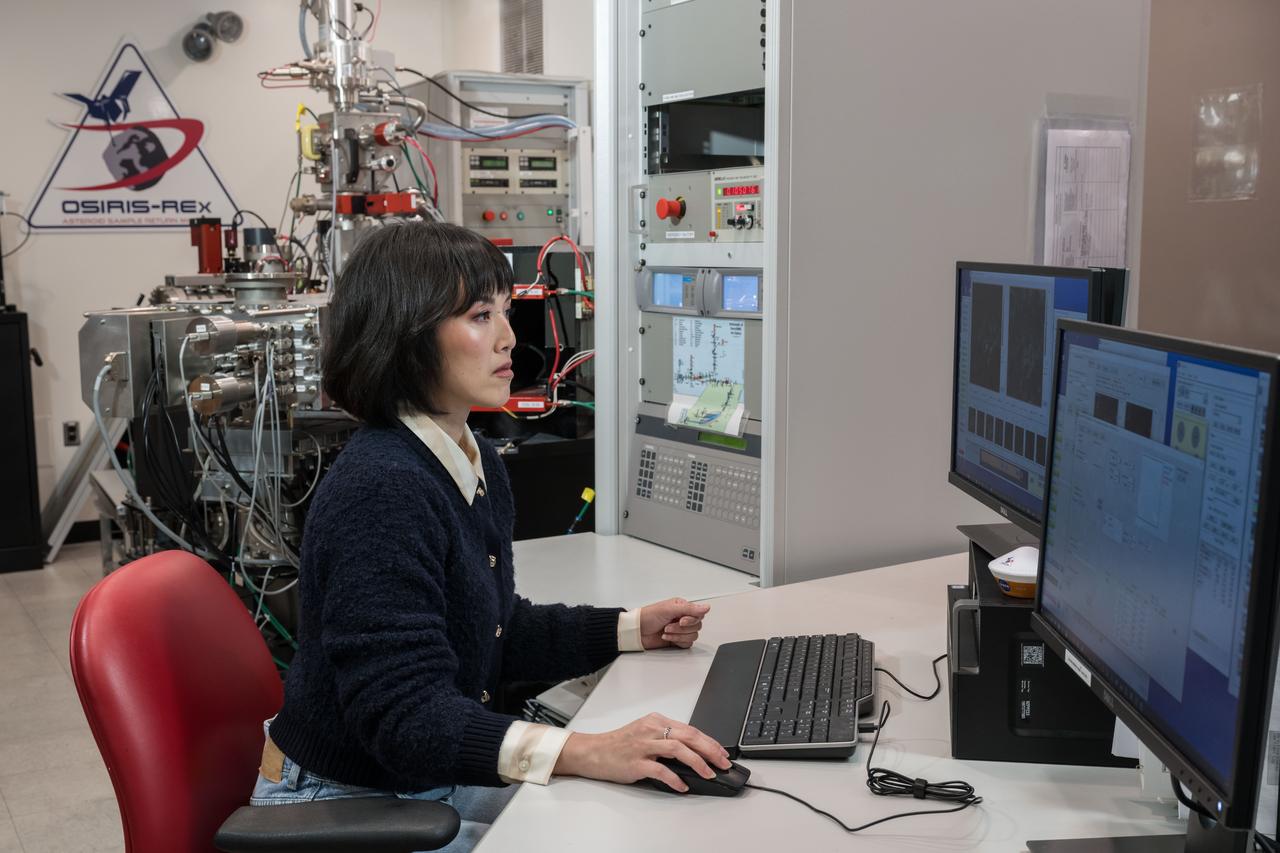
Ann Nguyen, co-lead author of a new paper that gives insights into the diverse origin of asteroid Bennu’s “parent” asteroid works alongside the NanoSIMS 50L (nanoscale secondary ion mass spectrometry) ion microprobe in the Astromaterials Research and Exploration Science Division at NASA’s Johnson Space Center in Houston.
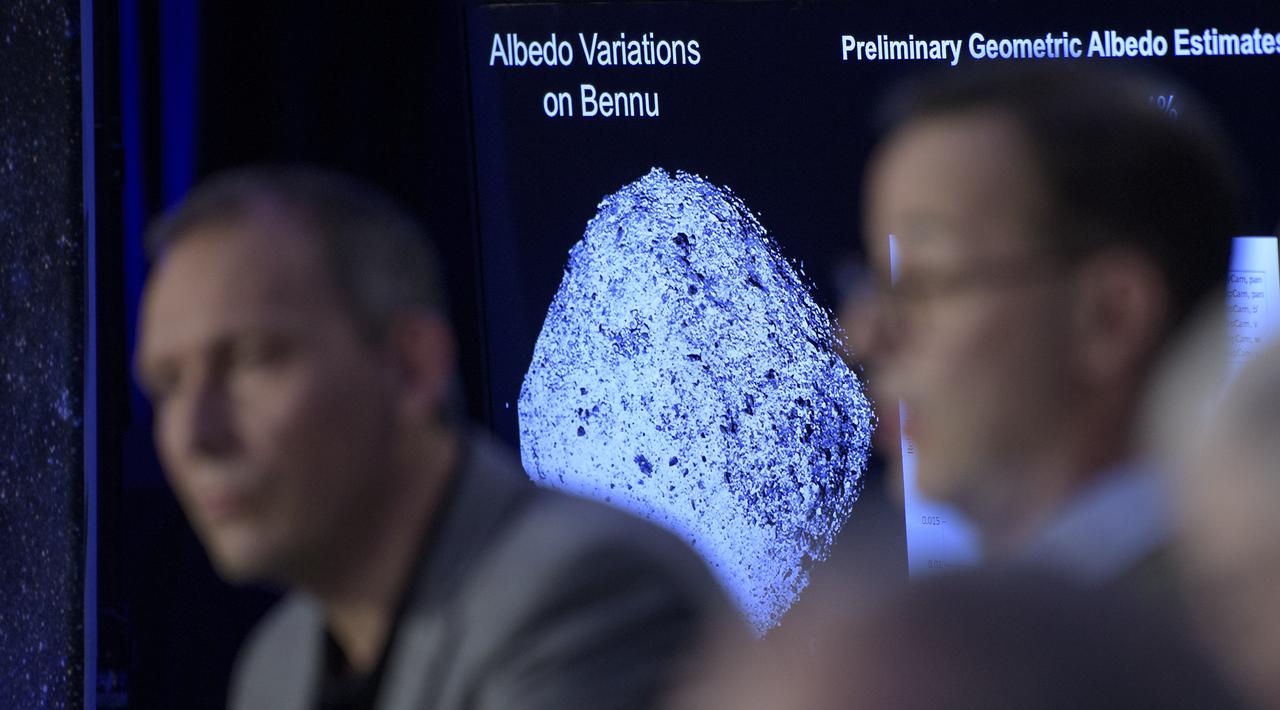
An image of asteroid Bennu is shown as Olivier Barnouin (US Instrument Scientist, Johns Hopkins University/APL) discusses the OSIRIS-REx mission, Monday, Dec. 31, 2018 at Johns Hopkins University Applied Physics Laboratory (APL) in Laurel, Maryland. Photo Credit: (NASA/Bill Ingalls)
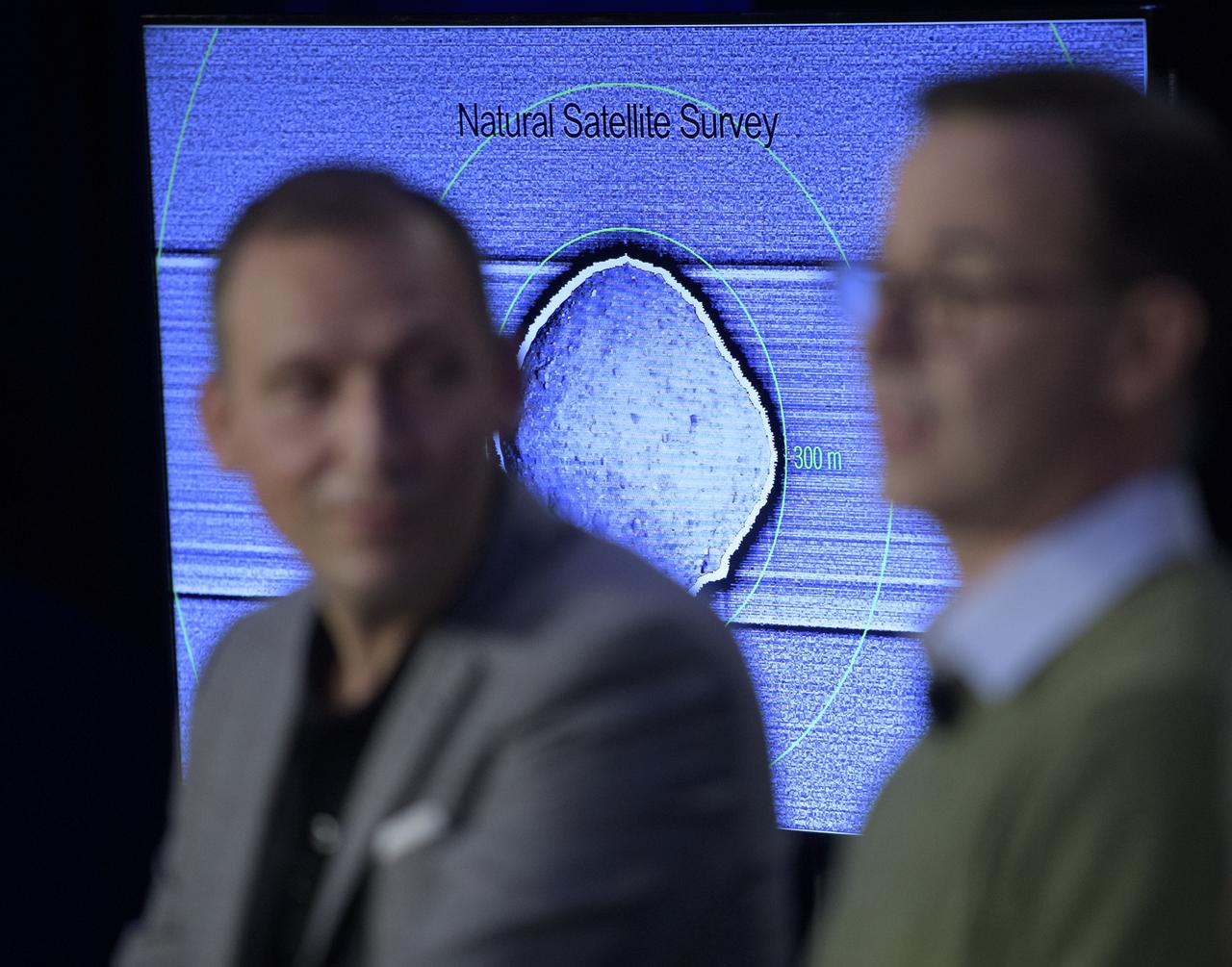
An image of asteroid Bennu is shown as Olivier Barnouin (US Instrument Scientist, Johns Hopkins University/APL) discusses the OSIRIS-REx mission, Monday, Dec. 31, 2018 at Johns Hopkins University Applied Physics Laboratory (APL) in Laurel, Maryland. Photo Credit: (NASA/Bill Ingalls)
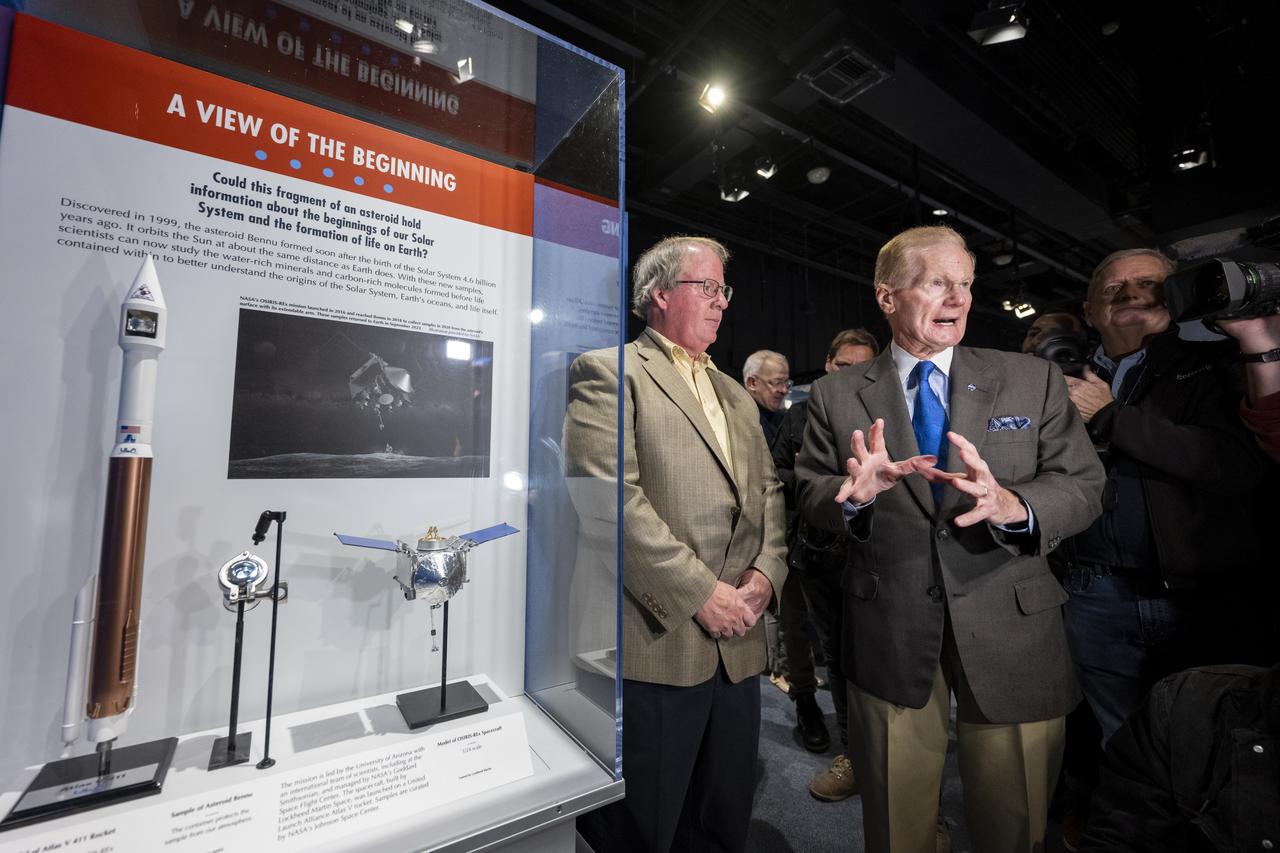
NASA Administrator Bill Nelson speaks to members of the press after unveiling the first public display of a sample from asteroid Bennu, Friday, Nov. 3, 2023, at the Smithsonian’s National Museum of Natural History in Washington. The sample was collected from the carbon rich near Earth asteroid Bennu in October 2020 by NASA’s OSIRIS-REx spacecraft. Photo Credit: (NASA/Keegan Barber)
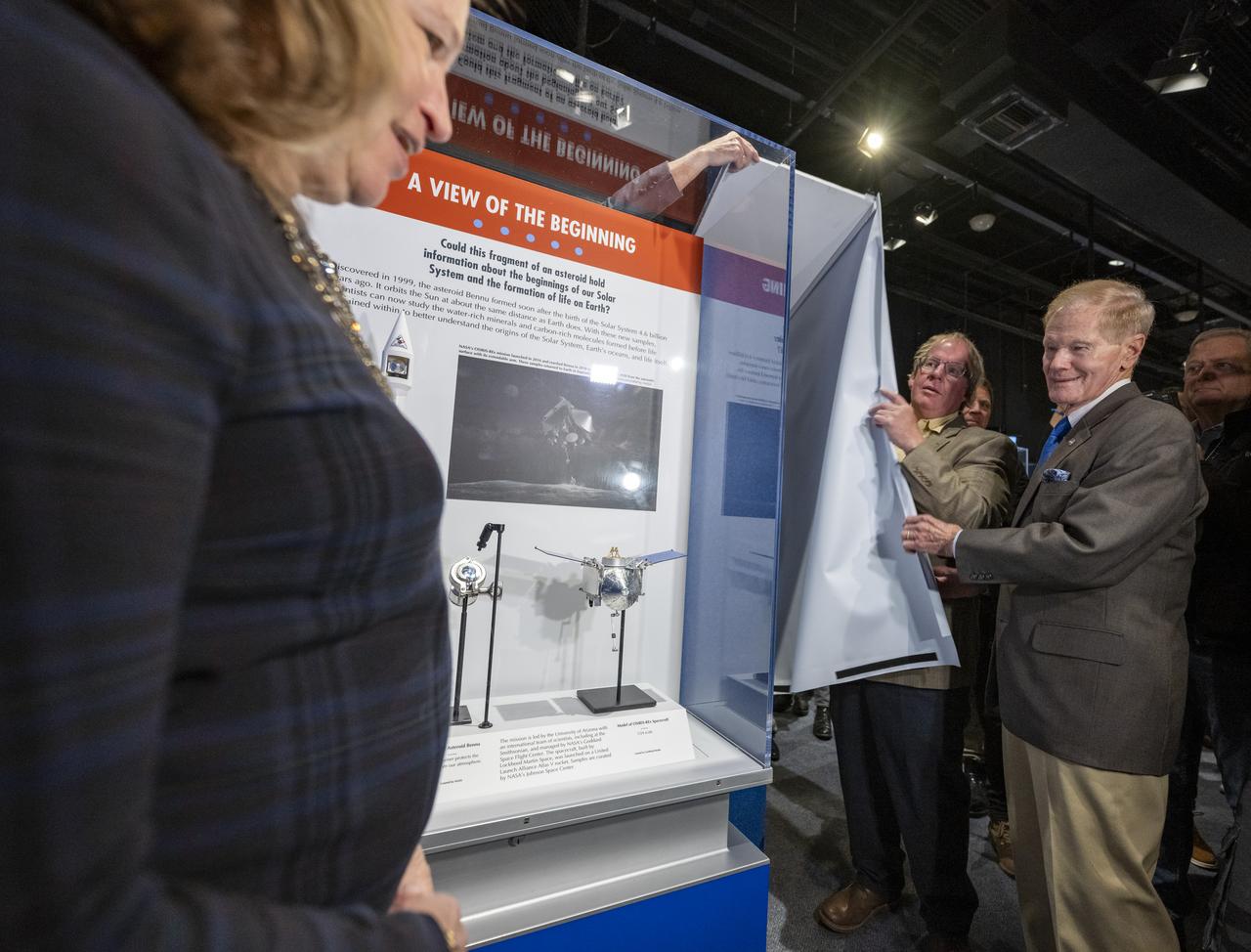
From left to right, Smithsonian Under Secretary for Science and Research Ellen Stofan, National Museum of Natural History curator of meteorites Tim McCoy, and NASA Administrator Bill Nelson unveil the first public display of a sample from asteroid Bennu, Friday, Nov. 3, 2023, at the Smithsonian’s National Museum of Natural History in Washington. The sample was collected from the carbon rich near Earth asteroid Bennu in October 2020 by NASA’s OSIRIS-REx spacecraft. Photo Credit: (NASA/Keegan Barber)
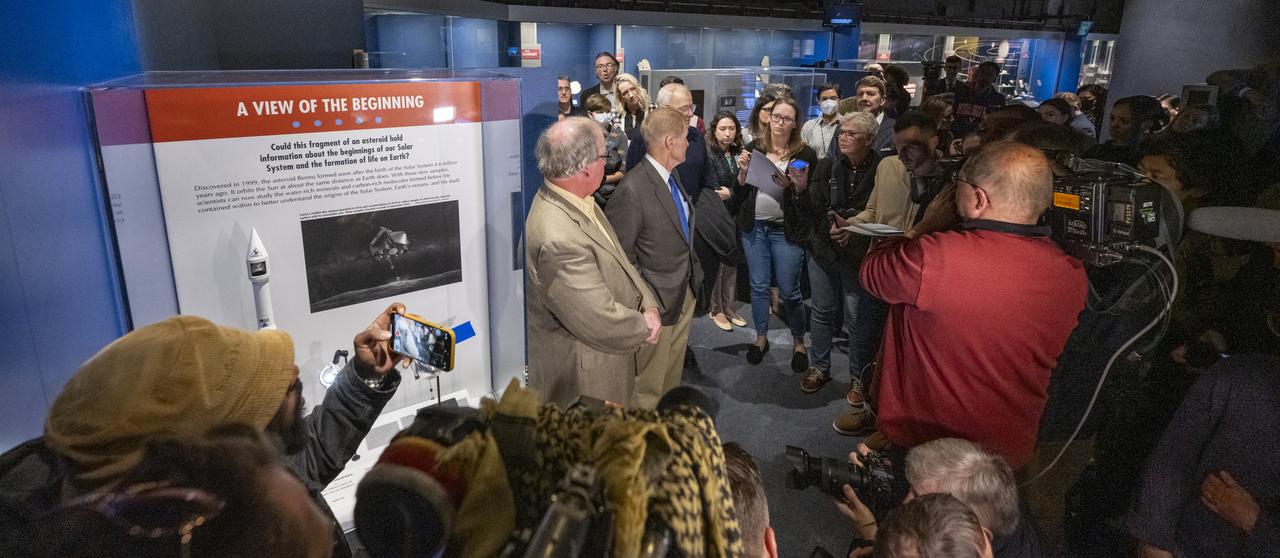
NASA Administrator Bill Nelson speaks to members of the press after unveiling the first public display of a sample from asteroid Bennu, Friday, Nov. 3, 2023, at the Smithsonian’s National Museum of Natural History in Washington. The sample was collected from the carbon rich near Earth asteroid Bennu in October 2020 by NASA’s OSIRIS-REx spacecraft. Photo Credit: (NASA/Keegan Barber)
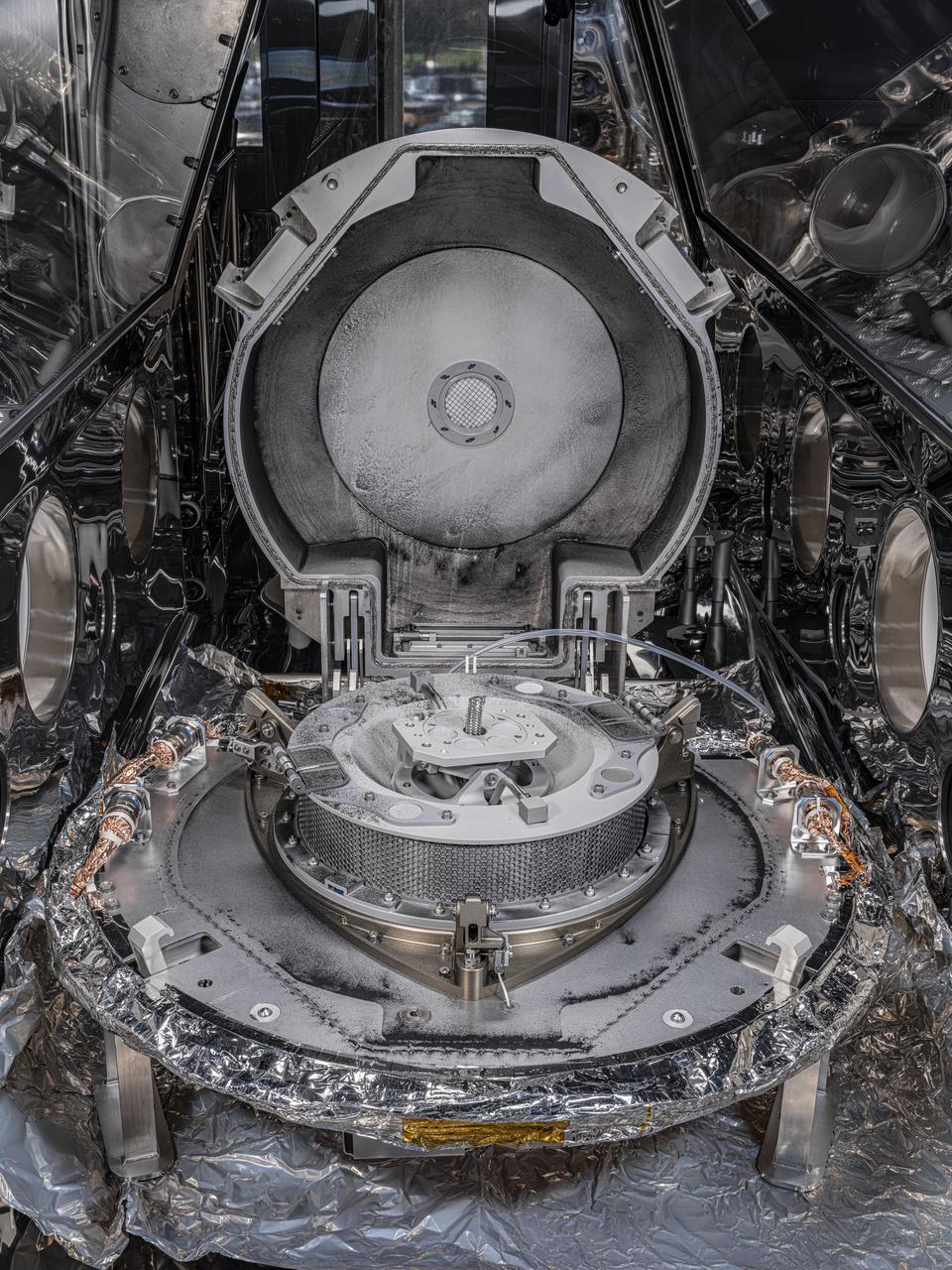
A view of the OSIRIS-REx sample canister with the lid removed, revealing the Touch and Go Sample Acquisition Mechanism (TAGSAM) inside. When astromaterials processors removed the canister lid, they discovered a coating of fine asteroid dust and sand-sized particles covering the inside of the lid and on the top of the avionics deck. The round portion in the center of the lower part of the canister is the TAGSAM that was used to collect pristine material from asteroid Bennu in 2020. The spacecraft delivered the sample return capsule to Earth on Sept. 24, 2023. OSIRIS-REx is the first U.S. mission to collect a sample from an asteroid. Scientists hope the Bennu sample will reveal whether asteroids that collided with Earth billions of years ago thereby delivered water and other ingredients for life to our planet. Credits: Photo credit: NASA/Erika Blumenfeld & Joseph Aebersold Image Capture: Created using manual high-resolution precision photography and semi-automated focus stacking procedure.
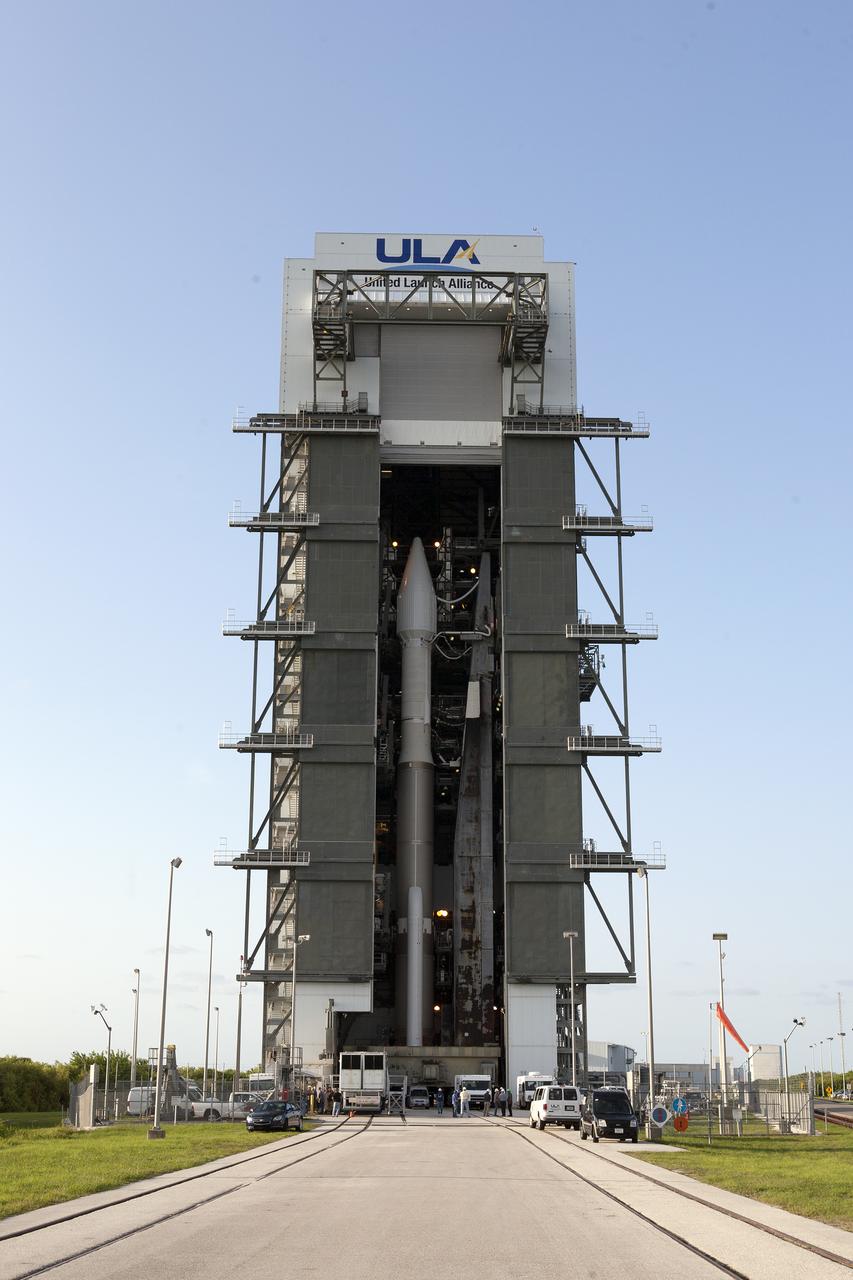
A United Launch Alliance Atlas V rocket begins to roll out of the Vertical Integration Facility to Space Launch Complex 41 at Cape Canaveral Air Force Station in Florida. The launch vehicle will boost NASA’s Origins, Spectral Interpretation, Resource Identification, Security-Regolith Explorer, or OSIRIS-REx spacecraft. This will be the first U.S. mission to sample an asteroid, retrieve at least two ounces of surface material and return it to Earth for study. The asteroid, Bennu, may hold clues to the origin of the solar system and the source of water and organic molecules found on Earth.

A United Launch Alliance Atlas V rocket begins to roll out of the Vertical Integration Facility to Space Launch Complex 41 at Cape Canaveral Air Force Station in Florida. The launch vehicle will boost NASA’s Origins, Spectral Interpretation, Resource Identification, Security-Regolith Explorer, or OSIRIS-REx spacecraft. This will be the first U.S. mission to sample an asteroid, retrieve at least two ounces of surface material and return it to Earth for study. The asteroid, Bennu, may hold clues to the origin of the solar system and the source of water and organic molecules found on Earth.

After leaving the Vertical Integration Facility, a United Launch Alliance Atlas V rocket arrives at Space Launch Complex 41 at Cape Canaveral Air Force Station in Florida. The launch vehicle will boost NASA’s Origins, Spectral Interpretation, Resource Identification, Security-Regolith Explorer, or OSIRIS-REx spacecraft. This will be the first U.S. mission to sample an asteroid, retrieve at least two ounces of surface material and return it to Earth for study. The asteroid, Bennu, may hold clues to the origin of the solar system and the source of water and organic molecules found on Earth.
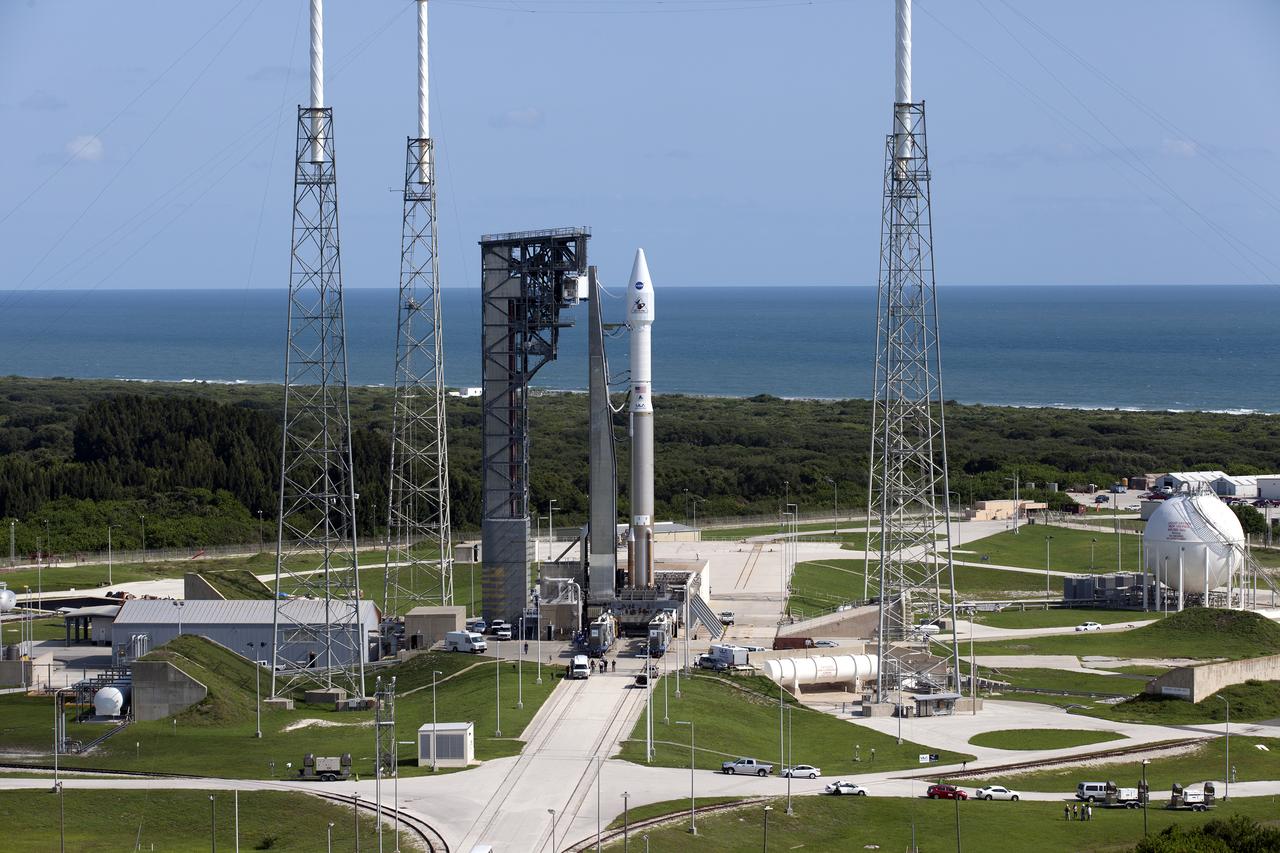
The United Launch Alliance Atlas V rocket has made the trek from the Vertical Integration Facility to Space Launch Complex 41 at Cape Canaveral Air Force Station in Florida. The launch vehicle will boost NASA’s Origins, Spectral Interpretation, Resource Identification, Security-Regolith Explorer, or OSIRIS-REx spacecraft. This will be the first U.S. mission to sample an asteroid, retrieve at least two ounces of surface material and return it to Earth for study. The asteroid, Bennu, may hold clues to the origin of the solar system and the source of water and organic molecules found on Earth.
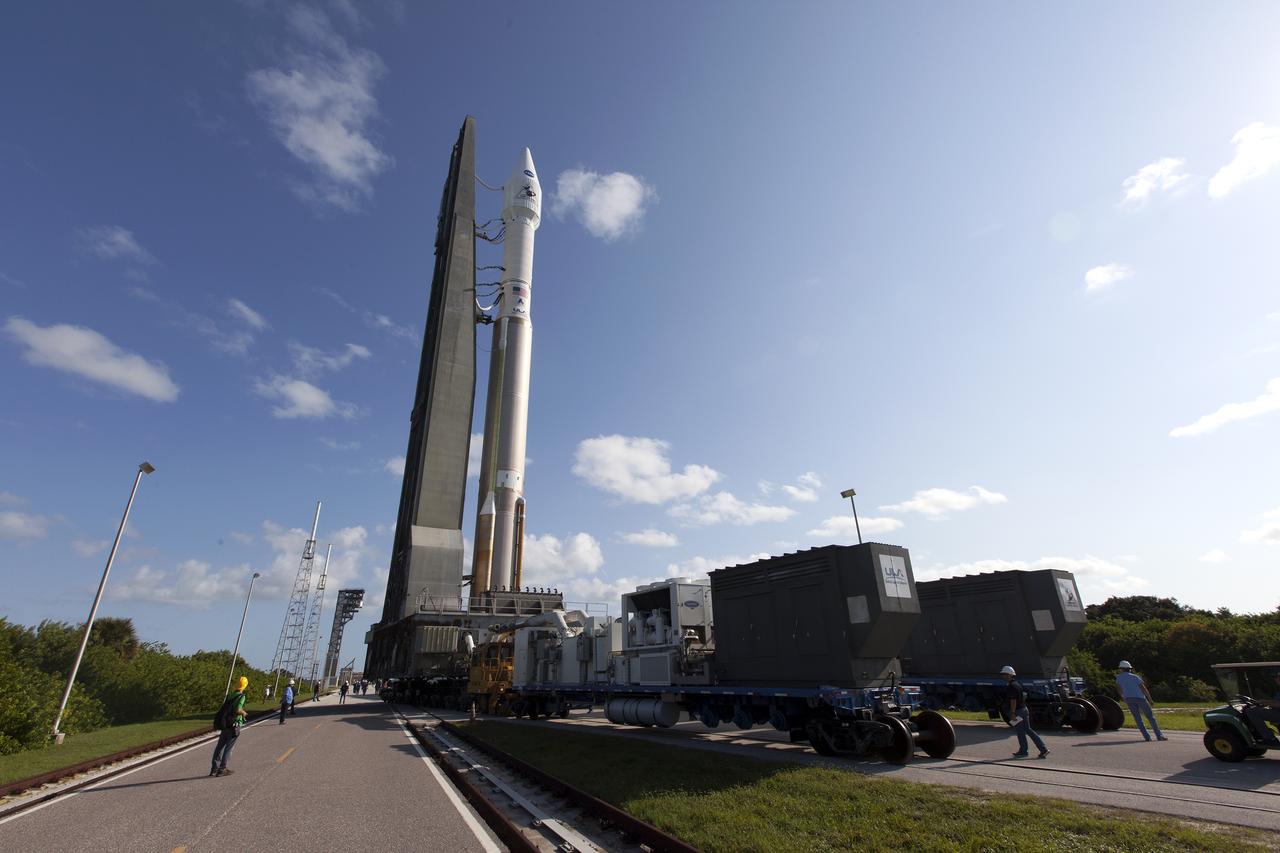
A United Launch Alliance Atlas V rocket rolled out of the Vertical Integration Facility and is on its way to Space Launch Complex 41 at Cape Canaveral Air Force Station in Florida. The launch vehicle will boost NASA’s Origins, Spectral Interpretation, Resource Identification, Security-Regolith Explorer, or OSIRIS-REx spacecraft. This will be the first U.S. mission to sample an asteroid, retrieve at least two ounces of surface material and return it to Earth for study. The asteroid, Bennu, may hold clues to the origin of the solar system and the source of water and organic molecules found on Earth.

The United Launch Alliance Atlas V rocket arrives at Space Launch Complex 41 at Cape Canaveral Air Force Station in Florida. The launch vehicle will boost NASA’s Origins, Spectral Interpretation, Resource Identification, Security-Regolith Explorer, or OSIRIS-REx spacecraft. This will be the first U.S. mission to sample an asteroid, retrieve at least two ounces of surface material and return it to Earth for study. The asteroid, Bennu, may hold clues to the origin of the solar system and the source of water and organic molecules found on Earth. Photo credit: NASA/Kim Shiflett
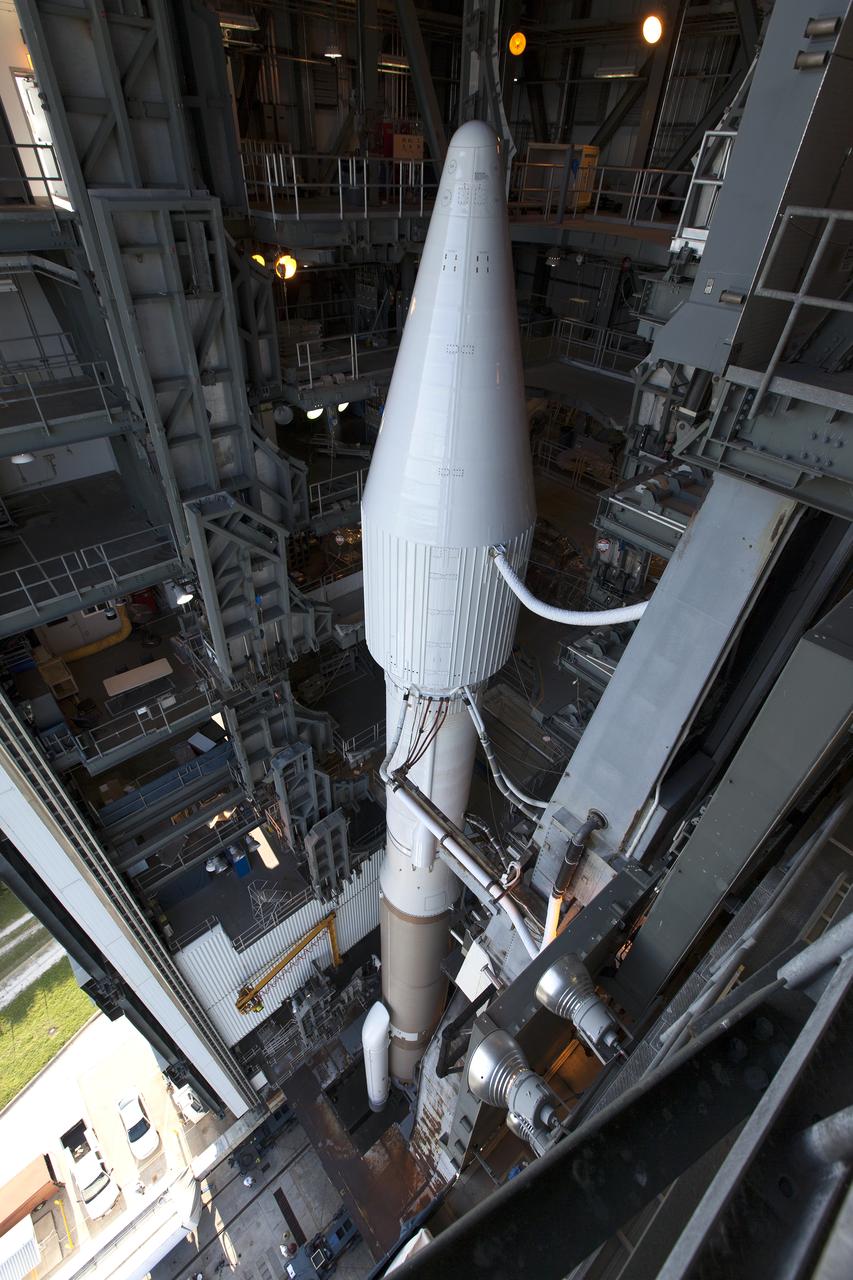
In a view from above, a United Launch Alliance Atlas V rocket begins to roll out of the Vertical Integration Facility to Space Launch Complex 41 at Cape Canaveral Air Force Station in Florida. The launch vehicle will boost NASA’s Origins, Spectral Interpretation, Resource Identification, Security-Regolith Explorer, or OSIRIS-REx spacecraft. This will be the first U.S. mission to sample an asteroid, retrieve at least two ounces of surface material and return it to Earth for study. The asteroid, Bennu, may hold clues to the origin of the solar system and the source of water and organic molecules found on Earth.
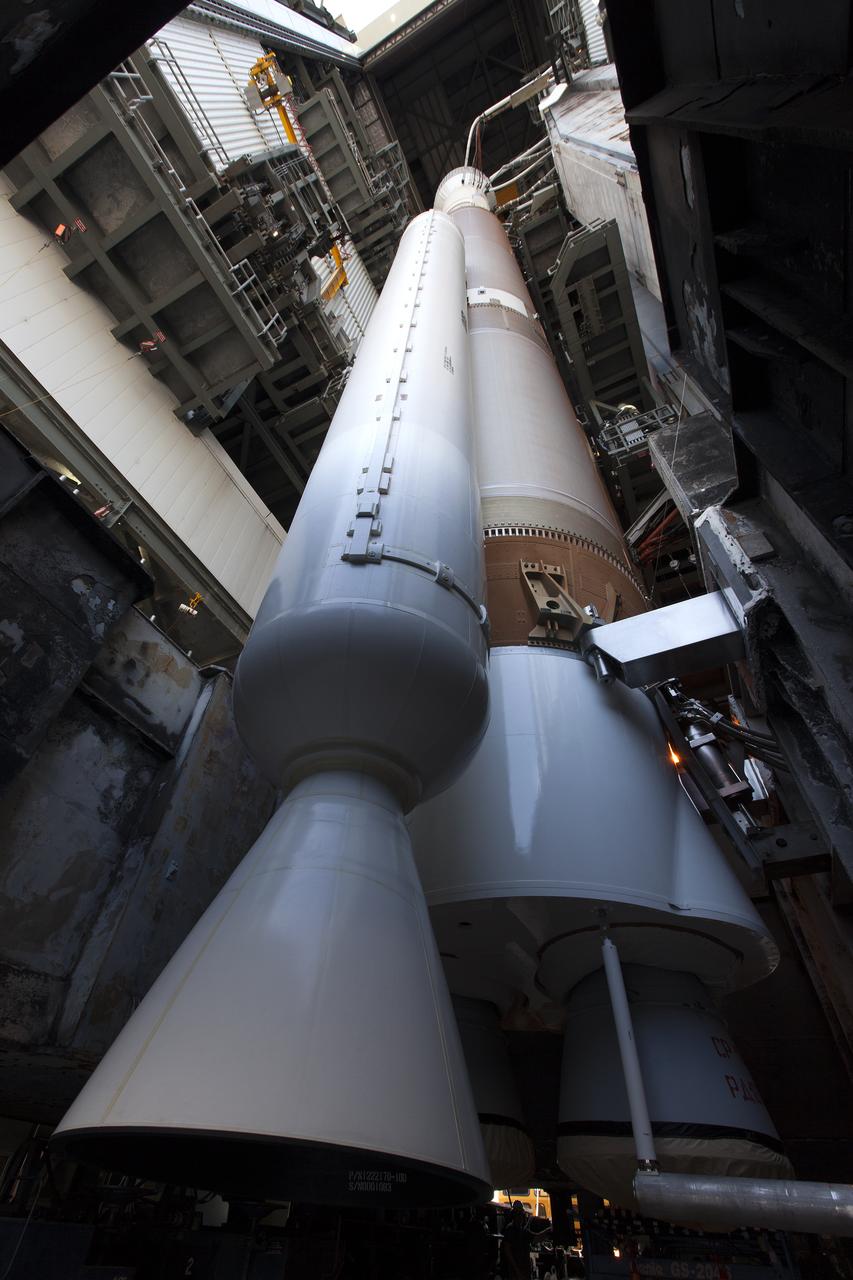
In a view from ground level looking up, a United Launch Alliance Atlas V rocket begins to roll out of the Vertical Integration Facility to Space Launch Complex 41 at Cape Canaveral Air Force Station in Florida. The launch vehicle will boost NASA’s Origins, Spectral Interpretation, Resource Identification, Security-Regolith Explorer, or OSIRIS-REx spacecraft. This will be the first U.S. mission to sample an asteroid, retrieve at least two ounces of surface material and return it to Earth for study. The asteroid, Bennu, may hold clues to the origin of the solar system and the source of water and organic molecules found on Earth.
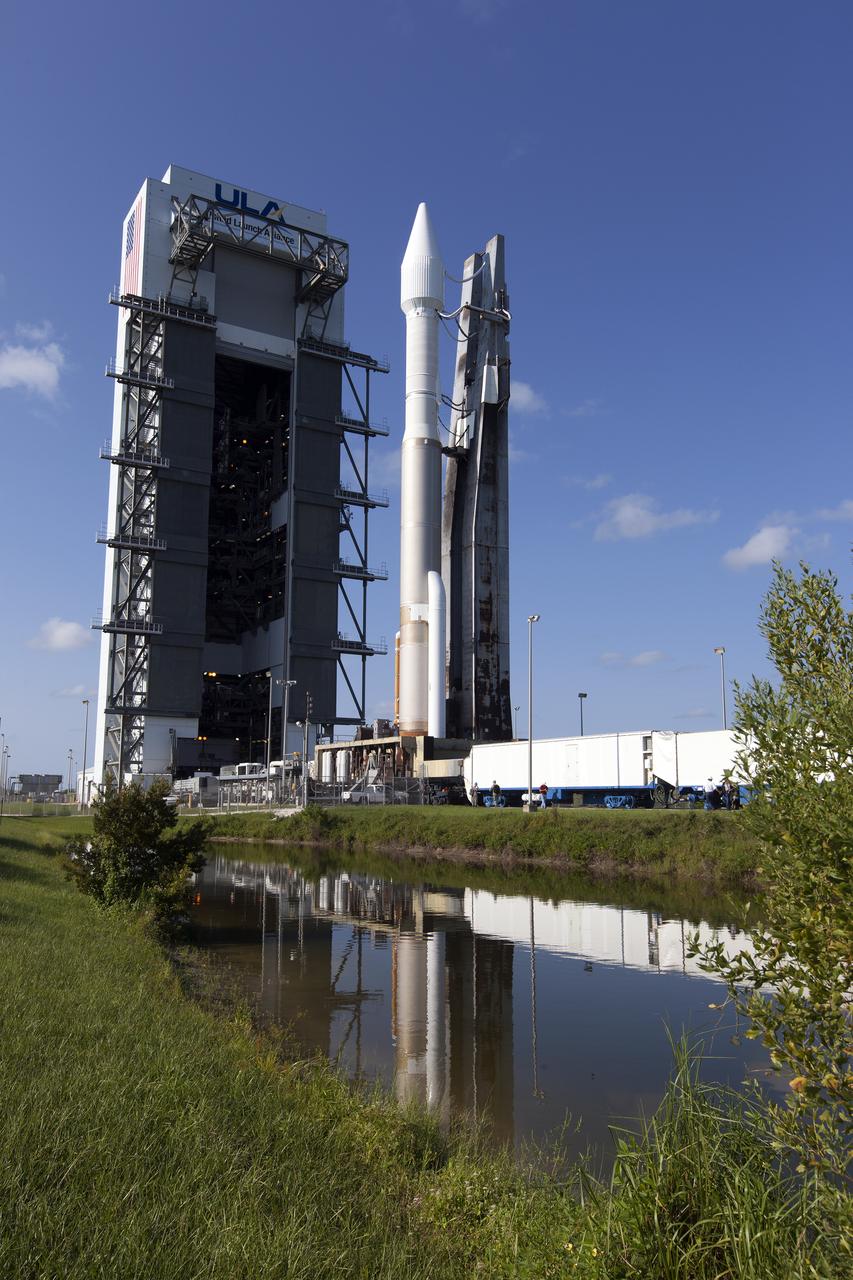
A United Launch Alliance Atlas V rocket is reflected in the water as it rolls out of the Vertical Integration Facility on its way to Space Launch Complex 41 at Cape Canaveral Air Force Station in Florida. The launch vehicle will boost NASA’s Origins, Spectral Interpretation, Resource Identification, Security-Regolith Explorer, or OSIRIS-REx spacecraft. This will be the first U.S. mission to sample an asteroid, retrieve at least two ounces of surface material and return it to Earth for study. The asteroid, Bennu, may hold clues to the origin of the solar system and the source of water and organic molecules found on Earth.
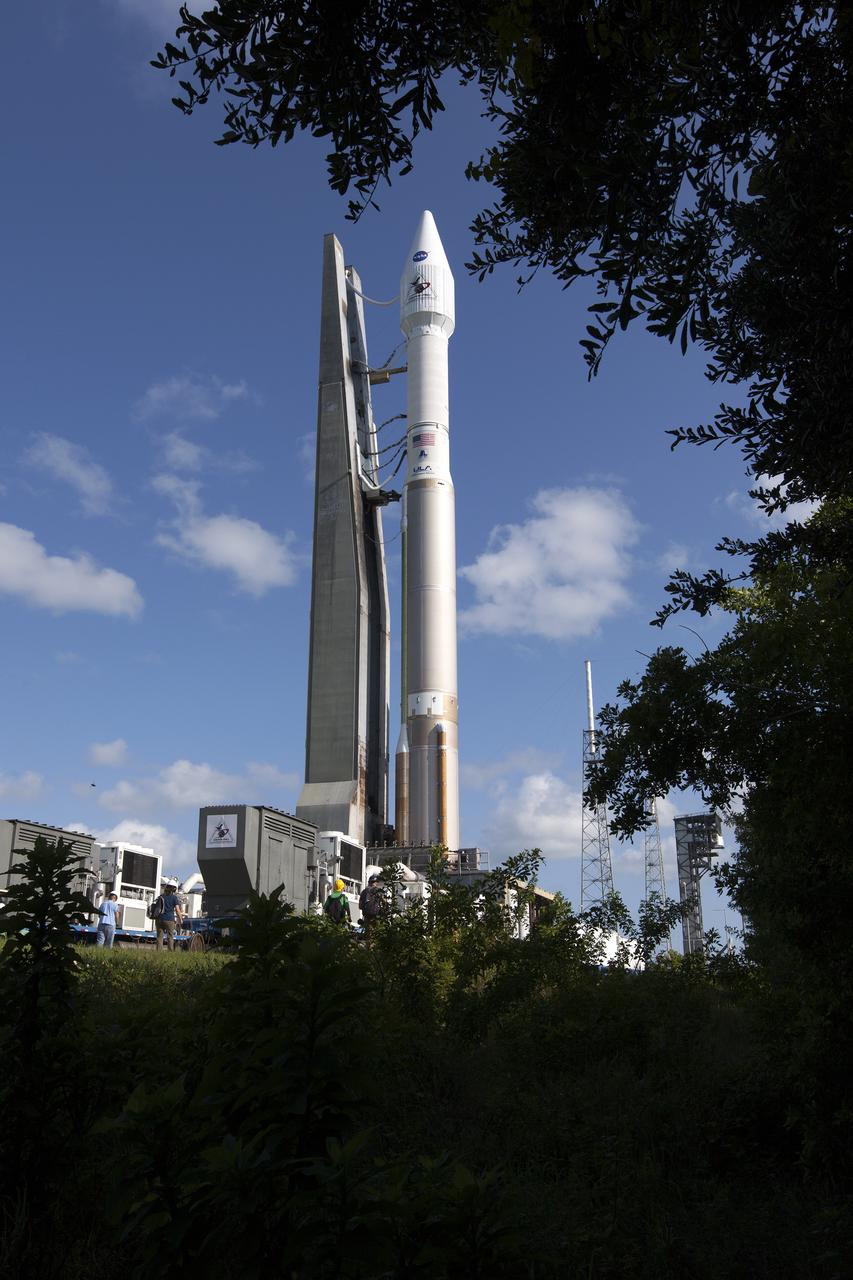
After leaving the Vertical Integration Facility, a United Launch Alliance Atlas V rocket is on its way to Space Launch Complex 41 at Cape Canaveral Air Force Station in Florida. The launch vehicle will boost NASA’s Origins, Spectral Interpretation, Resource Identification, Security-Regolith Explorer, or OSIRIS-REx spacecraft. This will be the first U.S. mission to sample an asteroid, retrieve at least two ounces of surface material and return it to Earth for study. The asteroid, Bennu, may hold clues to the origin of the solar system and the source of water and organic molecules found on Earth.
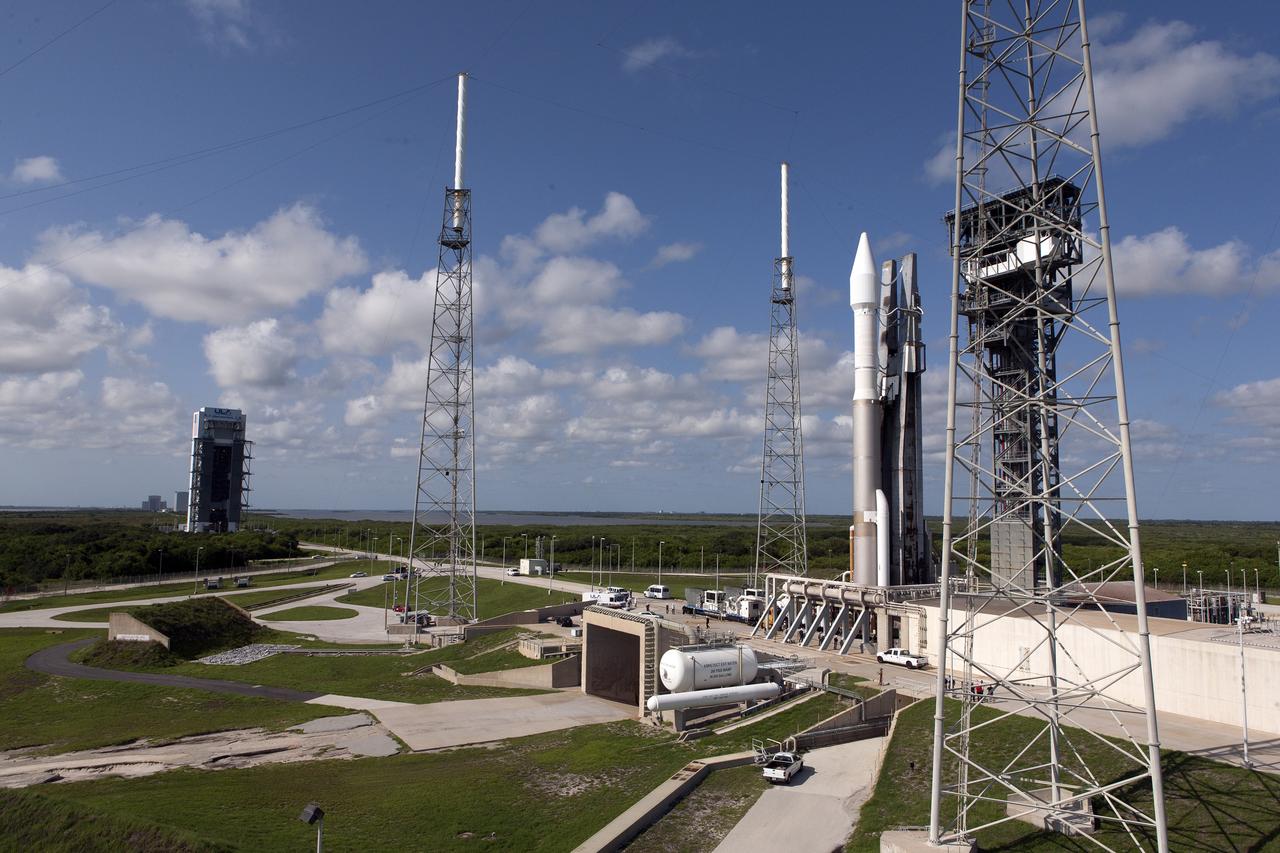
The United Launch Alliance Atlas V rocket has made the trek from the Vertical Integration Facility to Space Launch Complex 41 at Cape Canaveral Air Force Station in Florida. The launch vehicle will boost NASA’s Origins, Spectral Interpretation, Resource Identification, Security-Regolith Explorer, or OSIRIS-REx spacecraft. This will be the first U.S. mission to sample an asteroid, retrieve at least two ounces of surface material and return it to Earth for study. The asteroid, Bennu, may hold clues to the origin of the solar system and the source of water and organic molecules found on Earth.
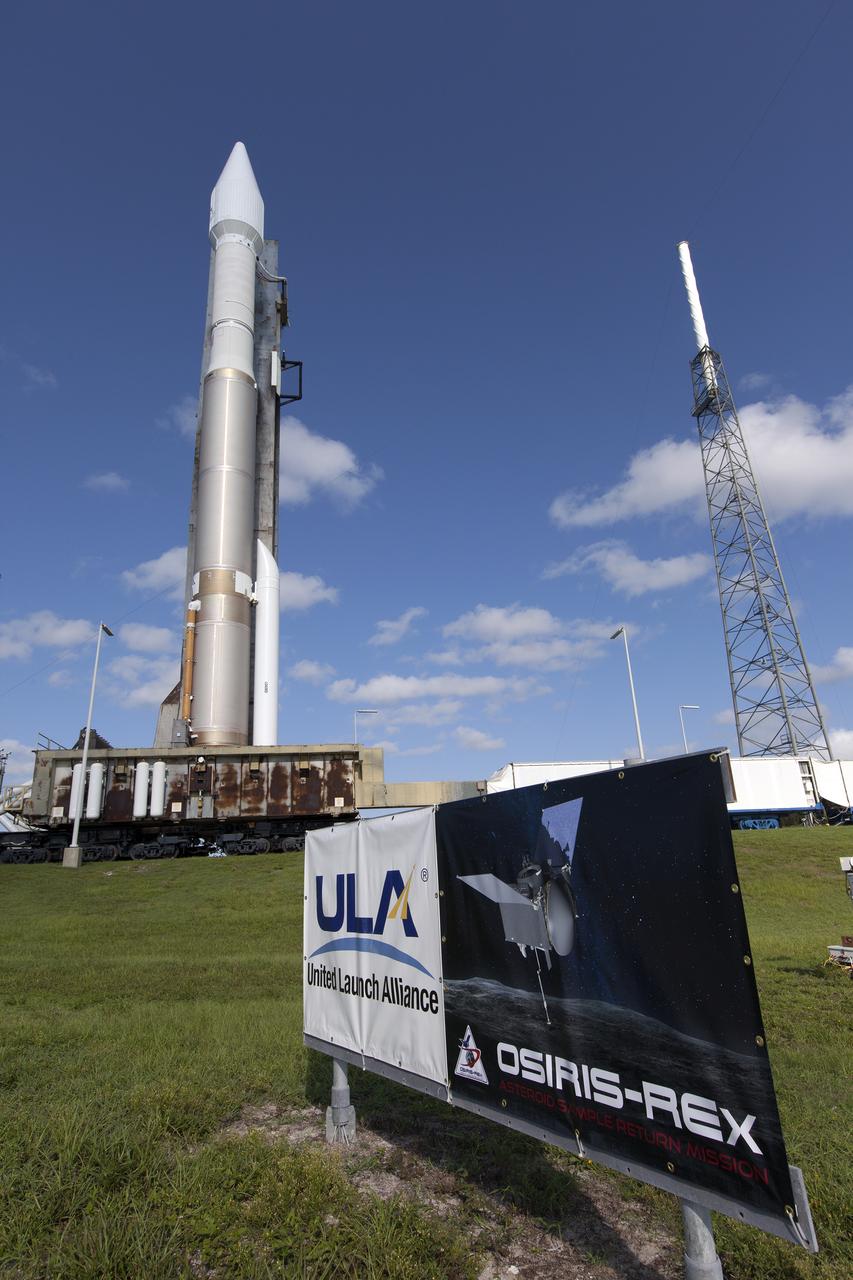
After leaving the Vertical Integration Facility, a United Launch Alliance Atlas V rocket is on its way to Space Launch Complex 41 at Cape Canaveral Air Force Station in Florida. The launch vehicle will boost NASA’s Origins, Spectral Interpretation, Resource Identification, Security-Regolith Explorer, or OSIRIS-REx spacecraft. This will be the first U.S. mission to sample an asteroid, retrieve at least two ounces of surface material and return it to Earth for study. The asteroid, Bennu, may hold clues to the origin of the solar system and the source of water and organic molecules found on Earth.
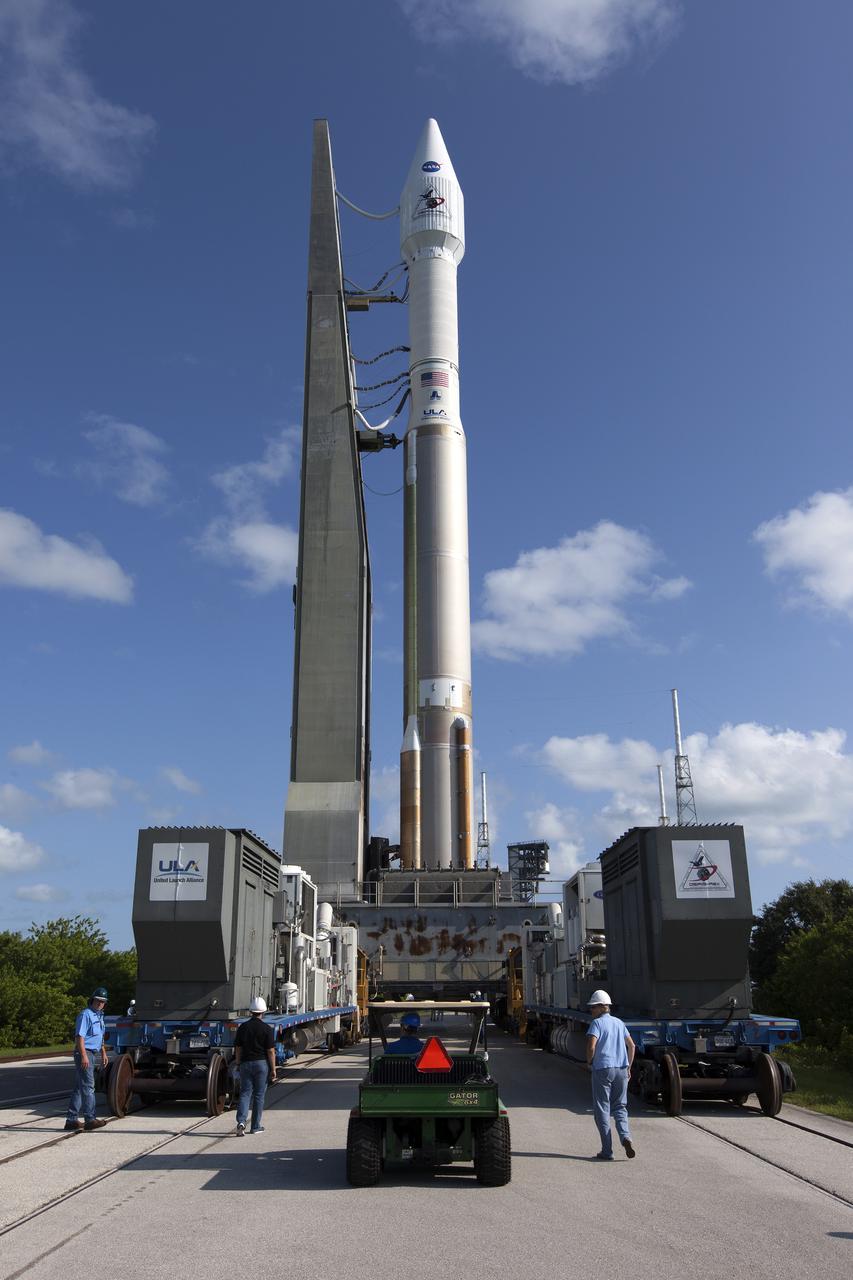
A United Launch Alliance Atlas V rocket has left the Vertical Integration Facility and is on its way to Space Launch Complex 41 at Cape Canaveral Air Force Station in Florida. The launch vehicle will boost NASA’s Origins, Spectral Interpretation, Resource Identification, Security-Regolith Explorer, or OSIRIS-REx spacecraft. This will be the first U.S. mission to sample an asteroid, retrieve at least two ounces of surface material and return it to Earth for study. The asteroid, Bennu, may hold clues to the origin of the solar system and the source of water and organic molecules found on Earth.
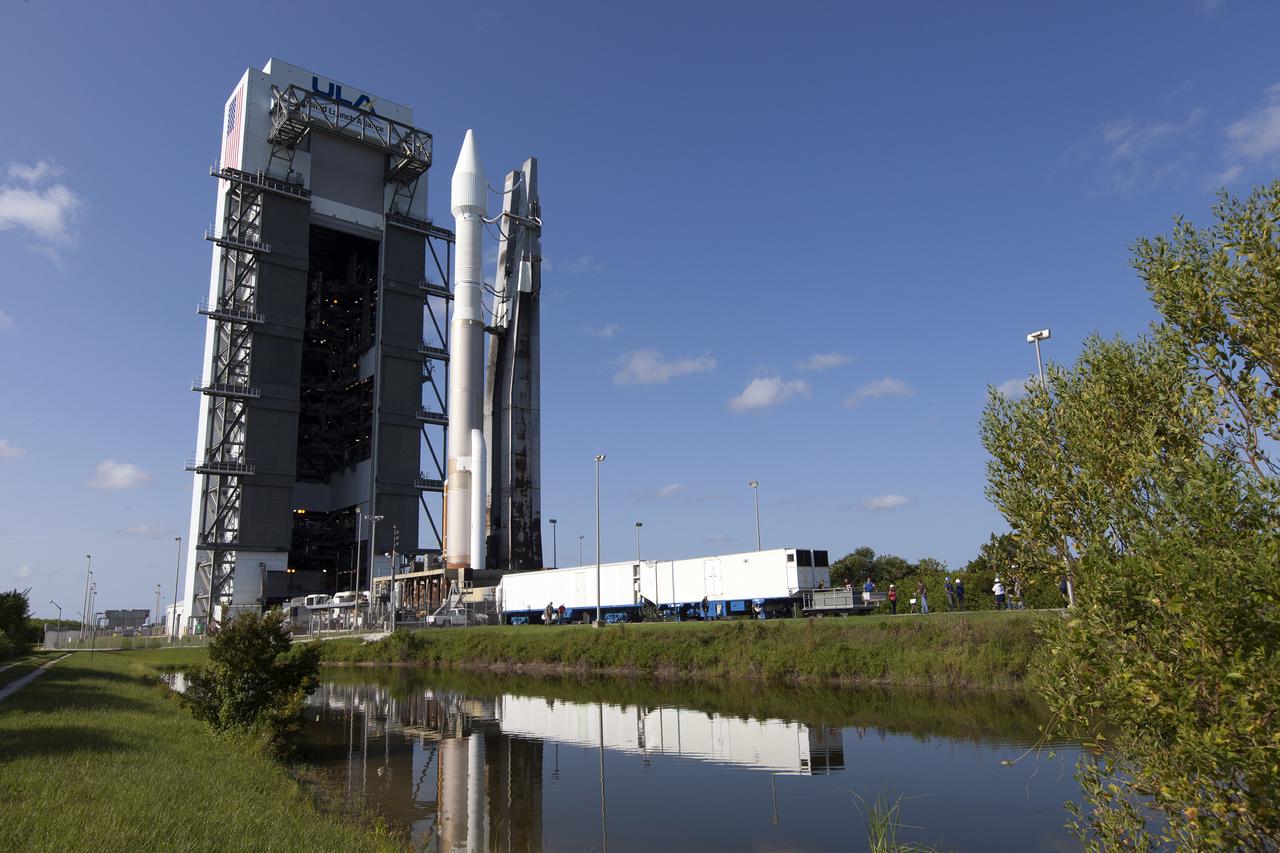
A United Launch Alliance Atlas V rocket rolls out of the Vertical Integration Facility on its way to Space Launch Complex 41 at Cape Canaveral Air Force Station in Florida. The launch vehicle will boost NASA’s Origins, Spectral Interpretation, Resource Identification, Security-Regolith Explorer, or OSIRIS-REx spacecraft. This will be the first U.S. mission to sample an asteroid, retrieve at least two ounces of surface material and return it to Earth for study. The asteroid, Bennu, may hold clues to the origin of the solar system and the source of water and organic molecules found on Earth.
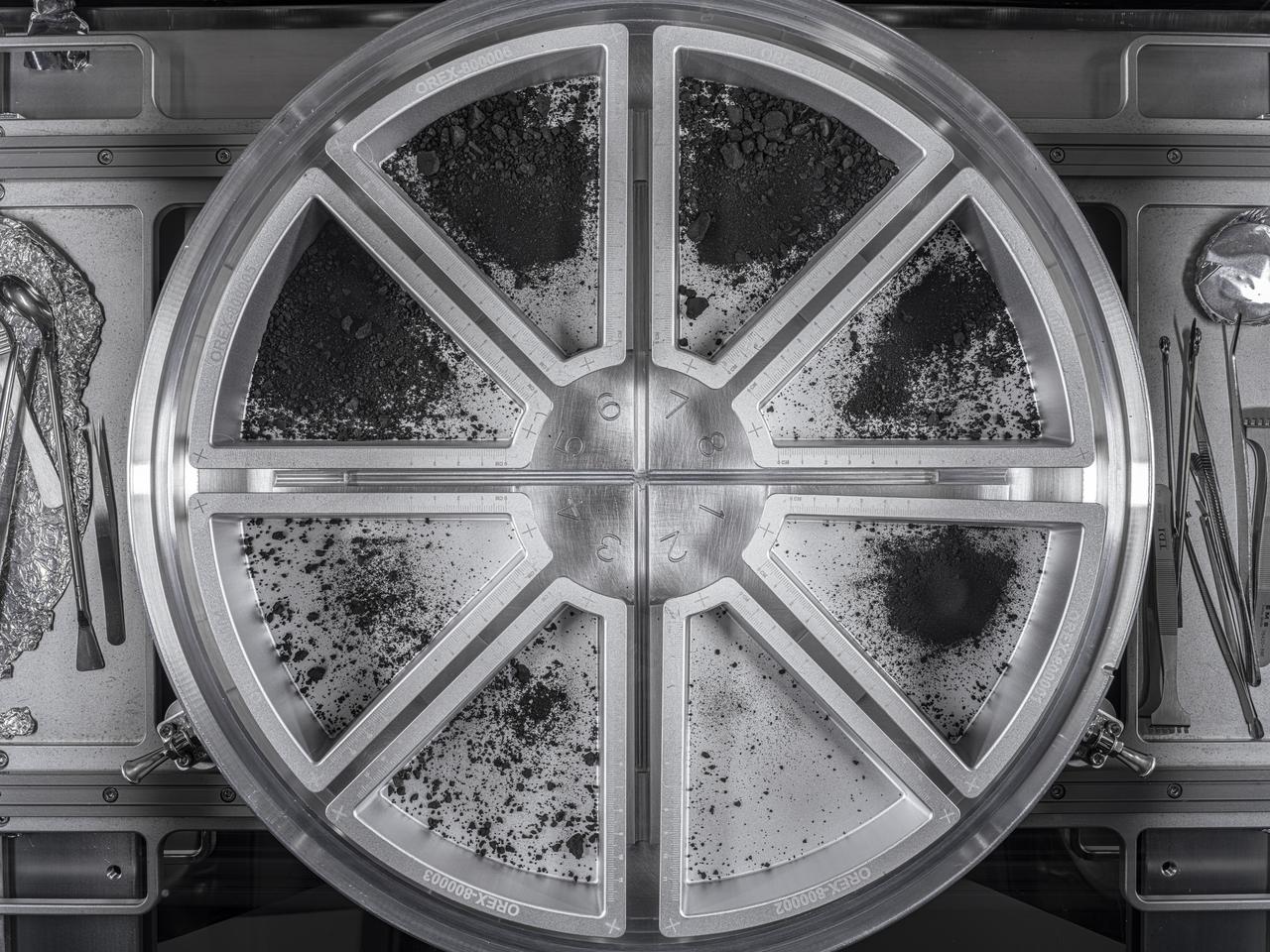
A view of eight sample trays containing the final material from asteroid Bennu. The dust and rocks were poured into the trays from the top plate of the Touch-and-Go Sample Acquisition Mechanism (TAGSAM) head. 51.2 grams were collected from this pour, bringing the final mass of asteroid sample to 121.6 grams. Credit: NASA/Erika Blumenfeld & Joseph Aebersold
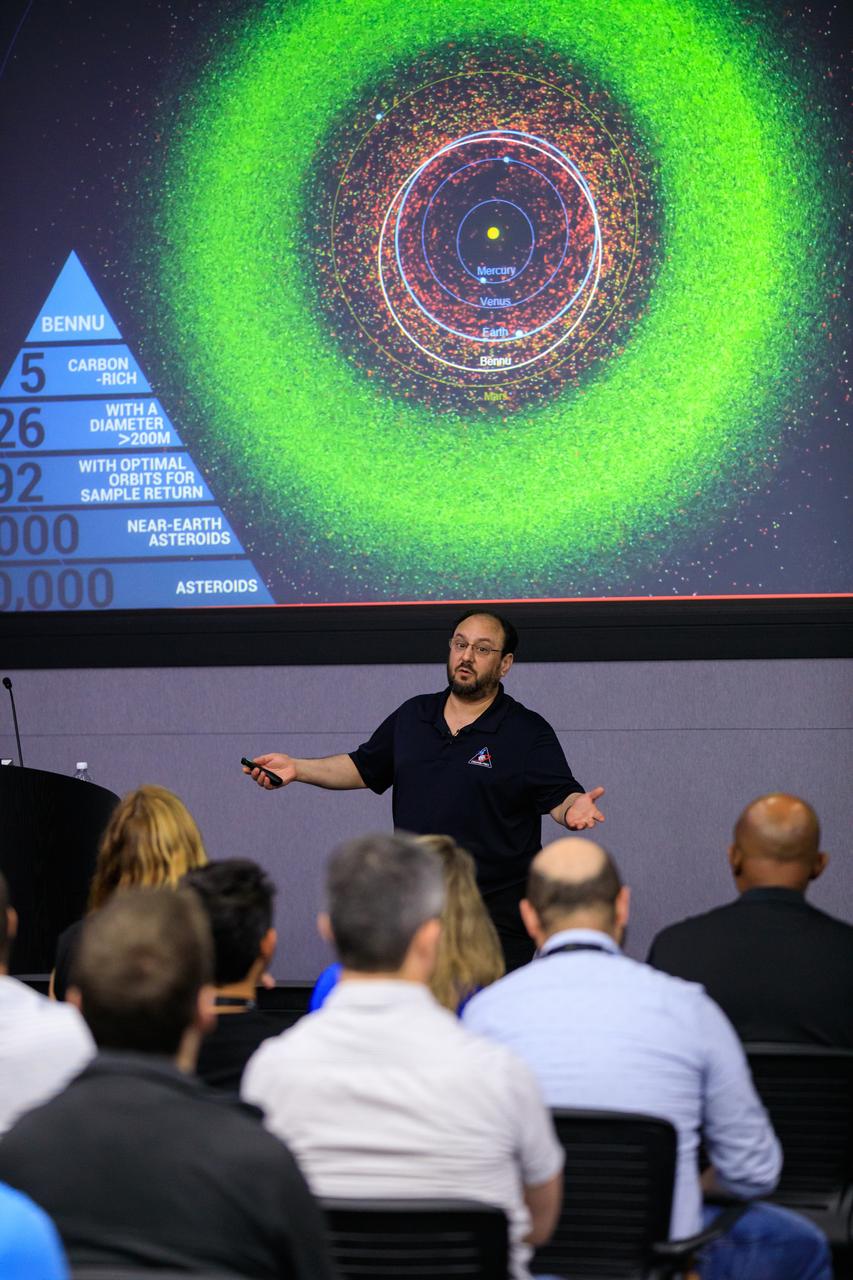
OSIRIS-REx Project Scientist, Dr. Jason Dworkin of NASA’s Goddard Space Flight Center in Greenbelt, Maryland, presents a mission update inside the Mission Briefing Room of the Neil A. Armstrong Operations and Checkout Building at Kennedy Space Center in Florida, on May 11, 2023. Launched seven years ago, the OSIRIS-REx spacecraft is set to return a material sample from asteroid Bennu on Sept. 24, 2023, when the sample return capsule separates from the spacecraft and lands by parachute at the Utah Test and Training Range/Dugway Proving Ground, southwest of Salt Lake City. OSIRIS-REx is the first U.S. mission to sample an asteroid, retrieve at least two ounces of surface material, and return it to Earth for study.
/nasa-goddard-astrobio (4)~medium.jpg)
/nasa-goddard-astrobio (3)~medium.jpg)
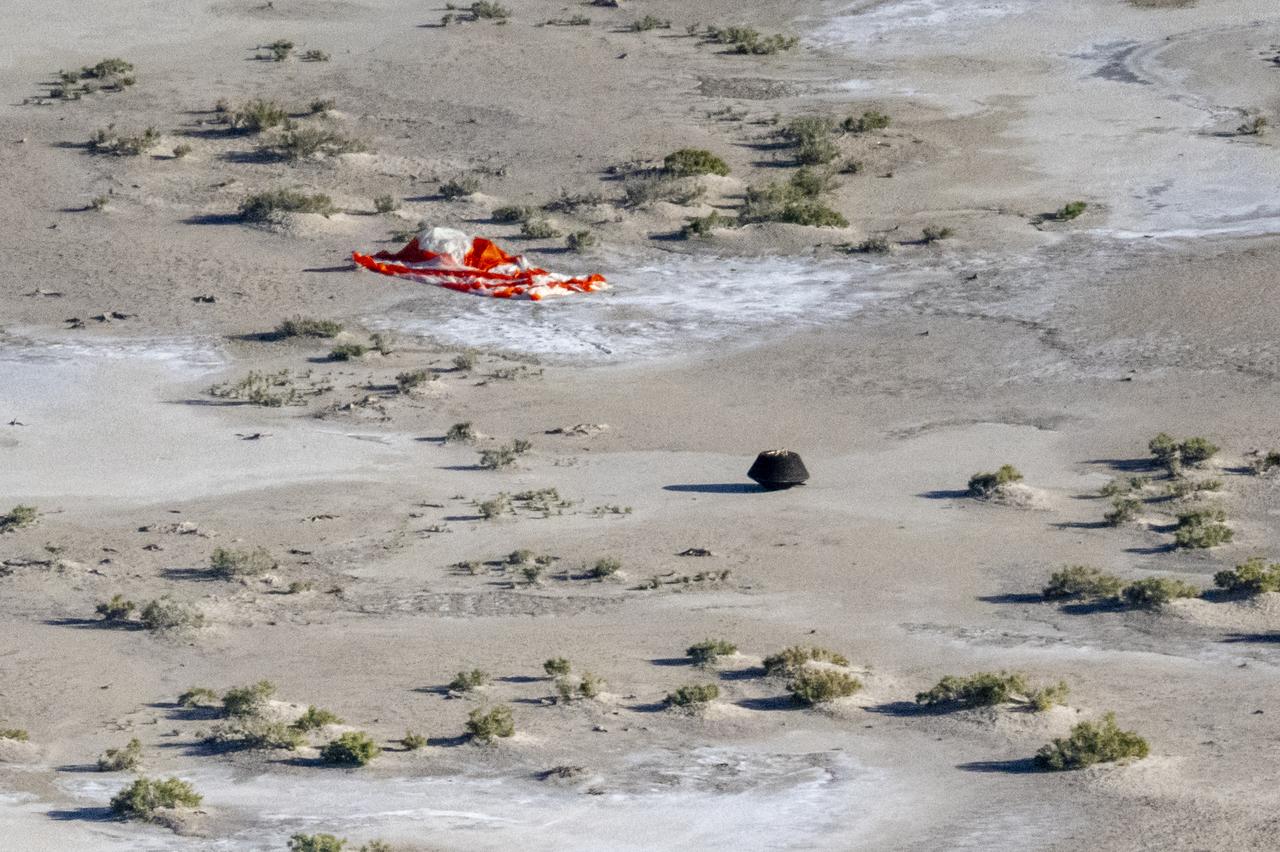
The sample return capsule from NASA’s OSIRIS-REx mission is seen shortly after touching down in the desert, Sunday, Sept. 24, 2023, at the Department of Defense's Utah Test and Training Range. The sample was collected from the asteroid Bennu in October 2020 by NASA’s OSIRIS-REx spacecraft. Photo Credit: (NASA/Keegan Barber)
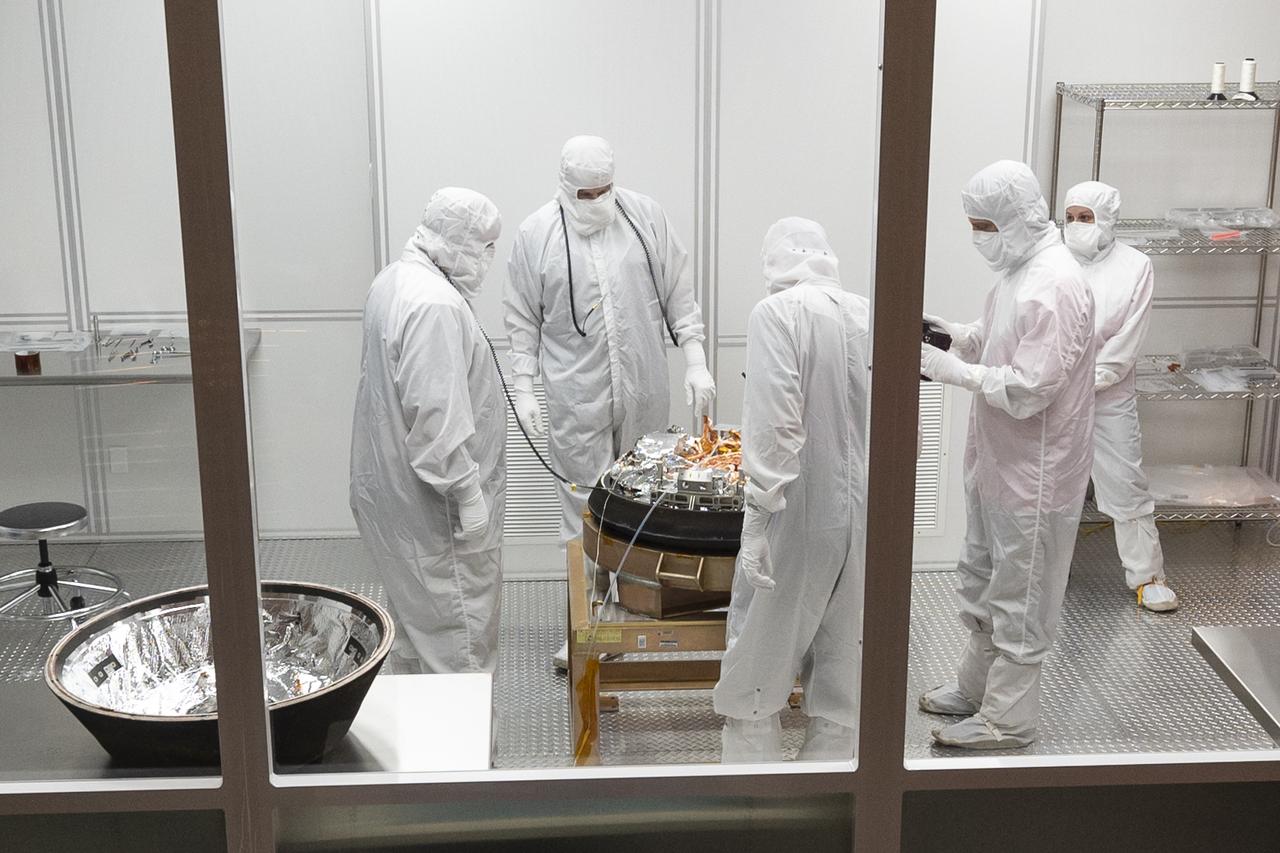
Curation teams process the sample return capsule from NASA’s OSIRIS-REx mission in a cleanroom, Sunday, Sept. 24, 2023, at the Department of Defense's Utah Test and Training Range. The sample was collected from the asteroid Bennu in October 2020 by NASA’s OSIRIS-REx spacecraft. Photo Credit: (NASA/Keegan Barber)
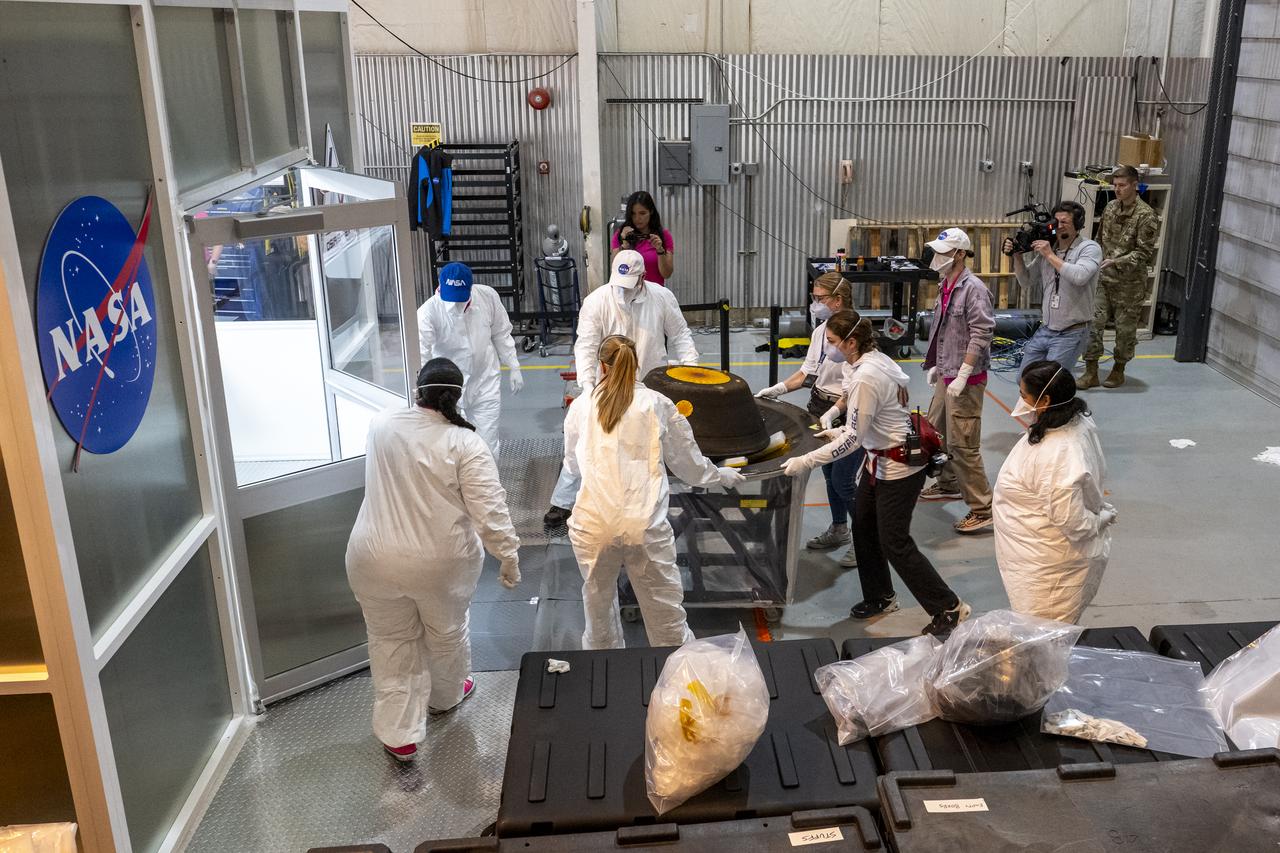
The sample return capsule from NASA’s OSIRIS-REx mission is transferred to a cleanroom, Sunday, Sept. 24, 2023, at the Department of Defense's Utah Test and Training Range. The sample was collected from the asteroid Bennu in October 2020 by NASA’s OSIRIS-REx spacecraft. Photo Credit: (NASA/Keegan Barber)
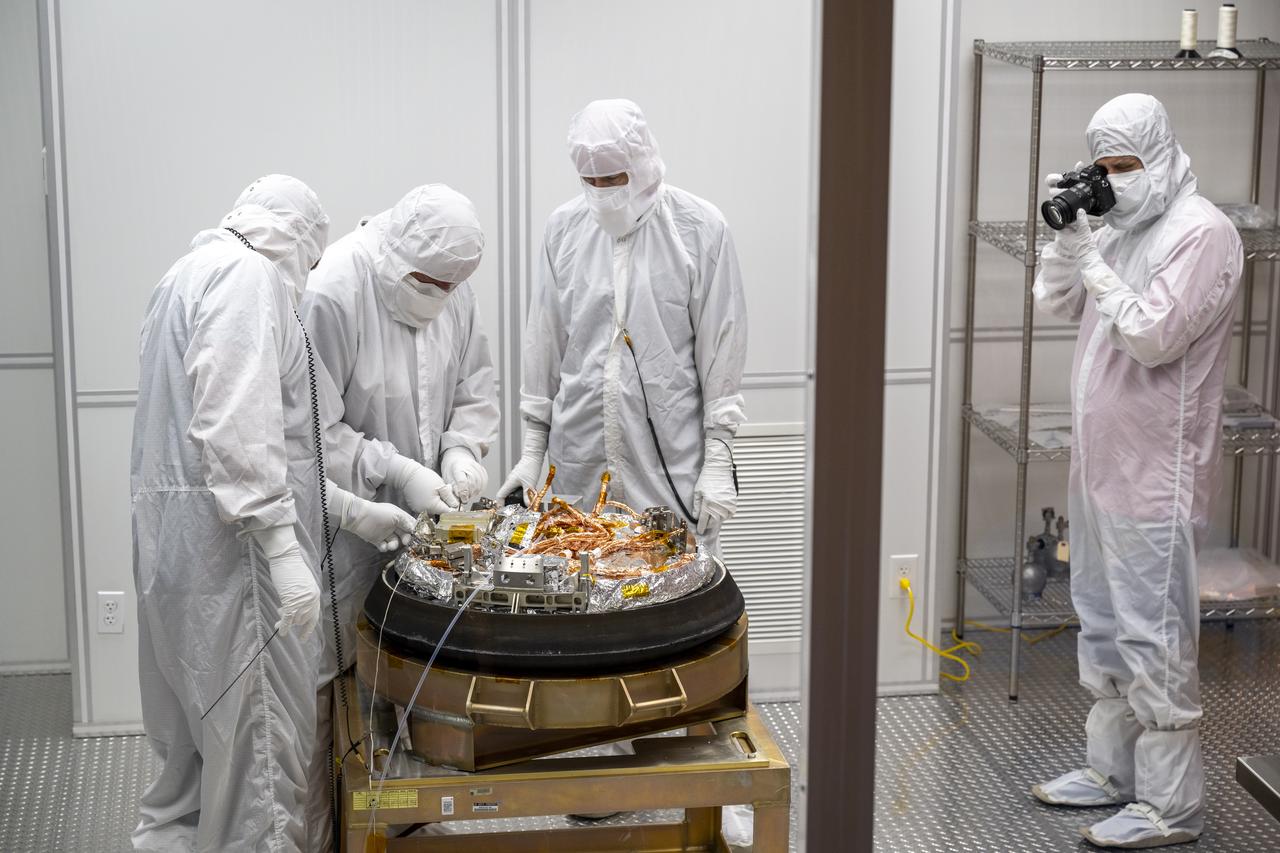
Curation teams process the sample return capsule from NASA’s OSIRIS-REx mission in a cleanroom, Sunday, Sept. 24, 2023, at the Department of Defense's Utah Test and Training Range. The sample was collected from the asteroid Bennu in October 2020 by NASA’s OSIRIS-REx spacecraft. Photo Credit: (NASA/Keegan Barber)
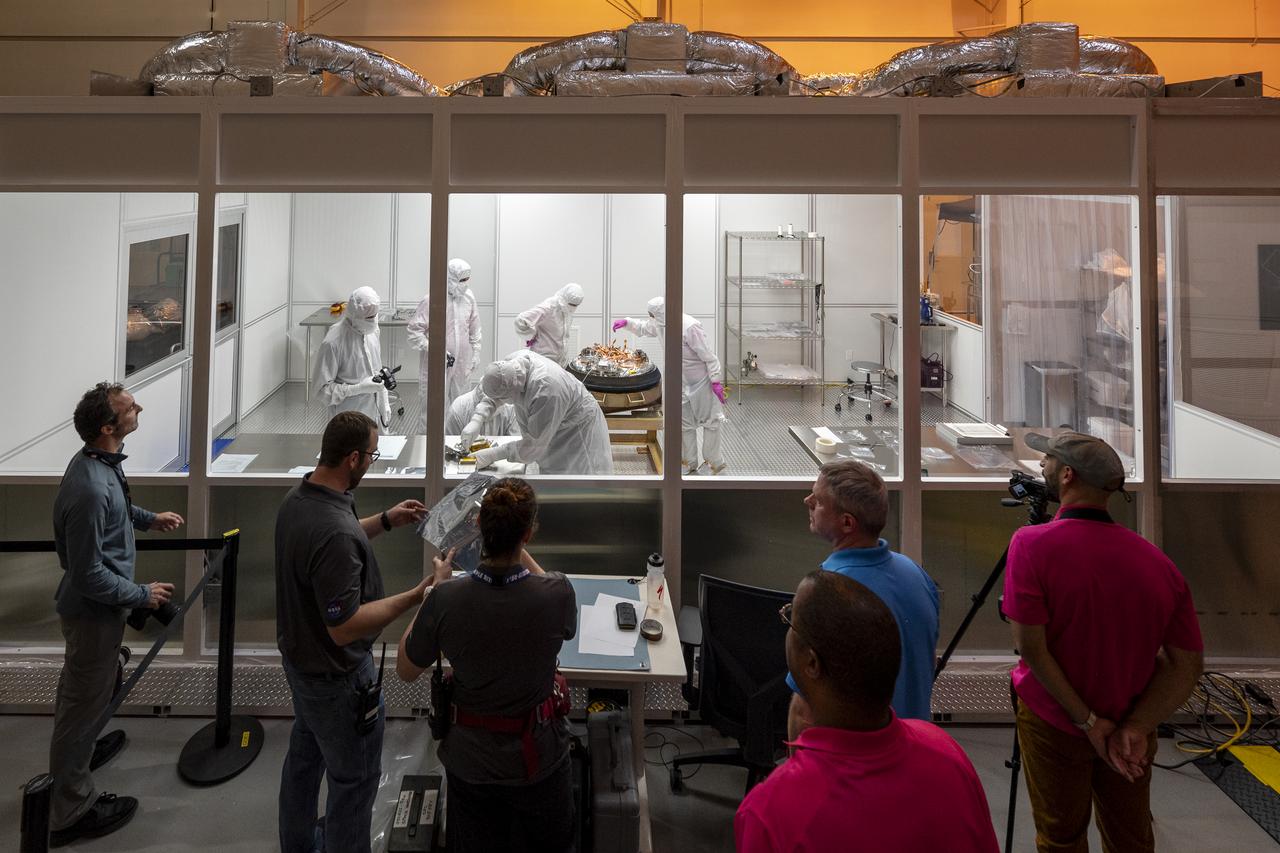
Curation teams process the sample return capsule from NASA’s OSIRIS-REx mission in a cleanroom, Sunday, Sept. 24, 2023, at the Department of Defense's Utah Test and Training Range. The sample was collected from the asteroid Bennu in October 2020 by NASA’s OSIRIS-REx spacecraft. Photo Credit: (NASA/Keegan Barber)
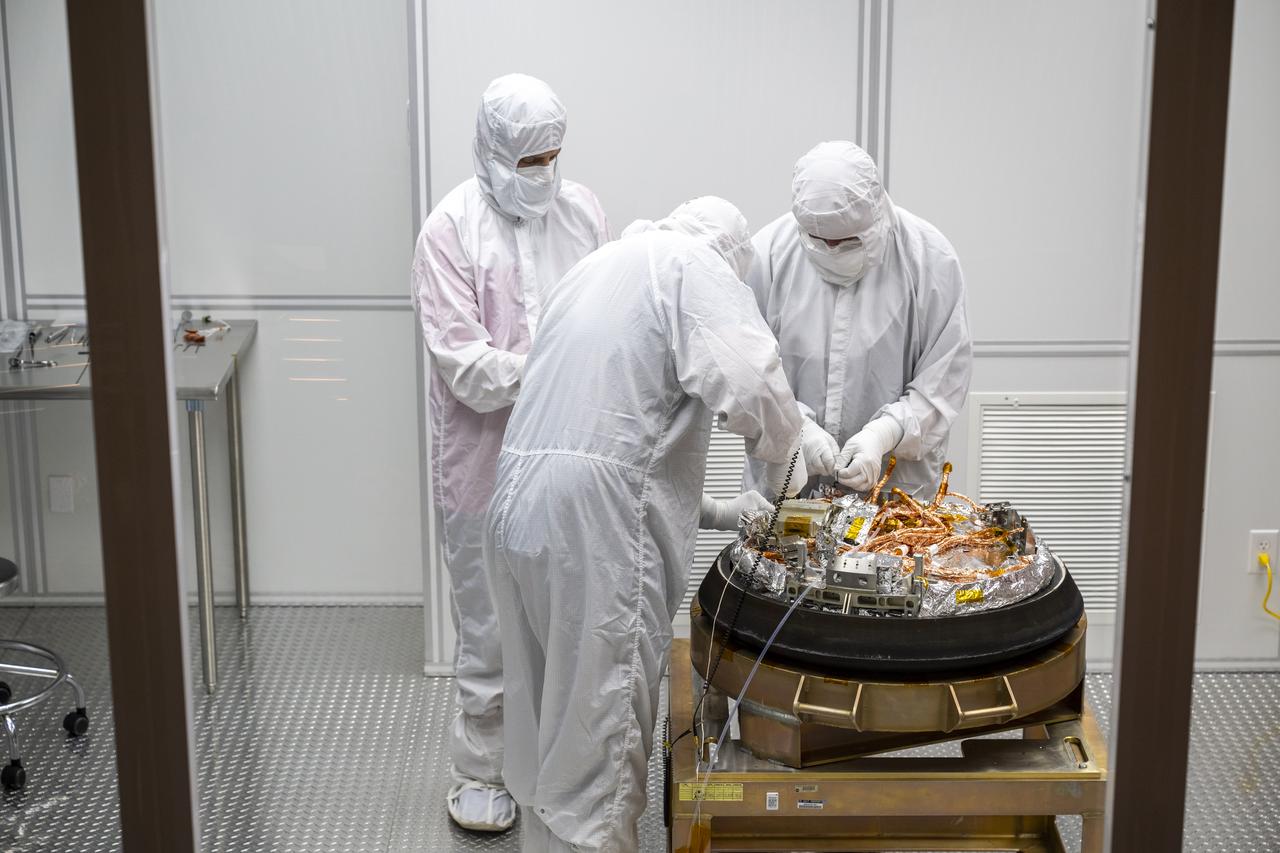
Curation teams process the sample return capsule from NASA’s OSIRIS-REx mission in a cleanroom, Sunday, Sept. 24, 2023, at the Department of Defense's Utah Test and Training Range. The sample was collected from the asteroid Bennu in October 2020 by NASA’s OSIRIS-REx spacecraft. Photo Credit: (NASA/Keegan Barber)
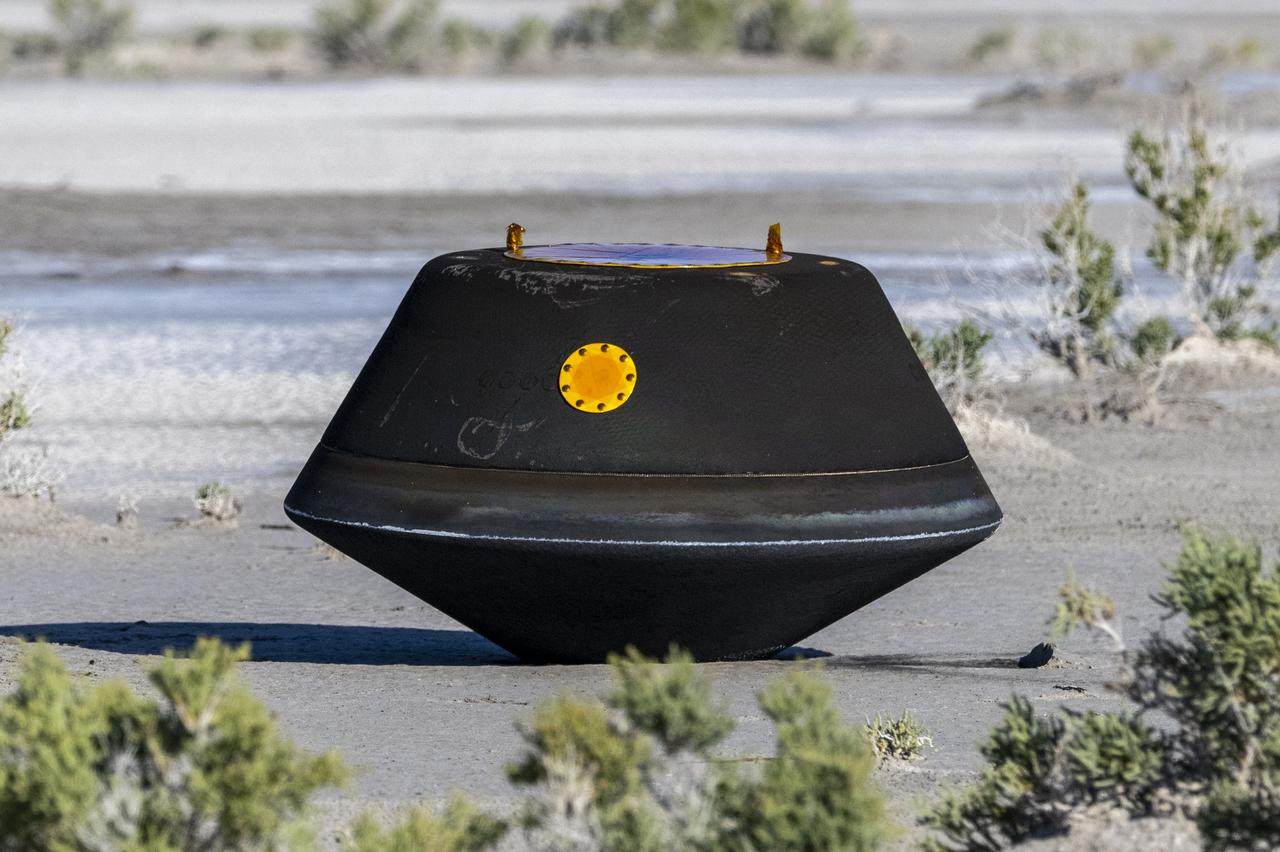
The sample return capsule from NASA’s OSIRIS-REx mission is seen shortly after touching down in the desert, Sunday, Sept. 24, 2023, at the Department of Defense's Utah Test and Training Range. The sample was collected from the asteroid Bennu in October 2020 by NASA’s OSIRIS-REx spacecraft. Photo Credit: (NASA/Keegan Barber)
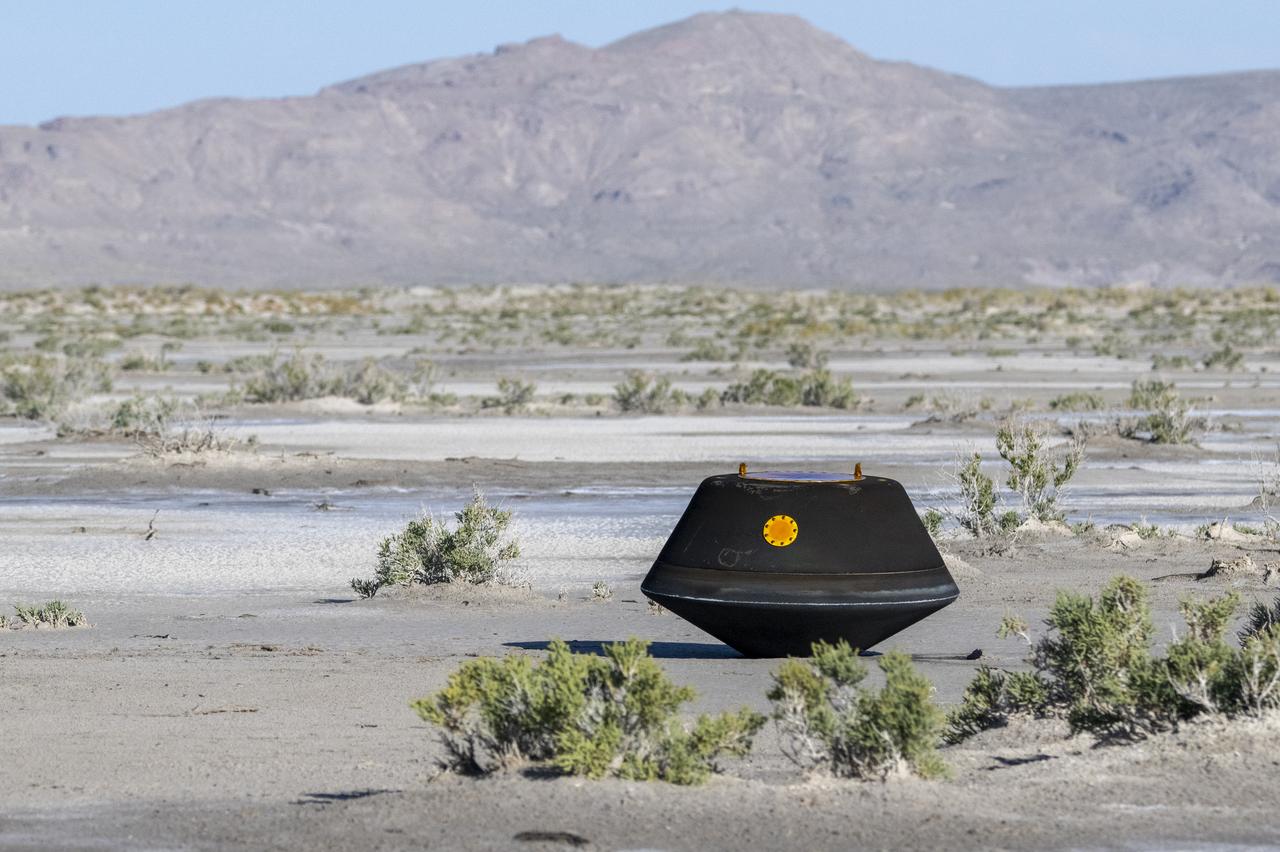
The sample return capsule from NASA’s OSIRIS-REx mission is seen shortly after touching down in the desert, Sunday, Sept. 24, 2023, at the Department of Defense's Utah Test and Training Range. The sample was collected from the asteroid Bennu in October 2020 by NASA’s OSIRIS-REx spacecraft. Photo Credit: (NASA/Keegan Barber)
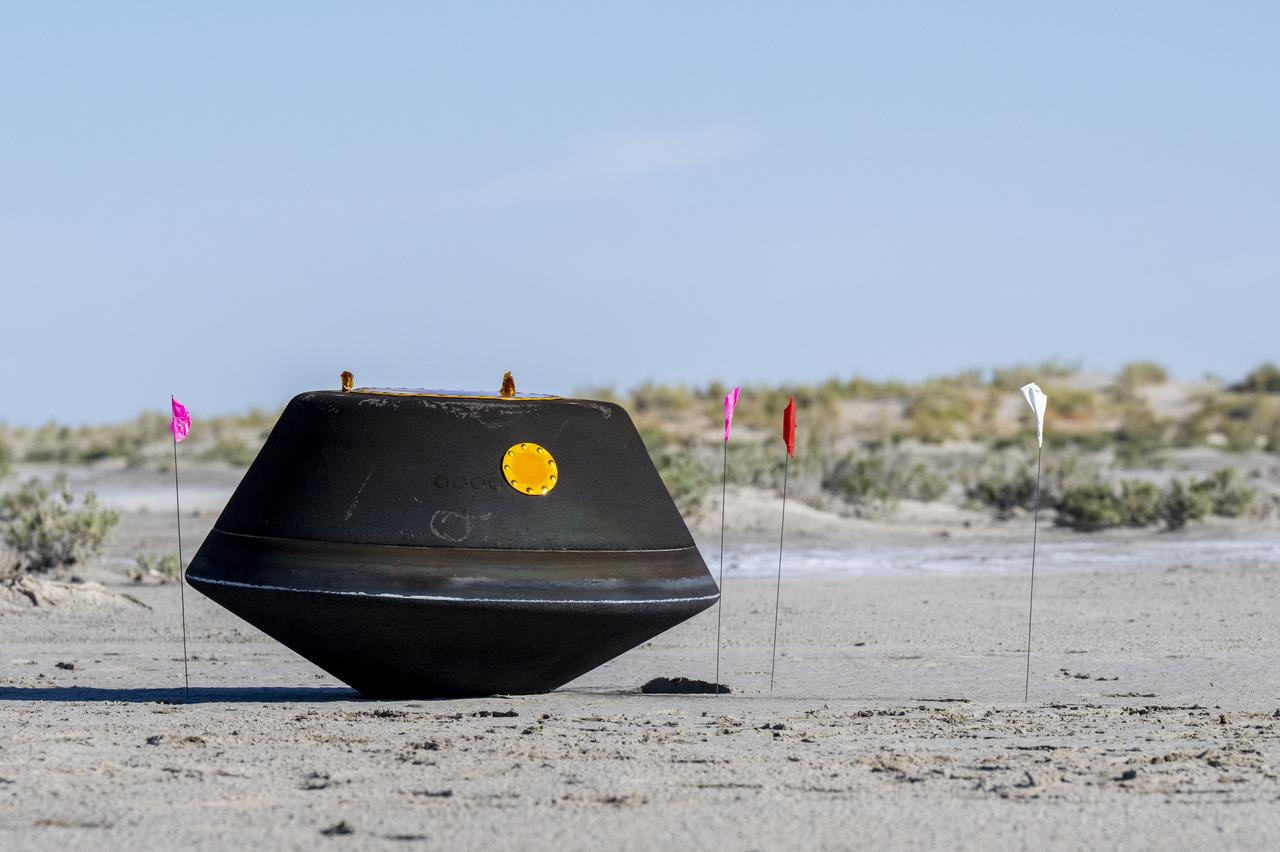
The sample return capsule from NASA’s OSIRIS-REx mission is seen shortly after touching down in the desert, Sunday, Sept. 24, 2023, at the Department of Defense's Utah Test and Training Range. The sample was collected from the asteroid Bennu in October 2020 by NASA’s OSIRIS-REx spacecraft. Photo Credit: (NASA/Keegan Barber)
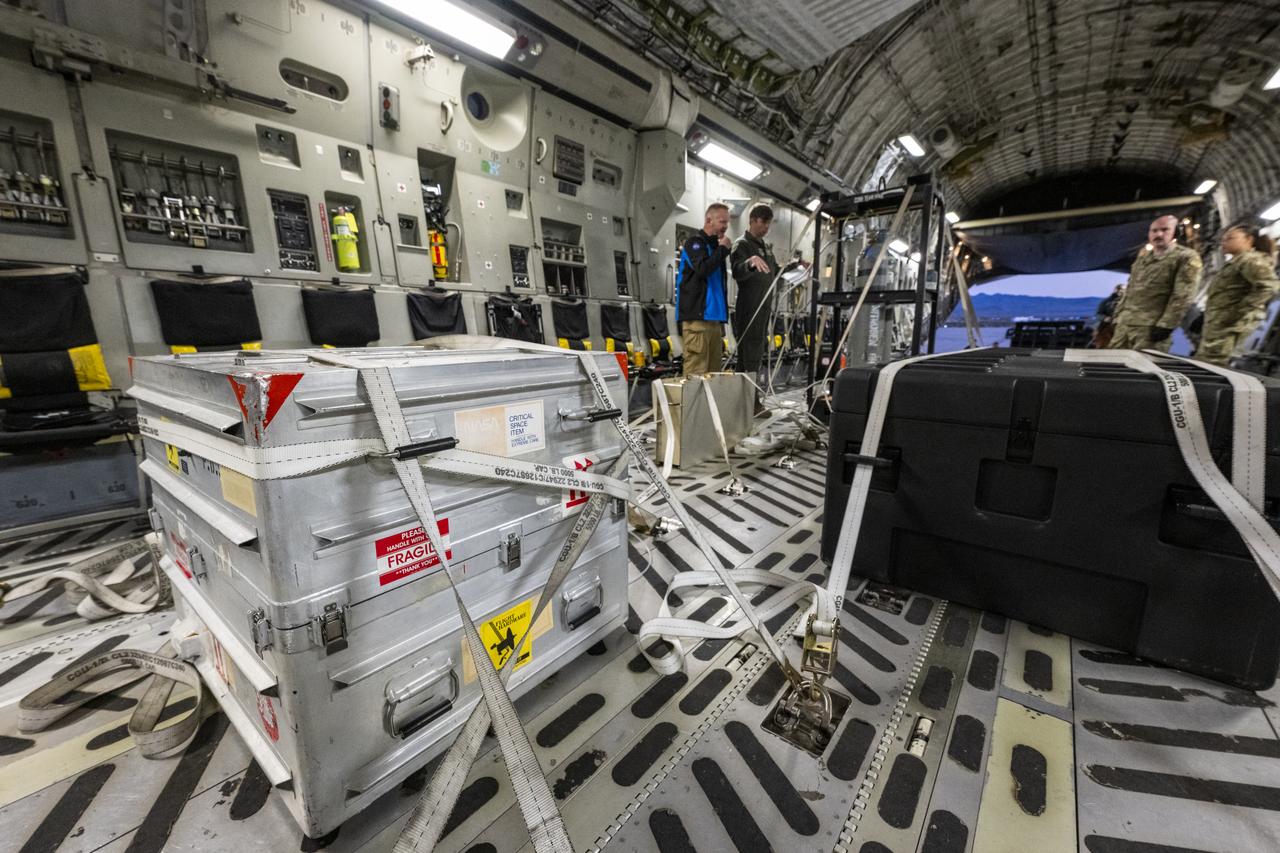
A container with the science canister from NASA’s OSIRIS-REx mission is seen aboard a C-17 Globemaster aircraft, Monday, Sept. 25, 2023, at the Department of Defense's Utah Test and Training Range. The sample was collected from the asteroid Bennu in October 2020 by NASA’s OSIRIS-REx spacecraft. Photo Credit: (NASA/Keegan Barber)
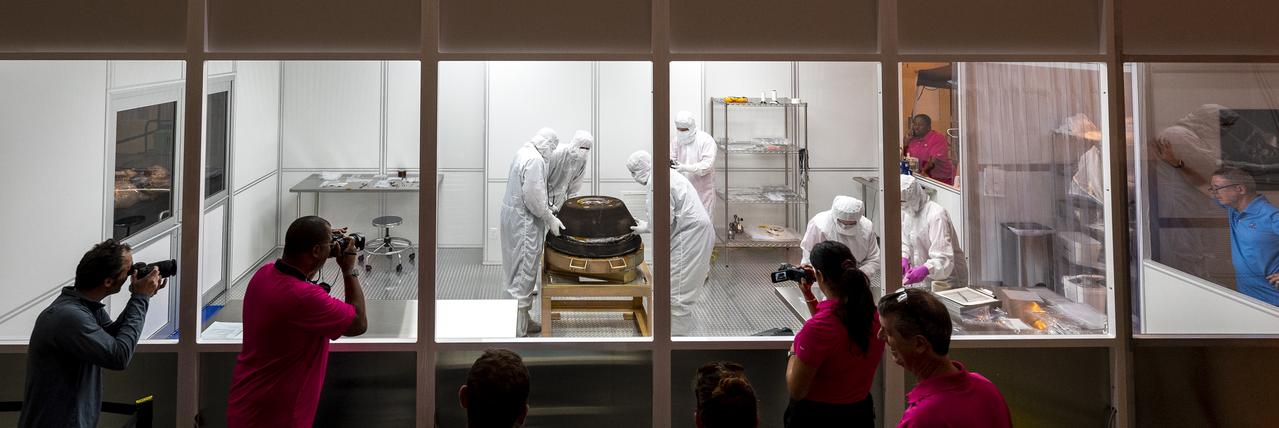
Curation teams process the sample return capsule from NASA’s OSIRIS-REx mission in a cleanroom, Sunday, Sept. 24, 2023, at the Department of Defense's Utah Test and Training Range. The sample was collected from the asteroid Bennu in October 2020 by NASA’s OSIRIS-REx spacecraft. Photo Credit: (NASA/Keegan Barber)
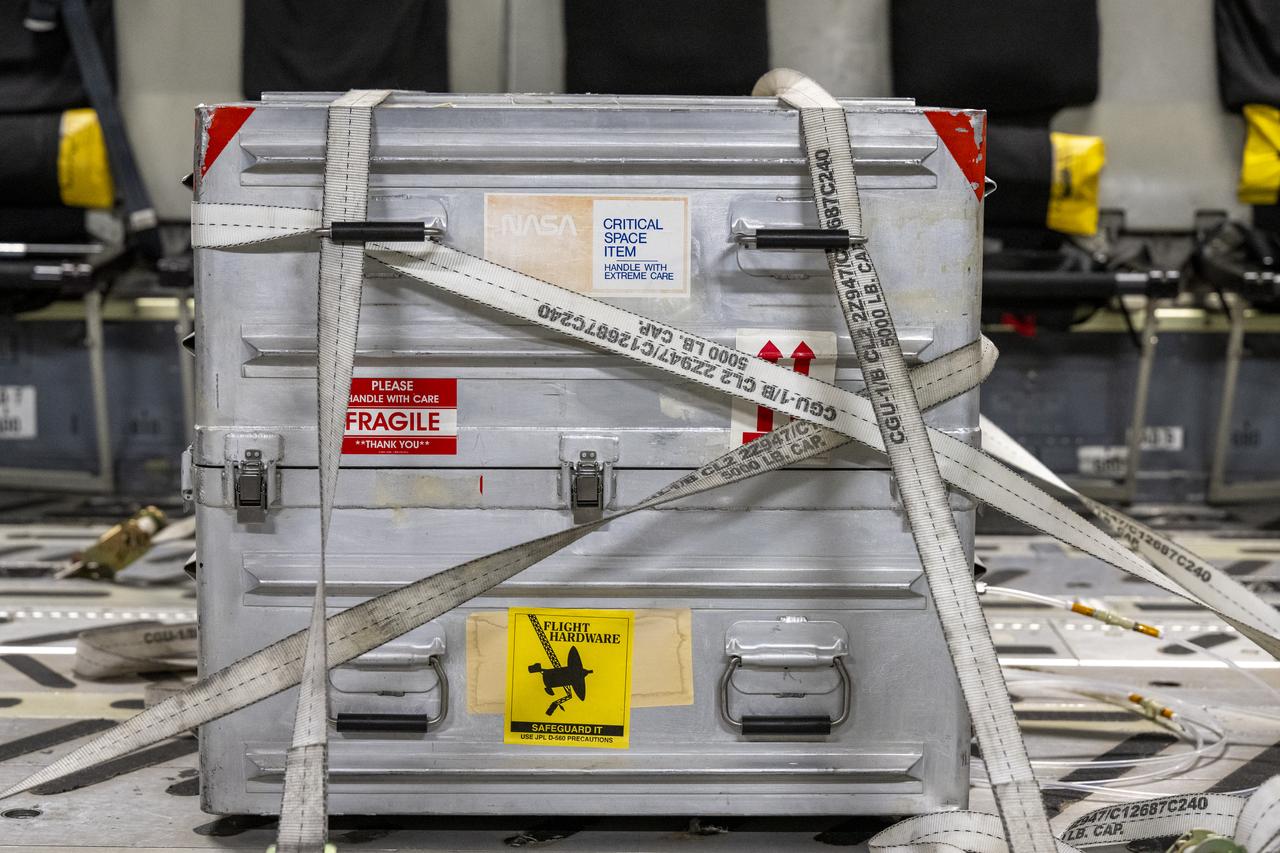
A container with the science canister from NASA’s OSIRIS-REx mission is seen aboard a C-17 Globemaster aircraft, Monday, Sept. 25, 2023, at the Department of Defense's Utah Test and Training Range. The sample was collected from the asteroid Bennu in October 2020 by NASA’s OSIRIS-REx spacecraft. Photo Credit: (NASA/Keegan Barber)
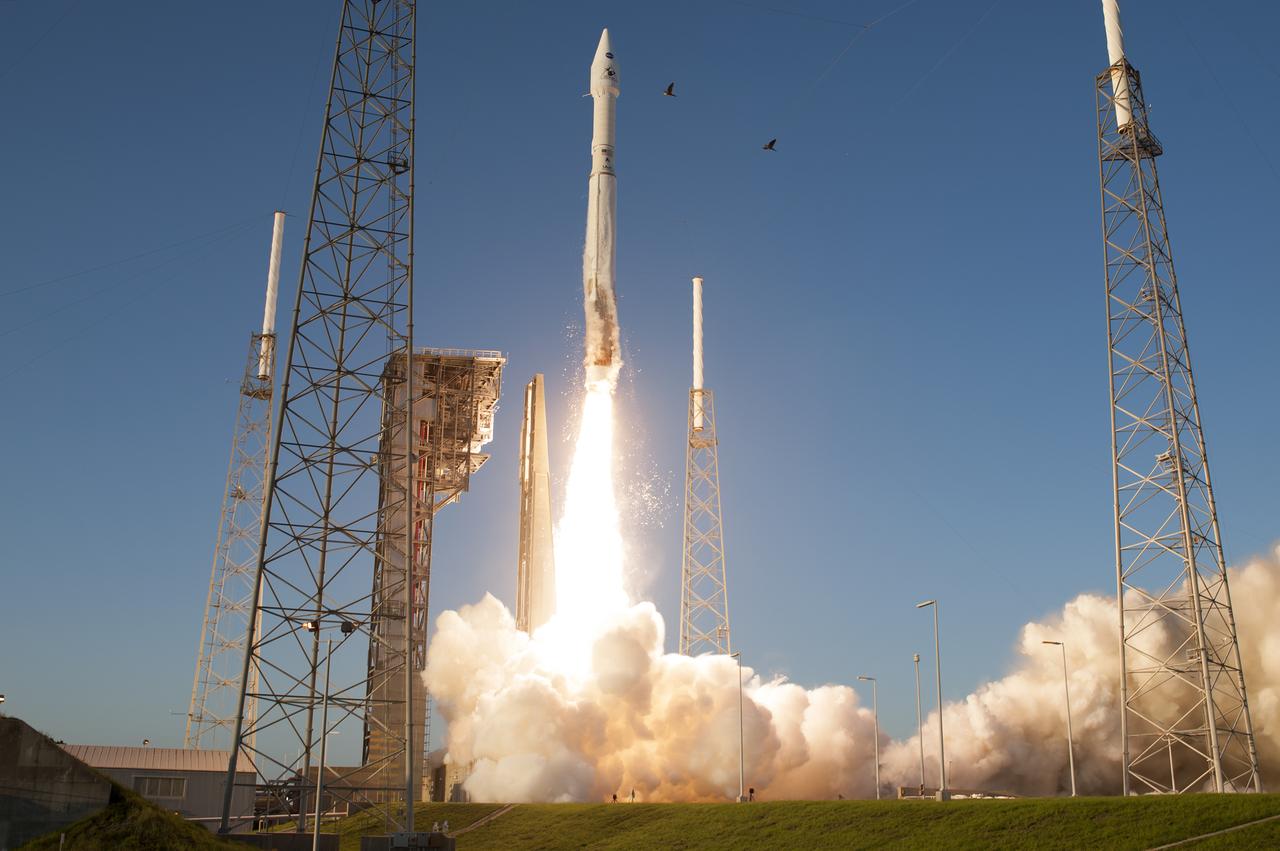
A United Launch Alliance Atlas V rocket lifts off from Space Launch Complex 41 at Cape Canaveral Air Force Station carrying NASA’s Origins, Spectral Interpretation, Resource Identification, Security-Regolith Explorer, or OSIRIS-REx spacecraft on the first U.S. mission to sample an asteroid, retrieve at least two ounces of surface material and return it to Earth for study. Liftoff was at 7:05 p.m. EDT. The asteroid, Bennu, may hold clues to the origin of the solar system and the source of water and organic molecules found on Earth.
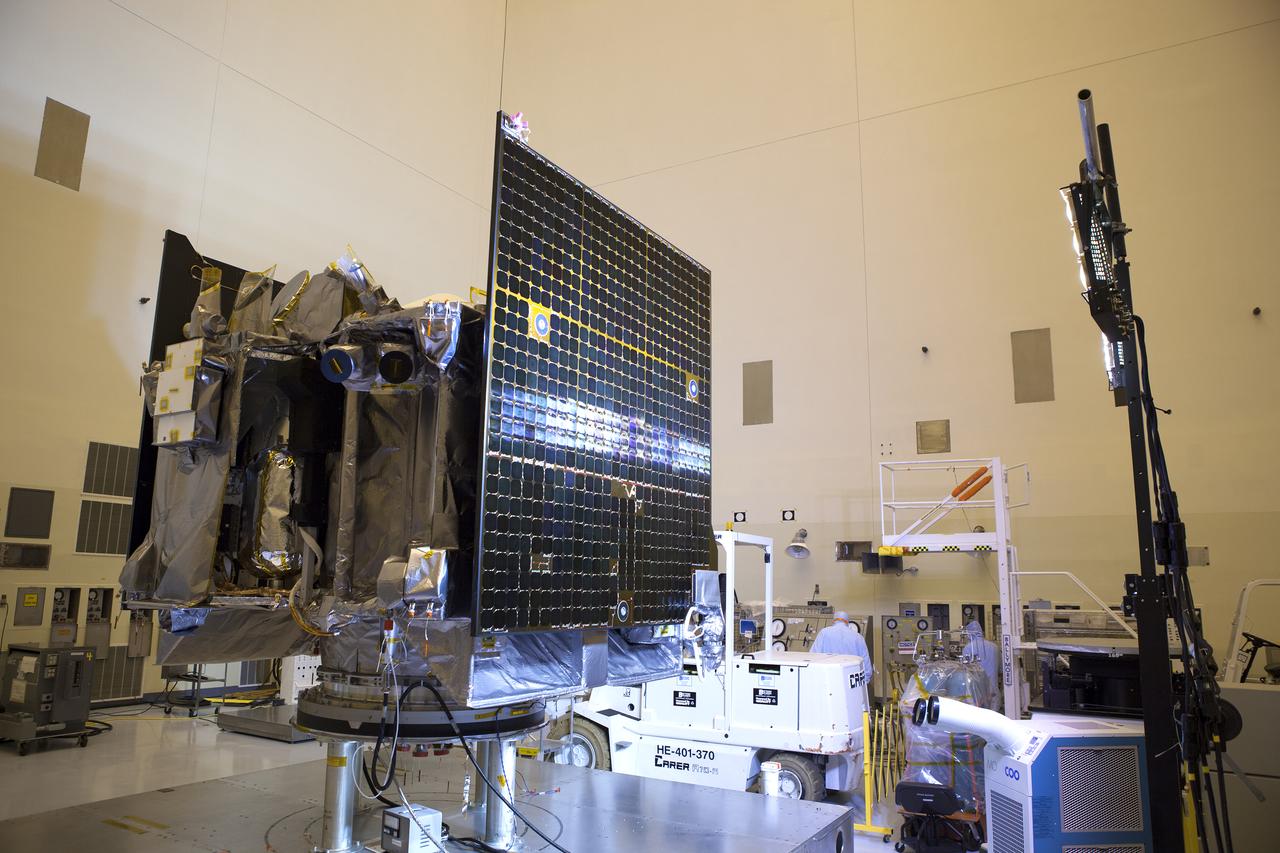
Inside the Payload Hazardous Servicing Facility at NASA's Kennedy Space Center in Florida, illumination testing is underway on the power-producing solar arrays for the agency’s Origins, Spectral Interpretation, Resource Identification, Security-Regolith Explorer, or OSIRIS-REx spacecraft. Targeted for liftoff Sept. 8, 2016, OSIRIS-Rex will be the first U.S. mission to sample an asteroid, retrieve at least two ounces of surface material and return it to Earth for study. The asteroid, Bennu, may hold clues to the origin of the solar system and the source of water and organic molecules found on Earth.
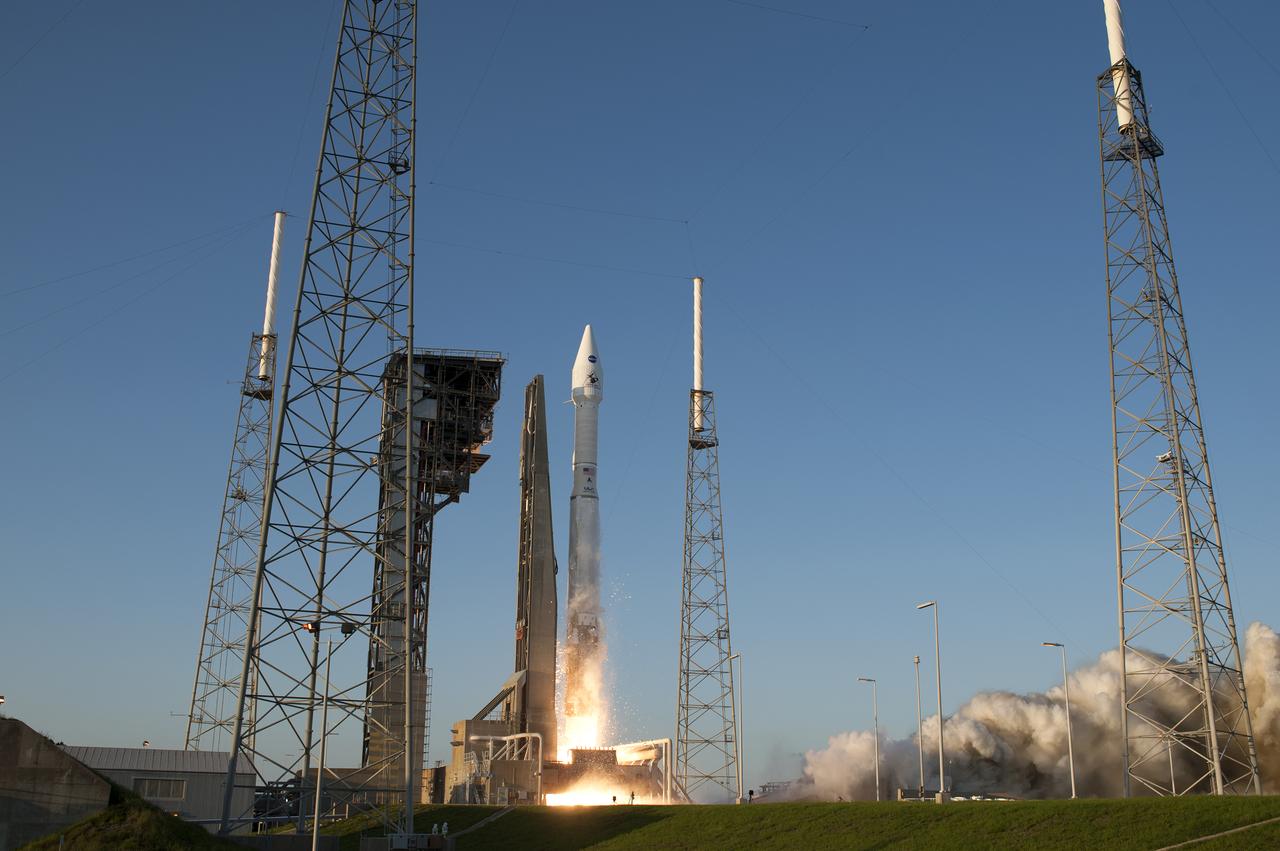
A United Launch Alliance Atlas V rocket lifts off from Space Launch Complex 41 at Cape Canaveral Air Force Station carrying NASA’s Origins, Spectral Interpretation, Resource Identification, Security-Regolith Explorer, or OSIRIS-REx spacecraft on the first U.S. mission to sample an asteroid, retrieve at least two ounces of surface material and return it to Earth for study. Liftoff was at 7:05 p.m. EDT. The asteroid, Bennu, may hold clues to the origin of the solar system and the source of water and organic molecules found on Earth.
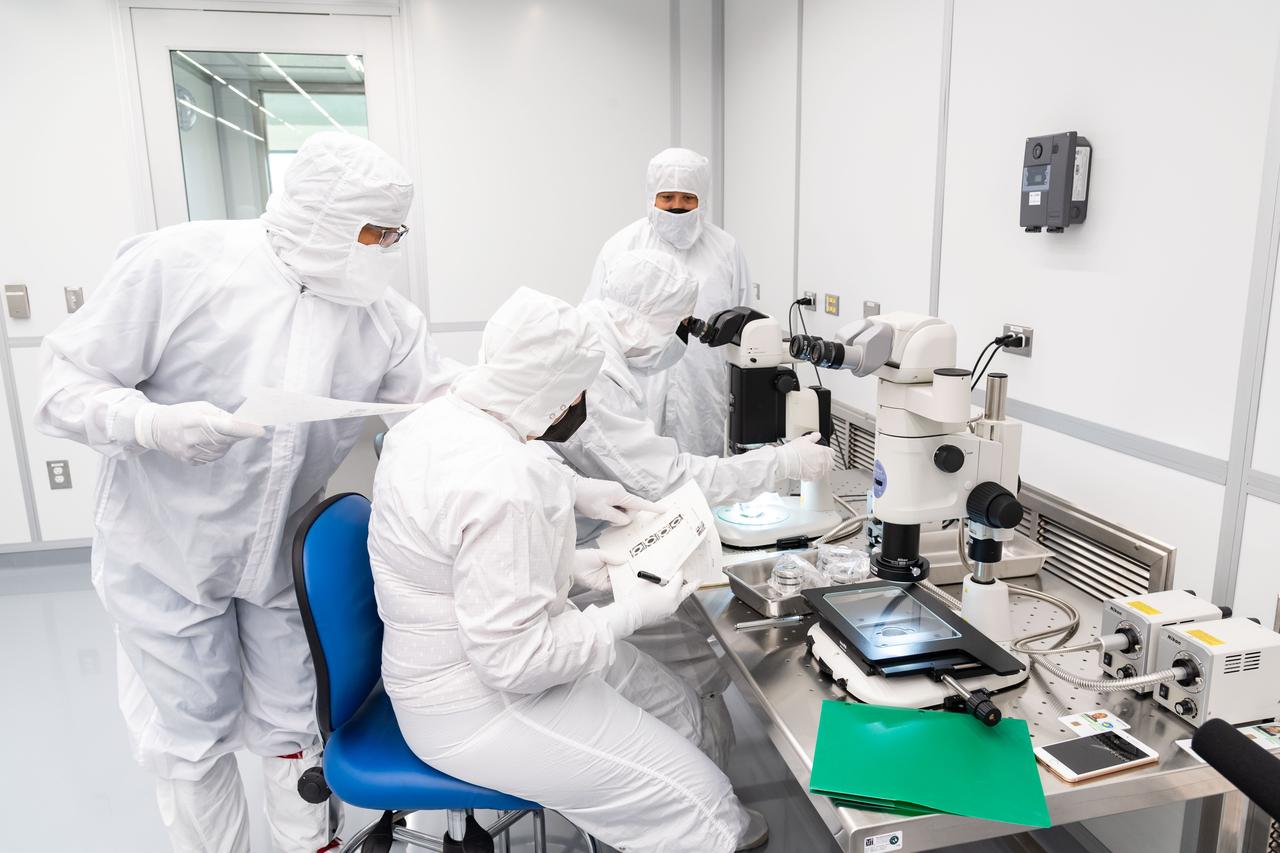
Scientists in the Astromaterials Research and Exploration Science (ARES) Division at NASA’s Johnson Space Center study samples retrieved by the Japan Aerospace Exploration Agency’s (JAXA) Hayabusa2 spacecraft and returned to Earth in late 2020. JAXA shared a portion of the samples with NASA, and in exchange, NASA will provide JAXA a percentage of a sample of asteroid Bennu, when the agency’s OSIRIS-REx spacecraft returns to Earth from the space rock in 2023. Photo Date: November 30, 2021. Location: Bldg. 31, H2 Clean Room. Photographer: Robert Markowitz
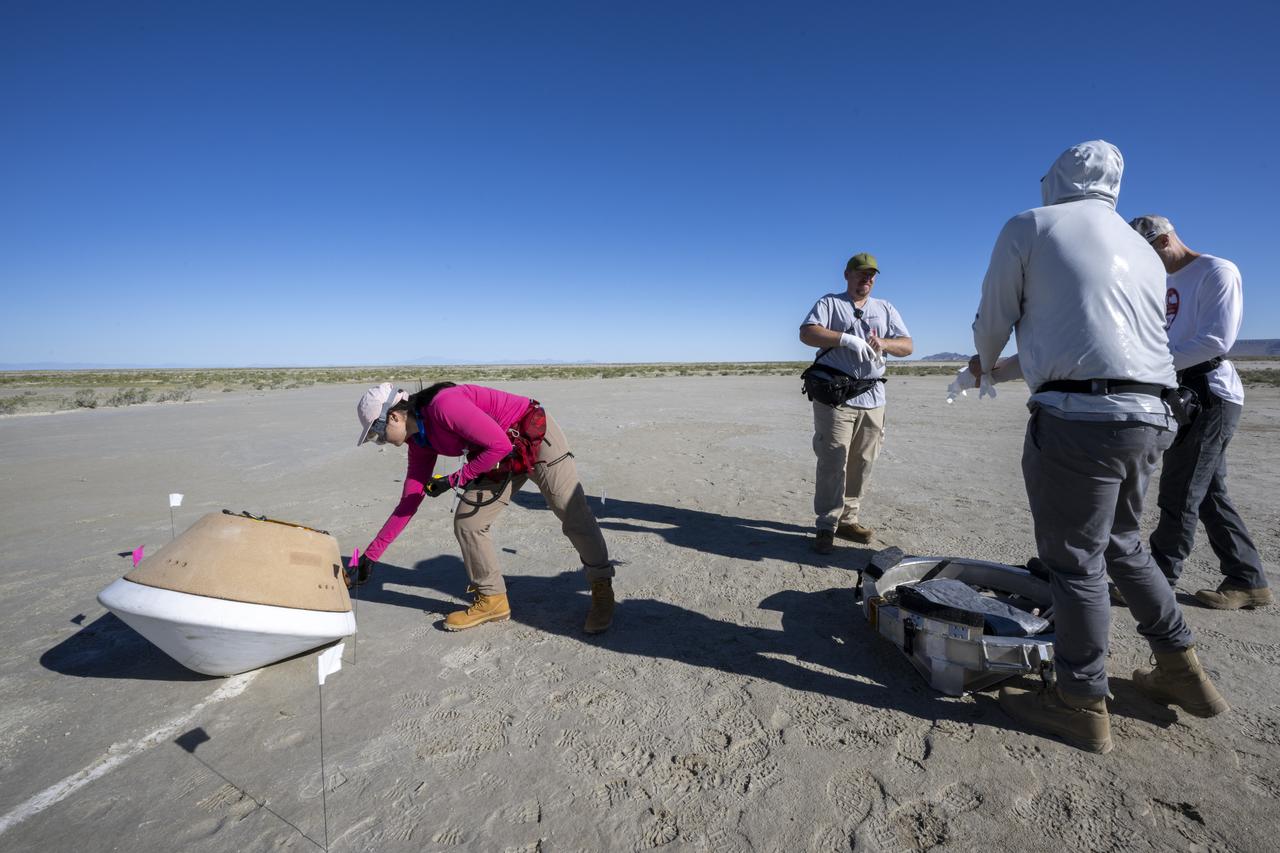
Recovery teams participate in field rehearsals in preparation for the retrieval of the sample return capsule from NASA's OSIRIS-REx mission, Tuesday, Aug. 29, 2023, at the Department of Defense's Utah Test and Training Range. The sample was collected from the asteroid Bennu in October 2020 by NASA’s OSIRIS-REx spacecraft and will return to Earth on September 24th, landing under parachute at the Utah Test and Training Range. Photo Credit: (NASA/Keegan Barber)
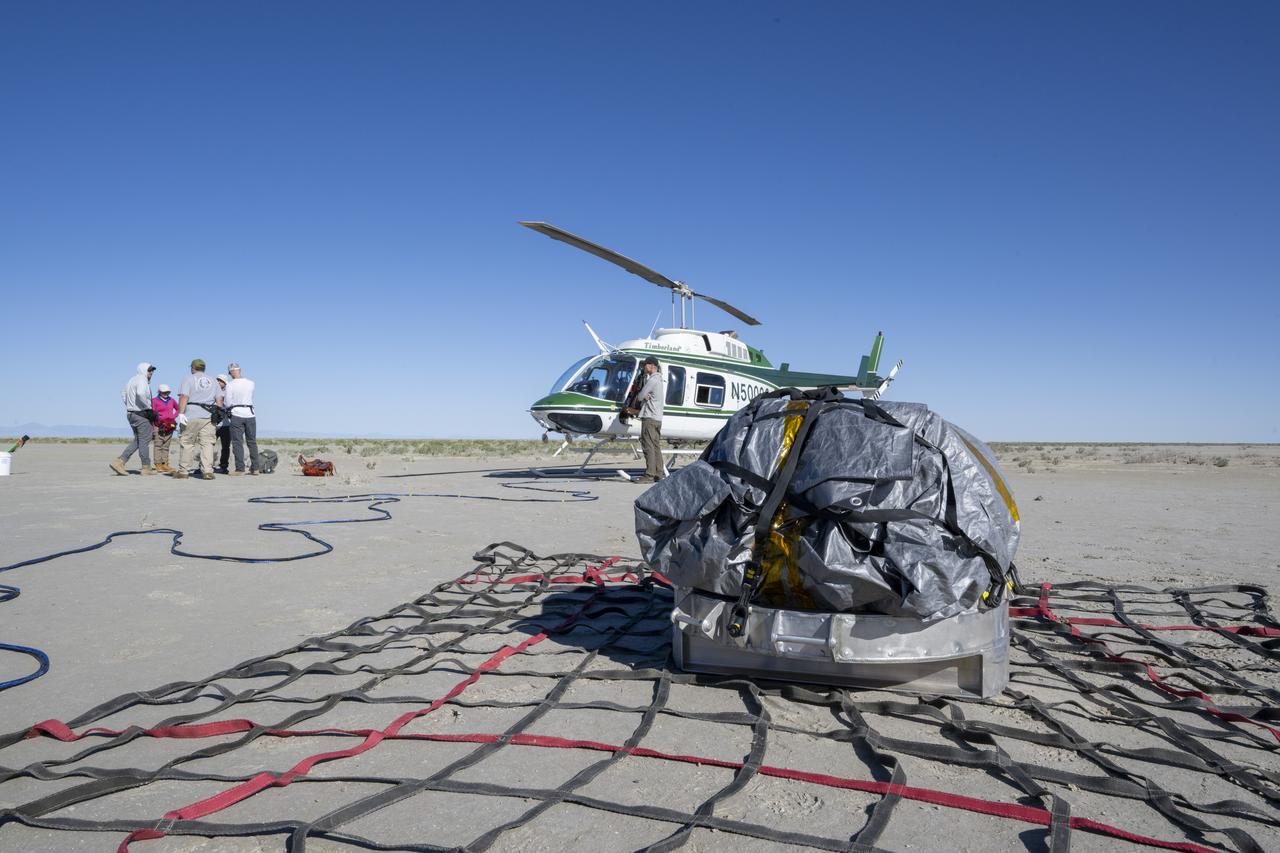
Recovery teams participate in field rehearsals in preparation for the retrieval of the sample return capsule from NASA's OSIRIS-REx mission, Tuesday, Aug. 29, 2023, at the Department of Defense's Utah Test and Training Range. The sample was collected from the asteroid Bennu in October 2020 by NASA’s OSIRIS-REx spacecraft and will return to Earth on September 24th, landing under parachute at the Utah Test and Training Range. Photo Credit: (NASA/Keegan Barber)
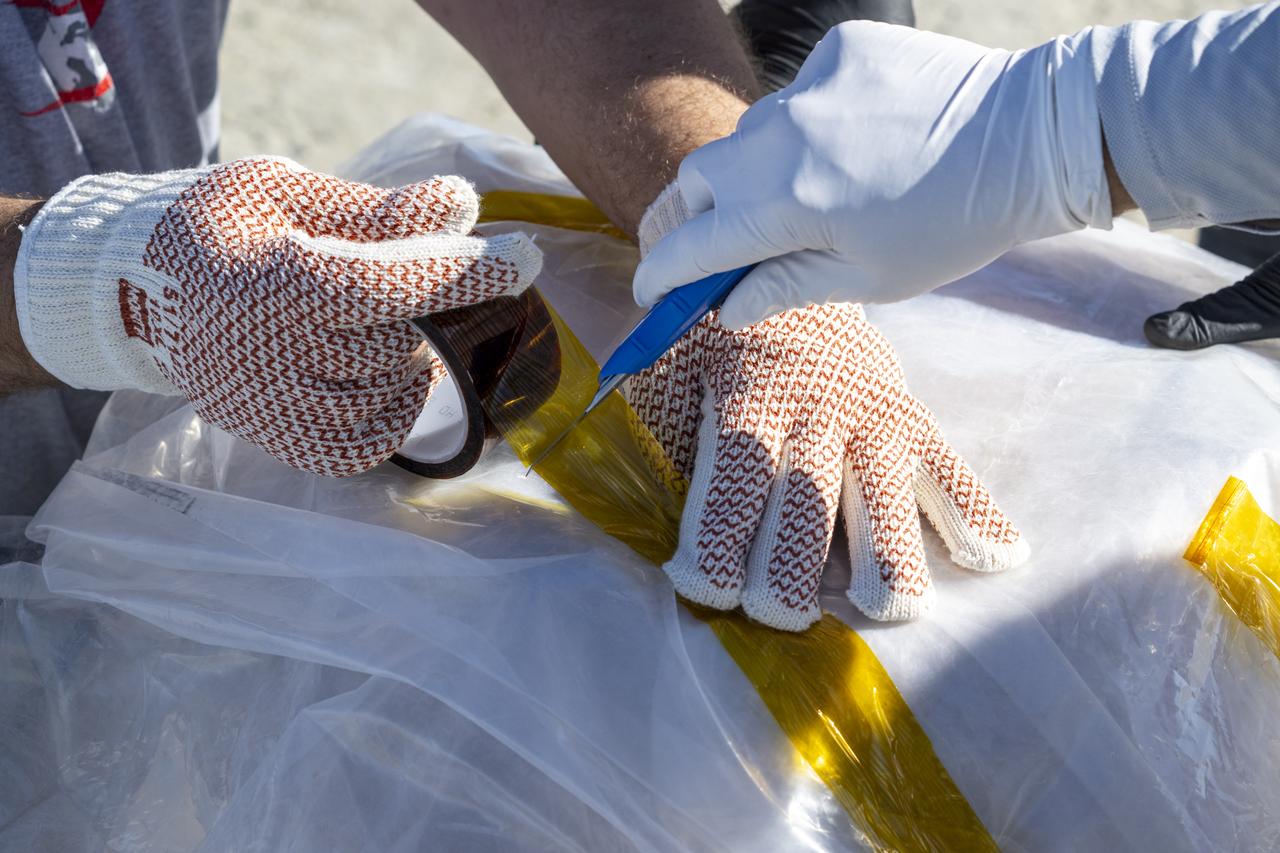
Recovery teams participate in field rehearsals in preparation for the retrieval of the sample return capsule from NASA's OSIRIS-REx mission, Tuesday, Aug. 29, 2023, at the Department of Defense's Utah Test and Training Range. The sample was collected from the asteroid Bennu in October 2020 by NASA’s OSIRIS-REx spacecraft and will return to Earth on September 24th, landing under parachute at the Utah Test and Training Range. Photo Credit: (NASA/Keegan Barber)
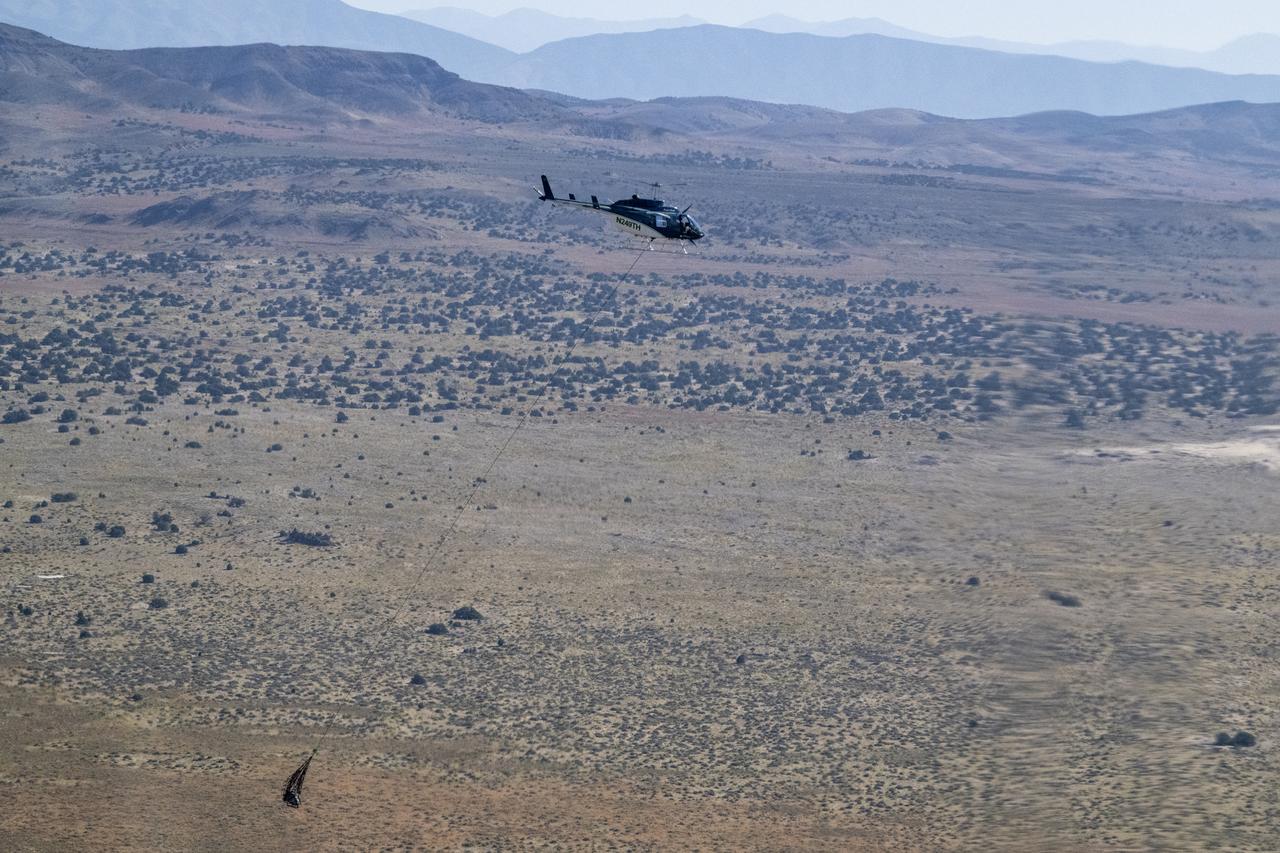
The sample return capsule from NASA’s OSIRIS-REx mission is seen en route to the cleanroom, Sunday, Sept. 24, 2023, shortly after the capsule landed at the Department of Defense's Utah Test and Training Range. The sample was collected from the asteroid Bennu in October 2020 by NASA’s OSIRIS-REx spacecraft. Photo Credit: (NASA/Keegan Barber)
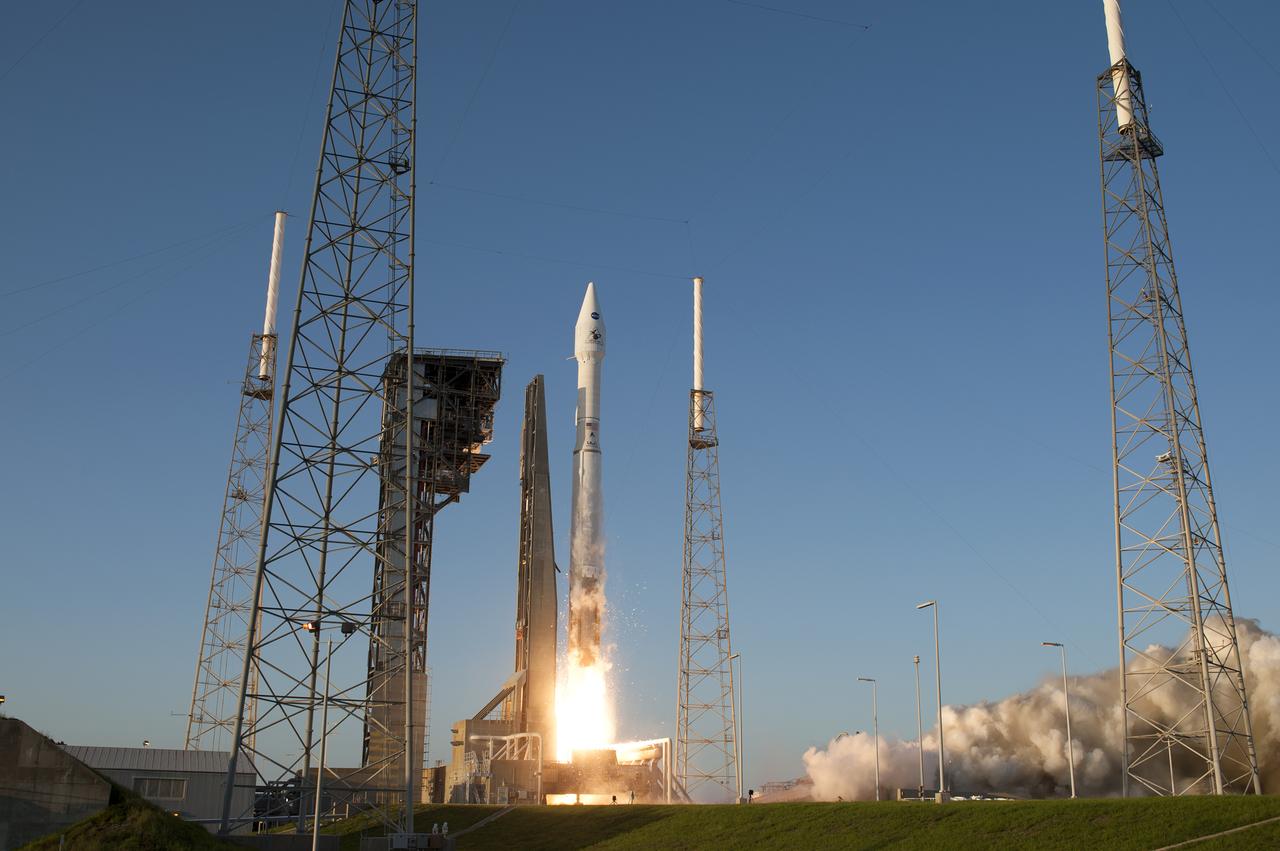
A United Launch Alliance Atlas V rocket lifts off from Space Launch Complex 41 at Cape Canaveral Air Force Station carrying NASA’s Origins, Spectral Interpretation, Resource Identification, Security-Regolith Explorer, or OSIRIS-REx spacecraft on the first U.S. mission to sample an asteroid, retrieve at least two ounces of surface material and return it to Earth for study. Liftoff was at 7:05 p.m. EDT. The asteroid, Bennu, may hold clues to the origin of the solar system and the source of water and organic molecules found on Earth.
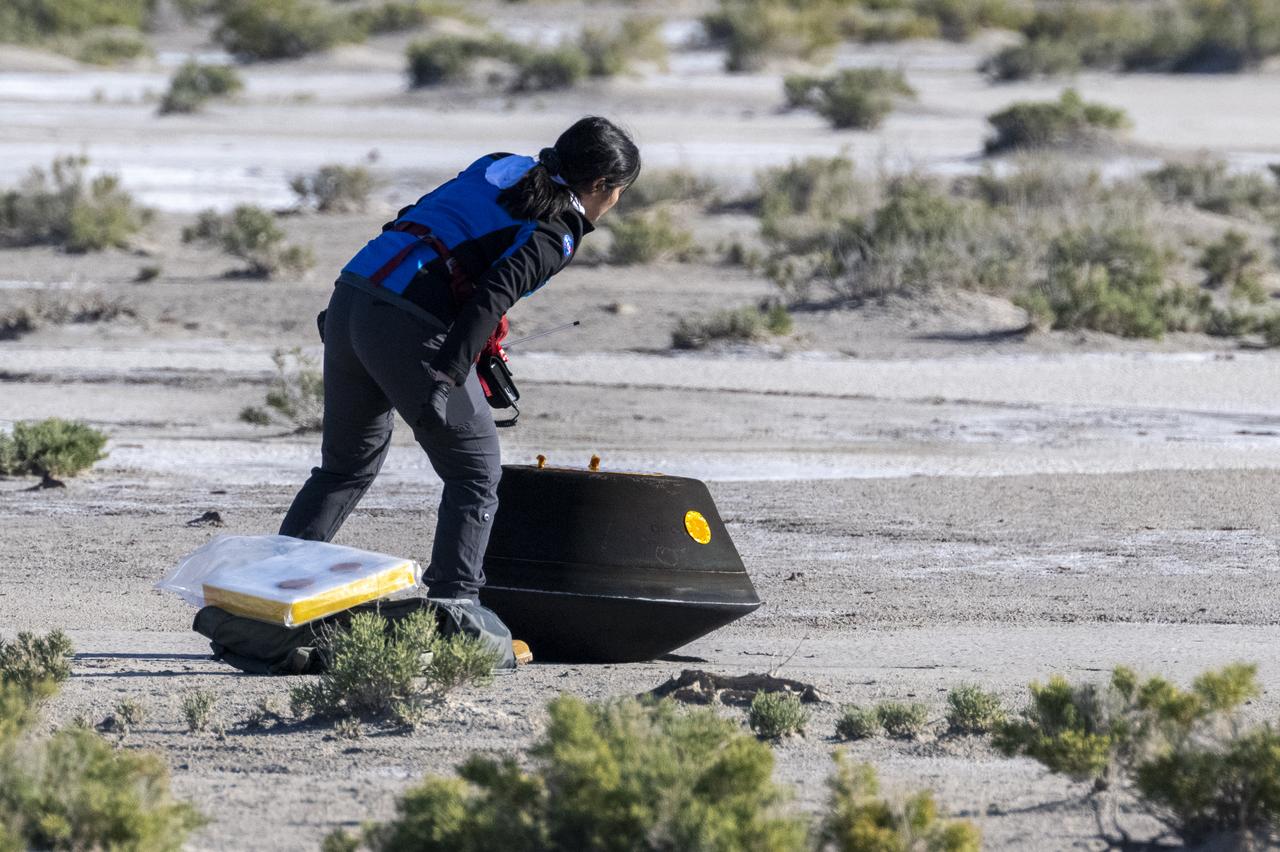
Lockheed Martin System Safety Engineer Victoria Thiem performs preliminary checks on the sample return capsule from NASA’s OSIRIS-REx mission, Sunday, Sept. 24, 2023, shortly after the capsule landed at the Department of Defense's Utah Test and Training Range. The sample was collected from the asteroid Bennu in October 2020 by NASA’s OSIRIS-REx spacecraft. Photo Credit: (NASA/Keegan Barber)
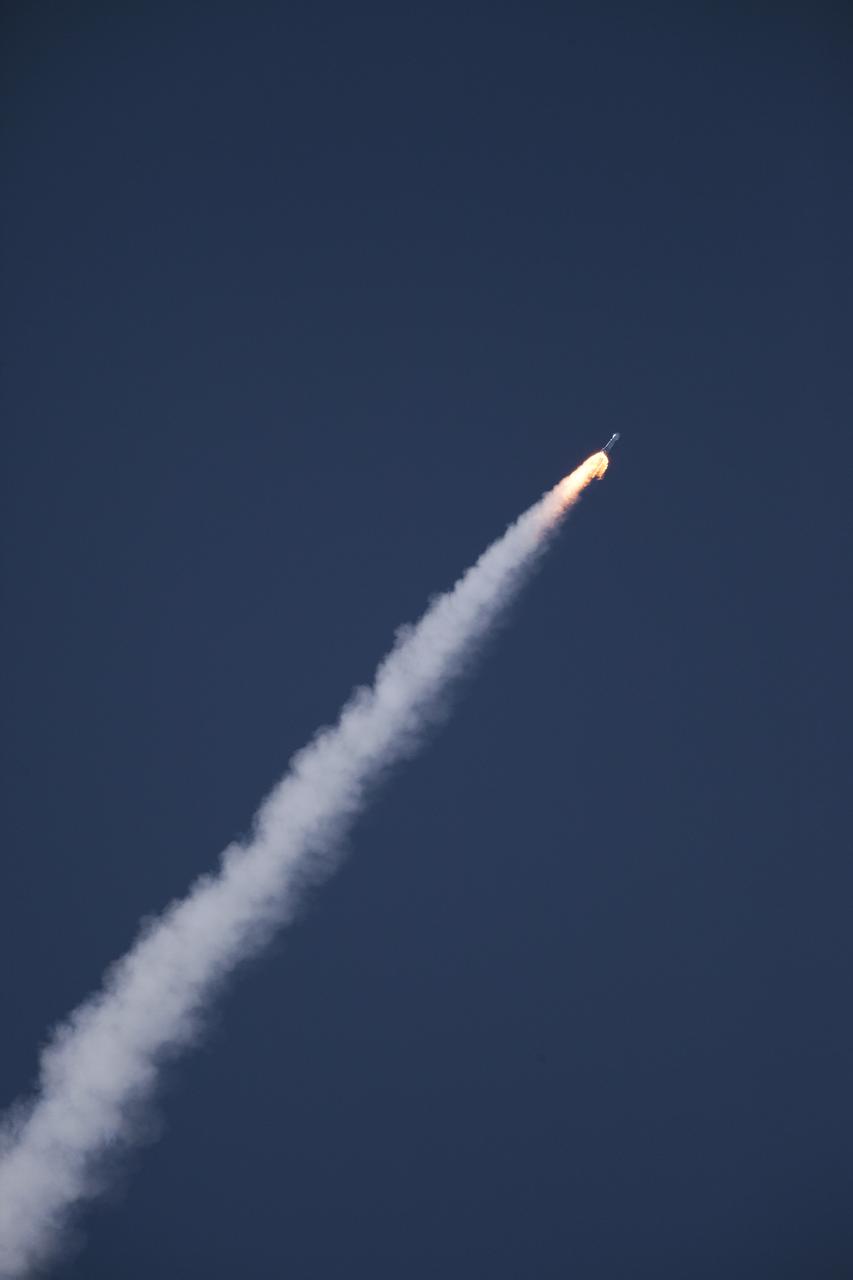
A United Launch Alliance Atlas V rocket lifts off from Space Launch Complex 41 at Cape Canaveral Air Force Station carrying NASA’s Origins, Spectral Interpretation, Resource Identification, Security-Regolith Explorer, or OSIRIS-REx spacecraft on the first U.S. mission to sample an asteroid, retrieve at least two ounces of surface material and return it to Earth for study. Liftoff was at 7:05 p.m. EDT. The asteroid, Bennu, may hold clues to the origin of the solar system and the source of water and organic molecules found on Earth.
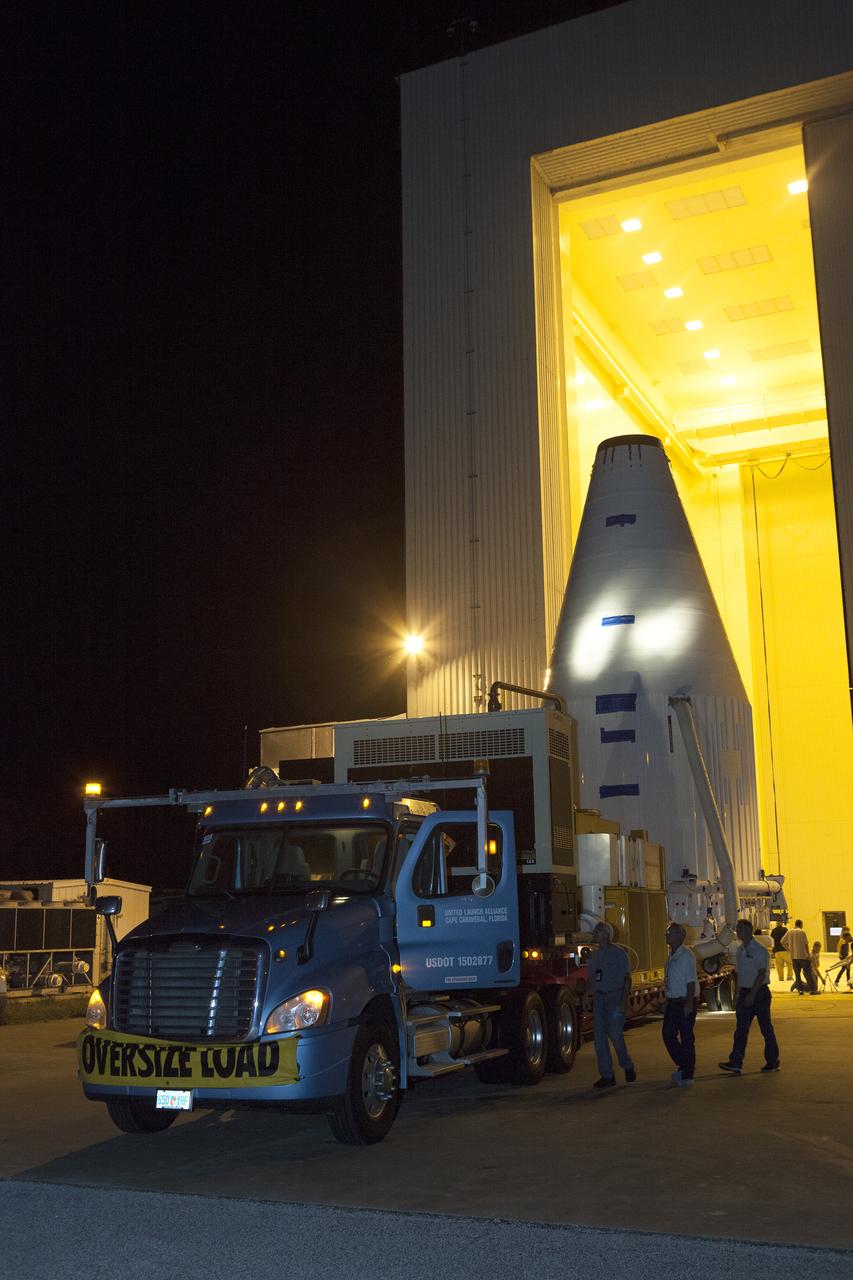
The OSIRIS-REx spacecraft, enclosed in a payload fairing, is towed from the Payload Hazardous Servicing Facility at NASA's Kennedy Space Center to begin the trip to Space Launch Complex 41 at the adjacent Cape Canaveral Air Force Station. The United Launch Alliance Atlas V rocket that is to lift OSIRIS-REx into space was stacked at SLC-41 so the spacecraft and fairing could be hoisted and bolted to the rocket promptly. The spacecraft will be sent to rendezvous with, survey and take a sample from an asteroid called Bennu.
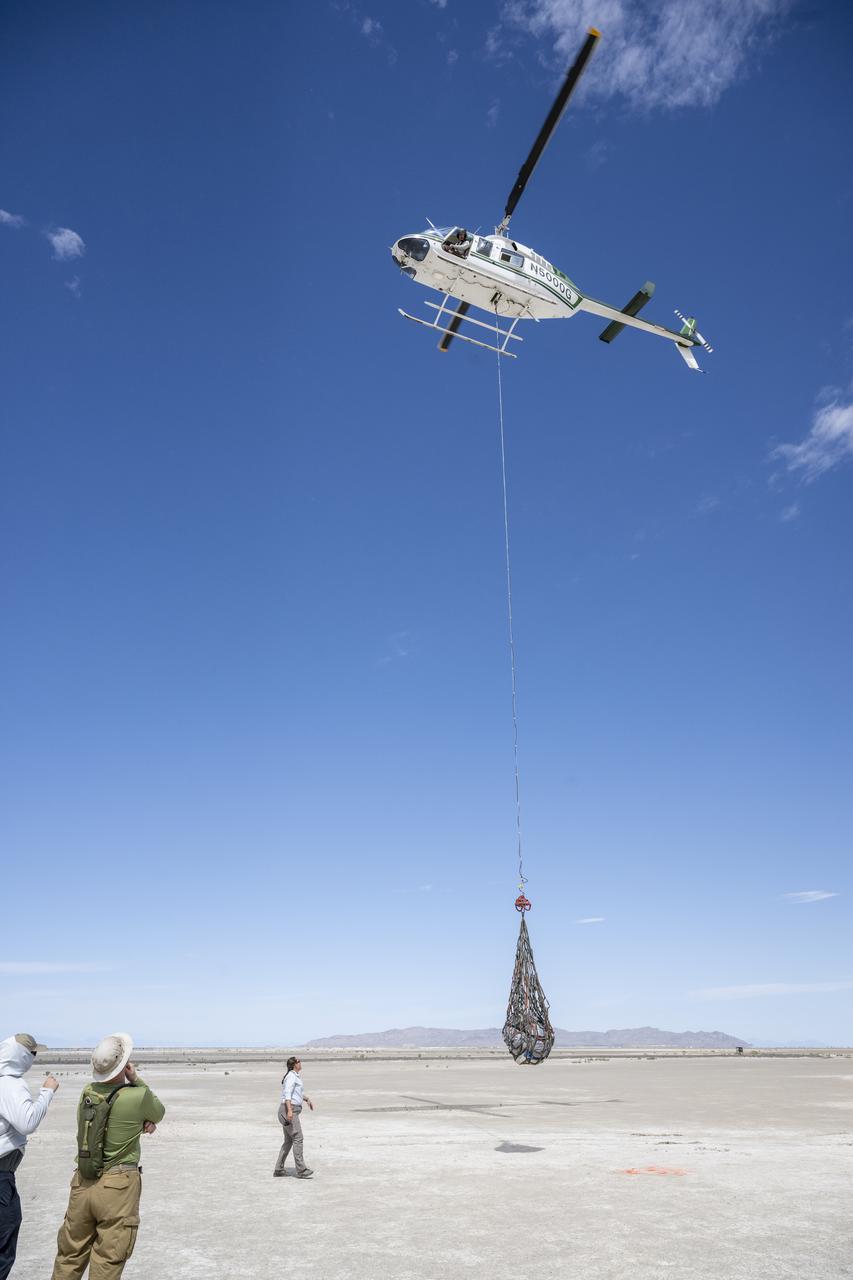
Recovery teams participate in helicopter training in preparation for the retrieval of the sample return capsule from NASA's OSIRIS-REx mission, Wednesday, July 19, 2023, at the Department of Defense's Utah Test and Training Range. The sample was collected from the asteroid Bennu in October 2020 by NASA’s OSIRIS-REx spacecraft and will return to Earth on September 24th, landing under parachute at the Utah Test and Training Range. Photo Credit: (NASA/Keegan Barber)
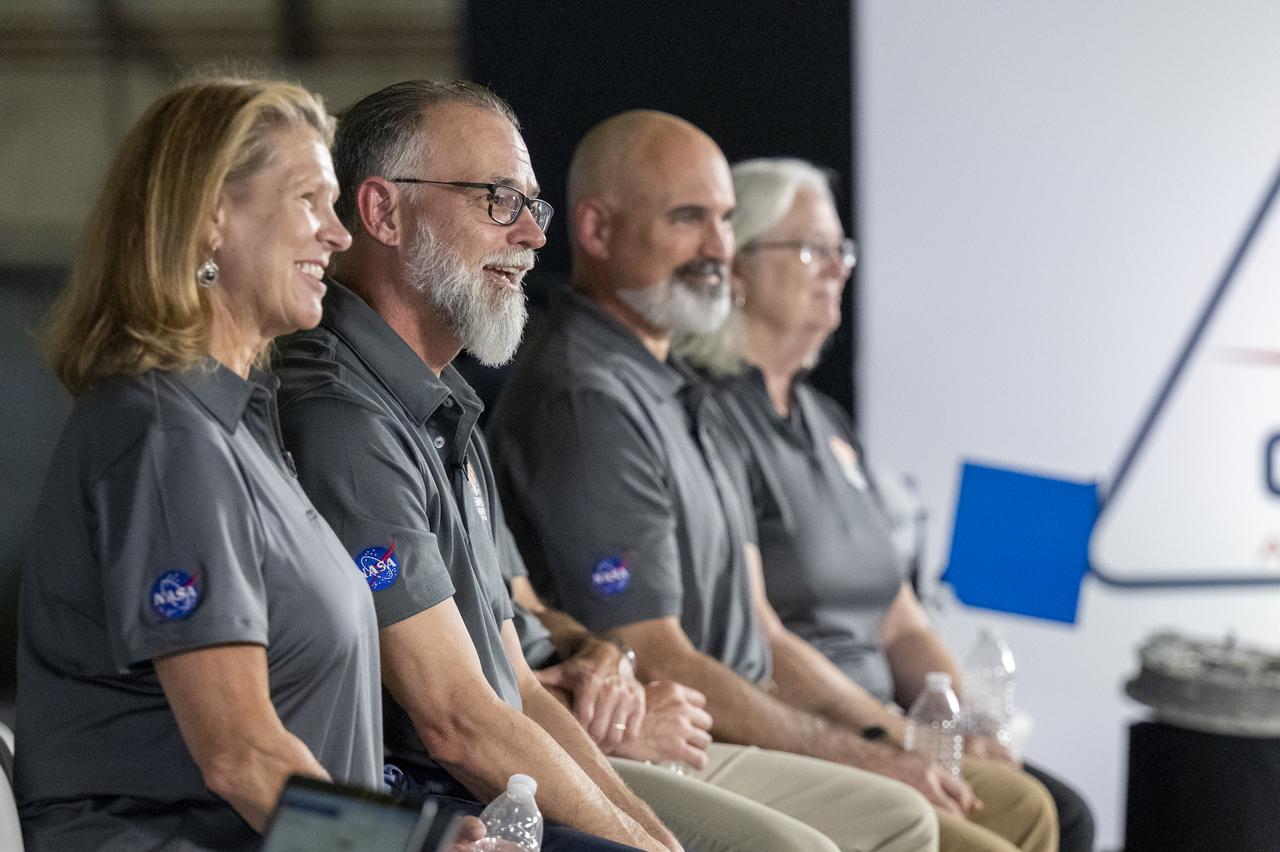
University of Arizona OSIRIS-REx Principal Investigator Dante Lauretta, second from the left, answers questions from reporters during an OSIRIS-REx sample return press conference, Sunday, Sept. 24, 2023, shortly after the capsule landed at the Department of Defense's Utah Test and Training Range. The sample was collected from the asteroid Bennu in October 2020 by NASA’s OSIRIS-REx spacecraft. Photo Credit: (NASA/Keegan Barber)
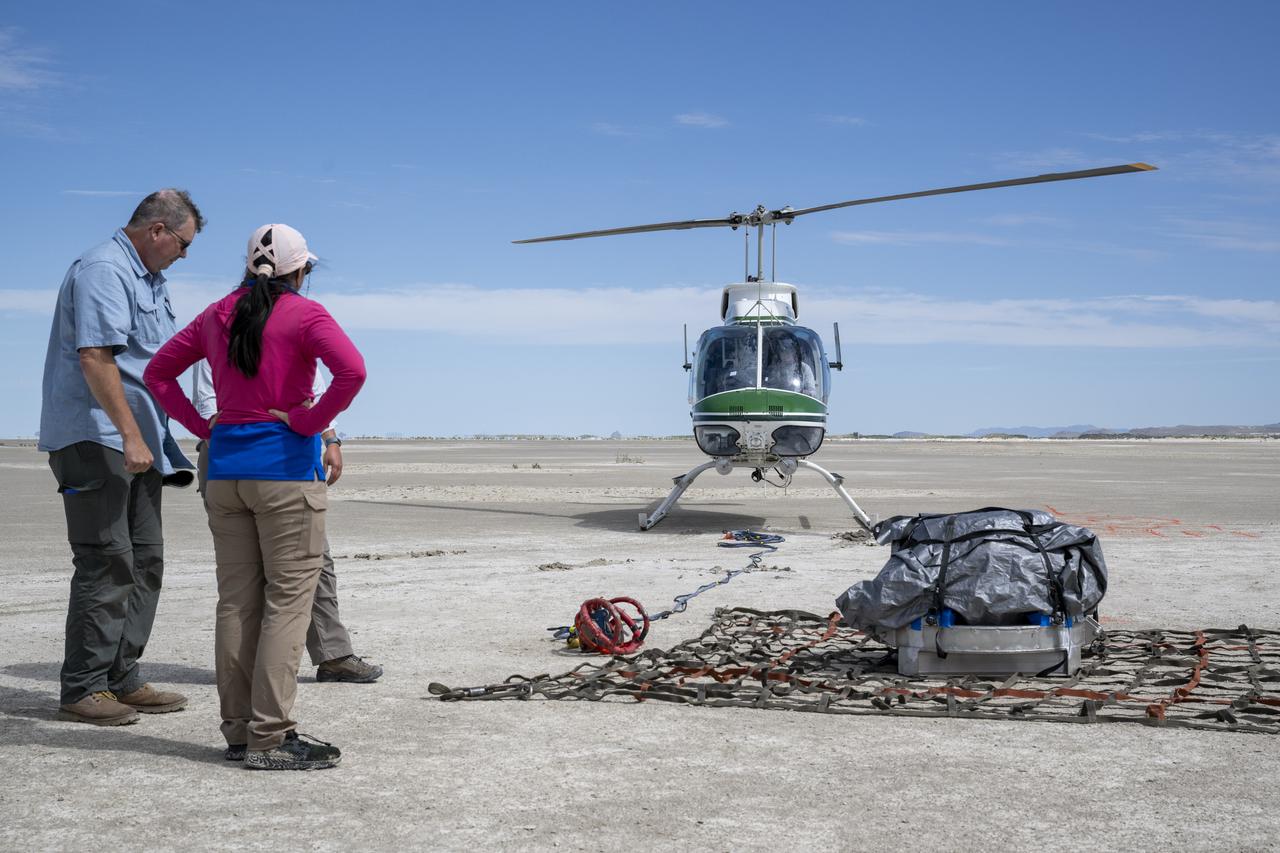
Recovery teams participate in helicopter training in preparation for the retrieval of the sample return capsule from NASA's OSIRIS-REx mission, Wednesday, July 19, 2023, at the Department of Defense's Utah Test and Training Range. The sample was collected from the asteroid Bennu in October 2020 by NASA’s OSIRIS-REx spacecraft and will return to Earth on September 24th, landing under parachute at the Utah Test and Training Range. Photo Credit: (NASA/Keegan Barber)
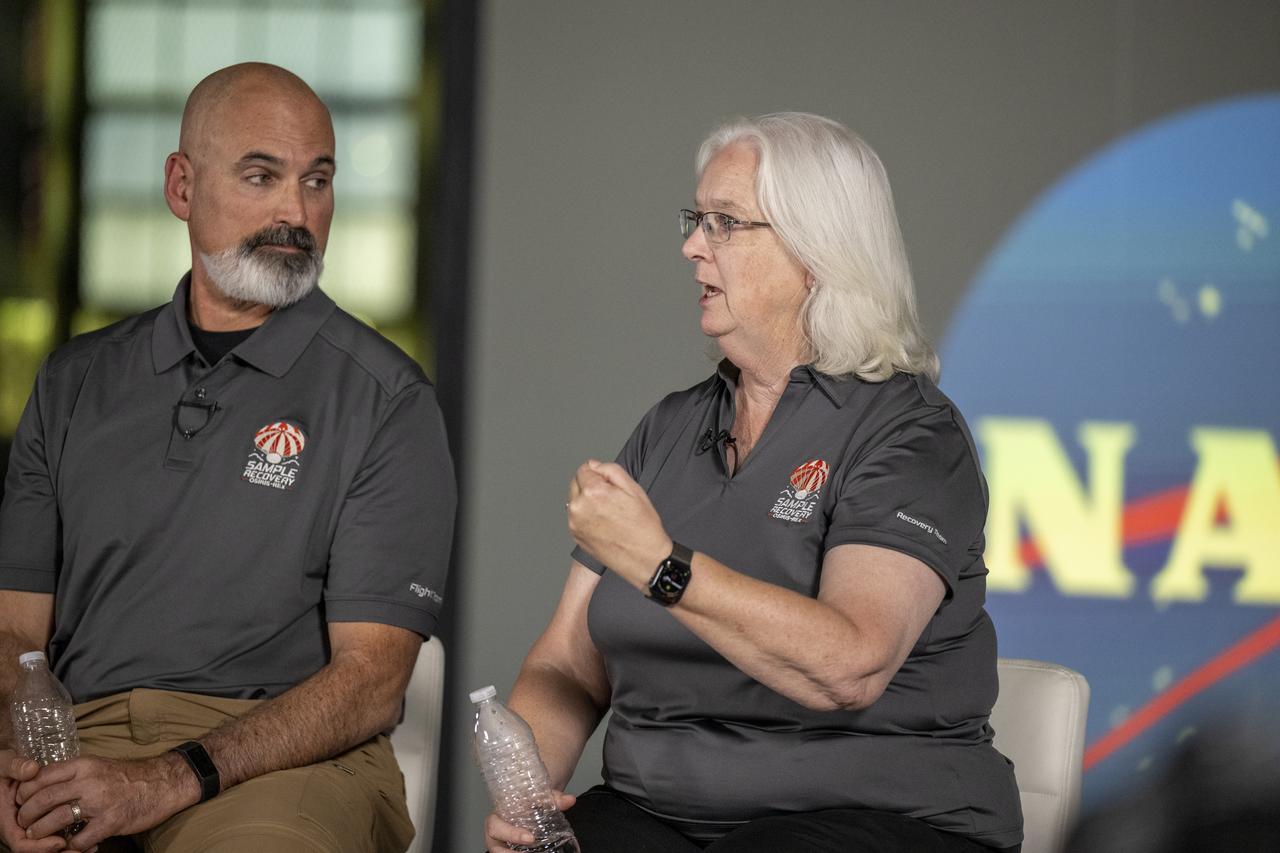
NASA Chief Scientist Eileen Stansbery, right, answers questions from reporters during an OSIRIS-REx sample return press conference, Sunday, Sept. 24, 2023, shortly after the capsule landed at the Department of Defense's Utah Test and Training Range. The sample was collected from the asteroid Bennu in October 2020 by NASA’s OSIRIS-REx spacecraft. Photo Credit: (NASA/Keegan Barber)
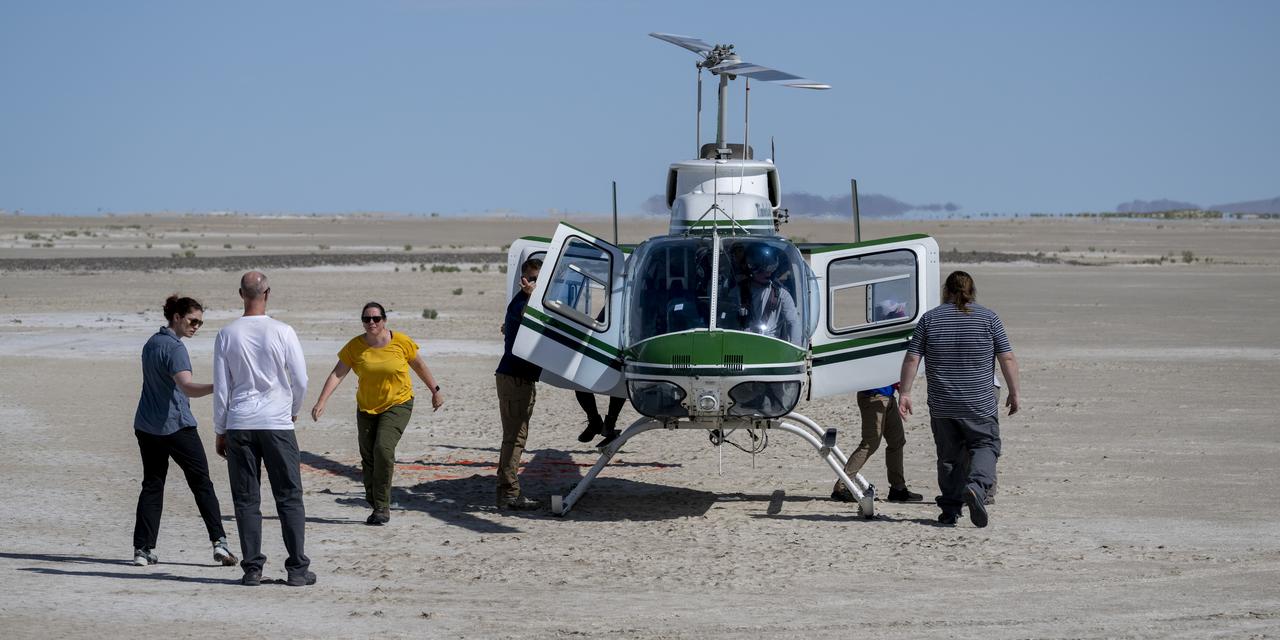
Recovery teams participate in helicopter training in preparation for the retrieval of the sample return capsule from NASA's OSIRIS-REx mission, Wednesday, July 19, 2023, at the Department of Defense's Utah Test and Training Range. The sample was collected from the asteroid Bennu in October 2020 by NASA’s OSIRIS-REx spacecraft and will return to Earth on September 24th, landing under parachute at the Utah Test and Training Range. Photo Credit: (NASA/Keegan Barber)
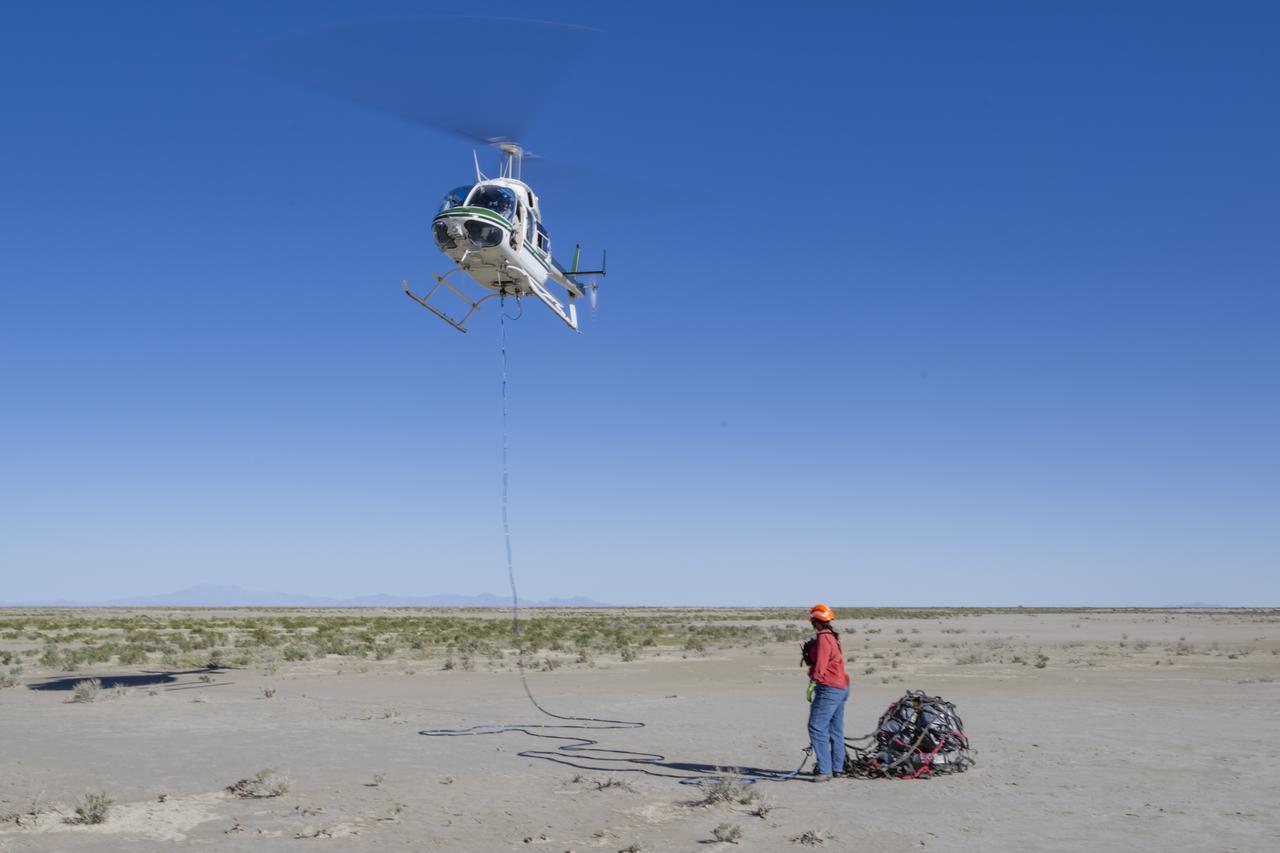
Recovery teams participate in field rehearsals in preparation for the retrieval of the sample return capsule from NASA's OSIRIS-REx mission, Tuesday, Aug. 29, 2023, at the Department of Defense's Utah Test and Training Range. The sample was collected from the asteroid Bennu in October 2020 by NASA’s OSIRIS-REx spacecraft and will return to Earth on September 24th, landing under parachute at the Utah Test and Training Range. Photo Credit: (NASA/Keegan Barber)
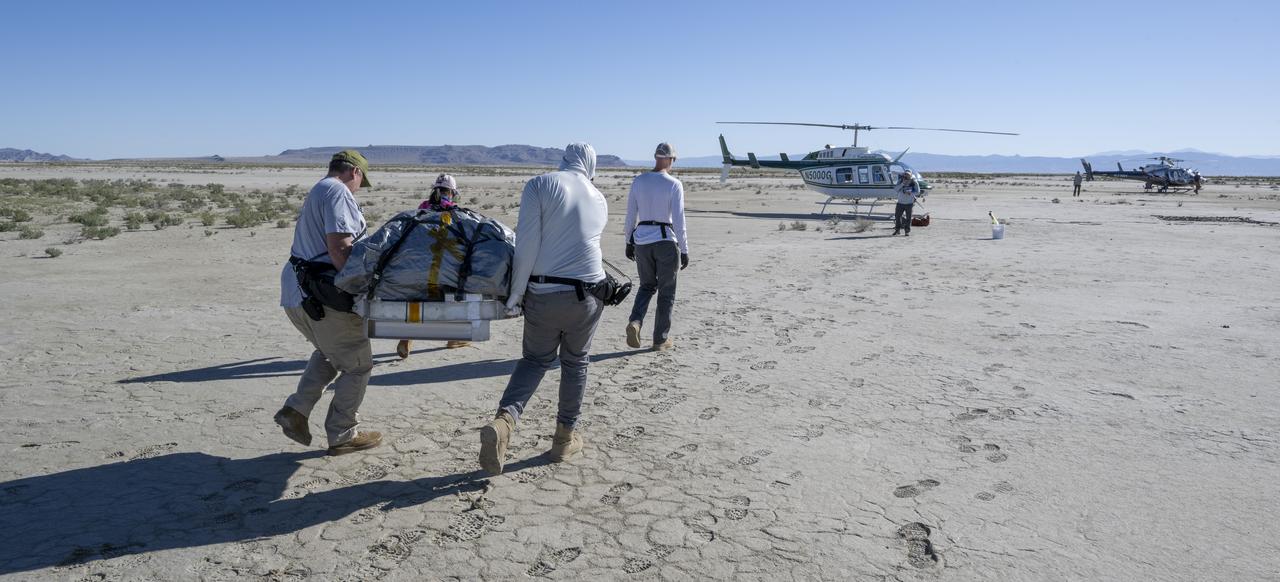
Recovery teams participate in field rehearsals in preparation for the retrieval of the sample return capsule from NASA's OSIRIS-REx mission, Tuesday, Aug. 29, 2023, at the Department of Defense's Utah Test and Training Range. The sample was collected from the asteroid Bennu in October 2020 by NASA’s OSIRIS-REx spacecraft and will return to Earth on September 24th, landing under parachute at the Utah Test and Training Range. Photo Credit: (NASA/Keegan Barber)
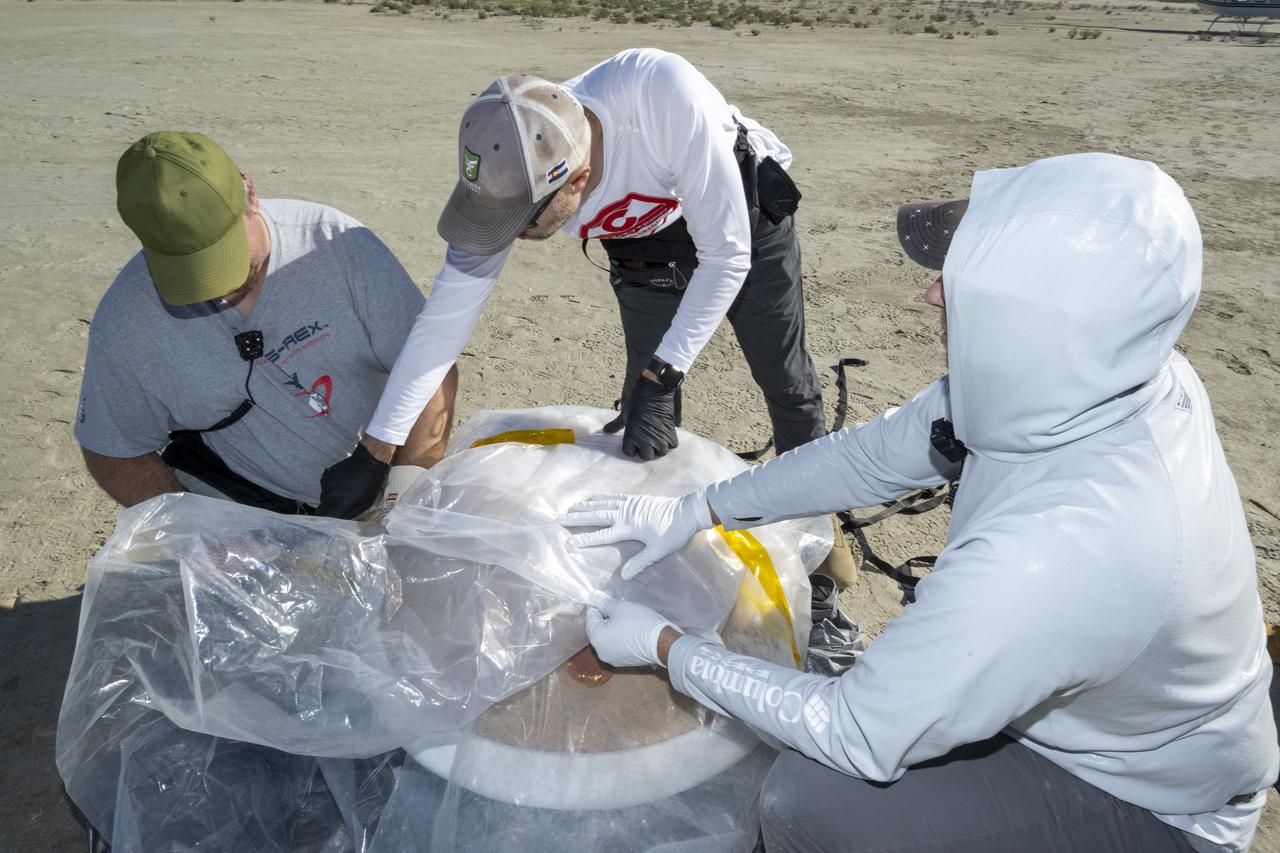
Recovery teams participate in field rehearsals in preparation for the retrieval of the sample return capsule from NASA's OSIRIS-REx mission, Tuesday, Aug. 29, 2023, at the Department of Defense's Utah Test and Training Range. The sample was collected from the asteroid Bennu in October 2020 by NASA’s OSIRIS-REx spacecraft and will return to Earth on September 24th, landing under parachute at the Utah Test and Training Range. Photo Credit: (NASA/Keegan Barber)
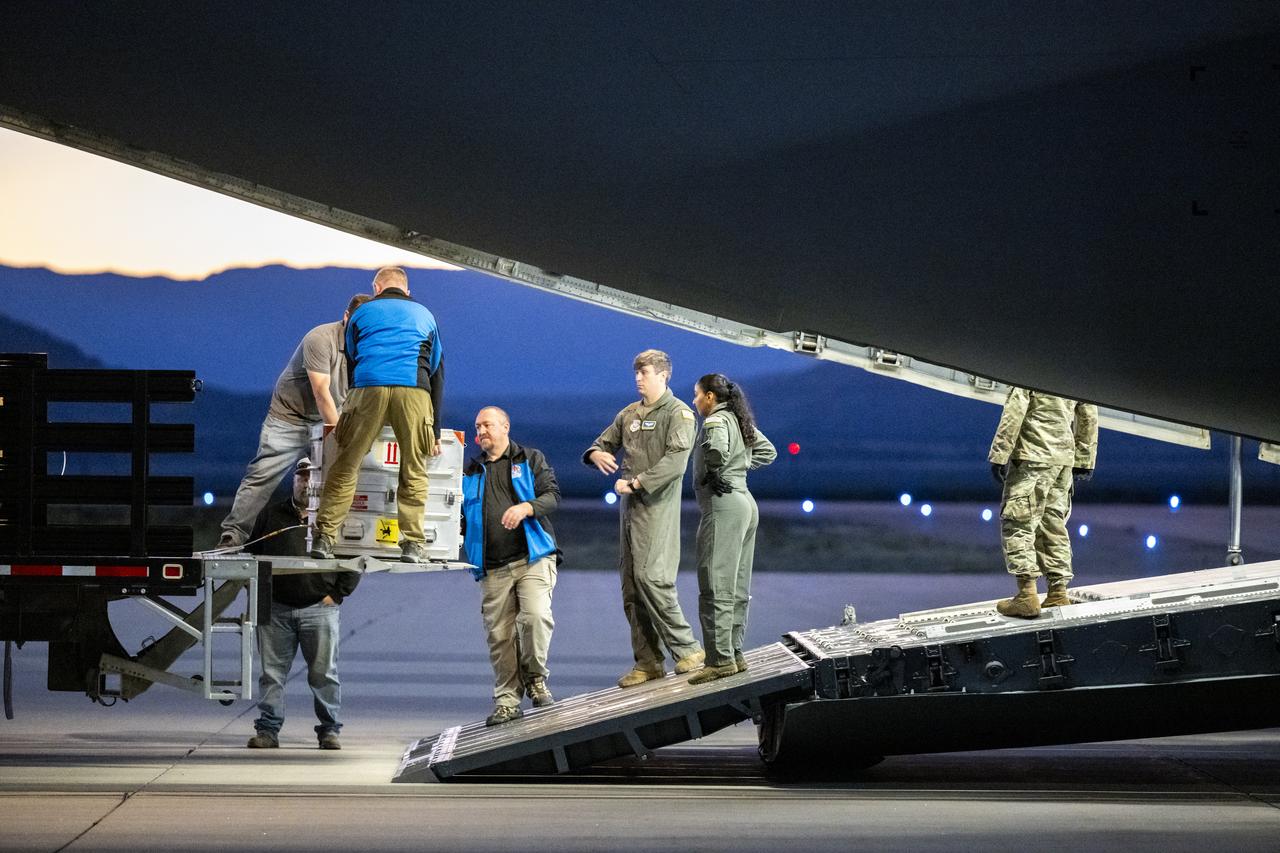
Recovery team members load a container with the science canister from NASA’s OSIRIS-REx mission onto a C-17 Globemaster aircraft, Monday, Sept. 25, 2023, at the Department of Defense's Utah Test and Training Range. The sample was collected from the asteroid Bennu in October 2020 by NASA’s OSIRIS-REx spacecraft. Photo Credit: (NASA/Keegan Barber)
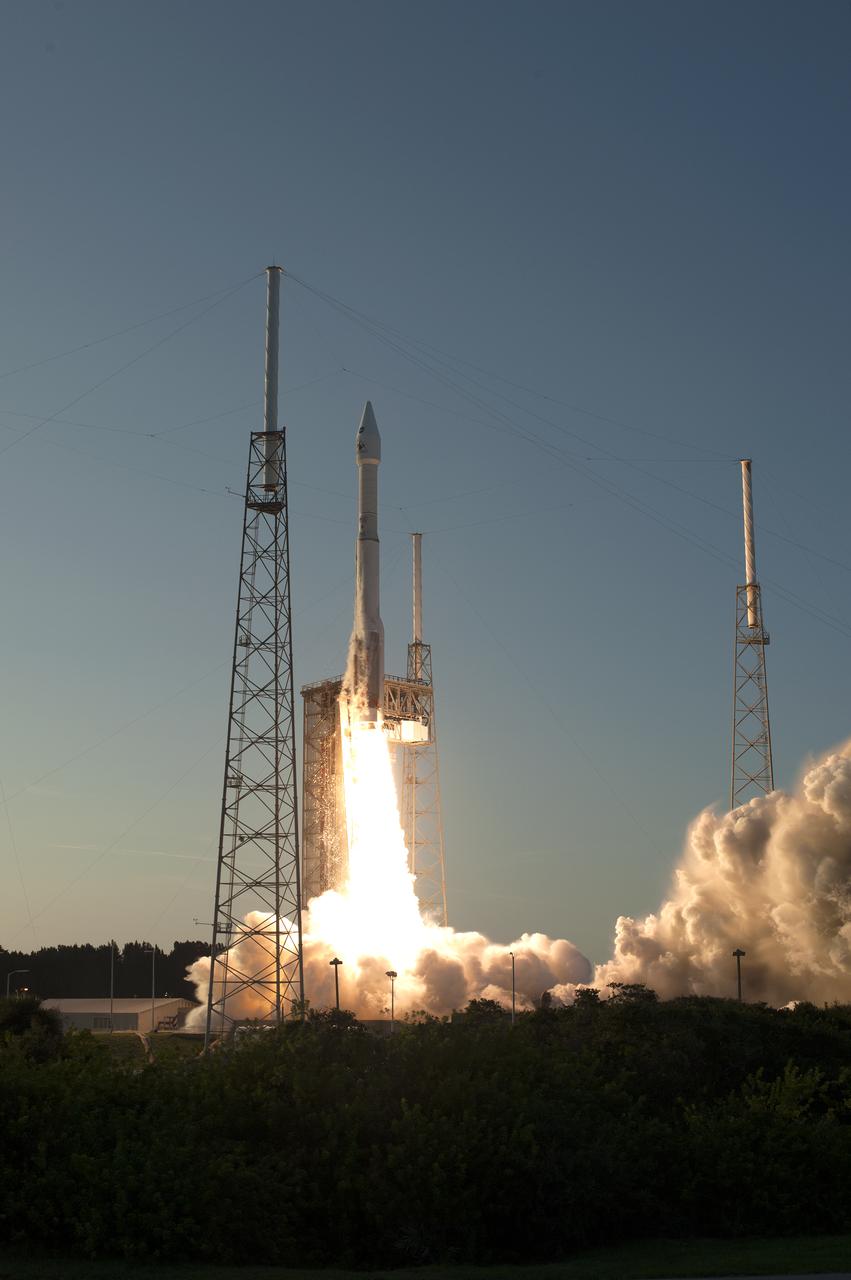
A United Launch Alliance Atlas V rocket lifts off from Space Launch Complex 41 at Cape Canaveral Air Force Station carrying NASA’s Origins, Spectral Interpretation, Resource Identification, Security-Regolith Explorer, or OSIRIS-REx spacecraft on the first U.S. mission to sample an asteroid, retrieve at least two ounces of surface material and return it to Earth for study. Liftoff was at 7:05 p.m. EDT. The asteroid, Bennu, may hold clues to the origin of the solar system and the source of water and organic molecules found on Earth.
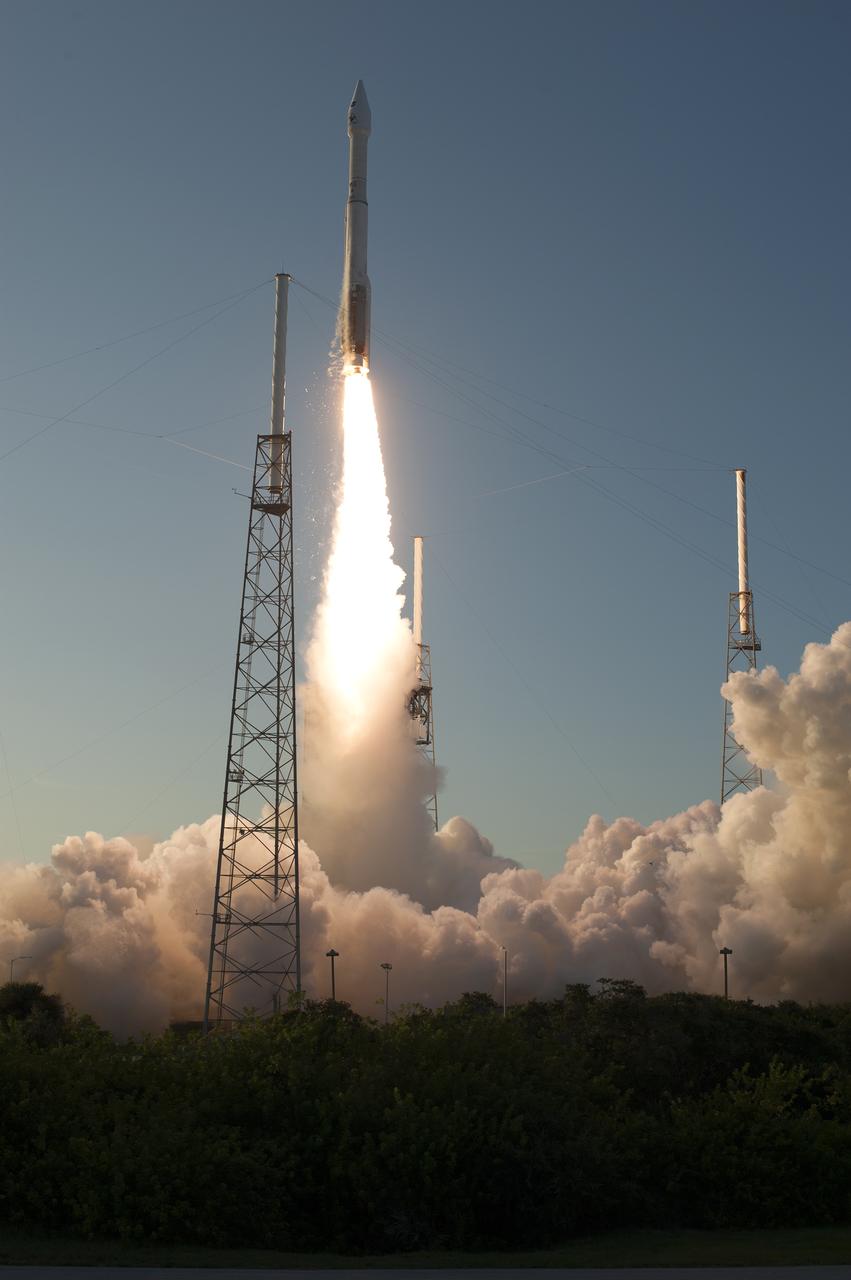
A United Launch Alliance Atlas V rocket lifts off from Space Launch Complex 41 at Cape Canaveral Air Force Station carrying NASA’s Origins, Spectral Interpretation, Resource Identification, Security-Regolith Explorer, or OSIRIS-REx spacecraft on the first U.S. mission to sample an asteroid, retrieve at least two ounces of surface material and return it to Earth for study. Liftoff was at 7:05 p.m. EDT. The asteroid, Bennu, may hold clues to the origin of the solar system and the source of water and organic molecules found on Earth.
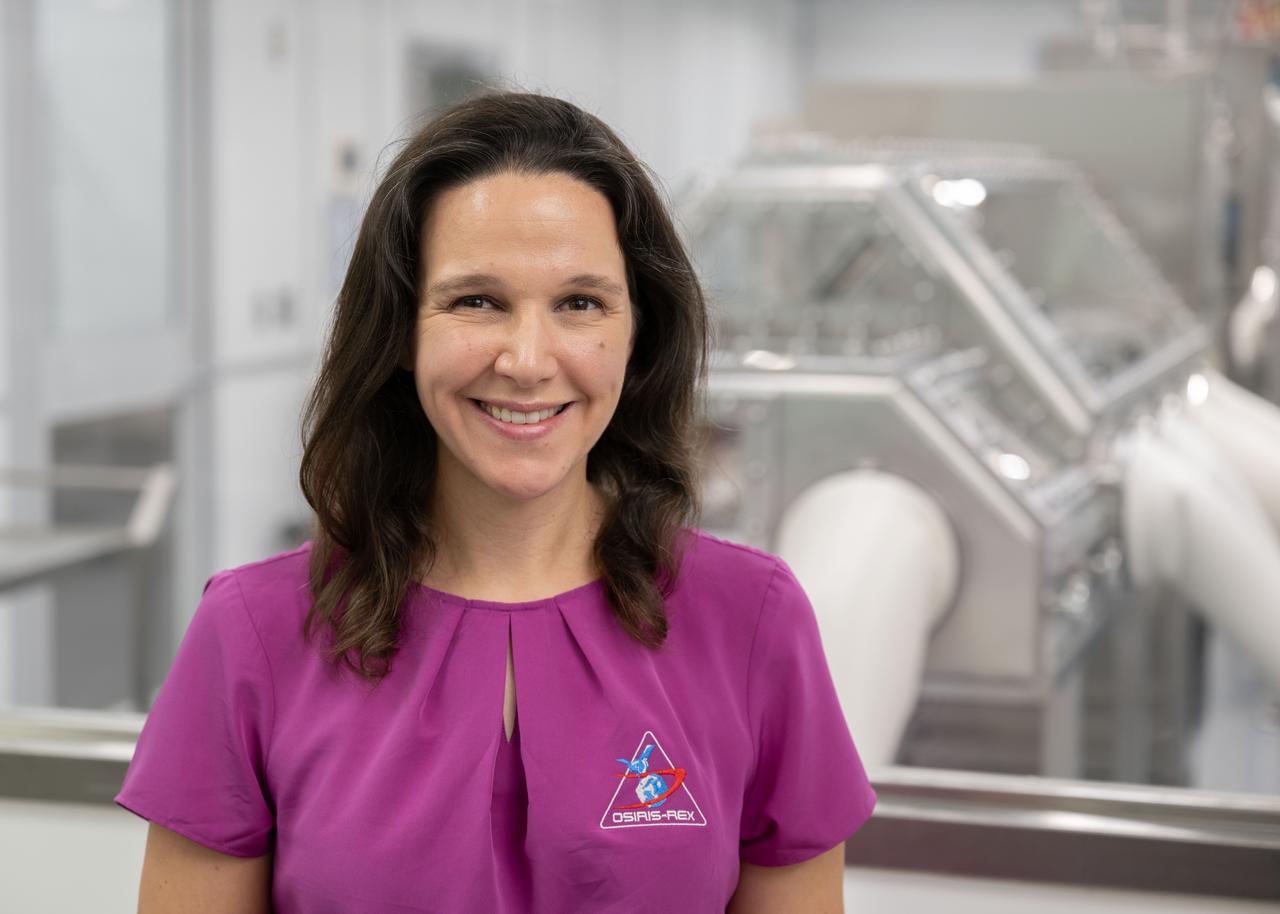
Portrait of Nicole Lunning, OSIRIS-REx sample curator within the Astromaterials Research and Exploration Science (ARES) division of NASA Johnson Space Center. Lunning is seen in front of the OSIRIS-REx cleanroom at Johnson. NASA’s OSIRIS-REx, the first U.S. mission to collect a sample from an asteroid, delivered rocks and dust from asteroid Bennu to Earth on Sept. 24, 2023.
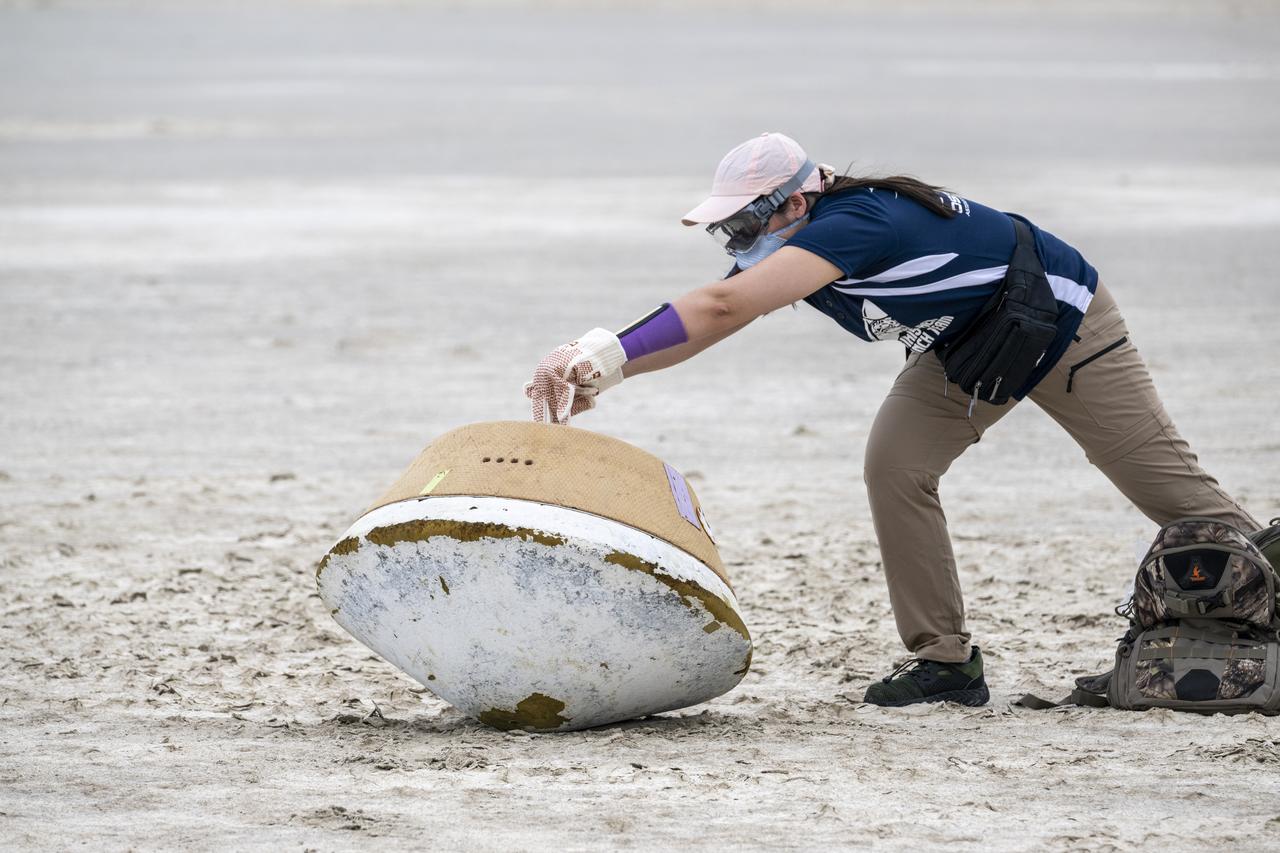
Recovery teams participate in field rehearsals in preparation for the retrieval of the sample return capsule from NASA's OSIRIS-REx mission, Tuesday, July 18, 2023, at the Department of Defense's Utah Test and Training Range. The sample was collected from the asteroid Bennu in October 2020 by NASA’s OSIRIS-REx spacecraft and will return to Earth on September 24th, landing under parachute at the Utah Test and Training Range. Photo Credit: (NASA/Keegan Barber)
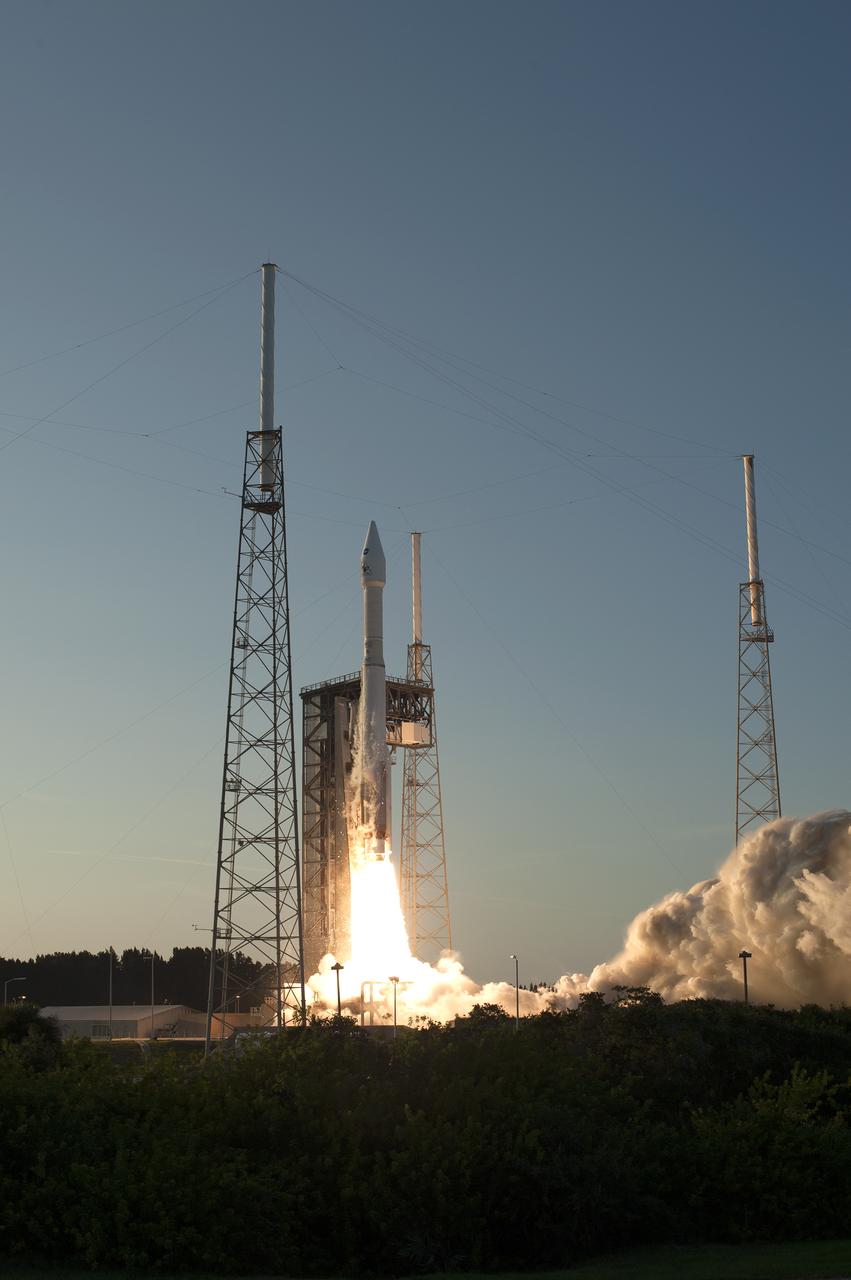
A United Launch Alliance Atlas V rocket lifts off from Space Launch Complex 41 at Cape Canaveral Air Force Station carrying NASA’s Origins, Spectral Interpretation, Resource Identification, Security-Regolith Explorer, or OSIRIS-REx spacecraft on the first U.S. mission to sample an asteroid, retrieve at least two ounces of surface material and return it to Earth for study. Liftoff was at 7:05 p.m. EDT. The asteroid, Bennu, may hold clues to the origin of the solar system and the source of water and organic molecules found on Earth.