
Dr. Laurel Karr of NASA's Marshall Space Flight Center uses a stereo microscope to analyz protein crystals as a part of NASA's structural biology program.
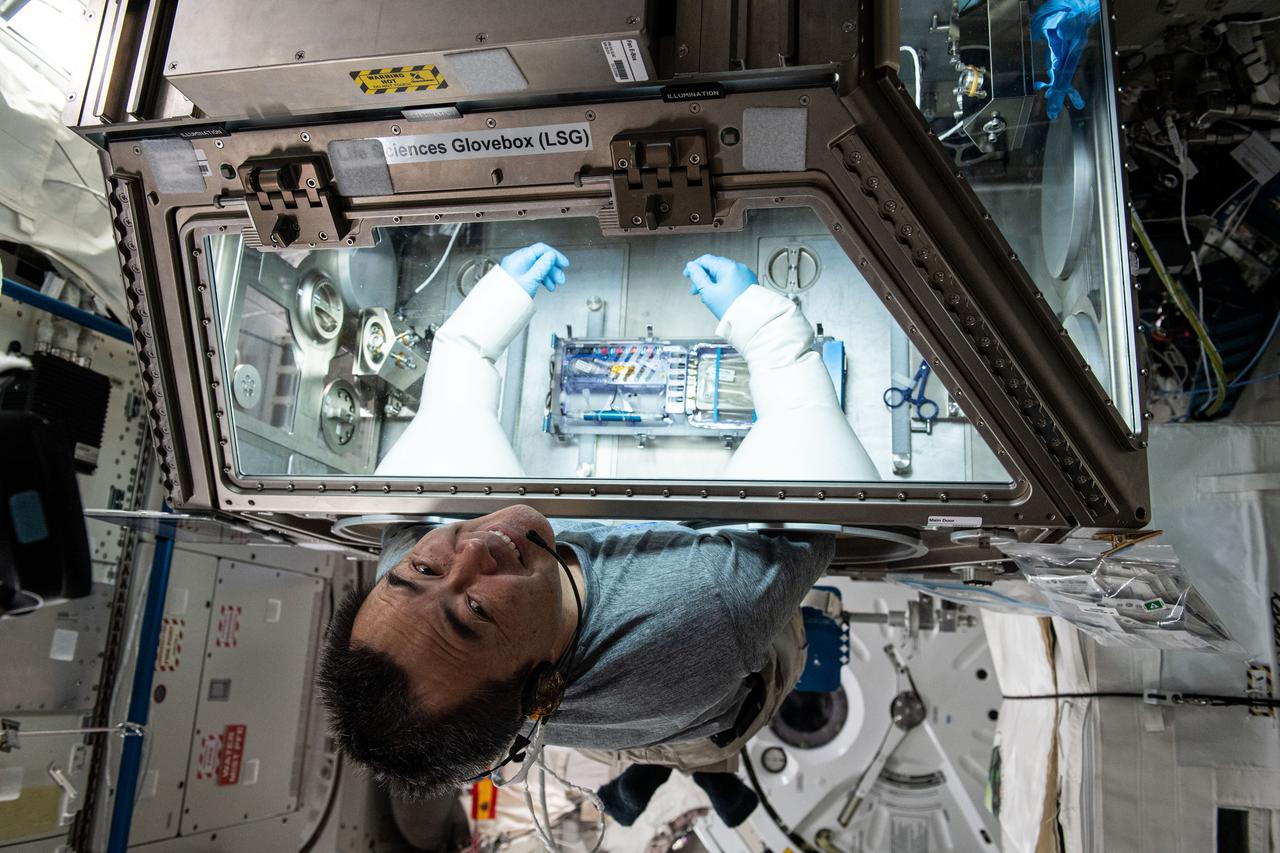
Expedition 65 Commander Akihiko Hoshide of the Japan Aerospace Exploration Agency (JAXA) studies microbes called tardigrades, also known as "water bears", inside the Kibo laboratory module's Life Sciences Glovebox for the Cell Science-04 biology experiment. The study seeks to identify genes that adapt best to the harsh environment of microgravity.

Cindy Barnes of University Space Research Association (USRA) at NASA's Marshall Space Flight Center pipettes a protein solution in preparation to grow crystals as part of NASA's structural biology program. Research on Earth helps scientists define conditions and specimens they will use in space experiments.
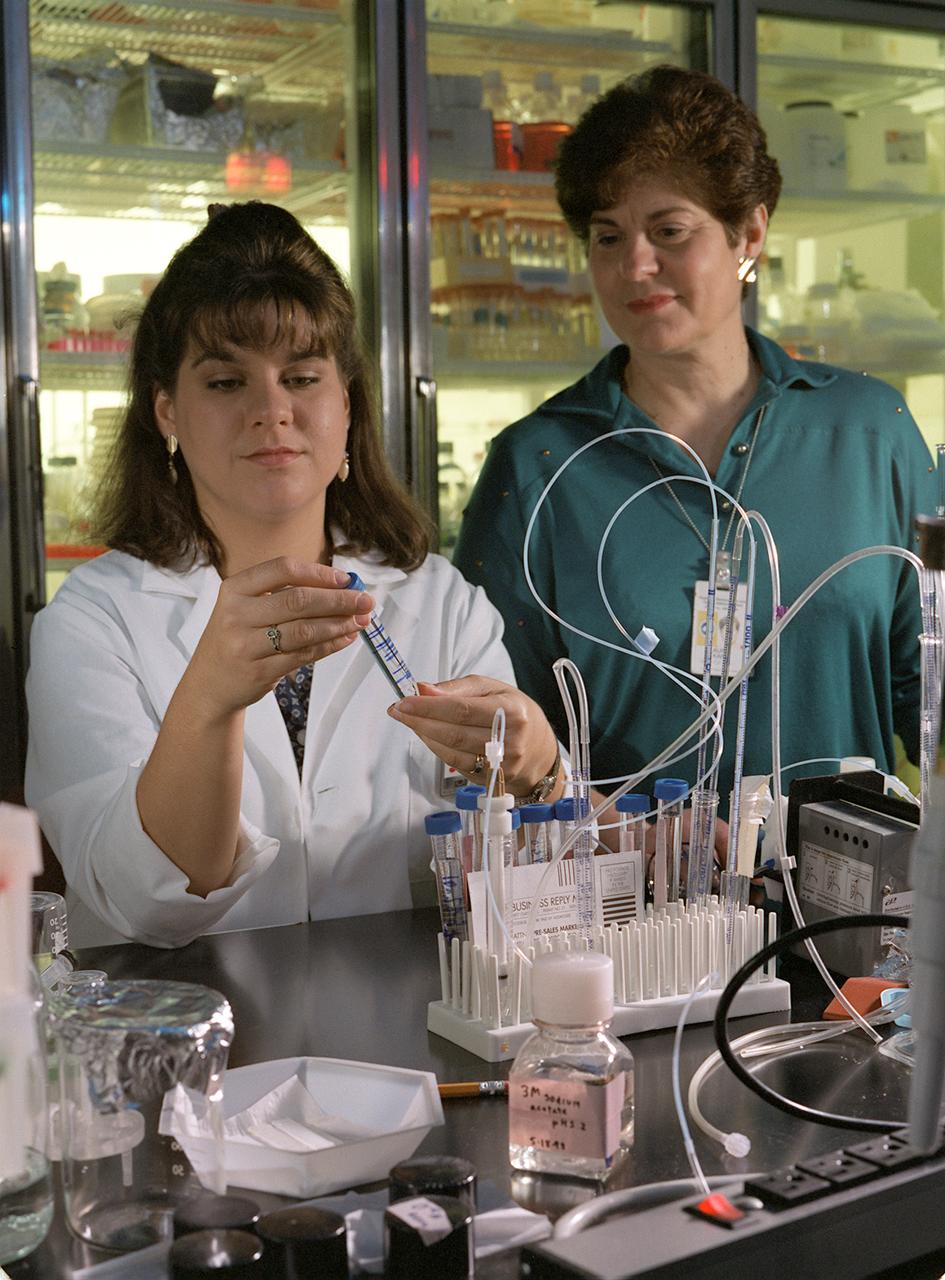
Lisa Crawford, a graduate research assistant from the University of Toledo, works with Laurel Karr of Marshall Space Flight Center (MSFC) in the molecular biology laboratory. They are donducting genetic manipulation of bacteria and yeast for the production of large amount of desired protein. Photo credit: NASA/Marshall Space Flight Center (MSFC)
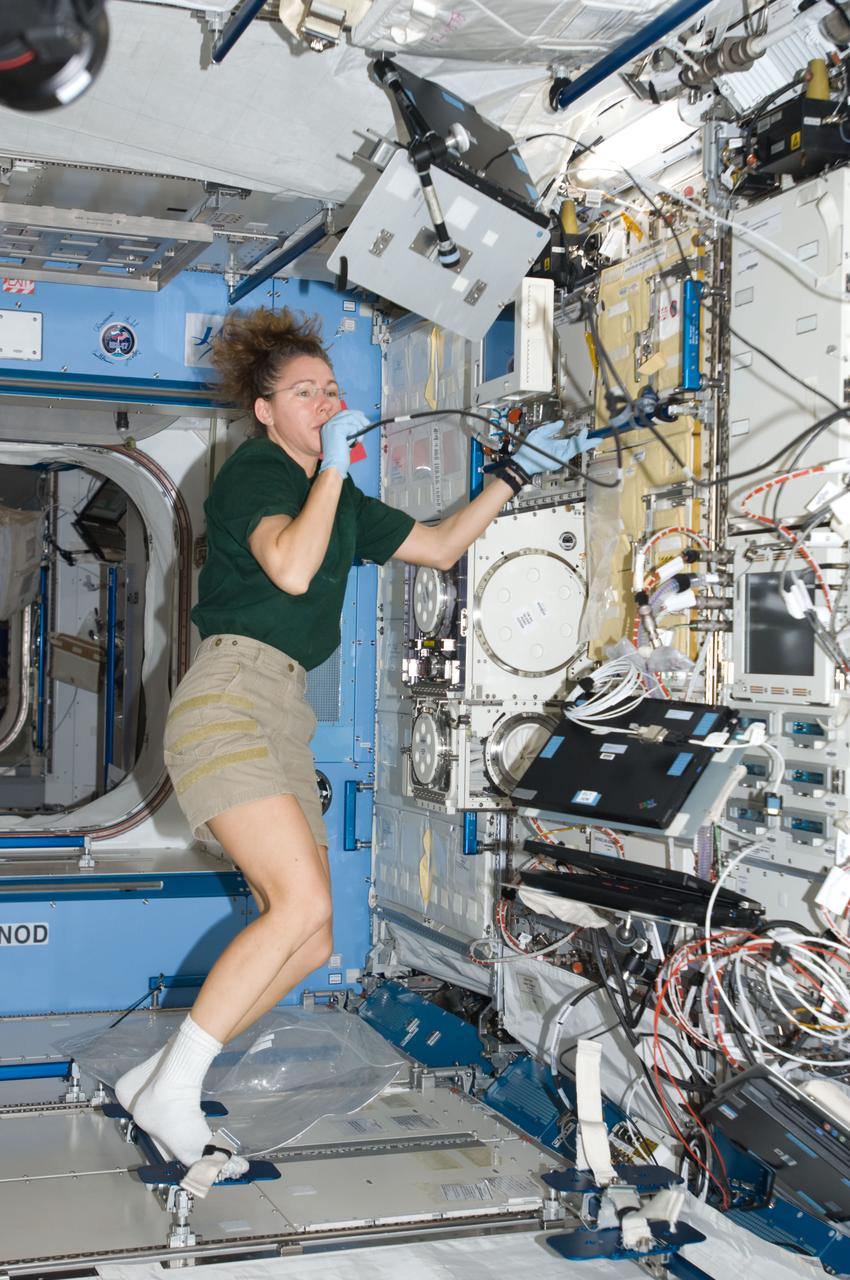
ISS018-E-034090 (20 Feb. 2009) --- Astronaut Sandra Magnus, Expedition 18 flight engineer, uses a communication system near the Cell Biology Experiment Facility (CBEF) in the Kibo laboratory of the International Space Station.
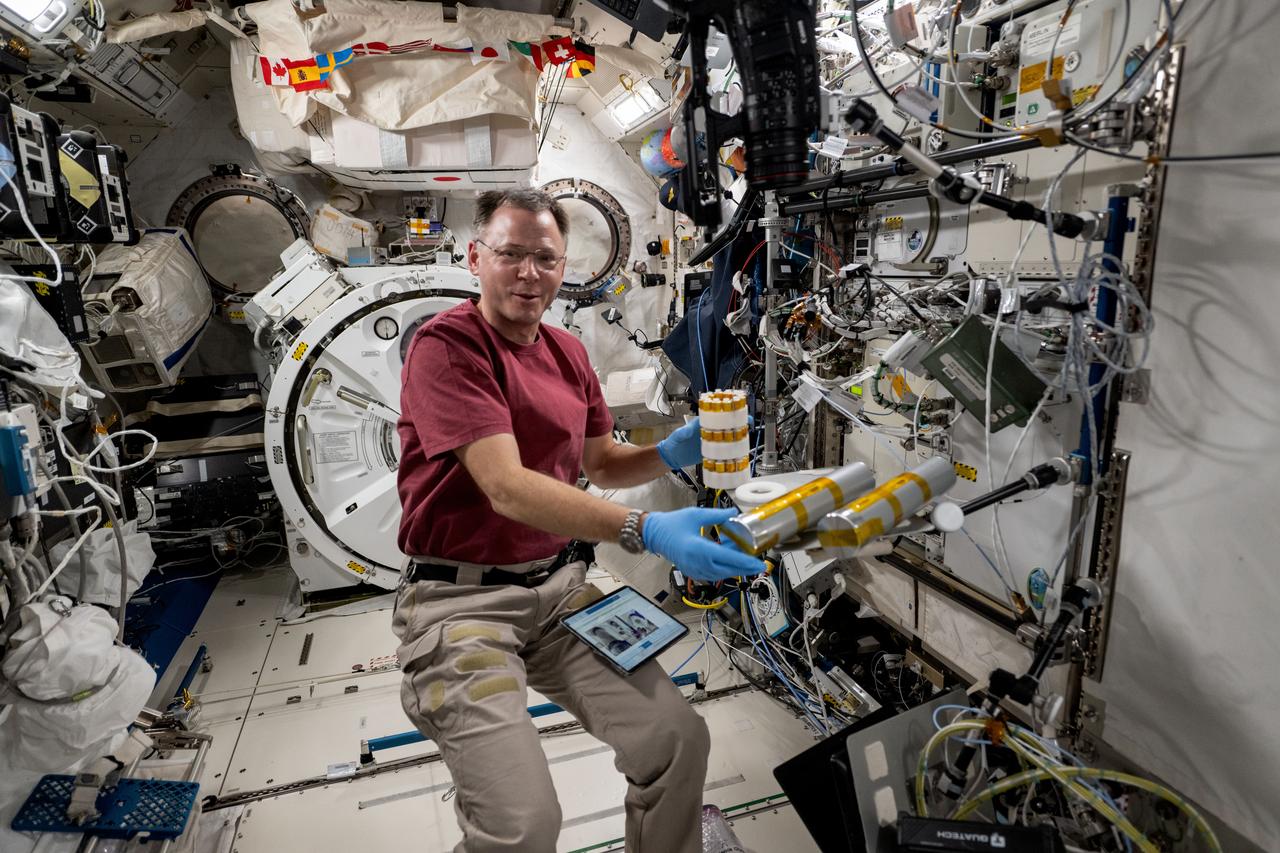
iss072e146315 (Nov. 6, 2024) --- NASA astronaut and Expedition 72 Flight Engineer Nick Hague works inside the International Space Station's Kibo laboratory module on space biology research. Hague was exploring the potential of biomanufacturing using microorganisms and cell cultures to create food, medicine, and more in the microgravity environment reducing the need for cargo missions launched from Earth and promoting crew self-sufficiency during long-term missions.
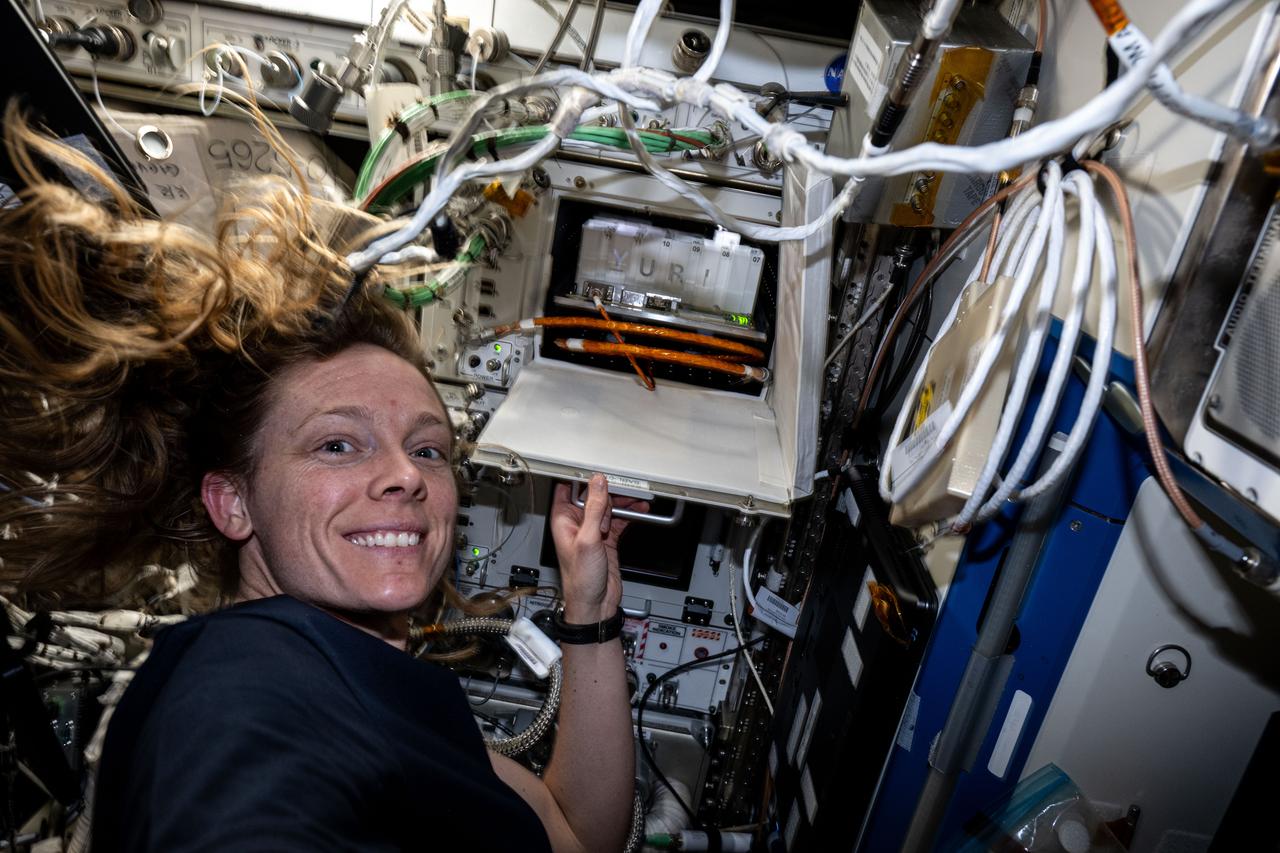
iss073e0002614 (April 28, 2025) --- NASA astronaut and Expedition 73 Flight Engineer Nichole Ayers shows off research hardware inside the International Space Station's Columbus laboratory module. The Space Automated Bioproduct Laboratory is a research incubator that enables biology investigations into the effects of microgravity on cells, microbes, plants, and more.

Edward Snell, a National Research Council research fellow at NASA's Marshall Space Flight Center (MSFC), prepares a protein crystal for analysis by x-ray crystallography as part of NASA's structural biology program. The small, individual crystals are bombarded with x-rays to produce diffraction patterns, a map of the intensity of the x-rays as they reflect through the crystal.
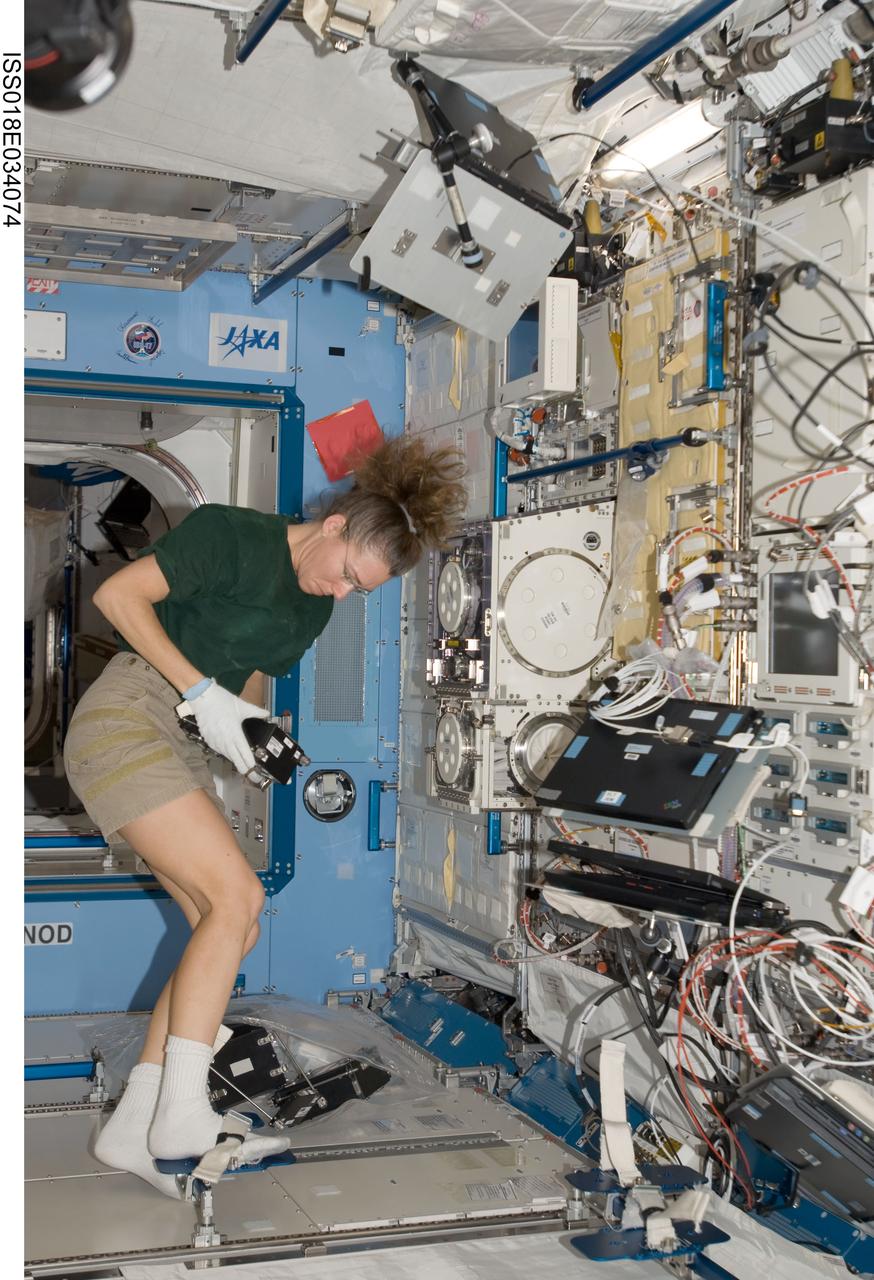
ISS018-E-034074 (20 Feb. 2009) --- Astronaut Sandra Magnus, Expedition 18 flight engineer, works with the LOH- RadGene experiment near the Cell Biology Experiment Facility (CBEF) in the Kibo laboratory of the International Space Station. This experiment investigates alterations in immature immune cells that have been exposed to cosmic radiation. The samples were placed in culture bags and launched to the ISS on the STS-126 mission. After the experiment, frozen samples will be returned to the ground on the STS-119 mission.
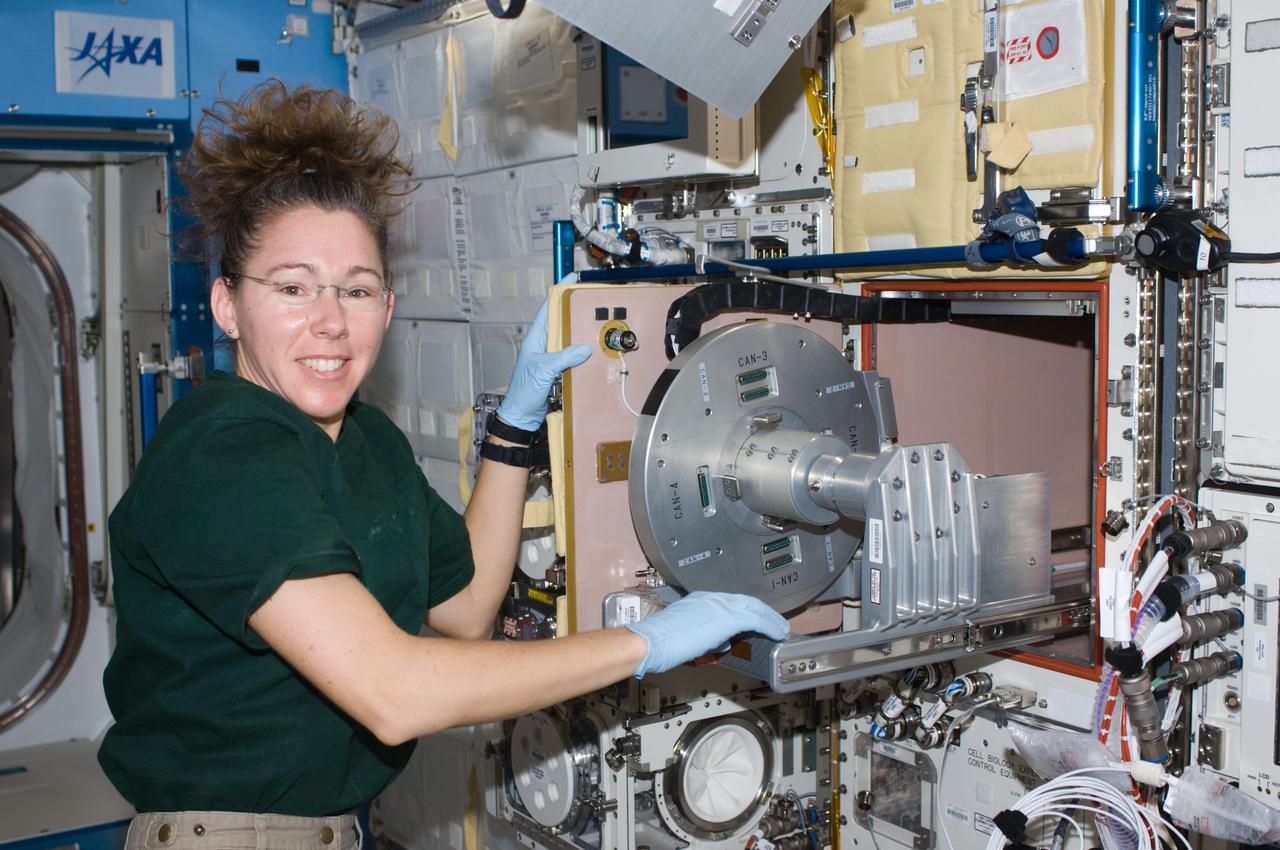
ISS018-E-034555 (20 Feb. 2009) --- Astronaut Sandra Magnus, Expedition 18 flight engineer, takes a moment for a photo while working with the LOH- RadGene experiment at the Cell Biology Experiment Facility (CBEF) in the Kibo laboratory of the International Space Station. This experiment investigates genetic alterations in immature immune cells that have been exposed to cosmic radiation. The samples were placed in culture bags and launched to the ISS on the STS-126 mission. After the experiment, frozen samples will be returned to the ground on the STS-119 mission.
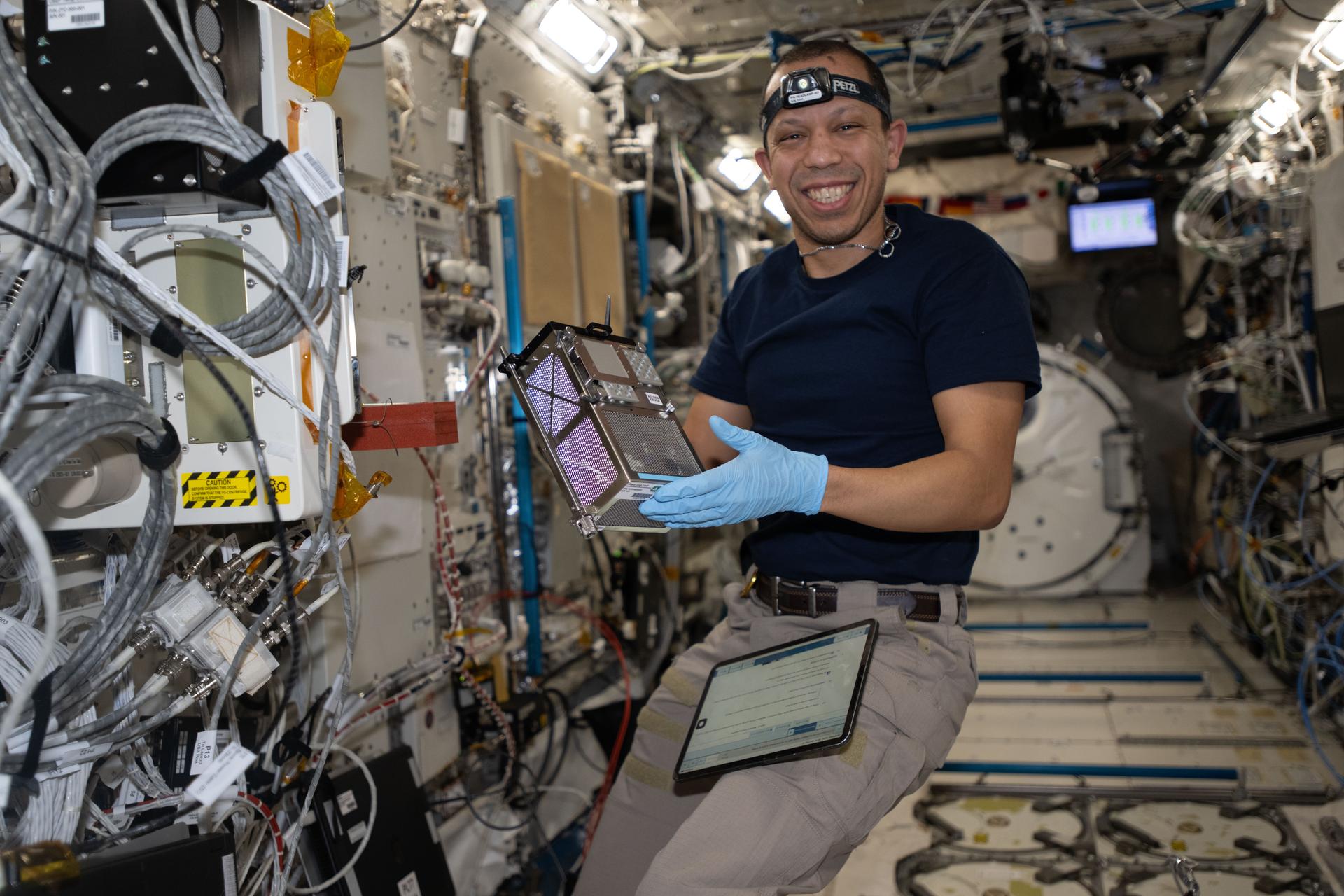
iss074e0422664 (March 30, 2026) --- NASA astronaut and Expedition 74 flight engineer Chris Williams shows off biology research hardware inside the International Space Station's Kibo laboratory module. The scientific gear supports an investigation that explores using a bioregenerative life-support resource to produce oxygen, regenerate air and water, and provide nutritional supplements on spacecraft during long-term missions farther away from Earth. Credit: NASA/Jack Hathaway
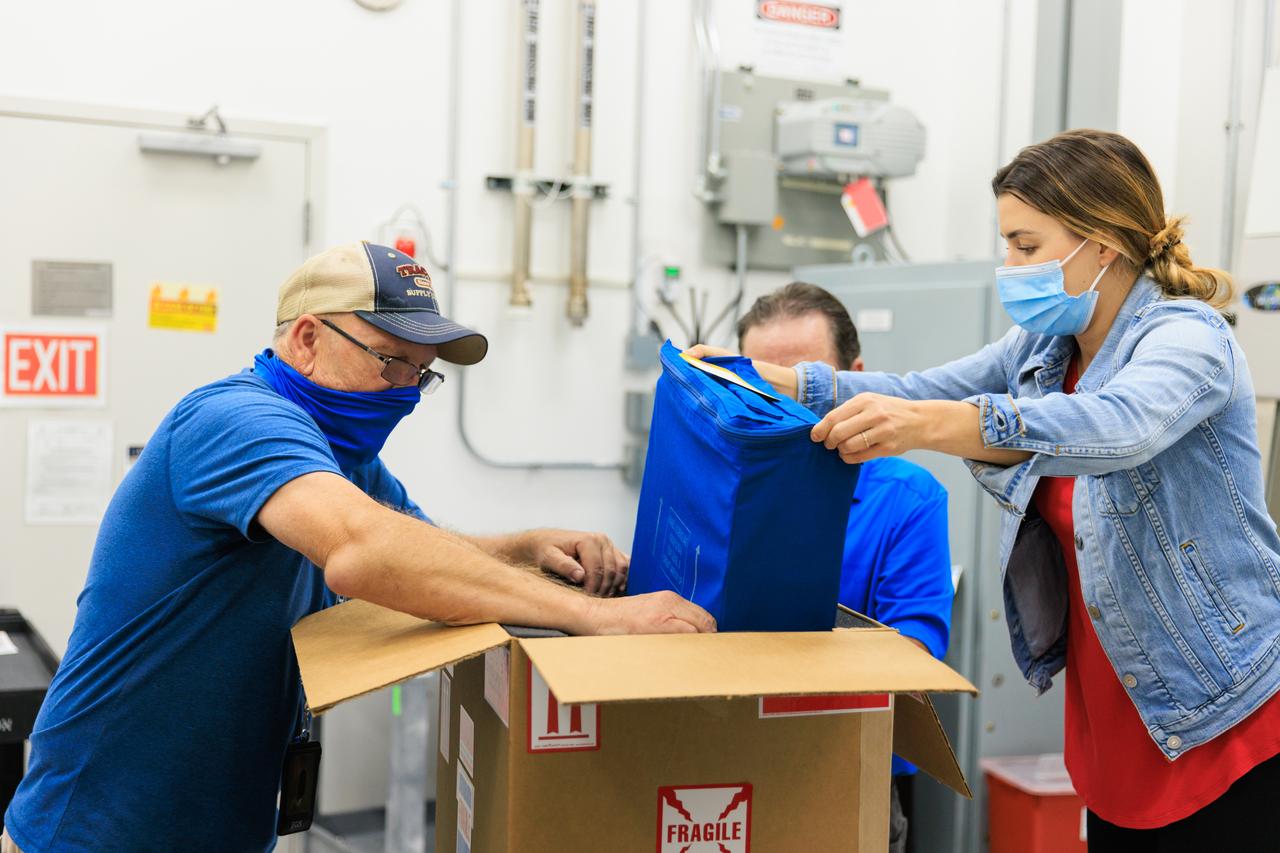
NASA’s Biology Experiment-1 (BioExpt-1) is officially packaged and ready for handover to the Orion team for Artemis I inside the Space Station Processing Facility at the agency’s Kennedy Space Center in Florida on Aug. 18, 2022. BioExpt-1 is a space biology pathfinder, which will carry Arabidopsis, algae, yeast, and fungi science payloads for biology research beyond low-Earth orbit aboard the Orion capsule on the Artemis I mission. The payload container assemblies will be installed onto panels in the Orion capsule and will return to Earth to provide critical and unique data about life beyond low-Earth orbit for the first time in more than 40 years. Artemis I is the first in a series of increasingly complex missions that will enable human exploration to the Moon and eventually on to Mars.
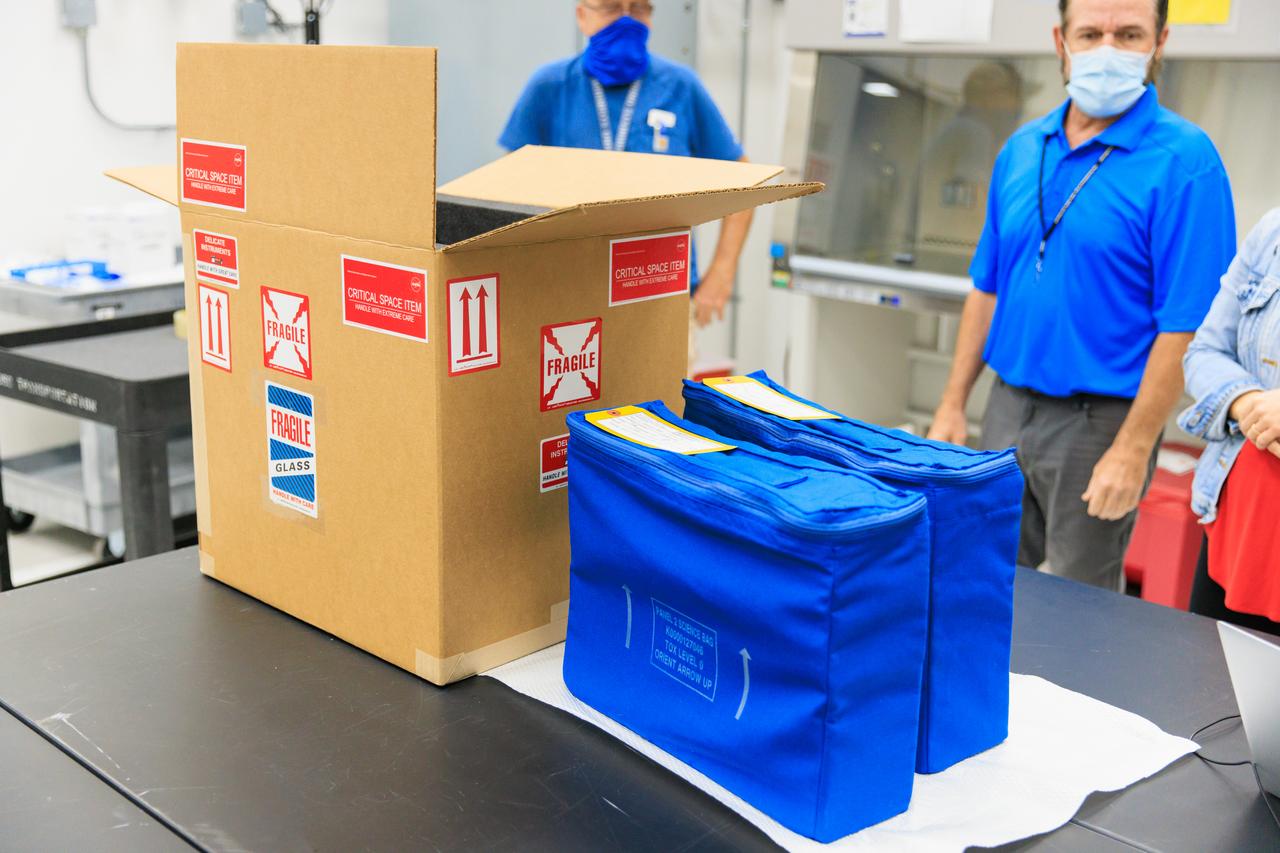
NASA’s Biology Experiment-1 (BioExpt-1) is officially packaged and ready for handover to the Orion team for Artemis I inside the Space Station Processing Facility at the agency’s Kennedy Space Center in Florida on Aug. 18, 2022. BioExpt-1 is a space biology pathfinder, which will carry Arabidopsis, algae, yeast, and fungi science payloads for biology research beyond low-Earth orbit aboard the Orion capsule on the Artemis I mission. The payload container assemblies will be installed onto panels in the Orion capsule and will return to Earth to provide critical and unique data about life beyond low-Earth orbit for the first time in more than 40 years. Artemis I is the first in a series of increasingly complex missions that will enable human exploration to the Moon and eventually on to Mars.
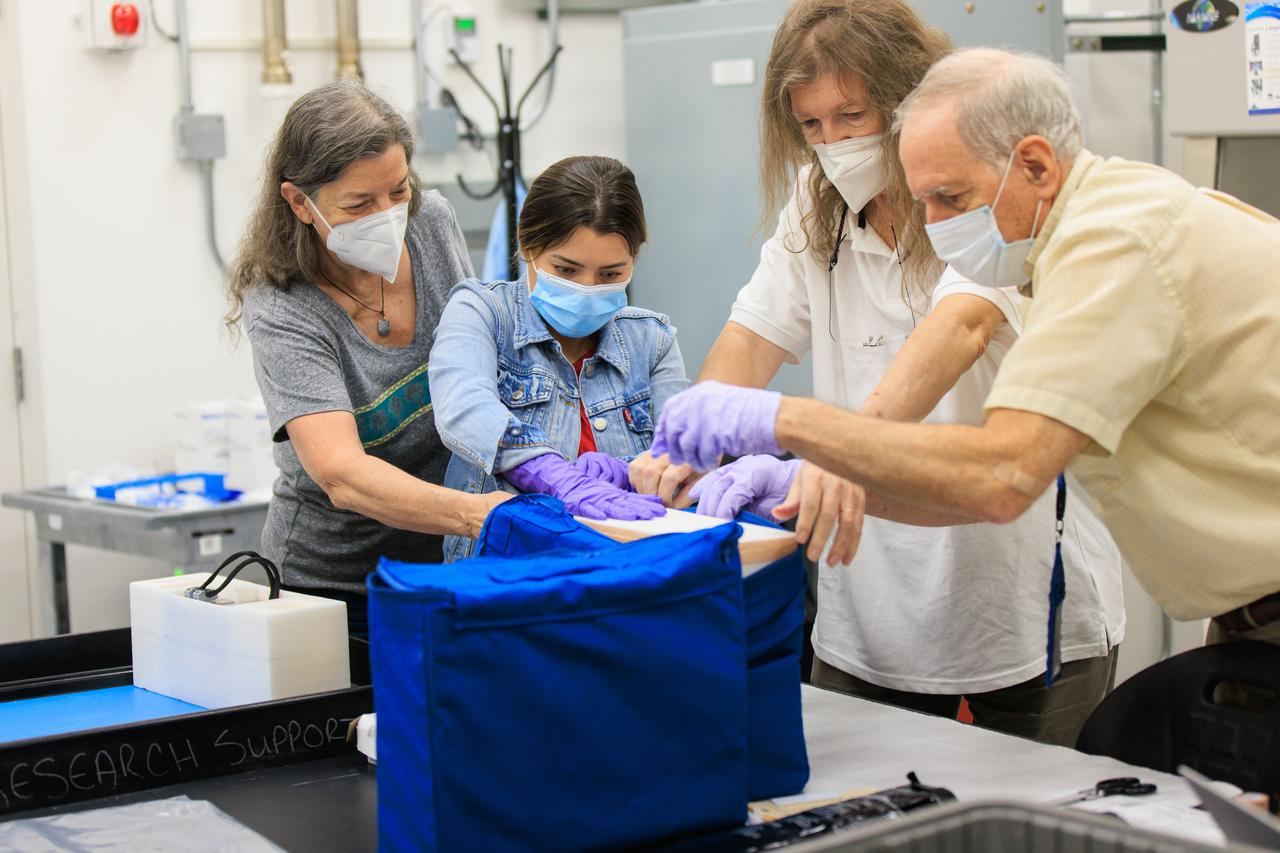
Scientists package up part of NASA’s Biology Experiment-1 (BioExpt-1) for official handover to the Orion team for Artemis I inside the Space Station Processing Facility at the agency’s Kennedy Space Center in Florida on Aug. 18, 2022. BioExpt-1 is a space biology pathfinder, which will carry Arabidopsis, algae, yeast, and fungi science payloads for biology research beyond low-Earth orbit aboard the Orion capsule on the Artemis I mission. The payload container assemblies will be installed onto panels in the Orion capsule and will return to Earth to provide critical and unique data about life beyond low-Earth orbit for the first time in more than 40 years. Artemis I is the first in a series of increasingly complex missions that will enable human exploration to the Moon and eventually on to Mars.
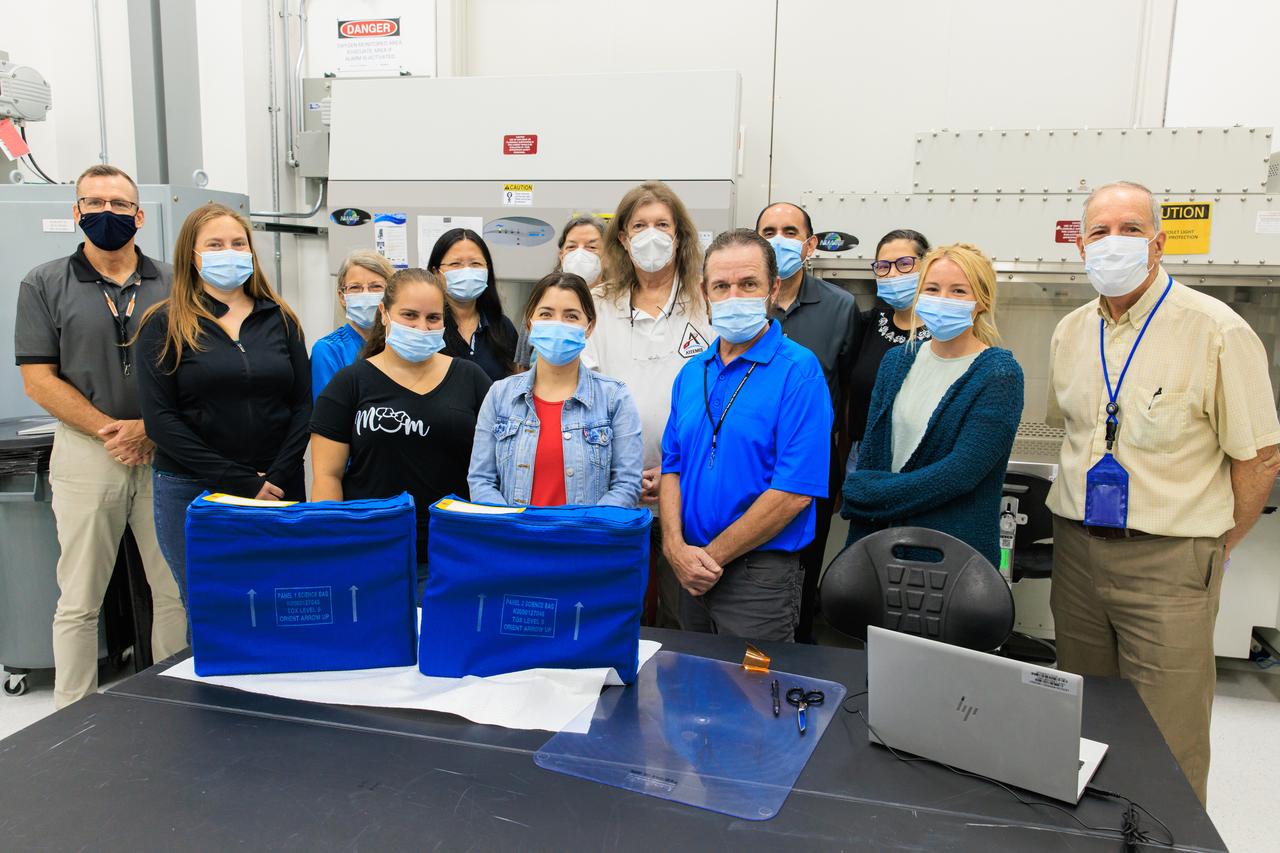
NASA’s Biology Experiment-1 (BioExpt-1) is officially packaged and ready for handover to the Orion team for Artemis I inside the Space Station Processing Facility at the agency’s Kennedy Space Center in Florida on Aug. 18, 2022. BioExpt-1 is a space biology pathfinder, which will carry Arabidopsis, algae, yeast, and fungi science payloads for biology research beyond low-Earth orbit aboard the Orion capsule on the Artemis I mission. The payload container assemblies will be installed onto panels in the Orion capsule and will return to Earth to provide critical and unique data about life beyond low-Earth orbit for the first time in more than 40 years. Artemis I is the first in a series of increasingly complex missions that will enable human exploration to the Moon and eventually on to Mars.
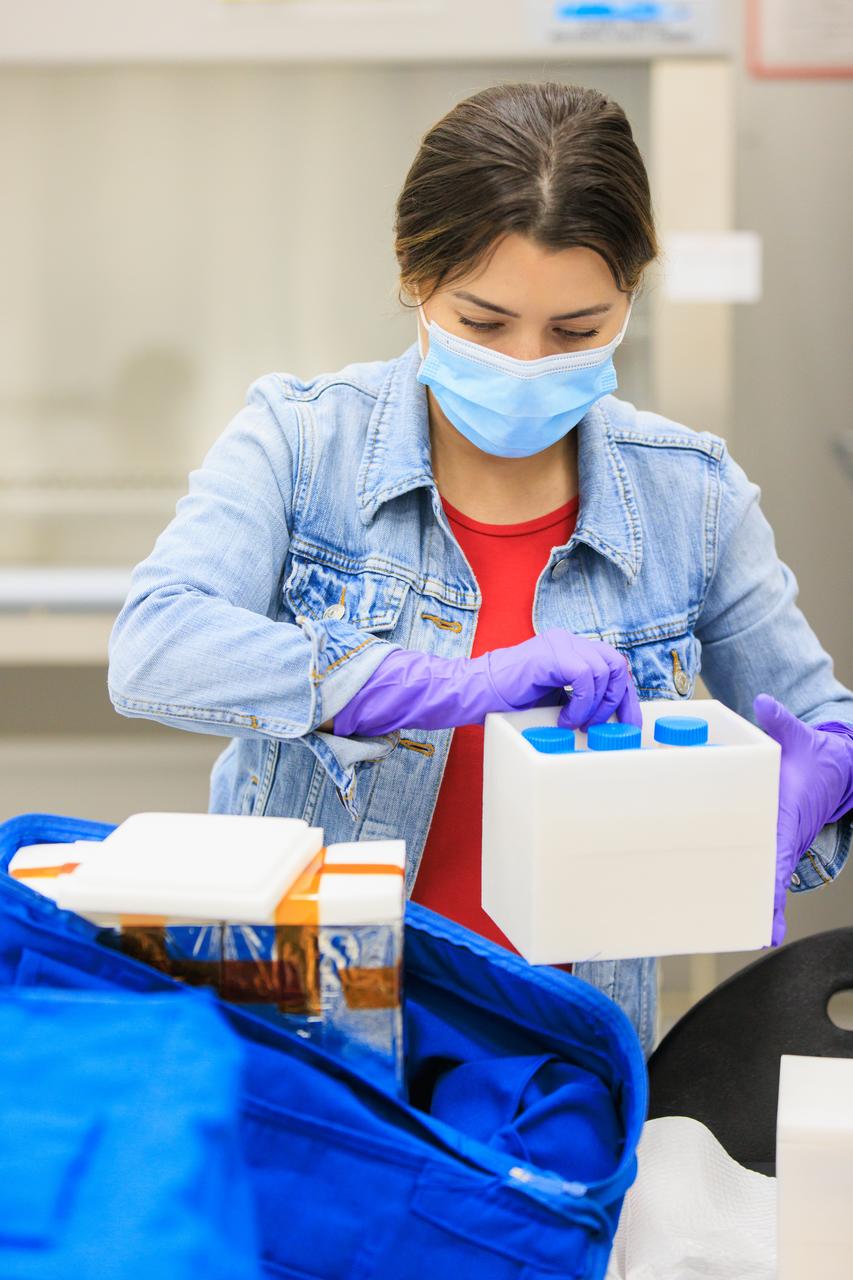
Scientists package up part of NASA’s Biology Experiment-1 (BioExpt-1) for official handover to the Orion team for Artemis I inside the Space Station Processing Facility at the agency’s Kennedy Space Center in Florida on Aug. 18, 2022. BioExpt-1 is a space biology pathfinder, which will carry Arabidopsis, algae, yeast, and fungi science payloads for biology research beyond low-Earth orbit aboard the Orion capsule on the Artemis I mission. The payload container assemblies will be installed onto panels in the Orion capsule and will return to Earth to provide critical and unique data about life beyond low-Earth orbit for the first time in more than 40 years. Artemis I is the first in a series of increasingly complex missions that will enable human exploration to the Moon and eventually on to Mars.
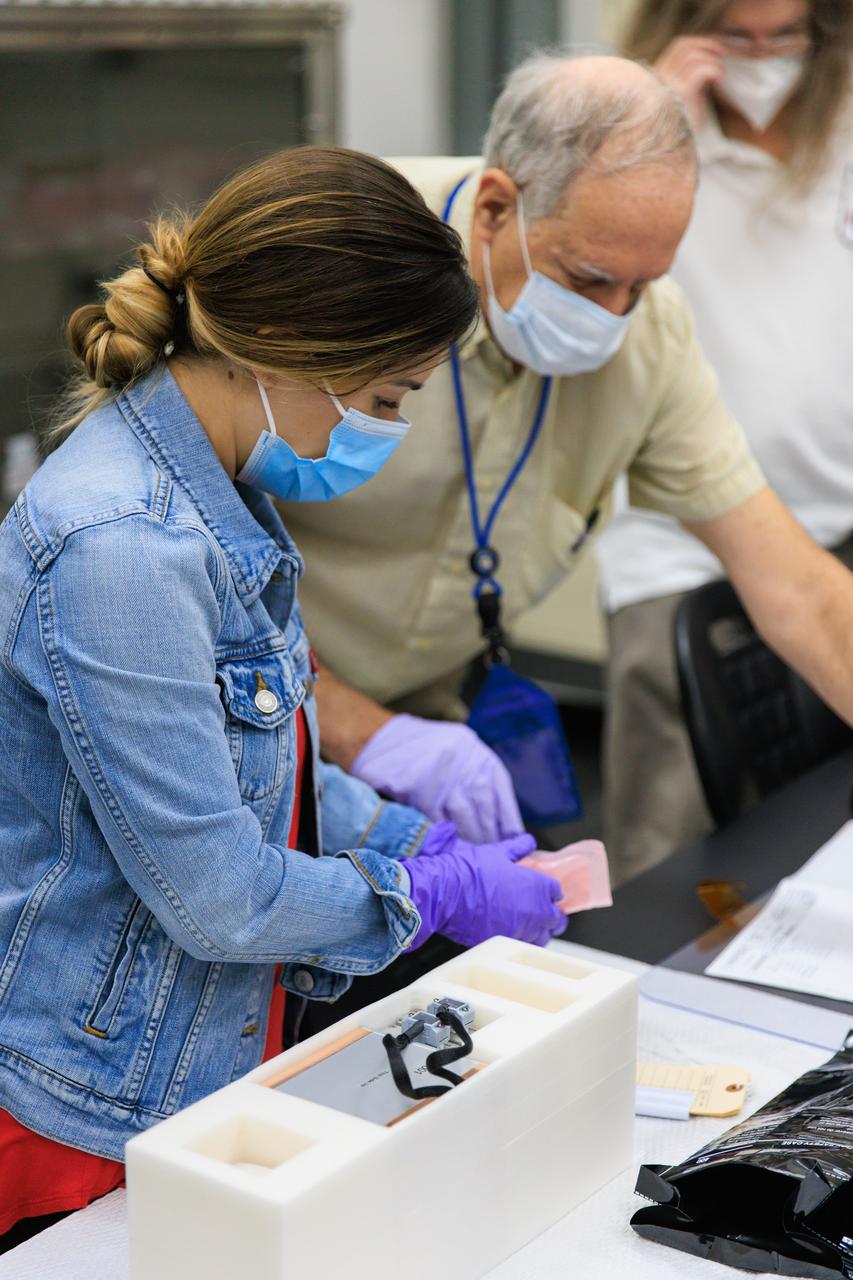
Scientists package up part of NASA’s Biology Experiment-1 (BioExpt-1) for official handover to the Orion team for Artemis I inside the Space Station Processing Facility at the agency’s Kennedy Space Center in Florida on Aug. 18, 2022. BioExpt-1 is a space biology pathfinder, which will carry Arabidopsis, algae, yeast, and fungi science payloads for biology research beyond low-Earth orbit aboard the Orion capsule on the Artemis I mission. The payload container assemblies will be installed onto panels in the Orion capsule and will return to Earth to provide critical and unique data about life beyond low-Earth orbit for the first time in more than 40 years. Artemis I is the first in a series of increasingly complex missions that will enable human exploration to the Moon and eventually on to Mars.
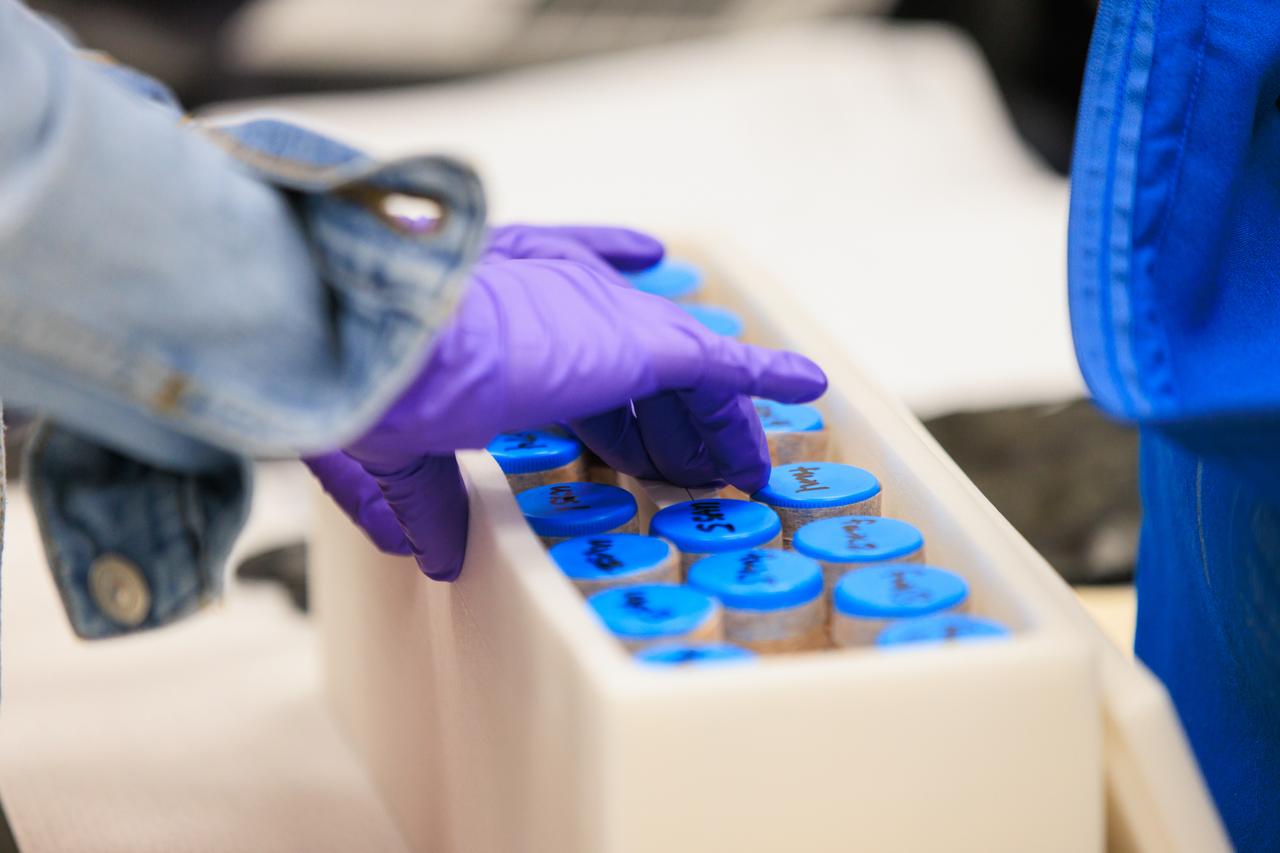
Scientists package up part of NASA’s Biology Experiment-1 (BioExpt-1) for official handover to the Orion team for Artemis I inside the Space Station Processing Facility at the agency’s Kennedy Space Center in Florida on Aug. 18, 2022. BioExpt-1 is a space biology pathfinder, which will carry Arabidopsis, algae, yeast, and fungi science payloads for biology research beyond low-Earth orbit aboard the Orion capsule on the Artemis I mission. The payload container assemblies will be installed onto panels in the Orion capsule and will return to Earth to provide critical and unique data about life beyond low-Earth orbit for the first time in more than 40 years. Artemis I is the first in a series of increasingly complex missions that will enable human exploration to the Moon and eventually on to Mars.
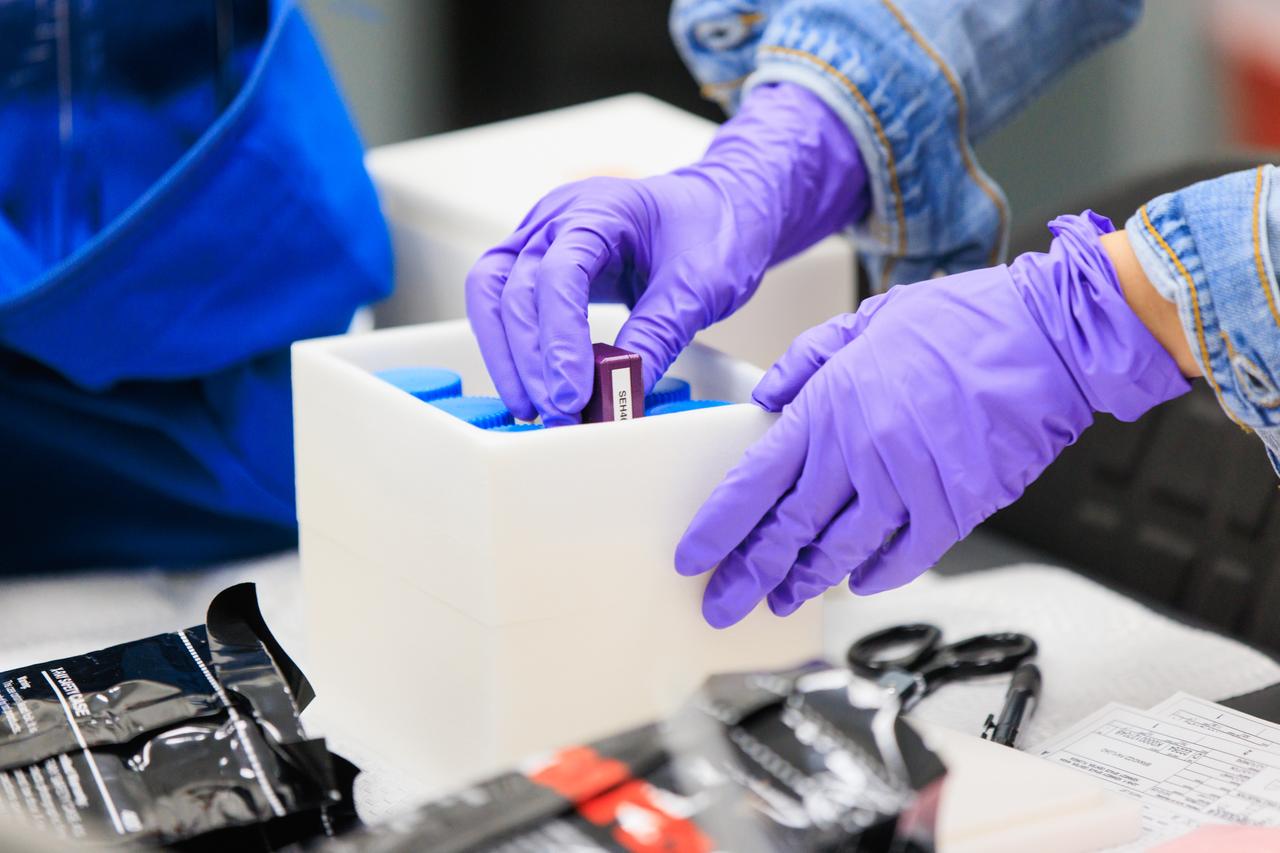
Scientists package up part of NASA’s Biology Experiment-1 (BioExpt-1) for official handover to the Orion team for Artemis I inside the Space Station Processing Facility at the agency’s Kennedy Space Center in Florida on Aug. 18, 2022. BioExpt-1 is a space biology pathfinder, which will carry Arabidopsis, algae, yeast, and fungi science payloads for biology research beyond low-Earth orbit aboard the Orion capsule on the Artemis I mission. The payload container assemblies will be installed onto panels in the Orion capsule and will return to Earth to provide critical and unique data about life beyond low-Earth orbit for the first time in more than 40 years. Artemis I is the first in a series of increasingly complex missions that will enable human exploration to the Moon and eventually on to Mars.
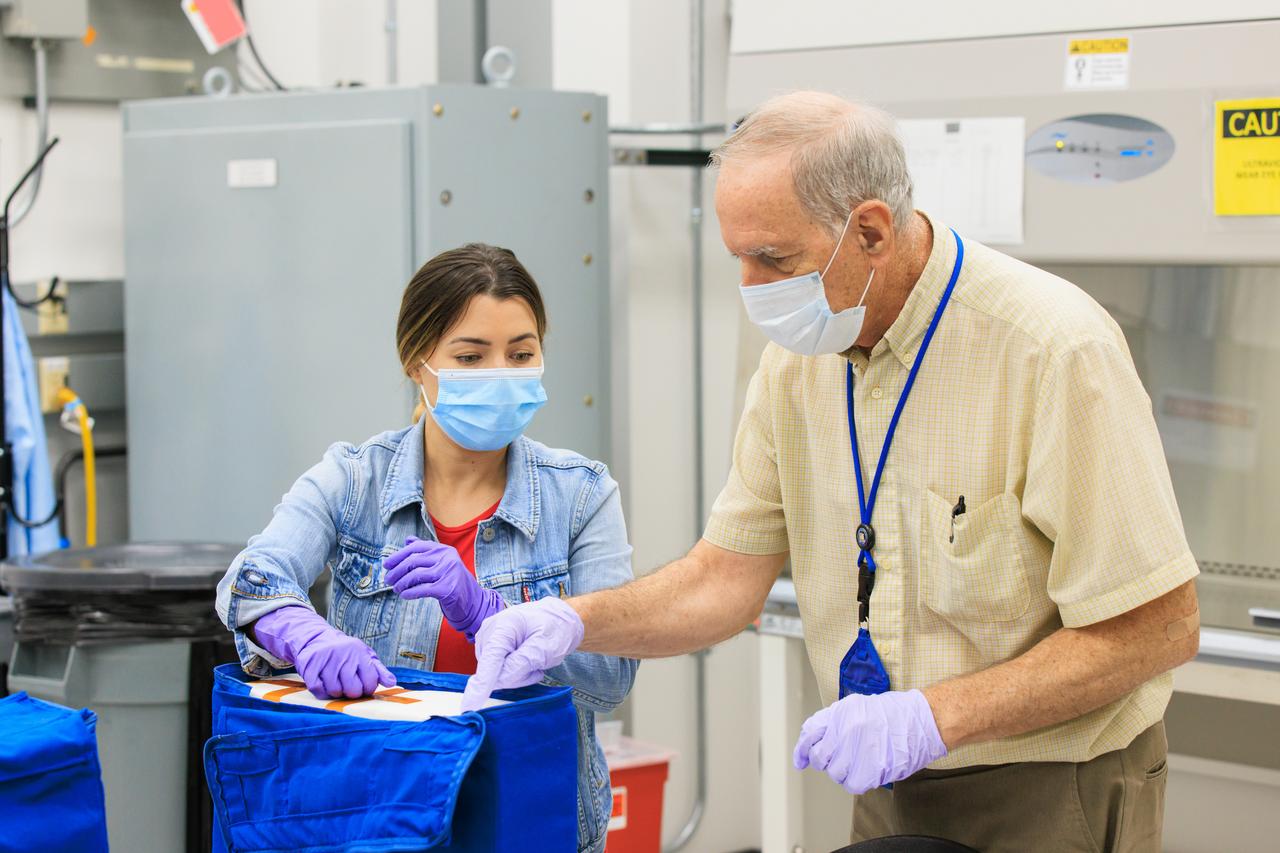
Scientists package up part of NASA’s Biology Experiment-1 (BioExpt-1) for official handover to the Orion team for Artemis I inside the Space Station Processing Facility at the agency’s Kennedy Space Center in Florida on Aug. 18, 2022. BioExpt-1 is a space biology pathfinder, which will carry Arabidopsis, algae, yeast, and fungi science payloads for biology research beyond low-Earth orbit aboard the Orion capsule on the Artemis I mission. The payload container assemblies will be installed onto panels in the Orion capsule and will return to Earth to provide critical and unique data about life beyond low-Earth orbit for the first time in more than 40 years. Artemis I is the first in a series of increasingly complex missions that will enable human exploration to the Moon and eventually on to Mars.
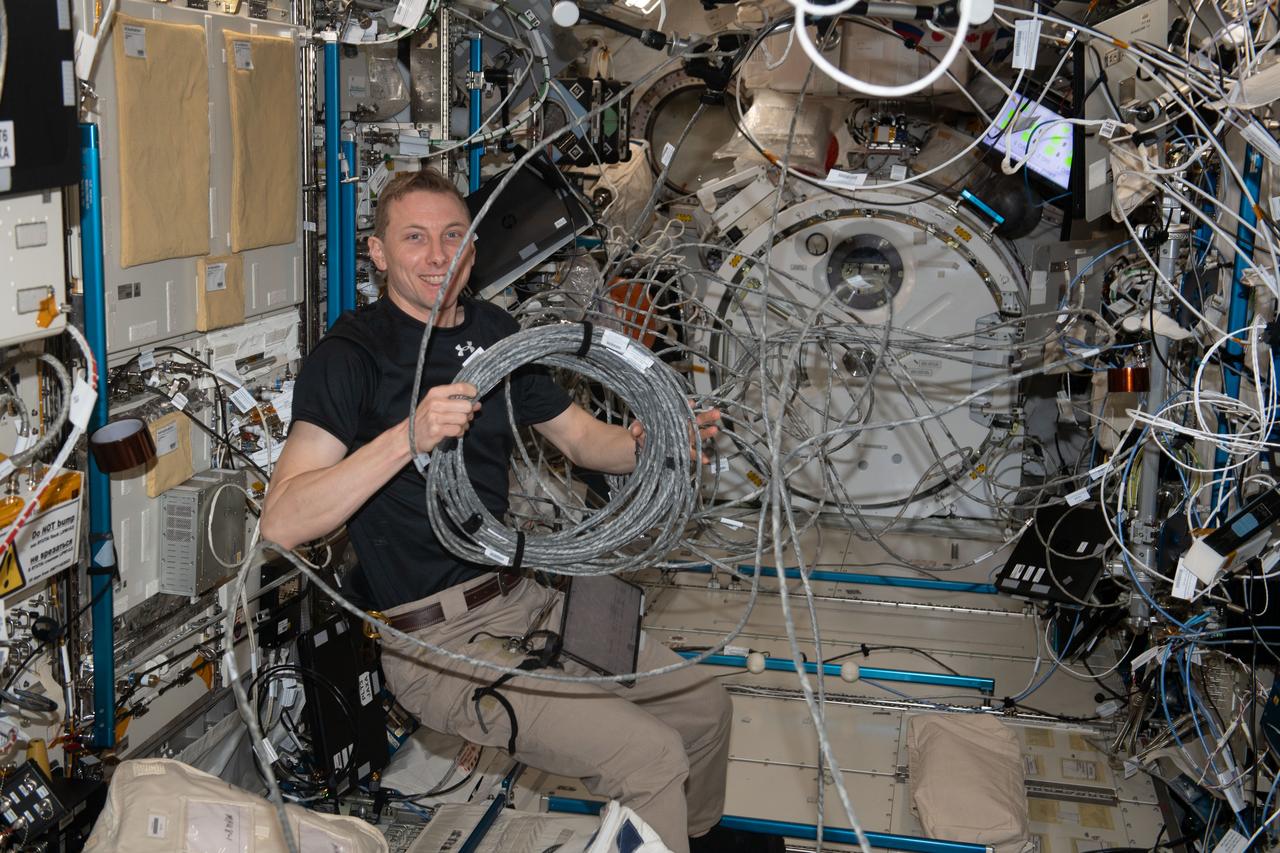
iss069e005419 (April 26, 2023) --- NASA astronaut and Expedition 69 Flight Engineer Woody Hoburg reconfigures video cables belonging to the Kibo laboratory module's Cell Biology Experiment Facility, a research incubator that generates artificial gravity.
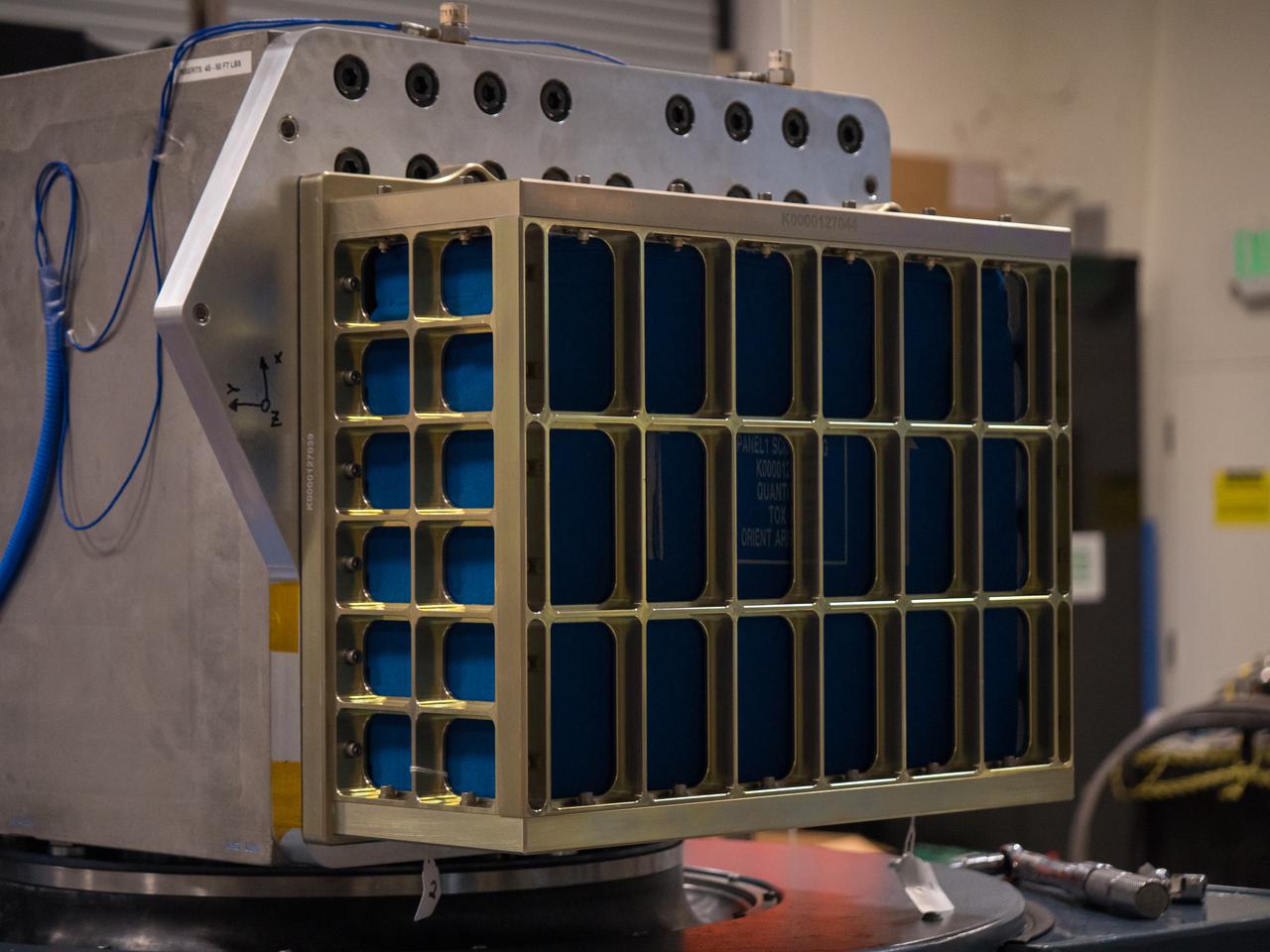
NASA’s Biology Experiment-1 (BioExpt-1) undergoes testing in the Vibration Laboratory at Kennedy Space Center in Florida on May 13, 2021. BioExpt-1 is a space biology pathfinder, which will carry plants, algae, yeast, and fungi for biology research beyond low-Earth orbit (LEO). NASA will install the BioExpt-1 payload container assembles onto panels inside the Orion capsule. BioExpt-1 will return these science payloads to Earth to provide critical and unique data about life beyond LEO for the first time in more than 40 years. Artemis I is the first in a series of increasingly complex missions that will enable human exploration of the Moon and eventually on to Mars.
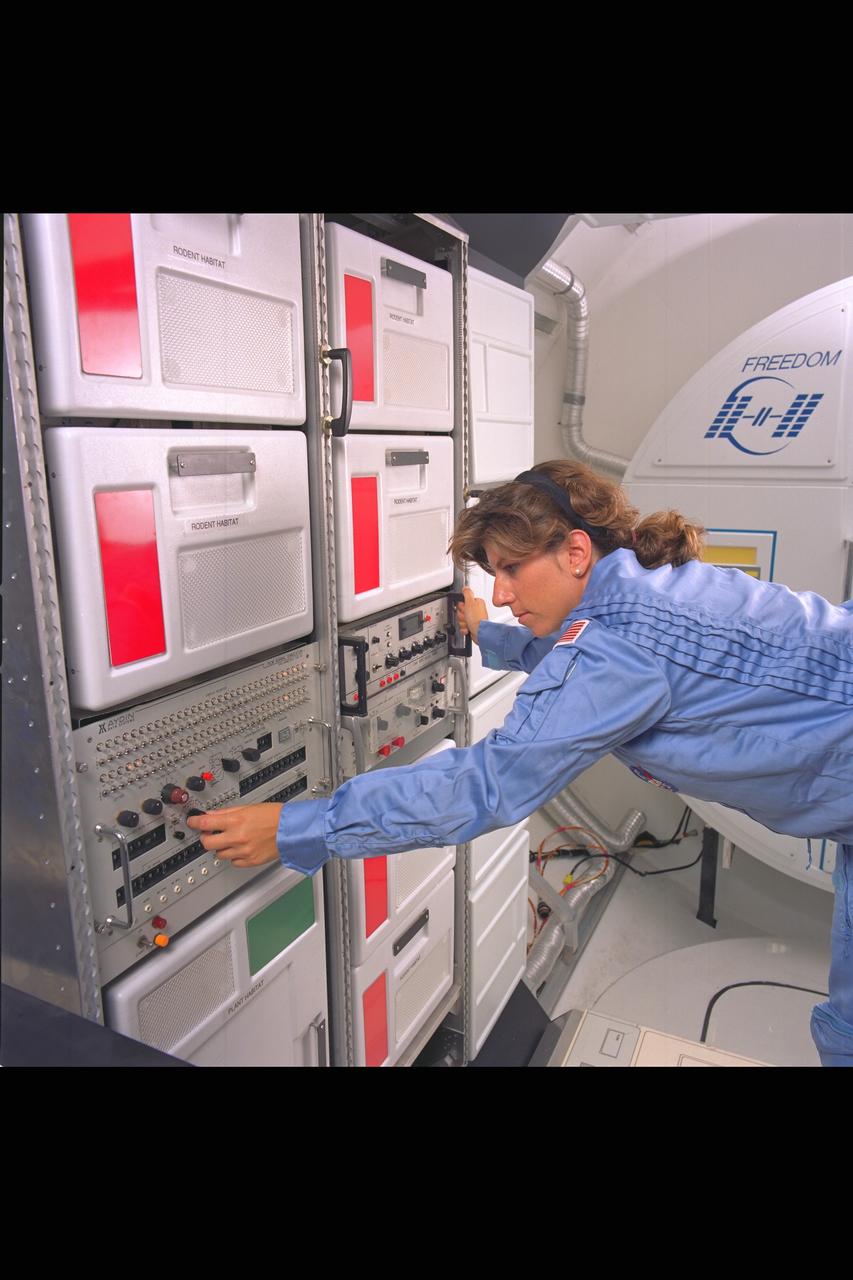
Space Station Gravitational Biology Facility Project Mock-up with Kristine Guerra (2.5) with Biolab (simulating weightlessness in space)
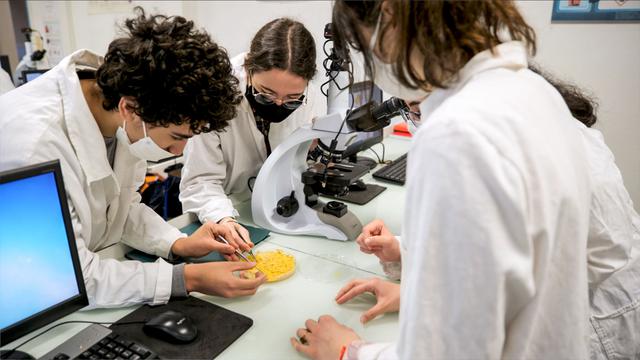
jsc2021e031150 (7/22/2021) --- A Photo of a biology lesson at the Lycée Berthelot of Toulouse (France). Part of Blob investigation. Photo courtesy© CNES/F. Quignaux, 2021.
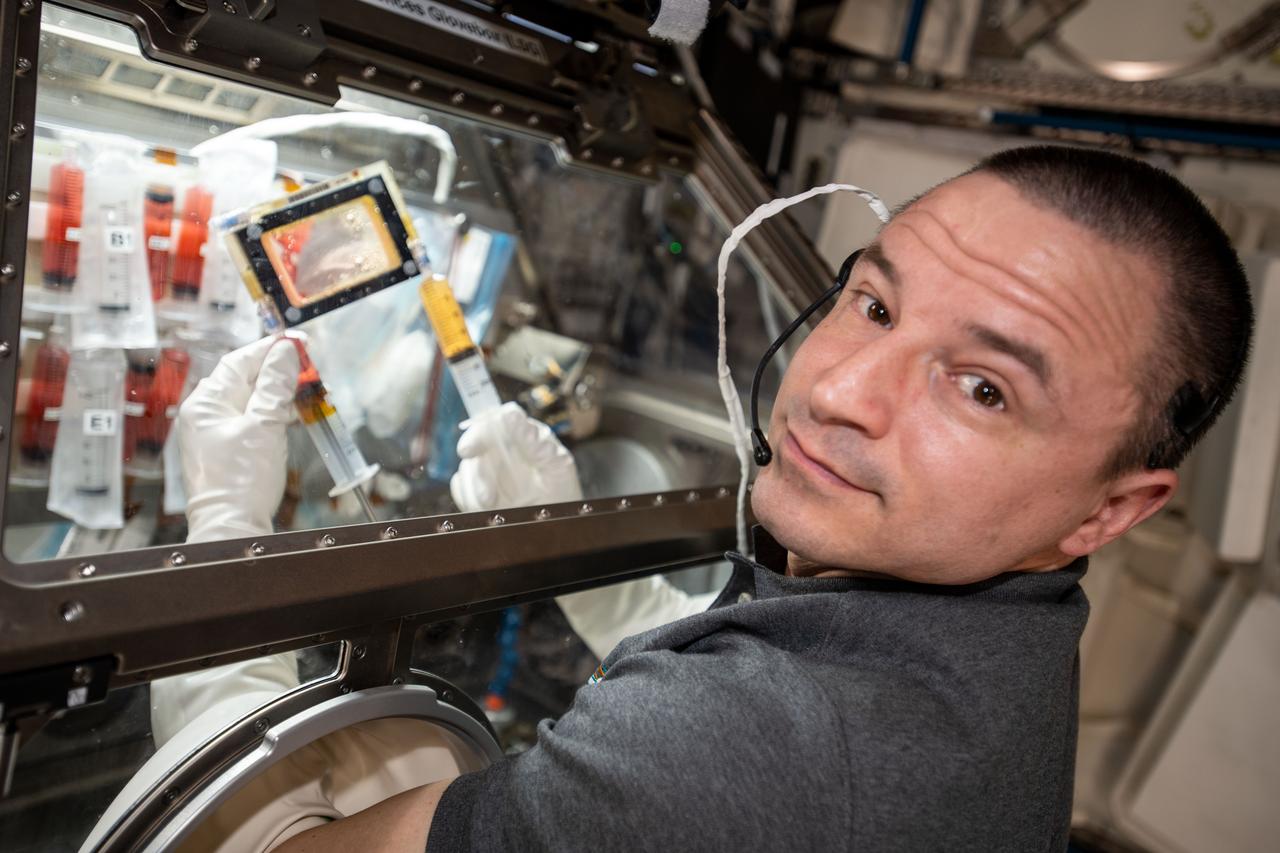
iss062e038364 (Feb. 21, 2020) --- NASA astronaut and Expedition 62 Flight Engineer Andrew Morgan conducts research operations inside the Life Sciences Glovebox, a facility that enables a variety of space biology investigations aboard the International Space Station. Morgan was specifically investigating the differences in bone biology in microgravity versus on Earth for the OsteoOmics-02 experiment.

Dave Flowers, the project manager for NASA’s Biology Experiment-1 (BioExpt-1) in Exploration Research and Technology Programs, prepares it for testing in the Vibration Laboratory at Kennedy Space Center in Florida on May 13, 2021. BioExpt-1 is a space biology pathfinder, which will carry plants, algae, yeast, and fungi for biology research beyond low-Earth orbit (LEO). NASA will install the BioExpt-1 payload container assembles onto panels inside the Orion capsule. BioExpt-1 will return these science payloads to Earth to provide critical and unique data about life beyond LEO for the first time in more than 40 years. Artemis I is the first in a series of increasingly complex missions that will enable human exploration of the Moon and eventually on to Mars.
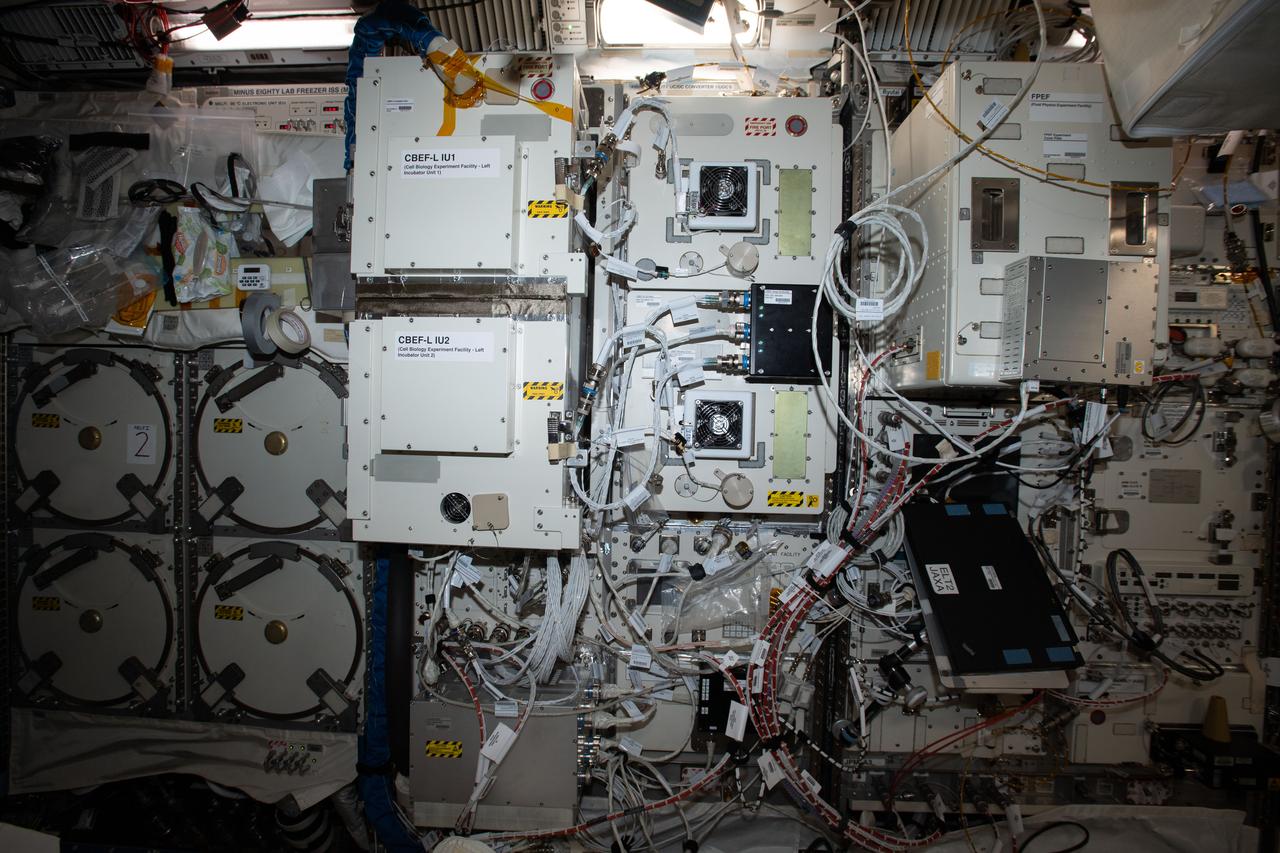
iss062e103684 (3/21/2020) --- A view of the rack containing CBEF-L (Cell Biology Experiment Facility-L) IU1 and CBEF-L IU2 in the Japanese Experiment Module (JEM) Pressurized Module (JPM). aboard the International Space Station (ISS). Cell Biology Experiment Facility-L (CBEF-L) is a Japan Aerospace Exploration Agency (JAXA) new subrack facility, which is an upgraded facility of the original Cell Biology Experiment Facility (CBEF) currently aboard the International Space Station (ISS). CBEF-L provides new capabilities with additional new resources such as Full High Definition video interface, Ethernet, 24 VDC power supply, and a larger diameter centrifugal test environment. By using the original CBEF and CBEF-L as one facility for the same experiment, the payload user is provided with an upgraded experimental environment that can handle the processing of more experimental samples for a wider array of experiments.
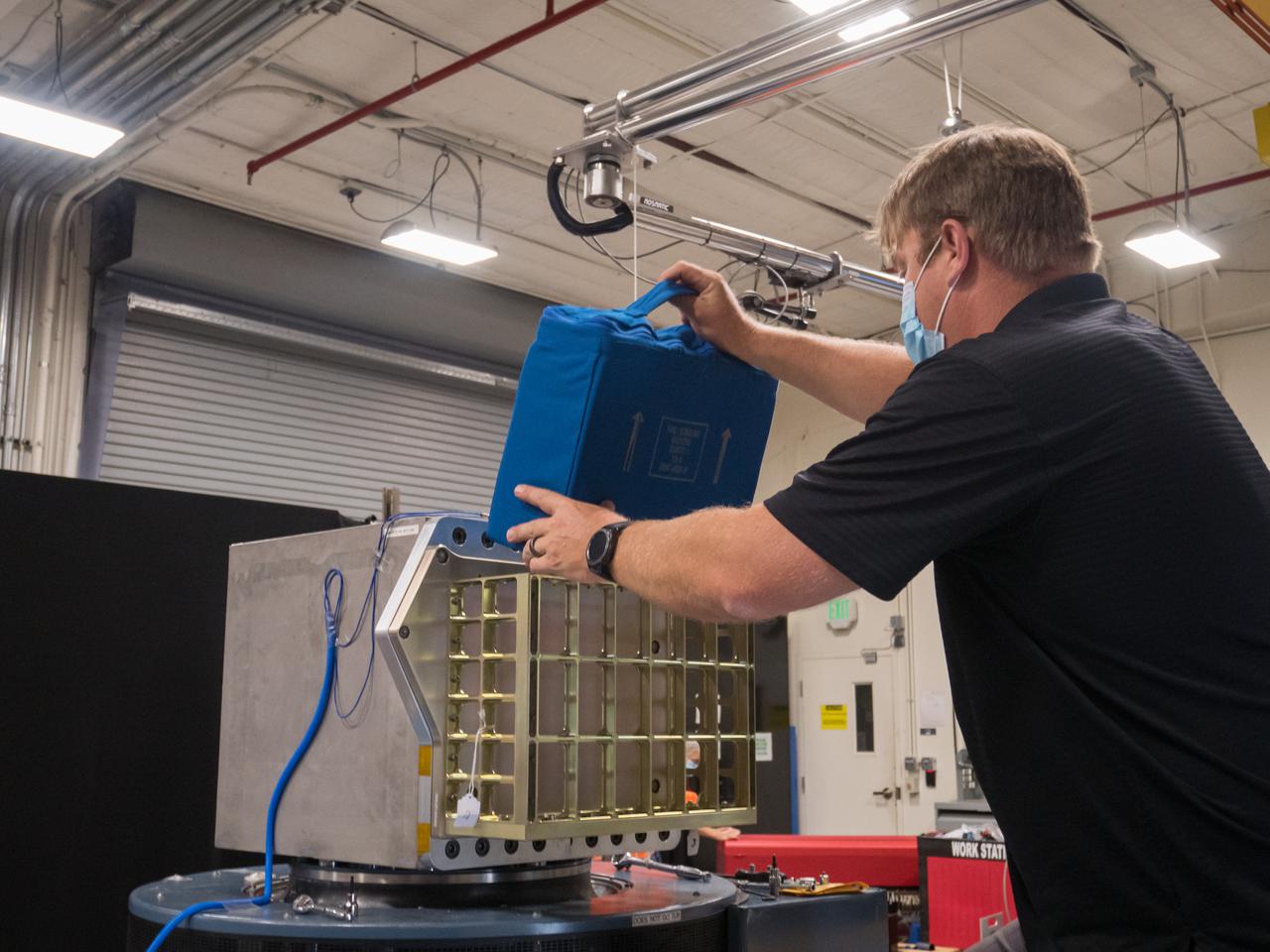
Adam Chaney, a mechanical engineer with the Laboratory Support Services and Operations (LASSO) contract at NASA’s Kennedy Space Center in Florida, prepares NASA’s Biology Experiment-1 (BioExpt-1) for testing in the Vibration Laboratory at Kennedy Space Center in Florida on May 13, 2021. BioExpt-1 is a space biology pathfinder, which will carry plants, algae, yeast, and fungi for biology research beyond low-Earth orbit (LEO). NASA will install the BioExpt-1 payload container assembles onto panels inside the Orion capsule. BioExpt-1 will return these science payloads to Earth to provide critical and unique data about life beyond LEO for the first time in more than 40 years. Artemis I is the first in a series of increasingly complex missions that will enable human exploration of the Moon and eventually on to Mars.
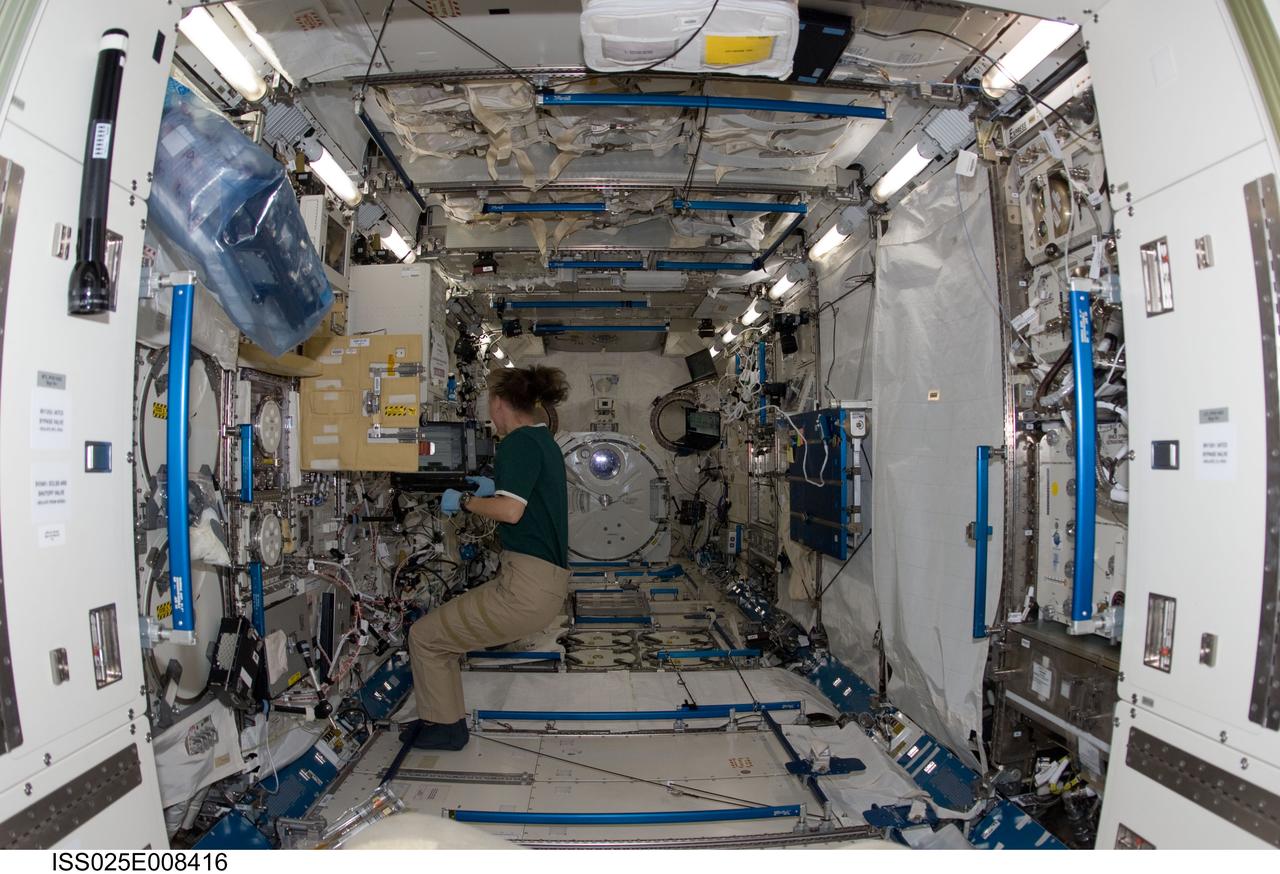
ISS025-E-008416 (21 Oct. 2010) --- NASA astronaut Shannon Walker, Expedition 25 flight engineer, uses a computer while working at the Cell Biology Experiment Facility (CBEF) in the Kibo laboratory of the International Space Station.
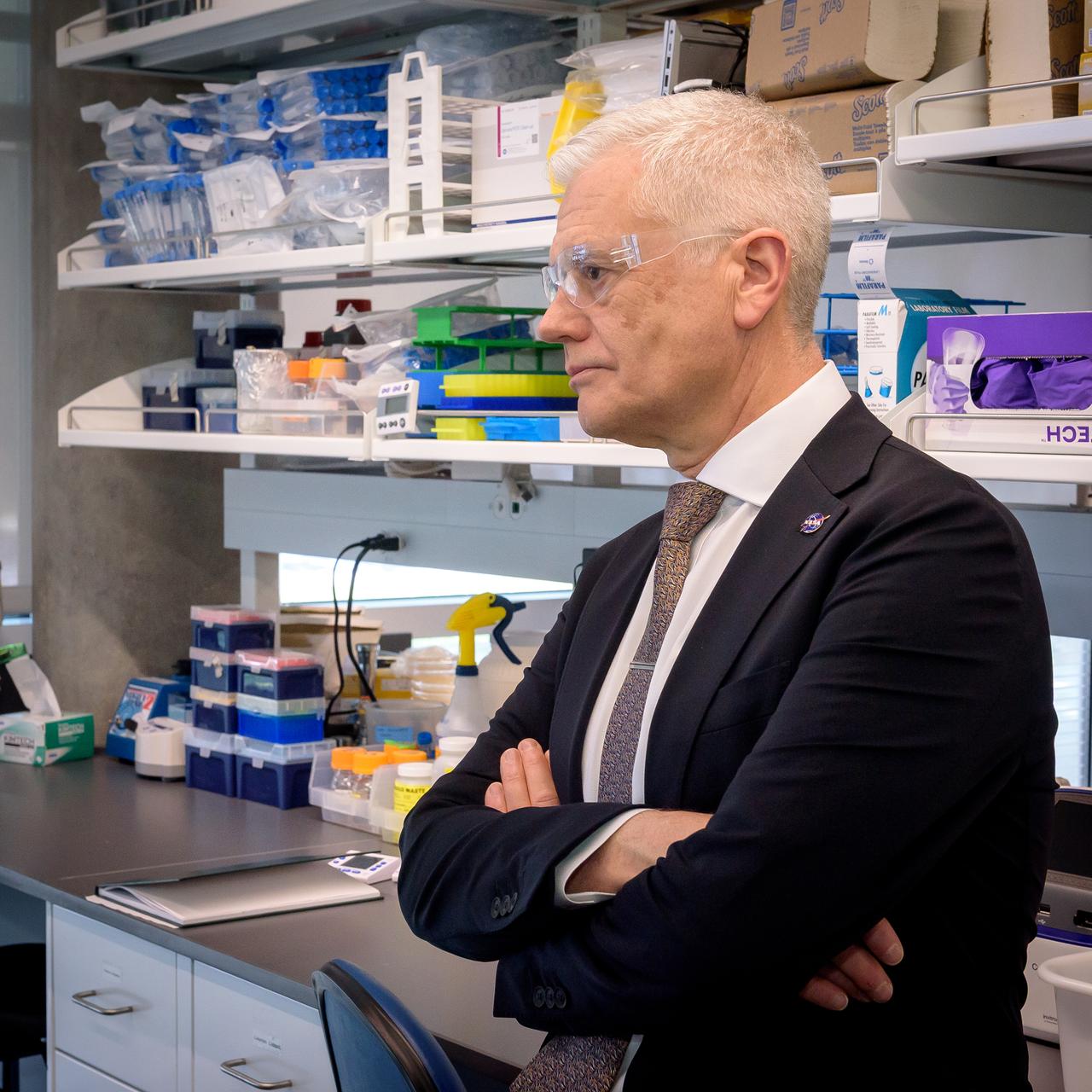
Acting Deputy Associate Administrator (DAA) for the Science Mission Directorate (SMD) Mark Clampin learns about the Lunar Explorer Instrument for space biology Applications (LEIA) the Bioscience Collaborative Laboratory, N288.
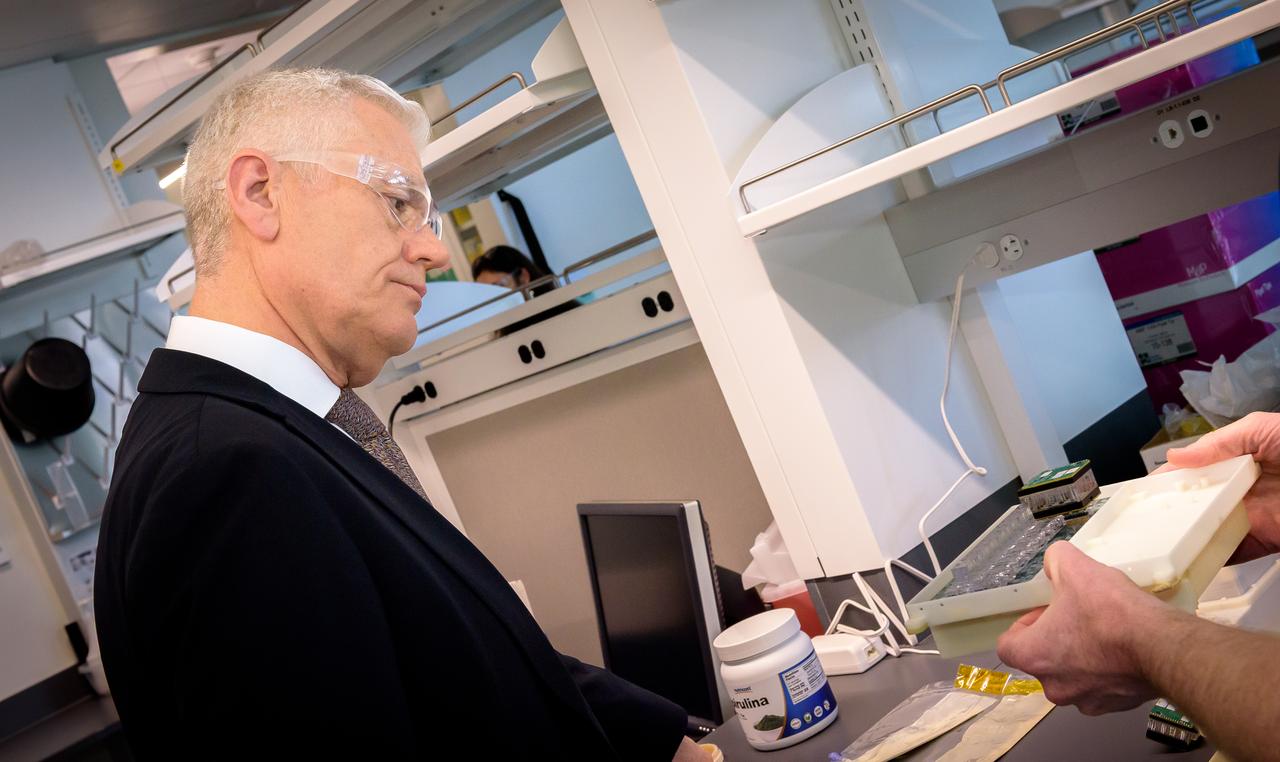
Acting Deputy Associate Administrator (DAA) for the Science Mission Directorate (SMD) Mark Clampin learns about the Lunar Explorer Instrument for space biology Applications (LEIA) the Bioscience Collaborative Laboratory, N288.
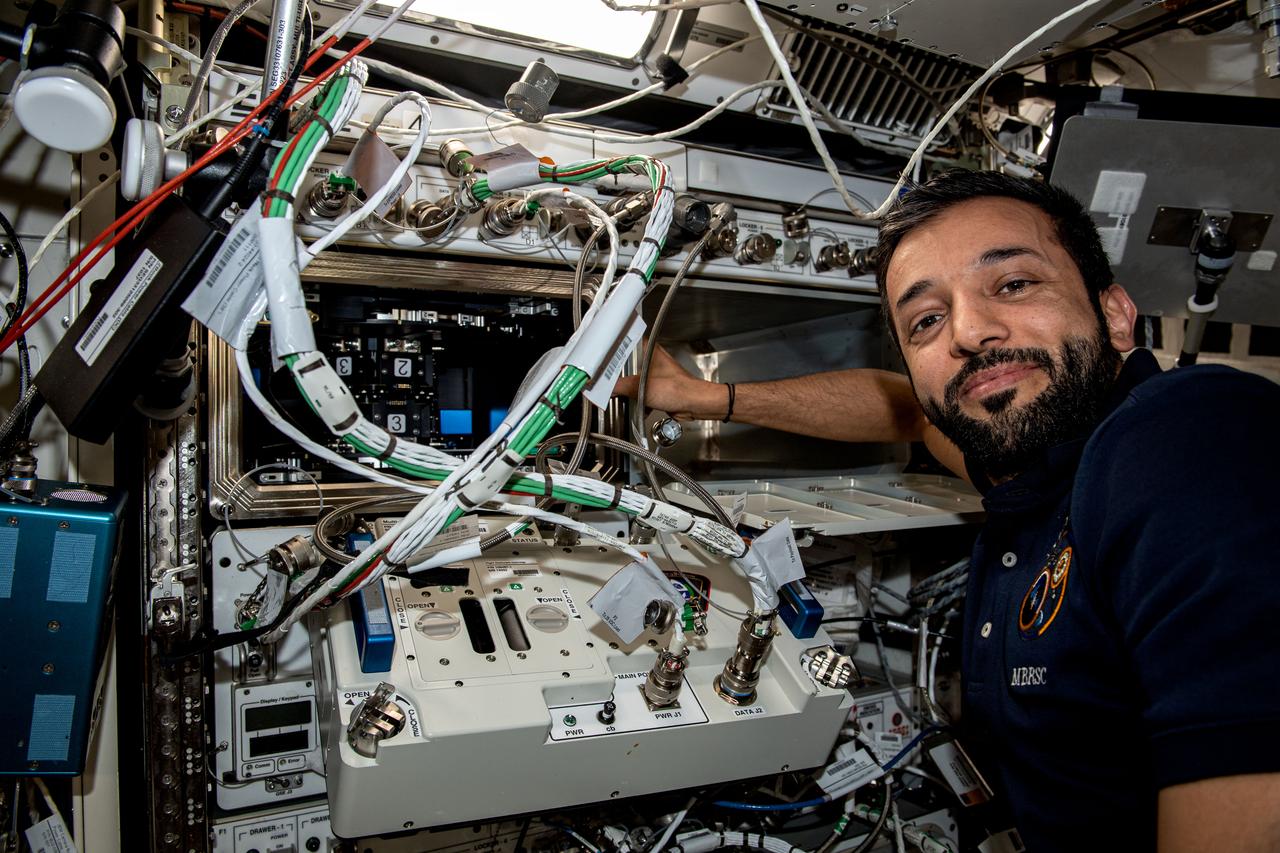
iss069e062399 (Aug. 18, 2023) --- UAE (United Arab Emirates) astronaut and Expedition 69 Flight Engineer Sultan Alneyadi works on space biology research hardware located inside the International Space Station's Kibo laboratory module.
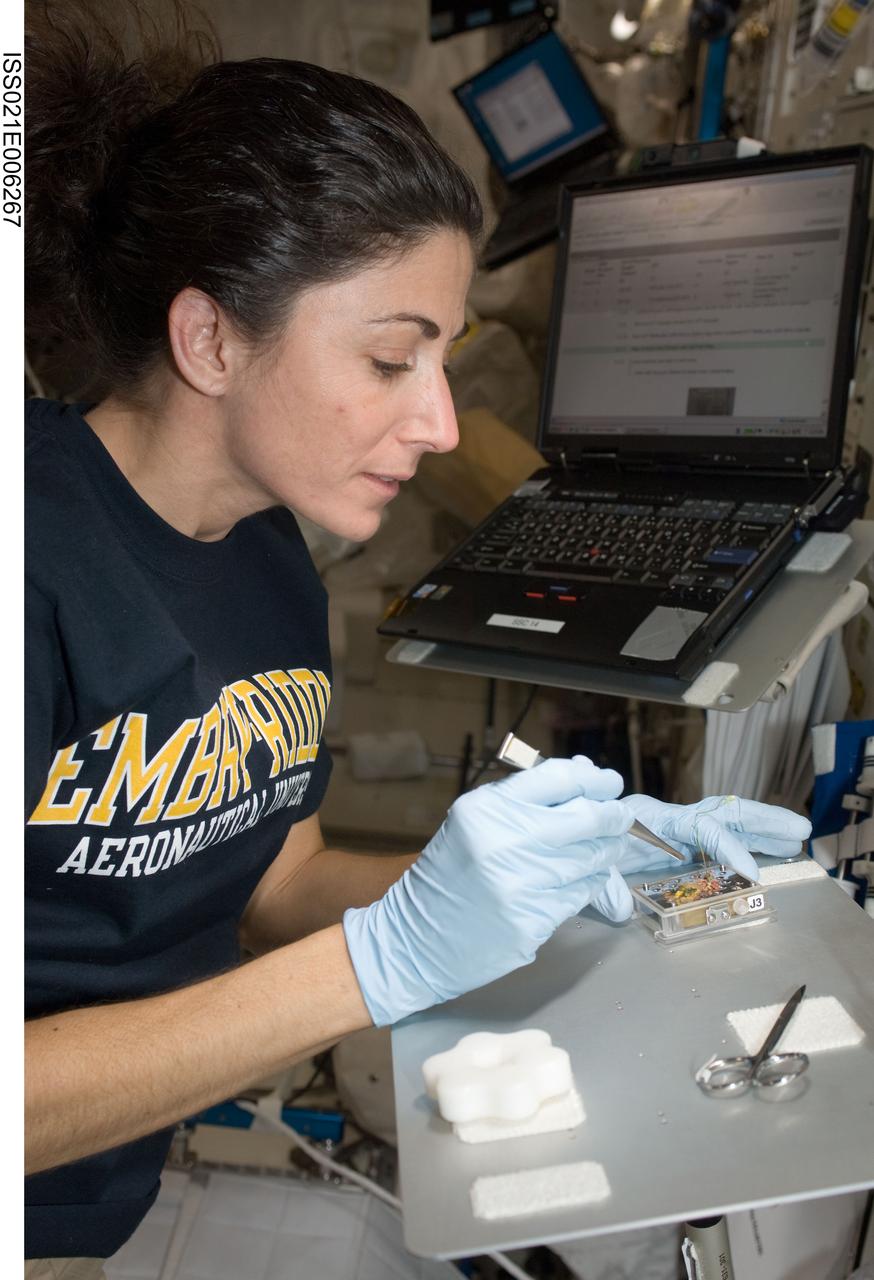
ISS021-E-006267 (13 Oct. 2009) --- NASA astronaut Nicole Stott, Expedition 21 flight engineer, works with the Cell Biology Experiment Facility (CBEF) SPACE SEED experiment in the Kibo laboratory of the International Space Station.

NASA astronaut Jessica Watkins is seen in the reflection of a screen on a machine during a tour of a biology laboratory, Friday, March 31, 2023, at Howard University in Washington. Photo Credit: (NASA/Aubrey Gemignani)
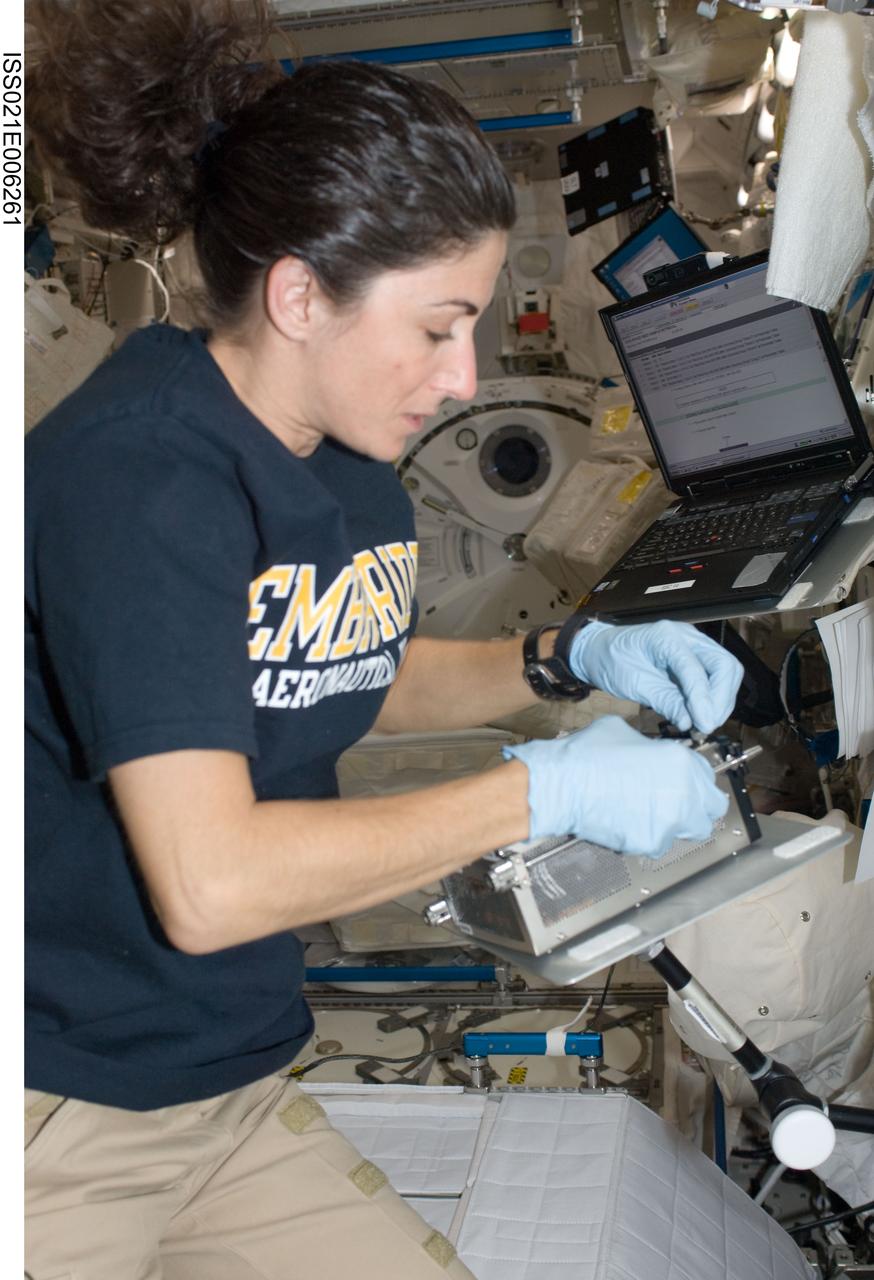
ISS021-E-006261 (13 Oct. 2009) --- NASA astronaut Nicole Stott, Expedition 21 flight engineer, works with the Cell Biology Experiment Facility (CBEF) SPACE SEED experiment in the Kibo laboratory of the International Space Station.
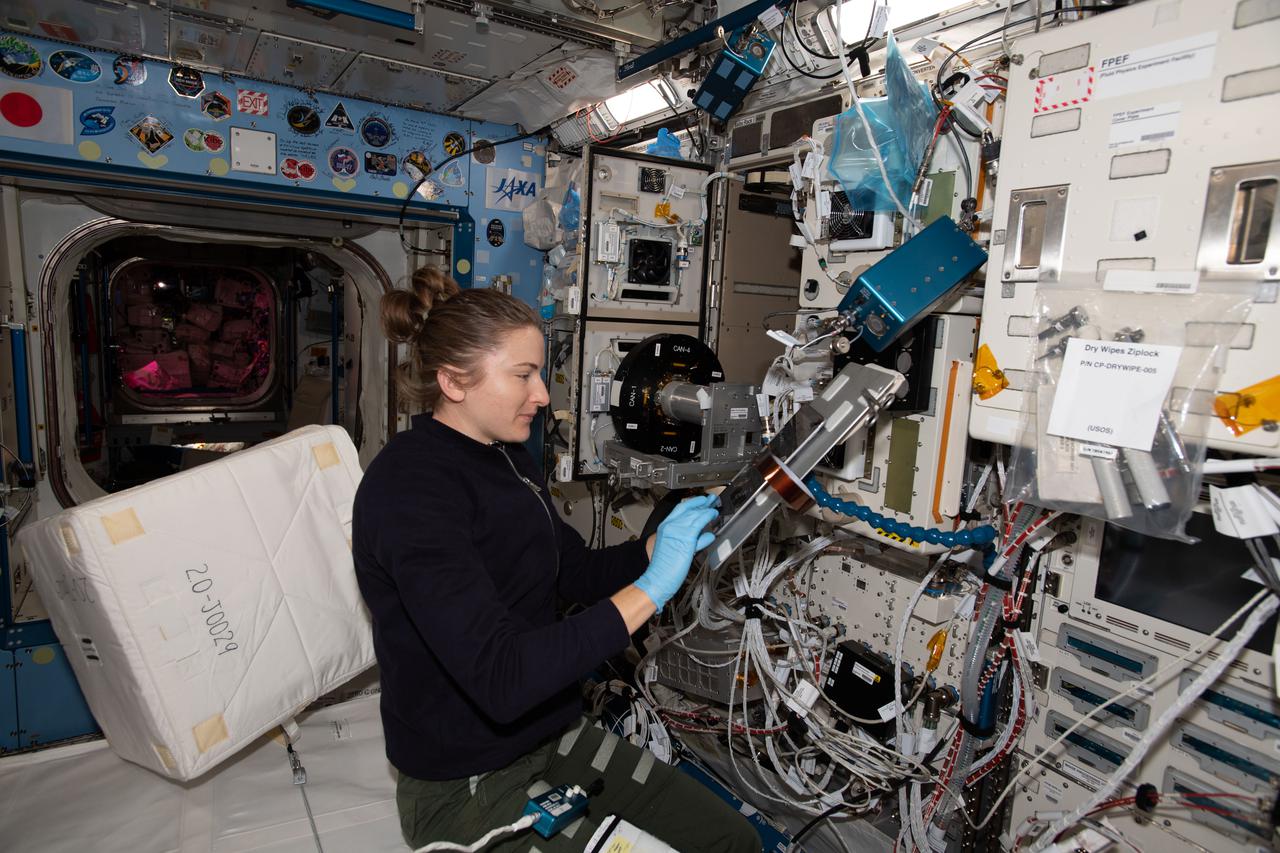
iss066e133963 (Feb. 2, 2022) --- NASA astronaut and Expedition 66 Flight Engineer Kayla Barron works inside the Kibo laboratory module cleaning the Cell Biology Experiment Facility, an incubator with an artificial gravity generator.
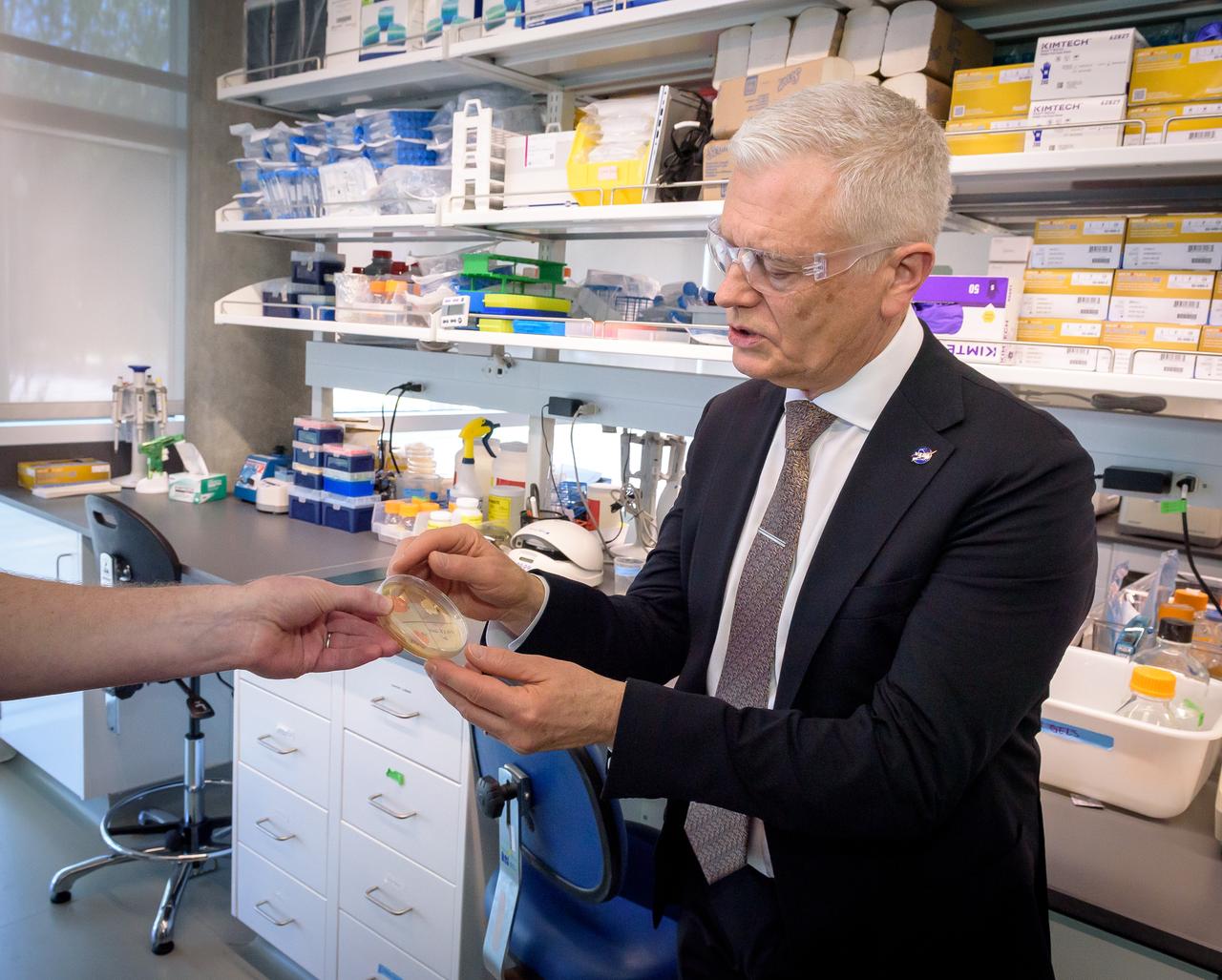
Acting Deputy Associate Administrator (DAA) for the Science Mission Directorate (SMD) Mark Clampin learns about the Lunar Explorer Instrument for space biology Applications (LEIA) the Bioscience Collaborative Laboratory, N288.
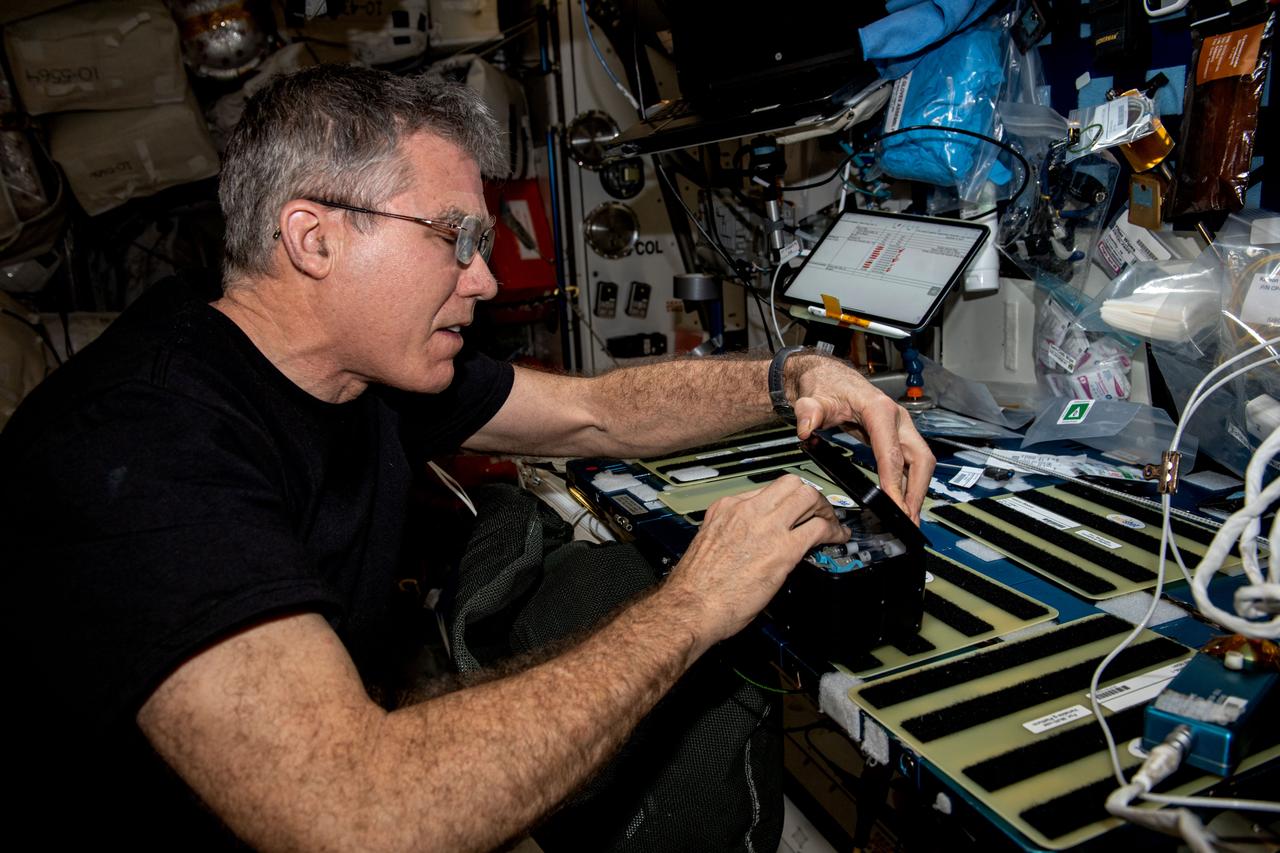
iss069e062389 (Aug. 18, 2023) --- NASA astronaut and Expedition 69 Flight Engineer Stephen Bowen works on space biology research hardware located inside the International Space Station's Kibo laboratory module.
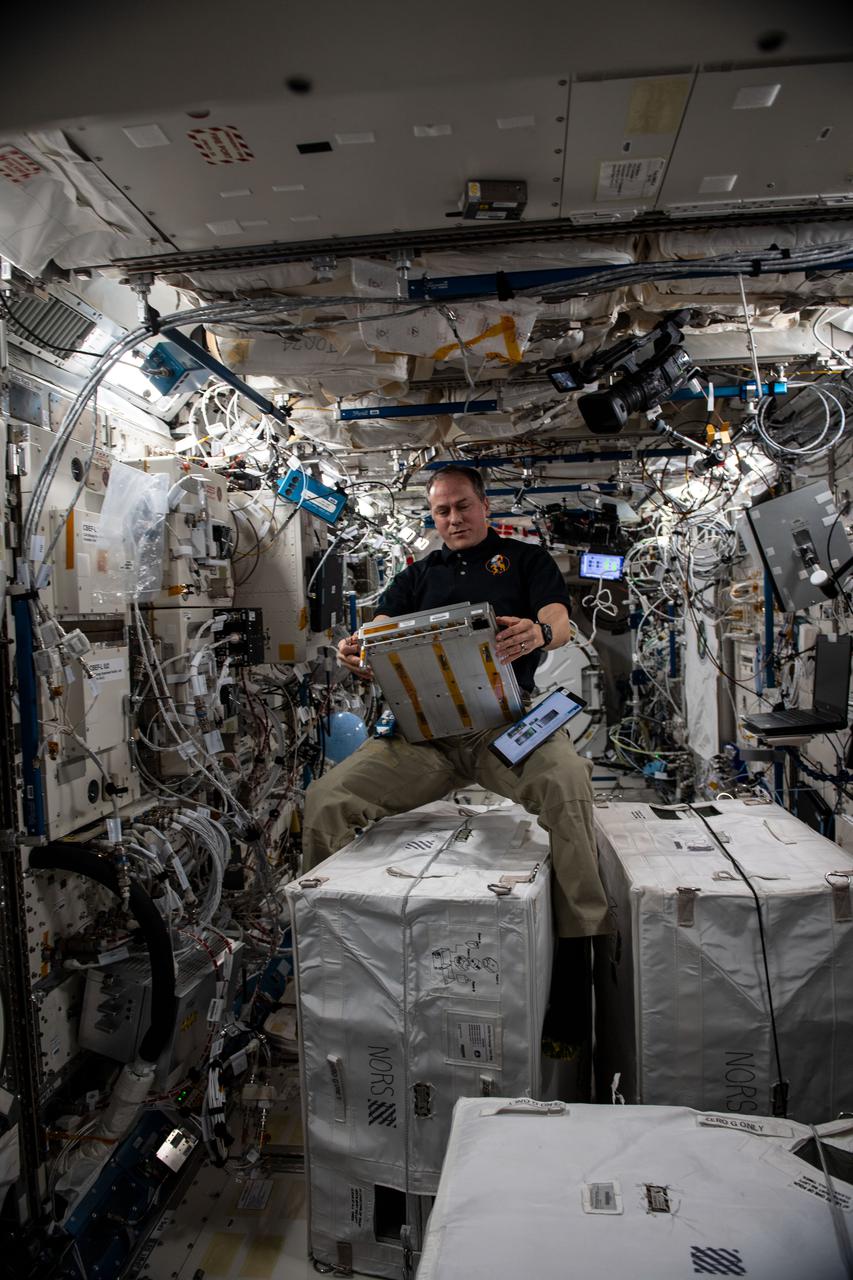
iss066e179239 (March 25, 2022) --- NASA astronaut and Expedition 66 Flight Engineer Tom Marshburn services components on a unique incubator that can generate artificial gravity inside the Kibo laboratory module's Cell Biology Experiment Facility.
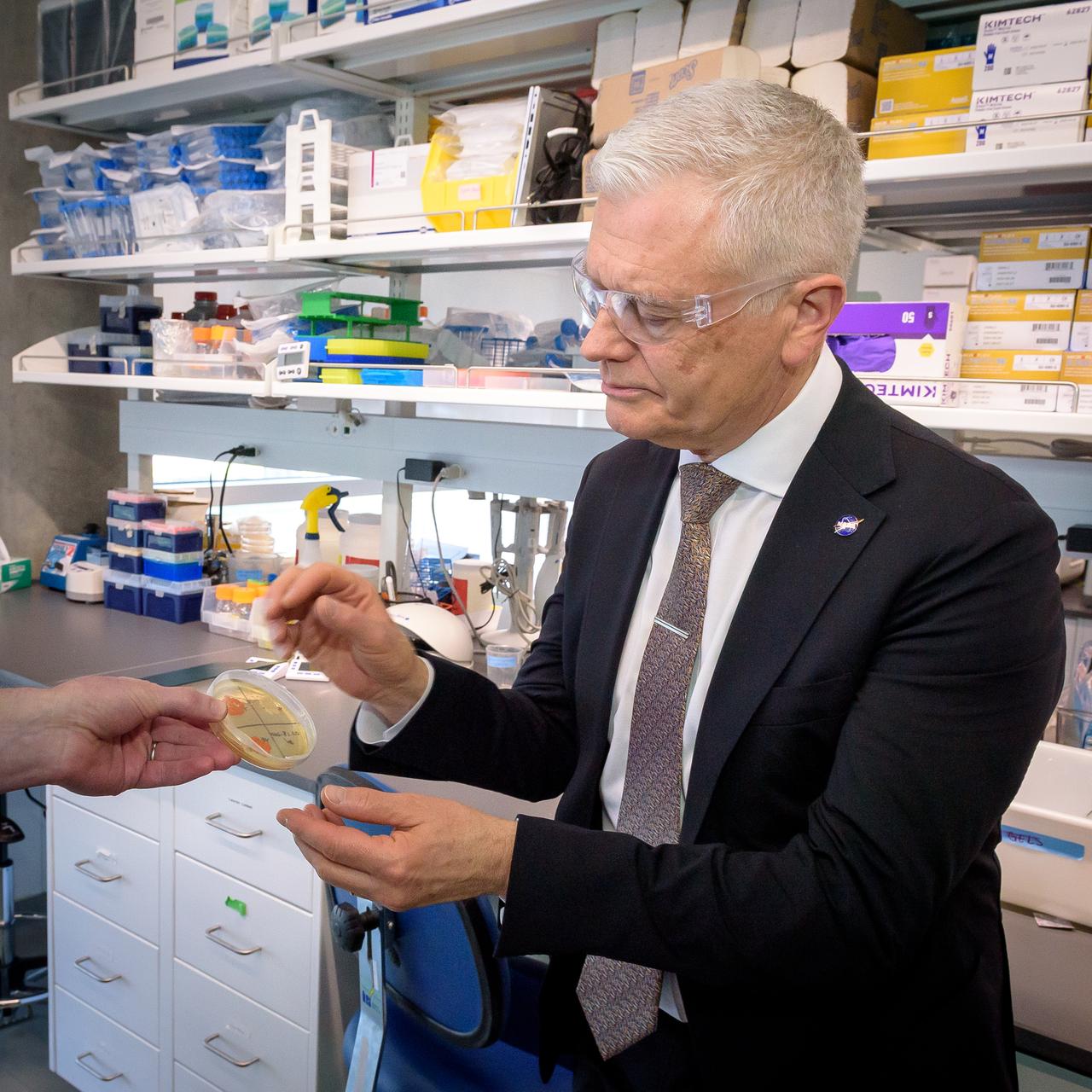
Acting Deputy Associate Administrator (DAA) for the Science Mission Directorate (SMD) Mark Clampin learns about the Lunar Explorer Instrument for space biology Applications (LEIA) the Bioscience Collaborative Laboratory, N288.
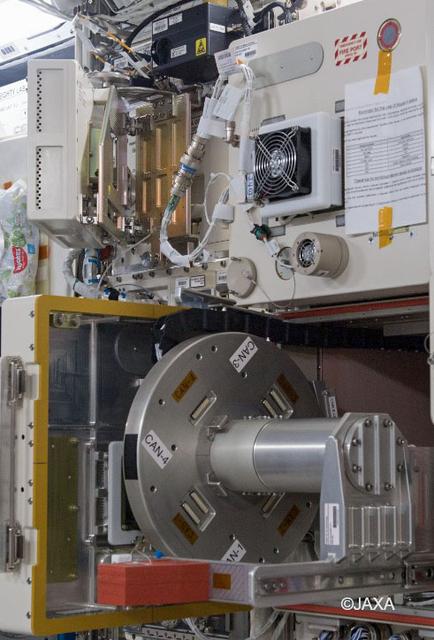
jsc2024e041794 (2/2/2018) --- JAXA Cell Biology Experiment Facility (CBEF)'s 1G compartment door is opened in the Kibo module on the International Space Station. Image courtesy of JAXA/NASA.
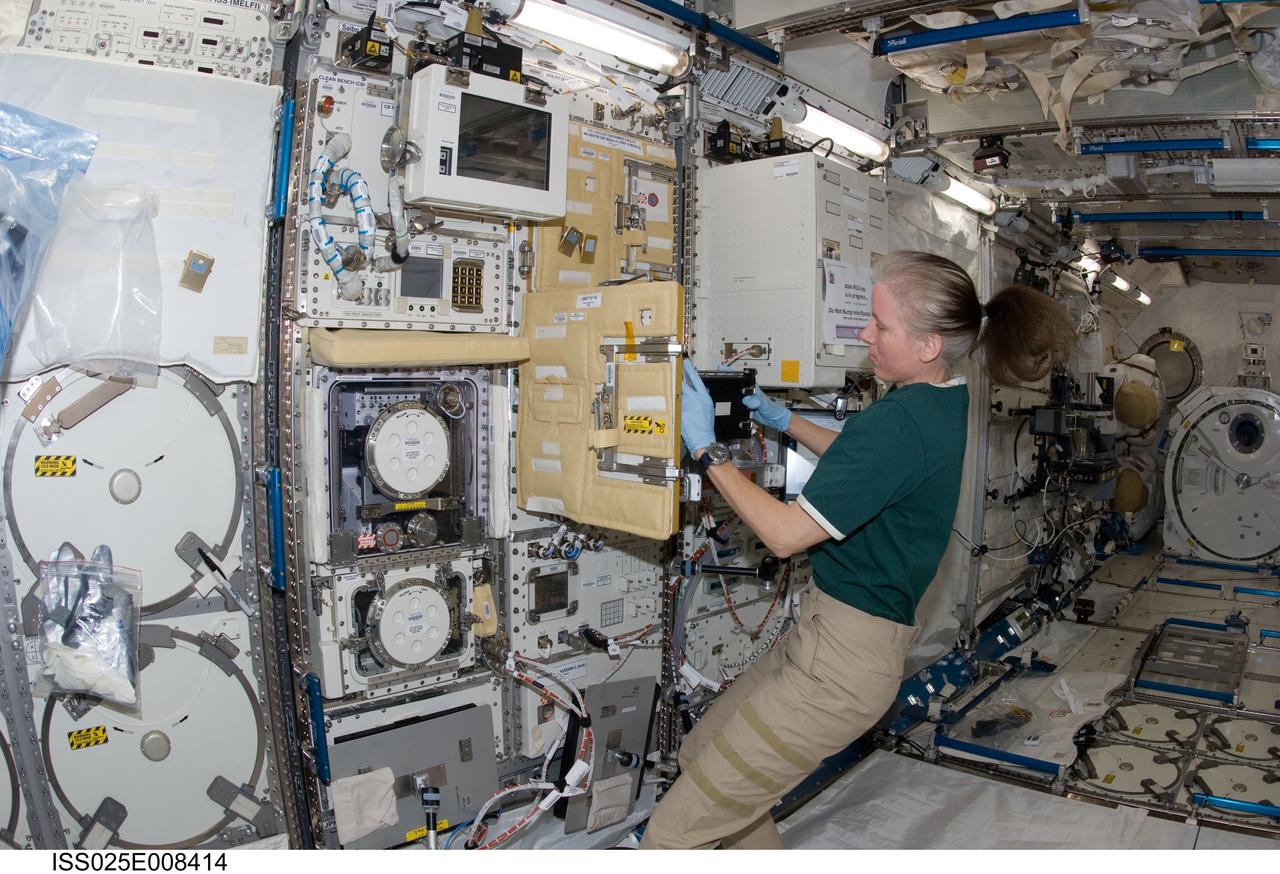
ISS025-E-008414 (21 Oct. 2010) --- NASA astronaut Shannon Walker, Expedition 25 flight engineer, works at the Cell Biology Experiment Facility (CBEF) in the Kibo laboratory of the International Space Station.
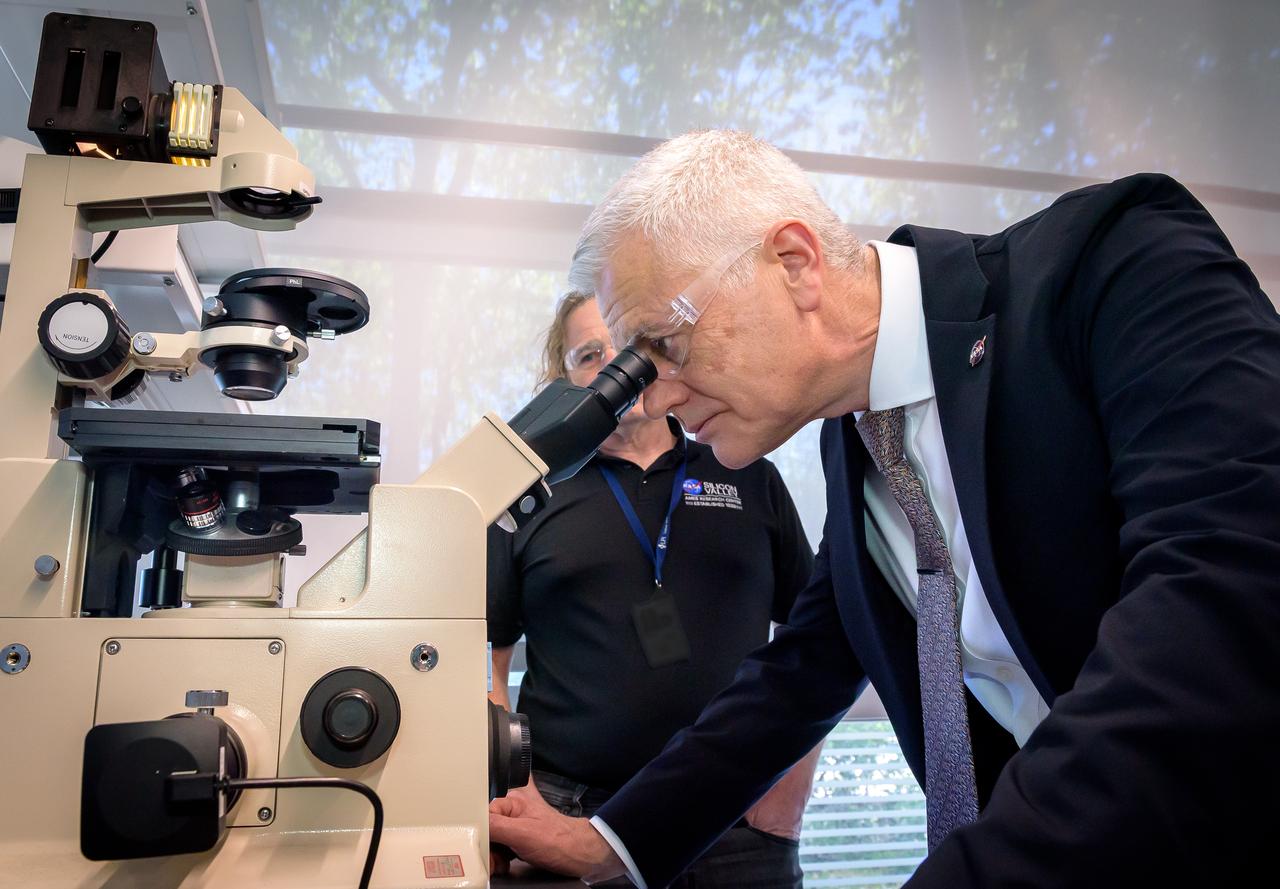
Acting Deputy Associate Administrator (DAA) for the Science Mission Directorate (SMD) Mark Clampin learns about the Lunar Explorer Instrument for space biology Applications (LEIA) the Bioscience Collaborative Laboratory, N288.
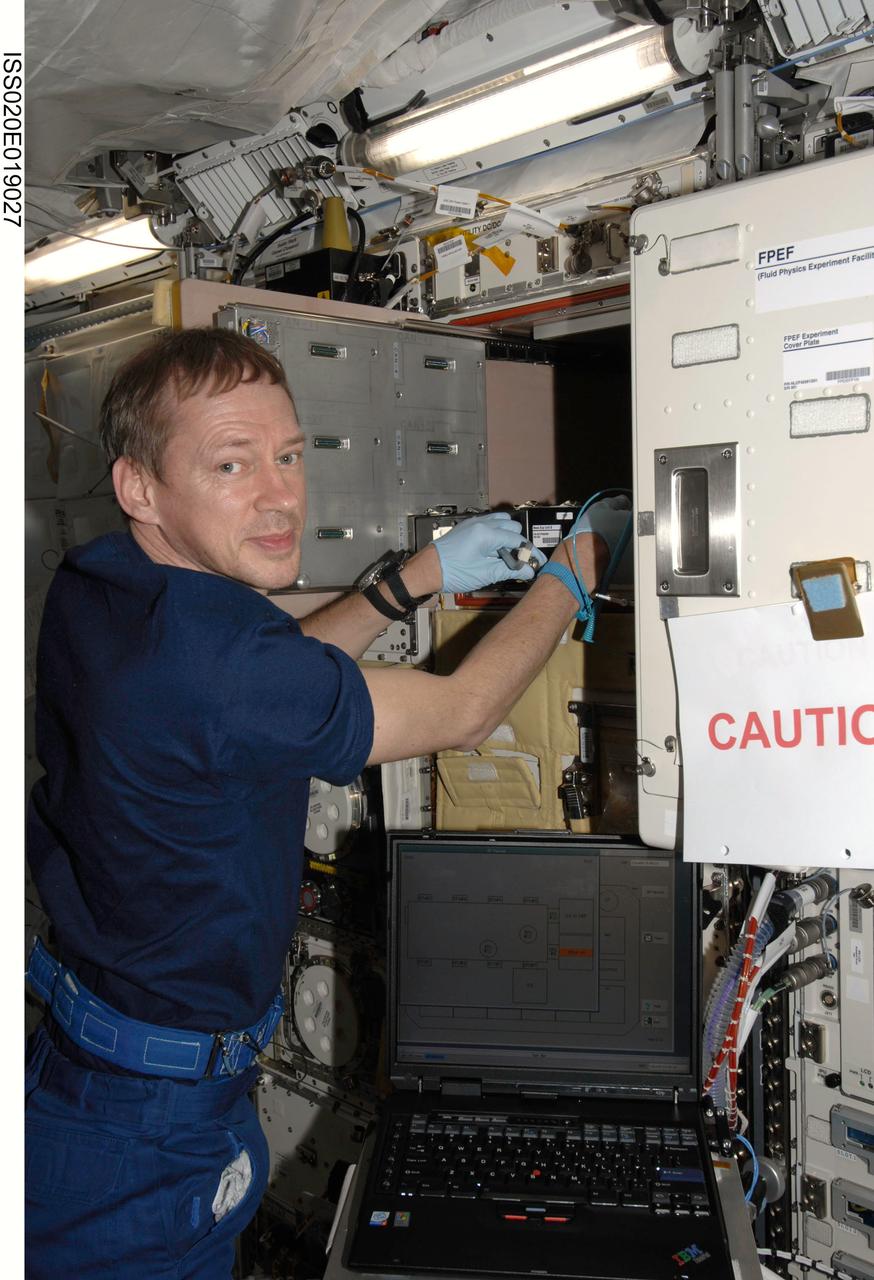
ISS020-E-019027 (10 July 2009) --- European Space Agency astronaut Frank De Winne, Expedition 20 flight engineer, works at the Cell Biology Experiment Facility (CBEF) in the Kibo laboratory of the International Space Station.

These ‘Red Robin’ dwarf tomato plants, photographed Jan. 10, 2020, inside a laboratory in the Space Station Processing Facility at NASA Kennedy Space Center in Florida, are growing from seeds that have been exposed to simulated solar particle radiation. The plants’ edible mass and nutrients will be measured and compared to those of a control crop, grown from non-irradiated seeds. The project was designed to confirm that nutritious, high-quality produce can be reliably grown in deep space, or to provide a baseline to guide development of countermeasures to protect future crop foods from radiation during missions beyond low-Earth orbit. The investigation on space radiation impact on seeds and crop production also will be carried on the Materials International Space Station Experiment (MISSE) platform outside the station, supported NASA’s Space Technology Mission Directorate and the Space Biology Program, and potentially on future beyond-low-Earth platforms.

These ‘Red Robin’ dwarf tomato plants, photographed Jan. 10, 2020, inside a laboratory in the Space Station Processing Facility at NASA Kennedy Space Center in Florida, are growing from seeds that have been exposed to simulated solar particle radiation. The plants’ edible mass and nutrients will be measured and compared to those of a control crop, grown from non-irradiated seeds. The project was designed to confirm that nutritious, high-quality produce can be reliably grown in deep space, or to provide a baseline to guide development of countermeasures to protect future crop foods from radiation during missions beyond low-Earth orbit. The investigation on space radiation impact on seeds and crop production also will be carried on the Materials International Space Station Experiment (MISSE) platform outside the station, supported NASA’s Space Technology Mission Directorate and the Space Biology Program, and potentially on future beyond-low-Earth platforms.

These ‘Red Robin’ dwarf tomato plants, photographed Jan. 10, 2020, inside a laboratory in the Space Station Processing Facility at NASA Kennedy Space Center in Florida, are growing from seeds that have been exposed to simulated solar particle radiation. The plants’ edible mass and nutrients will be measured and compared to those of a control crop, grown from non-irradiated seeds. The project was designed to confirm that nutritious, high-quality produce can be reliably grown in deep space, or to provide a baseline to guide development of countermeasures to protect future crop foods from radiation during missions beyond low-Earth orbit. The investigation on space radiation impact on seeds and crop production also will be carried on the Materials International Space Station Experiment (MISSE) platform outside the station, supported NASA’s Space Technology Mission Directorate and the Space Biology Program, and potentially on future beyond-low-Earth platforms.
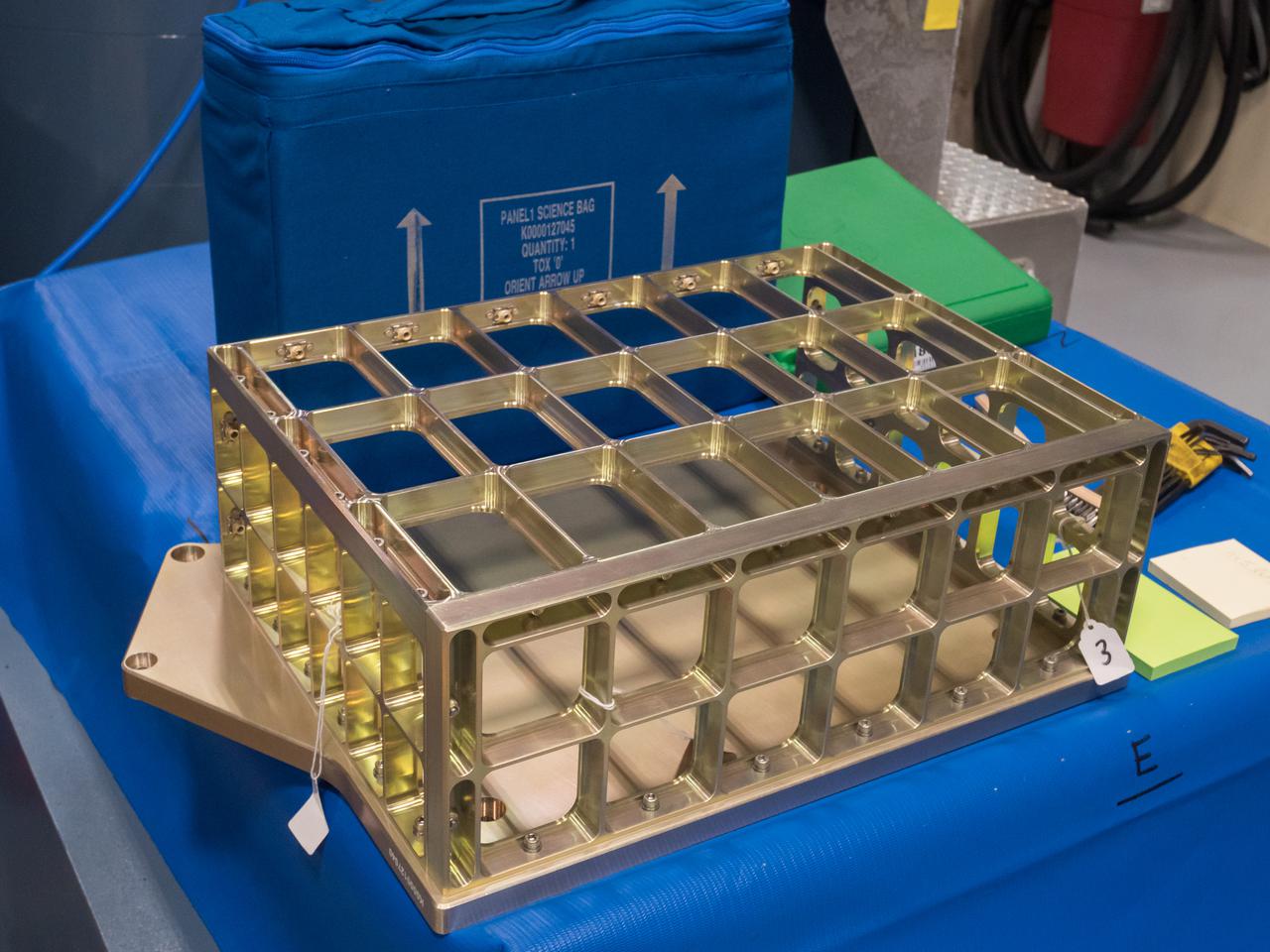
NASA’s BioExperiment-1 is being prepared for testing in the Vibration Laboratory at Kennedy Space Center in Florida on May 13, 2021. BioExpt-1 is a space biology pathfinder, which will carry plant, algae, yeast, and fungi for biology research beyond low-Earth orbit (LEO). NASA will install the BioExpt-1 payload container assembles onto panels inside the Orion capsule. BioExpt-1 will return these science payloads to Earth to provide critical and unique data about life beyond LEO for the first time in more than 40 years. Artemis I is the first in a series of increasingly complex missions that will enable human exploration of the Moon and eventually on to Mars.
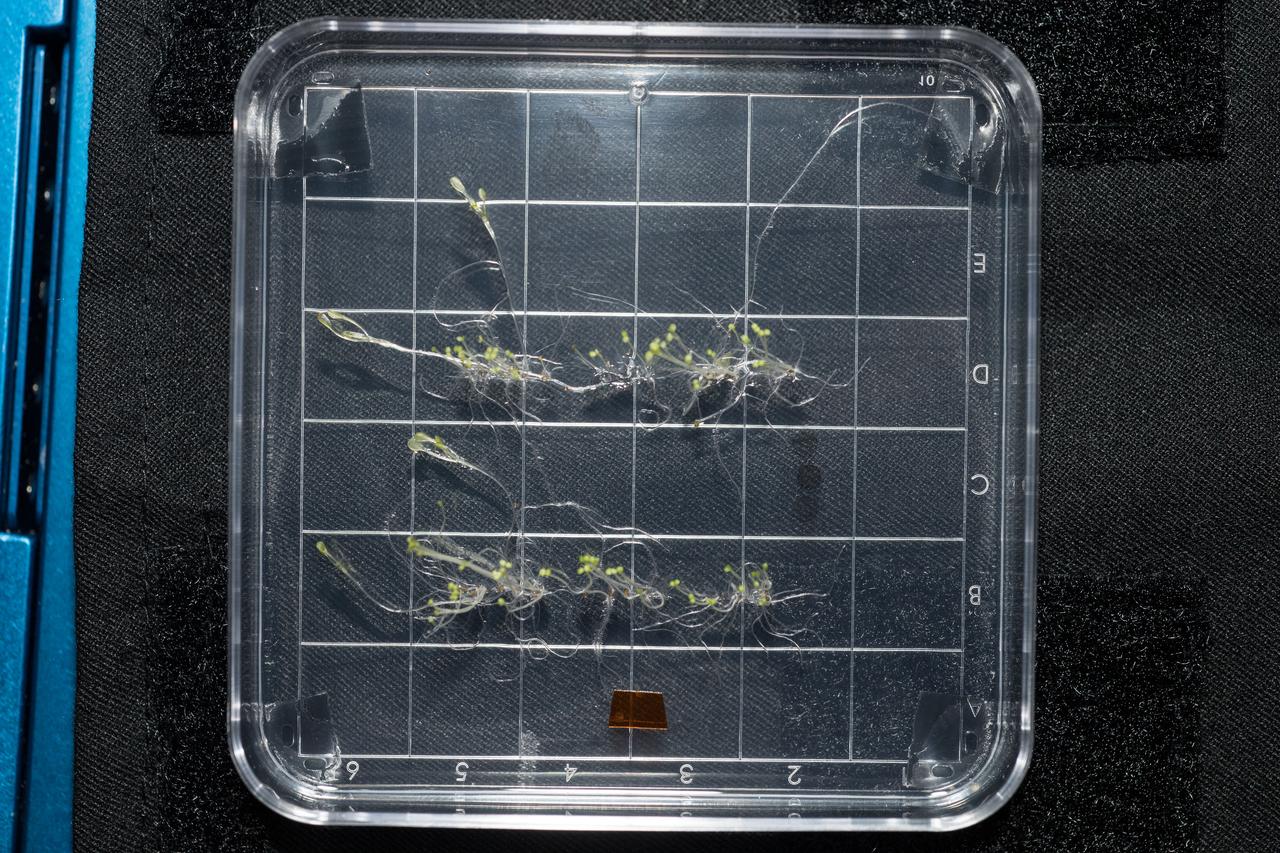
iss054e022372 (1/20/2018) --- Photo documentation of Arabidopsis seedlings from the Petri Plants-2 experiment in the Destiny U.S. Laboratory aboard the International Space Station (ISS). The Characterizing Arabidopsis Root Attractions-2 (CARA-2) investigation explores the molecular biology guiding the altered growth of plants, specifically roots, in spaceflight.
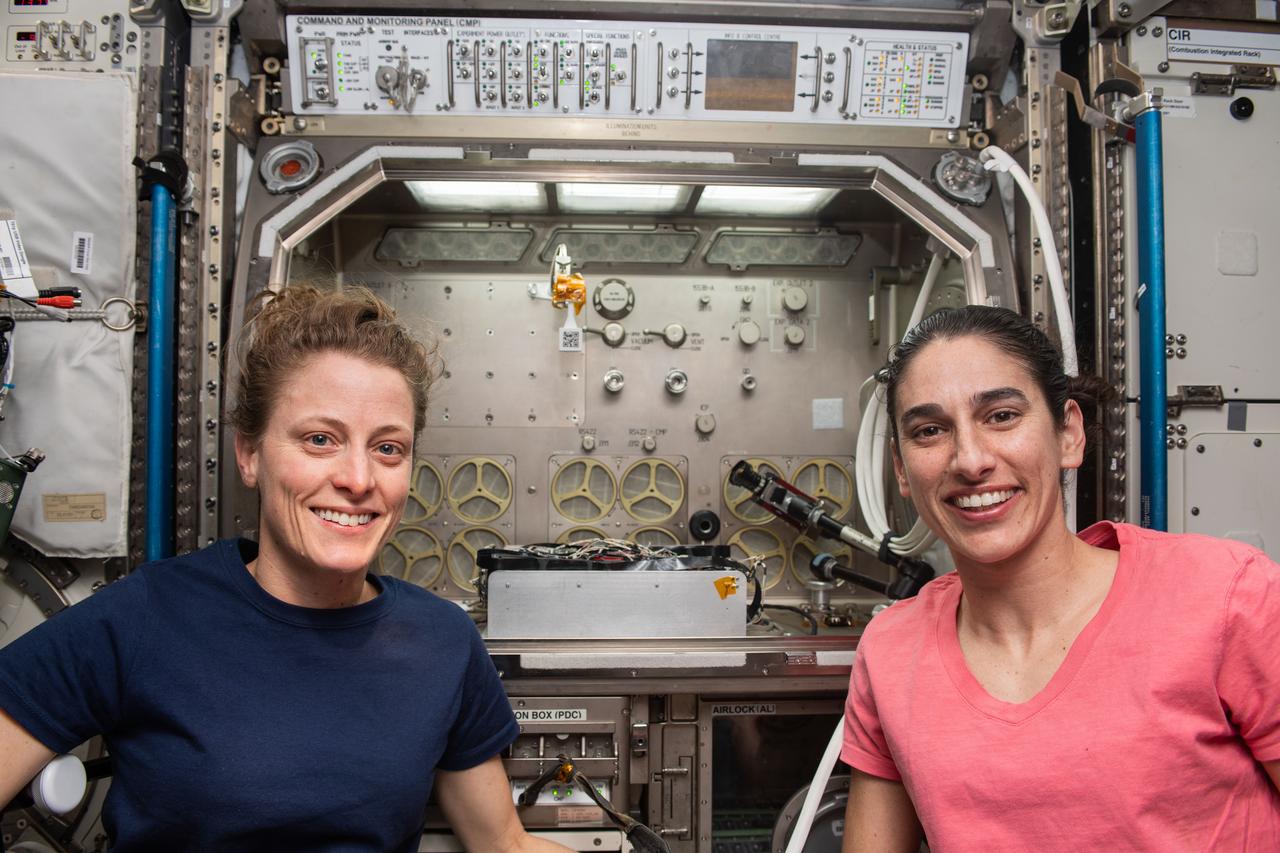
iss070e085869 (Feb. 2, 2024) --- Expedition 70 Flight Engineers (from left) Loral O'Hara and Jasmin Moghbeli are pictured in front of the Microgravity Science Glovebox, a research facilty that can host a variety of biology and physics experiments, located in the International Space Station's Destiny laboratory module.
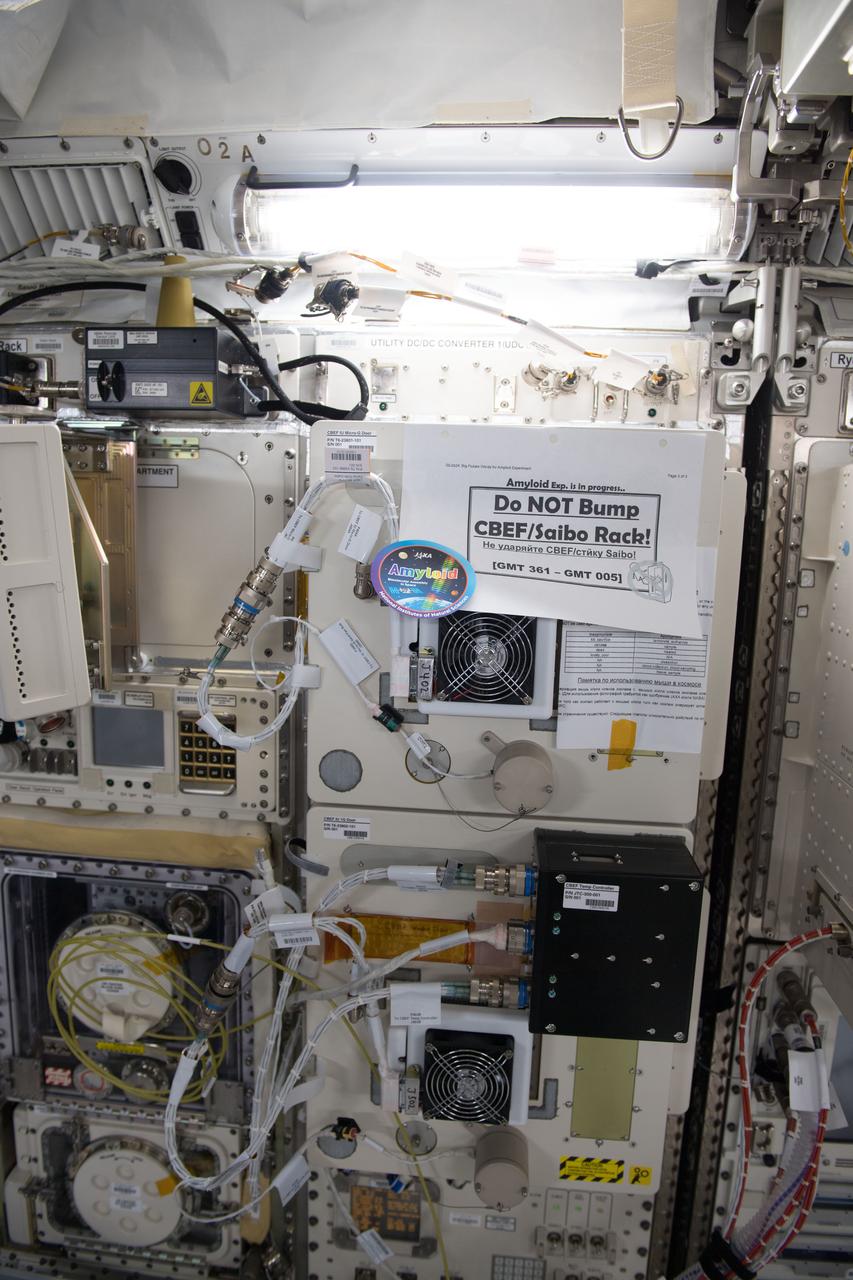
iss054e020555 (Dec. 30, 2017) --- View of the Cell Biology Experiment Facility (CBEF) in the Kibo Japanese Experiment Pressurized Module (JPM) taken during operations to examine the formation of molecules related to Alzheimer's disease. A warning sign (DO NOT BUMP) is attached to the CBEF.
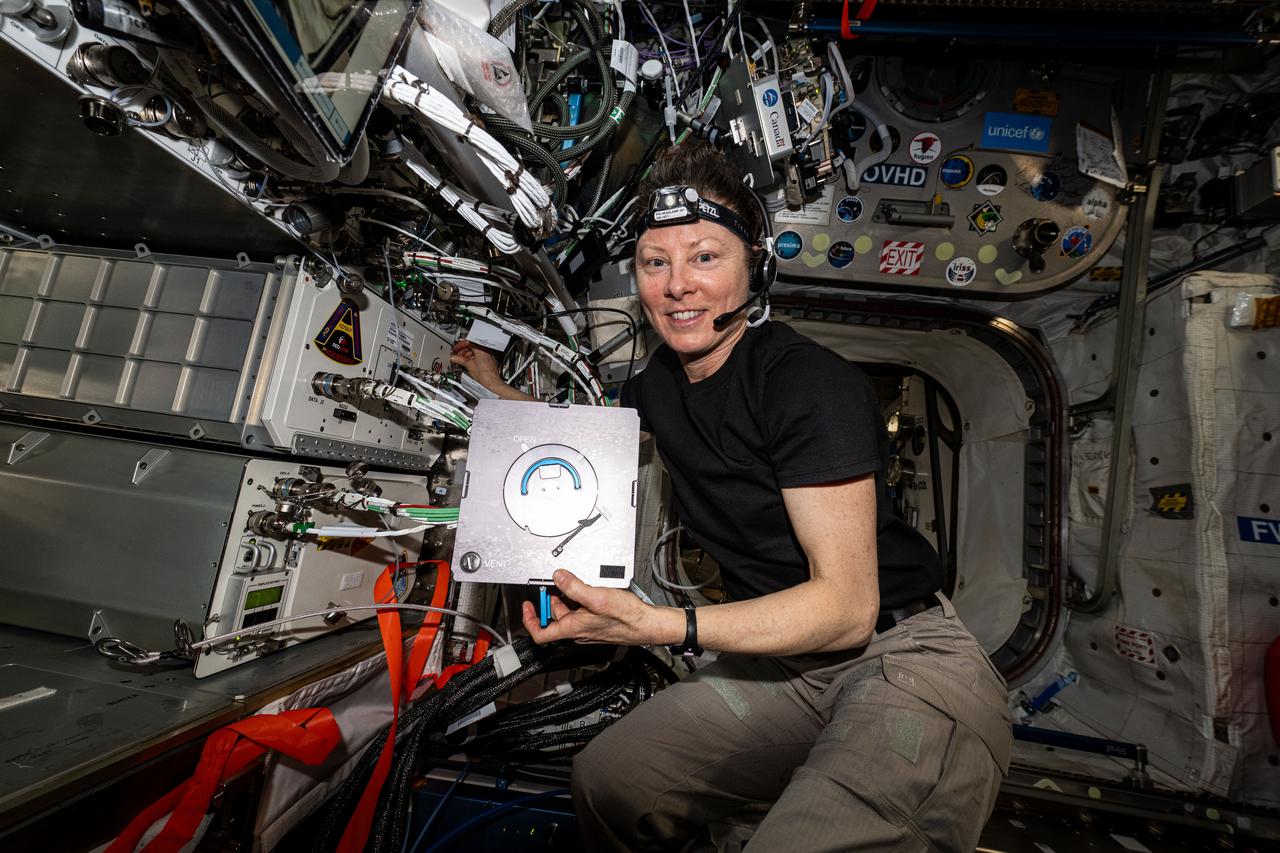
iss071e037626 (April 23, 2024) --- Expedition 71 Flight Engineer and NASA astronaut Tracy C. Dyson services components and cleans hardware inside the Advanced Space Experiment Processor, a research device that can host a variety of space biology experiments, located in the International Space Station's Columbus laboratory.

Howard University students Elise Turner, left, and Kaie Hall, center, give NASA astronaut Jessica Watkins a tour of a biology laboratory at Howard University, Friday, March 31, 2023, in Washington. Photo Credit: (NASA/Aubrey Gemignani)
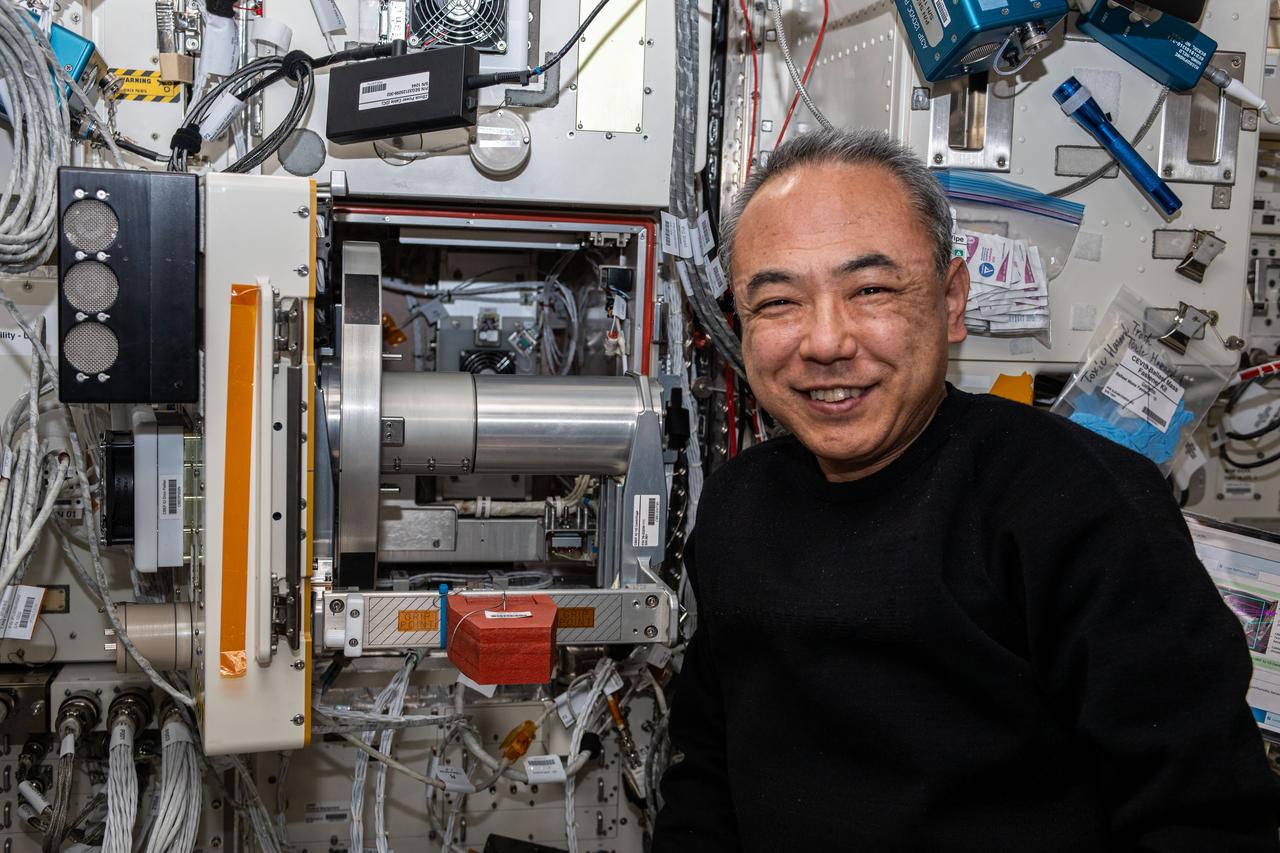
iss070e015767 (Oct. 30, 2023) --- JAXA (Japan Aerospace Exploration Agency) astronaut and Expedition 70 Flight Engineer Satoshi Furukawa poses for a portrait next to the Cell Biology Experiment Facility Incubator Unit inside the International Space Station's Kibo laboratory module.

Howard University students Elise Turner, left, and Kaie Hall, right, give NASA astronaut Jessica Watkins a tour of a biology laboratory at Howard University, Friday, March 31, 2023, in Washington. Photo Credit: (NASA/Aubrey Gemignani)
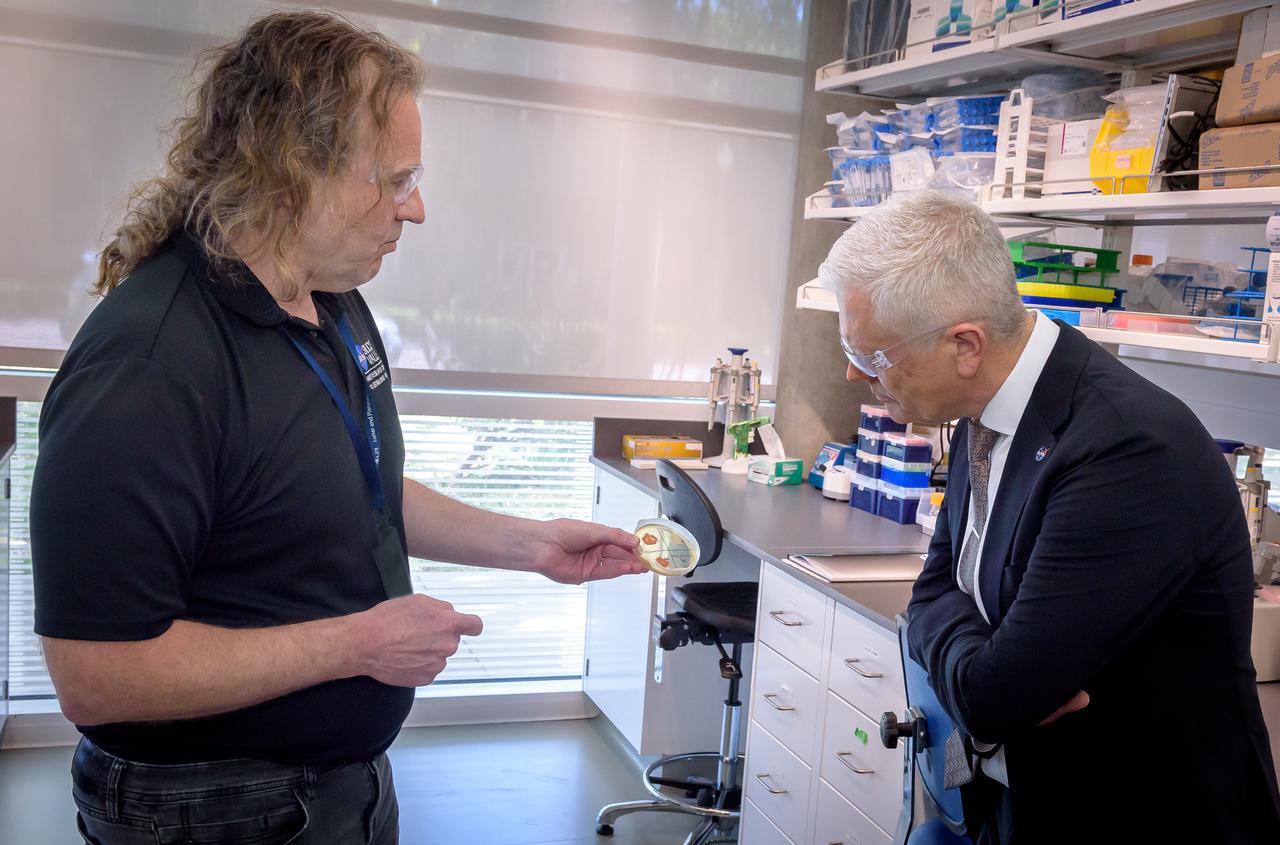
Director of Science Michael Hesse, left, presents an overview of Lunar Explorer Instrument for space biology Applications (LEIA) to Acting Deputy Associate Administrator (DAA) for the Science Mission Directorate (SMD) Mark Clampin in the Bioscience Collaborative Laboratory, N288.
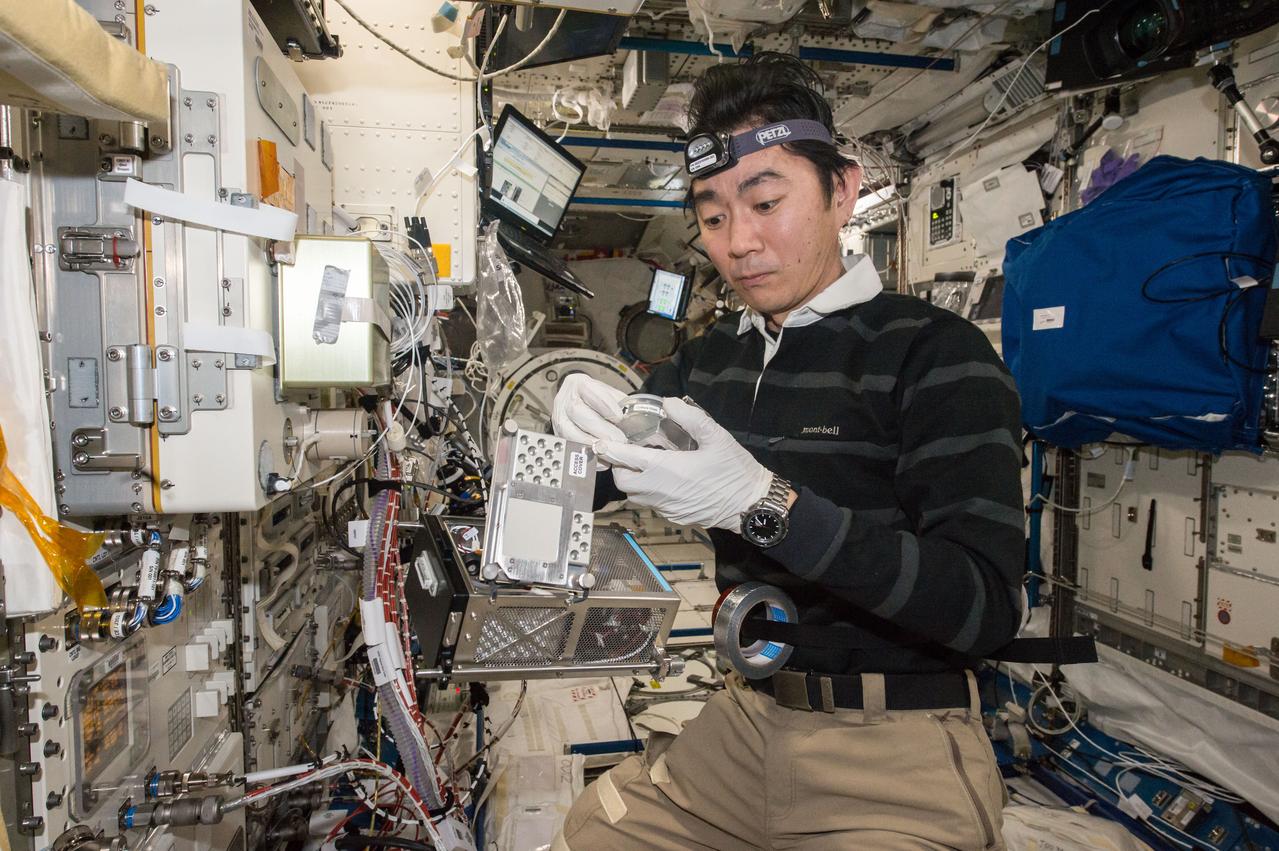
iss045e084268 (10/30/2015) --- Japan Aerospace Exploration Agency (JAXA) astronaut Kimiya Yui works to attach a Plant Experiment Unit to the Cell Biology Experiment Facility (CBEF) prior to Run 1 of the Plant Gravity Sensing 2 experiment.
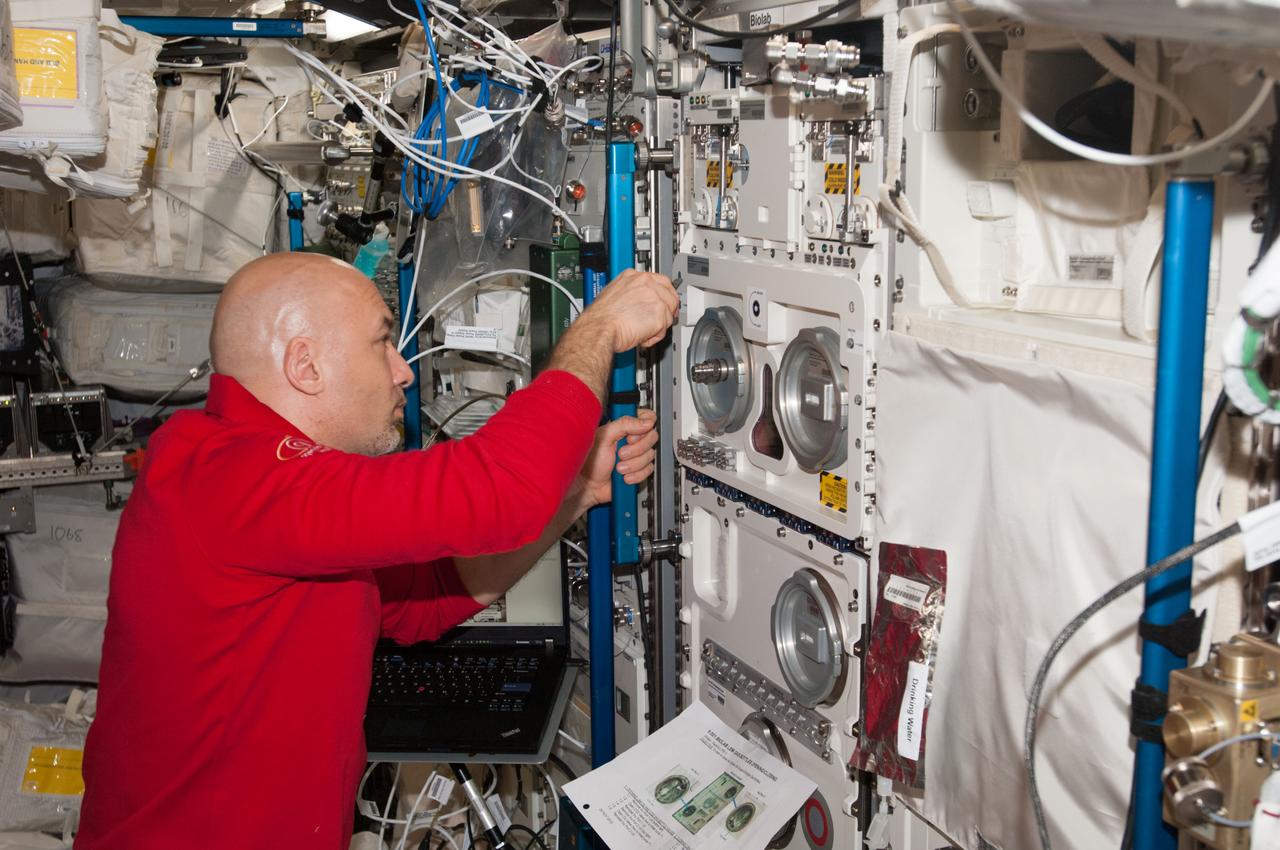
ISS036-E-037859 (27 Aug. 2013) --- European Space Agency astronaut Luca Parmitano, Expedition 36 flight engineer, works with the Biolab in the Columbus laboratory of the International Space Station. Biolab is used to perform space biology experiments on microorganisms, cells, tissue cultures, plants and small invertebrates.

NASA astronaut Jessica Watkins tours a biology laboratory after giving a presentation about her time in space as part of Expeditions 67 and 68, Friday, March 31, 2023, at Howard University in Washington. Photo Credit: (NASA/Aubrey Gemignani)
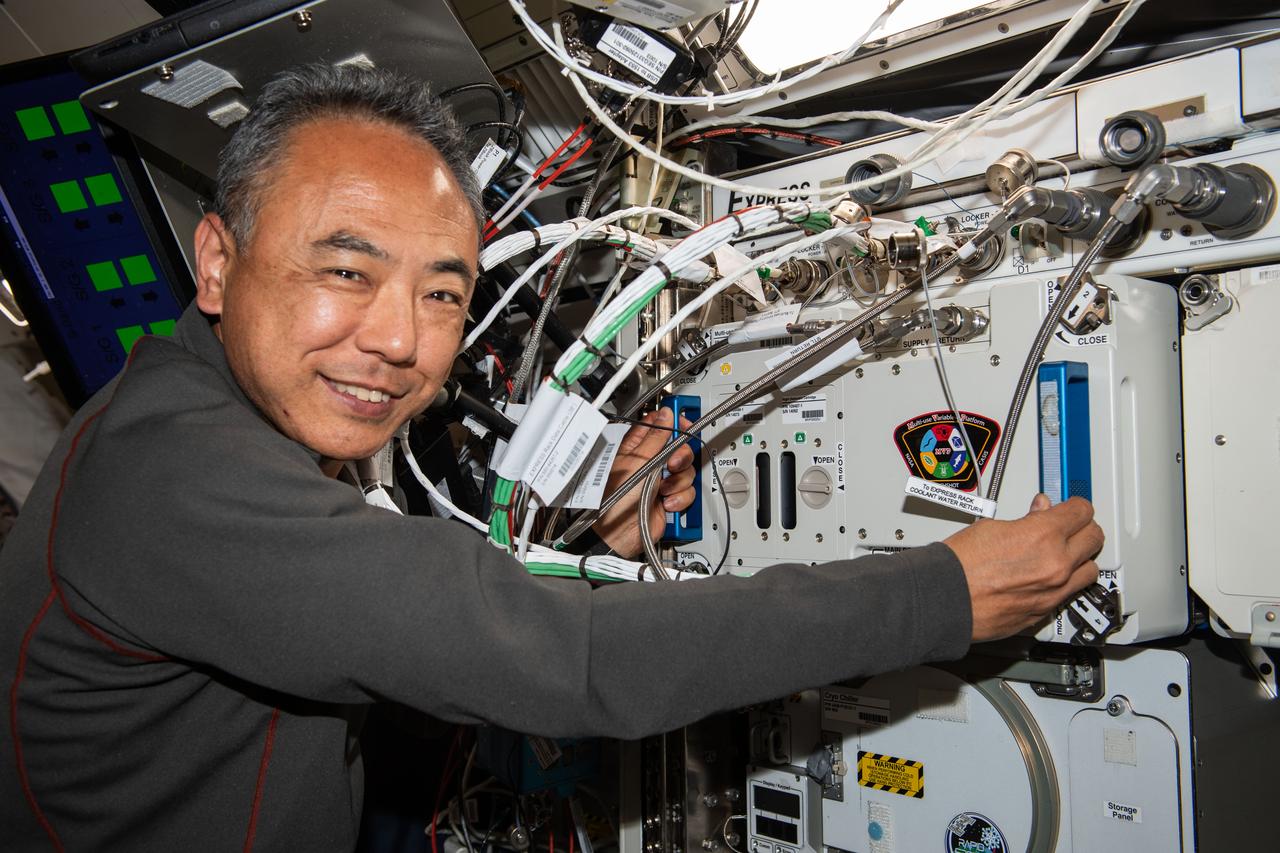
iss069e085467 (Sept. 1, 2023) --- Expedition 69 Flight Engineer and JAXA (Japan Aerospace Exploration Agency) astronaut Satoshi Furukawa removes experiment hardware from inside the Multi-use Variable-g Platform, a biology research device that can generate artificial gravity inside the International Space Station's Kibo laboratory module.
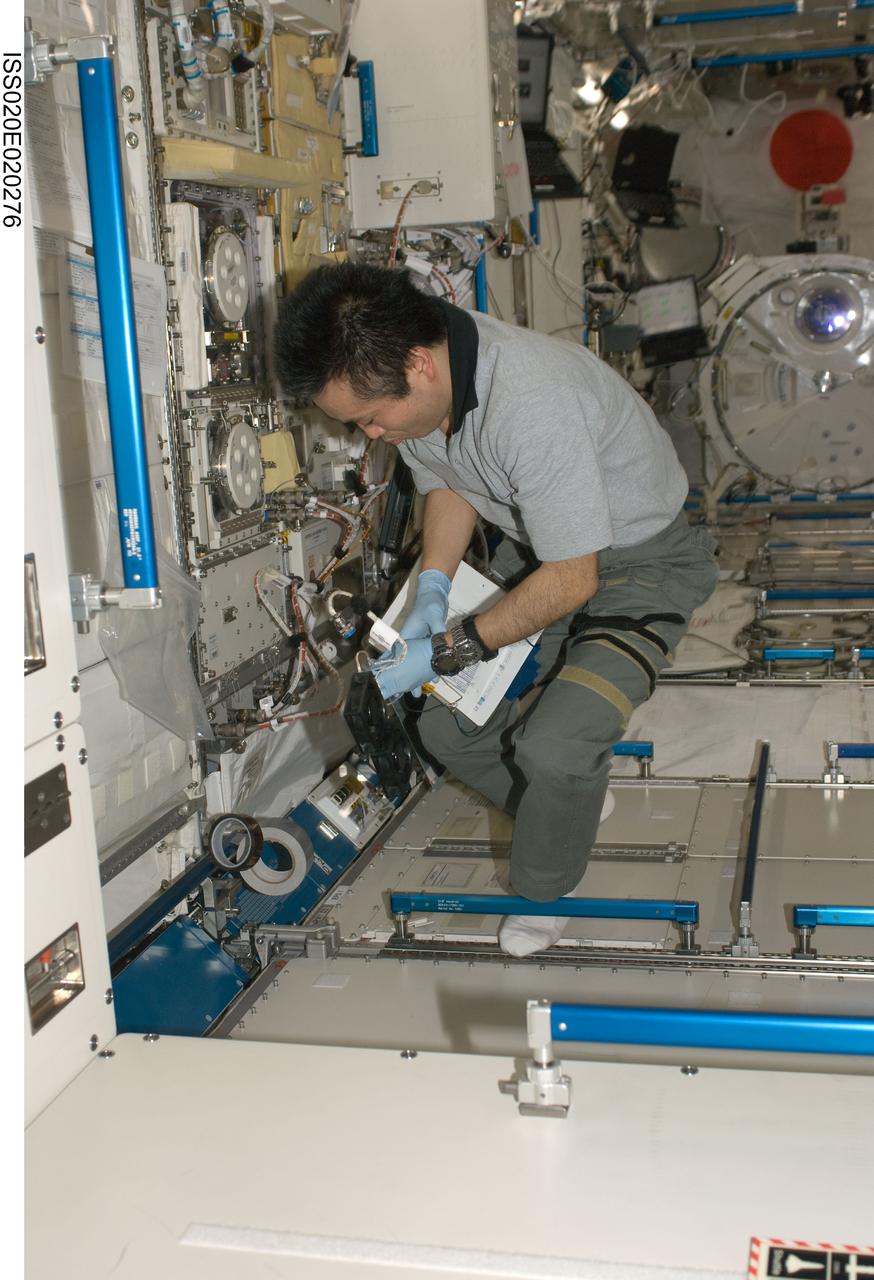
ISS020-E-020276 (9 July 2009) --- Japan Aerospace Exploration Agency (JAXA) astronaut Koichi Wakata, Expedition 20 flight engineer, works at the Cell Biology Experiment Facility (CBEF) in the Kibo laboratory of the International Space Station.
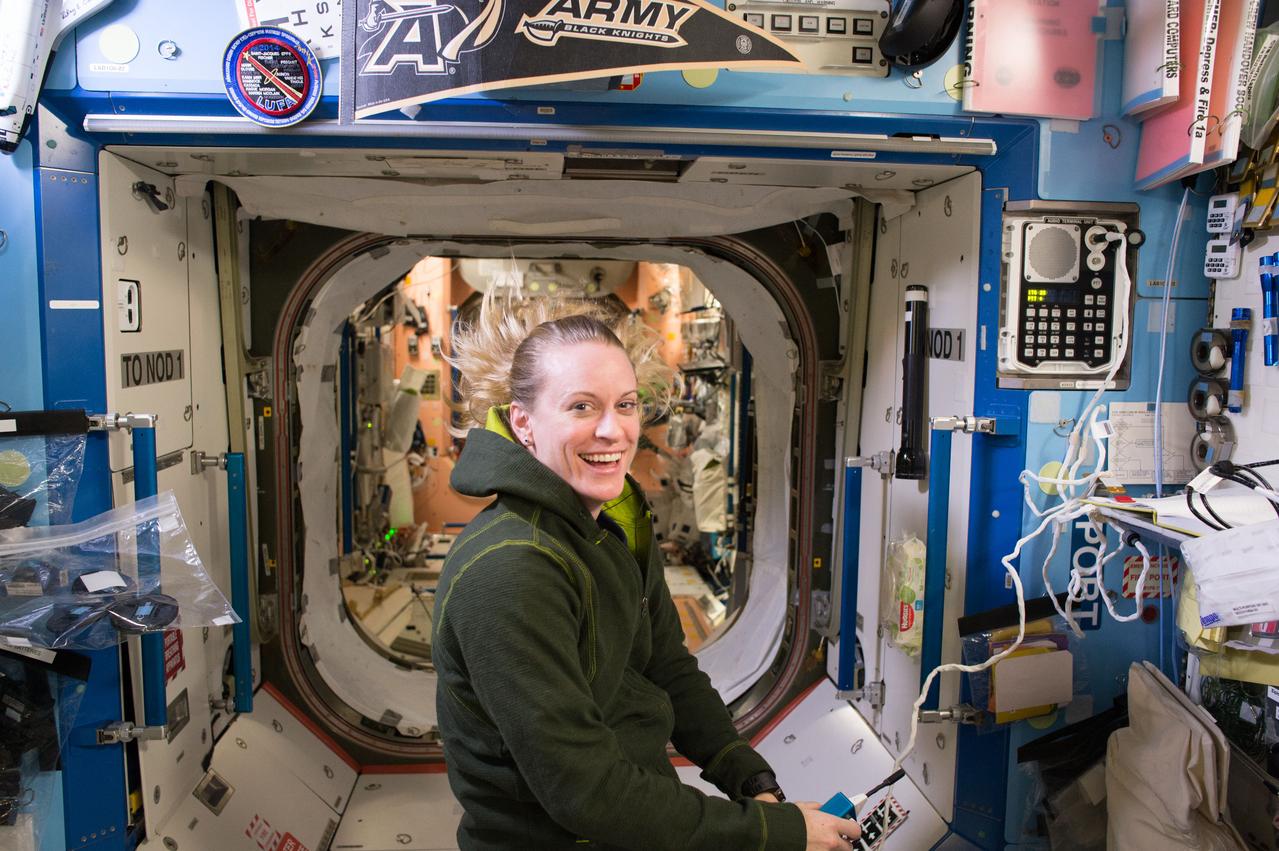
ISS049e038794 (10/14/2016 --- NASA astronaut Kate Rubins holds a communication microphone while floating in the U.S. Destiny Laboratory aboard the International Space Station. Rubins, a first time flier with a degree in molecular biology, is scheduled to return to Earth on Oct. 29, 2016, U.S. time
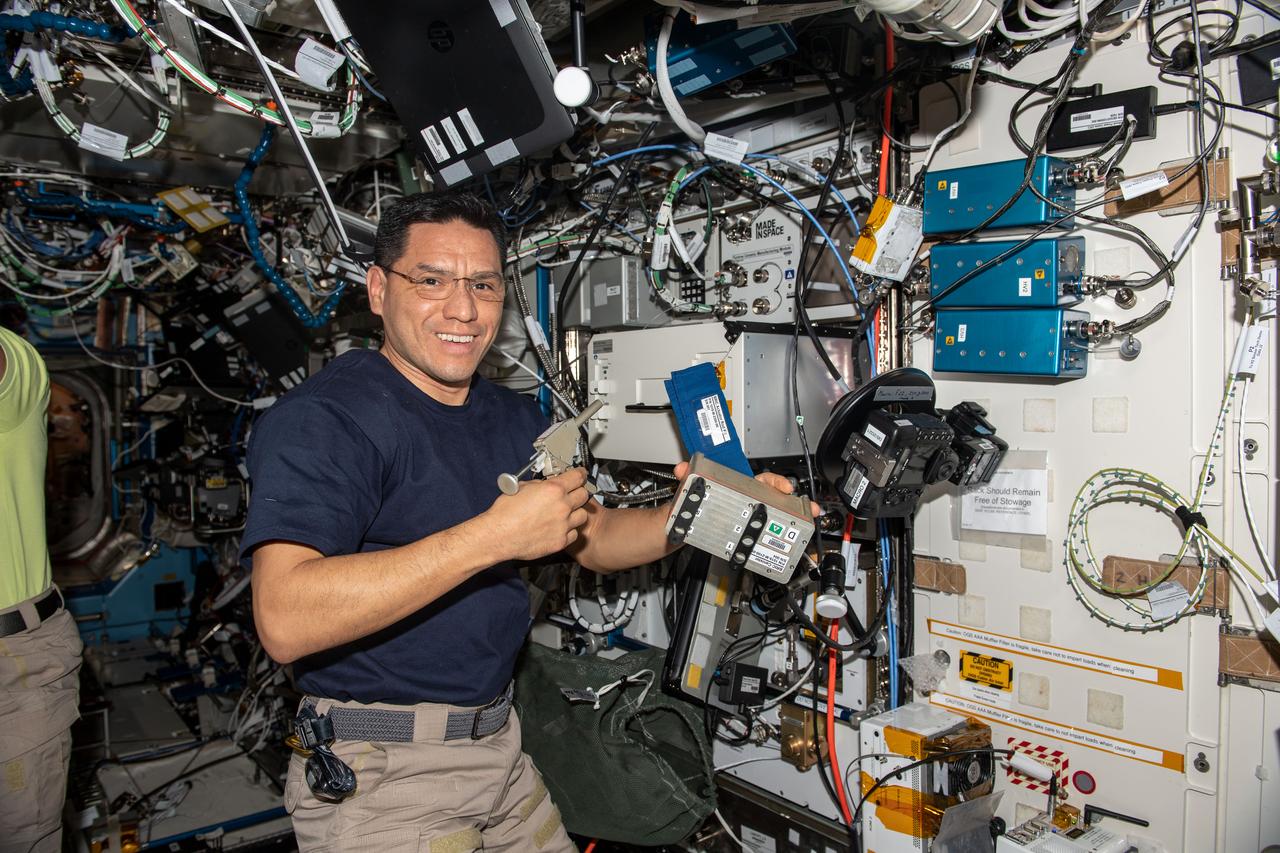
iss068e027511_alt (Dec. 6, 2022) --- NASA astronaut and Expedition 68 Flight Engineer Frank Rubio activates hardware for a space biology experiment that is studying how weightlessness affects genetic expression in microbes to understand bacterial adaptation and protect astronauts.
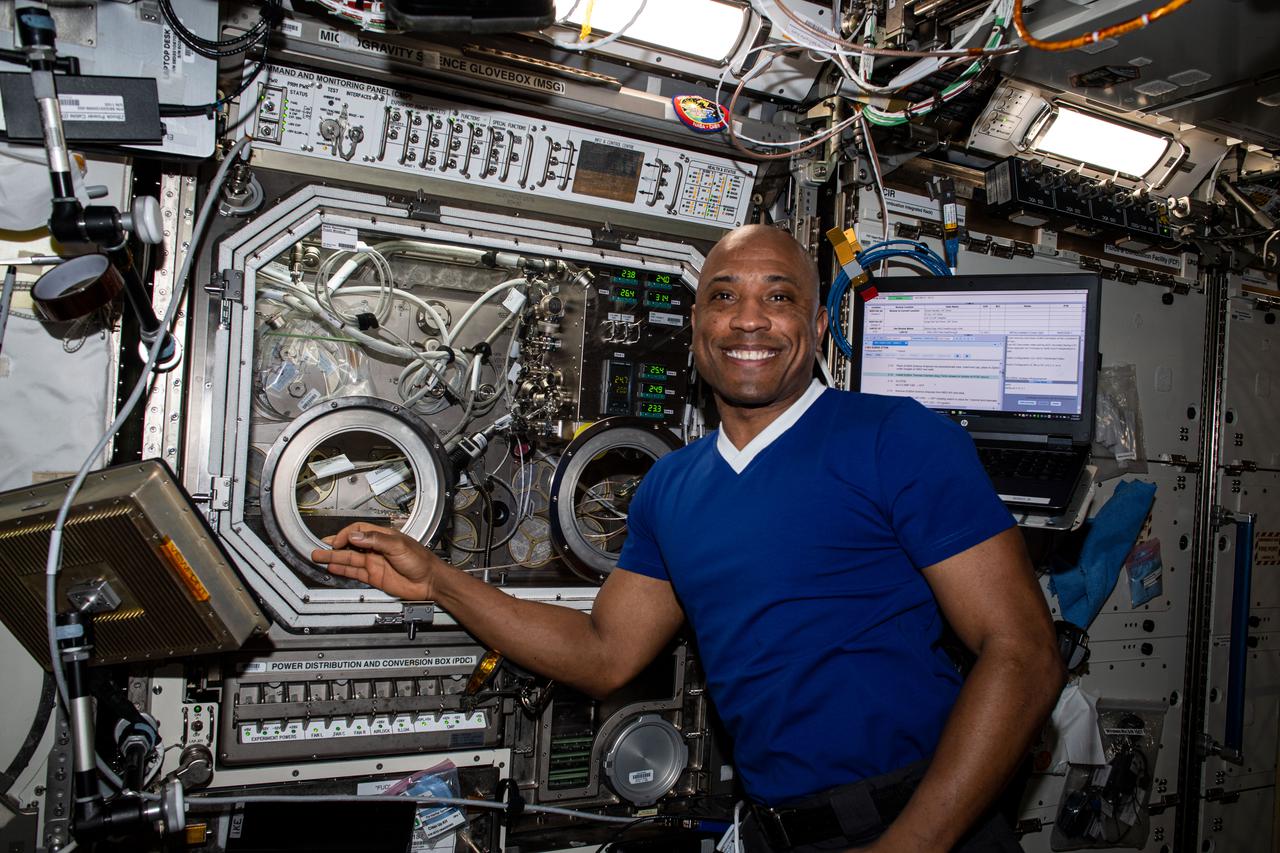
iss064e033239 (Feb. 16, 2021) --- NASA astronaut and Expedition 64 Flight Engineer Victor Glover poses for a portrait in front of the Microgravity Science Glovebox (MSG) located inside the International Space Station's U.S. Destiny laboratory module. The MSG supports a wide variety of space studies exploring everything from physics to biology.
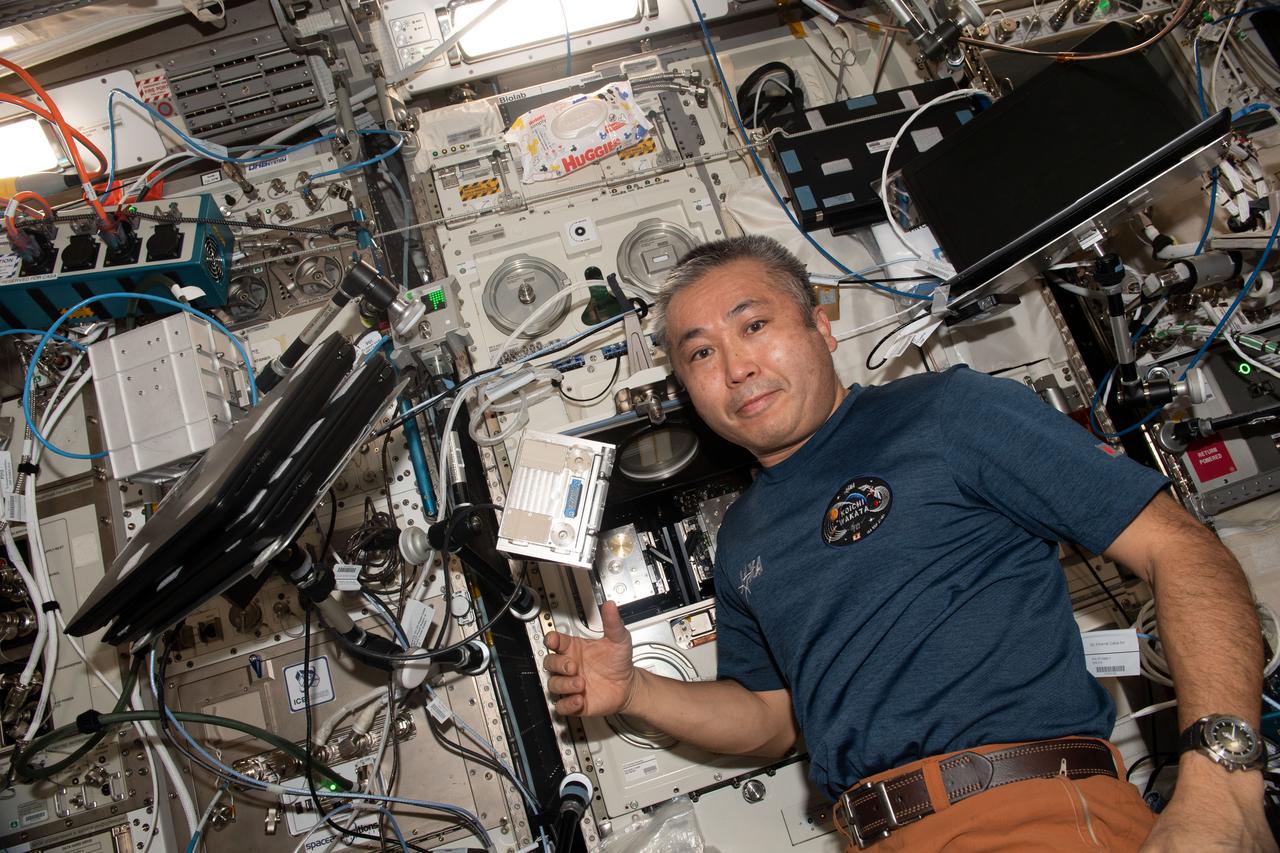
iss068e027642 (Dec. 7, 2022) --- Expedition 68 Flight Engineer Koichi Wakata of the Japan Aerospace Exploration Agency (JAXA) poses for a portrait in front of the Columbus laboratory module's BioLab, a research facility used to perform space biology experiments on microorganisms, cells, tissue cultures, small plants, and small invertebrates.

iss065e277010 (Aug. 19, 2021) --- A view of cell samples for the Anti-Atrophy muscle investigation inside the International Space Station's Kibo laboratory module. The samples are being incubated and observed in the Cell Biology Experiment Facility to learn how to prevent and treat space-caused muscle atrophy and Earth-bound muscle conditions.
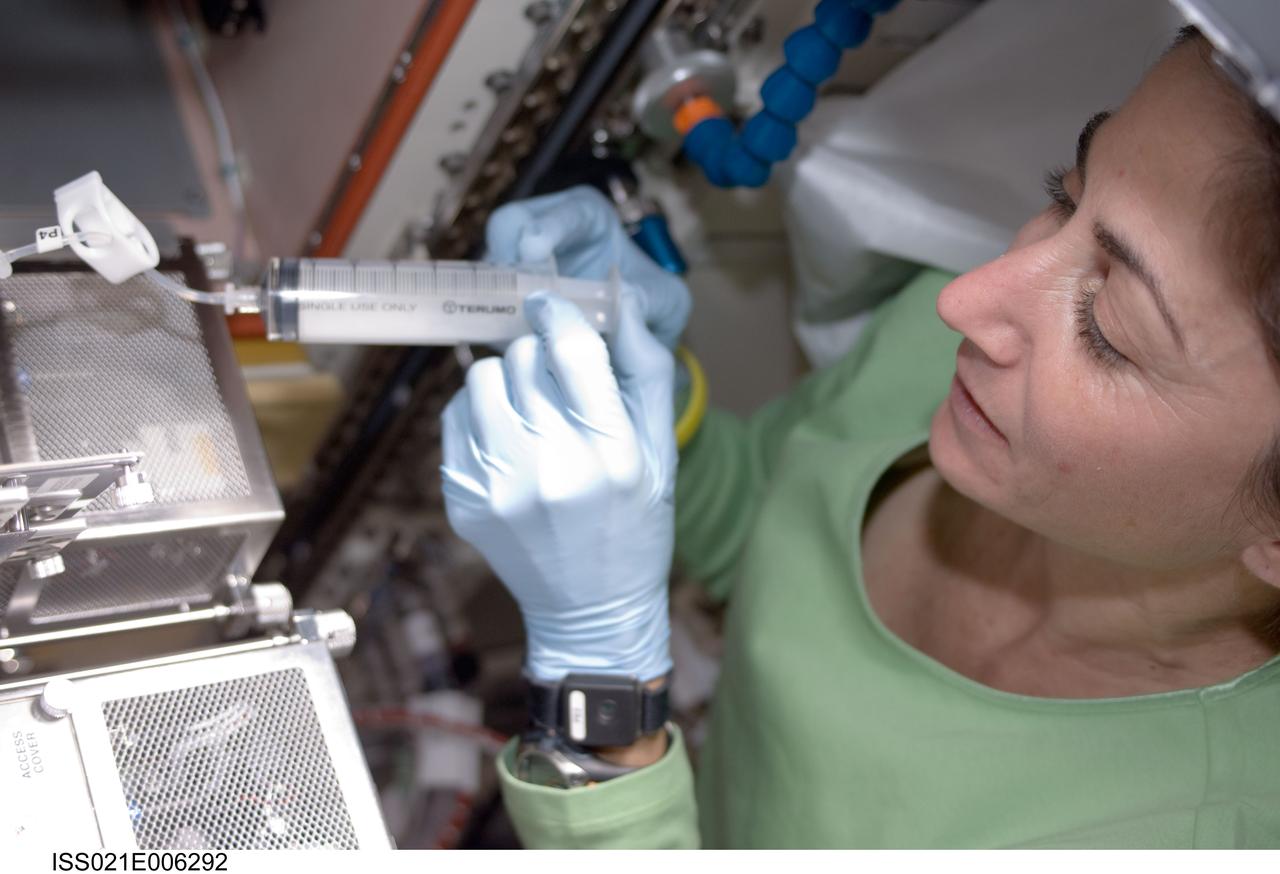
ISS021-E-006292 (14 Oct. 2009) --- NASA astronaut Nicole Stott, Expedition 21 flight engineer, using a watering syringe, supplies water to the Cell Biology Experiment Facility (CBEF) SPACE SEED experiment in the Kibo laboratory on the International Space Station.
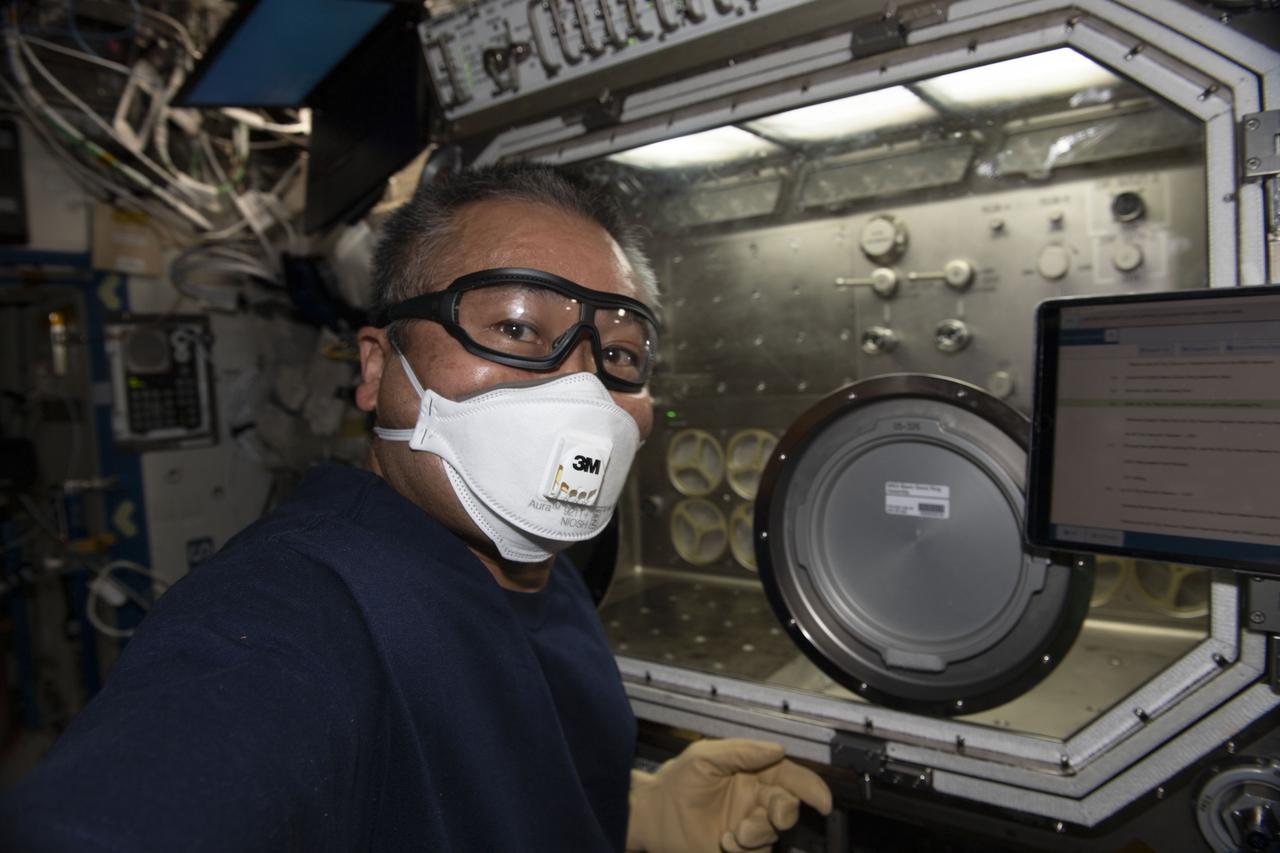
iss068e019720 (Oct. 24, 2022) --- Expedition 68 Flight Engineer Koichi Wakata of the Japan Aerospace Exploration Agency (JAXA) works on the Microgravity Science Glovebox, which hosts numerous space science experiments from physics to biology, and cleans its fans. filters, and components.
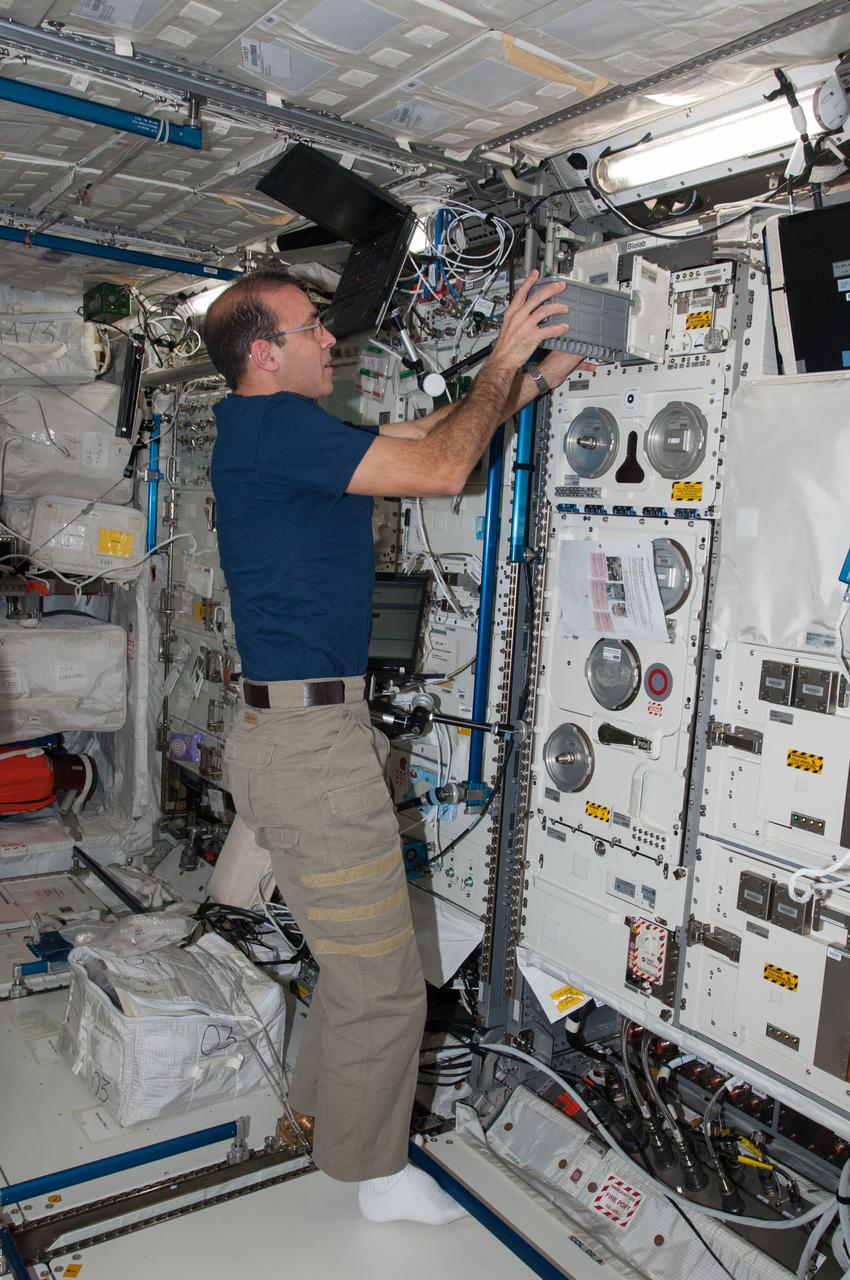
ISS038-E-008037 (25 Nov. 2013) --- NASA astronaut Rick Mastracchio, Expedition 38 flight engineer, works with Biolab hardware in the Columbus laboratory of the International Space Station. Biolab is used to perform space biology experiments on microorganisms, cells, tissue cultures, plants and small invertebrates.
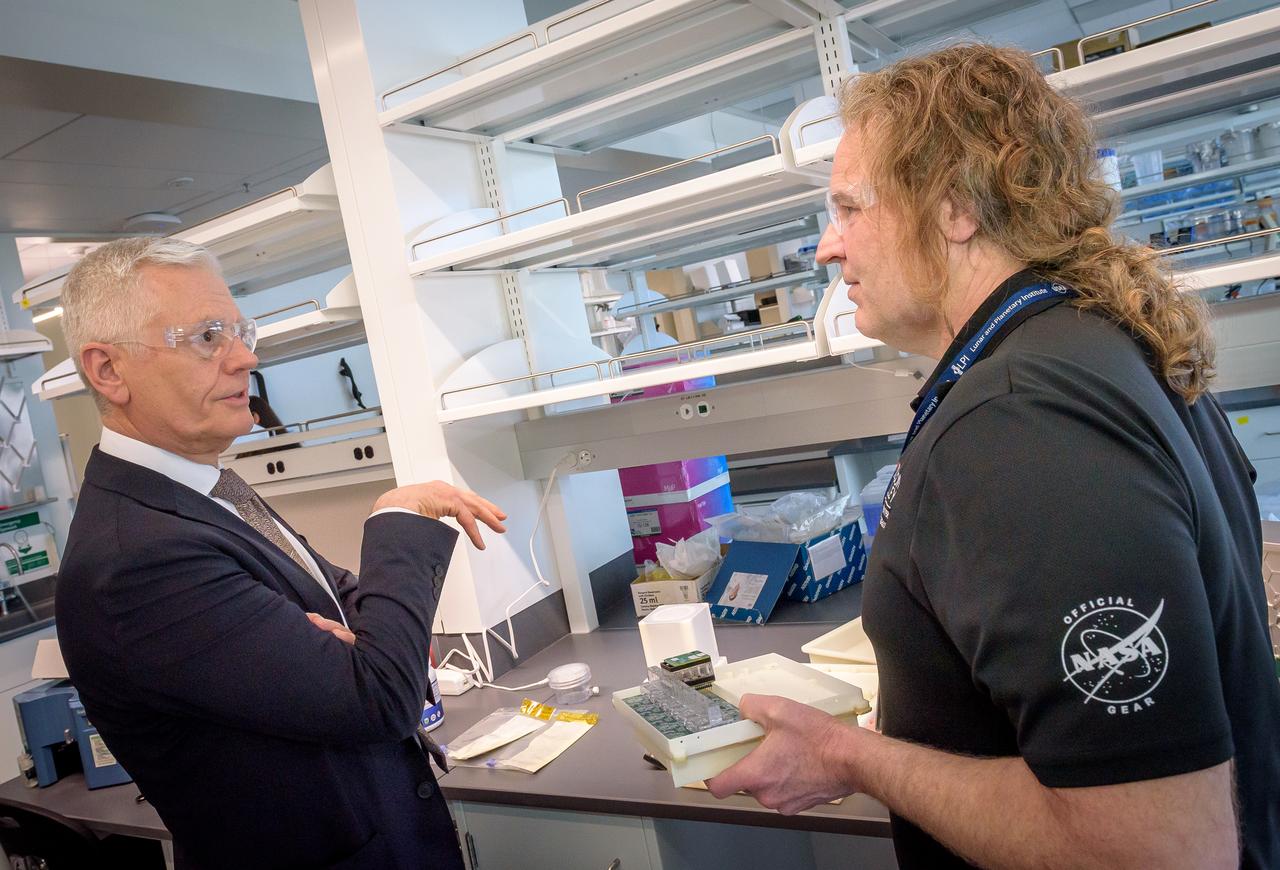
Director of Science Michael Hesse, right, presents an overview of Lunar Explorer Instrument for space biology Applications (LEIA) to Acting Deputy Associate Administrator (DAA) for the Science Mission Directorate (SMD) Mark Clampin in the Bioscience Collaborative Laboratory, N288.
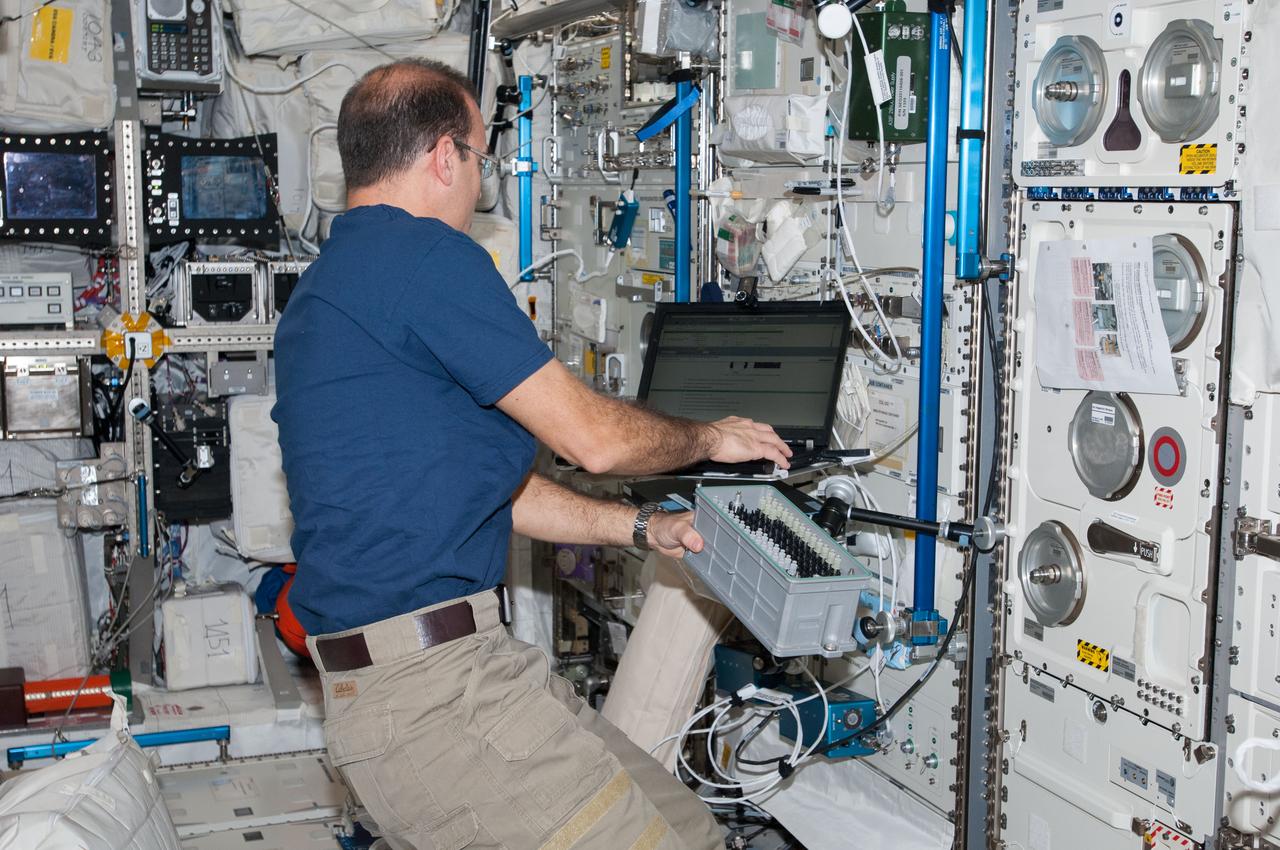
ISS038-E-008033 (25 Nov. 2013) --- NASA astronaut Rick Mastracchio, Expedition 38 flight engineer, works with Biolab hardware in the Columbus laboratory of the International Space Station. Biolab is used to perform space biology experiments on microorganisms, cells, tissue cultures, plants and small invertebrates.
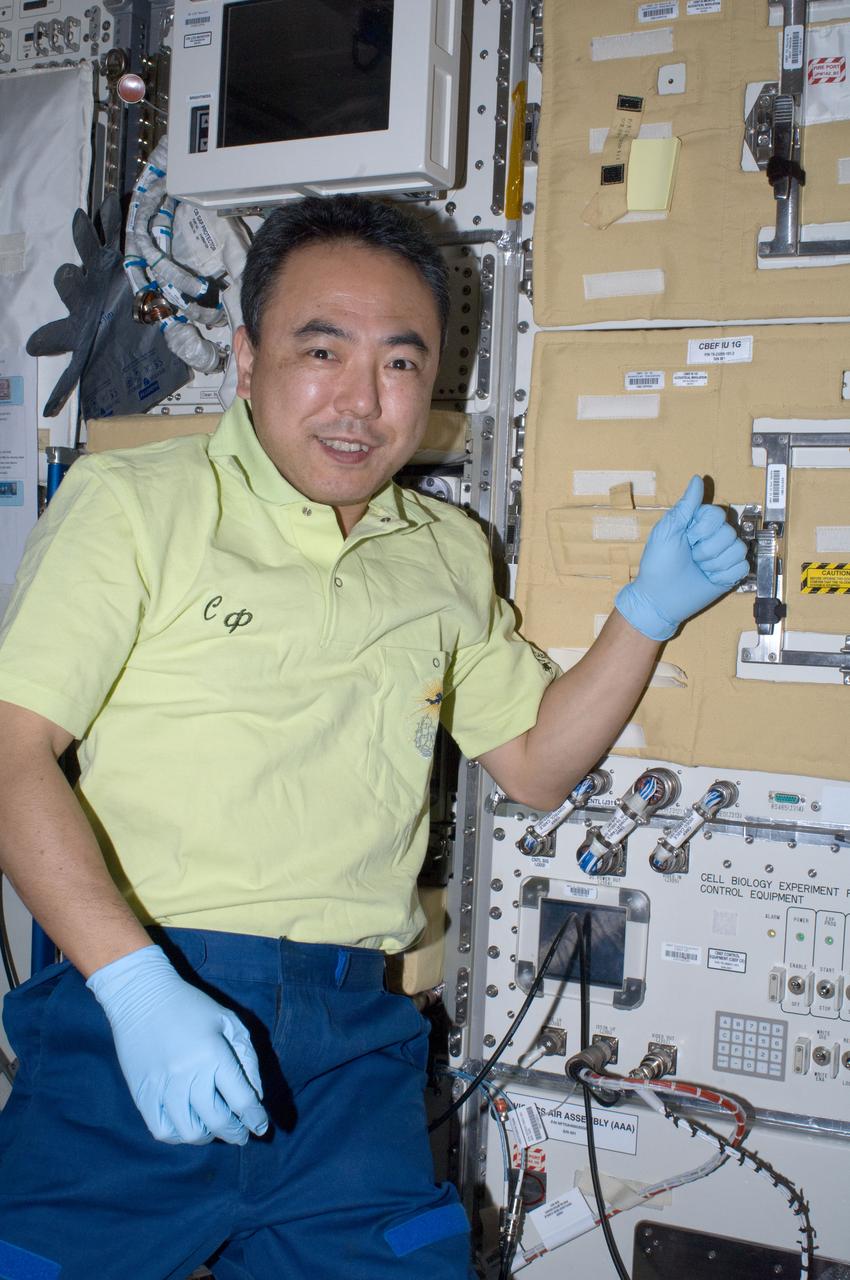
ISS028-E-009727 (25 June 2011) --- Japan Aerospace Exploration Agency astronaut Satoshi Furukawa, Expedition 28 flight engineer, is pictured near the Cell Biology Experiment Facility (CBEF) in the Kibo laboratory of the International Space Station.
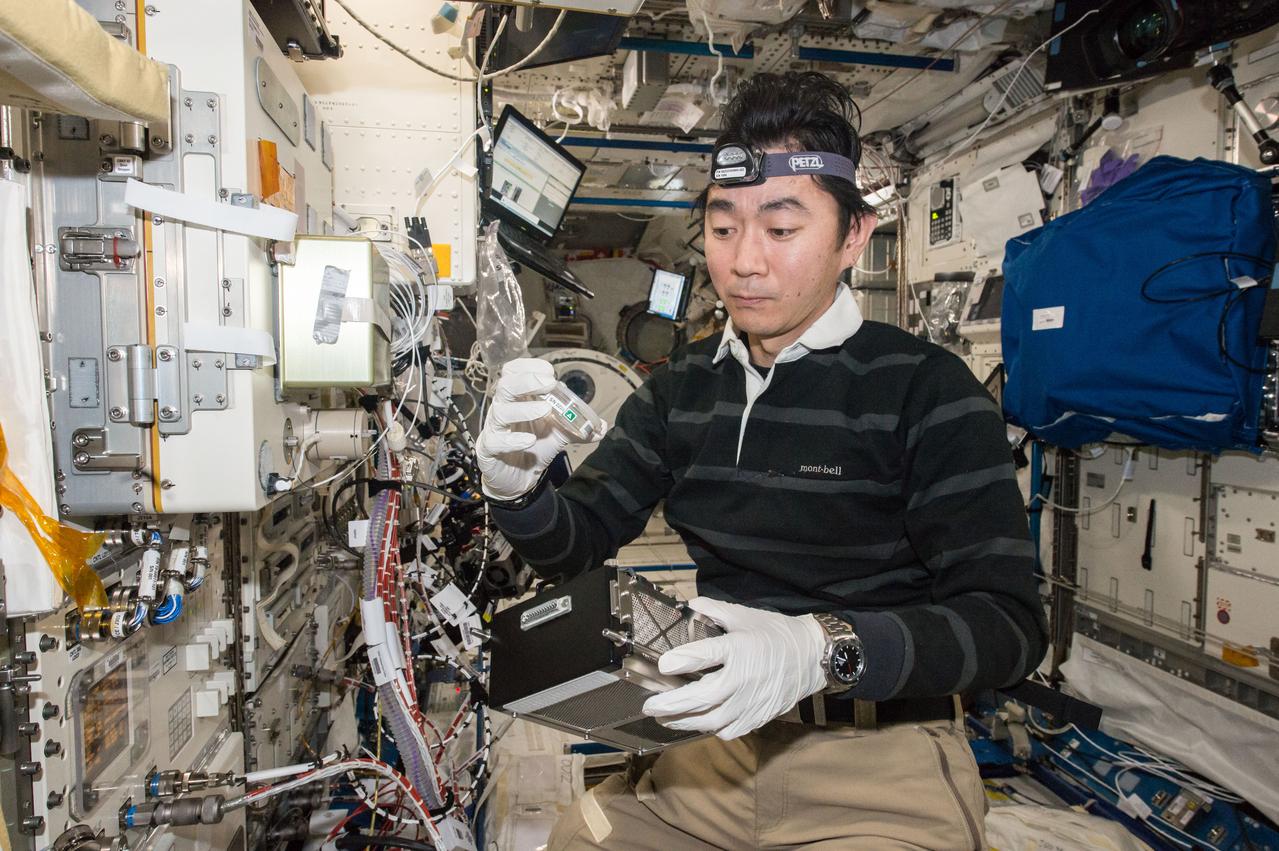
iss045e084267 (10/30/2015) --- Japan Aerospace Exploration Agency (JAXA) astronaut Kimiya Yui works to attach a Plant Experiment Unit to the Cell Biology Experiment Facility (CBEF) prior to Run 1 of the Plant Gravity Sensing 2 experiment.
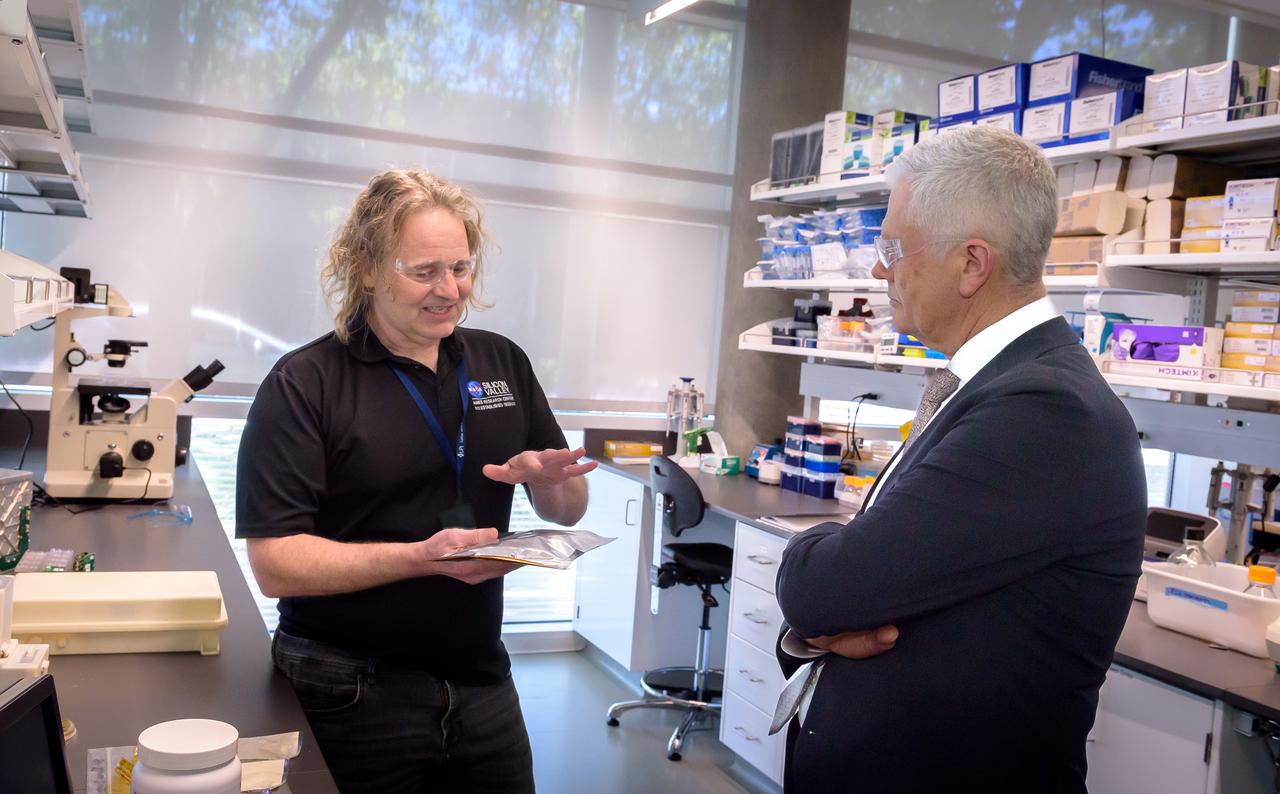
Director of Science Michael Hesse, left, presents an overview of Lunar Explorer Instrument for space biology Applications (LEIA) to Acting Deputy Associate Administrator (DAA) for the Science Mission Directorate (SMD) Mark Clampin in the Bioscience Collaborative Laboratory, N288.
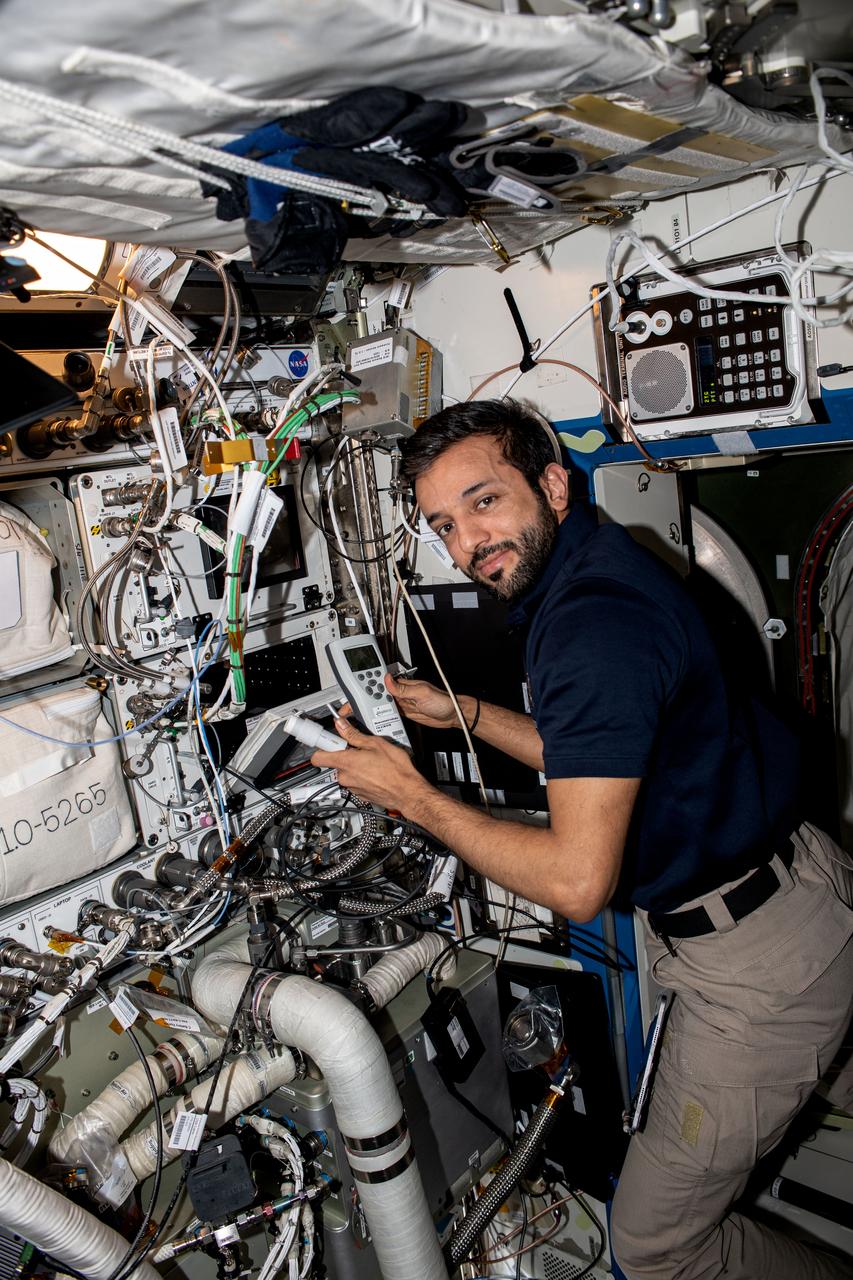
iss069e038998 (July 28, 2023) --- UAE (United Arab Emirates) astronaut and Expedition 69 Flight Engineer Sultan Alneyadi performs maintenance on the Space Automated Bioproduct Laboratory (SABL), a research incubator. The SABL supports a wide variety of biology and botany investigations, including physics and materials science experiments.
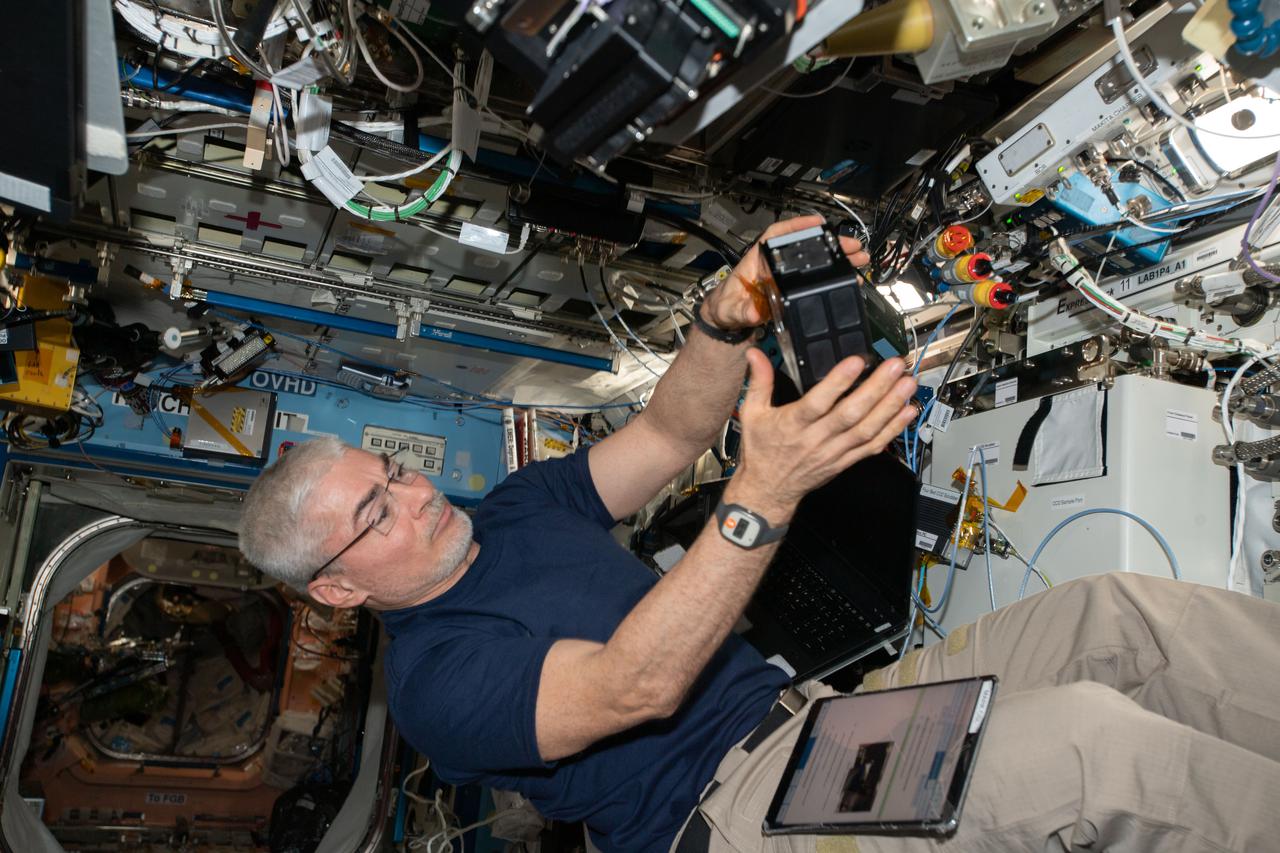
iss066e137913 (Feb. 9, 2022) --- NASA astronaut and Expedition 66 Flight Engineer Mark Vande Hei services components inside the Multi-use Variable-G Platform, a biology research device that can generate up to 2G of artfifical gravity.
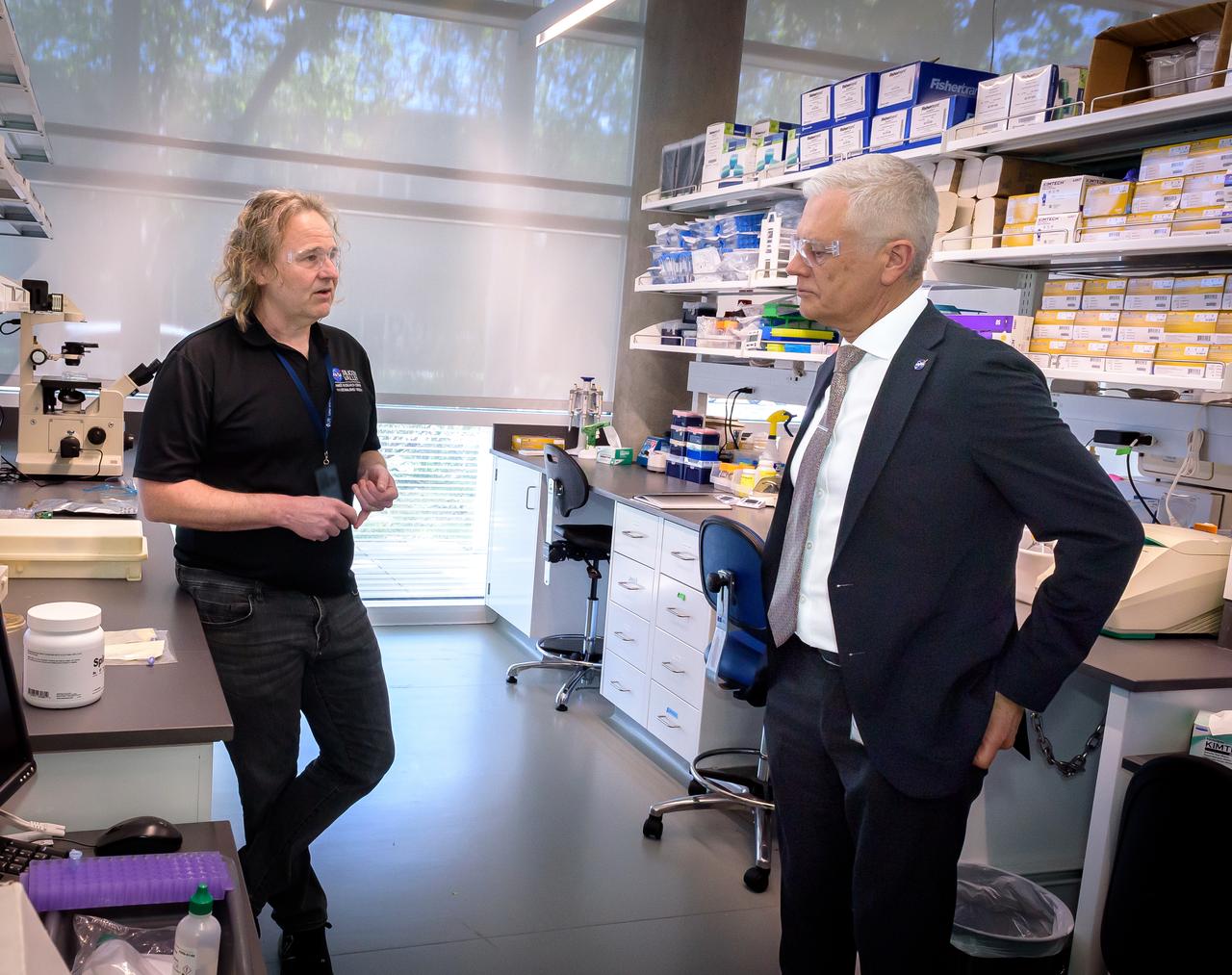
Director of Science Michael Hesse, left, presents an overview of Lunar Explorer Instrument for space biology Applications (LEIA) to Acting Deputy Associate Administrator (DAA) for the Science Mission Directorate (SMD) Mark Clampin in the Bioscience Collaborative Laboratory, N288.
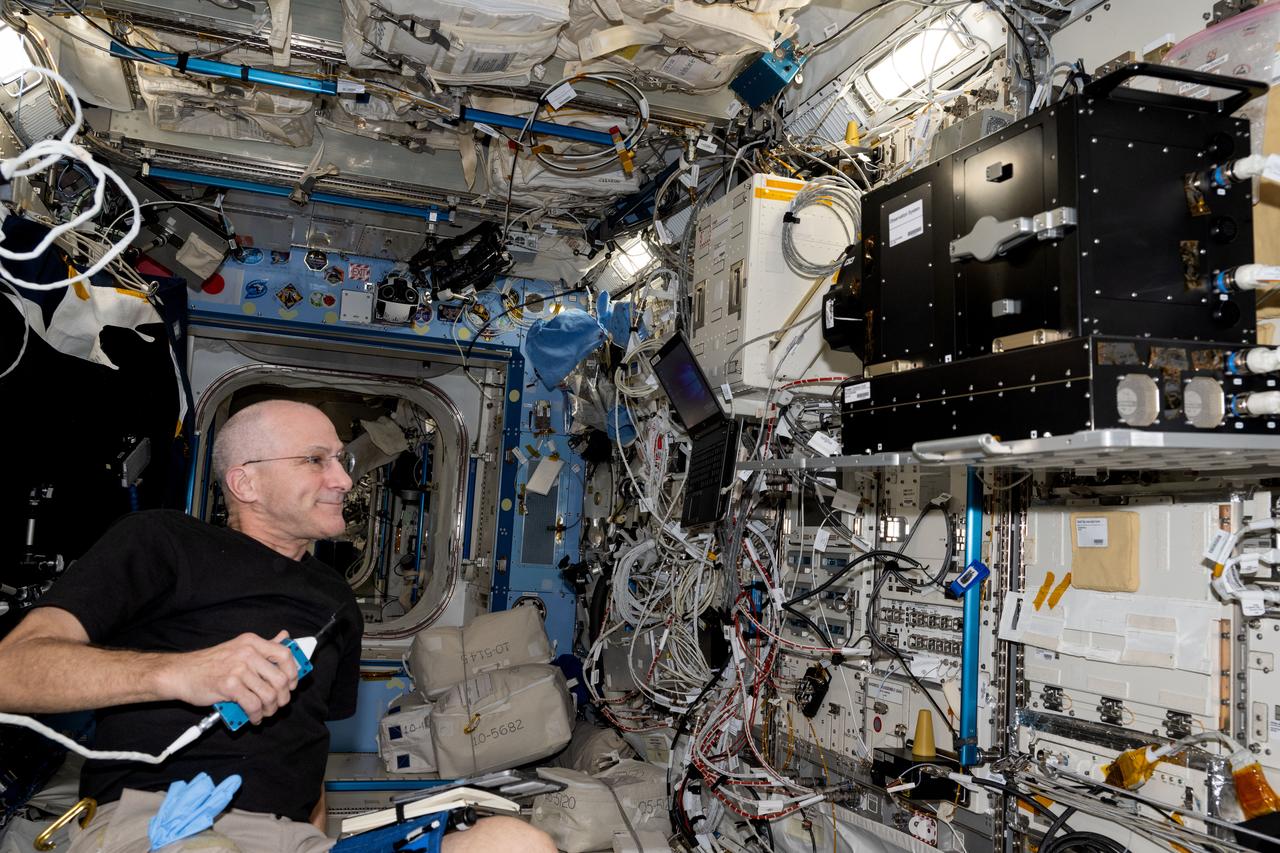
iss072e033530 (Oct. 10, 2024) --- NASA astronaut and Expedition 72 Flight Engineer Don Pettit works inside the Kibo laboratory module checking out biology imaging hardware, the Tele-Luminescence Analysis System (TELLAS), that can detect space-caused inflammatory changes to tissues and genes in organisms.
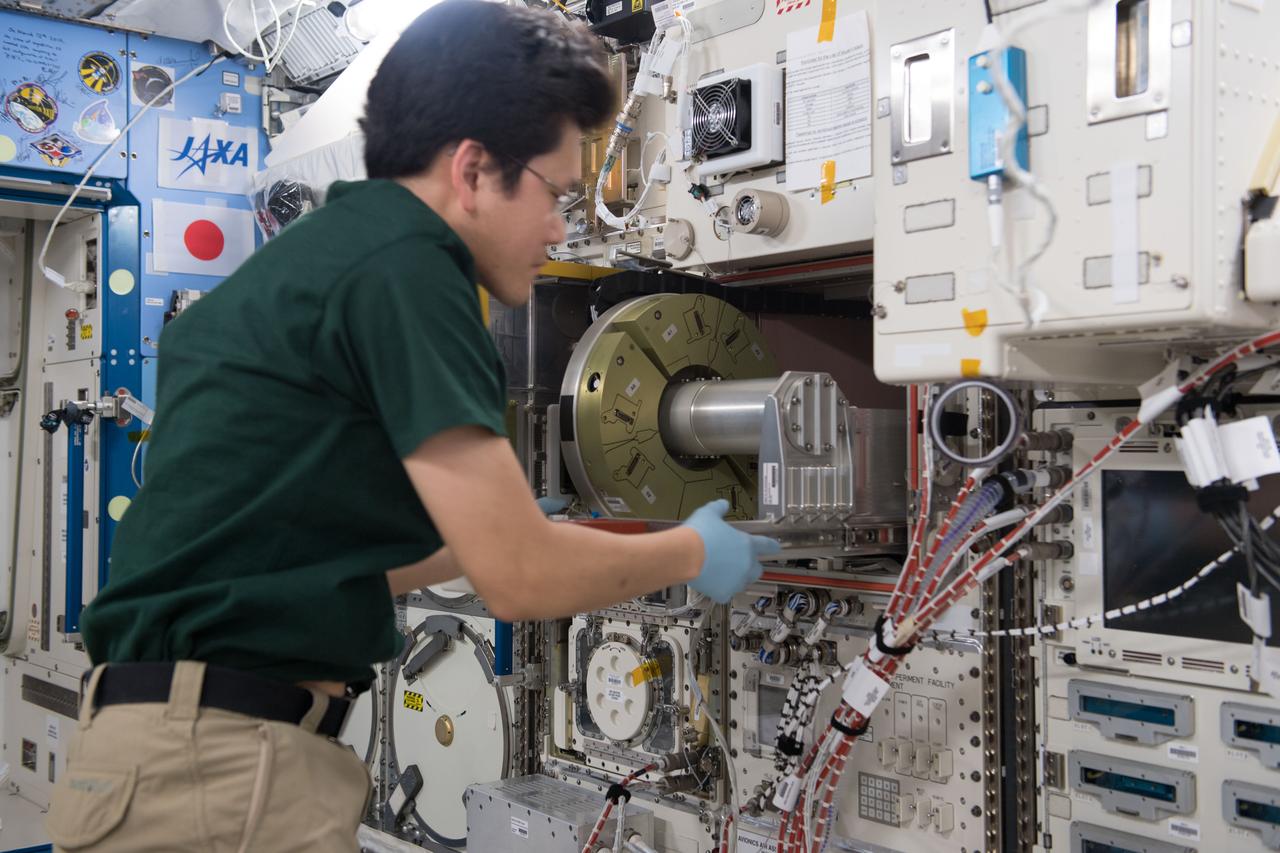
iss054e032753 (2/2/2018) --- A view of Japanese Aerospace Agency (JAXA) astronaut Norishige Kanai working to install Mouse Habitat Unit (MHU) Interface (I/F) Units in Cell Biology Experiment Facility (CBEF) Incubator Units (IUs). Photo was taken in the Kibo Japanese Experiment Pressurized Module (JPM).
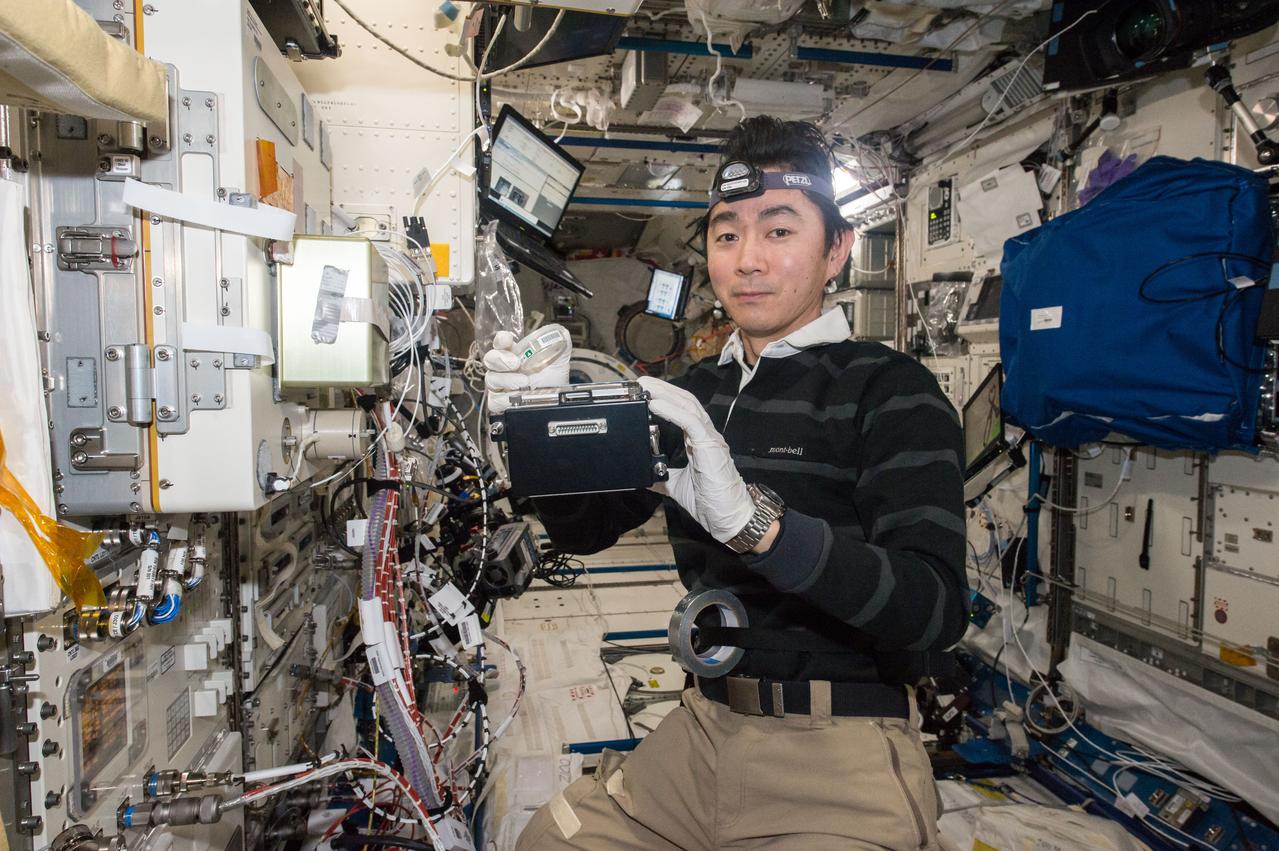
iss045e084264(10/30/2015) --- Japan Aerospace Exploration Agency (JAXA) astronaut Kimiya Yui works to attach a Plant Experiment Unit to the Cell Biology Experiment Facility (CBEF) prior to Run 1 of the Plant Gravity Sensing 2 experiment.
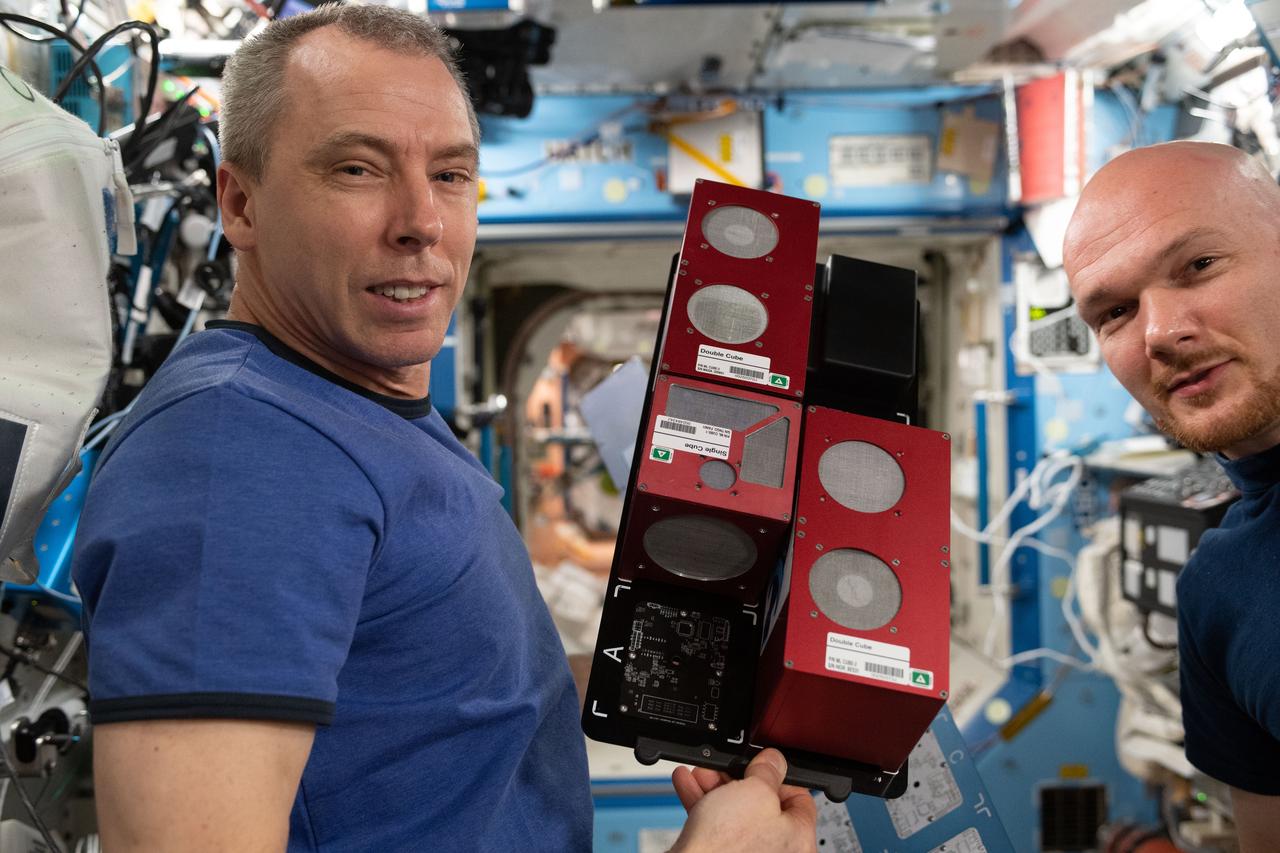
iss056e101065 (Aug. 1, 2018) --- Expedition 56 Commander Drew Feustel displays TangoLab hardware as Flight Engineer Alexander Gerst looks on. The TangoLab facilities house experimental modules called CubeLabs that enable research into plant biology, microbiology, cell culture, tissue culture, and flow chemistry.
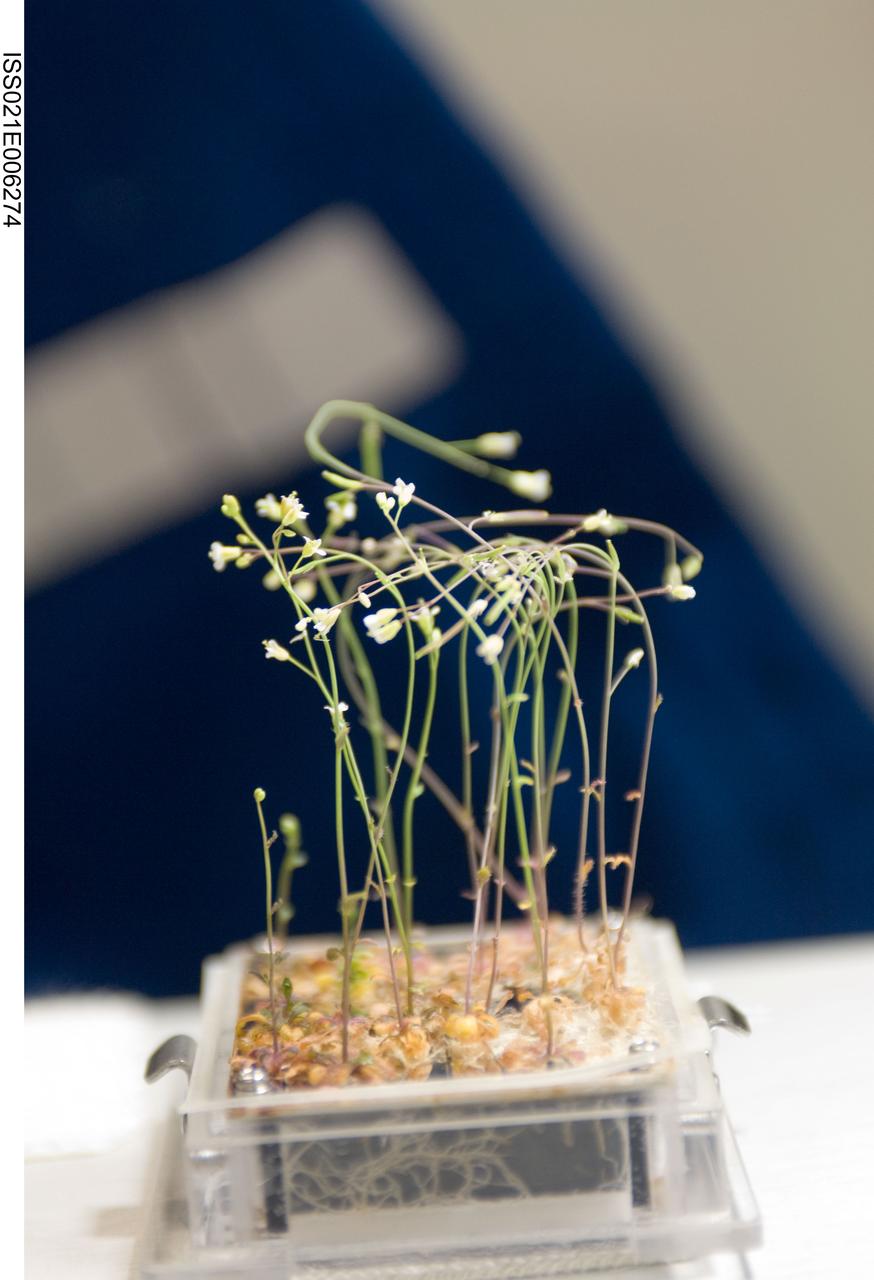
ISS021-E-006274 (13 Oct. 2009) --- A close-up view of the Cell Biology Experiment Facility (CBEF) SPACE SEED experiment is featured in this image photographed by an Expedition 21 crew member in the Kibo laboratory on the International Space Station.
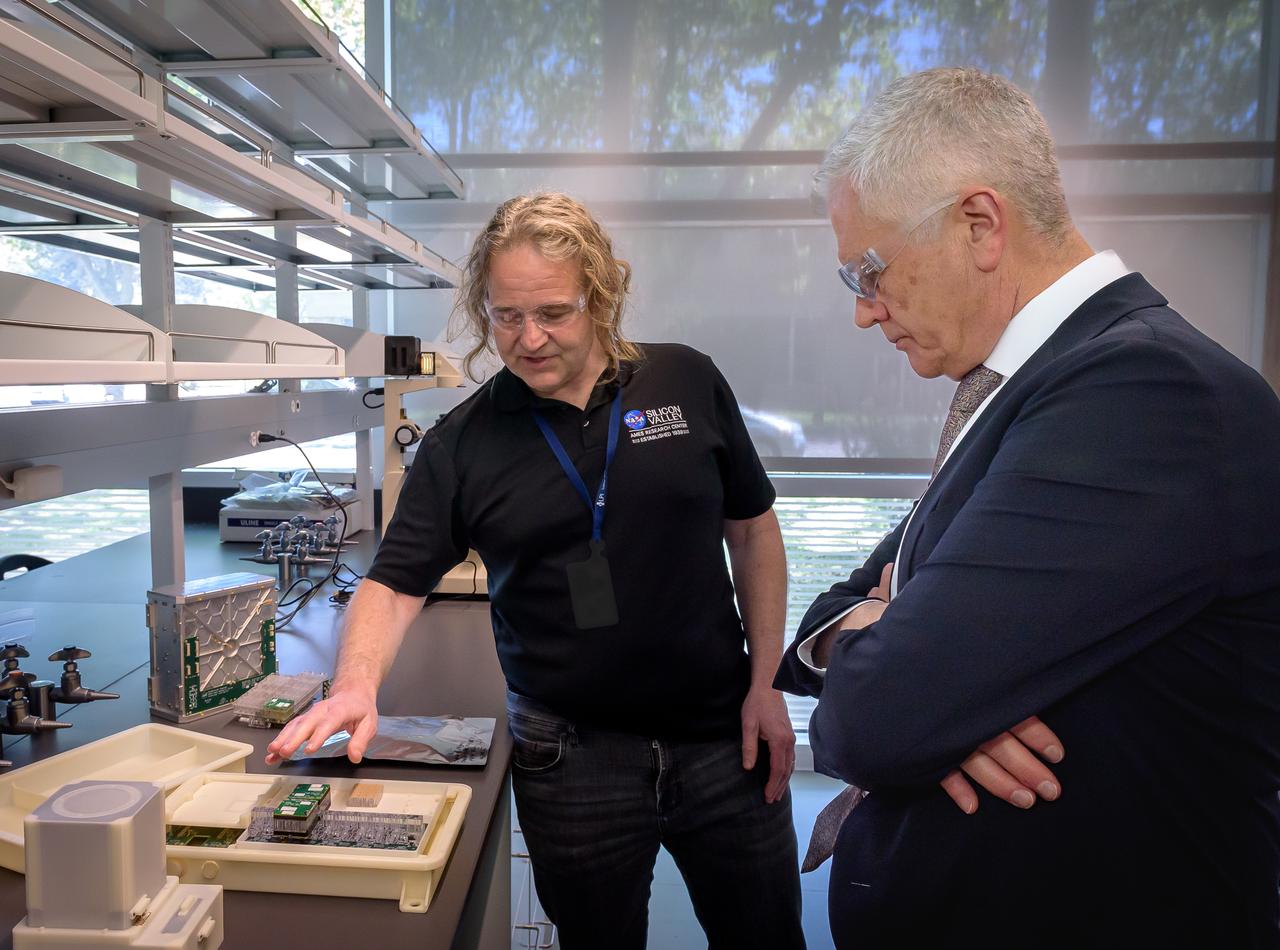
Director of Science Michael Hesse, left, presents an overview of Lunar Explorer Instrument for space biology Applications (LEIA) to Acting Deputy Associate Administrator (DAA) for the Science Mission Directorate (SMD) Mark Clampin in the Bioscience Collaborative Laboratory, N288.
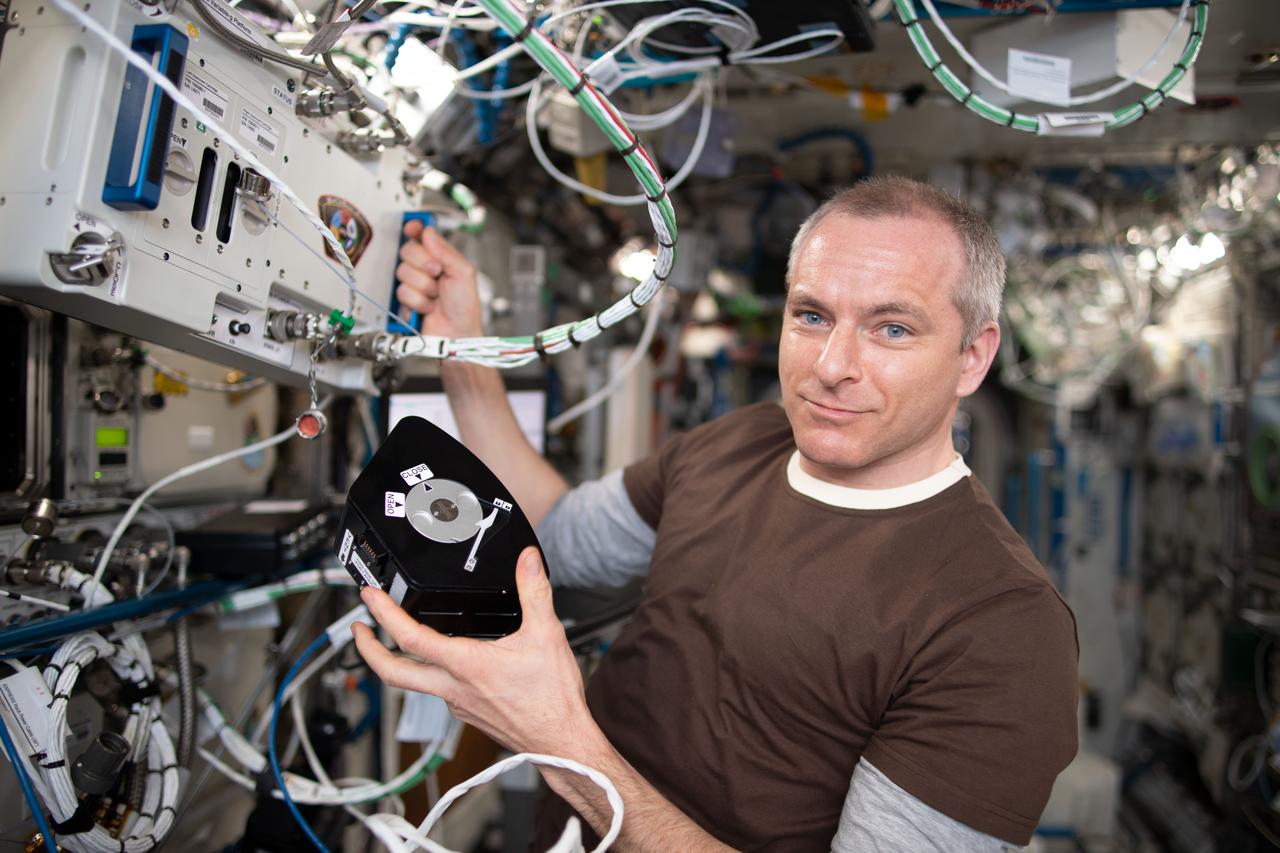
iss059e063924 (May 18, 2019) --- Canadian Space Agency astronaut David Saint-Jacques of Expedition 59 works on the Multi-use Variable-g Platform (MVP) hardware. MVP enables space biology research into a variety of small organisms such as fruit flies, flatworms, plants, fish, cells, protein crystals and many others.
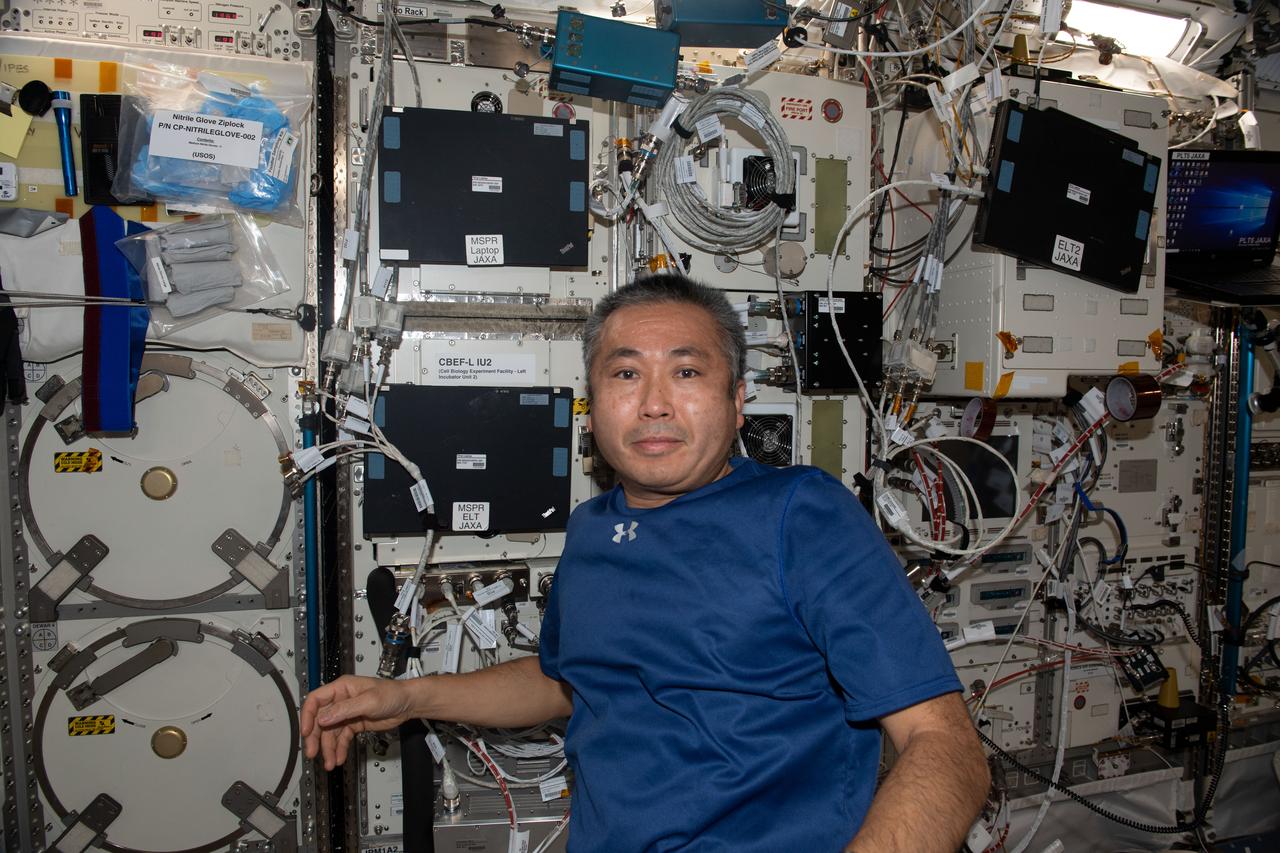
iss068e021206 (Nov. 9, 2022) --- Expedition 68 Flight Engineer Koichi Wakata of the Japan Aerospace Exploration Agency (JAXA) works inside the International Space Station's Kibo laboratory module connecting cables and reconfiguring sensors on the Cell Biology Experiment Facility, a research incubator with an artificial gravity generator.
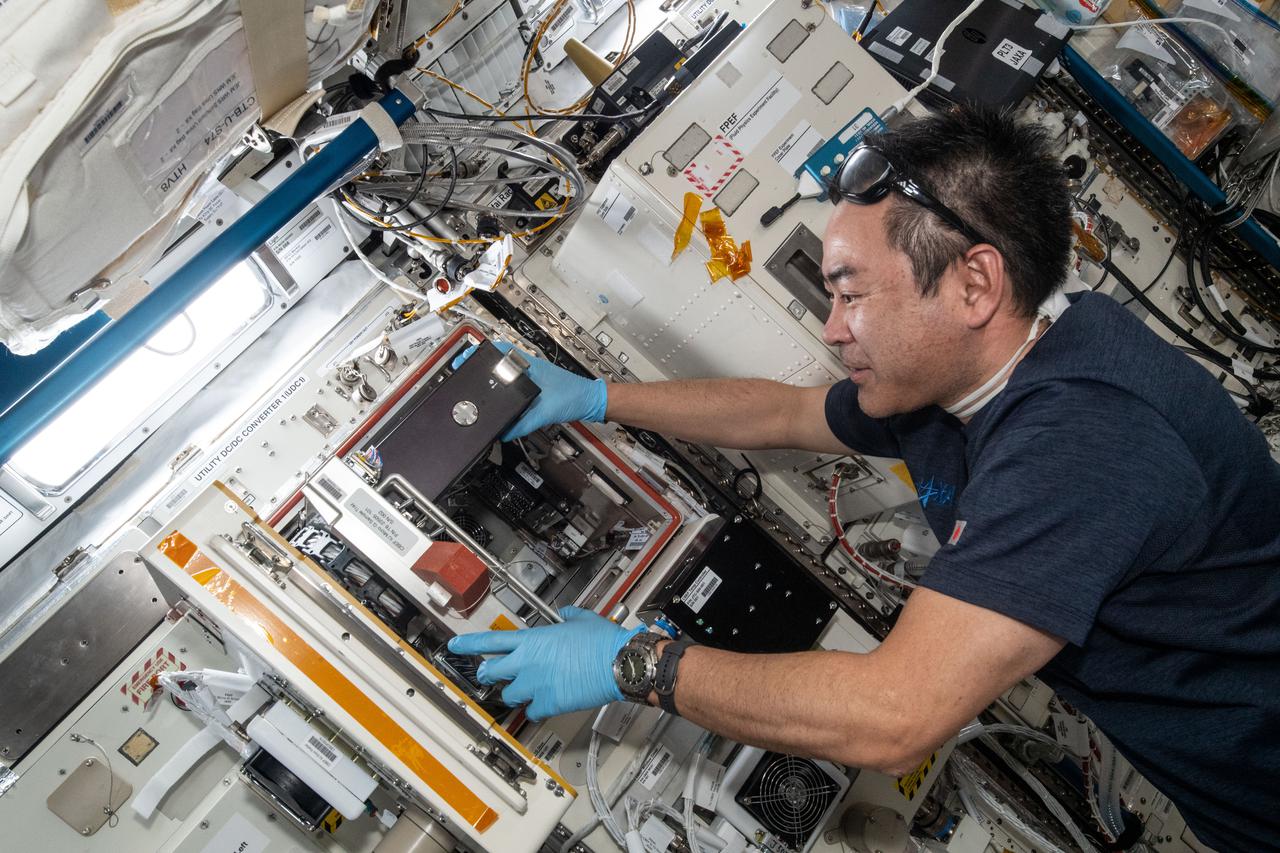
iss065e242205 (Aug. 13, 2021) --- Expedition 65 Commander Akihiko Hoshide of the Japan Aerospace Exploration Agency (JAXA) inserts cell samples into the Kibo laboratory module's Cell Biology Experiment Facility. The cells are being observed for how they adapt to weightlessness as part of the Cell Gravisensing muscle atrophy study.
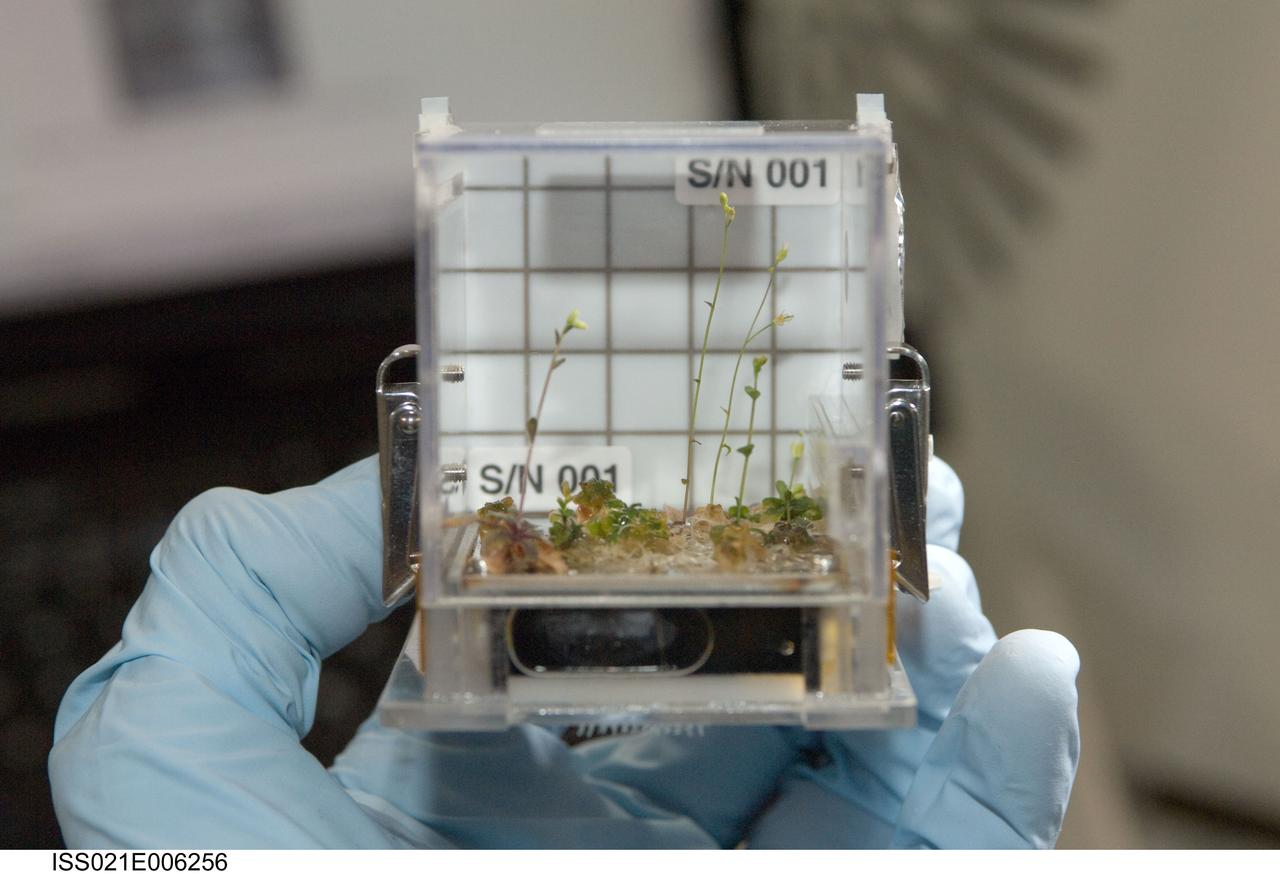
ISS021-E-006256 (13 Oct. 2009) --- A close-up view of the Cell Biology Experiment Facility (CBEF) SPACE SEED experiment is featured in this image photographed by an Expedition 21 crew member in the Kibo laboratory on the International Space Station.
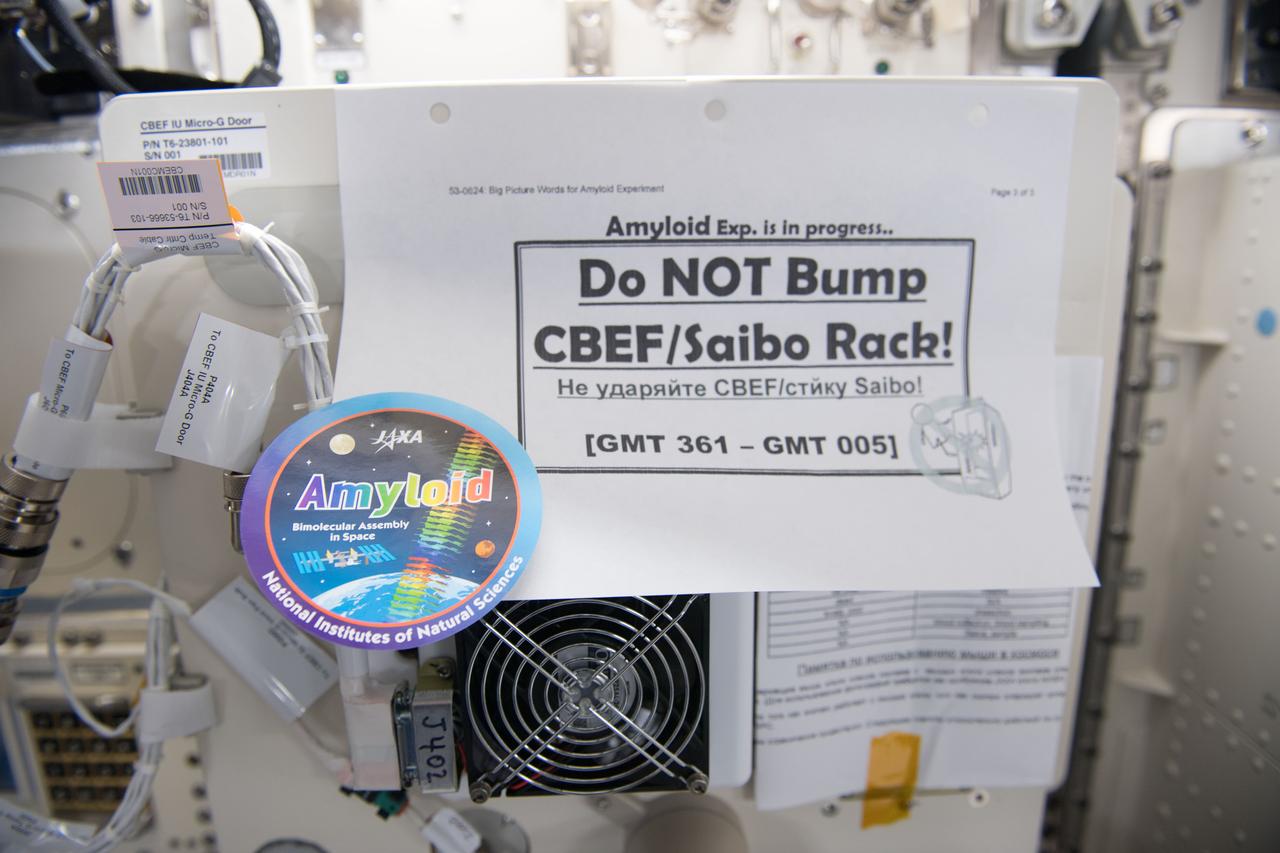
iss054e020553 (Dec. 30, 2017) --- A warning sign (DO NOT BUMP) is attached to the Cell Biology Experiment Facility (CBEF) in the Kibo Japanese Experiment Pressurized Module (JPM). CBEF is a subrack facility that functions as an incubator with an artificial gravity generator, and it is used in various life science experiments.
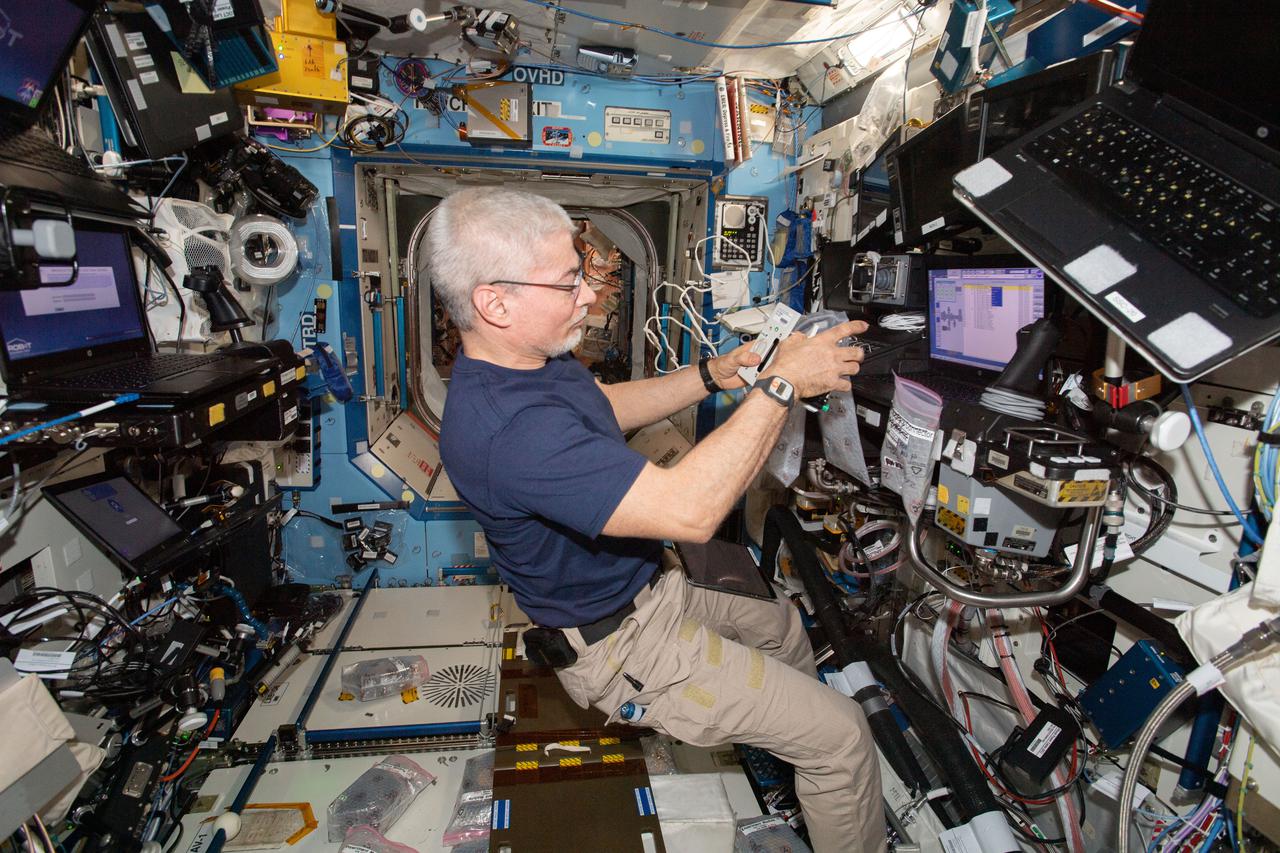
iss066e137924 (Feb. 9, 2022) --- NASA astronaut and Expedition 66 Flight Engineer Mark Vande Hei services components inside the Multi-use Variable-G Platform, a biology research device that can generate up to 2G of artfifical gravity.
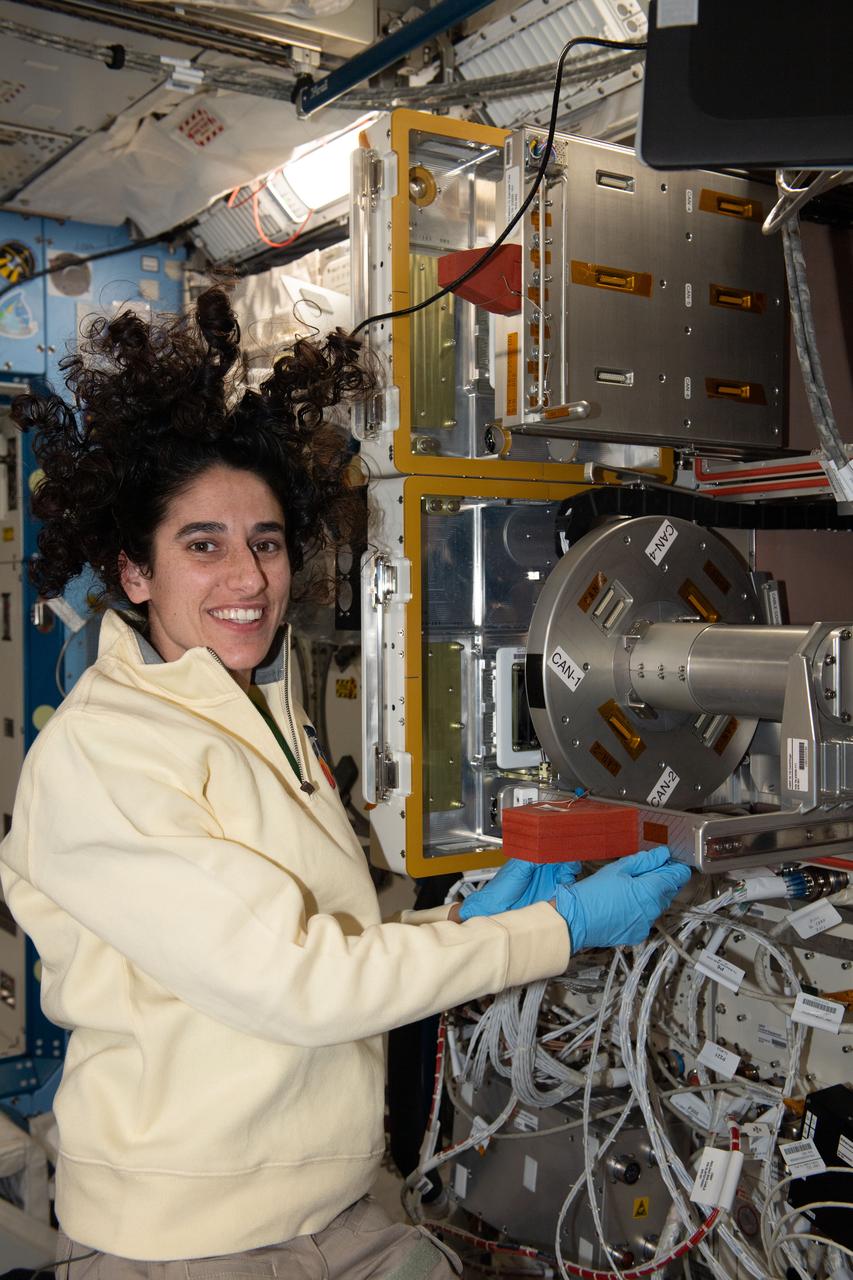
iss070e023516 (Nov. 12, 2023) --- NASA astronaut and Expedition 70 Flight Engineer Jasmin Moghbeli sets up research hardware for the Cell Gravisensing-2 study to learn how cells respond to the lack of gravity promoting space biology and improving treatments for ailments on Earth.
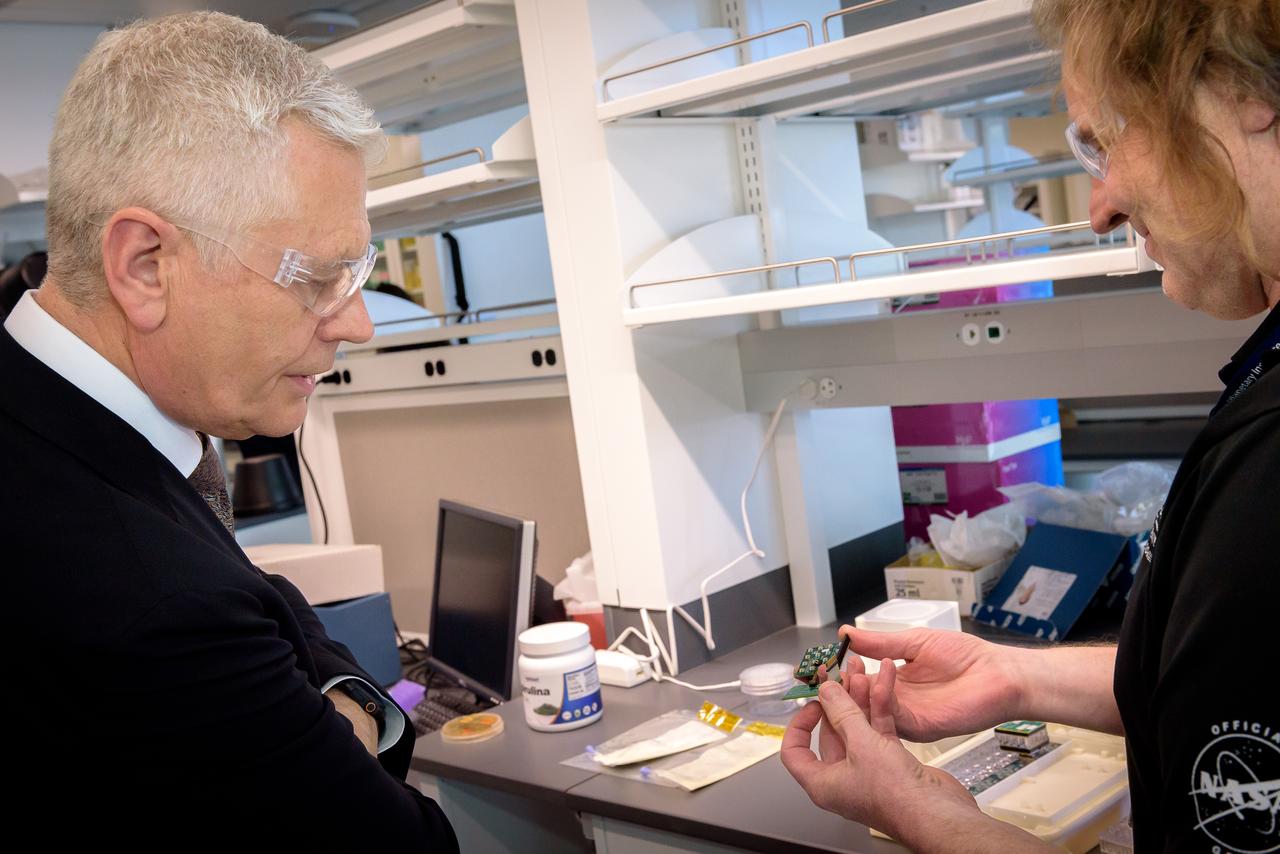
Director of Science Michael Hesse, right, presents an overview of Lunar Explorer Instrument for space biology Applications (LEIA) to Acting Deputy Associate Administrator (DAA) for the Science Mission Directorate (SMD) Mark Clampin in the Bioscience Collaborative Laboratory, N288.
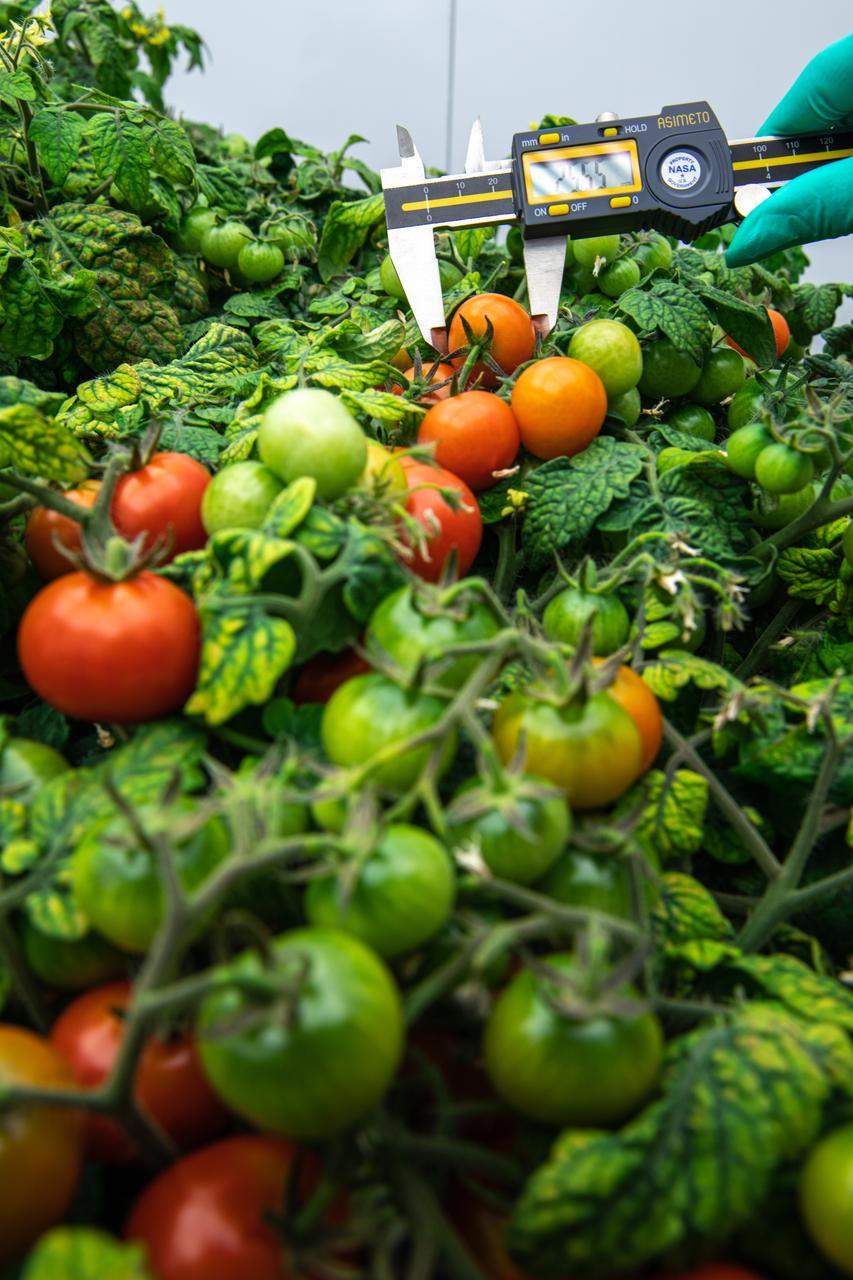
Lashelle Spencer, plant scientist with the Laboratory Support Services and Operations (LASSO) contract at NASA’s Kennedy Space Center in Florida, takes measurements on ‘Red Robin’ dwarf tomato plants, Jan. 10, 2020, inside a laboratory in the spaceport’s Space Station Processing Facility. The tomatoes are growing from seeds that have been exposed to simulated solar particle radiation. The plants’ edible mass and nutrients will be measured and compared to those of a control crop, grown from non-irradiated seeds. The project was designed to confirm that nutritious, high-quality produce can be reliably grown in deep space, or to provide a baseline to guide development of countermeasures to protect future crop foods from radiation during missions beyond low-Earth orbit. The investigation on space radiation impact on seeds and crop production also will be carried on the Materials International Space Station Experiment (MISSE) platform outside the station, supported NASA’s Space Technology Mission Directorate and the Space Biology Program, and potentially on future beyond-low-Earth platforms.

Lashelle Spencer, plant scientist with the Laboratory Support Services and Operations (LASSO) contract at NASA’s Kennedy Space Center in Florida, takes measurements on ‘Red Robin’ dwarf tomato plants, Jan. 10, 2020, inside a laboratory in the spaceport’s Space Station Processing Facility. The tomatoes are growing from seeds that have been exposed to simulated solar particle radiation. The plants’ edible mass and nutrients will be measured and compared to those of a control crop, grown from non-irradiated seeds. The project was designed to confirm that nutritious, high-quality produce can be reliably grown in deep space, or to provide a baseline to guide development of countermeasures to protect future crop foods from radiation during missions beyond low-Earth orbit. The investigation on space radiation impact on seeds and crop production also will be carried on the Materials International Space Station Experiment (MISSE) platform outside the station, supported NASA’s Space Technology Mission Directorate and the Space Biology Program, and potentially on future beyond-low-Earth platforms.
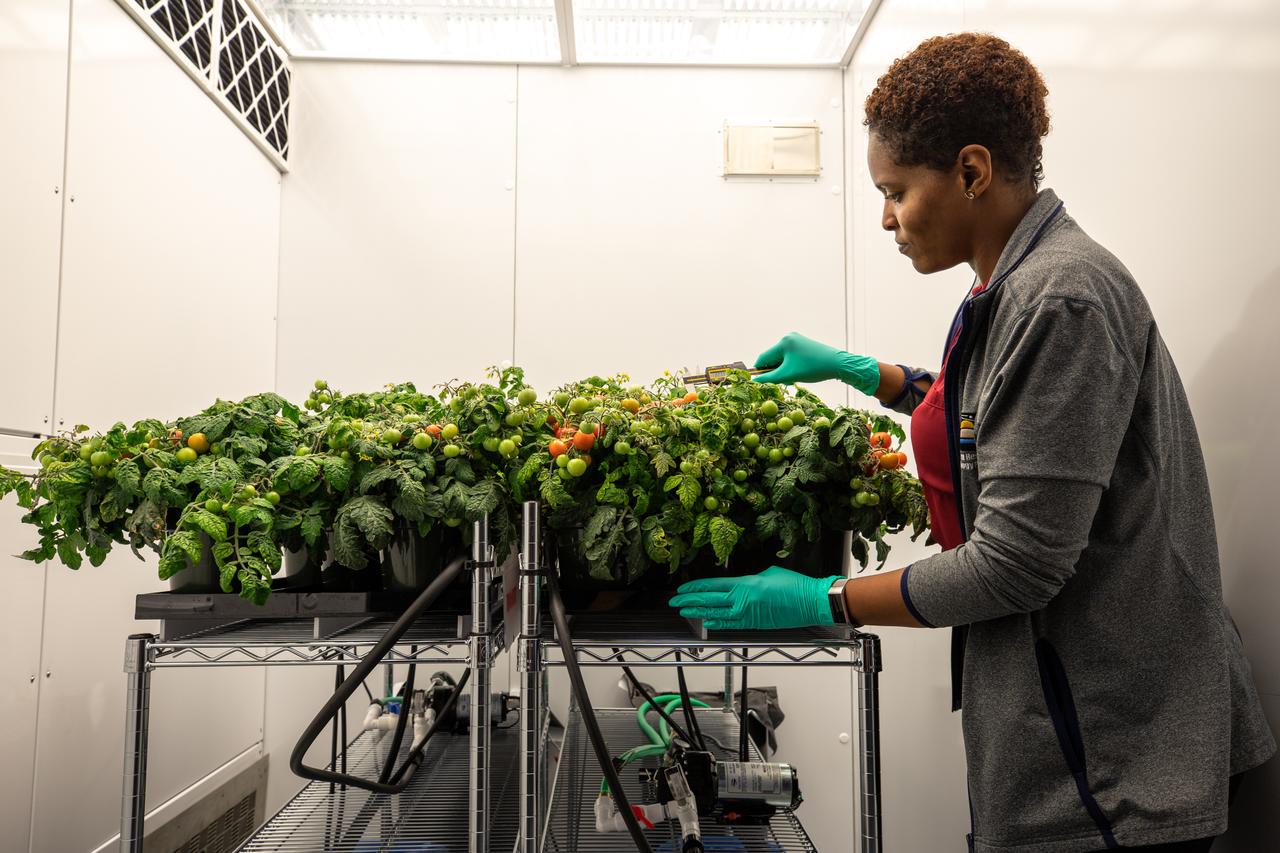
Lashelle Spencer, plant scientist with the Laboratory Support Services and Operations (LASSO) contract at NASA’s Kennedy Space Center in Florida, takes measurements on ‘Red Robin’ dwarf tomato plants, Jan. 10, 2020, inside a laboratory in the spaceport’s Space Station Processing Facility. The tomatoes are growing from seeds that have been exposed to simulated solar particle radiation. The plants’ edible mass and nutrients will be measured and compared to those of a control crop, grown from non-irradiated seeds. The project was designed to confirm that nutritious, high-quality produce can be reliably grown in deep space, or to provide a baseline to guide development of countermeasures to protect future crop foods from radiation during missions beyond low-Earth orbit. The investigation on space radiation impact on seeds and crop production also will be carried on the Materials International Space Station Experiment (MISSE) platform outside the station, supported NASA’s Space Technology Mission Directorate and the Space Biology Program, and potentially on future beyond-low-Earth platforms.
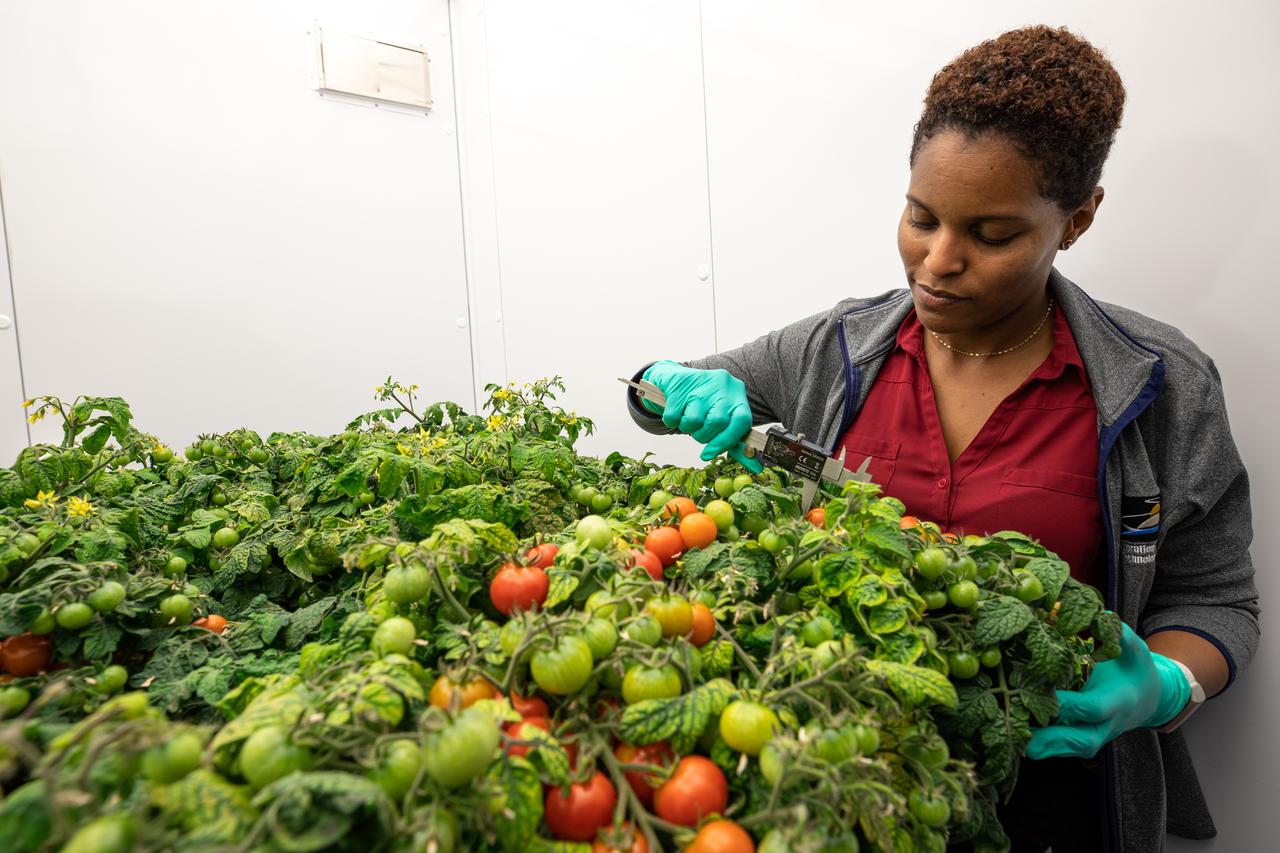
Lashelle Spencer, plant scientist with the Laboratory Support Services and Operations (LASSO) contract at NASA’s Kennedy Space Center in Florida, takes measurements on ‘Red Robin’ dwarf tomato plants, Jan. 10, 2020, inside a laboratory in the spaceport’s Space Station Processing Facility. The tomatoes are growing from seeds that have been exposed to simulated solar particle radiation. The plants’ edible mass and nutrients will be measured and compared to those of a control crop, grown from non-irradiated seeds. The project was designed to confirm that nutritious, high-quality produce can be reliably grown in deep space, or to provide a baseline to guide development of countermeasures to protect future crop foods from radiation during missions beyond low-Earth orbit. The investigation on space radiation impact on seeds and crop production also will be carried on the Materials International Space Station Experiment (MISSE) platform outside the station, supported NASA’s Space Technology Mission Directorate and the Space Biology Program, and potentially on future beyond-low-Earth platforms.
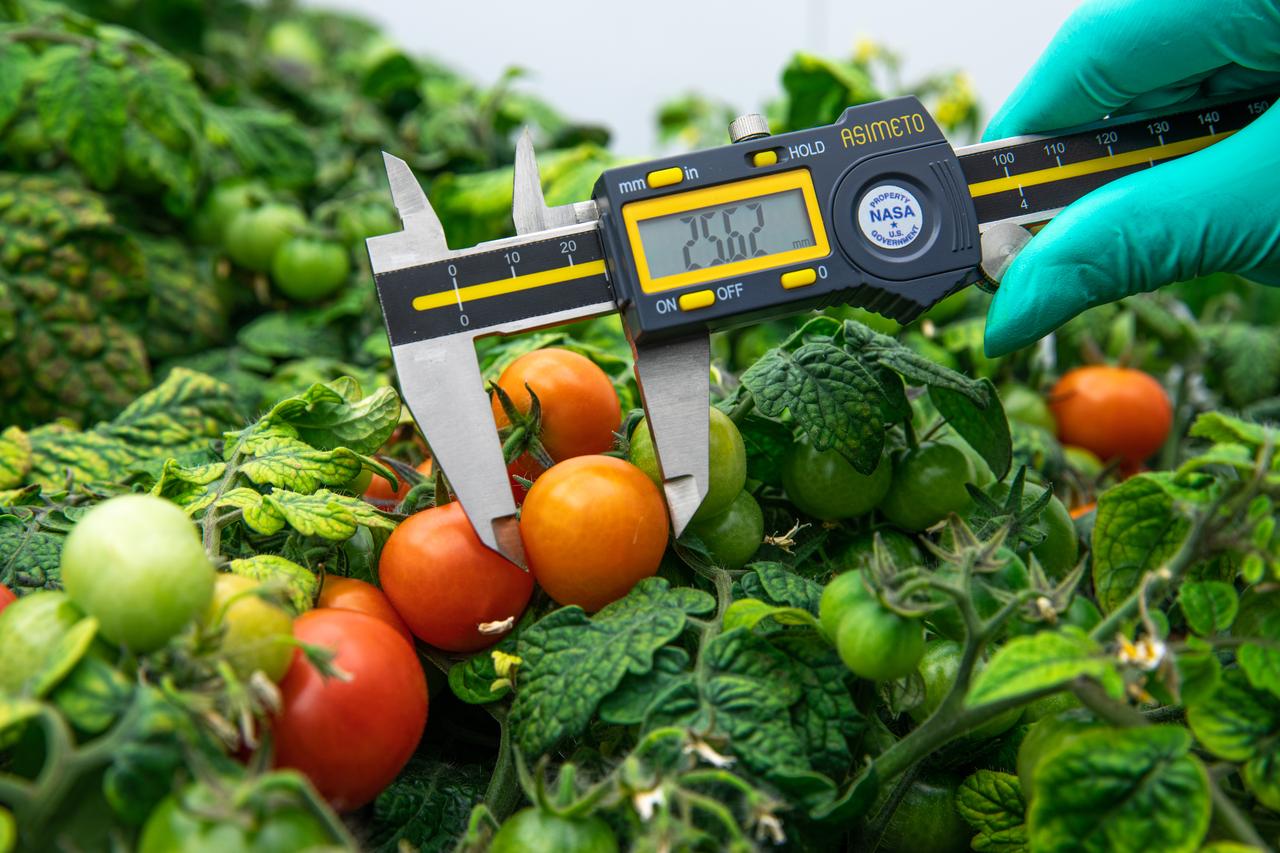
Lashelle Spencer, plant scientist with the Laboratory Support Services and Operations (LASSO) contract at NASA’s Kennedy Space Center in Florida, takes measurements on ‘Red Robin’ dwarf tomato plants, Jan. 10, 2020, inside a laboratory in the spaceport’s Space Station Processing Facility. The tomatoes are growing from seeds that have been exposed to simulated solar particle radiation. The plants’ edible mass and nutrients will be measured and compared to those of a control crop, grown from non-irradiated seeds. The project was designed to confirm that nutritious, high-quality produce can be reliably grown in deep space, or to provide a baseline to guide development of countermeasures to protect future crop foods from radiation during missions beyond low-Earth orbit. The investigation on space radiation impact on seeds and crop production also will be carried on the Materials International Space Station Experiment (MISSE) platform outside the station, supported NASA’s Space Technology Mission Directorate and the Space Biology Program, and potentially on future beyond-low-Earth platforms.
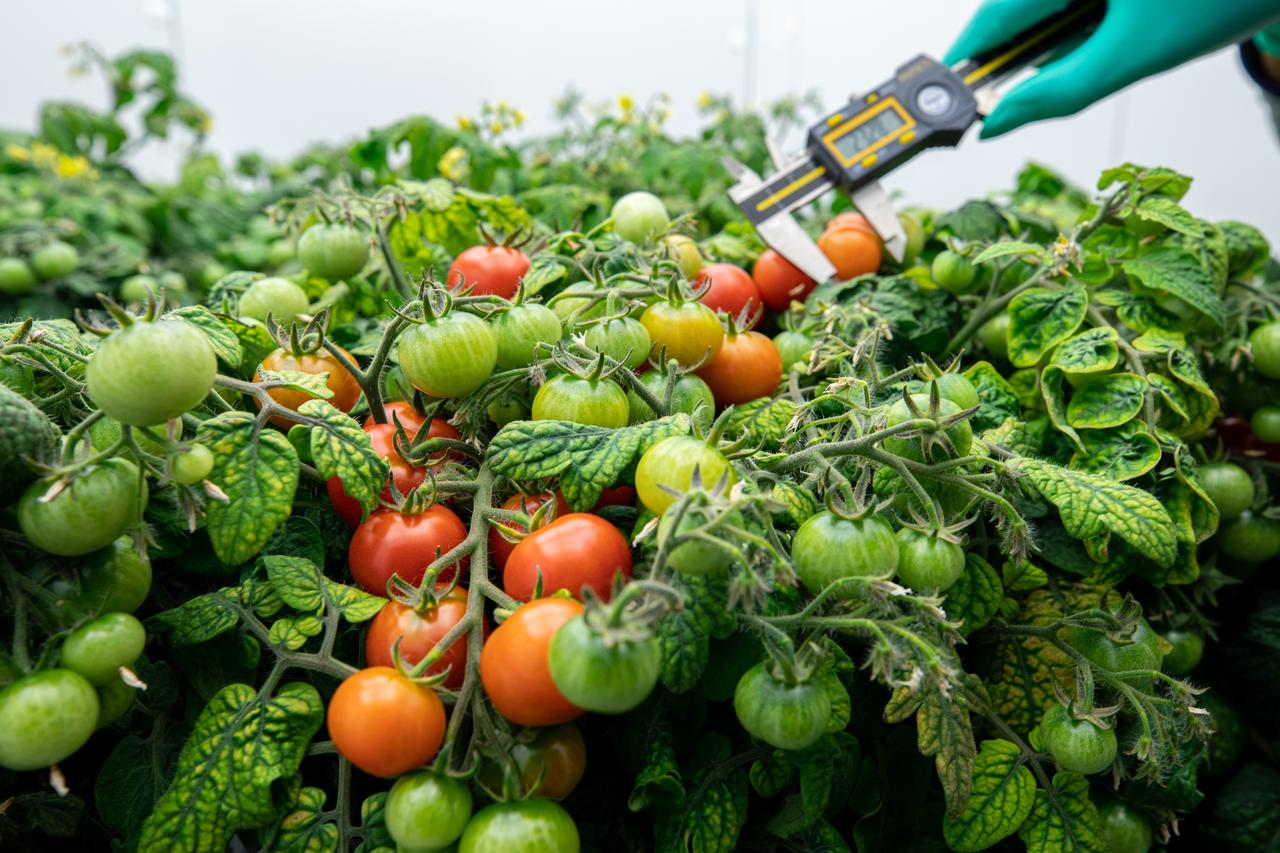
Lashelle Spencer, plant scientist with the Laboratory Support Services and Operations (LASSO) contract at NASA’s Kennedy Space Center in Florida, takes measurements on ‘Red Robin’ dwarf tomato plants, Jan. 10, 2020, inside a laboratory in the spaceport’s Space Station Processing Facility. The tomatoes are growing from seeds that have been exposed to simulated solar particle radiation. The plants’ edible mass and nutrients will be measured and compared to those of a control crop, grown from non-irradiated seeds. The project was designed to confirm that nutritious, high-quality produce can be reliably grown in deep space, or to provide a baseline to guide development of countermeasures to protect future crop foods from radiation during missions beyond low-Earth orbit. The investigation on space radiation impact on seeds and crop production also will be carried on the Materials International Space Station Experiment (MISSE) platform outside the station, supported NASA’s Space Technology Mission Directorate and the Space Biology Program, and potentially on future beyond-low-Earth platforms.
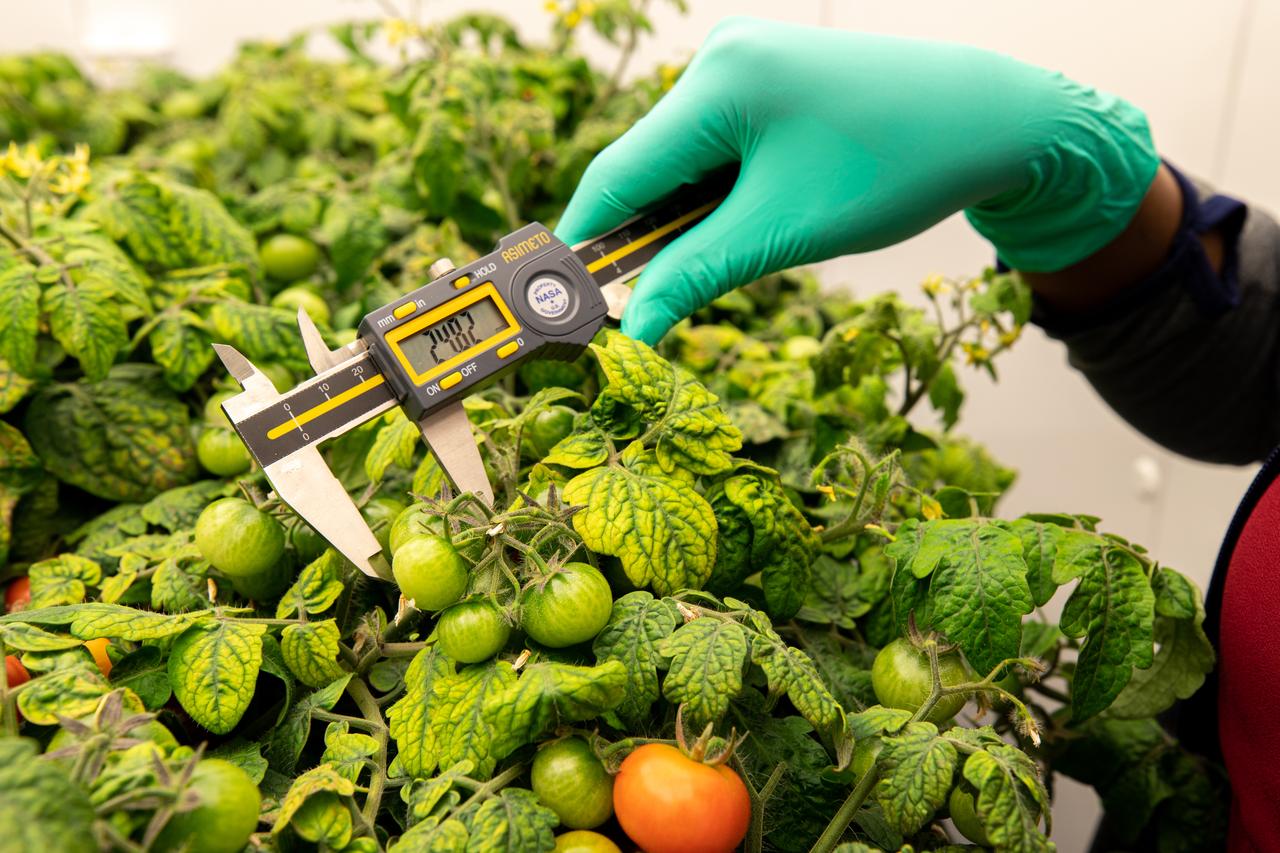
Lashelle Spencer, plant scientist with the Laboratory Support Services and Operations (LASSO) contract at NASA’s Kennedy Space Center in Florida, takes measurements on ‘Red Robin’ dwarf tomato plants, Jan. 10, 2020, inside a laboratory in the spaceport’s Space Station Processing Facility. The tomatoes are growing from seeds that have been exposed to simulated solar particle radiation. The plants’ edible mass and nutrients will be measured and compared to those of a control crop, grown from non-irradiated seeds. The project was designed to confirm that nutritious, high-quality produce can be reliably grown in deep space, or to provide a baseline to guide development of countermeasures to protect future crop foods from radiation during missions beyond low-Earth orbit. The investigation on space radiation impact on seeds and crop production also will be carried on the Materials International Space Station Experiment (MISSE) platform outside the station, supported NASA’s Space Technology Mission Directorate and the Space Biology Program, and potentially on future beyond-low-Earth platforms.

Lashelle Spencer, plant scientist with the Laboratory Support Services and Operations (LASSO) contract at NASA’s Kennedy Space Center in Florida, takes measurements on ‘Red Robin’ dwarf tomato plants, Jan. 10, 2020, inside a laboratory in the spaceport’s Space Station Processing Facility. The tomatoes are growing from seeds that have been exposed to simulated solar particle radiation. The plants’ edible mass and nutrients will be measured and compared to those of a control crop, grown from non-irradiated seeds. The project was designed to confirm that nutritious, high-quality produce can be reliably grown in deep space, or to provide a baseline to guide development of countermeasures to protect future crop foods from radiation during missions beyond low-Earth orbit. The investigation on space radiation impact on seeds and crop production also will be carried on the Materials International Space Station Experiment (MISSE) platform outside the station, supported NASA’s Space Technology Mission Directorate and the Space Biology Program, and potentially on future beyond-low-Earth platforms.
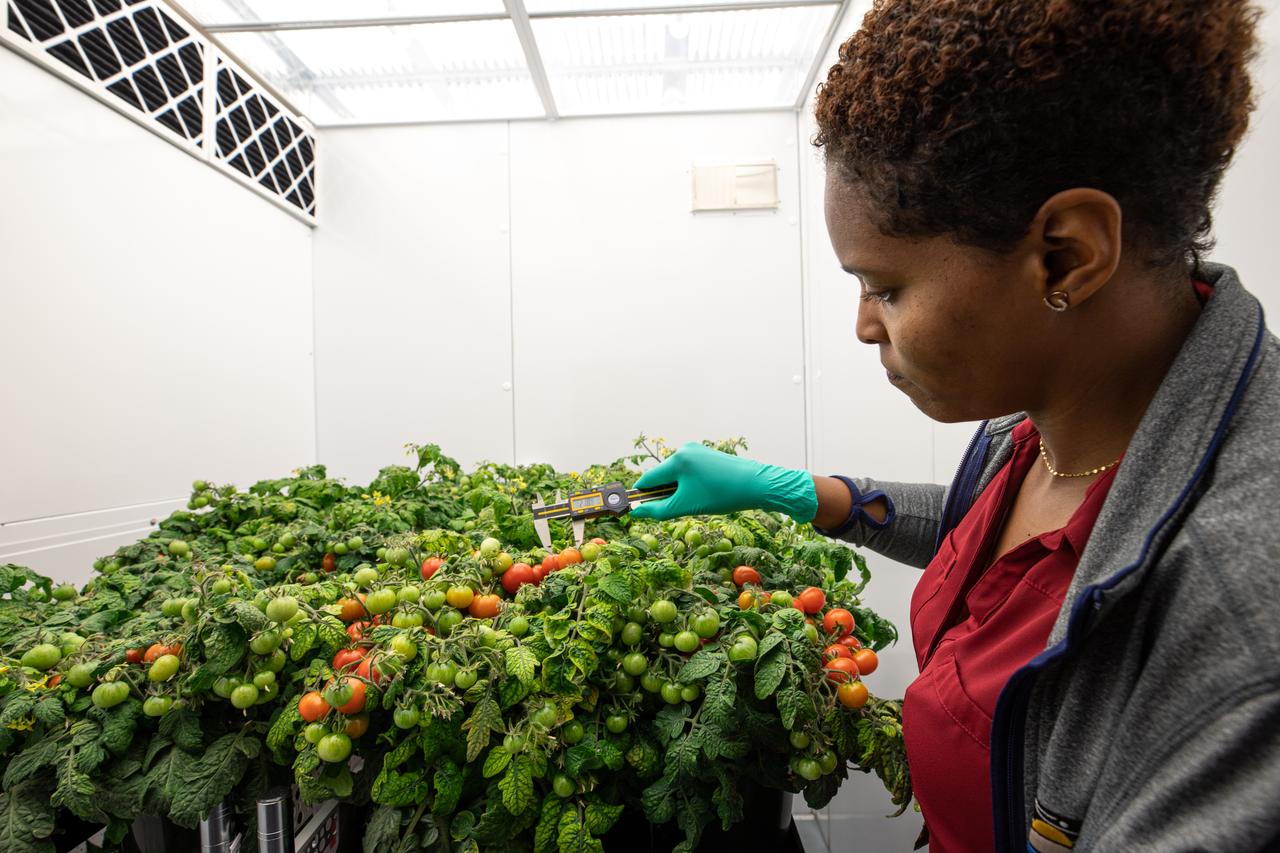
Lashelle Spencer, plant scientist with the Laboratory Support Services and Operations (LASSO) contract at NASA’s Kennedy Space Center in Florida, takes measurements on ‘Red Robin’ dwarf tomato plants, Jan. 10, 2020, inside a laboratory in the spaceport’s Space Station Processing Facility. The tomatoes are growing from seeds that have been exposed to simulated solar particle radiation. The plants’ edible mass and nutrients will be measured and compared to those of a control crop, grown from non-irradiated seeds. The project was designed to confirm that nutritious, high-quality produce can be reliably grown in deep space, or to provide a baseline to guide development of countermeasures to protect future crop foods from radiation during missions beyond low-Earth orbit. The investigation on space radiation impact on seeds and crop production also will be carried on the Materials International Space Station Experiment (MISSE) platform outside the station, supported NASA’s Space Technology Mission Directorate and the Space Biology Program, and potentially on future beyond-low-Earth platforms.