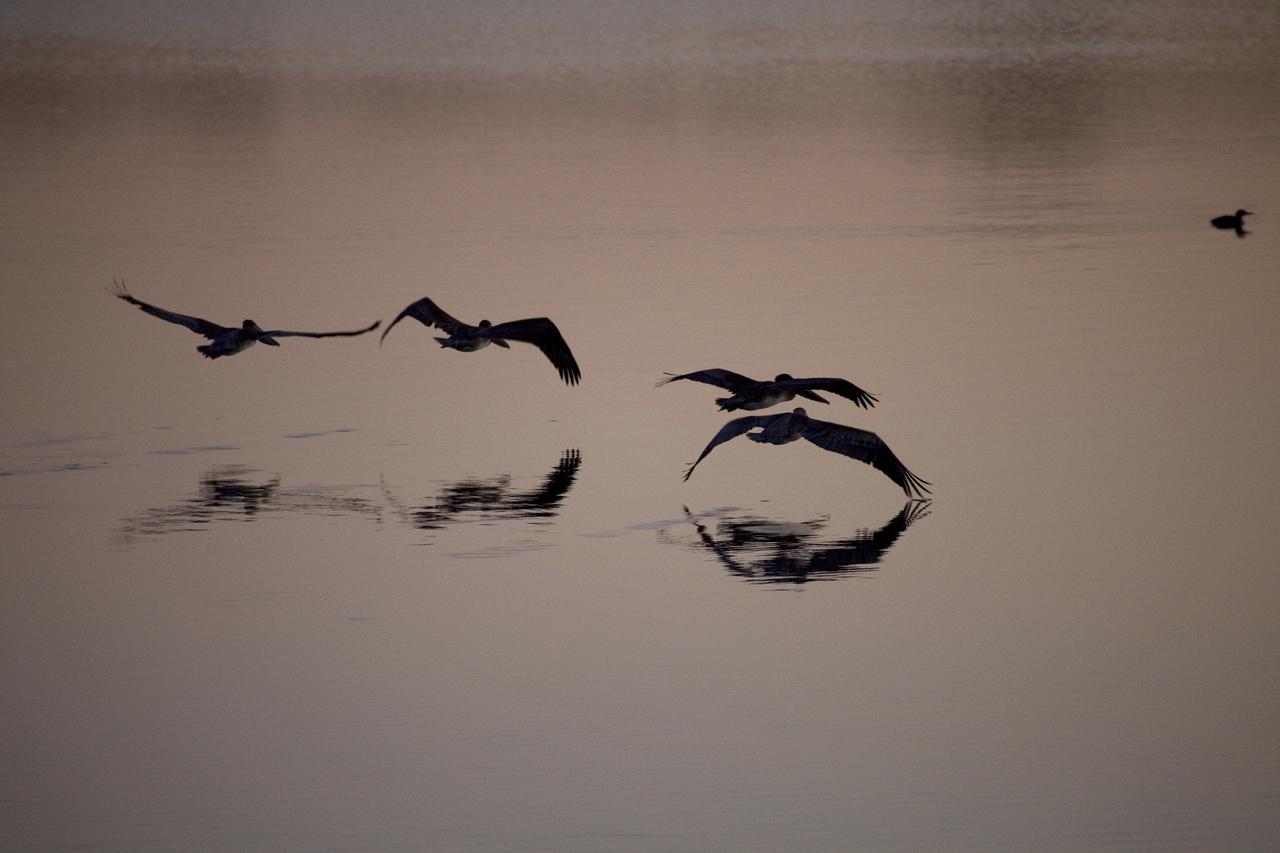
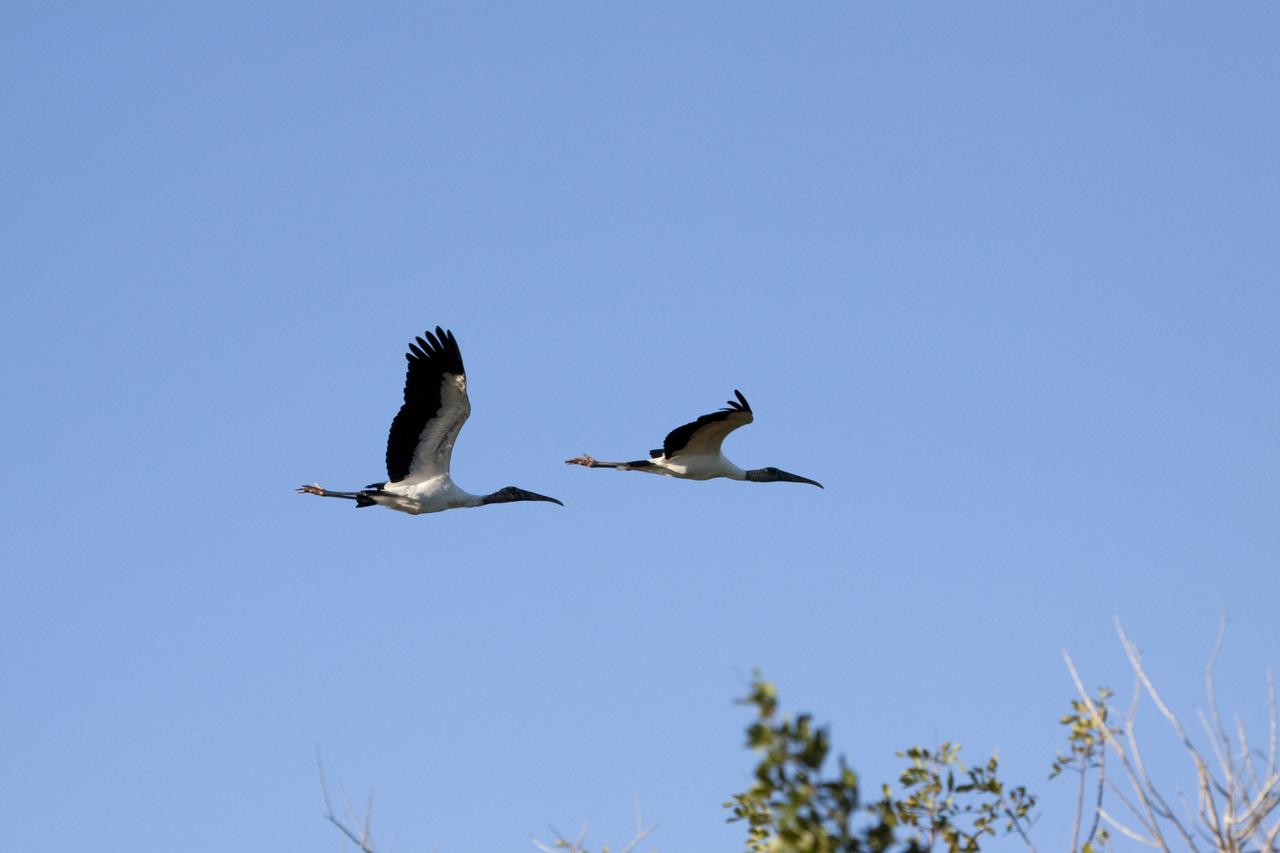
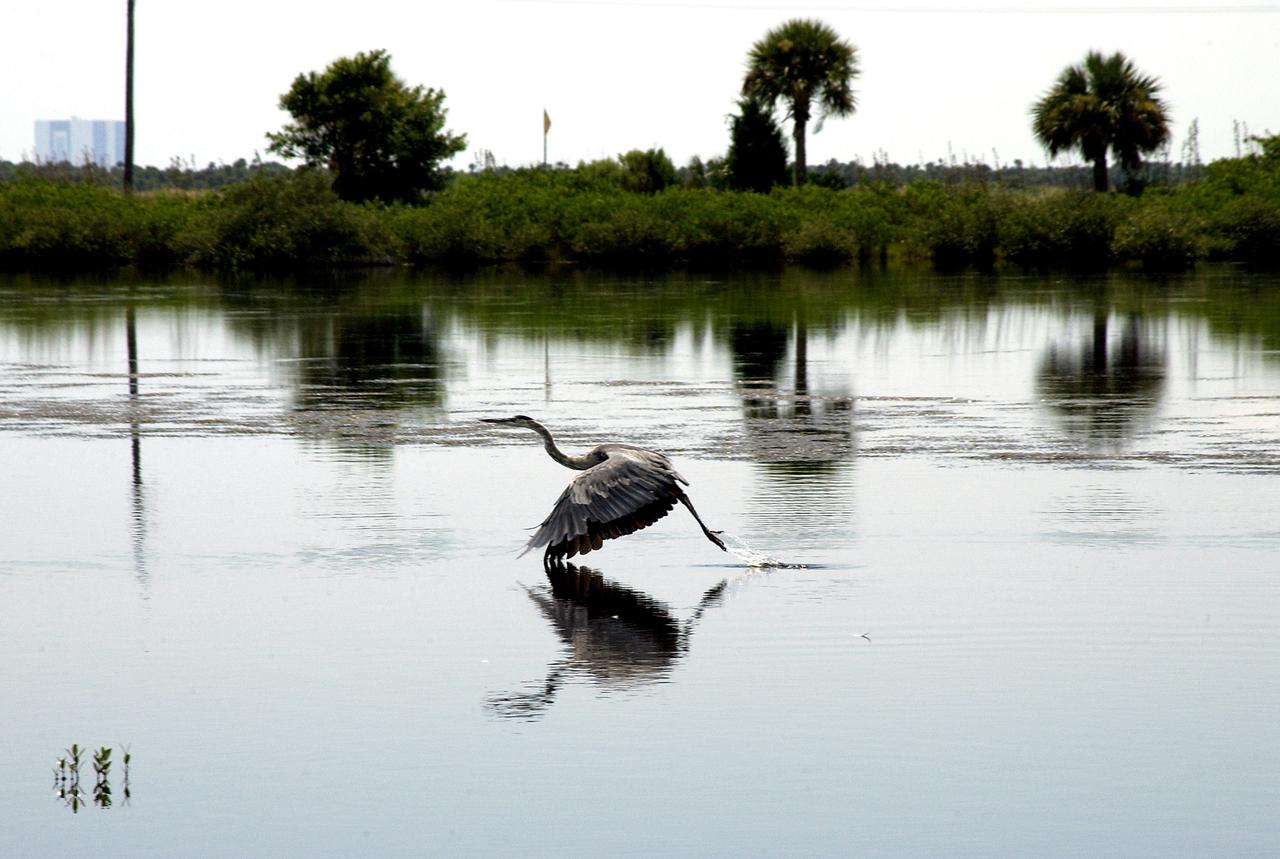
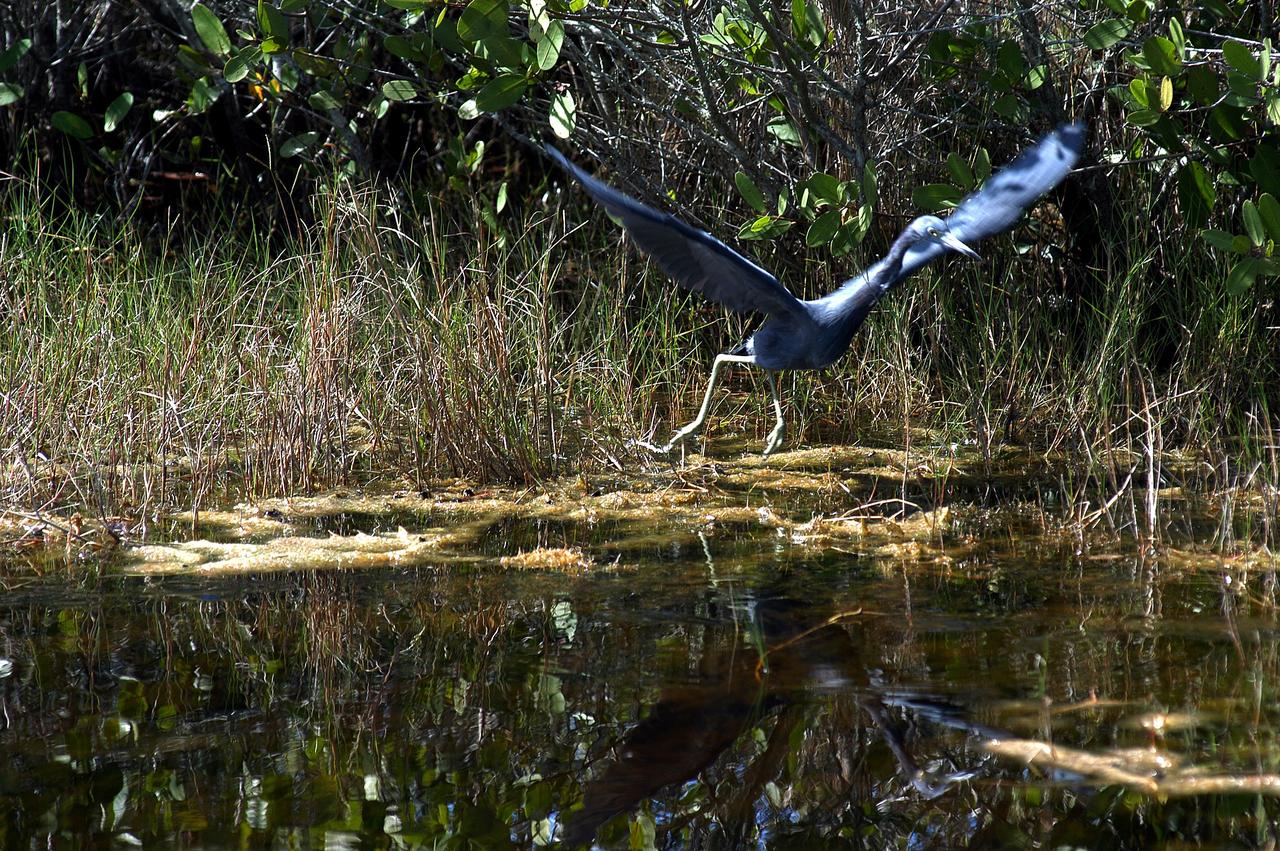
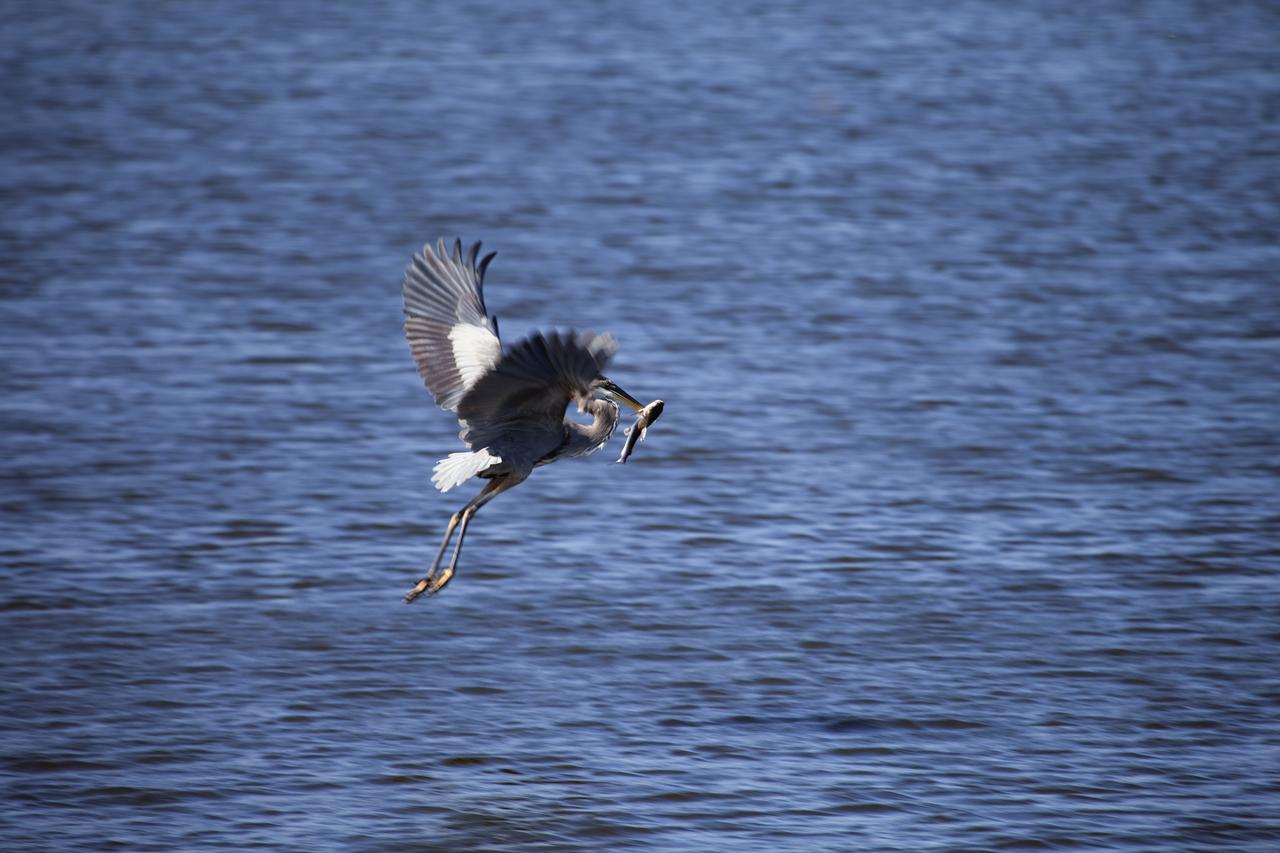
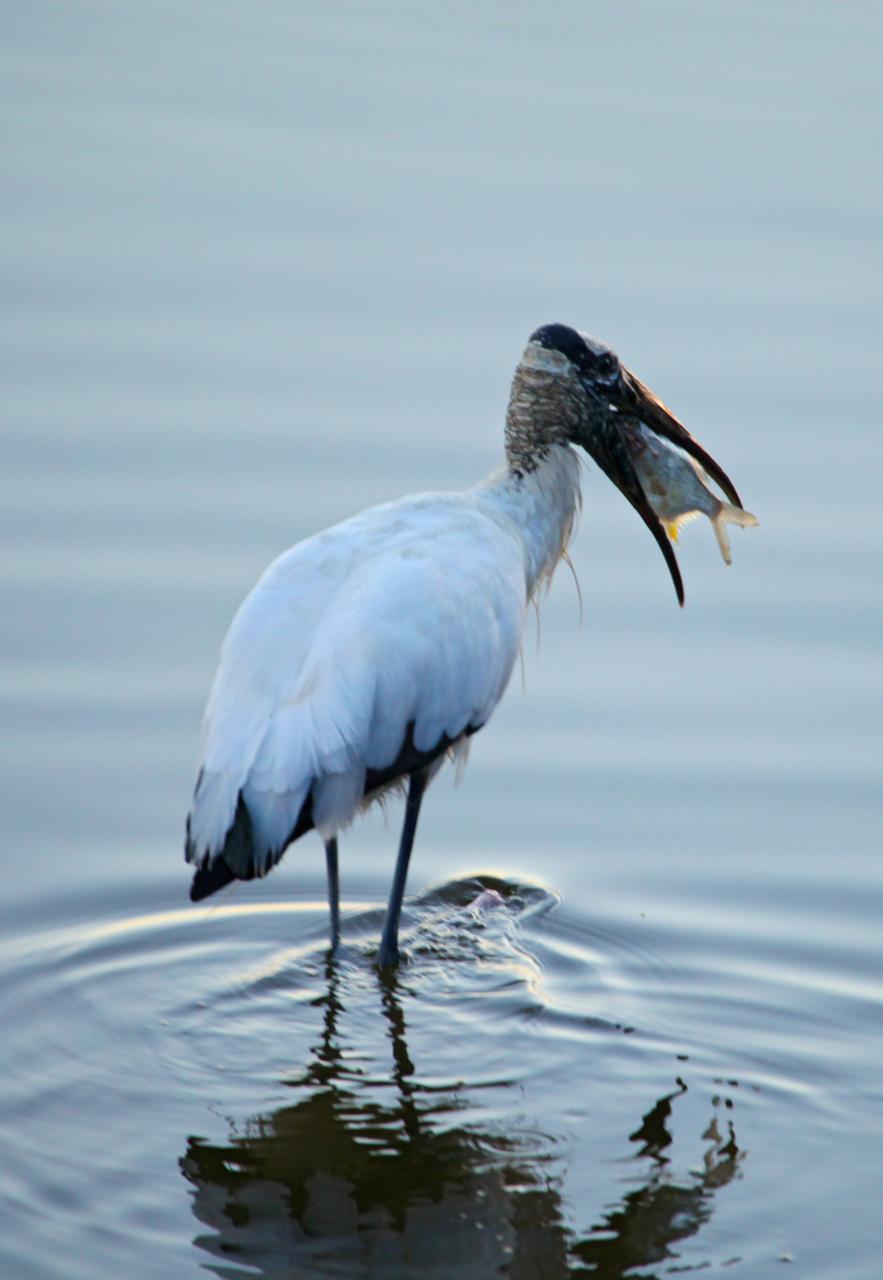
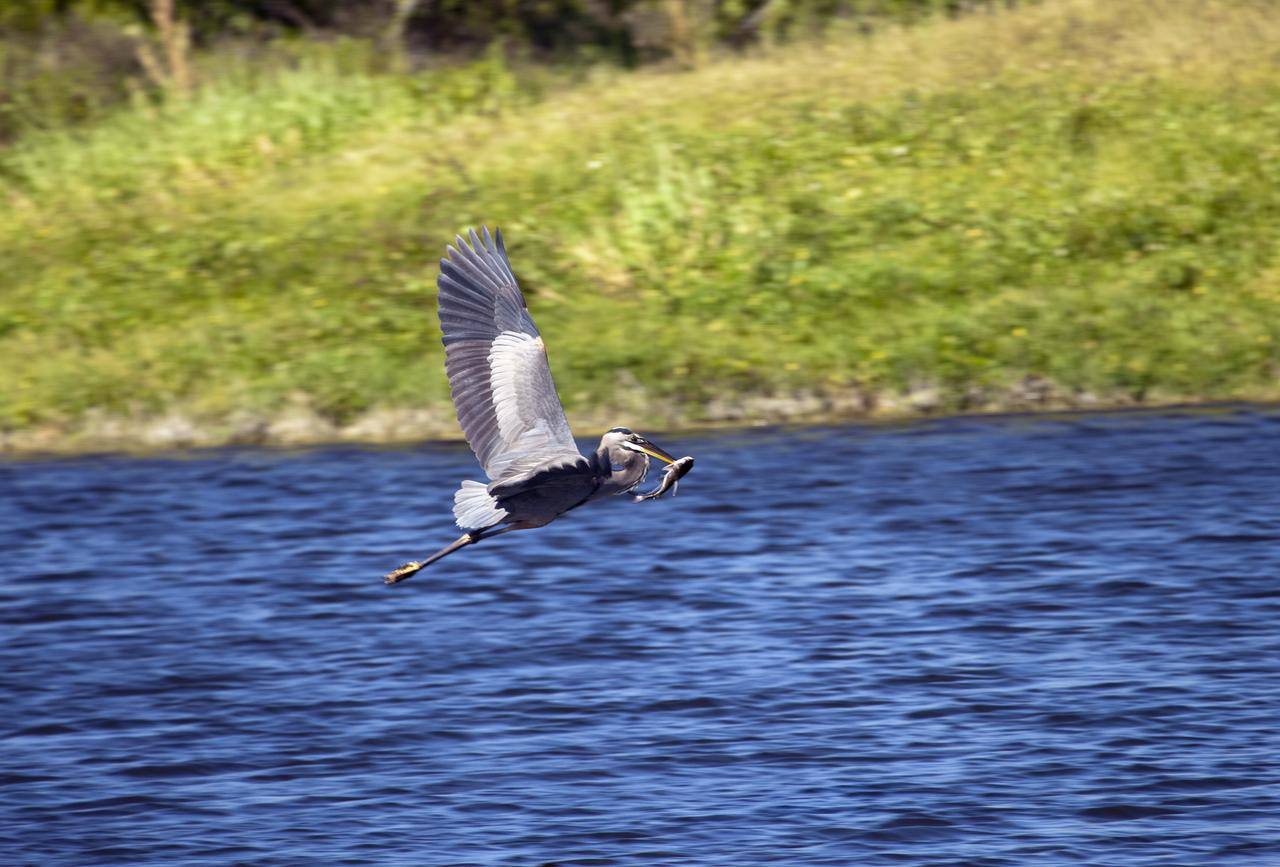
KENNEDY SPACE CENTER, FLA.  - A  Great Blue Heron takes flight from waters on KSC.  It is one of 310 species of birds that inhabit the National Merritt Island Wildlife Refuge, which shares a boundary with KSC.  The marshes and open water of the refuge also provide wintering areas for 23 species of migratory waterfowl, as well as a year-round home for great blue herons, great egrets, wood storks, cormorants, brown pelicans and other species of marsh and shore birds.
KENNEDY SPACE CENTER, FLA. - A Great Blue Heron takes flight from waters on KSC. It is one of 310 species of birds that inhabit the National Merritt Island Wildlife Refuge, which shares a boundary with KSC. The marshes and open water of the refuge also provide wintering areas for 23 species of migratory waterfowl, as well as a year-round home for great blue herons, great egrets, wood storks, cormorants, brown pelicans and other species of marsh and shore birds.
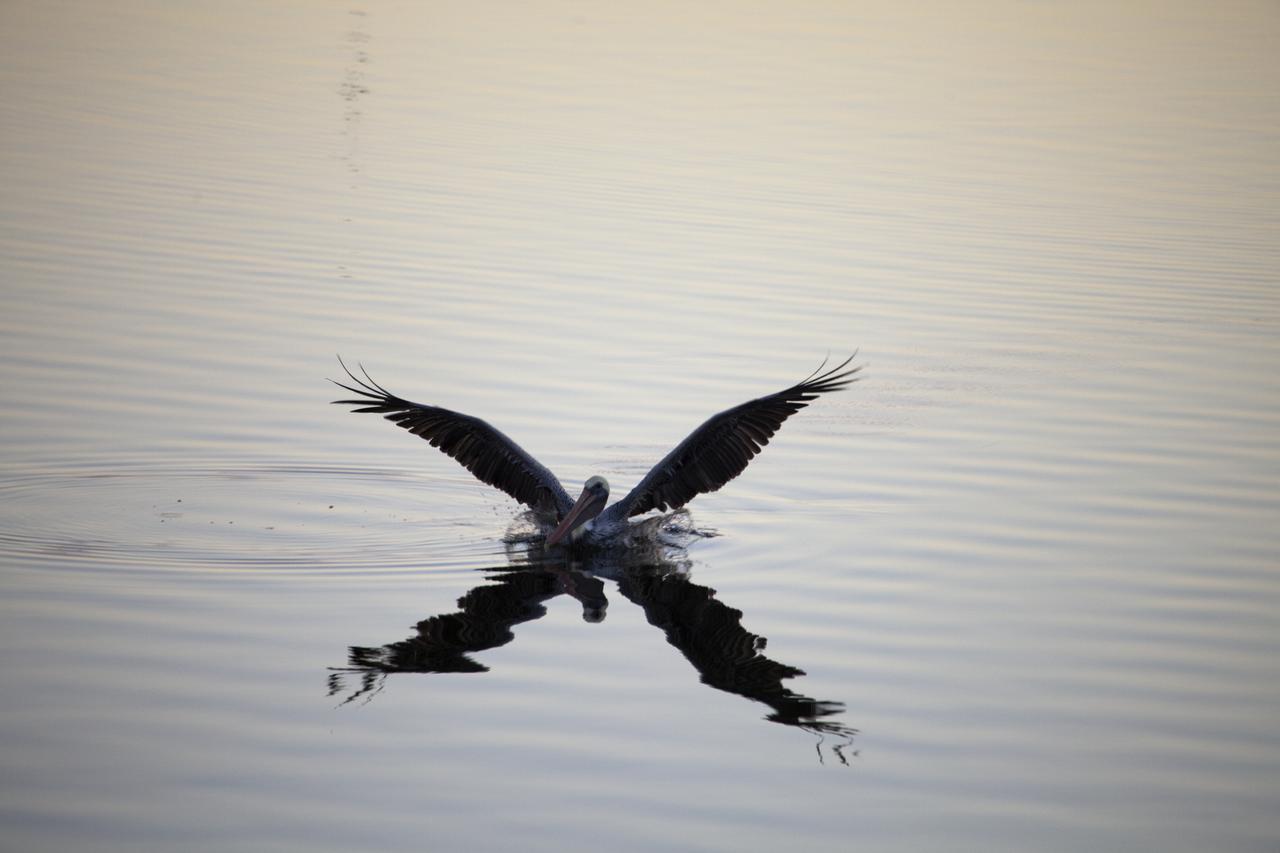
KENNEDY SPACE CENTER, FLA.  -    A great blue heron swoops down for a landing on the water near KSC.  The heron is one of 310 species of birds that inhabit the National Merritt Island Wildlife Refuge, which shares a boundary with KSC.  The marshes and open water of the refuge also provide wintering areas for 23 species of migratory waterfowl, as well as a year-round home for great blue herons, great egrets, wood storks, cormorants, brown pelicans and other species of marsh and shore birds.
KENNEDY SPACE CENTER, FLA. - A great blue heron swoops down for a landing on the water near KSC. The heron is one of 310 species of birds that inhabit the National Merritt Island Wildlife Refuge, which shares a boundary with KSC. The marshes and open water of the refuge also provide wintering areas for 23 species of migratory waterfowl, as well as a year-round home for great blue herons, great egrets, wood storks, cormorants, brown pelicans and other species of marsh and shore birds.
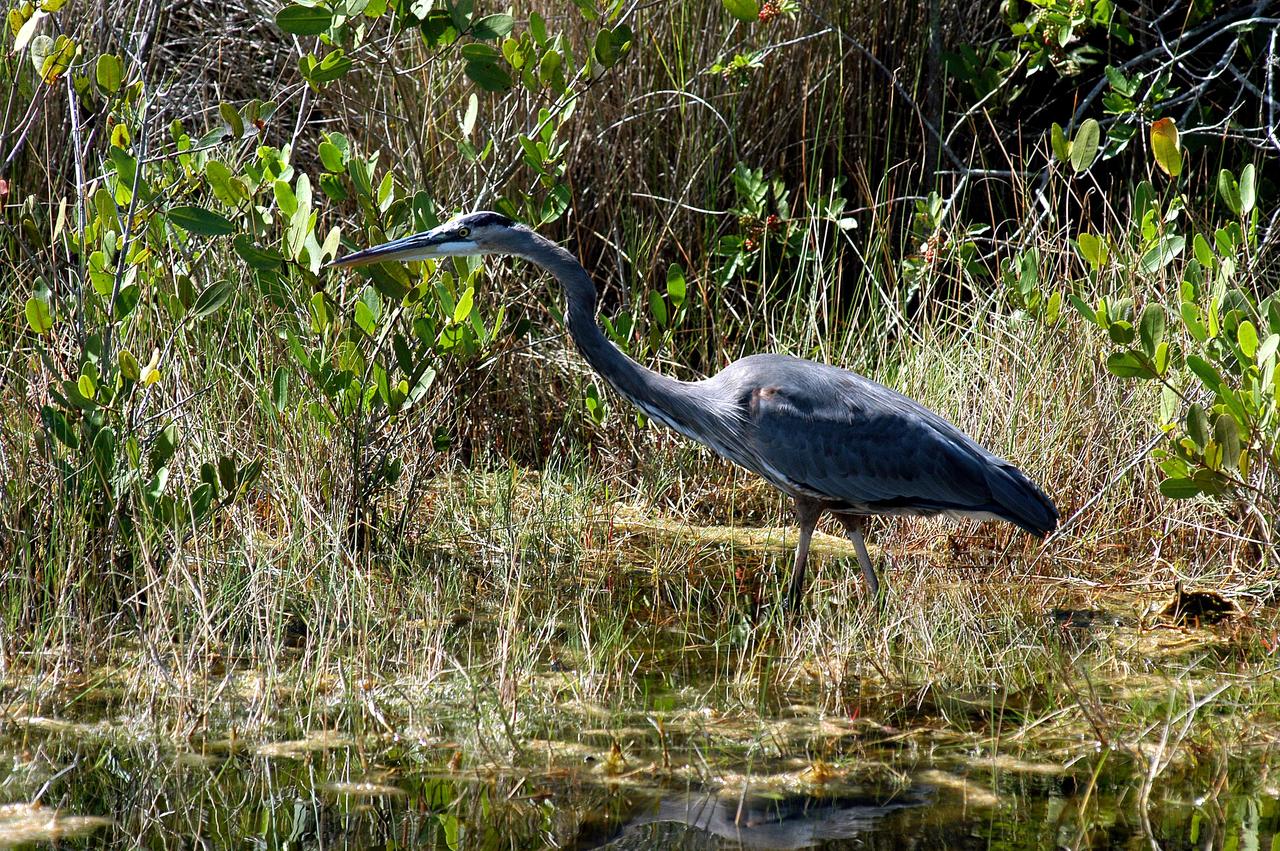
KENNEDY SPACE CENTER, FLA.   -   A great blue heron patiently stalks its prey in the marshes around KSC.   The heron is one of 310 species of birds that inhabit the National Merritt Island Wildlife Refuge, which shares a boundary with KSC.  The marshes and open water of the refuge also provide wintering areas for 23 species of migratory waterfowl, as well as a year-round home for great blue herons, great egrets, wood storks, cormorants, brown pelicans and other species of marsh and shore birds.
KENNEDY SPACE CENTER, FLA. - A great blue heron patiently stalks its prey in the marshes around KSC. The heron is one of 310 species of birds that inhabit the National Merritt Island Wildlife Refuge, which shares a boundary with KSC. The marshes and open water of the refuge also provide wintering areas for 23 species of migratory waterfowl, as well as a year-round home for great blue herons, great egrets, wood storks, cormorants, brown pelicans and other species of marsh and shore birds.
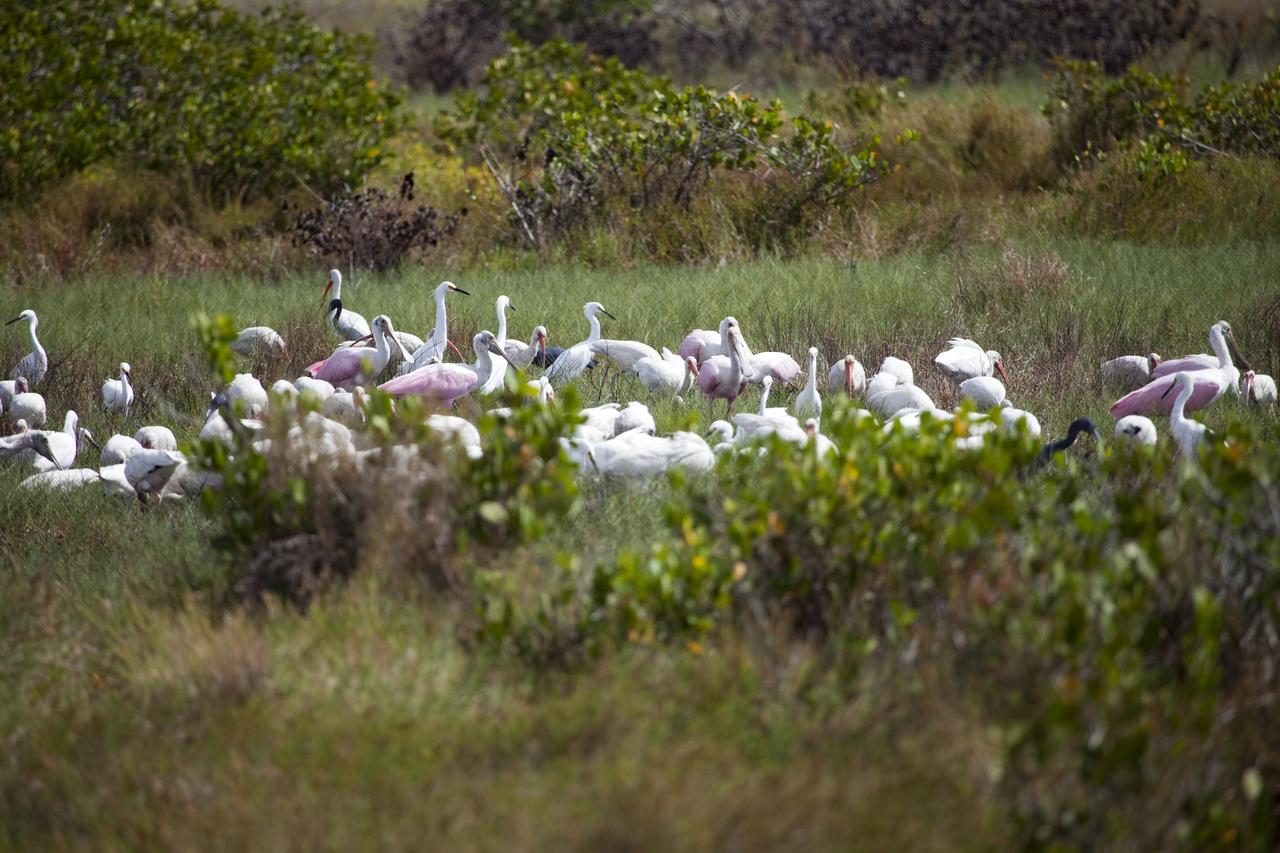
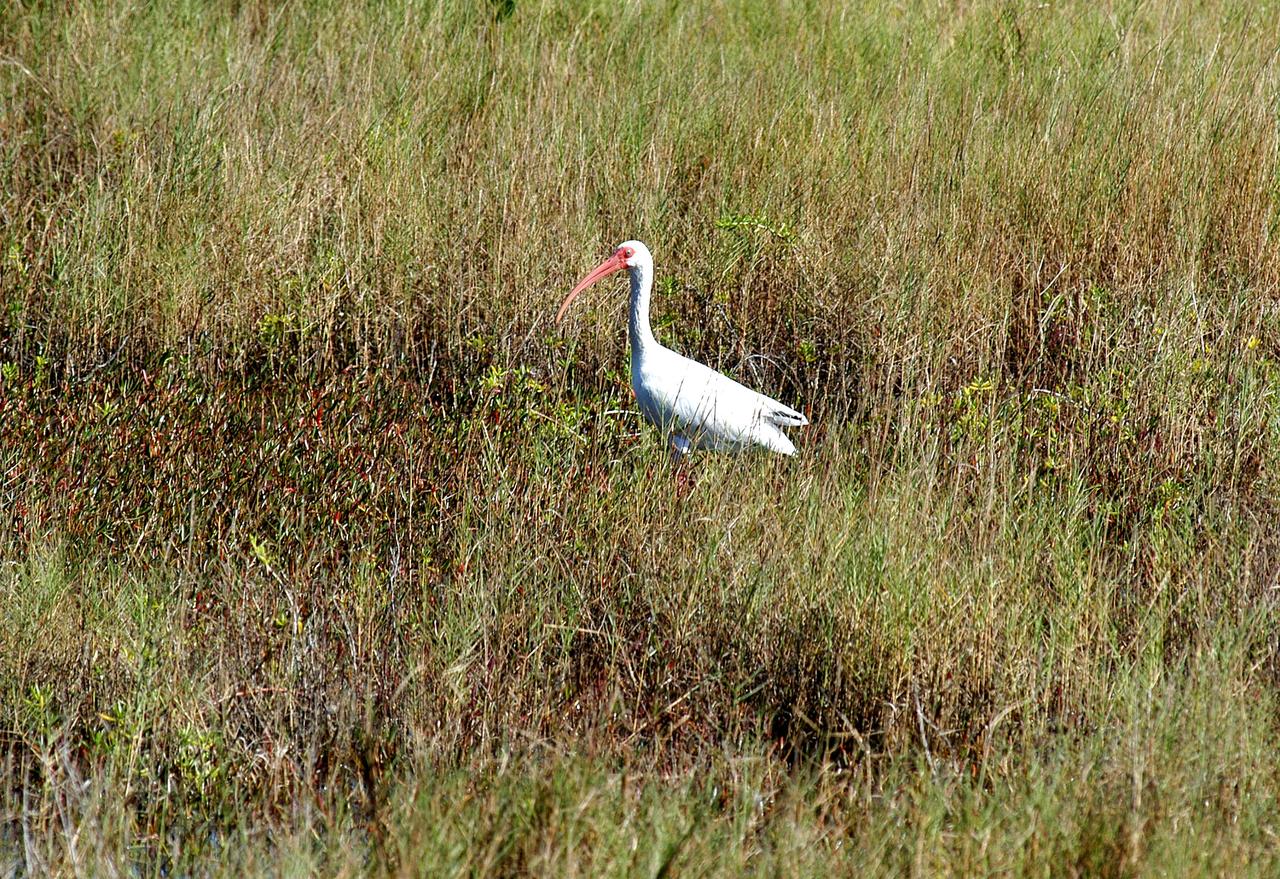
KENNEDY SPACE CENTER, FLA.   -   A great white heron silently waits in the tall grass within KSC.  The heron is one of 310 species of birds that inhabit the National Merritt Island Wildlife Refuge, which shares a boundary with KSC.  The marshes and open water of the refuge also provide wintering areas for 23 species of migratory waterfowl, as well as a year-round home for great blue herons, great egrets, wood storks, cormorants, brown pelicans and other species of marsh and shore birds.
KENNEDY SPACE CENTER, FLA. - A great white heron silently waits in the tall grass within KSC. The heron is one of 310 species of birds that inhabit the National Merritt Island Wildlife Refuge, which shares a boundary with KSC. The marshes and open water of the refuge also provide wintering areas for 23 species of migratory waterfowl, as well as a year-round home for great blue herons, great egrets, wood storks, cormorants, brown pelicans and other species of marsh and shore birds.
KSC WILDLIFE - ALLIGATORS & BIRDS
2010-5314
KSC WILDLIFE - ALLIGATORS & BIRDS
2010-5317
KSC Wildlife - Sunrise - Birds
Wildlife
KSC Wildlife - Sunrise - Birds
Wildlife
KSC WILDLIFE - ALLIGATORS & BIRDS
2010-5315
KSC Wildlife - Sunrise - Birds
Wildlife
KSC Wildlife - Sunrise - Birds
Wildlife
KSC Wildlife - Sunrise - Birds
Wildlife
KSC Wildlife - Sunrise - Birds
Wildlife
KSC Wildlife - Sunrise - Birds
Wildlife
KSC WILDLIFE - ALLIGATORS & BIRDS
2010-5313
KSC WILDLIFE - ALLIGATORS & BIRDS
2010-5316
KSC WILDLIFE - BIRDS NEAR UCS-15
2010-1766
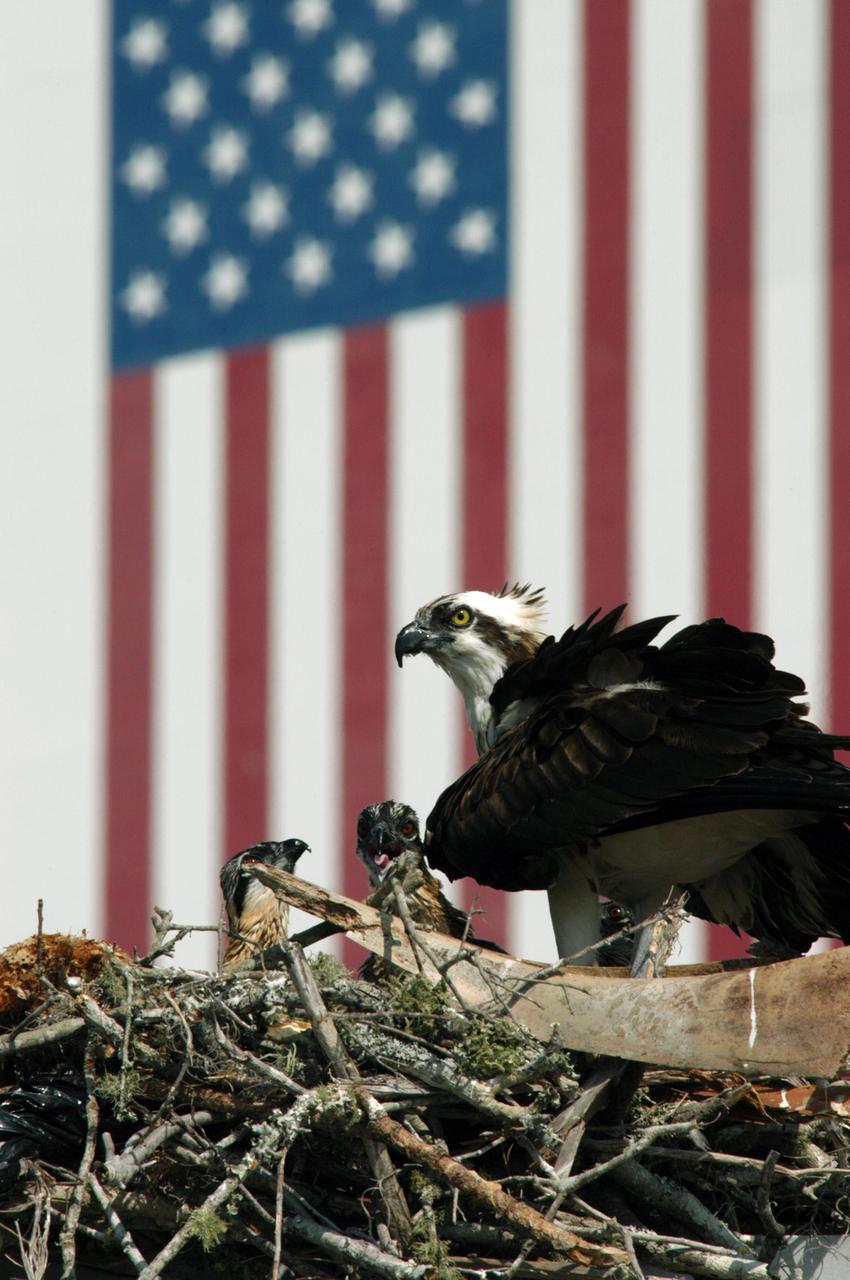
KENNEDY SPACE CENTER, FLA. --  A mother osprey watches over her chicks in a nest near the NASA News Center at Kennedy Space Center.  This is the third year the ospreys have raised a family at the site. Known as a fish hawk, ospreys select sites of opportunity, from trees and telephone poles to rocks or even flat ground.  In the United States they are found from Alaska and Newfoundland to Florida and the Gulf Coast.  Osprey nests are found throughout the Kennedy Space Center and nearby Merritt Island National Wildlife Refuge, which shares a boundary with the Center.  Photo credit: NASA/George Shelton
KSC-06pd0688
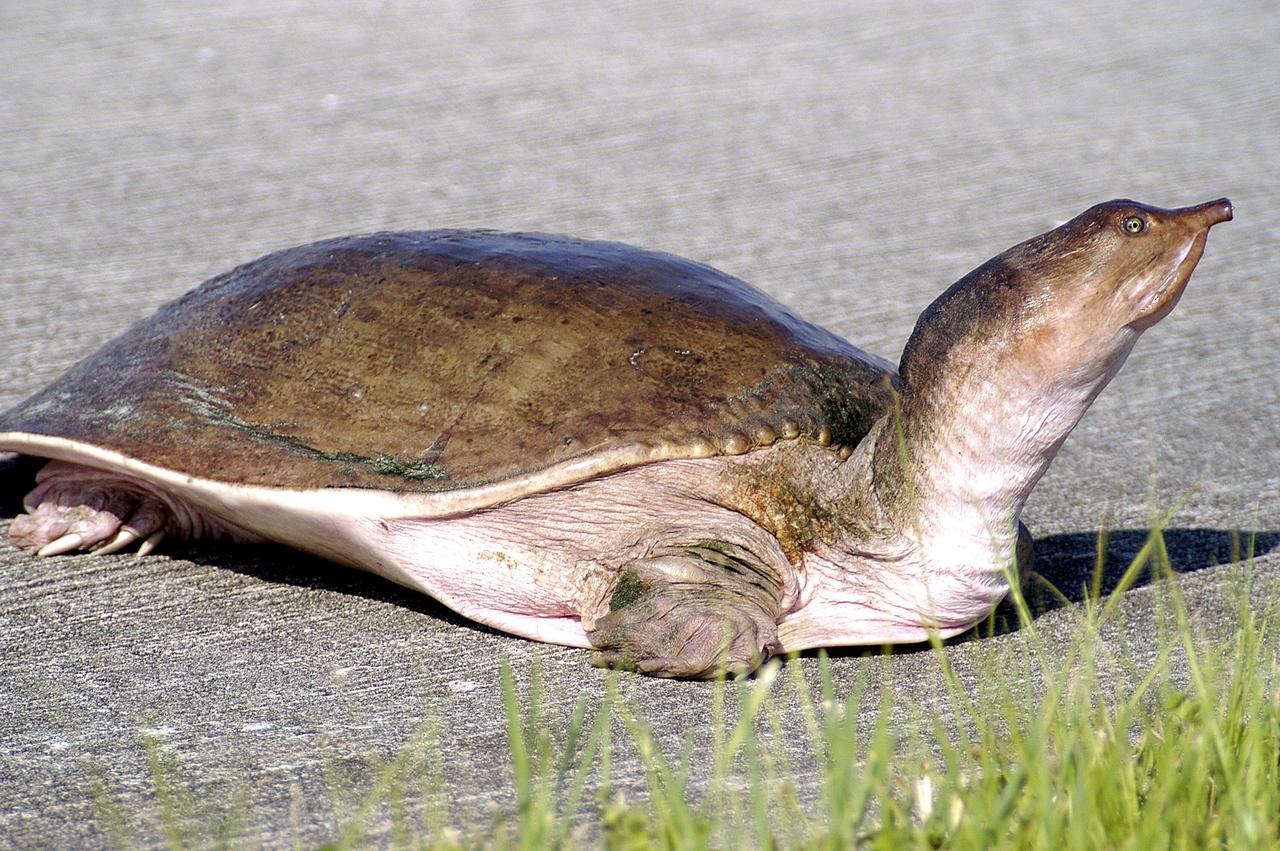
KENNEDY SPACE CENTER, FLA. -  A soft-shell turtle with only three legs is seen crossing the tow-way at KSC.  The turtle is one of 65 amphibians and reptiles found in the Merritt Island National Wildlife Refuge, which surrounds KSC.  The Wildlife Refuge encompasses 92,000 acres that are also a habitat for more than 331 species of birds, 31 mammals and 117 fishes.  The marshes and open water of the refuge provide wintering areas for 23 species of migratory waterfowl, as well as a year-round home for great blue herons, great egrets, wood storks, cormorants, brown pelicans and other species of marsh and shore birds, plus a variety of insects.
KENNEDY SPACE CENTER, FLA. - A soft-shell turtle with only three legs is seen crossing the tow-way at KSC. The turtle is one of 65 amphibians and reptiles found in the Merritt Island National Wildlife Refuge, which surrounds KSC. The Wildlife Refuge encompasses 92,000 acres that are also a habitat for more than 331 species of birds, 31 mammals and 117 fishes. The marshes and open water of the refuge provide wintering areas for 23 species of migratory waterfowl, as well as a year-round home for great blue herons, great egrets, wood storks, cormorants, brown pelicans and other species of marsh and shore birds, plus a variety of insects.
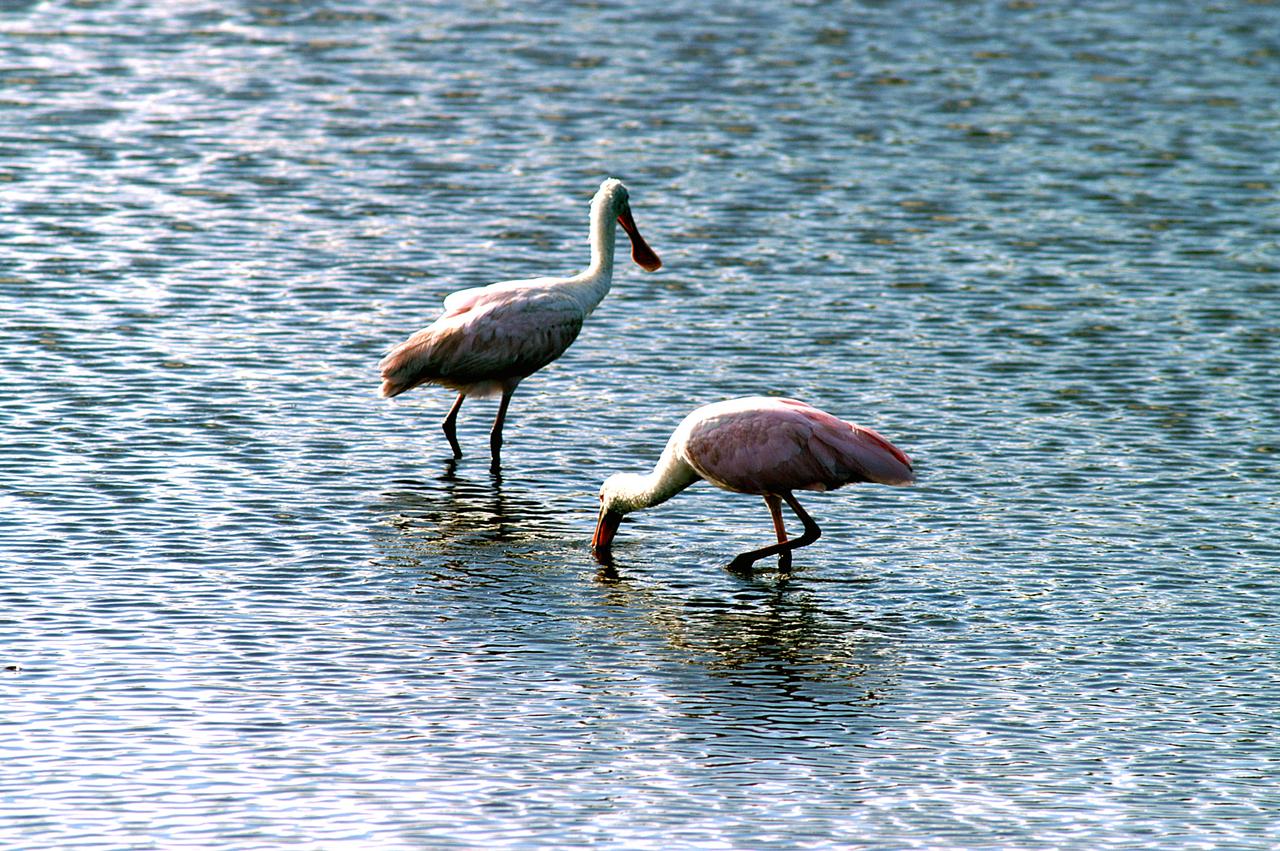
KENNEDY SPACE CENTER, FLA. -- Two roseate spoonbills hunt for their supper in the water near KSC. Spoonbills prefer to inhabit mangroves, ranging from the coasts of southern Florida, Louisiana and Texas, to the West Indies, Mexico, Central and South America. They feed on shrimps and fish in shallow waters. Spoonbills are one of 310 species of birds that inhabit the National Merritt Island Wildlife Refuge, which shares a boundary with KSC. The marshes and open water of the refuge also provide wintering areas for 23 species of migratory waterfowl, as well as a year-round home for great blue herons, great egrets, wood storks, cormorants, brown pelicans and other species of marsh and shore birds.
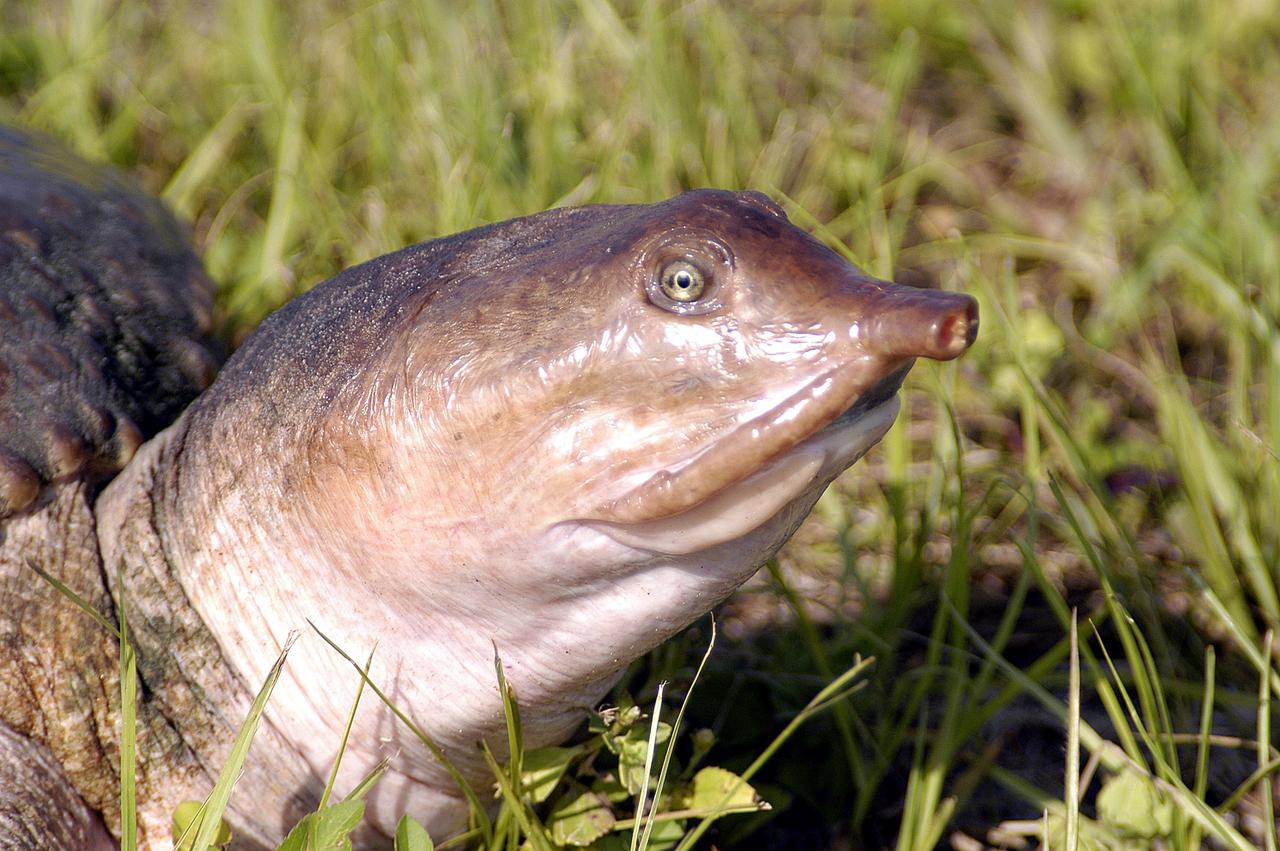
KENNEDY SPACE CENTER, FLA. -  A closeup of a soft-shell turtle seen crossing the tow-way at KSC.  The turtle is one of 65 amphibians and reptiles found in the Merritt Island National Wildlife Refuge, which surrounds KSC.  The Wildlife Refuge encompasses 92,000 acres that are also a habitat for more than 331 species of birds, 31 mammals and 117 fishes.  The marshes and open water of the refuge provide wintering areas for 23 species of migratory waterfowl, as well as a year-round home for great blue herons, great egrets, wood storks, cormorants, brown pelicans and other species of marsh and shore birds, plus a variety of insects.
KENNEDY SPACE CENTER, FLA. - A closeup of a soft-shell turtle seen crossing the tow-way at KSC. The turtle is one of 65 amphibians and reptiles found in the Merritt Island National Wildlife Refuge, which surrounds KSC. The Wildlife Refuge encompasses 92,000 acres that are also a habitat for more than 331 species of birds, 31 mammals and 117 fishes. The marshes and open water of the refuge provide wintering areas for 23 species of migratory waterfowl, as well as a year-round home for great blue herons, great egrets, wood storks, cormorants, brown pelicans and other species of marsh and shore birds, plus a variety of insects.
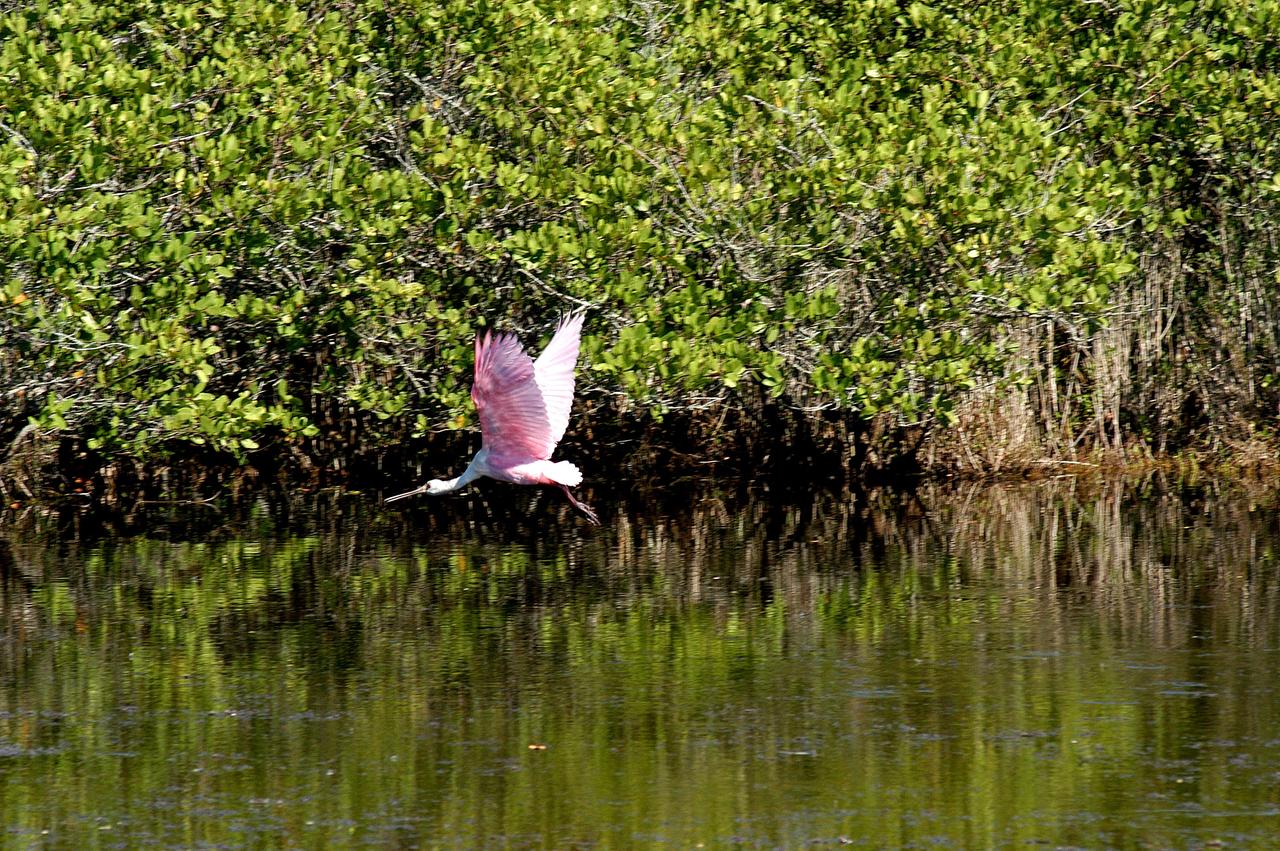
KENNEDY SPACE CENTER, FLA.   -  A roseate spoonbill flies across the water near KSC.  Spoonbills prefer to inhabit mangroves, ranging from the coasts of southern Florida, Louisiana and Texas, to the West Indies, Mexico, Central and South America.  They feed on shrimps and fish in shallow waters.   Spoonbills are one of 310 species of birds that inhabit the National Merritt Island Wildlife Refuge, which shares a boundary with KSC.  The marshes and open water of the refuge also provide wintering areas for 23 species of migratory waterfowl, as well as a year-round home for great blue herons, great egrets, wood storks, cormorants, brown pelicans and other species of marsh and shore birds.
KENNEDY SPACE CENTER, FLA. - A roseate spoonbill flies across the water near KSC. Spoonbills prefer to inhabit mangroves, ranging from the coasts of southern Florida, Louisiana and Texas, to the West Indies, Mexico, Central and South America. They feed on shrimps and fish in shallow waters. Spoonbills are one of 310 species of birds that inhabit the National Merritt Island Wildlife Refuge, which shares a boundary with KSC. The marshes and open water of the refuge also provide wintering areas for 23 species of migratory waterfowl, as well as a year-round home for great blue herons, great egrets, wood storks, cormorants, brown pelicans and other species of marsh and shore birds.
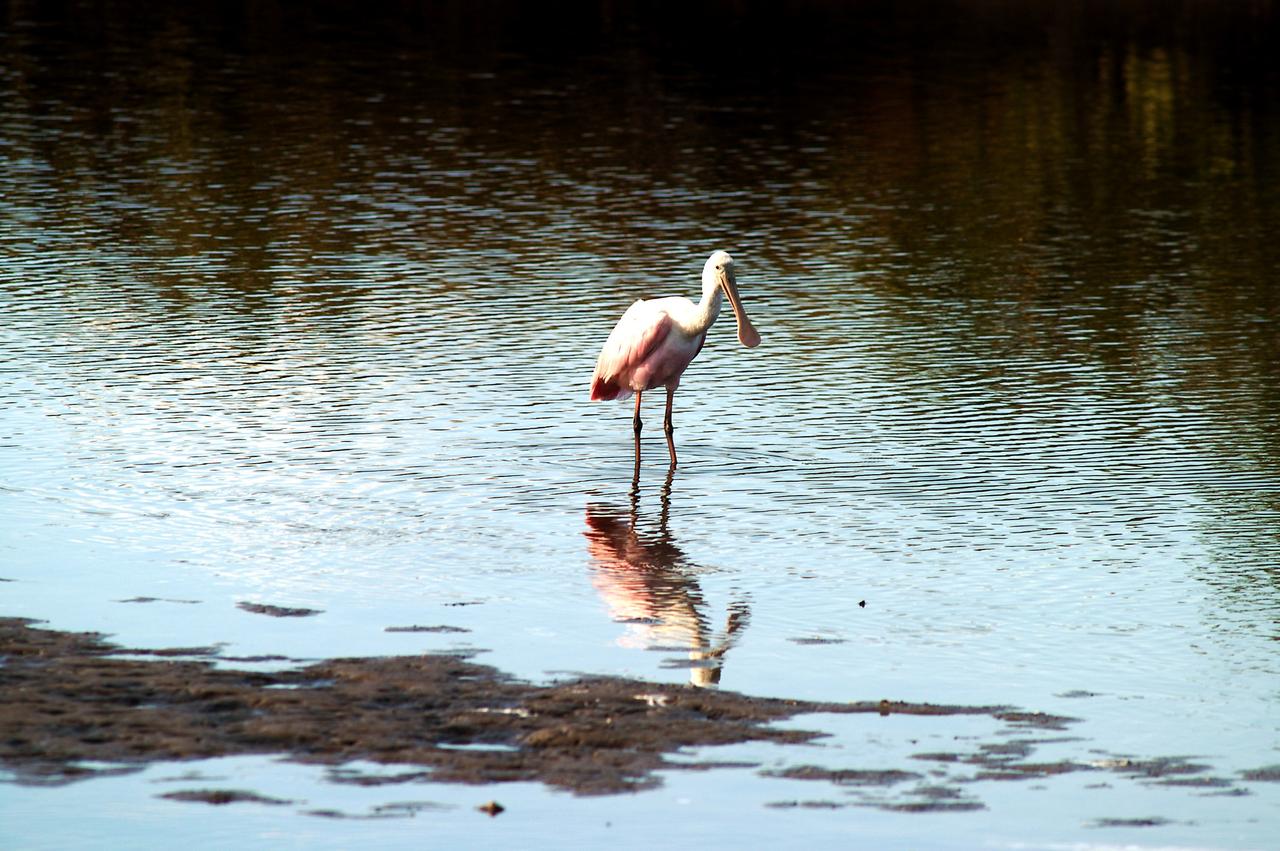
KENNEDY SPACE CENTER, FLA. -- A roseate spoonbill contemplates its reflection in the water near KSC. Spoonbills prefer to inhabit mangroves, ranging from the coasts of southern Florida, Louisiana and Texas, to the West Indies, Mexico, Central and South America. They feed on shrimps and fish in shallow waters. Spoonbills are one of 310 species of birds that inhabit the Merritt Island National Wildlife Refuge, which shares a boundary with KSC. The marshes and open water of the refuge also provide wintering areas for 23 species of migratory waterfowl, as well as a year-round home for great blue herons, great egrets, wood storks, cormorants, brown pelicans and other species of marsh and shore birds.
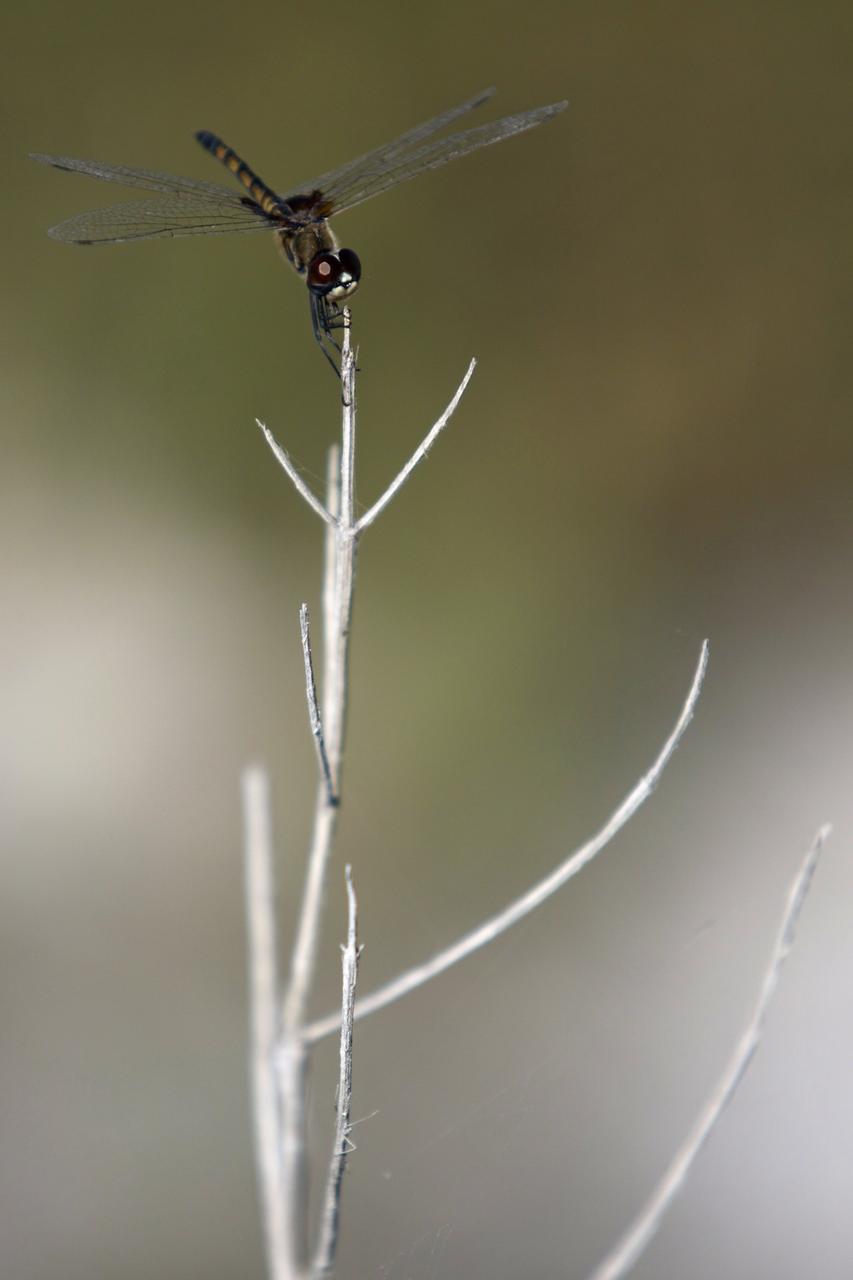
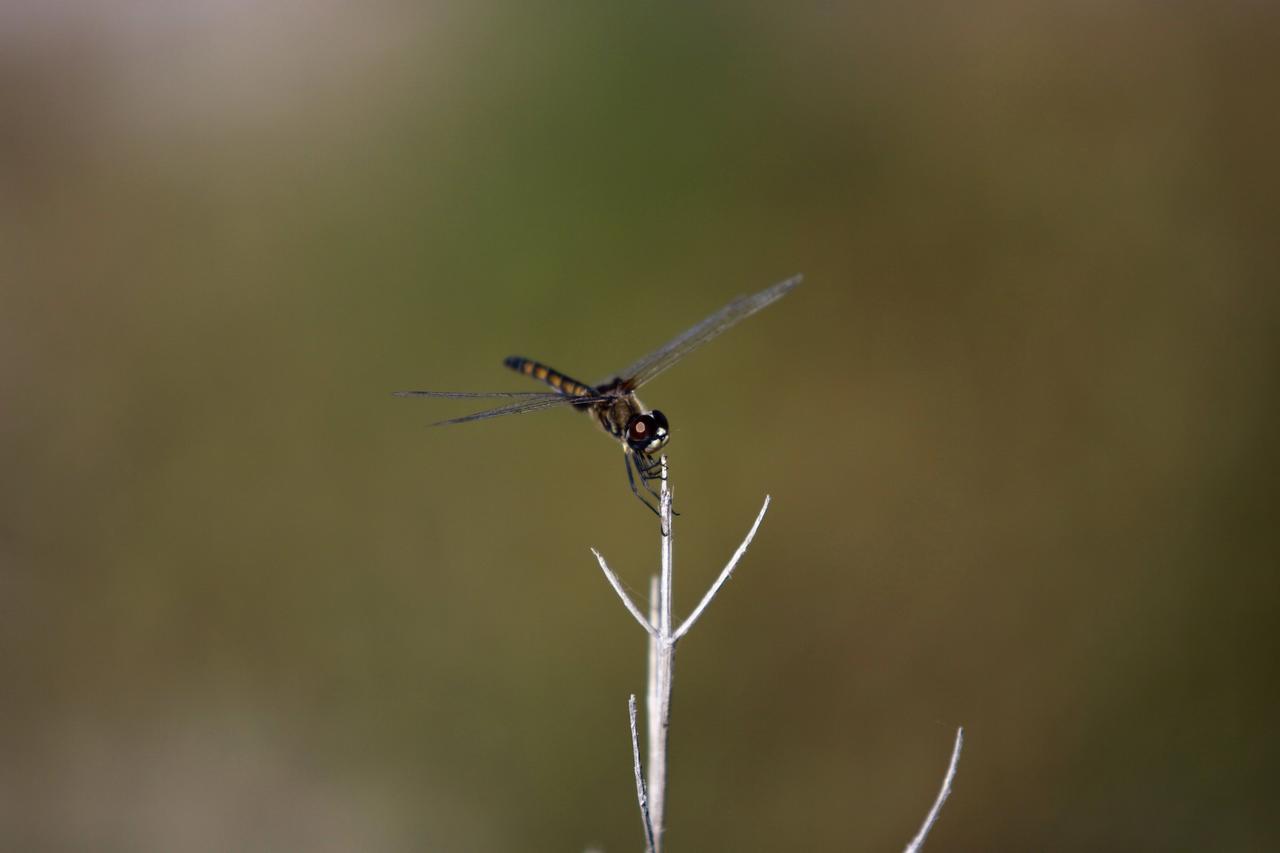
KSC WILDLIFE - TURTLE-DRAGONFLY-SPIDERS-BIRDS SHOT DURING JULY & AUGUST 2010
2010-5318
KSC WILDLIFE - TURTLE-DRAGONFLY-SPIDERS-BIRDS SHOT DURING JULY & AUGUST 2010
2010-5319
KSC WILDLIFE - TURTLE-DRAGONFLY-SPIDERS-BIRDS SHOT DURING JULY & AUGUST 2010
2010-5323
KSC WILDLIFE - TURTLE-DRAGONFLY-SPIDERS-BIRDS SHOT DURING JULY & AUGUST 2010
2010-5321
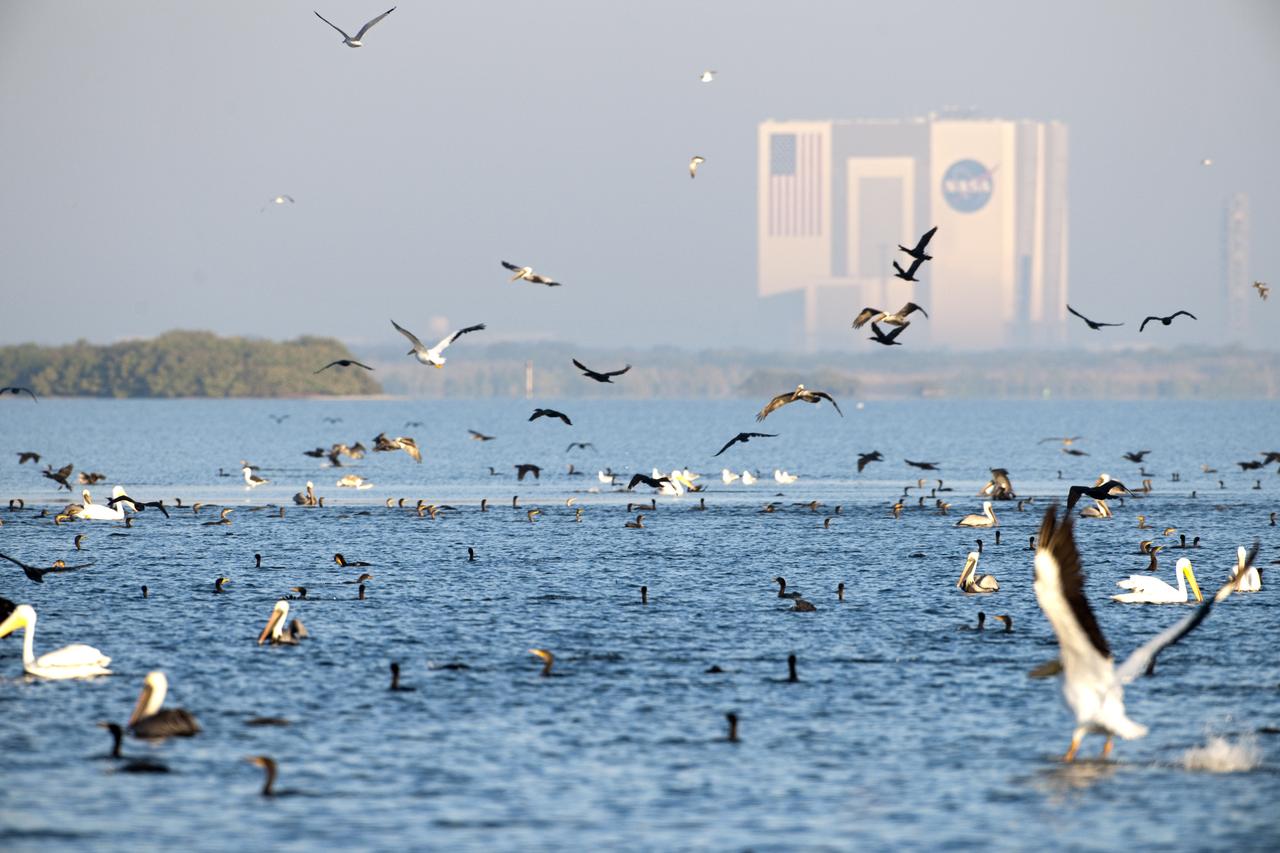
KSC Wildlife - Birds with VAB in Background - shot from NASA Causeway looking west
WILDLIFE
KSC WILDLIFE - TURTLE-DRAGONFLY-SPIDERS-BIRDS SHOT DURING JULY & AUGUST 2010
2010-5322
KSC WILDLIFE - TURTLE-DRAGONFLY-SPIDERS-BIRDS SHOT DURING JULY & AUGUST 2010
2010-5320
KSC Wildlife - Birds with VAB in Background - shot from NASA Causeway looking west
WILDLIFE
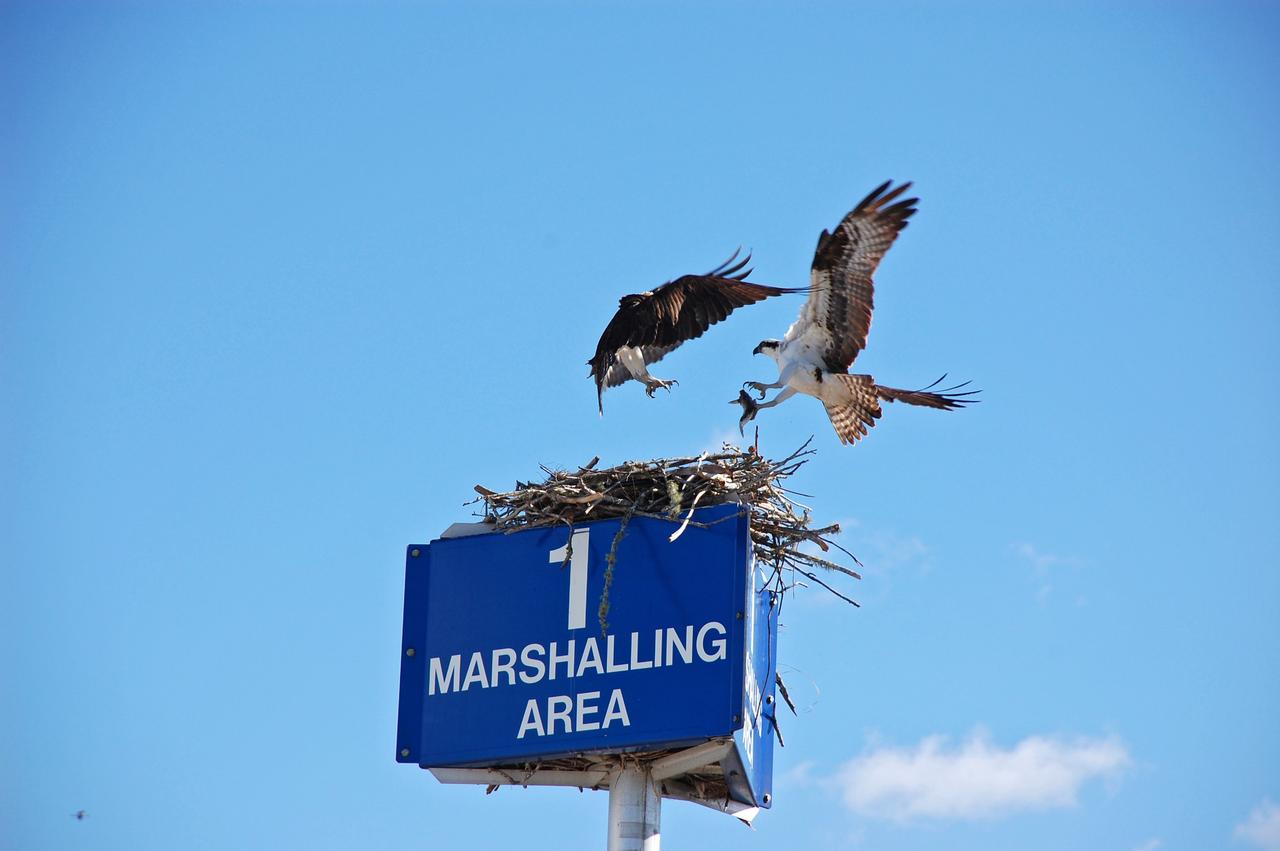
CAPE CANAVERAL, Fla. –   A pair of ospreys perform an aerial dance around their nest near the NASA News Center at NASA's Kennedy Space Center in Florida.  The bird at right is carrying a fish in its talons, the sole source of its diet. The osprey, also called fish hawk, is well adapted for capturing fish, which make up its entire diet.  The soles of the birds' feet are equipped with sharp, spiny projections that give the bird a firm grip on its slippery prey.  Nests of ospreys are bulky masses of sticks and debris placed in a tree, on rocks, flat ground or telephone poles.  Many nests exist around the Launch Complex 39 Area at the center. The bird is one of more than 500 species of birds that co-exist at the center and the surrounding Merritt Island National Wildlife Refuge.  Photo credit: NASA/Ben Smelgelsky
KSC-2009-1512
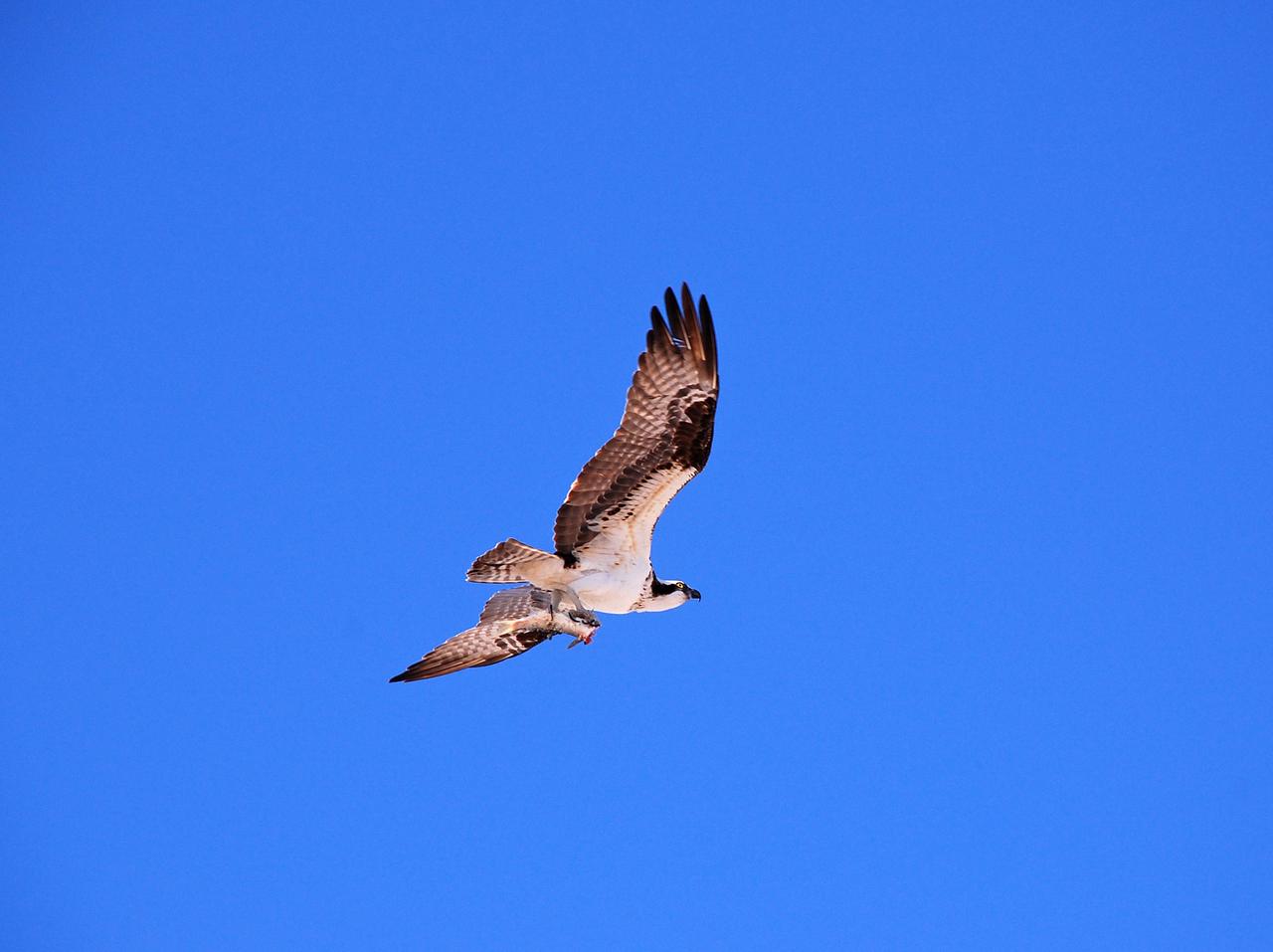
CAPE CANAVERAL, Fla. –   An osprey carries its food in its talons as it flies to its nest near the NASA News Center at NASA's Kennedy Space Center in Florida. The osprey, also called fish hawk, is well adapted for capturing fish, which make up its entire diet.  The soles of the birds' feet are equipped with sharp, spiny projections that give the bird a firm grip on its slippery prey.  Nests of ospreys are bulky masses of sticks and debris placed in a tree, on rocks, flat ground or telephone poles.  Many nests exist around the Launch Complex 39 Area at the center. The bird is one of more than 500 species of birds that co-exist at the center and the surrounding Merritt Island National Wildlife Refuge.  Photo credit: NASA/Ben Smelgelsky
KSC-2009-1510
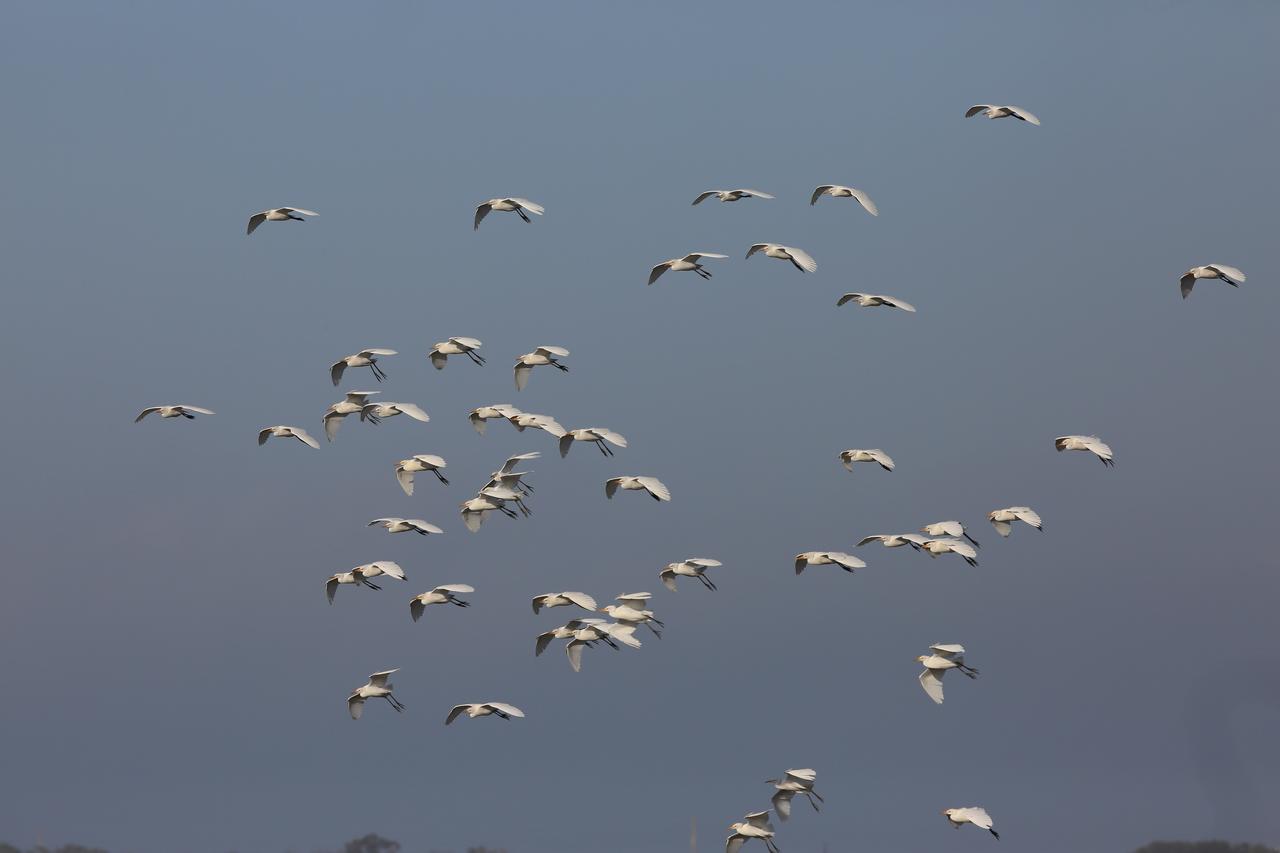
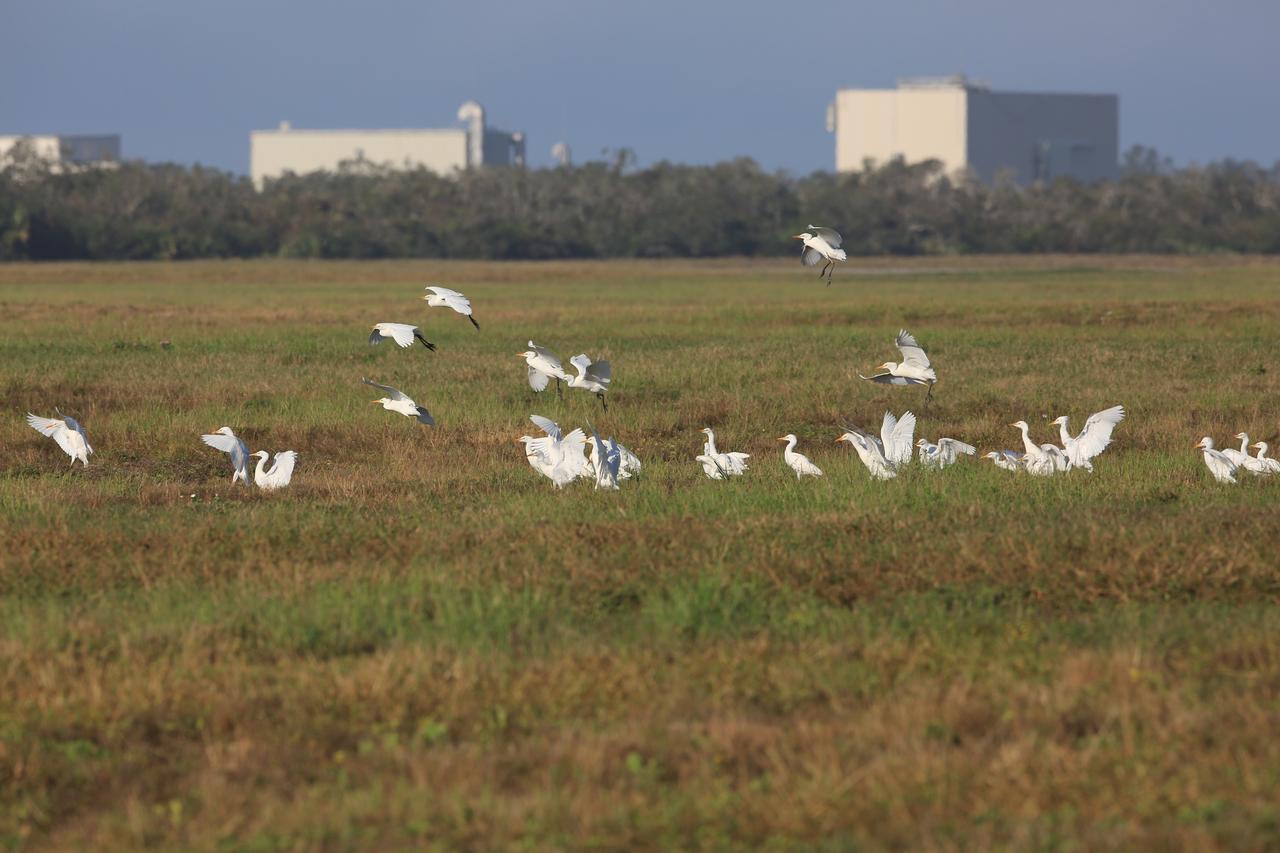
A flock of egrets touches down near the Skid Strip at Cape Canaveral Air Force Station, near NASA's Kennedy Space Center in Florida. The center shares a boundary with the Merritt Island National Wildlife Refuge. The refuge is home to more than 65 amphibian and reptile species, along with 330 native and migratory bird species, 25 mammal and 117 fish species.
Nature Photography - Birds
A flock of egrets soars above the Skid Strip at Cape Canaveral Air Force Station, near NASA's Kennedy Space Center in Florida. The center shares a boundary with the Merritt Island National Wildlife Refuge. The refuge is home to more than 65 amphibian and reptile species, along with 330 native and migratory bird species, 25 mammal and 117 fish species.
Nature Photography - Birds
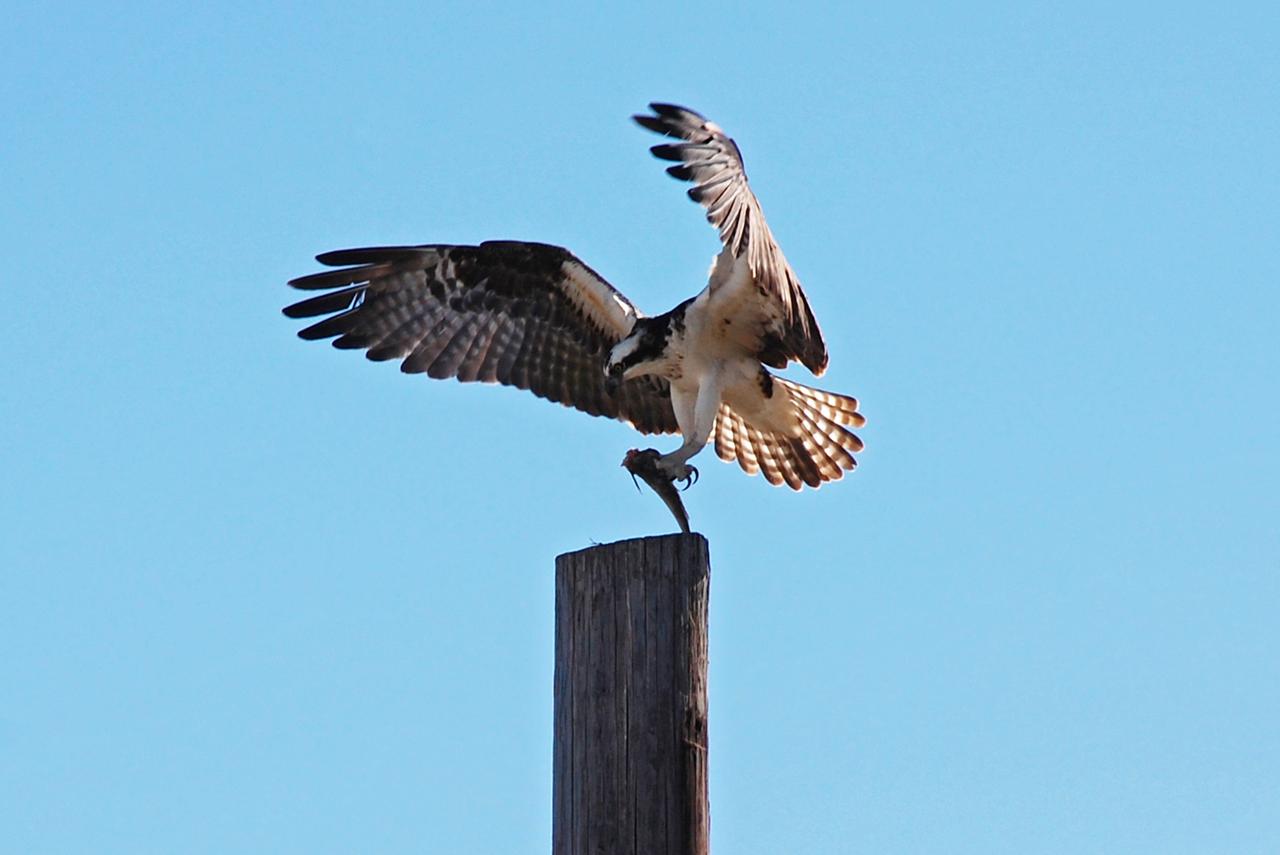
CAPE CANAVERAL, Fla. –   Near the NASA News Center at NASA's Kennedy Space Center in Florida, the osprey prepares to land on a pole with its meal in its talons. The osprey, also called fish hawk, is well adapted for capturing fish, which make up its entire diet.  The soles of the birds' feet are equipped with sharp, spiny projections that give the bird a firm grip on its slippery prey.  Nests of ospreys are bulky masses of sticks and debris placed in a tree, on rocks, flat ground or telephone poles.  Many nests exist around the Launch Complex 39 Area at the center. The bird is one of more than 500 species of birds that co-exist at the center and the surrounding Merritt Island National Wildlife Refuge.  Photo credit: NASA/Ben Smelgelsky
KSC-2009-1513
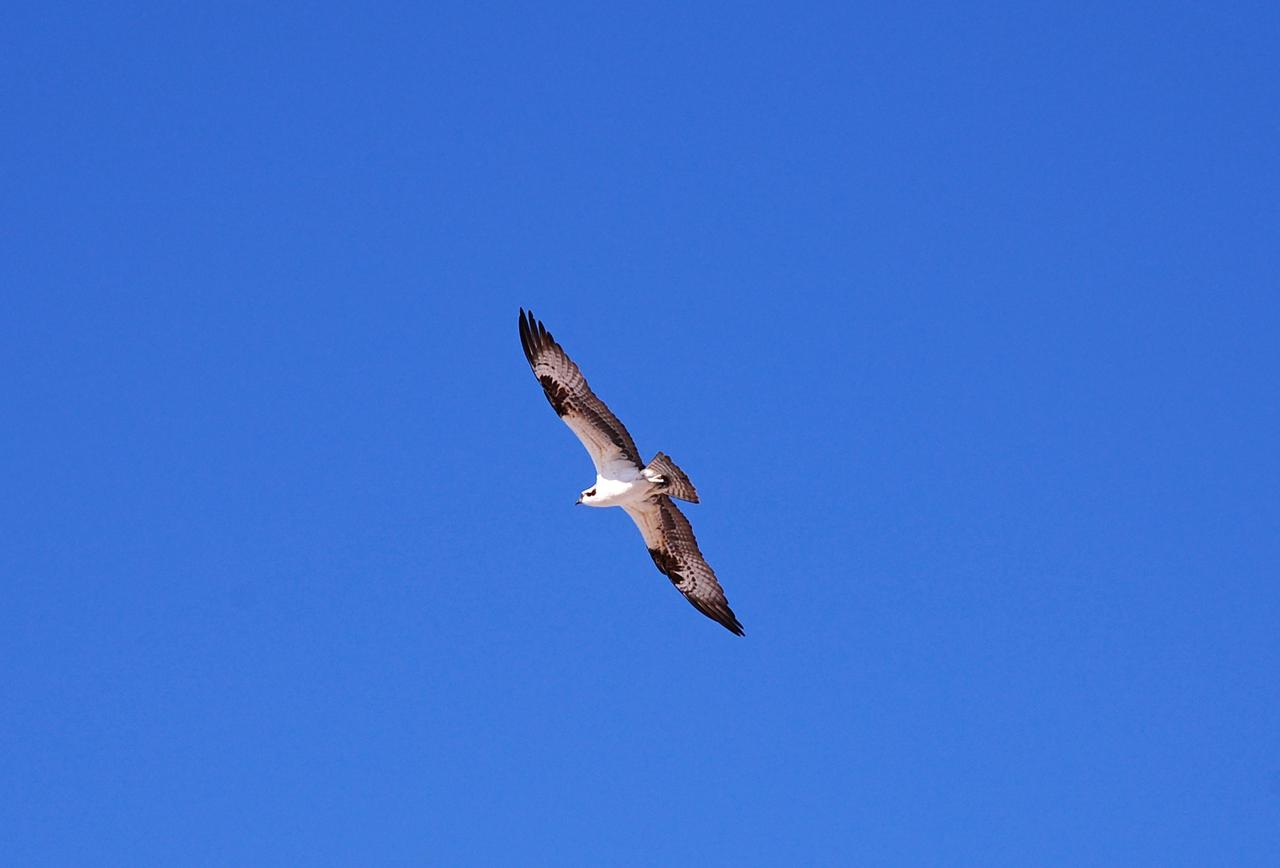
CAPE CANAVERAL, Fla. –   An osprey flies high near the NASA News Center at NASA's Kennedy Space Center in Florida returning to its nest nearby. The osprey, also called fish hawk, is well adapted for capturing fish, which make up its entire diet.  The soles of the birds' feet are equipped with sharp, spiny projections that give the bird a firm grip on its slippery prey.  Nests of ospreys are bulky masses of sticks and debris placed in a tree, on rocks, flat ground or telephone poles.  Many nests exist around the Launch Complex 39 Area at the center. The bird is one of more than 500 species of birds that co-exist at the center and the surrounding Merritt Island National Wildlife Refuge.  Photo credit: NASA/Ben Smelgelsky
KSC-2009-1511
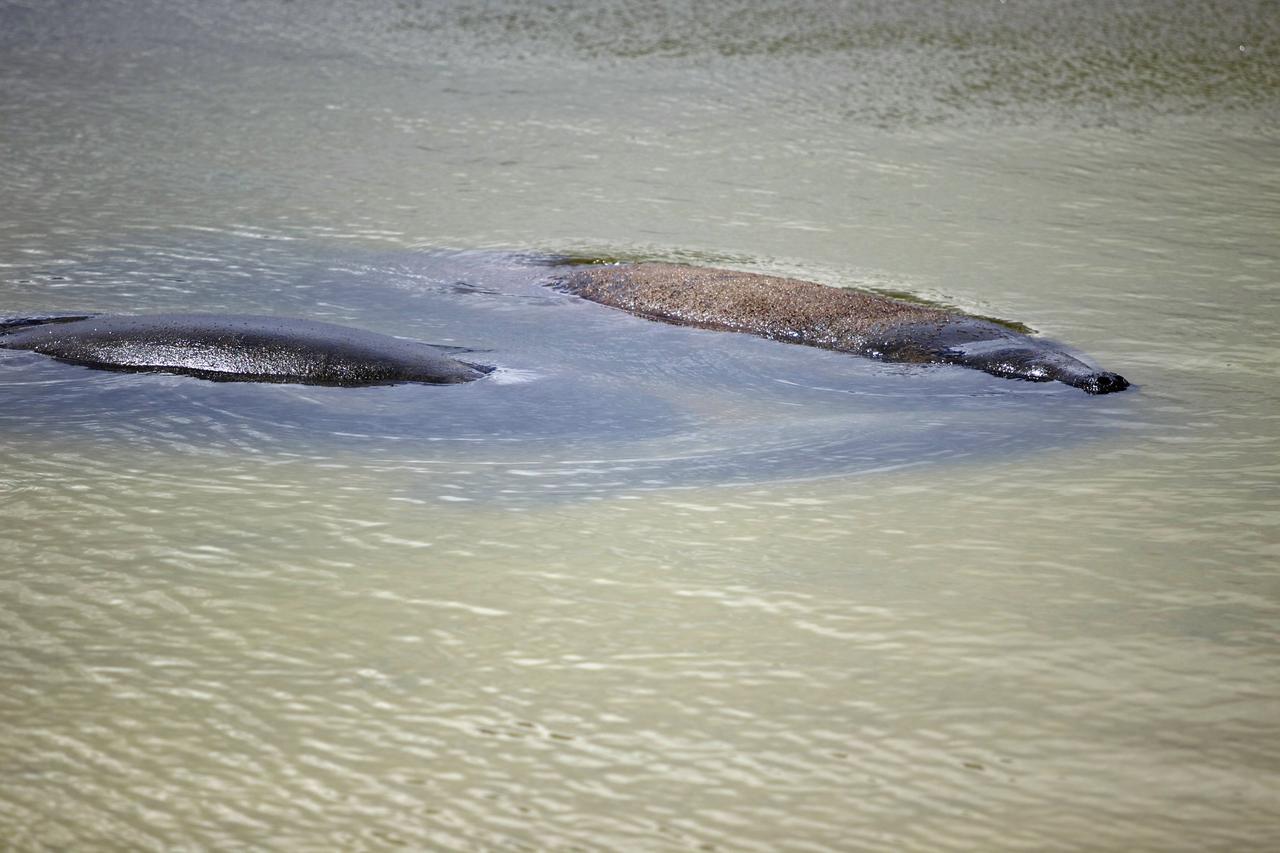
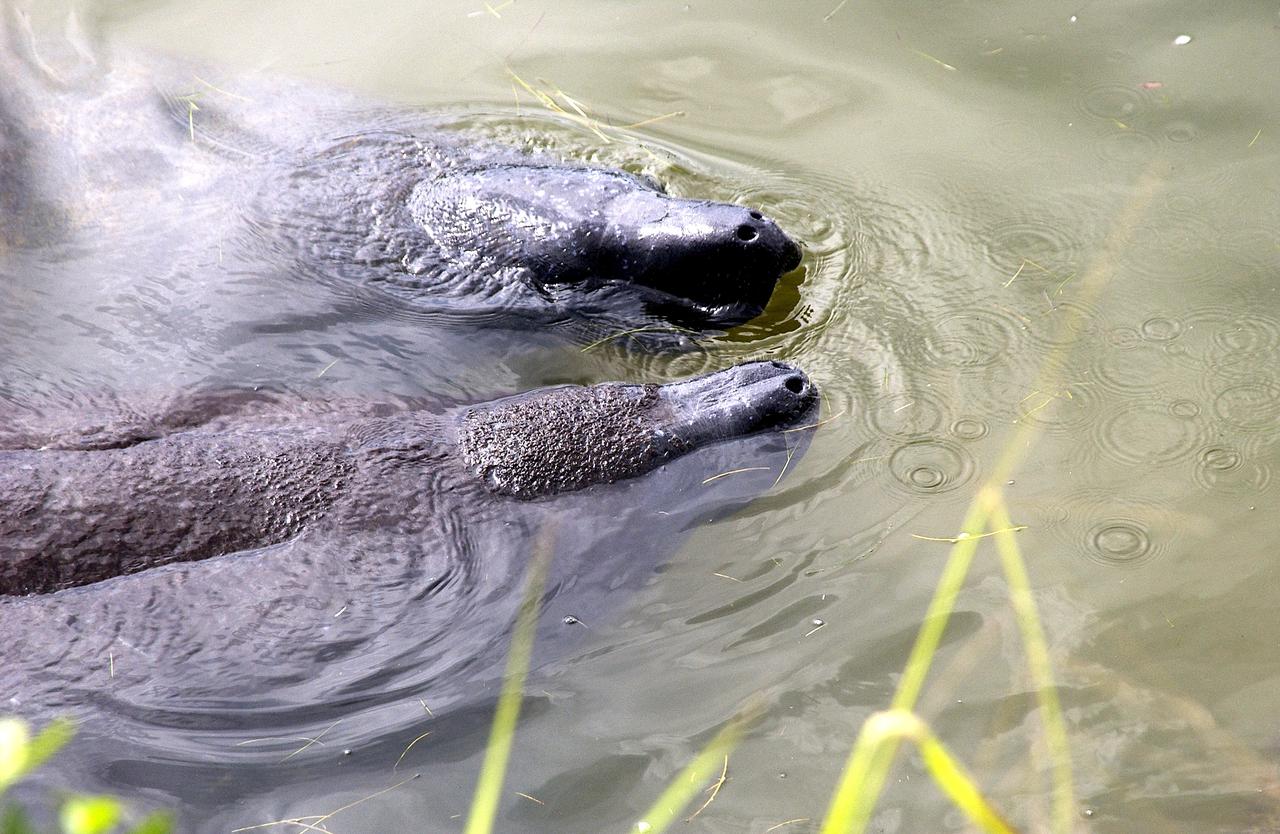
KENNEDY SPACE CENTER, FLA.  -  Two manatees surface for air in water on KSC.  Manatees live in Florida's warm water rivers and inland springs.  KSC shares a boundary with the Merritt Island National Wildlife Refuge, which encompasses 92,000 acres that are a habitat for more than 331 species of birds, 31 mammals, 117 fishes, and 65 amphibians and reptiles.
KENNEDY SPACE CENTER, FLA. - Two manatees surface for air in water on KSC. Manatees live in Florida's warm water rivers and inland springs. KSC shares a boundary with the Merritt Island National Wildlife Refuge, which encompasses 92,000 acres that are a habitat for more than 331 species of birds, 31 mammals, 117 fishes, and 65 amphibians and reptiles.
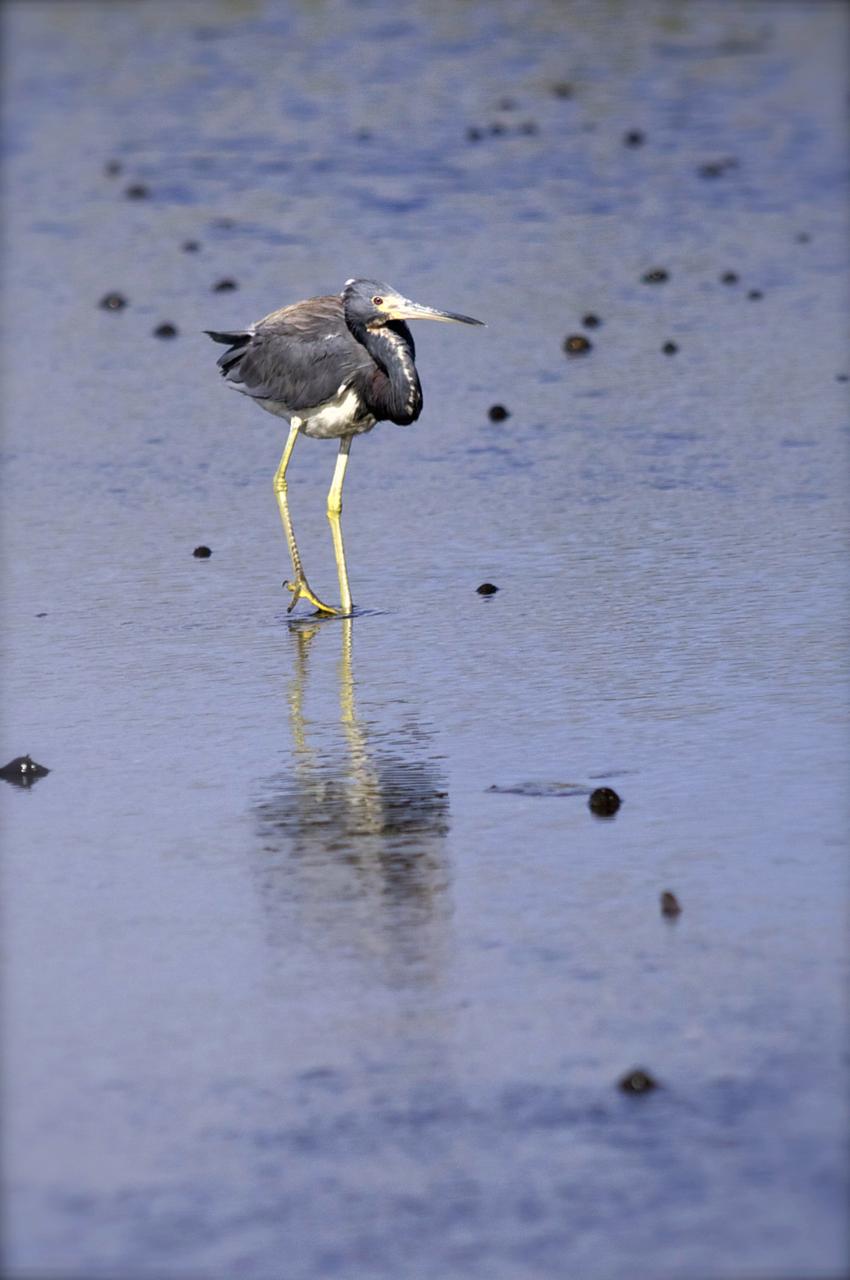
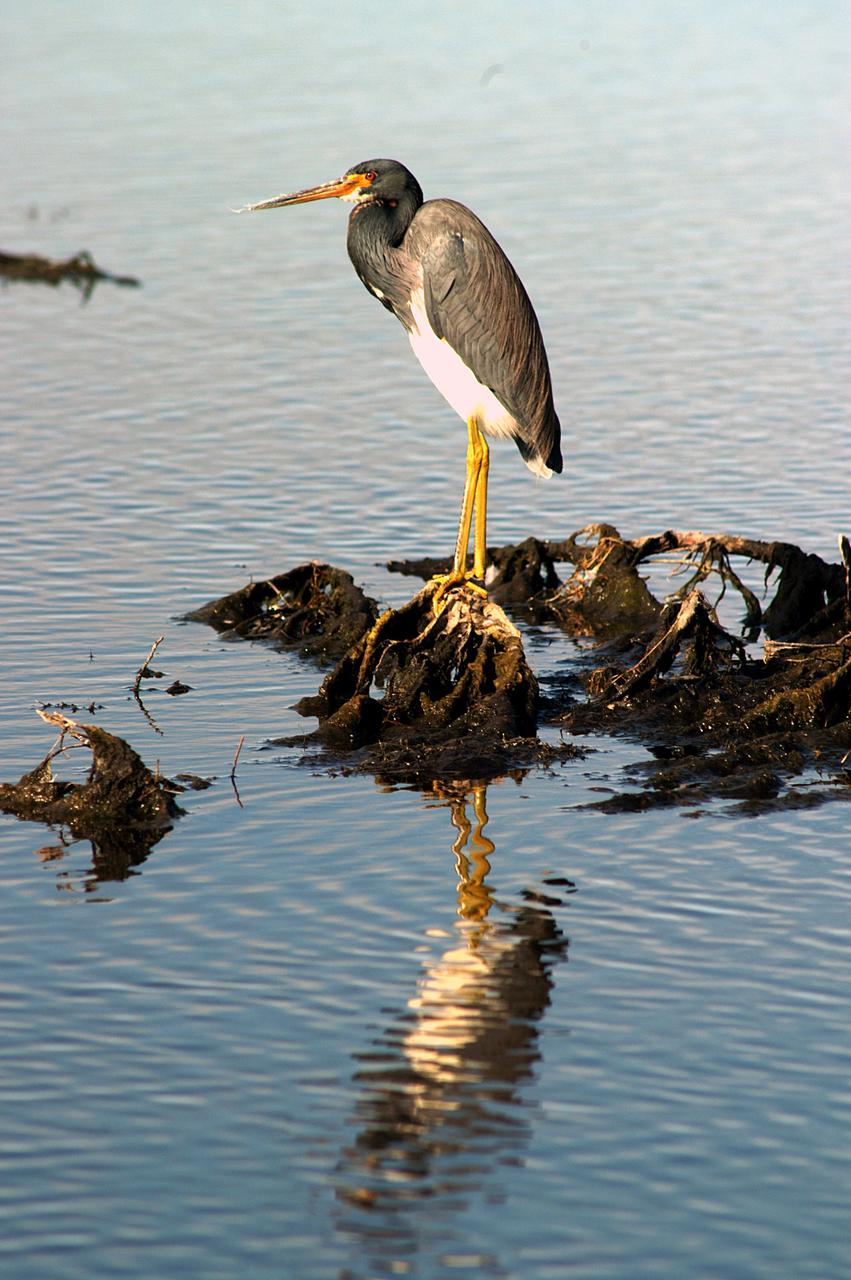
KENNEDY SPACE CENTER, FLA. -- A tri-colored heron stands sentry in the marshes around KSC. It has slate blue feathers on most of its body except for a white chest and belly and a rust-colored neck. It has long yellow legs, a white stripe that runs up its neck and long pointed yellow bill. The bill turns blue during breeding season.The heron is one of 310 species of birds that inhabit the Merritt Island National Wildlife Refuge, which shares a boundary with KSC. The marshes and open water of the refuge also provide wintering areas for 23 species of migratory waterfowl, as well as a year-round home for great egrets, wood storks, cormorants, brown pelicans and other species of marsh and shore birds.
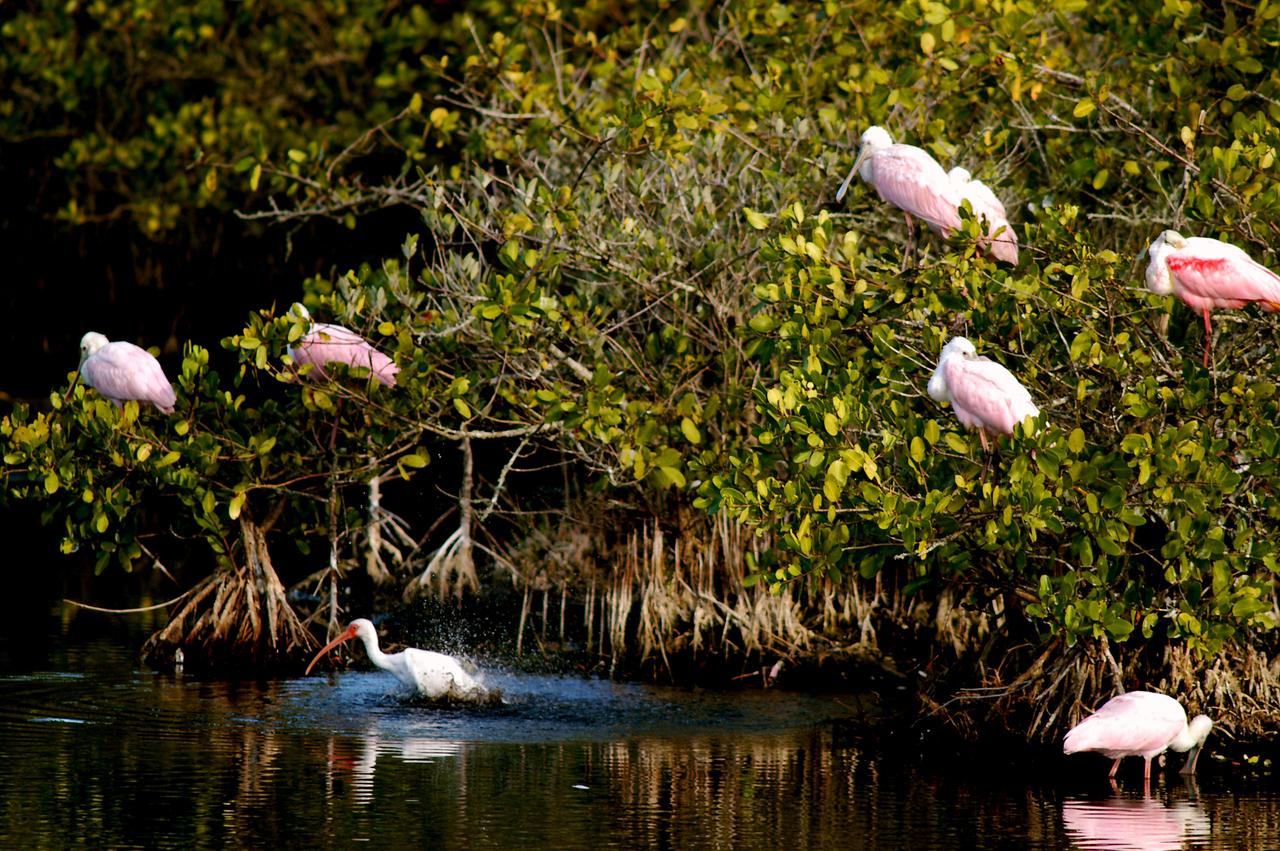
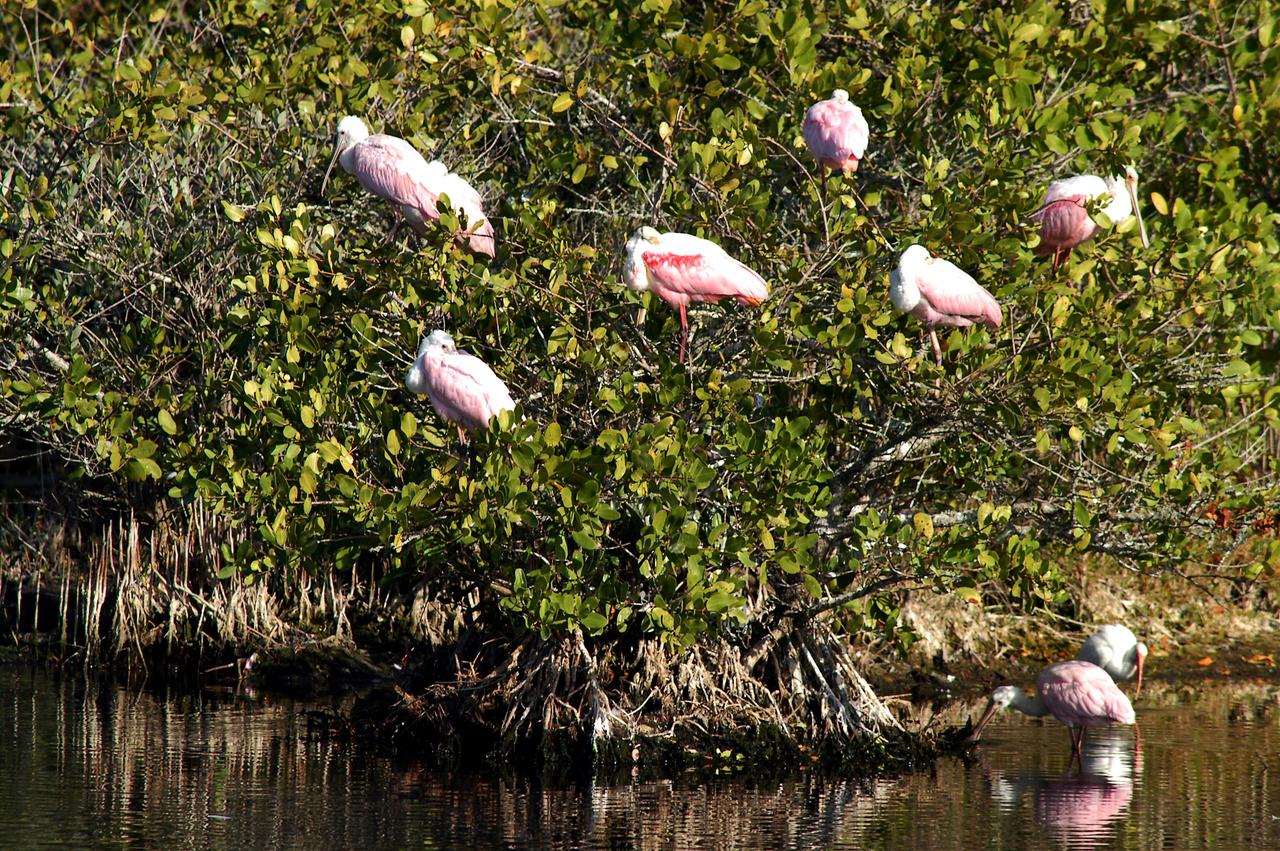
KENNEDY SPACE CENTER, FLA. -- A group of roseate spoonbills share their watery hunting ground with a lone white ibis near KSC. Spoonbills prefer to inhabit mangroves, ranging from the coasts of southern Florida, Louisiana and Texas, to the West Indies, Mexico, Central and South America. They feed on shrimps and fish in shallow waters. Spoonbills are one of 310 species of birds that inhabit the Merritt Island National Wildlife Refuge, which shares a boundary with KSC. The marshes and open water of the refuge also provide wintering areas for 23 species of migratory waterfowl, as well as a year-round home for great blue herons, great egrets, wood storks, cormorants, brown pelicans and other species of marsh and shore birds.
KENNEDY SPACE CENTER, FLA. -- A lone white ibis shares its watery hunting ground with a group of roseate spoonbills near KSC. Spoonbills prefer to inhabit mangroves, ranging from the coasts of southern Florida, Louisiana and Texas, to the West Indies, Mexico, Central and South America. They feed on shrimps and fish in shallow waters. Spoonbills are one of 310 species of birds that inhabit the Merritt Island National Wildlife Refuge, which shares a boundary with KSC. The marshes and open water of the refuge also provide wintering areas for 23 species of migratory waterfowl, as well as a year-round home for great blue herons, great egrets, wood storks, cormorants, brown pelicans and other species of marsh and shore birds.
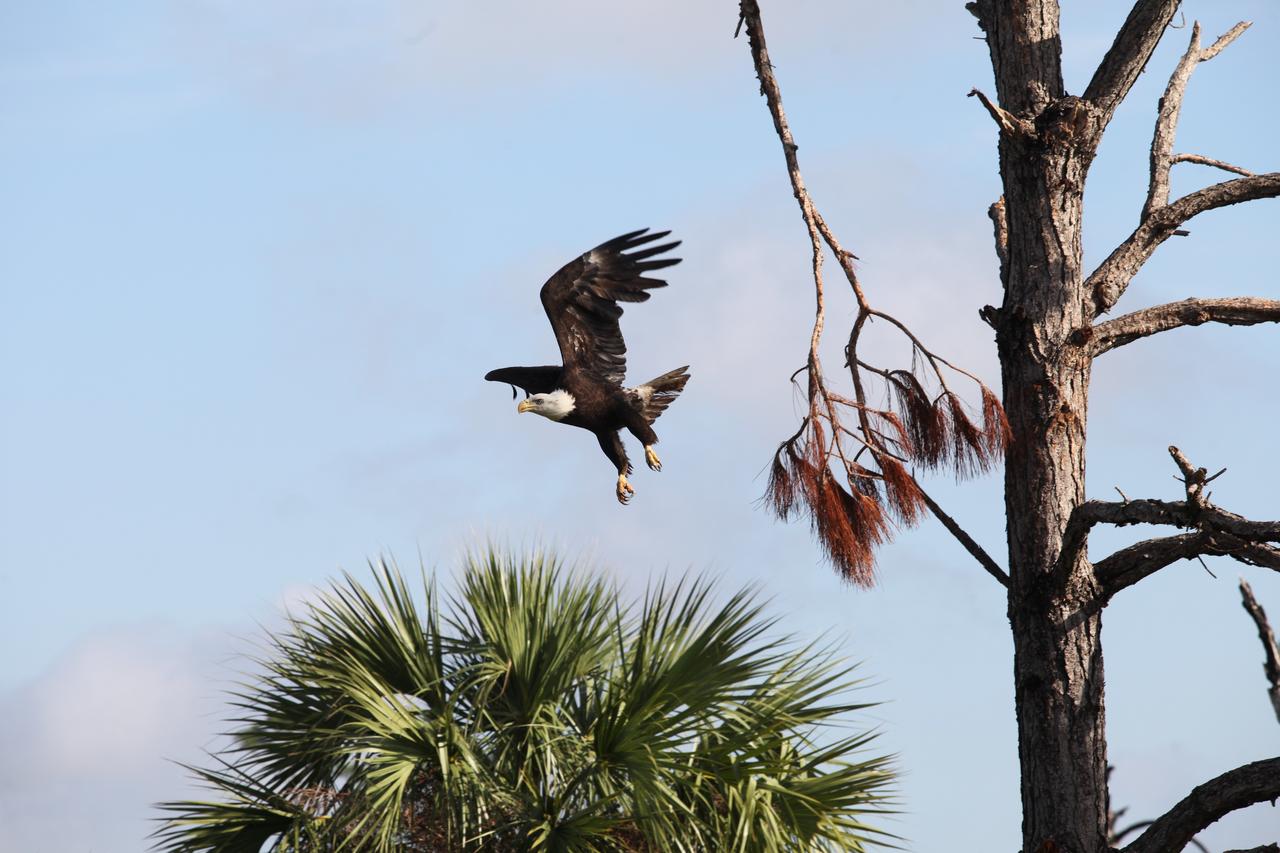
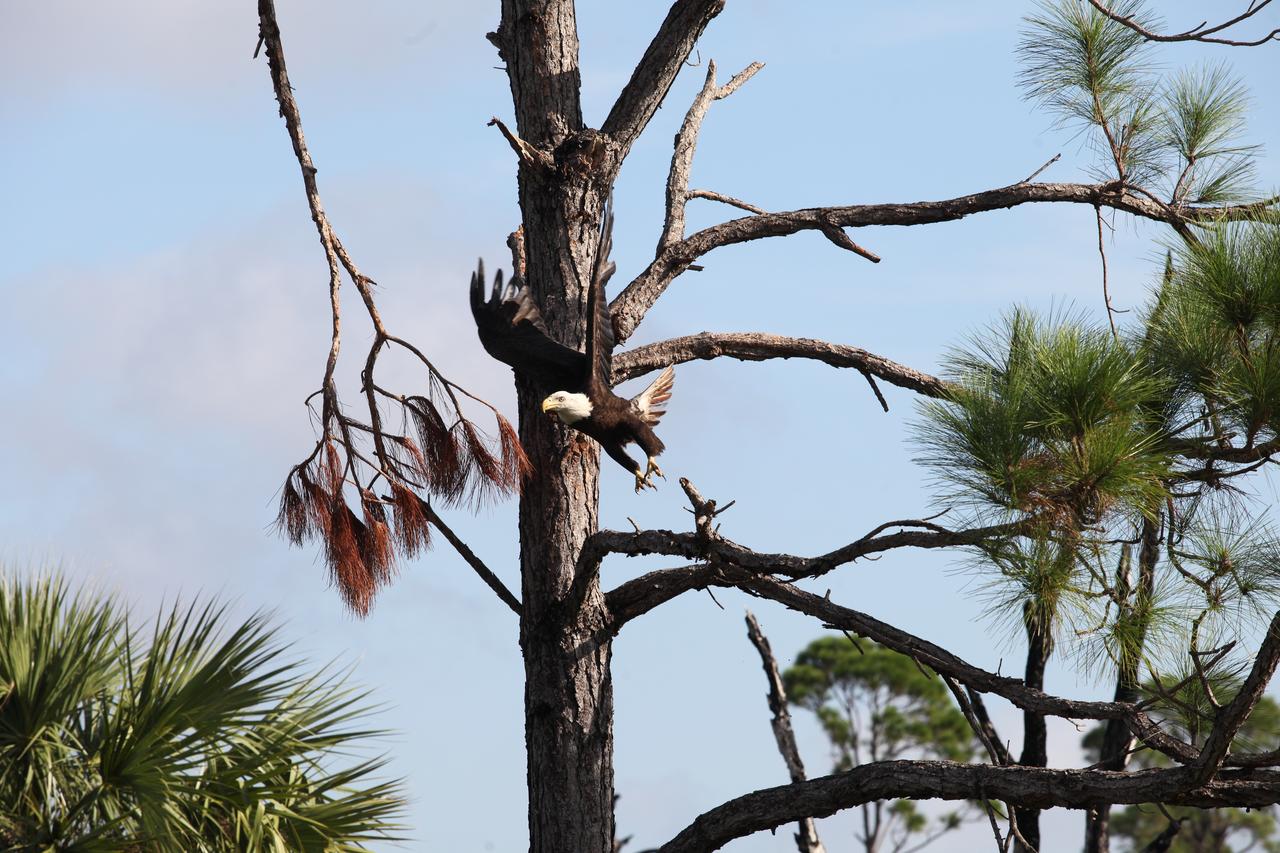
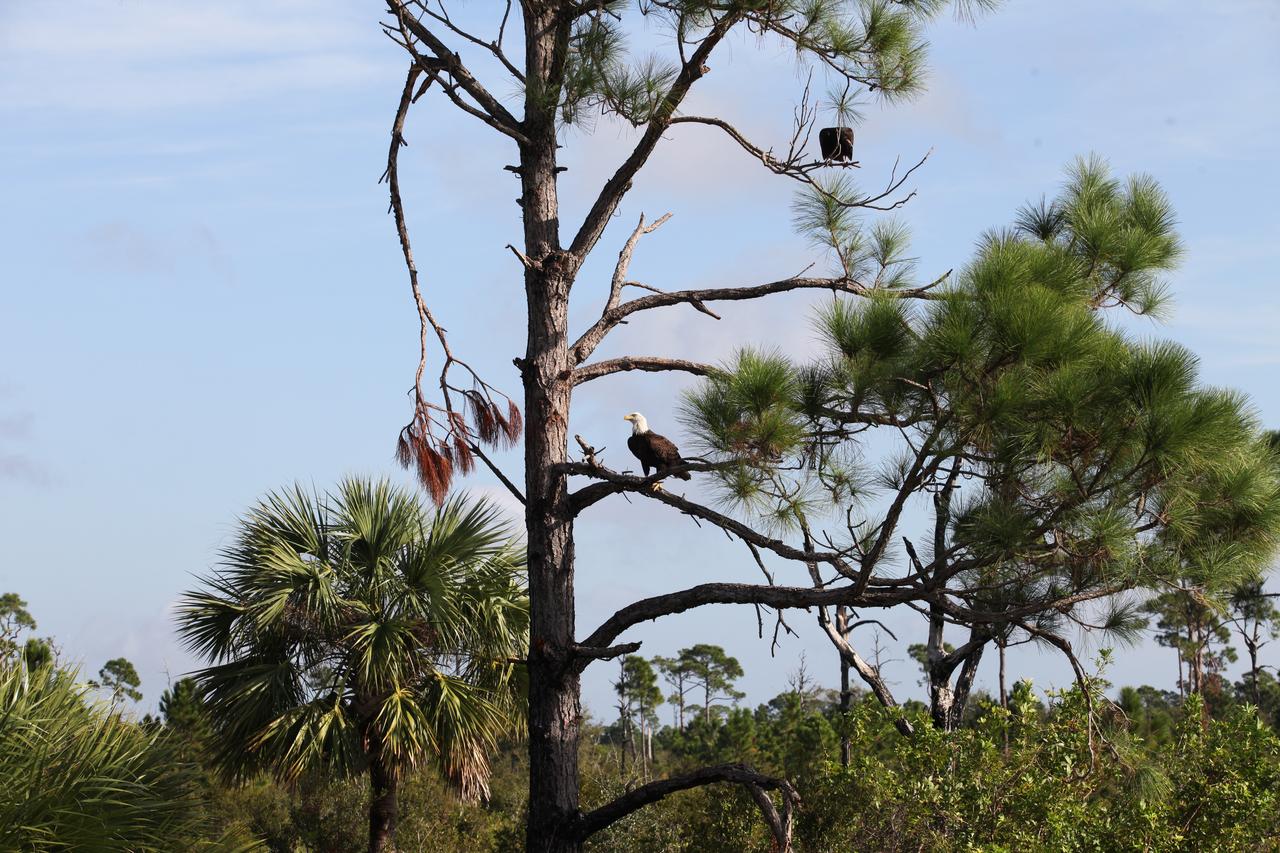
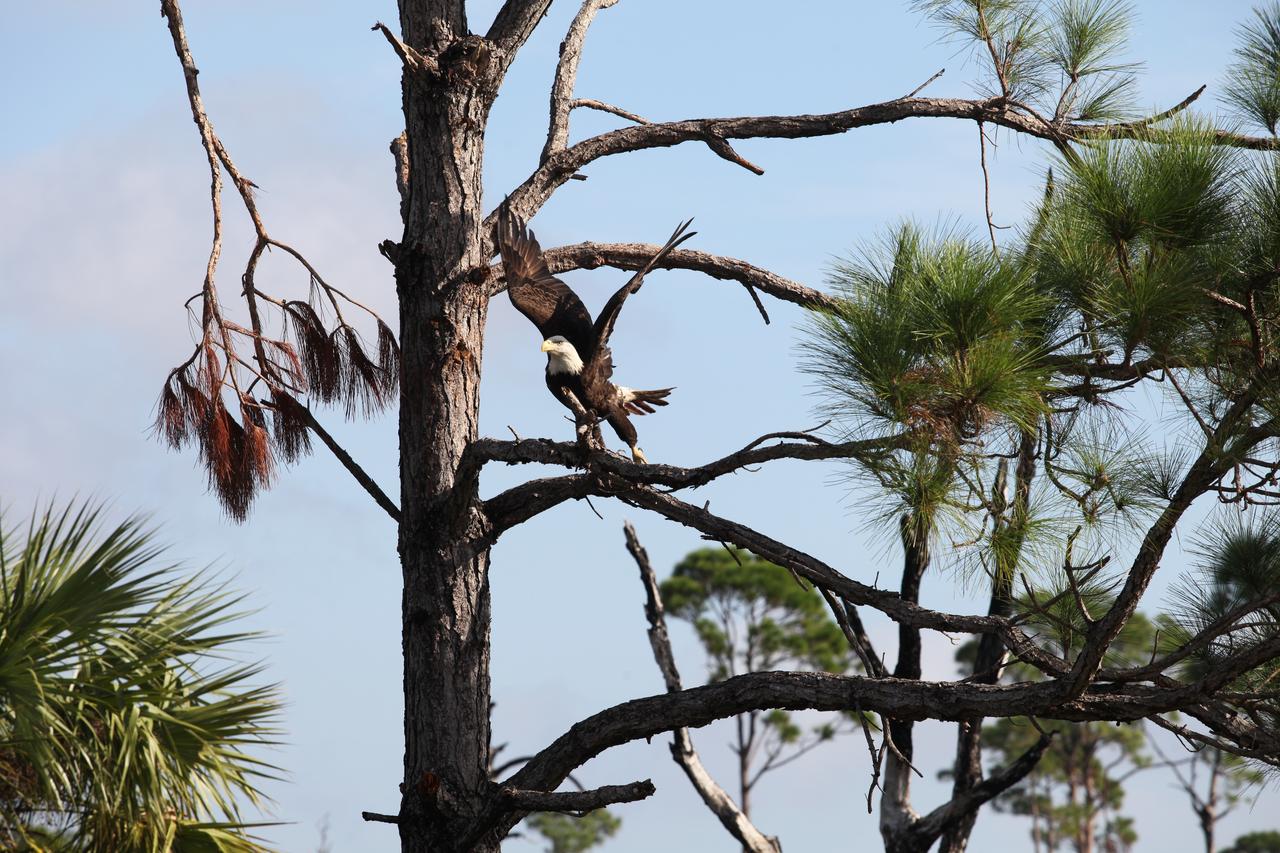
An American bald eagle soars from its perch in a tree at NASA's Kennedy Space Center in Florida. Several eagles call the center home. The center shares a boundary with the Merritt Island National Wildlife Refuge. The refuge is home to more than 65 amphibian and reptile species, along with 330 native and migratory bird species, 25 mammal and 117 fish species.
Nature Photography - Bald Eagle
An American bald eagle perches in a tree at NASA's Kennedy Space Center in Florida. Several eagles call the center home. The center shares a boundary with the Merritt Island National Wildlife Refuge. The refuge is home to more than 65 amphibian and reptile species, along with 330 native and migratory bird species, 25 mammal and 117 fish species.
Nature Photography - Bald Eagle
An American bald eagle begins to soar from its perch in a tree at NASA's Kennedy Space Center in Florida. Several eagles call the center home. The center shares a boundary with the Merritt Island National Wildlife Refuge. The refuge is home to more than 65 amphibian and reptile species, along with 330 native and migratory bird species, 25 mammal and 117 fish species.
Nature Photography - Bald Eagle
An American bald eagle soars from its perch in a tree at NASA's Kennedy Space Center in Florida. Several eagles call the center home. The center shares a boundary with the Merritt Island National Wildlife Refuge. The refuge is home to more than 65 amphibian and reptile species, along with 330 native and migratory bird species, 25 mammal and 117 fish species.
Nature Photography - Bald Eagle
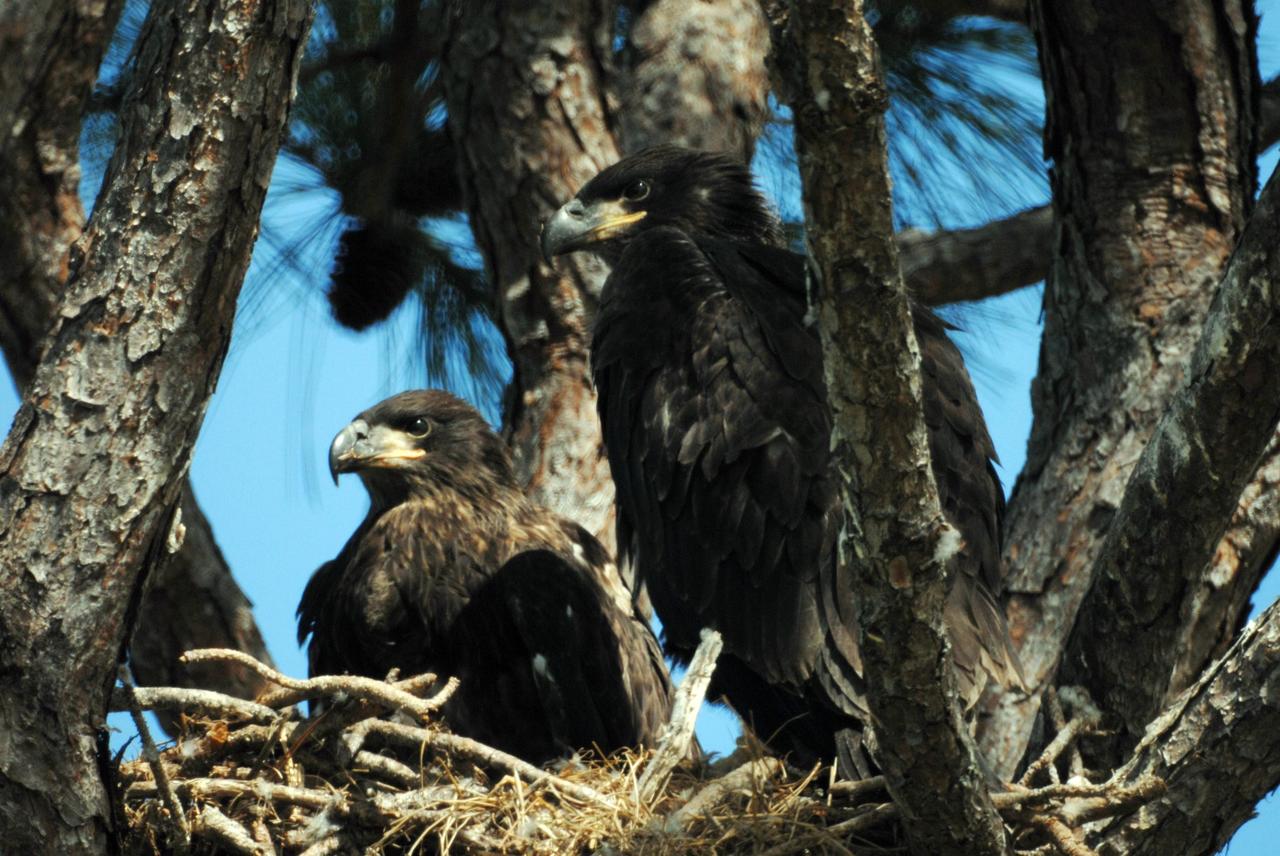
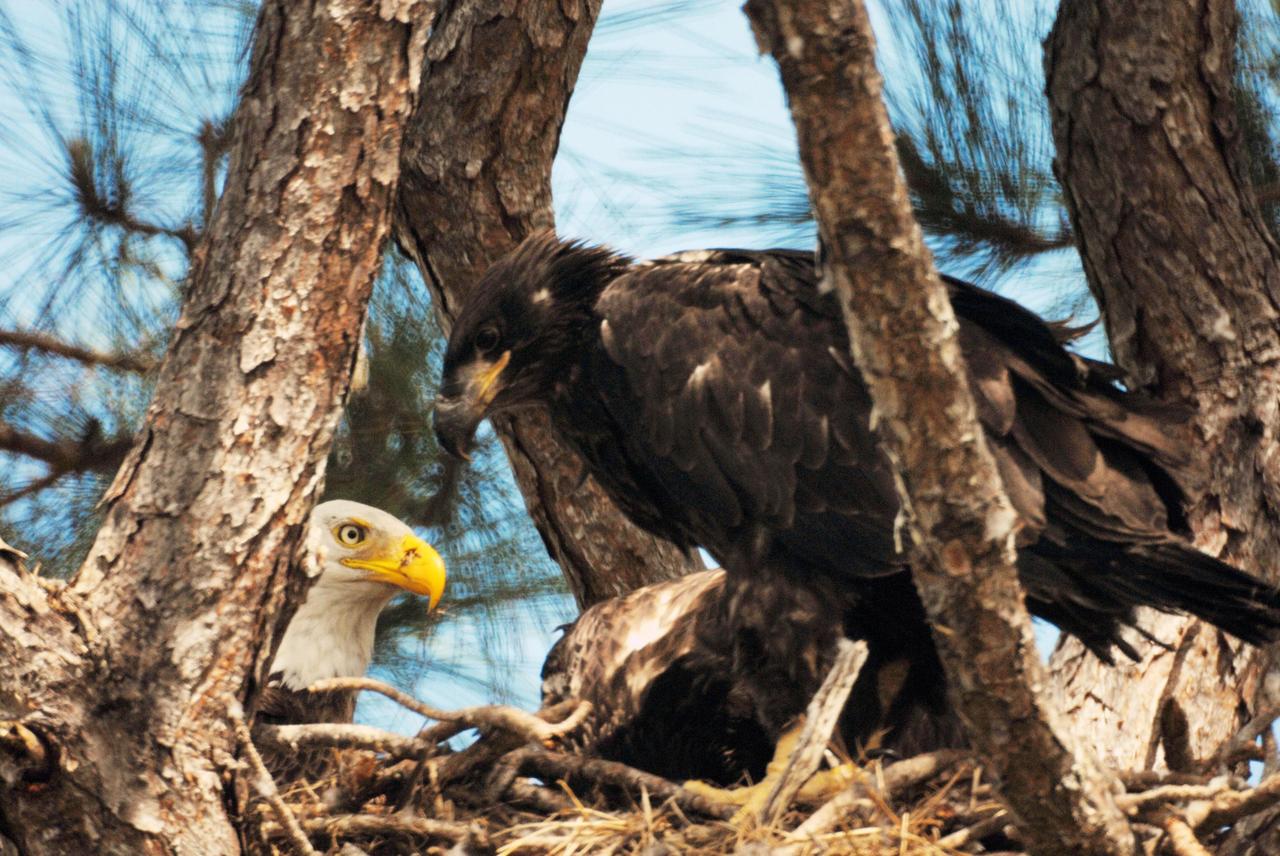
KENNEDY SPACE CENTER, FLA. --  Two fledgling eagles bear the regal look of their parents as they rest in their nest at the north end of S.R. 3 near Kennedy Space Center. This year-old nest is one of a dozen eagle nests both in KSC and in the Merritt Island National Wildlife Refuge, which surrounds KSC. The refuge includes several wading bird rookeries, many osprey nests, up to 400 manatees during the spring, and approximately 2,500 Florida scrub jays.  It also is a major wintering area for migratory birds. More than 500 species of wildlife inhabit the refuge, with 15 considered federally threatened or endangered.  Photo credit: NASA/Ken Thornsley
KSC-07pd0721
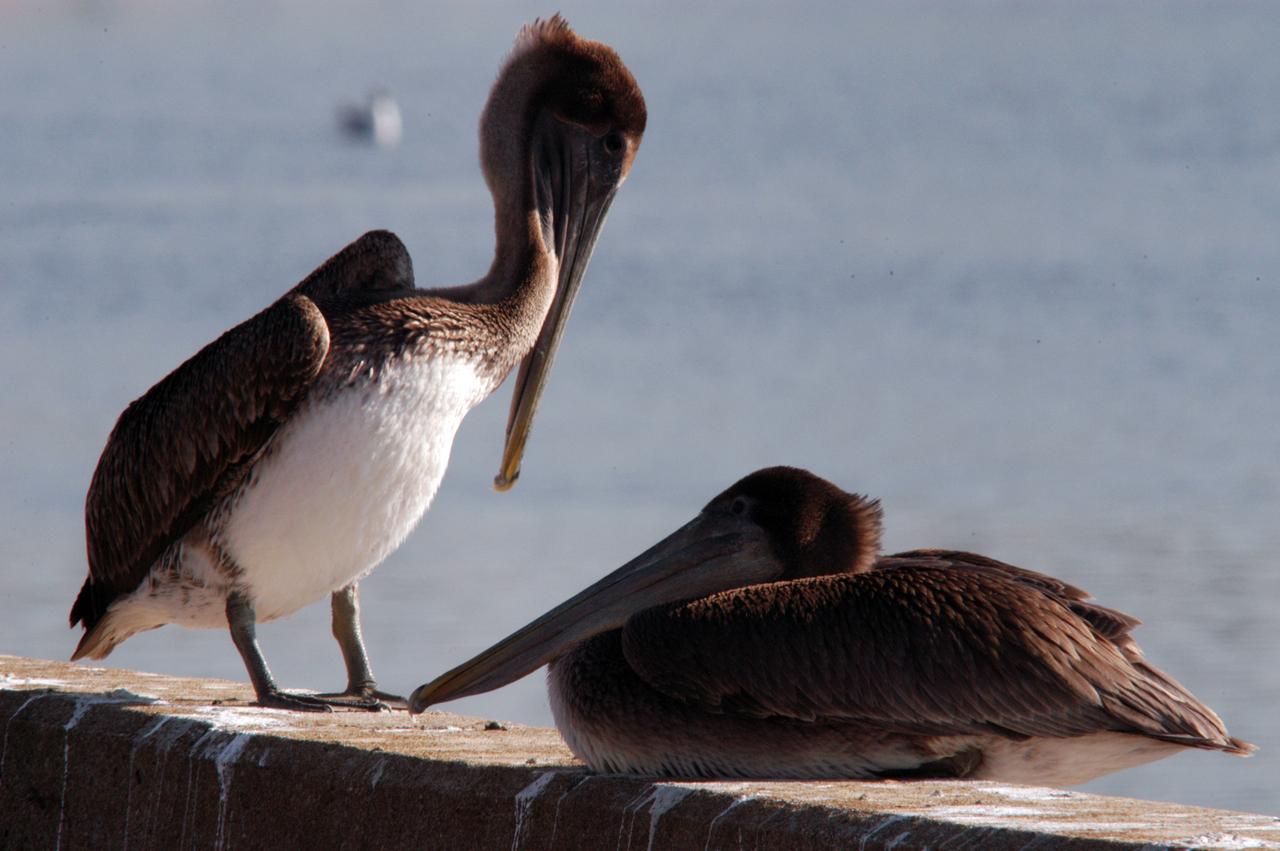
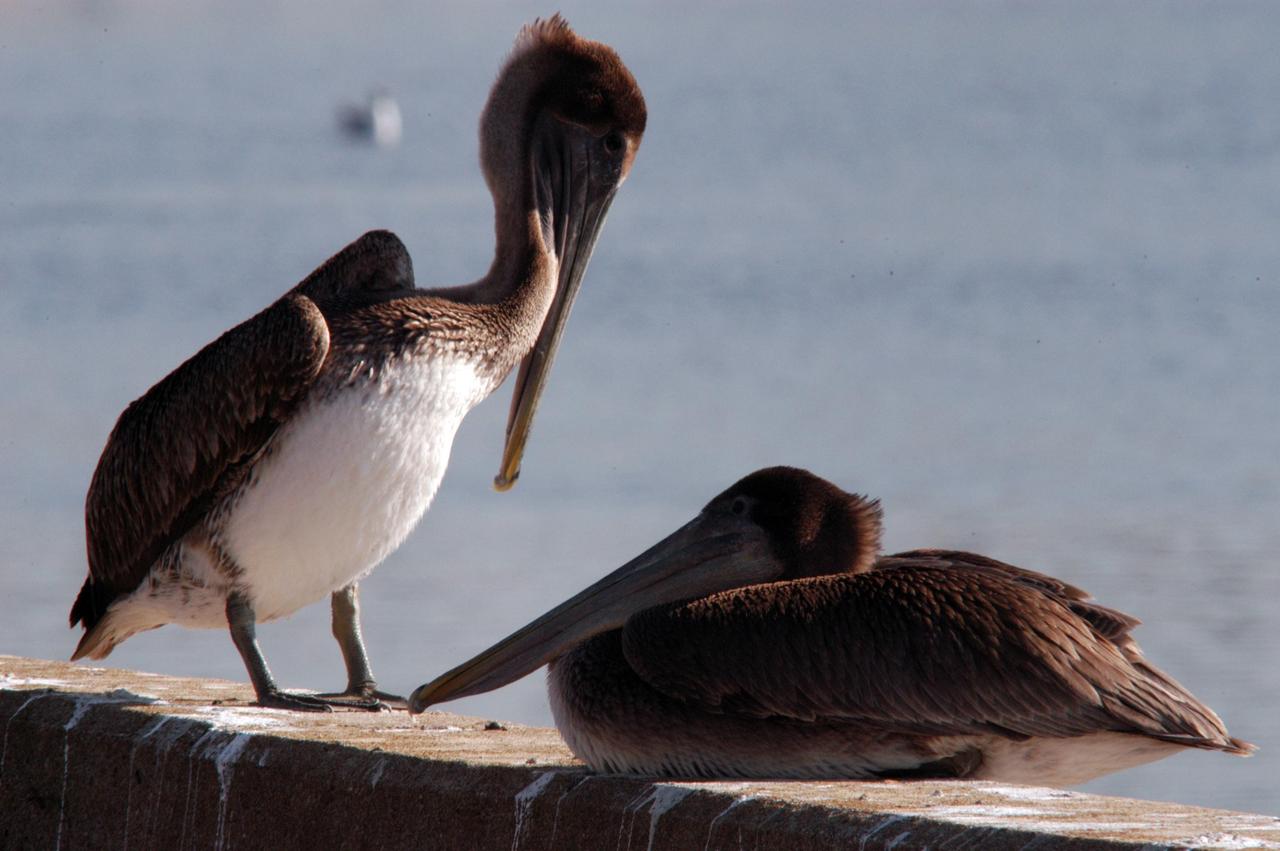
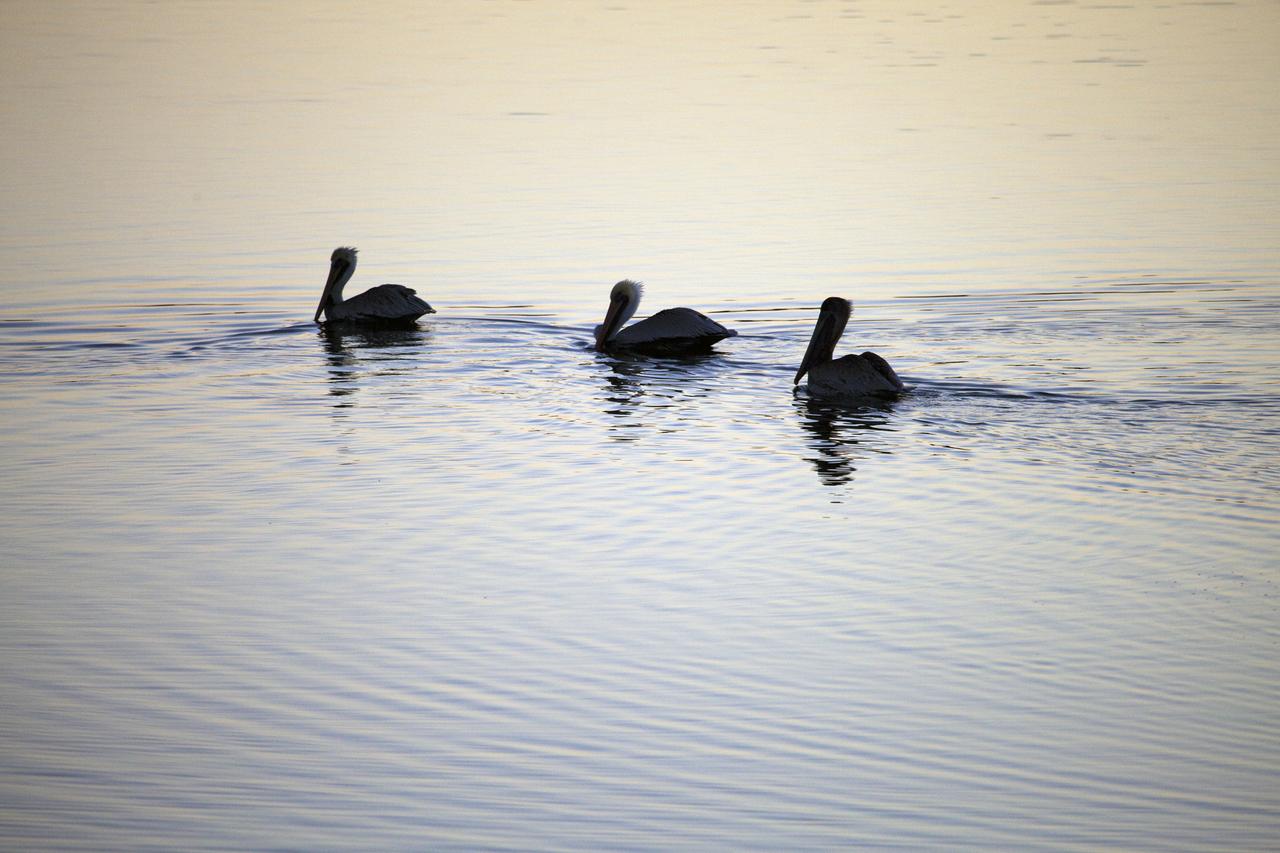
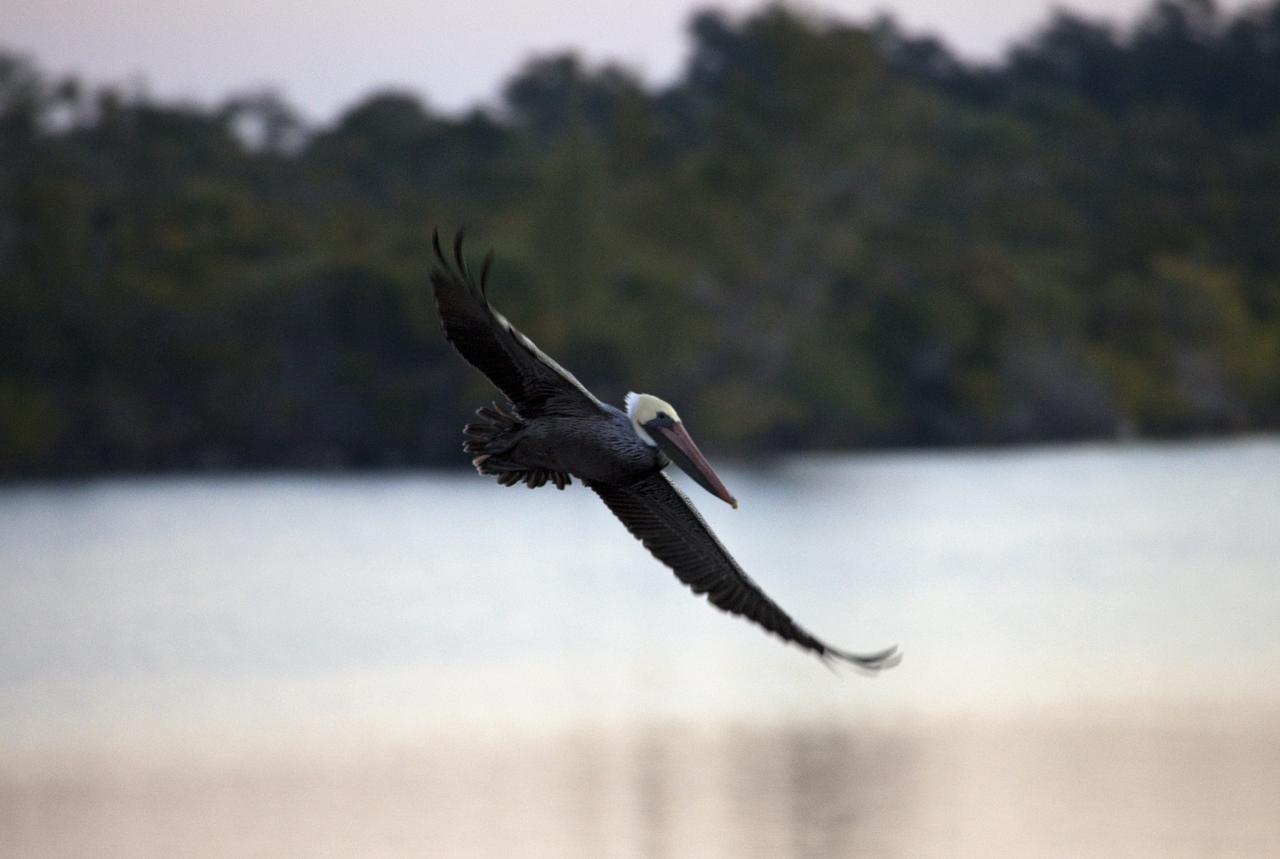
A pair of brown pelicans rest on a wall near the turn basin at NASA's Kennedy Space Center. The turn basin was carved out of the Banana River when KSC was built. The birds' habitat is sandy coastal beaches and lagoons, ranging along the Atlantic Coast from North Carolina south to Venezuela. It nests in colonies. KSC shares a boundary with the Merritt Island Wildlife Nature Refuge. The refuge is a habitat for more than 310 species of birds, 25 mammals, 117 fishes and 65 amphibians and reptiles. In addition, the Refuge supports 19 endangered or threatened wildlife species on Federal or State lists, more than any other single refuge in the U.S.
KSC Wildlife
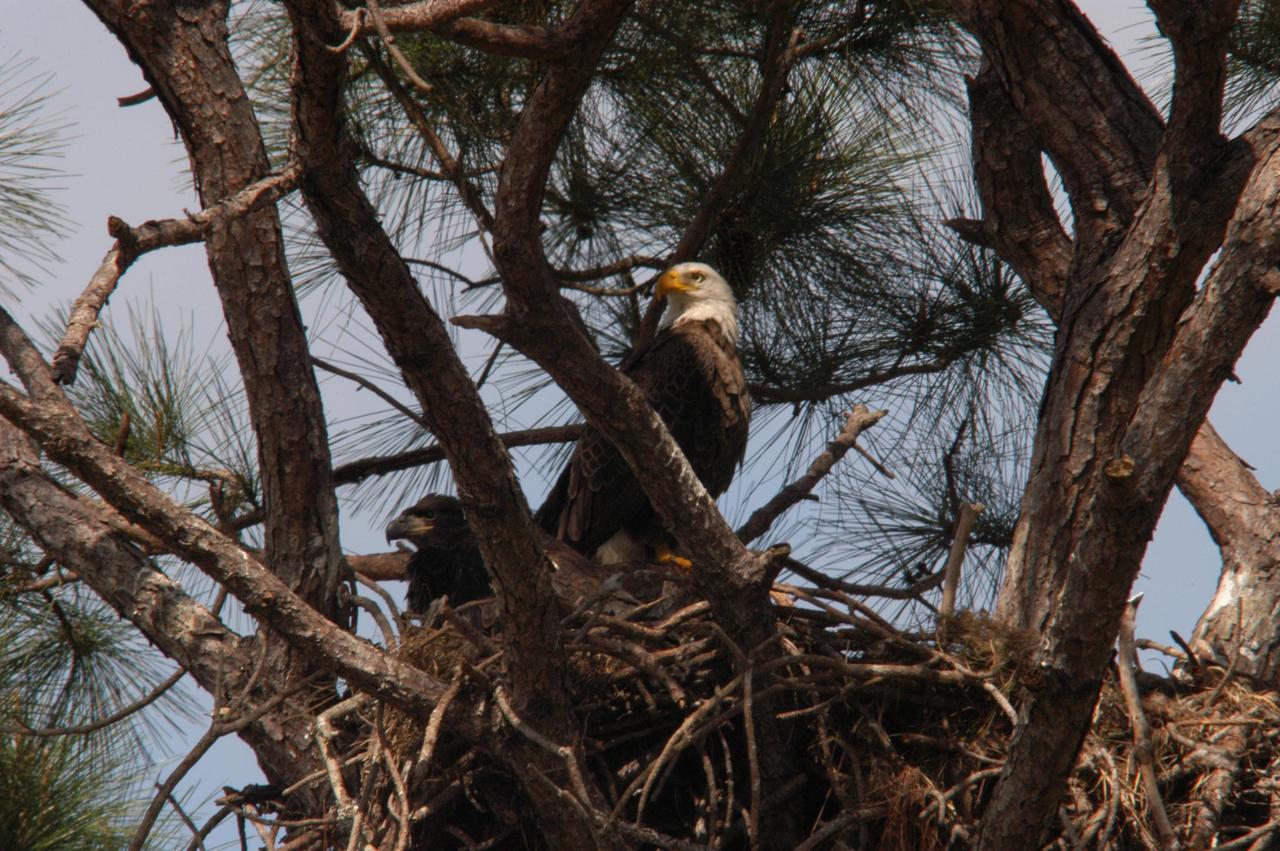
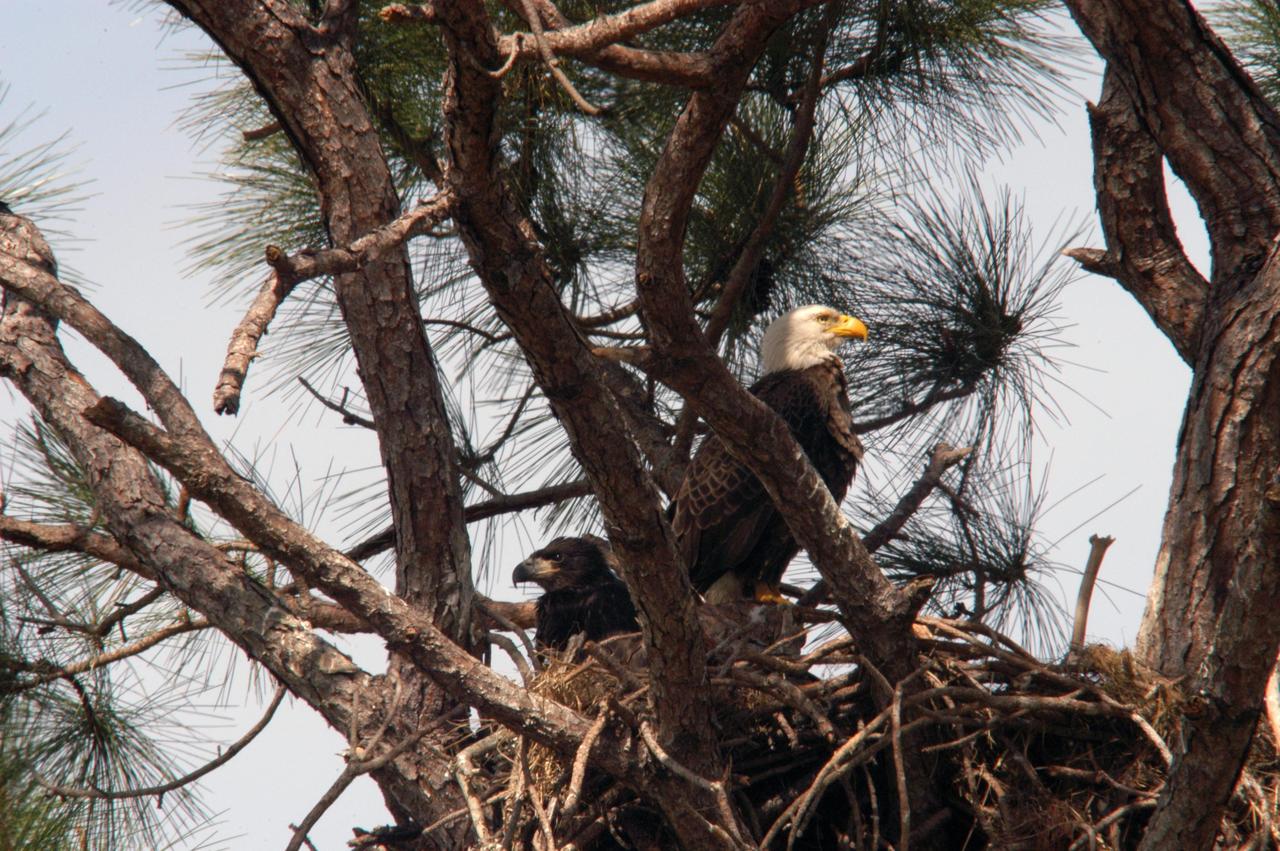
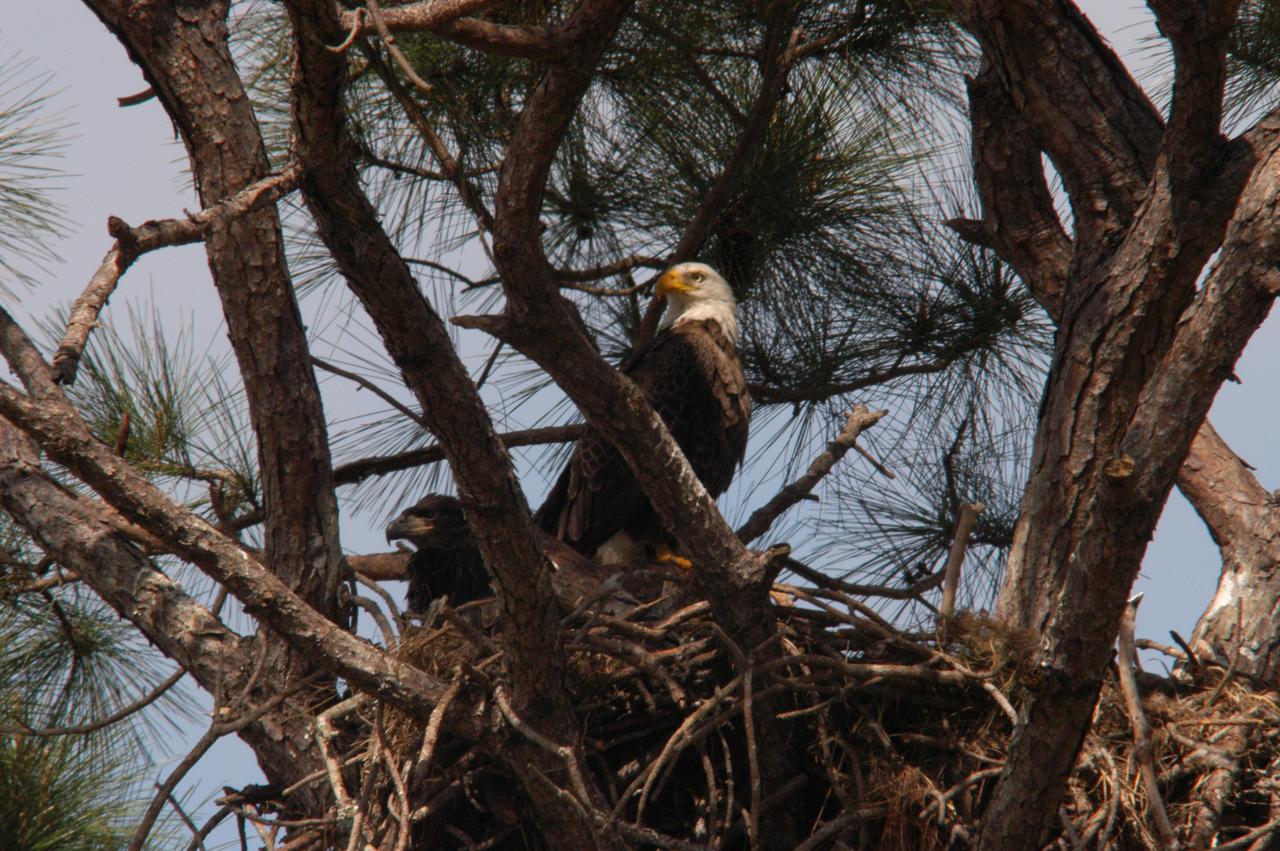
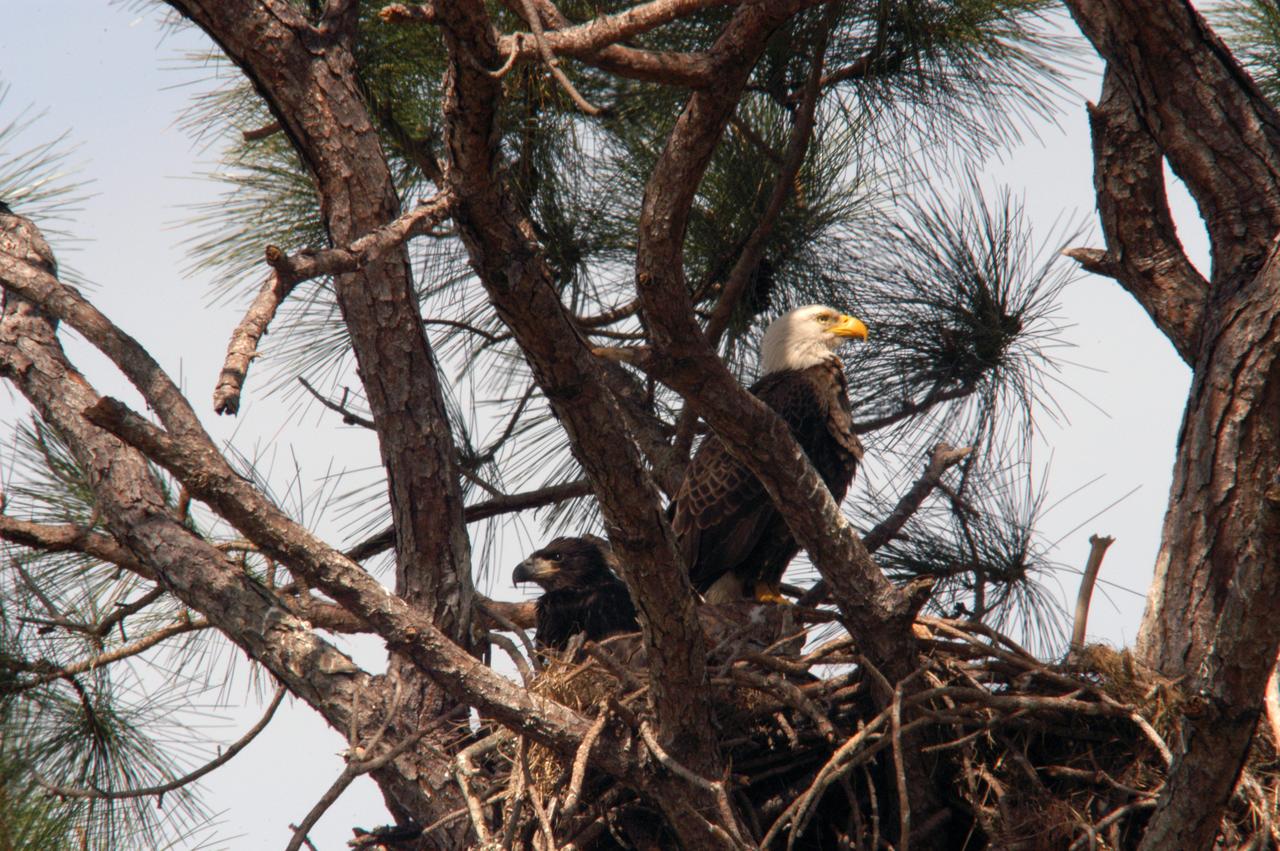
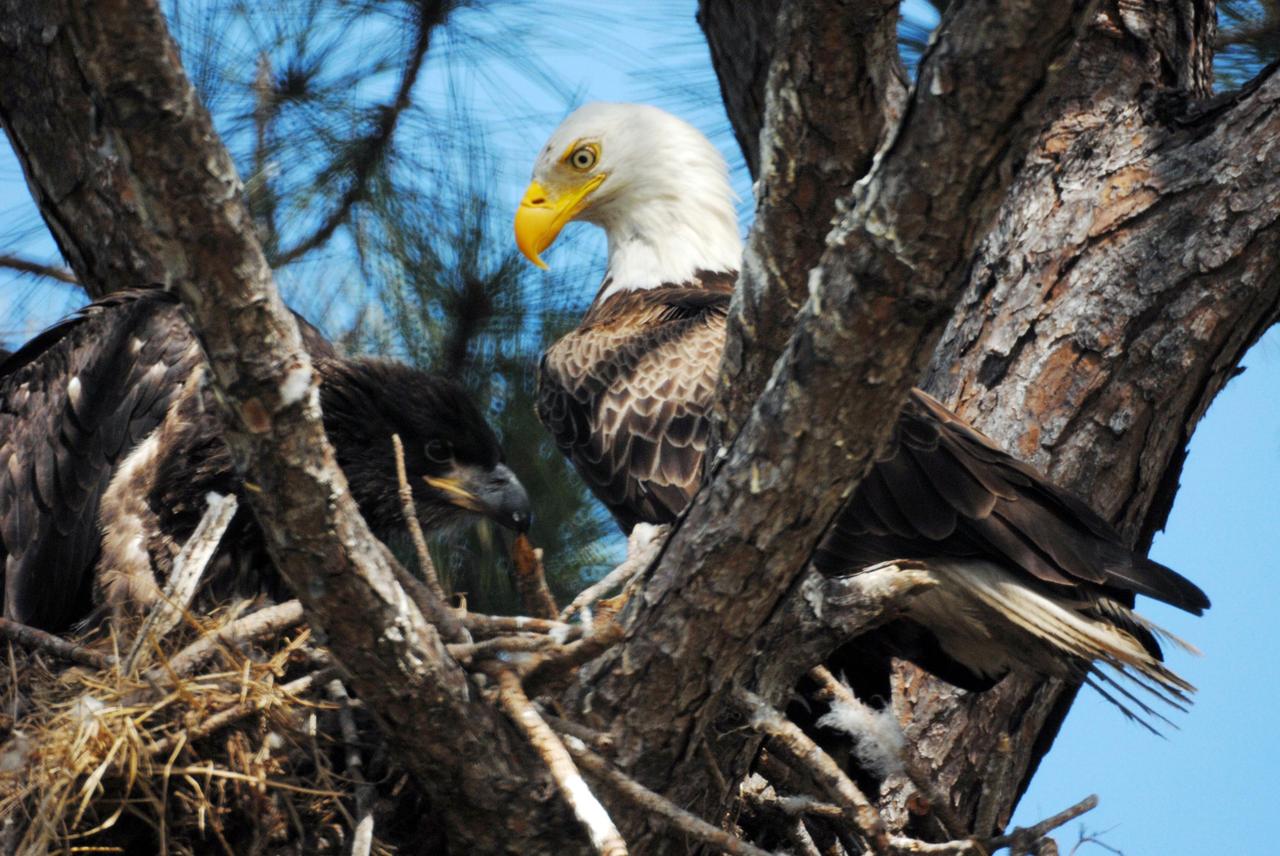
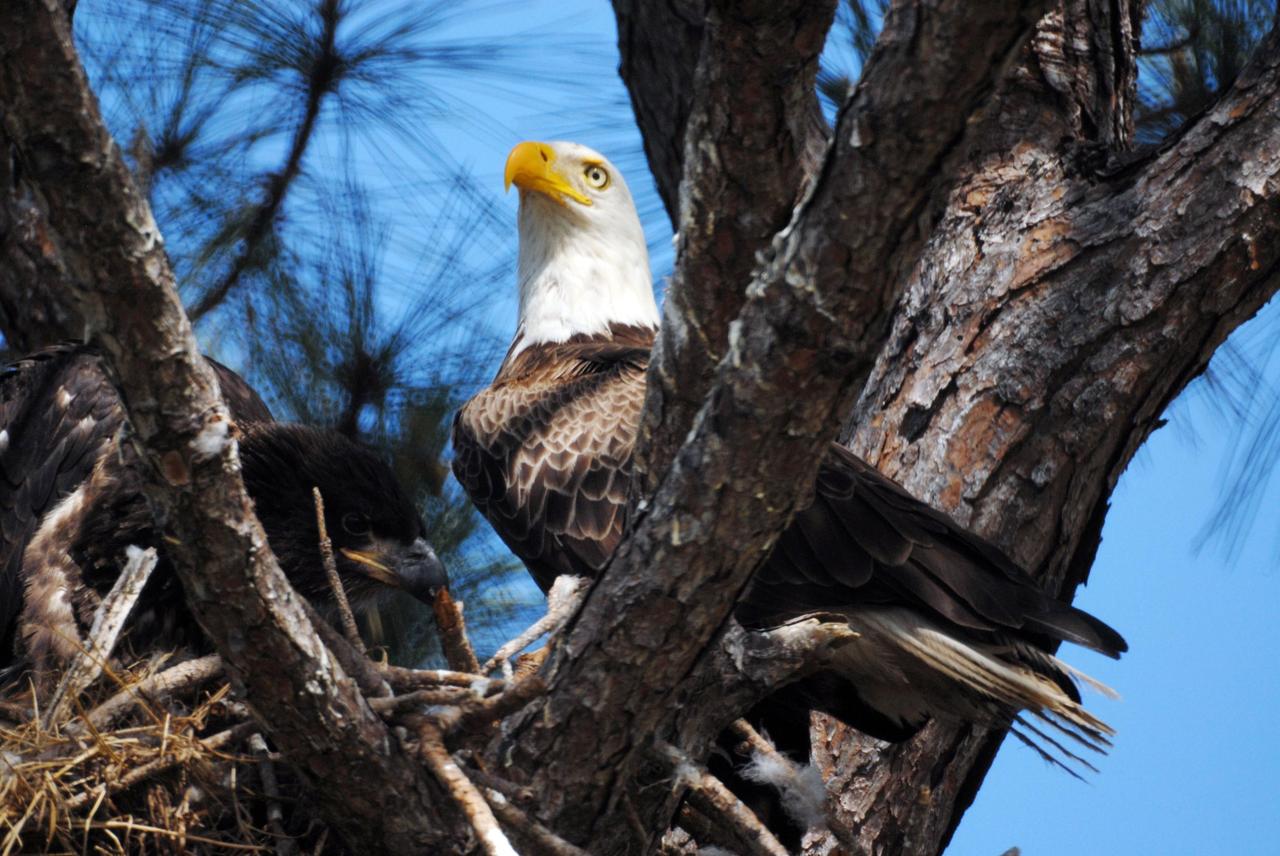
KENNEDY SPACE CENTER, FLA. -- High in a pine tree at NASA's Kennedy Space Center, an adult bald eagle (right) and a fledgling keep watch from their nest. There are approximately a dozen active bald eagle nests both in KSC and in the Merritt Island National Wildlife Refuge, which surrounds KSC. The refuge includes several wading bird rookeries, many osprey nests, up to 400 manatees during the spring, and approximately 2,500 Florida scrub jays.  It also is a major wintering area for migratory birds. More than 500 species of wildlife inhabit the refuge, with 15 considered federally threatened or endangered.  Photo credit: NASA/George Shelton
KSC-07pd0648
KENNEDY SPACE CENTER, FLA. --  Two fledgling eagles bear the regal look of their parents as they rest in their nest at the north end of S.R. 3 near Kennedy Space Center. This year-old nest is one of a dozen eagle nests both in KSC and in the Merritt Island National Wildlife Refuge, which surrounds KSC. The refuge includes several wading bird rookeries, many osprey nests, up to 400 manatees during the spring, and approximately 2,500 Florida scrub jays.  It also is a major wintering area for migratory birds. More than 500 species of wildlife inhabit the refuge, with 15 considered federally threatened or endangered.  Photo credit: NASA/Ken Thornsley
KSC-07pd0720
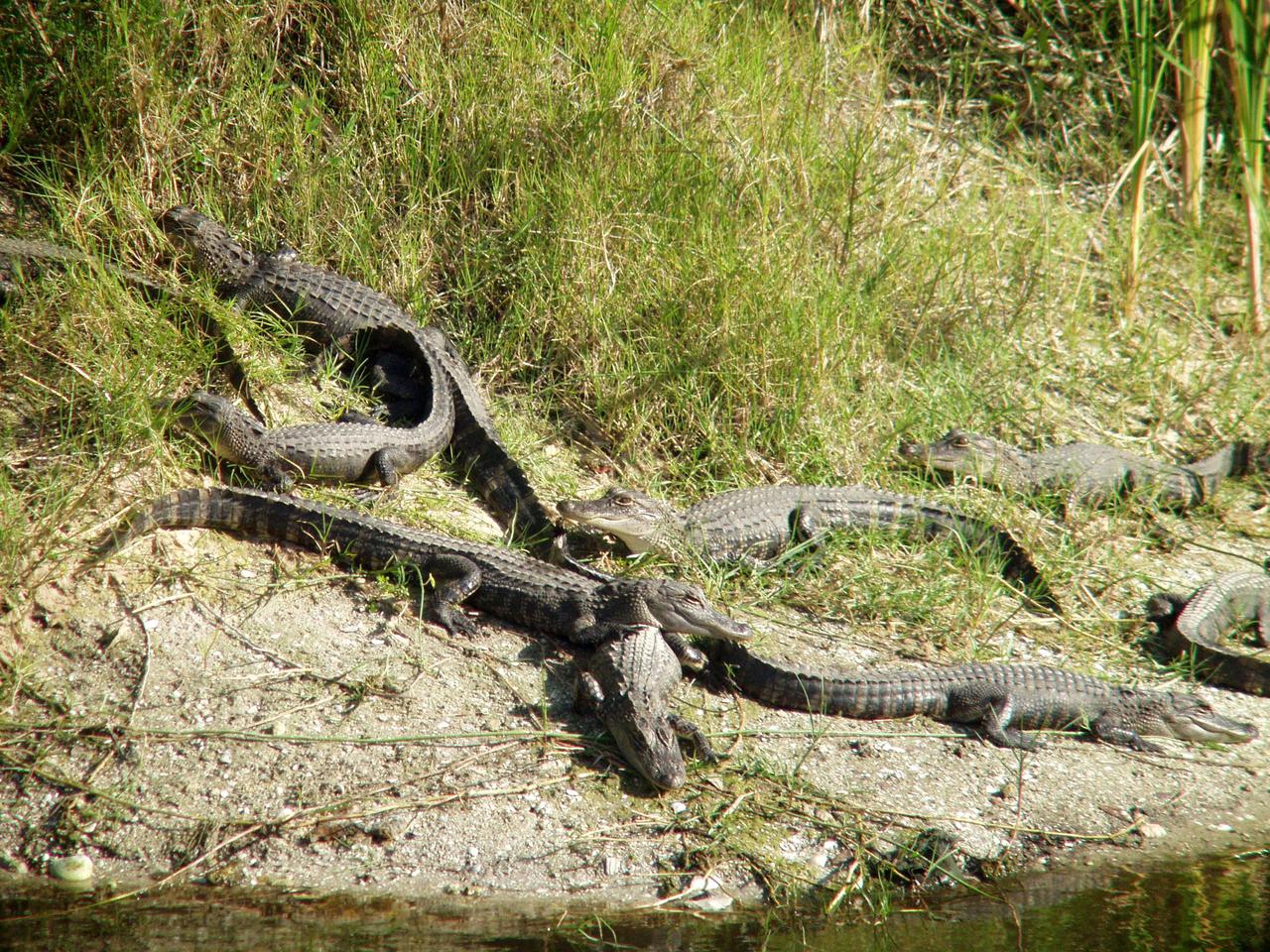
KENNEDY SPACE CENTER, FLA. --  Young alligators share grassy space beside a body of water on KSC.   The Center shares a boundary with the Merritt Island National Wildlife Refuge, which harbors nearly 5,000 American alligators.  Some of those gators can be seen in the canals and ponds around KSC.  The refuge is also habitat for more than 310 species of birds, 25 mammals, 117 fishes and 65 amphibians and reptiles.  The open water provides wintering areas for 23 species of migratory waterfowl and a year-round home for great blue herons, great egrets, wood storks, cormorants, brown pelicans and other species of marsh and shore birds.
KSC-02PD-0772
High in a pine tree at NASA's Kennedy Space Center, an adult bald eagle (right) and a fledgling keep watch from their nest. There are approximately a dozen active bald eagle nests both in KSC and in the Merritt Island National Wildlife Refuge, which surrounds KSC. The refuge includes several wading bird rookeries, many osprey nests, up to 400 manatees during the spring, and approximately 2,500 Florida scrub jays. It also is a major wintering area for migratory birds. More than 500 species of wildlife inhabit the refuge, with 15 considered federally threatened or endangered.
Wildlife - Bald Eagle
KENNEDY SPACE CENTER, FLA. -- High in a pine tree at NASA's Kennedy Space Center, an adult bald eagle (right) and a fledgling keep watch from their nest. There are approximately a dozen active bald eagle nests both in KSC and in the Merritt Island National Wildlife Refuge, which surrounds KSC. The refuge includes several wading bird rookeries, many osprey nests, up to 400 manatees during the spring, and approximately 2,500 Florida scrub jays.  It also is a major wintering area for migratory birds. More than 500 species of wildlife inhabit the refuge, with 15 considered federally threatened or endangered.  Photo credit: NASA/George Shelton
KSC-07pd0647
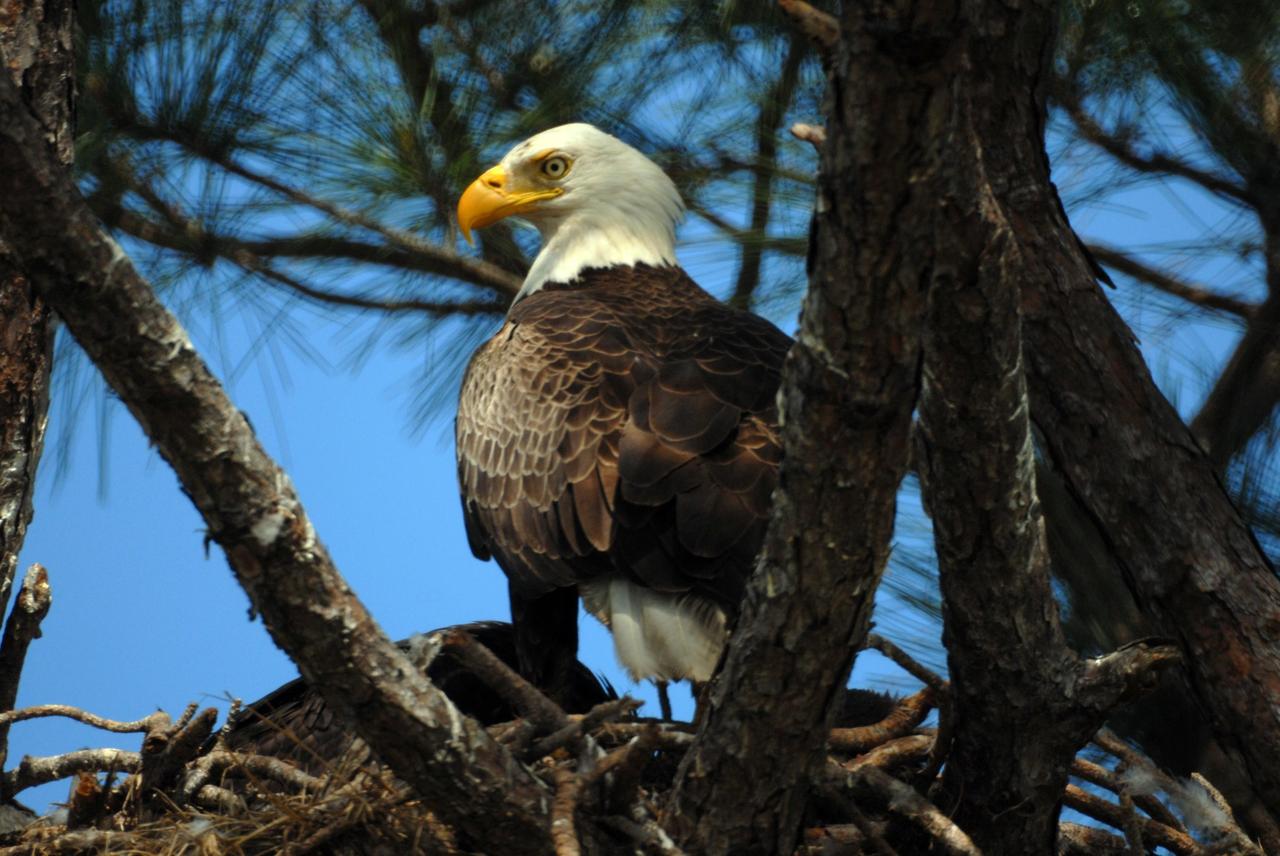
KENNEDY SPACE CENTER, FLA. --  This mother eagle appears wary as she stands in her nest at the north end of S.R. 3 near Kennedy Space Center.  The resident eagle parents are raising two offspring. It is one of a dozen eagle nests both in KSC and in the Merritt Island National Wildlife Refuge, which surrounds KSC. The refuge includes several wading bird rookeries, many osprey nests, up to 400 manatees during the spring, and approximately 2,500 Florida scrub jays.  It also is a major wintering area for migratory birds. More than 500 species of wildlife inhabit the refuge, with 15 considered federally threatened or endangered.  Photo credit: NASA/Ken Thornsley
KSC-07pd0716
High in a pine tree at NASA's Kennedy Space Center, an adult bald eagle (right) and a fledgling keep watch from their nest. There are approximately a dozen active bald eagle nests both in KSC and in the Merritt Island National Wildlife Refuge, which surrounds KSC. The refuge includes several wading bird rookeries, many osprey nests, up to 400 manatees during the spring, and approximately 2,500 Florida scrub jays. It also is a major wintering area for migratory birds. More than 500 species of wildlife inhabit the refuge, with 15 considered federally threatened or endangered.
Wildlife - Bald Eagle
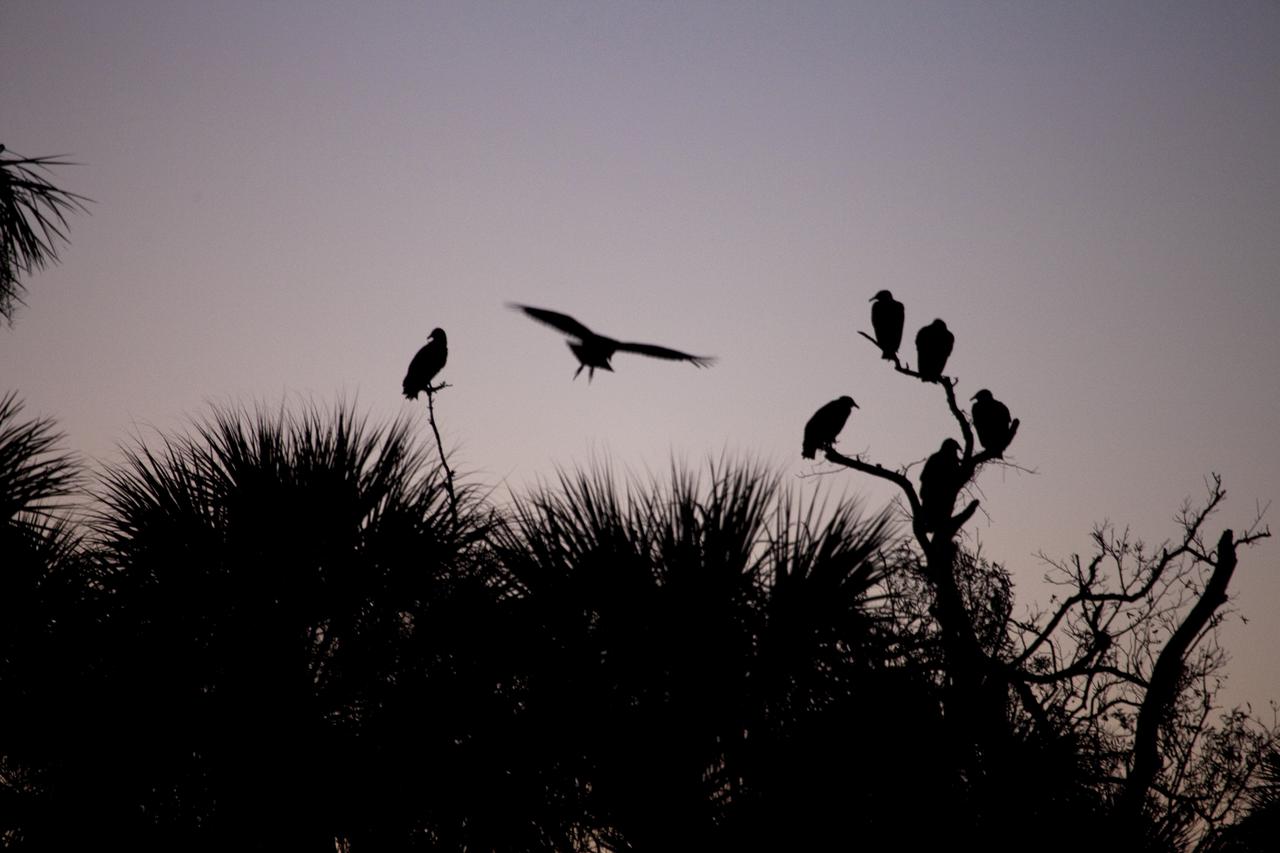
In the early morning skies, flocks of birds soar over KSC wetlands. Kennedy Space Center shares a boundary with the Merritt Island National Wildlife Refuge that encompasses 92,000 acres that are a habitat for more than 331 species of birds, 31 mammals, 117 fishes, and 65 amphibians and reptiles. The marshes and open water of the refuge provide wintering areas for 23 species of migratory waterfowl, as well as a year-round home for great blue herons, great egrets, wood storks, cormorants, brown pelicans and other species of marsh and shore birds, as well as a variety of insects
KSC00pp1428
In the early morning skies, flocks of birds soar over KSC wetlands. Kennedy Space Center shares a boundary with the Merritt Island National Wildlife Refuge that encompasses 92,000 acres that are a habitat for more than 331 species of birds, 31 mammals, 117 fishes, and 65 amphibians and reptiles. The marshes and open water of the refuge provide wintering areas for 23 species of migratory waterfowl, as well as a year-round home for great blue herons, great egrets, wood storks, cormorants, brown pelicans and other species of marsh and shore birds, as well as a variety of insects
KSC-00pp1428
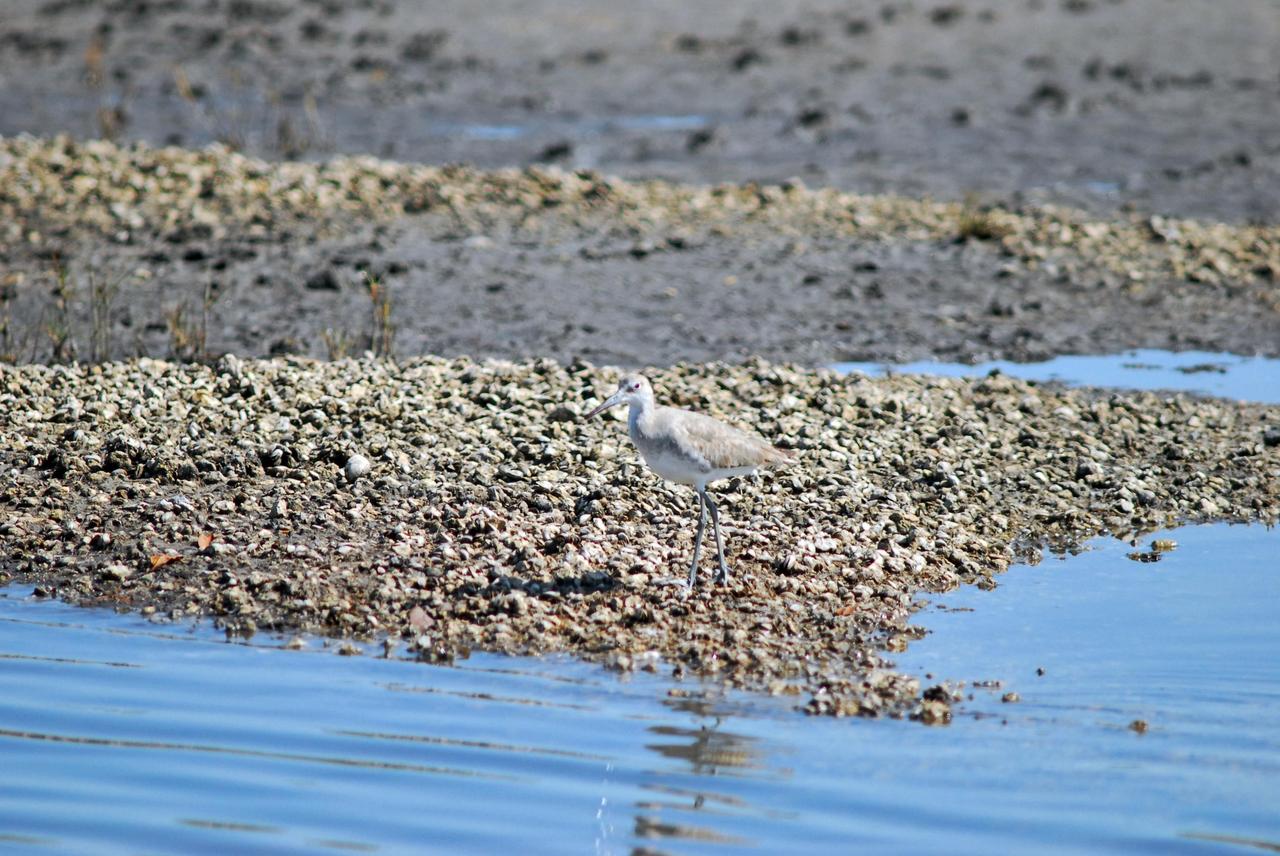
KENNEDY SPACE CENTER, FLA.  --   Possibly a willet or a sandpiper in winter plumage, this bird nearly blends into the rocky background of the river bank on Kennedy Space Center.  KSC shares a boundary with the Merritt Island Wildlife Nature Refuge. The refuge is a habitat for more than 310 species of birds, 25 mammals, 117 fishes and 65 amphibians and reptiles. In addition, the Refuge supports 19 endangered or threatened wildlife species on Federal or State lists, more than any other single refuge in the U.S.   Photo credit: NASA/Dimitri Gerondidakis
KSC-07pd0868
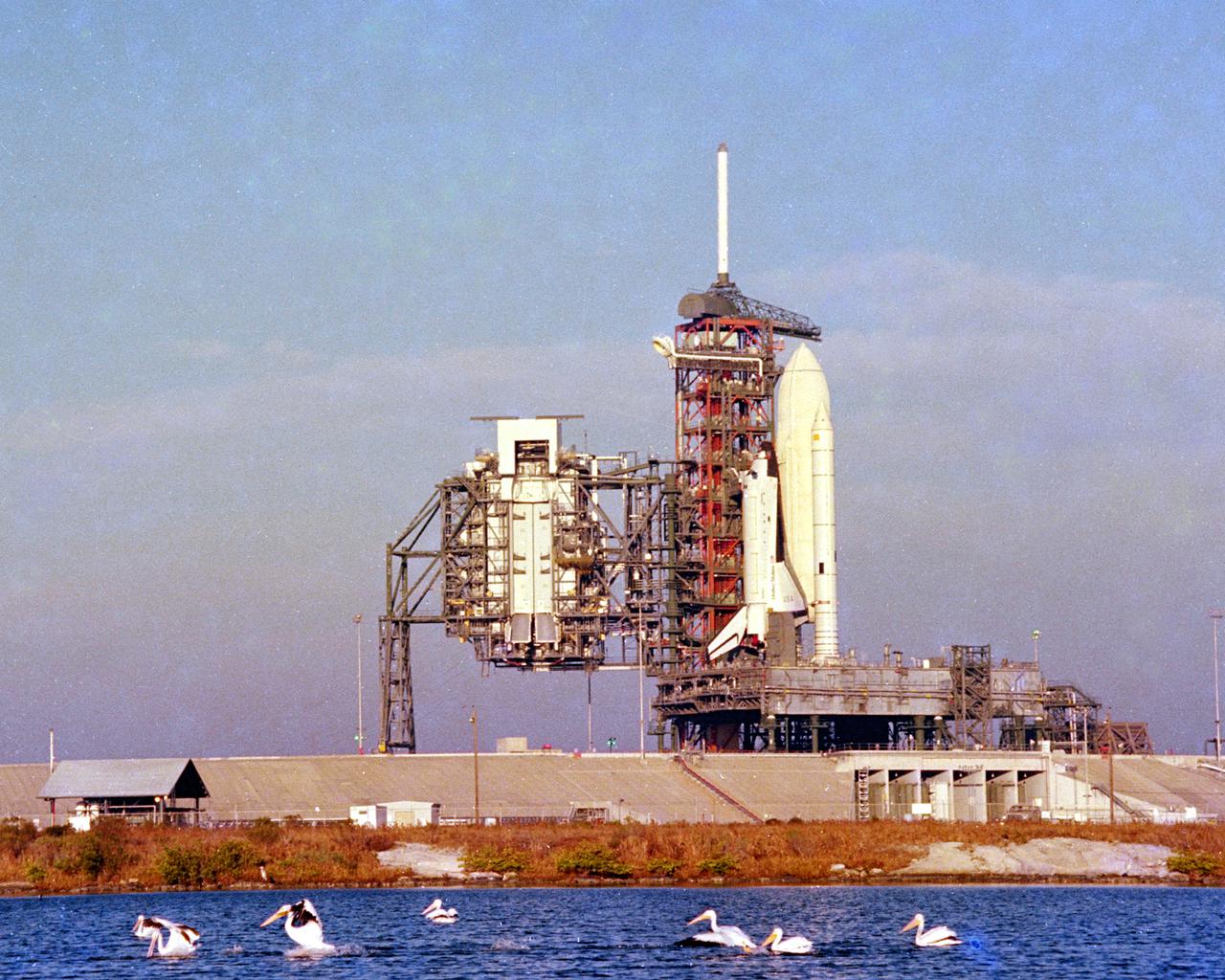
KENNEDY SPACE CENTER, FLA. -  It's not always birds of a feather which flock together.  Here, a flock of white pelicans splash down in a lagoon near KSC's Pad A of Launch Complex 39, where another 'bird' - the Space Shuttle Columbia - is poised for launch on its first voyage into orbit.  The Rotating Service Structure, which houses the snug-fitting, environmentally clean 'white room' where payloads will be loaded into the orbiter's cargo bay, is shown at left in its retracted position.
KSC-81pc-0056
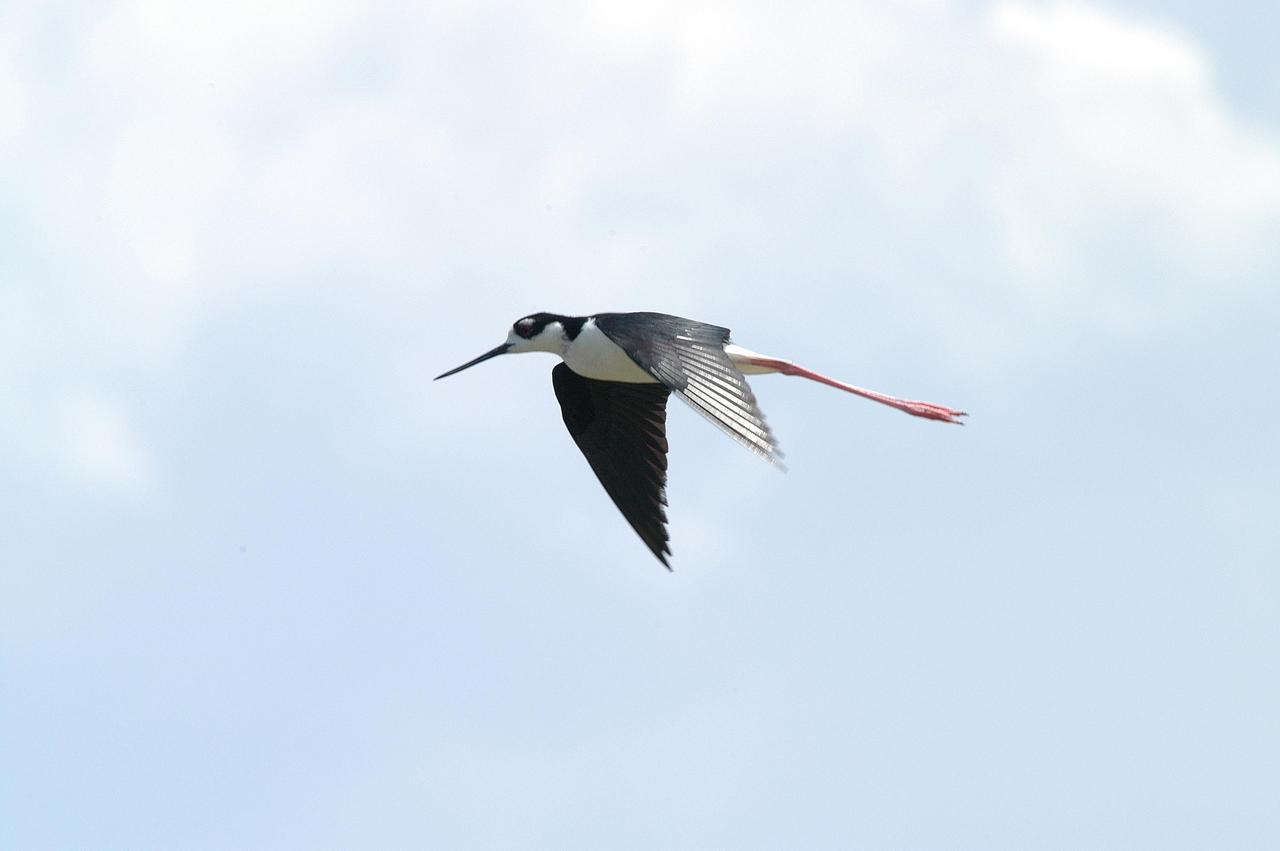
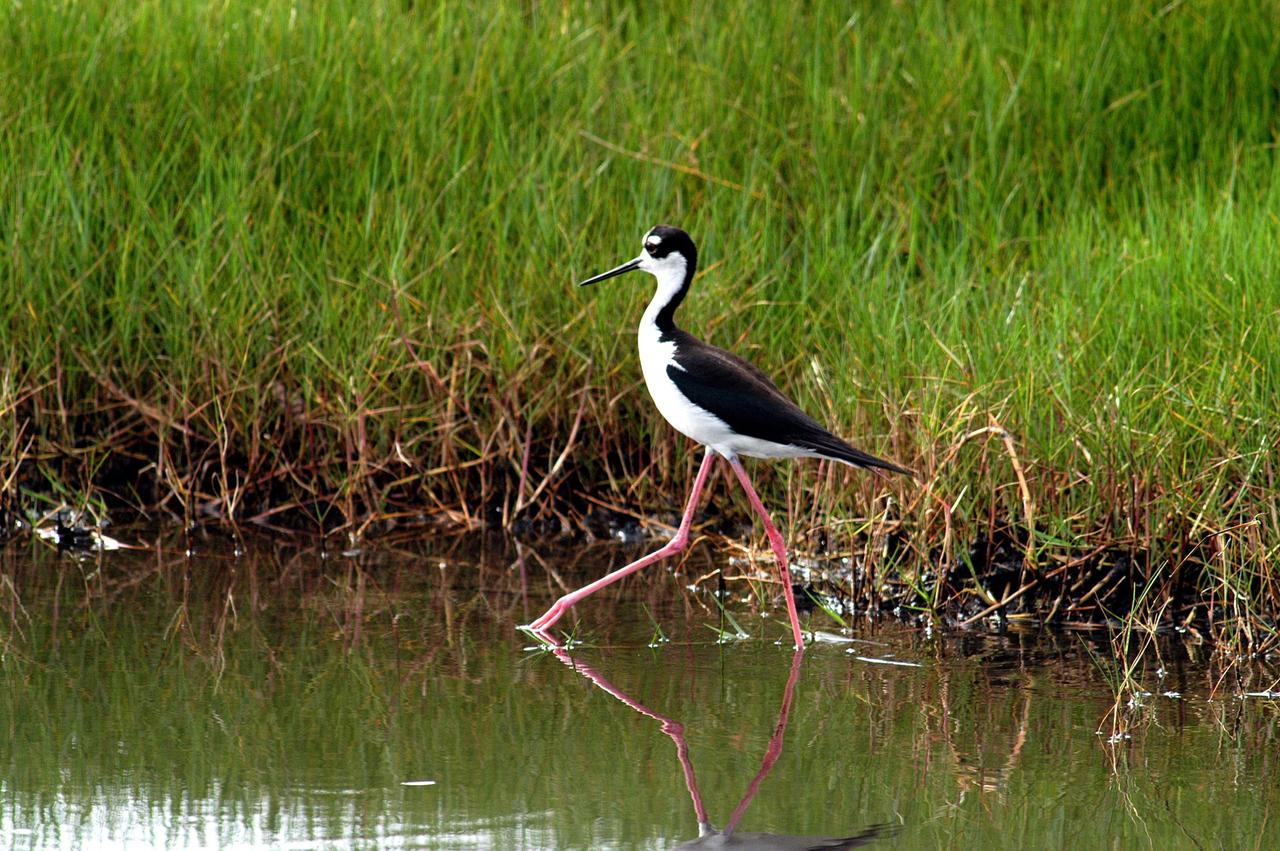
KENNEDY SPACE CENTER, FLA.  -  Distinctive with its black and white coloring and very long red legs trailing behind is a black-winged stilt.  The bird is a common sight around KSC, which shares a boundary with the Merritt Island National Wildlife Refuge.  The marshes and open water of the refuge provide wintering areas for 23 species of migratory waterfowl, as well as a year-round home for great blue herons, great egrets, wood storks, cormorants, brown pelicans and other species of marsh and shore birds.
KSC-04pd1248
KENNEDY SPACE CENTER, FLA. --  A Roseate Spoonbill takes flight.  The colorful birds are seen often throughout KSC and nearby wetlands. The birds, named for their brilliant pink color and paddle-shaped bill, usually feed in shallow water by swinging their bill back and forth, scooping up small fish and crustaceans.  They typically inhabit mangroves on the coasts of southern Florida, Louisiana and Texas. [Photo by Mike Brown]
KSC-02pd0550
KENNEDY SPACE CENTER, FLA.  -  Herons, a roseate spoonbill and other species of water birds gather in a canal near KSC, which shares a boundary with the Merritt Island National Wildlife Refuge.  The marshes and open water of the refuge provide wintering areas for 23 species of migratory waterfowl, as well as a year-round home for great blue herons, great egrets, wood storks, cormorants, brown pelicans and other species of marsh and shore birds.
KSC-04pd1249
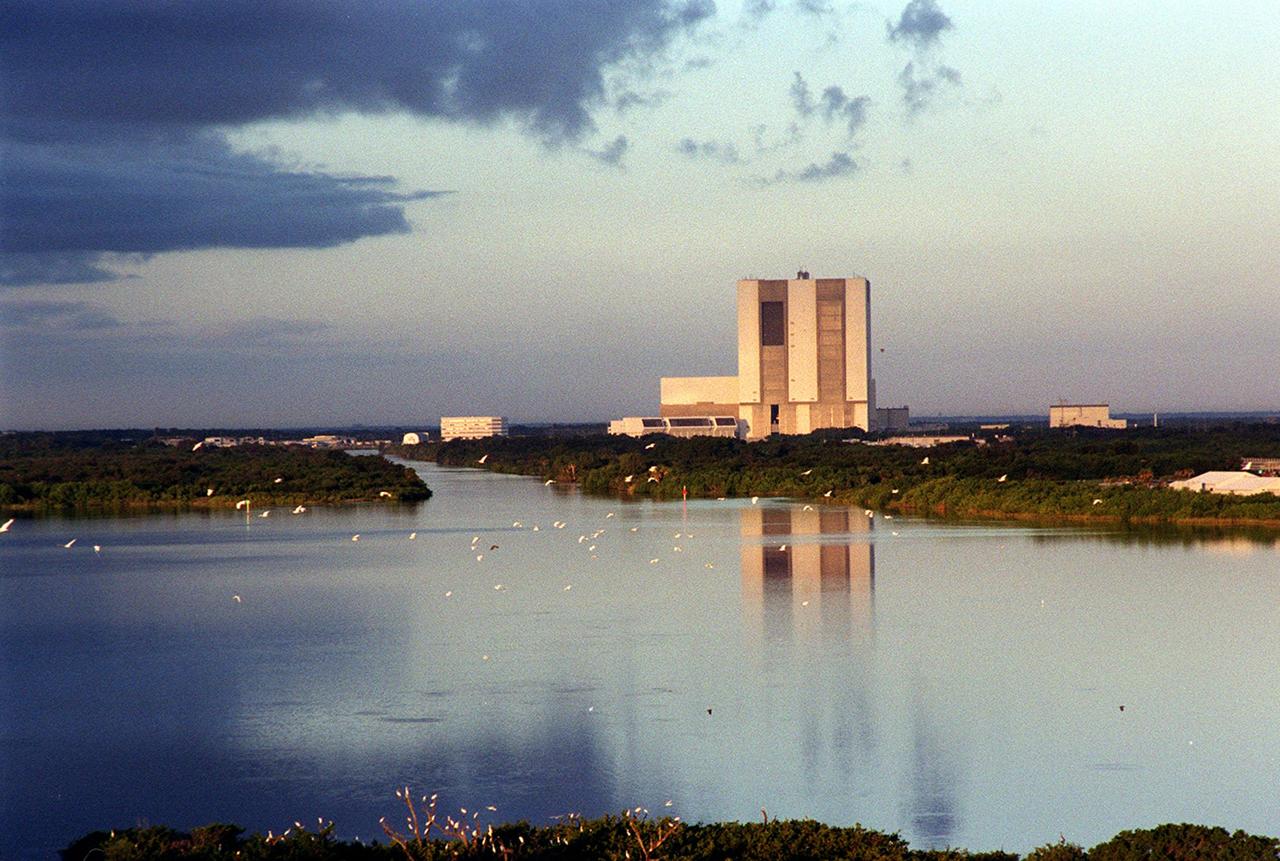
In the early morning, flocks of birds soar over the Banana River, whose waters reflect the Vehicle Assembly Building , bathed in a pink glow from post-dawn light. Next to the VAB, on the left, is the Launch Control Center. The rectangular building closer to the water at left is the Operations Support Building. At right is the Rotation/Processing Facility. The birds are a common sight at KSC since the Center shares a boundary with the Merritt Island National Wildlife Refuge. The Refuge encompasses 92,000 acres that are a habitat for more than 331 species of birds, 31 mammals, 117 fishes, and 65 amphibians and reptiles. The marshes and open water of the refuge provide wintering areas for 23 species of migratory waterfowl, as well as a year-round home for great blue herons, great egrets, wood storks, cormorants, brown pelicans and other species of marsh and shore birds, as well as a variety of insects.
KSC-00PP-1434
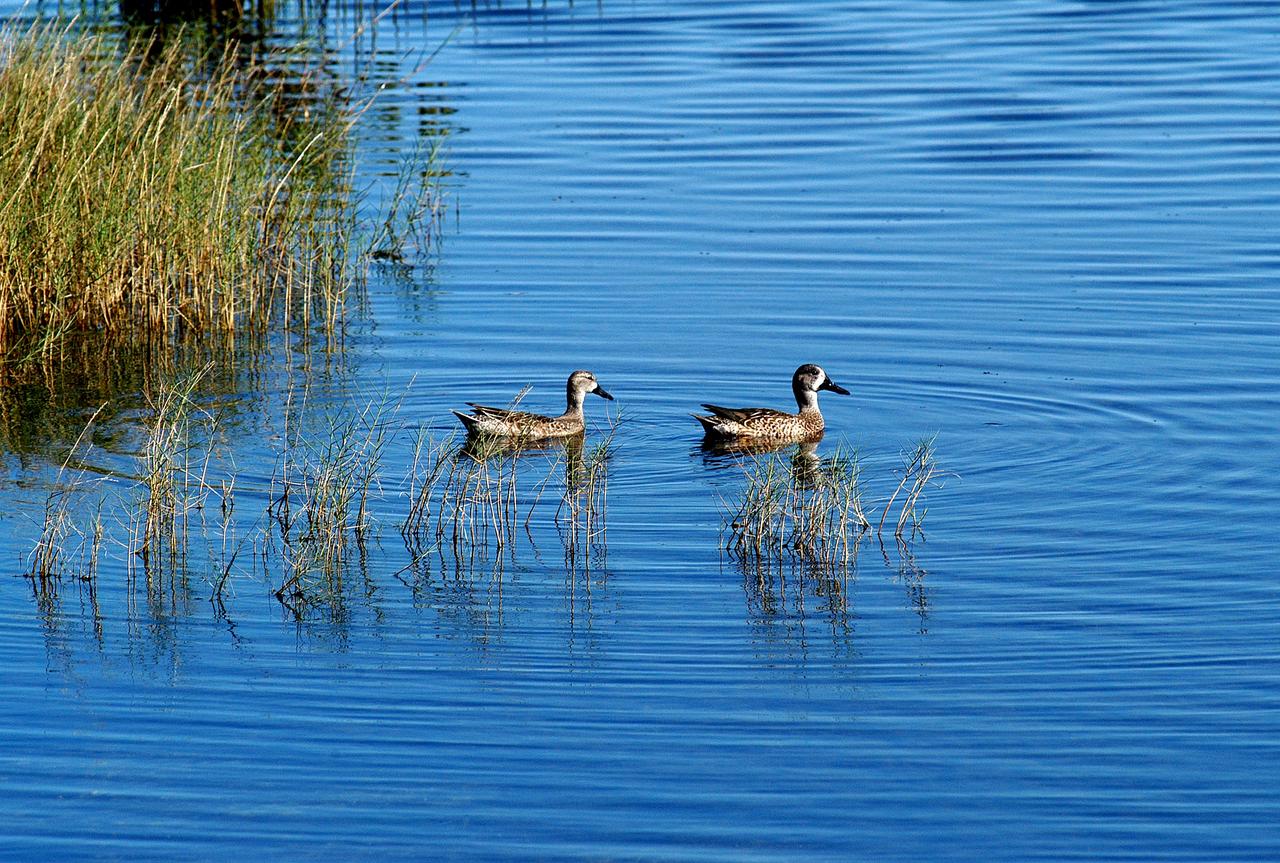
KENNEDY SPACE CENTER, FLA.   -   Two blue-winged teals swim in a pond near KSC.  The species prefers marshes and shallow ponds and lakes for nesting and range from Canada to North Carolina, the Gulf Coast and Southern California, as well as Florida.  KSC shares a boundary with the National Merritt Island Wildlife Refuge, which provides wintering areas for 23 species of migratory waterfowl, as well as a year-round home for great blue herons, great egrets, wood storks, cormorants, brown pelicans and other species of marsh and shore birds.
KENNEDY SPACE CENTER, FLA. - Two blue-winged teals swim in a pond near KSC. The species prefers marshes and shallow ponds and lakes for nesting and range from Canada to North Carolina, the Gulf Coast and Southern California, as well as Florida. KSC shares a boundary with the National Merritt Island Wildlife Refuge, which provides wintering areas for 23 species of migratory waterfowl, as well as a year-round home for great blue herons, great egrets, wood storks, cormorants, brown pelicans and other species of marsh and shore birds.
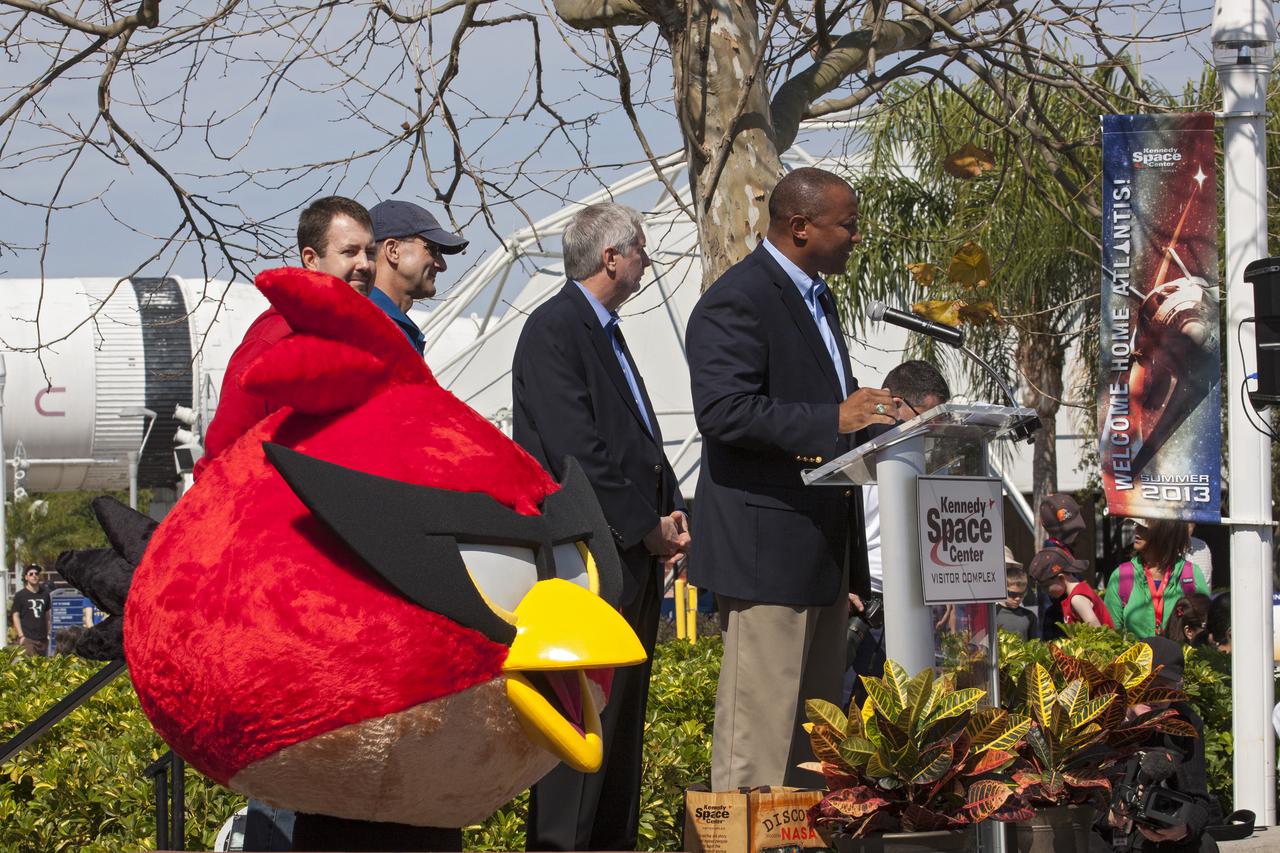
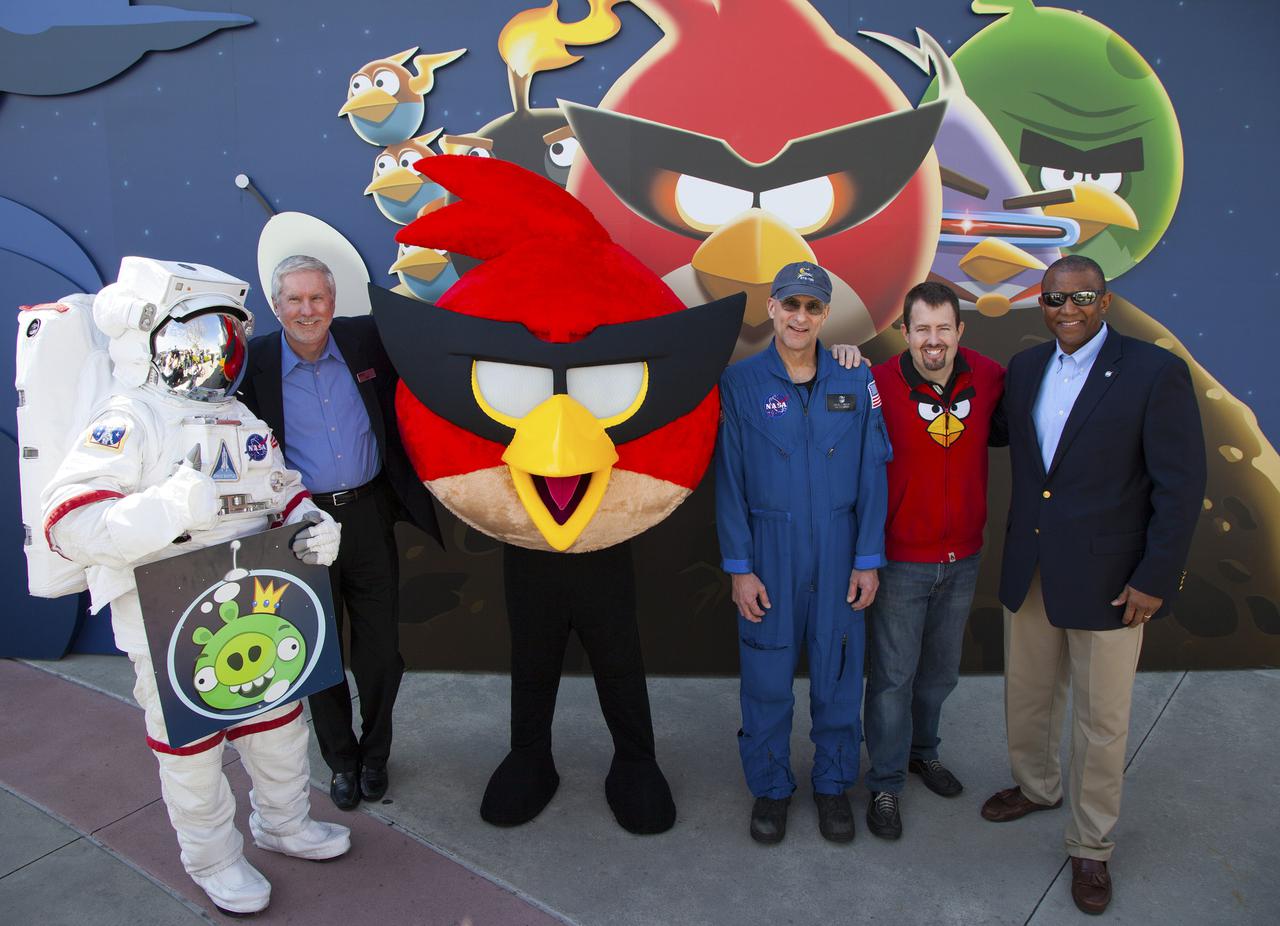
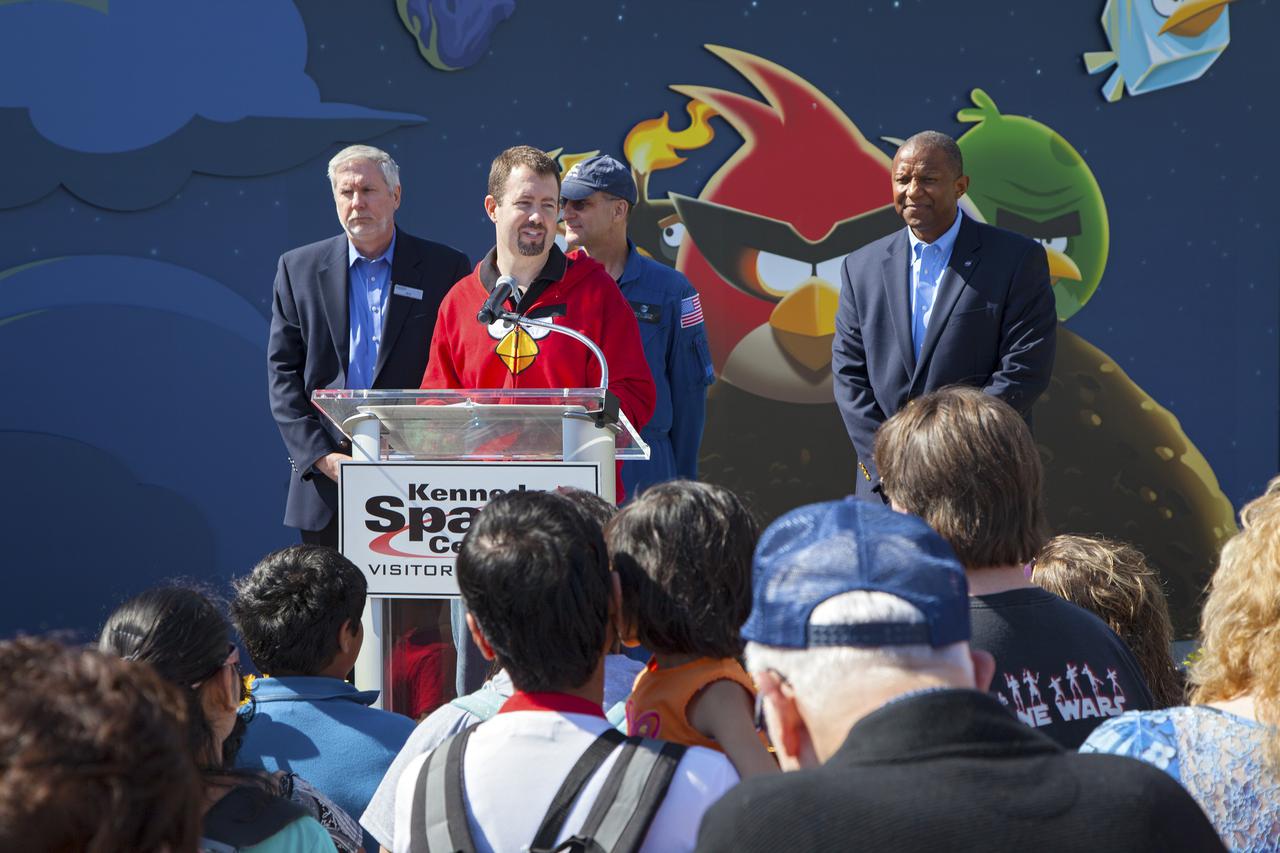
CAPE CANAVERAL, Fla. -- At NASA’s Kennedy Space Center Visitor Complex in Florida, NASA astronaut Don Pettit speaks to visitors during the grand opening of the new Angry Birds Space Encounter. Standing behind Pettit, from left are Dan Mitchell, director of location-based entertainment for Rovio Entertainment Bill Moore, chief operating officer with the KSC visitor complex and Kelvin Manning, associate deputy director of Kennedy Space Center. Also in the photo is Red Bird, one of the Angry Bird Space characters.  Finland-based Rovio Entertainment, the creator of the Angry Birds Space game, partnered with Kennedy Space Center to bring the beloved characters to life. It is the first Angry Birds interactive exhibit in the United States designed for people of all ages. The 4,485-square-foot facility hosts the space adventures of the Angry Birds as they travel into an intergalactic wormhole, come face-to-face with Space Pigs and discover heroic superpowers. Six interactive stations are designed to encourage children in science, technology, engineering and mathematics fields of study. Photo credit: NASA_Kim Shiflett
KSC-2013-1856
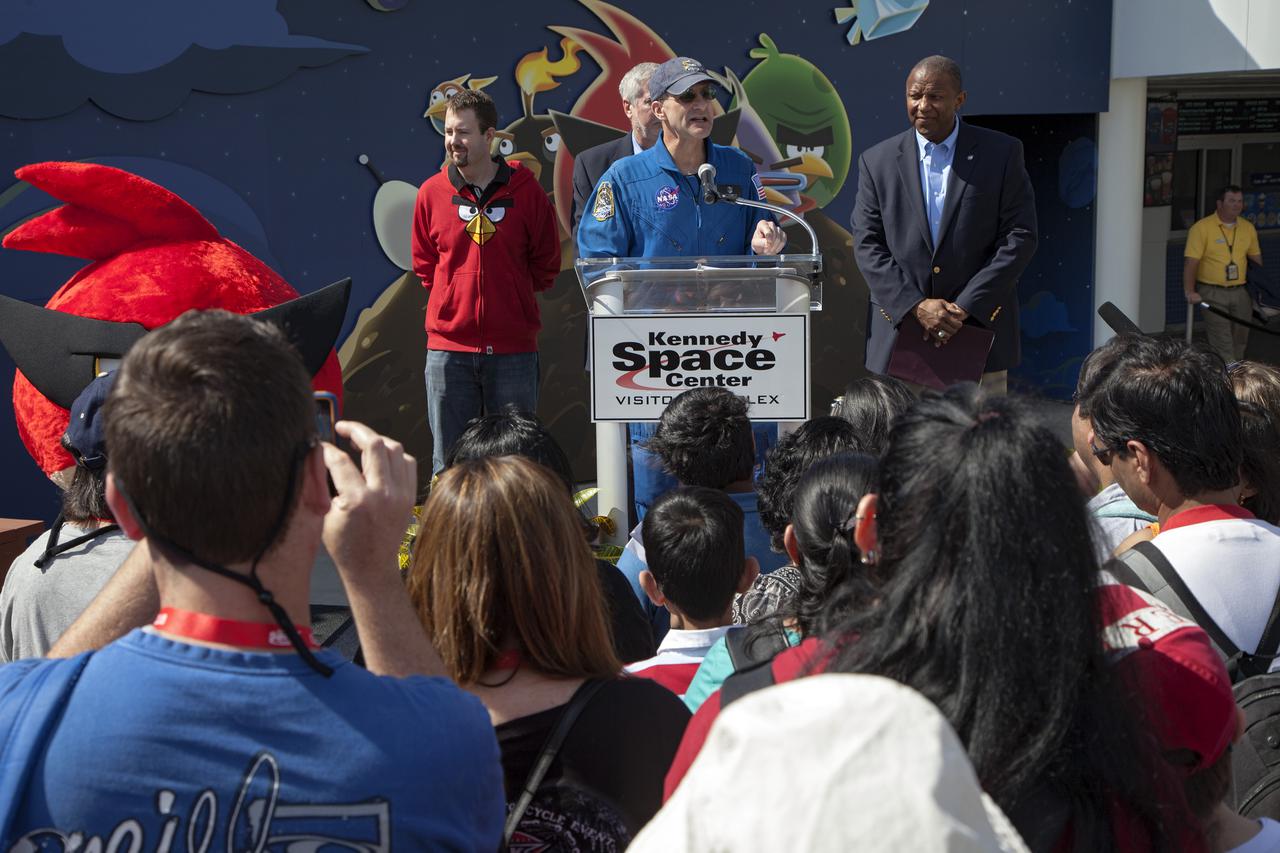
CAPE CANAVERAL, Fla. -- At NASA’s Kennedy Space Center Visitor Complex in Florida, Kelvin Manning, associate deputy director of Kennedy Space Center, speaks to visitors during the grand opening of the new Angry Birds Space Encounter. Standing behind Manning, from left are Dan Mitchell, director of location-based entertainment for Rovio Entertainment NASA astronaut Don Pettit and Bill Moore, chief operating officer with the KSC visitor complex. Also in the photo is Red Bird, one of the Angry Bird Space characters.  Finland-based Rovio Entertainment, the creator of the Angry Birds Space game, partnered with Kennedy Space Center to bring the beloved characters to life. It is the first Angry Birds interactive exhibit in the United States designed for people of all ages. The 4,485-square-foot facility hosts the space adventures of the Angry Birds as they travel into an intergalactic wormhole, come face-to-face with Space Pigs and discover heroic superpowers. Six interactive stations are designed to encourage children in science, technology, engineering and mathematics fields of study. Photo credit: NASA_Kim Shiflett
KSC-2013-1855
CAPE CANAVERAL, Fla. -- At NASA’s Kennedy Space Center Visitor Complex in Florida, the new Angry Birds Space Encounter was opened to visitors during a grand opening celebration. Helping to open the new attraction, from left are Spaceperson Bill Moore, chief operating officer of the KSC visitor complex Red Bird, one of the Angry Bird characters NASA astronaut Don Pettit Dan Mitchell, director of location-based entertainment for Rovio Entertainment and Kelvin Manning, associate deputy director of Kennedy Space Center.    Finland-based Rovio Entertainment, the creator of the Angry Birds Space game, partnered with Kennedy Space Center to bring the beloved characters to life. It is the first Angry Birds interactive exhibit in the United States designed for people of all ages. The 4,485-square-foot facility hosts the space adventures of the Angry Birds as they travel into an intergalactic wormhole, come face-to-face with Space Pigs and discover heroic superpowers. Six interactive stations are designed to encourage children in science, technology, engineering and mathematics fields of study. Photo credit: NASA_Kim Shiflett
KSC-2013-1861
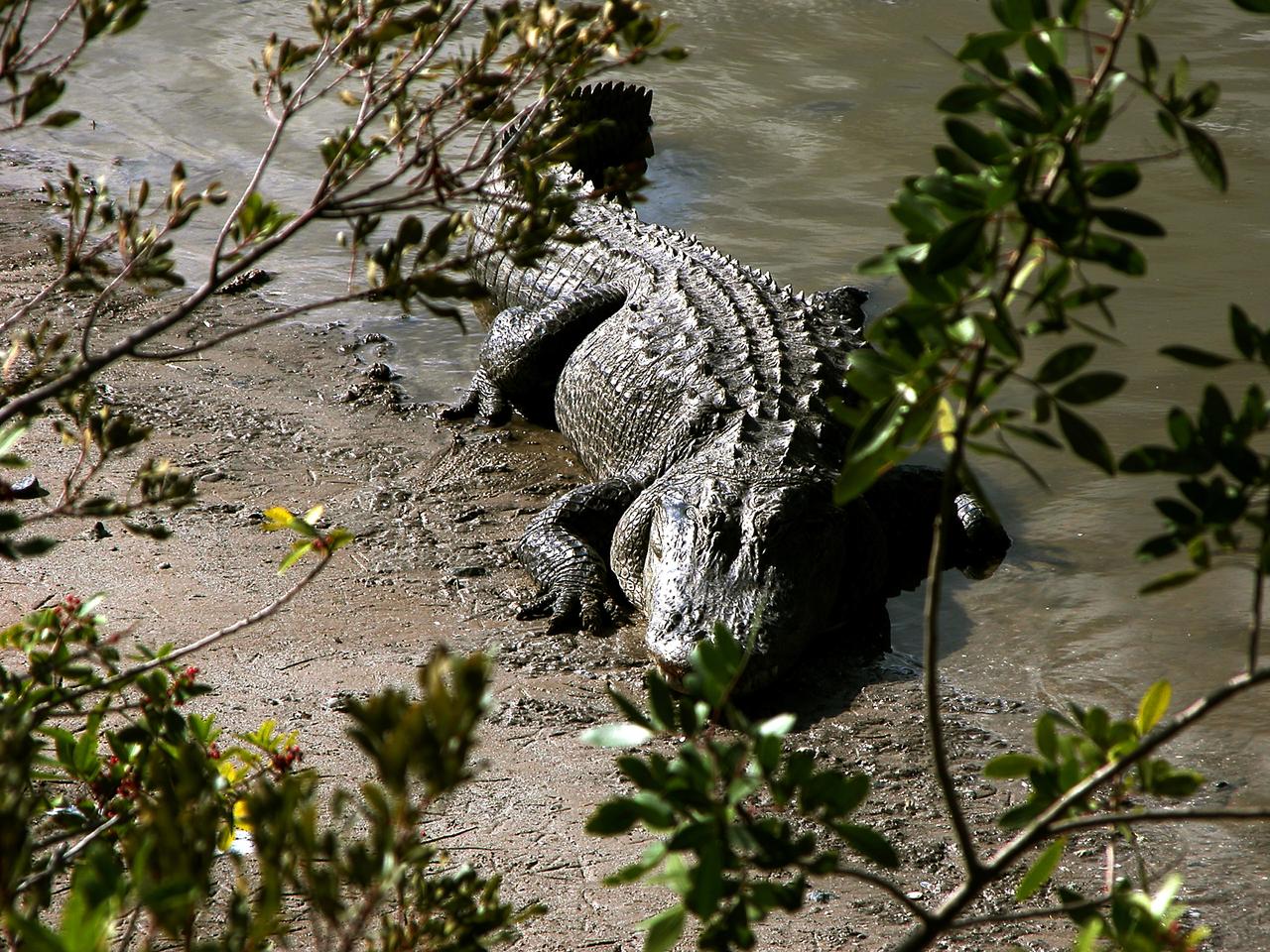
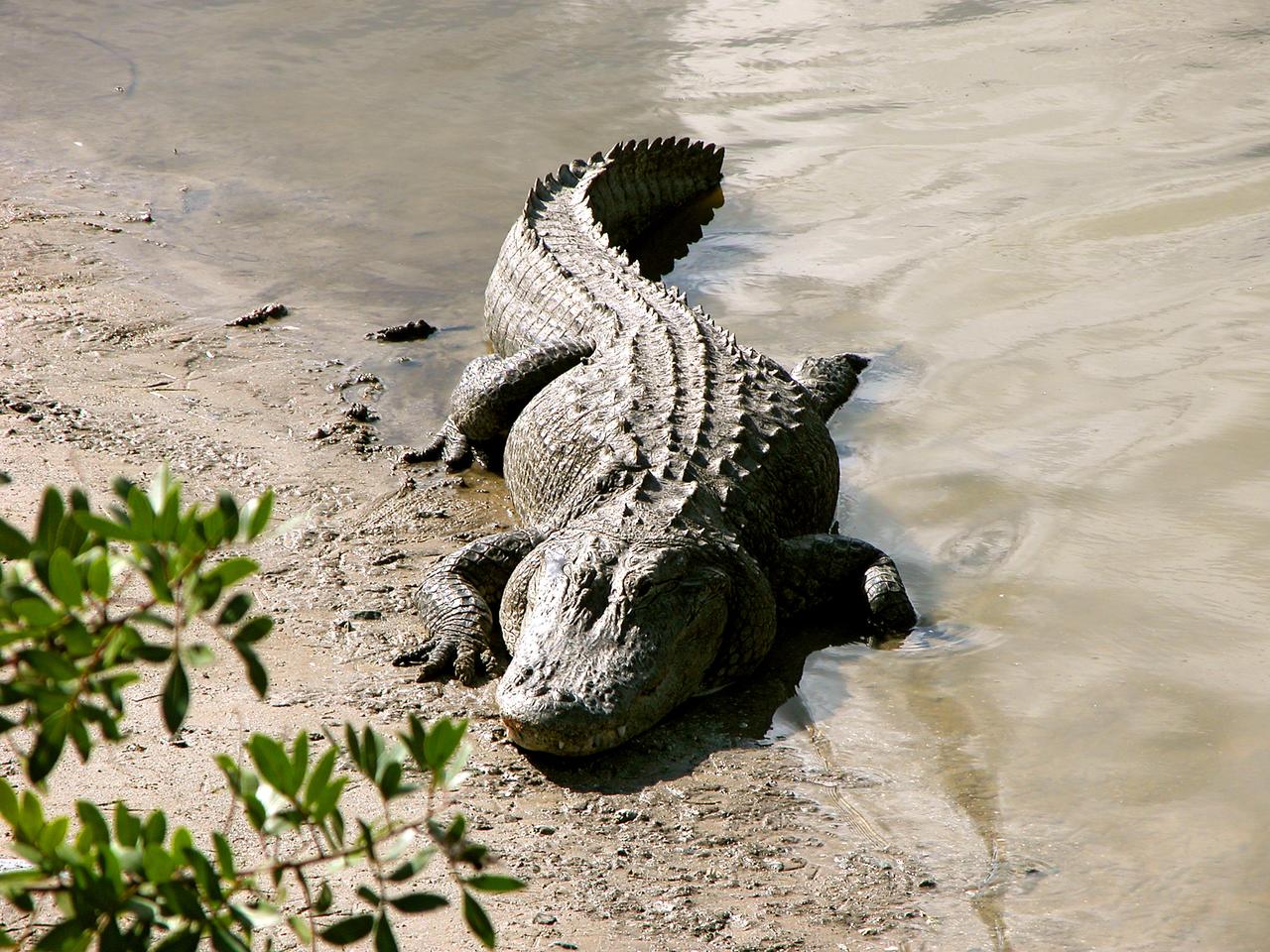
KENNEDY SPACE CENTER, FLA. -- An alligator is spotted sunning on the muddy bank of a canal in KSC.  Nearly 5,000 alligators can be found in canals, ponds, and waterways throughout the Center and the surrounding Merritt Island National Wildlife Refuge. American alligators feed and rest in the water, and lay their eggs in dens they dig into the banks. The young alligators spend their first several weeks in these dens. The Wildlife Refuge encompasses 92,000 acres that are a habitat for more than 331 species of birds, 31 mammals, 117 fishes, and 65 amphibians and reptiles.
KENNEDY SPACE CENTER, FLA. -- An alligator is spotted sunning on the muddy bank of a canal in KSC. Nearly 5,000 alligators can be found in canals, ponds, and waterways throughout the Center and the surrounding Merritt Island National Wildlife Refuge. American alligators feed and rest in the water, and lay their eggs in dens they dig into the banks. The young alligators spend their first several weeks in these dens. The Wildlife Refuge encompasses 92,000 acres that are a habitat for more than 331 species of birds, 31 mammals, 117 fishes, and 65 amphibians and reptiles.
KENNEDY SPACE CENTER, FLA. -- An alligator is spotted sunning on the muddy bank of a canal in KSC.  Nearly 5,000 alligators can be found in canals, ponds, and waterways throughout the Center and the surrounding Merritt Island National Wildlife Refuge. American alligators feed and rest in the water, and lay their eggs in dens they dig into the banks. The young alligators spend their first several weeks in these dens. The Wildlife Refuge encompasses 92,000 acres that are a habitat for more than 331 species of birds, 31 mammals, 117 fishes, and 65 amphibians and reptiles.
KENNEDY SPACE CENTER, FLA. -- An alligator is spotted sunning on the muddy bank of a canal in KSC. Nearly 5,000 alligators can be found in canals, ponds, and waterways throughout the Center and the surrounding Merritt Island National Wildlife Refuge. American alligators feed and rest in the water, and lay their eggs in dens they dig into the banks. The young alligators spend their first several weeks in these dens. The Wildlife Refuge encompasses 92,000 acres that are a habitat for more than 331 species of birds, 31 mammals, 117 fishes, and 65 amphibians and reptiles.
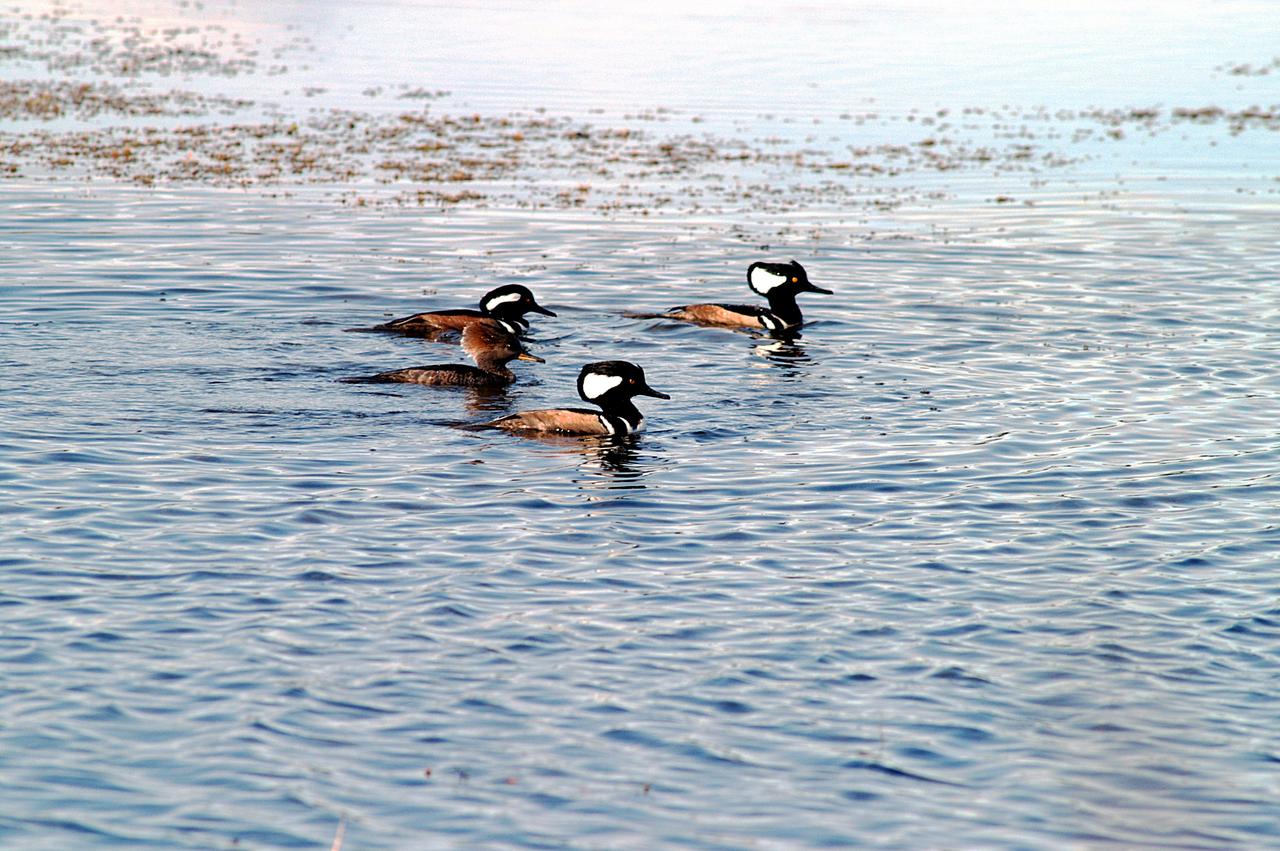
KENNEDY SPACE CENTER, FLA. -- Three male and one female hooded mergansers swim in the quicksilver water of the Merritt Island National Wildlife Refuge, which shares a boundary with Kennedy Space Center. Usually found from Alaska and Canada south to Nebraska, Oregon and Tennessee, hooded mergansers winter south to Mexico and the Gulf Coast, including KSC. The open water of the refuge provides wintering areas for 23 species of migratory waterfowl, as well as a year-round home for great blue herons, great egrets, wood storks, cormorants, brown pelicans and other species of marsh and shore birds. The 92,000-acre refuge is also habitat for more than 310 species of birds, 25 mammals, 117 fishes and 65 amphibians and reptiles.
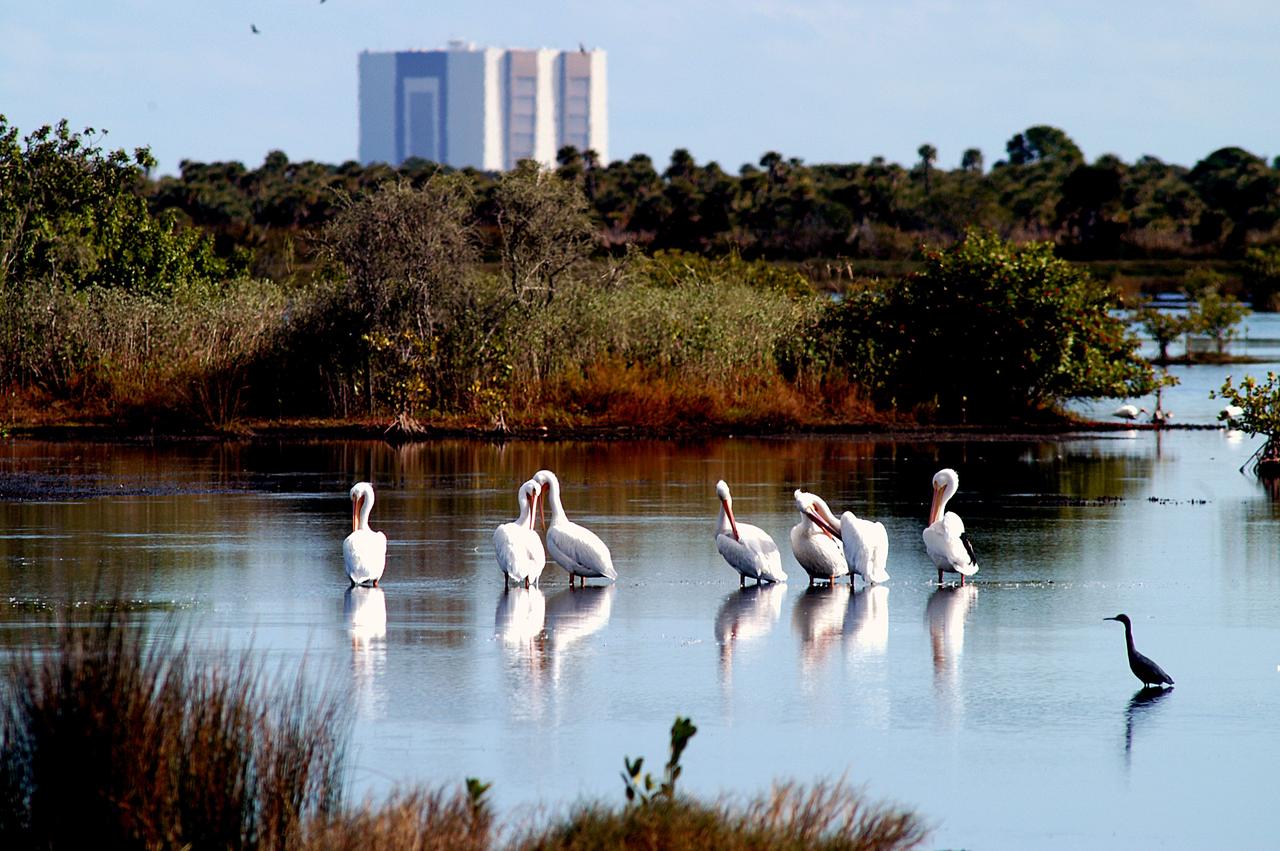
KENNEDY SPACE CENTER, FLA. -- A group of white pelicans spend a few moments relaxing in the water near the Vehicle Assembly Building at Kennedy Space Center. Found from British Columbia south to western Ontario, California and the Texas coast, white pelicans winter from Florida south to Panama. They prefer marshy lakes and coastal regions, and winter chiefly in coastal lagoons. White pelicans are one of 310 species of birds that inhabit the Merritt Island National Wildlife Refuge, which shares a boundary with KSC. The marshes and open water of the refuge also provide wintering areas for 23 species of migratory waterfowl, as well as a year-round home for great blue herons, great egrets, wood storks, cormorants, brown pelicans and other species of marsh and shore birds.
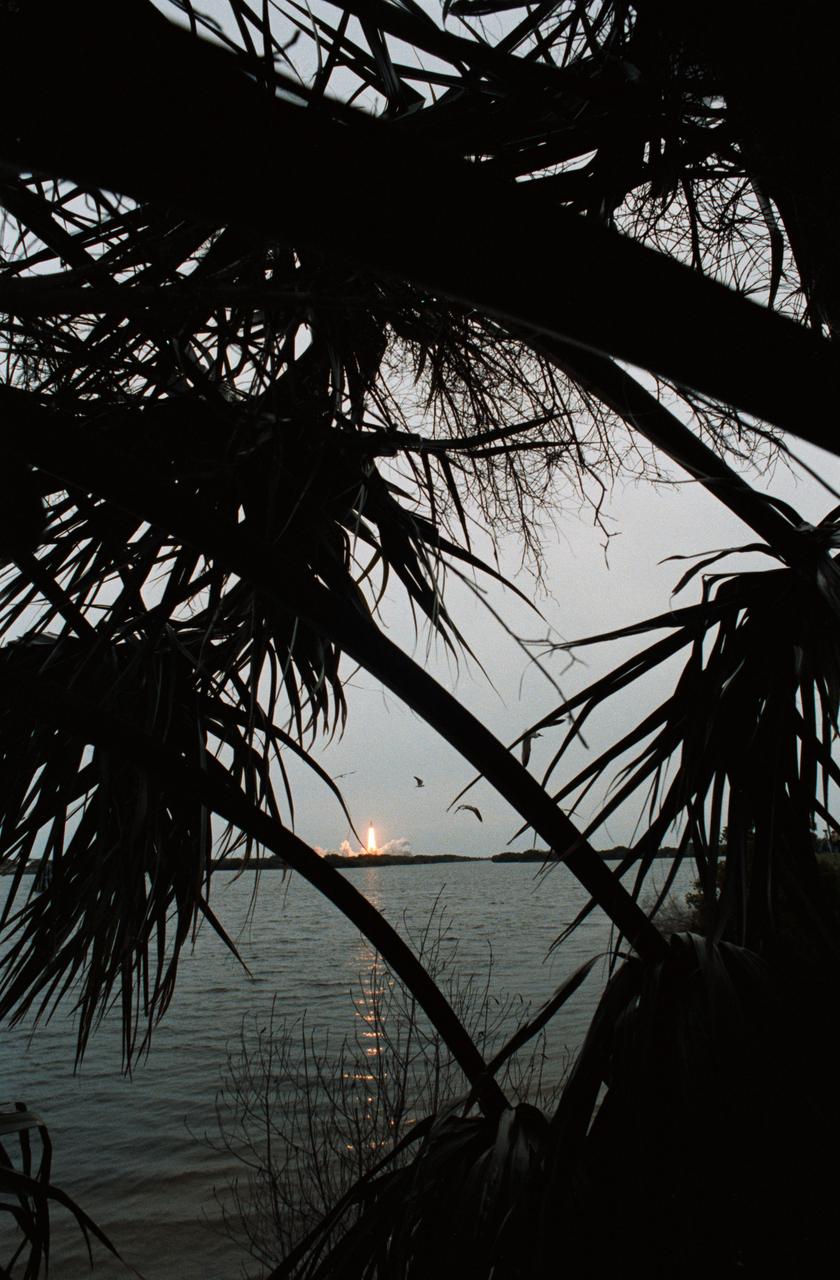
Just below center of this scene is a distant representation of a large ignition as the Shuttle Discovery lifts off from a Kennedy Space Center (KSC) launch pad. The ignition can be seen through the fronds of the trees. Birds in flight frame the light spot representing the orbiter as it launches.
View of the shuttle Discovery on the launch pad just prior to STS 51-D launch
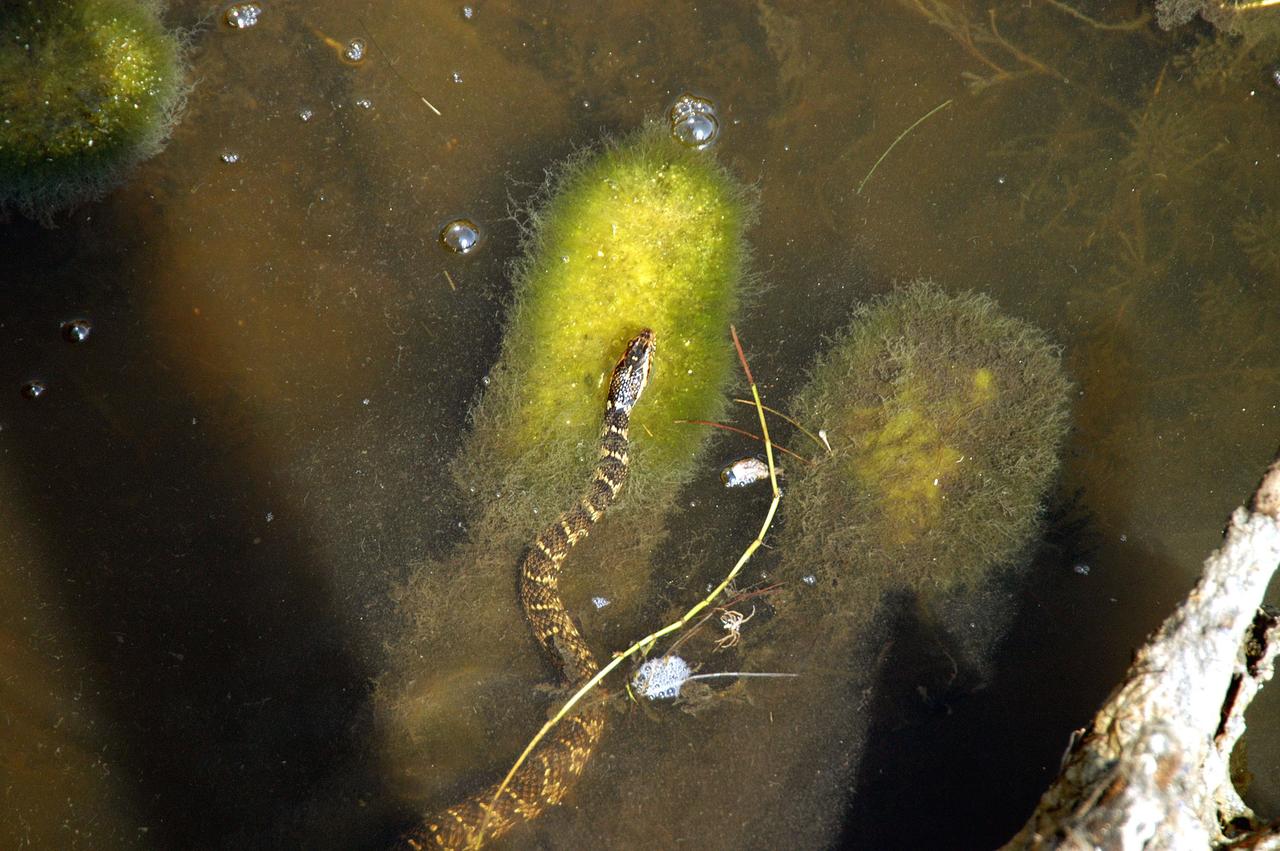
KENNEDY SPACE CENTER, FLA.  -  An unidentified snake seems suspended in the marshy water of a canal near KSC, which shares a boundary with the Merritt Island National Wildlife Refuge.  The refuge encompasses 92,000 acres that are a habitat for more than 331 species of birds, 31 mammals, 117 fishes, and 65 amphibians and reptiles.
KSC-04pd1251
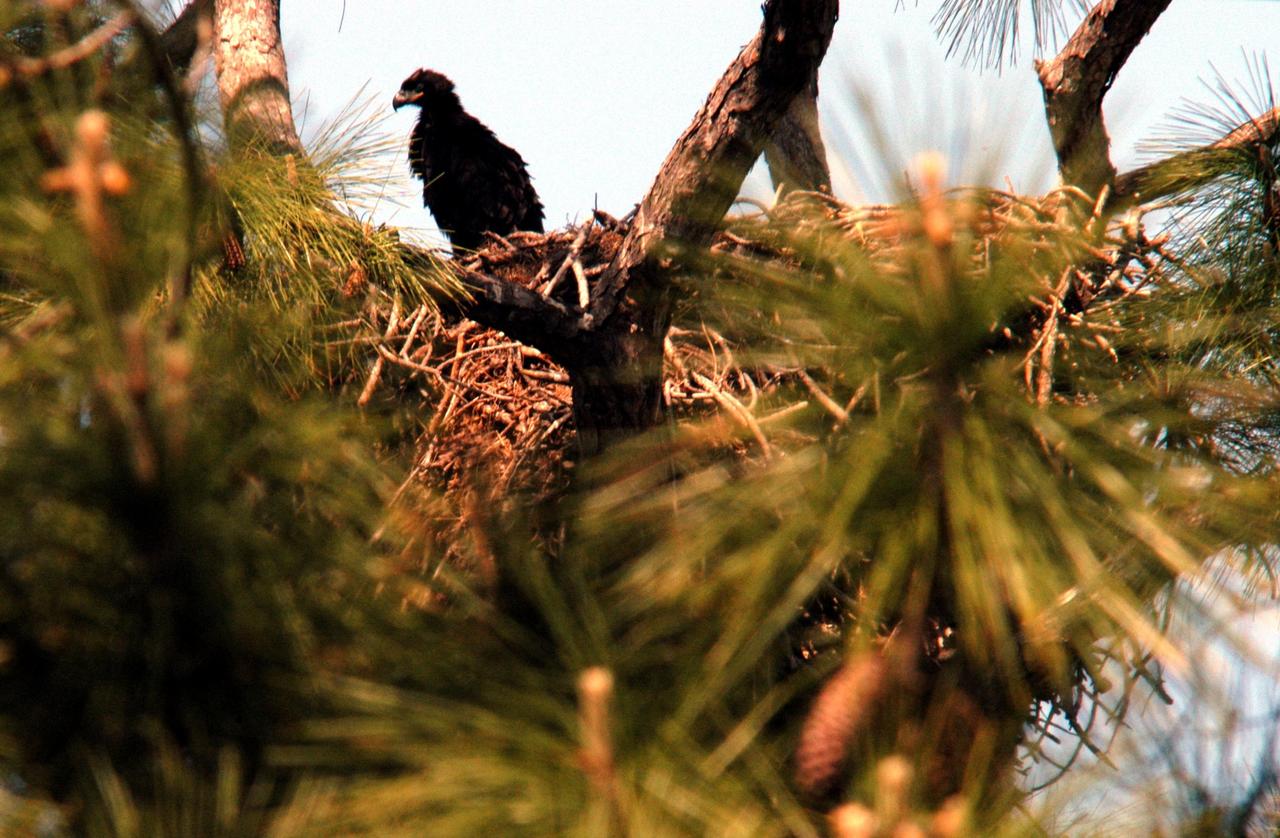
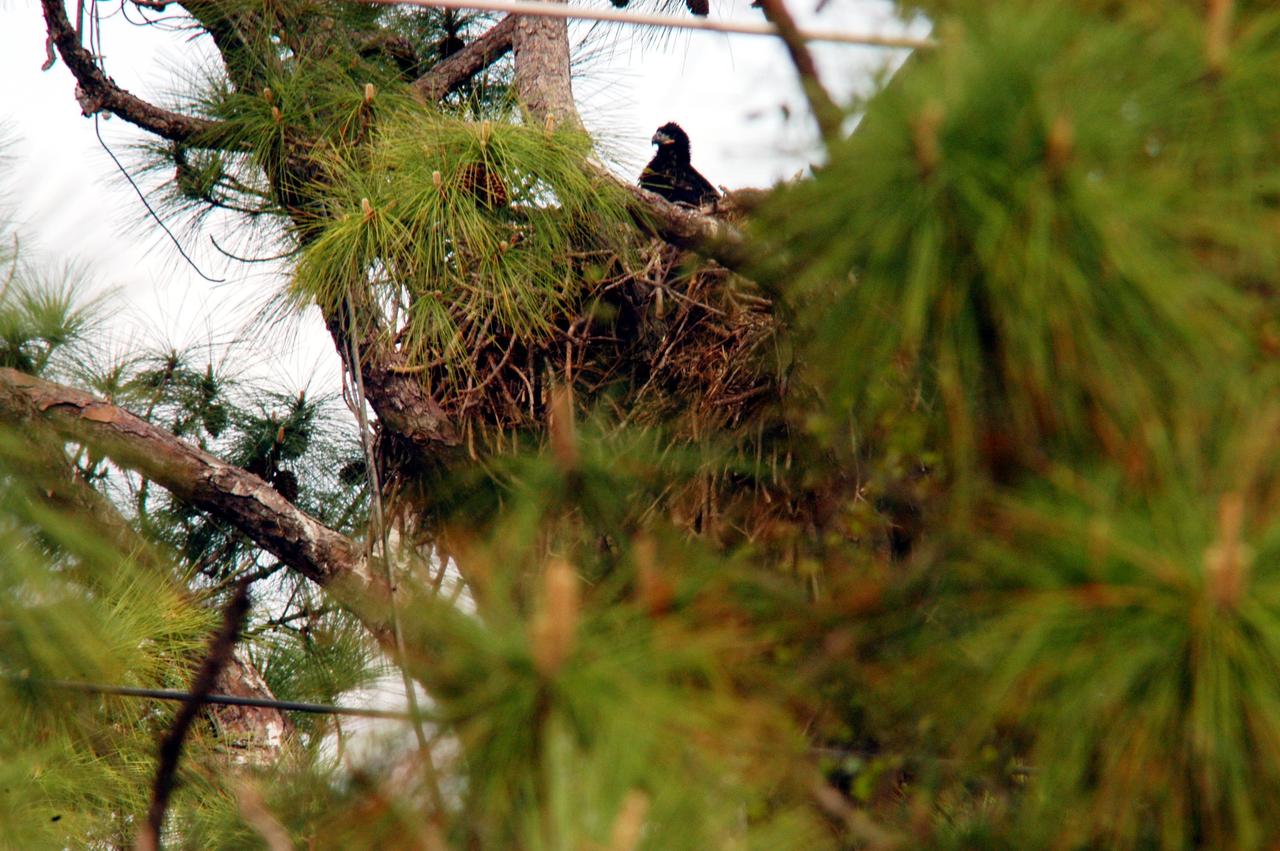
KENNEDY SPACE CENTER, FLA. -- On Kennedy Parkway, which runs through KSC, a young bald eagle is spotted perched on the side of its nest.  The nest is one of 12 active nests throughout the Merritt Island National Wildlife Refuge, which shares a boundary with KSC.  Young birds lack the typical white head, which they gain after several years.  Nests are masses of sticks usually in the top of a tall tree.  Their habitat is near lakes, rivers, marshes and seacoasts.
KSC-04pd0630
KENNEDY SPACE CENTER, FLA. -- On Kennedy Parkway, which runs through KSC, a young bald eagle is spotted perched on the side of its nest.  The nest is one of 12 active nests throughout the Merritt Island National Wildlife Refuge, which shares a boundary with KSC.  Young birds lack the typical white head, which they gain after several years.  Nests are masses of sticks usually in the top of a tall tree.  Their habitat is near lakes, rivers, marshes and seacoasts.
KSC-04pd0629
KENNEDY SPACE CENTER, FLA. --  This fledgling eagle, at right, stares at his mother, at left, in their nest at the north end of S.R. 3 near Kennedy Space Center.  The resident eagle parents are raising two offspring.  This year-old nest is one of a dozen eagle nests both in KSC and in the Merritt Island National Wildlife Refuge, which surrounds KSC. The refuge includes several wading bird rookeries, many osprey nests, up to 400 manatees during the spring, and approximately 2,500 Florida scrub jays.  It also is a major wintering area for migratory birds. More than 500 species of wildlife inhabit the refuge, with 15 considered federally threatened or endangered.  Photo credit: NASA/Ken Thornsley
KSC-07pd0719
KENNEDY SPACE CENTER, FLA. --  This mother eagle turns away from one of her offspring, at left, in their nest at the north end of S.R. 3 near Kennedy Space Center.  The resident eagle parents are raising two offspring.  This year-old nest is one of a dozen eagle nests both in KSC and in the Merritt Island National Wildlife Refuge, which surrounds KSC. The refuge includes several wading bird rookeries, many osprey nests, up to 400 manatees during the spring, and approximately 2,500 Florida scrub jays.  It also is a major wintering area for migratory birds. More than 500 species of wildlife inhabit the refuge, with 15 considered federally threatened or endangered.  Photo credit: NASA/Ken Thornsley
KSC-07pd0717
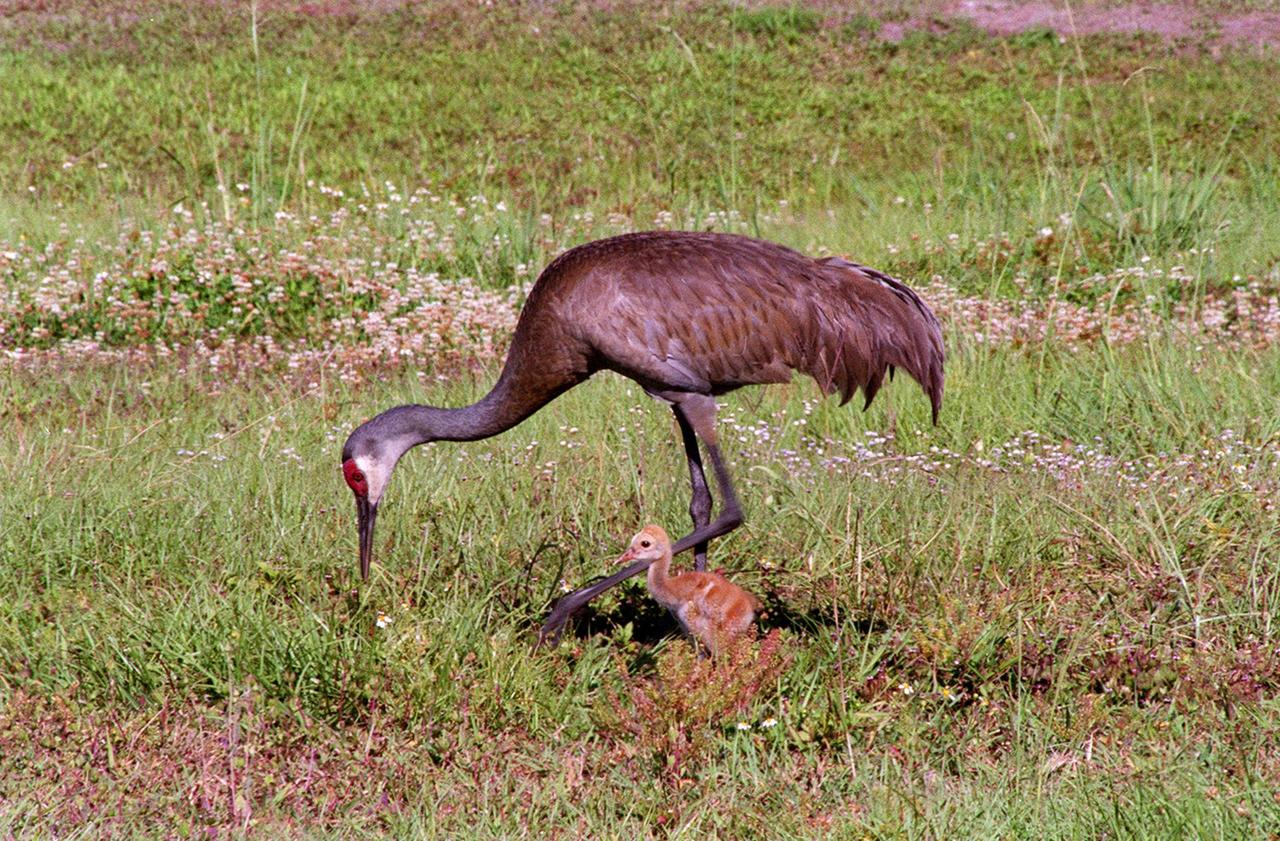
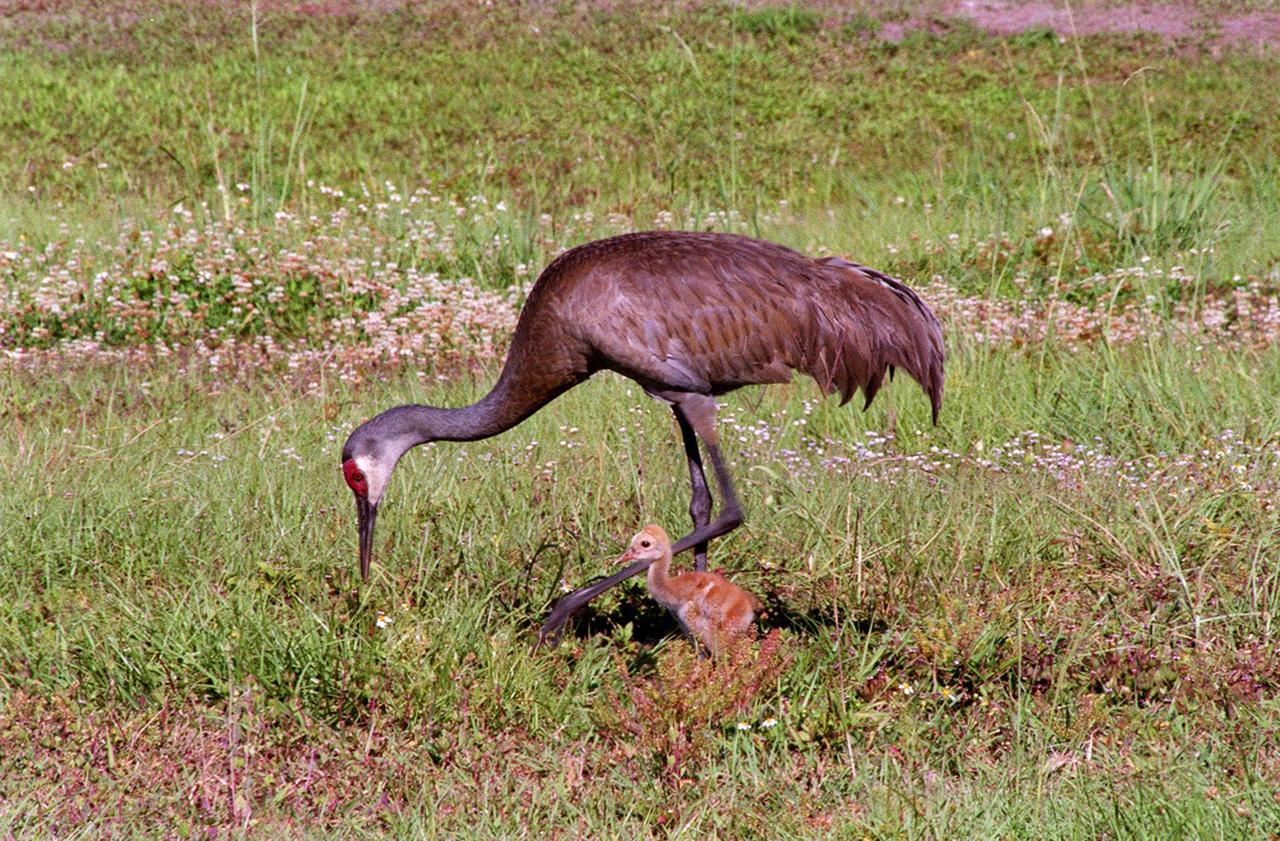
A Sandhill Crane searches for food with its still-fuzzy fledgling by its side. The two, along with another adult crane, have been seen wandering the grassy areas in the KSC Launch Complex 39 area. Sandhill cranes range from Siberia, Alaska and Arctic islands to Michigan, Minnesota and California; from Florida to Texas. They prefer large freshwater marshes, prairie ponds and marshy tundra. KSC shares a boundary with the Merritt Island National Wildlife Refuge, which encompasses 92,000 acres that are a habitat for more than 331 species of birds, 31 mammals, 117 fishes, and 65 amphibians and reptiles. The marshes and open water of the refuge provide wintering areas for 23 species of migratory waterfowl, as well as a year-round home for great blue herons, great egrets, wood storks, cormorants, brown pelicans and other species of marsh and shore birds, as well as a variety of insects
KSC00pp0625
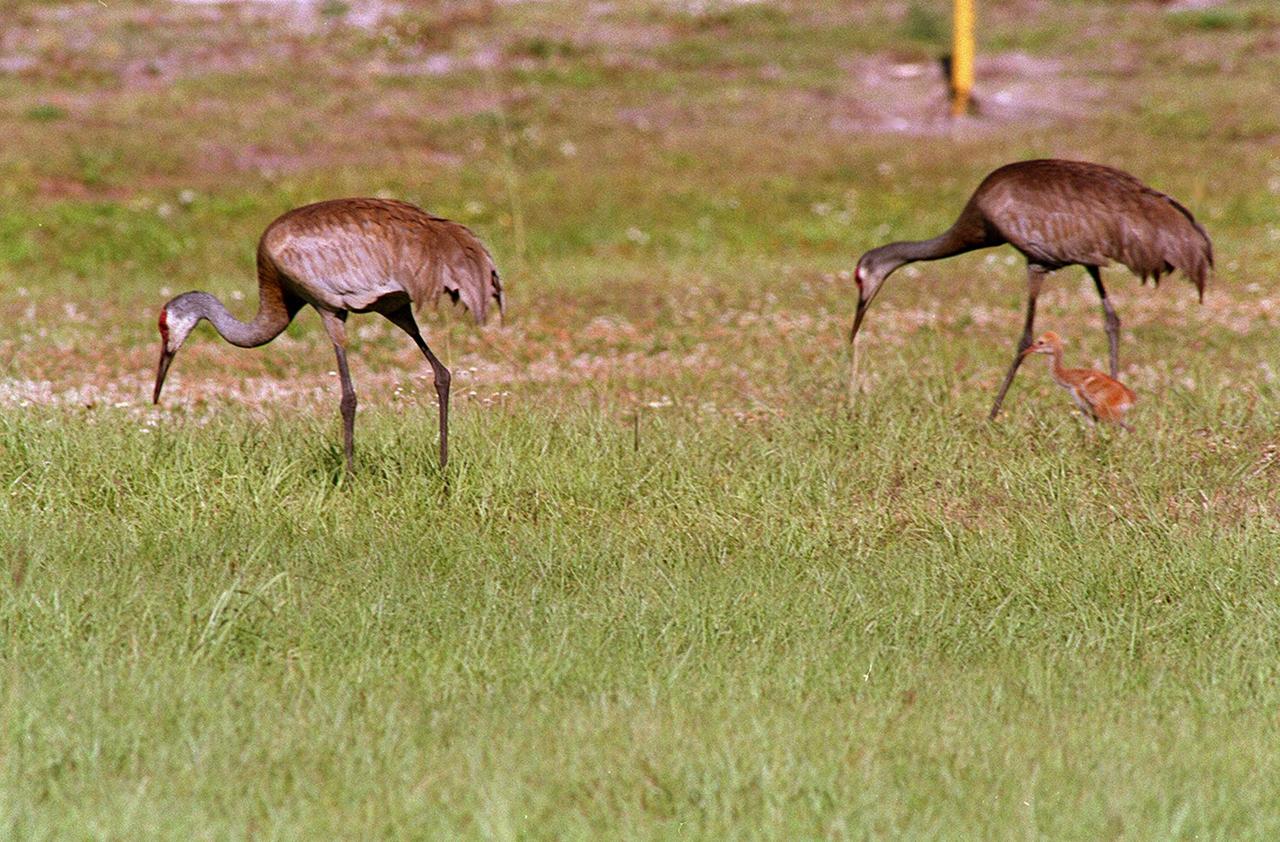
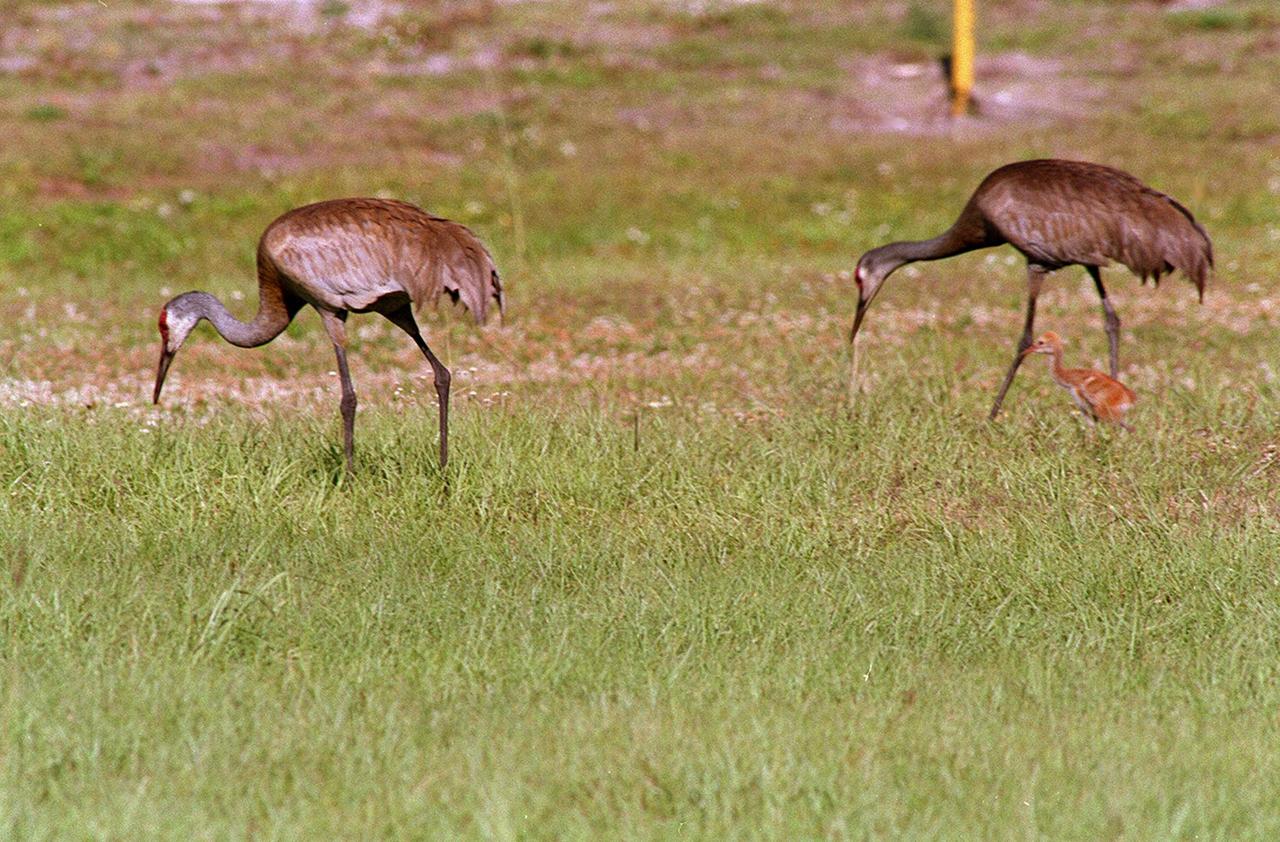
A pair of Sandhill Cranes searches for food with their still-fluffy fledgling close by. The trio have been seen wandering the grassy areas in the KSC Launch Complex 39 area. Sandhill cranes range from Siberia, Alaska and Arctic islands to Michigan, Minnesota and California; from Florida to Texas. They prefer large freshwater marshes, prairie ponds and marshy tundra. KSC shares a boundary with the Merritt Island National Wildlife Refuge, which encompasses 92,000 acres that are a habitat for more than 331 species of birds, 31 mammals, 117 fishes, and 65 amphibians and reptiles. The marshes and open water of the refuge provide wintering areas for 23 species of migratory waterfowl, as well as a year-round home for great blue herons, great egrets, wood storks, cormorants, brown pelicans and other species of marsh and shore birds, as well as a variety of insects
KSC00pp0624
A Sandhill Crane searches for food with its still-fuzzy fledgling by its side. The two, along with another adult crane, have been seen wandering the grassy areas in the KSC Launch Complex 39 area. Sandhill cranes range from Siberia, Alaska and Arctic islands to Michigan, Minnesota and California; from Florida to Texas. They prefer large freshwater marshes, prairie ponds and marshy tundra. KSC shares a boundary with the Merritt Island National Wildlife Refuge, which encompasses 92,000 acres that are a habitat for more than 331 species of birds, 31 mammals, 117 fishes, and 65 amphibians and reptiles. The marshes and open water of the refuge provide wintering areas for 23 species of migratory waterfowl, as well as a year-round home for great blue herons, great egrets, wood storks, cormorants, brown pelicans and other species of marsh and shore birds, as well as a variety of insects
KSC-00pp0625
A pair of Sandhill Cranes searches for food with their still-fluffy fledgling close by. The trio have been seen wandering the grassy areas in the KSC Launch Complex 39 area. Sandhill cranes range from Siberia, Alaska and Arctic islands to Michigan, Minnesota and California; from Florida to Texas. They prefer large freshwater marshes, prairie ponds and marshy tundra. KSC shares a boundary with the Merritt Island National Wildlife Refuge, which encompasses 92,000 acres that are a habitat for more than 331 species of birds, 31 mammals, 117 fishes, and 65 amphibians and reptiles. The marshes and open water of the refuge provide wintering areas for 23 species of migratory waterfowl, as well as a year-round home for great blue herons, great egrets, wood storks, cormorants, brown pelicans and other species of marsh and shore birds, as well as a variety of insects
KSC-00pp0624
KENNEDY SPACE CENTER, FLA. --  This mother eagle looks at one of her offspring, at left, in their nest at the north end of S.R. 3 near Kennedy Space Center.  The resident eagle parents are raising two offspring.  This year-old nest is one of a dozen eagle nests both in KSC and in the Merritt Island National Wildlife Refuge, which surrounds KSC. The refuge includes several wading bird rookeries, many osprey nests, up to 400 manatees during the spring, and approximately 2,500 Florida scrub jays.  It also is a major wintering area for migratory birds. More than 500 species of wildlife inhabit the refuge, with 15 considered federally threatened or endangered.  Photo credit: NASA/Ken Thornsley
KSC-07pd0718
KENNEDY SPACE CENTER, FLA. --  A pair of brown pelicans rest on a wall near the turn basin at NASA's Kennedy Space Center.  The turn basin was carved out of the Banana River when KSC was built.  The birds' habitat is sandy coastal beaches and lagoons, ranging along the Atlantic Coast from North Carolina south to Venezuela.  It nests in colonies.  KSC shares a boundary with the Merritt Island Wildlife Nature Refuge. The refuge is a habitat for more than 310 species of birds, 25 mammals, 117 fishes and 65 amphibians and reptiles. In addition, the Refuge supports 19 endangered or threatened wildlife species on Federal or State lists, more than any other single refuge in the U.S.   Photo credit: NASA/George Shelton
KSC-07pd0357
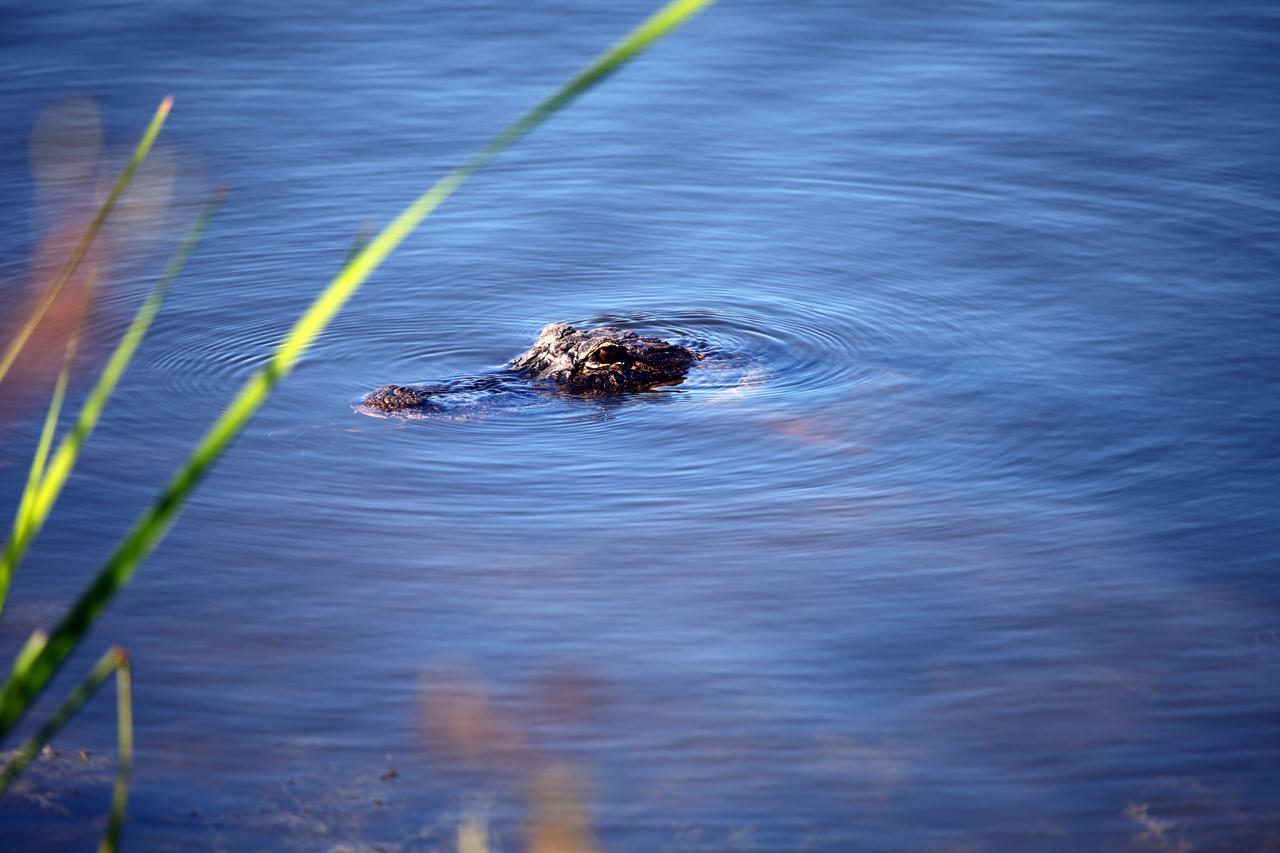
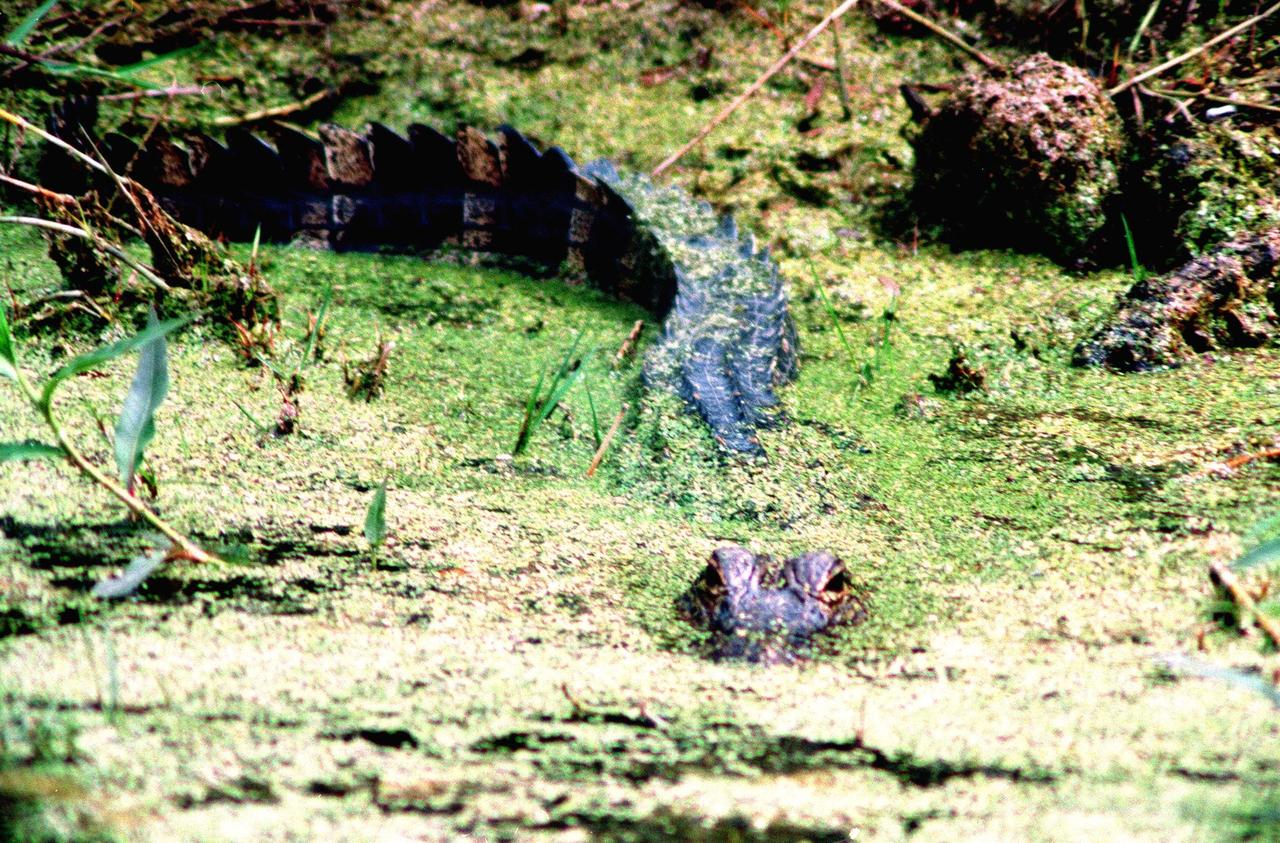
KENNEDY SPACE CENTER, FLA. -- An alligator lurks in the murky, mossy waters of the Merritt Island National Wildlife Refuge at Kennedy Space Center. Its tail surfaces behind him, looking like a log in the water. The wildlife refuge harbors nearly 5,000 American alligators, some of which can be seen in the canals and ponds around KSC. The refuge is also habitat for more than 310 species of birds, 25 mammals, 117 fishes and 65 amphibians and reptiles. The open water provides wintering areas for 23 species of migratory waterfowl and a year-round home for great blue herons, great egrets, wood storks, cormorants, brown pelicans and other species of marsh and shore birds
KSC-99wl09
KENNEDY SPACE CENTER, FLA.  --   White pelicans gather in the shallow water of a lake near Kennedy Space Center.  The birds breed from British Columbia and Mackenzie south to western Ontario and California and Texas coast.  They winter from Florida and southern California south to Panama. KSC shares a boundary with the Merritt Island Wildlife Nature Refuge. The refuge is a habitat for more than 310 species of birds, 25 mammals, 117 fishes and 65 amphibians and reptiles. In addition, the Refuge supports 19 endangered or threatened wildlife species on Federal or State lists, more than any other single refuge in the U.S.   Photo credit: NASA/Dimitri Gerondidakis
KSC-07pd0872
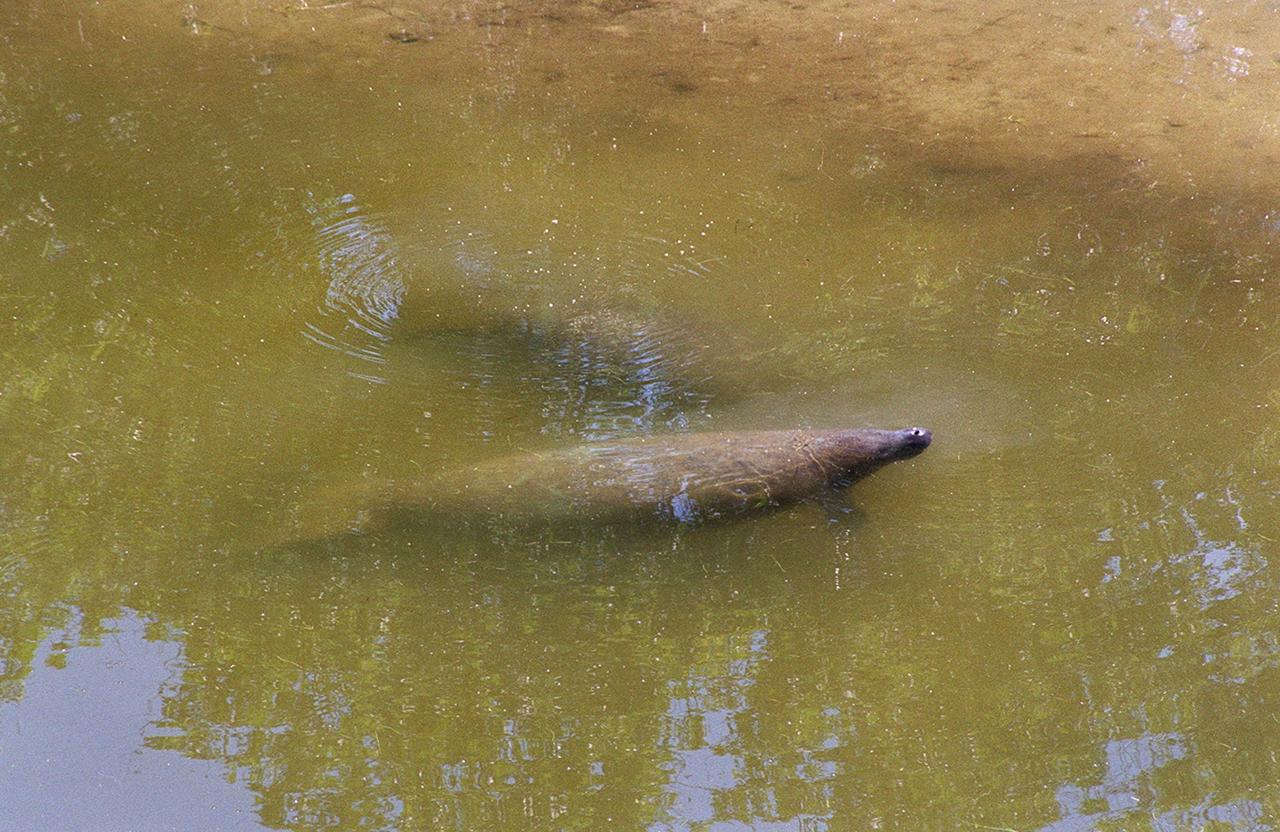
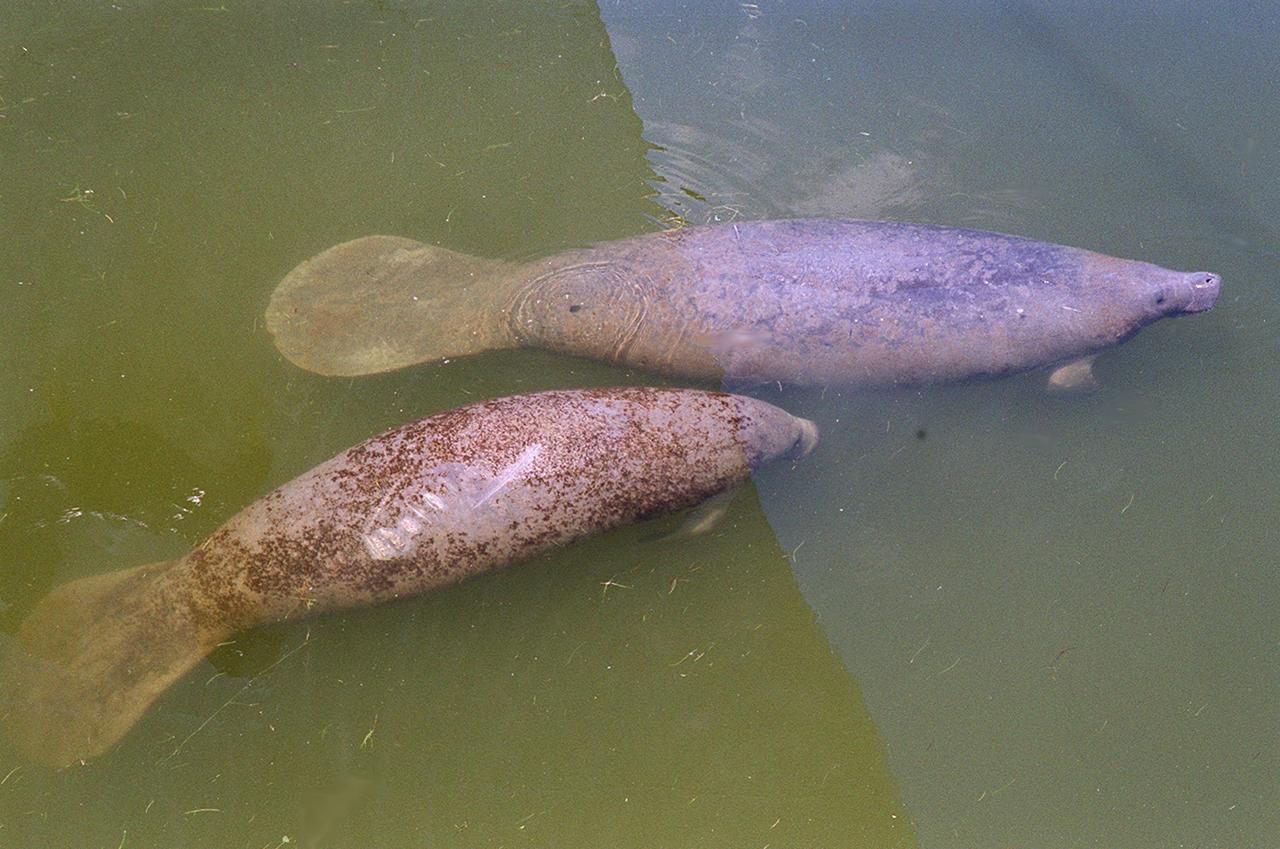
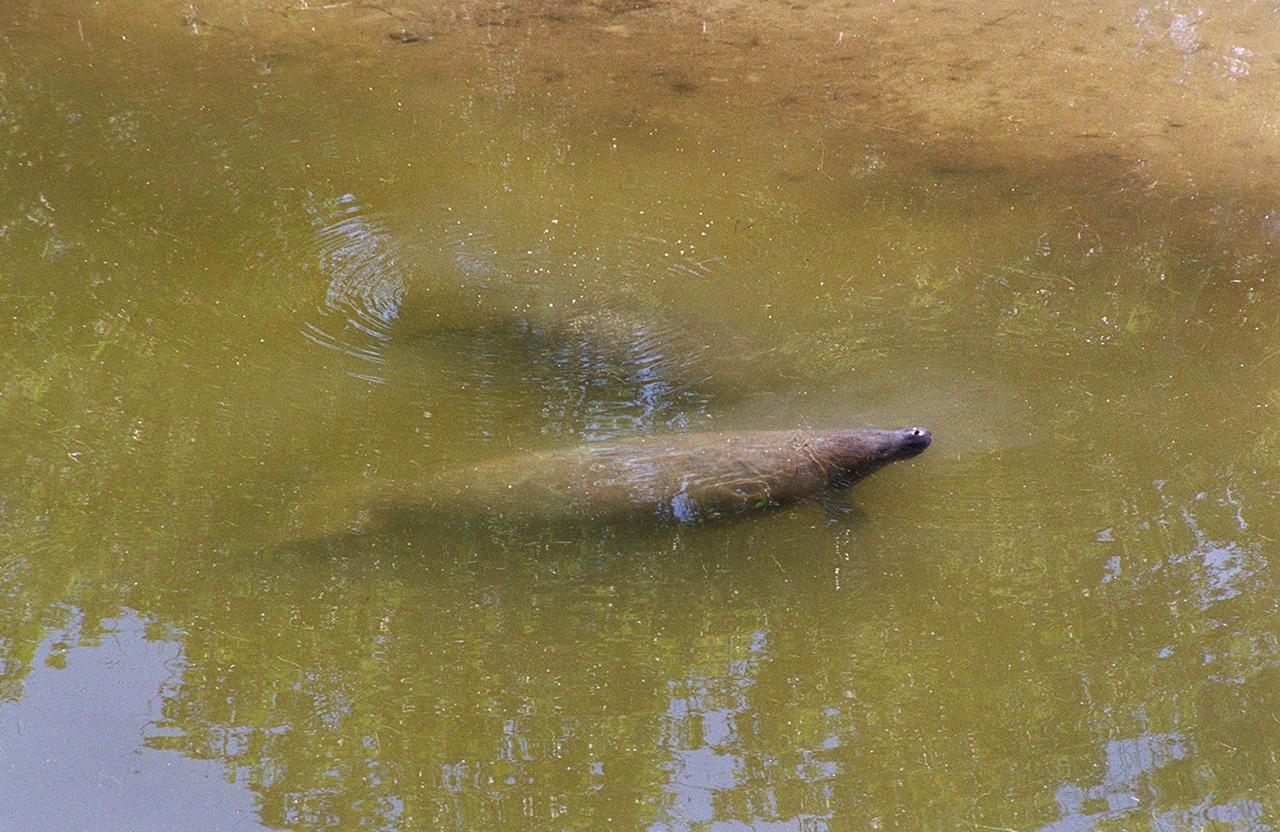
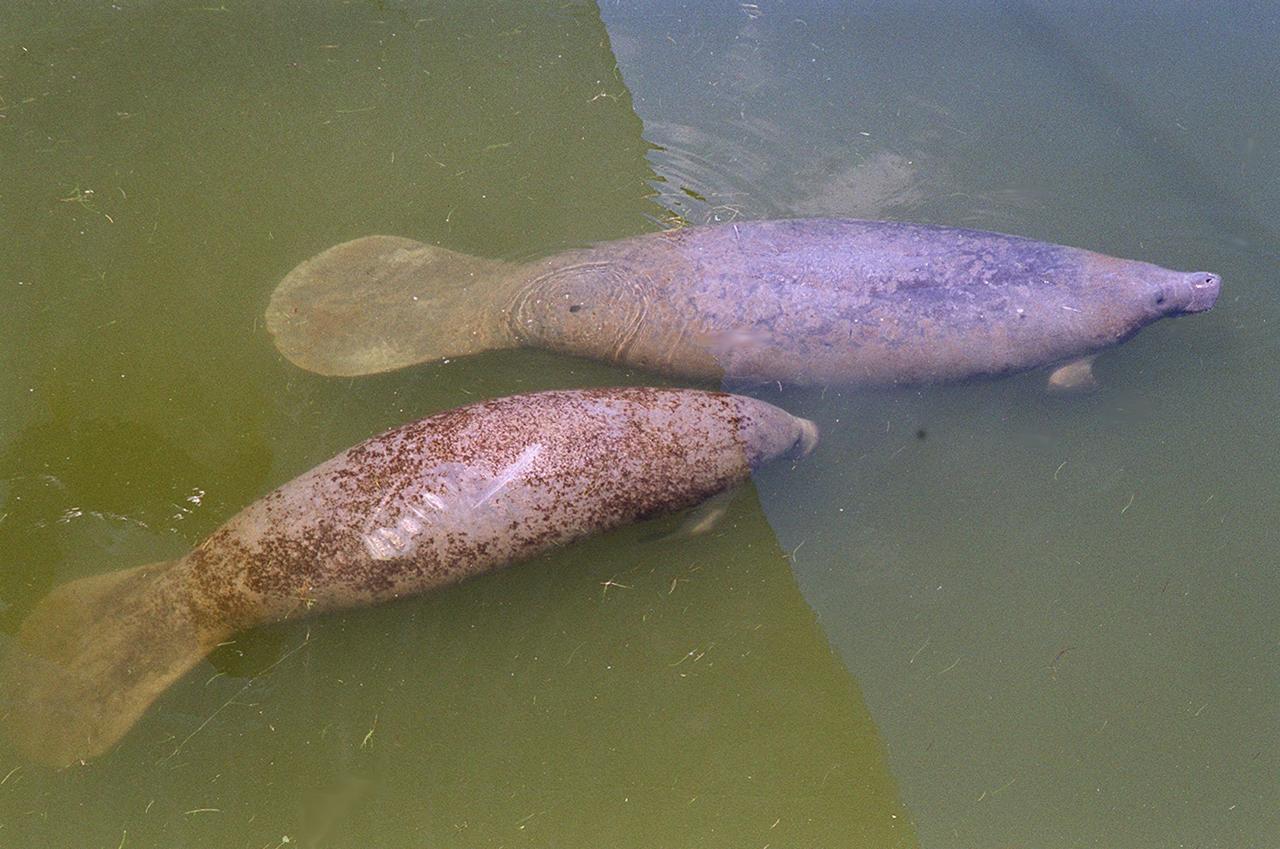
Two manatees swim leisurely in waters on Kennedy Space Center. They gather in Florida's warm water rivers and inland springs during the winter. KSC shares a boundary with the Merritt Island National Wildlife Refuge, which encompasses 92,000 acres that are a habitat for more than 331 species of birds, 31 mammals, 117 fishes, and 65 amphibians and reptiles. The marshes and open water of the refuge provide wintering areas for 23 species of migratory waterfowl, as well as a year-round home for great blue herons, great egrets, wood storks, cormorants, brown pelicans and other species of marsh and shore birds, as well as a variety of insects
KSC-00pp0600
Two manatees swim leisurely in waters on Kennedy Space Center. They gather in Florida's warm water rivers and inland springs during the winter. KSC shares a boundary with the Merritt Island National Wildlife Refuge, which encompasses 92,000 acres that are a habitat for more than 331 species of birds, 31 mammals, 117 fishes, and 65 amphibians and reptiles. The marshes and open water of the refuge provide wintering areas for 23 species of migratory waterfowl, as well as a year-round home for great blue herons, great egrets, wood storks, cormorants, brown pelicans and other species of marsh and shore birds, as well as a variety of insects
KSC00pp0600
In waters on Kennedy Space Center, two manatees are seen leisurely swimming. In winter they gather in Florida's warm water rivers and inland springs. KSC shares a boundary with the Merritt Island National Wildlife Refuge, which encompasses 92,000 acres that are a habitat for more than 331 species of birds, 31 mammals, 117 fishes, and 65 amphibians and reptiles. The marshes and open water of the refuge provide wintering areas for 23 species of migratory waterfowl, as well as a year-round home for great blue herons, great egrets, wood storks, cormorants, brown pelicans and other species of marsh and shore birds, as well as a variety of insects
KSC-00pp0599
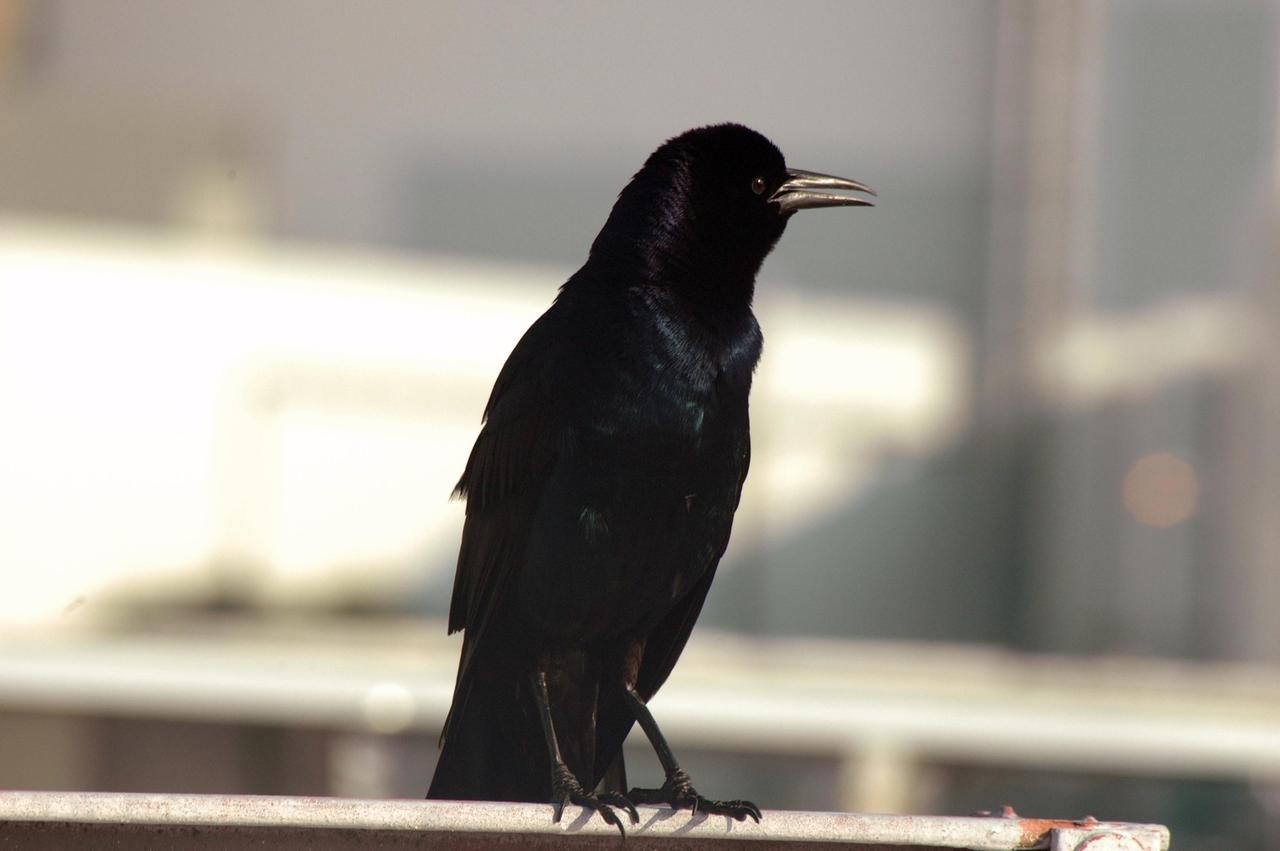
KENNEDY SPACE CENTER, FLA. -   This black bird photographed at the Press Site at NASA's Kennedy Space Center is likely a fish crow, somewhat smaller than the American Crow.  Fish crows inhabit low coastal country, as well as lakes, rivers and swamps inland.  They are common around KSC.  The Center shares a boundary with the Merritt Island National Wildlife Refuge, which is a habitat for more than 310 species of birds, 25 mammals, 117 fishes and 65 amphibians and reptiles. In addition, the Refuge supports 19 endangered or threatened wildlife species on Federal or State lists, more than any other single refuge in the U.S.  Photo credit: NASA/Ken Thornsley
KSC-06pd0995
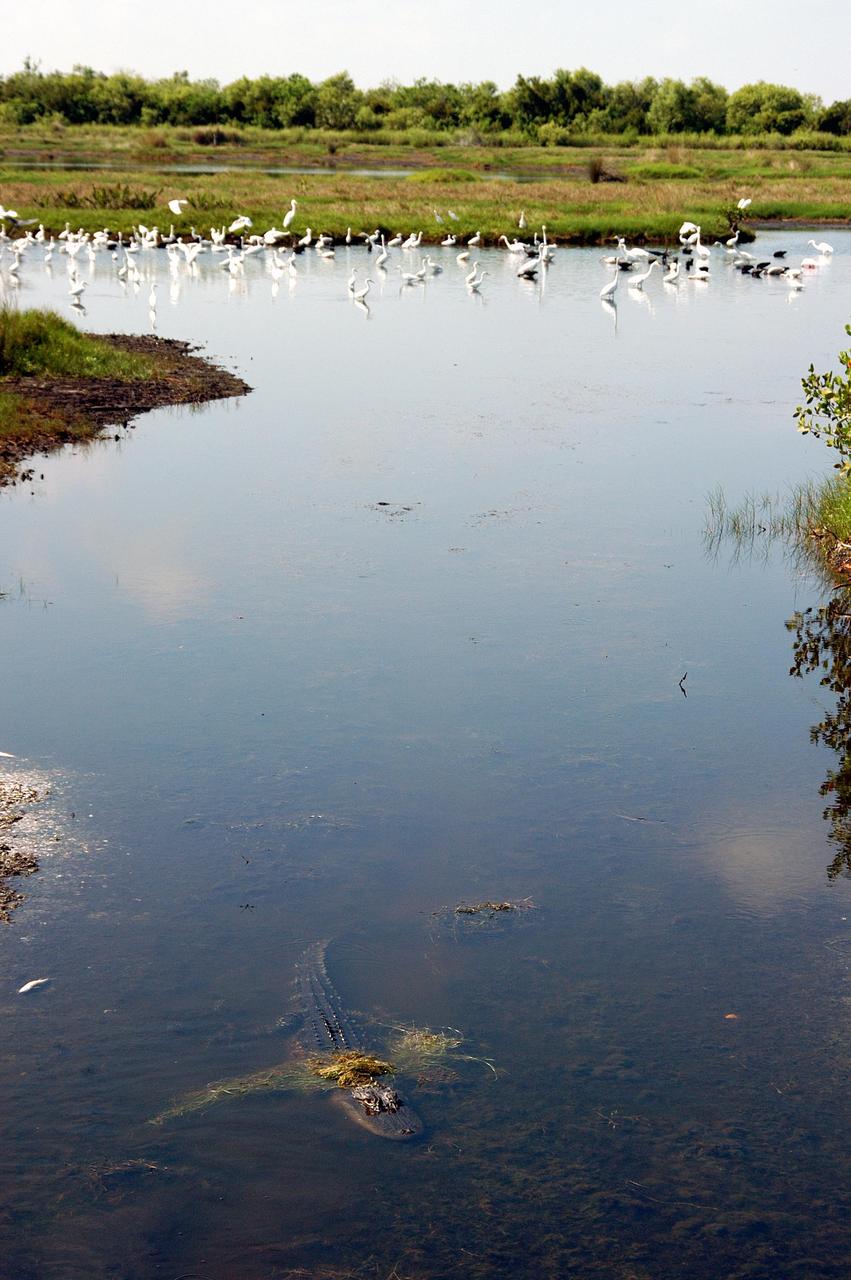
KENNEDY SPACE CENTER, FLA.  -  Above, herons, a roseate spoonbill and other species of water birds gather in a canal near KSC, which shares a boundary with the Merritt Island National Wildlife Refuge. Below is an alligator.  Nearly 5,000 alligators can be found in canals, ponds, and waterways throughout the Center.   The marshes and open water of the refuge also provide wintering areas for 23 species of migratory waterfowl, as well as a year-round home for great blue herons, great egrets, wood storks, cormorants, brown pelicans and other species of marsh and shore birds.
KSC-04pd1250
In waters on Kennedy Space Center, two manatees are seen leisurely swimming. In winter they gather in Florida's warm water rivers and inland springs. KSC shares a boundary with the Merritt Island National Wildlife Refuge, which encompasses 92,000 acres that are a habitat for more than 331 species of birds, 31 mammals, 117 fishes, and 65 amphibians and reptiles. The marshes and open water of the refuge provide wintering areas for 23 species of migratory waterfowl, as well as a year-round home for great blue herons, great egrets, wood storks, cormorants, brown pelicans and other species of marsh and shore birds, as well as a variety of insects
KSC00pp0599
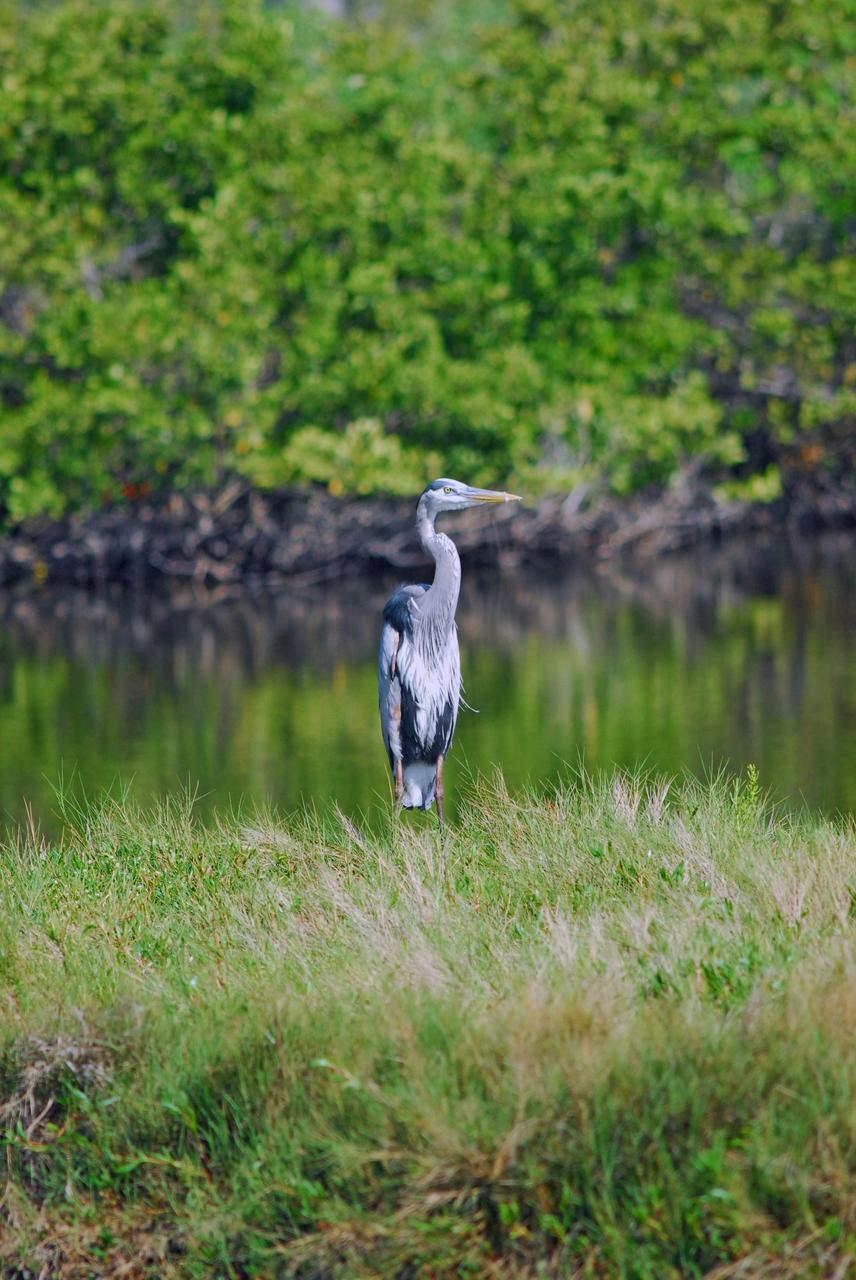
KENNEDY SPACE CENTER, FLA.  --  A great blue heron watches warily near a canal on Kennedy Space Center.  These herons inhabit lakes, ponds, rivers and marshes.  They range throughout the United States.  Fish and frogs are its principal food but will also feed on small mammals, reptiles and, occasionally, birds.  KSC shares a boundary with the Merritt Island Wildlife Nature Refuge. The refuge is a habitat for more than 310 species of birds, 25 mammals, 117 fishes and 65 amphibians and reptiles. In addition, the Refuge supports 19 endangered or threatened wildlife species on Federal or State lists, more than any other single refuge in the U.S.   Photo credit: NASA/Dimitri Gerondidakis
KSC-07pd0866
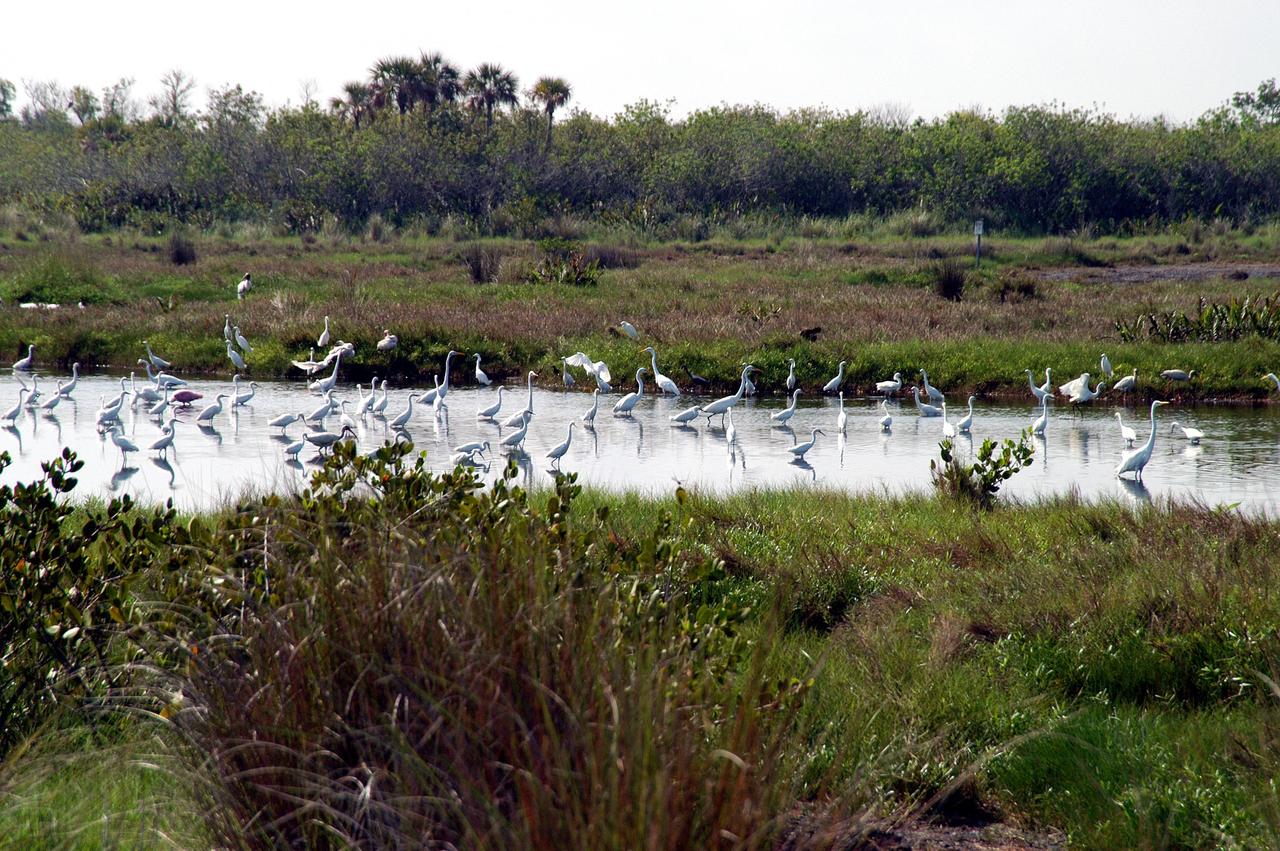
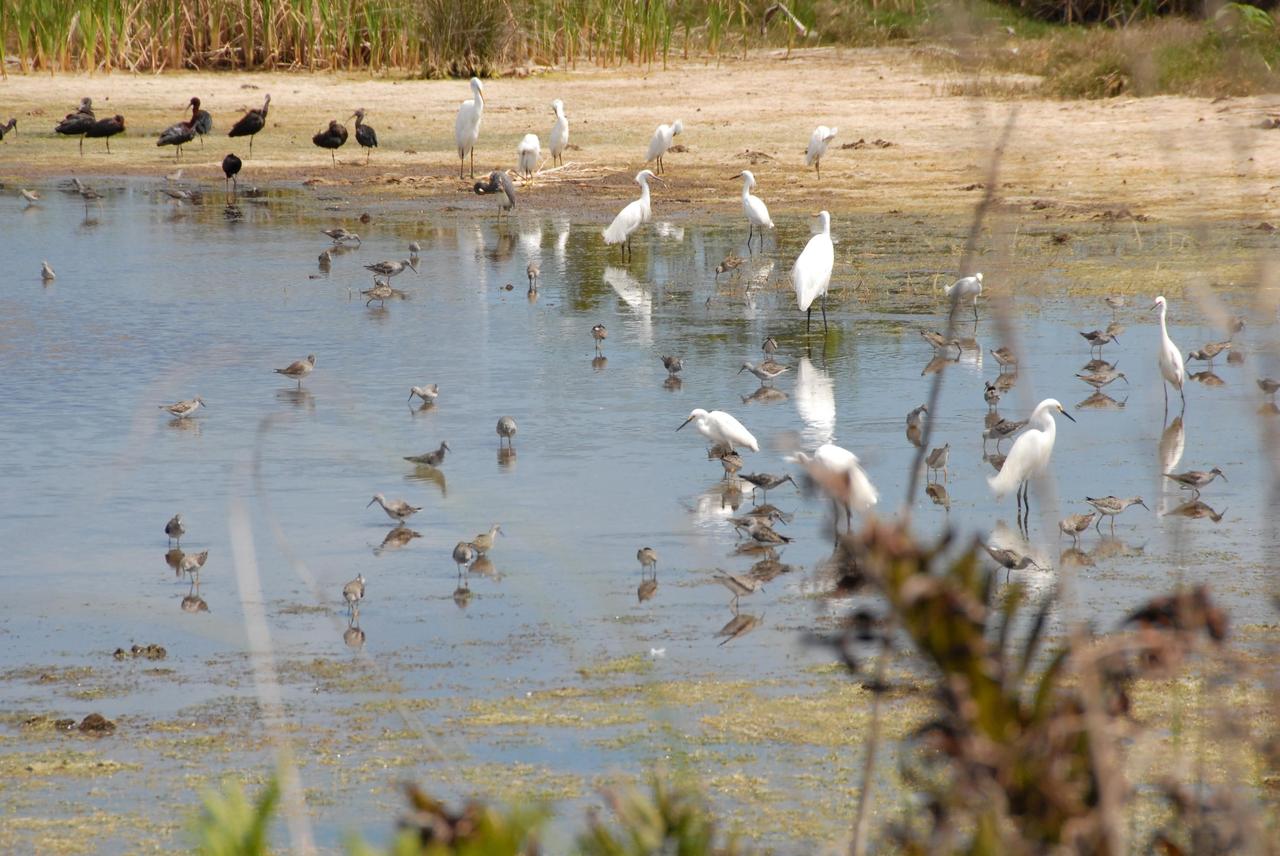
KENNEDY SPACE CENTER, FLA.  --  White herons, blue herons, ibis and several other species of birds gather on a pond near Kennedy Space Center to hunt for food. KSC shares a boundary with the Merritt Island National Wildlife Refuge, which surrounds it.  The refuge is a habitat for more than 310 species of birds, 25 mammals, 117 fishes and 65 amphibians and reptiles. In addition, the refuge supports 19 endangered or threatened wildlife species on Federal or State lists, more than any other single refuge in the U.S.  Photo credit: NASA/Ken Thornsley
KSC-07pd0731
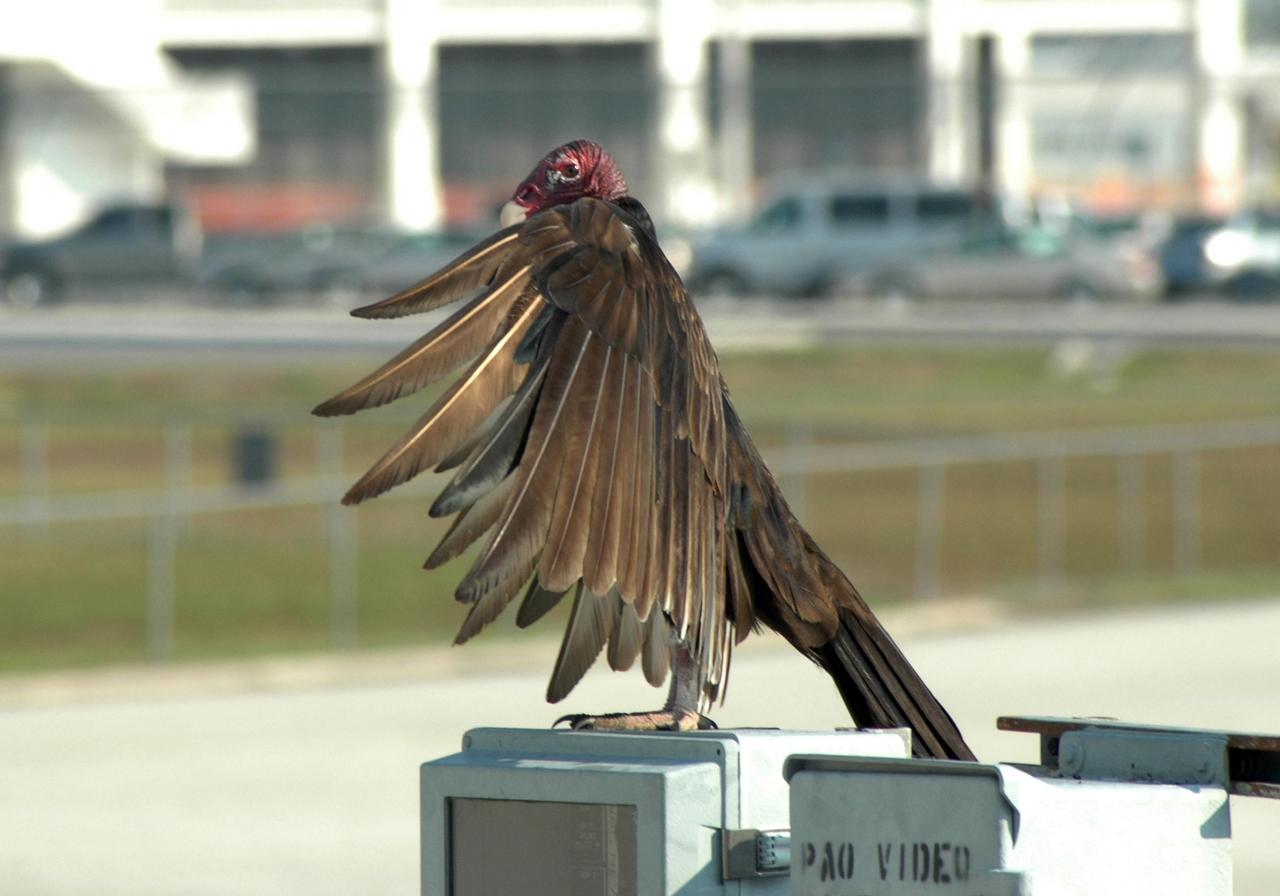
KENNEDY SPACE CENTER, FLA. -    A turkey vulture appears to hide from the camera at a site near the NASA News Center at Kennedy Space Center.  A wide-ranging bird, it is seen throughout Florida and the Space Coast.  It is a common site around KSC.  The Center, which shares a boundary with the Merritt Island National Wildlife Refuge, is a habitat for more than 310 species of birds, 25 mammals, 117 fishes and 65 amphibians and reptiles. In addition, the Refuge supports 19 endangered or threatened wildlife species on Federal or State lists, more than any other single refuge in the U.S.  Photo credit: NASA/Ken Thornsley
KSC-06pd0999
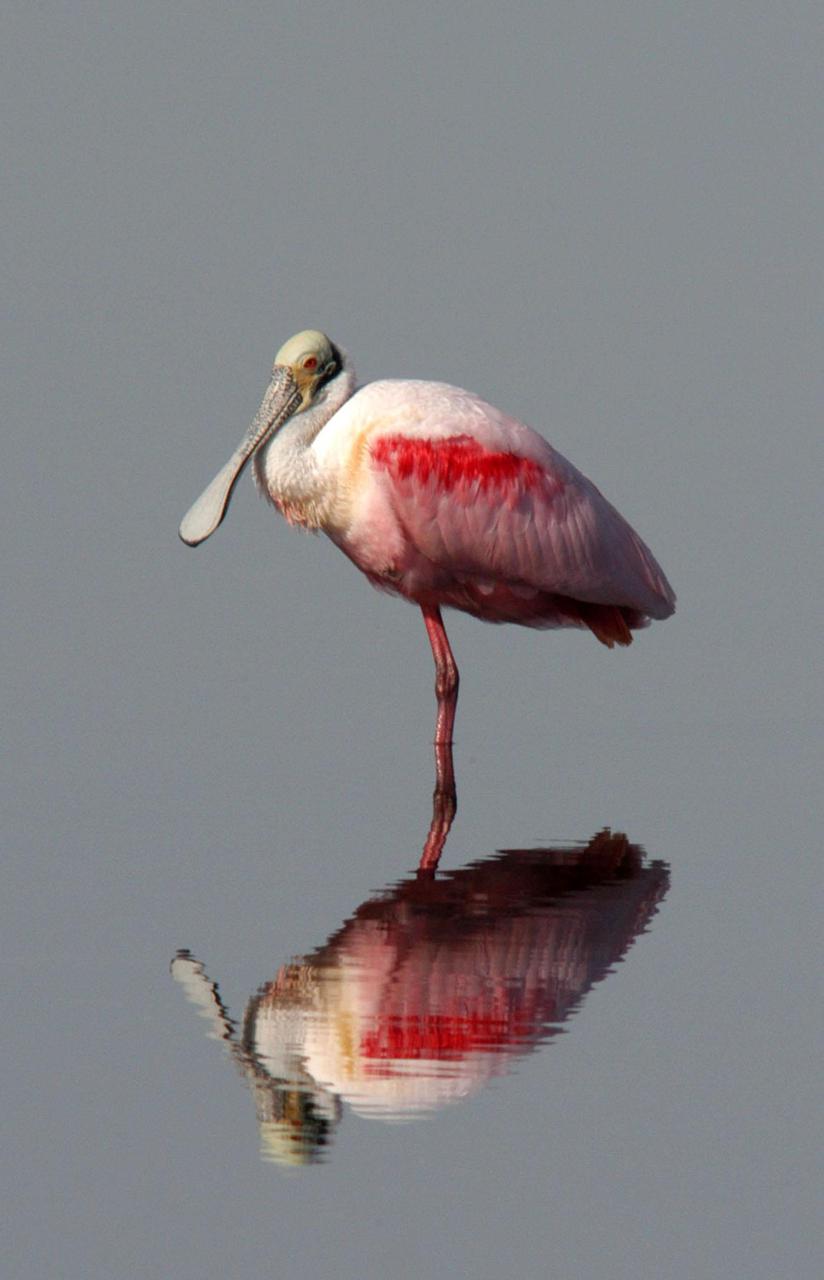
KENNEDY SPACE CENTER, FLA.  — The striated reflection of a roseate spoonbill is the only sign of the water it stands in.  The bird was spotted on Blackpoint Wildlife Drive in the Merritt Island National Wildlife Refuge, northwest of NASA Kennedy Space Center. Spoonbills inhabit areas of mangrove such as on the coasts of southern Florida and Texas.  These birds feed on shrimps and fish in the shallow water, sweeping their bills from side to side.  This and other wildlife abound throughout KSC as it shares a boundary with the Wildlife Refuge, home to some of the nation’s rarest and most unusual species of wildlife. The wildlife refuge is a habitat for more than 310 species of birds, 25 mammals, 117 fishes and 65 amphibians and reptiles.  In addition, the Refuge supports 19 endangered or threatened wildlife species on Federal or State lists, more than any other single refuge in the U.S.
KSC-05PD-2168
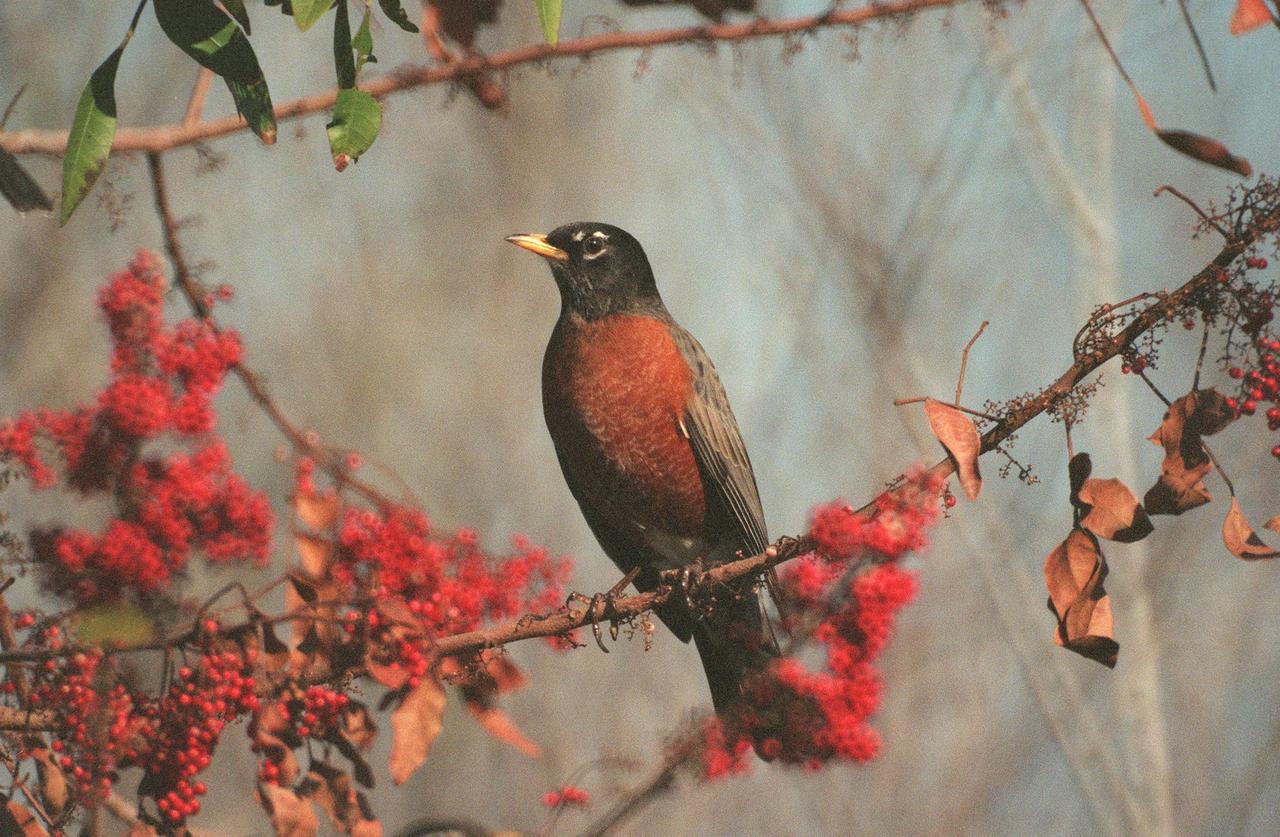
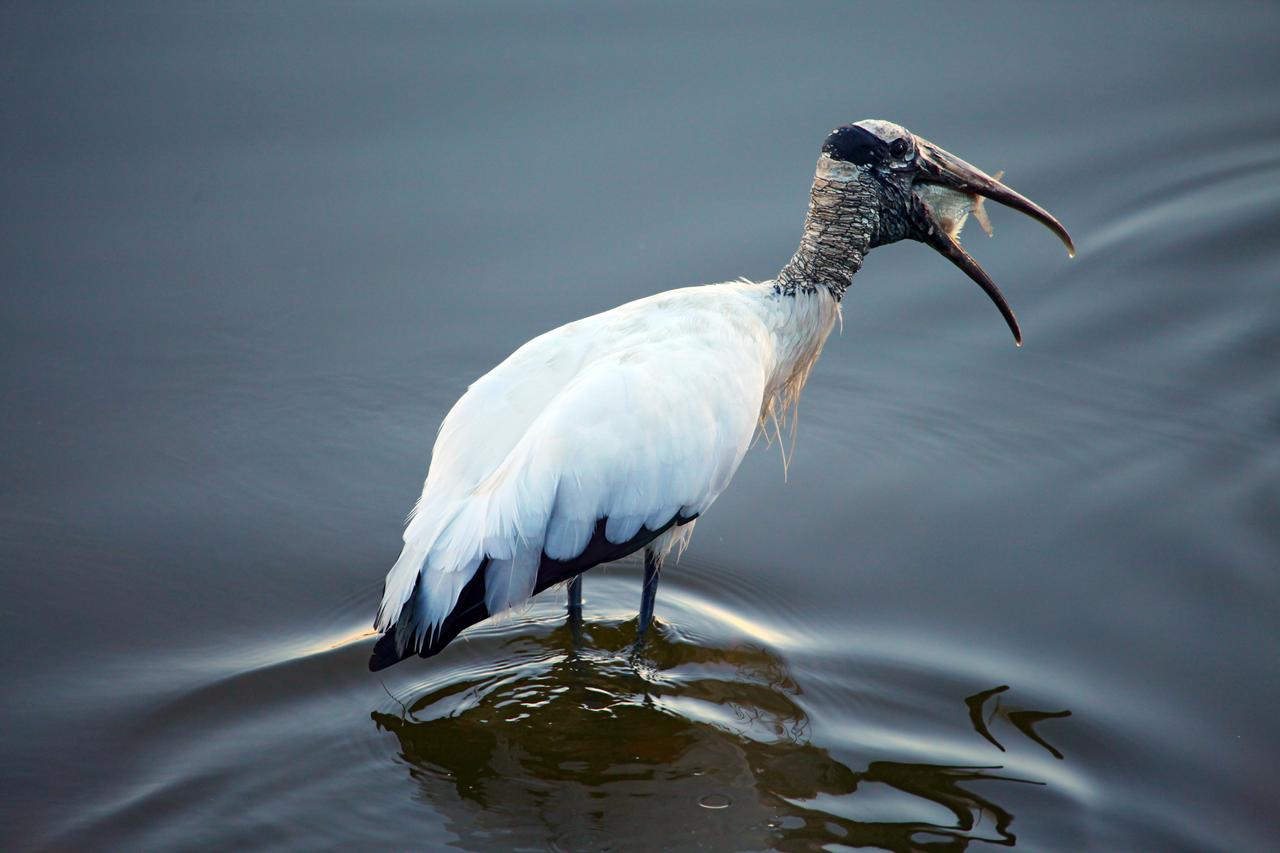
KENNEDY SPACE CENTER, FLA. -- Seen on KSC grounds, a robin pauses in a Brazilian pepper tree filled with red berries. Robins range throughout North America, preferring gardens, open woodland, agricultural land, as well as towns. The birds are usually considered a harbinger of spring, and can be seen in large flocks throughout Florida in January and February, especially as they gather for northern migration. Kennedy Space Center shares a boundary with the Merritt Island National Wildlife Refuge. The Refuge encompasses 92,000 acres that are a habitat for more than 331 species of birds, 31 mammals, 117 fishes, and 65 amphibians and reptiles. The marshes and open water of the refuge provide wintering areas for 23 species of migratory waterfowl, as well as a year-round home for great blue herons, great egrets, wood storks, cormorants, brown pelicans and other species of marsh and shore birds, as well as a variety of insects
KSC-01PP-1005
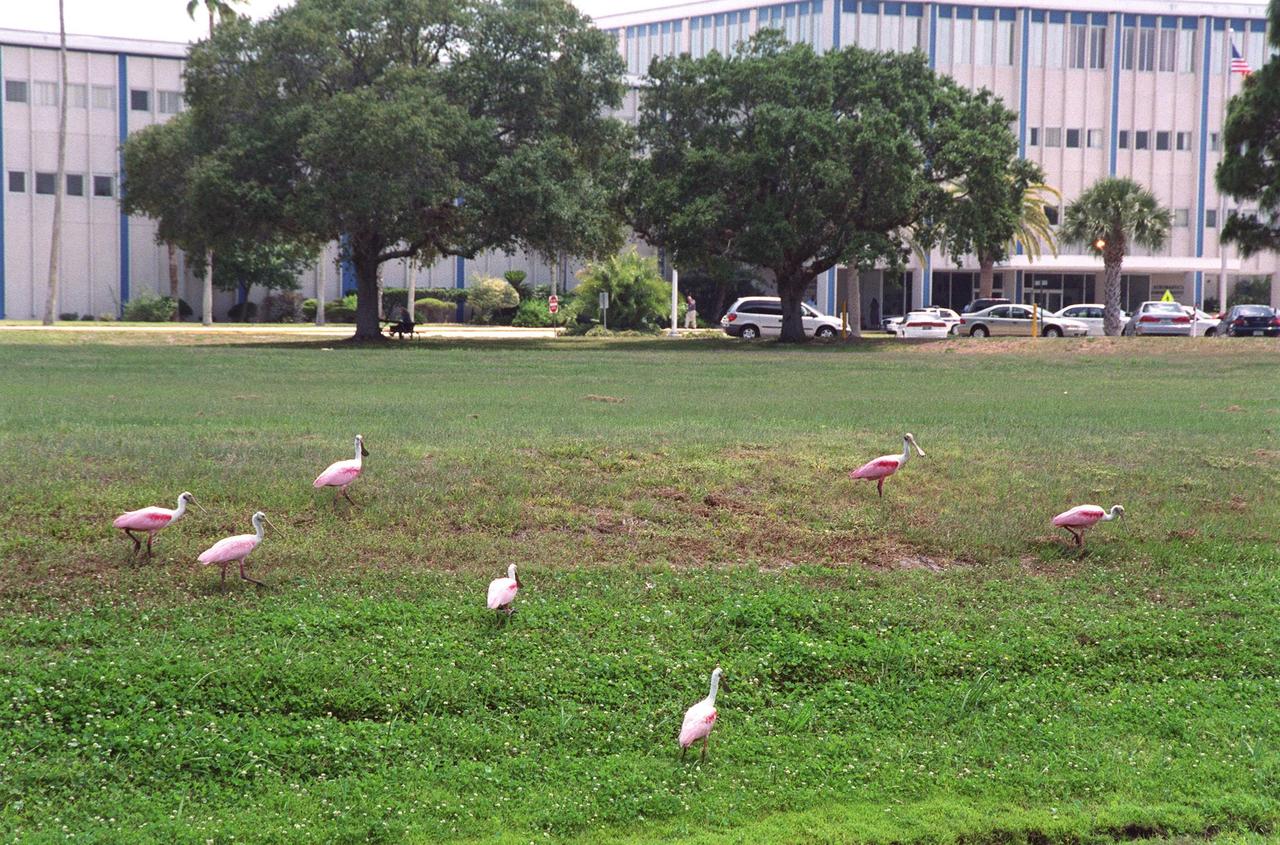
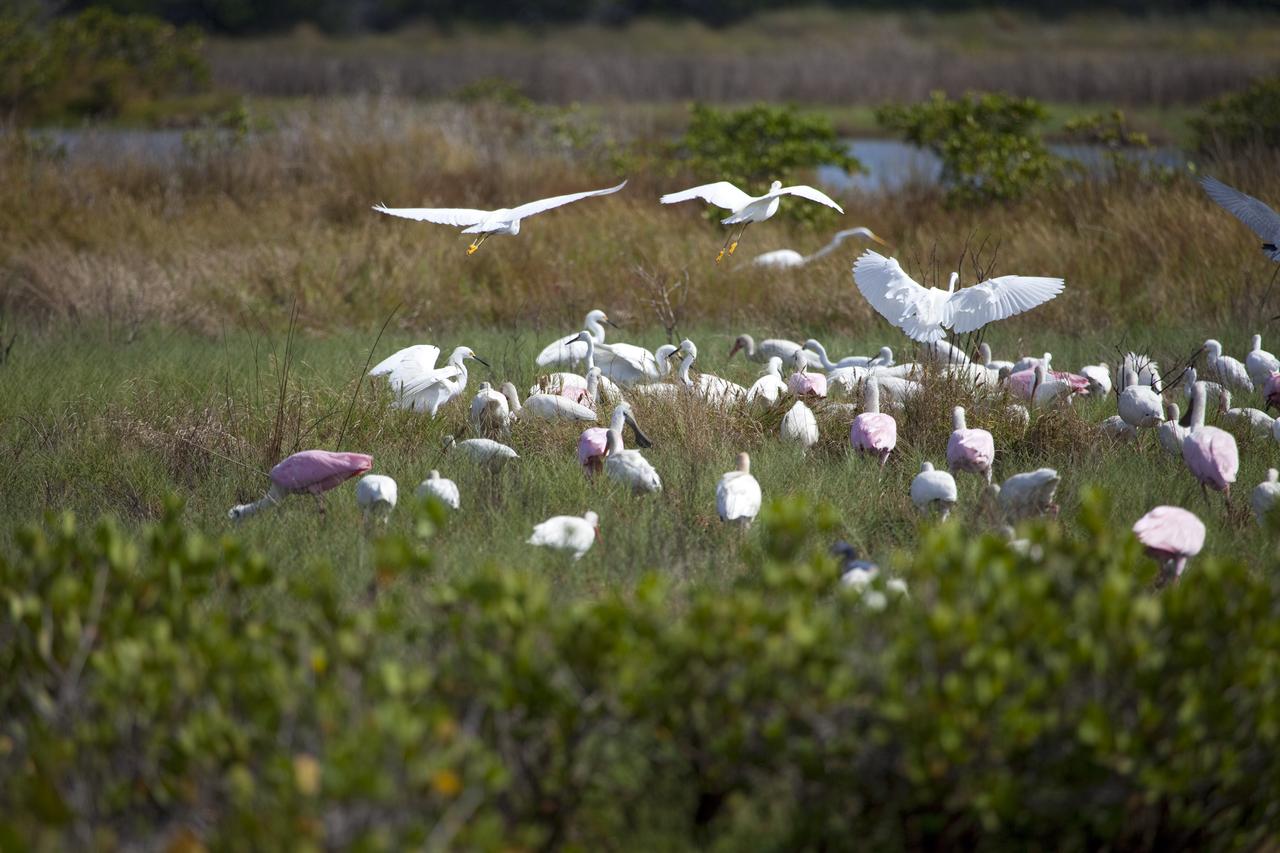
KENNEDY SPACE CENTER, FLA. -- Roseate Spoonbills stride across the lawn in front of the KSC Headquarters building. The birds, named for their brilliant pink color and paddle-shaped bill, usually feed in shallow water by swinging their bill back and forth, scooping up small fish and crustaceans. They typically inhabit mangroves on the coasts of southern Florida, Louisiana and Texas. Kennedy Space Center shares a boundary with the Merritt Island National Wildlife Refuge. The Refuge encompasses 92,000 acres that are a habitat for more than 331 species of birds, 31 mammals, 117 fishes, and 65 amphibians and reptiles. The marshes and open water of the refuge provide wintering areas for 23 species of migratory waterfowl, as well as a year-round home for great blue herons, great egrets, wood storks, cormorants, brown pelicans and other species of marsh and shore birds, as well as a variety of insects
KSC-01pp1013
CAPE CANAVERAL, Fla. -- At NASA’s Kennedy Space Center Visitor Complex in Florida, Dan Mitchell, director of location-based entertainment for Rovio Entertainment, speaks to visitors during the grand opening of the new Angry Birds Space Encounter. Standing behind Mitchell, from left are Bill Moore, chief operating officer with the KSC visitor complex NASA astronaut Don Pettit and Kelvin Manning, associate deputy director of Kennedy Space Center.  Finland-based Rovio Entertainment, the creator of the Angry Birds Space game, partnered with Kennedy Space Center to bring the beloved characters to life. It is the first Angry Birds interactive exhibit in the United States designed for people of all ages. The 4,485-square-foot facility hosts the space adventures of the Angry Birds as they travel into an intergalactic wormhole, come face-to-face with Space Pigs and discover heroic superpowers. Six interactive stations are designed to encourage children in science, technology, engineering and mathematics fields of study. Photo credit: NASA_Kim Shiflett
KSC-2013-1853
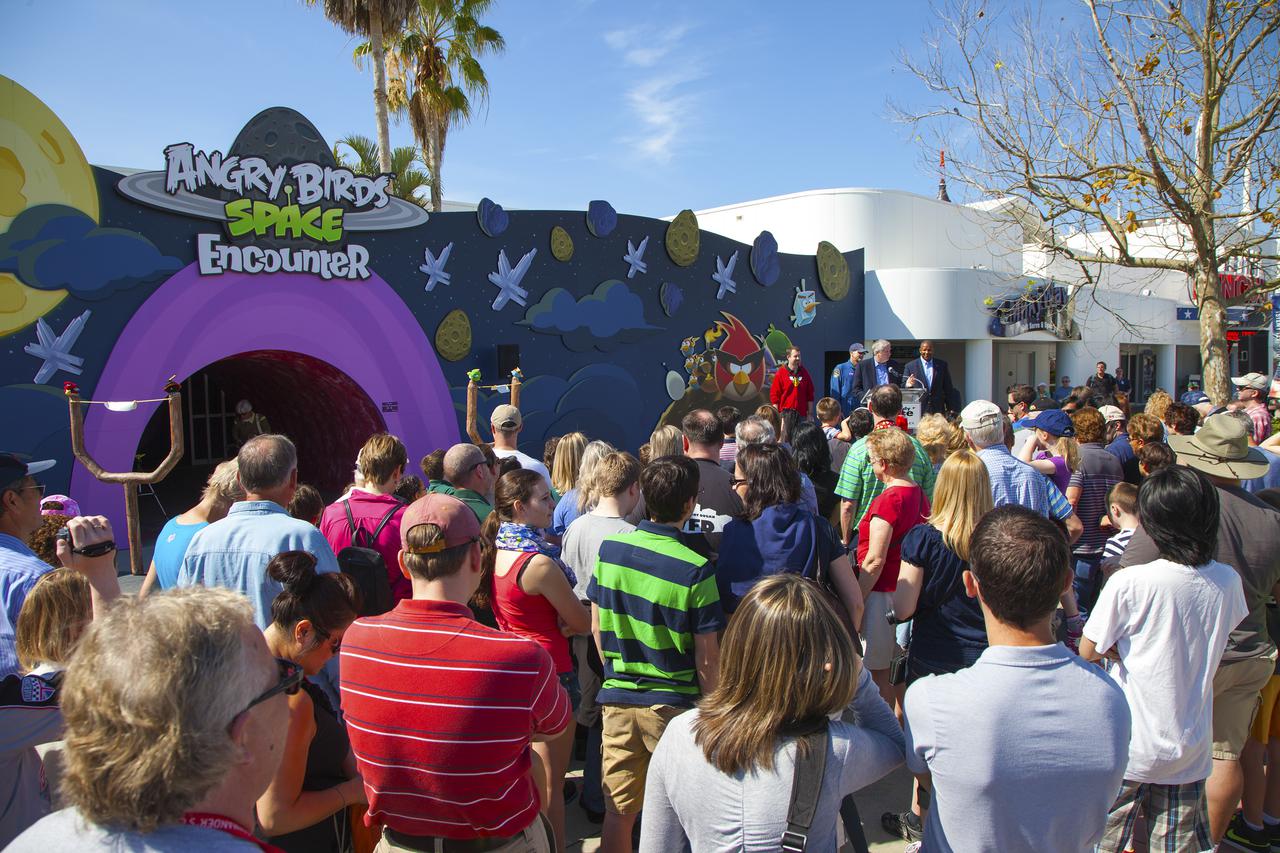
CAPE CANAVERAL, Fla. -- At NASA’s Kennedy Space Center Visitor Complex in Florida, a crowd of people gather for the grand opening of the new Angry Birds Space Encounter. On stage, from left are Dan Mitchell, director of location-based entertainment with Rovio Entertainment Bill Moore, chief operating officer with the KSC visitor complex and Kelvin Manning, associate deputy director of Kennedy Space Center. Standing behind Moore is NASA astronaut Don Pettit.  Finland-based Rovio Entertainment, the creator of the Angry Birds Space game, partnered with Kennedy Space Center to bring the beloved characters to life. It is the first Angry Birds interactive exhibit in the United States designed for people of all ages. The 4,485-square-foot facility hosts the space adventures of the Angry Birds as they travel into an intergalactic wormhole, come face-to-face with Space Pigs and discover heroic superpowers. Six interactive stations are designed to encourage children in science, technology, engineering and mathematics fields of study. Photo credit: NASA_Kim Shiflett
KSC-2013-1852
The KSC-developed X-33 weight simulator (left), known as the "iron bird," is fully raised to a vertical position at the X-33 launch site as part of launch equipment testing on Edwards Air Force Base, CA. The simulator matches the 75,000-pound weight and 63-foot height of the X-33 vehicle that will be using the launch equipment. KSC's Vehicle Positioning System (VPS) placed the simulator on the rotating launch platform prior to the rotation. The new VPS will dramatically reduce the amount of manual labor required to position a reusable launch vehicle for liftoff
KSC-99pc0144
The KSC-developed X-33 weight simulator (top), known as the "iron bird," is lifted to a vertical position at the X-33 launch site as part of launch equipment testing on Edwards Air Force Base, CA. The simulator matches the 75,000-pound weight and 63-foot height of the X-33 vehicle that will be using the launch equipment. KSC's Vehicle Positioning System (VPS) placed the simulator on the rotating launch platform prior to the rotation. The new VPS will dramatically reduce the amount of manual labor required to position a reusable launch vehicle for liftoff
KSC-99pc0142