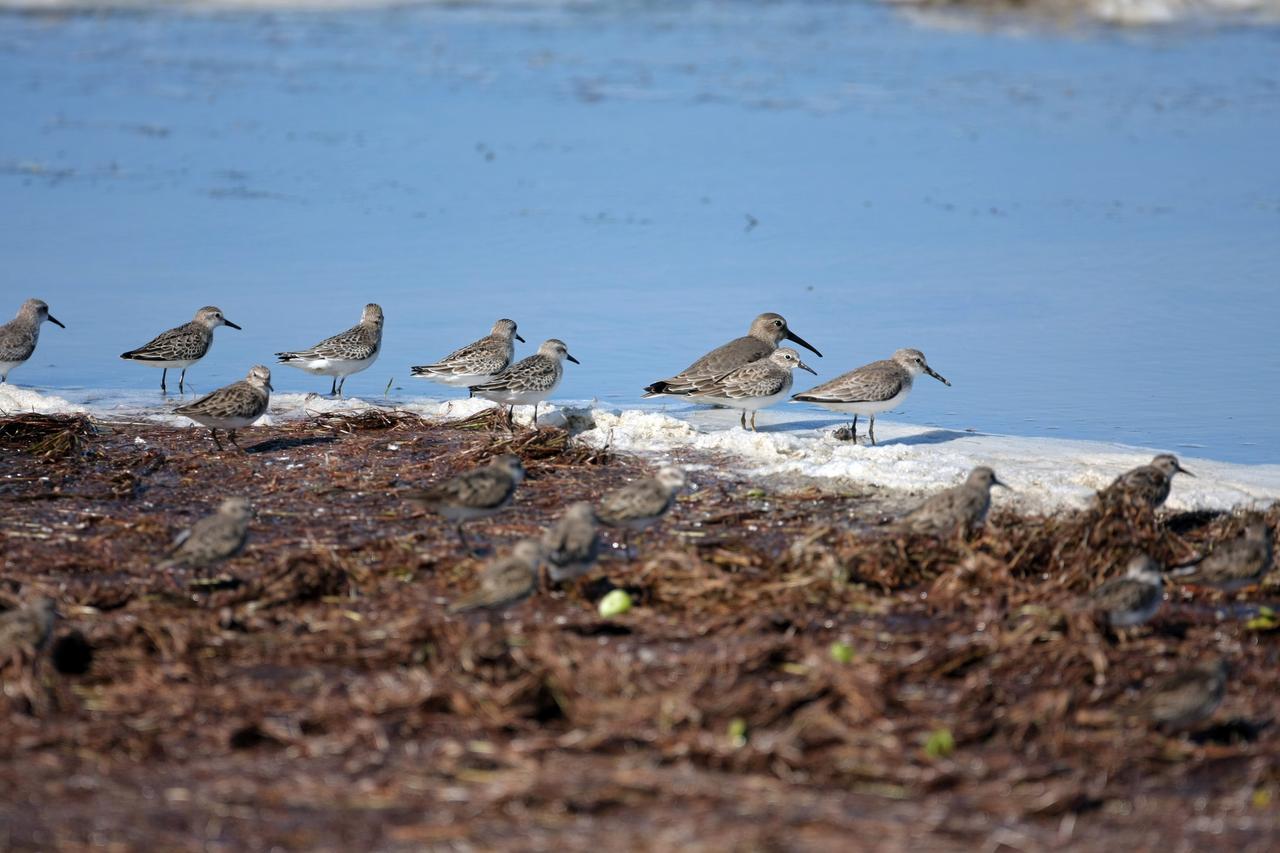
CAPE CANAVERAL, Fla. - A line of spotted sandpipers gather along the water's edge on NASA's Kennedy Space Center in Florida. It is one of 310 species of birds that inhabit the National Merritt Island Wildlife Refuge, which shares a boundary with Kennedy. The marshes and open water of the refuge also provide wintering areas for 23 species of migratory waterfowl, as well as a year-round home for great blue herons, great egrets, wood storks, cormorants, brown pelicans and other species of marsh and shore birds. Photo credit: NASA/Dimitri Gerondidakis
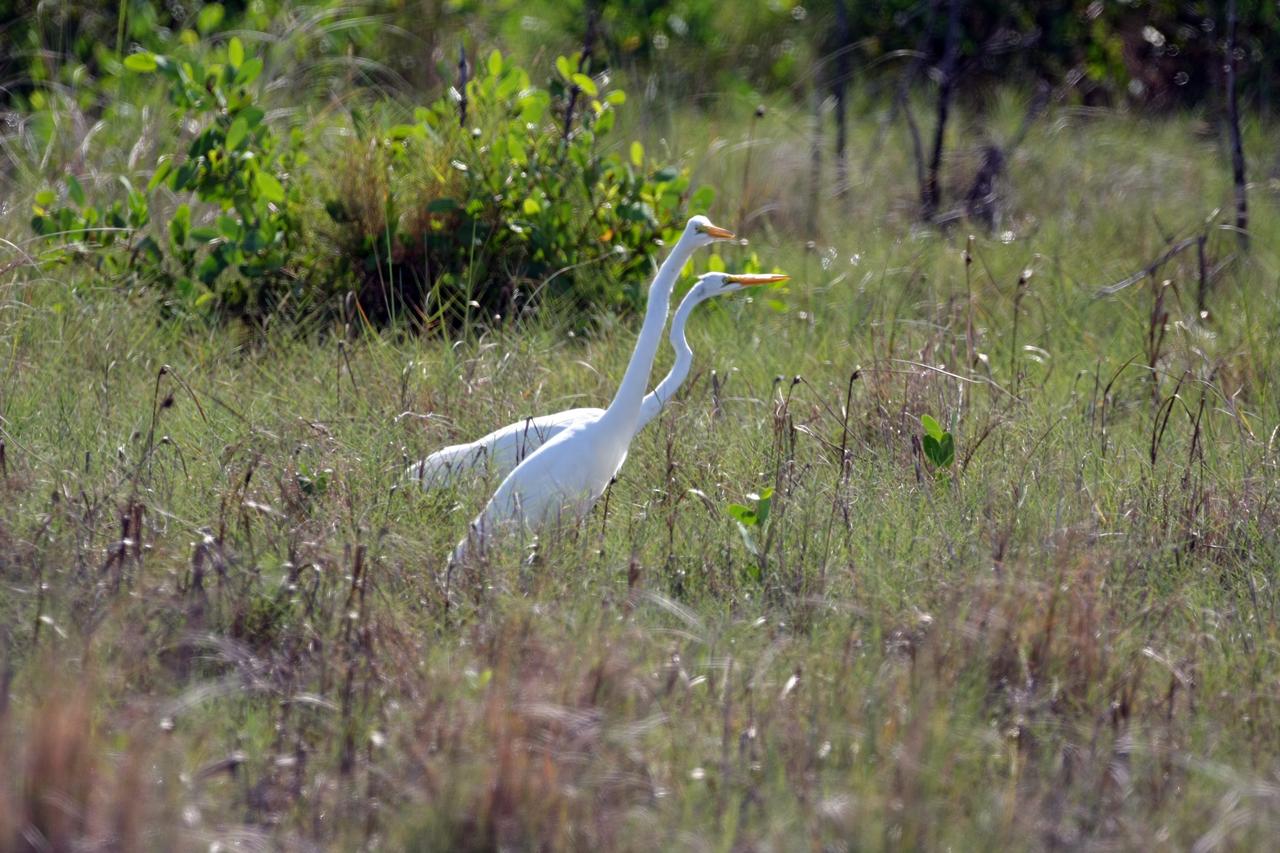
CAPE CANAVERAL, Fla. - Great white egrets stride through the tall grass in an area of NASA's Kennedy Space Center in Florida. It is one of 310 species of birds that inhabit the National Merritt Island Wildlife Refuge, which shares a boundary with Kennedy. The marshes and open water of the refuge also provide wintering areas for 23 species of migratory waterfowl, as well as a year-round home for great blue herons, great egrets, wood storks, cormorants, brown pelicans and other species of marsh and shore birds. Photo credit: NASA/Dimitri Gerondidakis
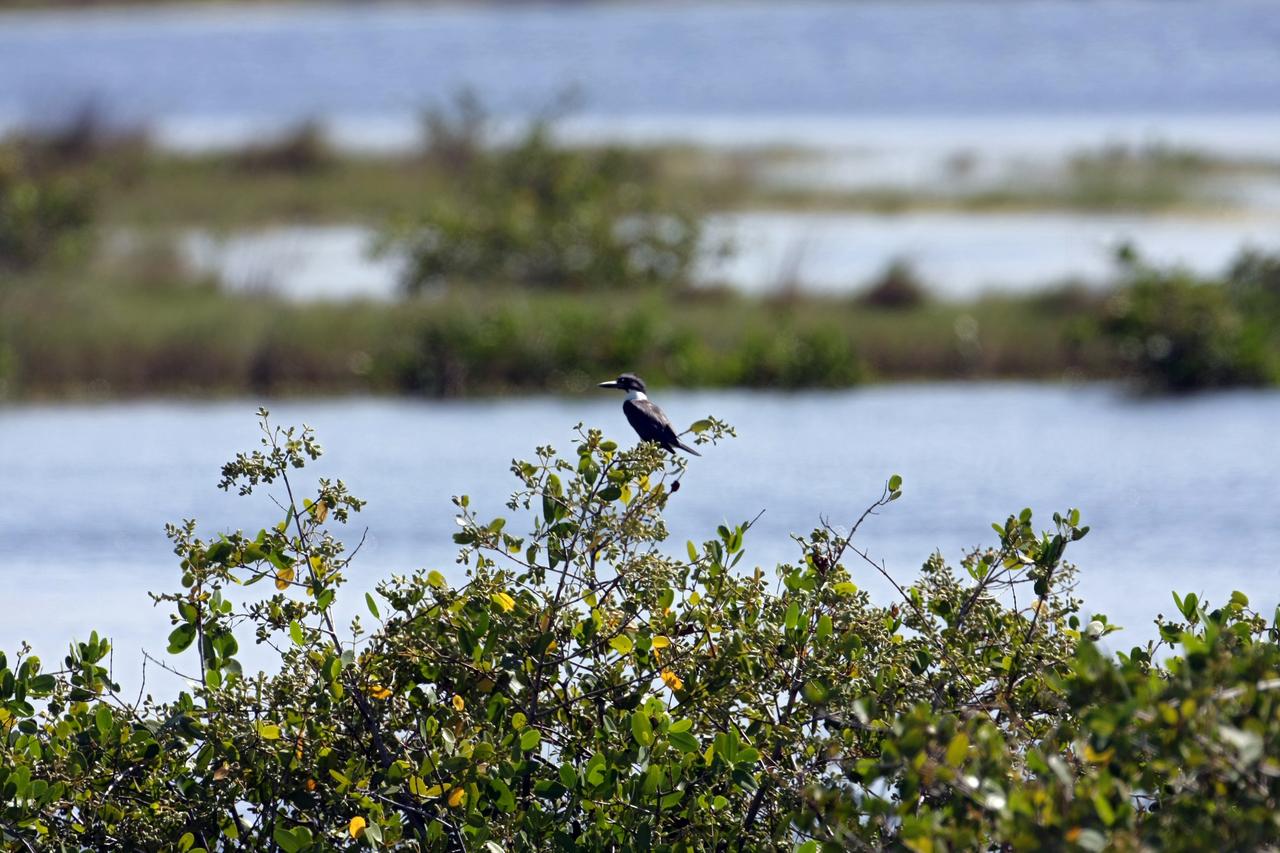
CAPE CANAVERAL, Fla. - A belted kingfisher perches on a shrub branch in an area of NASA's Kennedy Space Center in Florida. It is one of 310 species of birds that inhabit the National Merritt Island Wildlife Refuge, which shares a boundary with Kennedy. The marshes and open water of the refuge also provide wintering areas for 23 species of migratory waterfowl, as well as a year-round home for great blue herons, great egrets, wood storks, cormorants, brown pelicans and other species of marsh and shore birds. Photo credit: NASA/Dimitri Gerondidakis
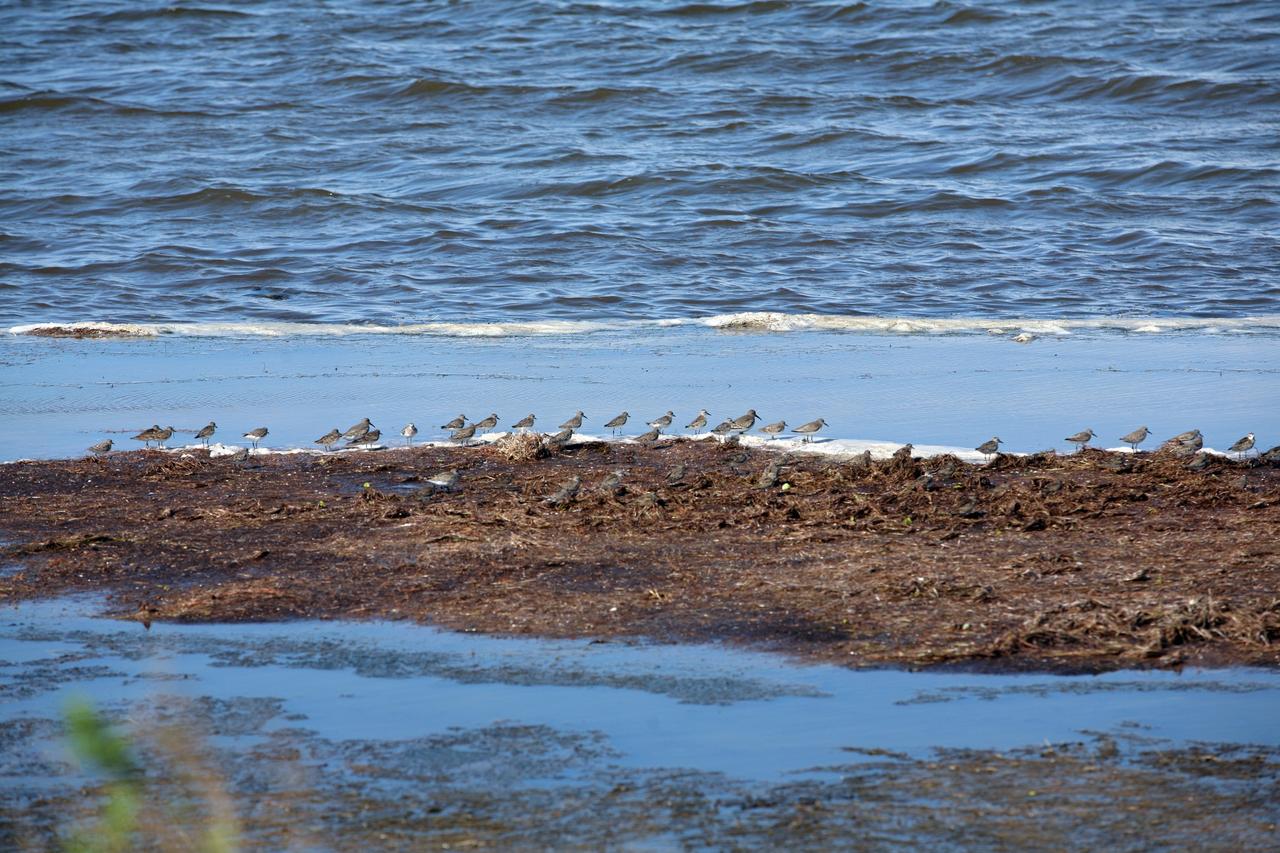
CAPE CANAVERAL, Fla. - A line of spotted sandpipers gather along the water's edge on NASA's Kennedy Space Center in Florida. It is one of 310 species of birds that inhabit the National Merritt Island Wildlife Refuge, which shares a boundary with Kennedy. The marshes and open water of the refuge also provide wintering areas for 23 species of migratory waterfowl, as well as a year-round home for great blue herons, great egrets, wood storks, cormorants, brown pelicans and other species of marsh and shore birds. Photo credit: NASA/Dimitri Gerondidakis

CAPE CANAVERAL, Fla. - What appears to be a juvenile red-tailed hawk finds a perch in a dead tree in an area of NASA's Kennedy Space Center in Florida. It is one of 310 species of birds that inhabit the National Merritt Island Wildlife Refuge, which shares a boundary with Kennedy. The marshes and open water of the refuge also provide wintering areas for 23 species of migratory waterfowl, as well as a year-round home for great blue herons, great egrets, wood storks, cormorants, brown pelicans and other species of marsh and shore birds. Photo credit: NASA/Dimitri Gerondidakis
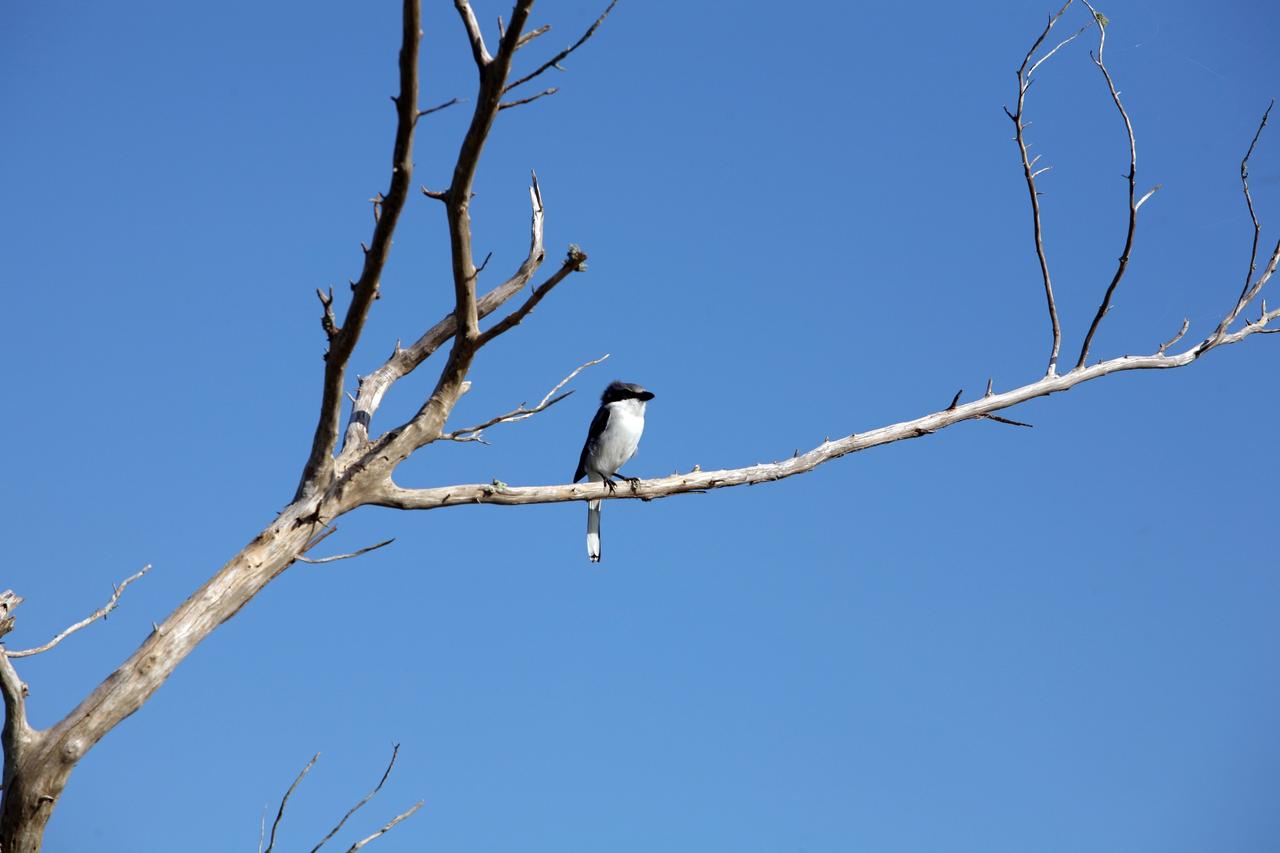
CAPE CANAVERAL, Fla. - A belted kingfisher perches on a shrub branch in an area of NASA's Kennedy Space Center in Florida. It is one of 310 species of birds that inhabit the National Merritt Island Wildlife Refuge, which shares a boundary with Kennedy. The marshes and open water of the refuge also provide wintering areas for 23 species of migratory waterfowl, as well as a year-round home for great blue herons, great egrets, wood storks, cormorants, brown pelicans and other species of marsh and shore birds. Photo credit: NASA/Dimitri Gerondidakis
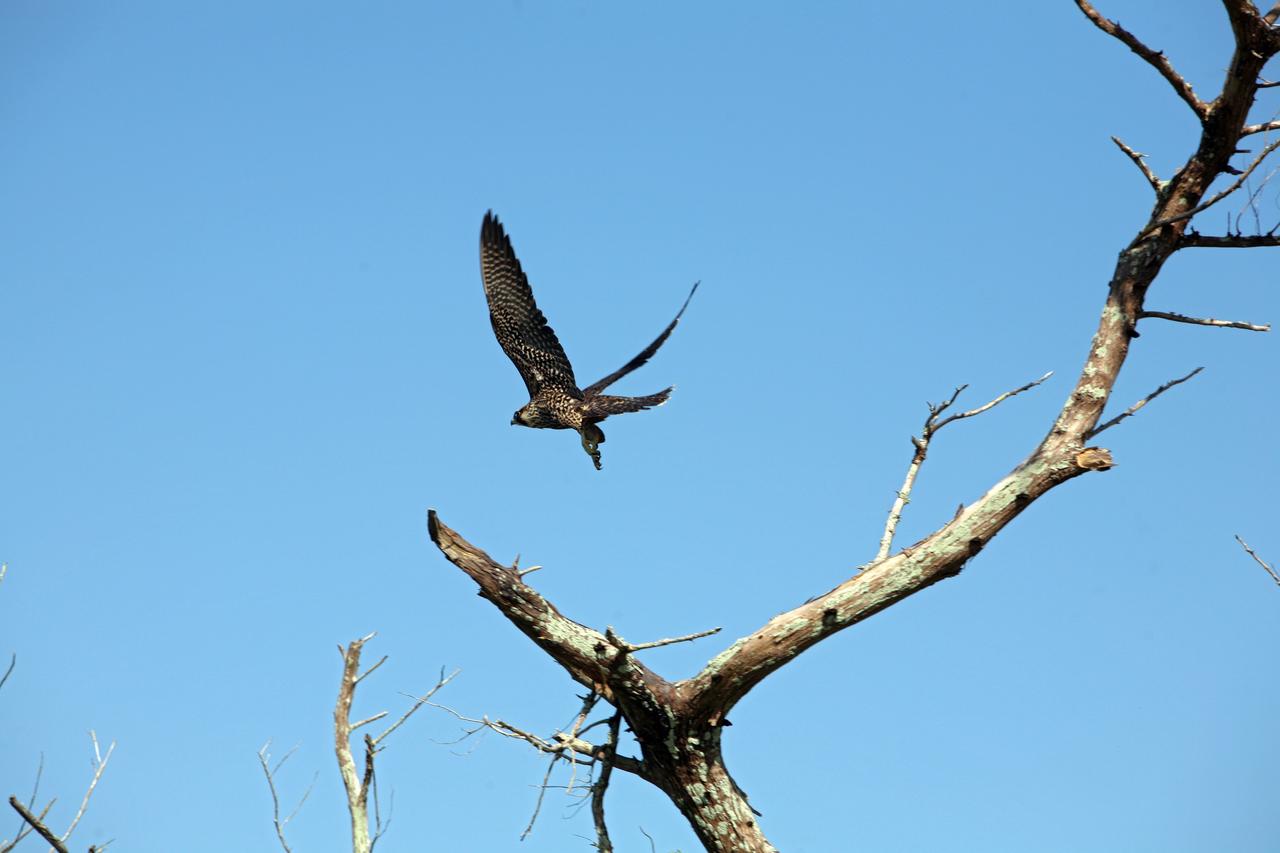
CAPE CANAVERAL, Fla. - What appears to be a juvenile red-tailed hawk takes off from its perch in a dead tree in an area of NASA's Kennedy Space Center in Florida. It is one of 310 species of birds that inhabit the National Merritt Island Wildlife Refuge, which shares a boundary with Kennedy. The marshes and open water of the refuge also provide wintering areas for 23 species of migratory waterfowl, as well as a year-round home for great blue herons, great egrets, wood storks, cormorants, brown pelicans and other species of marsh and shore birds. Photo credit: NASA/Dimitri Gerondidakis