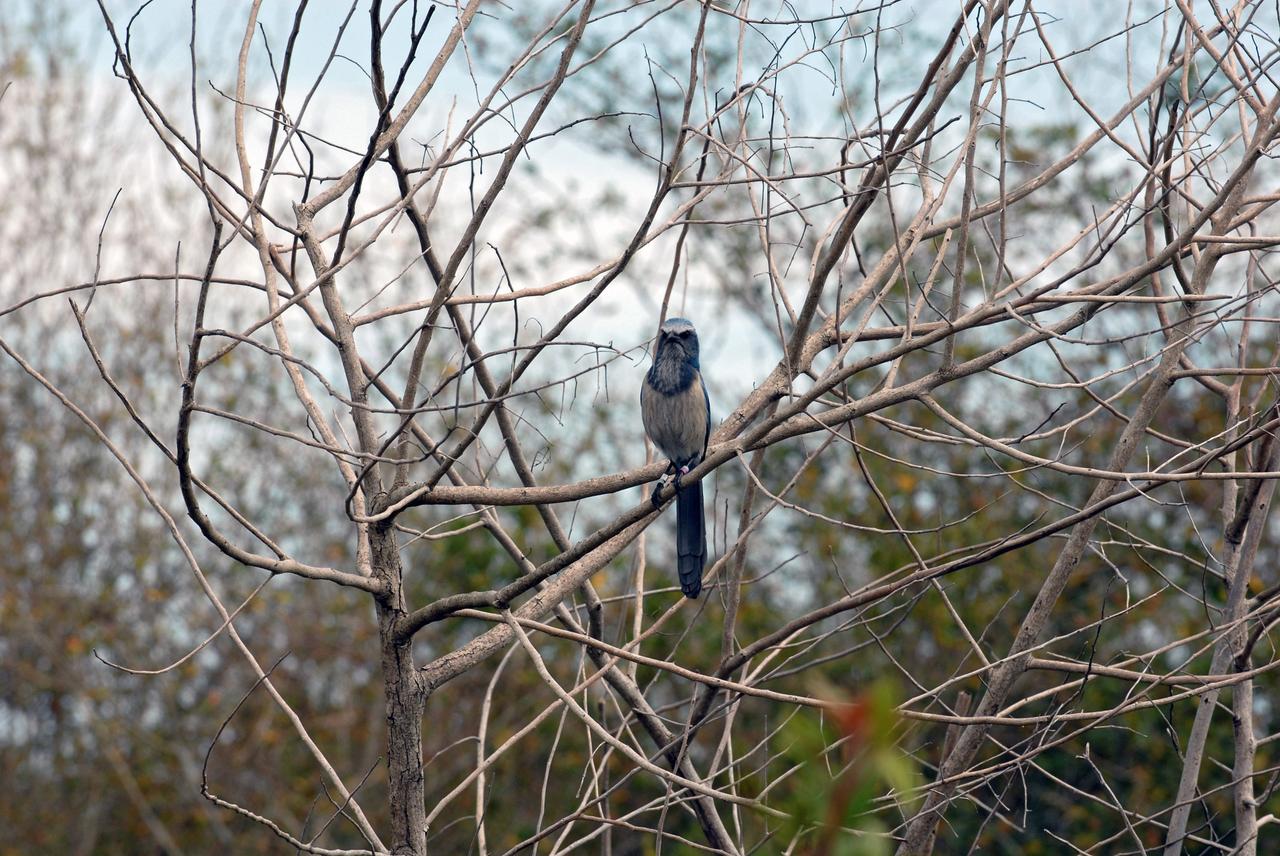
CAPE CANAVERAL, Fla. – A Florida scrub jay perches on a branch in a wooded area at NASA's Kennedy Space Center in Florida. As the name implies, the Florida scrub jay thrives in a scrub, which is an extremely dry habitat. Their ideal environment is a relatively open flatwoods of oak or sand pine scrub with trees less than 10 feet tall, wide apart and providing minimal canopy cover. The last recorded population count of Florida scrub jays is just a little over 2,000, mostly located at Kennedy but also in some scattered scrubs all over central and southern Florida. Photo credit: NASA/Ben Smegelsky
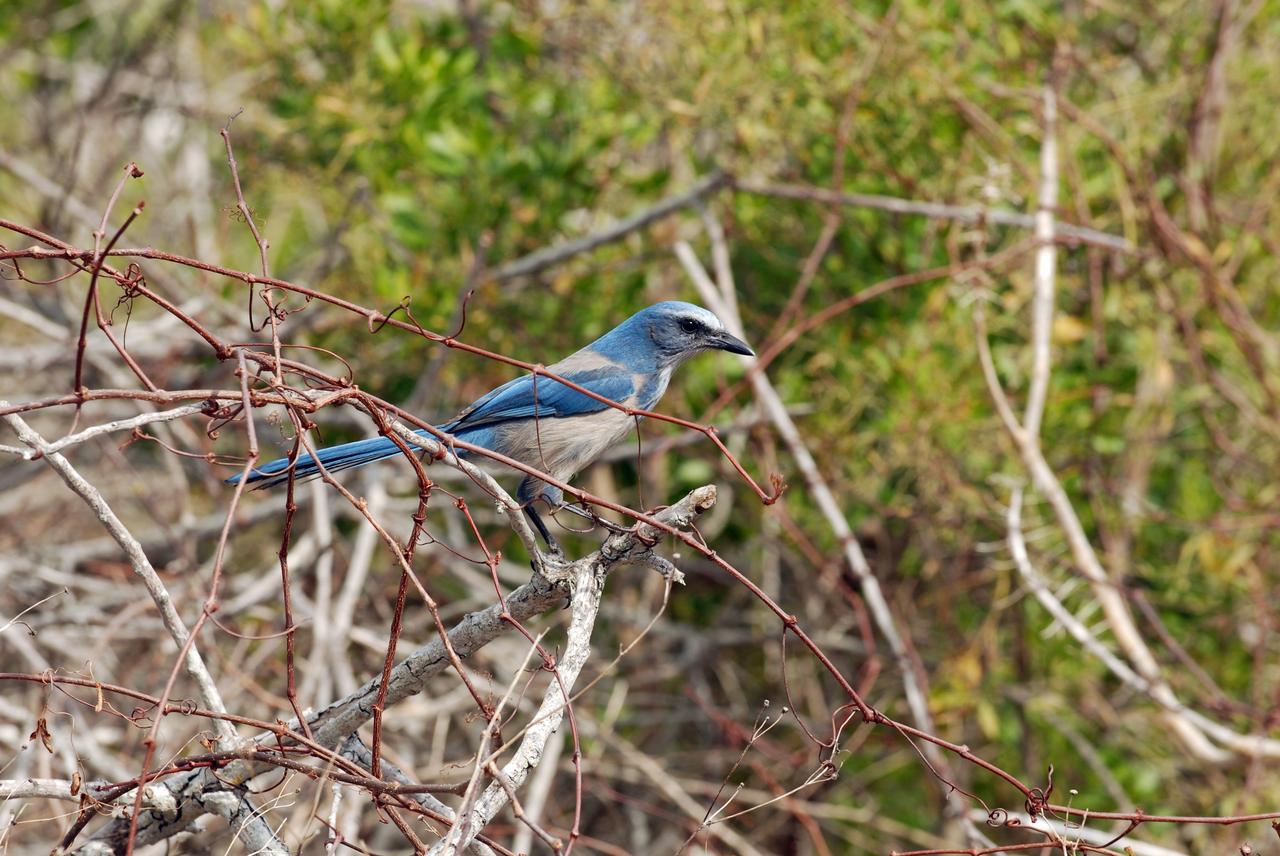
CAPE CANAVERAL, Fla. – Close-up of a Florida scrub jay in the woods near NASA's Kennedy Space Center in Florida. As the name implies, the Florida scrub jay thrives in a scrub, which is an extremely dry habitat. Their ideal environment is a relatively open flatwoods of oak or sand pine scrub with trees less than 10 feet tall, wide apart and providing minimal canopy cover. The last recorded population count of Florida scrub jays is just a little over 2,000, mostly located at Kennedy but also in some scattered scrubs all over central and southern Florida. Photo credit: NASA/Ben Smegelsky
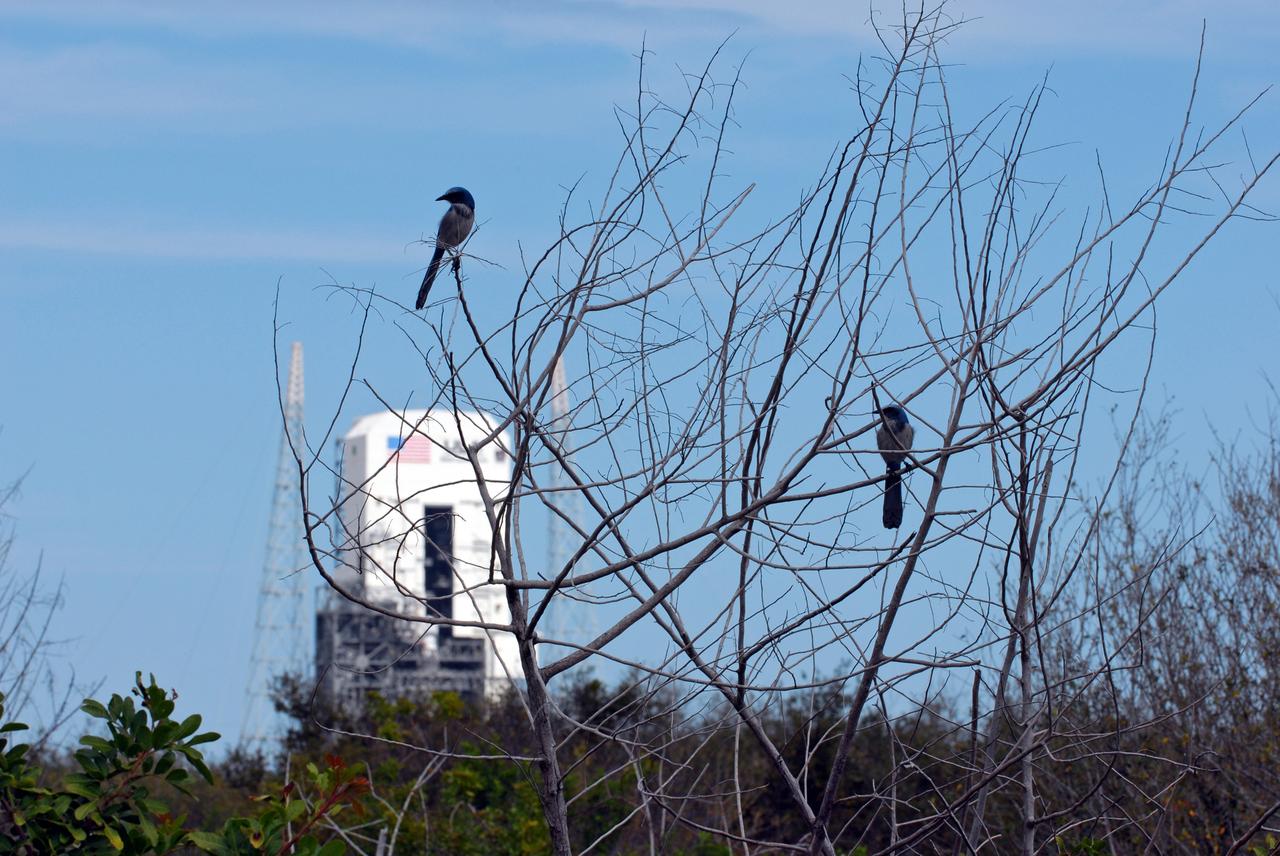
CAPE CANAVERAL, Fla. – Florida scrub jays scan their territory from a bush at NASA's Kennedy Space Center in Florida. As the name implies, the Florida scrub jay thrives in a scrub, which is an extremely dry habitat. Their ideal environment is a relatively open flatwoods of oak or sand pine scrub with trees less than 10 feet tall, wide apart and providing minimal canopy cover. The last recorded population count of Florida scrub jays is just a little over 2,000, mostly located at Kennedy but also in some scattered scrubs all over central and southern Florida. Photo credit: NASA/Ben Smegelsky

CAPE CANAVERAL, Fla. – Florida scrub jays scan their territory from a bush at NASA's Kennedy Space Center in Florida. As the name implies, the Florida scrub jay thrives in a scrub, which is an extremely dry habitat. Their ideal environment is a relatively open flatwoods of oak or sand pine scrub with trees less than 10 feet tall, wide apart and providing minimal canopy cover. The last recorded population count of Florida scrub jays is just a little over 2,000, mostly located at Kennedy but also in some scattered scrubs all over central and southern Florida. Photo credit: NASA/Ben Smegelsky
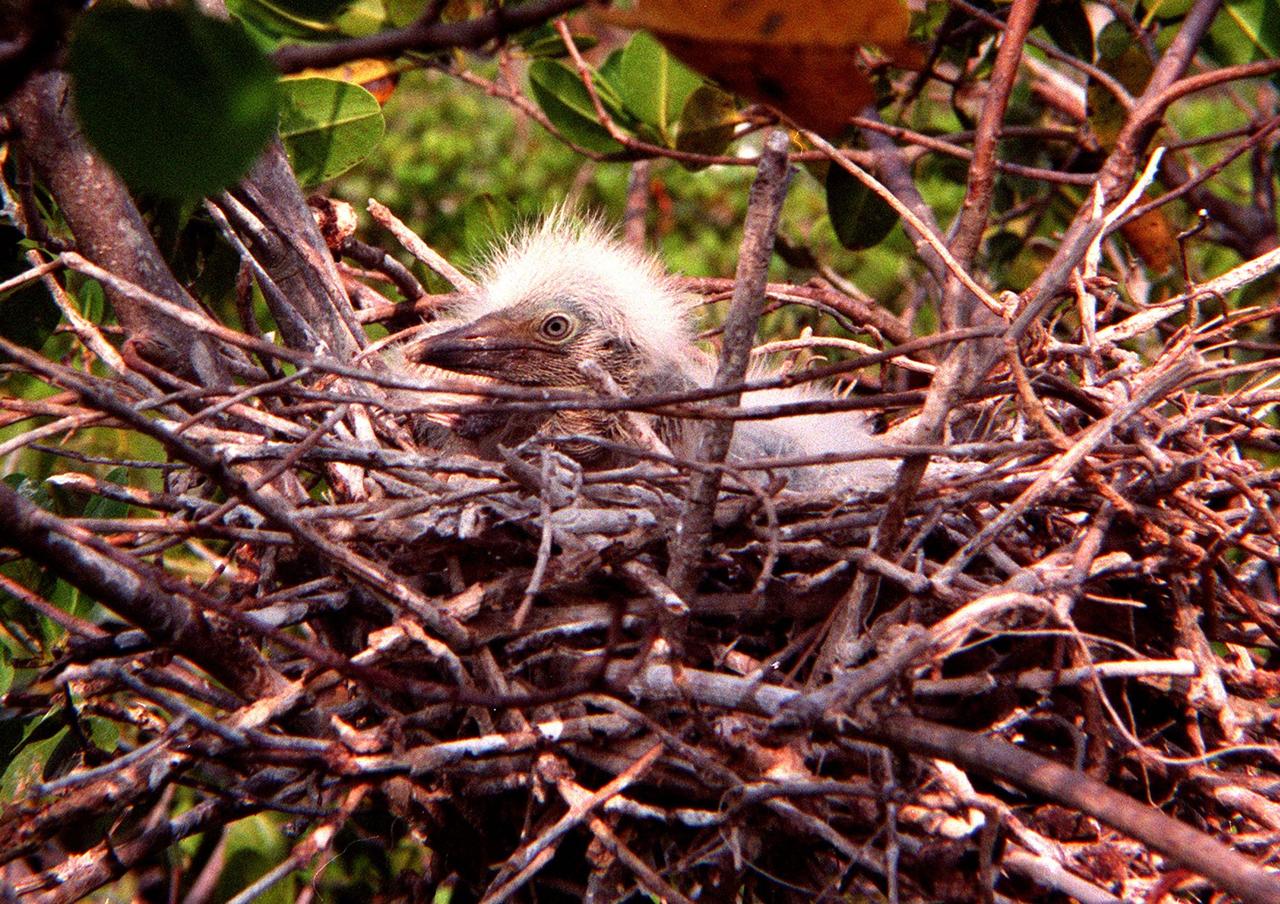
KENNEDY SPACE CENTER, FLA. -- Its newly grown, wispy feathers reflecting light like a halo, an unidentified baby bird waits, probably for its next meal, in its stick-assembled nest. The nest is in the Merritt Island National Wildlife Refuge, which shares a boundary with KSC. Hardwood hammocks and pine flatwoods share the 92,000-acre refuge with fresh-water impoundments, salt-water estuaries and brackish marshes. The diverse landscape provides habitat for more than 310 species of birds, 25 mammals, 117 fishes, and 65 amphibians and reptiles, including such endangered species as Southern bald eagles, wood storks, Florida scrub jays, Atlantic loggerhead and leatherback turtles, osprey, and nearly 5,000 alligators
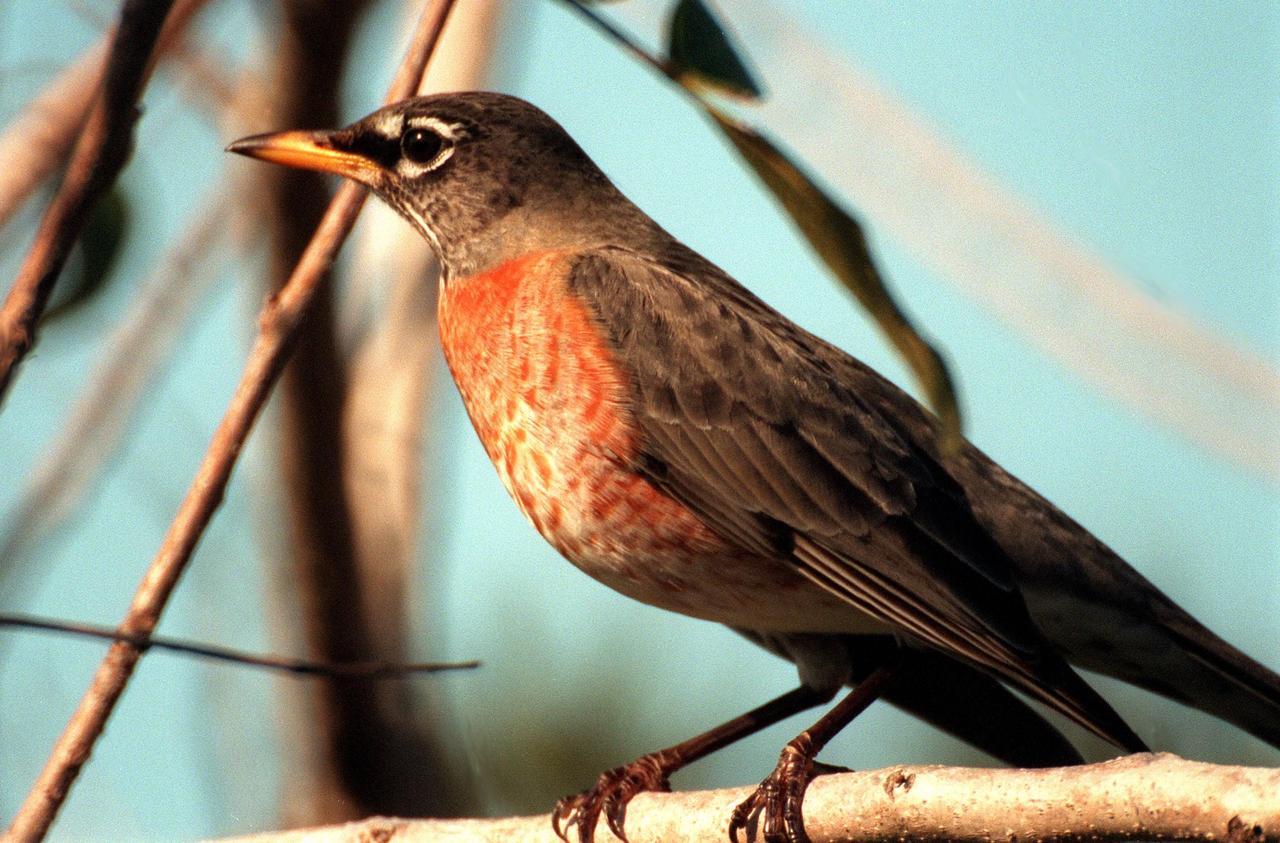
KENNEDY SPACE CENTER, FLA. -- A robin perches on a branch in the Merritt Island National <a href="http://www-pao.ksc.nasa.gov/kscpao/captions/subjects/wildlife.htm">Wildlife </a>Refuge, which shares a boundary with the space center. Robins range throughout North America, from Alaska to Florida. Although considered a harbinger of spring, they do winter in northern states, frequenting cedar bogs and swamps. They also winter in Florida, where they often can be seen in flocks of hundreds near KSC and the wildlife refuge, which comprises 92,000 acres, ranging from hardwood hammocks and pine flatwoods to fresh-water impoundments, salt-water estuaries and brackish marshes. The diverse landscape provides habitat for more than 310 species of birds, 25 mammals, 117 fishes, and 65 amphibians and reptiles, including such endangered species as Southern bald eagles, wood storks, Florida scrub jays, Atlantic loggerhead and leatherback turtles, osprey, and nearly 5,000 alligators

KENNEDY SPACE CENTER, FLA. -- A sandpiper wades the water in the Merritt Island National <a href="http://www-pao.ksc.nasa.gov/kscpao/captions/subjects/wildlife.htm">Wildlife </a> Refuge, which shares a boundary with the space center. Sandpipers are usually seen foraging on the beach or margins of lakes, ponds, marshes or streams. The open waters of the Wildlife Refuge provide wintering areas for 23 species of migratory waterfowl as well as a year-round home for great blue herons, great egrets, wood storks, cormorants, brown pelicans and other species of marsh and shore birds. The refuge comprises 92,000 acres, ranging from fresh-water impoundments, salt-water estuaries and brackish marshes to hardwood hammocks and pine flatwoods. The diverse landscape provides habitat for more than 310 species of birds, 25 mammals, 117 fishes, and 65 amphibians and reptiles, including such endangered species as Southern bald eagles, wood storks, Florida scrub jays, Atlantic loggerhead and leatherback turtles, osprey, and nearly 5,000 alligators
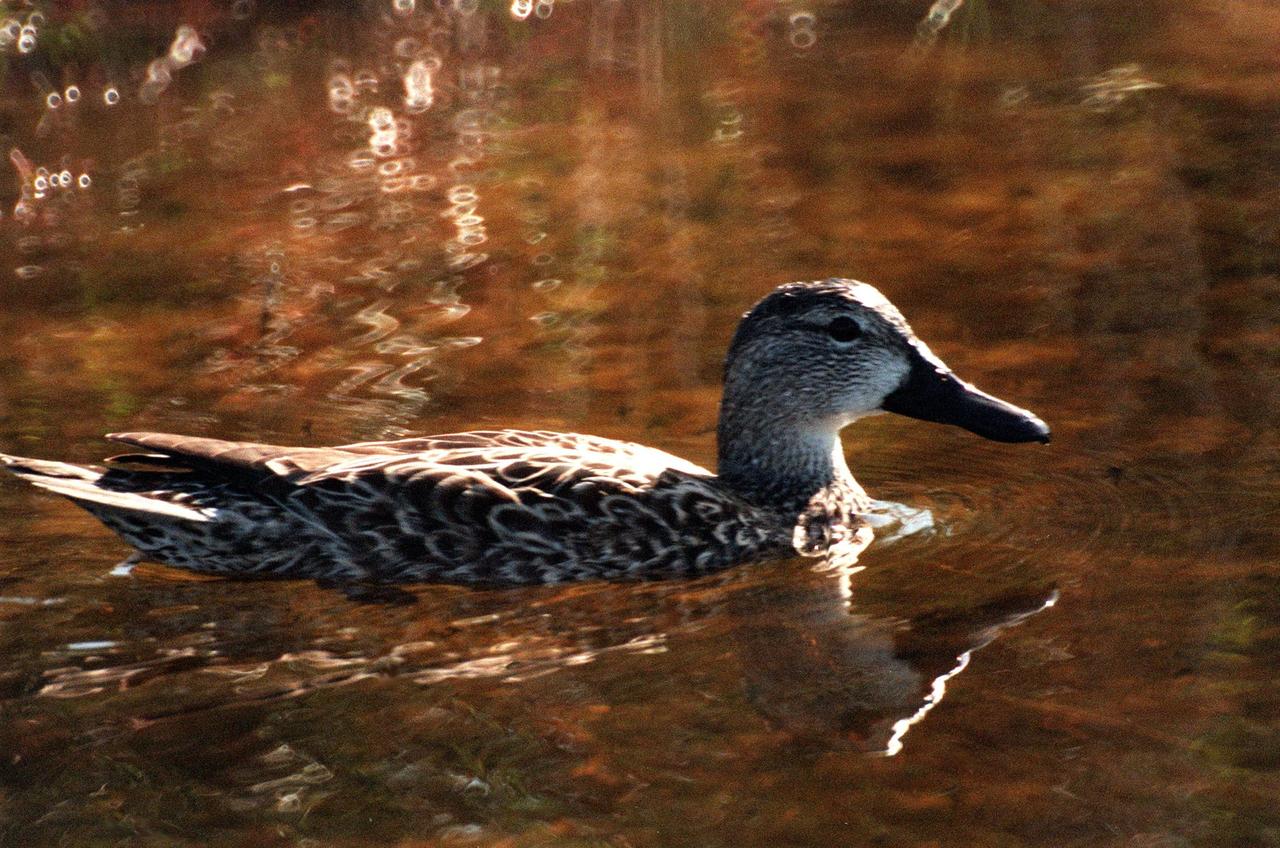
KENNEDY SPACE CENTER, FLA. -- A pintail duck swims calmly in the waters of the Merritt Island National <a href="http://www-pao.ksc.nasa.gov/kscpao/captions/subjects/wildlife.htm">Wildlife </a>Refuge, which shares a boundary with the space center. The pintail can be found in marshes, prairie ponds and tundra, and salt marshes in winter. They range from Alaska and Greenland south to Central America and the West Indies. The open waters of the Wildlife Refuge provide wintering areas for 23 species of migratory waterfowl as well as a year-round home for great blue herons, great egrets, wood storks, cormorants, brown pelicans and other species of marsh and shore birds. The refuge comprises 92,000 acres, ranging from fresh-water impoundments, salt-water estuaries and brackish marshes to hardwood hammocks and pine flatwoods. The diverse landscape provides habitat for more than 310 species of birds, 25 mammals, 117 fishes, and 65 amphibians and reptiles, including such endangered species as Southern bald eagles, wood storks, Florida scrub jays, Atlantic loggerhead and leatherback turtles, osprey, and nearly 5,000 alligators