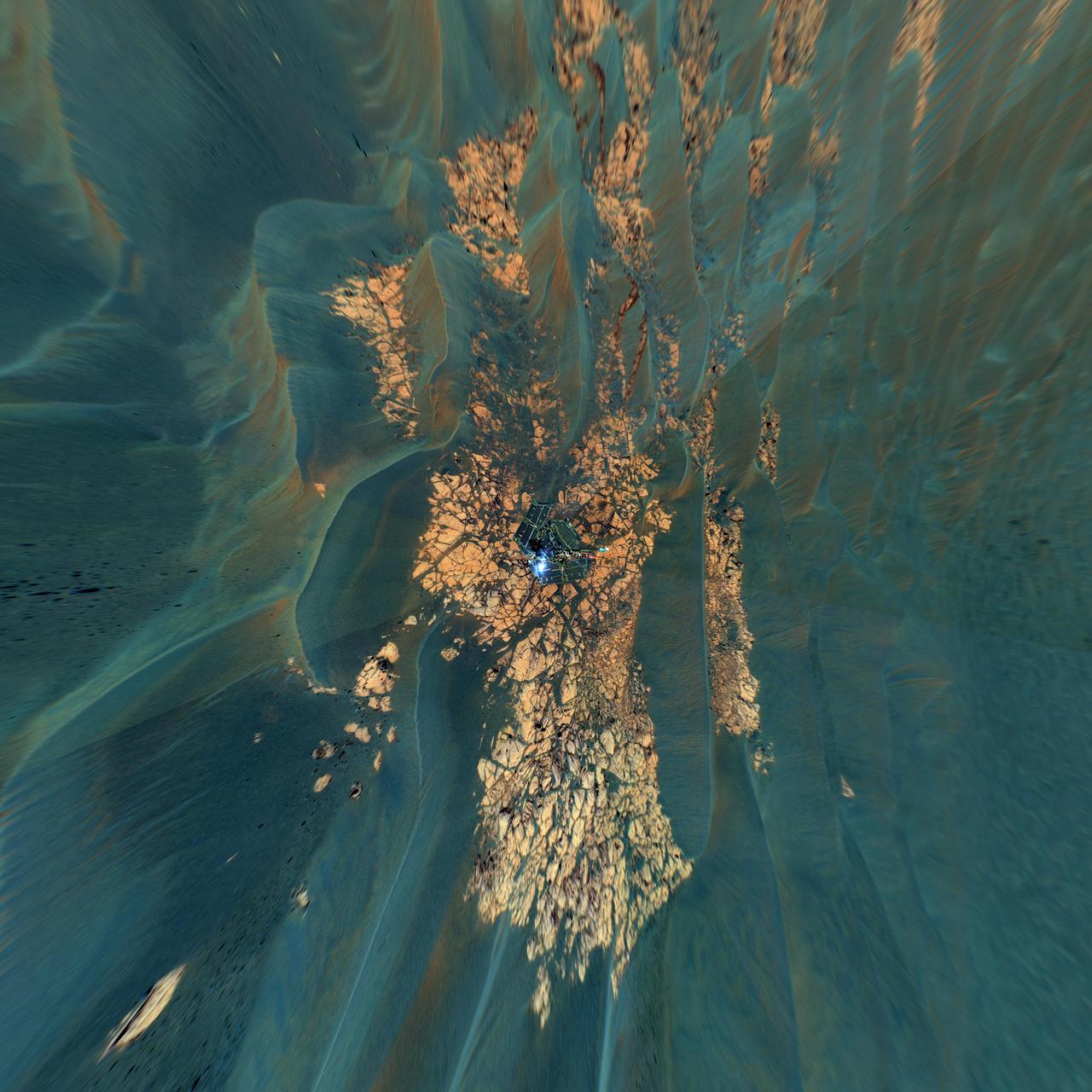
Bird-Eye View of Opportunity at Erebus Vertical
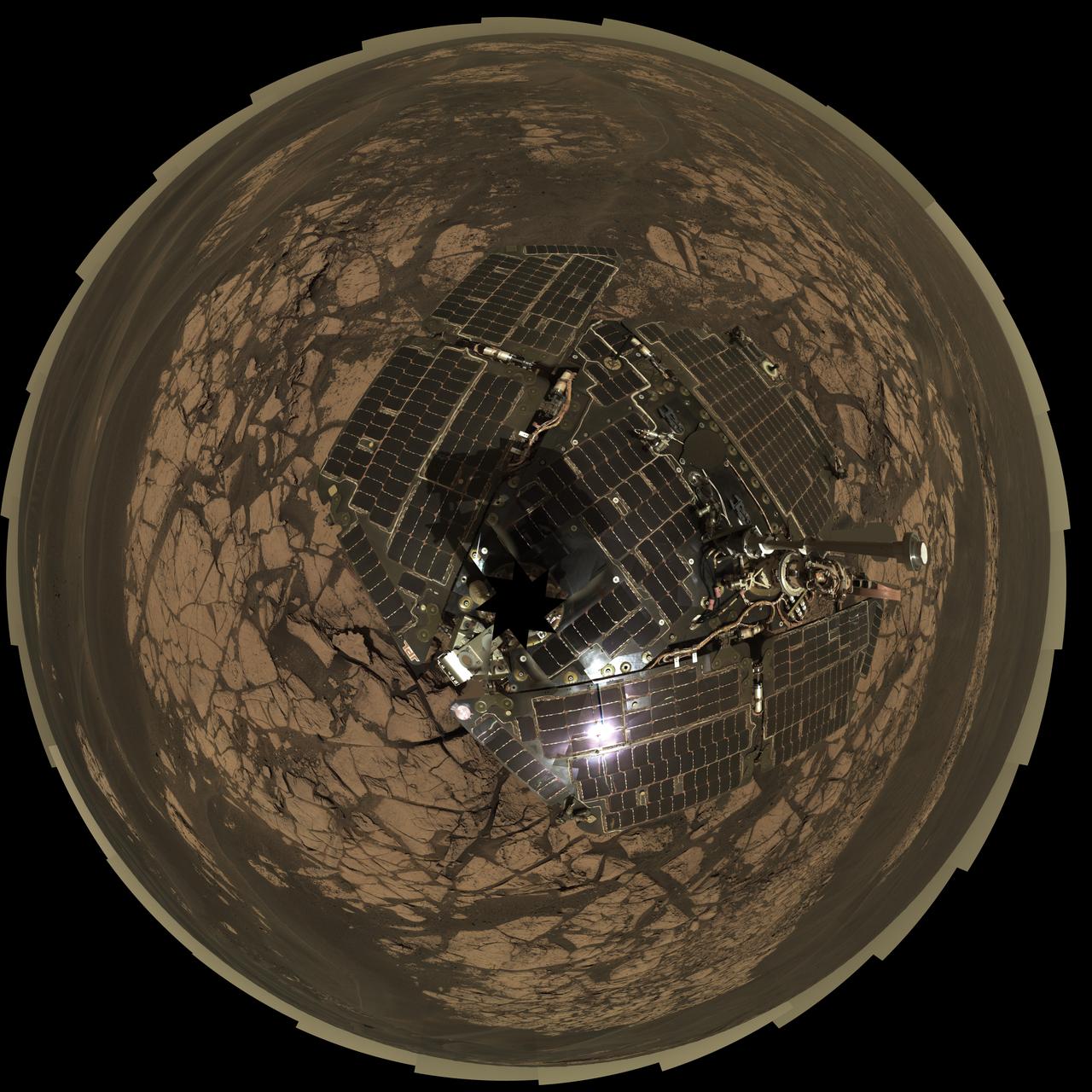
Bird-Eye View of Opportunity at Erebus Polar
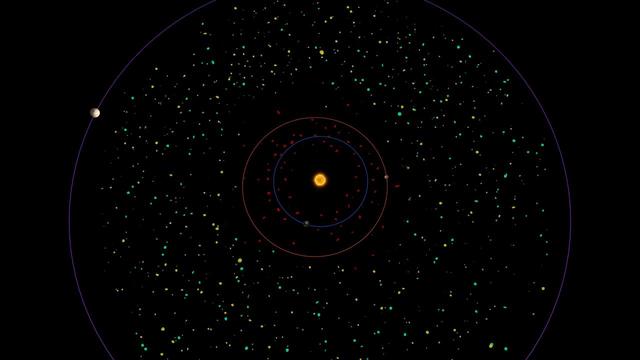
This diagram shows a bird eye view of our asteroid belt, which lies between the orbits of Mars red and Jupiter purple.
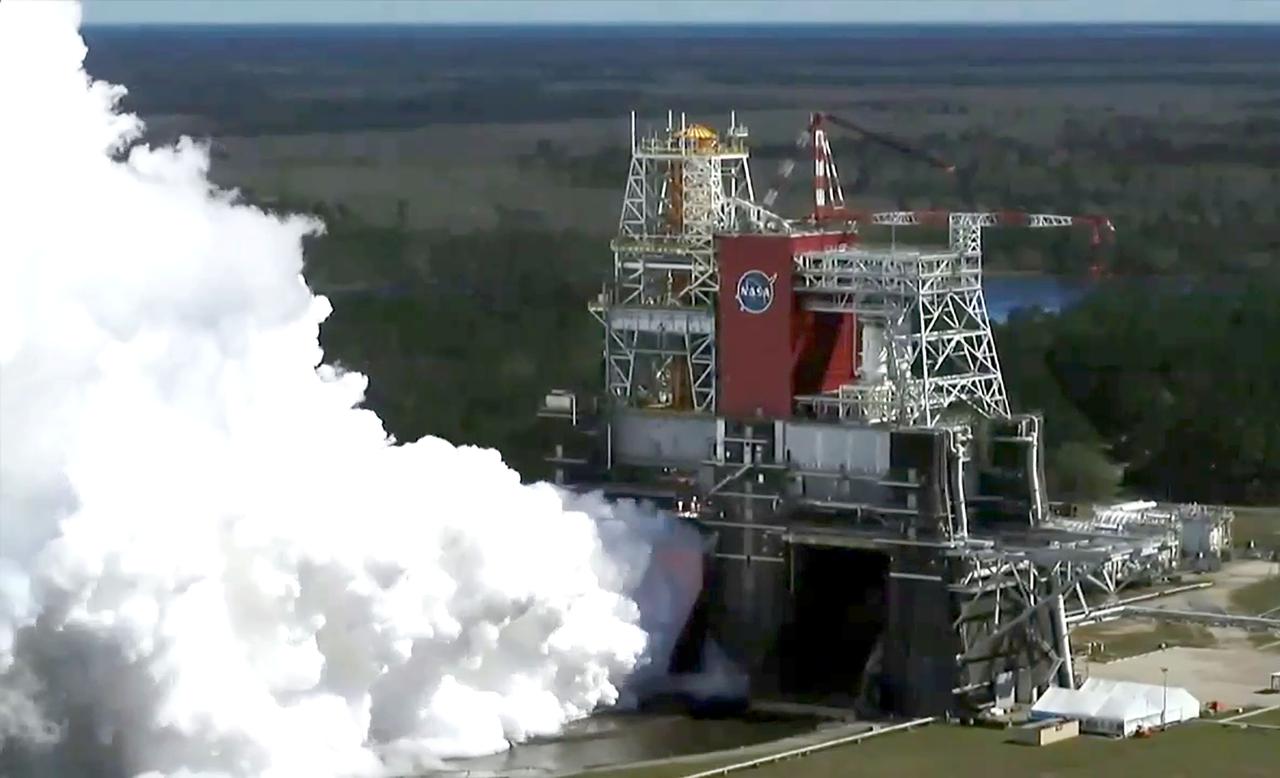
A drone camera offers a bird’s-eye view as NASA conducts a hot fire test March 18, 2021, of the core stage for the agency’s Space Launch System rocket on the B-2 Test Stand at Stennis Space Center near Bay St. Louis, Mississippi. The hot fire test of the stage’s four RS-25 engines generated a combined 1.6 million pounds of thrust, just as will occur during an actual launch. The hot fire is the final test of the Green Run test series, which represents a comprehensive assessment of the core stage and its integrated systems prior to its launch on the Artemis I mission to the Moon.
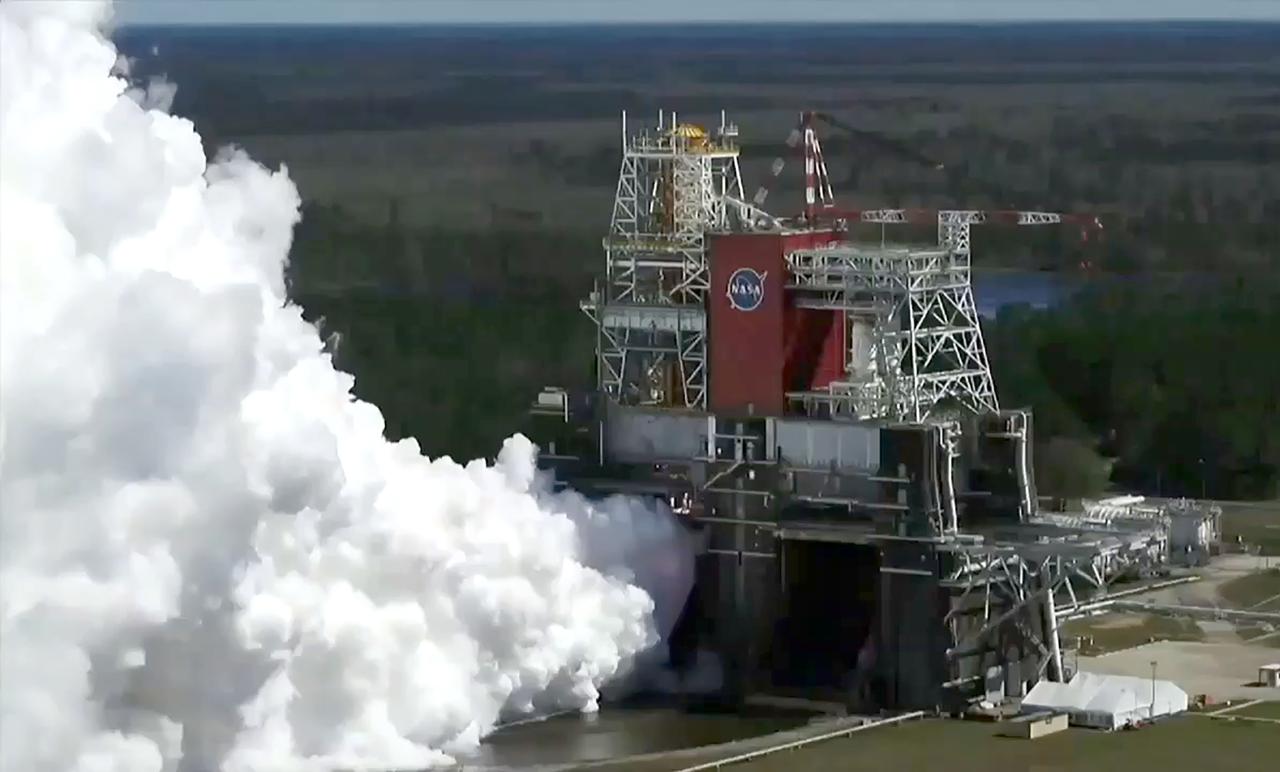
A drone camera offers a bird’s-eye view as NASA conducts a hot fire test March 18, 2021, of the core stage for the agency’s Space Launch System rocket on the B-2 Test Stand at Stennis Space Center near Bay St. Louis, Mississippi. The hot fire test of the stage’s four RS-25 engines generated a combined 1.6 million pounds of thrust, just as will occur during an actual launch. The hot fire is the final test of the Green Run test series, which represents a comprehensive assessment of the core stage and its integrated systems prior to its launch on the Artemis I mission to the Moon.
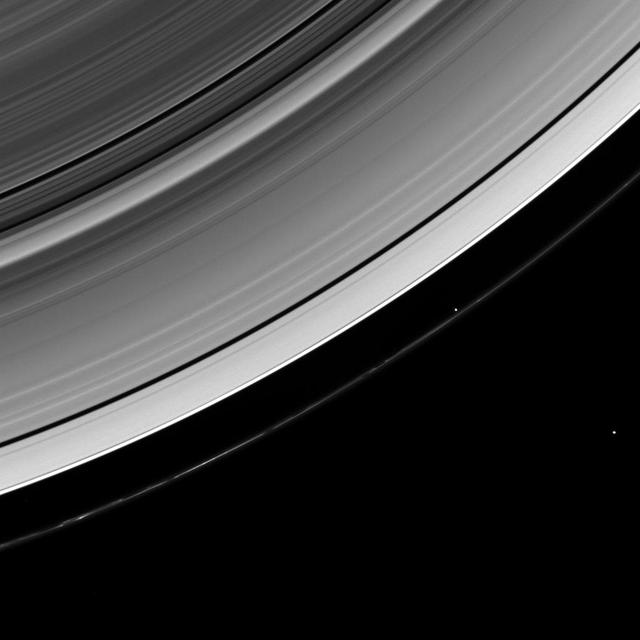
The Cassini spacecraft looks down from a high-inclination orbit to spot two of Saturn ring moons
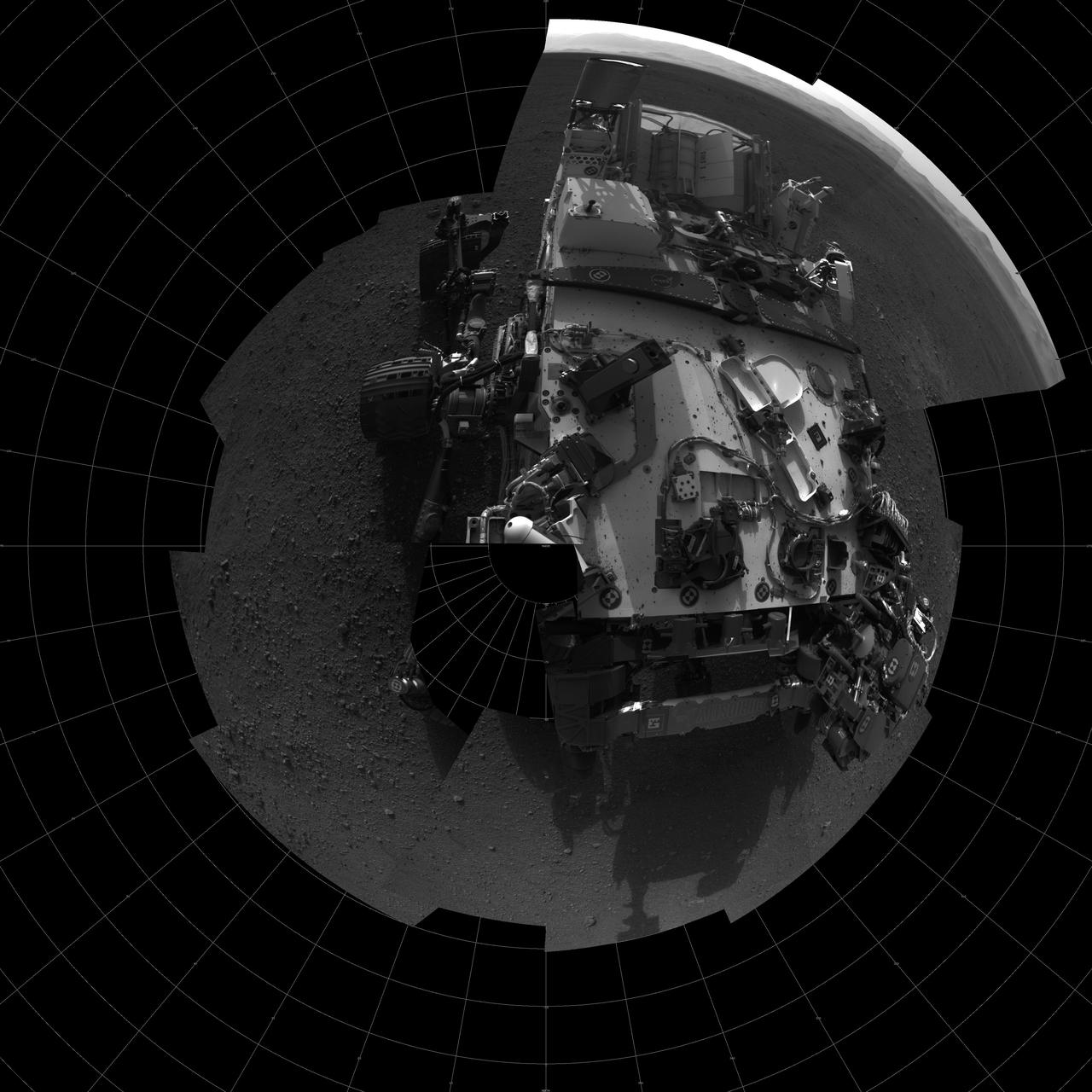
This self-portrait shows the deck of NASA Curiosity rover from the rover Navigation camera. The rim of Gale Crater can be seen at upper right.
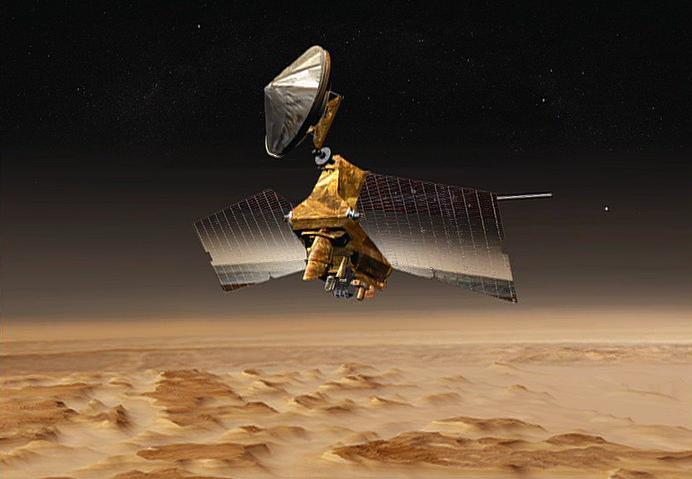
This artist concept shows NASA Mars Reconnaissance Orbiter mission over the red planet.
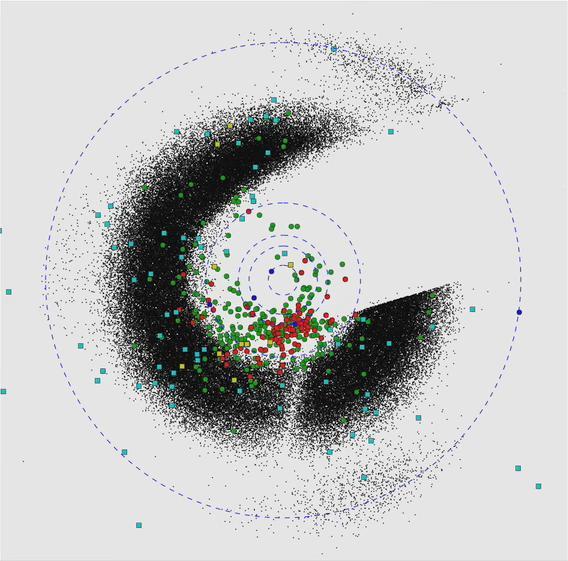
This frame from a video demonstrates how NASA Wide-field Infrared Survey Explorer surveys asteroids and comets in the solar system. Perspective shown here is looking down from high above Earth North Pole, a kind of bird eye view of the solar system.
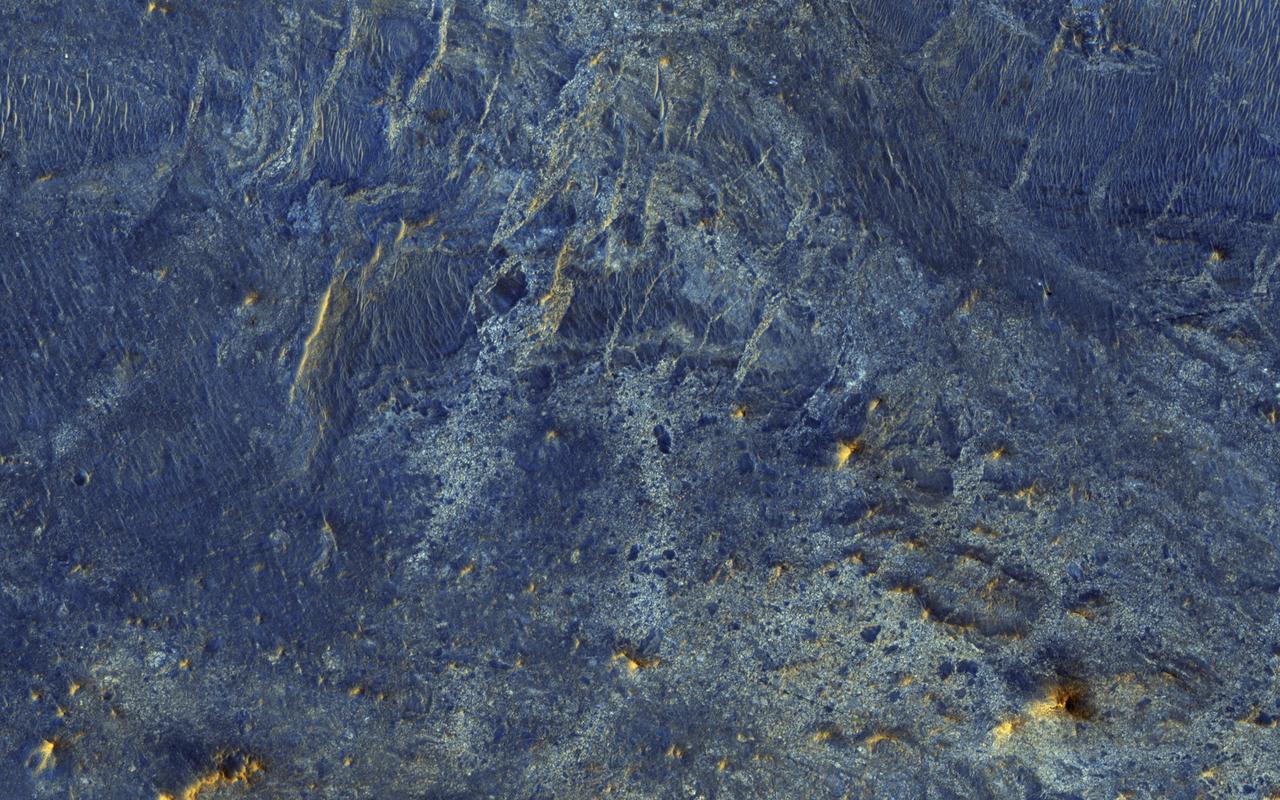
There have been several proposals to send people to Mars but not land them on the surface. Instead, they would either fly by Mars once and return to Earth, or orbit Mars for a period of time. Would they at least get spectacular naked-eye views of the Martian surface? Some parts of Mars would be interesting: for example the polar ice caps, and the bright (dust-covered) regions would be seen reasonably well, although the color is very uniform. The dark (low reflectance) regions of Mars are some of the most interesting and important regions studied by our orbiters and rovers, but they would appear very bland to humans outside of the planet's atmosphere. This is because the thin atmosphere of Mars is quite bright and dusty, so when looking at dark surface areas, most of what you would see is scattered light from the atmospheric dust, and the surface would have a very low contrast. It would also appear reddish, even if the surface materials are not reddish, from the scattered light. Here is an example from the Nili Patera region of Mars, a candidate future landing site. At the top is an approximation of the natural color as seen by people with normal color vision -- almost no surface detail is visible. In the middle is the standard HiRISE IRB color product, consisting of the infrared, red, and blue-green images displayed as red, green, and blue, respectively, and with a min-max stretch applied to each color. In other words, the darkest pixel in the entire image is set to black, the brightest pixel is set to white, and all others are linearly interpolated. At bottom is an enhanced color product, in which each bandpass is given a linear stretch for the local subimage, sometimes saturating a small percentage of data to black or white to give the rest of the scene more contrast, followed by color saturation enhancement. Now we can see a diversity of colors that distinguish different surface units: dust, sand, and rocks with different minerals. http://photojournal.jpl.nasa.gov/catalog/PIA21040
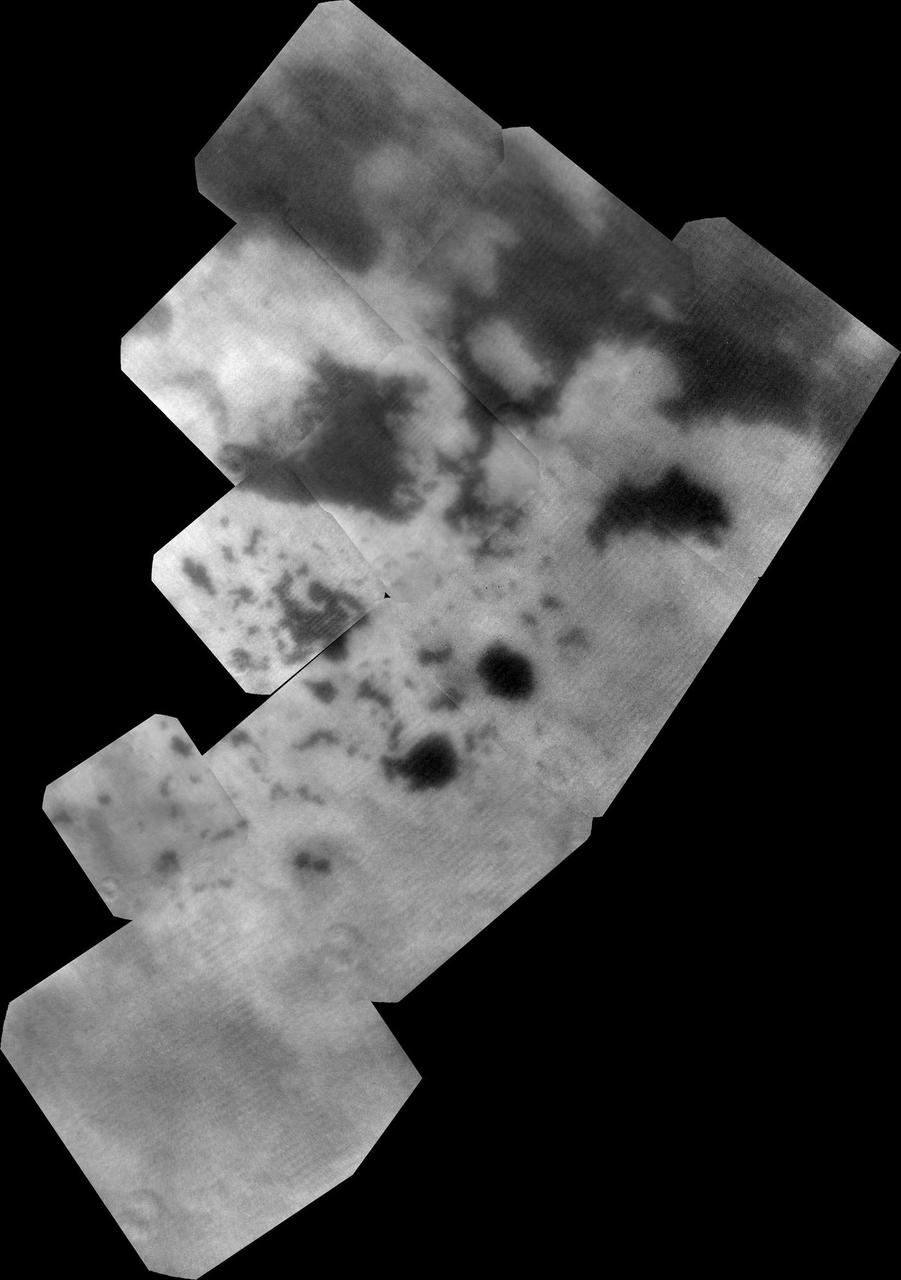
The vast hydrocarbon seas and lakes dark shapes near the north pole of Saturn moon Titan sprawl out beneath the watchful eye of NASA Cassini spacecraft. Scientists are studying images like these for clues about how Titan hydrocarbon lakes formed.
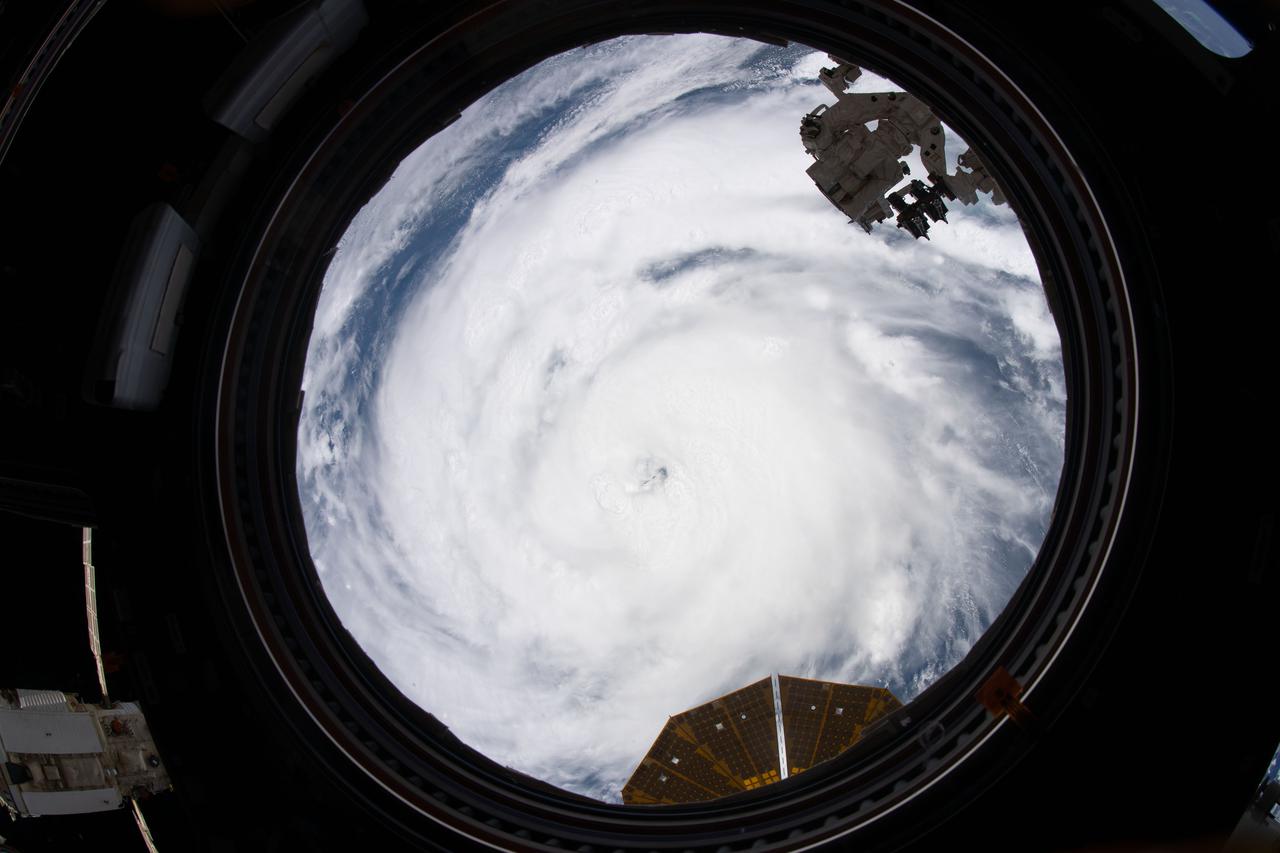
iss065e319500 (Aug. 28, 2021) --- Hurricane Ida is pictured as a category 2 storm in this near bird's-eye view from the International Space Station as it orbited 263 miles above the Gulf of Mexico.
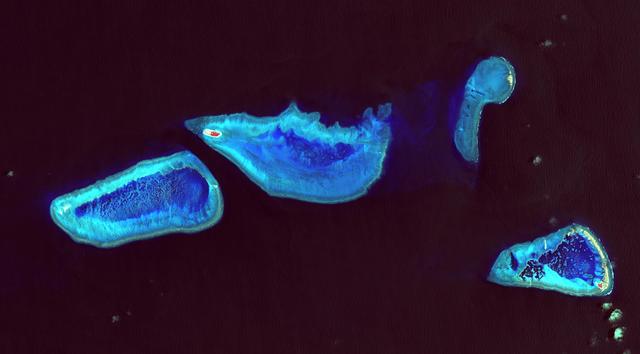
Heron Island is located in Queensland, Australia, approximately 45 miles (72 kilometers) off the Australian mainland, to the northeast of Gladstone. Part of Australia's Great Barrier Reef, the island is an evergreen coral cay surrounded by Wistari coral reef. Although just 42 acres in size, the island is home to a large resort and the University of Queensland's Heron Island Research Station. The island is famous for diving and snorkeling and is a World Heritage-Listed Marine National Park. It is one of two locations on the Great Barrier Reef that are serving as bases for in-water validation activities for NASA's Coral Reef Airborne Laboratory (CORAL) mission, which is studying the condition and function of the Great Barrier Reef and selected reef systems worldwide using NASA's airborne Portable Remote Imaging Spectrometer (PRISM) instrument from an altitude of 28,000 feet (8,500 meters). The Advanced Spaceborne Thermal Emission and Reflection Radiometer (ASTER) instrument on NASA's Terra spacecraft acquired this image of Heron Island and its surroundings on December 22, 2001. The island appears at the left of the reef (Heron Reef) in the center of the image. Vegetation is red on the image. The image covers an area of 10.3 by 18.6 miles (16.5 by 30.0 kilometers), and is located at 23.5 degrees south, 151.9 degrees east. http://photojournal.jpl.nasa.gov/catalog/PIA20900
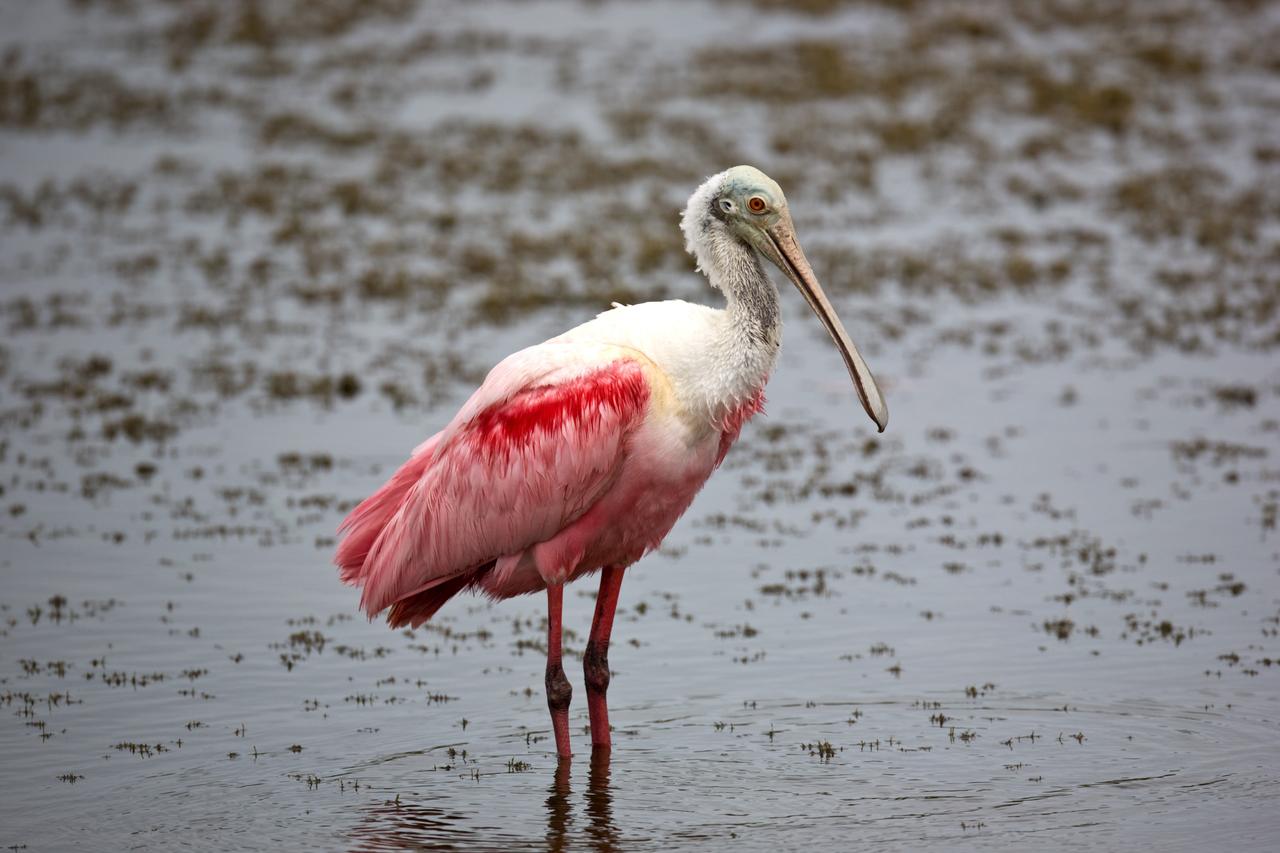
CAPE CANAVERAL, Fla. –– On NASA's Kennedy Space Center in Florida, the scarlet-feathered roseate spoonbill eyes the camera. Spoonbills inhabit areas of mangrove such as on the coasts of southern Florida and Texas. These birds feed on shrimps and fish in the shallow water, sweeping their bills from side to side. This and other wildlife abound throughout Kennedy as the center shares a boundary with the Merritt Island National Wildlife Refuge. The marshes and open water of the refuge provide wintering areas for 23 species of migratory waterfowl, as well as a year-round home for great blue herons, great egrets, wood storks, cormorants, brown pelicans and other species of marsh and shore birds. Photo credit: NASA/Dimitri Gerondidakis
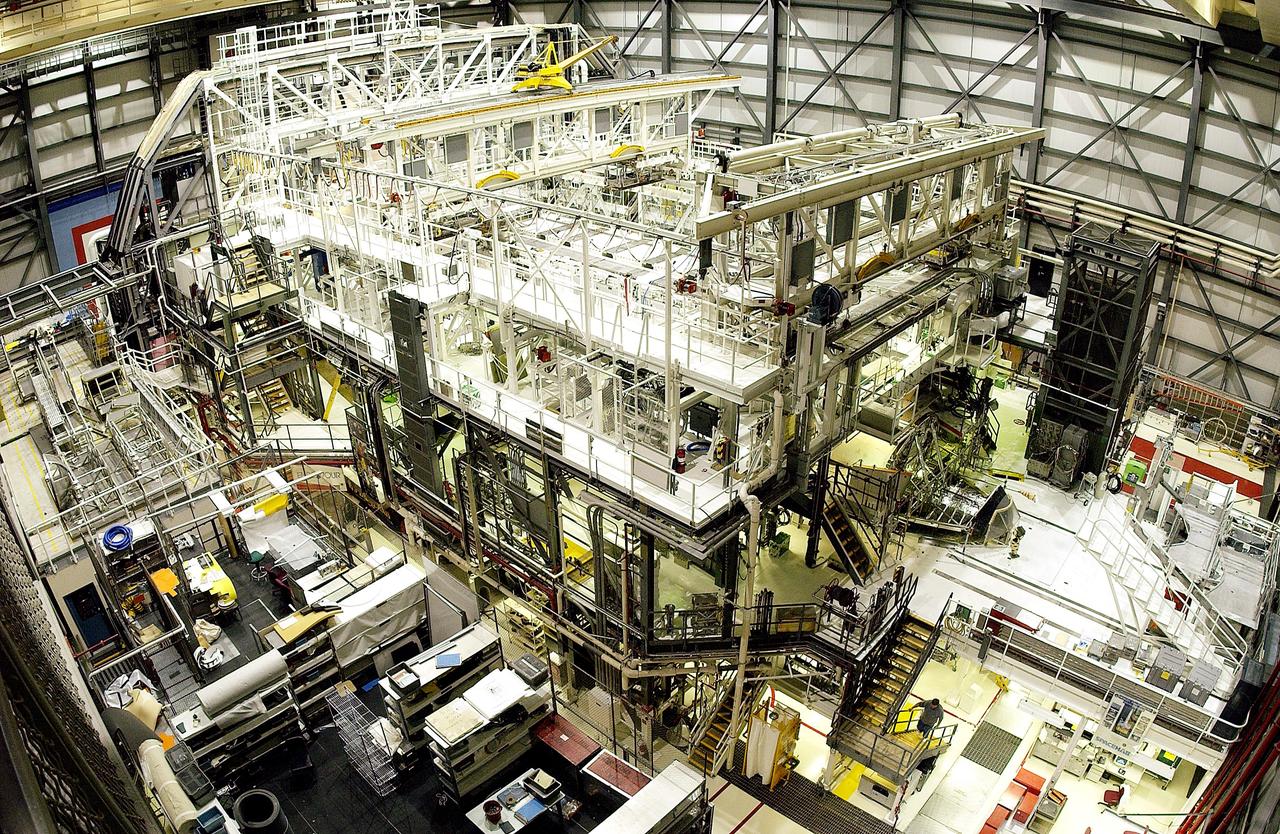
KENNEDY SPACE CENTER, FLA. - This bird's-eye view of a high bay in the Orbiter Processing Facility (OPF) shows Space Shuttle Atlantis surrounded by the standard platforms and equipment required to process a Space Shuttle orbiter for flight. The high bay is 197 feet (60 meters) long, 150 feet (46 meters) wide, 95 feet (29 meters) high, and encompasses a 29,000-square-foot (2,694-meter) area. Platforms, a main access bridge, and two rolling bridges with trucks provide access to various parts of the orbiter. The next mission scheduled for Atlantis is STS-114, a utilization and logistics flight to the International Space Station.
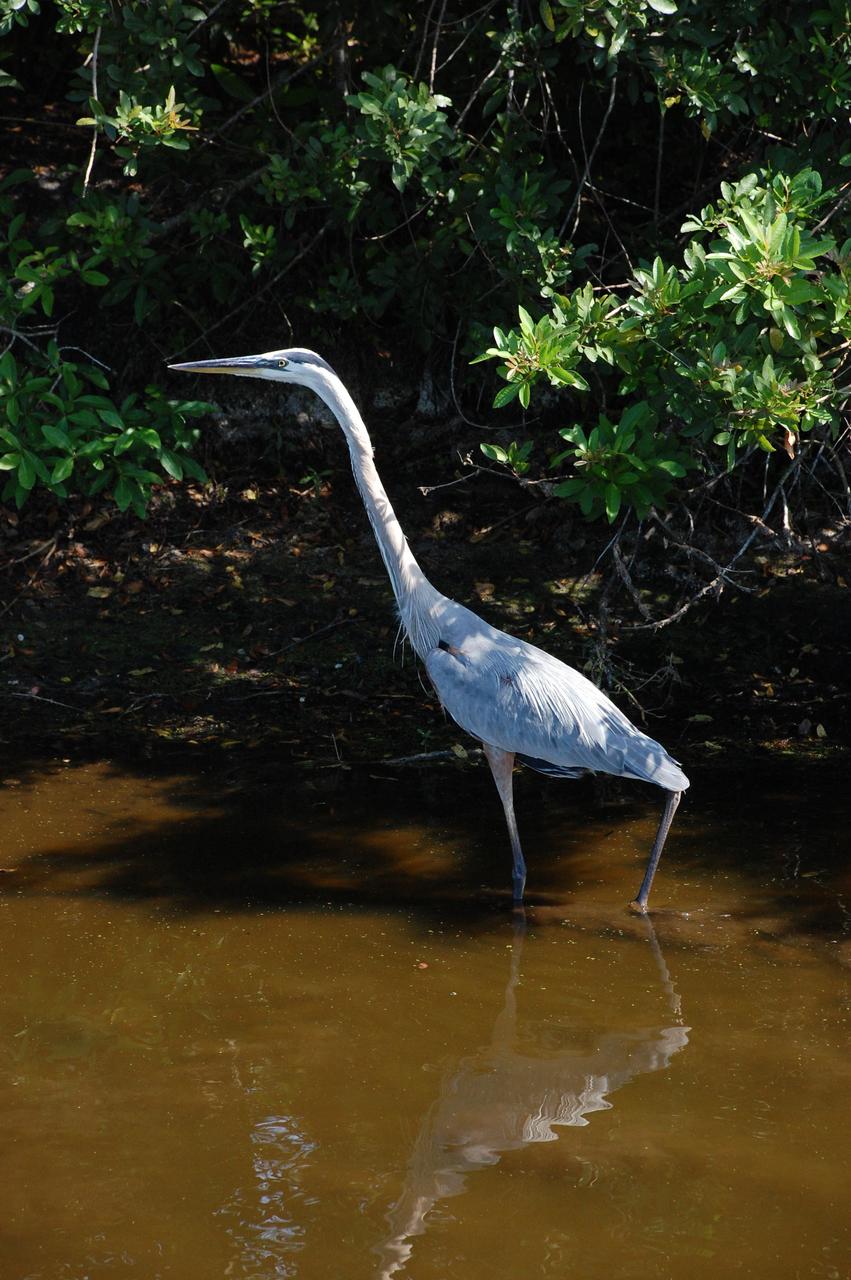
CAPE CANAVERAL, Fla. – A great blue heron stands tall in the water, perhaps looking for food, on grounds of NASA's Kennedy Space Center in Florida. More gray than blue, with a yellowish bill and black legs, it has a brownish-buff colored neck with a black border and white in front of its neck with a vertical black streak. The bird's head is white with a black stripe above its eye. They range throughout the U.S., inhabiting lakes, ponds, rivers and marshes. Their principal food is fish or frogs but may feed on small mammals, reptiles and occasionally birds. Kennedy shares a boundary with the Merritt Island National Wildlife Refuge, which is a habitat for more than 310 species of birds, 25 mammals, 117 fishes and 65 amphibians and reptiles. Photo credit: NASA/Ben Smegelsky
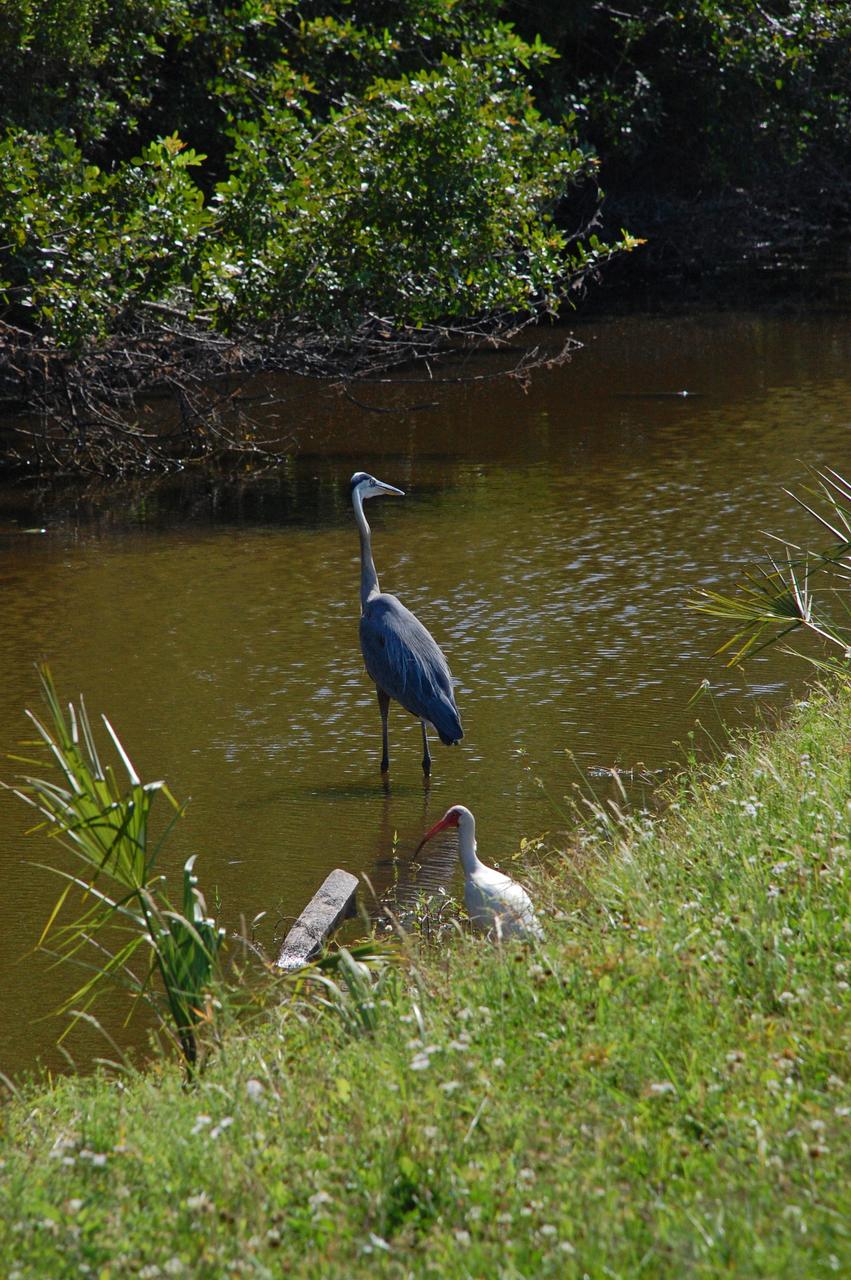
CAPE CANAVERAL, Fla. – A great blue heron stands tall in the water, perhaps looking for food, on grounds of NASA's Kennedy Space Center in Florida. More gray than blue, with a yellowish bill and black legs, it has a brownish-buff colored neck with a black border and white in front of its neck with a vertical black streak. The bird's head is white with a black stripe above its eye. They range throughout the U.S., inhabiting lakes, ponds, rivers and marshes. Their principal food is fish or frogs but may feed on small mammals, reptiles and occasionally birds. Kennedy shares a boundary with the Merritt Island National Wildlife Refuge, which is a habitat for more than 310 species of birds, 25 mammals, 117 fishes and 65 amphibians and reptiles. Photo credit: NASA/Ben Smegelsky
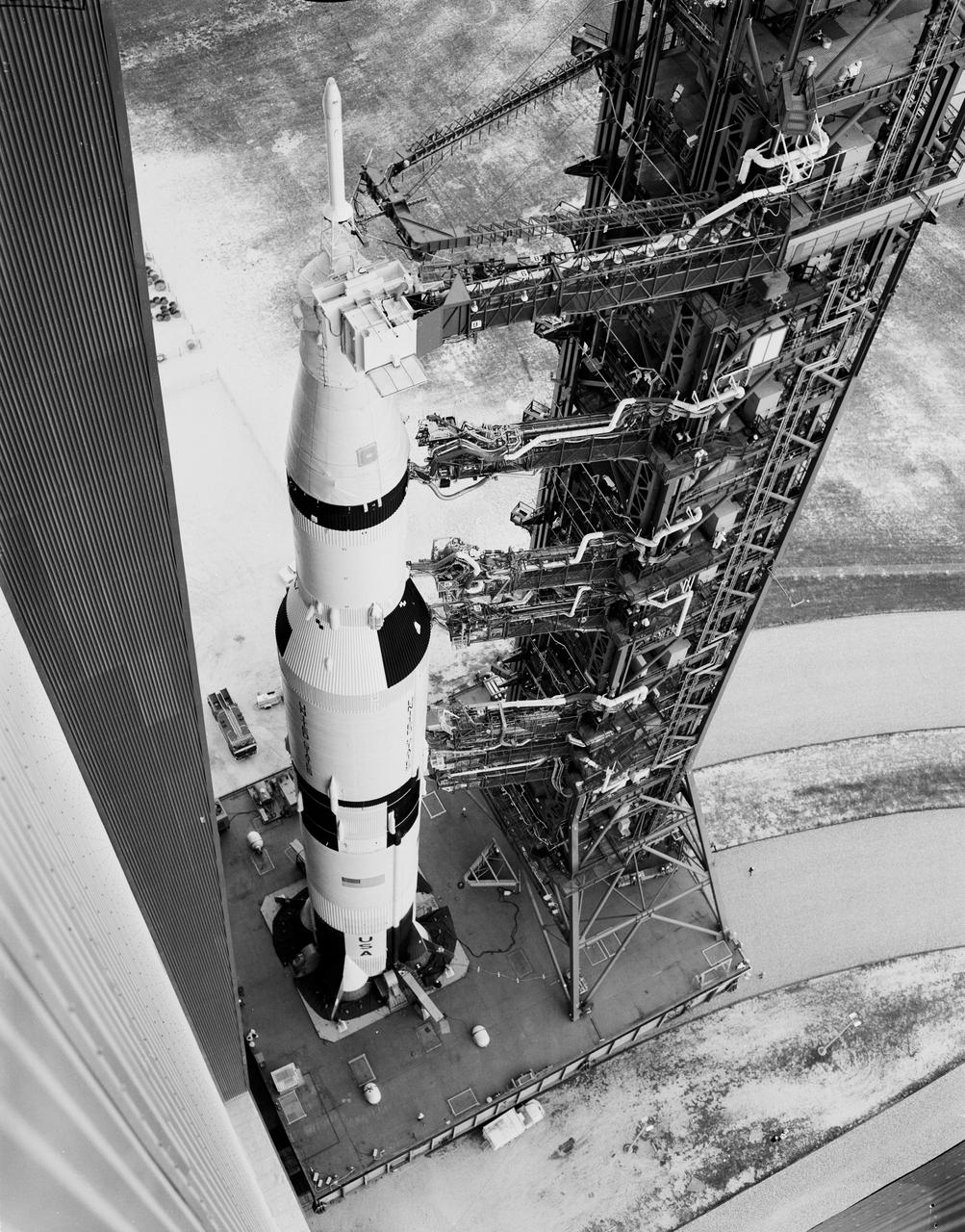
A bird's-eye view of Apollo 6 and its gantry leaving the Vehicle Assembly Building on the transporter heading to the launch site on Pad 39-A at Kennedy Space Center. The towering 363-foot Saturn V was a multi-stage, multi-engine launch vehicle standing taller than the Statue of Liberty. Altogether, the Saturn V engines produced as much power as 85 Hoover Dams.
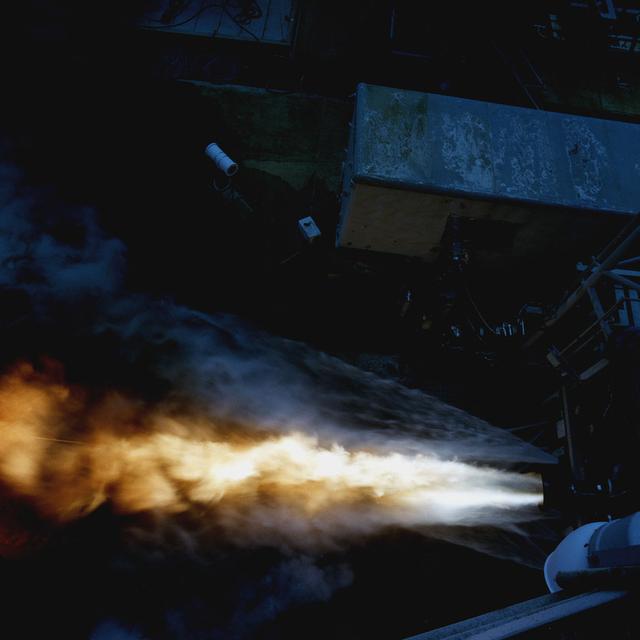
This shot offers a bird's eye-view of a Fastrac II engine duration test at Marshall's Test Stand 116. The Fastrac II engine was designed as a part of the low cost X-34 Reusable Launch Vehicle (RLV). The purpose for these tests was to test the different types of metal alloys in the nozzle. Beside the engine were six additional nozzels which spray a continuous stream of water onto the test stand to reduce damage to the test stand and the engines. The X-34 program was cancelled in 2001.
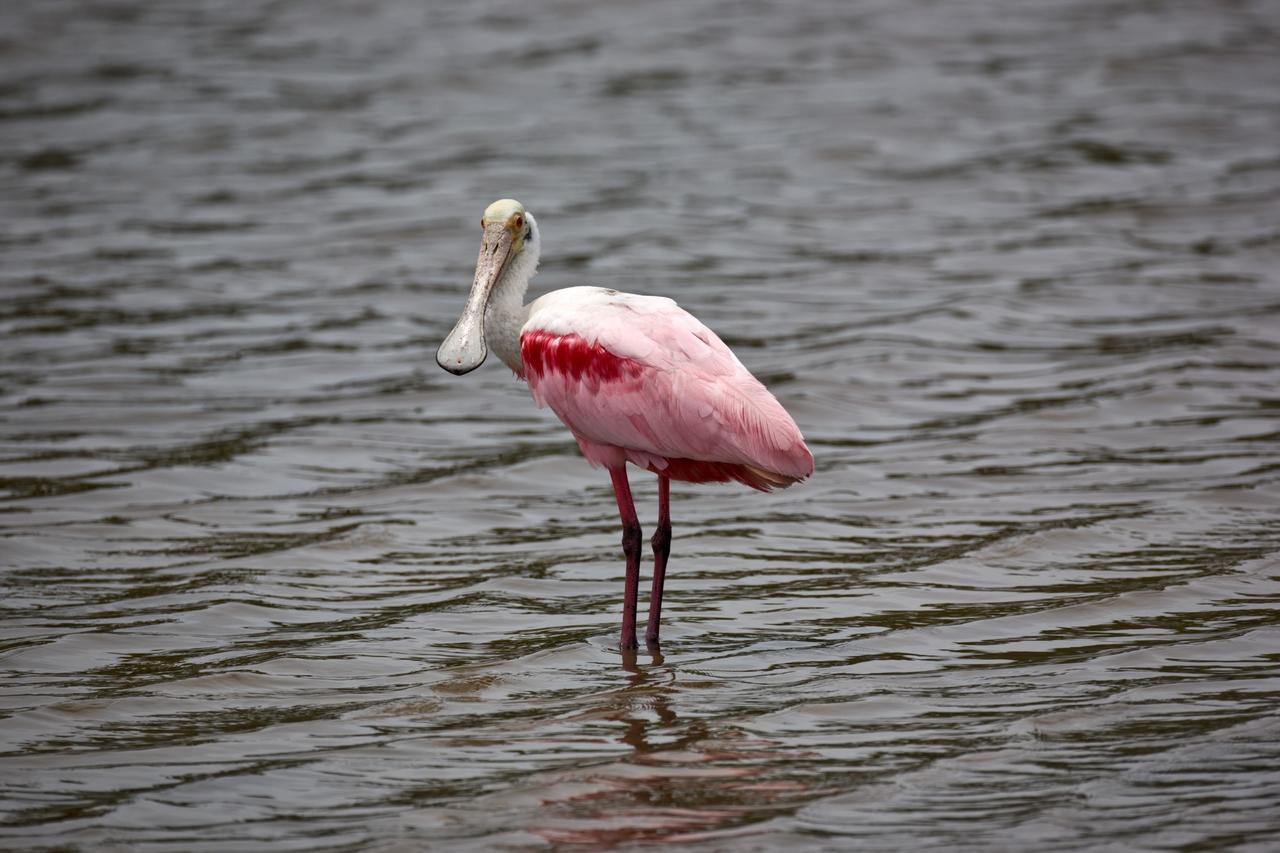
CAPE CANAVERAL, Fla. –– On NASA's Kennedy Space Center in Florida, the scarlet-feathered roseate spoonbill eyes the camera. Spoonbills inhabit areas of mangrove such as on the coasts of southern Florida and Texas. These birds feed on shrimps and fish in the shallow water, sweeping their bills from side to side. This and other wildlife abound throughout Kennedy as the center shares a boundary with the Merritt Island National Wildlife Refuge. Photo credit: NASA/Dimitri Gerondidakis
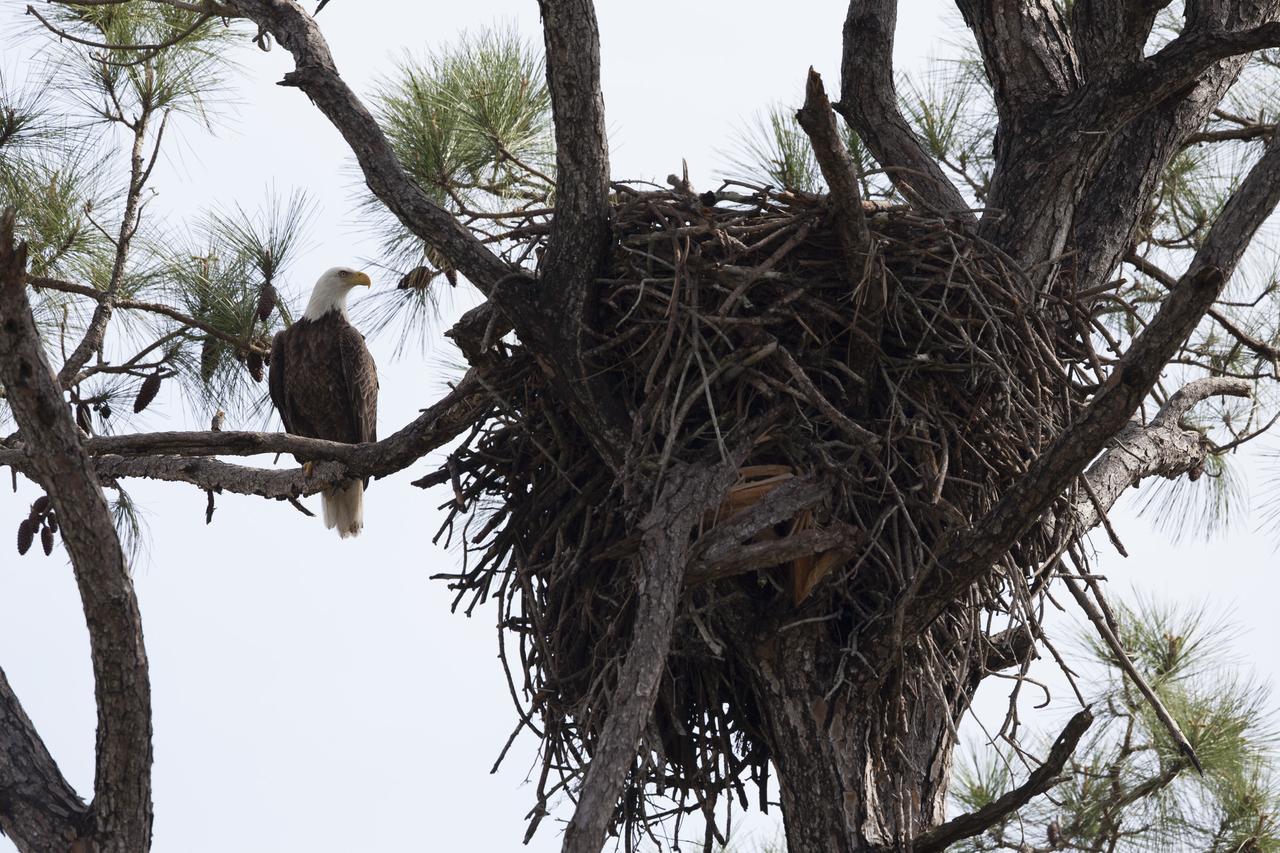
From its perch high up in a pine tree at Merritt Island National Wildlife Refuge in Florida, a bald eagle keeps a watchful eye on its large nest, called an aerie. NASA’s Kennedy Space Center shares boundaries with the refuge, which is home to more than 330 native and migratory bird species, along with 25 mammal, 117 fish, and 65 amphibian and reptile species.
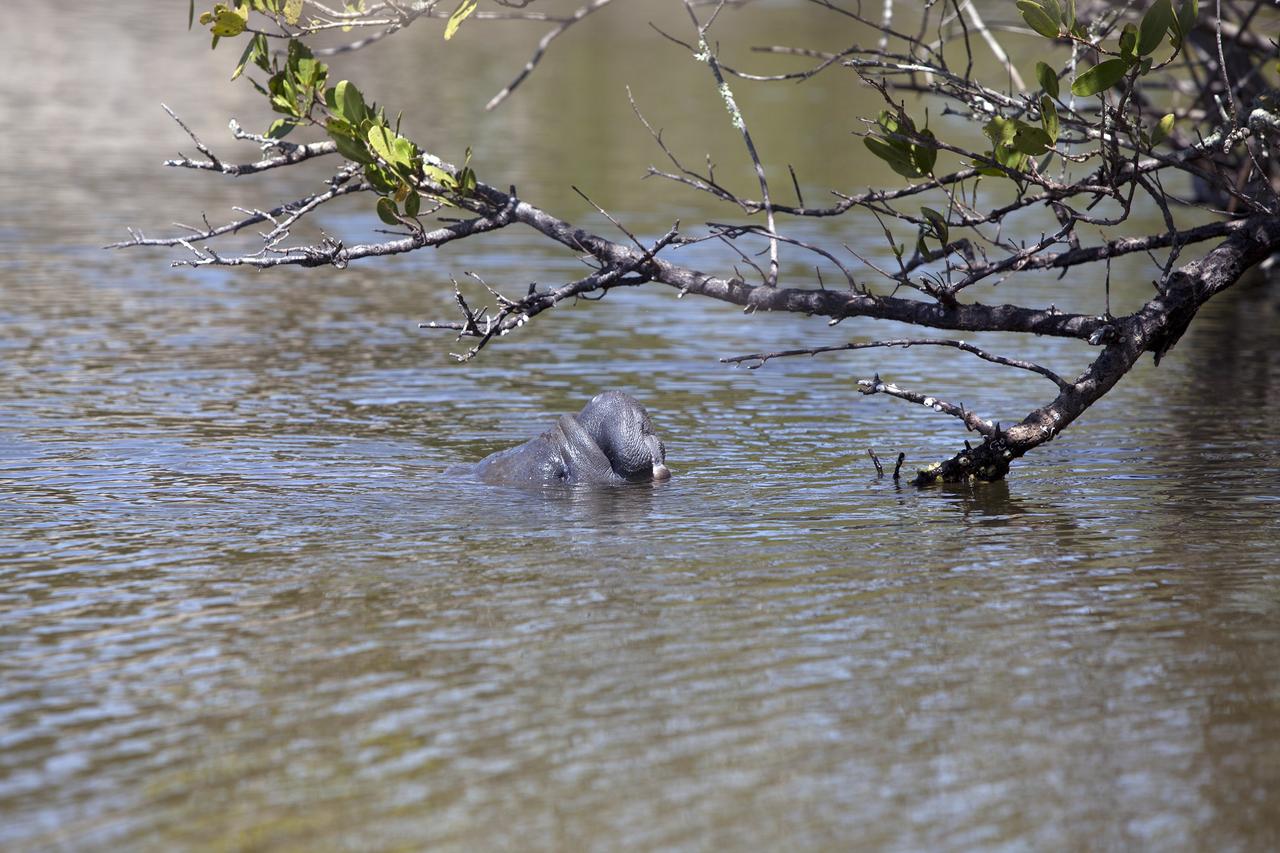
CAPE CANAVERAL, Fla. – A manatee raises its eyes and nose above the waterline in a creek at NASA's Kennedy Space Center in Florida. The center shares a boundary with the Merritt Island National Wildlife Refuge, which encompasses 140,000 acres that provide a habitat for more than 330 species of birds, 31 mammals, 117 fishes, and 65 amphibians and reptiles. Photo credit: NASA/Daniel Casper

NASA astronaut Stephen Bowen gets a birds-eye view of the rough seas during part of Underway Recovery Test 6. Bowen is watching the testing so he can provide the team with an astronaut’s perspective. The testing with Kennedy Space Center's NASA Recovery Team and the U.S. Navy will provide important data that is being used to improve recovery procedures and hardware ahead of Orion's next flight, Exploration Mission-1, when it splashes down in the Pacific Ocean.
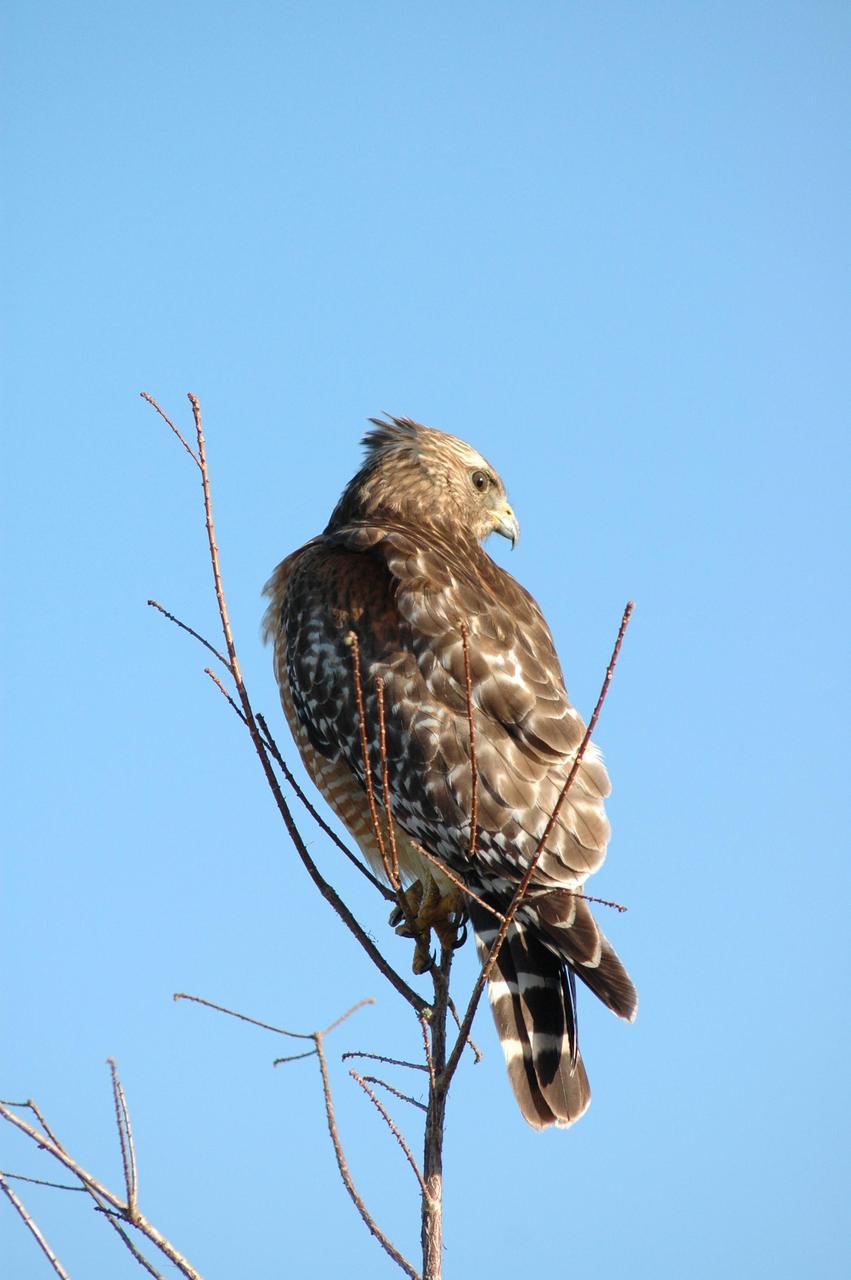
KENNEDY SPACE CENTER, FLA. - A hawk sits precariously on the top of a tree as it eyes its surroundings on NASA Kennedy Space Center. The Center shares a boundary with the Merritt Island National Wildlife Refuge, which is a habitat for more than 310 species of birds, 25 mammals, 117 fishes and 65 amphibians and reptiles. In addition, the Refuge supports 19 endangered or threatened wildlife species on Federal or State lists, more than any other single refuge in the U.S. Photo credit: NASA/Jim Grossmann
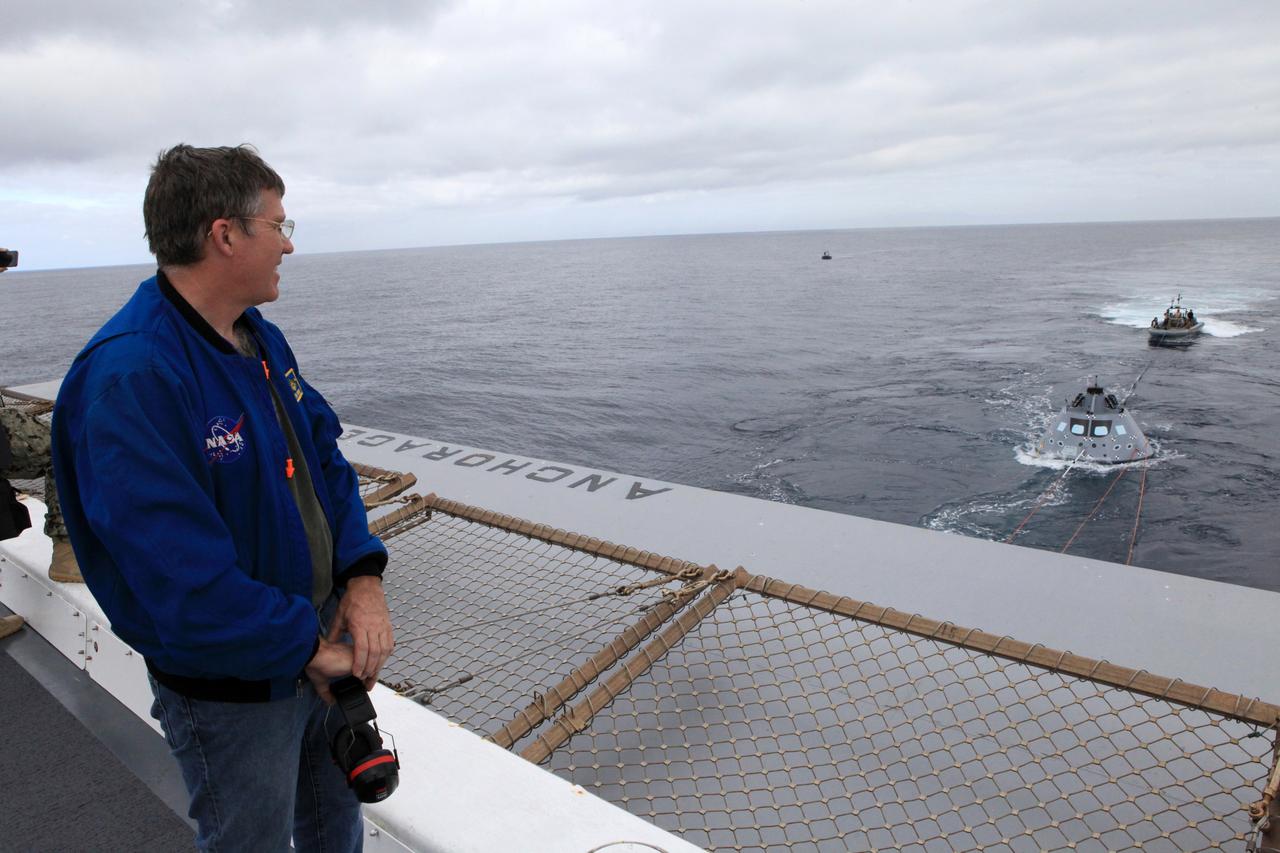
NASA astronaut Stephen Bowen gets a birds-eye view of the rough seas during part of Underway Recovery Test 6 on Jan. 19, 2018. Bowen is watching the testing so he can provide the team with an astronaut’s perspective. The testing with Kennedy Space Center's NASA Recovery Team and the U.S. Navy will provide important data that is being used to improve recovery procedures and hardware ahead of Orion's next flight, Artemis I, when it splashes down in the Pacific Ocean.
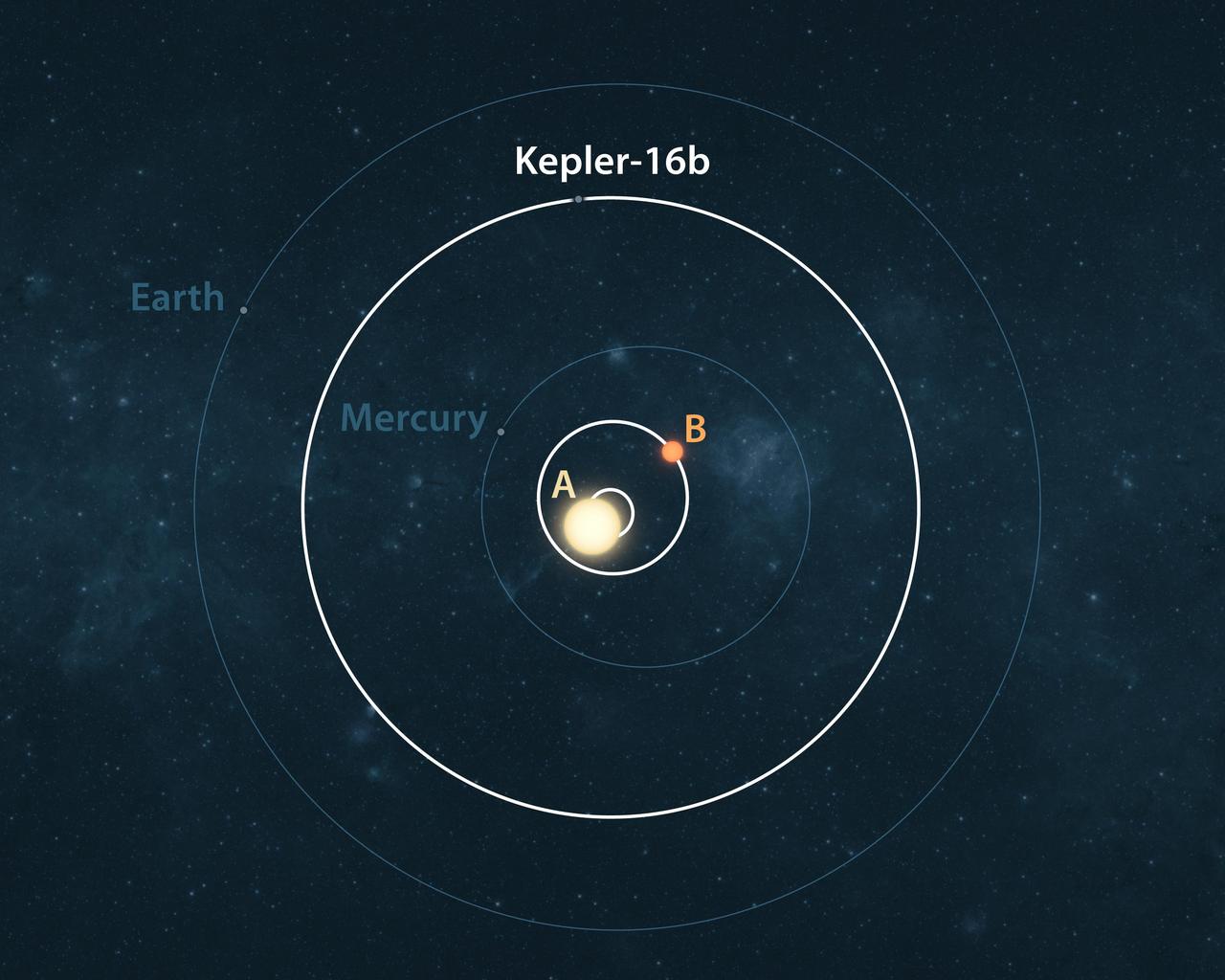
This artist conception illustrates the Kepler-16 system white from an overhead view, showing its planet Kepler-16b and the eccentric orbits of the two stars it circles labeled A and B.
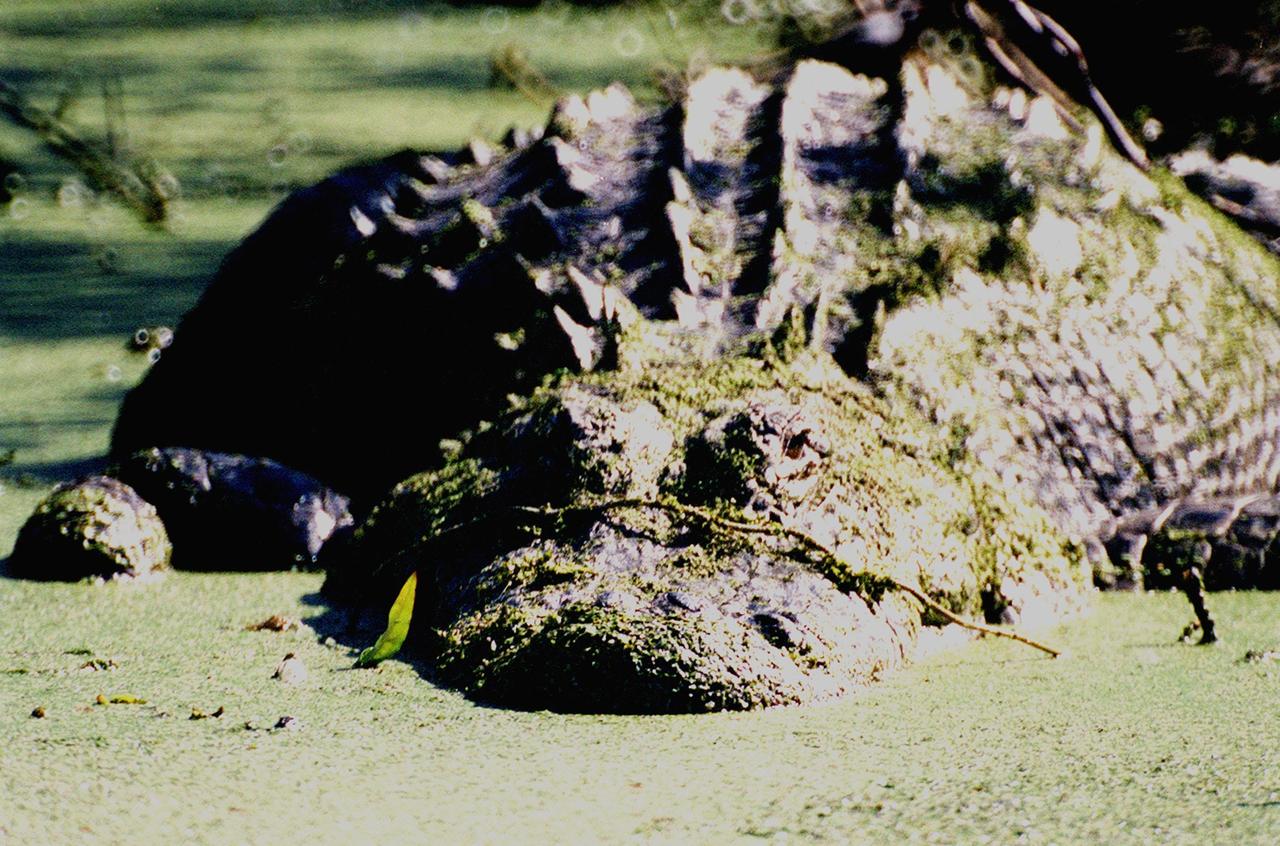
KENNEDY SPACE CENTER, FLA. -- An algae-covered alligator keeps a wary eye open as it rests in one of the ponds at Kennedy Space Center. American alligators feed and rest in the water, and lay their eggs in dens they dig into the banks. The young alligators spend their first several weeks in these dens. The Center shares a boundary with the Merritt Island National Wildlife Refuge, which encompasses 92,000 acres that are a habitat for more than 331 species of birds, 31 mammals, 117 fishes, and 65 amphibians and reptiles. The marshes and open water of the refuge provide wintering areas for 23 species of migratory waterfowl, as well as a year-round home for great blue herons, great egrets, wood storks, cormorants, brown pelicans and other species of marsh and shore birds, as well as a variety of insects
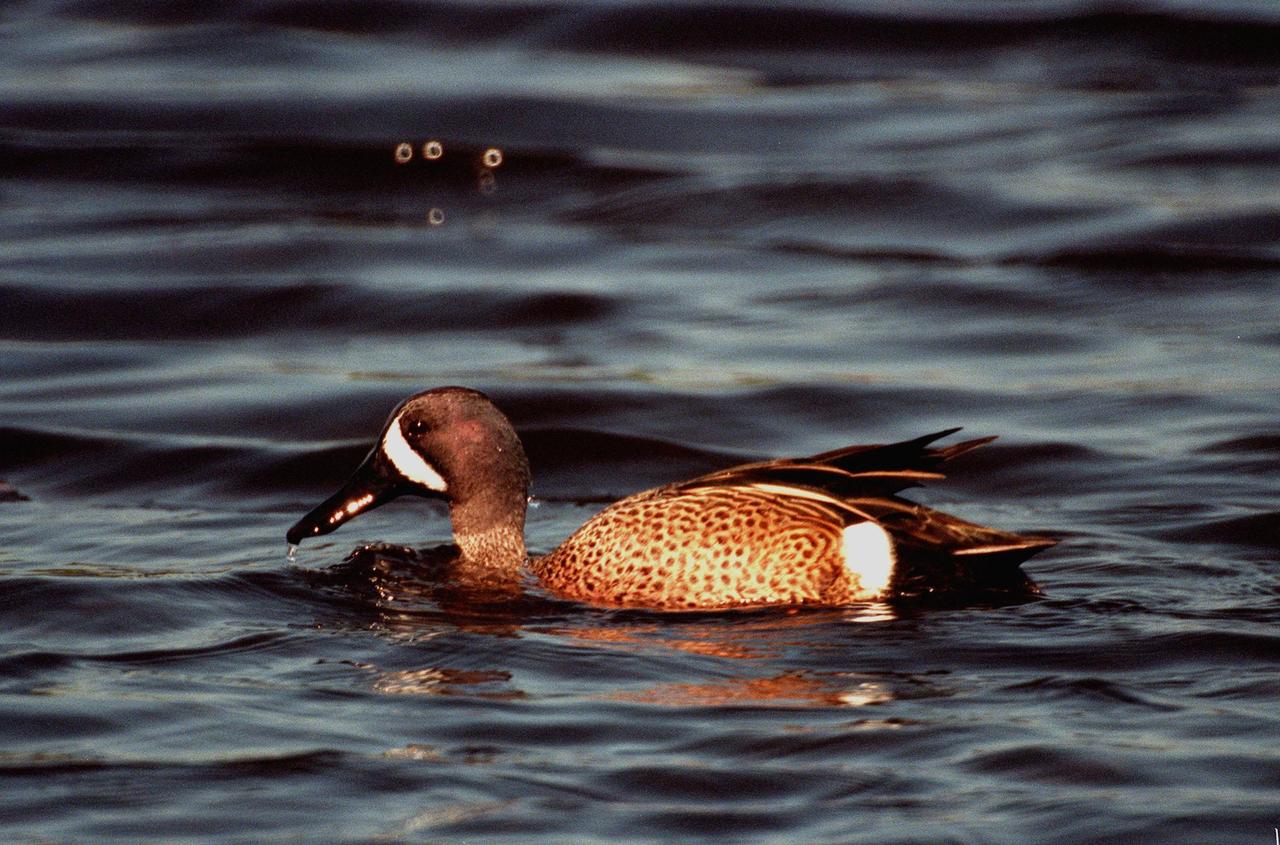
KENNEDY SPACE CENTER, FLA. -- This male blue-winged teal is one of 23 species of migratory waterfowl that winter in the waters of the Merritt Island National Wildlife Refuge at Kennedy Space Center. The male is usually identified with pale blue shoulder patches and a white crescent in front of its eye. The blue-winged teal's normal range is from Canada to North Carolina, the Gulf Coast and southern California, preferring marshes, shallow ponds and lakes. It winters as far as northern South America. The refuge provides wintering areas for 23 species of migratory waterfowl, as well as a year-round home for great blue herons, great egrets, wood storks, cormorants, brown pelicans and other species of marsh and shore birds. The 92,000-acre refuge is also habitat for more than 310 species of birds, 25 mammals, 117 fishes and 65 amphibians and reptiles
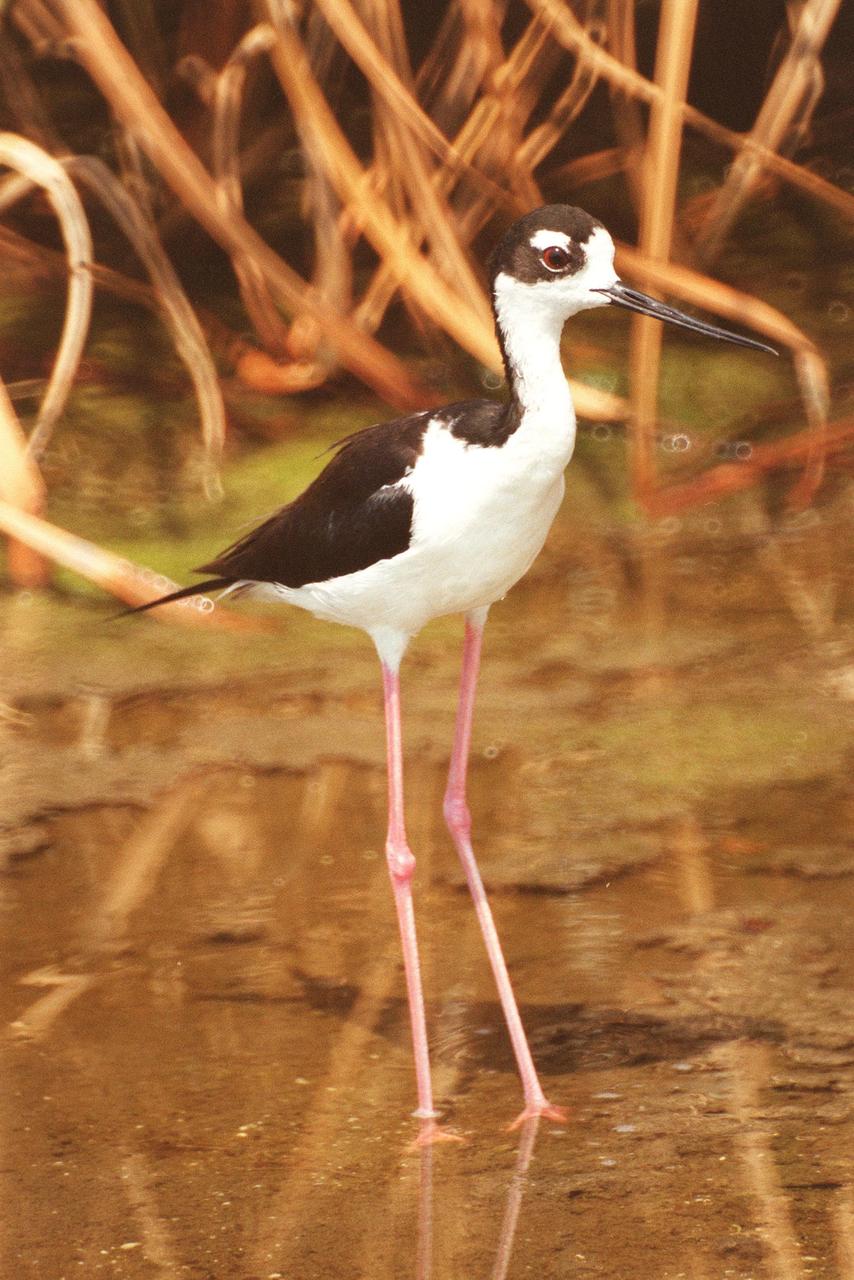
KENNEDY SPACE CENTER, FLA. -- An adult Black-necked Stilt keeps a wary eye out for intruders. The species inhabits salt marshes and shallow coastal bays in the East, as well as freshwater marshes in the West. They are found along the Atlantic Coast from Delaware to northern South America. The black and white markings, long red legs and straight, very thin bill make the stilt very recognizable. This stilt was photographed in the Merritt Island National Wildlife Refuge, which shares a boundary with Kennedy Space Center. The Refuge encompasses 92,000 acres that are a habitat for more than 331 species of birds, 31 mammals, 117 fishes, and 65 amphibians and reptiles. The marshes and open water of the refuge provide wintering areas for 23 species of migratory waterfowl, as well as a year-round home for great blue herons, great egrets, wood storks, cormorants, brown pelicans and other species of marsh and shore birds, as well as a variety of insects

KENNEDY SPACE CENTER, FLA. -- An algae-covered alligator keeps a wary eye open as it rests in one of the ponds at Kennedy Space Center. American alligators feed and rest in the water, and lay their eggs in dens they dig into the banks. The young alligators spend their first several weeks in these dens. The Center shares a boundary with the Merritt Island National Wildlife Refuge, which encompasses 92,000 acres that are a habitat for more than 331 species of birds, 31 mammals, 117 fishes, and 65 amphibians and reptiles. The marshes and open water of the refuge provide wintering areas for 23 species of migratory waterfowl, as well as a year-round home for great blue herons, great egrets, wood storks, cormorants, brown pelicans and other species of marsh and shore birds, as well as a variety of insects
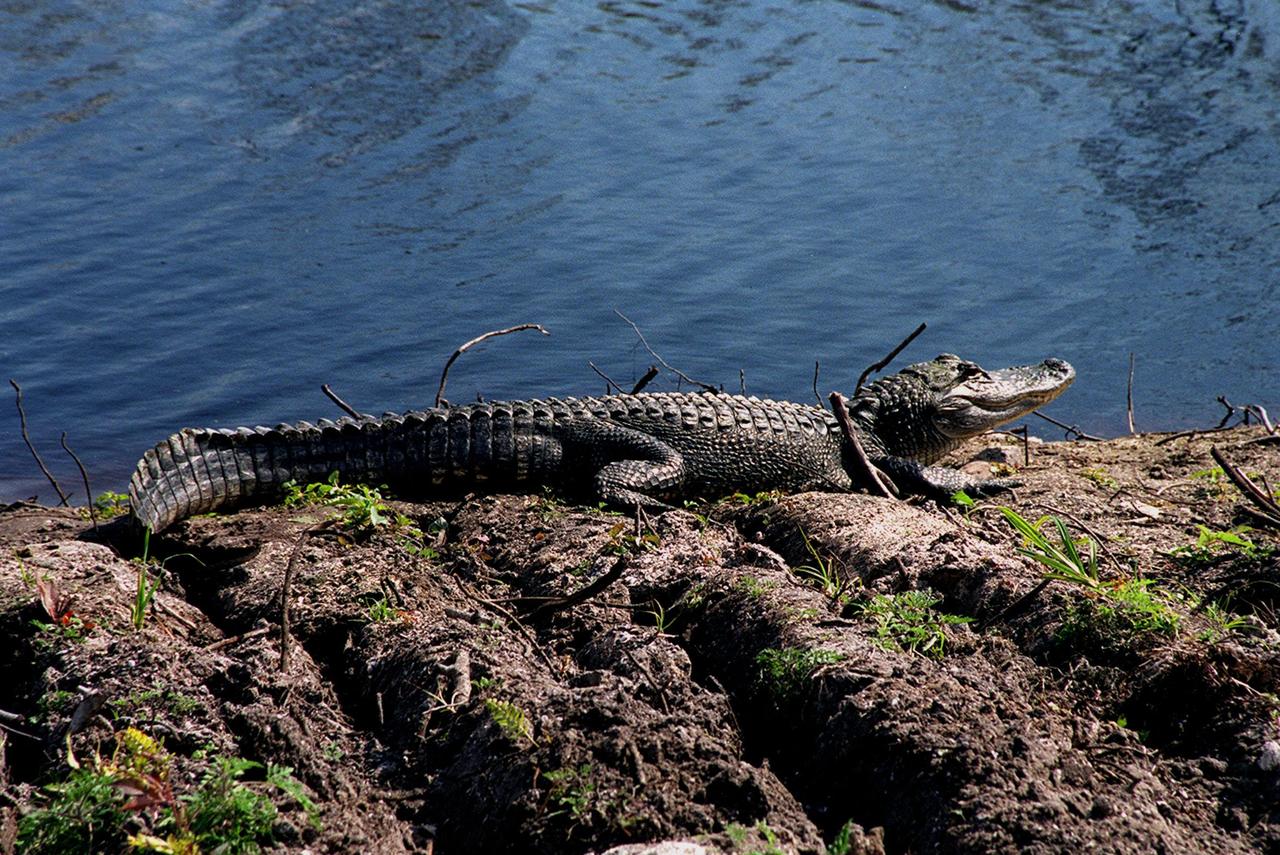
KENNEDY SPACE CENTER, FLA. -- On the bank of a levee near Schwartz Rd. at Kennedy Space Center, an alligator suns itself with a wary eye out for trespassers. Nearly 5,000 alligators can be found in canals, ponds, and waterways throughout the Center and the Merritt Island National Wildlife Refuge, which shares a boundary with the Center. American alligators feed and rest in the water, and lay their eggs in dens they dig into the banks. The young alligators spend their first several weeks in these dens. The Wildlife Refuge encompasses 92,000 acres that are a habitat for more than 331 species of birds, 31 mammals, 117 fishes, and 65 amphibians and reptiles. The marshes and open water of the refuge provide wintering areas for 23 species of migratory waterfowl, as well as a year-round home for great blue herons, great egrets, wood storks, cormorants, brown pelicans and other species of marsh and shore birds, as well as a variety of insects
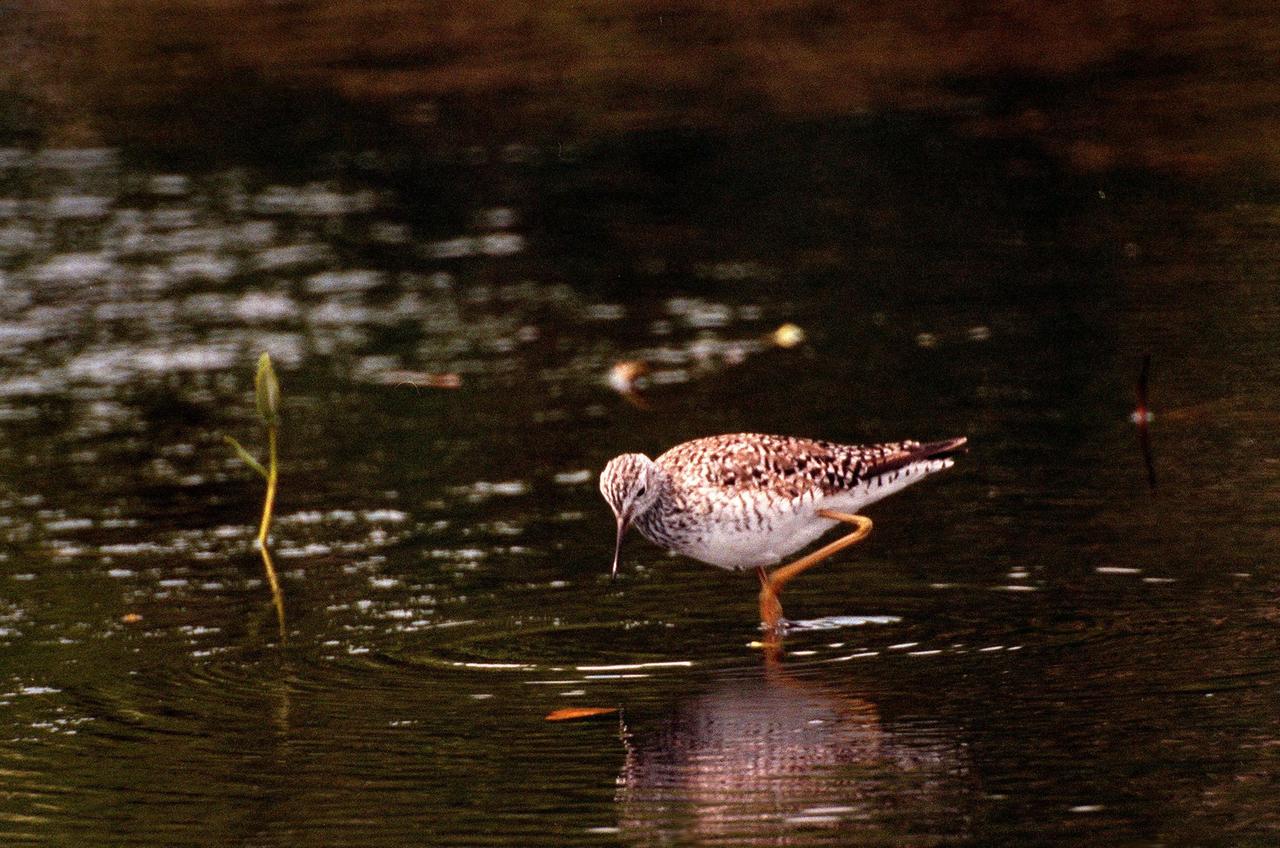
KENNEDY SPACE CENTER, FLA. -- A sandpiper-like Lesser Yellowlegs eyes the water for food in the Merritt Island National Wildlife Refuge, which shares a boundary with Kennedy Space Center. The gray-streaked wader is found in marshy ponds, lake and river shores, and mud flats in Alaska and Canada; it winters in the southern United States to southern South America. The 92,000-acre refuge is a habitat for more than 310 species of birds, 25 mammals, 117 fishes and 65 amphibians and reptiles. The marshes and open water of the refuge also provide wintering areas for 23 species of migratory waterfowl, as well as a year-round home for great blue herons, great egrets, wood storks, cormorants, brown pelicans and other species of marsh and shore birds
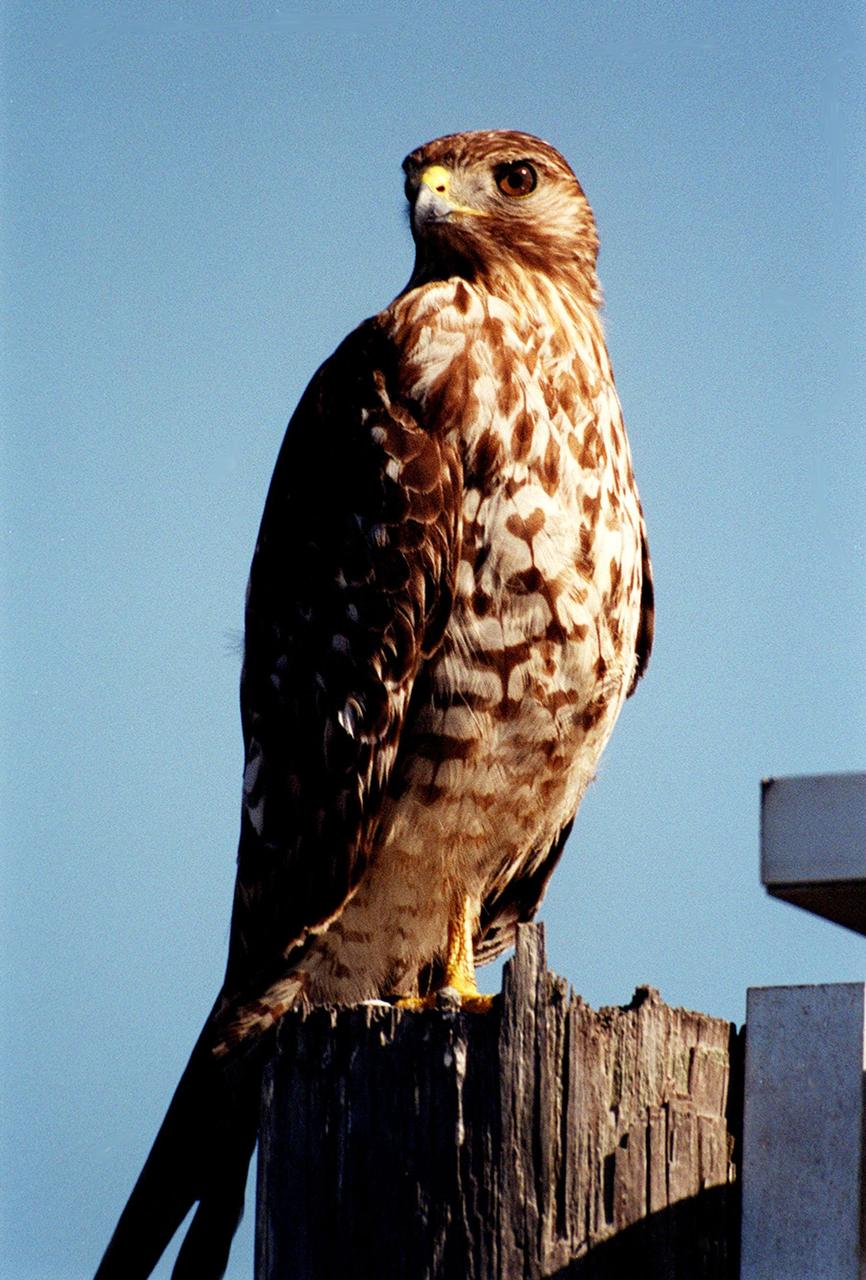
KENNEDY SPACE CENTER, FLA. -- This immature red-shouldered hawk on the roadside at Kennedy Space Center appears to be eyeing the photographer. The red-shouldered hawk's range extends from Minnesota and New Brunswick south to the Gulf Coast and on the Pacific Coast from northern California to Baja California. This hawk is often found in lowlands, especially swampy woods and bogs. It feeds on small snakes, frogs, insects and small mammals. Kennedy shares a boundary with the Merritt Island National Wildlife Refuge, which encompasses 92,000 acres that are a habitat for more than 331 species of birds, 31 mammals, 117 fishes, and 65 amphibians and reptiles. The marshes and open water of the refuge provide wintering areas for 23 species of migratory waterfowl, as well as a year-round home for great blue herons, great egrets, wood storks, cormorants, brown pelicans and other species of marsh and shore birds, as well as a variety of insects.
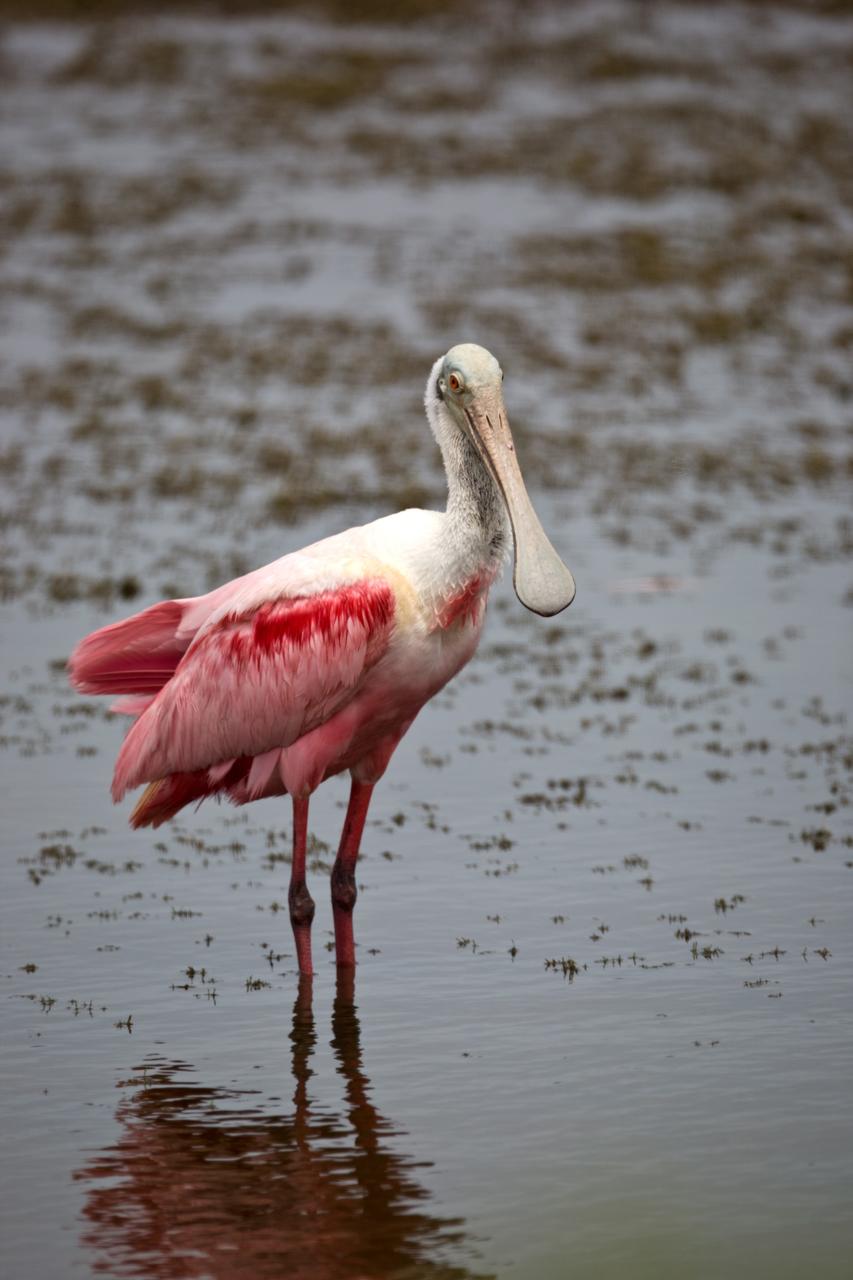
CAPE CANAVERAL, Fla. –– On NASA's Kennedy Space Center in Florida, the scarlet-feathered roseate spoonbill eyes the camera during its search for food. Spoonbills inhabit areas of mangrove such as on the coasts of southern Florida and Texas. These birds feed on shrimps and fish in the shallow water, sweeping their bills from side to side. This and other wildlife abound throughout Kennedy as the center shares a boundary with the Merritt Island National Wildlife Refuge. The marshes and open water of the refuge provide wintering areas for 23 species of migratory waterfowl, as well as a year-round home for great blue herons, great egrets, wood storks, cormorants, brown pelicans and other species of marsh and shore birds. Photo credit: NASA/Dimitri Gerondidakis
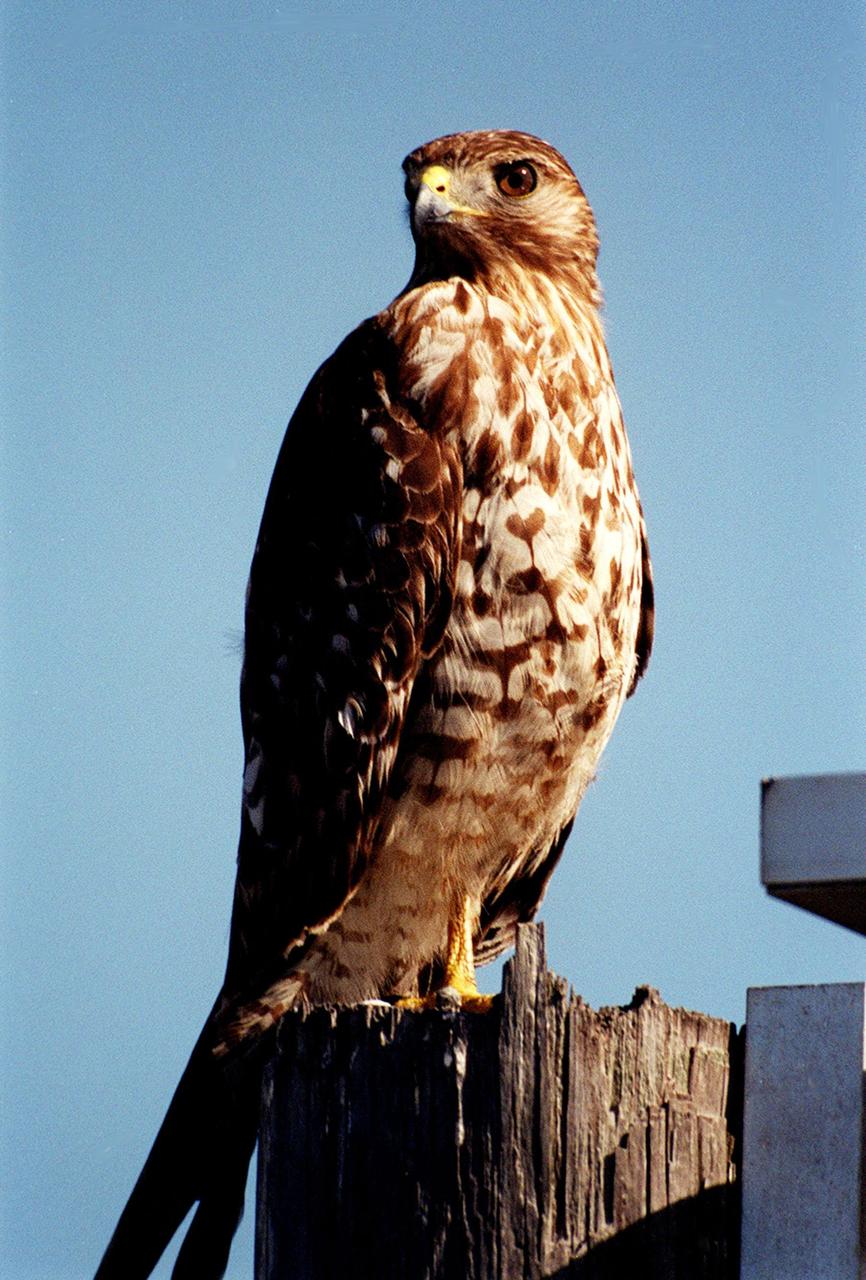
KENNEDY SPACE CENTER, FLA. -- This immature red-shouldered hawk on the roadside at Kennedy Space Center appears to be eyeing the photographer. The red-shouldered hawk's range extends from Minnesota and New Brunswick south to the Gulf Coast and on the Pacific Coast from northern California to Baja California. This hawk is often found in lowlands, especially swampy woods and bogs. It feeds on small snakes, frogs, insects and small mammals. Kennedy shares a boundary with the Merritt Island National Wildlife Refuge, which encompasses 92,000 acres that are a habitat for more than 331 species of birds, 31 mammals, 117 fishes, and 65 amphibians and reptiles. The marshes and open water of the refuge provide wintering areas for 23 species of migratory waterfowl, as well as a year-round home for great blue herons, great egrets, wood storks, cormorants, brown pelicans and other species of marsh and shore birds, as well as a variety of insects.
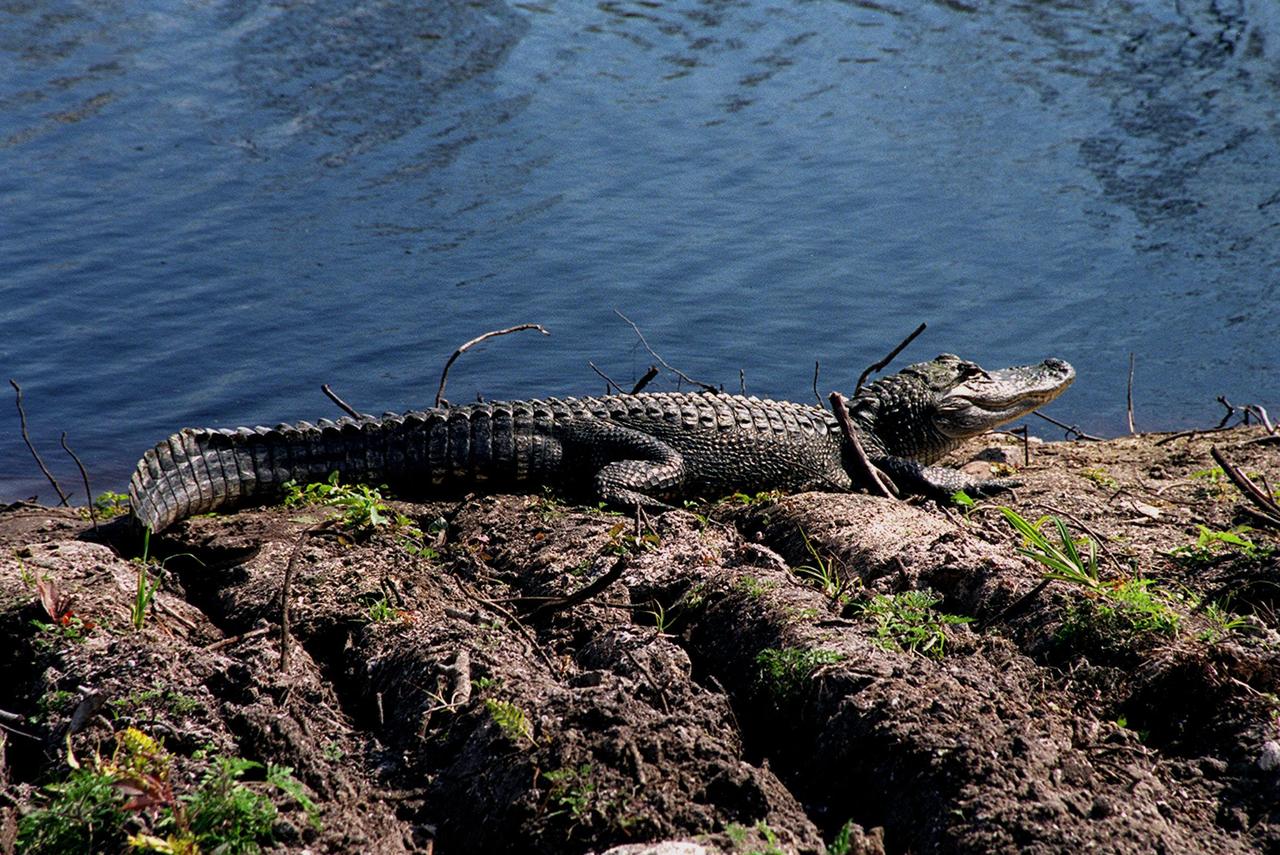
KENNEDY SPACE CENTER, FLA. -- On the bank of a levee near Schwartz Rd. at Kennedy Space Center, an alligator suns itself with a wary eye out for trespassers. Nearly 5,000 alligators can be found in canals, ponds, and waterways throughout the Center and the Merritt Island National Wildlife Refuge, which shares a boundary with the Center. American alligators feed and rest in the water, and lay their eggs in dens they dig into the banks. The young alligators spend their first several weeks in these dens. The Wildlife Refuge encompasses 92,000 acres that are a habitat for more than 331 species of birds, 31 mammals, 117 fishes, and 65 amphibians and reptiles. The marshes and open water of the refuge provide wintering areas for 23 species of migratory waterfowl, as well as a year-round home for great blue herons, great egrets, wood storks, cormorants, brown pelicans and other species of marsh and shore birds, as well as a variety of insects
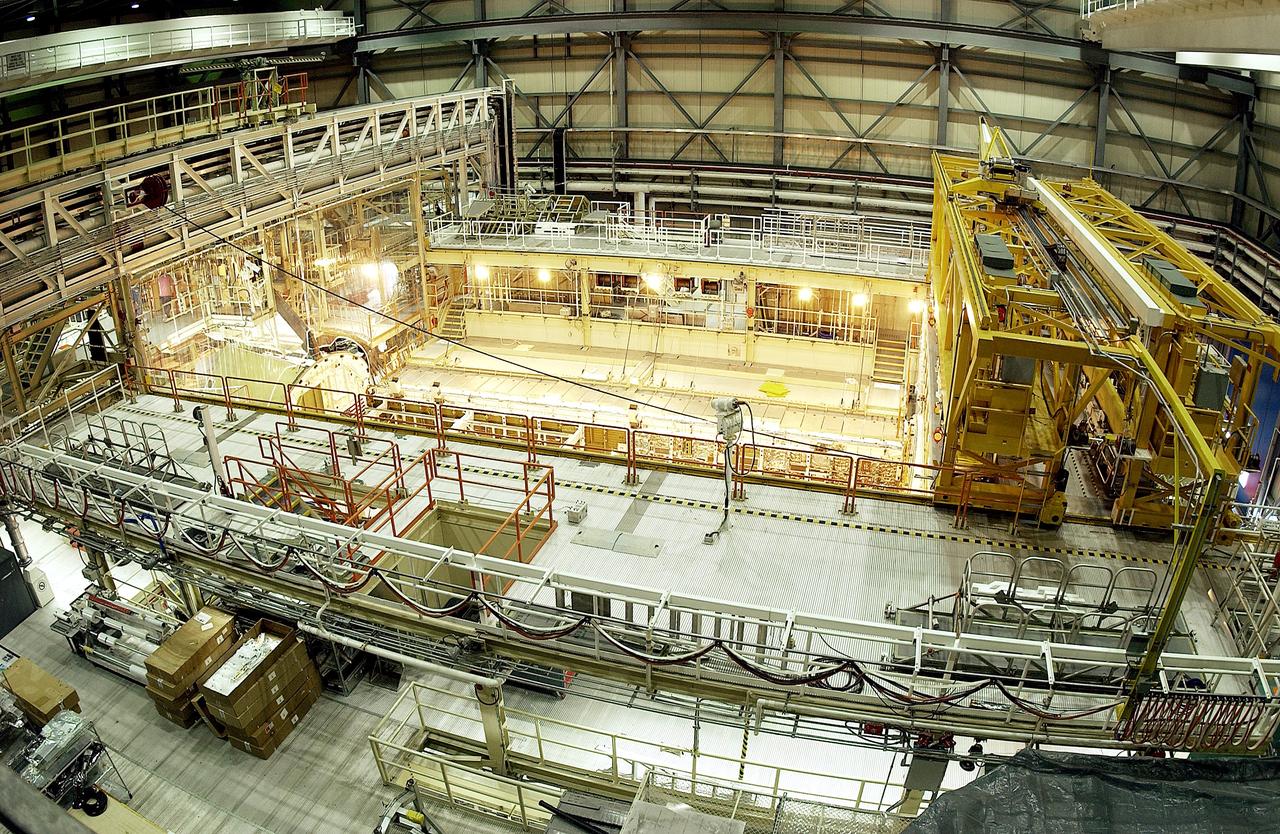
KENNEDY SPACE CENTER, FLA. - This bird's-eye view of a high bay in the Orbiter Processing Facility (OPF) shows the open payload bay of Space Shuttle Discovery surrounded by the standard platforms and equipment required to process a Space Shuttle orbiter. The high bay is 197 feet (60 meters) long, 150 feet (46 meters) wide, 95 feet (29 meters) high, and encompasses a 29,000-square-foot (2,694-meter) area. The 30-ton (27-metric-ton) bridge crane (yellow device, right) has a hook height of approximately 66 feet (20 meters). Platforms, a main access bridge, and two rolling bridges with trucks provide access to various parts of the orbiter. In addition to routine servicing and checkout, the inspections and modifications made to enhance Discovery's performance and upgrade its systems were performed in the OPF during its recently completed Orbiter Major Modification (OMM) period.
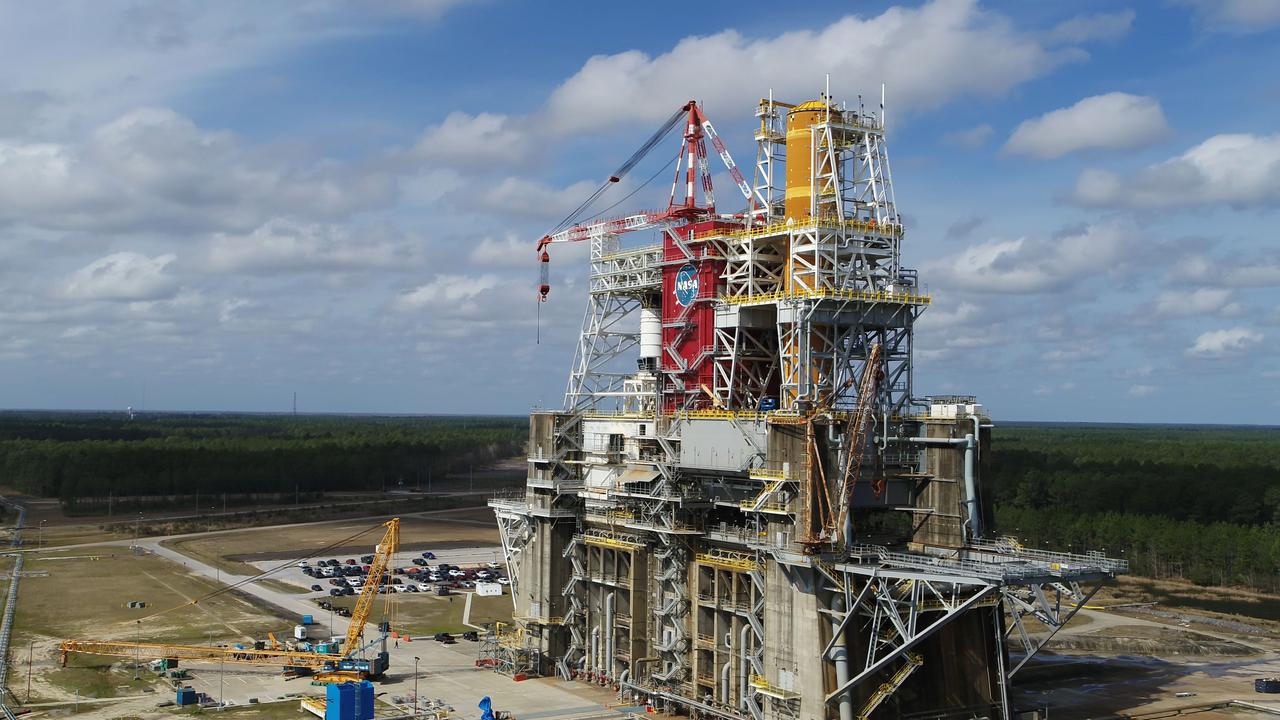
A NASA drone photo offers a bird’s-eye view of the B-2 Test Stand at NASA’s Stennis Space Center with the first flight core stage for NASA’s new Space Launch System (SLS) installed for Green Run testing. The SLS core stage is undergoing a series of tests on its integrated systems prior to its use on the Artemis I mission. NASA is building SLS to return humans, including the first woman, to the Moon as part of the Artemis program and to prepare for eventual missions to Mars. The Green Run series at Stennis culminates with a hot fire of the core stage’s four RS-25 engines, just as during an actual launch.
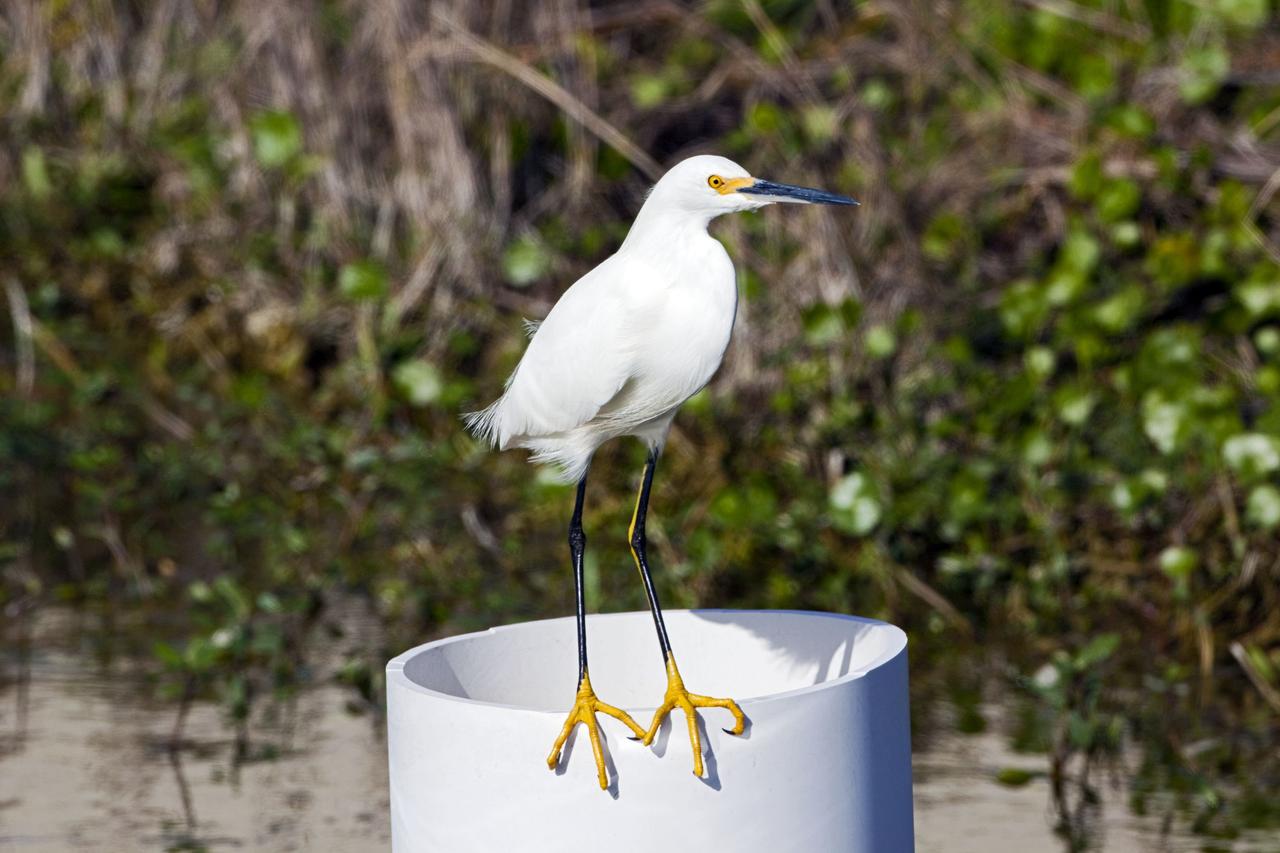
CAPE CANAVERAL, Fla. – Perched on a section of pipe, this snowy egret keeps a wary eye on the photographer on a sunny day at Black Point Wildlife Drive, part of the Merritt Island National Wildlife Refuge. NASA's Kennedy Space Center shares a boundary with the refuge, consisting of 140,000 acres. The Refuge provides a wide variety of habitats: coastal dunes, saltwater estuaries and marshes, freshwater impoundments, scrub, pine flatwoods, and hardwood hammocks that provide habitat for more than 1,500 species of plants and animals, including about 331 species of birds. Photo credit: NASA/Jim Grossmann
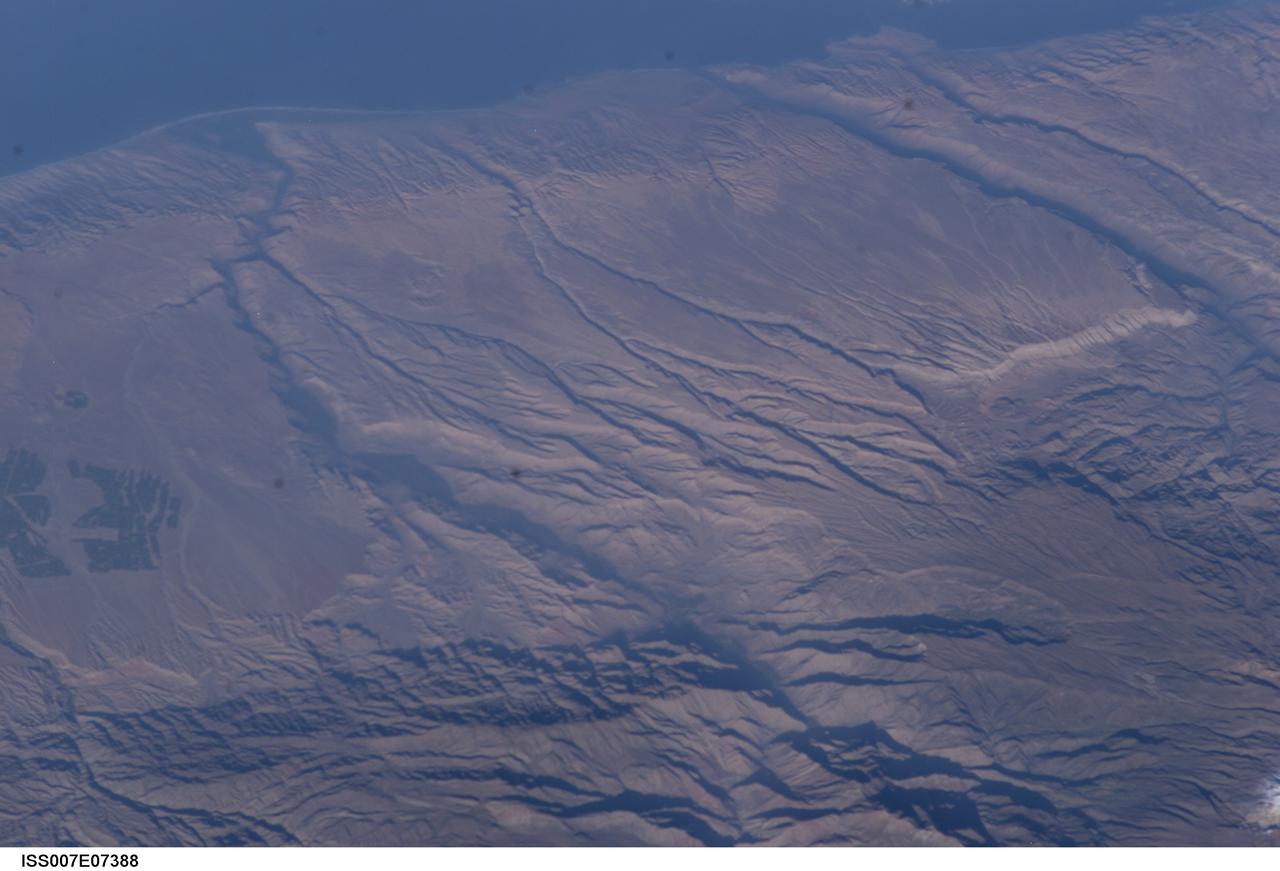
ISS007-E-07388 (14 June 2003) --- Some of the deepest canyons in the world cut west to the Pacific from the high crest of the Andes Mountains in Peru. This view taken by an Expedition 7 crewmember onboard the International Space Station (ISS) provides a birds-eye view down the canyons of the Rio Camana (center left) and the Rio Ocona (upper right). The low early morning sun highlights the extreme topography created by rapidly uplifting mountains and powerful water erosion by water dropping nearly 10,000 feet in this view. At the edge of the image are the snowy flanks of Nevado Coropuna, the highest mountain in the Cordillera Occidental (6613 meters). The coastal city of Camana is visible in the upper left.
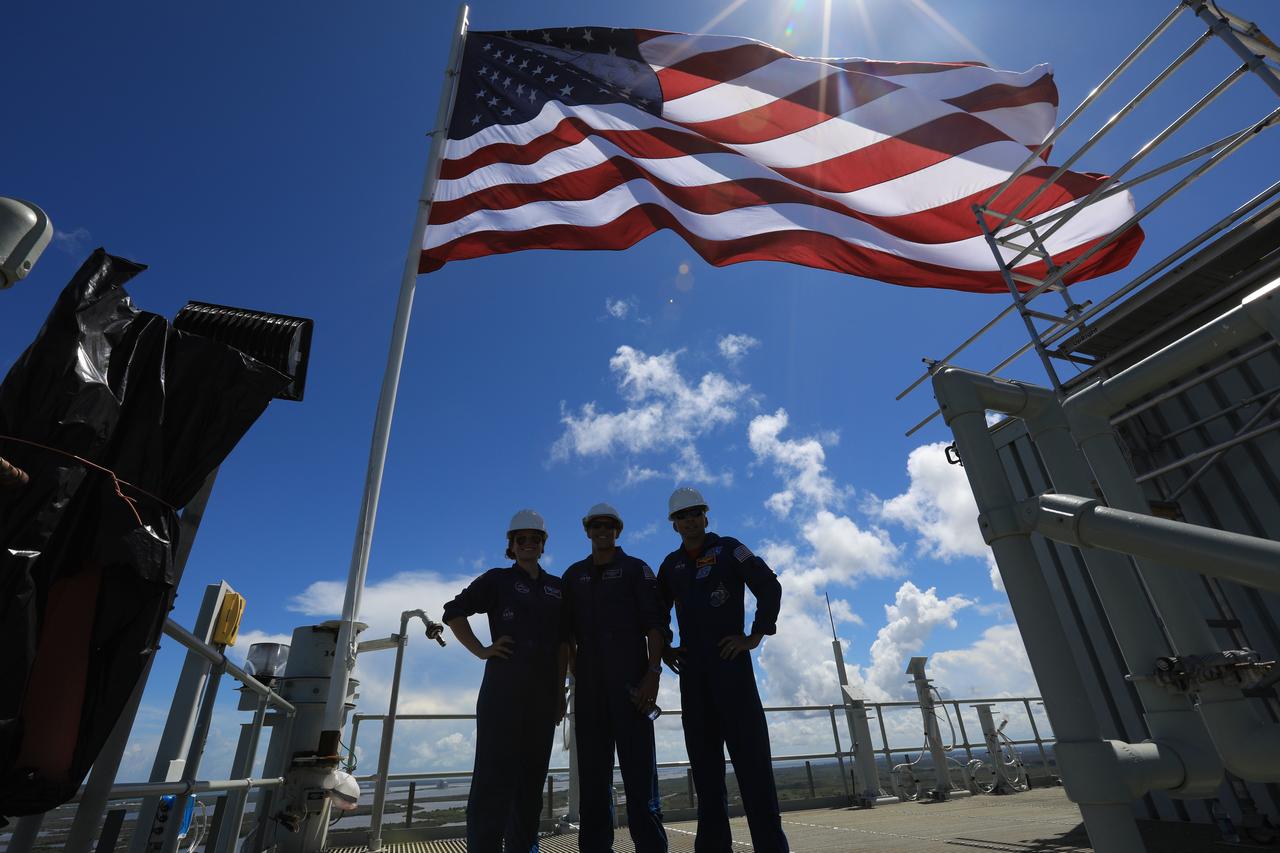
NASA's mobile launcher atop crawler-transporter 2 travels slowly along the crawlerway on Sept. 7, 2018, on its way to the Vehicle Assembly Building at NASA's Kennedy Space Center in Florida. During a portion of the trek, several NASA astronauts were aboard the mobile launcher for a bird’s eye view. The 380-foot-tall mobile launcher is equipped with the crew access arm and several umbilicals that will provide power, environmental control. Pneumatics, communication and electrical connections to the agency's Space Launch System and Orion spacecraft. Exploration Ground Systems is preparing the ground systems necessary to launch SLS and Orion on Exploration Mission-1, missions to the Moon and on to Mars.
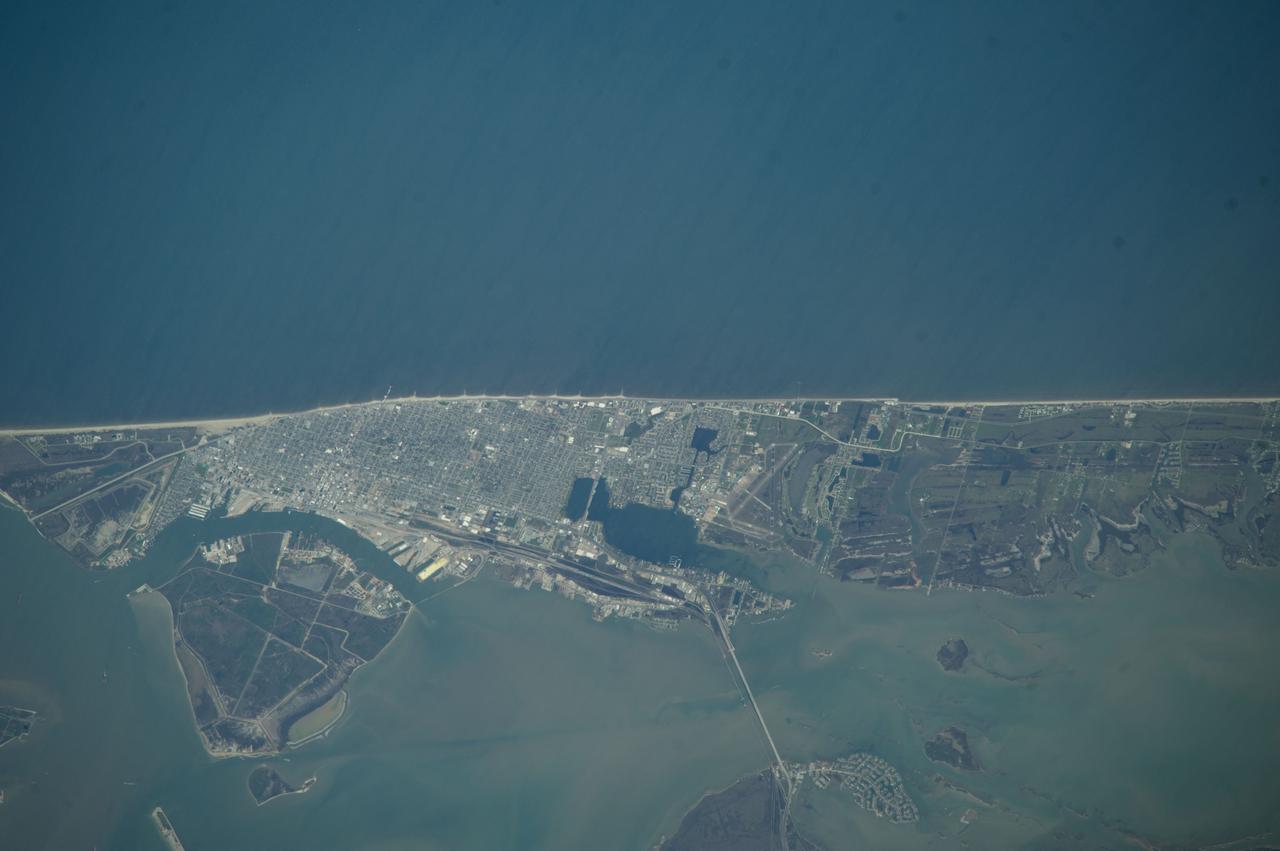
ISS039-E-000707 (12 March 2014) --- This nadir picture of Galveston Island and its coastline on the Gulf of Mexico was taken by one of the Expedition 39 crew members aboard the International Space Station on March 12. It was among the first batch of Earth photographs downlinked near the beginning of the Expedition 38 mission. The clear weather and the 800mm focal length used to record the photo allow for very detailed "bird's eye" viewing of the storied city. The Interstate 45 causeway can be seen at bottom center, and Scholes International Airport is seen nearby. The Bolivar Island ferry landing is just out of frame at bottom left.
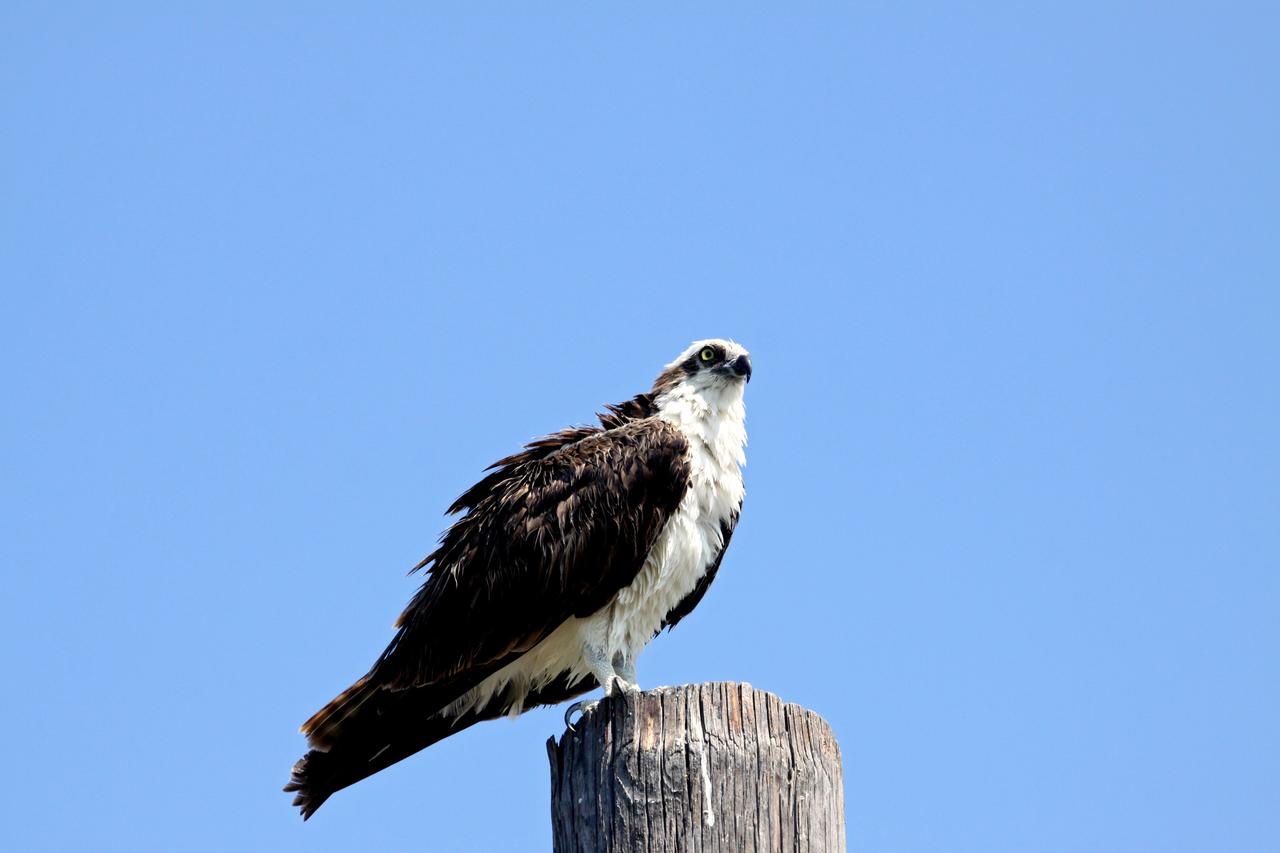
CAPE CANAVERAL, Fla. -- At NASA's Kennedy Space Center in Florida, an adult osprey keeps an eye on its young from a pole near the Press Site parking lot. The VAB and Press Site are located at the Turn Basin in Launch Complex 39, making it an ideal osprey nesting place. The Merritt Island National Wildlife Refuge overlaps with Kennedy Space Center property and provides a habitat for many types of wildlife, including the osprey, and 330 species of birds. For information on the refuge, visit http://www.fws.gov/merrittisland/Index.html. Photo credit: NASA/Jack Pfaller
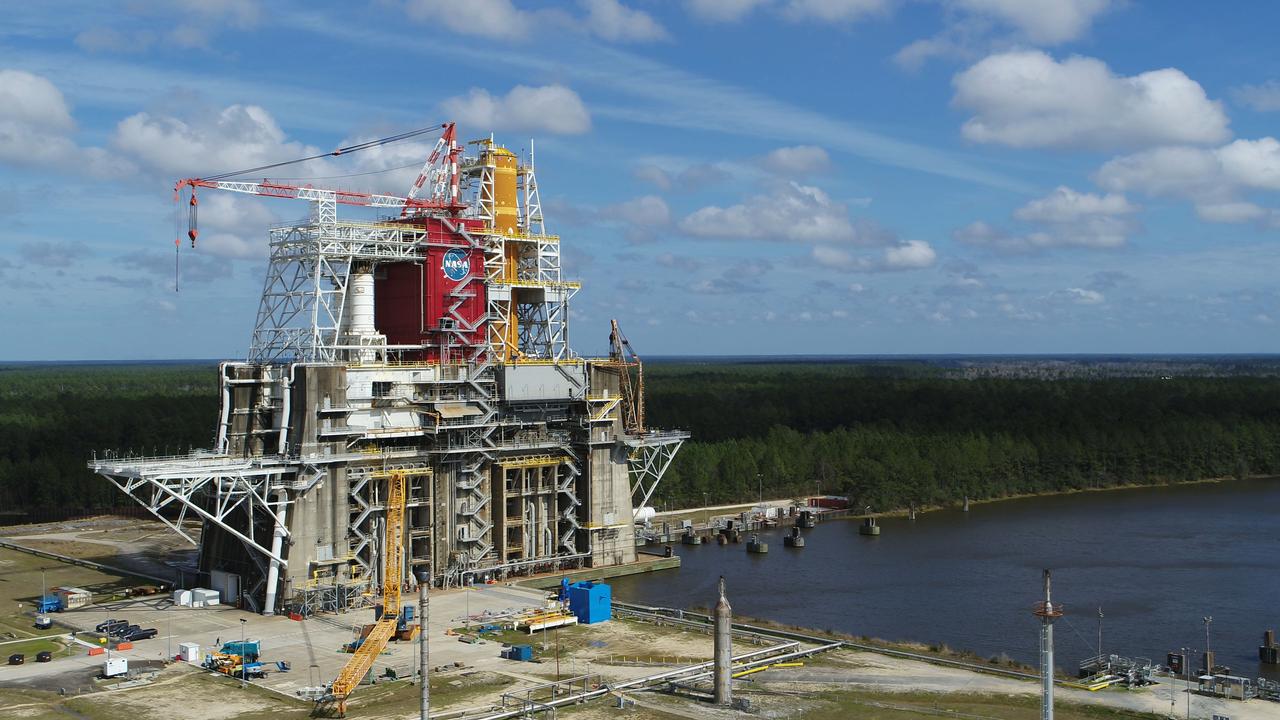
A NASA drone photo offers a bird’s-eye view of the B-2 Test Stand at NASA’s Stennis Space Center with the first flight core stage for NASA’s new Space Launch System (SLS) installed for Green Run testing. The SLS core stage is undergoing a series of tests on its integrated systems prior to its use on the Artemis I mission. NASA is building SLS to return humans, including the first woman, to the Moon as part of the Artemis program and to prepare for eventual missions to Mars. The Green Run series at Stennis culminates with a hot fire of the core stage’s four RS-25 engines, just as during an actual launch.
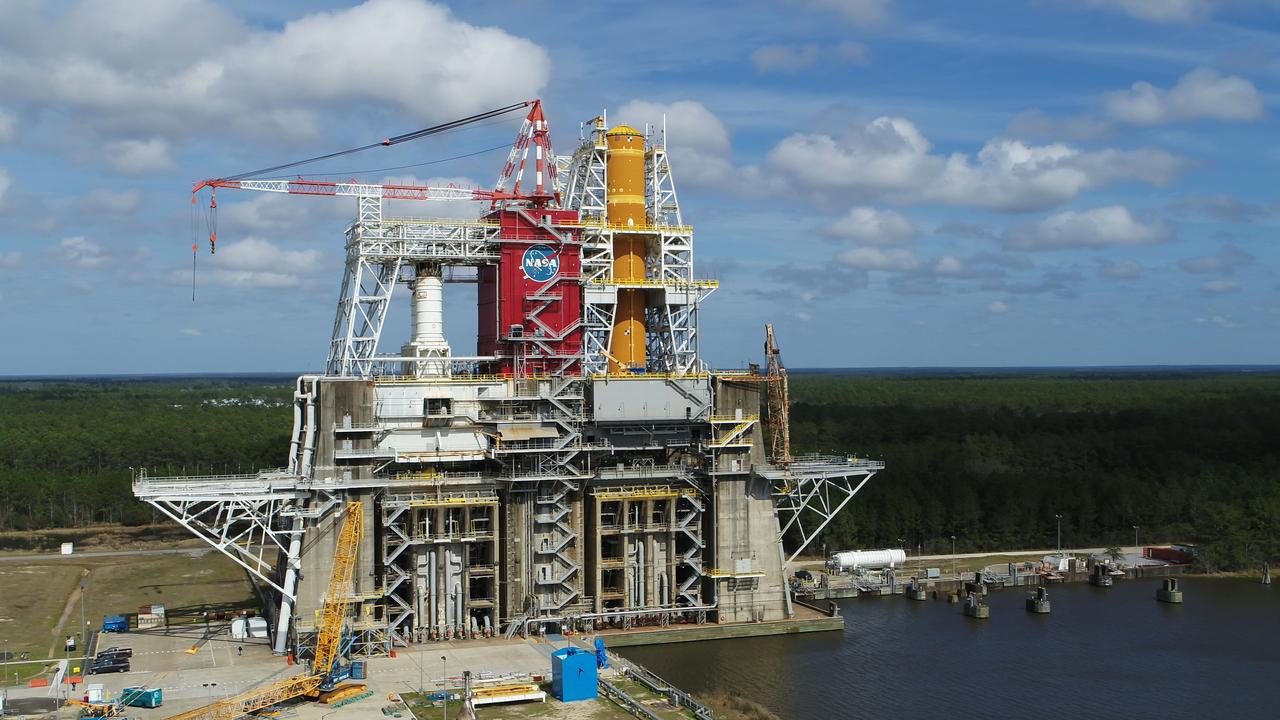
A NASA drone photo offers a bird’s-eye view of the B-2 Test Stand at NASA’s Stennis Space Center with the first flight core stage for NASA’s new Space Launch System (SLS) installed for Green Run testing. The SLS core stage is undergoing a series of tests on its integrated systems prior to its use on the Artemis I mission. NASA is building SLS to return humans, including the first woman, to the Moon as part of the Artemis program and to prepare for eventual missions to Mars. The Green Run series at Stennis culminates with a hot fire of the core stage’s four RS-25 engines, just as during an actual launch.
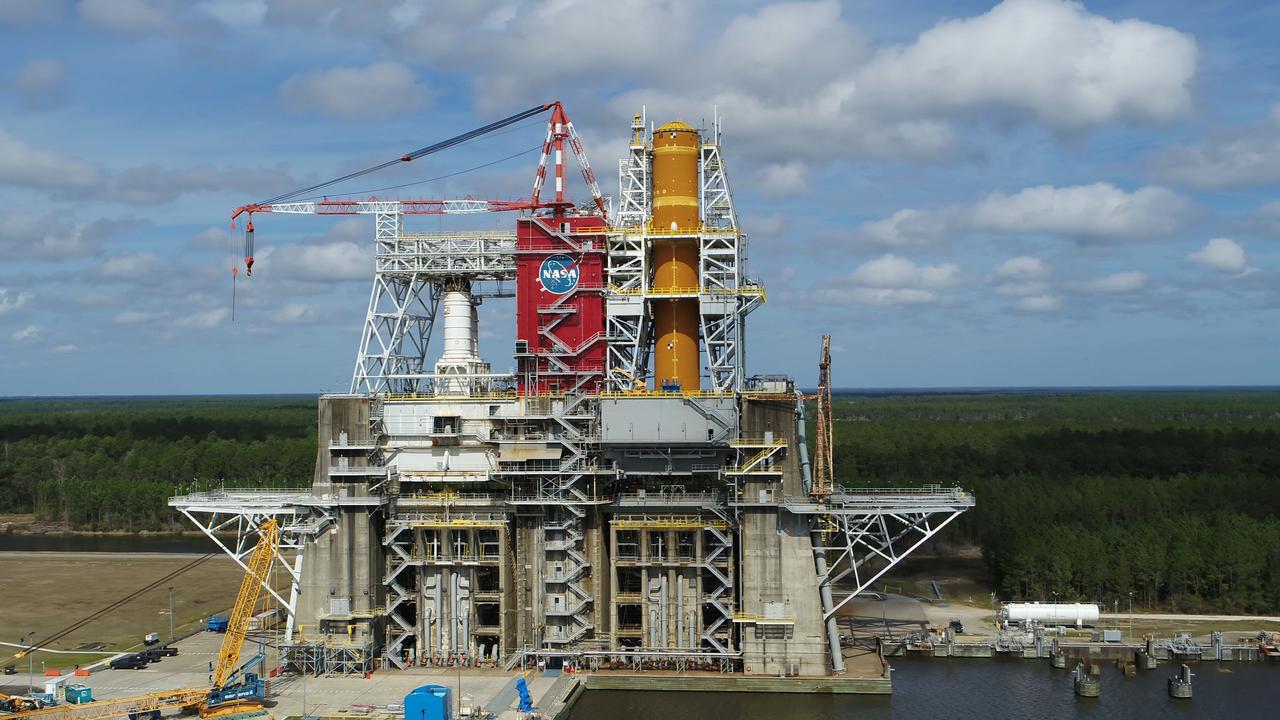
A NASA drone photo offers a bird’s-eye view of the B-2 Test Stand at NASA’s Stennis Space Center with the first flight core stage for NASA’s new Space Launch System (SLS) installed for Green Run testing. The SLS core stage is undergoing a series of tests on its integrated systems prior to its use on the Artemis I mission. NASA is building SLS to return humans, including the first woman, to the Moon as part of the Artemis program and to prepare for eventual missions to Mars. The Green Run series at Stennis culminates with a hot fire of the core stage’s four RS-25 engines, just as during an actual launch.
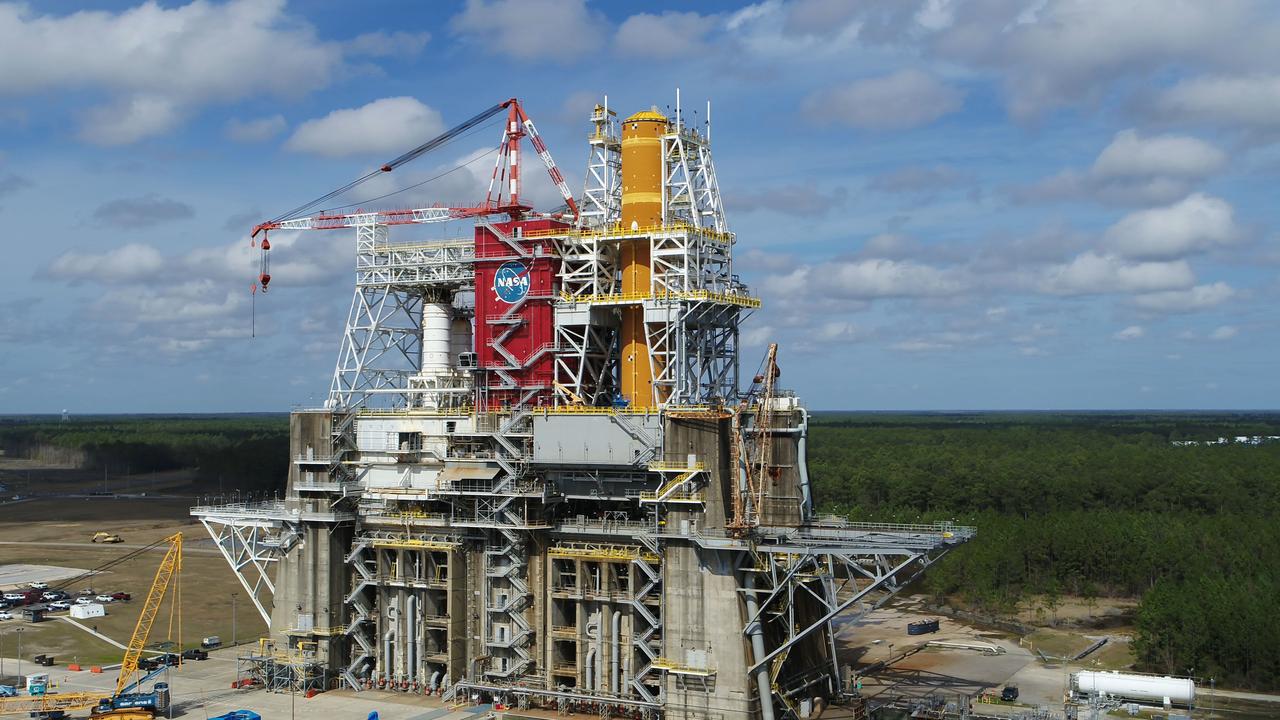
A NASA drone photo offers a bird’s-eye view of the B-2 Test Stand at NASA’s Stennis Space Center with the first flight core stage for NASA’s new Space Launch System (SLS) installed for Green Run testing. The SLS core stage is undergoing a series of tests on its integrated systems prior to its use on the Artemis I mission. NASA is building SLS to return humans, including the first woman, to the Moon as part of the Artemis program and to prepare for eventual missions to Mars. The Green Run series at Stennis culminates with a hot fire of the core stage’s four RS-25 engines, just as during an actual launch.
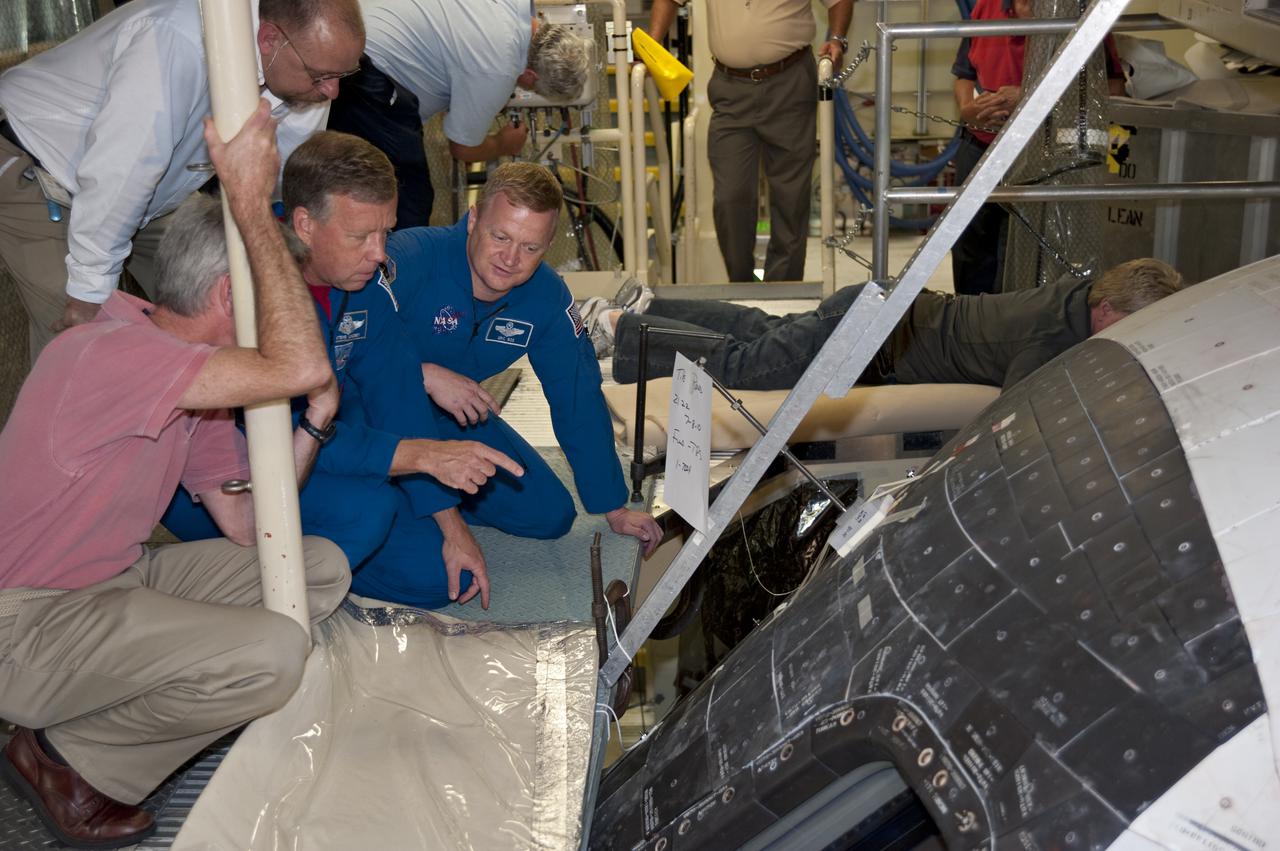
CAPE CANAVERAL, Fla. -- In Orbiter Processing Facility-3 at NASA's Kennedy Space Center in Florida, STS-133 Commander Steve Lindsey and Pilot Eric Boe get a 'birds-eye' view through the window into the shuttle's cockpit. The astronauts are at Kennedy for the Crew Equipment Interface Test, or CEIT, which provides the crew with hands-on training and observation of shuttle and flight hardware for their mission to the International Space Station. Launch of the STS-133 mission on space shuttle Discovery is targeted for Nov. 1 at 4:33 p.m. EDT. Photo credit: NASA_Kim Shiflett
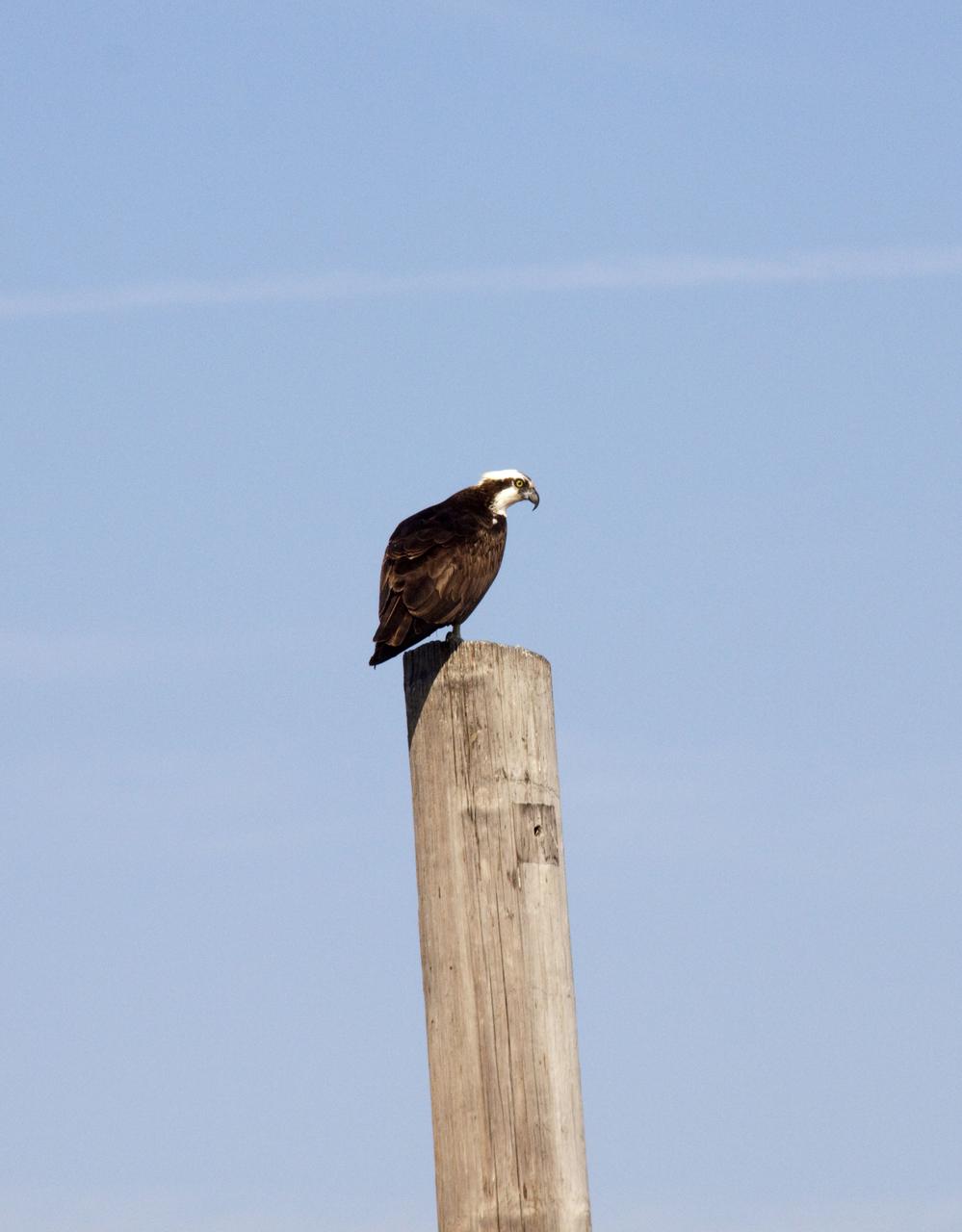
CAPE CANAVERAL, Fla. - At NASA's Kennedy Space Center in Florida, an adult osprey keeps an eye on its young from a pole near its nest, built on a platform in the Press Site parking lot. The adults feed their young until they are fully fledged and defend their brood with great perseverance until they are independent. The osprey, also known as a fish hawk, is well adapted for capturing fish, which make up its entire diet. The soles of its feet are equipped with sharp, spiny projections that give the bird a firm grip on its slippery prey. Kennedy's Press Site is located at the turn basin in Launch Complex 39, making it an ideal osprey nesting place. The Merritt Island National Wildlife Refuge overlaps with Kennedy Space Center property and provides a habitat for 330 species of birds, including the osprey. A variety of other wildlife - 117 kinds of fish, 65 types of amphibians and reptiles, 31 different mammals, and 1,045 species of plants - also inhabit the refuge. For information on the refuge, visit http:__www.fws.gov_merrittisland_Index.html. For information on Kennedy Space Center, visit http:__www.nasa.gov_kennedy. Photo credit: NASA_Jack Pfaller
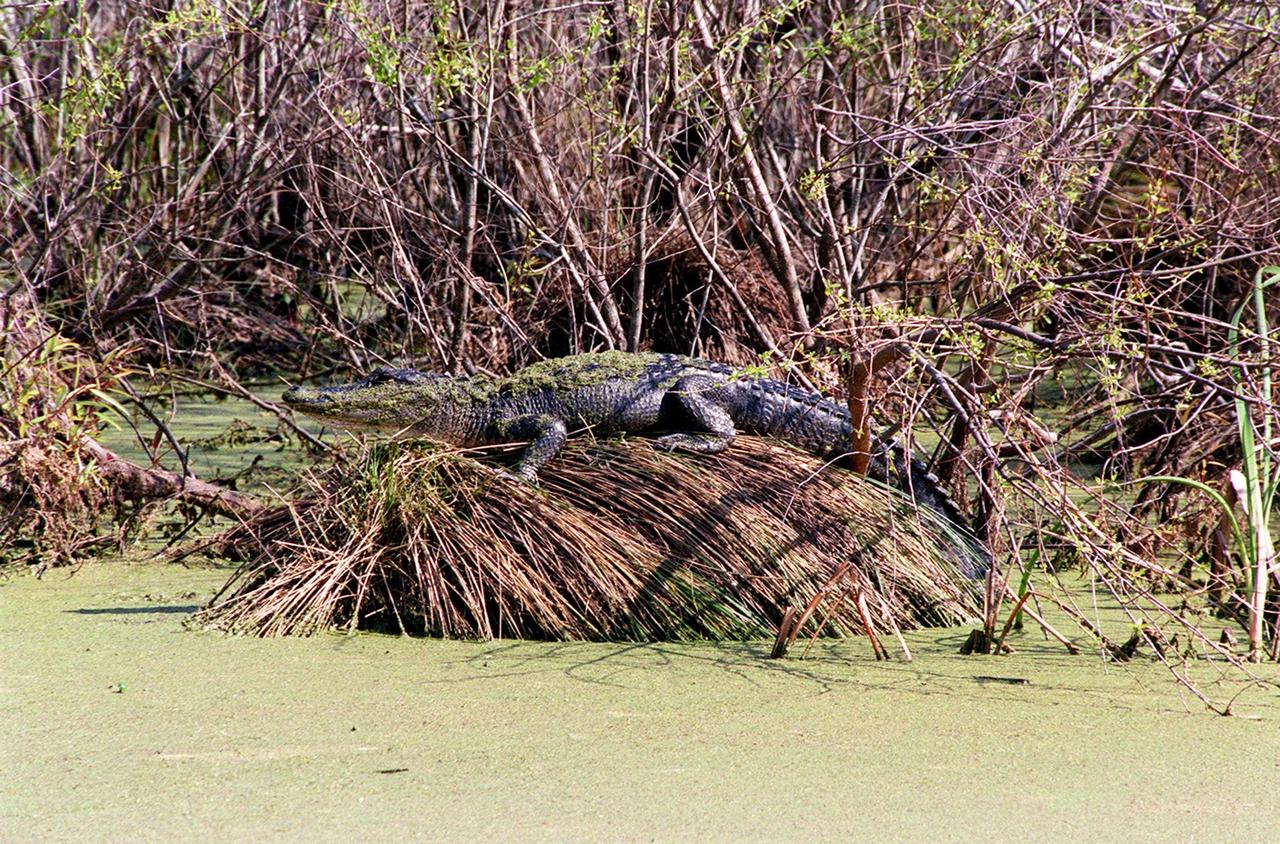
KENNEDY SPACE CENTER, FLA. -- On top of what may be a nest on the edge of an algae-coated canal near Schwartz Rd. at Kennedy Space Center, a moss-covered alligator rests while keeping a wary eye open for trespassers. Nearly 5,000 alligators can be found in canals, ponds, and waterways throughout the Center and the Merritt Island National Wildlife Refuge, which shares a boundary with the Center. American alligators feed and rest in the water, and usually lay their eggs in dens they dig into the banks. The young alligators spend their first several weeks in these dens. The Wildlife Refuge encompasses 92,000 acres that are a habitat for more than 331 species of birds, 31 mammals, 117 fishes, and 65 amphibians and reptiles. The marshes and open water of the refuge provide wintering areas for 23 species of migratory waterfowl, as well as a year-round home for great blue herons, great egrets, wood storks, cormorants, brown pelicans and other species of marsh and shore birds, as well as a variety of insects
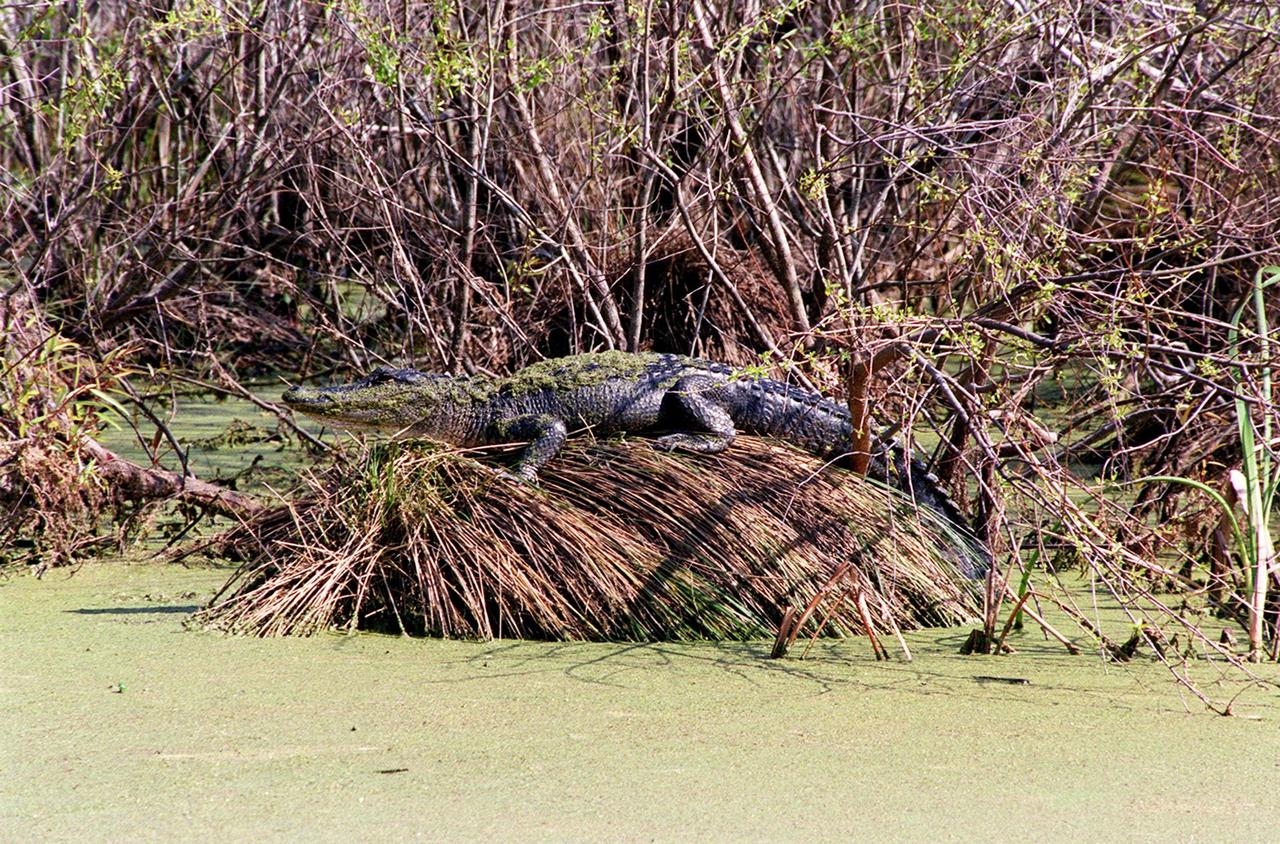
KENNEDY SPACE CENTER, FLA. -- On top of what may be a nest on the edge of an algae-coated canal near Schwartz Rd. at Kennedy Space Center, a moss-covered alligator rests while keeping a wary eye open for trespassers. Nearly 5,000 alligators can be found in canals, ponds, and waterways throughout the Center and the Merritt Island National Wildlife Refuge, which shares a boundary with the Center. American alligators feed and rest in the water, and usually lay their eggs in dens they dig into the banks. The young alligators spend their first several weeks in these dens. The Wildlife Refuge encompasses 92,000 acres that are a habitat for more than 331 species of birds, 31 mammals, 117 fishes, and 65 amphibians and reptiles. The marshes and open water of the refuge provide wintering areas for 23 species of migratory waterfowl, as well as a year-round home for great blue herons, great egrets, wood storks, cormorants, brown pelicans and other species of marsh and shore birds, as well as a variety of insects
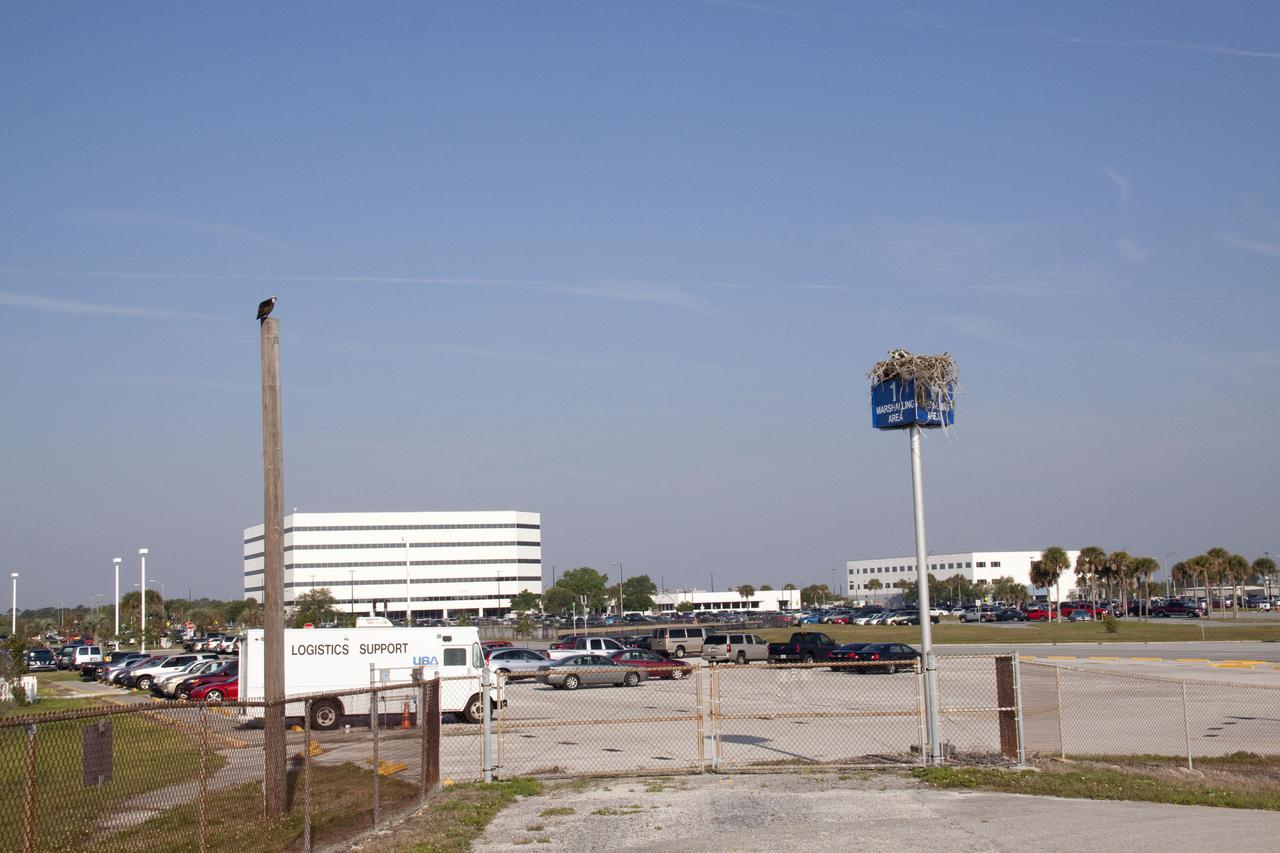
CAPE CANAVERAL, Fla. - At NASA's Kennedy Space Center in Florida, an adult osprey keeps an eye on its young from a pole near its nest, built on a platform in the Press Site parking lot. The adults feed their young until they are fully fledged and defend their brood with great perseverance until they are independent. The osprey, also known as a fish hawk, is well adapted for capturing fish, which make up its entire diet. The soles of its feet are equipped with sharp, spiny projections that give the bird a firm grip on its slippery prey. Kennedy's Press Site is located at the turn basin in Launch Complex 39, making it an ideal osprey nesting place. The Merritt Island National Wildlife Refuge overlaps with Kennedy Space Center property and provides a habitat for 330 species of birds, including the osprey. A variety of other wildlife - 117 kinds of fish, 65 types of amphibians and reptiles, 31 different mammals, and 1,045 species of plants - also inhabit the refuge. For information on the refuge, visit http:__www.fws.gov_merrittisland_Index.html. For information on Kennedy Space Center, visit http:__www.nasa.gov_kennedy. Photo credit: NASA_Jack Pfaller
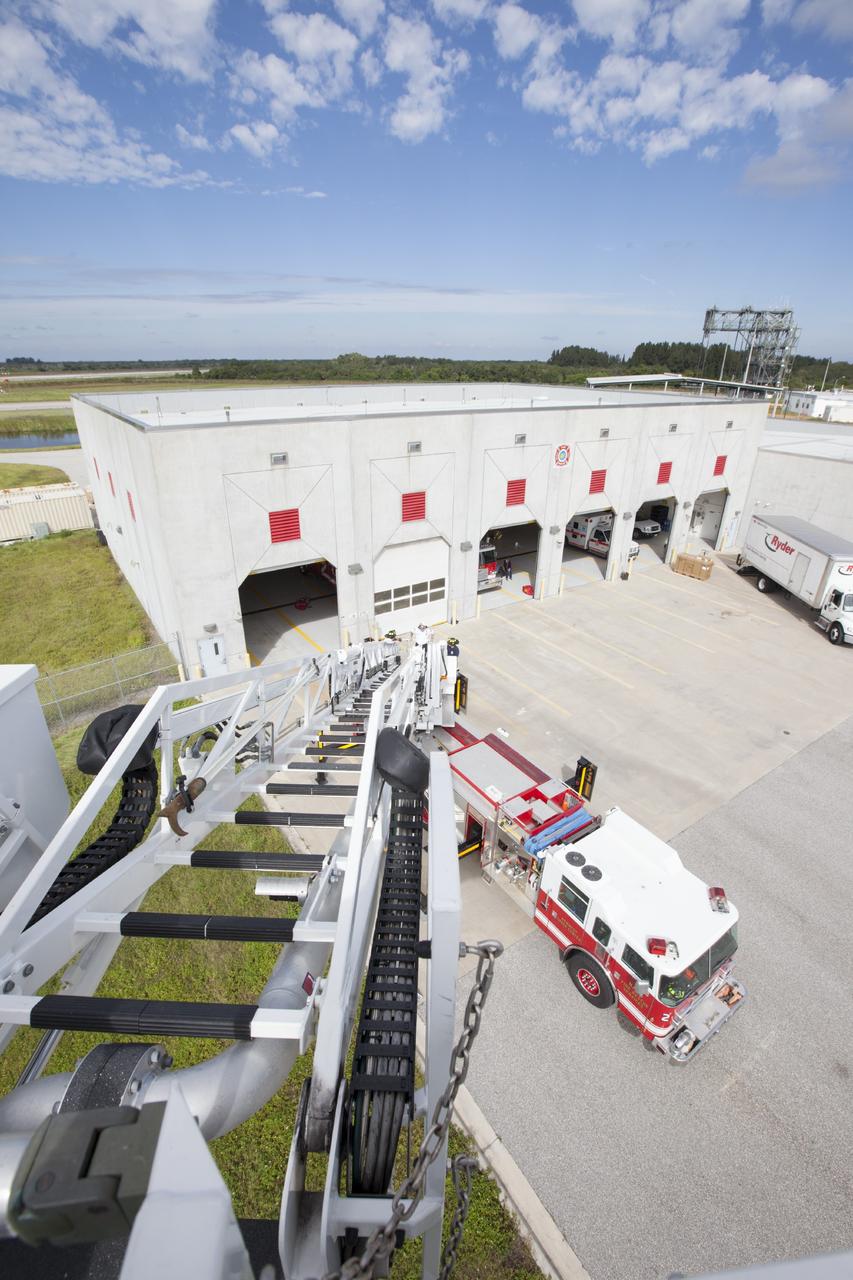
CAPE CANAVERAL, Fla. – At Fire Station No. 2 near the Shuttle Landing Facility at NASA’s Kennedy Space Center in Florida, a bird’s eye view reveals the ladder has been extended on the aerial fire truck during a training exercise. The center’s Fire Rescue Services recently achieved Pro Board Certification in aerial fire truck operations. Pro Board Certification is a globally recognized certification that puts on multiple courses that all fire departments throughout the world recognize and use to train their personnel. The unique aerial truck contains a 100-foot extendable ladder with a bucket at the end of it that can be used for rescues from taller buildings or aircraft rescue firefighting. Photo credit: NASA/Kim Shiflett
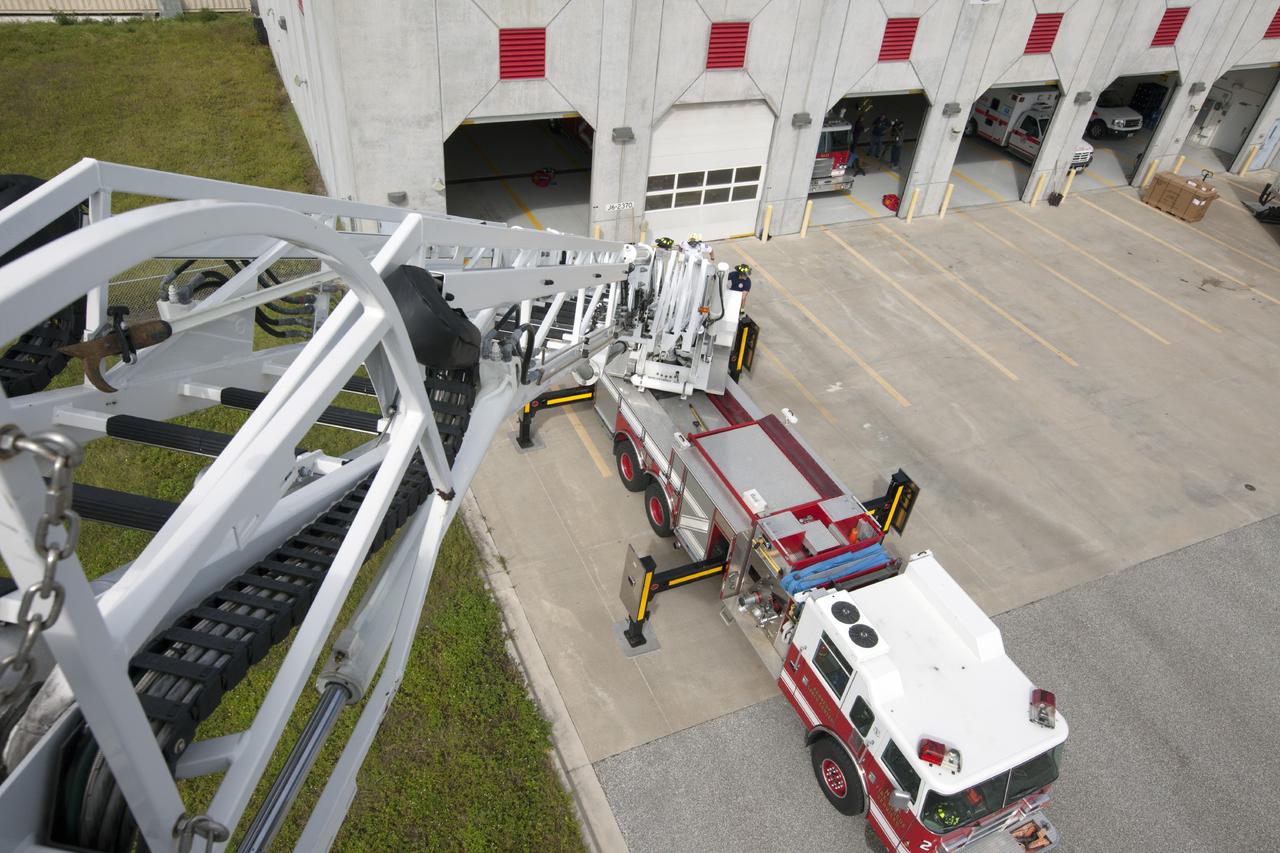
CAPE CANAVERAL, Fla. – At Fire Station No. 2 near the Shuttle Landing Facility at NASA’s Kennedy Space Center in Florida, a bird’s eye view reveals the ladder has been extended on the aerial fire truck during a training exercise. The center’s Fire Rescue Services recently achieved Pro Board Certification in aerial fire truck operations. Pro Board Certification is a globally recognized certification that puts on multiple courses that all fire departments throughout the world recognize and use to train their personnel. The unique aerial truck contains a 100-foot extendable ladder with a bucket at the end of it that can be used for rescues from taller buildings or aircraft rescue firefighting. Photo credit: NASA/Kim Shiflett
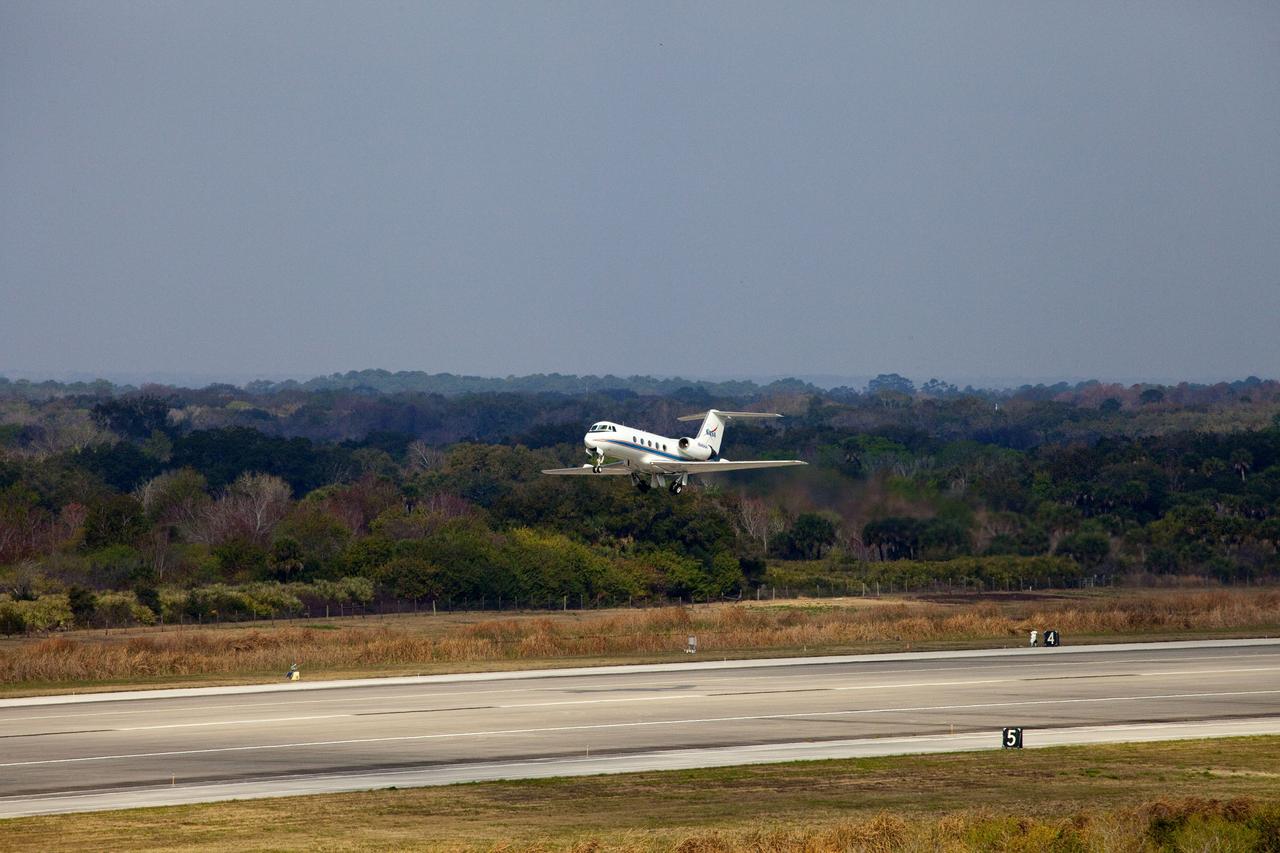
CAPE CANAVERAL, Fla. -- This image was taken from the Shuttle Landing Facility's air traffic control tower at NASA's Kennedy Space Center in Florida and provides a birds-eye view of STS-133 Pilot Eric Boe performing touch-and-go landings aboard one of two Shuttle Training Aircraft (STA). STAs are Gulfstream II business jets that are modified to mimic the shuttle's handling during the final phase of landing. Practice landings are part of standard training before space shuttle Discovery's launch to the International Space Station. Scheduled to lift off Feb. 24 at 4:50 p.m. EST, Discovery and its six-member crew will deliver the Permanent Multipurpose Module, packed with supplies and critical spare parts, as well as Robonaut 2, the dexterous humanoid astronaut helper, to the orbiting outpost. For more information on the STS-133 mission, visit www.nasa.gov/mission_pages/shuttle/shuttlemissions/sts133/. Photo credit: NASA/Ben Smegelsky
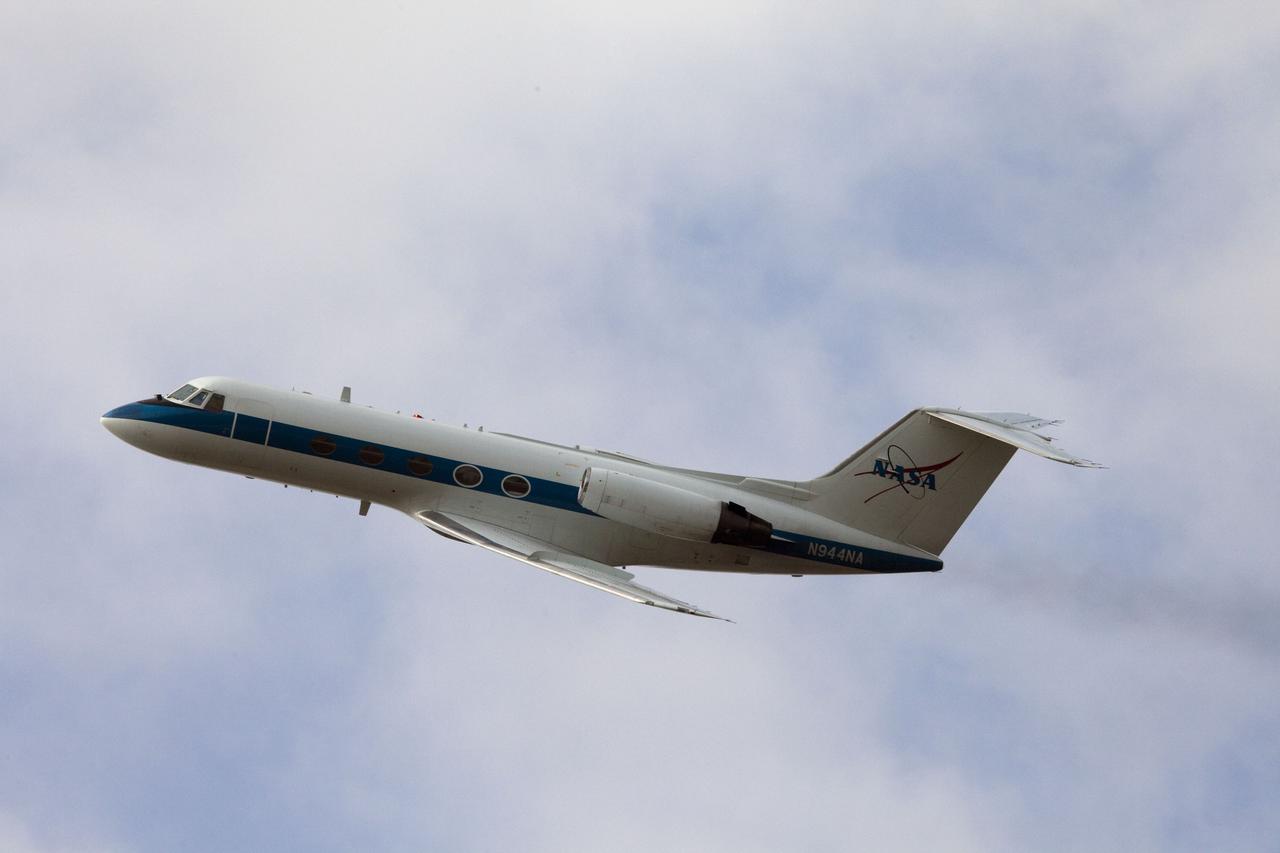
CAPE CANAVERAL, Fla. -- This image was taken from the Shuttle Landing Facility's air traffic control tower at NASA's Kennedy Space Center in Florida and provides a birds-eye view of STS-133 Commander Steve Lindsey performing touch-and-go landings aboard one of two Shuttle Training Aircraft (STA). STAs are Gulfstream II business jets that are modified to mimic the shuttle's handling during the final phase of landing. Practice landings are part of standard training before space shuttle Discovery's launch to the International Space Station. Scheduled to lift off Feb. 24 at 4:50 p.m. EST, Discovery and its six-member crew will deliver the Permanent Multipurpose Module, packed with supplies and critical spare parts, as well as Robonaut 2, the dexterous humanoid astronaut helper, to the orbiting outpost. For more information on the STS-133 mission, visit www.nasa.gov/mission_pages/shuttle/shuttlemissions/sts133/. Photo credit: NASA/Ben Smegelsky

CAPE CANAVERAL, Fla. -- This image was taken from the Shuttle Landing Facility's air traffic control tower at NASA's Kennedy Space Center in Florida and provides a birds-eye view of STS-133 Commander Steve Lindsey performing touch-and-go landings aboard one of two Shuttle Training Aircraft (STA). STAs are Gulfstream II business jets that are modified to mimic the shuttle's handling during the final phase of landing. Practice landings are part of standard training before space shuttle Discovery's launch to the International Space Station. Scheduled to lift off Feb. 24 at 4:50 p.m. EST, Discovery and its six-member crew will deliver the Permanent Multipurpose Module, packed with supplies and critical spare parts, as well as Robonaut 2, the dexterous humanoid astronaut helper, to the orbiting outpost. For more information on the STS-133 mission, visit www.nasa.gov/mission_pages/shuttle/shuttlemissions/sts133/. Photo credit: NASA/Ben Smegelsky
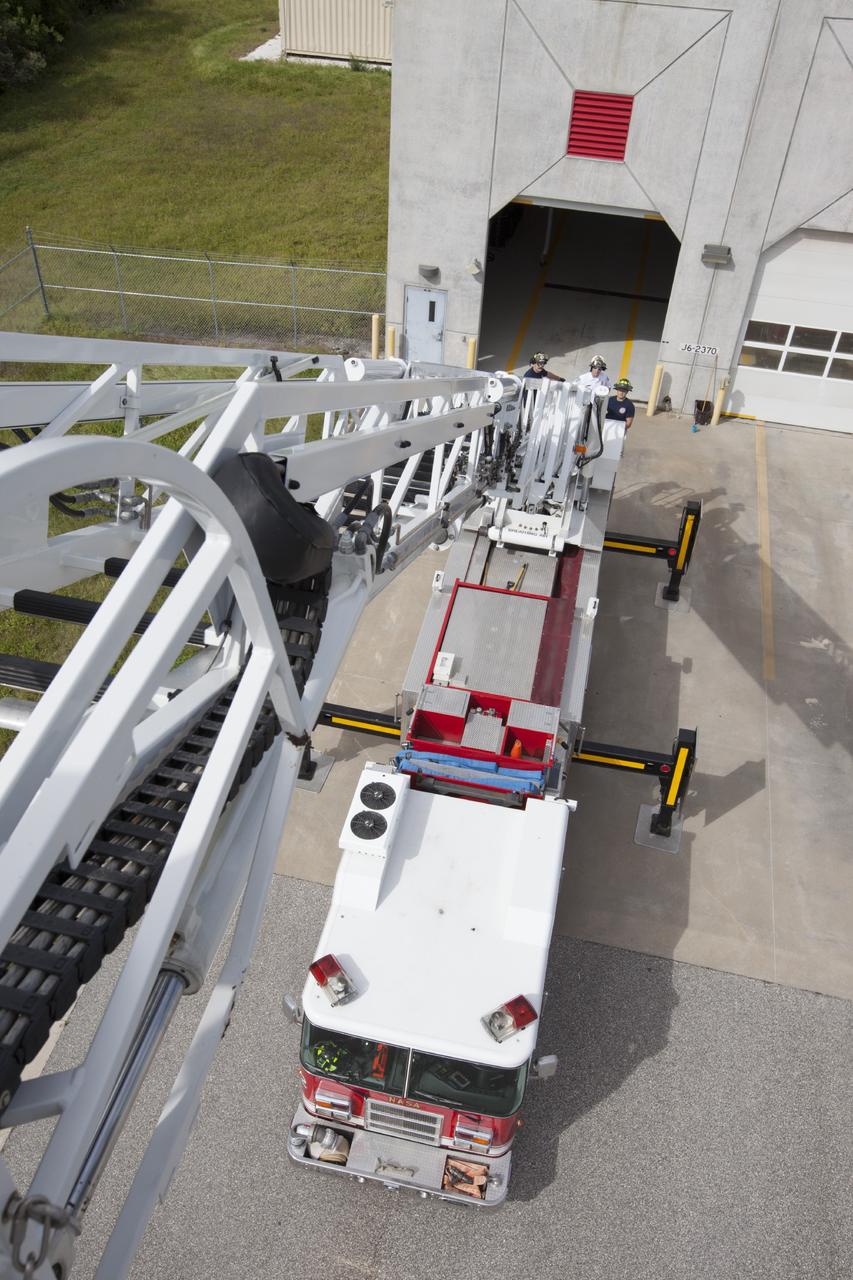
CAPE CANAVERAL, Fla. – At Fire Station No. 2 near the Shuttle Landing Facility at NASA’s Kennedy Space Center in Florida, a bird’s eye view reveals the ladder has been extended on the aerial fire truck during a training exercise. The stabilizers have been deployed on either side of the fire truck. The center’s Fire Rescue Services recently achieved Pro Board Certification in aerial fire truck operations. Pro Board Certification is a globally recognized certification that puts on multiple courses that all fire departments throughout the world recognize and use to train their personnel. The unique aerial truck contains a 100-foot extendable ladder with a bucket at the end of it that can be used for rescues from taller buildings or aircraft rescue firefighting. Photo credit: NASA/Kim Shiflett
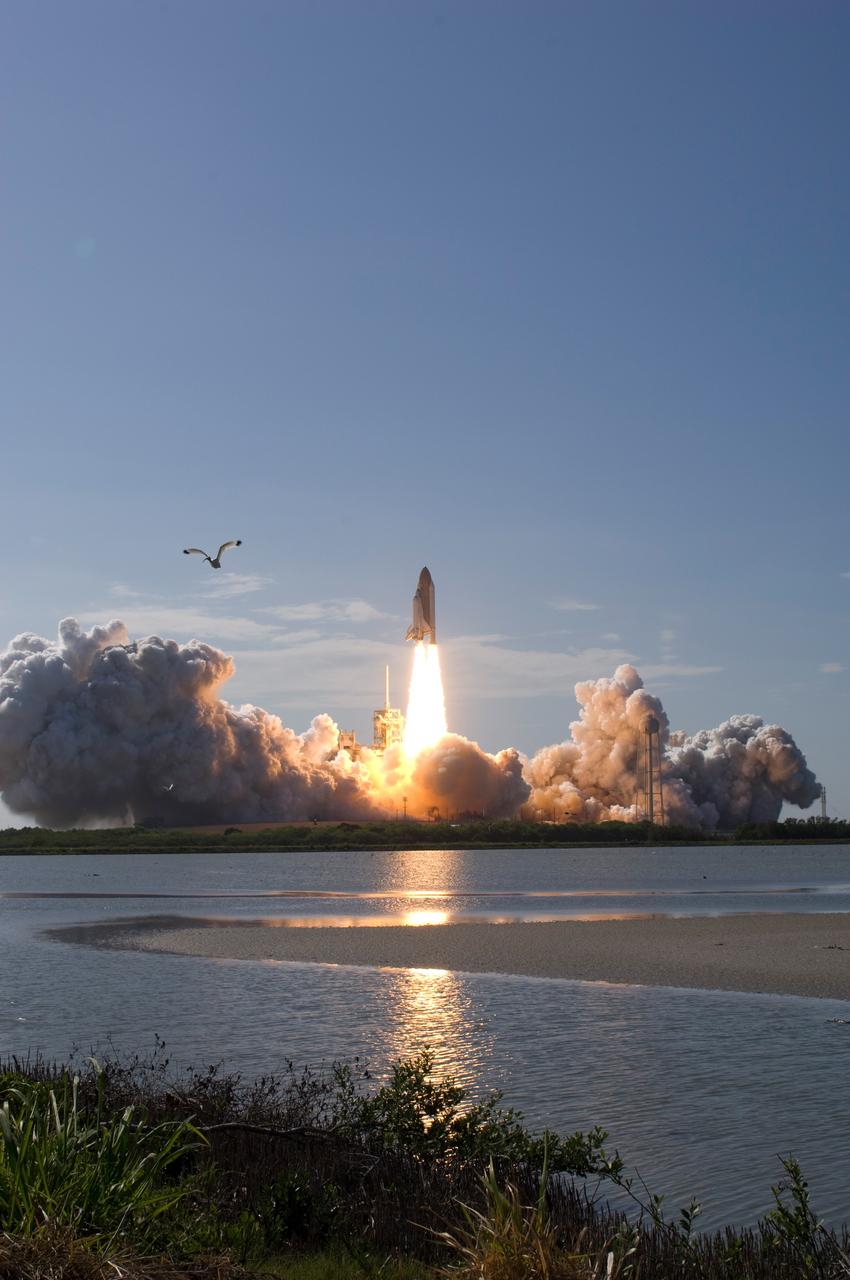
CAPE CANAVERAL, Fla. -- A stork has a birds-eye view of space shuttle Discovery's fiery liftoff on its STS-124 mission to the International Space Station from Launch Pad 39A at NASA's Kennedy Space Center. Launch was on time at 5:02 p.m. EDT. Discovery is making its 35th flight. The STS-124 mission is the 26th in the assembly of the space station. It is the second of three flights launching components to complete the Japan Aerospace Exploration Agency's Kibo laboratory. The shuttle crew will install Kibo's large Japanese Pressurized Module and its remote manipulator system, or RMS. The 14-day flight includes three spacewalks. Photo credit: NASA/Sandra Joseph, Tony Gray, Robert Murray, Mike Kerley

KENNEDY SPACE CENTER, FLA. -- From the bank of a pond on Kennedy Space Center, an alligator slides into the water, perhaps eyeing nearby prey. American alligators feed and rest in the water, and lay their eggs in dens they dig into the banks. The young alligators spend their first several weeks in these dens. A protected species, alligators can be spotted in the drainage canals and other waters surrounding KSC. KSC shares a boundary with the Merritt Island Wildlife Nature Refuge. The refuge is a habitat for more than 310 species of birds, 25 mammals, 117 fishes and 65 amphibians and reptiles. In addition, the Refuge supports 19 endangered or threatened wildlife species on Federal or State lists, more than any other single refuge in the U.S. Photo credit: NASA/Dimitri Gerondidakis
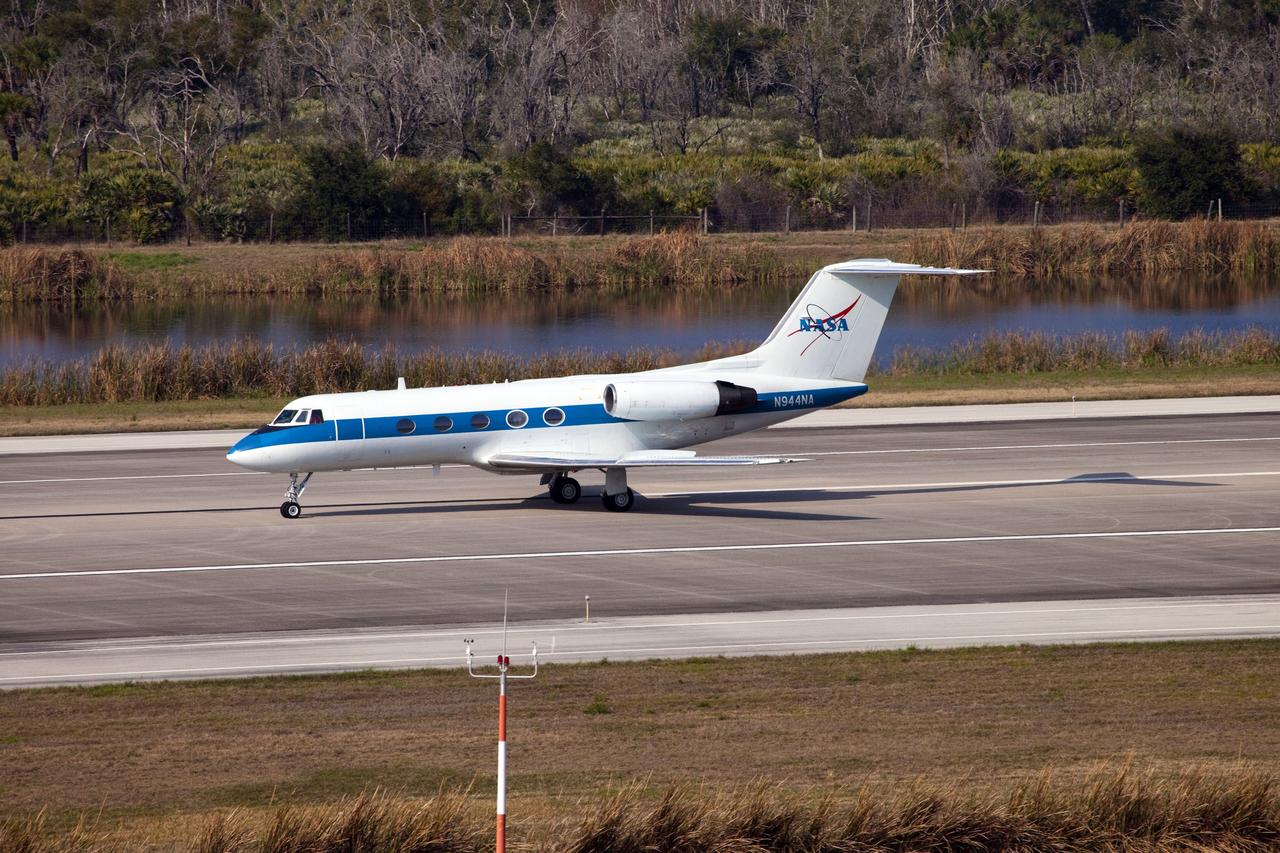
CAPE CANAVERAL, Fla. -- This image was taken from the Shuttle Landing Facility's air traffic control tower at NASA's Kennedy Space Center in Florida and provides a birds-eye view of STS-133 Commander Steve Lindsey performing touch-and-go landings aboard one of two Shuttle Training Aircraft (STA). STAs are Gulfstream II business jets that are modified to mimic the shuttle's handling during the final phase of landing. Practice landings are part of standard training before space shuttle Discovery's launch to the International Space Station. Scheduled to lift off Feb. 24 at 4:50 p.m. EST, Discovery and its six-member crew will deliver the Permanent Multipurpose Module, packed with supplies and critical spare parts, as well as Robonaut 2, the dexterous humanoid astronaut helper, to the orbiting outpost. For more information on the STS-133 mission, visit www.nasa.gov/mission_pages/shuttle/shuttlemissions/sts133/. Photo credit: NASA/Ben Smegelsky
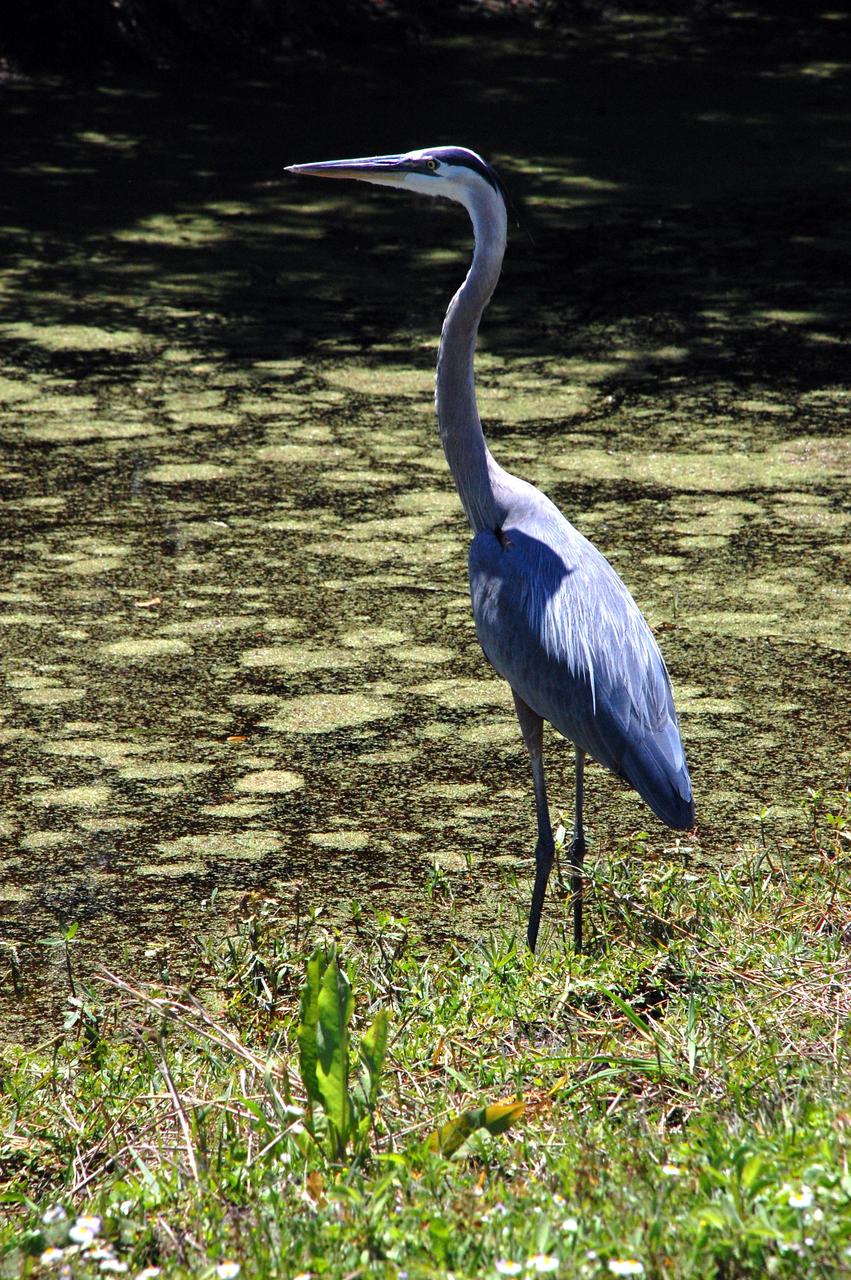
CAPE CANAVERAL, Fla. – A tall Great Blue Heron warily eyes its surroundings while standing in the shallow water behind the NASA News Center at NASA's Kennedy Space Center in Florida. A frequent sight around Kennedy, this large heron inhabits lakes, ponds, rivers and marshes in a range from Alaska south to Mexico and the West Indies. It is frequently found standing at the edge of a pond or pool, watching for fish or frogs, its principal food. Kennedy shares a boundary with the Merritt Island National Wildlife Refuge that includes salt-water estuaries, brackish marshes, hardwood hammocks and pine flatwoods. The diverse landscape provides habitat for more than 310 species of birds, 25 mammals, 117 fishes and 65 amphibians and reptiles. Photo credit: NASA/Ben Smegelsky
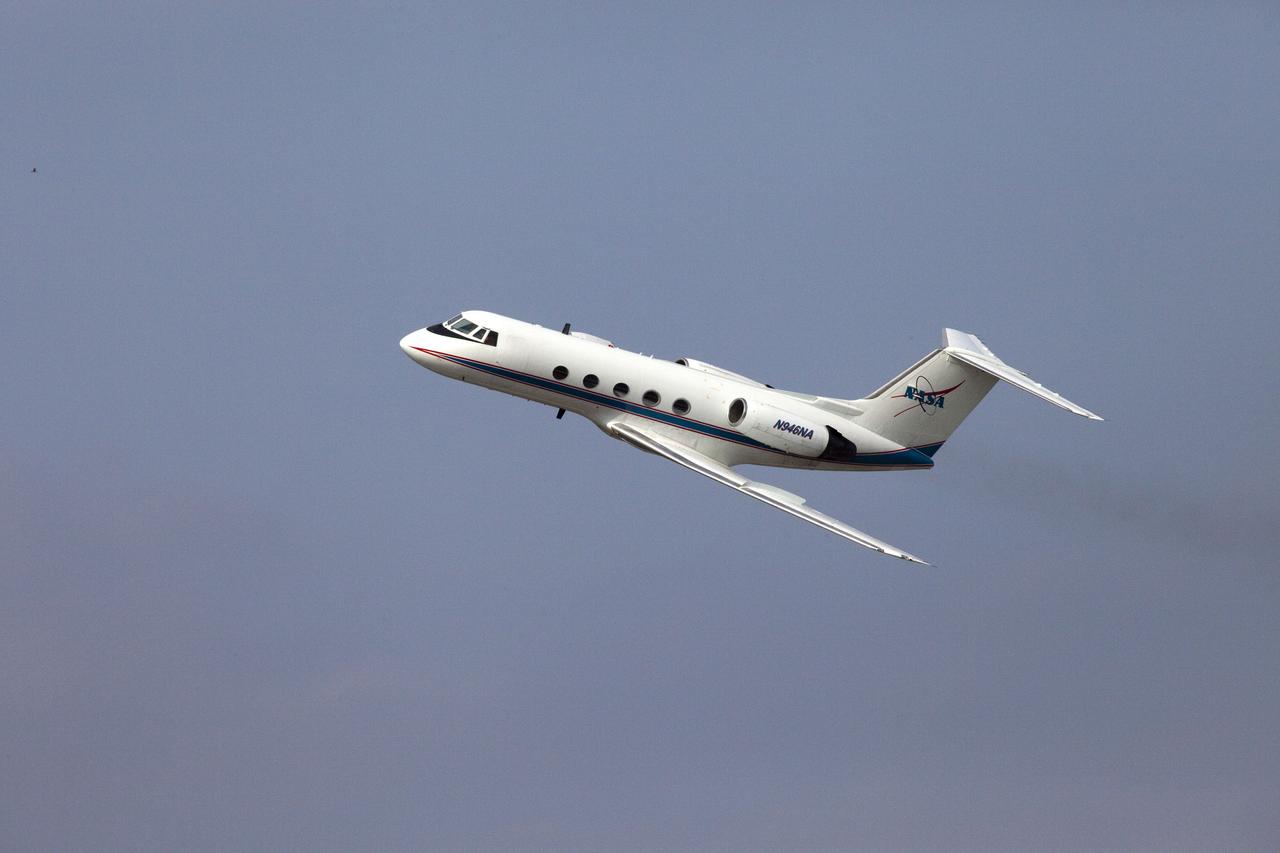
CAPE CANAVERAL, Fla. -- This image was taken from the Shuttle Landing Facility's air traffic control tower at NASA's Kennedy Space Center in Florida and provides a birds-eye view of STS-133 Pilot Eric Boe performing touch-and-go landings aboard one of two Shuttle Training Aircraft (STA). STAs are Gulfstream II business jets that are modified to mimic the shuttle's handling during the final phase of landing. Practice landings are part of standard training before space shuttle Discovery's launch to the International Space Station. Scheduled to lift off Feb. 24 at 4:50 p.m. EST, Discovery and its six-member crew will deliver the Permanent Multipurpose Module, packed with supplies and critical spare parts, as well as Robonaut 2, the dexterous humanoid astronaut helper, to the orbiting outpost. For more information on the STS-133 mission, visit www.nasa.gov/mission_pages/shuttle/shuttlemissions/sts133/. Photo credit: NASA/Ben Smegelsky
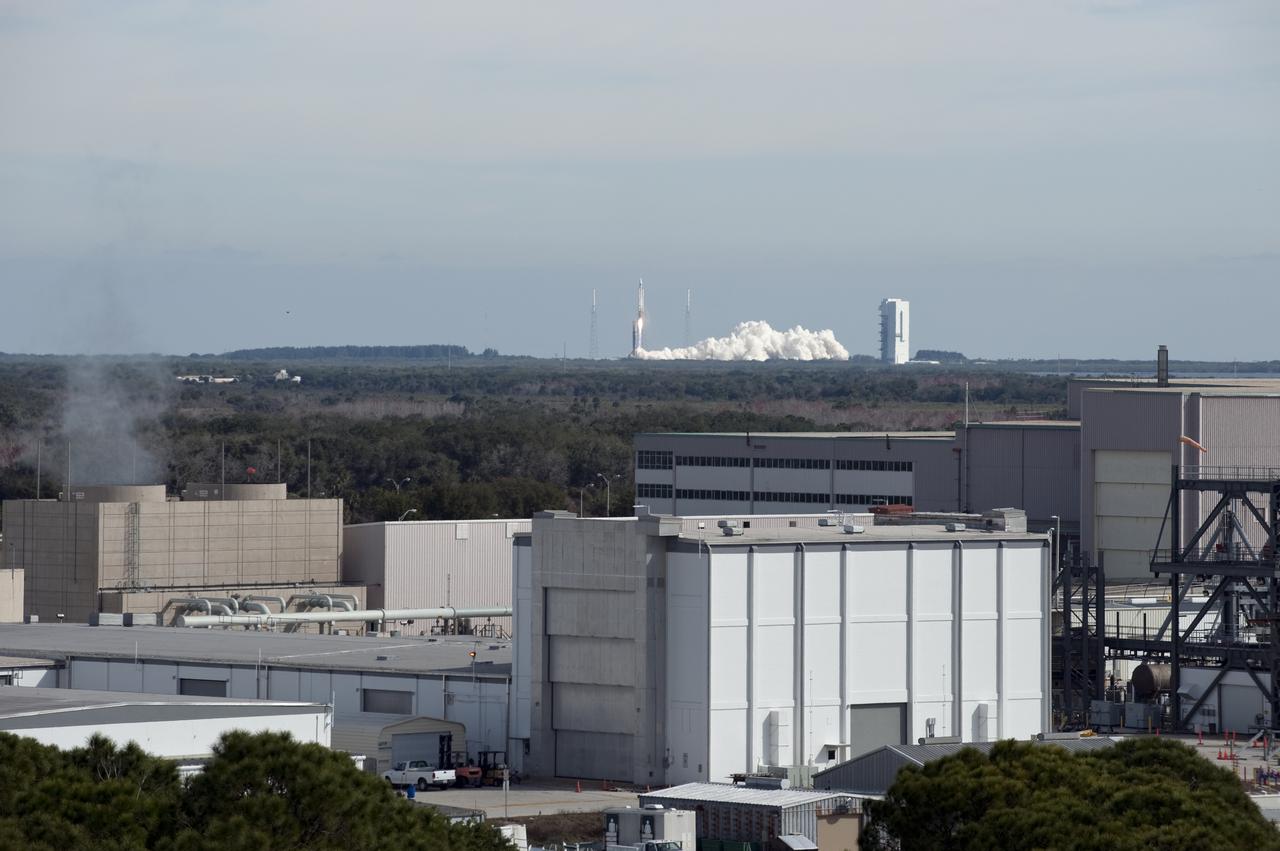
CAPE CANAVERAL, Fla. – A rooftop in the Industrial Area of NASA's Kennedy Space Center provides a bird's-eye view of the liftoff of the United Launch Alliance Atlas V rocket carrying NASA's Solar Dynamics Observatory from Launch Complex 41 on Cape Canaveral Air Force Station. Launch was at 10:23 a.m. EST Feb. 11. This is the 100th launch of a commercial Atlas_Centaur rocket. The observatory, known as SDO, is the first mission in NASA's Living With a Star Program and is designed to study the causes of solar variability and its impacts on Earth. The spacecraft's long-term measurements will give solar scientists in-depth information to help characterize the interior of the Sun, the Sun's magnetic field, the hot plasma of the solar corona, and the density of radiation that creates the ionosphere of the planets. The information will be used to create better forecasts of space weather needed to protect the aircraft, satellites and astronauts living and working in space. For information on SDO, visit http:__www.nasa.gov_sdo. Photo credit: NASA_Tony Gray
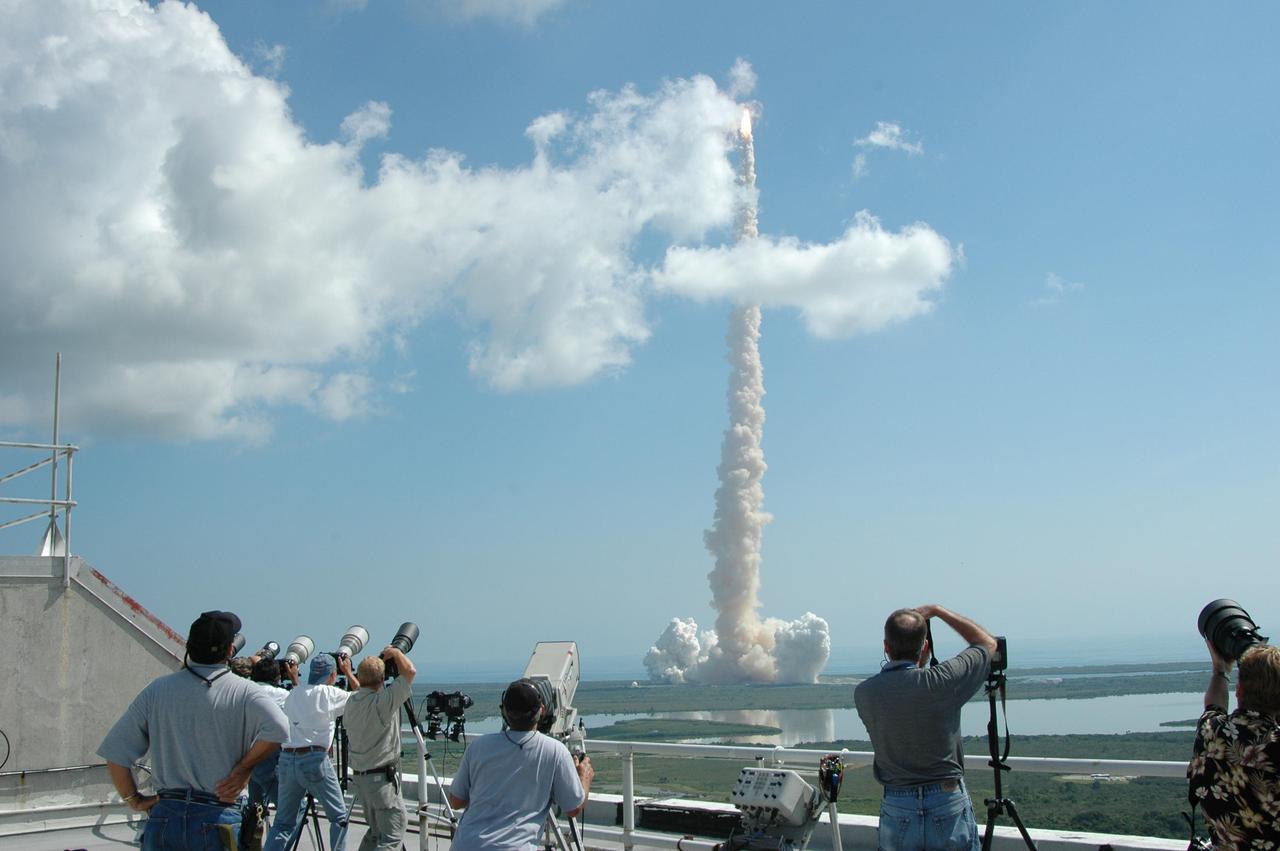
KENNEDY SPACE CENTER, FLA. - Spectators at the NASA News Center at Kennedy Space Center get a birds-eye-view of Space Shuttle Discovery as it roars through a stray cloud after liftoff at 10:39 a.m. EDT from NASA Kennedy Space Center’s Launch Pad 39B on the historic Return to Flight mission STS-114. It is the 114th Space Shuttle flight and the 31st for Discovery. The 12-day mission is expected to end with touchdown at the Shuttle Landing Facility on Aug. 7. On this mission to the International Space Station the crew will perform inspections on-orbit for the first time of all of the Reinforced Carbon-Carbon (RCC) panels on the leading edge of the wings and the Thermal Protection System tiles using the new Canadian-built Orbiter Boom Sensor System and the data from 176 impact and temperature sensors. Mission Specialists will also practice repair techniques on RCC and tile samples during a spacewalk in the payload bay. During two additional spacewalks, the crew will install the External Stowage Platform-2, equipped with spare part assemblies, and a replacement Control Moment Gyroscope contained in the Lightweight Multi-Purpose Experiment Support Structure.
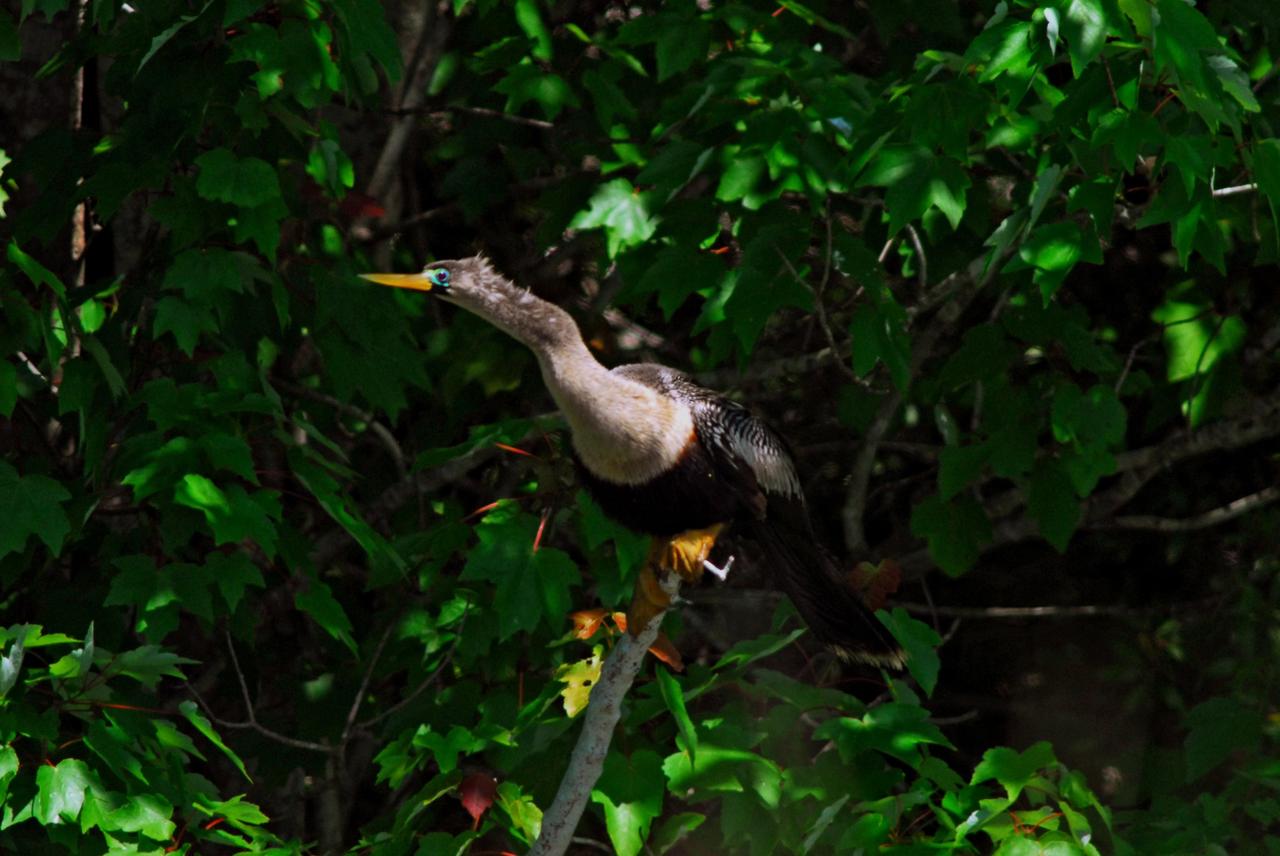
KENNEDY SPACE CENTER, FLA. -- A female anhinga roosts in branches near the water. Anhingas can be found in freshwater ponds and swamps where there is thick vegetation and tall trees. Male anhingas are black and gray; females are distinguished by a buff-colored neck and breast. When anhingas are in their breeding plumage they have a blue ring around their eyes, as seen here. The female lays three to five light blue eggs. The nest is in a tree and it is made of sticks and lined with leaves. The chicks hatch in about a month. Anhingas breed off the Gulf Coast and the Atlantic Coast from North Carolina to Texas and in the Mississippi Valley north to Kentucky and Missouri. They winter along the Gulf Coast north to North Carolina. The anhinga diet is primarily fish. Using their sharp bills, anhingas spear the fish, flip them in the air and swallow them head-first. KSC shares a boundary with the Merritt Island Wildlife Nature Refuge. The refuge is a habitat for more than 310 species of birds, 25 mammals, 117 fishes and 65 amphibians and reptiles. In addition, the Refuge supports 19 endangered or threatened wildlife species on Federal or State lists, more than any other single refuge in the U.S. Photo credit: NASA/Dimitri Gerondidakis

The Hubble Space Telescope has spotted a UFO — well, the UFO Galaxy, to be precise. NGC 2683 is a spiral galaxy seen almost edge-on, giving it the shape of a classic science fiction spaceship. This is why the astronomers at the Astronaut Memorial Planetarium and Observatory gave it this attention-grabbing nickname. While a bird’s eye view lets us see the detailed structure of a galaxy (such as this Hubble image of a barred spiral), a side-on view has its own perks. In particular, it gives astronomers a great opportunity to see the delicate dusty lanes of the spiral arms silhouetted against the golden haze of the galaxy’s core. In addition, brilliant clusters of young blue stars shine scattered throughout the disc, mapping the galaxy’s star-forming regions. Perhaps surprisingly, side-on views of galaxies like this one do not prevent astronomers from deducing their structures. Studies of the properties of the light coming from NGC 2683 suggest that this is a barred spiral galaxy, even though the angle we see it at does not let us see this directly. NGC 2683, discovered on 5 February 1788 by the famous astronomer William Herschel, lies in the Northern constellation of Lynx. A constellation named not because of its resemblance to the feline animal, but because it is fairly faint, requiring the “sensitive eyes of a cat” to discern it. And when you manage to get a look at it, you’ll find treasures like this, making it well worth the effort. This image is produced from two adjacent fields observed in visible and infrared light by Hubble’s Advanced Camera for Surveys. A narrow strip which appears slightly blurred and crosses most the image horizontally is a result of a gap between Hubble’s detectors. This strip has been patched using images from observations of the galaxy made by ground-based telescopes, which show significantly less detail. The field of view is approximately 6.5 by 3.3 arcminutes. Credit: ESA/Hubble & NASA <b><a href="http://www.nasa.gov/audience/formedia/features/MP_Photo_Guidelines.html" rel="nofollow">NASA image use policy.</a></b> <b><a href="http://www.nasa.gov/centers/goddard/home/index.html" rel="nofollow">NASA Goddard Space Flight Center</a></b> enables NASA’s mission through four scientific endeavors: Earth Science, Heliophysics, Solar System Exploration, and Astrophysics. Goddard plays a leading role in NASA’s accomplishments by contributing compelling scientific knowledge to advance the Agency’s mission. <b>Follow us on <a href="http://twitter.com/NASA_GoddardPix" rel="nofollow">Twitter</a></b> <b>Like us on <a href="http://www.facebook.com/pages/Greenbelt-MD/NASA-Goddard/395013845897?ref=tsd" rel="nofollow">Facebook</a></b> <b>Find us on <a href="http://instagrid.me/nasagoddard/?vm=grid" rel="nofollow">Instagram</a></b>
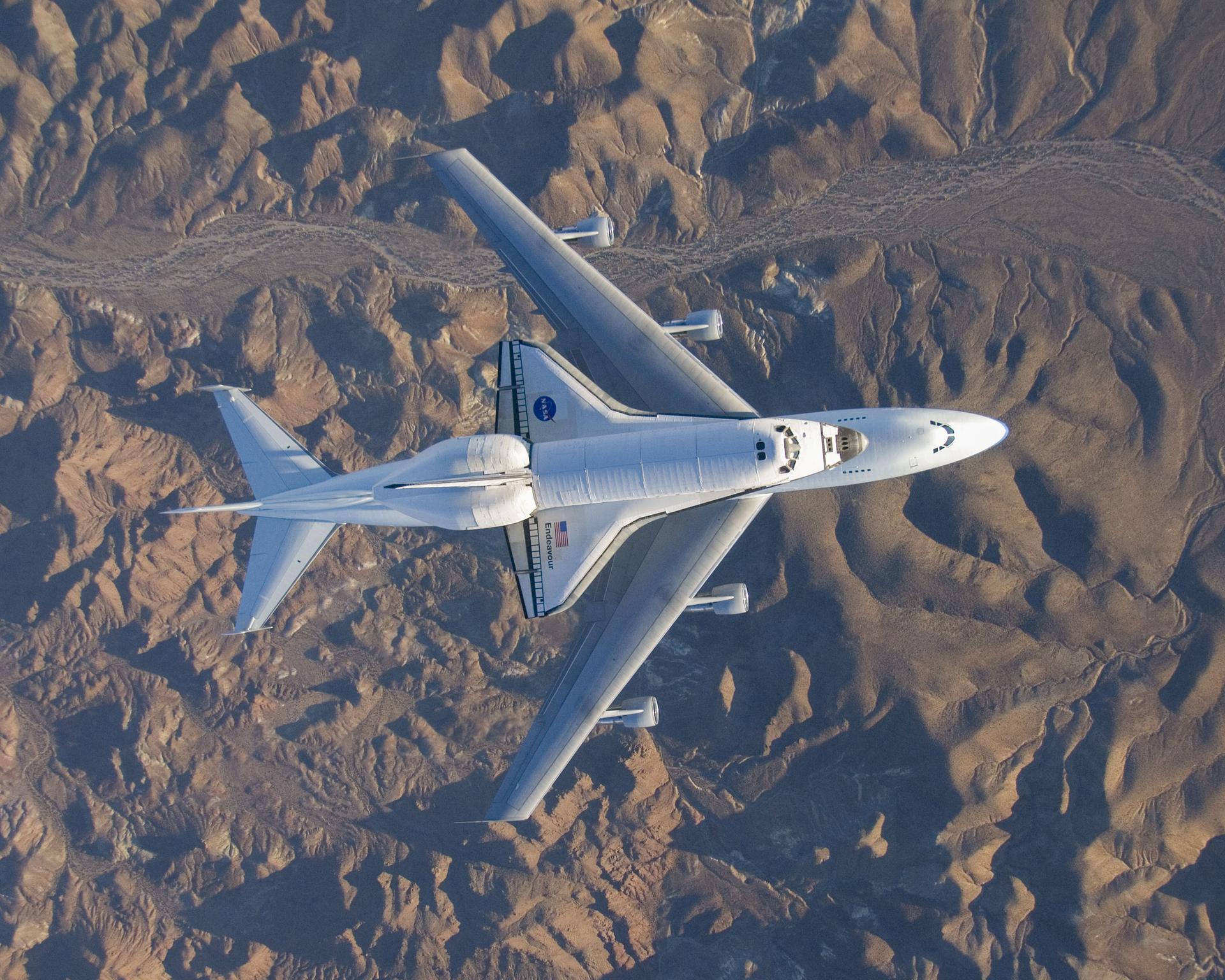
NASA aerial photographer Carla Thomas captured this top-down view of the Space Shuttle Endeavor mounted on a NASA 747 Shuttle Carrier Aircraft from an inverted F/A-18 on Wednesday, Dec. 10, 2008, over the Mojave Desert in California. The shuttle, returning to Kennedy Space Center in Florida, landed at Edwards Air Force Base in Edwards, California, and was prepared nearby at NASA’s Armstrong Flight Research Center for the return trip to Kennedy.
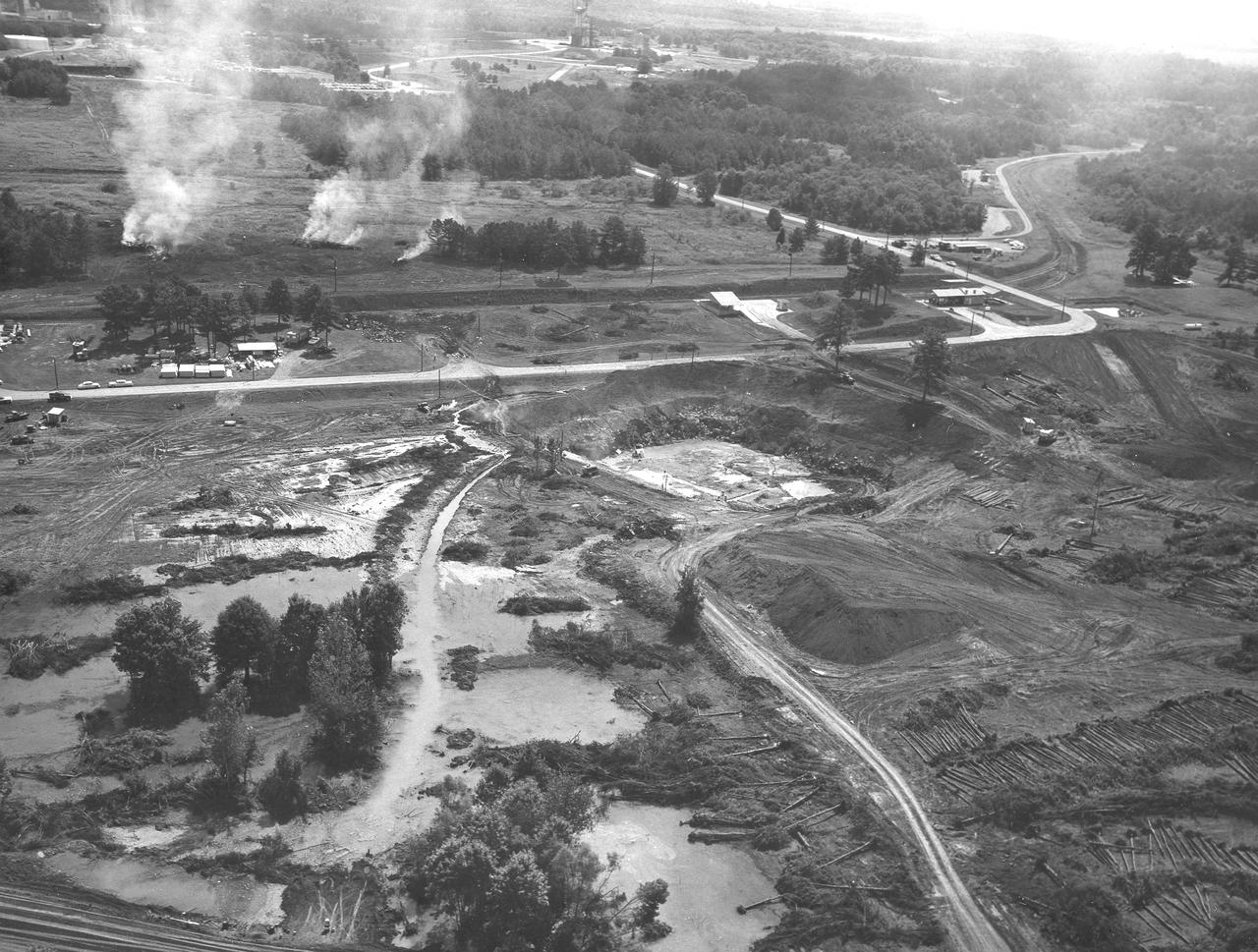
At its founding, the Marshall Space Flight Center (MSFC) inherited the Army’s Jupiter and Redstone test stands, but much larger facilities were needed for the giant stages of the Saturn V. From 1960 to 1964, the existing stands were remodeled and a sizable new test area was developed. The new comprehensive test complex for propulsion and structural dynamics was unique within the nation and the free world, and they remain so today because they were constructed with foresight to meet the future as well as on going needs. Construction of the S-IC Static test stand complex began in 1961 in the west test area of MSFC, and was completed in 1964. The S-IC static test stand was designed to develop and test the 138-ft long and 33-ft diameter Saturn V S-IC first stage, or booster stage, weighing in at 280,000 pounds. Required to hold down the brute force of a 7,500,000-pound thrust produced by 5 F-1 engines, the S-IC static test stand was designed and constructed with the strength of hundreds of tons of steel and 12,000,000 pounds of cement, planted down to bedrock 40 feet below ground level. The foundation walls, constructed with concrete and steel, are 4 feet thick. The base structure consists of four towers with 40-foot-thick walls extending upward 144 feet above ground level. The structure was topped by a crane with a 135-foot boom. With the boom in the upright position, the stand was given an overall height of 405 feet, placing it among the highest structures in Alabama at the time. This aerial shot gives a birds eye view of the test stand construction site in its entirety as of August 25, 1961.
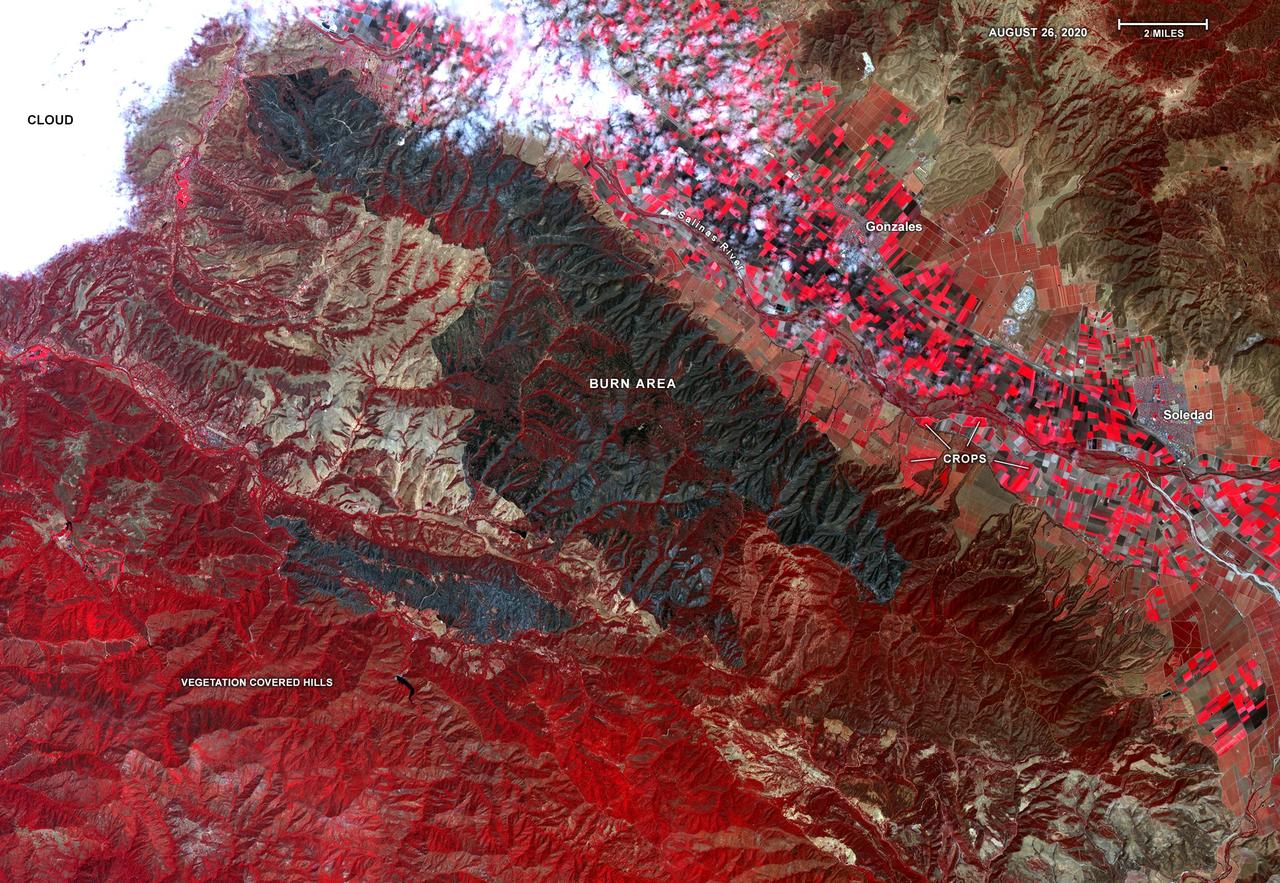
On Aug. 26, 2020, Advanced Spaceborne Thermal Emission and Reflection Radiometer (ASTER) instrument aboard NASA's Terra satellite passed over the River and Carmel fires in Monterey County, California, got a bird's eye view of the vast fire burn area. This false-color map shows the burn area as dark blue and gray, in the center of the image. Vegetation is in red, including agricultural crops along the Salinas River (bright red rectangles) surrounding the towns of Soledad and Gonzales; bare areas with no vegetation and rock are shown in tan and brown. The city of Salinas is in the upper left of the image, obscured by thick clouds. ASTER obtains high-resolution (15-90 square meters, or 161-969 square feet, per pixel) images of the Earth in 14 wavelengths of the electromagnetic spectrum, ranging from visible to thermal infrared light. Data from ASTER — which is managed by Japan Space Systems and NASA's Jet Propulsion Laboratory in Southern California — are used by scientists to create detailed maps of land surface temperature, how much infrared energy the land emits, how much light the land reflects and its elevation. On this occasion, ASTER was able to support NASA's Disaster Program response to the state's wildfires, providing data products that can be used by resources on the ground to fight the fires and for scientists to better understand their long-term effects. The area covered here is 21.4 by 31 miles (34.4 by 49.9 kilometers). https://photojournal.jpl.nasa.gov/catalog/PIA23800
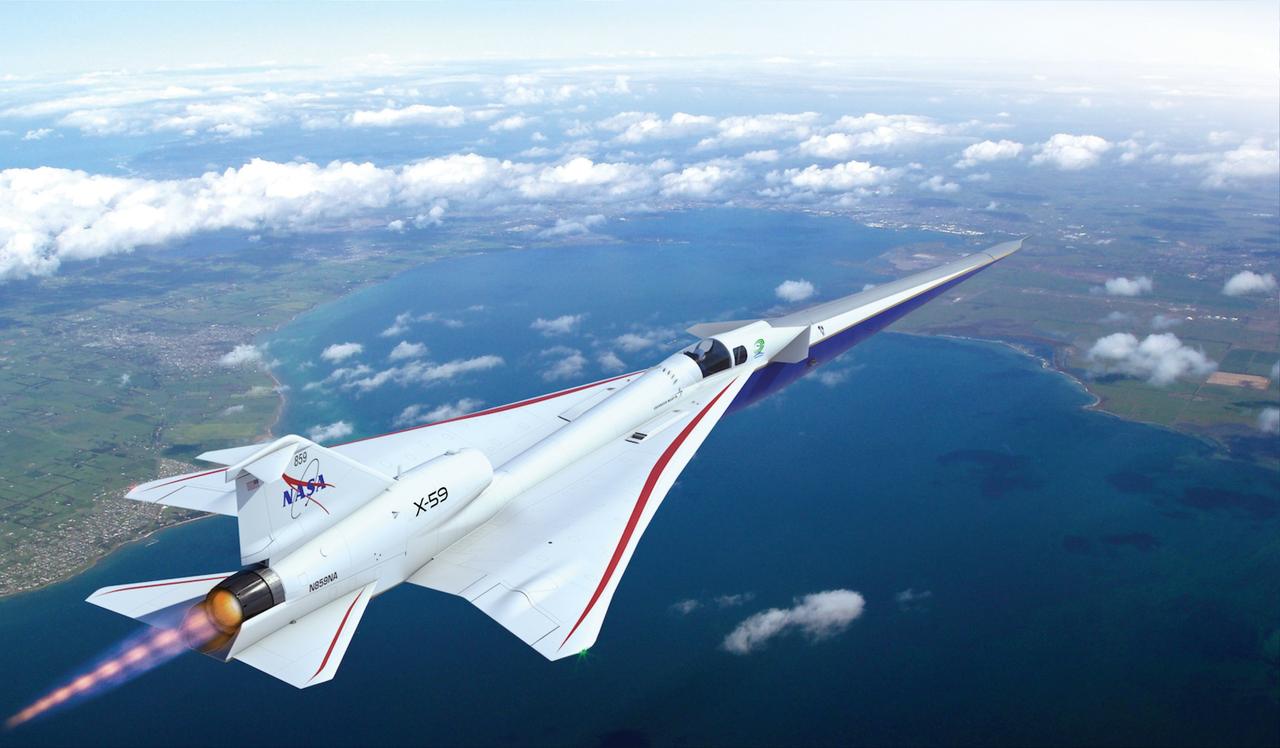
Artist concept of the X-59 in flight overland and water.
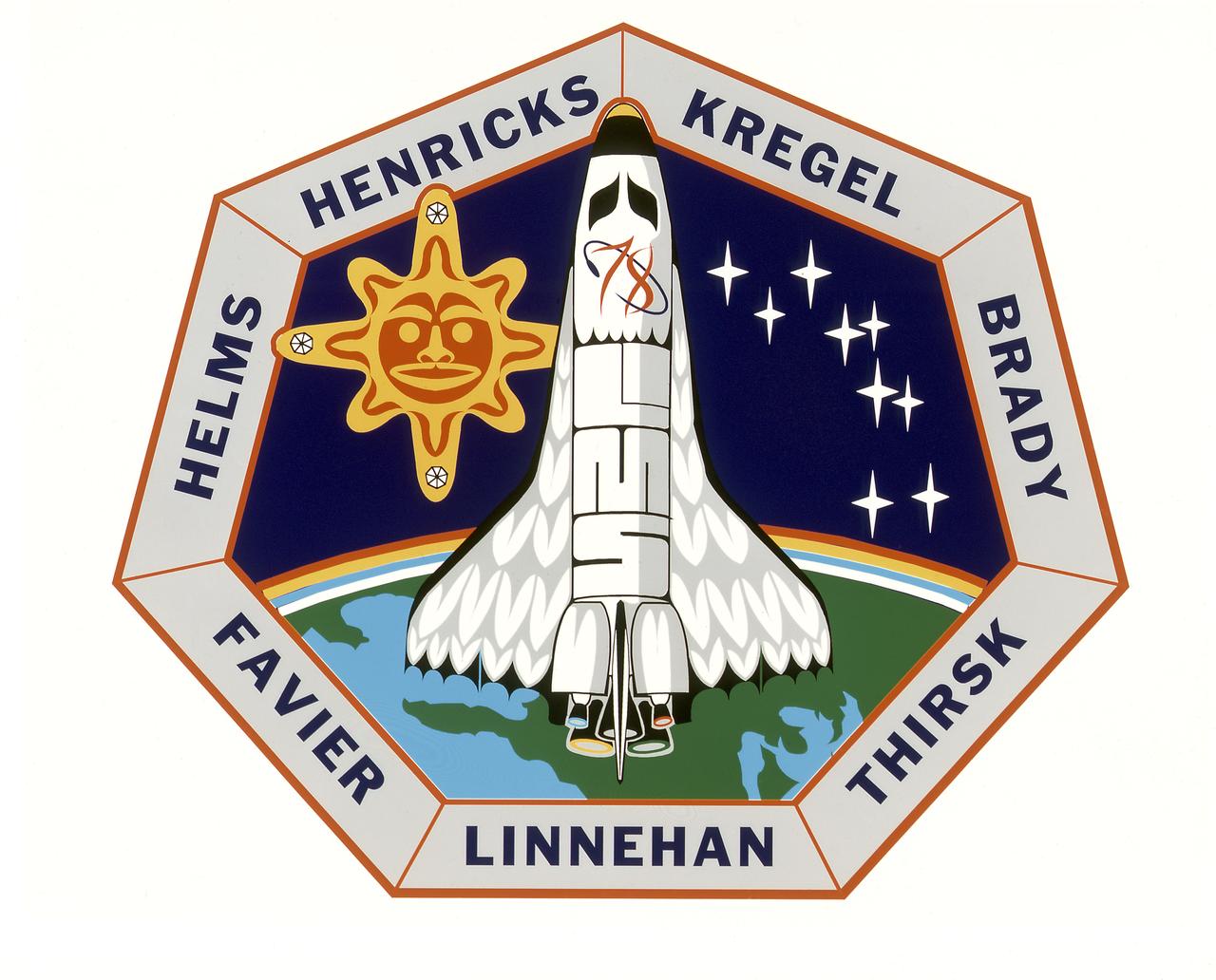
The STS-78 patch links past with present to tell the story of its mission and science through a design imbued with the strength and vitality of the 2-dimensional art of North America's northwest coast Indians. Central to the design is the space Shuttle whose bold lines and curves evoke the Indian image for the eagle, a native American symbol of power and prestige as well as the national symbol of the United States. The wings of the Shuttle suggest the wings of the eagle whose feathers, indicative of peace and friendship in Indian tradition, are captured by the U forms, a characteristic feature of Northwest coast Indian art. The nose of the Shuttle is the strong downward curve of the eagle's beak, and the Shuttle's forward windows, the eagle's eyes, represented through the tapered S forms again typical of this Indian art form. The basic black and red atoms orbiting the mission number recall the original NASA emblem while beneath, utilizing Indian ovoid forms, the major mission scientific experiment package LMS (Life and Materials Sciences) housed in the Shuttle's cargo bay is depicted in a manner reminiscent of totem-pole art. This image of a bird poised for flight, so common to Indian art, is counterpointed by an equally familiar Tsimshian Indian symbol, a pulsating sun with long hyperbolic rays, the symbol of life. Within each of these rays are now encased crystals, the products of this mission's 3 major, high-temperature materials processing furnaces. And as the sky in Indian lore is a lovely open country, home of the Sun Chief and accessible to travelers through a hole in the western horizon, so too, space is a vast and beckoning landscape for explorers launched beyond the horizon. Beneath the Tsimshian sun, the colors of the earth limb are appropriately enclosed by a red border representing life to the Northwest coast Indians. The Indian colors of red, navy blue, white, and black pervade the STS-78 path. To the right of the Shuttle-eagle, the constellation Delphinus recalls the dolphin, friend of ancient sailors and, now perhaps too, of the 9 space voyagers suggested by this constellation's blaze of 9 stars. The patch simultaneously celebrates international unity fostered by the Olympic spirit of sports competition at the 1996 Olympic Games in Atlanta, Georgia, U.S.A. Deliberately poised over the city of Atlanta, the Space Shuttle glows at its base with the 5 official Olympic rings in the 5 Olympic colors which can also be found throughout the patch, rings and colors which signify the 5 continents of the earth. This is an international mission and for the first time in NASA patch history, astronauts have dispensed with identifying country flags beneath their names to celebrate the spirit of international unity so characteristic of this flight.
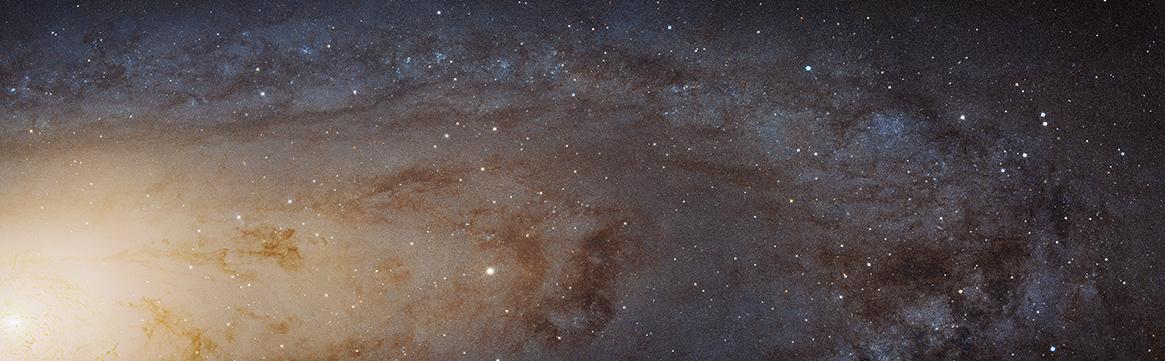
The largest NASA Hubble Space Telescope image ever assembled, this sweeping bird’s-eye view of a portion of the Andromeda galaxy (M31) is the sharpest large composite image ever taken of our galactic next-door neighbor. Though the galaxy is over 2 million light-years away, The Hubble Space Telescope is powerful enough to resolve individual stars in a 61,000-light-year-long stretch of the galaxy’s pancake-shaped disk. It's like photographing a beach and resolving individual grains of sand. And there are lots of stars in this sweeping view -- over 100 million, with some of them in thousands of star clusters seen embedded in the disk. This ambitious photographic cartography of the Andromeda galaxy represents a new benchmark for precision studies of large spiral galaxies that dominate the universe's population of over 100 billion galaxies. Never before have astronomers been able to see individual stars inside an external spiral galaxy over such a large contiguous area. Most of the stars in the universe live inside such majestic star cities, and this is the first data that reveal populations of stars in context to their home galaxy. Hubble traces densely packed stars extending from the innermost hub of the galaxy seen at the left. Moving out from this central galactic bulge, the panorama sweeps from the galaxy's central bulge across lanes of stars and dust to the sparser outer disk. Large groups of young blue stars indicate the locations of star clusters and star-forming regions. The stars bunch up in the blue ring-like feature toward the right side of the image. The dark silhouettes trace out complex dust structures. Underlying the entire galaxy is a smooth distribution of cooler red stars that trace Andromeda’s evolution over billions of years. Because the galaxy is only 2.5 million light-years from Earth, it is a much bigger target in the sky than the myriad galaxies Hubble routinely photographs that are billions of light-years away. This means that the Hubble survey is assembled together into a mosaic image using 7,398 exposures taken over 411 individual pointings. Read more: <a href="http://1.usa.gov/1y0i3H8" rel="nofollow">1.usa.gov/1y0i3H8</a> Credit: NASA, ESA, J. Dalcanton, B.F. Williams, and L.C. Johnson (University of Washington), the PHAT team, and R. Gendler <b><a href="http://www.nasa.gov/audience/formedia/features/MP_Photo_Guidelines.html" rel="nofollow">NASA image use policy.</a></b> <b><a href="http://www.nasa.gov/centers/goddard/home/index.html" rel="nofollow">NASA Goddard Space Flight Center</a></b> enables NASA’s mission through four scientific endeavors: Earth Science, Heliophysics, Solar System Exploration, and Astrophysics. Goddard plays a leading role in NASA’s accomplishments by contributing compelling scientific knowledge to advance the Agency’s mission. <b>Follow us on <a href="http://twitter.com/NASAGoddardPix" rel="nofollow">Twitter</a></b> <b>Like us on <a href="http://www.facebook.com/pages/Greenbelt-MD/NASA-Goddard/395013845897?ref=tsd" rel="nofollow">Facebook</a></b> <b>Find us on <a href="http://instagram.com/nasagoddard?vm=grid" rel="nofollow">Instagram</a></b>