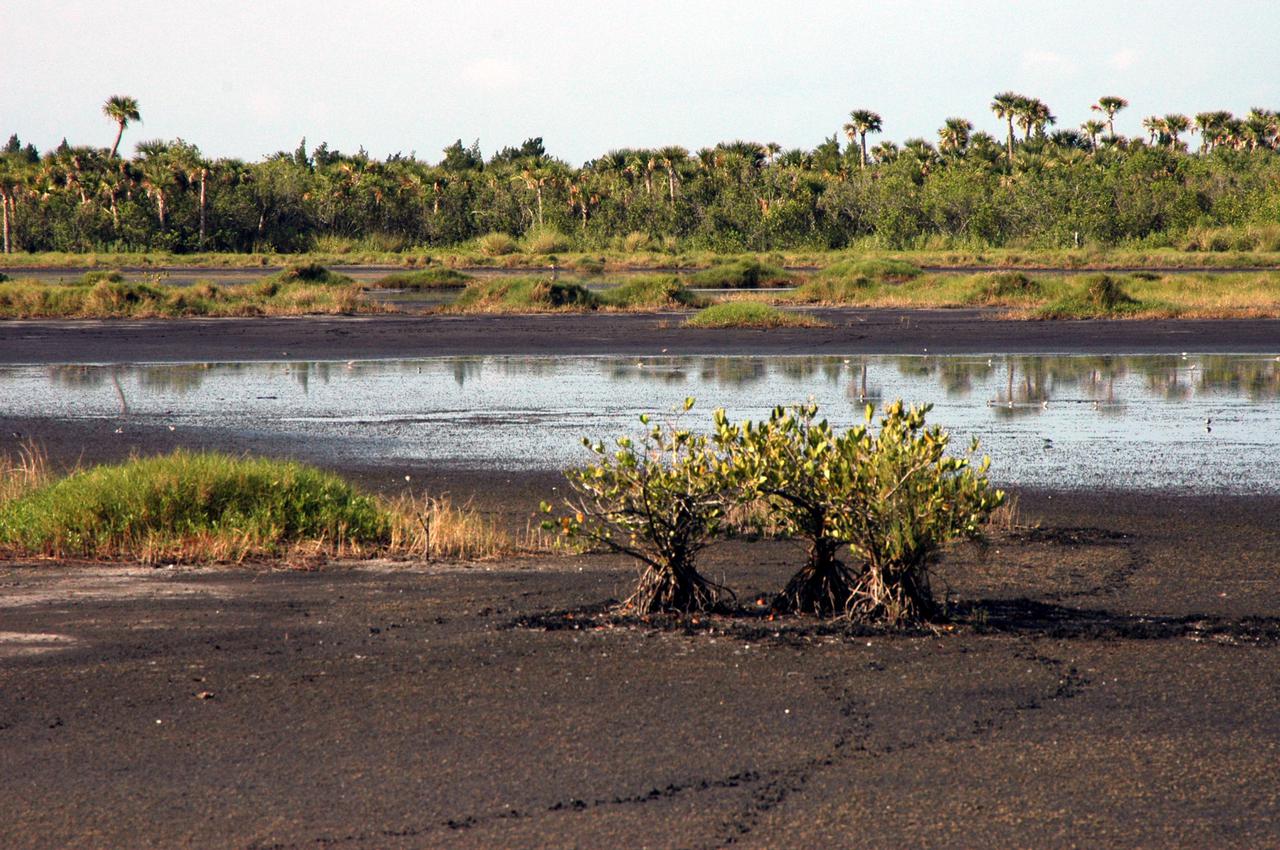
KENNEDY SPACE CENTER, FLA. - Visitors to the Space Coast may experience Florida's marshlands firsthand from Blackpoint Wildlife Drive on the Merritt Island National Wildlife Refuge. The water level subsides at this time of the year in part due to the hot daytime temperatures. The refuge was established in 1963 on Kennedy Space Center land and water not used by NASA for the space program. It encompasses 92,000 acres that are a habitat for more than 331 species of birds, 31 mammals, 117 fishes, and 65 amphibians and reptiles.
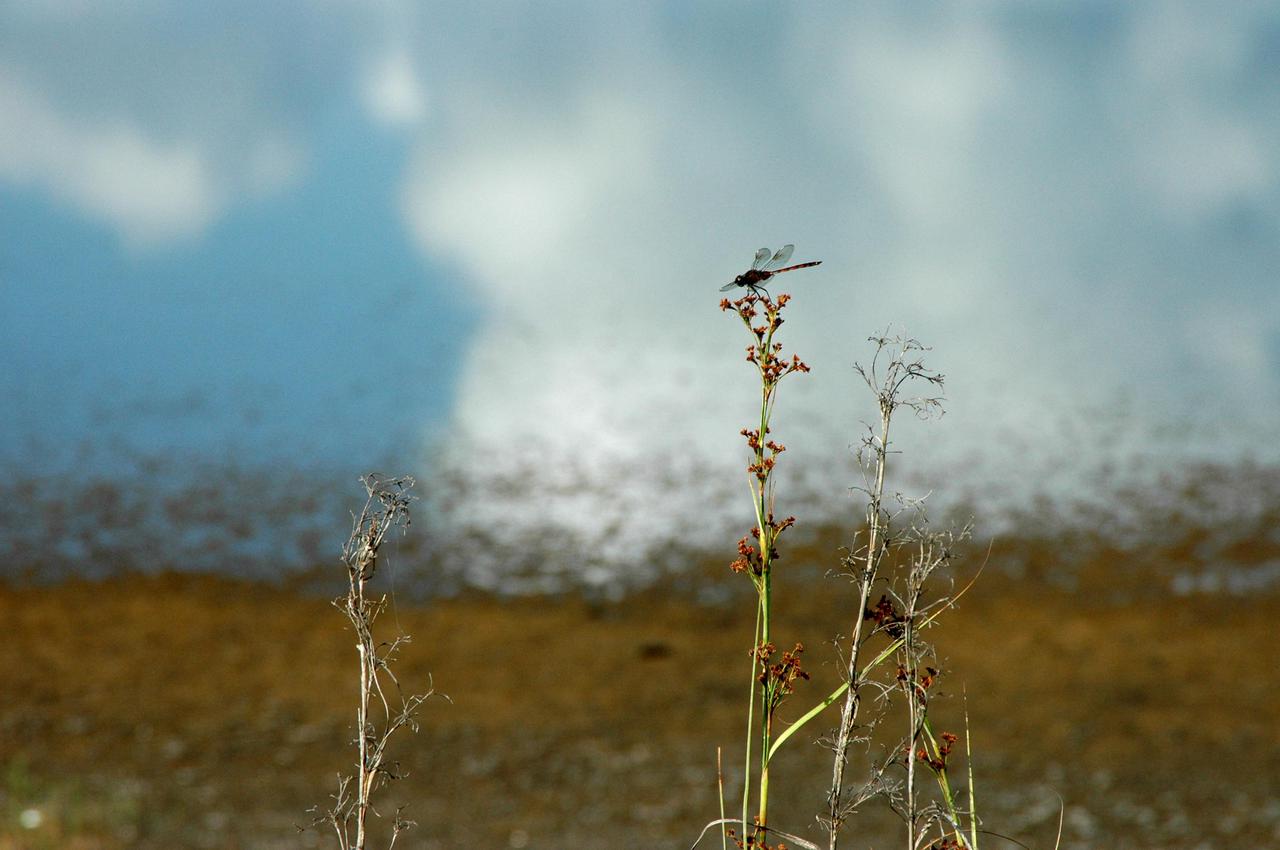
KENNEDY SPACE CENTER, FLA. - A dragonfly rests atop the highest stalk in foliage on the Merritt Island National Wildlife Refuge before resuming its daily activity. Large predatory insects with wingspans up to 5.5 inches, dragonflies snatch smaller insects from the air by means of their basket-like arrangement of legs. The refuge was established in 1963 on Kennedy Space Center land and water not used by NASA for the space program. It encompasses 92,000 acres that are a habitat for more than 331 species of birds, 31 mammals, 117 fishes, and 65 amphibians and reptiles.
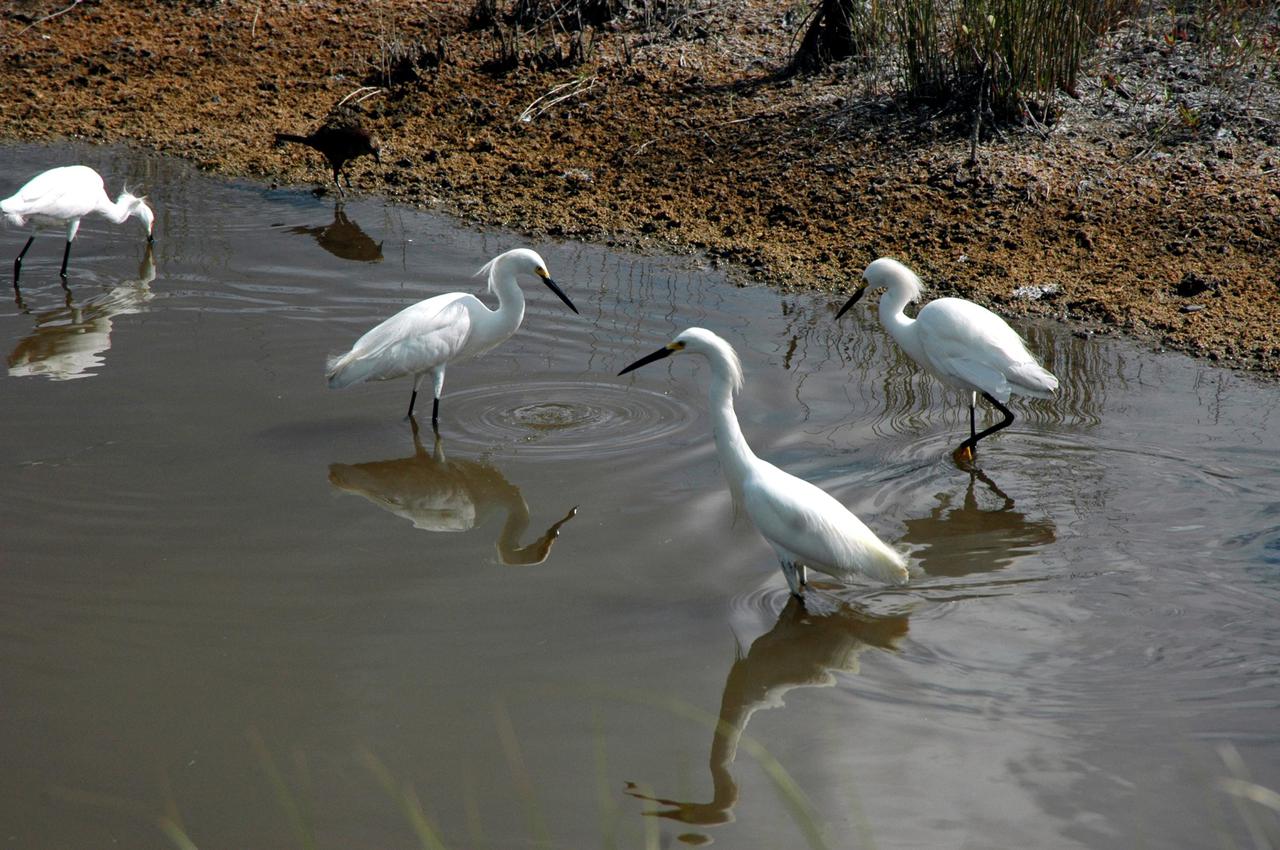
KENNEDY SPACE CENTER, FLA. - Snowy egrets join in a feeding frenzy in a marshy area of the Merritt Island National Wildlife Refuge. Ranging from northern California, Oklahoma and Maine to southern South America, the snowy egret winters north to California and South Carolina. In the East, they are best known as salt marsh birds. Once an endangered species, their numbers have increased. The refuge was established in 1963 on Kennedy Space Center land and water not used by NASA for the space program. The marshes and open water of the refuge provide wintering grounds for 23 species of migratory waterfowl, as well as a year-round home for great blue herons, wood storks, cormorants, brown pelicans and other species of marsh and shore birds.
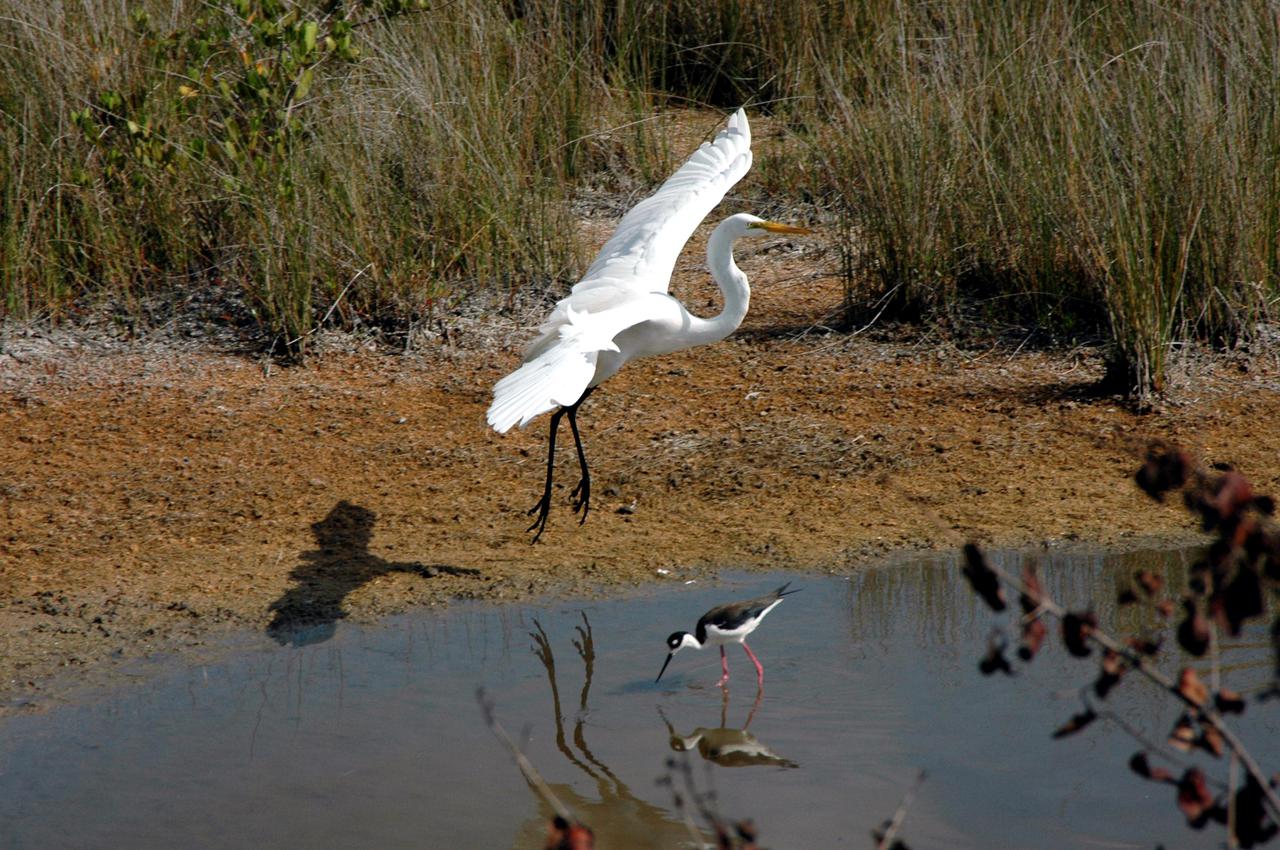
KENNEDY SPACE CENTER, FLA. - A black-necked stilt, foraging for food, pays no attention to a great egret as it comes in for a landing in a marshy area of the Merritt Island National Wildlife Refuge. The refuge was established in 1963 on Kennedy Space Center land and water not used by NASA for the space program. The marshes and open water of the refuge provide wintering grounds for 23 species of migratory waterfowl, as well as a year-round home for great blue herons, wood storks, cormorants, brown pelicans and other species of marsh and shore birds.
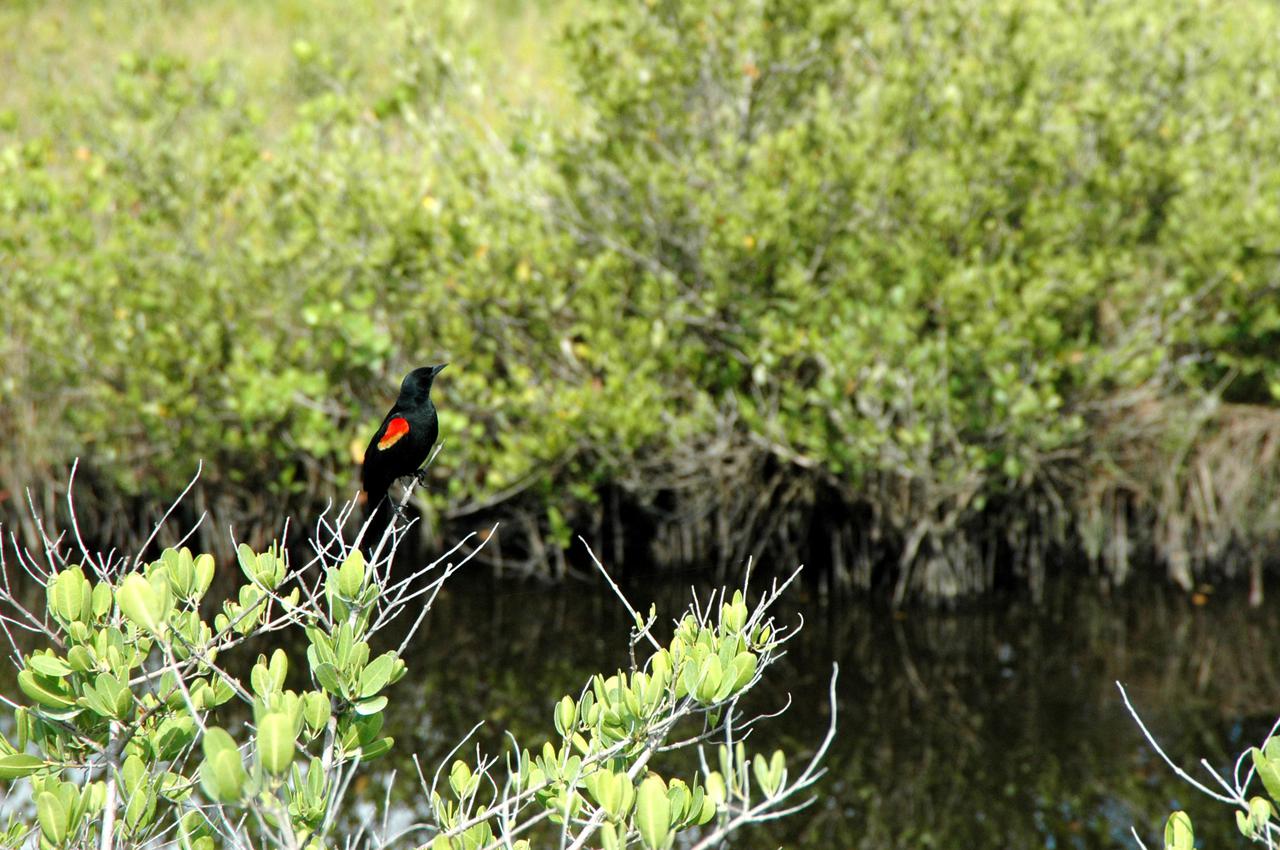
KENNEDY SPACE CENTER, FLA. - An adult male red-winged blackbird perches on a shrub in a marsh on the Merritt Island National Wildlife Refuge. Males have glossy black feathers except on the epaulets of their wings, where they are scarlet bordered with buff or yellow. The birds do not attain full adult plumage until their third year. The refuge was established in 1963 on Kennedy Space Center land and water not used by NASA for the space program. The marshes and open water of the refuge provide wintering grounds for 23 species of migratory waterfowl, as well as a year-round home for great blue herons, wood storks, cormorants, brown pelicans and other species of marsh and shore birds.
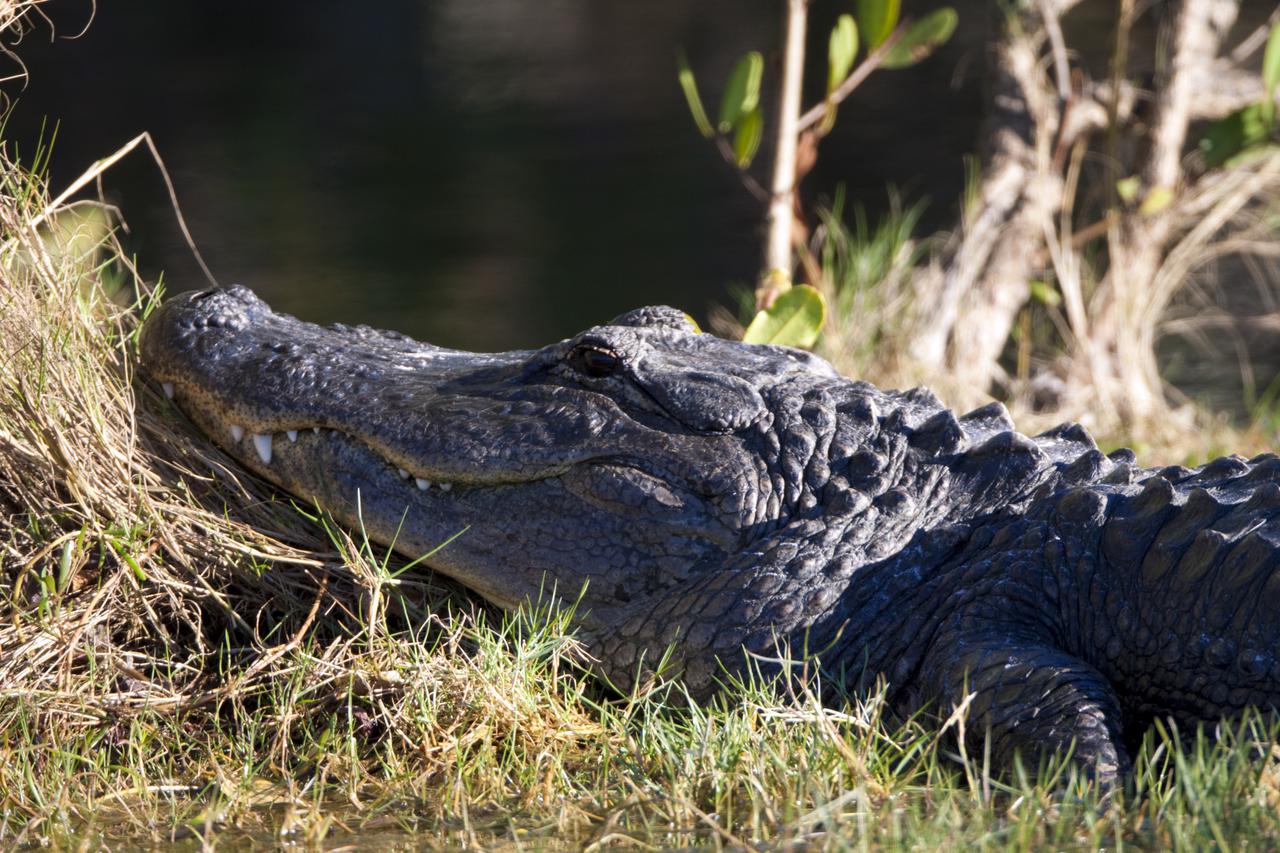
CAPE CANAVERAL, Fla. – An alligator in the marsh at the Blackpoint Wildlife Drive in the Merritt Island National Wildlife Refuge, northwest of NASA's Kennedy Space Center in Florida. Kennedy Space Center shares a boundary with the Merritt Island National Wildlife Refuge. The Refuge encompasses 92,000 acres that are a habitat for more than 331 species of birds, 31 mammals, 117 fishes, and 65 amphibians and reptiles. The marshes and open water of the refuge provide wintering areas for 23 species of migratory waterfowl, as well as a year-round home for great blue herons, great egrets, wood storks, cormorants, brown pelicans and other species of marsh and shore birds, as well as a variety of insects. For more information, visit: http:__www.nasa.gov_centers_kennedy_shuttleoperations_alligators_kscovr.html Photo credit: NASA_Jim Grossmann
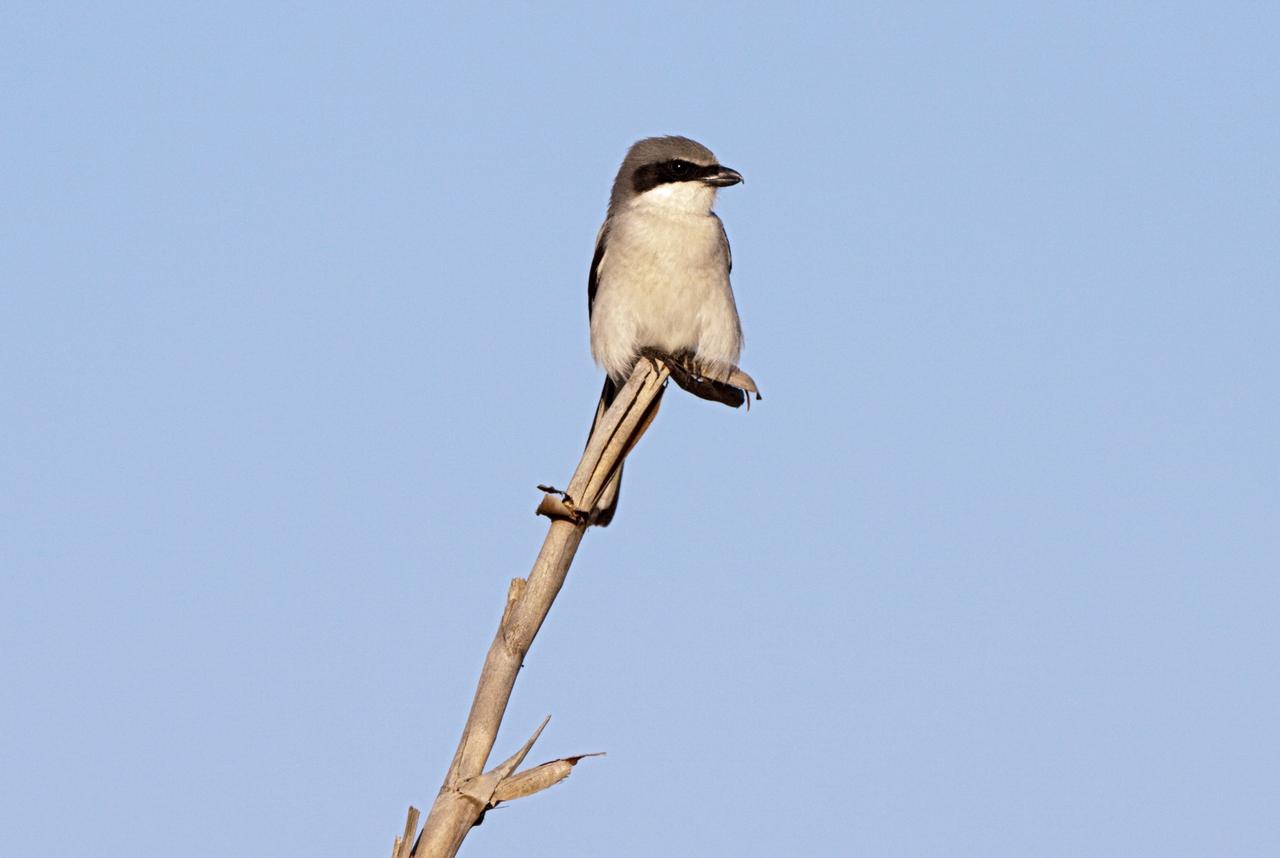
CAPE CANAVERAL, Fla. – A small bird is perched on a branch in the Blackpoint Wildlife Drive in the Merritt Island National Wildlife Refuge, northwest of NASA's Kennedy Space Center in Florida. Kennedy Space Center shares a boundary with the Merritt Island National Wildlife Refuge. The Refuge encompasses 92,000 acres that are a habitat for more than 331 species of birds, 31 mammals, 117 fishes, and 65 amphibians and reptiles. The marshes and open water of the refuge provide wintering areas for 23 species of migratory waterfowl, as well as a year-round home for great blue herons, great egrets, wood storks, cormorants, brown pelicans and other species of marsh and shore birds, as well as a variety of insects. For more information, visit: http://www.nasa.gov/centers/kennedy/shuttleoperations/alligators/kscovr.html Photo credit: NASA/Jim Grossmann
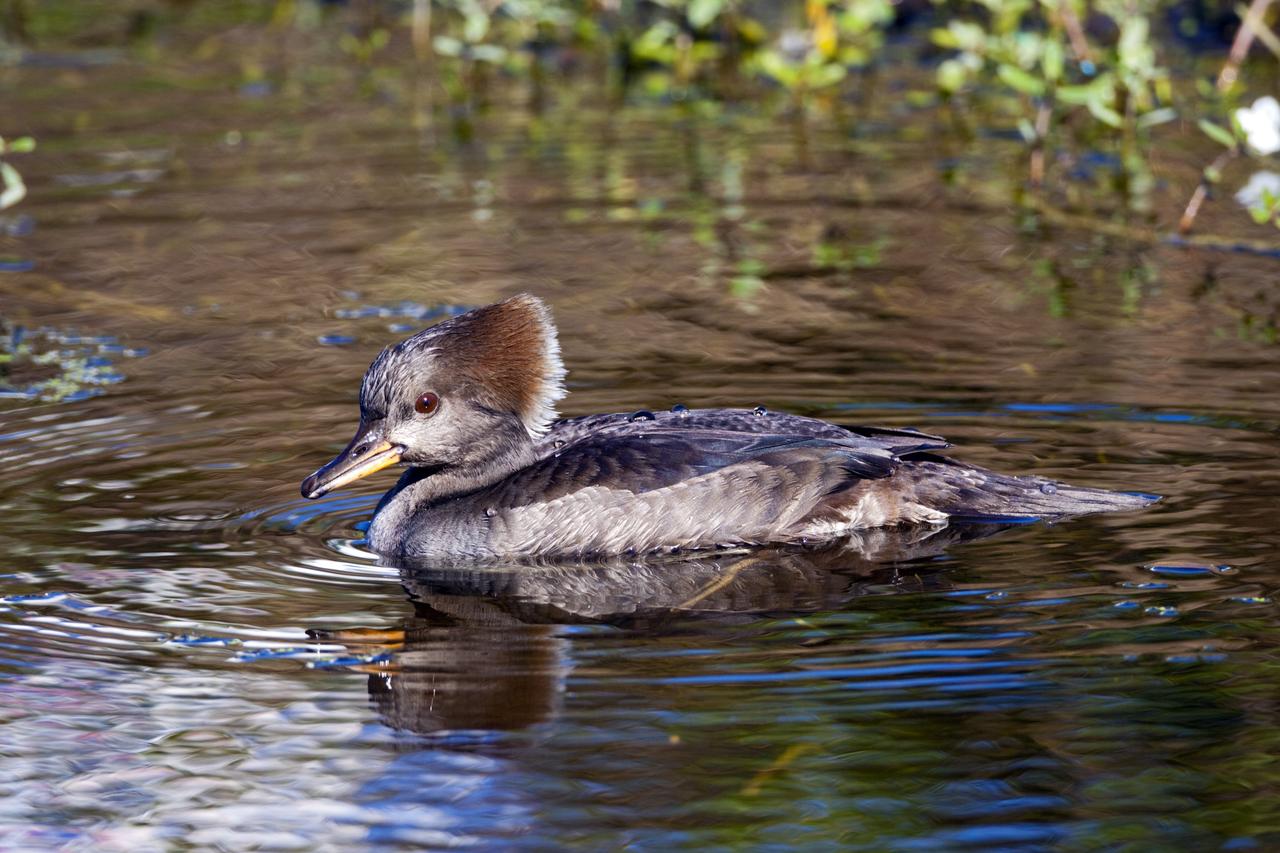
CAPE CANAVERAL, Fla. – A duck is reflected in the waters of the Blackpoint Wildlife Drive in the Merritt Island National Wildlife Refuge, northwest of NASA's Kennedy Space Center in Florida. Kennedy Space Center shares a boundary with the Merritt Island National Wildlife Refuge. The Refuge encompasses 92,000 acres that are a habitat for more than 331 species of birds, 31 mammals, 117 fishes, and 65 amphibians and reptiles. The marshes and open water of the refuge provide wintering areas for 23 species of migratory waterfowl, as well as a year-round home for great blue herons, great egrets, wood storks, cormorants, brown pelicans and other species of marsh and shore birds, as well as a variety of insects. For more information, visit: http://www.nasa.gov/centers/kennedy/shuttleoperations/alligators/kscovr.html Photo credit: NASA/Jim Grossmann
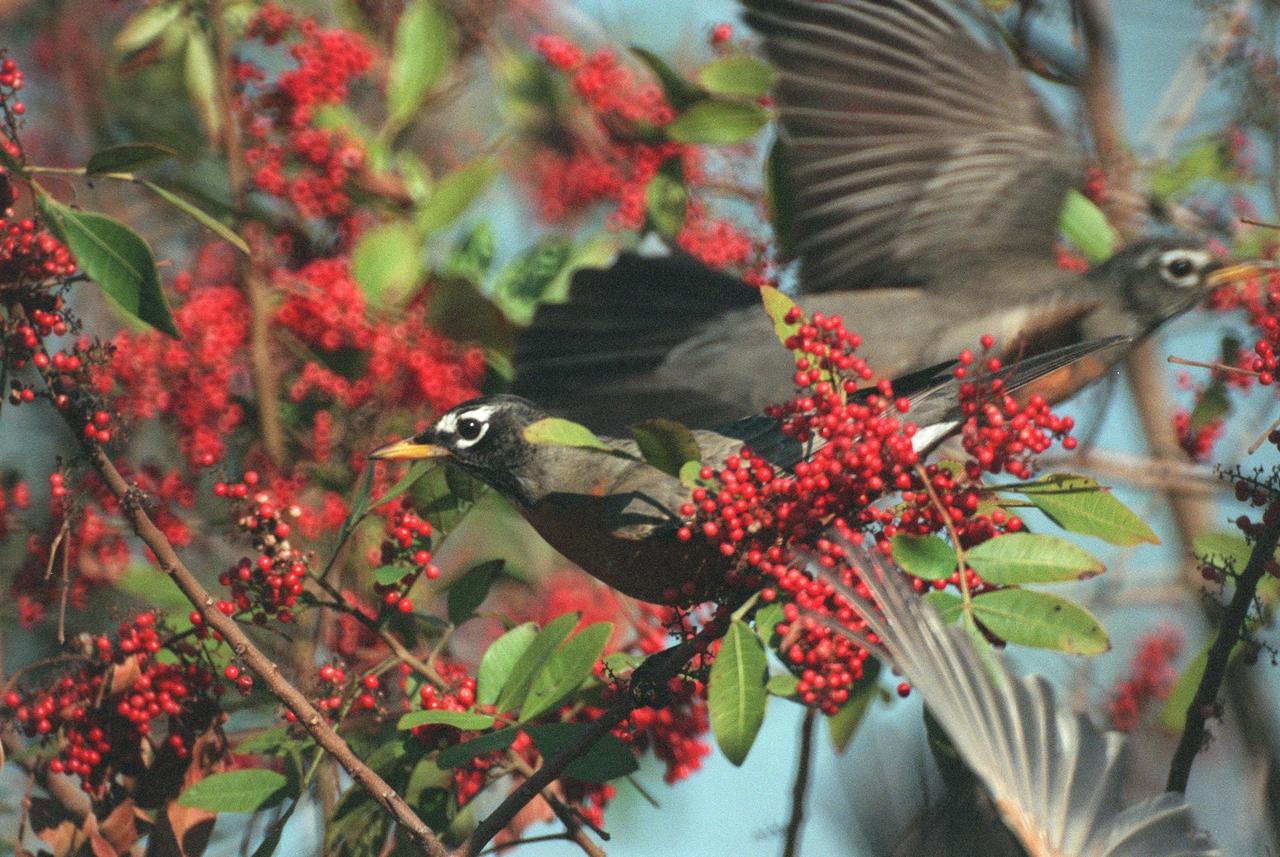
KENNEDY SPACE CENTER, FLA. -- Seen on Blackpoint Wildlife Drive, part of the Merritt Island National Wildlife Refuge, robins enjoy a feast of red berries. Robins range throughout North America, preferring gardens, open woodland, agricultural land, as well as towns. The birds are usually considered a harbinger of spring, and can be seen in large flocks throughout Florida in January and February, especially as they gather for northern migration. Kennedy Space Center shares a boundary with the Merritt Island National Wildlife Refuge. The Refuge encompasses 92,000 acres that are a habitat for more than 331 species of birds, 31 mammals, 117 fishes, and 65 amphibians and reptiles. The marshes and open water of the refuge provide wintering areas for 23 species of migratory waterfowl, as well as a year-round home for great blue herons, great egrets, wood storks, cormorants, brown pelicans and other species of marsh and shore birds, as well as a variety of insects
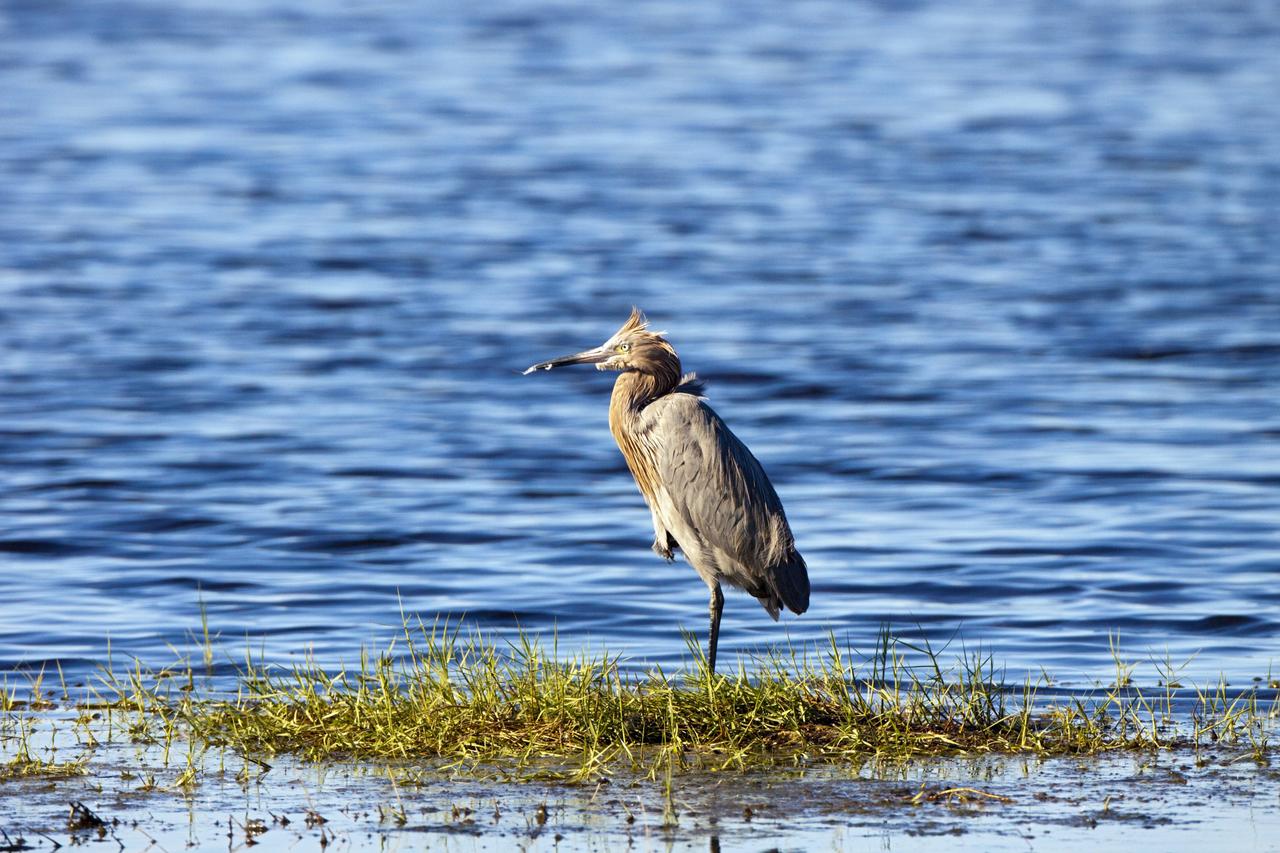
CAPE CANAVERAL, Fla. – A heron stands in the waters of the Blackpoint Wildlife Drive in the Merritt Island National Wildlife Refuge, northwest of NASA's Kennedy Space Center in Florida. Kennedy Space Center shares a boundary with the Merritt Island National Wildlife Refuge. The Refuge encompasses 92,000 acres that are a habitat for more than 331 species of birds, 31 mammals, 117 fishes, and 65 amphibians and reptiles. The marshes and open water of the refuge provide wintering areas for 23 species of migratory waterfowl, as well as a year-round home for great blue herons, great egrets, wood storks, cormorants, brown pelicans and other species of marsh and shore birds, as well as a variety of insects. For more information, visit: http://www.nasa.gov/centers/kennedy/shuttleoperations/alligators/kscovr.html Photo credit: NASA/Jim Grossmann
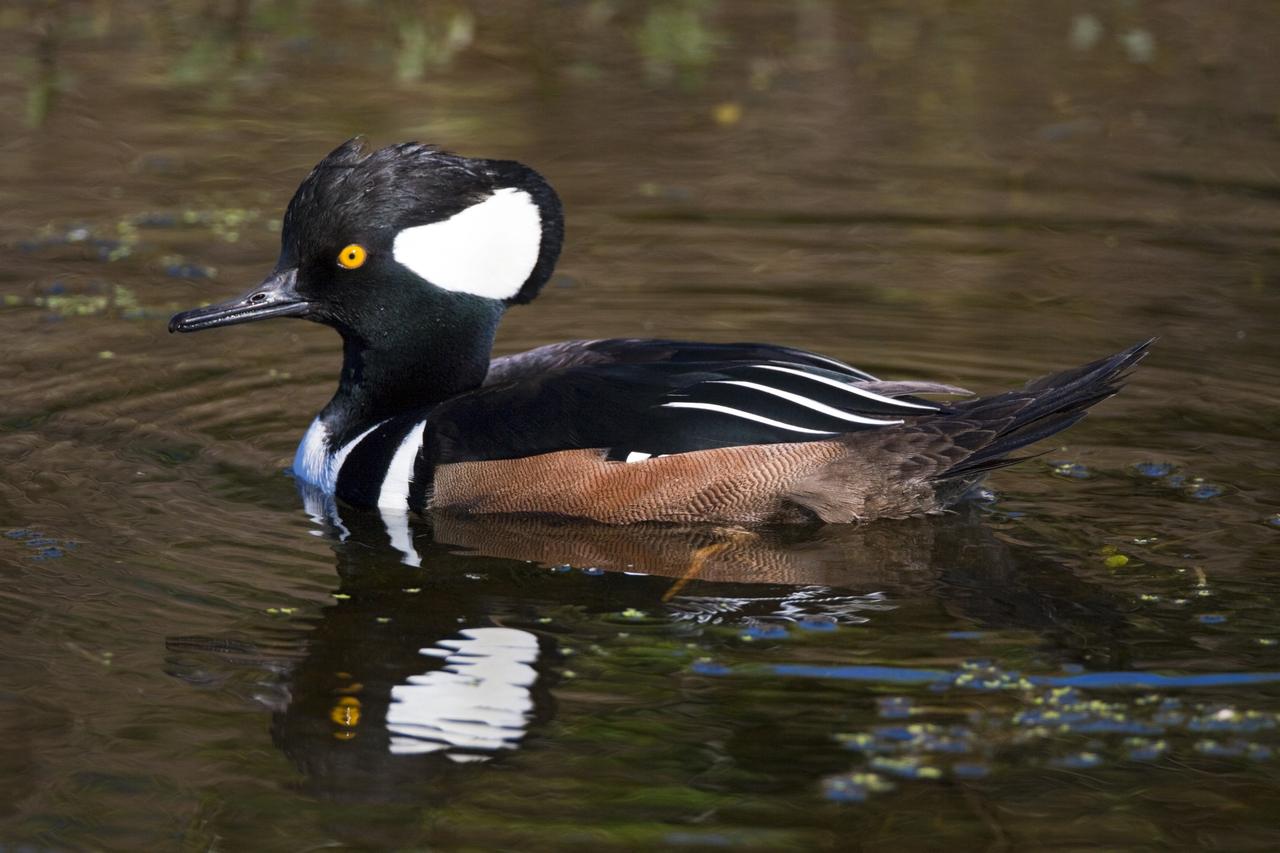
CAPE CANAVERAL, Fla. – A duck is reflected in the waters of the Blackpoint Wildlife Drive in the Merritt Island National Wildlife Refuge, northwest of NASA's Kennedy Space Center in Florida. Kennedy Space Center shares a boundary with the Merritt Island National Wildlife Refuge. The Refuge encompasses 92,000 acres that are a habitat for more than 331 species of birds, 31 mammals, 117 fishes, and 65 amphibians and reptiles. The marshes and open water of the refuge provide wintering areas for 23 species of migratory waterfowl, as well as a year-round home for great blue herons, great egrets, wood storks, cormorants, brown pelicans and other species of marsh and shore birds, as well as a variety of insects. For more information, visit: http://www.nasa.gov/centers/kennedy/shuttleoperations/alligators/kscovr.html Photo credit: NASA/Jim Grossmann
CAPE CANAVERAL, Fla. – A stork stands in the Blackpoint Wildlife Drive in the Merritt Island National Wildlife Refuge, northwest of NASA's Kennedy Space Center in Florida. Kennedy Space Center shares a boundary with the Merritt Island National Wildlife Refuge. The Refuge encompasses 92,000 acres that are a habitat for more than 331 species of birds, 31 mammals, 117 fishes, and 65 amphibians and reptiles. The marshes and open water of the refuge provide wintering areas for 23 species of migratory waterfowl, as well as a year-round home for great blue herons, great egrets, wood storks, cormorants, brown pelicans and other species of marsh and shore birds, as well as a variety of insects. For more information, visit: http://www.nasa.gov/centers/kennedy/shuttleoperations/alligators/kscovr.html Photo credit: NASA/Jim Grossmann
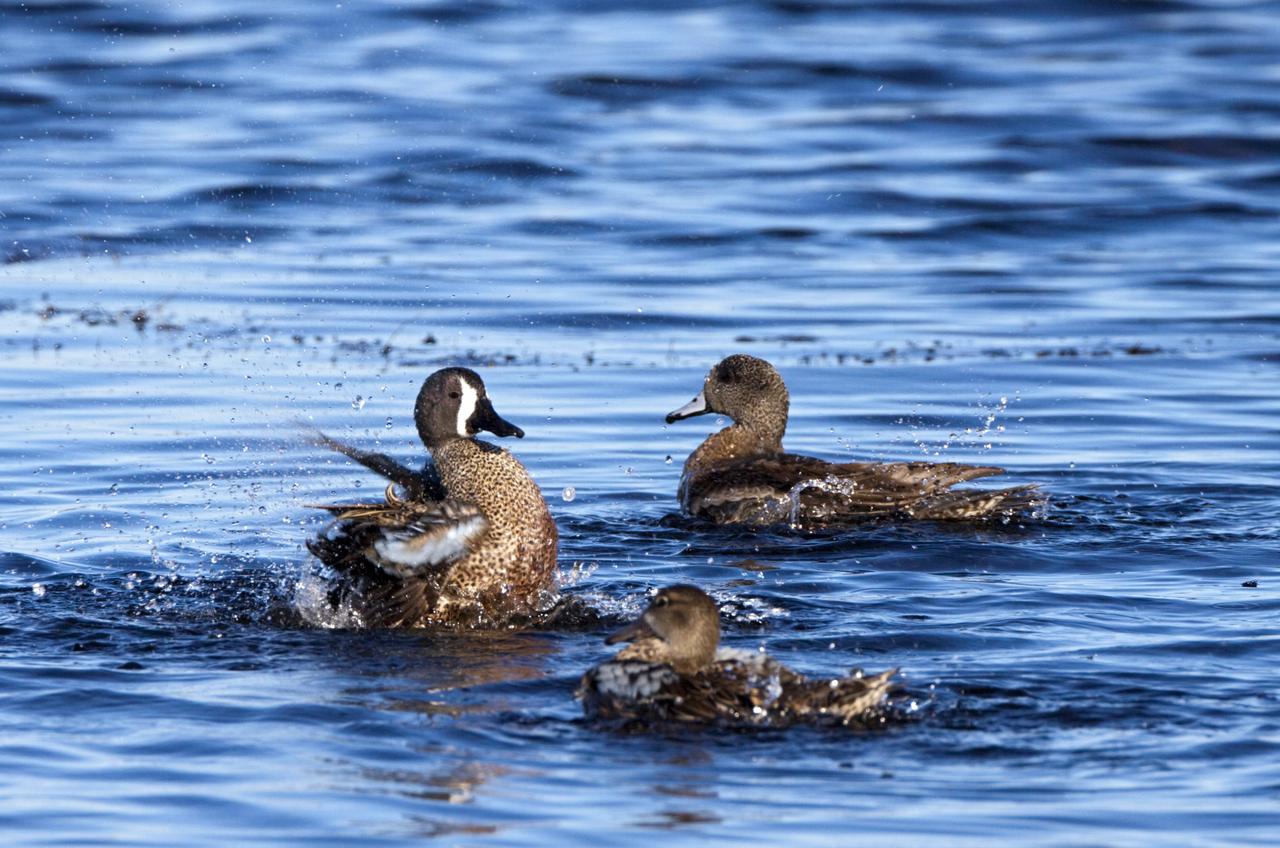
CAPE CANAVERAL, Fla. – Three ducks splash in the waters of the Blackpoint Wildlife Drive in the Merritt Island National Wildlife Refuge, northwest of NASA's Kennedy Space Center in Florida. Kennedy Space Center shares a boundary with the Merritt Island National Wildlife Refuge. The Refuge encompasses 92,000 acres that are a habitat for more than 331 species of birds, 31 mammals, 117 fishes, and 65 amphibians and reptiles. The marshes and open water of the refuge provide wintering areas for 23 species of migratory waterfowl, as well as a year-round home for great blue herons, great egrets, wood storks, cormorants, brown pelicans and other species of marsh and shore birds, as well as a variety of insects. For more information, visit: http://www.nasa.gov/centers/kennedy/shuttleoperations/alligators/kscovr.html Photo credit: NASA/Jim Grossmann
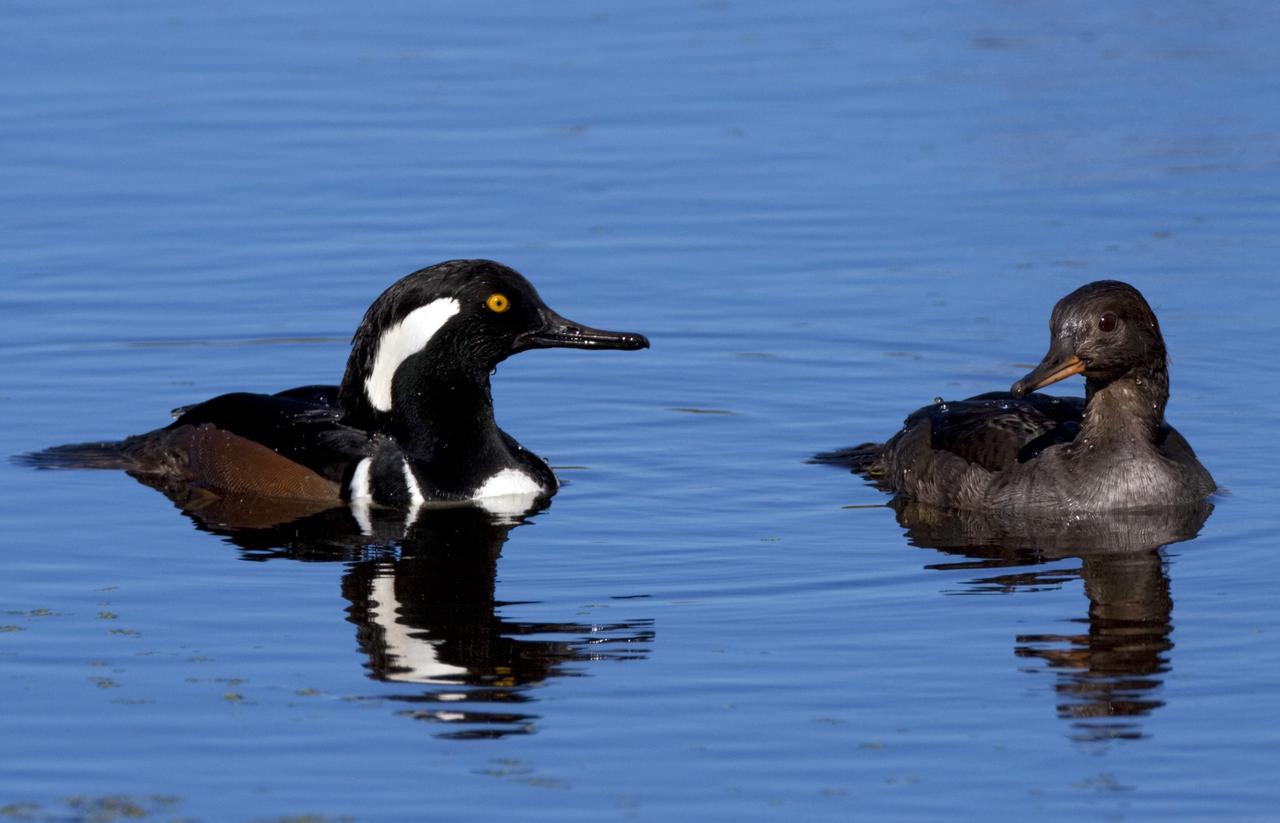
CAPE CANAVERAL, Fla. – Two ducks are reflected in the waters of the Blackpoint Wildlife Drive in the Merritt Island National Wildlife Refuge, northwest of NASA's Kennedy Space Center in Florida. Kennedy Space Center shares a boundary with the Merritt Island National Wildlife Refuge. The Refuge encompasses 92,000 acres that are a habitat for more than 331 species of birds, 31 mammals, 117 fishes, and 65 amphibians and reptiles. The marshes and open water of the refuge provide wintering areas for 23 species of migratory waterfowl, as well as a year-round home for great blue herons, great egrets, wood storks, cormorants, brown pelicans and other species of marsh and shore birds, as well as a variety of insects. For more information, visit: http://www.nasa.gov/centers/kennedy/shuttleoperations/alligators/kscovr.html Photo credit: NASA/Jim Grossmann
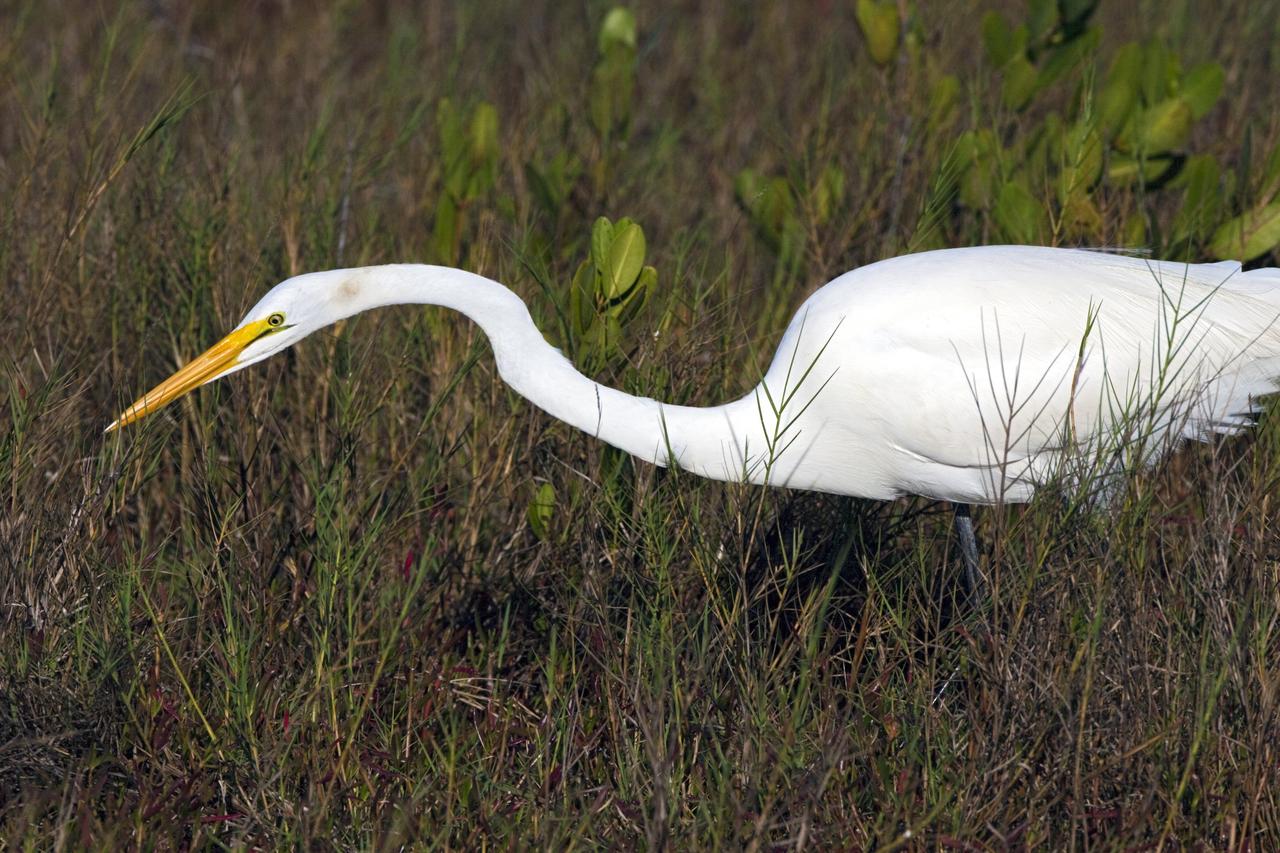
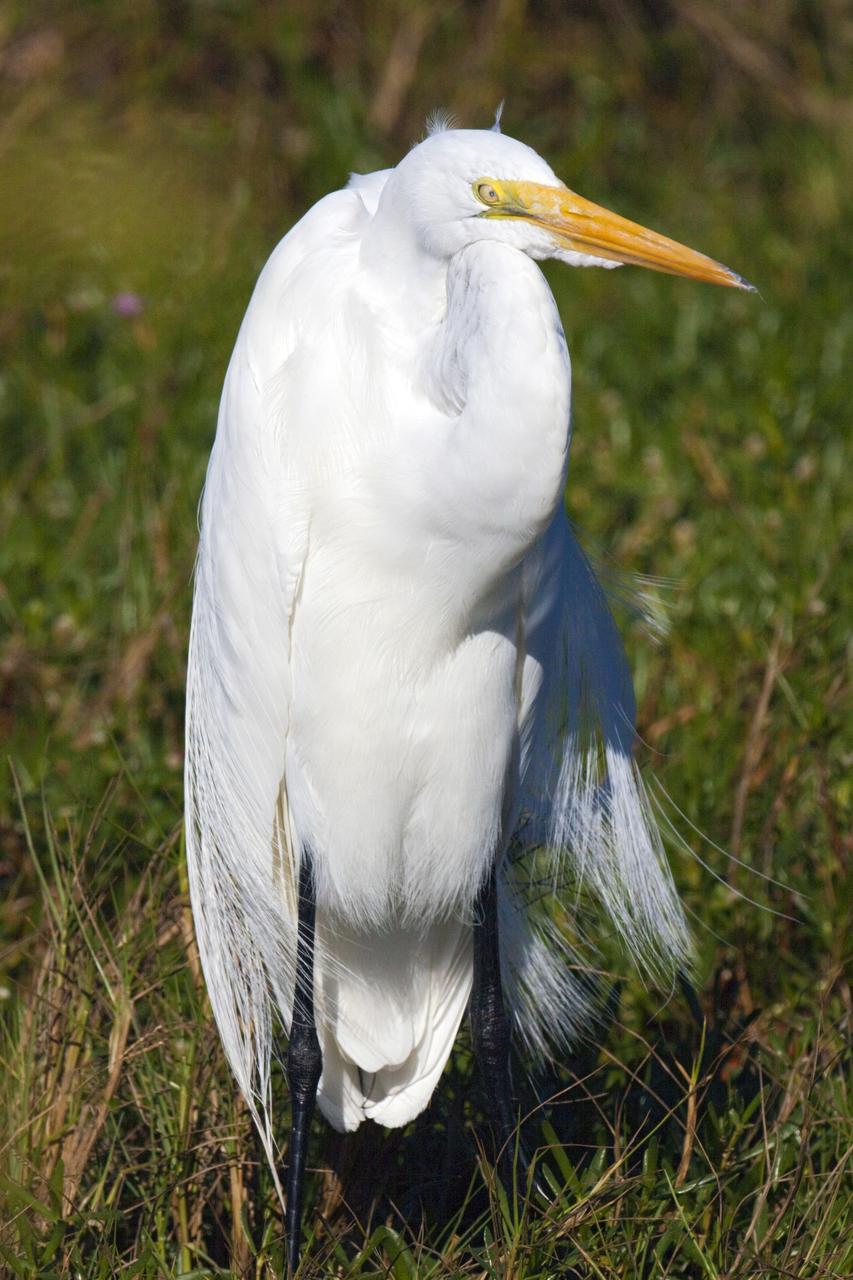
CAPE CANAVERAL, Fla. – A great egret stands in the march at the Blackpoint Wildlife Drive in the Merritt Island National Wildlife Refuge, northwest of NASA's Kennedy Space Center in Florida. Kennedy Space Center shares a boundary with the Merritt Island National Wildlife Refuge. The Refuge encompasses 92,000 acres that are a habitat for more than 331 species of birds, 31 mammals, 117 fishes, and 65 amphibians and reptiles. The marshes and open water of the refuge provide wintering areas for 23 species of migratory waterfowl, as well as a year-round home for great blue herons, great egrets, wood storks, cormorants, brown pelicans and other species of marsh and shore birds, as well as a variety of insects. For more information, visit: http://www.nasa.gov/centers/kennedy/shuttleoperations/alligators/kscovr.html Photo credit: NASA/Jim Grossmann
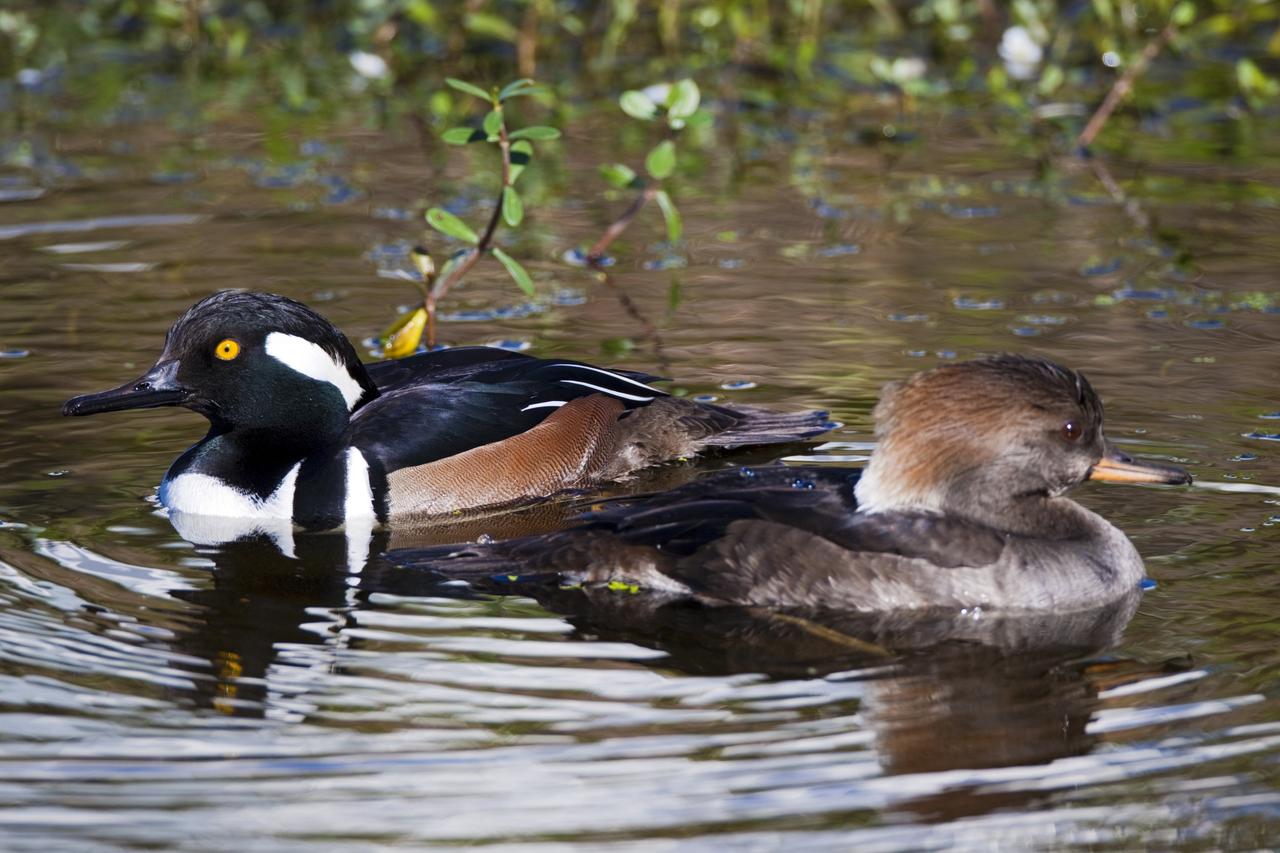
CAPE CANAVERAL, Fla. – Two ducks are reflected in the waters of the Blackpoint Wildlife Drive in the Merritt Island National Wildlife Refuge, northwest of NASA's Kennedy Space Center in Florida. Kennedy Space Center shares a boundary with the Merritt Island National Wildlife Refuge. The Refuge encompasses 92,000 acres that are a habitat for more than 331 species of birds, 31 mammals, 117 fishes, and 65 amphibians and reptiles. The marshes and open water of the refuge provide wintering areas for 23 species of migratory waterfowl, as well as a year-round home for great blue herons, great egrets, wood storks, cormorants, brown pelicans and other species of marsh and shore birds, as well as a variety of insects. For more information, visit: http://www.nasa.gov/centers/kennedy/shuttleoperations/alligators/kscovr.html Photo credit: NASA/Jim Grossmann
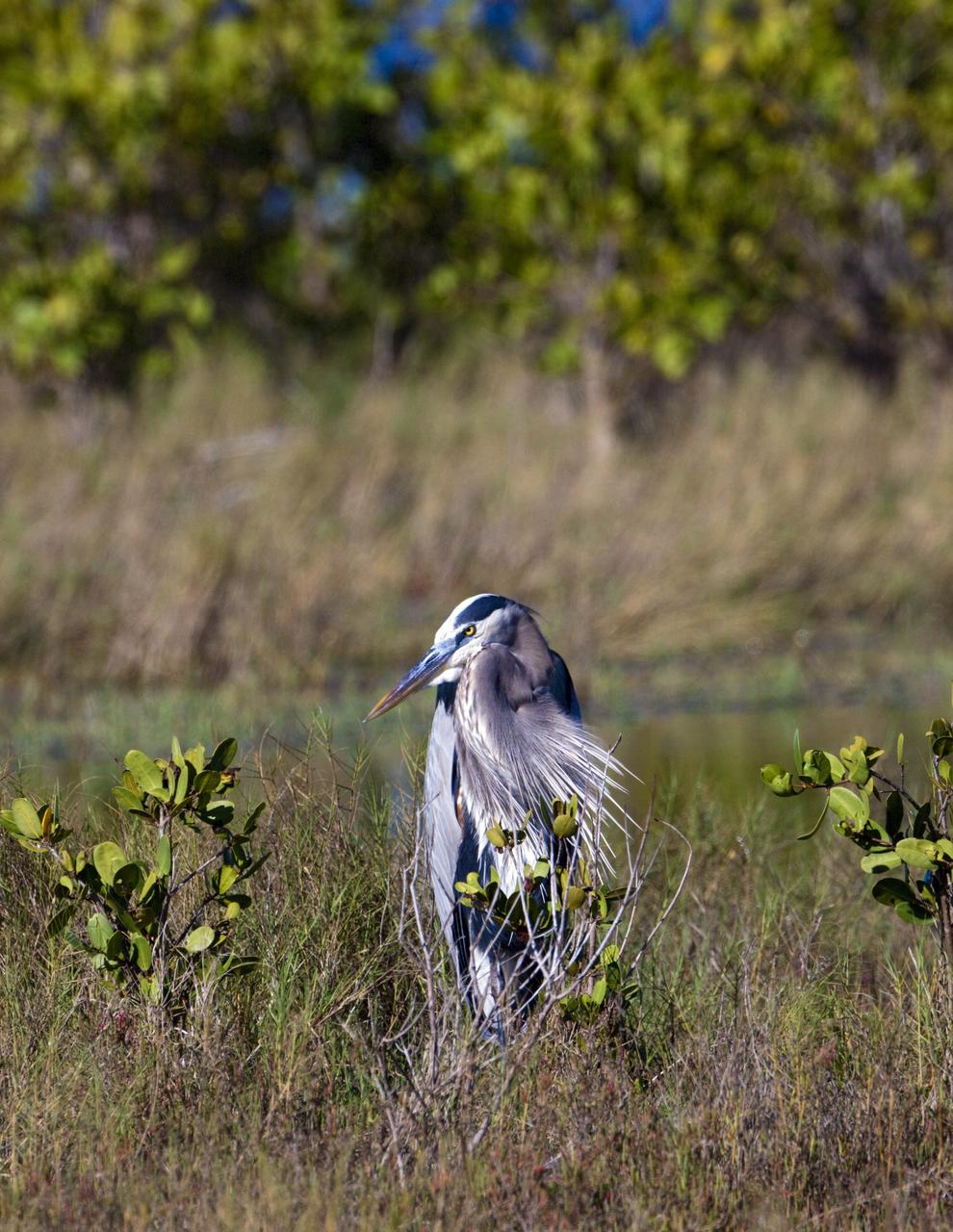
CAPE CANAVERAL, Fla. – A great blue heron stands in the Blackpoint Wildlife Drive in the Merritt Island National Wildlife Refuge, northwest of NASA's Kennedy Space Center in Florida. Kennedy Space Center shares a boundary with the Merritt Island National Wildlife Refuge. The Refuge encompasses 92,000 acres that are a habitat for more than 331 species of birds, 31 mammals, 117 fishes, and 65 amphibians and reptiles. The marshes and open water of the refuge provide wintering areas for 23 species of migratory waterfowl, as well as a year-round home for great blue herons, great egrets, wood storks, cormorants, brown pelicans and other species of marsh and shore birds, as well as a variety of insects. For more information, visit: http://www.nasa.gov/centers/kennedy/shuttleoperations/alligators/kscovr.html Photo credit: NASA/Jim Grossmann
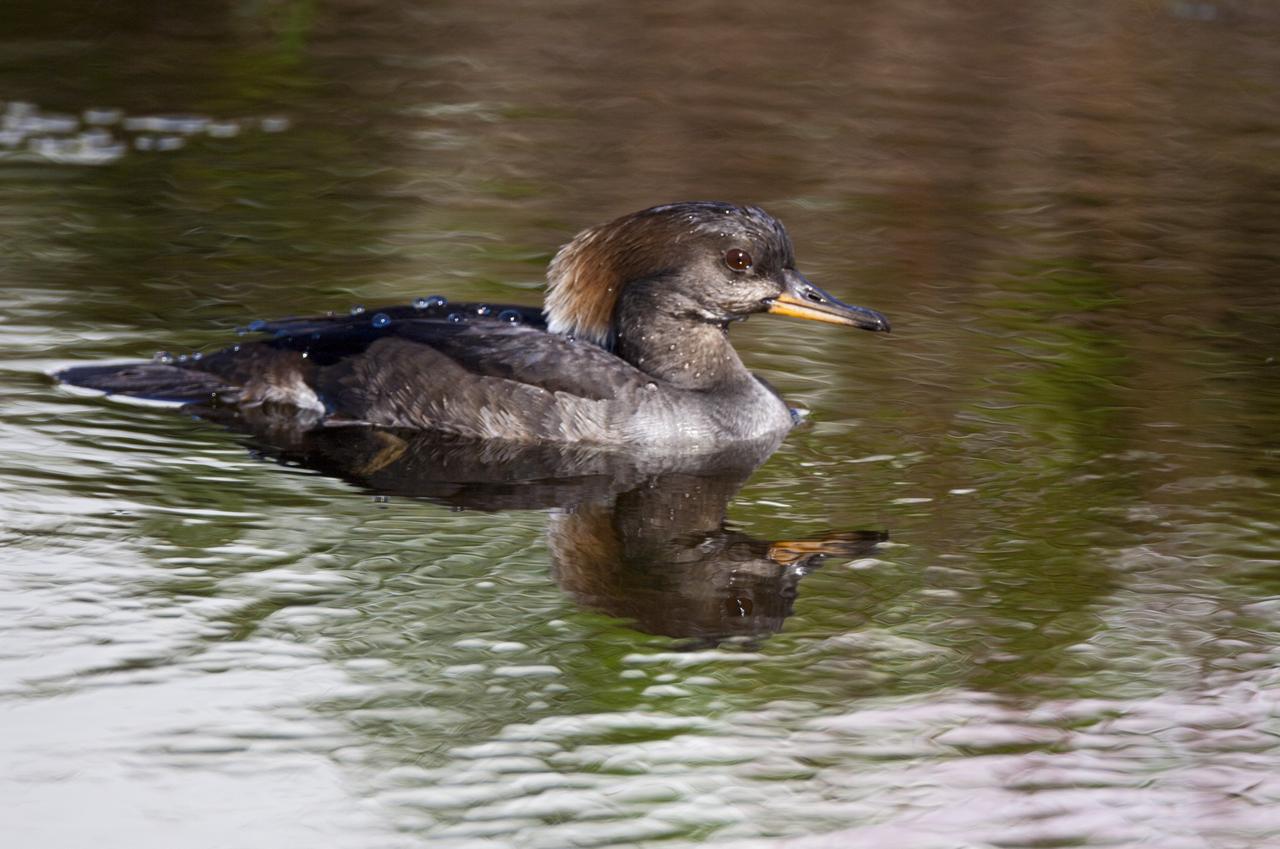
CAPE CANAVERAL, Fla. – A duck is reflected in the waters of the Blackpoint Wildlife Drive in the Merritt Island National Wildlife Refuge, northwest of NASA's Kennedy Space Center in Florida. Kennedy Space Center shares a boundary with the Merritt Island National Wildlife Refuge. The Refuge encompasses 92,000 acres that are a habitat for more than 331 species of birds, 31 mammals, 117 fishes, and 65 amphibians and reptiles. The marshes and open water of the refuge provide wintering areas for 23 species of migratory waterfowl, as well as a year-round home for great blue herons, great egrets, wood storks, cormorants, brown pelicans and other species of marsh and shore birds, as well as a variety of insects. For more information, visit: http://www.nasa.gov/centers/kennedy/shuttleoperations/alligators/kscovr.html Photo credit: NASA/Jim Grossmann
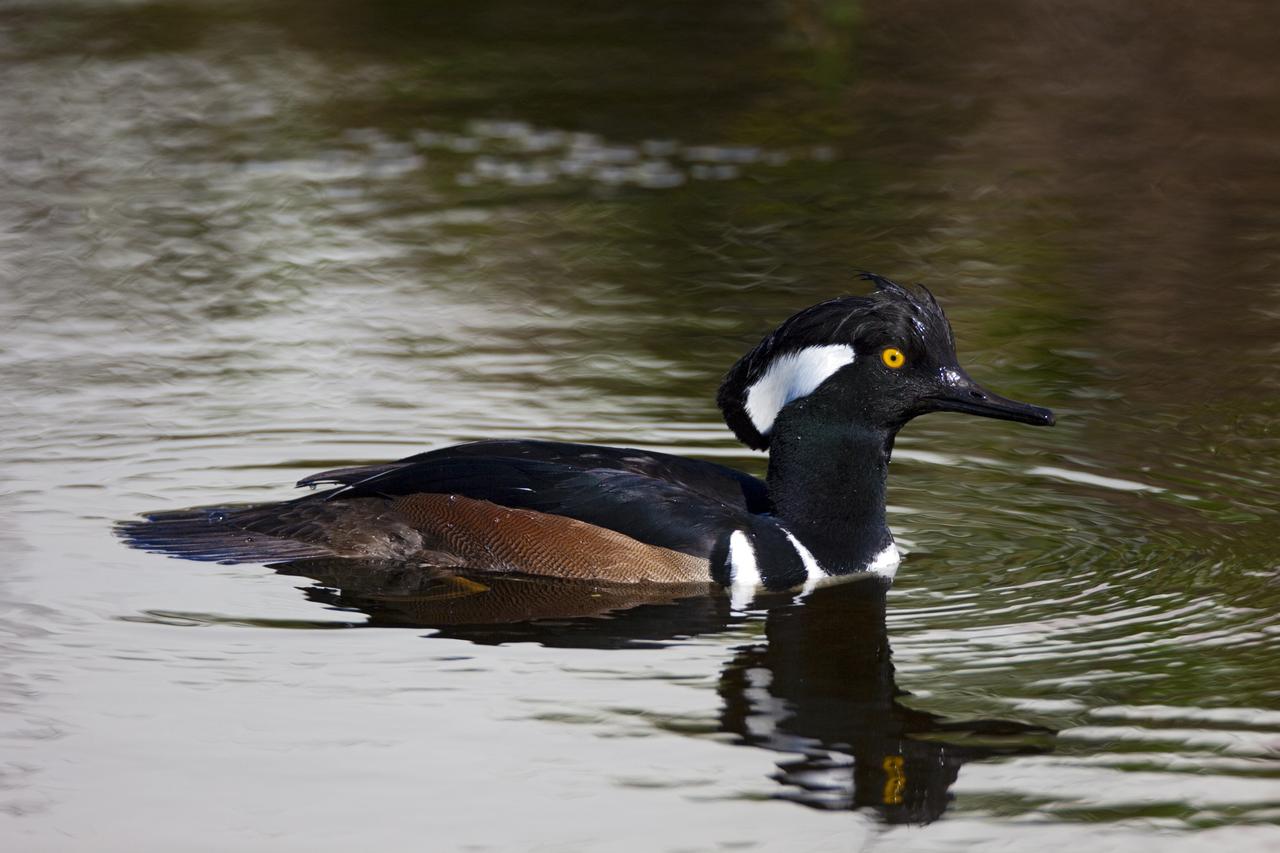
CAPE CANAVERAL, Fla. – A duck is reflected in the waters of the Blackpoint Wildlife Drive in the Merritt Island National Wildlife Refuge, northwest of NASA's Kennedy Space Center in Florida. Kennedy Space Center shares a boundary with the Merritt Island National Wildlife Refuge. The Refuge encompasses 92,000 acres that are a habitat for more than 331 species of birds, 31 mammals, 117 fishes, and 65 amphibians and reptiles. The marshes and open water of the refuge provide wintering areas for 23 species of migratory waterfowl, as well as a year-round home for great blue herons, great egrets, wood storks, cormorants, brown pelicans and other species of marsh and shore birds, as well as a variety of insects. For more information, visit: http://www.nasa.gov/centers/kennedy/shuttleoperations/alligators/kscovr.html Photo credit: NASA/Jim Grossmann
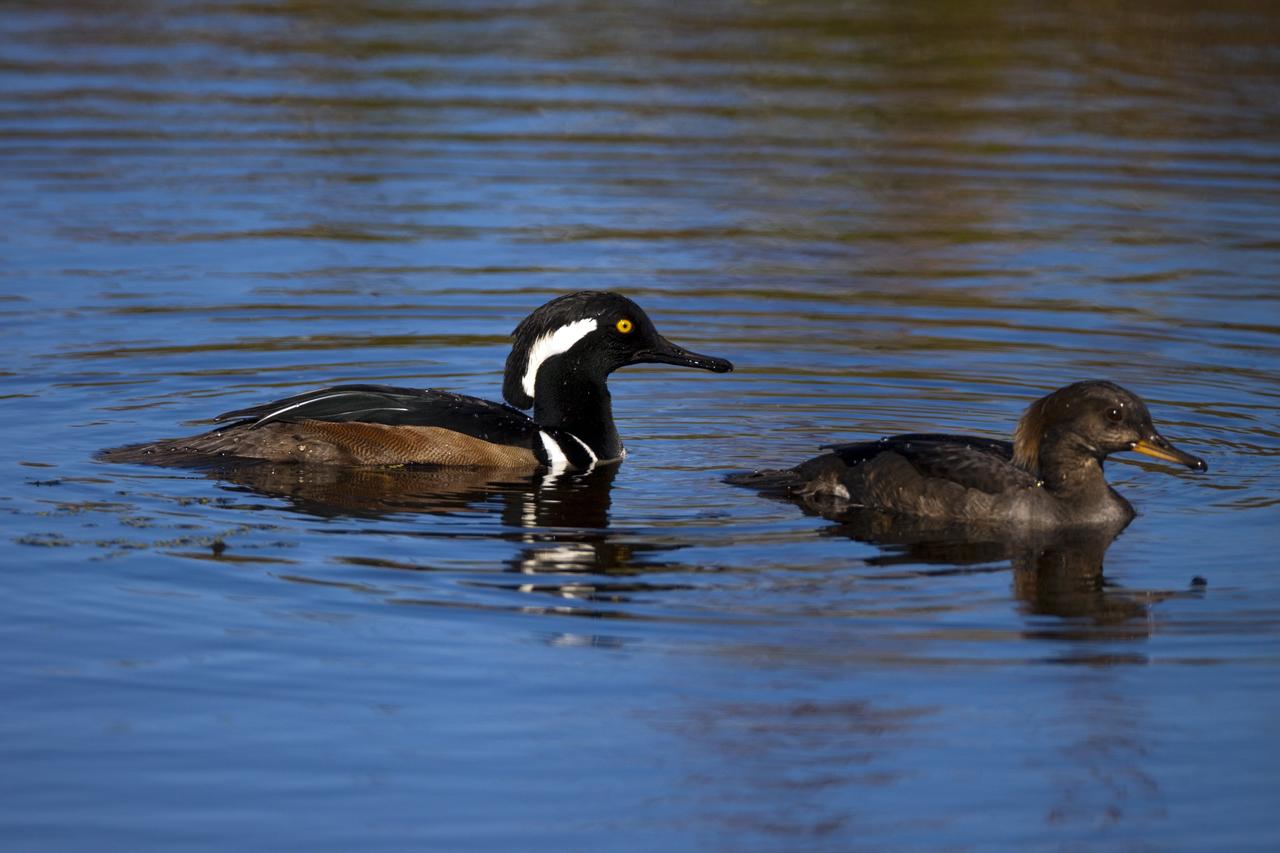
CAPE CANAVERAL, Fla. – Two ducks are reflected in the waters of the Blackpoint Wildlife Drive in the Merritt Island National Wildlife Refuge, northwest of NASA's Kennedy Space Center in Florida. Kennedy Space Center shares a boundary with the Merritt Island National Wildlife Refuge. The Refuge encompasses 92,000 acres that are a habitat for more than 331 species of birds, 31 mammals, 117 fishes, and 65 amphibians and reptiles. The marshes and open water of the refuge provide wintering areas for 23 species of migratory waterfowl, as well as a year-round home for great blue herons, great egrets, wood storks, cormorants, brown pelicans and other species of marsh and shore birds, as well as a variety of insects. For more information, visit: http://www.nasa.gov/centers/kennedy/shuttleoperations/alligators/kscovr.html Photo credit: NASA/Jim Grossmann
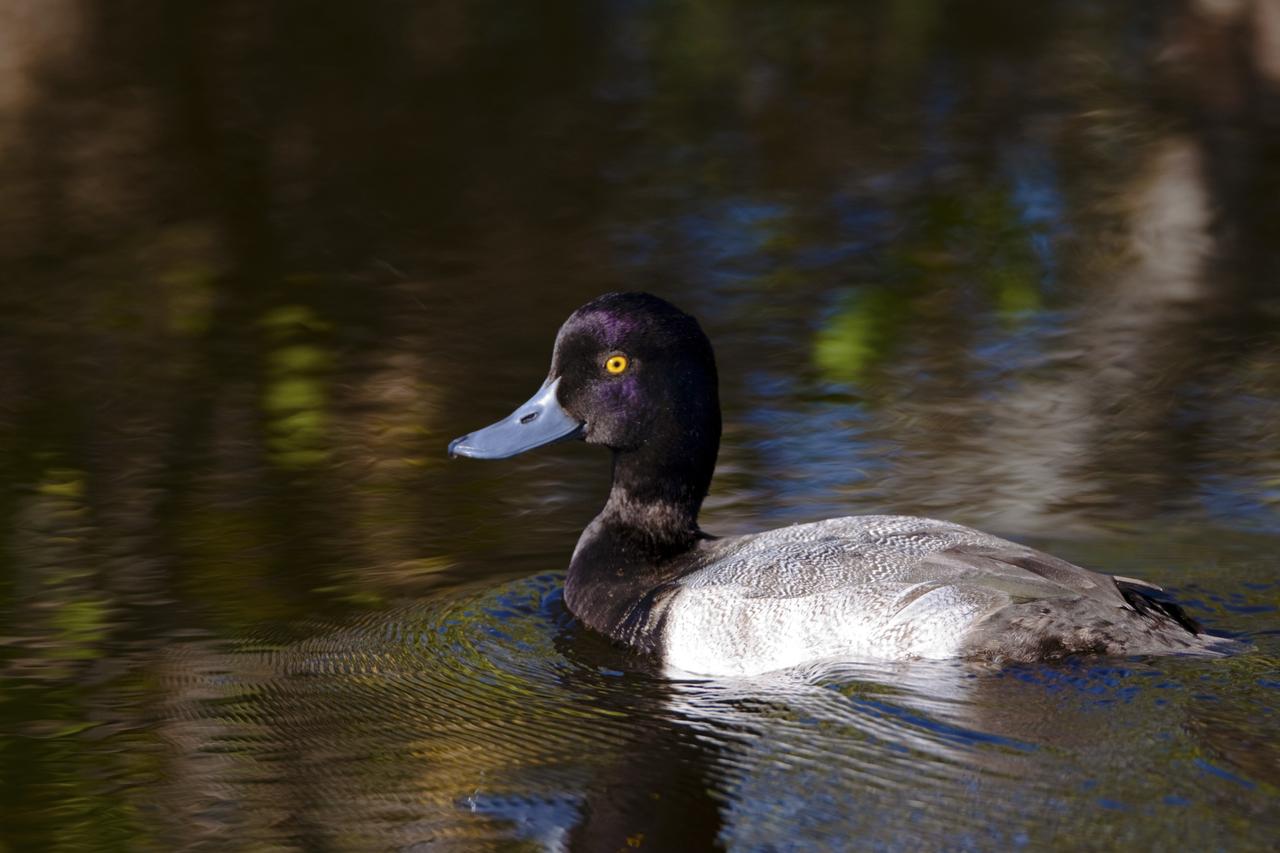
CAPE CANAVERAL, Fla. – A duck is reflected in the waters of the Blackpoint Wildlife Drive in the Merritt Island National Wildlife Refuge, northwest of NASA's Kennedy Space Center in Florida. Kennedy Space Center shares a boundary with the Merritt Island National Wildlife Refuge. The Refuge encompasses 92,000 acres that are a habitat for more than 331 species of birds, 31 mammals, 117 fishes, and 65 amphibians and reptiles. The marshes and open water of the refuge provide wintering areas for 23 species of migratory waterfowl, as well as a year-round home for great blue herons, great egrets, wood storks, cormorants, brown pelicans and other species of marsh and shore birds, as well as a variety of insects. For more information, visit: http://www.nasa.gov/centers/kennedy/shuttleoperations/alligators/kscovr.html Photo credit: NASA/Jim Grossmann
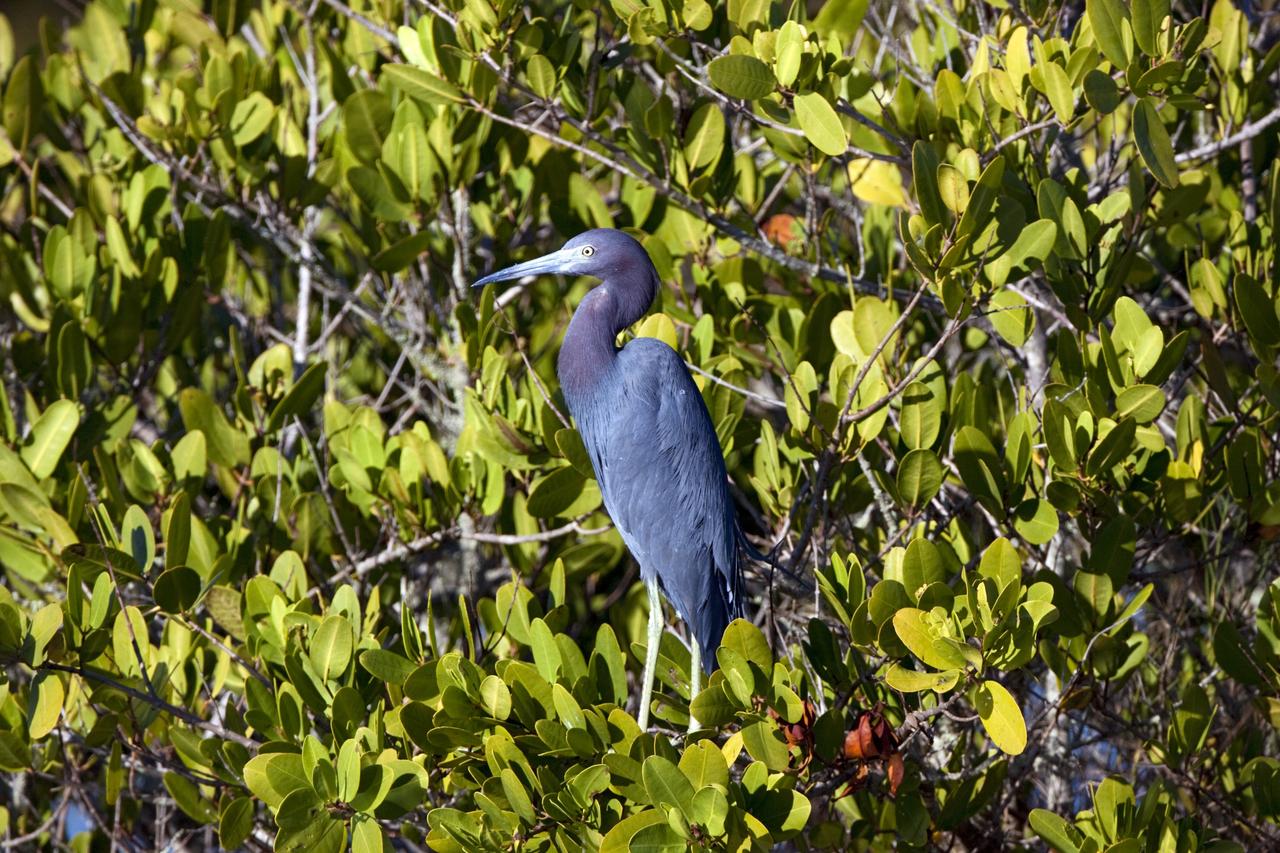
CAPE CANAVERAL, Fla. – A heron stands in the Blackpoint Wildlife Drive in the Merritt Island National Wildlife Refuge, northwest of NASA's Kennedy Space Center in Florida. Kennedy Space Center shares a boundary with the Merritt Island National Wildlife Refuge. The Refuge encompasses 92,000 acres that are a habitat for more than 331 species of birds, 31 mammals, 117 fishes, and 65 amphibians and reptiles. The marshes and open water of the refuge provide wintering areas for 23 species of migratory waterfowl, as well as a year-round home for great blue herons, great egrets, wood storks, cormorants, brown pelicans and other species of marsh and shore birds, as well as a variety of insects. For more information, visit: http://www.nasa.gov/centers/kennedy/shuttleoperations/alligators/kscovr.html Photo credit: NASA/Jim Grossmann
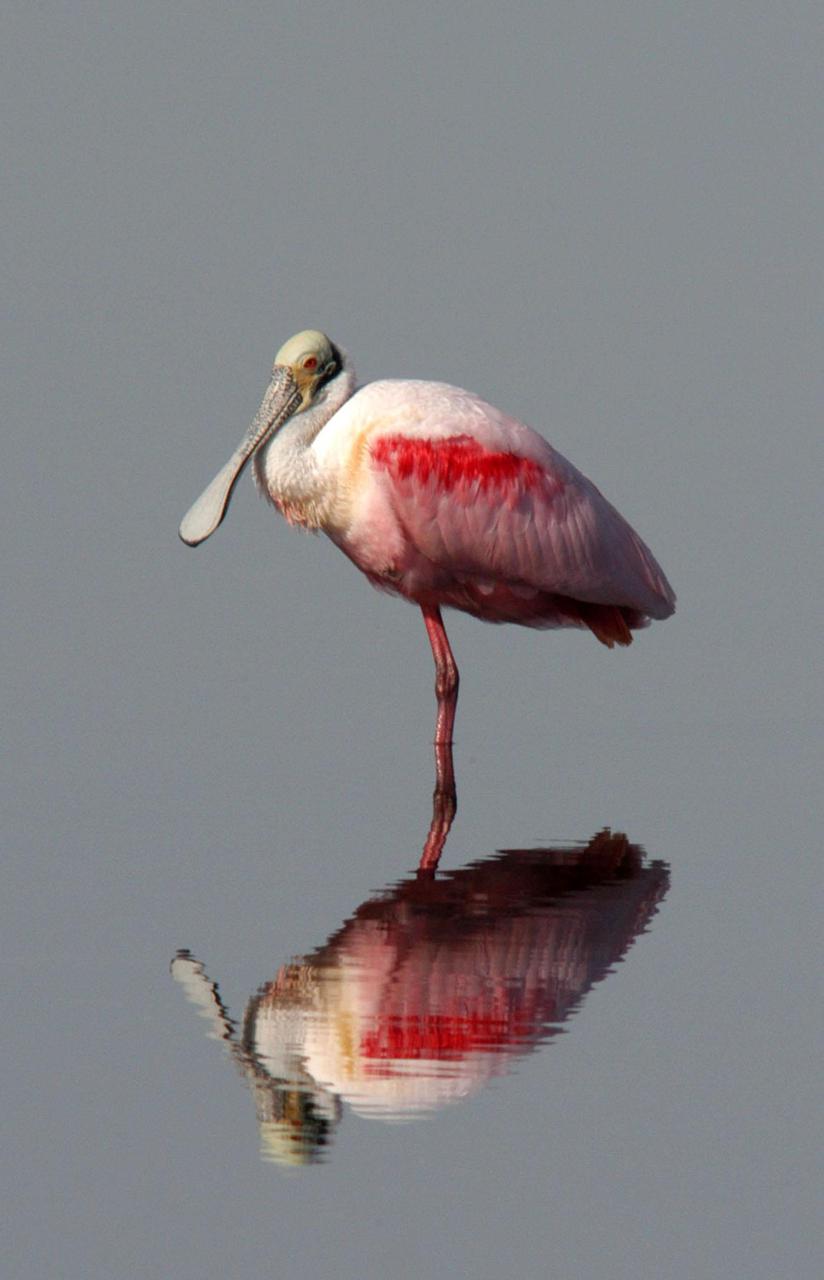
KENNEDY SPACE CENTER, FLA. — The striated reflection of a roseate spoonbill is the only sign of the water it stands in. The bird was spotted on Blackpoint Wildlife Drive in the Merritt Island National Wildlife Refuge, northwest of NASA Kennedy Space Center. Spoonbills inhabit areas of mangrove such as on the coasts of southern Florida and Texas. These birds feed on shrimps and fish in the shallow water, sweeping their bills from side to side. This and other wildlife abound throughout KSC as it shares a boundary with the Wildlife Refuge, home to some of the nation’s rarest and most unusual species of wildlife. The wildlife refuge is a habitat for more than 310 species of birds, 25 mammals, 117 fishes and 65 amphibians and reptiles. In addition, the Refuge supports 19 endangered or threatened wildlife species on Federal or State lists, more than any other single refuge in the U.S.