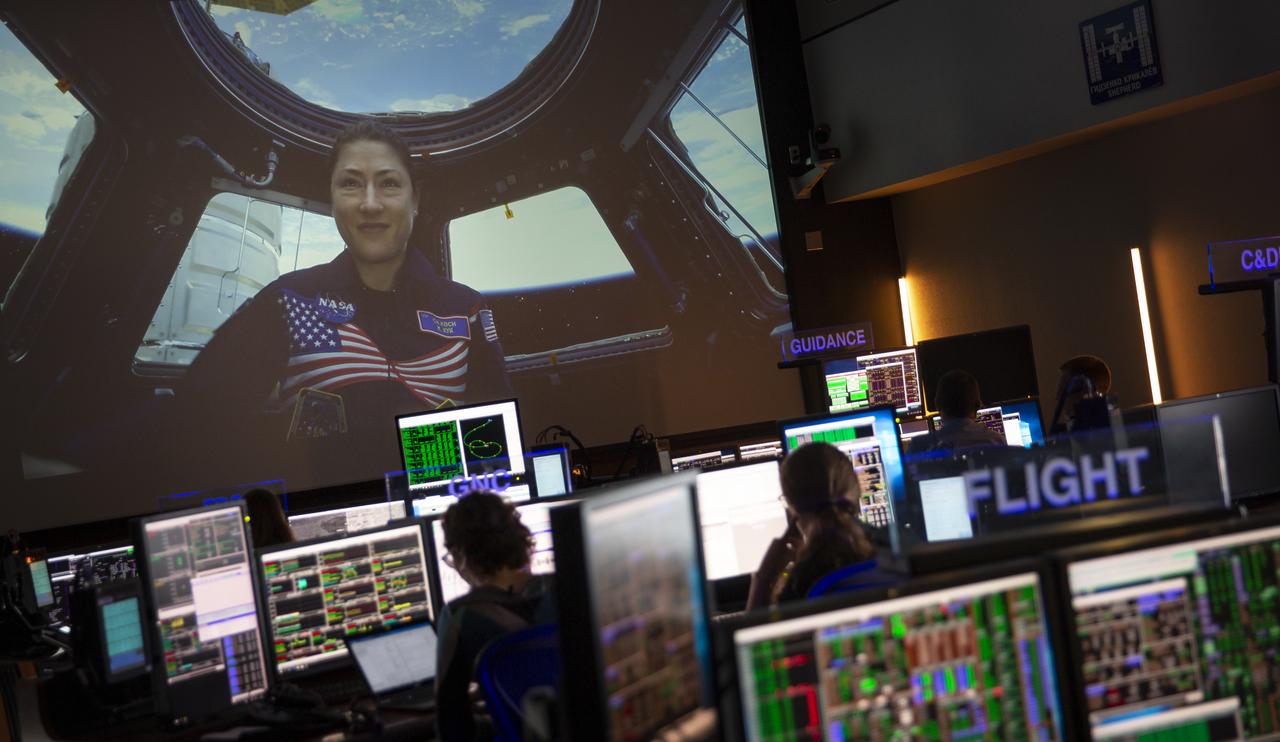
NASA astronaut Christina Koch is seen onboard the International Space Station from the Blue Flight Control Room, Tuesday, July 9, 2019 at NASA's Johnson Space Center in Houston, Texas. Photo Credit: (NASA/Bill Ingalls)
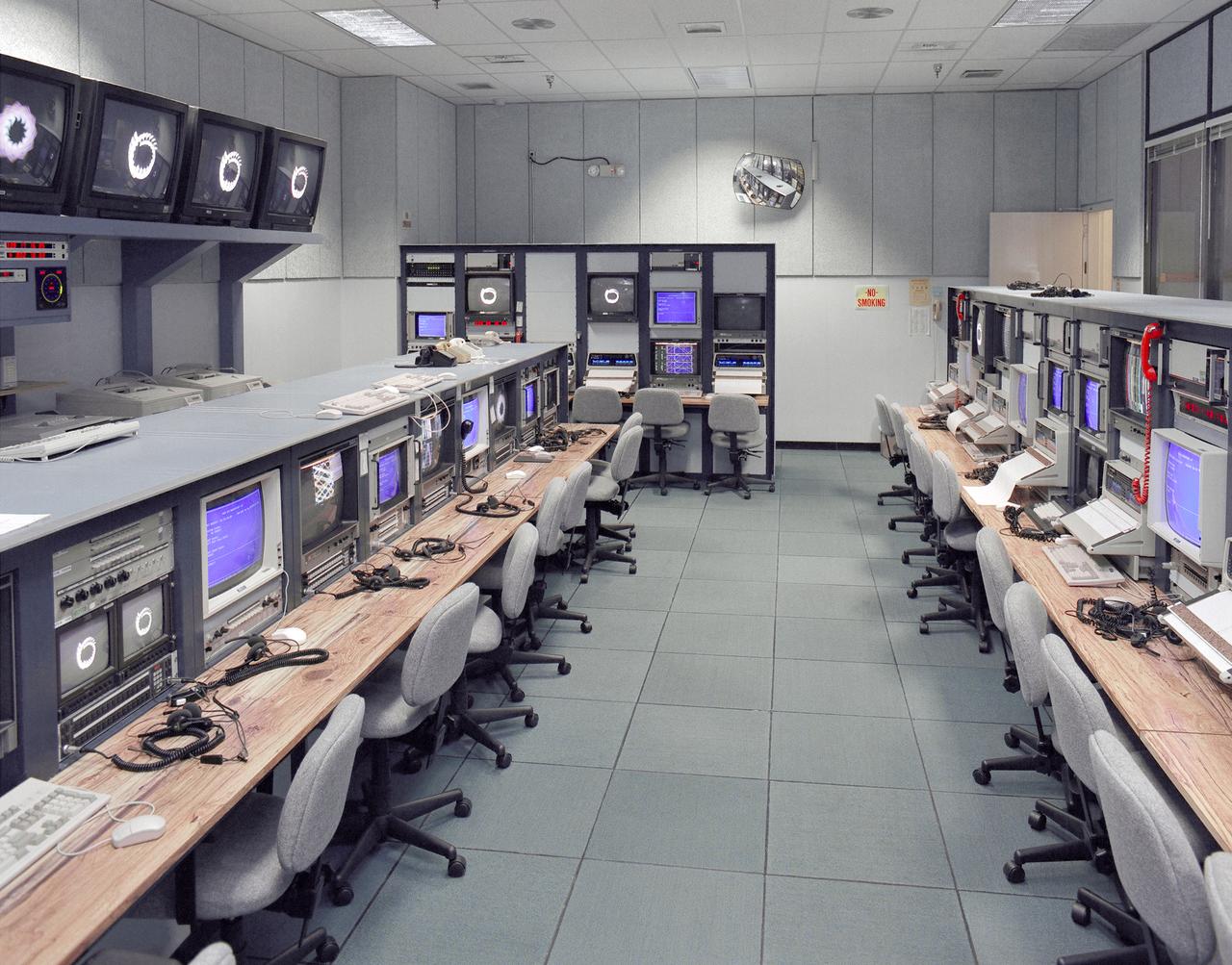
Mission control Blue Room, seen here, in building 4800 at NASA's Dryden Flight Research Center, is part of the Western Aeronautical Test Range (WATR). All aspects of a research mission are monitored from one of two of these control rooms at Dryden. The WATR consists of a highly automated complex of computer controlled tracking, telemetry, and communications systems and control room complexes that are capable of supporting any type of mission ranging from system and component testing, to sub-scale and full-scale flight tests of new aircraft and reentry systems. Designated areas are assigned for spin/dive tests, corridors are provided for low, medium, and high-altitude supersonic flight, and special STOL/VSTOL facilities are available at Ames Moffett and Crows Landing. Special use airspace, available at Edwards, covers approximately twelve thousand square miles of mostly desert area. The southern boundary lies to the south of Rogers Dry Lake, the western boundary lies midway between Mojave and Bakersfield, the northern boundary passes just south of Bishop, and the eastern boundary follows about 25 miles west of the Nevada border except in the northern areas where it crosses into Nevada.
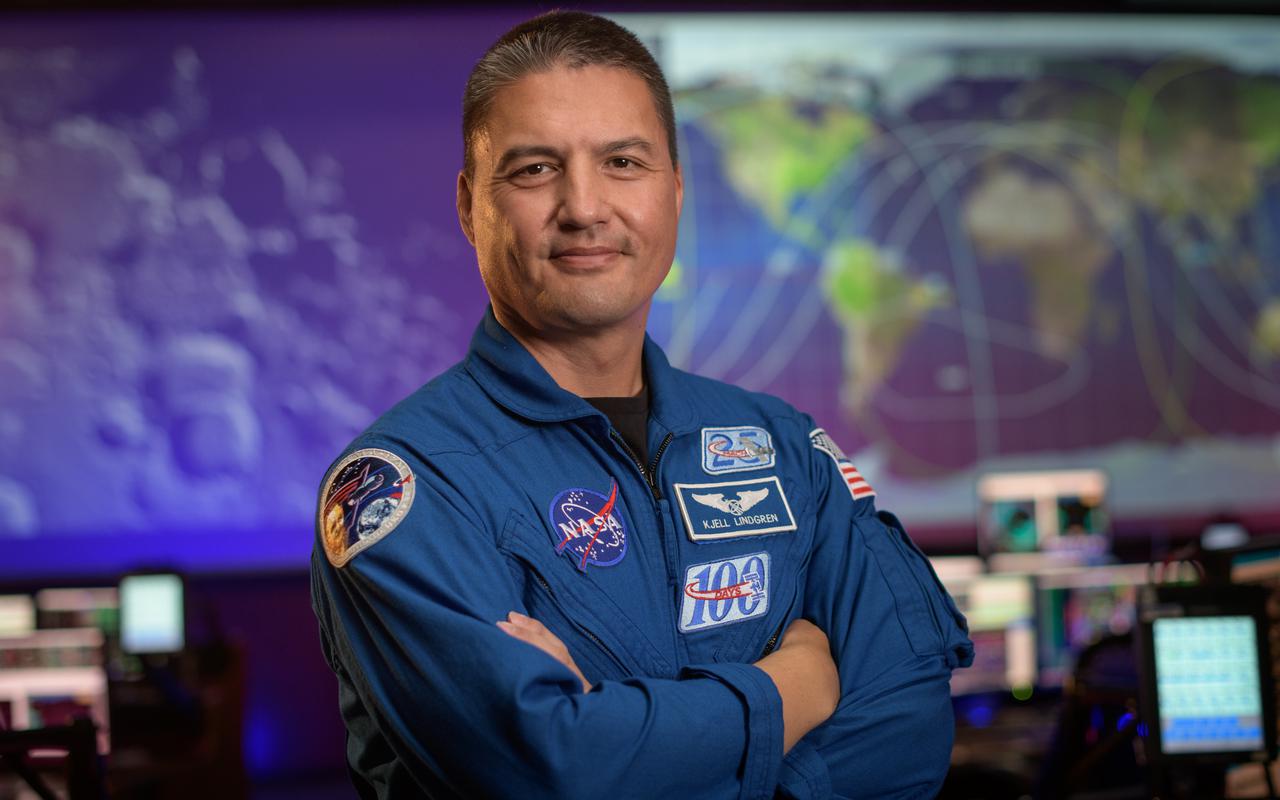
NASA astronaut Kjell Lindgren poses for a portrait, Wednesday, Sept. 16, 2020, in the Blue Flight Control Room at NASA’s Johnson Space Center in Houston. Photo Credit: (NASA/Bill Ingalls)
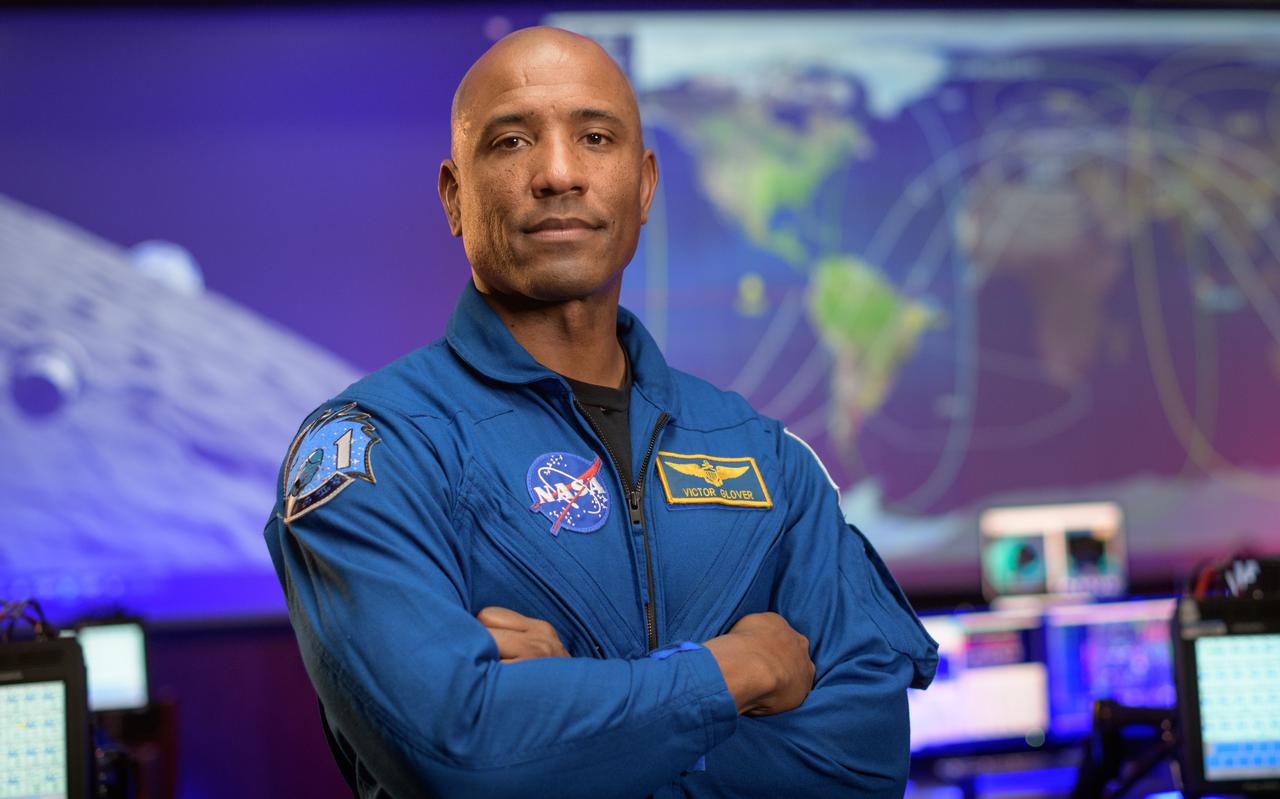
NASA astronaut Victor Glover poses for a portrait, Tuesday, Sept. 15, 2020, in the Blue Flight Control Room at NASA’s Johnson Space Center in Houston. Photo Credit: (NASA/Bill Ingalls)
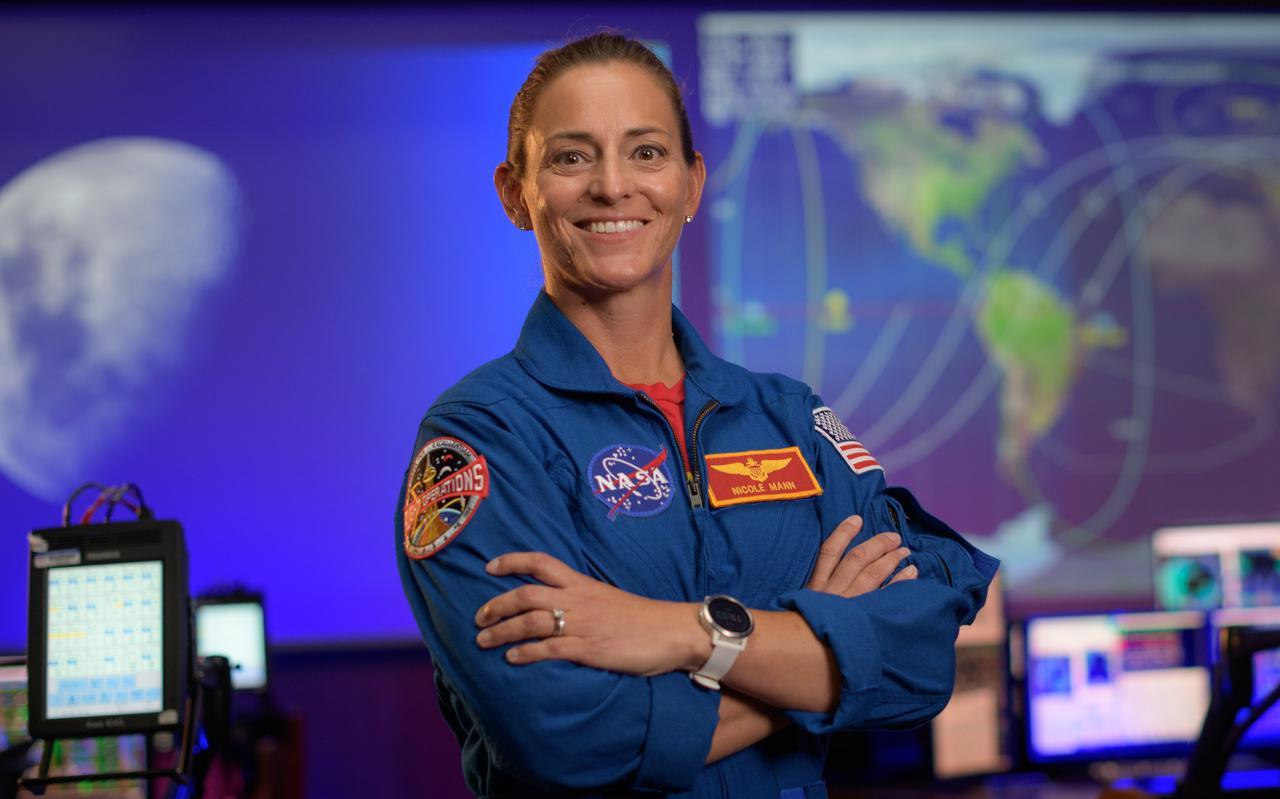
NASA astronaut Nicole Mann poses for a portrait, Tuesday, Sept. 15, 2020, in the Blue Flight Control Room at NASA’s Johnson Space Center in Houston. Photo Credit: (NASA/Bill Ingalls)
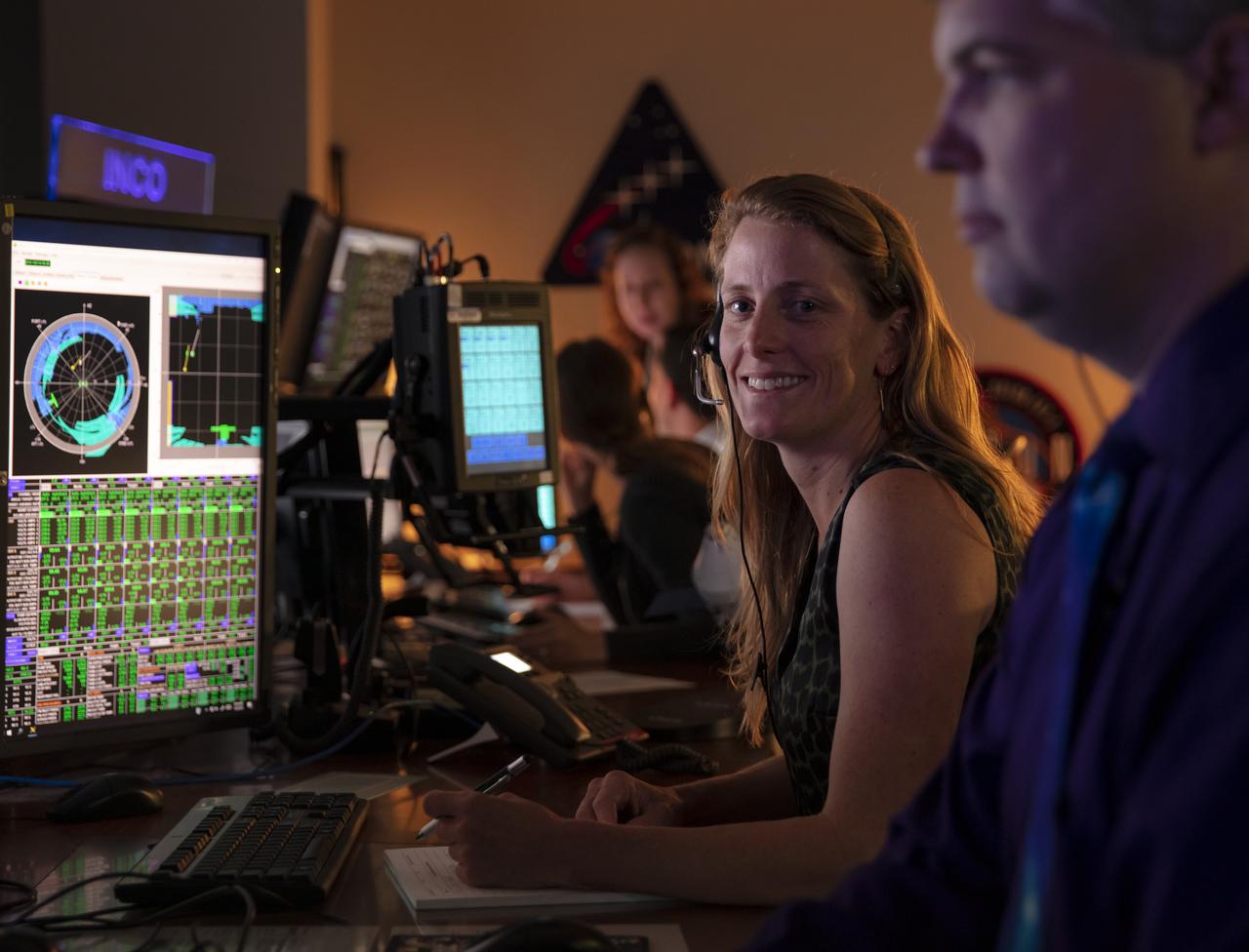
NASA astronaut candidate Loral O’Hara poses for a portrait in the Blue Flight Control Room, Tuesday, July 9, 2019 at NASA's Johnson Space Center in Houston, Texas. Photo Credit: (NASA/Bill Ingalls)
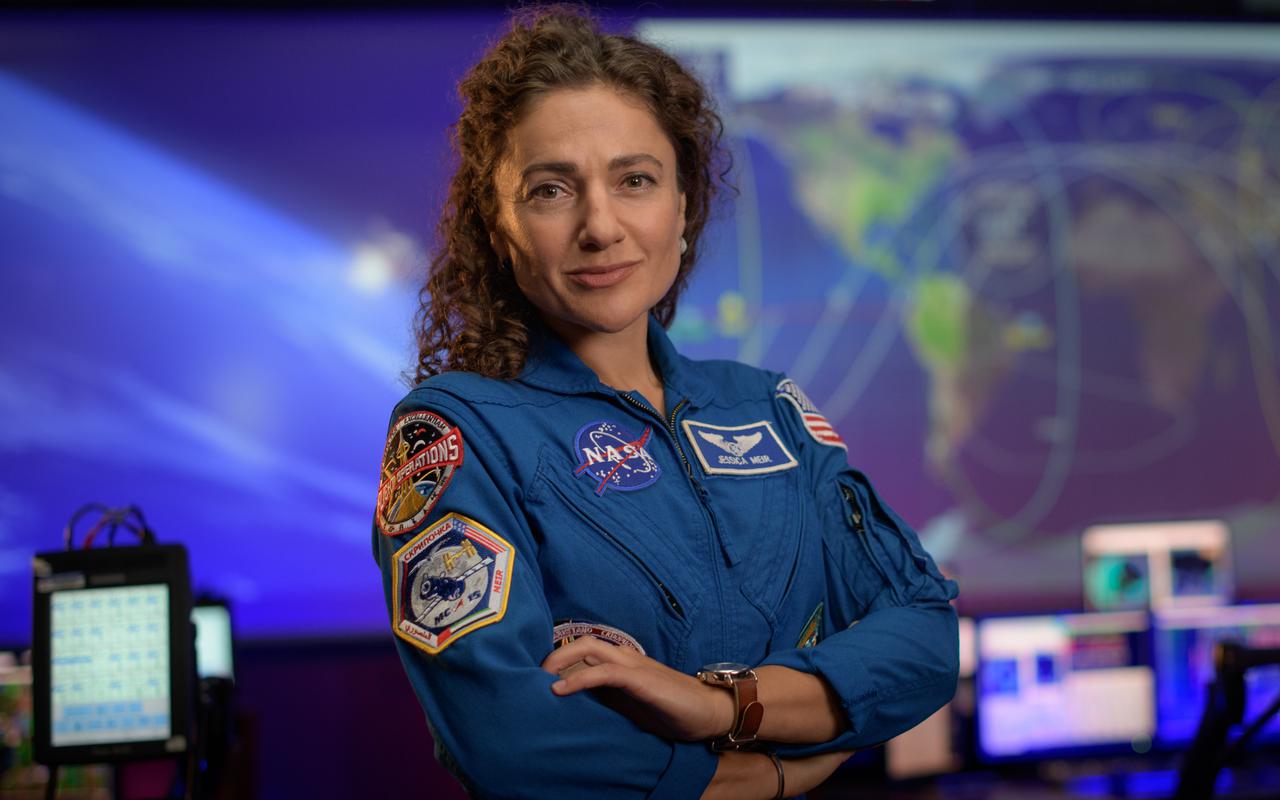
NASA astronaut Jessica Meir poses for a portrait, Tuesday, Sept. 15, 2020, in the Blue Flight Control Room at NASA’s Johnson Space Center in Houston. Photo Credit: (NASA/Bill Ingalls)
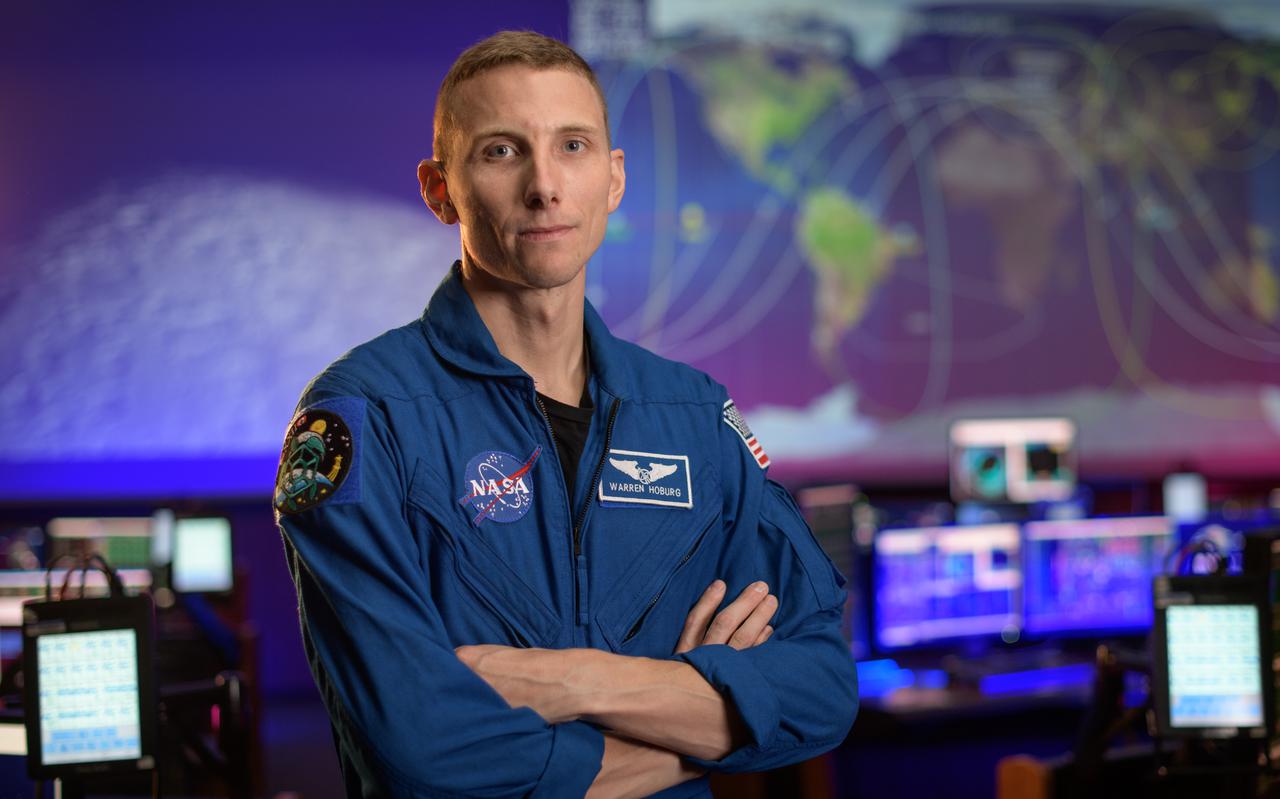
NASA astronaut Warren Hoburg poses for a portrait, Thursday, Sept. 17, 2020, in the Blue Flight Control Room at NASA’s Johnson Space Center in Houston. Photo Credit: (NASA/Bill Ingalls)
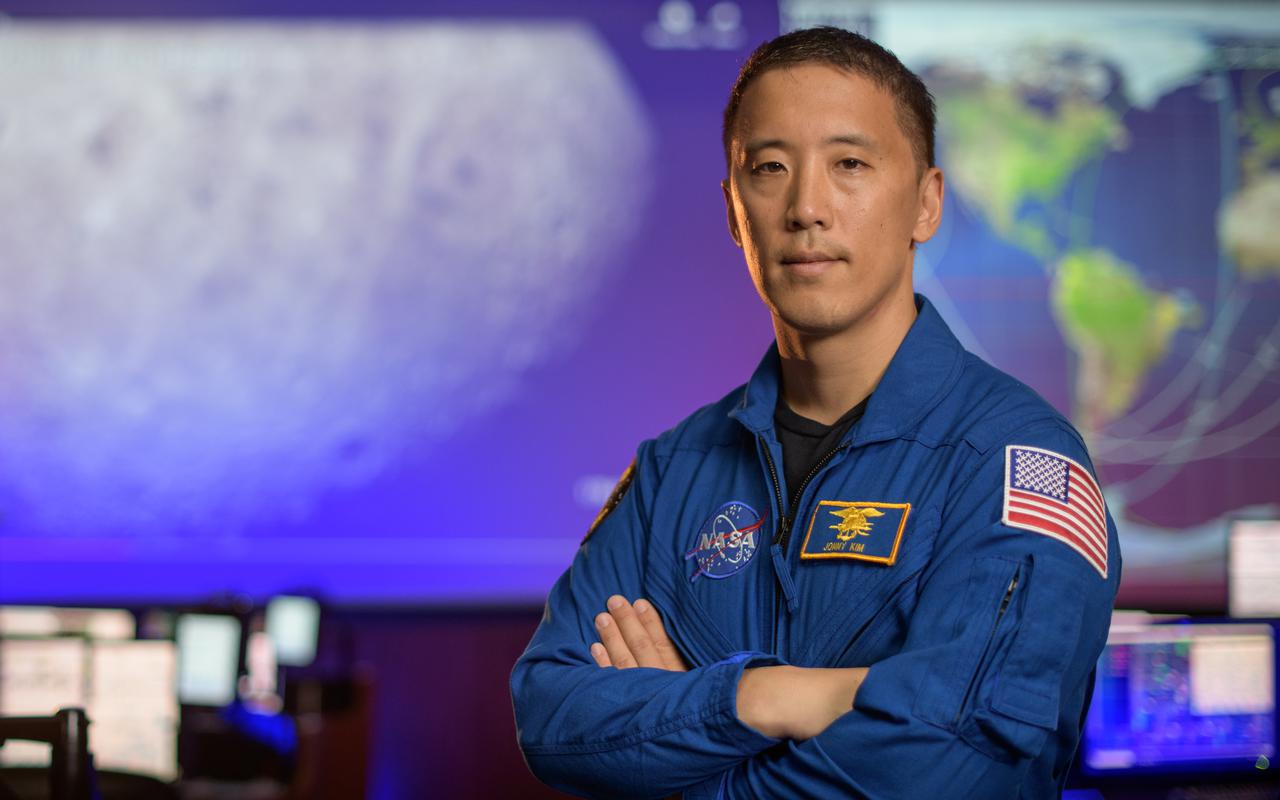
NASA astronaut Jonathan Kim poses for a portrait, Tuesday, Sept. 8, 2020, in the Blue Flight Control Room at NASA’s Johnson Space Center in Houston. Photo Credit: (NASA/Bill Ingalls)

NASA astronaut Frank Rubio poses for a portrait, Wednesday, Sept. 16, 2020, in the Blue Flight Control Room at NASA’s Johnson Space Center in Houston. Photo Credit: (NASA/Bill Ingalls)
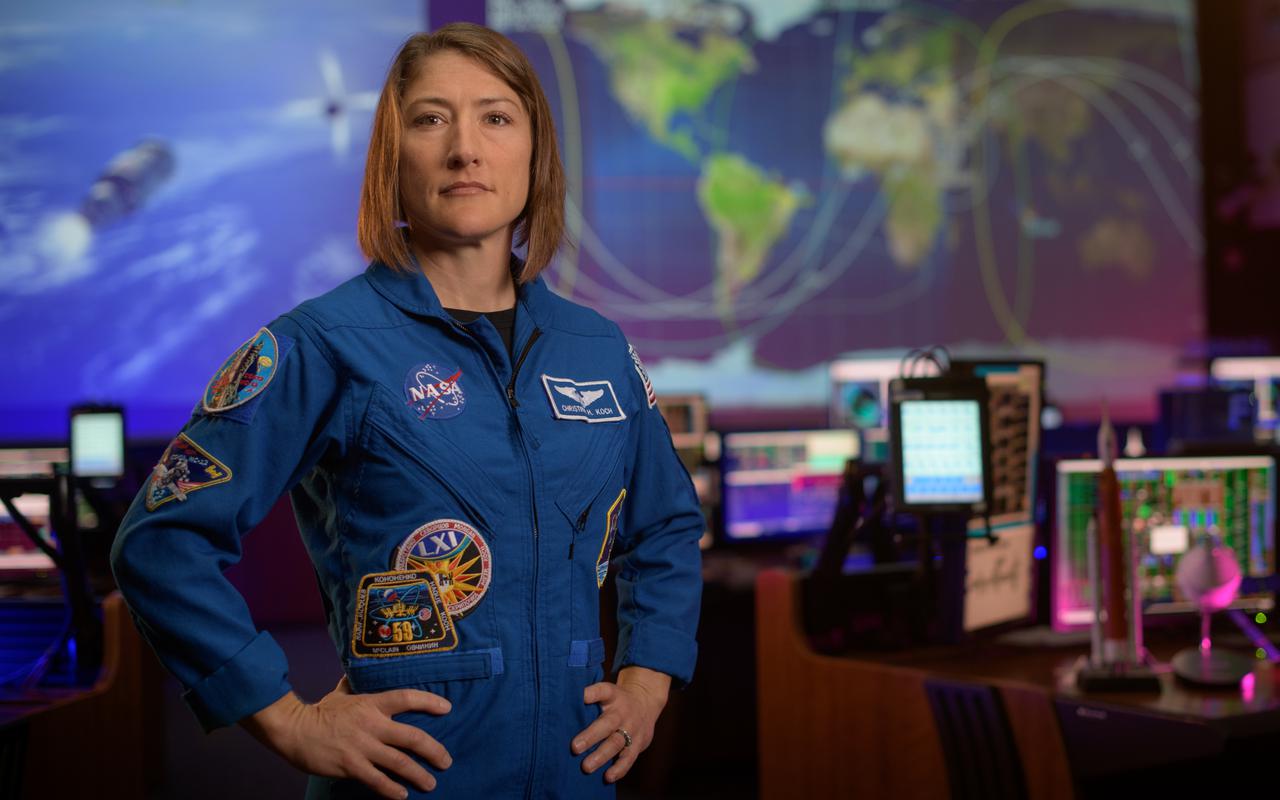
NASA astronaut Christina Koch poses for a portrait, Wednesday, Sept. 16, 2020, in the Blue Flight Control Room at NASA’s Johnson Space Center in Houston. Photo Credit: (NASA/Bill Ingalls)
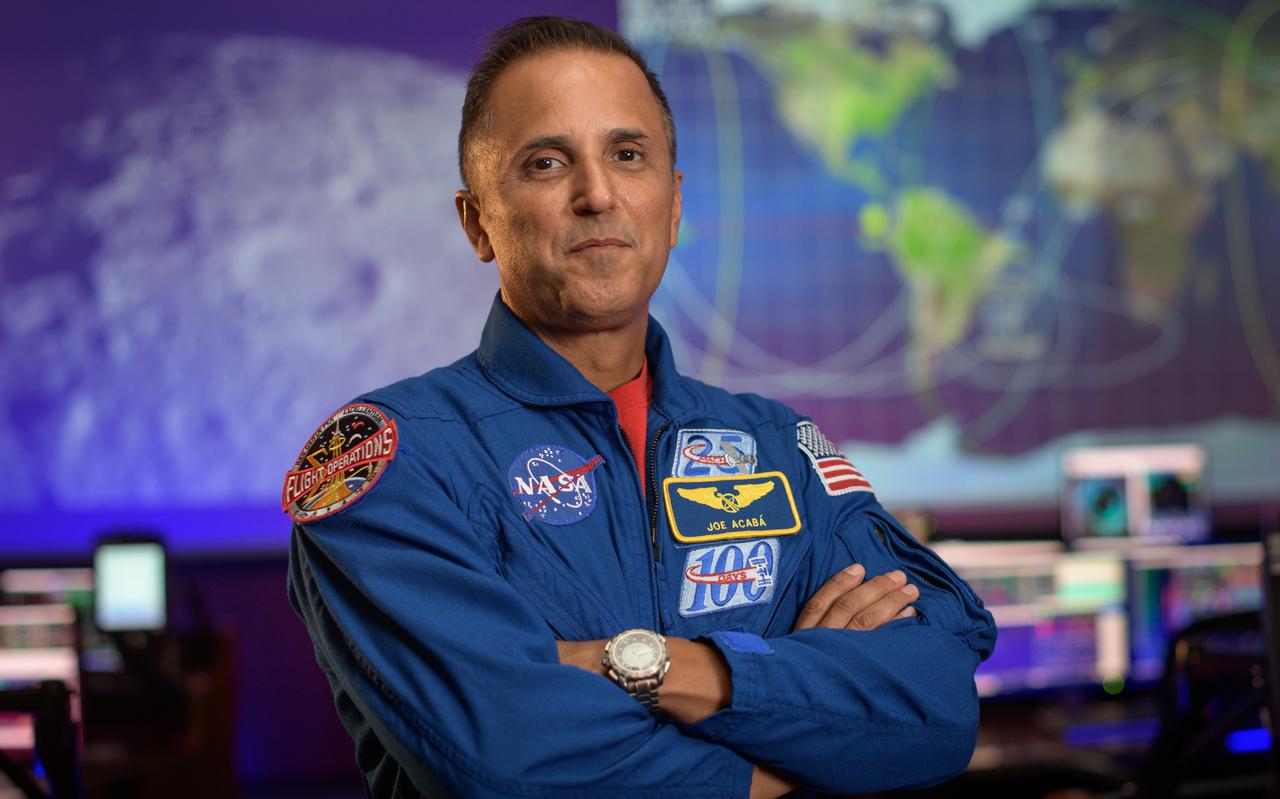
NASA astronaut Joe Acaba poses for a portrait, Wednesday, Sept. 16, 2020, in the Blue Flight Control Room at NASA’s Johnson Space Center in Houston. Photo Credit: (NASA/Bill Ingalls)
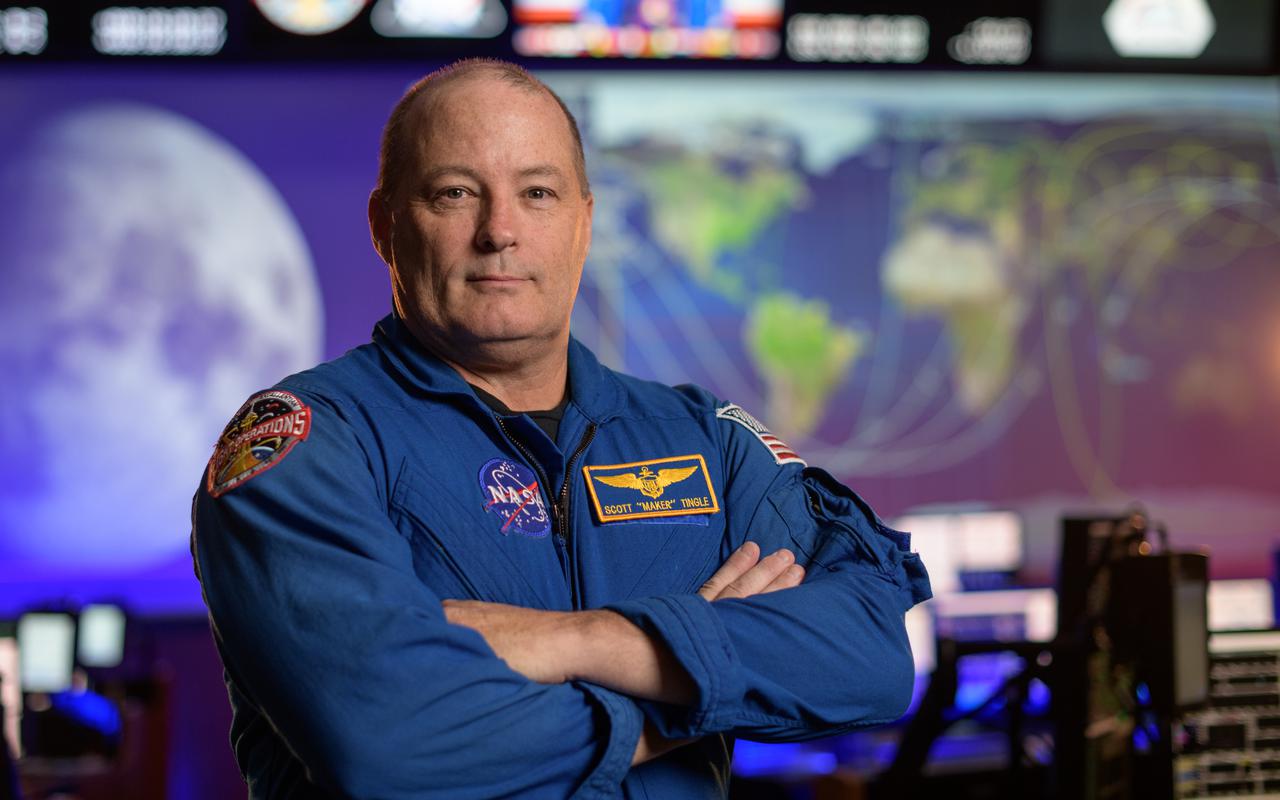
NASA astronaut Scott Tingle poses for a portrait, Tuesday, Sept. 8, 2020, in the Blue Flight Control Room at NASA’s Johnson Space Center in Houston. Photo Credit: (NASA/Bill Ingalls)
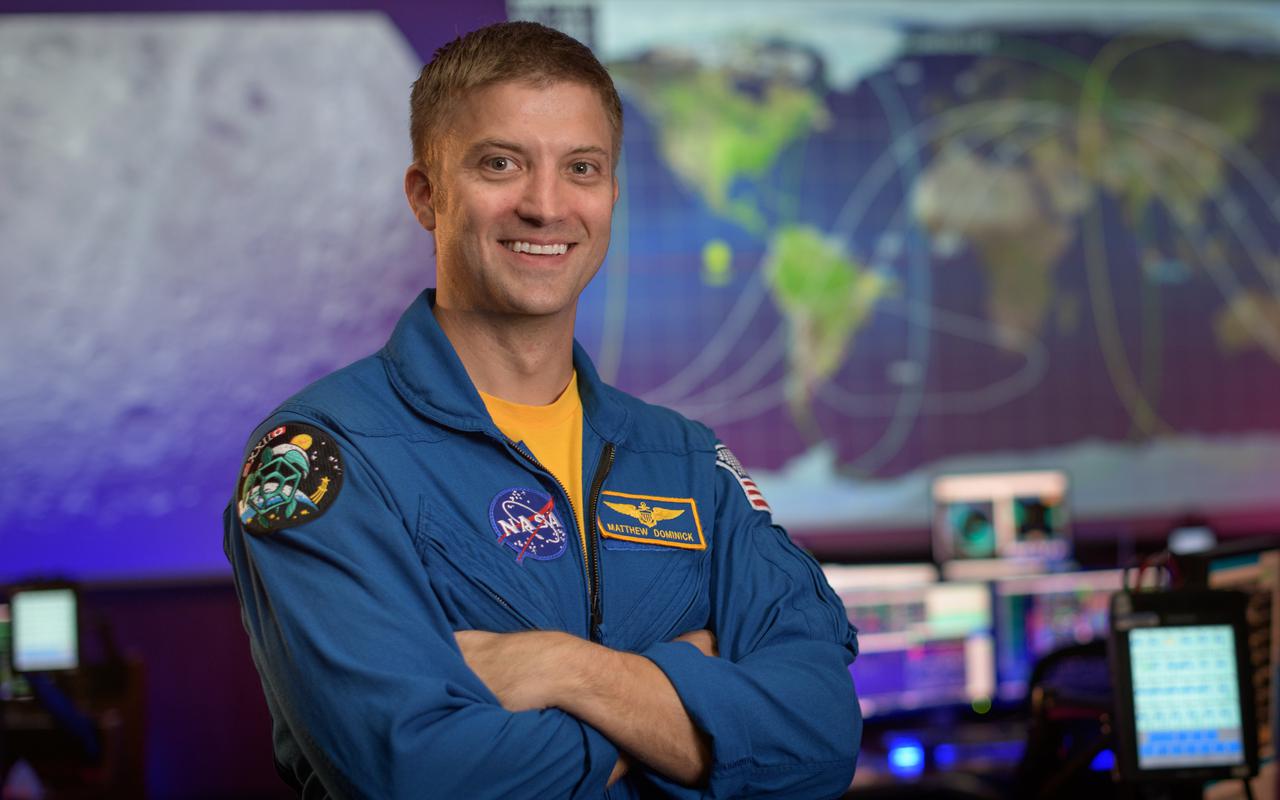
NASA astronaut Matthew Dominick poses for a portrait, Wednesday, Sept. 16, 2020, in the Blue Flight Control Room at NASA’s Johnson Space Center in Houston. Photo Credit: (NASA/Bill Ingalls)
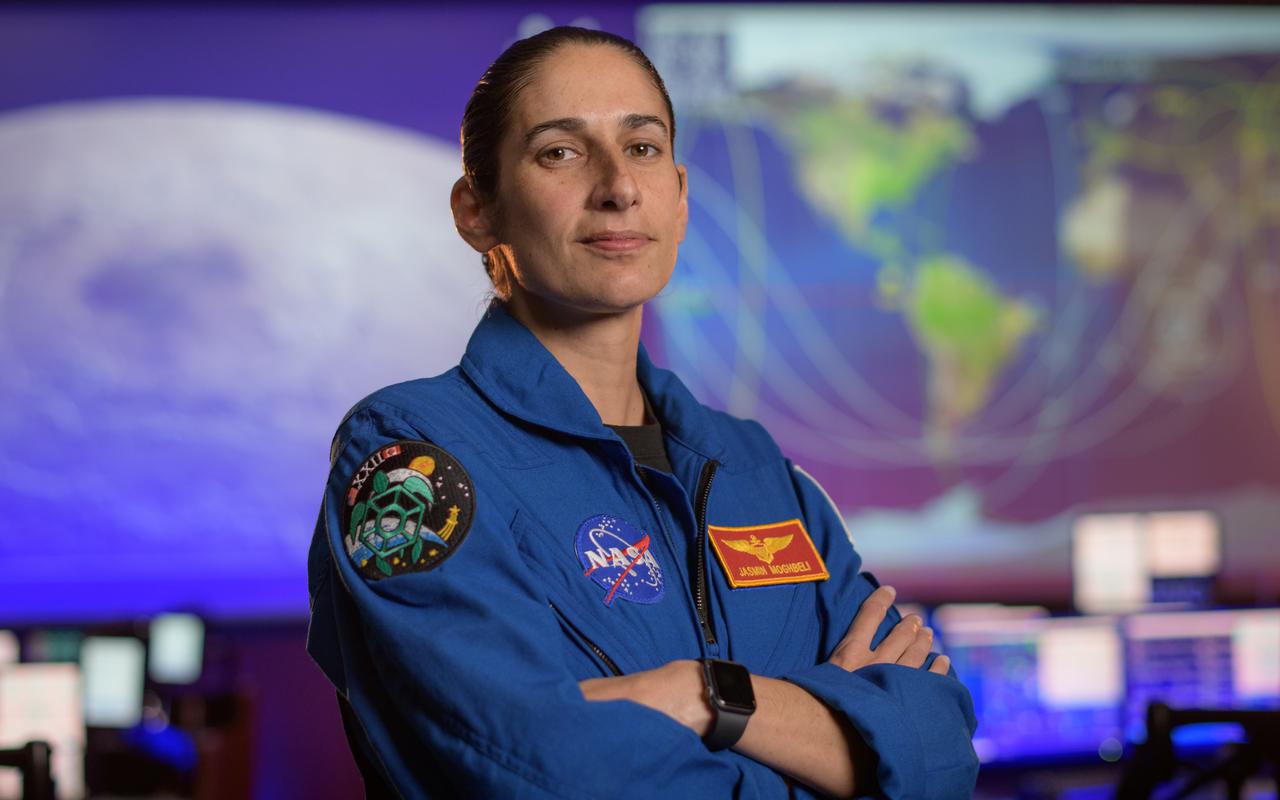
NASA astronaut Jasmin Moghbeli poses for a portrait, Tuesday, Sept. 8, 2020, in the Blue Flight Control Room at NASA’s Johnson Space Center in Houston. Photo Credit: (NASA/Bill Ingalls)

NASA astronaut Raja Chari poses for a portrait, Tuesday, Sept. 8, 2020, in the Blue Flight Control Room at NASA’s Johnson Space Center in Houston. Photo Credit: (NASA/Bill Ingalls)

NASA astronaut Jessica Watkins poses for a portrait, Tuesday, Sept. 15, 2020, in the Blue Flight Control Room at NASA’s Johnson Space Center in Houston. Photo Credit: (NASA/Bill Ingalls)
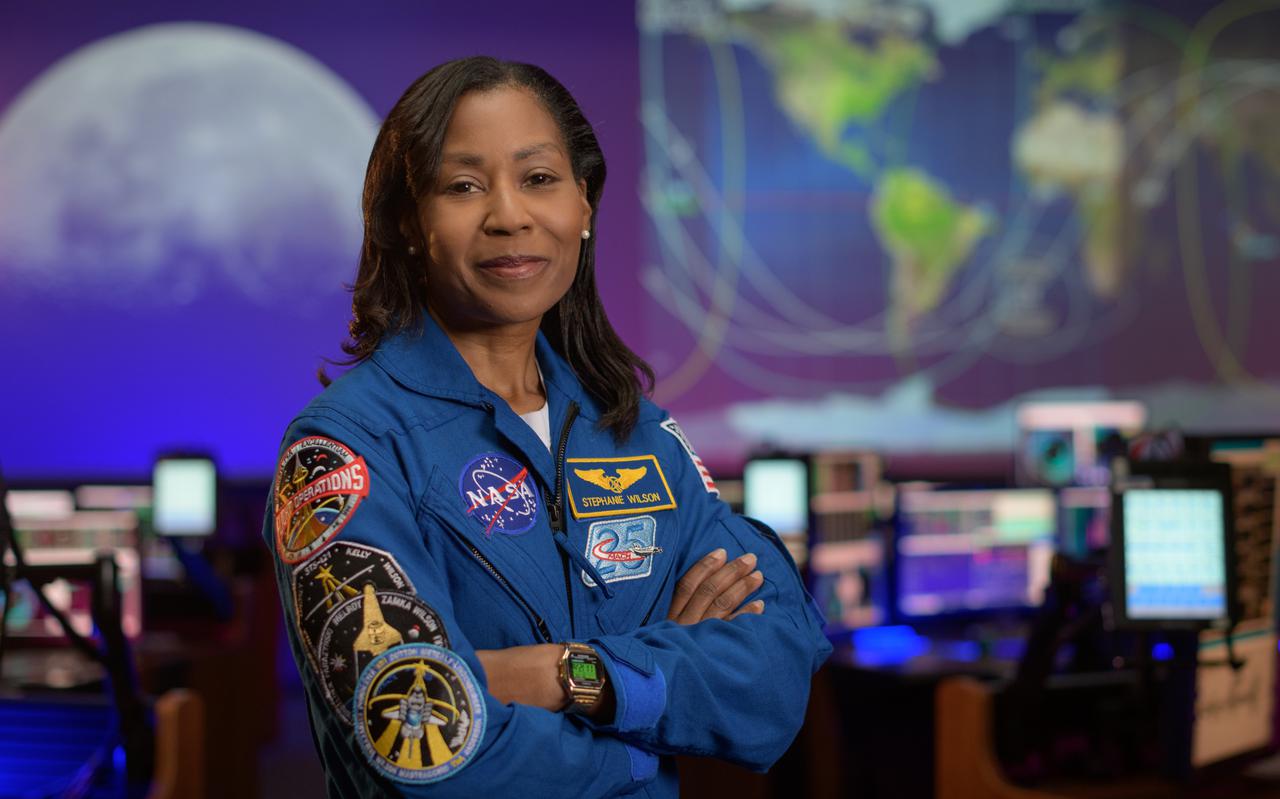
NASA astronaut Stephanie Wilson poses for a portrait, Wednesday, Sept. 16, 2020, in the Blue Flight Control Room at NASA’s Johnson Space Center in Houston. Photo Credit: (NASA/Bill Ingalls)

NASA astronaut Kayla Barron poses for a portrait, Wednesday, Sept. 16, 2020, in the Blue Flight Control Room at NASA’s Johnson Space Center in Houston. Photo Credit: (NASA/Bill Ingalls)
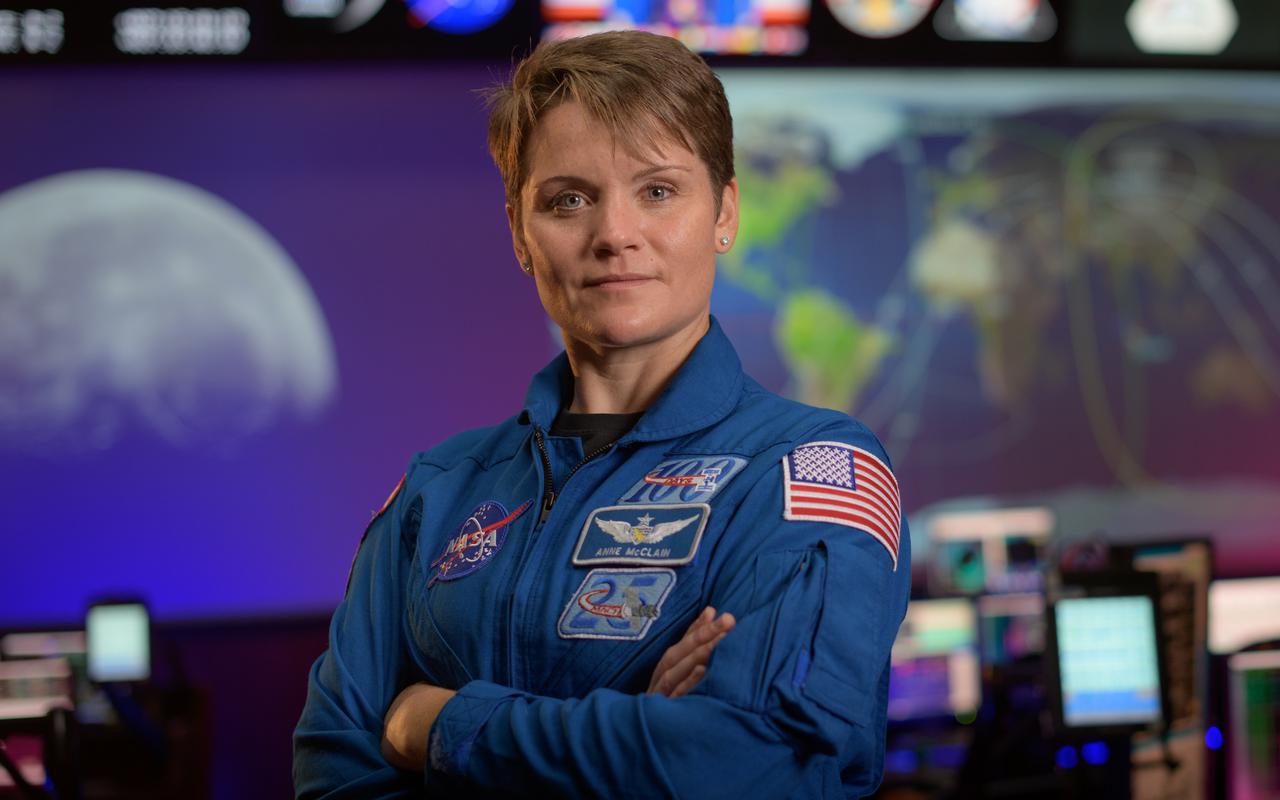
NASA astronaut Anne McClain poses for a portrait, Wednesday, Sept. 16, 2020, in the Blue Flight Control Room at NASA’s Johnson Space Center in Houston. Photo Credit: (NASA/Bill Ingalls)
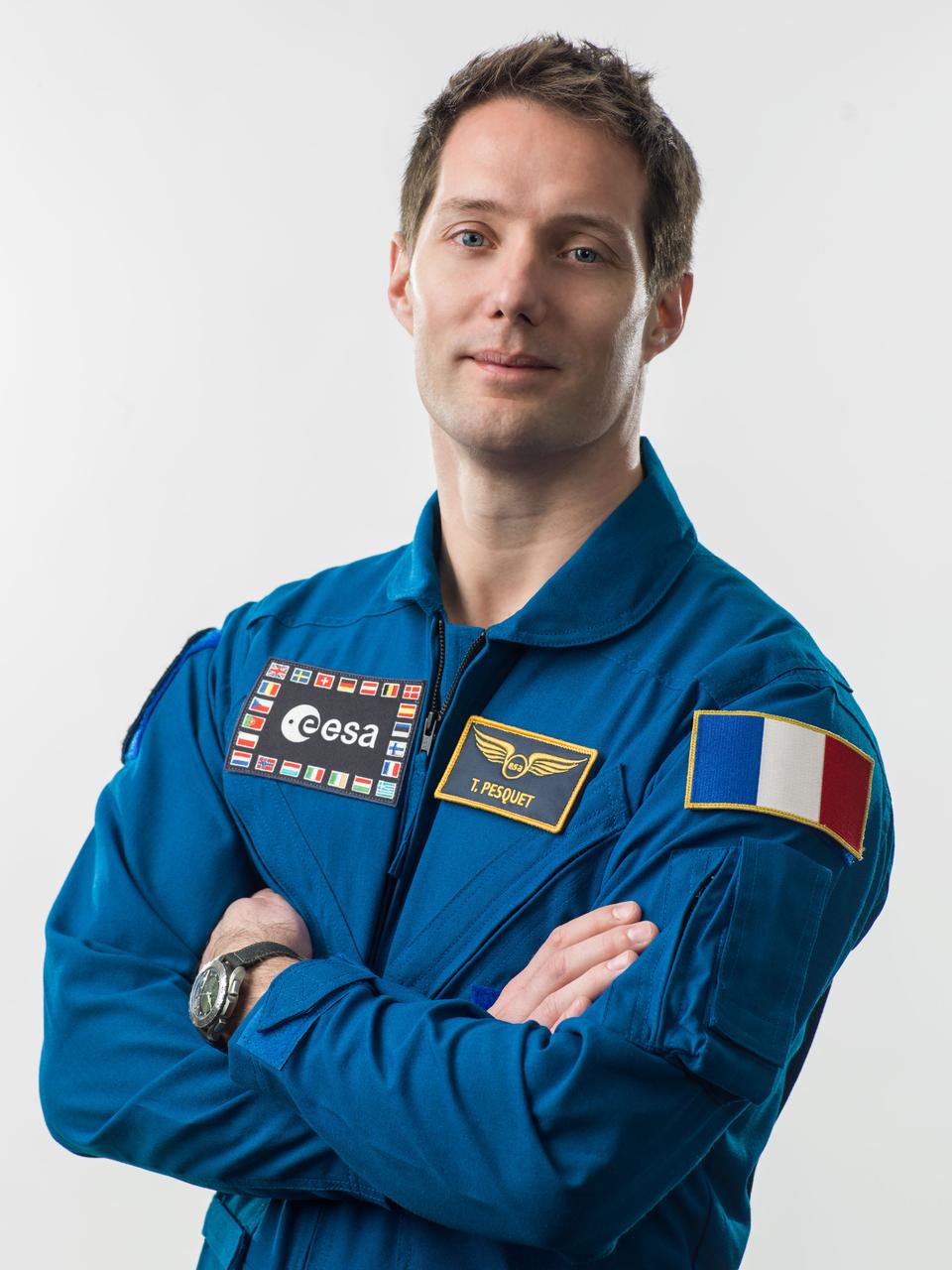
PHOTO DATE: 01-14-16 LOCATION: Bldg. 8, Room 183 - Photo Studio SUBJECT: Official portrait of ESA astronaut & Expedition 50/51 crew member Thomas Pesquet in blue flight suit. PHOTOGRAPHER: BILL STAFFORD
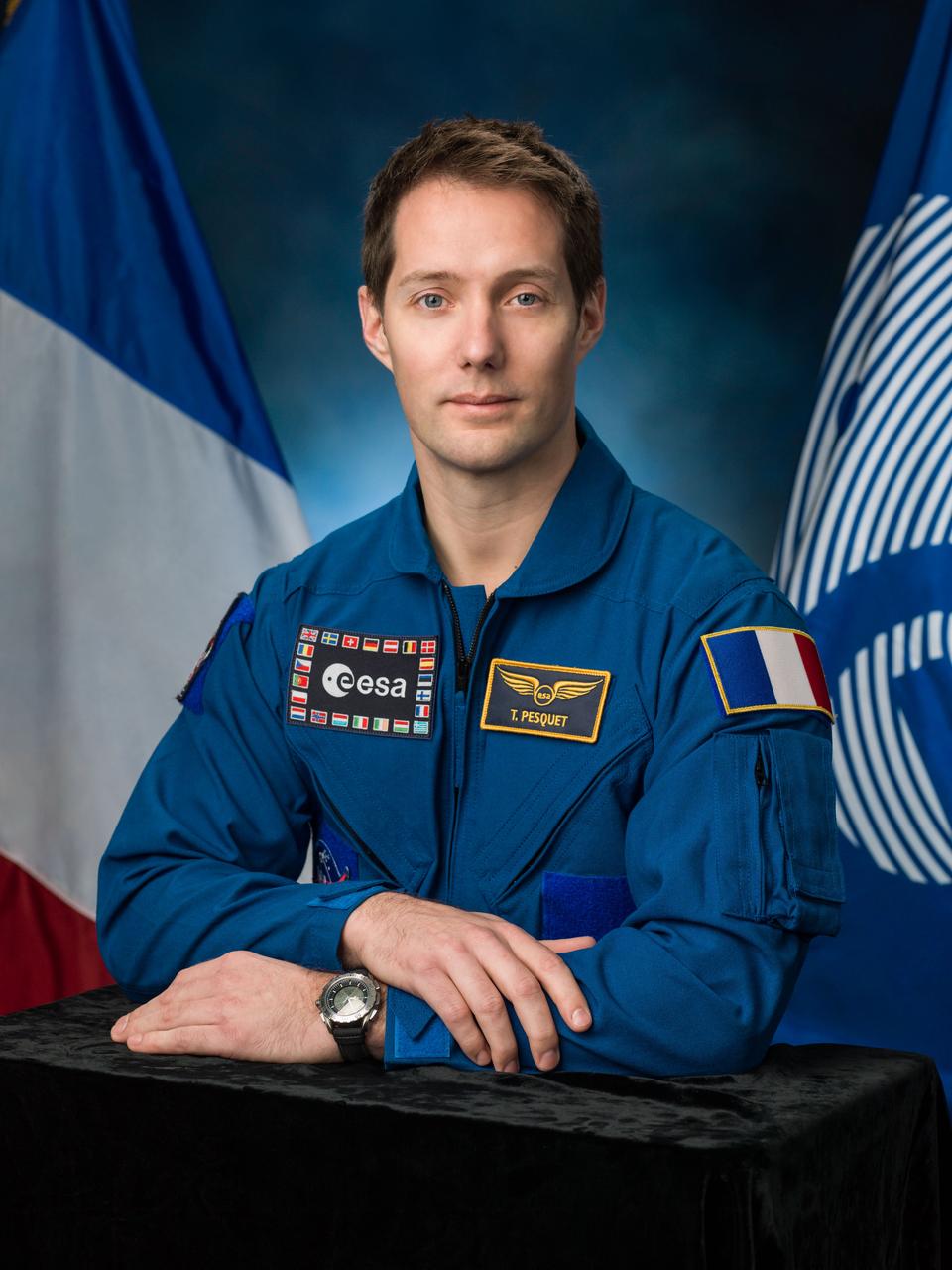
PHOTO DATE: 01-14-16 LOCATION: Bldg. 8, Room 183 - Photo Studio SUBJECT: Official portrait of ESA astronaut & Expedition 50/51 crew member Thomas Pesquet in blue flight suit. PHOTOGRAPHER: BILL STAFFORD
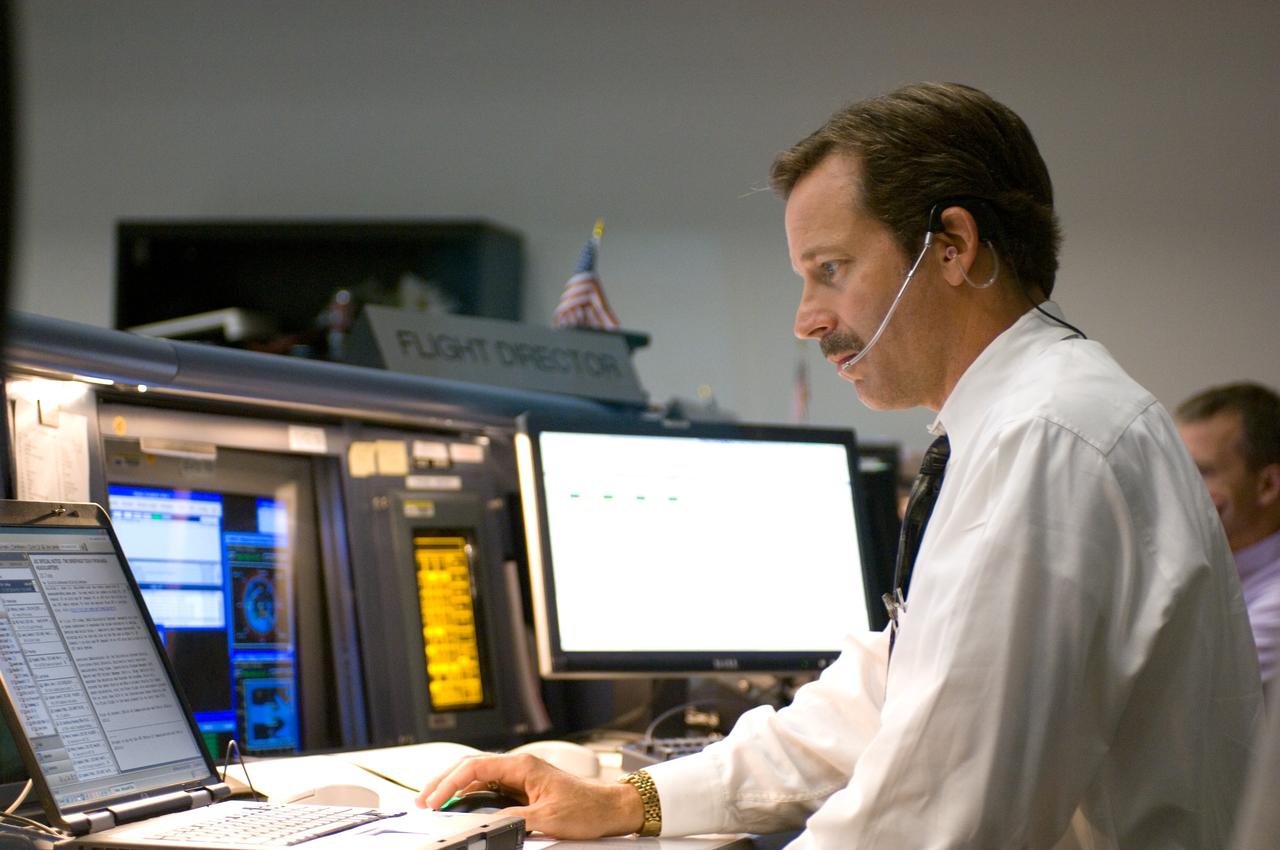
JSC2006-E-38928 (31 Aug. 2006) --- Flight director Rick LaBrode monitors data at his console in the Station (Blue) Flight Control Room in Houston's Mission Control Center during Expedition 13 mission activities.
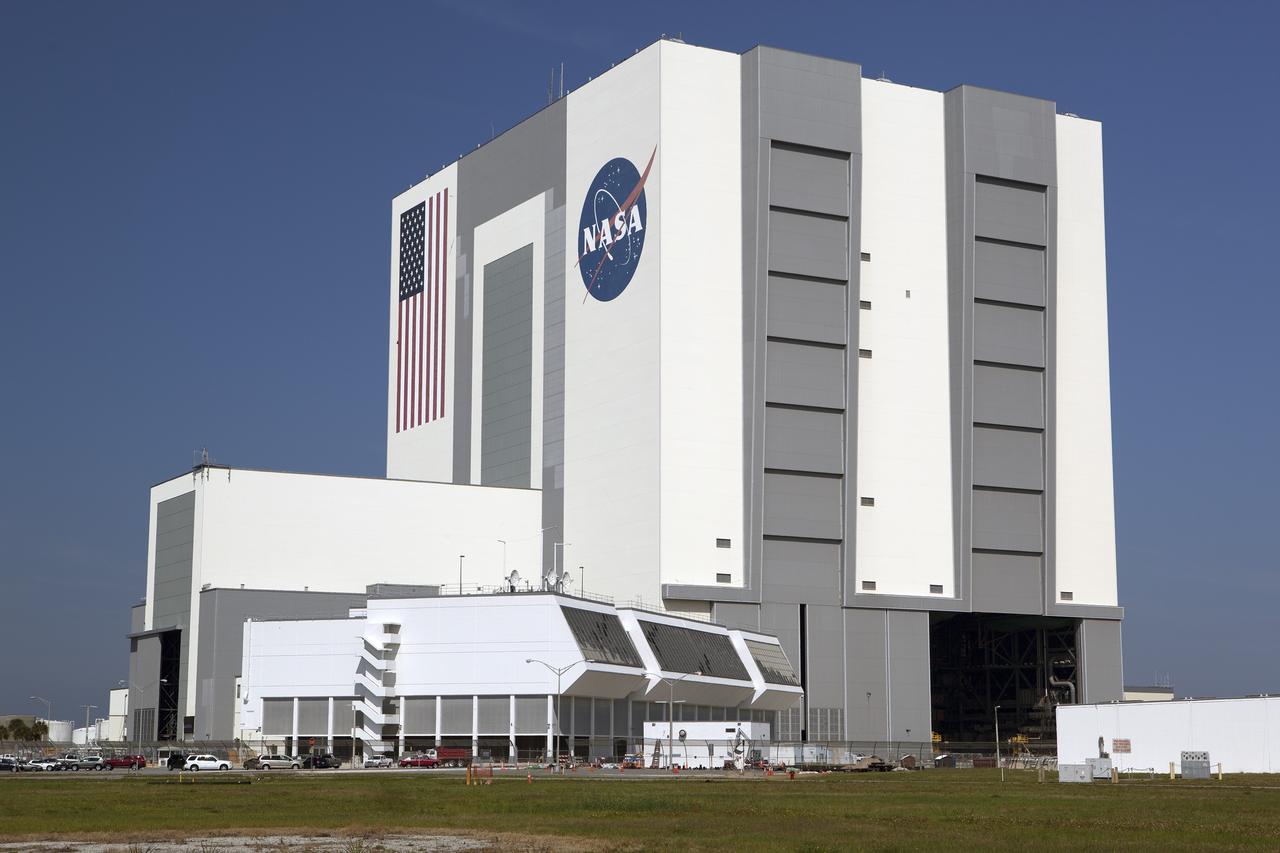
CAPE CANAVERAL, Fla. – The Vehicle Assembly Building and Launch Control Center are contrasted against a blue sky at NASA's Kennedy Space Center in Florida. Inside Firing Room 4, the Ground Systems Development and Operations Program is overseeing efforts to create a new firing room based on a multi-user concept. Construction workers have installed the framing and some of the insulation and inner walls. The design of Firing Room 4 will incorporate five control room areas that are flexible to meet current and future NASA and commercial user requirements. The equipment and most of the consoles from Firing Room 4 were moved to Firing Room 2 for possible future reuse. Photo credit: NASA/Dimitri Gerondidakis
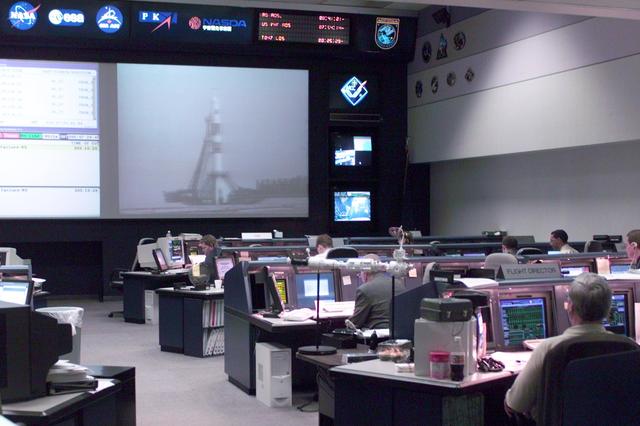
JSC2000-E-27301 (31 October 2000) --- Flight controllers in Houston's Mission Control Center follow the countdown to the Kazakhstan liftoff of the Soyuz, carrying the Expedition One crew.
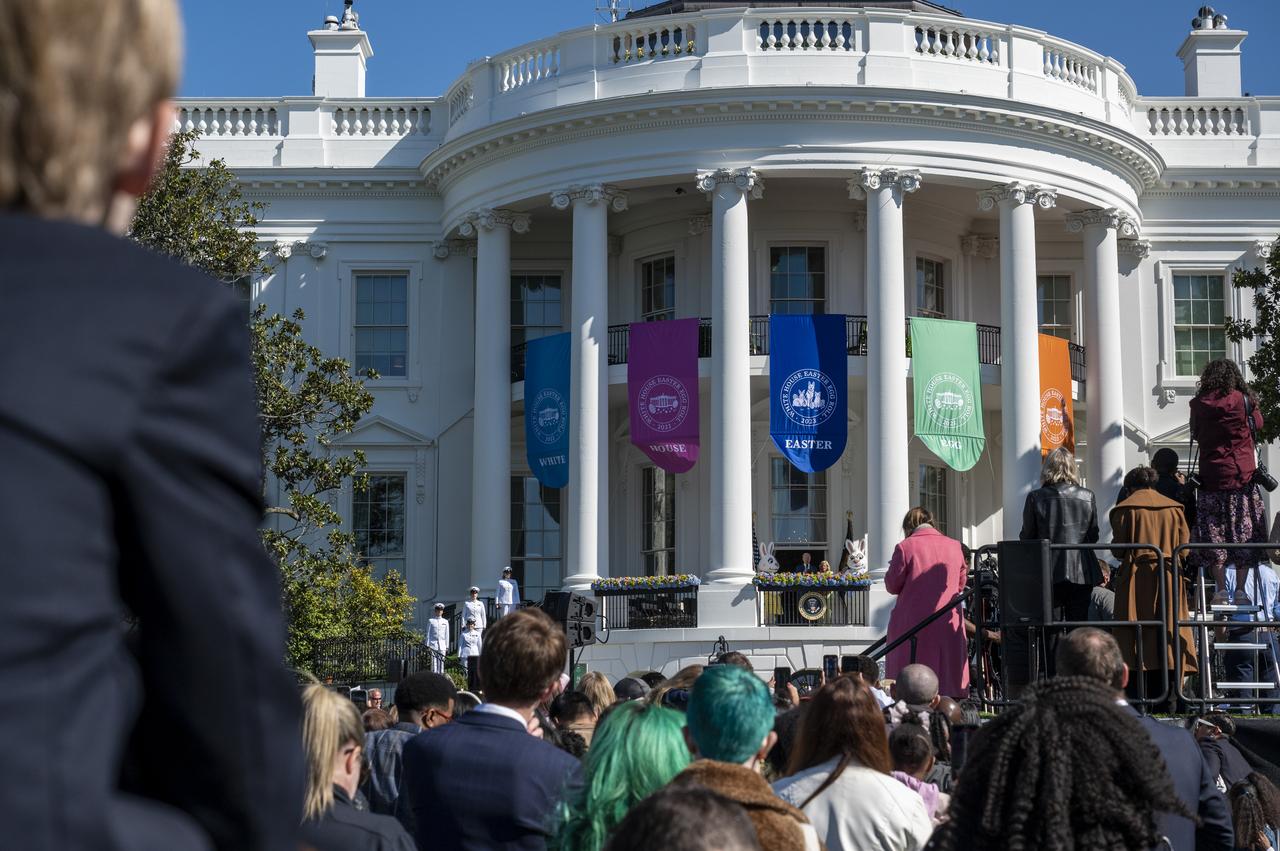
President Joe Biden and First Lady Jill Biden deliver remarks during the White House Easter Egg Roll, Monday, April 10, 2023, from the Blue Room Balcony of the White House in Washington. Photo Credit: (NASA/Keegan Barber)
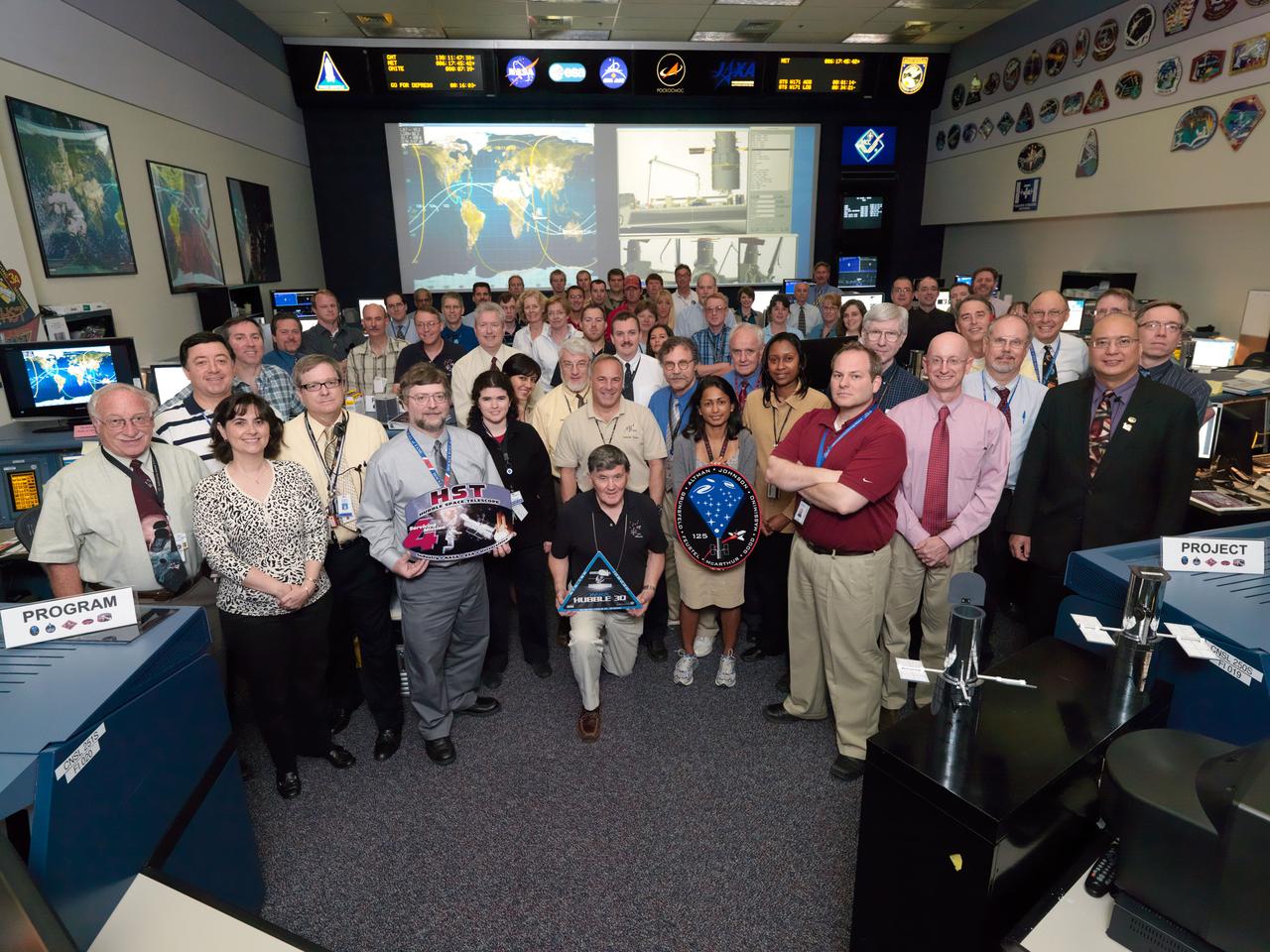
JSC2009-E-120479 (18 May 2009) --- Members of the STS-125 Hubble Space Telescope Planning and Orbit flight control team pose for a group portrait in the blue flight control room in the Mission Control Center at NASA's Johnson Space Center.
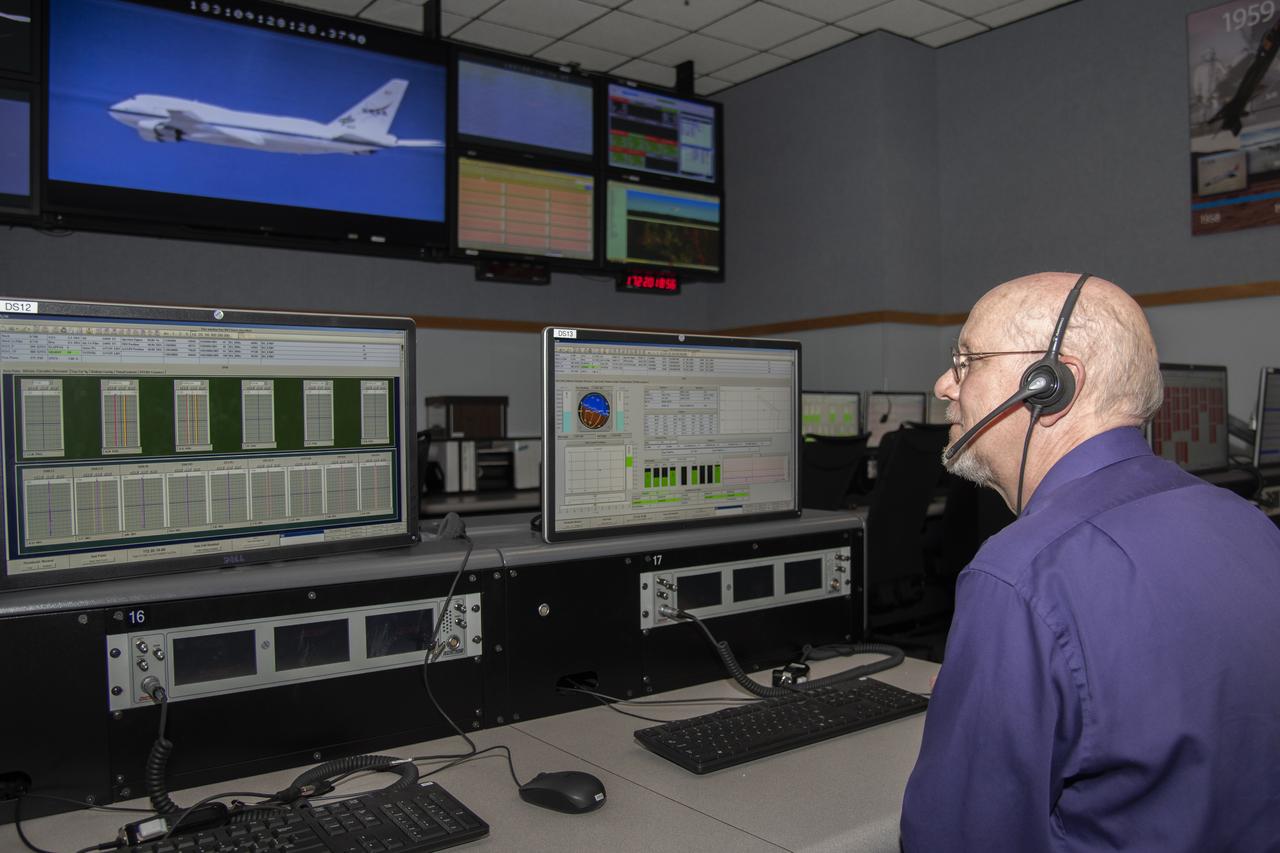
Kevin Knutson sits at a station in the main Blue Control Room at NASA’s Armstrong Flight Research Center in California used during complex flight missions to house the many technical discipline experts required to gather all of the required data and to enhance mission safety.
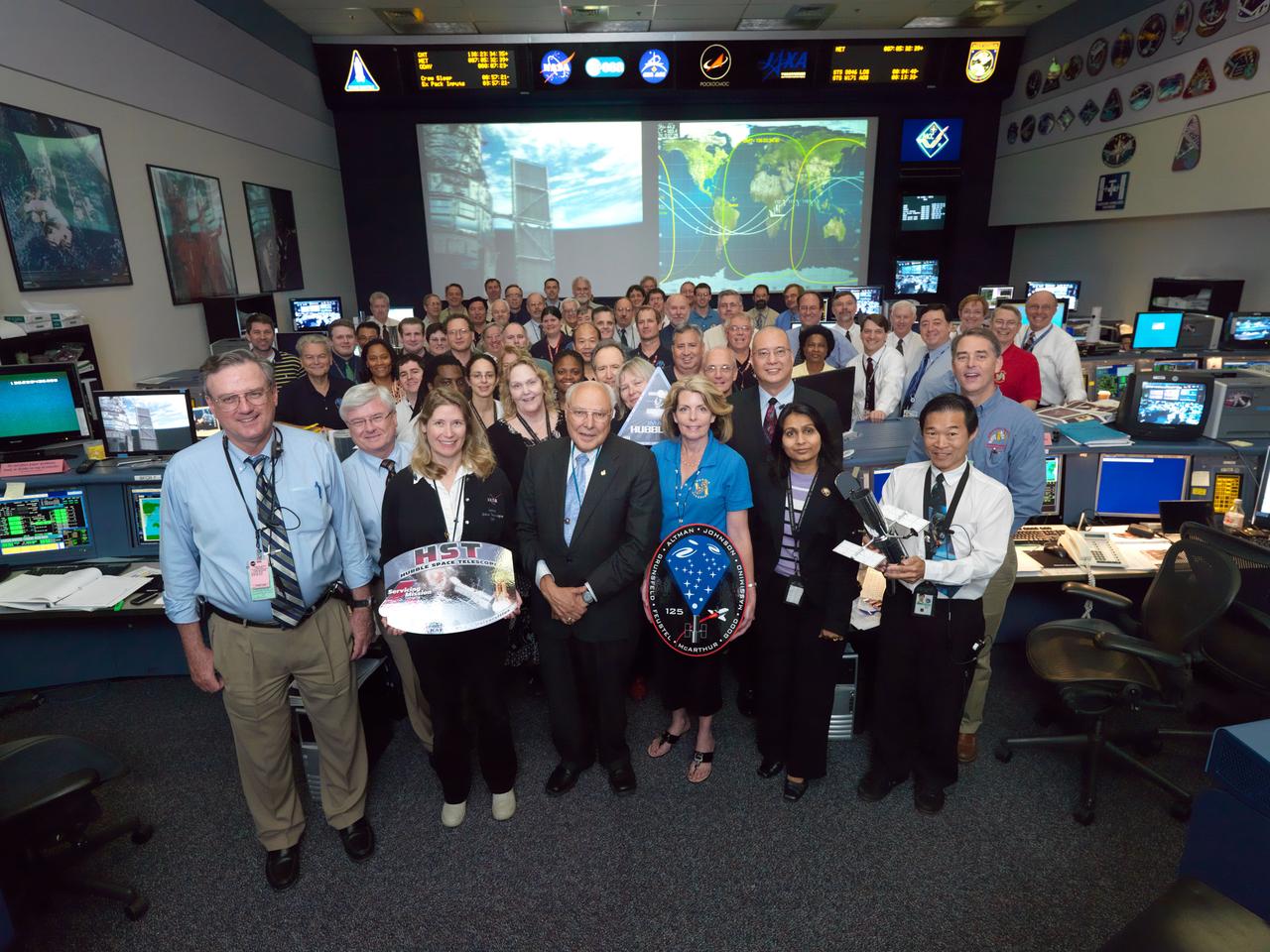
JSC2009-E-120701 (19 May 2009) --- Members of the STS-125 Hubble Space Telescope Planning and Orbit flight control team pose for a group portrait in the blue flight control room in the Mission Control Center at NASA's Johnson Space Center.
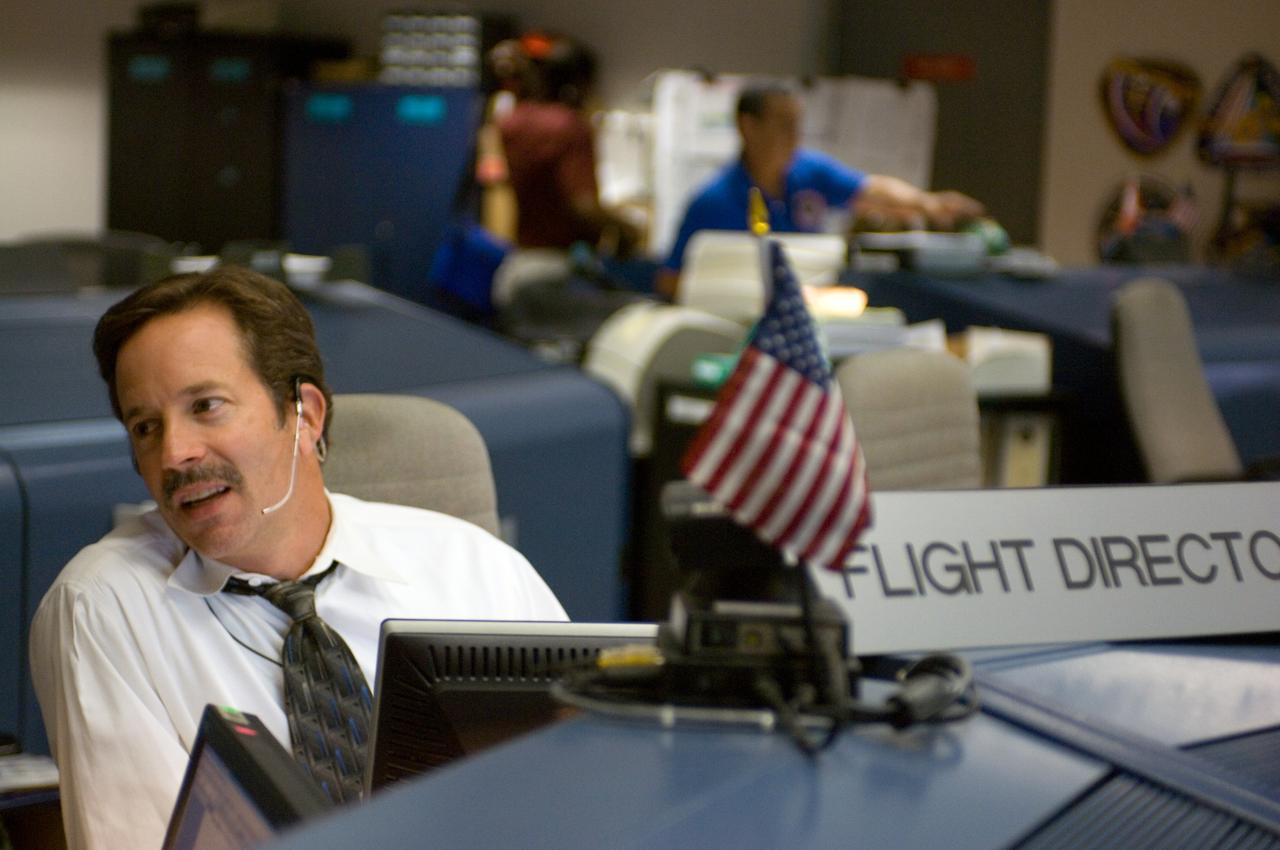
JSC2006-E-38926 (31 Aug. 2006) --- Flight director Rick LaBrode discusses Expedition 13 mission activities with another flight controller (out of frame) in the Station (Blue) Flight Control Room in Houston's Mission Control Center.
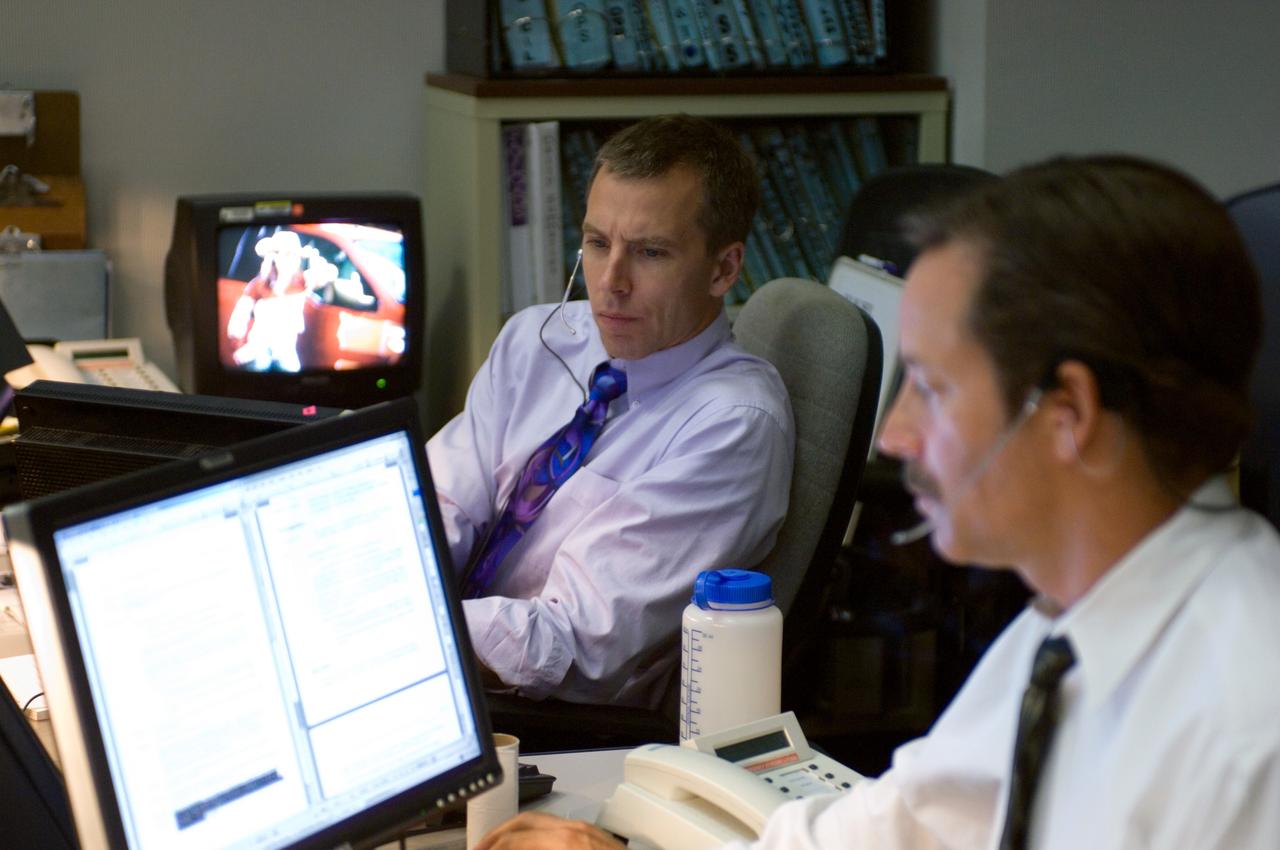
JSC2006-E-38929 (31 Aug. 2006) --- Astronaut Andrew J. Feustel (background), spacecraft communicator (CAPCOM), and flight director Rick LaBrode monitor data at their consoles in the Station (Blue) Flight Control Room in Houston's Mission Control Center during Expedition 13 mission activities.

President Joe Biden and First Lady Jill Biden deliver remarks during the White House Easter Egg Roll, Monday, April 10, 2023, from the Blue Room Balcony of the White House in Washington. Photo Credit: (NASA/Keegan Barber)

President Joe Biden and First Lady Jill Biden wave to guests during the White House Easter Egg Roll, Monday, April 10, 2023, from the Blue Room Balcony of the White House in Washington. Photo Credit: (NASA/Keegan Barber)

A blue sky and fluffy clouds serve as the backdrop in this view of the exterior of the Launch Control Center (LCC) at NASA's Kennedy Space Center in Florida. The Apollo and shuttle-era firing rooms in the LCC have been upgraded. Exploration Ground Systems upgraded Firing Room 1 to support the launch of NASA's Space Launch System rocket and Orion spacecraft on Exploration Mission-1 and deep space missions.
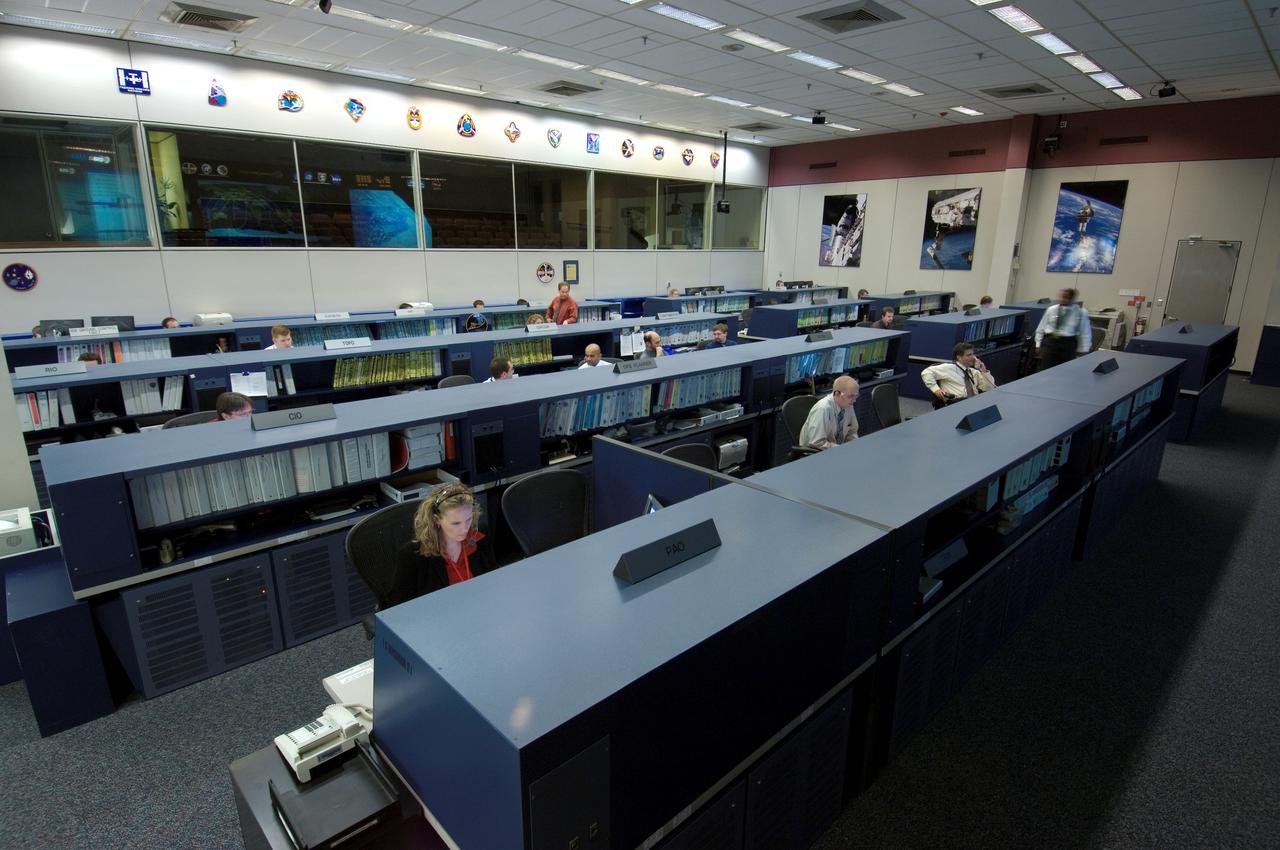
JSC2006-E-43863 (6 Oct. 2006)--- International Space Station flight controllers have this area as their new home with increased technical capabilities, more workspace and a long, distinguished history. The newly updated facility is just down the hall from its predecessor at NASA's Johnson Space Center, Houston. This view is toward the rear of the "new" room. Known as Flight Control Room 1, it was first used to control a space flight 38 years ago, the mission of Apollo 7 launched Oct. 11, 1968. It was one of two control rooms for NASA's manned missions. The room it replaces in its new ISS role, designated the Blue Flight Control Room, had been in operation since the first station component was launched in 1998.
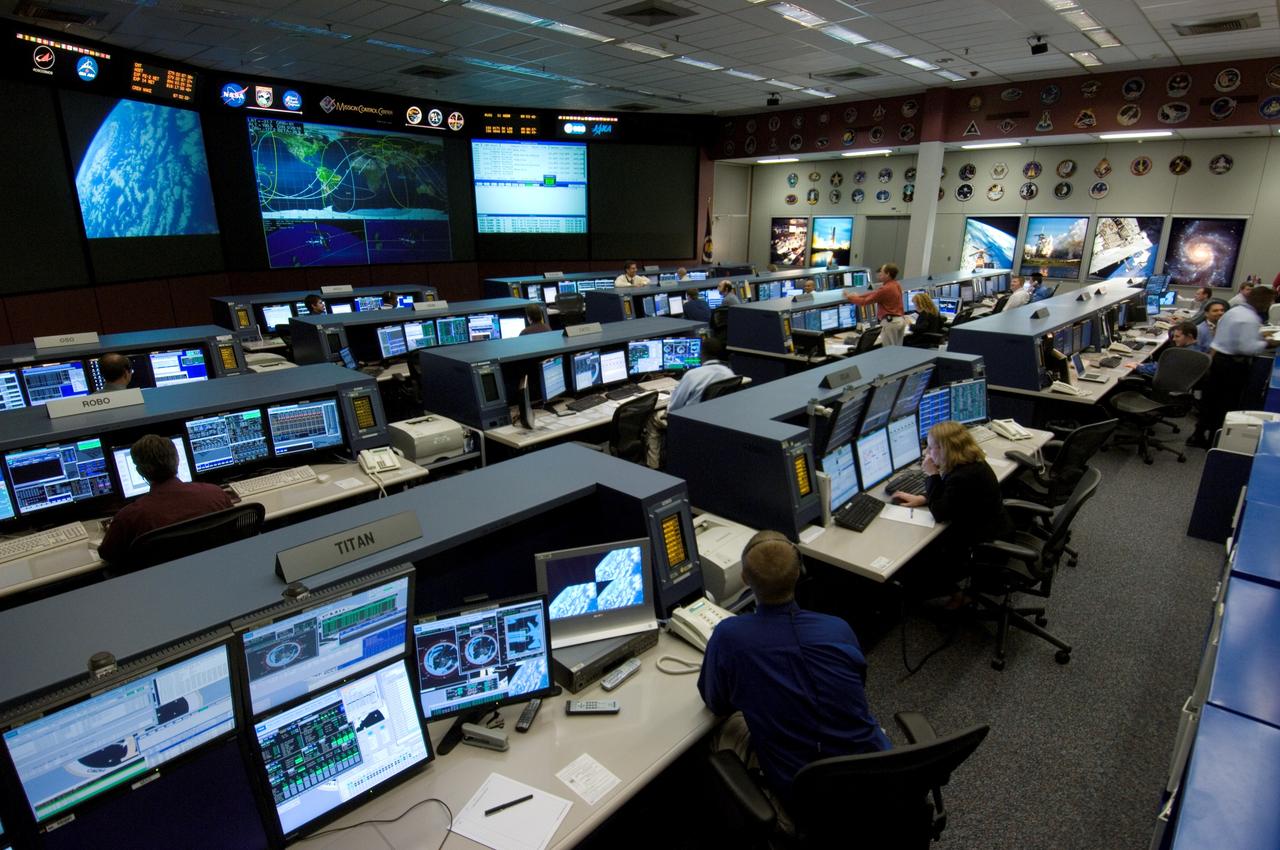
JSC2006-E-43860 (6 Oct. 2006)--- International Space Station flight controllers have this area as their new home with increased technical capabilities, more workspace and a long, distinguished history. The newly updated facility is just down the hall from its predecessor at NASA's Johnson Space Center, Houston. Known as Flight Control Room 1, it was first used to control a space flight 38 years ago, the mission of Apollo 7 launched Oct. 11, 1968. It was one of two control rooms for NASA's manned missions. The room it replaces in its new ISS role, designated the Blue Flight Control Room, had been in operation since the first station component was launched in 1998.
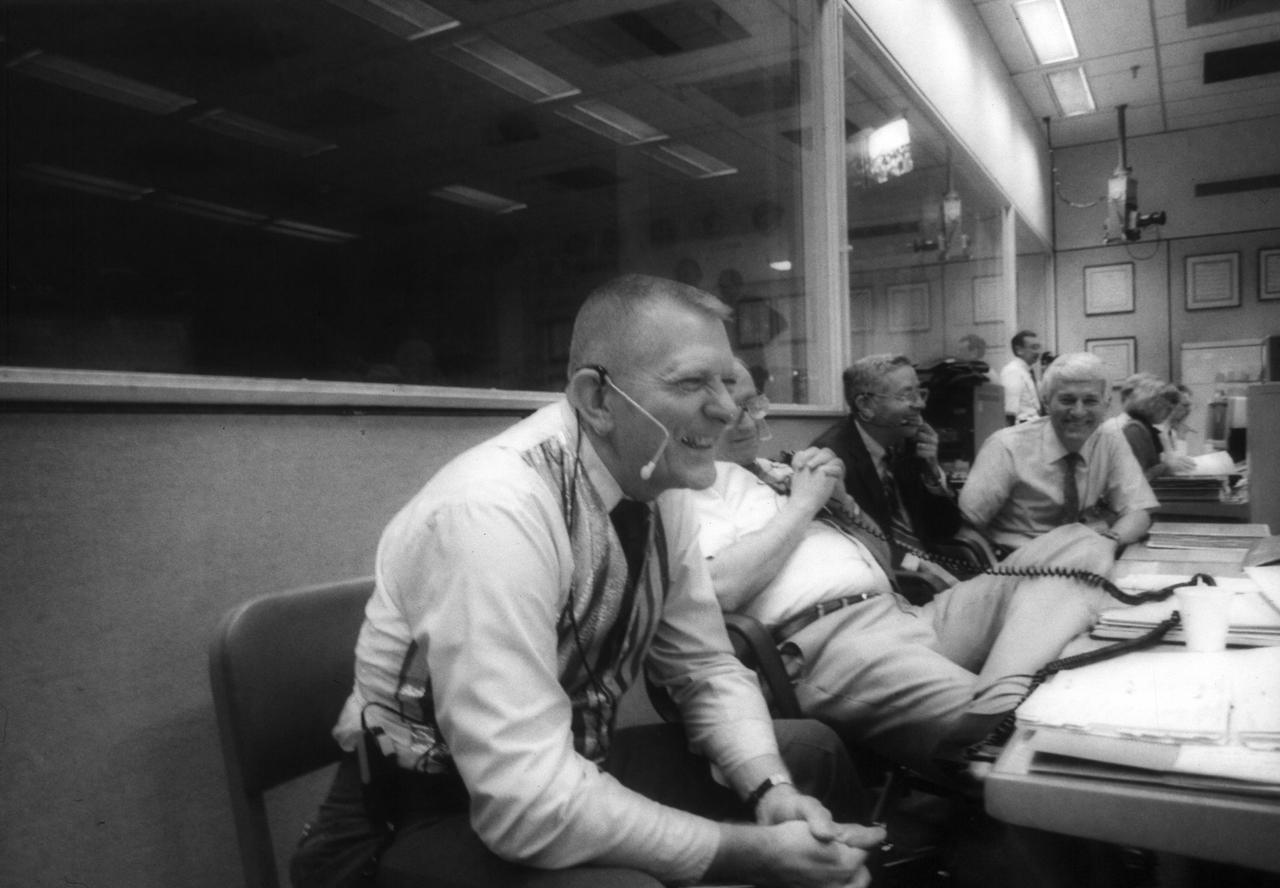
JSC officials, laughing, listen to crewmembers' commentary onboard Discovery, Orbiter Vehicle (OV) 103, during STS-26. In the Flight Control Room (FCR) of JSC's Mission Control Center (MCC) Bldg 30 and seated at the Mission Operations Directorate (MOD) console, MOD Director Eugene F. Kranz (foreground), wearing red, white and blue vest, smiles along with JSC Director Aaron Cohen and Flight Crew Operations Deputy Director Henry W. Hartsfield, Jr. (far right).
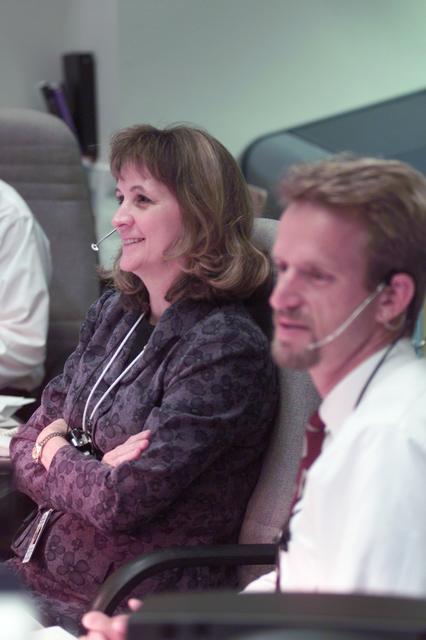
JSC2001-E-21574 (16 July 2001) --- ISS Orbit 1 flight director Sally Davis and Derek Hassman monitor International Space Station (ISS) issues at their consoles in the blue flight control room (BFCR) in Houston's Mission Control Center (MCC). At the time this photo was taken, the STS-104 and Expedition Two crews had joined efforts to perform a number of station-related tasks.
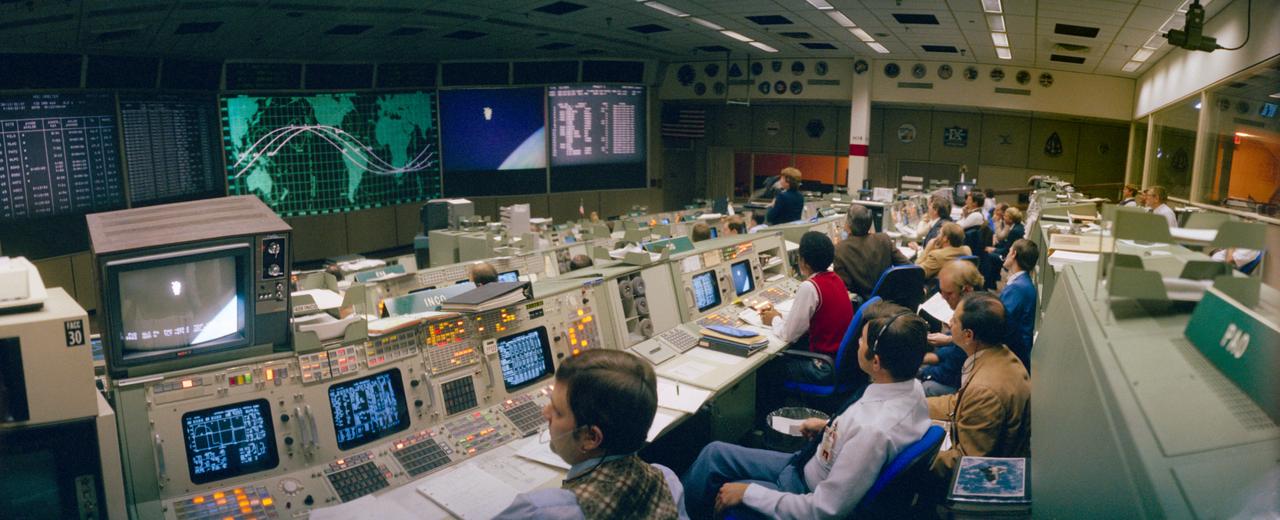
S84-26503 (7 Feb 1984) --- This wide angle, overall view of activity in the mission operations control room in the Johnson Space Center?s mission control center, was photographed during the first even non-tethered extravehicular activity (EVA) in space. The large MOCR monitor and those at individual consoles feed to ground controllers the spectacular scene of Astronaut Bruce McCandless II ?suspended? I space above the blue and white Earth. The scene was photographed at 7:30 a.m. (CST), February 7, 1984.
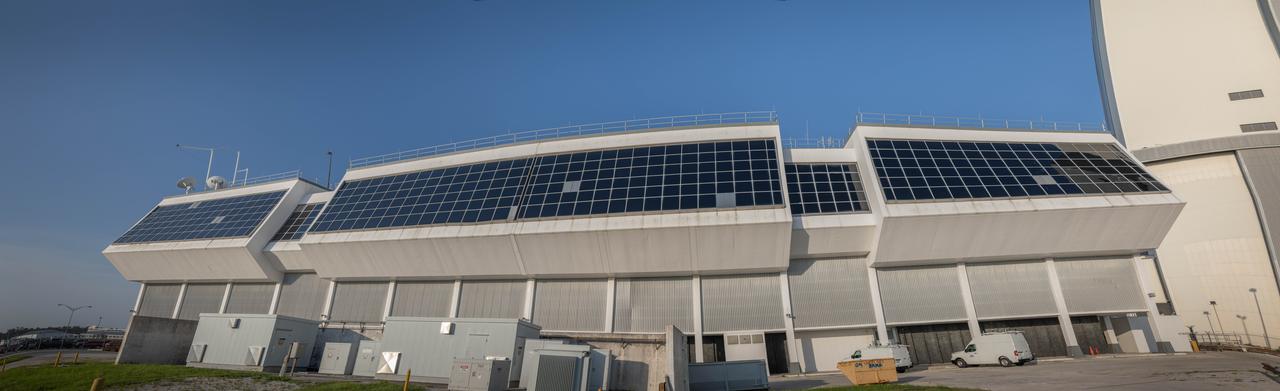
A brilliant blue sky forms the backdrop for a fish-eye panoramic view of the south side of the Launch Control Center (LCC) at NASA's Kennedy Space Center in Florida. Firing Room 1 inside the LCC has been completely upgraded and modernized to support the testing, processing, countdown and launch of NASA's Space Launch System (SLS) rocket and Orion spacecraft on Exploration Mission-1 and deep space mission. Exploration Ground Systems oversaw the upgrades.
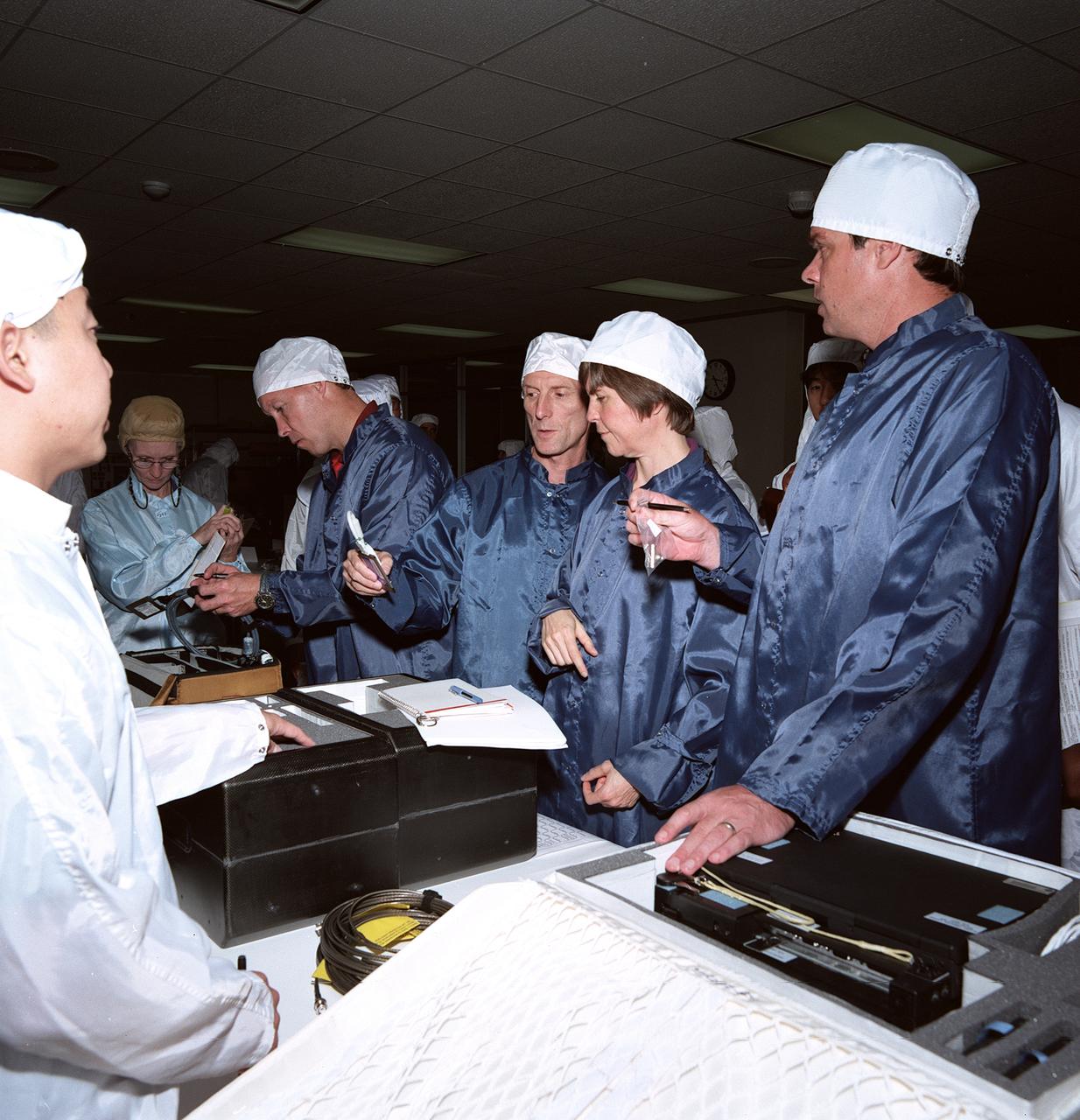
S99-09457 (11 August 1999) --- Wearing clean room suits, members of the STS-99 crew inspect some of the gear they will be using on their upcoming space mission. From the left (in blue lab coats) are astronauts Dominic L. Gorie, pilot; Gerhard P.J. Thiele, mission specialist representing the European Space Agency (ESA); Janice Voss, mission specialist; and Kevin R. Kregel, mission commander. This type flight crew equipment (FCE) bench review is routine preflight procedure for all shuttle crews.
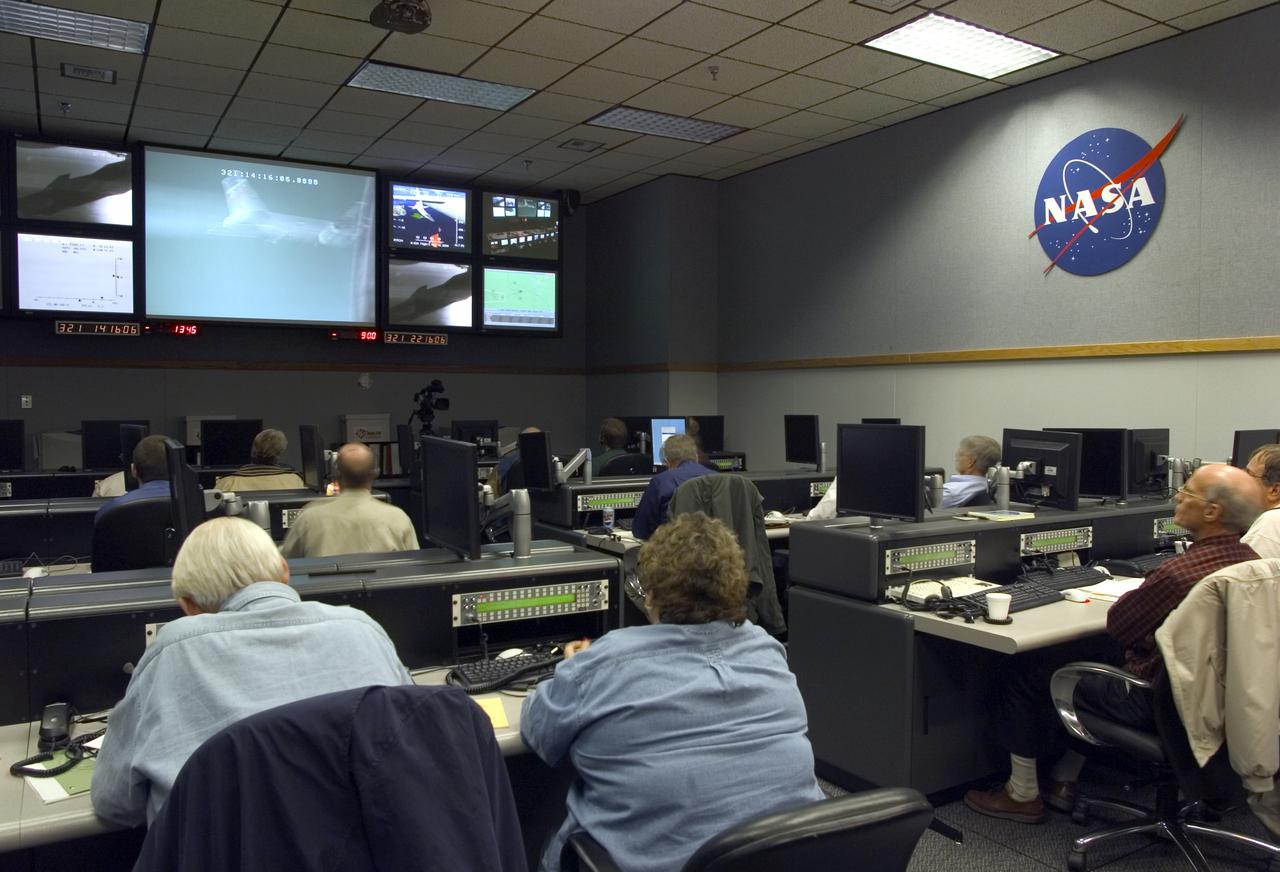
NASA engineers monitor mission progress from a Dryden control room prior to launch of the X-43A scramjet and its booster from NASA's B-52B mothership.

KENNEDY SPACE CENTER, FLA. -- Space Shuttle Atlantis arrives on the hardstand on Launch Pad 39A after a six-hour trek, via the crawler-transporter, from the Vehicle Assembly Building. The first motion out of the assembly building was at 8:19 a.m. In the background is the blue Atlantic Ocean. At left is the box-like structure known as the White Room that sits at the end of the orbiter access arm. The mission payload aboard Space Shuttle Atlantis is the S3/S4 integrated truss structure, along with a third set of solar arrays and batteries. The crew of six astronauts will install the truss to continue assembly of the International Space Station. Launch is targeted for March 15. Photo credit: NASA/Kim Shiflett
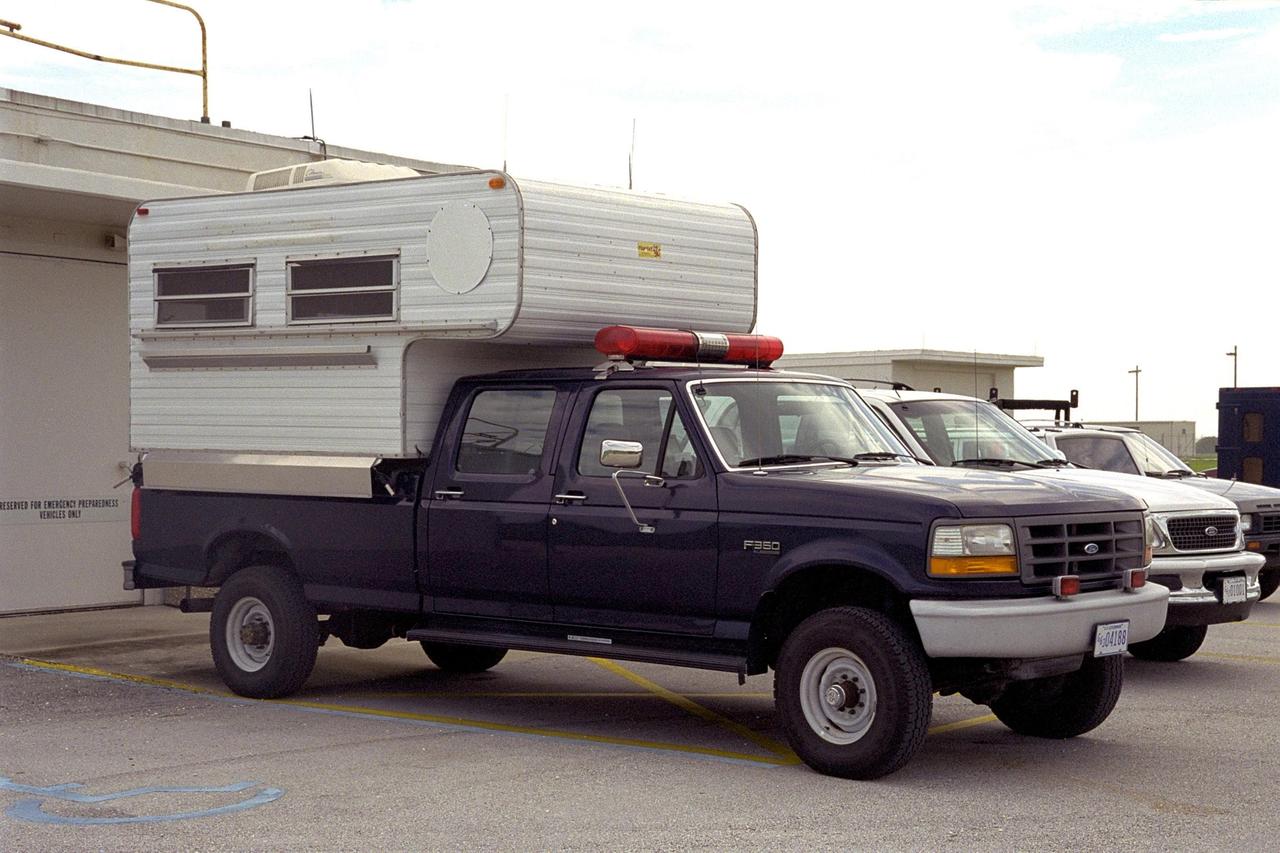
This camper-equipped truck known as “Old Blue” served as mobile field command center for the Emergency Preparedness team at KSC. It has been replaced with a larger vehicle that includes a conference room, computer work stations, mobile telephones and a fax machine, plus its own onboard generator. Besides being ready to respond in case of emergencies during launches, the vehicle must be ready to help address fires, security threats, chemical spills, terrorist attaches, weather damage or other critical situations that might face KSC or Cape Canaveral Air Force Station
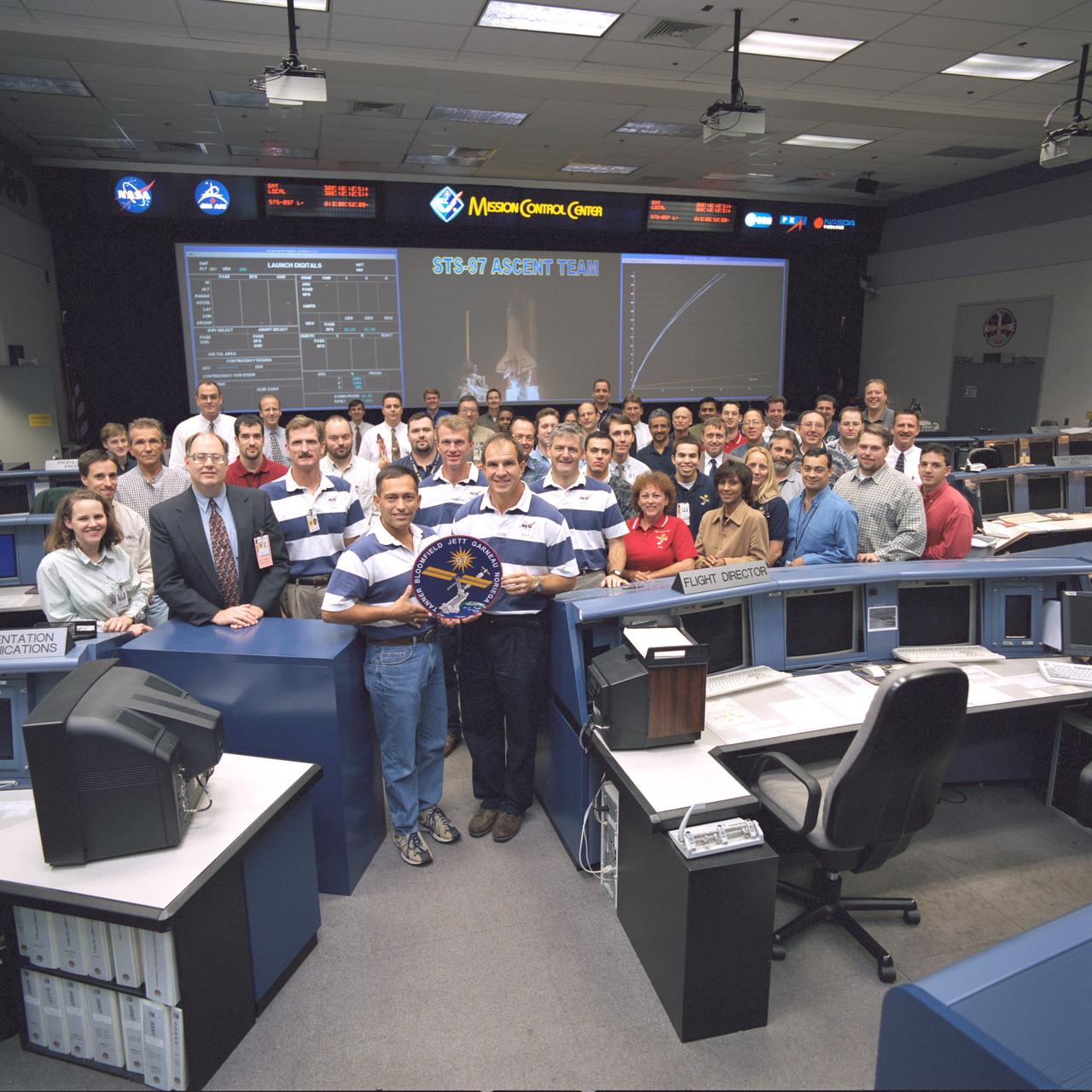
JSC2000-07294 (20 November 2000) --- The 40-odd flight controllers assigned to the STS-97 ascent team and some special guests pose for a group portrait in the shuttle flight control room in Houston's Mission Control Center (JSC). The five guests attired in the blue and white shirts are the flight crew members for the STS-97 crew, scheduled to be launched from Florida on the last day of this month. The astronauts are, from the left, Joseph R. Tanner, Carlos I. Noriega, Brent W. Jett, Jr., Michael J. Bloomfield and Marc Garneau, who represents the Canadian Space Agency (CSA). Ascent shift flight director Wayne Hale stands next to Tanner.
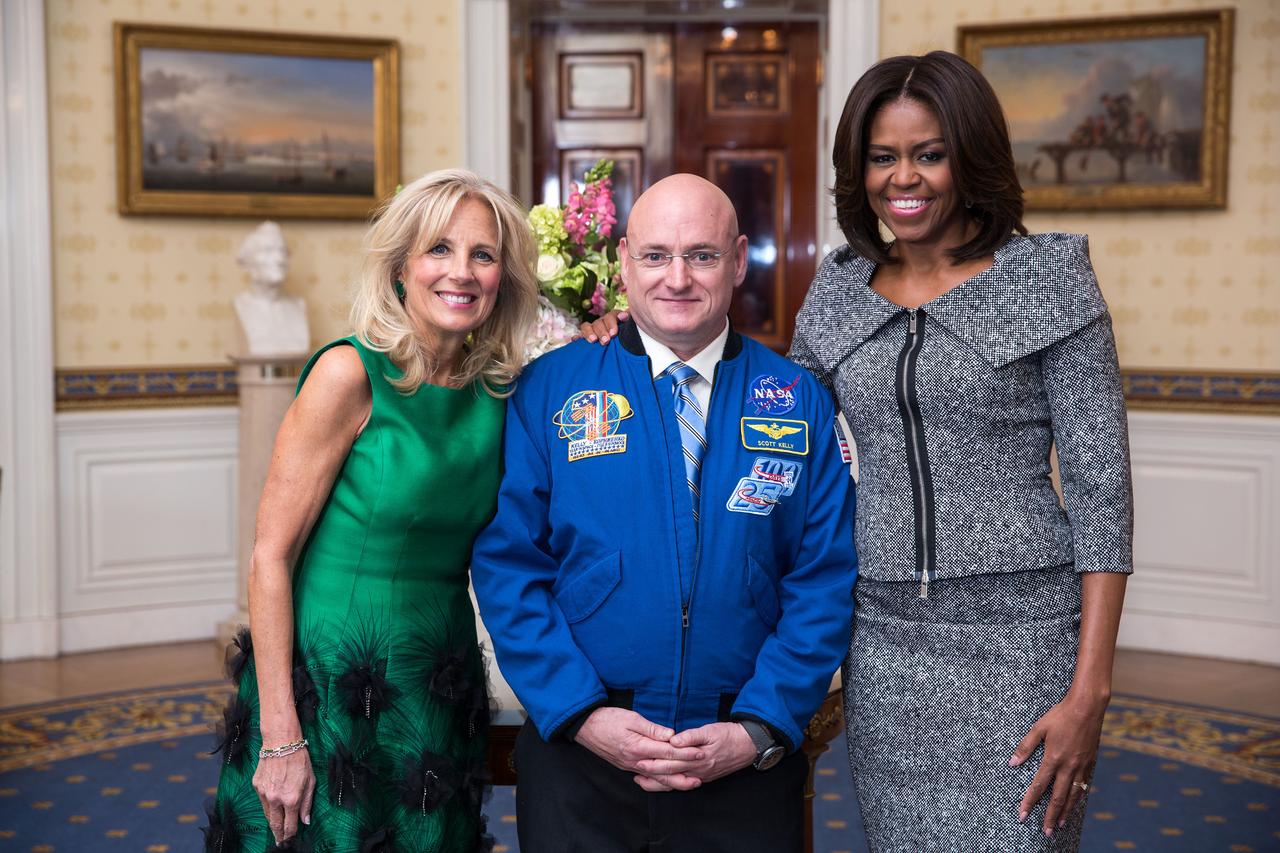
First Lady Michelle Obama and Dr. Jill Biden greet Scott Kelly, First Lady's State of the Union box guest, in the Blue Room of the White House, Jan. 20, 2015. (Official White House Photo by Lawrence Jackson) P012015LJ-0103 This official White House photograph is being made available only for publication by news organizations and/or for personal use printing by the subject(s) of the photograph. The photograph may not be manipulated in any way and may not be used in commercial or political materials, advertisements, emails, products, promotions that in any way suggests approval or endorsement of the President, the First Family, or the White House.
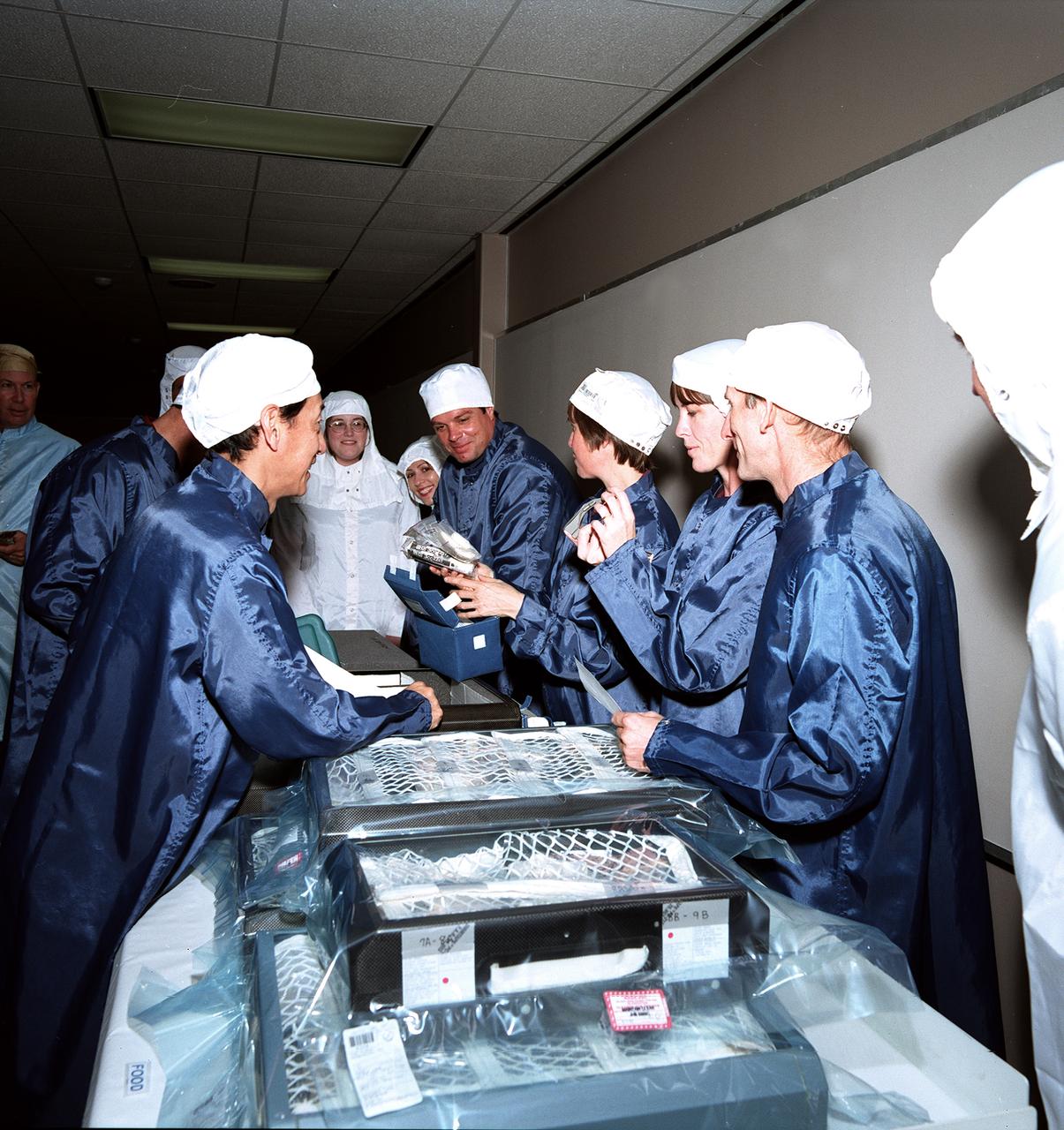
S99-09469 (11 August 1999) --- Wearing clean room suits, all six members of the STS-99 crew inspect some of the gear they will be using on their upcoming space shuttle mission. From the left (in blue lab coats) are astronauts Mamoru Mohri, mission specialist representing Japan's National Development Space Agency (NASDA); Dominic L. Gorie (partially obscured), pilot; Kevin R. Kregel, mission commander; Janice Voss, mission specialist; Janet L. Kavandi, mission specialist; and Gerhard P.J. Thiele, mission specialist representing the European Space Agency (ESA). This type flight crew equipment (FCE) bench review is routine preflight procedure for all shuttle crews.
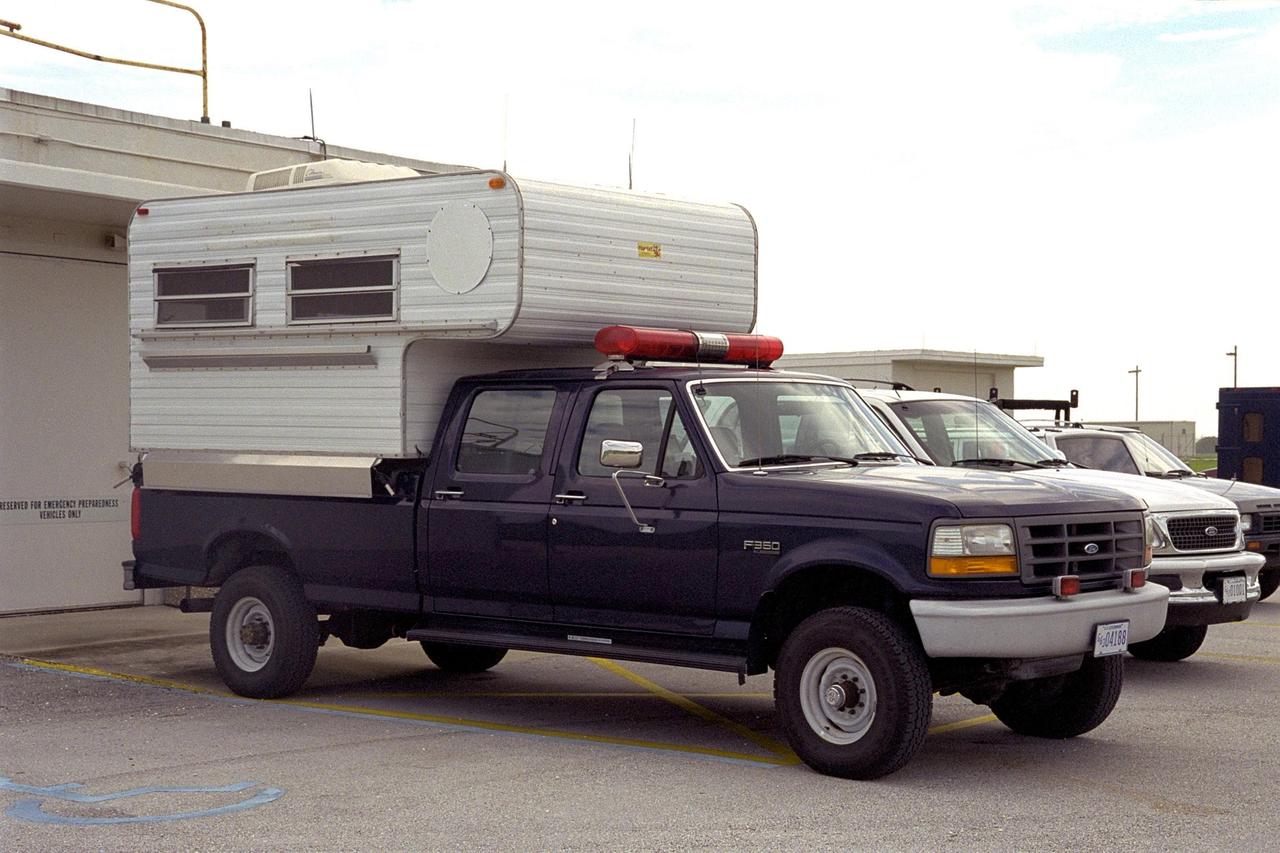
This camper-equipped truck known as “Old Blue” served as mobile field command center for the Emergency Preparedness team at KSC. It has been replaced with a larger vehicle that includes a conference room, computer work stations, mobile telephones and a fax machine, plus its own onboard generator. Besides being ready to respond in case of emergencies during launches, the vehicle must be ready to help address fires, security threats, chemical spills, terrorist attaches, weather damage or other critical situations that might face KSC or Cape Canaveral Air Force Station
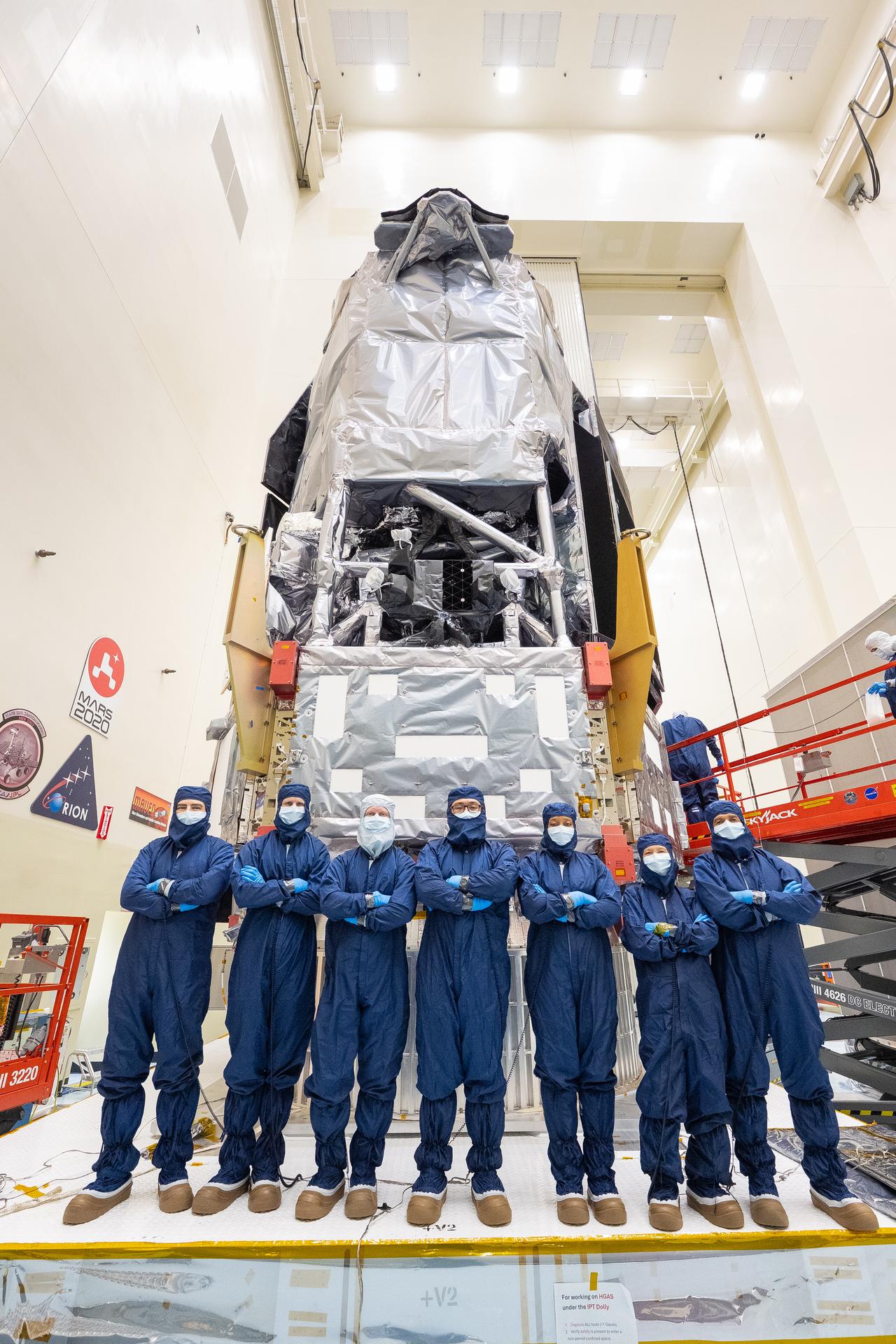
During a key integration milestone for NASA’s Nancy Grace Roman Space Telescope, technicians and engineers from the agency's Jet Propulsion Lab in Southern California gather inside the Payload Hazardous Servicing Facility at NASA’s Kennedy Space Center in Florida on Wednesday, July 8, 2026, following the closeout of the observatory’s Coronagraph Instrument test connector panel. Roman carries one science instrument called the Wide Field Instrument, and one technology demonstration called the Roman Coronagraph Instrument. The coronagraph is a system of masks, prisms, detectors, and even self-flexing mirrors built to block out the glare from distant stars and directly image the planets in orbit around them. The Roman Coronagraph will be the first active coronagraph to fly in space, meaning it contains components that actively respond to variables that would usually cause starlight to scatter, making it harder to see nearby planets.
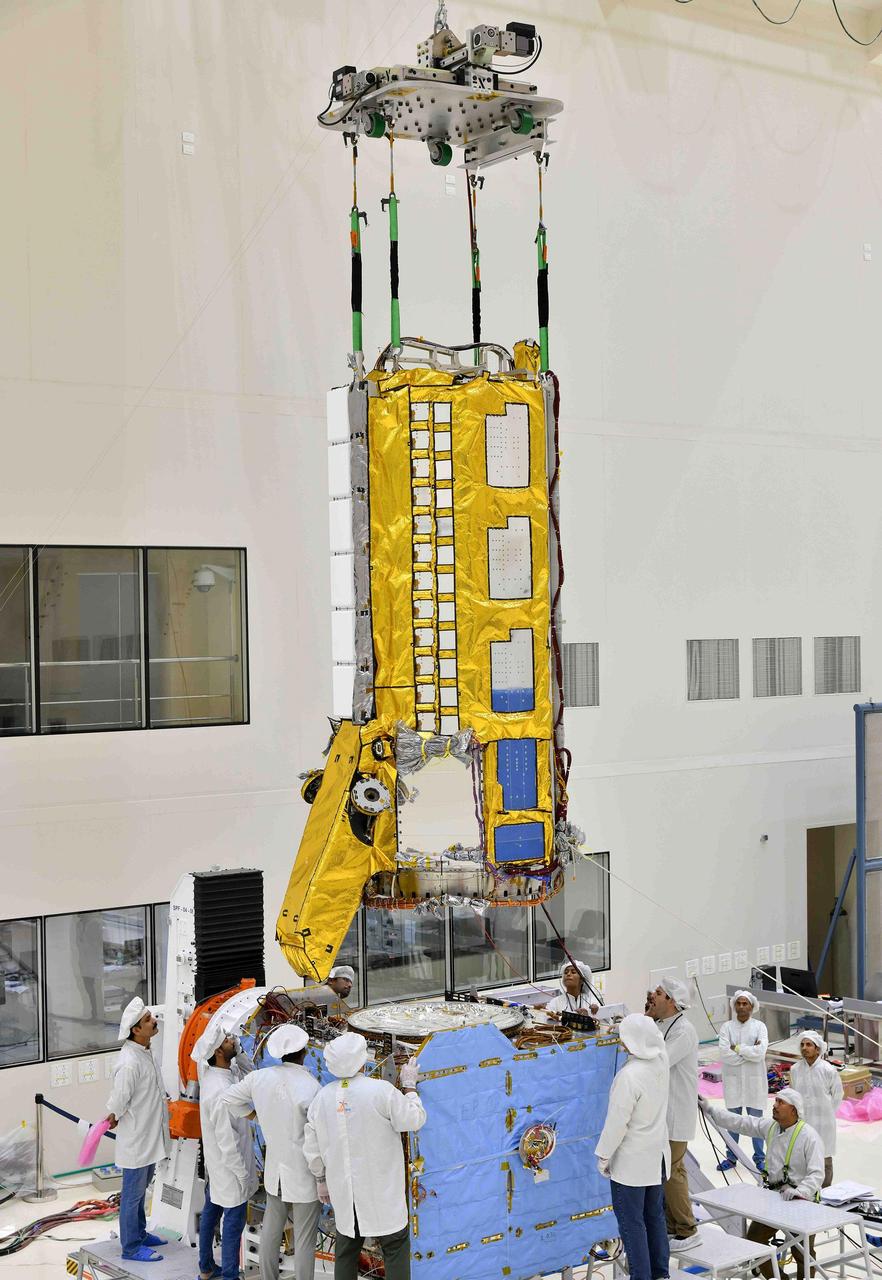
Engineers from NASA's Jet Propulsion Laboratory in Southern California and the Indian Space Research Organisation (ISRO), working in a clean room facility at ISRO's U R Rao Satellite Centre (URSC) in Bengaluru, India, in mid-June 2023, use a crane to align the radar instrument payload for the NISAR (NASA-ISRO Synthetic Aperture Radar) mission above the satellite's spacecraft bus so that the two components can be combined. Set to launch in early 2024 from the Satish Dhawan Space Centre in Sriharikota, India, NISAR is being jointly developed by NASA and ISRO to observe movements of Earth's land and ice surfaces in extremely fine detail. As NISAR observes nearly every part of Earth at least once every 12 days, the satellite will help scientists understand, among other observables, the dynamics of forests, wetlands, and agricultural lands. The radar instrument payload, partially wrapped in gold-colored thermal blanketing, arrived from JPL in March and consists of L- and S-band radar systems, so named to indicate the wavelengths of their signals. Both sensors can see through clouds and collect data day and night. The bus, which is shown in blue blanketing and includes components and systems developed by both ISRO and JPL, was built at URSC and will provide power, navigation, pointing control, and communications for the mission. NISAR is an equal collaboration between NASA and ISRO and marks the first time the two agencies have cooperated on hardware development for an Earth-observing mission. JPL, which is managed for NASA by Caltech in Pasadena, leads the U.S. component of the project and is providing the mission's L-band SAR. NASA is also providing the radar reflector antenna, the deployable boom, a high-rate communication subsystem for science data, GPS receivers, a solid-state recorder, and payload data subsystem. URSC, which is leading the ISRO component of the mission, is providing the spacecraft bus, the S-band SAR electronics, the launch vehicle, and associated launch services and satellite mission operations. https://photojournal.jpl.nasa.gov/catalog/PIA25866
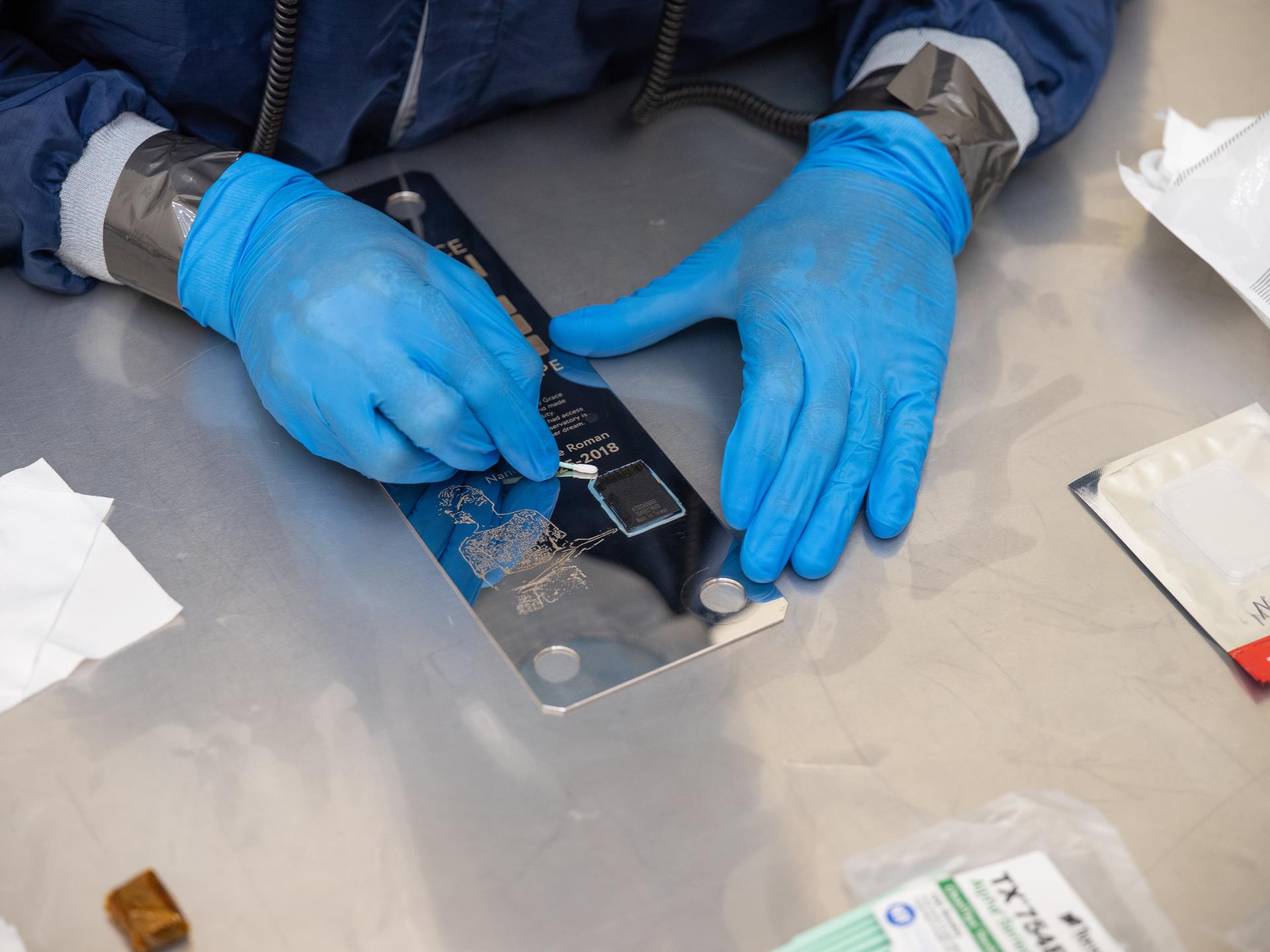
A technician inside the Payload Hazardous Servicing Facility at NASA’s Kennedy Space Center in Florida installs a memory card containing a total of 1,350,144 names as part of a commemorative plaque on the Nancy Grace Roman Space Telescope on Friday, July 17, 2026. The names, submitted by people from across the globe, including astronauts from NASA’s Artemis II and Artemis III missions, will travel with the Roman observatory to the Sun-Earth Lagrange point 2, or L2, about one million miles from Earth, where the Sun’s and Earth’s gravity balance out. Roman is named after Dr. Nancy Grace Roman, NASA’s first chief astronomer and one of the architects of the agency’s modern science program.
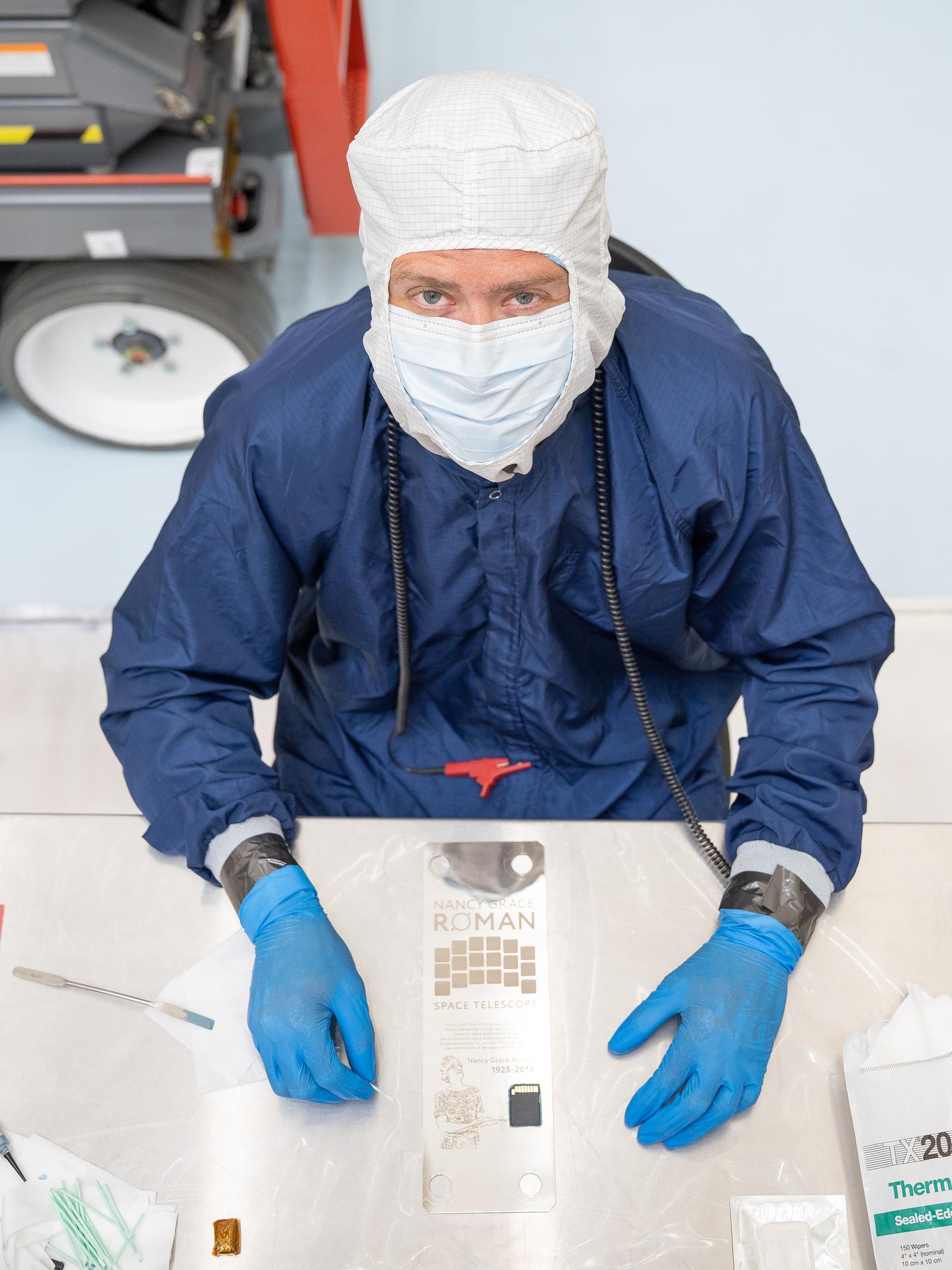
Inside the Payload Hazardous Servicing Facility at NASA’s Kennedy Space Center in Florida, Harry Willems, a mechanical technician from the agency’s Goddard Space Flight Center in Greenbelt, Maryland, installs a memory card containing a total of 1,350,144 names as part of a commemorative plaque on the Nancy Grace Roman Space Telescope on Friday, July 17, 2026. The names, submitted by people from across the globe, including astronauts from NASA’s Artemis II and Artemis III missions, will travel with the Roman observatory to the Sun-Earth Lagrange point 2, or L2, about one million miles from Earth, where the Sun’s and Earth’s gravity balance out. Roman is named after Dr. Nancy Grace Roman, NASA’s first chief astronomer and one of the architects of the agency’s modern science program.
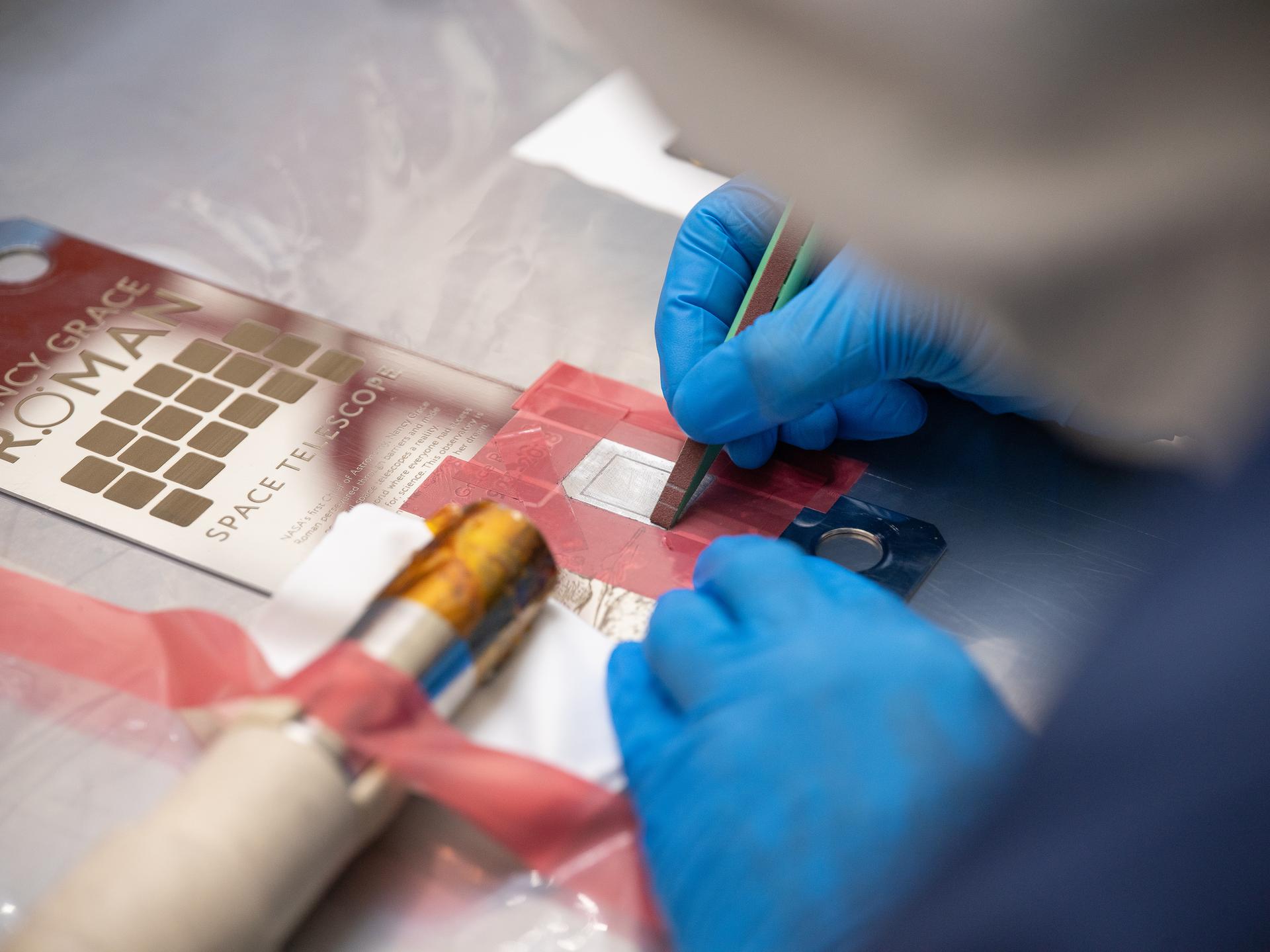
A technician inside the Payload Hazardous Servicing Facility at NASA’s Kennedy Space Center in Florida installs a memory card containing a total of 1,350,144 names as part of a commemorative plaque on the Nancy Grace Roman Space Telescope on Friday, July 17, 2026. The names, submitted by people from across the globe, including astronauts from NASA’s Artemis II and Artemis III missions, will travel with the Roman observatory to the Sun-Earth Lagrange point 2, or L2, about one million miles from Earth, where the Sun’s and Earth’s gravity balance out. Roman is named after Dr. Nancy Grace Roman, NASA’s first chief astronomer and one of the architects of the agency’s modern science program.
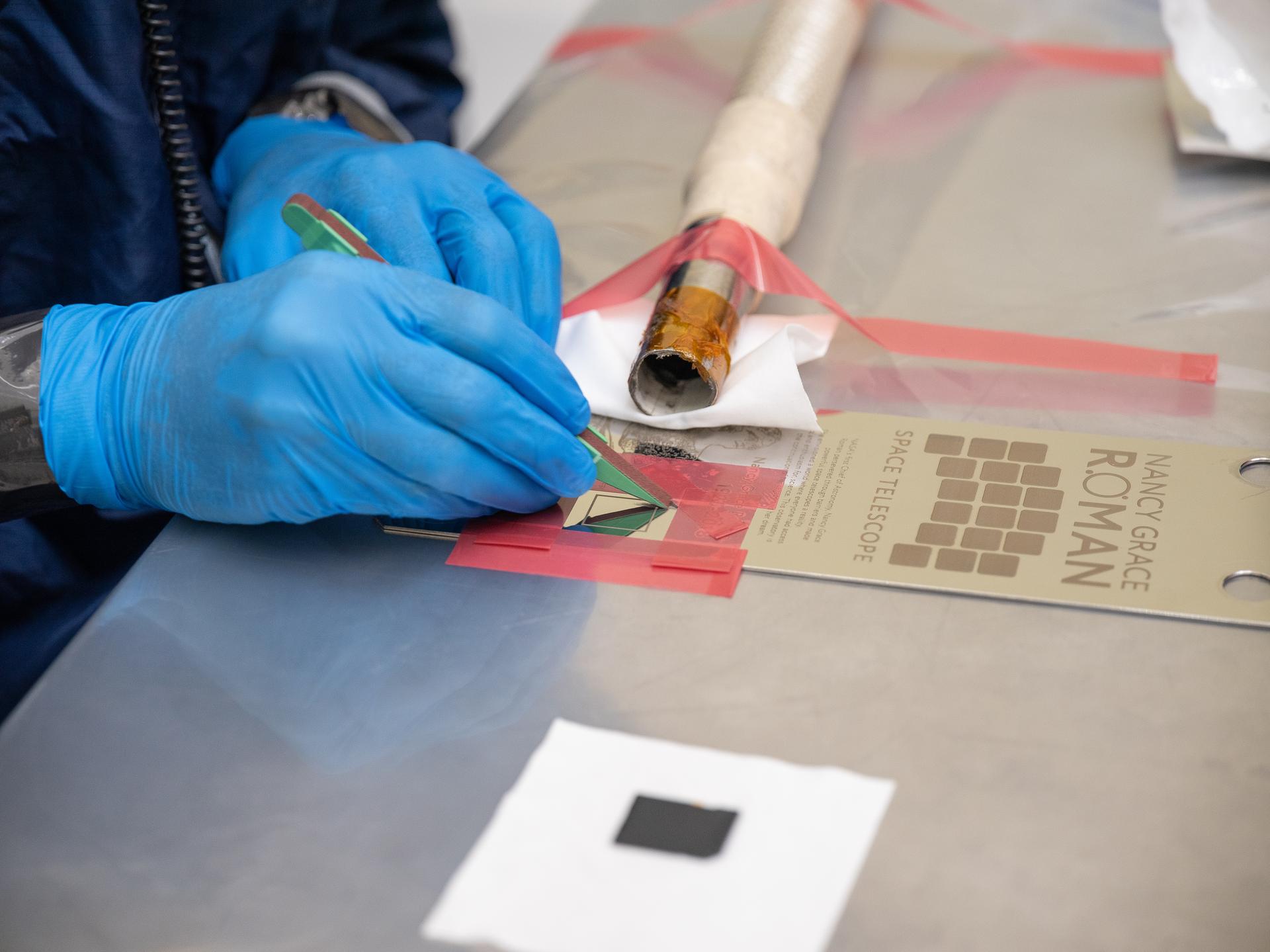
A technician inside the Payload Hazardous Servicing Facility at NASA’s Kennedy Space Center in Florida installs a memory card containing a total of 1,350,144 names as part of a commemorative plaque on the Nancy Grace Roman Space Telescope on Friday, July 17, 2026. The names, submitted by people from across the globe, including astronauts from NASA’s Artemis II and Artemis III missions, will travel with the Roman observatory to the Sun-Earth Lagrange point 2, or L2, about one million miles from Earth, where the Sun’s and Earth’s gravity balance out. Roman is named after Dr. Nancy Grace Roman, NASA’s first chief astronomer and one of the architects of the agency’s modern science program.
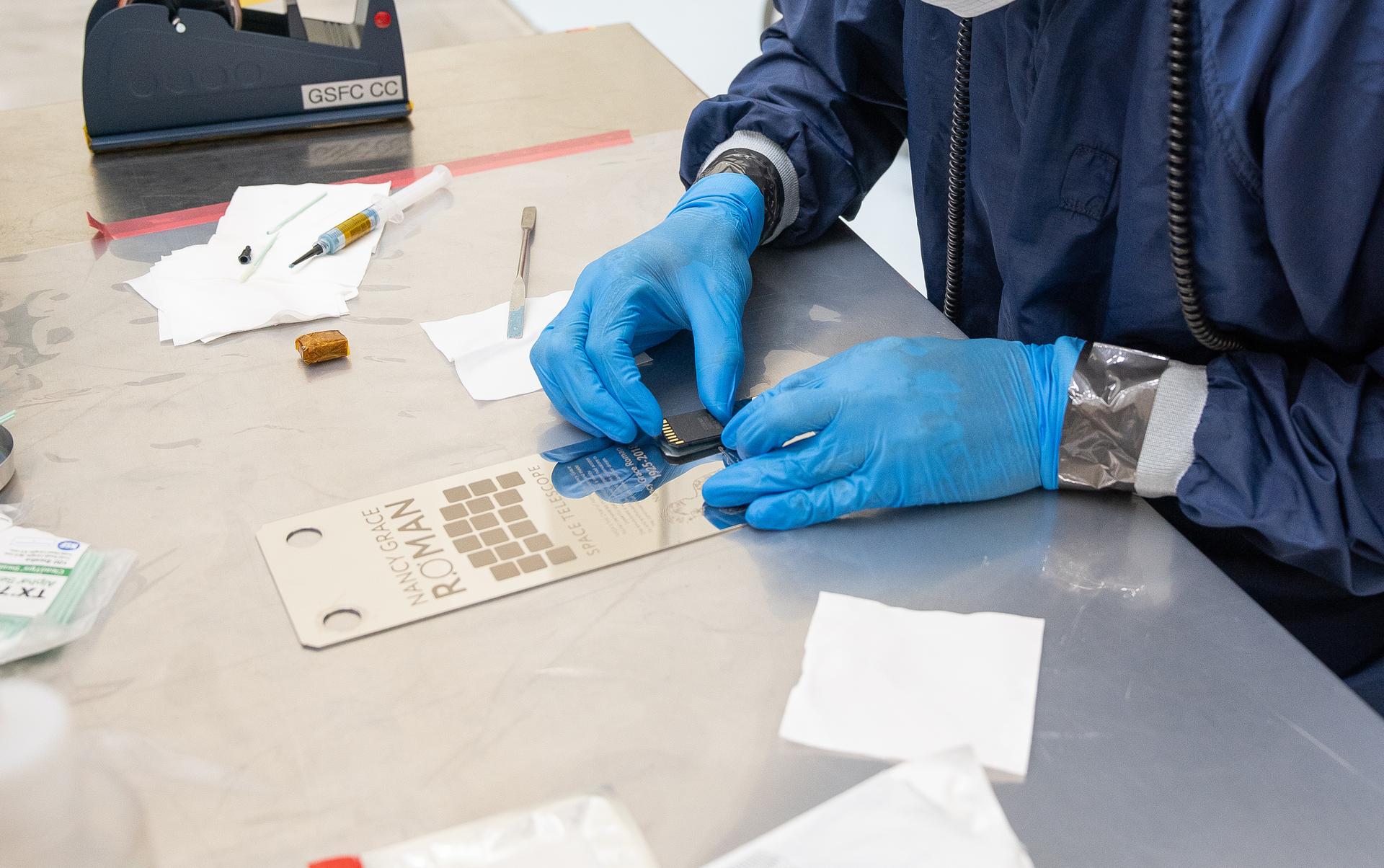
A technician inside the Payload Hazardous Servicing Facility at NASA’s Kennedy Space Center in Florida installs a memory card containing a total of 1,350,144 names as part of a commemorative plaque on the Nancy Grace Roman Space Telescope on Friday, July 17, 2026. The names, submitted by people from across the globe, including astronauts from NASA’s Artemis II and Artemis III missions, will travel with the Roman observatory to the Sun-Earth Lagrange point 2, or L2, about one million miles from Earth, where the Sun’s and Earth’s gravity balance out. Roman is named after Dr. Nancy Grace Roman, NASA’s first chief astronomer and one of the architects of the agency’s modern science program.
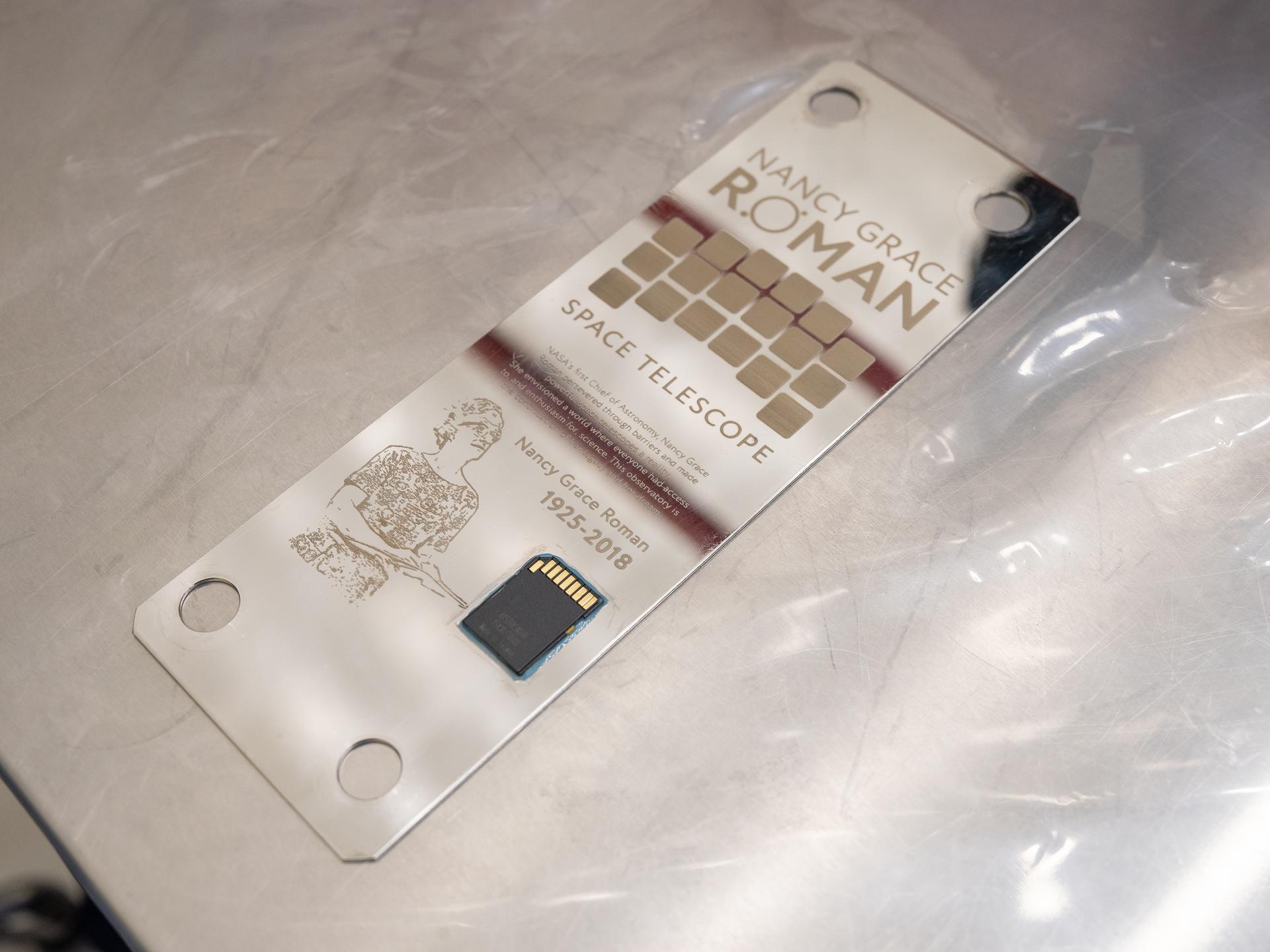
A technician inside the Payload Hazardous Servicing Facility at NASA’s Kennedy Space Center in Florida installs a memory card containing a total of 1,350,144 names as part of a commemorative plaque on the Nancy Grace Roman Space Telescope on Friday, July 17, 2026. The names, submitted by people from across the globe, including astronauts from NASA’s Artemis II and Artemis III missions, will travel with the Roman observatory to the Sun-Earth Lagrange point 2, or L2, about one million miles from Earth, where the Sun’s and Earth’s gravity balance out. Roman is named after Dr. Nancy Grace Roman, NASA’s first chief astronomer and one of the architects of the agency’s modern science program.
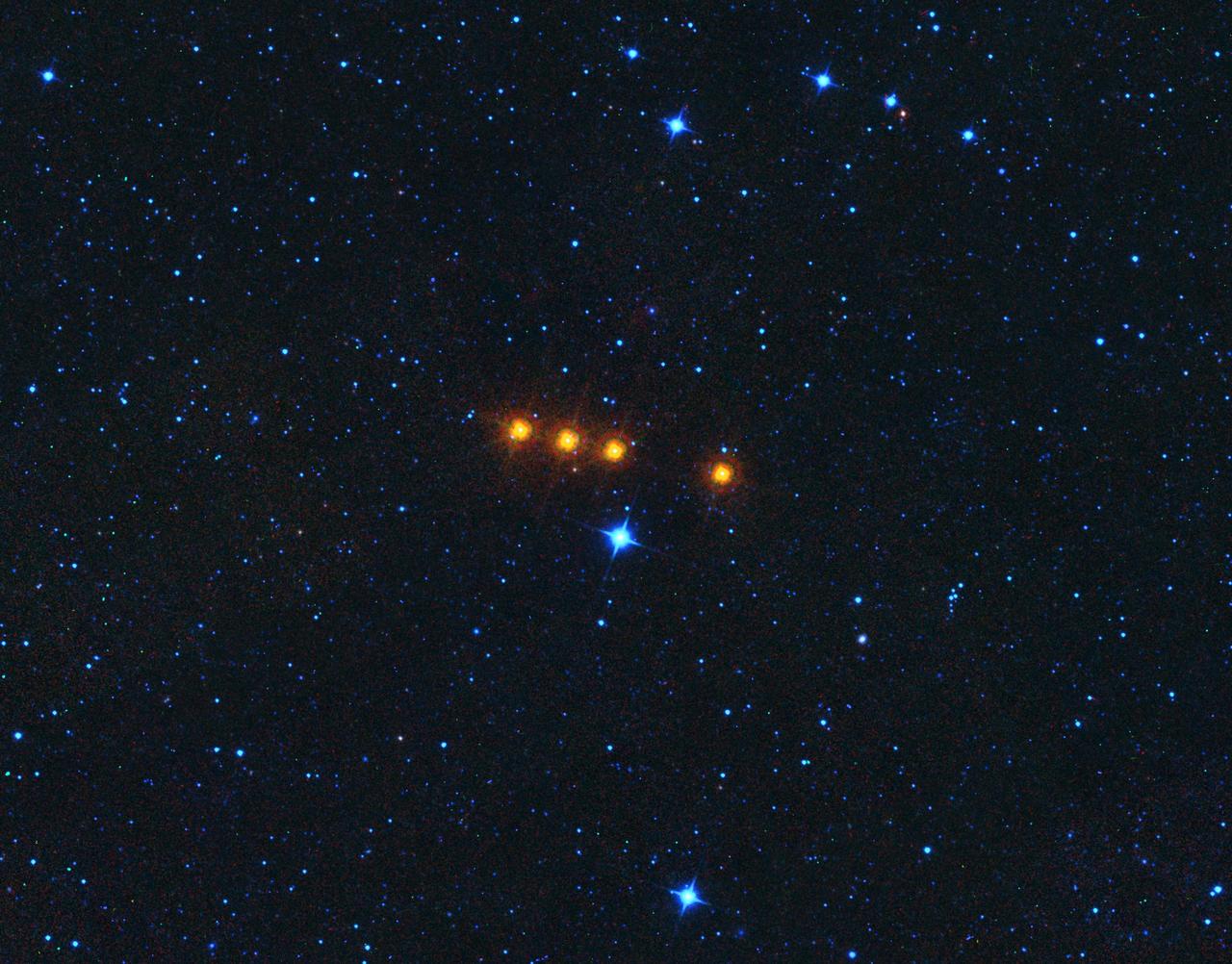
The asteroid Euphrosyne glides across a field of background stars in this time-lapse view from NASA's WISE spacecraft. WISE obtained the images used to create this view over a period of about a day around May 17, 2010, during which it observed the asteroid four times. Because WISE (renamed NEOWISE in 2013) is an infrared telescope, it senses heat from asteroids. Euphrosyne is quite dark in visible light, but glows brightly at infrared wavelengths. This view is a composite of images taken at four different infrared wavelengths: 3.4 microns (color-coded blue), 4.6 microns (cyan), 12 microns (green) and 22 microns (red). The moving asteroid appears as a string of red dots because it is much cooler than the distant background stars. Stars have temperatures in the thousands of degrees, but the asteroid is cooler than room temperature. Thus the stars are represented by shorter wavelength (hotter) blue colors in this view, while the asteroid is shown in longer wavelength (cooler) reddish colors. The WISE spacecraft was put into hibernation in 2011 upon completing its goal of surveying the entire sky in infrared light. WISE cataloged three quarters of a billion objects, including asteroids, stars and galaxies. In August 2013, NASA decided to reinstate the spacecraft on a mission to find and characterize more asteroids. http://photojournal.jpl.nasa.gov/catalog/PIA19645
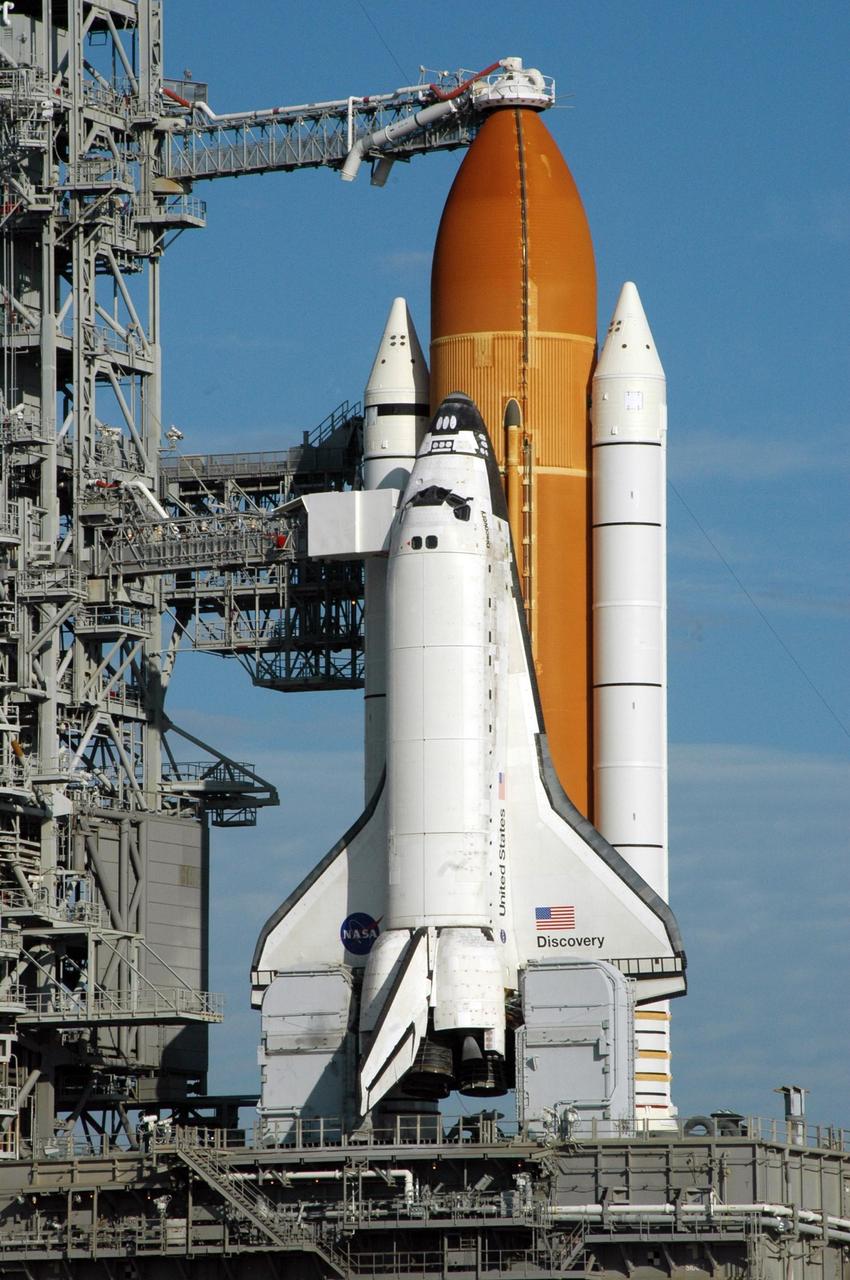
KENNEDY SPACE CENTER, FLA. -- Under a blue sky, Space Shuttle Discovery is ready for launch of mission STS-116 from Launch Pad 39B. Beneath Discovery's wings are the tail masts, which provide several umbilical connections to the orbiter, including a liquid-oxygen line through one and a liquid-hydrogen line through another. Seen above the golden external tank is the vent hood (known as the "beanie cap") at the end of the gaseous oxygen vent arm, extending from the FSS. Vapors are created as the liquid oxygen in the external tank boil off. The hood vents the gaseous oxygen vapors away from the space shuttle vehicle. Below it, also extending toward Discovery from the FSS, is the orbiter access arm with the White Room at the end. The crew gains access into the orbiter through the White Room. Discovery is scheduled to launch on mission STS-116 at 9:35 p.m. today. On the mission, the crew will deliver truss segment, P5, to the International Space Station and begin the intricate process of reconfiguring and redistributing the power generated by two pairs of U.S. solar arrays. The P5 will be mated to the P4 truss that was delivered and attached during the STS-115 mission in September. Photo credit: NASA/Ken Thornsley
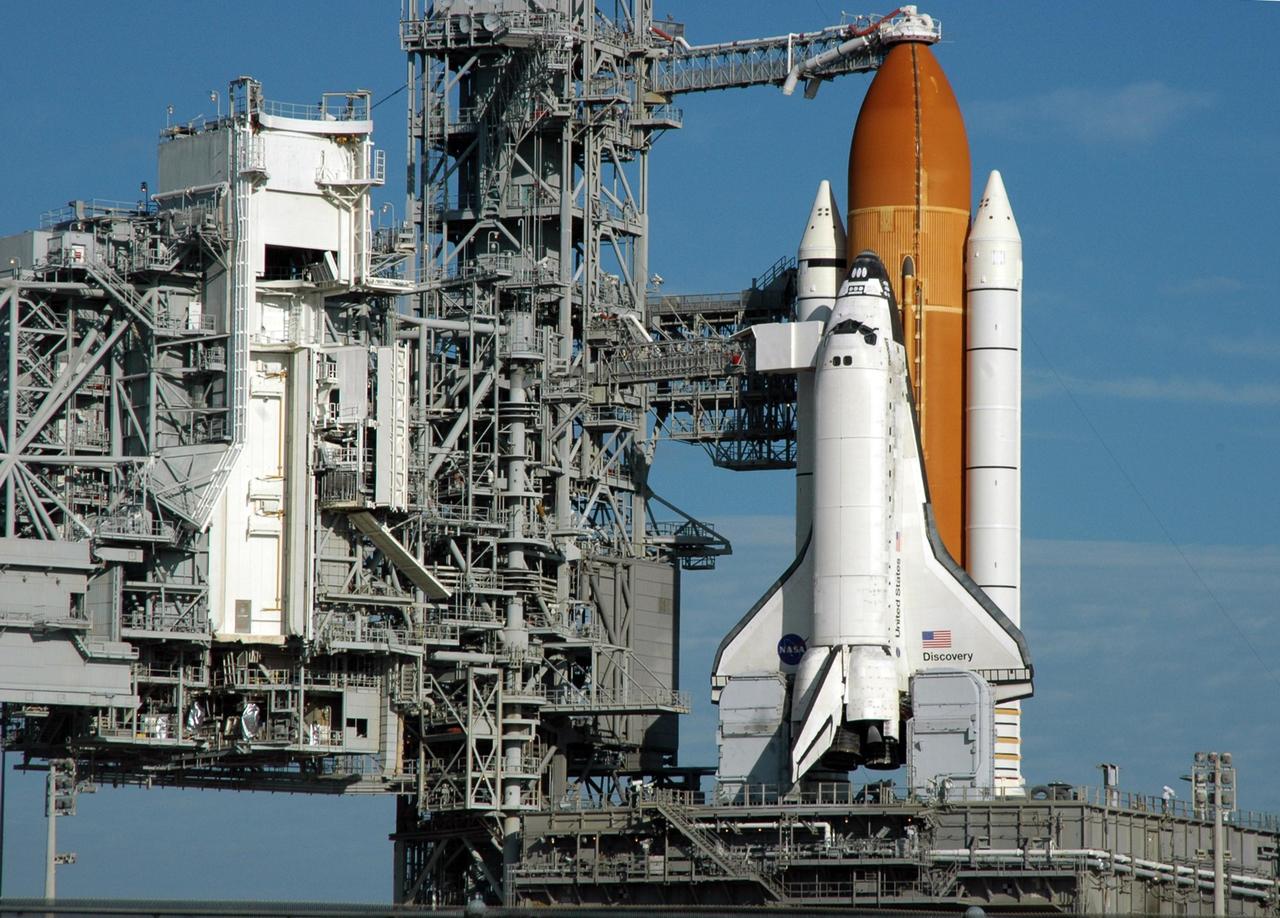
KENNEDY SPACE CENTER, FLA. -- Under a clear blue sky, Space Shuttle Discovery is ready for launch of mission STS-116 from Launch Pad 39B. At far left is the rotating service structure, rolled back to enable launch. Beneath Discovery's wings are the tail masts, which provide several umbilical connections to the orbiter, including a liquid-oxygen line through one and a liquid-hydrogen line through another. Seen above the golden external tank is the vent hood (known as the "beanie cap") at the end of the gaseous oxygen vent arm, extending from the FSS. Vapors are created as the liquid oxygen in the external tank boil off. The hood vents the gaseous oxygen vapors away from the space shuttle vehicle. Below it, also extending toward Discovery from the FSS, is the orbiter access arm with the White Room at the end. The crew gains access into the orbiter through the White Room. Discovery is scheduled to launch on mission STS-116 at 9:35 p.m. today. On the mission, the crew will deliver truss segment, P5, to the International Space Station and begin the intricate process of reconfiguring and redistributing the power generated by two pairs of U.S. solar arrays. The P5 will be mated to the P4 truss that was delivered and attached during the STS-115 mission in September. Photo credit: NASA/Ken Thornsley
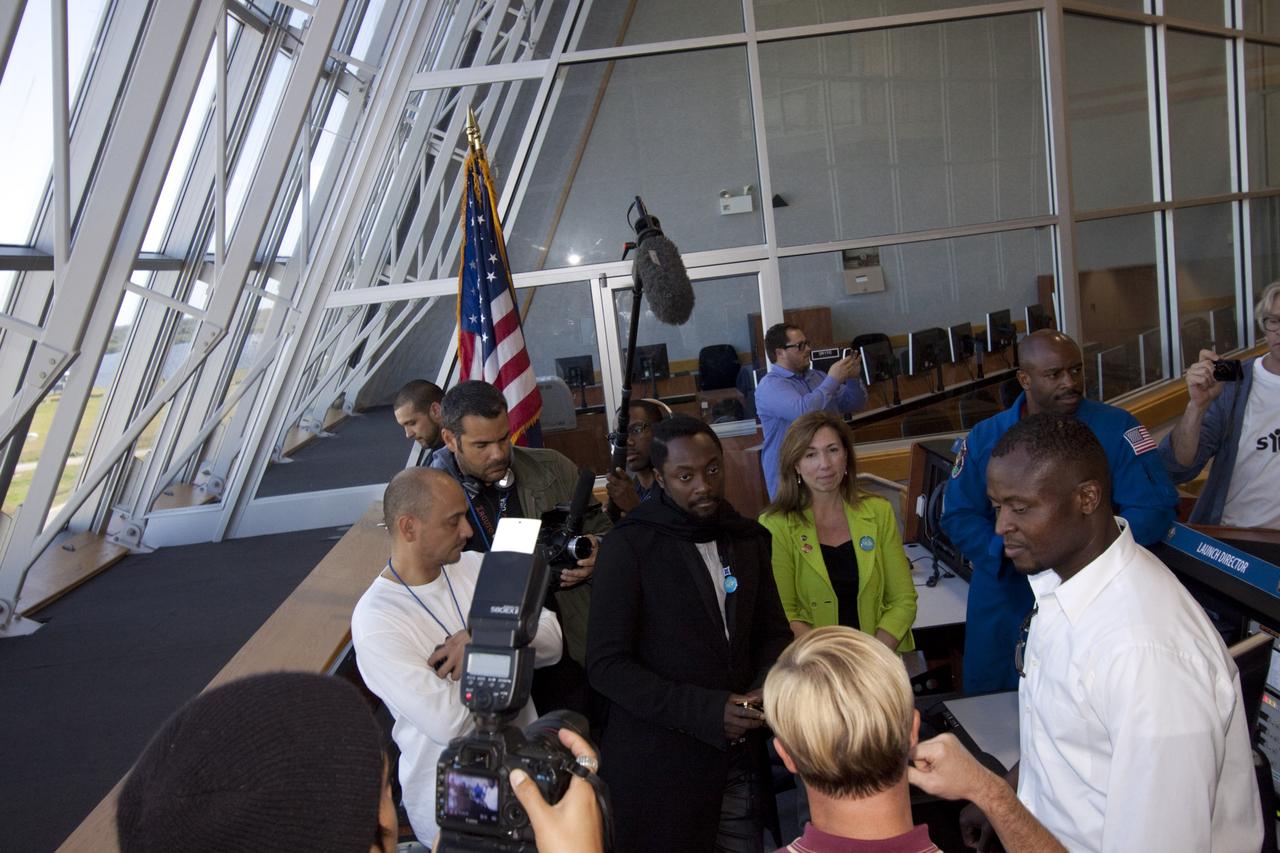
CAPE CANAVERAL, Fla. – At NASA Kennedy Space Center in Florida, Will.i.am (at center), entertainer and member of The Black Eyed Peas, tours Firing Room 4 in the Launch Control Center accompanied by NASA Deputy Administrator Lori Garver (green jacket); former astronaut Leland Melvin, NASA associate administrator for Education (blue flight suit); and Yves Lamothe, lead systems engineer for the 21st Century Ground Systems Program at Kennedy. The visit to the firing room followed their participation in a NASA Tweetup. The Tweetup is part of prelaunch activities for the agency’s Mars Science Laboratory (MSL) launch and provides the opportunity for tweeters will share their experiences with followers through the social networking site Twitter. The MSL mission will pioneer precision landing technology and a sky-crane touchdown to place a car-sized rover, Curiosity, near the foot of a mountain inside Gale Crater on Aug. 6, 2012. During a nearly two-year prime mission after landing, the rover will investigate whether the region has ever offered conditions favorable for microbial life, including the chemical ingredients for life. Liftoff of MSL aboard a United Launch Alliance Atlas V rocket from Space Launch Complex-41 on Cape Canaveral Air Force Station was at 10:02 a.m. EST on Nov. 26. For more information, visit http://www.nasa.gov/msl. Photo credit: NASA/Jim Grossmann
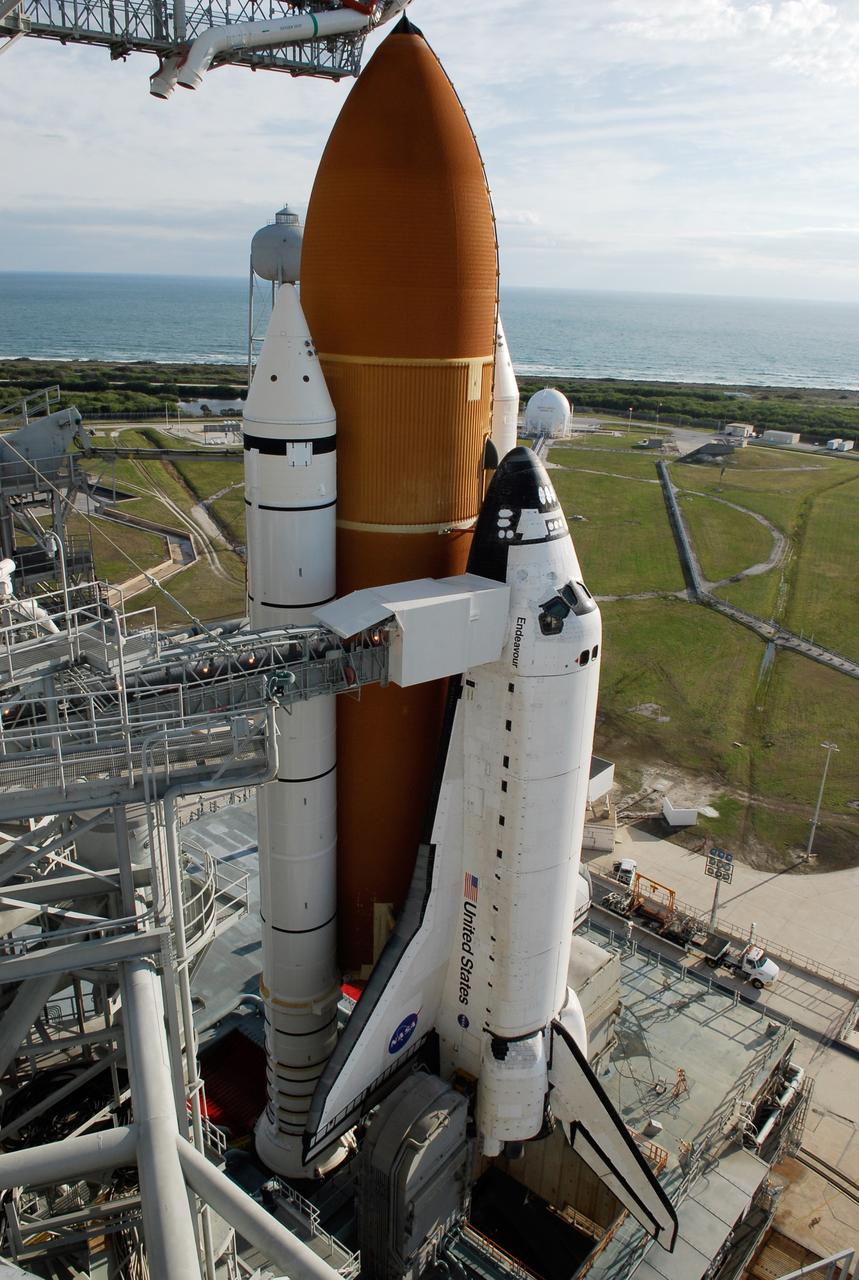
KENNEDY SPACE CENTER, FLA. -- With the rotating service structure rolled away on Launch Pad 39A at NASA's Kennedy Space Center, space shuttle Endeavour is in full view. First motion was at 8:23 a.m. and rollback was complete at 8:55 a.m. Behind the shuttle with its large, orange external tank is the blue Atlantic Ocean. Extending toward Endeavour from the left is the orbiter access arm with the White Room at the end, flush against the shuttle. The crew gains access into the orbiter through the White Room. The rotating structure provides protected access to the orbiter for changeout and servicing of payloads at the pad. The structure is supported by a rotating bridge that pivots about a vertical axis on the west side of the pad's flame trench. After the RSS is rolled back, the orbiter is ready for fuel cell activation and external tank cryogenic propellant loading operations. The pad is cleared to the perimeter gate for operations to fill the external tank with about 500,000 gallons of cryogenic propellants used by the shuttle’s main engines. This is done at the pad approximately eight hours before the scheduled launch. Endeavour and its crew will deliver the first section of the Japan Aerospace Exploration Agency's Kibo laboratory and the Canadian Space Agency's two-armed robotic system, Dextre. Launch is scheduled for 2:28 a.m. EDT March 11. Photo credit: NASA/Kim Shiflett

CAPE CANAVERAL, Fla. –At NASA's Kennedy Space Center in Florida, the crawler-transporter delivers space shuttle Discovery atop the mobile launcher platform onto Launch Pad 39A. Traveling from the Vehicle Assembly Building, the shuttle took nearly 12 hours on the journey as technicians stopped several times to clear mud from the crawler's treads and bearings caused by the waterlogged crawlerway. First motion out of the VAB was at 2:07 a.m. EDT Aug. 4. Rollout was delayed approximately 2 hours due to lightning in the area. In the background is the blue water of the Atlantic Ocean. At left is the White Room at the end of the orbiter access arm. When in place against shuttle, the White Room provides entry into the cockpit. Discovery's 13-day flight will deliver a new crew member and 33,000 pounds of equipment to the International Space Station. The equipment includes science and storage racks, a freezer to store research samples, a new sleeping compartment and the COLBERT treadmill. Launch of Discovery on its STS-128 mission is targeted for late August. Photo credit: NASA/Troy Cryder
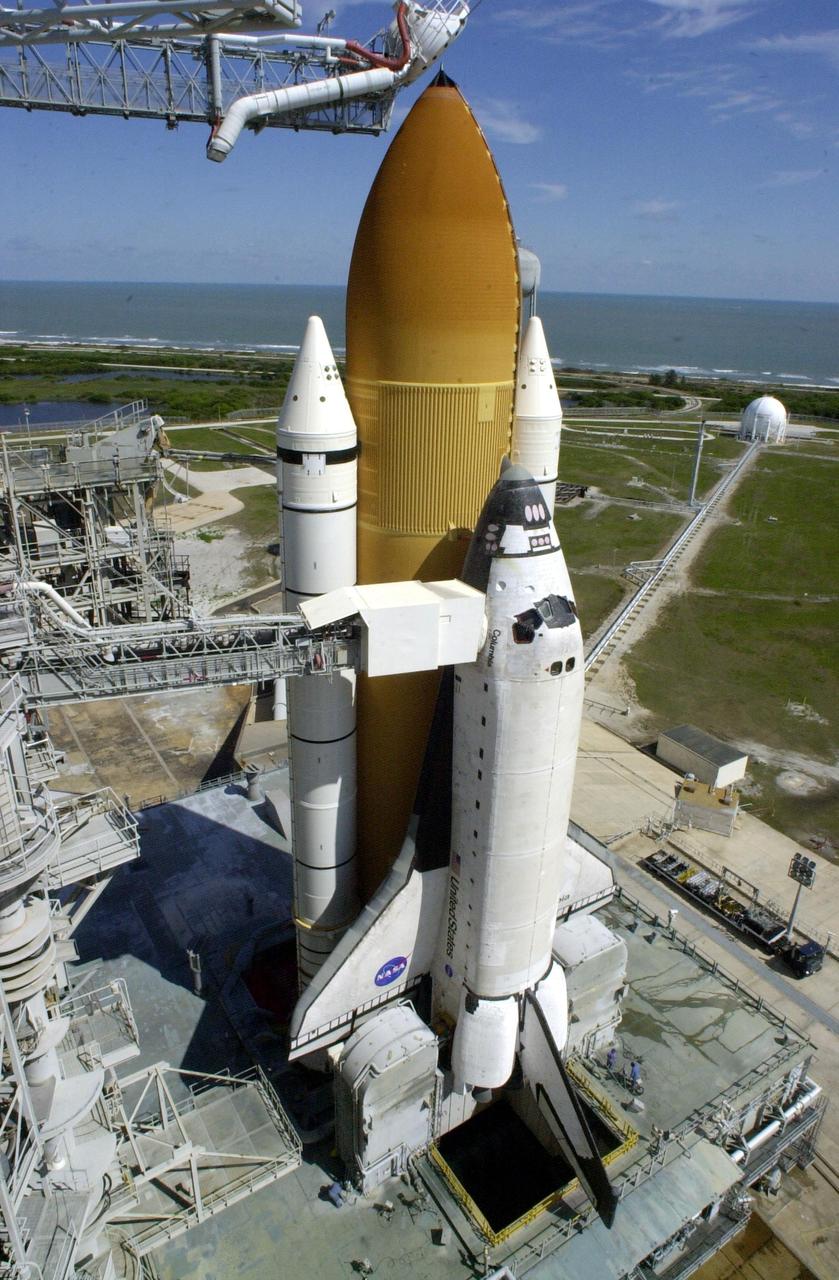
KENNEDY SPACE CENTER, Fla. - Rollback of the Rotating Service Structure for the second time after a scrub of mission STS-109 the day before reveals Space Shuttle Columbia on Launch Pad 39A. The clear blue Florida sky and Atlantic Ocean provide a backdrop. Above the orange-colored external tank is poised the "beanie cap," the gaseous oxygen vent hood. Extending to the side of Columbia is the Orbiter Access Arm with the environmentally controlled White Room at the end. The White Room provides entry for the crew into the orbiter. Columbia sits atop the Mobile Launcher Platform which has an opening to the flame trench below. Columbia is rescheduled for launch on mission STS-109 March 1 at 6:22 a.m. EST (11:22 GMT). The 11-day mission will provide maintenance and upgrade to the Hubble Space Telescope, replacing Solar Array 2 with Solar Array 3, replacing the Power Control Unit, installing the ACS (after removing the Faint Object Camera ), the Near Infrared Camera, the Multi-Object Spectrometer (NICMOS) Cooling System, and the New Outer Blanket Layer insulation.
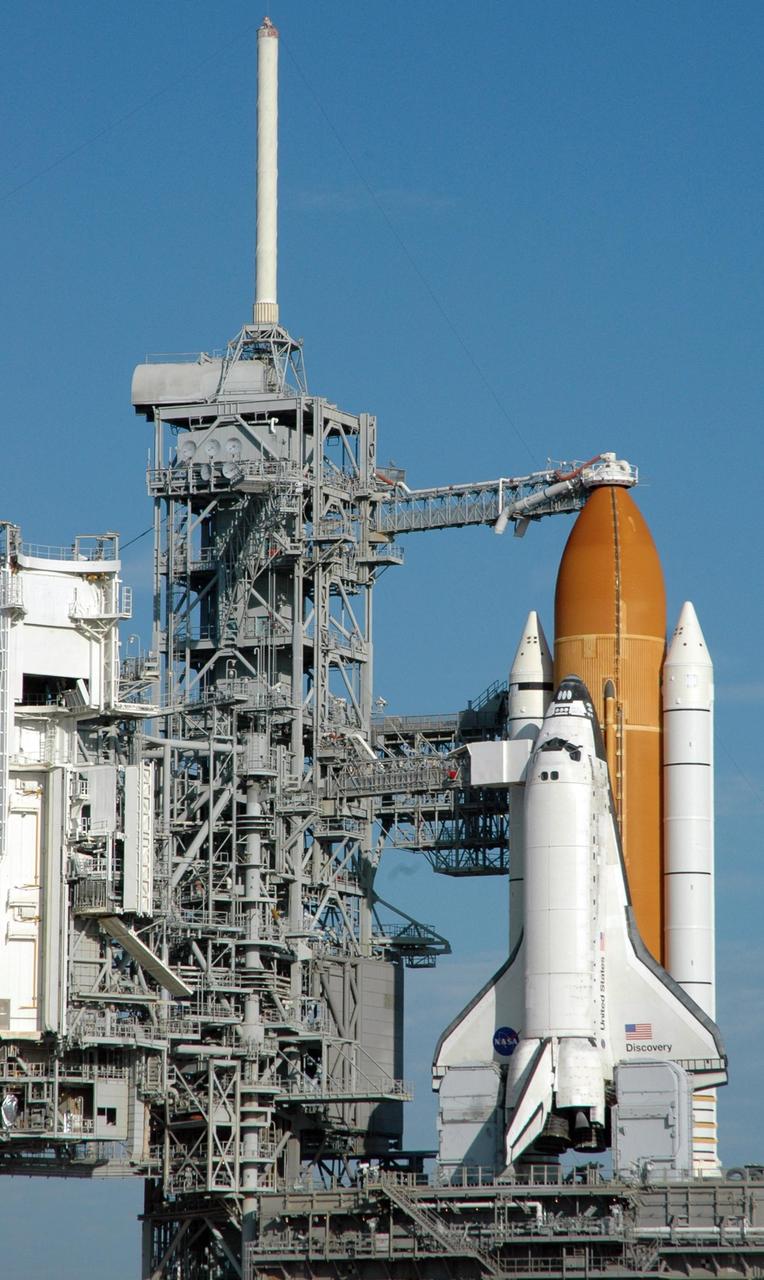
KENNEDY SPACE CENTER, FLA. -- Under a clear blue sky, Space Shuttle Discovery is ready for launch of mission STS-116 from Launch Pad 39B. Atop the fixed service structure at left looms the 80-foot-high lightning mast, part of the lightning protection system on the pad. Beneath Discovery's wings are the tail masts, which provide several umbilical connections to the orbiter, including a liquid-oxygen line through one and a liquid-hydrogen line through another. Seen above the golden external tank is the vent hood (known as the "beanie cap") at the end of the gaseous oxygen vent arm, extending from the FSS. Vapors are created as the liquid oxygen in the external tank boil off. The hood vents the gaseous oxygen vapors away from the space shuttle vehicle. Below it, also extending toward Discovery from the FSS, is the orbiter access arm with the White Room at the end. The crew gains access into the orbiter through the White Room. Discovery is scheduled to launch on mission STS-116 at 9:35 p.m. today. On the mission, the crew will deliver truss segment, P5, to the International Space Station and begin the intricate process of reconfiguring and redistributing the power generated by two pairs of U.S. solar arrays. The P5 will be mated to the P4 truss that was delivered and attached during the STS-115 mission in September. Photo credit: NASA/Ken Thornsley
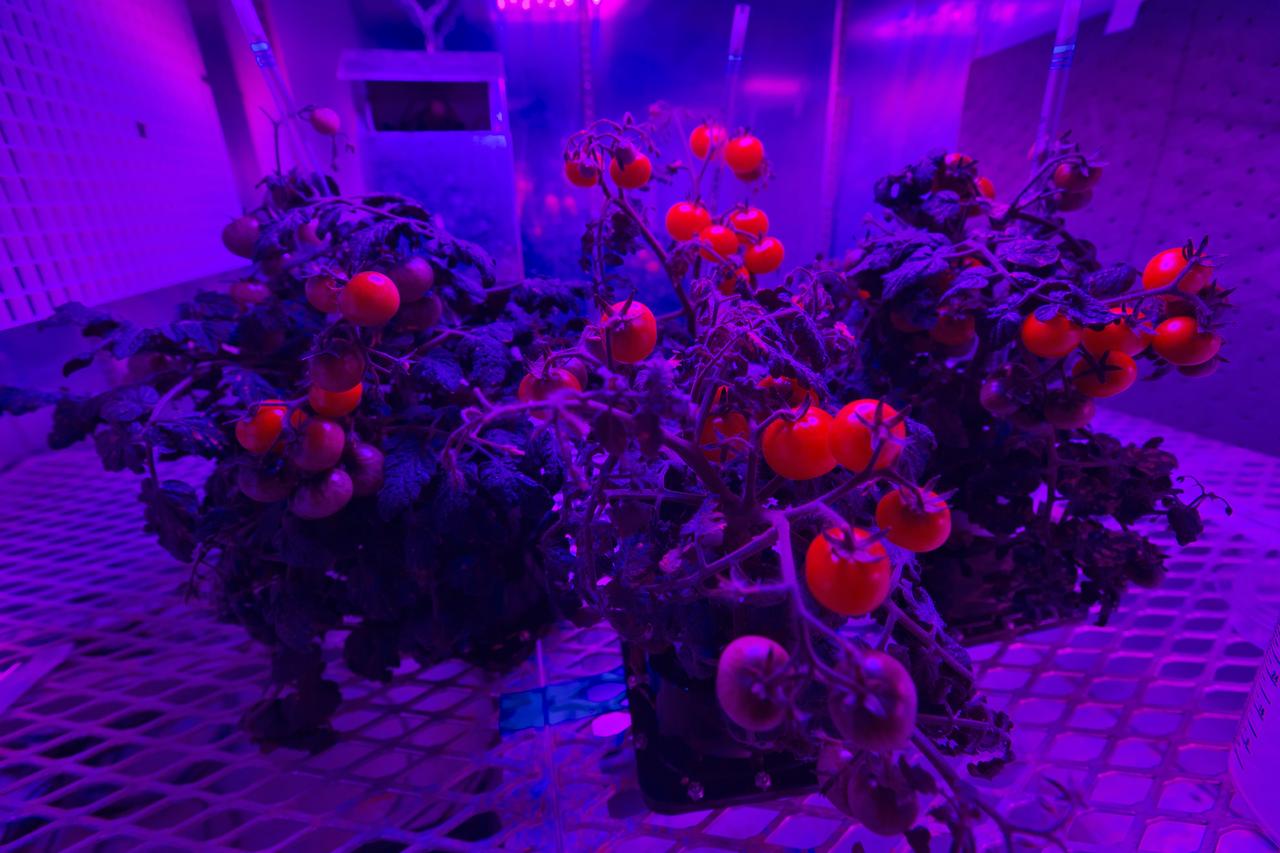
Tomato plants are growing under red and blue LED lights in a growth chamber inside a laboratory at the Space Station Processing Facility at NASA’s Kennedy Space Center in Florida. The plant growth is being tested in the Veggie Passive Orbital Nutrient Delivery System (PONDS). Veggie PONDS is a direct follow-on to the Veg-01 and Veg-03 hardware and plant growth validation tests. The primary goal of this newly developed plant growing system, Veggie PONDS, is to demonstrate uniform plant growth. PONDS units have features that are designed to mitigate microgravity effects on water distribution, increase oxygen exchange and provide sufficient room for root zone growth. PONDS is planned for use during Veg-04 and Veg-05 on the International Space Station after the Veggie PONDS Validation flights on SpaceX-14 and OA-9.
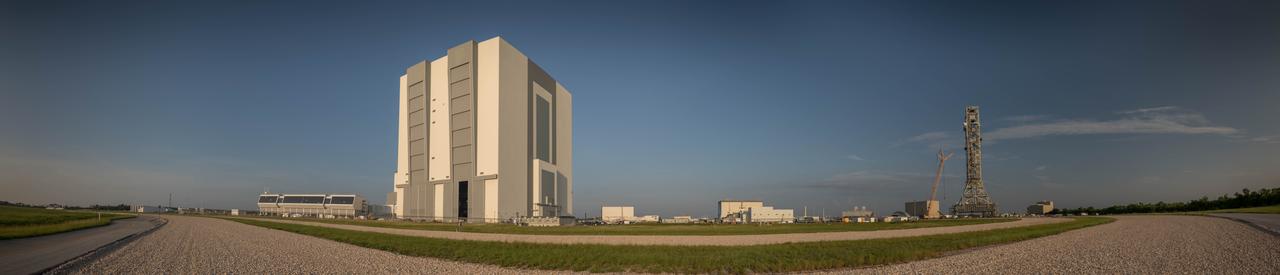
A brilliant blue sky forms the backdrop for a fish-eye panoramic view of the south side of the iconic Vehicle Assembly Building (VAB) and Launch Control Center at NASA's Kennedy Space Center in Florida. Ten levels of new work platforms have been installed in VAB High Bay 3. They will surround and provide access for service and processing of NASA's Space Launch System (SLS) rocket and Orion spacecraft. Exploration Ground Systems oversaw the upgrades and installation of the new work platforms to support the launch of the SLS and Orion on Exploration Mission-1 (EM-1) and deep space missions. At left is the Launch Control Center, where Firing Room 1 has been upgraded to support EM-1.
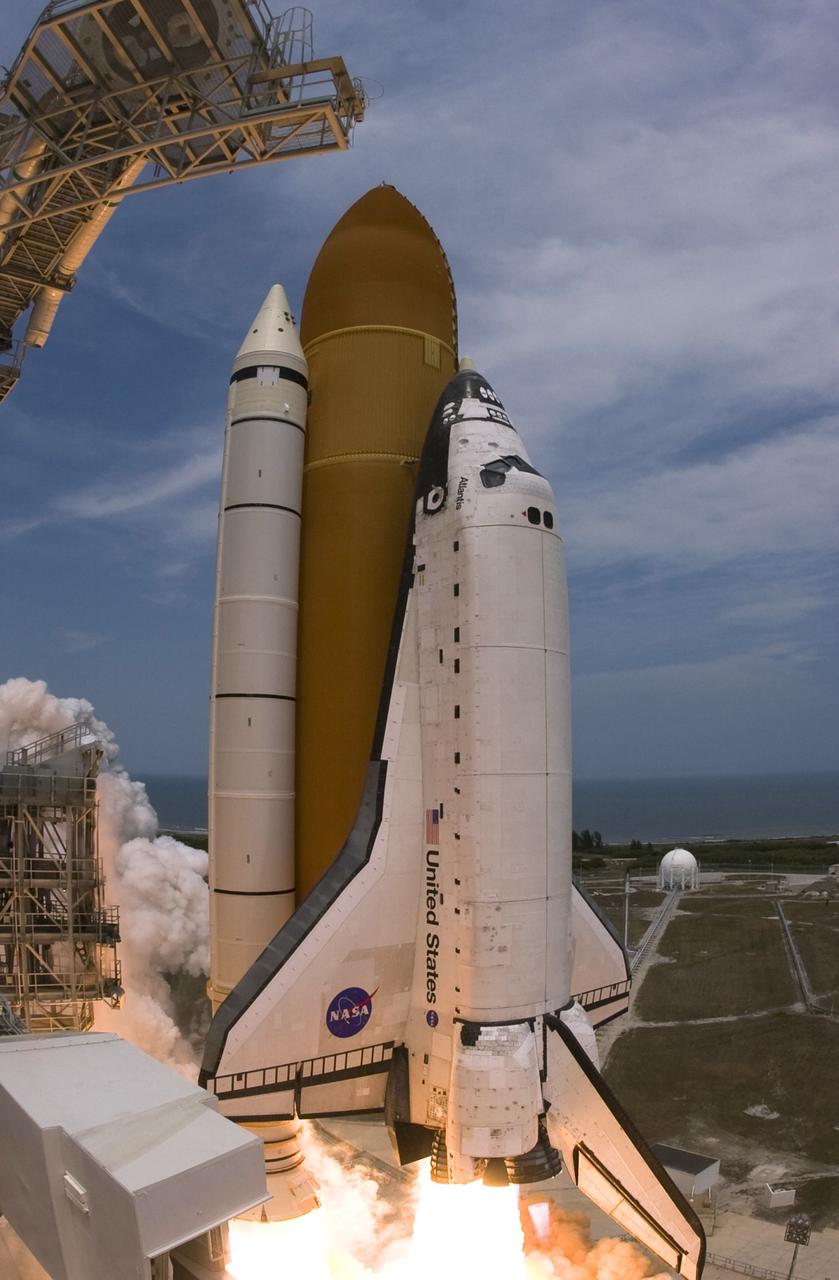
CAPE CANAVERAL, Fla. – A fish-eye view shows space shuttle Atlantis lifting off from Launch Pad 39A at NASA's Kennedy Space Center in Florida. At left in the foreground is the White Room, which provides access into the shuttle. On the horizon is the Atlantic Ocean. A blue mach diamond appears below the engine nozzle at right. The mach diamonds are a formation of shock waves in the exhaust plume of an aerospace propulsion system. Atlantis will rendezvous with NASA's Hubble Space Telescope on the STS-125 mission. Liftoff was on time at 2:01 p.m. EDT. Atlantis' 11-day flight will include five spacewalks to refurbish and upgrade the telescope with state-of-the-art science instruments that will expand Hubble's capabilities and extend its operational lifespan through at least 2014. The payload includes a Wide Field Camera 3, fine guidance sensor and the Cosmic Origins Spectrograph. Photo credit: NASA/Sandra Joseph-Kevin O'Connell

CAPE CANAVERAL, Fla. - With a crystal blue Atlantic Ocean in the background, space shuttle Endeavour sits on Launch Pad B at NASA’s Kennedy Space Center in Florida. At left of the shuttle is the open rotating service structure with the payload changeout room revealed. The rotating service structures provide protection for weather and access to the shuttle. For the first time since July 2001, two shuttles are on the launch pads at the same time at the center. Endeavour will stand by at pad B in the unlikely event that a rescue mission is necessary during space shuttle Atlantis’ upcoming mission to repair NASA’s Hubble Space Telescope, targeted to launch Oct. 10. After Endeavour is cleared from its duty as a rescue spacecraft, it will be moved to Launch Pad 39A for its STS-126 mission to the International Space Station. That flight is targeted for launch Nov. 12. Photo credit: NASA/Troy Cryder
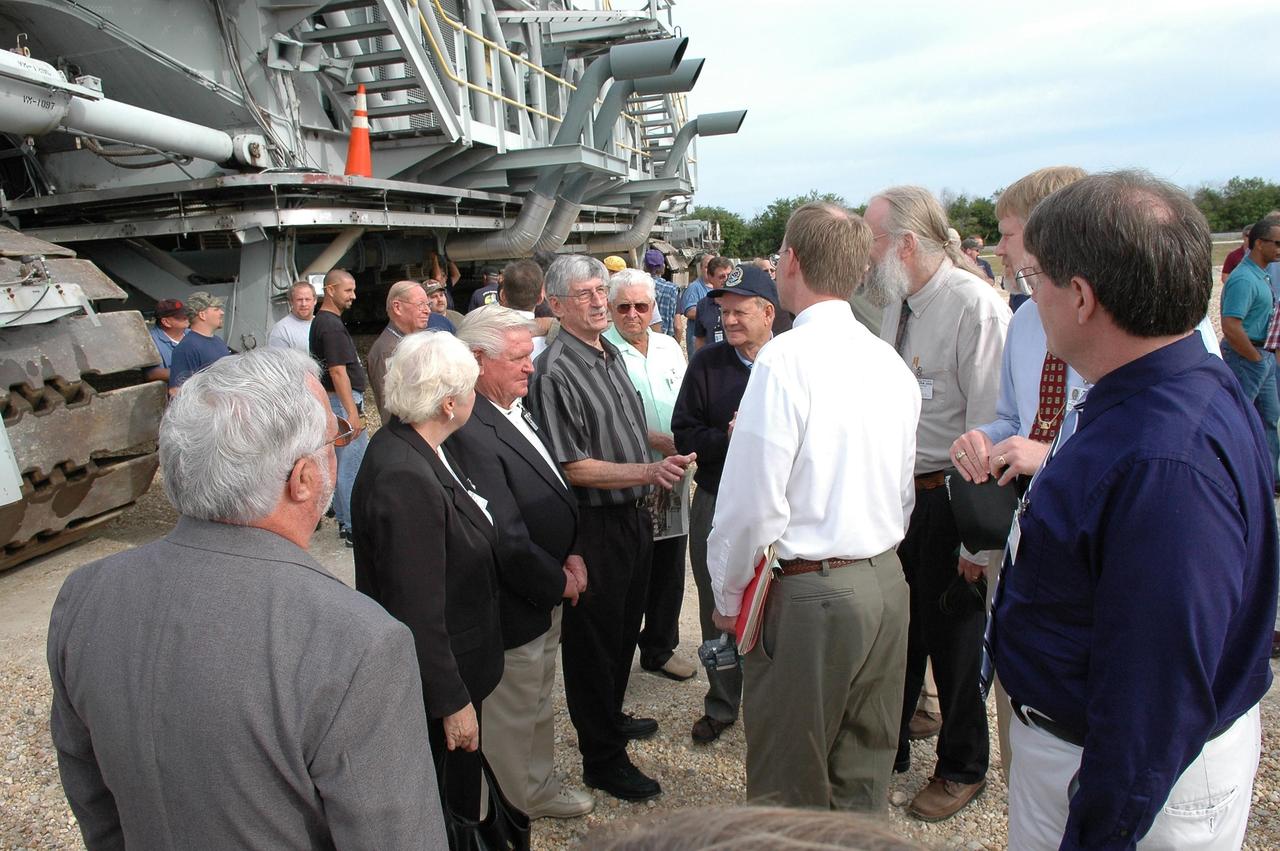
KENNEDY SPACE CENTER, FLA. - On the occasion of the 40th anniversary of the crawler transporter used for moving space shuttles to the NASA Kennedy Space Center’s launch pads, invited guests mingle in front of one of the crawlers still in use. From left are Sylvan “Skip” Montagna, Patricia and Fred Renaud, Fred Wallace and Bill Clemens. Philip Koehring and his brothers Doug(white shirt) and John (light blue shirt) and Rick Drollinger are on the right. Philip Koehring Sr. was project manager at the Marion Power Shovel Co. in Ohio where the crawlers were initially built in 1965. Drollinger’s father, Richard, was director of engineering at Marion. Media representatives and invited guests had the opportunity to tour one of NASA's two crawlers. This included the driver cab and engine room. Guests included current drivers and operators, as well as drivers from the Apollo Program. In January 1966, the crawler completed its first successful move with a 10.6-million-pound launch umbilical tower. It moved three-quarters of a mile in about nine hours. Throughout 40 years of service, the two crawlers have moved more than 3,500 miles and carried seven vehicles.
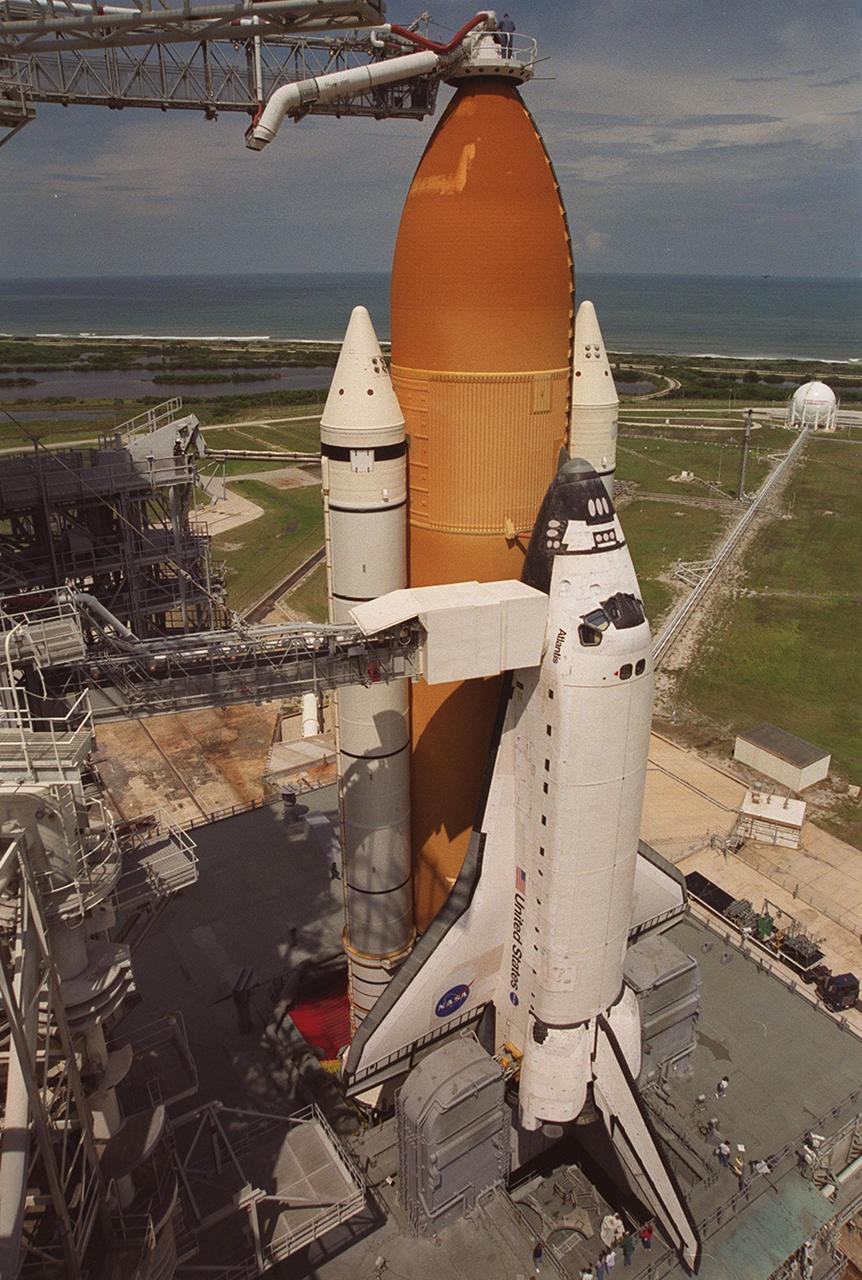
KENNEDY SPACE CENTER, Fla. -- Against a backdrop of the cloudy sky and blue-gray Atlantic Ocean, Space Shuttle Atlantis is revealed after rollback of the Rotating Service Structure. On top of the external tank is the 13-foot-wide “beanie cap,” at the end of the Gaseous Oxygen Vent Arm, designed to vent gaseous oxygen vapors away from the Space Shuttle. Lower is the Orbiter Access Arm with the environmental chamber, known as the “white room,” extended to the orbiter. The chamber provides entry for the crew into the orbiter and also serves as emergency egress up to 7 minutes 24 seconds before launch. Ready for launch of mission STS-106 at 8:45 a.m. EDT on Sept. 8, Atlantis carries supplies to prepare the Russian Zvezda living quarters on the International Space Station for the first long-duration crew. The crew will also be transferring supplies from the Russian Progress resupply ship already docked to the aft of Zvezda. The fourth U.S. launch for the Space Station, the mission is expected to last 10 days, 19 hours and 9 minutes, landing at KSC 4:59 a.m. EDT on Sept. 19

KENNEDY SPACE CENTER, FLA. - On the occasion of the 40th anniversary of the crawler transporter used for moving space shuttles to the NASA Kennedy Space Center’s launch pads, former crawler engineer Bill Clemens talks to the media and invited guests (behind him) Rick Drollinger (blue shirt), whose father Richard was director of engineering at Marion Power Shovel Co. in Ohio where the crawlers were initially built in 1965; Philip Koehring Jr. (on right), whose father was project manager at Marion; and Koehring’s sons Doug and John. Media representatives and invited guests had the opportunity to tour one of NASA's two crawlers. This included the driver cab and engine room. Guests included current drivers and operators, as well as drivers from the Apollo Program. In January 1966, the crawler completed its first successful move with a 10.6-million-pound launch umbilical tower. It moved three-quarters of a mile in about nine hours. Throughout 40 years of service, the two crawlers have moved more than 3,500 miles and carried seven vehicles.
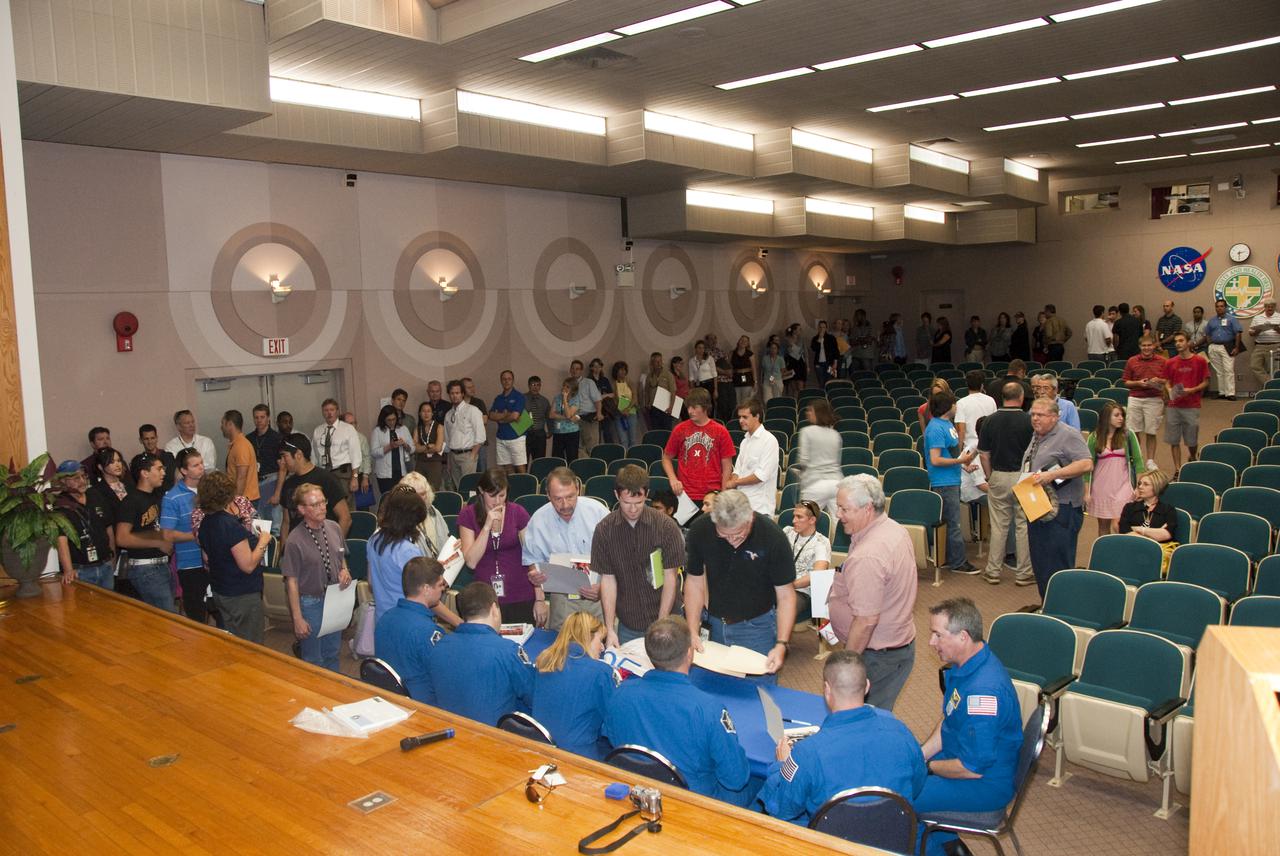
CAPE CANAVERAL, Fla. - In the Training Auditorium at NASA's Kennedy Space Center in Florida, Kennedy employees wait their turns to receive the autographs of space shuttle Endeavour's STS-130 crew members. In the blue flight suits, seated from left, are Mission Specialists Robert Behnken, Nicholas Patrick and Kathryn Hire; Pilot Terry Virts; Commander George Zamka; and Mission Specialist Stephen Robinson. The autograph-signing session followed a program for Kennedy employees in which the crew talked about their experiences on the mission. Endeavour launched Feb. 8, 2010, and landed Feb. 21. During Endeavour's STS-130 mission, the crew installed the Tranquility node, a module that provides additional room for crew members and many of the station's life support and environmental control systems. Attached to Tranquility is a cupola with seven windows that provide a panoramic view of Earth, celestial objects and visiting spacecraft. STS-130 was the 24th flight for Endeavour, the 32nd shuttle mission devoted to ISS assembly and maintenance, and the 130th shuttle mission. For information on the STS-130 mission and crew, visit http:__www.nasa.gov_mission_pages_shuttle_shuttlemissions_sts130_index.html. Photo credit: NASA_Jim Grossmann
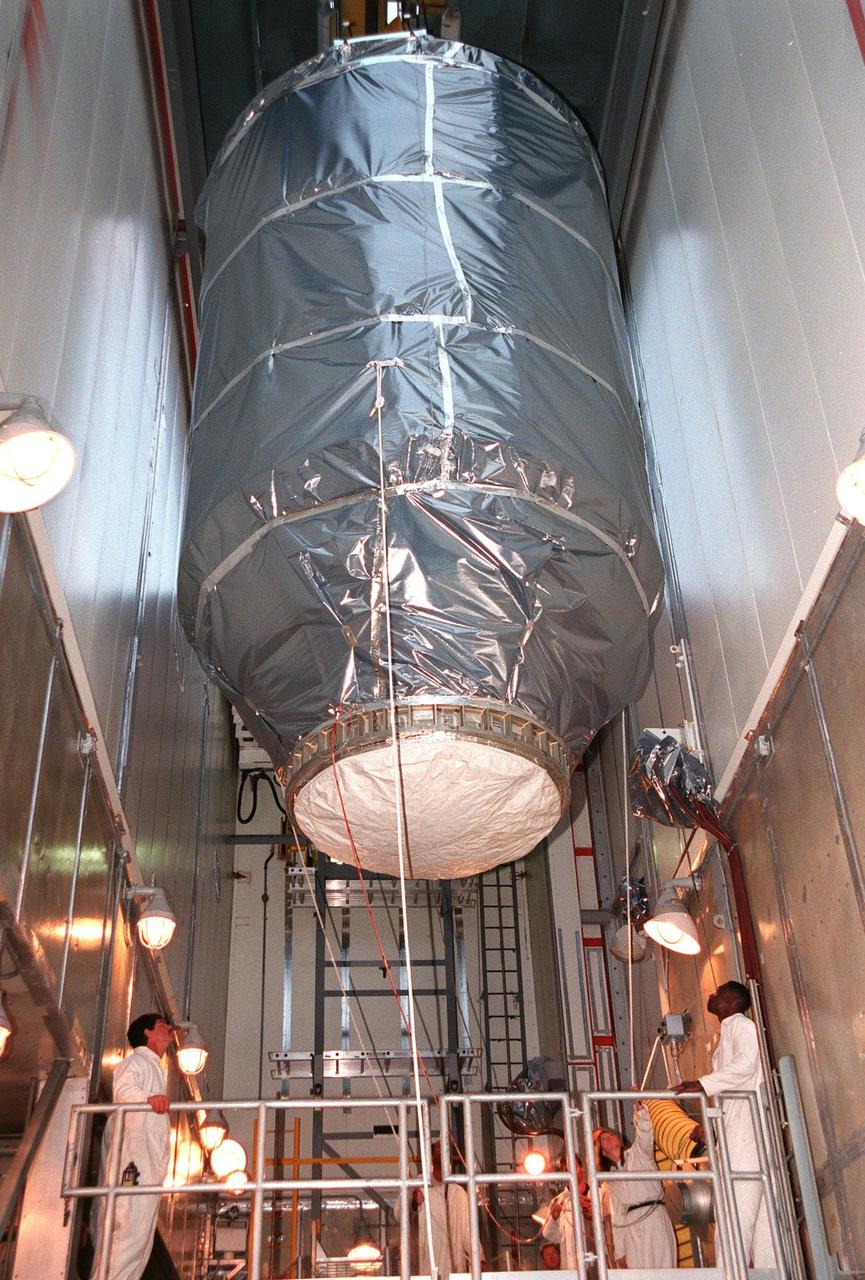
KENNEDY SPACE CENTER, FLA. -- On Launch Pad 17A at Cape Canaveral Air Station, Deep Space 1 is lowered in the white room for installation on a Boeing Delta 7326 rocket . The spacecraft is targeted for launch on Oct. 25. Deep Space 1 is the first flight in NASA's New Millennium Program, and is designed to validate 12 new technologies for scientific space missions of the next century, including the engine. Propelled by the gas xenon, the engine is being flight-tested for future deep space and Earth-orbiting missions. Deceptively powerful, the ion drive emits only an eerie blue glow as ionized atoms of xenon are pushed out of the engine. While slow to pick up speed, over the long haul it can deliver 10 times as much thrust per pound of fuel as liquid or solid fuel rockets. Other onboard experiments include software that tracks celestial bodies so the spacecraft can make its own navigation decisions without the intervention of ground controllers. Deep Space 1 will complete most of its mission objectives within the first two months, but will also do a flyby of a near-Earth asteroid, 1992 KD, in July 1999
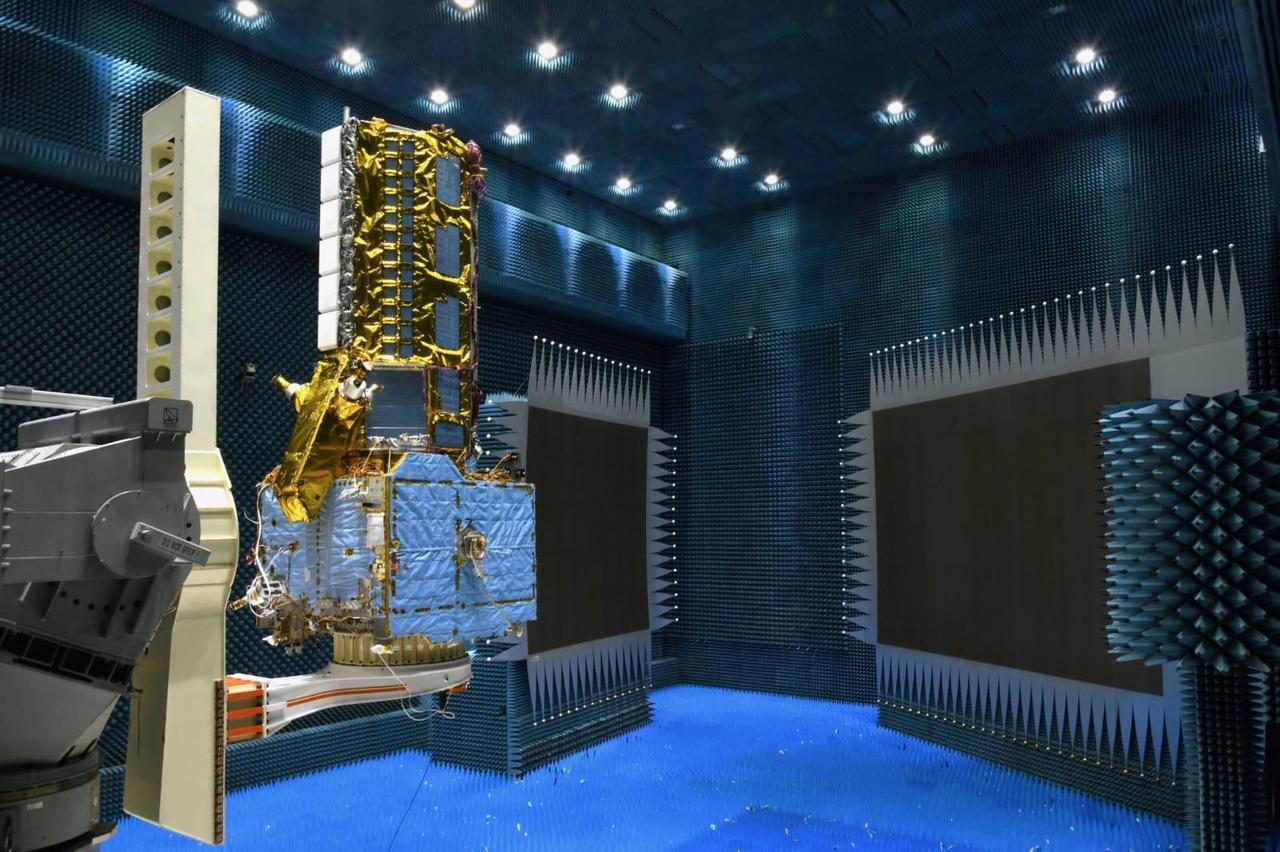
The NISAR satellite, partially covered in gold-hued thermal blanketing, is seen at the Indian Space Research Organisation's compact antenna test facility in Bengaluru, India, in September 2023. Short for NASA-ISRO Synthetic Aperture Radar, NISAR completed 20 days of testing in the chamber, where engineers found that the radio signals from the two radar systems' antennas passed requirements. The blue foam spikes lining the walls, floor, and ceiling prevent radio waves from bouncing around the room and interfering with measurement. The test was followed by a 21-day trial in a thermal vacuum chamber that showed the spacecraft can function in the extreme temperatures and the vacuum of space. After further tests, the satellite will be transported about 220 miles (350 kilometers) eastward to Satish Dhawan Space Centre, where it will be inserted into its launch faring, mounted atop ISRO's Geosynchronous Satellite Launch Vehicle Mark II rocket, and sent into low-Earth orbit. NISAR is the first space-hardware collaboration between NASA and ISRO on an Earth-observing mission. Scheduled to launch in early 2024, the satellite will scan nearly all of the planet's land and ice twice every 12 days, monitoring the motion of those surfaces down to fractions of an inch. It will also track other processes, including the dynamics of forests, wetlands, and agricultural lands. https://photojournal.jpl.nasa.gov/catalog/PIA26115
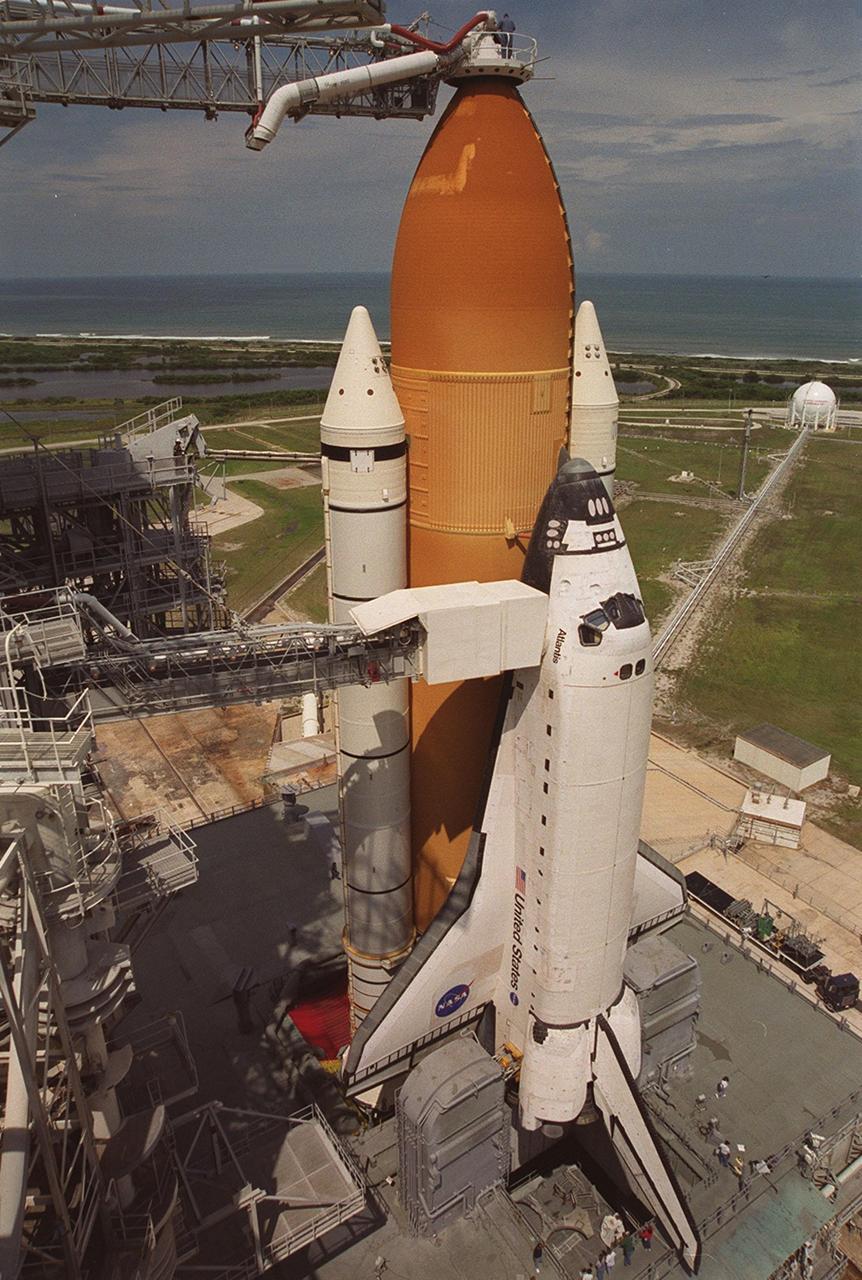
KENNEDY SPACE CENTER, Fla. -- Against a backdrop of the cloudy sky and blue-gray Atlantic Ocean, Space Shuttle Atlantis is revealed after rollback of the Rotating Service Structure. On top of the external tank is the 13-foot-wide “beanie cap,” at the end of the Gaseous Oxygen Vent Arm, designed to vent gaseous oxygen vapors away from the Space Shuttle. Lower is the Orbiter Access Arm with the environmental chamber, known as the “white room,” extended to the orbiter. The chamber provides entry for the crew into the orbiter and also serves as emergency egress up to 7 minutes 24 seconds before launch. Ready for launch of mission STS-106 at 8:45 a.m. EDT on Sept. 8, Atlantis carries supplies to prepare the Russian Zvezda living quarters on the International Space Station for the first long-duration crew. The crew will also be transferring supplies from the Russian Progress resupply ship already docked to the aft of Zvezda. The fourth U.S. launch for the Space Station, the mission is expected to last 10 days, 19 hours and 9 minutes, landing at KSC 4:59 a.m. EDT on Sept. 19
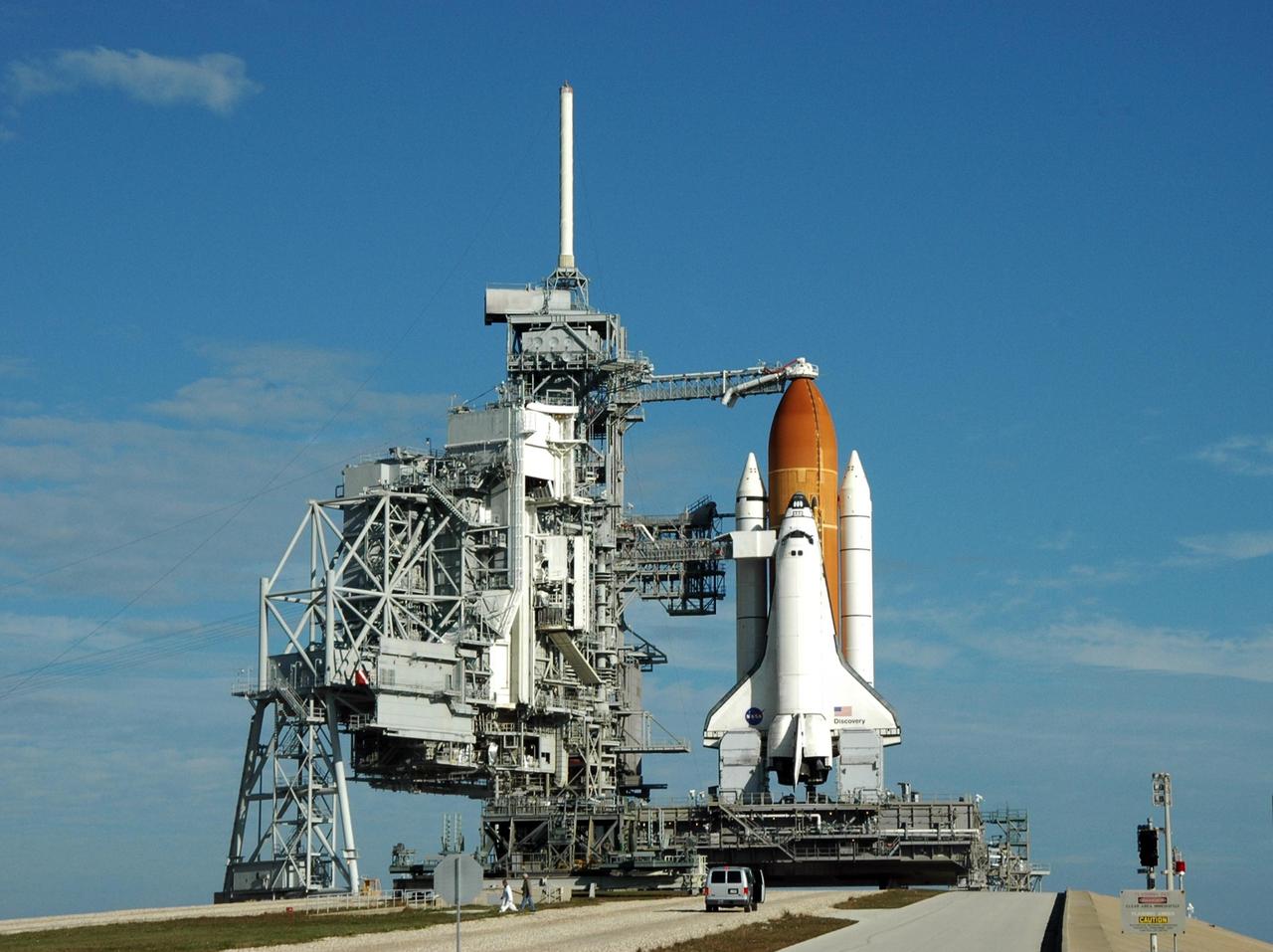
KENNEDY SPACE CENTER, FLA. -- Under a blue sky streaked with clouds, Launch Pad 39B holds Space Shuttle Discovery, ready for launch of mission STS-116. At the far left is the rotating service structure, rolled back after midnight in preparation for launch. Next to Discovery is the fixed service structure, with the 80-foot-high lightning mast on top, part of the lightning protection system on the pad. Beneath Discovery's wings are the tail masts, which provide several umbilical connections to the orbiter, including a liquid-oxygen line through one and a liquid-hydrogen line through another. Seen above the golden external tank is the vent hood (known as the "beanie cap") at the end of the gaseous oxygen vent arm, extending from the FSS. Vapors are created as the liquid oxygen in the external tank boil off. The hood vents the gaseous oxygen vapors away from the space shuttle vehicle. Below it, also extending toward Discovery from the FSS, is the orbiter access arm with the White Room at the end. The crew gains access into the orbiter through the White Room. Discovery is scheduled to launch on mission STS-116 at 9:35 p.m. today. On the mission, the crew will deliver truss segment, P5, to the International Space Station and begin the intricate process of reconfiguring and redistributing the power generated by two pairs of U.S. solar arrays. The P5 will be mated to the P4 truss that was delivered and attached during the STS-115 mission in September. Photo credit: NASA/Ken Thornsley
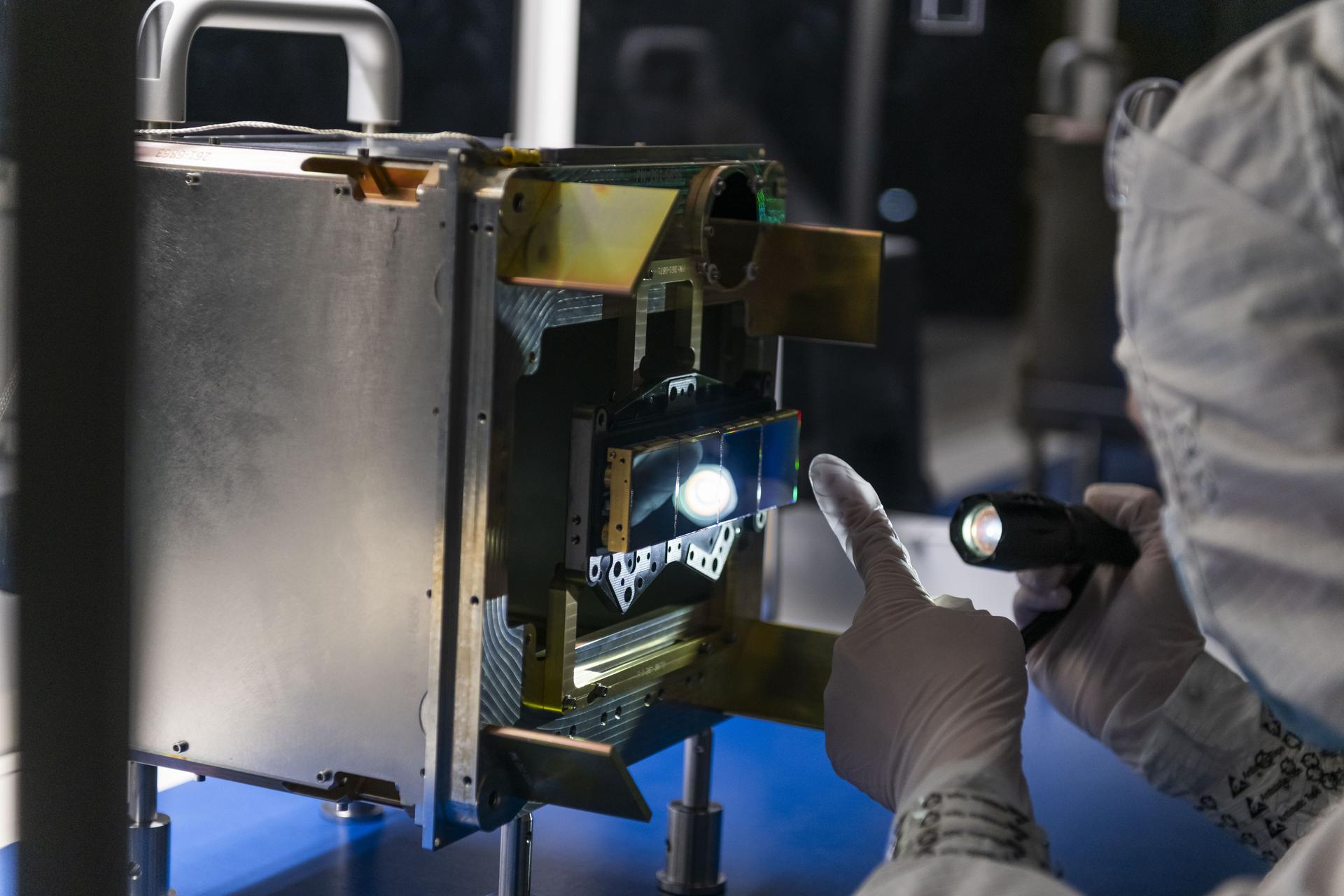
An engineer inspects the surface of four mid-wavelength infrared science detectors for NASA’s Near-Earth Object (NEO) Surveyor mission atop a clean room bench at the Space Dynamics Laboratory (SDL) in Logan, Utah. Mounted to a sensor chip assembly, the four blue-green-colored detectors are made with mercury cadmium telluride (HgCdTe), a versatile semiconducting alloy that is sensitive to infrared wavelengths. There are two such assemblies that form the heart of NEO Surveyor’s two science cameras. These state-of-the-art cameras sense solar heat re-radiated by near-Earth objects. The mission’s cameras and telescope, which has an aperture of nearly 20 inches (50 centimeters), will be housed inside the spacecraft’s instrument enclosure, a structure that is designed to ensure heat produced by the spacecraft and instrument during operations doesn’t interfere with its infrared observations. Targeting launch in late 2027, the NEO Surveyor mission is led by Professor Amy Mainzer at the University of California, Los Angeles for NASA’s Planetary Defense Coordination Office and is being managed by the agency’s Jet Propulsion Laboratory in Southern California for the Planetary Missions Program Office at NASA’s Marshall Space Flight Center in Huntsville, Alabama. BAE Systems and the Space Dynamics Laboratory in Logan, Utah, and Teledyne are among the companies that were contracted to build the spacecraft and its instrumentation. The Laboratory for Atmospheric and Space Physics at the University of Colorado Boulder will support operations, and IPAC at Caltech in Pasadena, California, is responsible for producing some of the mission’s data products. Caltech manages JPL for NASA. More information about NEO Surveyor is available at: https://science.nasa.gov/mission/neo-surveyor/
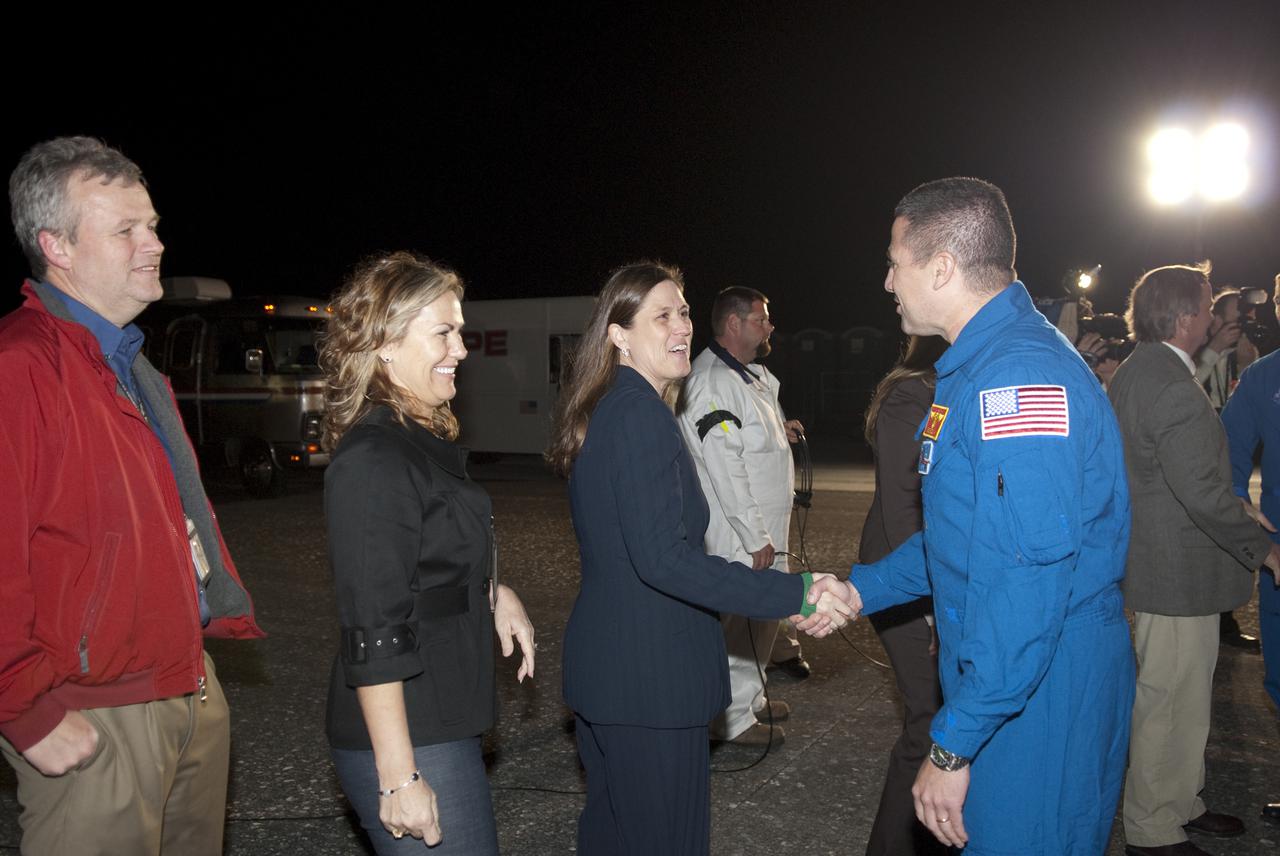
CAPE CANAVERAL, Fla. - STS-130 Commander George Zamka, in the blue flight suit, gets a warm welcome back to NASA's Kennedy Space Center in Florida from Rita Willcoxon, director of Launch Vehicle Processing, following space shuttle Endeavour's successful landing on Runway 15 at Kennedy's Shuttle Landing Facility. After 14 days in space, Endeavour's 5.7-million-mile STS-130 mission was completed on orbit 217. Main gear touchdown was at 10:20:31 p.m. EST followed by nose gear touchdown at 10:20:39 p.m. and wheels stop at 10:22:10 p.m. It was the 23rd night landing in shuttle history and the 17th at Kennedy. During Endeavour's STS-130 mission, astronauts installed the Tranquility node, a module that provides additional room for crew members and many of the station's life support and environmental control systems. Attached to Tranquility is a cupola with seven windows that provide a panoramic view of Earth, celestial objects and visiting spacecraft. The module was built in Turin, Italy, by Thales Alenia Space for the European Space Agency. The orbiting laboratory is approximately 90 percent complete now in terms of mass. STS-130 was the 24th flight for Endeavour, the 32nd shuttle mission devoted to ISS assembly and maintenance, and the 130th shuttle mission to date. For information on the STS-130 mission and crew, visit http:__www.nasa.gov_mission_pages_shuttle_shuttlemissions_sts130_index.html. Photo credit: NASA_Kim Shiflett
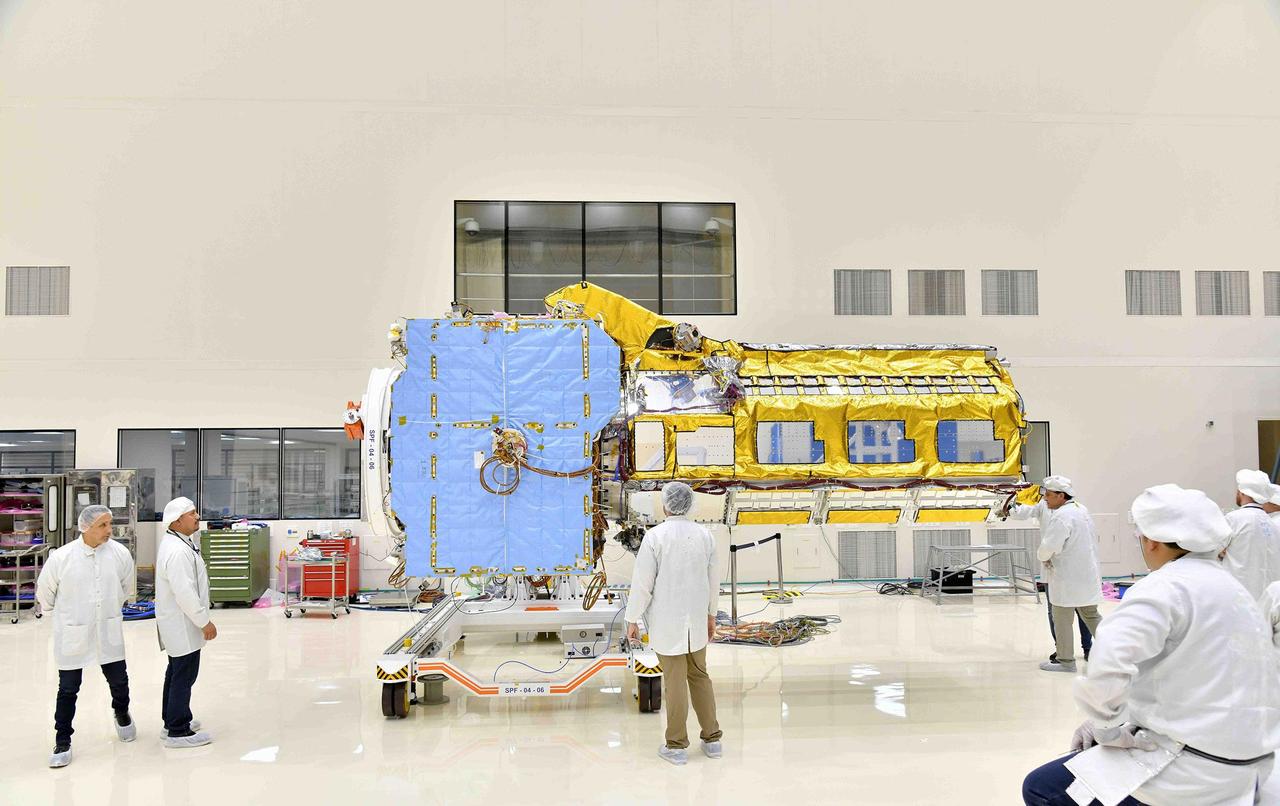
The NISAR (NASA-ISRO Synthetic Aperture Radar) satellite sits in a clean room facility at U R Rao Satellite Centre (URSC) in Bengaluru, India, in mid-June 2023, shortly after engineers from NASA's Jet Propulsion Laboratory in Southern California and the Indian Space Research Organisation joined its two main components, the radar instrument payload and the spacecraft bus. Set to launch in early 2024 from the Satish Dhawan Space Centre in Sriharikota, India, NISAR is being jointly developed by NASA and ISRO to observe movements of Earth's land and ice surfaces in extremely fine detail. As NISAR observes nearly every part of Earth at least once every 12 days, the satellite will help scientists understand, among other observables, the dynamics of forests, wetlands, and agricultural lands. The radar instrument payload, partially wrapped in gold-colored thermal blanketing, arrived from JPL in March and consists of L- and S-band radar systems, so named to indicate the wavelengths of their signals. Both sensors can see through clouds and collect data day and night. The bus, which is shown in blue blanketing and includes components and systems developed by both ISRO and JPL, was built at URSC and will provide power, navigation, pointing control, and communications for the mission. NISAR is an equal collaboration between NASA and ISRO and marks the first time the two agencies have cooperated on hardware development for an Earth-observing mission. JPL, which is managed for NASA by Caltech in Pasadena, leads the U.S. component of the project and is providing the mission's L-band SAR. NASA is also providing the radar reflector antenna, the deployable boom, a high-rate communication subsystem for science data, GPS receivers, a solid-state recorder, and payload data subsystem. URSC, which is leading the ISRO component of the mission, is providing the spacecraft bus, the S-band SAR electronics, the launch vehicle, and associated launch services and satellite mission operations. https://photojournal.jpl.nasa.gov/catalog/PIA25865
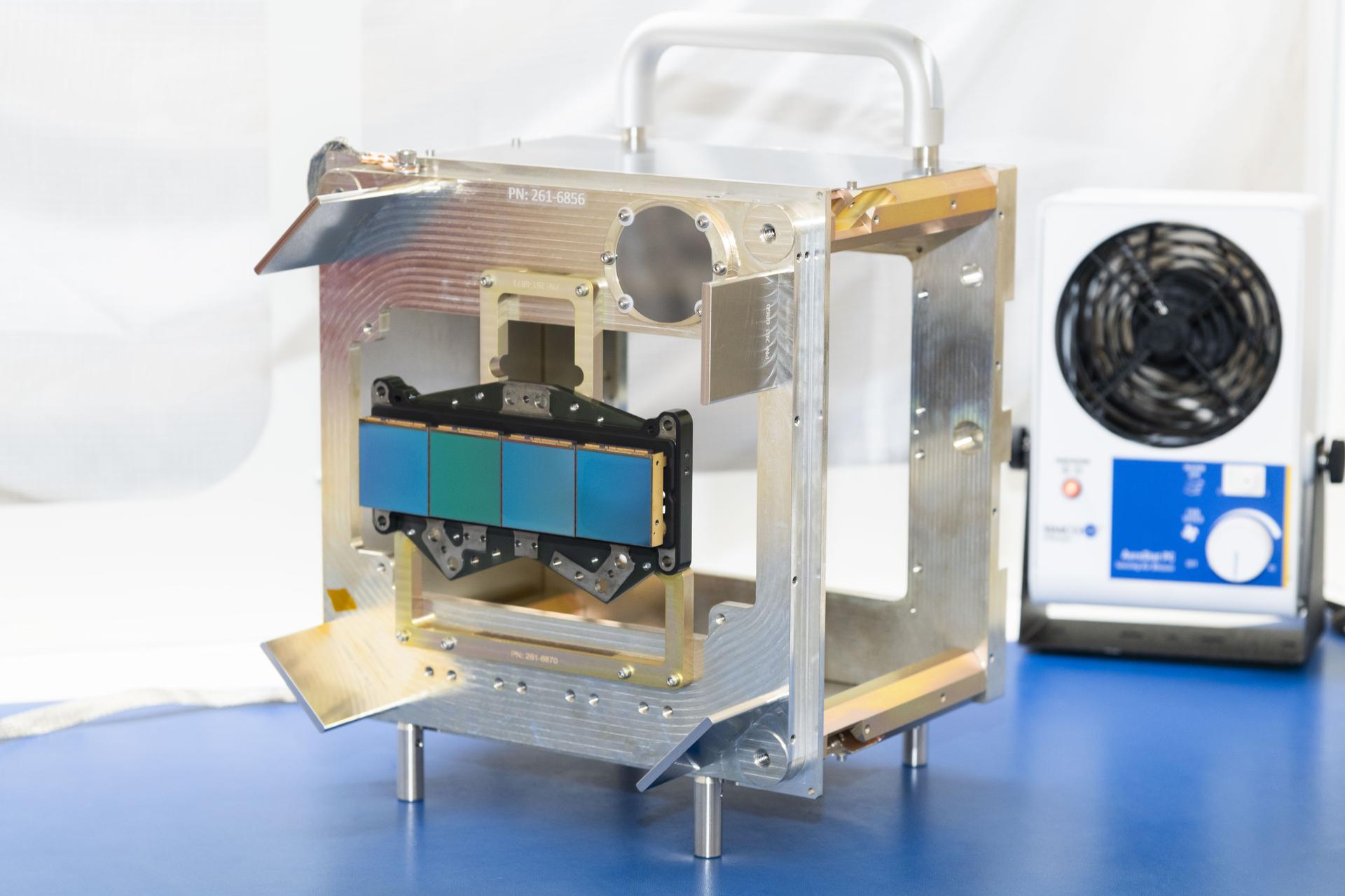
Four mid-wavelength infrared science detectors for NASA’s Near-Earth Object (NEO) Surveyor mission are shown here on a clean room bench at the Space Dynamics Laboratory (SDL) in Logan, Utah. Mounted to a sensor chip assembly, the four blue-green-colored detectors are made with mercury cadmium telluride (HgCdTe), a versatile semiconducting alloy that is sensitive to infrared wavelengths. There are two such assemblies that form the heart of NEO Surveyor’s two science cameras. These state-of-the-art cameras sense solar heat re-radiated by near-Earth objects. The mission’s cameras and telescope, which has an aperture of nearly 20 inches (50 centimeters), will be housed inside the spacecraft’s instrument enclosure, a structure that is designed to ensure heat produced by the spacecraft and instrument during operations doesn’t interfere with its infrared observations. Targeting launch in late 2027, the NEO Surveyor mission is led by Professor Amy Mainzer at the University of California, Los Angeles for NASA’s Planetary Defense Coordination Office and is being managed by the agency’s Jet Propulsion Laboratory in Southern California for the Planetary Missions Program Office at NASA’s Marshall Space Flight Center in Huntsville, Alabama. BAE Systems and the Space Dynamics Laboratory in Logan, Utah, and Teledyne are among the companies that were contracted to build the spacecraft and its instrumentation. The Laboratory for Atmospheric and Space Physics at the University of Colorado Boulder will support operations, and IPAC at Caltech in Pasadena, California, is responsible for producing some of the mission’s data products. Caltech manages JPL for NASA. More information about NEO Surveyor is available at: https://science.nasa.gov/mission/neo-surveyor/
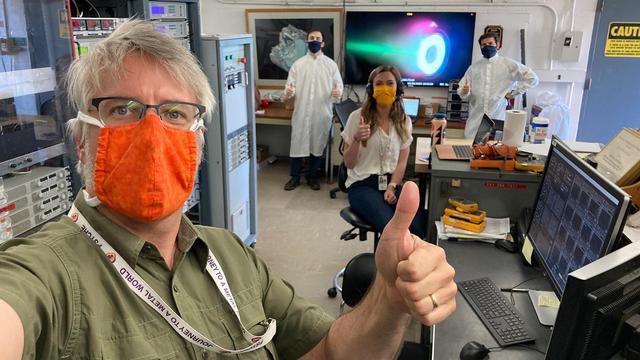
Psyche engineers adapted to COVID-19 social distancing and masking requirements while testing the Hall thrusters that will propel NASA's Psyche spacecraft on its journey to the main asteroid belt between Mars and Jupiter. Set to launch in August 2022, the spacecraft will utilize this super-efficient electric propulsion system to travel to the asteroid Psyche. On May 20, 2020, at NASA's Jet Propulsion Laboratory, Flight System Engineer Steve Snyder (foreground) of JPL and a crew of engineers from Maxar Technologies worked together in the control room next to the vacuum chamber where the thruster was fired up. Snyder and his Maxar colleagues (from left: Faraz Aghazadeh, Taylor Kerl and Giovanni Lenguito) put the thruster and its power supply through a series of stress tests to ensure they can operate together in the extreme conditions of deep space. In the background, a monitor projects the image of the thruster firing. The thruster works by turning xenon gas, a neutral gas used in car headlights and plasma TVs, into xenon ions. As the xenon ions are accelerated out of the thruster, they create the thrust that will propel the spacecraft. The xenon plasma emits a blue glow, seen here on the screen, as it operates. Hall thrusters will be used for the first time beyond lunar orbit, demonstrating that they could play a role in supporting future missions to deep space. Maxar and JPL adapted the Hall thruster system for use with the main body of the spacecraft that Maxar is building at its facility in Palo Alto, California. https://photojournal.jpl.nasa.gov/catalog/PIA23878
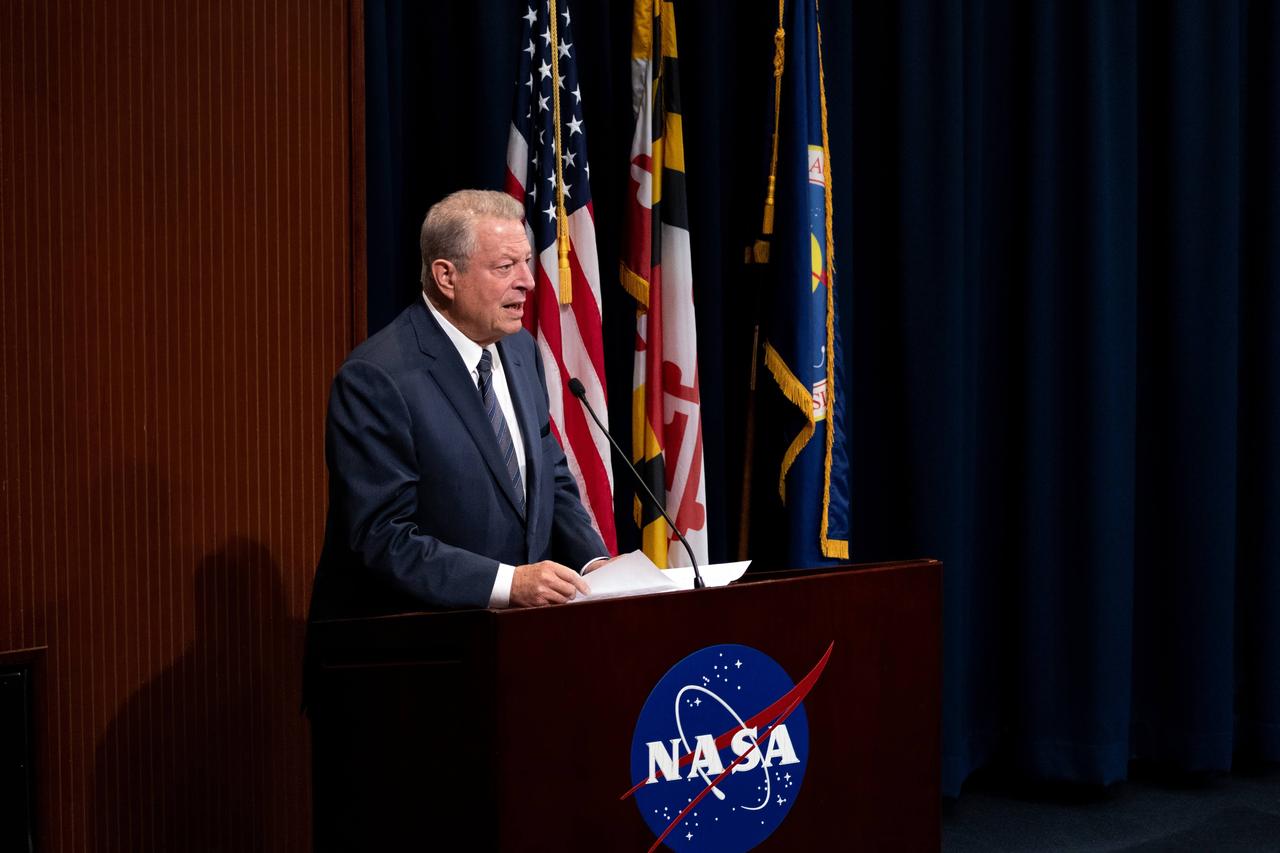
To commemorate the upcoming 10th anniversary of the DSCOVR (Deep Space Climate Observatory) mission, NASA’s Goddard Space Flight Center in Greenbelt, Md., hosted environmentalist and former Vice President Al Gore, shown here addressing a crowd in the Building 3 Harry J. Goett Auditorium, on Oct. 16, 2024. “The image of our Earth from space is the single most compelling iconic image that any of us have ever seen,” Gore said at a panel discussion for employees. “Now we have, thanks to DSCOVR, 50,000 ‘Blue Marble’ photographs … To date there are more than 100 peer-reviewed scientific publications that are based on the unique science gathered at the L1 point by DSCOVR. For all of the scientists who are here and those on the teams that are represented here, I want to say congratulations and thank you.” Following Gore’s talk on climate monitoring, Goddard scientists participated in a panel discussion, “Remote Sensing and the Future of Earth Observations,” which explored the latest advancements in technology that allow for the monitoring of the atmosphere from space and showcased how Goddard’s research drives the future of Earth science. Gore’s visit also entailed a meeting with the DSCOVR science team, a view into the clean room where Goddard is assembling the Roman Space Telescope, and a stop at the control center for PACE: NASA’s Plankton, Aerosol, Cloud, ocean Ecosystem mission. Launched Feb. 11, 2015, DSCOVR is a space weather station that monitors changes in the solar wind, providing space weather alerts and forecasts for geomagnetic storms that could disrupt power grids, satellites, telecommunications, aviation and GPS. DSCOVR is a joint mission among NASA, the National Oceanic and Atmospheric Administration (NOAA), and the U.S. Air Force. The project originally was called Triana, a mission conceived of by Gore in 1998 during his vice presidency.
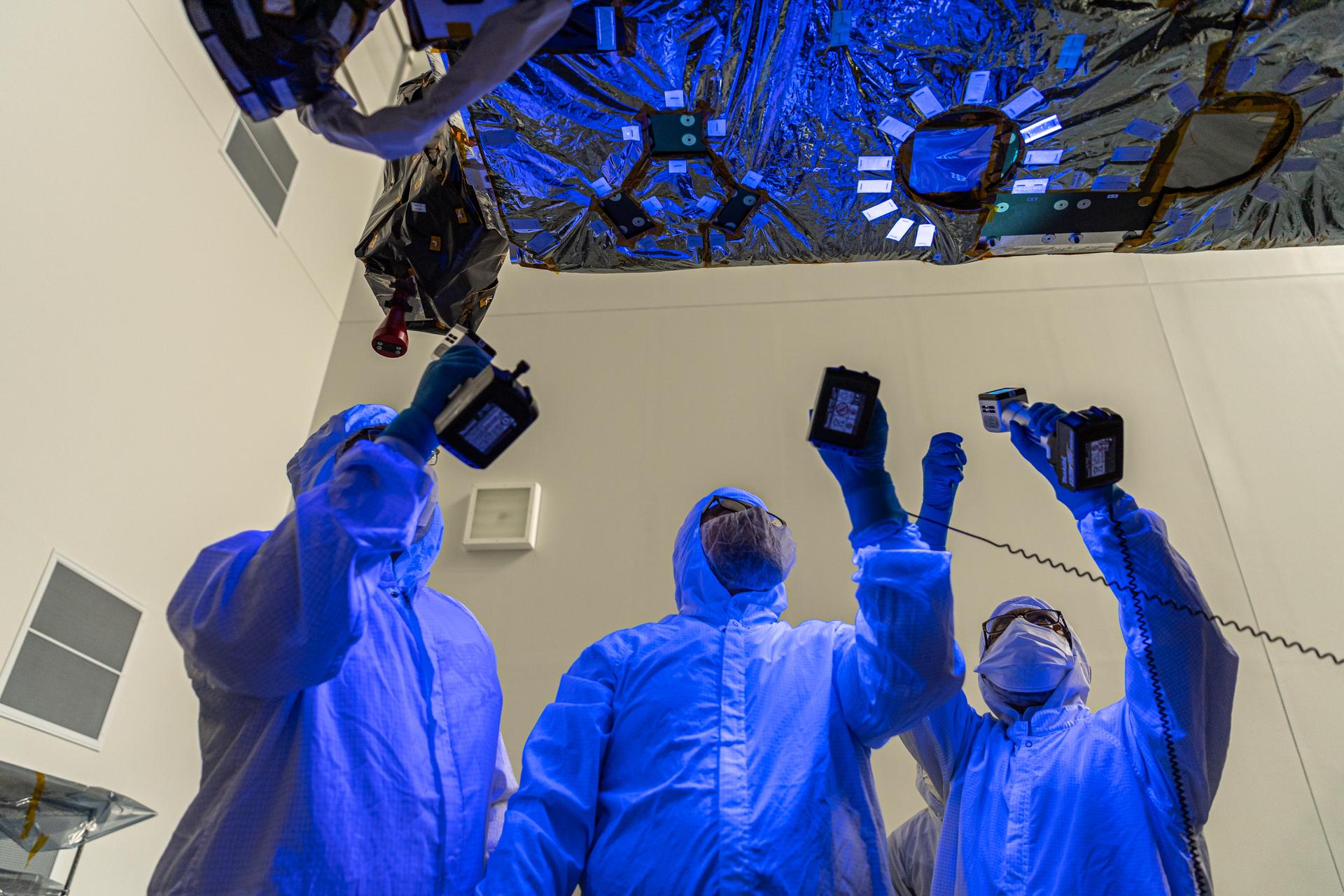
NASA Contamination and control engineers perform a blacklight inspection on the OSAM-1 Spacecraft Bus at Goddard Space Flight Center, Greenbelt Md., Sept 30, 2023. This photo has been reviewed by OSAM1 project management, Maxar public release authority, and the Export Control Office and is released for public view. NASA/Mike Guinto
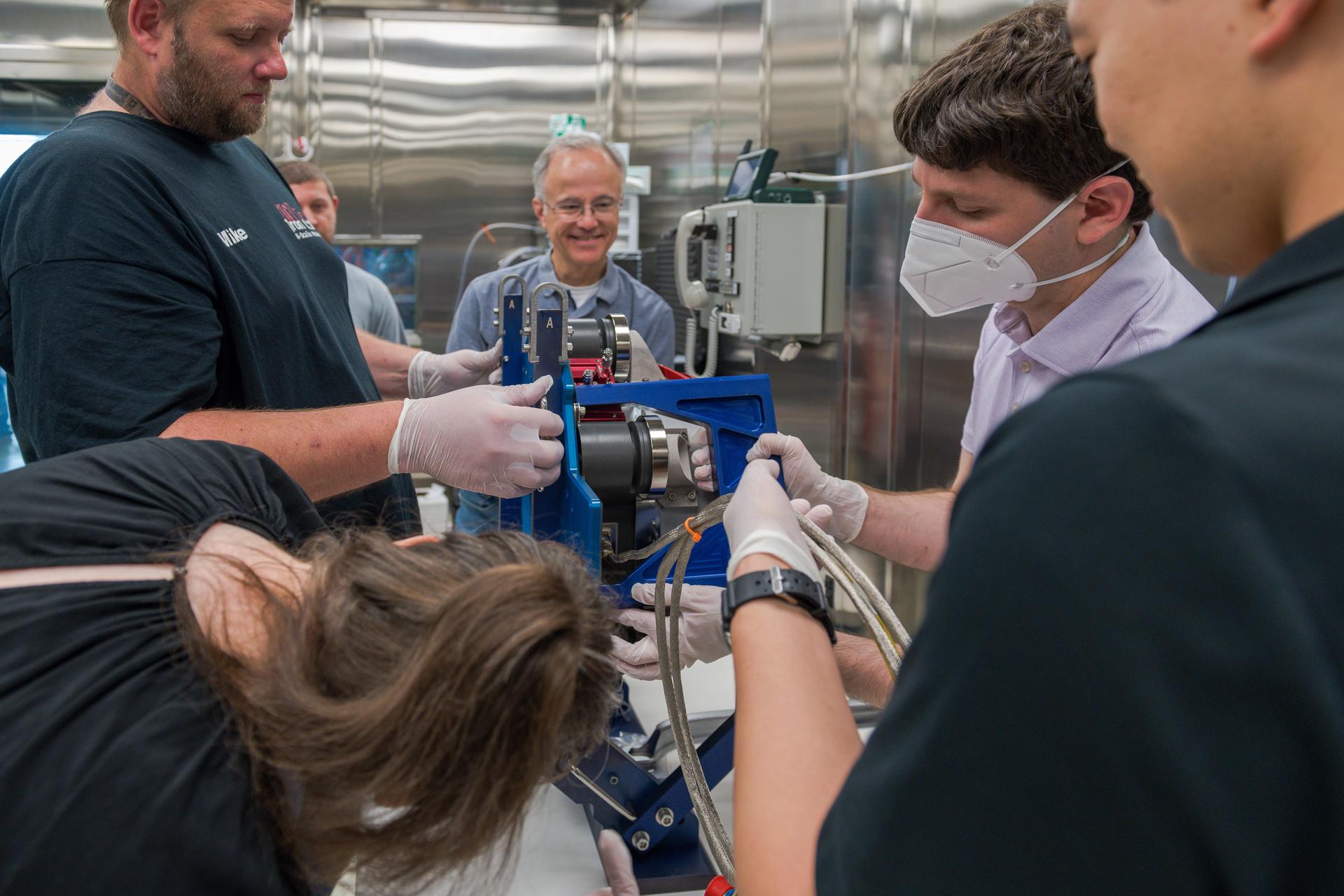
Engineers at NASA’s Glenn Research Center in Cleveland work together to position and secure the second of three Advanced Electric Propulsion System (AEPS) thrusters for acceptance testing. Following testing, the thruster was delivered to Lanteris Space Systems in Palo Alto, California, for installation on Gateway’s Power and Propulsion Element. Credit: NASA
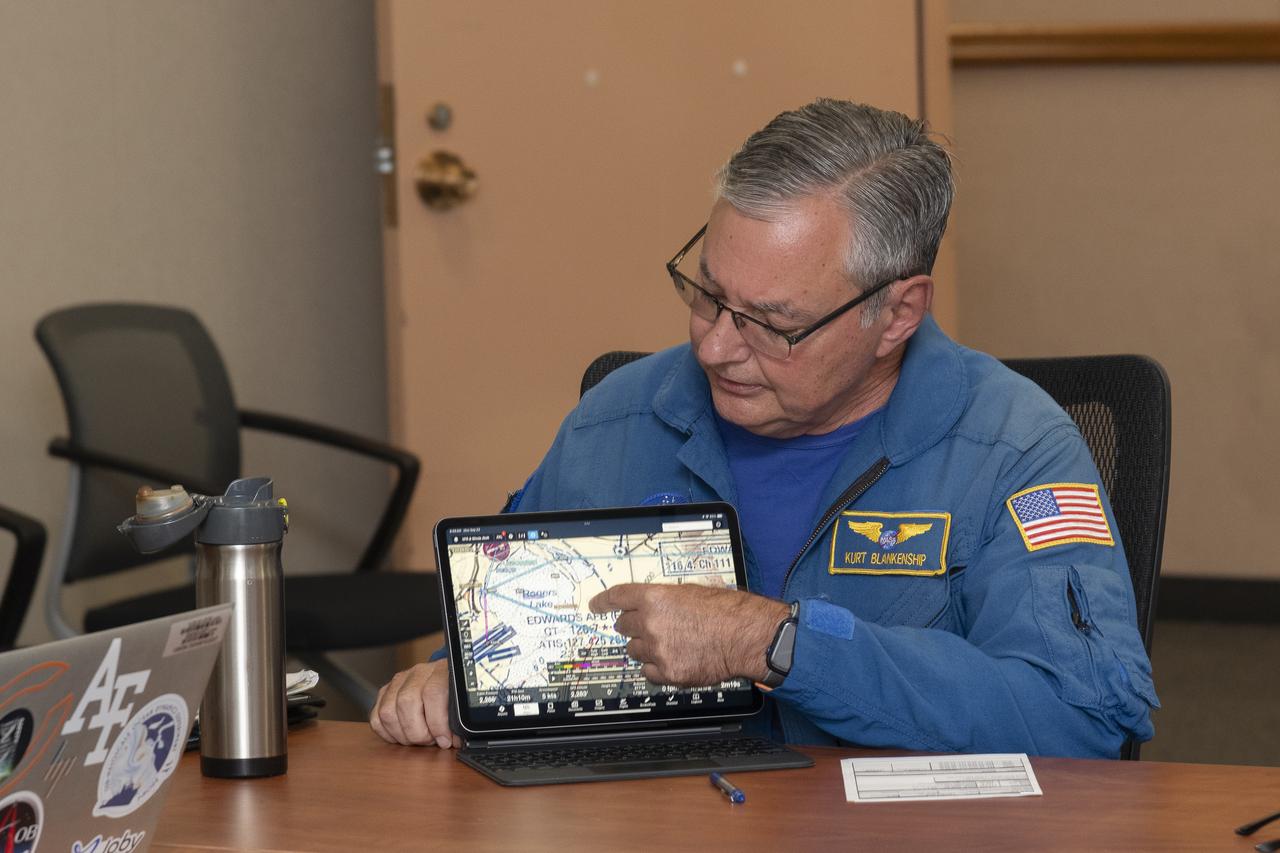
NASA pilot Kurt Blankenship maps out flight plans during a pre-flight brief. Pilots, crew, and researchers from NASA’s Armstrong Flight Research Center in Edwards, California and NASA’s Glenn Research Center in Cleveland are briefed on the flight plan to gather Automatic Dependent Surveillance-Broadcast signal data between the aircraft and ping-Stations on the ground at NASA Armstrong. These flights are the first cross-center research activity with the Pilatus-PC-12 at NASA Armstrong.