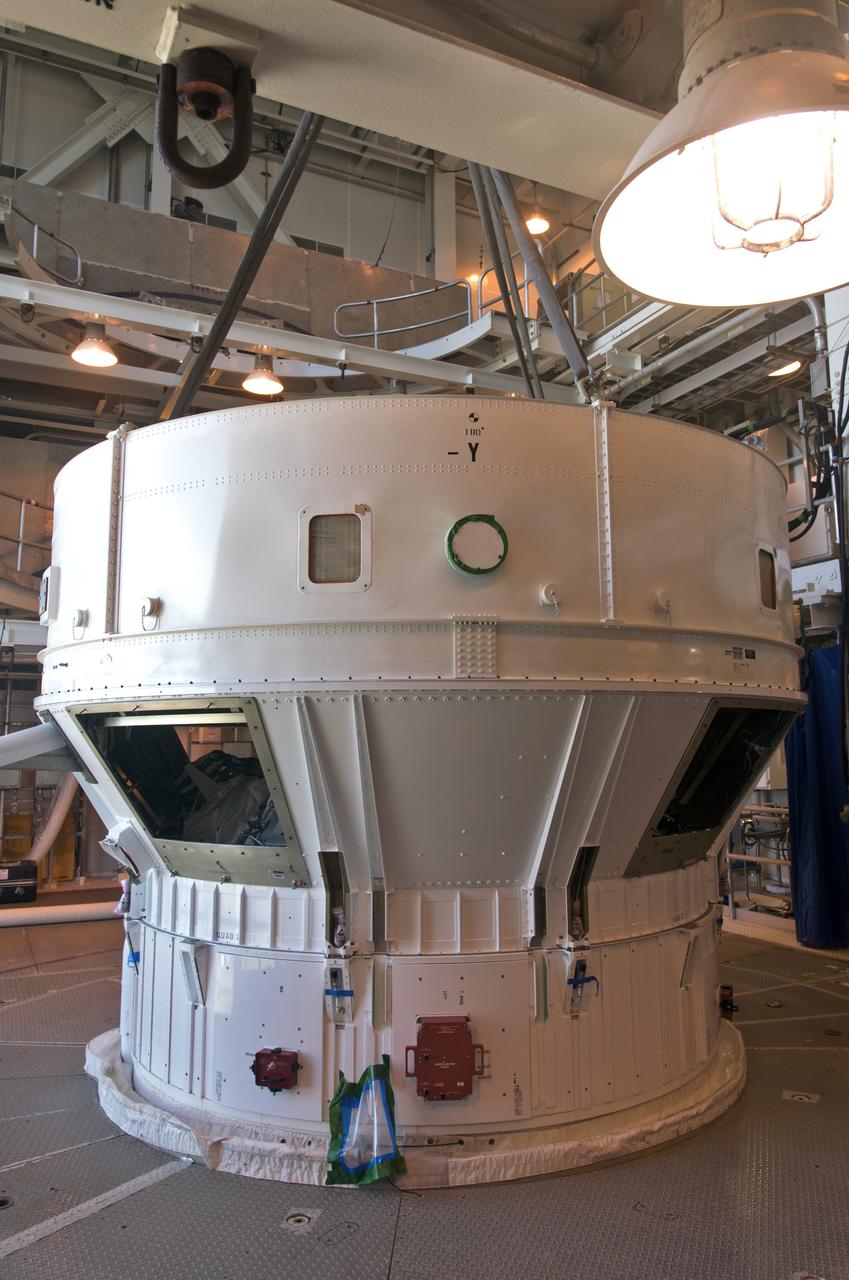
At Space Launch Complex 3 at Vandenberg Air Force Base in California, a boattail fairing has been mated atop a United Launch Alliance (ULA) Centaur upper stage. The boattail is an adaptor providing an interface between the Centaur and the payload fairing encapsulating NASA's Interior Exploration using Seismic Investigations, Geodesy and Heat Transport, or InSight, spacecraft. A ULA Atlas V rocket is scheduled to liftoff on May 5, 2018, launching InSight the first mission to explore the deep interior of Mars. It will investigate processes that shaped the rocky planets of the inner solar system including Earth.
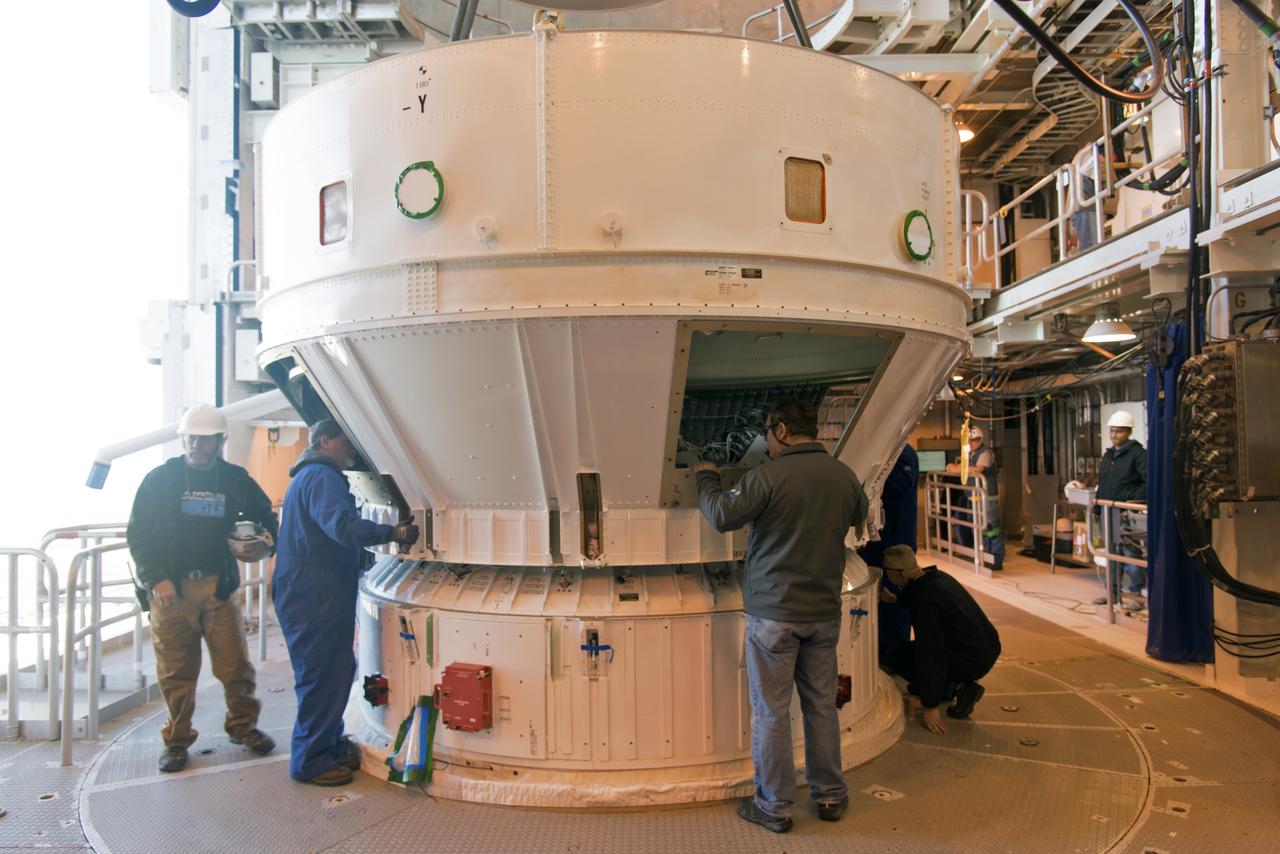
At Space Launch Complex 3 at Vandenberg Air Force Base in California, a boattail fairing is mated atop a United Launch Alliance (ULA) Centaur upper stage. The boattail is an adaptor providing an interface between the Centaur and the payload fairing encapsulating NASA's Interior Exploration using Seismic Investigations, Geodesy and Heat Transport, or InSight, spacecraft. A ULA Atlas V rocket is scheduled to liftoff on May 5, 2018, launching InSight the first mission to explore the deep interior of Mars. It will investigate processes that shaped the rocky planets of the inner solar system including Earth.

Technicians remove the United Launch Alliance (ULA) Atlas V boattail from its shipping container following its arrival at the Horizontal Integration Facility at Vandenberg Space Force Base in California on July 28, 2022, for NASA and the National Oceanic and Atmospheric Administration’s Joint Polar Satellite System-2 (JPSS-2) mission. The boattail is the connecting piece of flight hardware that joins the rocket’s upper Centaur stage with the payload fairing, which will house the JPSS-2 satellite. JPSS-2 is the third satellite in the Joint Polar Satellite System series and will scan the Earth as it orbits from the North to the South Pole, crossing the equator 14 times a day. Operating from 512 miles above Earth, JPSS-2 will capture data to improve weather forecasts, in turn helping scientists predict and prepare for extreme weather events and climate change. Launching as a secondary payload aboard the Atlas V is NASA’s Low-Earth Orbit Flight Test of an Inflatable Decelerator (LOFTID) – a demonstration of a cross-cutting aeroshell, or heat shield, for atmospheric re-entry. Dedicated to the memory of Bernard Kutter, LOFTID could be used for crewed and large robotic missions to Mars. Liftoff of the ULA Atlas V rocket is scheduled for Nov. 1, 2022, from Vandenberg’s Space Launch Complex-3E.

Technicians remove the United Launch Alliance (ULA) Atlas V boattail from its shipping container following its arrival at the Horizontal Integration Facility at Vandenberg Space Force Base in California on July 28, 2022, for NASA and the National Oceanic and Atmospheric Administration’s Joint Polar Satellite System-2 (JPSS-2) mission. The boattail is the connecting piece of flight hardware that joins the rocket’s upper Centaur stage with the payload fairing, which will house the JPSS-2 satellite. JPSS-2 is the third satellite in the Joint Polar Satellite System series and will scan the Earth as it orbits from the North to the South Pole, crossing the equator 14 times a day. Operating from 512 miles above Earth, JPSS-2 will capture data to improve weather forecasts, in turn helping scientists predict and prepare for extreme weather events and climate change. Launching as a secondary payload aboard the Atlas V is NASA’s Low-Earth Orbit Flight Test of an Inflatable Decelerator (LOFTID) – a demonstration of a cross-cutting aeroshell, or heat shield, for atmospheric re-entry. Dedicated to the memory of Bernard Kutter, LOFTID could be used for crewed and large robotic missions to Mars. Liftoff of the ULA Atlas V rocket is scheduled for Nov. 1, 2022, from Vandenberg’s Space Launch Complex-3E.
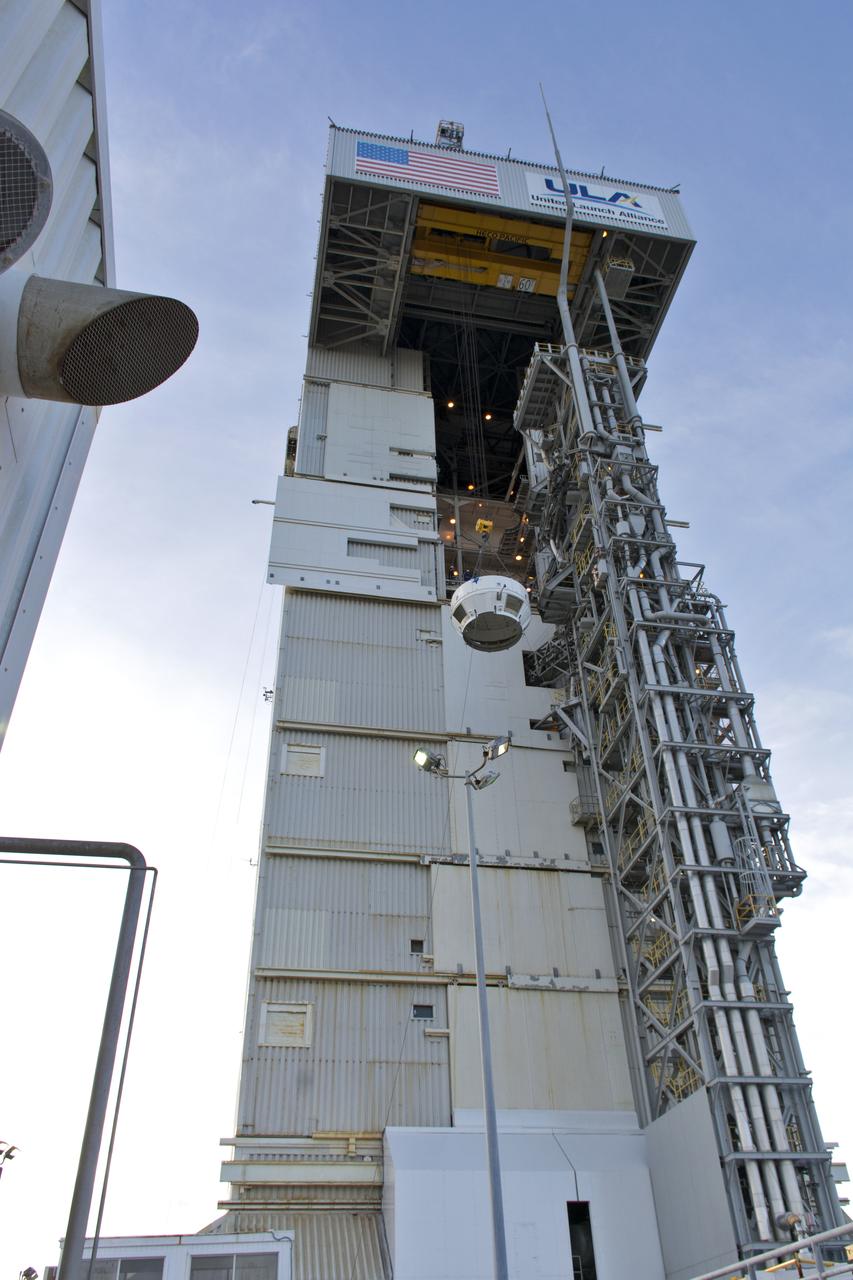
At Space Launch Complex 3 at Vandenberg Air Force Base in California, a boattail fairing is lifted by a crane for mating atop a United Launch Alliance (ULA) Centaur upper stage. The boattail is an adaptor providing an interface between the Centaur and the payload fairing encapsulating NASA's Interior Exploration using Seismic Investigations, Geodesy and Heat Transport, or InSight, spacecraft. A ULA Atlas V rocket is scheduled to liftoff on May 5, 2018, launching InSight the first mission to explore the deep interior of Mars. It will investigate processes that shaped the rocky planets of the inner solar system including Earth.
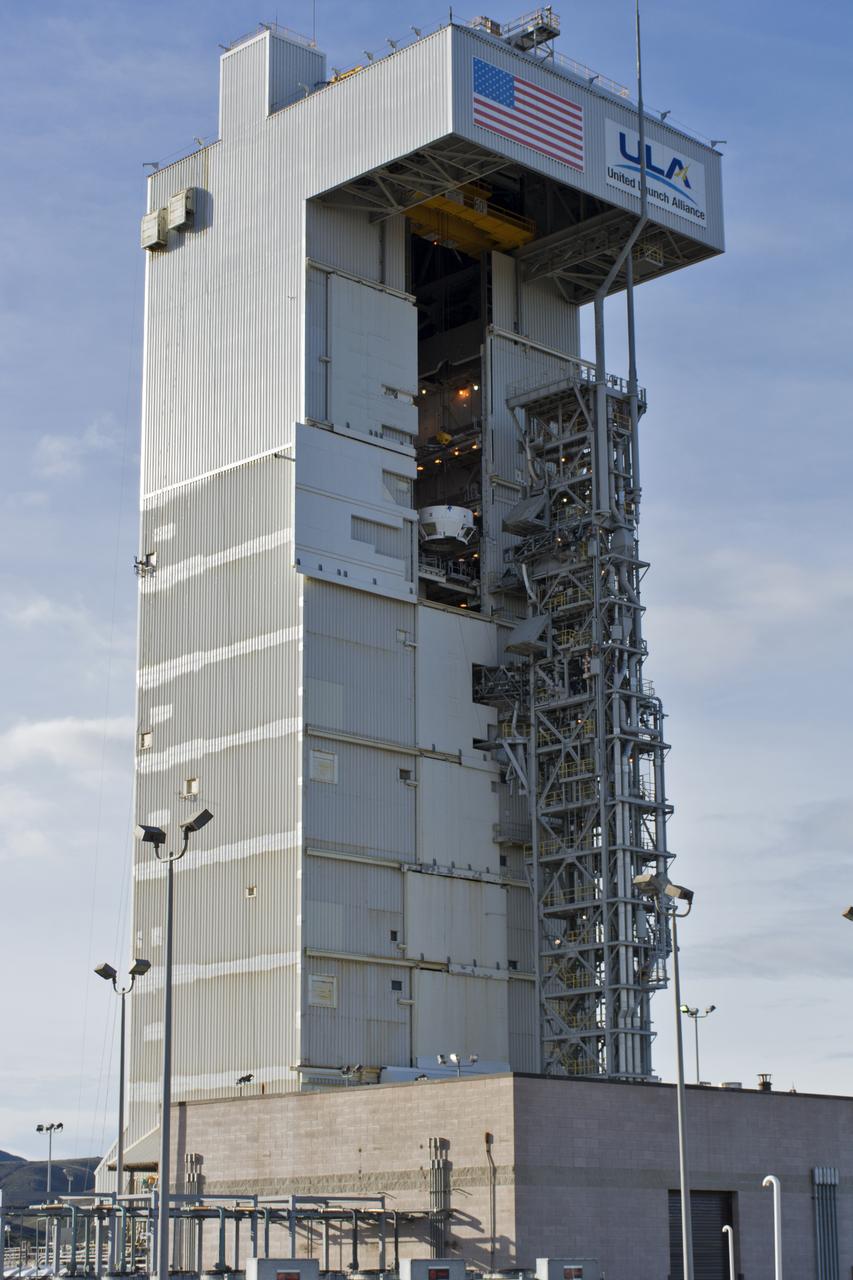
At Space Launch Complex 3 at Vandenberg Air Force Base in California, a boattail fairing is lifted by a crane for mating atop a United Launch Alliance (ULA) Centaur upper stage. The boattail is an adaptor providing an interface between the Centaur and the payload fairing encapsulating NASA's Interior Exploration using Seismic Investigations, Geodesy and Heat Transport, or InSight, spacecraft. A ULA Atlas V rocket is scheduled to liftoff on May 5, 2018, launching InSight the first mission to explore the deep interior of Mars. It will investigate processes that shaped the rocky planets of the inner solar system including Earth.
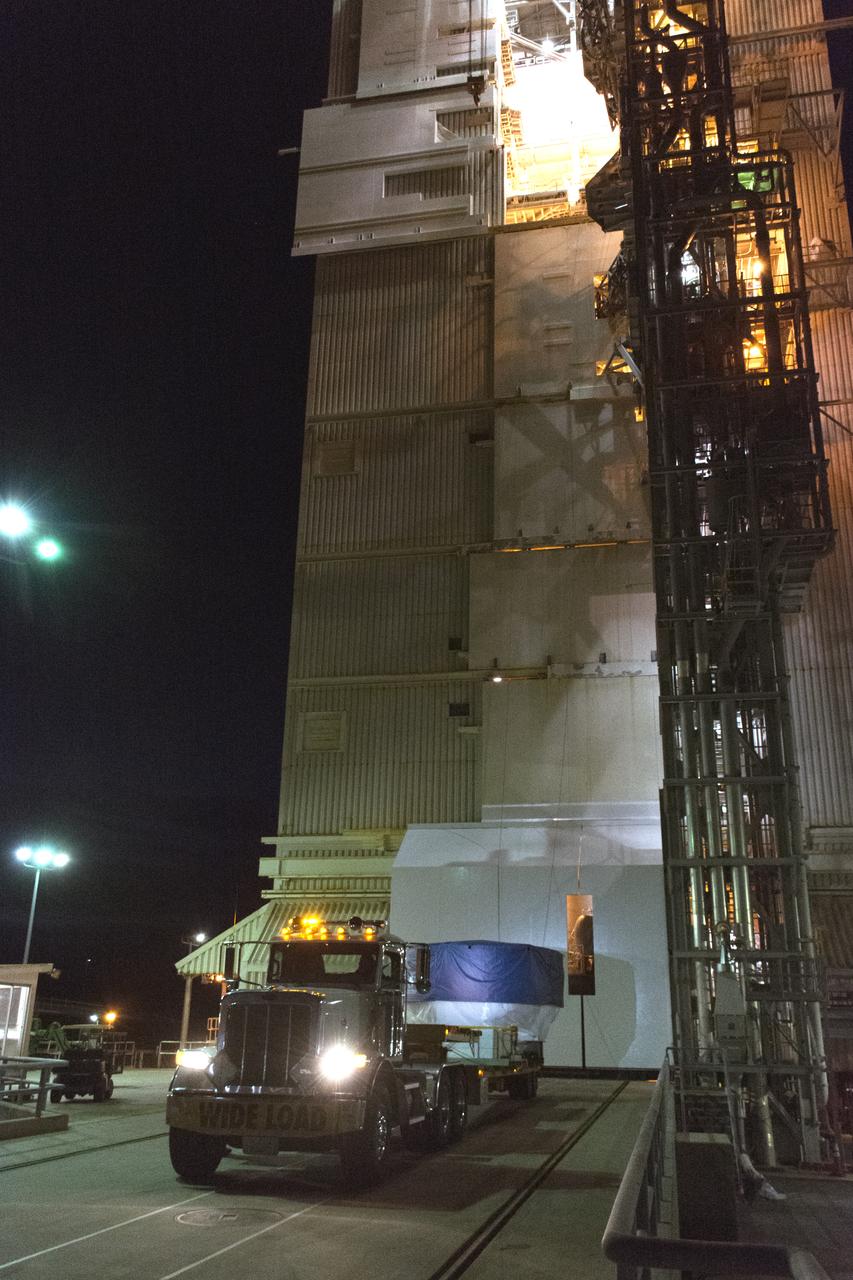
At Vandenberg Air Force Base in California, a boattail fairing arrives at Space Launch Complex 3. The boattail is an adaptor providing an interface between the United Launch Alliance (ULA) Centaur upper stage and the payload fairing encapsulating NASA's Interior Exploration using Seismic Investigations, Geodesy and Heat Transport, or InSight, spacecraft. A ULA Atlas V rocket is scheduled to liftoff on May 5, 2018, launching InSight the first mission to explore the deep interior of Mars. It will investigate processes that shaped the rocky planets of the inner solar system including Earth.
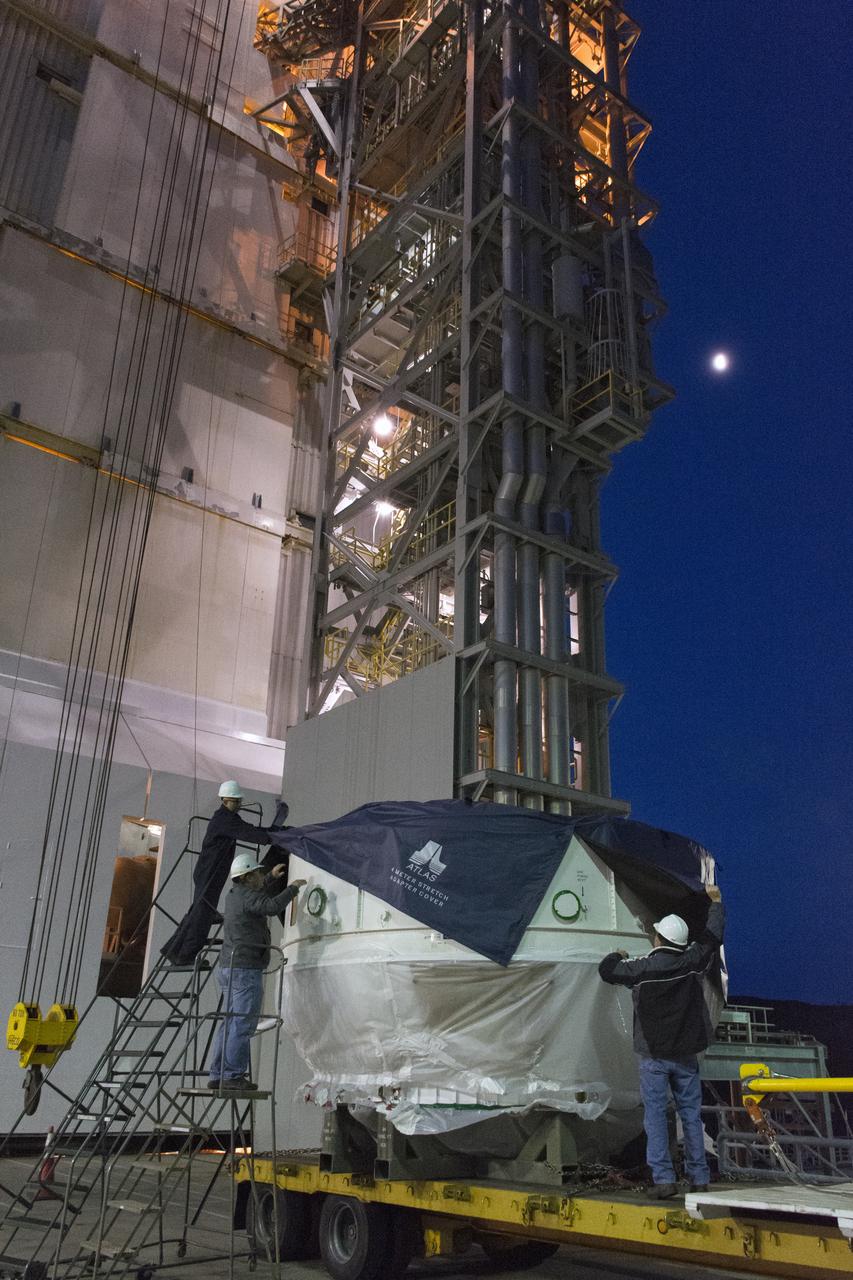
At Vandenberg Air Force Base in California, technicians prepare a boattail fairing for lifting atop a United Launch Alliance (ULA) Centaur upper stage at Space Launch Complex 3. The boattail is an adaptor providing an interface between the Centaur and the payload fairing encapsulating NASA's Interior Exploration using Seismic Investigations, Geodesy and Heat Transport, or InSight, spacecraft. A ULA Atlas V rocket is scheduled to liftoff on May 5, 2018, launching InSight the first mission to explore the deep interior of Mars. It will investigate processes that shaped the rocky planets of the inner solar system including Earth.
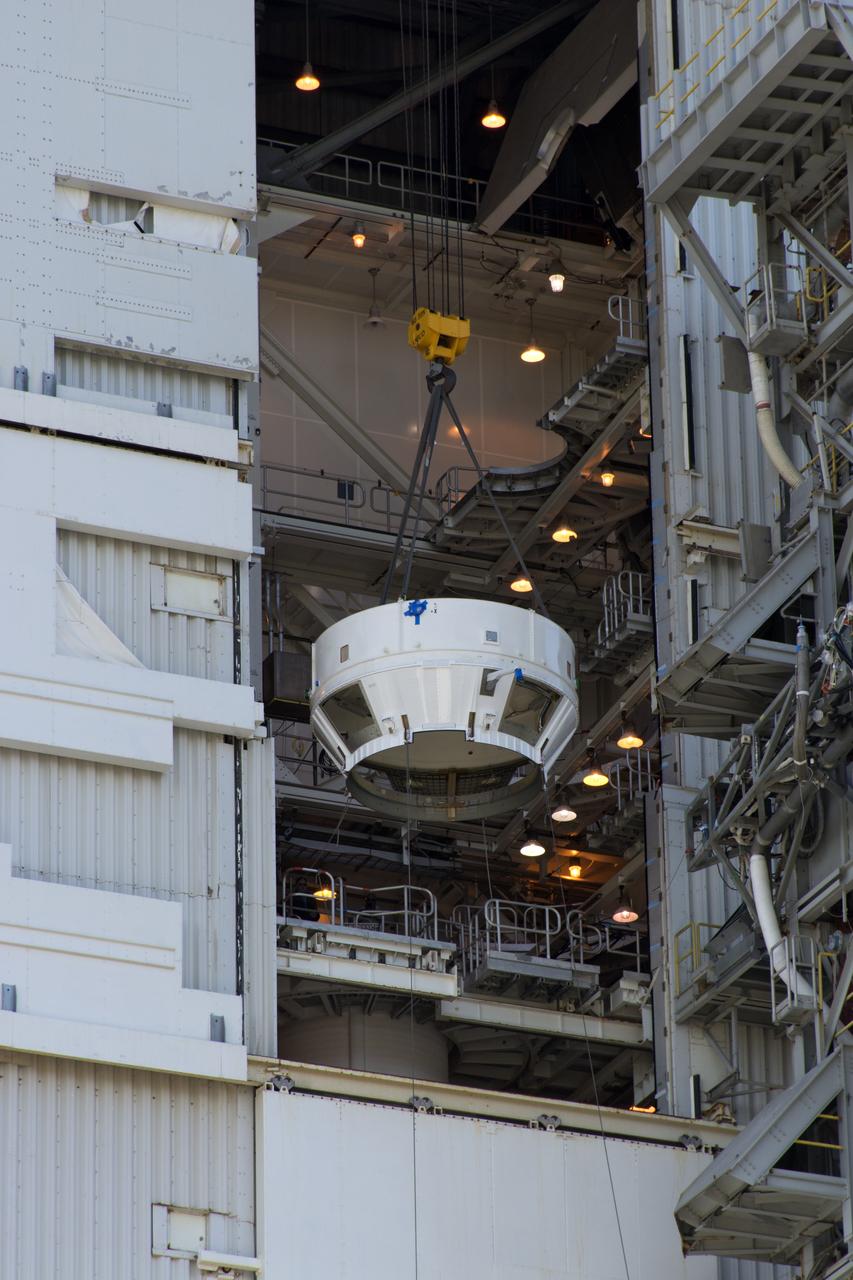
At Space Launch Complex 3 at Vandenberg Air Force Base in California, a boattail fairing is lifted by a crane for mating atop a United Launch Alliance (ULA) Centaur upper stage. The boattail is an adaptor providing an interface between the Centaur and the payload fairing encapsulating NASA's Interior Exploration using Seismic Investigations, Geodesy and Heat Transport, or InSight, spacecraft. A ULA Atlas V rocket is scheduled to liftoff on May 5, 2018, launching InSight the first mission to explore the deep interior of Mars. It will investigate processes that shaped the rocky planets of the inner solar system including Earth.
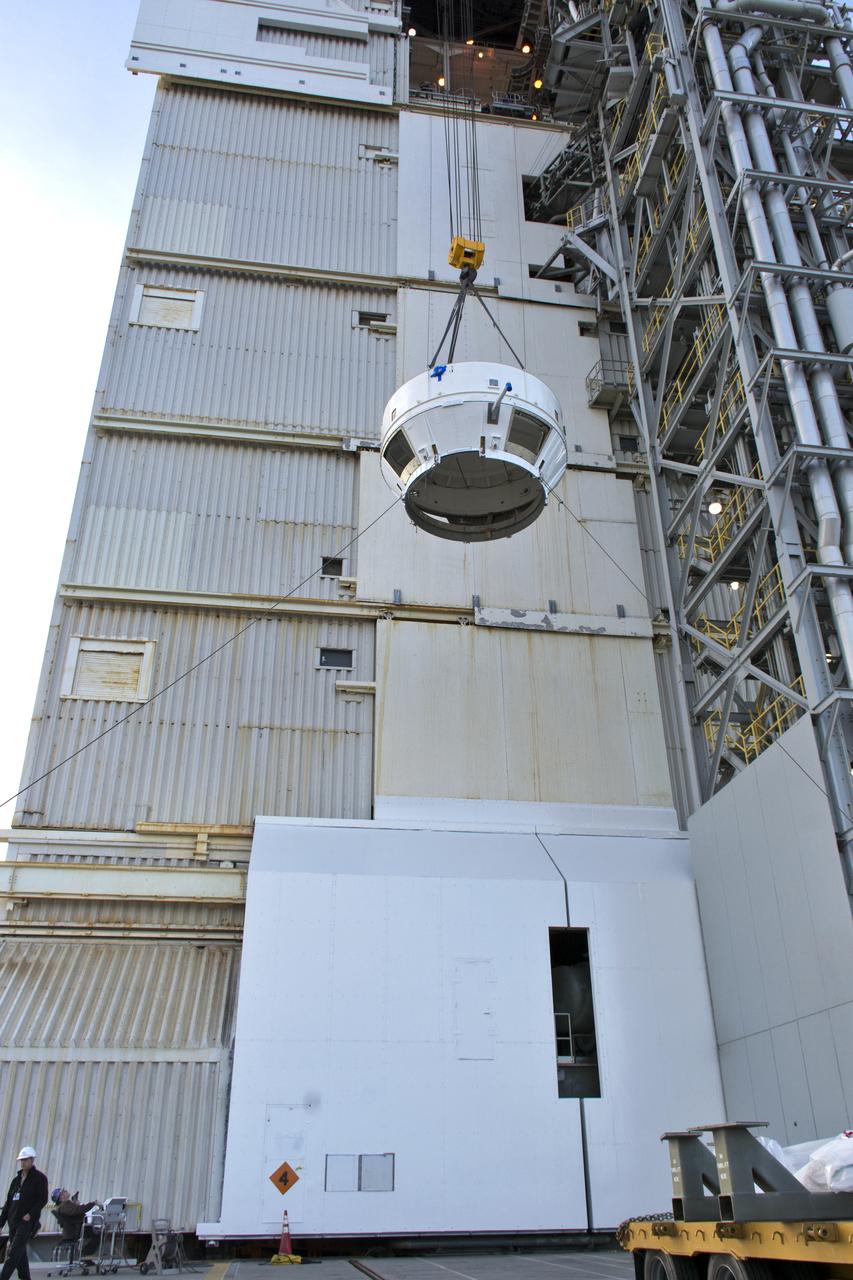
At Space Launch Complex 3 at Vandenberg Air Force Base in California, a boattail fairing is lifted by a crane for mating atop a United Launch Alliance (ULA) Centaur upper stage. The boattail is an adaptor providing an interface between the Centaur and the payload fairing encapsulating NASA's Interior Exploration using Seismic Investigations, Geodesy and Heat Transport, or InSight, spacecraft. A ULA Atlas V rocket is scheduled to liftoff on May 5, 2018, launching InSight the first mission to explore the deep interior of Mars. It will investigate processes that shaped the rocky planets of the inner solar system including Earth.
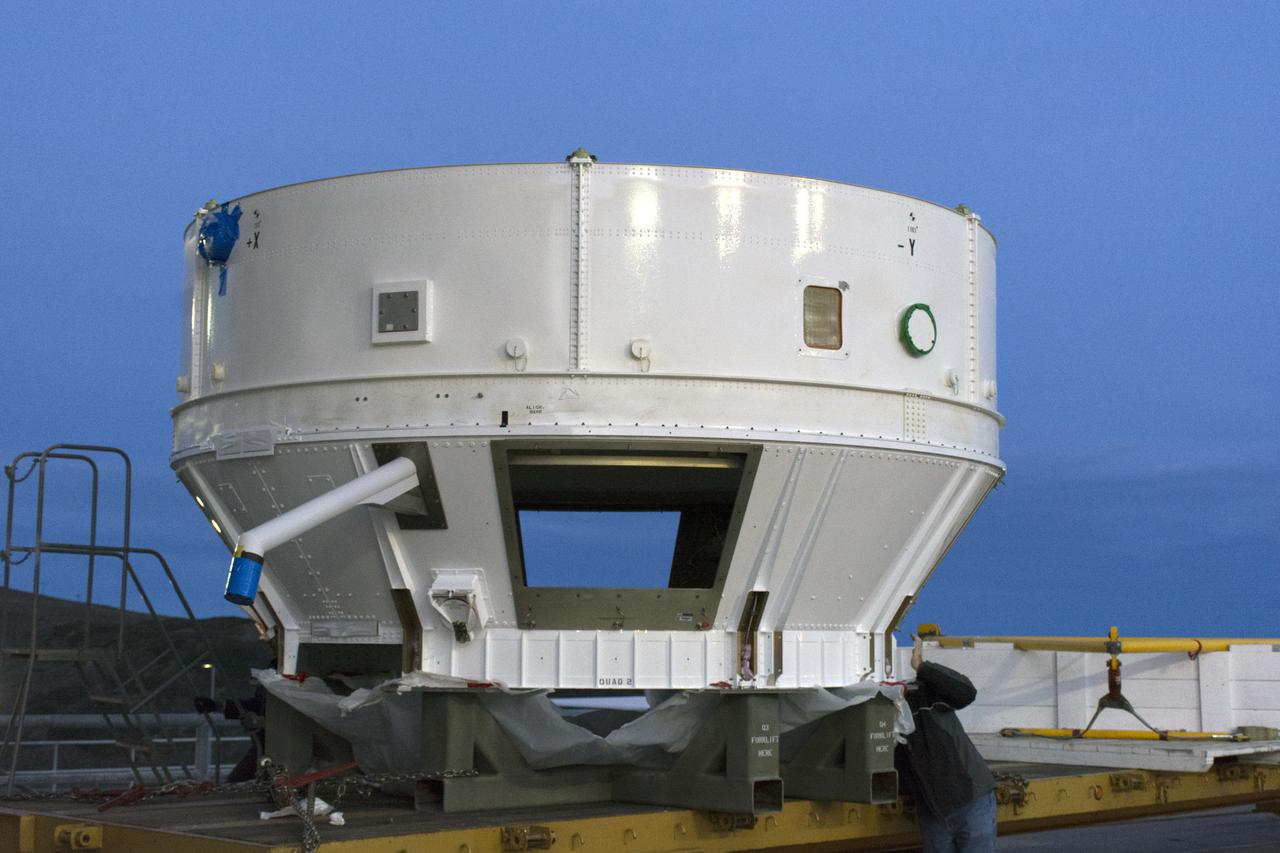
At Vandenberg Air Force Base in California, a boattail fairing is ready for lifting atop a United Launch Alliance (ULA) Centaur upper stage at Space Launch Complex 3. The boattail is an adaptor providing an interface between the Centaur and the payload fairing encapsulating NASA's Interior Exploration using Seismic Investigations, Geodesy and Heat Transport, or InSight, spacecraft. A ULA Atlas V rocket is scheduled to liftoff on May 5, 2018, launching InSight the first mission to explore the deep interior of Mars. It will investigate processes that shaped the rocky planets of the inner solar system including Earth.
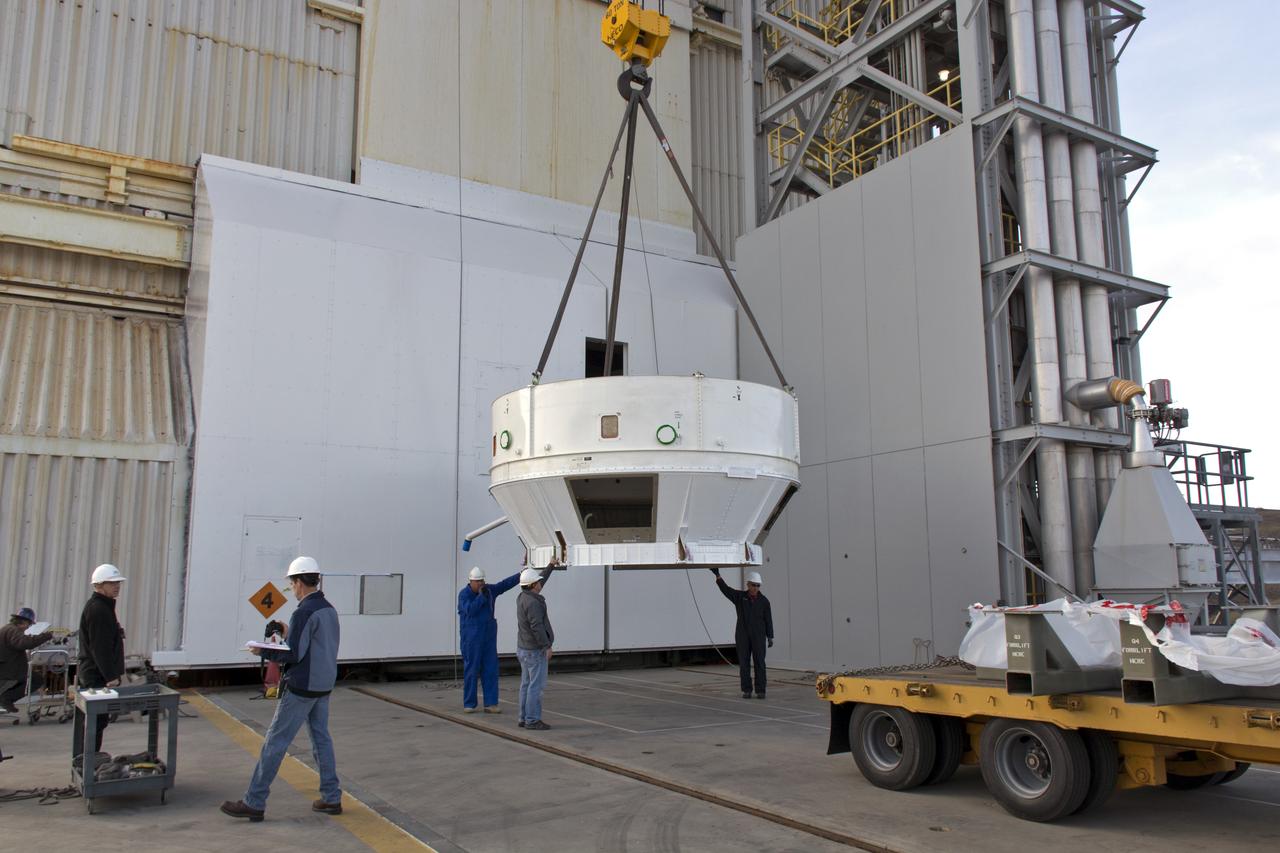
At Space Launch Complex 3 at Vandenberg Air Force Base in California, a boattail fairing is lifted by a crane for mating atop a United Launch Alliance (ULA) Centaur upper stage. The boattail is an adaptor providing an interface between the Centaur and the payload fairing encapsulating NASA's Interior Exploration using Seismic Investigations, Geodesy and Heat Transport, or InSight, spacecraft. A ULA Atlas V rocket is scheduled to liftoff on May 5, 2018, launching InSight the first mission to explore the deep interior of Mars. It will investigate processes that shaped the rocky planets of the inner solar system including Earth.
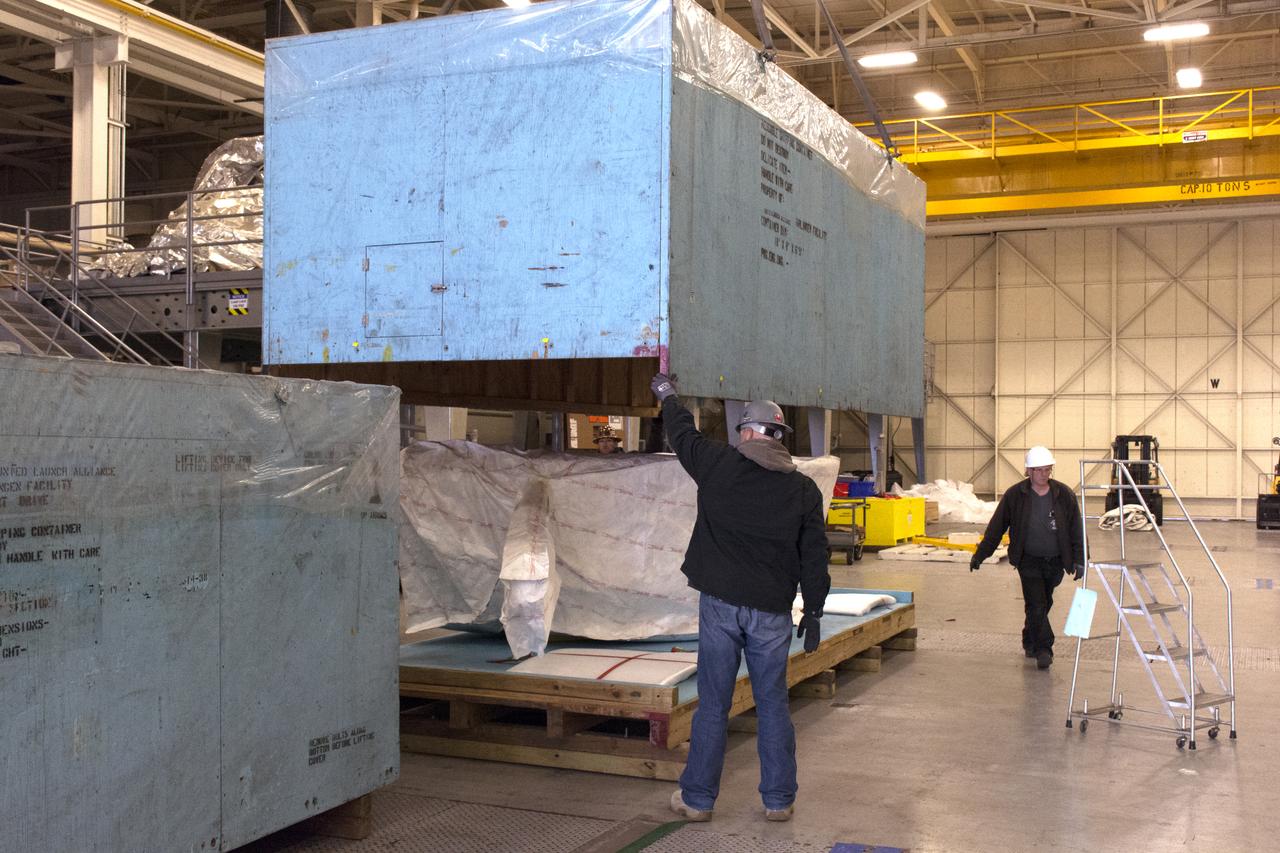
At Vandenberg Air Force Base in California, the boattail adaptor interface that will connect the Centaur upper stage to the payload fairing is offloaded for NASA's upcoming Interior Exploration using Seismic Investigations, Geodesy and Heat Transport, or InSight, mission to land on Mars. InSight will liftoff atop a United Launch Alliance Atlas V rocket to send the spacecraft on the first mission to explore the Red Planet's deep interior. It will investigate processes that shaped the rocky planets of the inner solar system including Earth. Liftoff from Vandenberg is scheduled for May 5, 2018.
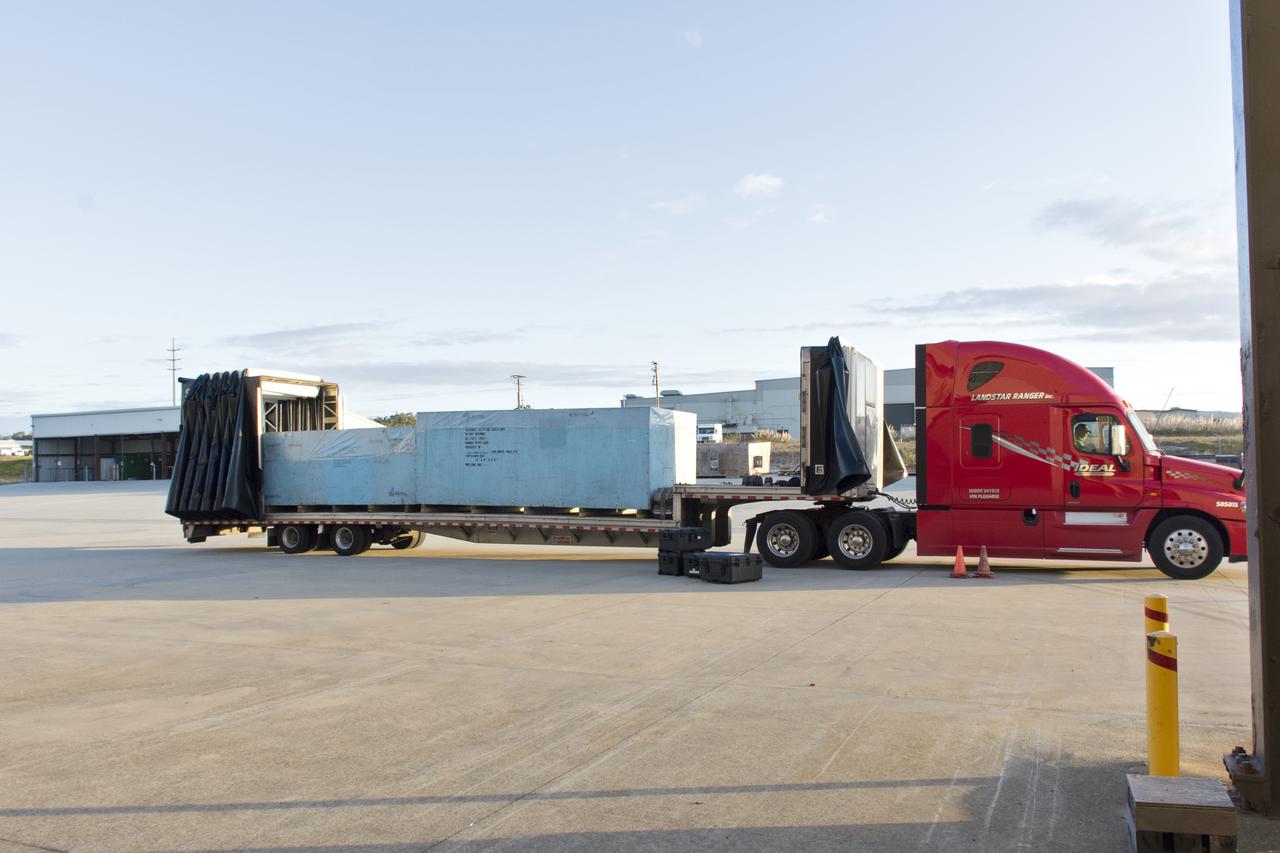
At Vandenberg Air Force Base in California, the boattail adaptor interface that will connect the Centaur upper stage to the payload fairing arrives for NASA's upcoming Interior Exploration using Seismic Investigations, Geodesy and Heat Transport, or InSight, mission to land on Mars. InSight will liftoff atop a United Launch Alliance Atlas V rocket to send the spacecraft on the first mission to explore the Red Planet's deep interior. It will investigate processes that shaped the rocky planets of the inner solar system including Earth. Liftoff from Vandenberg is scheduled for May 5, 2018.
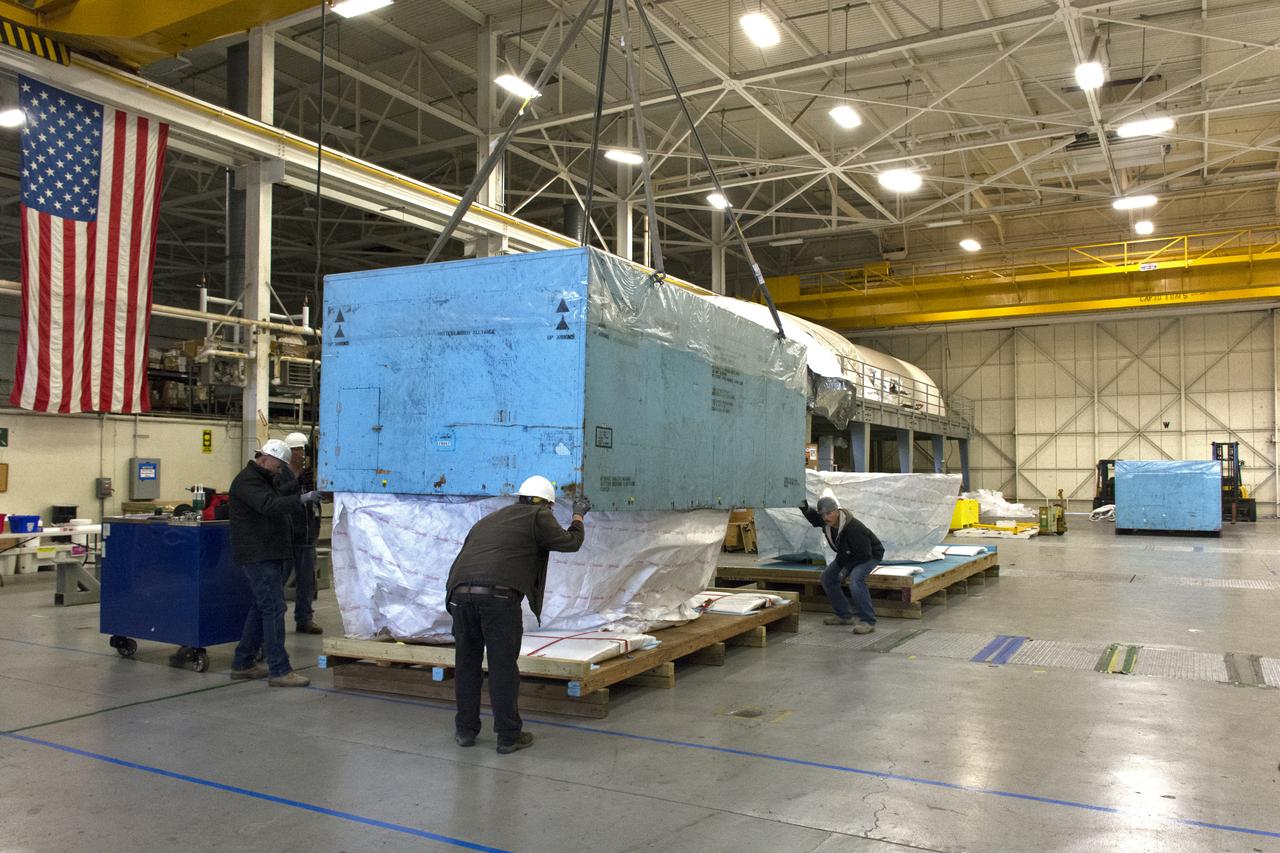
At Vandenberg Air Force Base in California, the boattail adaptor interface that will connect the Centaur upper stage to the payload fairing is offloaded for NASA's upcoming Interior Exploration using Seismic Investigations, Geodesy and Heat Transport, or InSight, mission to land on Mars. InSight will liftoff atop a United Launch Alliance Atlas V rocket to send the spacecraft on the first mission to explore the Red Planet's deep interior. It will investigate processes that shaped the rocky planets of the inner solar system including Earth. Liftoff from Vandenberg is scheduled for May 5, 2018.

GLORY - BOATTAIL INSTALLATION
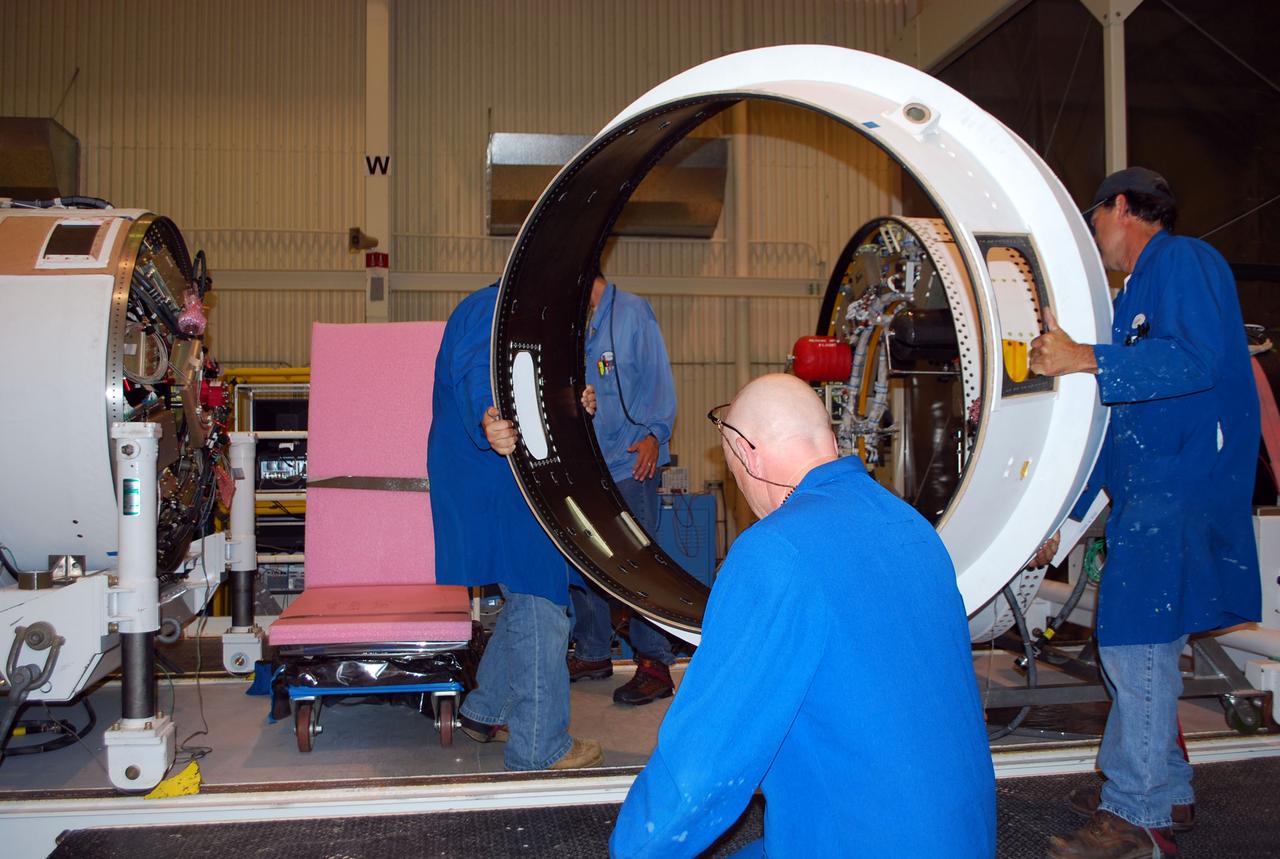
GLORY - BOATTAIL INSTALLATION
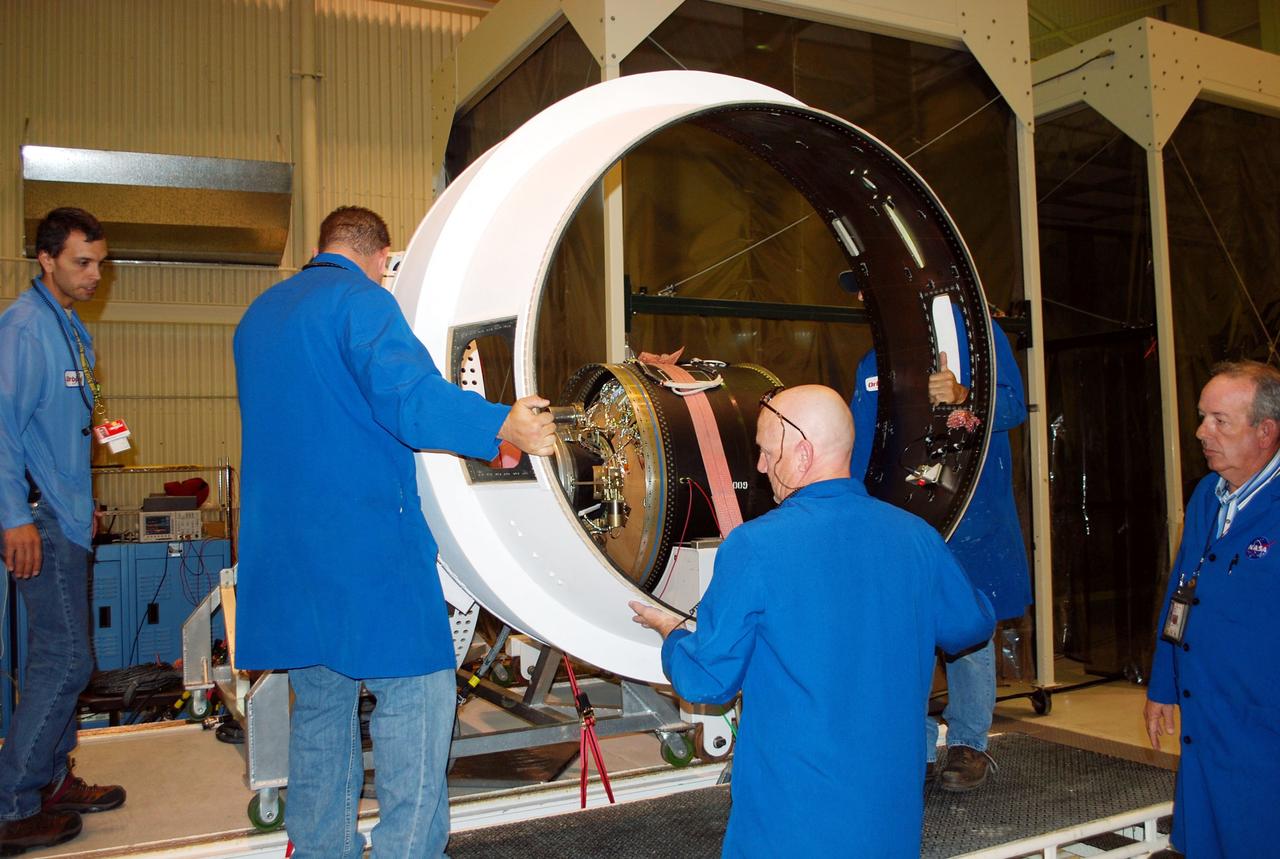
GLORY - BOATTAIL INSTALLATION
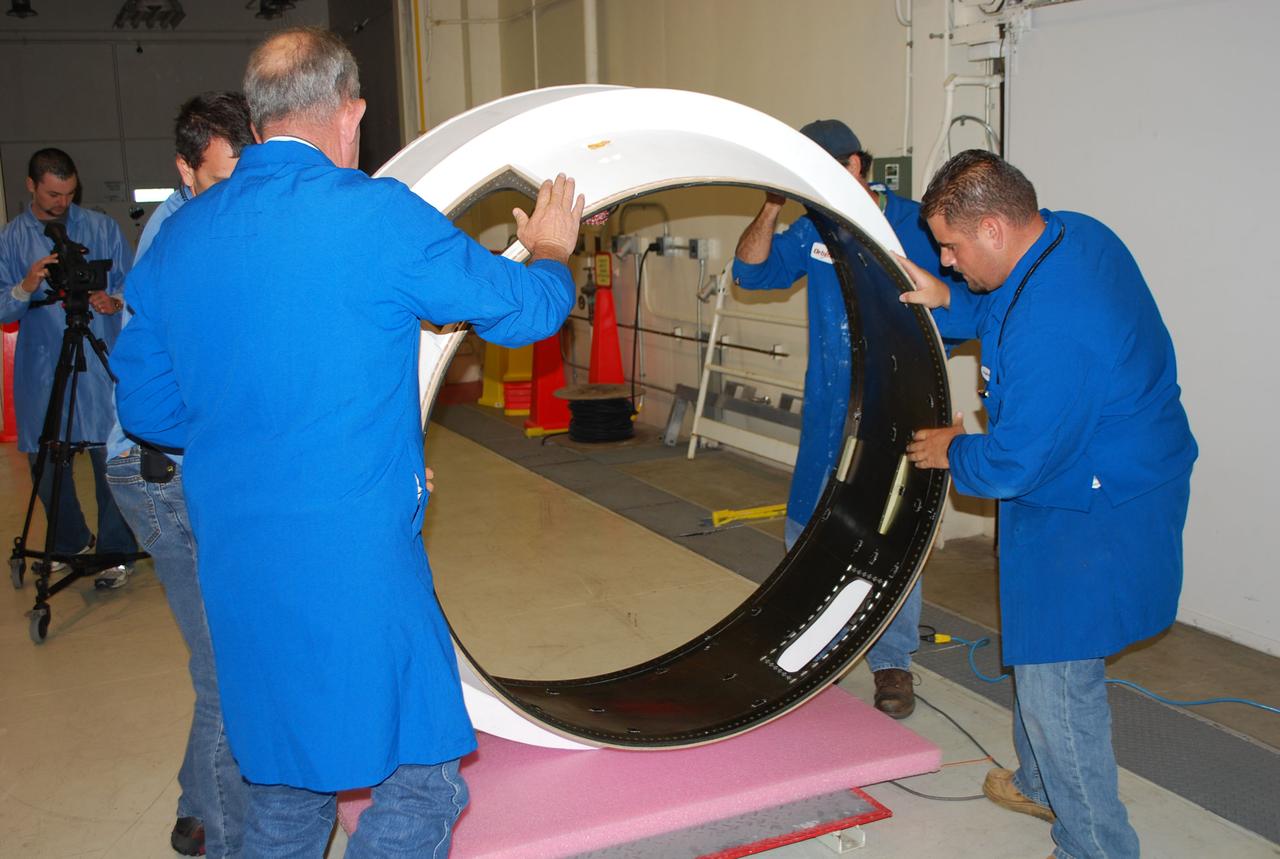
GLORY - BOATTAIL INSTALLATION
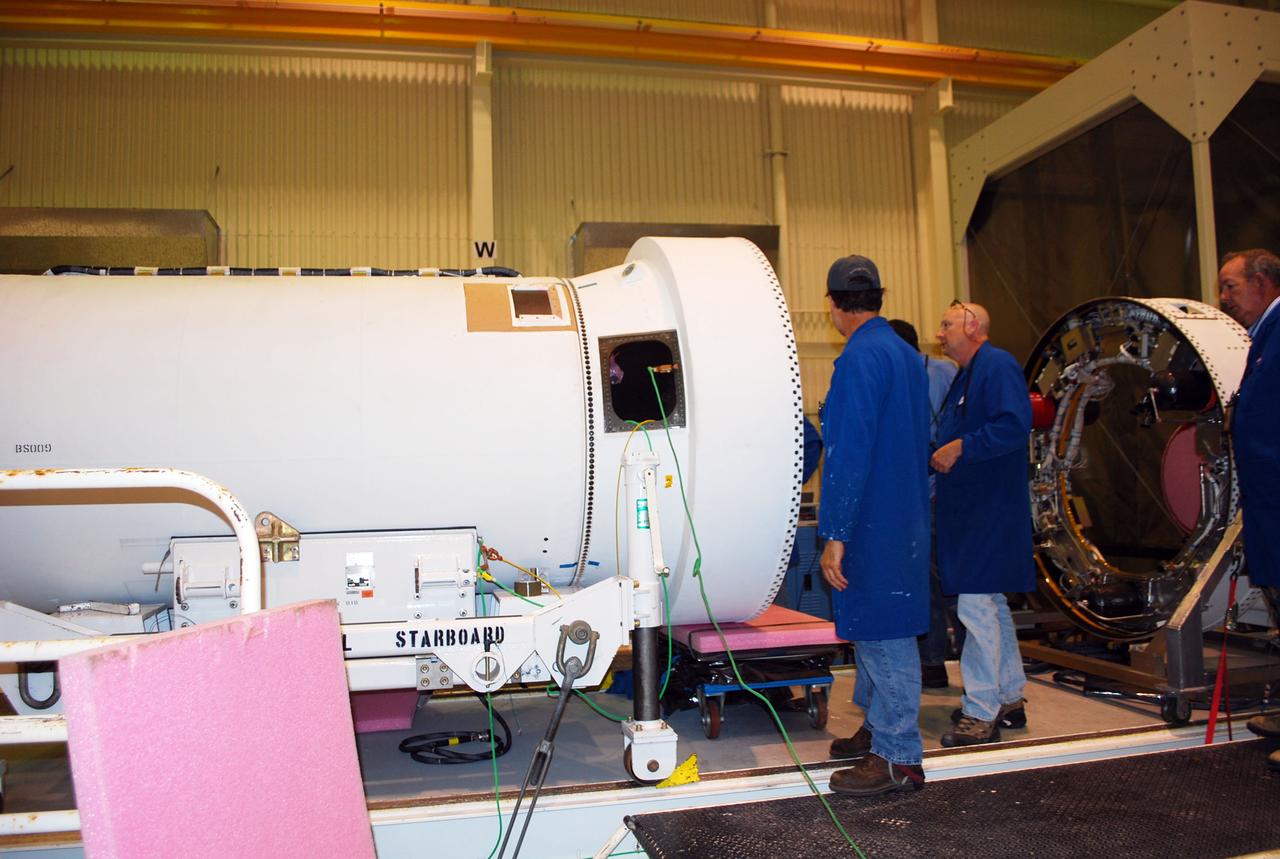
GLORY - BOATTAIL INSTALLATION
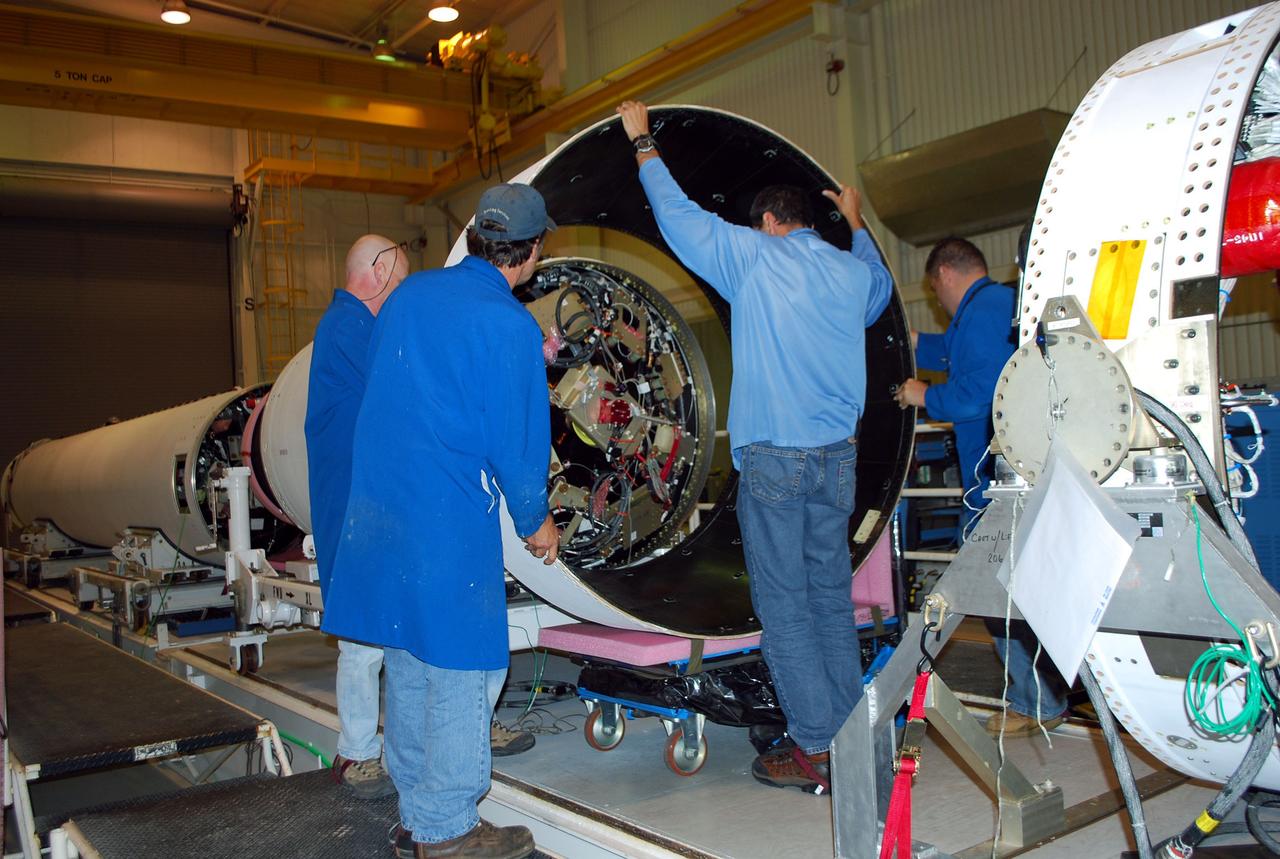
GLORY - BOATTAIL INSTALLATION
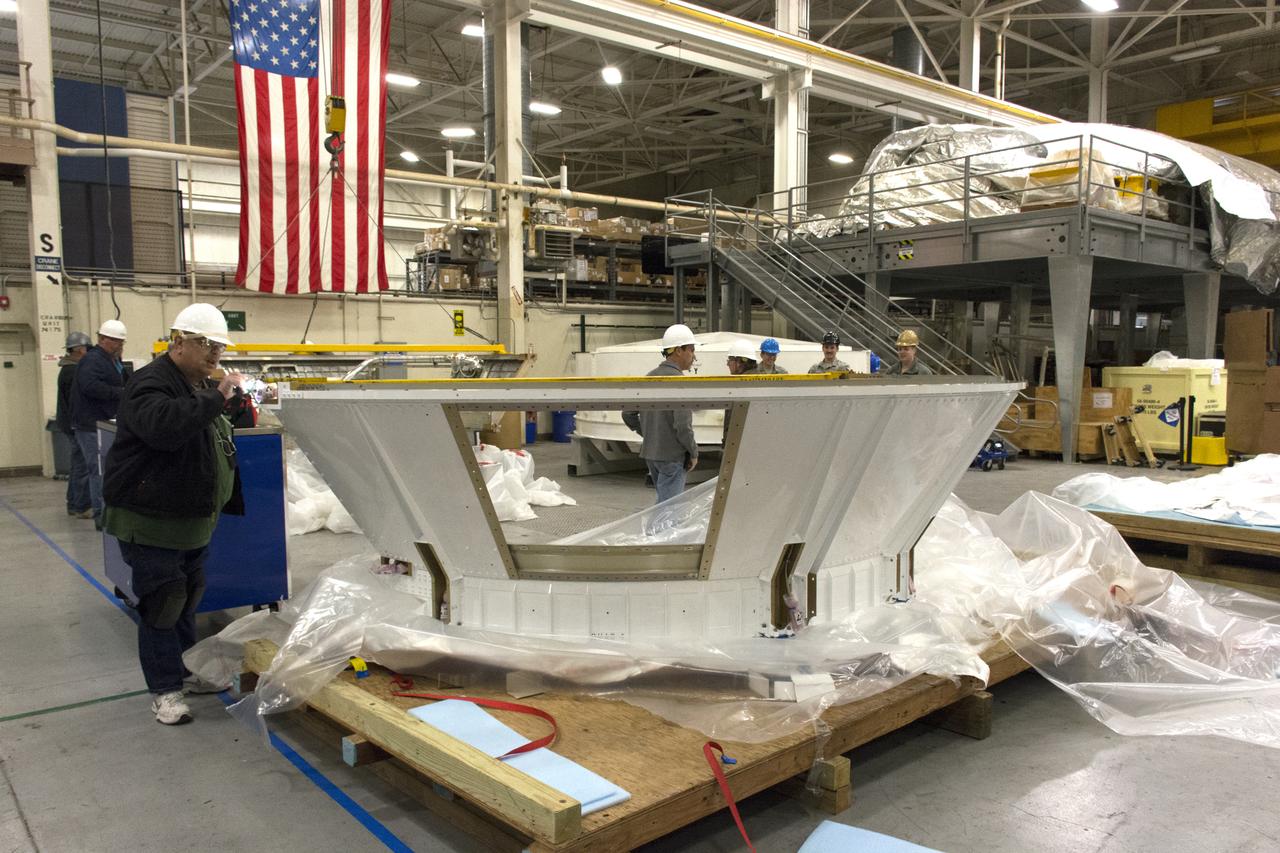
At Vandenberg Air Force Base in California, technicians inspect the boattail adaptor interface that will connect the Centaur upper stage to the payload fairing for NASA's upcoming Interior Exploration using Seismic Investigations, Geodesy and Heat Transport, or InSight, mission to land on Mars. InSight will liftoff atop a United Launch Alliance Atlas V rocket to send the spacecraft on the first mission to explore the Red Planet's deep interior. It will investigate processes that shaped the rocky planets of the inner solar system including Earth. Liftoff from Vandenberg is scheduled for May 5, 2018.
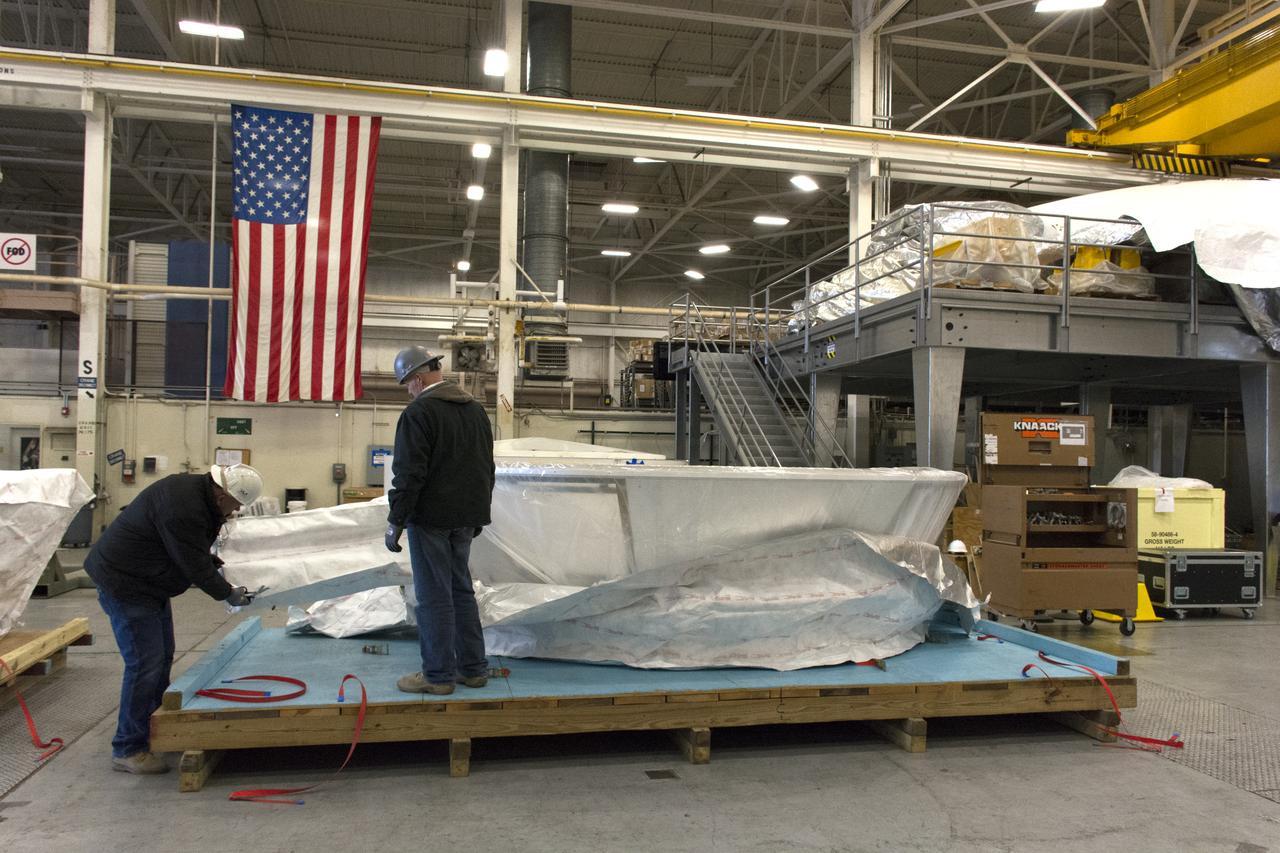
At Vandenberg Air Force Base in California, technicians inspect the boattail adaptor interface that will connect the Centaur upper stage to the payload fairing for NASA's upcoming Interior Exploration using Seismic Investigations, Geodesy and Heat Transport, or InSight, mission to land on Mars. InSight will liftoff atop a United Launch Alliance Atlas V rocket to send the spacecraft on the first mission to explore the Red Planet's deep interior. It will investigate processes that shaped the rocky planets of the inner solar system including Earth. Liftoff from Vandenberg is scheduled for May 5, 2018.
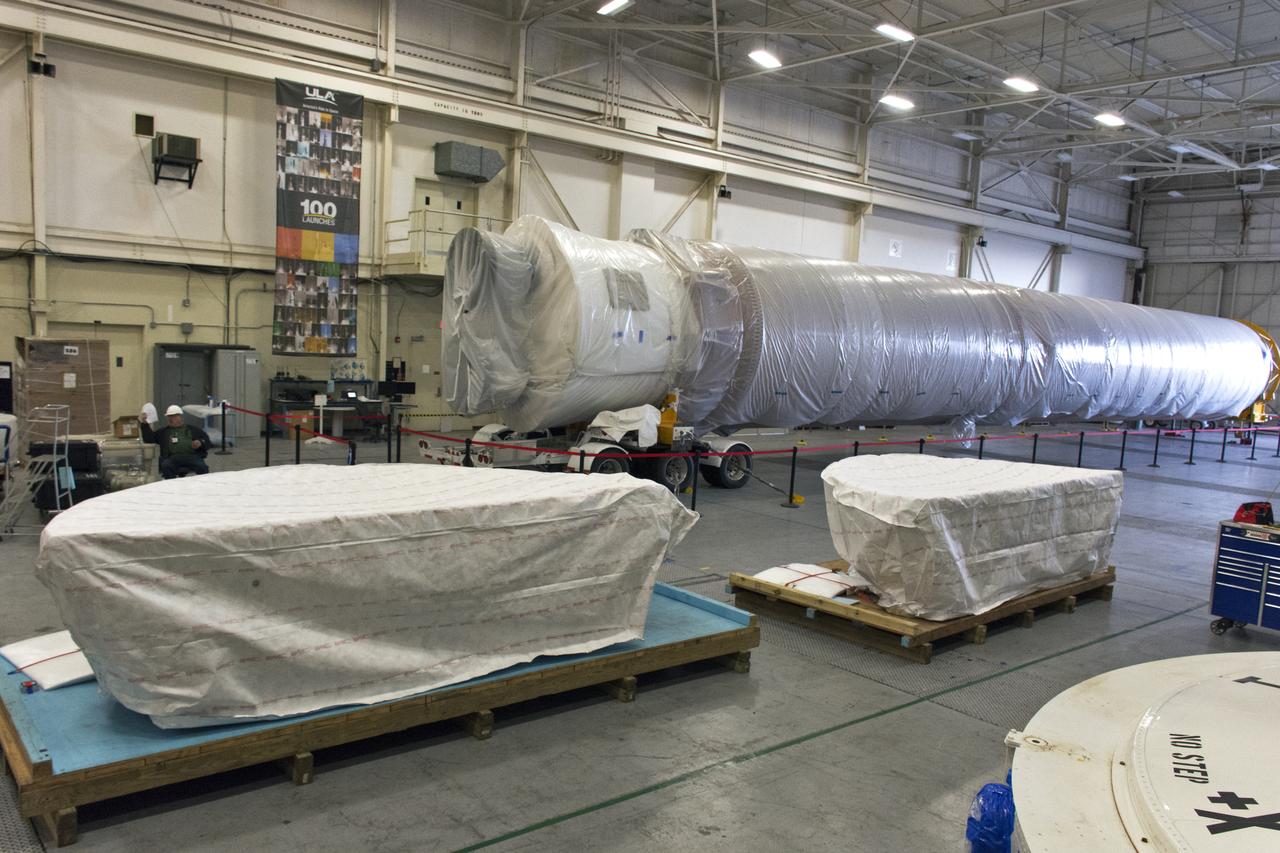
At Vandenberg Air Force Base in California, the boattail adaptor interface that will connect the Centaur upper stage to the payload fairing has been offloaded for NASA's upcoming Interior Exploration using Seismic Investigations, Geodesy and Heat Transport, or InSight, mission to land on Mars. InSight will liftoff atop a United Launch Alliance Atlas V rocket to send the spacecraft on the first mission to explore the Red Planet's deep interior. It will investigate processes that shaped the rocky planets of the inner solar system including Earth. Liftoff from Vandenberg is scheduled for May 5, 2018.
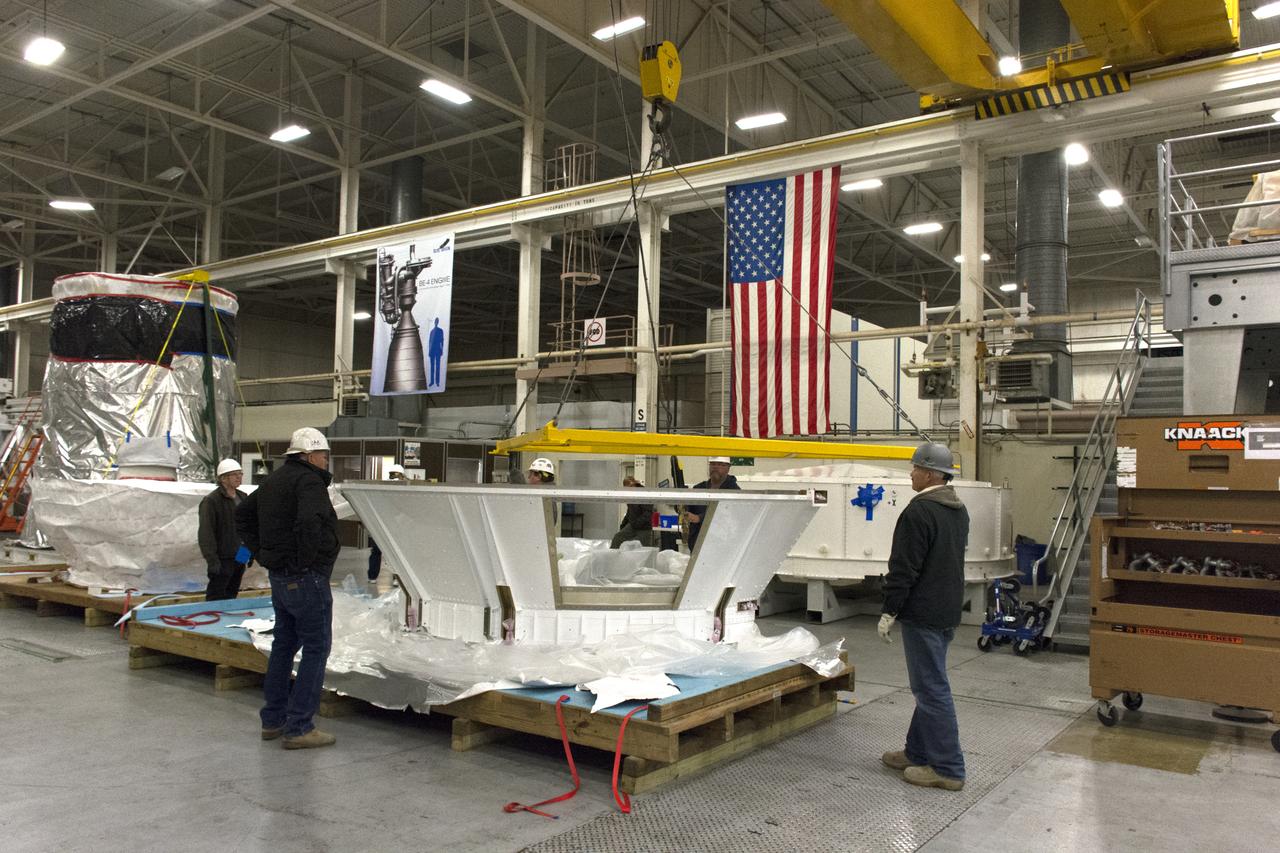
At Vandenberg Air Force Base in California, technicians inspect the boattail adaptor interface that will connect the Centaur upper stage to the payload fairing for NASA's upcoming Interior Exploration using Seismic Investigations, Geodesy and Heat Transport, or InSight, mission to land on Mars. InSight will liftoff atop a United Launch Alliance Atlas V rocket to send the spacecraft on the first mission to explore the Red Planet's deep interior. It will investigate processes that shaped the rocky planets of the inner solar system including Earth. Liftoff from Vandenberg is scheduled for May 5, 2018.
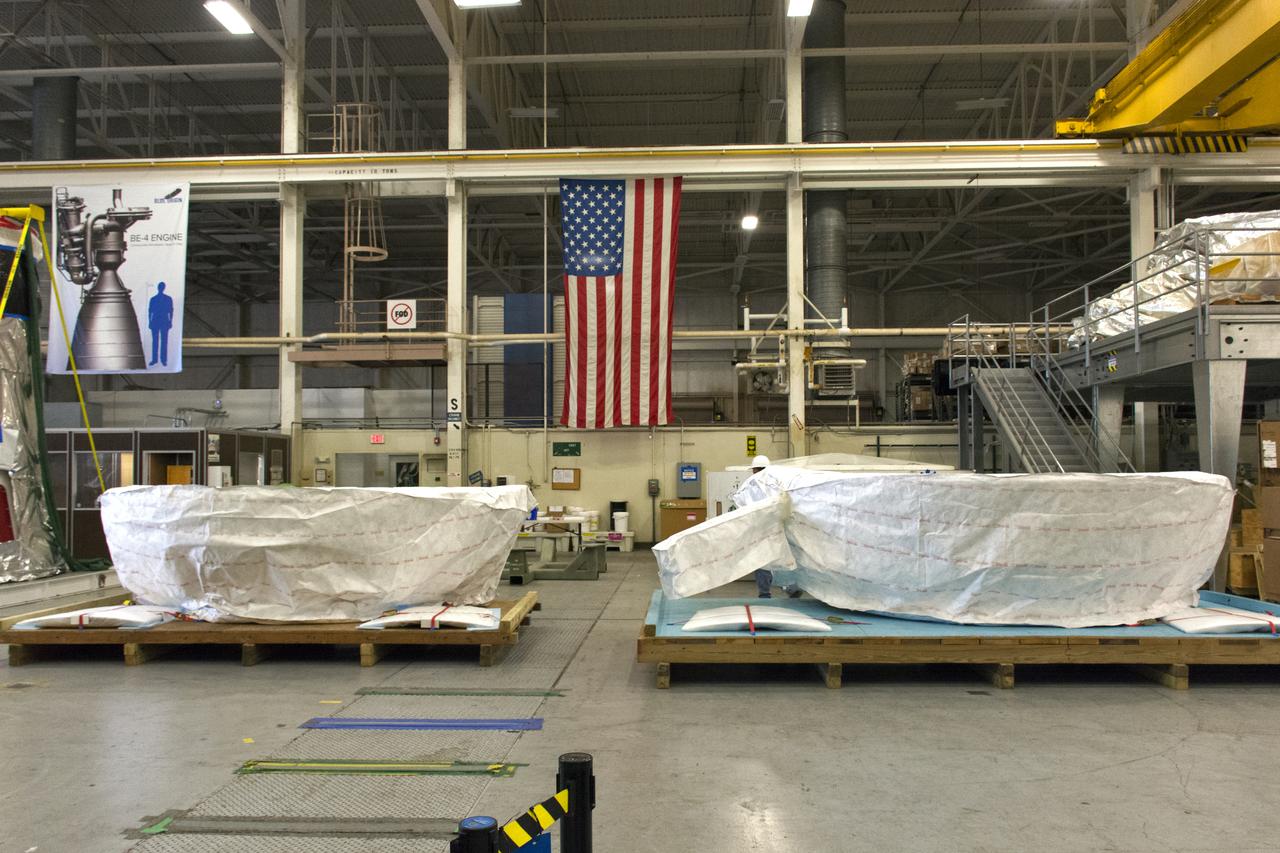
At Vandenberg Air Force Base in California, the boattail adaptor interface that will connect the Centaur upper stage to the payload fairing has been offloaded for NASA's upcoming Interior Exploration using Seismic Investigations, Geodesy and Heat Transport, or InSight, mission to land on Mars. InSight will liftoff atop a United Launch Alliance Atlas V rocket to send the spacecraft on the first mission to explore the Red Planet's deep interior. It will investigate processes that shaped the rocky planets of the inner solar system including Earth. Liftoff from Vandenberg is scheduled for May 5, 2018.
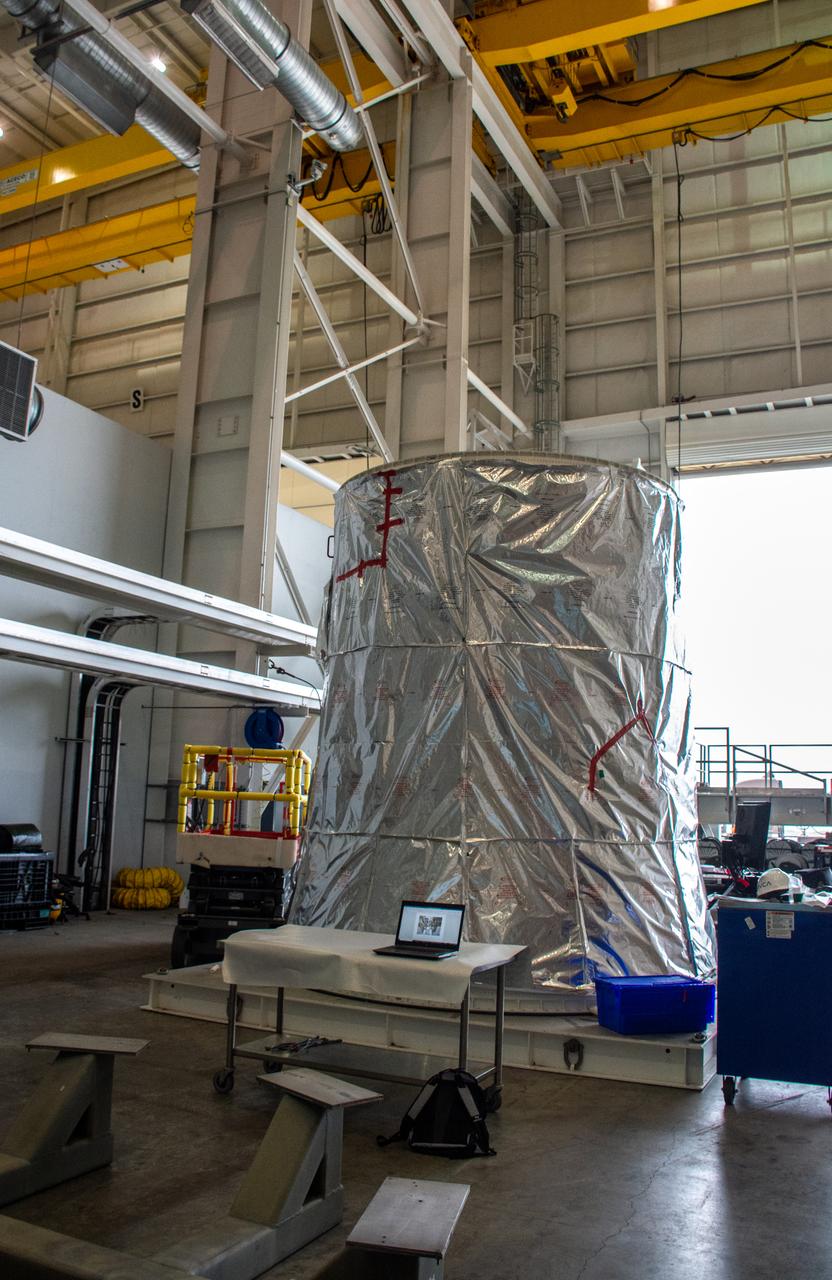
The interstage adapter (ISA) for the United Launch Alliance (ULA) Atlas V rocket that will launch NASA and the National Oceanic and Atmospheric Administration’s Joint Polar Satellite System-2 (JPSS-2) mission arrives at the Horizontal Integration Facility at Vandenberg Space Force Base in California on July 28, 2022. The ISA is the connecting piece of hardware between the Atlas V booster and the rocket’s Centaur upper stage. JPSS-2 is the third satellite in the Joint Polar Satellite System series and will scan the Earth as it orbits from the North to the South Pole, crossing the equator 14 times a day. Operating from 512 miles above Earth, JPSS-2 will capture data to improve weather forecasts, in turn helping scientists predict and prepare for extreme weather events and climate change. Launching as a secondary payload aboard the Atlas V is NASA’s Low-Earth Orbit Flight Test of an Inflatable Decelerator (LOFTID) – a demonstration of a cross-cutting aeroshell, or heat shield, for atmospheric re-entry. Dedicated to the memory of Bernard Kutter, LOFTID could be used for crewed and large robotic missions to Mars. Liftoff of the ULA Atlas V rocket is scheduled for Nov. 1, 2022, from Vandenberg’s Space Launch Complex-3E.
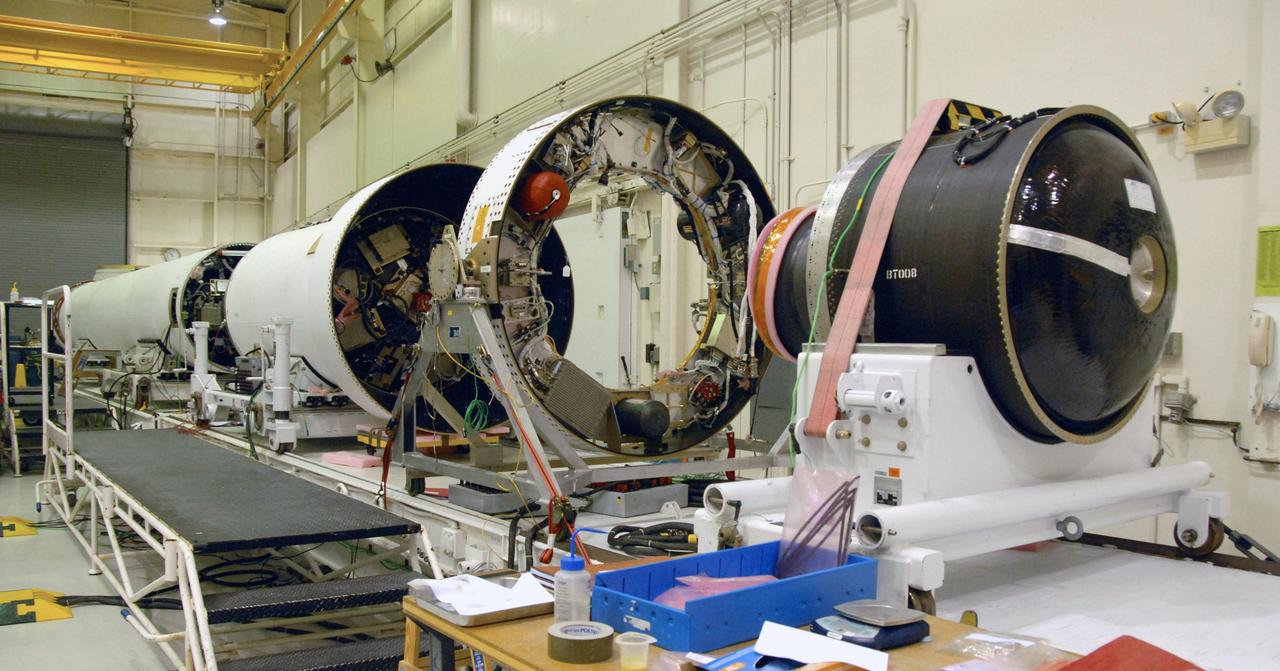
CAPE CANAVERAL, Fla. -- In Building 1555 at Vandenberg Air Force Base in California, ssembly is underway for the Taurus XL rocket that will launch NASA's Orbiting Carbon Observatory, or OCO, spacecraft. Lined up left to right are the Stage 1 and Stage 2 motors, the boattail, the avionics shelf and the Stage 3 motor. The graphite/epoxy boattail structure provides the transition from the smaller diameter of the Stage 2 motor to the larger diameter of the avionics skirt. The avionics skirt, also a graphite/epoxy structure, supports the avionics shelf and carries the primary structural loads from the fairing and payload cone. The aluminum avionics shelf supports the third stage avionics. The OCO is a new Earth-orbiting mission sponsored by NASA's Earth System Science Pathfinder Program. The launch of OCO is targeted for January. Photo credit: NASA/Randy Beaudoin, VAFB
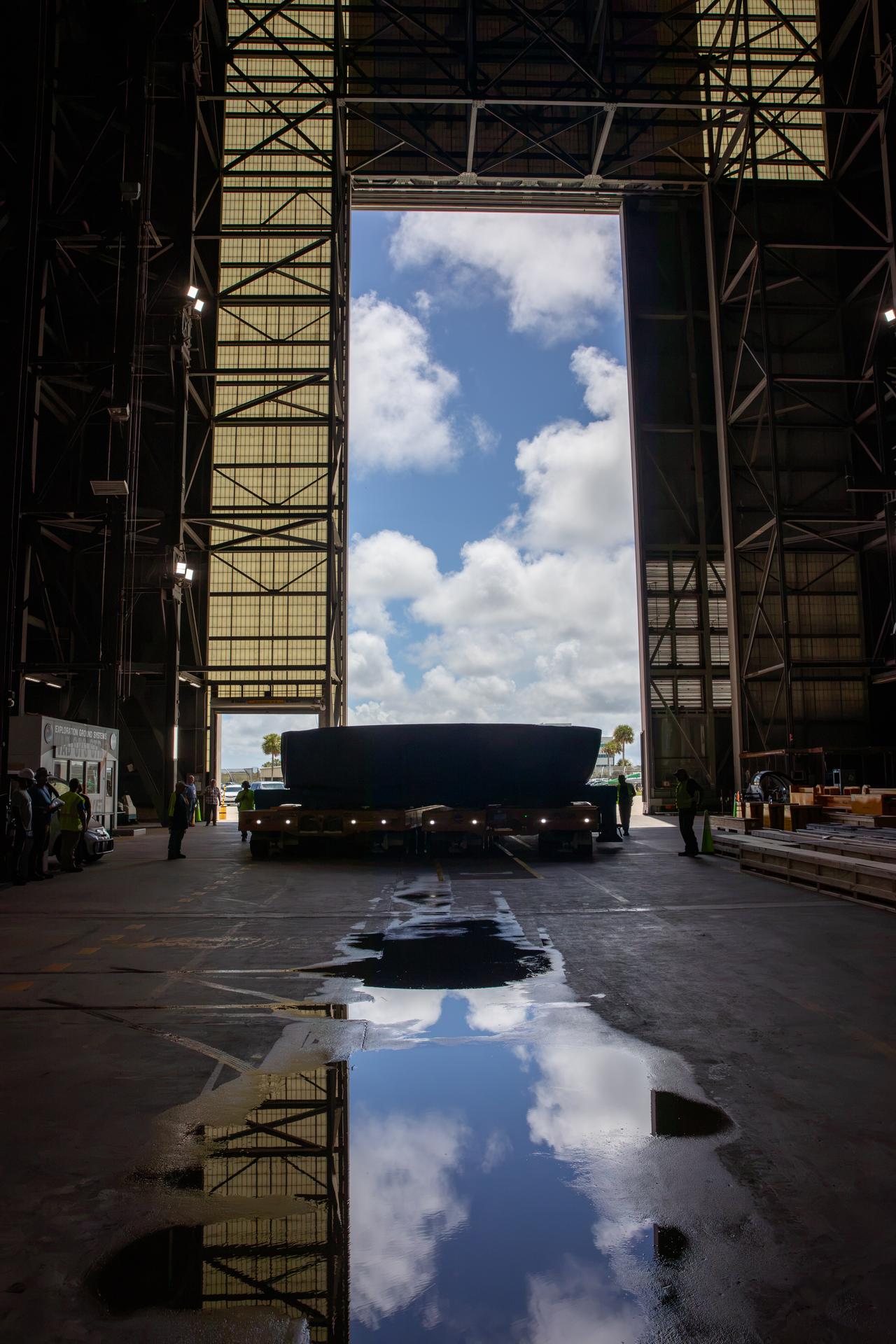
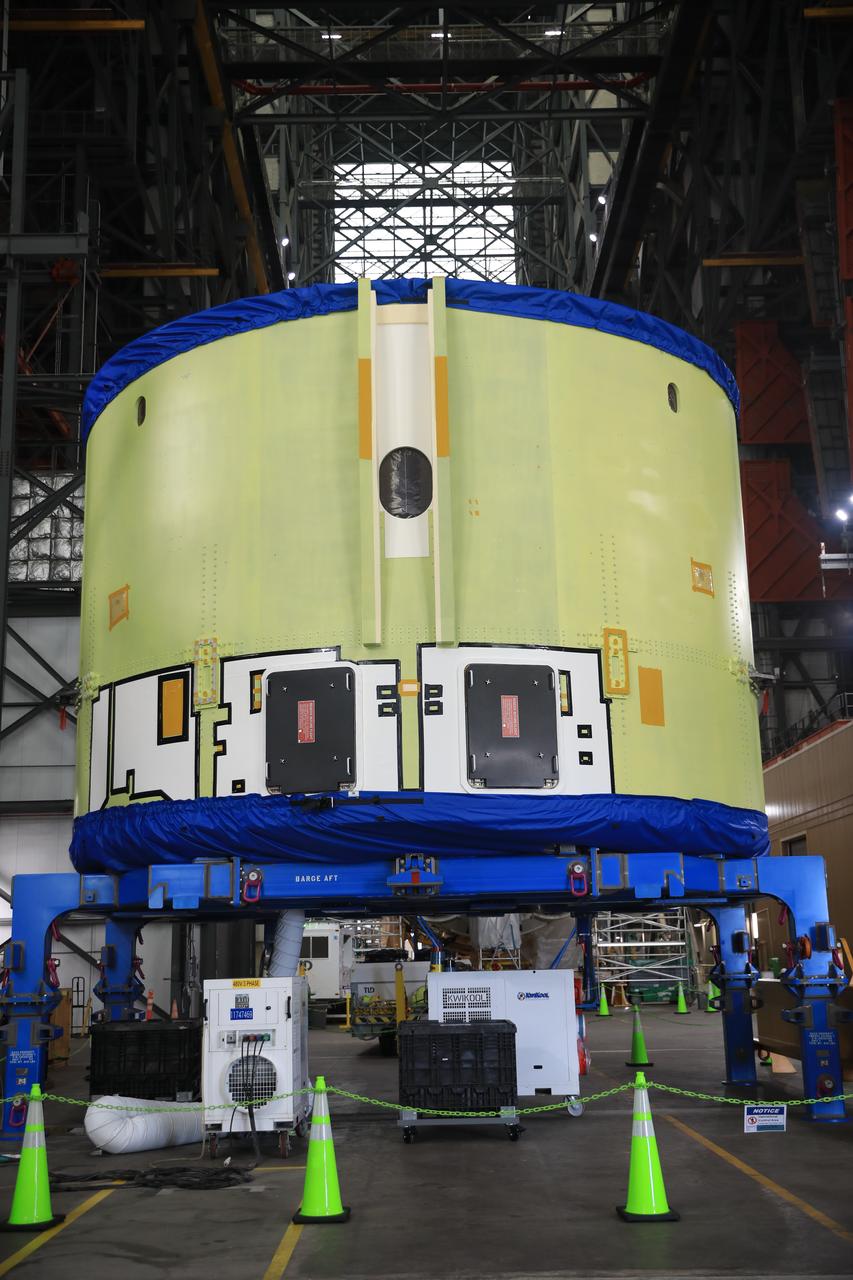
NASA’s Artemis IV SLS (Space Launch System) core stage boat-tail, covered in a protective blue tarp, arrives inside the NASA’s Vehicle Assembly Building at Kennedy Space Center in Florida on Monday, Aug. 31, 2026. Manufactured at NASA’s Michoud Assembly Facility in New Orleans, Louisiana, the boat-tail is a fairing-like structure that protects the bottom end of the SLS (Space Launch System) rocket core stage and RS-25 engines.
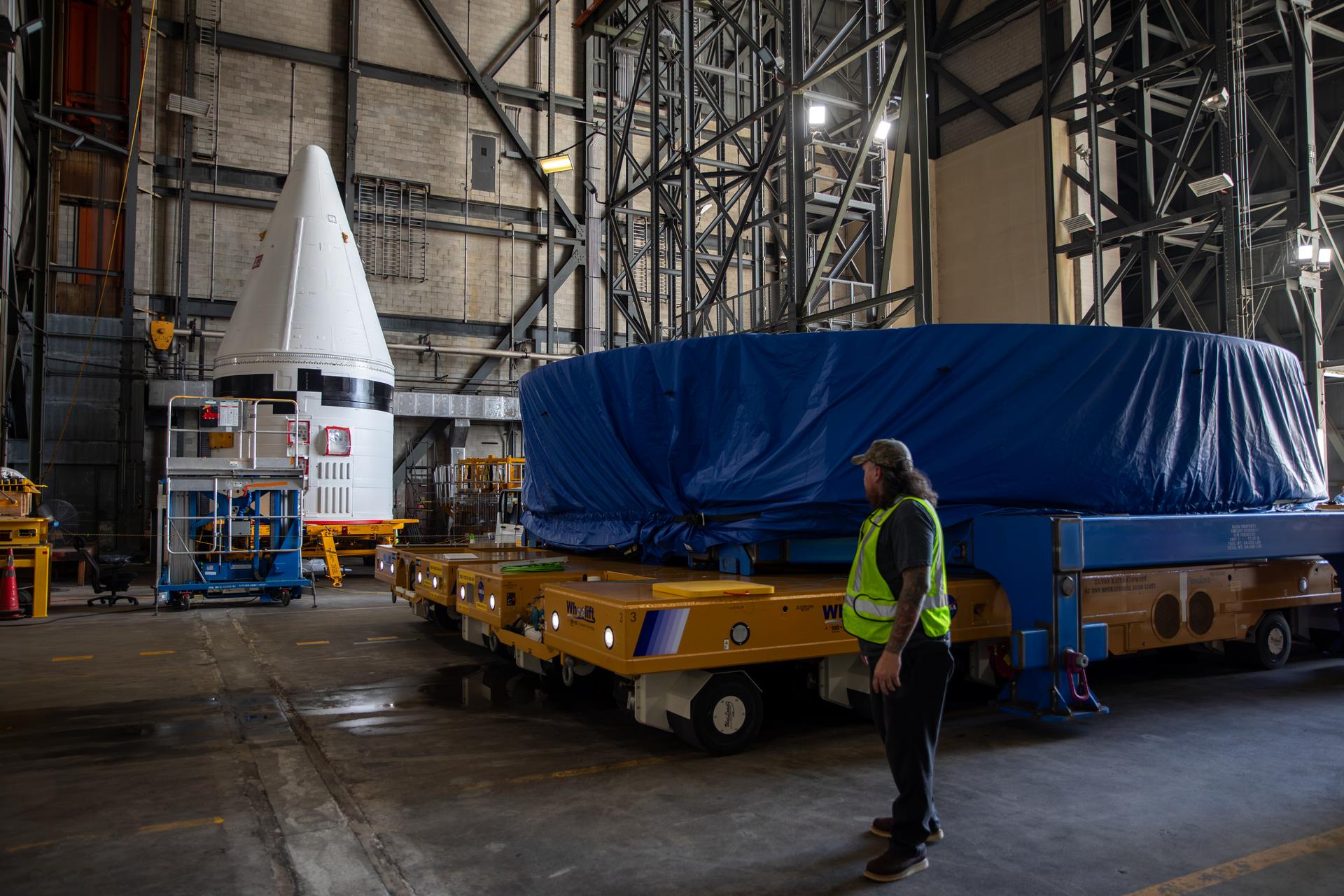
NASA’s Artemis IV SLS (Space Launch System) core stage boat-tail, covered in a protective blue tarp, arrives inside the NASA’s Vehicle Assembly Building at Kennedy Space Center in Florida on Monday, Aug. 31, 2026. Manufactured at NASA’s Michoud Assembly Facility in New Orleans, Louisiana, the boat-tail is a fairing-like structure that protects the bottom end of the SLS (Space Launch System) rocket core stage and RS-25 engines.
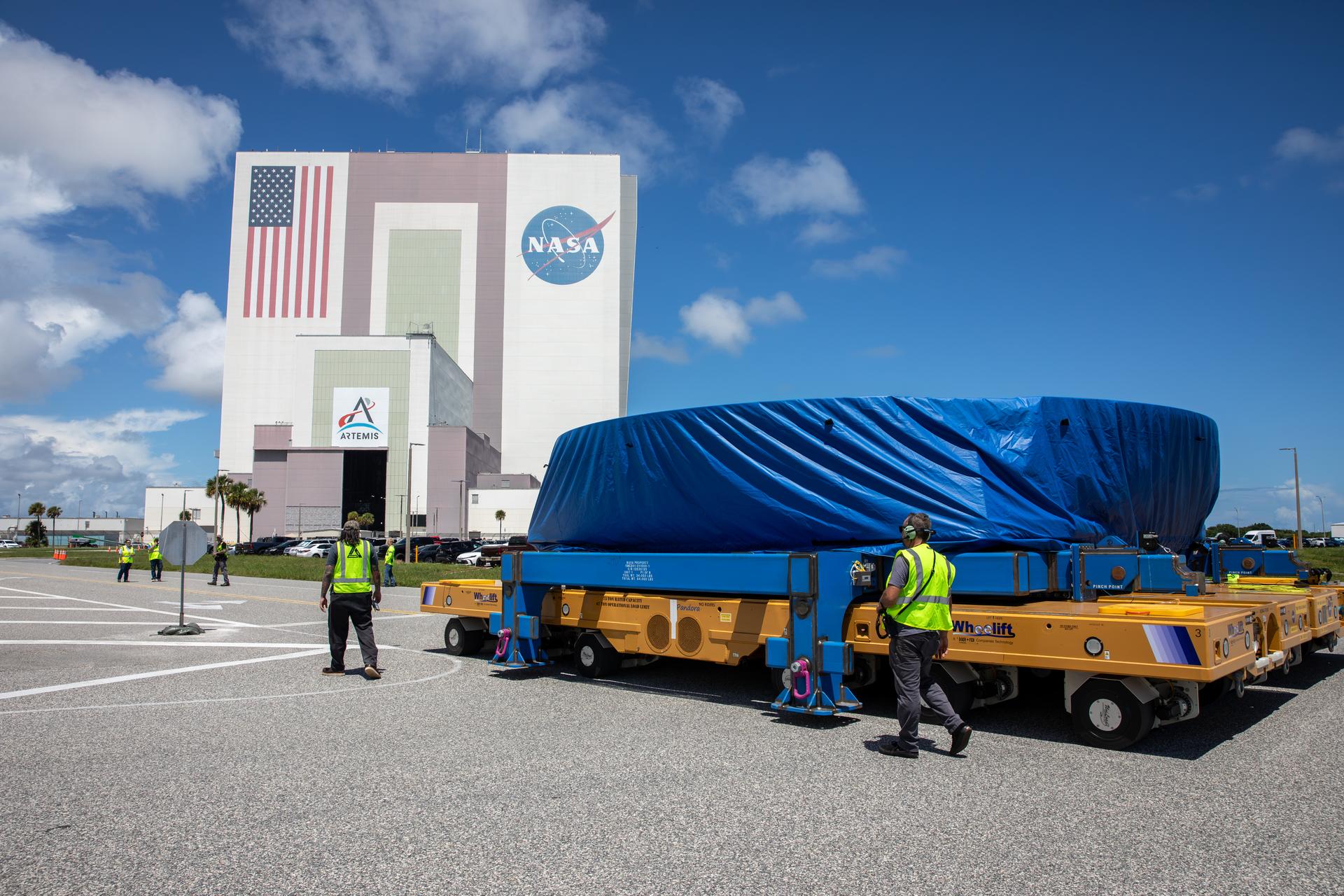
Teams from NASA’s Kennedy Space Center in Florida transport the agency’s Artemis IV SLS (Space Launch System) core stage boat-tail from NASA’s Pegasus barge to inside the NASA’s Vehicle Assembly Building at Kennedy Space Center in Florida on Monday, Aug. 31, 2026. Manufactured at NASA’s Michoud Assembly Facility in New Orleans, Louisiana, the boat-tail is a fairing-like structure that protects the bottom end of the SLS (Space Launch System) rocket core stage and RS-25 engines.
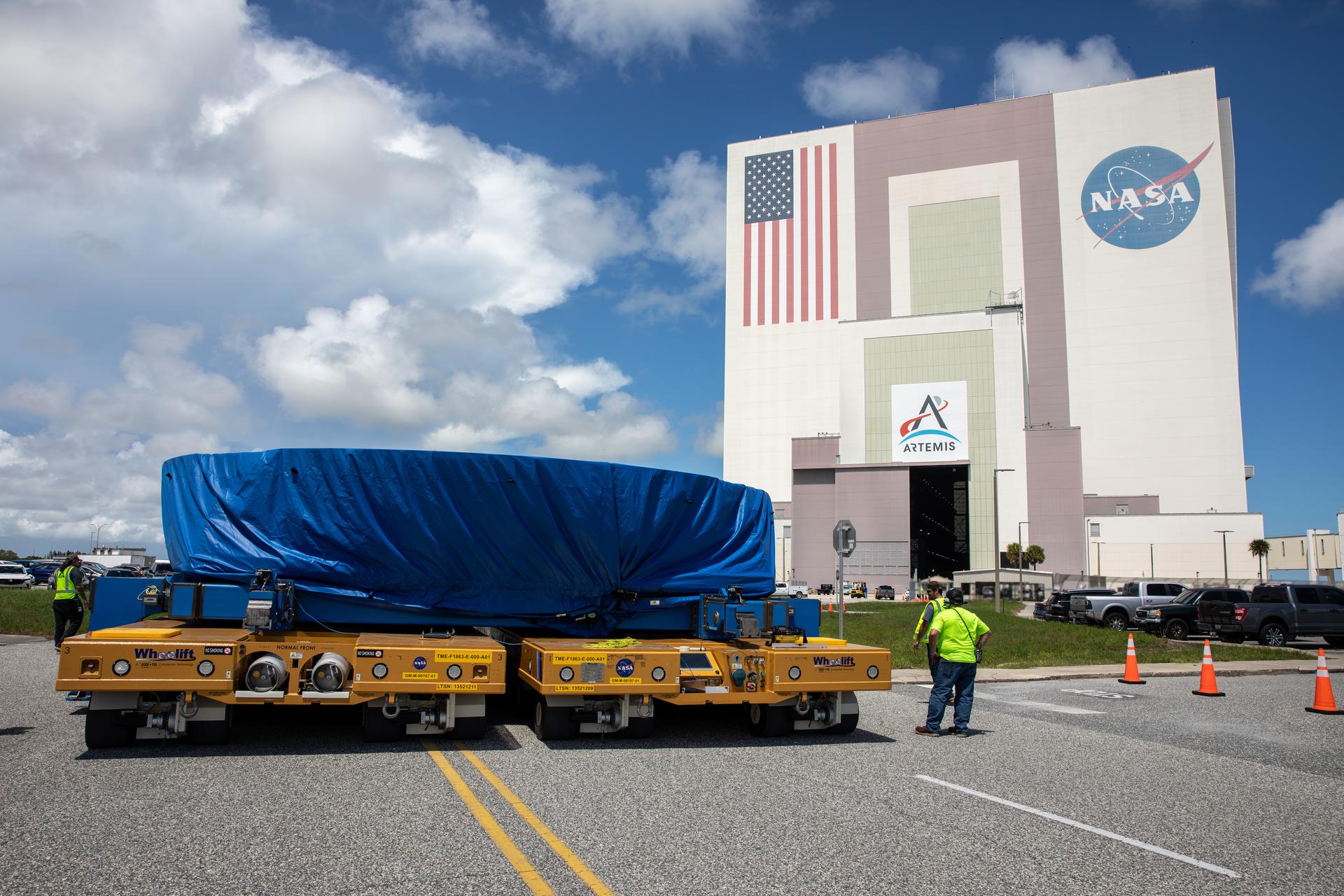
Teams from NASA’s Kennedy Space Center in Florida transport the agency’s Artemis IV SLS (Space Launch System) core stage boat-tail from NASA’s Pegasus barge to inside the NASA’s Vehicle Assembly Building at Kennedy Space Center in Florida on Monday, Aug. 31, 2026. Manufactured at NASA’s Michoud Assembly Facility in New Orleans, Louisiana, the boat-tail is a fairing-like structure that protects the bottom end of the SLS (Space Launch System) rocket core stage and RS-25 engines.
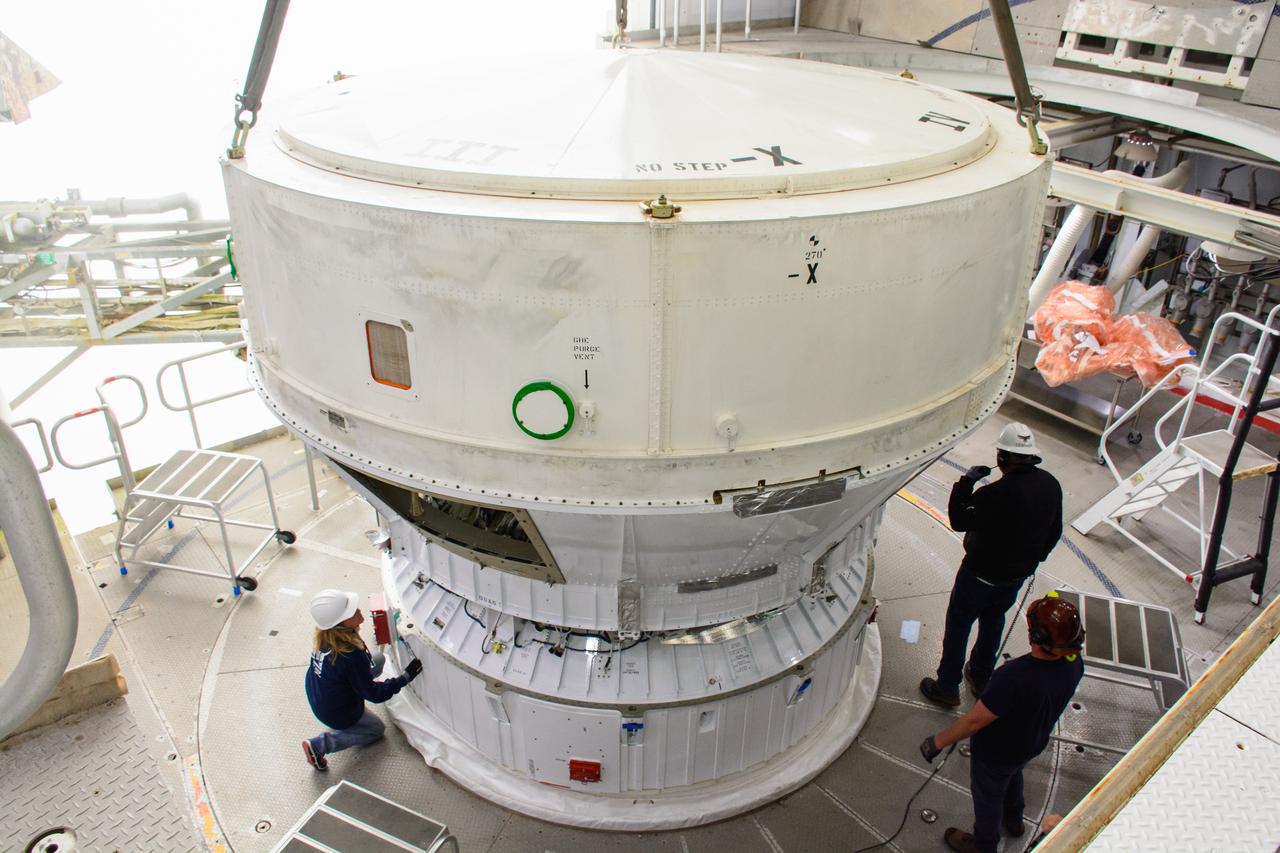
Inside the Vertical Integration Facility (VIF) at Vandenberg Space Force Base in California, technicians secure the United Launch Alliance (ULA) Atlas V boattail onto the rocket’s Centaur upper stage on Oct. 4, 2022, for the National Oceanic and Atmospheric Administration’s (NOAA) and NASA’s Joint Polar Satellite System-2 (JPSS-2) mission. The boattail is the connecting piece of flight hardware that joins that Atlas V upper stage with the payload fairing – the protective casing surrounding the JPSS-2 satellite. Once the payload fairing arrives at the VIF, teams will lower it onto the boattail to complete the Atlas V stack. JPSS-2 is the third satellite in the Joint Polar Satellite System series and will scan the Earth as it orbits from the North to the South Pole, crossing the equator 14 times a day. Operating from 512 miles above Earth, JPSS-2 will capture data to improve weather forecasts, in turn helping scientists predict and prepare for extreme weather events and climate change. Launching as a secondary payload to JPSS-2 is NASA’s Low-Earth Orbit Flight Test of an Inflatable Decelerator (LOFTID), dedicated to the memory of Bernard Kutter. LOFTID is a technology demonstration of an inflatable heat shield that could one day help land humans on Mars. Liftoff is targeted for 2:25 a.m. Pacific time (5:25 a.m. Eastern time) on Nov. 1, 2022, from Vandenberg’s Space Launch Complex-3E.
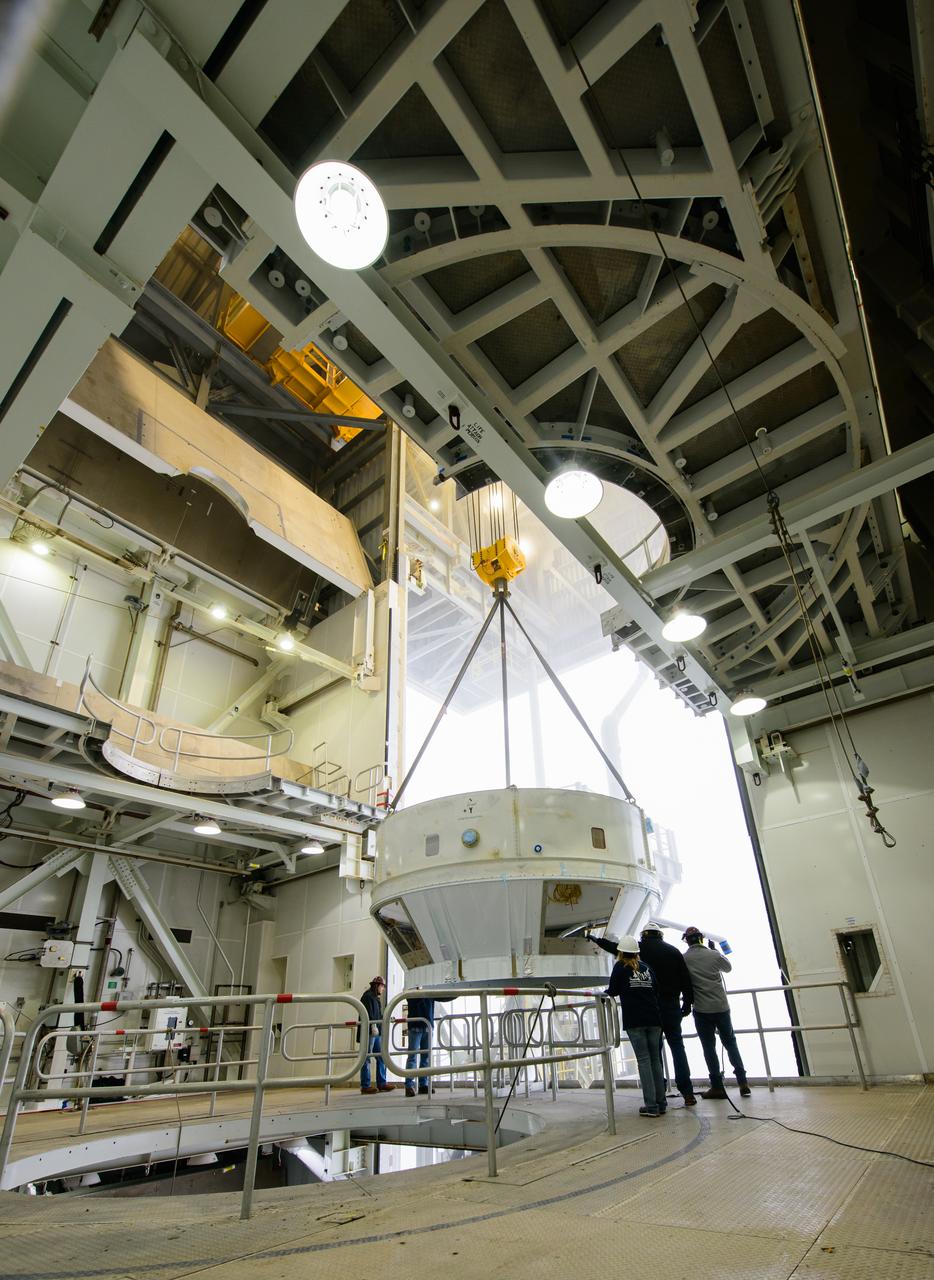
Inside the Vertical Integration Facility (VIF) at Vandenberg Space Force Base in California, technicians monitor the United Launch Alliance (ULA) Atlas V boattail as it’s lowered by crane onto the rocket’s Centaur upper stage on Oct. 4, 2022, for the National Oceanic and Atmospheric Administration’s (NOAA) and NASA’s Joint Polar Satellite System-2 (JPSS-2) mission. The boattail is the connecting piece of flight hardware that joins that Atlas V upper stage with the payload fairing – the protective casing surrounding the JPSS-2 satellite. Once the payload fairing arrives at the VIF, teams will lower it onto the boattail to complete the Atlas V stack. JPSS-2 is the third satellite in the Joint Polar Satellite System series and will scan the Earth as it orbits from the North to the South Pole, crossing the equator 14 times a day. Operating from 512 miles above Earth, JPSS-2 will capture data to improve weather forecasts, in turn helping scientists predict and prepare for extreme weather events and climate change. Launching as a secondary payload to JPSS-2 is NASA’s Low-Earth Orbit Flight Test of an Inflatable Decelerator (LOFTID), dedicated to the memory of Bernard Kutter. LOFTID is a technology demonstration of an inflatable heat shield that could one day help land humans on Mars. Liftoff is targeted for 2:25 a.m. Pacific time (5:25 a.m. Eastern time) on Nov. 1, 2022, from Vandenberg’s Space Launch Complex-3E.
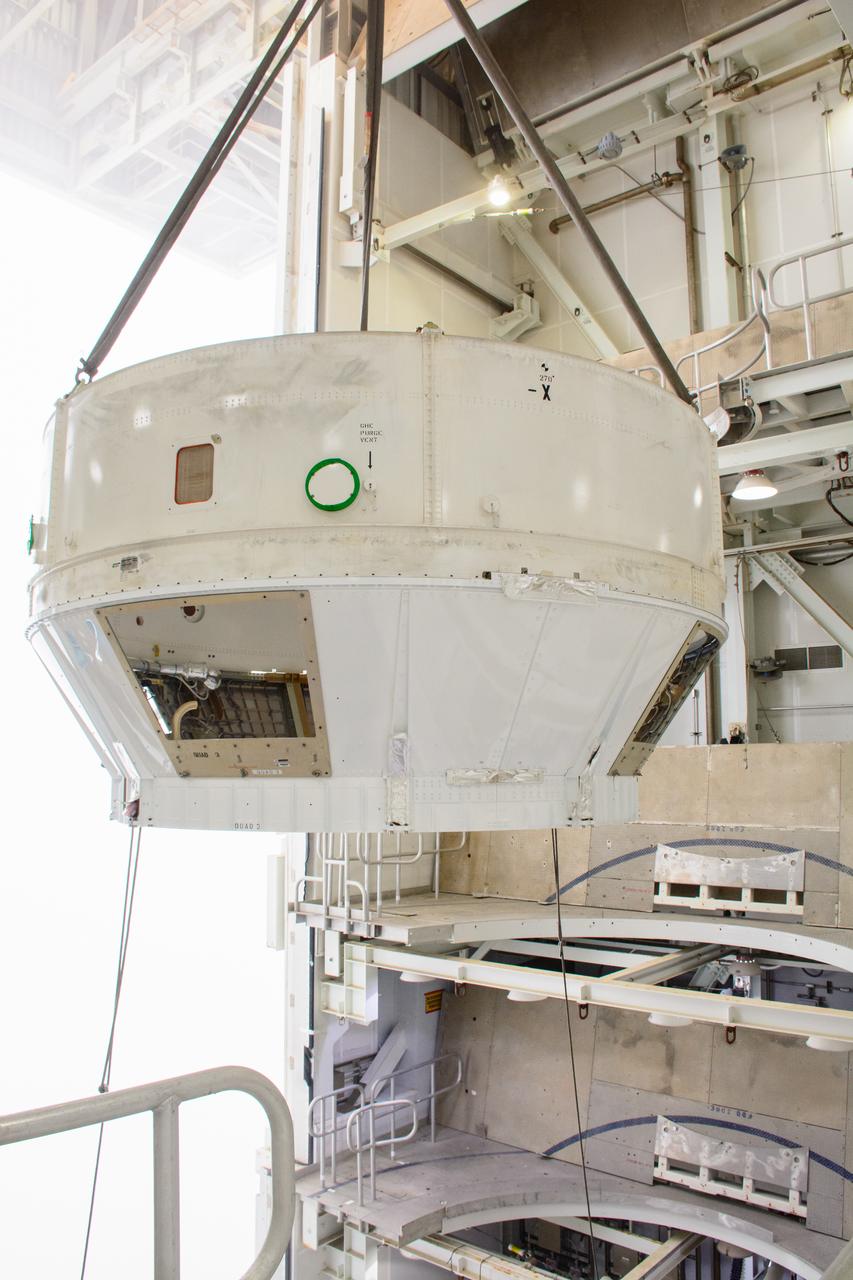
Technicians lower the United Launch Alliance (ULA) Atlas V boattail onto the rocket’s Centaur upper stage inside the Vertical Integration Facility at Vandenberg Space Force Base in California on Oct. 4, 2022, for the National Oceanic and Atmospheric Administration’s (NOAA) and NASA’s Joint Polar Satellite System-2 (JPSS-2) mission. The boattail is the connecting piece of flight hardware that joins that Atlas V upper stage with the payload fairing – the protective casing surrounding the JPSS-2 satellite. Once the payload fairing arrives at the VIF, teams will lower it onto the boattail to complete the Atlas V stack. JPSS-2 is the third satellite in the Joint Polar Satellite System series and will scan the Earth as it orbits from the North to the South Pole, crossing the equator 14 times a day. Operating from 512 miles above Earth, JPSS-2 will capture data to improve weather forecasts, in turn helping scientists predict and prepare for extreme weather events and climate change. Launching as a secondary payload to JPSS-2 is NASA’s Low-Earth Orbit Flight Test of an Inflatable Decelerator (LOFTID), dedicated to the memory of Bernard Kutter. LOFTID is a technology demonstration of an inflatable heat shield that could one day help land humans on Mars. Liftoff is targeted for 2:25 a.m. Pacific time (5:25 a.m. Eastern time) on Nov. 1, 2022, from Vandenberg’s Space Launch Complex-3E.
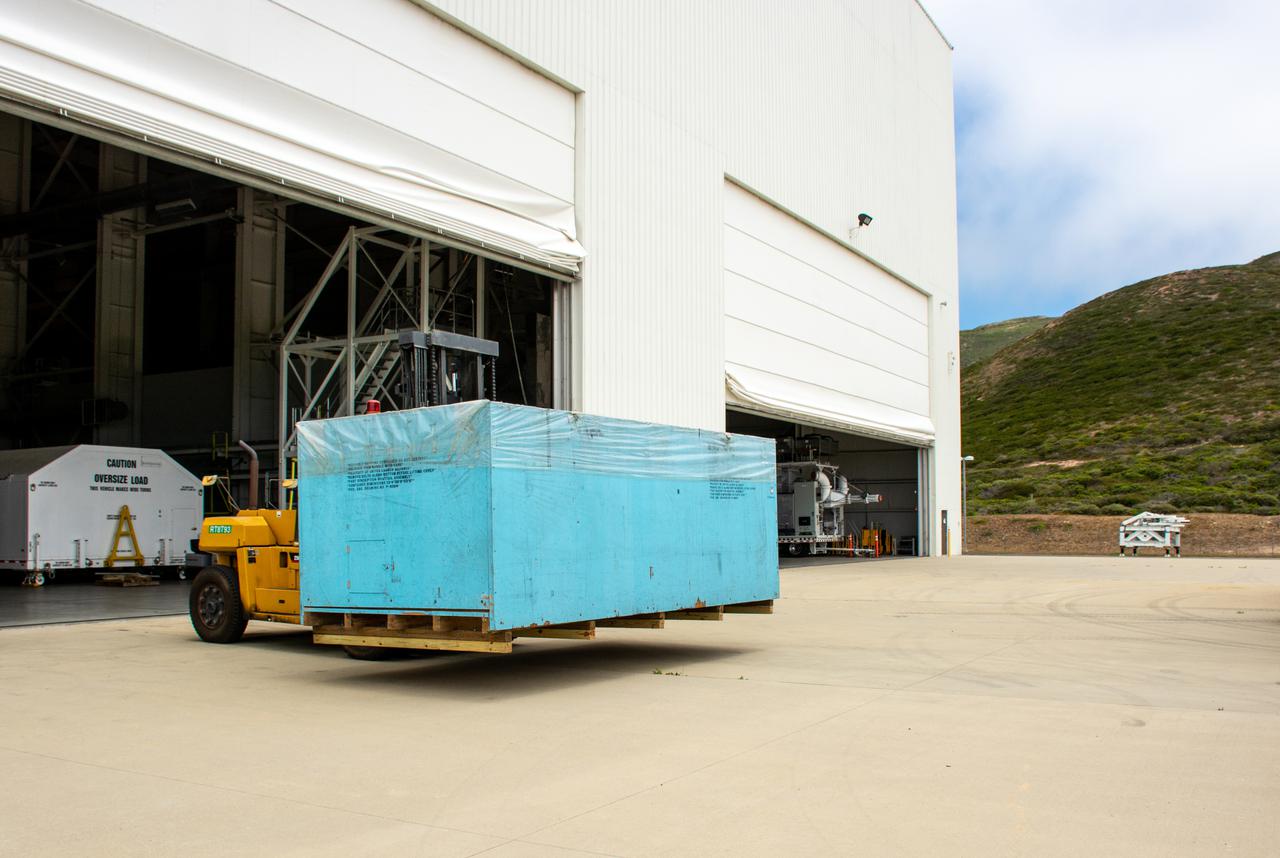
The United Launch Alliance (ULA) Atlas V payload fairing boattail for NASA’s Landsat 9 mission arrives at the Horizontal Integration Facility at Vandenberg Space Force Base in California, on June 21, 2021. The boattail will shield the spacecraft from particles in the retrorocket plume during separation from the payload fairing. The Landsat 9 mission will launch atop a ULA Atlas V rocket from Vandenberg in September 2021. The launch is being managed by NASA’s Launch Services Program based at Kennedy Space Center. The Landsat 9 satellite will continue the nearly 50-year legacy of previous Landsat missions. It will monitor key natural and economic resources from orbit. Landsat 9 is managed by the agency’s Goddard Space Flight Center in Greenbelt, Maryland. The satellite will carry two instruments: the Operational Land Imager 2, which collects images of Earth’s landscapes in visible, near infrared and shortwave infrared light, and the Thermal Infrared Sensor 2, which measures the temperature of land surfaces. Like its predecessors, Landsat 9 is a joint mission between NASA and the U.S. Geological Survey.
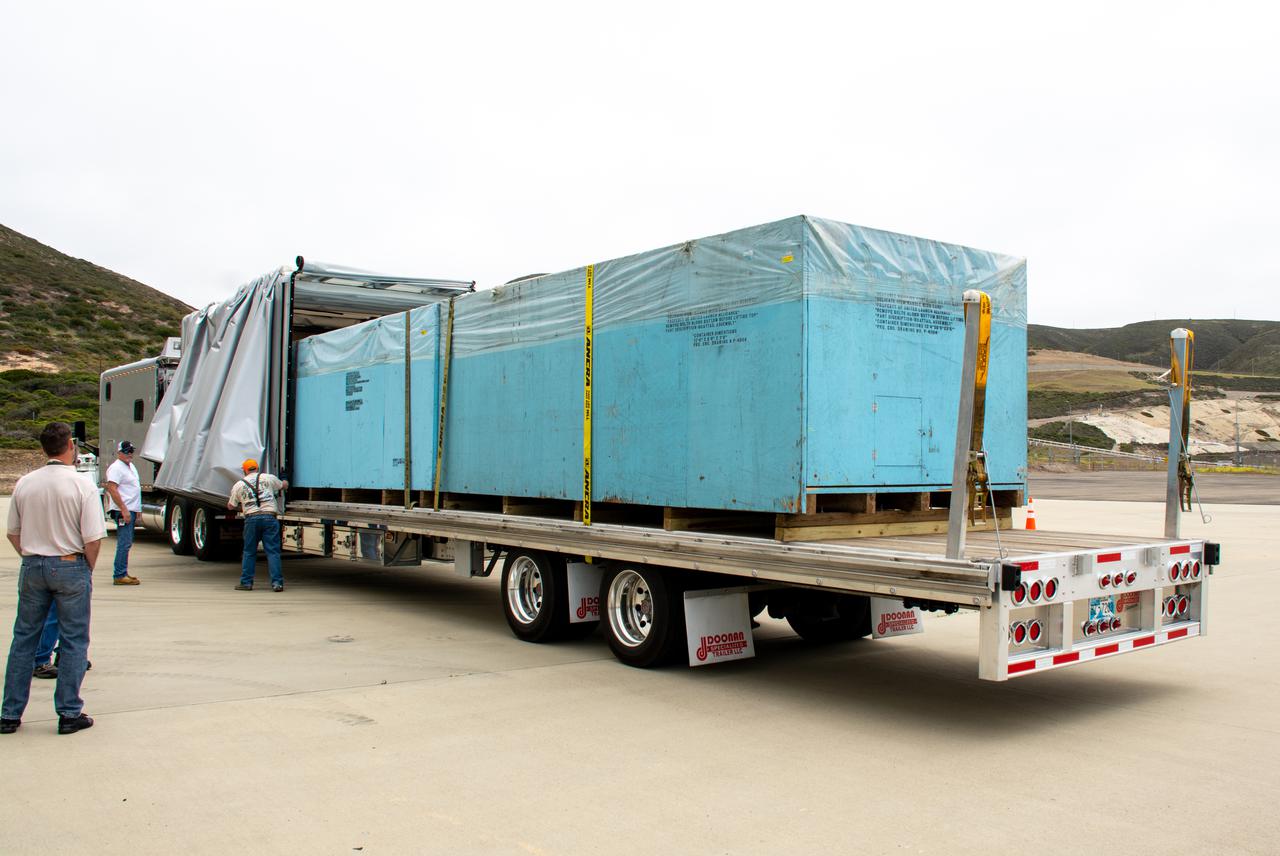
The United Launch Alliance (ULA) Atlas V payload fairing boattail for NASA’s Landsat 9 mission is transported by flatbed truck to the Horizontal Integration Facility at Vandenberg Space Force Base in California, on June 21, 2021. The boattail will shield the spacecraft from particles in the retrorocket plume during separation from the payload fairing. The Landsat 9 mission will launch atop a ULA Atlas V rocket from Vandenberg in September 2021. The launch is being managed by NASA’s Launch Services Program based at Kennedy Space Center. The Landsat 9 satellite will continue the nearly 50-year legacy of previous Landsat missions. It will monitor key natural and economic resources from orbit. Landsat 9 is managed by the agency’s Goddard Space Flight Center in Greenbelt, Maryland. The satellite will carry two instruments: the Operational Land Imager 2, which collects images of Earth’s landscapes in visible, near infrared and shortwave infrared light, and the Thermal Infrared Sensor 2, which measures the temperature of land surfaces. Like its predecessors, Landsat 9 is a joint mission between NASA and the U.S. Geological Survey.
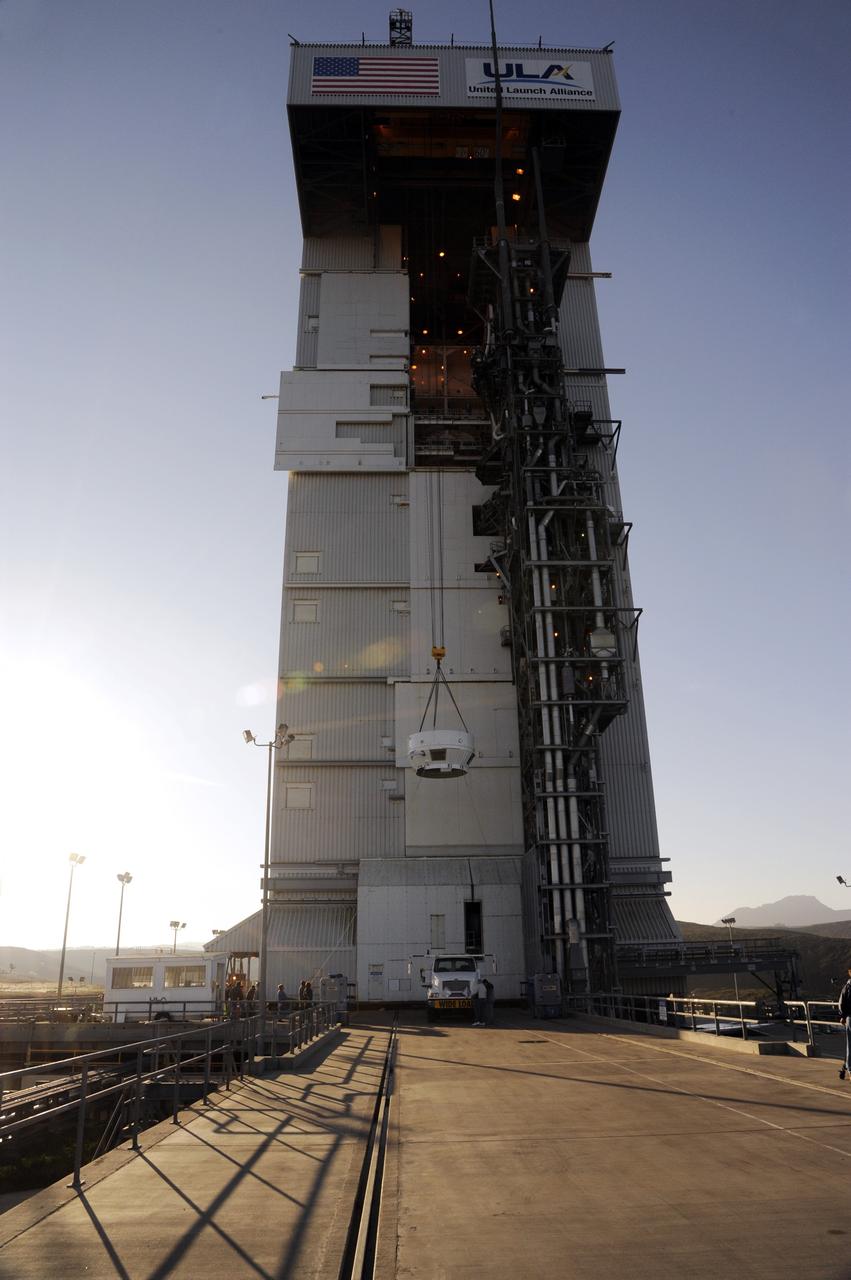
VANDENBERG AFB, Calif. – The boattail element is lifted onto the first stage booster of a United Launch Alliance Atlas V at the launch pad at Space Launch Complex-3E at Vandenberg Air Force Base, Calif. in preparation for the launch of the Landsat Data Continuation Mission. The Landsat Data Continuity Mission LDCM is the future of Landsat satellites. It will continue to obtain valuable data and imagery to be used in agriculture, education, business, science, and government. The Landsat Program provides repetitive acquisition of high resolution multispectral data of the Earth's surface on a global basis. The data from the Landsat spacecraft constitute the longest record of the Earth's continental surfaces as seen from space. It is a record unmatched in quality, detail, coverage, and value. Launch is planned for Feb. 2013. Photo credit: NASA/Roy Allison
NASA’s Artemis IV SLS (Space Launch System) core stage engine section which houses the four RS-25 engines, arrives at the Vehicle Assembly Building at NASA’s Kennedy Space Center in Florida on Monday, Sept. 9, 2024. NASA’s Pegasus barge delivered the core stage engine section, along with other hardware for future Artemis campaigns, from NASA’s Michoud Assembly Facility in New Orleans, Louisiana to NASA Kennedy on Thursday, Sept. 5, 2024.
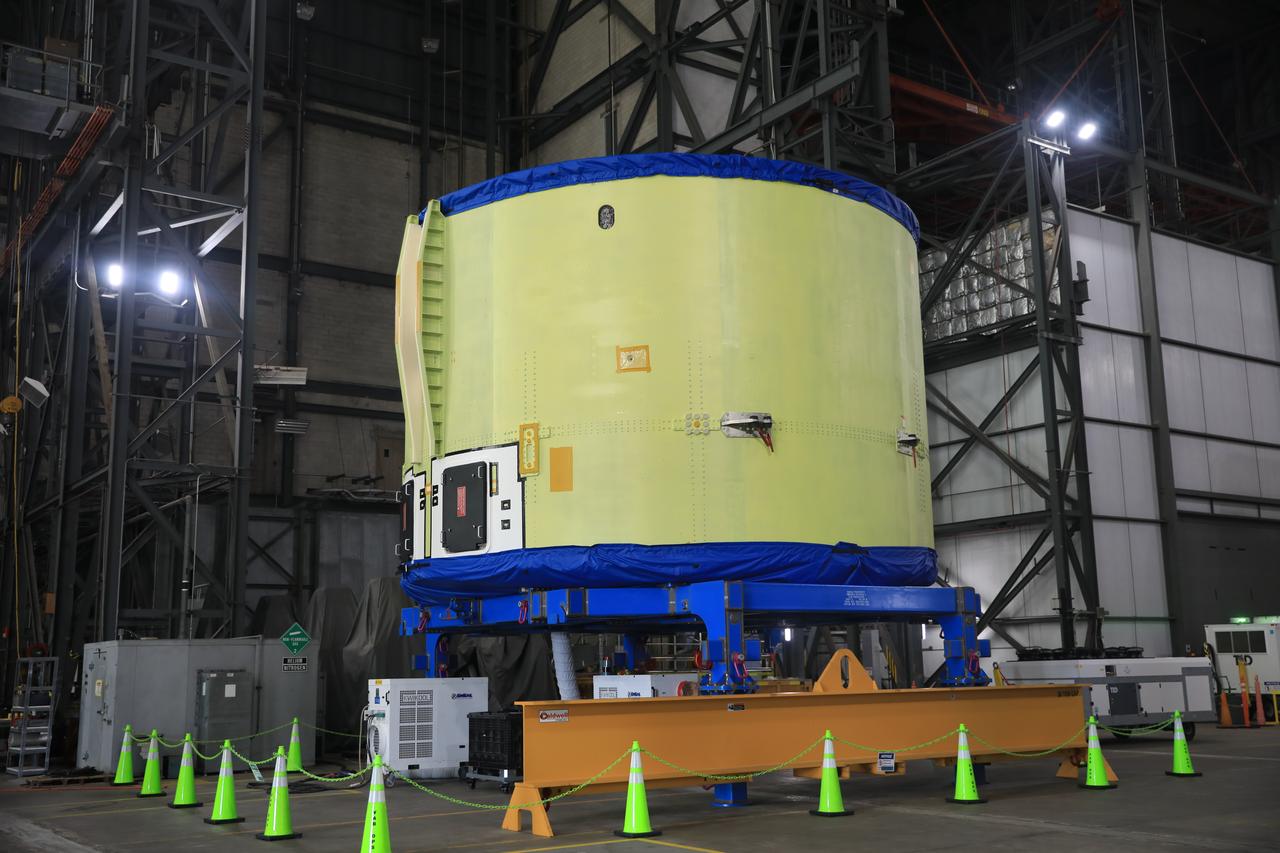
NASA’s Artemis IV SLS (Space Launch System) core stage engine section which houses the four RS-25 engines, arrives at the Vehicle Assembly Building at NASA’s Kennedy Space Center in Florida on Monday, Sept. 9, 2024. NASA’s Pegasus barge delivered the core stage engine section, along with other hardware for future Artemis campaigns, from NASA’s Michoud Assembly Facility in New Orleans, Louisiana to NASA Kennedy on Thursday, Sept. 5, 2024.

NASA’s Artemis IV SLS (Space Launch System) core stage engine section which houses the four RS-25 engines, arrives at the Vehicle Assembly Building at NASA’s Kennedy Space Center in Florida on Monday, Sept. 9, 2024. NASA’s Pegasus barge delivered the core stage engine section, along with other hardware for future Artemis campaigns, from NASA’s Michoud Assembly Facility in New Orleans, Louisiana to NASA Kennedy on Thursday, Sept. 5, 2024.
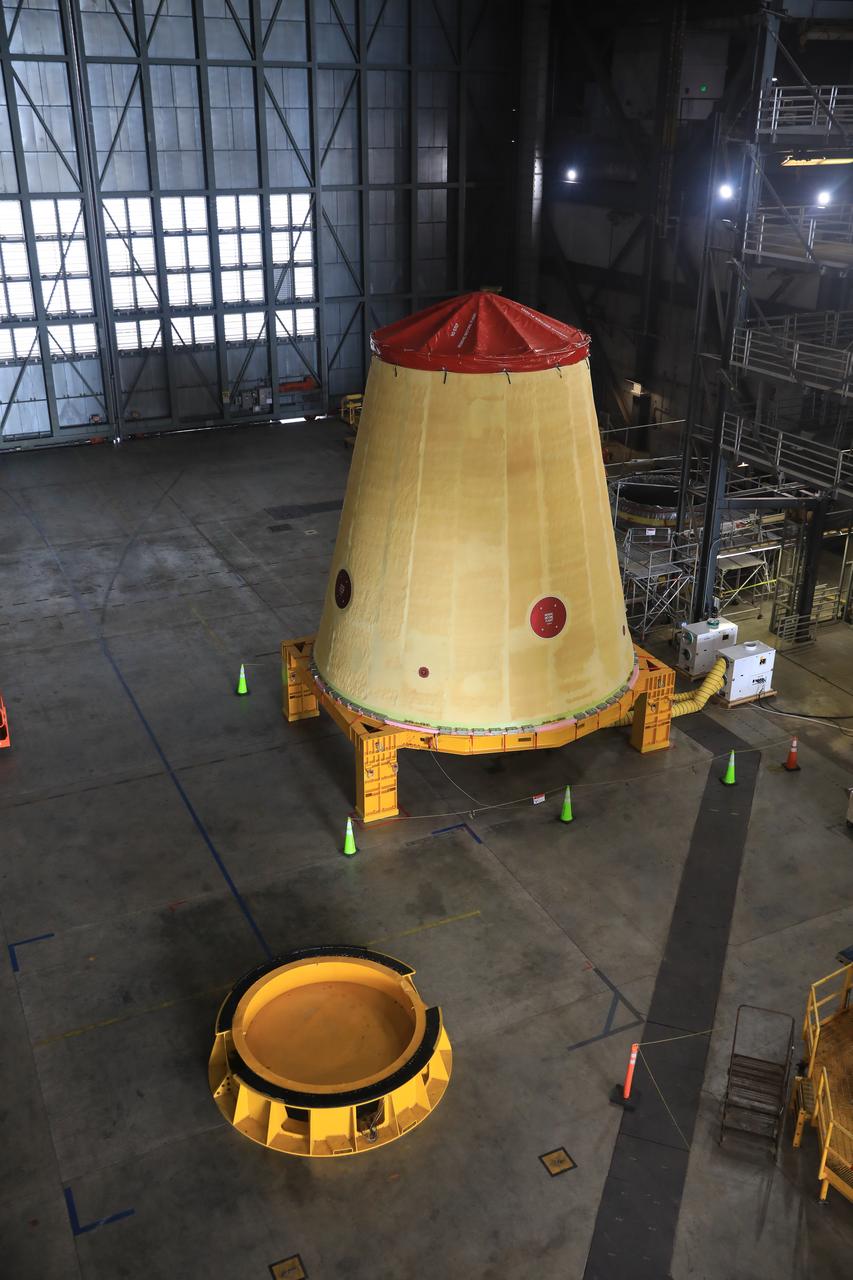
NASA’s Artemis II hardware, the launch vehicle stage adapter, awaits stacking operations at the Vehicle Assembly Building at NASA’s Kennedy Space Center in Florida on Monday, Sept. 9, 2024. The cone shaped launch vehicle stage adapter connects to NASA’s SLS (Space Launch System) rocket to the upper stage, the interim cryogenic propulsion stage, and protects the rocket’s flight computers, avionics, and electrical devices during launch and ascent.
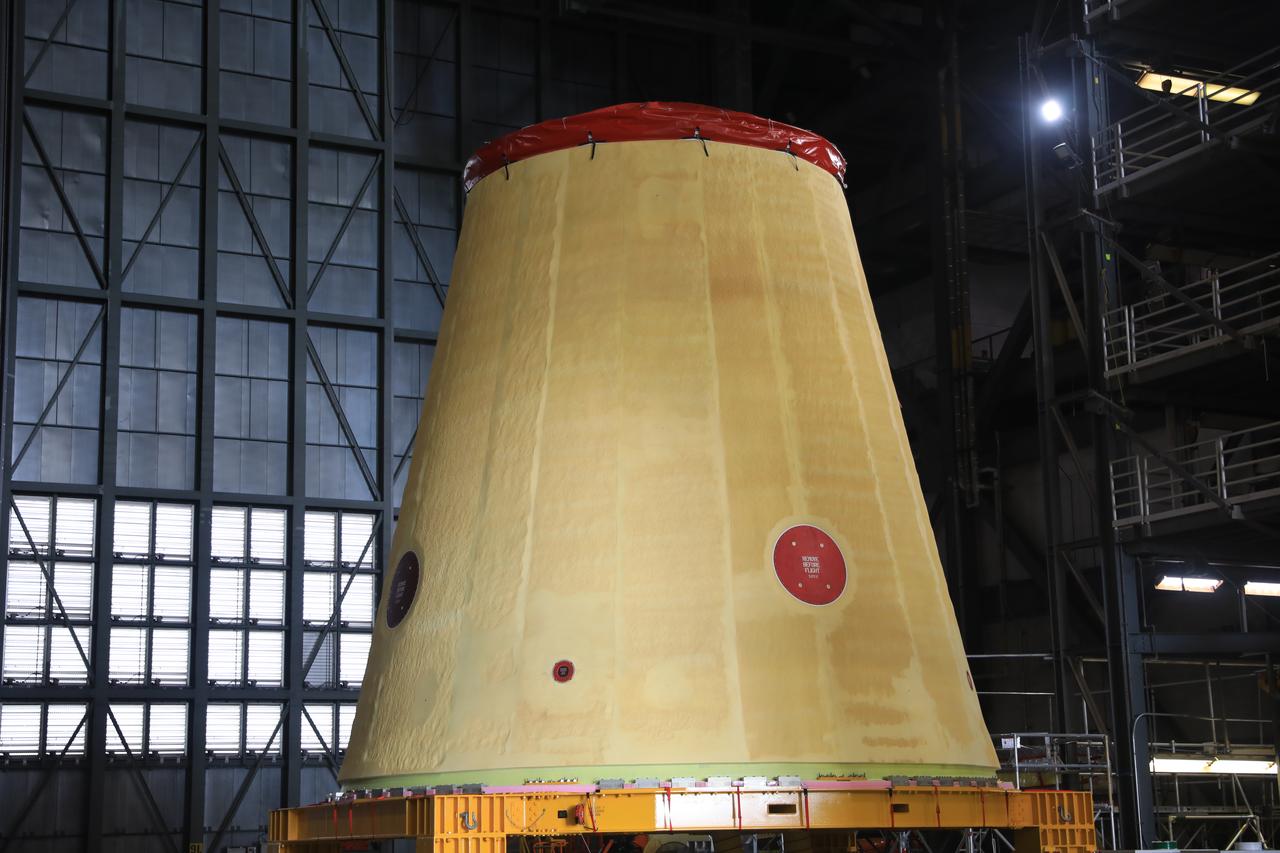
NASA’s Artemis II hardware, the launch vehicle stage adapter, awaits stacking operations at the Vehicle Assembly Building at NASA’s Kennedy Space Center in Florida on Monday, Sept. 9, 2024. The cone shaped launch vehicle stage adapter connects to NASA’s SLS (Space Launch System) rocket to the upper stage, the interim cryogenic propulsion stage, and protects the rocket’s flight computers, avionics, and electrical devices during launch and ascent.
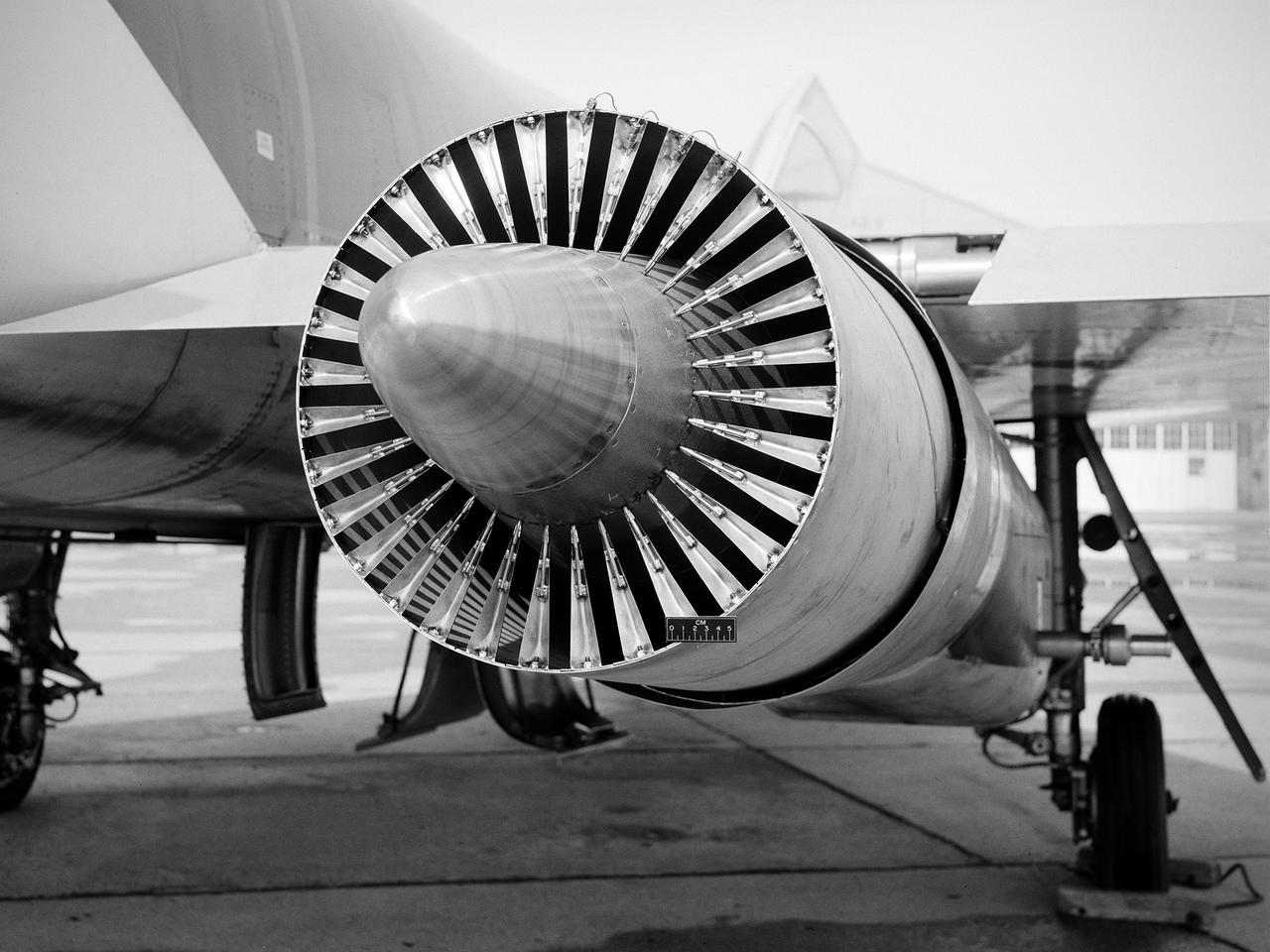
National Aeronautics and Space Administration (NASA) Convair F-106B Delta Dart with a 32-spoke nozzle installed on its General Electric J85 test engine. Lewis acquired a Delta Dart fighter in 1966 to study the components for propulsion systems that could be applied to supersonic transport aircraft at transonic speeds. The F-106B was modified with two General Electric J85-13 engines under its wings to study these components. The original test plan was expanded to include the study of boattail drag, noise reduction, and inlets. From February to July 1971 the modified F-106B was used to study different ejector nozzles. Researchers conducted both acoustic and aerodynamic tests on the ground and in flight. Several models were created to test different suppression methods. NASA Lewis’ conical nozzle was used as the baseline configuration. Flightline and sideline microphones were set up on the ground. The F-106B would idle its own engine and buzz the recording station from an altitude of 300 feet at Mach 0.4 with the test engines firing. Researchers found that the suppression of the perceived noise level was usually lower during flight than the researchers had statistically predicted. The 64 and 32-spoke nozzles performed well in actual flight, but the others nozzles tended to negatively affect the engine’s performance. Different speeds or angles- -of-attack sometimes changed the noise levels. In the end, no general conclusions could be applied to all the nozzles.