
jsc2025e065391 (1/15/2025) --- A six-well BioCell, the hardware that holds samples for the International Space Station Microgravity Associated Bone Loss-B (MABL-B) investigation, which assesses how bone-forming stem cells respond to microgravity. Researchers are measuring gene expression changes and the secretion of signaling proteins that promote bone formation and increase bone loss. Results could provide insight into spaceflight-related bone loss and support development of treatments for bone loss caused by disease on Earth. Credit: Mayo Clinic
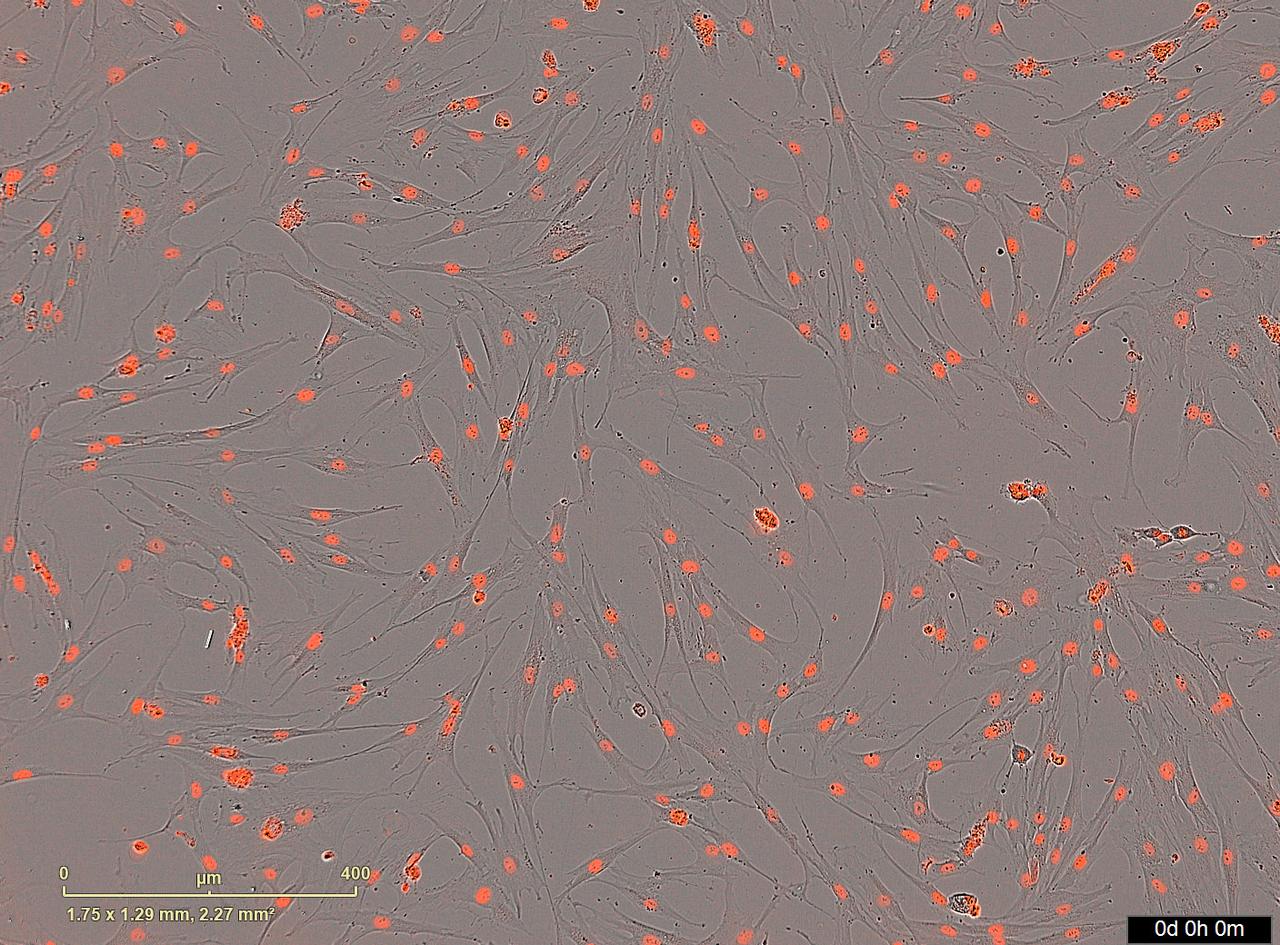
jsc2025e065389 (6/26/2025) --- Bone-forming or mesenchymal stem cells from human bone marrow stained with red dye. An investigation on the International Space Station, Microgravity Associated Bone Loss-B (MABL-B), assesses how these cells respond to microgravity, including changes in gene expression and the secretion of signaling proteins that promote bone formation and increase bone loss. Results could provide insight into bone loss that occurs during spaceflight and from normal aging and disease on Earth. Credit: Mayo Clinic
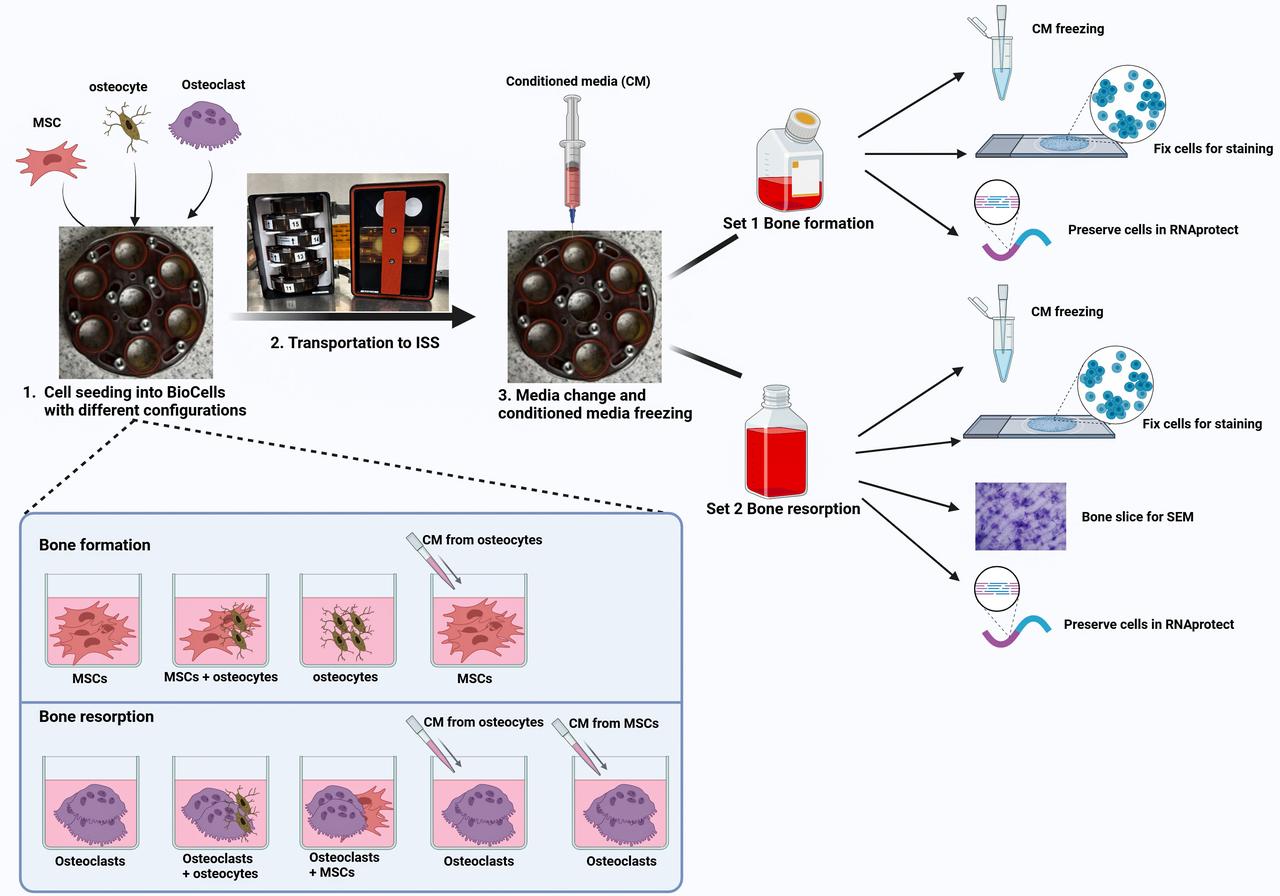
jsc2025e065388 (7/24/2025) --- Diagram of the Microgravity Associated Bone Loss-B (MABL-B) investigation of bone loss on the International Space Station. Shown left to right are the BioCell chambers and type of samples each holds, how the samples are transported to the station, and the process of activating the study once on board. The top right shows samples of cells with a signaling protein that promotes bone formation and the bottom right the samples with a protein that increases bone loss. Credit: Mayo Clinic
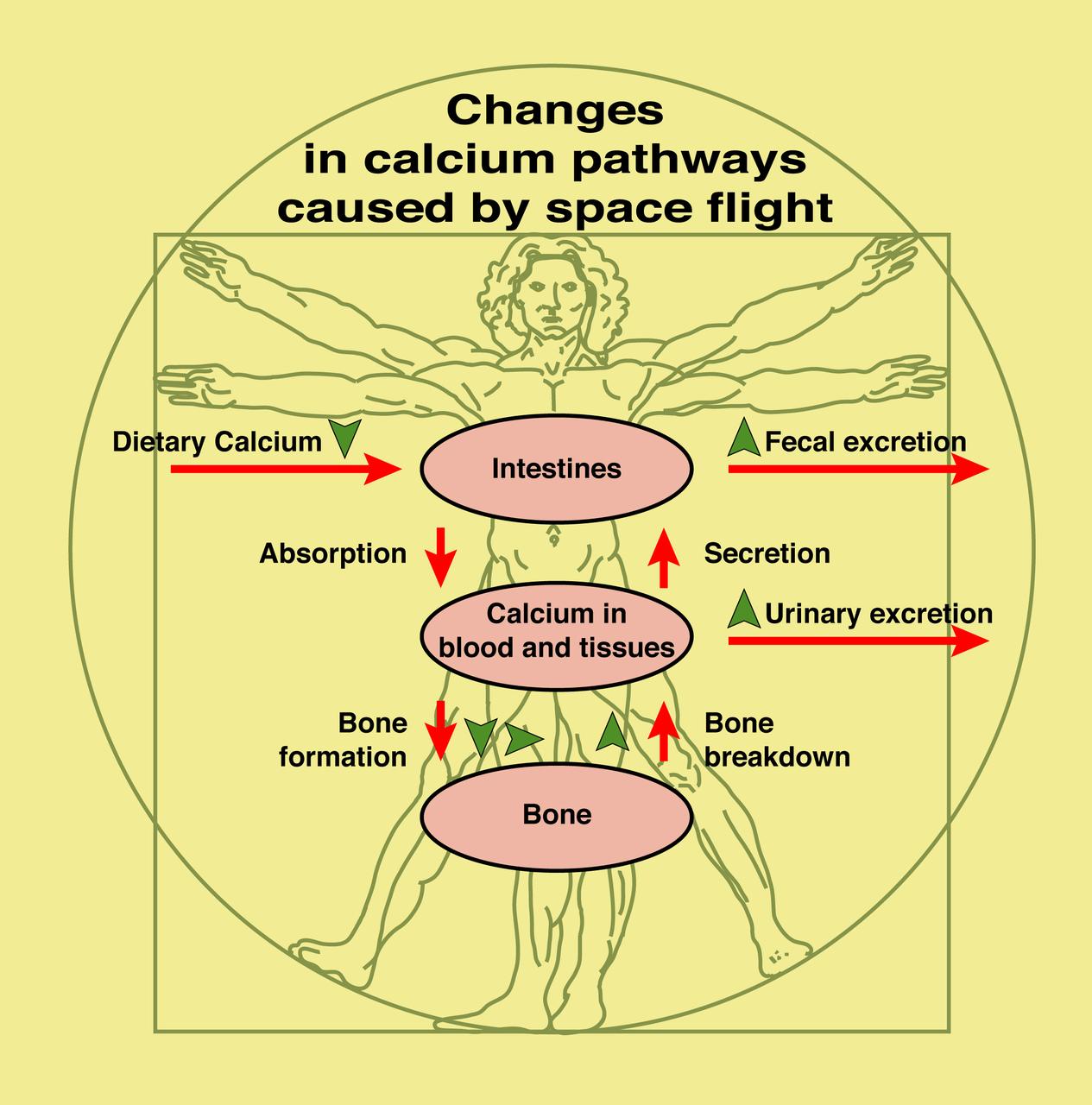
This diagram shows the normal pathways of calcium movement in the body and indicates changes (green arrows) seen during preliminary space flight experiments. Calcium plays a central role because 1) it gives strength and structure to bone and 2) all types of cells require it to function normally. To better understand how and why weightlessness induces bone loss, astronauts have participated in a study of calcium kinetics -- that is, the movement of calcium through the body, including absorption from food, and its role in the formation and breakdown of bone.
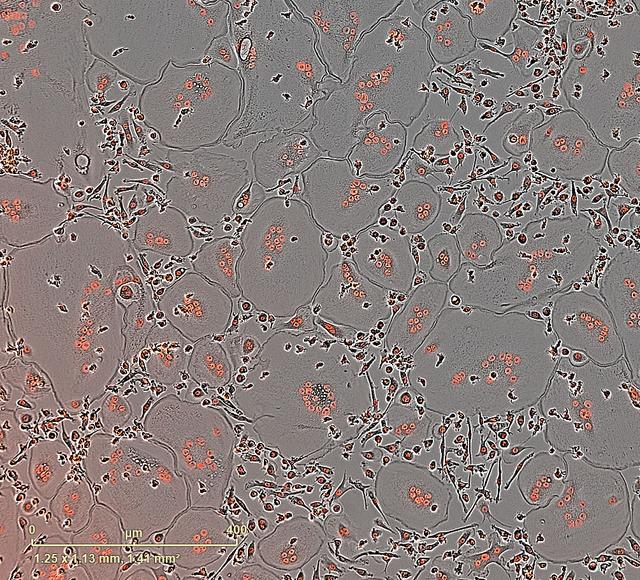
jsc2025e065390 (1/21/2022) --- A microscope image of osteoclasts, which are multinucleated cells responsible for breaking down bone tissue. The Microgravity Associated Bone Loss-B (MABL-B) investigation on the International Space Station uses this type of cell and human bone-forming stem cells from two human donors to examine the effects of microgravity. The investigation could provide a better understanding of the basic molecular mechanisms behind the bone loss that occurs during spaceflight and from normal aging and disease on Earth. Credit: Mayo Clinic
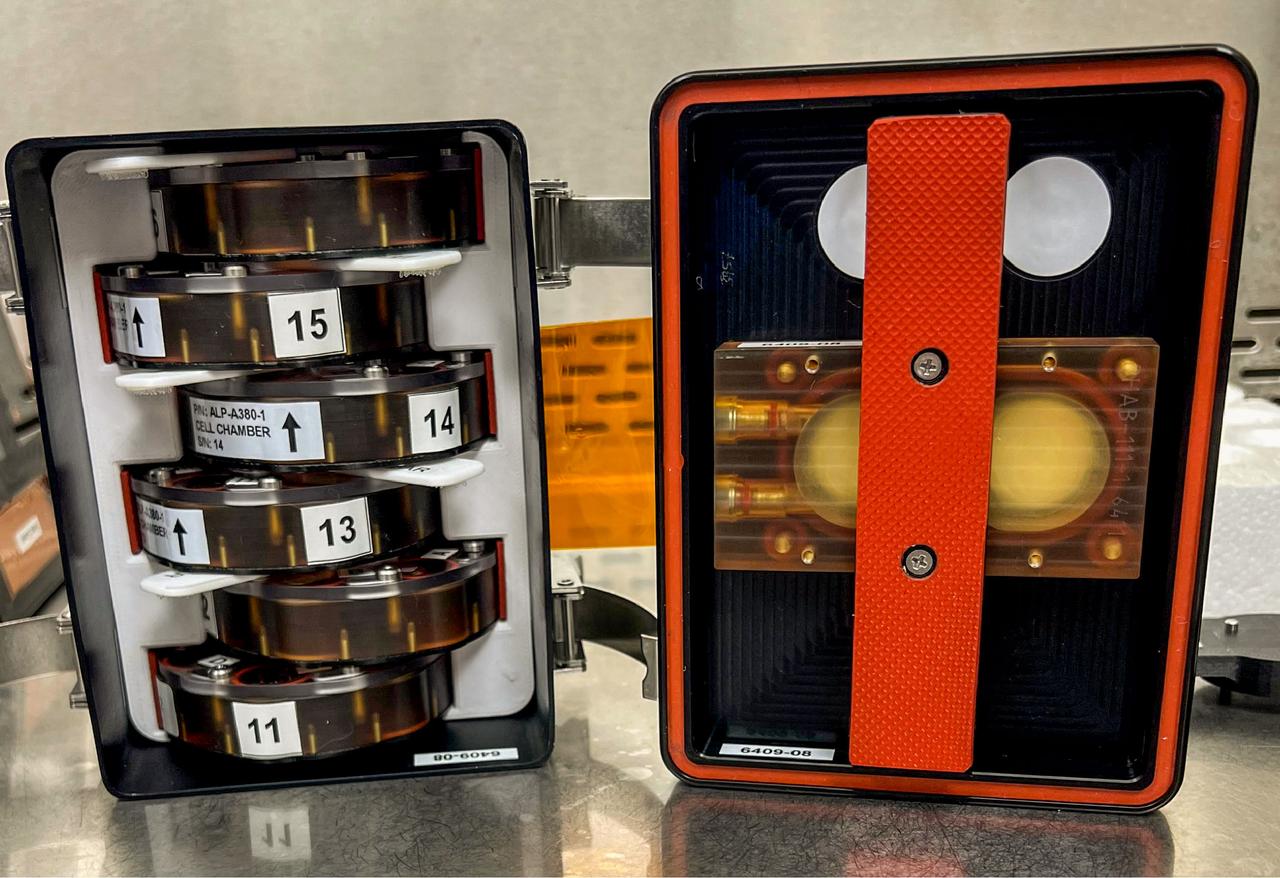
jsc2025e065387 (1/10/2025) --- The BioCell sample holder for the Microgravity Associated Bone Loss-B (MABL-B) investigation packed for launch to the International Space Station. The six-well BioCells are housed in a Plate Habitat (PHAB), which provides secondary containment and structural support during launch and return. MABL-B assesses how bone-forming stem cells respond to microgravity. Results could provide a better understanding of what causes bone loss during spaceflight and from normal aging and disease on Earth and support development of treatments. Credit: Mayo Clinic
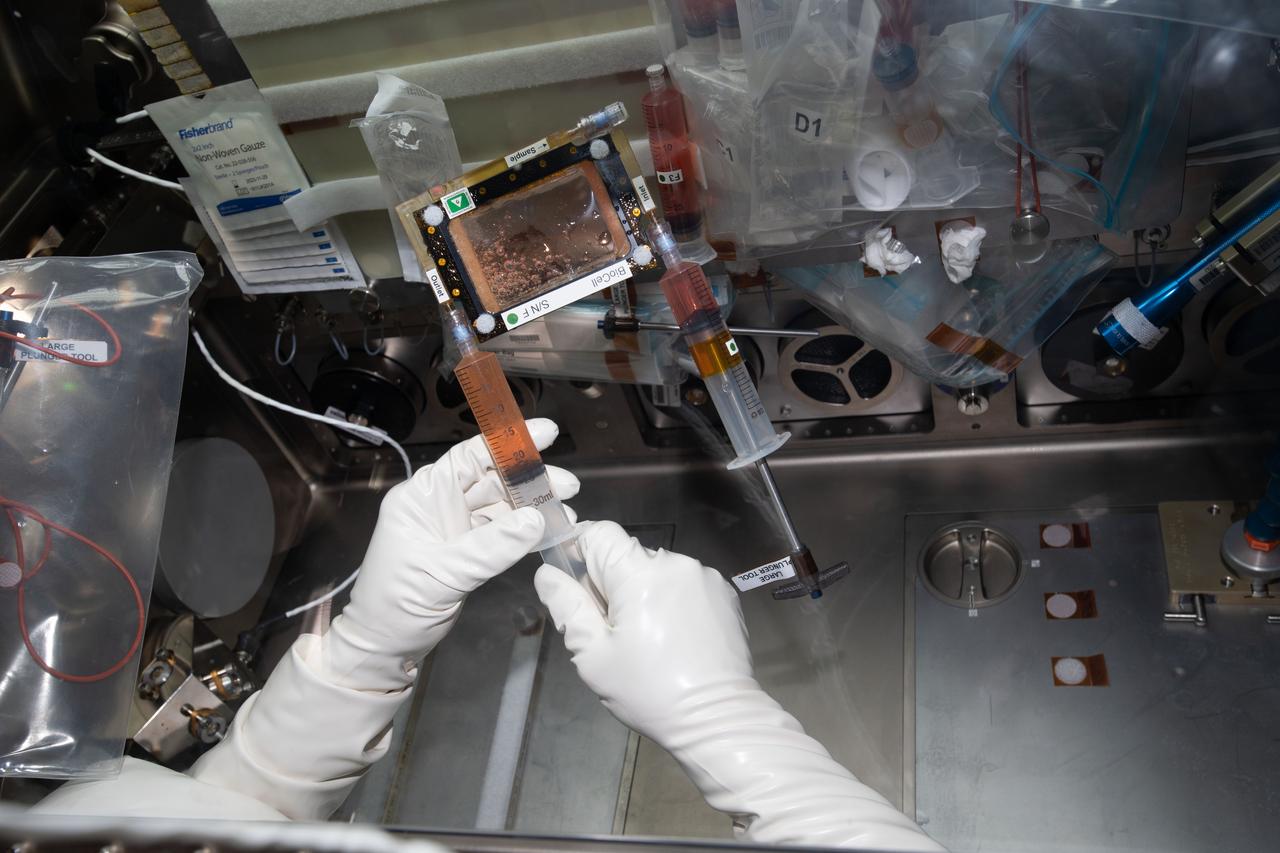
iss062e055120 (2/26/2020) --- A view inside of the Life Science Glovebox (LSG) of the media exchange operations for the OsteoOmics investigation aboard the International Space Station (ISS). OsteoOmics studies the cellular mechanisms of bone loss associated with microgravity, which helps researchers understand the mechanisms of bone loss in a wide range of disorders. This leads to better preventative care or therapeutic treatments for people suffering bone loss as a result of bone diseases like osteopenia and osteoporosis, or for patients on prolonged bed rest.
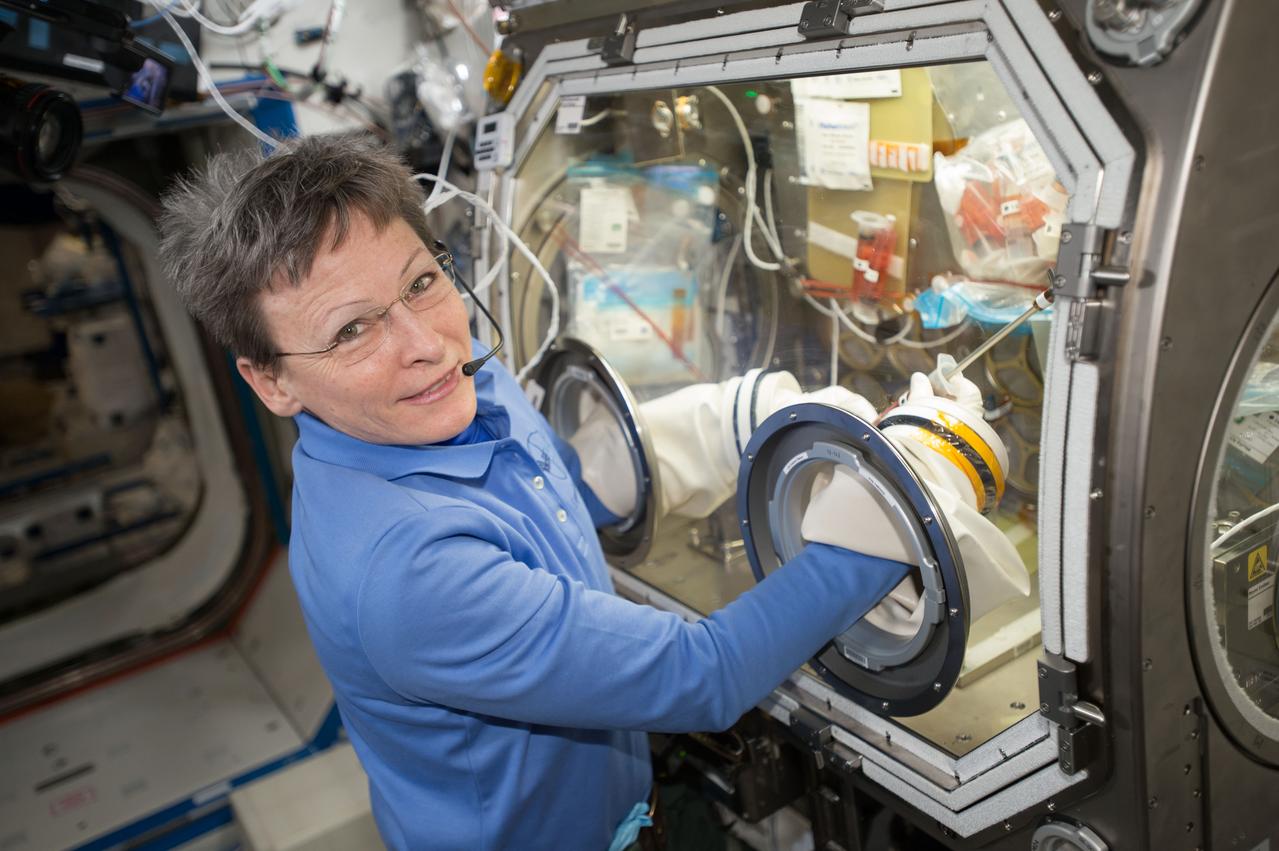
iss051e034105 (May 2, 2017) --- Commander Peggy Whitson is working on the OsteoOmics bone cell study that utilizes the Microgravity Science Glovebox inside the U.S. Destiny laboratory. OsteoOmics investigates the molecular mechanisms that dictate bone loss in microgravity by examining osteoblasts, which form bone, and osteoclasts, which dissolves bone. This leads to better preventative care or therapeutic treatments for people suffering bone loss as a result of bone diseases like osteopenia and osteoporosis, or for patients on prolonged bed rest.
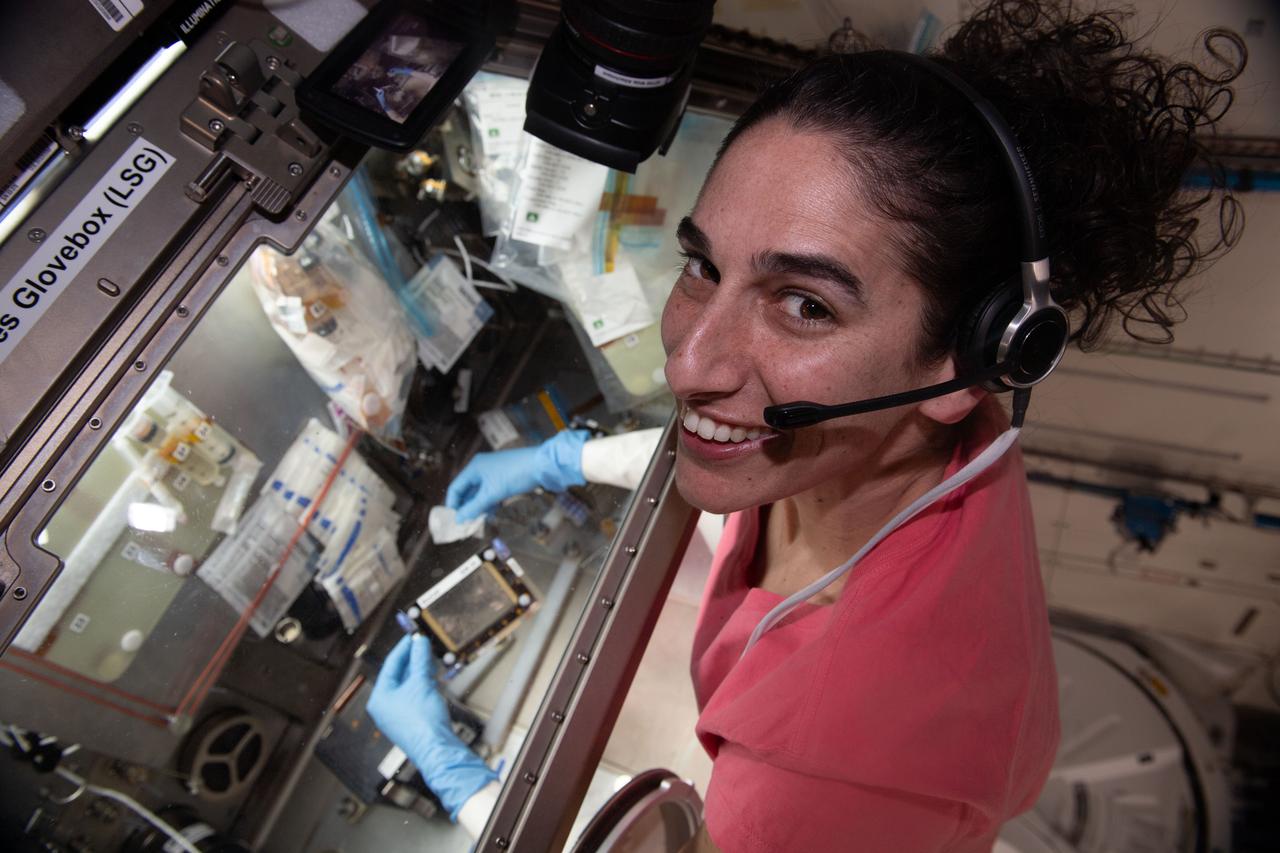
iss070e086287 (Feb. 3, 2024) --- NASA astronaut and Expedition 70 Flght Engineer Jasmin Moghbeli works inside the Life Science Glovebox for the Microgravity Associated Bone Loss-A investigation. She was processing bone cell samples obtained from human donors on Earth and exploring space-caused bone loss. Results may help doctors learn how to protect and treat astronauts on long-term missions and inform treatments for bone conditions on Earth.
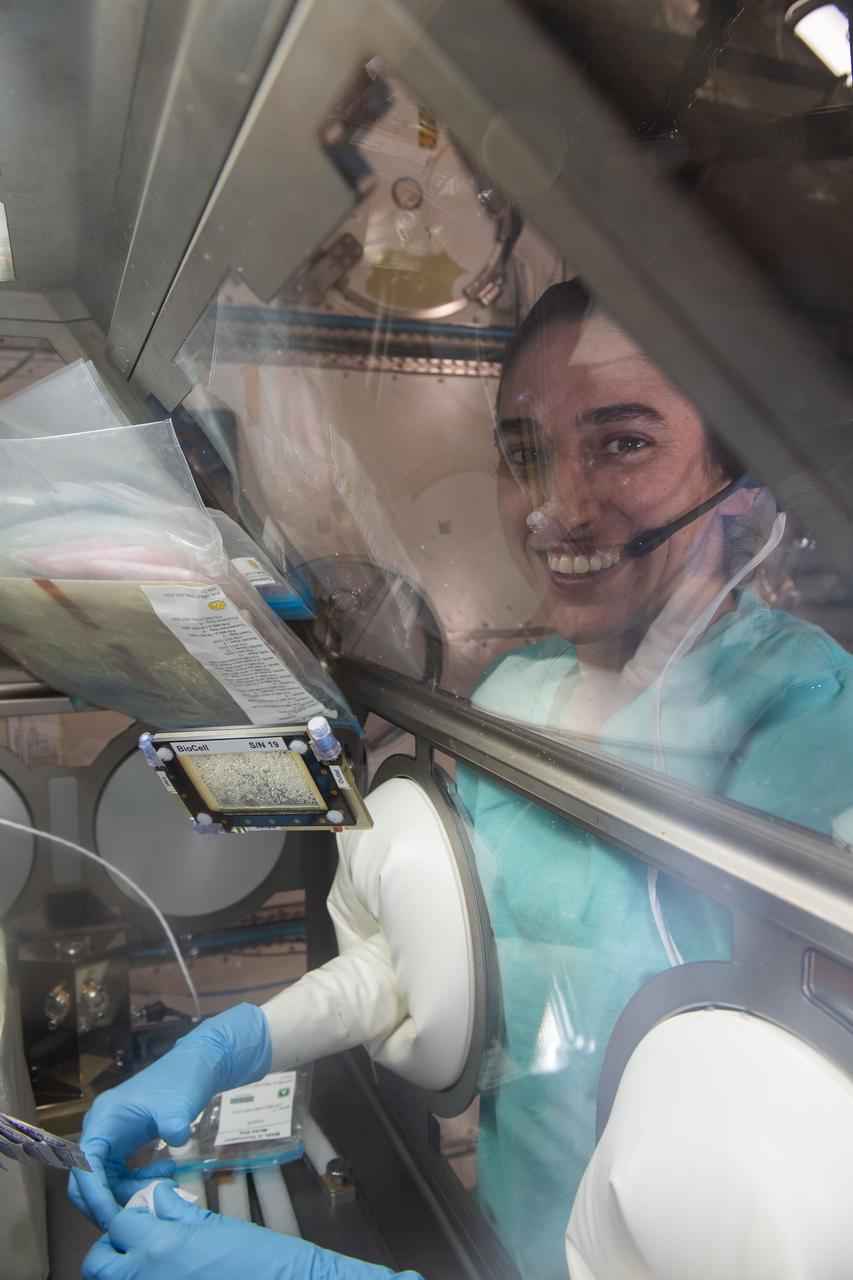
iss070e094541 (Feb. 16, 2024) --- NASA astronaut and Expedition 70 Flight Engineer Jasmin Moghbeli works on a bone cell study inside the Life Science Glovebox located inside the International Space Station's Kibo laboratory module. Moghbeli was working on the Microgravity Associated Bone Loss-A investigation that may provide a better understanding of space-caused bone loss and aging-related bone conditions on Earth.
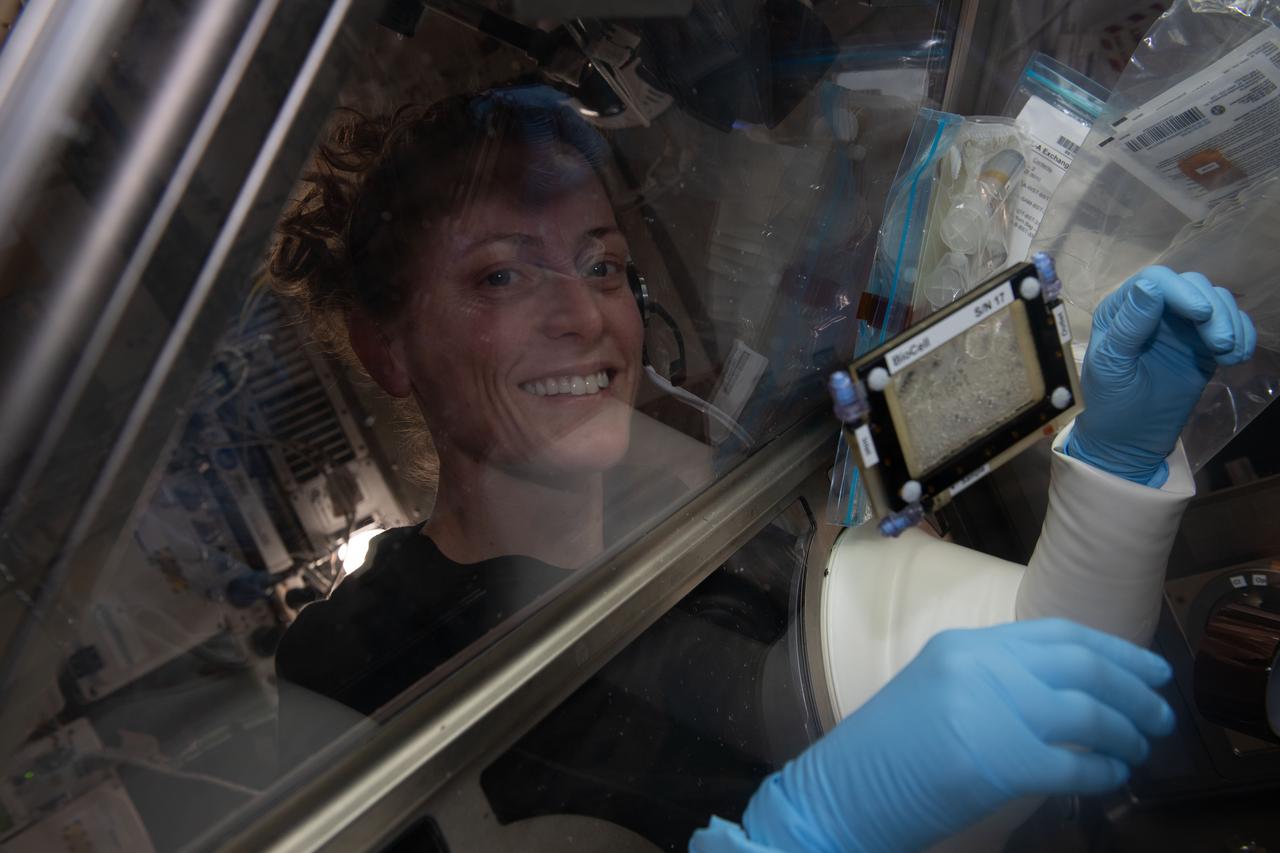
iss070e091759 (Feb. 12, 2024) --- NASA astronaut and Expedition 70 Flight Engineer Loral O'Hara works on a bone cell study inside the Life Science Glovebox located inside the International Space Station's Kibo laboratory module. O’Hara was working on the Microgravity Associated Bone Loss-A investigation that may provide a better understanding of space-caused bone loss and aging-related bone conditions on Earth.
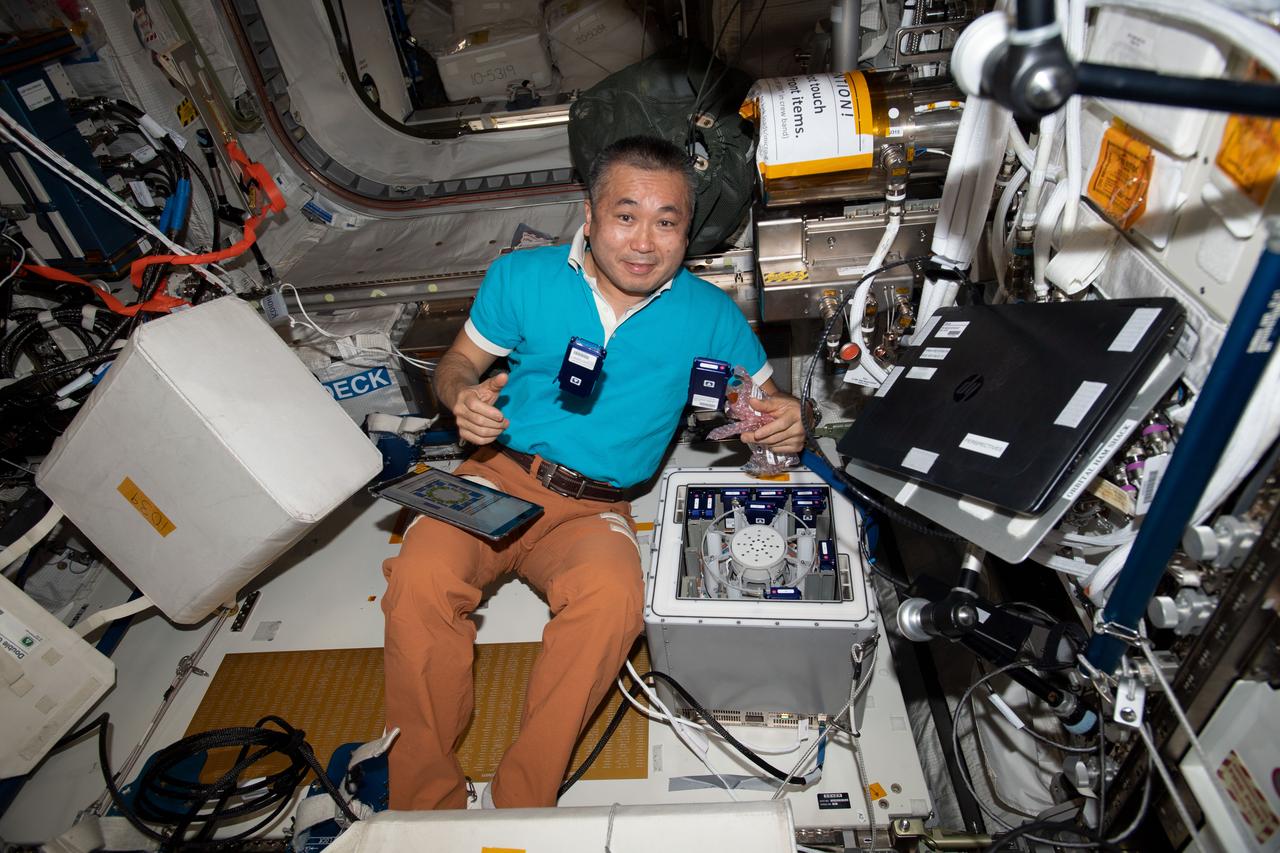
iss068e024849_alt (Nov. 28, 2022) --- Koichi Wakata of the Japan Aerospace Exploration Agency (JAXA) installs the Osteogenic Cells experiment. This experiment looks at whether bone loss in microgravity is restricted to a particular osteogenic or bone-forming cell type. This research tests the hypothesis that the underlying process results in decreased bone formation rather than increased loss of existing bone.
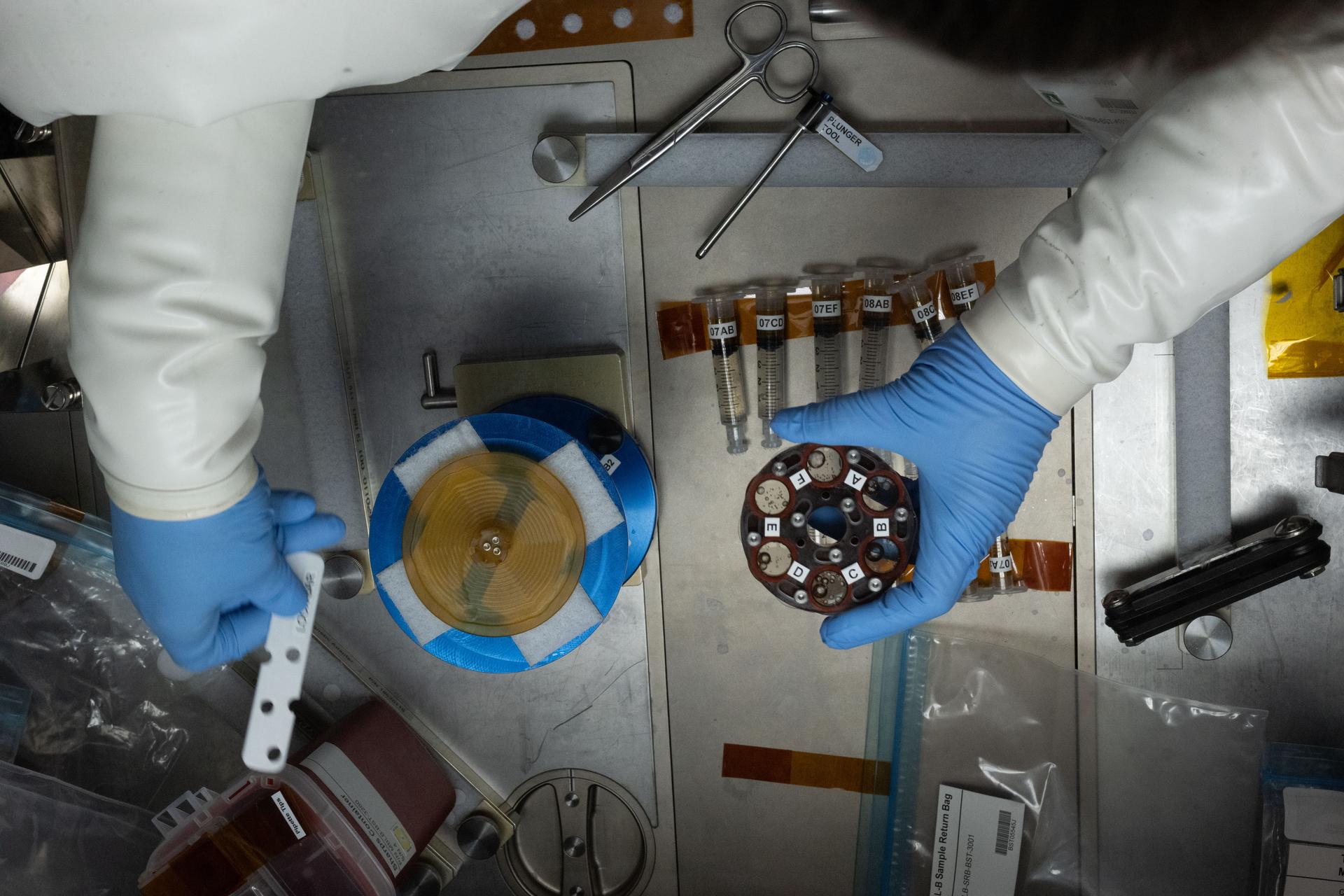
iss073e0759779 (Sept. 2, 2025) --- A top-down view inside the Destiny laboratory module’s Microgravity Science Glovebox shows the gloved arms and hands of NASA astronaut and Expedition 73 Flight Engineer Zena Cardman. She was processing bone marrow stem cell samples for the Microgravity Associated Bone Loss-B (MABL-B) experiment. The space biology investigation could help scientists better understand the molecular mechanisms behind space-caused bone loss and the natural aging process on Earth.
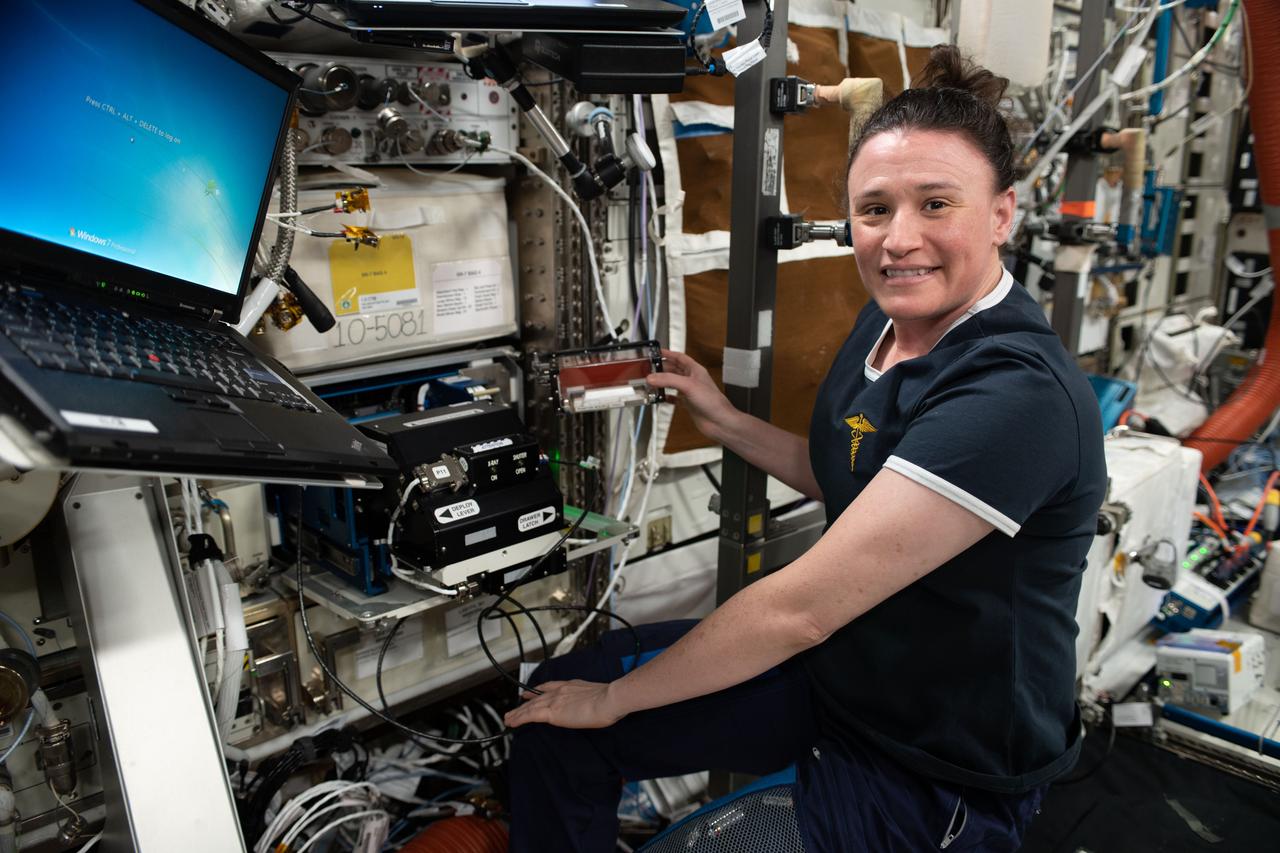
iss056e158493 (Aug. 27, 2018) --- NASA astronaut Serena Auñón-Chancellor works to calibrate a Bone Densitometer aboard the International Space Station's U.S. Destiny laboratory. The device measures the mass per unit volume (density) of minerals in bone using using Dual-Energy X-ray Absorptiometry (DEXA). It is being developed from commercial off-the-shelf hardware and is being designed to fit into an EXPRESS Rack locker. The Bone Densitometer takes quantitative measures of bone loss in mice, during orbital space flight, which are necessary for the development of countermeasures for human crew members, as well as for bone-loss syndromes on Earth, by commercial entities. Planned studies, both academic and commercial, require on-orbit analytical methods including bone densitometry.
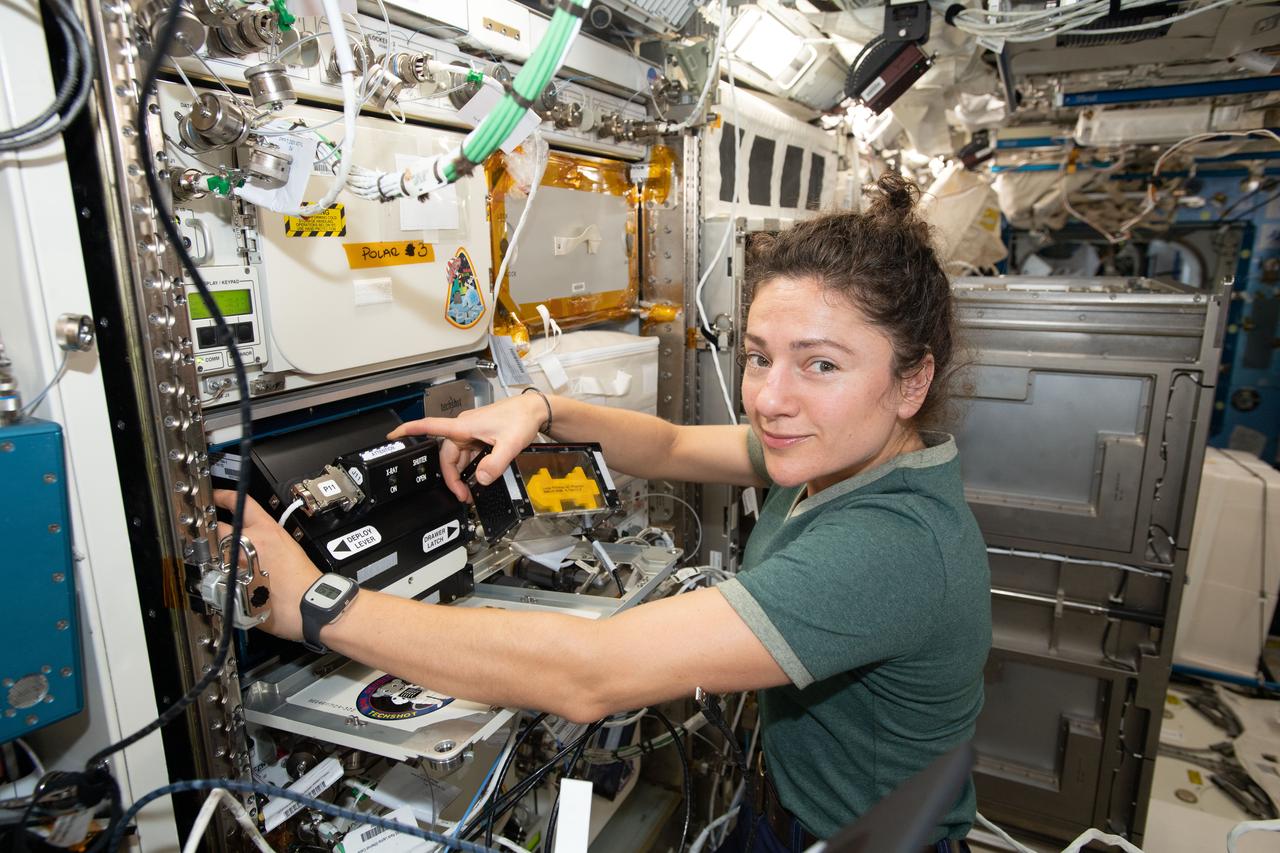
iss061e068057 (Dec. 9, 2019) --- NASA astronaut and Expedition 61 Flight Engineer Jessica Meir installs the Bone Densitometer in an EXPRESS (EXpedite the PRocessing of Experiments to Space Station) rack located inside the Japanese Kibo laboratory module. The Bone Densitometer enables the imaging of rodent bones for the Rodent Research-19 experiment that is investigating two proteins that may prevent muscle and bone loss in space.
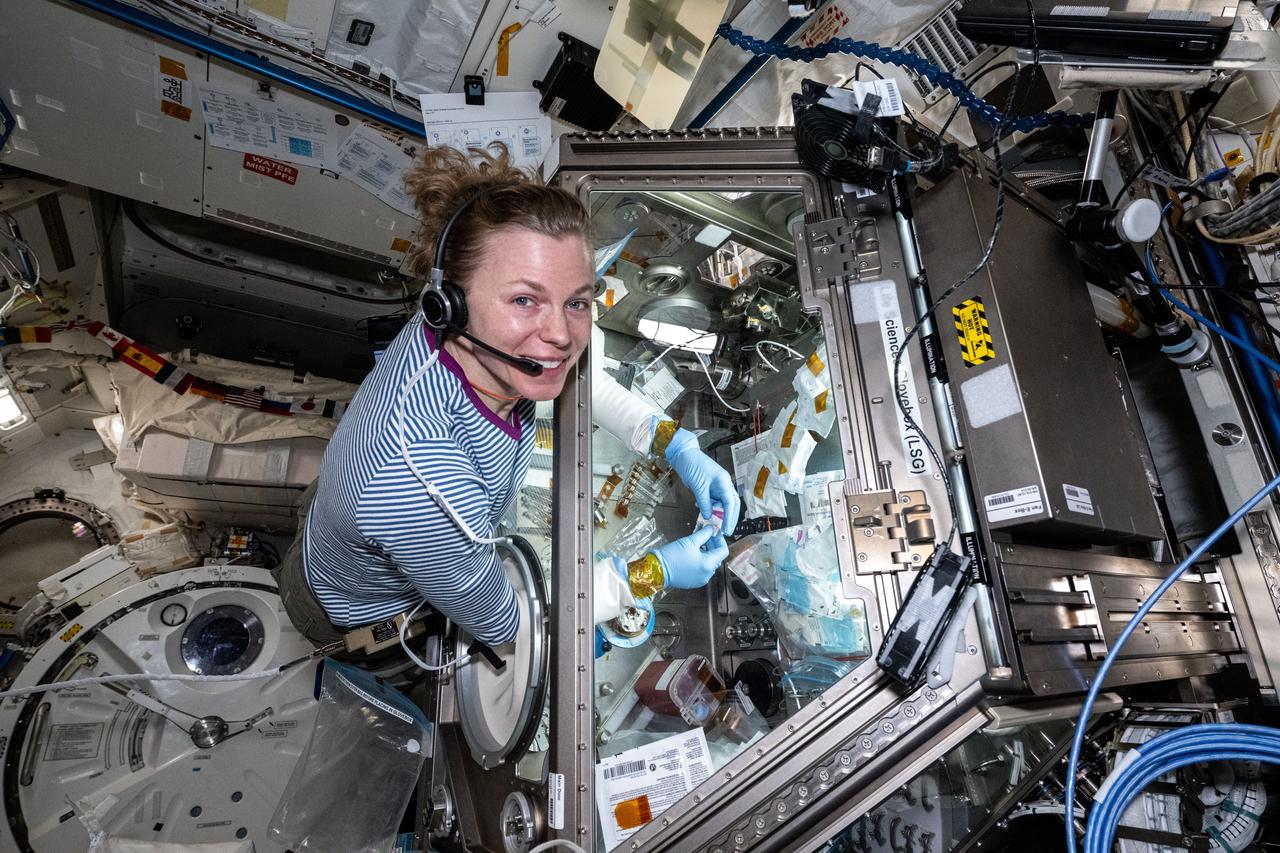
iss073e0548846 (Aug. 28, 2025) --- NASA astronaut and Expedition 73 Flight Engineer Zena Cardman processes bone cell samples inside the Kibo laboratory module's Life Science Glovebox. She was exploring the molecular mechanisms of space-induced bone loss for an investigation that could help the human skeletal system adapt to spaceflight and lead to advanced treatments for aging conditions and bone diseases on Earth.
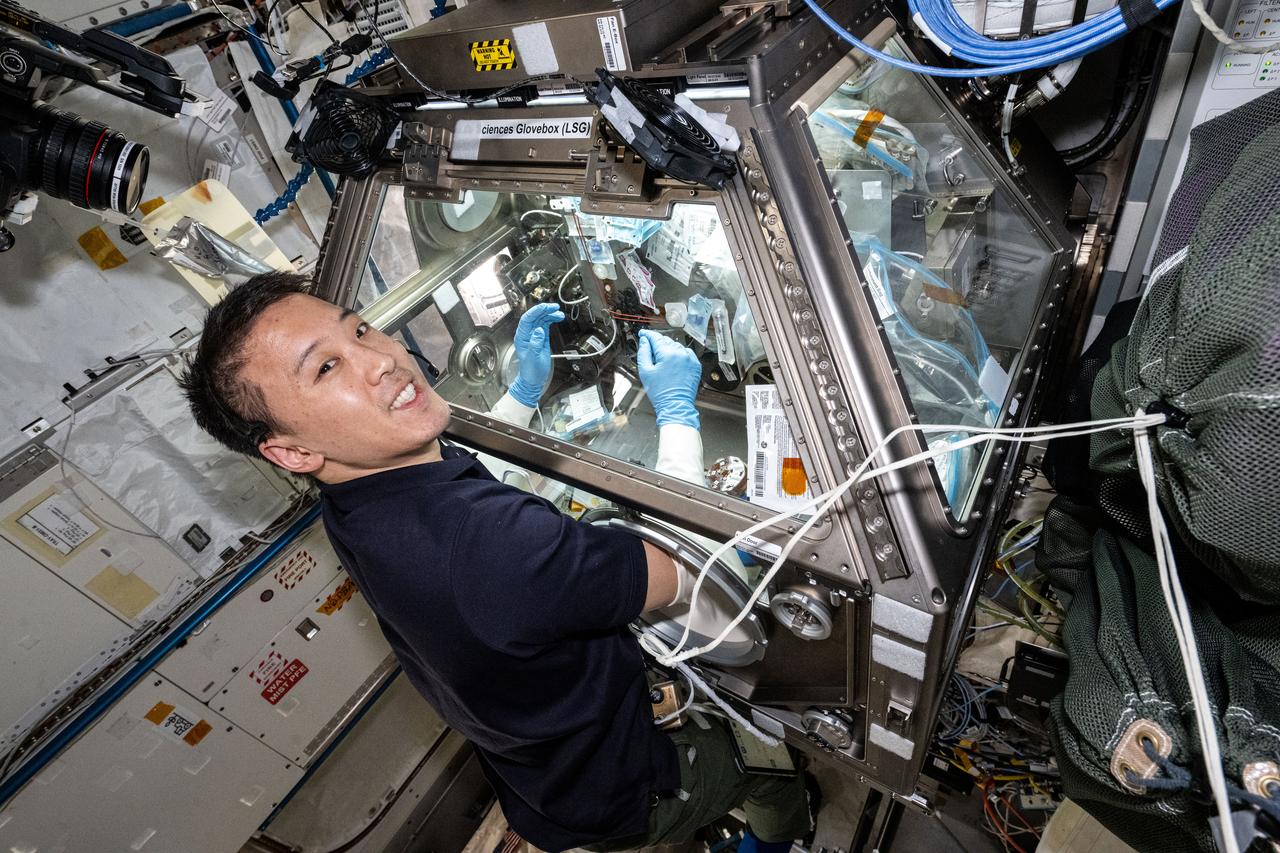
iss073e0548857 (Aug. 28, 2025) --- NASA astronaut and Expedtion 73 Flight Engineer Jonny Kim processes bone cell samples inside the Kibo laboratory module's Life Science Glovebox. He was exploring the molecular mechanisms of space-induced bone loss for an investigation that could help the human skeletal system adapt to spaceflight and lead to advanced treatments for aging conditions and bone diseases on Earth.

ISS040-E-104588 (22 Aug. 2014) --- In the International Space Station’s Rassvet Mini-Research Module 1 (MRM-1), Russian cosmonaut Maxim Suraev, Expedition 40 flight engineer, performs a session of the Calcium experiment, which examines the causes of the loss of bone density that occurs in a weightless environment. For this study, Russian researchers are looking at the solubility of calcium phosphates and human bone samples in water in space.
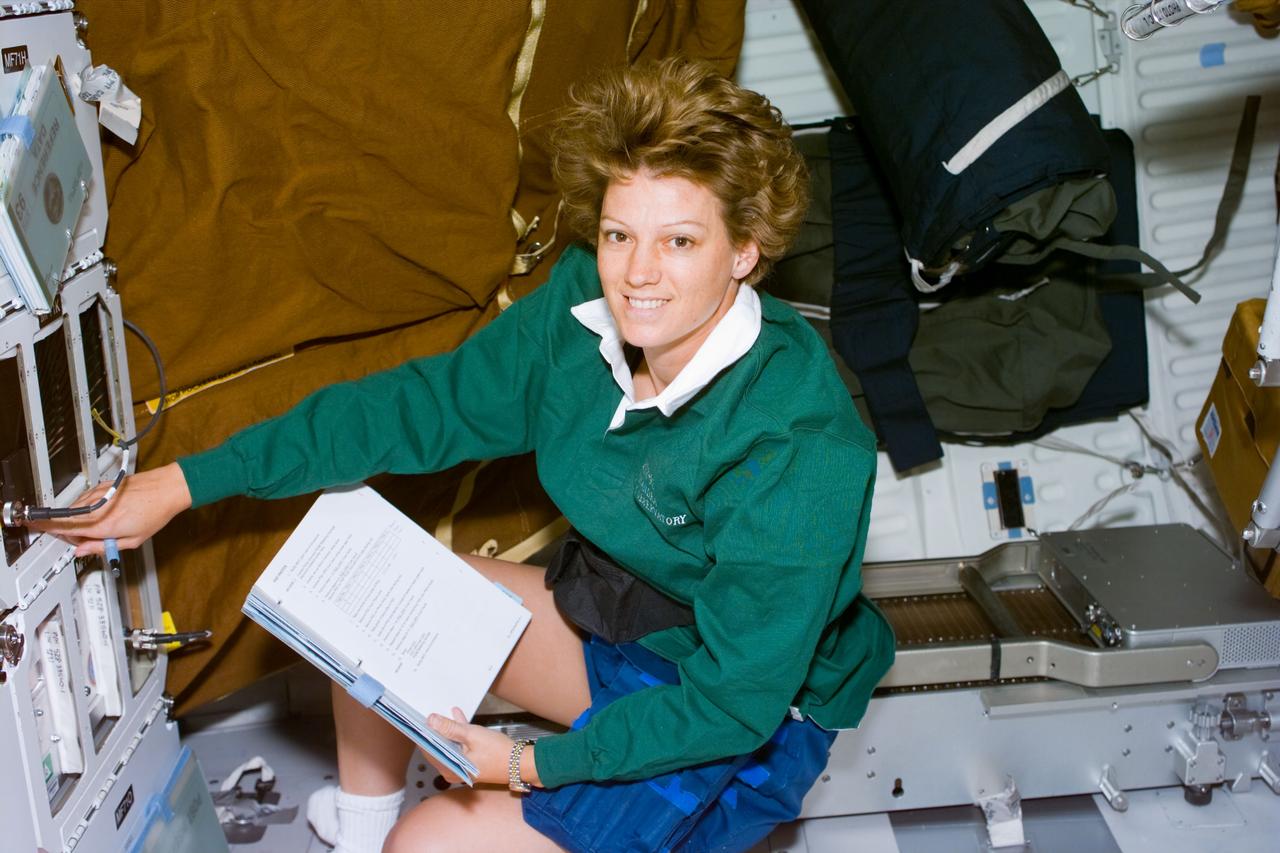
S93-E-5016 (23 July 1999) --- Astronaut Eileen M. Collins, mission commander, checks on an experiment on Columbia's middeck during Flight Day 1 activity. The experiment is called the Cell Culture Model, Configuration C. Objectives of it are to validate cell culture models for muscle, bone and endothelial cell biochemical and functional loss induced by microgravity stress; to evaluate cytoskeleton, metabolism, membrane integrity and protease activity in target cells; and to test tissue loss pharmaceuticals for efficacy. The photo was recorded with an electronic still camera (ESC).
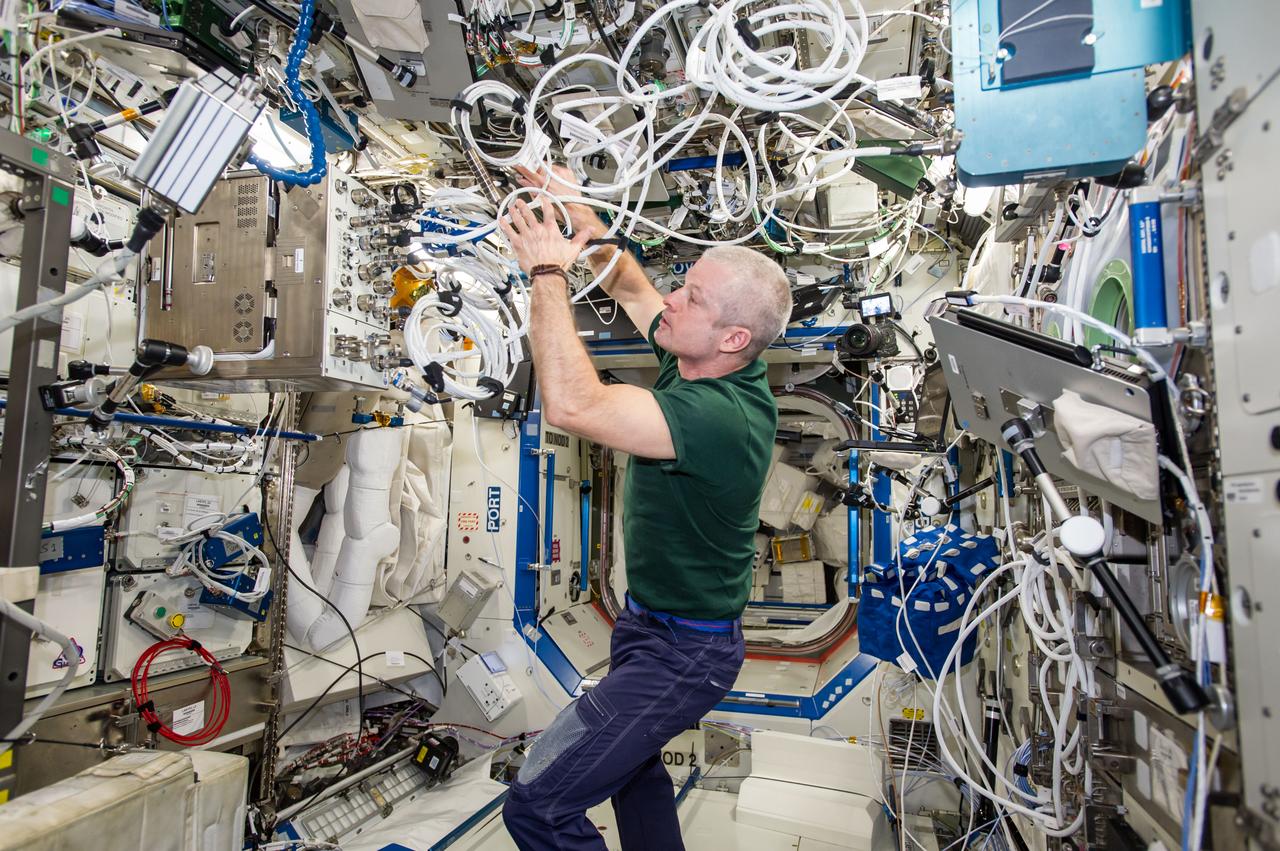
ISS040-E-123262 (2 Sept. 2014) --- NASA astronaut Steve Swanson, Expedition 40 commander, sets up the Portable Pulmonary Function System hardware for Sprint VO2max sessions in the Destiny laboratory of the International Space Station. The Sprint experiment measures the effectiveness of high-intensity, low-volume exercise training in minimizing the loss of muscle mass and bone density that occurs during spaceflight.
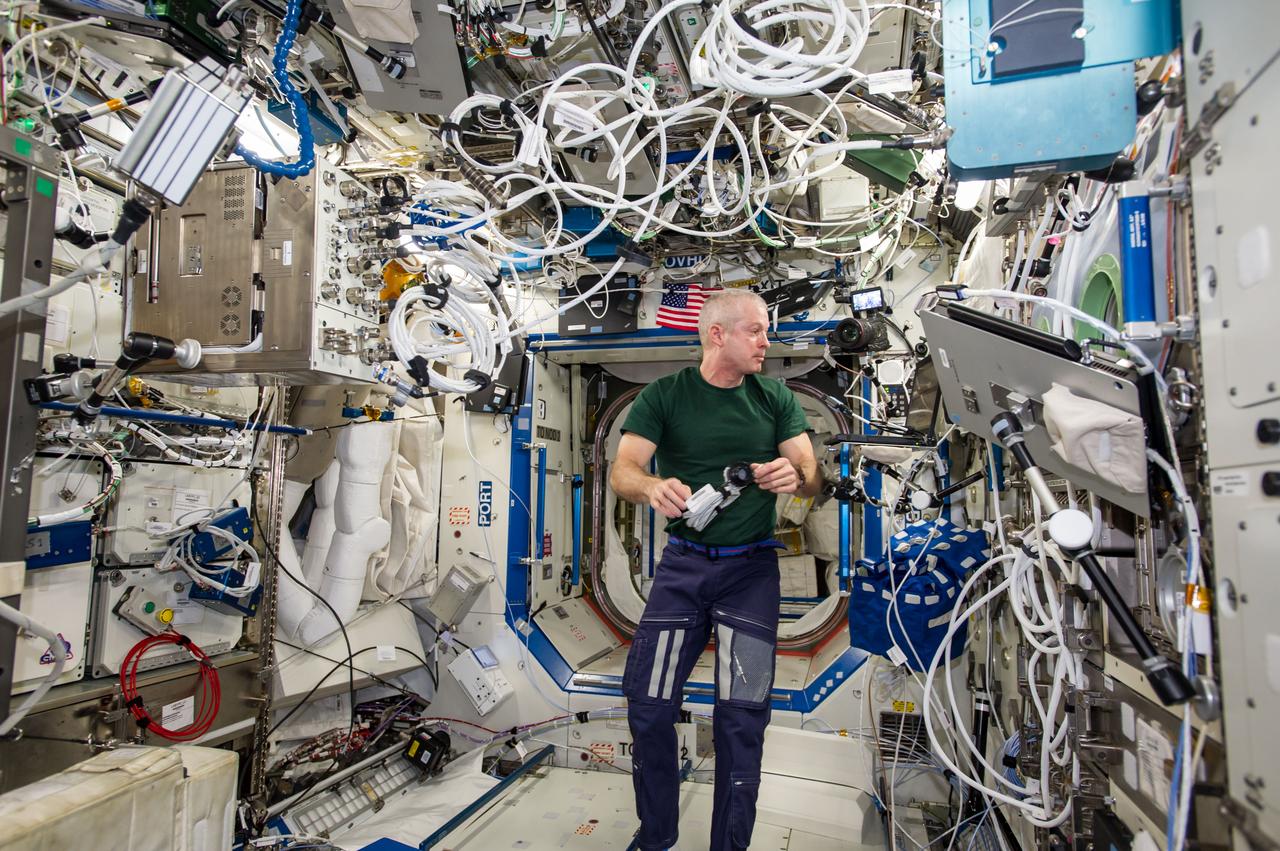
ISS040-E-123259 (2 Sept. 2014) --- NASA astronaut Steve Swanson, Expedition 40 commander, prepares to set up the Portable Pulmonary Function System hardware for Sprint VO2max sessions in the Destiny laboratory of the International Space Station. The Sprint experiment measures the effectiveness of high-intensity, low-volume exercise training in minimizing the loss of muscle mass and bone density that occurs during spaceflight.
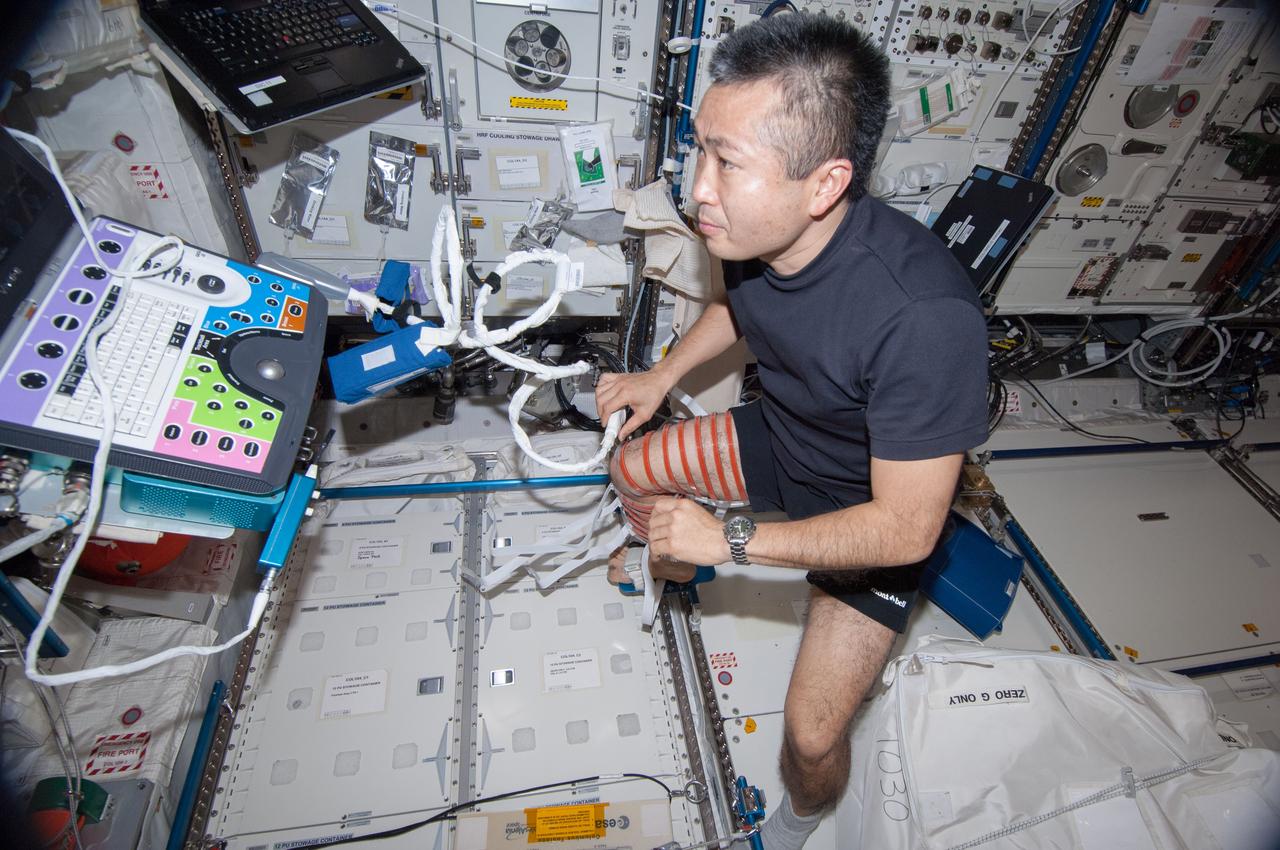
ISS038-E-007119 (21 Nov. 2013) --- Japan Aerospace Exploration Agency astronaut Koichi Wakata, Expedition 38 flight engineer, wears ultrasound gear around his legs while performing the Integrated Resistance and Aerobic Training Study (Sprint) experiment in the Columbus laboratory of the International Space Station. Sprint evaluates the use of high intensity, low volume exercise training to minimize loss of muscle, bone, and cardiovascular function in station crew members during long-duration missions.
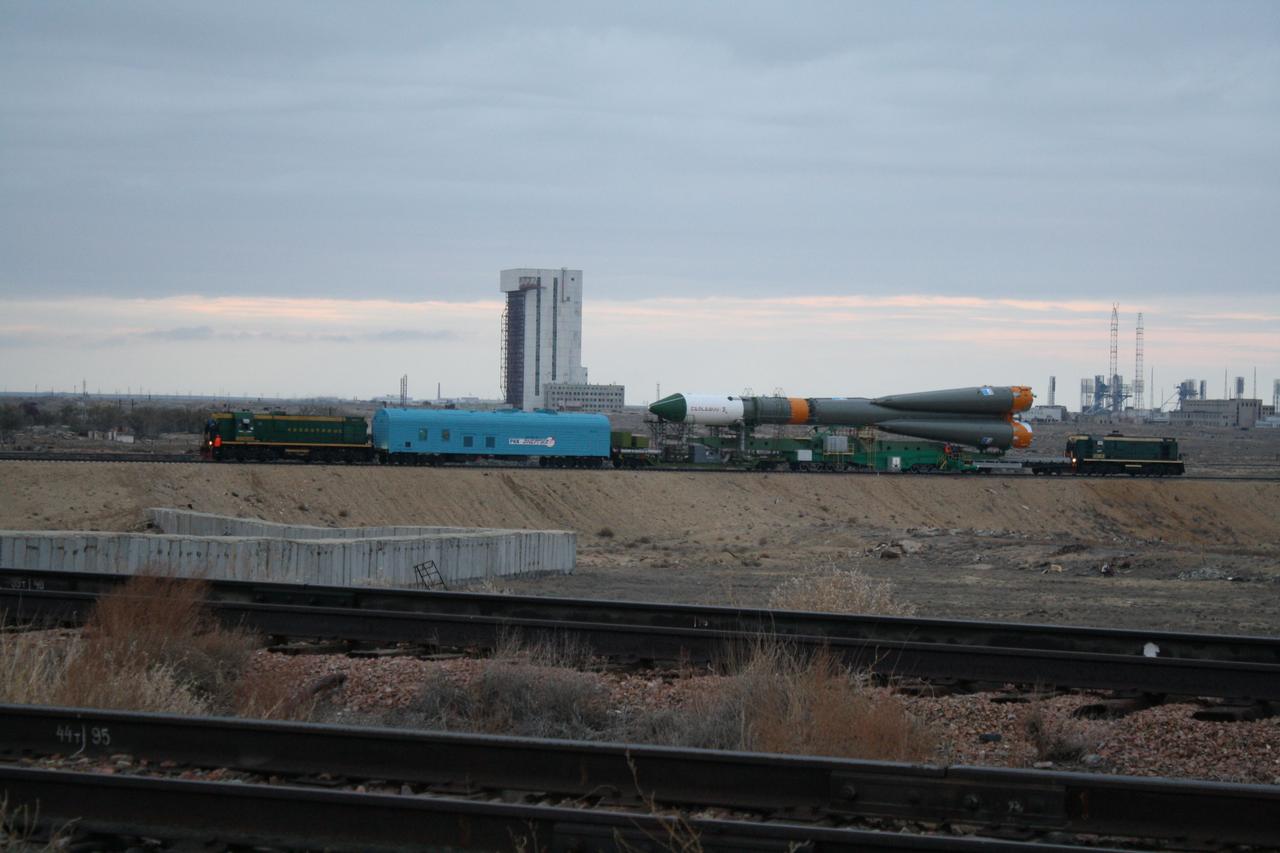
At the Baikonur Cosmodrome in Kazakhstan, the Soyuz booster and its ISS Progress 45 cargo craft rolled to the launch pad in bone-chilling weather on October 28, 2011 in preparation for launch October 31 to send the unmanned Russian resupply vehicle to the International Space Station. The launch will be the first for this configuration of the Soyuz booster rocket since a third-stage engine failure in flight August 24 that resulted in the loss of the previous Progress cargo craft, the ISS Progress 44. ISS Progress 45 is loaded with almost three tons of food, fuel and supplies for the residents of the orbital laboratory. Credit: NASA
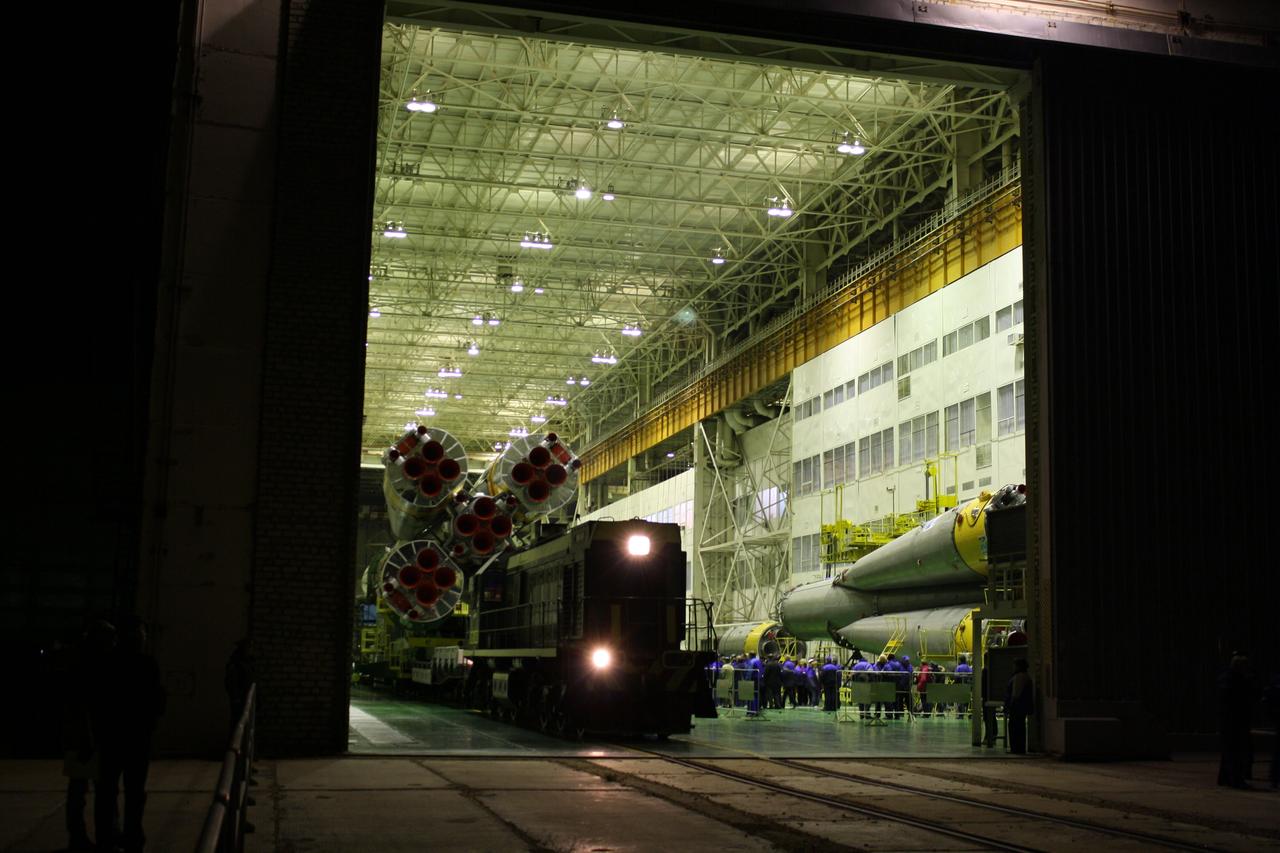
At the Baikonur Cosmodrome in Kazakhstan, the Soyuz booster and its ISS Progress 45 cargo craft rolled to the launch pad in bone-chilling weather on October 28, 2011 in preparation for launch October 31 to send the unmanned Russian resupply vehicle to the International Space Station. The launch will be the first for this configuration of the Soyuz booster rocket since a third-stage engine failure in flight August 24 that resulted in the loss of the previous Progress cargo craft, the ISS Progress 44. ISS Progress 45 is loaded with almost three tons of food, fuel and supplies for the residents of the orbital laboratory. Credit: NASA
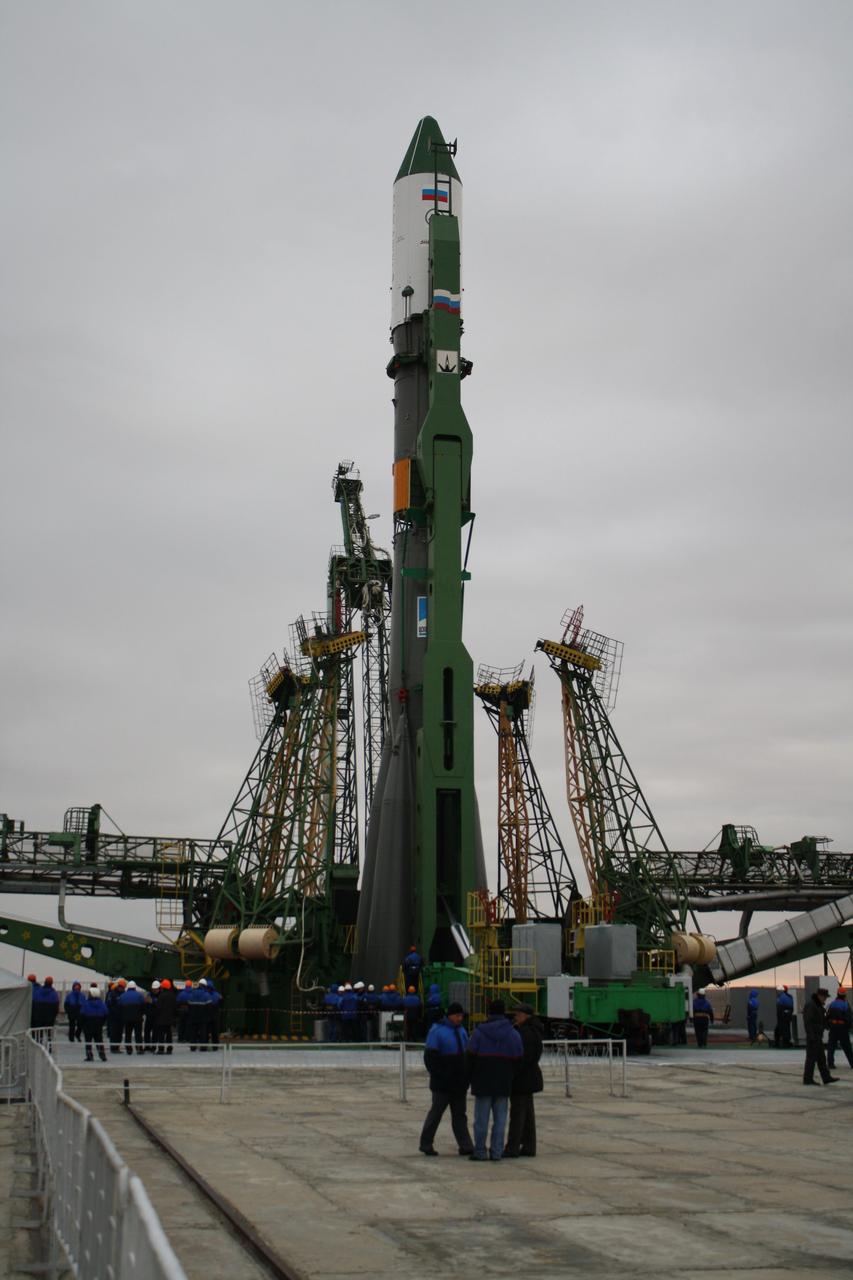
At the Baikonur Cosmodrome in Kazakhstan, the Soyuz booster and its ISS Progress 45 cargo craft rolled to the launch pad in bone-chilling weather on October 28, 2011 in preparation for launch October 31 to send the unmanned Russian resupply vehicle to the International Space Station. The launch will be the first for this configuration of the Soyuz booster rocket since a third-stage engine failure in flight August 24 that resulted in the loss of the previous Progress cargo craft, the ISS Progress 44. ISS Progress 45 is loaded with almost three tons of food, fuel and supplies for the residents of the orbital laboratory. Credit: NASA

A What’s On Board Briefing for SpaceX’s 19th Commercial Resupply Services (CRS-19) mission for NASA to the International Space Station took place on Dec. 3, 2019, at the agency’s Kennedy Space Center in Florida. Emily Germain-Lee, professor at the University of Connecticut School of Medicine and chief of endocrinology and diabetes, Connecticut Children’s Medical Center, discussed her on molecular signaling pathways that influence muscle degradation to prevent skeletal muscle and bone loss during spaceflight, and enhance recovery following return to Earth. The SpaceX Falcon 9 rocket and Dragon cargo module are scheduled to launch on Dec. 4, 2019, from Space Launch Complex 40 on Cape Canaveral Air Force Station in Florida.
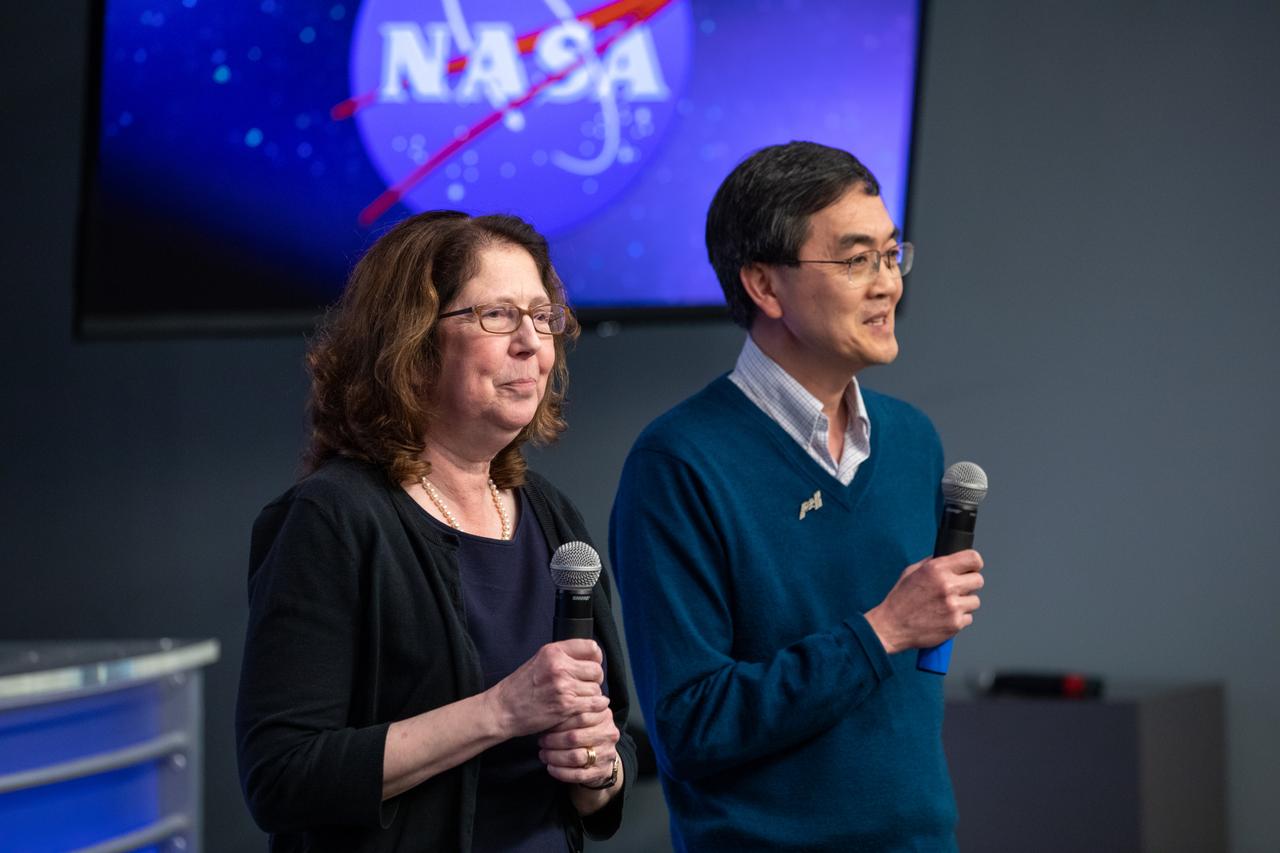
A What’s On Board Briefing for SpaceX’s 19th Commercial Resupply Services (CRS-19) mission for NASA to the International Space Station took place on Dec. 3, 2019, at the agency’s Kennedy Space Center in Florida. Se-Jin Lee (at right) professor at the Jackson Laboratory and University of Connecticut School of Medicine, and principal investigator of Rodent Research-19, and Emily Germain-Lee, professor at the University of Connecticut School of Medicine and chief of endocrinology and diabetes, Connecticut Children’s Medical Center, present their research to members of the media. They discussed the research on molecular signaling pathways that influence muscle degradation to prevent skeletal muscle and bone loss during spaceflight, and enhance recovery following return to Earth. The SpaceX Falcon 9 rocket and Dragon cargo module are scheduled to launch on Dec. 4, 2019, from Space Launch Complex 40 on Cape Canaveral Air Force Station in Florida.

A What’s On Board Briefing for SpaceX’s 19th Commercial Resupply Services (CRS-19) mission for NASA to the International Space Station took place on Dec. 3, 2019, at the agency’s Kennedy Space Center in Florida. Se-Jin Lee, professor at the Jackson Laboratory and University of Connecticut School of Medicine, and principal investigator of Rodent Research-19 presents his research to members of the media. He discussed the research on molecular signaling pathways that influence muscle degradation to prevent skeletal muscle and bone loss during spaceflight, and enhance recovery following return to Earth. The SpaceX Falcon 9 rocket and Dragon cargo module are scheduled to launch on Dec. 4, 2019, from Space Launch Complex 40 on Cape Canaveral Air Force Station in Florida.