
Marshall team members participate in SpaceX booster review meeting for the Commercial Crew Program. The Commercial Crew Program is primarily based at NASA’s Kennedy Space Center in Florida, the space agency’s premier launch site. About 350 people are working in the Commercial Crew Program for NASA, with almost half involved in the work at other NASA centers, including Marshall and Johnson Space Center in Houston.
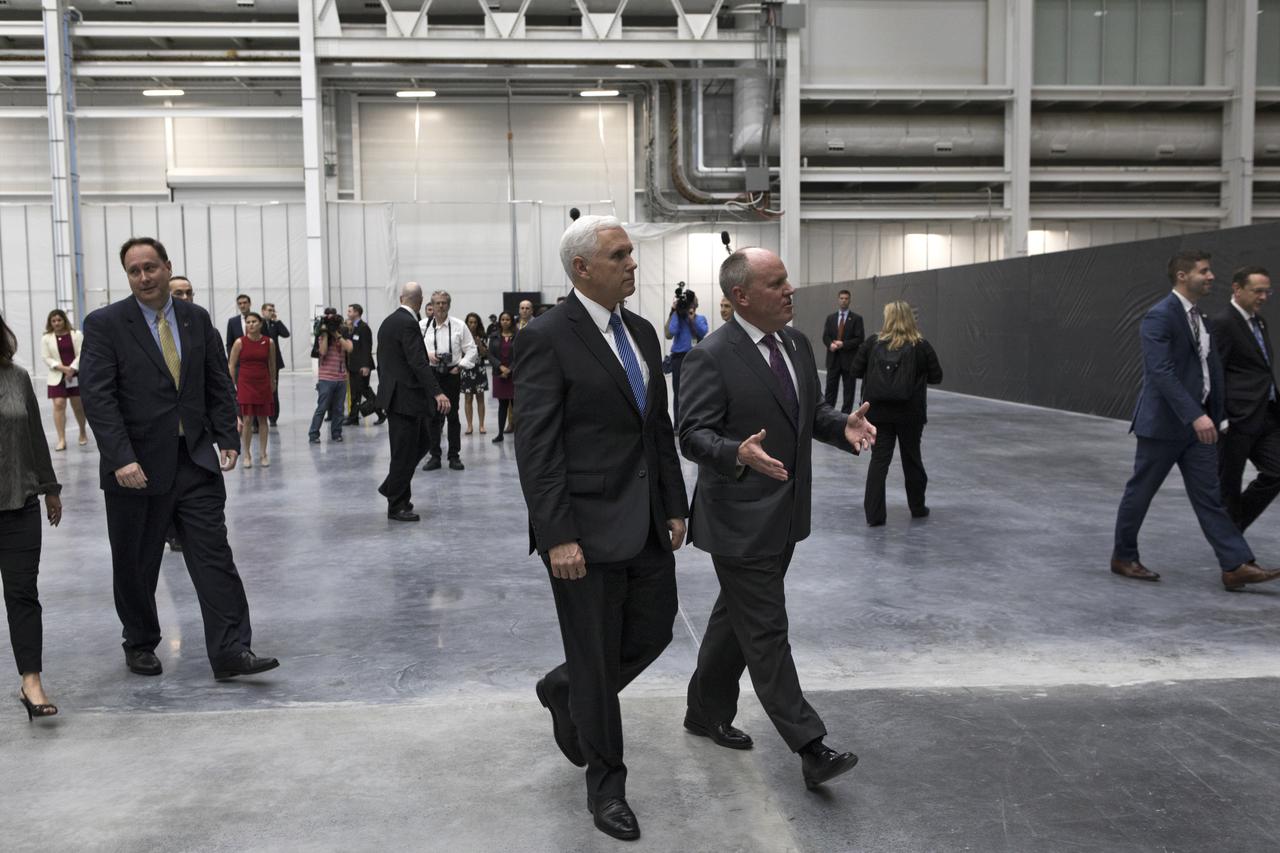
Vice President Mike Pence, at left, tours the Blue Origin Manufacturing Facility near NASA's Kennedy Space Center in Florida, Feb. 20, 2018, with the company's CEO Robert Smith. Vice President Pence viewed the flown New Shepard Booster and Crew Capsule. The booster was the first launch vehicle with a successful vertical takeoff and vertical landing to demonstrate reusability. During his visit, Pence will chair a meeting of the National Space Council on Feb. 21, 2018 in the high bay of NASA Kennedy Space Center's Space Station Processing Facility. The council's role is to advise the president regarding national space policy and strategy, and review the nation's long-range goals for space activities.
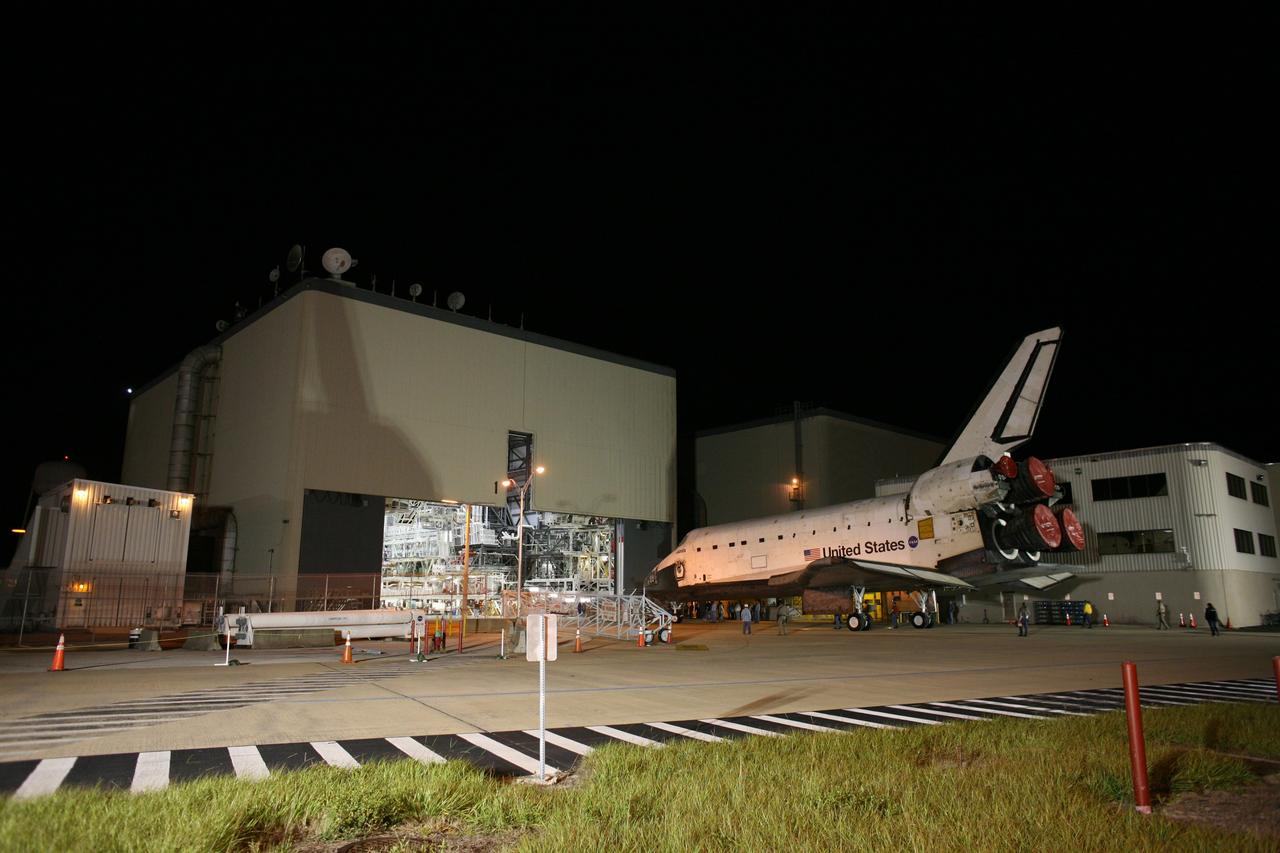
CAPE CANAVERAL, Fla. – Space shuttle Atlantis is towed into the Orbiter Processing Facility. Atlantis was removed from its external fuel tank and solid rocket boosters stack in the Vehicle Assembly Building after the delay of its STS-125 mission to NASA's Hubble Space Telescope. Atlantis' targeted launch on Oct. 14 was delayed when a system that transfers science data from the orbiting observatory to Earth malfunctioned on Sept. 27. The new target launch date is under review. Photo credit: NASA/Dimitri Gerondidakis
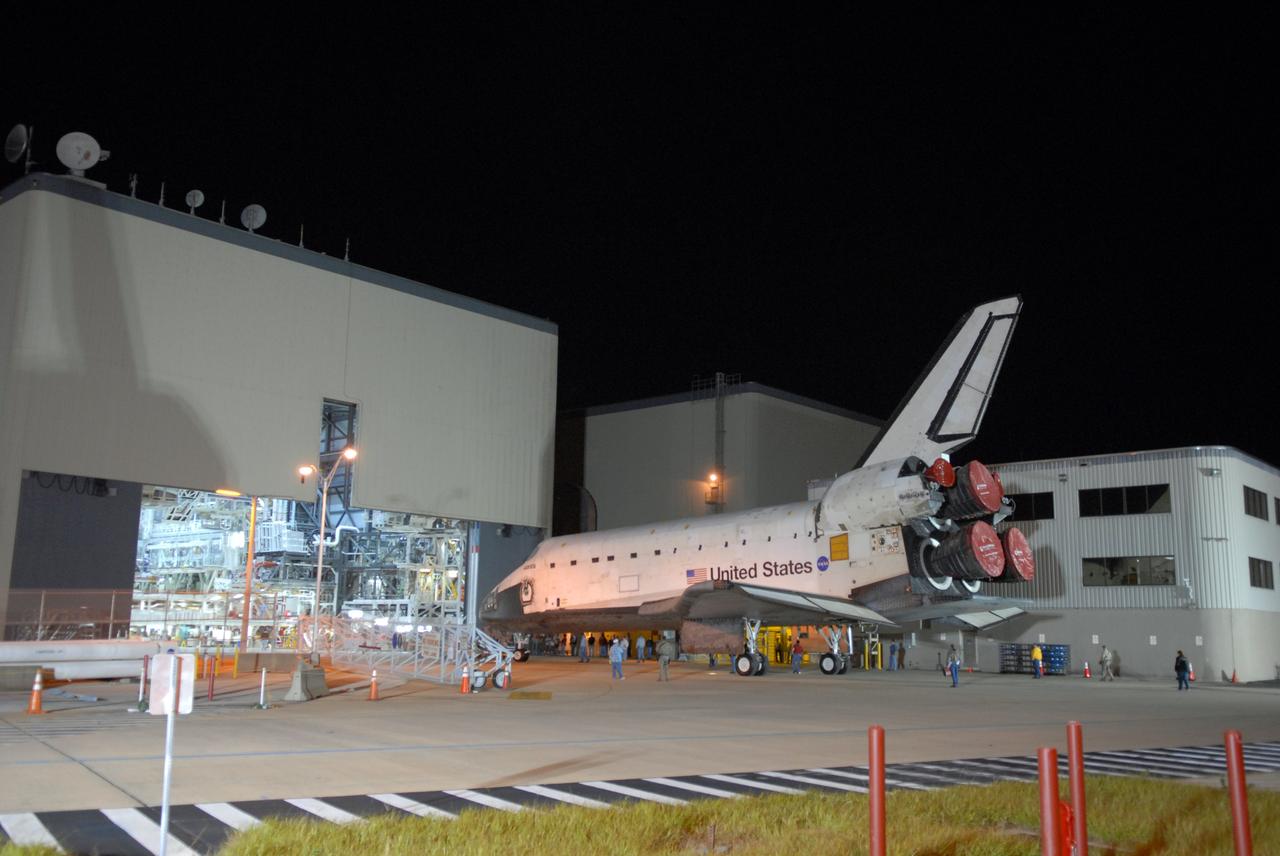
CAPE CANAVERAL, Fla. – Space shuttle Atlantis is towed into the Orbiter Processing Facility. Atlantis was removed from its external fuel tank and solid rocket boosters stack in the Vehicle Assembly Building after the delay of its STS-125 mission to NASA's Hubble Space Telescope. Atlantis' targeted launch on Oct. 14 was delayed when a system that transfers science data from the orbiting observatory to Earth malfunctioned on Sept. 27. The new target launch date is under review. Photo credit: NASA/Tim Jacobs
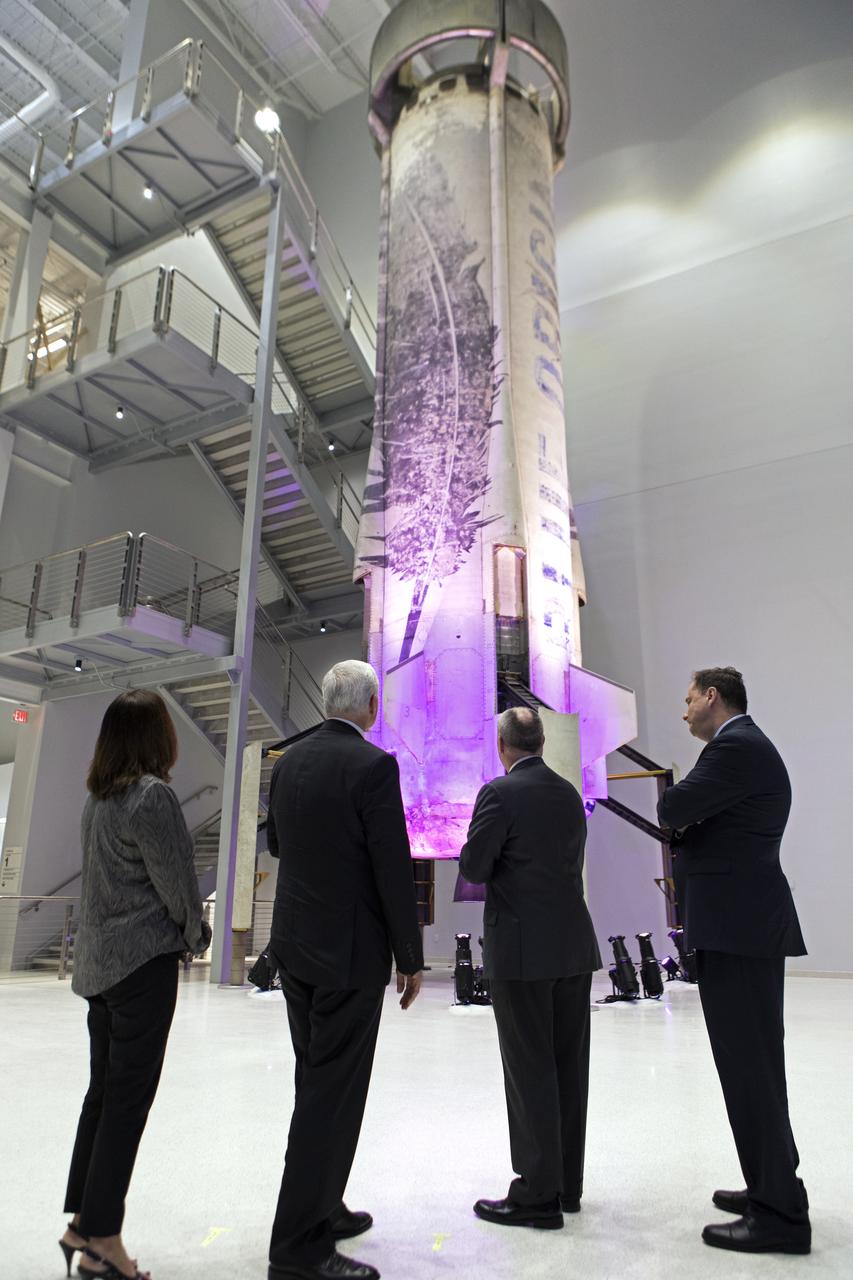
Vice President Mike Pence, second from left, tours the Blue Origin Manufacturing Facility near NASA's Kennedy Space Center in Florida, on Feb. 20, 2018. At left is the vice president's wife, Karen Pence. To his right are Blue Origin CEO Robert Smith, and acting NASA Administrator Robert Lightfoot. Vice President Pence viewed the flown New Shepard Booster and Crew Capsule. The booster was the first launch vehicle with a successful vertical takeoff and vertical landing to demonstrate reusability. During his visit, Pence will chair a meeting of the National Space Council on Feb. 21, 2018 in the high bay of NASA Kennedy Space Center's Space Station Processing Facility. The council's role is to advise the president regarding national space policy and strategy, and review the nation's long-range goals for space activities.

Vice President Mike Pence, second from left, tours the Blue Origin Manufacturing Facility near NASA's Kennedy Space Center in Florida, on Feb. 20, 2018. To his left is his wife, Karen Pence. To his right are Blue Origin CEO Robert Smith, and acting NASA Administrator Robert Lightfoot. Vice President Pence viewed the flown New Shepard Booster and Crew Capsule. The booster was the first launch vehicle with a successful vertical takeoff and vertical landing to demonstrate reusability. During his visit, Pence will chair a meeting of the National Space Council on Feb. 21, 2018 in the high bay of NASA Kennedy Space Center's Space Station Processing Facility. The council's role is to advise the president regarding national space policy and strategy, and review the nation's long-range goals for space activities.
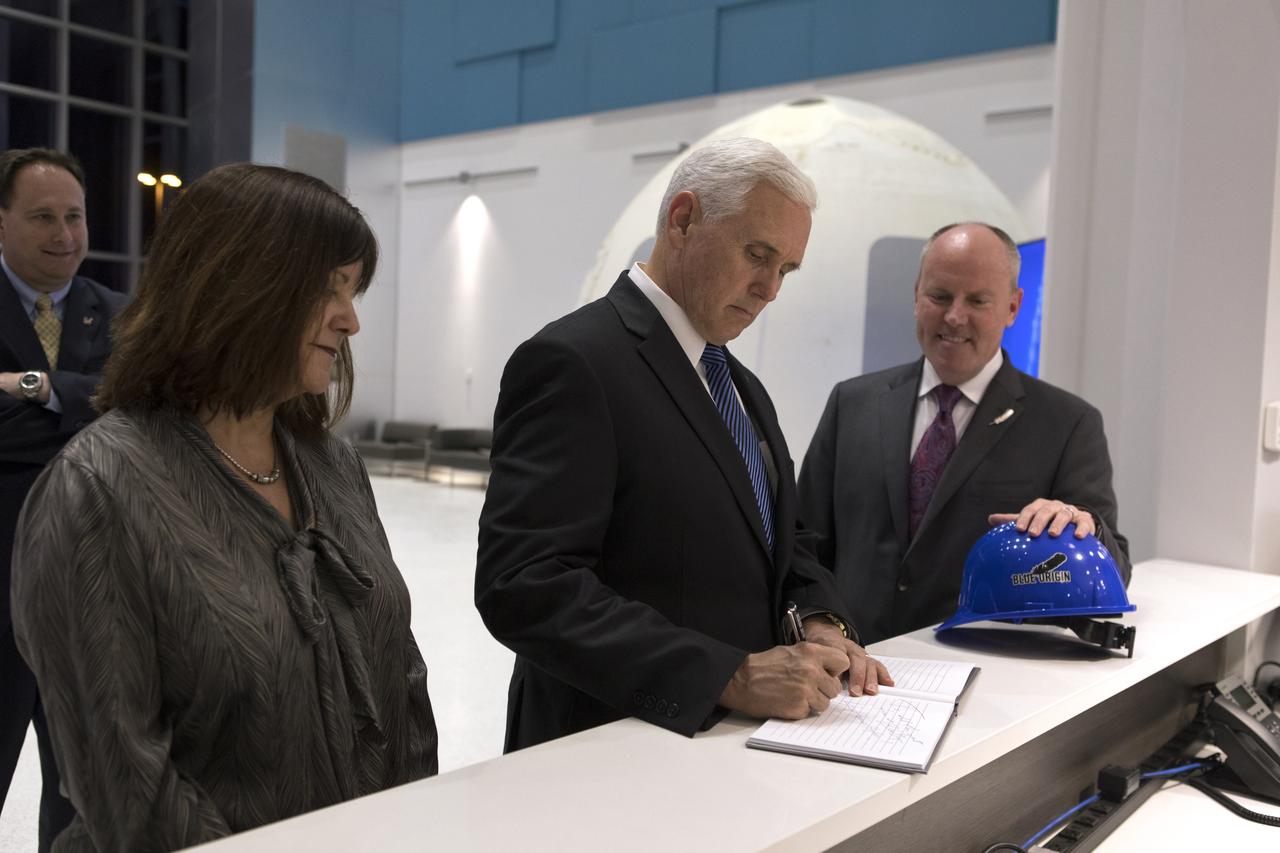
Vice President Mike Pence, center, signs a guest book during his tour of the Blue Origin Manufacturing Facility near NASA's Kennedy Space Center in Florida, on Feb. 20, 2018. At left is the vice president's wife, Karen Pence. To his right is Blue Origin CEO Robert Smith. Behind them is acting NASA Administrator Robert Lightfoot. Vice President Pence viewed the flown New Shepard Booster and Crew Capsule. The booster was the first launch vehicle with a successful vertical takeoff and vertical landing to demonstrate reusability. During his visit, Pence will chair a meeting of the National Space Council on Feb. 21, 2018 in the high bay of NASA Kennedy Space Center's Space Station Processing Facility. The council's role is to advise the president regarding national space policy and strategy, and review the nation's long-range goals for space activities.
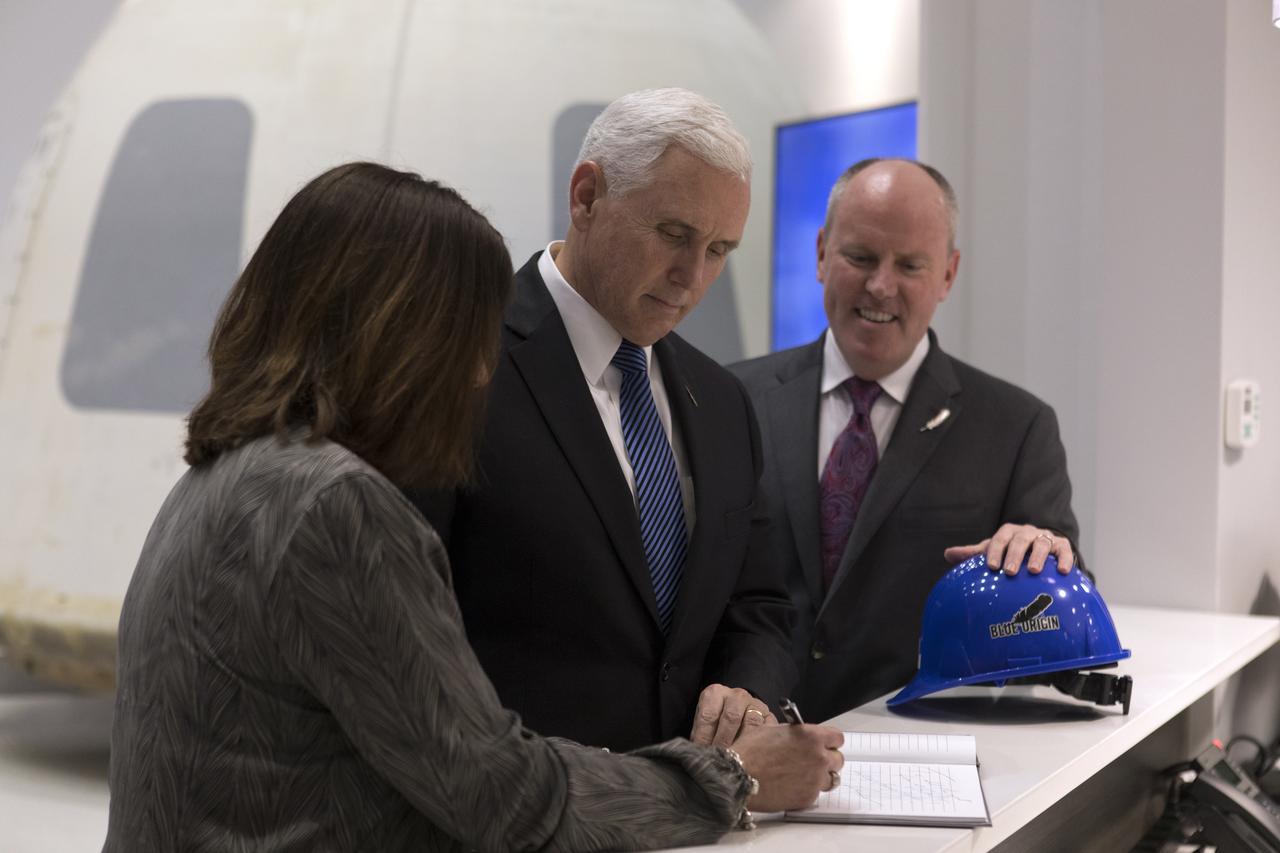
Vice President Mike Pence, center, and his wife, Karen Pence, sign a guest book during a tour of the Blue Origin Manufacturing Facility near NASA's Kennedy Space Center in Florida, on Feb. 20, 2018. At right is Blue Origin CEO Robert Smith. Vice President Pence viewed the flown New Shepard Booster and Crew Capsule. The booster was the first launch vehicle with a successful vertical takeoff and vertical landing to demonstrate reusability. During his visit, Pence will chair a meeting of the National Space Council on Feb. 21, 2018 in the high bay of NASA Kennedy Space Center's Space Station Processing Facility. The council's role is to advise the president regarding national space policy and strategy, and review the nation's long-range goals for space activities.
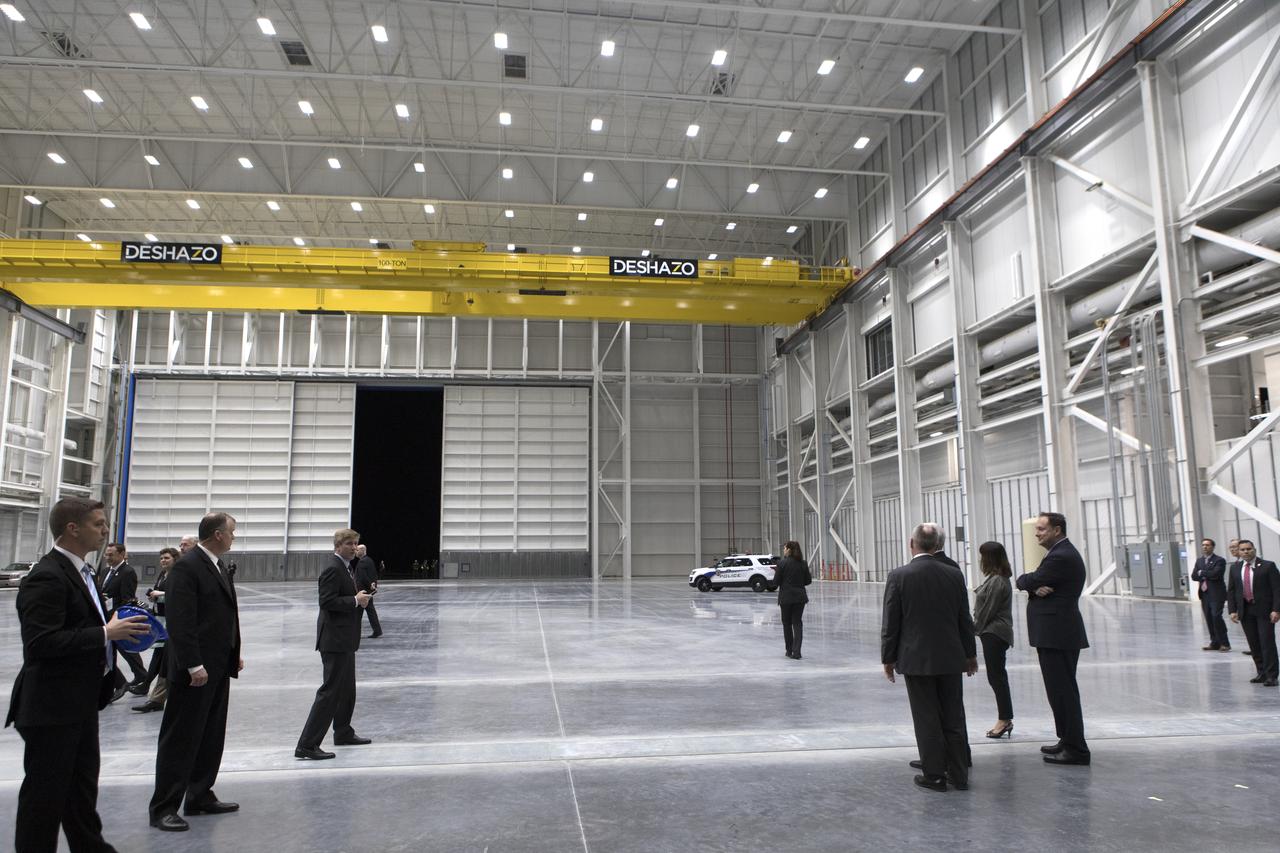
Vice President Mike Pence, hidden at right, tours the Blue Origin Manufacturing Facility near NASA's Kennedy Space Center in Florida, on Feb. 20, 2018. At far right is the vice president's wife, Karen Pence. Behind her at right are Blue Origin CEO Robert Smith, and acting NASA Administrator Robert Lightfoot. Vice President Pence viewed the flown New Shepard Booster and Crew Capsule. The booster was the first launch vehicle with a successful vertical takeoff and vertical landing to demonstrate reusability. During his visit, Pence will chair a meeting of the National Space Council on Feb. 21, 2018 in the high bay of NASA Kennedy Space Center's Space Station Processing Facility. The council's role is to advise the president regarding national space policy and strategy, and review the nation's long-range goals for space activities.
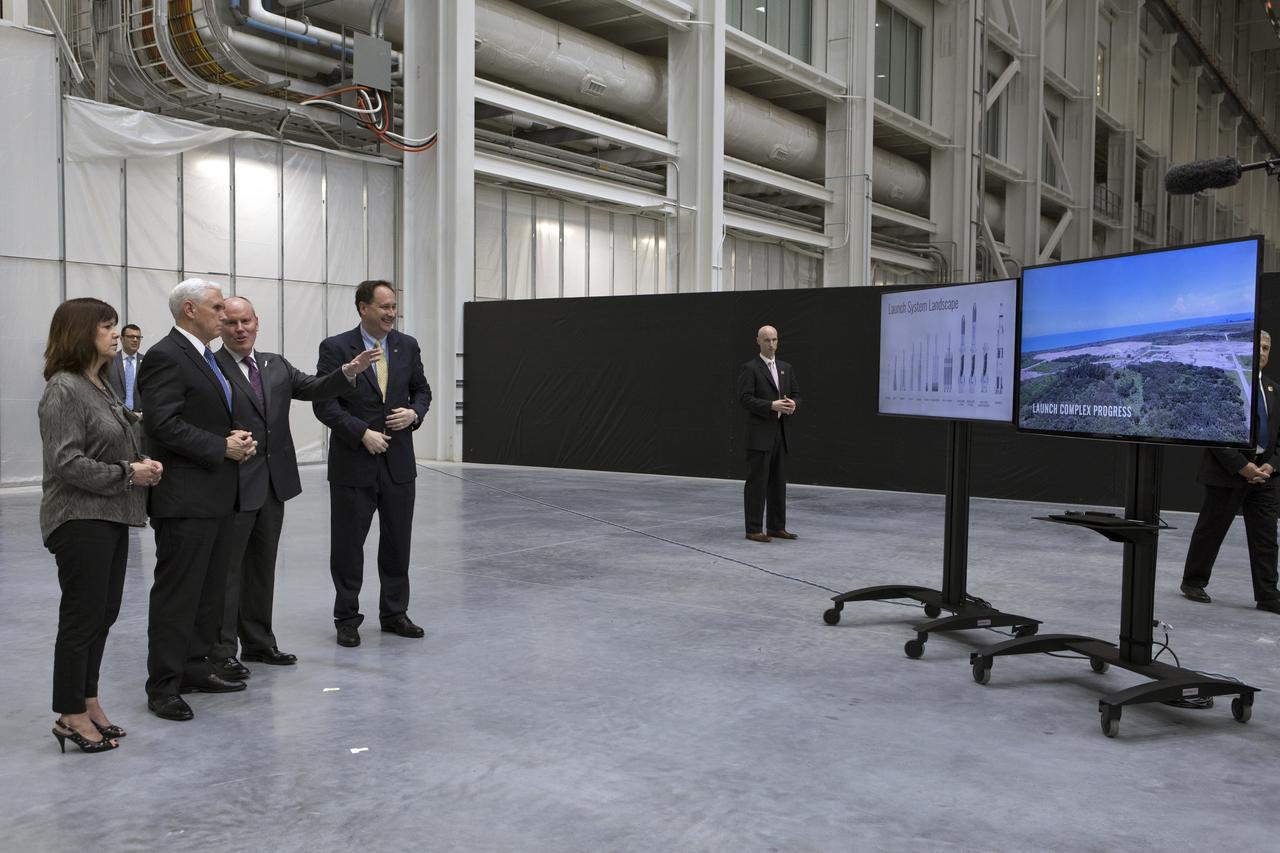
Vice President Mike Pence, second from left, tours the Blue Origin Manufacturing Facility near NASA's Kennedy Space Center in Florida, on Feb. 20, 2018. At left is the vice president's wife, Karen Pence. To his right are Blue Origin CEO Robert Smith, and acting NASA Administrator Robert Lightfoot. Vice President Pence viewed the flown New Shepard Booster and Crew Capsule. The booster was the first launch vehicle with a successful vertical takeoff and vertical landing to demonstrate reusability. During his visit, Pence will chair a meeting of the National Space Council on Feb. 21, 2018 in the high bay of NASA Kennedy Space Center's Space Station Processing Facility. The council's role is to advise the president regarding national space policy and strategy, and review the nation's long-range goals for space activities.
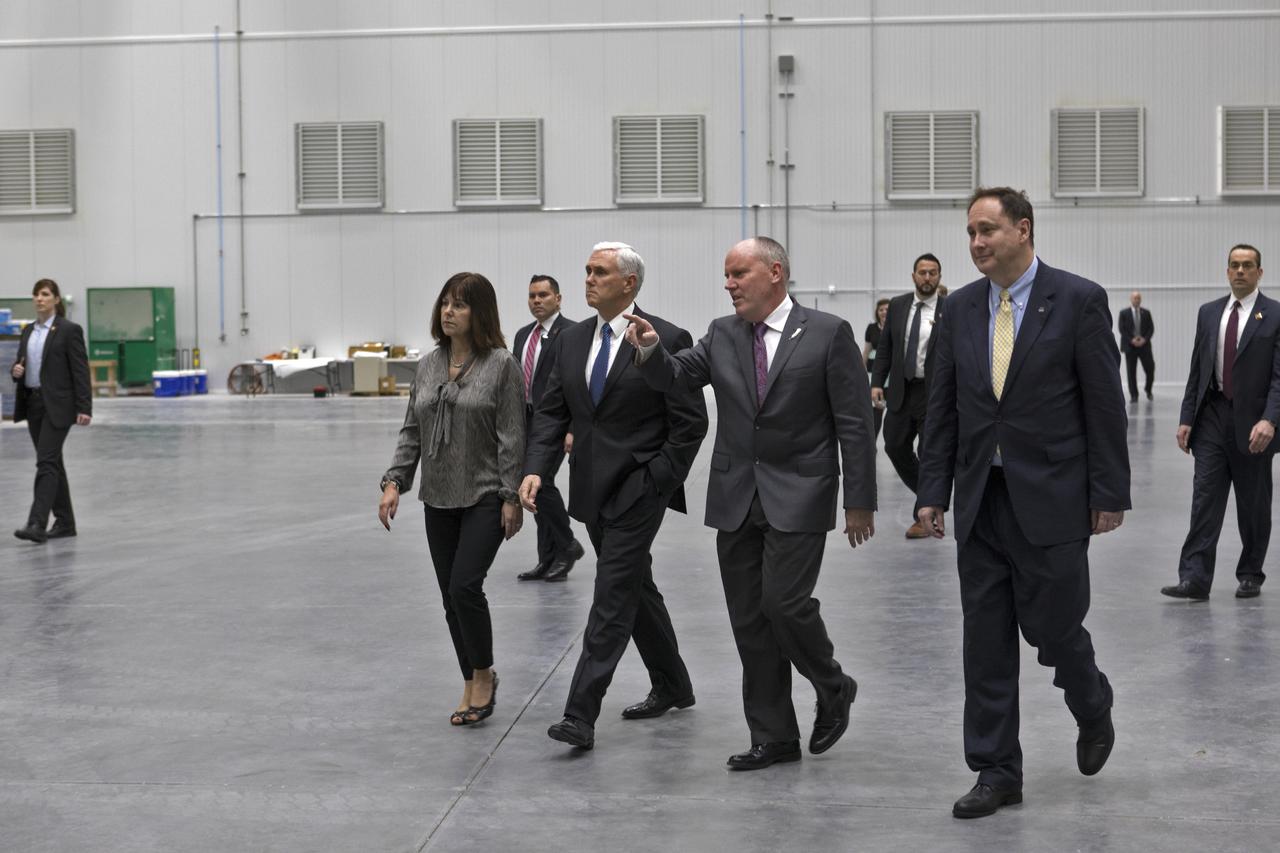
Vice President Mike Pence, second from left, tours the Blue Origin Manufacturing Facility near NASA's Kennedy Space Center in Florida, on Feb. 20, 2018. At left is the vice president's wife, Karen Pence. To his right are Blue Origin CEO Robert Smith, and acting NASA Administrator Robert Lightfoot. Vice President Pence viewed the flown New Shepard Booster and Crew Capsule. The booster was the first launch vehicle with a successful vertical takeoff and vertical landing to demonstrate reusability. During his visit, Pence will chair a meeting of the National Space Council on Feb. 21, 2018 in the high bay of NASA Kennedy Space Center's Space Station Processing Facility. The council's role is to advise the president regarding national space policy and strategy, and review the nation's long-range goals for space activities.
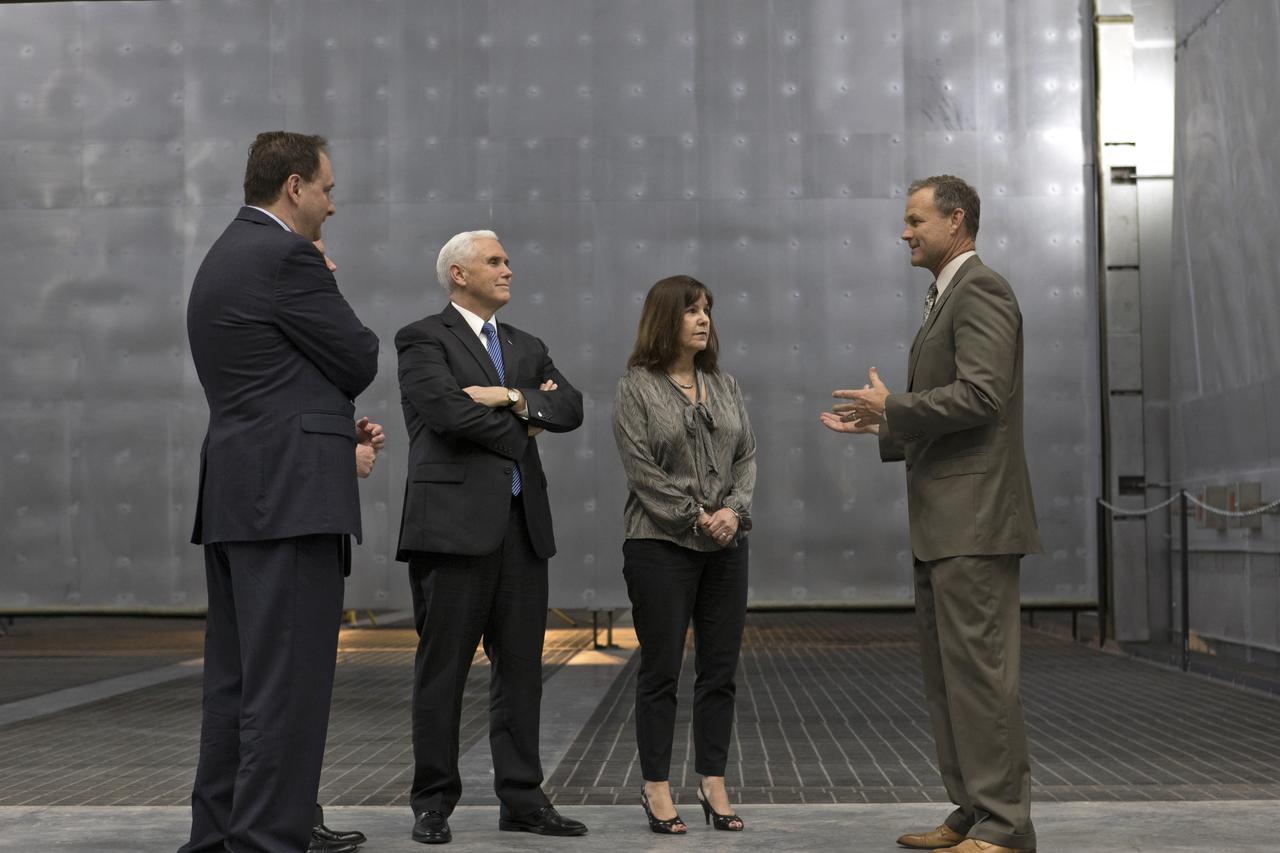
Vice President Mike Pence, second from left, tours the Blue Origin Manufacturing Facility near NASA's Kennedy Space Center in Florida, on Feb. 20, 2018. To his left is acting NASA Administrator Robert Lightfoot. At right is the vice president's wife, Karen Pence. At far right is Scott Henderson, Blue Origin director of Test and Flight Operations. Vice President Pence viewed the flown New Shepard Booster and Crew Capsule. The booster was the first launch vehicle with a successful vertical takeoff and vertical landing to demonstrate reusability. During his visit, Pence will chair a meeting of the National Space Council on Feb. 21, 2018 in the high bay of NASA Kennedy Space Center's Space Station Processing Facility. The council's role is to advise the president regarding national space policy and strategy, and review the nation's long-range goals for space activities.
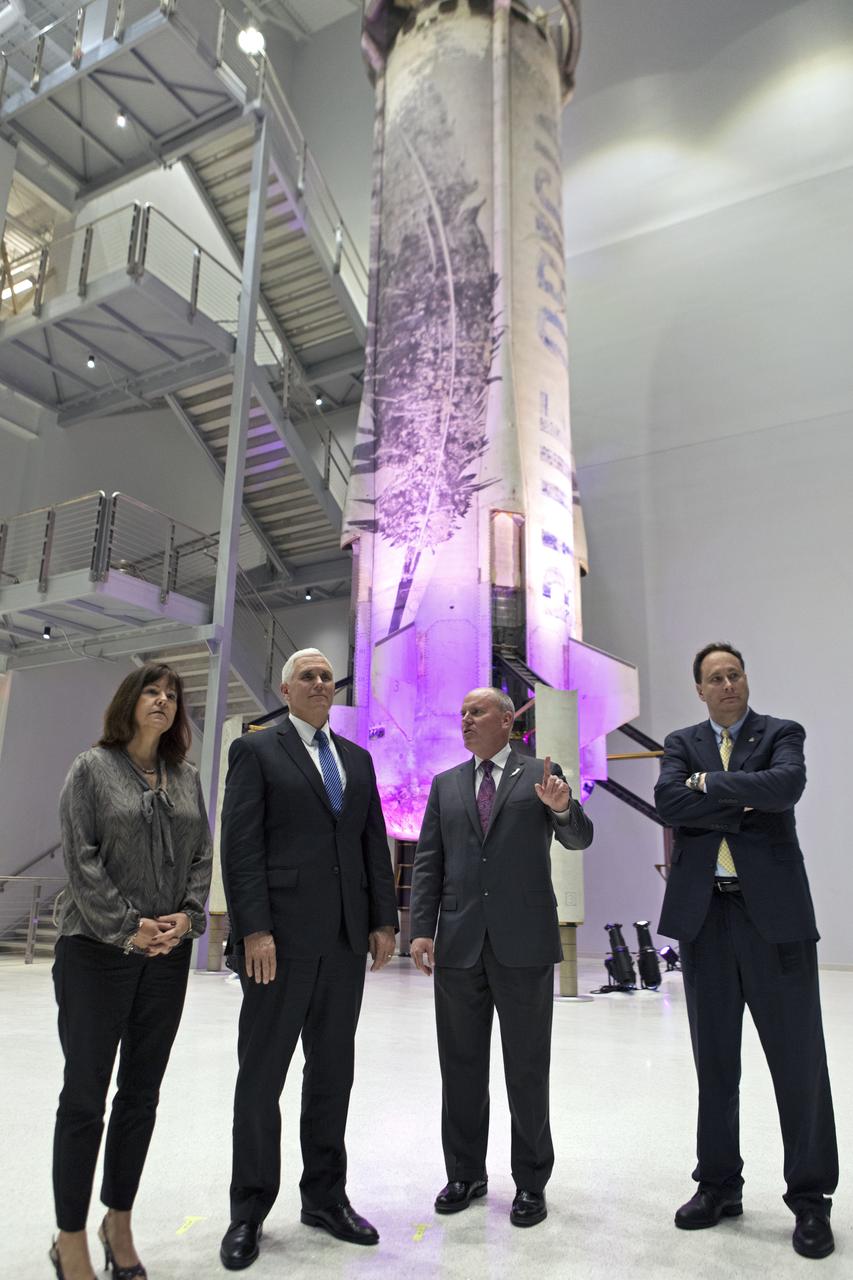
Vice President Mike Pence, second from left, tours the Blue Origin Manufacturing Facility near NASA's Kennedy Space Center in Florida, on Feb. 20, 2018. From left, are Karen Pence, Blue Origin CEO Robert Smith, and acting NASA Administrator Robert Lightfoot. Vice President Pence viewed the flown New Shepard Booster and Crew Capsule. The booster was the first launch vehicle with a successful vertical takeoff and vertical landing to demonstrate reusability. During his visit, Pence will chair a meeting of the National Space Council on Feb. 21, 2018 in the high bay of NASA Kennedy Space Center's Space Station Processing Facility. The council's role is to advise the president regarding national space policy and strategy, and review the nation's long-range goals for space activities.
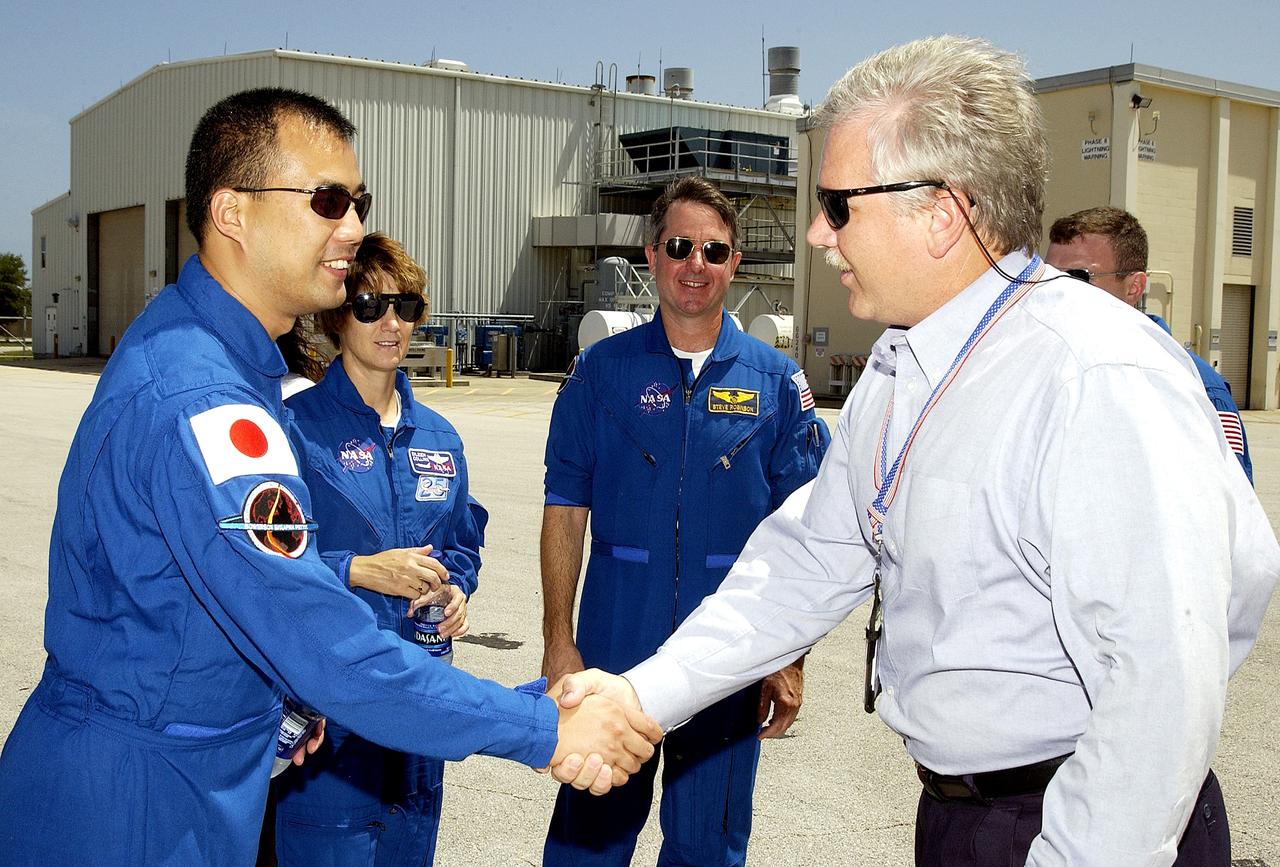
KENNEDY SPACE CENTER, FLA. - The STS-114 crew is welcomed to Hangar AF, Cape Canaveral Air Force Station, by Joseph Chaput, with United Space Alliance. The crew, from left, are Mission Specialist Soichi Noguchi, Commander Eileen Collins, Mission Specialist Stephen Robinson and (partially hidden) Pilot James Kelly. Noguchi is with the Japanese space agency NASDA. On the mission, the crew will carry the MultiPurpose Logistics Module (MPLM) Raffaello and External Stowage Platform 2 to the International Space Station. The MPLM will contain supplies and equipment. Another goal of the mission is to remove and replace a Control Moment Gyro. Launch date for mission STS-114 is under review. Hangar AF is the site where SRB Retrieval Ships return the spent solid rocket boosters after a Shuttle launch. The SRBs are lifted from the water and placed on rail cars to begin the disassembly and refurbishment process.
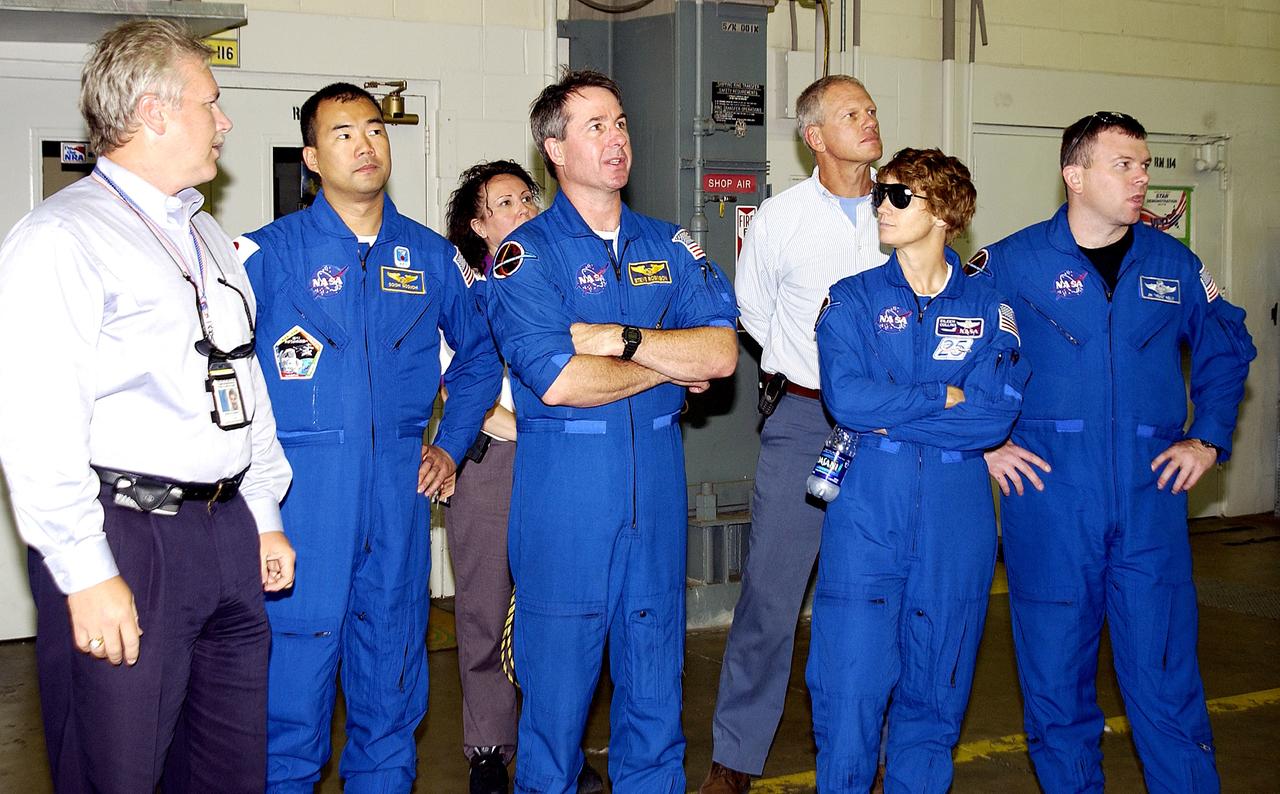
KENNEDY SPACE CENTER, FLA. - In Hangar AF, Cape Canaveral Air Force Station, the STS-114 crew look at equipment used to disassemble and refurbish solid rocket boosters retrieved after a Shuttle launch. Starting second from left are Mission Specialist Soichi Noguchi, Mission Specialist Stephen Robinson, Commander Eileen Collins, and Pilot James Kelly. Noguchi is with the Japanese space agency NASDA. At far left is Joseph Chaput, with United Space Alliance. On their mission, the crew will carry the MultiPurpose Logistics Module (MPLM) Raffaello and External Stowage Platform 2 to the International Space Station. The MPLM will contain supplies and equipment. Another goal of the mission is to remove and replace a Control Moment Gyro. Launch date for mission STS-114 is under review.
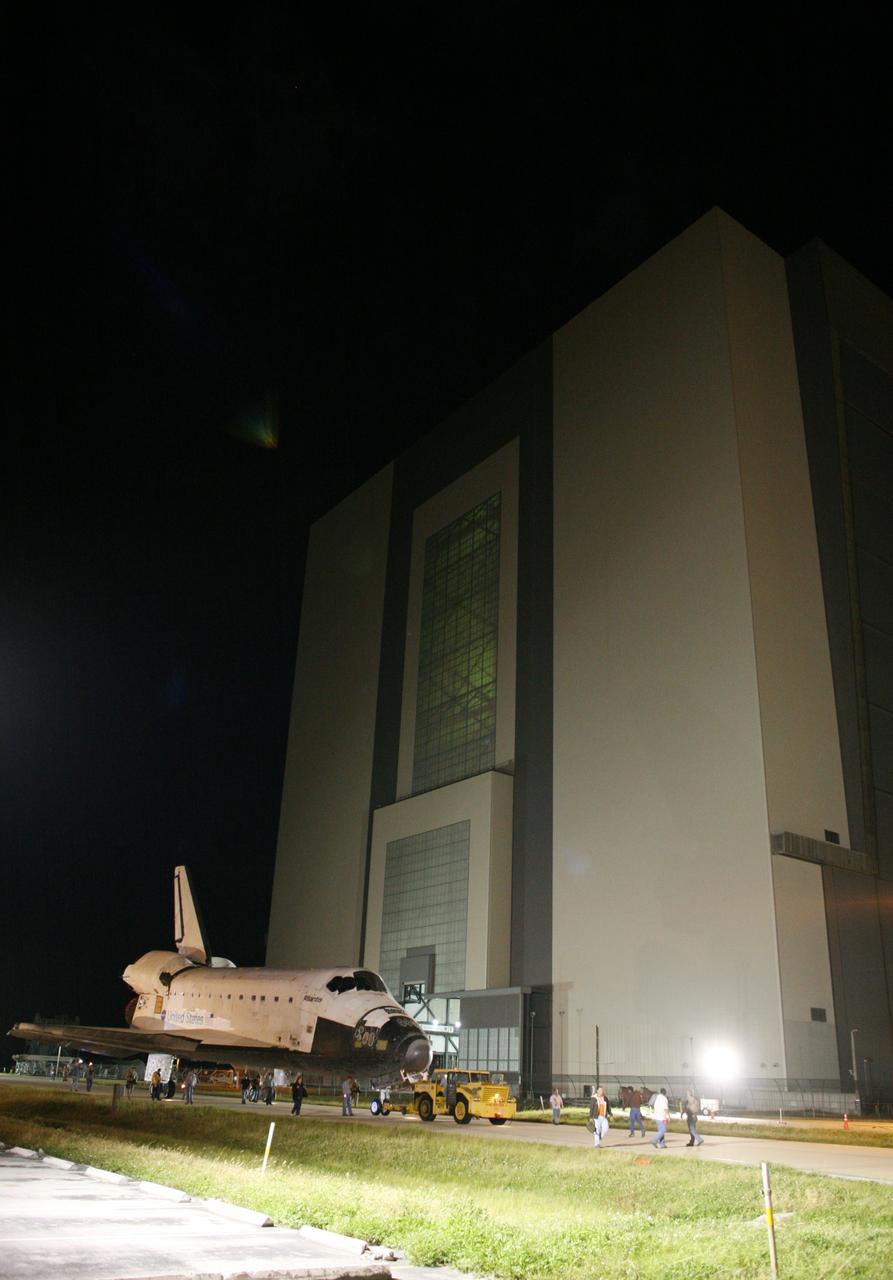
CAPE CANAVERAL, Fla. – Space shuttle Atlantis is towed out of the Vehicle Assembly Building at NASA's Kennedy Space Center in Florida. Atlantis was removed from its external fuel tank and solid rocket boosters stack after the delay of its STS-125 mission to NASA's Hubble Space Telescope. It is returning to the Orbiter Processing Facility. Atlantis' targeted launch on Oct. 14 was delayed when a system that transfers science data from the orbiting observatory to Earth malfunctioned on Sept. 27. The new target launch date is under review. Photo credit: NASA/Dimitri Gerondidakis
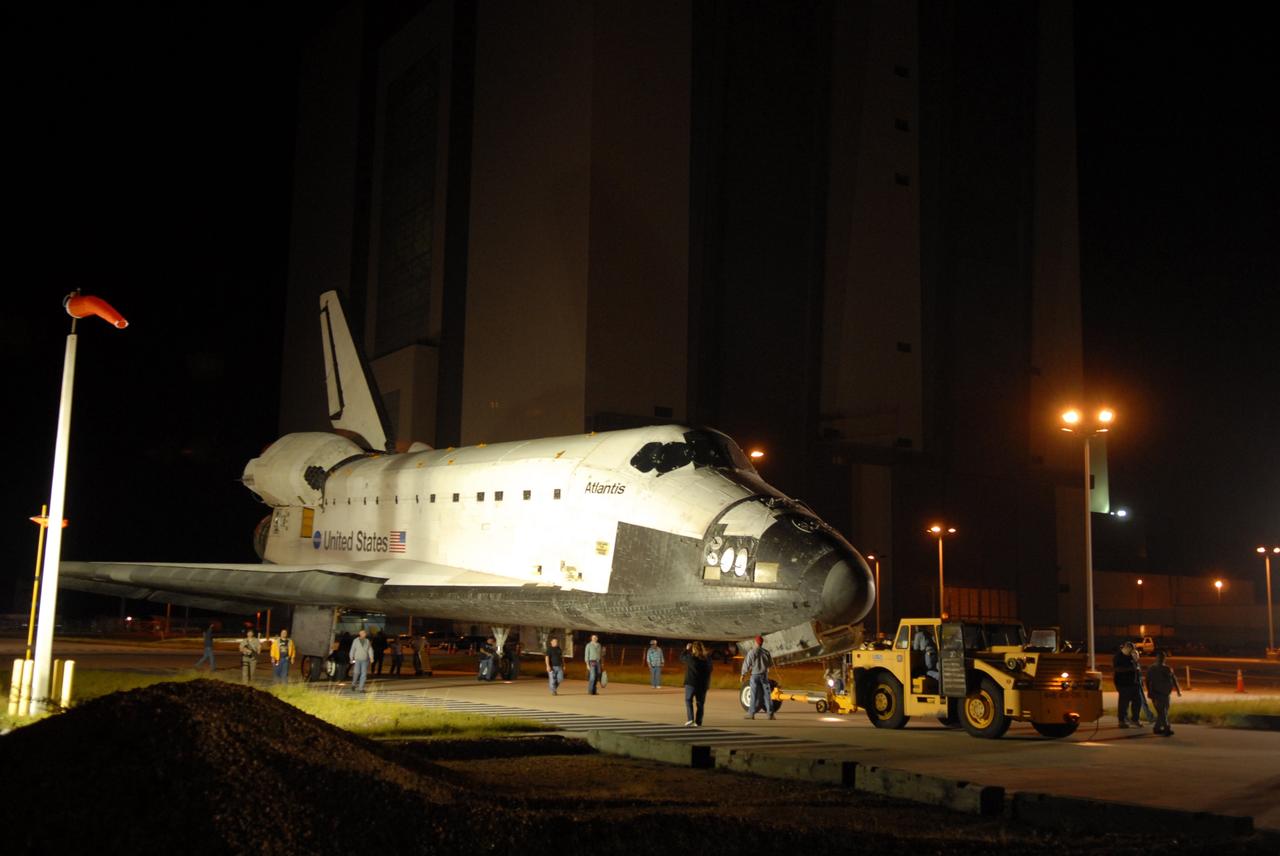
CAPE CANAVERAL, Fla. – Space shuttle Atlantis is towed from the Vehicle Assembly Building to the Orbiter Processing Facility at NASA's Kennedy Space Center in Florida. Atlantis was removed from its external fuel tank and solid rocket boosters stack after the delay of its STS-125 mission to NASA's Hubble Space Telescope. Atlantis' targeted launch on Oct. 14 was delayed when a system that transfers science data from the orbiting observatory to Earth malfunctioned on Sept. 27. The new target launch date is under review. Photo credit: NASA/Tim Jacobs
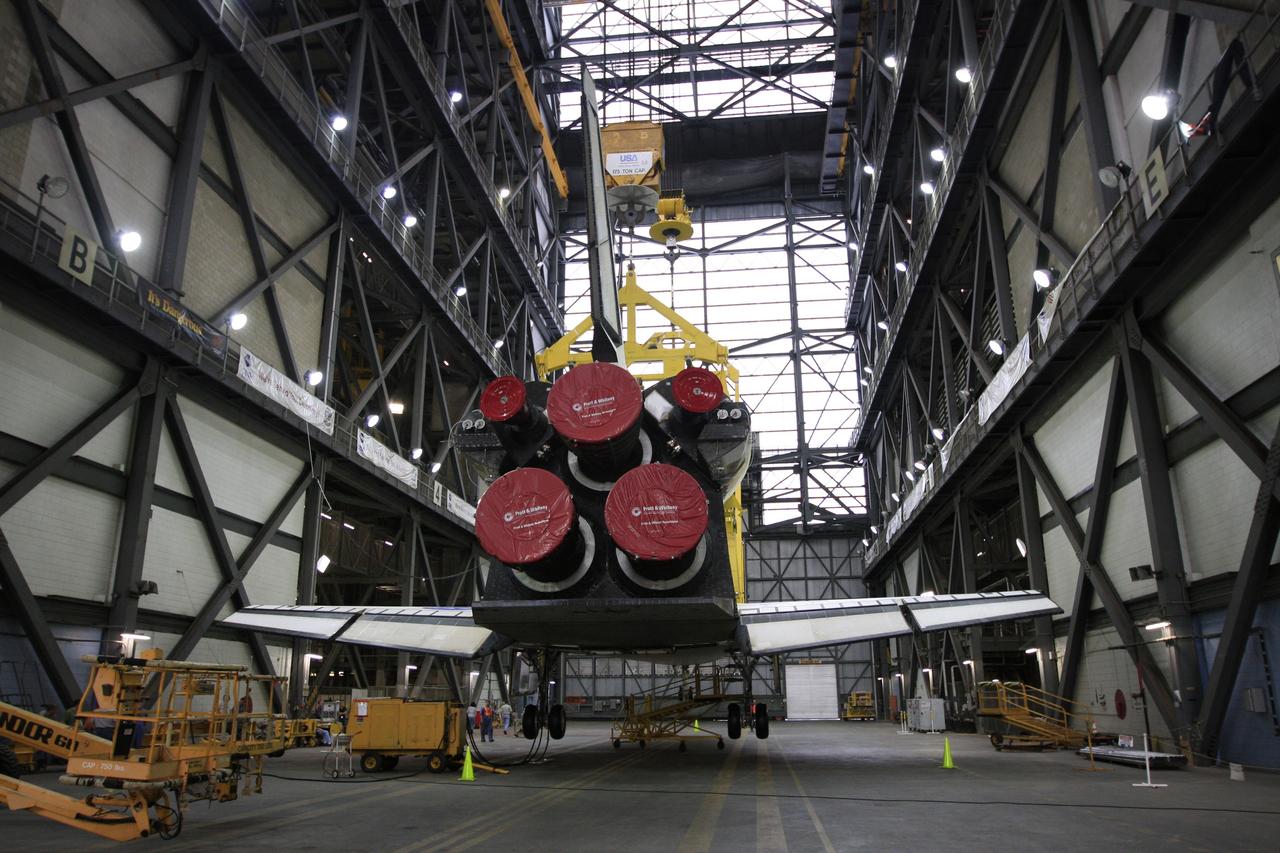
CAPE CANAVERAL, Fla. – In the transfer aisle of the Vehicle Assembly Building at NASA's Kennedy Space Center in Florida, space shuttle Atlantis has been lowered to a horizontal position and its wheels lowered. Atlantis has been removed from its external fuel tank and solid rocket boosters stack after the delay of its STS-125 mission to NASA's Hubble Space Telescope. Atlantis will be returned to the Orbiter Processing Facility. Atlantis' targeted launch on Oct. 14 was delayed when a system that transfers science data from the orbiting observatory to Earth malfunctioned on Sept. 27. The new target launch date is under review. Photo credit: NASA/Troy Cryder
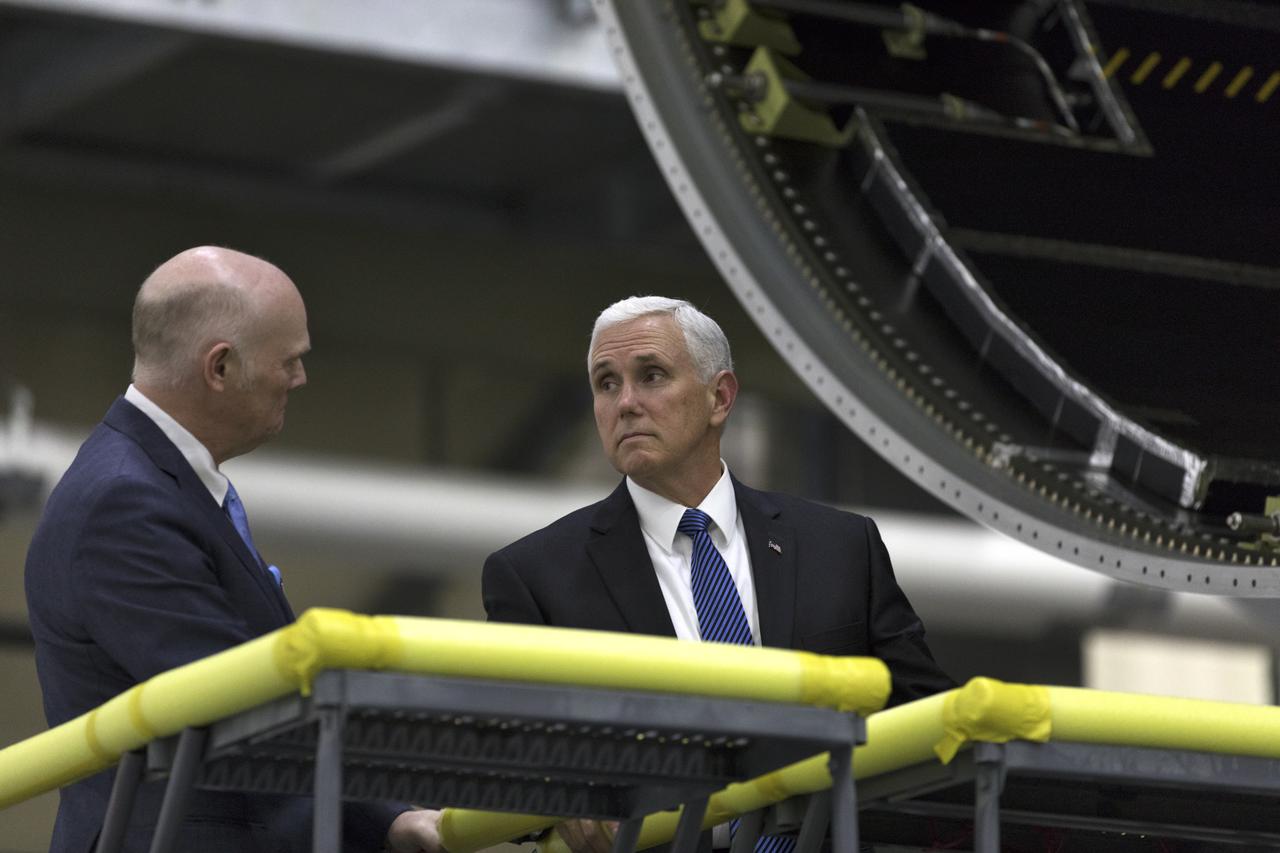
United Launch Alliance (ULA) president and CEO Tory Bruno, left, leads a tour for Vice President Mike Pence on Feb. 20, 2018. They are in the ULA Horizontal Integration Facility (HIF), at Cape Canaveral Air Force Station in Florida. The HIF is where the Delta IV Heavy boosters are being processed for NASA’s upcoming Parker Solar Probe mission. During his visit, Pence will chair a meeting of the National Space Council on Feb. 21, 2018 in the high bay of NASA Kennedy Space Center’s Space Station Processing Facility. The council's role is to advise the president regarding national space policy and strategy, and review the nation's long-range goals for space activities.
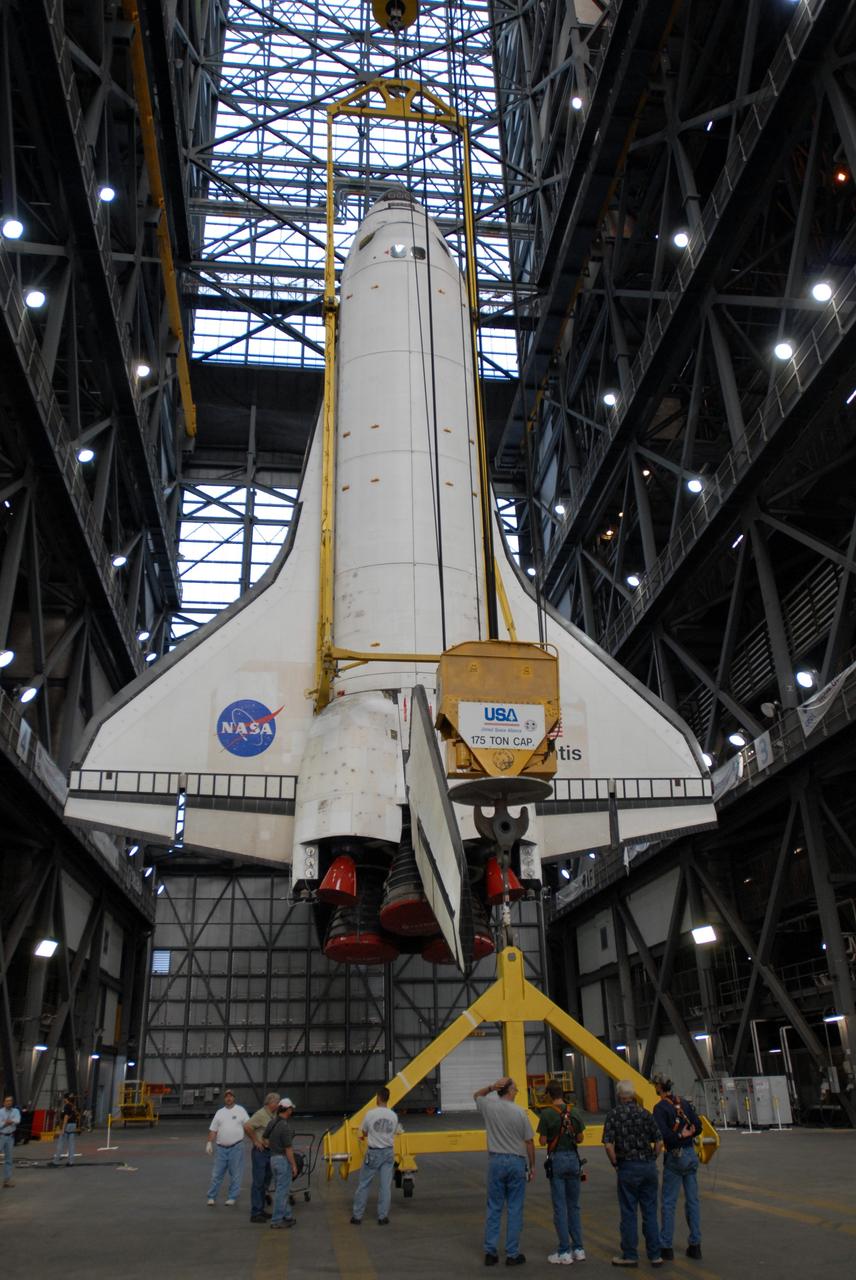
CAPE CANAVERAL, Fla. – As it hangs suspended in the Vehicle Assembly Building at NASA's Kennedy Space Center in Florida, space shuttle Atlantis is being fitted with an apparatus that will help lower it to a horizontal position. Atlantis has been taken off its external fuel tank and solid rocket boosters stack after of the delay of its STS-125 mission to NASA's Hubble Space Telescope. Atlantis will be returned to the Orbiter Processing Facility. Atlantis' targeted launch on Oct. 14 was delayed when a system that transfers science data from the orbiting observatory to Earth malfunctioned on Sept. 27. The new target launch date is under review. Photo credit: NASA/Jim Grossmann
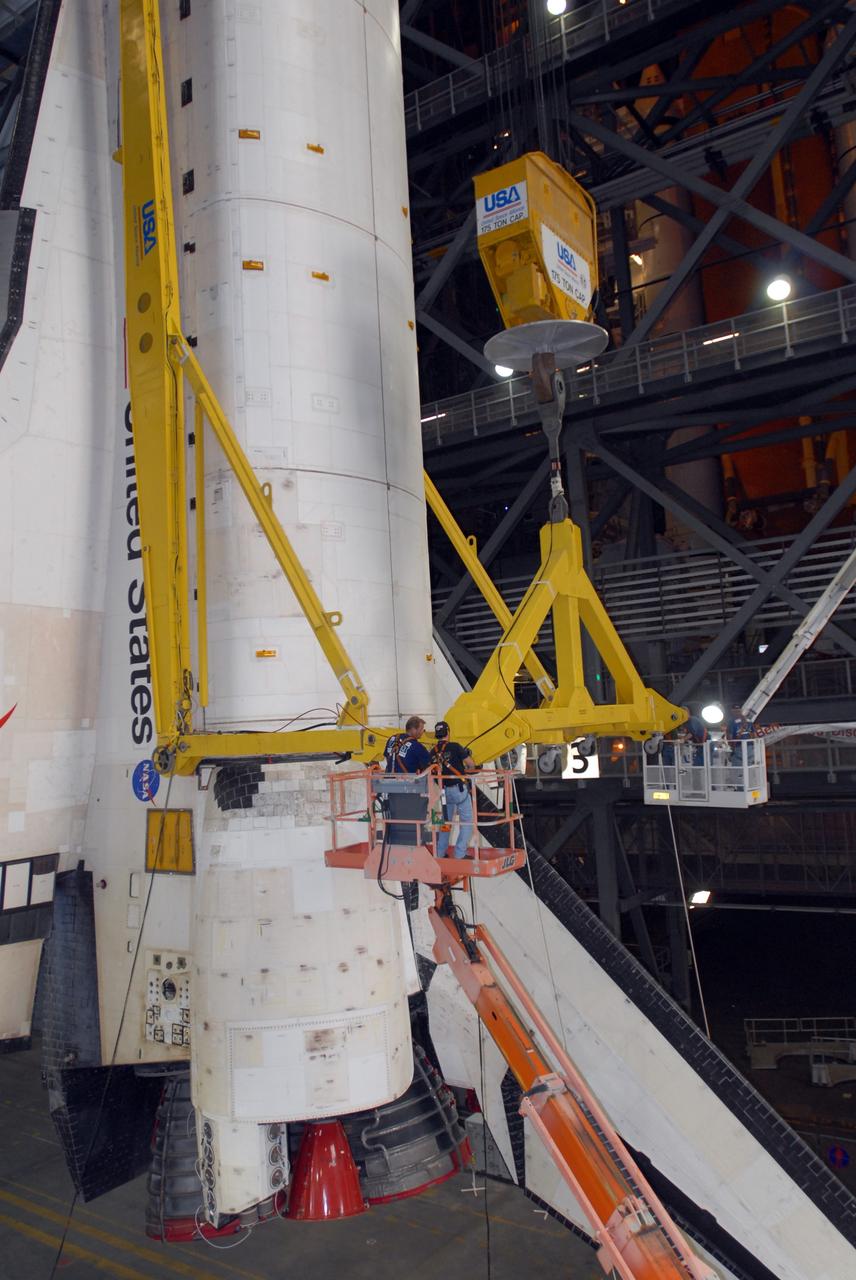
CAPE CANAVERAL, Fla. – As it hangs suspended in the Vehicle Assembly Building at NASA's Kennedy Space Center in Florida, space shuttle Atlantis is being fitted with an apparatus that will help lower it to a horizontal position. Atlantis has been taken off its external fuel tank and solid rocket boosters stack after of the delay of its STS-125 mission to NASA's Hubble Space Telescope. Atlantis will be returned to the Orbiter Processing Facility. Atlantis' targeted launch on Oct. 14 was delayed when a system that transfers science data from the orbiting observatory to Earth malfunctioned on Sept. 27. The new target launch date is under review. Photo credit: NASA/Jim Grossmann
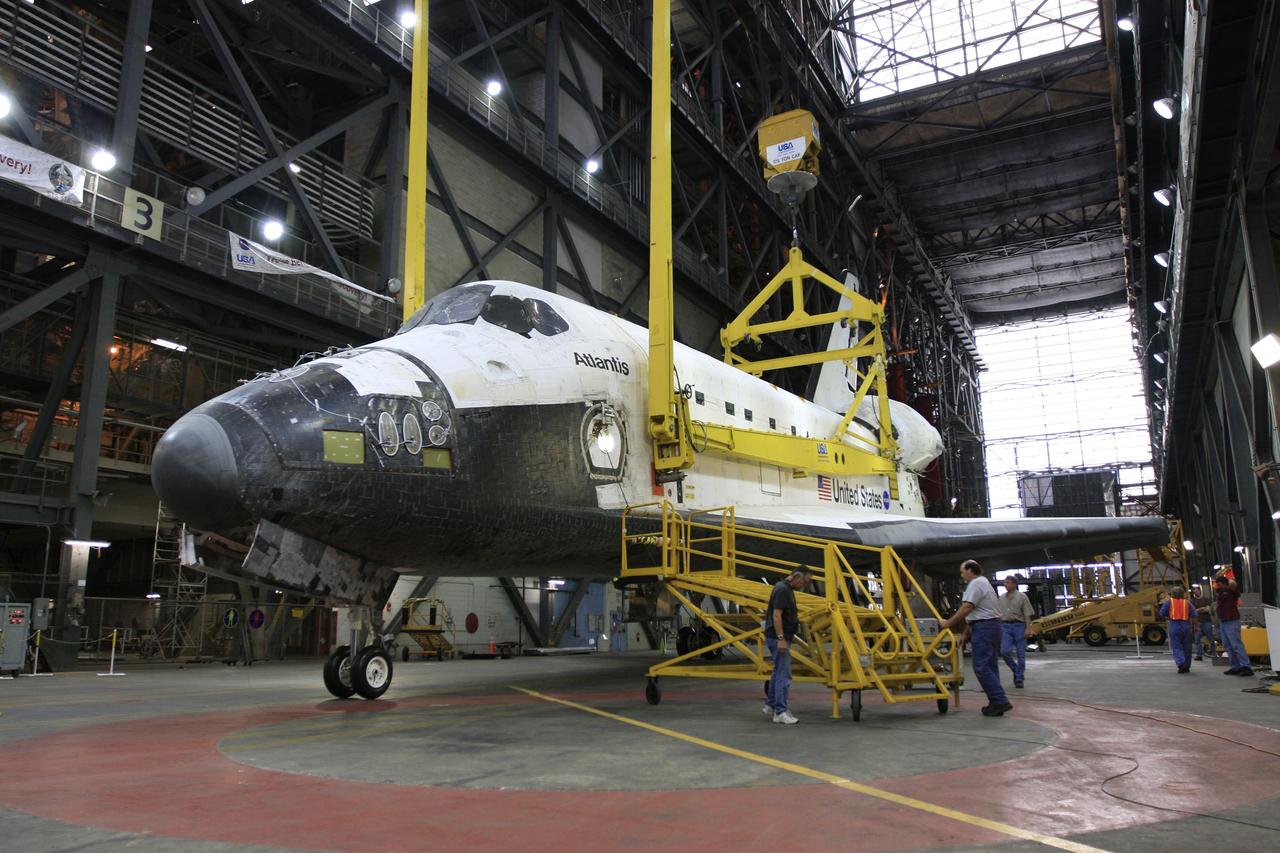
CAPE CANAVERAL, Fla. – Space shuttle Atlantis is lowered onto its wheels in the transfer aisle of the Vehicle Assembly Building at NASA's Kennedy Space Center in Florida. Atlantis has been removed from its external fuel tank and solid rocket boosters stack after the delay of its STS-125 mission to NASA's Hubble Space Telescope. Atlantis will be returned to the Orbiter Processing Facility. Atlantis' targeted launch on Oct. 14 was delayed when a system that transfers science data from the orbiting observatory to Earth malfunctioned on Sept. 27. The new target launch date is under review. Photo credit: NASA/Troy Cryder
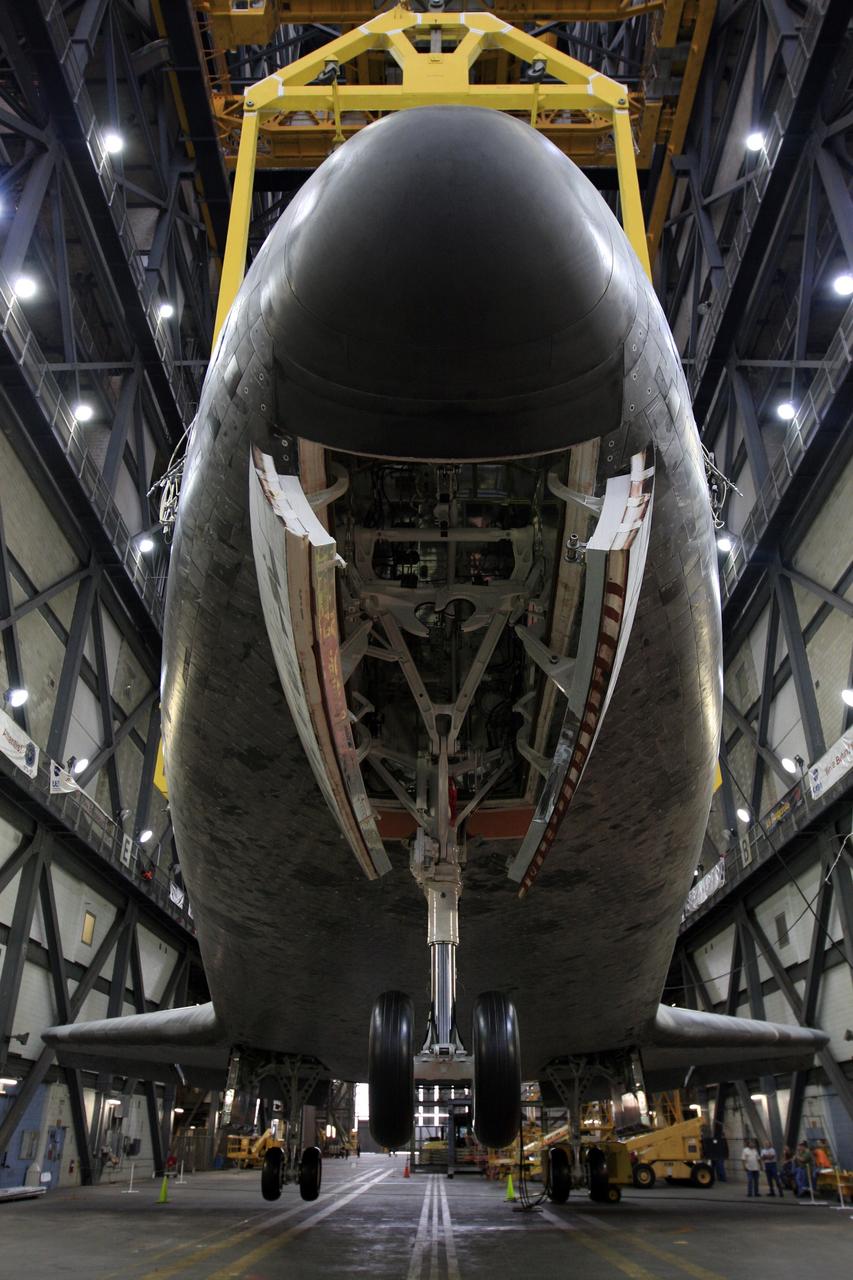
CAPE CANAVERAL, Fla. – This close-up shows space shuttle Atlantis being lowered onto its wheels in the transfer aisle of the Vehicle Assembly Building at NASA's Kennedy Space Center in Florida. Atlantis has been removed from its external fuel tank and solid rocket boosters stack after the delay of its STS-125 mission to NASA's Hubble Space Telescope. Atlantis will be returned to the Orbiter Processing Facility. Atlantis' targeted launch on Oct. 14 was delayed when a system that transfers science data from the orbiting observatory to Earth malfunctioned on Sept. 27. The new target launch date is under review. Photo credit: NASA/Troy Cryder
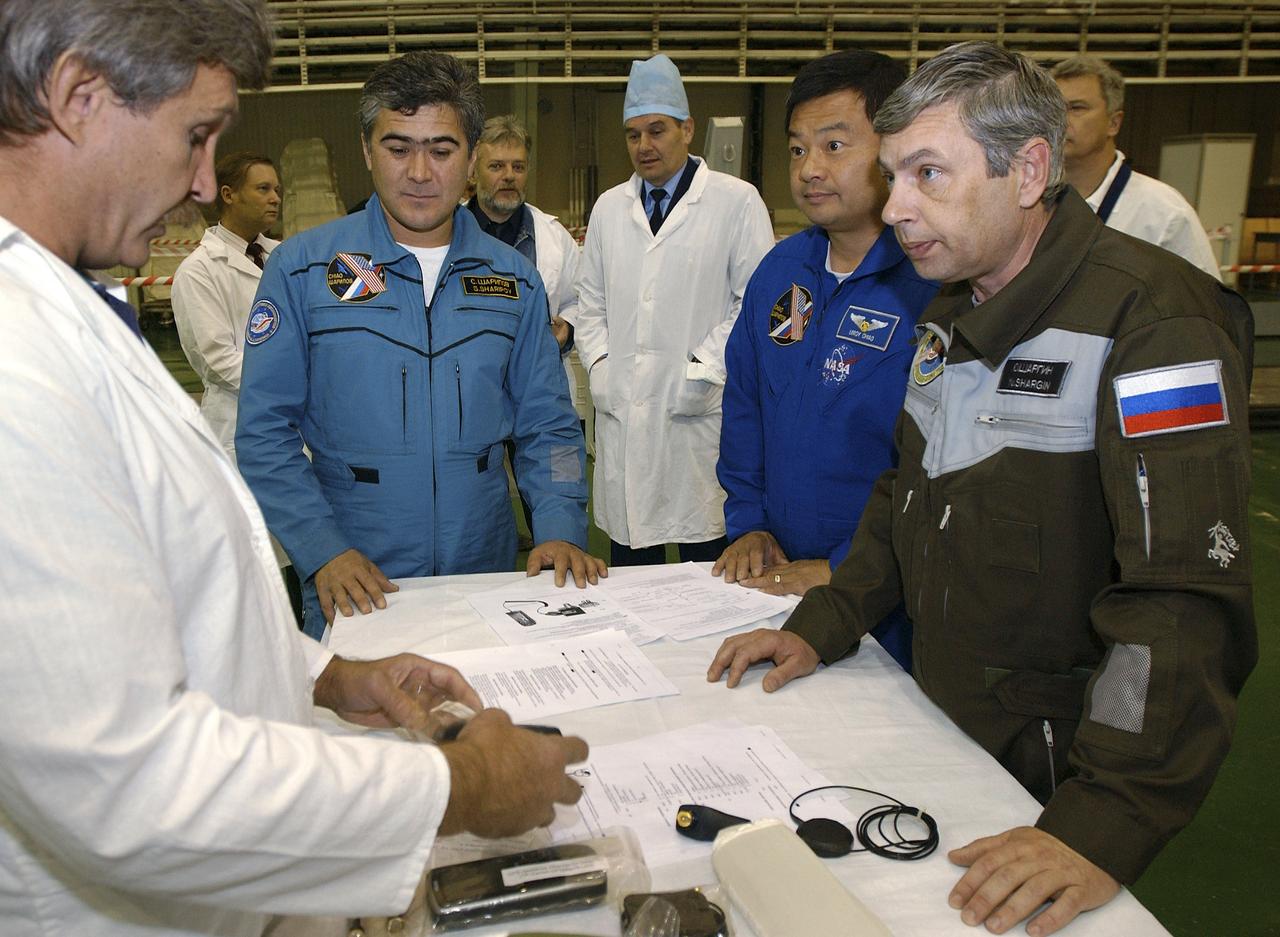
Expedition 10 Flight Engineer and Soyuz Commander Salizhan Sharipov, left, Expedition 10 Commander and NASA Science Officer Leroy Chiao and Russian Space Forces cosmonaut Yuri Shargin are given a review of the GPS and Satellite phone systems after having conducted a final inspection of their Soyuz TMA-5 spacecraft on Saturday, October 9, 2004, at the Baikonur Cosmodrome in Kazakhstan in preparation for their launch October 14 to the International Space Station. The Soyuz vehicle will be mated to its booster rocket October 11 in preparation for its rollout to the Central Asian launch pad October 12. Photo Credit: (NASA/Bill Ingalls)
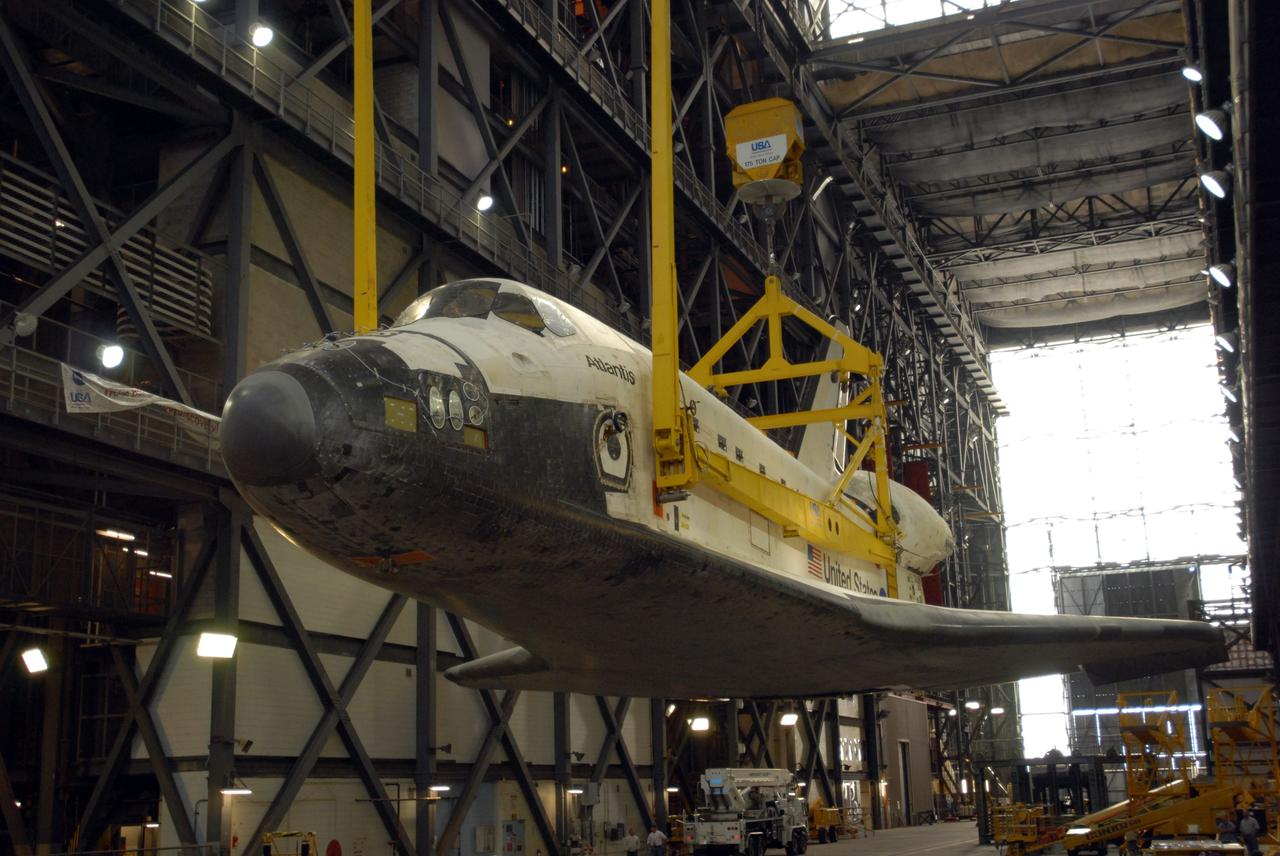
CAPE CANAVERAL, Fla. – In the transfer aisle of the Vehicle Assembly Building at NASA's Kennedy Space Center in Florida, space shuttle Atlantis has been lowered to a horizontal position. Atlantis has been taken off its external fuel tank and solid rocket boosters stack after of the delay of its STS-125 mission to NASA's Hubble Space Telescope. Atlantis will be returned to the Orbiter Processing Facility. Atlantis' targeted launch on Oct. 14 was delayed when a system that transfers science data from the orbiting observatory to Earth malfunctioned on Sept. 27. The new target launch date is under review. Photo credit: NASA/Jim Grossmann
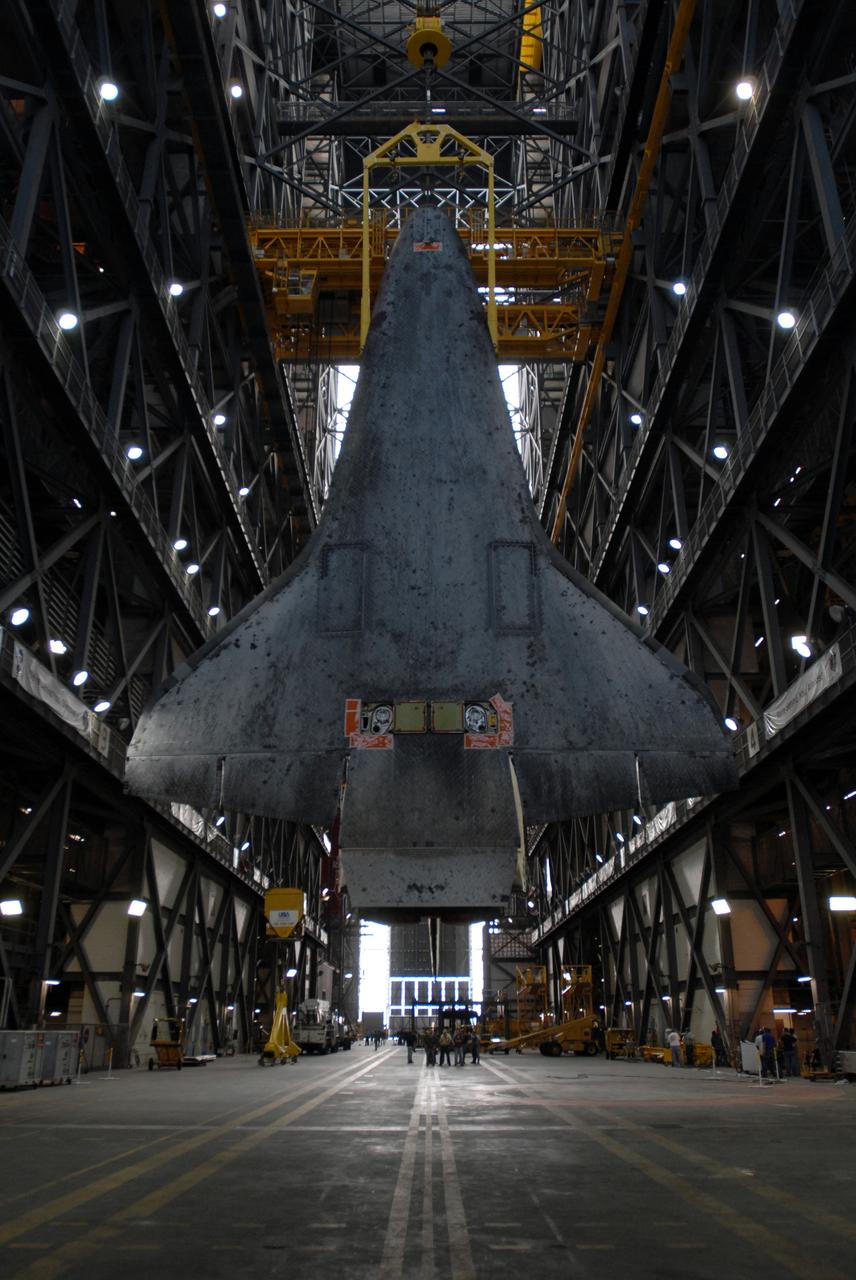
CAPE CANAVERAL, Fla. – In the Vehicle Assembly Building at NASA's Kennedy Space Center in Florida, space shuttle Atlantis hangs suspended above the transfer aisle floor. Atlantis has been taken off its external fuel tank and solid rocket boosters stack after of the delay of its STS-125 mission to NASA's Hubble Space Telescope. Atlantis will be returned to the Orbiter Processing Facility. Atlantis' targeted launch on Oct. 14 was delayed when a system that transfers science data from the orbiting observatory to Earth malfunctioned on Sept. 27. The new target launch date is under review. Photo credit: NASA/Jim Grossmann

CAPE CANAVERAL, Fla. – In In the Vehicle Assembly Building at NASA's Kennedy Space Center in Florida, space shuttle Atlantis is lowered by a sling toward the transfer aisle floor. Atlantis has been taken off its external fuel tank and solid rocket boosters stack after of the delay of its STS-125 mission to NASA's Hubble Space Telescope. Atlantis will be returned to the Orbiter Processing Facility. Atlantis' targeted launch on Oct. 14 was delayed when a system that transfers science data from the orbiting observatory to Earth malfunctioned on Sept. 27. The new target launch date is under review. Photo credit: NASA/Jim Grossmann
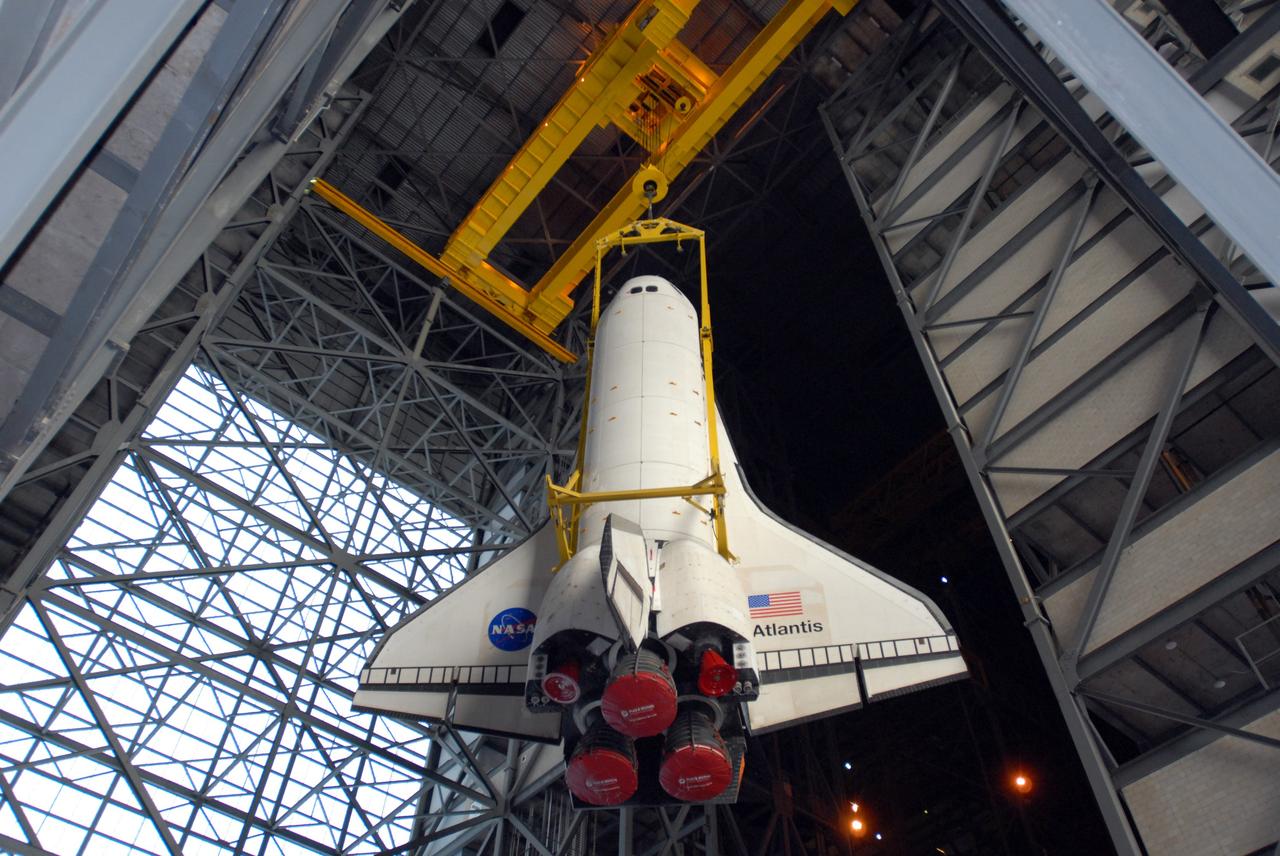
CAPE CANAVERAL, Fla. – In the Vehicle Assembly Building at NASA's Kennedy Space Center in Florida, space shuttle Atlantis is lifted by a sling. Atlantis is being taken off its external fuel tank and solid rocket boosters stack after of the delay of its STS-125 mission to NASA's Hubble Space Telescope. Atlantis will be returned to the Orbiter Processing Facility. Atlantis' targeted launch on Oct. 14 was delayed when a system that transfers science data from the orbiting observatory to Earth malfunctioned on Sept. 27. The new target launch date is under review. Photo credit: NASA/Jim Grossmann
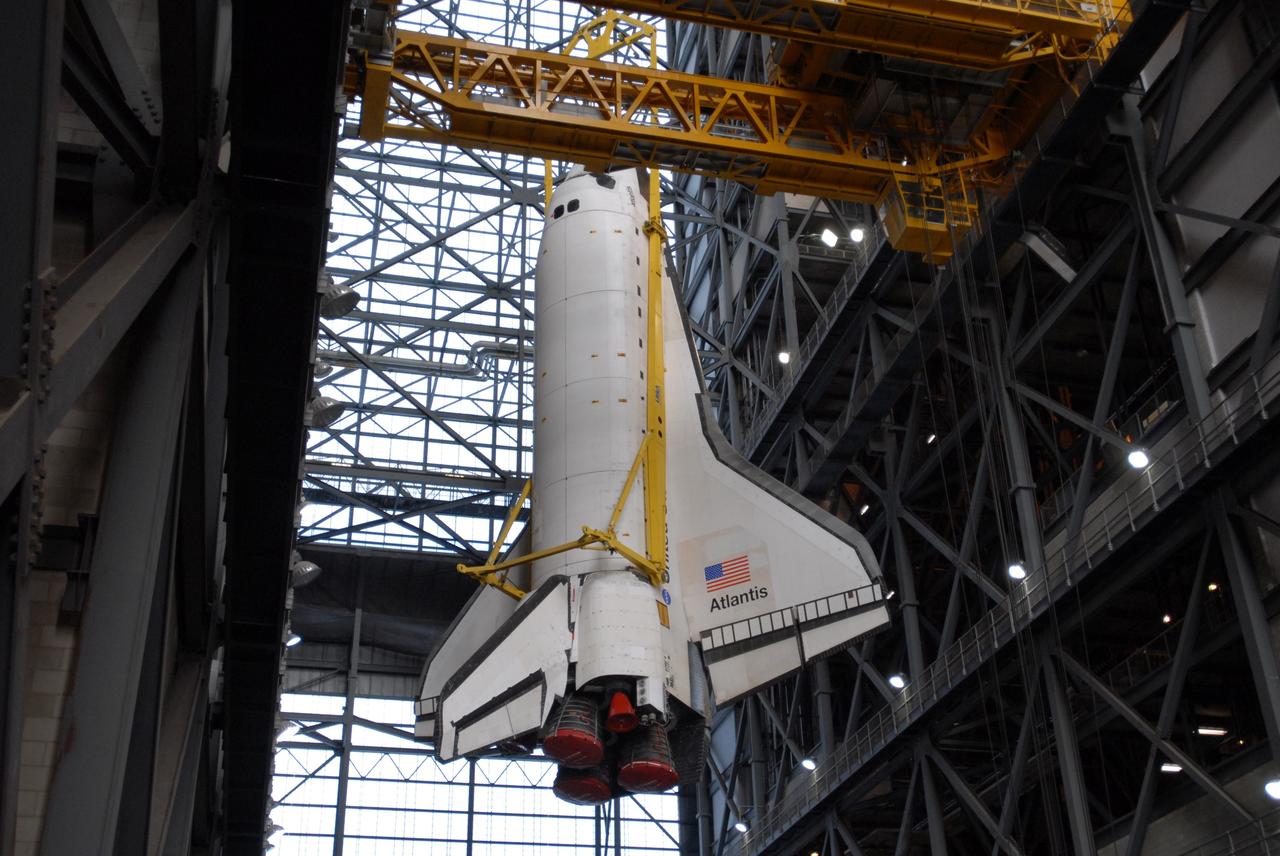
CAPE CANAVERAL, Fla. – In the Vehicle Assembly Building at NASA's Kennedy Space Center in Florida, space shuttle Atlantis is lowered by a sling toward the transfer aisle floor. Atlantis has been taken off its external fuel tank and solid rocket boosters stack after of the delay of its STS-125 mission to NASA's Hubble Space Telescope. Atlantis will be returned to the Orbiter Processing Facility. Atlantis' targeted launch on Oct. 14 was delayed when a system that transfers science data from the orbiting observatory to Earth malfunctioned on Sept. 27. The new target launch date is under review. Photo credit: NASA/Jim Grossmann
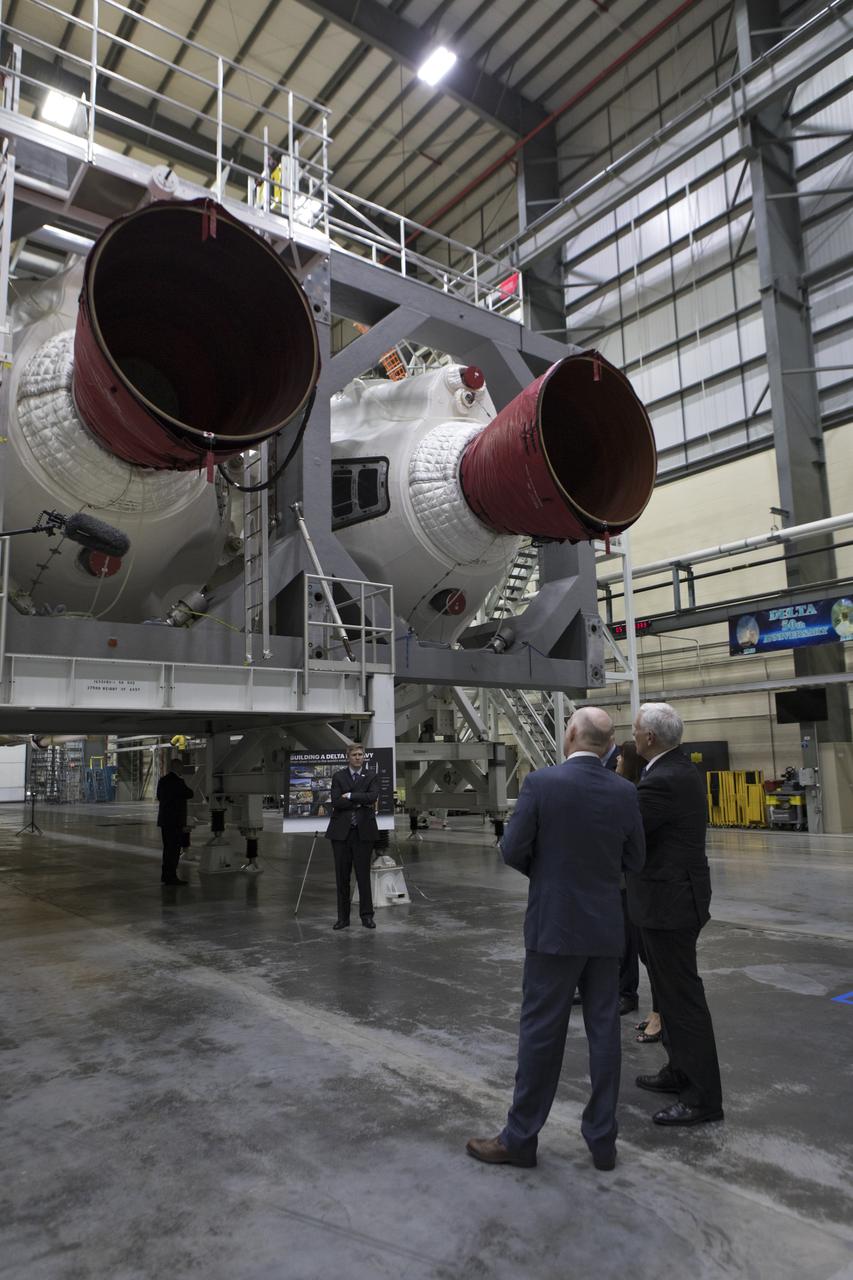
United Launch Alliance (ULA) president and CEO Tory Bruno, left, leads a tour in the ULA Horizontal Integration Facility (HIF), at Cape Canaveral Air Force Station in Florida for Vice President Mike Pence on Feb. 20, 2018. The HIF is where the Delta IV Heavy boosters are being processed for NASA’s upcoming Parker Solar Probe mission. During his visit, Pence will chair a meeting of the National Space Council on Feb. 21, 2018 in the high bay of NASA Kennedy Space Center’s Space Station Processing Facility. The council's role is to advise the president regarding national space policy and strategy, and review the nation's long-range goals for space activities.
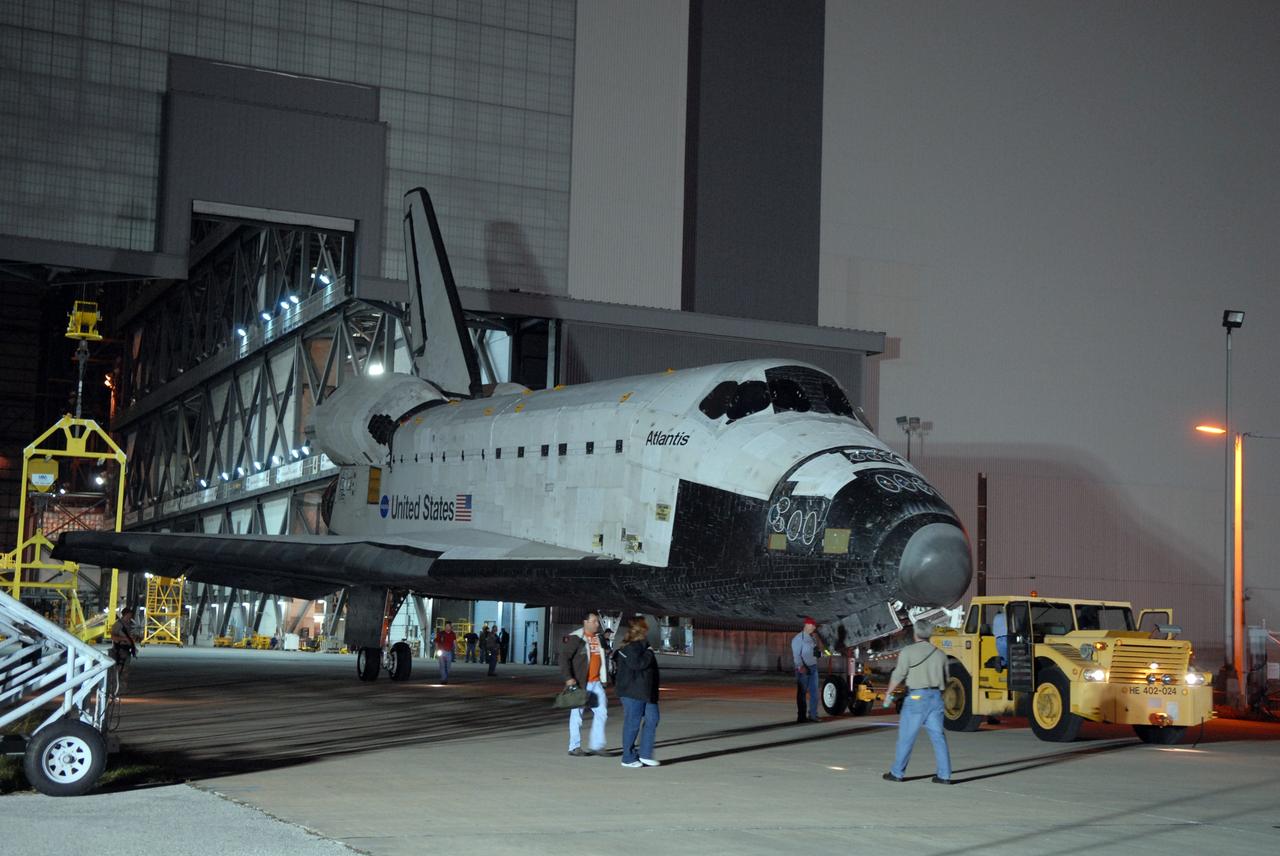
CAPE CANAVERAL, Fla. – Space shuttle Atlantis is towed out of the Vehicle Assembly Building at NASA's Kennedy Space Center in Florida. Atlantis was removed from its external fuel tank and solid rocket boosters stack after the delay of its STS-125 mission to NASA's Hubble Space Telescope. It is returning to the Orbiter Processing Facility. Atlantis' targeted launch on Oct. 14 was delayed when a system that transfers science data from the orbiting observatory to Earth malfunctioned on Sept. 27. The new target launch date is under review. Photo credit: NASA/Tim Jacobs
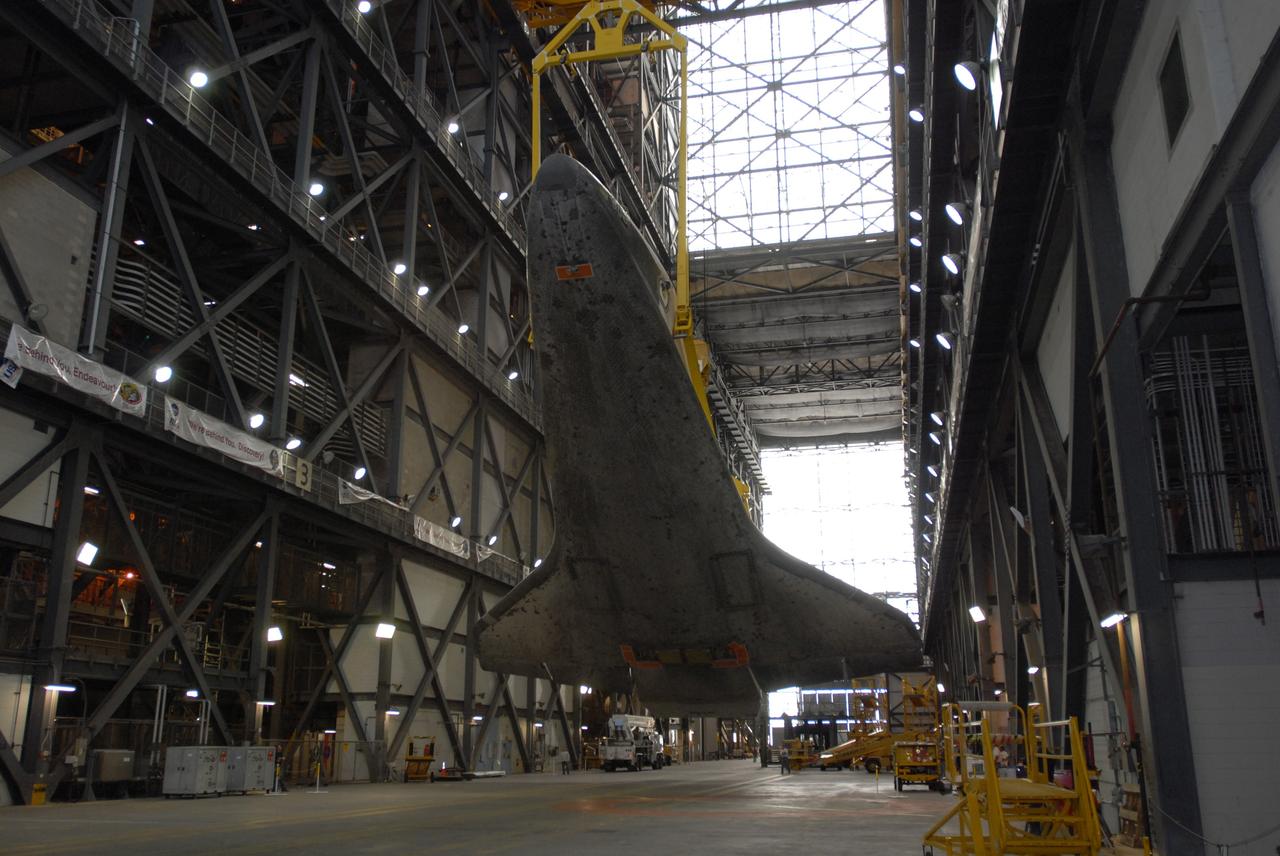
CAPE CANAVERAL, Fla. – In the transfer aisle of the Vehicle Assembly Building at NASA's Kennedy Space Center in Florida, space shuttle Atlantis is lowered to a horizontal position. Atlantis has been taken off its external fuel tank and solid rocket boosters stack after of the delay of its STS-125 mission to NASA's Hubble Space Telescope. Atlantis will be returned to the Orbiter Processing Facility. Atlantis' targeted launch on Oct. 14 was delayed when a system that transfers science data from the orbiting observatory to Earth malfunctioned on Sept. 27. The new target launch date is under review. Photo credit: NASA/Jim Grossmann

CAPE CANAVERAL, Fla. – Space shuttle Atlantis is towed out of the Vehicle Assembly Building at NASA's Kennedy Space Center in Florida. Atlantis was removed from its external fuel tank and solid rocket boosters stack after the delay of its STS-125 mission to NASA's Hubble Space Telescope. It is returning to the Orbiter Processing Facility. Atlantis' targeted launch on Oct. 14 was delayed when a system that transfers science data from the orbiting observatory to Earth malfunctioned on Sept. 27. The new target launch date is under review. Photo credit: NASA/Dimitri Gerondidakis
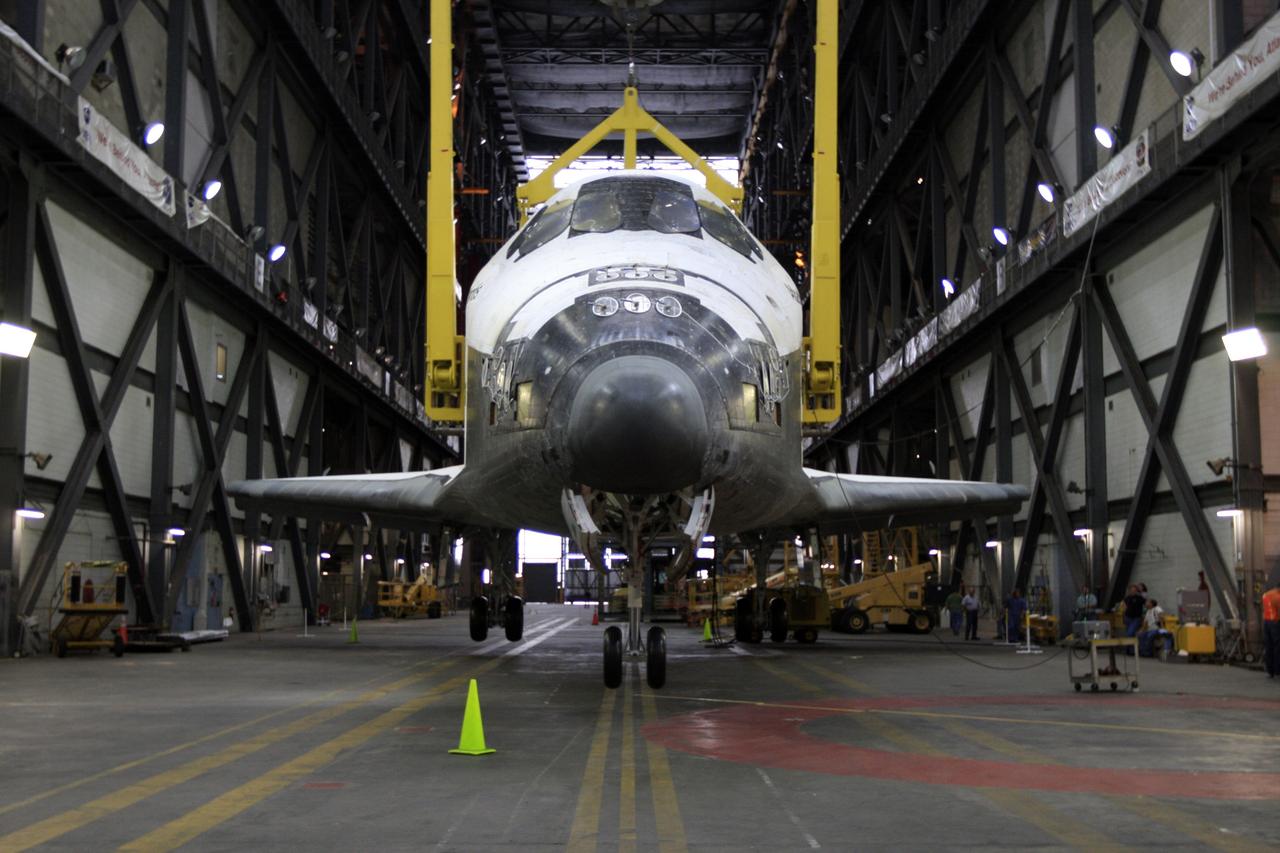
CAPE CANAVERAL, Fla. – This close-up shows space shuttle Atlantis being lowered onto its wheels in the transfer aisle of the Vehicle Assembly Building at NASA's Kennedy Space Center in Florida. Atlantis has been removed from its external fuel tank and solid rocket boosters stack after the delay of its STS-125 mission to NASA's Hubble Space Telescope. Atlantis will be returned to the Orbiter Processing Facility. Atlantis' targeted launch on Oct. 14 was delayed when a system that transfers science data from the orbiting observatory to Earth malfunctioned on Sept. 27. The new target launch date is under review. Photo credit: NASA/Troy Cryder
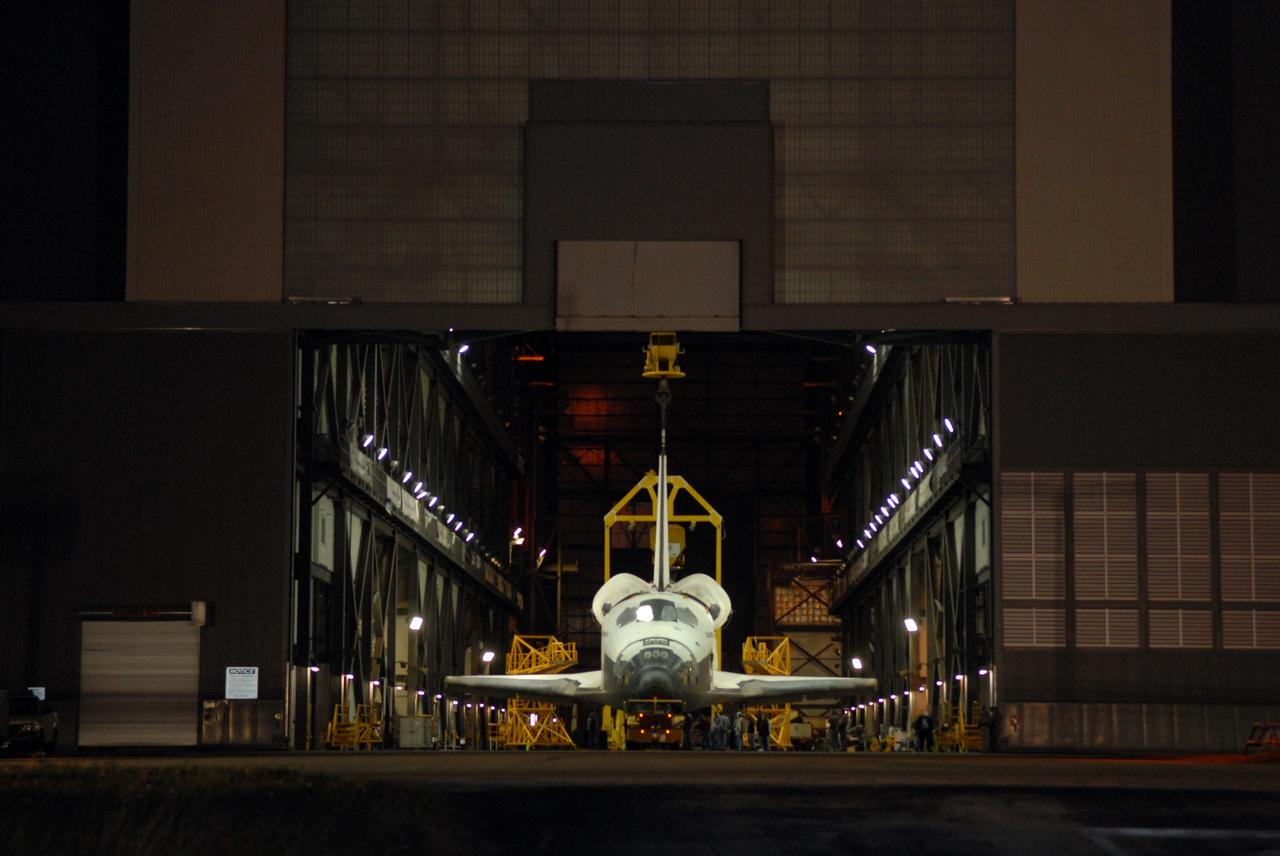
CAPE CANAVERAL, Fla. – In the transfer aisle of the Vehicle Assembly Building at NASA's Kennedy Space Center in Florida, the sling is removed from space shuttle Atlantis before its return to the Orbiter Processing Facility. Atlantis was removed from its external fuel tank and solid rocket boosters stack after the delay of its STS-125 mission to NASA's Hubble Space Telescope. Atlantis' targeted launch on Oct. 14 was delayed when a system that transfers science data from the orbiting observatory to Earth malfunctioned on Sept. 27. The new target launch date is under review. Photo credit: NASA/Tim Jacobs
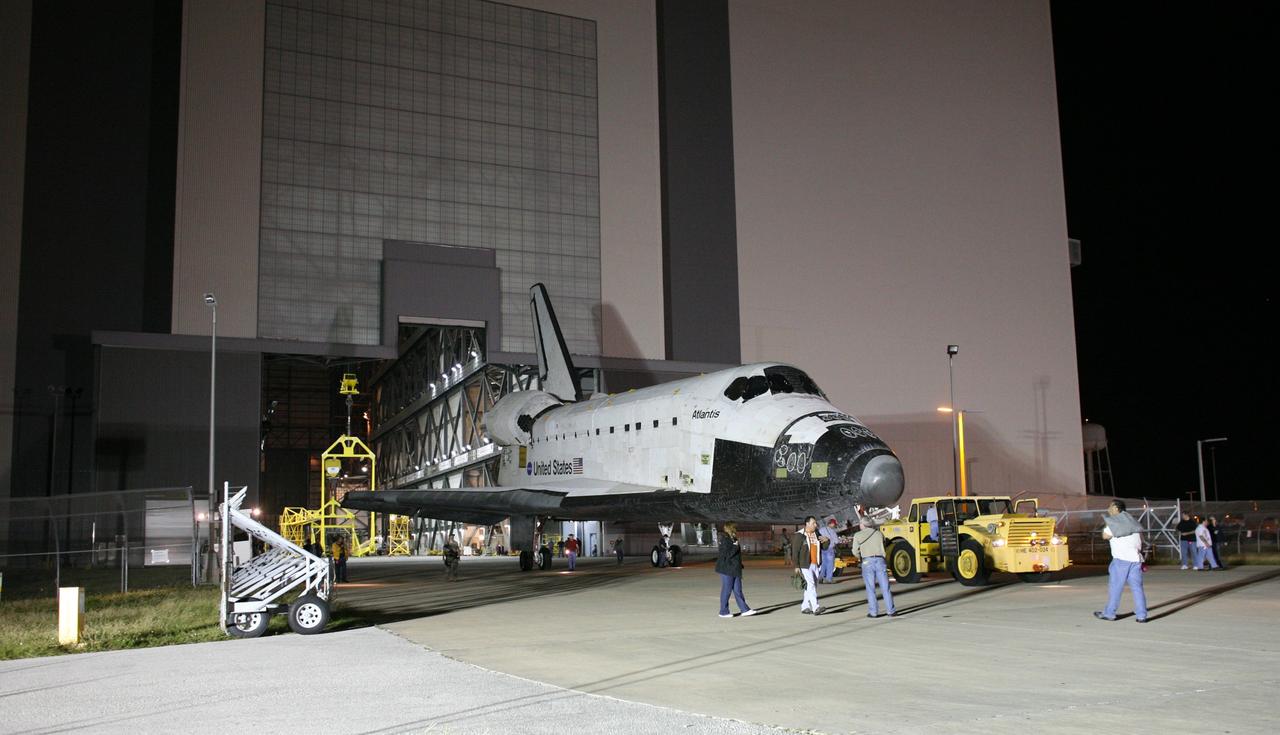
CAPE CANAVERAL, Fla. – Space shuttle Atlantis is towed out of the Vehicle Assembly Building at NASA's Kennedy Space Center in Florida. Atlantis was removed from its external fuel tank and solid rocket boosters stack after the delay of its STS-125 mission to NASA's Hubble Space Telescope. It is returning to the Orbiter Processing Facility. Atlantis' targeted launch on Oct. 14 was delayed when a system that transfers science data from the orbiting observatory to Earth malfunctioned on Sept. 27. The new target launch date is under review. Photo credit: NASA/Dimitri Gerondidakis
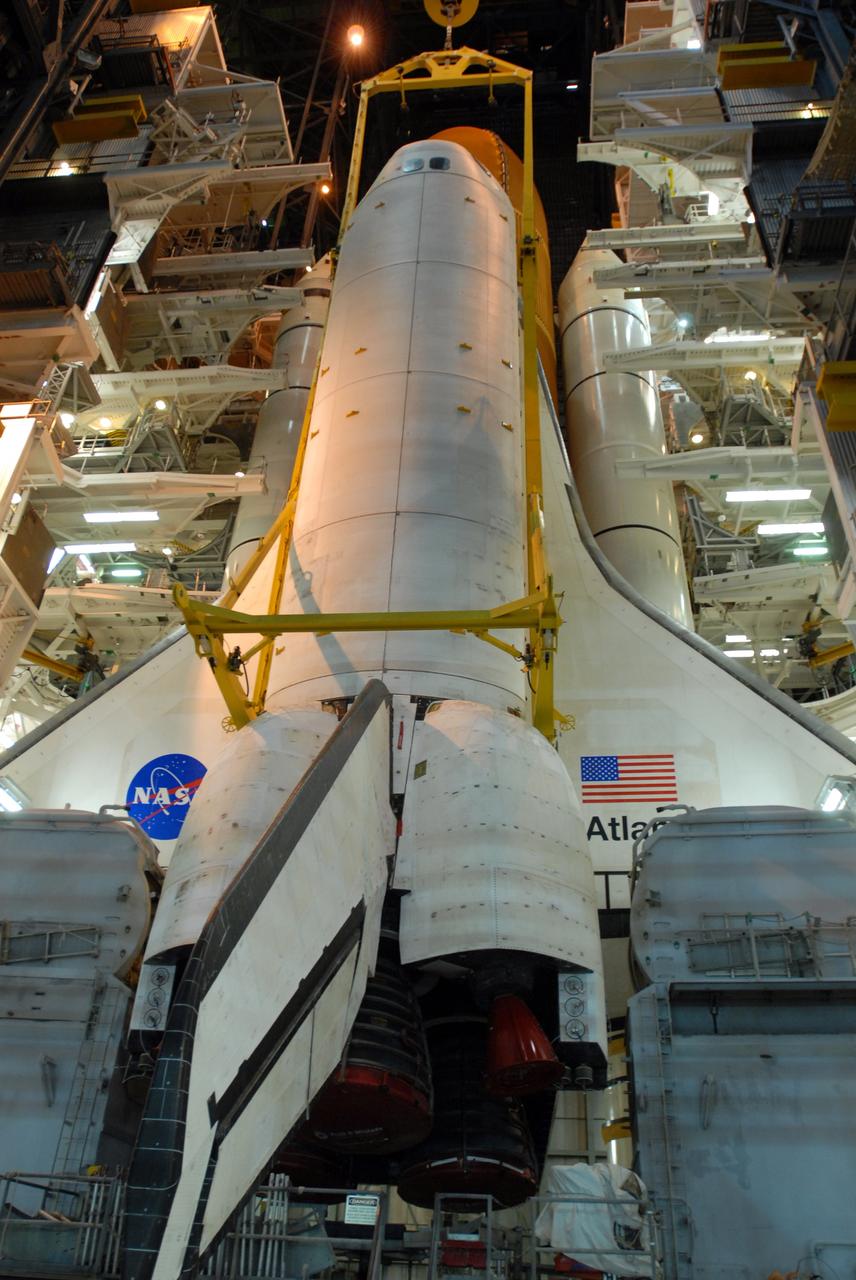
CAPE CANAVERAL, Fla. – In the Vehicle Assembly Building at NASA's Kennedy Space Center in Florida, space shuttle Atlantis is lifted by a sling. Atlantis is being taken off its external fuel tank and solid rocket boosters stack after of the delay of its STS-125 mission to NASA's Hubble Space Telescope. Atlantis will be returned to the Orbiter Processing Facility. Atlantis' targeted launch on Oct. 14 was delayed when a system that transfers science data from the orbiting observatory to Earth malfunctioned on Sept. 27. The new target launch date is under review. Photo credit: NASA/Jim Grossmann
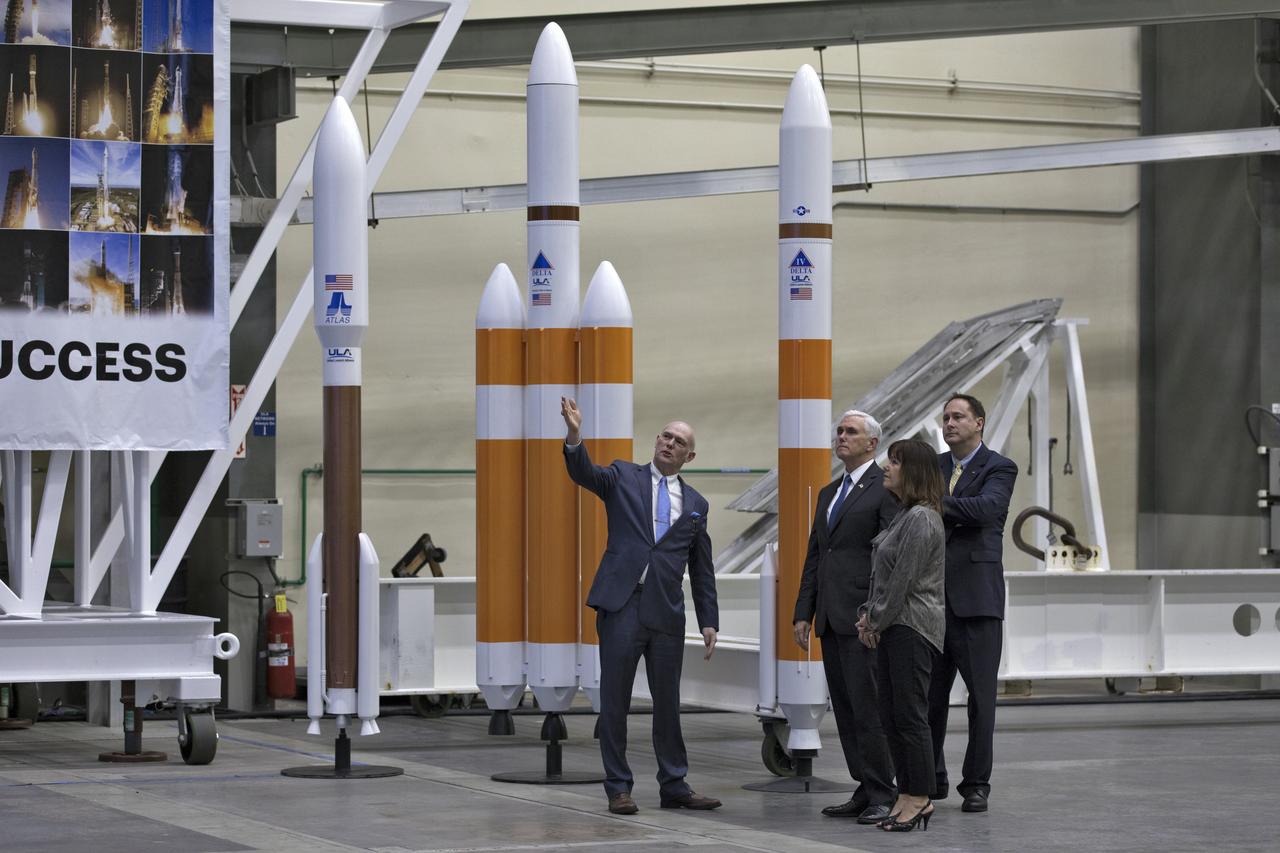
From the left, United Launch Alliance (ULA) president and CEO Tory Bruno leads a tour for Vice President Mike Pence, his wife, Karen Pence, and NASA Acting Administrator Robert Lightfoot on Feb. 20, 2018. They are in the ULA Horizontal Integration Facility (HIF), at Cape Canaveral Air Force Station in Florida. The HIF is where the Delta IV Heavy boosters are being processed for NASA’s upcoming Parker Solar Probe mission. During his visit, Pence will chair a meeting of the National Space Council on Feb. 21, 2018 in the high bay of NASA Kennedy Space Center’s Space Station Processing Facility. The council's role is to advise the president regarding national space policy and strategy, and review the nation's long-range goals for space activities.
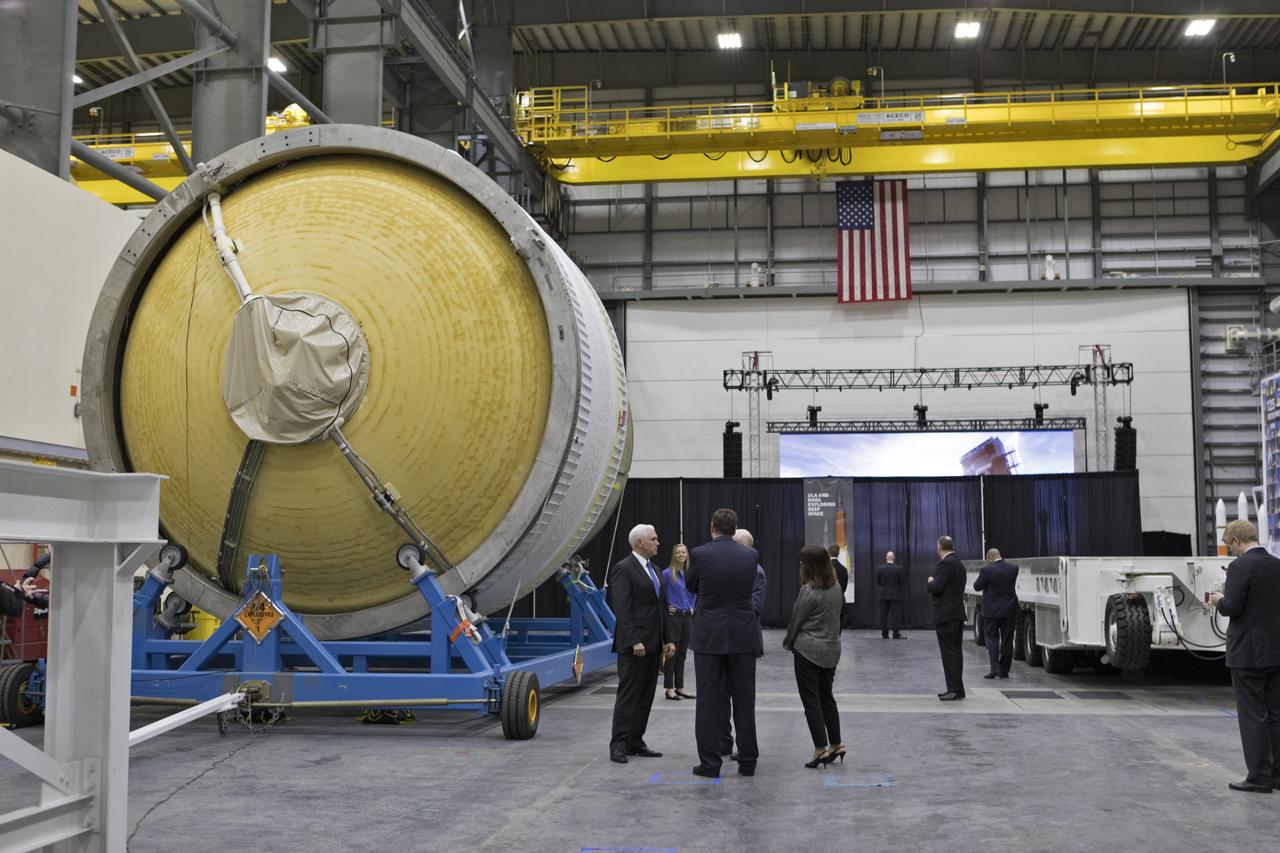
United Launch Alliance (ULA) president and CEO Tory Bruno leads a tour for Vice President Mike Pence, his wife, Karen Pence, and NASA Acting Administrator Robert Lightfoot on Feb. 20, 2018. They are in the ULA Horizontal Integration Facility (HIF), at Cape Canaveral Air Force Station in Florida. The HIF is where the Delta IV Heavy boosters are being processed for NASA’s upcoming Parker Solar Probe mission. During his visit, Pence will chair a meeting of the National Space Council on Feb. 21, 2018 in the high bay of NASA Kennedy Space Center’s Space Station Processing Facility. The council's role is to advise the president regarding national space policy and strategy, and review the nation's long-range goals for space activities.
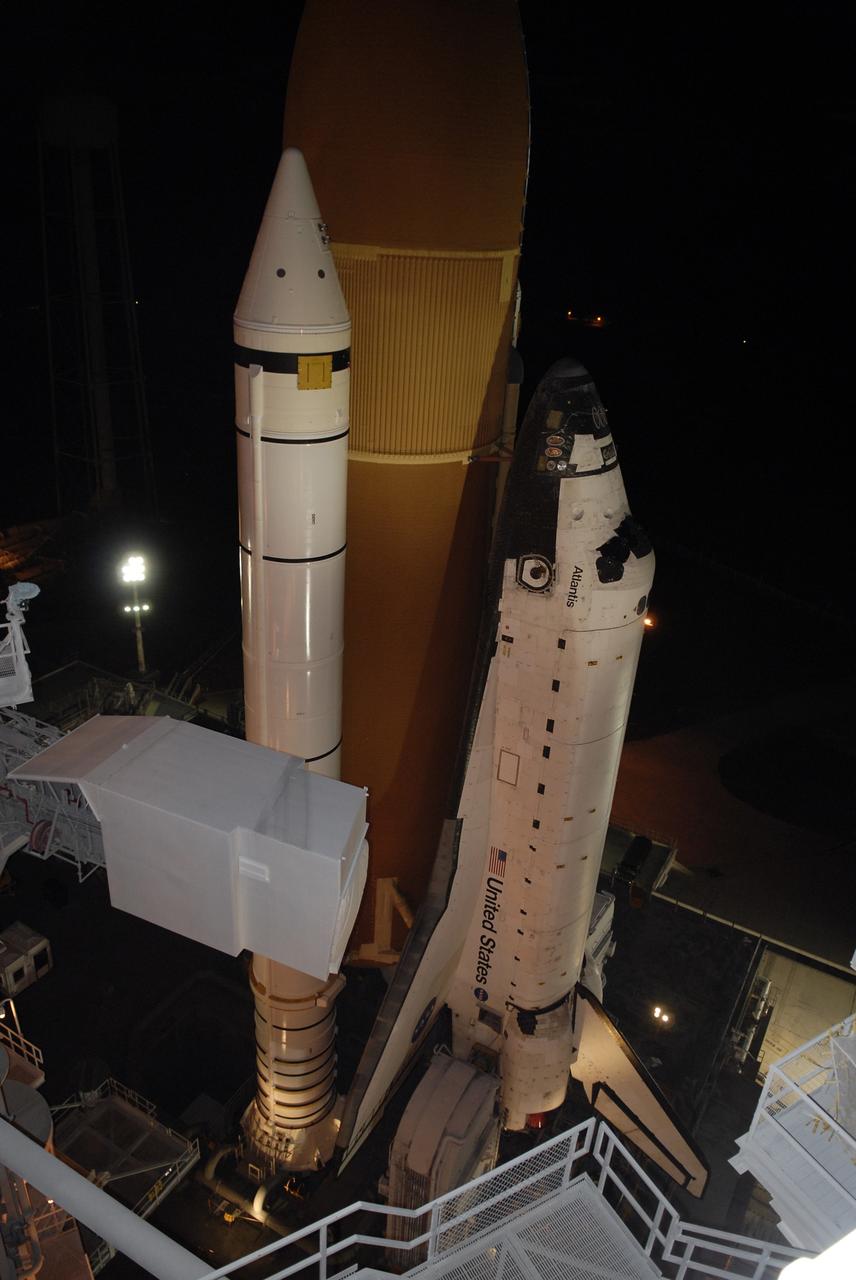
CAPE CANAVERAL, Fla. - Space Shuttle Atlantis is viewed from an upper level of the fixed service structure on Launch Pad 39A at NASA's Kennedy Space Center in Florida. Visible are the orange external tank, a solid rocket booster and Atlantis. In the foreground is the White Room at the end of the orbiter access arm. Atlantis is rolling back to the Vehicle Assembly Building to await launch on its STS-125 mission to repair NASA's Hubble Space Telescope. Atlantis' targeted launch on Oct. 14 was delayed when a system that transfers science data from the orbiting observatory to Earth malfunctioned on Sept. 27. The new target launch date is under review. The space shuttle is mounted on a Mobile Launcher Platform and will be delivered to the Vehicle Assembly Building atop a crawler transporter. traveling slower than 1 mph during the 3.4-mile journey. The rollback is expected to take approximately six hours. Photo credit: NASA/Kim Shiflett
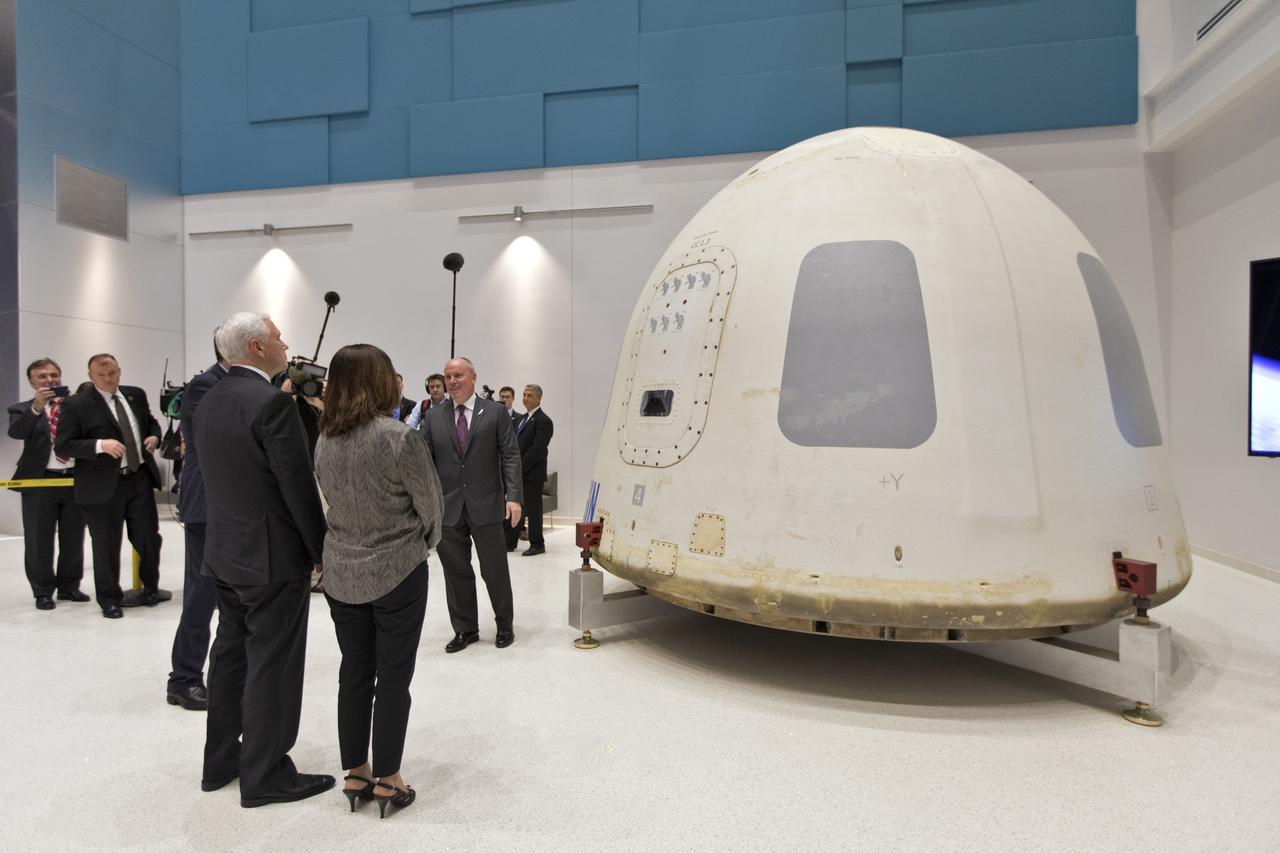
Vice President Mike Pence, second from right, and his wife, Karen Pence, tour the Blue Origin Manufacturing Facility near NASA's Kennedy Space Center in Florida, on Feb. 20, 2018. Vice President Pence viewed the flown New Shepard Booster and Crew Capsule. The Crew Capsule, in view, flew seven times, including a pad abort test and an escape test at maximum dynamic pressure. During his visit, Pence will chair a meeting of the National Space Council on Feb. 21, 2018 in the high bay of NASA Kennedy Space Center's Space Station Processing Facility. The council's role is to advise the president regarding national space policy and strategy, and review the nation's long-range goals for space activities.
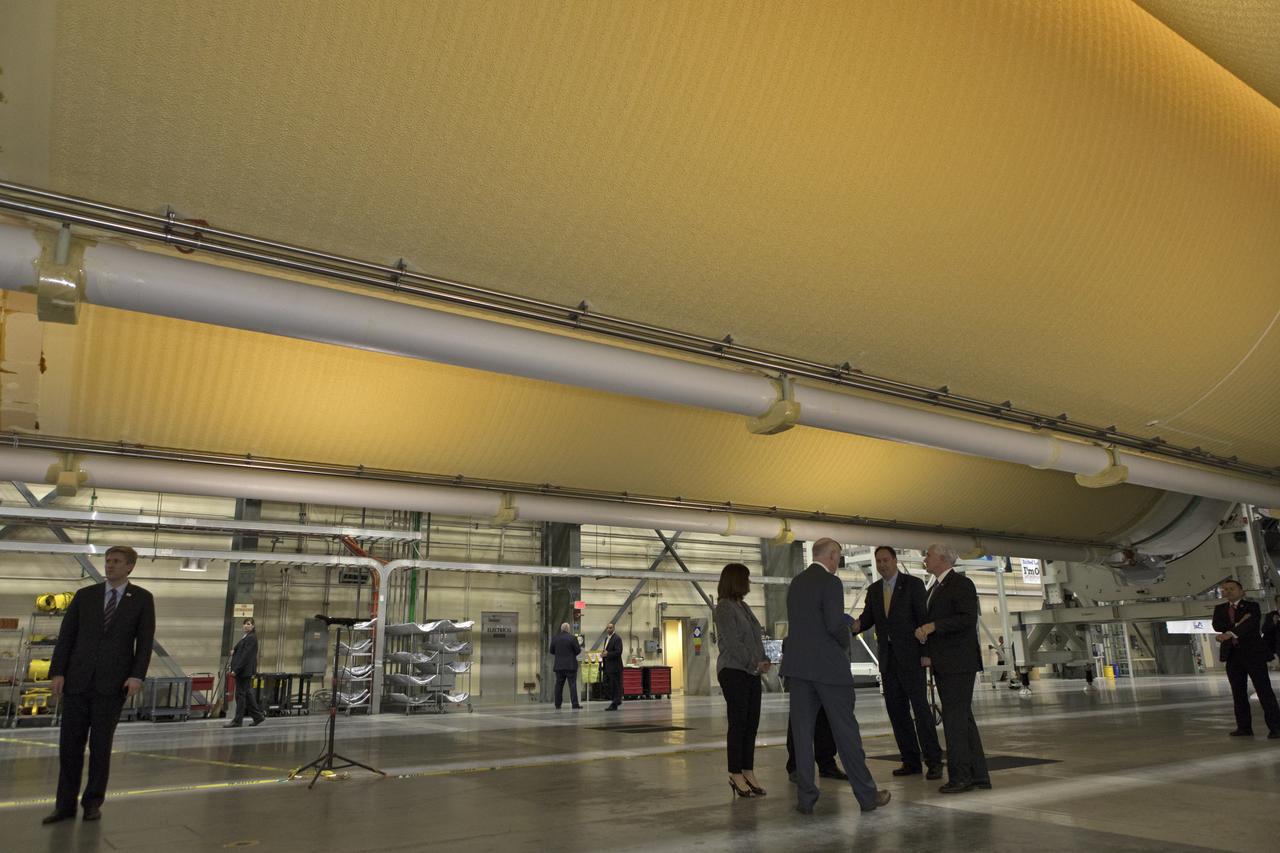
United Launch Alliance (ULA) president and CEO Tory Bruno leads a tour for Vice President Mike Pence, his wife, Karen Pence, and NASA Acting Administrator Robert Lightfoot on Feb. 20, 2018. They are in the ULA Horizontal Integration Facility (HIF), at Cape Canaveral Air Force Station in Florida. The HIF is where the Delta IV Heavy boosters are being processed for NASA’s upcoming Parker Solar Probe mission. During his visit, Pence will chair a meeting of the National Space Council on Feb. 21, 2018 in the high bay of NASA Kennedy Space Center’s Space Station Processing Facility. The council's role is to advise the president regarding national space policy and strategy, and review the nation's long-range goals for space activities.
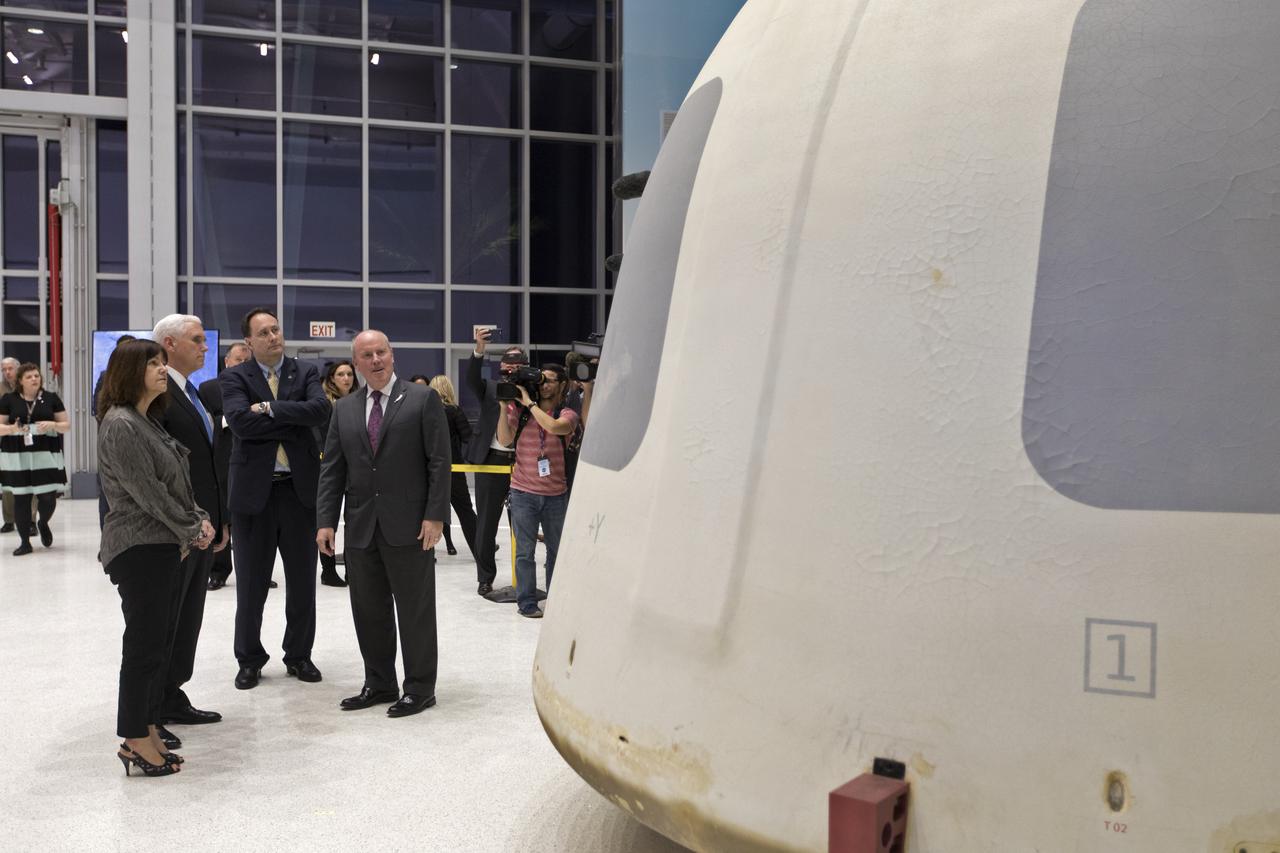
Vice President Mike Pence, second from left, tours the Blue Origin Manufacturing Facility near NASA's Kennedy Space Center in Florida, on Feb. 20, 2018. At far left is the vice president's wife, Karen Pence. To the right of Vice President Pence are acting NASA Administrator Robert Lightfoot and Blue Origin CEO Robert Smith. Pence viewed the flown New Shepard Booster and Crew Capsule. The Crew Capsule, in view, flew seven times, including a pad abort test and an escape test at maximum dynamic pressure. During his visit, Pence will chair a meeting of the National Space Council on Feb. 21, 2018 in the high bay of NASA Kennedy Space Center's Space Station Processing Facility. The council's role is to advise the president regarding national space policy and strategy, and review the nation's long-range goals for space activities.
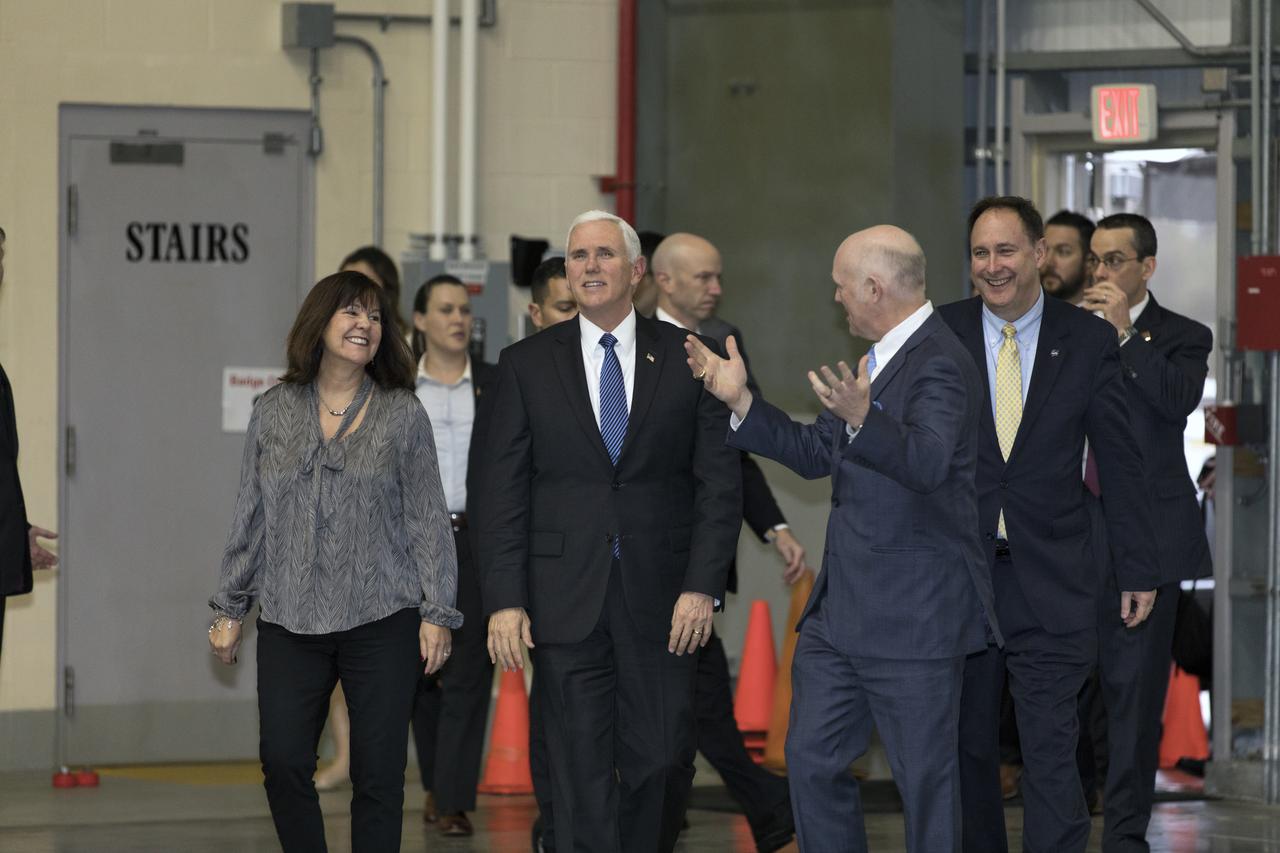
United Launch Alliance (ULA) president and CEO Tory Bruno leads a tour for Vice President Mike Pence, his wife, Karen Pence, and NASA Acting Administrator Robert Lightfoot on Feb. 20, 2018. They are in the ULA Horizontal Integration Facility (HIF), at Cape Canaveral Air Force Station in Florida. The HIF is where the Delta IV Heavy boosters are being processed for NASA’s upcoming Parker Solar Probe mission. During his visit, Pence will chair a meeting of the National Space Council on Feb. 21, 2018 in the high bay of NASA Kennedy Space Center’s Space Station Processing Facility. The council's role is to advise the president regarding national space policy and strategy, and review the nation's long-range goals for space activities.
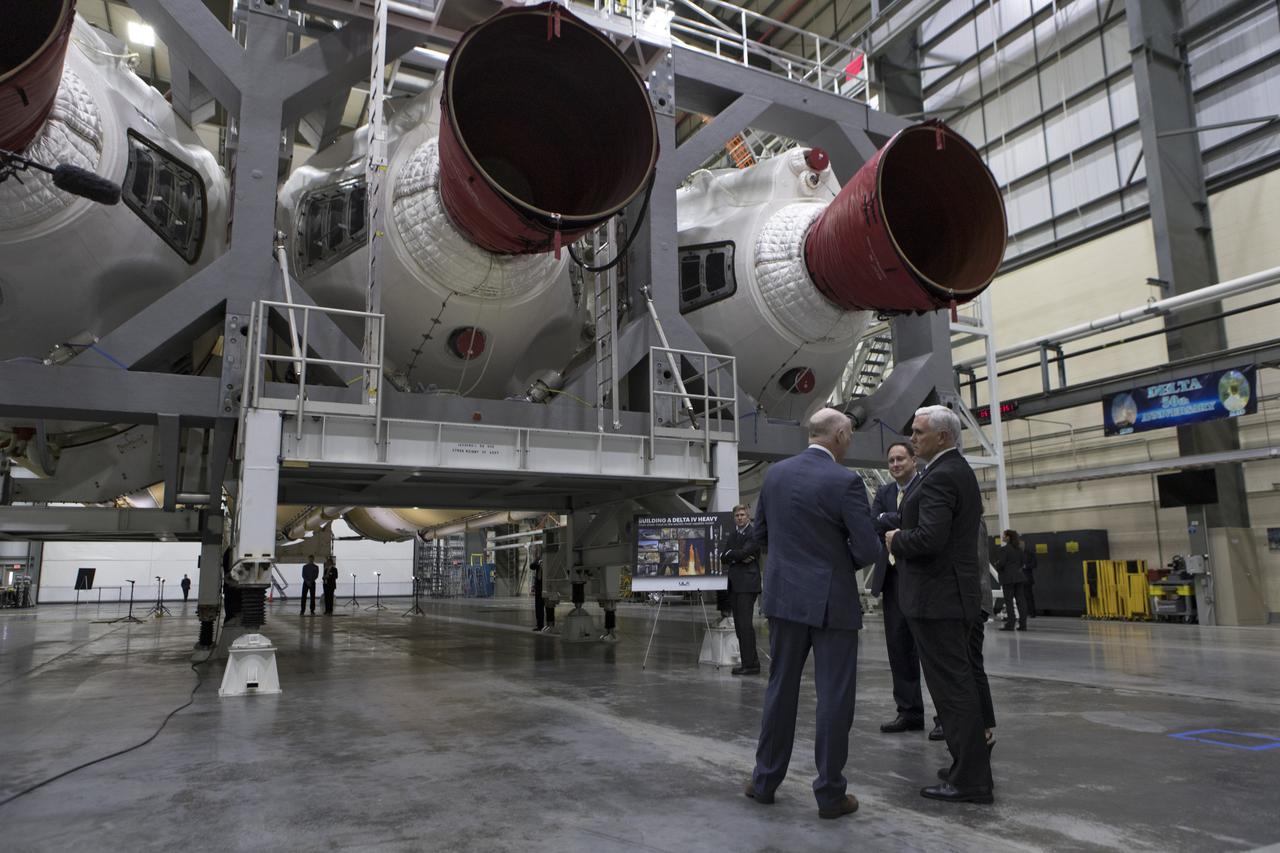
United Launch Alliance (ULA) president and CEO Tory Bruno, left leads a tour for Vice President Mike Pence on Feb. 20, 2018. Behind them is Acting NASA Administrator Robert Lightfoot. They are in the ULA Horizontal Integration Facility (HIF), at Cape Canaveral Air Force Station in Florida. The HIF is where the Delta IV Heavy boosters are being processed for NASA’s upcoming Parker Solar Probe mission. During his visit, Pence will chair a meeting of the National Space Council on Feb. 21, 2018 in the high bay of NASA Kennedy Space Center’s Space Station Processing Facility. The council's role is to advise the president regarding national space policy and strategy, and review the nation's long-range goals for space activities.
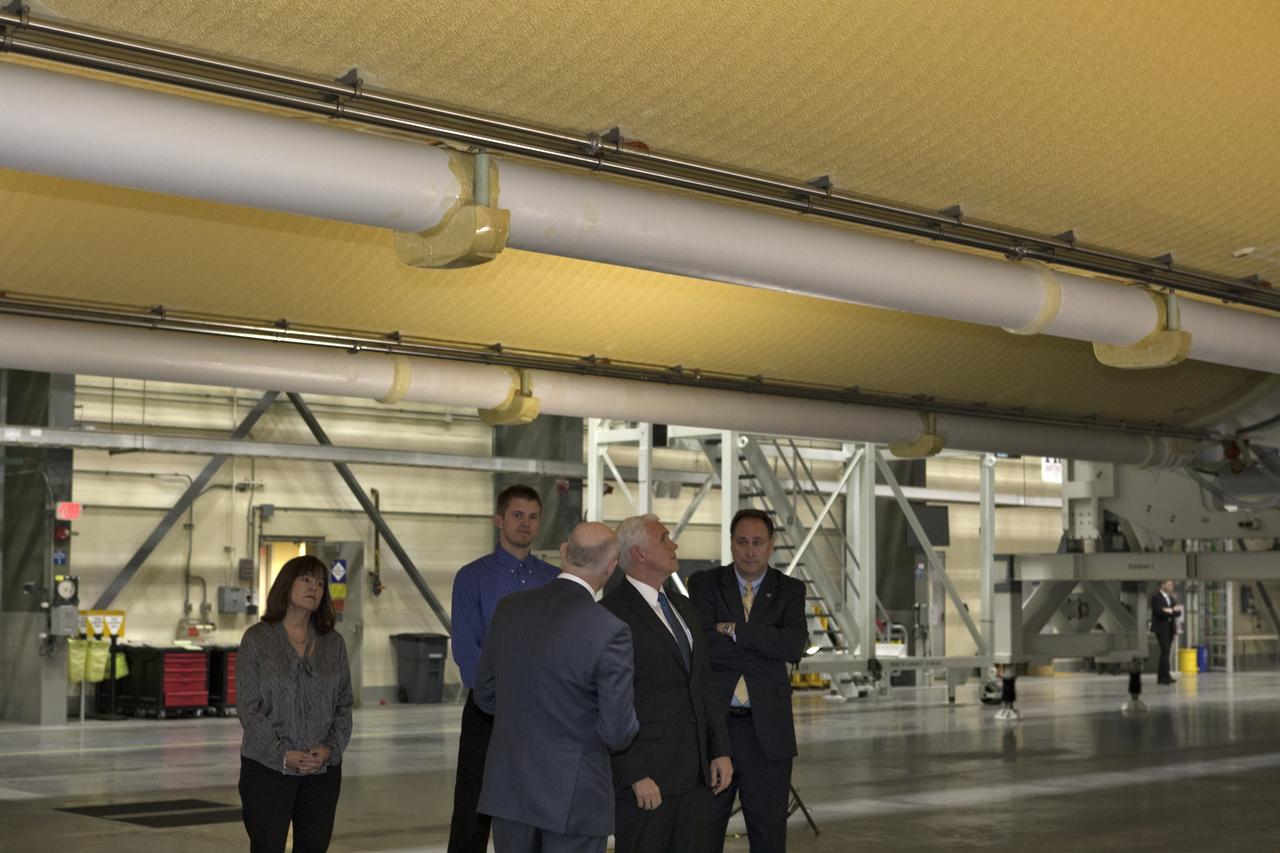
United Launch Alliance (ULA) president and CEO Tory Bruno leads a tour for Vice President Mike Pence, his wife, Karen Pence, and NASA Acting Administrator Robert Lightfoot on Feb. 20, 2018. They are in the ULA Horizontal Integration Facility (HIF), at Cape Canaveral Air Force Station in Florida. The HIF is where the Delta IV Heavy boosters are being processed for NASA’s upcoming Parker Solar Probe mission. During his visit, Pence will chair a meeting of the National Space Council on Feb. 21, 2018 in the high bay of NASA Kennedy Space Center’s Space Station Processing Facility. The council's role is to advise the president regarding national space policy and strategy, and review the nation's long-range goals for space activities.
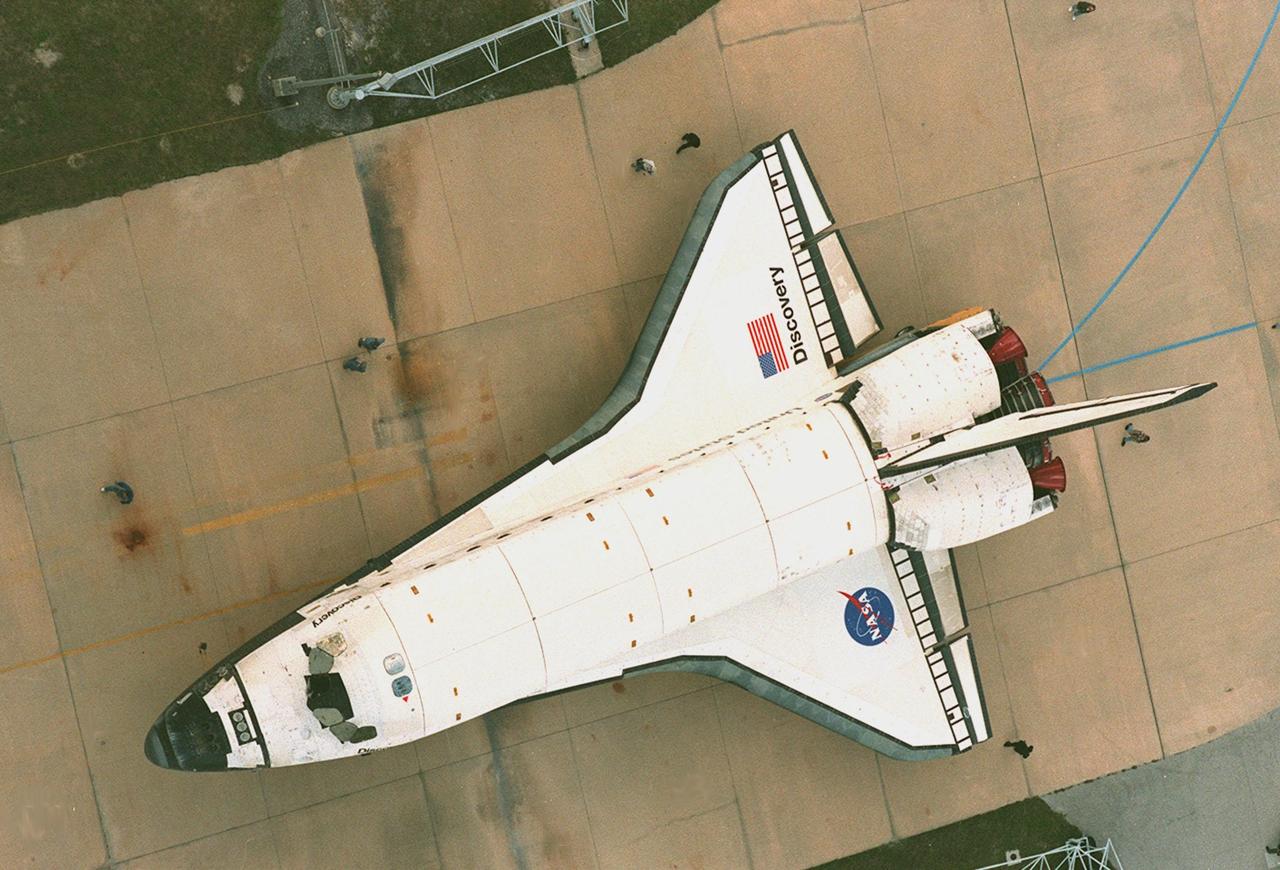
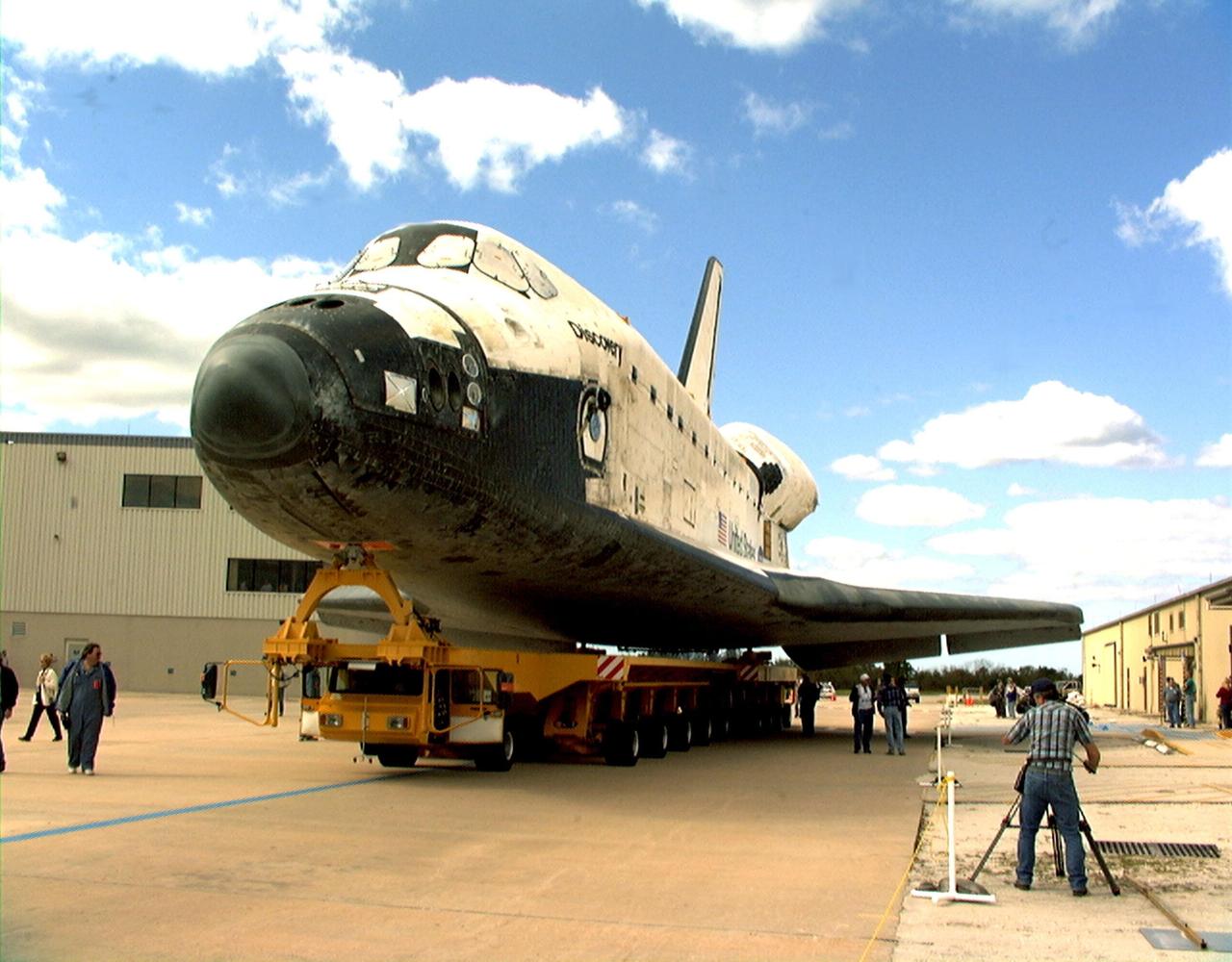
KENNEDY SPACE CENTER, FLA. -- The orbiter Discovery rolls along the tow-way to the Vehicle Assembly Building where it will be mated with an external tank and solid rocket boosters for its launch on mission STS-103. The launch date is currently under review for early December. STS-103, the third Hubble Space Telescope servicing mission, is a "call-up" due to the need to replace portions of the pointing system, the gyros, which have begun to fail on the Hubble Space Telescope. Although Hubble is operating normally and conducting its scientific observations, only three of its six gyroscopes are working properly. The gyroscopes allow the telescope to point at stars, galaxies and planets. The STS-103 crew will also be replacing a Fine Guidance Sensor and an older computer with a new enhanced model, an older data tape recorder with a solid-state digital recorder, a failed spare transmitter with a new one, and degraded insulation on the telescope with new thermal insulation. The crew will also install a Battery Voltage/Temperature Improvement Kit to protect the spacecraft batteries from overcharging and overheating when the telescope goes into a safe mode
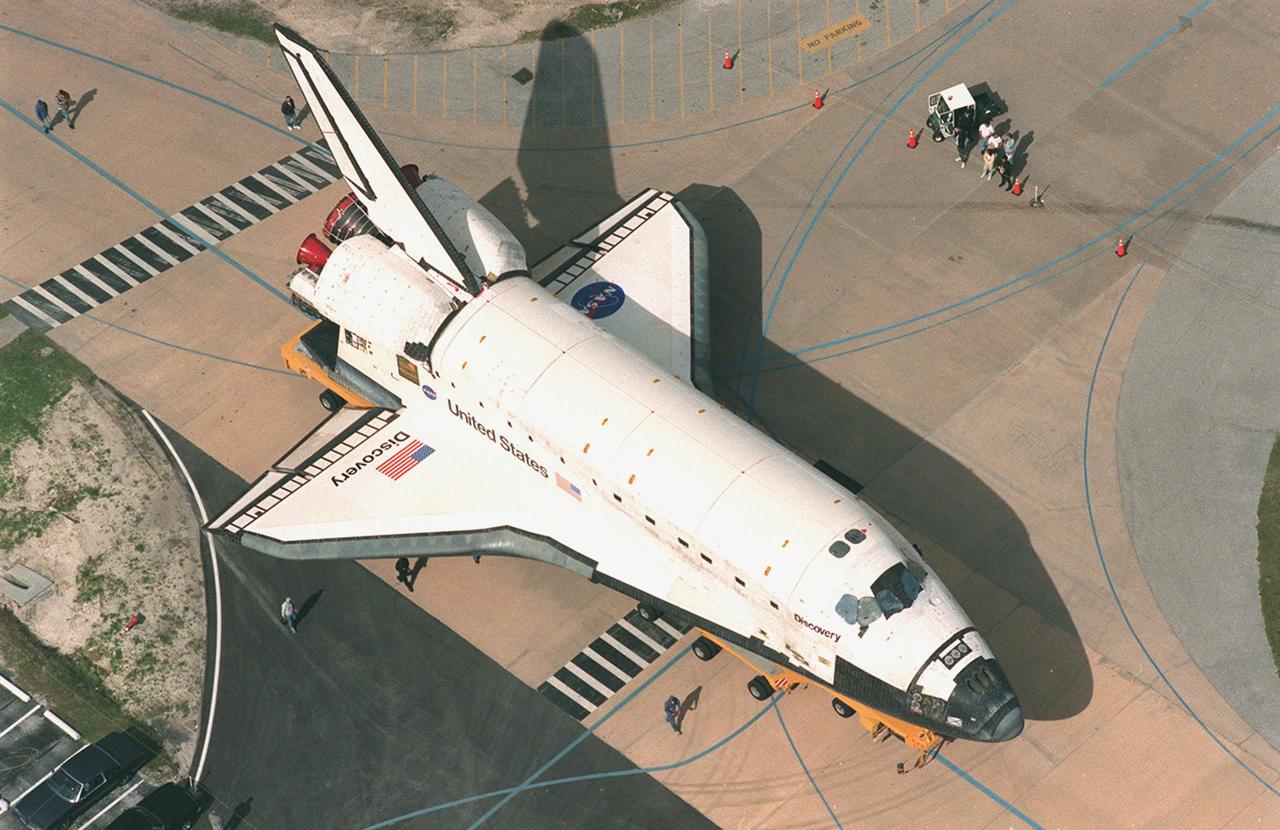
KENNEDY SPACE CENTER, FLA. -- The orbiter Discovery rolls along the tow-way to the Vehicle Assembly Building where it will be mated with an external tank and solid rocket boosters for its launch on mission STS-103. The launch date is currently under review for early December. STS-103, the third Hubble Space Telescope servicing mission, is a "call-up" due to the need to replace portions of the pointing system, the gyros, which have begun to fail on the Hubble Space Telescope. Although Hubble is operating normally and conducting its scientific observations, only three of its six gyroscopes are working properly. The gyroscopes allow the telescope to point at stars, galaxies and planets. The STS-103 crew will also be replacing a Fine Guidance Sensor and an older computer with a new enhanced model, an older data tape recorder with a solid-state digital recorder, a failed spare transmitter with a new one, and degraded insulation on the telescope with new thermal insulation. The crew will also install a Battery Voltage/Temperature Improvement Kit to protect the spacecraft batteries from overcharging and overheating when the telescope goes into a safe mode
KENNEDY SPACE CENTER, FLA. -- Orbiter Discovery is moved from the Orbiter Processing Facility bay 1 (at left) to the Vehicle Assembly Building for mating with an external tank and solid rocket boosters. Launch date for Discovery on mission STS-103, the third Hubble Space Telescope servicing mission, is under review for early December. The mission is a "call-up" due to the need to replace portions of the pointing system, the gyros, which have begun to fail on the Hubble Space Telescope. Although Hubble is operating normally and conducting its scientific observations, only three of its six gyroscopes are working properly. The gyroscopes allow the telescope to point at stars, galaxies and planets. The STS-103 crew will also be replacing a Fine Guidance Sensor and an older computer with a new enhanced model, an older data tape recorder with a solid-state digital recorder, a failed spare transmitter with a new one, and degraded insulation on the telescope with new thermal insulation. The crew will also install a Battery Voltage/Temperature Improvement Kit to protect the spacecraft batteries from overcharging and overheating when the telescope goes into a safe mode
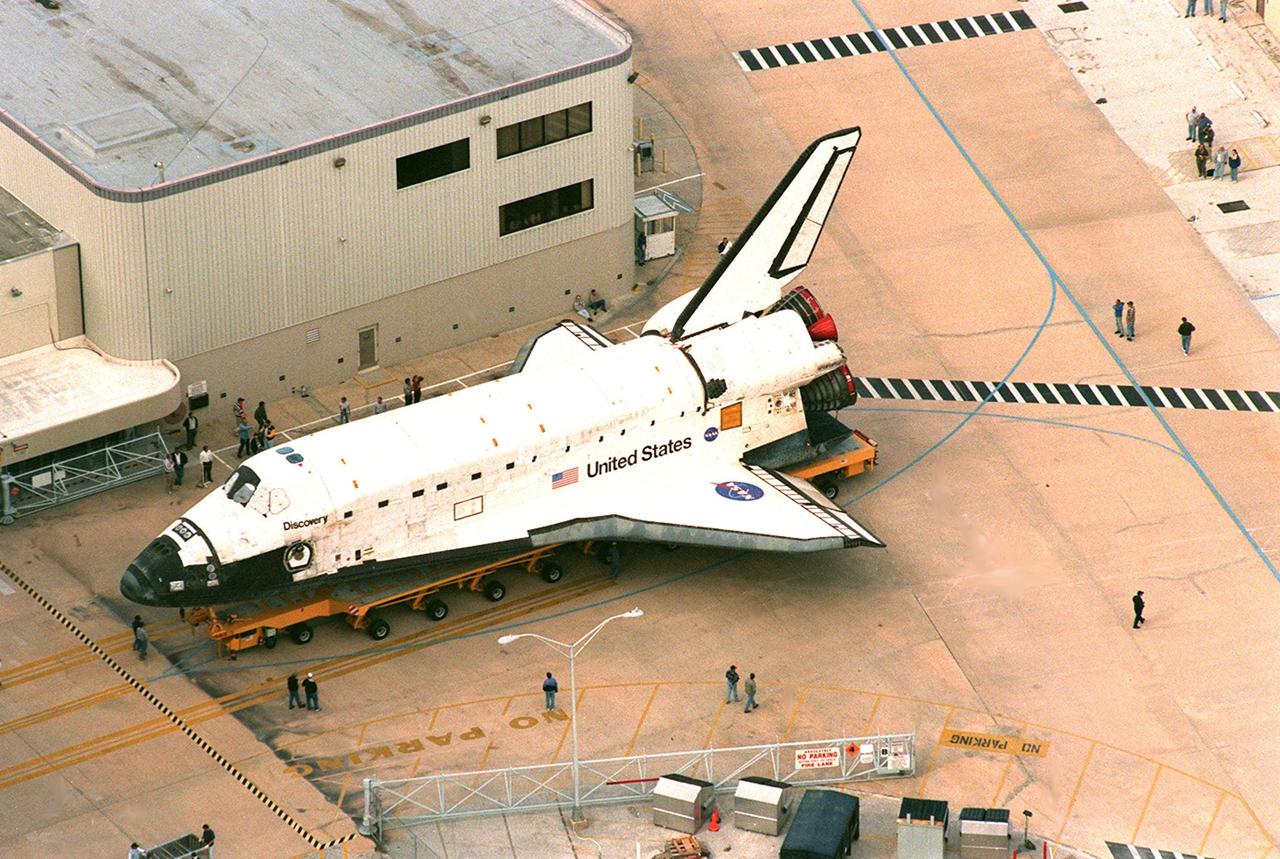
In this aerial view, the orbiter Discovery is out of the Orbiter Processing Facility (OPF) bay 1 and rolling back before onto the tow-way for its rollover to the Vehicle Assembly Building where it will be mated with an external tank and solid rocket boosters before its launch on mission STS-103. The launch date is currently under review for early December. STS-103, the third Hubble Space Telescope servicing mission, is a "call-up" due to the need to replace portions of the pointing system, the gyros, which have begun to fail on the Hubble Space Telescope. Although Hubble is operating normally and conducting its scientific observations, only three of its six gyroscopes are working properly. The gyroscopes allow the telescope to point at stars, galaxies and planets. The STS-103 crew will also be replacing a Fine Guidance Sensor and an older computer with a new enhanced model, an older data tape recorder with a solid-state digital recorder, a failed spare transmitter with a new one, and degraded insulation on the telescope with new thermal insulation. The crew will also install a Battery Voltage/Temperature Improvement Kit to protect the spacecraft batteries from overcharging and overheating when the telescope goes into a safe mode
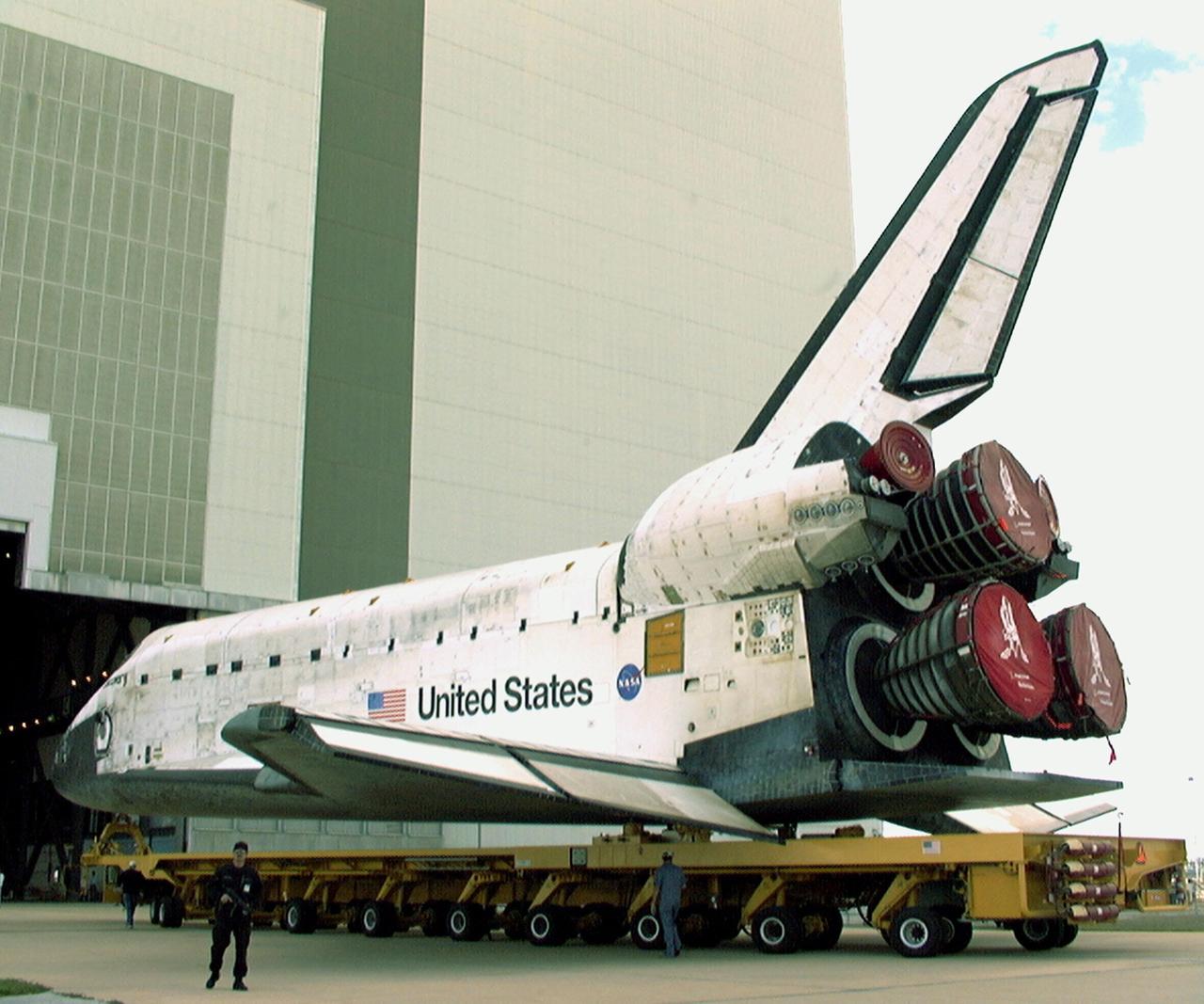
KENNEDY SPACE CENTER, FLA. -- Orbiter Discovery begins rolling into the Vehicle Assembly Building for stacking with an external tank and solid rocket boosters for its launch on mission STS-103. The launch date is currently under review for early December. STS-103, the third Hubble Space Telescope servicing mission, is a "call-up" due to the need to replace portions of the pointing system, the gyros, which have begun to fail on the Hubble Space Telescope. Although Hubble is operating normally and conducting its scientific observations, only three of its six gyroscopes are working properly. The gyroscopes allow the telescope to point at stars, galaxies and planets. The STS-103 crew will also be replacing a Fine Guidance Sensor and an older computer with a new enhanced model, an older data tape recorder with a solid-state digital recorder, a failed spare transmitter with a new one, and degraded insulation on the telescope with new thermal insulation. The crew will also install a Battery Voltage/Temperature Improvement Kit to protect the spacecraft batteries from overcharging and overheating when the telescope goes into a safe mode
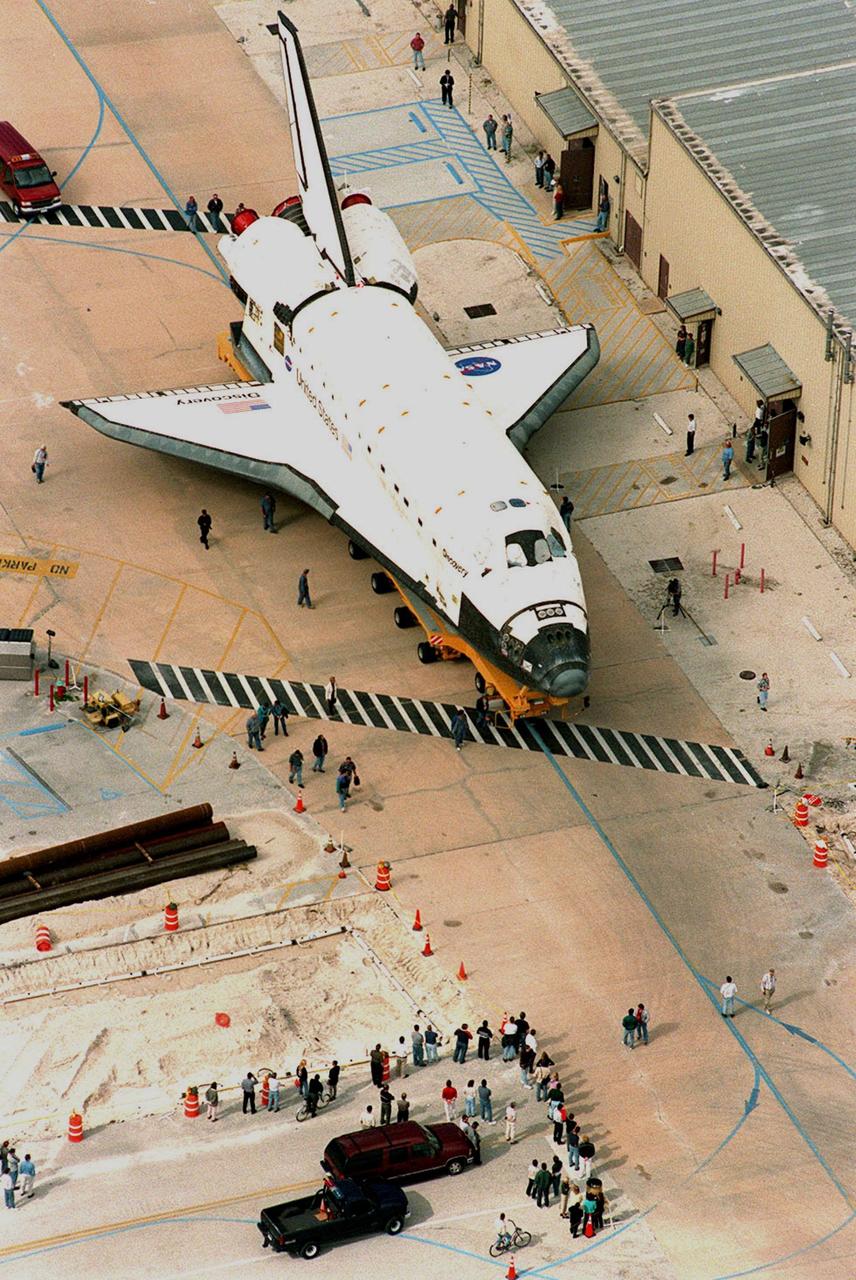
KENNEDY SPACE CENTER, FLA. -- After making a turn in front of the Orbiter Processing Facility (OPF) bay 1, the orbiter Discovery begins moving along the tow-way to the Vehicle Assembly Building as KSC workers watch. At the VAB, Discovery will be mated with an external tank and solid rocket boosters for its launch on mission STS-103. The launch date is currently under review for early December. STS-103, the third Hubble Space Telescope servicing mission, is a "call-up" due to the need to replace portions of the pointing system, the gyros, which have begun to fail on the Hubble Space Telescope. Although Hubble is operating normally and conducting its scientific observations, only three of its six gyroscopes are working properly. The gyroscopes allow the telescope to point at stars, galaxies and planets. The STS-103 crew will also be replacing a Fine Guidance Sensor and an older computer with a new enhanced model, an older data tape recorder with a solid-state digital recorder, a failed spare transmitter with a new one, and degraded insulation on the telescope with new thermal insulation. The crew will also install a Battery Voltage/Temperature Improvement Kit to protect the spacecraft batteries from overcharging and overheating when the telescope goes into a safe mode
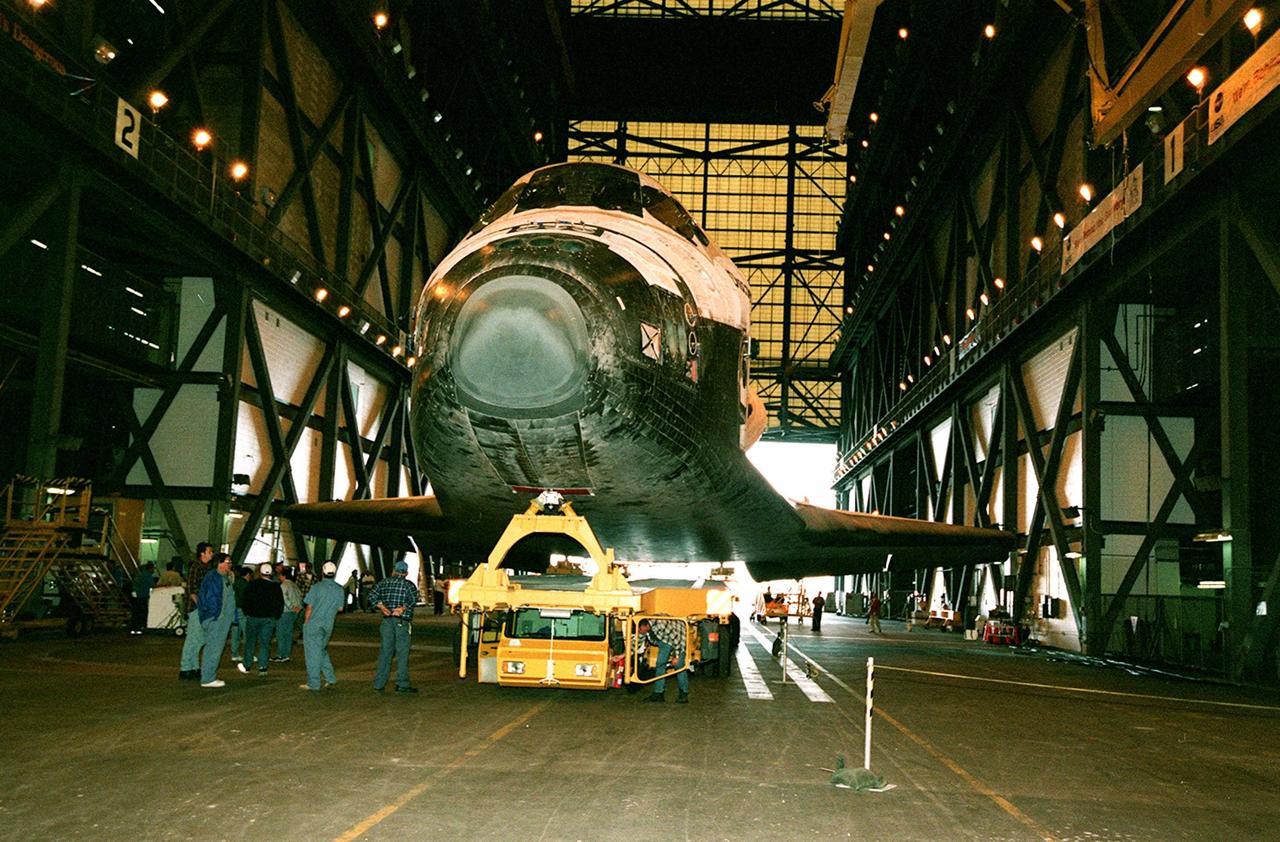
KENNEDY SPACE CENTER, FLA. -- The orbiter Discovery sits inside the Vehicle Assembly Building (VAB) after its rollover from the Orbiter Processing Facility (OPF) bay 1. In the VAB, Discovery will be mated with an external tank and solid rocket boosters for its launch on mission STS-103. The launch date is currently under review for early December. STS-103, the third Hubble Space Telescope servicing mission, is a "call-up" due to the need to replace portions of the pointing system, the gyros, which have begun to fail on the Hubble Space Telescope. Although Hubble is operating normally and conducting its scientific observations, only three of its six gyroscopes are working properly. The gyroscopes allow the telescope to point at stars, galaxies and planets. The STS-103 crew will also be replacing a Fine Guidance Sensor and an older computer with a new enhanced model, an older data tape recorder with a solid-state digital recorder, a failed spare transmitter with a new one, and degraded insulation on the telescope with new thermal insulation. The crew will also install a Battery Voltage/Temperature Improvement Kit to protect the spacecraft batteries from overcharging and overheating when the telescope goes into a safe mode
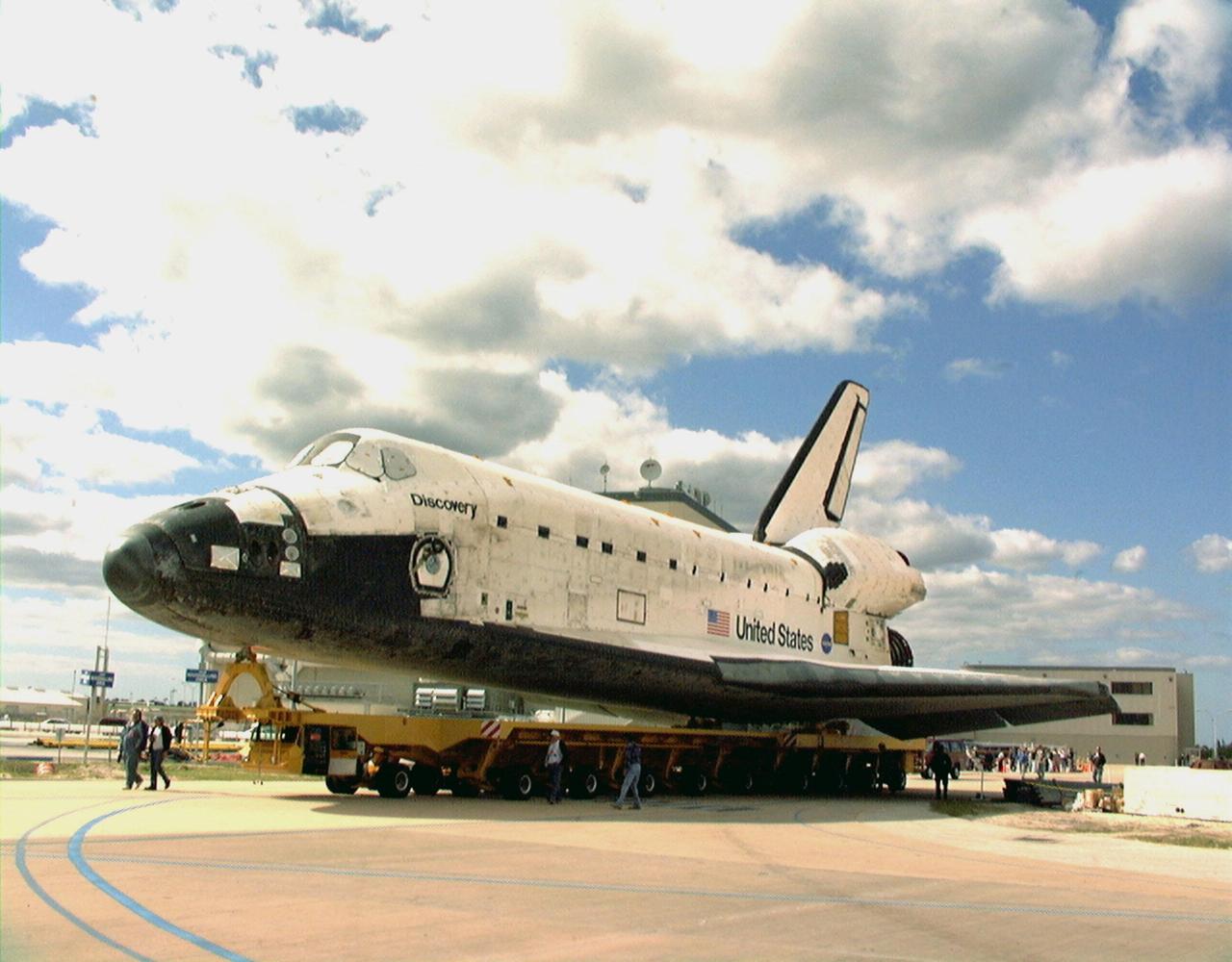
KENNEDY SPACE CENTER, FLA. -- Orbiter Discovery is rolled over to the Vehicle Assembly Building from the Orbiter Processing Facility bay 1. In the VAB it will be mated with an external tank and solid rocket boosters for its launch on mission STS-103. The launch date is currently under review for early December. STS-103, the third Hubble Space Telescope servicing mission, is a "call-up" due to the need to replace portions of the pointing system, the gyros, which have begun to fail on the Hubble Space Telescope. Although Hubble is operating normally and conducting its scientific observations, only three of its six gyroscopes are working properly. The gyroscopes allow the telescope to point at stars, galaxies and planets. The STS-103 crew will also be replacing a Fine Guidance Sensor and an older computer with a new enhanced model, an older data tape recorder with a solid-state digital recorder, a failed spare transmitter with a new one, and degraded insulation on the telescope with new thermal insulation. The crew will also install a Battery Voltage/Temperature Improvement Kit to protect the spacecraft batteries from overcharging and overheating when the telescope goes into a safe mode
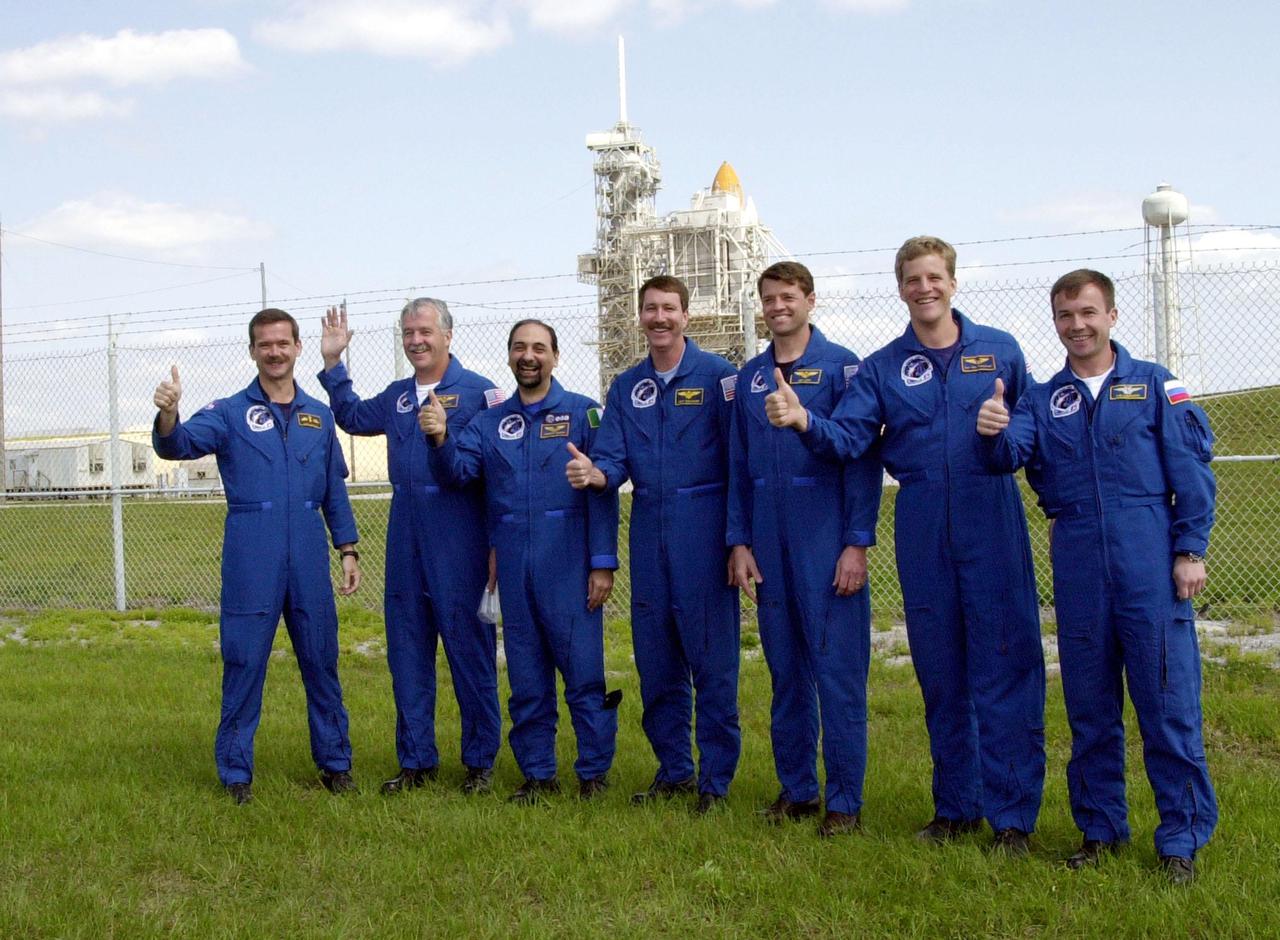
KENNEDY SPACE CENTER, FLA. -- The STS-100 crew gives thumbs up on launch as they gather near Launch Pad 39A to greet family and friends. Starting at left, they are Mission Specialists Chris A. Hadfield, John L. Phillips and Umberto Guidoni; Commander Kent V. Rominger; Pilot Jeffrey S. Ashby; and Mission Specialists Scott E. Parazynski and Yuri V. Lonchakov. Hadfield is with the Canadian Space Agency; Guidoni is with the European Space Agency; and Lonchakov is with the Russian Aviation and Space Agency. In the background on the pad can be seen the tips of Space Shuttle Endeavour’s orange external tank and white solid rocket boosters. The 80-foot lightning rod towers above the Shuttle and service structures. The crew is at KSC to complete final flight plan reviews in anticipation of launch. The 11-day mission to the International Space Station will deliver and integrate the Spacelab Logistics Pallet_Launch Deployment Assembly, which includes the Space Station Remote Manipulator system and the UHF Antenna, and the Multi-Purpose Logistics Module Raffaello. The mission includes two planned spacewalks for installation of the SSRMS. The mission is also the inaugural flight of the MPLM Raffaello, carrying resupply stowage racks and resupply_return stowage platforms. Liftoff on mission STS-100 is scheduled at 2:41 p.m. EDT April 19
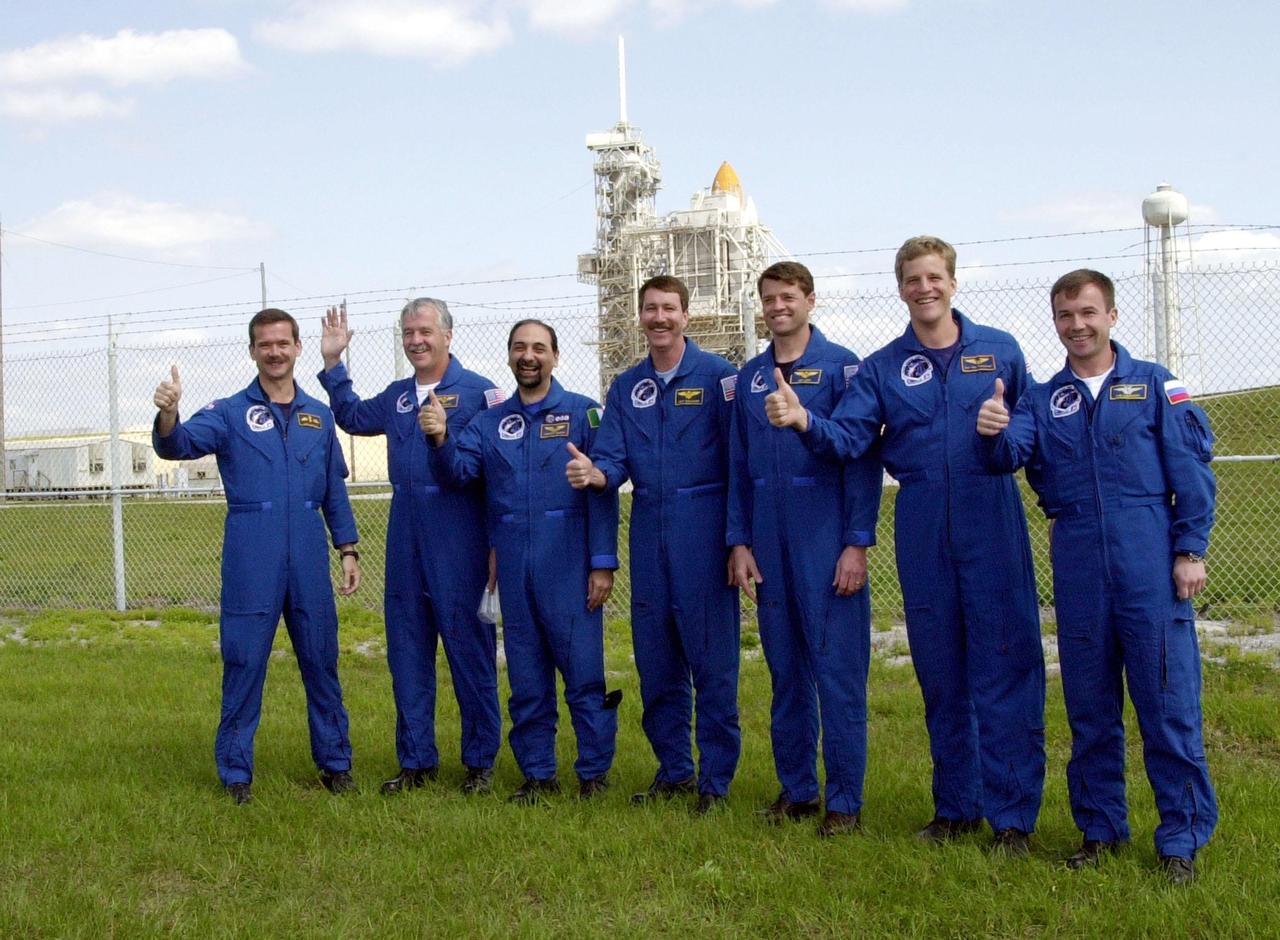
KENNEDY SPACE CENTER, FLA. -- The STS-100 crew gives thumbs up on launch as they gather near Launch Pad 39A to greet family and friends. Starting at left, they are Mission Specialists Chris A. Hadfield, John L. Phillips and Umberto Guidoni; Commander Kent V. Rominger; Pilot Jeffrey S. Ashby; and Mission Specialists Scott E. Parazynski and Yuri V. Lonchakov. Hadfield is with the Canadian Space Agency; Guidoni is with the European Space Agency; and Lonchakov is with the Russian Aviation and Space Agency. In the background on the pad can be seen the tips of Space Shuttle Endeavour’s orange external tank and white solid rocket boosters. The 80-foot lightning rod towers above the Shuttle and service structures. The crew is at KSC to complete final flight plan reviews in anticipation of launch. The 11-day mission to the International Space Station will deliver and integrate the Spacelab Logistics Pallet/Launch Deployment Assembly, which includes the Space Station Remote Manipulator system and the UHF Antenna, and the Multi-Purpose Logistics Module Raffaello. The mission includes two planned spacewalks for installation of the SSRMS. The mission is also the inaugural flight of the MPLM Raffaello, carrying resupply stowage racks and resupply/return stowage platforms. Liftoff on mission STS-100 is scheduled at 2:41 p.m. EDT April 19