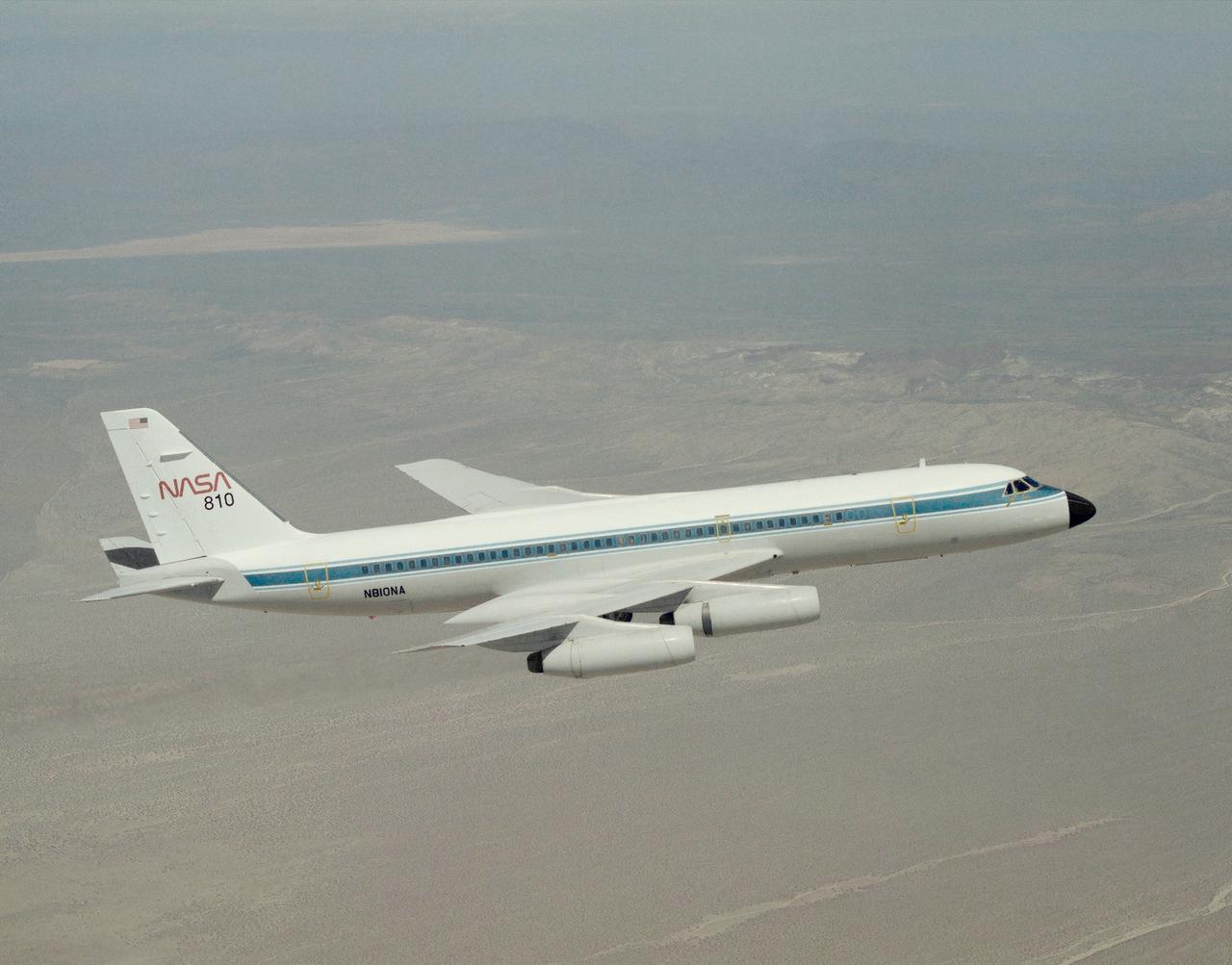
A NASA CV-990, modified as a Landing Systems Research Aircraft (LSRA), in flight over NASA's Dryden Flight Research Center, Edwards, California, for a test of the space shuttle landing gear system. The space shuttle landing gear test unit, operated by a high-pressure hydraulic system, allowed engineers to assess and document the performance of space shuttle main and nose landing gear systems, tires and wheel assemblies, plus braking and nose wheel steering performance. The series of 155 test missions for the space shuttle program provided extensive data about the life and endurance of the shuttle tire systems and helped raise the shuttle crosswind landing limits at Kennedy.
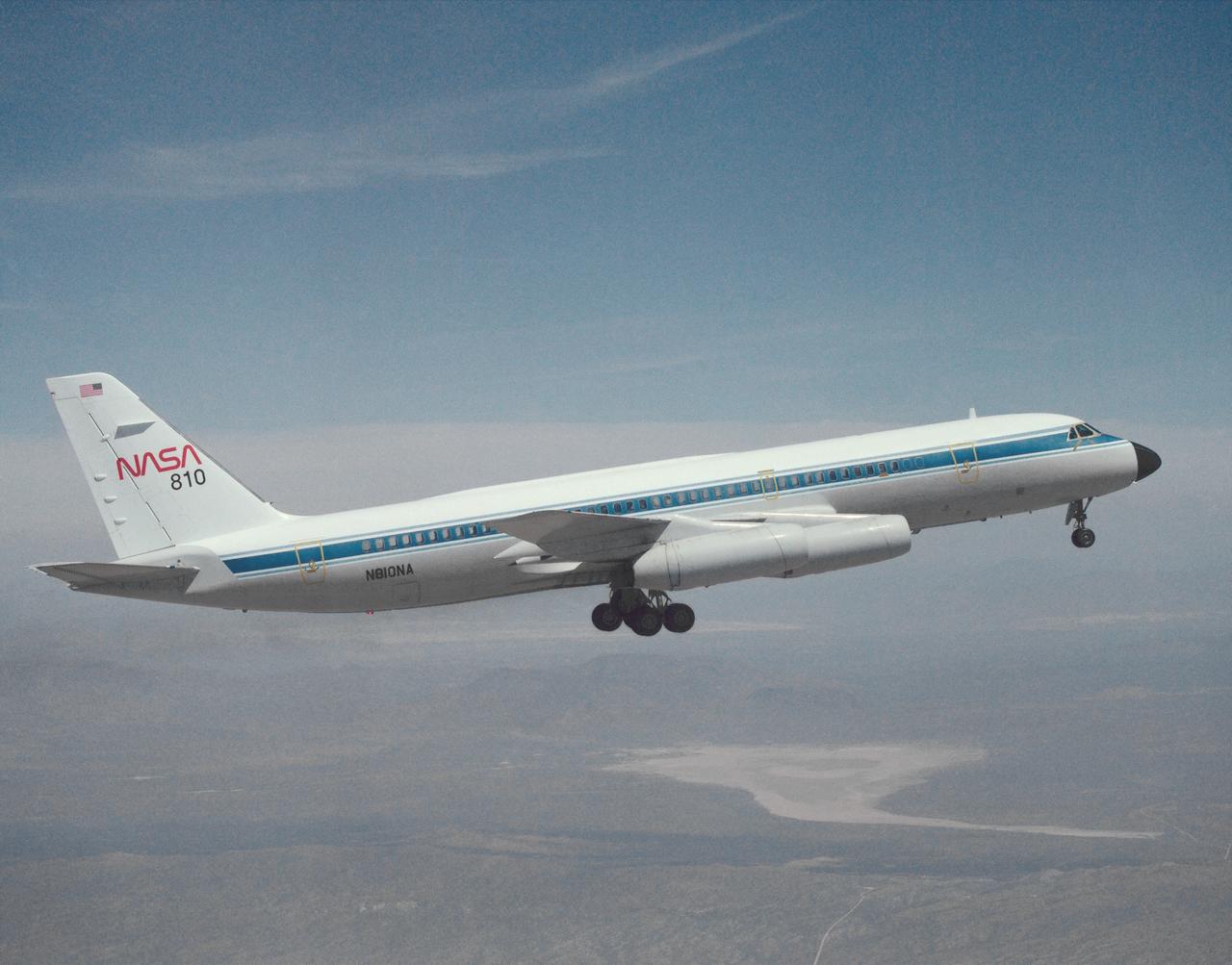
A NASA CV-990, modified as a Landing Systems Research Aircraft (LSRA), in flight over NASA's Dryden Flight Research Center, Edwards, California, for a test of the space shuttle landing gear system. The space shuttle landing gear test unit, operated by a high-pressure hydraulic system, allowed engineers to assess and document the performance of space shuttle main and nose landing gear systems, tires and wheel assemblies, plus braking and nose wheel steering performance. The series of 155 test missions for the space shuttle program provided extensive data about the life and endurance of the shuttle tire systems and helped raise the shuttle crosswind landing limits at Kennedy.
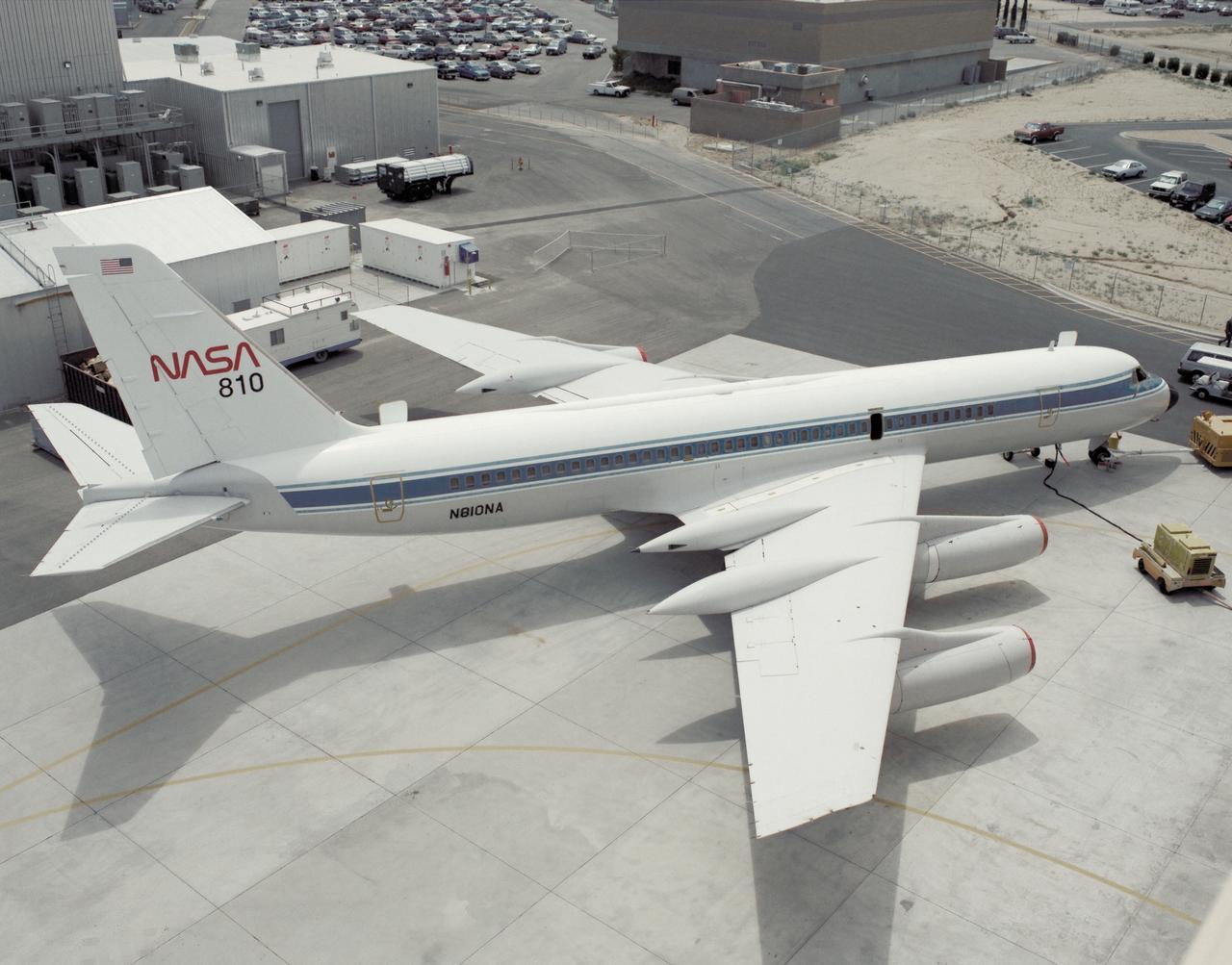
A NASA CV-990, modified as a Landing Systems Research Aircraft (LSRA), is serviced on the ramp at NASA's Dryden Flight Research Center, Edwards, California, before a test of the space shuttle landing gear system. The space shuttle landing gear test unit, operated by a high-pressure hydraulic system, allowed engineers to assess and document the performance of space shuttle main and nose landing gear systems, tires and wheel assemblies, plus braking and nose wheel steering performance. The series of 155 test missions for the space shuttle program provided extensive data about the life and endurance of the shuttle tire systems and helped raise the shuttle crosswind landing limits at Kennedy.
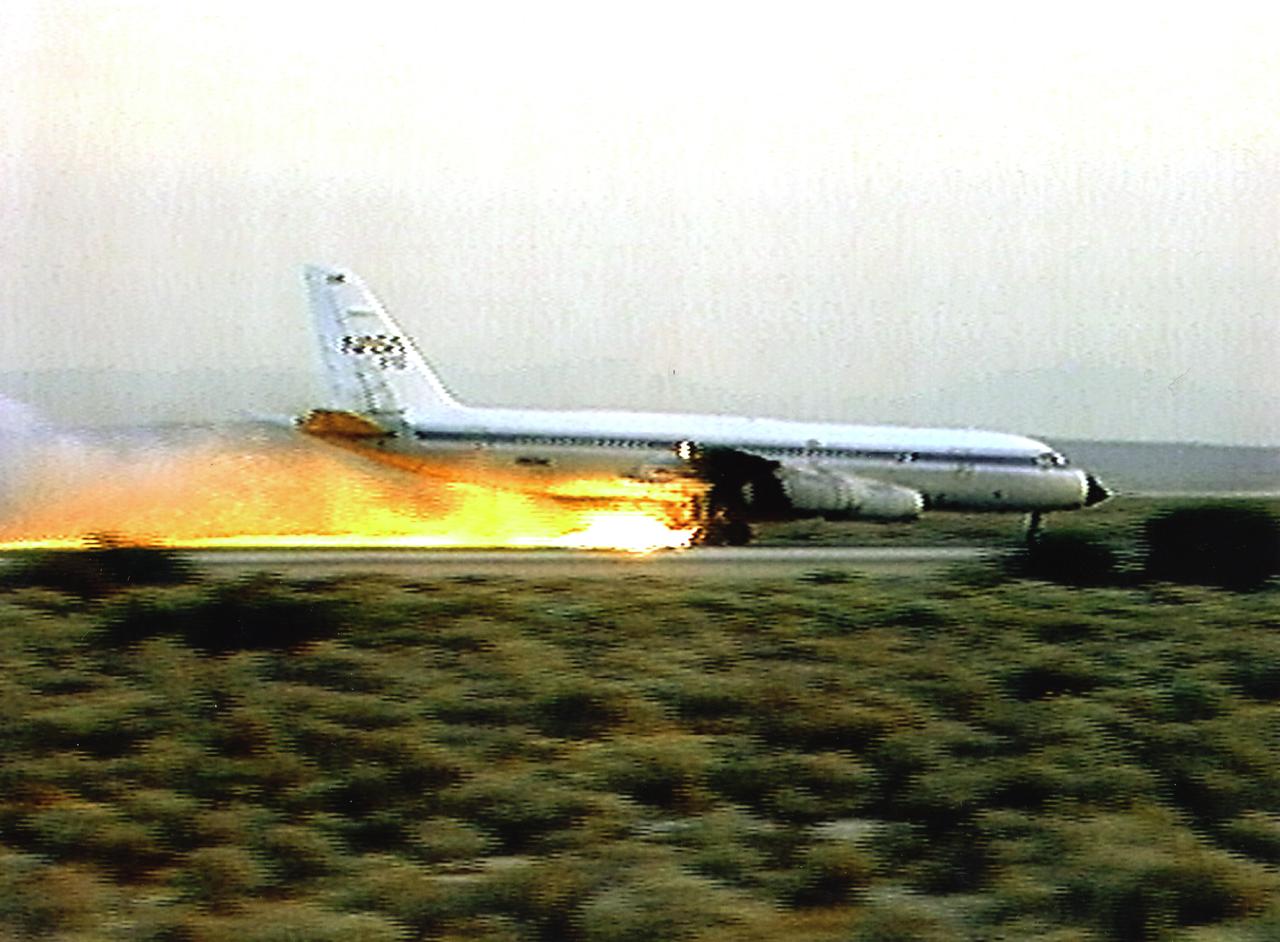
A NASA CV-990, modified as a Landing Systems Research Aircraft (LSRA), lands on the Edwards AFB main runway in test of the space shuttle landing gear system. In this case, the shuttle tire failed, bursting into flame during the rollout. The space shuttle landing gear test unit, operated by a high-pressure hydraulic system, allowed engineers to assess and document the performance of space shuttle main and nose landing gear systems, tires and wheel assemblies, plus braking and nose wheel steering performance. The series of 155 test missions for the space shuttle program provided extensive data about the life and endurance of the shuttle tire systems and helped raise the shuttle crosswind landing limits at Kennedy. The CV-990 used as the LSRA was built in 1962 by the Convair Division of General Dynamics Corp., Ft. Worth, Texas, served as a research aircraft at Ames Research Center, Moffett Field, California, before it came to Dryden.
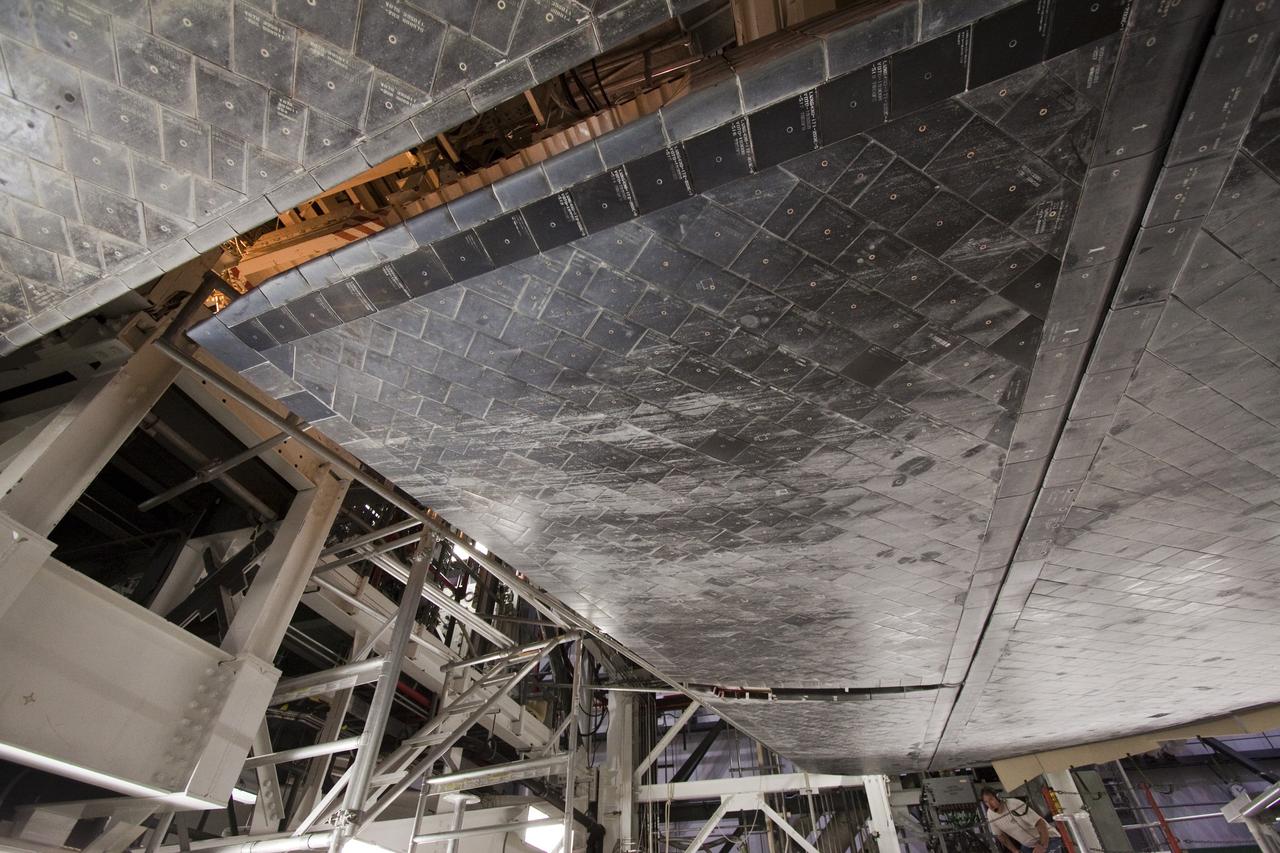
CAPE CANAVERAL, Fla. -- Space shuttle Atlantis goes through a routine landing gear test in Orbiter Processing Facility-1 at NASA's Kennedy Space Center in Florida. Technicians are checking to make sure the shuttle's wheels, brakes, elevons and body flap function properly. Seen here, an elevon is tested. Elevons are located on the trailing edge of each wing and help control pitch of the shuttle as it comes in for landing. Atlantis is being prepared for the STS-135 mission, which will deliver the Raffaello multi-purpose logistics module packed with supplies, logistics and spare parts to the International Space Station. STS-135 is targeted to launch June 28, and will be the last spaceflight for the Space Shuttle Program. Photo credit: NASA/Jack Pfaller
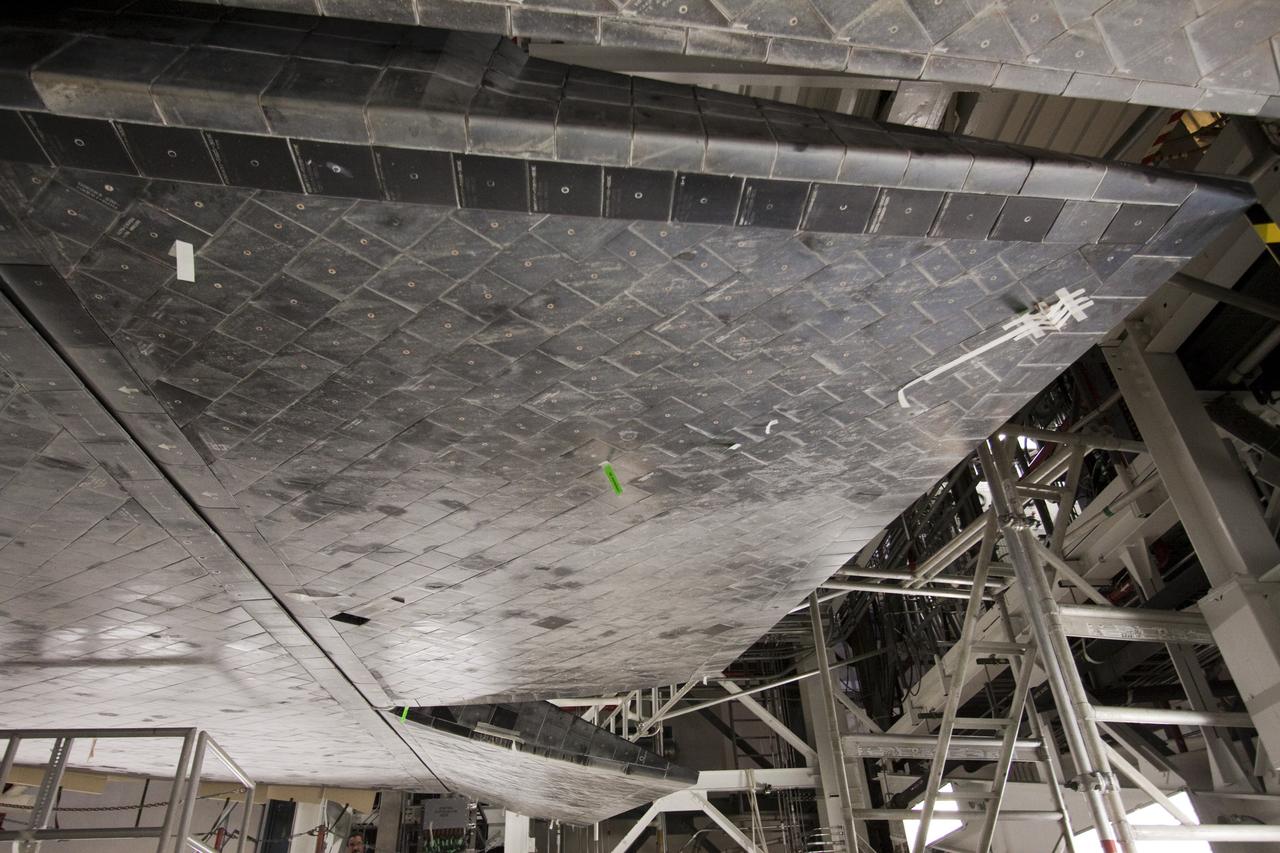
CAPE CANAVERAL, Fla. -- Space shuttle Atlantis goes through a routine landing gear test in Orbiter Processing Facility-1 at NASA's Kennedy Space Center in Florida. Technicians are checking to make sure the shuttle's wheels, brakes, elevons and body flap function properly. Seen here, an elevon is tested. Elevons are located on the trailing edge of each wing and help control pitch of the shuttle as it comes in for landing. Atlantis is being prepared for the STS-135 mission, which will deliver the Raffaello multi-purpose logistics module packed with supplies, logistics and spare parts to the International Space Station. STS-135 is targeted to launch June 28, and will be the last spaceflight for the Space Shuttle Program. Photo credit: NASA/Jack Pfaller
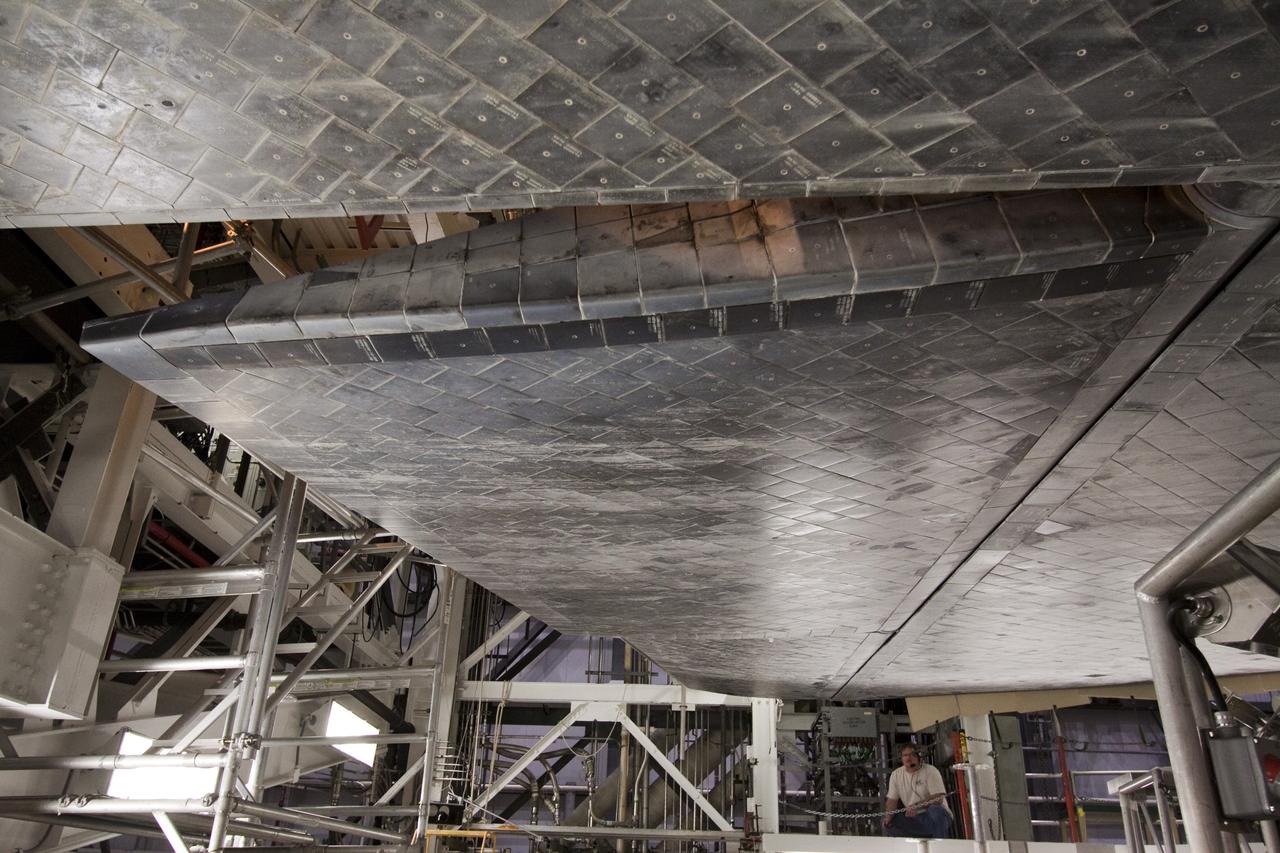
CAPE CANAVERAL, Fla. -- Space shuttle Atlantis goes through a routine landing gear test in Orbiter Processing Facility-1 at NASA's Kennedy Space Center in Florida. Technicians are checking to make sure the shuttle's wheels, brakes, elevons and body flap function properly. Seen here, the body flap is tested. The body flap blocks heat and air flow during the shuttle's re-entry into Earth's atmosphere. Atlantis is being prepared for the STS-135 mission, which will deliver the Raffaello multi-purpose logistics module packed with supplies, logistics and spare parts to the International Space Station. STS-135 is targeted to launch June 28, and will be the last spaceflight for the Space Shuttle Program. Photo credit: NASA/Jack Pfaller
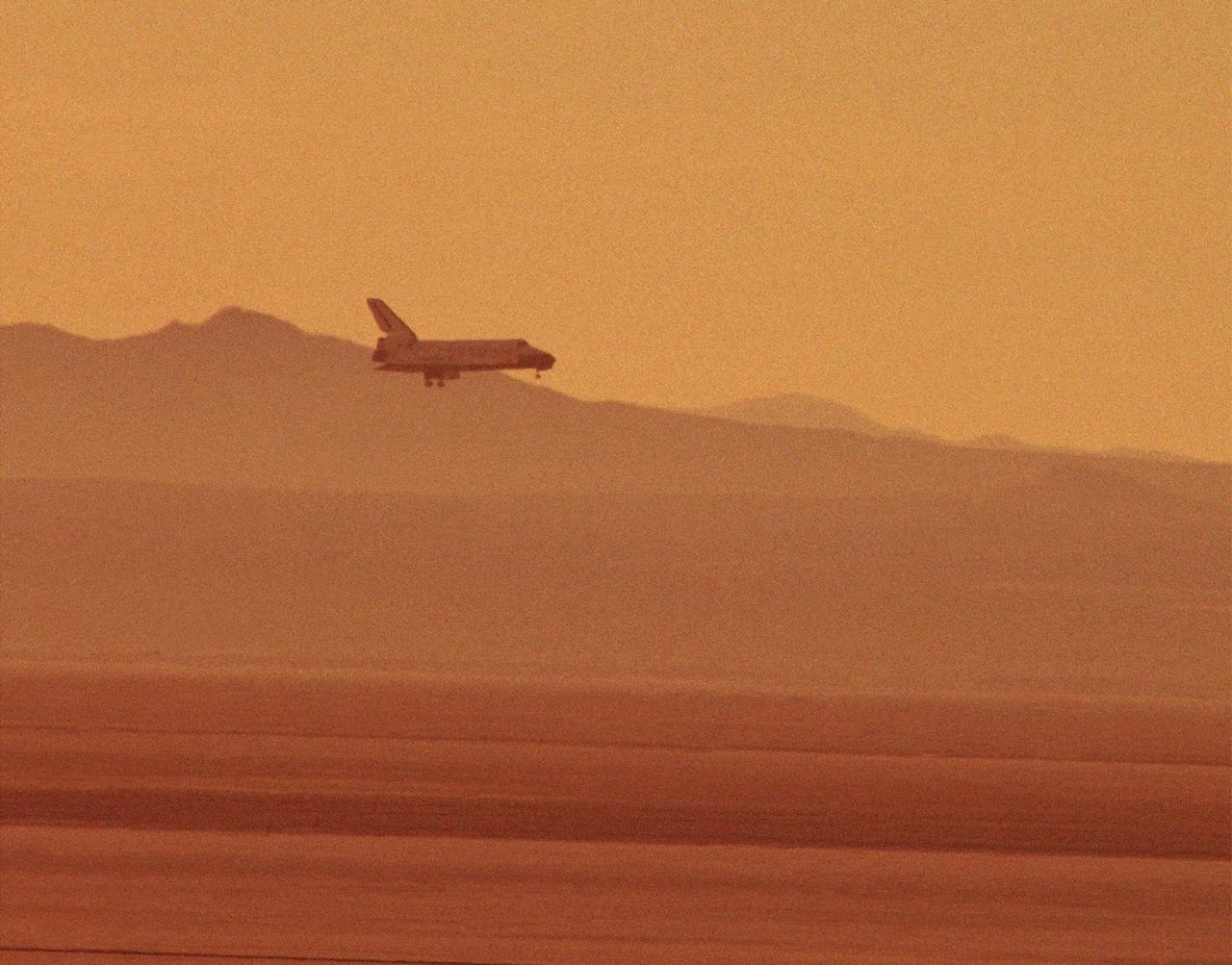
The STS-29 Space Shuttle Discovery mission approaches for a landing at NASA's then Ames-Dryden Flight Research Facility, Edwards AFB, California, early Saturday morning, 18 March 1989. Touchdown was at 6:35:49 a.m. PST and wheel stop was at 6:36:40 a.m. on runway 22. Controllers chose the concrete runway for the landing in order to make tests of braking and nosewheel steering. The STS-29 mission was very successful, completing the launch a Tracking and Data Relay communications satellite, as well as a range of scientific experiments. Discovery's five man crew was led by Commander Michael L. Coats, and included pilot John E. Blaha and mission specialists James P. Bagian, Robert C. Springer, and James F. Buchli.
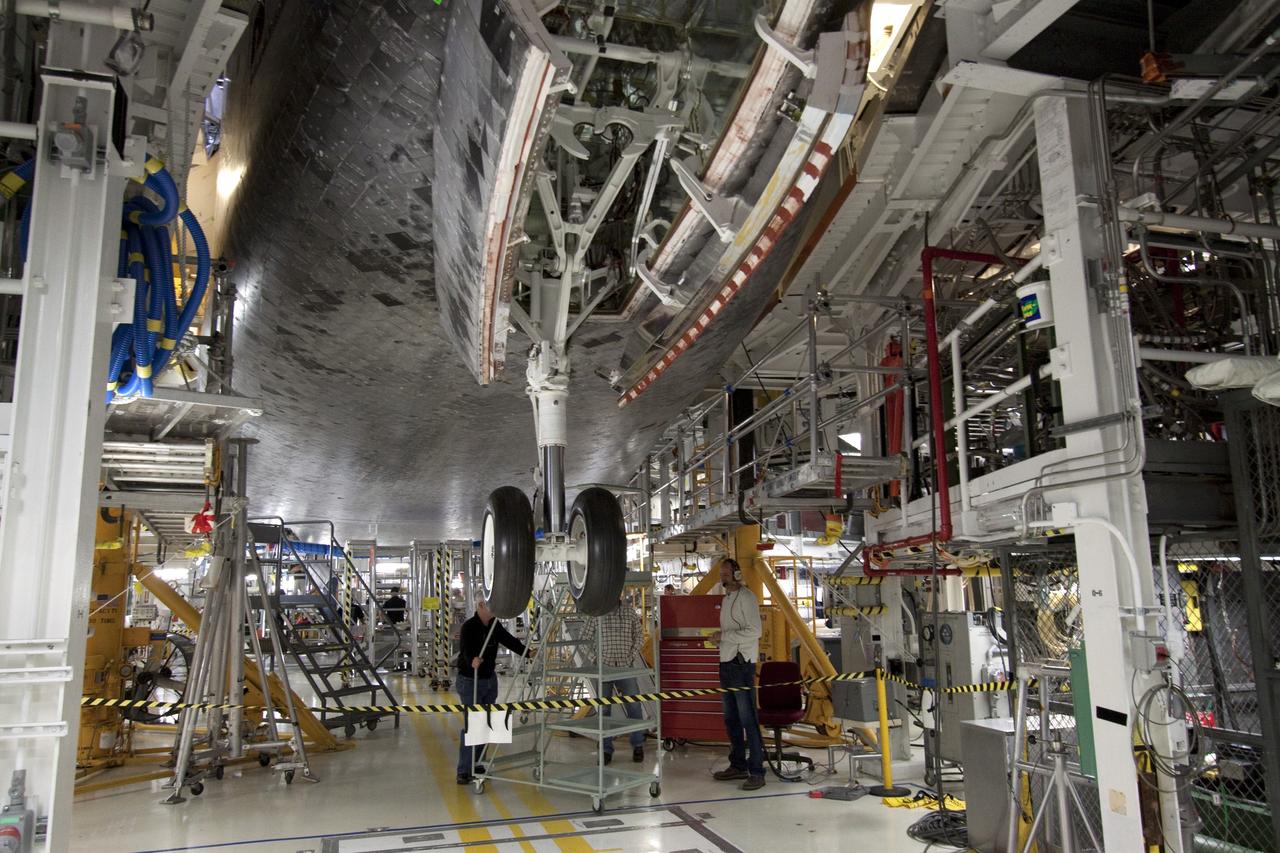
CAPE CANAVERAL, Fla. -- Space shuttle Atlantis goes through a routine landing gear test in Orbiter Processing Facility-1 at NASA's Kennedy Space Center in Florida. Technicians are checking to make sure the shuttle's wheels, brakes, elevons and body flap function properly. Seen here, the nose landing gear is deployed. During a shuttle landing, the nose gear comes down after the main gear and helps the shuttle coast to a stop. Atlantis is being prepared for the STS-135 mission, which will deliver the Raffaello multi-purpose logistics module packed with supplies, logistics and spare parts to the International Space Station. STS-135 is targeted to launch June 28, and will be the last spaceflight for the Space Shuttle Program. Photo credit: NASA/Jack Pfaller
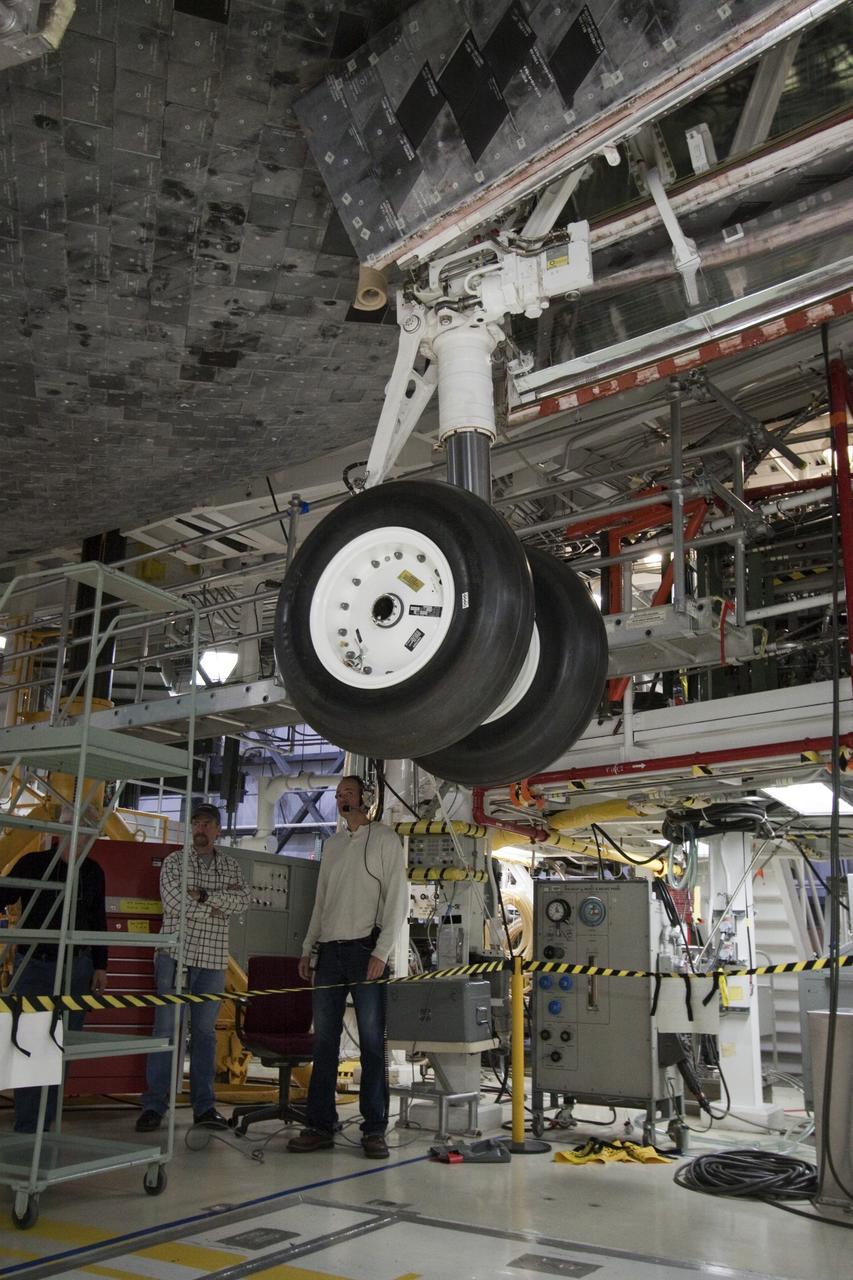
CAPE CANAVERAL, Fla. -- Space shuttle Atlantis goes through a routine landing gear test in Orbiter Processing Facility-1 at NASA's Kennedy Space Center in Florida. Technicians are checking to make sure the shuttle's wheels, brakes, elevons and body flap function properly. Seen here, the nose landing gear is deployed. During a shuttle landing, the nose gear comes down after the main gear and helps the shuttle coast to a stop. Atlantis is being prepared for the STS-135 mission, which will deliver the Raffaello multi-purpose logistics module packed with supplies, logistics and spare parts to the International Space Station. STS-135 is targeted to launch June 28, and will be the last spaceflight for the Space Shuttle Program. Photo credit: NASA/Jack Pfaller
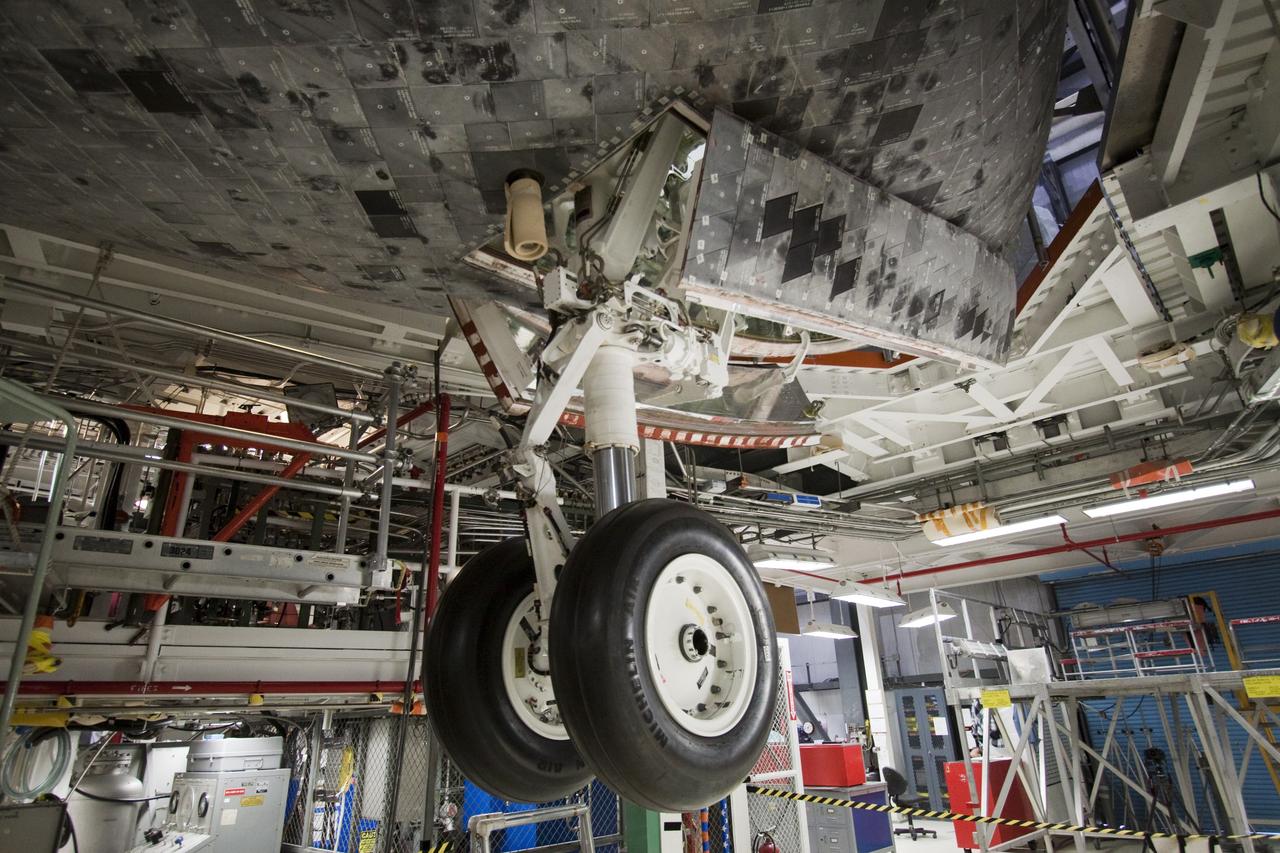
CAPE CANAVERAL, Fla. -- Space shuttle Atlantis goes through a routine landing gear test in Orbiter Processing Facility-1 at NASA's Kennedy Space Center in Florida. Technicians are checking to make sure the shuttle's wheels, brakes, elevons and body flap function properly. Seen here, the nose landing gear is deployed. During a shuttle landing, the nose gear comes down after the main gear and helps the shuttle coast to a stop. Atlantis is being prepared for the STS-135 mission, which will deliver the Raffaello multi-purpose logistics module packed with supplies, logistics and spare parts to the International Space Station. STS-135 is targeted to launch June 28, and will be the last spaceflight for the Space Shuttle Program. Photo credit: NASA/Jack Pfaller
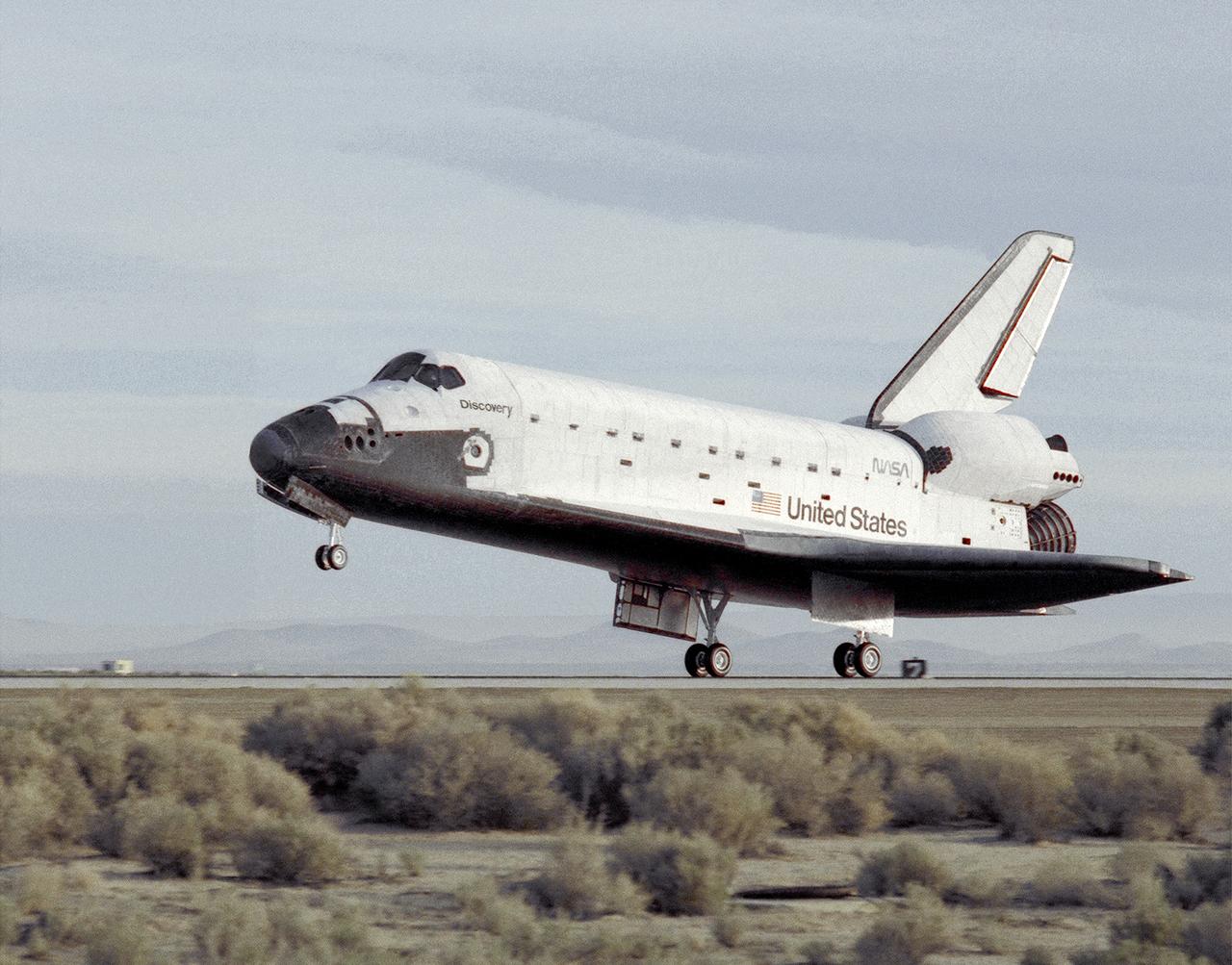
The STS-29 Space Shuttle Discovery mission lands at NASA's then Ames-Dryden Flight Research Facility, Edwards AFB, California, early Saturday morning, 18 March 1989. Touchdown was at 6:35:49 a.m. PST and wheel stop was at 6:36:40 a.m. on runway 22. Controllers chose the concrete runway for the landing in order to make tests of braking and nosewheel steering. The STS-29 mission was very successful, completing the launch of a Tracking and Data Relay communications satellite, as well as a range of scientific experiments. Discovery's five-man crew was led by Commander Michael L. Coats, and included pilot John E. Blaha and mission specialists James P. Bagian, Robert C. Springer, and James F. Buchli.
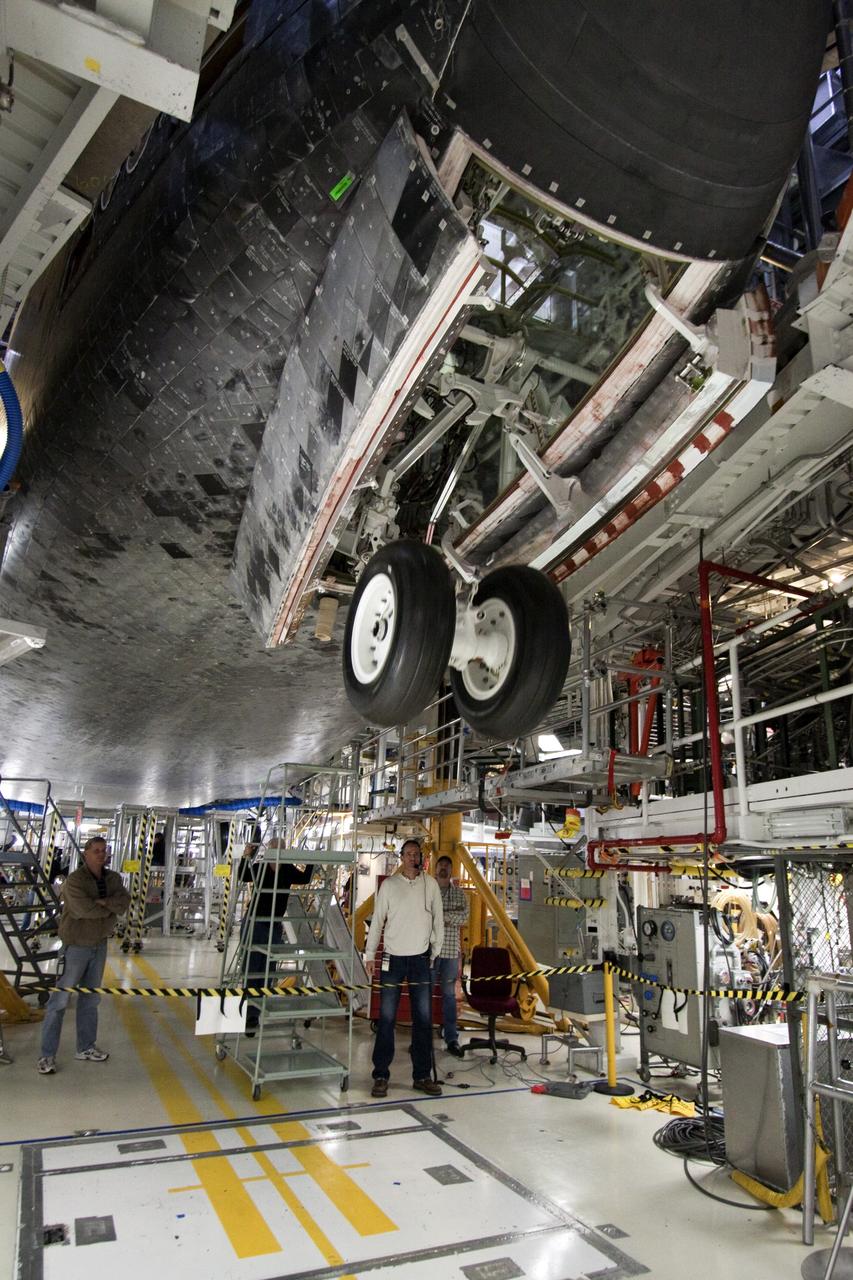
CAPE CANAVERAL, Fla. -- Space shuttle Atlantis goes through a routine landing gear test in Orbiter Processing Facility-1 at NASA's Kennedy Space Center in Florida. Technicians are checking to make sure the shuttle's wheels, brakes, elevons and body flap function properly. Seen here, the nose landing gear is deployed. During a shuttle landing, the nose gear comes down after the main gear and helps the shuttle coast to a stop. Atlantis is being prepared for the STS-135 mission, which will deliver the Raffaello multi-purpose logistics module packed with supplies, logistics and spare parts to the International Space Station. STS-135 is targeted to launch June 28, and will be the last spaceflight for the Space Shuttle Program. Photo credit: NASA/Jack Pfaller
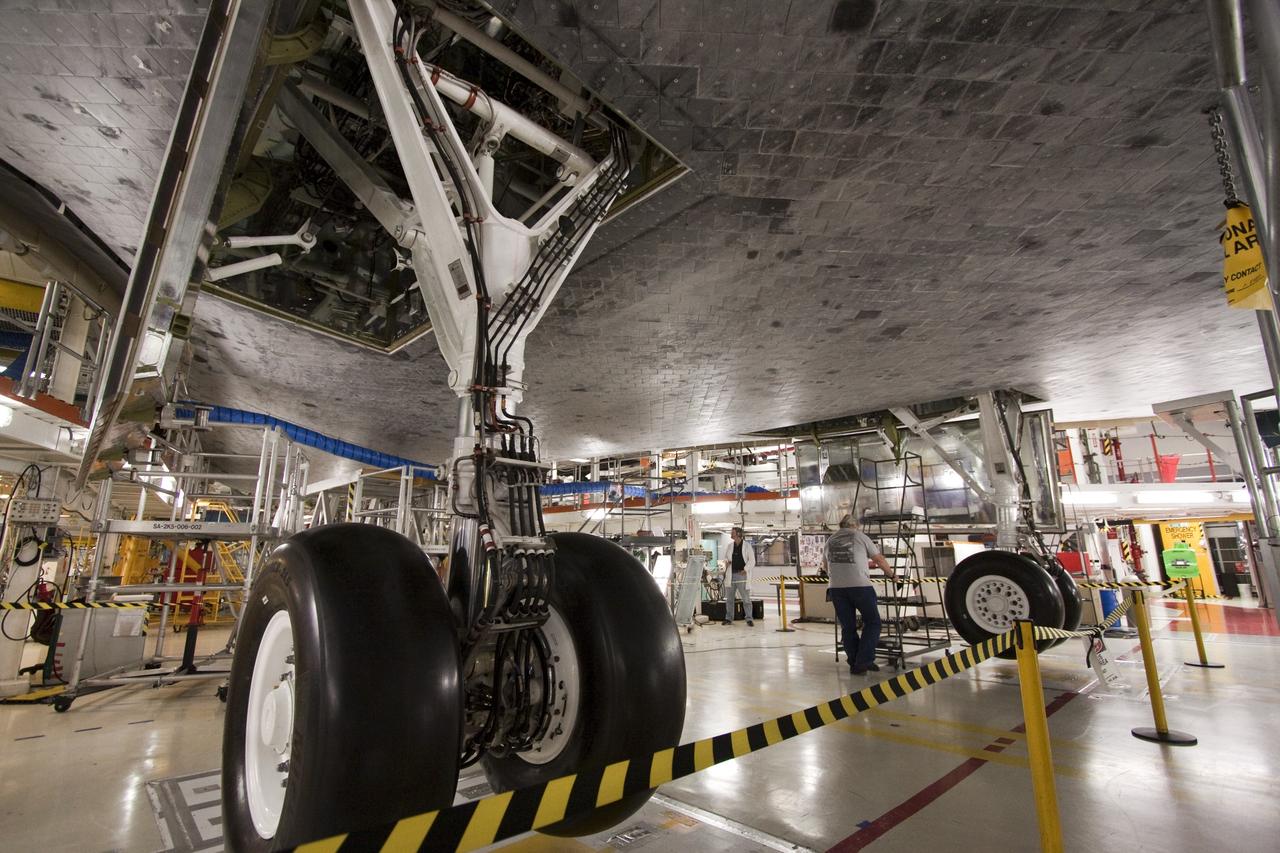
CAPE CANAVERAL, Fla. -- Space shuttle Atlantis goes through a routine landing gear test in Orbiter Processing Facility-1 at NASA's Kennedy Space Center in Florida. Technicians are checking to make sure the shuttle's wheels, brakes, elevons and body flap function properly. Seen here, the nose landing gear is deployed. During a shuttle landing, the nose gear comes down after the main gear and helps the shuttle coast to a stop. Atlantis is being prepared for the STS-135 mission, which will deliver the Raffaello multi-purpose logistics module packed with supplies, logistics and spare parts to the International Space Station. STS-135 is targeted to launch June 28, and will be the last spaceflight for the Space Shuttle Program. Photo credit: NASA/Jack Pfaller