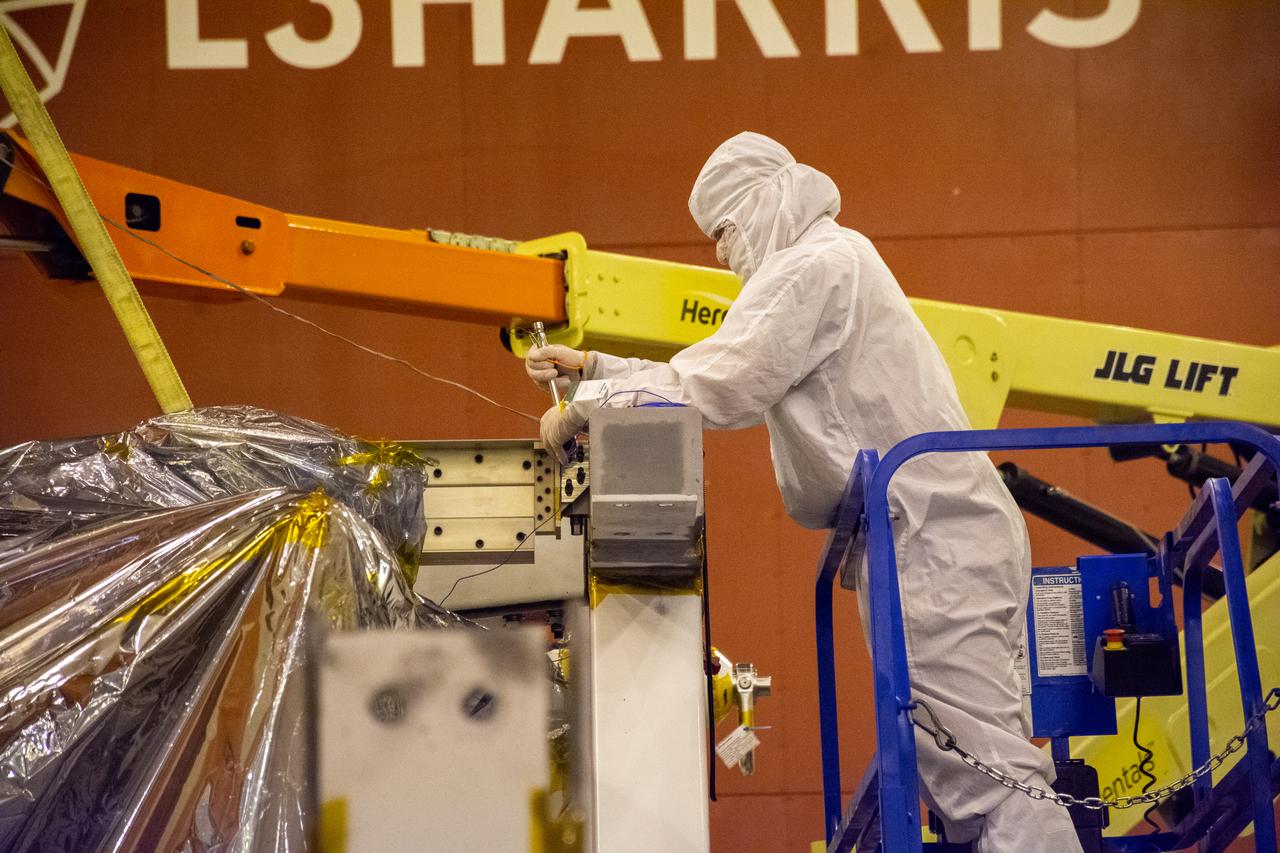
The Landsat 9 spacecraft (observatory) undergoes breakover operations inside the Integrated Processing Facility at Vandenberg Space Force Base in California.
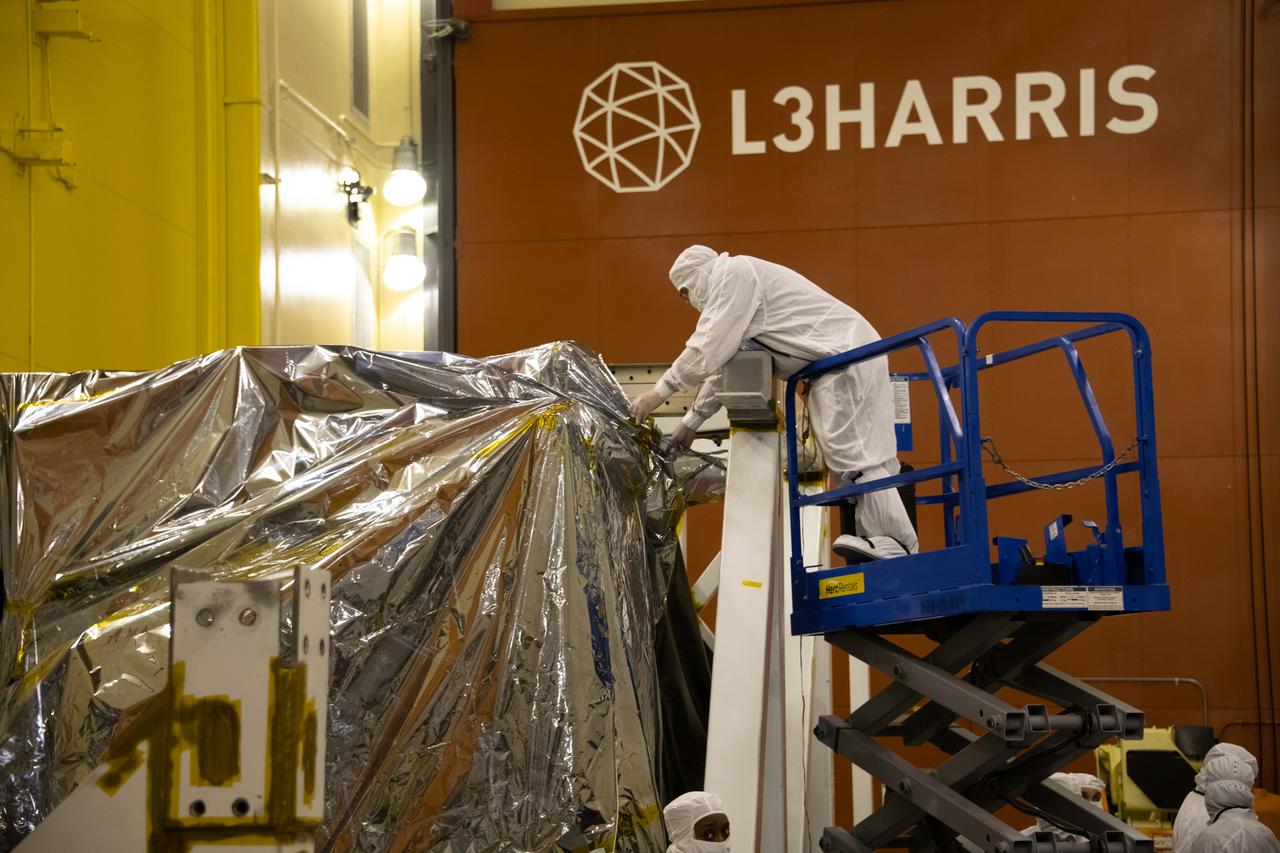
The Landsat 9 spacecraft (observatory) undergoes breakover operations inside the Integrated Processing Facility at Vandenberg Space Force Base in California.
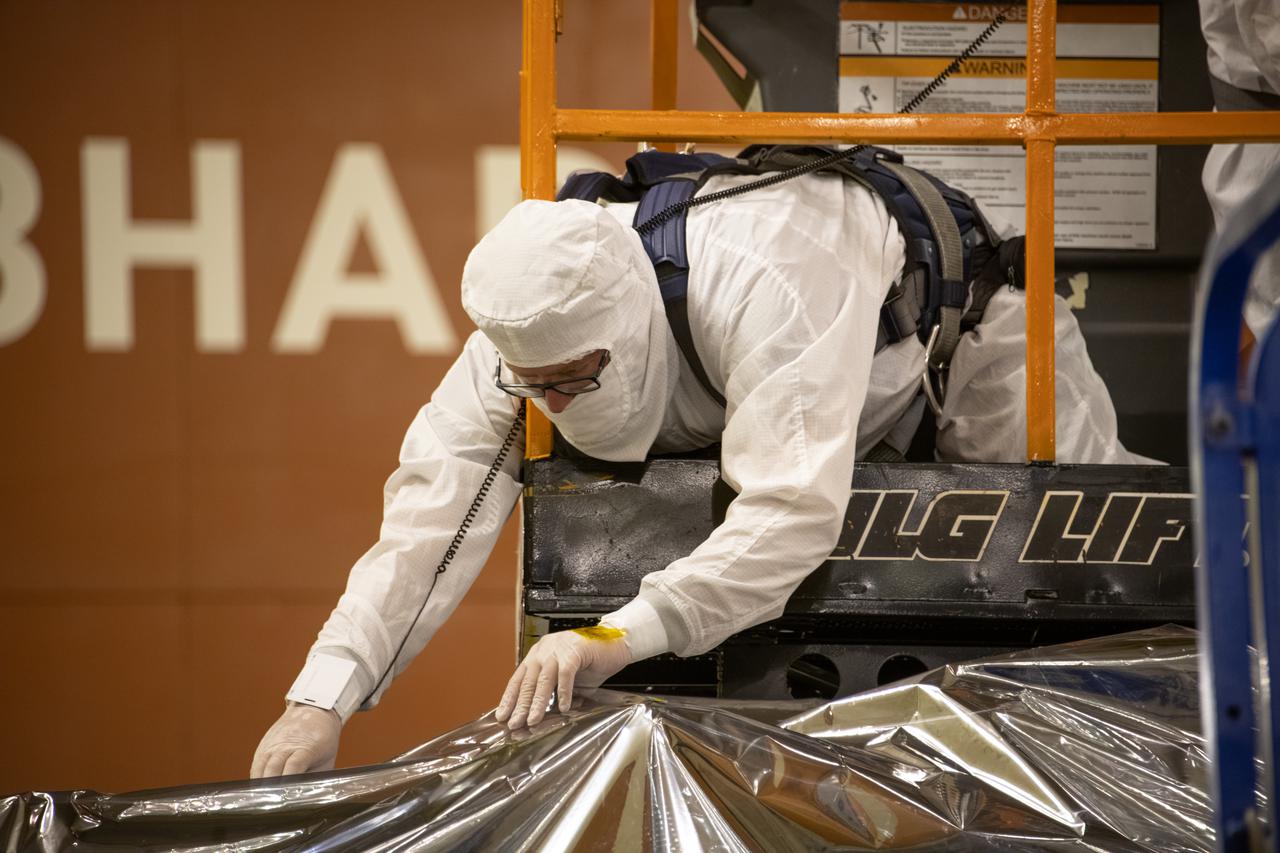
The Landsat 9 spacecraft (observatory) undergoes breakover operations inside the Integrated Processing Facility at Vandenberg Space Force Base in California.
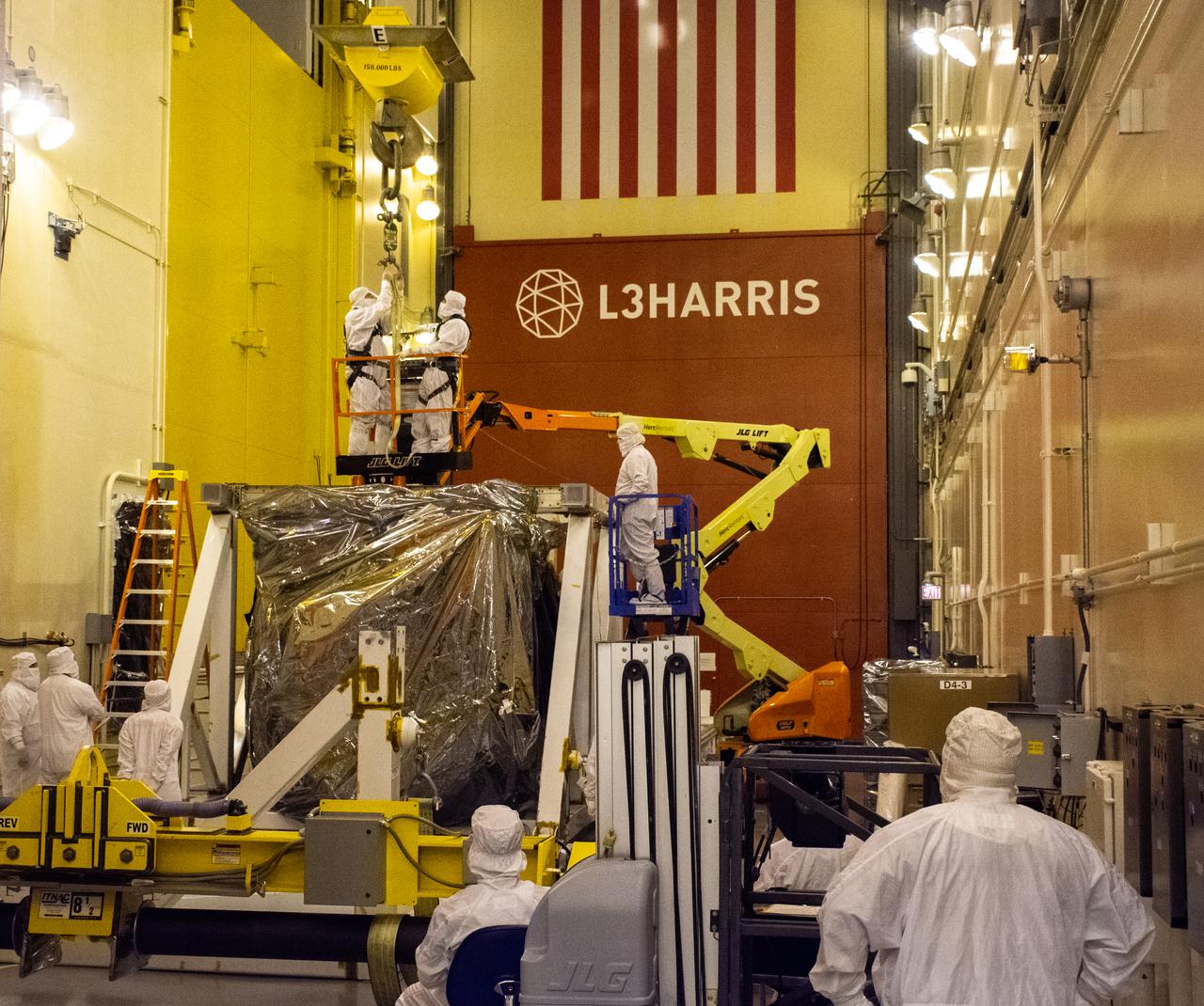
The Landsat 9 spacecraft (observatory) undergoes breakover operations inside the Integrated Processing Facility at Vandenberg Space Force Base in California.
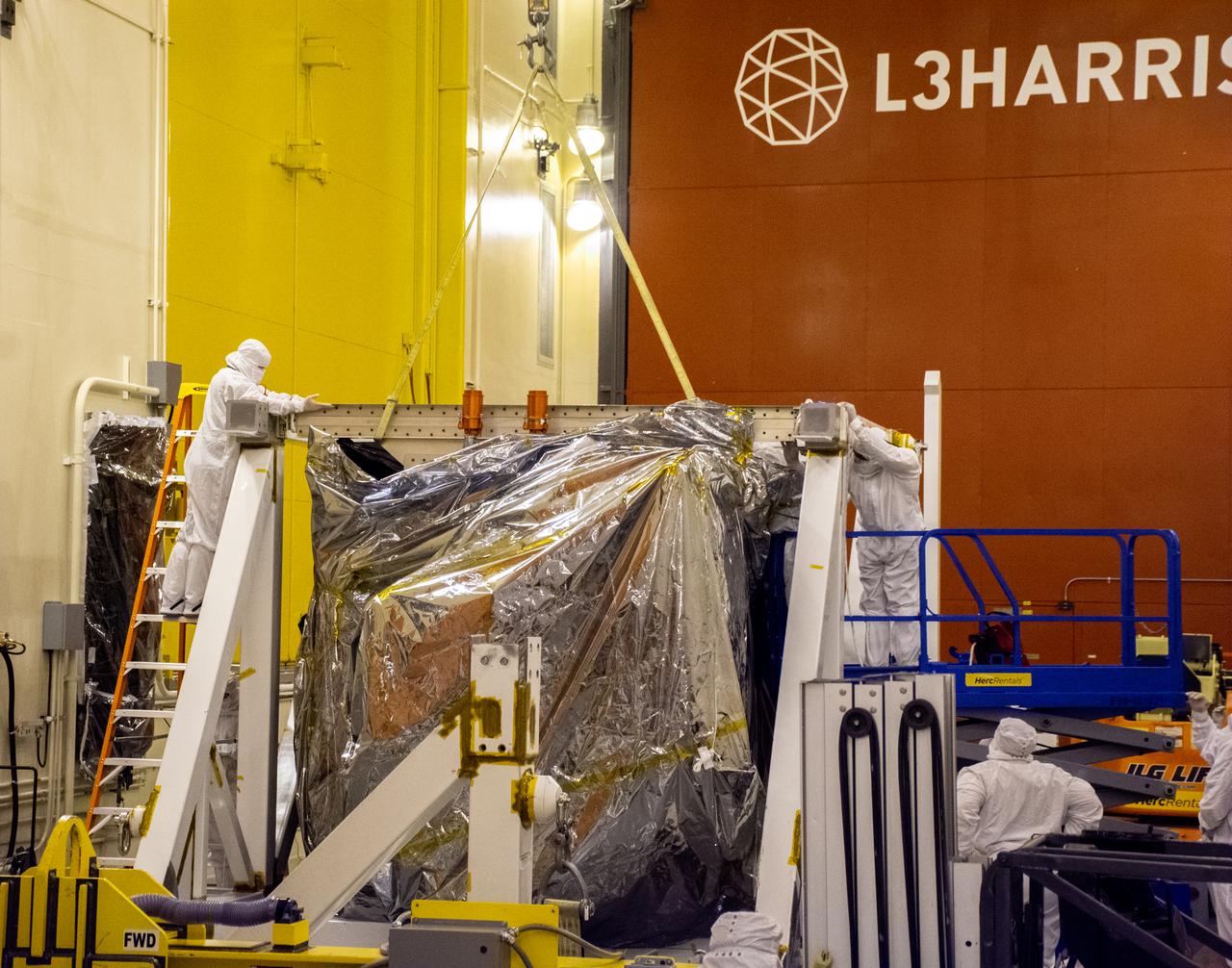
The Landsat 9 spacecraft (observatory) undergoes breakover operations inside the Integrated Processing Facility at Vandenberg Space Force Base in California.
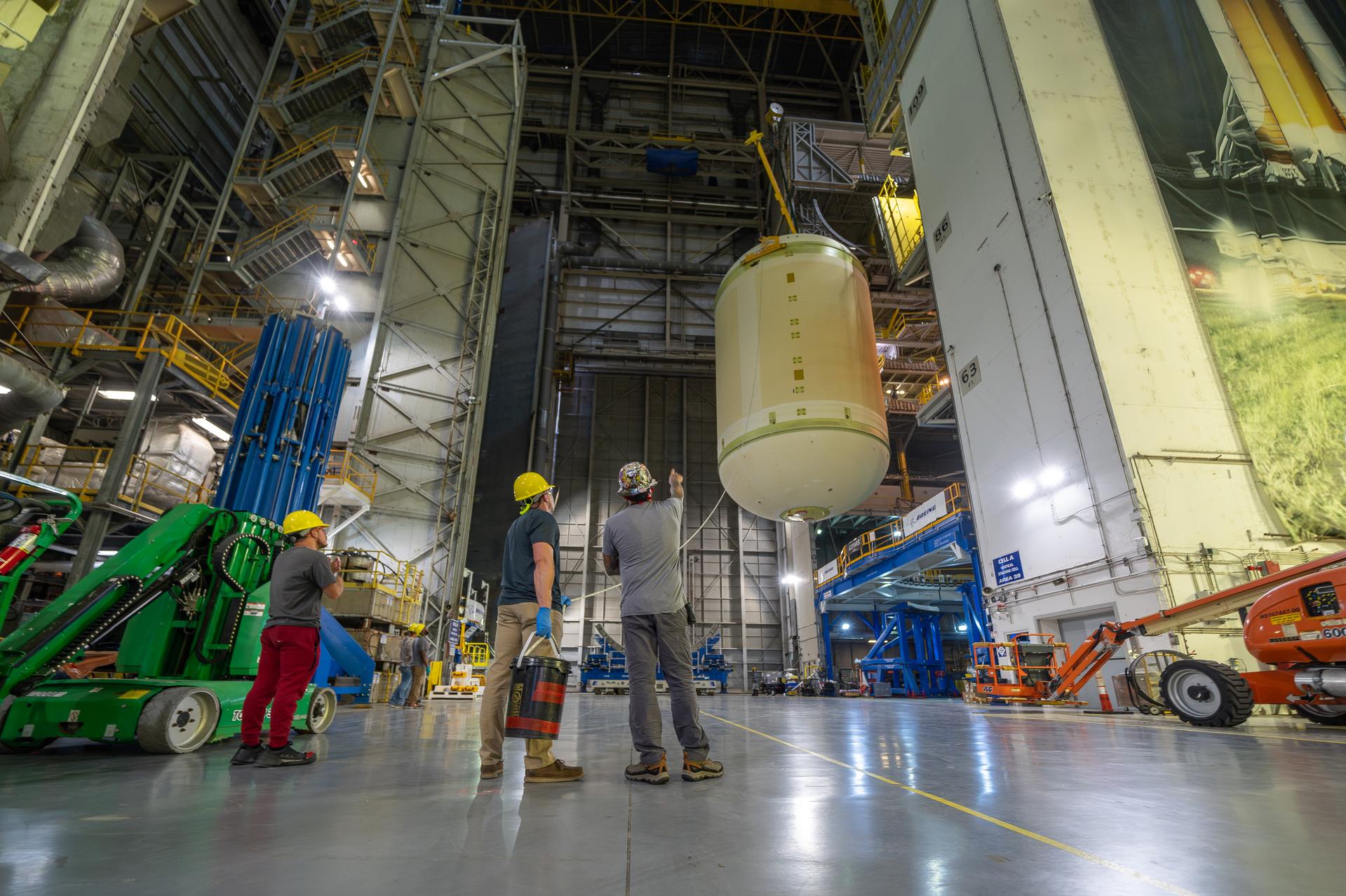
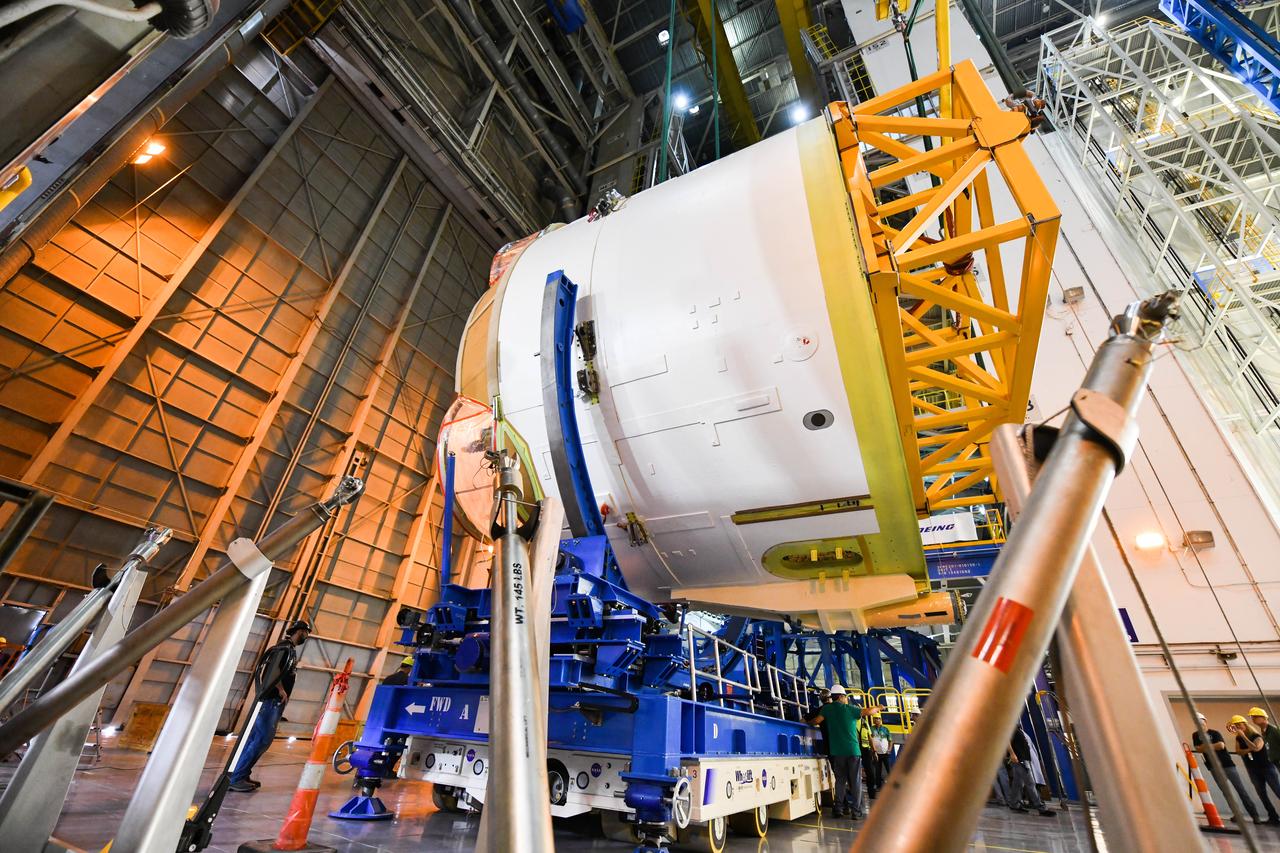
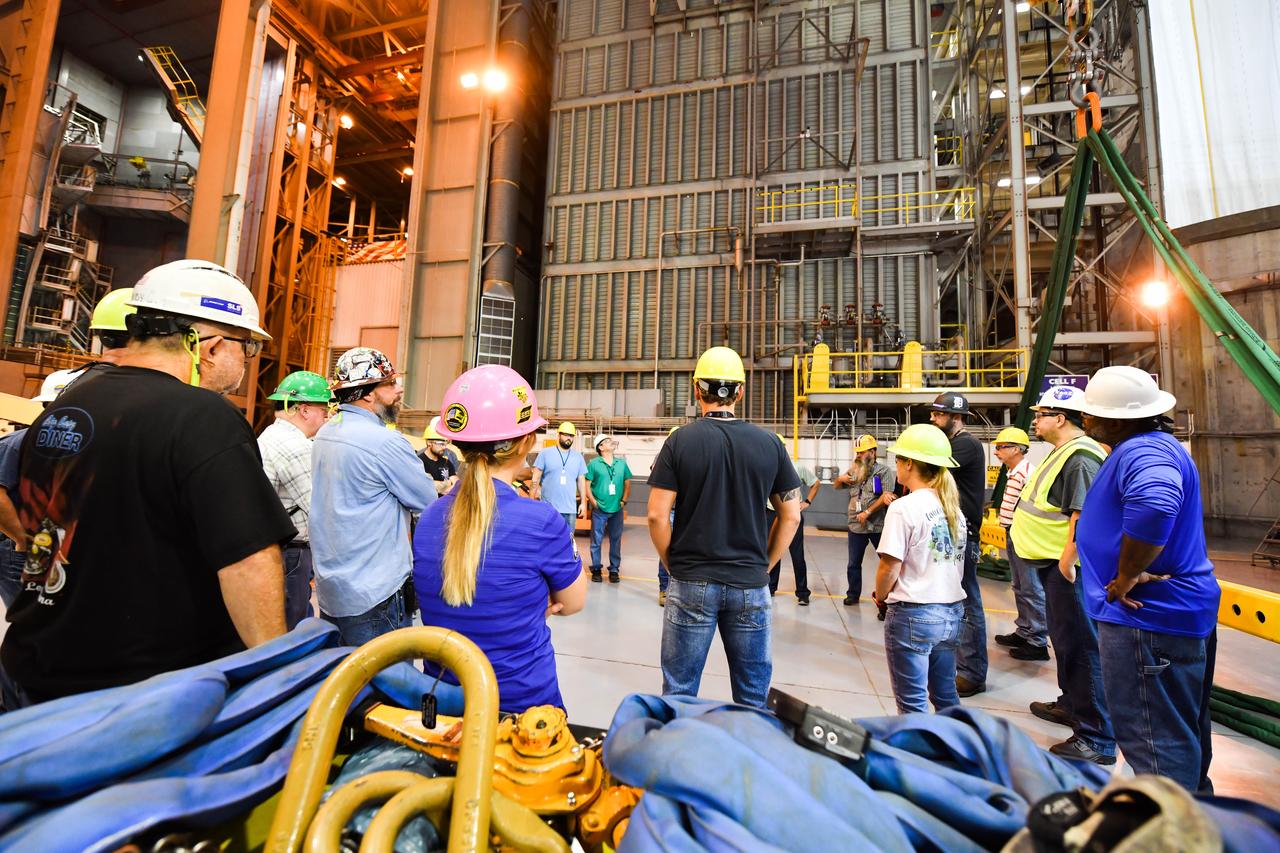
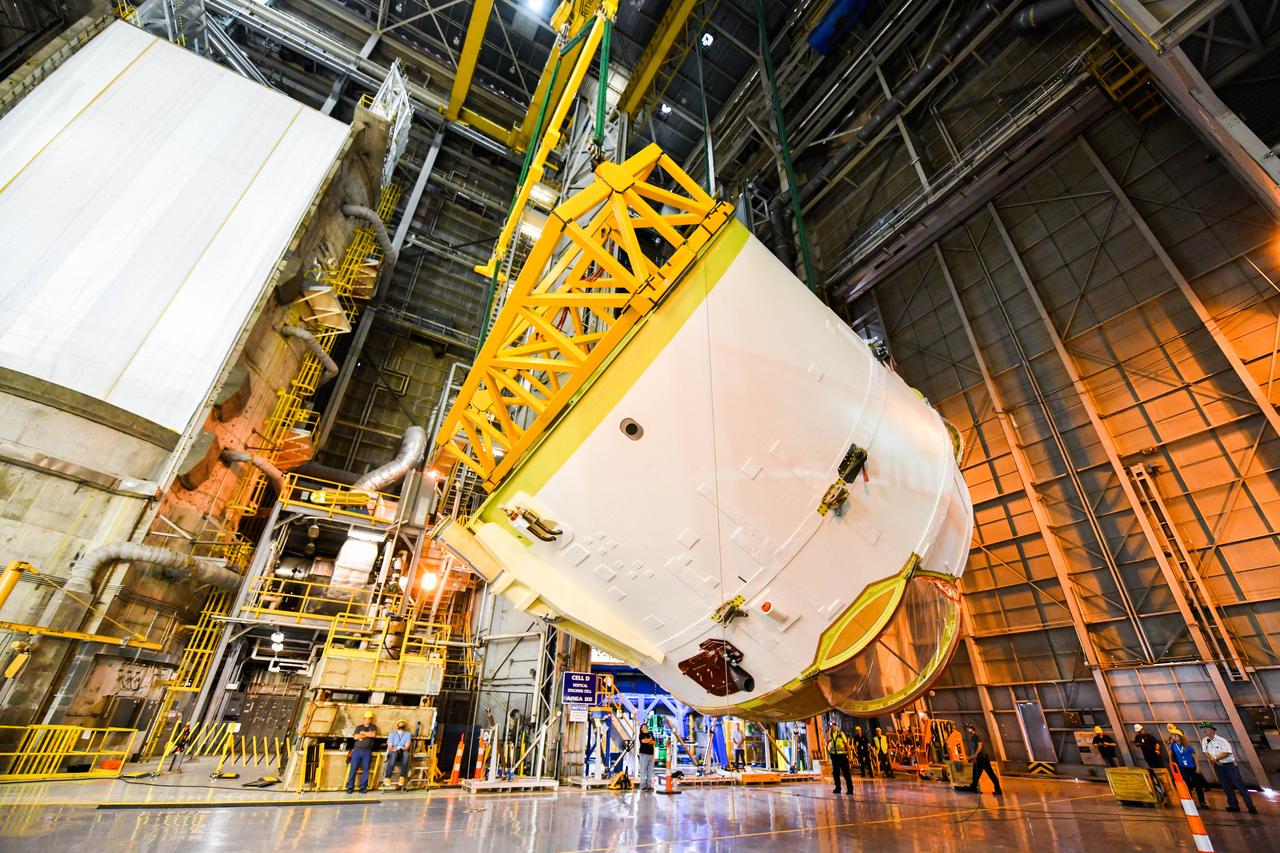
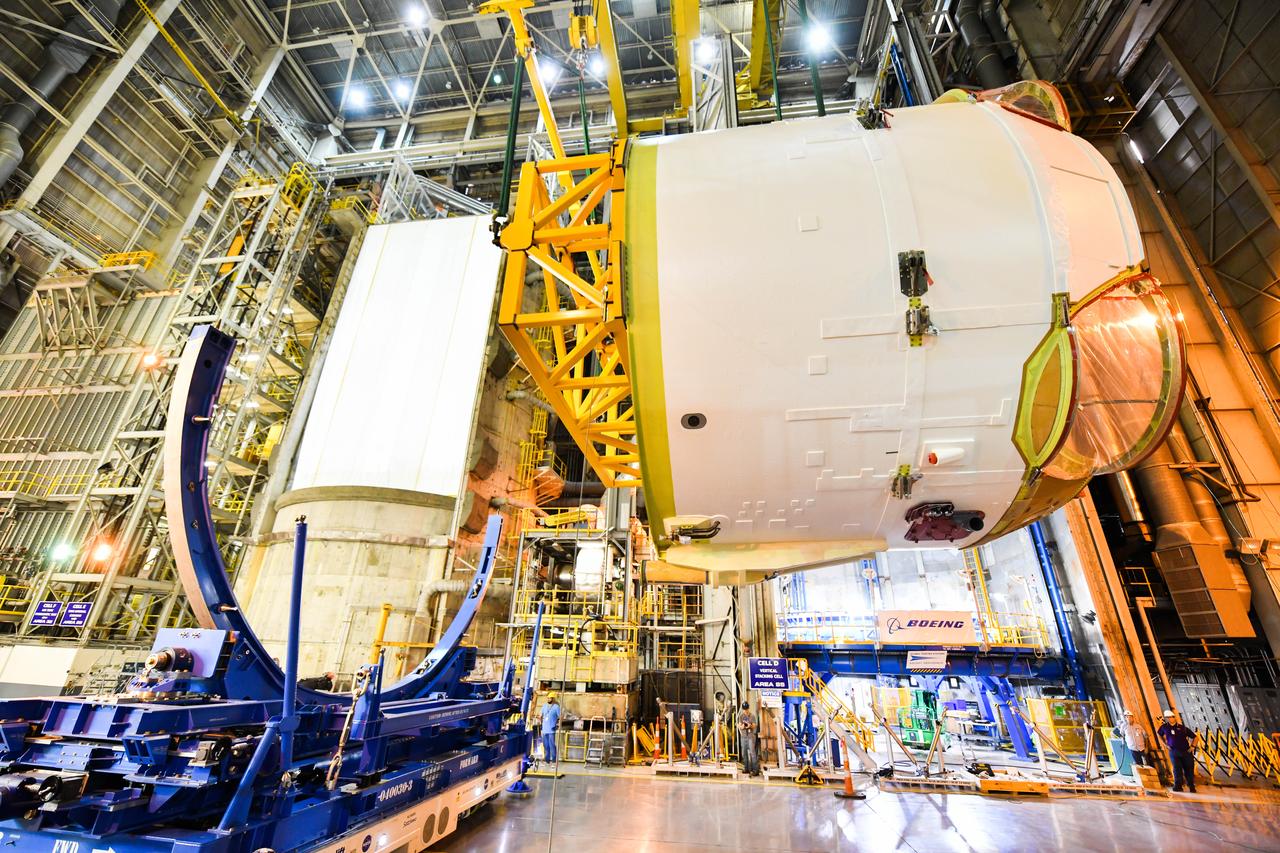
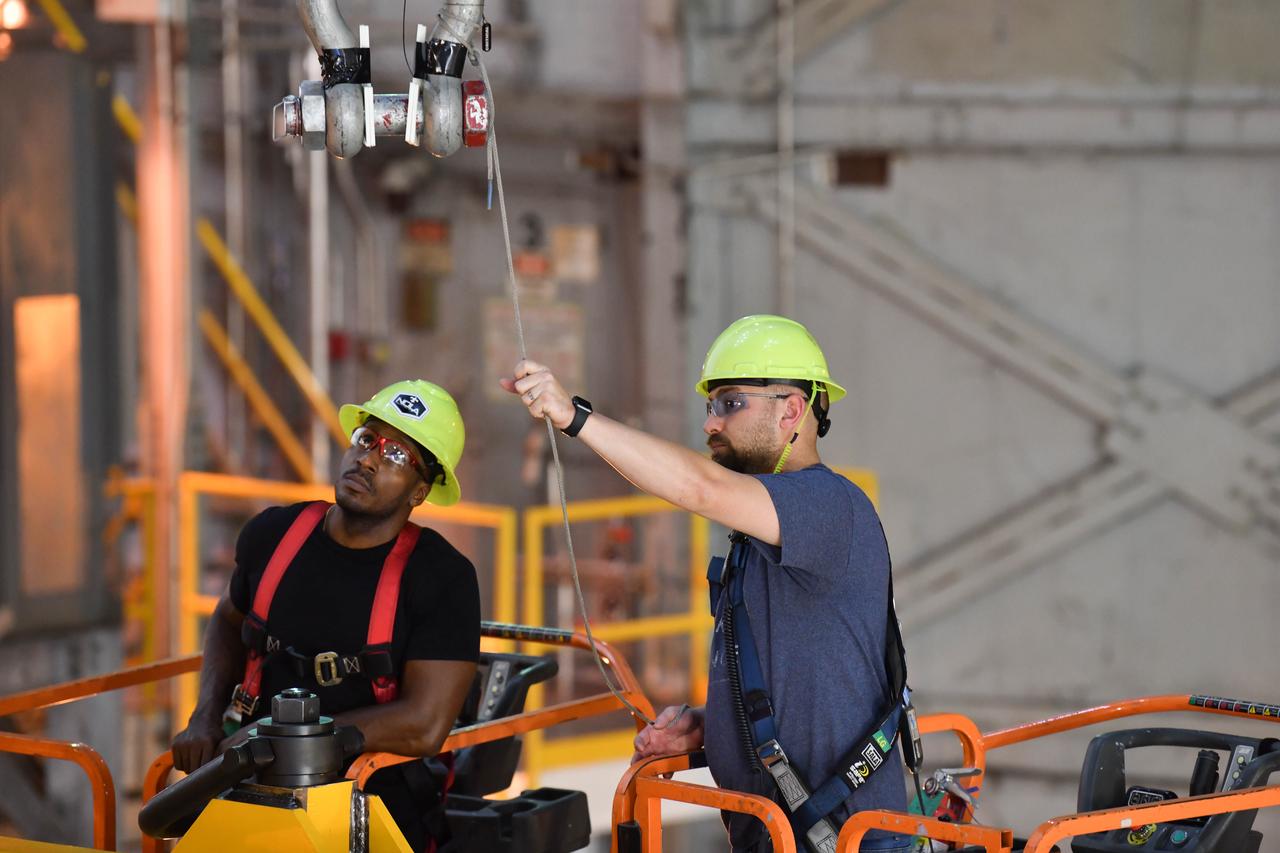
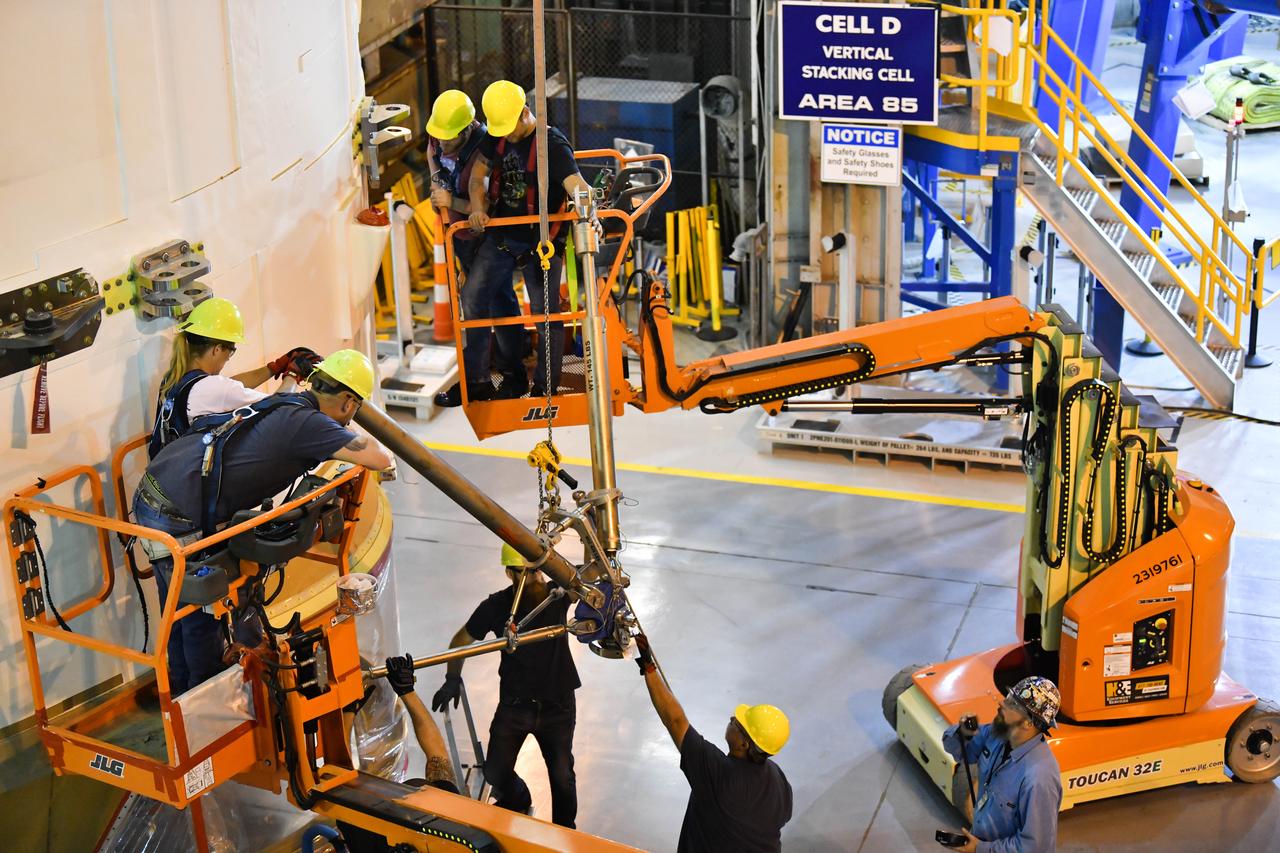
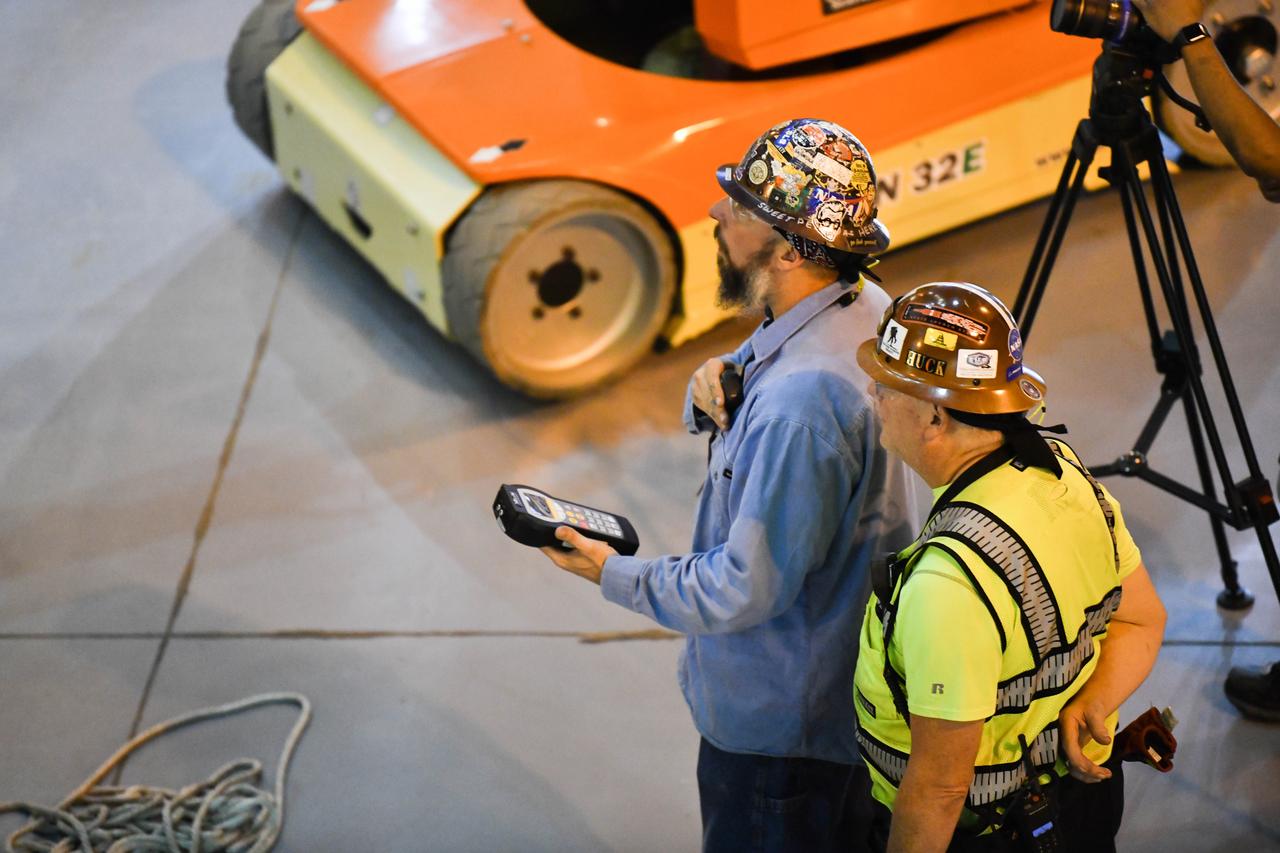
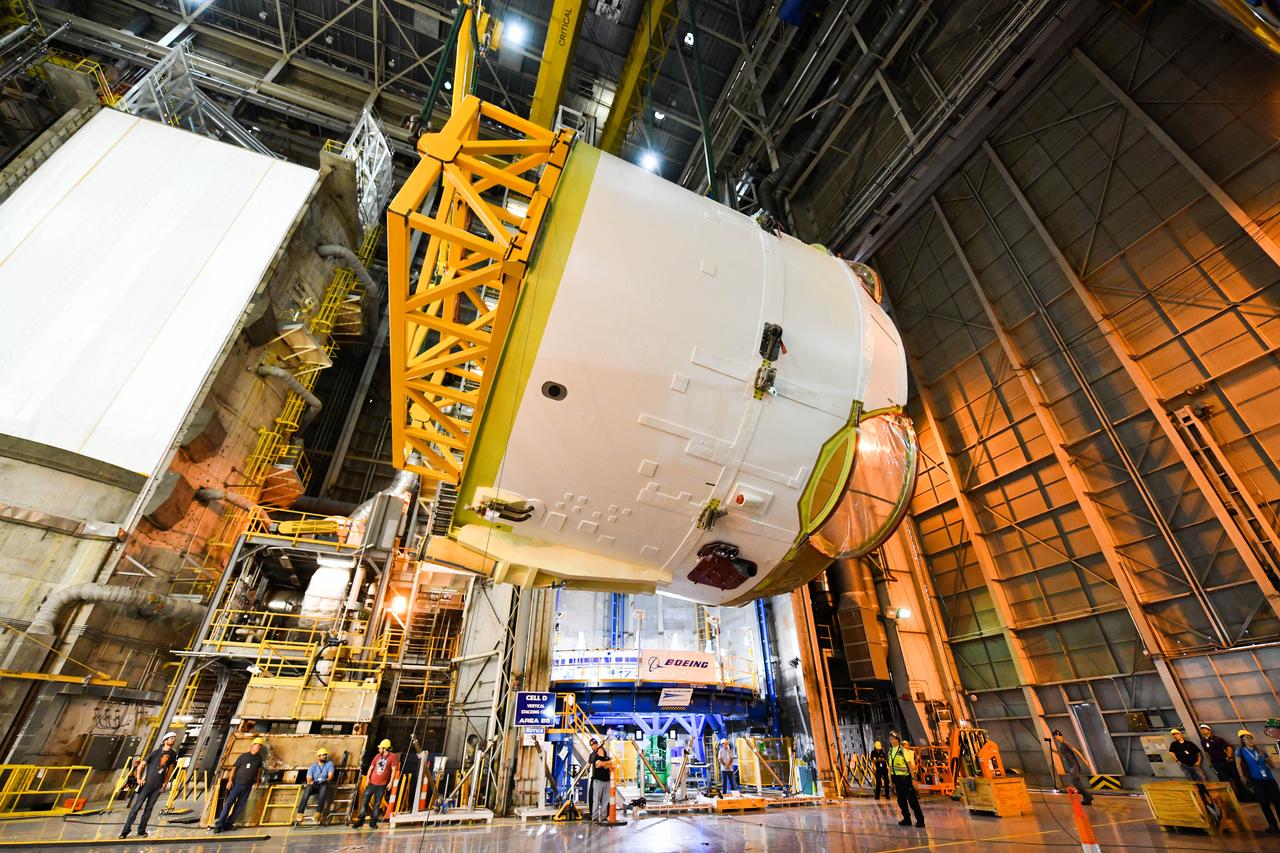
Move crews at NASA’s Michoud Assembly Facility in New Orleans perform “breakover” operations on a liquid oxygen tank in the facility’s vertical assembly building on Aug. 22, 2025. During the breakover, teams lifted the tank from its vertical configuration inside of a production cell and set it horizontally atop self-propelled mobile transporters for transfer to the final assembly production area. There, it will undergo integration of the forward dome by SLS (Space Launch System) prime contractor, Boeing. Eventually, the liquid oxygen tank will be moved back to the high bay where it will be mated with the intertank and forward skirt to complete the forward join of the Artemis III core stage. The propellant tank is one of five major elements that make up the 212-foot-tall rocket stage. The core stage, along with its four RS-25 engines, produce more than two million pounds of thrust to help launch NASA’s Orion spacecraft, astronauts, and supplies beyond Earth’s orbit and to the lunar surface for Artemis.
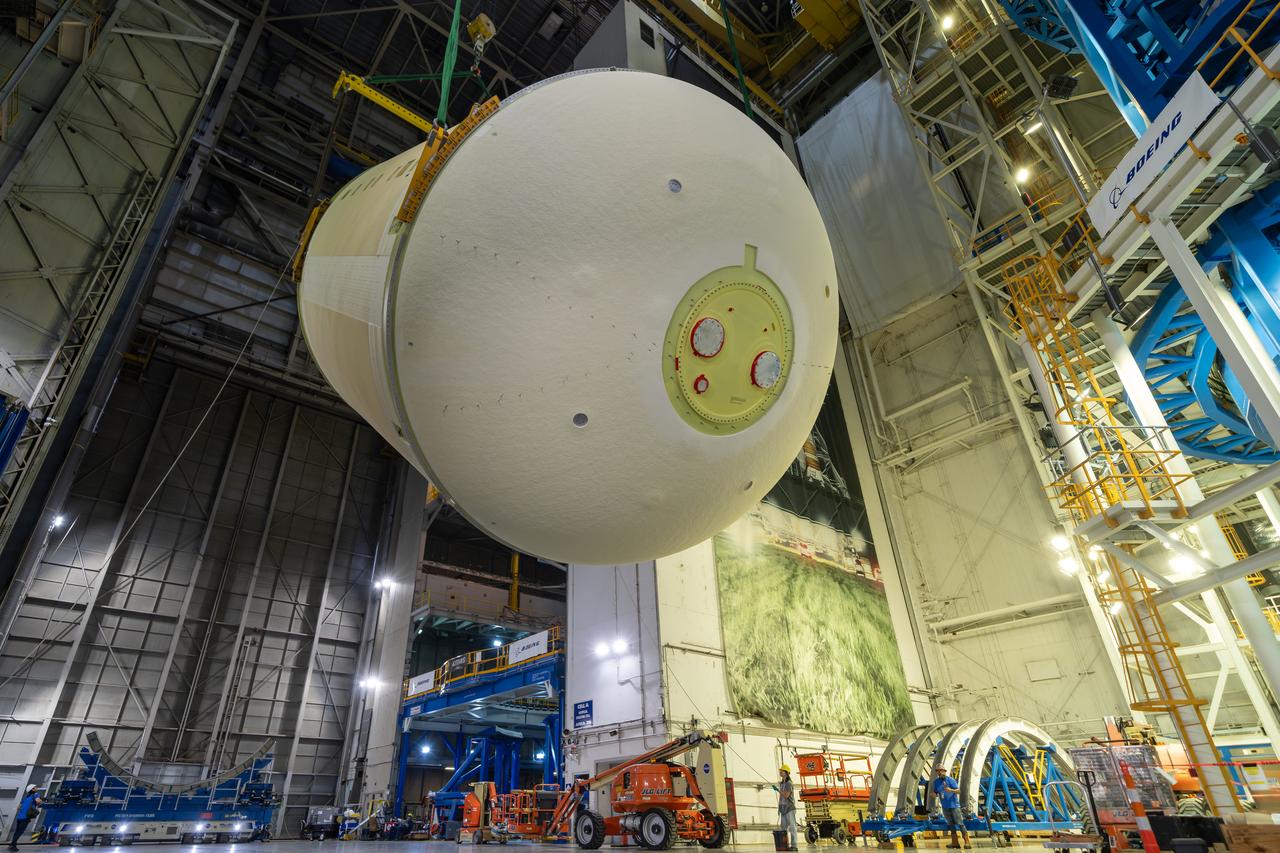
Move crews at NASA’s Michoud Assembly Facility in New Orleans perform “breakover” operations on a liquid oxygen tank in the facility’s vertical assembly building on Aug. 22, 2025. During the breakover, teams lifted the tank from its vertical configuration inside of a production cell and set it horizontally atop self-propelled mobile transporters for transfer to the final assembly production area. There, it will undergo integration of the forward dome by SLS (Space Launch System) prime contractor, Boeing. Eventually, the liquid oxygen tank will be moved back to the high bay where it will be mated with the intertank and forward skirt to complete the forward join of the Artemis III core stage. The propellant tank is one of five major elements that make up the 212-foot-tall rocket stage. The core stage, along with its four RS-25 engines, produce more than two million pounds of thrust to help launch NASA’s Orion spacecraft, astronauts, and supplies beyond Earth’s orbit and to the lunar surface for Artemis.
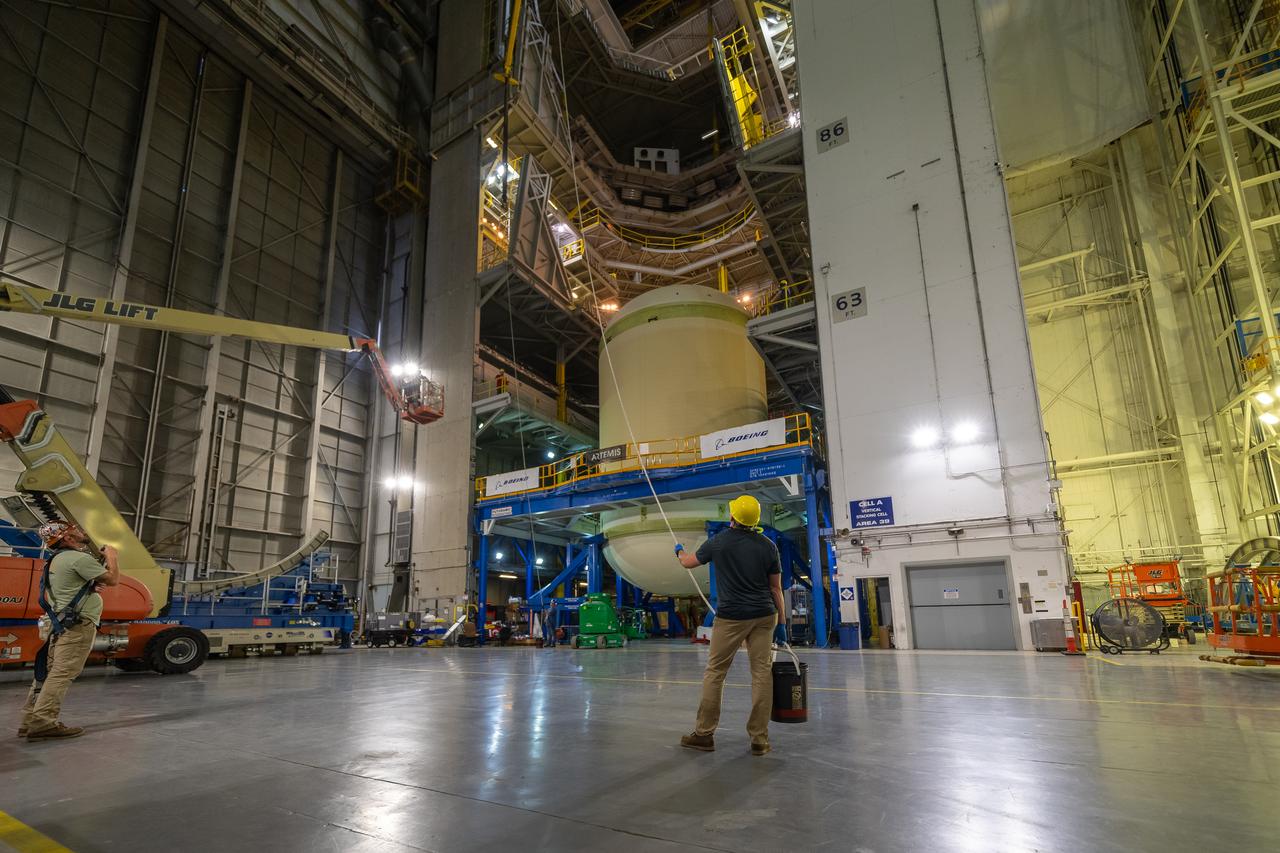
Move crews at NASA’s Michoud Assembly Facility in New Orleans perform “breakover” operations on a liquid oxygen tank in the facility’s vertical assembly building on Aug. 22, 2025. During the breakover, teams lifted the tank from its vertical configuration inside of a production cell and set it horizontally atop self-propelled mobile transporters for transfer to the final assembly production area. There, it will undergo integration of the forward dome by SLS (Space Launch System) prime contractor, Boeing. Eventually, the liquid oxygen tank will be moved back to the high bay where it will be mated with the intertank and forward skirt to complete the forward join of the Artemis III core stage. The propellant tank is one of five major elements that make up the 212-foot-tall rocket stage. The core stage, along with its four RS-25 engines, produce more than two million pounds of thrust to help launch NASA’s Orion spacecraft, astronauts, and supplies beyond Earth’s orbit and to the lunar surface for Artemis.
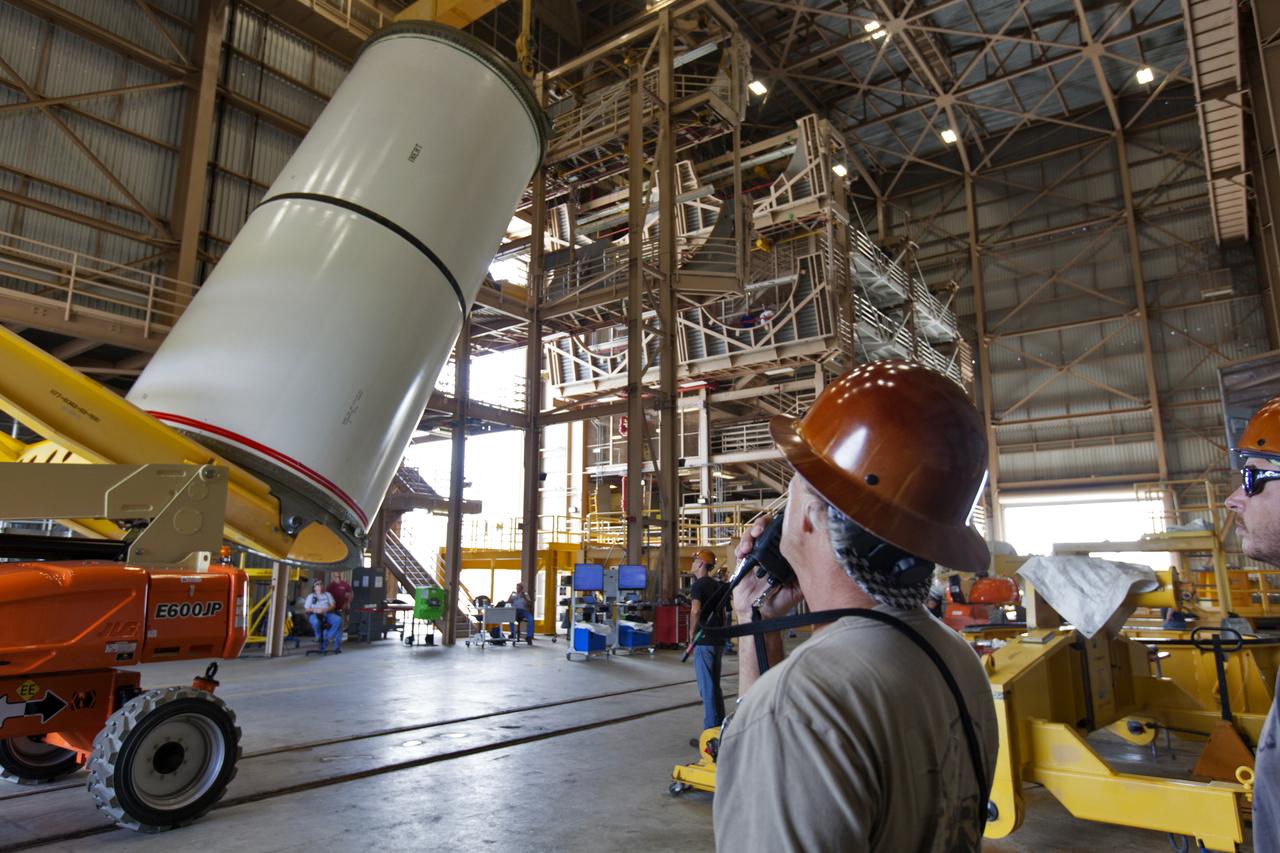
Jacobs technicians, on the Test and Operations Support Contract, practice crane operations with an inert booster rocket segment in the Rotation, Processing and Surge Facility on June 22, 2018, at NASA's Kennedy Space Center in Florida. Dual cranes are being used to move the segment from vertical to horizontal, a maneuver known as a "breakover rotation." As part of routine processing operations for the agency's Space Launch System (SLS) rocket, the RPSF team will receive all of the solid rocket fuel segments for inspection and preparation prior to transporting them to the Vehicle Assembly Building for stacking on the mobile launcher. Many pathfinding operations are being done to prepare for launch of the SLS and Orion spacecraft on Exploration Mission-1 and deep space missions.
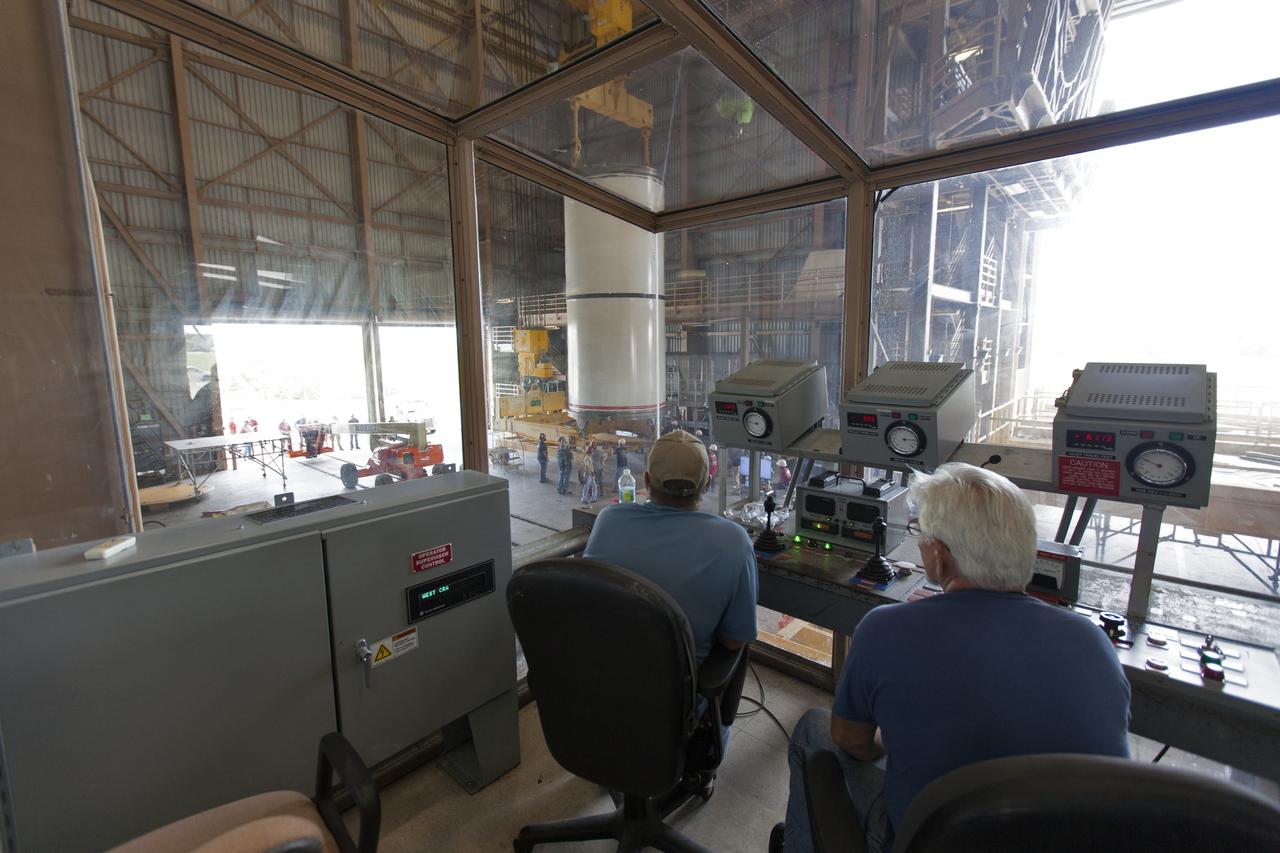
Jacobs technicians, on the Test and Operations Support Contract, practice crane operations with an inert booster rocket segment in the Rotation, Processing and Surge Facility on June 22, 2018, at NASA's Kennedy Space Center in Florida. Dual cranes are being used to move the segment from vertical to horizontal, a maneuver known as a "breakover rotation." As part of routine processing operations for the agency's Space Launch System (SLS) rocket, the RPSF team will receive all of the solid rocket fuel segments for inspection and preparation prior to transporting them to the Vehicle Assembly Building for stacking on the mobile launcher. Many pathfinding operations are being done to prepare for launch of the SLS and Orion spacecraft on Exploration Mission-1 and deep space missions.
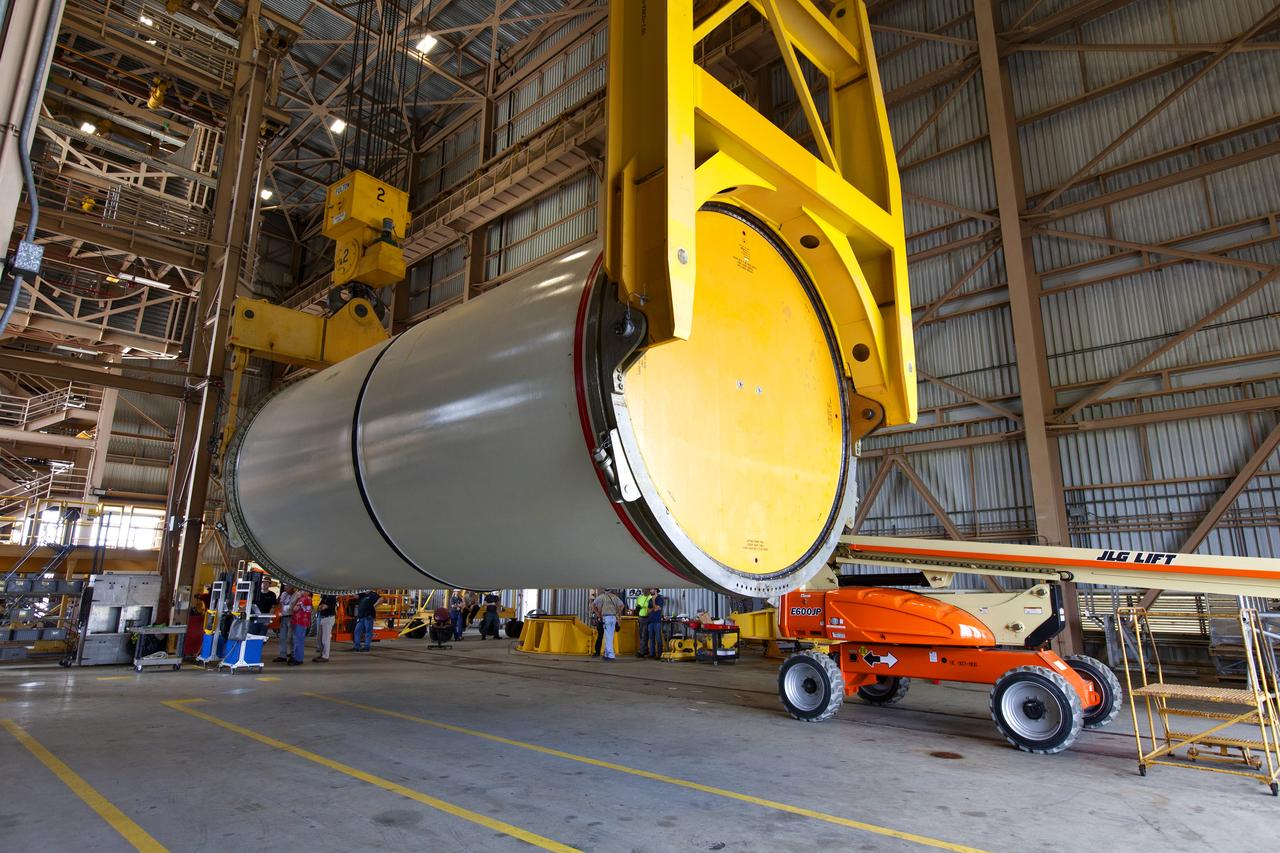
Jacobs technicians, on the Test and Operations Support Contract, practice crane operations with an inert booster rocket segment in the Rotation, Processing and Surge Facility on June 22, 2018, at NASA's Kennedy Space Center in Florida. Dual cranes were used to move the segment from vertical to horizontal, a maneuver known as a "breakover rotation." As part of routine processing operations for the agency's Space Launch System (SLS) rocket, the RPSF team will receive all of the solid rocket fuel segments for inspection and preparation prior to transporting them to the Vehicle Assembly Building for stacking on the mobile launcher. Many pathfinding operations are being done to prepare for launch of the SLS and Orion spacecraft on Exploration Mission-1 and deep space missions.
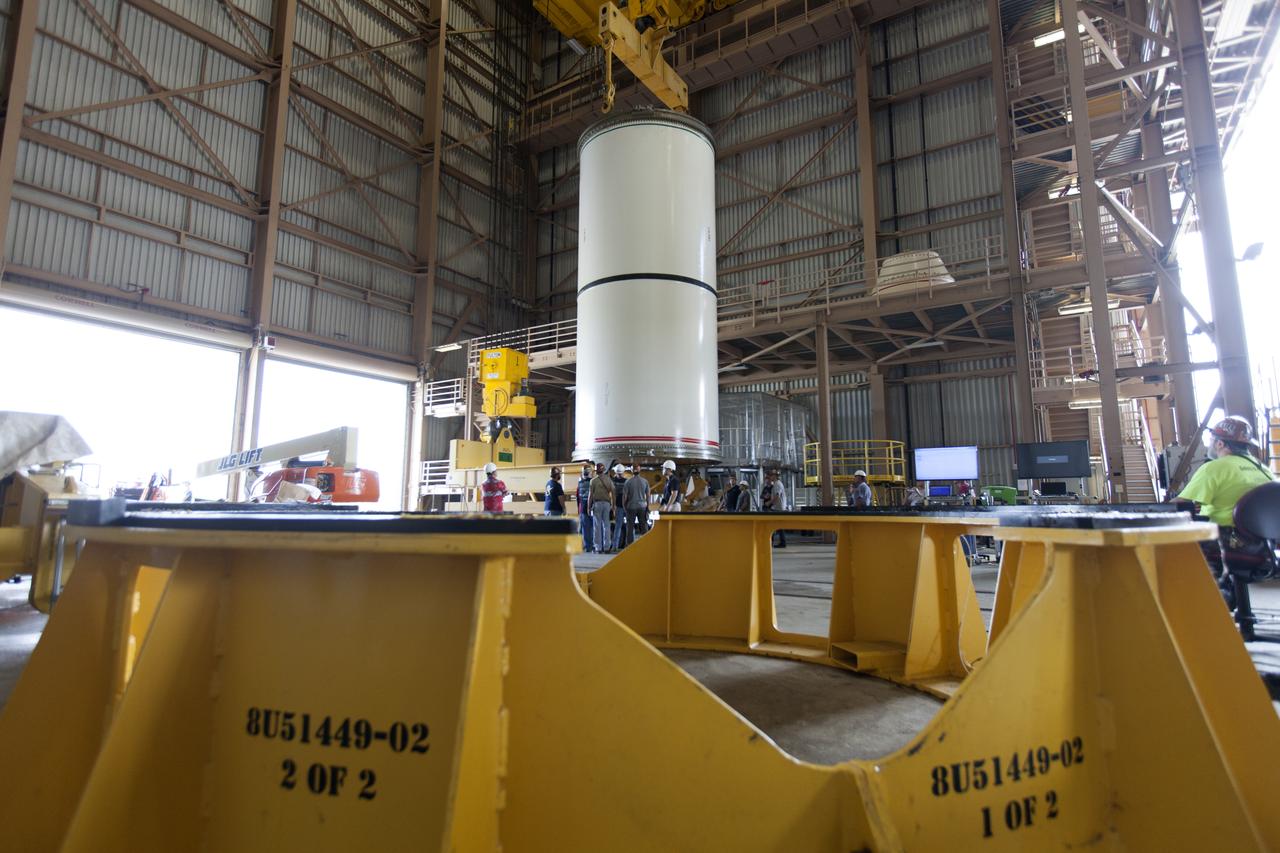
Jacobs technicians, on the Test and Operations Support Contract, practice crane operations with an inert booster rocket segment in the Rotation, Processing and Surge Facility on June 22, 2018, at NASA's Kennedy Space Center in Florida. Dual cranes are being used to move the segment from vertical to horizontal, a maneuver known as a "breakover rotation." As part of routine processing operations for the agency's Space Launch System (SLS) rocket, the RPSF team will receive all of the solid rocket fuel segments for inspection and preparation prior to transporting them to the Vehicle Assembly Building for stacking on the mobile launcher. Many pathfinding operations are being done to prepare for launch of the SLS and Orion spacecraft on Exploration Mission-1 and deep space missions.
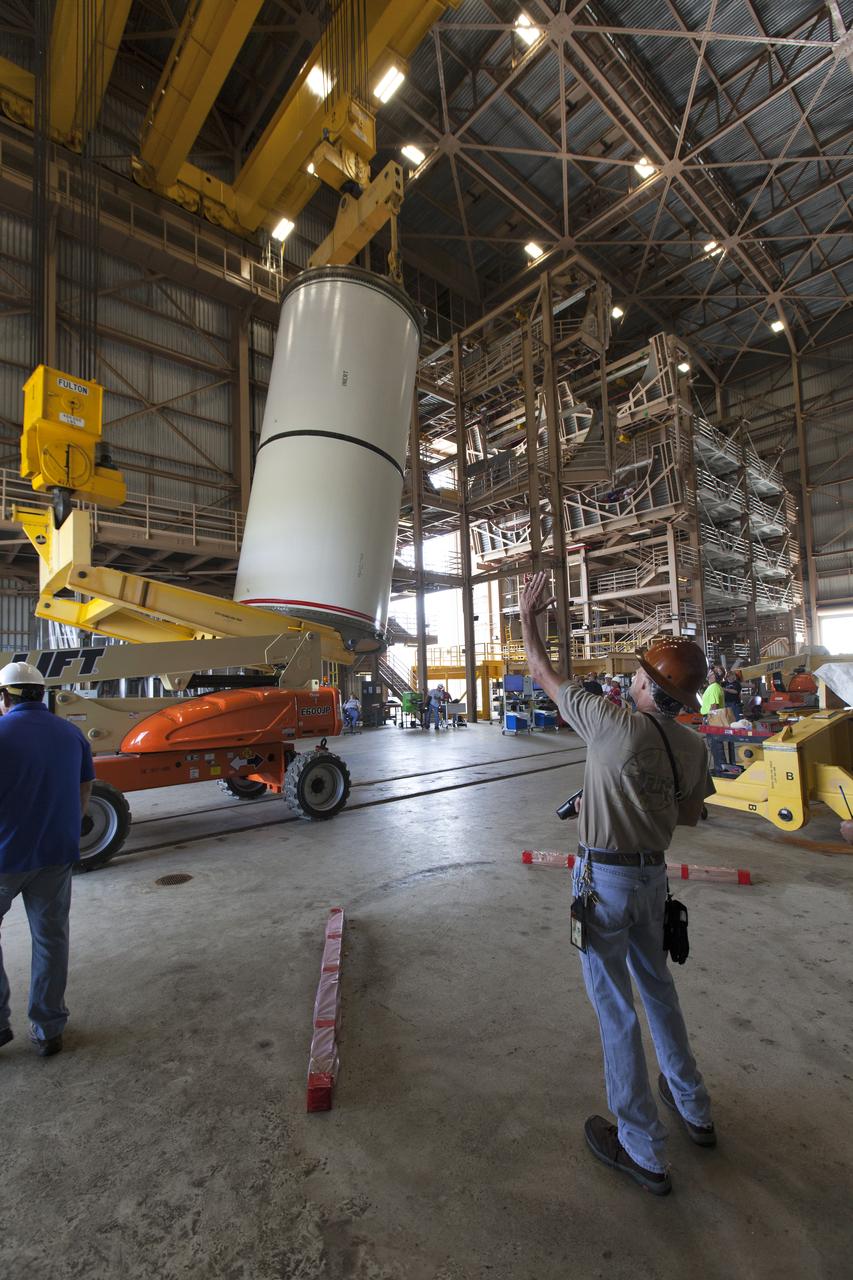
Jacobs technicians, on the Test and Operations Support Contract, practice crane operations with an inert booster rocket segment in the Rotation, Processing and Surge Facility on June 22, 2018, at NASA's Kennedy Space Center in Florida. Dual cranes are being used to move the segment from vertical to horizontal, a maneuver known as a "breakover rotation." As part of routine processing operations for the agency's Space Launch System (SLS) rocket, the RPSF team will receive all of the solid rocket fuel segments for inspection and preparation prior to transporting them to the Vehicle Assembly Building for stacking on the mobile launcher. Many pathfinding operations are being done to prepare for launch of the SLS and Orion spacecraft on Exploration Mission-1 and deep space missions.
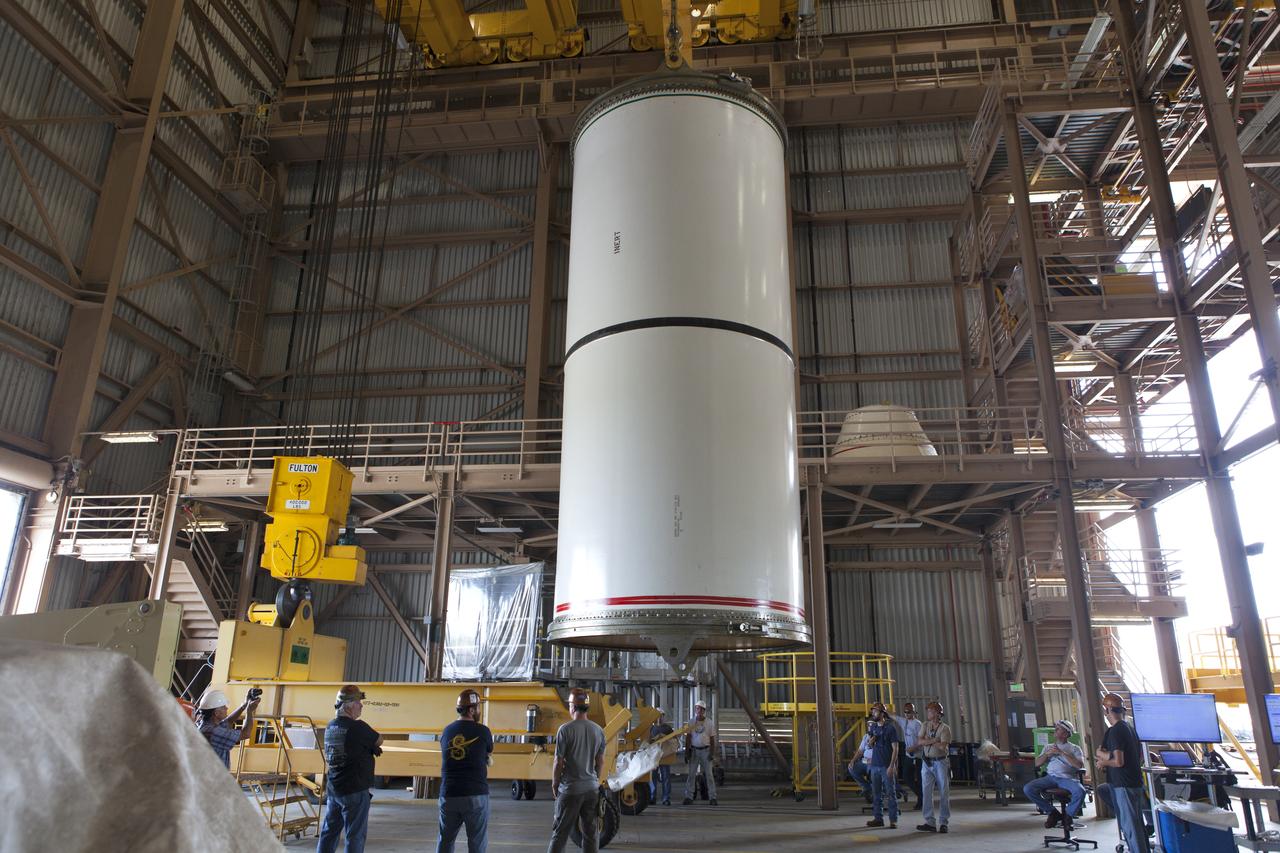
Jacobs technicians, on the Test and Operations Support Contract, practice crane operations with an inert booster rocket segment in the Rotation, Processing and Surge Facility on June 22, 2018, at NASA's Kennedy Space Center in Florida. Dual cranes are being used to move the segment from vertical to horizontal, a maneuver known as a "breakover rotation." As part of routine processing operations for the agency's Space Launch System (SLS) rocket, the RPSF team will receive all of the solid rocket fuel segments for inspection and preparation prior to transporting them to the Vehicle Assembly Building for stacking on the mobile launcher. Many pathfinding operations are being done to prepare for launch of the SLS and Orion spacecraft on Exploration Mission-1 and deep space missions.
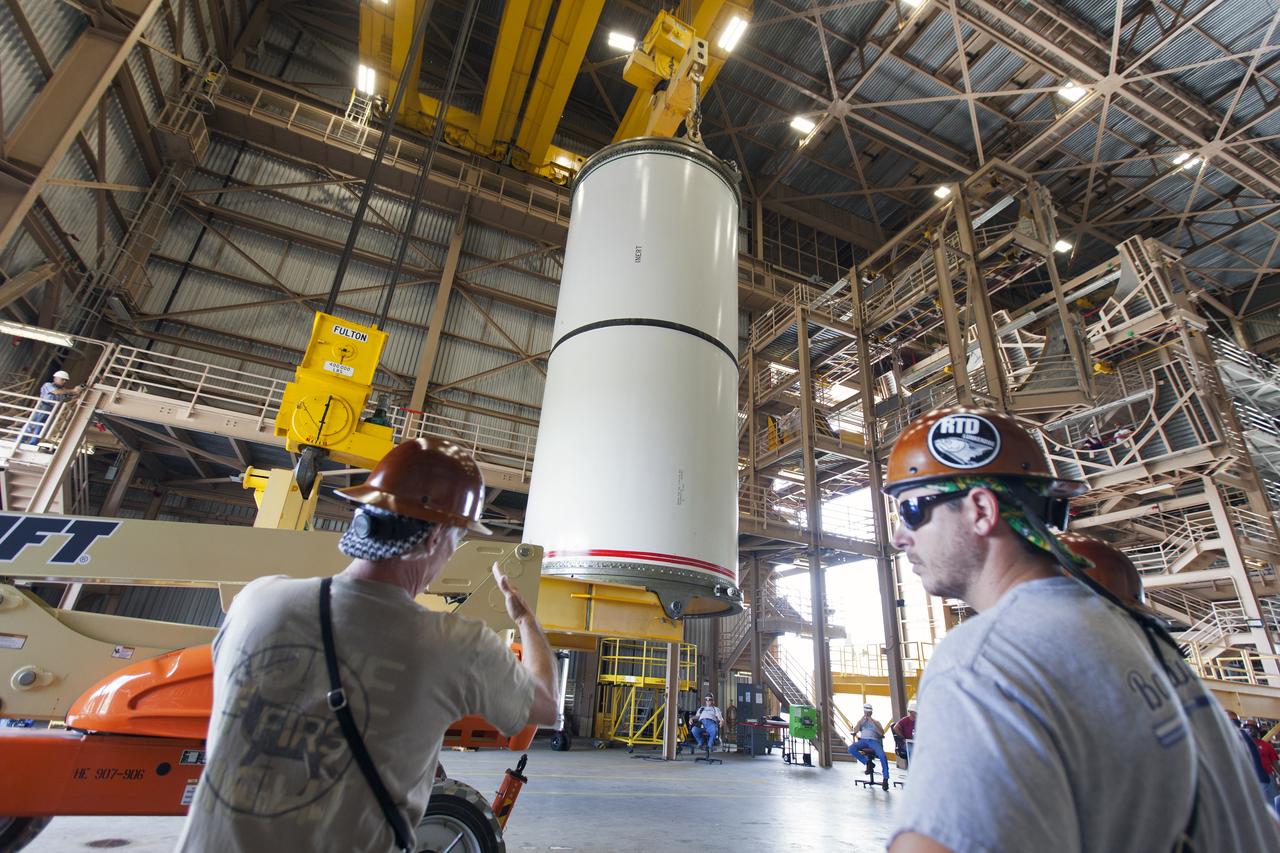
Jacobs technicians, on the Test and Operations Support Contract, practice crane operations with an inert booster rocket segment in the Rotation, Processing and Surge Facility on June 22, 2018, at NASA's Kennedy Space Center in Florida. Dual cranes are being used to move the segment from vertical to horizontal, a maneuver known as a "breakover rotation." As part of routine processing operations for the agency's Space Launch System (SLS) rocket, the RPSF team will receive all of the solid rocket fuel segments for inspection and preparation prior to transporting them to the Vehicle Assembly Building for stacking on the mobile launcher. Many pathfinding operations are being done to prepare for launch of the SLS and Orion spacecraft on Exploration Mission-1 and deep space missions.
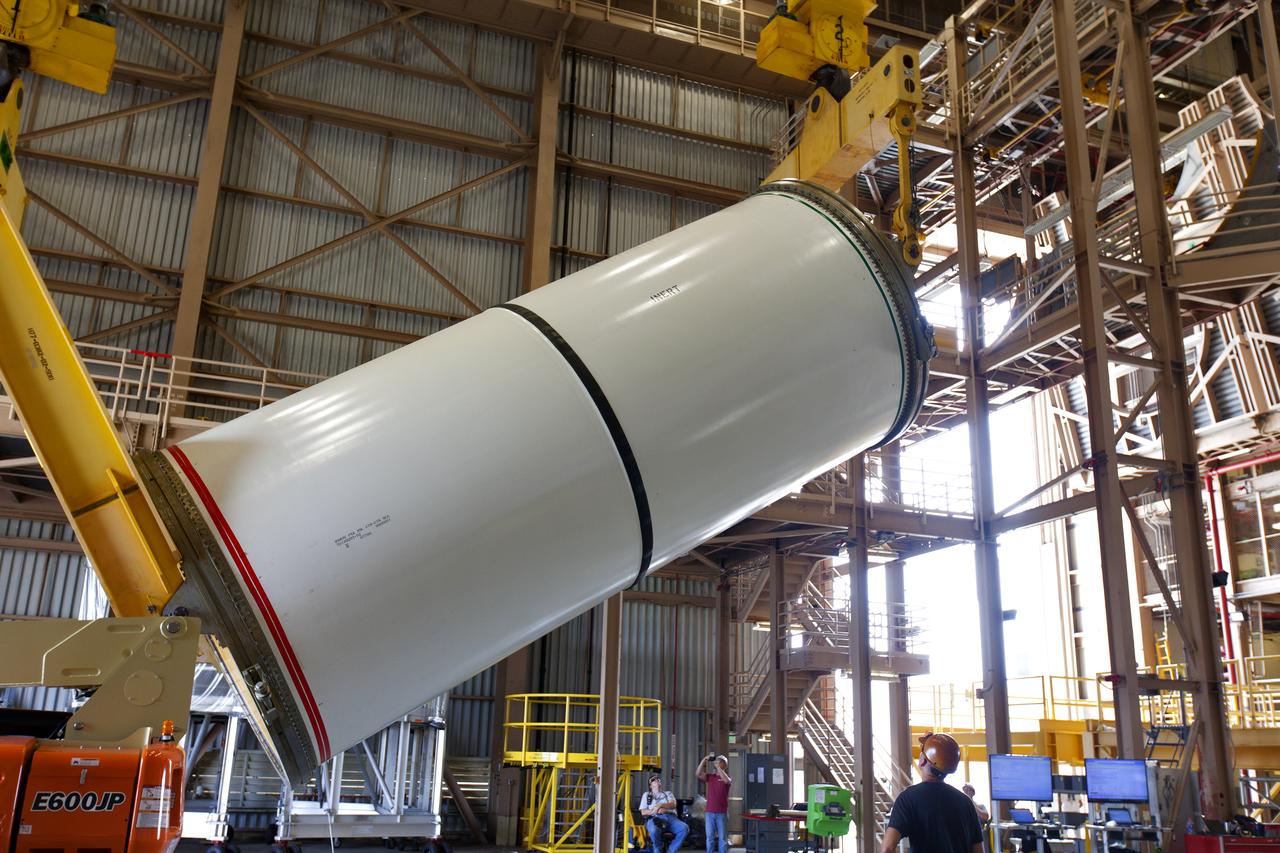
Jacobs technicians, on the Test and Operations Support Contract, practice crane operations with an inert booster rocket segment in the Rotation, Processing and Surge Facility on June 22, 2018, at NASA's Kennedy Space Center in Florida. Dual cranes are used to move the segment from vertical to horizontal, a maneuver known as a "breakover rotation." As part of routine processing operations for the agency's Space Launch System (SLS) rocket, the RPSF team will receive all of the solid rocket fuel segments for inspection and preparation prior to transporting them to the Vehicle Assembly Building for stacking on the mobile launcher. Many pathfinding operations are being done to prepare for launch of the SLS and Orion spacecraft on Exploration Mission-1 and deep space missions.
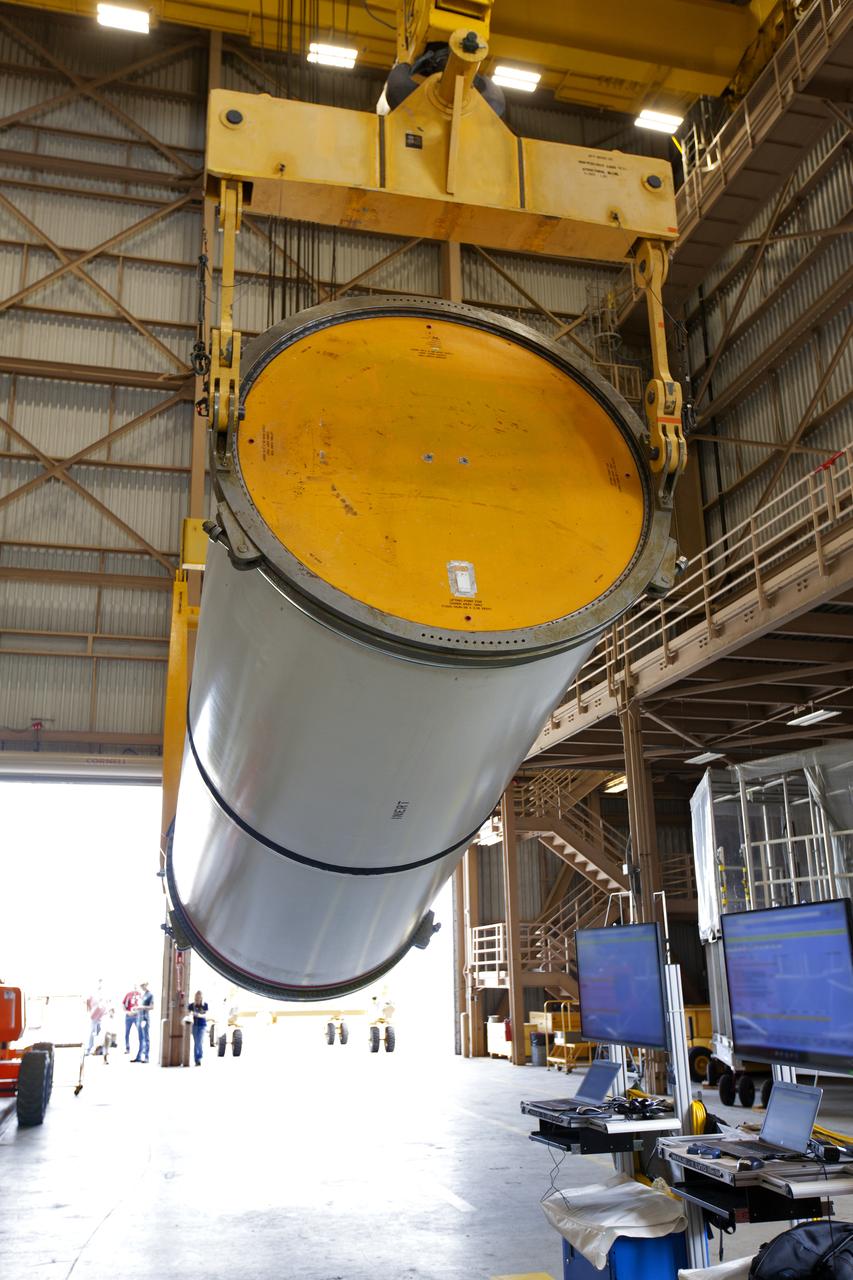
Jacobs technicians, on the Test and Operations Support Contract, practice crane operations with an inert booster rocket segment in the Rotation, Processing and Surge Facility on June 22, 2018, at NASA's Kennedy Space Center in Florida. Dual cranes are used to move the segment from vertical to horizontal, a maneuver known as a "breakover rotation." As part of routine processing operations for the agency's Space Launch System (SLS) rocket, the RPSF team will receive all of the solid rocket fuel segments for inspection and preparation prior to transporting them to the Vehicle Assembly Building for stacking on the mobile launcher. Many pathfinding operations are being done to prepare for launch of the SLS and Orion spacecraft on Exploration Mission-1 and deep space missions.
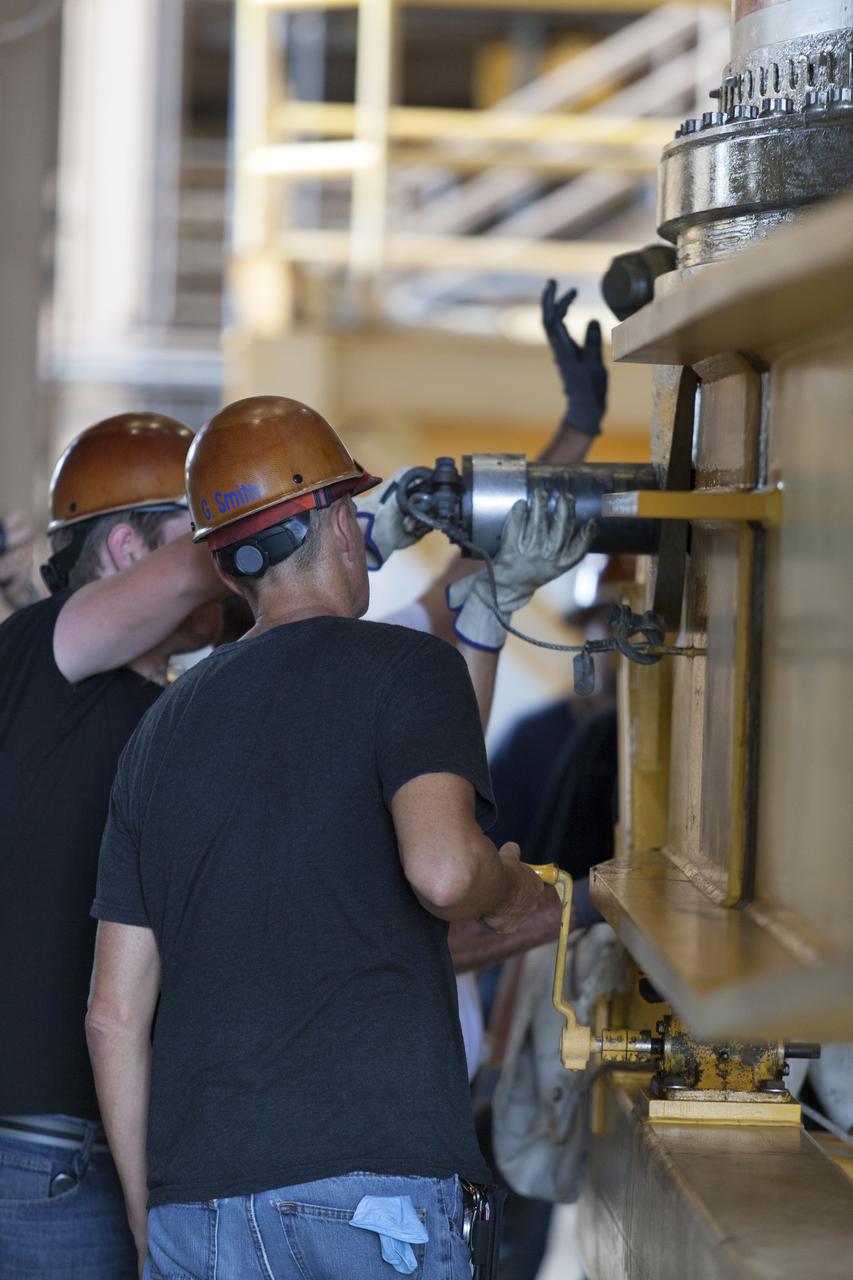
Jacobs technicians, on the Test and Operations Support Contract, check bolt fittings as they practice crane operations with an inert booster rocket segment in the Rotation, Processing and Surge Facility on June 22, 2018, at NASA's Kennedy Space Center in Florida. Dual cranes are being used to move the segment from vertical to horizontal, a maneuver known as a "breakover rotation." As part of routine processing operations for the agency's Space Launch System (SS) rocket, the RPSF team will receive all of the solid rocket fuel segments for inspection and preparation prior to transporting them to the Vehicle Assembly Building for stacking on the mobile launcher. Many pathfinding operations are being done to prepare for launch of the SLS and Orion spacecraft on Exploration Mission-1 and deep space missions.
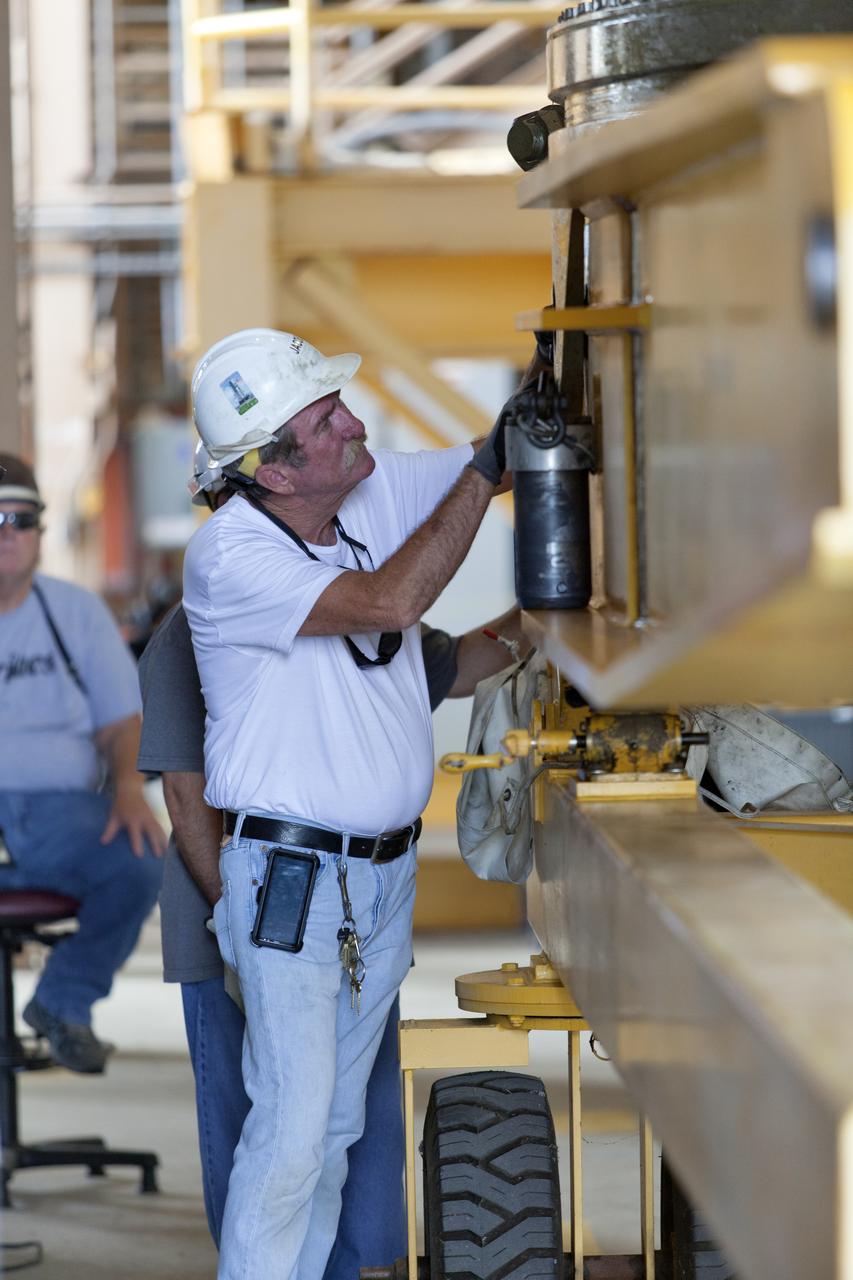
A Jacobs technician, on the Test and Operations Support Contract, checks bolt fittings during practice crane operations with an inert booster rocket segment in the Rotation, Processing and Surge Facility on June 22, 2018, at NASA's Kennedy Space Center in Florida. Dual cranes will be used to move the segment from vertical to horizontal, a maneuver known as a "breakover rotation." As part of routine processing operations for the agency's Space Launch System (SLS) rocket, the RPSF team will receive all of the solid rocket fuel segments for inspection and preparation prior to transporting them to the Vehicle Assembly Building for stacking on the mobile launcher. Many pathfinding operations are being done to prepare for launch of the SLS and Orion spacecraft on Exploration Mission-1 and deep space missions.
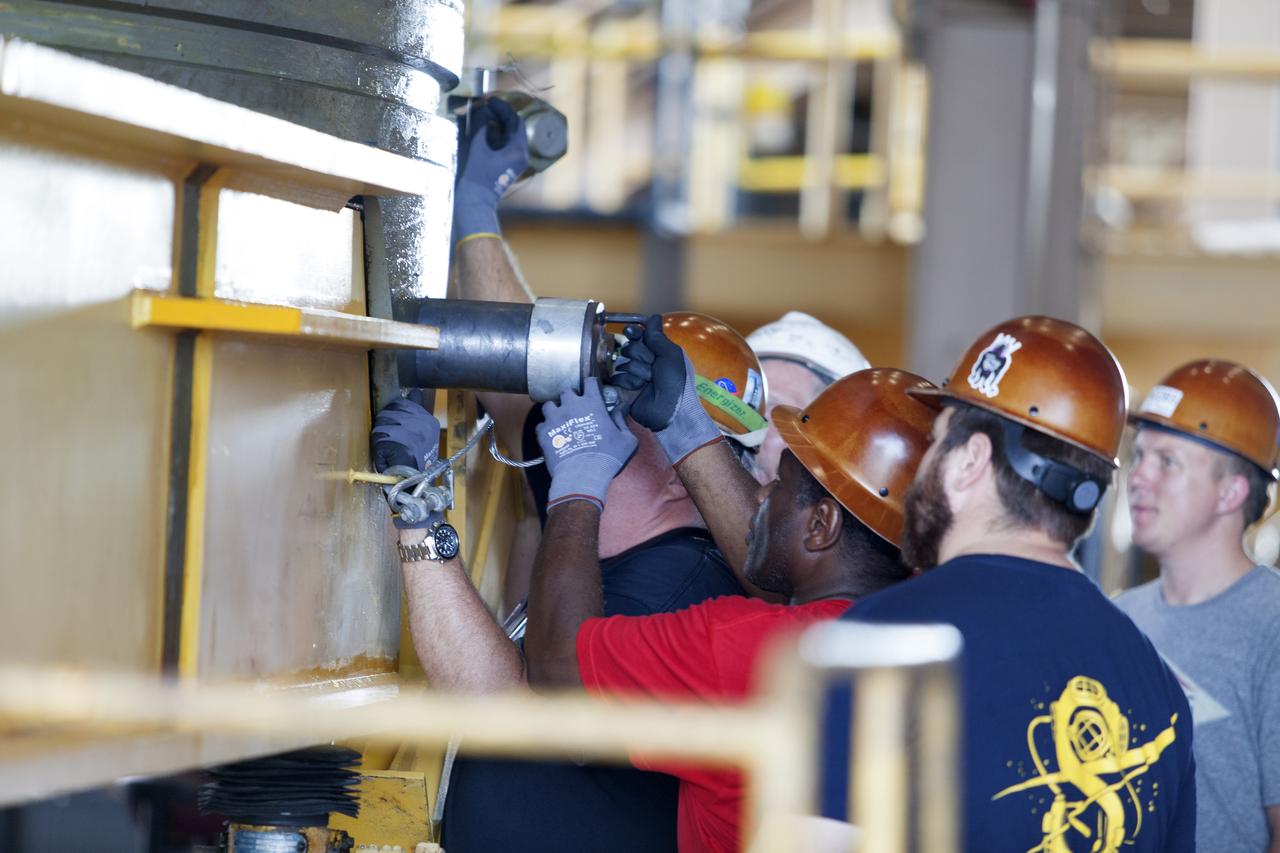
Jacobs technicians, on the Test and Operations Support Contract, check bolt fittings as they practice crane operations with an inert booster rocket segment in the Rotation, Processing and Surge Facility on June 22, 2018, at NASA's Kennedy Space Center in Florida. Dual cranes are being used to move the segment from vertical to horizontal, a maneuver known as a "breakover rotation." As part of routine processing operations for the agency's Space Launch System (SLS) rocket, the RPSF team will receive all of the solid rocket fuel segments for inspection and preparation prior to transporting them to the Vehicle Assembly Building for stacking on the mobile launcher. Many pathfinding operations are being done to prepare for launch of the SLS and Orion spacecraft on Exploration Mission-1 and deep space missions.
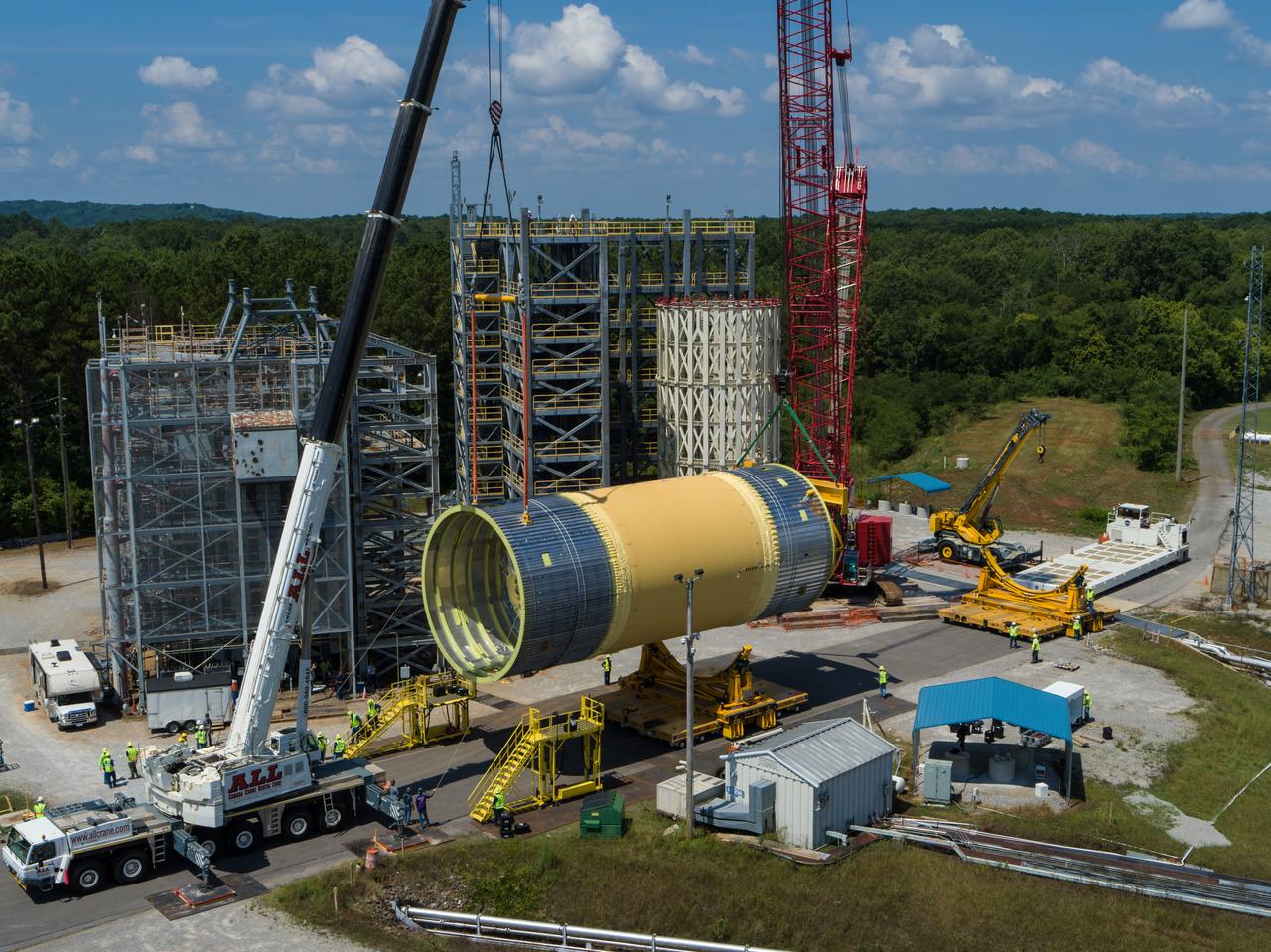
LOX STA breakover at NASA Marshall Space Flight Center
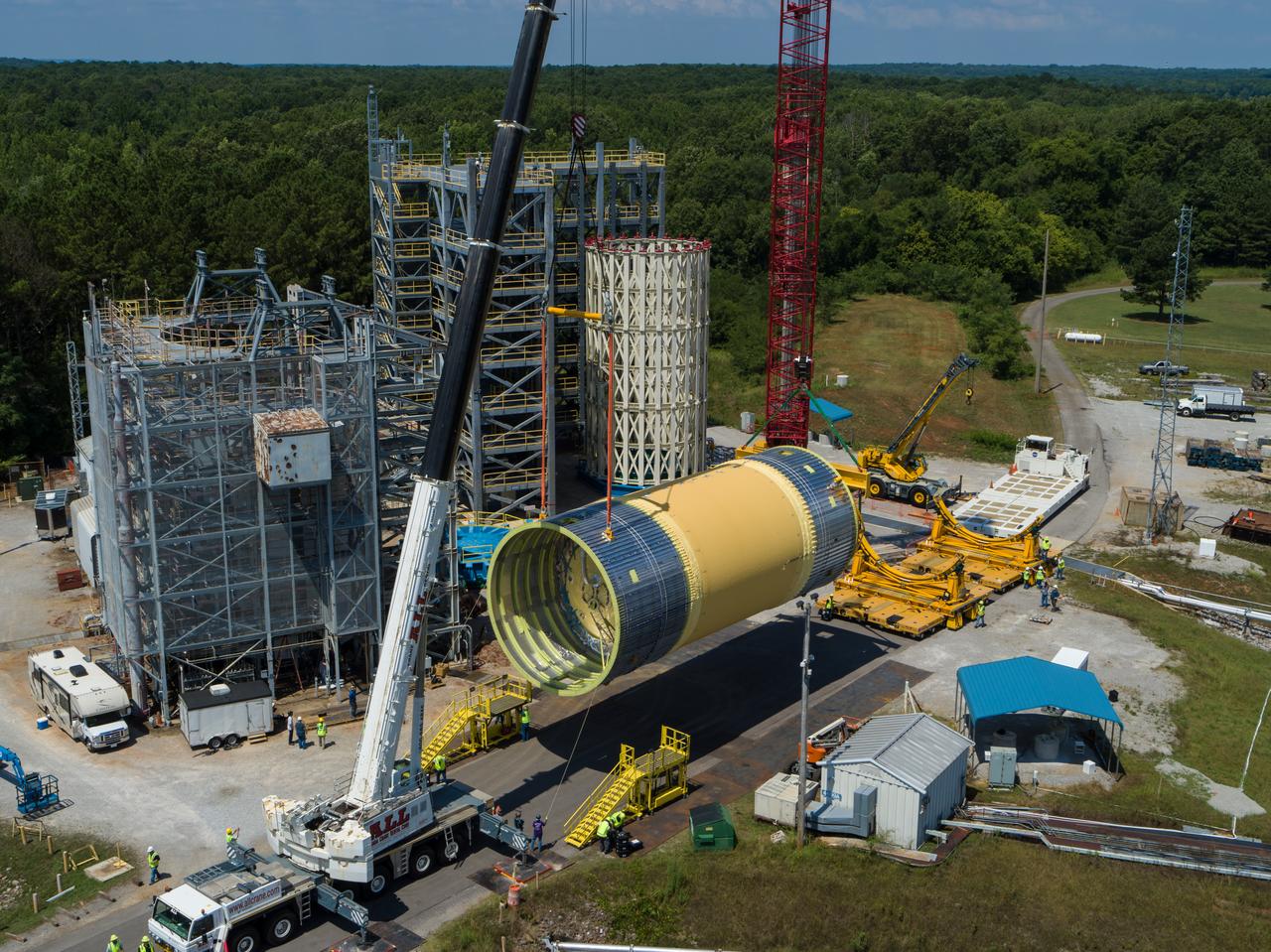
LOX STA breakover at NASA Marshall Space Flight Center
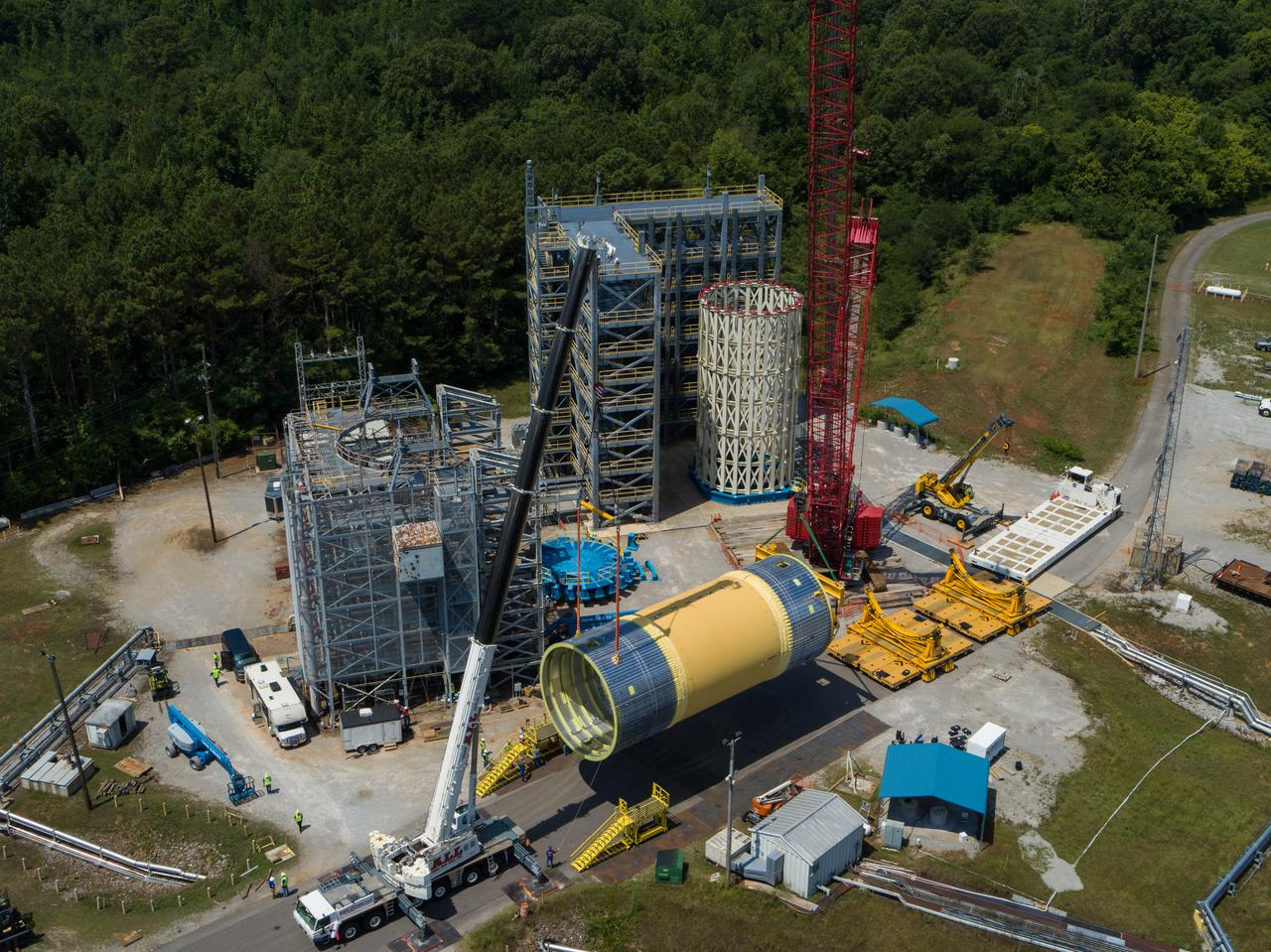
LOX STA breakover at NASA Marshall Space Flight Center
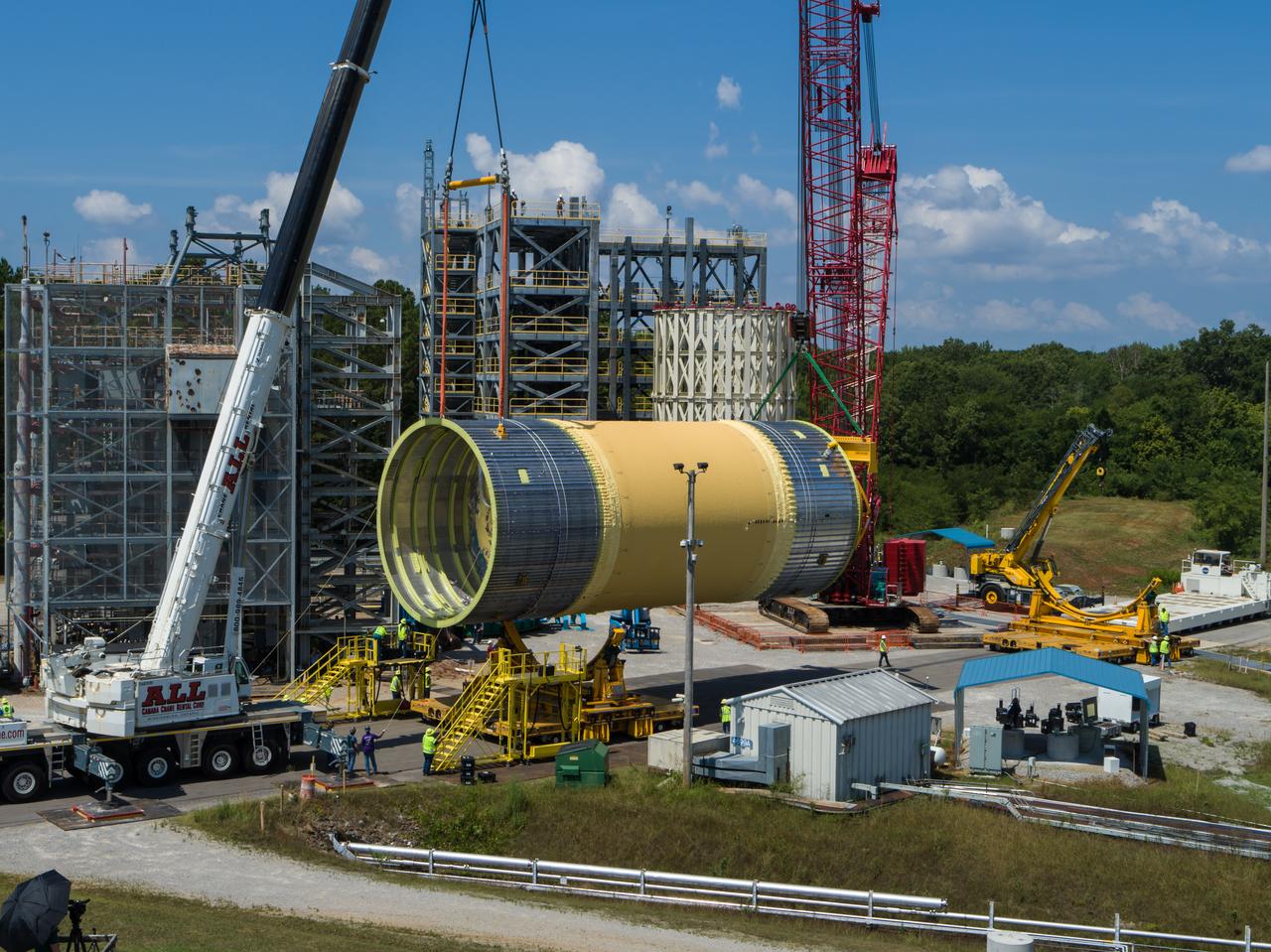
LOX STA breakover at NASA Marshall Space Flight Center
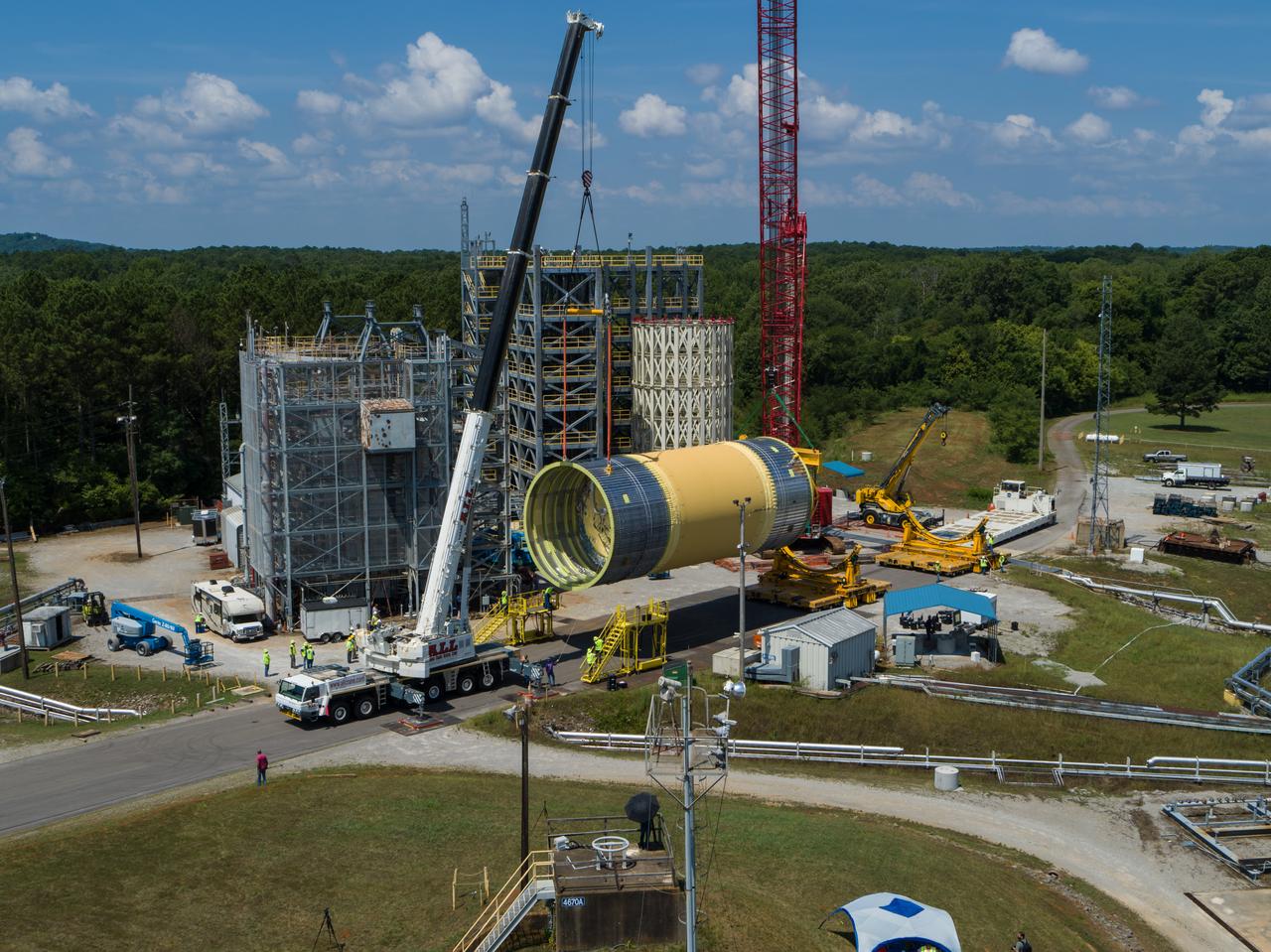
LOX STA breakover at NASA Marshall Space Flight Center
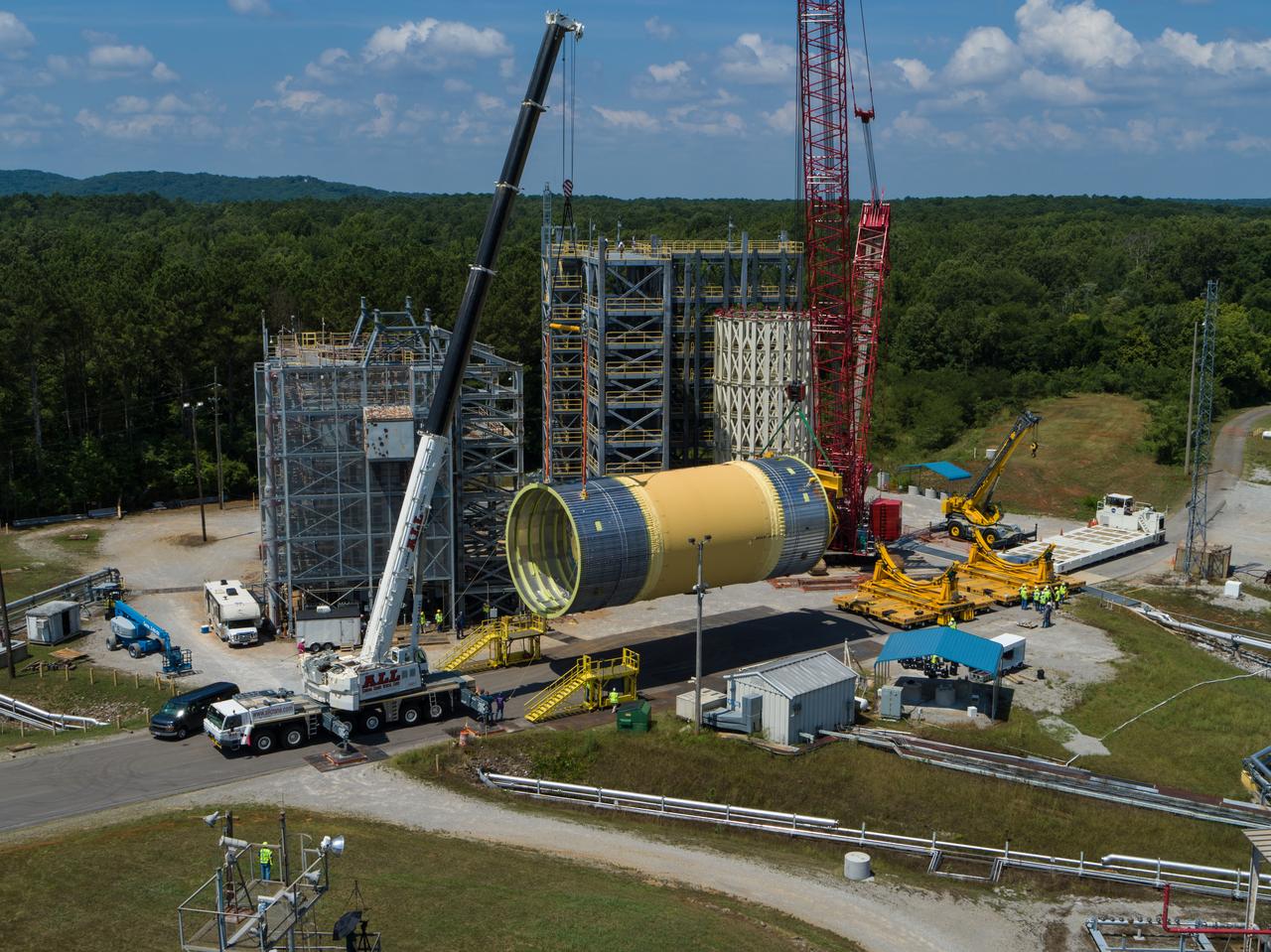
LOX STA breakover at NASA Marshall Space Flight Center
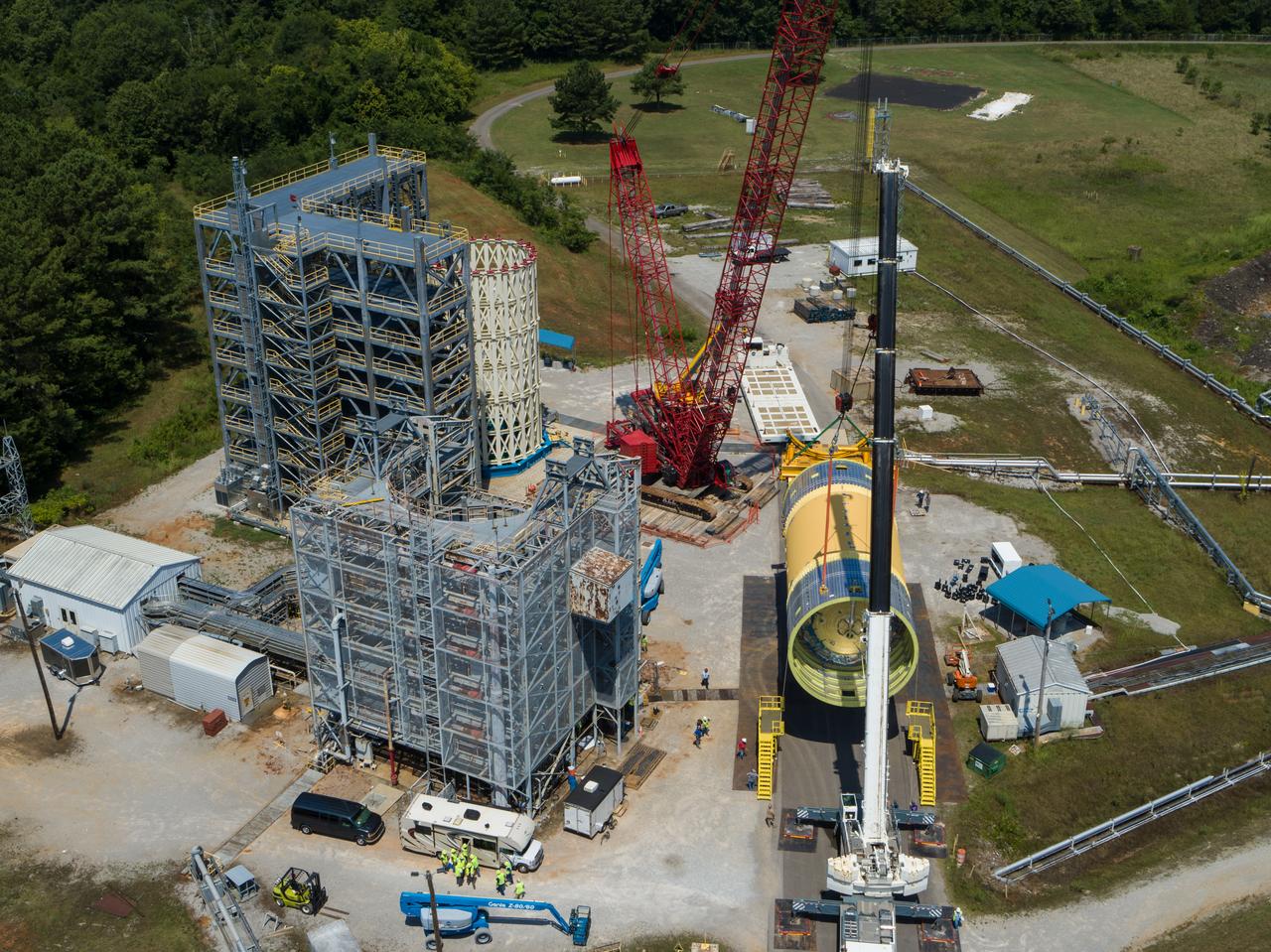
LOX STA breakover at NASA Marshall Space Flight Center
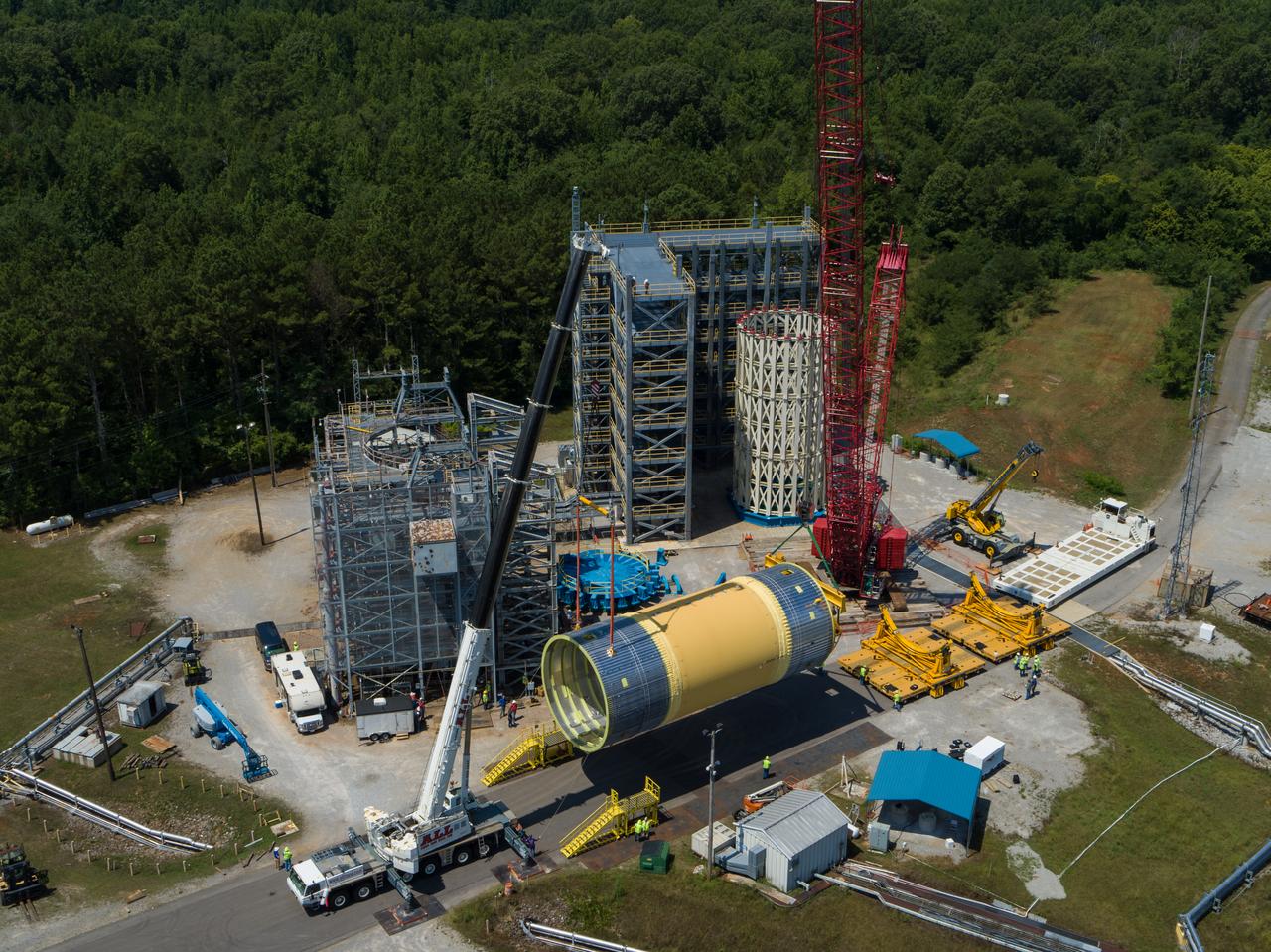
LOX STA breakover at NASA Marshall Space Flight Center

LOX STA breakover at NASA Marshall Space Flight Center

LOX STA breakover at NASA Marshall Space Flight Center
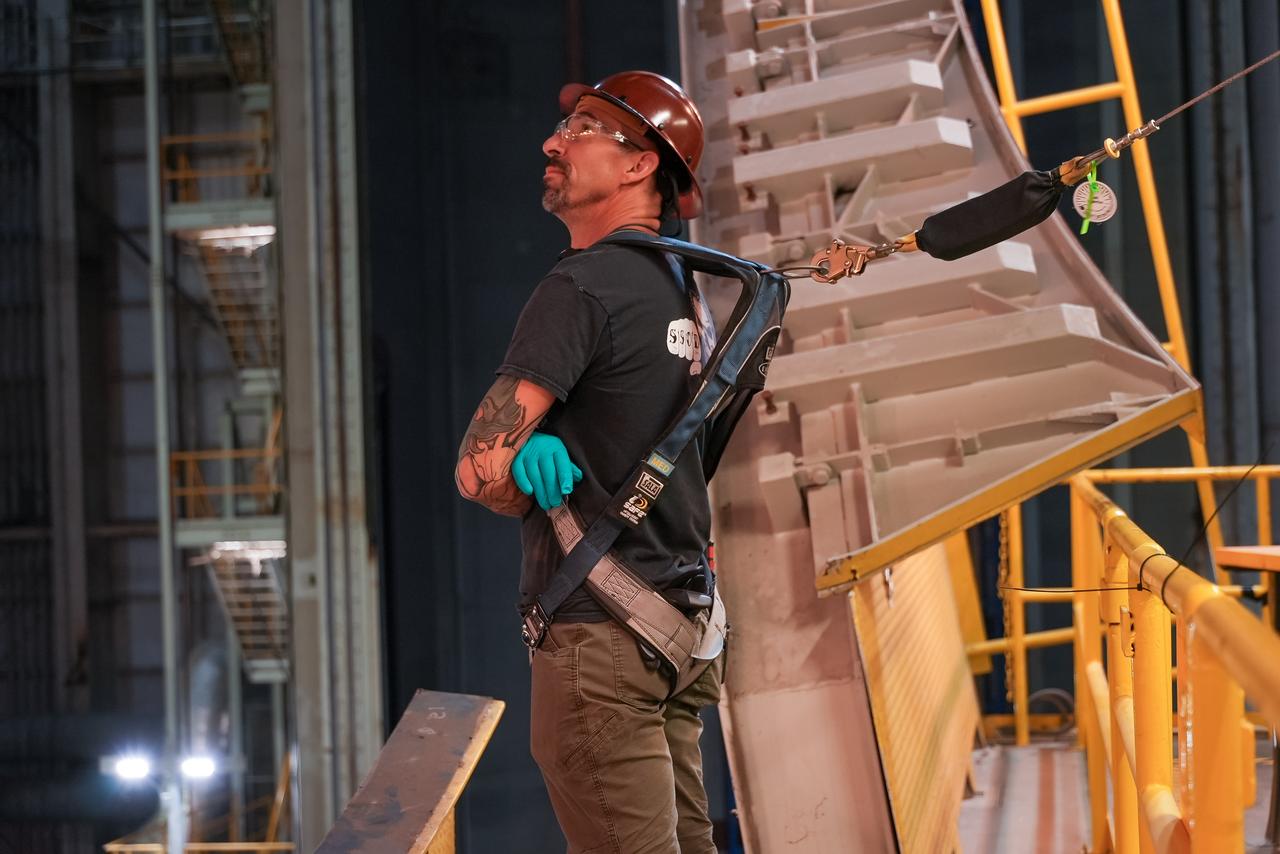
Move crews at NASA’s Michoud Assembly Facility in New Orleans perform “breakover” operations on a liquid oxygen tank in the facility’s vertical assembly building on Aug. 22, 2025. During the breakover, teams lifted the tank from its vertical configuration inside of a production cell and set it horizontally atop self-propelled mobile transporters for transfer to the final assembly production area. There, it will undergo integration of the forward dome by SLS (Space Launch System) prime contractor, Boeing. Eventually, the liquid oxygen tank will be moved back to the high bay where it will be mated with the intertank and forward skirt to complete the forward join of the Artemis III core stage. The propellant tank is one of five major elements that make up the 212-foot-tall rocket stage. The core stage, along with its four RS-25 engines, produce more than two million pounds of thrust to help launch NASA’s Orion spacecraft, astronauts, and supplies beyond Earth’s orbit and to the lunar surface for Artemis.
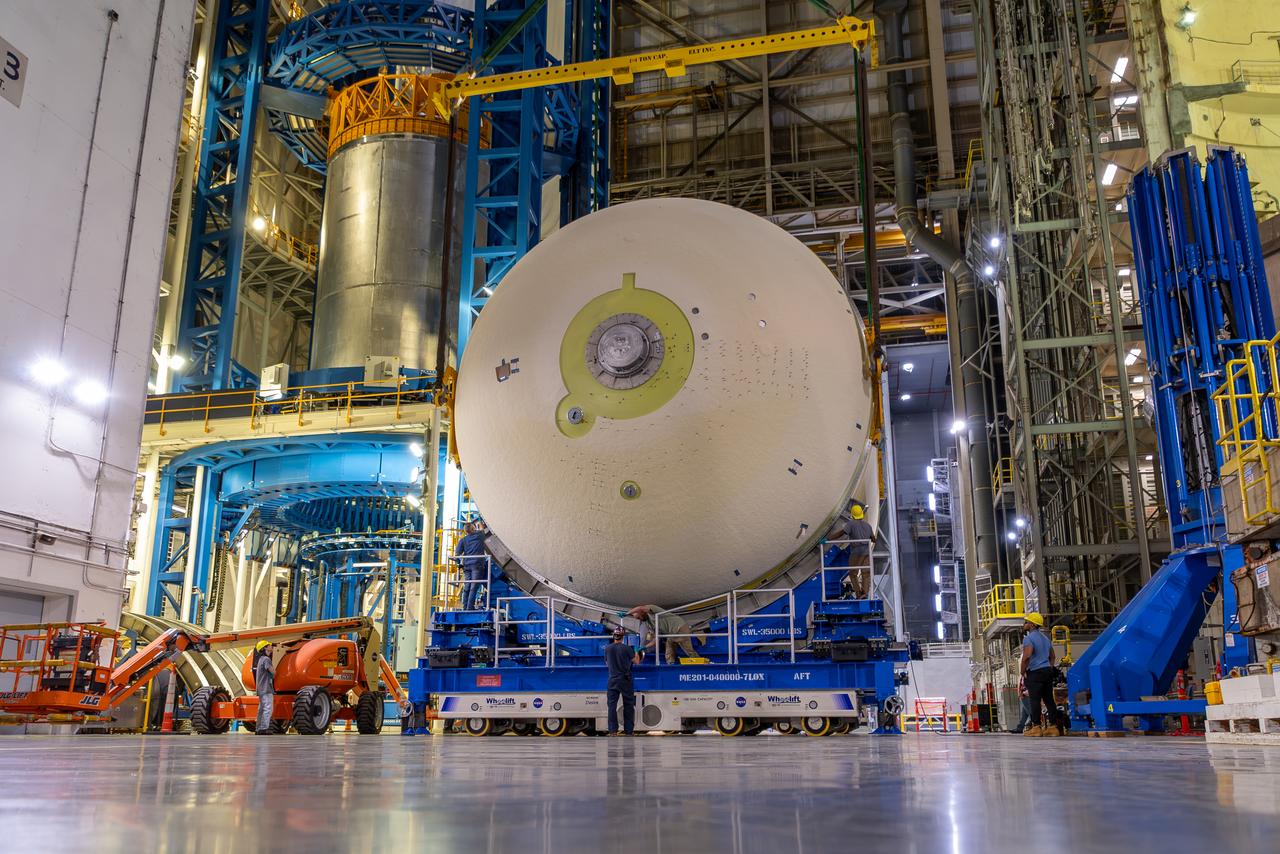
Move crews at NASA’s Michoud Assembly Facility in New Orleans perform “breakover” operations on a liquid oxygen tank in the facility’s vertical assembly building on Aug. 22, 2025. During the breakover, teams lifted the tank from its vertical configuration inside of a production cell and set it horizontally atop self-propelled mobile transporters for transfer to the final assembly production area. There, it will undergo integration of the forward dome by SLS (Space Launch System) prime contractor, Boeing. Eventually, the liquid oxygen tank will be moved back to the high bay where it will be mated with the intertank and forward skirt to complete the forward join of the Artemis III core stage. The propellant tank is one of five major elements that make up the 212-foot-tall rocket stage. The core stage, along with its four RS-25 engines, produce more than two million pounds of thrust to help launch NASA’s Orion spacecraft, astronauts, and supplies beyond Earth’s orbit and to the lunar surface for Artemis.
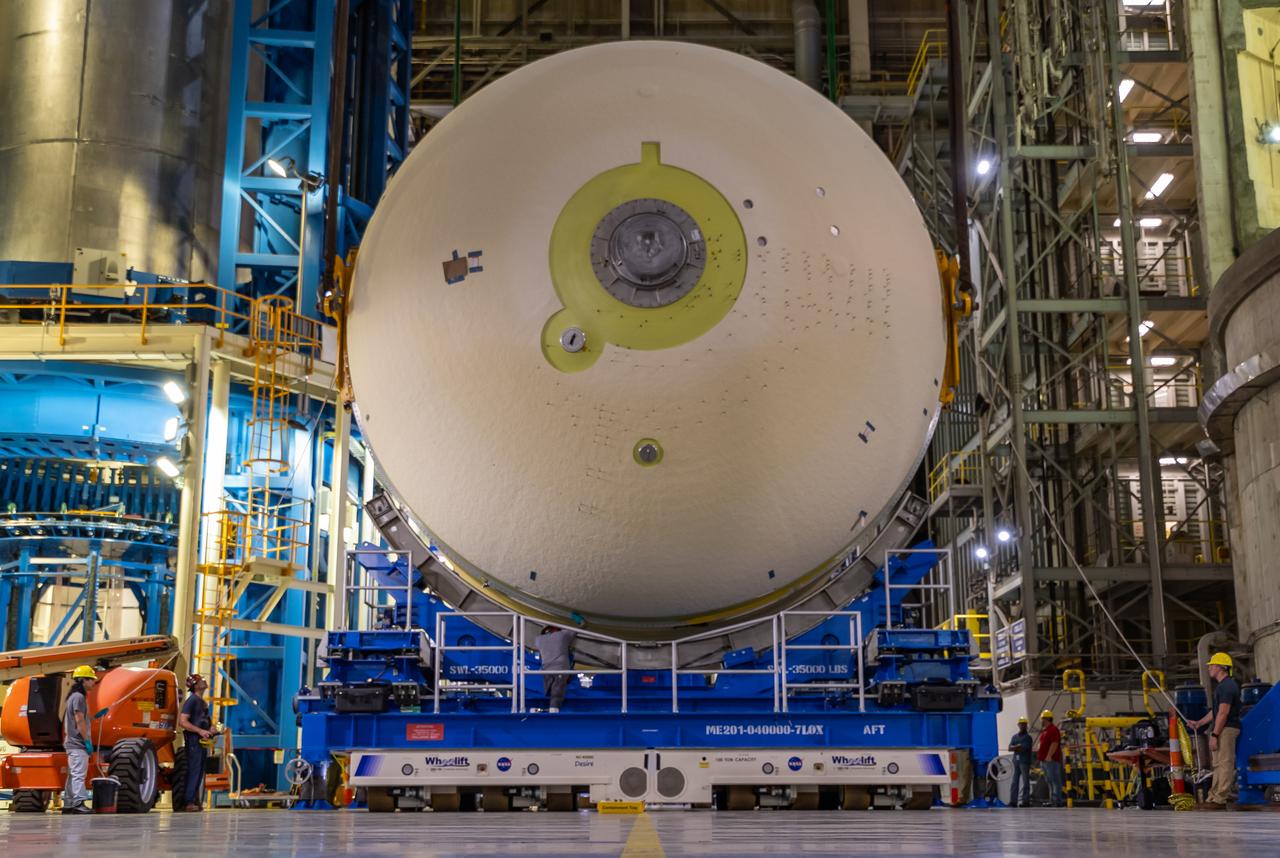
Move crews at NASA’s Michoud Assembly Facility in New Orleans perform “breakover” operations on a liquid oxygen tank in the facility’s vertical assembly building on Aug. 22, 2025. During the breakover, teams lifted the tank from its vertical configuration inside of a production cell and set it horizontally atop self-propelled mobile transporters for transfer to the final assembly production area. There, it will undergo integration of the forward dome by SLS (Space Launch System) prime contractor, Boeing. Eventually, the liquid oxygen tank will be moved back to the high bay where it will be mated with the intertank and forward skirt to complete the forward join of the Artemis III core stage. The propellant tank is one of five major elements that make up the 212-foot-tall rocket stage. The core stage, along with its four RS-25 engines, produce more than two million pounds of thrust to help launch NASA’s Orion spacecraft, astronauts, and supplies beyond Earth’s orbit and to the lunar surface for Artemis.
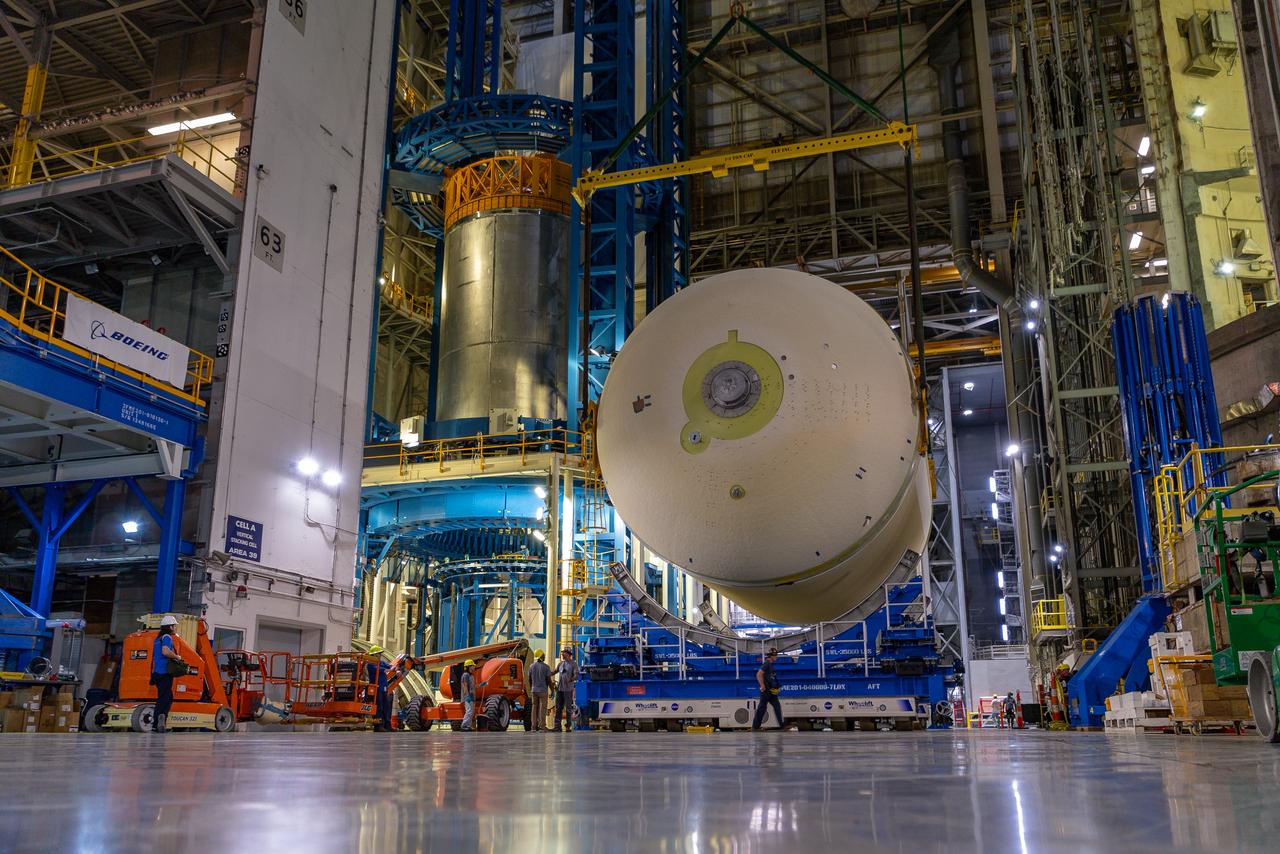
Move crews at NASA’s Michoud Assembly Facility in New Orleans perform “breakover” operations on a liquid oxygen tank in the facility’s vertical assembly building on Aug. 22, 2025. During the breakover, teams lifted the tank from its vertical configuration inside of a production cell and set it horizontally atop self-propelled mobile transporters for transfer to the final assembly production area. There, it will undergo integration of the forward dome by SLS (Space Launch System) prime contractor, Boeing. Eventually, the liquid oxygen tank will be moved back to the high bay where it will be mated with the intertank and forward skirt to complete the forward join of the Artemis III core stage. The propellant tank is one of five major elements that make up the 212-foot-tall rocket stage. The core stage, along with its four RS-25 engines, produce more than two million pounds of thrust to help launch NASA’s Orion spacecraft, astronauts, and supplies beyond Earth’s orbit and to the lunar surface for Artemis.
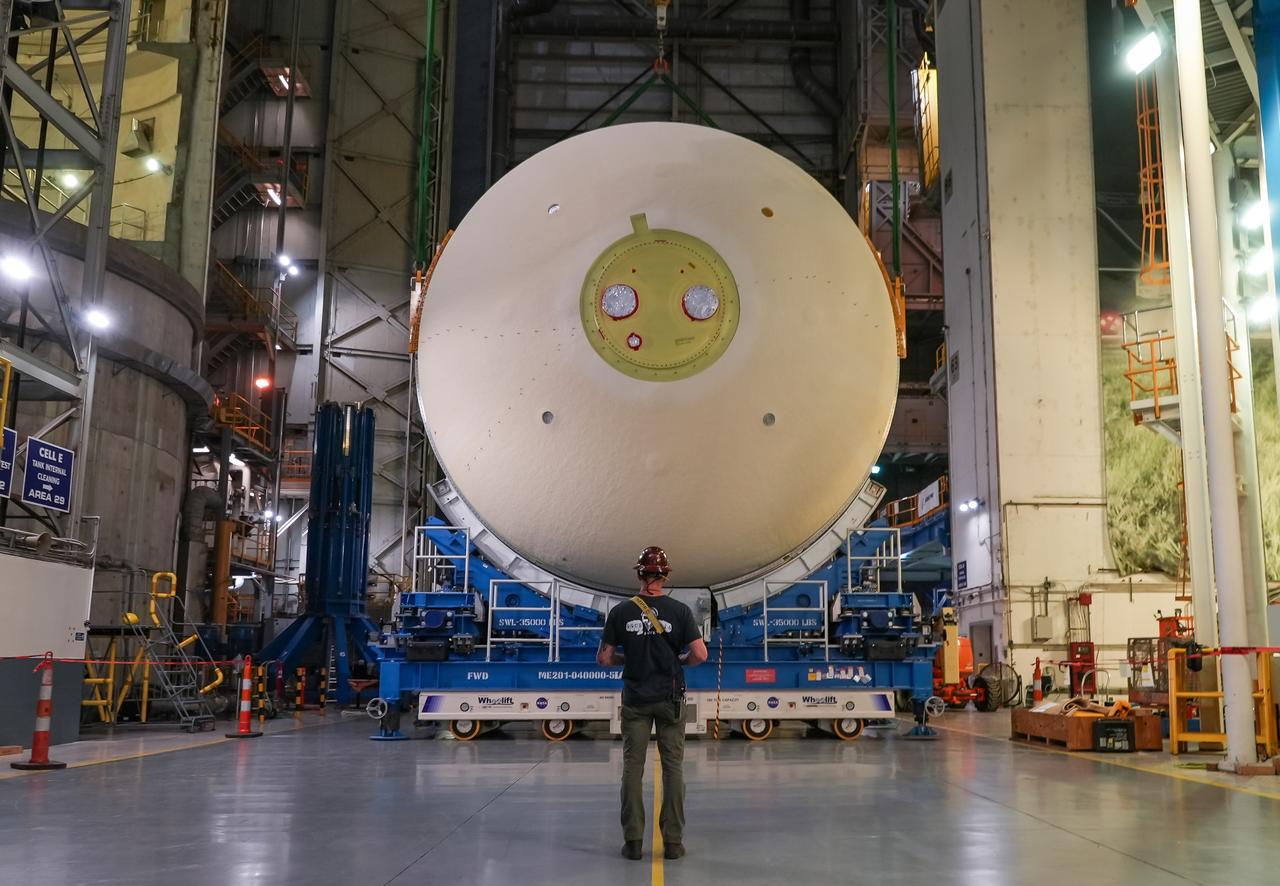
Move crews at NASA’s Michoud Assembly Facility in New Orleans perform “breakover” operations on a liquid oxygen tank in the facility’s vertical assembly building on Aug. 22, 2025. During the breakover, teams lifted the tank from its vertical configuration inside of a production cell and set it horizontally atop self-propelled mobile transporters for transfer to the final assembly production area. There, it will undergo integration of the forward dome by SLS (Space Launch System) prime contractor, Boeing. Eventually, the liquid oxygen tank will be moved back to the high bay where it will be mated with the intertank and forward skirt to complete the forward join of the Artemis III core stage. The propellant tank is one of five major elements that make up the 212-foot-tall rocket stage. The core stage, along with its four RS-25 engines, produce more than two million pounds of thrust to help launch NASA’s Orion spacecraft, astronauts, and supplies beyond Earth’s orbit and to the lunar surface for Artemis.
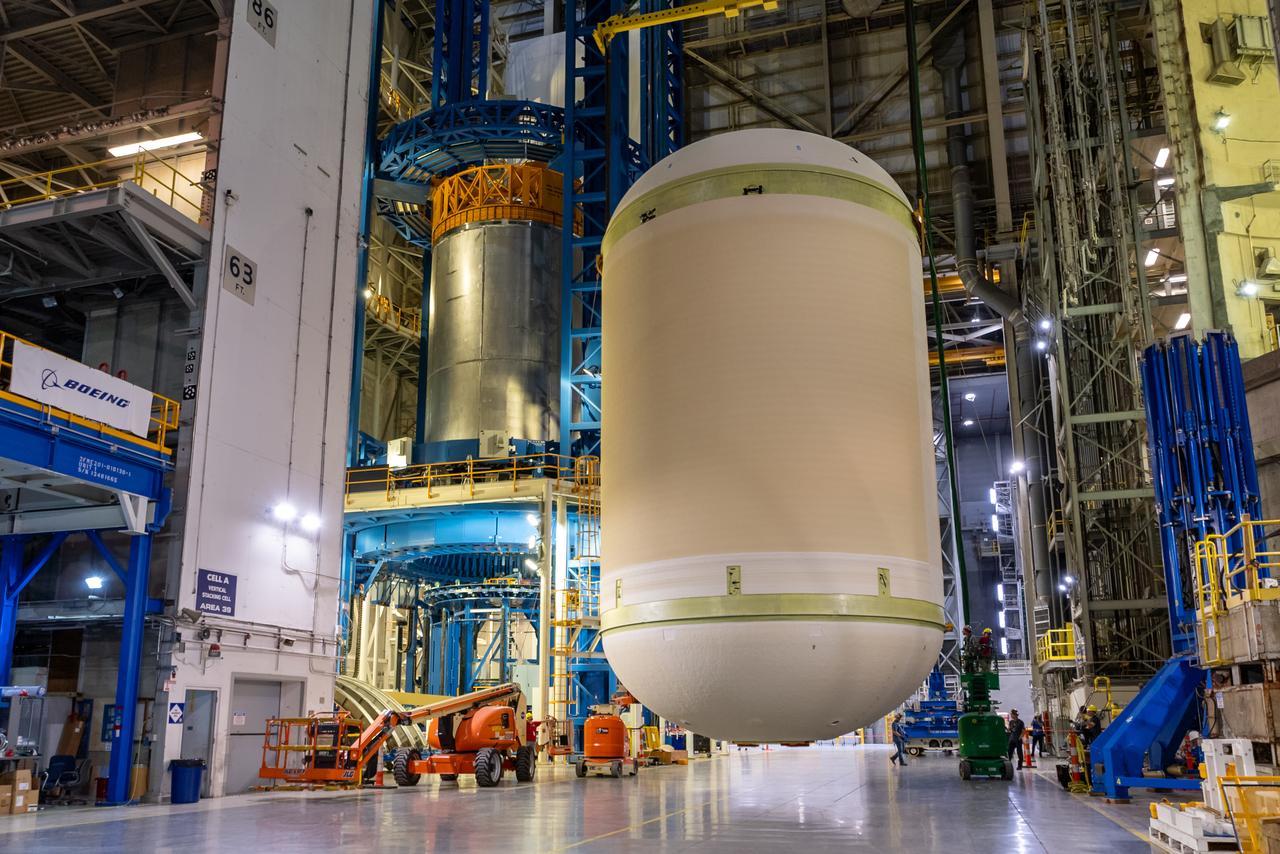
Move crews at NASA’s Michoud Assembly Facility in New Orleans perform “breakover” operations on a liquid oxygen tank in the facility’s vertical assembly building on Aug. 22, 2025. During the breakover, teams lifted the tank from its vertical configuration inside of a production cell and set it horizontally atop self-propelled mobile transporters for transfer to the final assembly production area. There, it will undergo integration of the forward dome by SLS (Space Launch System) prime contractor, Boeing. Eventually, the liquid oxygen tank will be moved back to the high bay where it will be mated with the intertank and forward skirt to complete the forward join of the Artemis III core stage. The propellant tank is one of five major elements that make up the 212-foot-tall rocket stage. The core stage, along with its four RS-25 engines, produce more than two million pounds of thrust to help launch NASA’s Orion spacecraft, astronauts, and supplies beyond Earth’s orbit and to the lunar surface for Artemis.
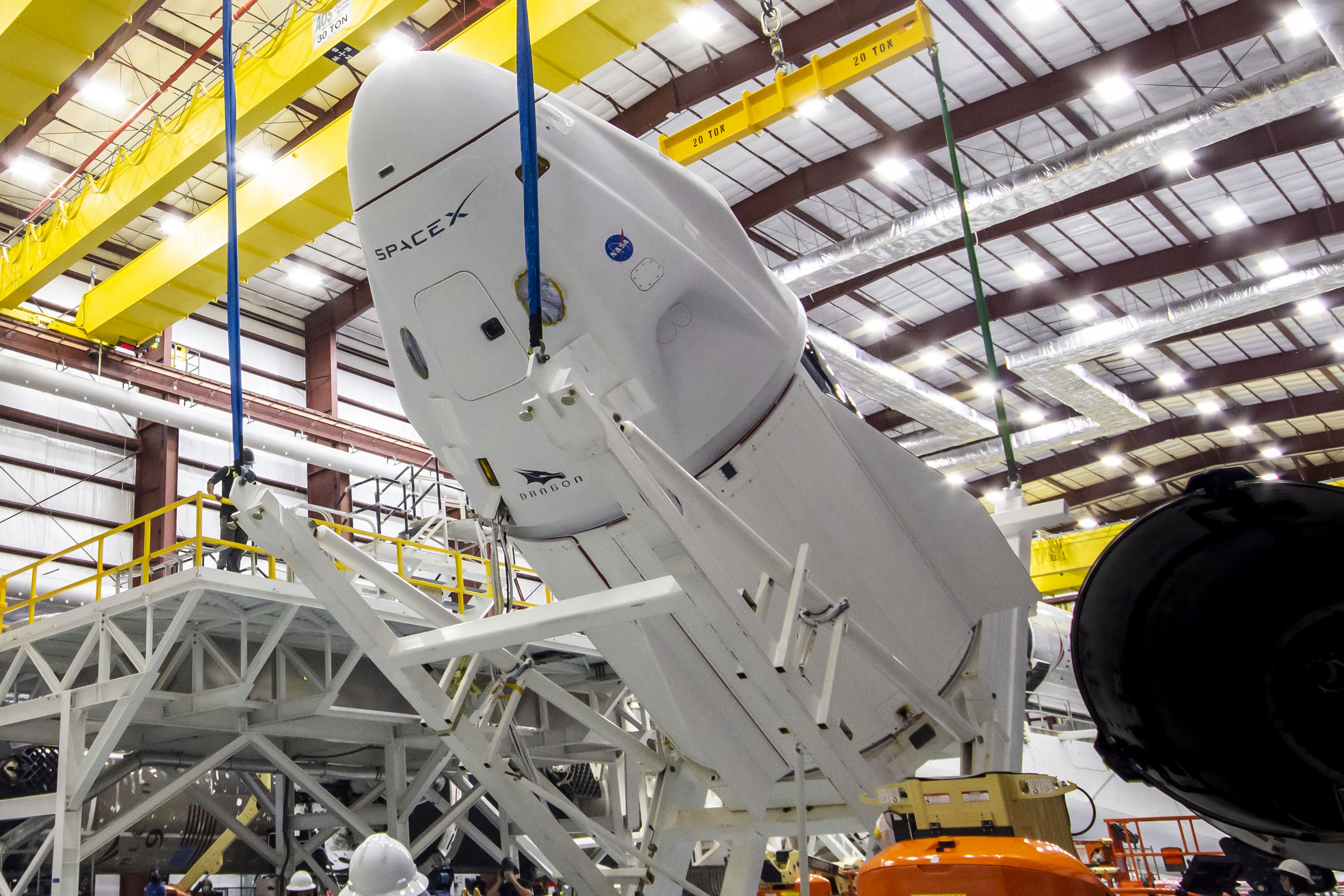
SpaceX’s Crew Dragon, named Endeavour, is lifted and mated to the SpaceX Falcon 9 rocket at NASA Kennedy Space Center’s Launch Complex 39A beginning April 13, 2021. Endeavour was transported to the Launch Complex 39A integration hangar on April 12, after making the trek from its processing facility at nearby Cape Canaveral Space Force Station. NASA astronauts Shane Kimbrough and Megan McArthur, JAXA astronaut Akihiko Hoshide, and ESA astronaut Thomas Pesquet will fly to the International Space Station on NASA’s SpaceX Crew-2 mission. Liftoff is set for Thursday, April 22, at 6:11 a.m. EDT.
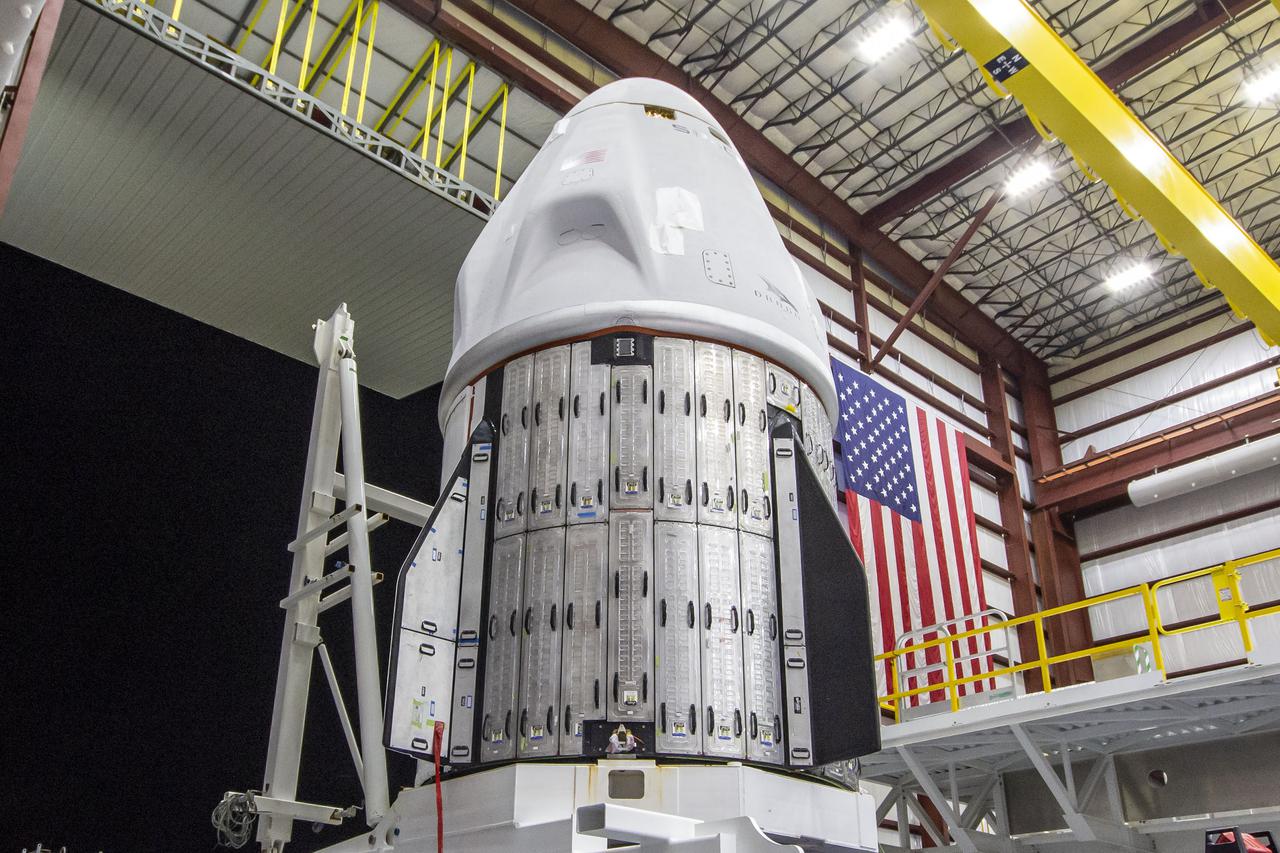
SpaceX’s Crew Dragon, named Endeavour, is lifted and mated to the SpaceX Falcon 9 rocket at NASA Kennedy Space Center’s Launch Complex 39A beginning April 13, 2021. Endeavour was transported to the Launch Complex 39A integration hangar on April 12, after making the trek from its processing facility at nearby Cape Canaveral Space Force Station. NASA astronauts Shane Kimbrough and Megan McArthur, JAXA astronaut Akihiko Hoshide, and ESA astronaut Thomas Pesquet will fly to the International Space Station on NASA’s SpaceX Crew-2 mission. Liftoff is set for Thursday, April 22, at 6:11 a.m. EDT.
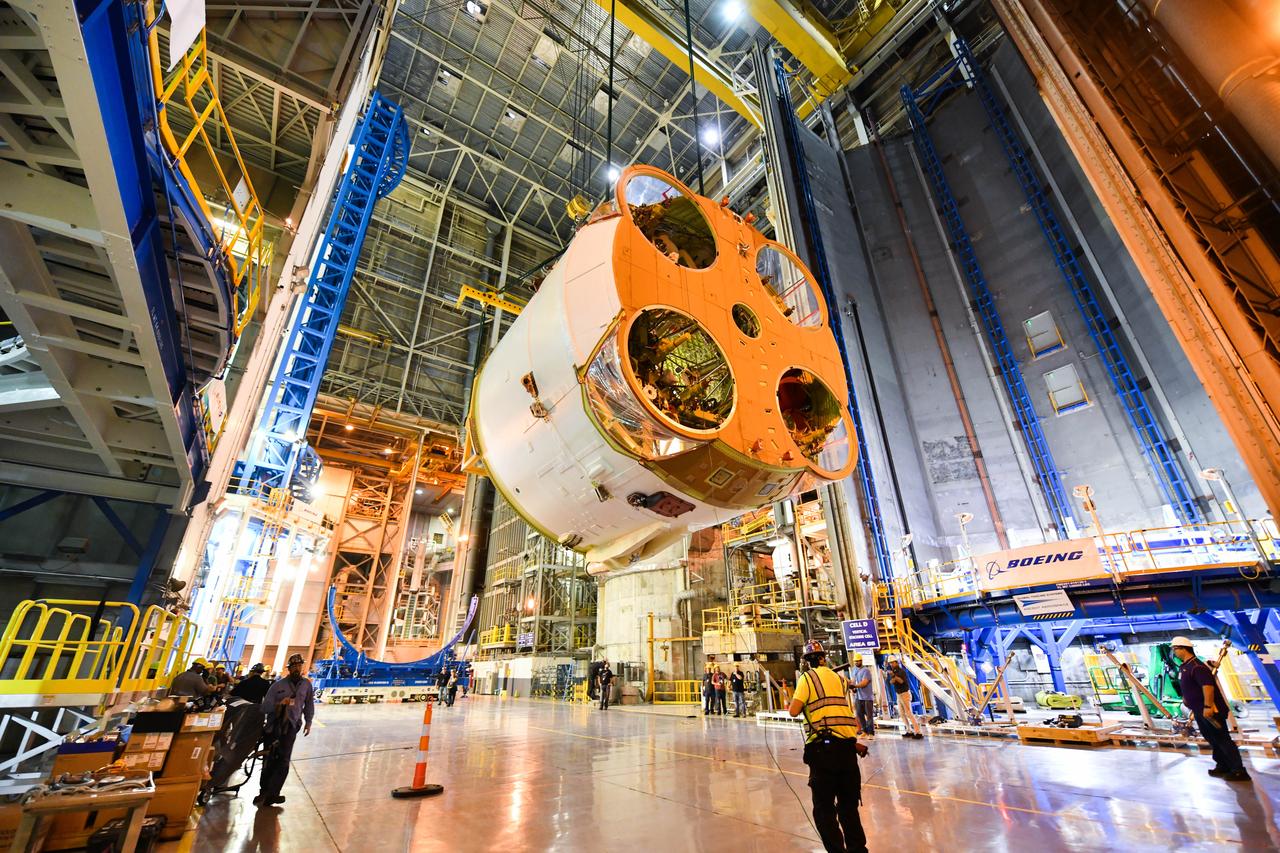
Technicians at NASA’s Michoud Assembly Facility in New Orleans rotated the engine section for NASA’s Space Launch System rocket from a vertical to horizontal position to prepare it for joining to the rest of the rocket’s core stage on Sept. 13. The engine section, which comprises the lowest portion of the 212-foot-tall stage, is the last major component to be horizontally integrated to the core stage. Michoud crews completed assembly on the flight hardware that will be used for Artemis I, the first lunar mission of SLS and NASA’s Orion spacecraft, on Aug. 29. The core stage’s two liquid propellant tanks and four RS-25 engines will produce more than 2 million pounds of thrust to send the SLS rocket and Orion on the Artemis lunar missions. The engine section houses the four RS-25 engines and includes vital systems for mounting, controlling and delivering fuel form the propellant tanks to the rocket’s engines. Offering more payload mass, volume capability and energy to speed missions through space, the SLS rocket, along with NASA’s Gateway in lunar orbit and Orion, is part of NASA’s backbone for deep space exploration and the Artemis lunar program. No other rocket is capable of carrying astronauts in Orion around the Moon in a single mission.
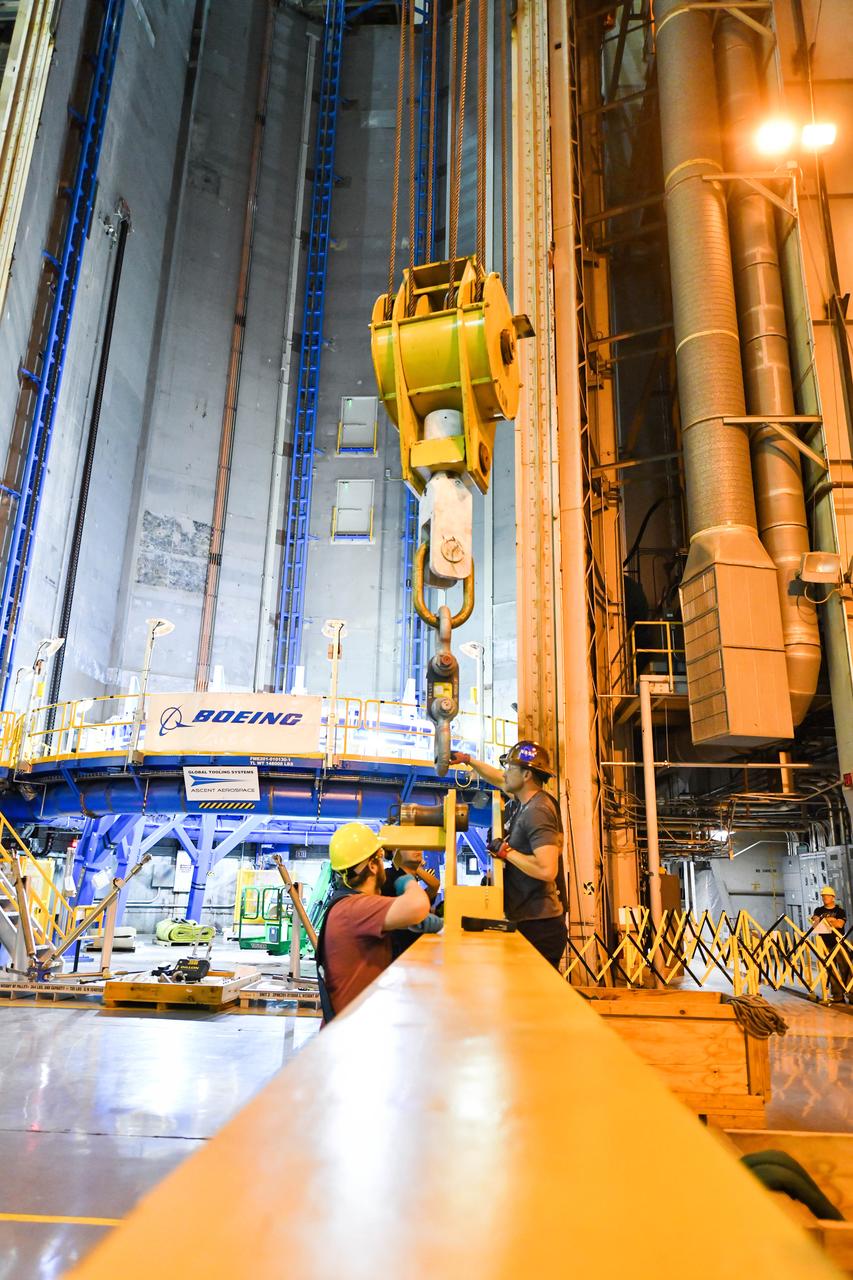
Technicians at NASA’s Michoud Assembly Facility in New Orleans rotated the engine section for NASA’s Space Launch System rocket from a vertical to horizontal position to prepare it for joining to the rest of the rocket’s core stage on Sept. 13. The engine section, which comprises the lowest portion of the 212-foot-tall stage, is the last major component to be horizontally integrated to the core stage. Michoud crews completed assembly on the flight hardware that will be used for Artemis I, the first lunar mission of SLS and NASA’s Orion spacecraft, on Aug. 29. The core stage’s two liquid propellant tanks and four RS-25 engines will produce more than 2 million pounds of thrust to send the SLS rocket and Orion on the Artemis lunar missions. The engine section houses the four RS-25 engines and includes vital systems for mounting, controlling and delivering fuel form the propellant tanks to the rocket’s engines. Offering more payload mass, volume capability and energy to speed missions through space, the SLS rocket, along with NASA’s Gateway in lunar orbit and Orion, is part of NASA’s backbone for deep space exploration and the Artemis lunar program. No other rocket is capable of carrying astronauts in Orion around the Moon in a single mission.
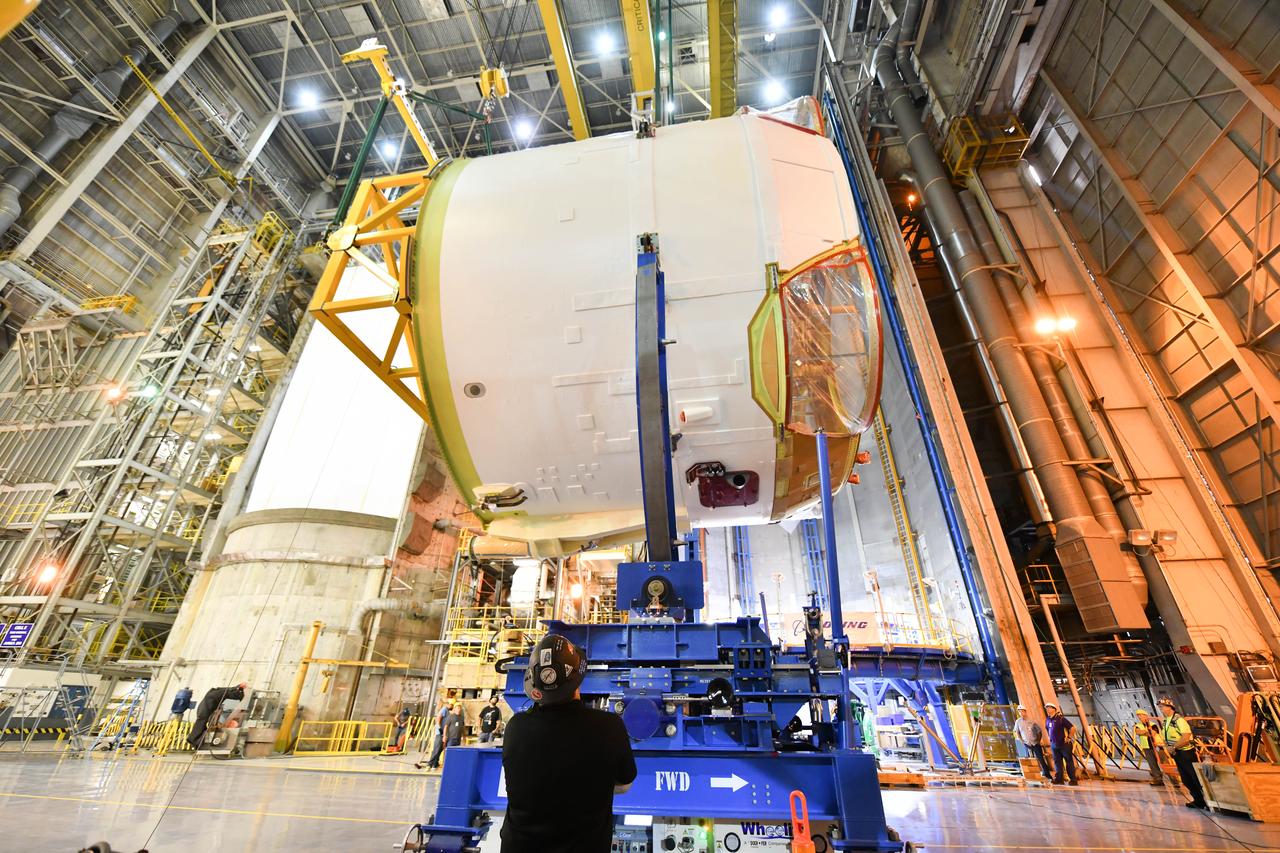
Technicians at NASA’s Michoud Assembly Facility in New Orleans rotated the engine section for NASA’s Space Launch System rocket from a vertical to horizontal position to prepare it for joining to the rest of the rocket’s core stage on Sept. 13. The engine section, which comprises the lowest portion of the 212-foot-tall stage, is the last major component to be horizontally integrated to the core stage. Michoud crews completed assembly on the flight hardware that will be used for Artemis I, the first lunar mission of SLS and NASA’s Orion spacecraft, on Aug. 29. The core stage’s two liquid propellant tanks and four RS-25 engines will produce more than 2 million pounds of thrust to send the SLS rocket and Orion on the Artemis lunar missions. The engine section houses the four RS-25 engines and includes vital systems for mounting, controlling and delivering fuel form the propellant tanks to the rocket’s engines. Offering more payload mass, volume capability and energy to speed missions through space, the SLS rocket, along with NASA’s Gateway in lunar orbit and Orion, is part of NASA’s backbone for deep space exploration and the Artemis lunar program. No other rocket is capable of carrying astronauts in Orion around the Moon in a single mission.
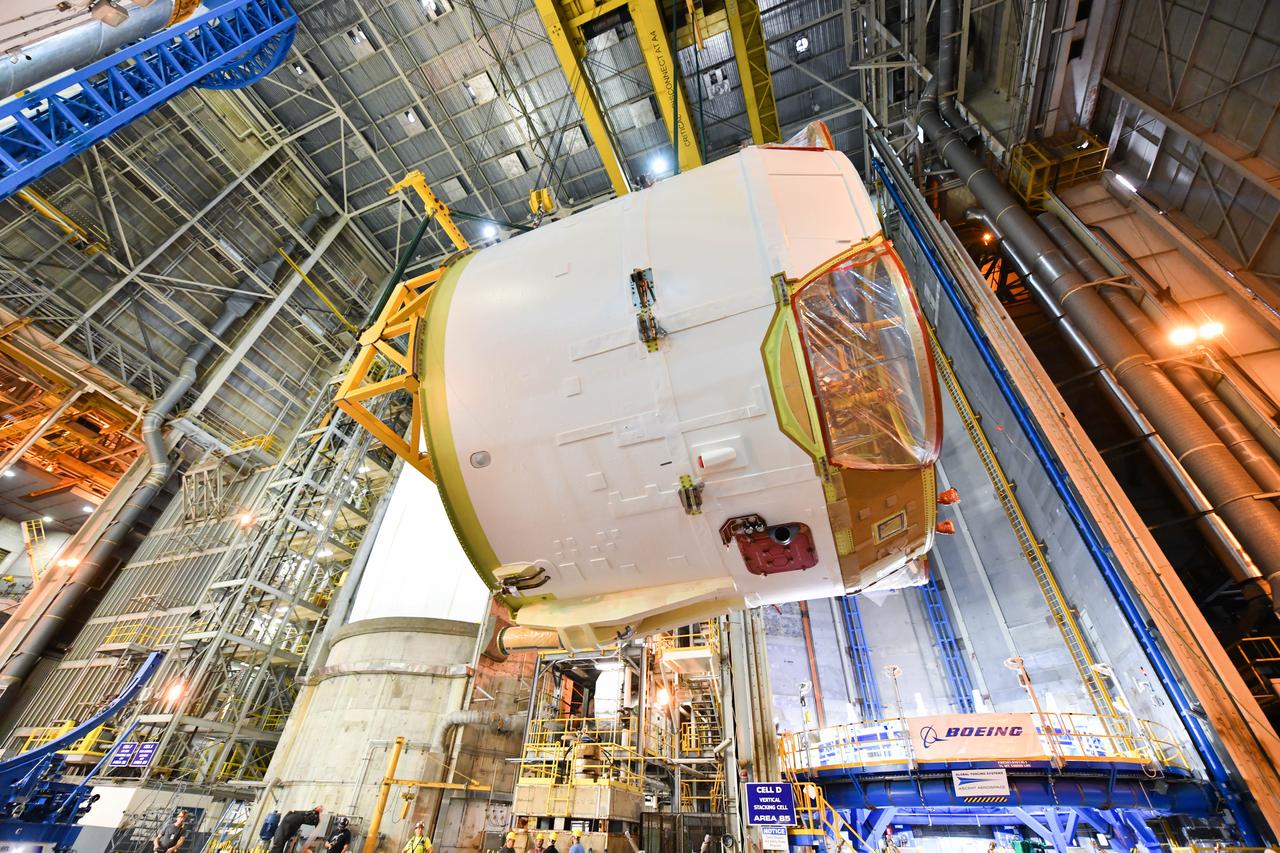
Technicians at NASA’s Michoud Assembly Facility in New Orleans rotated the engine section for NASA’s Space Launch System rocket from a vertical to horizontal position to prepare it for joining to the rest of the rocket’s core stage on Sept. 13. The engine section, which comprises the lowest portion of the 212-foot-tall stage, is the last major component to be horizontally integrated to the core stage. Michoud crews completed assembly on the flight hardware that will be used for Artemis I, the first lunar mission of SLS and NASA’s Orion spacecraft, on Aug. 29. The core stage’s two liquid propellant tanks and four RS-25 engines will produce more than 2 million pounds of thrust to send the SLS rocket and Orion on the Artemis lunar missions. The engine section houses the four RS-25 engines and includes vital systems for mounting, controlling and delivering fuel form the propellant tanks to the rocket’s engines. Offering more payload mass, volume capability and energy to speed missions through space, the SLS rocket, along with NASA’s Gateway in lunar orbit and Orion, is part of NASA’s backbone for deep space exploration and the Artemis lunar program. No other rocket is capable of carrying astronauts in Orion around the Moon in a single mission.
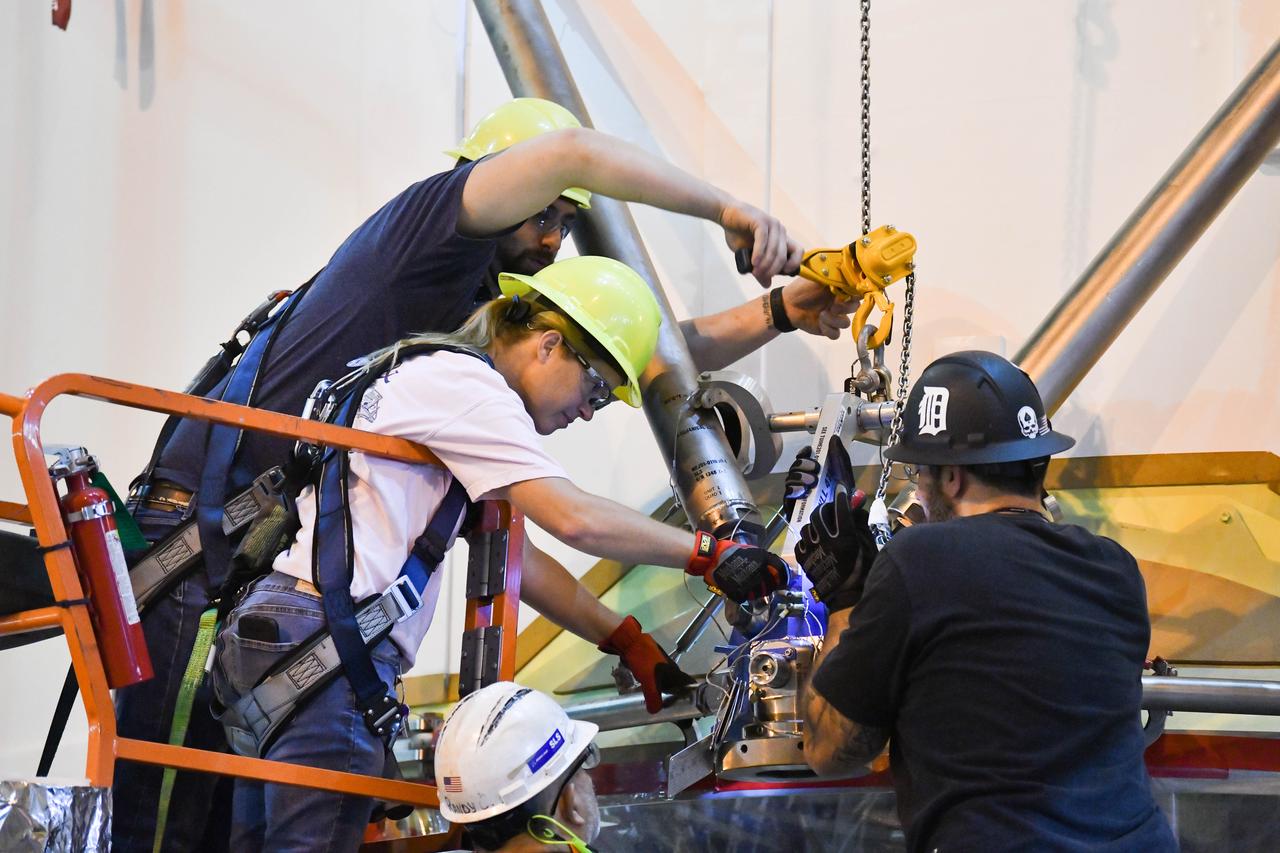
Technicians at NASA’s Michoud Assembly Facility in New Orleans rotated the engine section for NASA’s Space Launch System rocket from a vertical to horizontal position to prepare it for joining to the rest of the rocket’s core stage on Sept. 13. The engine section, which comprises the lowest portion of the 212-foot-tall stage, is the last major component to be horizontally integrated to the core stage. Michoud crews completed assembly on the flight hardware that will be used for Artemis I, the first lunar mission of SLS and NASA’s Orion spacecraft, on Aug. 29. The core stage’s two liquid propellant tanks and four RS-25 engines will produce more than 2 million pounds of thrust to send the SLS rocket and Orion on the Artemis lunar missions. The engine section houses the four RS-25 engines and includes vital systems for mounting, controlling and delivering fuel form the propellant tanks to the rocket’s engines. Offering more payload mass, volume capability and energy to speed missions through space, the SLS rocket, along with NASA’s Gateway in lunar orbit and Orion, is part of NASA’s backbone for deep space exploration and the Artemis lunar program. No other rocket is capable of carrying astronauts in Orion around the Moon in a single mission.
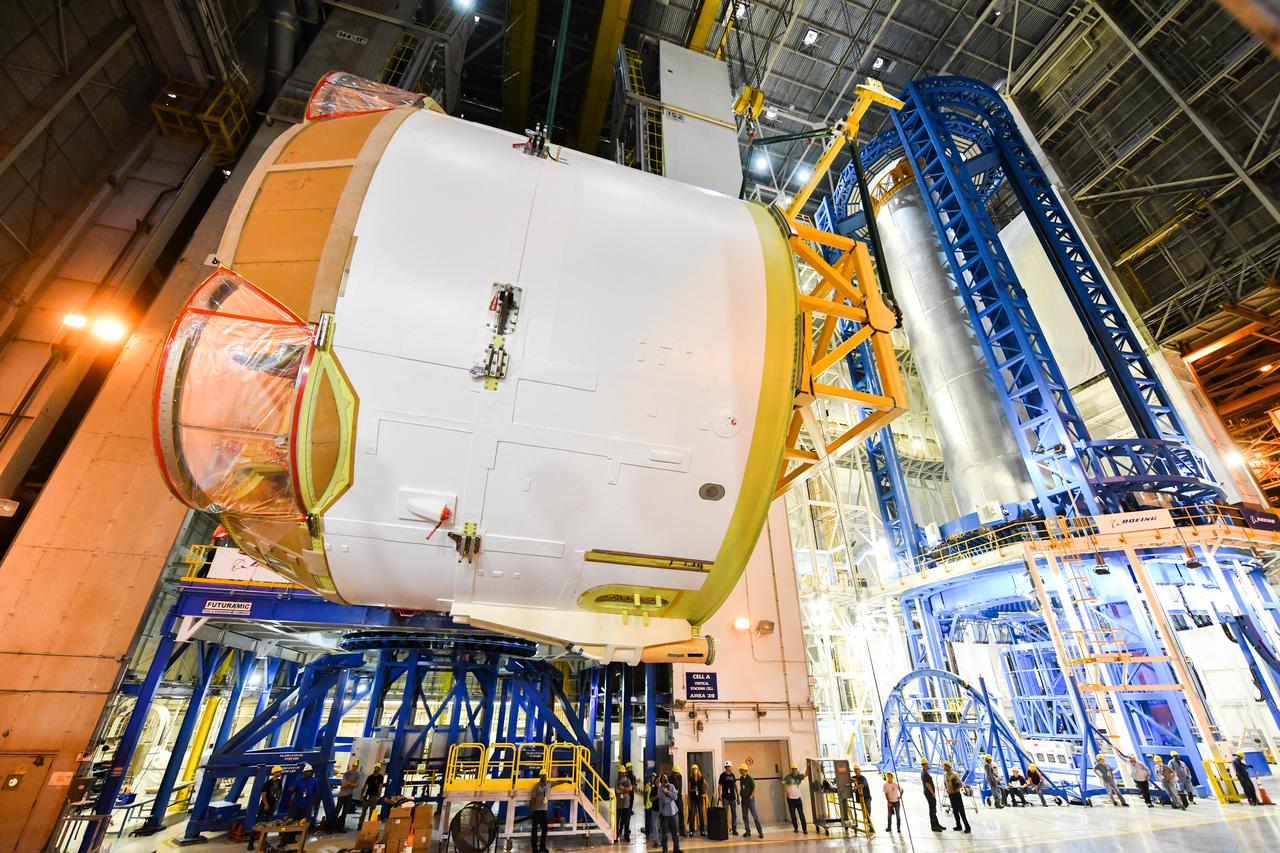
Technicians at NASA’s Michoud Assembly Facility in New Orleans rotated the engine section for NASA’s Space Launch System rocket from a vertical to horizontal position to prepare it for joining to the rest of the rocket’s core stage on Sept. 13. The engine section, which comprises the lowest portion of the 212-foot-tall stage, is the last major component to be horizontally integrated to the core stage. Michoud crews completed assembly on the flight hardware that will be used for Artemis I, the first lunar mission of SLS and NASA’s Orion spacecraft, on Aug. 29. The core stage’s two liquid propellant tanks and four RS-25 engines will produce more than 2 million pounds of thrust to send the SLS rocket and Orion on the Artemis lunar missions. The engine section houses the four RS-25 engines and includes vital systems for mounting, controlling and delivering fuel form the propellant tanks to the rocket’s engines. Offering more payload mass, volume capability and energy to speed missions through space, the SLS rocket, along with NASA’s Gateway in lunar orbit and Orion, is part of NASA’s backbone for deep space exploration and the Artemis lunar program. No other rocket is capable of carrying astronauts in Orion around the Moon in a single mission.
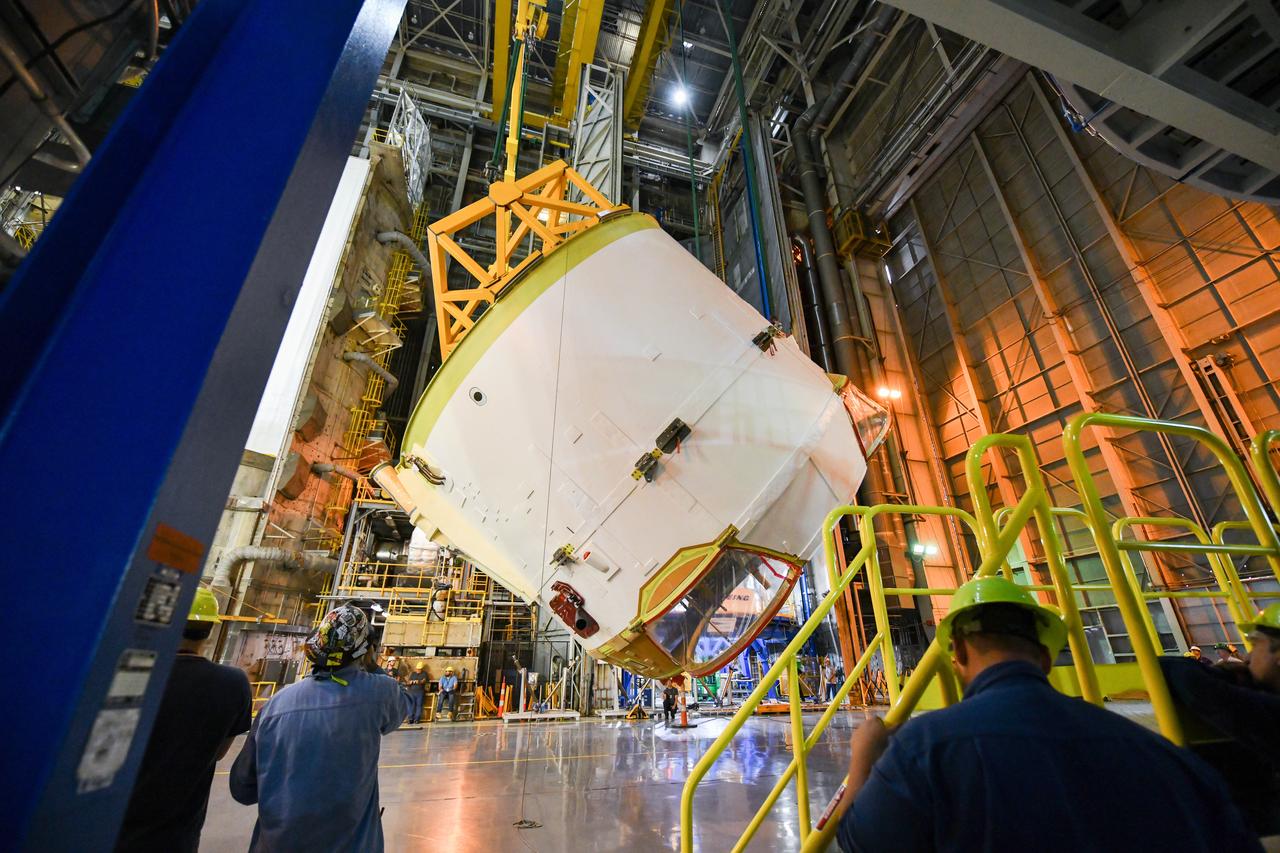
Technicians at NASA’s Michoud Assembly Facility in New Orleans rotated the engine section for NASA’s Space Launch System rocket from a vertical to horizontal position to prepare it for joining to the rest of the rocket’s core stage on Sept. 13. The engine section, which comprises the lowest portion of the 212-foot-tall stage, is the last major component to be horizontally integrated to the core stage. Michoud crews completed assembly on the flight hardware that will be used for Artemis I, the first lunar mission of SLS and NASA’s Orion spacecraft, on Aug. 29. The core stage’s two liquid propellant tanks and four RS-25 engines will produce more than 2 million pounds of thrust to send the SLS rocket and Orion on the Artemis lunar missions. The engine section houses the four RS-25 engines and includes vital systems for mounting, controlling and delivering fuel form the propellant tanks to the rocket’s engines. Offering more payload mass, volume capability and energy to speed missions through space, the SLS rocket, along with NASA’s Gateway in lunar orbit and Orion, is part of NASA’s backbone for deep space exploration and the Artemis lunar program. No other rocket is capable of carrying astronauts in Orion around the Moon in a single mission.
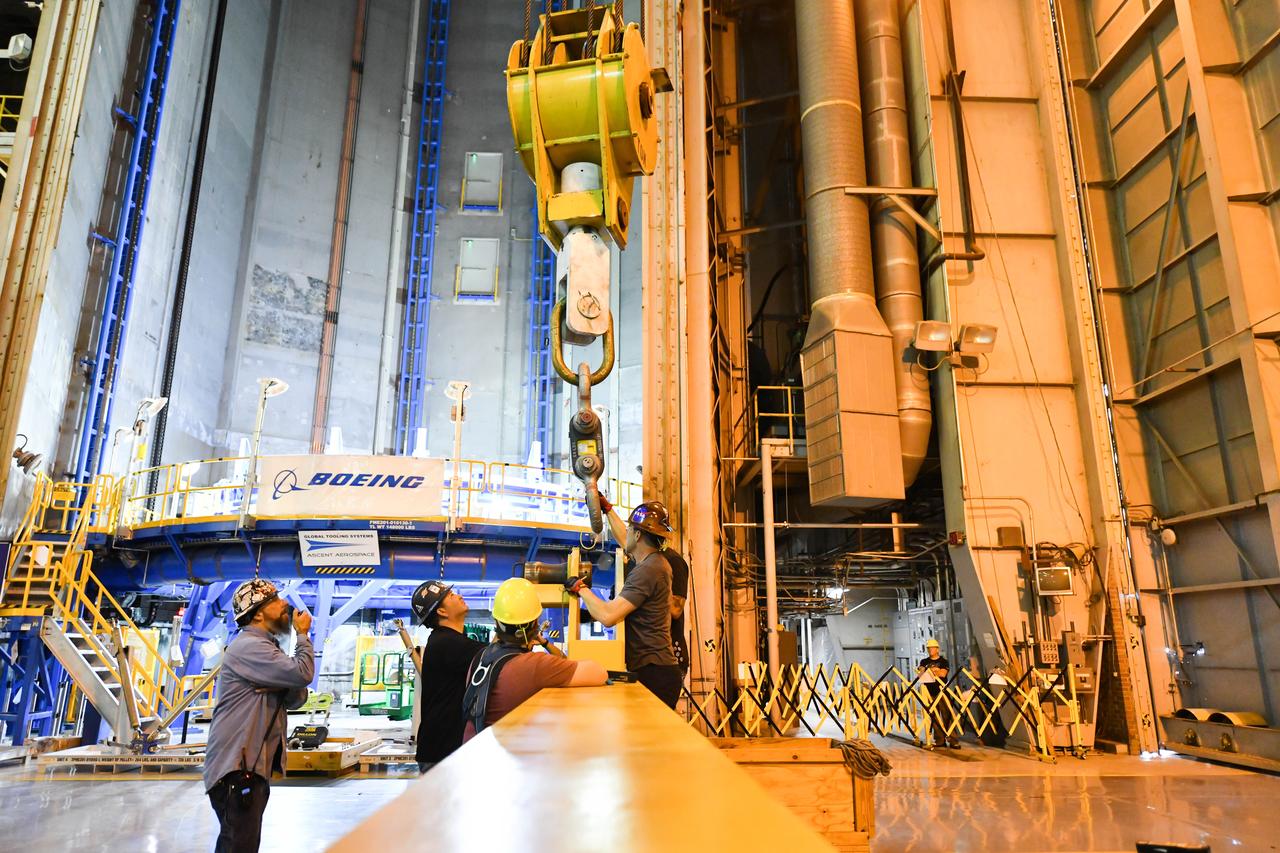
Technicians at NASA’s Michoud Assembly Facility in New Orleans rotated the engine section for NASA’s Space Launch System rocket from a vertical to horizontal position to prepare it for joining to the rest of the rocket’s core stage on Sept. 13. The engine section, which comprises the lowest portion of the 212-foot-tall stage, is the last major component to be horizontally integrated to the core stage. Michoud crews completed assembly on the flight hardware that will be used for Artemis I, the first lunar mission of SLS and NASA’s Orion spacecraft, on Aug. 29. The core stage’s two liquid propellant tanks and four RS-25 engines will produce more than 2 million pounds of thrust to send the SLS rocket and Orion on the Artemis lunar missions. The engine section houses the four RS-25 engines and includes vital systems for mounting, controlling and delivering fuel form the propellant tanks to the rocket’s engines. Offering more payload mass, volume capability and energy to speed missions through space, the SLS rocket, along with NASA’s Gateway in lunar orbit and Orion, is part of NASA’s backbone for deep space exploration and the Artemis lunar program. No other rocket is capable of carrying astronauts in Orion around the Moon in a single mission.
Technicians at NASA’s Michoud Assembly Facility in New Orleans rotated the engine section for NASA’s Space Launch System rocket from a vertical to horizontal position to prepare it for joining to the rest of the rocket’s core stage on Sept. 13. The engine section, which comprises the lowest portion of the 212-foot-tall stage, is the last major component to be horizontally integrated to the core stage. Michoud crews completed assembly on the flight hardware that will be used for Artemis I, the first lunar mission of SLS and NASA’s Orion spacecraft, on Aug. 29. The core stage’s two liquid propellant tanks and four RS-25 engines will produce more than 2 million pounds of thrust to send the SLS rocket and Orion on the Artemis lunar missions. The engine section houses the four RS-25 engines and includes vital systems for mounting, controlling and delivering fuel form the propellant tanks to the rocket’s engines. Offering more payload mass, volume capability and energy to speed missions through space, the SLS rocket, along with NASA’s Gateway in lunar orbit and Orion, is part of NASA’s backbone for deep space exploration and the Artemis lunar program. No other rocket is capable of carrying astronauts in Orion around the Moon in a single mission.
Technicians at NASA’s Michoud Assembly Facility in New Orleans rotated the engine section for NASA’s Space Launch System rocket from a vertical to horizontal position to prepare it for joining to the rest of the rocket’s core stage on Sept. 13. The engine section, which comprises the lowest portion of the 212-foot-tall stage, is the last major component to be horizontally integrated to the core stage. Michoud crews completed assembly on the flight hardware that will be used for Artemis I, the first lunar mission of SLS and NASA’s Orion spacecraft, on Aug. 29. The core stage’s two liquid propellant tanks and four RS-25 engines will produce more than 2 million pounds of thrust to send the SLS rocket and Orion on the Artemis lunar missions. The engine section houses the four RS-25 engines and includes vital systems for mounting, controlling and delivering fuel form the propellant tanks to the rocket’s engines. Offering more payload mass, volume capability and energy to speed missions through space, the SLS rocket, along with NASA’s Gateway in lunar orbit and Orion, is part of NASA’s backbone for deep space exploration and the Artemis lunar program. No other rocket is capable of carrying astronauts in Orion around the Moon in a single mission.
Technicians at NASA’s Michoud Assembly Facility in New Orleans rotated the engine section for NASA’s Space Launch System rocket from a vertical to horizontal position to prepare it for joining to the rest of the rocket’s core stage on Sept. 13. The engine section, which comprises the lowest portion of the 212-foot-tall stage, is the last major component to be horizontally integrated to the core stage. Michoud crews completed assembly on the flight hardware that will be used for Artemis I, the first lunar mission of SLS and NASA’s Orion spacecraft, on Aug. 29. The core stage’s two liquid propellant tanks and four RS-25 engines will produce more than 2 million pounds of thrust to send the SLS rocket and Orion on the Artemis lunar missions. The engine section houses the four RS-25 engines and includes vital systems for mounting, controlling and delivering fuel form the propellant tanks to the rocket’s engines. Offering more payload mass, volume capability and energy to speed missions through space, the SLS rocket, along with NASA’s Gateway in lunar orbit and Orion, is part of NASA’s backbone for deep space exploration and the Artemis lunar program. No other rocket is capable of carrying astronauts in Orion around the Moon in a single mission.
Technicians at NASA’s Michoud Assembly Facility in New Orleans rotated the engine section for NASA’s Space Launch System rocket from a vertical to horizontal position to prepare it for joining to the rest of the rocket’s core stage on Sept. 13. The engine section, which comprises the lowest portion of the 212-foot-tall stage, is the last major component to be horizontally integrated to the core stage. Michoud crews completed assembly on the flight hardware that will be used for Artemis I, the first lunar mission of SLS and NASA’s Orion spacecraft, on Aug. 29. The core stage’s two liquid propellant tanks and four RS-25 engines will produce more than 2 million pounds of thrust to send the SLS rocket and Orion on the Artemis lunar missions. The engine section houses the four RS-25 engines and includes vital systems for mounting, controlling and delivering fuel form the propellant tanks to the rocket’s engines. Offering more payload mass, volume capability and energy to speed missions through space, the SLS rocket, along with NASA’s Gateway in lunar orbit and Orion, is part of NASA’s backbone for deep space exploration and the Artemis lunar program. No other rocket is capable of carrying astronauts in Orion around the Moon in a single mission.
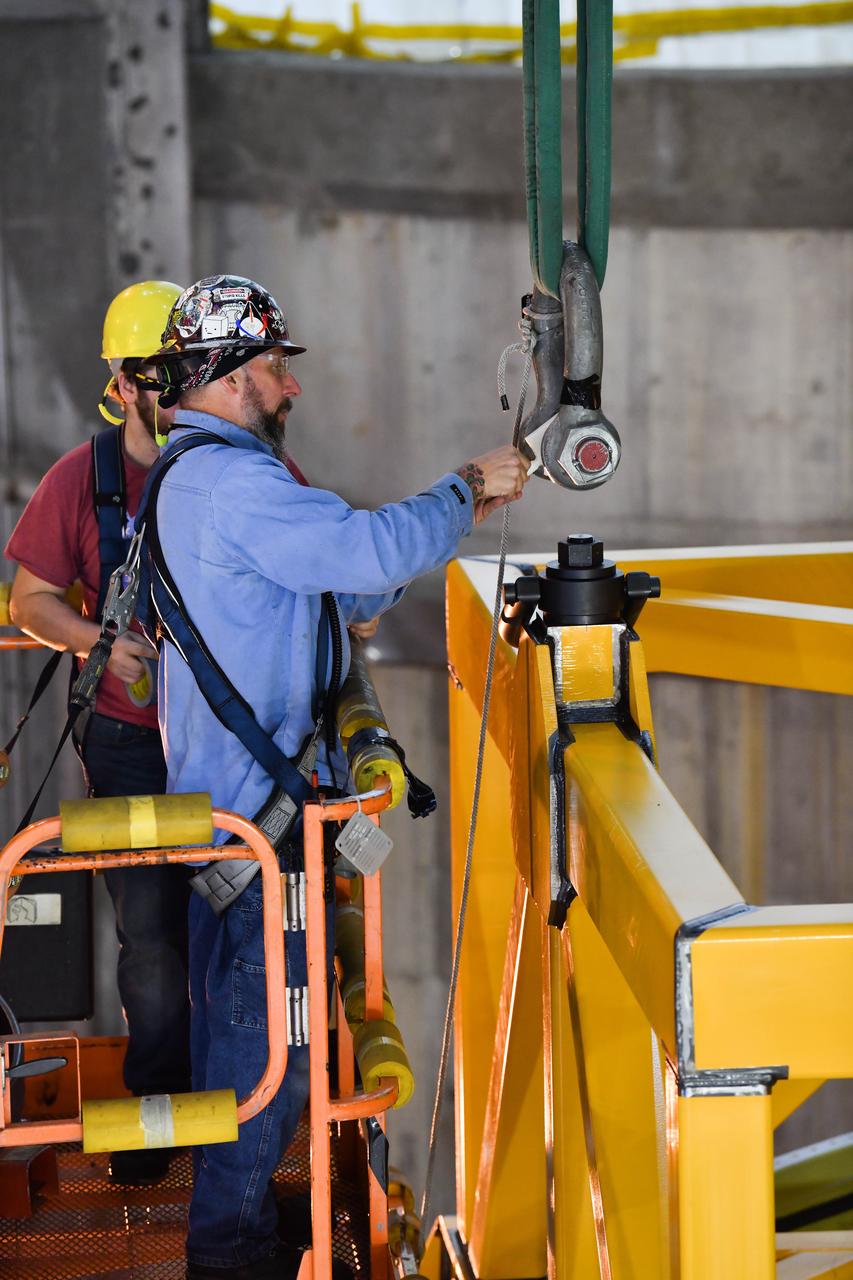
Technicians at NASA’s Michoud Assembly Facility in New Orleans rotated the engine section for NASA’s Space Launch System rocket from a vertical to horizontal position to prepare it for joining to the rest of the rocket’s core stage on Sept. 13. The engine section, which comprises the lowest portion of the 212-foot-tall stage, is the last major component to be horizontally integrated to the core stage. Michoud crews completed assembly on the flight hardware that will be used for Artemis I, the first lunar mission of SLS and NASA’s Orion spacecraft, on Aug. 29. The core stage’s two liquid propellant tanks and four RS-25 engines will produce more than 2 million pounds of thrust to send the SLS rocket and Orion on the Artemis lunar missions. The engine section houses the four RS-25 engines and includes vital systems for mounting, controlling and delivering fuel form the propellant tanks to the rocket’s engines. Offering more payload mass, volume capability and energy to speed missions through space, the SLS rocket, along with NASA’s Gateway in lunar orbit and Orion, is part of NASA’s backbone for deep space exploration and the Artemis lunar program. No other rocket is capable of carrying astronauts in Orion around the Moon in a single mission.
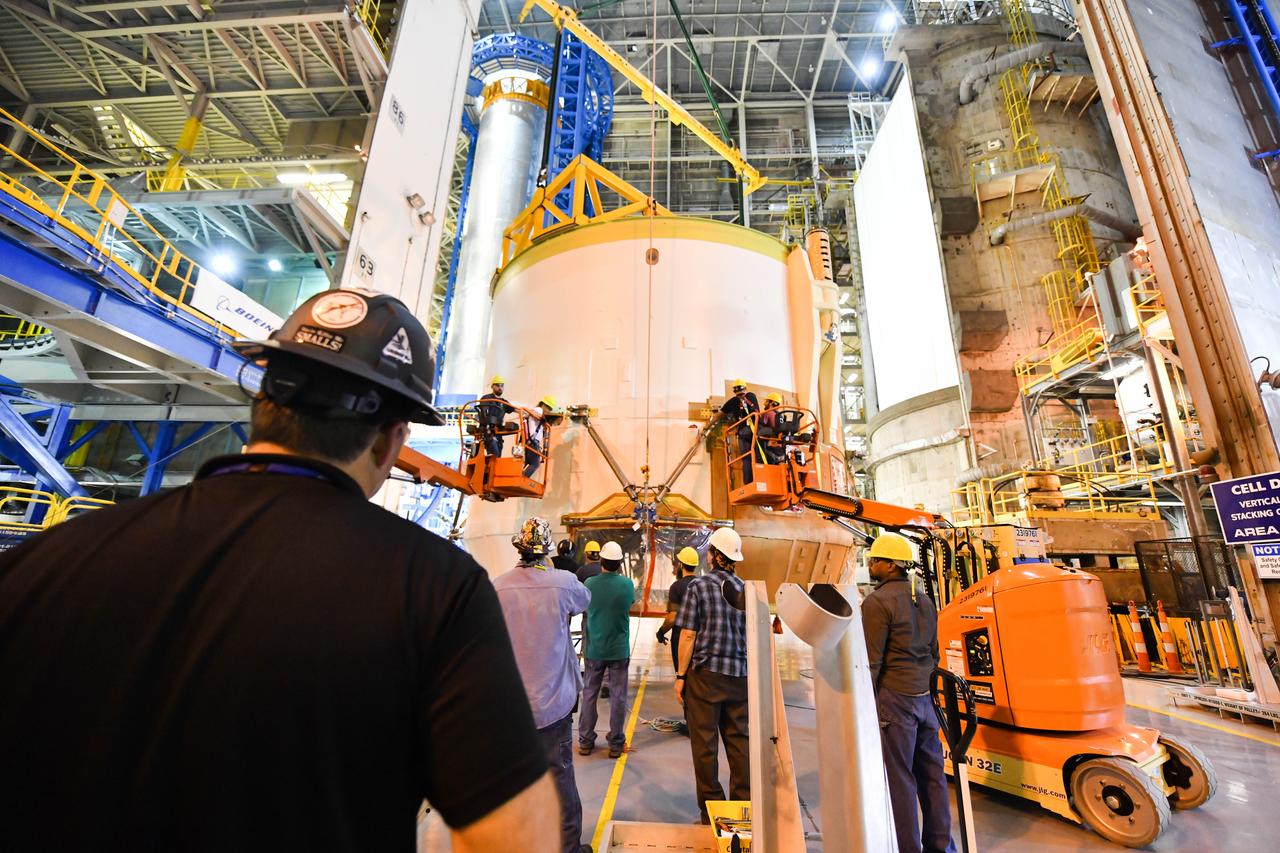
Technicians at NASA’s Michoud Assembly Facility in New Orleans rotated the engine section for NASA’s Space Launch System rocket from a vertical to horizontal position to prepare it for joining to the rest of the rocket’s core stage on Sept. 13. The engine section, which comprises the lowest portion of the 212-foot-tall stage, is the last major component to be horizontally integrated to the core stage. Michoud crews completed assembly on the flight hardware that will be used for Artemis I, the first lunar mission of SLS and NASA’s Orion spacecraft, on Aug. 29. The core stage’s two liquid propellant tanks and four RS-25 engines will produce more than 2 million pounds of thrust to send the SLS rocket and Orion on the Artemis lunar missions. The engine section houses the four RS-25 engines and includes vital systems for mounting, controlling and delivering fuel form the propellant tanks to the rocket’s engines.
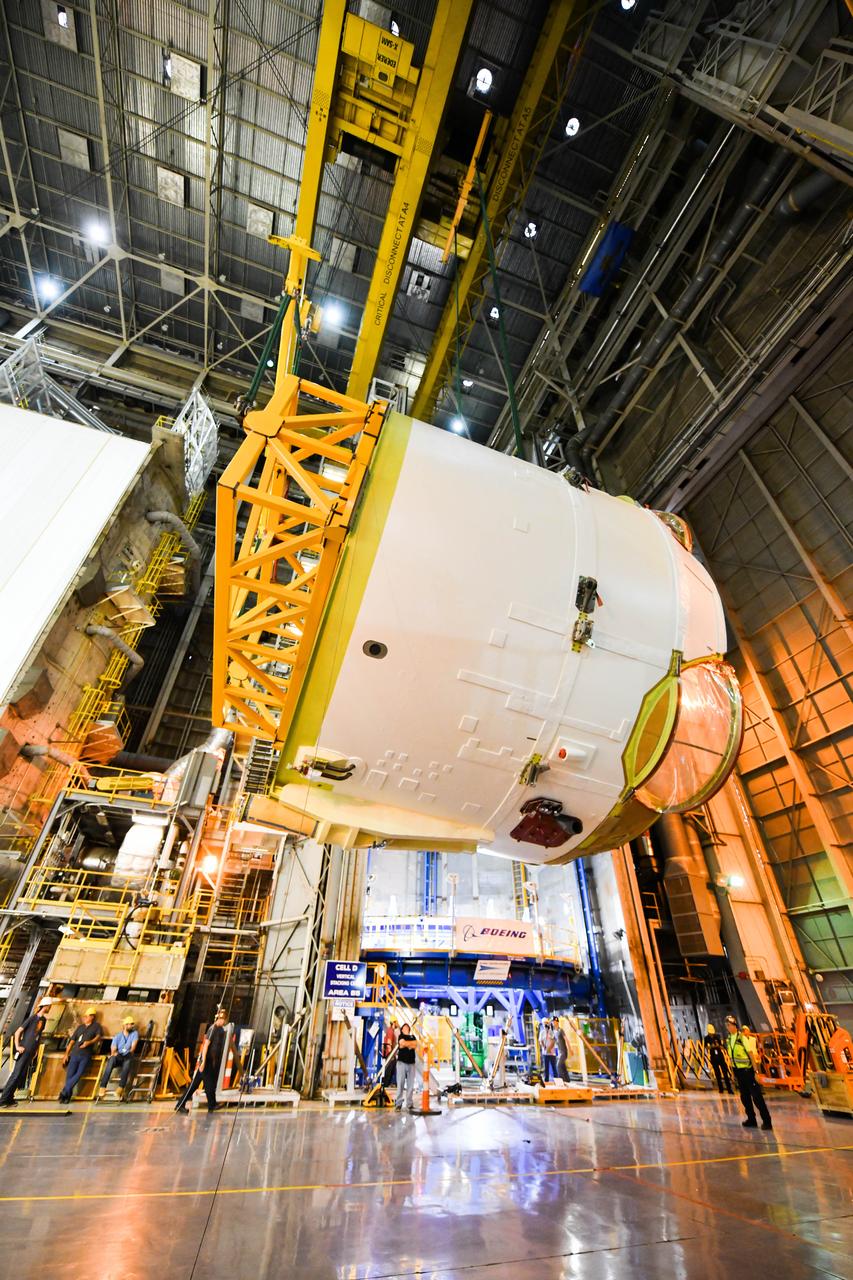
Technicians at NASA’s Michoud Assembly Facility in New Orleans rotated the engine section for NASA’s Space Launch System rocket from a vertical to horizontal position to prepare it for joining to the rest of the rocket’s core stage on Sept. 13. The engine section, which comprises the lowest portion of the 212-foot-tall stage, is the last major component to be horizontally integrated to the core stage. Michoud crews completed assembly on the flight hardware that will be used for Artemis I, the first lunar mission of SLS and NASA’s Orion spacecraft, on Aug. 29. The core stage’s two liquid propellant tanks and four RS-25 engines will produce more than 2 million pounds of thrust to send the SLS rocket and Orion on the Artemis lunar missions. The engine section houses the four RS-25 engines and includes vital systems for mounting, controlling and delivering fuel form the propellant tanks to the rocket’s engines. Offering more payload mass, volume capability and energy to speed missions through space, the SLS rocket, along with NASA’s Gateway in lunar orbit and Orion, is part of NASA’s backbone for deep space exploration and the Artemis lunar program. No other rocket is capable of carrying astronauts in Orion around the Moon in a single mission.
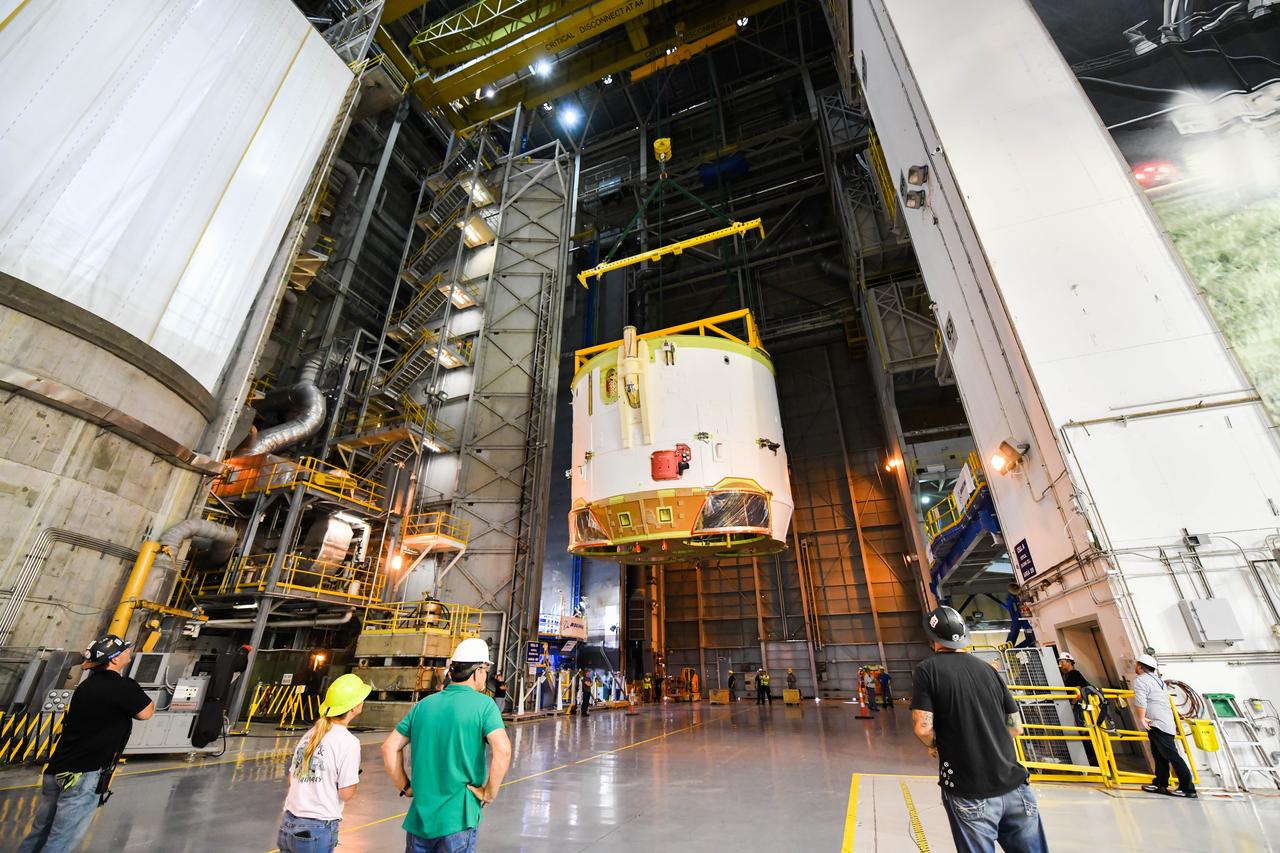
Technicians at NASA’s Michoud Assembly Facility in New Orleans rotated the engine section for NASA’s Space Launch System rocket from a vertical to horizontal position to prepare it for joining to the rest of the rocket’s core stage on Sept. 13. The engine section, which comprises the lowest portion of the 212-foot-tall stage, is the last major component to be horizontally integrated to the core stage. Michoud crews completed assembly on the flight hardware that will be used for Artemis I, the first lunar mission of SLS and NASA’s Orion spacecraft, on Aug. 29. The core stage’s two liquid propellant tanks and four RS-25 engines will produce more than 2 million pounds of thrust to send the SLS rocket and Orion on the Artemis lunar missions. The engine section houses the four RS-25 engines and includes vital systems for mounting, controlling and delivering fuel form the propellant tanks to the rocket’s engines. Offering more payload mass, volume capability and energy to speed missions through space, the SLS rocket, along with NASA’s Gateway in lunar orbit and Orion, is part of NASA’s backbone for deep space exploration and the Artemis lunar program. No other rocket is capable of carrying astronauts in Orion around the Moon in a single mission.
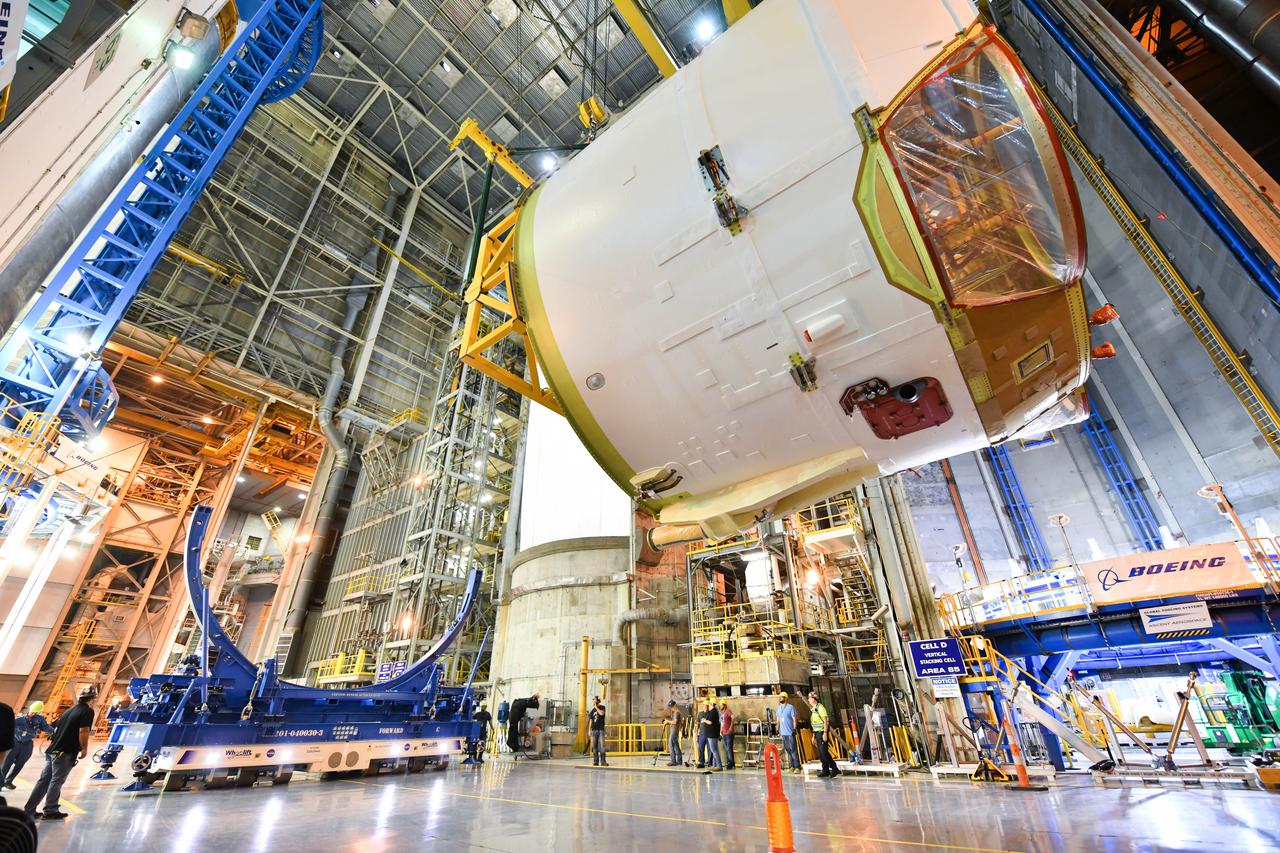
Technicians at NASA’s Michoud Assembly Facility in New Orleans rotated the engine section for NASA’s Space Launch System rocket from a vertical to horizontal position to prepare it for joining to the rest of the rocket’s core stage on Sept. 13. The engine section, which comprises the lowest portion of the 212-foot-tall stage, is the last major component to be horizontally integrated to the core stage. Michoud crews completed assembly on the flight hardware that will be used for Artemis I, the first lunar mission of SLS and NASA’s Orion spacecraft, on Aug. 29. The core stage’s two liquid propellant tanks and four RS-25 engines will produce more than 2 million pounds of thrust to send the SLS rocket and Orion on the Artemis lunar missions. The engine section houses the four RS-25 engines and includes vital systems for mounting, controlling and delivering fuel form the propellant tanks to the rocket’s engines. Offering more payload mass, volume capability and energy to speed missions through space, the SLS rocket, along with NASA’s Gateway in lunar orbit and Orion, is part of NASA’s backbone for deep space exploration and the Artemis lunar program. No other rocket is capable of carrying astronauts in Orion around the Moon in a single mission.
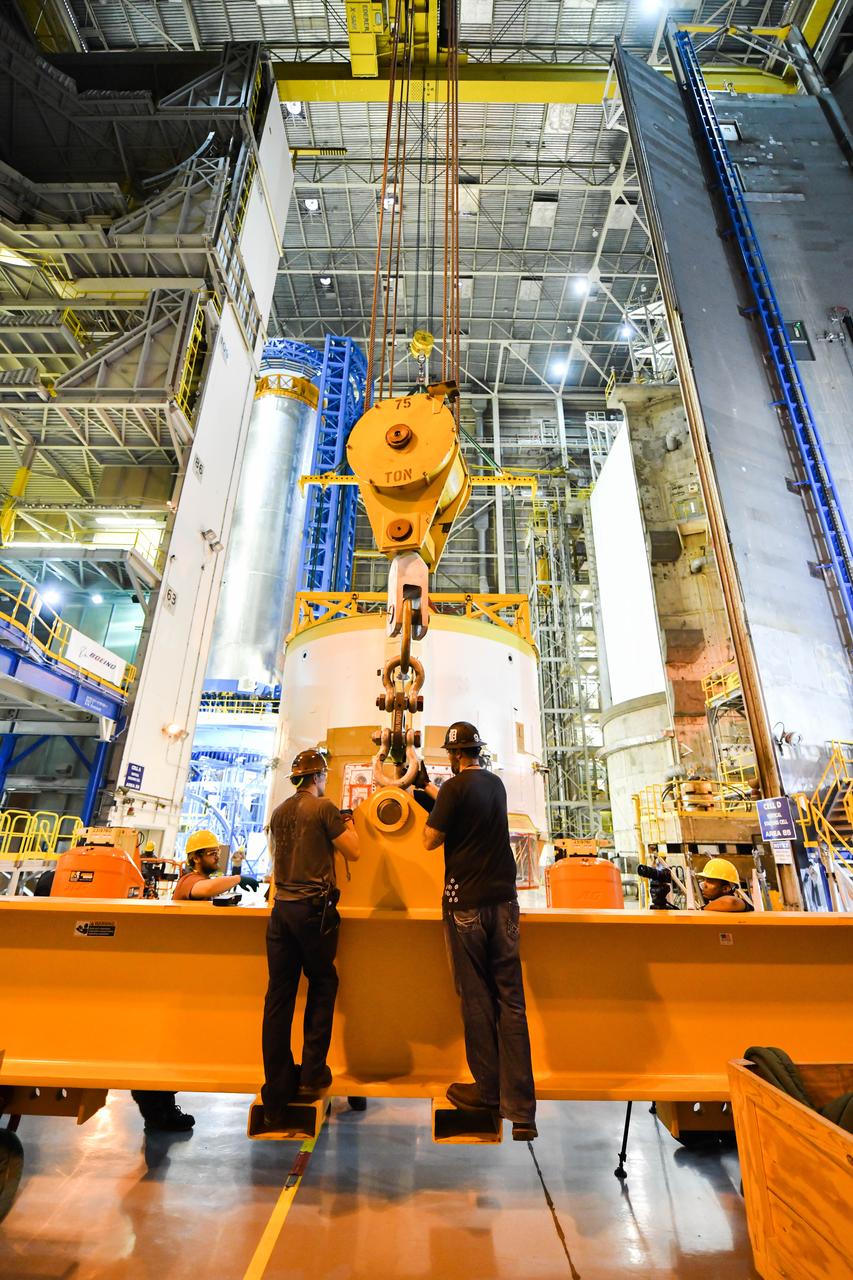
Technicians at NASA’s Michoud Assembly Facility in New Orleans rotated the engine section for NASA’s Space Launch System rocket from a vertical to horizontal position to prepare it for joining to the rest of the rocket’s core stage on Sept. 13. The engine section, which comprises the lowest portion of the 212-foot-tall stage, is the last major component to be horizontally integrated to the core stage. Michoud crews completed assembly on the flight hardware that will be used for Artemis I, the first lunar mission of SLS and NASA’s Orion spacecraft, on Aug. 29. The core stage’s two liquid propellant tanks and four RS-25 engines will produce more than 2 million pounds of thrust to send the SLS rocket and Orion on the Artemis lunar missions. The engine section houses the four RS-25 engines and includes vital systems for mounting, controlling and delivering fuel form the propellant tanks to the rocket’s engines. Offering more payload mass, volume capability and energy to speed missions through space, the SLS rocket, along with NASA’s Gateway in lunar orbit and Orion, is part of NASA’s backbone for deep space exploration and the Artemis lunar program. No other rocket is capable of carrying astronauts in Orion around the Moon in a single mission.
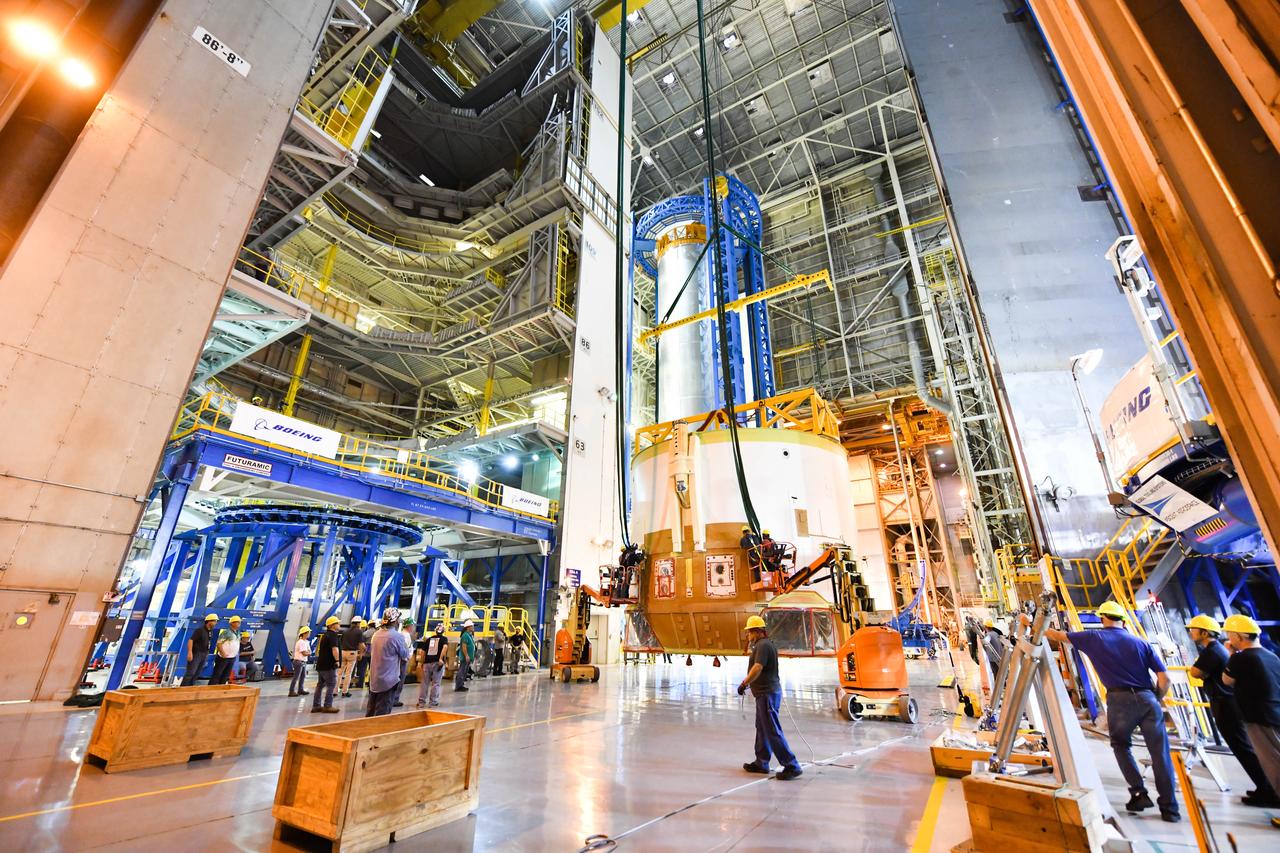
Technicians at NASA’s Michoud Assembly Facility in New Orleans rotated the engine section for NASA’s Space Launch System rocket from a vertical to horizontal position to prepare it for joining to the rest of the rocket’s core stage on Sept. 13. The engine section, which comprises the lowest portion of the 212-foot-tall stage, is the last major component to be horizontally integrated to the core stage. Michoud crews completed assembly on the flight hardware that will be used for Artemis I, the first lunar mission of SLS and NASA’s Orion spacecraft, on Aug. 29. The core stage’s two liquid propellant tanks and four RS-25 engines will produce more than 2 million pounds of thrust to send the SLS rocket and Orion on the Artemis lunar missions. The engine section houses the four RS-25 engines and includes vital systems for mounting, controlling and delivering fuel form the propellant tanks to the rocket’s engines. Offering more payload mass, volume capability and energy to speed missions through space, the SLS rocket, along with NASA’s Gateway in lunar orbit and Orion, is part of NASA’s backbone for deep space exploration and the Artemis lunar program. No other rocket is capable of carrying astronauts in Orion around the Moon in a single mission.
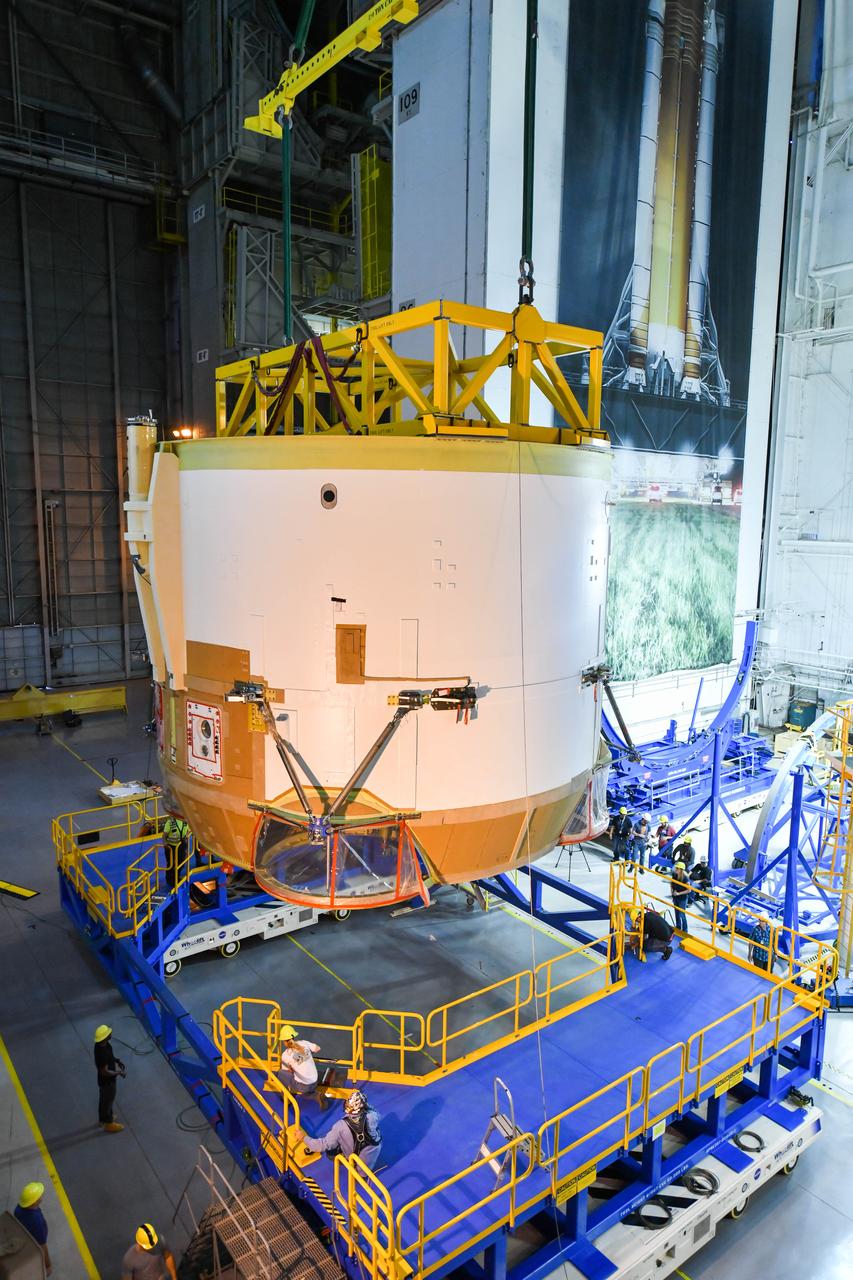
Technicians at NASA’s Michoud Assembly Facility in New Orleans rotated the engine section for NASA’s Space Launch System rocket from a vertical to horizontal position to prepare it for joining to the rest of the rocket’s core stage on Sept. 13. The engine section, which comprises the lowest portion of the 212-foot-tall stage, is the last major component to be horizontally integrated to the core stage. Michoud crews completed assembly on the flight hardware that will be used for Artemis I, the first lunar mission of SLS and NASA’s Orion spacecraft, on Aug. 29. The core stage’s two liquid propellant tanks and four RS-25 engines will produce more than 2 million pounds of thrust to send the SLS rocket and Orion on the Artemis lunar missions. The engine section houses the four RS-25 engines and includes vital systems for mounting, controlling and delivering fuel form the propellant tanks to the rocket’s engines. Offering more payload mass, volume capability and energy to speed missions through space, the SLS rocket, along with NASA’s Gateway in lunar orbit and Orion, is part of NASA’s backbone for deep space exploration and the Artemis lunar program. No other rocket is capable of carrying astronauts in Orion around the Moon in a single mission.
Technicians at NASA’s Michoud Assembly Facility in New Orleans rotated the engine section for NASA’s Space Launch System rocket from a vertical to horizontal position to prepare it for joining to the rest of the rocket’s core stage on Sept. 13. The engine section, which comprises the lowest portion of the 212-foot-tall stage, is the last major component to be horizontally integrated to the core stage. Michoud crews completed assembly on the flight hardware that will be used for Artemis I, the first lunar mission of SLS and NASA’s Orion spacecraft, on Aug. 29. The core stage’s two liquid propellant tanks and four RS-25 engines will produce more than 2 million pounds of thrust to send the SLS rocket and Orion on the Artemis lunar missions. The engine section houses the four RS-25 engines and includes vital systems for mounting, controlling and delivering fuel form the propellant tanks to the rocket’s engines. Offering more payload mass, volume capability and energy to speed missions through space, the SLS rocket, along with NASA’s Gateway in lunar orbit and Orion, is part of NASA’s backbone for deep space exploration and the Artemis lunar program. No other rocket is capable of carrying astronauts in Orion around the Moon in a single mission.
Technicians at NASA’s Michoud Assembly Facility in New Orleans rotated the engine section for NASA’s Space Launch System rocket from a vertical to horizontal position to prepare it for joining to the rest of the rocket’s core stage on Sept. 13. The engine section, which comprises the lowest portion of the 212-foot-tall stage, is the last major component to be horizontally integrated to the core stage. Michoud crews completed assembly on the flight hardware that will be used for Artemis I, the first lunar mission of SLS and NASA’s Orion spacecraft, on Aug. 29. The core stage’s two liquid propellant tanks and four RS-25 engines will produce more than 2 million pounds of thrust to send the SLS rocket and Orion on the Artemis lunar missions. The engine section houses the four RS-25 engines and includes vital systems for mounting, controlling and delivering fuel form the propellant tanks to the rocket’s engines. Offering more payload mass, volume capability and energy to speed missions through space, the SLS rocket, along with NASA’s Gateway in lunar orbit and Orion, is part of NASA’s backbone for deep space exploration and the Artemis lunar program. No other rocket is capable of carrying astronauts in Orion around the Moon in a single mission.
Technicians at NASA’s Michoud Assembly Facility in New Orleans rotated the engine section for NASA’s Space Launch System rocket from a vertical to horizontal position to prepare it for joining to the rest of the rocket’s core stage on Sept. 13. The engine section, which comprises the lowest portion of the 212-foot-tall stage, is the last major component to be horizontally integrated to the core stage. Michoud crews completed assembly on the flight hardware that will be used for Artemis I, the first lunar mission of SLS and NASA’s Orion spacecraft, on Aug. 29. The core stage’s two liquid propellant tanks and four RS-25 engines will produce more than 2 million pounds of thrust to send the SLS rocket and Orion on the Artemis lunar missions. The engine section houses the four RS-25 engines and includes vital systems for mounting, controlling and delivering fuel form the propellant tanks to the rocket’s engines.
Technicians at NASA’s Michoud Assembly Facility in New Orleans rotated the engine section for NASA’s Space Launch System rocket from a vertical to horizontal position to prepare it for joining to the rest of the rocket’s core stage on Sept. 13. The engine section, which comprises the lowest portion of the 212-foot-tall stage, is the last major component to be horizontally integrated to the core stage. Michoud crews completed assembly on the flight hardware that will be used for Artemis I, the first lunar mission of SLS and NASA’s Orion spacecraft, on Aug. 29. The core stage’s two liquid propellant tanks and four RS-25 engines will produce more than 2 million pounds of thrust to send the SLS rocket and Orion on the Artemis lunar missions. The engine section houses the four RS-25 engines and includes vital systems for mounting, controlling and delivering fuel form the propellant tanks to the rocket’s engines. Offering more payload mass, volume capability and energy to speed missions through space, the SLS rocket, along with NASA’s Gateway in lunar orbit and Orion, is part of NASA’s backbone for deep space exploration and the Artemis lunar program. No other rocket is capable of carrying astronauts in Orion around the Moon in a single mission.
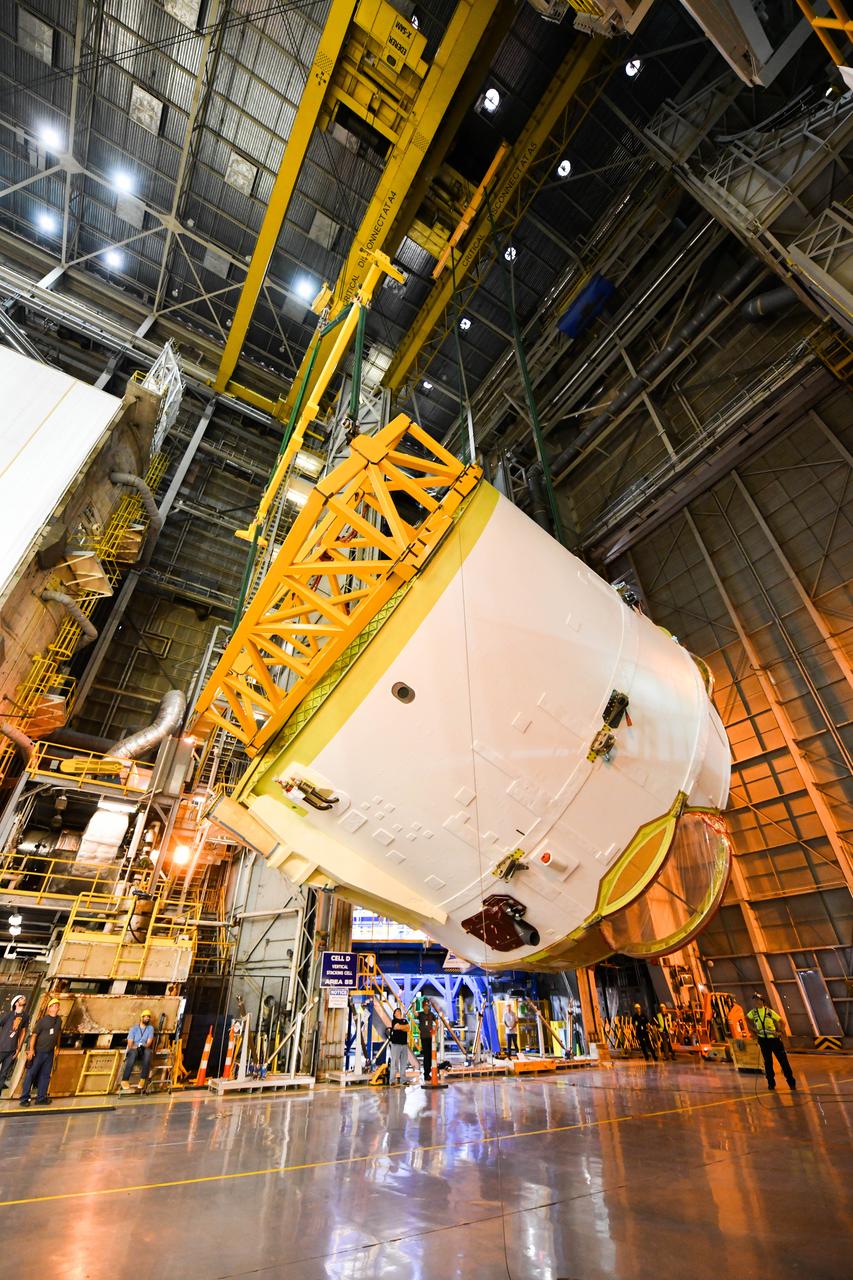
Technicians at NASA’s Michoud Assembly Facility in New Orleans rotated the engine section for NASA’s Space Launch System rocket from a vertical to horizontal position to prepare it for joining to the rest of the rocket’s core stage on Sept. 13. The engine section, which comprises the lowest portion of the 212-foot-tall stage, is the last major component to be horizontally integrated to the core stage. Michoud crews completed assembly on the flight hardware that will be used for Artemis I, the first lunar mission of SLS and NASA’s Orion spacecraft, on Aug. 29. The core stage’s two liquid propellant tanks and four RS-25 engines will produce more than 2 million pounds of thrust to send the SLS rocket and Orion on the Artemis lunar missions. The engine section houses the four RS-25 engines and includes vital systems for mounting, controlling and delivering fuel form the propellant tanks to the rocket’s engines. Offering more payload mass, volume capability and energy to speed missions through space, the SLS rocket, along with NASA’s Gateway in lunar orbit and Orion, is part of NASA’s backbone for deep space exploration and the Artemis lunar program. No other rocket is capable of carrying astronauts in Orion around the Moon in a single mission.
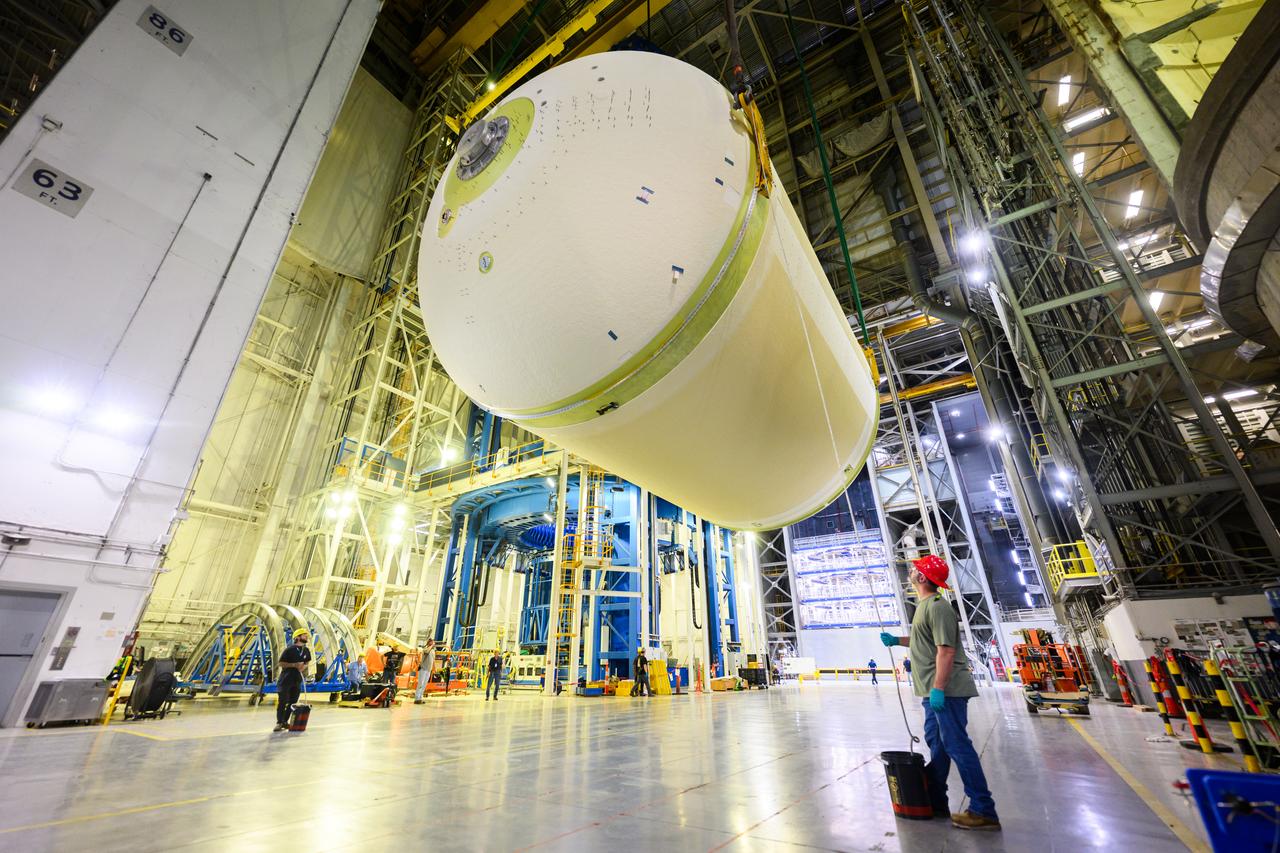
Teams at NASA’s Michoud Assembly Facility in New Orleans lift a liquid oxygen tank from a horizontal to a vertical position and place it into a production cell on July 12. The process, called a breakover, will allow technicians to rappel into the empty tank and install its aft sump subassembly, securing it from the inside. This tank will be used on the core stage of NASA’s SLS (Space Launch System) rocket for its Artemis III mission. The propellant tank is one of five major elements that make up the 212-foot-tall rocket stage. The core stage, along with its four RS-25 engines, produce more than two million pounds of thrust to help launch NASA’s Orion spacecraft, astronauts, and supplies beyond Earth’s orbit and to the lunar surface for Artemis.
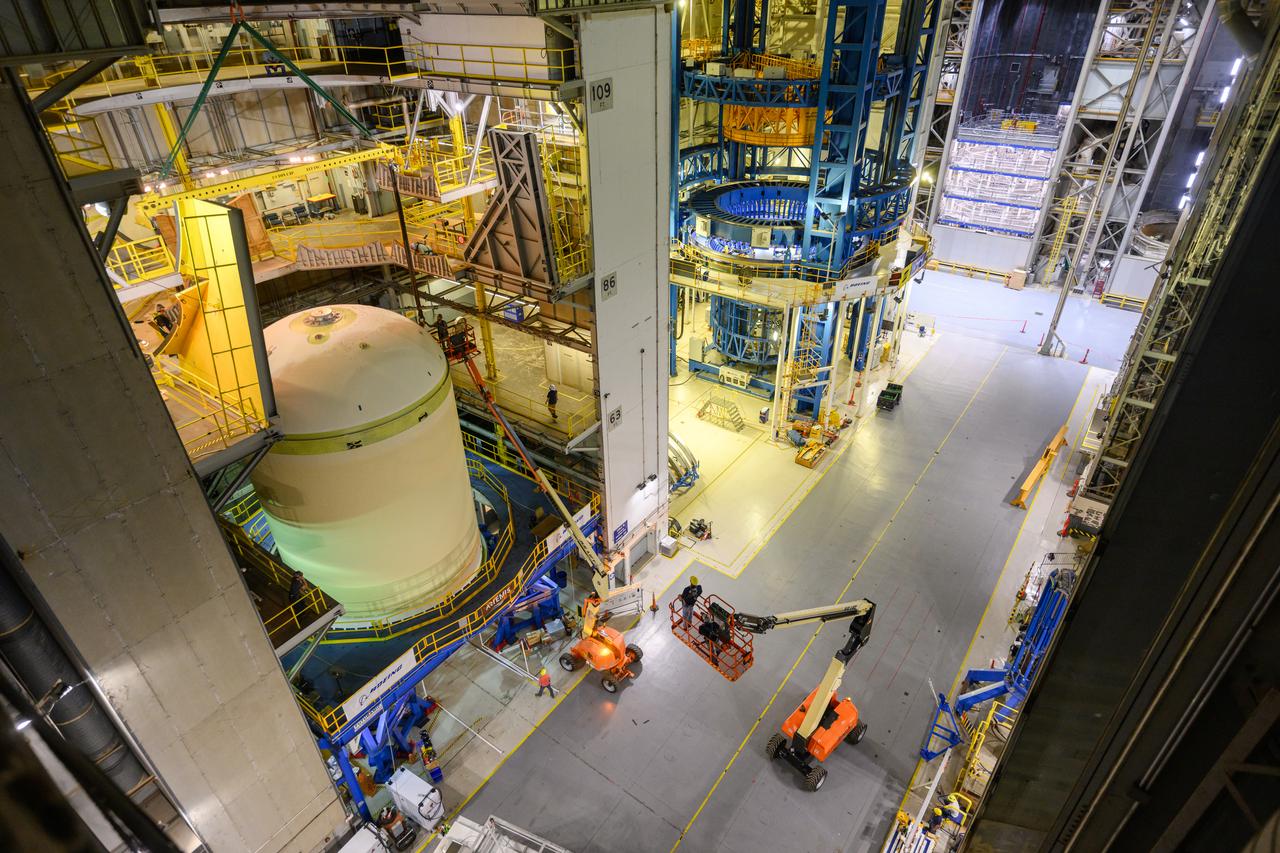
Teams at NASA’s Michoud Assembly Facility in New Orleans lift a liquid oxygen tank from a horizontal to a vertical position and place it into a production cell on July 12. The process, called a breakover, will allow technicians to rappel into the empty tank and install its aft sump subassembly, securing it from the inside. This tank will be used on the core stage of NASA’s SLS (Space Launch System) rocket for its Artemis III mission. The propellant tank is one of five major elements that make up the 212-foot-tall rocket stage. The core stage, along with its four RS-25 engines, produce more than two million pounds of thrust to help launch NASA’s Orion spacecraft, astronauts, and supplies beyond Earth’s orbit and to the lunar surface for Artemis.
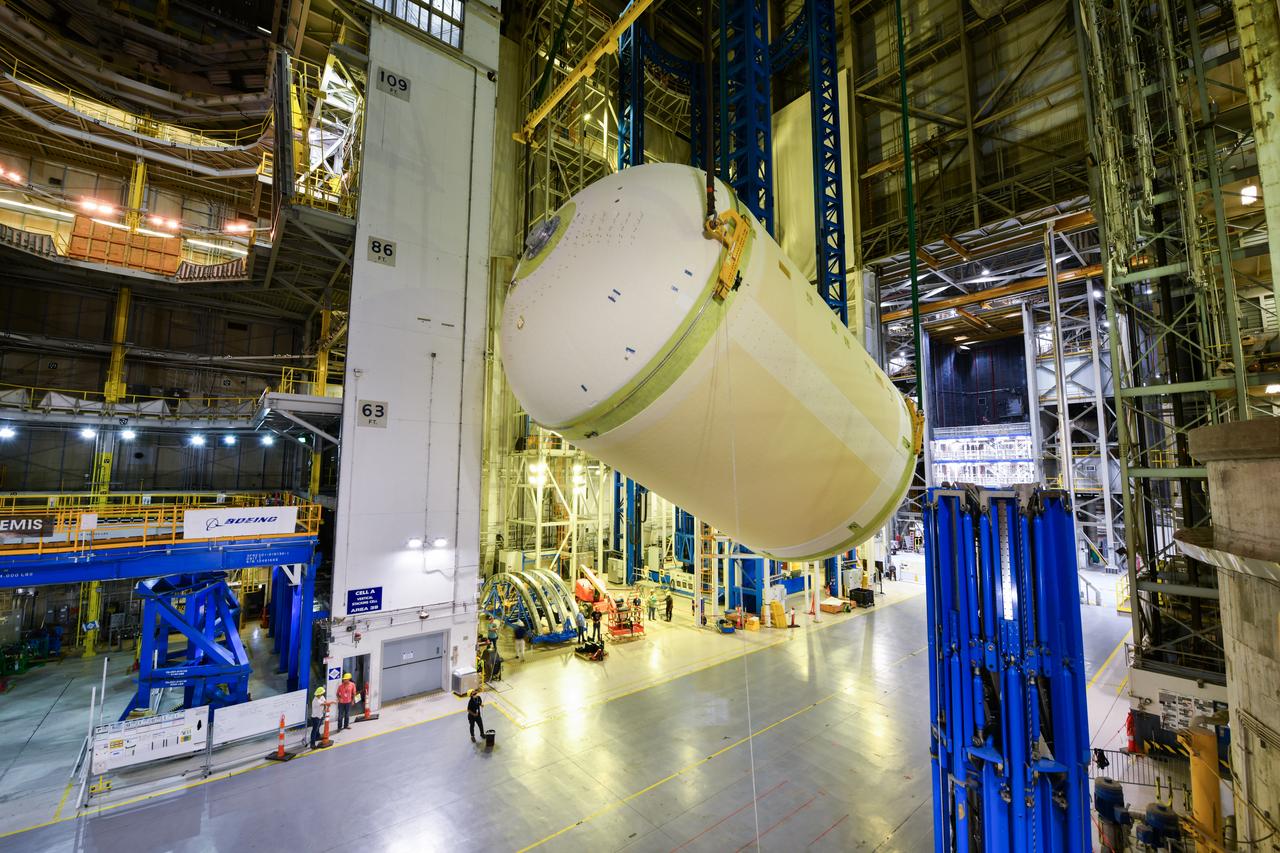
Teams at NASA’s Michoud Assembly Facility in New Orleans lift a liquid oxygen tank from a horizontal to a vertical position and place it into a production cell on July 12. The process, called a breakover, will allow technicians to rappel into the empty tank and install its aft sump subassembly, securing it from the inside. This tank will be used on the core stage of NASA’s SLS (Space Launch System) rocket for its Artemis III mission. The propellant tank is one of five major elements that make up the 212-foot-tall rocket stage. The core stage, along with its four RS-25 engines, produce more than two million pounds of thrust to help launch NASA’s Orion spacecraft, astronauts, and supplies beyond Earth’s orbit and to the lunar surface for Artemis.
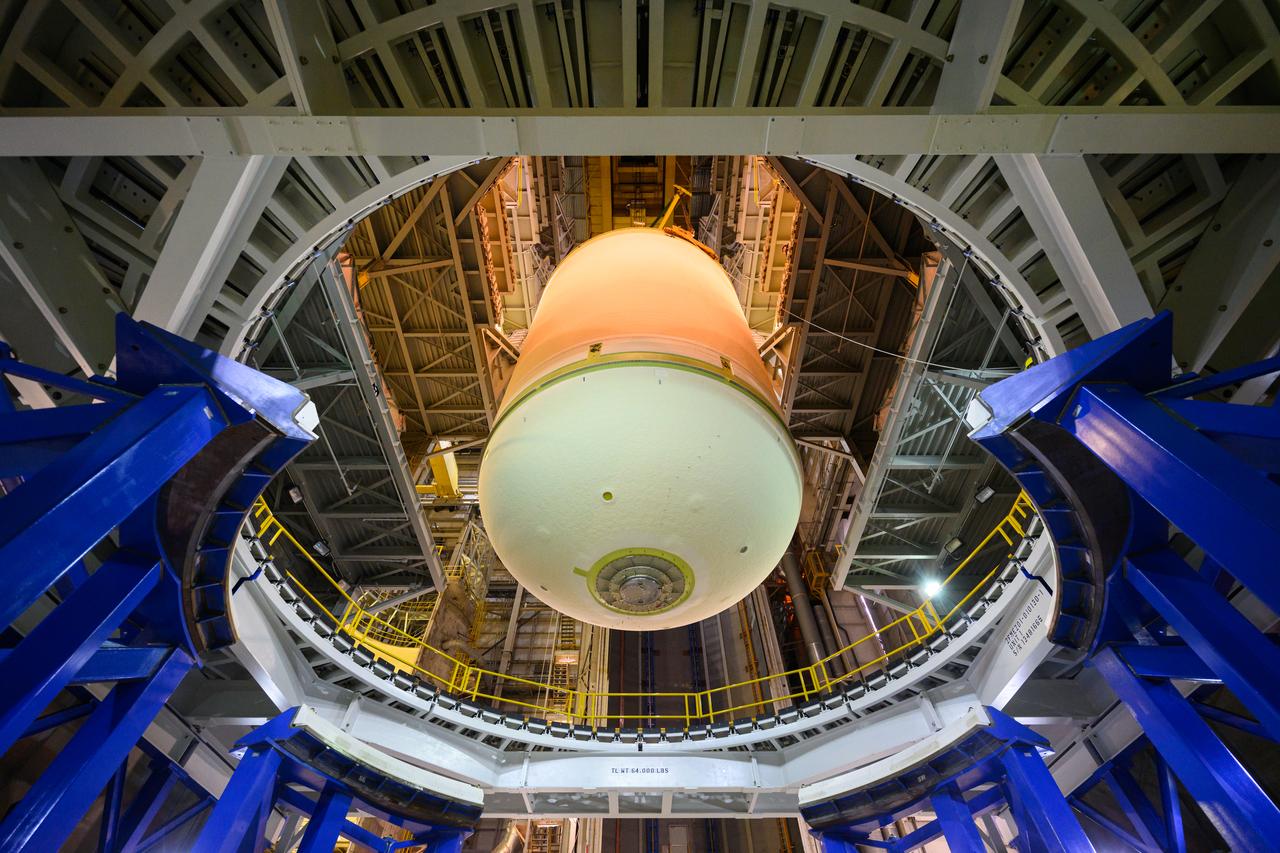
Teams at NASA’s Michoud Assembly Facility in New Orleans lift a liquid oxygen tank from a horizontal to a vertical position and place it into a production cell on July 12. The process, called a breakover, will allow technicians to rappel into the empty tank and install its aft sump subassembly, securing it from the inside. This tank will be used on the core stage of NASA’s SLS (Space Launch System) rocket for its Artemis III mission. The propellant tank is one of five major elements that make up the 212-foot-tall rocket stage. The core stage, along with its four RS-25 engines, produce more than two million pounds of thrust to help launch NASA’s Orion spacecraft, astronauts, and supplies beyond Earth’s orbit and to the lunar surface for Artemis.
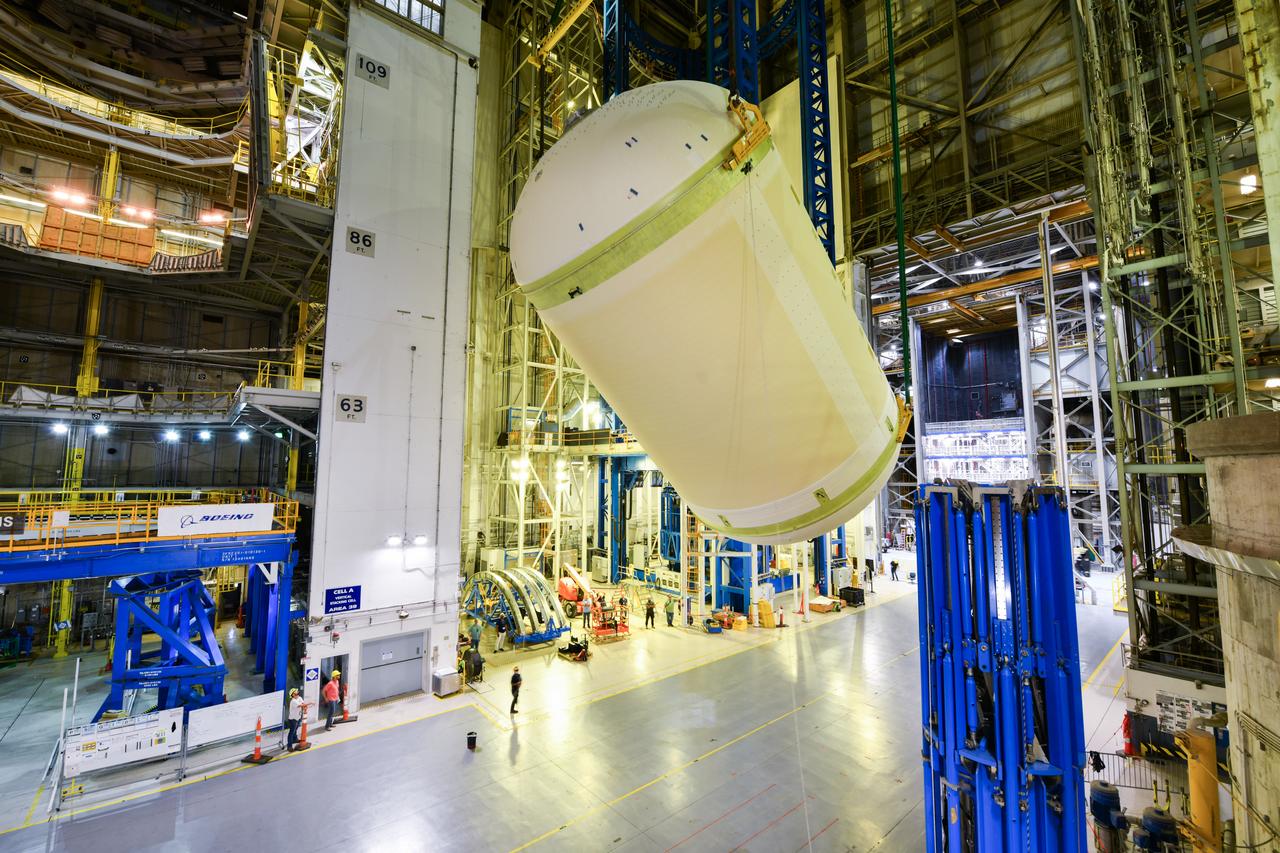
Teams at NASA’s Michoud Assembly Facility in New Orleans lift a liquid oxygen tank from a horizontal to a vertical position and place it into a production cell on July 12. The process, called a breakover, will allow technicians to rappel into the empty tank and install its aft sump subassembly, securing it from the inside. This tank will be used on the core stage of NASA’s SLS (Space Launch System) rocket for its Artemis III mission. The propellant tank is one of five major elements that make up the 212-foot-tall rocket stage. The core stage, along with its four RS-25 engines, produce more than two million pounds of thrust to help launch NASA’s Orion spacecraft, astronauts, and supplies beyond Earth’s orbit and to the lunar surface for Artemis.
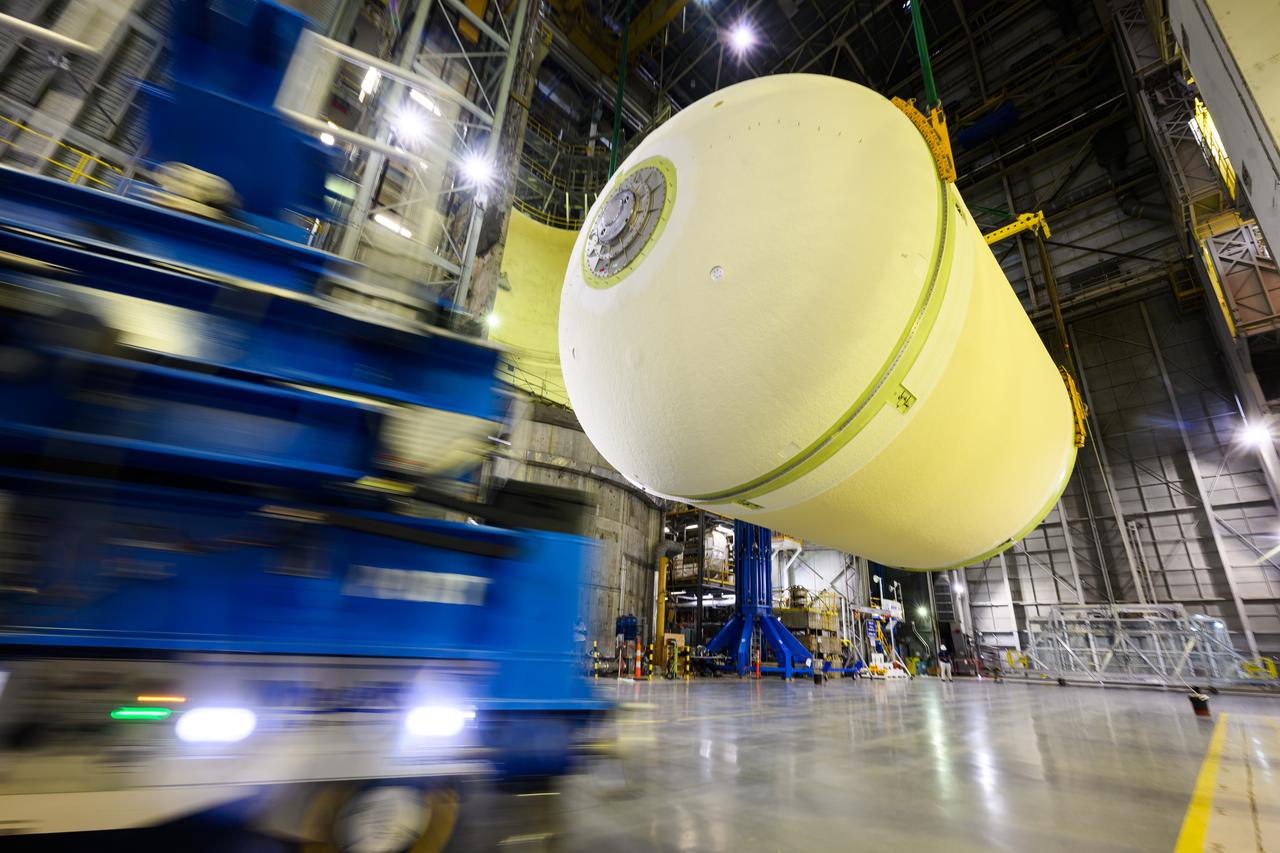
Teams at NASA’s Michoud Assembly Facility in New Orleans lift a liquid oxygen tank from a horizontal to a vertical position and place it into a production cell on July 12. The process, called a breakover, will allow technicians to rappel into the empty tank and install its aft sump subassembly, securing it from the inside. This tank will be used on the core stage of NASA’s SLS (Space Launch System) rocket for its Artemis III mission. The propellant tank is one of five major elements that make up the 212-foot-tall rocket stage. The core stage, along with its four RS-25 engines, produce more than two million pounds of thrust to help launch NASA’s Orion spacecraft, astronauts, and supplies beyond Earth’s orbit and to the lunar surface for Artemis.
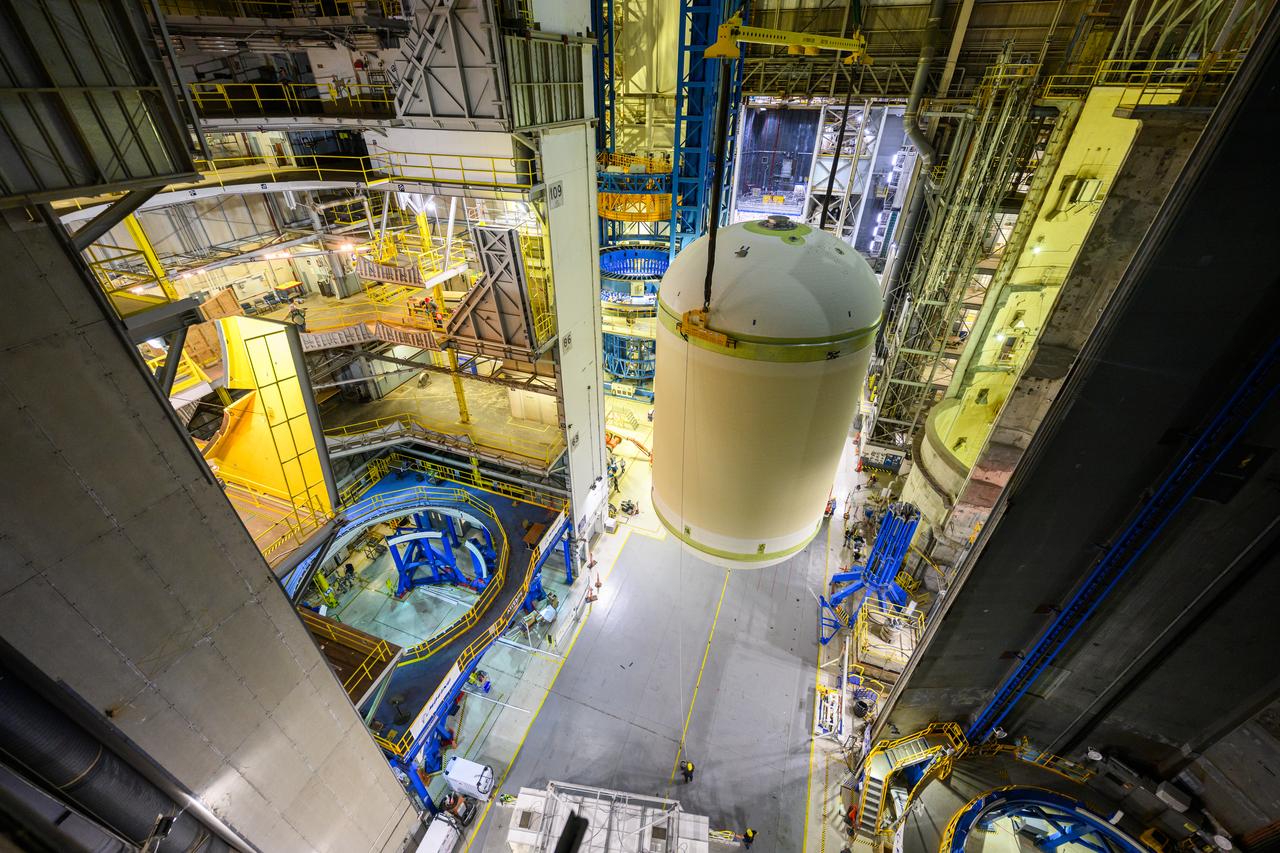
Teams at NASA’s Michoud Assembly Facility in New Orleans lift a liquid oxygen tank from a horizontal to a vertical position and place it into a production cell on July 12. The process, called a breakover, will allow technicians to rappel into the empty tank and install its aft sump subassembly, securing it from the inside. This tank will be used on the core stage of NASA’s SLS (Space Launch System) rocket for its Artemis III mission. The propellant tank is one of five major elements that make up the 212-foot-tall rocket stage. The core stage, along with its four RS-25 engines, produce more than two million pounds of thrust to help launch NASA’s Orion spacecraft, astronauts, and supplies beyond Earth’s orbit and to the lunar surface for Artemis.
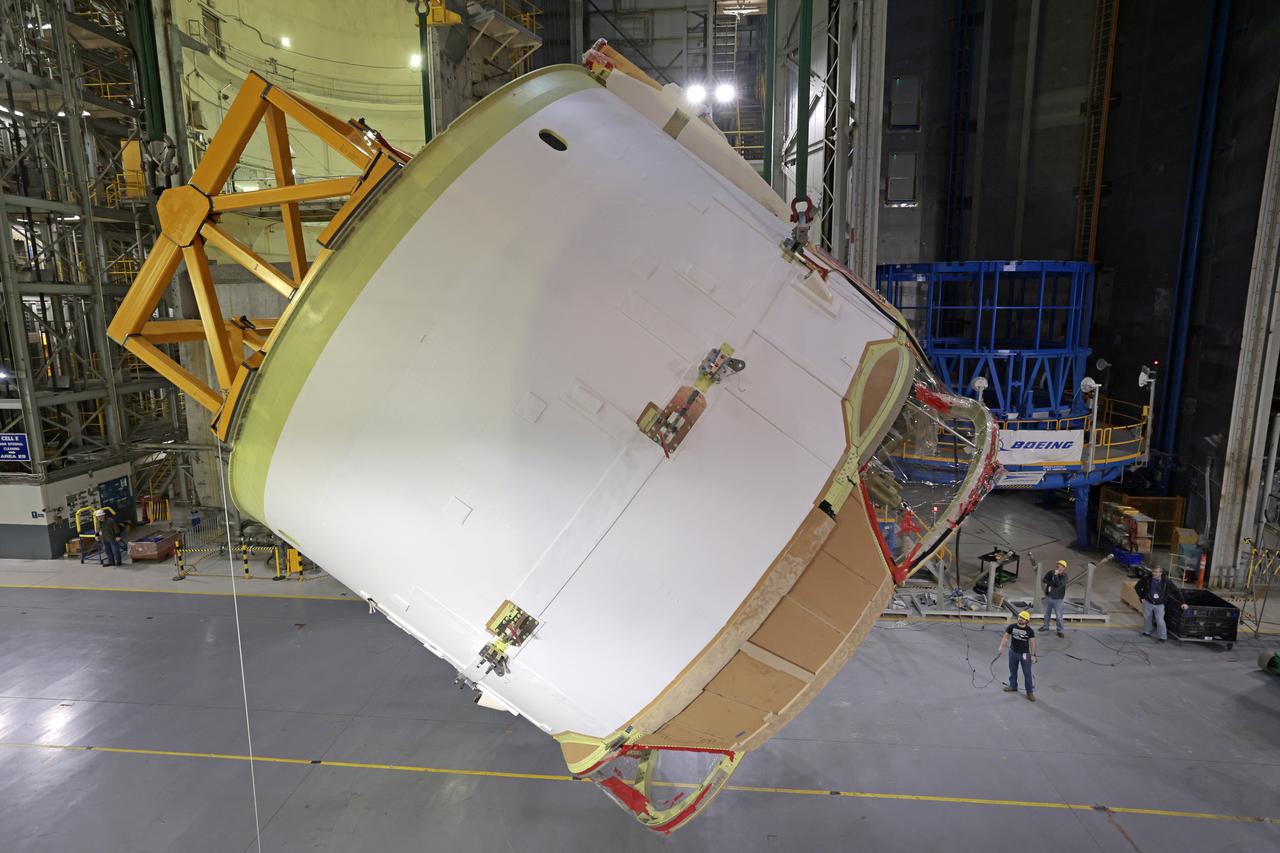
Technicians at NASA’s Michoud Assembly Facility in New Orleans flipped the engine section of NASA’s Space Launch System rocket for Artemis II from a vertical to a horizontal position Feb. 11. The flip, also known as a breakover, is in preparation for the final assembly and integration into the core stage for the second SLS rocket. The engine section is the bottom-most portion of the 212-foot-tall core stage and is one of the most complex and intricate portions of the rocket that will help power the first crewed Artemis mission to the Moon. It is the last of five elements that is needed to join the stage as one structure. In addition to its miles of cabling and hundreds of sensors, the engine section is a crucial attachment point for the four RS-25 engines and two solid rocket boosters that produce a combined 8.8 million pounds of thrust at liftoff and flight. Next, teams will move the engine section into the final assembly area where they will complete the join. After the join is complete, teams will begin to add each of the four RS-25 engines. The completely assembled stage with its four RS-25 engines will be shipped to NASA’s Kennedy Space Center in Florida later this year. The SLS rocket is the only rocket capable of carrying astronauts in Orion around the Moon in a single mission. Image credit: NASA/Michael DeMocker
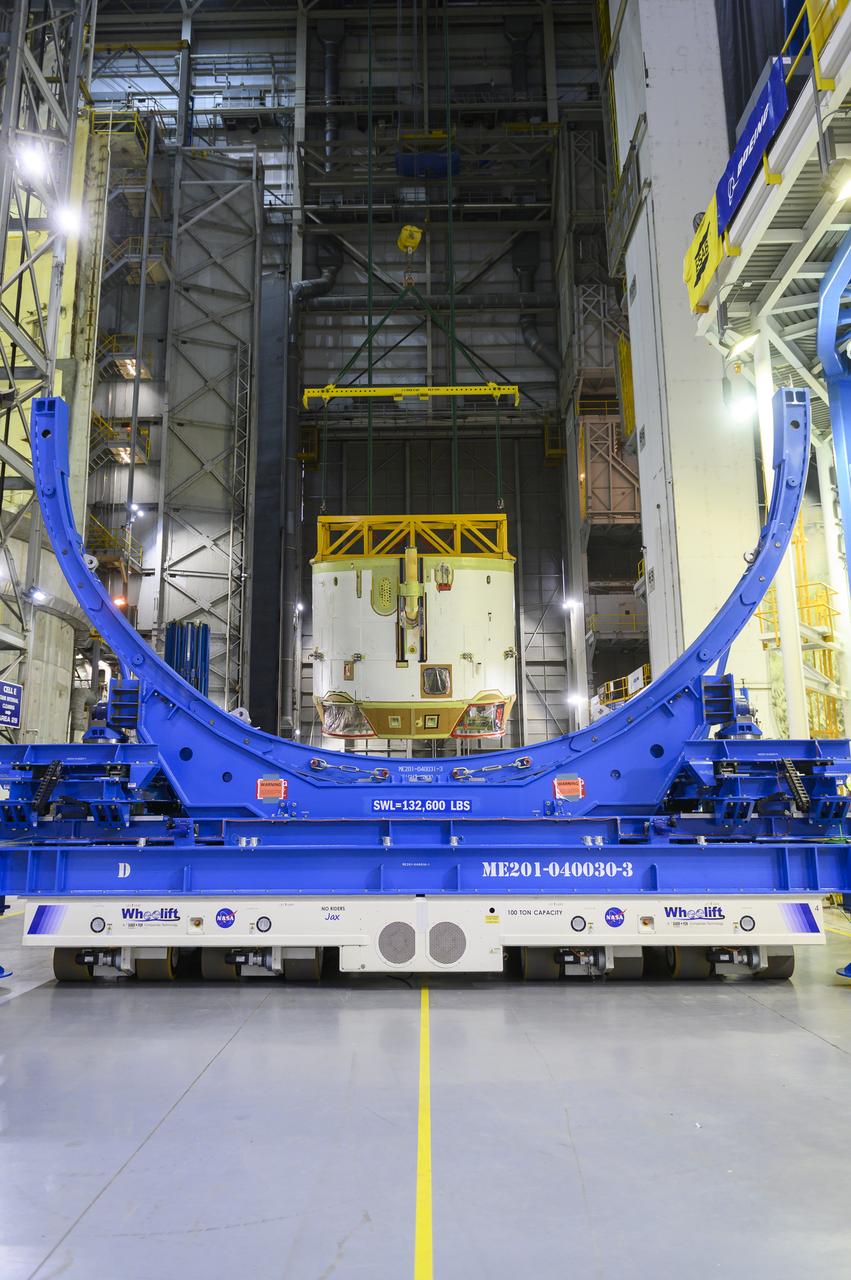
Technicians at NASA’s Michoud Assembly Facility in New Orleans flipped the engine section of NASA’s Space Launch System rocket for Artemis II from a vertical to a horizontal position Feb. 11. The flip, also known as a breakover, is in preparation for the final assembly and integration into the core stage for the second SLS rocket. The engine section is the bottom-most portion of the 212-foot-tall core stage and is one of the most complex and intricate portions of the rocket that will help power the first crewed Artemis mission to the Moon. It is the last of five elements that is needed to join the stage as one structure. In addition to its miles of cabling and hundreds of sensors, the engine section is a crucial attachment point for the four RS-25 engines and two solid rocket boosters that produce a combined 8.8 million pounds of thrust at liftoff and flight. Next, teams will move the engine section into the final assembly area where they will complete the join. After the join is complete, teams will begin to add each of the four RS-25 engines. The completely assembled stage with its four RS-25 engines will be shipped to NASA’s Kennedy Space Center in Florida later this year. The SLS rocket is the only rocket capable of carrying astronauts in Orion around the Moon in a single mission. Image credit: NASA/Eric Bordelon
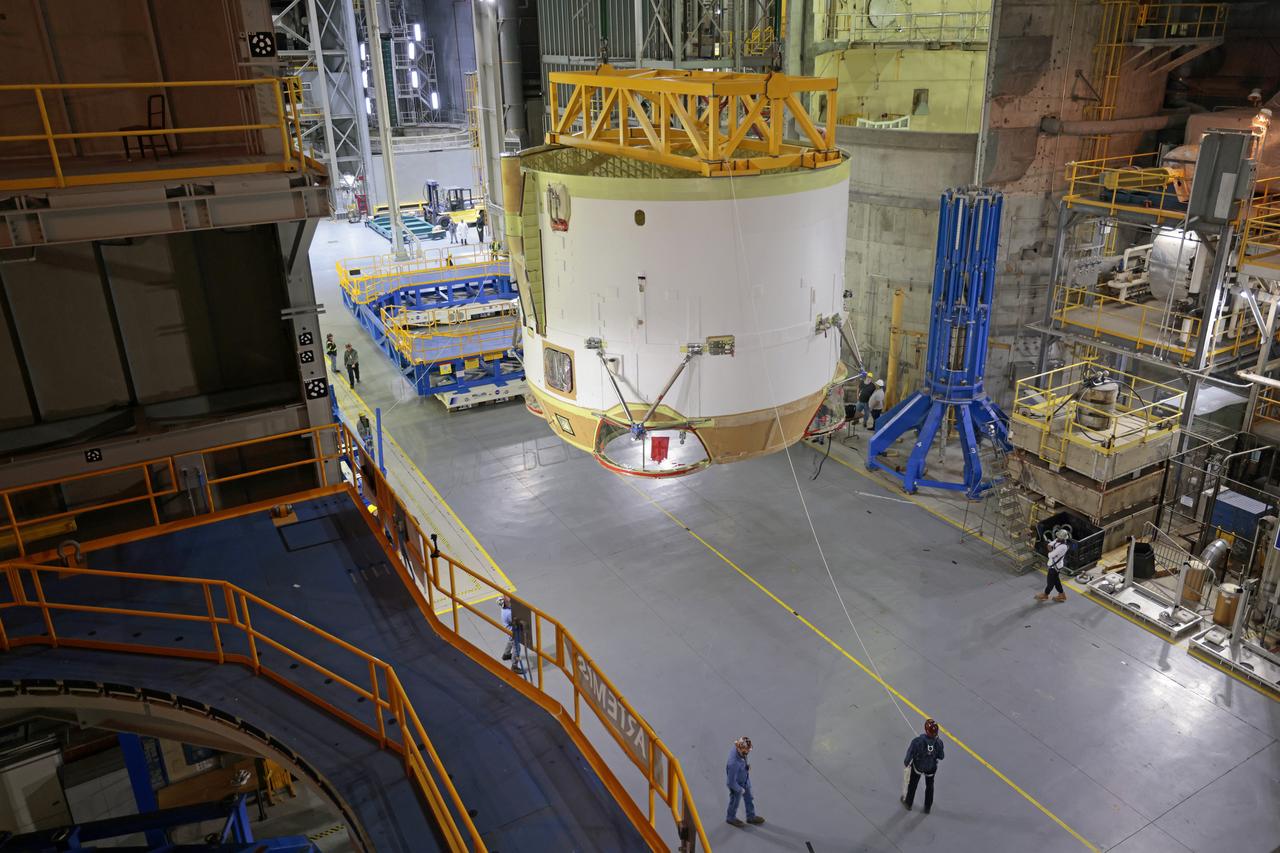
Technicians at NASA’s Michoud Assembly Facility in New Orleans flipped the engine section of NASA’s Space Launch System rocket for Artemis II from a vertical to a horizontal position Feb. 11. The flip, also known as a breakover, is in preparation for the final assembly and integration into the core stage for the second SLS rocket. The engine section is the bottom-most portion of the 212-foot-tall core stage and is one of the most complex and intricate portions of the rocket that will help power the first crewed Artemis mission to the Moon. It is the last of five elements that is needed to join the stage as one structure. In addition to its miles of cabling and hundreds of sensors, the engine section is a crucial attachment point for the four RS-25 engines and two solid rocket boosters that produce a combined 8.8 million pounds of thrust at liftoff and flight. Next, teams will move the engine section into the final assembly area where they will complete the join. After the join is complete, teams will begin to add each of the four RS-25 engines. The completely assembled stage with its four RS-25 engines will be shipped to NASA’s Kennedy Space Center in Florida later this year. The SLS rocket is the only rocket capable of carrying astronauts in Orion around the Moon in a single mission. Image credit: NASA/Michael DeMocker
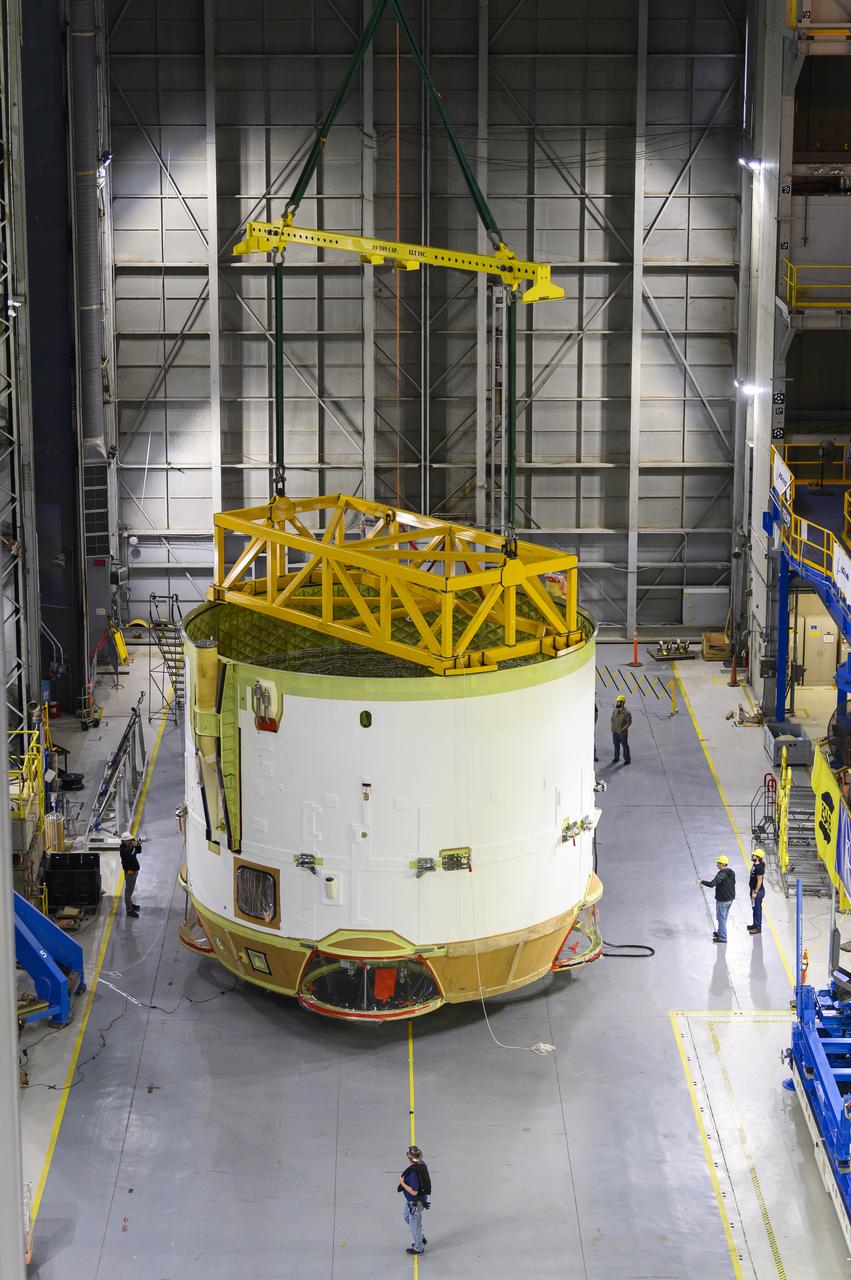
Technicians at NASA’s Michoud Assembly Facility in New Orleans flipped the engine section of NASA’s Space Launch System rocket for Artemis II from a vertical to a horizontal position Feb. 11. The flip, also known as a breakover, is in preparation for the final assembly and integration into the core stage for the second SLS rocket. The engine section is the bottom-most portion of the 212-foot-tall core stage and is one of the most complex and intricate portions of the rocket that will help power the first crewed Artemis mission to the Moon. It is the last of five elements that is needed to join the stage as one structure. In addition to its miles of cabling and hundreds of sensors, the engine section is a crucial attachment point for the four RS-25 engines and two solid rocket boosters that produce a combined 8.8 million pounds of thrust at liftoff and flight. Next, teams will move the engine section into the final assembly area where they will complete the join. After the join is complete, teams will begin to add each of the four RS-25 engines. The completely assembled stage with its four RS-25 engines will be shipped to NASA’s Kennedy Space Center in Florida later this year. The SLS rocket is the only rocket capable of carrying astronauts in Orion around the Moon in a single mission. Image credit: NASA/Eric Bordelon

Technicians at NASA’s Michoud Assembly Facility in New Orleans flipped the engine section of NASA’s Space Launch System rocket for Artemis II from a vertical to a horizontal position Feb. 11. The flip, also known as a breakover, is in preparation for the final assembly and integration into the core stage for the second SLS rocket. The engine section is the bottom-most portion of the 212-foot-tall core stage and is one of the most complex and intricate portions of the rocket that will help power the first crewed Artemis mission to the Moon. It is the last of five elements that is needed to join the stage as one structure. In addition to its miles of cabling and hundreds of sensors, the engine section is a crucial attachment point for the four RS-25 engines and two solid rocket boosters that produce a combined 8.8 million pounds of thrust at liftoff and flight. Next, teams will move the engine section into the final assembly area where they will complete the join. After the join is complete, teams will begin to add each of the four RS-25 engines. The completely assembled stage with its four RS-25 engines will be shipped to NASA’s Kennedy Space Center in Florida later this year. The SLS rocket is the only rocket capable of carrying astronauts in Orion around the Moon in a single mission. Image credit: NASA/Michael DeMocker
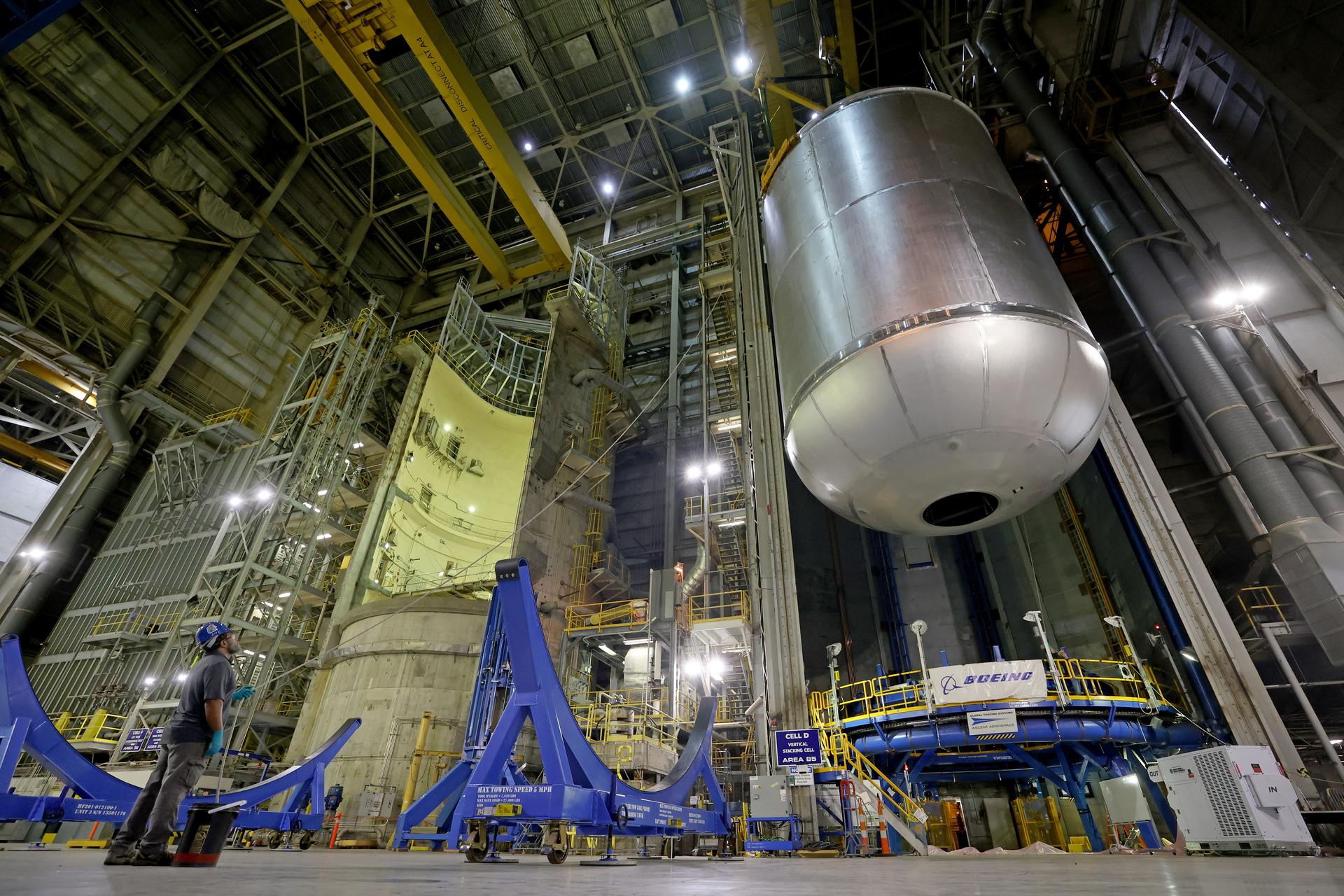
Teams at NASA’s Michoud Assembly Facility in New Orleans use an overhead crane to lift a 51-foot-tall liquid oxygen tank out of a production cell and into the main aisle of the vertical assembly building on June 9. The team rotates the tank from a vertical to a horizontal configuration in an operation called a “breakover,” and sets the tank into a pair of cradles until it is moved to its next phase of production. This liquid oxygen tank will form part of the SLS (Space Launch System) rocket for NASA’s Artemis IV mission to the Moon, and it will hold more than 196,000 gallons of super-cold liquid oxygen at launch. The propellant tank is one of five major elements that make up the 212-foot-tall SLS rocket stage. The core stage, along with its four RS-25 engines at its base, produces more than two million pounds of thrust to help launch NASA’s Orion spacecraft, astronauts, and supplies beyond Earth’s orbit and to the lunar surface for Artemis. Image credit: NASA/Michael DeMocker
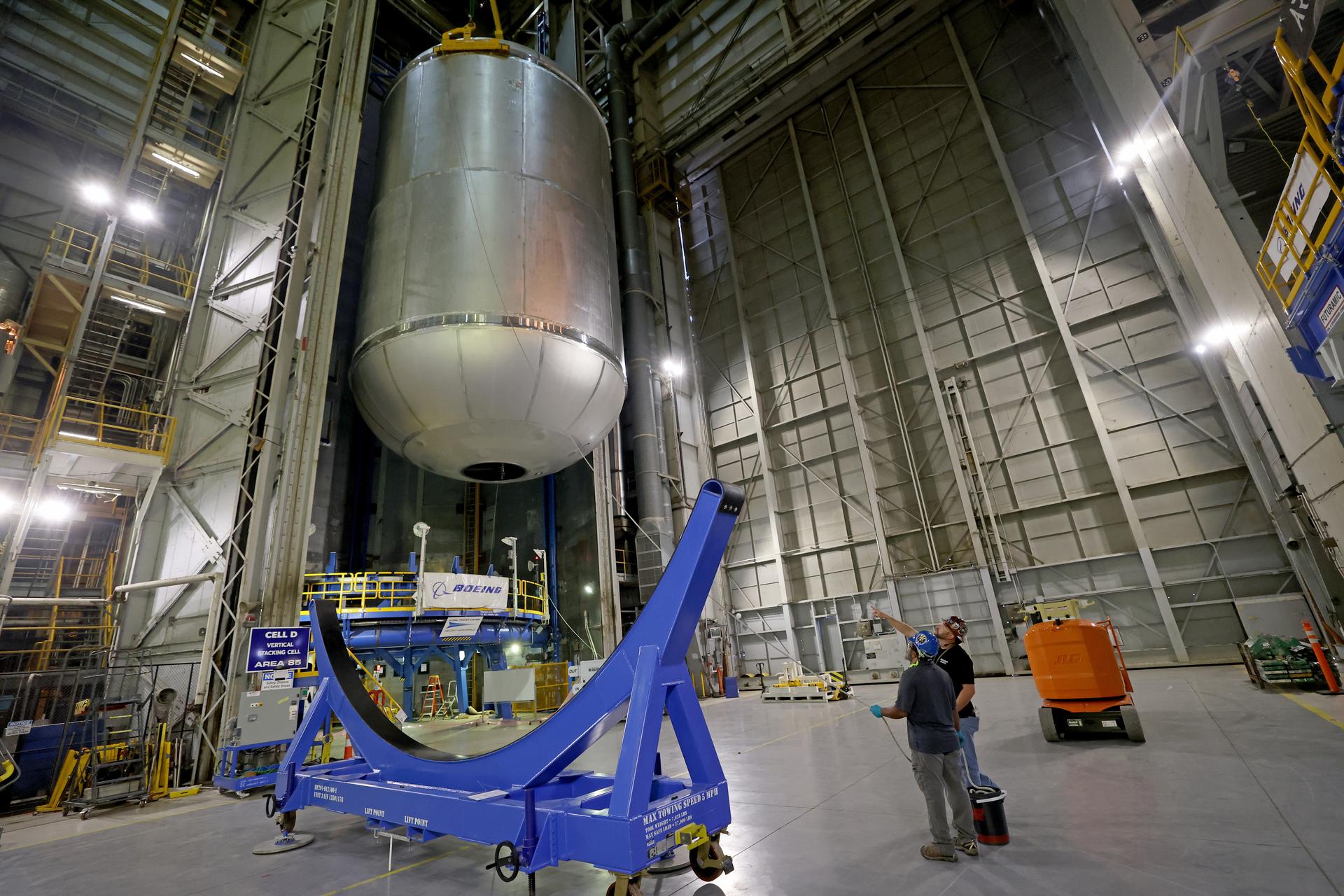
Teams at NASA’s Michoud Assembly Facility in New Orleans use an overhead crane to lift a 51-foot-tall liquid oxygen tank out of a production cell and into the main aisle of the vertical assembly building on June 9. The team rotates the tank from a vertical to a horizontal configuration in an operation called a “breakover,” and sets the tank into a pair of cradles until it is moved to its next phase of production. This liquid oxygen tank will form part of the SLS (Space Launch System) rocket for NASA’s Artemis IV mission to the Moon, and it will hold more than 196,000 gallons of super-cold liquid oxygen at launch. The propellant tank is one of five major elements that make up the 212-foot-tall SLS rocket stage. The core stage, along with its four RS-25 engines at its base, produces more than two million pounds of thrust to help launch NASA’s Orion spacecraft, astronauts, and supplies beyond Earth’s orbit and to the lunar surface for Artemis. Image credit: NASA/Michael DeMocker
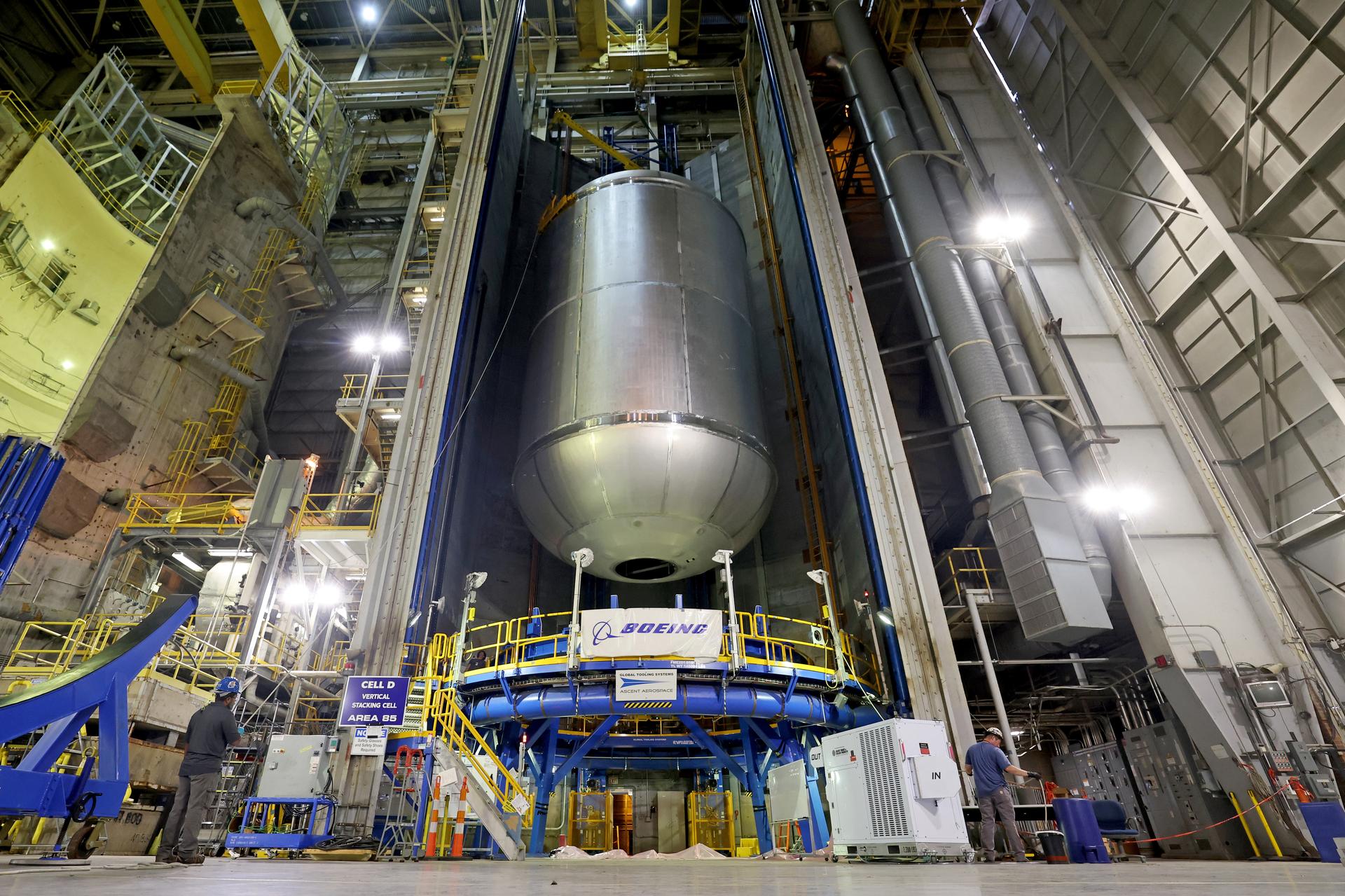
Teams at NASA’s Michoud Assembly Facility in New Orleans use an overhead crane to lift a 51-foot-tall liquid oxygen tank out of a production cell and into the main aisle of the vertical assembly building on June 9. The team rotates the tank from a vertical to a horizontal configuration in an operation called a “breakover,” and sets the tank into a pair of cradles until it is moved to its next phase of production. This liquid oxygen tank will form part of the SLS (Space Launch System) rocket for NASA’s Artemis IV mission to the Moon, and it will hold more than 196,000 gallons of super-cold liquid oxygen at launch. The propellant tank is one of five major elements that make up the 212-foot-tall SLS rocket stage. The core stage, along with its four RS-25 engines at its base, produces more than two million pounds of thrust to help launch NASA’s Orion spacecraft, astronauts, and supplies beyond Earth’s orbit and to the lunar surface for Artemis. Image credit: NASA/Michael DeMocker
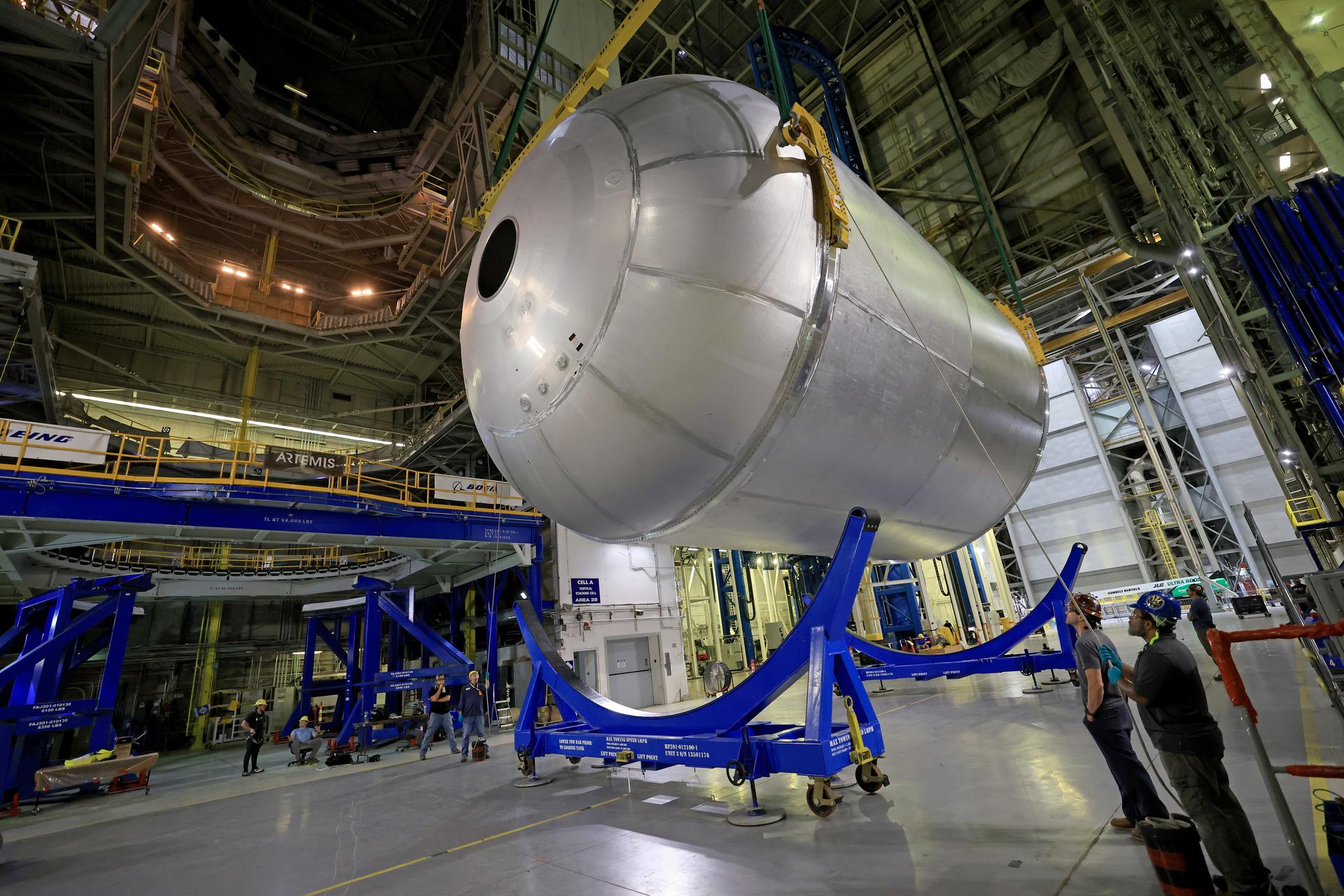
Teams at NASA’s Michoud Assembly Facility in New Orleans use an overhead crane to lift a 51-foot-tall liquid oxygen tank out of a production cell and into the main aisle of the vertical assembly building on June 9. The team rotates the tank from a vertical to a horizontal configuration in an operation called a “breakover,” and sets the tank into a pair of cradles until it is moved to its next phase of production. This liquid oxygen tank will form part of the SLS (Space Launch System) rocket for NASA’s Artemis IV mission to the Moon, and it will hold more than 196,000 gallons of super-cold liquid oxygen at launch. The propellant tank is one of five major elements that make up the 212-foot-tall SLS rocket stage. The core stage, along with its four RS-25 engines at its base, produces more than two million pounds of thrust to help launch NASA’s Orion spacecraft, astronauts, and supplies beyond Earth’s orbit and to the lunar surface for Artemis. Image credit: NASA/Michael DeMocker
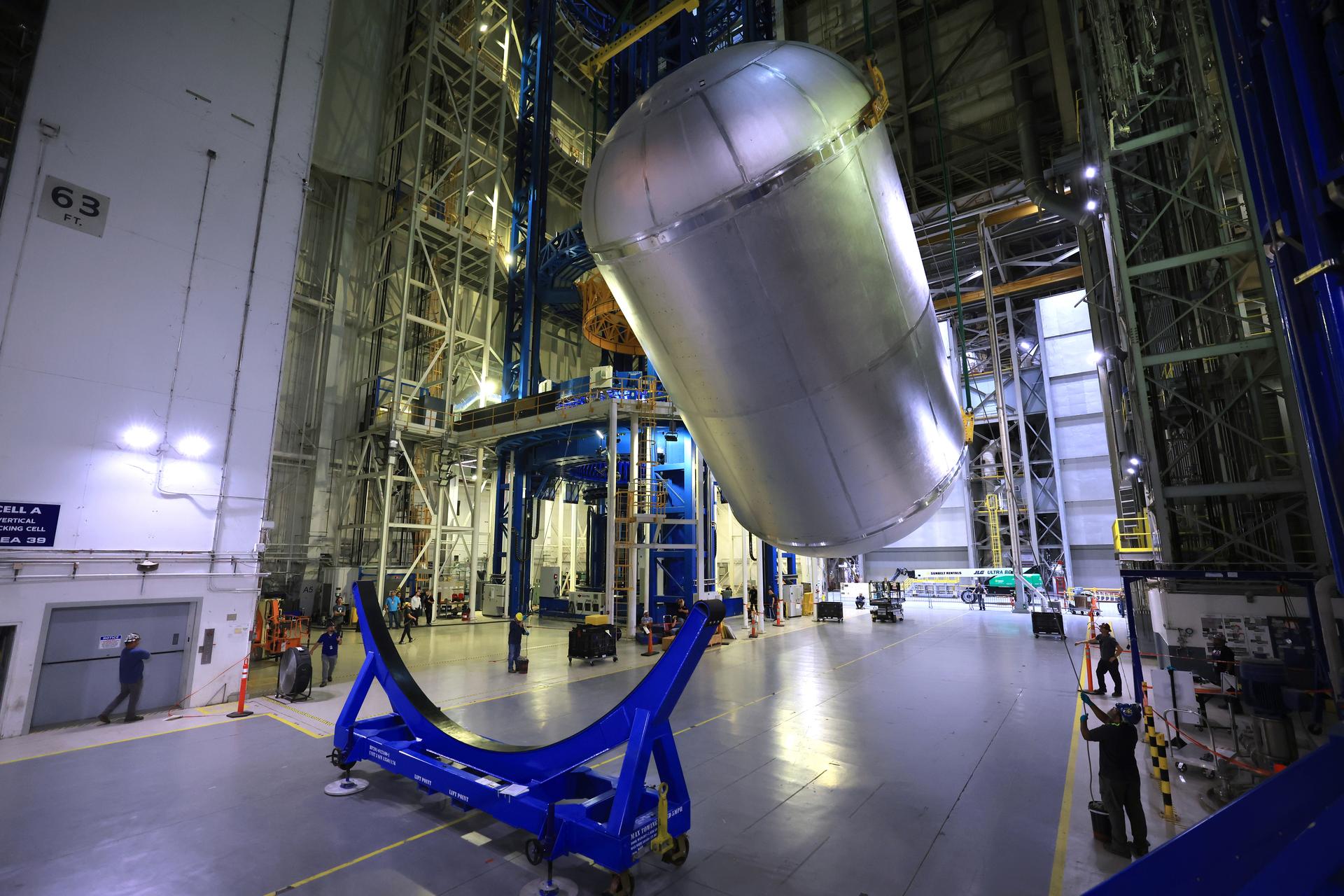
Teams at NASA’s Michoud Assembly Facility in New Orleans use an overhead crane to lift a 51-foot-tall liquid oxygen tank out of a production cell and into the main aisle of the vertical assembly building on June 9. The team rotates the tank from a vertical to a horizontal configuration in an operation called a “breakover,” and sets the tank into a pair of cradles until it is moved to its next phase of production. This liquid oxygen tank will form part of the SLS (Space Launch System) rocket for NASA’s Artemis IV mission to the Moon, and it will hold more than 196,000 gallons of super-cold liquid oxygen at launch. The propellant tank is one of five major elements that make up the 212-foot-tall SLS rocket stage. The core stage, along with its four RS-25 engines at its base, produces more than two million pounds of thrust to help launch NASA’s Orion spacecraft, astronauts, and supplies beyond Earth’s orbit and to the lunar surface for Artemis. Image credit: NASA/Michael DeMocker
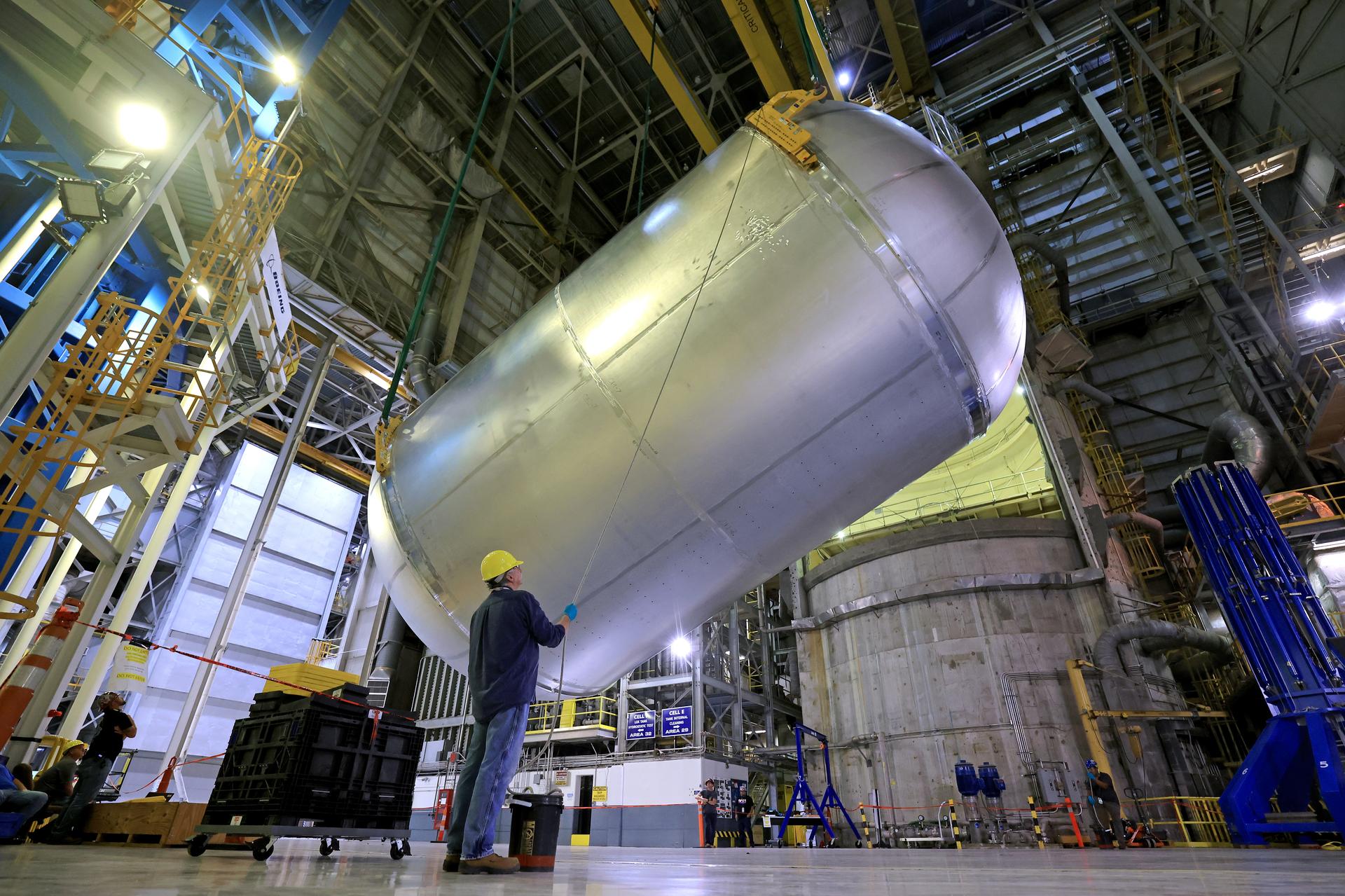
Teams at NASA’s Michoud Assembly Facility in New Orleans use an overhead crane to lift a 51-foot-tall liquid oxygen tank out of a production cell and into the main aisle of the vertical assembly building on June 9. The team rotates the tank from a vertical to a horizontal configuration in an operation called a “breakover,” and sets the tank into a pair of cradles until it is moved to its next phase of production. This liquid oxygen tank will form part of the SLS (Space Launch System) rocket for NASA’s Artemis IV mission to the Moon, and it will hold more than 196,000 gallons of super-cold liquid oxygen at launch. The propellant tank is one of five major elements that make up the 212-foot-tall SLS rocket stage. The core stage, along with its four RS-25 engines at its base, produces more than two million pounds of thrust to help launch NASA’s Orion spacecraft, astronauts, and supplies beyond Earth’s orbit and to the lunar surface for Artemis. Image credit: NASA/Michael DeMocker
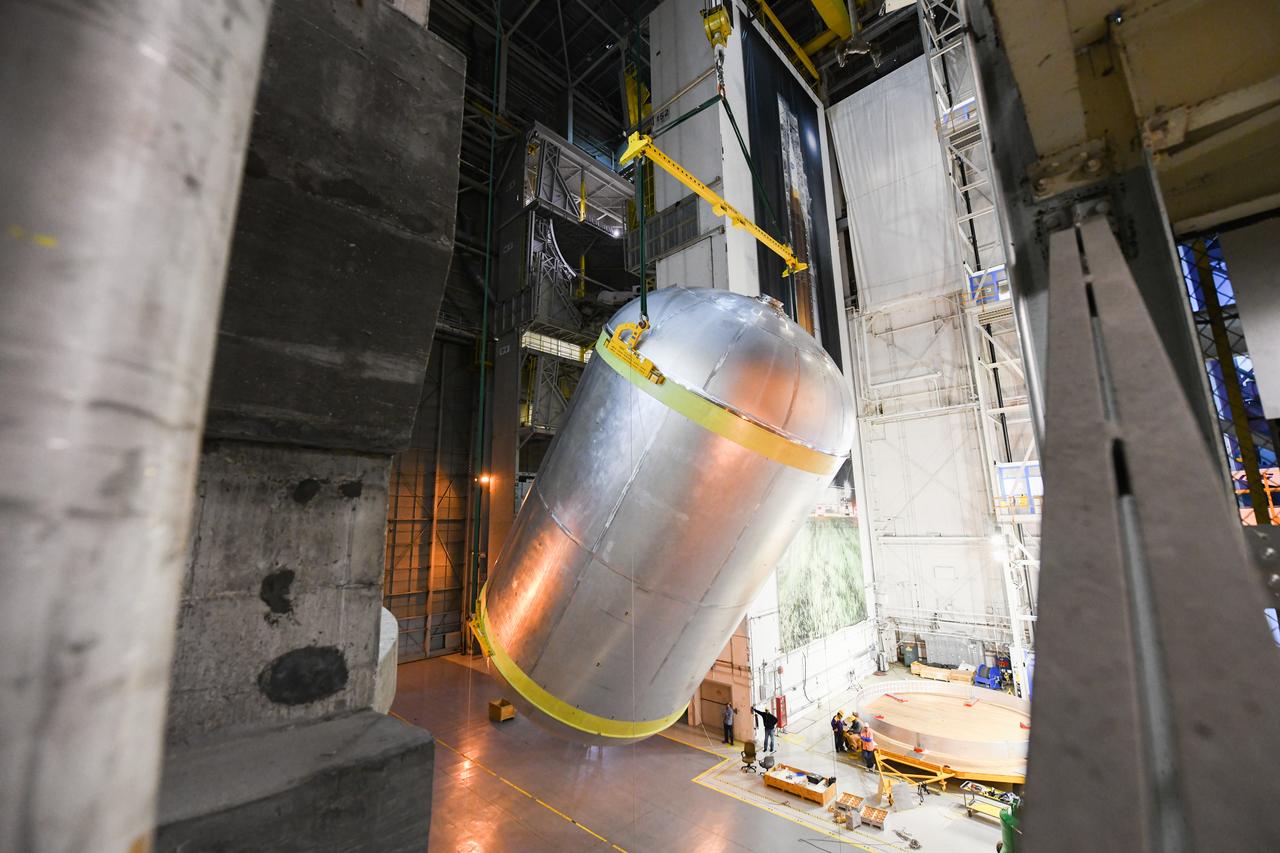
This image shows the latest progress NASA has made in manufacturing the liquid oxygen tank for the second core stage of NASA’s Space Launch System (SLS) rocket. The liquid oxygen tank will be used for the first crewed mission, Artemis II, of the agency’s Artemis program. Teams at NASA’s Michoud Assembly Facility in New Orleans recently completed internal cleaning of the liquid oxygen, or LOX, tank at the facility. Following the cleaning, crews prepared the propellant tank for the next phase of phase of assembly in a different area of the factory by moving, or breaking over, the tank from a vertical to horizontal position. The LOX tank is one of five major elements that make up the rocket’s massive 212-foot-tall core stage. The propellant tank holds 196,000 gallons of supercooled liquid oxygen to help fuel four RS-25 engines, and the internal cleaning ensures no contaminants make their way into the complex propulsion and engine systems of the deep space rocket. The stage, which includes a cluster of four RS-25, will produce more than 2 million pounds of thrust to help launch the SLS rocket and astronauts aboard NASA’s Orion spacecraft around the Moon for Artemis II. NASA is working to land the first woman and the next man on the Moon by 2024. The agency’s SLS rocket offers more payload mass, volume capability and energy to speed missions through deep space and enable NASA’s Artemis lunar program. SLS, along with Orion, the human landing system, and the Gateway in orbit around the Moon are NASA’s backbone for deep space exploration. No other rocket is capable of carrying astronauts in Orion around the Moon in a single mission.
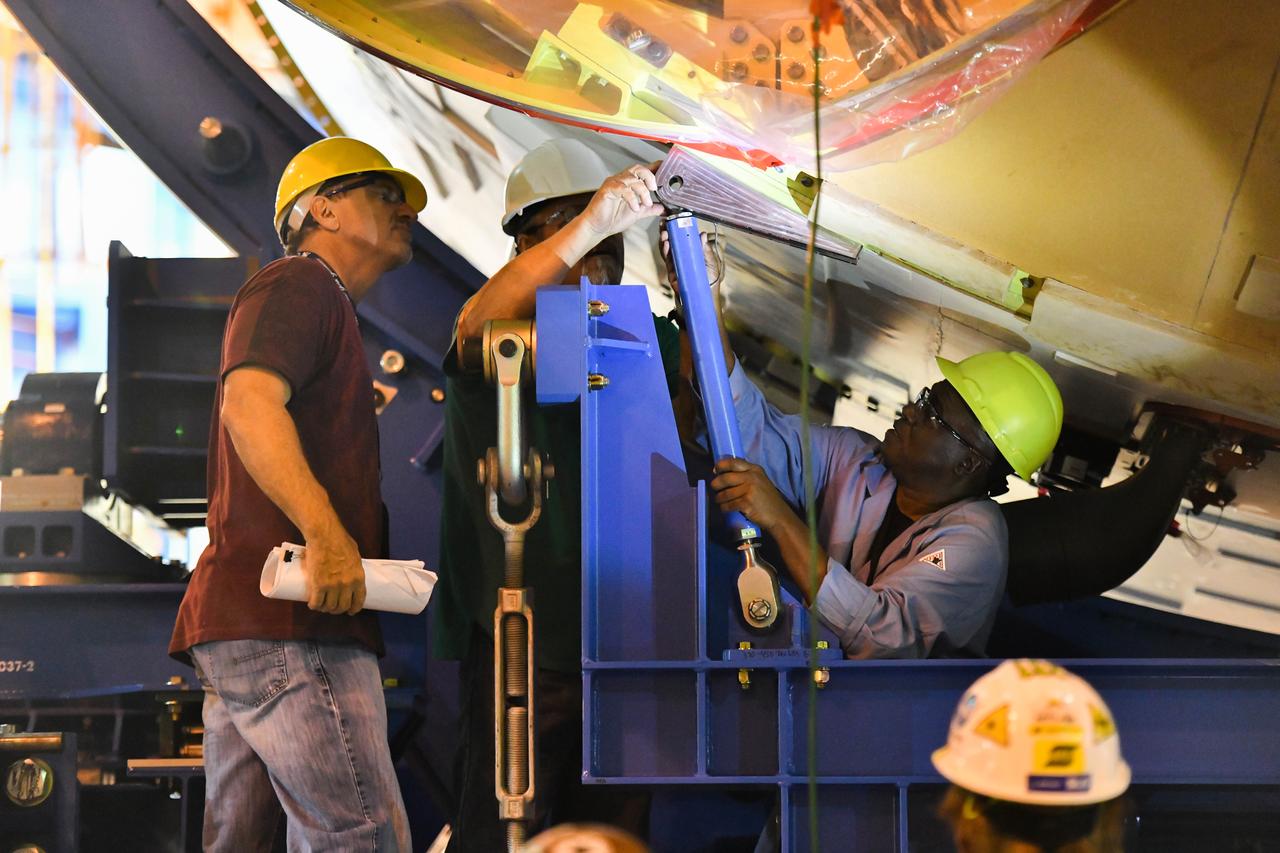
Technicians at NASA’s Michoud Assembly Facility in New Orleans rotated the engine section for NASA’s Space Launch System rocket from a vertical to horizontal position to prepare it for joining to the rest of the rocket’s core stage on Sept. 13. The engine section, which comprises the lowest portion of the 212-foot-tall stage, is the last major component to be horizontally integrated to the core stage. Michoud crews completed assembly on the flight hardware that will be used for Artemis I, the first lunar mission of SLS and NASA’s Orion spacecraft, on Aug. 29. The core stage’s two liquid propellant tanks and four RS-25 engines will produce more than 2 million pounds of thrust to send the SLS rocket and Orion on the Artemis lunar missions. The engine section houses the four RS-25 engines and includes vital systems for mounting, controlling and delivering fuel form the propellant tanks to the rocket’s engines. Offering more payload mass, volume capability and energy to speed missions through space, the SLS rocket, along with NASA’s Gateway in lunar orbit and Orion, is part of NASA’s backbone for deep space exploration and the Artemis lunar program. No other rocket is capable of carrying astronauts in Orion around the Moon in a single mission.
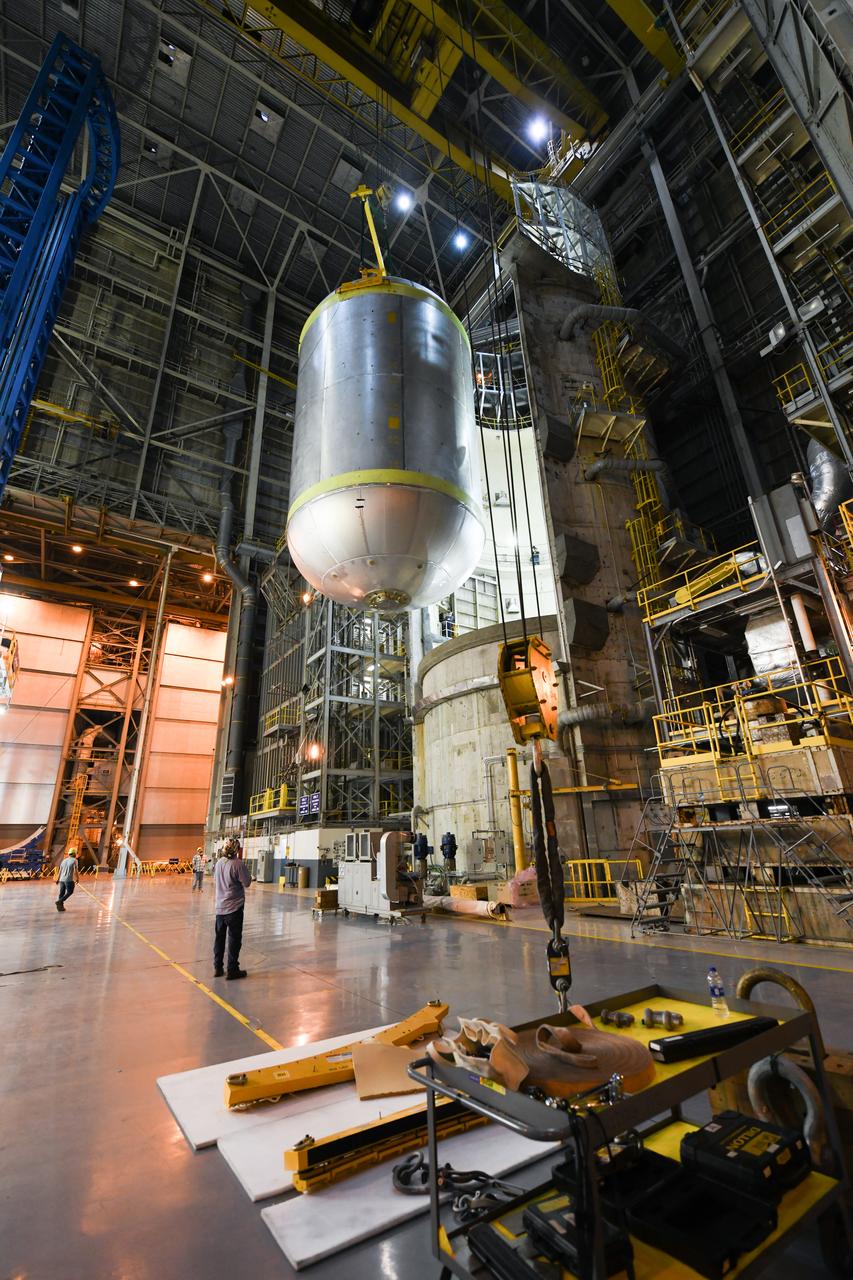
This image shows the latest progress NASA has made in manufacturing the liquid oxygen tank for the second core stage of NASA’s Space Launch System (SLS) rocket. The liquid oxygen tank will be used for the first crewed mission, Artemis II, of the agency’s Artemis program. Teams at NASA’s Michoud Assembly Facility in New Orleans recently completed internal cleaning of the liquid oxygen, or LOX, tank at the facility. Following the cleaning, crews prepared the propellant tank for the next phase of phase of assembly in a different area of the factory by moving, or breaking over, the tank from a vertical to horizontal position. The LOX tank is one of five major elements that make up the rocket’s massive 212-foot-tall core stage. The propellant tank holds 196,000 gallons of supercooled liquid oxygen to help fuel four RS-25 engines, and the internal cleaning ensures no contaminants make their way into the complex propulsion and engine systems of the deep space rocket. The stage, which includes a cluster of four RS-25, will produce more than 2 million pounds of thrust to help launch the SLS rocket and astronauts aboard NASA’s Orion spacecraft around the Moon for Artemis II. NASA is working to land the first woman and the next man on the Moon by 2024. The agency’s SLS rocket offers more payload mass, volume capability and energy to speed missions through deep space and enable NASA’s Artemis lunar program. SLS, along with Orion, the human landing system, and the Gateway in orbit around the Moon are NASA’s backbone for deep space exploration. No other rocket is capable of carrying astronauts in Orion around the Moon in a single mission.
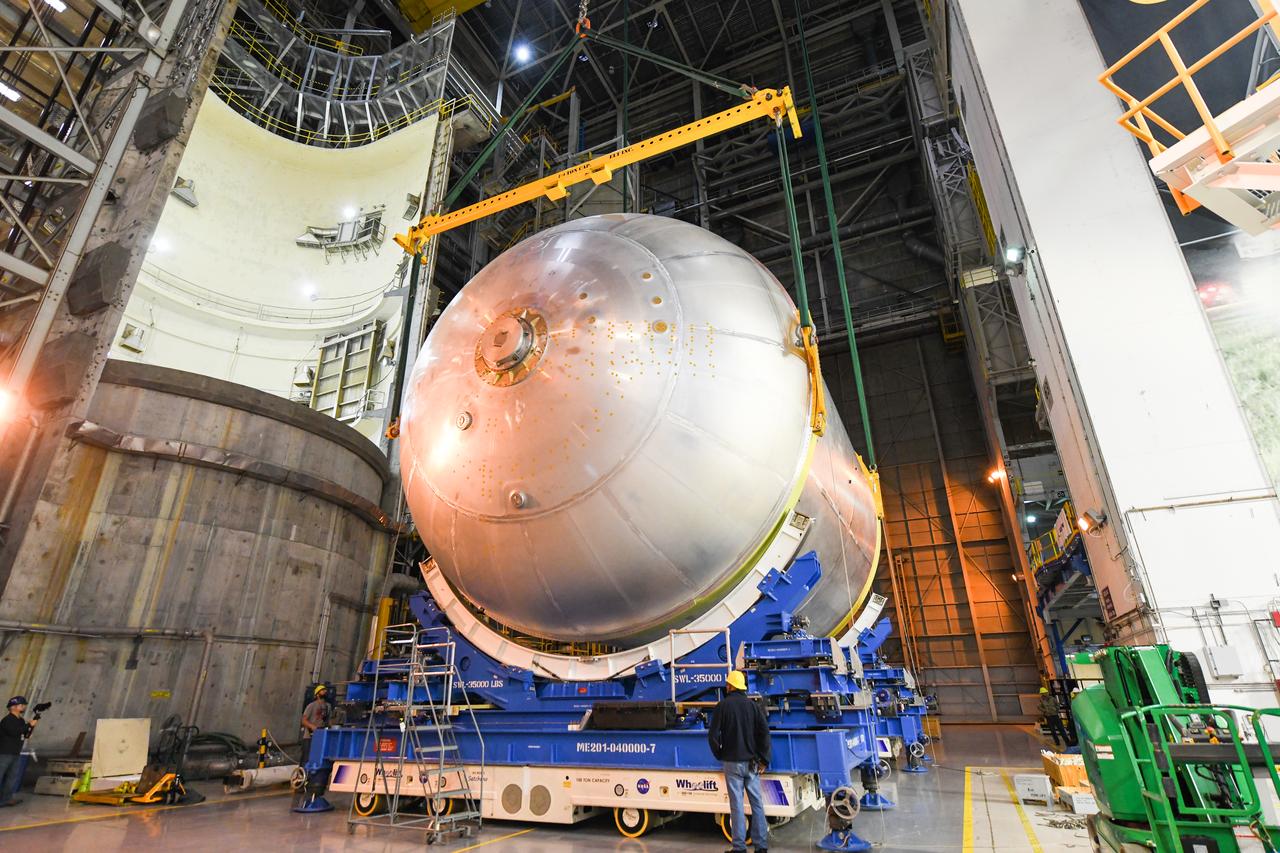
This image shows the latest progress NASA has made in manufacturing the liquid oxygen tank for the second core stage of NASA’s Space Launch System (SLS) rocket. The liquid oxygen tank will be used for the first crewed mission, Artemis II, of the agency’s Artemis program. Teams at NASA’s Michoud Assembly Facility in New Orleans recently completed internal cleaning of the liquid oxygen, or LOX, tank at the facility. Following the cleaning, crews prepared the propellant tank for the next phase of phase of assembly in a different area of the factory by moving, or breaking over, the tank from a vertical to horizontal position. The LOX tank is one of five major elements that make up the rocket’s massive 212-foot-tall core stage. The propellant tank holds 196,000 gallons of supercooled liquid oxygen to help fuel four RS-25 engines, and the internal cleaning ensures no contaminants make their way into the complex propulsion and engine systems of the deep space rocket. The stage, which includes a cluster of four RS-25, will produce more than 2 million pounds of thrust to help launch the SLS rocket and astronauts aboard NASA’s Orion spacecraft around the Moon for Artemis II. NASA is working to land the first woman and the next man on the Moon by 2024. The agency’s SLS rocket offers more payload mass, volume capability and energy to speed missions through deep space and enable NASA’s Artemis lunar program. SLS, along with Orion, the human landing system, and the Gateway in orbit around the Moon are NASA’s backbone for deep space exploration. No other rocket is capable of carrying astronauts in Orion around the Moon in a single mission.
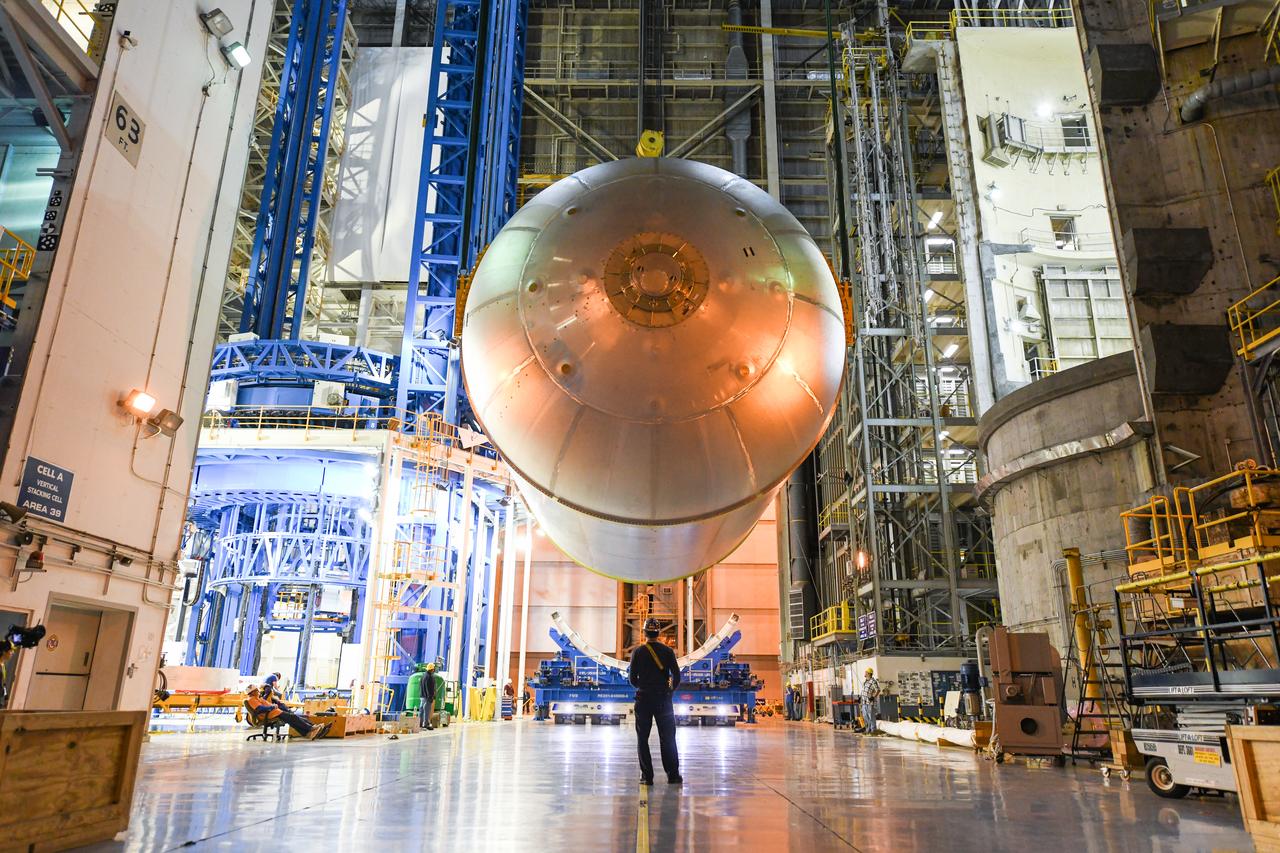
This image shows the latest progress NASA has made in manufacturing the liquid oxygen tank for the second core stage of NASA’s Space Launch System (SLS) rocket. The liquid oxygen tank will be used for the first crewed mission, Artemis II, of the agency’s Artemis program. Teams at NASA’s Michoud Assembly Facility in New Orleans recently completed internal cleaning of the liquid oxygen, or LOX, tank at the facility. Following the cleaning, crews prepared the propellant tank for the next phase of phase of assembly in a different area of the factory by moving, or breaking over, the tank from a vertical to horizontal position. The LOX tank is one of five major elements that make up the rocket’s massive 212-foot-tall core stage. The propellant tank holds 196,000 gallons of supercooled liquid oxygen to help fuel four RS-25 engines, and the internal cleaning ensures no contaminants make their way into the complex propulsion and engine systems of the deep space rocket. The stage, which includes a cluster of four RS-25, will produce more than 2 million pounds of thrust to help launch the SLS rocket and astronauts aboard NASA’s Orion spacecraft around the Moon for Artemis II. NASA is working to land the first woman and the next man on the Moon by 2024. The agency’s SLS rocket offers more payload mass, volume capability and energy to speed missions through deep space and enable NASA’s Artemis lunar program. SLS, along with Orion, the human landing system, and the Gateway in orbit around the Moon are NASA’s backbone for deep space exploration. No other rocket is capable of carrying astronauts in Orion around the Moon in a single mission.
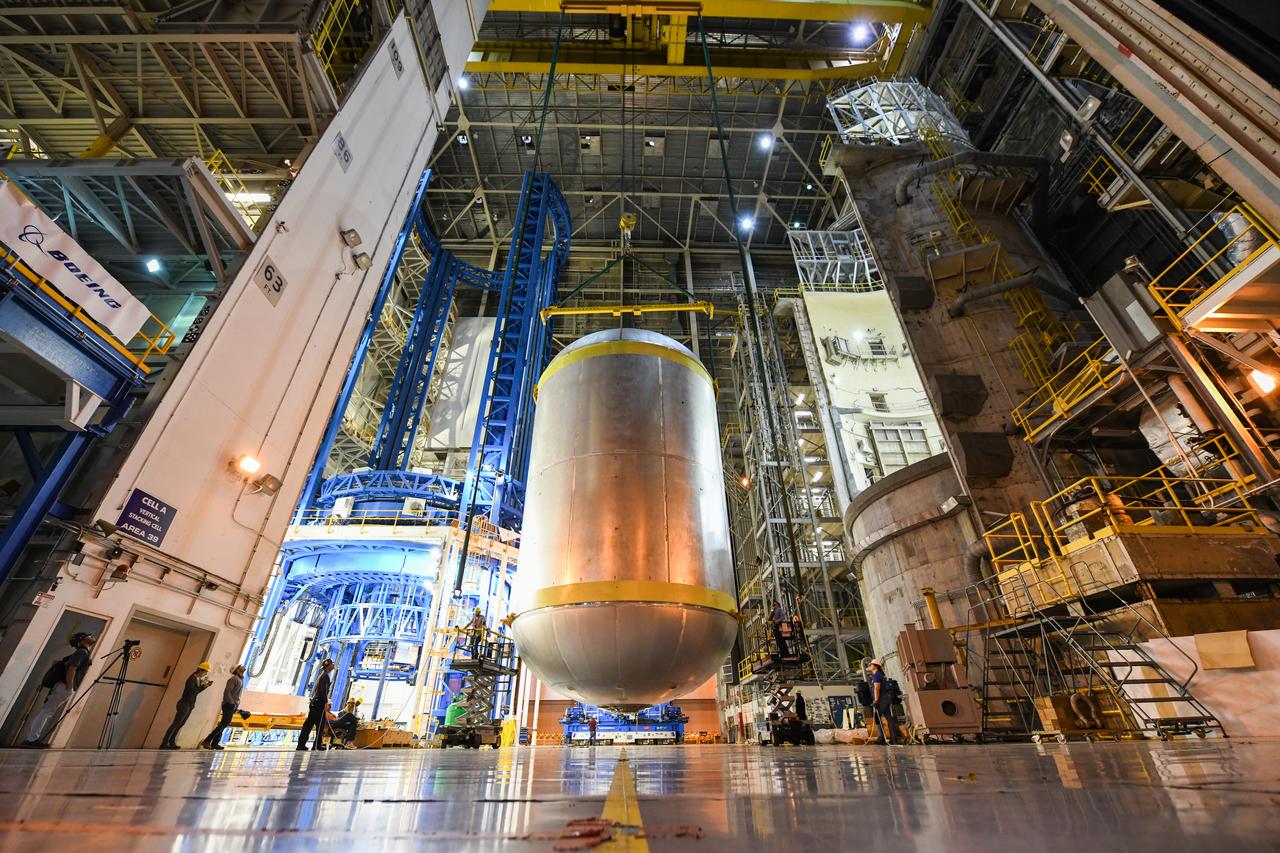
This image shows the latest progress NASA has made in manufacturing the liquid oxygen tank for the second core stage of NASA’s Space Launch System (SLS) rocket. The liquid oxygen tank will be used for the first crewed mission, Artemis II, of the agency’s Artemis program. Teams at NASA’s Michoud Assembly Facility in New Orleans recently completed internal cleaning of the liquid oxygen, or LOX, tank at the facility. Following the cleaning, crews prepared the propellant tank for the next phase of phase of assembly in a different area of the factory by moving, or breaking over, the tank from a vertical to horizontal position. The LOX tank is one of five major elements that make up the rocket’s massive 212-foot-tall core stage. The propellant tank holds 196,000 gallons of supercooled liquid oxygen to help fuel four RS-25 engines, and the internal cleaning ensures no contaminants make their way into the complex propulsion and engine systems of the deep space rocket. The stage, which includes a cluster of four RS-25, will produce more than 2 million pounds of thrust to help launch the SLS rocket and astronauts aboard NASA’s Orion spacecraft around the Moon for Artemis II. NASA is working to land the first woman and the next man on the Moon by 2024. The agency’s SLS rocket offers more payload mass, volume capability and energy to speed missions through deep space and enable NASA’s Artemis lunar program. SLS, along with Orion, the human landing system, and the Gateway in orbit around the Moon are NASA’s backbone for deep space exploration. No other rocket is capable of carrying astronauts in Orion around the Moon in a single mission.
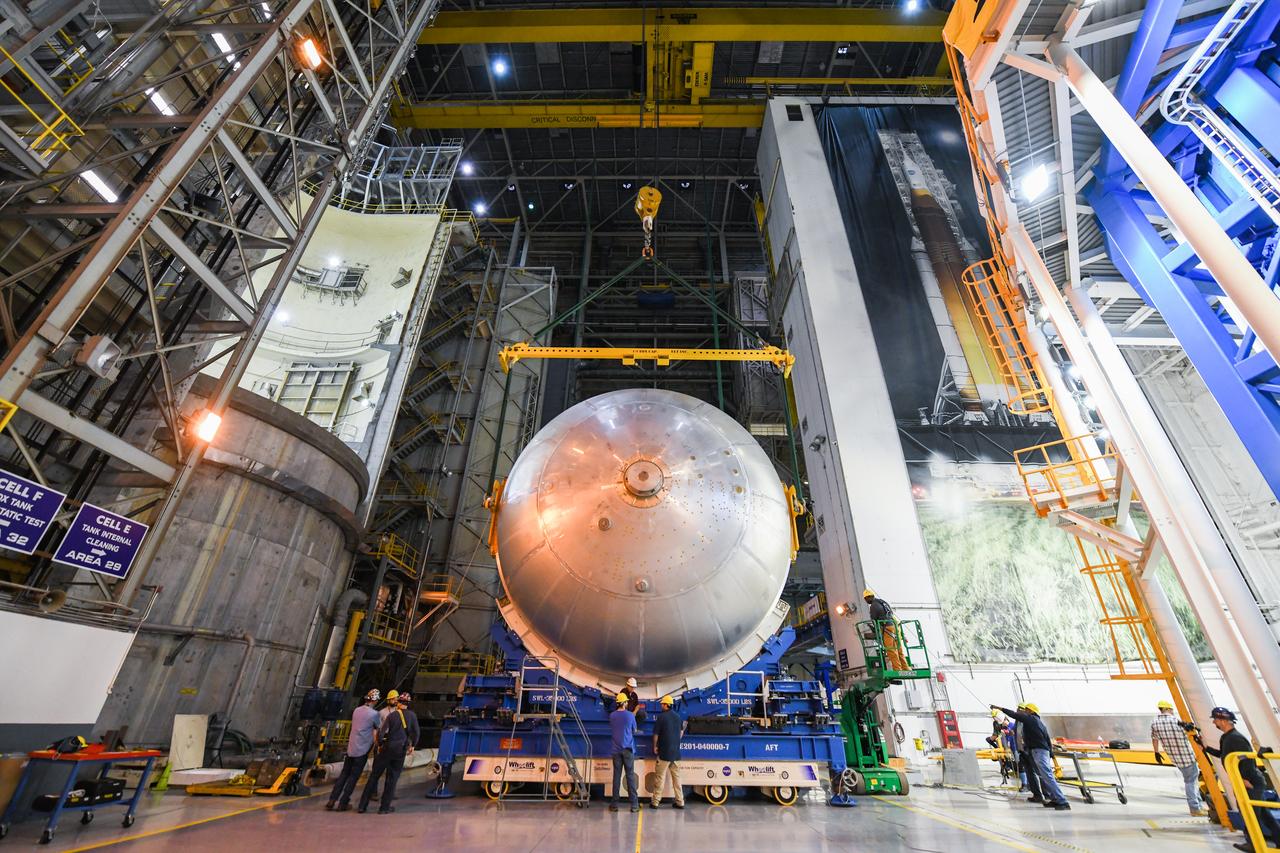
This image shows the latest progress NASA has made in manufacturing the liquid oxygen tank for the second core stage of NASA’s Space Launch System (SLS) rocket. The liquid oxygen tank will be used for the first crewed mission, Artemis II, of the agency’s Artemis program. Teams at NASA’s Michoud Assembly Facility in New Orleans recently completed internal cleaning of the liquid oxygen, or LOX, tank at the facility. Following the cleaning, crews prepared the propellant tank for the next phase of phase of assembly in a different area of the factory by moving, or breaking over, the tank from a vertical to horizontal position. The LOX tank is one of five major elements that make up the rocket’s massive 212-foot-tall core stage. The propellant tank holds 196,000 gallons of supercooled liquid oxygen to help fuel four RS-25 engines, and the internal cleaning ensures no contaminants make their way into the complex propulsion and engine systems of the deep space rocket. The stage, which includes a cluster of four RS-25, will produce more than 2 million pounds of thrust to help launch the SLS rocket and astronauts aboard NASA’s Orion spacecraft around the Moon for Artemis II. NASA is working to land the first woman and the next man on the Moon by 2024. The agency’s SLS rocket offers more payload mass, volume capability and energy to speed missions through deep space and enable NASA’s Artemis lunar program. SLS, along with Orion, the human landing system, and the Gateway in orbit around the Moon are NASA’s backbone for deep space exploration. No other rocket is capable of carrying astronauts in Orion around the Moon in a single mission.
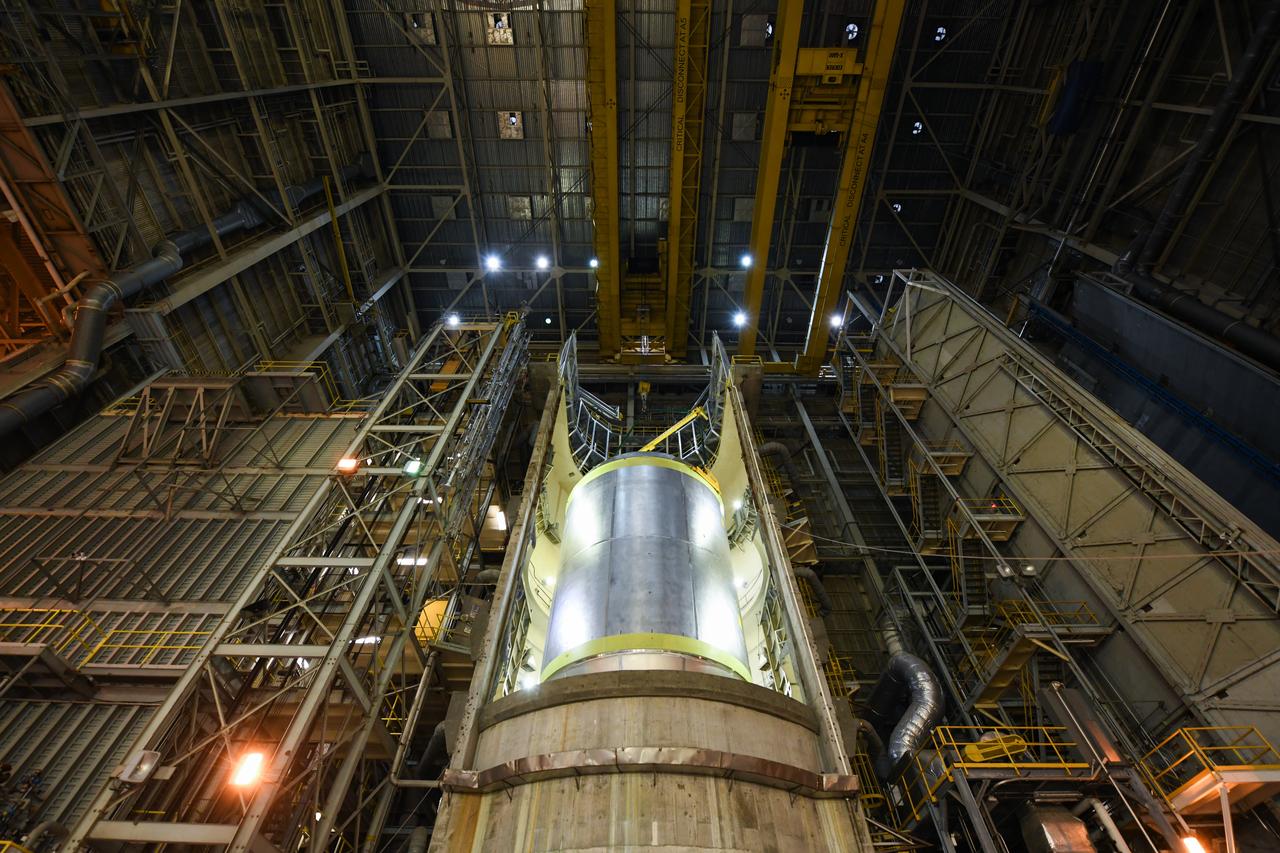
This image shows the latest progress NASA has made in manufacturing the liquid oxygen tank for the second core stage of NASA’s Space Launch System (SLS) rocket. The liquid oxygen tank will be used for the first crewed mission, Artemis II, of the agency’s Artemis program. Teams at NASA’s Michoud Assembly Facility in New Orleans recently completed internal cleaning of the liquid oxygen, or LOX, tank at the facility. Following the cleaning, crews prepared the propellant tank for the next phase of phase of assembly in a different area of the factory by moving, or breaking over, the tank from a vertical to horizontal position. The LOX tank is one of five major elements that make up the rocket’s massive 212-foot-tall core stage. The propellant tank holds 196,000 gallons of supercooled liquid oxygen to help fuel four RS-25 engines, and the internal cleaning ensures no contaminants make their way into the complex propulsion and engine systems of the deep space rocket. The stage, which includes a cluster of four RS-25, will produce more than 2 million pounds of thrust to help launch the SLS rocket and astronauts aboard NASA’s Orion spacecraft around the Moon for Artemis II. NASA is working to land the first woman and the next man on the Moon by 2024. The agency’s SLS rocket offers more payload mass, volume capability and energy to speed missions through deep space and enable NASA’s Artemis lunar program. SLS, along with Orion, the human landing system, and the Gateway in orbit around the Moon are NASA’s backbone for deep space exploration. No other rocket is capable of carrying astronauts in Orion around the Moon in a single mission.
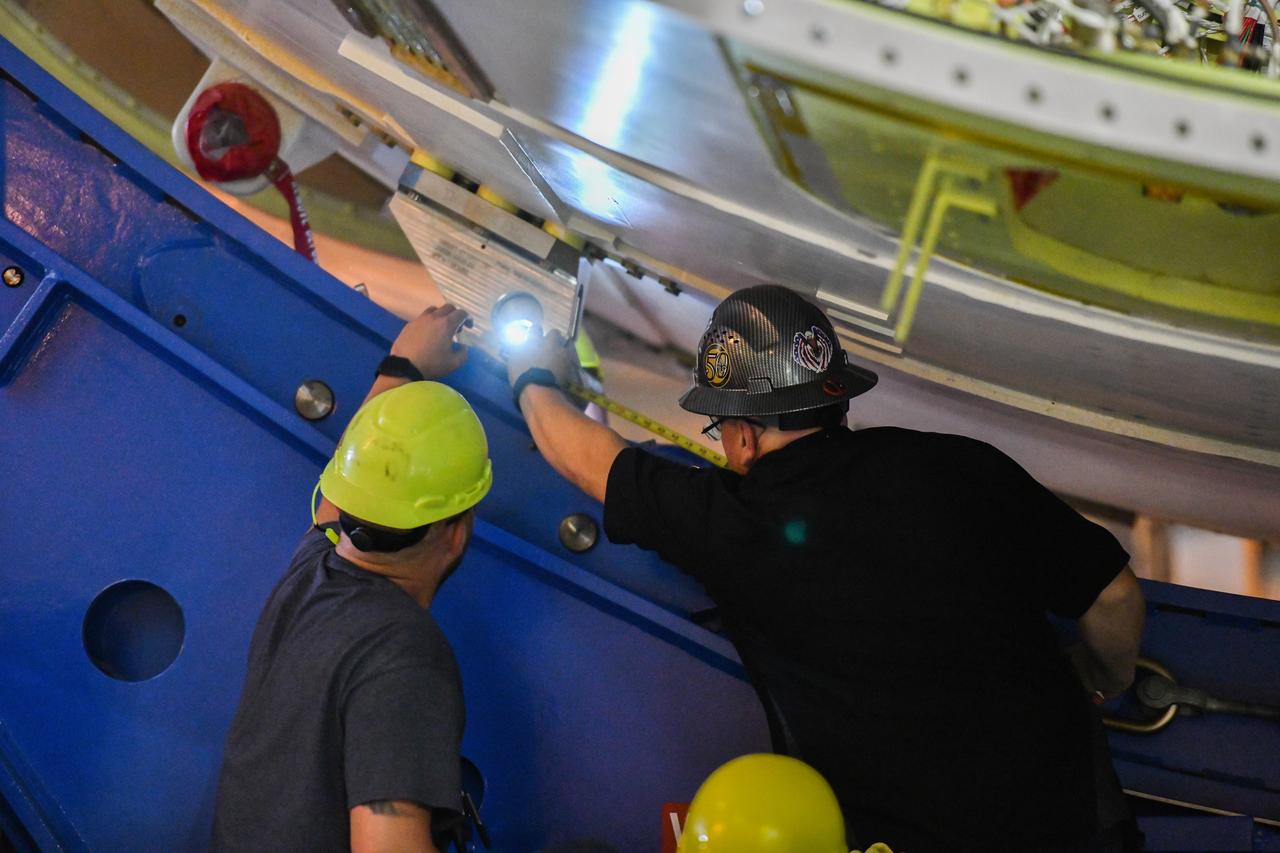
Technicians at NASA’s Michoud Assembly Facility in New Orleans rotated the engine section for NASA’s Space Launch System rocket from a vertical to horizontal position to prepare it for joining to the rest of the rocket’s core stage on Sept. 13. The engine section, which comprises the lowest portion of the 212-foot-tall stage, is the last major component to be horizontally integrated to the core stage. Michoud crews completed assembly on the flight hardware that will be used for Artemis I, the first lunar mission of SLS and NASA’s Orion spacecraft, on Aug. 29. The core stage’s two liquid propellant tanks and four RS-25 engines will produce more than 2 million pounds of thrust to send the SLS rocket and Orion on the Artemis lunar missions. The engine section houses the four RS-25 engines and includes vital systems for mounting, controlling and delivering fuel form the propellant tanks to the rocket’s engines. Offering more payload mass, volume capability and energy to speed missions through space, the SLS rocket, along with NASA’s Gateway in lunar orbit and Orion, is part of NASA’s backbone for deep space exploration and the Artemis lunar program. No other rocket is capable of carrying astronauts in Orion around the Moon in a single mission.
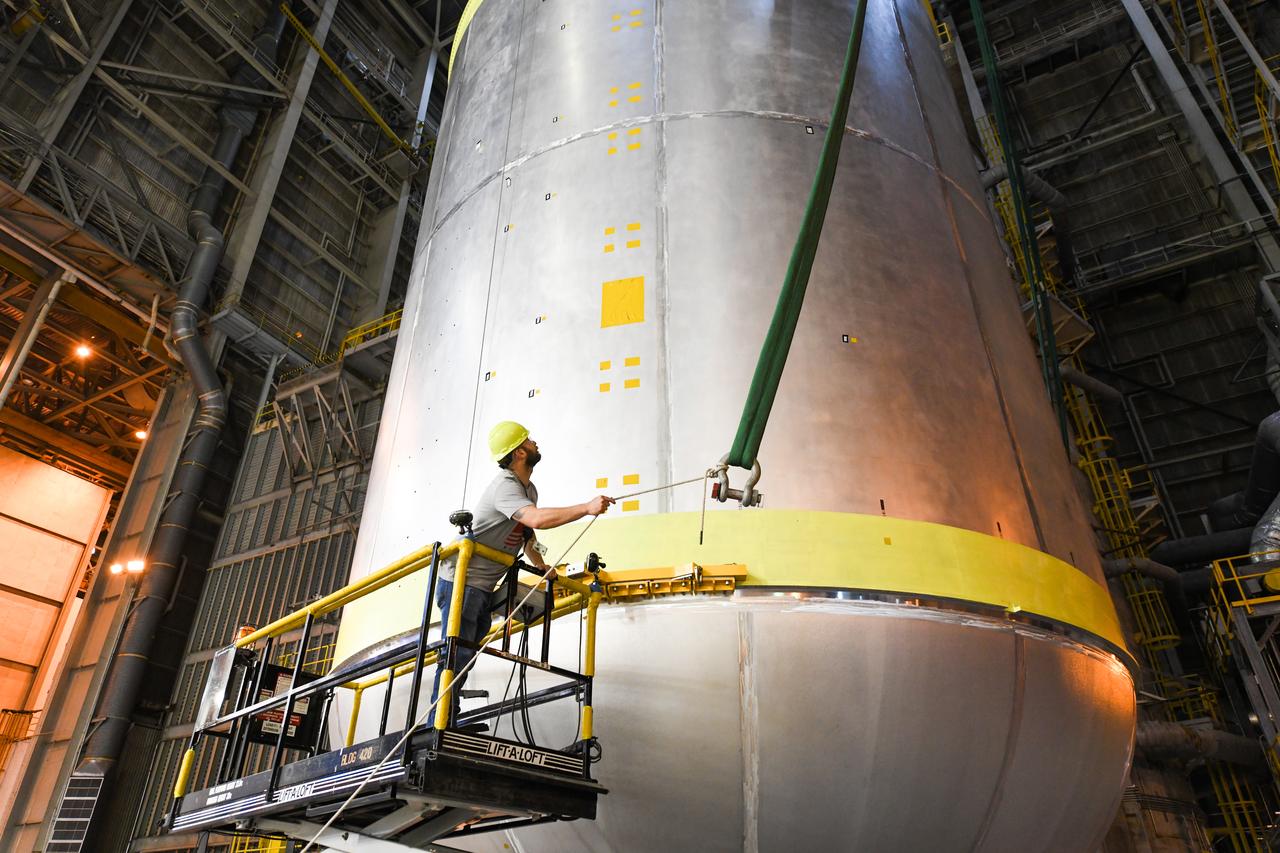
This image shows the latest progress NASA has made in manufacturing the liquid oxygen tank for the second core stage of NASA’s Space Launch System (SLS) rocket. The liquid oxygen tank will be used for the first crewed mission, Artemis II, of the agency’s Artemis program. Teams at NASA’s Michoud Assembly Facility in New Orleans recently completed internal cleaning of the liquid oxygen, or LOX, tank at the facility. Following the cleaning, crews prepared the propellant tank for the next phase of phase of assembly in a different area of the factory by moving, or breaking over, the tank from a vertical to horizontal position. The LOX tank is one of five major elements that make up the rocket’s massive 212-foot-tall core stage. The propellant tank holds 196,000 gallons of supercooled liquid oxygen to help fuel four RS-25 engines, and the internal cleaning ensures no contaminants make their way into the complex propulsion and engine systems of the deep space rocket. The stage, which includes a cluster of four RS-25, will produce more than 2 million pounds of thrust to help launch the SLS rocket and astronauts aboard NASA’s Orion spacecraft around the Moon for Artemis II. NASA is working to land the first woman and the next man on the Moon by 2024. The agency’s SLS rocket offers more payload mass, volume capability and energy to speed missions through deep space and enable NASA’s Artemis lunar program. SLS, along with Orion, the human landing system, and the Gateway in orbit around the Moon are NASA’s backbone for deep space exploration. No other rocket is capable of carrying astronauts in Orion around the Moon in a single mission.
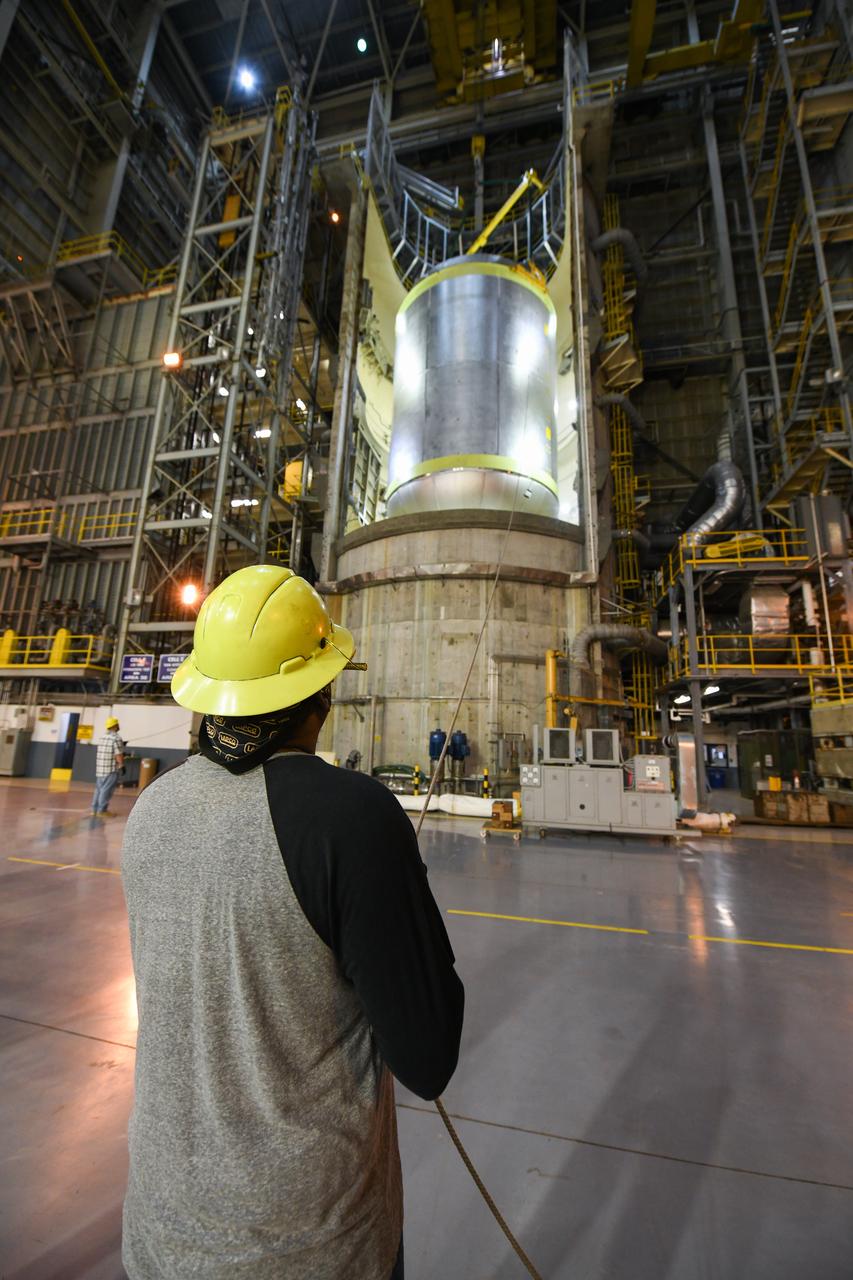
This image shows the latest progress NASA has made in manufacturing the liquid oxygen tank for the second core stage of NASA’s Space Launch System (SLS) rocket. The liquid oxygen tank will be used for the first crewed mission, Artemis II, of the agency’s Artemis program. Teams at NASA’s Michoud Assembly Facility in New Orleans recently completed internal cleaning of the liquid oxygen, or LOX, tank at the facility. Following the cleaning, crews prepared the propellant tank for the next phase of phase of assembly in a different area of the factory by moving, or breaking over, the tank from a vertical to horizontal position. The LOX tank is one of five major elements that make up the rocket’s massive 212-foot-tall core stage. The propellant tank holds 196,000 gallons of supercooled liquid oxygen to help fuel four RS-25 engines, and the internal cleaning ensures no contaminants make their way into the complex propulsion and engine systems of the deep space rocket. The stage, which includes a cluster of four RS-25, will produce more than 2 million pounds of thrust to help launch the SLS rocket and astronauts aboard NASA’s Orion spacecraft around the Moon for Artemis II. NASA is working to land the first woman and the next man on the Moon by 2024. The agency’s SLS rocket offers more payload mass, volume capability and energy to speed missions through deep space and enable NASA’s Artemis lunar program. SLS, along with Orion, the human landing system, and the Gateway in orbit around the Moon are NASA’s backbone for deep space exploration. No other rocket is capable of carrying astronauts in Orion around the Moon in a single mission.
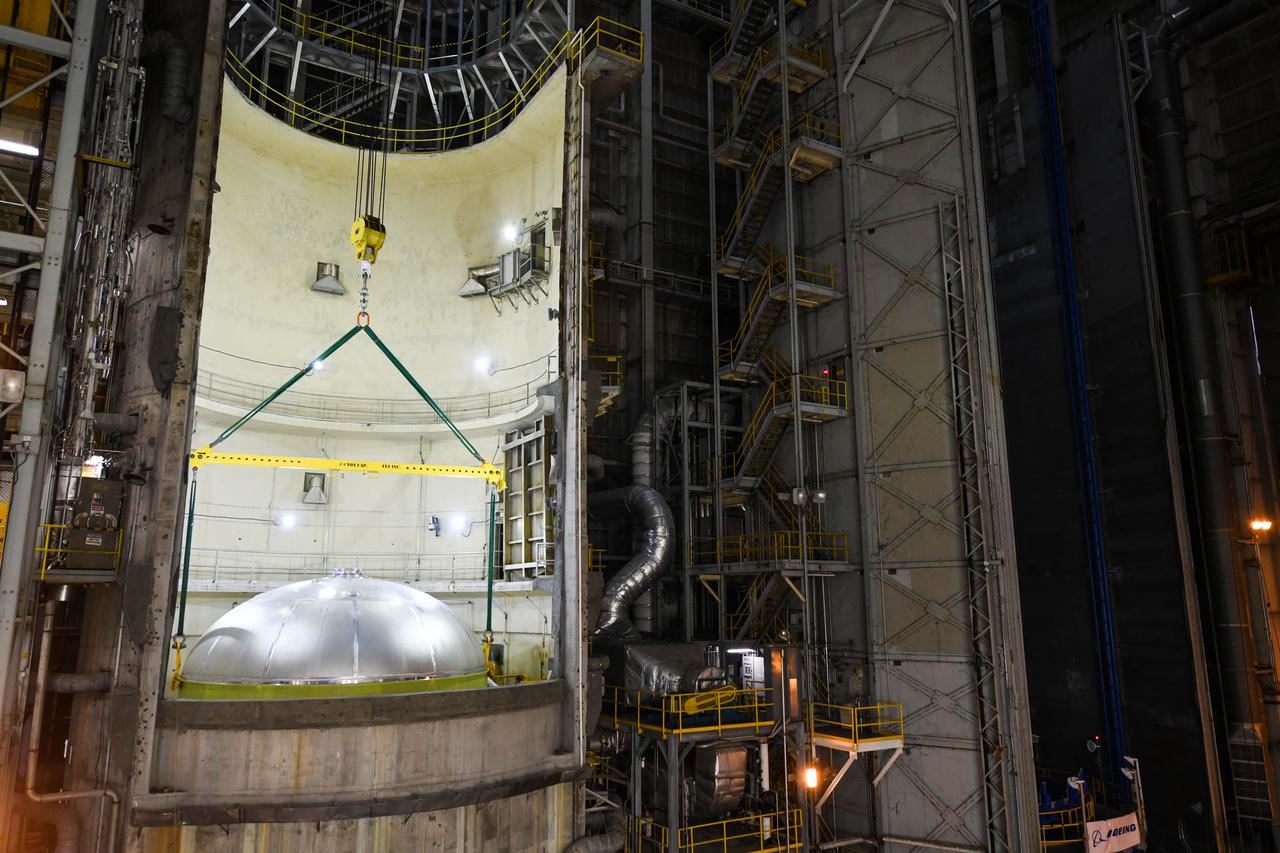
This image shows the latest progress NASA has made in manufacturing the liquid oxygen tank for the second core stage of NASA’s Space Launch System (SLS) rocket. The liquid oxygen tank will be used for the first crewed mission, Artemis II, of the agency’s Artemis program. Teams at NASA’s Michoud Assembly Facility in New Orleans recently completed internal cleaning of the liquid oxygen, or LOX, tank at the facility. Following the cleaning, crews prepared the propellant tank for the next phase of phase of assembly in a different area of the factory by moving, or breaking over, the tank from a vertical to horizontal position. The LOX tank is one of five major elements that make up the rocket’s massive 212-foot-tall core stage. The propellant tank holds 196,000 gallons of supercooled liquid oxygen to help fuel four RS-25 engines, and the internal cleaning ensures no contaminants make their way into the complex propulsion and engine systems of the deep space rocket. The stage, which includes a cluster of four RS-25, will produce more than 2 million pounds of thrust to help launch the SLS rocket and astronauts aboard NASA’s Orion spacecraft around the Moon for Artemis II. NASA is working to land the first woman and the next man on the Moon by 2024. The agency’s SLS rocket offers more payload mass, volume capability and energy to speed missions through deep space and enable NASA’s Artemis lunar program. SLS, along with Orion, the human landing system, and the Gateway in orbit around the Moon are NASA’s backbone for deep space exploration. No other rocket is capable of carrying astronauts in Orion around the Moon in a single mission.
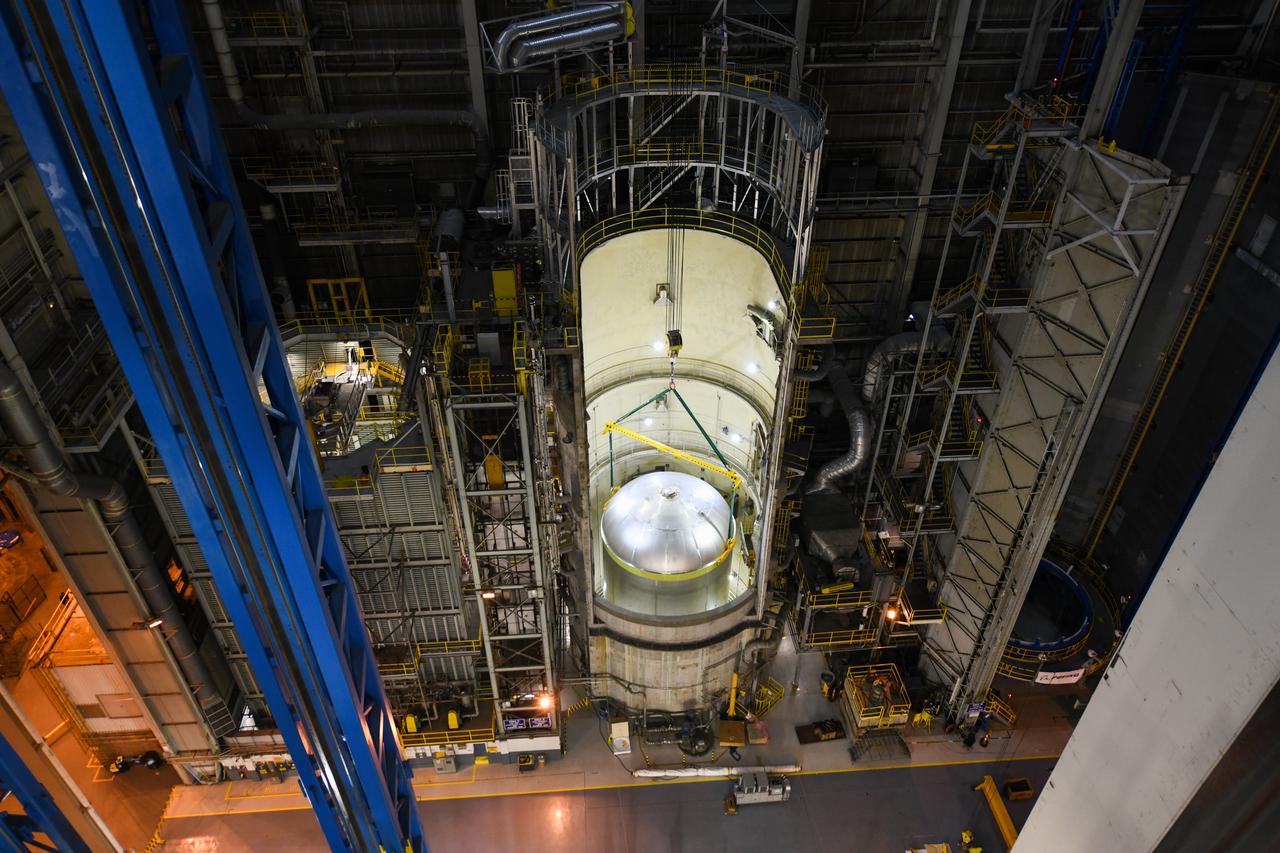
This image shows the latest progress NASA has made in manufacturing the liquid oxygen tank for the second core stage of NASA’s Space Launch System (SLS) rocket. The liquid oxygen tank will be used for the first crewed mission, Artemis II, of the agency’s Artemis program. Teams at NASA’s Michoud Assembly Facility in New Orleans recently completed internal cleaning of the liquid oxygen, or LOX, tank at the facility. Following the cleaning, crews prepared the propellant tank for the next phase of phase of assembly in a different area of the factory by moving, or breaking over, the tank from a vertical to horizontal position. The LOX tank is one of five major elements that make up the rocket’s massive 212-foot-tall core stage. The propellant tank holds 196,000 gallons of supercooled liquid oxygen to help fuel four RS-25 engines, and the internal cleaning ensures no contaminants make their way into the complex propulsion and engine systems of the deep space rocket. The stage, which includes a cluster of four RS-25, will produce more than 2 million pounds of thrust to help launch the SLS rocket and astronauts aboard NASA’s Orion spacecraft around the Moon for Artemis II. NASA is working to land the first woman and the next man on the Moon by 2024. The agency’s SLS rocket offers more payload mass, volume capability and energy to speed missions through deep space and enable NASA’s Artemis lunar program. SLS, along with Orion, the human landing system, and the Gateway in orbit around the Moon are NASA’s backbone for deep space exploration. No other rocket is capable of carrying astronauts in Orion around the Moon in a single mission.
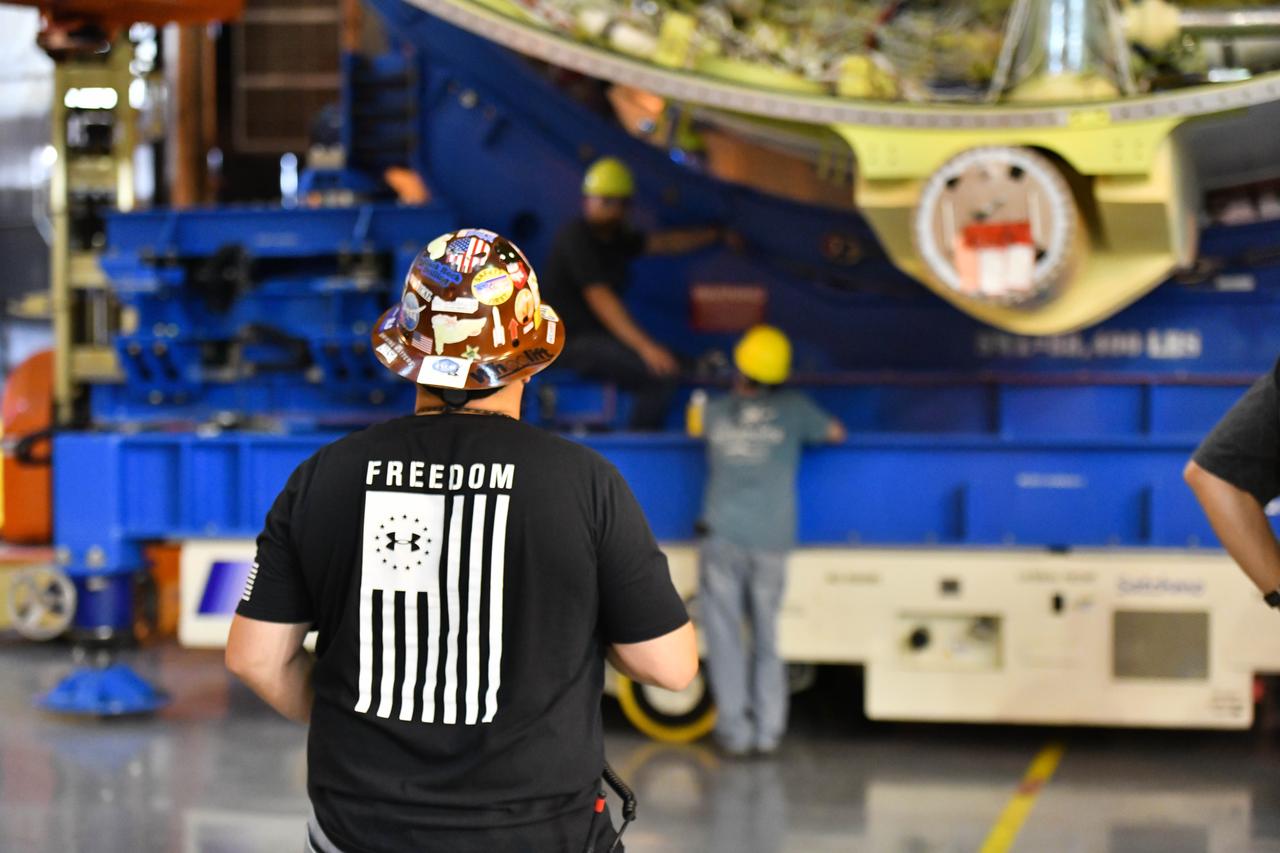
Technicians at NASA’s Michoud Assembly Facility in New Orleans rotated the engine section for NASA’s Space Launch System rocket from a vertical to horizontal position to prepare it for joining to the rest of the rocket’s core stage on Sept. 13. The engine section, which comprises the lowest portion of the 212-foot-tall stage, is the last major component to be horizontally integrated to the core stage. Michoud crews completed assembly on the flight hardware that will be used for Artemis I, the first lunar mission of SLS and NASA’s Orion spacecraft, on Aug. 29. The core stage’s two liquid propellant tanks and four RS-25 engines will produce more than 2 million pounds of thrust to send the SLS rocket and Orion on the Artemis lunar missions. The engine section houses the four RS-25 engines and includes vital systems for mounting, controlling and delivering fuel form the propellant tanks to the rocket’s engines. Offering more payload mass, volume capability and energy to speed missions through space, the SLS rocket, along with NASA’s Gateway in lunar orbit and Orion, is part of NASA’s backbone for deep space exploration and the Artemis lunar program. No other rocket is capable of carrying astronauts in Orion around the Moon in a single mission.
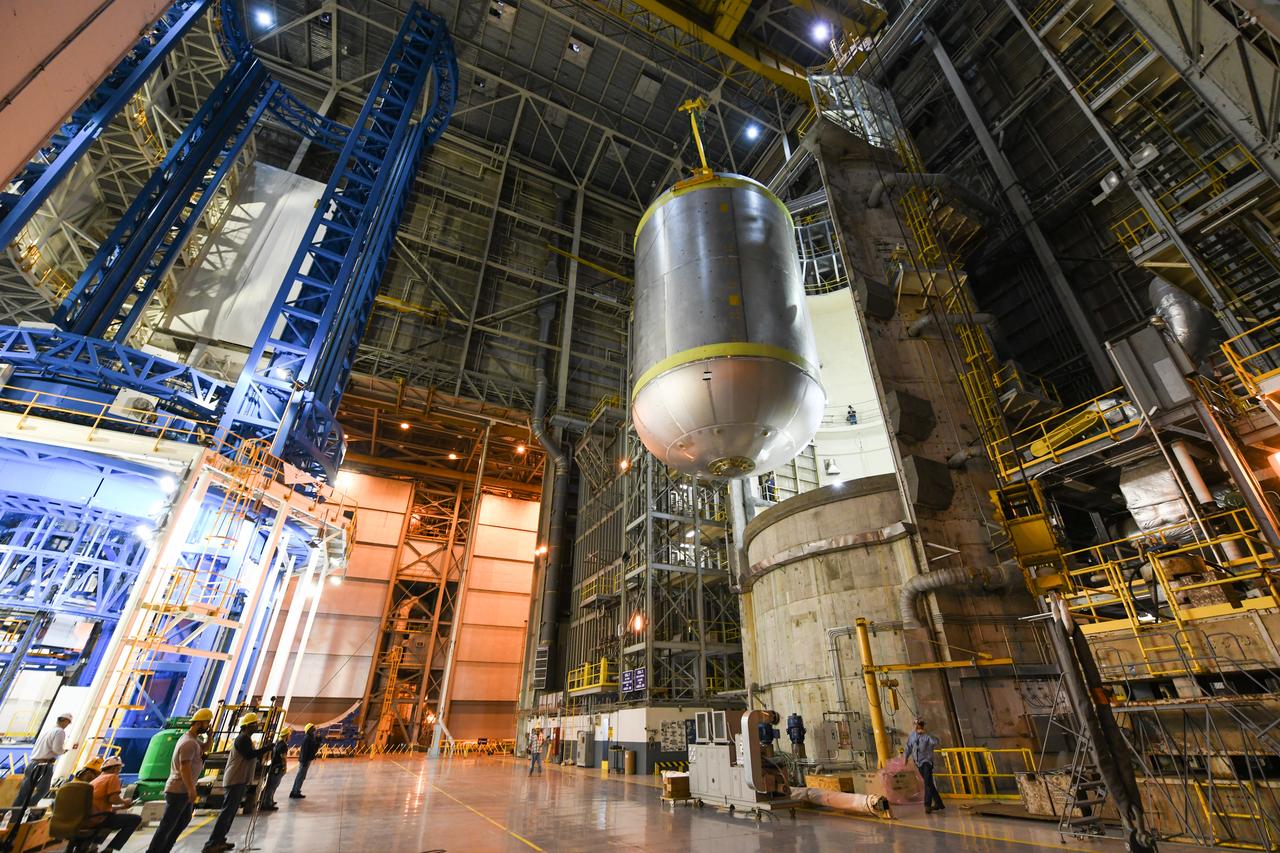
This image shows the latest progress NASA has made in manufacturing the liquid oxygen tank for the second core stage of NASA’s Space Launch System (SLS) rocket. The liquid oxygen tank will be used for the first crewed mission, Artemis II, of the agency’s Artemis program. Teams at NASA’s Michoud Assembly Facility in New Orleans recently completed internal cleaning of the liquid oxygen, or LOX, tank at the facility. Following the cleaning, crews prepared the propellant tank for the next phase of phase of assembly in a different area of the factory by moving, or breaking over, the tank from a vertical to horizontal position. The LOX tank is one of five major elements that make up the rocket’s massive 212-foot-tall core stage. The propellant tank holds 196,000 gallons of supercooled liquid oxygen to help fuel four RS-25 engines, and the internal cleaning ensures no contaminants make their way into the complex propulsion and engine systems of the deep space rocket. The stage, which includes a cluster of four RS-25, will produce more than 2 million pounds of thrust to help launch the SLS rocket and astronauts aboard NASA’s Orion spacecraft around the Moon for Artemis II. NASA is working to land the first woman and the next man on the Moon by 2024. The agency’s SLS rocket offers more payload mass, volume capability and energy to speed missions through deep space and enable NASA’s Artemis lunar program. SLS, along with Orion, the human landing system, and the Gateway in orbit around the Moon are NASA’s backbone for deep space exploration. No other rocket is capable of carrying astronauts in Orion around the Moon in a single mission.
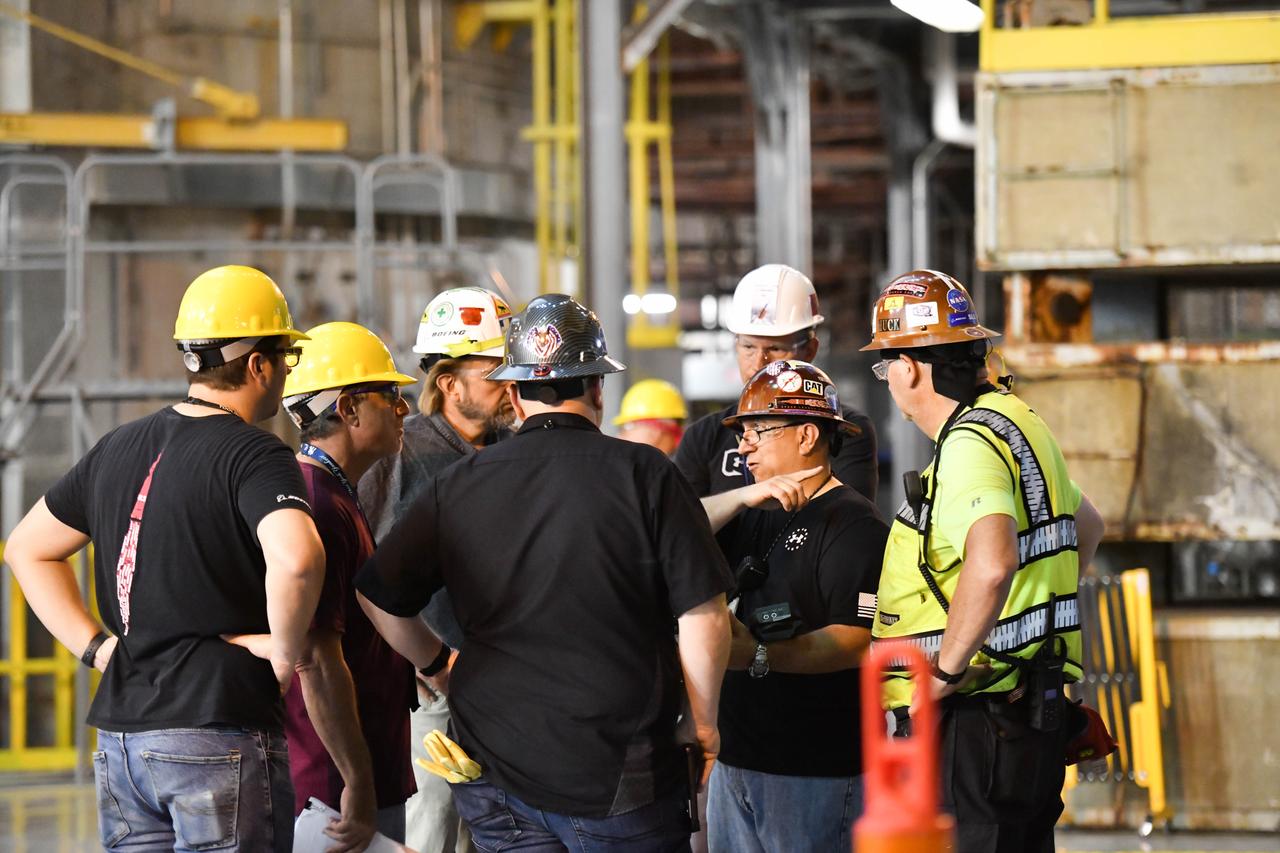
Technicians at NASA’s Michoud Assembly Facility in New Orleans rotated the engine section for NASA’s Space Launch System rocket from a vertical to horizontal position to prepare it for joining to the rest of the rocket’s core stage on Sept. 13. The engine section, which comprises the lowest portion of the 212-foot-tall stage, is the last major component to be horizontally integrated to the core stage. Michoud crews completed assembly on the flight hardware that will be used for Artemis I, the first lunar mission of SLS and NASA’s Orion spacecraft, on Aug. 29. The core stage’s two liquid propellant tanks and four RS-25 engines will produce more than 2 million pounds of thrust to send the SLS rocket and Orion on the Artemis lunar missions. The engine section houses the four RS-25 engines and includes vital systems for mounting, controlling and delivering fuel form the propellant tanks to the rocket’s engines. Offering more payload mass, volume capability and energy to speed missions through space, the SLS rocket, along with NASA’s Gateway in lunar orbit and Orion, is part of NASA’s backbone for deep space exploration and the Artemis lunar program. No other rocket is capable of carrying astronauts in Orion around the Moon in a single mission.
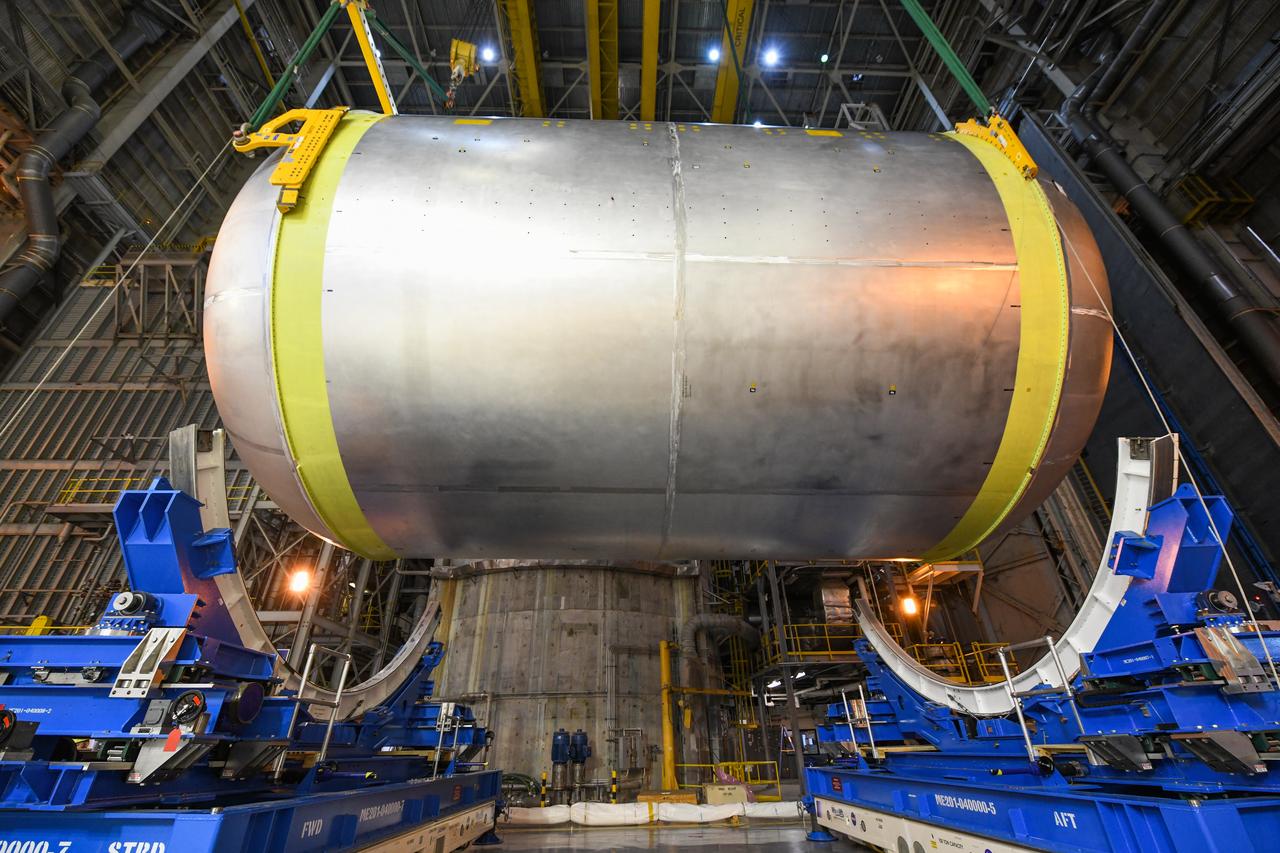
This image shows the latest progress NASA has made in manufacturing the liquid oxygen tank for the second core stage of NASA’s Space Launch System (SLS) rocket. The liquid oxygen tank will be used for the first crewed mission, Artemis II, of the agency’s Artemis program. Teams at NASA’s Michoud Assembly Facility in New Orleans recently completed internal cleaning of the liquid oxygen, or LOX, tank at the facility. Following the cleaning, crews prepared the propellant tank for the next phase of phase of assembly in a different area of the factory by moving, or breaking over, the tank from a vertical to horizontal position. The LOX tank is one of five major elements that make up the rocket’s massive 212-foot-tall core stage. The propellant tank holds 196,000 gallons of supercooled liquid oxygen to help fuel four RS-25 engines, and the internal cleaning ensures no contaminants make their way into the complex propulsion and engine systems of the deep space rocket. The stage, which includes a cluster of four RS-25, will produce more than 2 million pounds of thrust to help launch the SLS rocket and astronauts aboard NASA’s Orion spacecraft around the Moon for Artemis II. NASA is working to land the first woman and the next man on the Moon by 2024. The agency’s SLS rocket offers more payload mass, volume capability and energy to speed missions through deep space and enable NASA’s Artemis lunar program. SLS, along with Orion, the human landing system, and the Gateway in orbit around the Moon are NASA’s backbone for deep space exploration. No other rocket is capable of carrying astronauts in Orion around the Moon in a single mission.
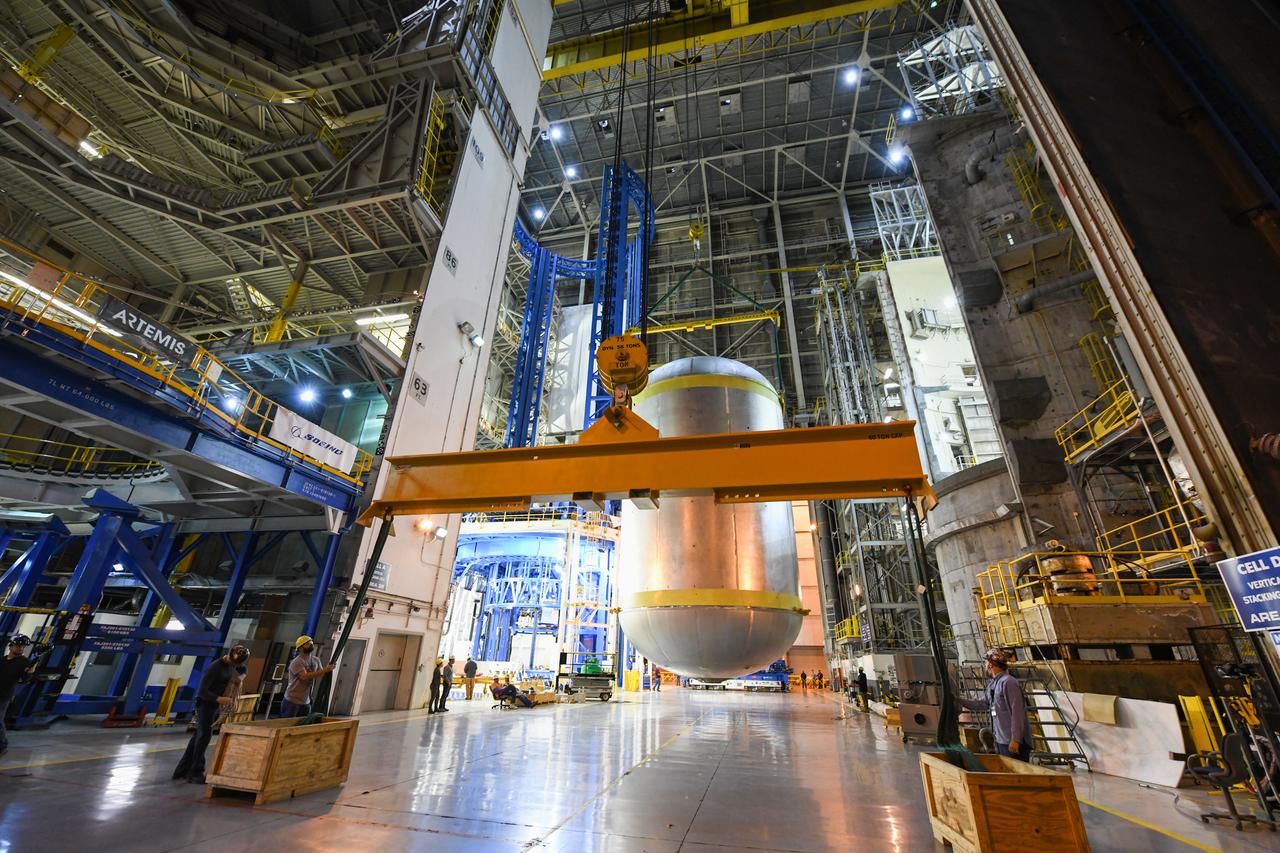
This image shows the latest progress NASA has made in manufacturing the liquid oxygen tank for the second core stage of NASA’s Space Launch System (SLS) rocket. The liquid oxygen tank will be used for the first crewed mission, Artemis II, of the agency’s Artemis program. Teams at NASA’s Michoud Assembly Facility in New Orleans recently completed internal cleaning of the liquid oxygen, or LOX, tank at the facility. Following the cleaning, crews prepared the propellant tank for the next phase of phase of assembly in a different area of the factory by moving, or breaking over, the tank from a vertical to horizontal position. The LOX tank is one of five major elements that make up the rocket’s massive 212-foot-tall core stage. The propellant tank holds 196,000 gallons of supercooled liquid oxygen to help fuel four RS-25 engines, and the internal cleaning ensures no contaminants make their way into the complex propulsion and engine systems of the deep space rocket. The stage, which includes a cluster of four RS-25, will produce more than 2 million pounds of thrust to help launch the SLS rocket and astronauts aboard NASA’s Orion spacecraft around the Moon for Artemis II. NASA is working to land the first woman and the next man on the Moon by 2024. The agency’s SLS rocket offers more payload mass, volume capability and energy to speed missions through deep space and enable NASA’s Artemis lunar program. SLS, along with Orion, the human landing system, and the Gateway in orbit around the Moon are NASA’s backbone for deep space exploration. No other rocket is capable of carrying astronauts in Orion around the Moon in a single mission.
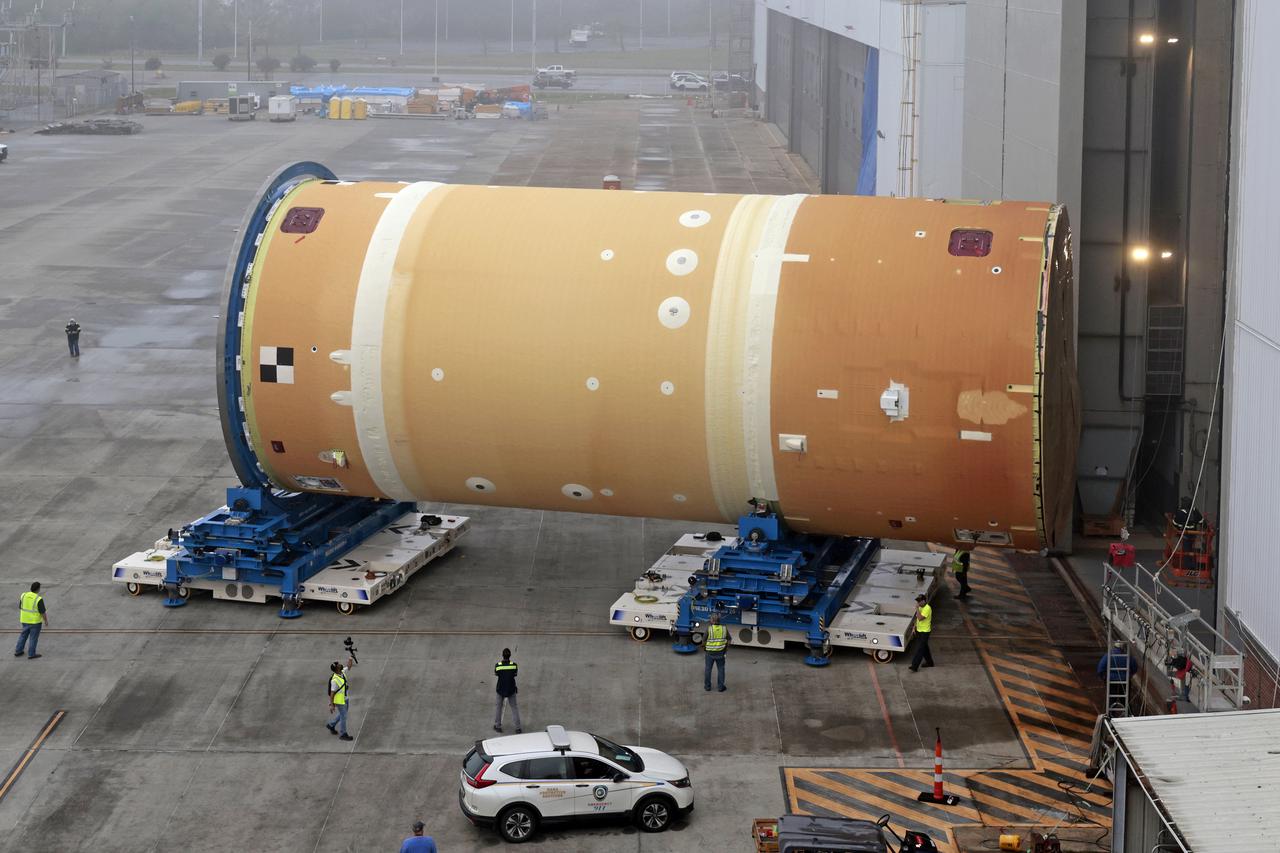
NASA has completed assembly of the upper, or forward, part of the core stage for the Space Launch System (SLS) rocket that will send the Artemis II crew on their lunar mission. Boeing, the lead core stage contractor, completed joining the forward part of the rocket, and then lifted it out of the assembly structure at NASA’s Michoud Assembly Facility in New Orleans. To construct this part of the core stage, the team first stacked three major parts of the stage—the forward skirt, the liquid oxygen tank, and the intertank. The forward skirt sits atop the rocket’s core stage, and it and the intertank are outfitted with the rocket’s flight computers and avionics systems that control SLS during launch and ascent. The liquid oxygen tank holds 196,000 gallons of liquid oxygen cooled to minus 297 degrees Fahrenheit. The entire upper part of the stage is around 66-feet tall. The fully-assembled, 212-foot-tall rocket stage consists of five hardware elements. As the team lifted it out of the assembly area, they completed a breakover maneuver, to put the forward assembly in a horizontal position. Then, they moved it to final assembly where the Artemis II liquid hydrogen tank is also undergoing outfitting. Here, teams will connect the liquid hydrogen tank to the upper part of the rocket and complete assembly of four of the five core stage parts. The last piece to be added will be the engine section, which is currently in a separate assembly area being outfitted with propulsion systems that connect to the engines. Image credit: NASA/Michael DeMocker