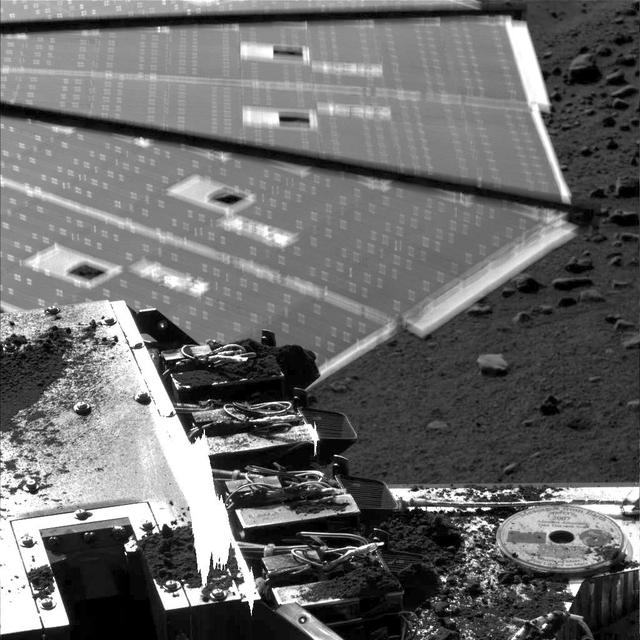
Solar Panel Buffeted by Wind at Phoenix Site
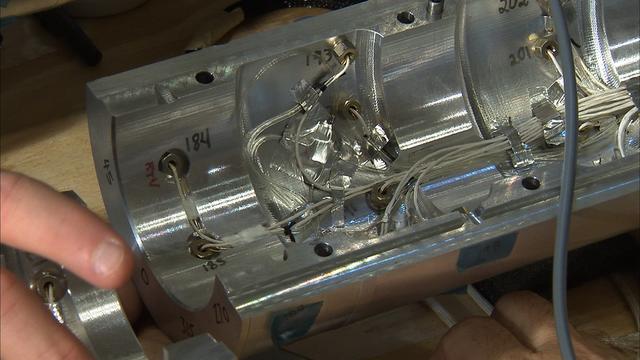
Shown is testing of a 3.5% Ares 1-X buffet model at the transonic wind tunnel at Langley Research Center, Virginia in support of the Ares/Constellation program. This image is extracted from high definition video and is the highest resolution available
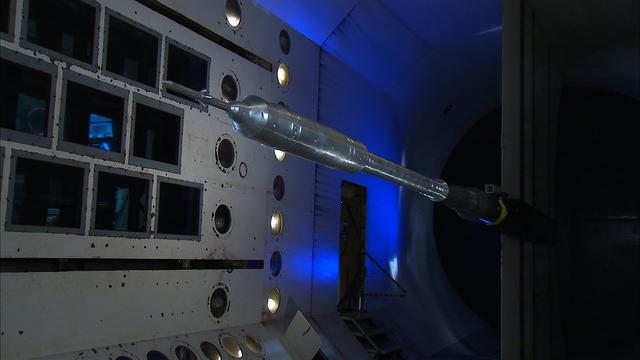
Shown is testing of a 3.5% Ares 1-X buffet model at the transonic wind tunnel at Langley Research Center, Virginia in support of the Ares/Constellation program. This image is extracted from high definition video and is the highest resolution available.

Members of the World Presidents' Organization enjoy a buffet luncheon during a Jan. 26 visit to NASA's John C. Stennis Space Center. WPO members from several states toured Stennis facilities during a daylong visit that included a river ride with Special Boat Team 22, the U.S. Navy's elite boat warriors group that trains at Stennis. Visiting president also had an opportunity to learn about the ongoing work of the nation's premier rocket engine testing site.
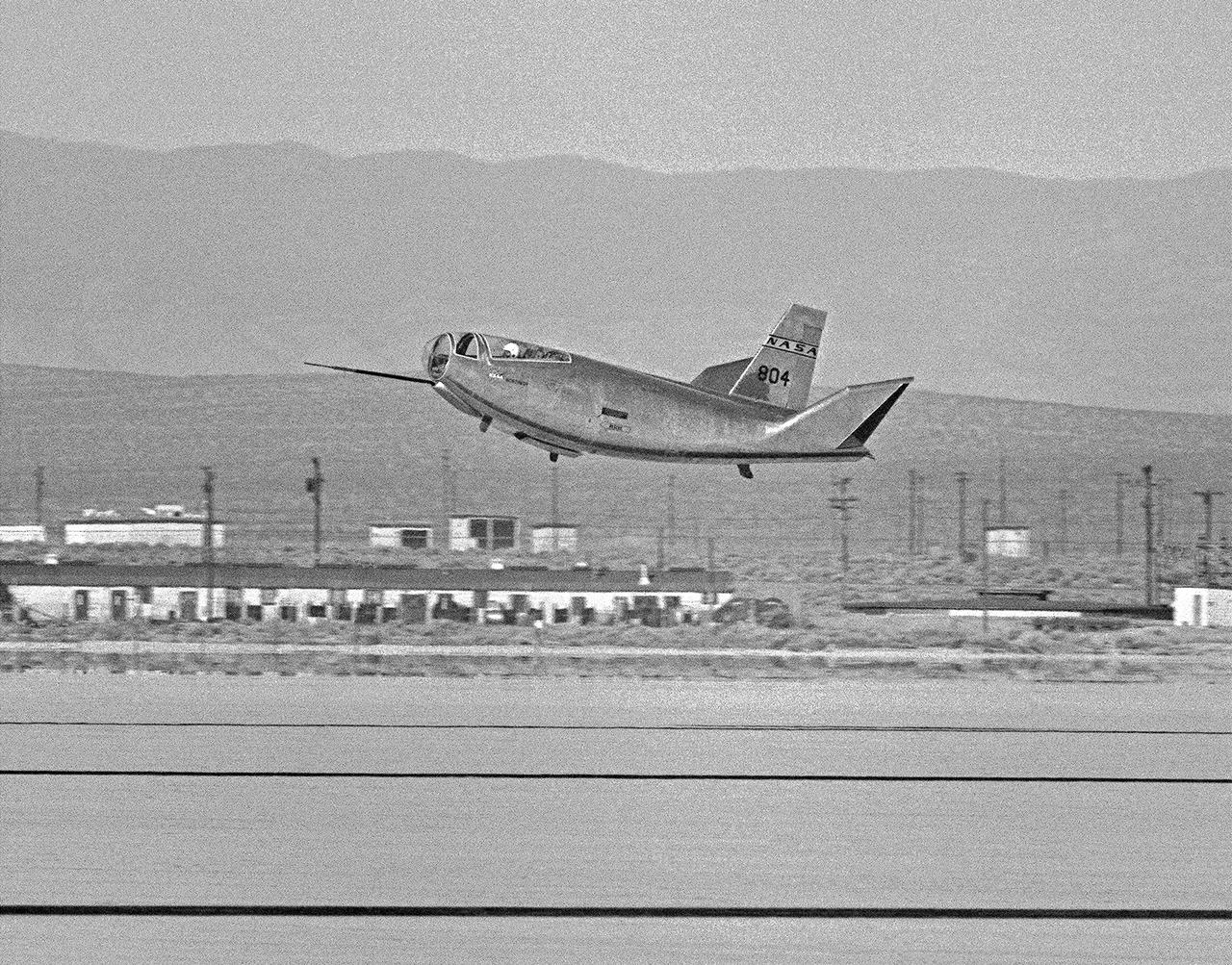
The HL-10 Lifting Body completes its first research flight with a landing on Rogers Dry Lake at Edwards AFB, California, on December 22, 1966. The HL-10 suffered from buffeting and poor control during the flight. Pilot Bruce Peterson was able to make a successful landing despite the severe problems. These were traced to airflow separation from the fins. As a result, the fins were no longer able to stabilize the vehicle. A small reshaping of the fins' leading edges cured the airflow separation, but it was not until March 15, 1968, that the second HL-10 flight occurred.
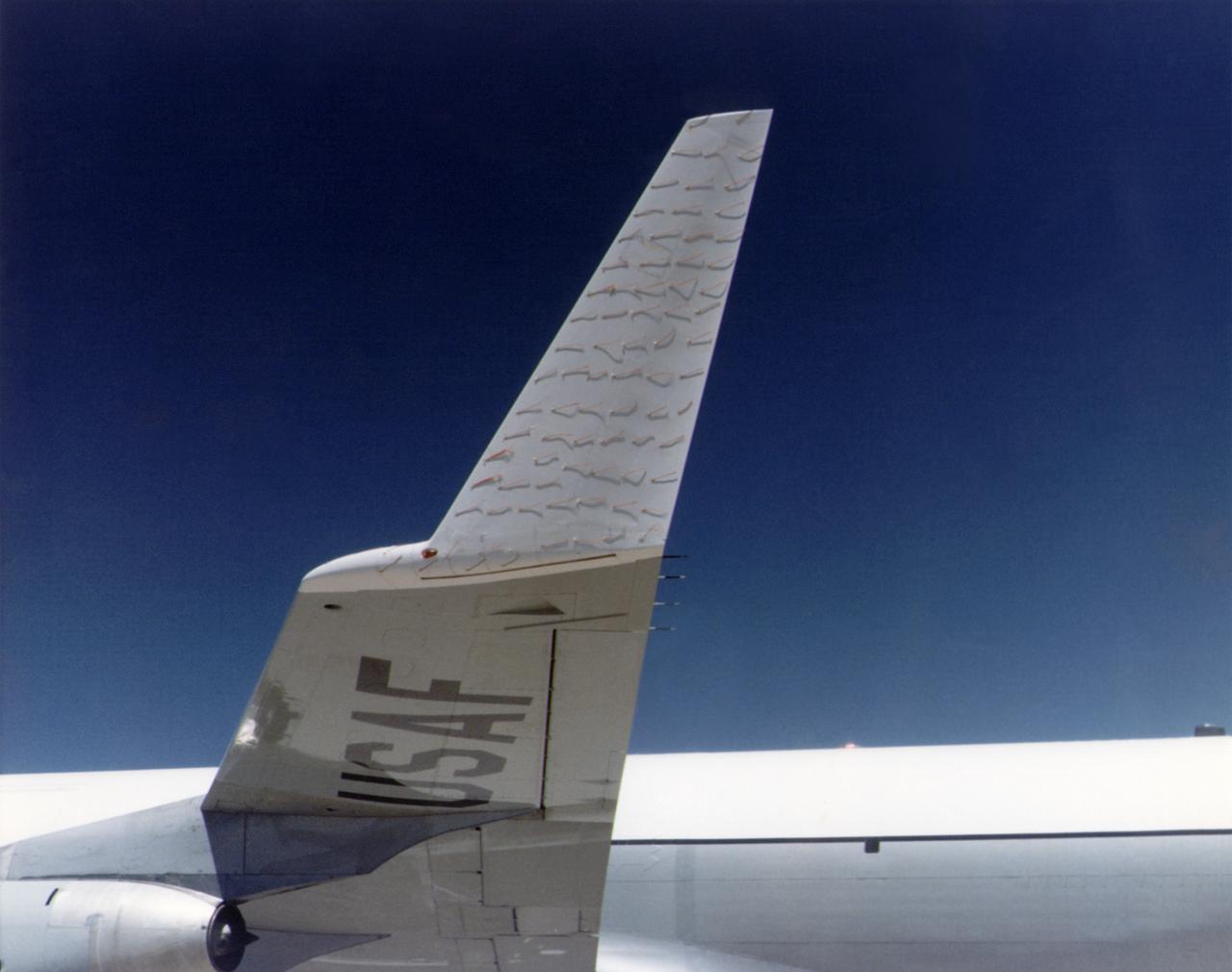
A chase plane view of the tufts on the KC-135 winglet. The use of tufts in flight research dates back to the early days of the NACA, and remains an effective means of observing airflow even today. In this procedure, rows of strings are attached to an airplane's surface, with one end of each string taped to the airplane and the other end free to swing about in the airflow. The movements of the tufts are photographed by on-board cameras or a chase plane. If the tufts are arrayed in neat rows, as seen here, then the airflow is smooth over the airplane's surface. If, however, they are moving about violently, it suggests turbulent airflow. Such motions may indicate high drag, flow separation (such as in a stall), or buffeting. In some cases, tufts will actually point forward, indicating the airflow has reversed direction.
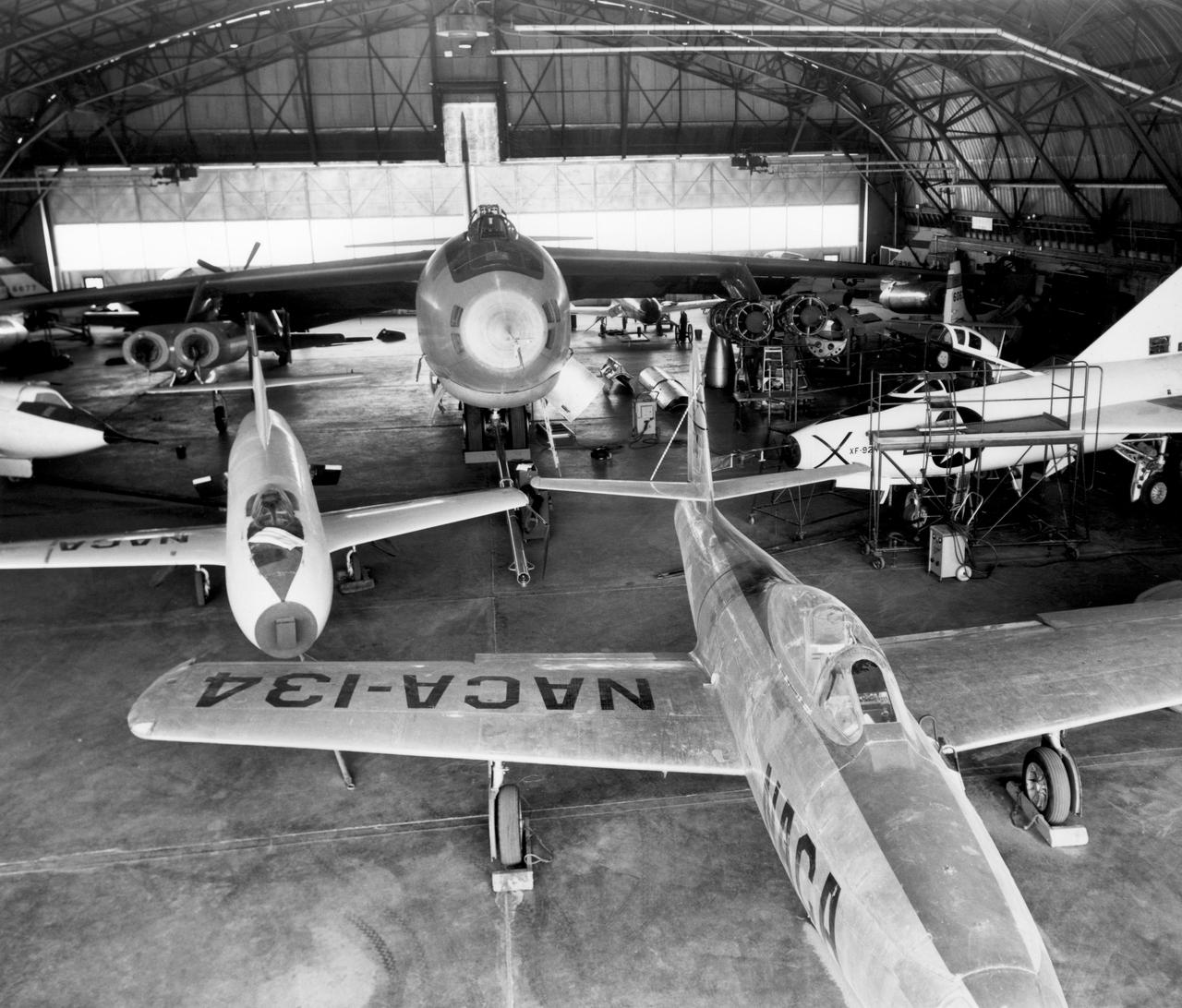
In the center foreground of this 1953 hangar photo is the YF-84A (NACA 134/Air Force 45-59490) used for vortex generator research. It arrived on November 28, 1949, and departed on April 21, 1954. Beside it is the third D-558-1 aircraft (NACA 142/Navy 37972). This aircraft was used for a total of 78 transonic research flights from April 1949 to June 1954. It replaced the second D-558-1, lost in the crash which killed Howard Lilly. Just visible on the left edge is the nose of the first D-558-2 (NACA 143/Navy 37973). Douglas turned the aircraft over to NACA on August 31, 1951, after the contractor had completed its initial test flights. NACA only made a single flight with the aircraft, on September 17, 1956, before the program was cancelled. In the center of the photo is the B-47A (NACA 150/Air Force 49-1900). The B-47 jet bomber, with its thin, swept-back wings, and six podded engines, represented the state of the art in aircraft design in the early 1950s. The aircraft undertook a number of research activities between May 1953 and its 78th and final research flight on November 22, 1957. The tests showed that the aircraft had a buffeting problem at speeds above Mach 0.8. Among the pilots who flew the B-47 were later X-15 pilots Joe Walker, A. Scott Crossfield, John B. McKay, and Neil A. Armstrong. On the right side of the B-47 is NACA's X-1 (Air Force 46-063). The second XS-1 aircraft built, it was fitted with a thicker wing than that on the first aircraft, which had exceeded Mach 1 on October 14, 1947. Flight research by NACA pilots indicated that this thicker wing produced 30 percent more drag at transonic speeds compared to the thinner wing on the first X-1. After a final flight on October 23, 1951, the aircraft was grounded due to the possibility of fatigue failure of the nitrogen spheres used to pressurize the fuel tanks. At the time of this photo, in 1953, the aircraft was in storage. In 1955, the aircraft was extensively modified, becoming the X-1E. In front o
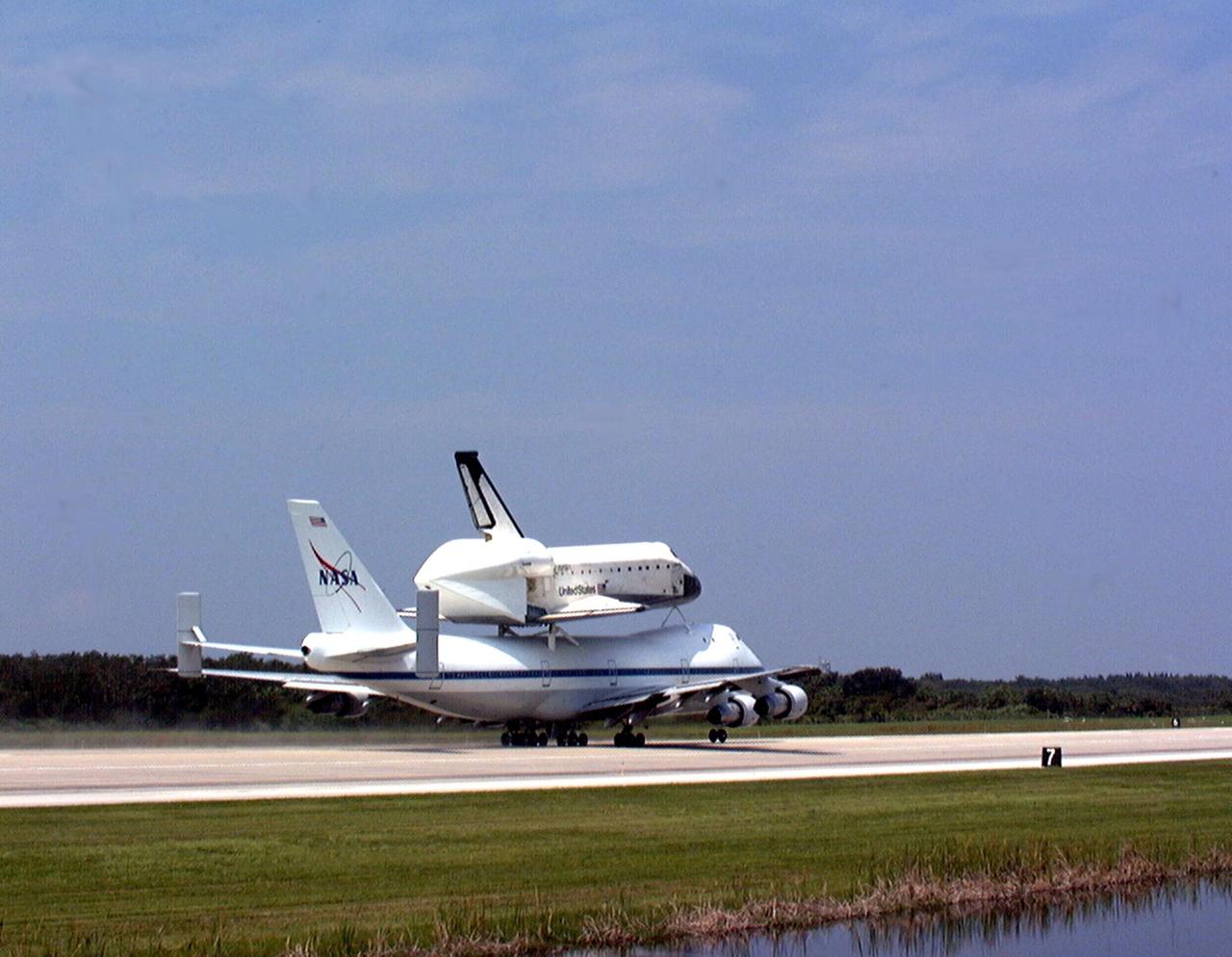
KENNEDY SPACE CENTER, FLA. -- From the Shuttle Landing Facility at Kennedy Space Center, the orbiter Columbia moves down the runway on the back of a Boeing 747 Shuttle Carrier Aircraft on a ferry flight to Palmdale, Calif. On the rear of the orbiter can be seen the tail cone, a fairing that is installed over the aft fuselage of the orbiter to decrease aerodynamic drag and buffet when the Shuttle Carrier Aircraft is transporting the orbiter cross-country. It is 36 feet long, 25 feet wide, and 22 feet high. Columbia, the oldest of four orbiters in NASA's fleet, will undergo extensive inspections and modifications in Boeing's Orbiter Assembly Facility during a nine-month orbiter maintenance down period (OMDP), the second in its history. Orbiters are periodically removed from flight operations for an OMDP. Columbia's first was in 1994. Along with more than 100 modifications on the vehicle, Columbia will be the second orbiter to be outfitted with the multifunctional electronic display system, or "glass cockpit." Columbia is expected to return to KSC in July 2000

KENNEDY SPACE CENTER, FLA. -- At the Shuttle Landing Facility at Kennedy Space Center, the orbiter Columbia takes to the sky on the back of a Boeing 747 Shuttle Carrier Aircraft on a ferry flight to Palmdale, Calif. On the rear of the orbiter can be seen the tail cone, a fairing that is installed over the aft fuselage of the orbiter to decrease aerodynamic drag and buffet when the Shuttle Carrier Aircraft is transporting the orbiter cross-country. It is 36 feet long, 25 feet wide, and 22 feet high. Columbia, the oldest of four orbiters in NASA's fleet, will undergo extensive inspections and modifications in Boeing's Orbiter Assembly Facility during a nine-month orbiter maintenance down period (OMDP), the second in its history. Orbiters are periodically removed from flight operations for an OMDP. Columbia's first was in 1994. Along with more than 100 modifications on the vehicle, Columbia will be the second orbiter to be outfitted with the multifunctional electronic display system, or "glass cockpit." Columbia is expected to return to KSC in July 2000
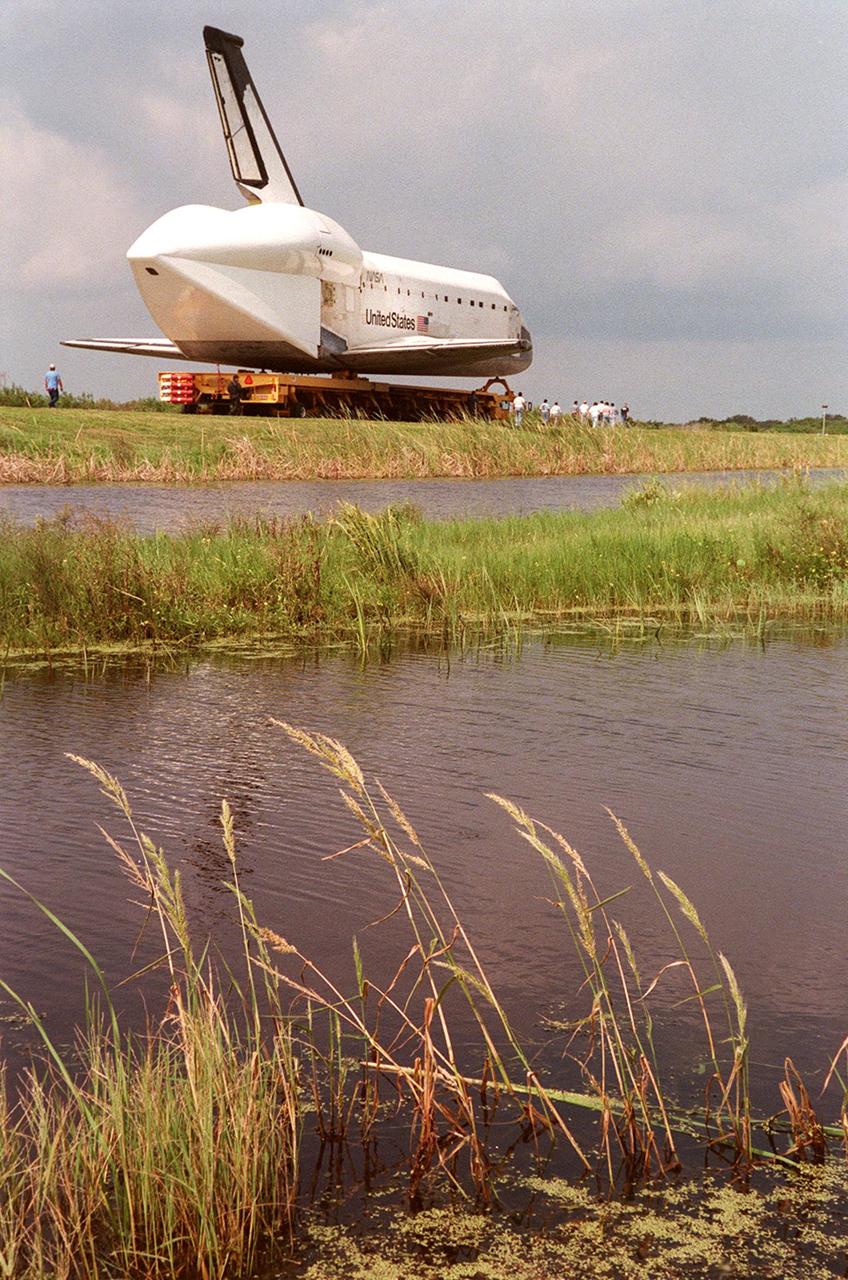
KENNEDY SPACE CENTER, FLA. -- Aboard a transporter, the orbiter Columbia is moved on the tow-way along the Banana Creek. Columbia is heading to the Shuttle Landing Facility's (SLF) Mate-Demate Device where it will be mated to the Boeing 747 Shuttle Carrier Aircraft for a ferry flight to Palmdale, Calif. On the rear of the orbiter can be seen the tail cone, a fairing that is installed over the aft fuselage of the orbiter to decrease aerodynamic drag and buffet when the Shuttle Carrier Aircraft is transporting the orbiter cross-country. It is 36 feet long, 25 feet wide, and 22 feet high. Columbia, the oldest of four orbiters in NASA's fleet, will undergo extensive inspections and modifications in Boeing's Orbiter Assembly Facility during a nine-month orbiter maintenance down period (OMDP), the second in its history. Orbiters are periodically removed from flight operations for an OMDP. Columbia's first was in 1994. Along with more than 100 modifications on the vehicle, Columbia will be the second orbiter to be outfitted with the multifunctional electronic display system, or "glass cockpit." Columbia is expected to return to KSC in July 2000
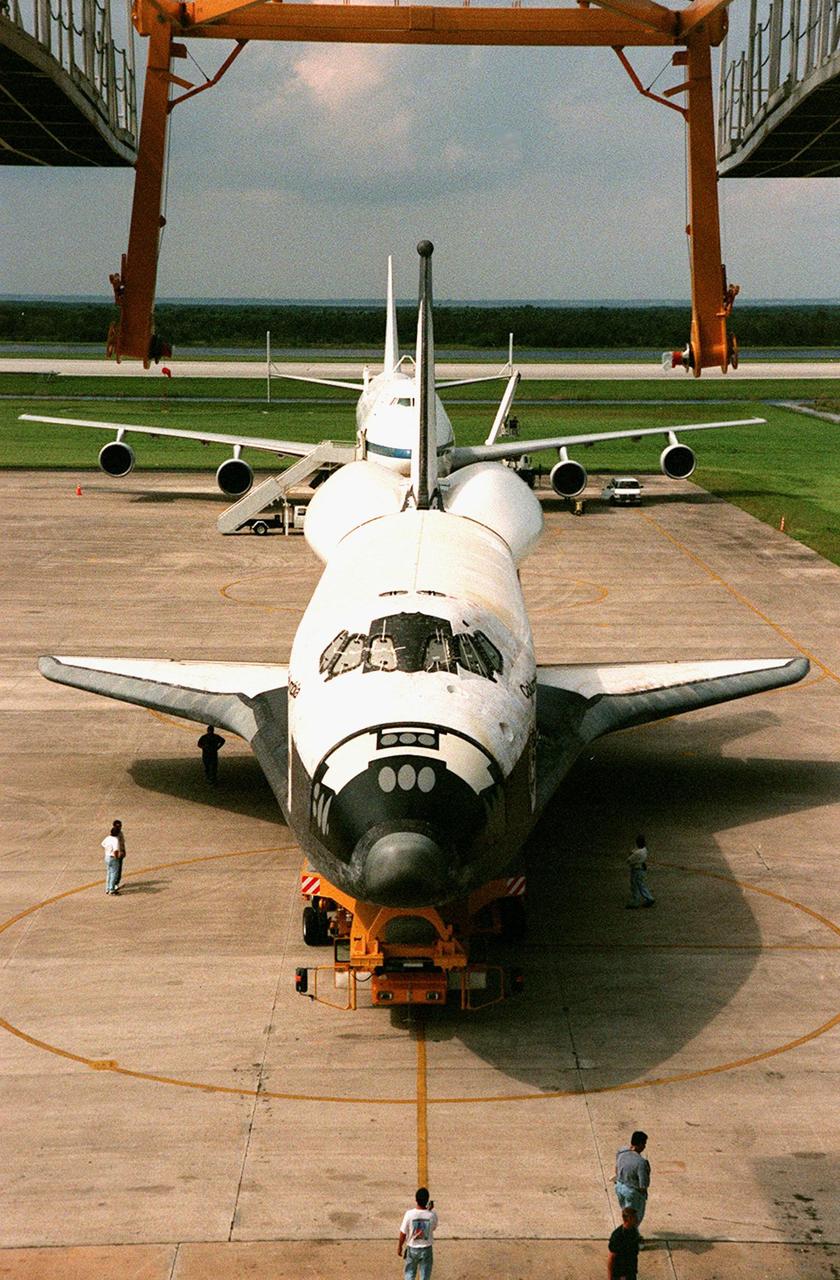
KENNEDY SPACE CENTER, FLA. -- The orbiter Columbia (foreground) moves under the Mate-Demate Device at KSC's Shuttle Landing Facility (SLF). The crane seen above it will lift the orbiter so that the Boeing 747 Shuttle Carrier Aircraft (SCA) in the background can move underneath Columbia, which will then be attached to the back of the SCA for a ferry flight to Palmdale, Calif. On the rear of the orbiter is the tail cone, a fairing that is installed over the aft fuselage of the orbiter to decrease aerodynamic drag and buffet when the Shuttle Carrier Aircraft is transporting the orbiter cross-country. It is 36 feet long, 25 feet wide, and 22 feet high. Columbia, the oldest of four orbiters in NASA's fleet, will undergo extensive inspections and modifications in Boeing's Orbiter Assembly Facility during a nine-month orbiter maintenance down period (OMDP), the second in its history. Orbiters are periodically removed from flight operations for an OMDP. Columbia's first was in 1994. Along with more than 100 modifications on the vehicle, Columbia will be the second orbiter to be outfitted with the multifunctional electronic display system, or "glass cockpit." Columbia is expected to return to KSC in July 2000
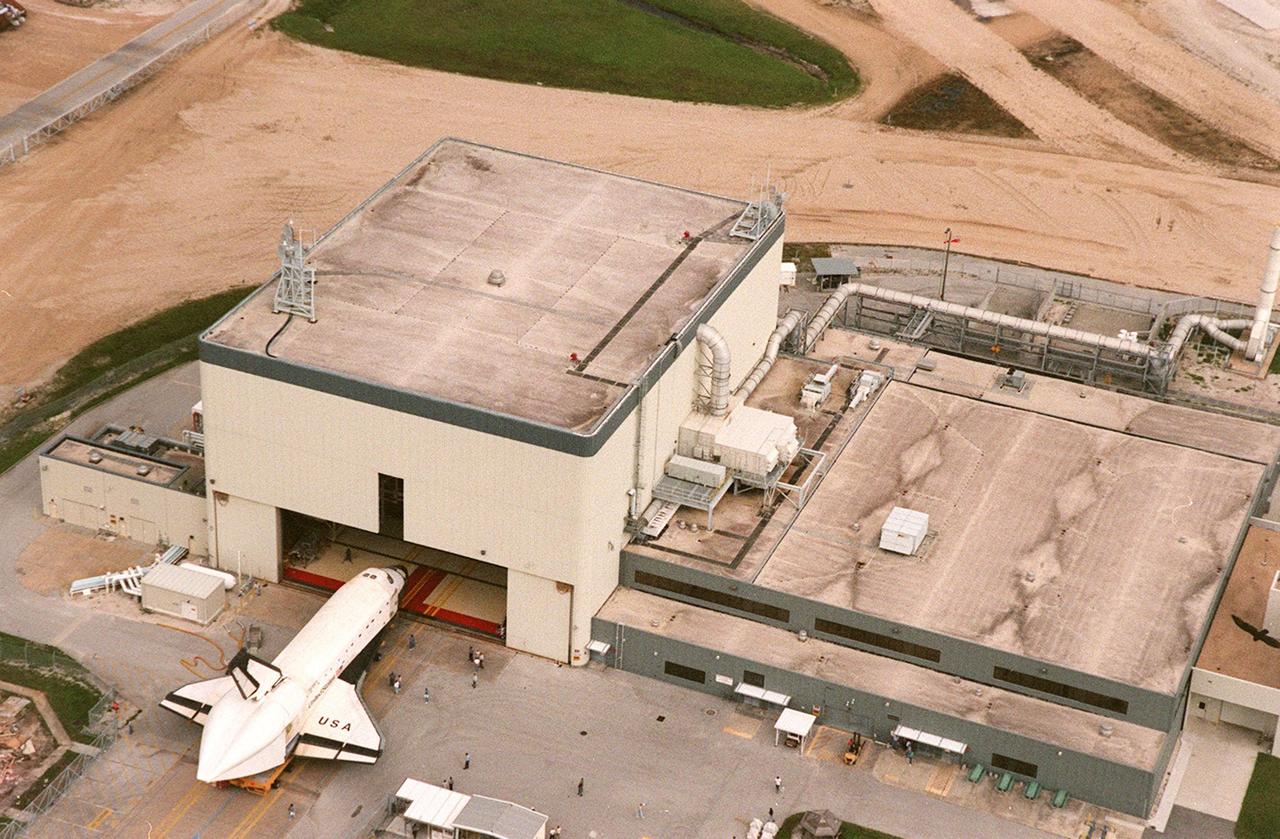
KENNEDY SPACE CENTER, FLA. -- The orbiter Columbia rolls out of KSC's Orbiter Processing Facility bay 3, bound for the Shuttle Landing Facility's (SLF) Mate-Demate Device. At the SLF the orbiter is to be mated to the Boeing 747 Shuttle Carrier Aircraft for a ferry flight to Palmdale, Calif. On the rear of the orbiter can be seen the tail cone, a fairing that is installed over the aft fuselage of the orbiter to decrease aerodynamic drag and buffet when the Shuttle Carrier Aircraft is transporting the orbiter cross-country. It is 36 feet long, 25 feet wide, and 22 feet high. Columbia, the oldest of four orbiters in NASA's fleet, will undergo extensive inspections and modifications in Boeing's Orbiter Assembly Facility during a nine-month orbiter maintenance down period (OMDP), the second in its history. Orbiters are periodically removed from flight operations for an OMDP. Columbia's first was in 1994. Along with more than 100 modifications on the vehicle, Columbia will be the second orbiter to be outfitted with the multifunctional electronic display system, or "glass cockpit." Columbia is expected to return to KSC in July 2000
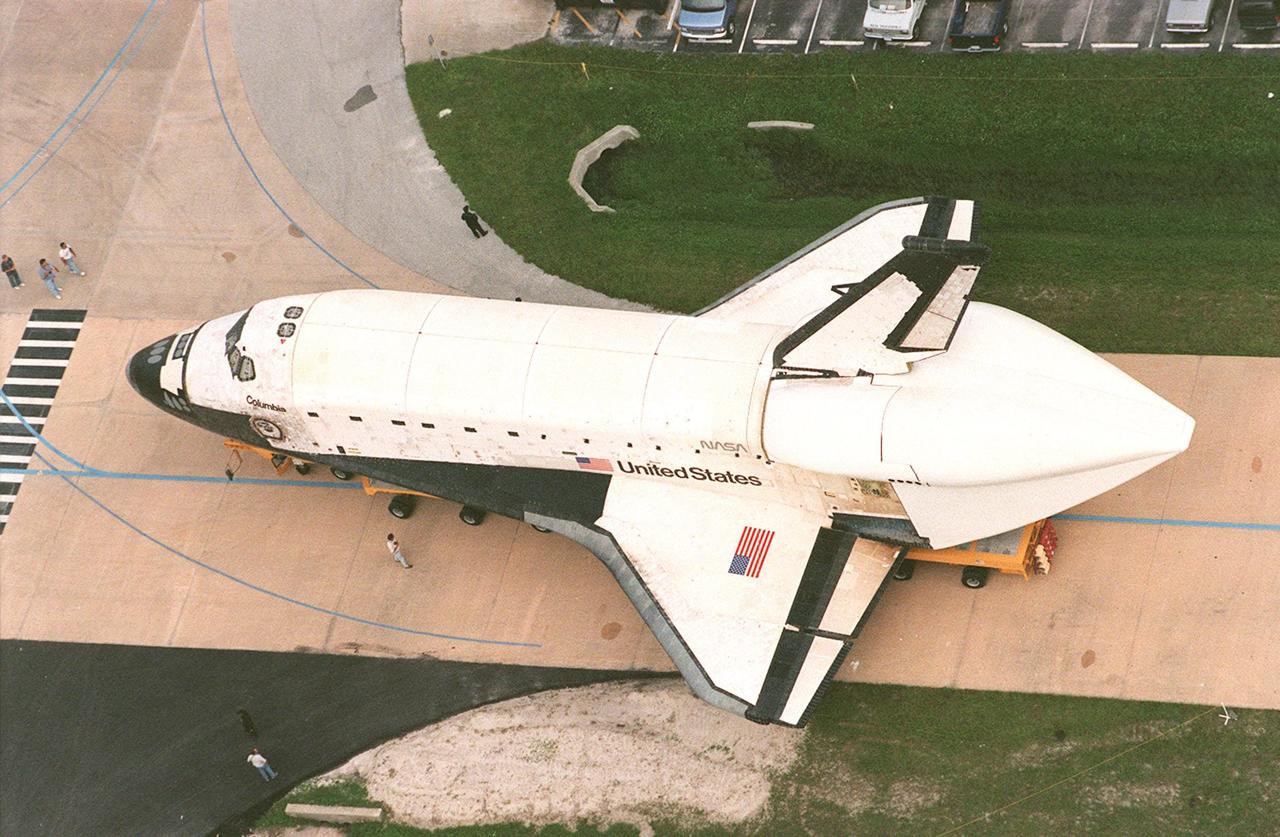
KENNEDY SPACE CENTER, FLA. -- On an orbiter transporter, Columbia is turned, after rolling out of KSC's Orbiter Processing Facility bay 3, for its move to the Shuttle Landing Facility's (SLF) Mate-Demate Device. At the SLF the orbiter is to be mated to the Boeing 747 Shuttle Carrier Aircraft for a ferry flight to Palmdale, Calif. On the rear of the orbiter can be seen the tail cone, a fairing that is installed over the aft fuselage of the orbiter to decrease aerodynamic drag and buffet when the Shuttle Carrier Aircraft is transporting the orbiter cross-country. It is 36 feet long, 25 feet wide, and 22 feet high. Columbia, the oldest of four orbiters in NASA's fleet, will undergo extensive inspections and modifications in Boeing's Orbiter Assembly Facility during a nine-month orbiter maintenance down period (OMDP), the second in its history. Orbiters are periodically removed from flight operations for an OMDP. Columbia's first was in 1994. Along with more than 100 modifications on the vehicle, Columbia will be the second orbiter to be outfitted with the multifunctional electronic display system, or "glass cockpit." Columbia is expected to return to KSC in July 2000

KENNEDY SPACE CENTER, FLA. -- Aboard a transporter, the orbiter Columbia moves past the Boeing 747 Shuttle Carrier Aircraft (SCA) at the Shuttle Landing Facility. There the orbiter will be mated to the SCA, with the help of a Mate-Demate Device, for a ferry flight to Palmdale, Calif. On the rear of the orbiter is the tail cone, a fairing that is installed over the aft fuselage of the orbiter to decrease aerodynamic drag and buffet when the Shuttle Carrier Aircraft is transporting the orbiter cross-country. It is 36 feet long, 25 feet wide, and 22 feet high. Columbia, the oldest of four orbiters in NASA's fleet, will undergo extensive inspections and modifications in Boeing's Orbiter Assembly Facility during a nine-month orbiter maintenance down period (OMDP), the second in its history. Orbiters are periodically removed from flight operations for an OMDP. Columbia's first was in 1994. Along with more than 100 modifications on the vehicle, Columbia will be the second orbiter to be outfitted with the multifunctional electronic display system, or "glass cockpit." Columbia is expected to return to KSC in July 2000
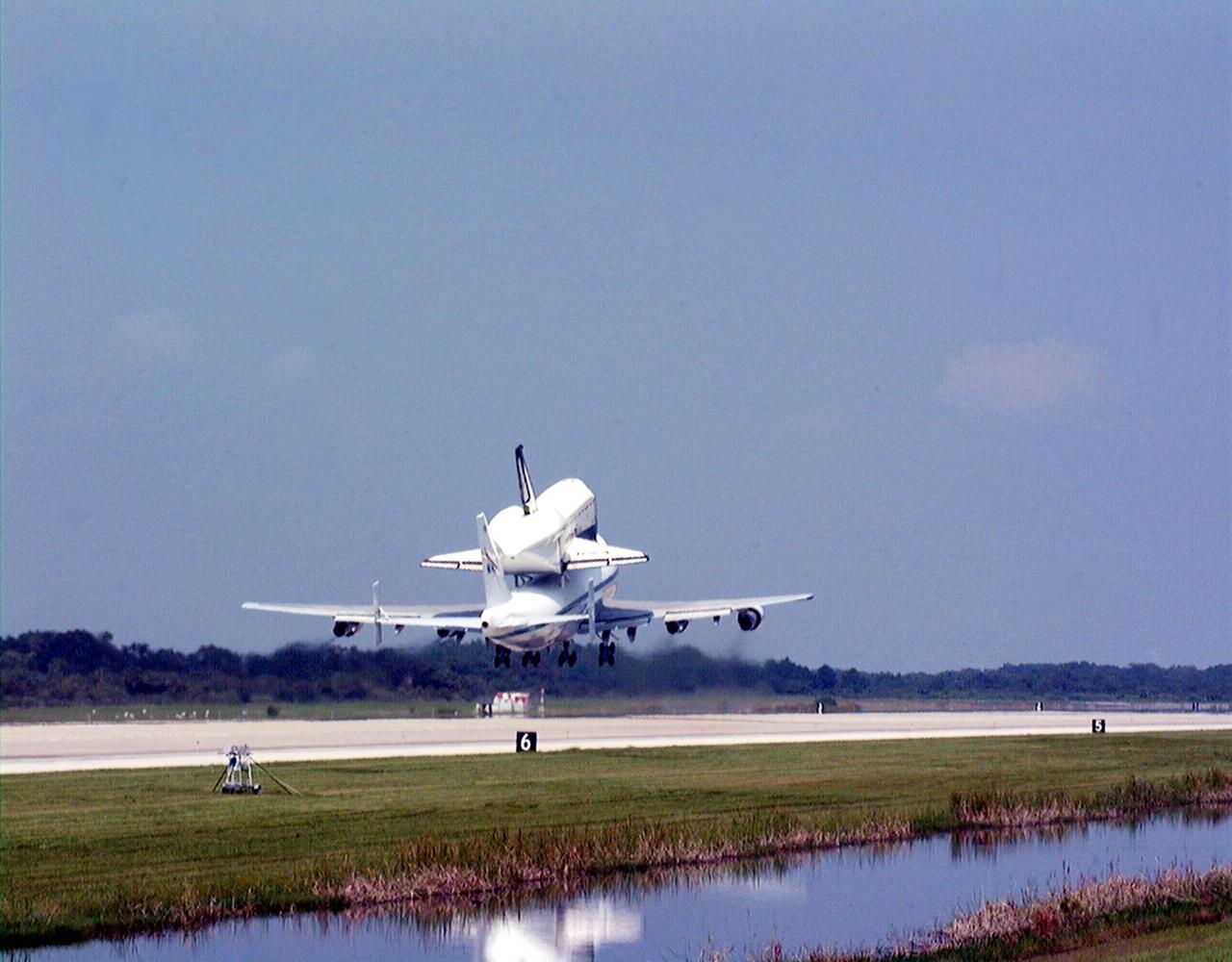
KENNEDY SPACE CENTER, FLA. -- At the Shuttle Landing Facility at Kennedy Space Center, the orbiter Columbia takes off into a clear sky on the back of a Boeing 747 Shuttle Carrier Aircraft on a ferry flight to Palmdale, Calif. On the rear of the orbiter can be seen the tail cone, a fairing that is installed over the aft fuselage of the orbiter to decrease aerodynamic drag and buffet when the Shuttle Carrier Aircraft is transporting the orbiter cross-country. It is 36 feet long, 25 feet wide, and 22 feet high. Columbia, the oldest of four orbiters in NASA's fleet, will undergo extensive inspections and modifications in Boeing's Orbiter Assembly Facility during a nine-month orbiter maintenance down period (OMDP), the second in its history. Orbiters are periodically removed from flight operations for an OMDP. Columbia's first was in 1994. Along with more than 100 modifications on the vehicle, Columbia will be the second orbiter to be outfitted with the multifunctional electronic display system, or "glass cockpit." Columbia is expected to return to KSC in July 2000
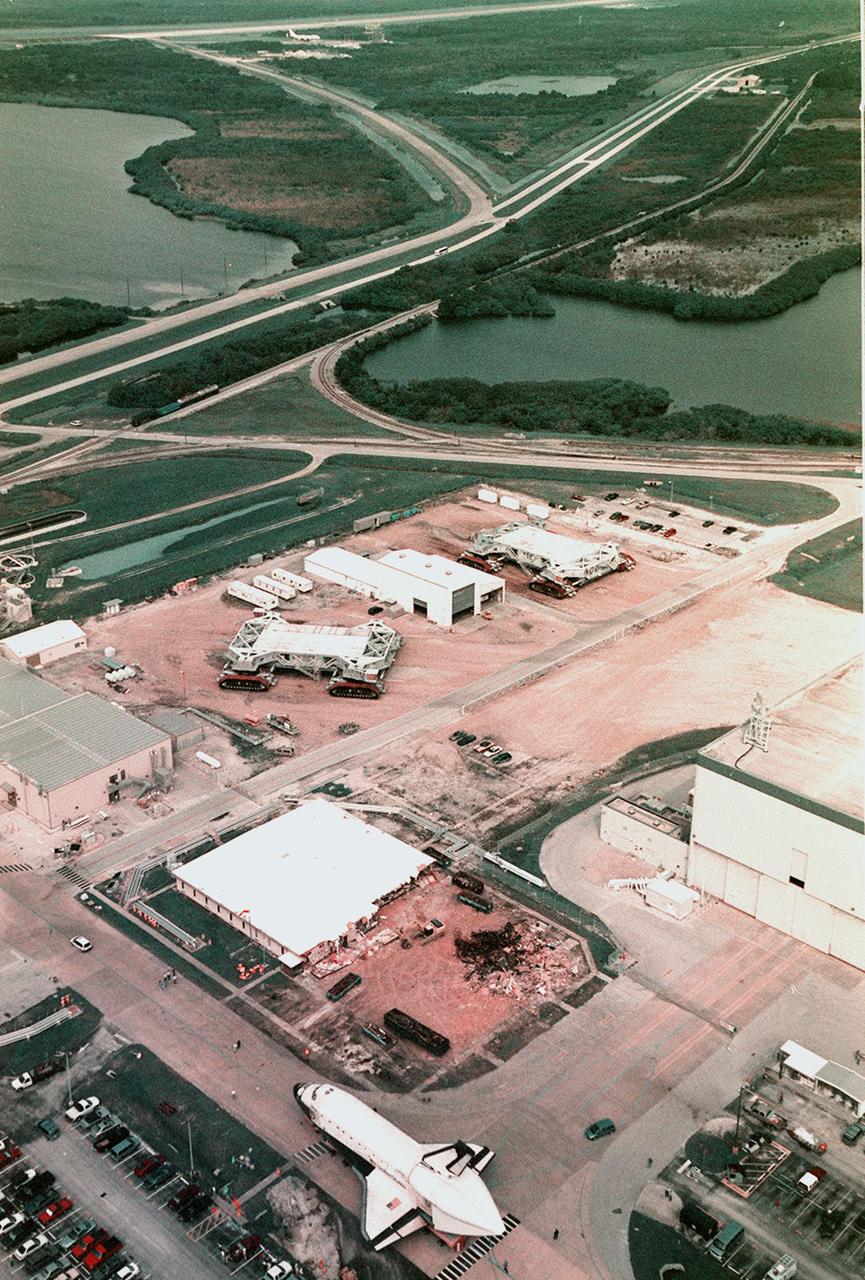
On an orbiter transporter, Columbia is ready for its move to the Shuttle Landing Facility's (SLF) Mate-Demate Device (MDD), in the distance at the top of the photo. Seen next to the MDD is the Boeing 747 Shuttle Carrier Aircraft which will carry the orbiter piggyback in a ferry flight to Palmdale, Calif. On the rear of the orbiter can be seen the tail cone, a fairing that is installed over the aft fuselage of the orbiter to decrease aerodynamic drag and buffet when the Shuttle Carrier Aircraft is transporting the orbiter cross-country. It is 36 feet long, 25 feet wide, and 22 feet high. Columbia, the oldest of four orbiters in NASA's fleet, will undergo extensive inspections and modifications in Boeing's Orbiter Assembly Facility during a nine-month orbiter maintenance down period (OMDP), the second in its history. Orbiters are periodically removed from flight operations for an OMDP. Columbia's first was in 1994. Along with more than 100 modifications on the vehicle, Columbia will be the second orbiter to be outfitted with the multifunctional electronic display system, or 'glass cockpit.' Columbia is expected to return to KSC in July 2000.
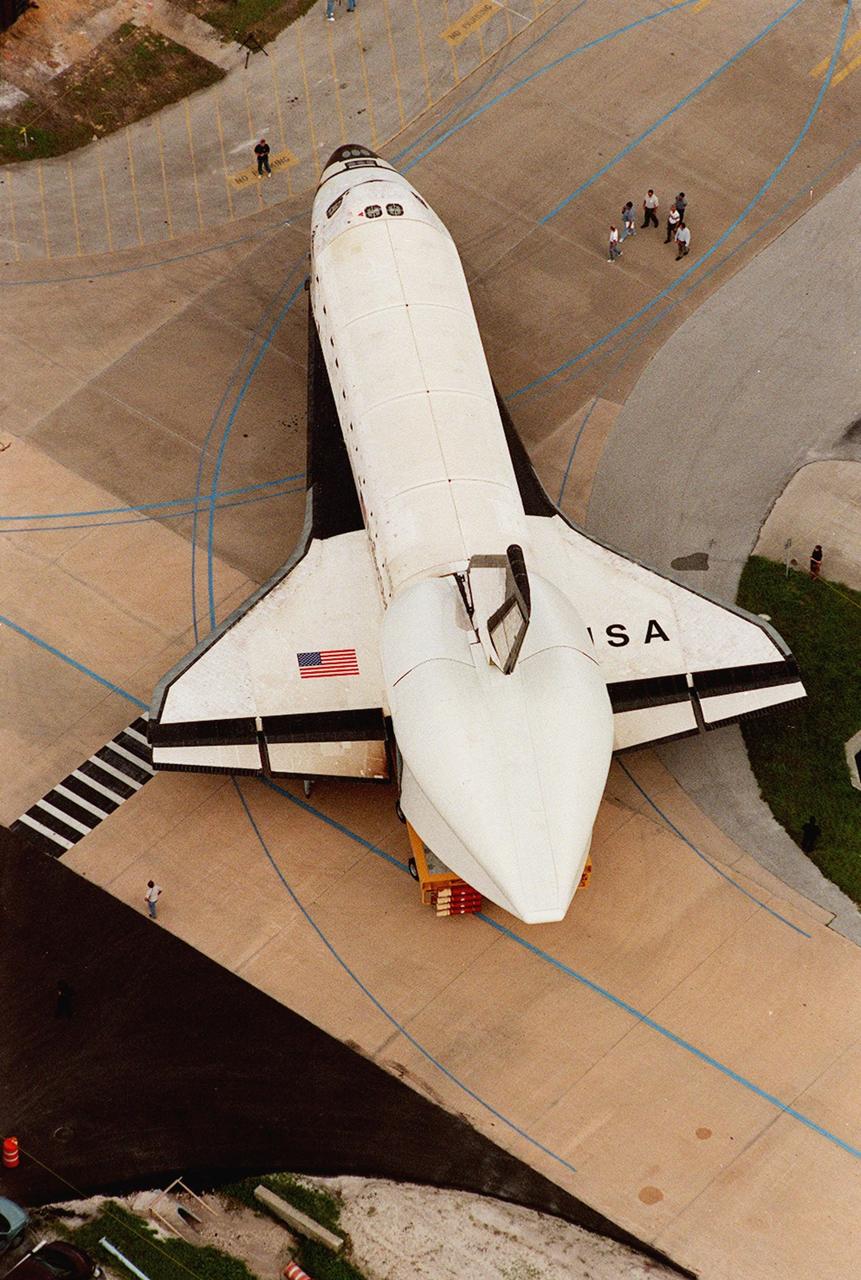
KENNEDY SPACE CENTER, FLA. -- Photographed from overhead, the orbiter Columbia begins to turn after rolling out of KSC's Orbiter Processing Facility bay 3, bound for the Shuttle Landing Facility's (SLF) Mate-Demate Device. At the SLF the orbiter is to be mated to the Boeing 747 Shuttle Carrier Aircraft for a ferry flight to Palmdale, Calif. On the rear of the orbiter can be seen the tail cone, a fairing that is installed over the aft fuselage of the orbiter to decrease aerodynamic drag and buffet when the Shuttle Carrier Aircraft is transporting the orbiter cross-country. It is 36 feet long, 25 feet wide, and 22 feet high. Columbia, the oldest of four orbiters in NASA's fleet, will undergo extensive inspections and modifications in Boeing's Orbiter Assembly Facility during a nine-month orbiter maintenance down period (OMDP), the second in its history. Orbiters are periodically removed from flight operations for an OMDP. Columbia's first was in 1994. Along with more than 100 modifications on the vehicle, Columbia will be the second orbiter to be outfitted with the multifunctional electronic display system, or "glass cockpit." Columbia is expected to return to KSC in July 2000
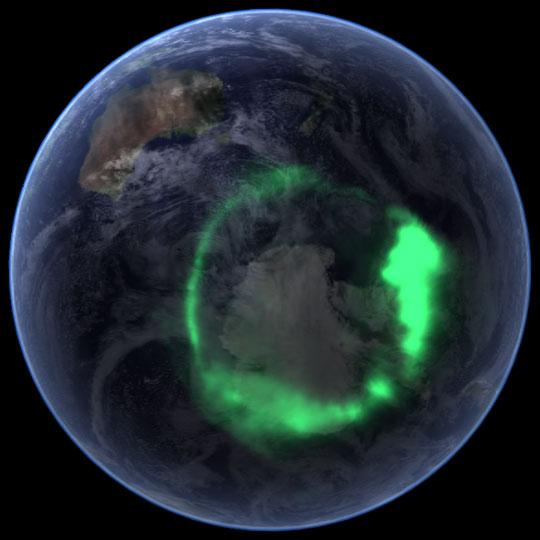
NASA file image acquired September 11, 2005 <b>To view a video of this event go here: <a href="http://www.flickr.com/photos/gsfc/6257608714">www.flickr.com/photos/gsfc/6257608714</a></b> From space, the aurora is a crown of light that circles each of Earth’s poles. The IMAGE satellite captured this view of the aurora australis (southern lights) on September 11, 2005, four days after a record-setting solar flare sent plasma—an ionized gas of protons and electrons—flying towards the Earth. The ring of light that the solar storm generated over Antarctica glows green in the ultraviolet part of the spectrum, shown in this image. The IMAGE observations of the aurora are overlaid onto NASA’s satellite-based Blue Marble image. From the Earth’s surface, the ring would appear as a curtain of light shimmering across the night sky. Like all solar storms, the September storm distorted the shape of the magnetic field that surrounds the Earth. Without buffeting from the solar wind (charged particles like protons and electrons that are ejected from the Sun), the Earth’s magnetic field would look something like a plump doughnut, with the North and South poles forming the slender hole in the center. In reality, the nearly constant solar winds flatten the space side of the “doughnut” into a long tail. The amount of distortion changes when solar storms, such as the flare on September 7, send stronger winds towards the Earth. Changes to the magnetic field release fast-moving particles, which flow with charged particles from the Sun towards the center of the “doughnut” at the Earth’s poles. As the particles sink into the atmosphere, they collide with oxygen and nitrogen, lighting the sky with Nature’s version of neon lights, the aurora. Though scientists knew that the aurora were caused by charged particles from the Sun and their interaction with the Earth’s magnetic field, they had no way to measure the interaction until NASA launched the Imager for Magnetopause-to-Aurora Global Exploration (IMAGE) satellite in 2000. The satellite’s mission was to collect data that would allow scientists to study the structure and dynamics of the Earth’s magnetic field for the first time. Designed to operate for two years, IMAGE sent its last data to Earth in December 2005 after a highly successful five-year mission. Since 2000, IMAGE has provided insight into how the Earth’s powerful magnetic field protects the planet from solar winds. Without the shield the magnetic field provides, the upper atmosphere would evaporate into space under the influence of solar winds. IMAGE has shown scientists what sort of changes the magnetic field undertakes as it diverts solar winds from the Earth. For a summary of the discoveries that IMAGE has made possible, see IMAGE Discovers. Instrument: IMAGE Credit: <a href="http://svs.gsfc.nasa.gov/index.html" rel="nofollow">NASA/Goddard Space Flight Center Scientific Visualization Studio</a> <b><a href="http://www.nasa.gov/audience/formedia/features/MP_Photo_Guidelines.html" rel="nofollow">NASA image use policy.</a></b> <b><a href="http://www.nasa.gov/centers/goddard/home/index.html" rel="nofollow">NASA Goddard Space Flight Center</a></b> enables NASA’s mission through four scientific endeavors: Earth Science, Heliophysics, Solar System Exploration, and Astrophysics. Goddard plays a leading role in NASA’s accomplishments by contributing compelling scientific knowledge to advance the Agency’s mission. <b>Follow us on <a href="http://twitter.com/NASAGoddardPix" rel="nofollow">Twitter</a></b> <b>Like us on <a href="http://www.facebook.com/pages/Greenbelt-MD/NASA-Goddard/395013845897?ref=tsd" rel="nofollow">Facebook</a></b> <b>Find us on <a href="http://instagrid.me/nasagoddard/?vm=grid" rel="nofollow">Instagram</a></b>