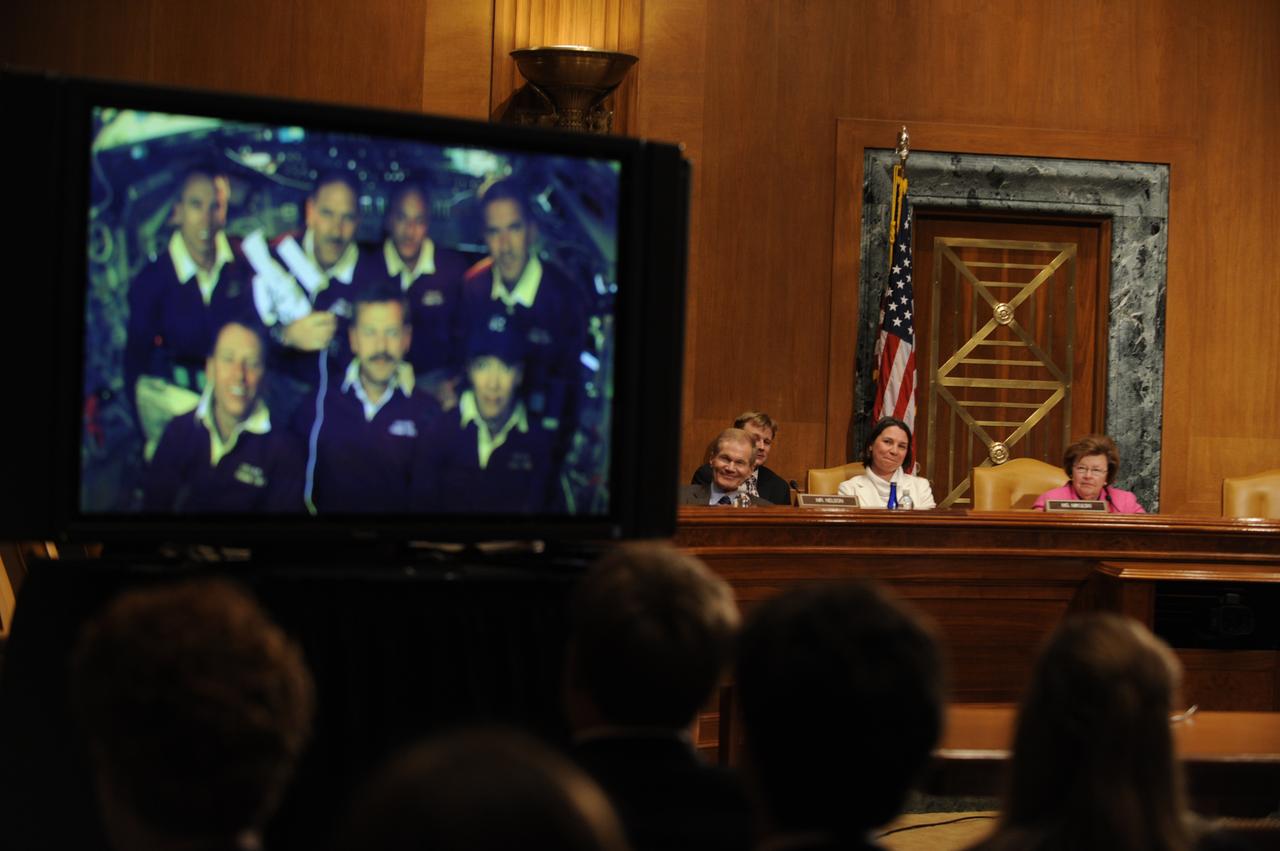
U.S. Sen. Barbara Mikulski, D-Md., rear right, speaks to the crew of STS-125, during a televised phone call to the space shuttle, Thursday, May 21, 2009, in a Dirksen Senate office building hearing room on Capitol Hill in Washington as Sen. Bill Nelson, D-Fla., rear left, looks on. The crew of STS-125 is returning to earth after finishing repairs on the Hubble Space Telescope. Photo Credit: (NASA/Paul E. Alers)
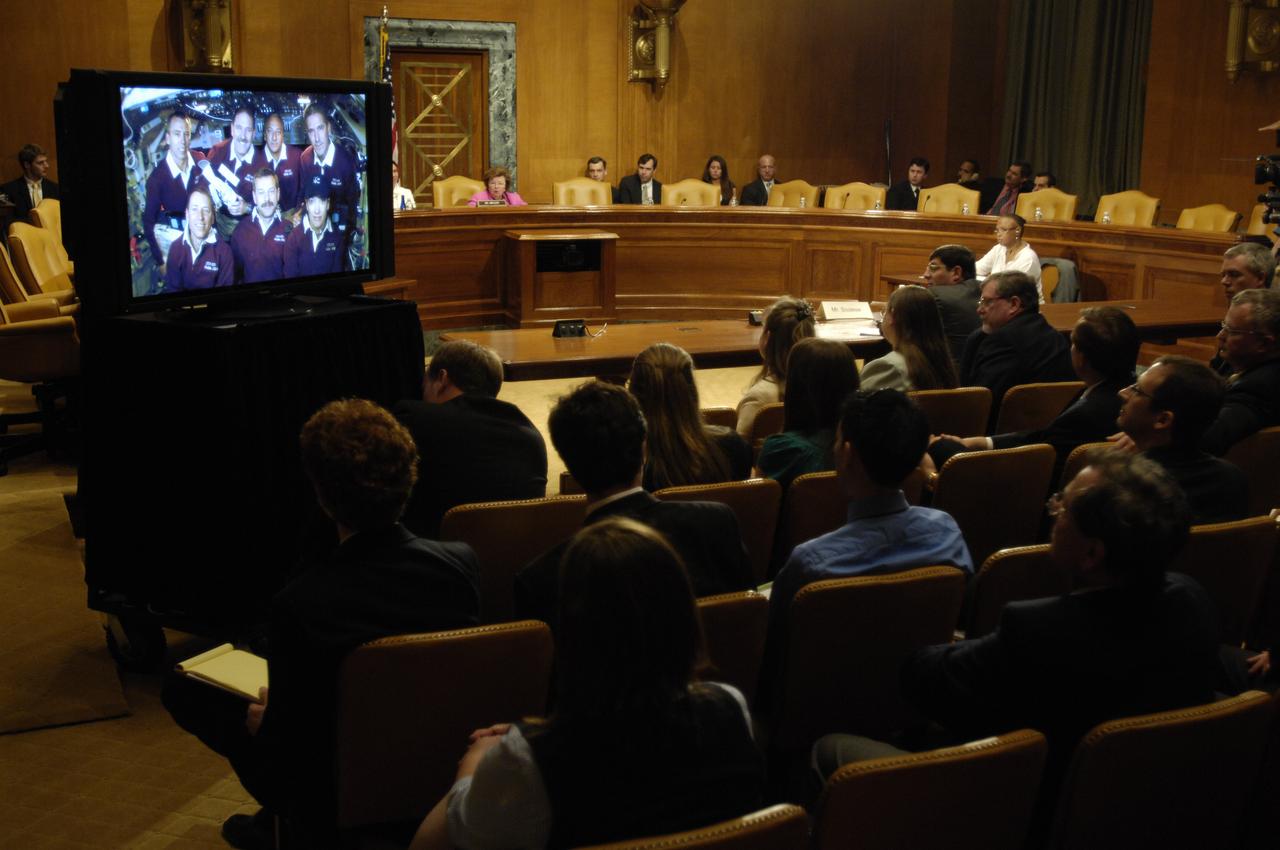
U.S. Sen. Barbara Mikulski, D-Md., rear right, speaks to the crew of STS-125, during a televised phone call to the space shuttle, Thursday, May 21, 2009, in a Dirksen Senate office building hearing room on Capitol Hill in Washington. The crew of STS-125 is returning to earth after finishing repairs on the Hubble Space Telescope. Photo Credit: (NASA/Paul E. Alers)
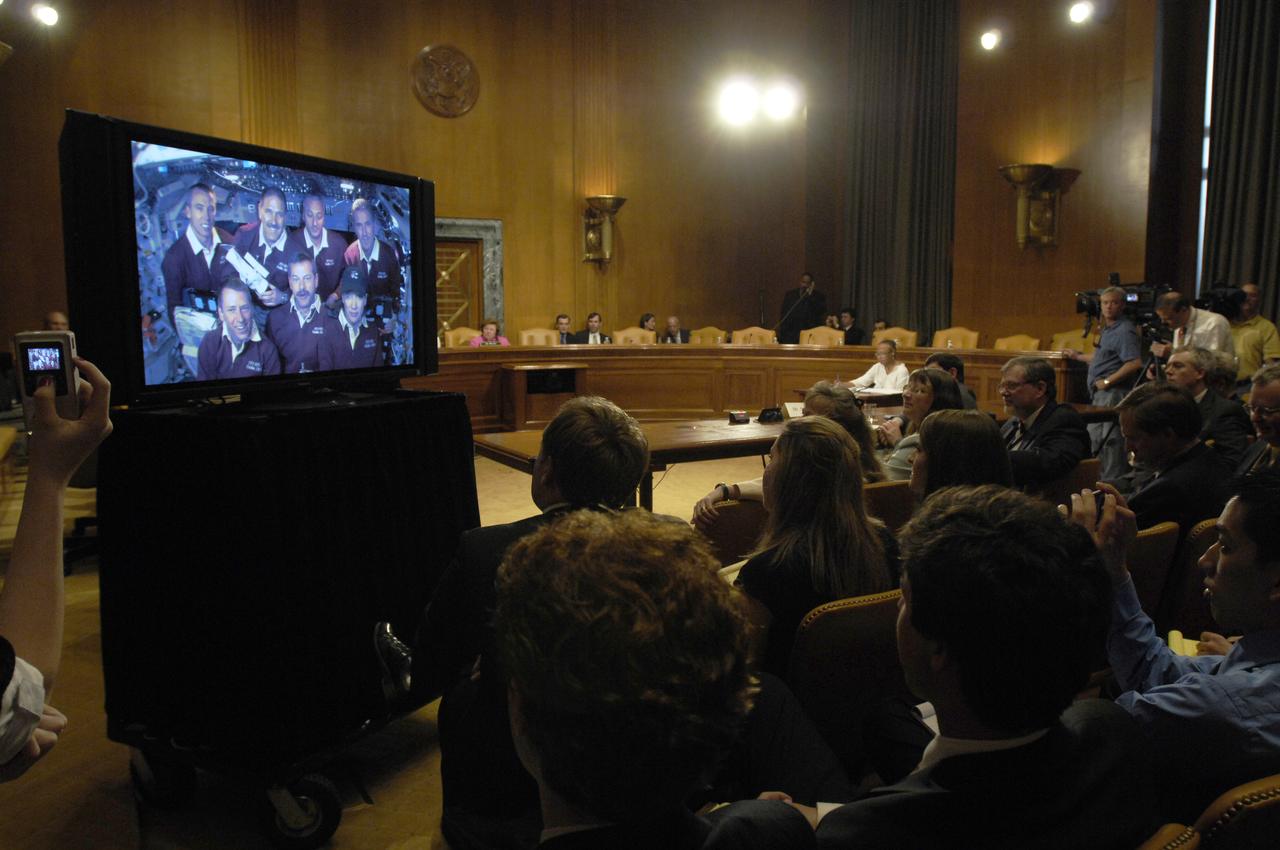
U.S. Sen. Barbara Mikulski, D-Md., rear right, speaks to the crew of STS-125, during a televised phone call to the space shuttle, Thursday, May 21, 2009, in a Dirksen Senate office building hearing room on Capitol Hill in Washington. The crew of STS-125 is returning to earth after finishing repairs on the Hubble Space Telescope. Photo Credit: (NASA/Paul E. Alers)

U.S. Sen. Barbara Mikulski, D-Md., rear right, speaks to the crew of STS-125, during a televised phone call to the space shuttle, Thursday, May 21, 2009, in a Dirksen Senate office building hearing room on Capitol Hill in Washington. The crew of STS-125 is returning to earth after finishing repairs on the Hubble Space Telescope. Photo Credit: (NASA/Paul E. Alers)
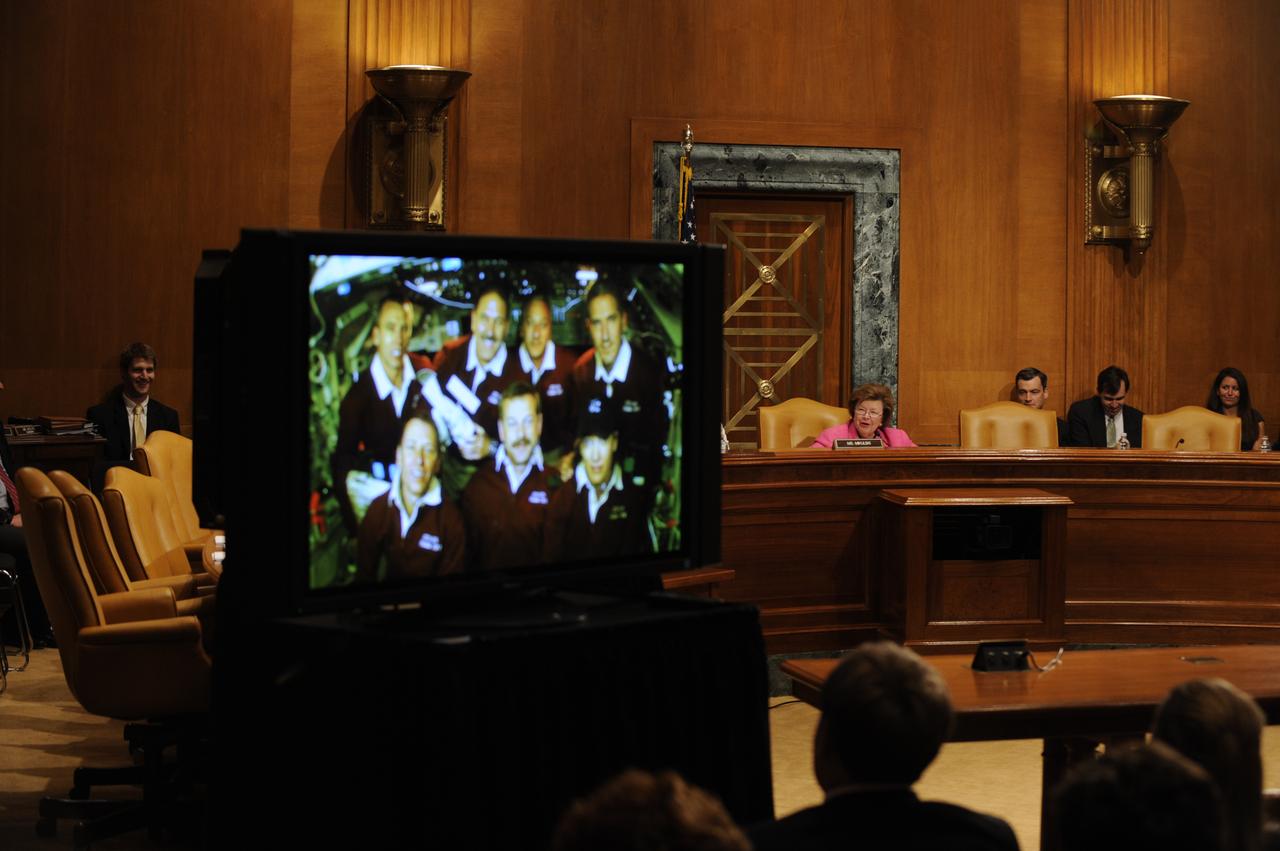
U.S. Sen. Barbara Mikulski, D-Md., rear right, speaks to the crew of STS-125, during a televised phone call to the space shuttle, Thursday, May 21, 2009, in a Dirksen Senate office building hearing room on Capitol Hill in Washington. The crew of STS-125 is returning to earth after finishing repairs on the Hubble Space Telescope. Photo Credit: (NASA/Paul E. Alers)
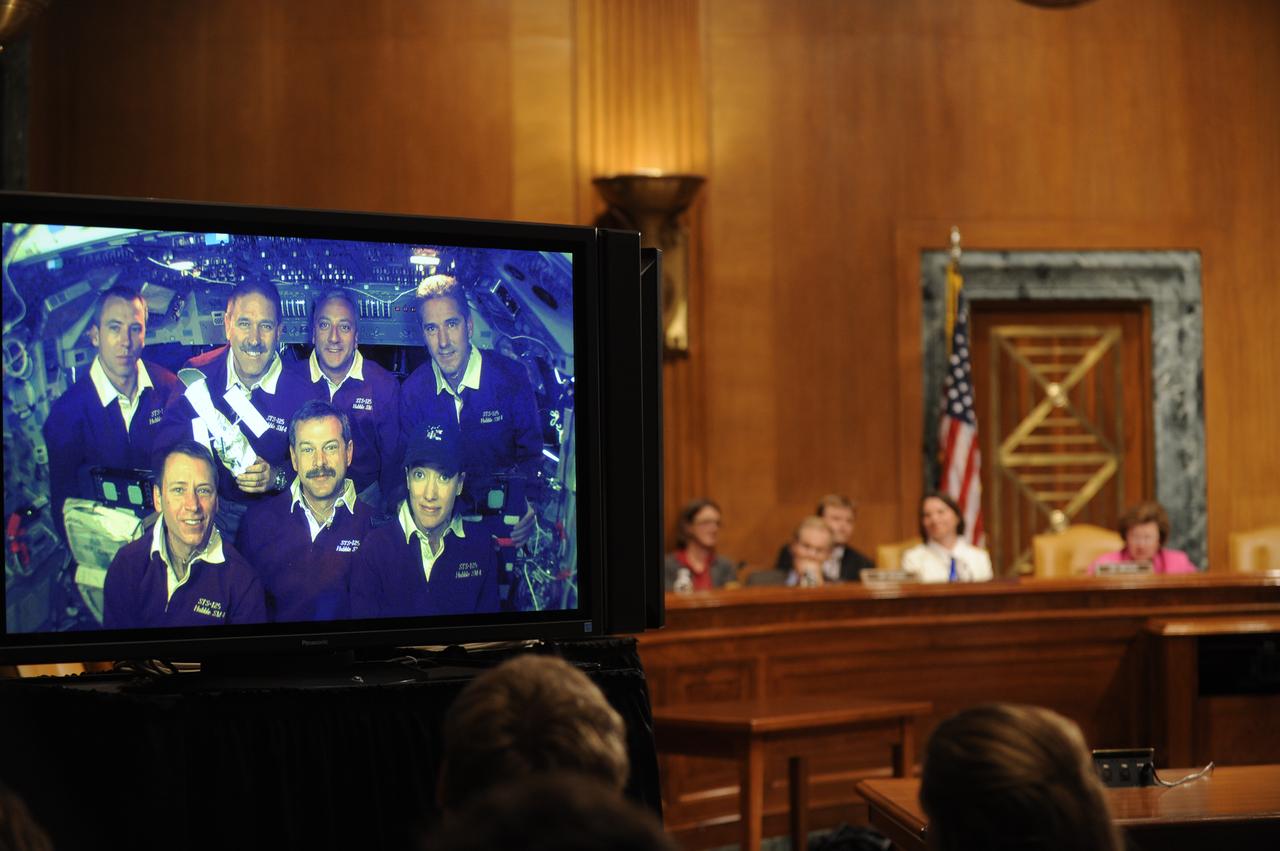
U.S. Sen. Barbara Mikulski, D-Md., rear right, along with Sen. Bill Nelson, D-Fla., rear left, speak to the crew of STS-125, during a televised phone call to the space shuttle, Thursday, May 21, 2009, in a Dirksen Senate office building hearing room on Capitol Hill in Washington. The crew of STS-125 is returning to earth after finishing repairs on the Hubble Space Telescope. Photo Credit: (NASA/Paul E. Alers)
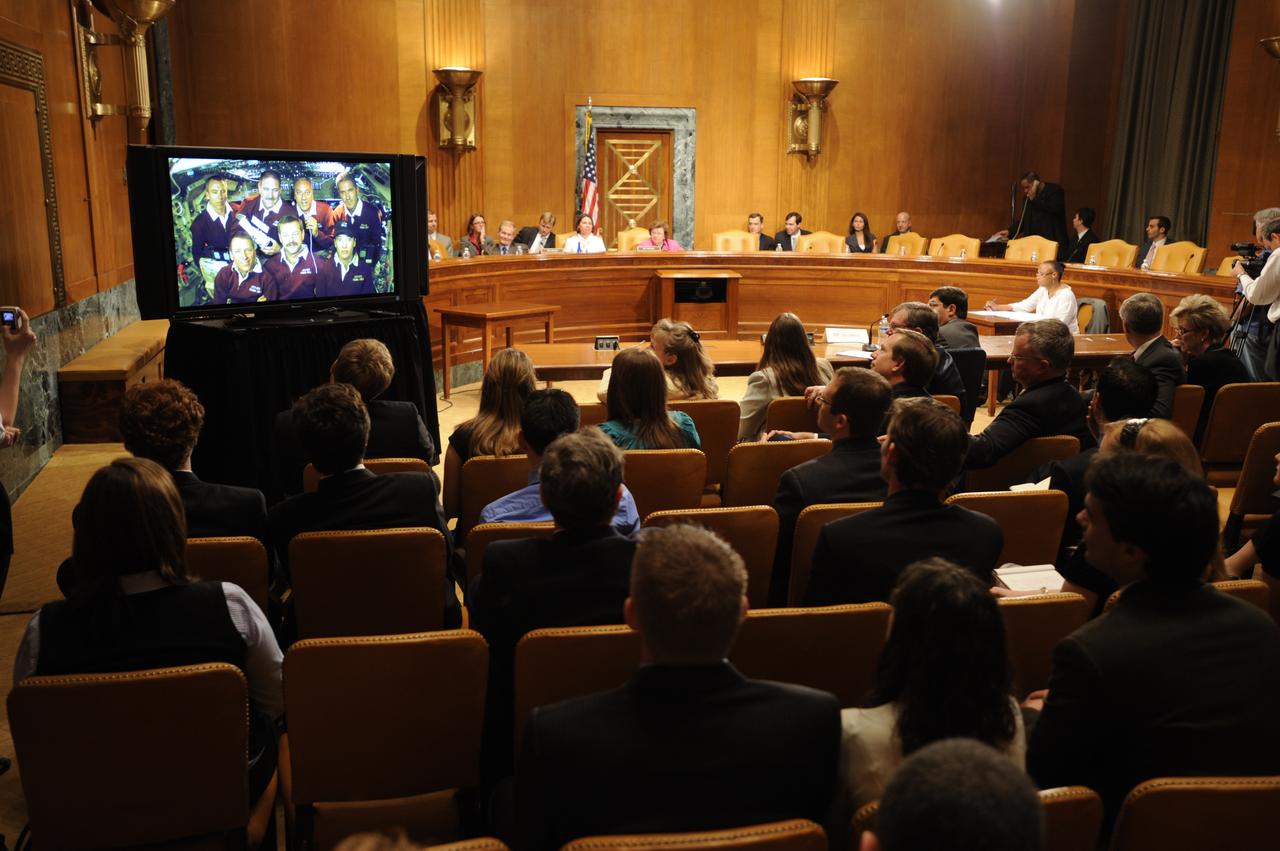
U.S. Sen. Barbara Mikulski, D-Md., rear right, and Sen. Bill Nelson, rear left, speak to the crew of STS-125, during a televised phone call to the space shuttle, Thursday, May 21, 2009, in a Dirksen Senate office building hearing room on Capitol Hill in Washington. The crew of STS-125 is returning to earth after finishing repairs on the Hubble Space Telescope. Photo Credit: (NASA/Paul E. Alers)
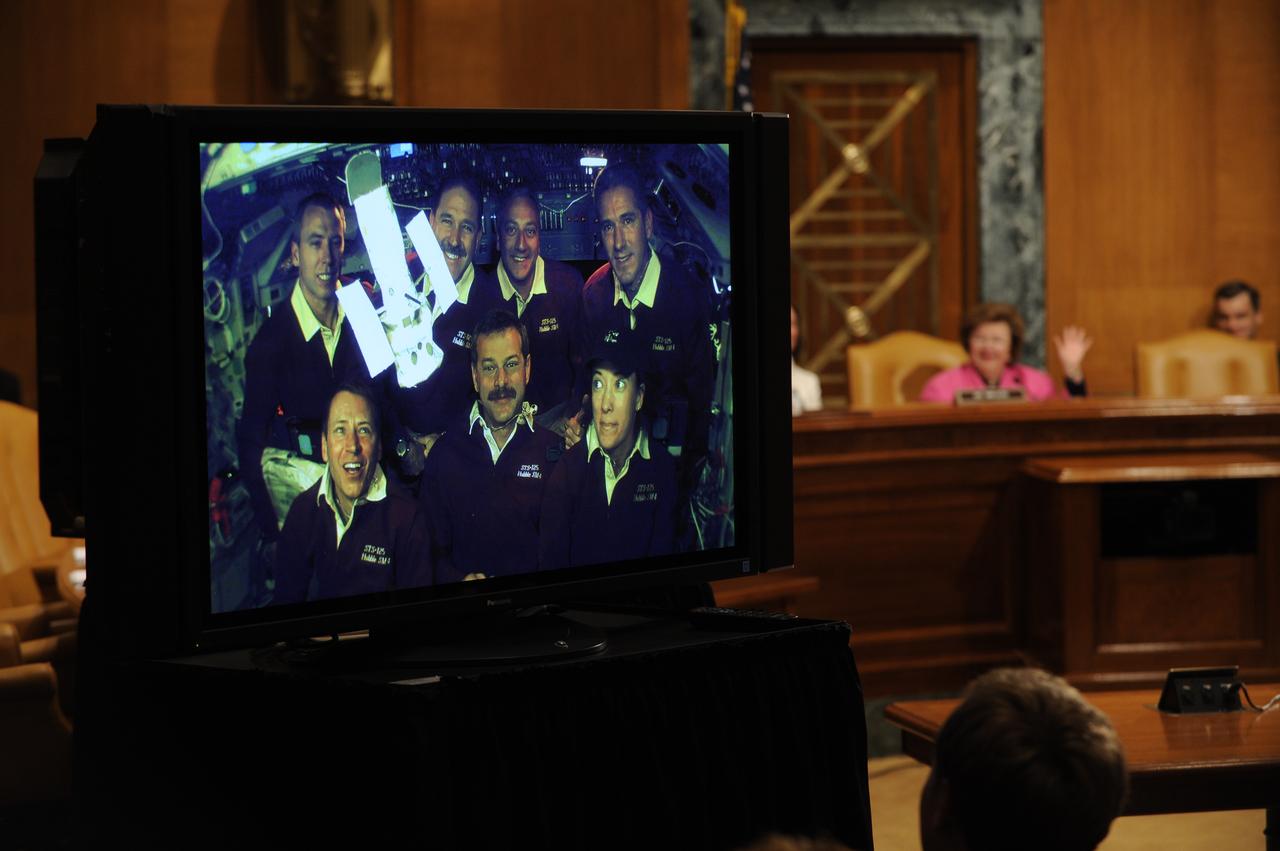
U.S. Sen. Barbara Mikulski, D-Md., rear right, waves to the crew of STS-125, at the end of a televised phone call to the space shuttle, Thursday, May 21, 2009, in a Dirksen Senate office building hearing room on Capitol Hill in Washington. The crew of STS-125 is returning to earth after finishing repairs on the Hubble Space Telescope. Photo Credit: (NASA/Paul E. Alers)
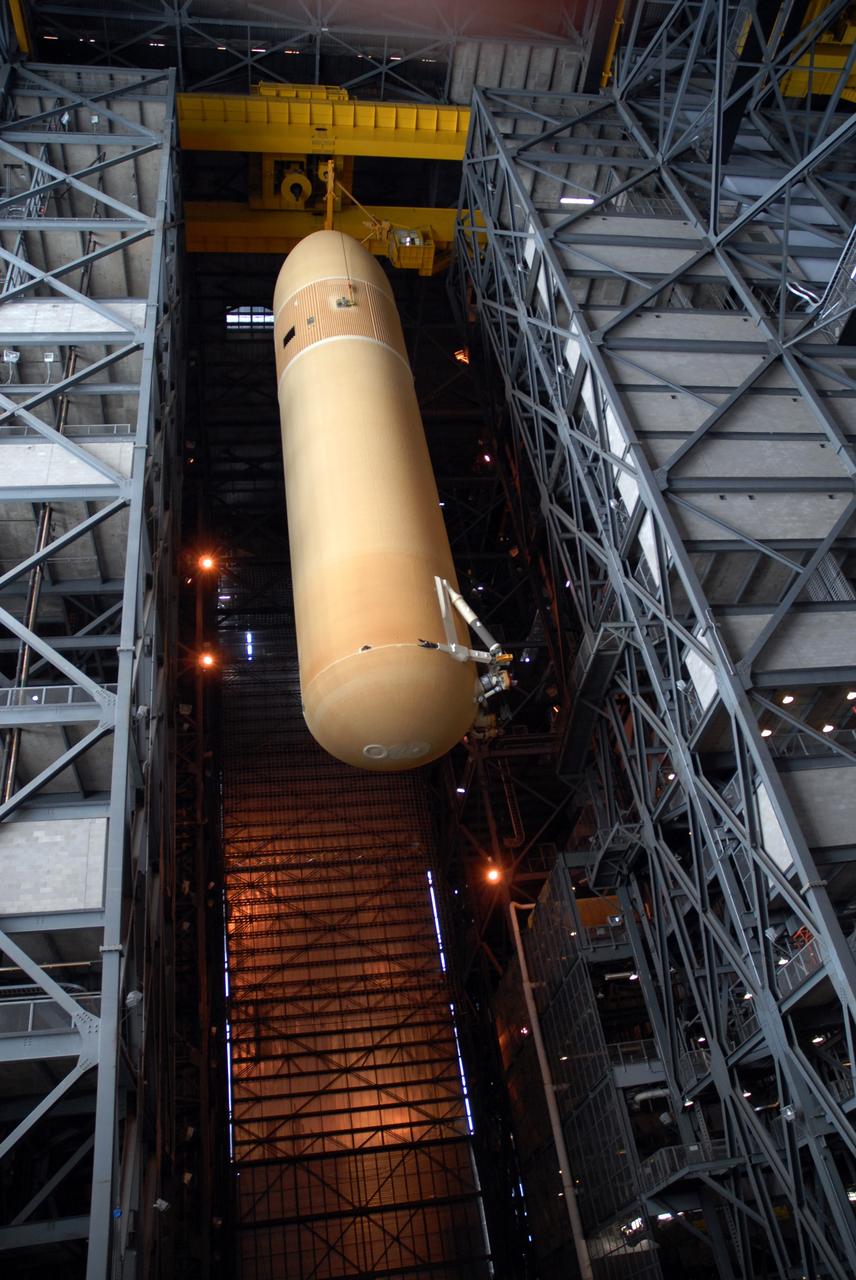
CAPE CANAVERAL, Fla. -- Suspended by a crane in the Vehicle Assembly Building at NASA's Kennedy Space Center in Florida, external fuel tank 130 is moved into high bay 2 for checkout before stacking with the solid rocket boosters and space shuttle Atlantis for the STS-125 mission. The fuel tank was previously designated for the STS-127 mission. The STS-125 Hubble servicing mission is targeted to launch May 12. Photo credit: NASA/Tim Jacobs

CAPE CANAVERAL, Fla. -- In the Vehicle Assembly Building at NASA's Kennedy Space Center in Florida, the vertical external fuel tank 130 is suspended by a crane over the transfer aisle. The tank will be lifted into high bay 2 for checkout before stacking with the solid rocket boosters and space shuttle Atlantis for the STS-125 mission. The fuel tank was previously designated for the STS-127 mission. The STS-125 Hubble servicing mission is targeted to launch May 12. Photo credit: NASA/Tim Jacobs
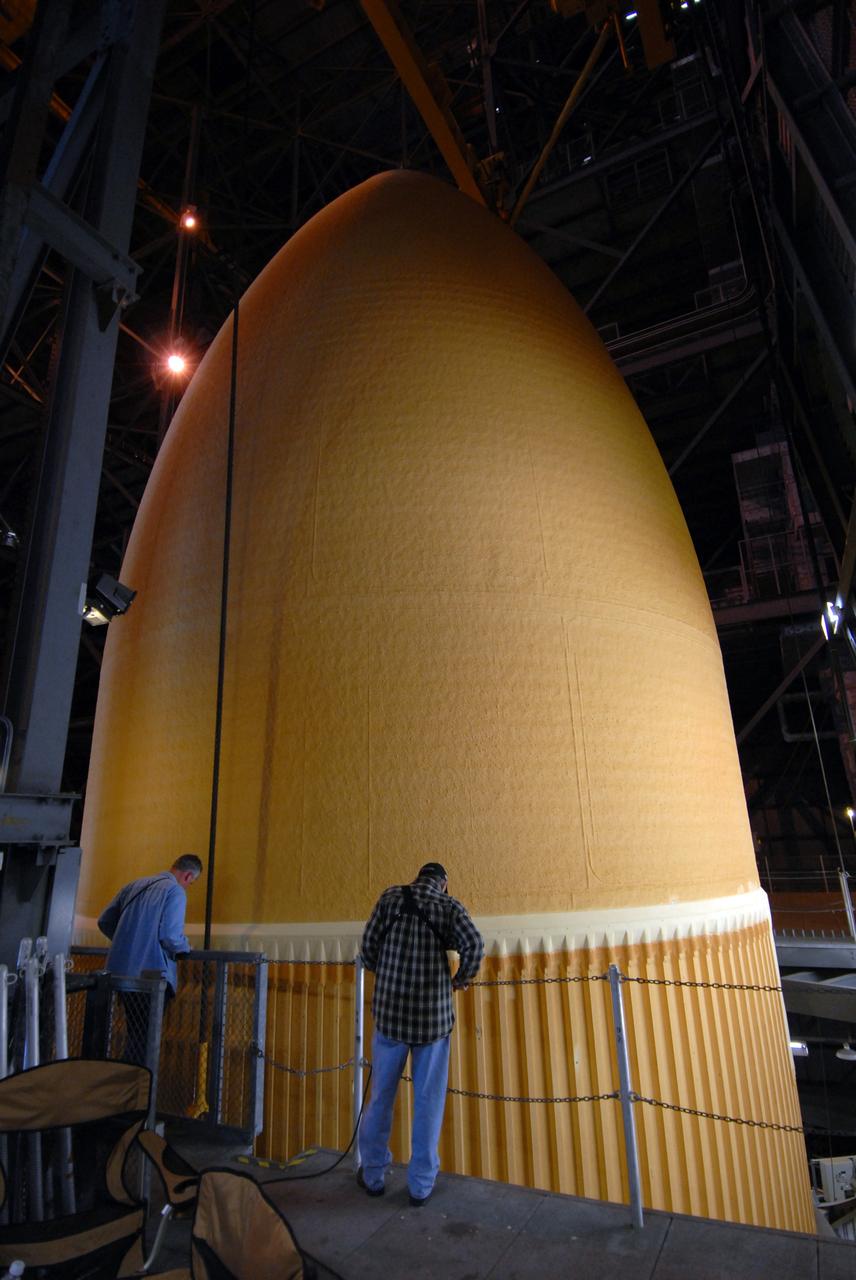
CAPE CANAVERAL, Fla. – In the Vehicle Assembly Building at NASA's Kennedy Space Center in Florida, the external fuel tank for space shuttle Atlantis' STS-125 mission is raised from the checkout cell in order to move it to high bay 3. There it will be lowered onto the mobile launcher platform and attached to the solid rocket boosters already installed. Atlantis' STS-125 mission is the fifth and final shuttle servicing mission to NASA’s Hubble Space Telescope. Launch is targeted for May 12. Photo credit: NASA/Jack Pfaller

CAPE CANAVERAL, Fla. -- In the transfer aisle of the Vehicle Assembly Building at NASA's Kennedy Space Center in Florida, external fuel tank 130 is fitted with a crane to lift it off the transporter. The tank will be raised to vertical and lifted into high bay 2 for checkout before stacking with the solid rocket boosters and space shuttle Endeavour for the STS-125 mission. The fuel tank was previously designated for the STS-127 mission. The STS-125 Hubble servicing mission is targeted to launch May 12. Photo credit: NASA/Tim Jacobs
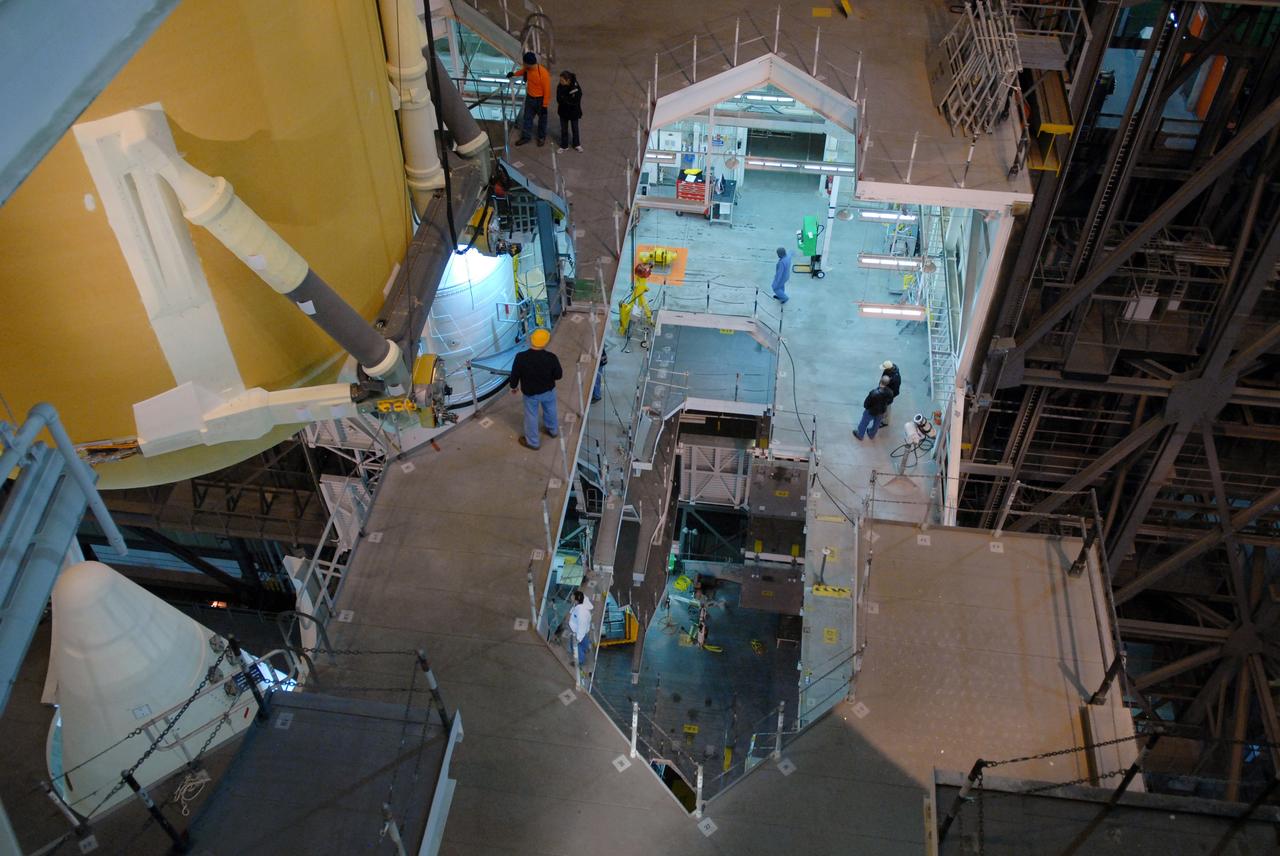
CAPE CANAVERAL, Fla. – In the Vehicle Assembly Building at NASA's Kennedy Space Center in Florida, the external fuel tank for space shuttle Atlantis' STS-125 mission is lowered into high bay 3. It will be installed on the mobile launcher platform and attached to the solid rocket boosters already there. Atlantis' STS-125 mission is the fifth and final shuttle servicing mission to NASA’s Hubble Space Telescope. Launch is targeted for May 12. Photo credit: NASA/Jack Pfaller
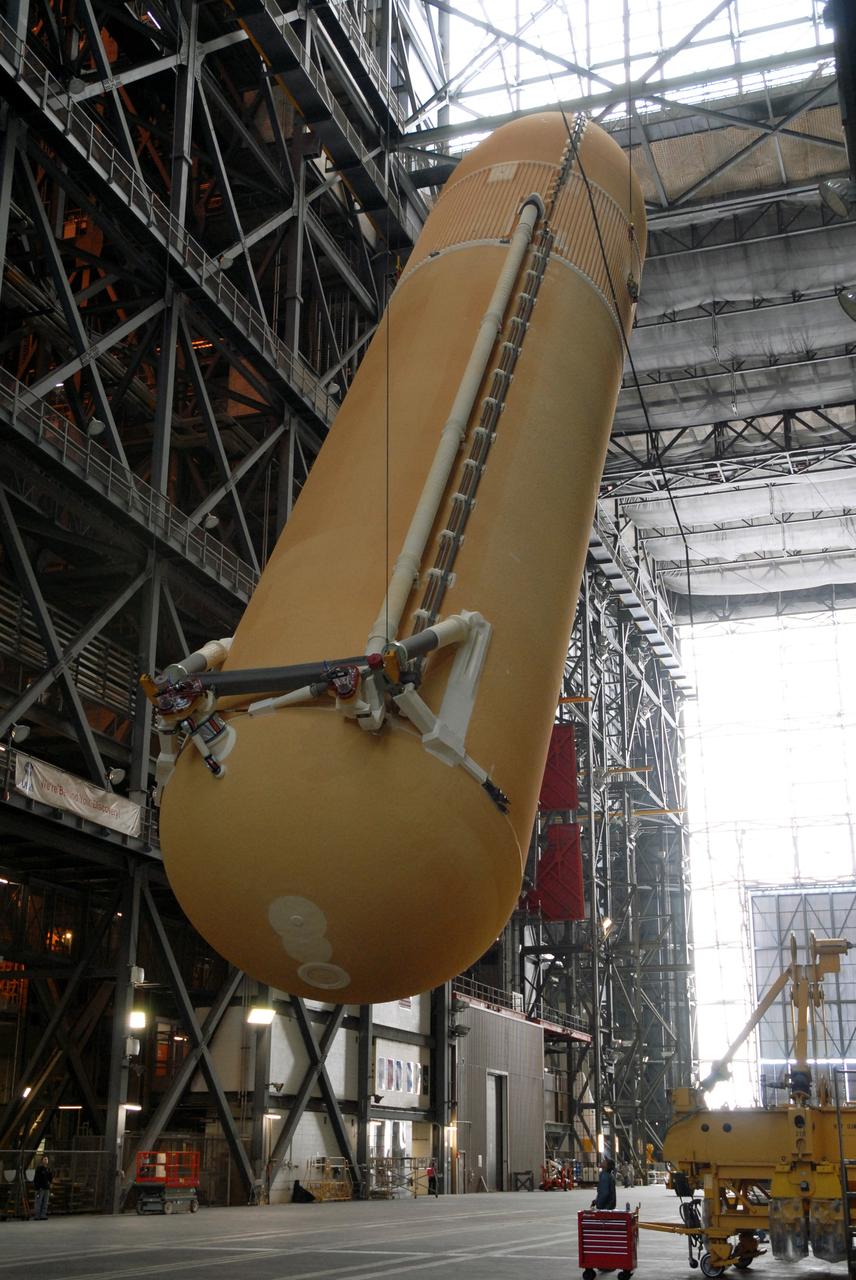
CAPE CANAVERAL, Fla. -- In the transfer aisle of the Vehicle Assembly Building at NASA's Kennedy Space Center in Florida, external fuel tank 130 is raised to a vertical position. The tank will be lifted into high bay 2 for checkout before stacking with the solid rocket boosters and space shuttle Atlantis for the STS-125 mission. The fuel tank was previously designated for the STS-127 mission. The STS-125 Hubble servicing mission is targeted to launch May 12. Photo credit: NASA/Tim Jacobs
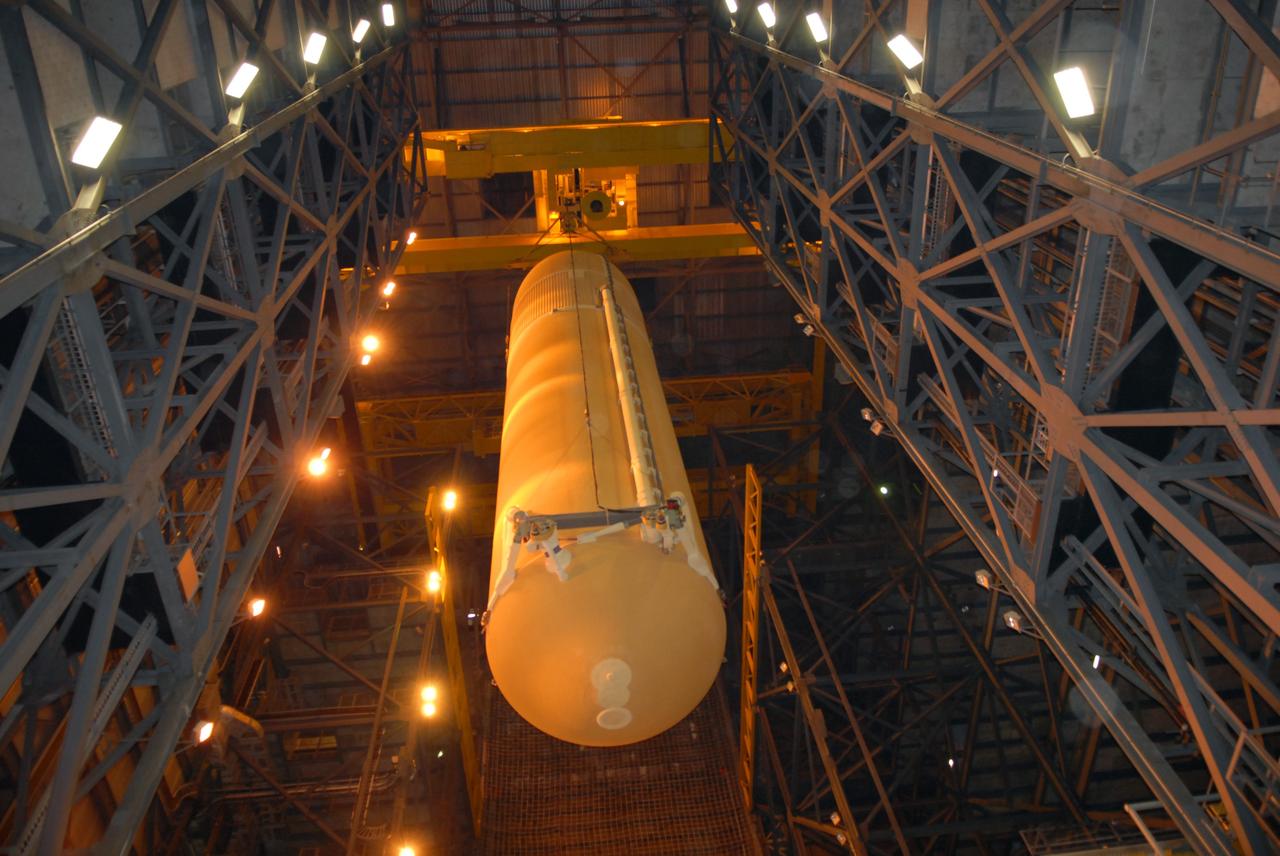
CAPE CANAVERAL, Fla. – In the Vehicle Assembly Building at NASA's Kennedy Space Center in Florida, the external fuel tank for space shuttle Atlantis' STS-125 mission is lowered into high bay 3. It will be installed on the mobile launcher platform and attached to the solid rocket boosters already there. Atlantis' STS-125 mission is the fifth and final shuttle servicing mission to NASA’s Hubble Space Telescope. Launch is targeted for May 12. Photo credit: NASA/Jack Pfaller
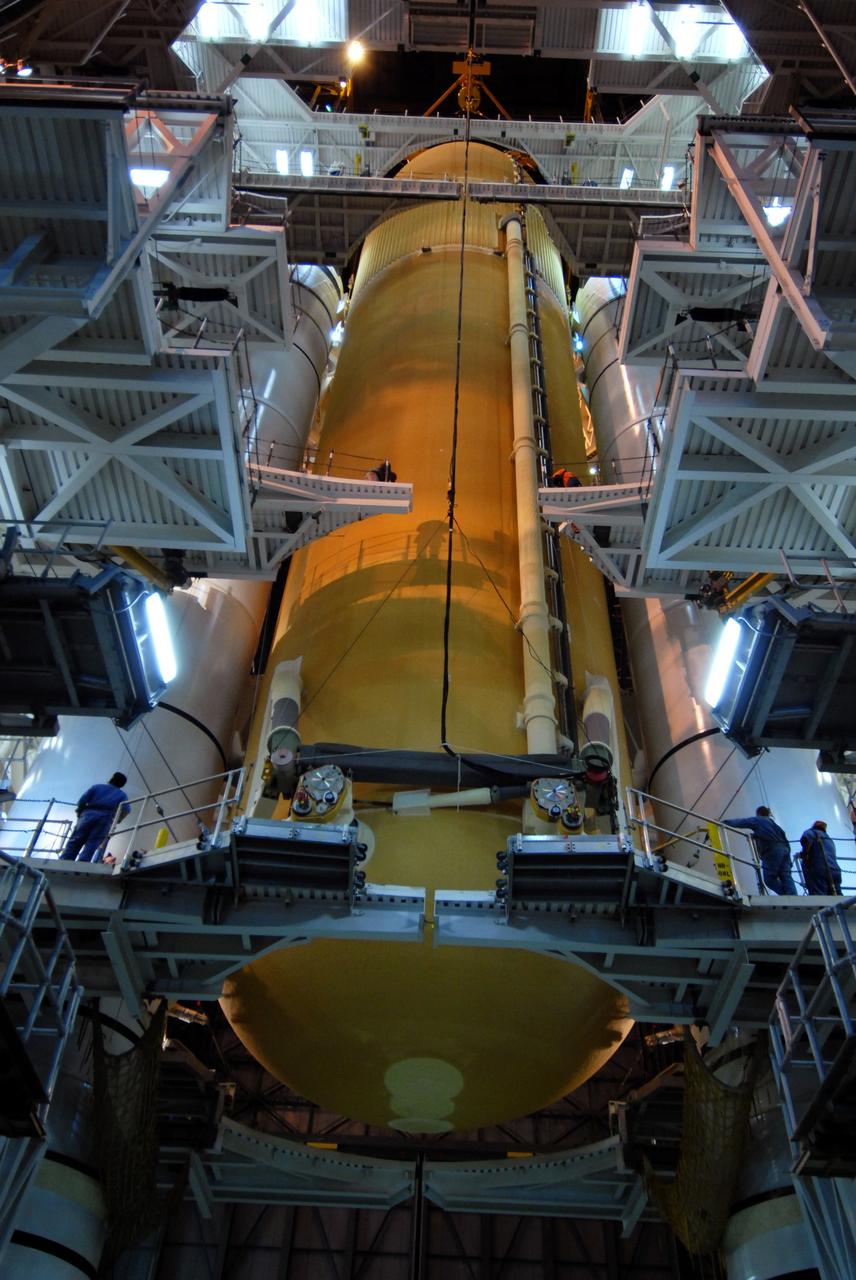
CAPE CANAVERAL, Fla. – In the Vehicle Assembly Building at NASA's Kennedy Space Center in Florida, the external fuel tank for space shuttle Atlantis' STS-125 mission is lowered between the solid rocket boosters installed on the mobile launcher platform in high bay 3. The tank and boosters will be attached for launch. Atlantis' STS-125 mission is the fifth and final shuttle servicing mission to NASA’s Hubble Space Telescope. Launch is targeted for May 12. Photo credit: NASA/Jack Pfaller
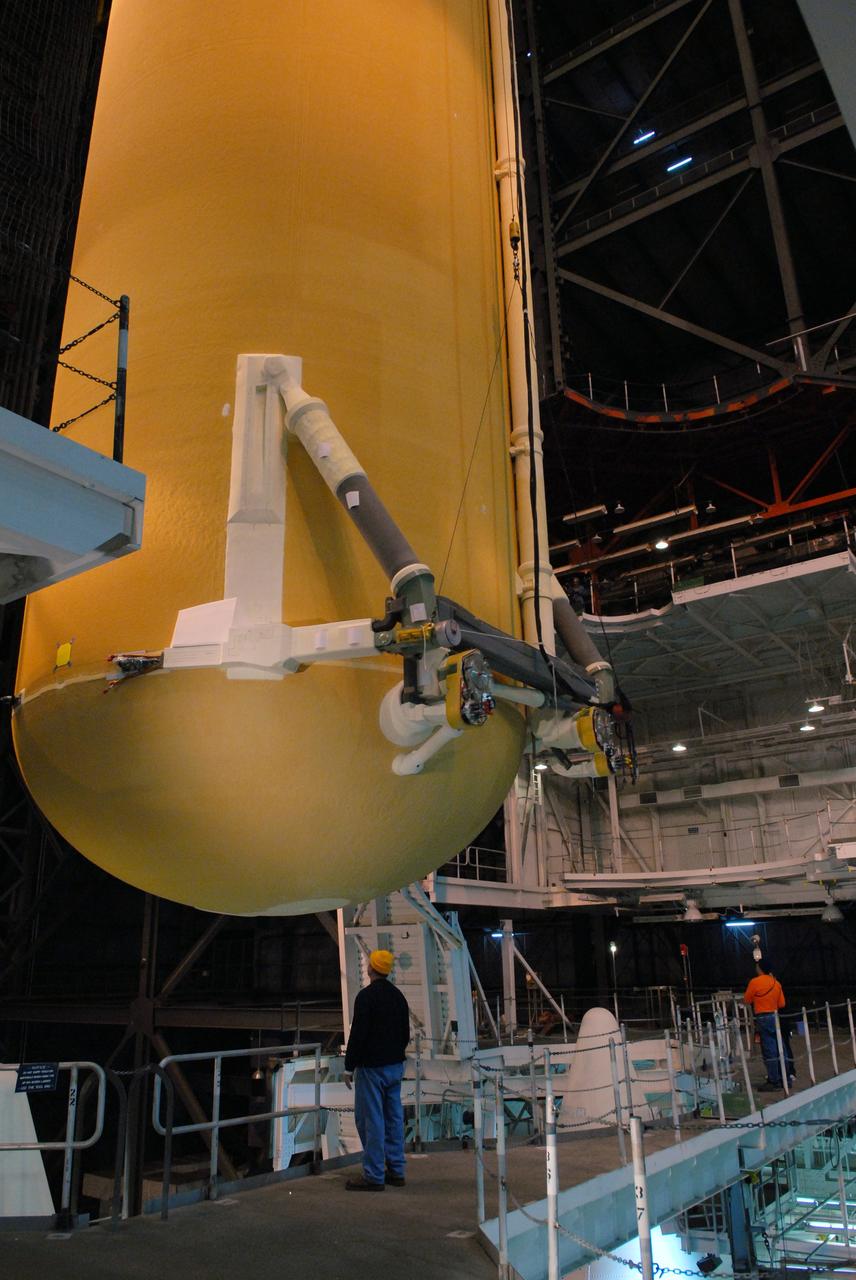
CAPE CANAVERAL, Fla. – In the Vehicle Assembly Building at NASA's Kennedy Space Center in Florida, the external fuel tank for space shuttle Atlantis' STS-125 mission is lowered into high bay 3. It will be installed on the mobile launcher platform and attached to the solid rocket boosters already there. Atlantis' STS-125 mission is the fifth and final shuttle servicing mission to NASA’s Hubble Space Telescope. Launch is targeted for May 12. Photo credit: NASA/Jack Pfaller
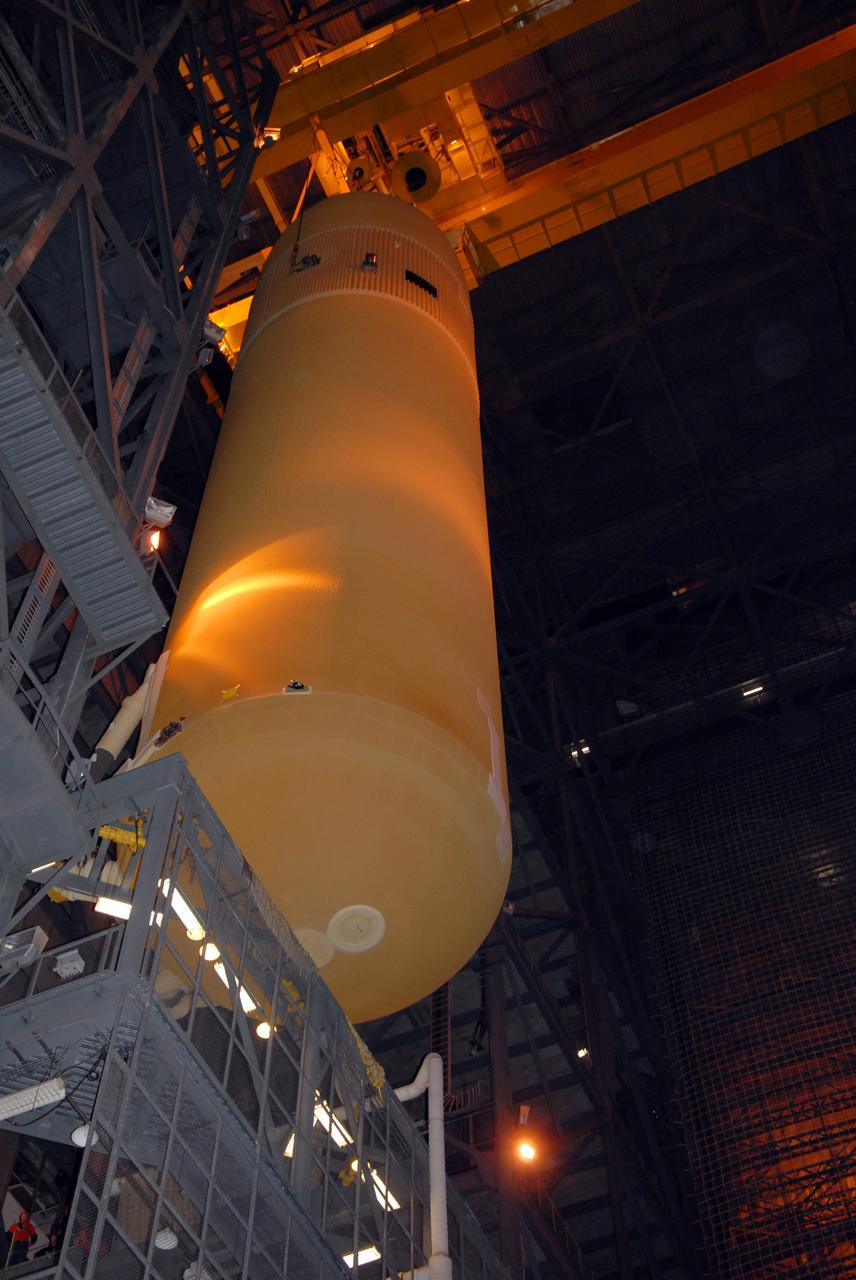
CAPE CANAVERAL, Fla. – In the Vehicle Assembly Building at NASA's Kennedy Space Center in Florida, the external fuel tank for space shuttle Atlantis' STS-125 mission is moved out of the checkout cell. The tank will be lowered into high bay 3 onto the mobile launcher platform and attached to the solid rocket boosters already installed. Atlantis' STS-125 mission is the fifth and final shuttle servicing mission to NASA’s Hubble Space Telescope. Launch is targeted for May 12. Photo credit: NASA/Jack Pfaller
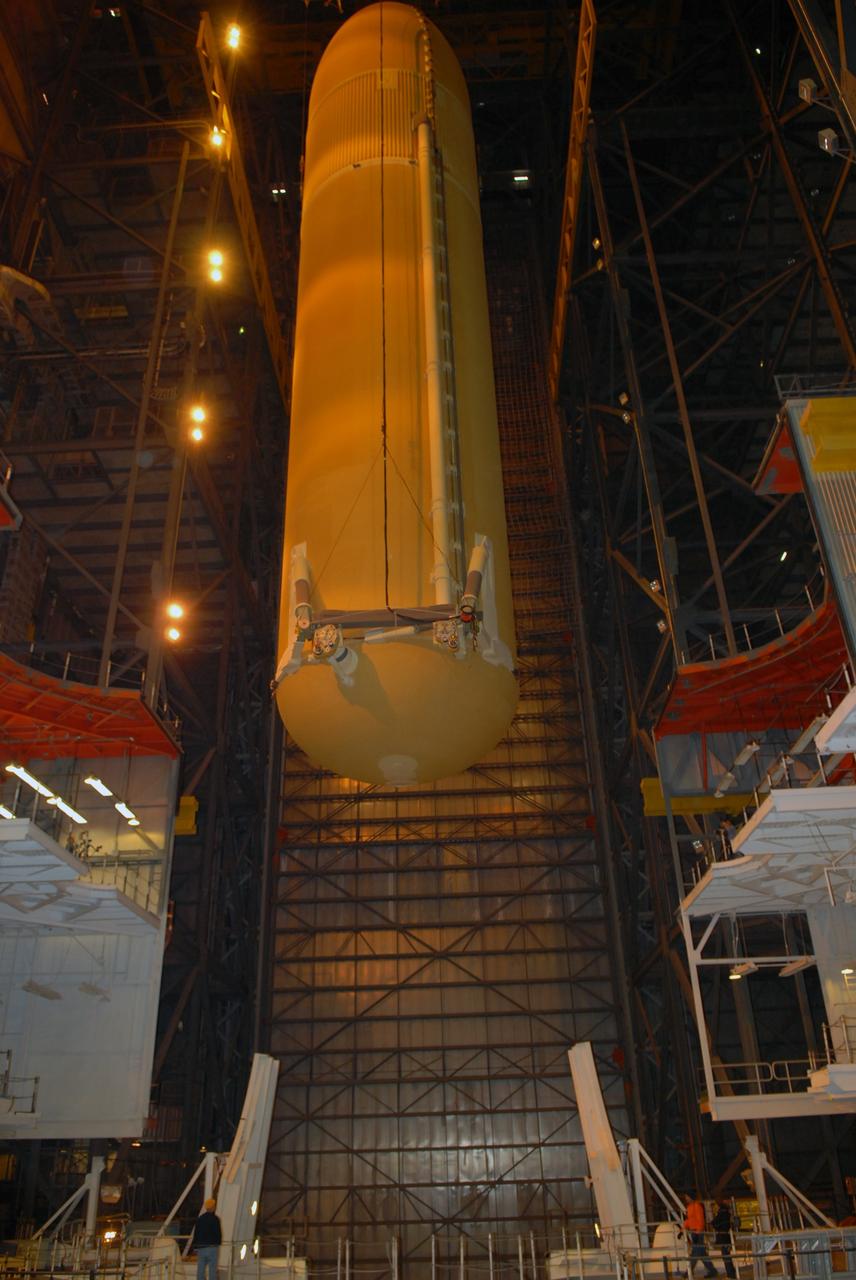
CAPE CANAVERAL, Fla. – In the Vehicle Assembly Building at NASA's Kennedy Space Center in Florida, the external fuel tank for space shuttle Atlantis' STS-125 mission is lowered into high bay 3. It will be installed on the mobile launcher platform and attached to the solid rocket boosters already there. Atlantis' STS-125 mission is the fifth and final shuttle servicing mission to NASA’s Hubble Space Telescope. Launch is targeted for May 12. Photo credit: NASA/Jack Pfaller
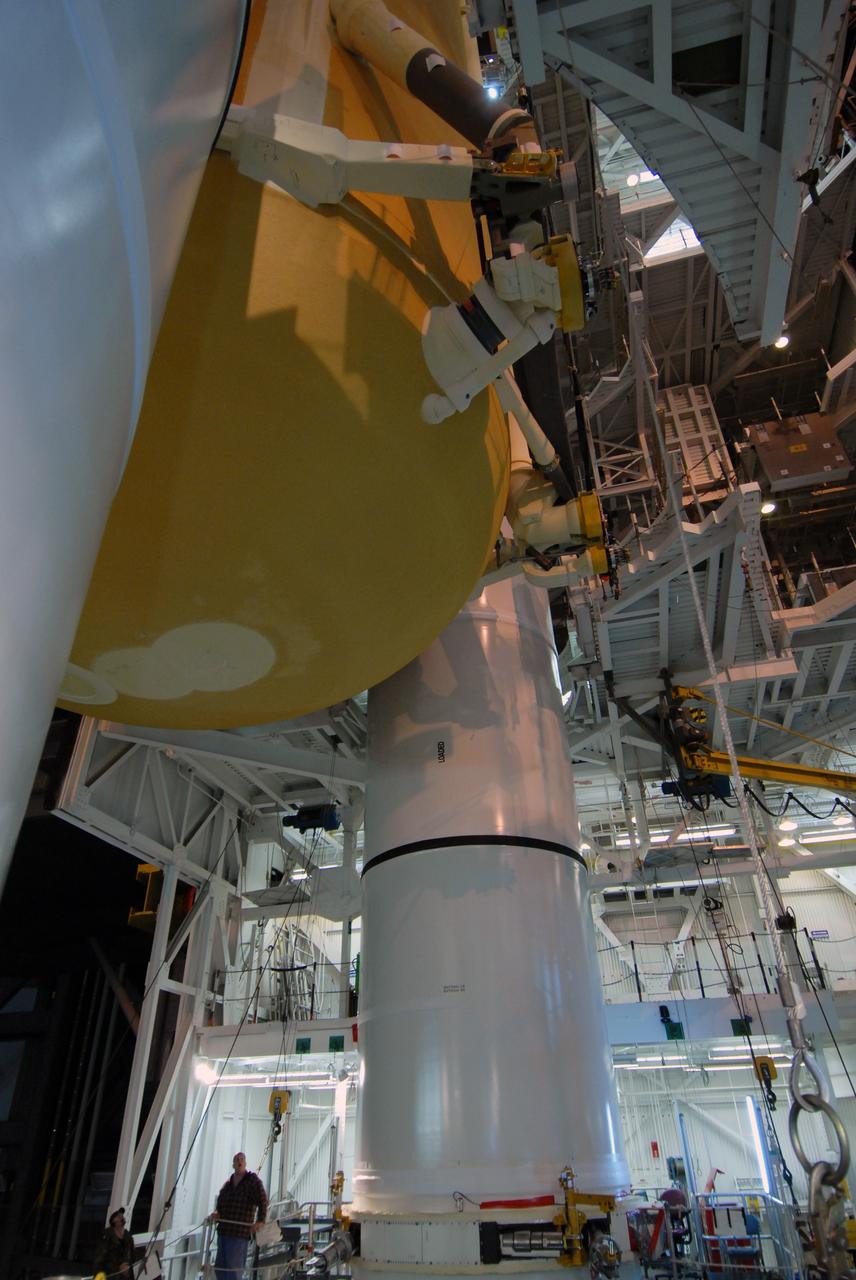
CAPE CANAVERAL, Fla. – In the Vehicle Assembly Building at NASA's Kennedy Space Center in Florida, the external fuel tank for space shuttle Atlantis' STS-125 mission is lowered between the solid rocket boosters installed on the mobile launcher platform in high bay 3. The tank and boosters will be attached for launch. Atlantis' STS-125 mission is the fifth and final shuttle servicing mission to NASA’s Hubble Space Telescope. Launch is targeted for May 12. Photo credit: NASA/Jack Pfaller
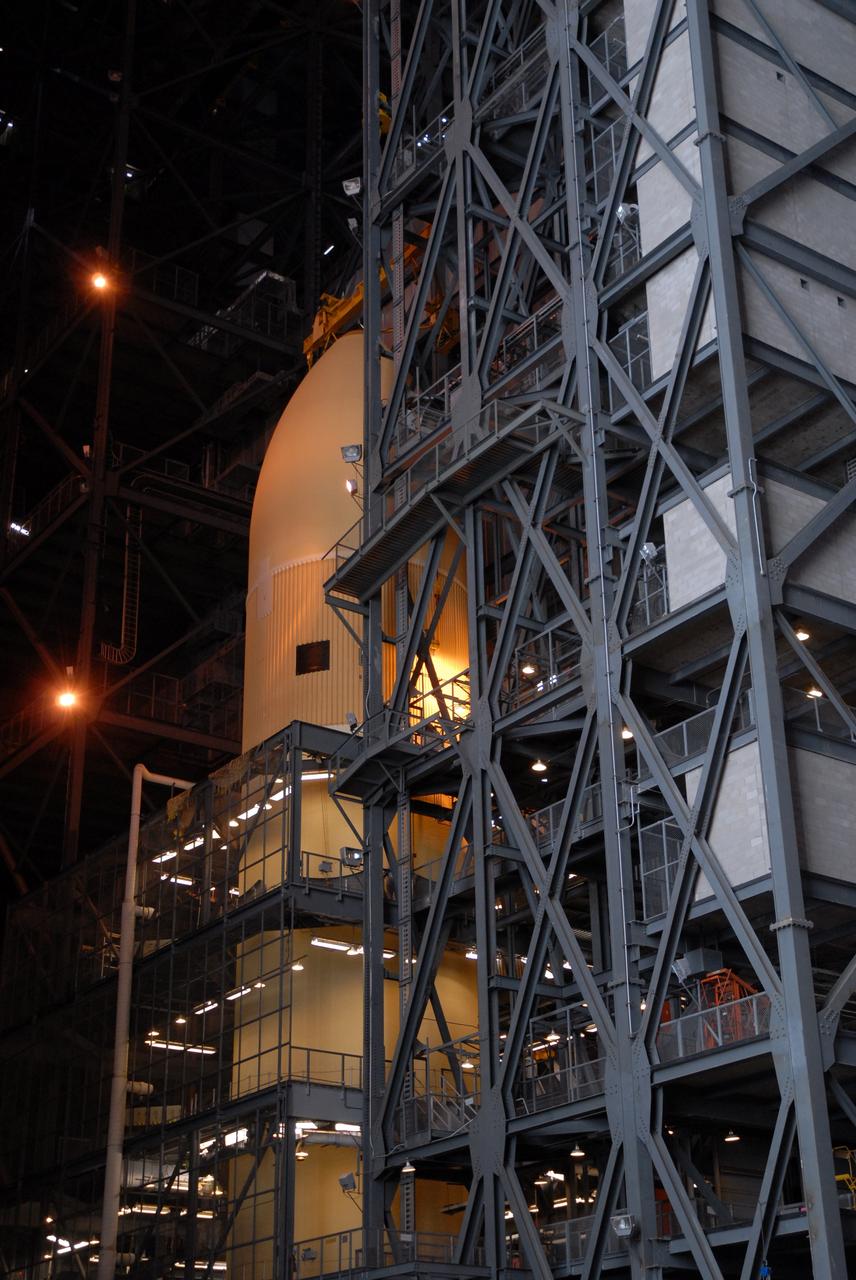
CAPE CANAVERAL, Fla. -- In the Vehicle Assembly Building at NASA's Kennedy Space Center in Florida, external fuel tank 130 is in place in high bay 2 where it will undergo checkout before stacking with the solid rocket boosters and space shuttle Atlantis for the STS-125 mission. The fuel tank was previously designated for the STS-127 mission. The STS-125 Hubble servicing mission is targeted to launch May 12. Photo credit: NASA/Tim Jacobs
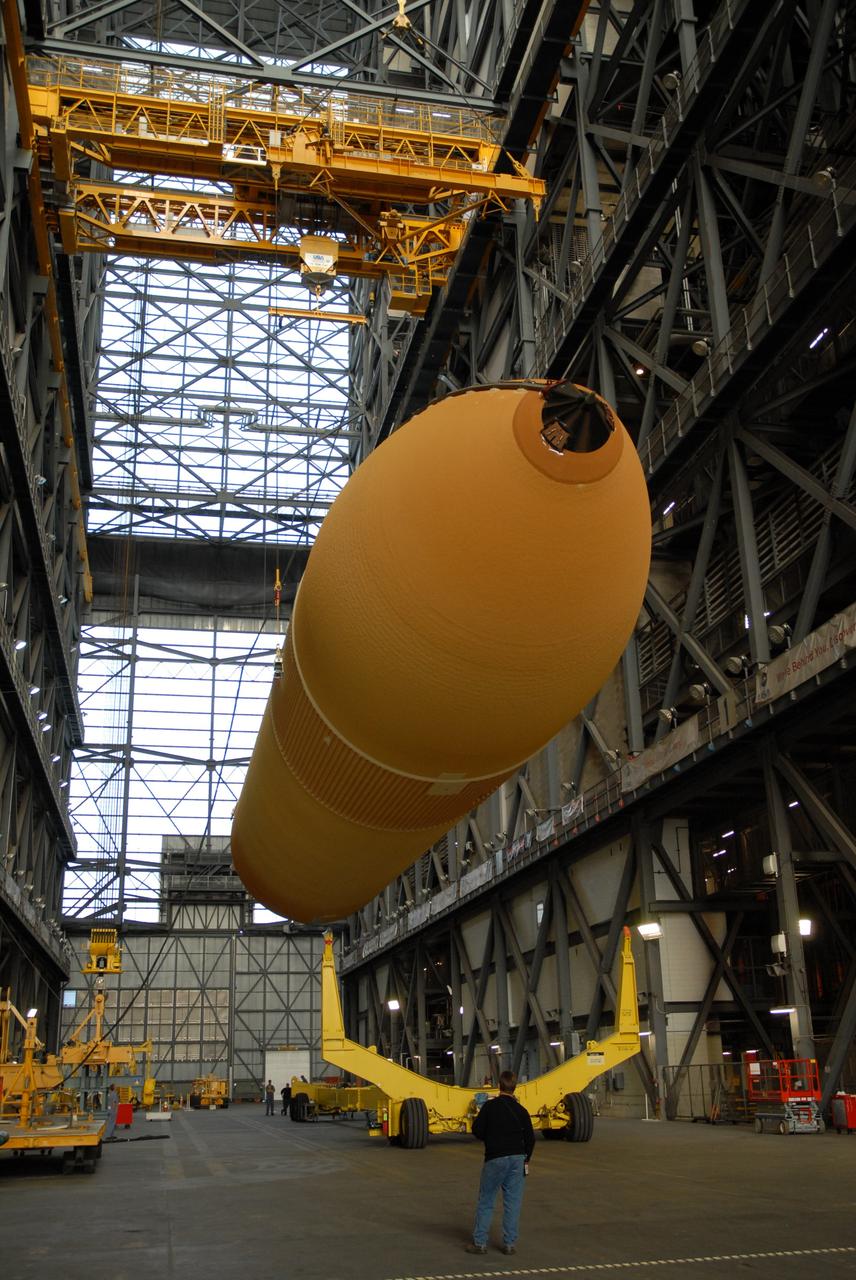
CAPE CANAVERAL, Fla. -- In the transfer aisle of the Vehicle Assembly Building at NASA's Kennedy Space Center in Florida, external fuel tank 130 is lifted off its transporter. The tank will be raised to vertical and lifted into high bay 2 for checkout before stacking with the solid rocket boosters and space shuttle Atlantis for the STS-125 mission. The fuel tank was previously designated for the STS-127 mission. The STS-125 Hubble servicing mission is targeted to launch May 12. Photo credit: NASA/Tim Jacobs
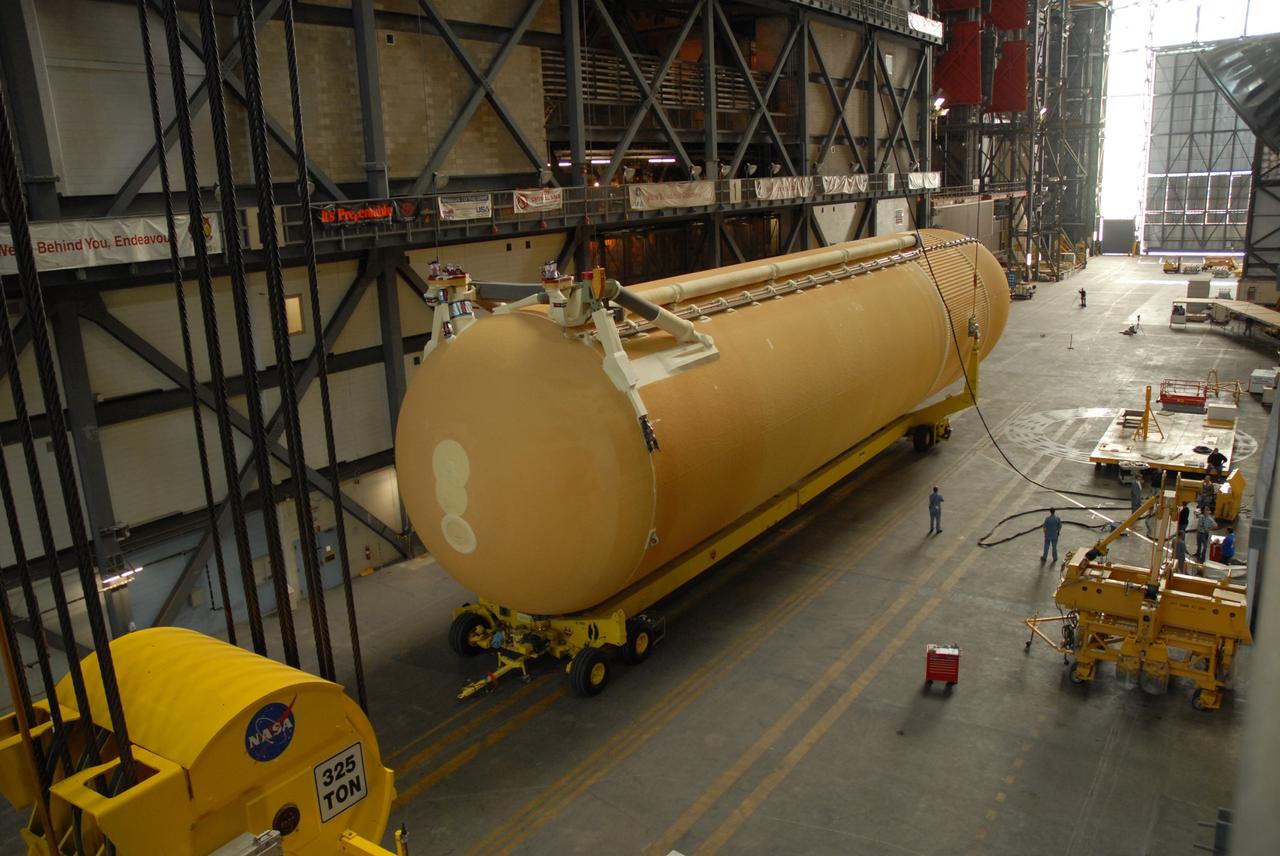
CAPE CANAVERAL, Fla. -- In the transfer aisle of the Vehicle Assembly Building at NASA's Kennedy Space Center in Florida, external fuel tank 130 is fitted with a crane to lift it off the transporter. The tank will be raised to vertical and lifted into high bay 2 for checkout before stacking with the solid rocket boosters and space shuttle Endeavour for the STS-125 mission. The fuel tank was previously designated for the STS-127 mission. The STS-125 Hubble servicing mission is targeted to launch May 12. Photo credit: NASA/Tim Jacobs
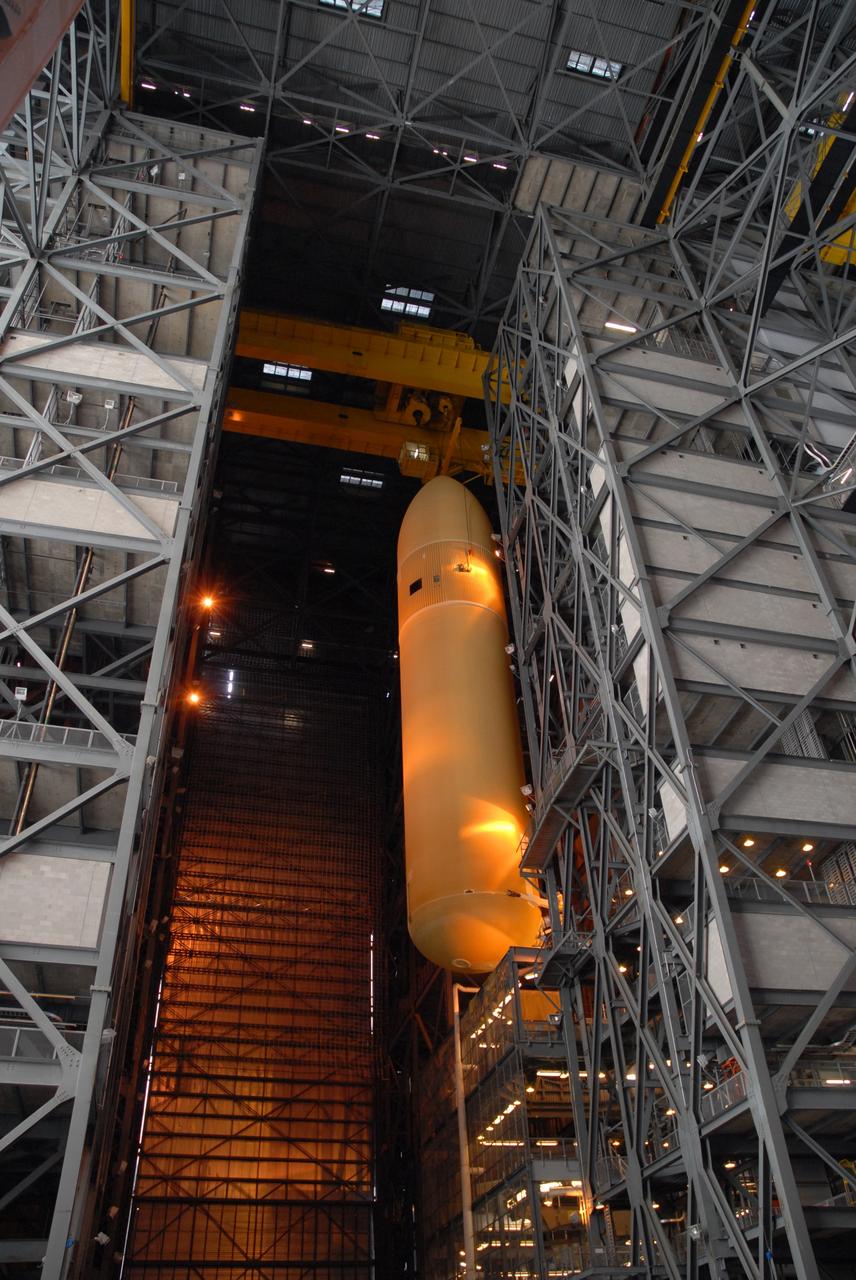
CAPE CANAVERAL, Fla. -- Suspended by a crane in the Vehicle Assembly Building at NASA's Kennedy Space Center in Florida, external fuel tank 130 is moved into high bay 2 for checkout before stacking with the solid rocket boosters and space shuttle Atlantis for the STS-125 mission. The fuel tank was previously designated for the STS-127 mission. The STS-125 Hubble servicing mission is targeted to launch May 12. Photo credit: NASA/Tim Jacobs
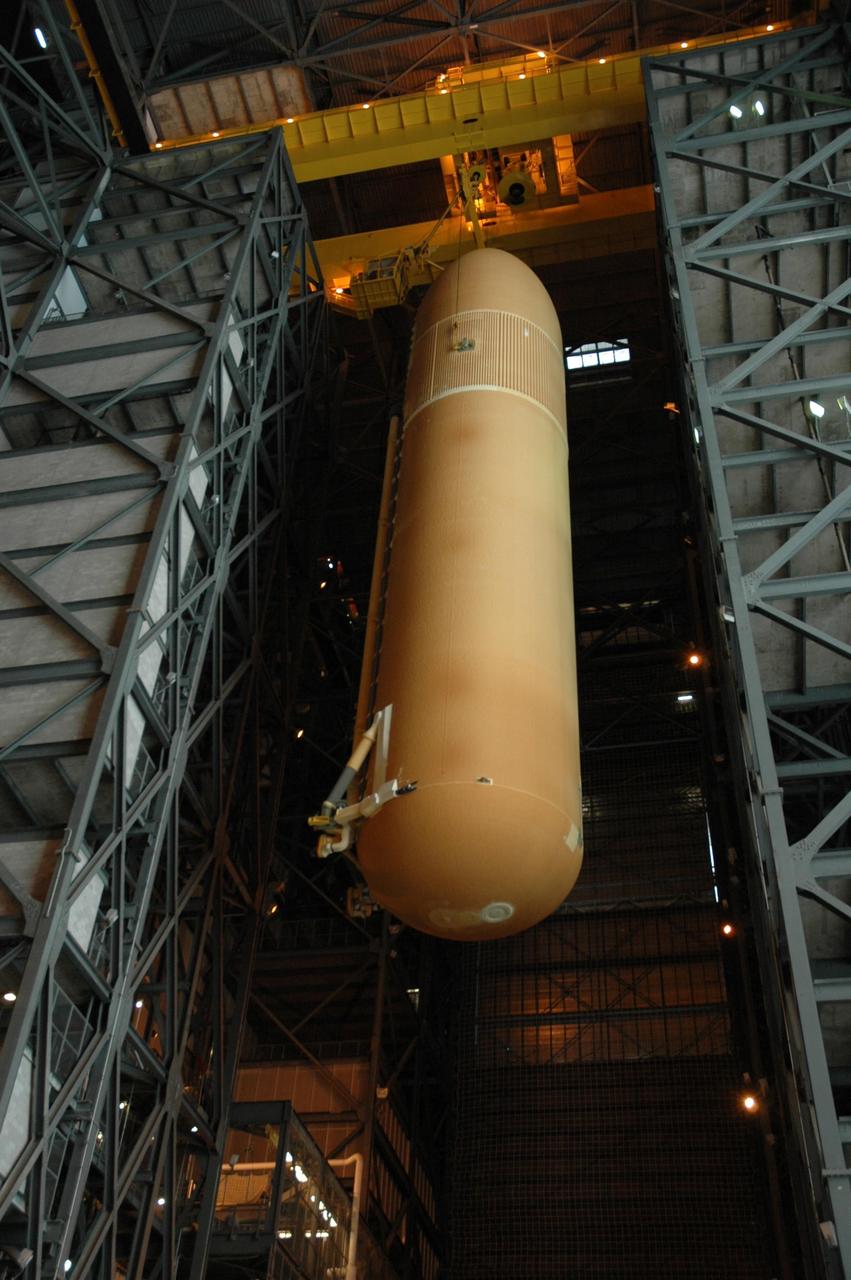
KENNEDY SPACE CENTER, FLA. -- Seen from below, external tank No. 125 is moved toward a checkout cell in high bay 4 in the Vehicle Assembly Building for processing. The tank will be part of the space shuttle stack for mission STS-122 targeted to launch Dec. 6. Photo credit: NASA/Troy Cryder
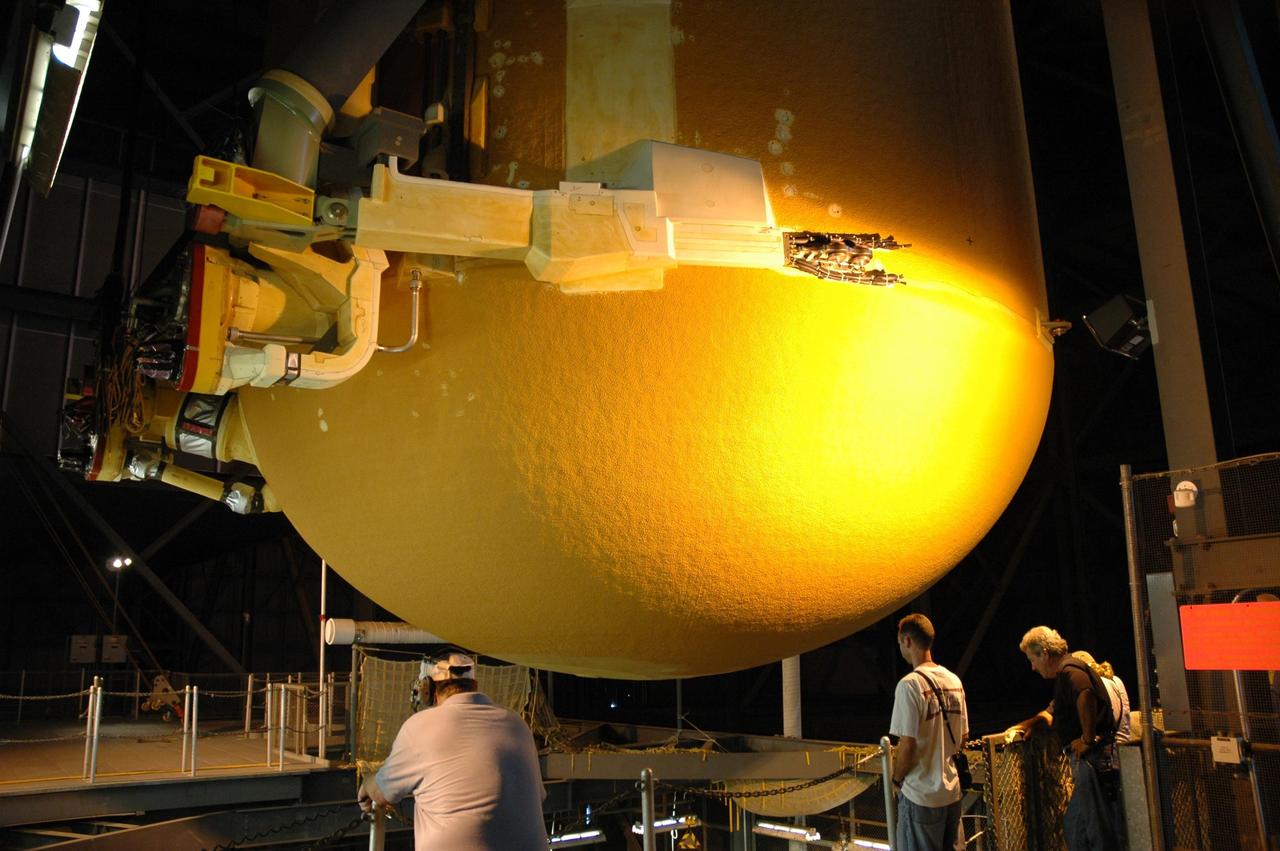
KENNEDY SPACE CENTER, FLA. -- In the Vehicle Assembly Building, workers keep an eye on the movement of external tank No. 125 as it is lowered into a checkout cell in high bay 4 for processing. The tank will be part of the space shuttle stack for mission STS-122 targeted to launch Dec. 6. Photo credit: NASA/Troy Cryder
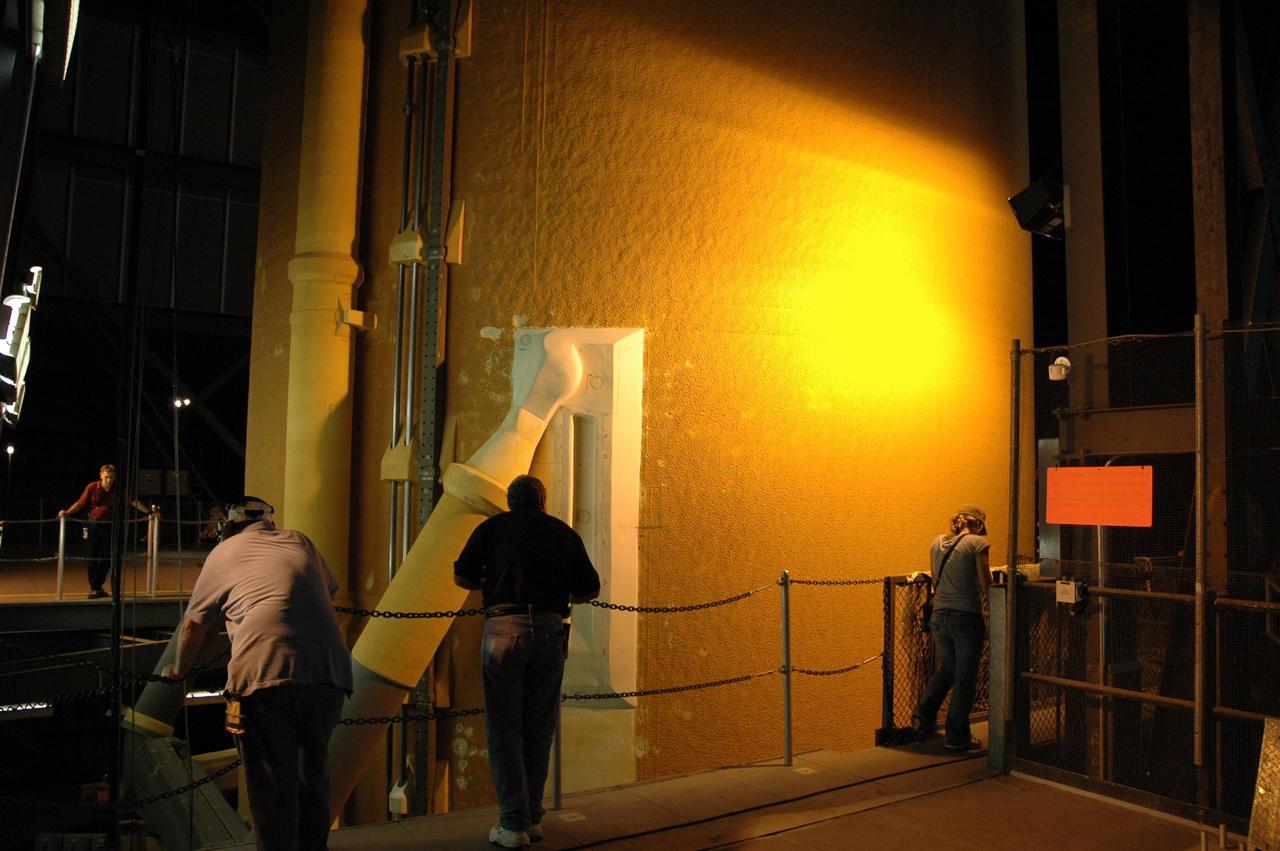
KENNEDY SPACE CENTER, FLA. -- In the Vehicle Assembly Building, workers keep an eye on the movement of external tank No. 125 as it is lowered into a checkout cell in high bay 4 for processing. The tank will be part of the space shuttle stack for mission STS-122 targeted to launch Dec. 6. Photo credit: NASA/Troy Cryder
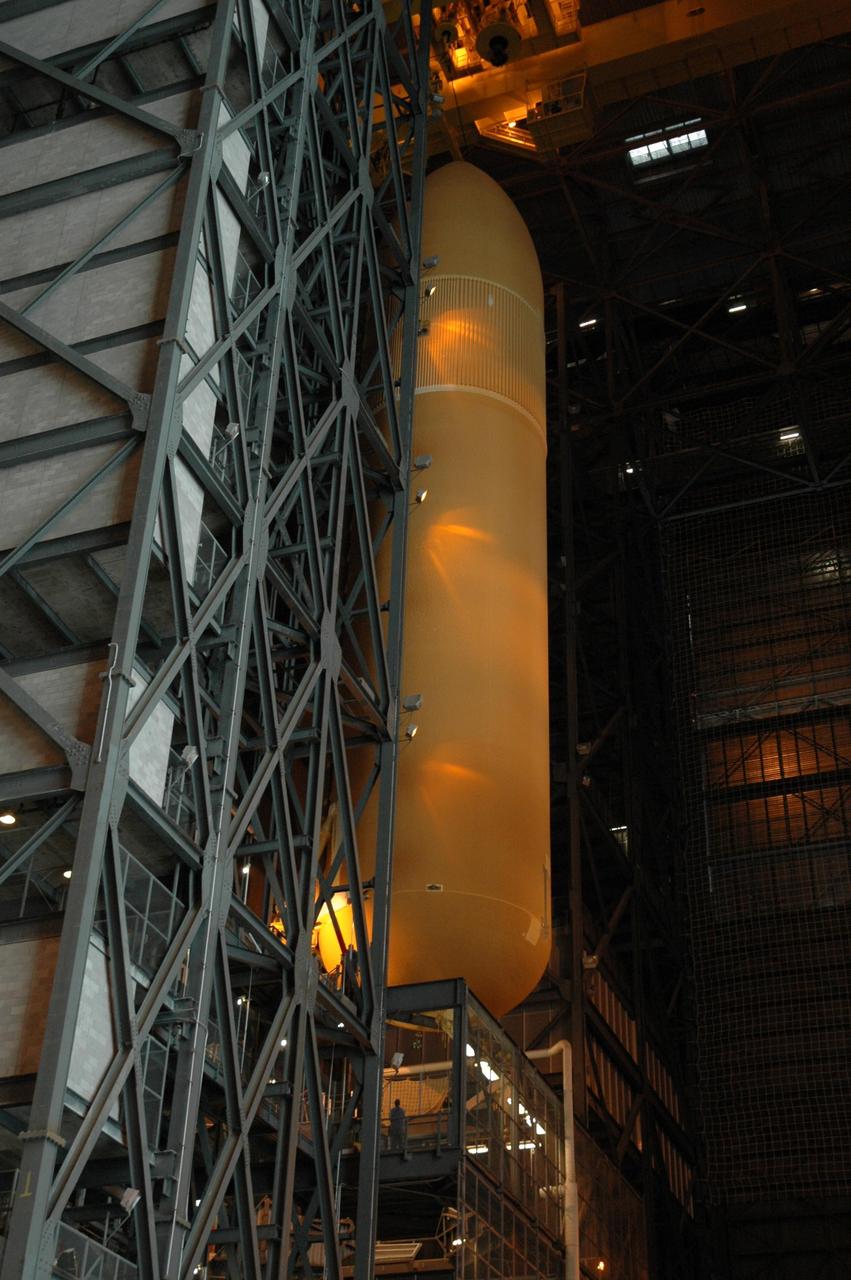
KENNEDY SPACE CENTER, FLA. -- External tank No. 125 is moved toward a checkout cell in high bay 4 in the Vehicle Assembly Building for processing. The tank will be part of the space shuttle stack for mission STS-122 targeted to launch Dec. 6. Photo credit: NASA/Troy Cryder
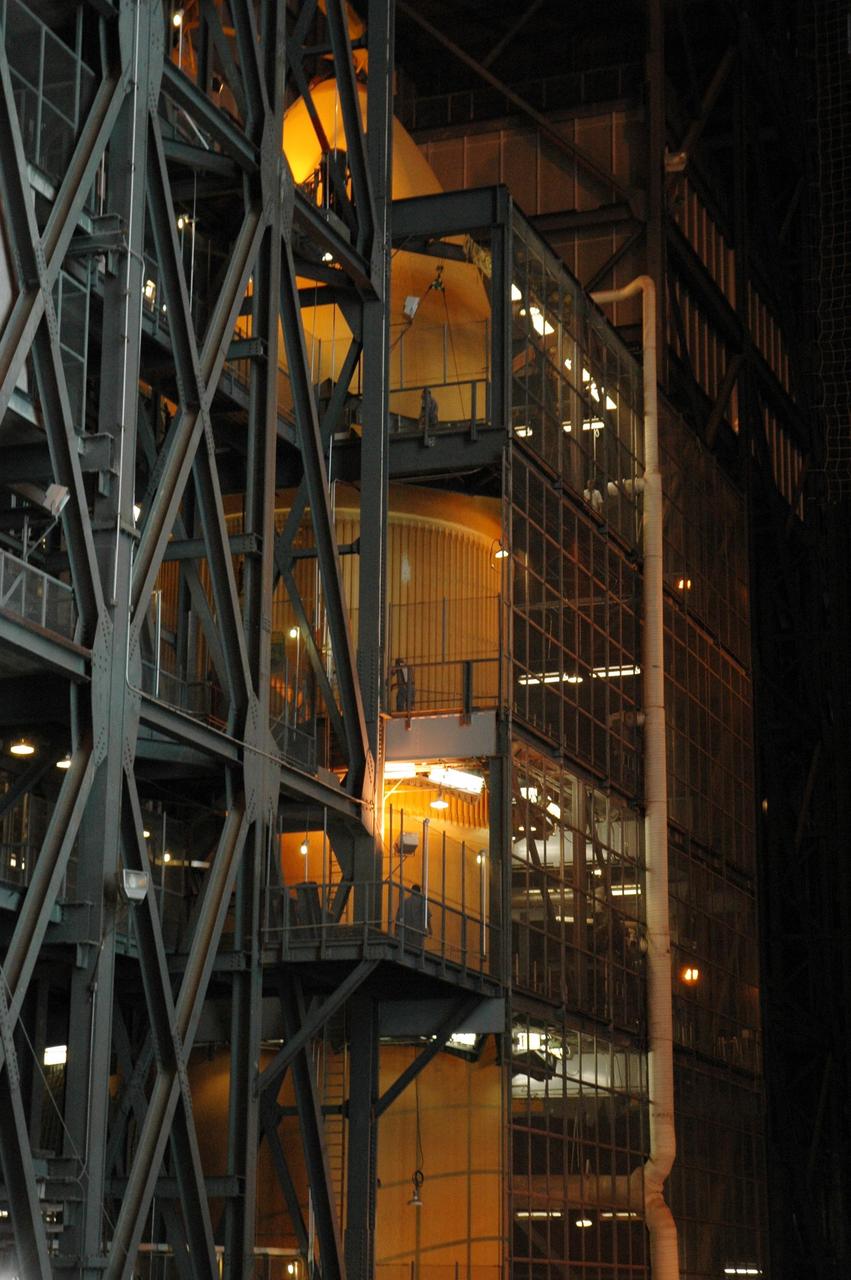
KENNEDY SPACE CENTER, FLA. -- After its lift and transfer inside the Vehicle Assembly Building, external tank No. 125 is suspended in a checkout cell in high bay 4 for processing. The tank will be part of the space shuttle stack for mission STS-122 targeted to launch Dec. 6. Photo credit: NASA/Troy Cryder
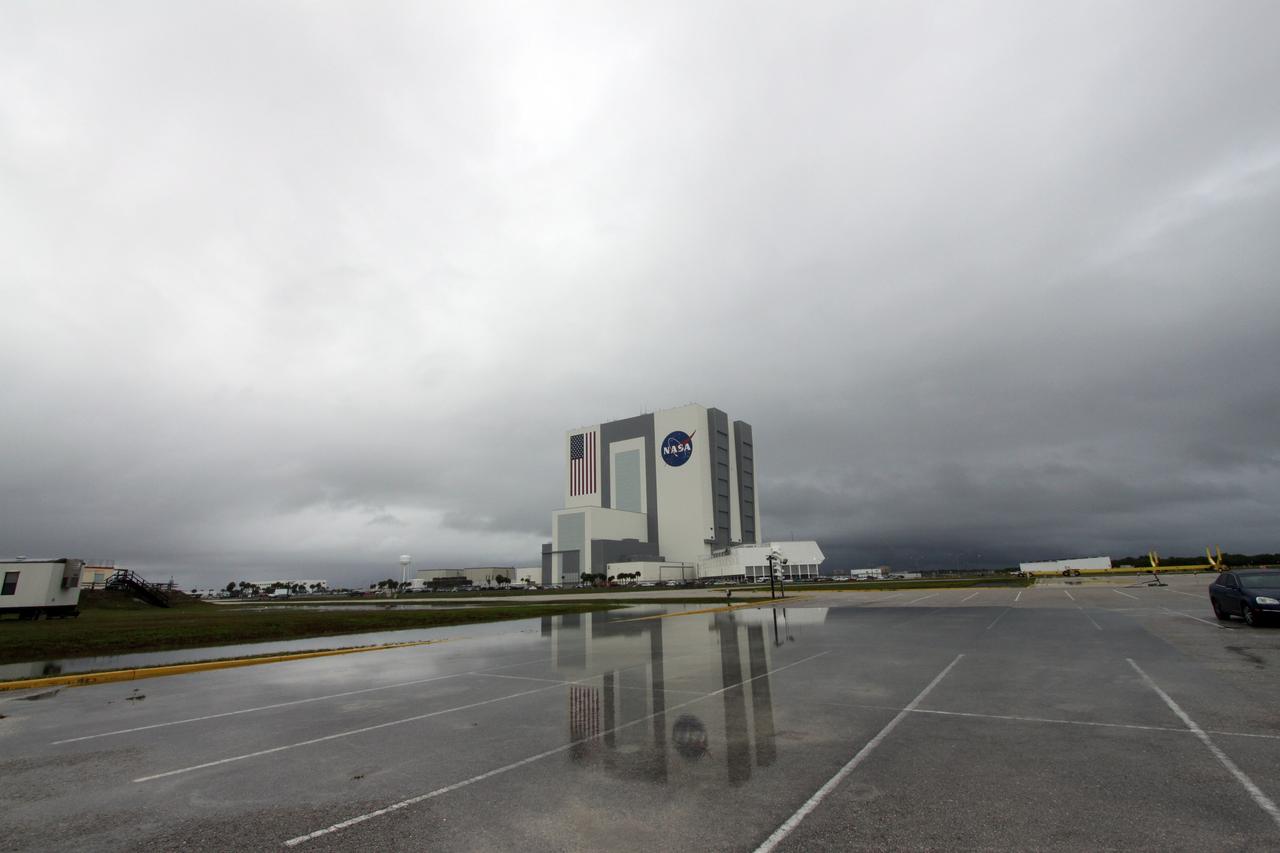
CAPE CANAVERAL, Fla. – Standing water collects on the surface of a parking lot across the street from NASA Kennedy Space Center's Vehicle Assembly Building, the aftermath of thunderstorms in the vicinity of Kennedy’s Shuttle Landing Facility. Two landing opportunities for space shuttle Atlantis to conclude the STS-125 mission were waved off May 22 due to violations of the end-of-mission landing weather criteria. Through five spacewalks on the STS-125 mission, NASA's Hubble Space Telescope was refurbished and upgraded with state-of-the-art science instruments that will expand Hubble's capabilities and extend its operational lifespan through at least 2014. Photo credit: NASA/Jack Pfaller
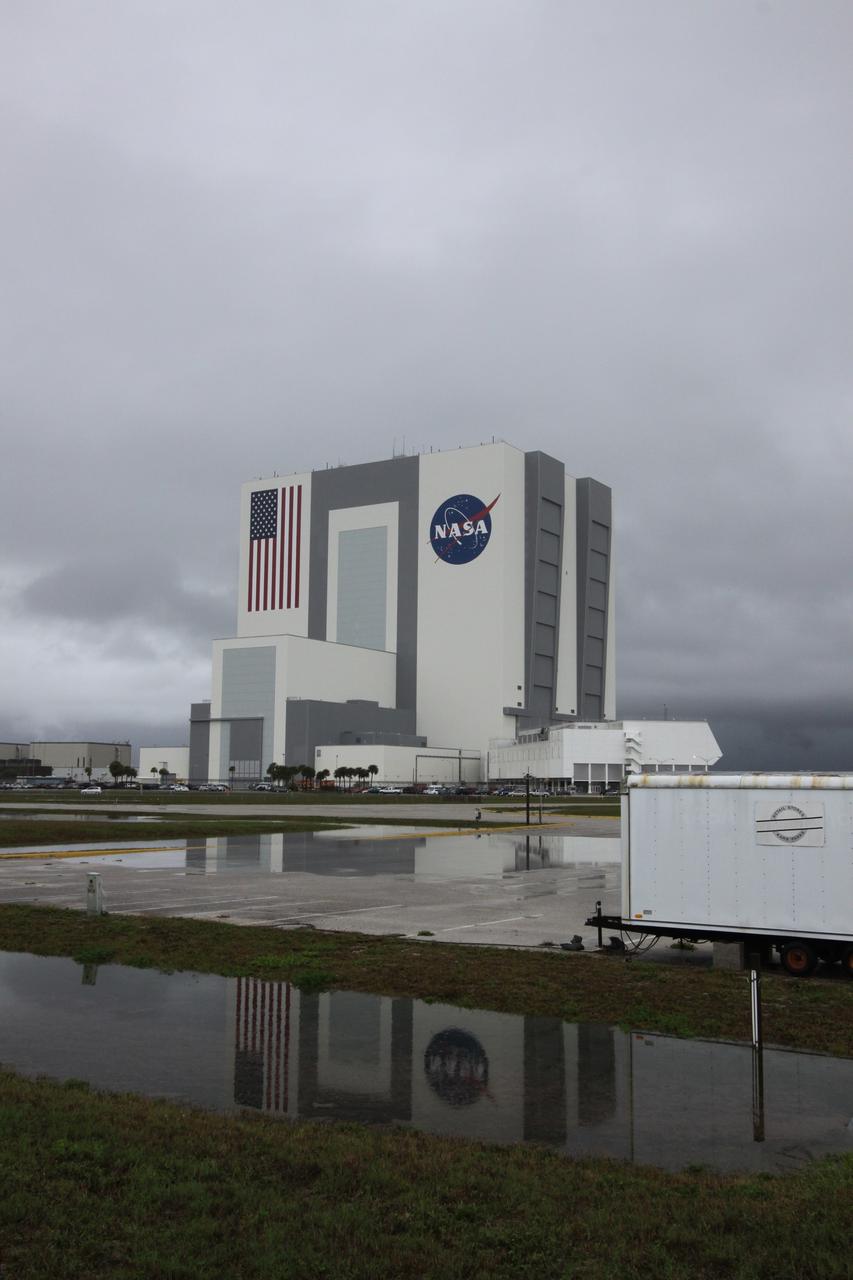
CAPE CANAVERAL, Fla. – Water saturates the ground and stands on the surface of a parking lot across the street from NASA Kennedy Space Center's Vehicle Assembly Building, the aftermath of thunderstorms in the vicinity of Kennedy’s Shuttle Landing Facility. Two landing opportunities for space shuttle Atlantis to conclude the STS-125 mission were waved off May 22 due to violations of the end-of-mission landing weather criteria. Through five spacewalks on the STS-125 mission, NASA's Hubble Space Telescope was refurbished and upgraded with state-of-the-art science instruments that will expand Hubble's capabilities and extend its operational lifespan through at least 2014. Photo credit: NASA/Jack Pfaller
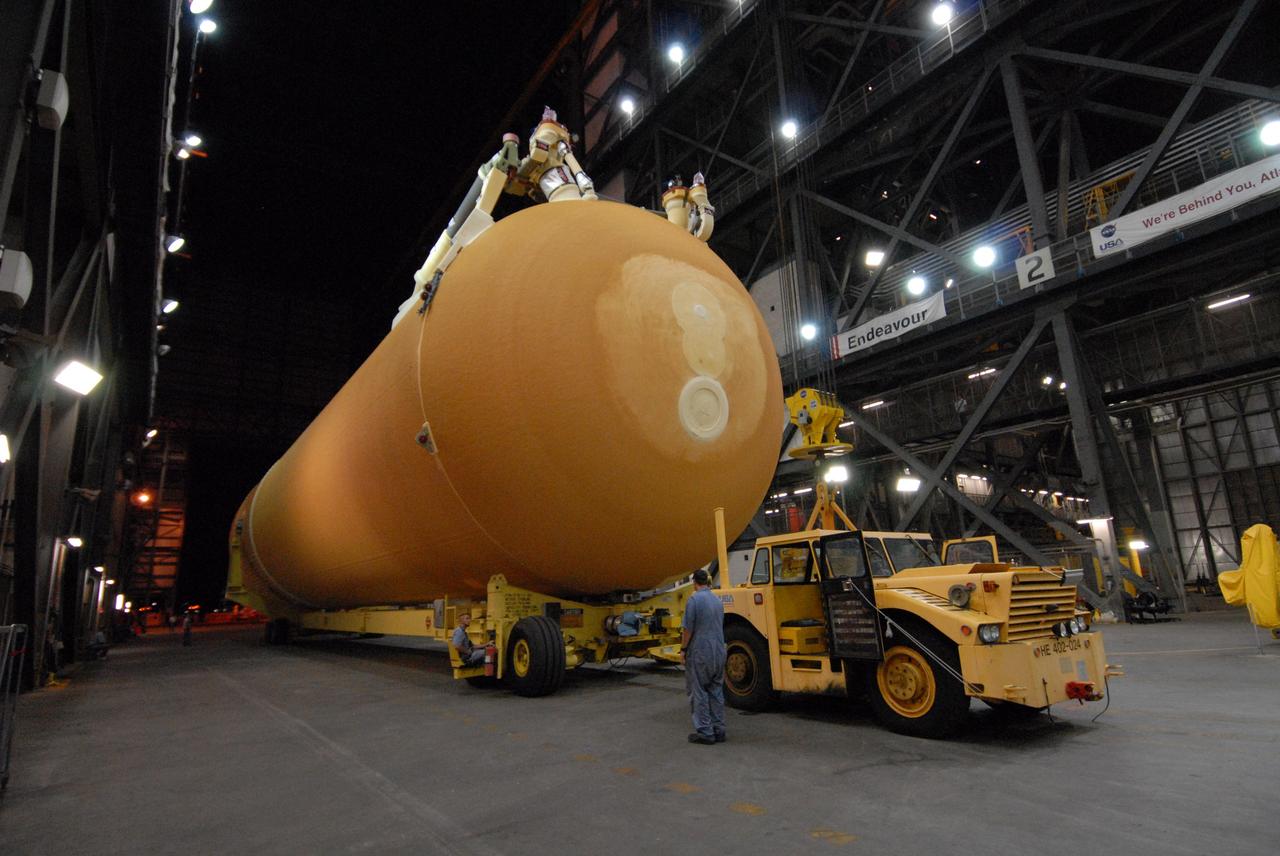
CAPE CANAVERAL, Fla. – The external tank for space shuttle Atlantis' STS-125 mission to NASA's Hubble Space Telescope comes to a stop in the transfer aisle of the Vehicle Assembly Building at NASA's Kennedy Space Center. The tank arrived at the turn basin earlier in the day aboard the Pegasus barge. Inside the building, the tank will be raised to vertical, lifted and moved into a checkout cell. Stacking of the tank and solid rocket boosters is scheduled for Aug. 7. Atlantis is targeted to launch Oct. 8. Photo credit: NASA/Amanda Diller
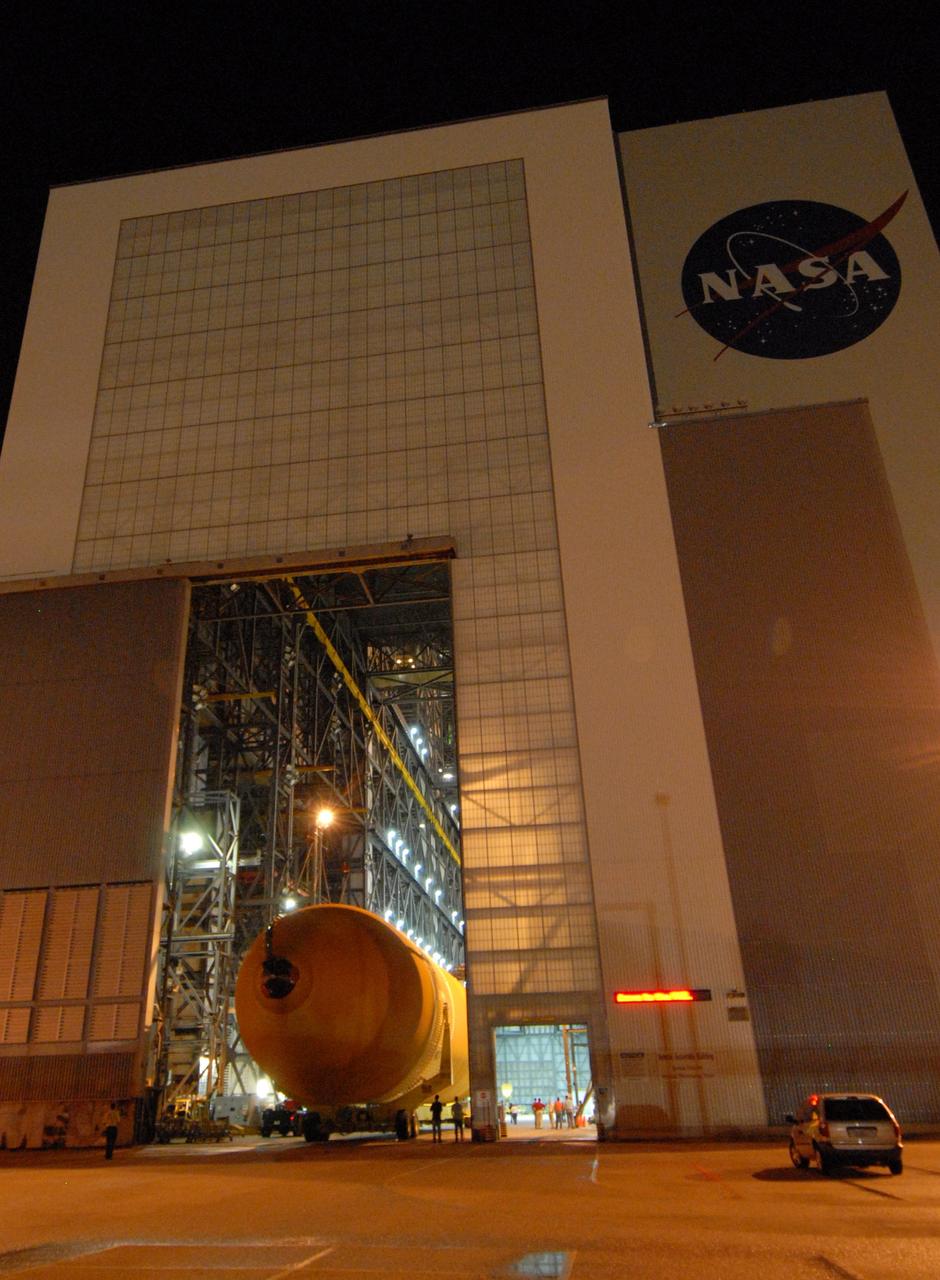
CAPE CANAVERAL, Fla. – The external tank for space shuttle Atlantis' STS-125 mission to NASA's Hubble Space Telescope moves through the open door of the Vehicle Assembly Building at NASA's Kennedy Space Center. The tank arrived at the turn basin earlier in the day aboard the Pegasus barge. Inside the building, the tank will be raised to vertical, lifted and moved into a checkout cell. Stacking of the tank and solid rocket boosters is scheduled for Aug. 7. Atlantis is targeted to launch Oct. 8. Photo credit: NASA/Amanda Diller
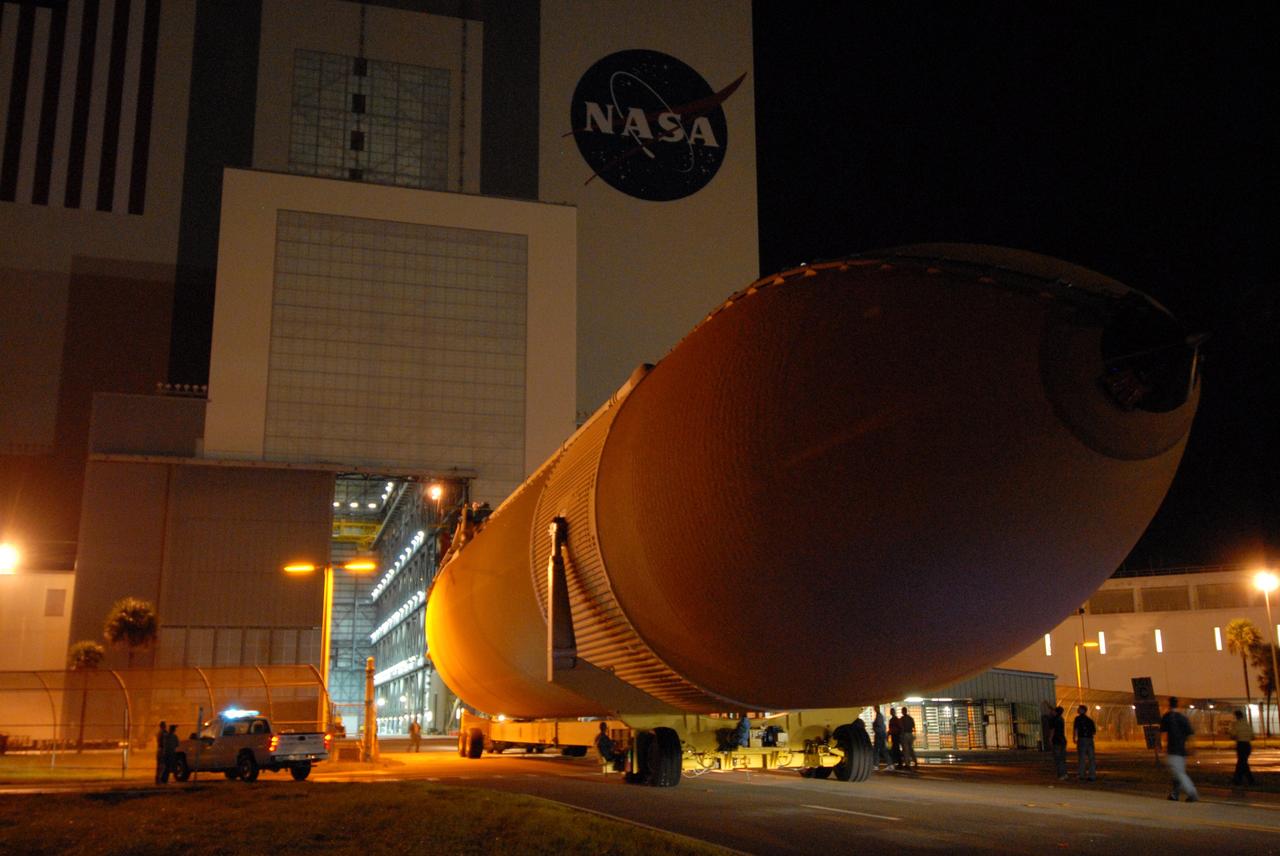
CAPE CANAVERAL, Fla. – The external tank for space shuttle Atlantis' STS-125 mission to NASA's Hubble Space Telescope moves toward the open door of the Vehicle Assembly Building at NASA's Kennedy Space Center. The tank arrived at the turn basin earlier in the day aboard the Pegasus barge. Inside the building, the tank will be raised to vertical, lifted and moved into a checkout cell. Stacking of the tank and solid rocket boosters is scheduled for Aug. 7. Atlantis is targeted to launch Oct. 8. Photo credit: NASA/Amanda Diller
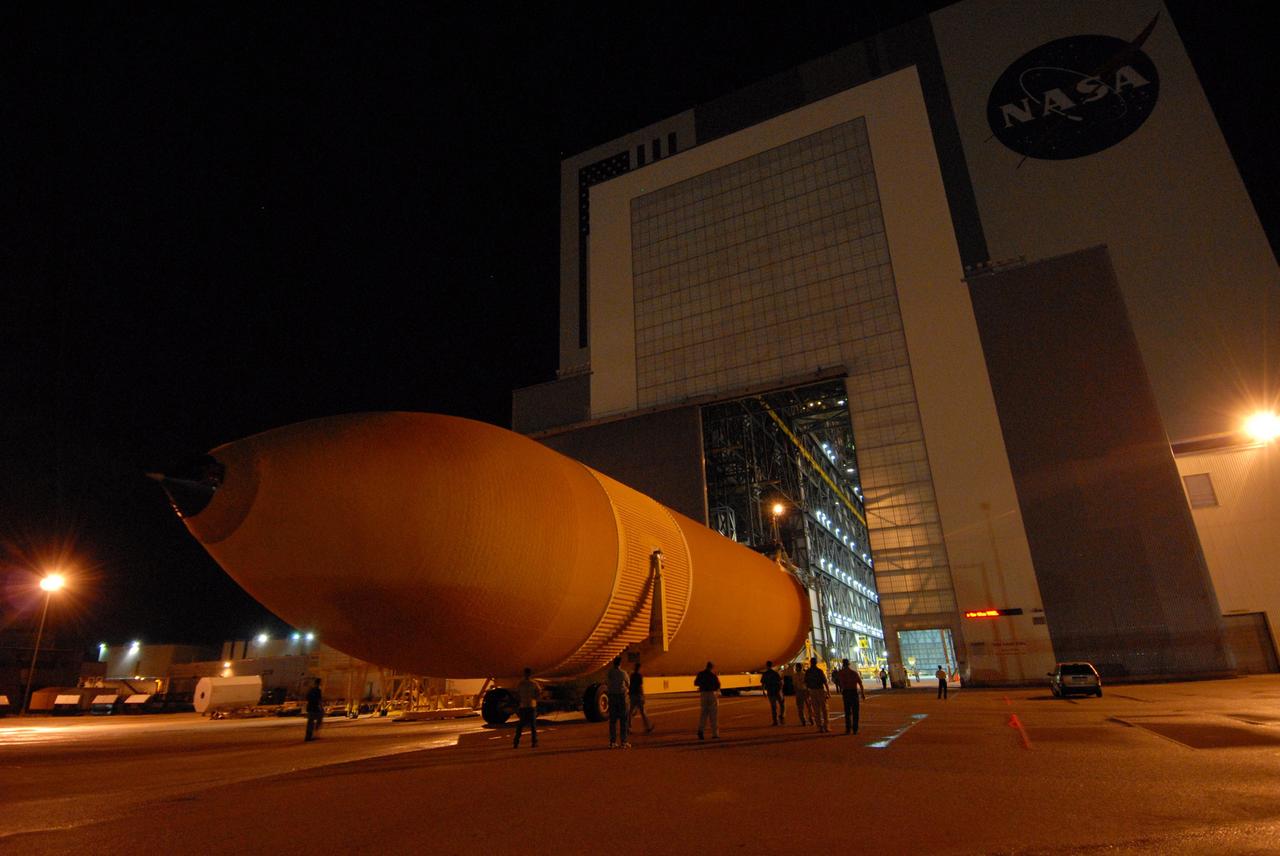
CAPE CANAVERAL, Fla. – The external tank for space shuttle Atlantis' STS-125 mission to NASA's Hubble Space Telescope moves toward the open door of the Vehicle Assembly Building at NASA's Kennedy Space Center. The tank arrived at the turn basin earlier in the day aboard the Pegasus barge. Inside the building, the tank will be raised to vertical, lifted and moved into a checkout cell. Stacking of the tank and solid rocket boosters is scheduled for Aug. 7. Atlantis is targeted to launch Oct. 8. Photo credit: NASA/Amanda Diller
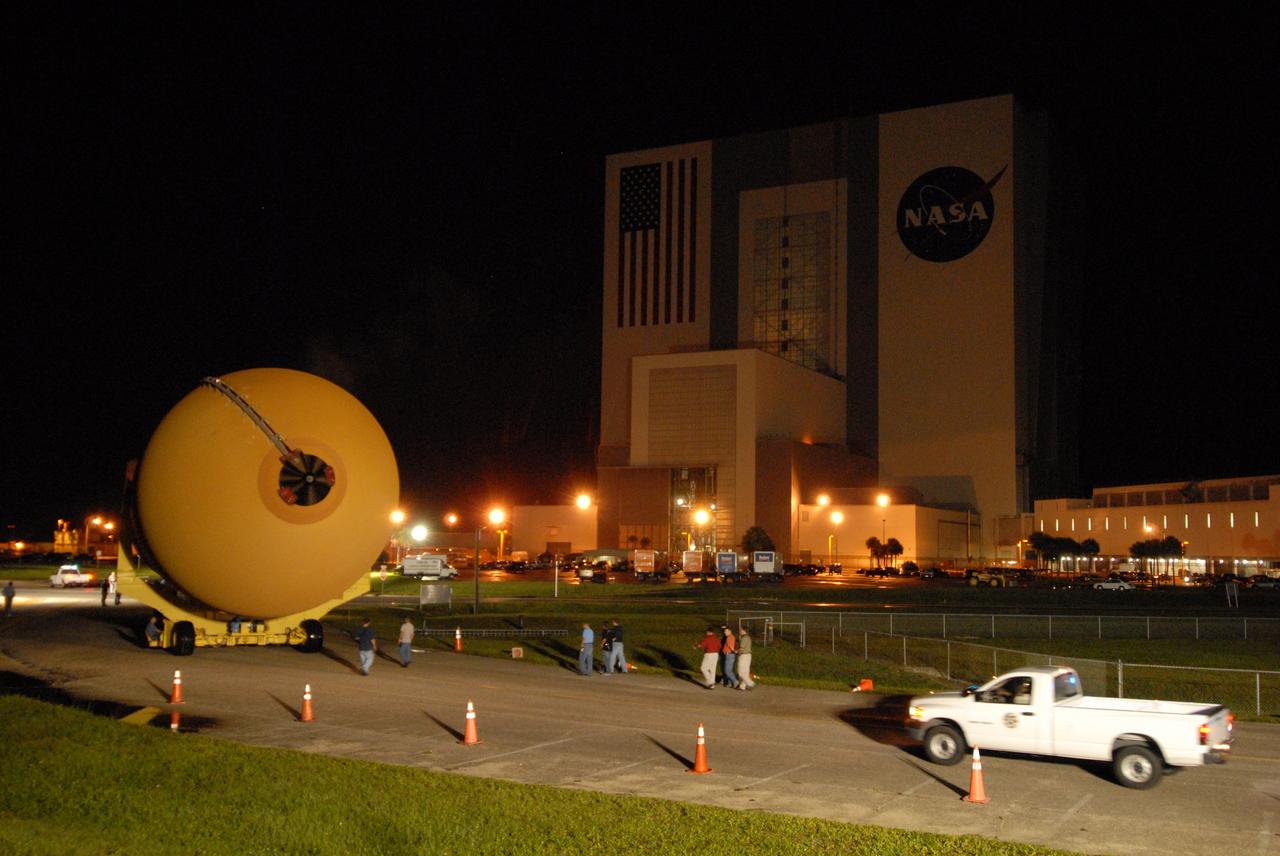
CAPE CANAVERAL, Fla. – The external tank for space shuttle Atlantis' STS-125 mission to NASA's Hubble Space Telescope makes the turn toward the Vehicle Assembly Building at NASA's Kennedy Space Center. The tank arrived at the turn basin earlier in the day aboard the Pegasus barge. Inside the building, the tank will be raised to vertical, lifted and moved into a checkout cell. Stacking of the tank and solid rocket boosters is scheduled for Aug. 7. Atlantis is targeted to launch Oct. 8. Photo credit: NASA/Amanda Diller
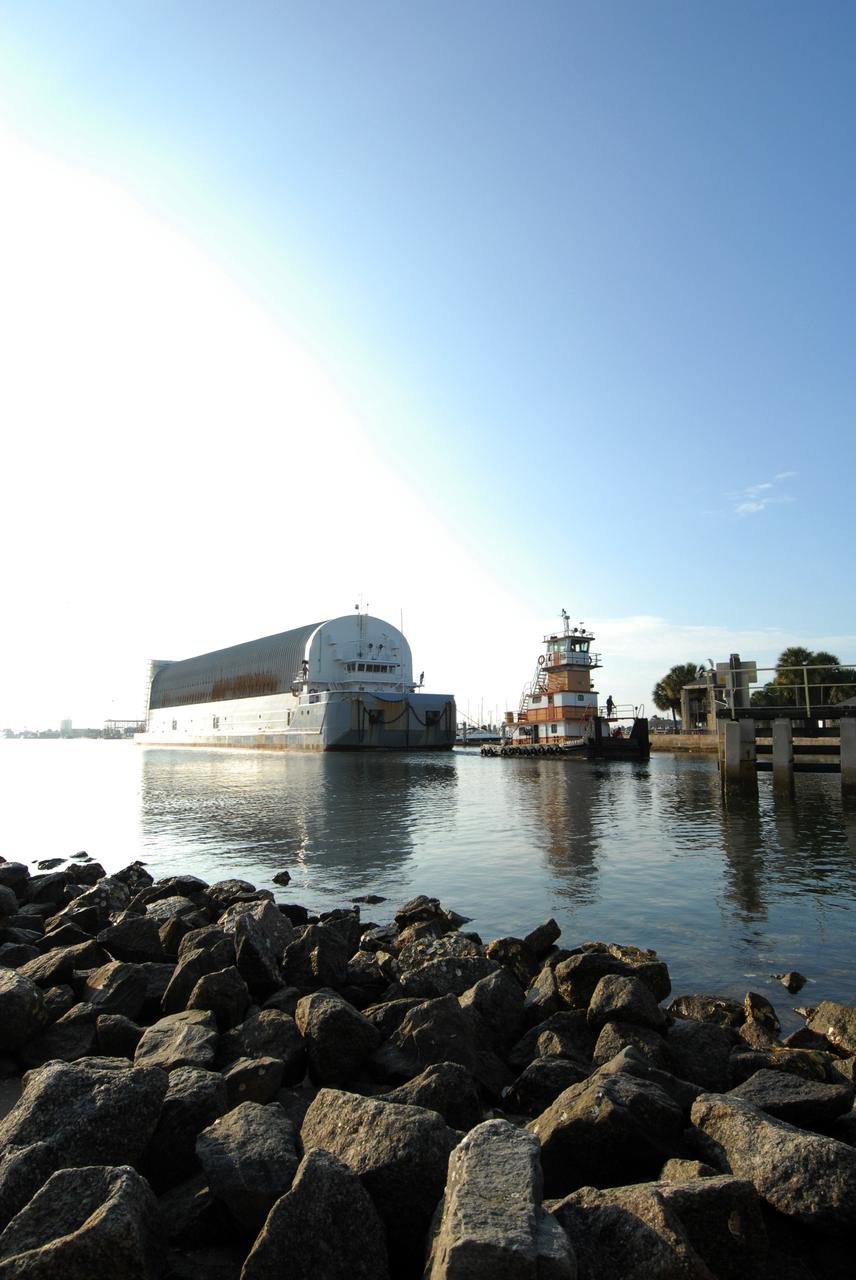
CAPE CANAVERAL, Fla. – The external fuel tank for space shuttle Atlantis' STS-125 mission to NASA's Hubble Space Telescope is towed to the turn basin in the Launch Complex 39 Area at NASA's Kennedy Space Center, where it will be offloaded and moved to the Vehicle Assembly Building. Once inside the building, the tank will be raised to vertical, lifted and moved into a checkout cell. Stacking of the tank and solid rocket boosters is planned to start Aug. 7. Atlantis is targeted to launch Oct. 8. Photo credit: NASA/Jack Pfaller
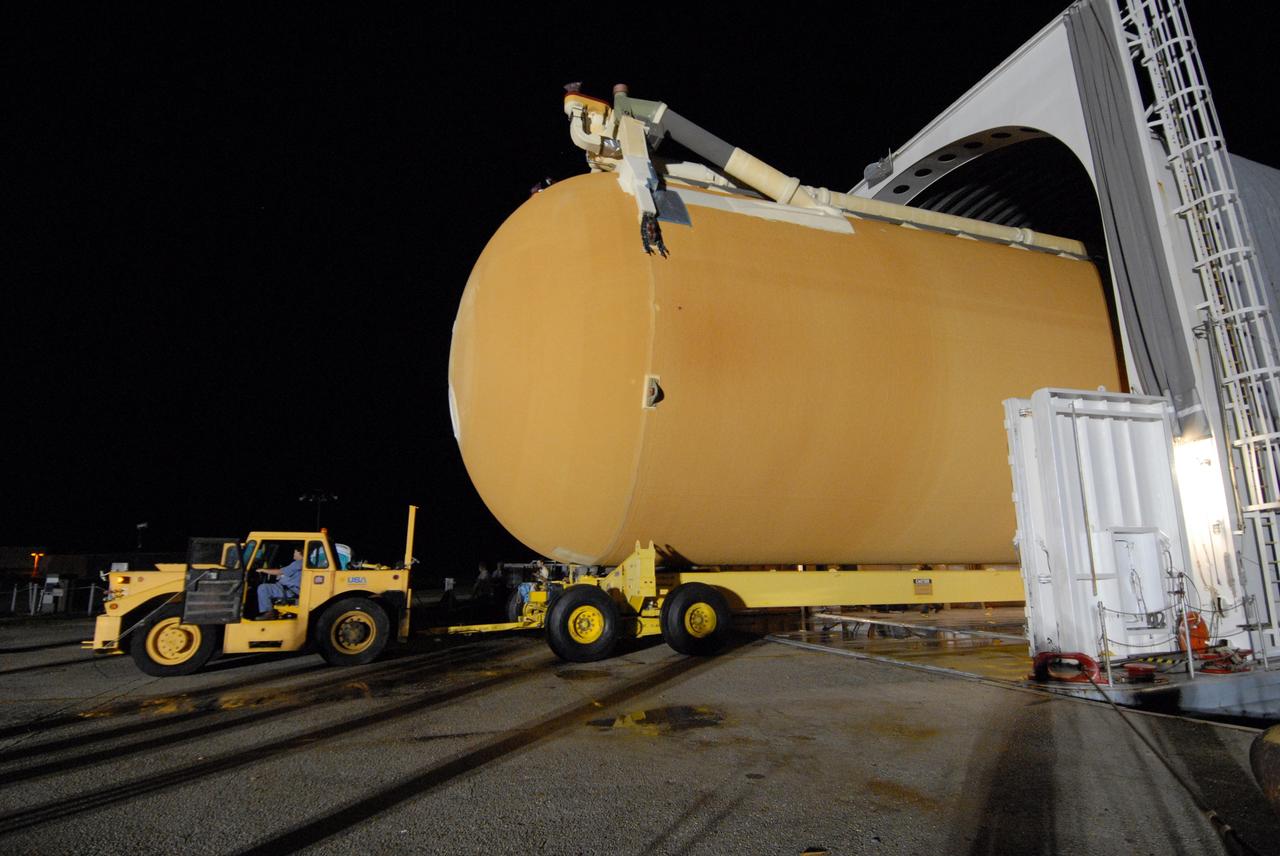
CAPE CANAVERAL, Fla. – In the Launch Complex 39 Area at NASA's Kennedy Space Center, a transporter offloads the external tank for space shuttle Atlantis' STS-125 mission to NASA's Hubble Space Telescope off the Pegasus barge. The tank, which arrived earlier in the day, will be moved to the Vehicle Assembly Building. Inside the building, the tank will be raised to vertical, lifted and moved into a checkout cell. Stacking of the tank and solid rocket boosters is scheduled for Aug. 7. Atlantis is targeted to launch Oct. 8. Photo credit: NASA/Amanda Diller
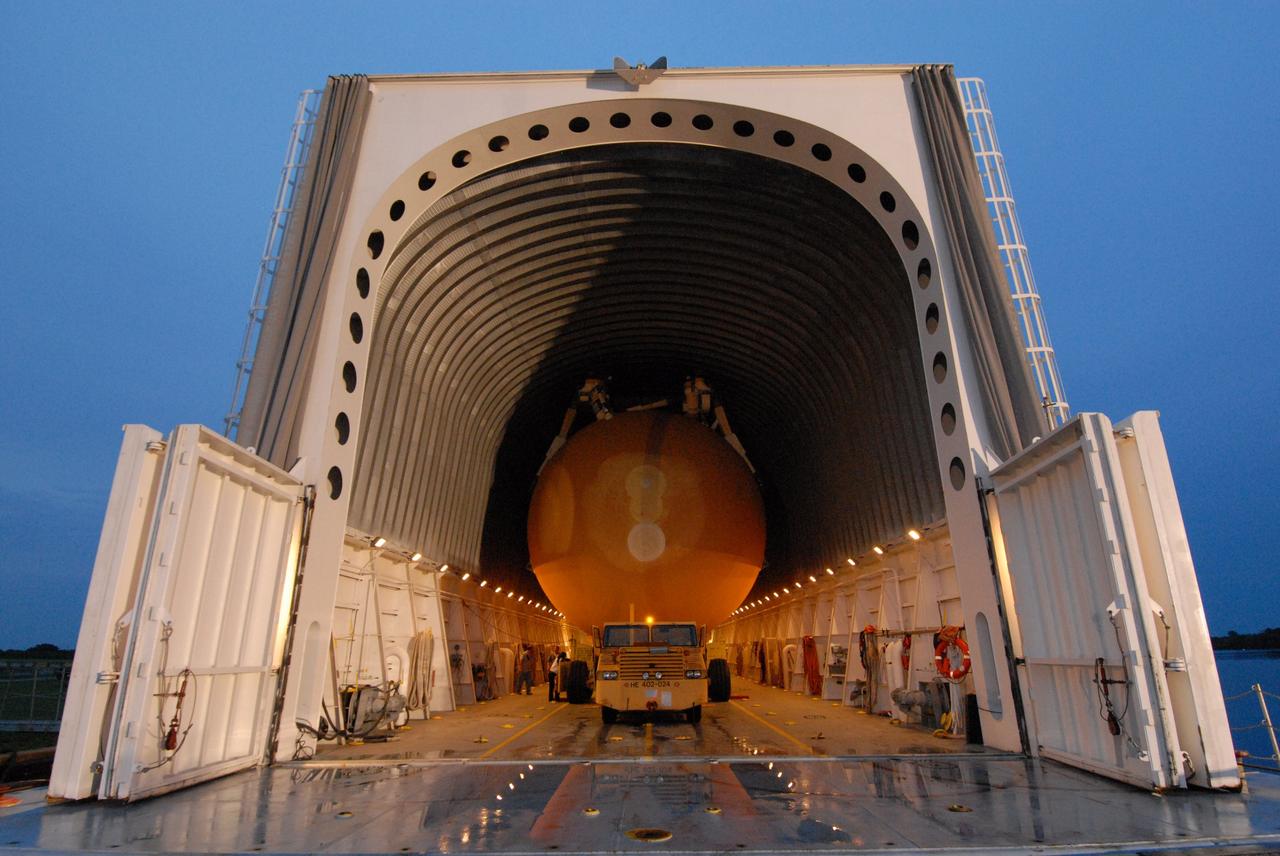
CAPE CANAVERAL, Fla. – In the Launch Complex 39 Area at NASA's Kennedy Space Center, the external tank for space shuttle Atlantis' STS-125 mission to NASA's Hubble Space Telescope is ready to be moved off the Pegasus barge and moved to the Vehicle Assembly Building. Inside the building, the tank will be raised to vertical, lifted and moved into a checkout cell. Stacking of the tank and solid rocket boosters is scheduled for Aug. 7. Atlantis is targeted to launch Oct. 8. Photo credit: NASA/Amanda Diller
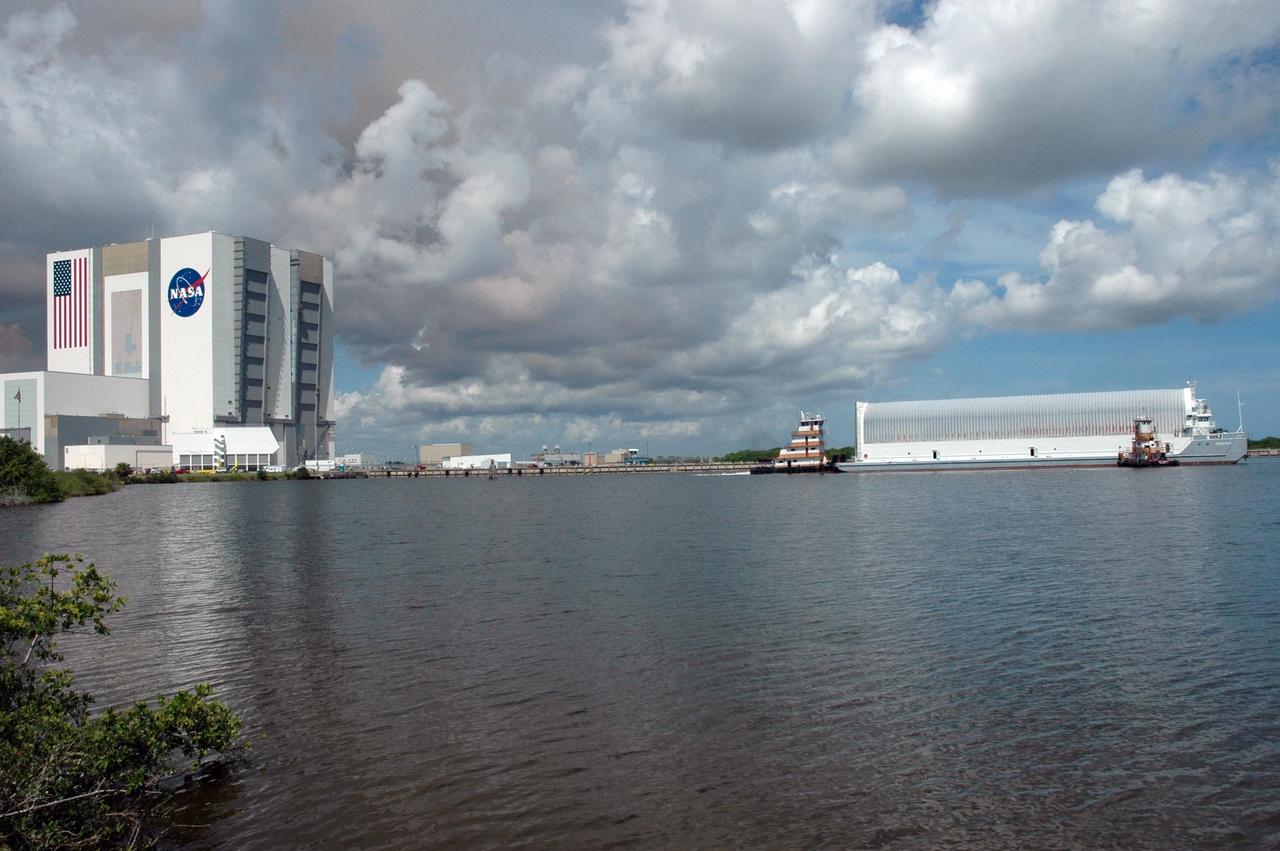
KENNEDY SPACE CENTER, FLA. -- Tugboats tow the Pegasus barge toward the dock in the turn basin of the Launch Complex 39 Area. At left is the Vehicle Assembly Building. The barge is carrying external tank No. 125. After it is offloaded, the tank will be moved to the Vehicle Assembly Building. The external tank will be used on space shuttle Atlantis for mission STS-122 targeted for launch on Dec. 6. Photo credit: NASA/Troy Cryder
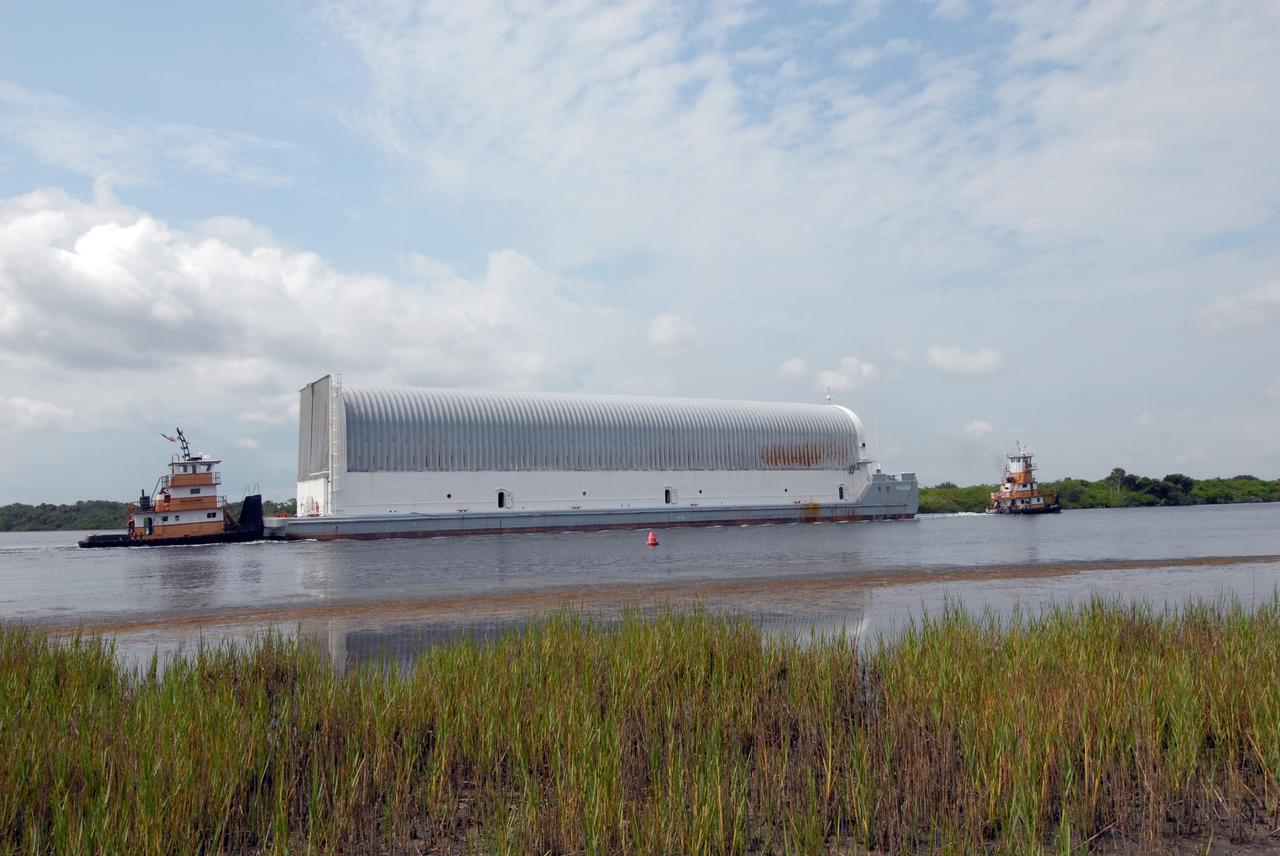
CAPE CANAVERAL, Fla. – The external fuel tank for space shuttle Atlantis' STS-125 mission to NASA's Hubble Space Telescope is towed to the turn basin in the Launch Complex 39 Area at NASA's Kennedy Space Center, where it will be offloaded and moved to the Vehicle Assembly Building. Once inside the building, the tank will be raised to vertical, lifted and moved into a checkout cell. Stacking of the tank and solid rocket boosters is planned to start Aug. 7. Atlantis is targeted to launch Oct. 8. Photo credit: NASA/Jack Pfaller
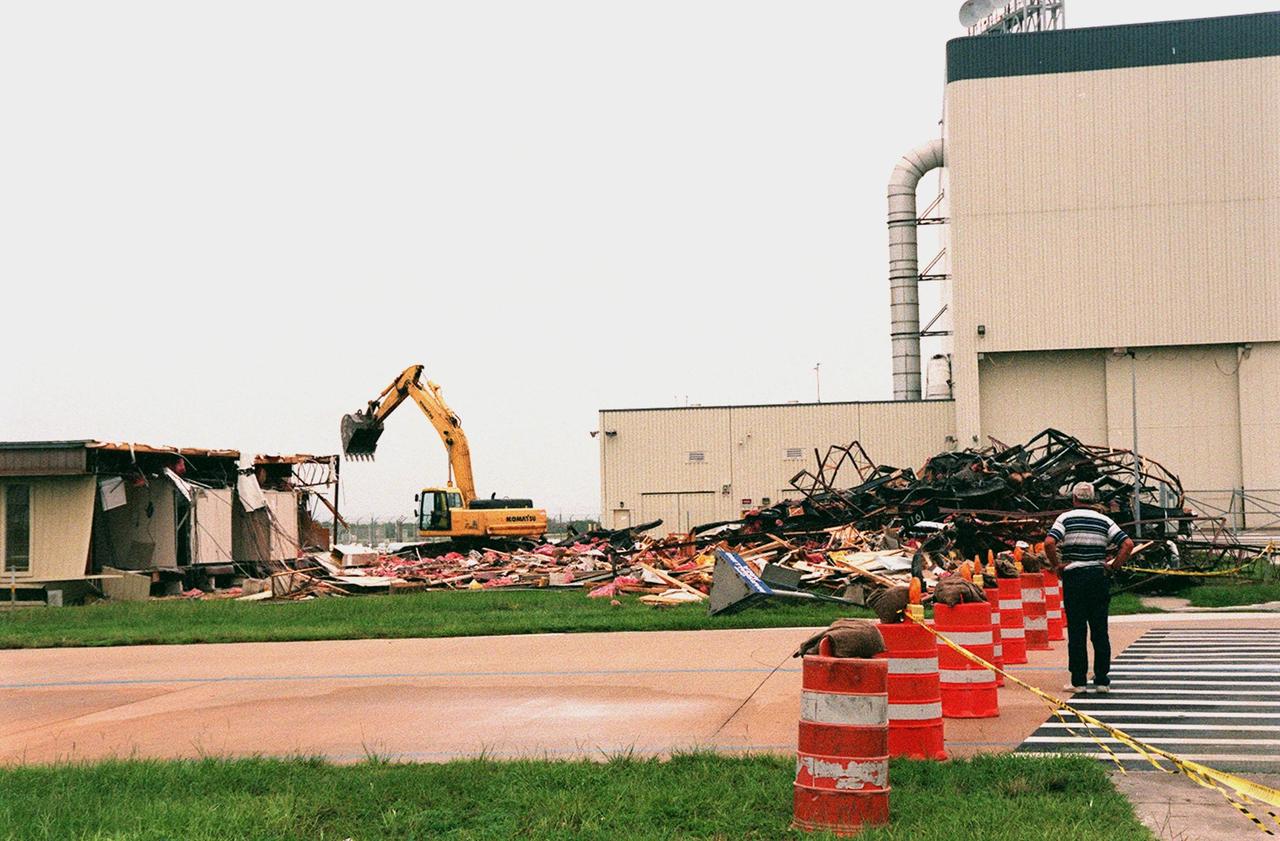
The Butler Building at Kennedy Space Center is nearly demolished, with the help of the crane in the background. The building, which is near the Orbiter Processing Facility (right), is being demolished in order to extend the crawlerway leading to the high bay of the Vehicle Assembly Building (VAB), part of KSC's Safe Haven project. The goal of Safe Haven is to strengthen readiness for Florida's hurricane season by expanding the VAB's storage capacity. Construction includes outfitting the VAB with a third stacking area, in high bay 2, that will allow NASA to preassemble stacks and still have room in the VAB to pull a Shuttle back from the pad into the safety of the VAB if severe weather threatens. The VAB can withstand winds up to 125 mph
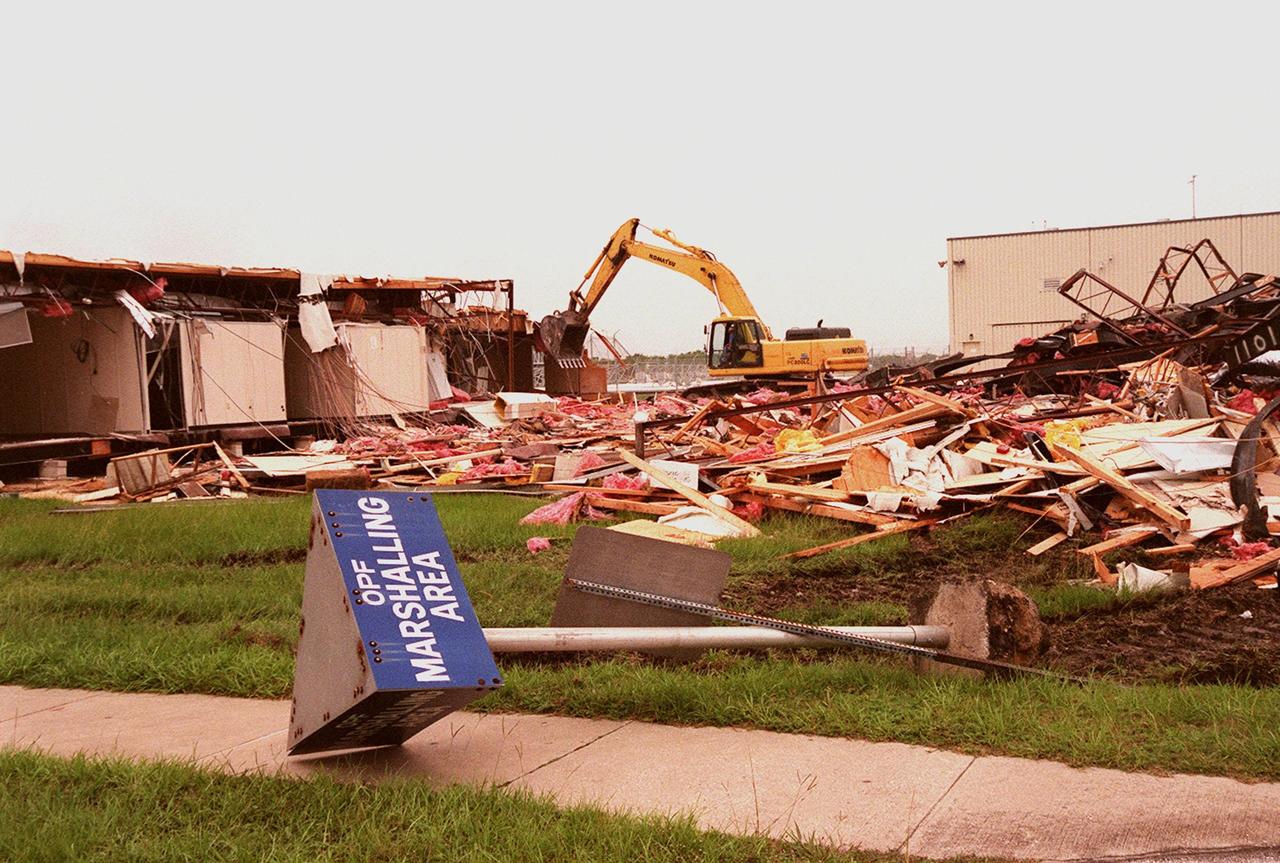
The walls of the Butler Building at Kennedy Space Center come tumbling down, with the help of the crane in the background. The building, which is near the Orbiter Processing Facility, is being demolished in order to extend the crawlerway leading to the high bay of the Vehicle Assembly Building (VAB), part of KSC's Safe Haven project. The goal of Safe Haven is to strengthen readiness for Florida's hurricane season by expanding the VAB's storage capacity. Construction includes outfitting the VAB with a third stacking area, in high bay 2, that will allow NASA to preassemble stacks and still have room in the VAB to pull a Shuttle back from the pad into the safety of the VAB if severe weather threatens. The VAB can withstand winds up to 125 mph
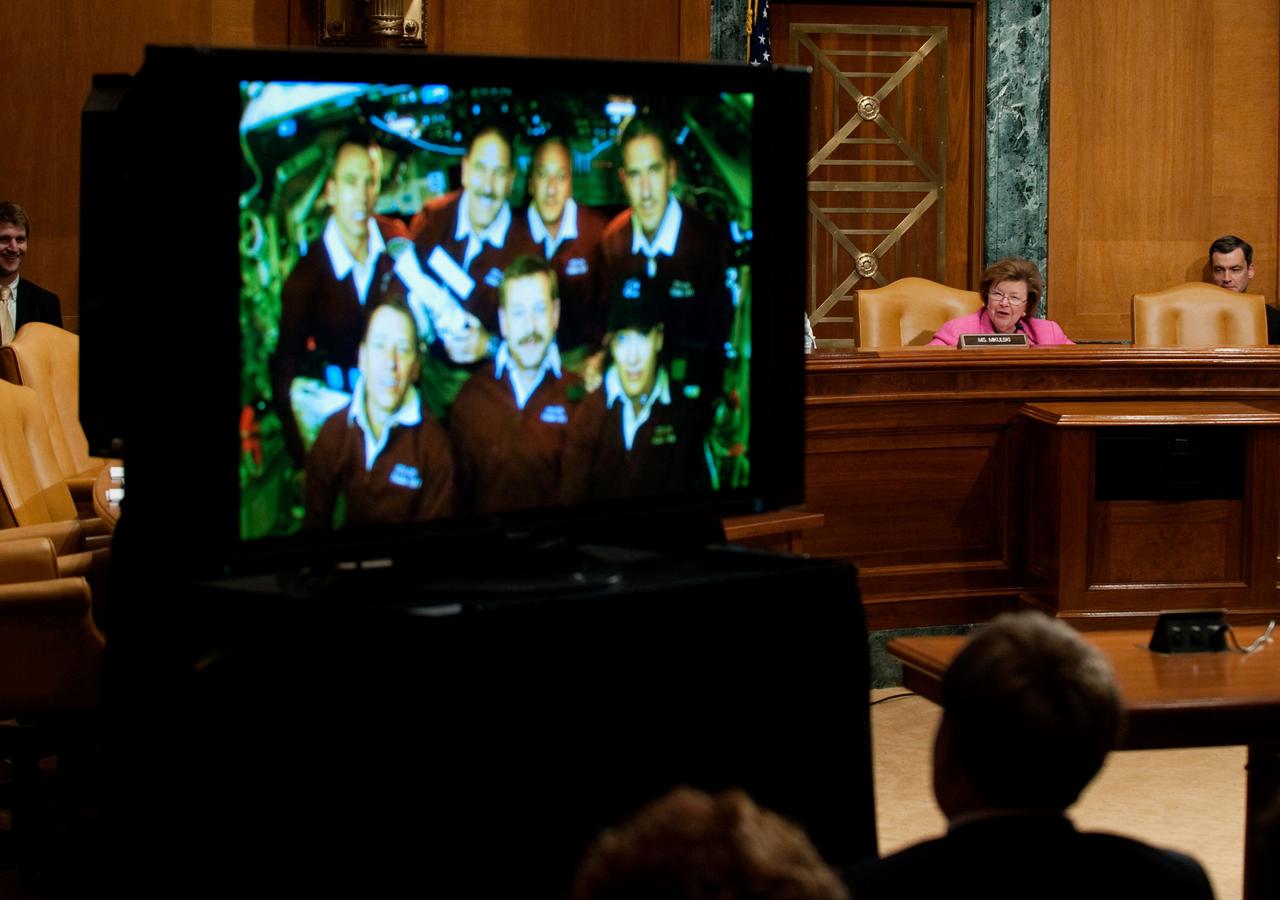
JSC2009-E-121339 (21 May 2009) --- The astronaut crewmembers of the STS-125 flight orbiting Earth aboard the Space Shuttle Atlantis are seen on a TV screen as they receive a phone call from U.S. Senator Barbara Mikulski (D-Md.) the day after the crew released the freshly serviced Hubble Space Telescope. Photo credit: NASA/Paul Alers
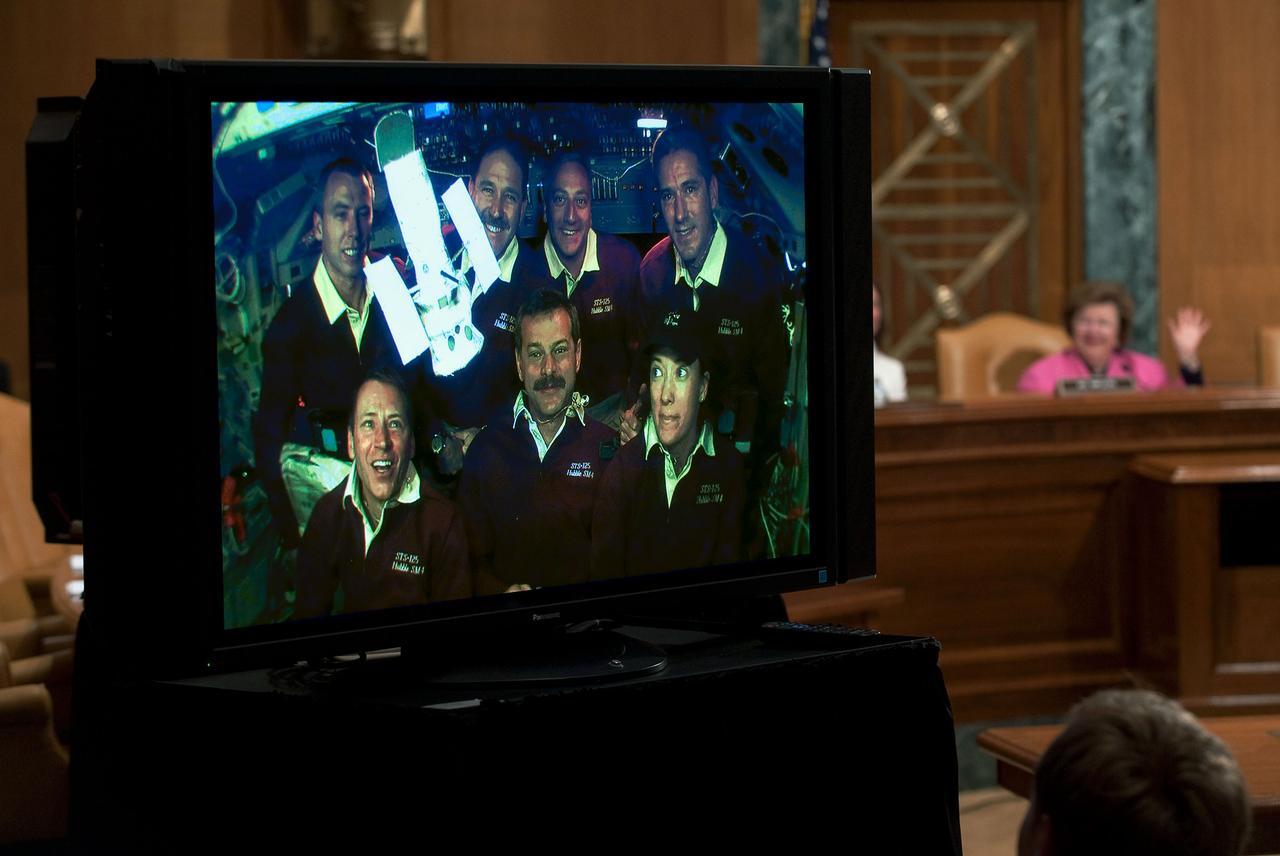
JSC2009-E-121340 (21 May 2009) --- The astronaut crewmembers of the STS-125 flight orbiting Earth aboard the Space Shuttle Atlantis are seen on a TV screen as they receive a phone call from U.S. Senator Barbara Mikulski (D-Md.) the day after the crew released the freshly serviced Hubble Space Telescope. Photo credit: NASA/Paul Alers
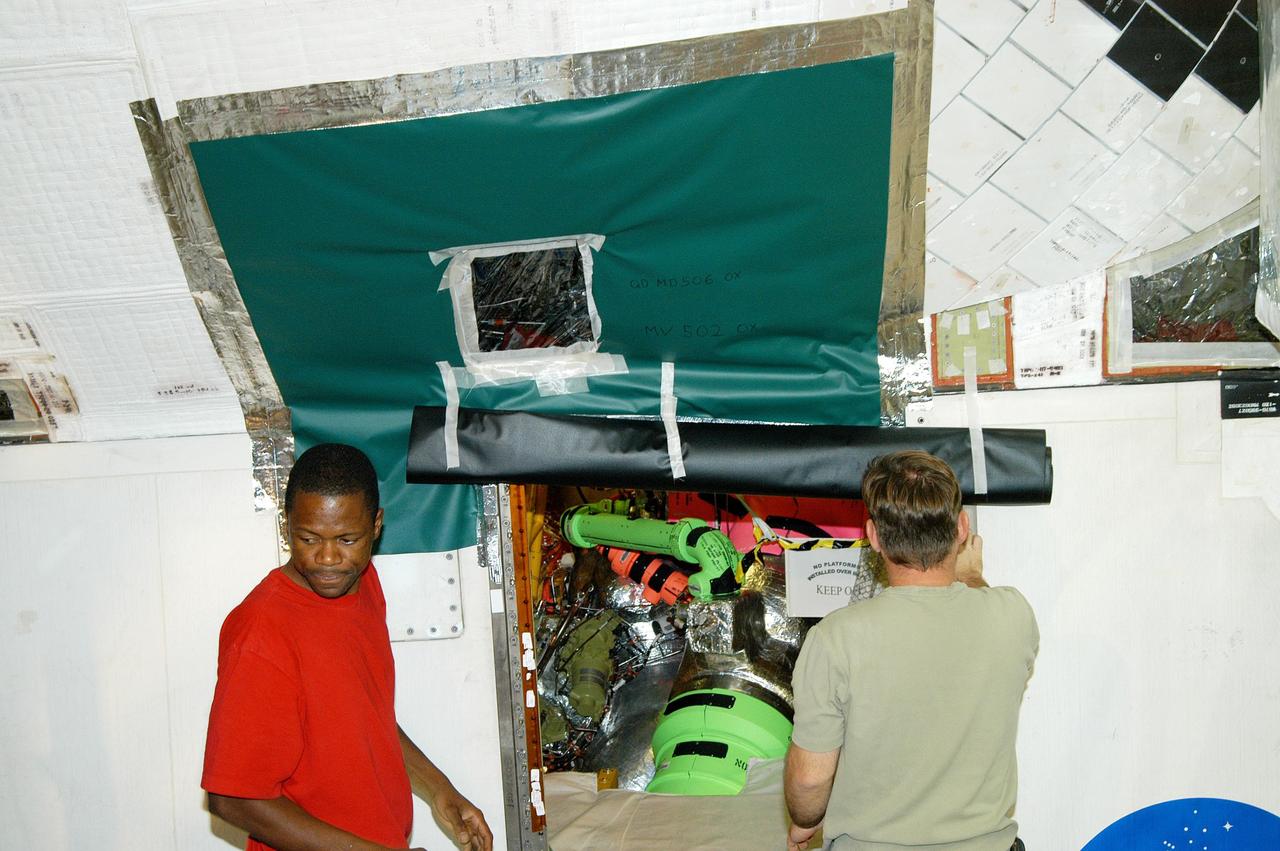
KENNEDY SPACE CENTER, FLA. - Workers in the Orbiter Processing Facility cover up areas of Atlantis, preparing for the expected impact of Hurricane Frances on Saturday. Other preparations at KSC include powering down the Space Shuttle orbiters, closing the payload bay doors and stowing the landing gear. Workers are also taking precautions against flooding by moving spacecraft hardware off the ground and sandbagging facilities. The Orbiter Processing Facility is constructed of concrete and steel and was designed to withstand winds of 105 mph. The Vehicle Assembly Building is constructed of concrete and steel and was designed to withstand winds of 125 mph. Other payload and flight hardware support facilities can endure winds of 110 mph. Launch pads and the Payload Hazardous Servicing Facility can withstand 125-mph winds.
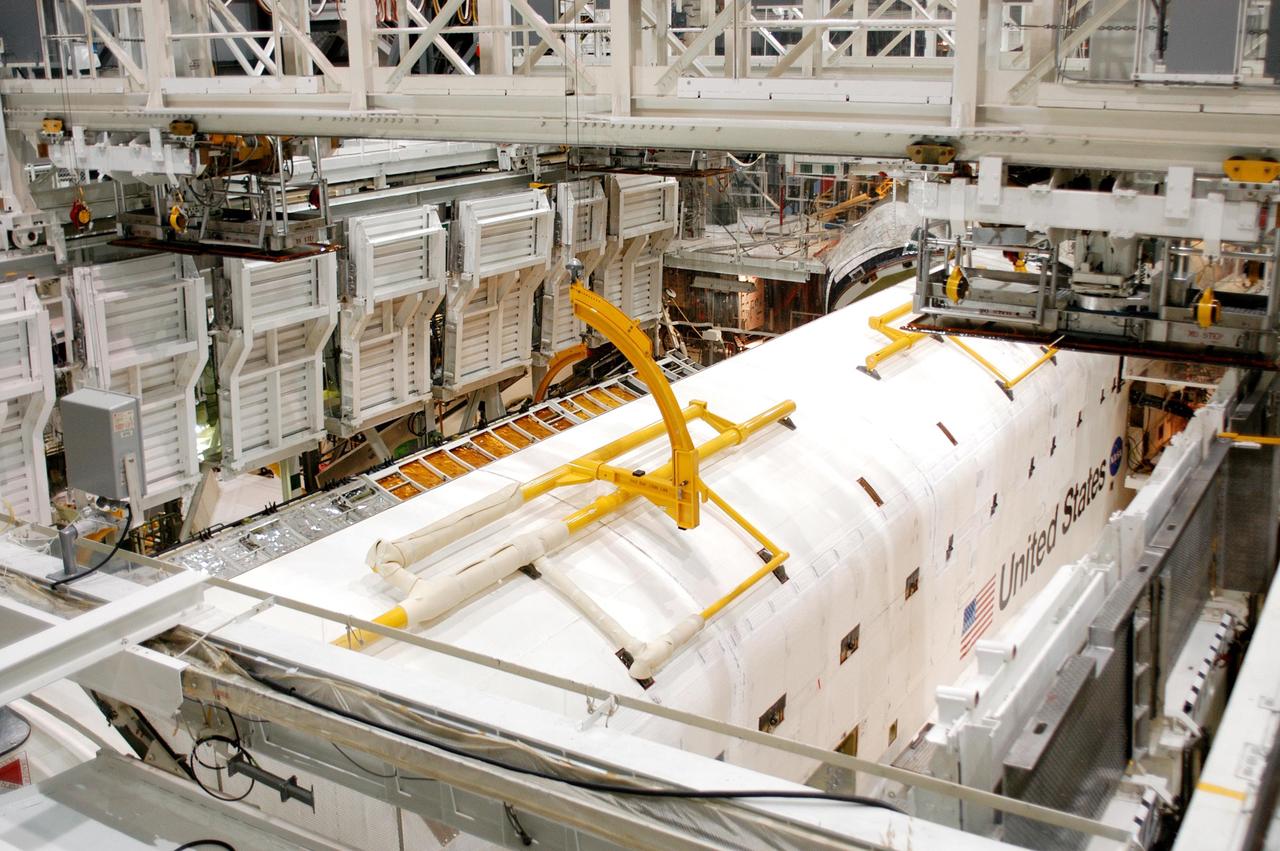
KENNEDY SPACE CENTER, FLA. - In the Orbiter Processing Facility, the payload bay doors on Atlantis are being closed in preparation for the expected impact of Hurricane Frances on Saturday. Other preparations at KSC include powering down the Space Shuttle orbiters and stowing the landing gear. Workers are also taking precautions against flooding by moving spacecraft hardware off the ground and sandbagging facilities. The Orbiter Processing Facility is constructed of concrete and steel and was designed to withstand winds of 105 mph. The Vehicle Assembly Building is constructed of concrete and steel and was designed to withstand winds of 125 mph. Other payload and flight hardware support facilities can endure winds of 110 mph. Launch pads and the Payload Hazardous Servicing Facility can withstand 125-mph winds.
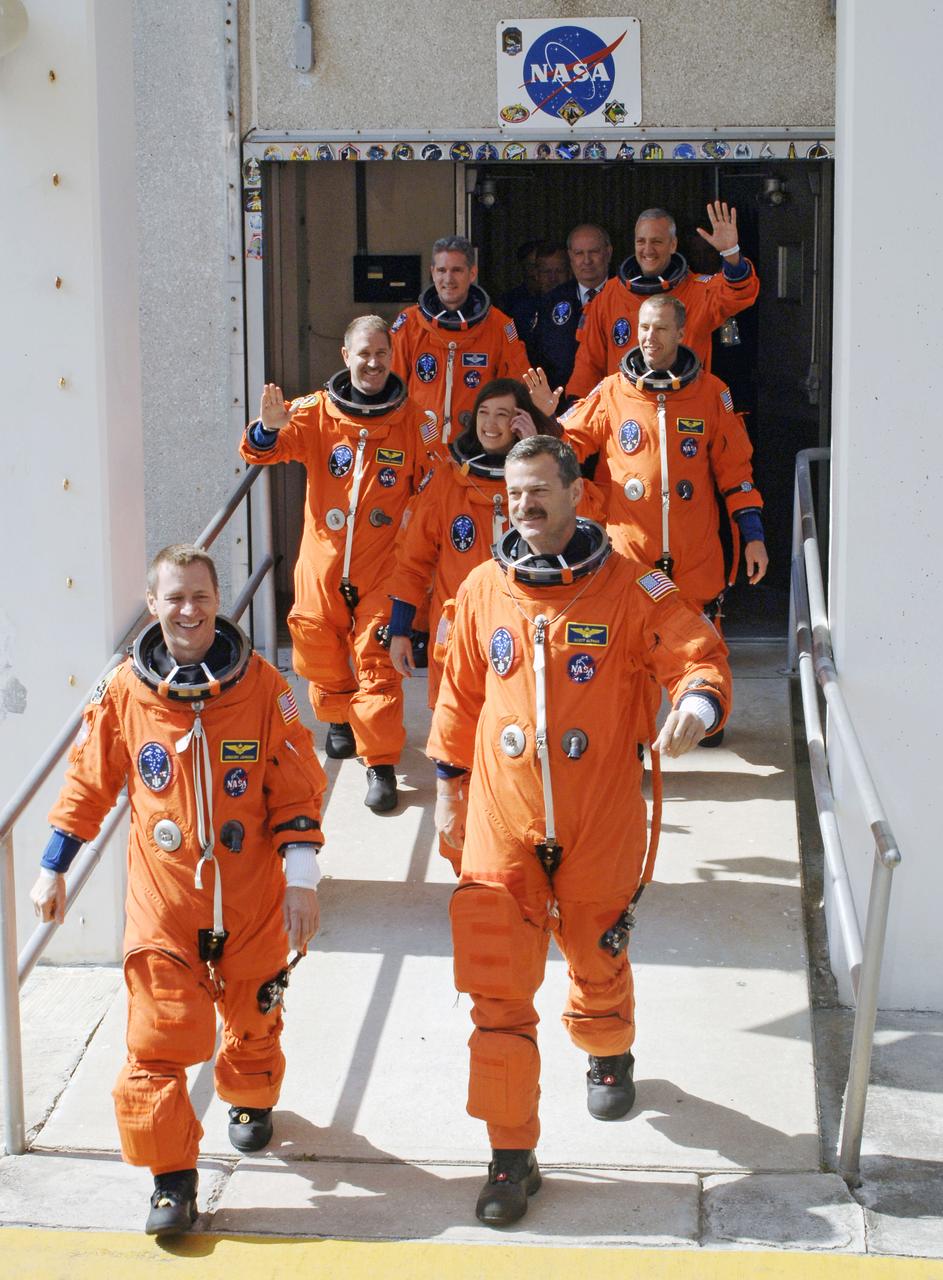
STS125-S-009 (11 May 2009) --- After suiting up, the STS-125 crewmembers exit the Operations and Checkout Building to board the Astrovan, which will take them to launch pad 39A for the launch of Space Shuttle Atlantis on the STS-125 mission to service the Hubble Space Telescope. On the right (front to back) are astronauts Scott Altman, commander; Megan McArthur, Andrew Feustel and Mike Massimino, all mission specialists. On the left (front to back) are astronauts Gregory C. Johnson, pilot; John Grunsfeld and Michael Good, both mission specialists. Atlantis' 11-day flight will include five spacewalks to refurbish and upgrade the telescope with state-of-the-art science instruments that will expand Hubble's capabilities and extend its operational lifespan through at least 2014. The payload includes Wide Field Camera 3, fine guidance sensor and the Cosmic Origins Spectrograph. Launch of Atlantis is scheduled for 2:01 p.m. May 11 EDT.
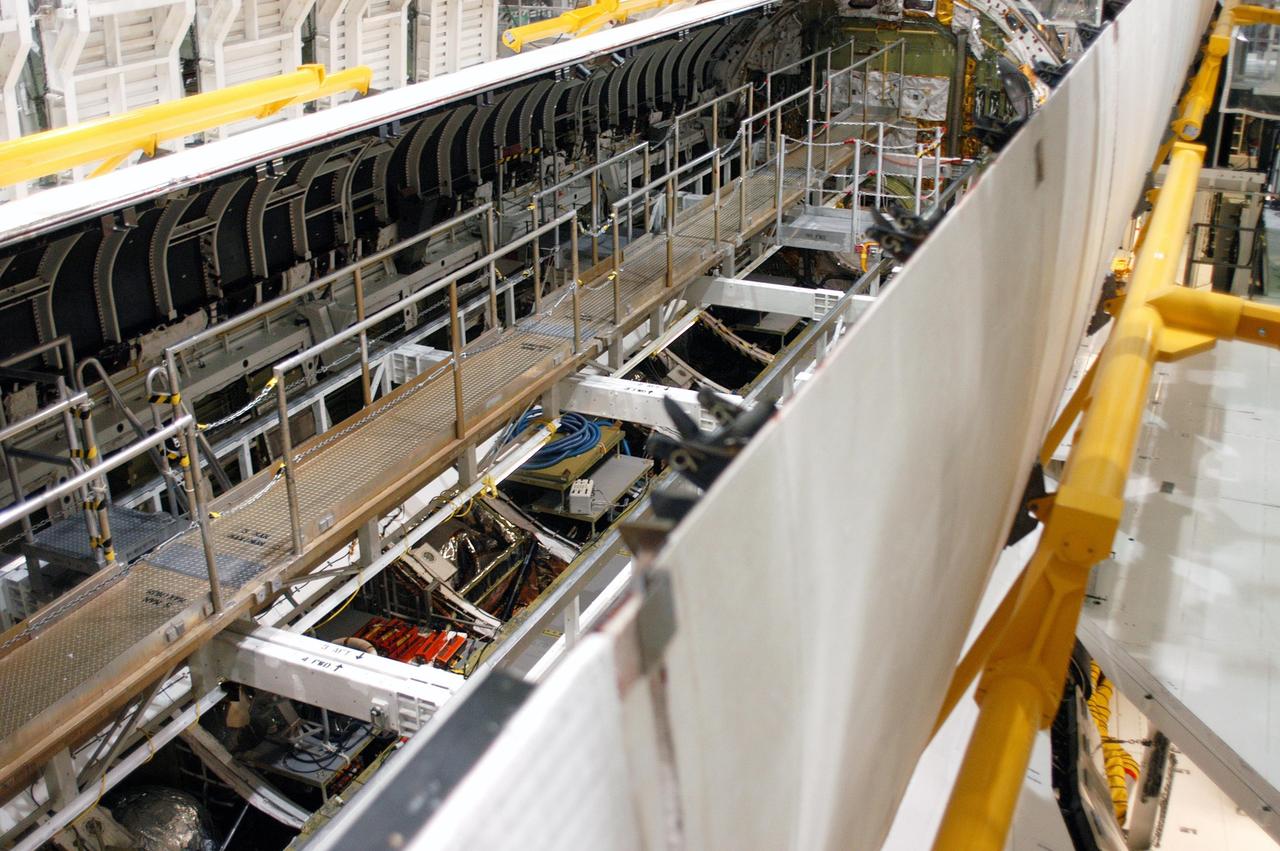
KENNEDY SPACE CENTER, FLA. - In the Orbiter Processing Facility, the payload bay doors on Atlantis are being closed in preparation for the expected impact of Hurricane Frances on Saturday. Other preparations at KSC include powering down the Space Shuttle orbiters and stowing the landing gear. Workers are also taking precautions against flooding by moving spacecraft hardware off the ground and sandbagging facilities. The Orbiter Processing Facility is constructed of concrete and steel and was designed to withstand winds of 105 mph. The Vehicle Assembly Building is constructed of concrete and steel and was designed to withstand winds of 125 mph. Other payload and flight hardware support facilities can endure winds of 110 mph. Launch pads and the Payload Hazardous Servicing Facility can withstand 125-mph winds.
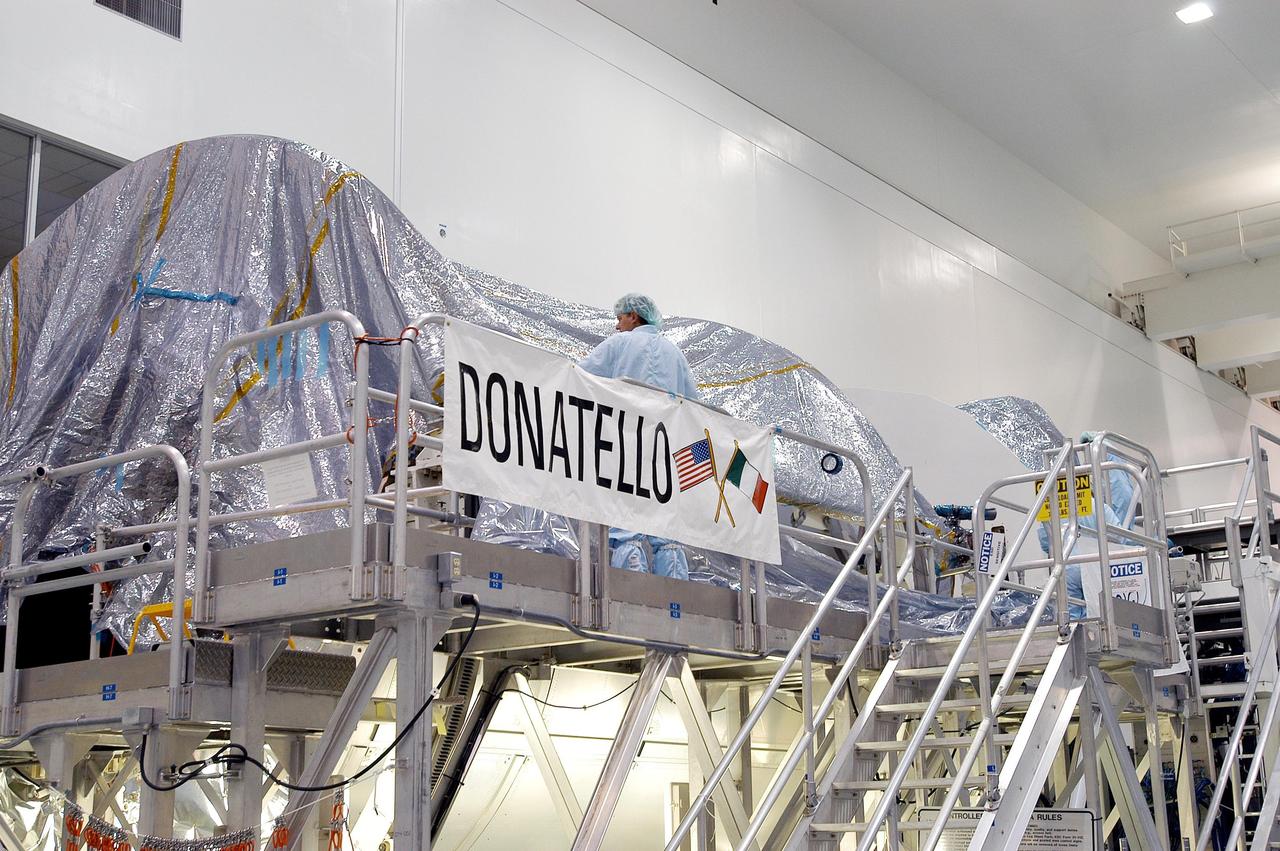
KENNEDY SPACE CENTER, FLA. - In the Space Station Processing Facility, workers cover with plastic the Multi-Purpose Logistics Module Donatello in preparation for the expected impact of Hurricane Frances on Saturday. Other modules and equipment are being covered as well. Workers also have powered down the Space Shuttle orbiters, closed their payload bay doors and stowed the landing gear. They are also taking precautions against flooding by moving spacecraft hardware off the ground and sandbagging facilities. The SSPF can withstand sustained winds of 110 mph and wind gusts up to 132 mph. The Orbiter Processing Facility is constructed of concrete and steel and was designed to withstand winds of 105 mph. The Vehicle Assembly Building is constructed of concrete and steel and was designed to withstand winds of 125 mph. Other payload and flight hardware support facilities can endure winds of 110 mph. Launch pads and the Payload Hazardous Servicing Facility can withstand 125-mph winds.
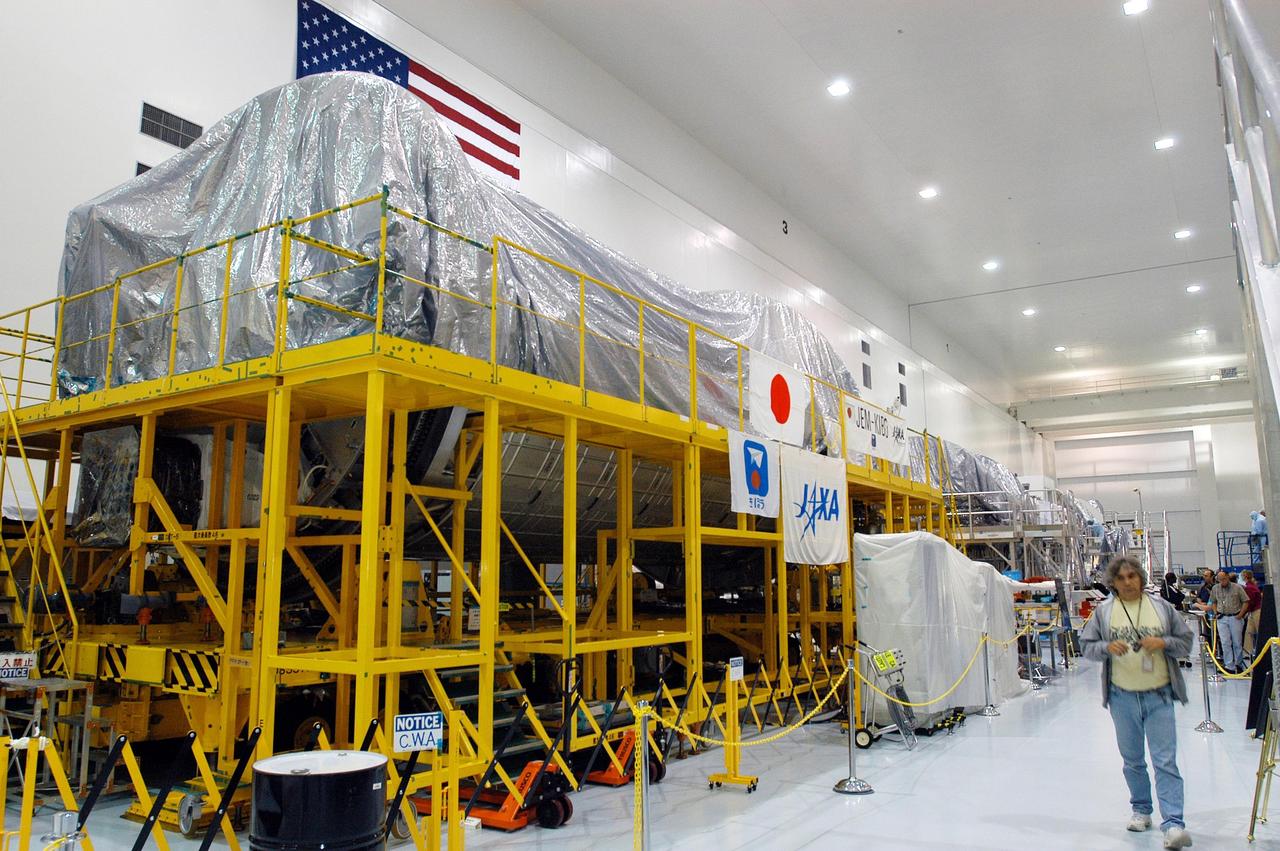
KENNEDY SPACE CENTER, FLA. - In the Space Station Processing Facility, modules wrapped in plastic line one wall. The modules and equipment are being covered in preparation for the expected impact of Hurricane Frances on Saturday. KSC workers also have powered down the Space Shuttle orbiters, closed their payload bay doors and stowed the landing gear. They are also taking precautions against flooding by moving spacecraft hardware off the ground and sandbagging facilities. The SSPF can withstand sustained winds of 110 mph and wind gusts up to 132 mph. The Orbiter Processing Facility is constructed of concrete and steel and was designed to withstand winds of 105 mph. The Vehicle Assembly Building is constructed of concrete and steel and was designed to withstand winds of 125 mph. Other payload and flight hardware support facilities can endure winds of 110 mph. Launch pads and the Payload Hazardous Servicing Facility can withstand 125-mph winds.
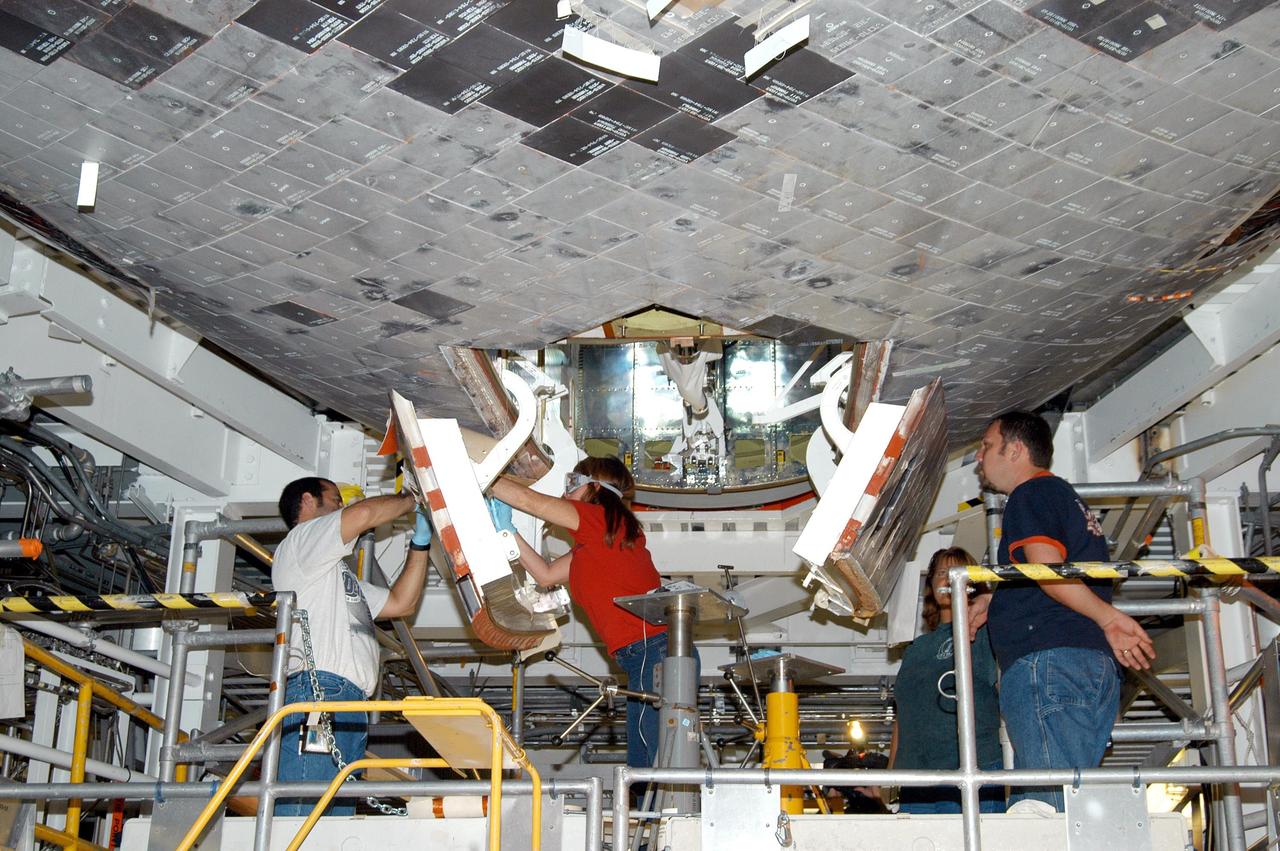
KENNEDY SPACE CENTER, FLA. - Workers in the Orbiter Processing Facility prepare to close the nose wheel doors on Atlantis in preparation for the expected impact of Hurricane Frances on Saturday. Preparations at KSC include powering down the Space Shuttle orbiters, closing their payload bay doors and stowing their landing gear. They are also taking precautions against flooding by moving spacecraft hardware off the ground and sandbagging facilities. The Orbiter Processing Facility is constructed of concrete and steel and was designed to withstand winds of 105 mph. The Vehicle Assembly Building is constructed of concrete and steel and was designed to withstand winds of 125 mph. Other payload and flight hardware support facilities can endure winds of 110 mph. Launch pads and the Payload Hazardous Servicing Facility can withstand 125-mph winds.
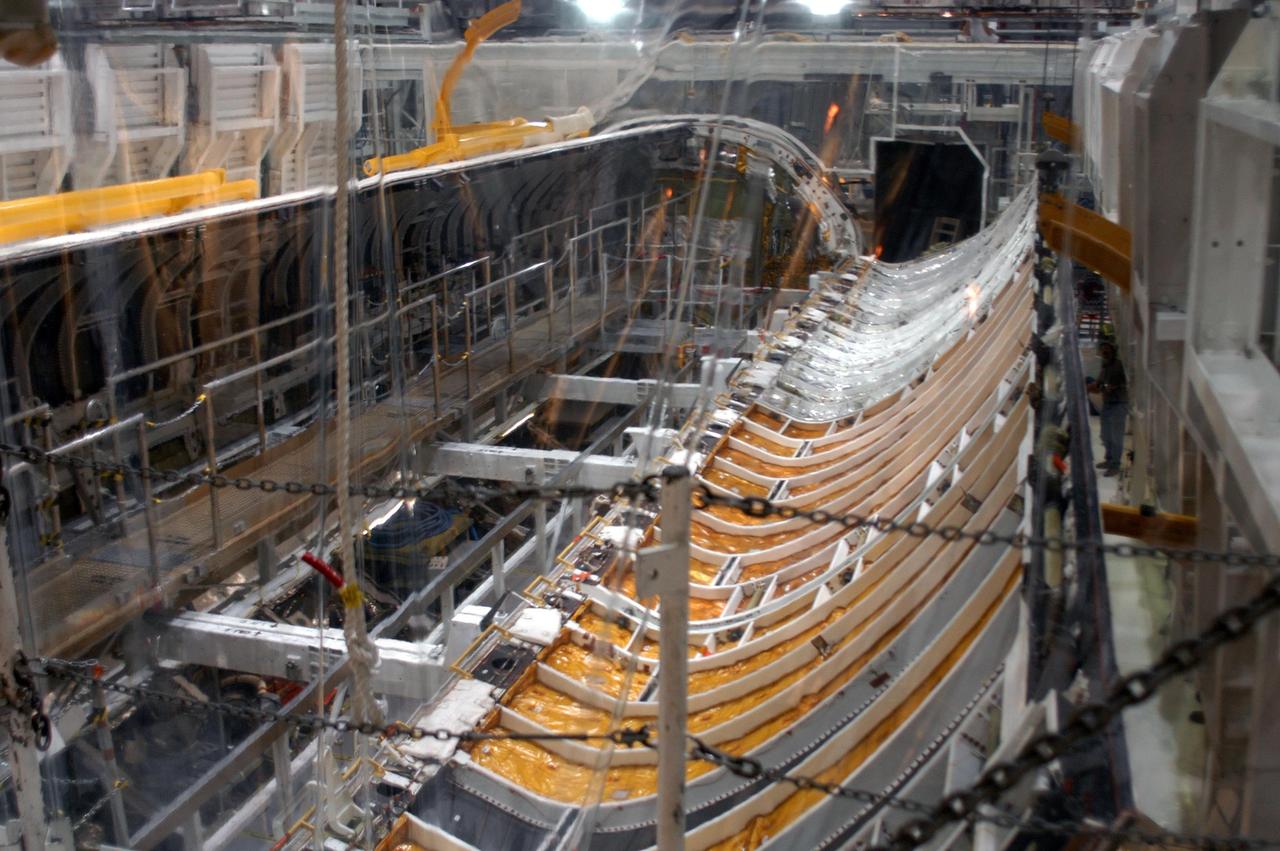
KENNEDY SPACE CENTER, FLA. - In the Orbiter Processing Facility, the payload bay doors on Atlantis are being closed in preparation for the expected impact of Hurricane Frances on Saturday. Other preparations at KSC include powering down the Space Shuttle orbiters and stowing the landing gear. Workers are also taking precautions against flooding by moving spacecraft hardware off the ground and sandbagging facilities. The Orbiter Processing Facility is constructed of concrete and steel and was designed to withstand winds of 105 mph. The Vehicle Assembly Building is constructed of concrete and steel and was designed to withstand winds of 125 mph. Other payload and flight hardware support facilities can endure winds of 110 mph. Launch pads and the Payload Hazardous Servicing Facility can withstand 125-mph winds.
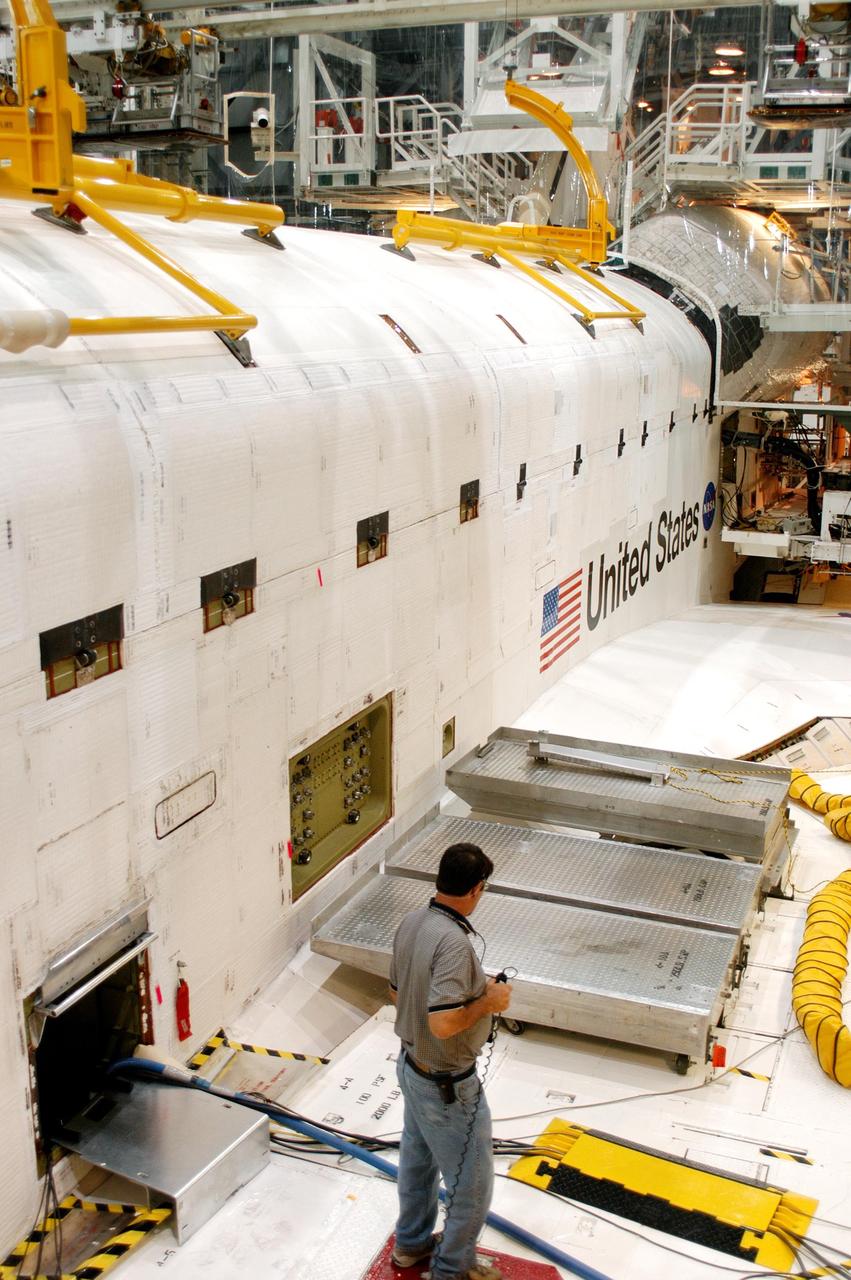
KENNEDY SPACE CENTER, FLA. - In the Orbiter Processing Facility, a worker checks out part of Atlantis after payload bay doors were closed in preparation for the expected impact of Hurricane Frances on Saturday. Other preparations at KSC include powering down the Space Shuttle orbiters and stowing the landing gear. Workers are also taking precautions against flooding by moving spacecraft hardware off the ground and sandbagging facilities. The Orbiter Processing Facility is constructed of concrete and steel and was designed to withstand winds of 105 mph. The Vehicle Assembly Building is constructed of concrete and steel and was designed to withstand winds of 125 mph. Other payload and flight hardware support facilities can endure winds of 110 mph. Launch pads and the Payload Hazardous Servicing Facility can withstand 125-mph winds.

KENNEDY SPACE CENTER, FLA. - Workers in the Orbiter Processing Facility prepare to stow the landing gear on the orbiter Atlantis in preparation for the expected impact of Hurricane Frances on Saturday. Other preparations at KSC include powering down the Space Shuttle orbiters, and closing their payload bay doors. Workers are also taking precautions against flooding by moving spacecraft hardware off the ground and sandbagging facilities. The Orbiter Processing Facility is constructed of concrete and steel and was designed to withstand winds of 105 mph. The Vehicle Assembly Building is constructed of concrete and steel and was designed to withstand winds of 125 mph. Other payload and flight hardware support facilities can endure winds of 110 mph. Launch pads and the Payload Hazardous Servicing Facility can withstand 125-mph winds.
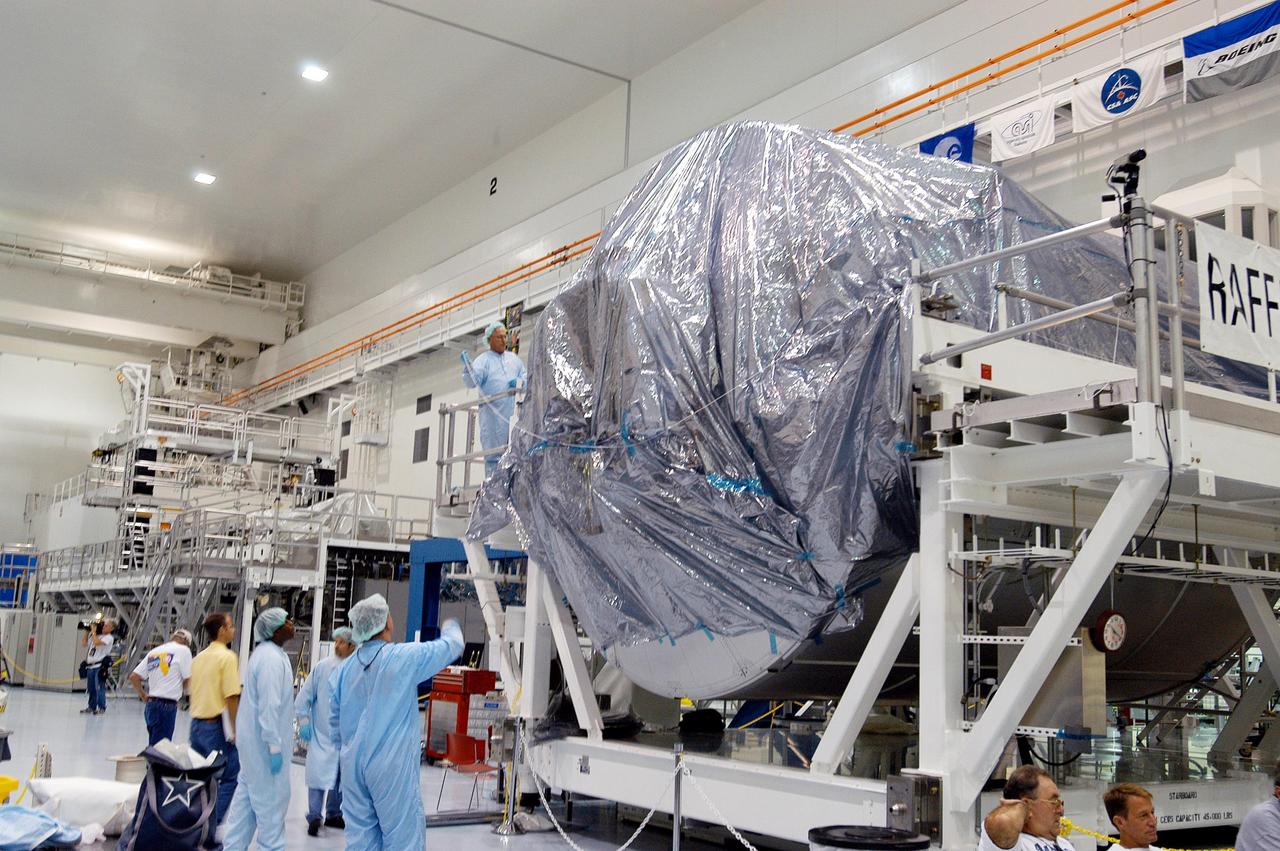
KENNEDY SPACE CENTER, FLA. - In the Space Station Processing Facility, workers cover with plastic the Multi-Purpose Logistics Module Raffaello in preparation for the expected impact of Hurricane Frances on Saturday. Other modules and equipment are being covered as well. Workers also have powered down the Space Shuttle orbiters, closed their payload bay doors and stowed the landing gear. They are also taking precautions against flooding by moving spacecraft hardware off the ground and sandbagging facilities. The SSPF can withstand sustained winds of 110 mph and wind gusts up to 132 mph. The Orbiter Processing Facility is constructed of concrete and steel and was designed to withstand winds of 105 mph. The Vehicle Assembly Building is constructed of concrete and steel and was designed to withstand winds of 125 mph. Other payload and flight hardware support facilities can endure winds of 110 mph. Launch pads and the Payload Hazardous Servicing Facility can withstand 125-mph winds.
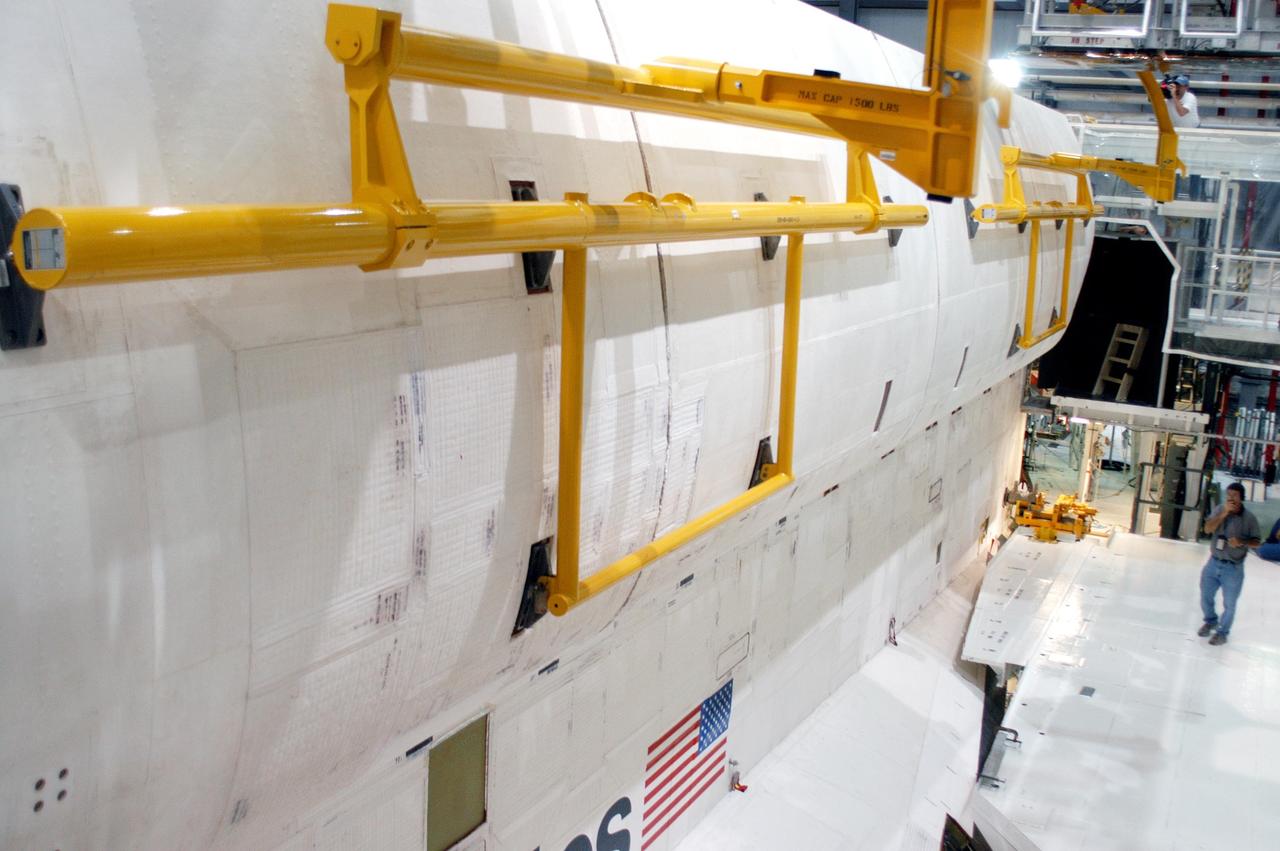
KENNEDY SPACE CENTER, FLA. - In the Orbiter Processing Facility, the payload bay doors on Atlantis are being closed in preparation for the expected impact of Hurricane Frances on Saturday. Other preparations at KSC include powering down the Space Shuttle orbiters and stowing the landing gear. Workers are also taking precautions against flooding by moving spacecraft hardware off the ground and sandbagging facilities. The Orbiter Processing Facility is constructed of concrete and steel and was designed to withstand winds of 105 mph. The Vehicle Assembly Building is constructed of concrete and steel and was designed to withstand winds of 125 mph. Other payload and flight hardware support facilities can endure winds of 110 mph. Launch pads and the Payload Hazardous Servicing Facility can withstand 125-mph winds.
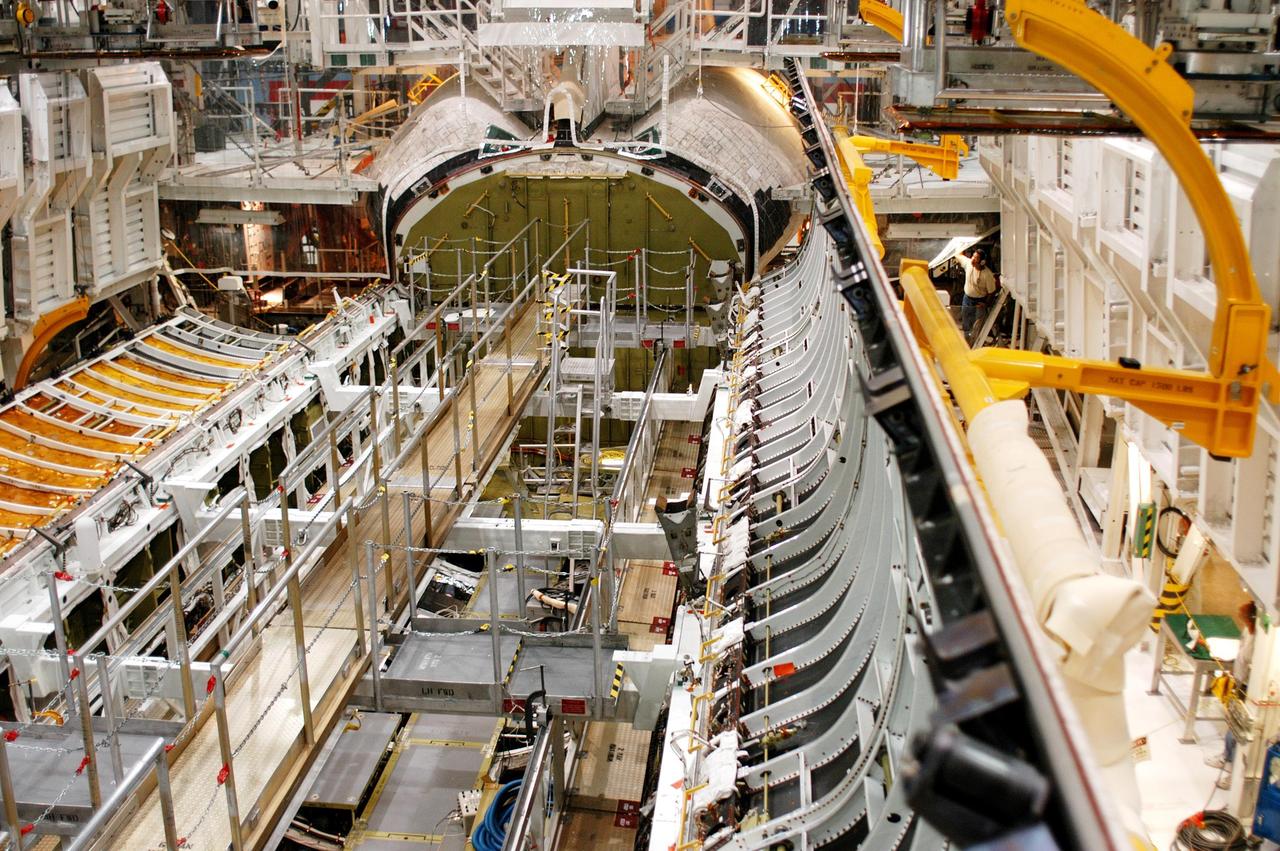
KENNEDY SPACE CENTER, FLA. - In the Orbiter Processing Facility, workers prepare to close the payload bay doors on Atlantis in preparation for the expected impact of Hurricane Frances on Saturday. Other preparations at KSC include powering down the Space Shuttle orbiters and stowing the landing gear. Workers are also taking precautions against flooding by moving spacecraft hardware off the ground and sandbagging facilities. The Orbiter Processing Facility is constructed of concrete and steel and was designed to withstand winds of 105 mph. The Vehicle Assembly Building is constructed of concrete and steel and was designed to withstand winds of 125 mph. Other payload and flight hardware support facilities can endure winds of 110 mph. Launch pads and the Payload Hazardous Servicing Facility can withstand 125-mph winds.
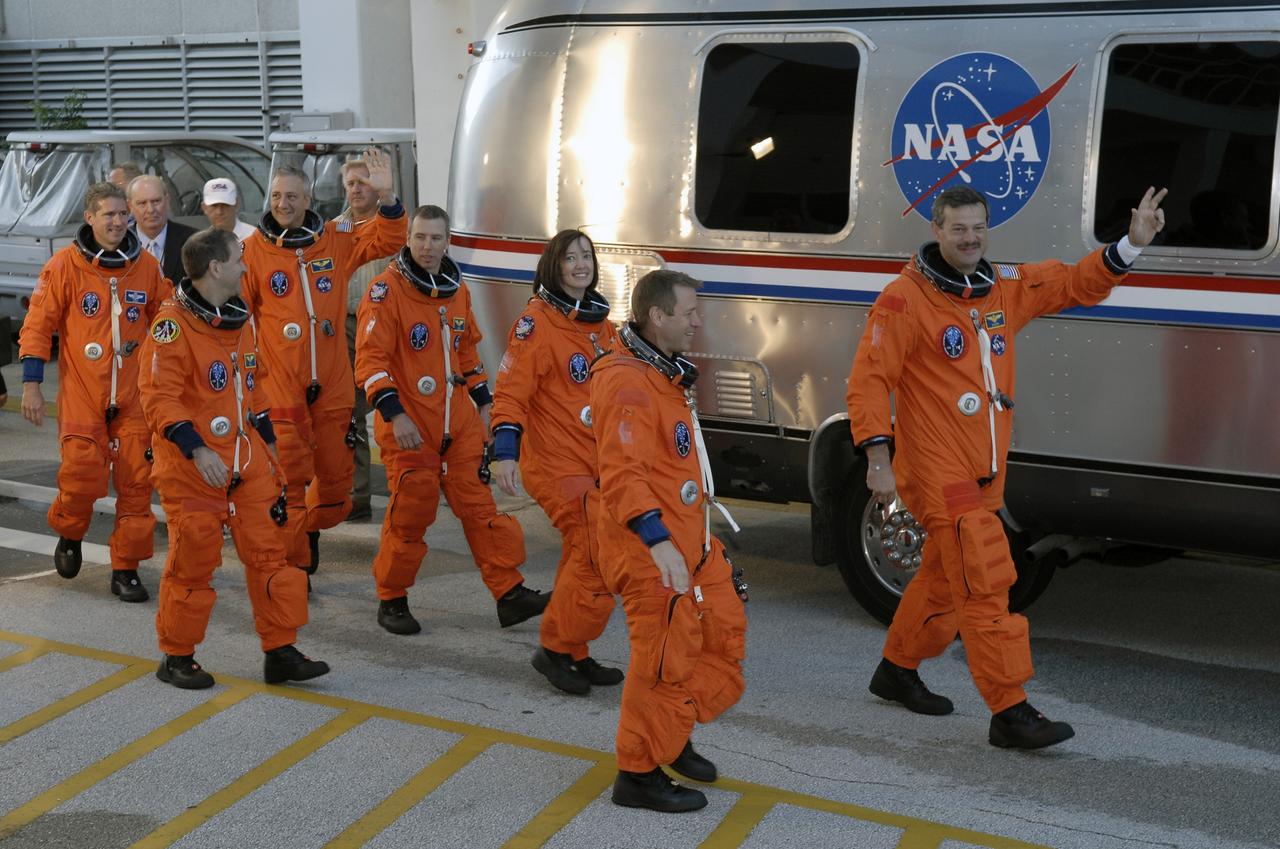
CAPE CANAVERAL, Fla. - The STS-125 crew heads for the Astrovan after suiting up in the Operations and Checkout Building at NASA's Kennedy Space Center in Florida. From left are Mission Specialists Michael Good, John Grunsfeld, Mike Massimino, Andrew Feustel and Megan McArthur, Pilot Gregory C. Johnson and Commander Scott Altman. The crew is heading for Launch Pad 39A where they will take part in a simulated launch countdown aboard space shuttle Atlantis. The countdown is the culmination of terminal countdown demonstration test, or TCDT, activities as preparation before launch. TCDT provides astronauts and ground crews with an opportunity to participate in various simulated countdown activities, including equipment familiarization, emergency training and the countdown. Atlantis’ STS-125 mission to service NASA’s Hubble Space Telescope is targeted for launch Oct. 14. Photo credit: NASA/Kim Shiflett
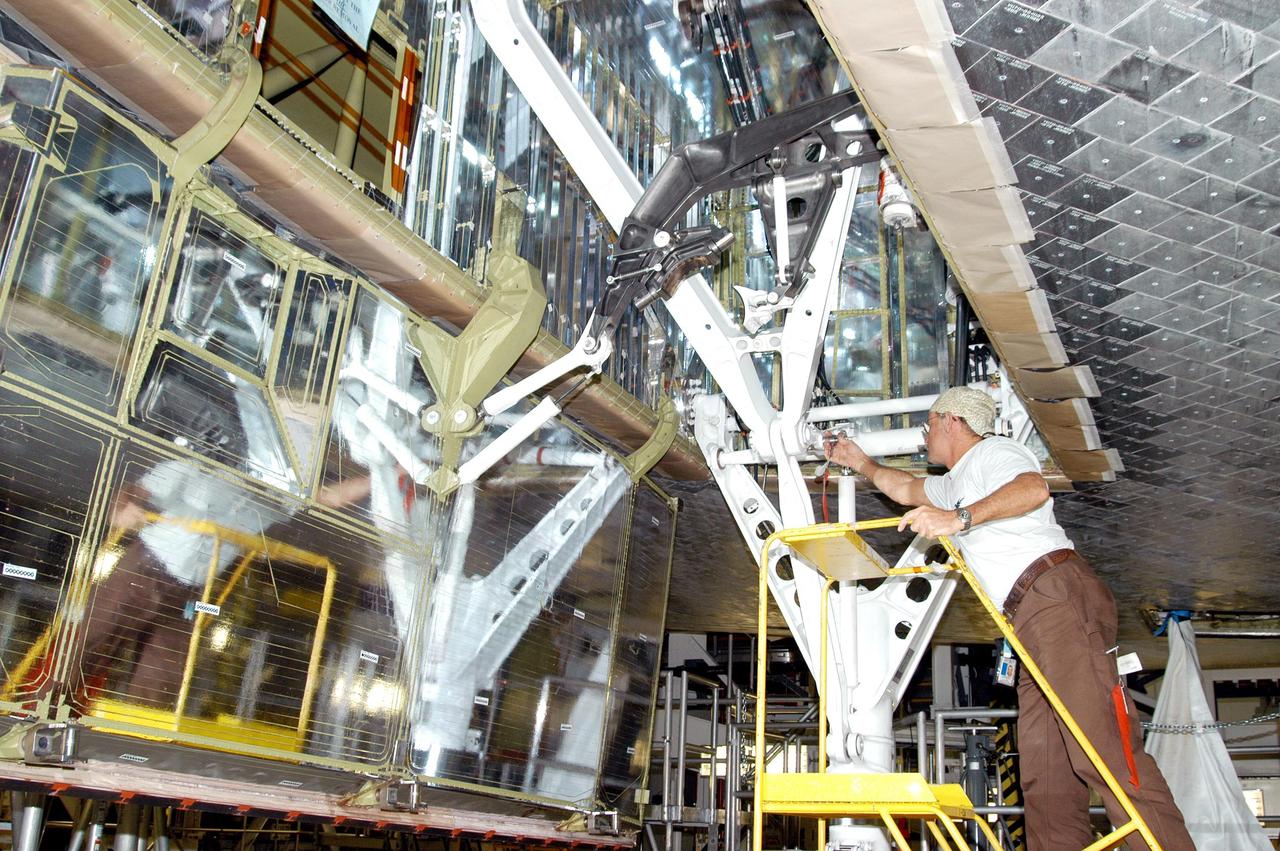
KENNEDY SPACE CENTER, FLA. - Workers in the Orbiter Processing Facility prepare the wheel bay to stow Atlantis’ landing gear in preparation for the expected impact of Hurricane Frances on Saturday. Other preparations at KSC include powering down the Space Shuttle orbiters, and closing their payload bay doors. Workers are also taking precautions against flooding by moving spacecraft hardware off the ground and sandbagging facilities. The Orbiter Processing Facility is constructed of concrete and steel and was designed to withstand winds of 105 mph. The Vehicle Assembly Building is constructed of concrete and steel and was designed to withstand winds of 125 mph. Other payload and flight hardware support facilities can endure winds of 110 mph. Launch pads and the Payload Hazardous Servicing Facility can withstand 125-mph winds.
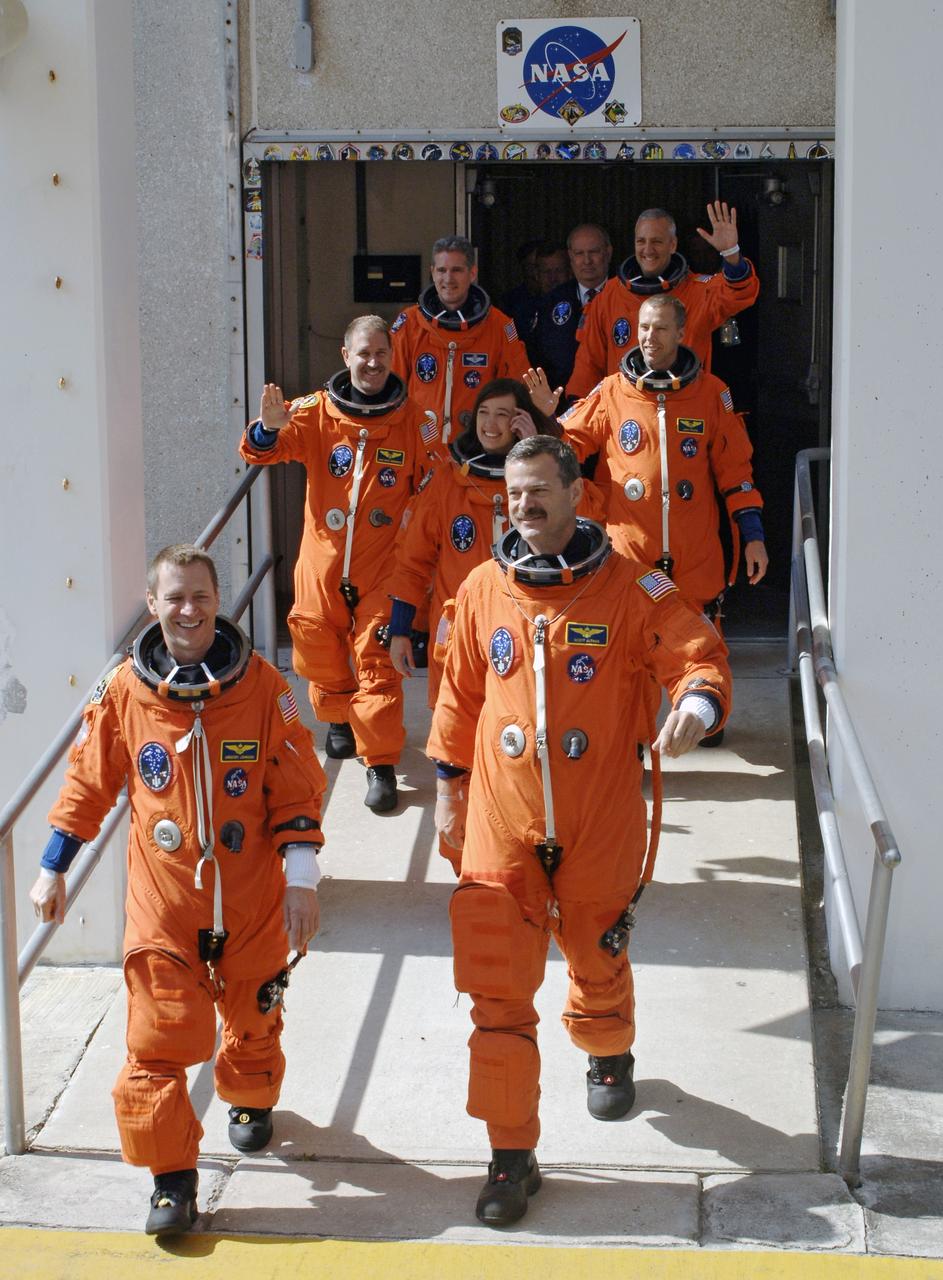
CAPE CANAVERAL, Fla. – STS-125 crew members eagerly stride from the Operations and Checkout Building at NASA's Kennedy Space Center in Florida to make the trip to Launch Pad 39A for liftoff of space shuttle Atlantis on the STS-125 mission to service NASA's Hubble Space Telescope. On the left, front to back, are Pilot Gregory C. Johnson and Mission Specialists John Grunsfeld and Michael Good. On the right, front to back, are Commander Scott Altman and Mission Specialists Megan McArthur, Andrew Feustel and Mike Massimino. Atlantis' 11-day flight will include five spacewalks to refurbish and upgrade the telescope with state-of-the-art science instruments that will expand Hubble's capabilities and extend its operational lifespan through at least 2014. The payload includes a Wide Field Camera 3, fine guidance sensor and the Cosmic Origins Spectrograph. Launch of Atlantis is scheduled for 2:01 p.m. May 11 EDT. Photo credit: NASA/Kim Shiflett
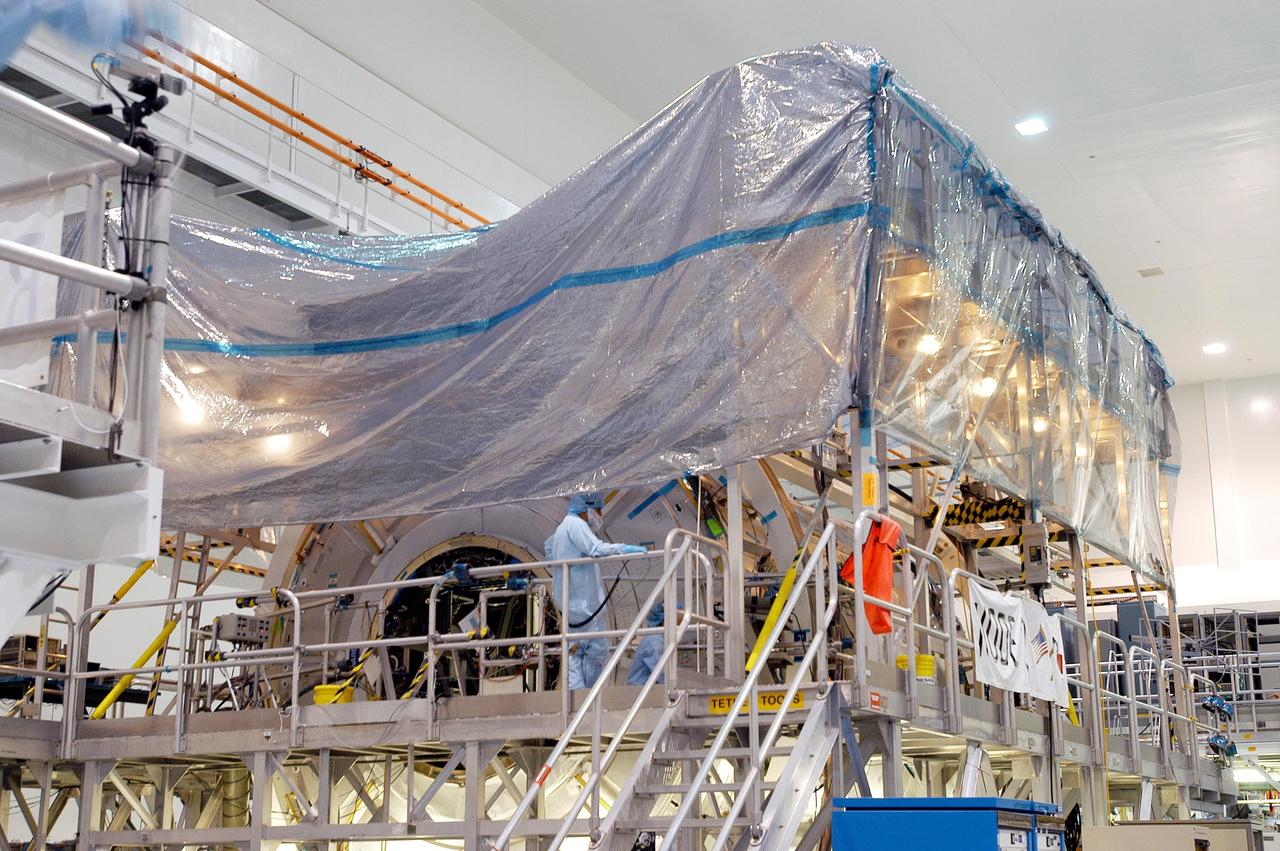
KENNEDY SPACE CENTER, FLA. - In the Space Station Processing Facility, workers cover with plastic the U.S. Node 2 in preparation for the expected impact of Hurricane Frances on Saturday. Other modules and equipment are being covered as well. Workers also have powered down the Space Shuttle orbiters, closed their payload bay doors and stowed the landing gear. They are also taking precautions against flooding by moving spacecraft hardware off the ground and sandbagging facilities. The SSPF can withstand sustained winds of 110 mph and wind gusts up to 132 mph. The Orbiter Processing Facility is constructed of concrete and steel and was designed to withstand winds of 105 mph. The Vehicle Assembly Building is constructed of concrete and steel and was designed to withstand winds of 125 mph. Other payload and flight hardware support facilities can endure winds of 110 mph. Launch pads and the Payload Hazardous Servicing Facility can withstand 125-mph winds.
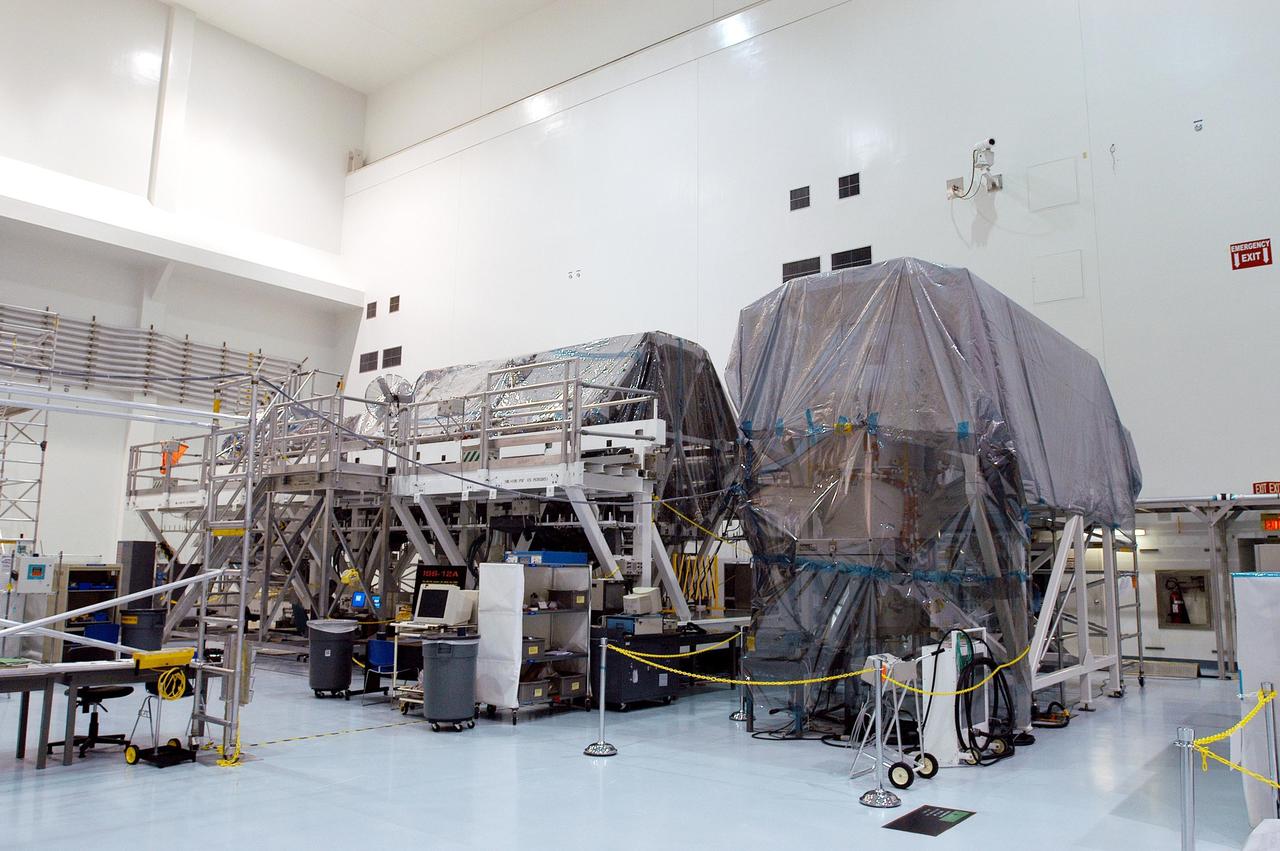
KENNEDY SPACE CENTER, FLA. - In the Space Station Processing Facility, modules and equipment are being covered in plastic in preparation for the expected impact of Hurricane Frances on Saturday. KSC workers also have powered down the Space Shuttle orbiters, closed their payload bay doors and stowed the landing gear. They are also taking precautions against flooding by moving spacecraft hardware off the ground and sandbagging facilities. The SSPF can withstand sustained winds of 110 mph and wind gusts up to 132 mph. The Orbiter Processing Facility is constructed of concrete and steel and was designed to withstand winds of 105 mph. The Vehicle Assembly Building is constructed of concrete and steel and was designed to withstand winds of 125 mph. Other payload and flight hardware support facilities can endure winds of 110 mph. Launch pads and the Payload Hazardous Servicing Facility can withstand 125-mph winds.
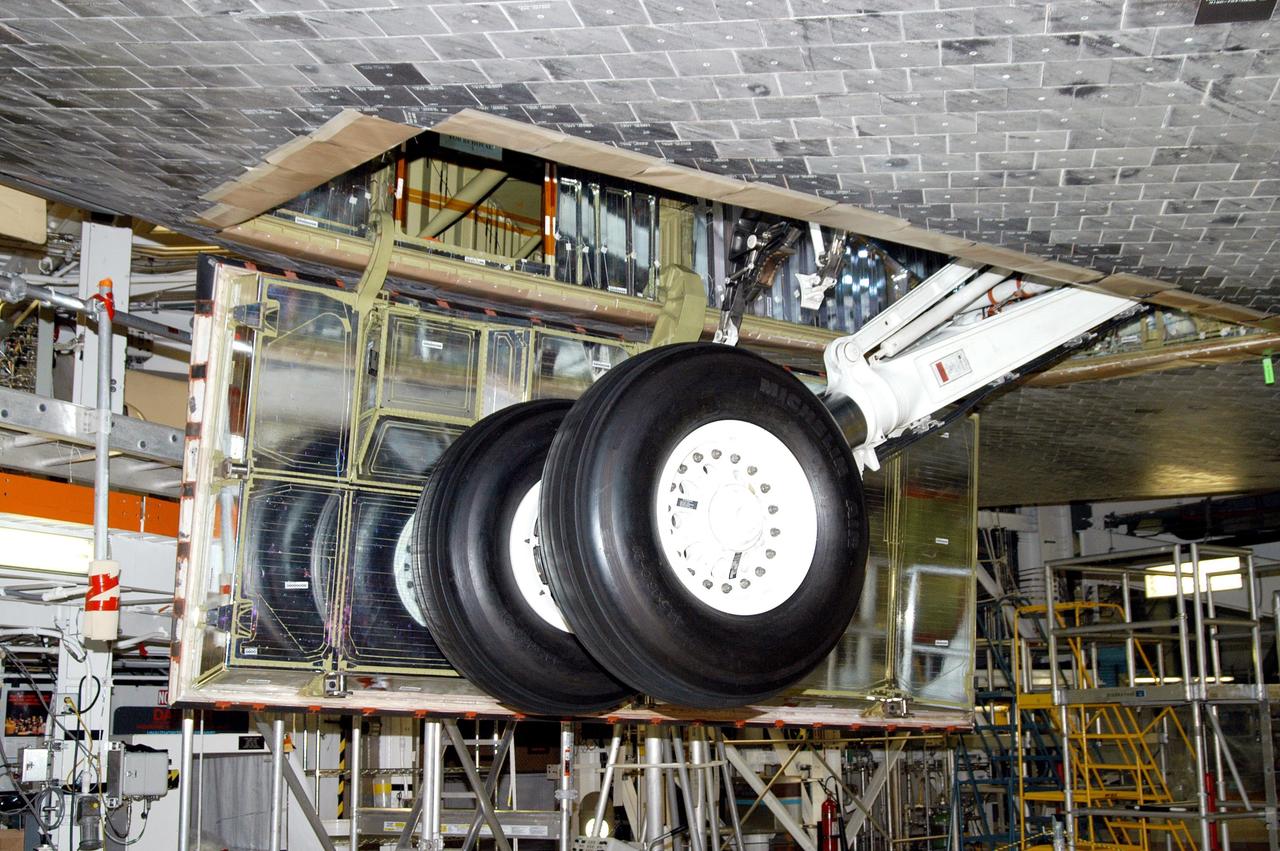
KENNEDY SPACE CENTER, FLA. - In the Orbiter Processing Facility, Atlantis’ wheels are raised into their wheel bays in preparation for the expected impact of Hurricane Frances on Saturday. Other preparations at KSC include powering down the Space Shuttle orbiters, and closing their payload bay doors. Workers are also taking precautions against flooding by moving spacecraft hardware off the ground and sandbagging facilities. The Orbiter Processing Facility is constructed of concrete and steel and was designed to withstand winds of 105 mph. The Vehicle Assembly Building is constructed of concrete and steel and was designed to withstand winds of 125 mph. Other payload and flight hardware support facilities can endure winds of 110 mph. Launch pads and the Payload Hazardous Servicing Facility can withstand 125-mph winds.
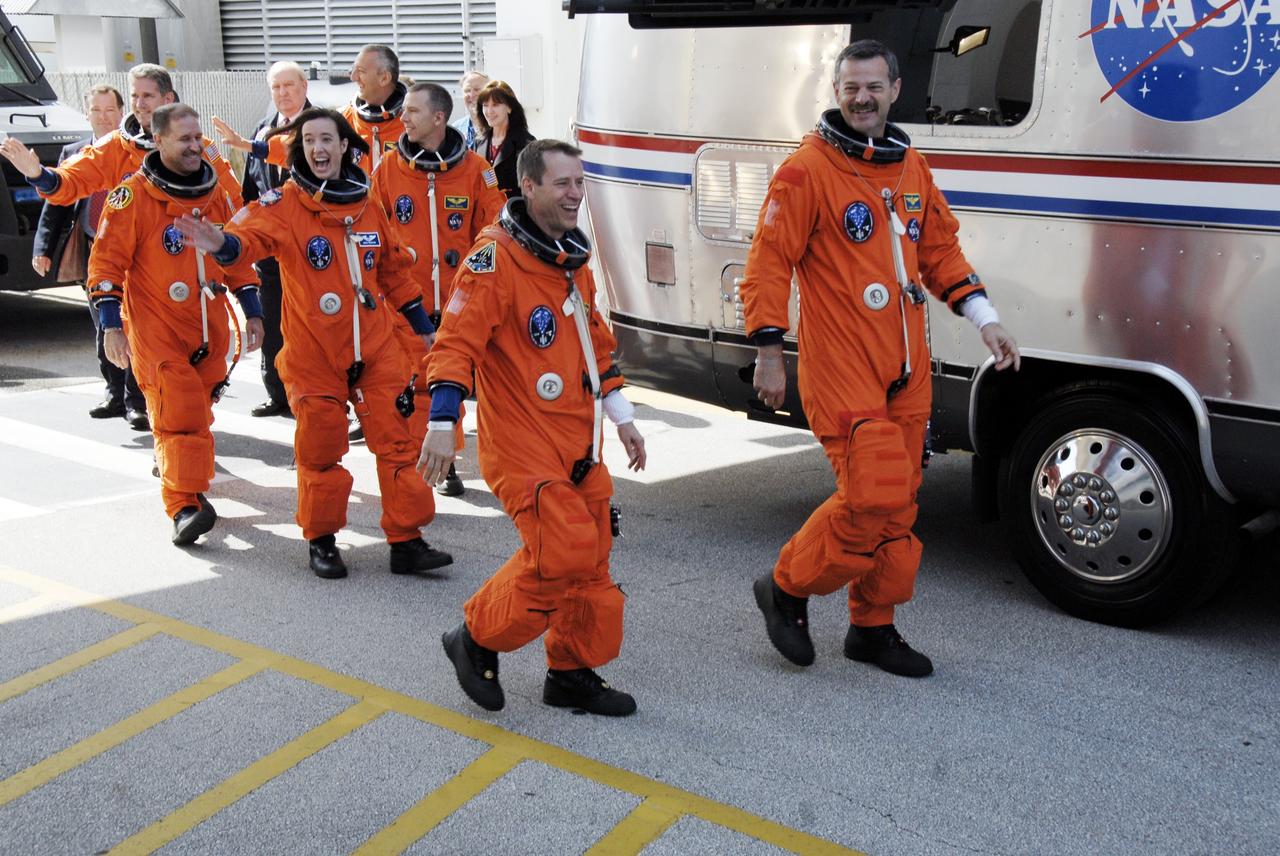
CAPE CANAVERAL, Fla. – STS-125 crew members head for the Astrovan outside the Operations and Checkout Building at NASA's Kennedy Space Center in Florida. The Astrovan will take them to Launch Pad 39A for liftoff of space shuttle Atlantis on the STS-125 mission to service NASA's Hubble Space Telescope. From left are Mission Specialists Michael Good, John Grunsfeld, Megan McArthur, Mike Massimino and Andrew Feustel, Pilot Gregory C. Johnson and Commander Scott Altman. Atlantis' 11-day flight will include five spacewalks to refurbish and upgrade the telescope with state-of-the-art science instruments that will expand Hubble's capabilities and extend its operational lifespan through at least 2014. The payload includes a Wide Field Camera 3, fine guidance sensor and the Cosmic Origins Spectrograph. Launch of Atlantis is scheduled for 2:01 p.m. May 11 EDT. Photo credit: NASA/Kim Shiflett

KENNEDY SPACE CENTER, FLA. - Workers in the Orbiter Processing Facility prepare the orbiter Atlantis and related equipment for the expected impact of Hurricane Frances on Saturday. Preparations at KSC include powering down the Space Shuttle orbiters, closing their payload bay doors and stowing their landing gear. They are also taking precautions against flooding by moving spacecraft hardware off the ground and sandbagging facilities. The Orbiter Processing Facility is constructed of concrete and steel and was designed to withstand winds of 105 mph. The Vehicle Assembly Building is constructed of concrete and steel and was designed to withstand winds of 125 mph. Other payload and flight hardware support facilities can endure winds of 110 mph. Launch pads and the Payload Hazardous Servicing Facility can withstand 125-mph winds.
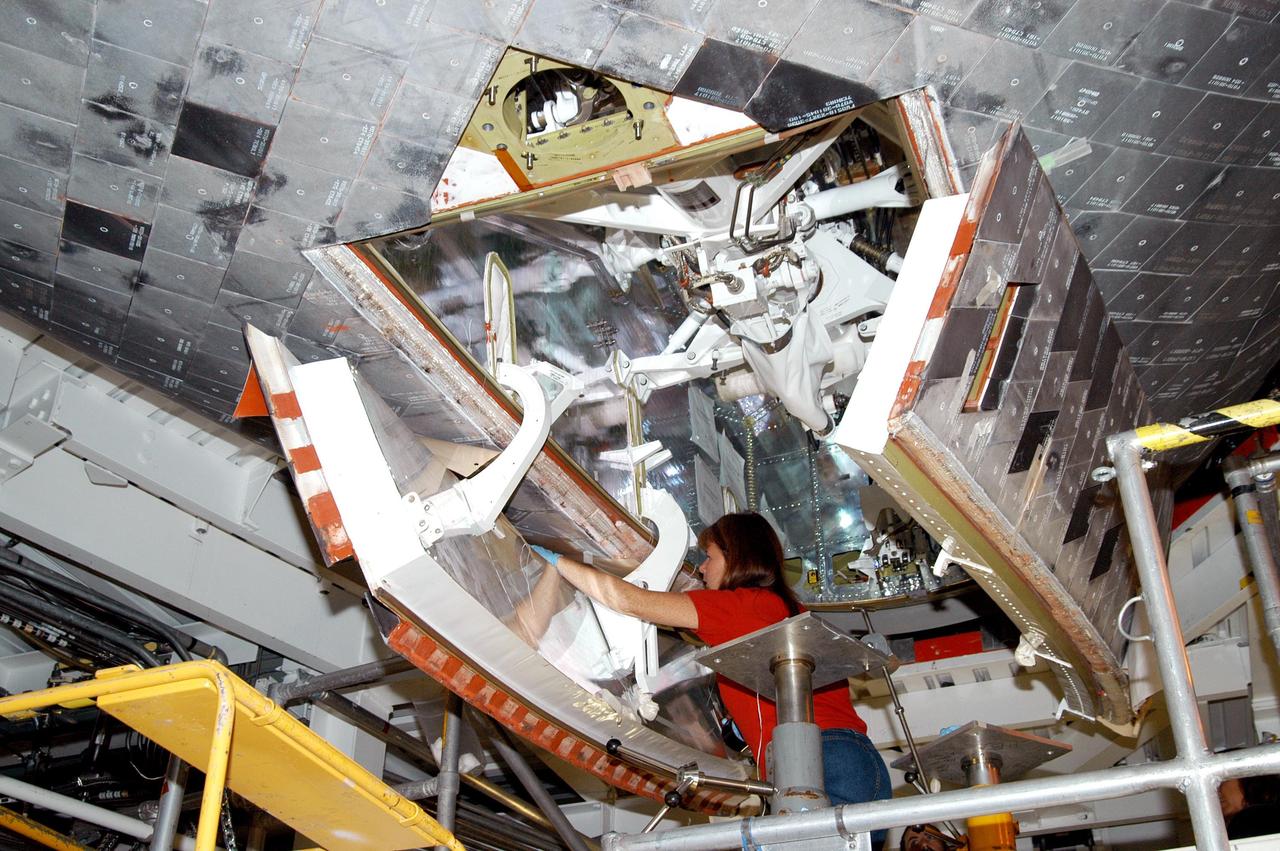
KENNEDY SPACE CENTER, FLA. - Workers in the Orbiter Processing Facility prepare to close the nose wheel doors on Atlantis in preparation for the expected impact of Hurricane Frances on Saturday. Preparations at KSC include powering down the Space Shuttle orbiters, closing their payload bay doors and stowing their landing gear. They are also taking precautions against flooding by moving spacecraft hardware off the ground and sandbagging facilities. The Orbiter Processing Facility is constructed of concrete and steel and was designed to withstand winds of 105 mph. The Vehicle Assembly Building is constructed of concrete and steel and was designed to withstand winds of 125 mph. Other payload and flight hardware support facilities can endure winds of 110 mph. Launch pads and the Payload Hazardous Servicing Facility can withstand 125-mph winds.
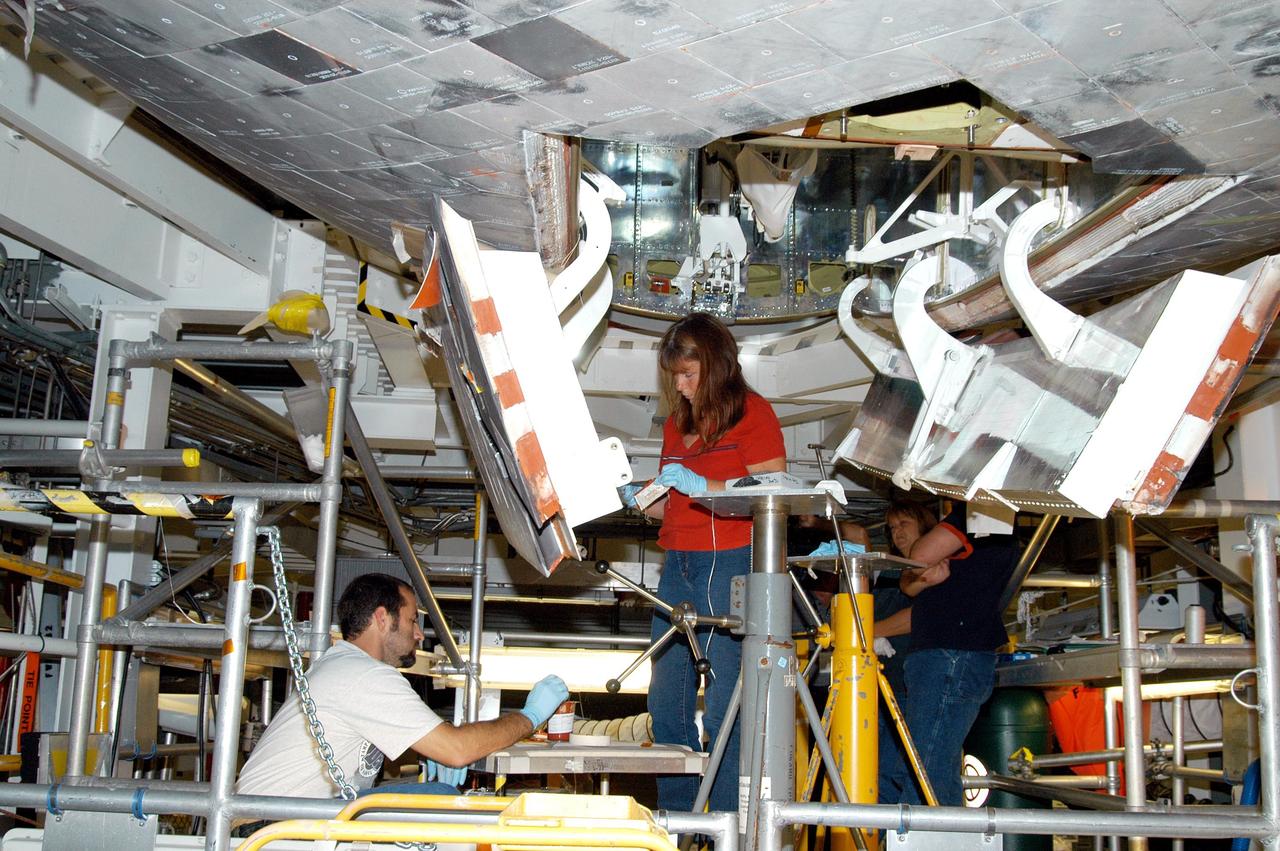
KENNEDY SPACE CENTER, FLA. - Workers in the Orbiter Processing Facility prepare to close the nose wheel doors on Atlantis in preparation for the expected impact of Hurricane Frances on Saturday. Preparations at KSC include powering down the Space Shuttle orbiters, closing their payload bay doors and stowing their landing gear. They are also taking precautions against flooding by moving spacecraft hardware off the ground and sandbagging facilities. The Orbiter Processing Facility is constructed of concrete and steel and was designed to withstand winds of 105 mph. The Vehicle Assembly Building is constructed of concrete and steel and was designed to withstand winds of 125 mph. Other payload and flight hardware support facilities can endure winds of 110 mph. Launch pads and the Payload Hazardous Servicing Facility can withstand 125-mph winds.
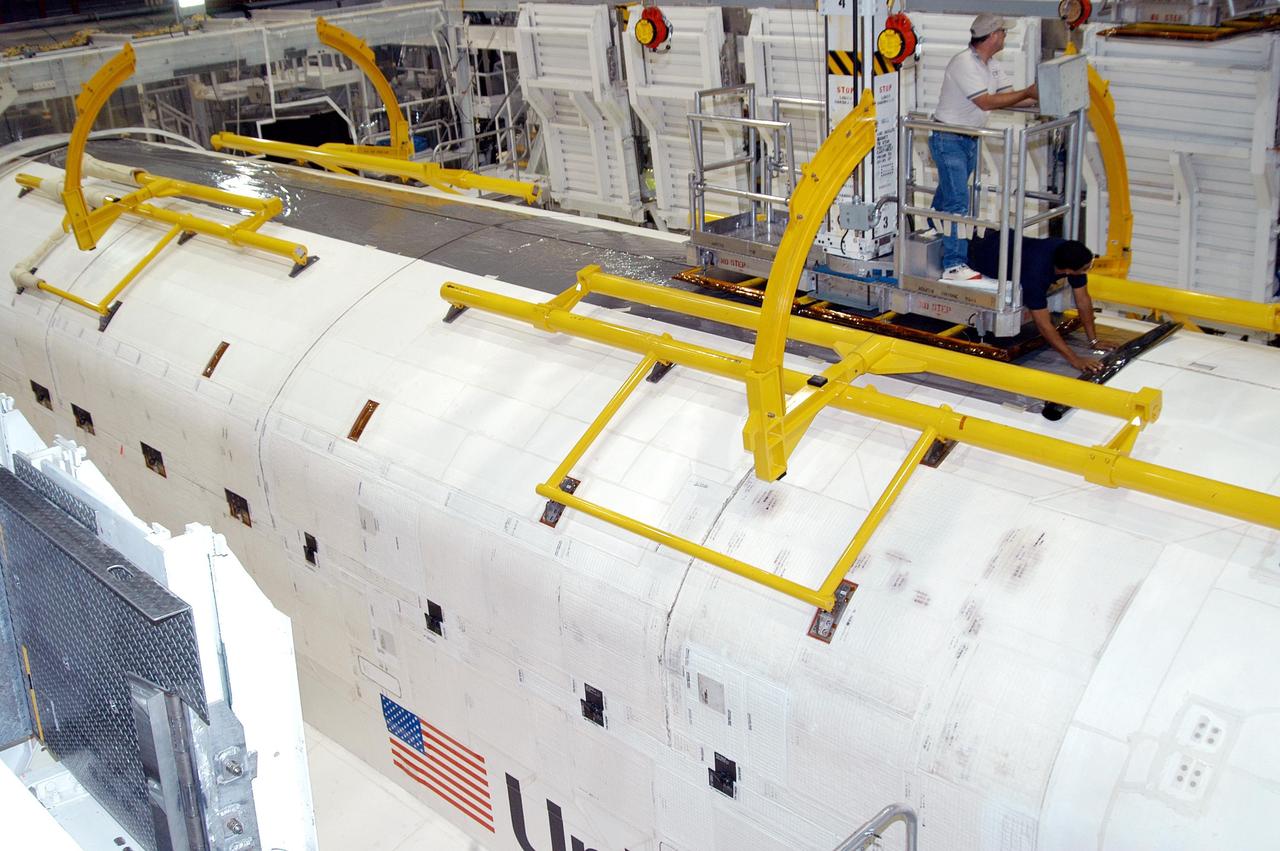
KENNEDY SPACE CENTER, FLA. - Workers in the Orbiter Processing Facility finish Hurricane preparations on the payload bay doors of Atlantis. Preparing for the expected impact of Hurricane Frances on Saturday, workers also powered down the Space Shuttle orbiters, and stowed the landing gear. They are also taking precautions against flooding by moving spacecraft hardware off the ground and sandbagging facilities. The Orbiter Processing Facility is constructed of concrete and steel and was designed to withstand winds of 105 mph. The Vehicle Assembly Building is constructed of concrete and steel and was designed to withstand winds of 125 mph. Other payload and flight hardware support facilities can endure winds of 110 mph. Launch pads and the Payload Hazardous Servicing Facility can withstand 125-mph winds.
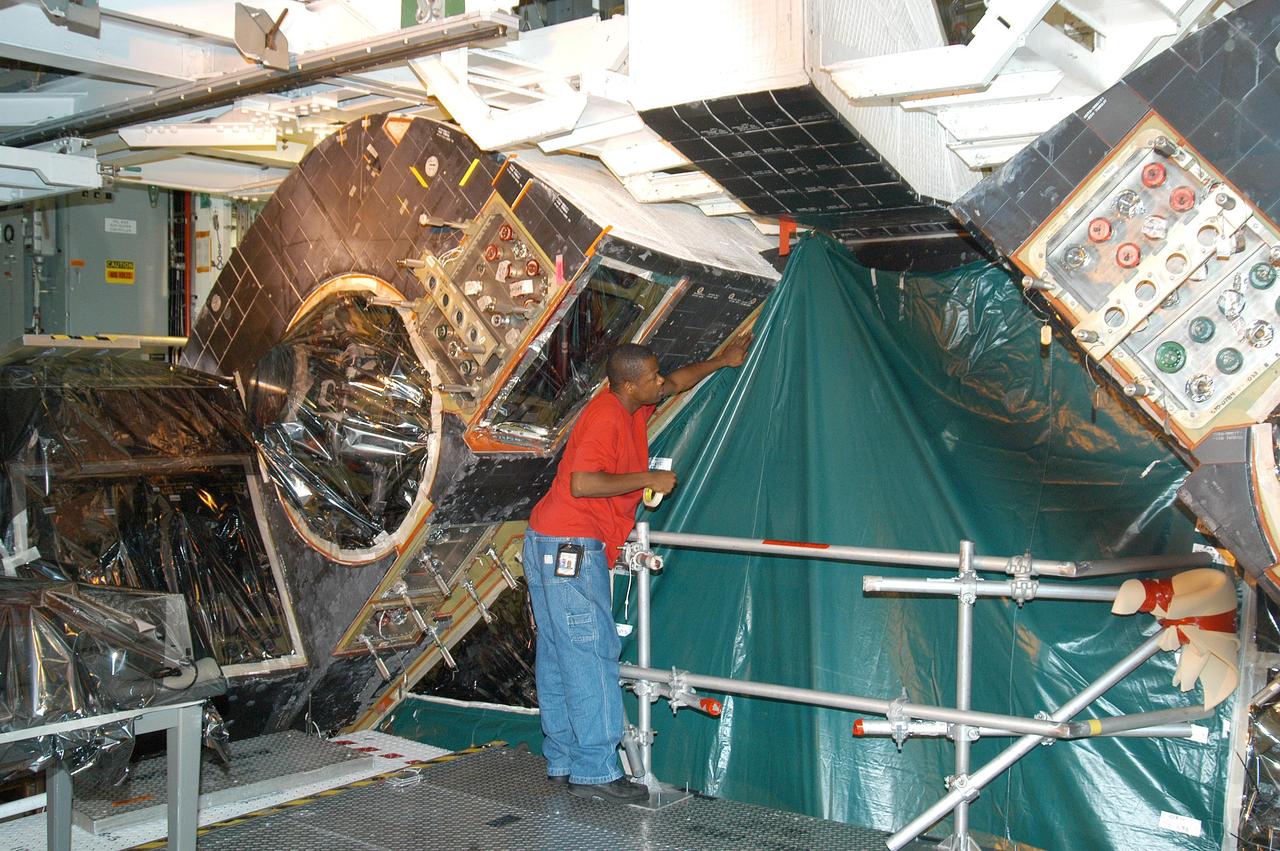
KENNEDY SPACE CENTER, FLA. - Workers in the Orbiter Processing Facility cover up areas of Atlantis with plastic, preparing for the expected impact of Hurricane Frances on Saturday. Other preparations at KSC include powering down the Space Shuttle orbiters, closing the payload bay doors and stowing the landing gear. Workers are also taking precautions against flooding by moving spacecraft hardware off the ground and sandbagging facilities. The Orbiter Processing Facility is constructed of concrete and steel and was designed to withstand winds of 105 mph. The Vehicle Assembly Building is constructed of concrete and steel and was designed to withstand winds of 125 mph. Other payload and flight hardware support facilities can endure winds of 110 mph. Launch pads and the Payload Hazardous Servicing Facility can withstand 125-mph winds.

KENNEDY SPACE CENTER, FLA. - Workers in the Orbiter Processing Facility cover up areas of Atlantis with plastic, preparing for the expected impact of Hurricane Frances on Saturday. Other preparations at KSC include powering down the Space Shuttle orbiters, closing the payload bay doors and stowing the landing gear. Workers are also taking precautions against flooding by moving spacecraft hardware off the ground and sandbagging facilities. The Orbiter Processing Facility is constructed of concrete and steel and was designed to withstand winds of 105 mph. The Vehicle Assembly Building is constructed of concrete and steel and was designed to withstand winds of 125 mph. Other payload and flight hardware support facilities can endure winds of 110 mph. Launch pads and the Payload Hazardous Servicing Facility can withstand 125-mph winds.
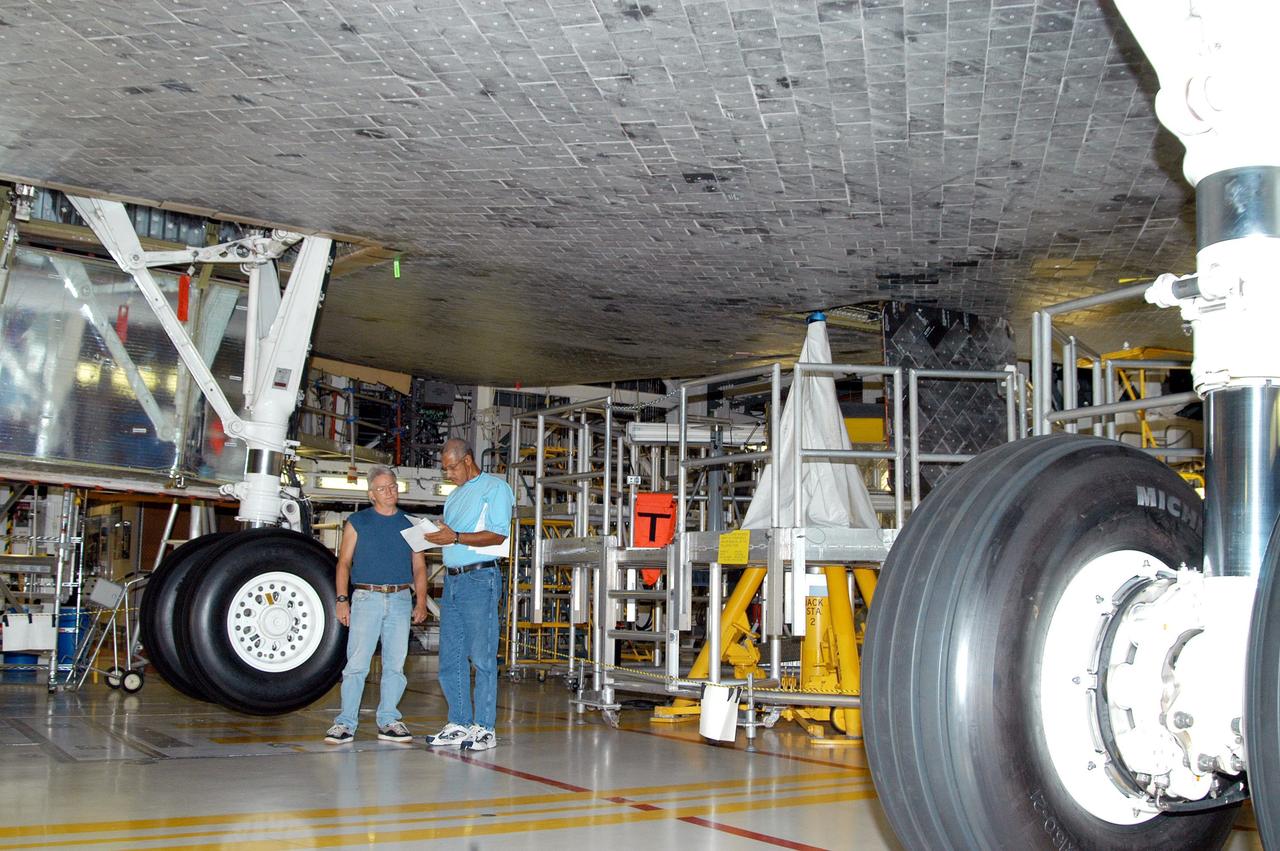
KENNEDY SPACE CENTER, FLA. - Workers in the Orbiter Processing Facility prepare to stow the landing gear on the orbiter Atlantis in preparation for the expected impact of Hurricane Frances on Saturday. Other preparations at KSC include powering down the Space Shuttle orbiters, and closing their payload bay doors. Workers are also taking precautions against flooding by moving spacecraft hardware off the ground and sandbagging facilities. The Orbiter Processing Facility is constructed of concrete and steel and was designed to withstand winds of 105 mph. The Vehicle Assembly Building is constructed of concrete and steel and was designed to withstand winds of 125 mph. Other payload and flight hardware support facilities can endure winds of 110 mph. Launch pads and the Payload Hazardous Servicing Facility can withstand 125-mph winds.
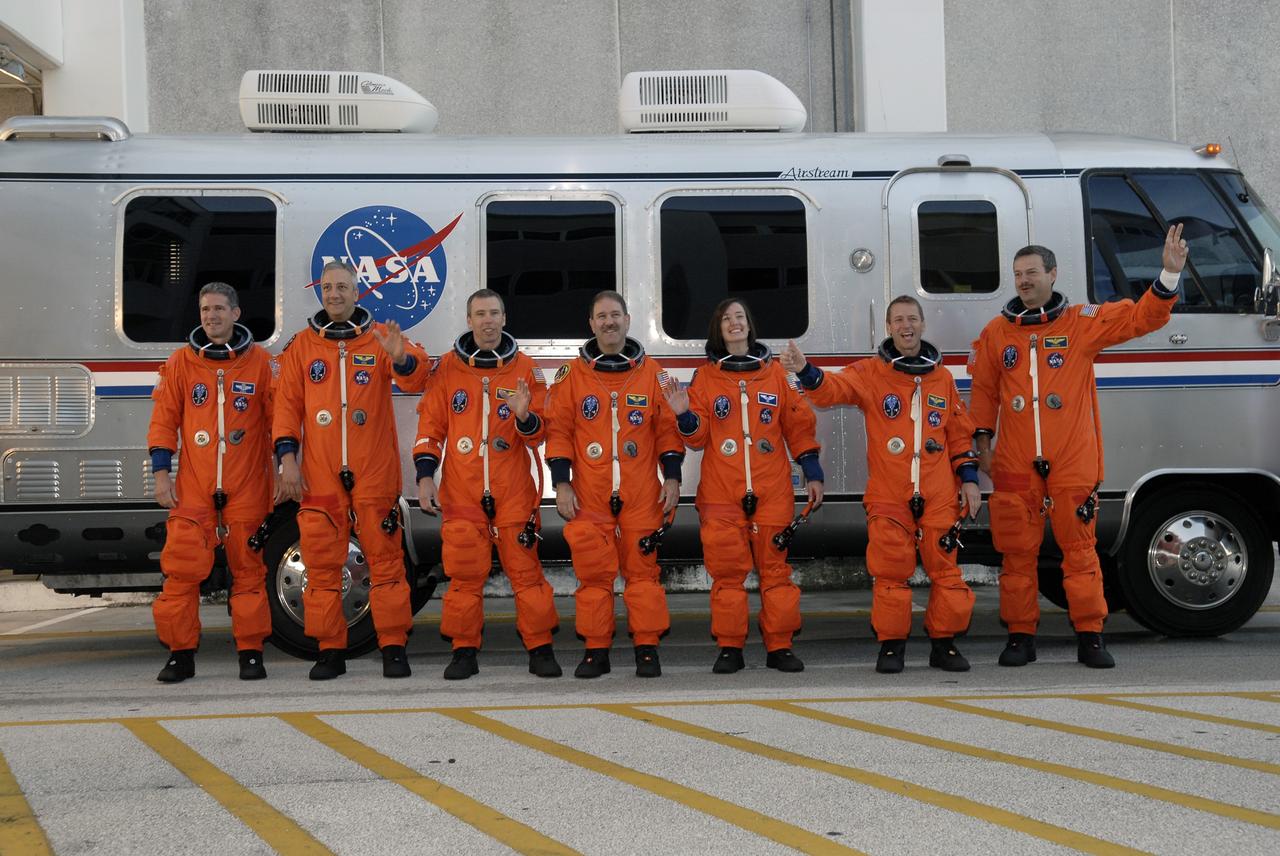
CAPE CANAVERAL, Fla. - The STS-125 crew lines up outside the Astrovan after suiting up in the Operations and Checkout Building at NASA's Kennedy Space Center in Florida. From left are Mission Specialists Michael Good, Mike Massimino, Andrew Feustel, John Grunsfeld and Megan McArthur, Pilot Gregory C. Johnson and Commander Scott Altman. The crew is heading for Launch Pad 39A where they will take part in a simulated launch countdown aboard space shuttle Atlantis. The countdown is the culmination of terminal countdown demonstration test, or TCDT, activities as preparation before launch. TCDT provides astronauts and ground crews with an opportunity to participate in various simulated countdown activities, including equipment familiarization, emergency training and the countdown. Atlantis’ STS-125 mission to service NASA’s Hubble Space Telescope is targeted for launch Oct. 14. Photo credit: NASA/Kim Shiflett
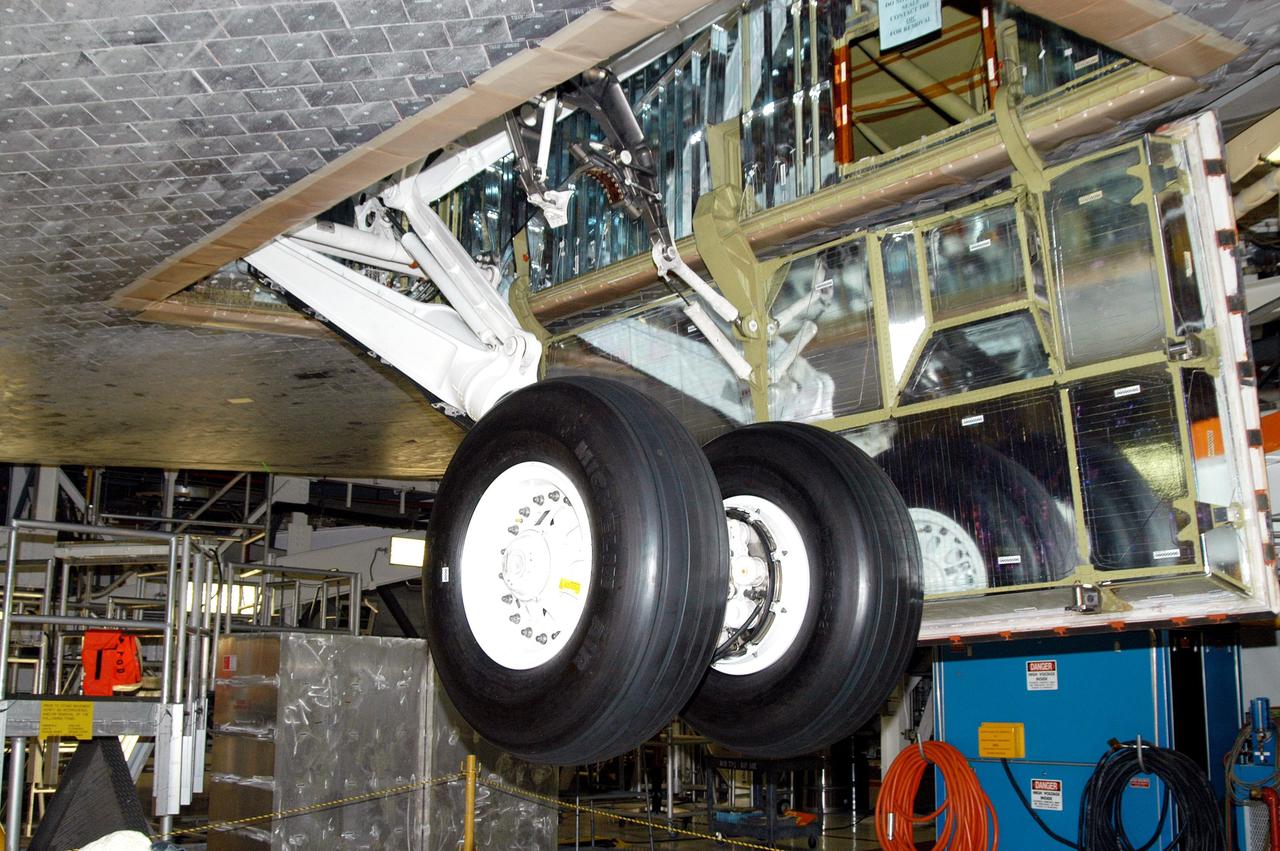
KENNEDY SPACE CENTER, FLA. - In the Orbiter Processing Facility, Atlantis’ wheels are raised into their wheel bays in preparation for the expected impact of Hurricane Frances on Saturday. Other preparations at KSC include powering down the Space Shuttle orbiters, and closing their payload bay doors. Workers are also taking precautions against flooding by moving spacecraft hardware off the ground and sandbagging facilities. The Orbiter Processing Facility is constructed of concrete and steel and was designed to withstand winds of 105 mph. The Vehicle Assembly Building is constructed of concrete and steel and was designed to withstand winds of 125 mph. Other payload and flight hardware support facilities can endure winds of 110 mph. Launch pads and the Payload Hazardous Servicing Facility can withstand 125-mph winds.
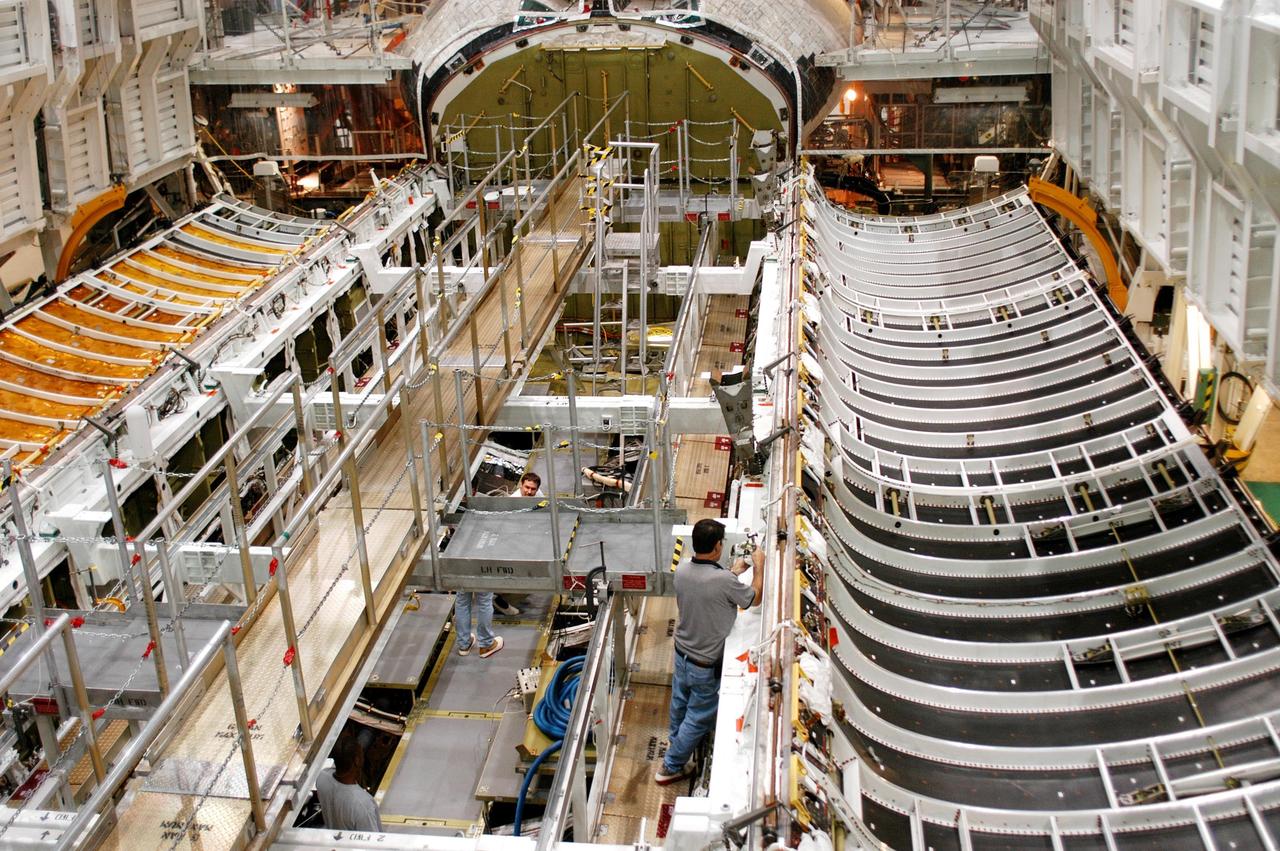
KENNEDY SPACE CENTER, FLA. - In the Orbiter Processing Facility, workers prepare to close the payload bay doors on Atlantis in preparation for the expected impact of Hurricane Frances on Saturday. Other preparations at KSC include powering down the Space Shuttle orbiters and stowing the landing gear. Workers are also taking precautions against flooding by moving spacecraft hardware off the ground and sandbagging facilities. The Orbiter Processing Facility is constructed of concrete and steel and was designed to withstand winds of 105 mph. The Vehicle Assembly Building is constructed of concrete and steel and was designed to withstand winds of 125 mph. Other payload and flight hardware support facilities can endure winds of 110 mph. Launch pads and the Payload Hazardous Servicing Facility can withstand 125-mph winds.
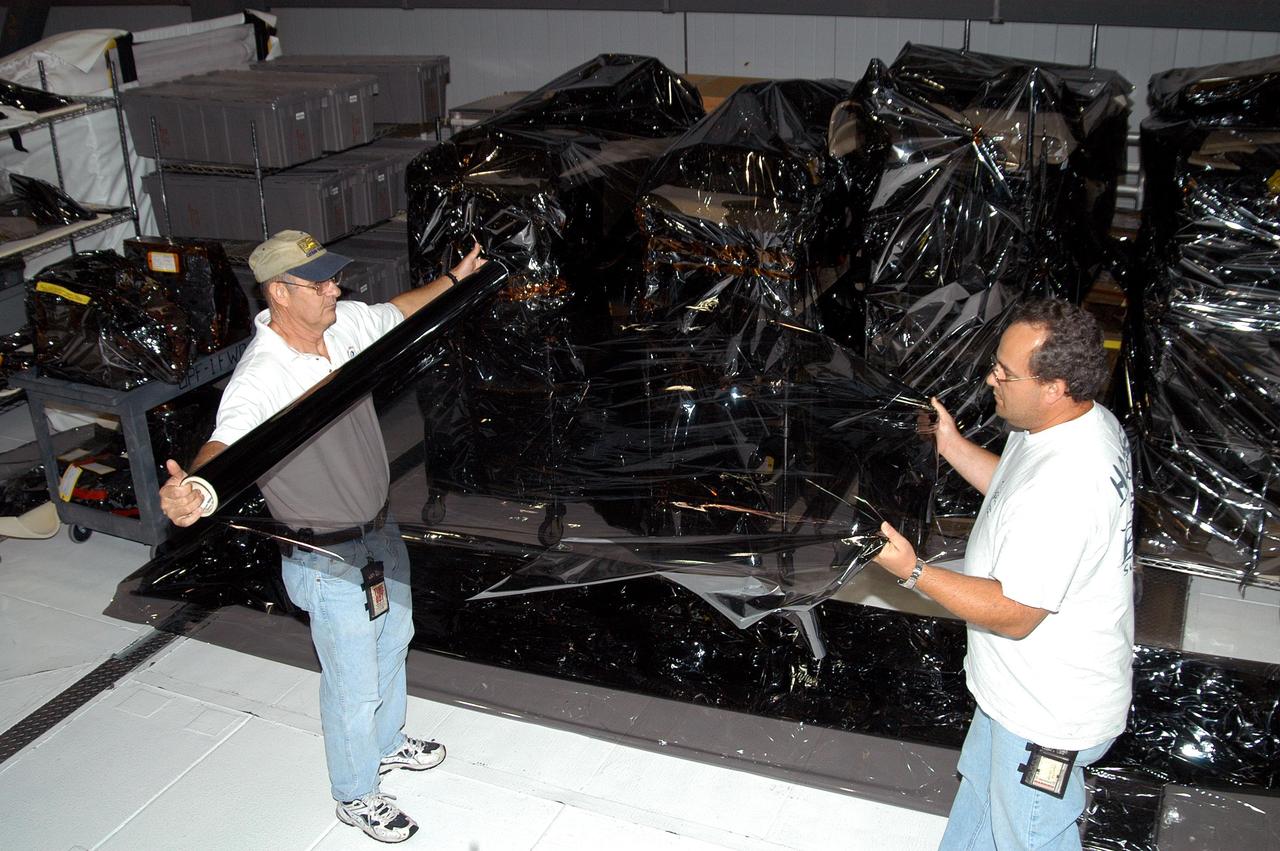
KENNEDY SPACE CENTER, FLA. - Workers in the Orbiter Processing Facility unwrap plastic for use in covering equipment as part of preparations for the expected impact of Hurricane Frances on Saturday. Other preparations at KSC include powering down the Space Shuttle orbiters, closing the payload bay doors and stowing the landing gear. Workers are also taking precautions against flooding by moving spacecraft hardware off the ground and sandbagging facilities. The Orbiter Processing Facility is constructed of concrete and steel and was designed to withstand winds of 105 mph. The Vehicle Assembly Building is constructed of concrete and steel and was designed to withstand winds of 125 mph. Other payload and flight hardware support facilities can endure winds of 110 mph. Launch pads and the Payload Hazardous Servicing Facility can withstand 125-mph winds.
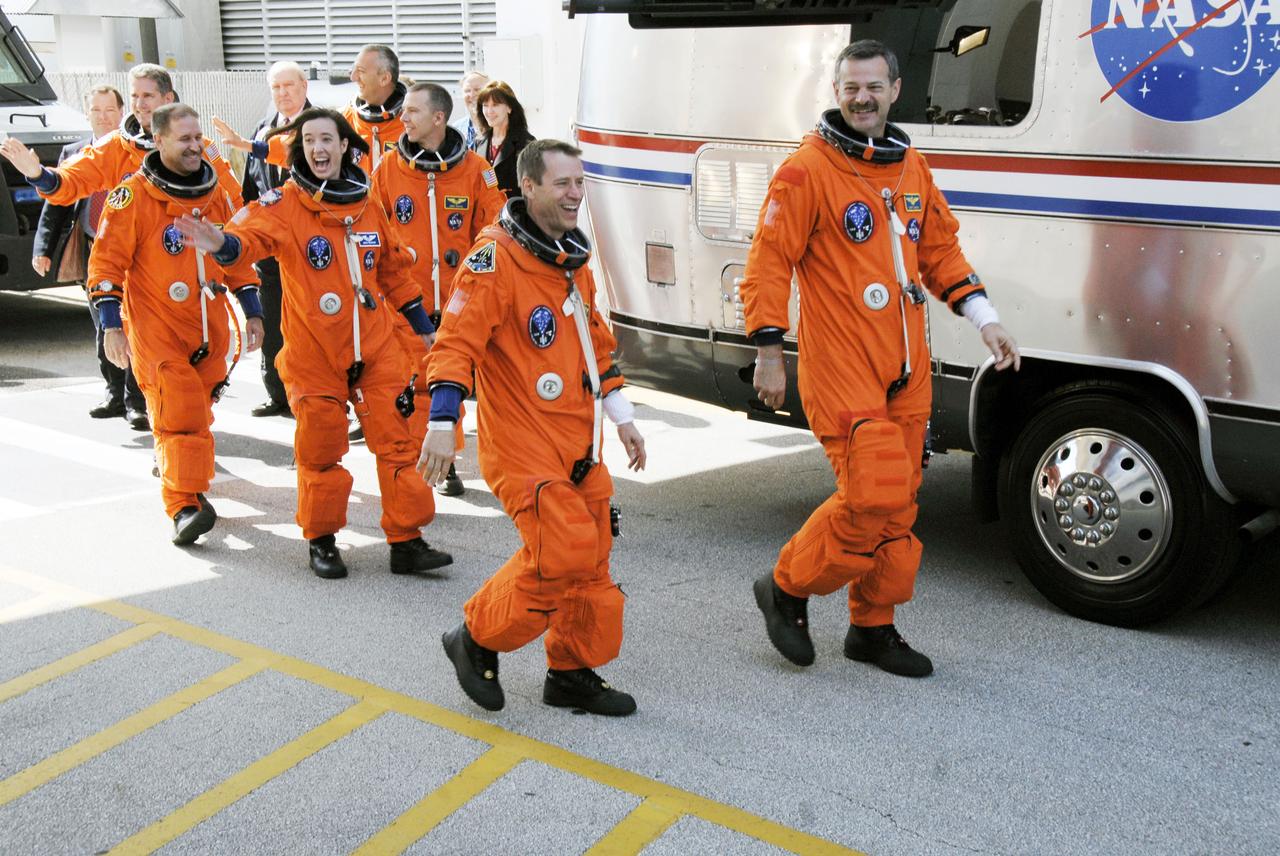
STS125-S-010 (11 May 2009) --- After suiting up, the STS-125 crewmembers exit the Operations and Checkout Building to board the Astrovan, which will take them to launch pad 39A for the launch of Space Shuttle Atlantis on the STS-125 mission to service the Hubble Space Telescope. From the right are astronauts Scott Altman, commander; Gregory C. Johnson, pilot; Megan McArthur, John Grunsfeld, Andrew Feustel, Michael Good and Mike Massimino, all mission specialists. Atlantis' 11-day flight will include five spacewalks to refurbish and upgrade the telescope with state-of-the-art science instruments that will expand Hubble's capabilities and extend its operational lifespan through at least 2014. The payload includes Wide Field Camera 3, fine guidance sensor and the Cosmic Origins Spectrograph. Launch of Atlantis is scheduled for 2:01 p.m. May 11 EDT.
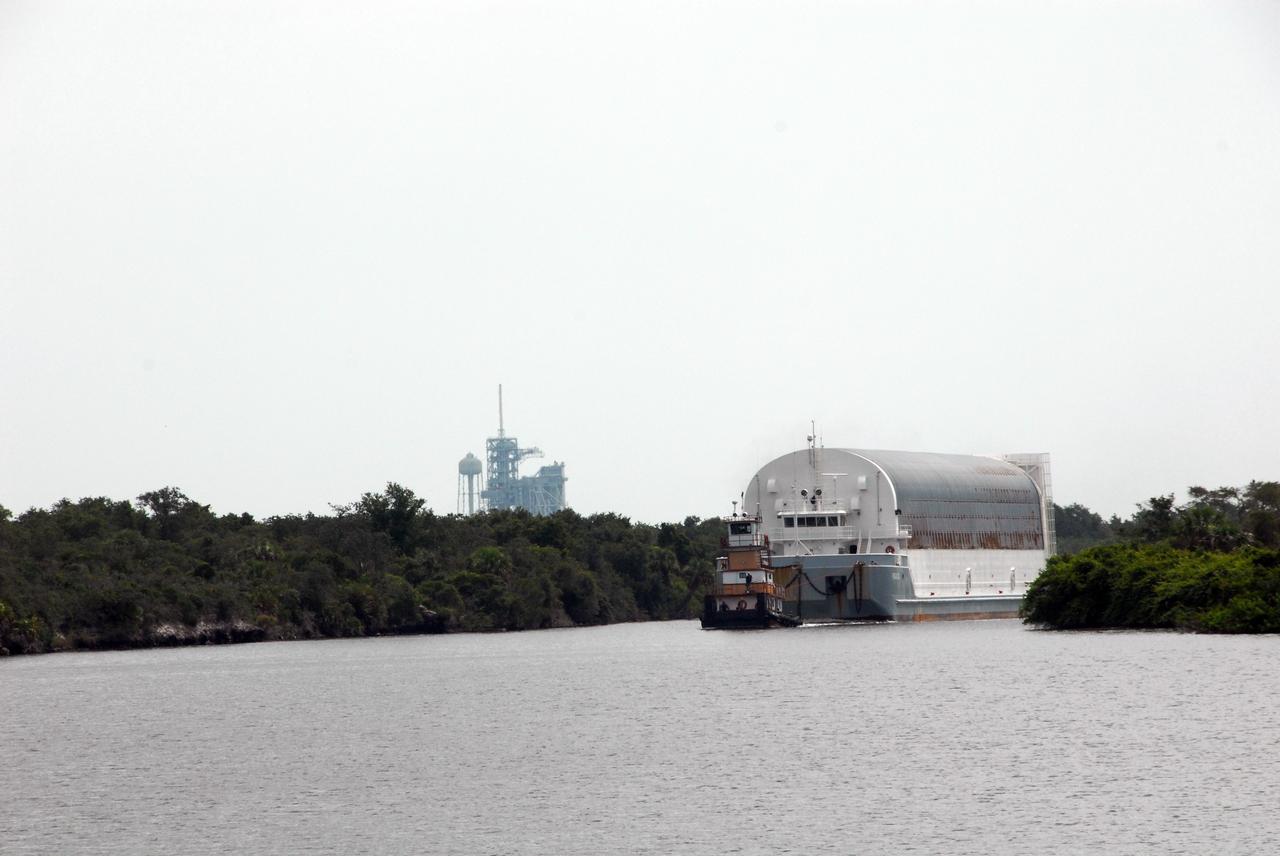
CAPE CANAVERAL, Fla. – The Pegasus barge carrying the external fuel tank for space shuttle Atlantis' STS-125 mission to NASA's Hubble Space Telescope is towed into the turn basin in the Launch Complex 39 Area at NASA's Kennedy Space Center. The tank will be offloaded and moved to the Vehicle Assembly Building. Once inside the building, the tank will be raised to vertical, lifted and moved into a checkout cell. Stacking of the tank and solid rocket boosters is planned to start Aug. 7. Atlantis is targeted to launch Oct. 8. Photo credit: NASA/Jack Pfaller
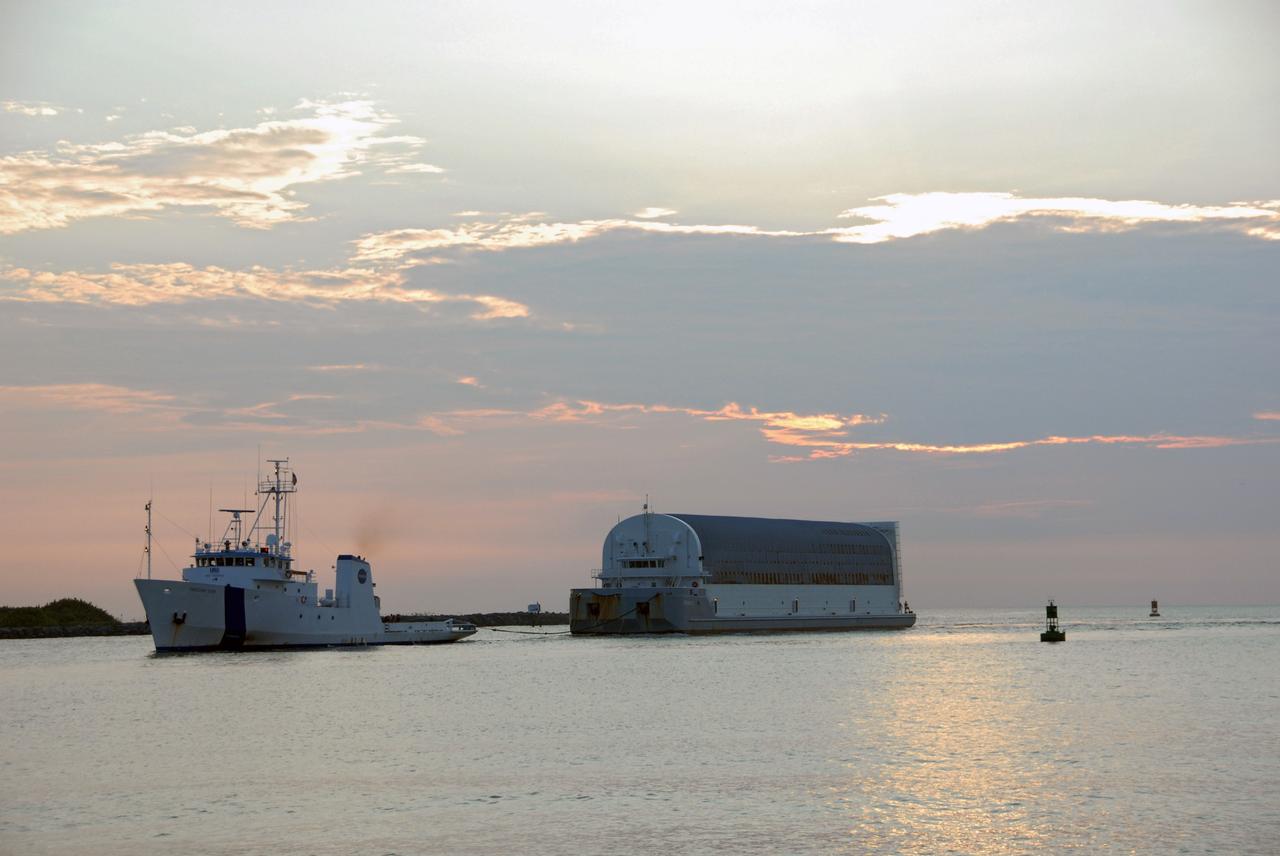
CAPE CANAVERAL, Fla. – The external fuel tank for space shuttle Atlantis' STS-125 mission to NASA's Hubble Space Telescope arrives at Port Canaveral, Fla., towed on the Pegasus barge by a solid rocket booster retrieval ship. The tank will be towed to the turn basin in the Launch Complex 39 Area at NASA's Kennedy Space Center, offloaded and moved to the Vehicle Assembly Building. Once inside the building, the tank will be raised to vertical, lifted and moved into a checkout cell. Stacking of the tank and solid rocket boosters is planned to start Aug. 7. Atlantis is targeted to launch Oct. 8. Photo credit: NASA/Jack Pfaller
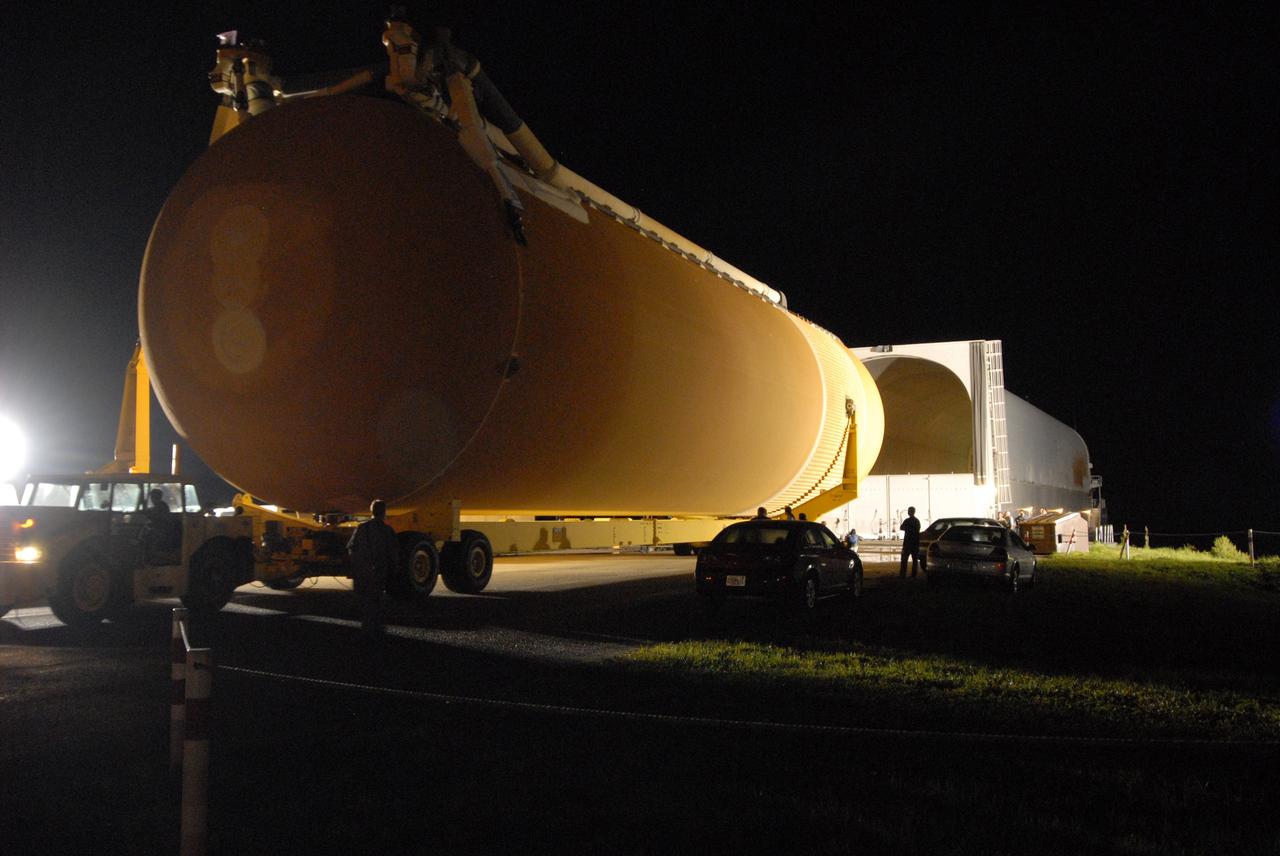
CAPE CANAVERAL, Fla. – Under lights, the external tank for space shuttle Atlantis' STS-125 mission to NASA's Hubble Space Telescope is moved away from the Pegasus barge, which is docked in the Launch Complex 39 Area at NASA's Kennedy Space Center. The tank, which arrived at the turn basin earlier in the day, will be moved to the Vehicle Assembly Building. Inside the building, the tank will be raised to vertical, lifted and moved into a checkout cell. Stacking of the tank and solid rocket boosters is scheduled for Aug. 7. Atlantis is targeted to launch Oct. 8. Photo credit: NASA/Amanda Diller
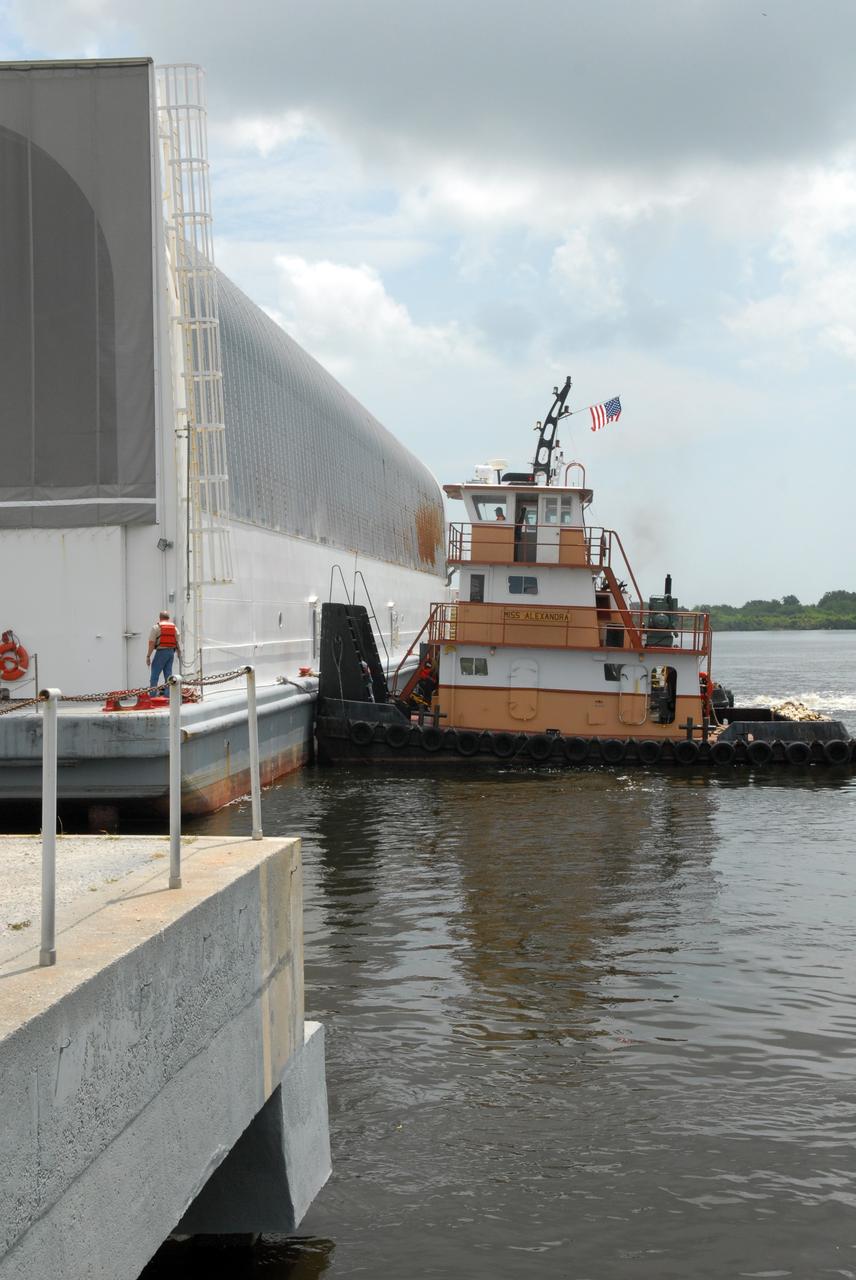
CAPE CANAVERAL, Fla. – Tugboats maneuver the Pegasus barge toward the dock in the turn basin in the Launch Complex 39 Area in NASA's Kennedy Space Center. Onboard the barge is the external fuel tank for space shuttle Atlantis' STS-125 mission to NASA's Hubble Space Telescope. After docking, the tank will be offloaded and moved to the Vehicle Assembly Building. Once inside the building, the tank will be raised to vertical, lifted and moved into a checkout cell. Stacking of the tank and solid rocket boosters is planned to start Aug. 7. Atlantis is targeted to launch Oct. 8. Photo credit: NASA/Jack Pfaller
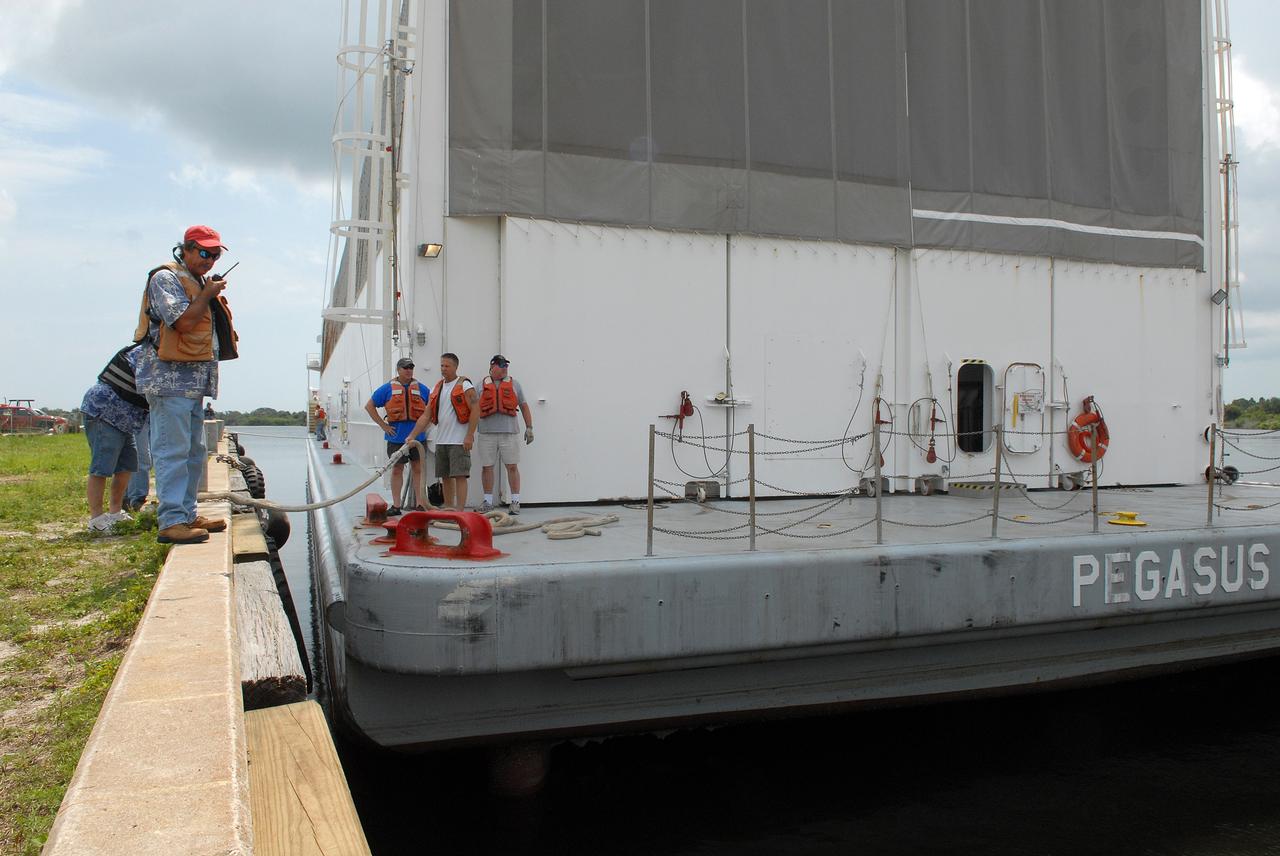
CAPE CANAVERAL, Fla. – The Pegasus barge carrying the external tank for space shuttle Atlantis' STS-125 mission to NASA's Hubble Space Telescope is tied to the dock in the turn basin in the Launch Complex 39 Area of NASA's Kennedy Space Center. The tank will offloaded and moved to the Vehicle Assembly Building. Once inside the building, the tank will be raised to vertical, lifted and moved into a checkout cell. Stacking of the tank and solid rocket boosters is planned to start Aug. 7. Atlantis is targeted to launch Oct. 8. Photo credit: NASA/Jack Pfaller
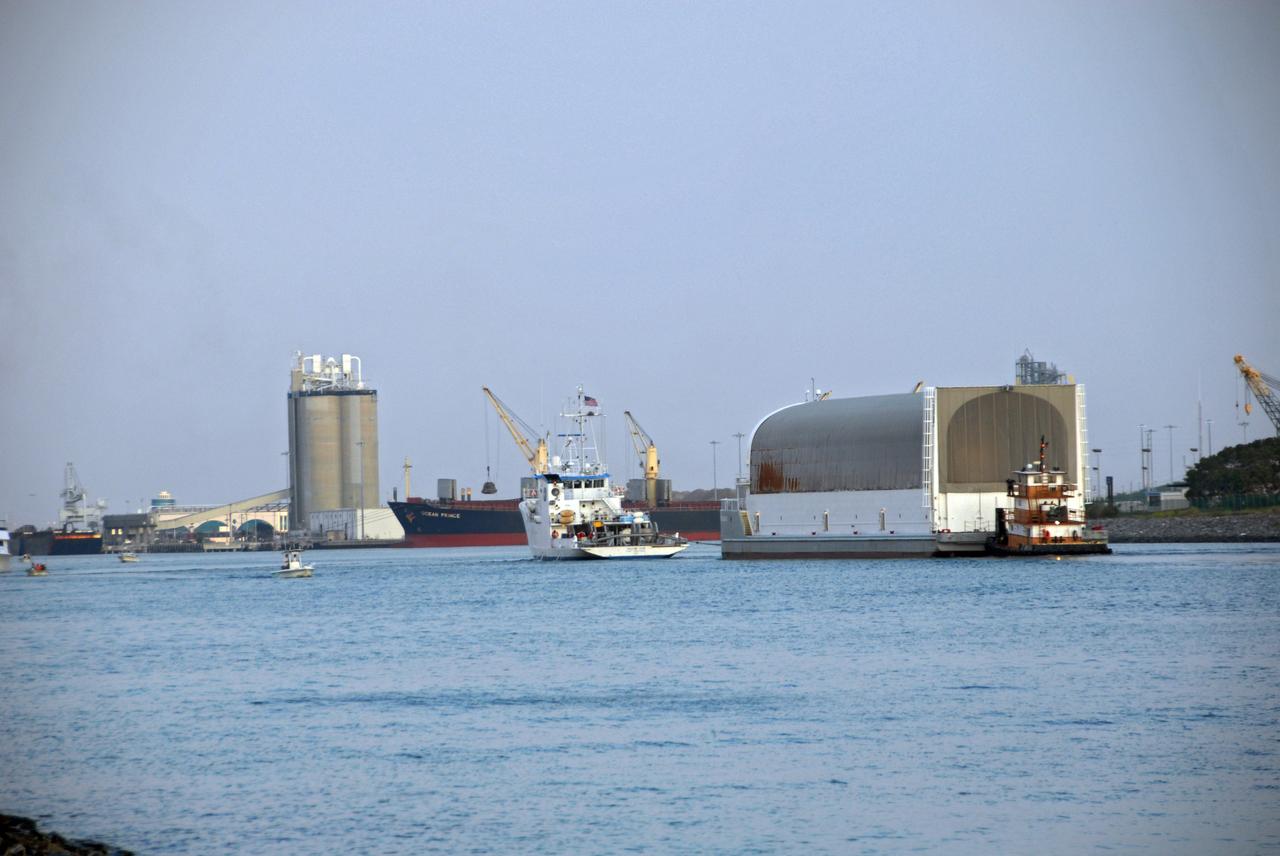
CAPE CANAVERAL, Fla. – The external fuel tank for space shuttle Atlantis' STS-125 mission to NASA's Hubble Space Telescope arrives at Port Canaveral, Fla., towed on the Pegasus barge by a solid rocket booster retrieval ship. The tank will be towed to the turn basin in the Launch Complex 39 Area at NASA's Kennedy Space Center, offloaded and moved to the Vehicle Assembly Building. Once inside the building, the tank will be raised to vertical, lifted and moved into a checkout cell. Stacking of the tank and solid rocket boosters is planned to start Aug. 7. Atlantis is targeted to launch Oct. 8. Photo credit: NASA/Jack Pfaller
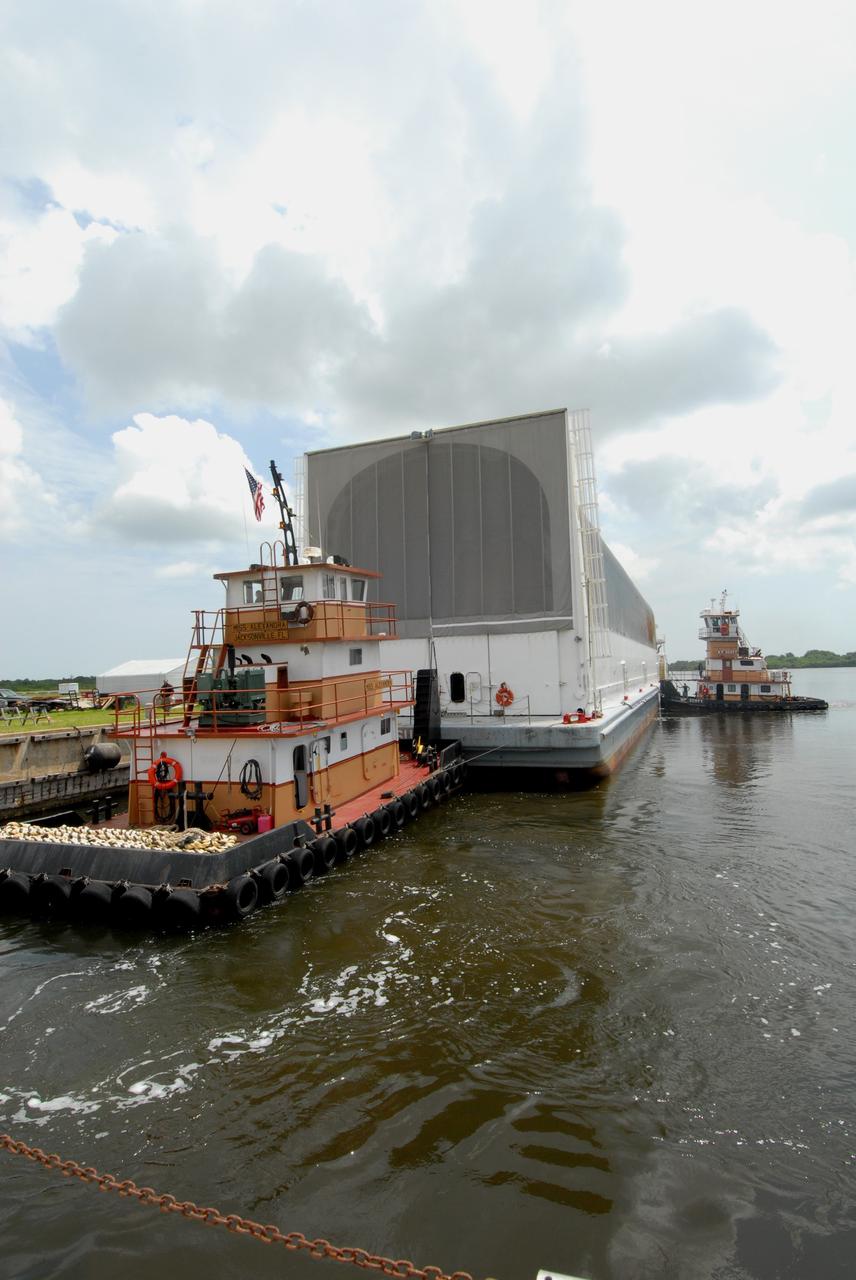
CAPE CANAVERAL, Fla. – Tugboats maneuver the Pegasus barge toward the dock in the turn basin in the Launch Complex 39 Area in NASA's Kennedy Space Center. Onboard the barge is the external fuel tank for space shuttle Atlantis' STS-125 mission to NASA's Hubble Space Telescope. After docking, the tank will be offloaded and moved to the Vehicle Assembly Building. Once inside the building, the tank will be raised to vertical, lifted and moved into a checkout cell. Stacking of the tank and solid rocket boosters is planned to start Aug. 7. Atlantis is targeted to launch Oct. 8. Photo credit: NASA/Jack Pfaller
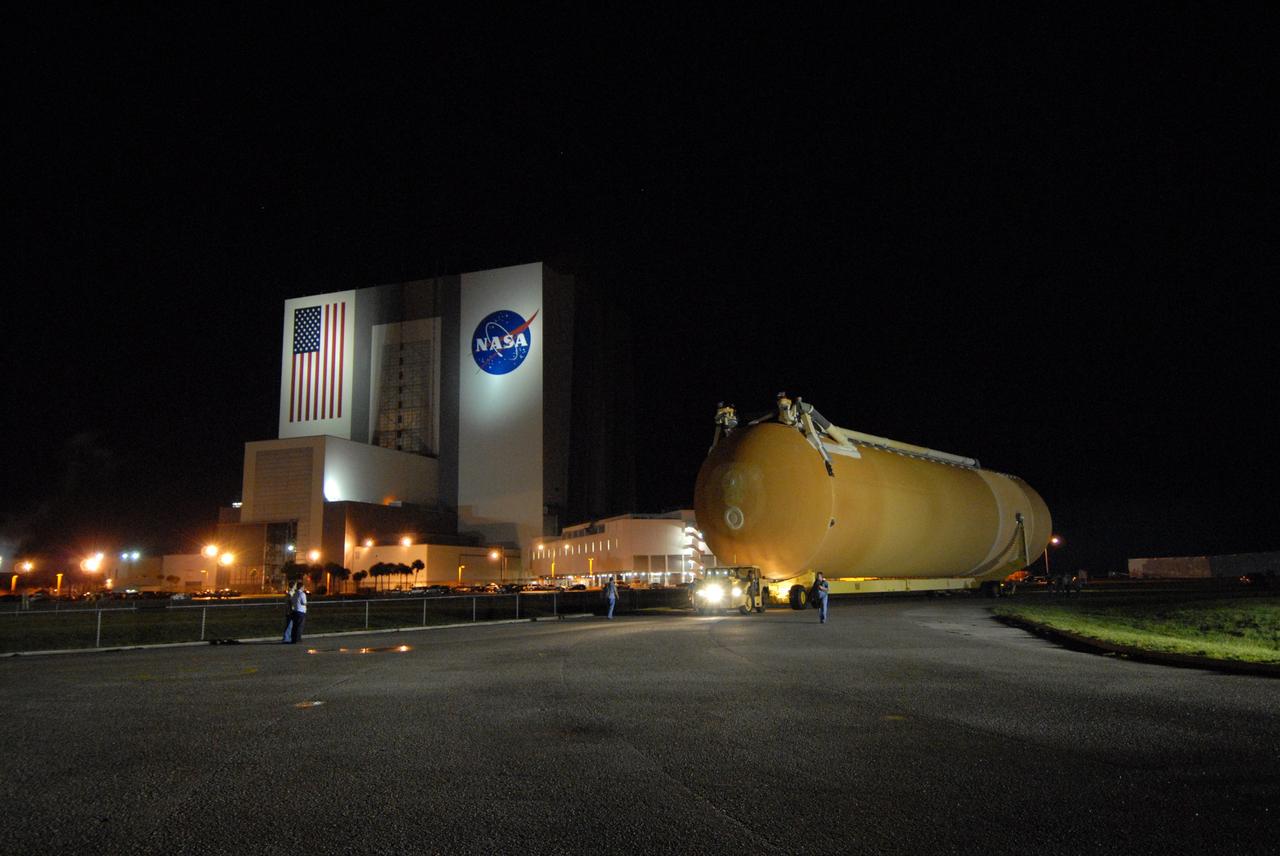
CAPE CANAVERAL, Fla. – Nearby lights from the Launch Control Center and Vehicle Assembly Building, or VAB, at NASA's Kennedy Space Center illuminate the way for the external tank being transported to the VAB. The tank is for space shuttle Atlantis' STS-125 mission to NASA's Hubble Space Telescope. The tank arrived at the turn basin earlier in the day aboard the Pegasus barge. Inside the building, the tank will be raised to vertical, lifted and moved into a checkout cell. Stacking of the tank and solid rocket boosters is scheduled for Aug. 7. Atlantis is targeted to launch Oct. 8. Photo credit: NASA/Amanda Diller
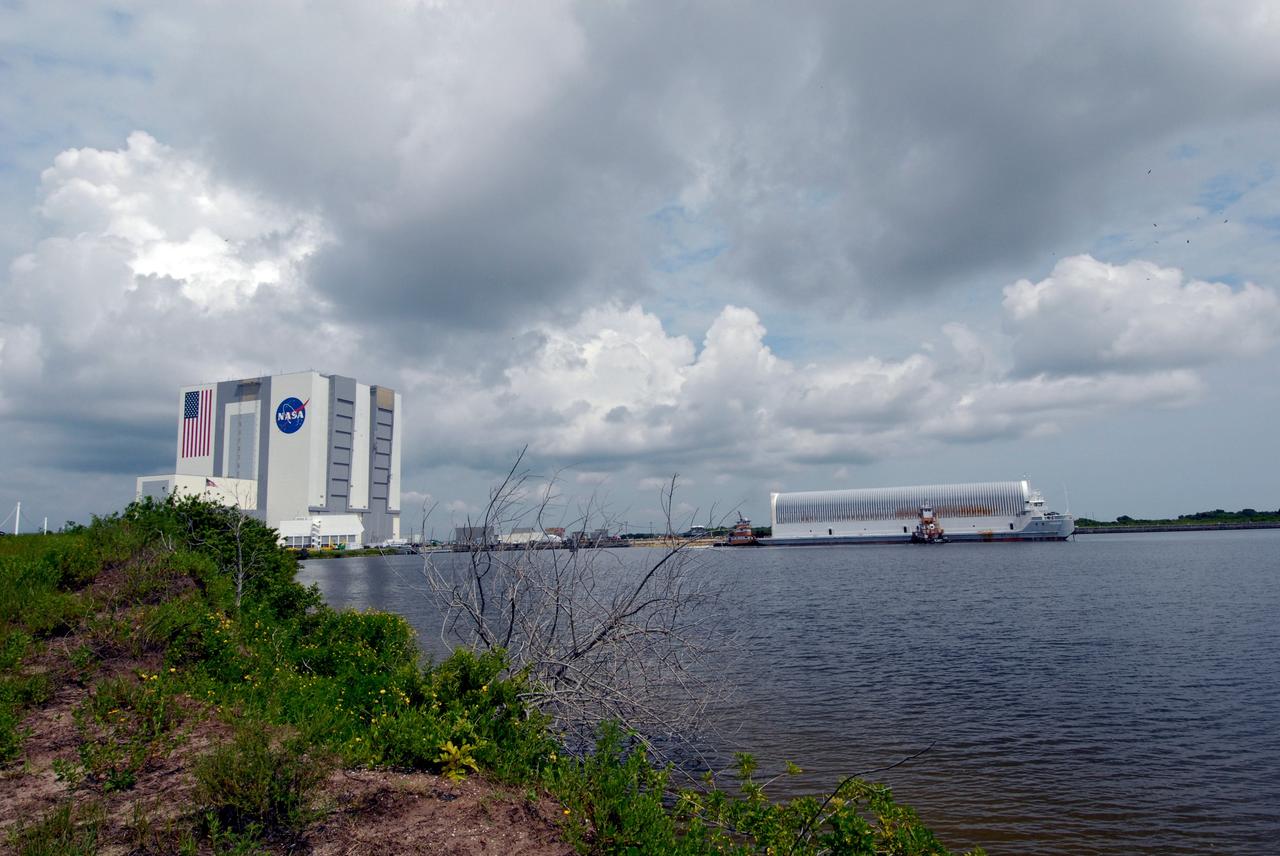
CAPE CANAVERAL, Fla. – The external fuel tank for space shuttle Atlantis' STS-125 mission to NASA's Hubble Space Telescope is towed to the dock in the turn basin in the Launch Complex 39 Area in NASA's Kennedy Space Center. After docking, the tank will be offloaded and moved to the Vehicle Assembly Building, at left. Once inside the building, the tank will be raised to vertical, lifted and moved into a checkout cell. Stacking of the tank and solid rocket boosters is planned to start Aug. 7. Atlantis is targeted to launch Oct. 8. Photo credit: NASA/Jack Pfaller
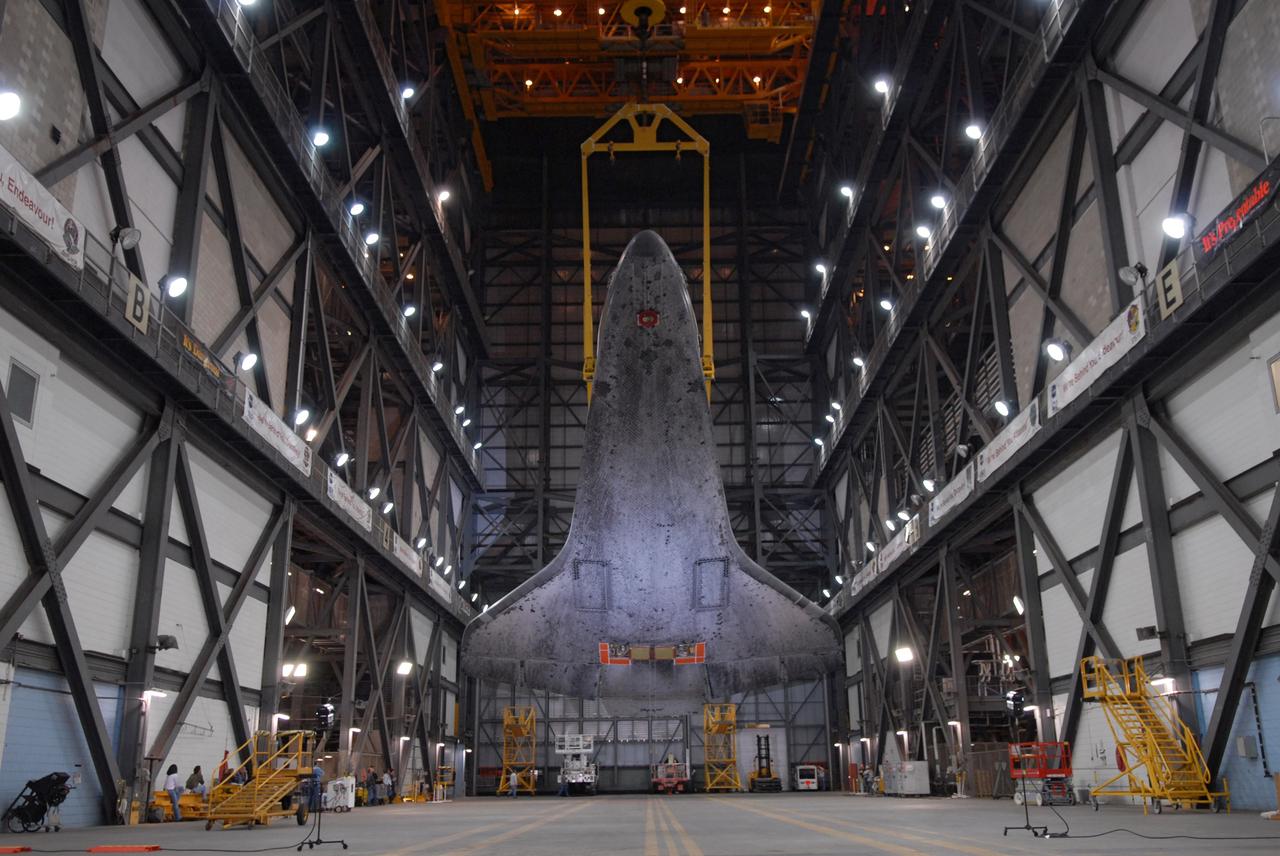
CAPE CANAVERAL, Fla. – In the Vehicle Assembly Building at NASA's Kennedy Space Center in Florida, space shuttle Atlantis is rotated by the crane toward a vertical position above the transfer aisle. The shuttle will be lifted into High Bay 3 where it will be attached to its external fuel tank and solid rocket boosters on the mobile launcher platform. After additional preparations are made, the shuttle will be rolled out to Launch Pad 39A for a targeted launch on May 12 on the STS-125 Hubble servicing mission. Photo credit: NASA/Cory Huston
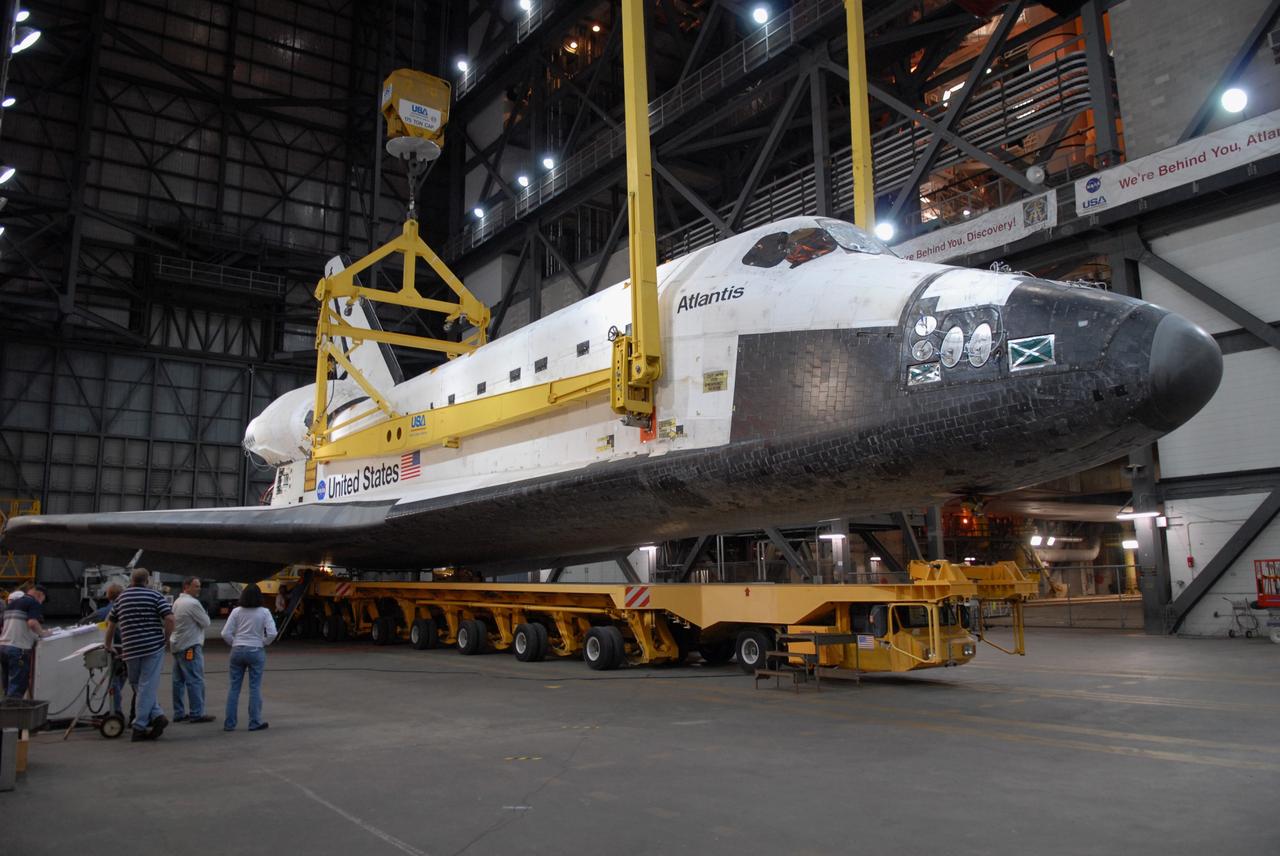
CAPE CANAVERAL, Fla. – In the Vehicle Assembly Building at NASA's Kennedy Space Center in Florida, space shuttle Atlantis is lifted off its transporter in the transfer aisle. The shuttle will be raised to a vertical position and lifted into High Bay 3 where it will be attached to its external fuel tank and solid rocket boosters on the mobile launcher platform. After additional preparations are made, the shuttle will be rolled out to Launch Pad 39A for a targeted launch on May 12 on the STS-125 Hubble servicing mission. Photo credit: NASA/Cory Huston

CAPE CANAVERAL, Fla. – After rolling out of the Orbiter Processing Facility bay 1 at NASA's Kennedy Space Center, space shuttle Atlantis begins the short transfer to the Vehicle Assembly Building. In the VAB, Atlantis will be attached to its external fuel tank and twin solid rocket boosters. After additional preparations are made, the shuttle will be rolled out to Launch Pad 39A to prepare for launch on the STS-125 mission targeted for Oct. 8. Photo credit: NASA/Jack Pfaller
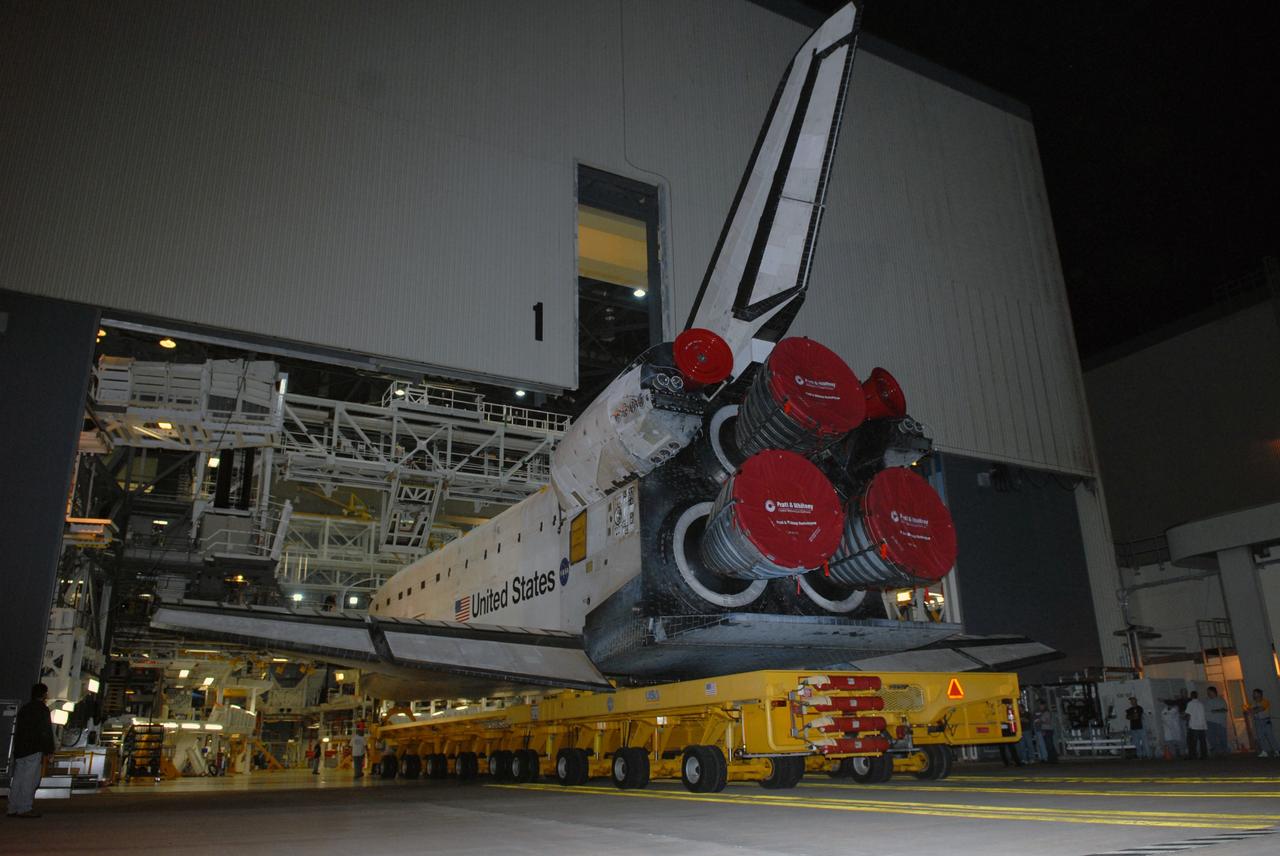
CAPE CANAVERAL, Fla. – Space shuttle Atlantis rolls out of the Orbiter Processing Facility bay 1 at NASA's Kennedy Space Center for transfer to the Vehicle Assembly Building. In the VAB, Atlantis will be attached to its external fuel tank and twin solid rocket boosters. After additional preparations are made, the shuttle will be rolled out to Launch Pad 39A to prepare for launch on the STS-125 mission targeted for Oct. 8. Photo credit: NASA/Jack Pfaller

CAPE CANAVERAL, Fla. – Space shuttle Atlantis rolls out of the Orbiter Processing Facility bay 1 at NASA's Kennedy Space Center for transfer to the Vehicle Assembly Building. In the VAB, Atlantis will be attached to its external fuel tank and twin solid rocket boosters. After additional preparations are made, the shuttle will be rolled out to Launch Pad 39A to prepare for launch on the STS-125 mission targeted for Oct. 8. Photo credit: NASA/Jack Pfaller
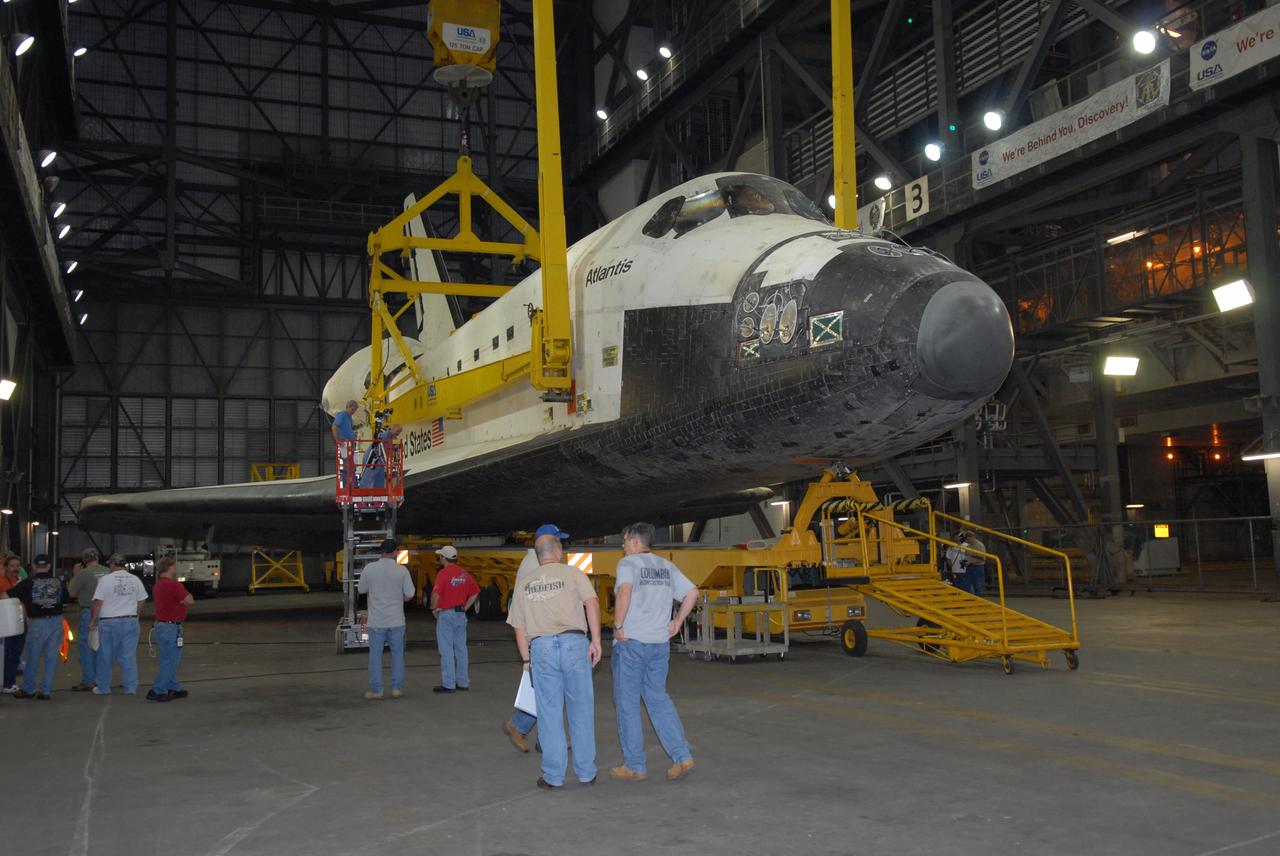
CAPE CANAVERAL, Fla. – In the Vehicle Assembly Building transfer aisle at NASA's Kennedy Space Center, the overhead crane is being attached to space shuttle Atlantis. The crane will lift Atlantis to vertical for transfer to high bay 3 to be stacked with its external fuel tank and twin solid rocket boosters. After additional preparations are made, the shuttle will be rolled out to Launch Pad 39A to prepare for launch on the STS-125 mission targeted for Oct. 8. Photo credit: NASA/Jack Pfaller
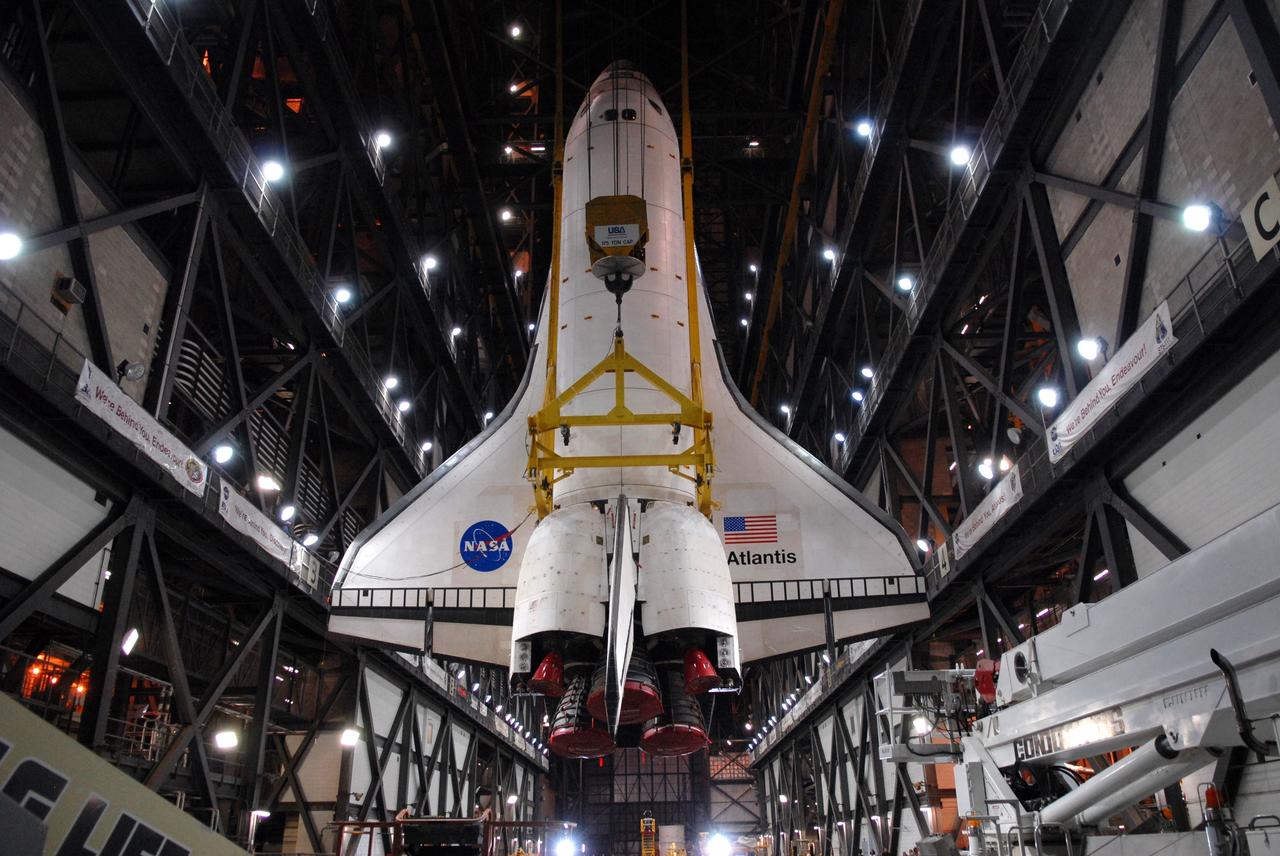
CAPE CANAVERAL, Fla. – After rotation in the Vehicle Assembly Building at NASA's Kennedy Space Center in Florida, space shuttle Atlantis is suspended vertically above the transfer aisle. The shuttle will be lifted into High Bay 3 where it will be attached to its external fuel tank and solid rocket boosters on the mobile launcher platform. After additional preparations are made, the shuttle will be rolled out to Launch Pad 39A for a targeted launch on May 12 on the STS-125 Hubble servicing mission. Photo credit: NASA/Cory Huston
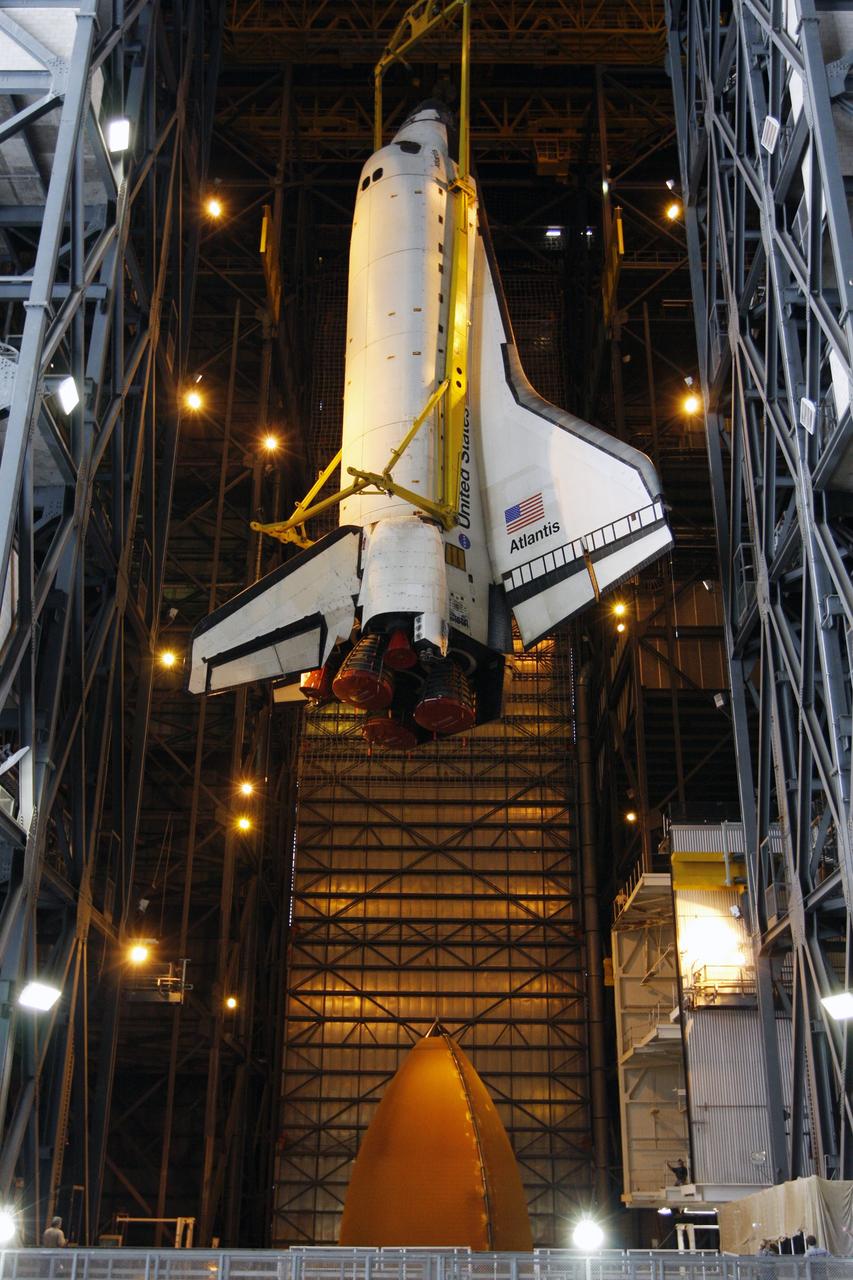
CAPE CANAVERAL, Fla. – In the Vehicle Assembly Building at NASA's Kennedy Space Center, space shuttle Atlantis is lowered toward the external fuel tank in high bay 3. Atlantis will be mated to the tank and twin solid rocket boosters stacked on the mobile launcher platform. After additional preparations are made, the shuttle will be rolled out to Launch Pad 39A to prepare for launch on the STS-125 mission targeted for 1:34 a.m. EDT Oct. 8. Photo credit: NASA/Dimitri Gerondidakis
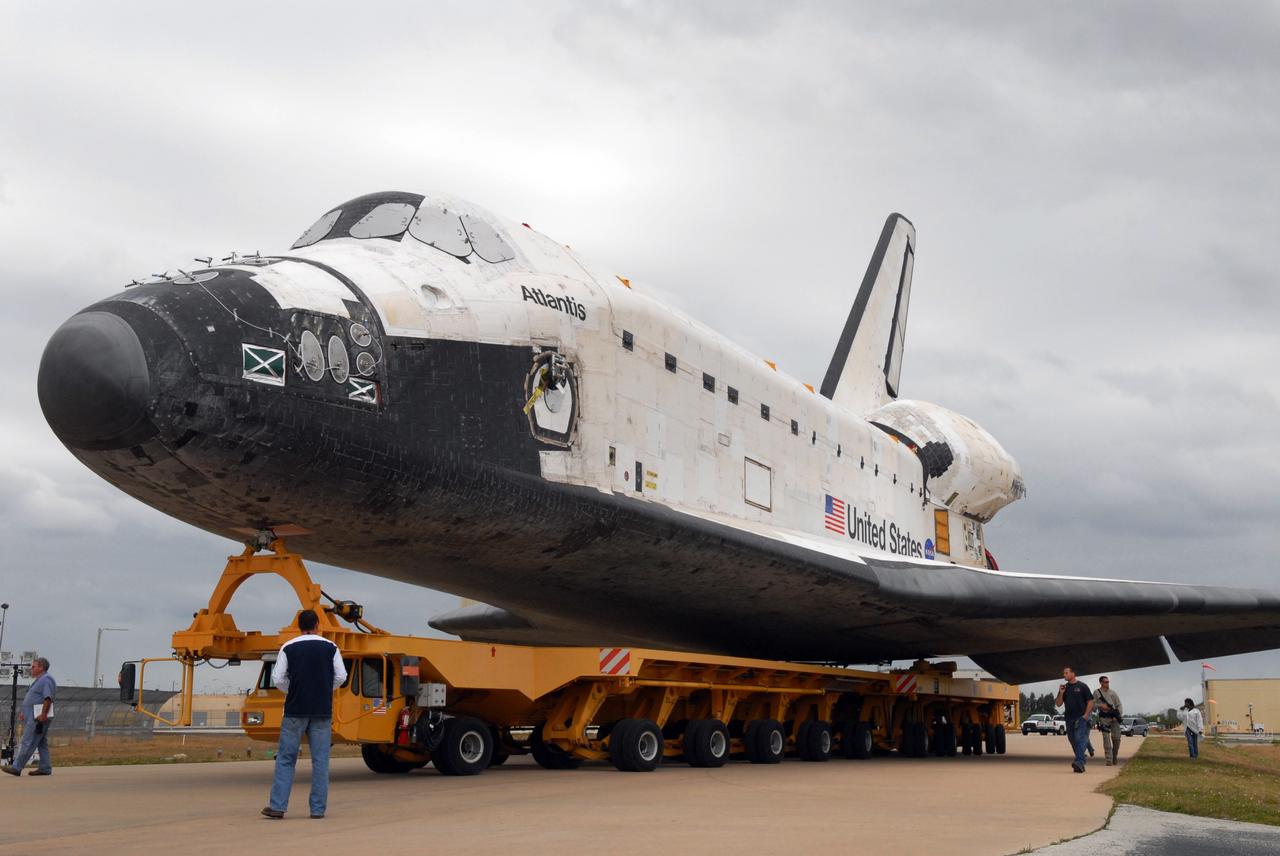
CAPE CANAVERAL, Fla. – On its transporter, space shuttle Atlantis rolls toward the Vehicle Assembly Building after leaving Orbiter Processing Facility 1 at NASA's Kennedy Space Center in Florida. First motion was at 11:30 a.m. EDT. In the VAB, Atlantis will be lifted into High Bay 3 and mated to the solid rocket booster-external fuel tank already installed on the mobile launcher platform.Atlantis is targeted to launch May 12 for the STS-125 Hubble servicing mission. Photo credit: NASA/Jack Pfaller
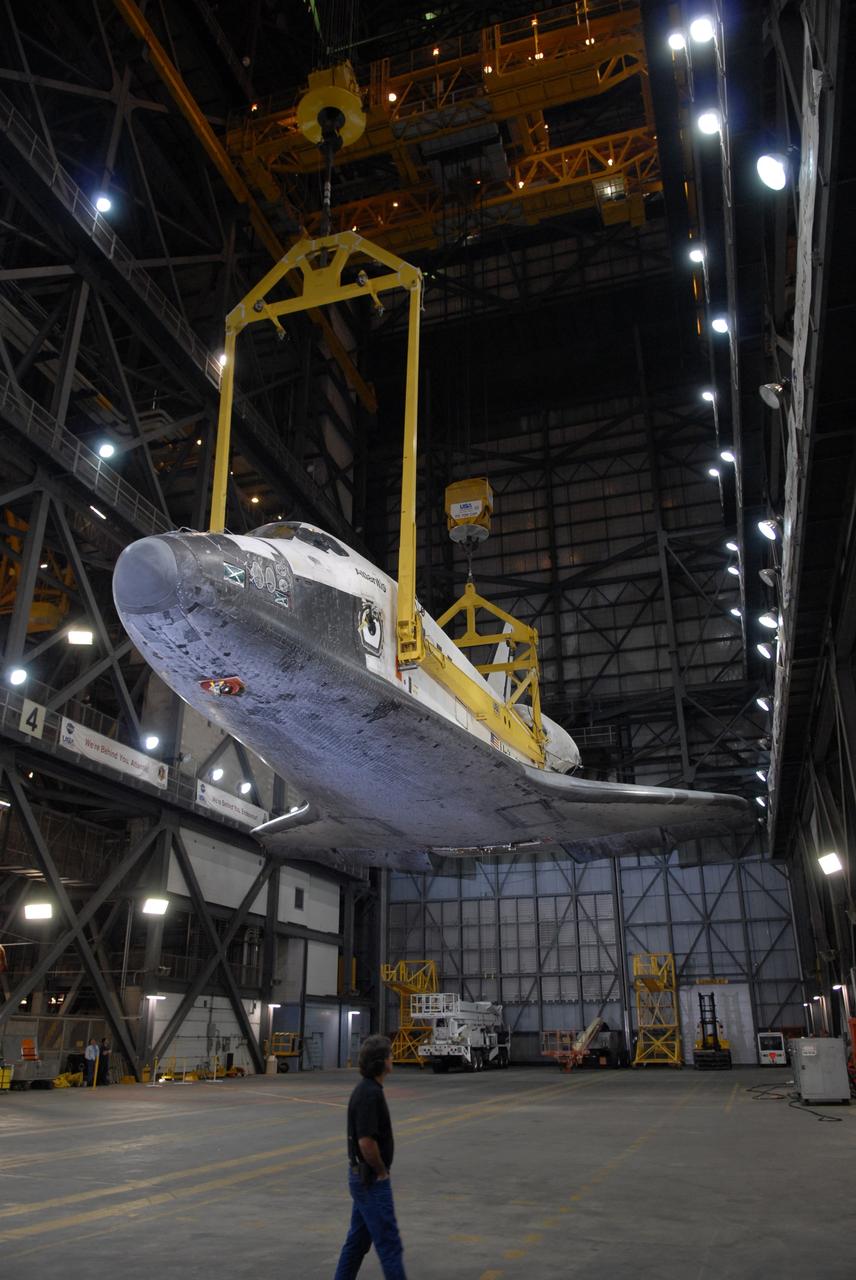
CAPE CANAVERAL, Fla. – In the Vehicle Assembly Building at NASA's Kennedy Space Center in Florida, space shuttle Atlantis is lifted higher above the transfer aisle. The shuttle will be rotated to a vertical position and lifted into High Bay 3 where it will be attached to its external fuel tank and solid rocket boosters on the mobile launcher platform. After additional preparations are made, the shuttle will be rolled out to Launch Pad 39A for a targeted launch on May 12 on the STS-125 Hubble servicing mission. Photo credit: NASA/Cory Huston
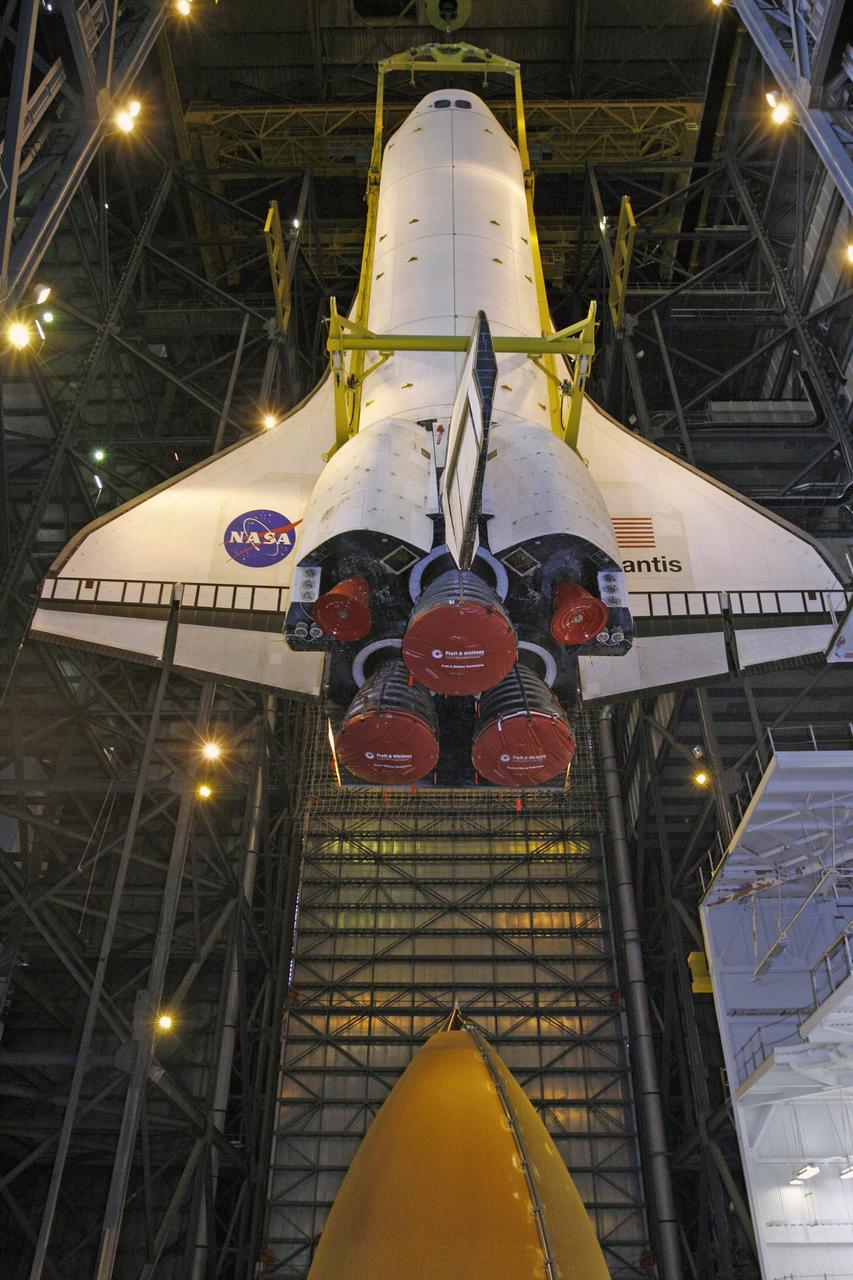
CAPE CANAVERAL, Fla. – In the Vehicle Assembly Building at NASA's Kennedy Space Center, space shuttle Atlantis is lowered toward the external fuel tank in high bay 3. Atlantis will be mated to the tank and twin solid rocket boosters stacked on the mobile launcher platform. After additional preparations are made, the shuttle will be rolled out to Launch Pad 39A to prepare for launch on the STS-125 mission targeted for 1:34 a.m. EDT Oct. 8. Photo credit: NASA/Dimitri Gerondidakis
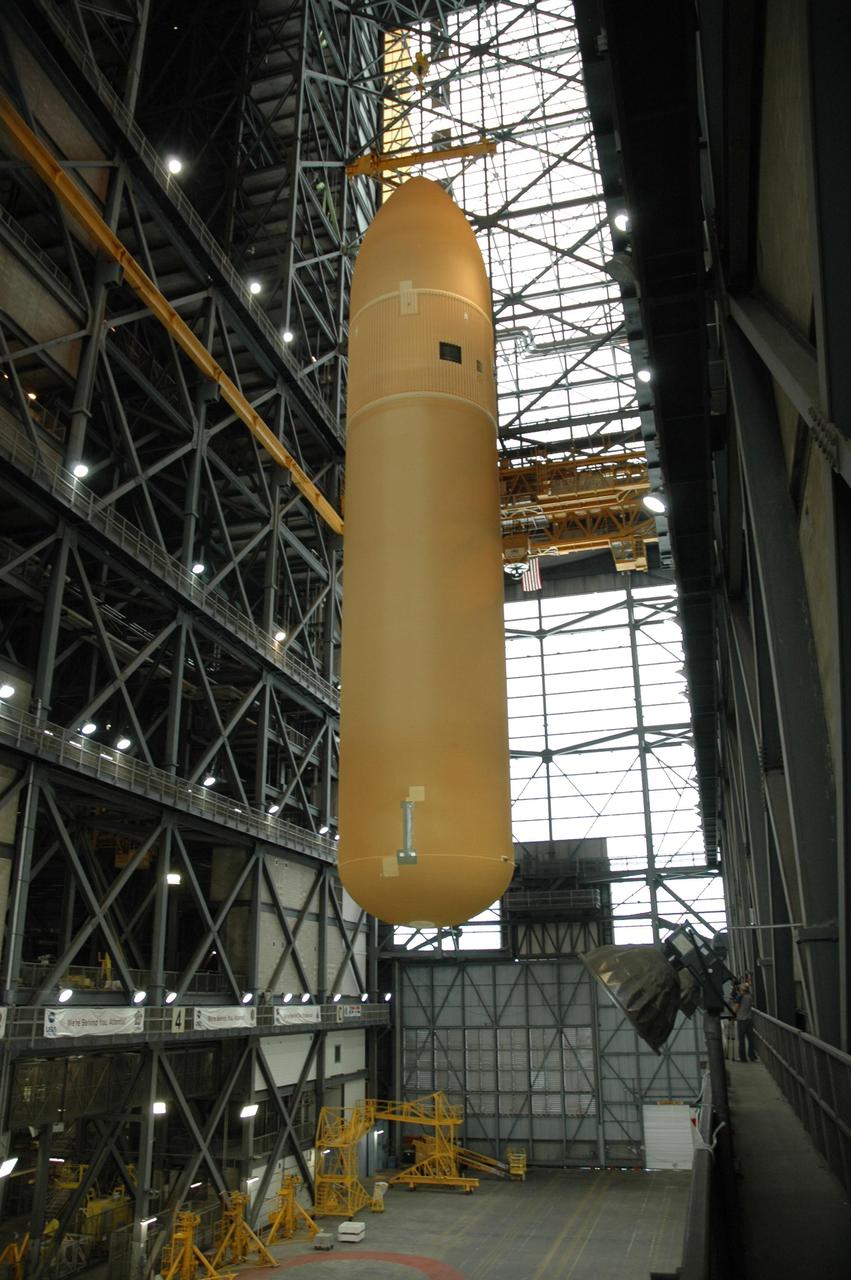
KENNEDY SPACE CENTER, FLA. -- In its vertical position, external tank No. 125 is being lifted high into the upper levels of the Vehicle Assembly Building for transfer to a checkout cell in high bay 4 to allow for processing. The tank will be part of the space shuttle stack for mission STS-122 targeted to launch Dec. 6. Photo credit: NASA/Troy Cryder
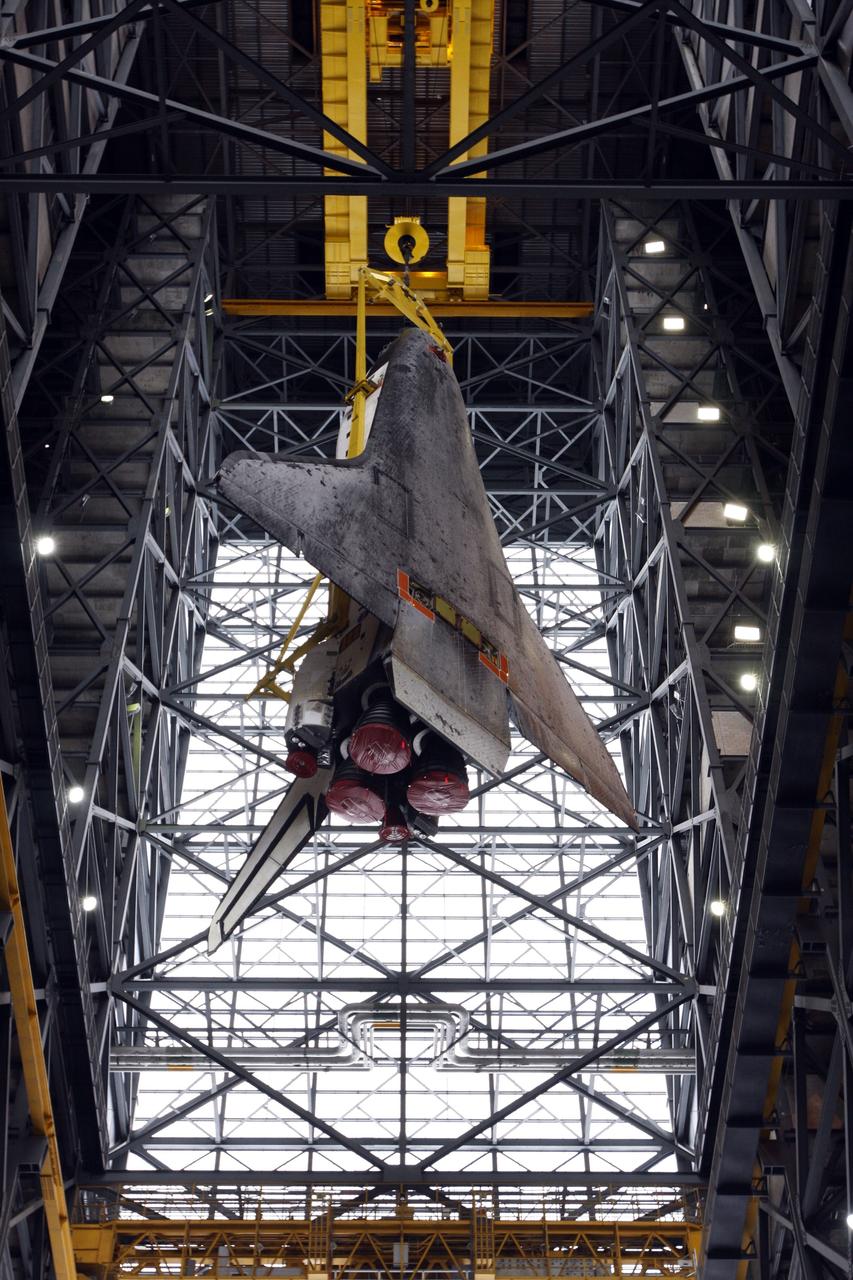
CAPE CANAVERAL, Fla. – A crane lifts space shuttle Atlantis higher into the upper levels of the Vehicle Assembly Building at NASA's Kennedy Space Center. The shuttle will be moved into high bay 3 and lowered for stacking with its external fuel tank and twin solid rocket boosters. After additional preparations are made, the shuttle will be rolled out to Launch Pad 39A to prepare for launch on the STS-125 mission targeted for 1:34 a.m. EDT Oct. 8. Photo credit: NASA/Dimitri Gerondidakis
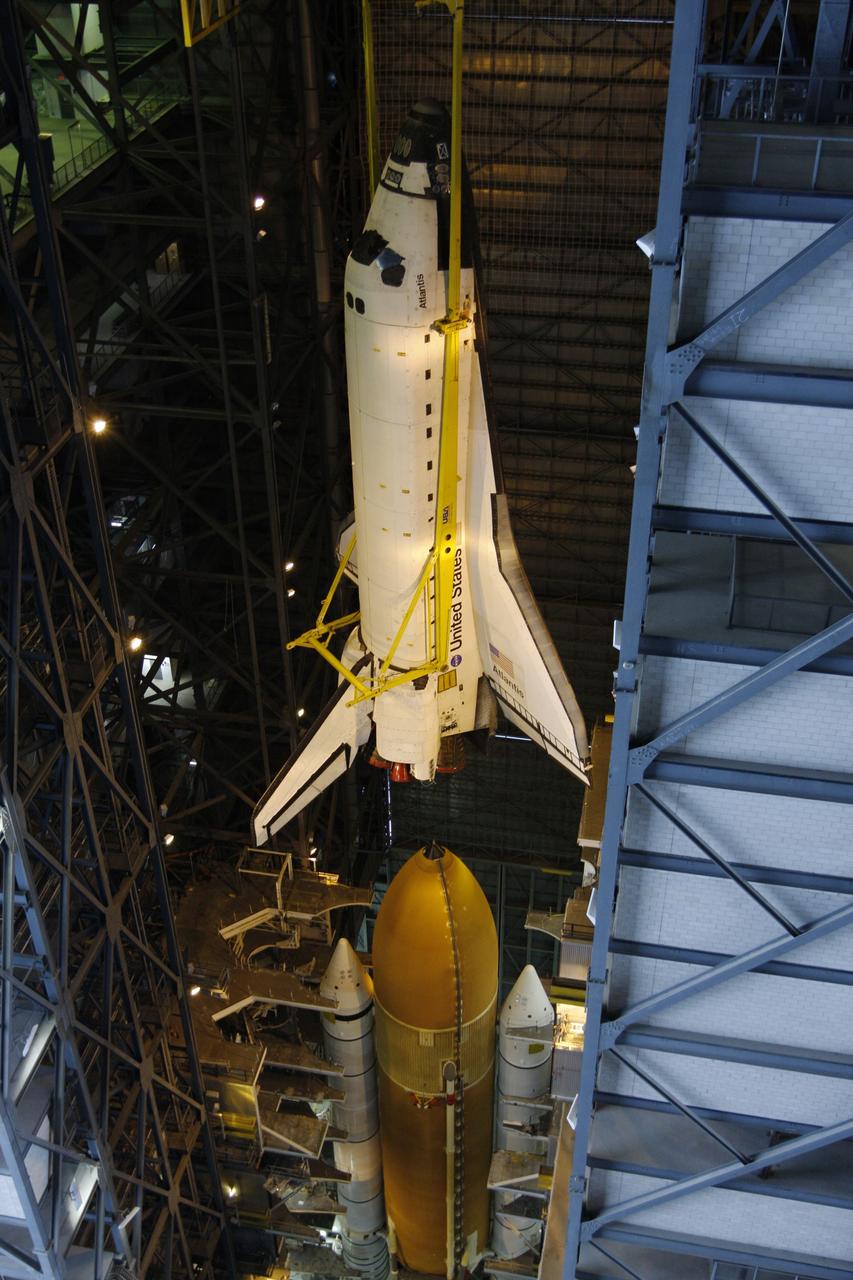
CAPE CANAVERAL, Fla. – In the Vehicle Assembly Building at NASA's Kennedy Space Center, space shuttle Atlantis is lowered toward the external fuel tank and twin solid rocket boosters in high bay 3. Atlantis will be mated to the tank and boosters stacked on the mobile launcher platform. After additional preparations are made, the shuttle will be rolled out to Launch Pad 39A to prepare for launch on the STS-125 mission targeted for 1:34 a.m. EDT Oct. 8. Photo credit: NASA/Dimitri Gerondidakis