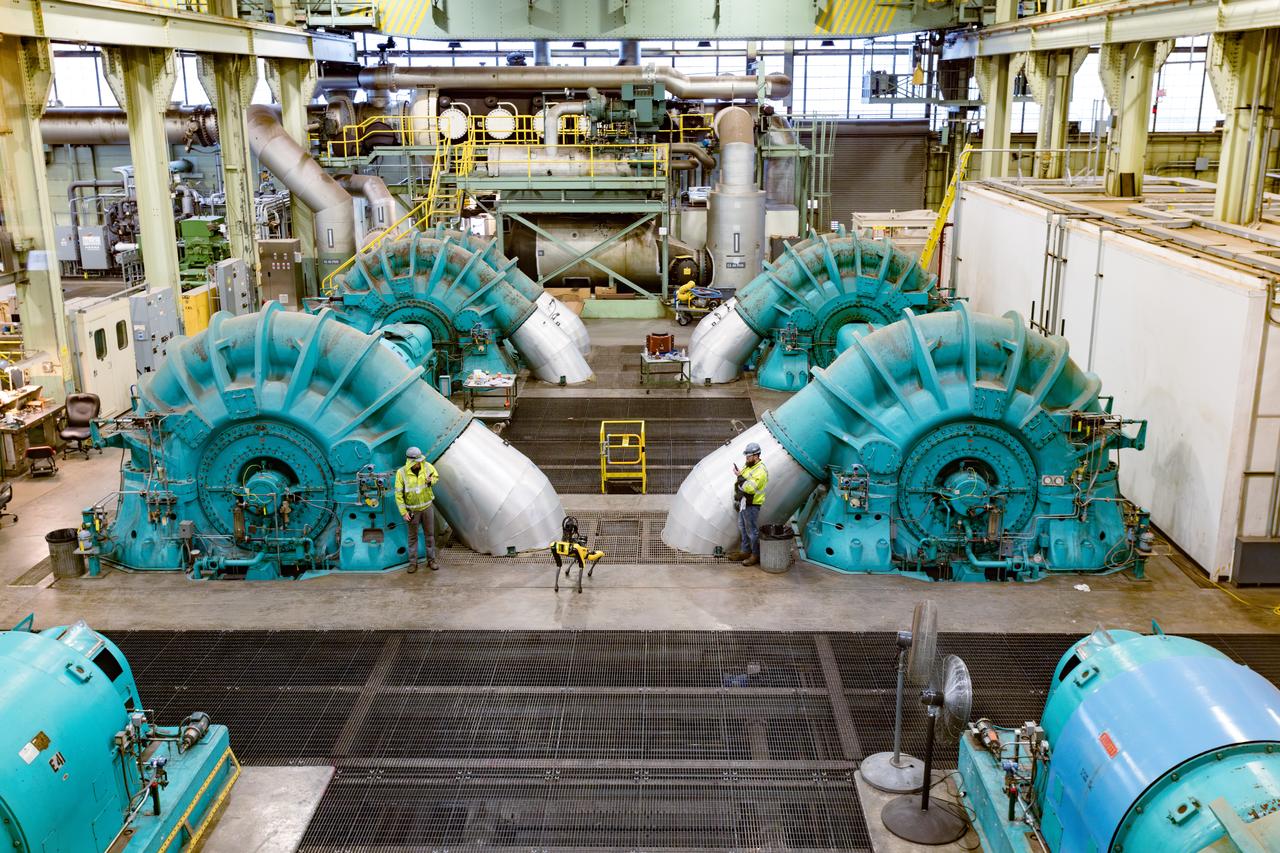
Astro, the robot dog conducts inspections in building 64 to spare the employees ears in this extremely loud environment. The facility is extremely loud even with double hearing protection, so Glenn has come up with an alternative to keep the employees safe. Astro is operated by staff via remote control, is fitted with an infrared camera with 40 times zoom, utilizes thermography and a microphone and can navigate all three levels of the facility.
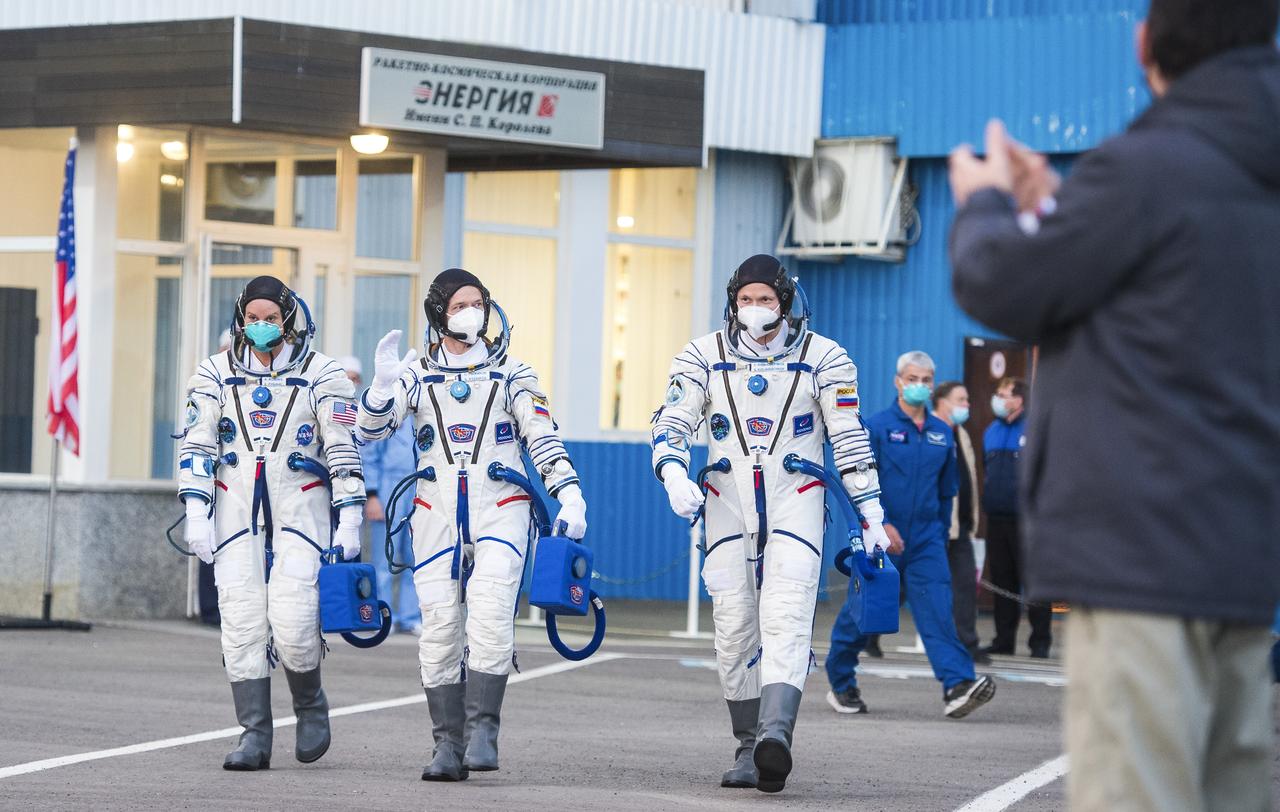
Expedition 64 NASA astronaut Kate Rubins, left, and Russian cosmonauts Sergey Ryzhikov, center, and Sergey Kud-Sverchkov, right, of Roscosmos are seen as they depart Building 254 to head to their launch onboard the Soyuz MS-17 spacecraft, Wednesday, Oct. 14, 2020, at the Baikonur Cosmodrome in Kazakhstan. The trio launched at 1:45 a.m. EDT to begin a six-month mission aboard the International Space Station. Photo Credit: (NASA/GCTC/Andrey Shelepin)
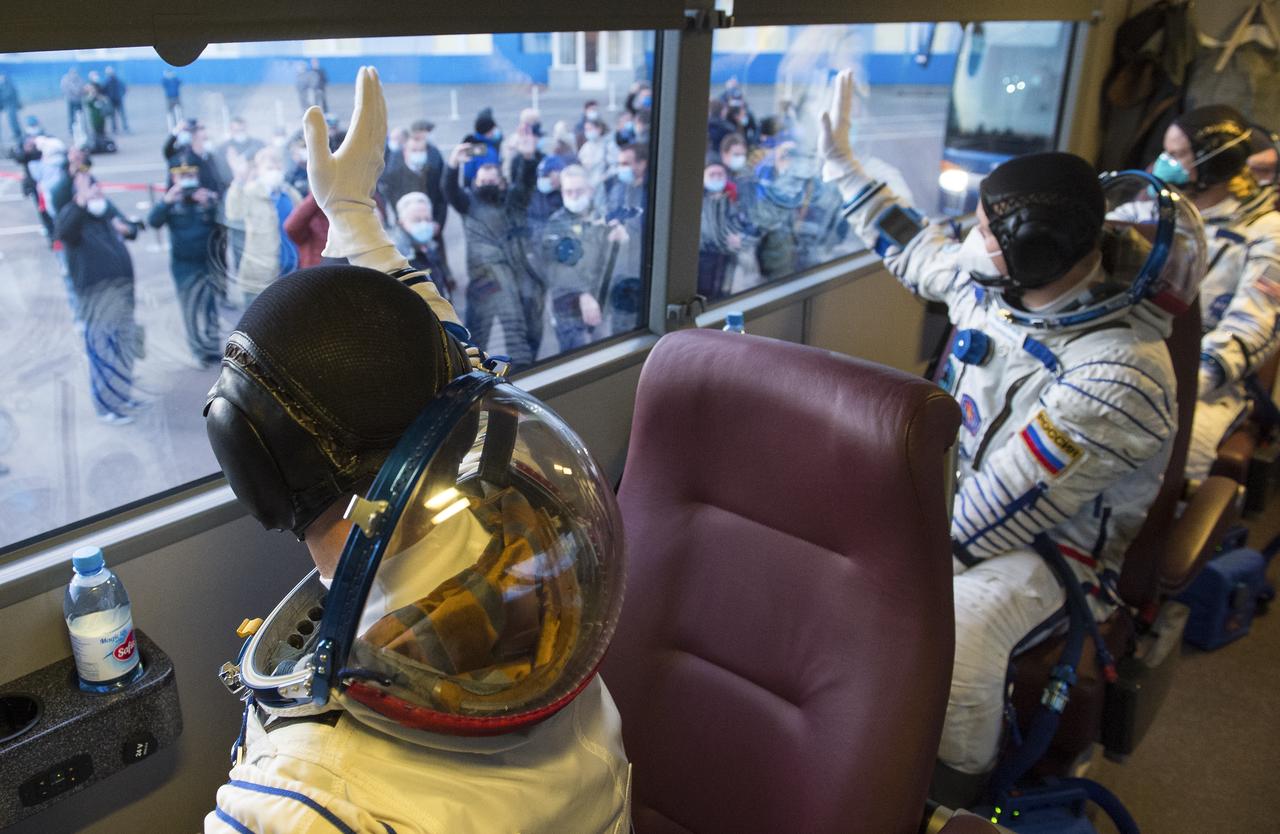
Expedition 64 Russian cosmonauts Sergey Ryzhikov, left, and Sergey Kud-Sverchkov, center, of Roscosmos and NASA astronaut Kate Rubins, right, wave as they depart Building 254 to head to their launch onboard the Soyuz MS-17 spacecraft, Wednesday, Oct. 14, 2020, at the Baikonur Cosmodrome in Kazakhstan. The trio launched at 1:45 a.m. EDT to begin a six-month mission aboard the International Space Station. Photo Credit: (NASA/GCTC/Andrey Shelepin)
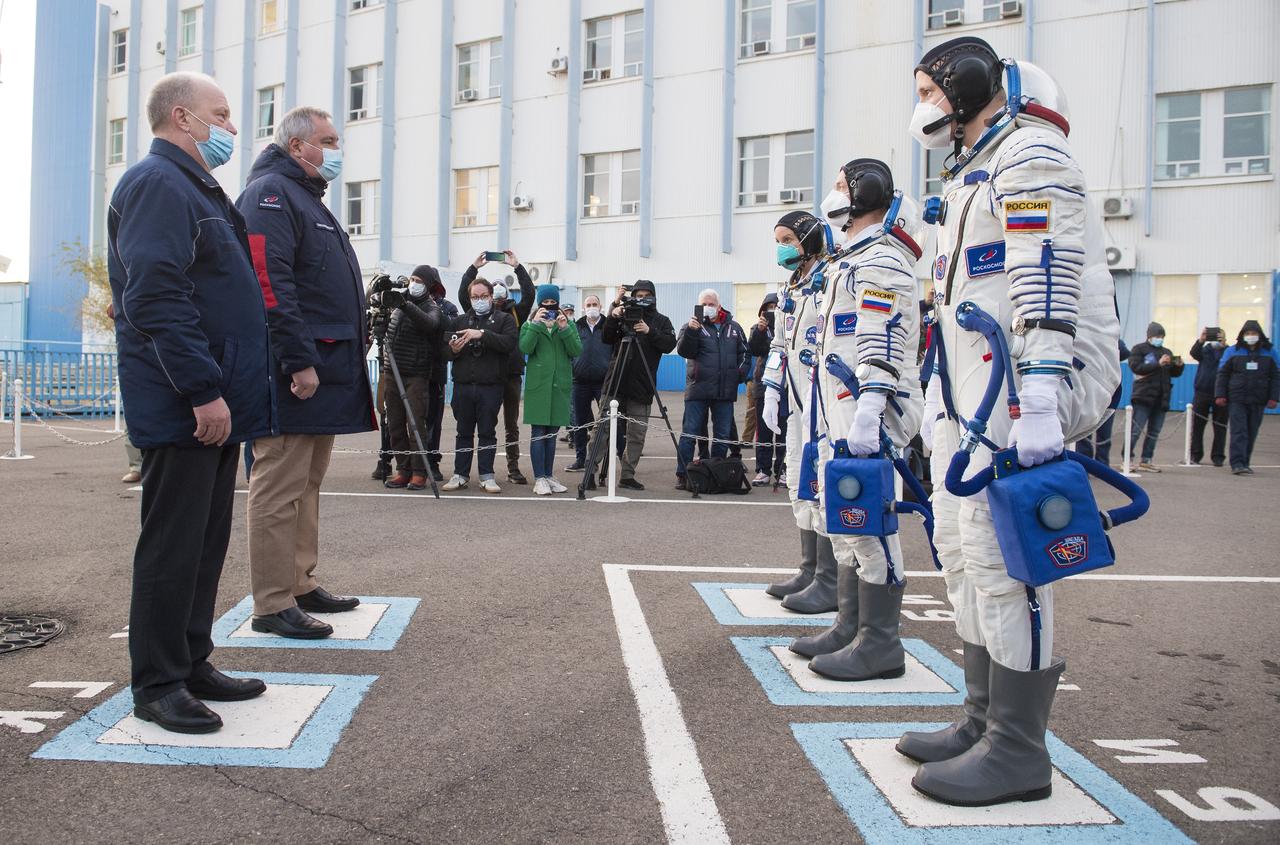
Expedition 64 NASA astronaut Kate Rubins, left, and Russian cosmonauts Sergey Ryzhikov, center, and Sergey Kud-Sverchkov, right, of Roscosmos report to Roscosmos leadership as they depart Building 254 to head to their launch onboard the Soyuz MS-17 spacecraft, Wednesday, Oct. 14, 2020, at the Baikonur Cosmodrome in Kazakhstan. The trio launched at 1:45 a.m. EDT to begin a six-month mission aboard the International Space Station. Photo Credit: (NASA/GCTC/Andrey Shelepin)
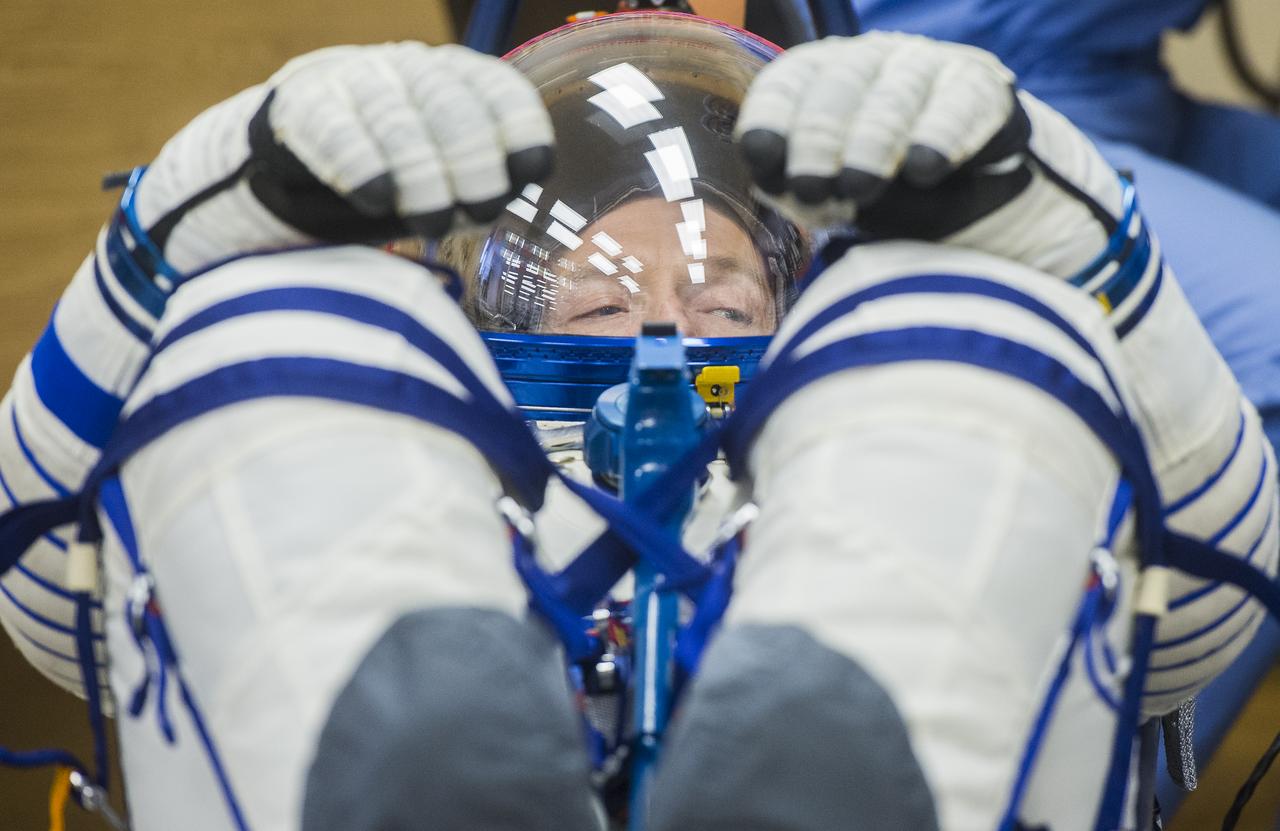
Expedition 64 Russian cosmonaut Sergey Ryzhikov of Roscosmos is seen while having his Sokol suit pressure checked during the Soyuz MS-17 spacecraft fit check, Monday, Sept. 28, 2020, at the Baikonur Cosmodrome in Kazakhstan. Ryzhikov, NASA astronaut Kate Rubins, and Russian cosmonaut Sergey Kud-Sverchkov of Roscosmos are preparing for launch to the International Space Station in their Soyuz MS-17 spacecraft from the Baikonur Cosmodrome in Kazakhstan on October 14, Baikonur time. Photo Credit: (NASA/GCTC/Andrey Shelepin)
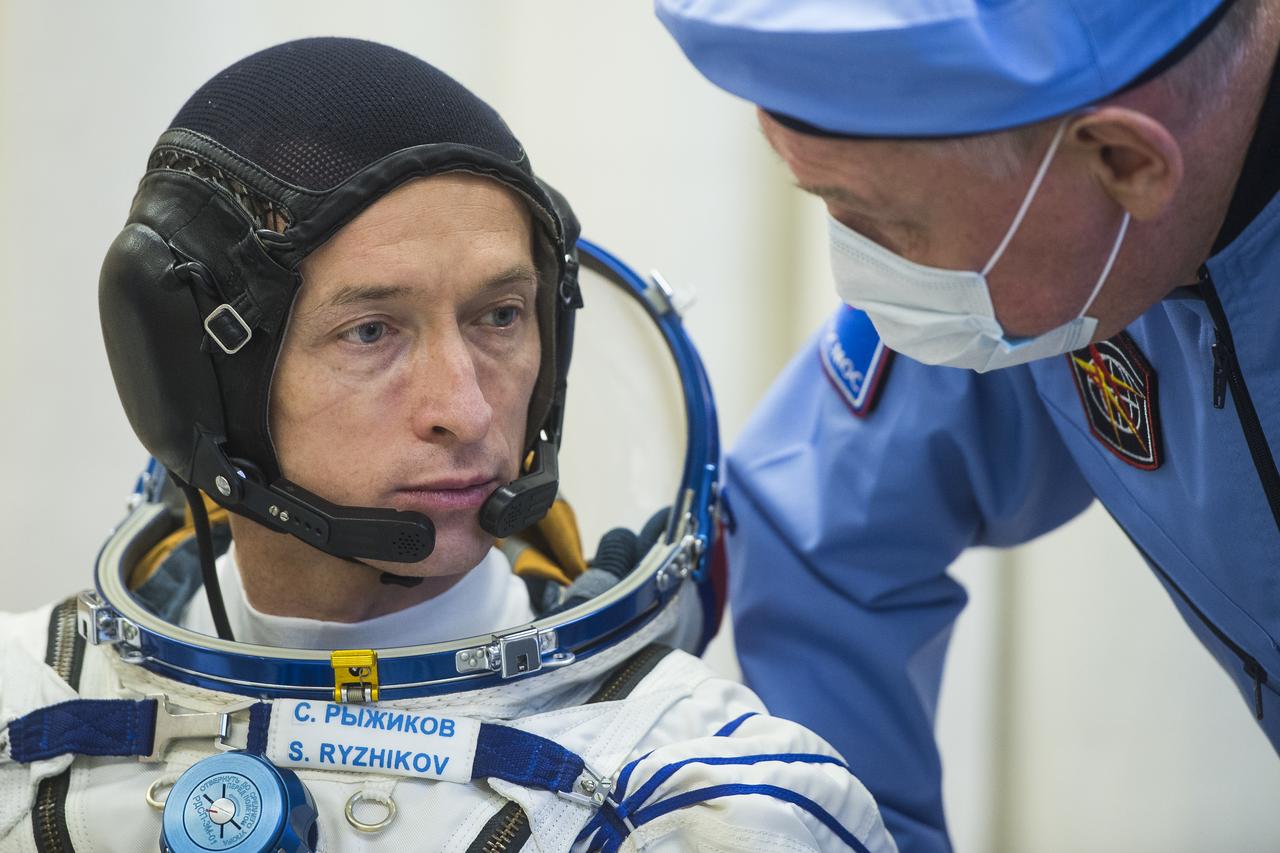
Expedition 64 Russian cosmonaut Sergey Ryzhikov of Roscosmos is seen after donning his Sokol suit during the Soyuz MS-17 spacecraft fit check with fellow Russian cosmonaut Sergey Kud-Sverchkov and NASA astronaut Kate Rubins, Monday, Sept. 28, 2020, at the Baikonur Cosmodrome in Kazakhstan. The trio are preparing for launch to the International Space Station in their Soyuz MS-17 spacecraft from the Baikonur Cosmodrome in Kazakhstan on October 14, Baikonur time. Photo Credit: (NASA/GCTC/Andrey Shelepin)
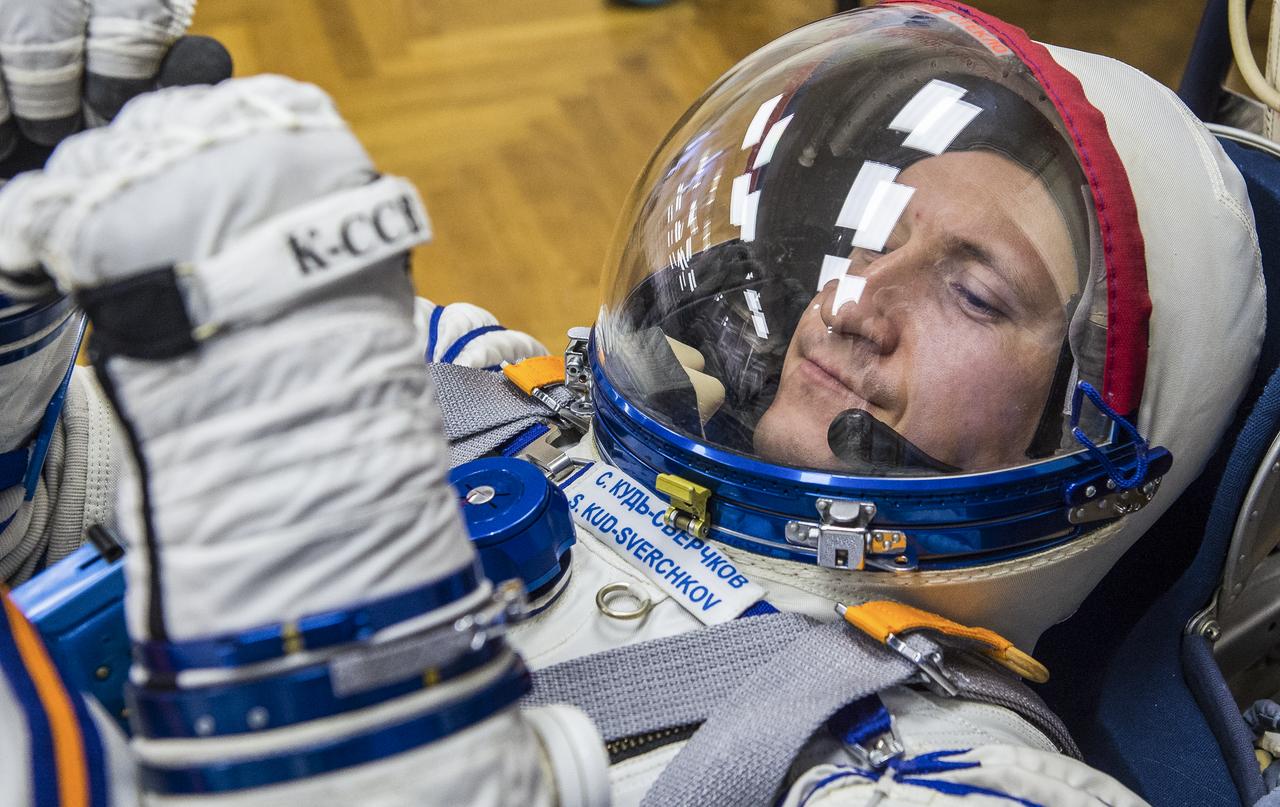
Expedition 64 Russian cosmonaut Sergey Kud-Sverchkov of Roscosmos is seen while having his Sokol suit pressure checked during the Soyuz MS-17 spacecraft fit check, Monday, Sept. 28, 2020, at the Baikonur Cosmodrome in Kazakhstan. Kud-Sverchkov, NASA astronaut Kate Rubins, and Russian cosmonaut Sergey Ryzhikov of Roscosmos are preparing for launch to the International Space Station in their Soyuz MS-17 spacecraft from the Baikonur Cosmodrome in Kazakhstan on October 14, Baikonur time. Photo Credit: (NASA/GCTC/Andrey Shelepin)
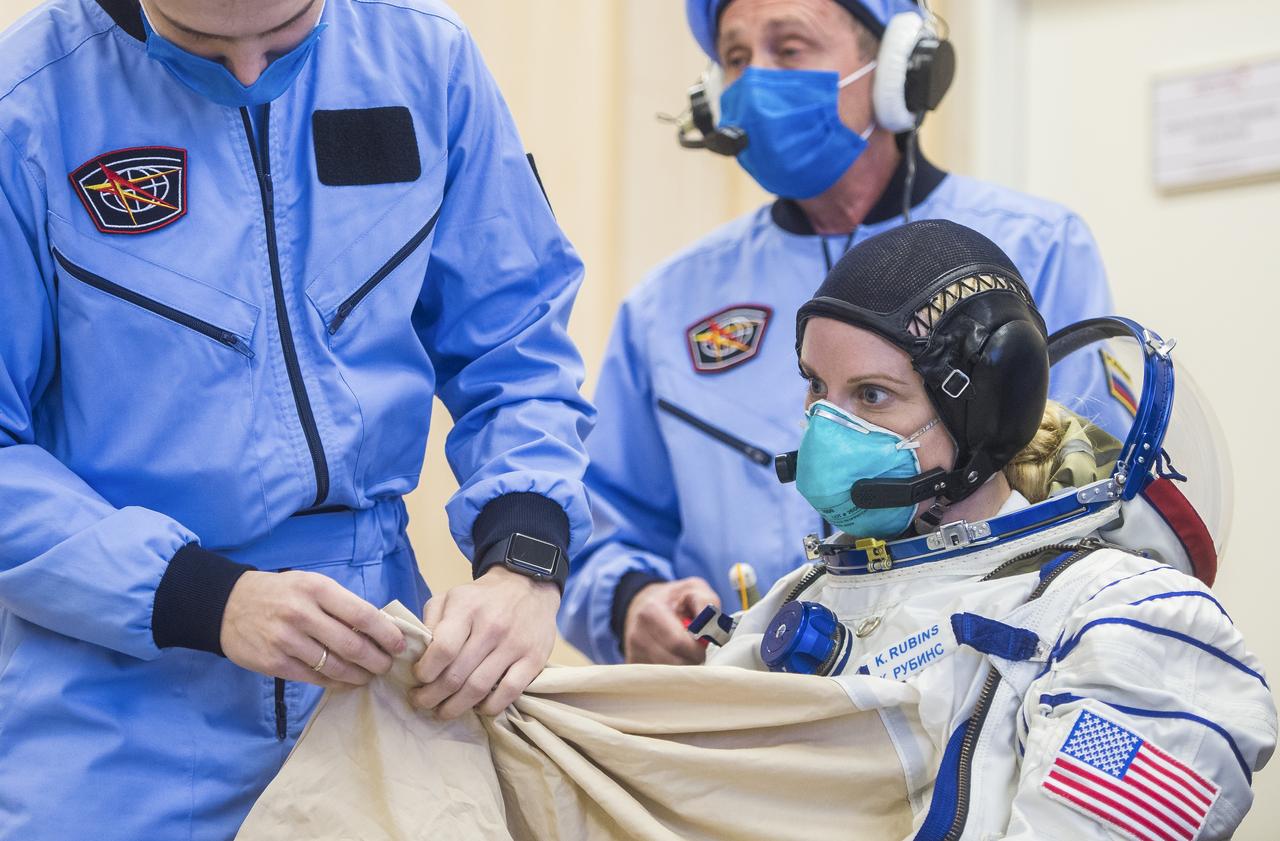
Expedition 64 NASA astronaut Kate Rubins dons her Sokol suit during the Soyuz MS-17 spacecraft fit check with Russian cosmonauts Sergey Ryzhikov and Sergey Kud-Sverchkov of Roscosmos, Monday, Sept. 28, 2020, at the Baikonur Cosmodrome in Kazakhstan. The trio are preparing for launch to the International Space Station in their Soyuz MS-17 spacecraft from the Baikonur Cosmodrome in Kazakhstan on October 14, Baikonur time. Photo Credit: (NASA/GCTC/Andrey Shelepin)
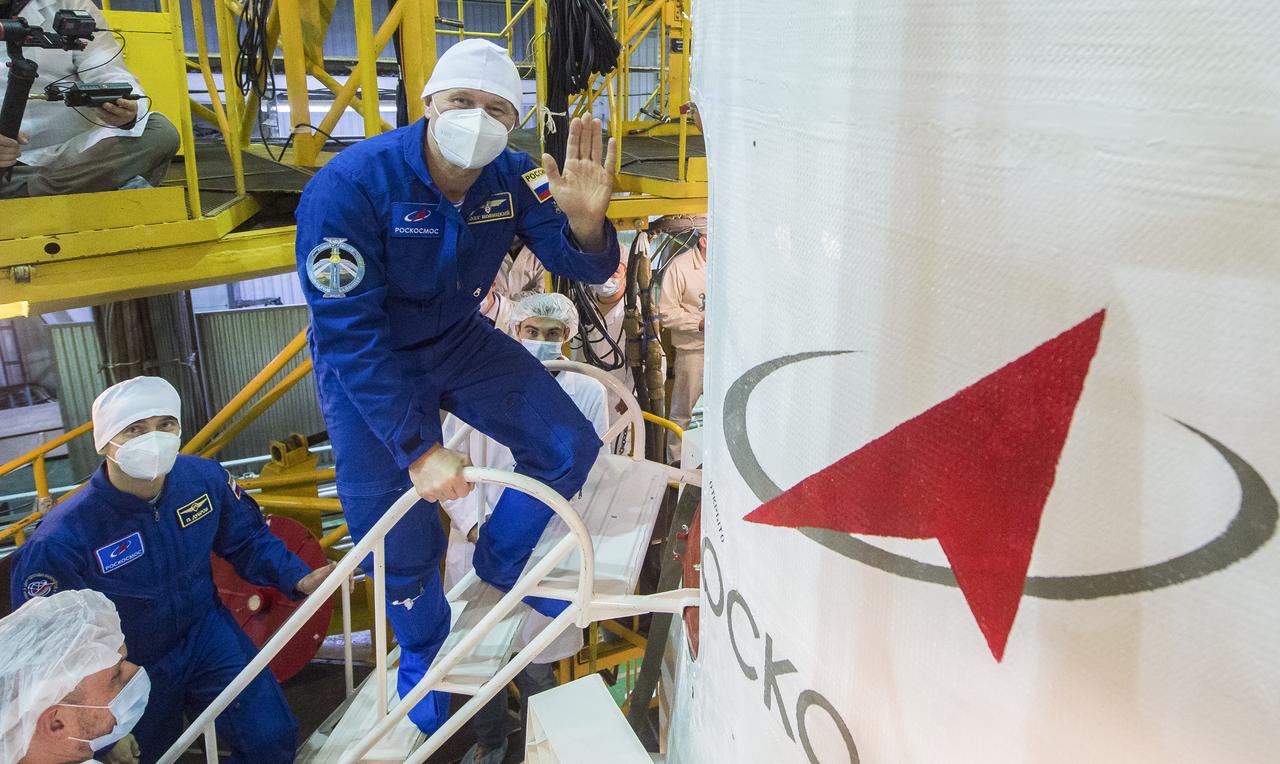
Expedition 64 backup crew member Oleg Novitskiy of Roscosmos waves as he climbs inside the Soyuz MS-17 spacecraft during the final fit check, Wednesday, Oct. 7, 2020, at the Baikonur Cosmodrome in Kazakhstan. Expedition 64 Soyuz commander Sergey Ryzhikov of Roscosmos, flight engineer Sergey Kud-Sverchkov of Roscosmos, and flight engineer Kate Rubins of NASA, are scheduled to launch to the International Space Station aboard the Soyuz MS-17 spacecraft on October 14. Photo Credit: (NASA/GCTC/Andrey Shelepin)
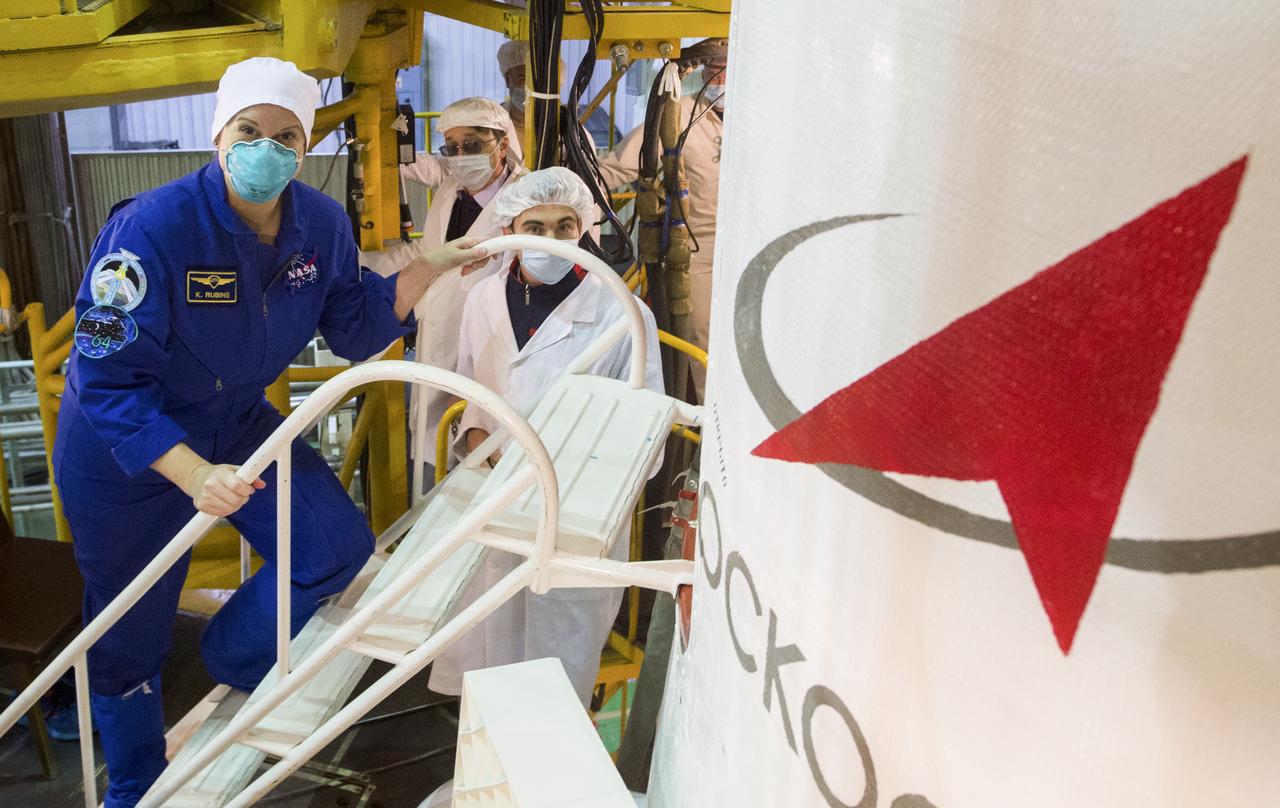
Expedition 64 NASA astronaut Kate Rubins is seen as she climbs inside the Soyuz MS-17 spacecraft during the final fit check, Wednesday, Oct. 7, 2020, at the Baikonur Cosmodrome in Kazakhstan. Rubins and Russian cosmonauts Sergey Ryzhikov and Sergey Kud-Sverchkov of Roscosmos, are scheduled to launch to the International Space Station aboard the Soyuz MS-17 spacecraft on October 14. Photo Credit: (NASA/GCTC/Andrey Shelepin)
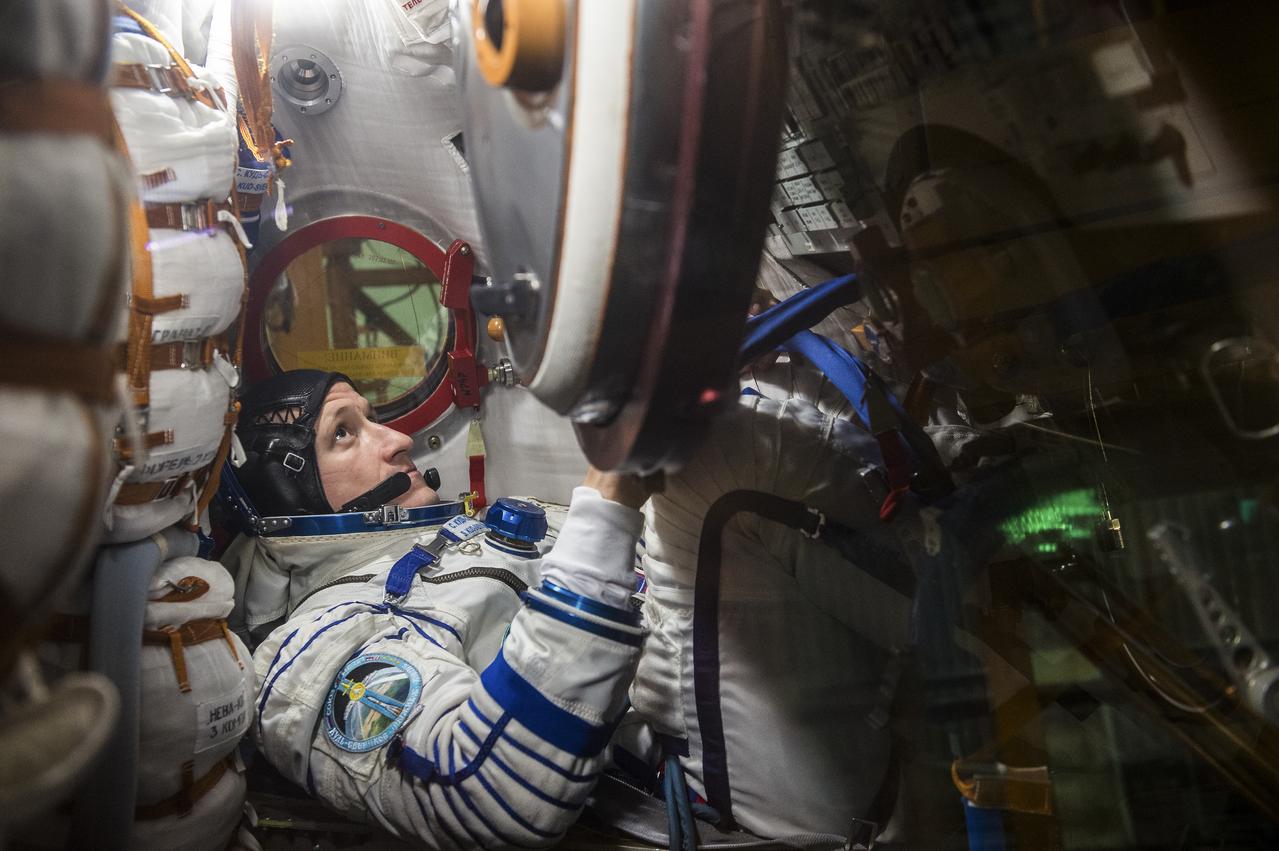
Expedition 64 Russian cosmonaut Sergey Kud-Sverchkov of Roscosmos is seen inside the Soyuz MS-17 spacecraft during the fit check to with fellow Russian cosmonaut Sergey Ryzhikov and NASA astronaut Kate Rubins, Monday, Sept. 28, 2020, at the Baikonur Cosmodrome in Kazakhstan. The trio are preparing for launch to the International Space Station in their Soyuz MS-17 spacecraft from the Baikonur Cosmodrome in Kazakhstan on October 14, Baikonur time. Photo Credit: (NASA/GCTC/Andrey Shelepin)
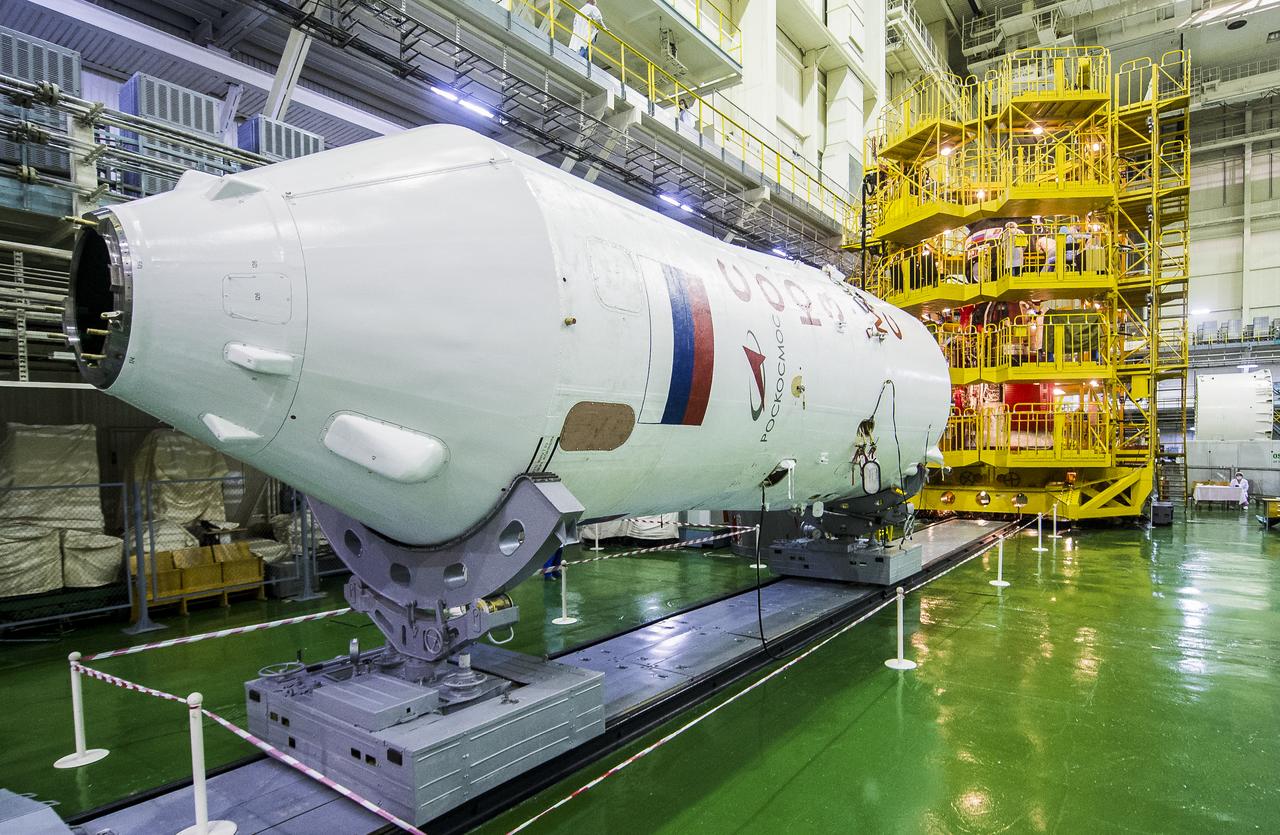
The Soyuz fairing is seen laying horizontal in front of the Soyuz MS-17 spacecraft as Expedition 64 Russian cosmonauts Sergey Ryzhikov and Sergey Kud-Sverchkov of Roscosmos, and NASA astronaut Kate Rubins perform their fit checks, Monday, Sept. 28, 2020, at the Baikonur Cosmodrome in Kazakhstan. The trio are preparing for launch to the International Space Station in their Soyuz MS-17 spacecraft from the Baikonur Cosmodrome in Kazakhstan on October 14, Baikonur time. Photo Credit: (NASA/GCTC/Andrey Shelepin)
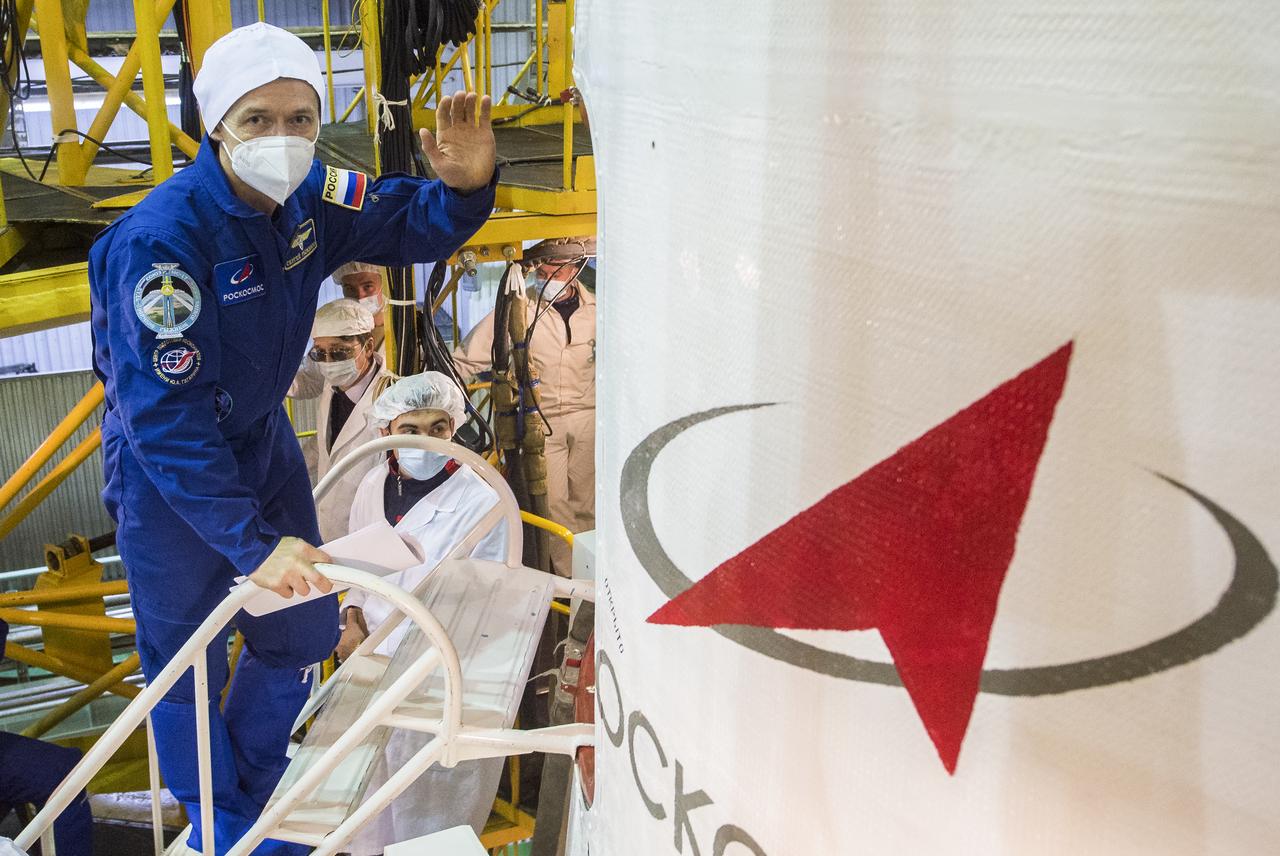
Expedition 64 Russian cosmonaut Sergey Ryzhikov of Roscosmos waves as he climbs inside the Soyuz MS-17 spacecraft during the final fit check, Wednesday, Oct. 7, 2020, at the Baikonur Cosmodrome in Kazakhstan. Ryzhikov, Russian cosmonaut Sergey Kud-Sverchkov of Roscosmos and NASA astronaut Kate Rubins, are scheduled to launch to the International Space Station aboard the Soyuz MS-17 spacecraft on October 14. Photo Credit: (NASA/GCTC/Andrey Shelepin)
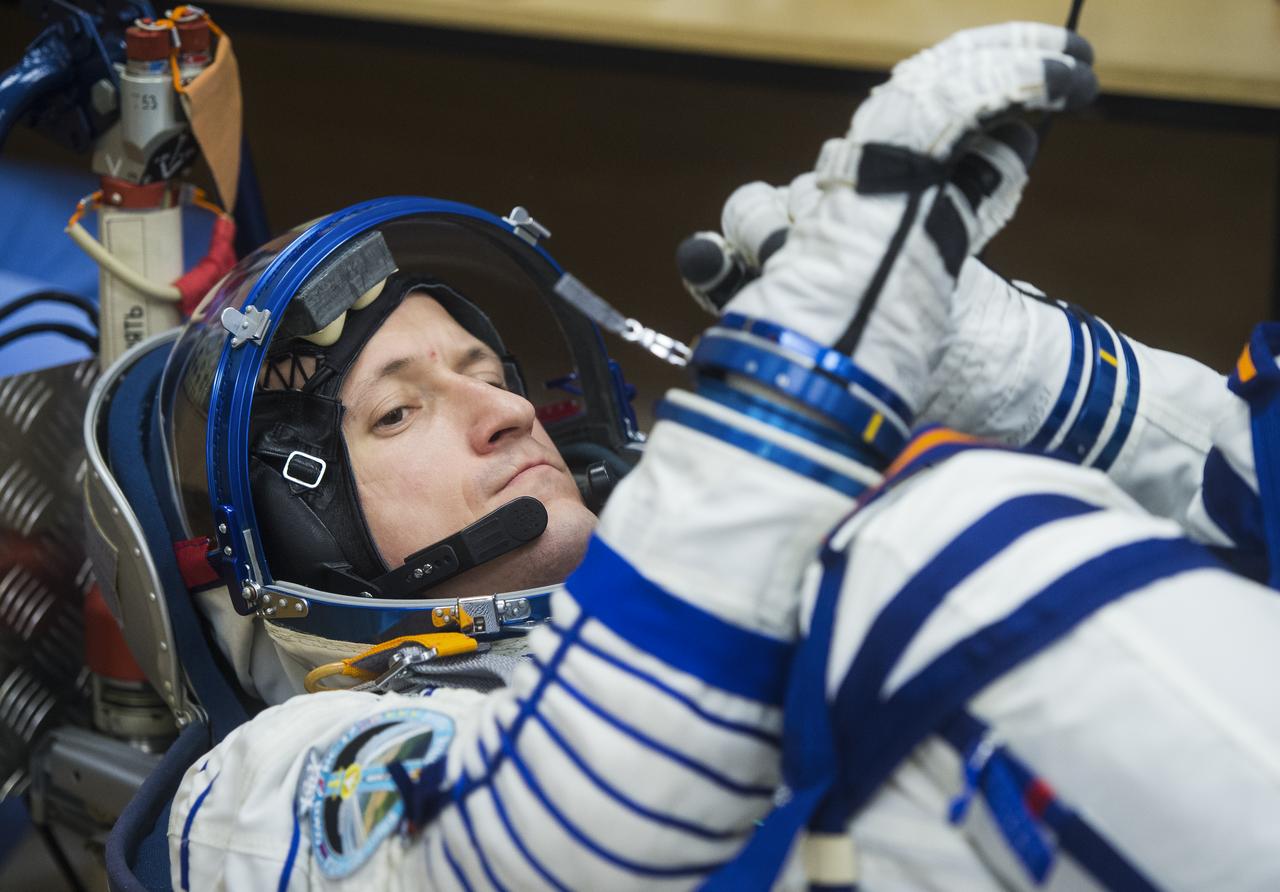
Expedition 64 Russian cosmonaut Sergey Kud-Sverchkov of Roscosmos is seen while having his Sokol suit pressure checked during the Soyuz MS-17 spacecraft fit check, Monday, Sept. 28, 2020, at the Baikonur Cosmodrome in Kazakhstan. Kud-Sverchkov, NASA astronaut Kate Rubins, and Russian cosmonaut Sergey Ryzhikov of Roscosmos are preparing for launch to the International Space Station in their Soyuz MS-17 spacecraft from the Baikonur Cosmodrome in Kazakhstan on October 14, Baikonur time. Photo Credit: (NASA/GCTC/Andrey Shelepin)
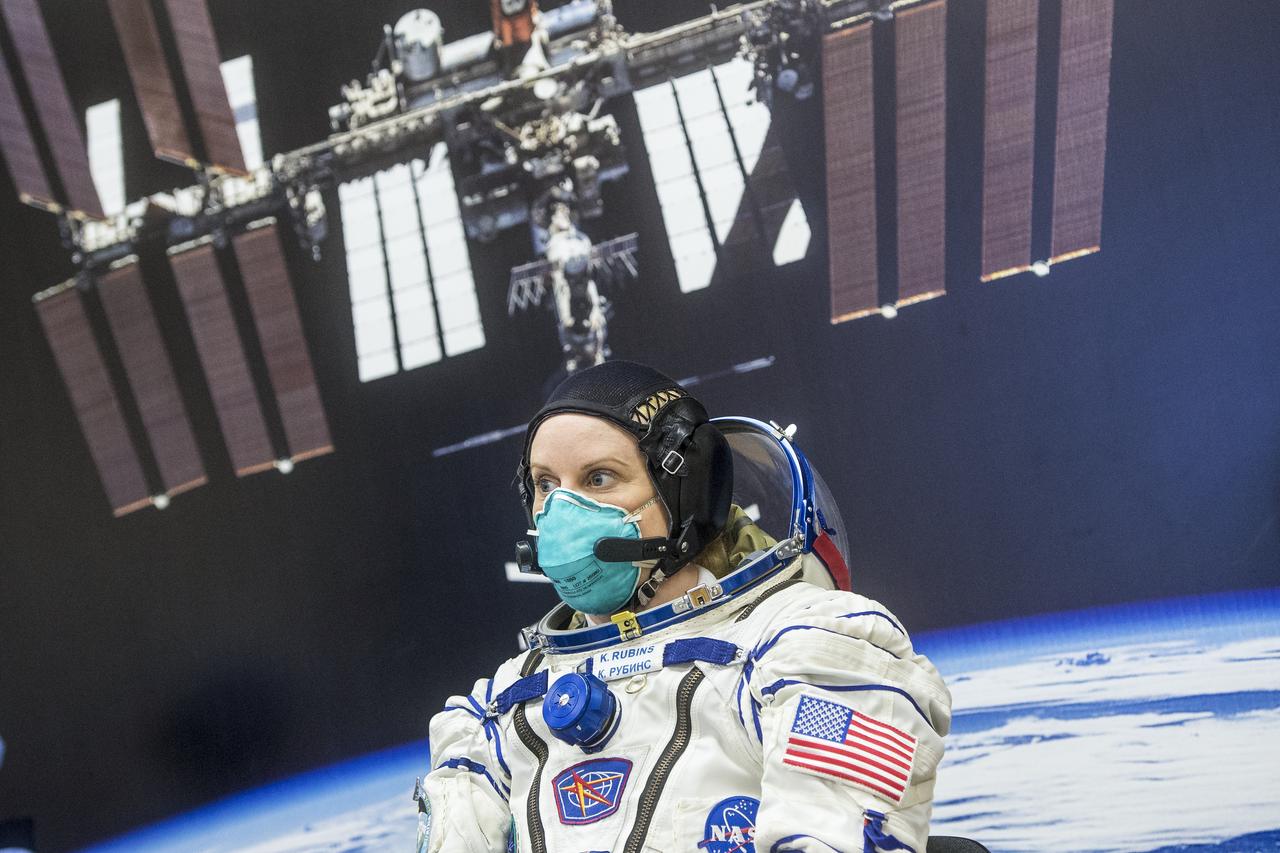
Expedition 64 NASA astronaut Kate Rubins is seen while waiting to have her Sokol suit pressure checked during the Soyuz MS-17 spacecraft fit check, Monday, Sept. 28, 2020, at the Baikonur Cosmodrome in Kazakhstan. Rubins, and Russian cosmonauts Sergey Ryzhikov and Sergey Kud-Sverchkov of Roscosmos are preparing for launch to the International Space Station in their Soyuz MS-17 spacecraft from the Baikonur Cosmodrome in Kazakhstan on October 14, Baikonur time. Photo Credit: (NASA/GCTC/Andrey Shelepin)
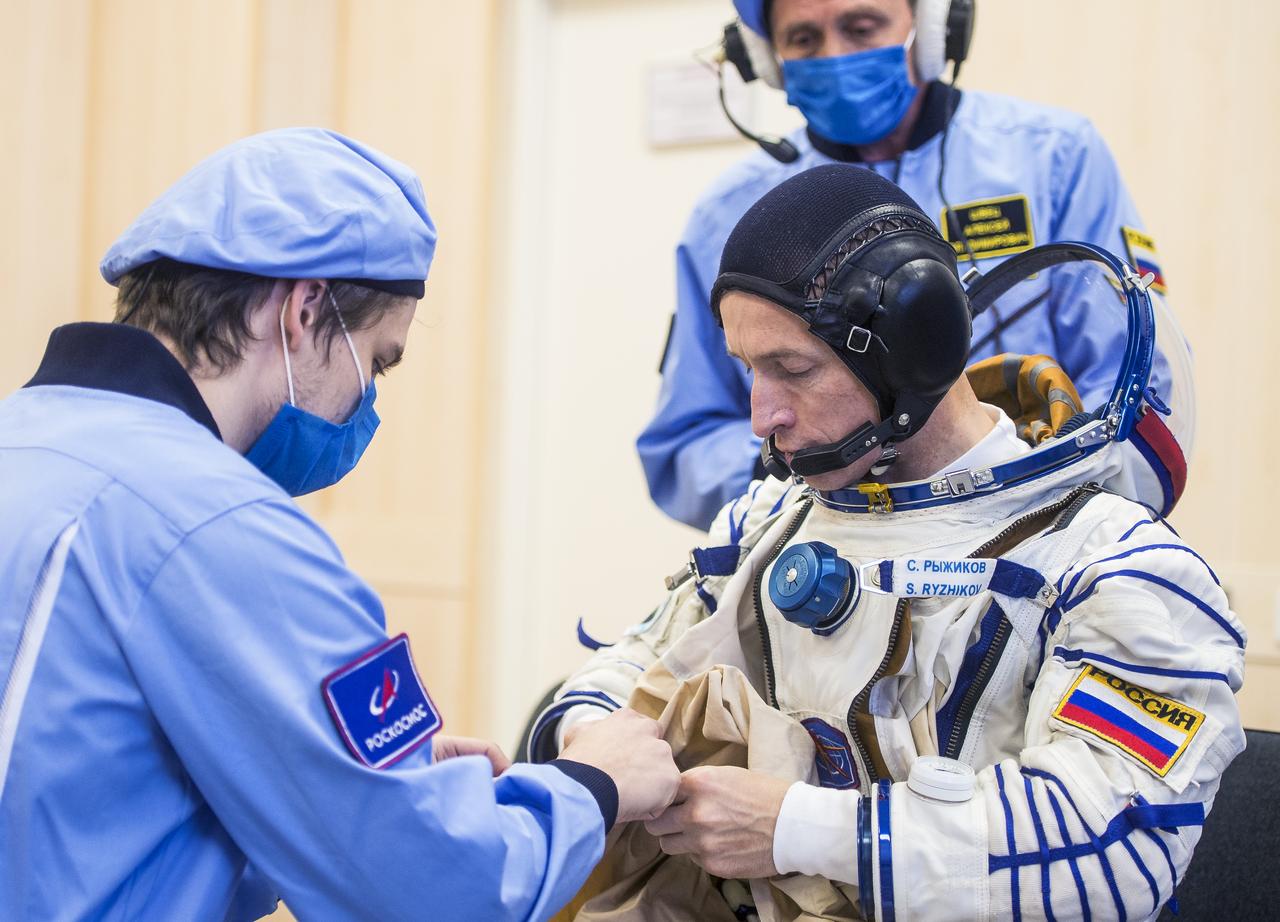
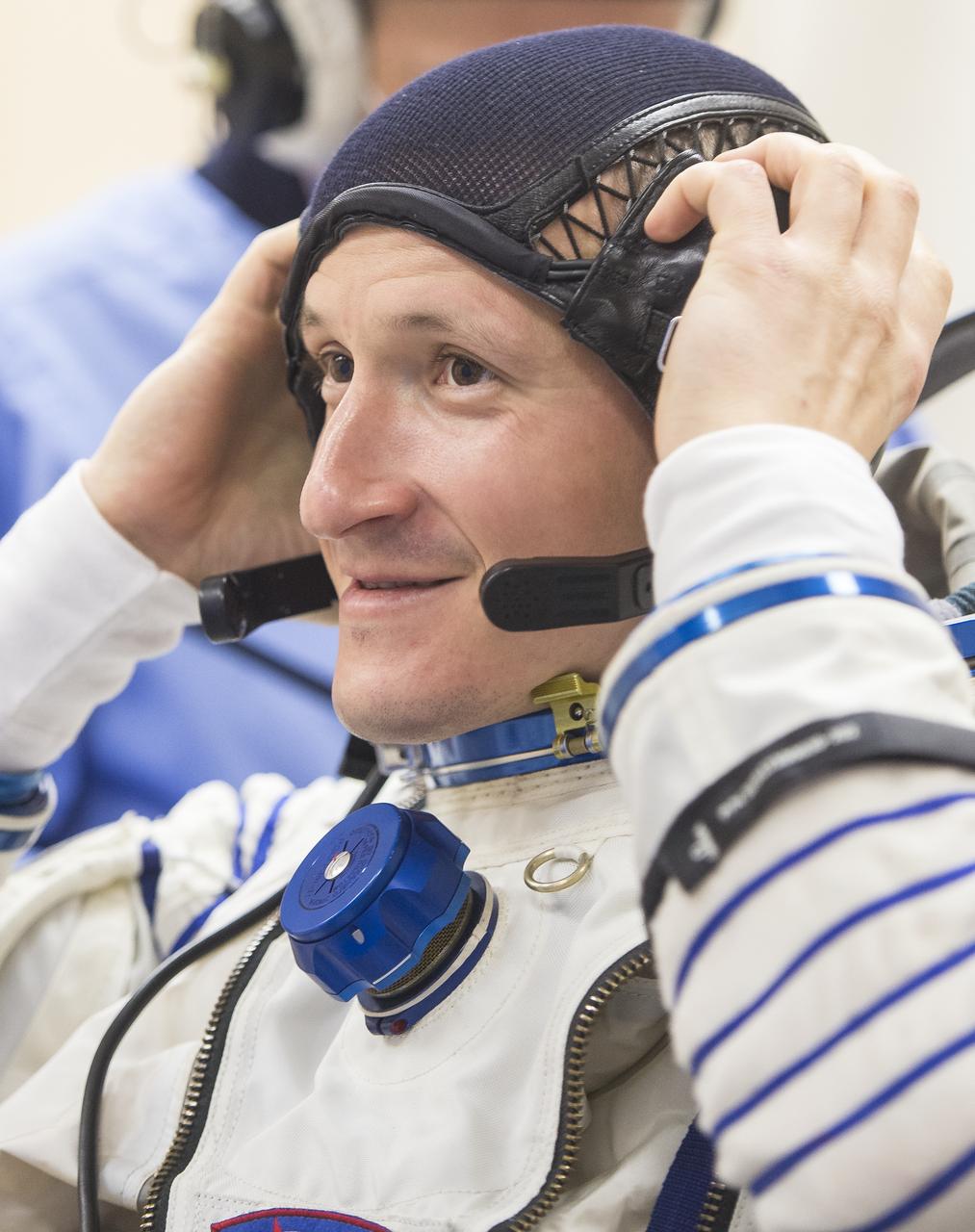
Expedition 64 Russian cosmonaut Sergey Ryzhikov of Roscosmos dons his Sokol suit during the Soyuz MS-17 spacecraft fit check with fellow Russian cosmonaut Sergey Kud-Sverchkov and NASA astronaut Kate Rubins, Monday, Sept. 28, 2020, at the Baikonur Cosmodrome in Kazakhstan. The trio are preparing for launch to the International Space Station in their Soyuz MS-17 spacecraft from the Baikonur Cosmodrome in Kazakhstan on October 14, Baikonur time. Photo Credit: (NASA/GCTC/Andrey Shelepin)
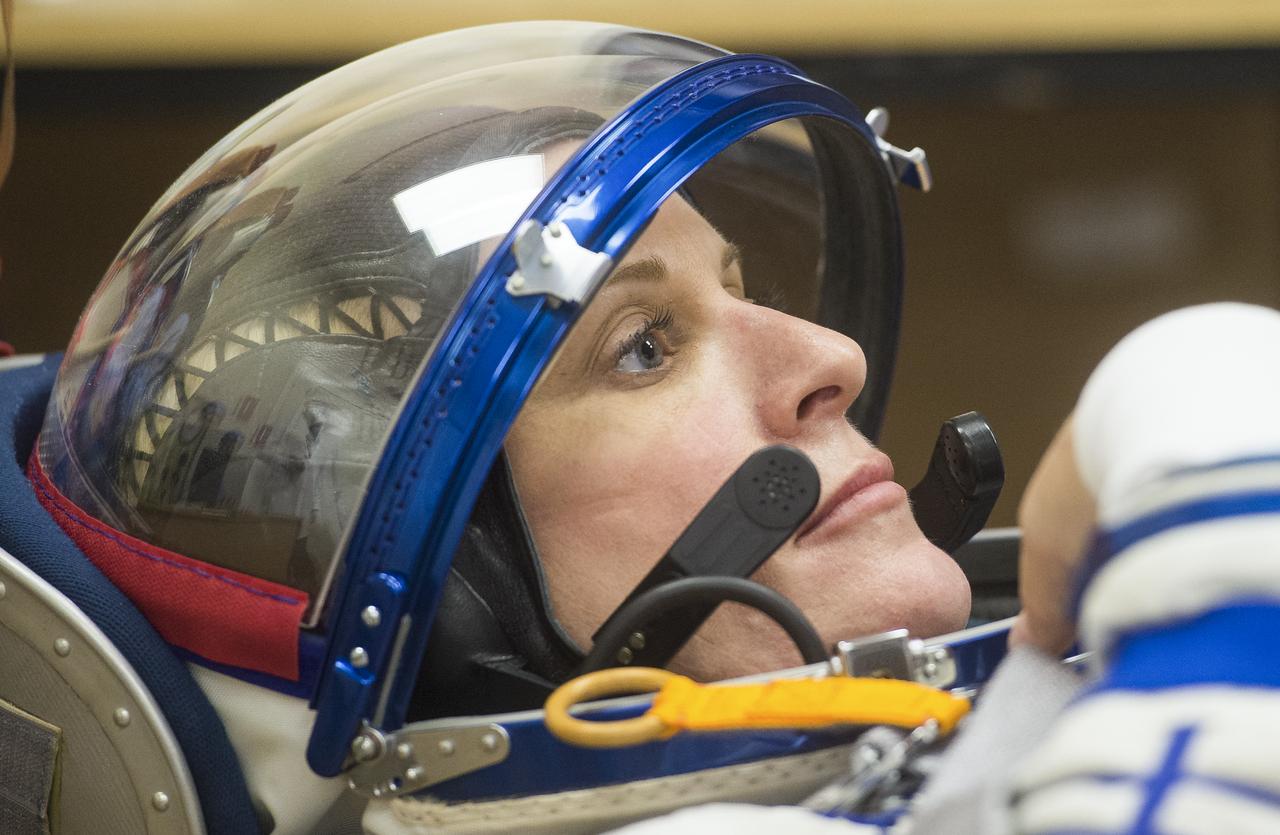
Expedition 64 NASA astronaut Kate Rubins is seen while having her Sokol suit pressure checked during the Soyuz MS-17 spacecraft fit check, Monday, Sept. 28, 2020, at the Baikonur Cosmodrome in Kazakhstan. Rubins, and Russian cosmonauts Sergey Ryzhikov and Sergey Kud-Sverchkov of Roscosmos are preparing for launch to the International Space Station in their Soyuz MS-17 spacecraft from the Baikonur Cosmodrome in Kazakhstan on October 14, Baikonur time. Photo Credit: (NASA/GCTC/Andrey Shelepin)
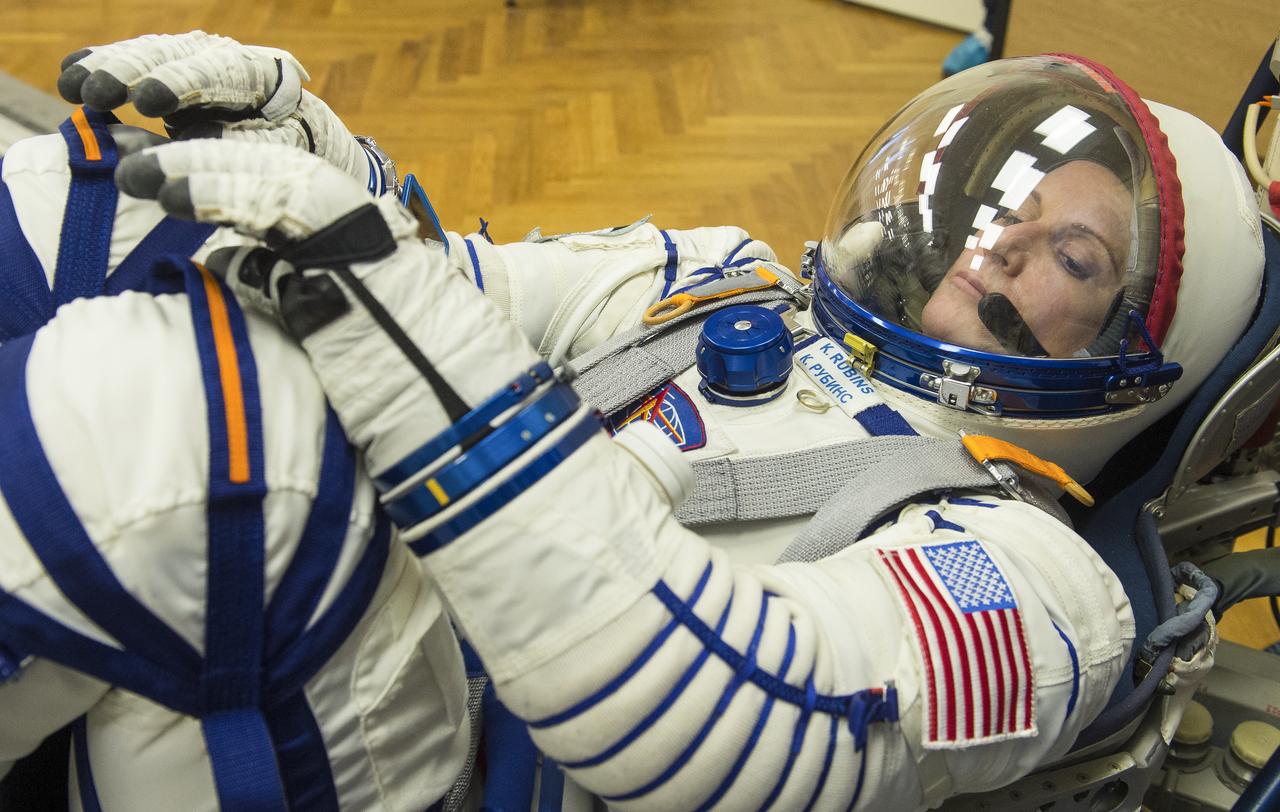
Expedition 64 NASA astronaut Kate Rubins is seen while having her Sokol suit pressure checked during the Soyuz MS-17 spacecraft fit check, Monday, Sept. 28, 2020, at the Baikonur Cosmodrome in Kazakhstan. Rubins, and Russian cosmonauts Sergey Ryzhikov and Sergey Kud-Sverchkov of Roscosmos are preparing for launch to the International Space Station in their Soyuz MS-17 spacecraft from the Baikonur Cosmodrome in Kazakhstan on October 14, Baikonur time. Photo Credit: (NASA/GCTC/Andrey Shelepin)
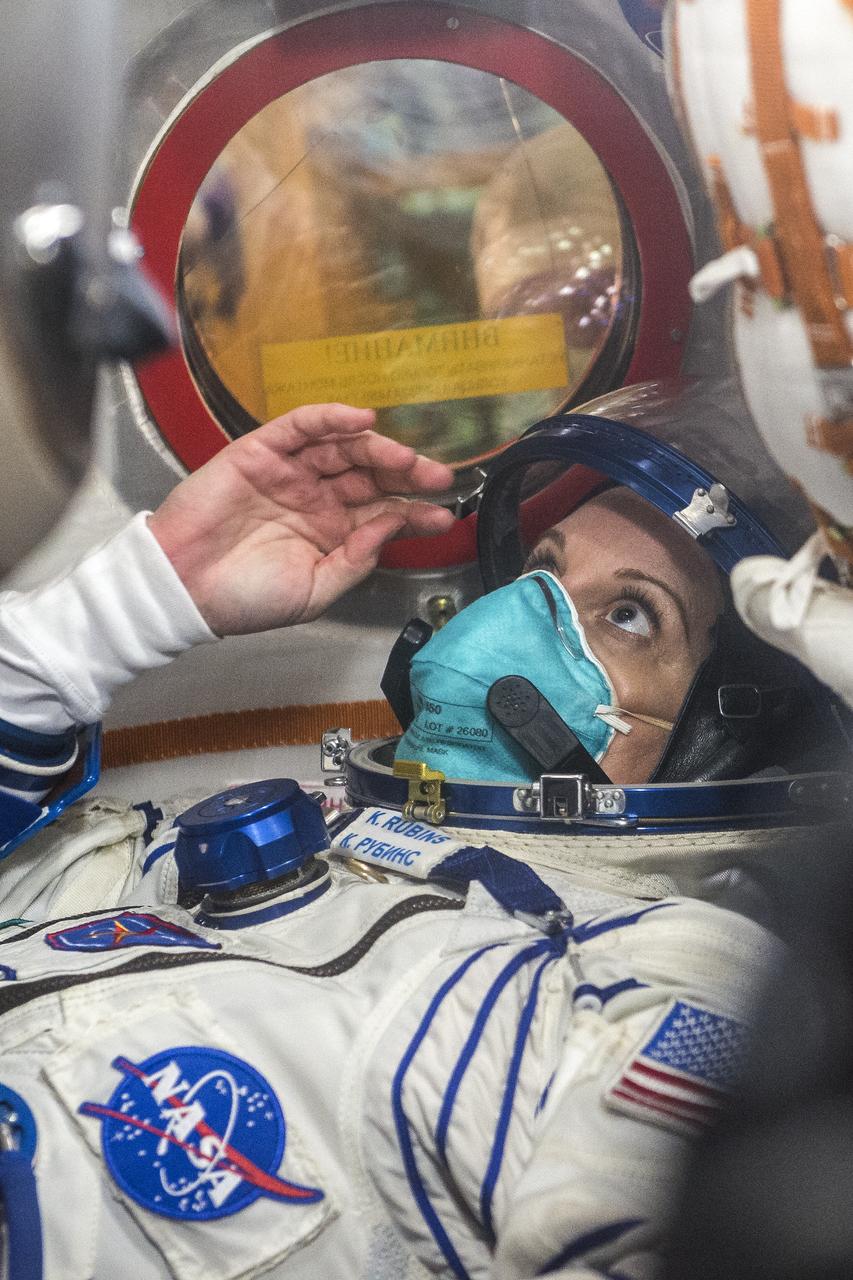
Expedition 64 NASA astronaut Kate Rubins is seen inside the Soyuz MS-17 spacecraft during the fit check to with Russian cosmonauts Sergey Ryzhikov and Sergey Kud-Sverchkov of Roscosmos, Monday, Sept. 28, 2020, Baikonur Cosmodrome in Kazakhstan. The trio are preparing for launch to the International Space Station in their Soyuz MS-17 spacecraft from the Baikonur Cosmodrome in Kazakhstan on October 14, Baikonur time. Photo Credit: (NASA/GCTC/Andrey Shelepin)
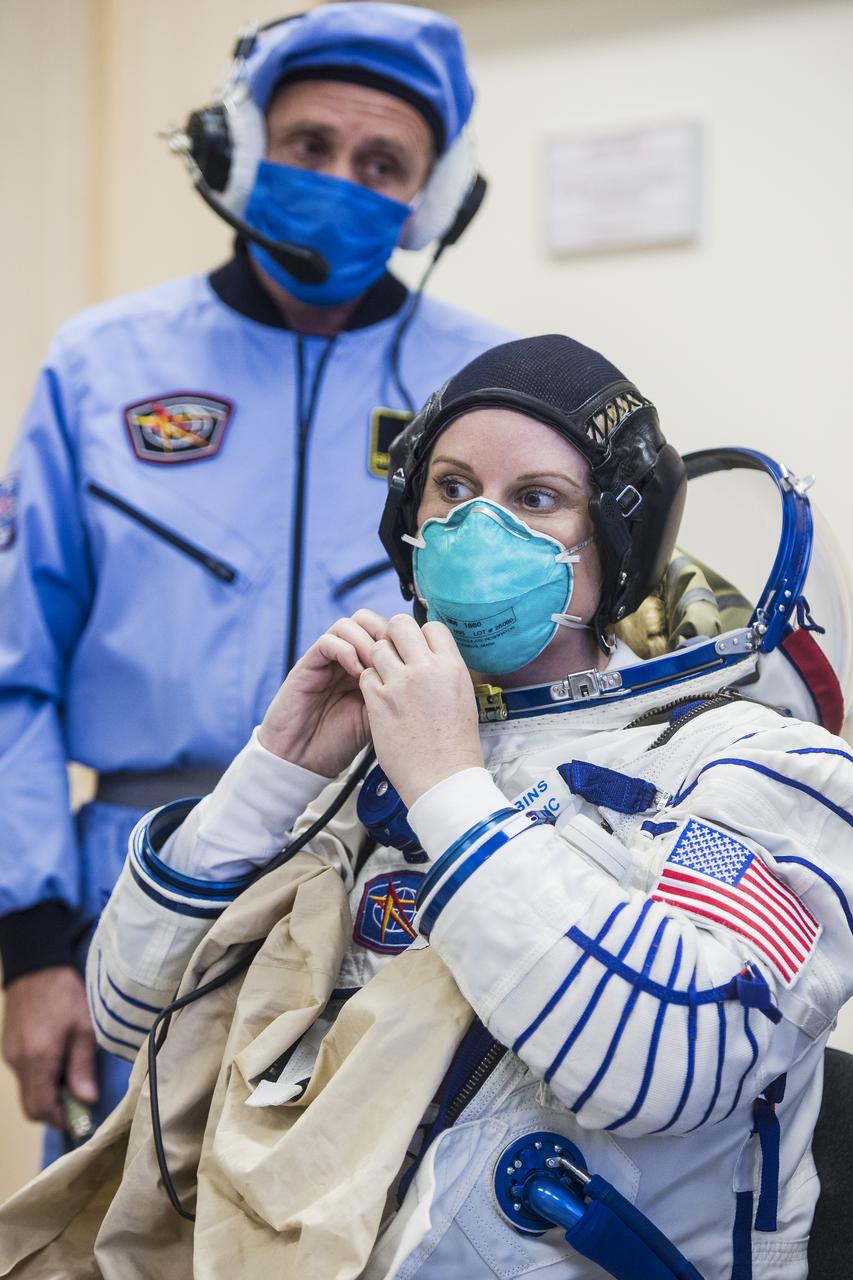
Expedition 64 NASA astronaut Kate Rubins dons her Sokol suit during the Soyuz MS-17 spacecraft fit check with Russian cosmonauts Sergey Ryzhikov and Sergey Kud-Sverchkov of Roscosmos, Monday, Sept. 28, 2020, at the Baikonur Cosmodrome in Kazakhstan. The trio are preparing for launch to the International Space Station in their Soyuz MS-17 spacecraft from the Baikonur Cosmodrome in Kazakhstan on October 14, Baikonur time. Photo Credit: (NASA/GCTC/Andrey Shelepin)
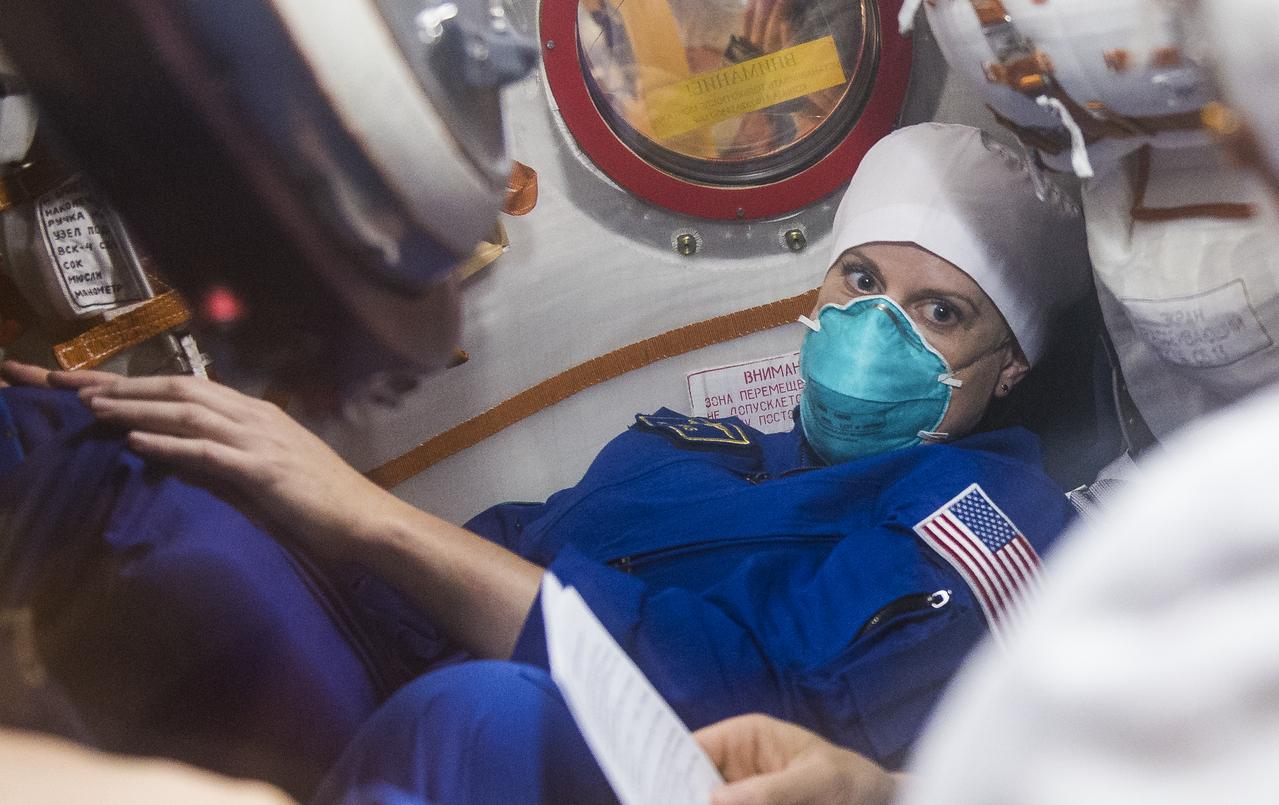
Expedition 64 NASA astronaut Kate Rubins is seen inside the Soyuz MS-17 spacecraft during the fit check to with Russian cosmonauts Sergey Ryzhikov and Sergey Kud-Sverchkov of Roscosmos, Monday, Sept. 28, 2020, at the Baikonur Cosmodrome in Kazakhstan. The trio are preparing for launch to the International Space Station in their Soyuz MS-17 spacecraft from the Baikonur Cosmodrome in Kazakhstan on October 14, Baikonur time. Photo Credit: (NASA/GCTC/Andrey Shelepin)
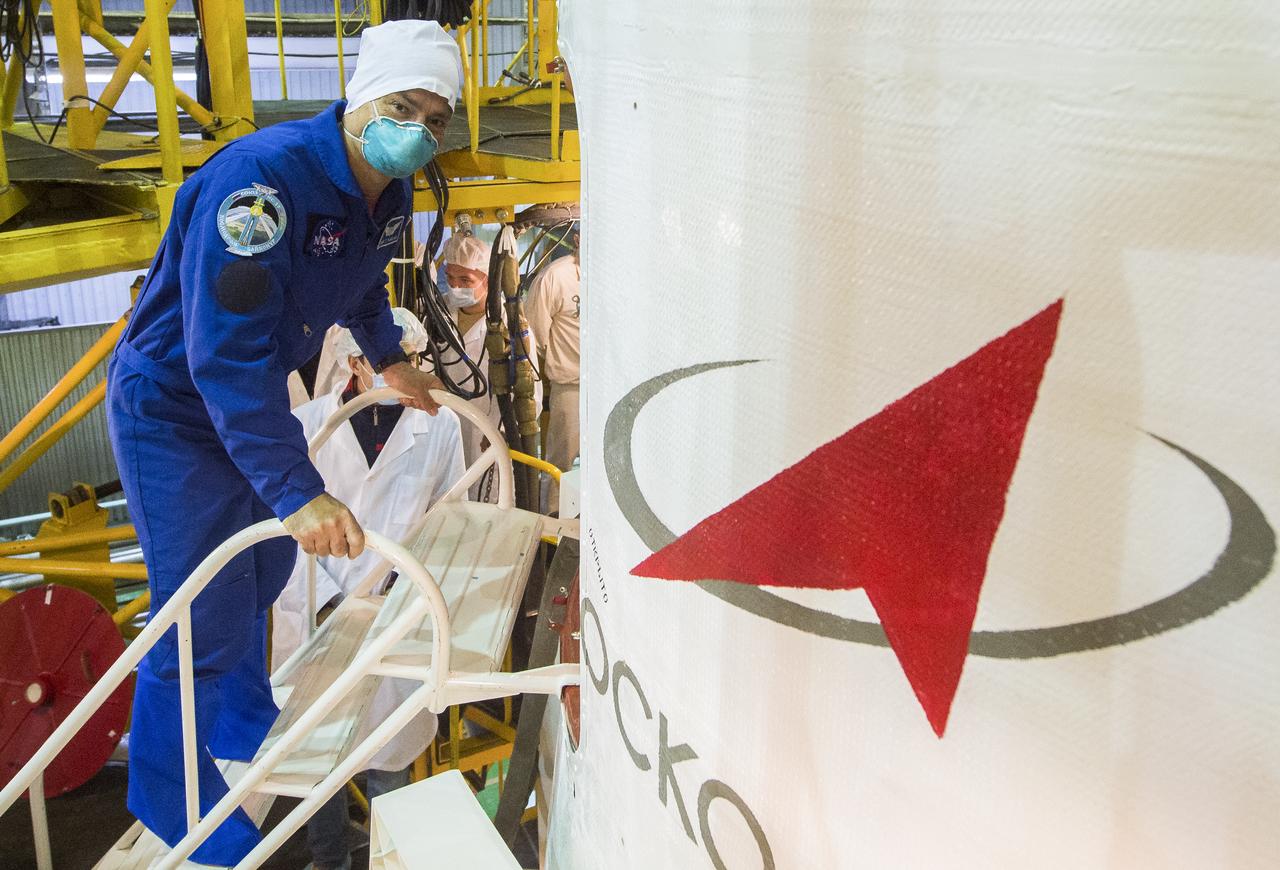
Expedition 64 backup crew member Mark Vande Hei of NASA is seen as he climbs inside the Soyuz MS-17 spacecraft during the final fit check, Wednesday, Oct. 7, 2020, at the Baikonur Cosmodrome in Kazakhstan. Expedition 64 Soyuz commander Sergey Ryzhikov of Roscosmos, flight engineer Sergey Kud-Sverchkov of Roscosmos, and flight engineer Kate Rubins of NASA, are scheduled to launch to the International Space Station aboard the Soyuz MS-17 spacecraft on October 14. Photo Credit: (NASA/GCTC/Andrey Shelepin)
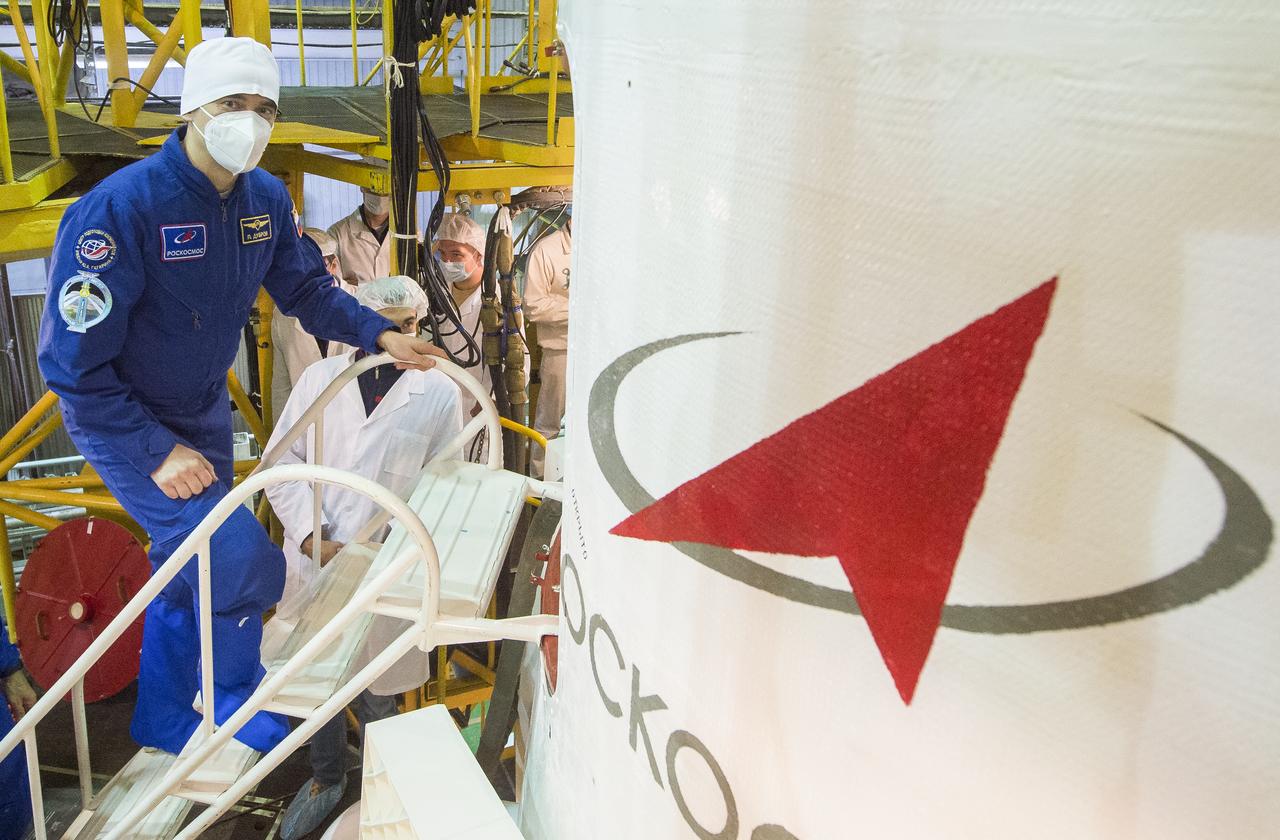
Expedition 64 backup crew member Petr Dubrov of Roscosmos is seen as he climbs inside the Soyuz MS-17 spacecraft during the final fit check, Wednesday, Oct. 7, 2020, at the Baikonur Cosmodrome in Kazakhstan. Expedition 64 Soyuz commander Sergey Ryzhikov of Roscosmos, flight engineer Sergey Kud-Sverchkov of Roscosmos, and flight engineer Kate Rubins of NASA, are scheduled to launch to the International Space Station aboard the Soyuz MS-17 spacecraft on October 14. Photo Credit: (NASA/GCTC/Andrey Shelepin)
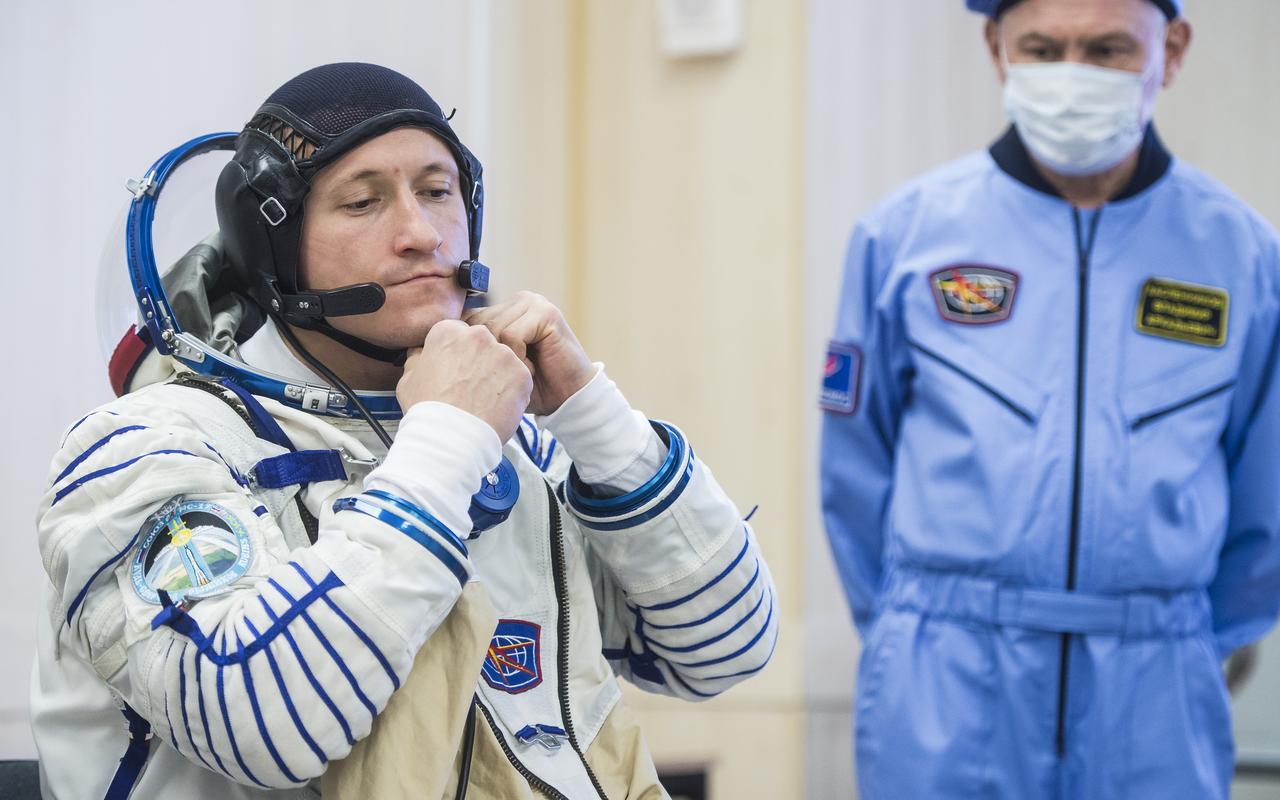
Expedition 64 Russian cosmonaut Sergey Kud-Sverchkov of Roscosmos dons his Sokol suit during the Soyuz MS-17 spacecraft fit check with fellow Russian cosmonaut Sergey Ryzhikov and NASA astronaut Kate Rubins, Monday, Sept. 28, 2020, at the Baikonur Cosmodrome in Kazakhstan. The trio are preparing for launch to the International Space Station in their Soyuz MS-17 spacecraft from the Baikonur Cosmodrome in Kazakhstan on October 14, Baikonur time. Photo Credit: (NASA/GCTC/Andrey Shelepin)
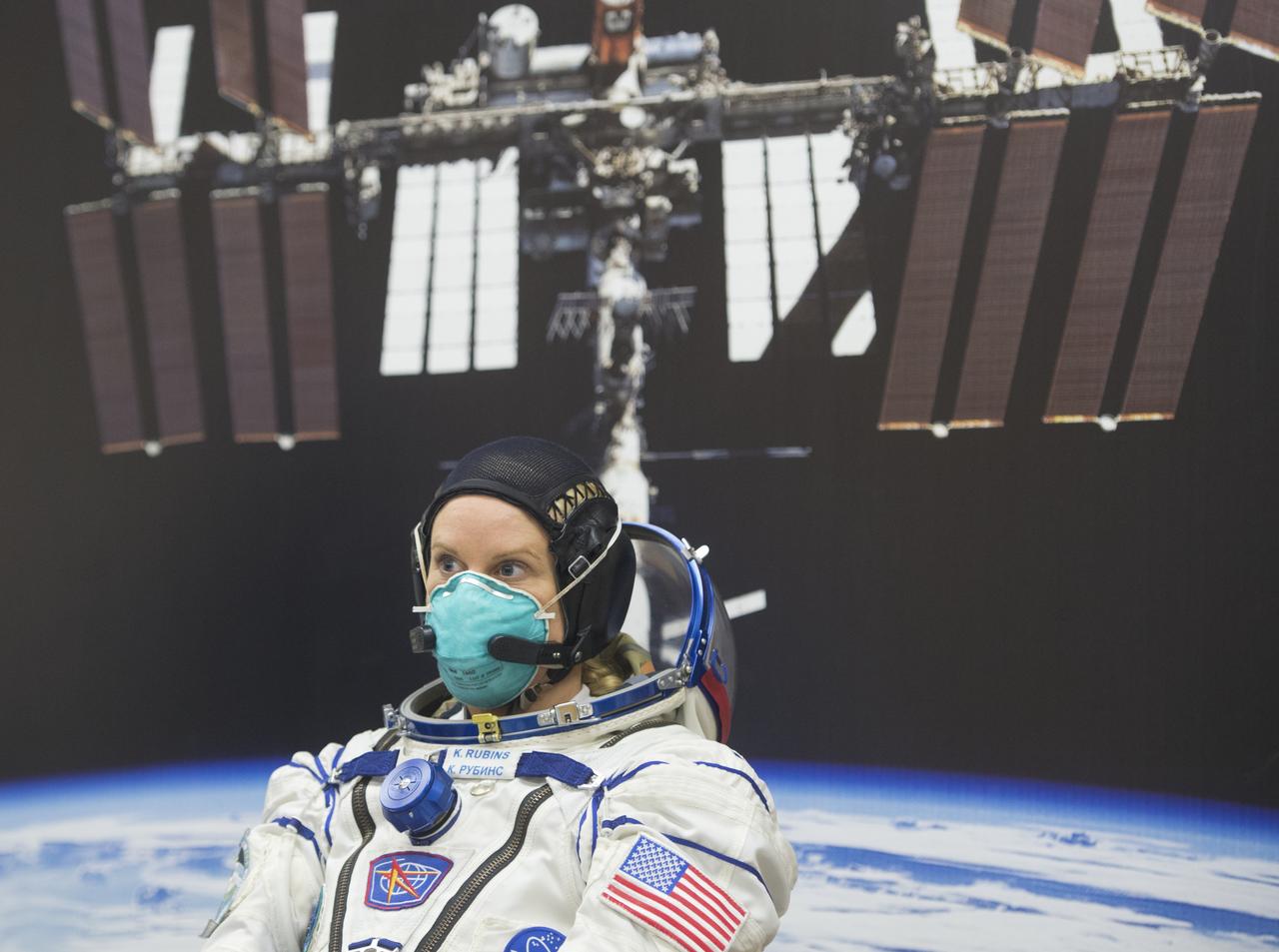
Expedition 64 NASA astronaut Kate Rubins is seen as she waits to have her Russian Sokol suit pressure checked as she and fellow crewmates Sergey Kud-Sverchkov and Sergey Ryzhikov of Roscosmos prepare for their Soyuz launch to the International Space Station Wednesday, Oct. 14, 2020, at the Baikonur Cosmodrome in Kazakhstan. The trio launched at 1:45 a.m. EDT to begin a six-month mission aboard the International Space Station. Photo Credit: (NASA/GCTC/Andrey Shelepin)
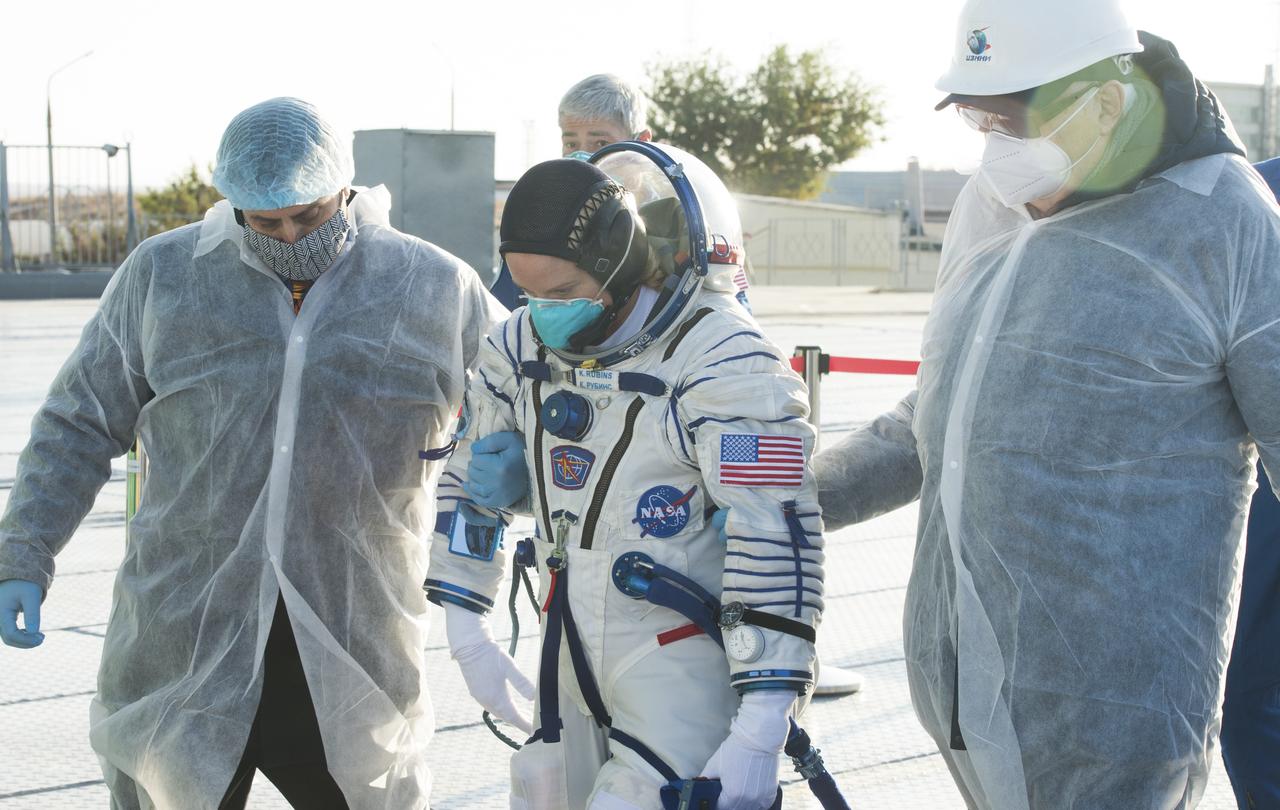
Expedition 64 NASA astronaut walks to board the Soyuz MS-17 spacecraft with NASA International Space Station Program Joel Montalbano, left, prior to launch with Sergey Ryzhikov and Sergey Kud-Sverchkov of Roscosmos, Wednesday, Oct. 14, 2020, at the Baikonur Cosmodrome in Kazakhstan. The trio launched at 1:45 a.m. EDT to begin a six-month mission aboard the International Space Station. Photo Credit: (NASA/GCTC/Andrey Shelepin)
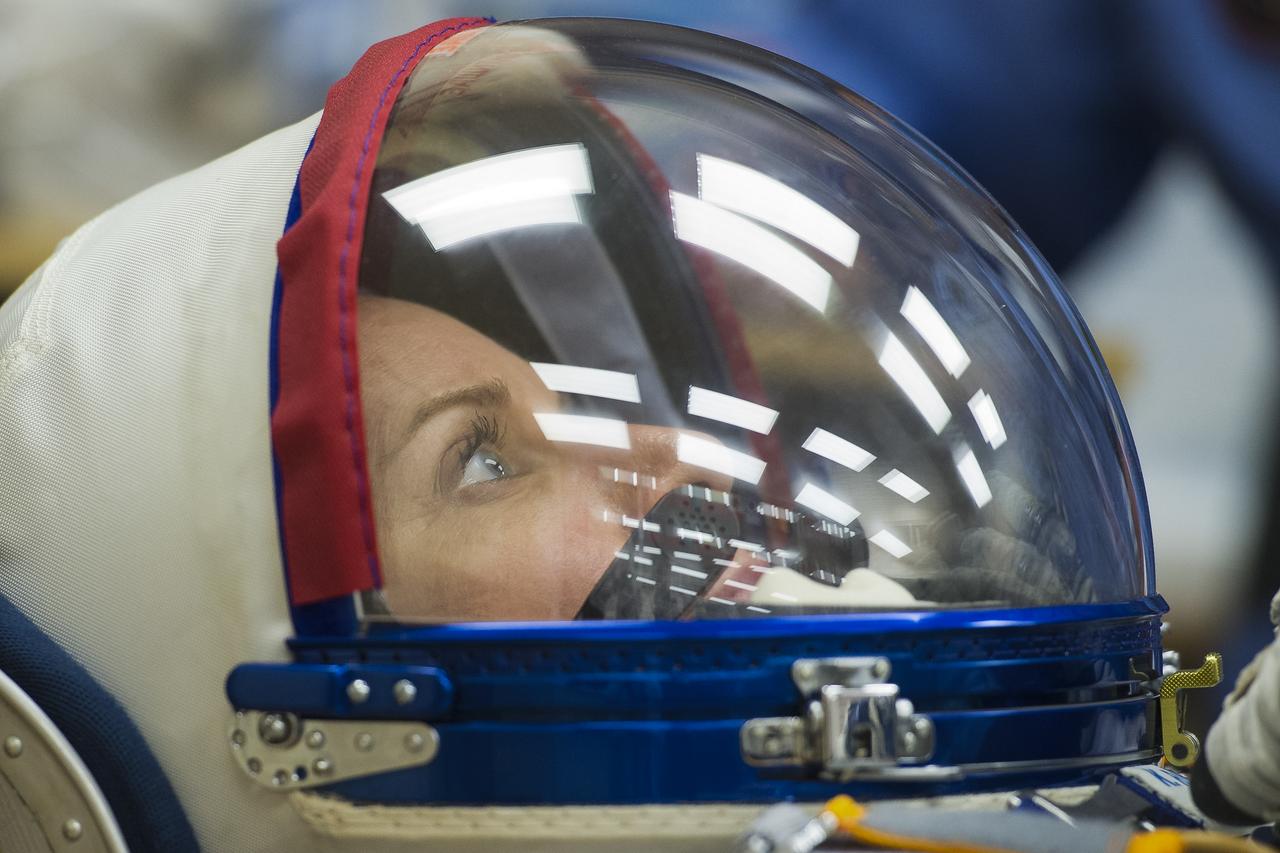
Expedition 64 NASA astronaut Kate Rubins is seen as she has her Russian Sokol suit pressure checked as she and fellow crewmates Sergey Kud-Sverchkov and Sergey Ryzhikov of Roscosmos prepare for their Soyuz launch to the International Space Station Wednesday, Oct. 14, 2020, at the Baikonur Cosmodrome in Kazakhstan. The trio launched at 1:45 a.m. EDT to begin a six-month mission aboard the International Space Station. Photo Credit: (NASA/GCTC/Andrey Shelepin)
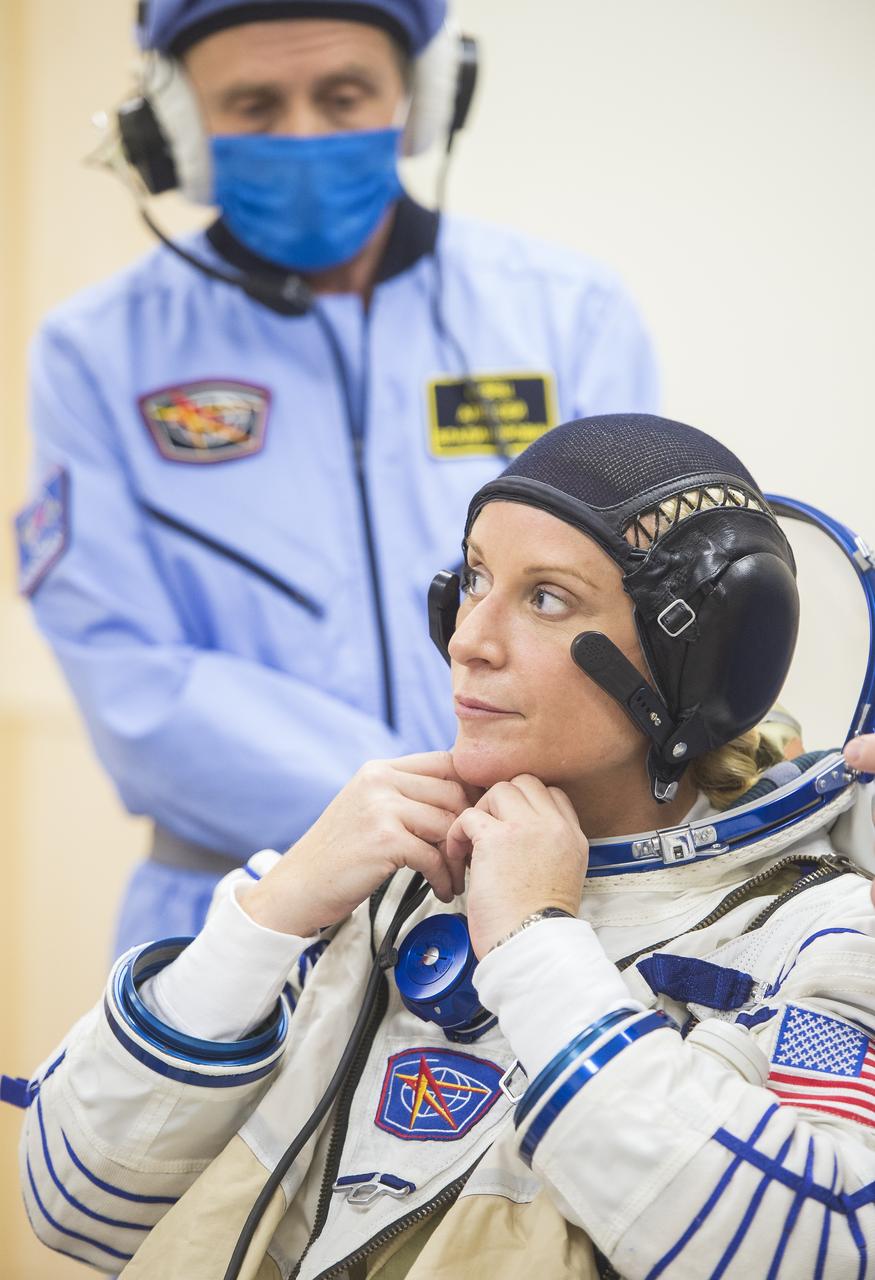
Expedition 64 NASA astronaut Kate Rubins is helped into her Russian Sokol suit as she and fellow cremates, Sergey Ryzhikov and Sergey Kud-Sverchkov of Roscosmos prepare for their Soyuz launch to the International Space Station Wednesday, Oct. 14, 2020, at the Baikonur Cosmodrome in Kazakhstan. The trio launched at 1:45 a.m. EDT to begin a six-month mission aboard the International Space Station. Photo Credit: (NASA/GCTC/Andrey Shelepin)
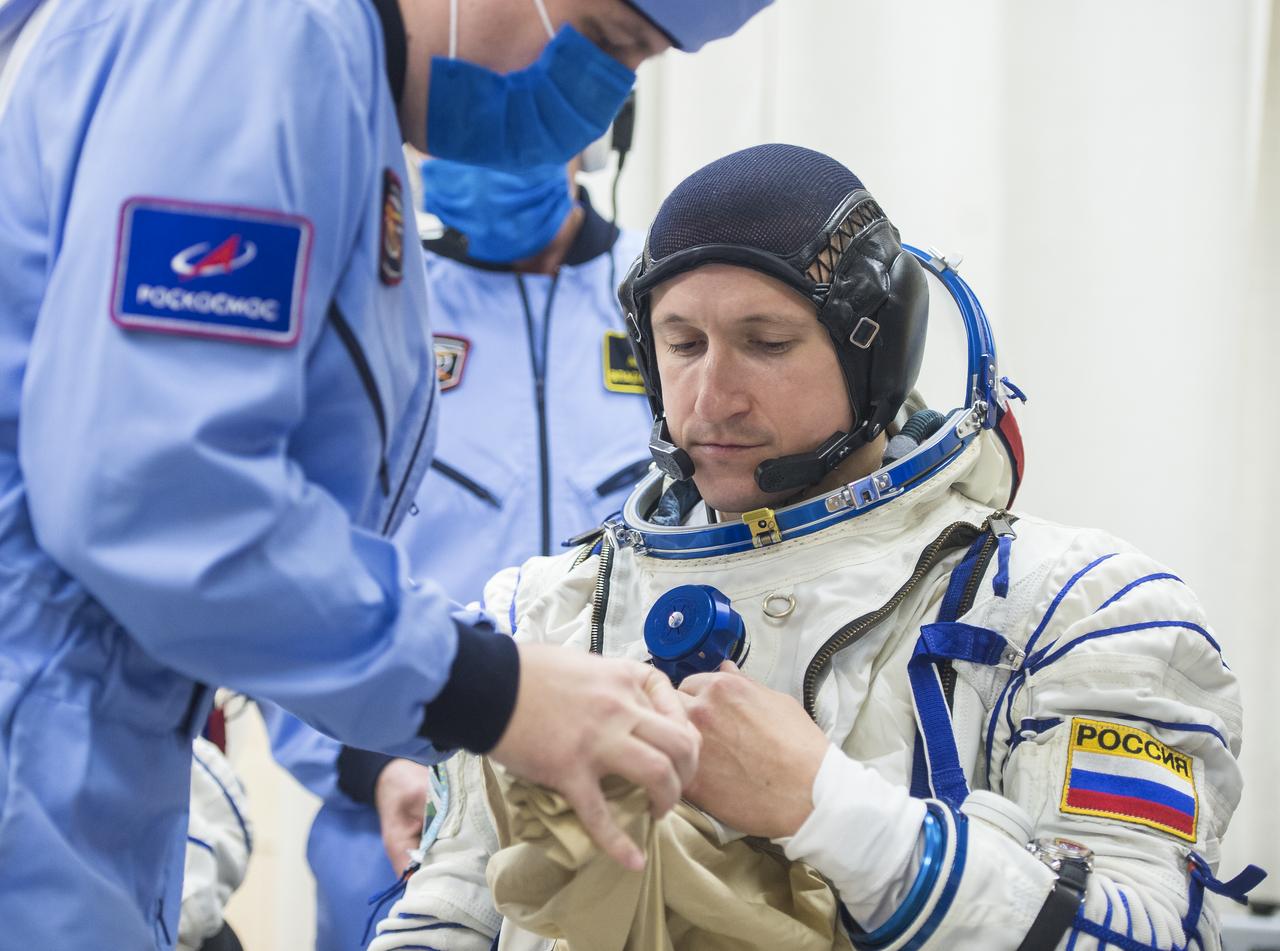
Expedition 64 Russian cosmonaut Sergey Kud-Sverchkov of Roscosmos is helped into his Russian Sokol suit as he and fellow cremates, Sergey Ryzhikov of Roscosmos and Kate Rubins of NASA prepare for their Soyuz launch to the International Space Station Wednesday, Oct. 14, 2020, at the Baikonur Cosmodrome in Kazakhstan. The trio launched at 1:45 a.m. EDT to begin a six-month mission aboard the International Space Station. Photo Credit: (NASA/GCTC/Andrey Shelepin)
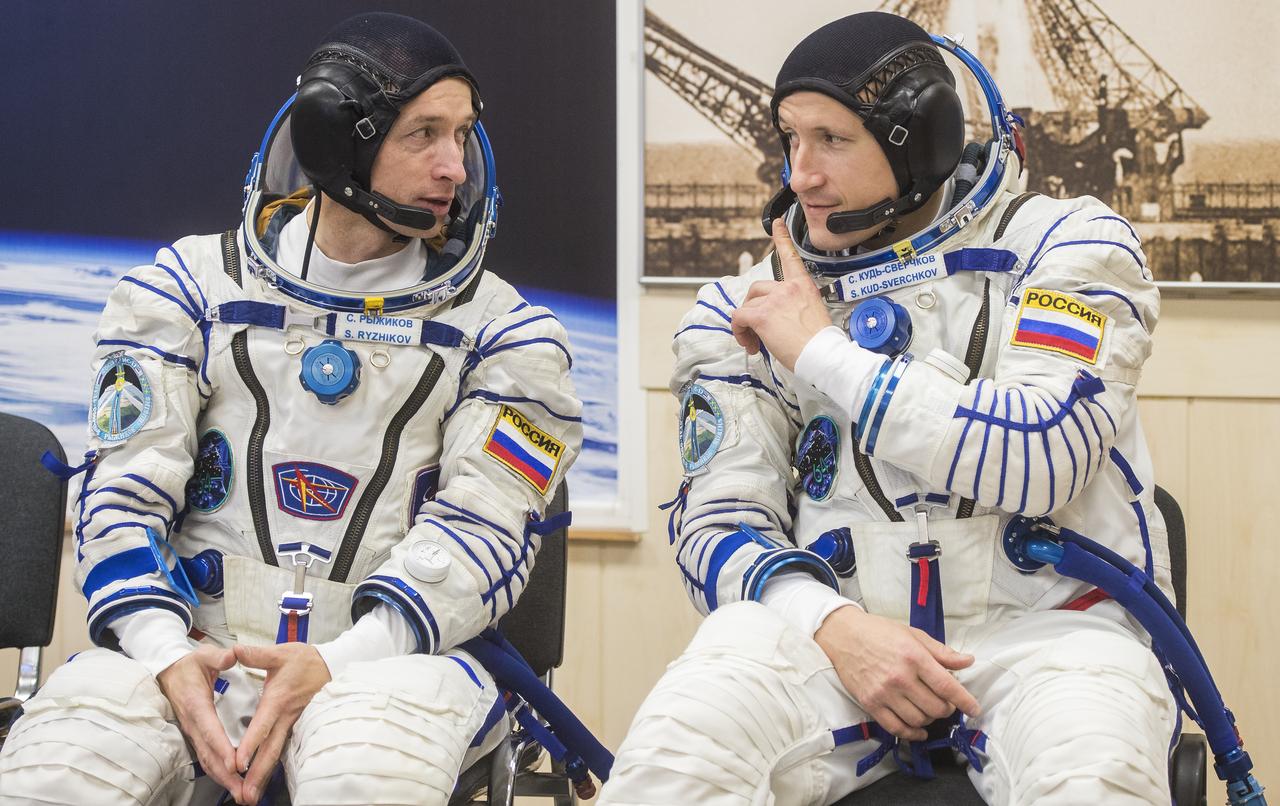
Expedition 64 Russian cosmonauts Sergey Ryzhikov, left, and Sergey Kud-Sverchkov, right, of Roscosmos are seen during pressure checks of their Sokol suits during the Soyuz MS-17 spacecraft fit check, Monday, Sept. 28, 2020, at the Baikonur Cosmodrome in Kazakhstan. Ryzhikov, Kud-Sverchkov, and NASA astronaut Kate Rubins are preparing for launch to the International Space Station in their Soyuz MS-17 spacecraft from the Baikonur Cosmodrome in Kazakhstan on October 14, Baikonur time. Photo Credit: (NASA/GCTC/Andrey Shelepin)
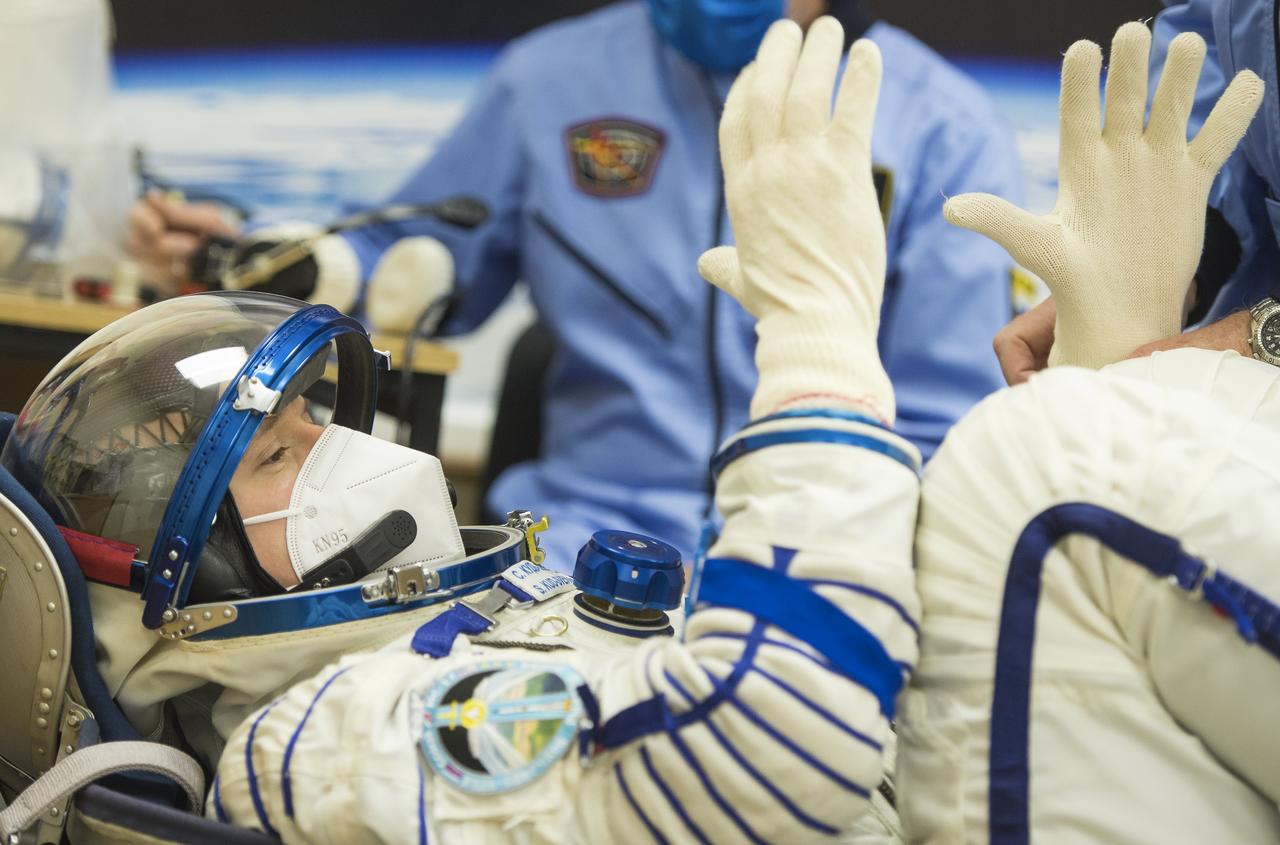
Expedition 64 Russian cosmonaut Sergey Kud-Sverchkov of Roscosmos is seen as he prepares to have his Russian Sokol suit pressure checked as he and fellow crewmates Sergey Ryzhikov of Roscosmos and Kate Rubins of NASA prepare for their Soyuz launch to the International Space Station Wednesday, Oct. 14, 2020, at the Baikonur Cosmodrome in Kazakhstan. The trio launched at 1:45 a.m. EDT to begin a six-month mission aboard the International Space Station. Photo Credit: (NASA/GCTC/Andrey Shelepin)
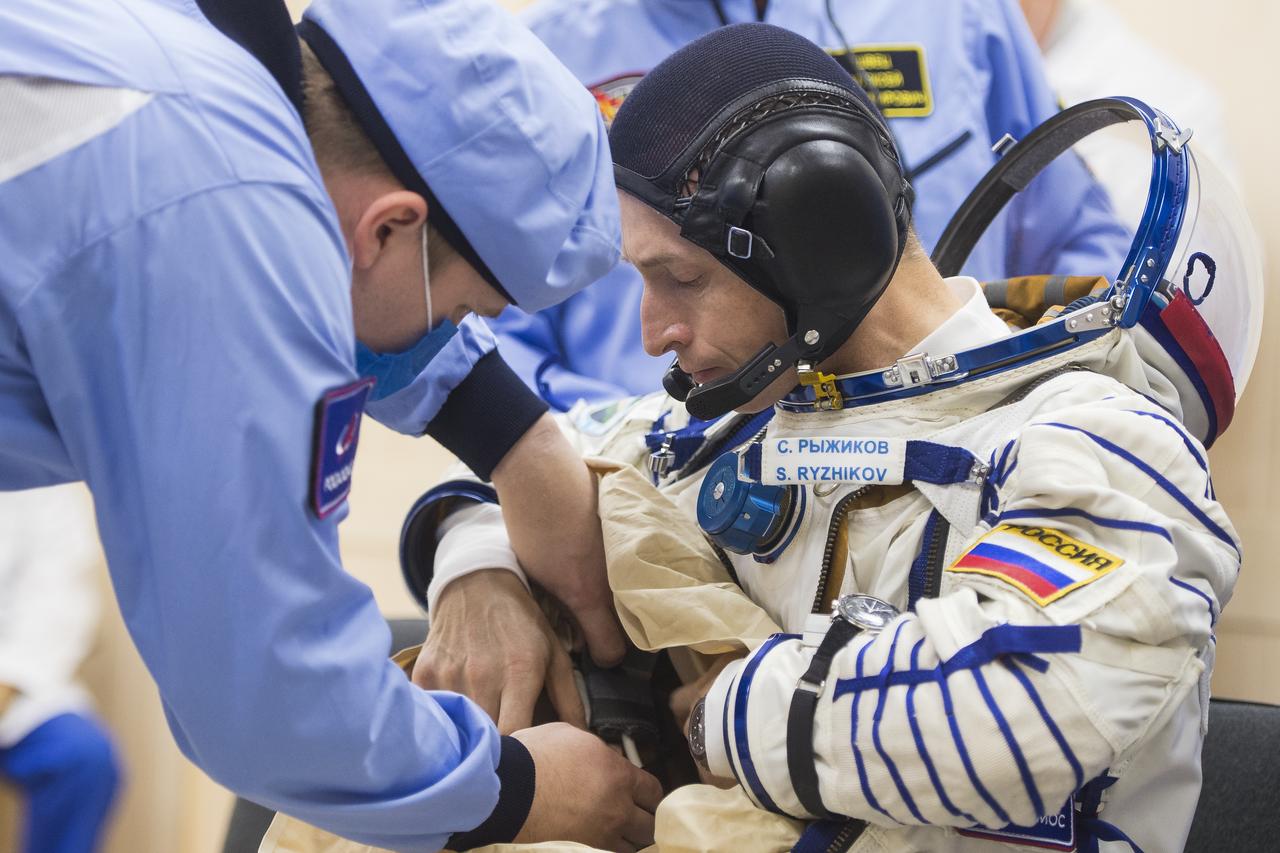
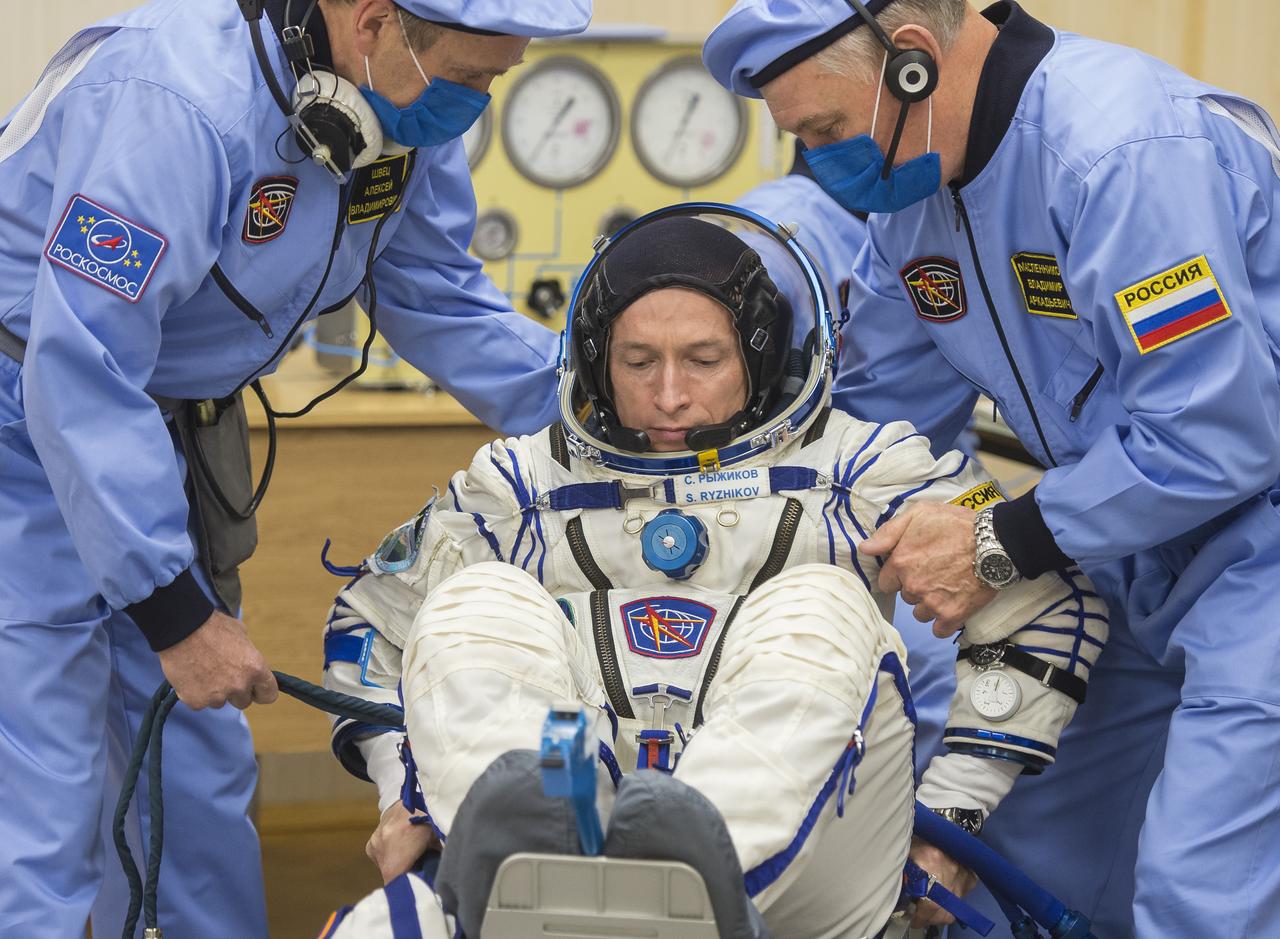
Expedition 64 Russian cosmonaut Sergey Ryzhikov of Roscosmos is helped into his Russian Sokol suit as he and fellow cremates, Sergey Kud-Sverchkov of Roscosmos and Kate Rubins of NASA prepare for their Soyuz launch to the International Space Station Wednesday, Oct. 14, 2020, at the Baikonur Cosmodrome in Kazakhstan. The trio launched at 1:45 a.m. EDT to begin a six-month mission aboard the International Space Station. Photo Credit: (NASA/GCTC/Andrey Shelepin)
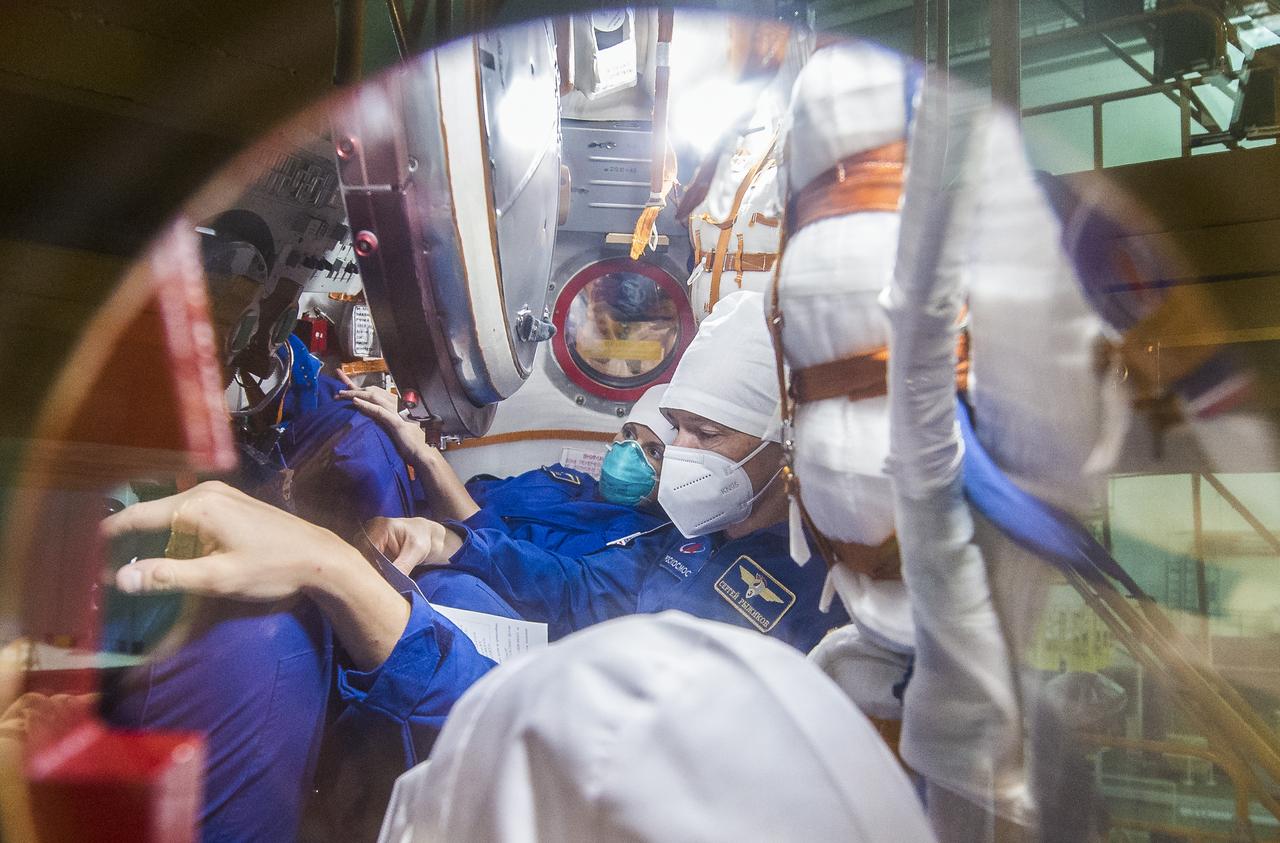
Expedition 64 NASA astronaut Kate Rubins, back, and Russian cosmonauts Sergey Ryzhikov, middle, and Sergey Kud-Sverchkov of Roscosmos are seen inside the Soyuz MS-17 spacecraft during a fit check, Monday, Sept. 28, 2020, at the Baikonur Cosmodrome in Kazakhstan. The trio are preparing for launch to the International Space Station in their Soyuz MS-17 spacecraft from the Baikonur Cosmodrome in Kazakhstan on October 14, Baikonur time. Photo Credit: (NASA/GCTC/Andrey Shelepin)
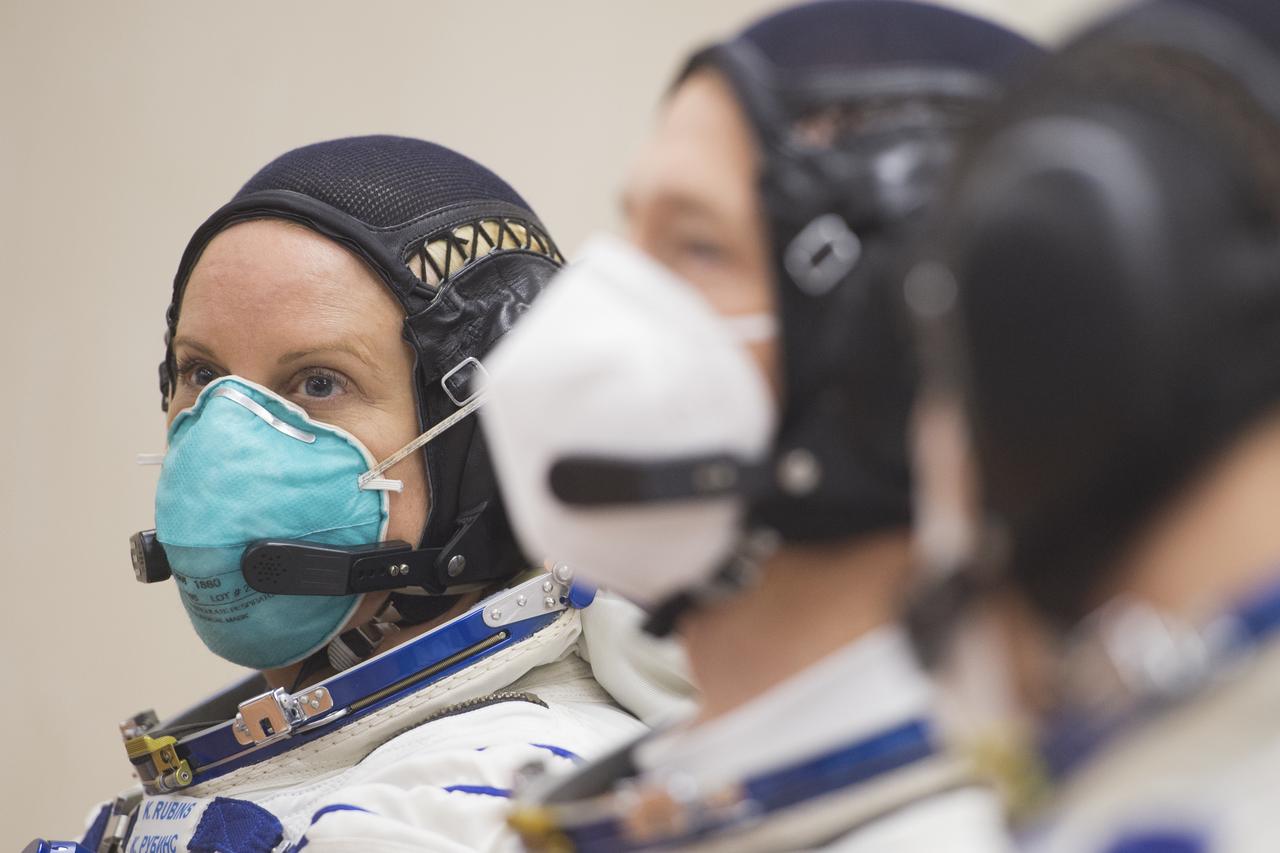
Expedition 64 NASA astronaut Kate Rubins is seen with fellow crewmates Sergey Ryzhikov and Sergey Kud-Sverchkov of Roscosmos as they speak with Roscosmos and NASA managers after having their Russian Sokol suits pressure checked, Wednesday, Oct. 14, 2020, at the Baikonur Cosmodrome in Kazakhstan. The trio launched at 1:45 a.m. EDT to begin a six-month mission aboard the International Space Station. Photo Credit: (NASA/GCTC/Andrey Shelepin)
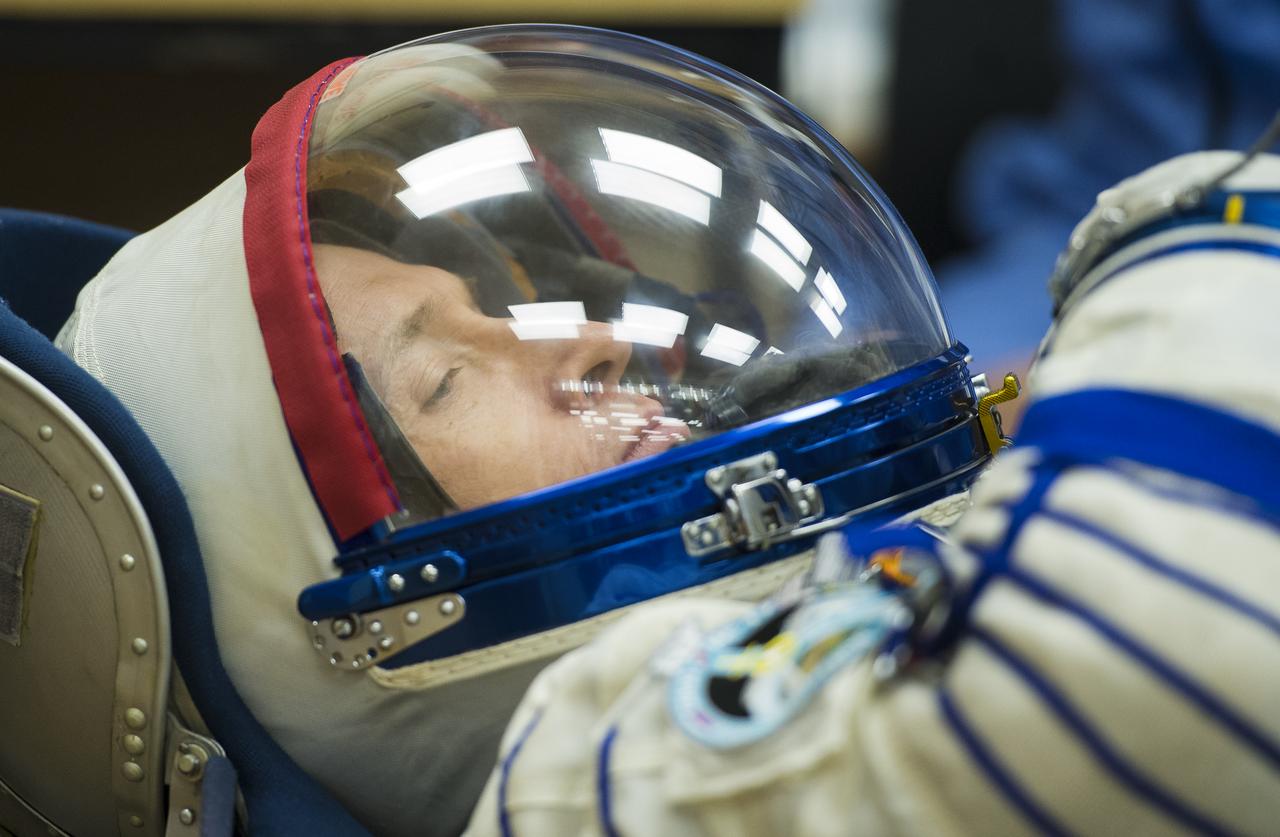
Expedition 64 Russian cosmonaut Sergey Ryzhikov of Roscosmos is seen as his Russian Sokol suit is pressure checked as he and fellow crewmates Sergey Kud-Sverchkov of Roscosmos and Kate Rubins of NASA prepare for their Soyuz launch to the International Space Station Wednesday, Oct. 14, 2020, at the Baikonur Cosmodrome in Kazakhstan. The trio launched at 1:45 a.m. EDT to begin a six-month mission aboard the International Space Station. Photo Credit: (NASA/GCTC/Andrey Shelepin)
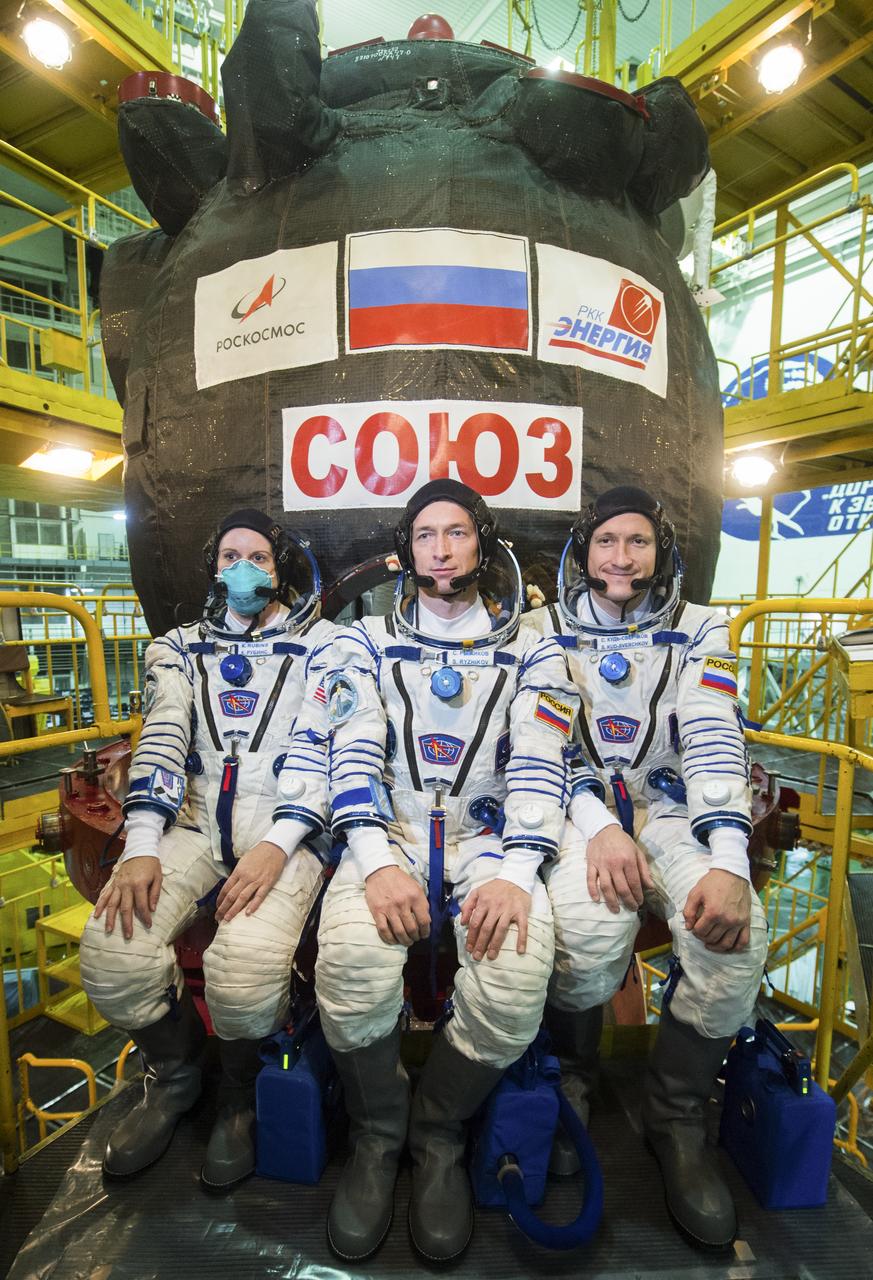
Expedition 64 NASA astronaut Kate Rubins, left, and Russian cosmonauts Sergey Ryzhikov, center, and Sergey Kud-Sverchkov, right, of Roscosmos take a moment during the Soyuz MS-17 spacecraft fit check to pose for a photograph, Monday, Sept. 28, 2020, at the Baikonur Cosmodrome in Kazakhstan. The trio are preparing for launch to the International Space Station in their Soyuz MS-17 spacecraft from the Baikonur Cosmodrome in Kazakhstan on October 14, Baikonur time. Photo Credit: (NASA/GCTC/Andrey Shelepin)
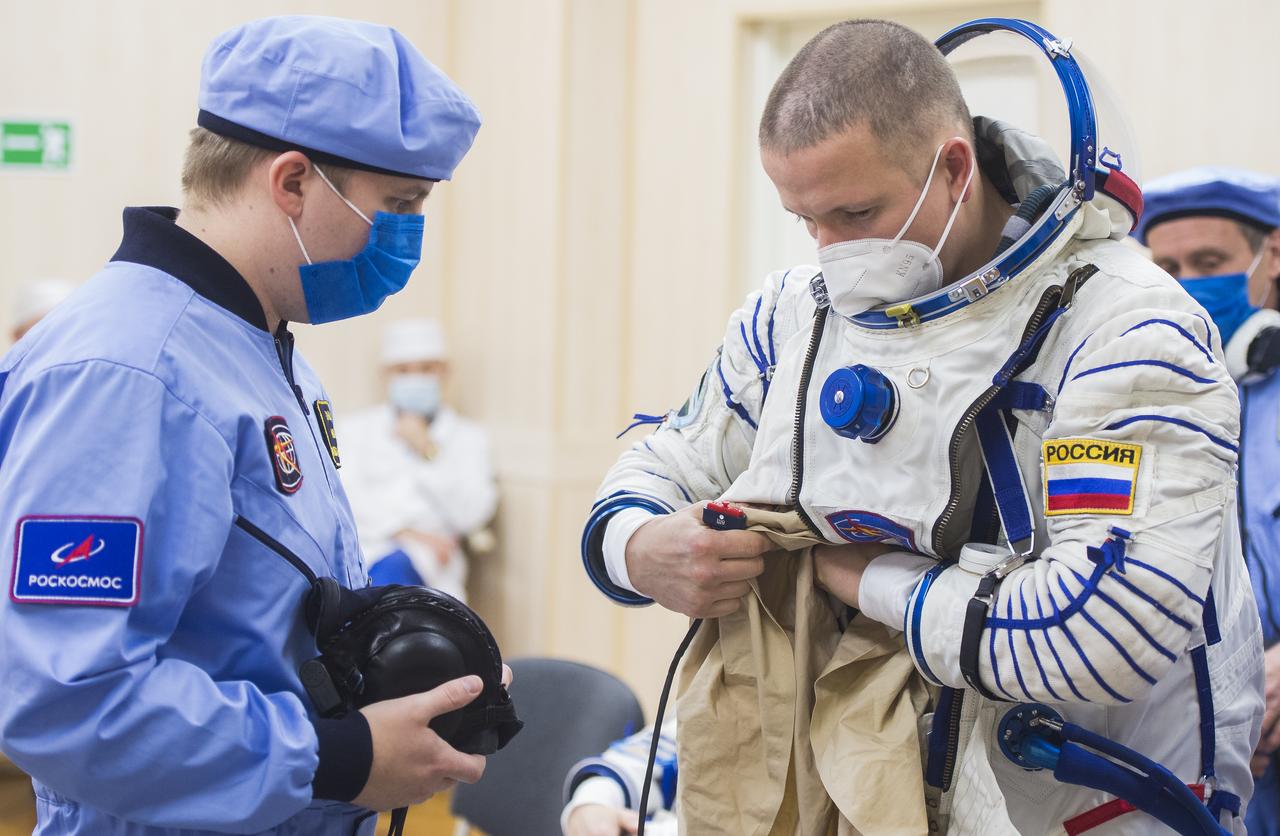
Expedition 64 Russian cosmonaut Sergey Kud-Sverchkov of Roscosmos is helped into his Russian Sokol suit as he and fellow cremates, Sergey Ryzhikov of Roscosmos and Kate Rubins of NASA prepare for their Soyuz launch to the International Space Station Wednesday, Oct. 14, 2020, at the Baikonur Cosmodrome in Kazakhstan. The trio launched at 1:45 a.m. EDT to begin a six-month mission aboard the International Space Station. Photo Credit: (NASA/GCTC/Andrey Shelepin)
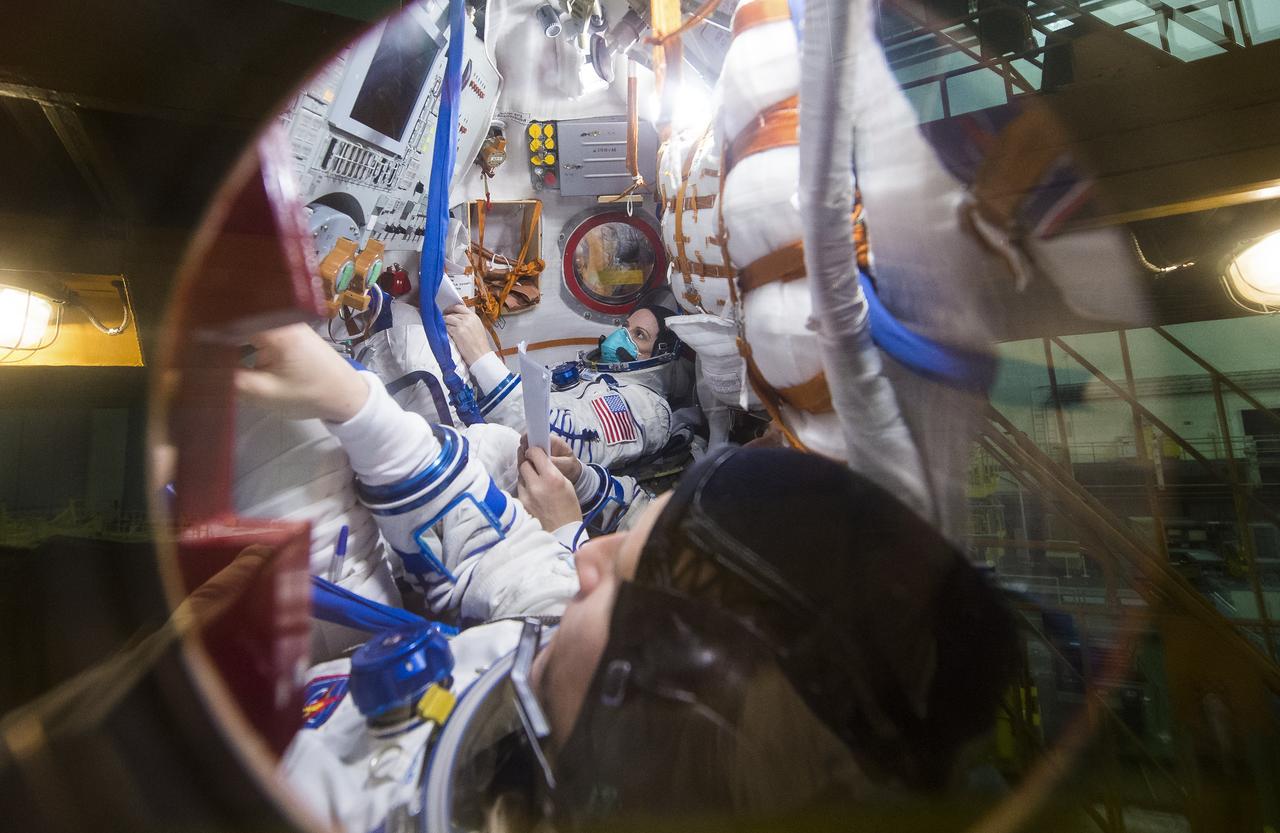
Expedition 64 NASA astronaut Kate Rubins, back, and Russian cosmonauts Sergey Ryzhikov, middle, and Sergey Kud-Sverchkov, front, of Roscosmos, are seen inside the Soyuz MS-17 spacecraft during a fit check, Monday, Sept. 28, 2020, at the Baikonur Cosmodrome in Kazakhstan. The trio are preparing for launch to the International Space Station in their Soyuz MS-17 spacecraft from the Baikonur Cosmodrome in Kazakhstan on October 14, Baikonur time. Photo Credit: (NASA/GCTC/Andrey Shelepin)
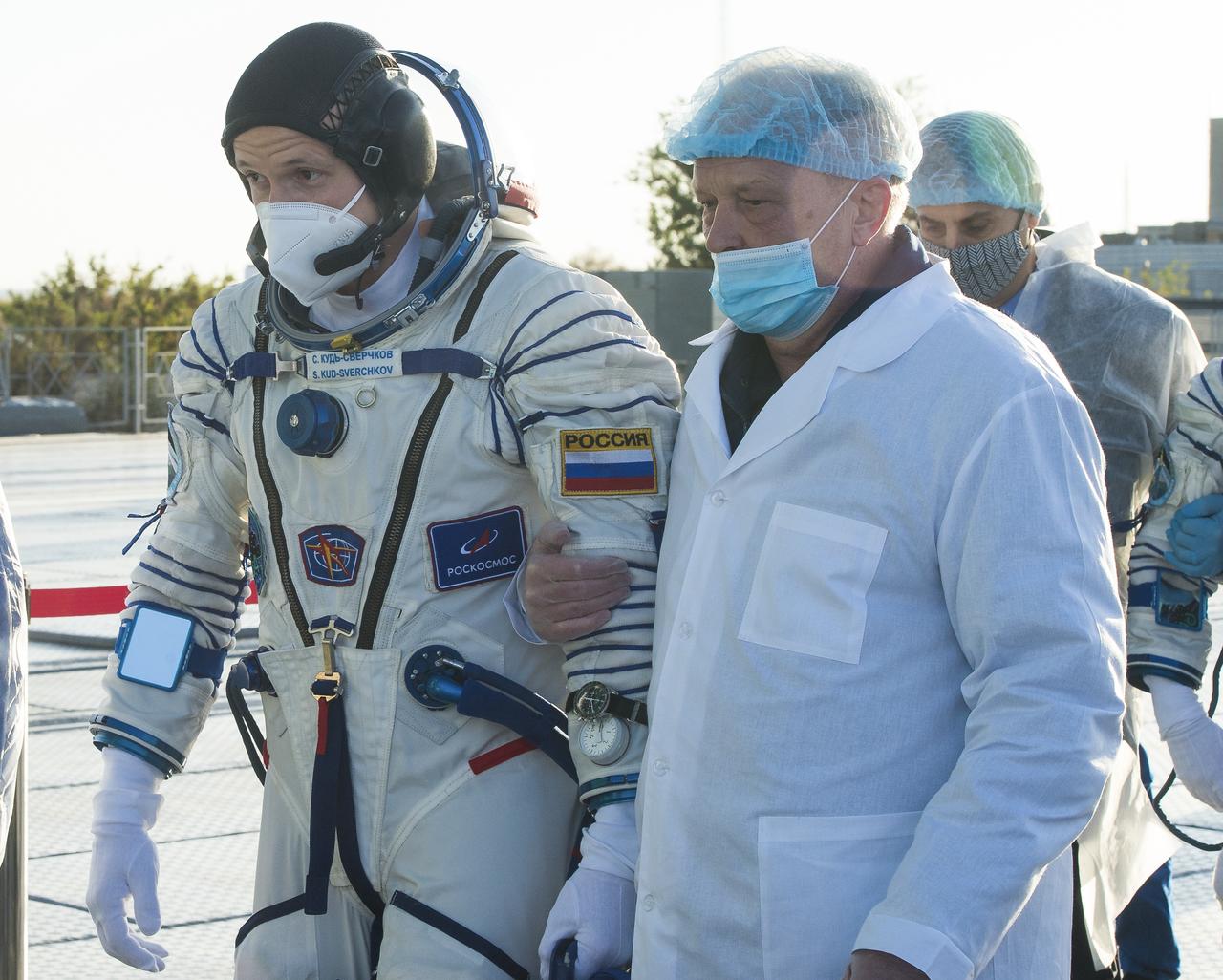
Expedition 64 Russian cosmonaut Sergey Kud-Sverchkov walks to board the Soyuz MS-17 spacecraft prior to launch with Sergey Ryzhikov of Roscosmos and Kate Rubins of NASA, Wednesday, Oct. 14, 2020, at the Baikonur Cosmodrome in Kazakhstan. The trio launched at 1:45 a.m. EDT to begin a six-month mission aboard the International Space Station. Photo Credit: (NASA/GCTC/Andrey Shelepin)
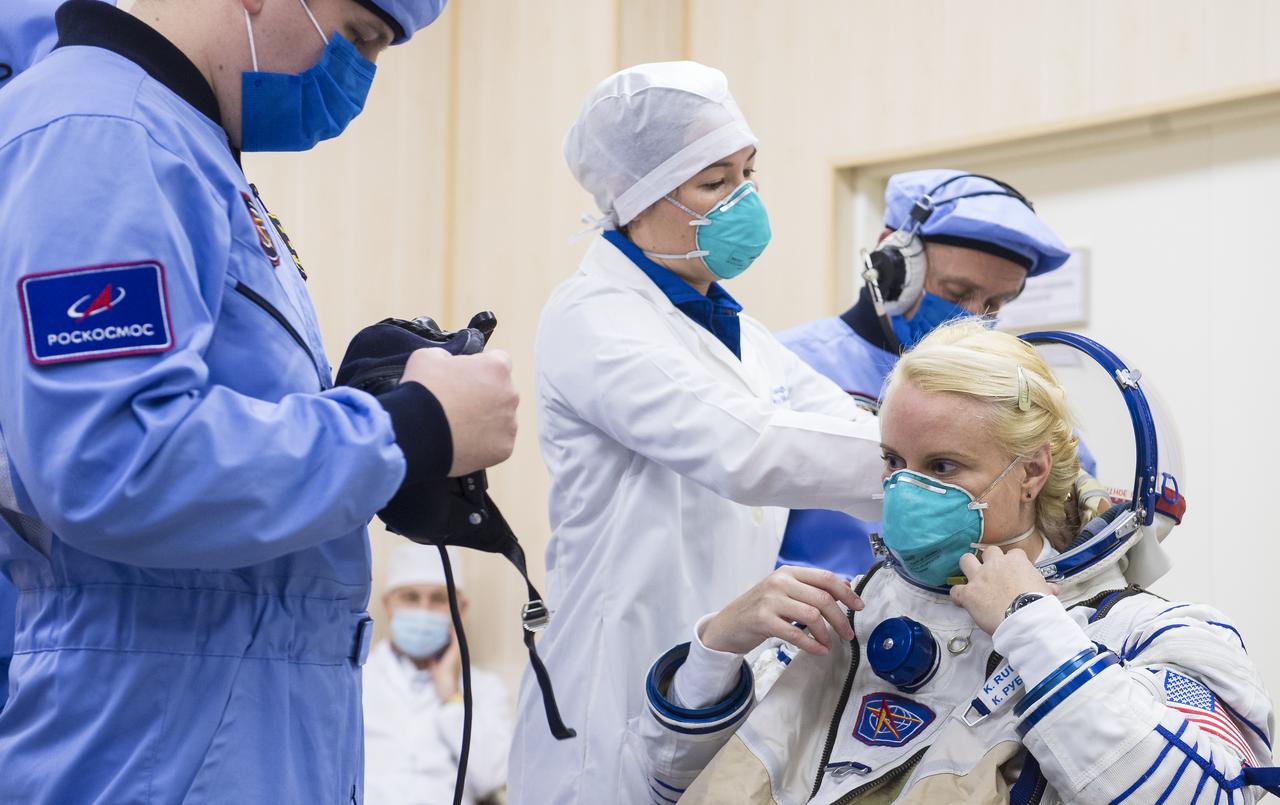
Expedition 64 NASA astronaut Kate Rubins is helped into her Russian Sokol suit as she and fellow cremates, Sergey Ryzhikov and Sergey Kud-Sverchkov of Roscosmos prepare for their Soyuz launch to the International Space Station Wednesday, Oct. 14, 2020, at the Baikonur Cosmodrome in Kazakhstan. The trio launched at 1:45 a.m. EDT to begin a six-month mission aboard the International Space Station. Photo Credit: (NASA/GCTC/Andrey Shelepin)
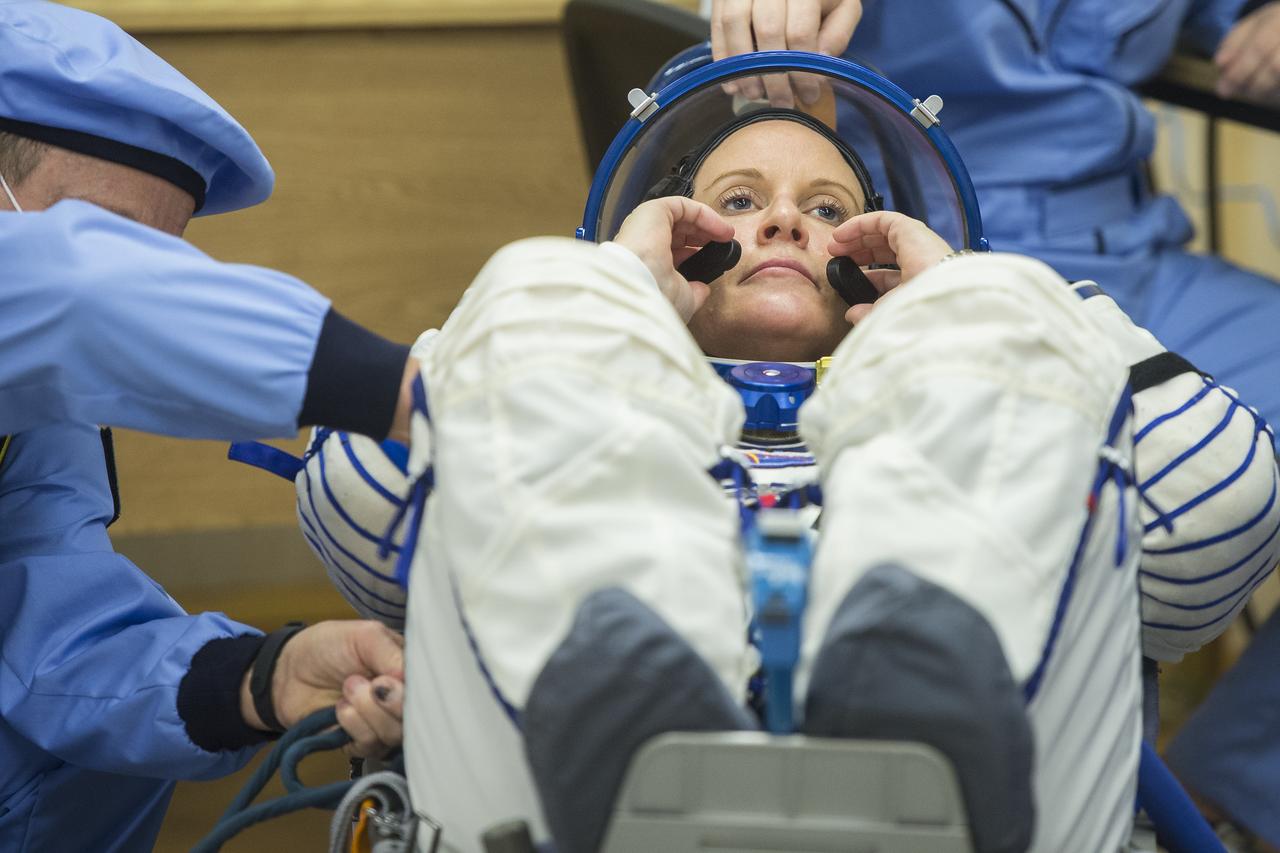
Expedition 64 NASA astronaut Kate Rubins is seen as she prepares to have her Russian Sokol suit pressure checked as she and fellow crewmates Sergey Kud-Sverchkov and Sergey Ryzhikov of Roscosmos prepare for their Soyuz launch to the International Space Station Wednesday, Oct. 14, 2020, at the Baikonur Cosmodrome in Kazakhstan. The trio launched at 1:45 a.m. EDT to begin a six-month mission aboard the International Space Station. Photo Credit: (NASA/GCTC/Andrey Shelepin)
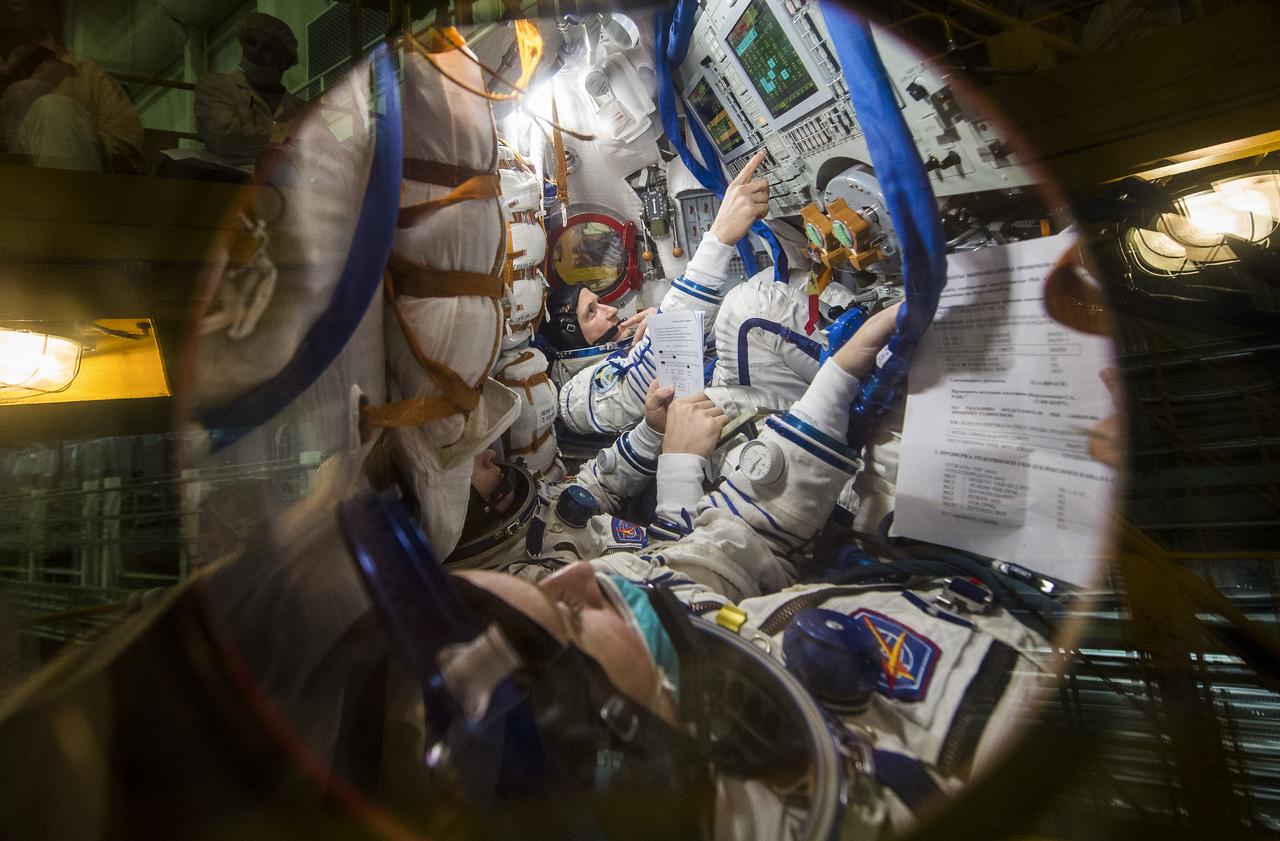
Expedition 64 Russian cosmonauts Sergey Kud-Sverchkov, back, and Sergey Ryzhikov, center, of Roscosmos, and NASA astronaut Kate Rubins, front, are seen inside the Soyuz MS-17 spacecraft during a fit check, Monday, Sept. 28, 2020, at the Baikonur Cosmodrome in Kazakhstan. The trio are preparing for launch to the International Space Station in their Soyuz MS-17 spacecraft from the Baikonur Cosmodrome in Kazakhstan on October 14, Baikonur time. Photo Credit: (NASA/GCTC/Andrey Shelepin)
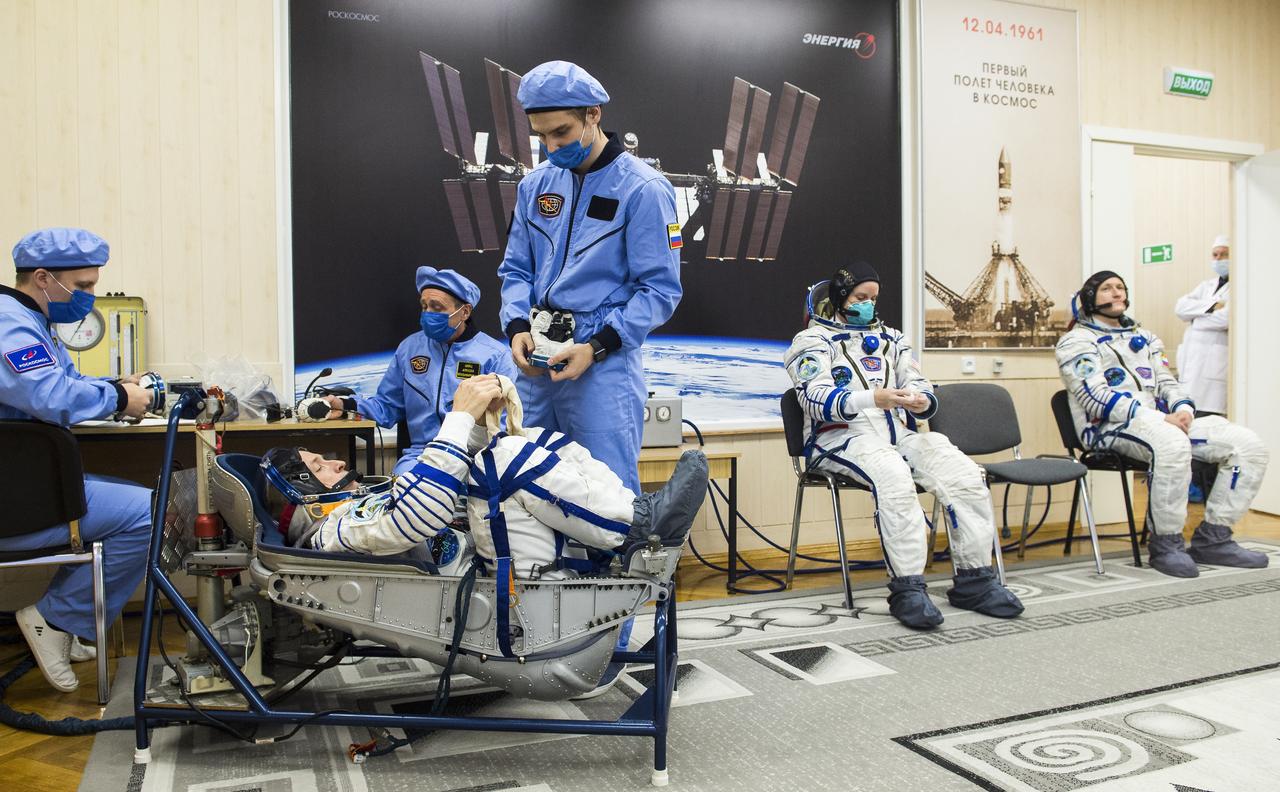
Expedition 64 Russian cosmonaut Sergey Ryzhikov of Roscosmos is seen while having his Sokol suit pressure checked during the Soyuz MS-17 spacecraft fit check, Monday, Sept. 28, 2020, at the Baikonur Cosmodrome in Kazakhstan. Ryzhikov, NASA astronaut Kate Rubins, and Russian cosmonaut Sergey Kud-Sverchkov of Roscosmos are preparing for launch to the International Space Station in their Soyuz MS-17 spacecraft from the Baikonur Cosmodrome in Kazakhstan on October 14, Baikonur time. Photo Credit: (NASA/GCTC/Andrey Shelepin)
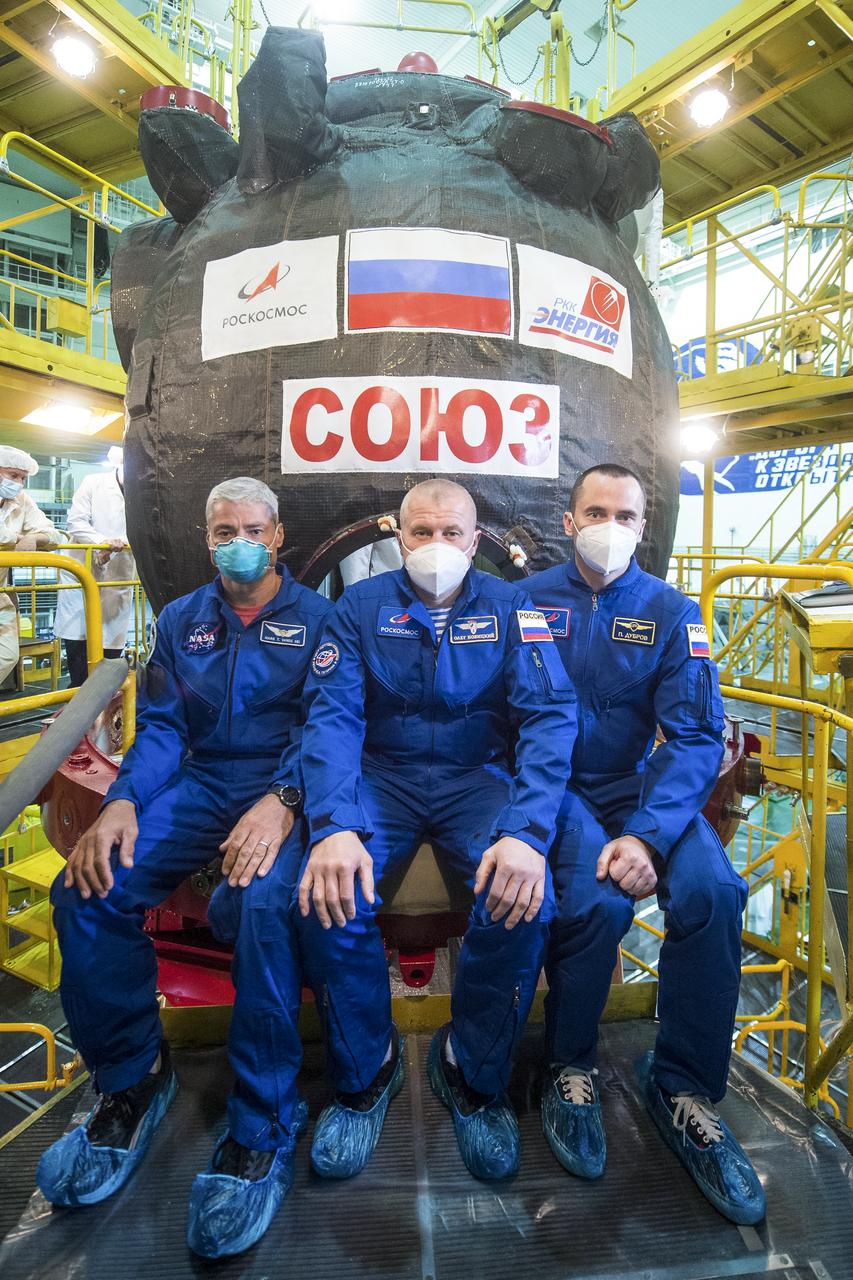
Expedition 64 backup crew members NASA astronaut Mark Vande Hei, left, and Russian cosmonauts Oleg Novitskiy, center, and Petr Dubrov, right, of Roscosmos take a moment during the Soyuz MS-17 spacecraft fit check to pose for a photograph, Monday, Sept. 28, 2020, at the Baikonur Cosmodrome in Kazakhstan. The prime crew members Russian cosmonauts Sergey Ryzhikov, Sergey Kud-Sverchkov of Roscosmos, and NASA astronaut Kate Rubins are preparing for launch to the International Space Station in their Soyuz MS-17 spacecraft from the Baikonur Cosmodrome in Kazakhstan on October 14, Baikonur time. Photo Credit: (NASA/GCTC/Andrey Shelepin)
Expedition 64 Russian cosmonaut Sergey Kud-Sverchkov of Roscosmos is helped into his Russian Sokol suit as he and fellow cremates, Sergey Ryzhikov of Roscosmos and Kate Rubins of NASA prepare for their Soyuz launch to the International Space Station Wednesday, Oct. 14, 2020, at the Baikonur Cosmodrome in Kazakhstan. The trio launched at 1:45 a.m. EDT to begin a six-month mission aboard the International Space Station. Photo Credit: (NASA/GCTC/Andrey Shelepin)
Expedition 64 Russian cosmonaut Sergey Ryzhikov of Roscosmos is seen as he prepares to have his Russian Sokol suit pressure checked as he and fellow crewmates Sergey Kud-Sverchkov of Roscosmos and Kate Rubins of NASA prepare for their Soyuz launch to the International Space Station Wednesday, Oct. 14, 2020, at the Baikonur Cosmodrome in Kazakhstan. The trio launched at 1:45 a.m. EDT to begin a six-month mission aboard the International Space Station. Photo Credit: (NASA/GCTC/Andrey Shelepin)
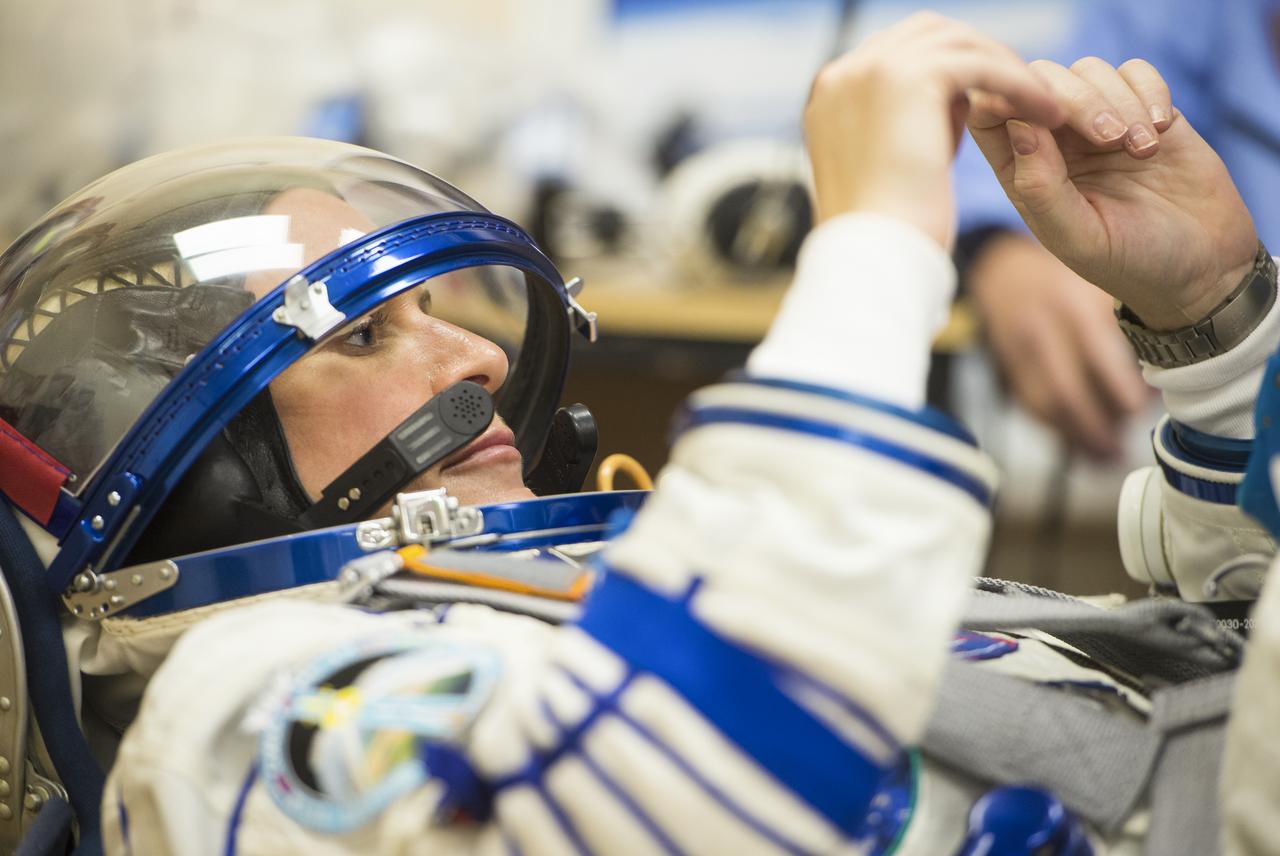
Expedition 64 NASA astronaut Kate Rubins is seen as she prepares to have her Russian Sokol suit pressure checked as she and fellow crewmates Sergey Kud-Sverchkov and Sergey Ryzhikov of Roscosmos prepare for their Soyuz launch to the International Space Station Wednesday, Oct. 14, 2020, at the Baikonur Cosmodrome in Kazakhstan. The trio launched at 1:45 a.m. EDT to begin a six-month mission aboard the International Space Station. Photo Credit: (NASA/GCTC/Andrey Shelepin)
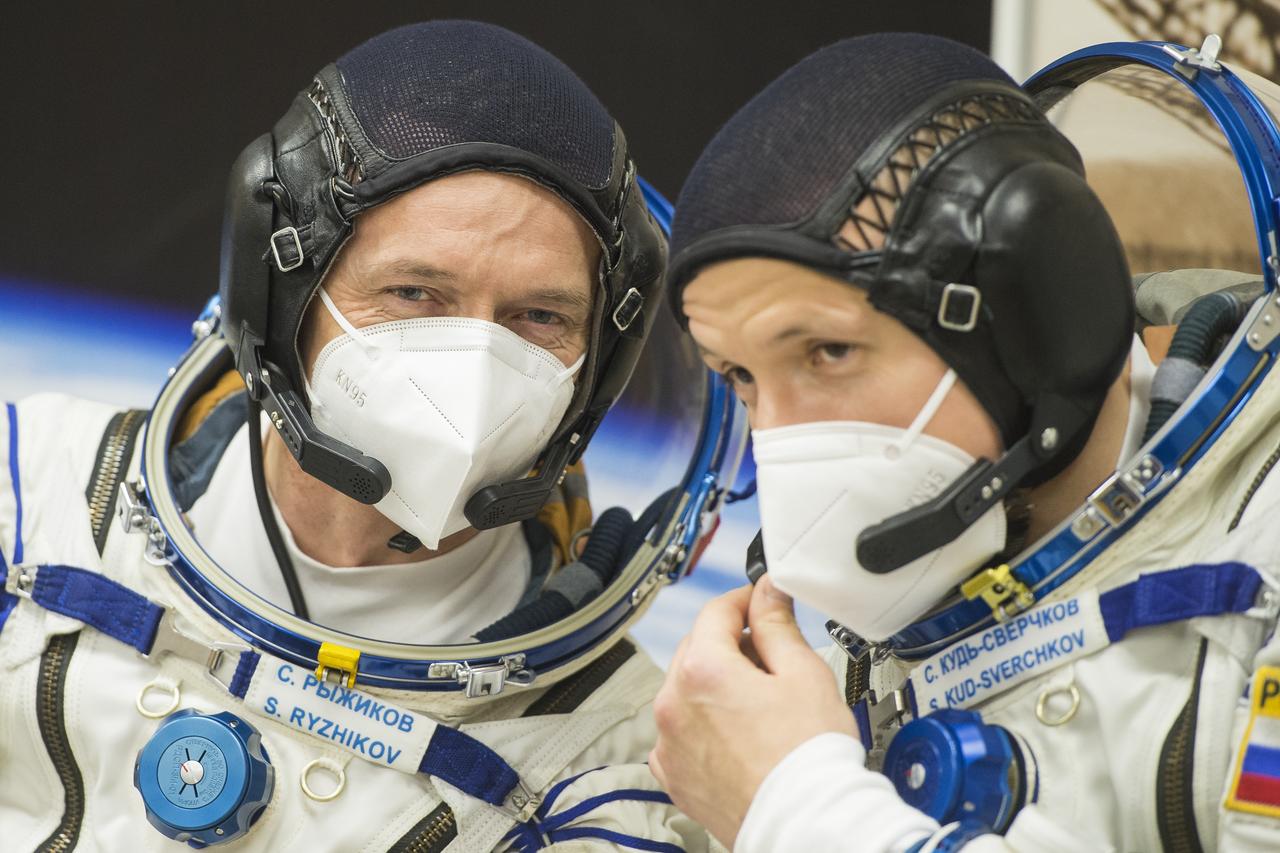
Expedition 64 Russian cosmonauts Sergey Ryzhikov, left, and Sergey Kud-Sverchkov, right, of Roscosmos are seen following Russian Sokol suit pressure checks as they and fellow crewmate NASA astronaut Kate Rubins prepare for their Soyuz launch to the International Space Station Wednesday, Oct. 14, 2020, at the Baikonur Cosmodrome in Kazakhstan. The trio launched at 1:45 a.m. EDT to begin a six-month mission aboard the International Space Station. Photo Credit: (NASA/GCTC/Andrey Shelepin)
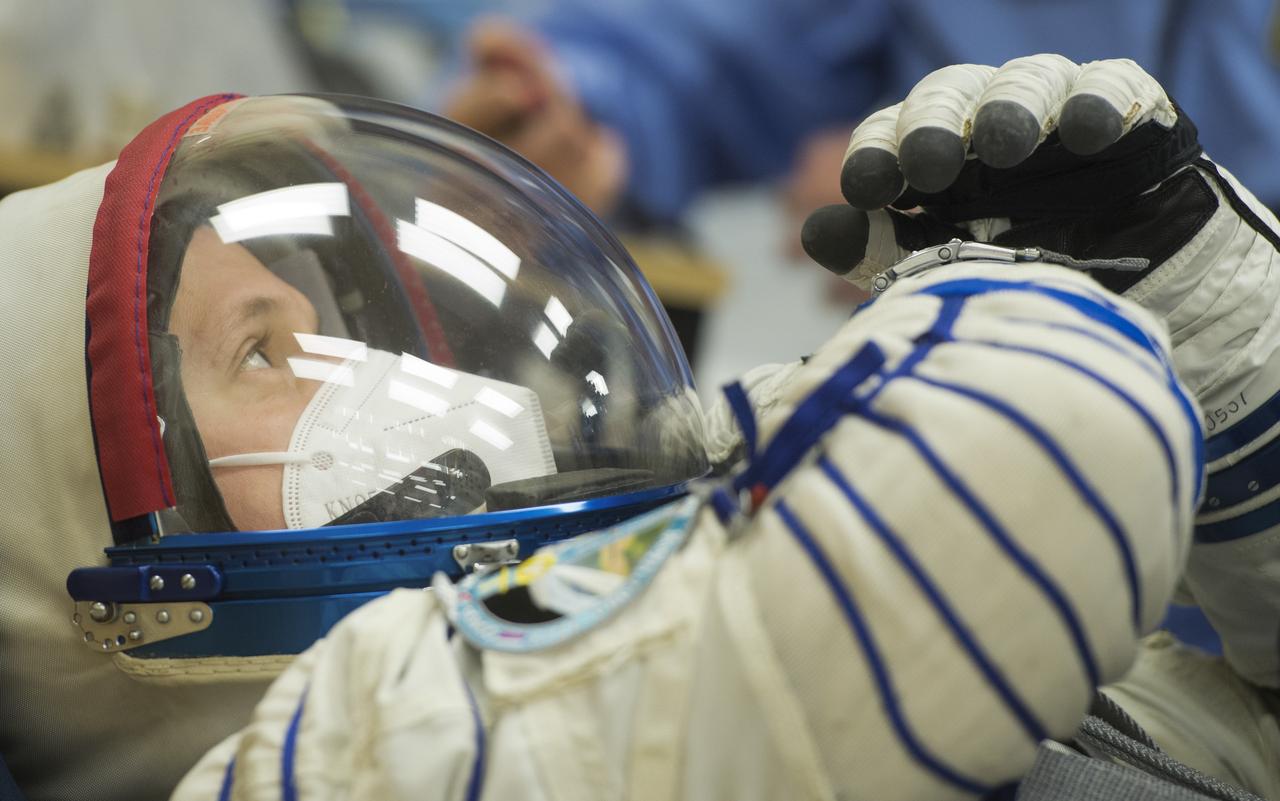
Expedition 64 Russian cosmonaut Sergey Kud-Sverchkov of Roscosmos is seen as his Russian Sokol suit is pressure checked as he and fellow crewmates Sergey Ryzhikov of Roscosmos and Kate Rubins of NASA prepare for their Soyuz launch to the International Space Station Wednesday, Oct. 14, 2020, at the Baikonur Cosmodrome in Kazakhstan. The trio launched at 1:45 a.m. EDT to begin a six-month mission aboard the International Space Station. Photo Credit: (NASA/GCTC/Andrey Shelepin)
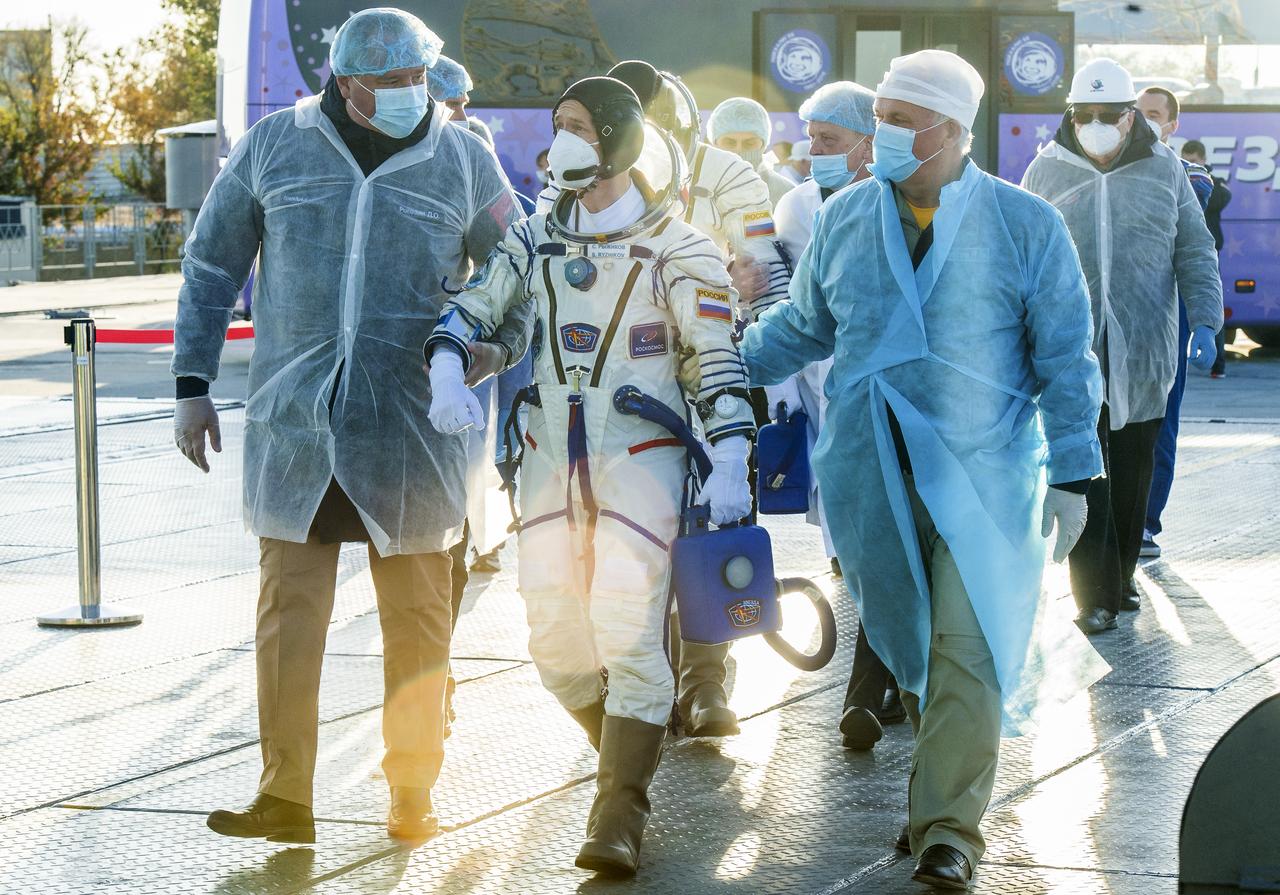
Expedition 64 Russian cosmonaut Sergey Ryzhikov walks to board the Soyuz MS-17 spacecraft with Roscosmos Director General Dmitry Rogozin prior to launch with Sergey Kud-Sverchkov of Roscosmos and Kate Rubins of NASA, Wednesday, Oct. 14, 2020, at the Baikonur Cosmodrome in Kazakhstan. The trio launched at 1:45 a.m. EDT to begin a six-month mission aboard the International Space Station. Photo Credit: (NASA/GCTC/Andrey Shelepin)
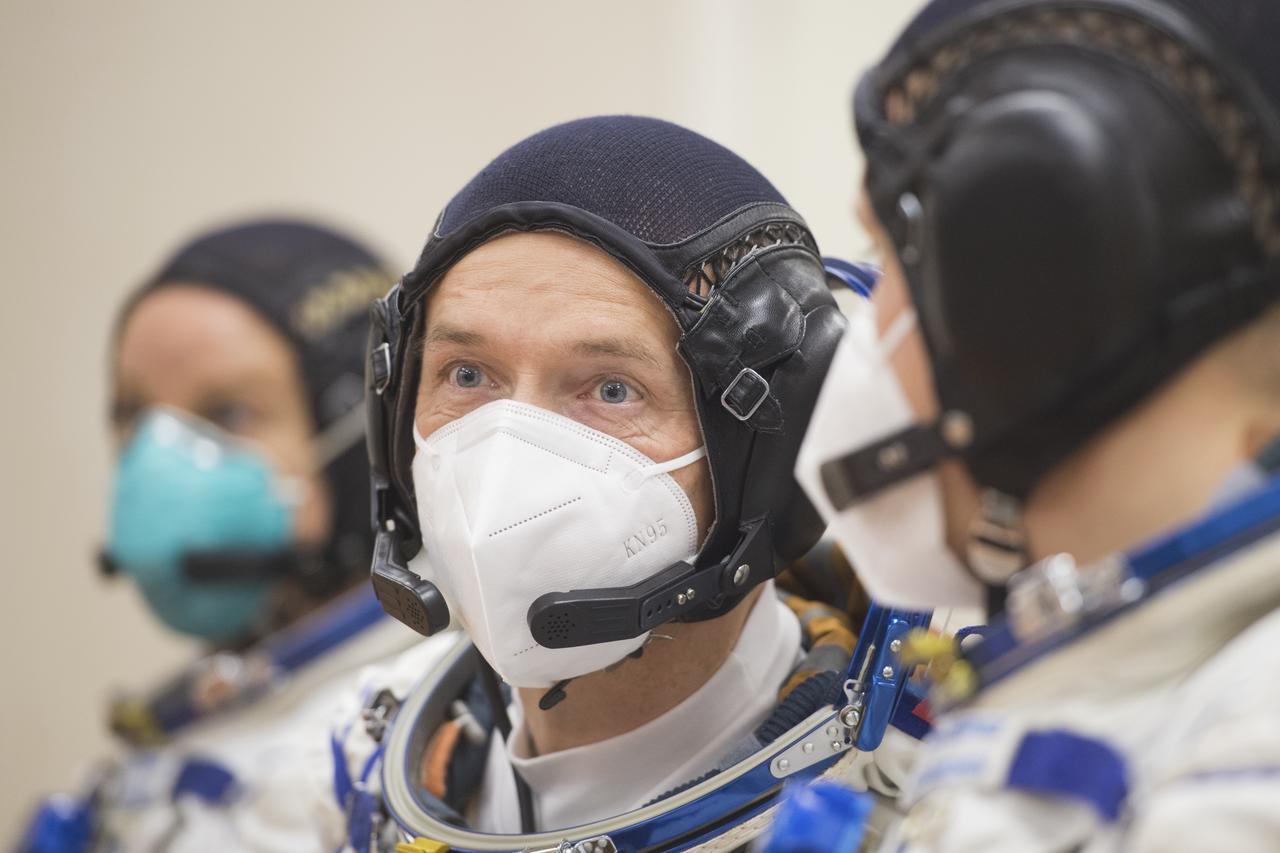
Expedition 64 Russian cosmonaut Sergey Ryzhikov, center, is seen with fellow crewmates Sergey Kud-Sverchkov of Roscosmos and Kate Rubins of NASA as they speak with Roscosmos and NASA managers after having their Russian Sokol suits pressure checked, Wednesday, Oct. 14, 2020, at the Baikonur Cosmodrome in Kazakhstan. The trio launched at 1:45 a.m. EDT to begin a six-month mission aboard the International Space Station. Photo Credit: (NASA/GCTC/Andrey Shelepin)
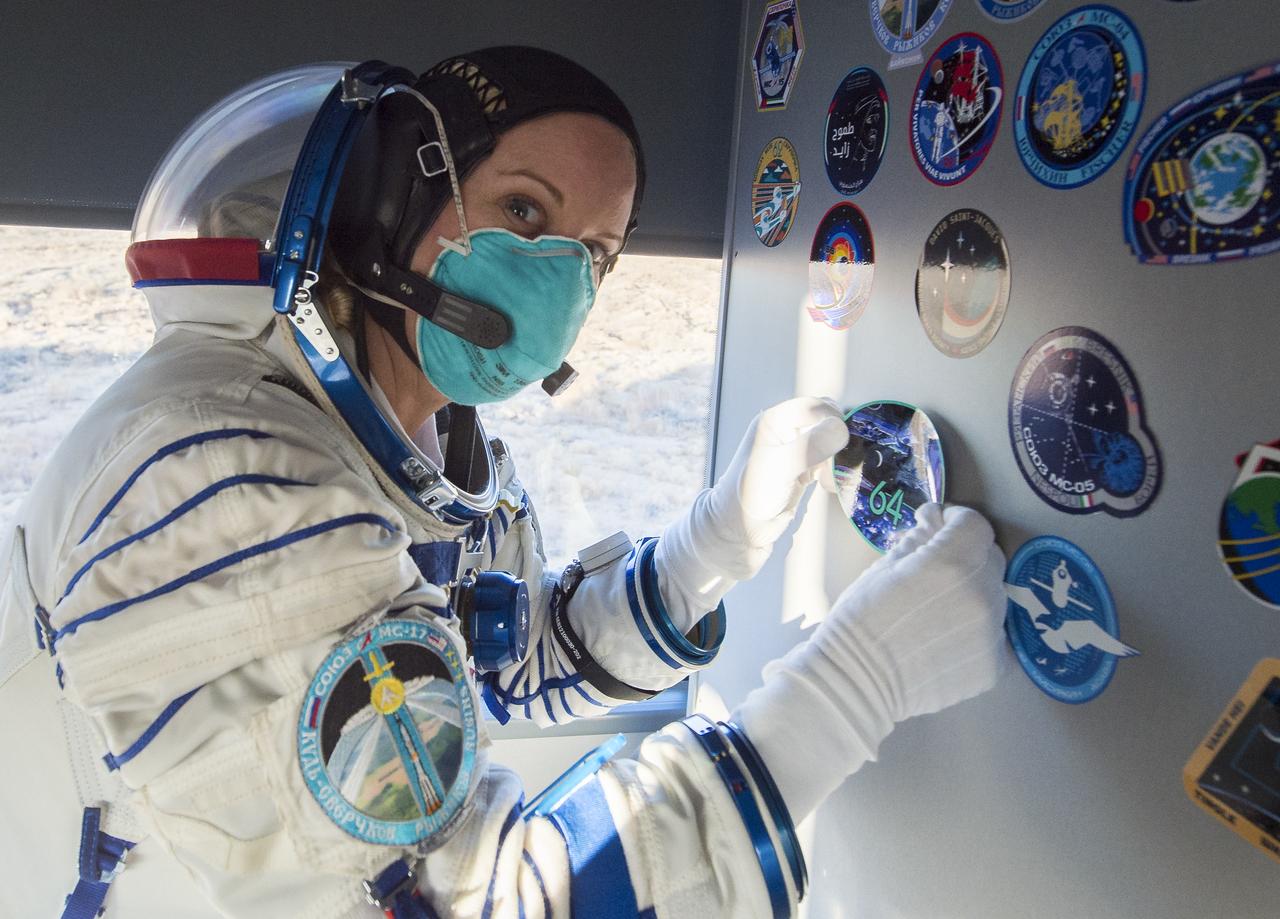
Expedition 64 NASA astronaut Kate Rubins affixes an Expedition 64 sticker inside the bus carrying her and fellow crewmates Russian cosmonauts Sergey Kud-Sverchkov and Sergey Ryzhikov of Roscosmos to the launch pad, Wednesday, Oct. 14, 2020, at the Baikonur Cosmodrome in Kazakhstan. The trio launched at 1:45 a.m. EDT to begin a six-month mission aboard the International Space Station. Photo Credit: (NASA/GCTC/Andrey Shelepin)
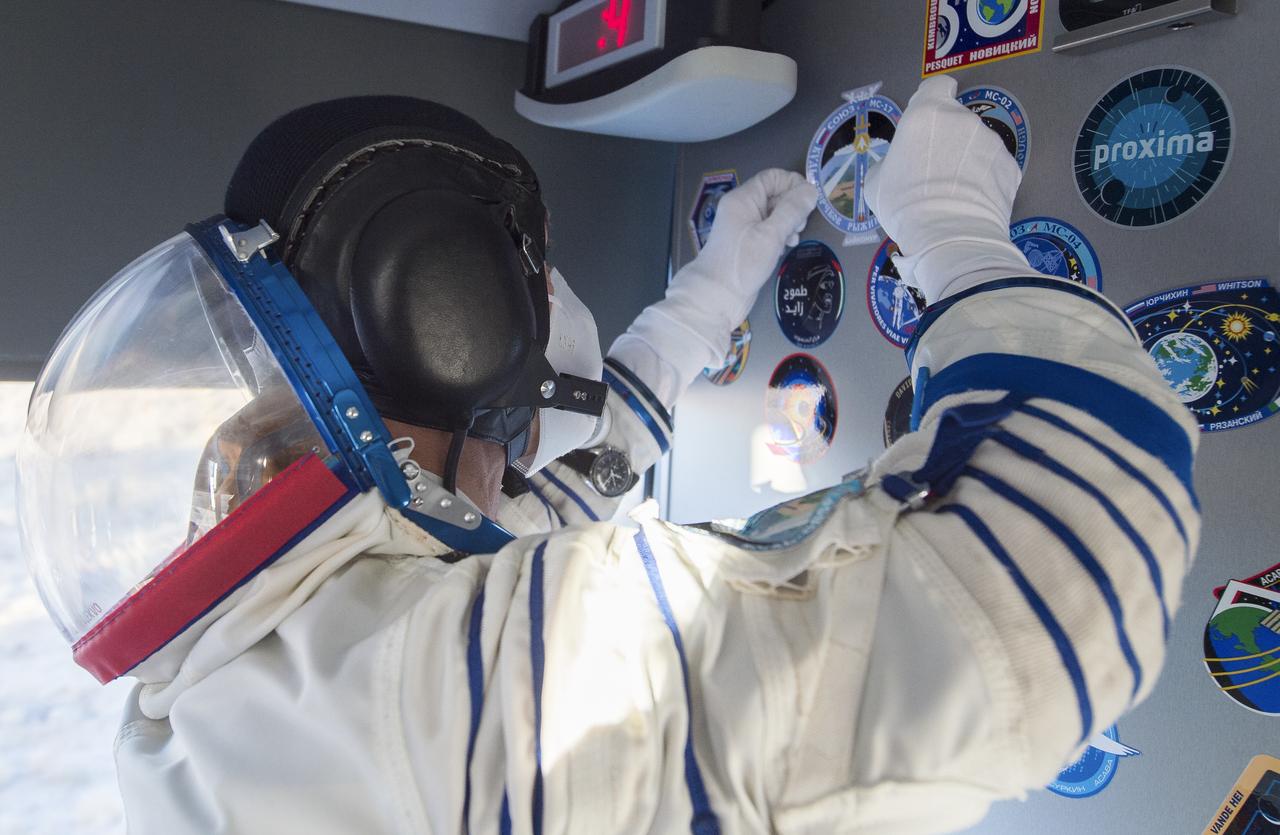
Expedition 64 Russian cosmonaut Sergey Ryzhikov of Roscosmos affixes a Soyuz MS-17 sticker inside the bus carrying him and fellow crewmates Russian cosmonaut Sergey Kud-Sverchkov of Roscosmos and NASA astronaut Kate Rubins to the launch pad, Wednesday, Oct. 14, 2020, at the Baikonur Cosmodrome in Kazakhstan. The trio launched at 1:45 a.m. EDT to begin a six-month mission aboard the International Space Station. Photo Credit: (NASA/GCTC/Andrey Shelepin)
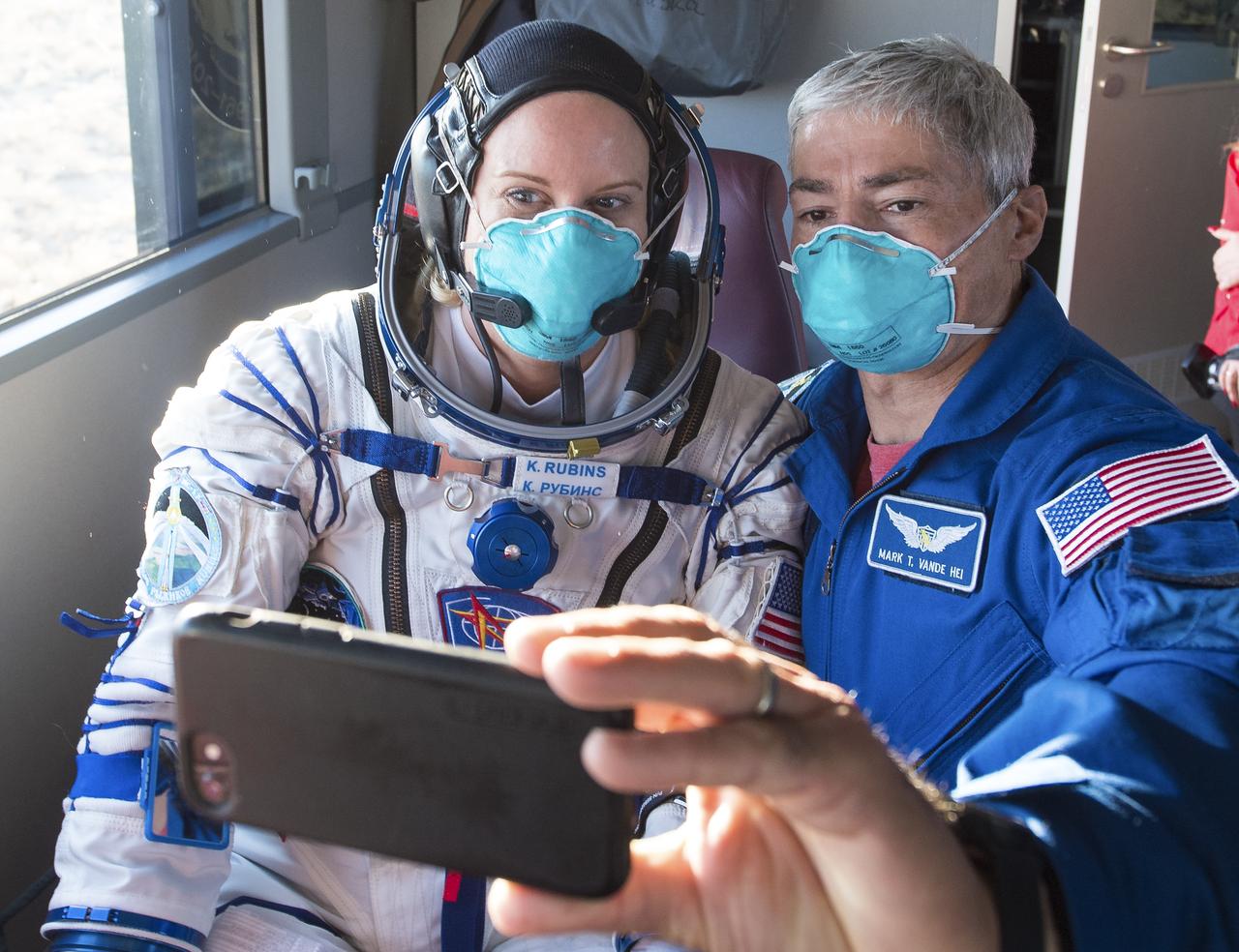
Expedition 64 NASA astronaut Kate Rubins and backup crew member NASA astronaut Mark Vande Hei take a selfie inside the bus carrying her and fellow crewmates Russian cosmonauts Sergey Kud-Sverchkov and Sergey Ryzhikov of Roscosmos to the launch pad, Wednesday, Oct. 14, 2020, at the Baikonur Cosmodrome in Kazakhstan. The trio launched at 1:45 a.m. EDT to begin a six-month mission aboard the International Space Station. Photo Credit: (NASA/GCTC/Andrey Shelepin)
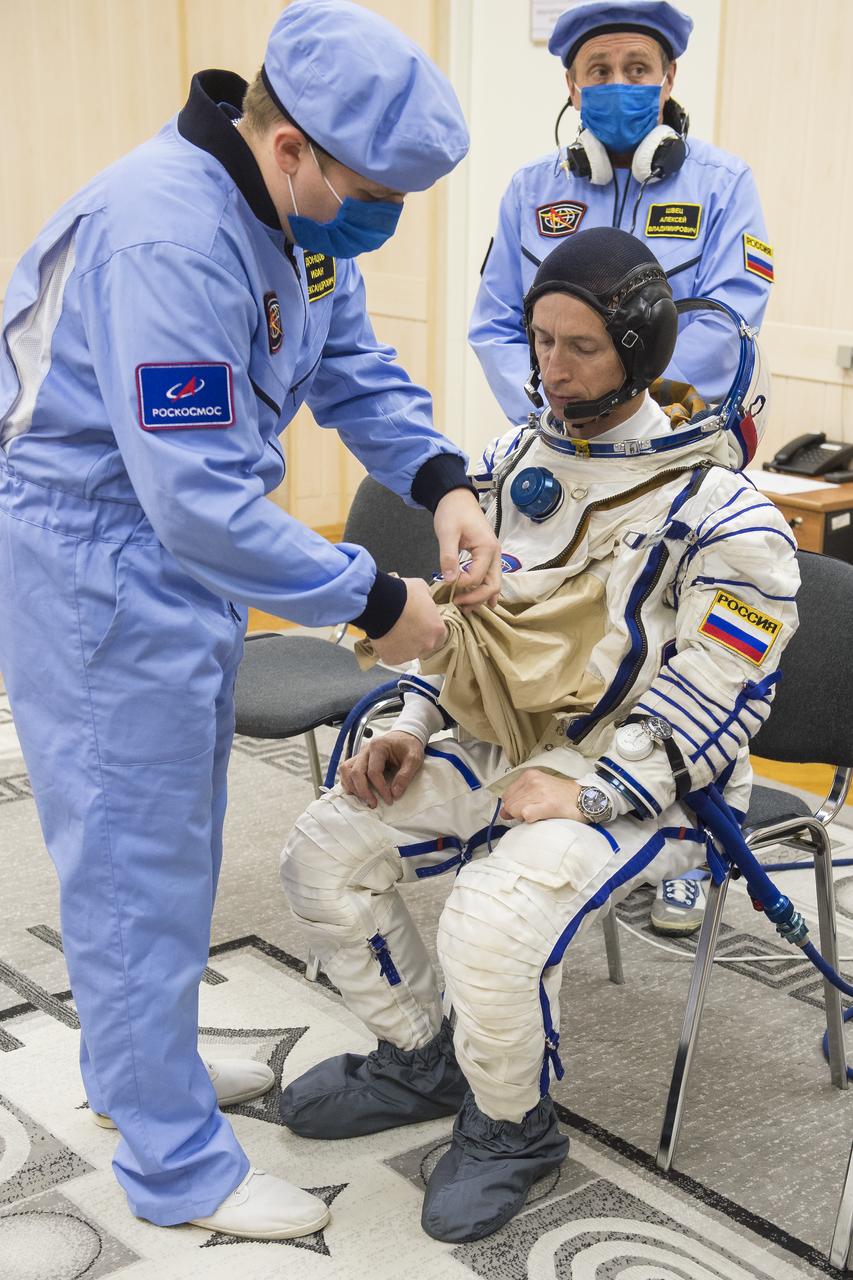
Expedition 64 Russian cosmonaut Sergey Ryzhikov of Roscosmos is helped into his Russian Sokol suit as he and fellow cremates, Sergey Kud-Sverchkov of Roscosmos and Kate Rubins of NASA prepare for their Soyuz launch to the International Space Station Wednesday, Oct. 14, 2020, at the Baikonur Cosmodrome in Kazakhstan. The trio launched at 1:45 a.m. EDT to begin a six-month mission aboard the International Space Station. Photo Credit: (NASA/GCTC/Andrey Shelepin)
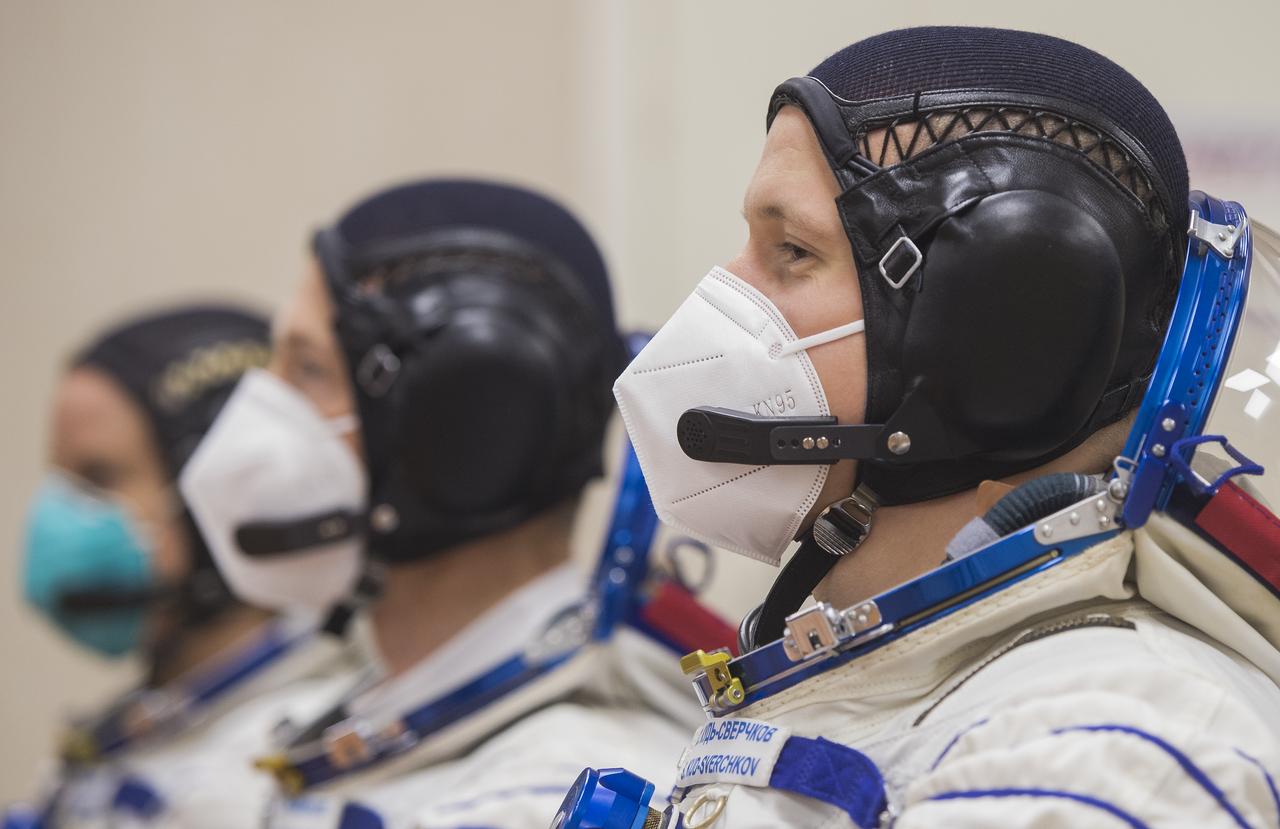
Expedition 64 Russian cosmonaut Sergey Kud-Sverchkov of Roscosmos, right, is seen with fellow crewmates Sergey Ryzhikov of Roscosmos and Kate Rubins of NASA as they speak with Roscosmos and NASA managers after having their Russian Sokol suits pressure checked, Wednesday, Oct. 14, 2020, at the Baikonur Cosmodrome in Kazakhstan. The trio launched at 1:45 a.m. EDT to begin a six-month mission aboard the International Space Station. Photo Credit: (NASA/GCTC/Andrey Shelepin)

Expedition 64 NASA astronaut Kate Rubins, left, and Russian cosmonauts Sergey Ryzhikov, center, and Sergey Kud-Sverchkov, right, of Roscosmos are seen as they don their Sokol suits during the Soyuz MS-17 spacecraft fit check, Monday, Sept. 28, 2020, at the Baikonur Cosmodrome in Kazakhstan. The trio are preparing for launch to the International Space Station in their Soyuz MS-17 spacecraft from the Baikonur Cosmodrome in Kazakhstan on October 14, Baikonur time. Photo Credit: (NASA/GCTC/Andrey Shelepin)
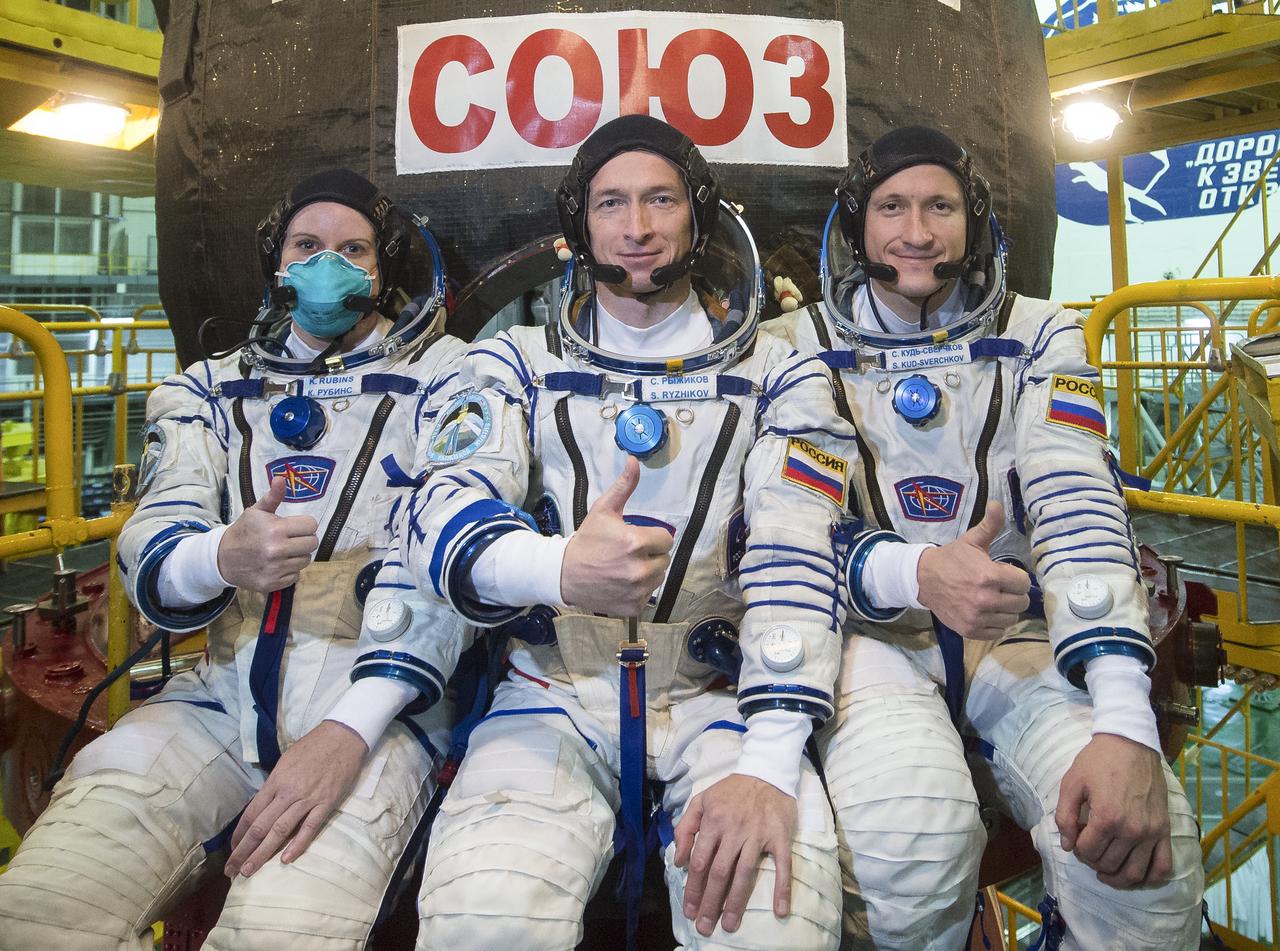
Expedition 64 NASA astronaut Kate Rubins, left, and Russian cosmonauts Sergey Ryzhikov, center, and Sergey Kud-Sverchkov, right, of Roscosmos take a moment during the Soyuz MS-17 spacecraft fit check to pose for a photograph, Monday, Sept. 28, 2020, at the Baikonur Cosmodrome in Kazakhstan. The trio are preparing for launch to the International Space Station in their Soyuz MS-17 spacecraft from the Baikonur Cosmodrome in Kazakhstan on October 14, Baikonur time. Photo Credit: (NASA/GCTC/Andrey Shelepin)
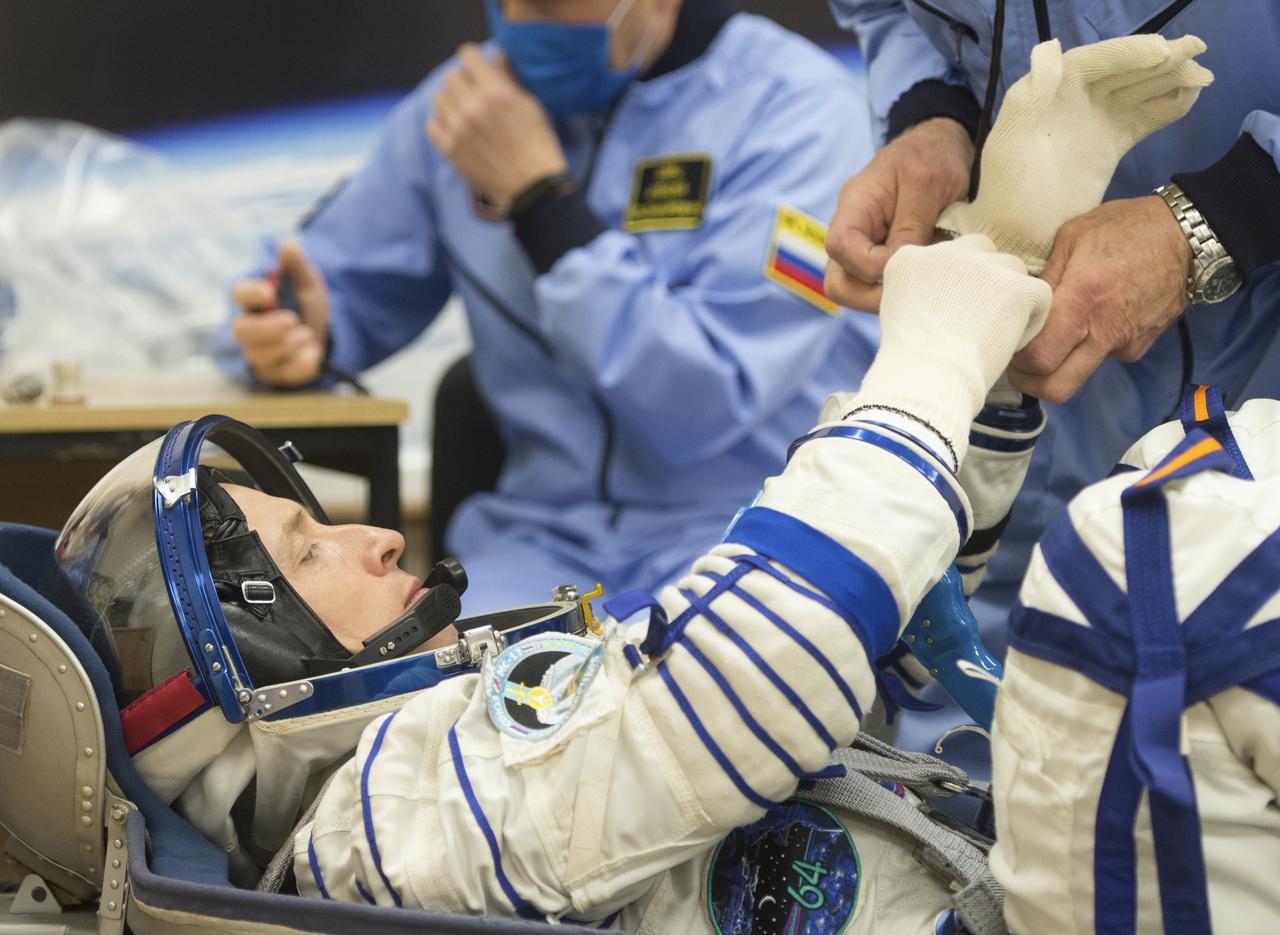
Expedition 64 Russian cosmonaut Sergey Ryzhikov of Roscosmos is seen as he prepares to have his Russian Sokol suit pressure checked as he and fellow crewmates Sergey Kud-Sverchkov of Roscosmos and Kate Rubins of NASA prepare for their Soyuz launch to the International Space Station Wednesday, Oct. 14, 2020, at the Baikonur Cosmodrome in Kazakhstan. The trio launched at 1:45 a.m. EDT to begin a six-month mission aboard the International Space Station. Photo Credit: (NASA/GCTC/Andrey Shelepin)
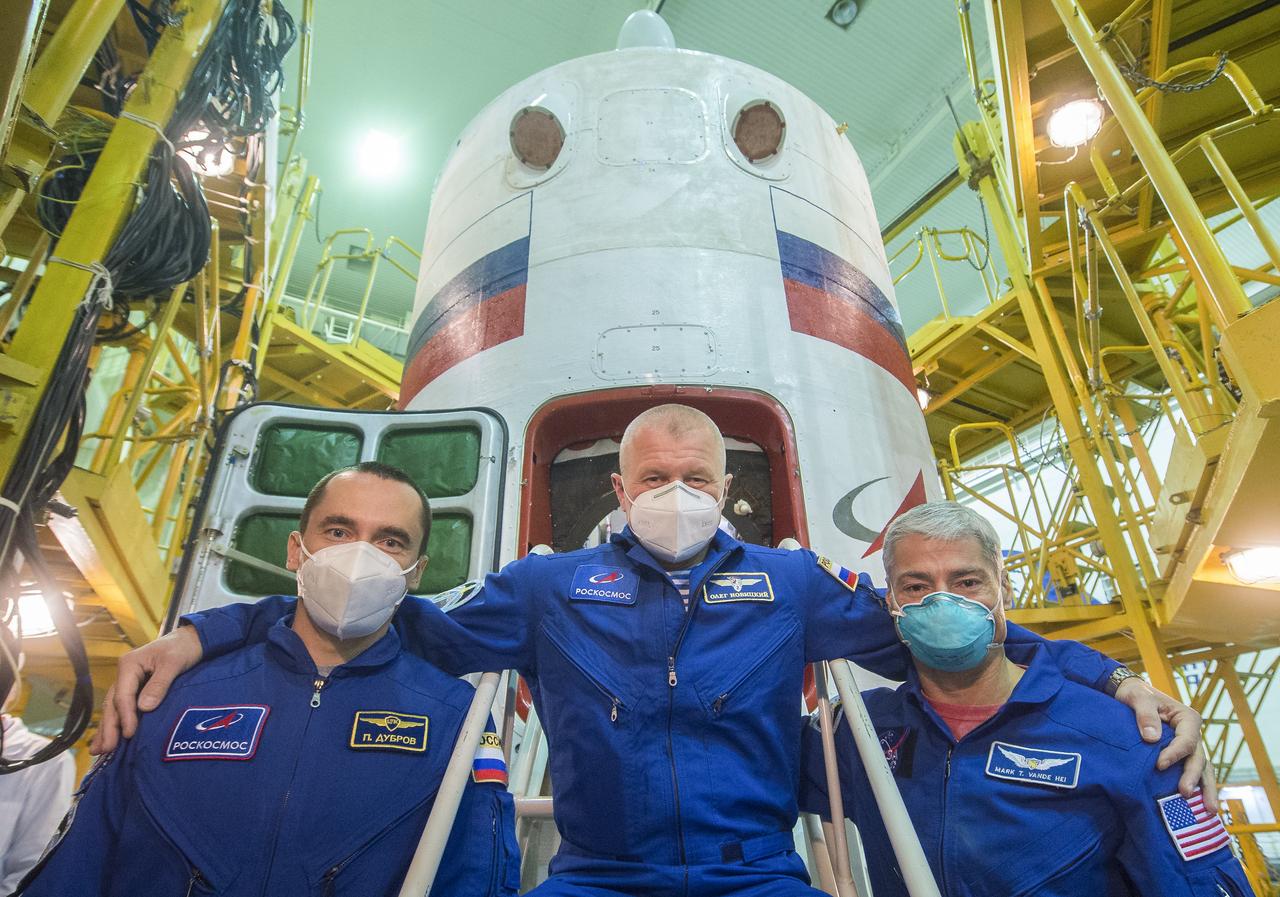
Expedition 64 backup crew members Petr Dubrov, left, and Oleg Novitskiy of Roscosmos, center, and Mark Vande Hei of NASA, right, pose for a picture during the Soyuz MS-17 spacecraft fit check, Wednesday, Oct. 7, 2020, at the Baikonur Cosmodrome in Kazakhstan. Expedition 64 Soyuz commander Sergey Ryzhikov of Roscosmos, flight engineer Sergey Kud-Sverchkov of Roscosmos, and flight engineer Kate Rubins of NASA, are scheduled to launch to the International Space Station aboard the Soyuz MS-17 spacecraft on October 14. Photo Credit: (NASA/GCTC/Andrey Shelepin)
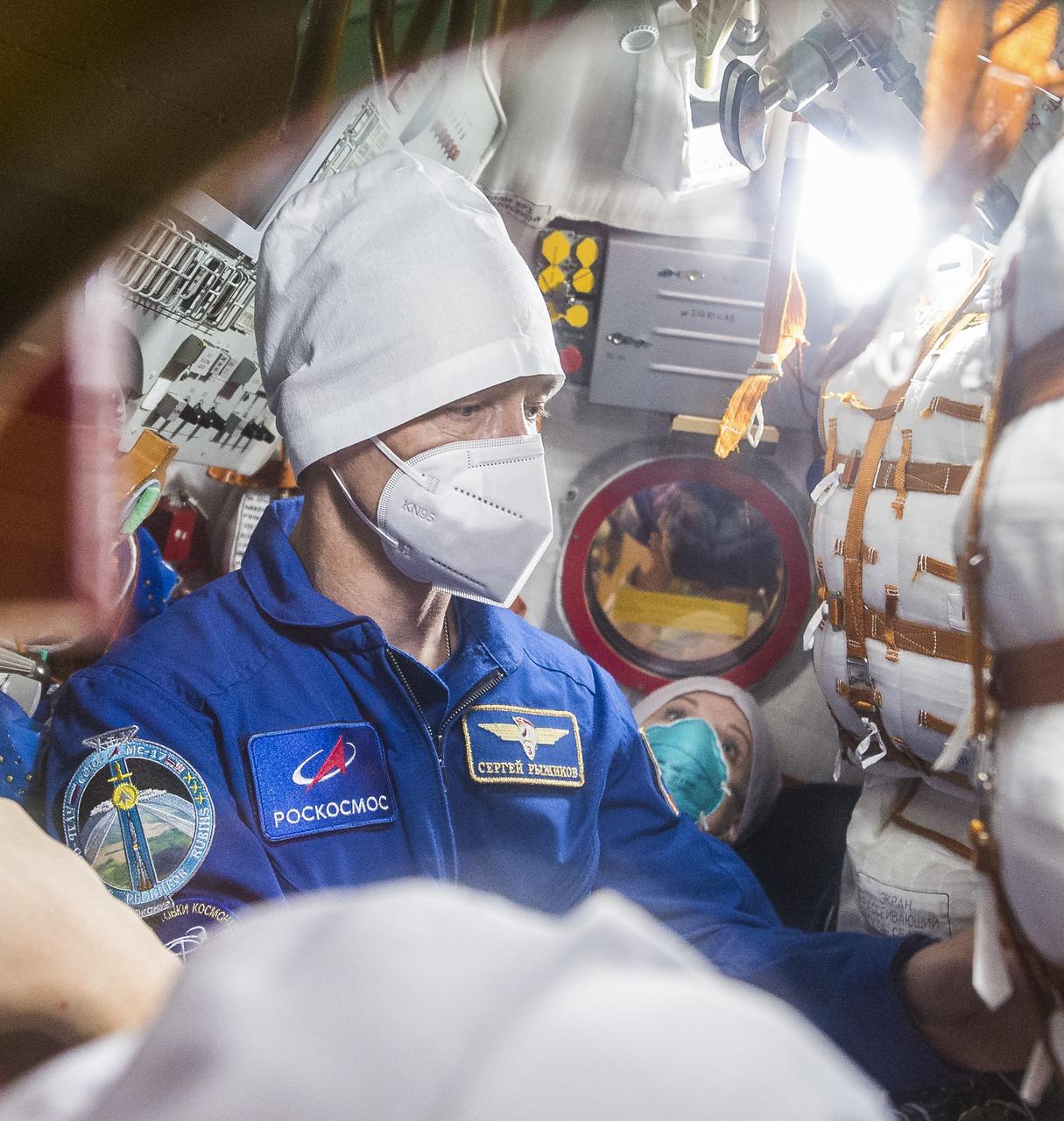
Expedition 64 NASA astronaut Kate Rubins, back, and Russian cosmonauts Sergey Ryzhikov, middle, and Sergey Kud-Sverchkov of Roscosmos are seen inside the Soyuz MS-17 spacecraft during a fit check, Monday, Sept. 28, 2020, at the Baikonur Cosmodrome in Kazakhstan. The trio are preparing for launch to the International Space Station in their Soyuz MS-17 spacecraft from the Baikonur Cosmodrome in Kazakhstan on October 14, Baikonur time. Photo Credit: (NASA/GCTC/Andrey Shelepin)
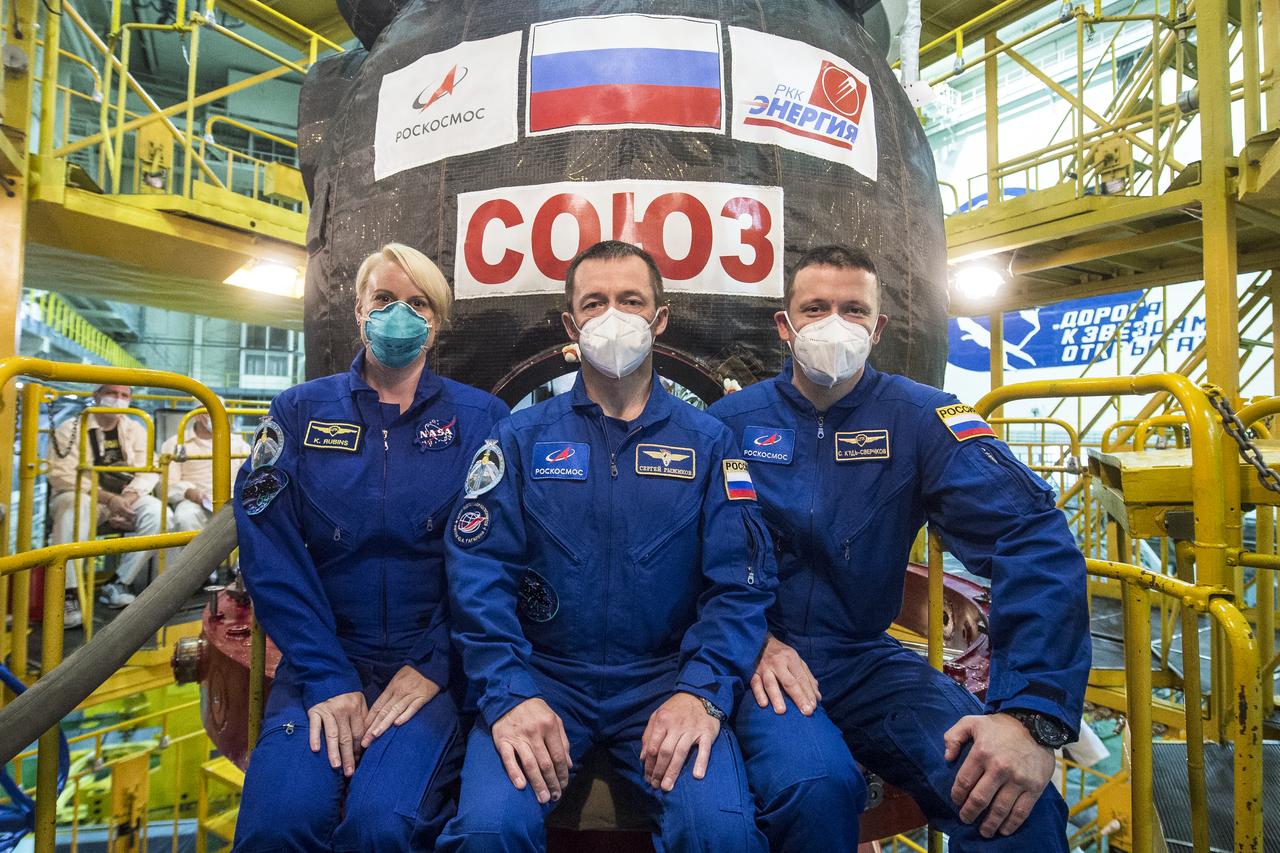
Expedition 64 NASA astronaut Kate Rubins, left, and Russian cosmonauts Sergey Ryzhikov, center, and Sergey Kud-Sverchkov, right, of Roscosmos take a moment during the Soyuz MS-17 spacecraft fit check to pose for a photograph, Monday, Sept. 28, 2020, at the Baikonur Cosmodrome in Kazakhstan. The trio are preparing for launch to the International Space Station in their Soyuz MS-17 spacecraft from the Baikonur Cosmodrome in Kazakhstan on October 14, Baikonur time. Photo Credit: (NASA/GCTC/Andrey Shelepin)
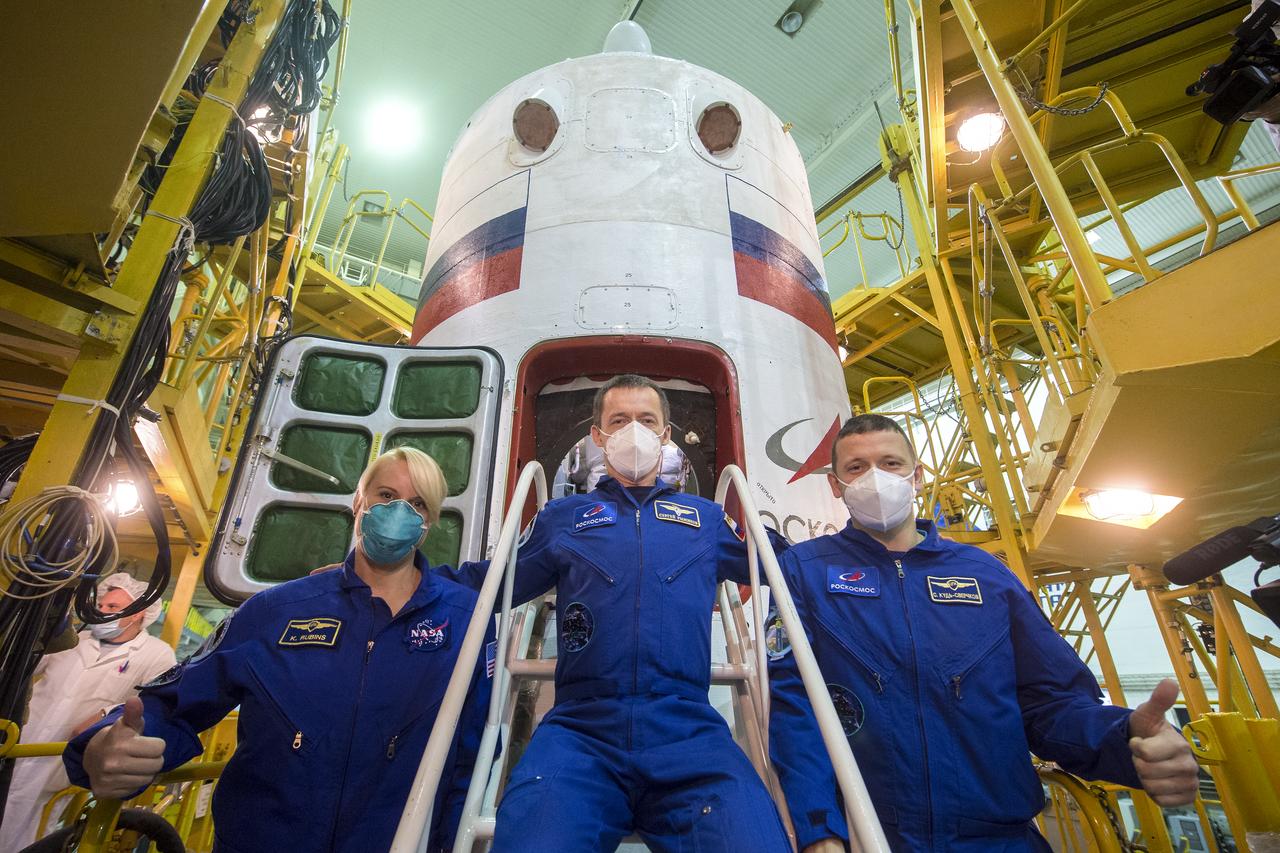
Expedition 64 NASA astronaut Kate Rubins, left, and Russian cosmonauts Sergey Ryzhikov, center, and Sergey Kud-Sverchkov of Roscosmos, right, pose for a picture during the final Soyuz MS-17 spacecraft fit check, Wednesday, Oct. 7, 2020, at the Baikonur Cosmodrome in Kazakhstan. Rubins, Ryzhikov, and Kud-Sverchkov are scheduled to launch to the International Space Station aboard the Soyuz MS-17 spacecraft on October 14. Photo Credit: (NASA/GCTC/Andrey Shelepin)
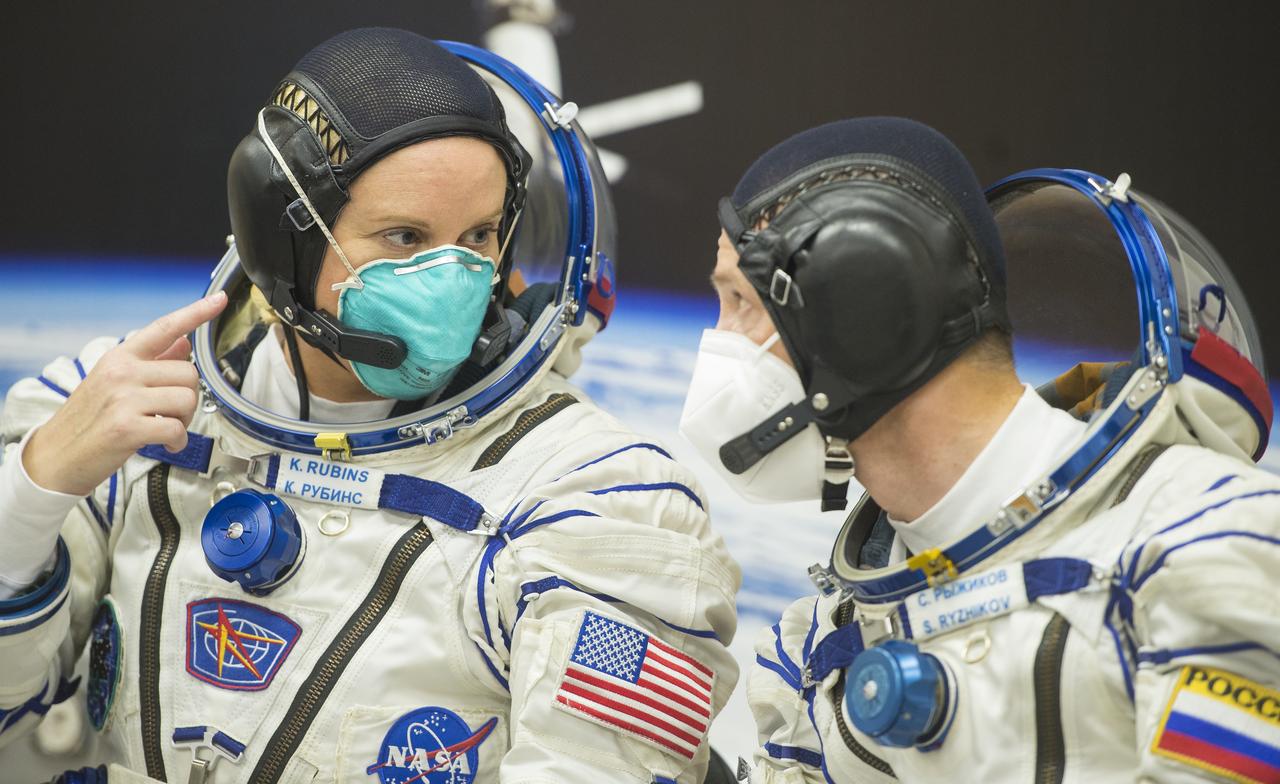
Expedition 64 NASA astronaut Kate Rubins, left, and Russian cosmonaut Sergey Ryzhikov, left, are seen following Russian Sokol suit pressure checks as they and fellow crewmate Sergey Kud-Sverchkov of Roscosmos prepare for their Soyuz launch to the International Space Station Wednesday, Oct. 14, 2020, at the Baikonur Cosmodrome in Kazakhstan. The trio launched at 1:45 a.m. EDT to begin a six-month mission aboard the International Space Station. Photo Credit: (NASA/GCTC/Andrey Shelepin)
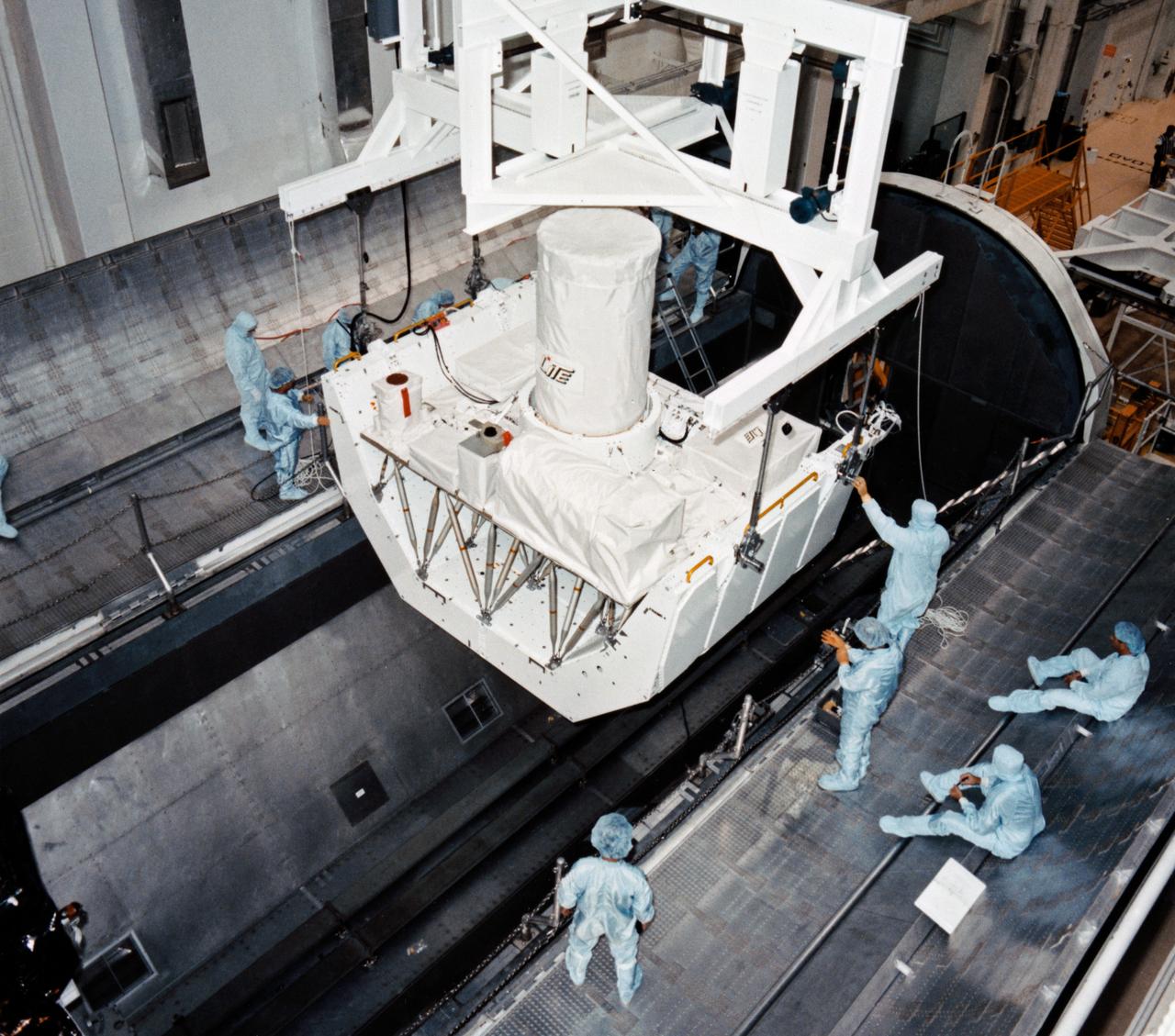
S94-40916 (5 July 1994) --- Workers in the Operations and Checkout Building are transporting the Lidar In-Space Technology Experiment (LITE-1) into the payload canister transporter for transfer to the Orbiter Processing Facility, where it will be installed into the cargo bay of the space shuttle Discovery. LITE-1, which will demonstrate the technology of a spaceborne Lidar instrument, is scheduled to fly on STS-64 later this year. Photo credit: NASA or National Aeronautics and Space Administration
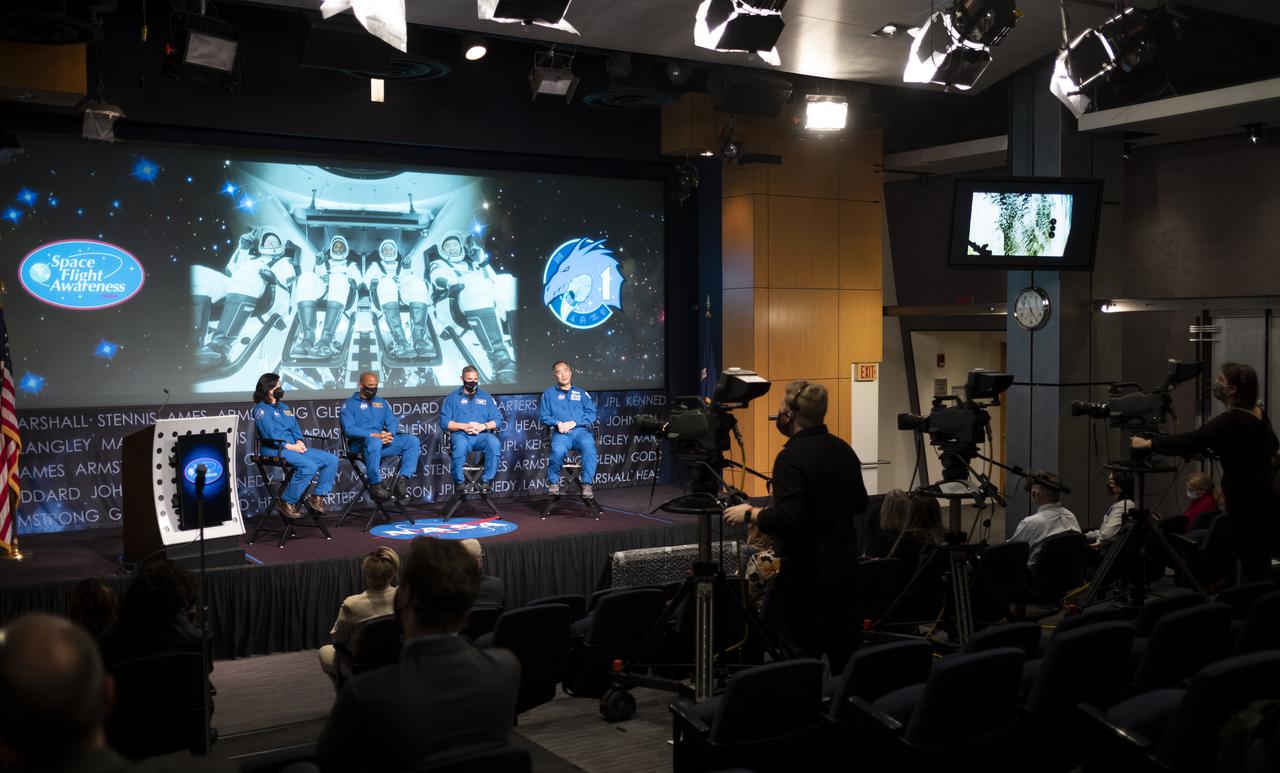
SpaceX Crew-1 NASA astronauts Shannon Walker, left, Victor Glover, second from left, Mike Hopkins, second from right, and Japan Aerospace Exploration Agency (JAXA) astronaut Soichi Noguchi, right, speak with with employees of the Space Operations and Exploration Systems Development Mission Directorates, Monday, Nov. 15, 2021, at the Mary W. Jackson NASA Headquarters Building in Washington. Hopkins, Glover, Walker, and Noguchi launched on the first crew rotation mission to the International Space Station for SpaceX’s Falcon 9 and Crew Dragon spacecraft as part of the agency’s Commercial Crew Program and spent 168 days in space across Expeditions 64 and 65. Photo Credit: (NASA/Joel Kowsky)
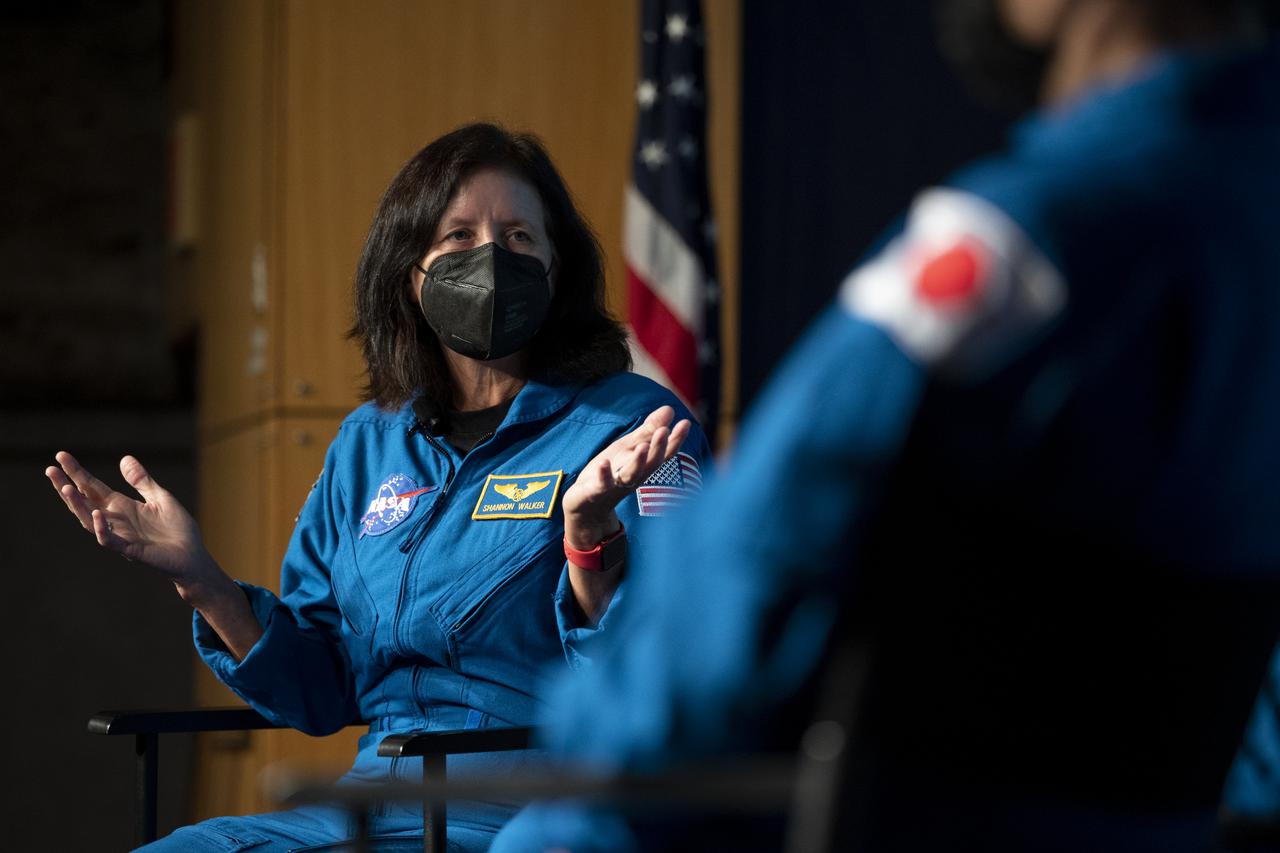
NASA astronaut Shannon Walker speaks with employees of the Space Operations and Exploration Systems Development Mission Directorates about the Crew-1 mission with fellow crew members NASA astronauts Mike Hopkins, Victor Glover, and Japan Aerospace Exploration Agency (JAXA) astronaut Soichi Noguchi, Monday, Nov. 15, 2021, at the Mary W. Jackson NASA Headquarters Building in Washington. Hopkins, Glover, Walker, and Noguchi launched on the first crew rotation mission to the International Space Station for SpaceX’s Falcon 9 and Crew Dragon spacecraft as part of the agency’s Commercial Crew Program and spent 168 days in space across Expeditions 64 and 65. Photo Credit: (NASA/Joel Kowsky)
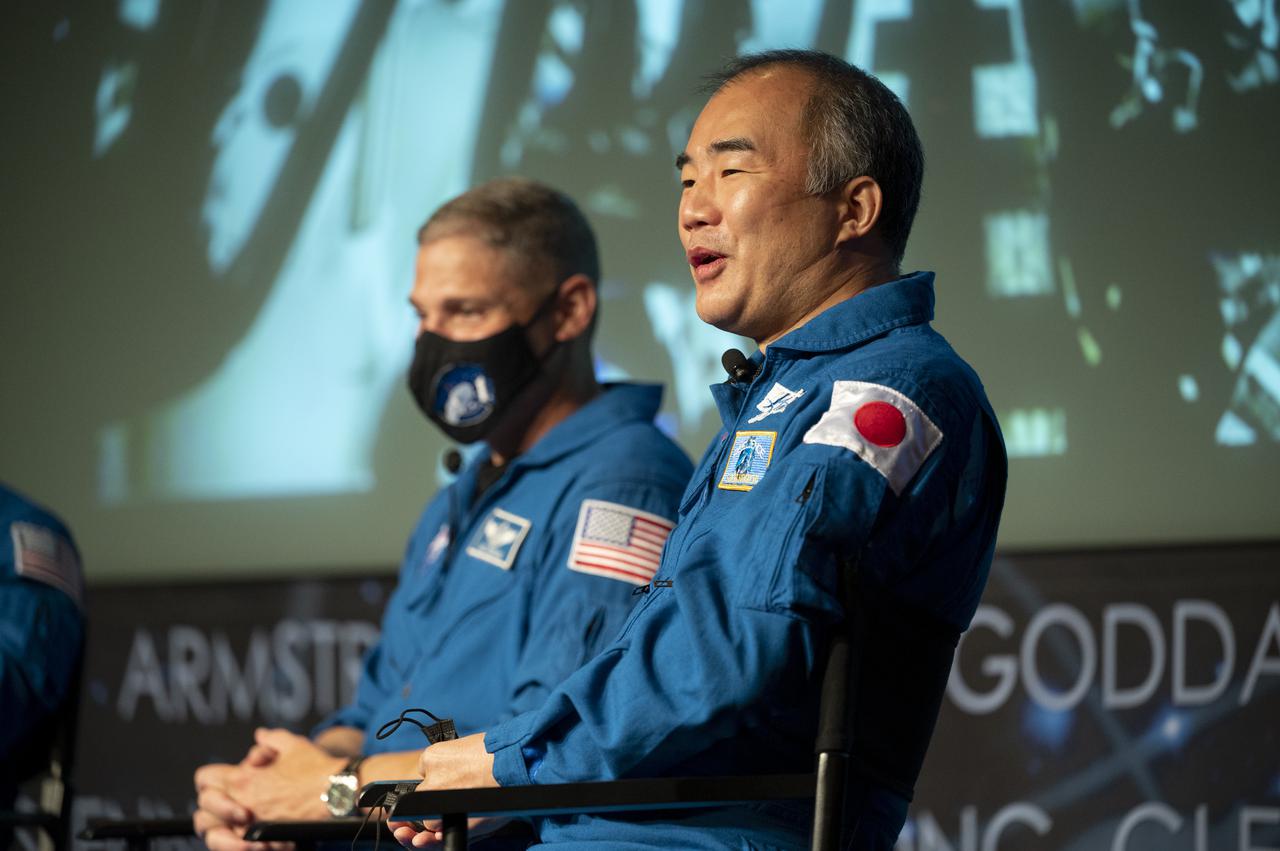
Japan Aerospace Exploration Agency (JAXA) astronaut Soichi Noguchi speaks with employees of the Space Operations and Exploration Systems Development Mission Directorates about the Crew-1 mission with fellow crew members NASA astronauts Mike Hopkins, Victor Glover, and Shannon Walker, Monday, Nov. 15, 2021, at the Mary W. Jackson NASA Headquarters Building in Washington. Hopkins, Glover, Walker, and Noguchi launched on the first crew rotation mission to the International Space Station for SpaceX’s Falcon 9 and Crew Dragon spacecraft as part of the agency’s Commercial Crew Program and spent 168 days in space across Expeditions 64 and 65. Photo Credit: (NASA/Joel Kowsky)
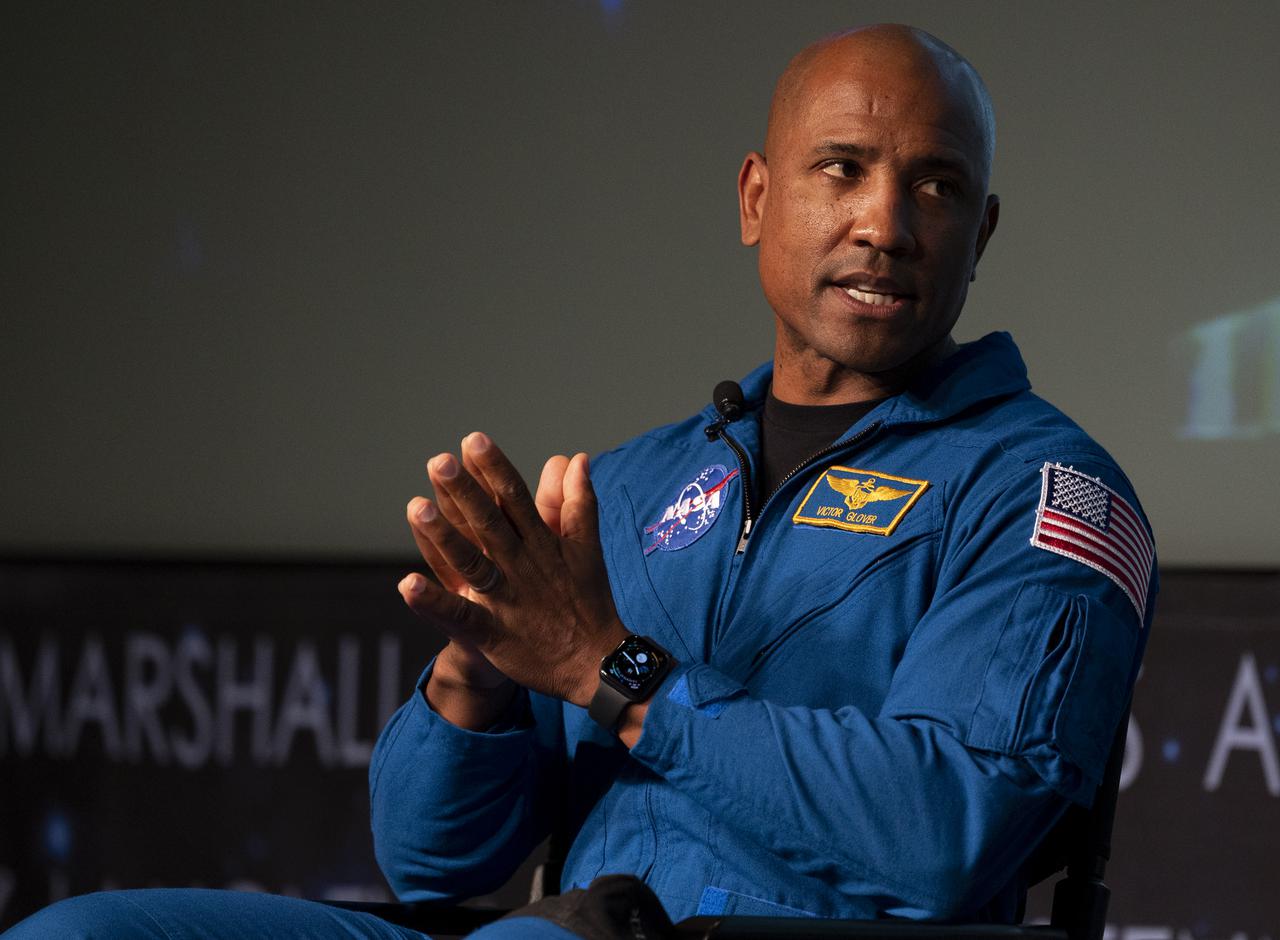
NASA astronaut Victor Glover speaks with employees of the Space Operations and Exploration Systems Development Mission Directorates about the Crew-1 mission with fellow crew members NASA astronauts Mike Hopkins, Shannon Walker, and Japan Aerospace Exploration Agency (JAXA) astronaut Soichi Noguchi, Monday, Nov. 15, 2021, at the Mary W. Jackson NASA Headquarters Building in Washington. Hopkins, Glover, Walker, and Noguchi launched on the first crew rotation mission to the International Space Station for SpaceX’s Falcon 9 and Crew Dragon spacecraft as part of the agency’s Commercial Crew Program and spent 168 days in space across Expeditions 64 and 65. Photo Credit: (NASA/Joel Kowsky)
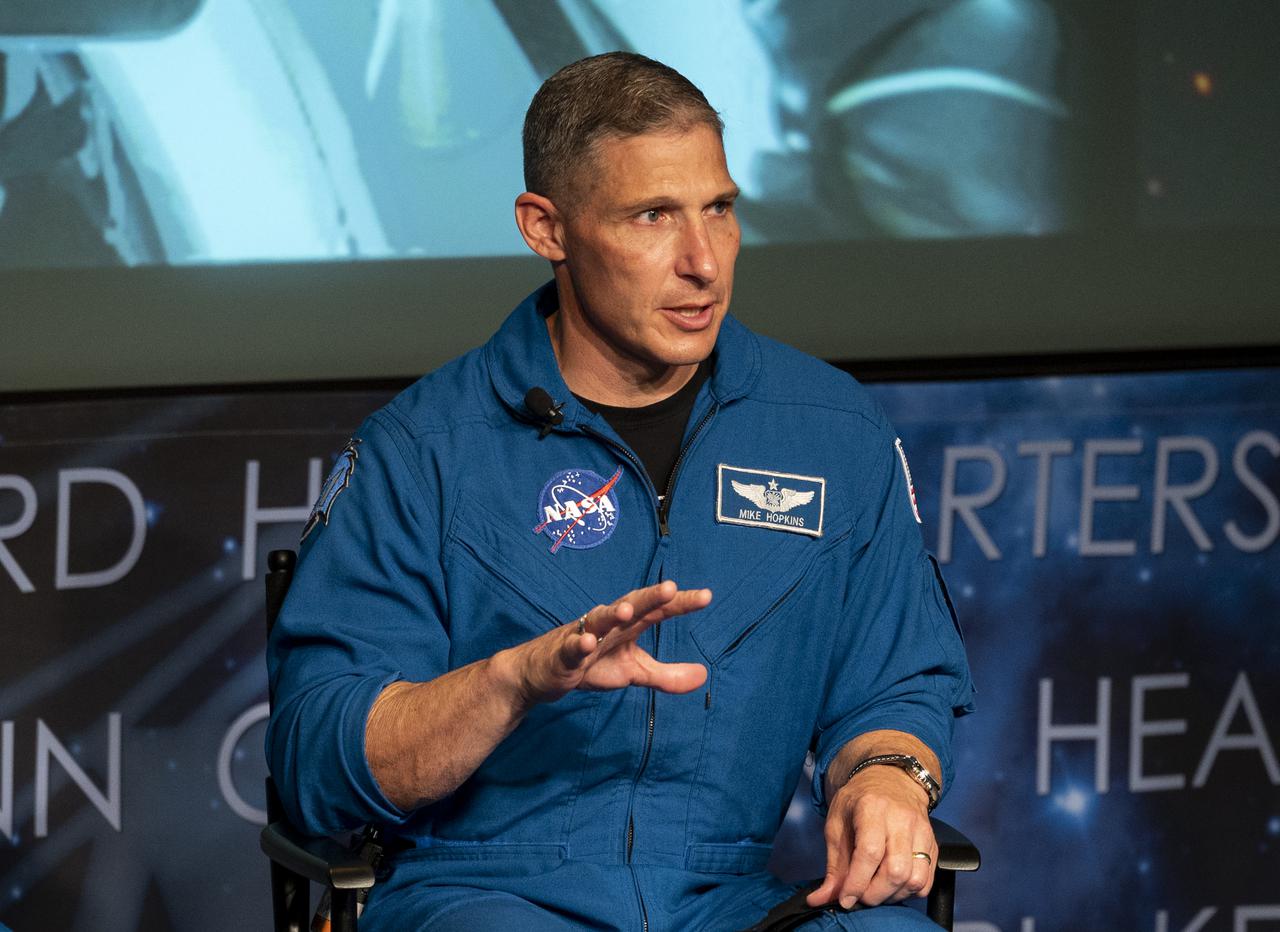
NASA astronaut Mike Hopkins speaks with employees of the Space Operations and Exploration Systems Development Mission Directorates about the Crew-1 mission with fellow crew members NASA astronauts Victor Glover, Shannon Walker, and Japan Aerospace Exploration Agency (JAXA) astronaut Soichi Noguchi, Monday, Nov. 15, 2021, at the Mary W. Jackson NASA Headquarters Building in Washington. Hopkins, Glover, Walker, and Noguchi launched on the first crew rotation mission to the International Space Station for SpaceX’s Falcon 9 and Crew Dragon spacecraft as part of the agency’s Commercial Crew Program and spent 168 days in space across Expeditions 64 and 65. Photo Credit: (NASA/Joel Kowsky)
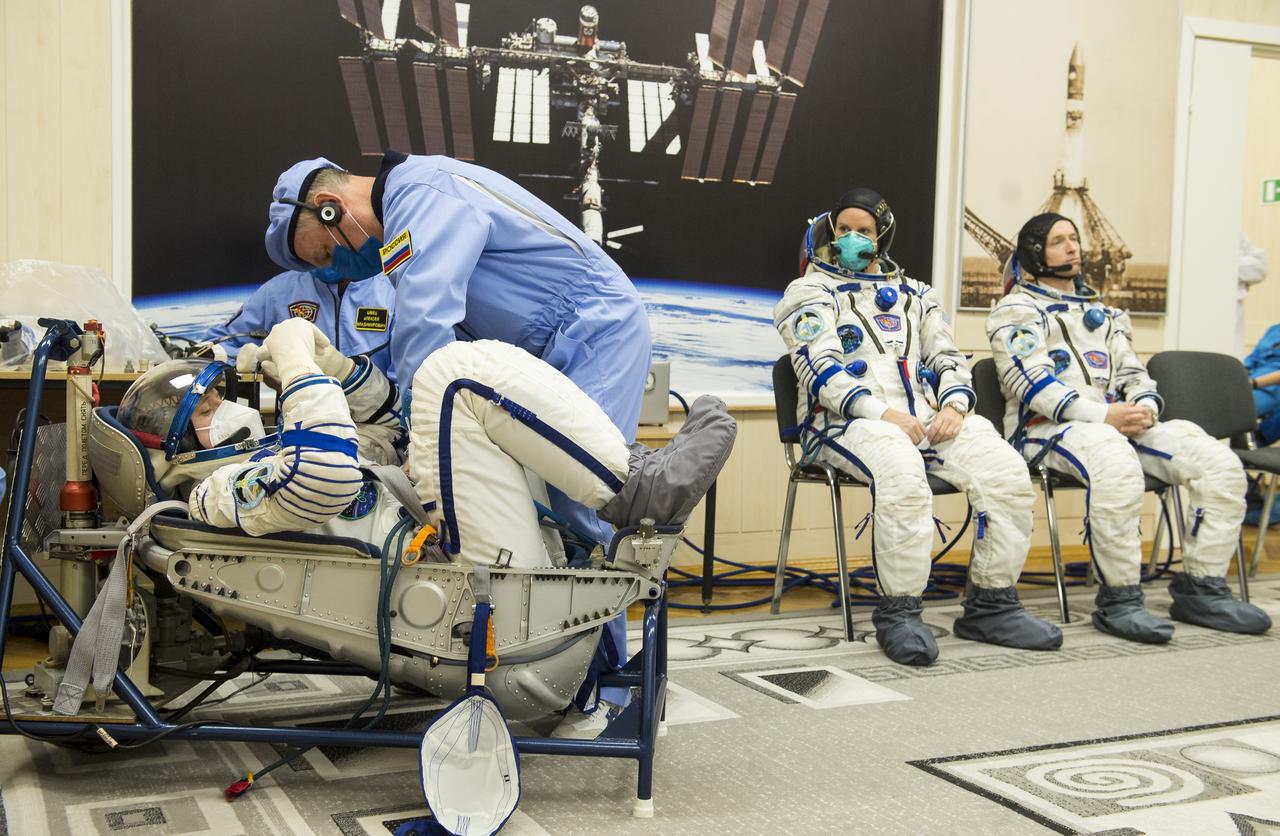
Expedition 64 Russian cosmonaut Sergey Kud-Sverchkov of Roscosmos is seen as he prepares to have his Russian Sokol suit pressure checked as he and fellow crewmates Sergey Ryzhikov of Roscosmos and Kate Rubins of NASA prepare for their Soyuz launch to the International Space Station Wednesday, Oct. 14, 2020, at the Baikonur Cosmodrome in Kazakhstan. The trio launched at 1:45 a.m. EDT to begin a six-month mission aboard the International Space Station. Photo Credit: (NASA/GCTC/Andrey Shelepin)
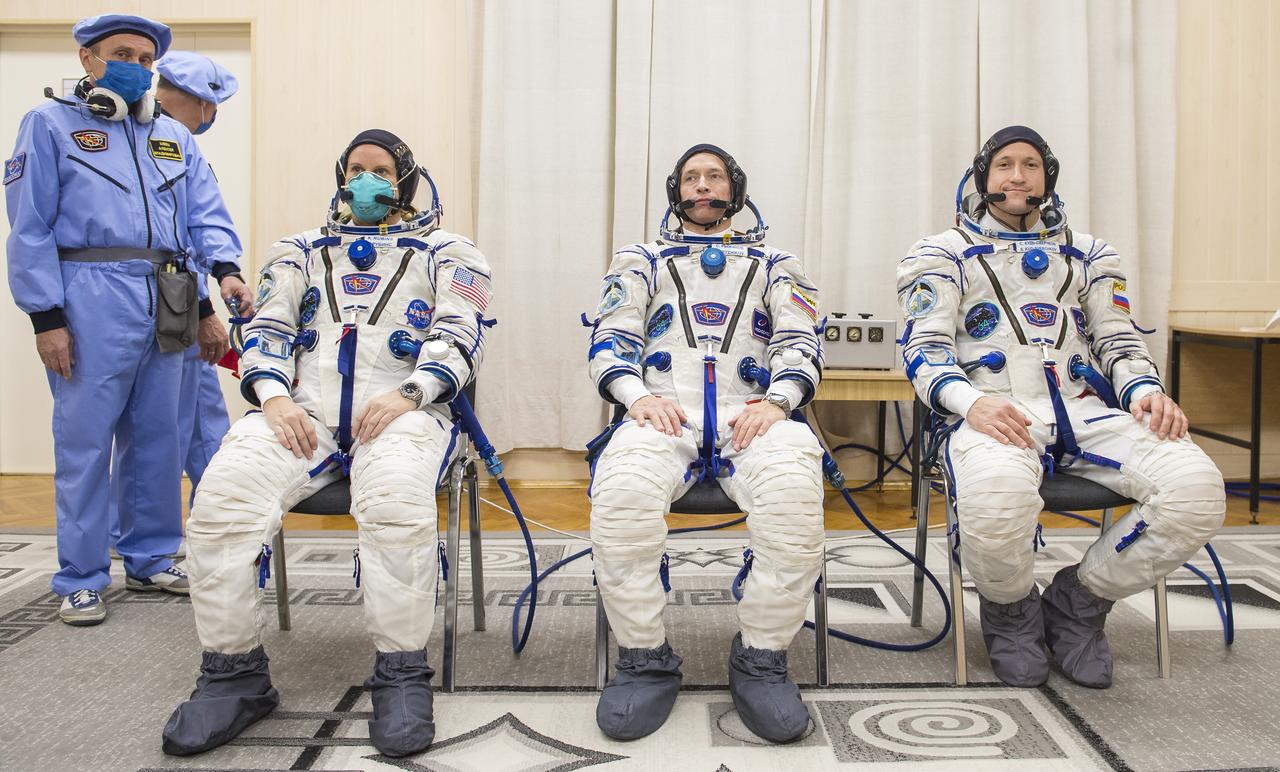
Expedition 64 NASA astronaut Kate Rubins, left, and Russian cosmonauts Sergey Ryzhikov, center, and Sergey Kud-Sverchkov, right, of Roscosmos are seen after donning their Russian Sokol suits as they prepare for their Soyuz launch to the International Space Station Wednesday, Oct. 14, 2020 in Baikonur, Kazakhstan. The trio launched at 1:45 a.m. EDT to begin a six-month mission aboard the International Space Station. Photo Credit: (NASA/GCTC/Andrey Shelepin)
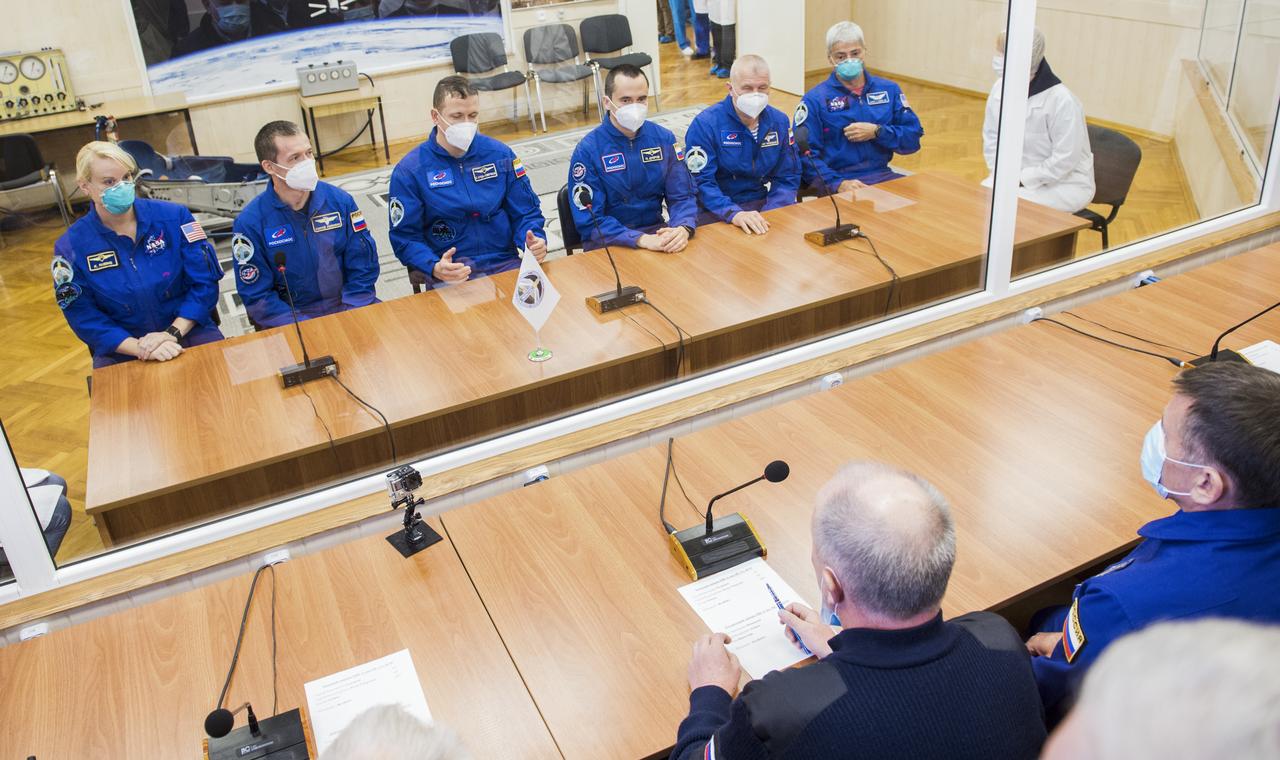
Expedition 64 prime crew members Kate Rubins of NASA, left, Sergey Ryzhikov of Roscosmos, second from left, and Sergey Kud-Sverchkov of Roscosmos, third from left, are seen with backup crew members Petr Dubrov of Roscosmos, third from right, Oleg Novitskiy of Roscosmos, second from right, and Mark Vande Hei of NASA, right, while speaking with officials during the final Soyuz MS-17 spacecraft fit check, Wednesday, Oct. 7, 2020, at the Baikonur Cosmodrome in Kazakhstan. The prime crew of Ryzhikov, Kud-Sverchkov, and Rubins are scheduled to launch to the International Space Station aboard the Soyuz MS-17 spacecraft on October 14. Photo Credit: (NASA/GCTC/Andrey Shelepin)
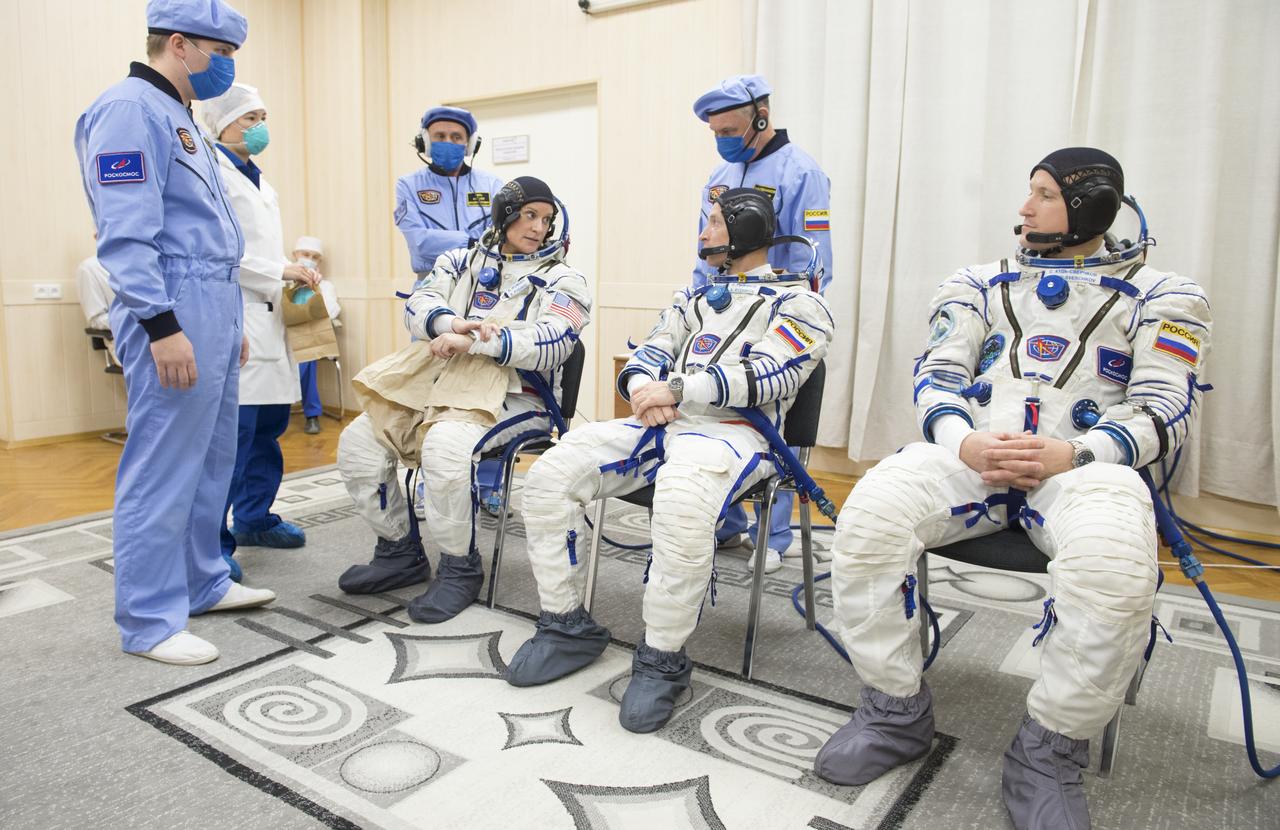
Expedition 64 NASA astronaut Kate Rubins, left, and Russian cosmonauts Sergey Ryzhikov, center, and Sergey Kud-Sverchkov, right, of Roscosmos are seen after while donning their Russian Sokol suits as they prepare for their Soyuz launch to the International Space Station Wednesday, Oct. 14, 2020 at the Baikonur Cosmodrome in Kazakhstan. The trio launched at 1:45 a.m. EDT to begin a six-month mission aboard the International Space Station. Photo Credit: (NASA/GCTC/Andrey Shelepin)
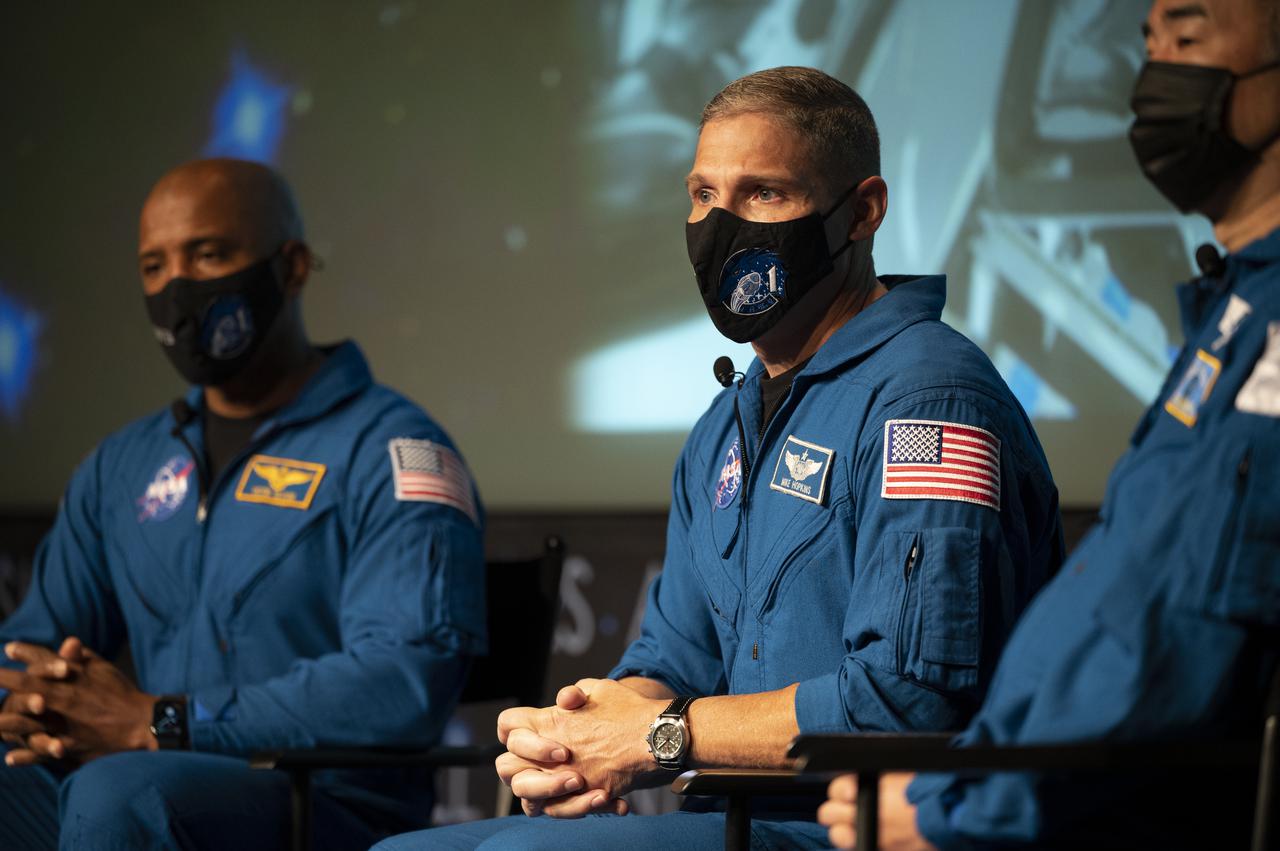
NASA astronaut Mike Hopkins, center, along with fellow SpaceX Crew-1 crew members Victor Glover, Shannon Walker, and Japan Aerospace Exploration Agency (JAXA) astronaut Soichi Noguchi speak with employees of the Space Operations and Exploration Systems Development Mission Directorates about the Crew-1 mission, Monday, Nov. 15, 2021, at the Mary W. Jackson NASA Headquarters Building in Washington. Hopkins, Glover, Walker, and Noguchi launched on the first crew rotation mission to the International Space Station for SpaceX’s Falcon 9 and Crew Dragon spacecraft as part of the agency’s Commercial Crew Program and spent 168 days in space across Expeditions 64 and 65. Photo Credit: (NASA/Joel Kowsky)
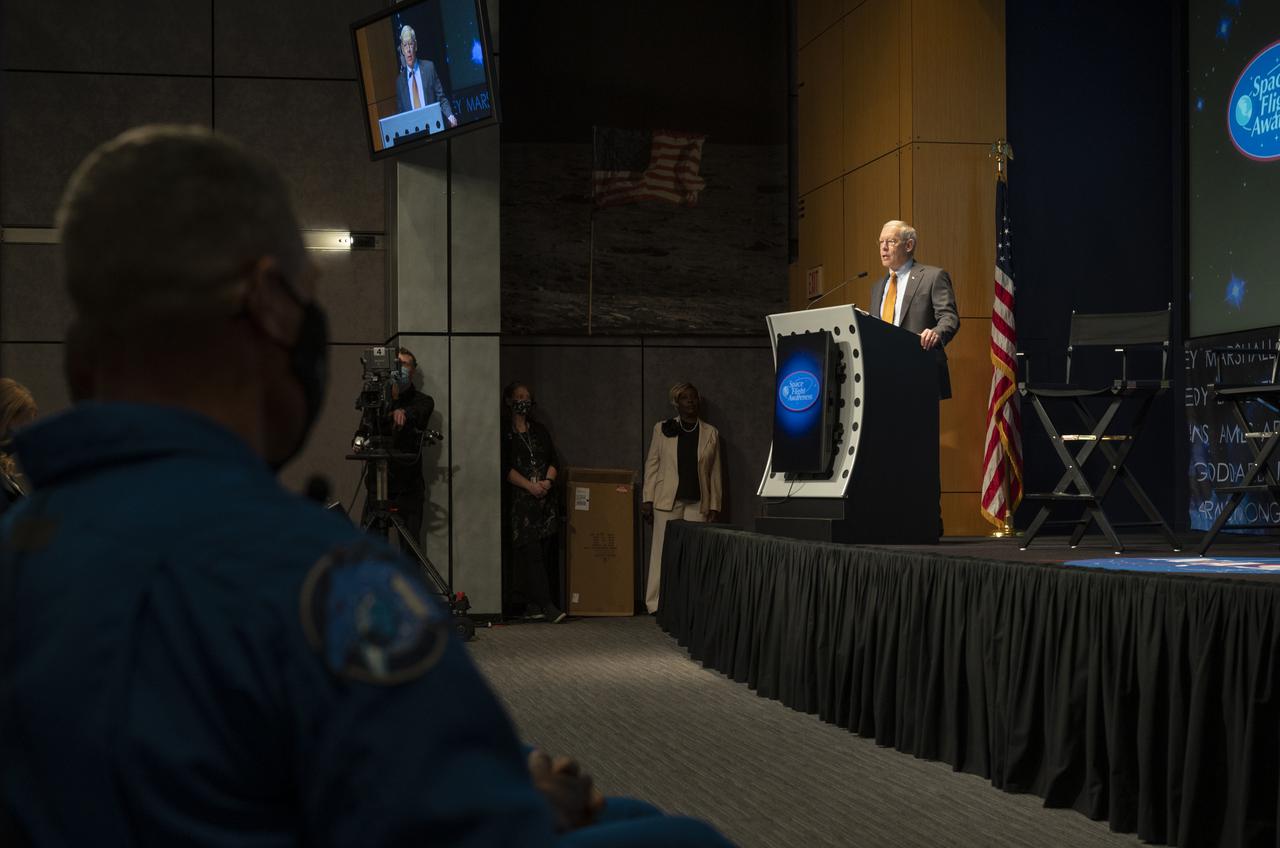
Pat Forrester, special assistant to the associate administrator of the Space Operations Mission Directorate, speaks during a presentation to the Space Operations and Exploration Systems Development Mission Directorates by SpaceX Crew-1 NASA astronauts Mike Hopkins, Victor Glover, and Shannon Walker, and Japan Aerospace Exploration Agency (JAXA) astronaut Soichi Noguchi, Monday, Nov. 15, 2021, at the Mary W. Jackson NASA Headquarters Building in Washington. Hopkins, Glover, Walker, and Noguchi launched on the first crew rotation mission to the International Space Station for SpaceX’s Falcon 9 and Crew Dragon spacecraft as part of the agency’s Commercial Crew Program and spent 168 days in space across Expeditions 64 and 65. Photo Credit: (NASA/Joel Kowsky)
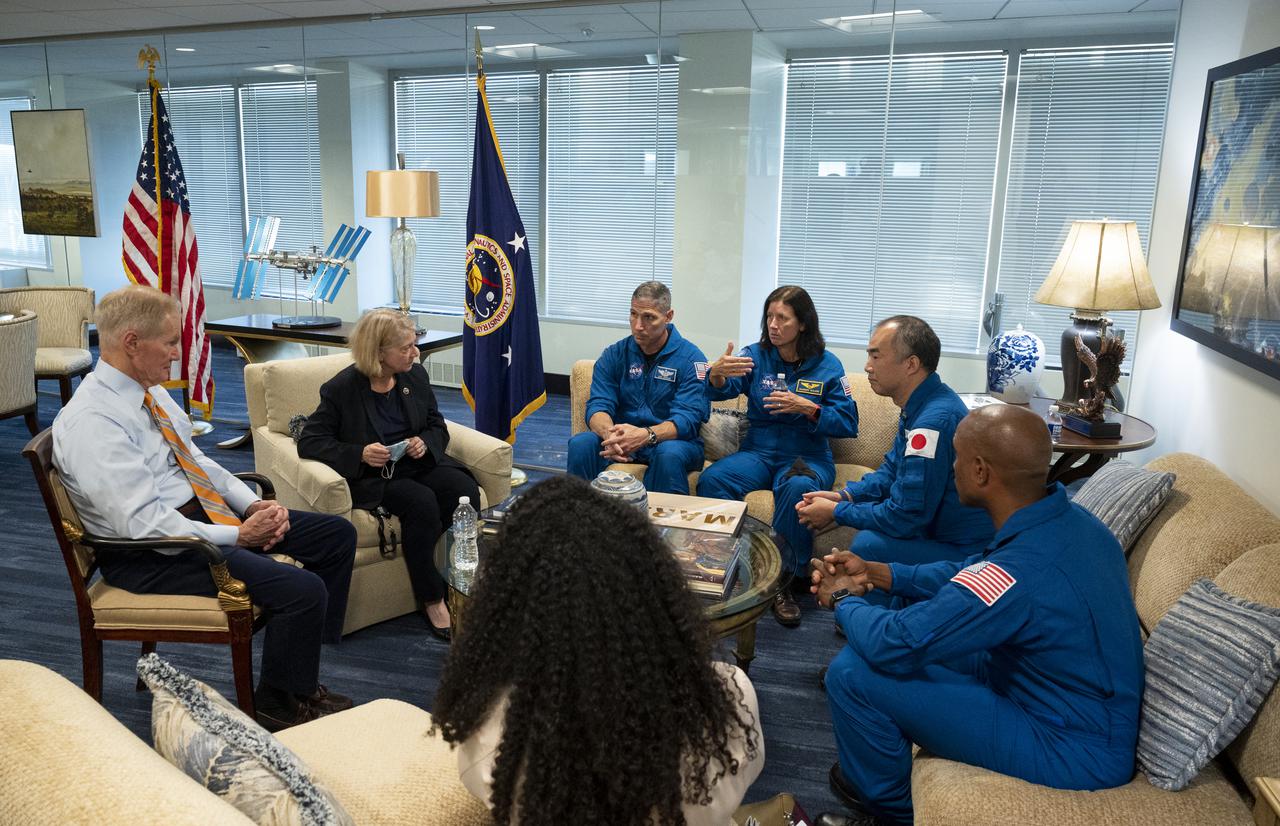
NASA Administrator Bill Nelson, left, and NASA Deputy Administrator Pam Melroy, second from left, meet with SpaceX Crew-1 NASA astronauts Mike Hopkins, third from left, Shannon Walker, third from right, Japan Aerospace Exploration Agency (JAXA) astronaut Soichi Noguchi, second from right, and NASA astronaut Victor Glover, right, Monday, Nov. 15, 2021, at the Mary W. Jackson NASA Headquarters Building in Washington. Hopkins, Glover, Walker, and Noguchi launched on the first crew rotation mission to the International Space Station for SpaceX’s Falcon 9 and Crew Dragon spacecraft as part of the agency’s Commercial Crew Program and spent 168 days in space across Expeditions 64 and 65. Photo Credit: (NASA/Joel Kowsky)
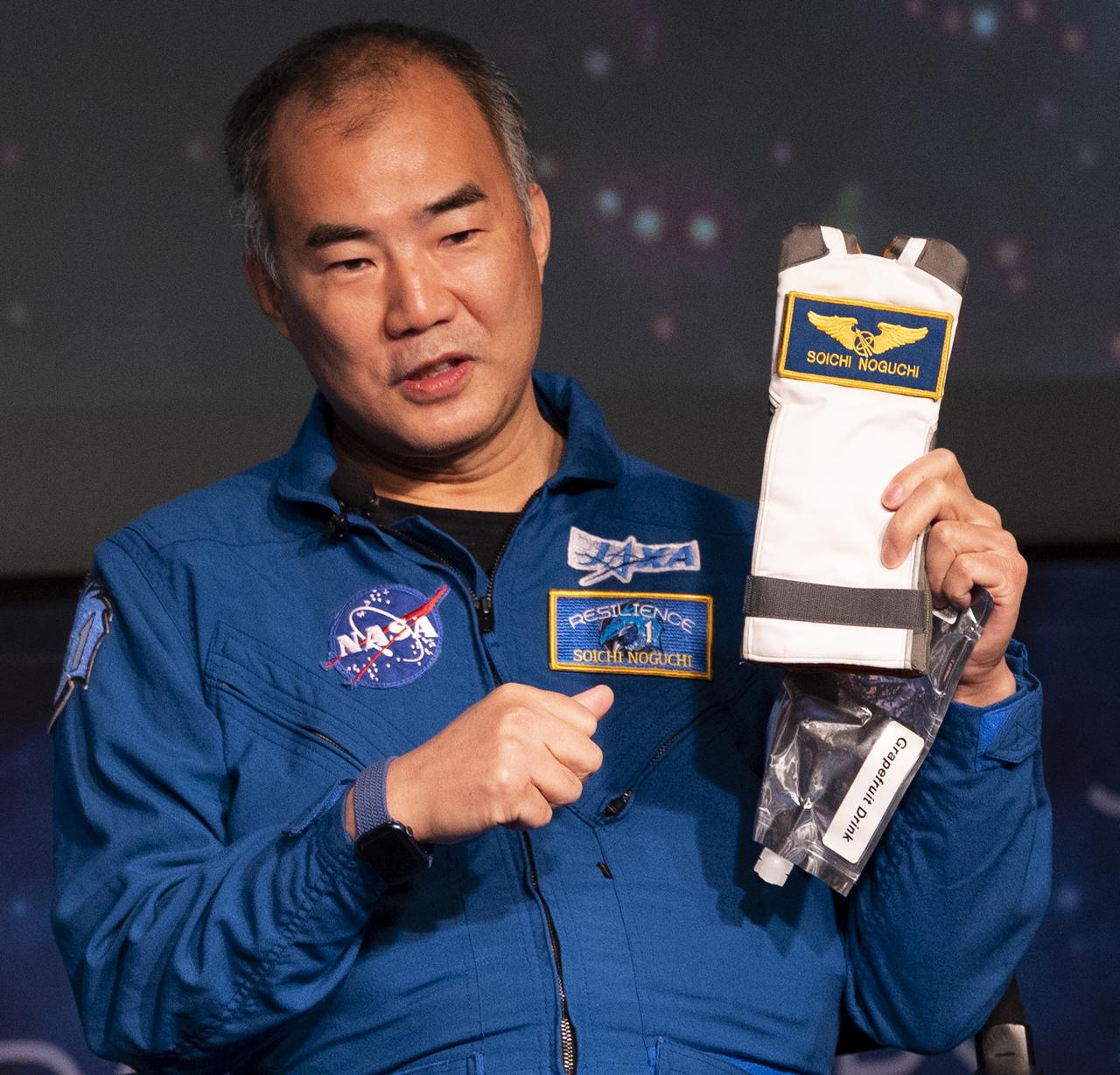
Japan Aerospace Exploration Agency (JAXA) astronaut Soichi Noguchi holds up a drink bag holder from his mission aboard the International Space Station as he speaks with employees of the Space Operations and Exploration Systems Development Mission Directorates about the Crew-1 mission with fellow crew members NASA astronauts Mike Hopkins, Victor Glover, and Shannon Walker, Monday, Nov. 15, 2021, at the Mary W. Jackson NASA Headquarters Building in Washington. Hopkins, Glover, Walker, and Noguchi launched on the first crew rotation mission to the International Space Station for SpaceX’s Falcon 9 and Crew Dragon spacecraft as part of the agency’s Commercial Crew Program and spent 168 days in space across Expeditions 64 and 65. Photo Credit: (NASA/Joel Kowsky)
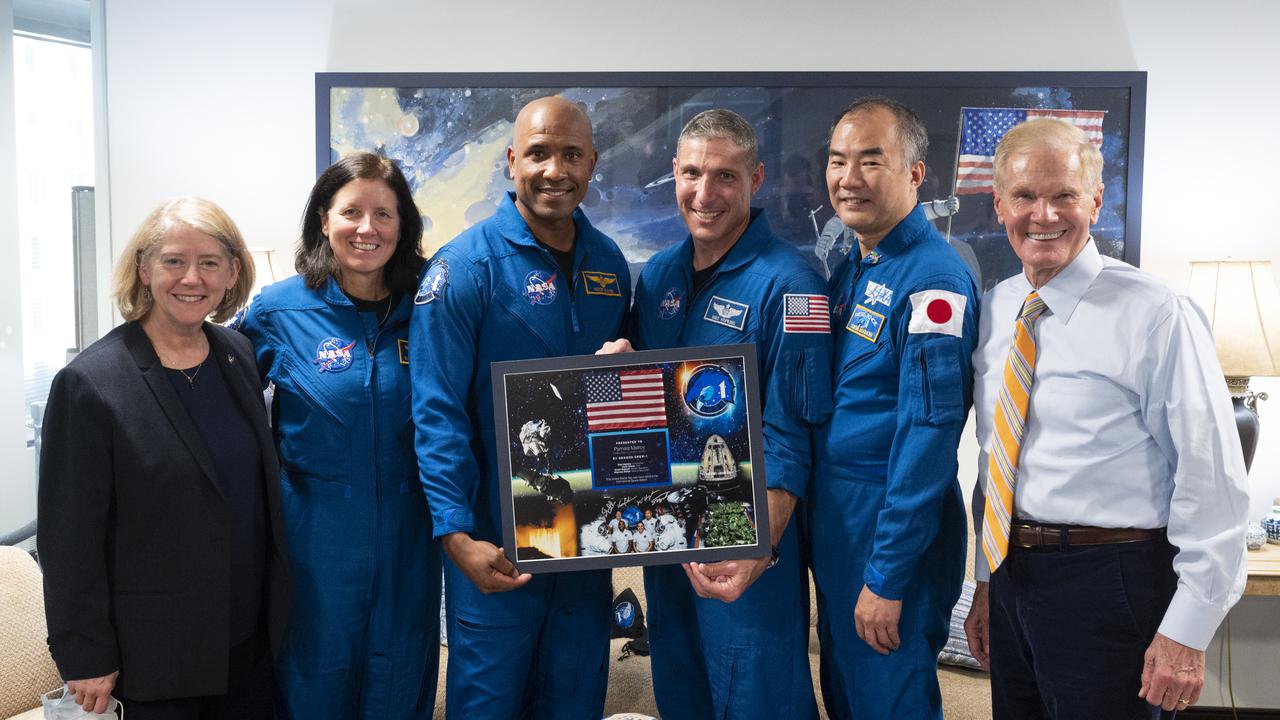
NASA Administrator Bill Nelson, right, and NASA Deputy Administrator Pam Melroy, left, pose for a picture with SpaceX Crew-1 NASA astronauts Shannon Walker, second from left, Victor Glover, third from left, Mike Hopkins, third from right, and Japan Aerospace Expolration Agency (JAXA) astronaut Soichi Noguchi, second from right, Monday, Nov. 15, 2021, at the Mary W. Jackson NASA Headquarters Building in Washington. Hopkins, Glover, Walker, and Noguchi launched on the first crew rotation mission to the International Space Station for SpaceX’s Falcon 9 and Crew Dragon spacecraft as part of the agency’s Commercial Crew Program and spent 168 days in space across Expeditions 64 and 65. Photo Credit: (NASA/Joel Kowsky)
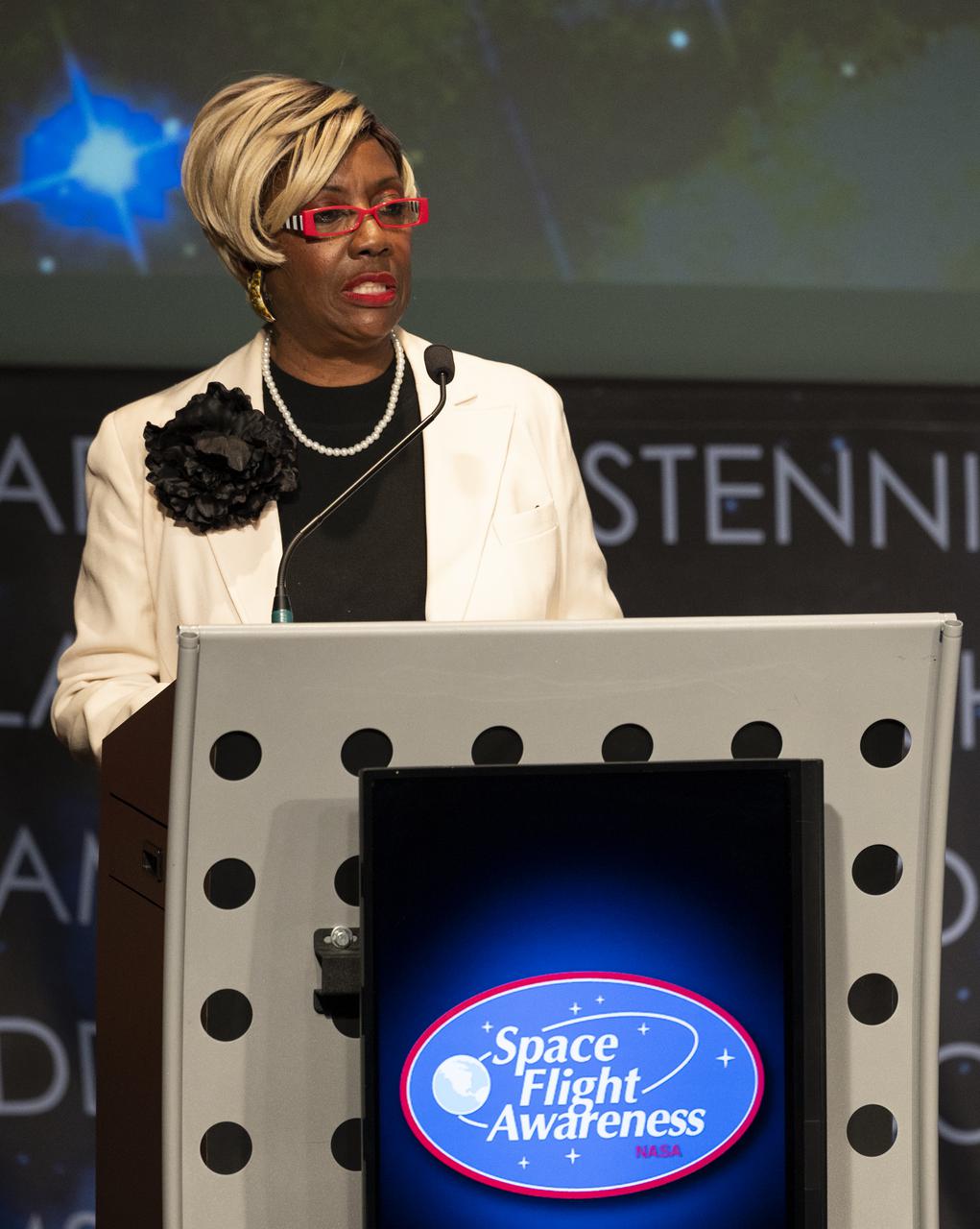
Alotta Taylor, program manager for NASA’s Space Flight Awareness program at NASA Headquarters, welcomes Space Operations and Exploration Systems Development Mission Directorate employees to a presentation by SpaceX Crew-1 NASA astronauts Mike Hopkins, Victor Glover, Shannon Walker, and Japan Aerospace Exploration Agency (JAXA) astronaut Soichi Noguchi, Monday, Nov. 15, 2021, at the Mary W. Jackson NASA Headquarters Building in Washington. Hopkins, Glover, Walker, and Noguchi launched on the first crew rotation mission to the International Space Station for SpaceX’s Falcon 9 and Crew Dragon spacecraft as part of the agency’s Commercial Crew Program and spent 168 days in space across Expeditions 64 and 65. Photo Credit: (NASA/Joel Kowsky)
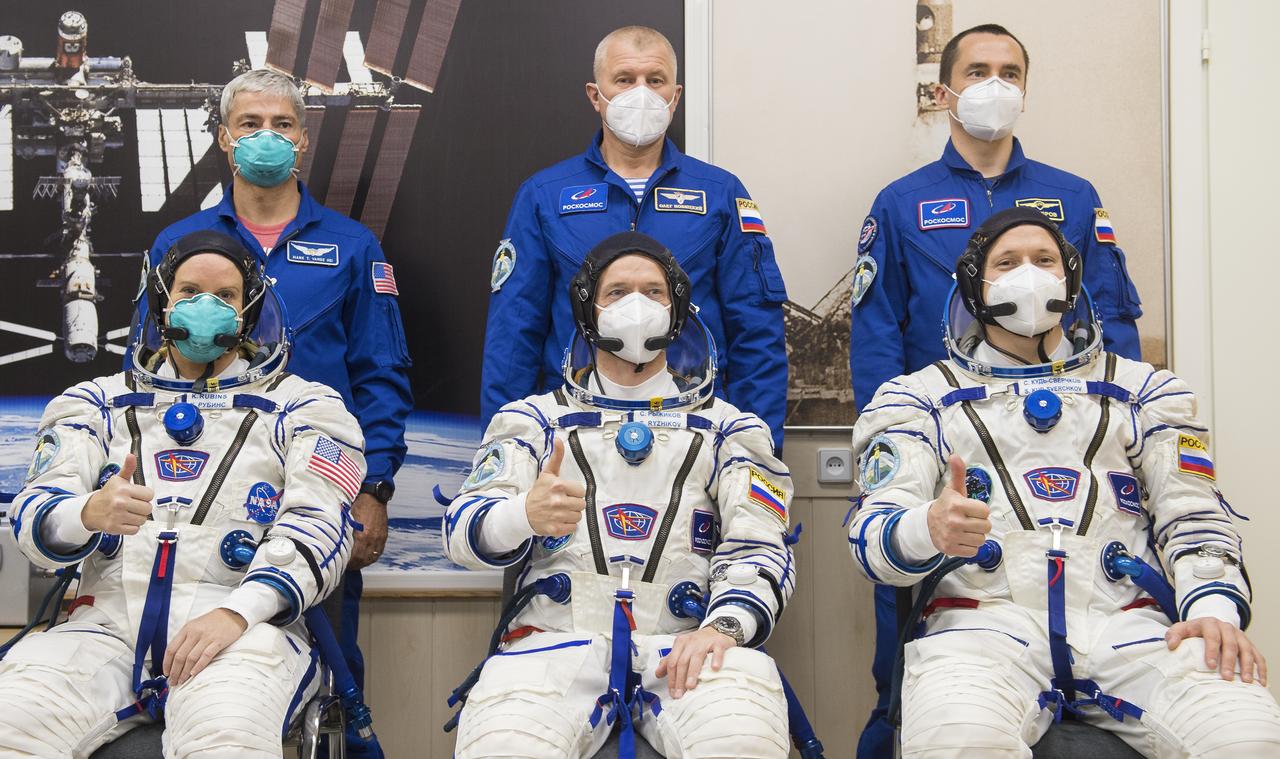
Expedition 64 prime and backup crew members pose for a picture following Russian Sokol suit pressure checks, Wednesday, Oct. 14, 2020, at the Baikonur Cosmodrome in Kazakhstan. From left to right seated are prime crew members Kate Rubins of NASA, Sergey Ryzhikov of Roscosmos, and Sergey Kud-Sverchkov of Roscosmos; standing are backup crew members Mark Vande Hei of NASA, Oleg Novitskiy of Roscosmos, and Petr Dubov of Roscosmos. Rubins, Ryzhikov, and Kud-Sverchkov launched at 1:45 a.m. EDT to begin a six-month mission aboard the International Space Station. Photo Credit: (NASA/GCTC/Andrey Shelepin)
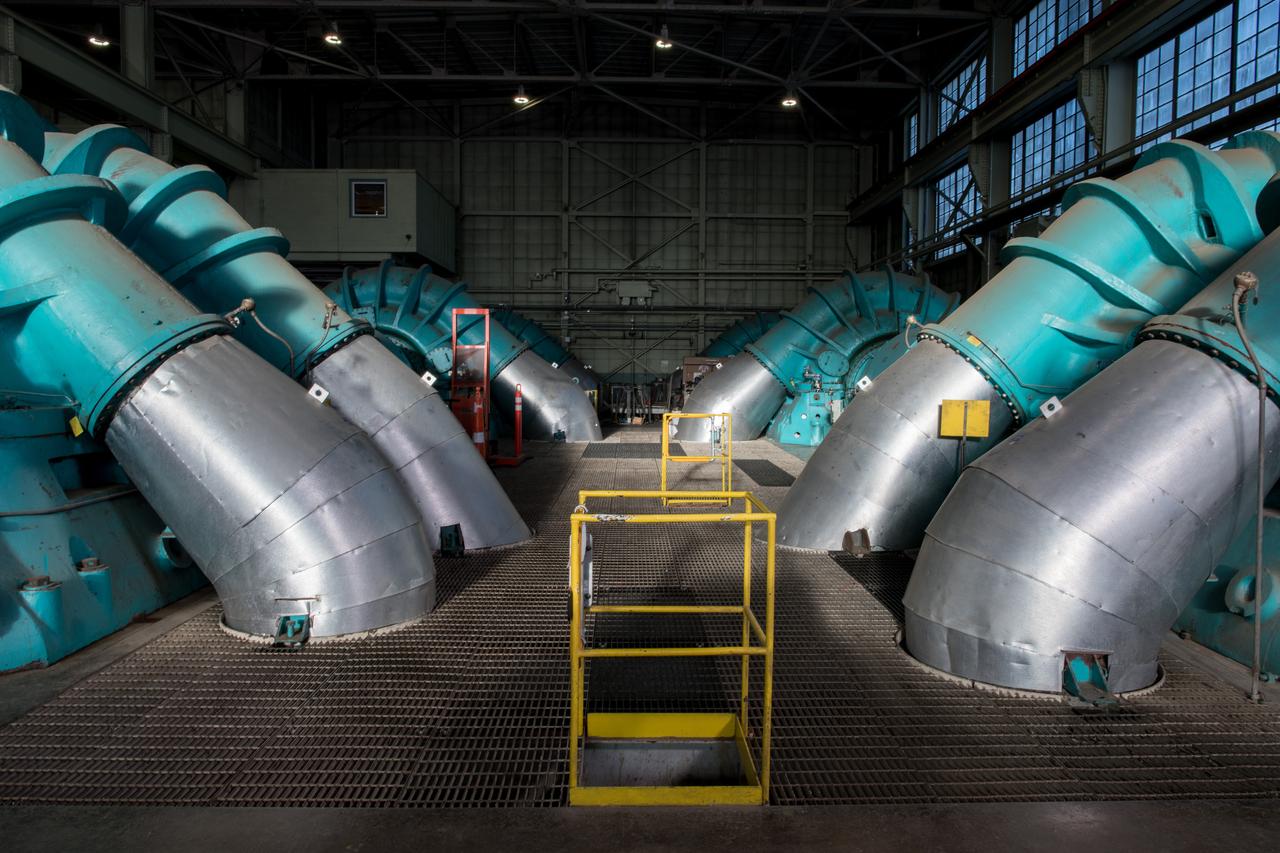
The Central Processing System at Glenn Research Center controls operations in the wind tunnels, propulsion systems lab, engine components research lab, and compressor, turbine and combustor test cells. Documentation photos of the facility were taken on December 19, 2023. Photo Credit: (NASA/Sara Lowthian-Hanna)
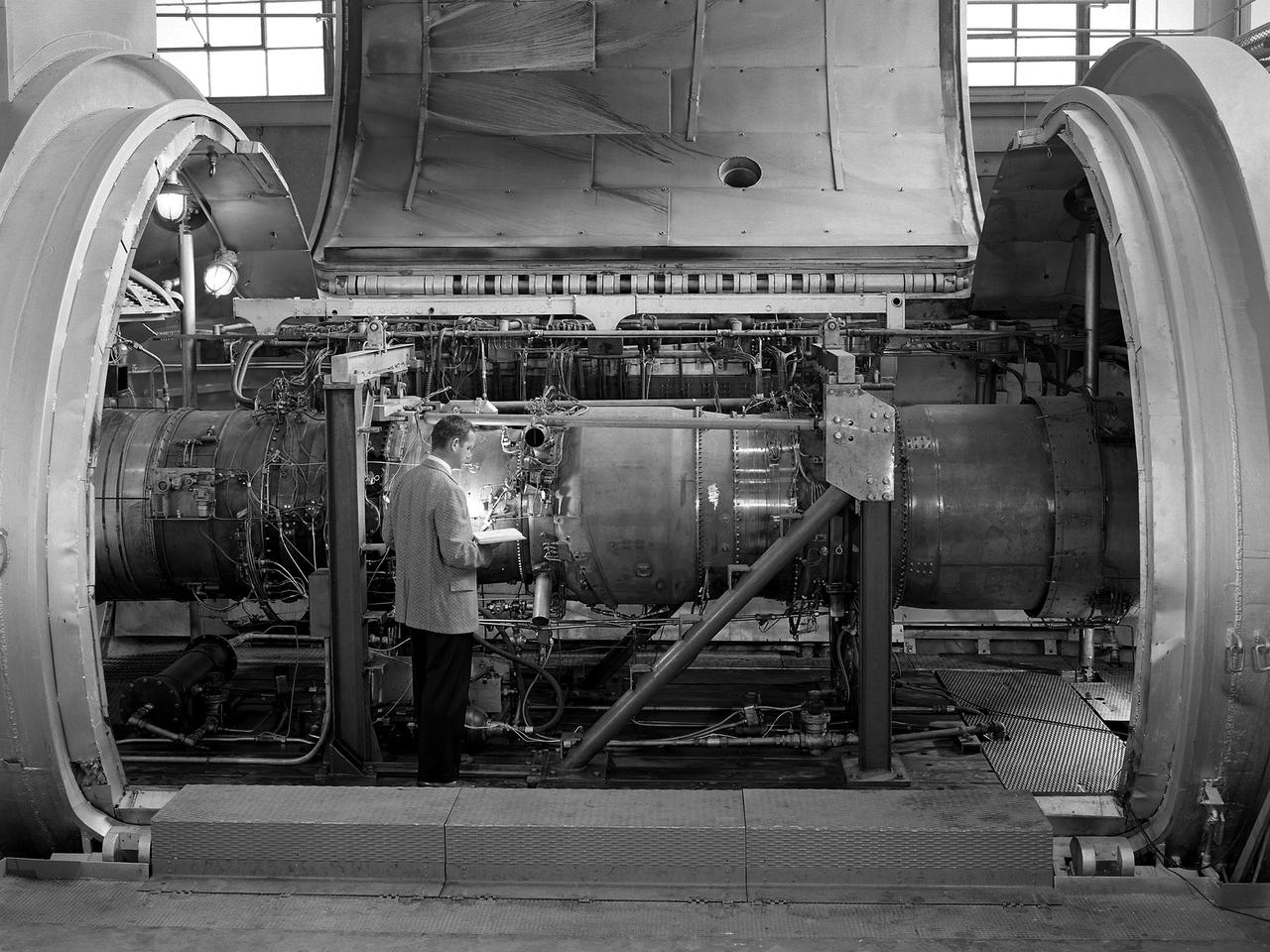
A researcher examines the Orenda Iroquois PS.13 turbojet in a Propulsion Systems Laboratory test chamber at the National Advisory Committee for Aeronautics (NACA) Lewis Flight Propulsion Laboratory. The Iroquois was being developed to power the CF-105 Arrow fighter designed by the Avro Canada Company. Avro began design work on the Arrow jet fighter in 1952. The company’s Orenda branch suggested building a titanium-based PS.13 Iroquois engine after development problems arose with the British engines that Avro had originally intended to use. The 10-stage, 20,000-pound-thrust Iroquois would prove to be more powerful than any contemporary US or British turbojet. It was also significantly lighter and more fuel efficient. An Iroquois was sent to Cleveland in April 1957 so that Lewis researchers could study the engine’s basic performance for the air force in the Propulsion Systems Laboratory. The tests were run over a wide range of speeds and altitudes with variations in exhaust-nozzle area. Initial studies determined the Iroquois’s windmilling and ignition characteristics at high altitude. After operating for 64 minutes, the engine was reignited at altitudes up to the 63,000-foot limit of the facility. Various modifications were attempted to reduce the occurrence of stall but did not totally eradicate the problem. The Arrow jet fighter made its initial flight in March 1958 powered by a substitute engine. In February 1959, however, both the engine and the aircraft programs were cancelled. The world’s superpowers had quickly transitioned from bombers to ballistic missiles which rendered the Avro Arrow prematurely obsolete.

It’s usually the big, sprawling storms that attract the attention of meteorologists, but occasionally tiny storms can make news as well. The most recent example is a suspected mini-typhoon that drifted across the western Pacific Ocean in mid-July 2013. The storm system emerged on July 16 and dissipated by July 19 without making landfall or causing any significant damage. The Moderate Resolution Imaging Spectroradiometer (MODIS) on NASA’s Terra satellite captured this true-color image of the storm on July 17, 2013. It had the spiral shape of a tropical cyclone, but the cloud field was less than 100 kilometers (60 miles) across. For comparison, Super Typhoon Jelawat, the most intense storm of the 2012 season, had a cloud field that stretched nearly 1,000 kilometers (600 miles). Jelawat’s eye alone—with a diameter of 64 kilometers (40 miles)—was two-thirds the size of the entire July 2013 storm. Despite their small size, mini-cyclones are driven by the same forces that drive larger storms. Both small and large cyclonic storms are simply organized convection feeding off warm water in areas with low wind shear. According to the Joint Typhoon Warning Center, the low-pressure areas for these mini-typhoons must span less than two degrees of latitude (about 140 miles) and have sustained winds of 65 knots (74 miles per hour). The 2013 storm in the Pacific certainly meets the first criteria, but it is unlikely that the storm achieved typhoon-force winds. It’s also unlikely that the system had a “warm core,” which all true tropical cyclones have. While this storm did not cause damage, other mini storms certainly have. In 1974, the miniature cyclone Tracy hit Darwin, Australia, killing 71 people and destroying more than 70 percent of the city’s buildings. According to the National Hurricane Center, tropical cyclone Marco unseated Tracy as the smallest tropical cyclone on record in 2008. Marco had gale force winds that extended just 19 kilometers (12 miles). Typhoon Tip, with gale force winds extending 1,000 kilometers (675 miles) is the largest tropical cyclone on record. Credit: NASA/GSFC/Jeff Schmaltz/MODIS Land Rapid Response Team <b><a href="http://www.nasa.gov/audience/formedia/features/MP_Photo_Guidelines.html" rel="nofollow">NASA image use policy.</a></b> <b><a href="http://www.nasa.gov/centers/goddard/home/index.html" rel="nofollow">NASA Goddard Space Flight Center</a></b> enables NASA’s mission through four scientific endeavors: Earth Science, Heliophysics, Solar System Exploration, and Astrophysics. Goddard plays a leading role in NASA’s accomplishments by contributing compelling scientific knowledge to advance the Agency’s mission. <b>Follow us on <a href="http://twitter.com/NASA_GoddardPix" rel="nofollow">Twitter</a></b> <b>Like us on <a href="http://www.facebook.com/pages/Greenbelt-MD/NASA-Goddard/395013845897?ref=tsd" rel="nofollow">Facebook</a></b> <b>Find us on <a href="http://instagrid.me/nasagoddard/?vm=grid" rel="nofollow">Instagram</a></b>