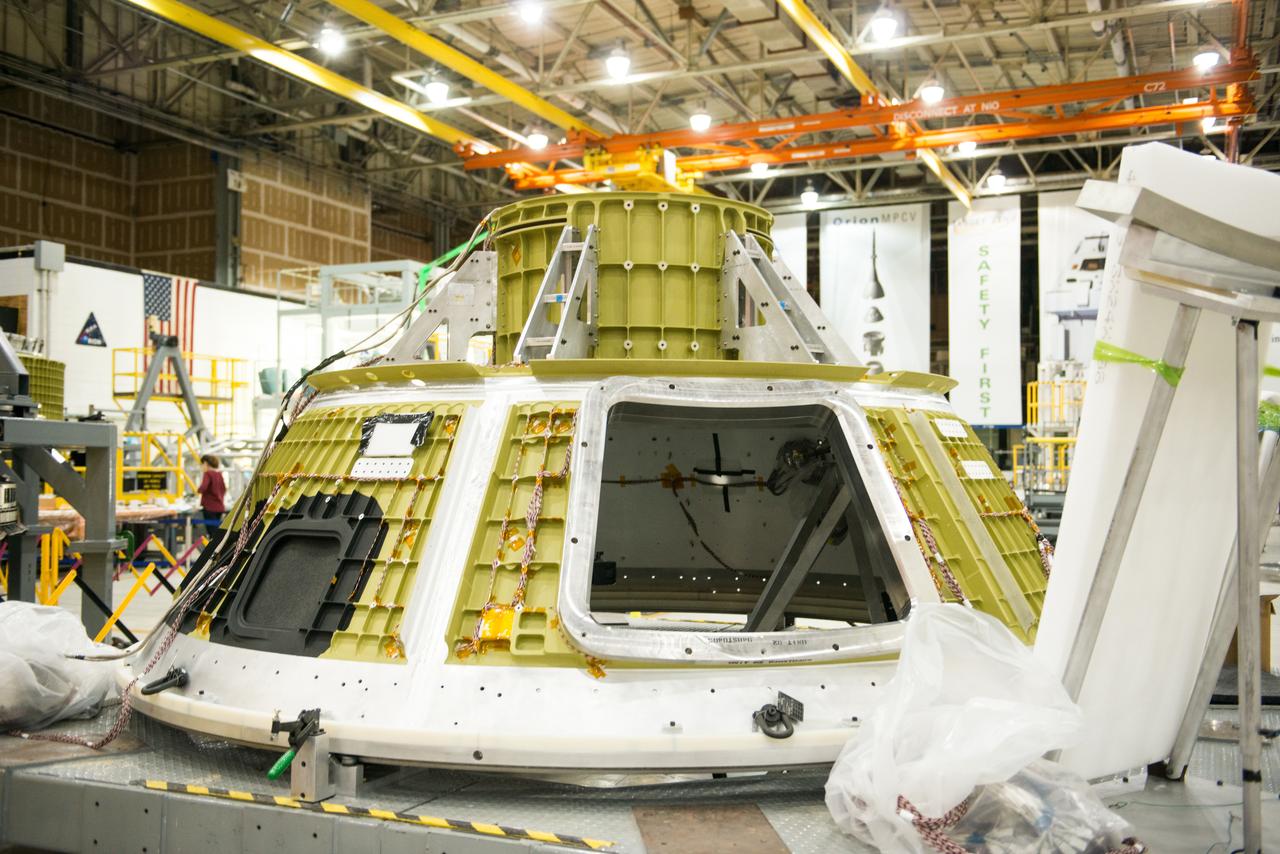
Orion EM1 Cone and frwd Bulkhead Section
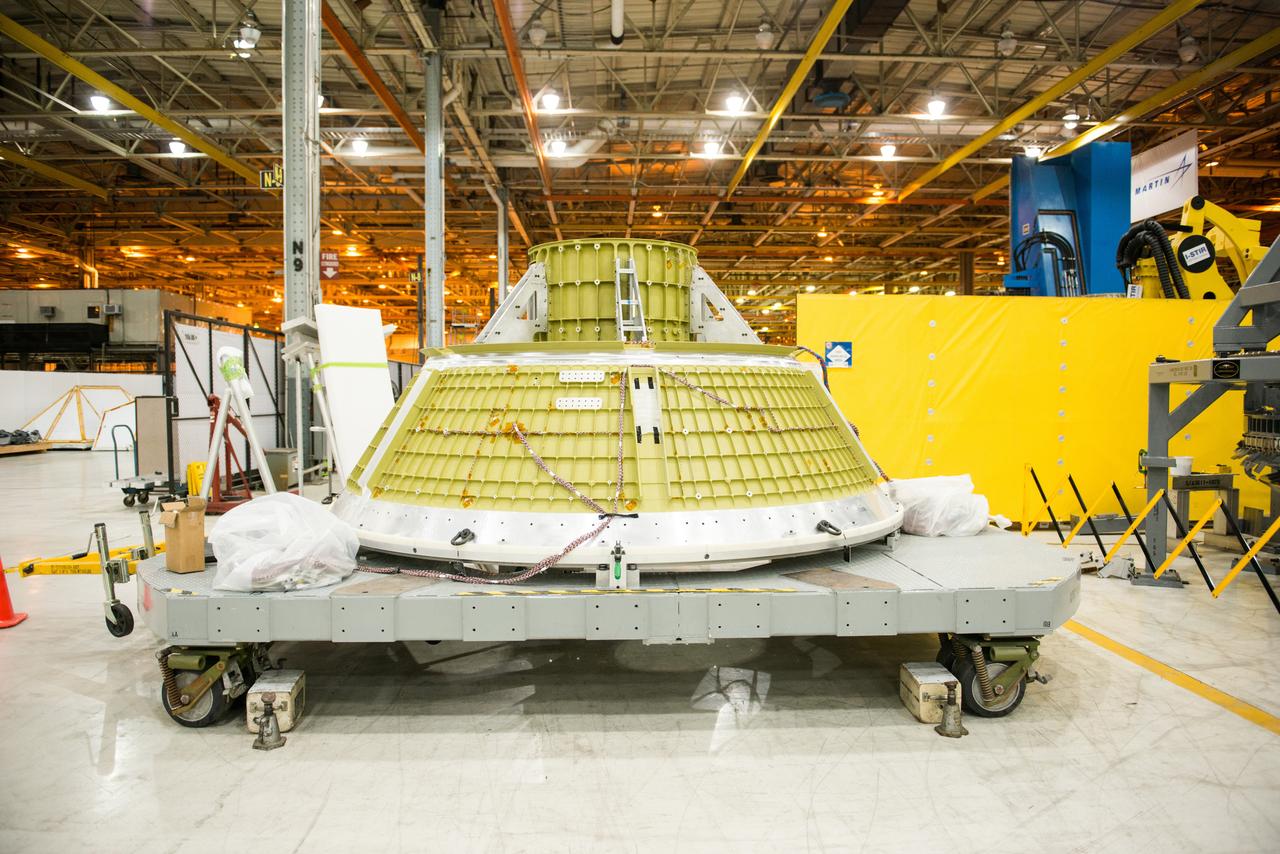
Orion EM1 Cone and frwd Bulkhead Section
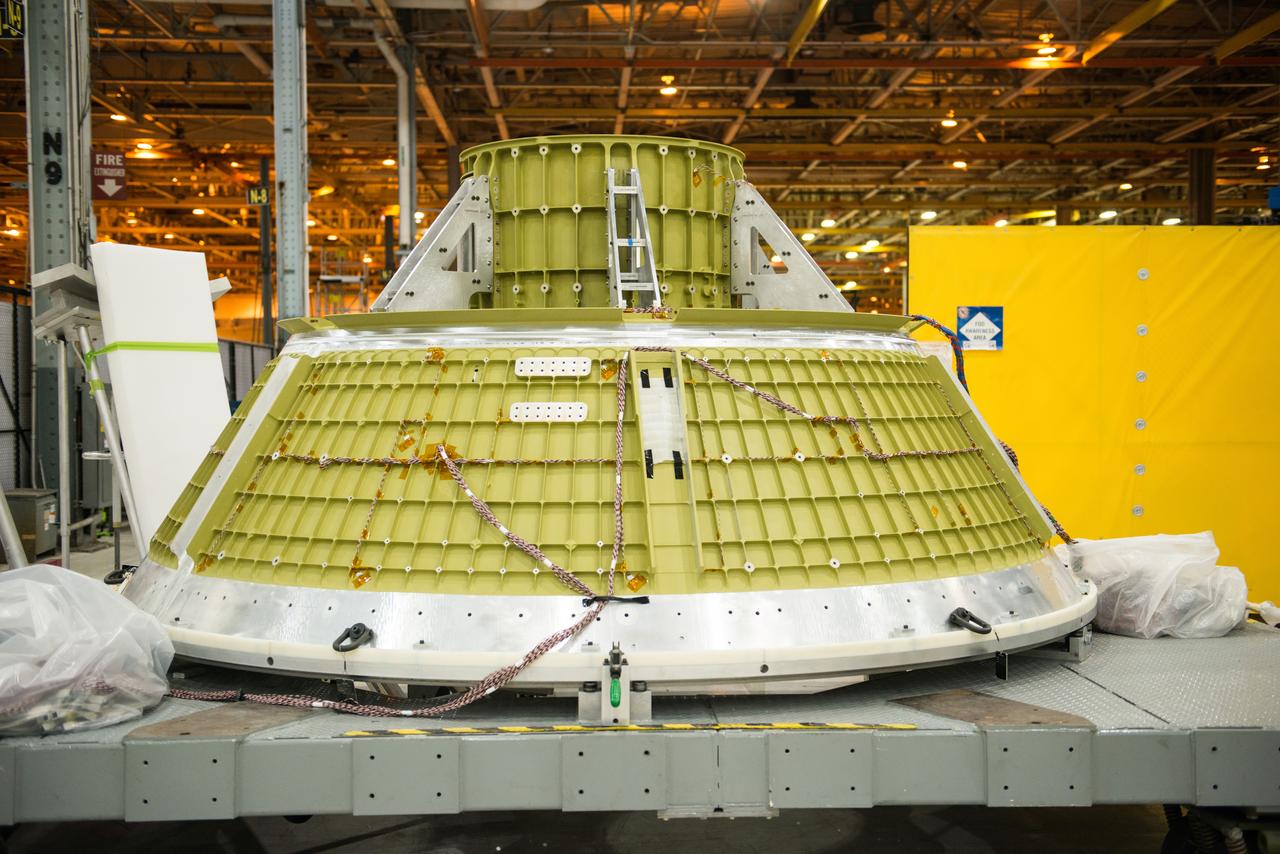
Orion EM1 Cone and frwd Bulkhead Section
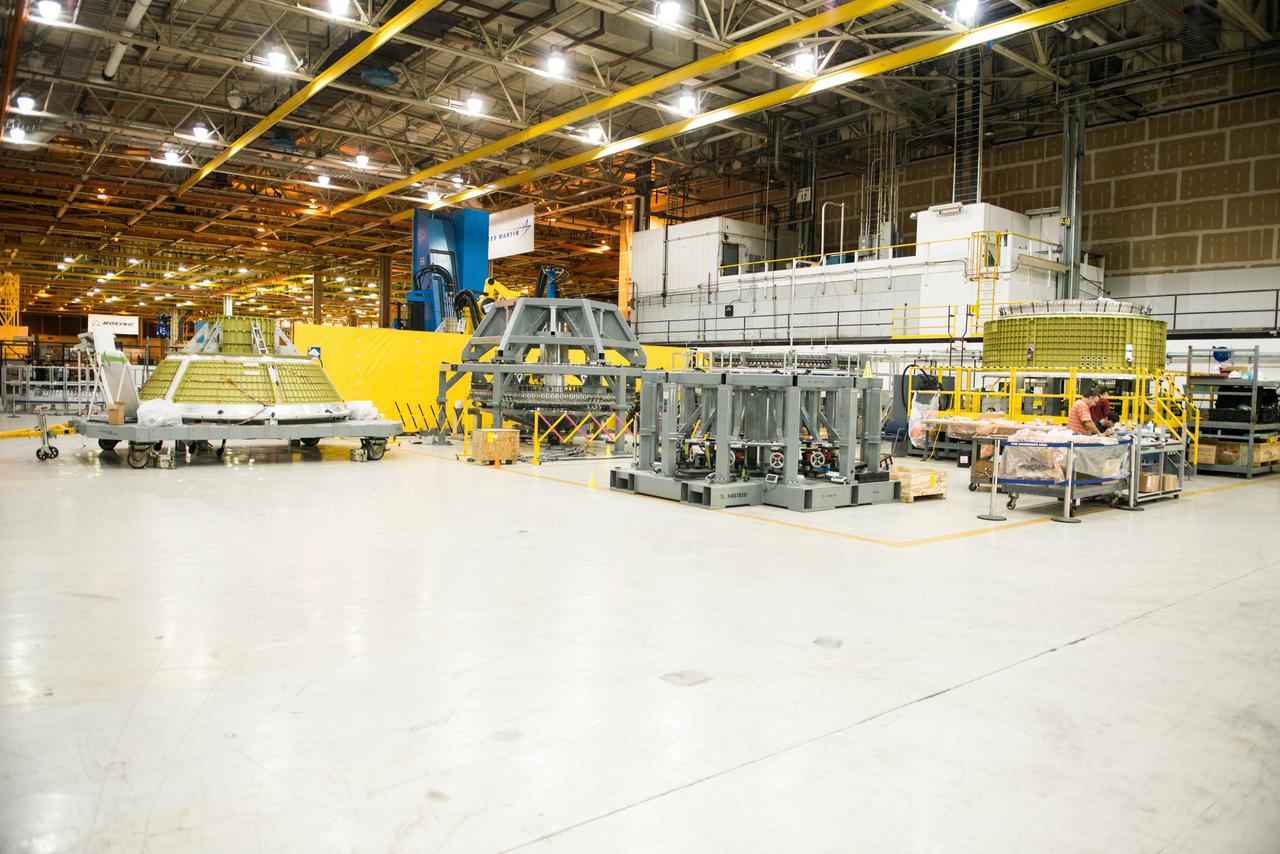
Orion EM1 Cone and frwd Bulkhead Section
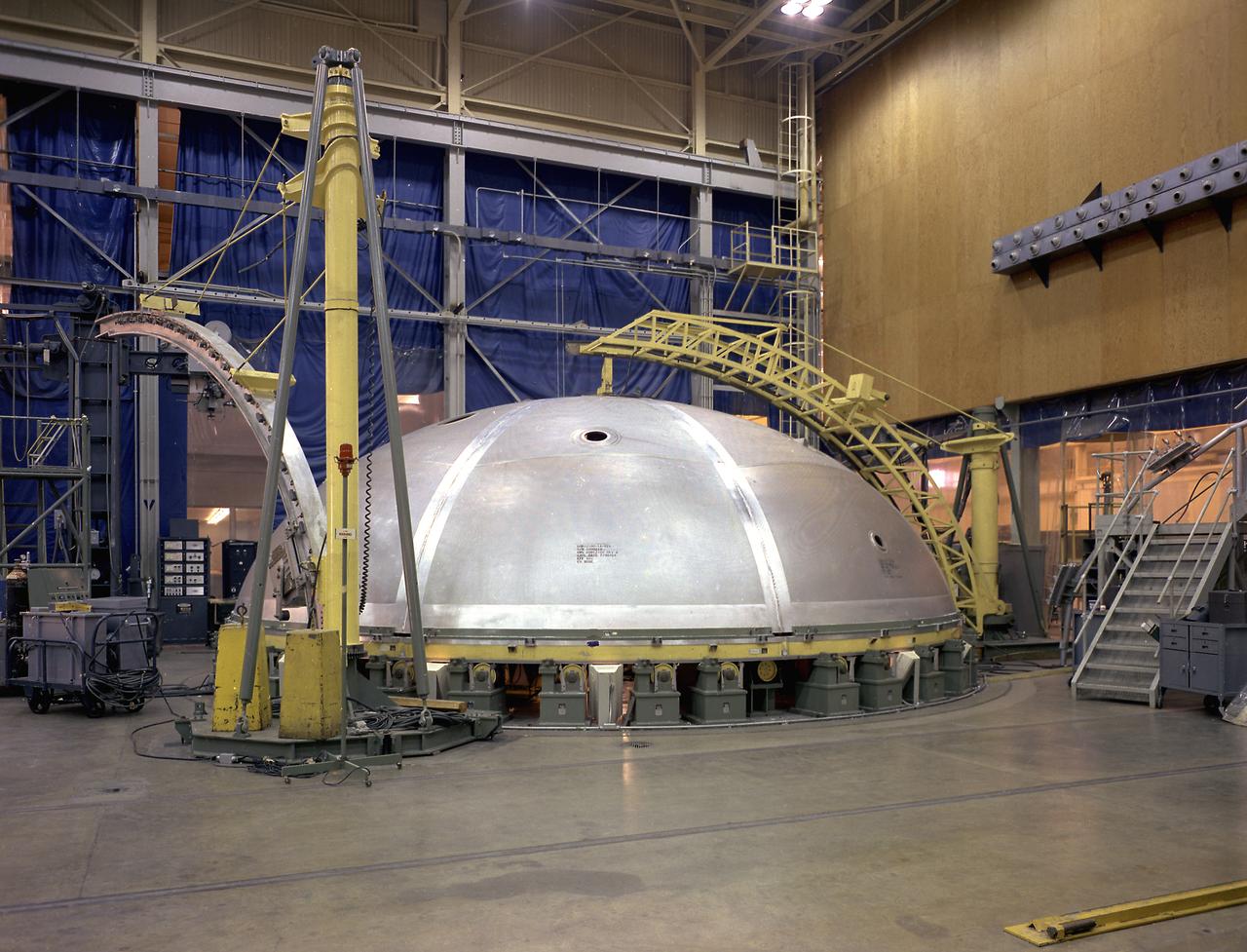
This photograph shows a bulkhead for the Saturn V S-IC stage fuel tank being fabricated at the Manufacturing Engineering Laboratory, building 4704, at the Marshall Space Flight Center.
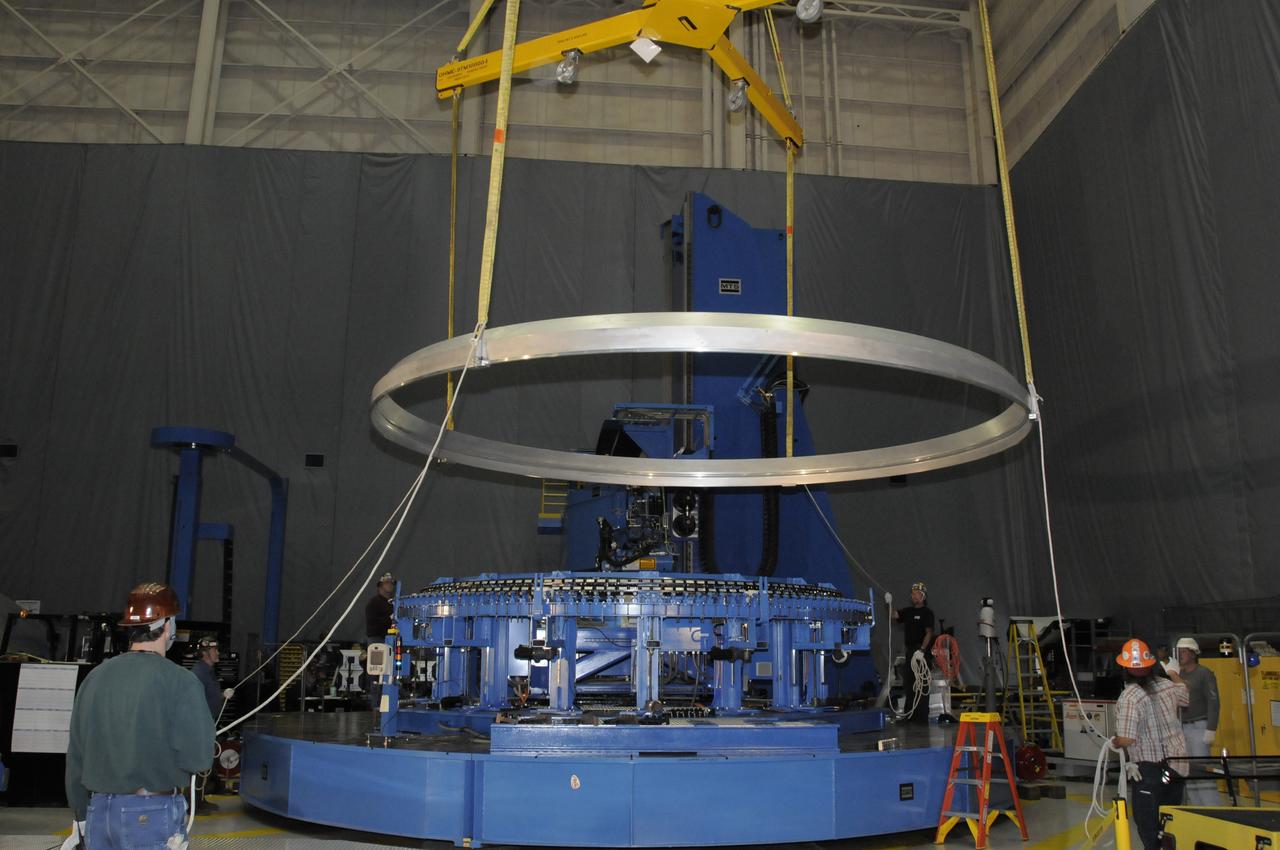
ARES HARDWARE MOVE IN BUILDING 4755 OF A Y-RING INTO THE ROBOTIC WELD TOOL & THE COMMON BULKHEAD DOME MANUFACTURING DEMONSTRATION ARTICLE ONTO THE WOODEN TOOLING STANDS ON FEBRUARY 19, 2010
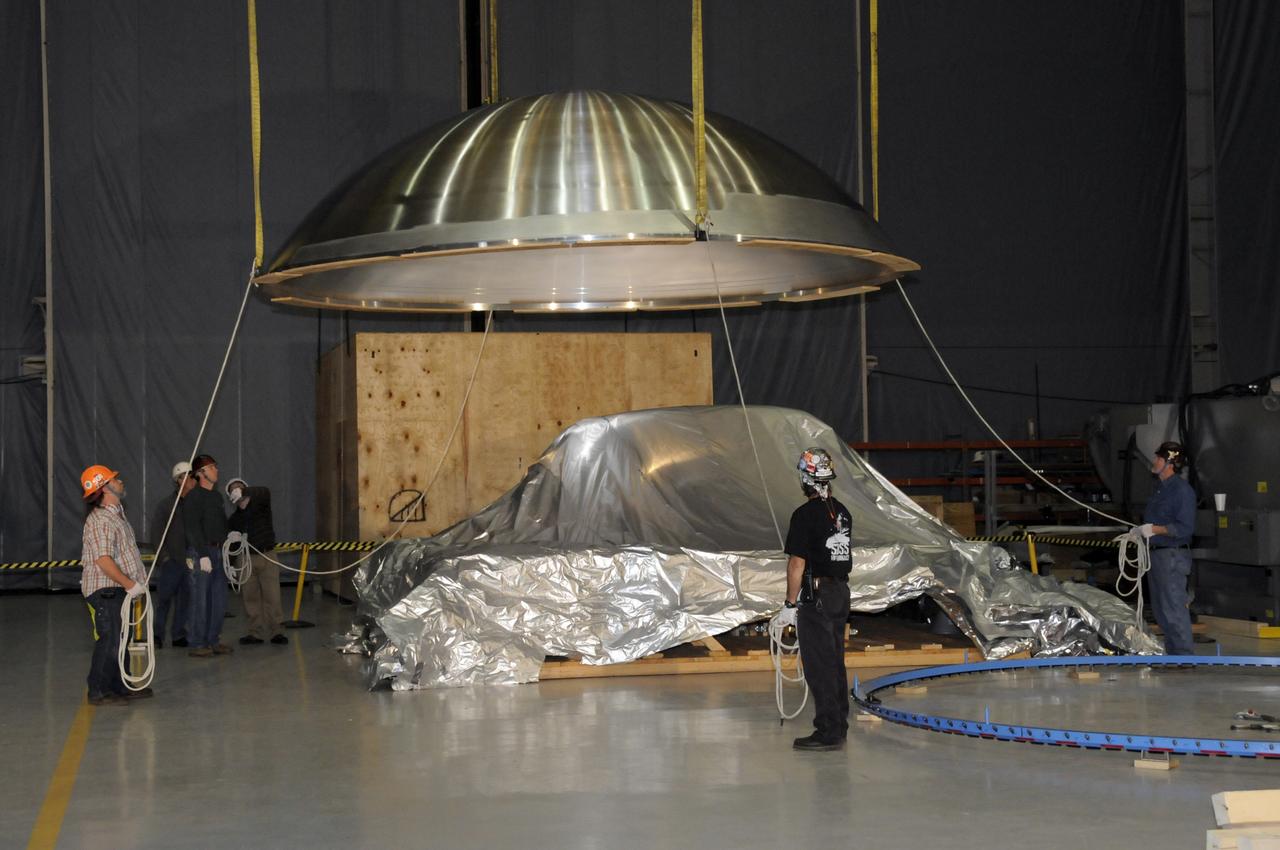
ARES HARDWARE MOVE IN BUILDING 4755 OF A Y-RING INTO THE ROBOTIC WELD TOOL & THE COMMON BULKHEAD DOME MANUFACTURING DEMONSTRATION ARTICLE ONTO THE WOODEN TOOLING STANDS ON FEBRUARY 19, 2010
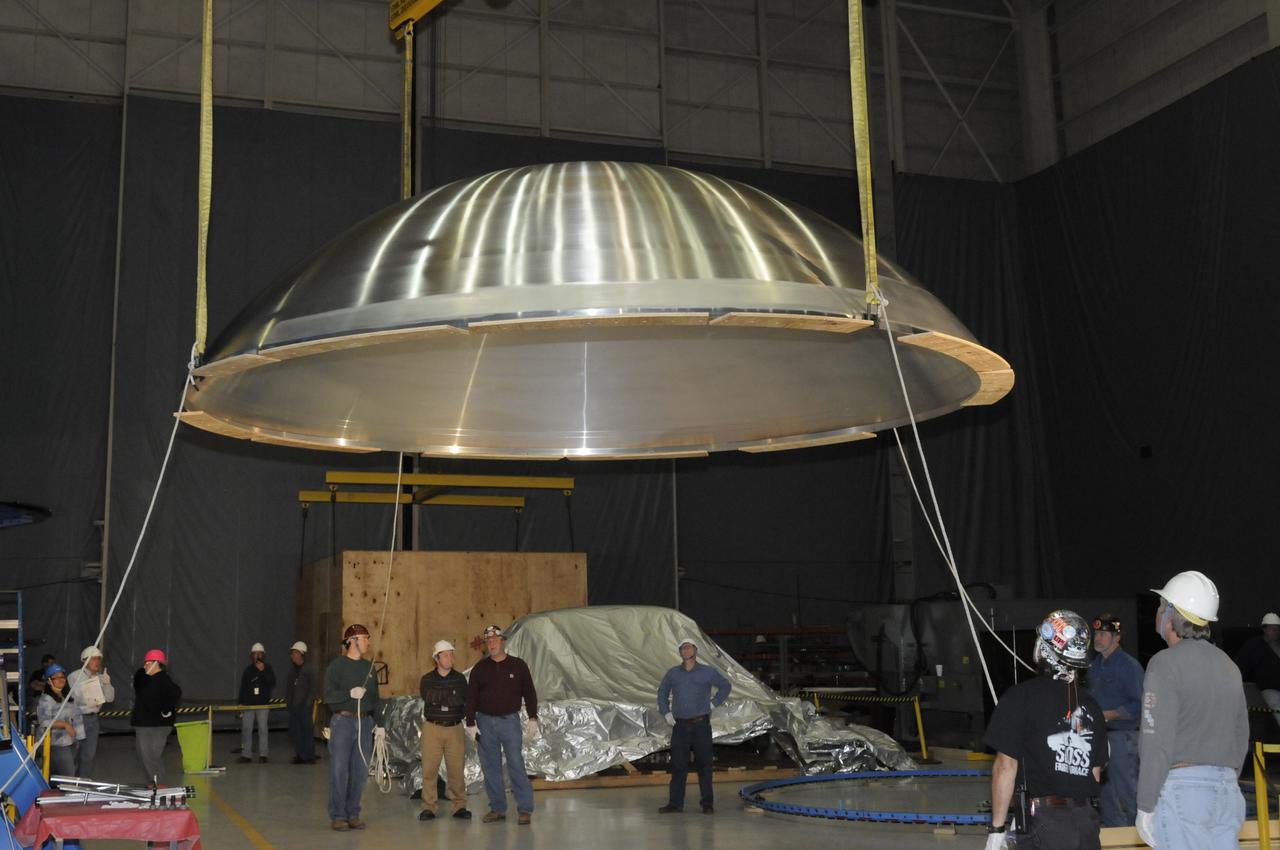
ARES HARDWARE MOVE IN BUILDING 4755 OF A Y-RING INTO THE ROBOTIC WELD TOOL & THE COMMON BULKHEAD DOME MANUFACTURING DEMONSTRATION ARTICLE ONTO THE WOODEN TOOLING STANDS ON FEBRUARY 19, 2010
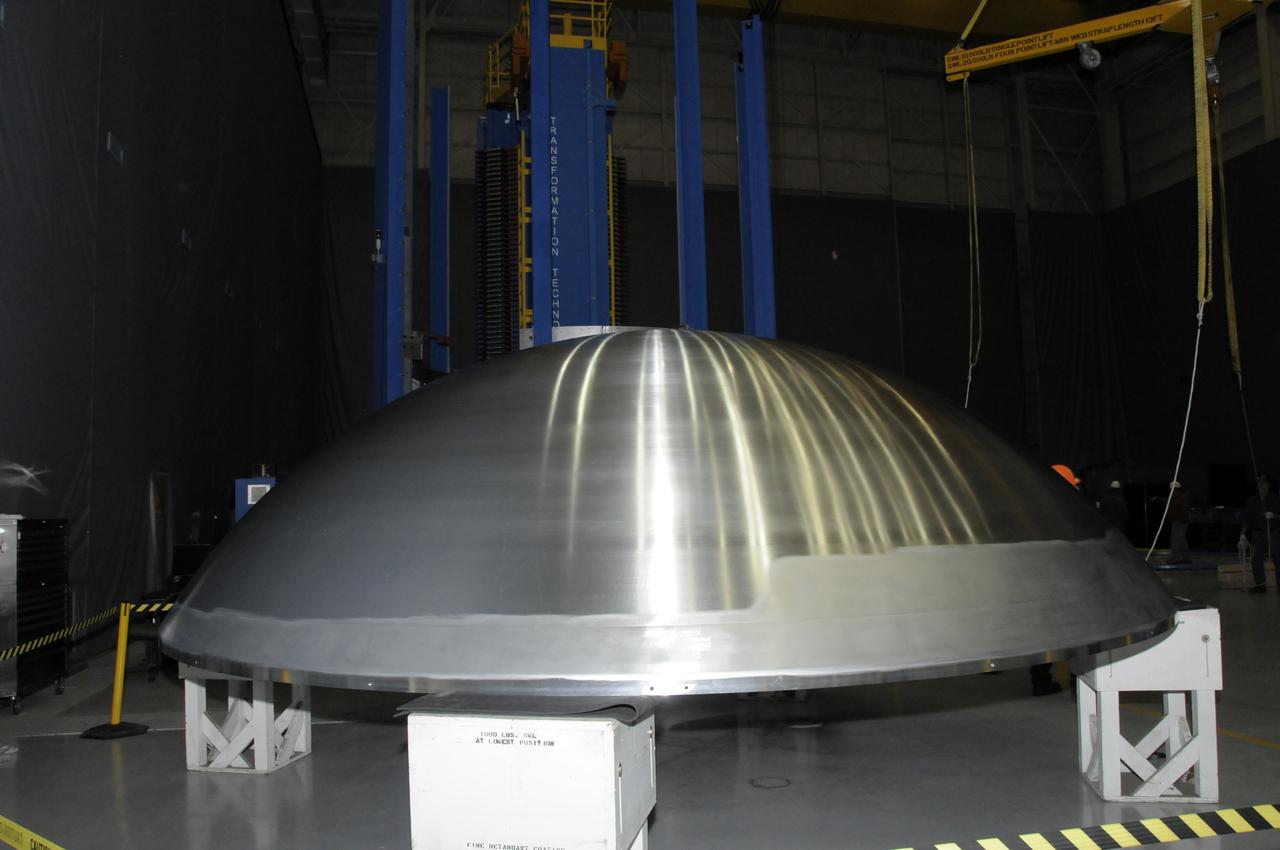
ARES HARDWARE MOVE IN BUILDING 4755 OF A Y-RING INTO THE ROBOTIC WELD TOOL & THE COMMON BULKHEAD DOME MANUFACTURING DEMONSTRATION ARTICLE ONTO THE WOODEN TOOLING STANDS ON FEBRUARY 19, 2010
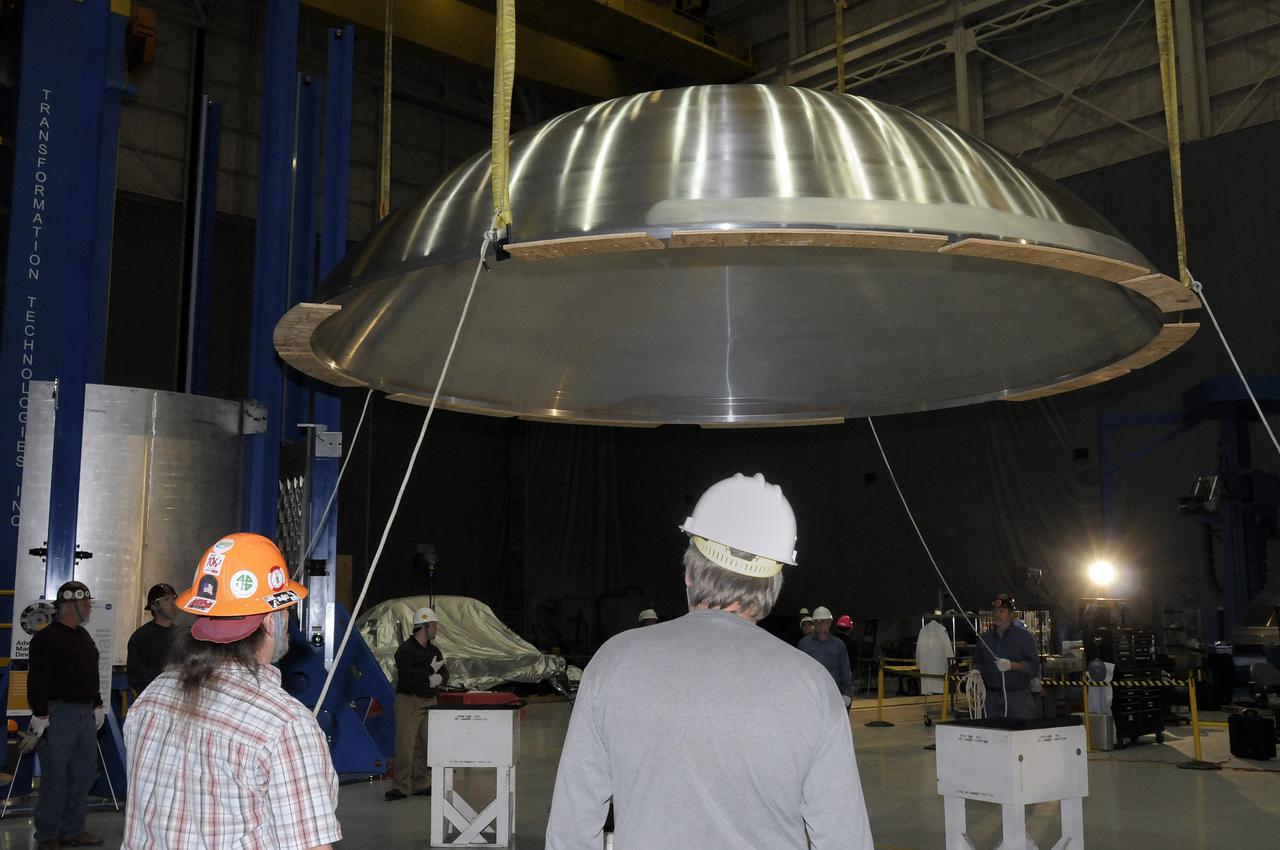
ARES HARDWARE MOVE IN BUILDING 4755 OF A Y-RING INTO THE ROBOTIC WELD TOOL & THE COMMON BULKHEAD DOME MANUFACTURING DEMONSTRATION ARTICLE ONTO THE WOODEN TOOLING STANDS ON FEBRUARY 19, 2010
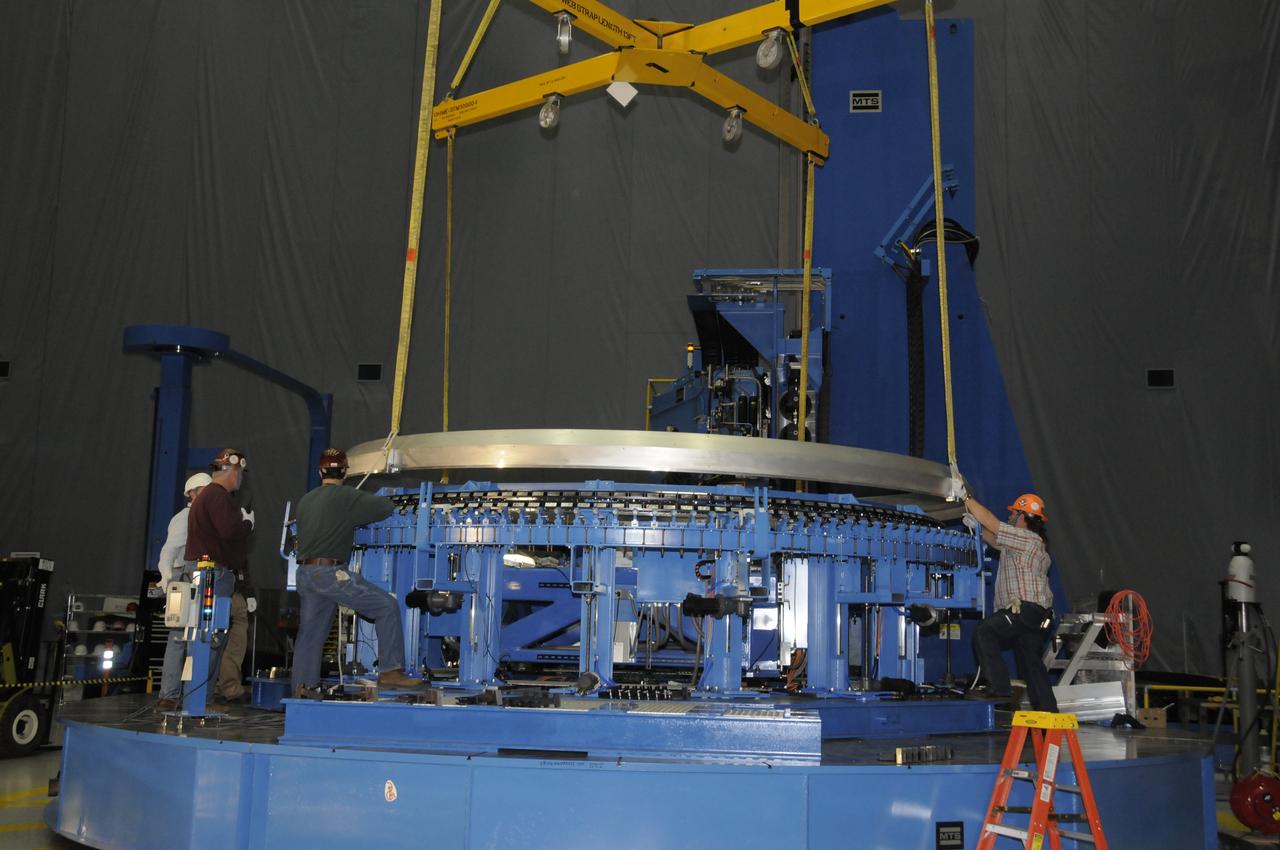
ARES HARDWARE MOVE IN BUILDING 4755 OF A Y-RING INTO THE ROBOTIC WELD TOOL & THE COMMON BULKHEAD DOME MANUFACTURING DEMONSTRATION ARTICLE ONTO THE WOODEN TOOLING STANDS ON FEBRUARY 19, 2010
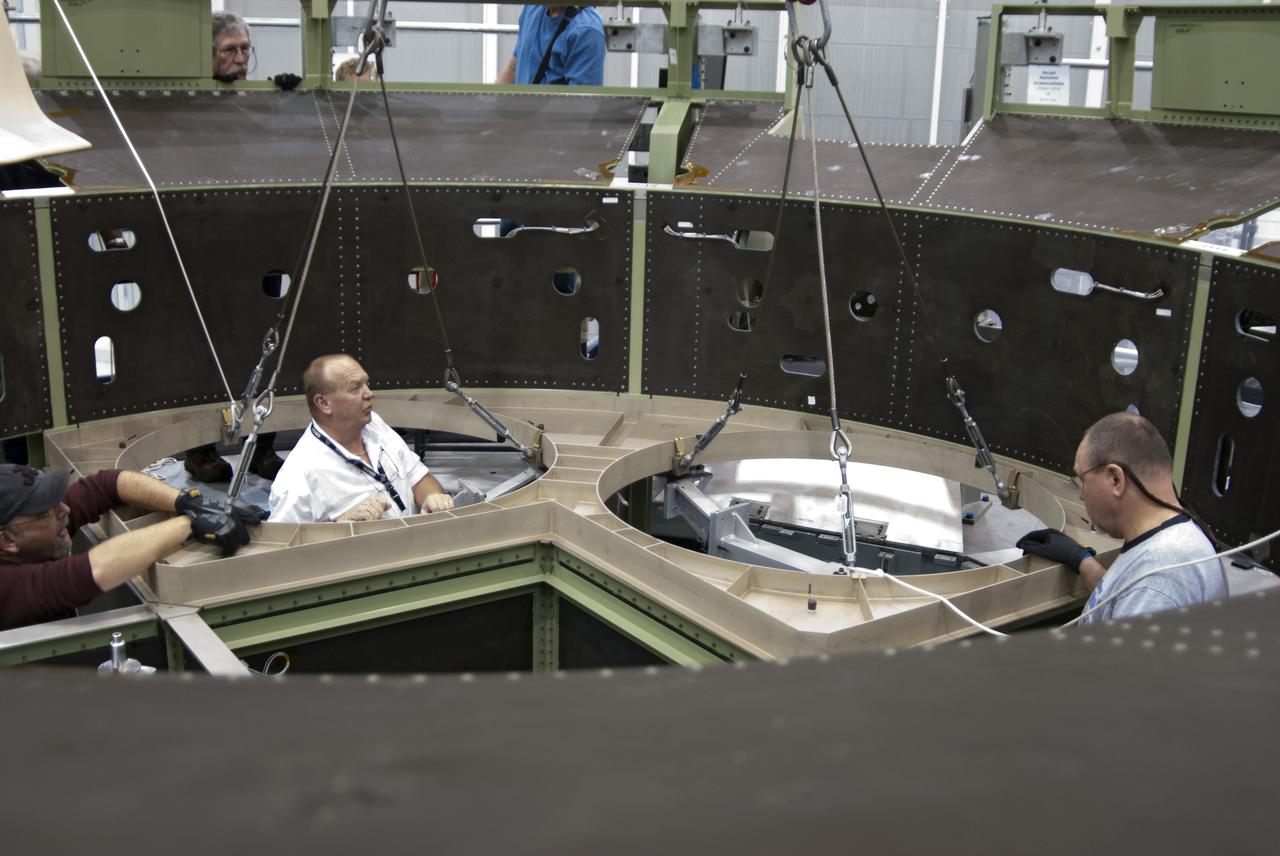
CAPE CANAVERAL, Fla. – Inside the Operations and Checkout Building high bay at NASA’s Kennedy Space Center in Florida, technicians help guide a bulkhead as it is lowered for installation on the Orion service module in preparation for Exploration Flight Test 1, or EFT-1. Orion is the exploration spacecraft designed to carry crews to space beyond low Earth orbit. It will provide emergency abort capability, sustain the crew during the space travel and provide safe re-entry from deep space return velocities. Orion’s first unpiloted test flight is scheduled to launch in 2014 atop a United Launch Alliance Delta IV heavy rocket. A second uncrewed flight test is scheduled for 2017 on the Space Launch System rocket. For more information, visit http:__www.nasa.gov_orion. Photo credit: NASA_Charisse Nahser

CAPE CANAVERAL, Fla. – Inside the Operations and Checkout Building high bay at NASA’s Kennedy Space Center in Florida, a bulkhead is lowered for installation on the Orion service module in preparation for Exploration Flight Test 1, or EFT-1. Orion is the exploration spacecraft designed to carry crews to space beyond low Earth orbit. It will provide emergency abort capability, sustain the crew during the space travel and provide safe re-entry from deep space return velocities. Orion’s first unpiloted test flight is scheduled to launch in 2014 atop a United Launch Alliance Delta IV heavy rocket. A second uncrewed flight test is scheduled for 2017 on the Space Launch System rocket. For more information, visit http:__www.nasa.gov_orion. Photo credit: NASA_Charisse Nahser
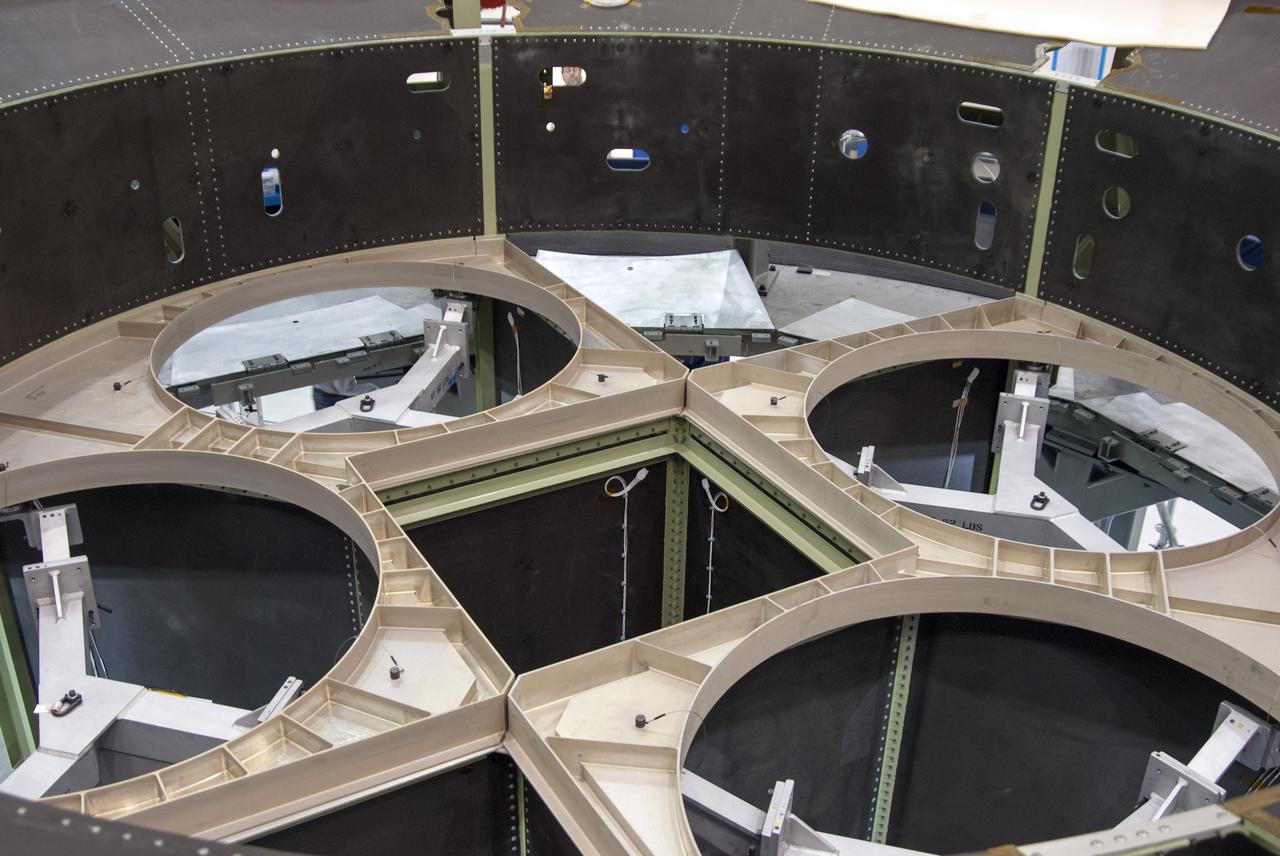
CAPE CANAVERAL, Fla. – Inside the Operations and Checkout Building high bay at NASA’s Kennedy Space Center in Florida, two sets of bulkheads have been installed on the Orion service module in preparing for Exploration Flight Test 1, or EFT-1. Orion is the exploration spacecraft designed to carry crews to space beyond low Earth orbit. It will provide emergency abort capability, sustain the crew during the space travel and provide safe re-entry from deep space return velocities. Orion’s first unpiloted test flight is scheduled to launch in 2014 atop a United Launch Alliance Delta IV heavy rocket. A second uncrewed flight test is scheduled for 2017 on the Space Launch System rocket. For more information, visit http:__www.nasa.gov_orion. Photo credit: NASA_Charisse Nahser
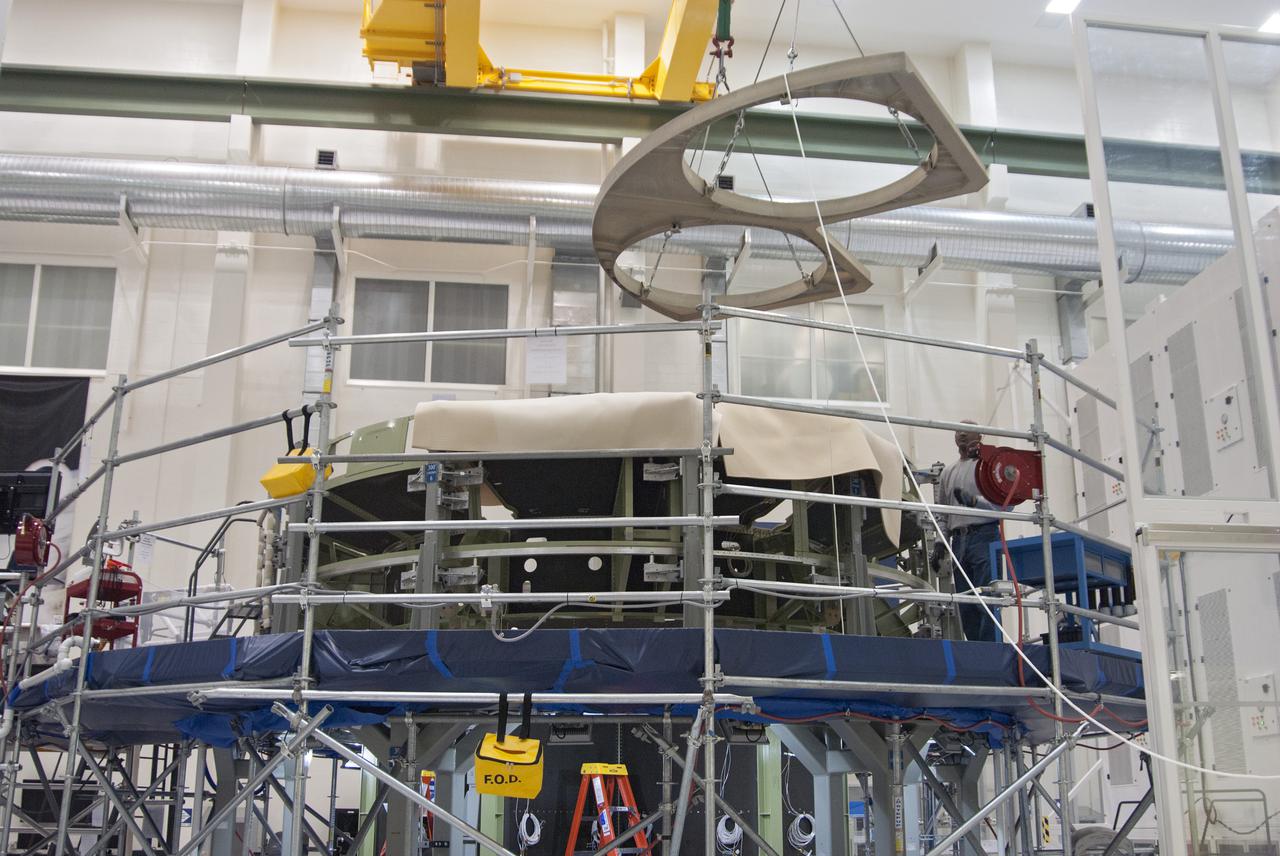
CAPE CANAVERAL, Fla. – Inside the Operations and Checkout Building high bay at NASA’s Kennedy Space Center in Florida, a bulkhead is lowered for installation on the Orion service module in preparation for Exploration Flight Test 1, or EFT-1. Orion is the exploration spacecraft designed to carry crews to space beyond low Earth orbit. It will provide emergency abort capability, sustain the crew during the space travel and provide safe re-entry from deep space return velocities. Orion’s first unpiloted test flight is scheduled to launch in 2014 atop a United Launch Alliance Delta IV heavy rocket. A second uncrewed flight test is scheduled for 2017 on the Space Launch System rocket. For more information, visit http:__www.nasa.gov_orion. Photo credit: NASA_Charisse Nahser
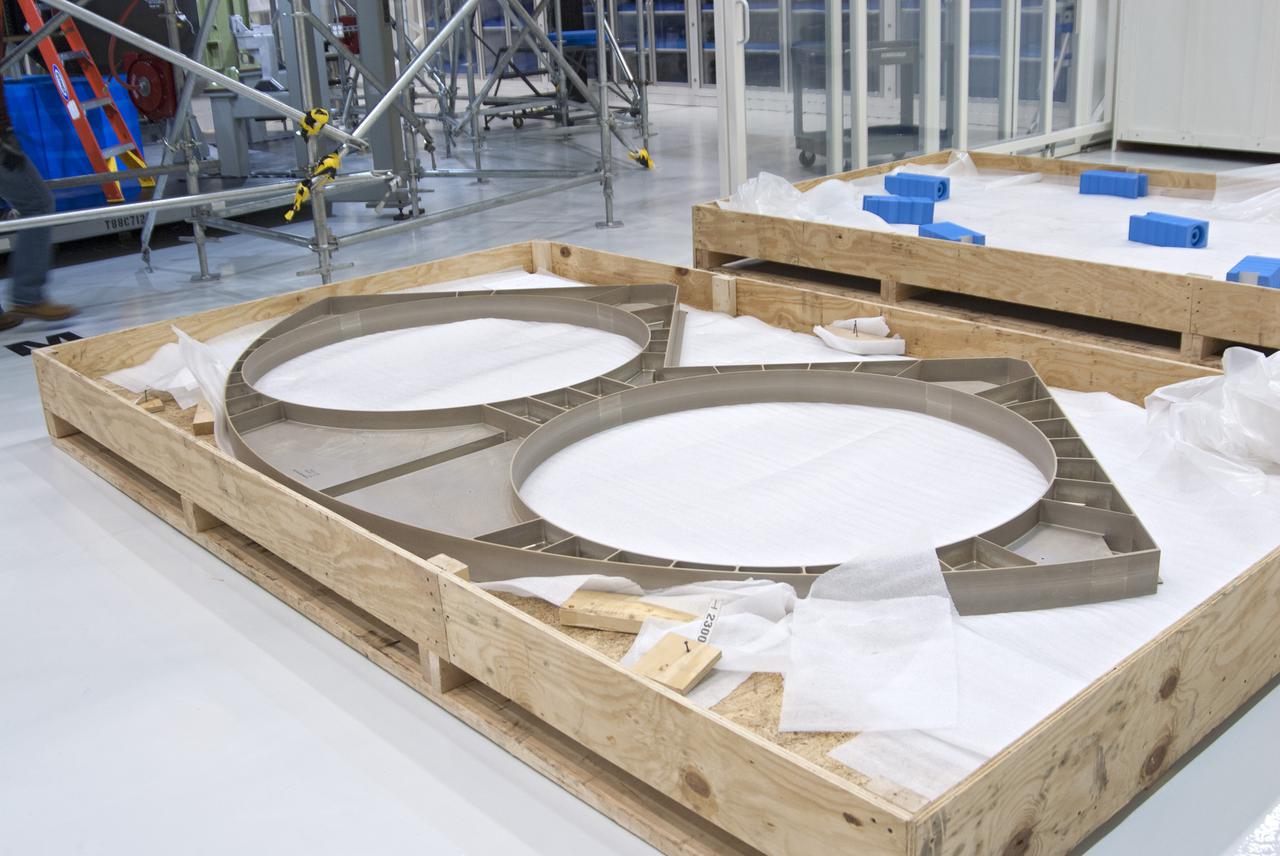
CAPE CANAVERAL, Fla. – Inside the Operations and Checkout Building high bay at NASA’s Kennedy Space Center in Florida, a bulkhead is being prepared for installation on the Orion service module for Exploration Flight Test 1, or EFT-1. Orion is the exploration spacecraft designed to carry crews to space beyond low Earth orbit. It will provide emergency abort capability, sustain the crew during the space travel and provide safe re-entry from deep space return velocities. Orion’s first unpiloted test flight is scheduled to launch in 2014 atop a United Launch Alliance Delta IV heavy rocket. A second uncrewed flight test is scheduled for 2017 on the Space Launch System rocket. For more information, visit http:__www.nasa.gov_orion. Photo credit: NASA_Charisse Nahser
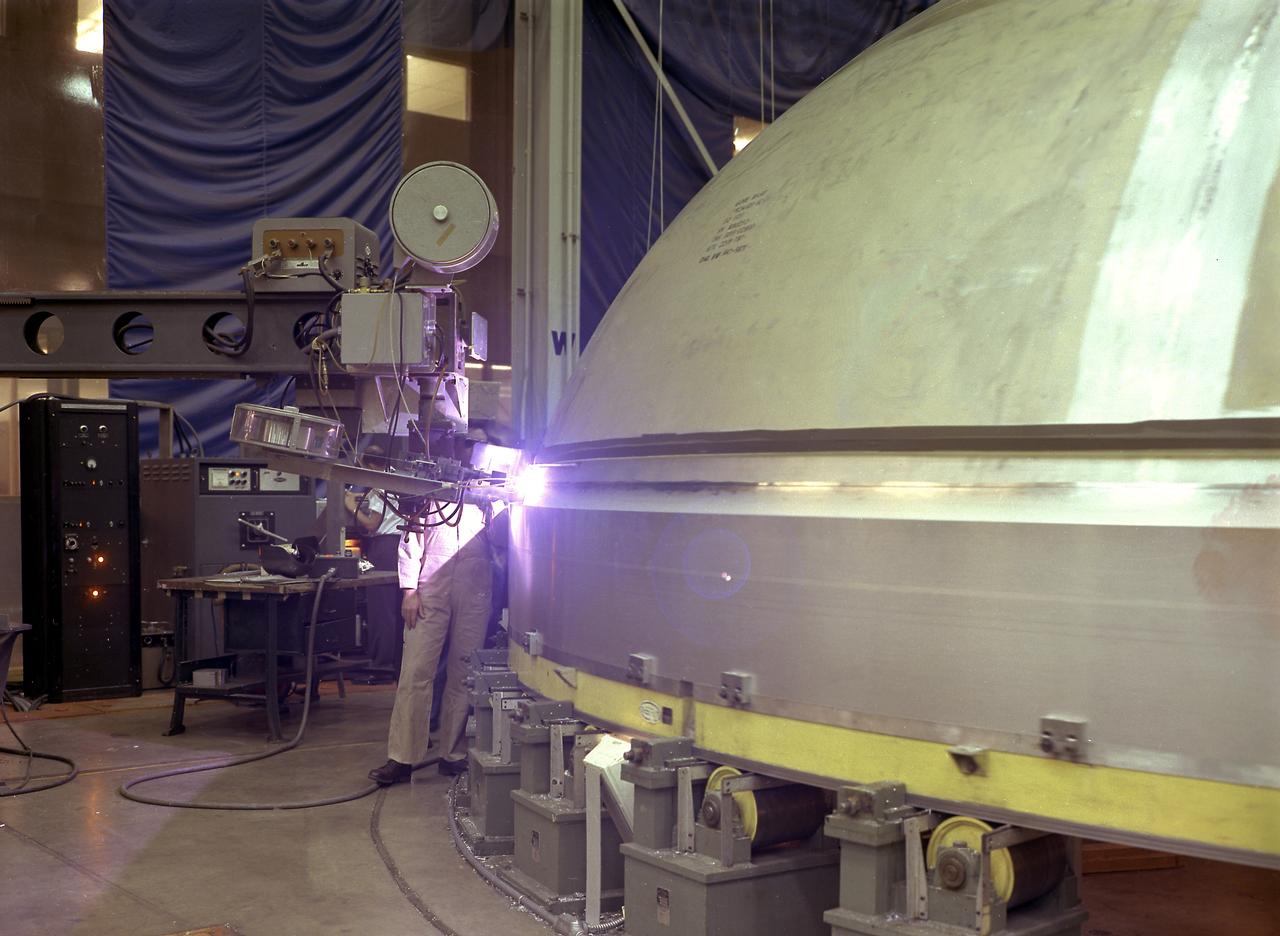
A technician is pictured at the Marshall Space Flight Center welding the Y-ring to the S-IC stage bulkhead and the fuel tank for the Saturn V SA-502 launch vehicle (Apollo 6 mission) in building 4705. The size of the S-IC required a special rig known as the Y-ring to join the tank wall cylinders and domes together. The Y-ring was designed to eliminate lap joints where the tank domes, wall, and adjoining structure (such as the intertank segment) came together.
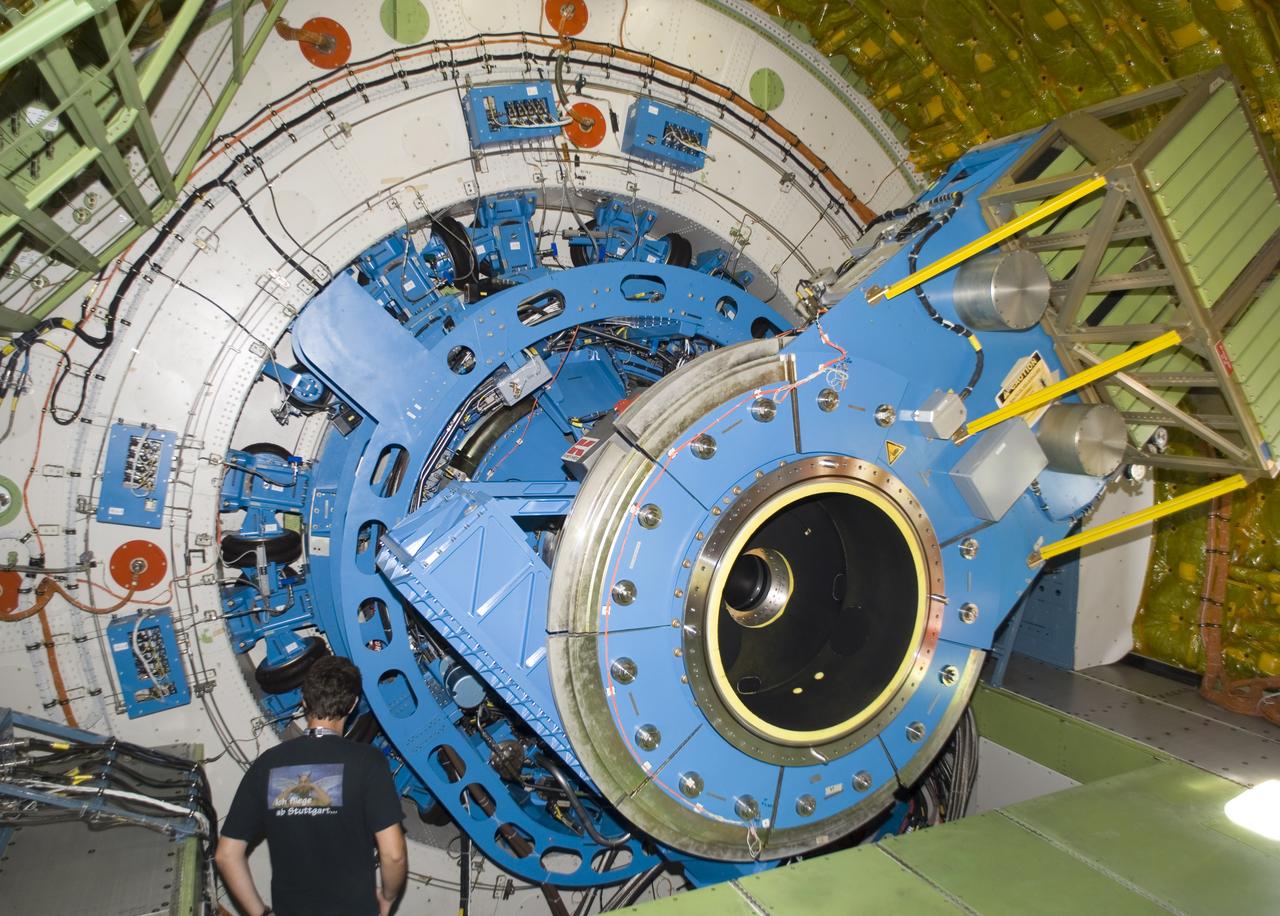
A technician examines the instrument mounting structure and bulkhead of the German-built infrared telescope installed in NASA's SOFIA airborne observatory.
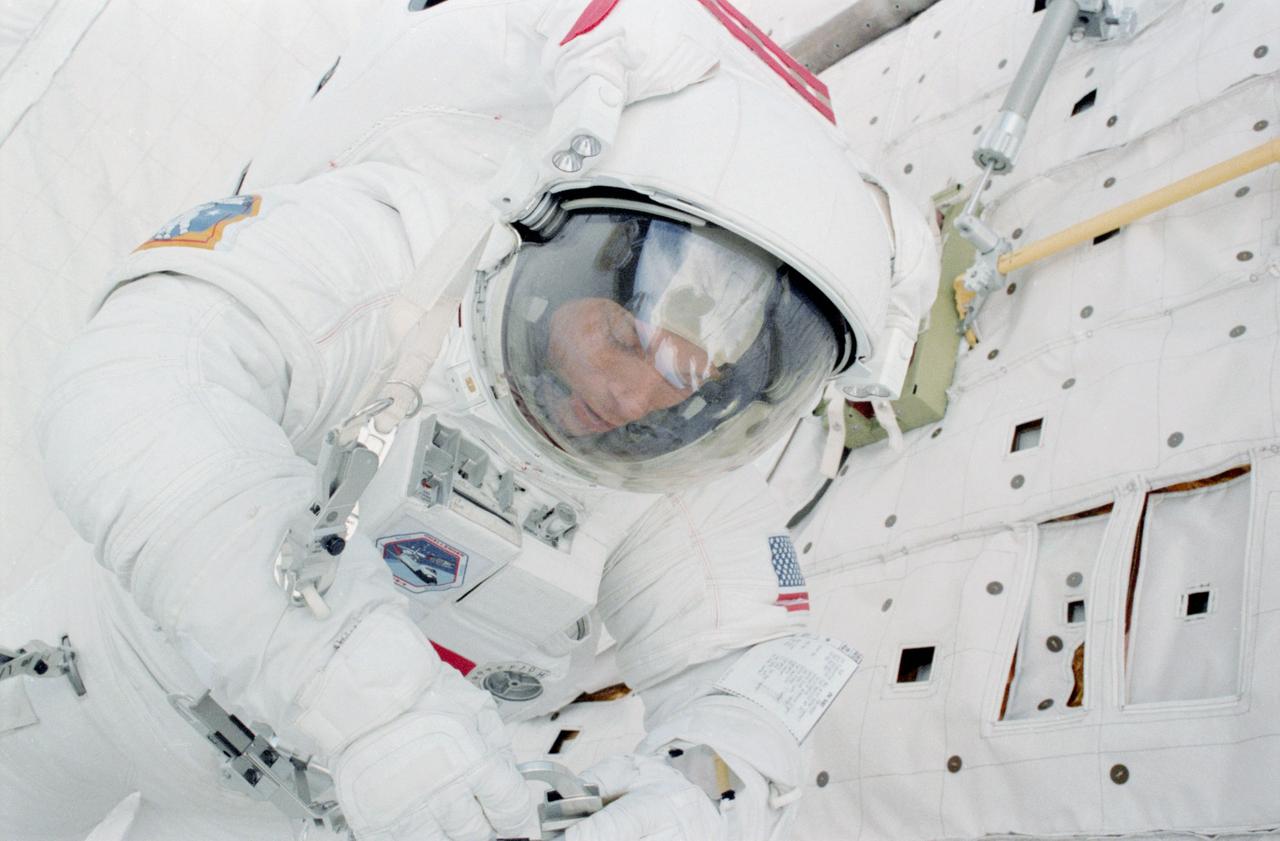
STS006-22-026 (7 April 1983) --- Astronaut F. Story Musgrave, one of two STS-6 mission specialists who performed a lengthy, successful extravehicular activity (EVA) in the cargo bay of the Earth orbiting space shuttle Challenger, anchors himself near the forward bulkhead of the reusable vehicle. Astronaut Donald H. Peterson, sharing the cargo bay with Dr. Musgrave, exposed this frame with a 35mm camera, while astronauts Paul J. Weitz, commander, and Karol J. Bobko, pilot, remained in the cabin. Photo credit: NASA
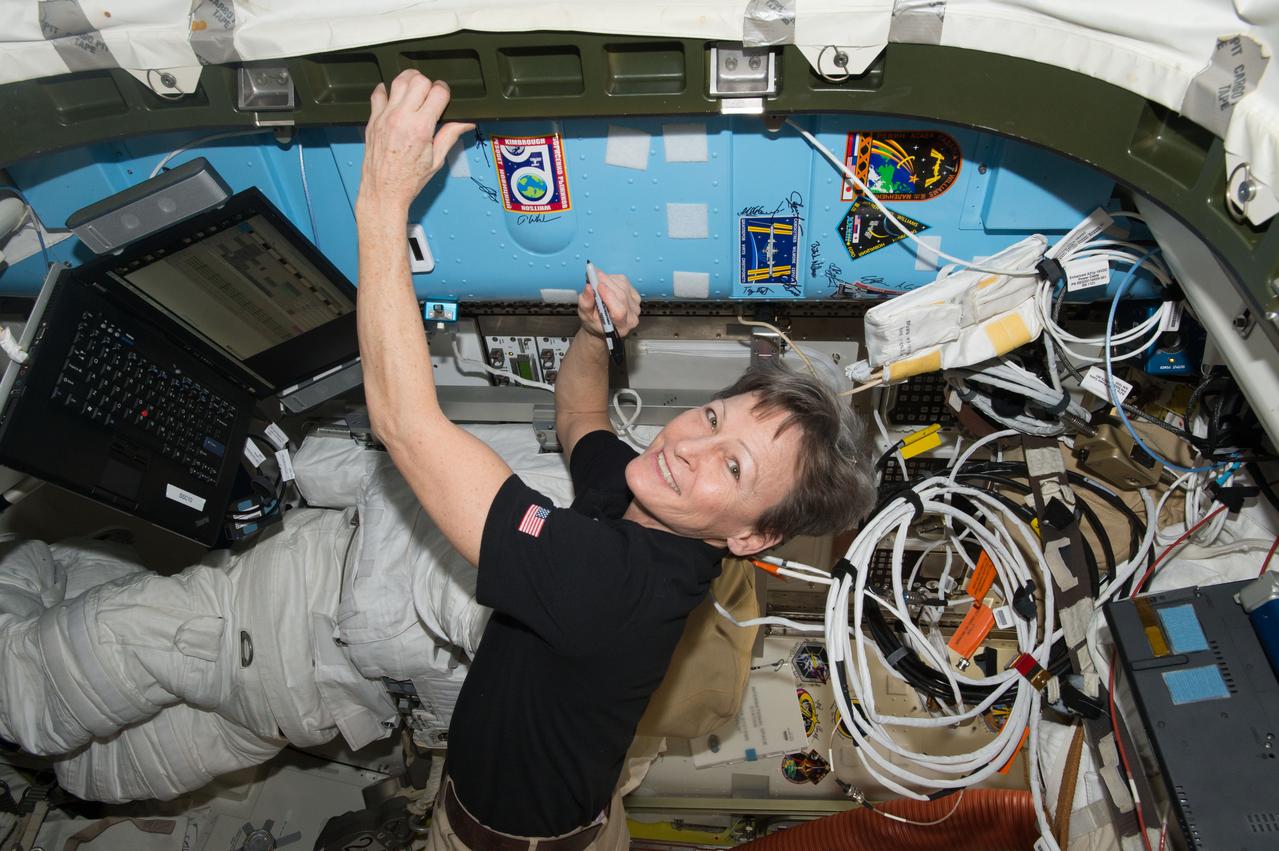
iss050e054558 (03/05/2017) --- NASA astronaut Peggy Whitson signs a bulkhead on the International Space Station next to the Expedition 50 crew patch.
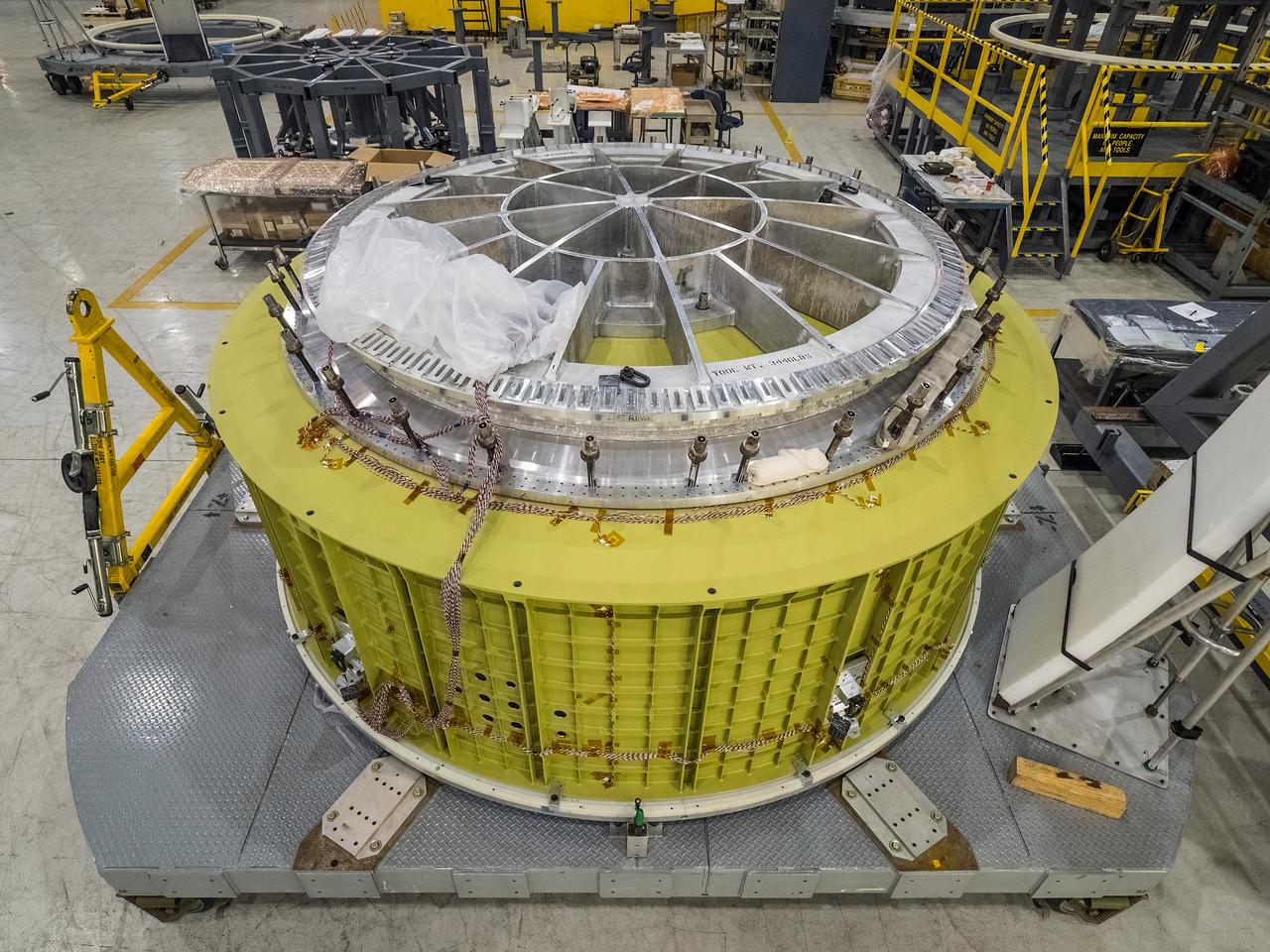
The completed barrel and aft bulkhead of the Orion Artemis I pressure vessel at NASA's Michoud Assembly Facility in New Orleans on Nov. 15, 2015. Part of Batch image transfer from Flickr.
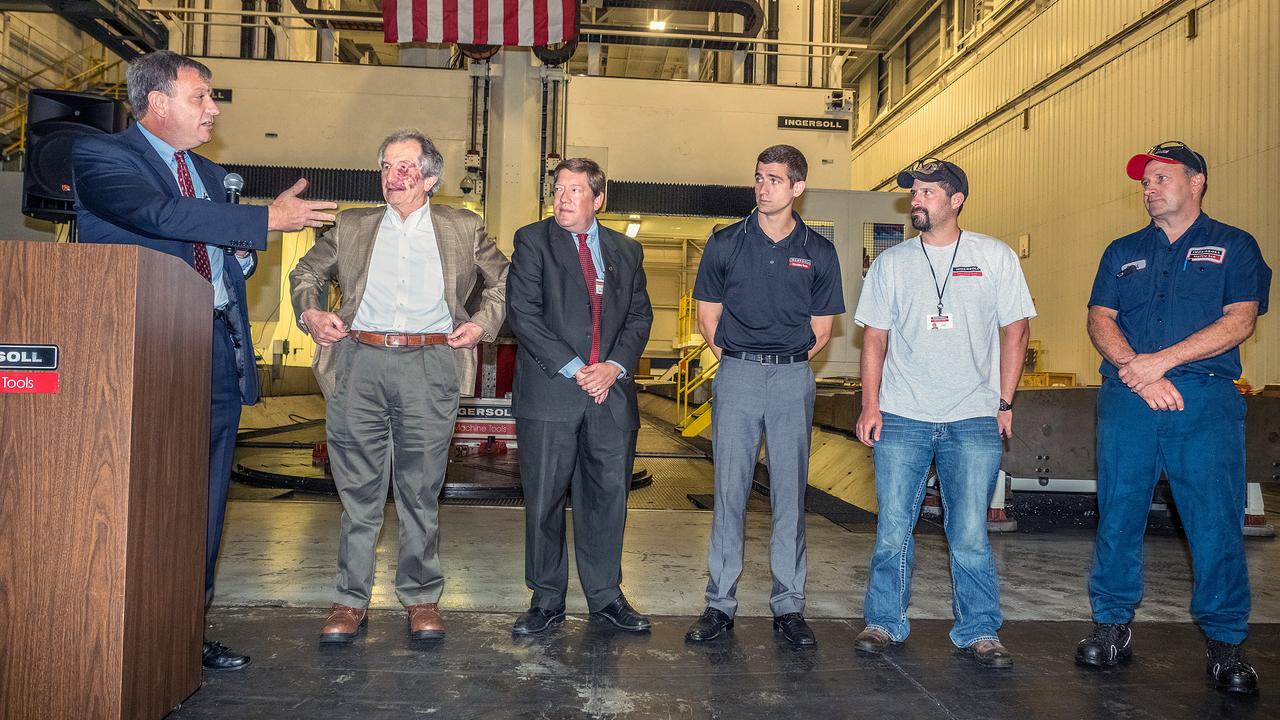
The Orion team visits Ingersoll In Rockford, IL, to see the progress on the aft bulkhead for the Artemis I Orion spacecraft on June 12, 2015. Part of Batch image transfer from Flickr.
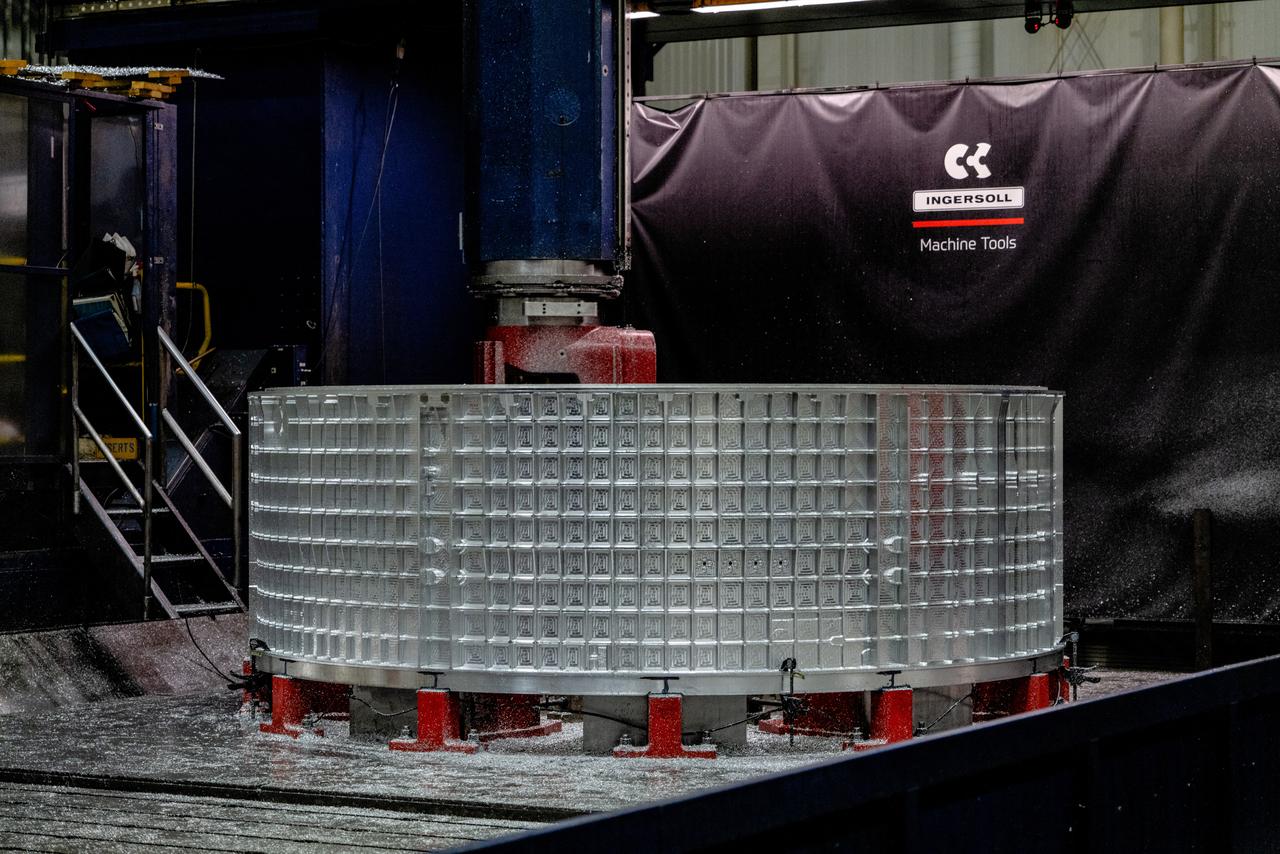
Machining of the tunnel, aft bulkhead, and barrel for the Artemis III Orion pressure vessel takes place at Ingersoll Machine Tool, Inc. in Rockford, Illinois on Sept. 28, 2020.
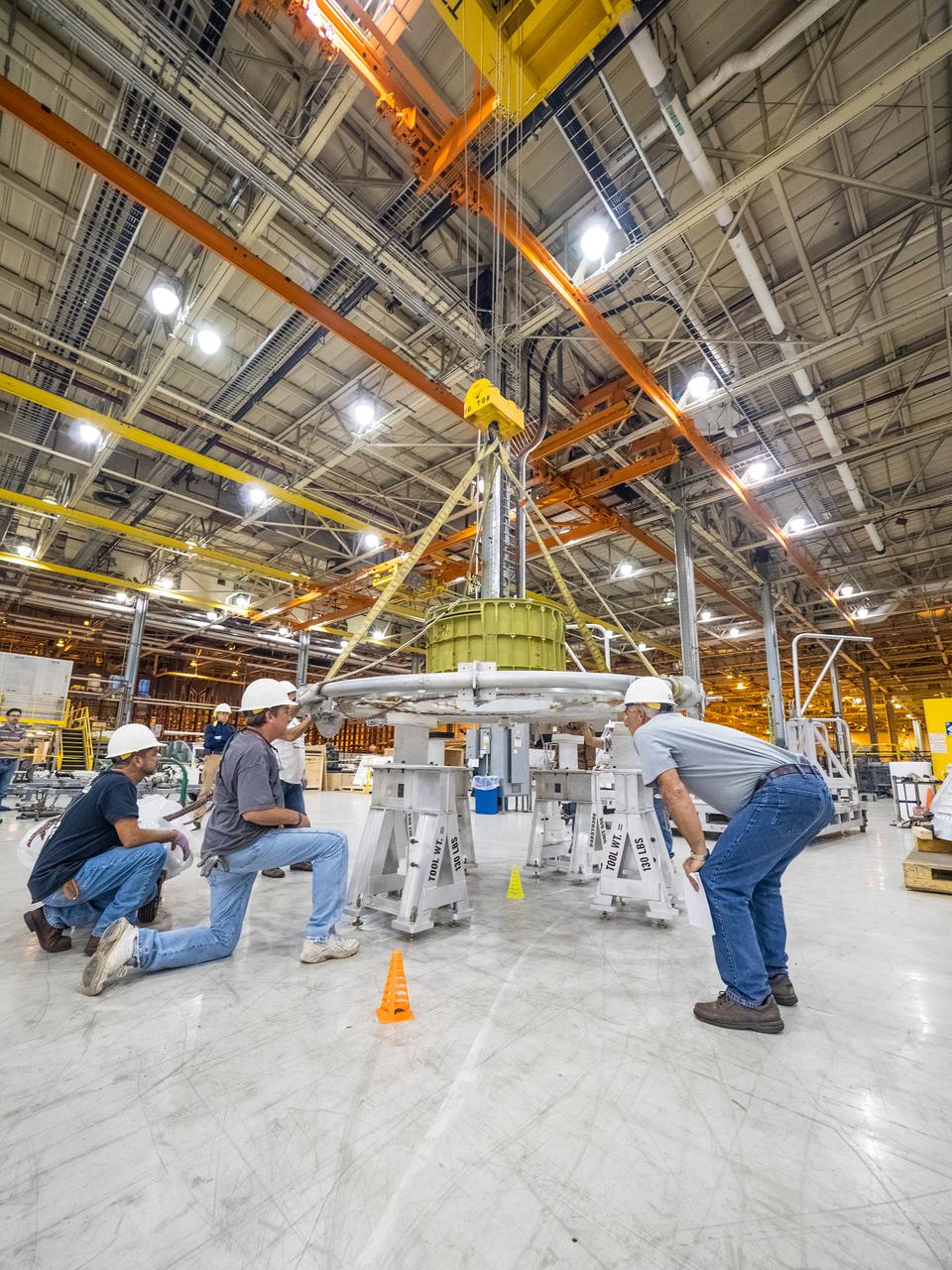
The first welded part of Artemis I Orion, the forward bulkhead and tunnel, is moved into final tooling at the Michoud Assembly Facility in New Orleans, Louisiana on Oct. 12, 2015. Part of Batch image transfer from Flickr.
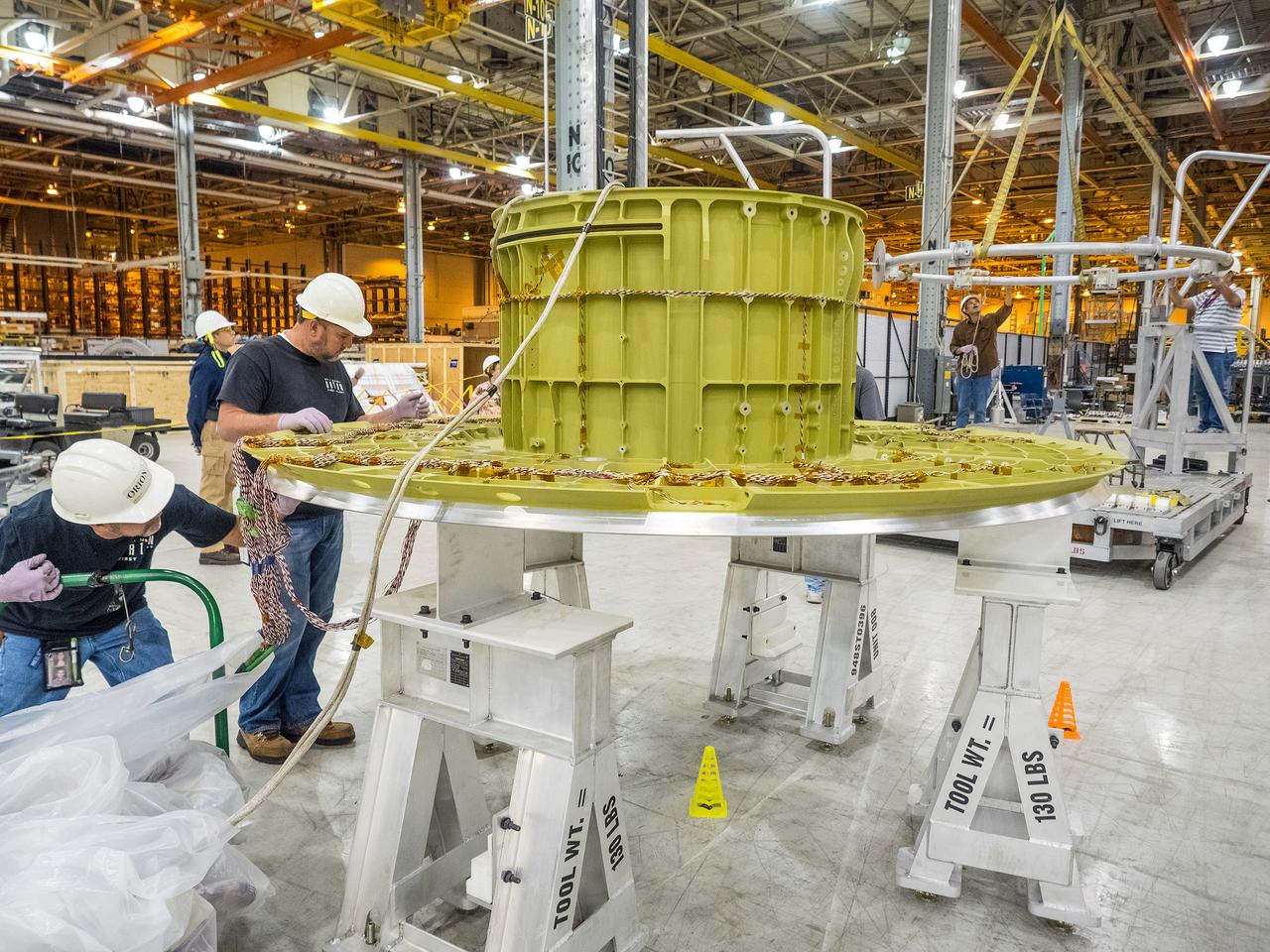
The first welded part of Artemis I Orion, the forward bulkhead and tunnel, is moved into final tooling at the Michoud Assembly Facility in New Orleans, Louisiana on Oct. 12, 2015. Part of Batch image transfer from Flickr.
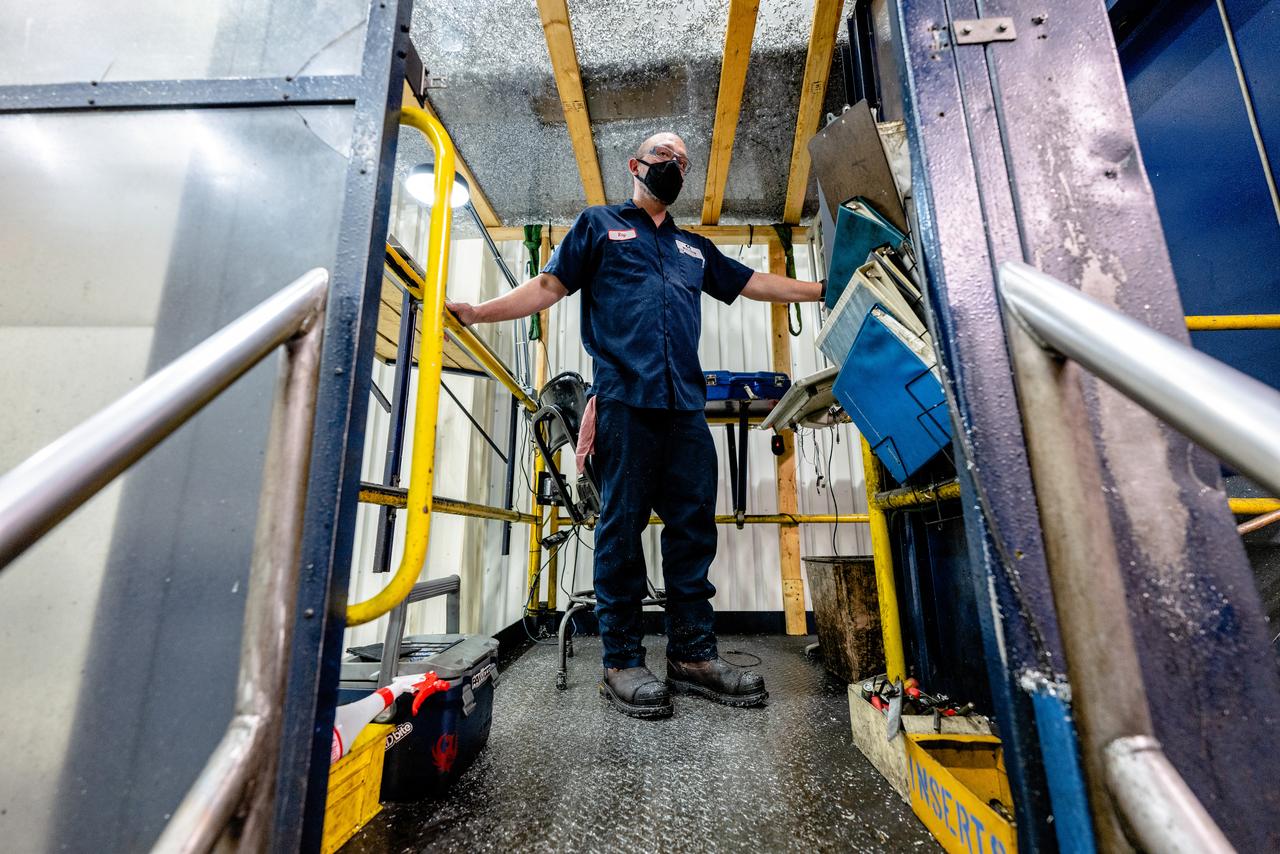
Machining of the tunnel, aft bulkhead, and barrel for the Artemis III Orion pressure vessel takes place at Ingersoll Machine Tool, Inc. in Rockford, Illinois on Sept. 28, 2020.
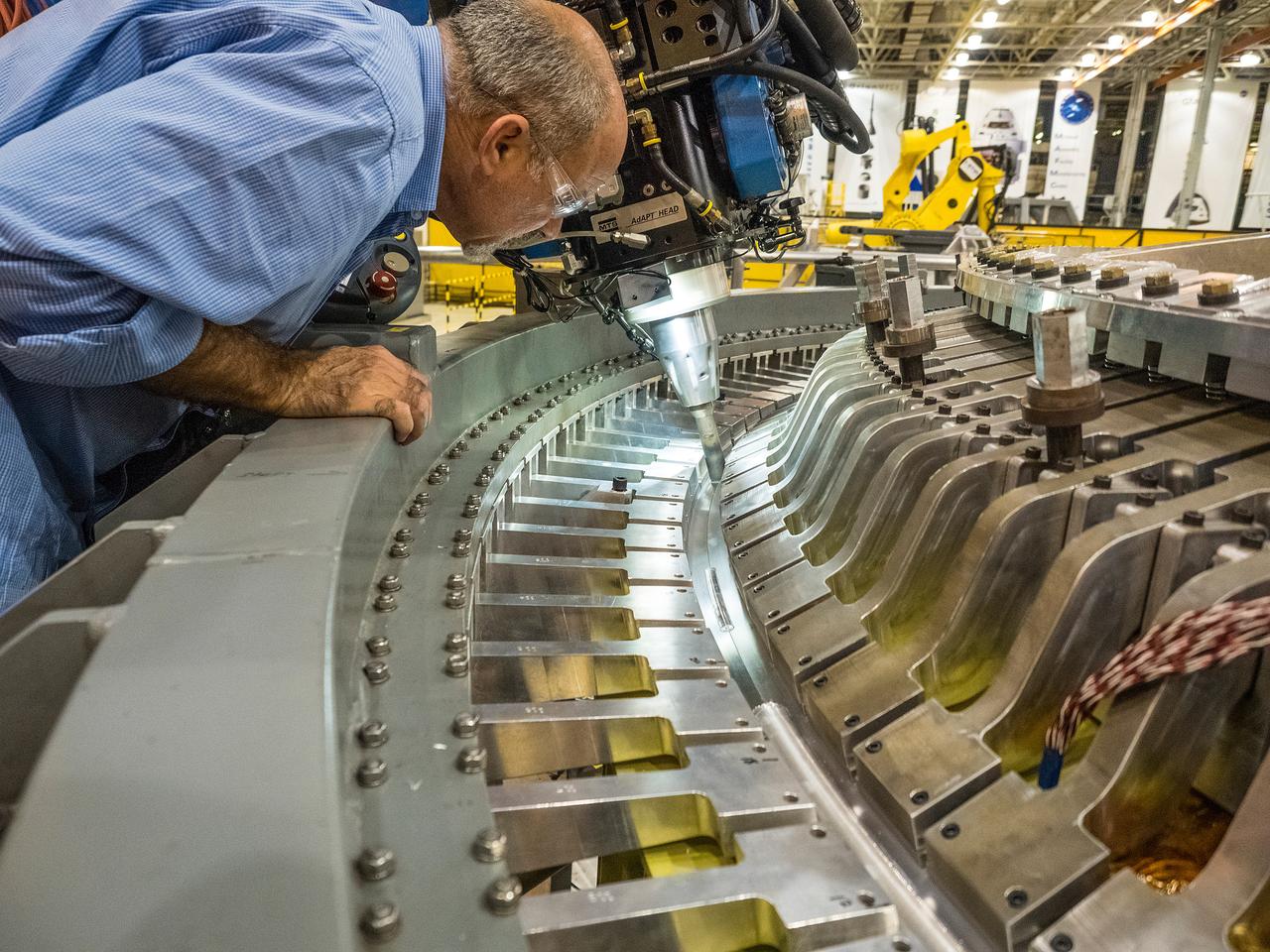
The Artemis I Orion aft bulkhead is welded to the barrel of the Orion pressure vessel at the Michoud Assembly Facility in New Orleans, Louisiana on Oct. 12, 2015. Part of Batch image transfer from Flickr.
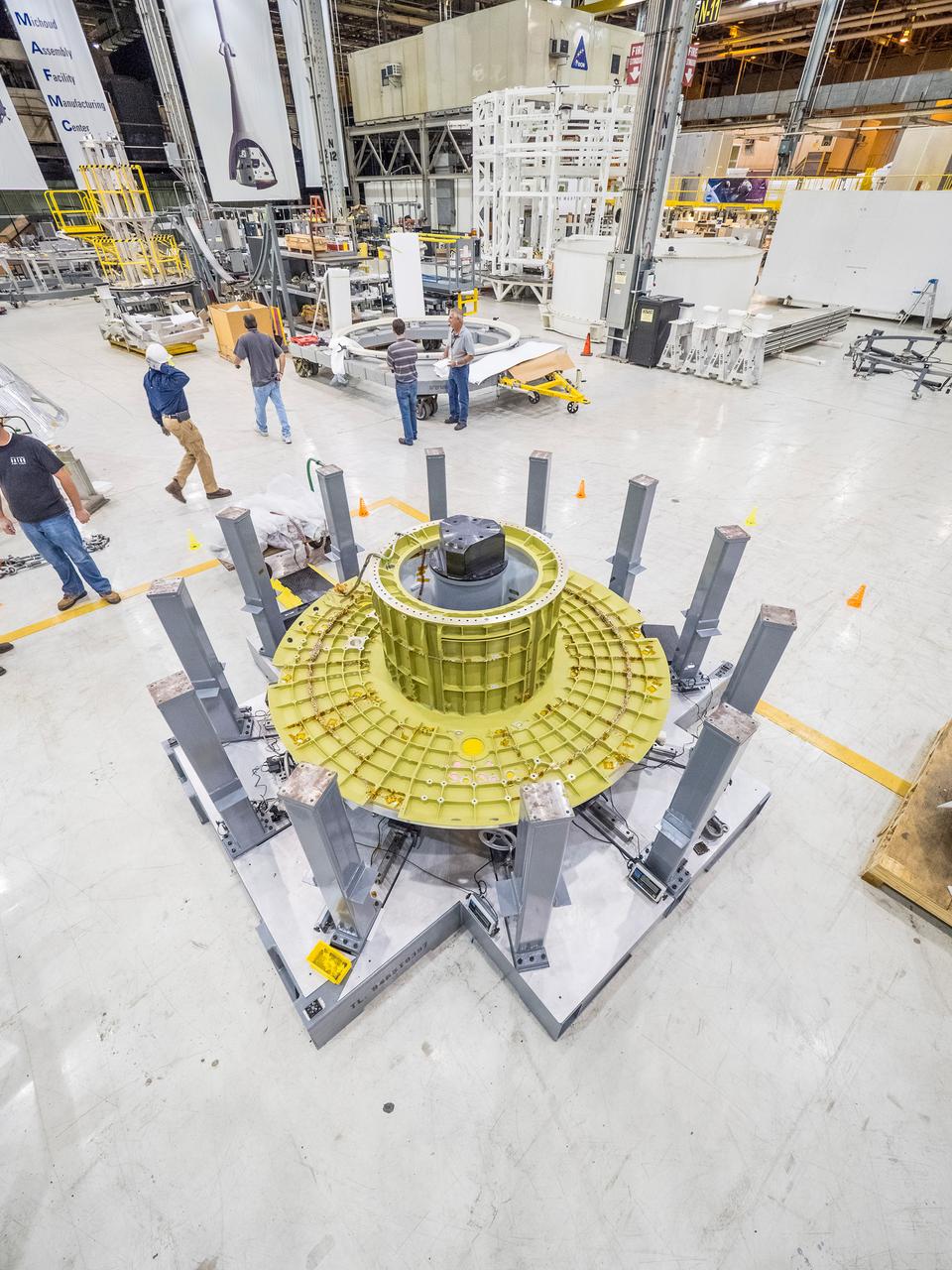
The first welded part of Artemis I Orion, the forward bulkhead and tunnel, is moved into final tooling at the Michoud Assembly Facility in New Orleans, Louisiana on Oct. 12, 2015. Part of Batch image transfer from Flickr.
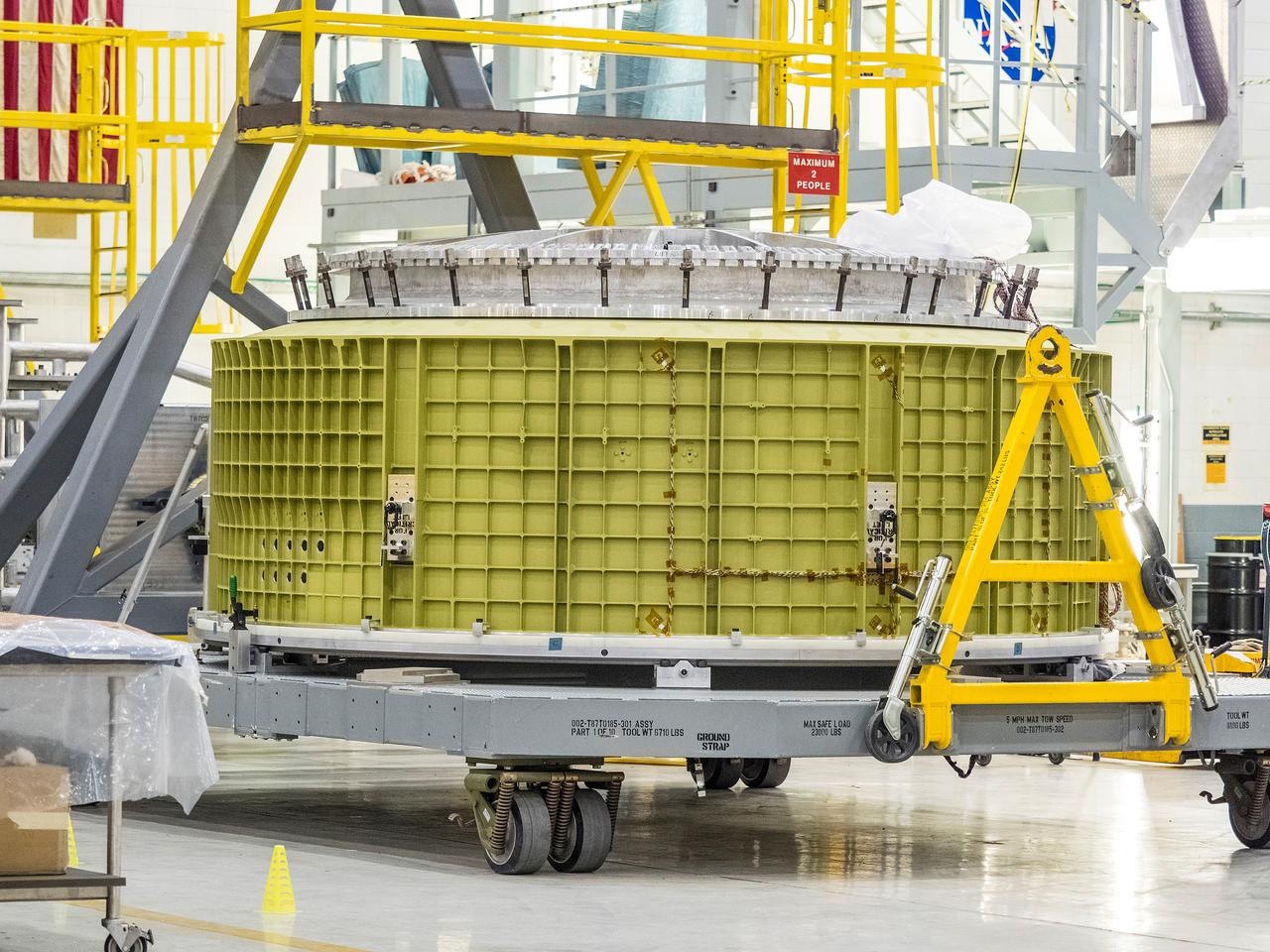
The completed barrel and aft bulkhead of the Orion Artemis I pressure vessel at NASA's Michoud Assembly Facility in New Orleans on Nov. 15, 2015. Part of Batch image transfer from Flickr.
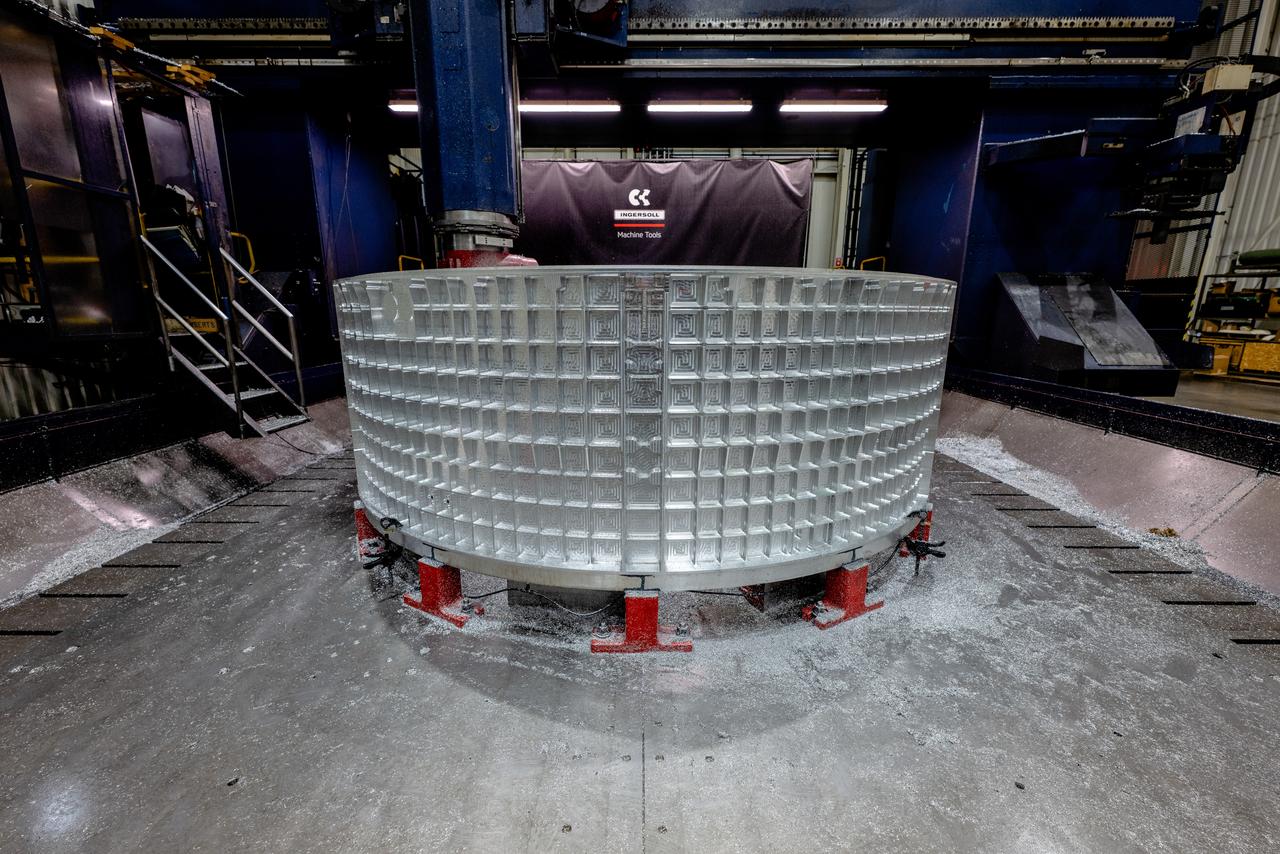
Machining of the tunnel, aft bulkhead, and barrel for the Artemis III Orion pressure vessel takes place at Ingersoll Machine Tool, Inc. in Rockford, Illinois on Sept. 28, 2020.
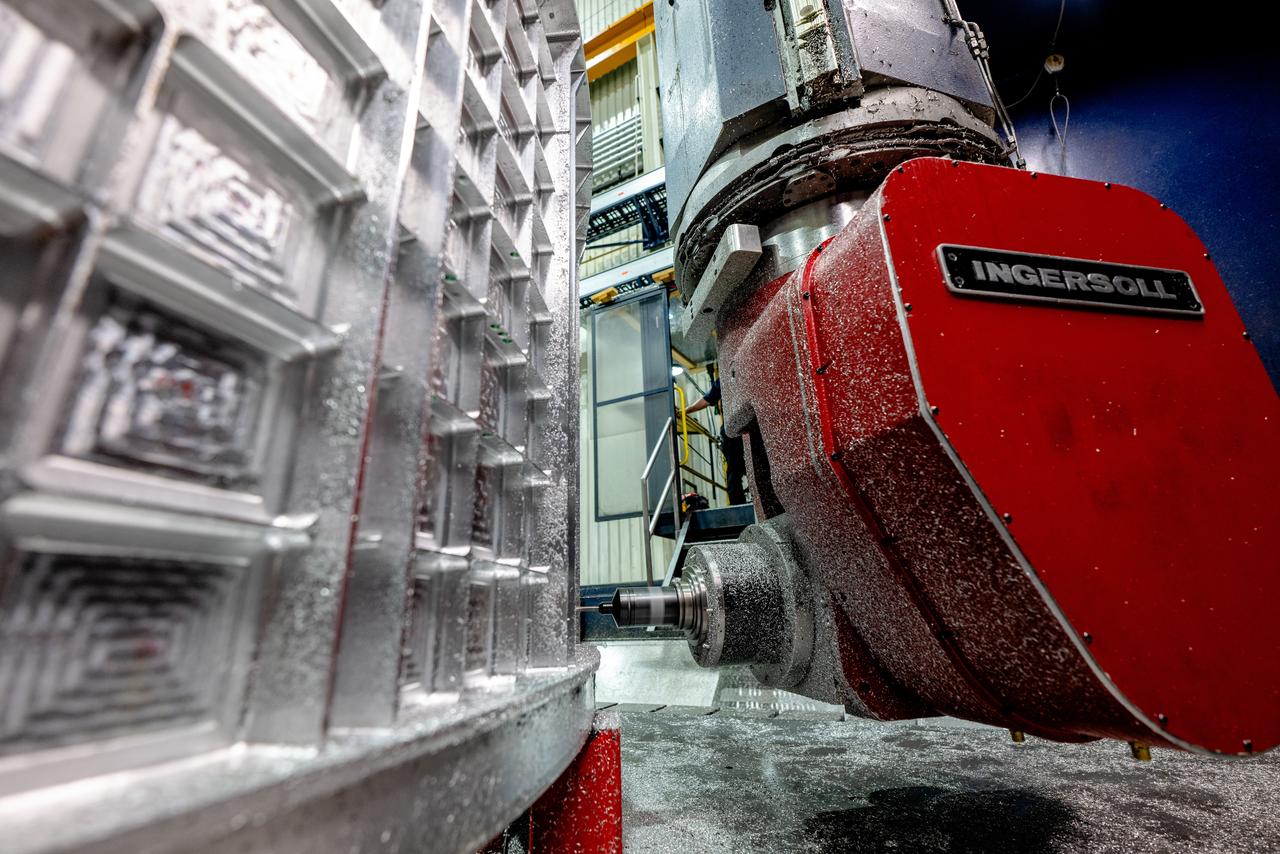
Machining of the tunnel, aft bulkhead, and barrel for the Artemis III Orion pressure vessel takes place at Ingersoll Machine Tool, Inc. in Rockford, Illinois on Sept. 28, 2020.
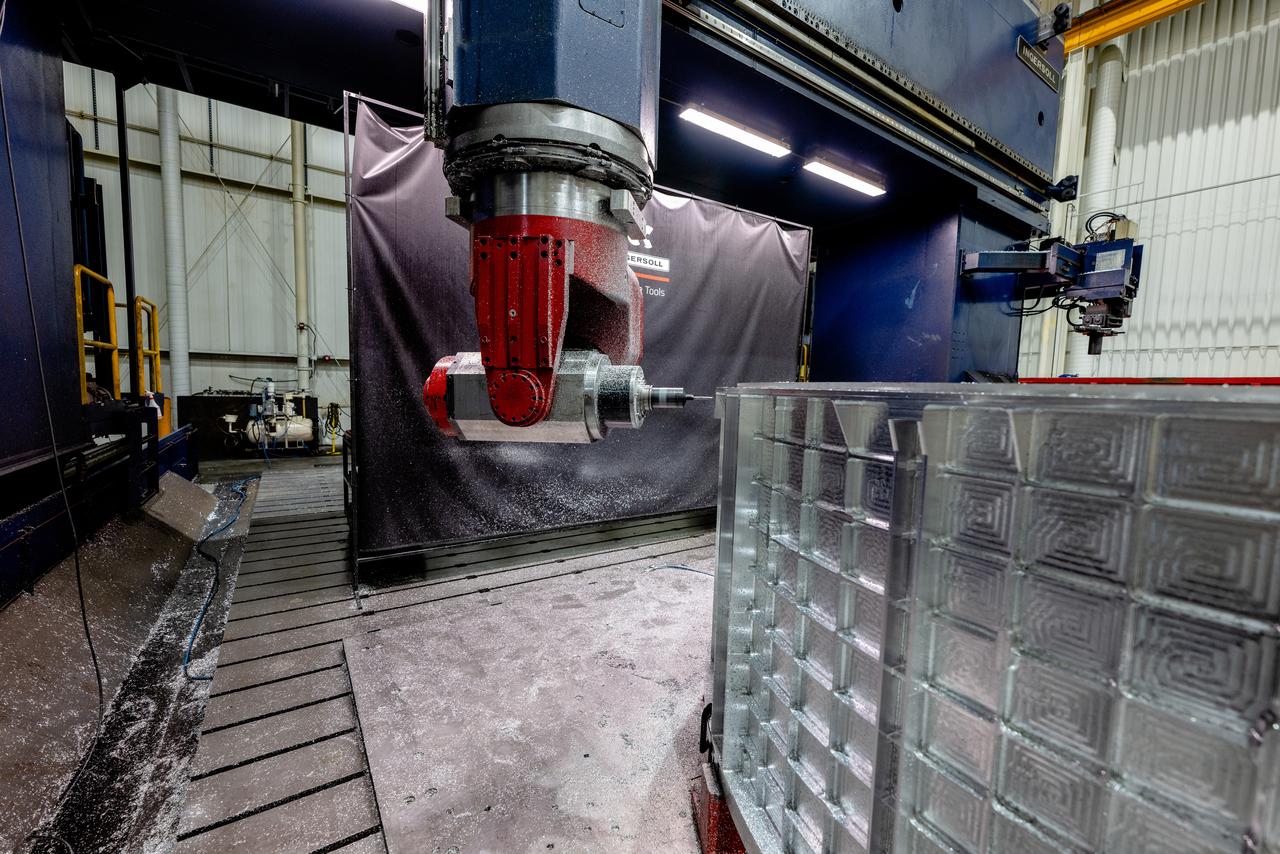
Machining of the tunnel, aft bulkhead, and barrel for the Artemis III Orion pressure vessel takes place at Ingersoll Machine Tool, Inc. in Rockford, Illinois on Sept. 28, 2020.
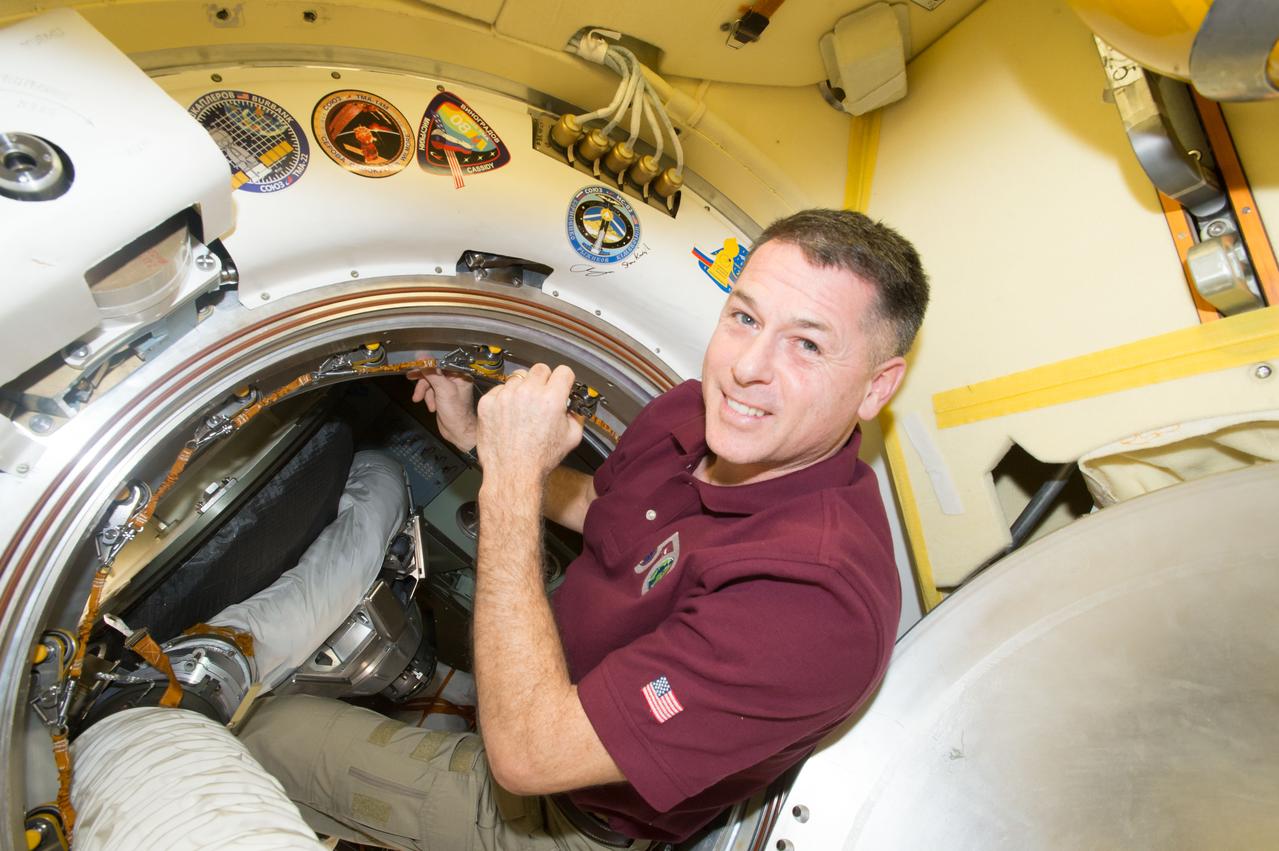
iss050e054575 (03/05/2017) --- NASA astronaut Shane Kimbrough signs a bulkhead on the Russian segment of the International Space station next to the crew patch for his Soyuz MS-03 spacecraft.
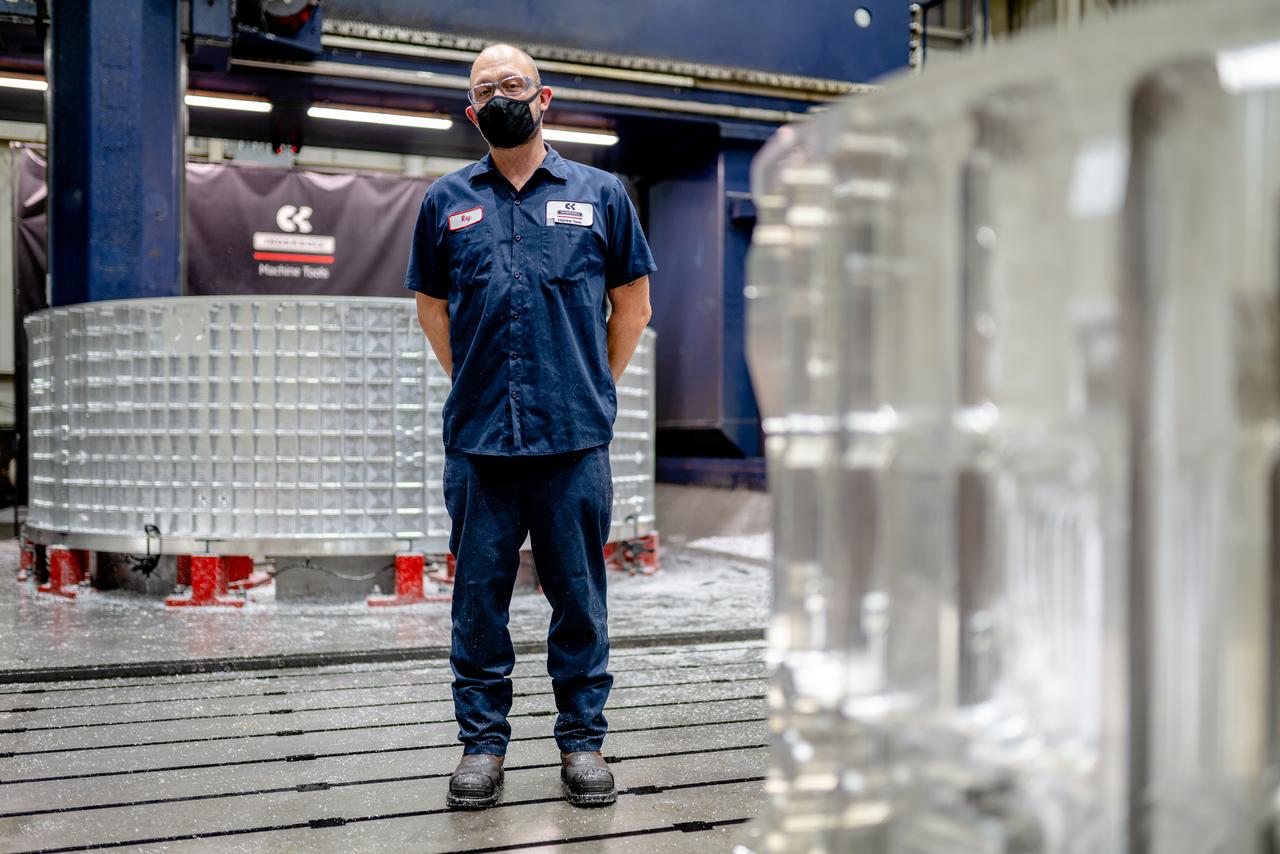
Machining of the tunnel, aft bulkhead, and barrel for the Artemis III Orion pressure vessel takes place at Ingersoll Machine Tool, Inc. in Rockford, Illinois on Sept. 28, 2020.
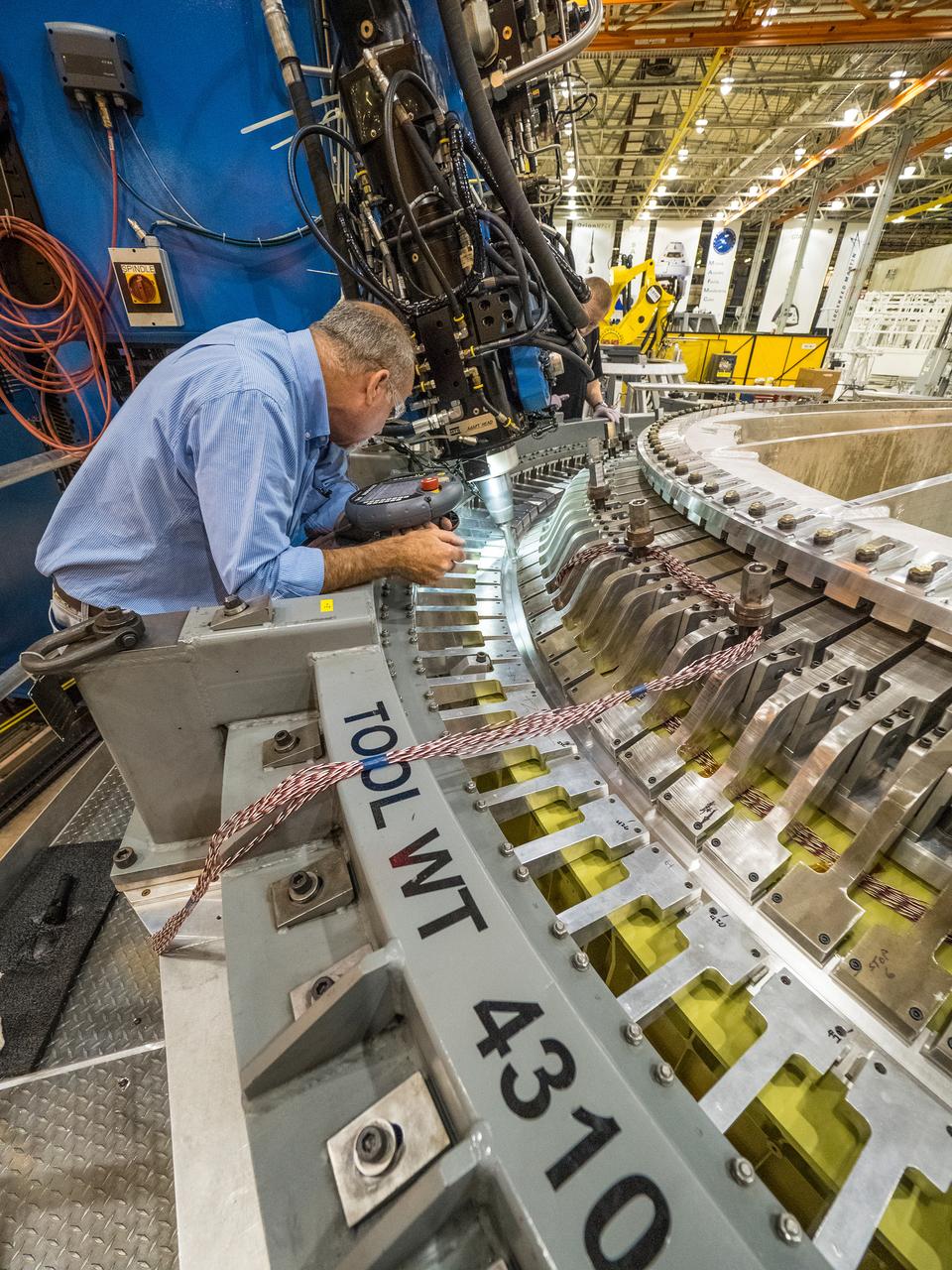
The Artemis I Orion aft bulkhead is welded to the barrel of the Orion pressure vessel at the Michoud Assembly Facility in New Orleans, Louisiana on Oct. 12, 2015. Part of Batch image transfer from Flickr.
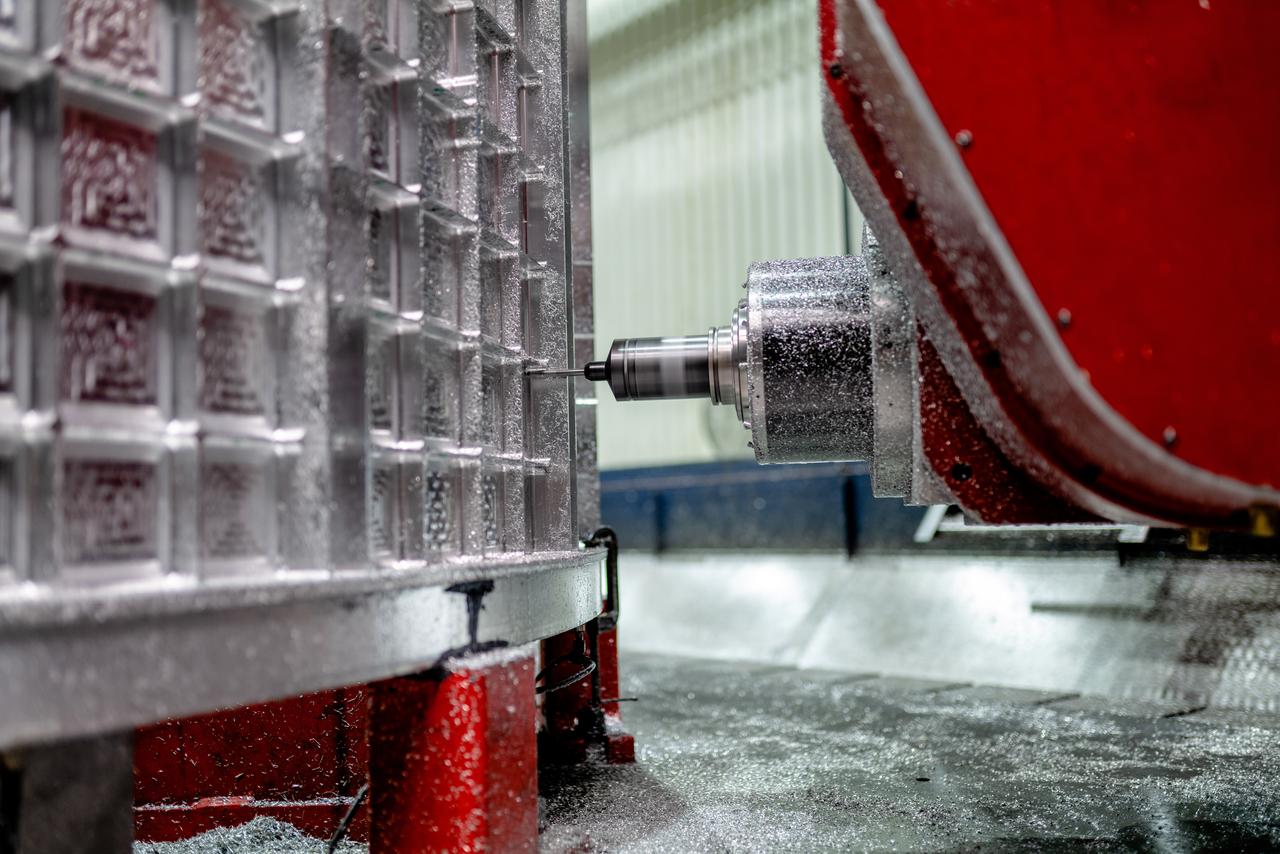
Machining of the tunnel, aft bulkhead, and barrel for the Artemis III Orion pressure vessel takes place at Ingersoll Machine Tool, Inc. in Rockford, Illinois on Sept. 28, 2020.
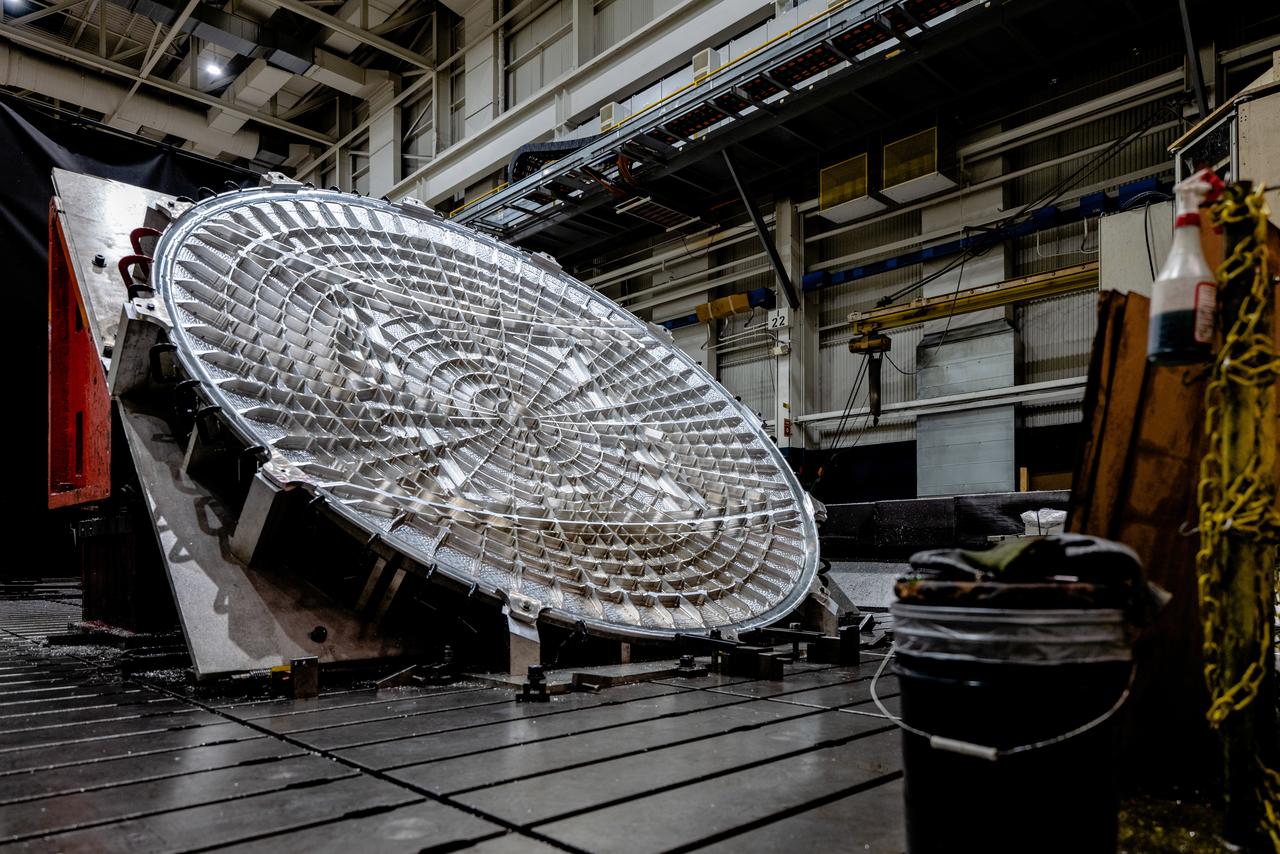
Machining of the tunnel, aft bulkhead, and barrel for the Artemis III Orion pressure vessel takes place at Ingersoll Machine Tool, Inc. in Rockford, Illinois on Sept. 28, 2020.
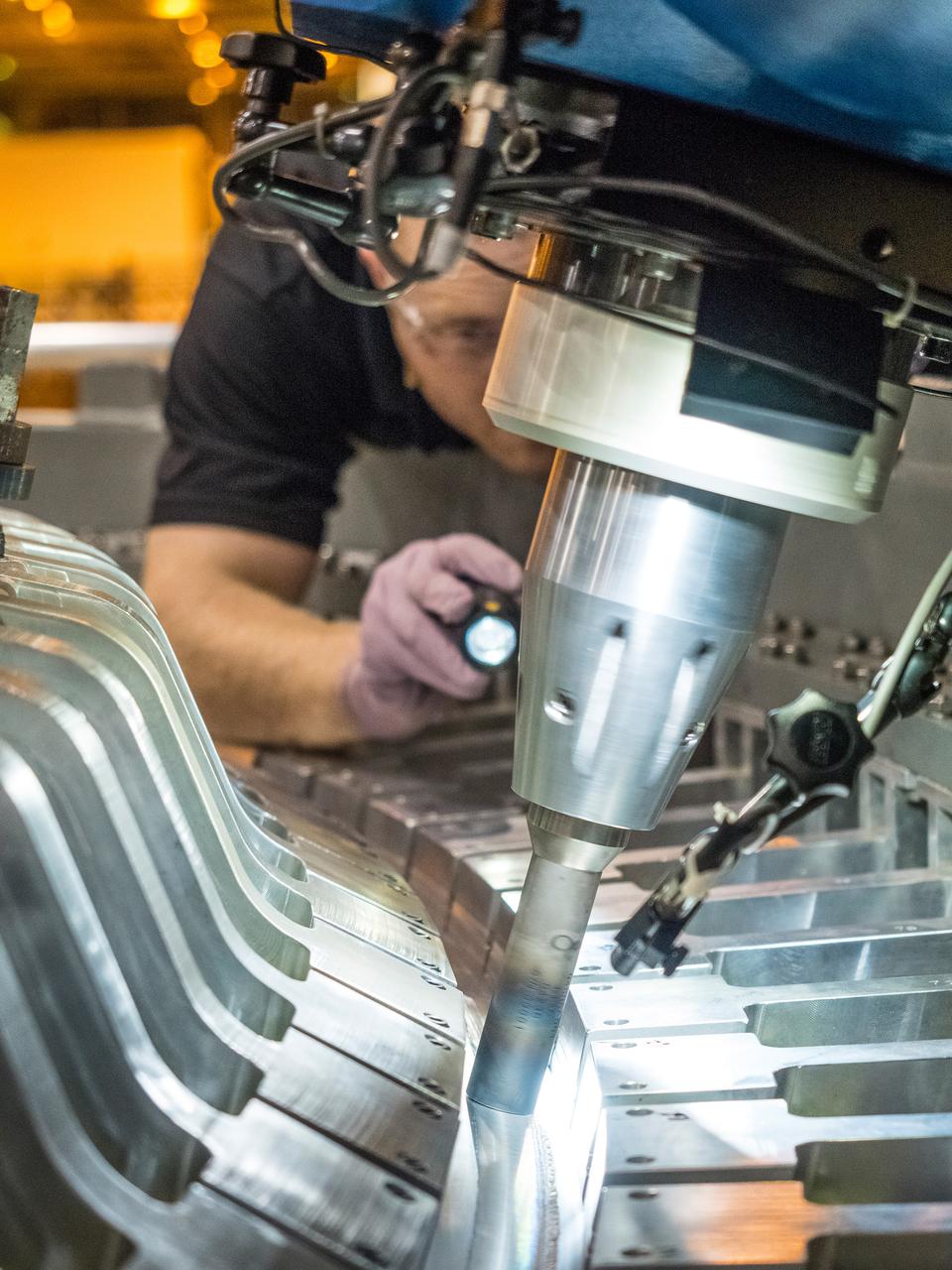
The Artemis I Orion aft bulkhead is welded to the barrel of the Orion pressure vessel at the Michoud Assembly Facility in New Orleans, Louisiana on Oct. 12, 2015. Part of Batch image transfer from Flickr.
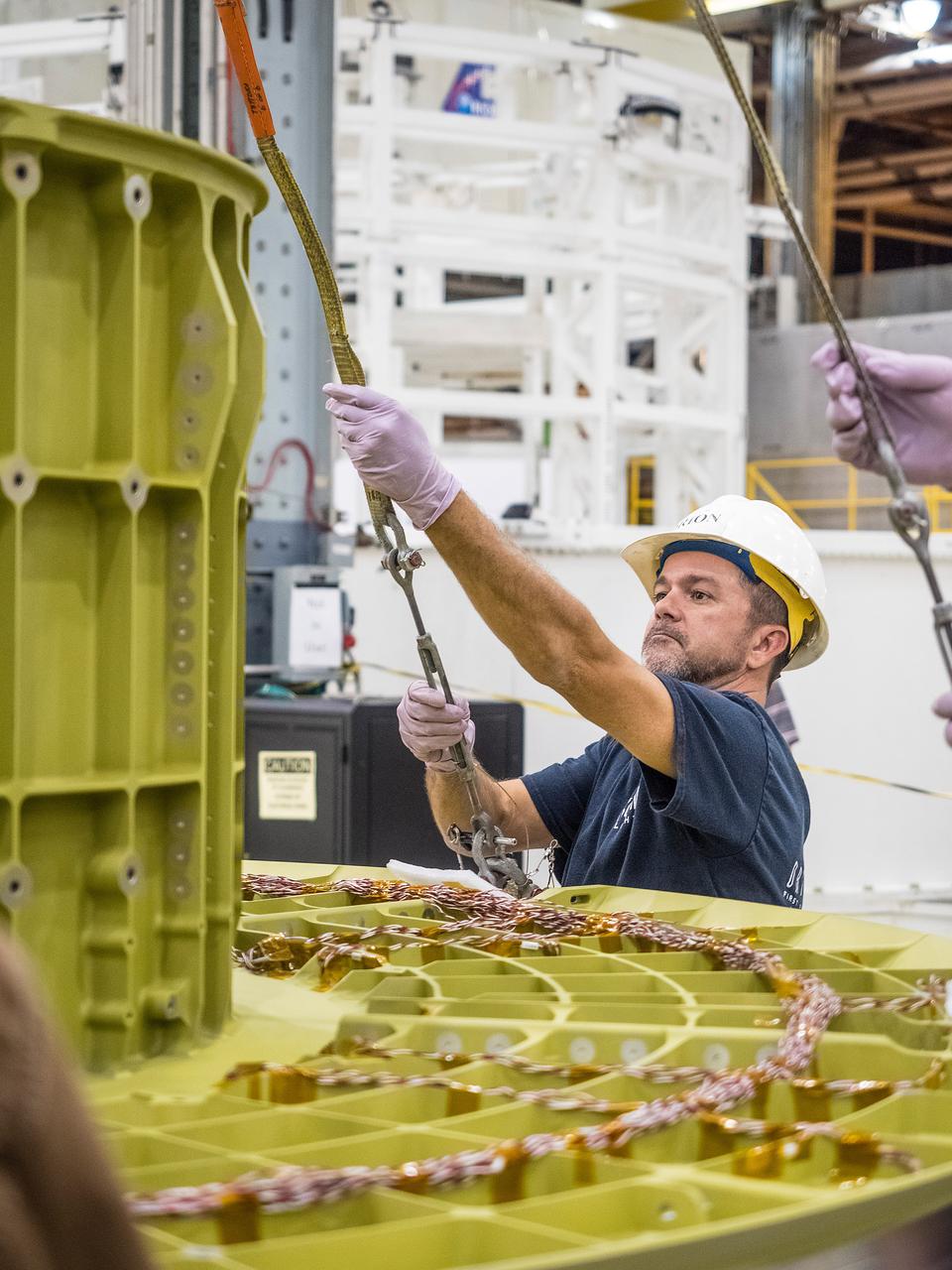
The first welded part of Artemis I Orion, the forward bulkhead and tunnel, is moved into final tooling at the Michoud Assembly Facility in New Orleans, Louisiana on Oct. 12, 2015. Part of Batch image transfer from Flickr.
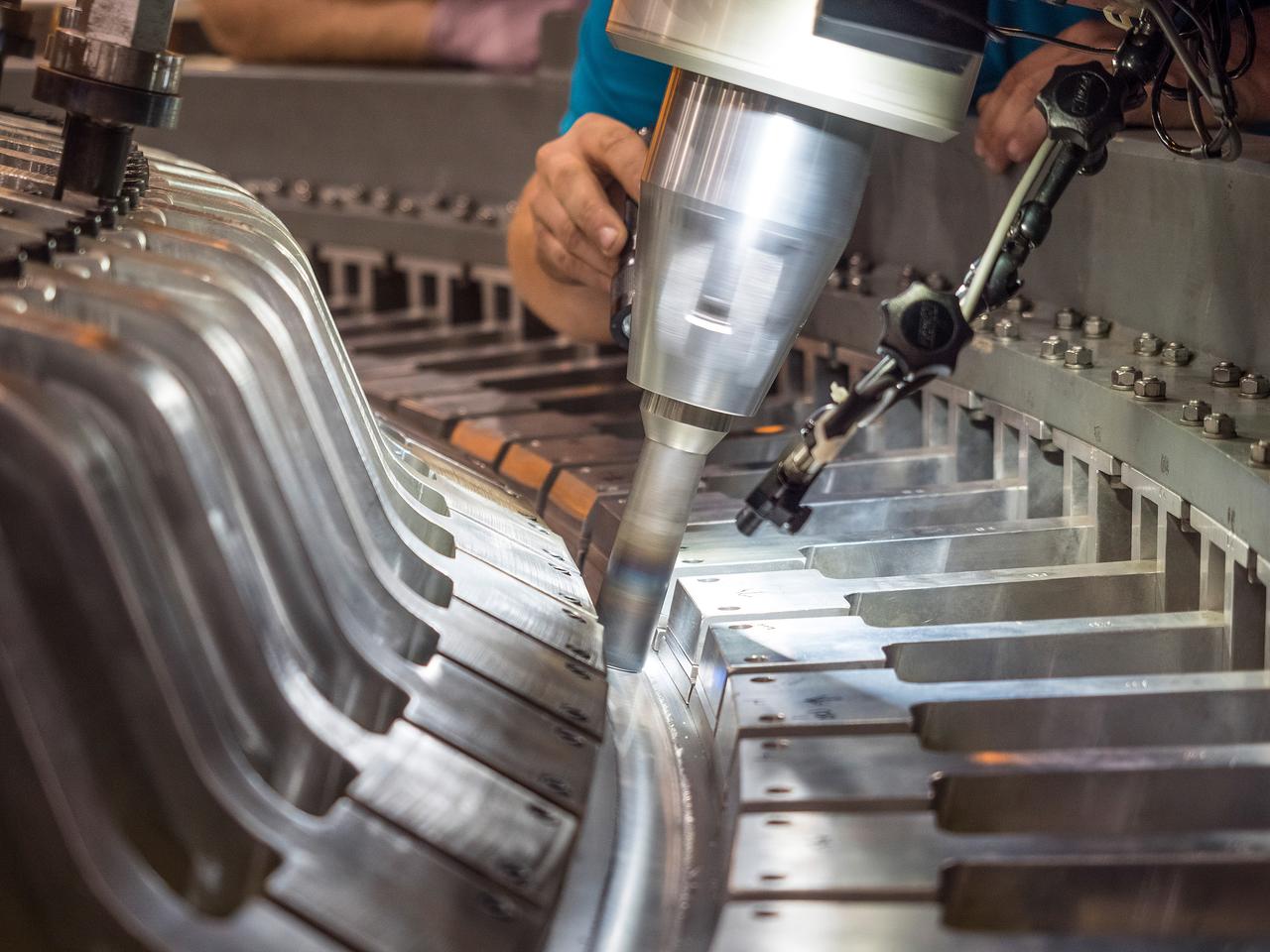
The Artemis I Orion aft bulkhead is welded to the barrel of the Orion pressure vessel at the Michoud Assembly Facility in New Orleans, Louisiana on Oct. 12, 2015. Part of Batch image transfer from Flickr.
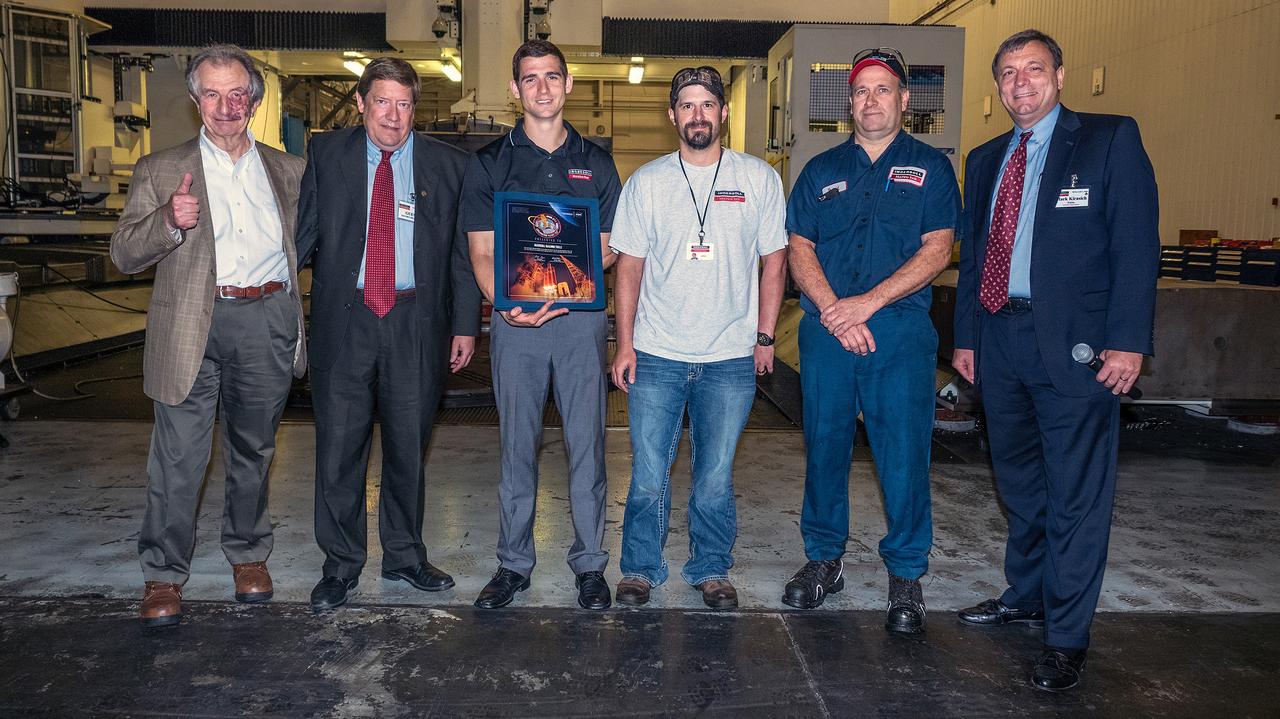
The Orion team visits Ingersoll In Rockford, IL, to see the progress on the aft bulkhead for the Artemis I Orion spacecraft on June 12, 2015. Part of Batch image transfer from Flickr.

The Orion team visits Ingersoll In Rockford, IL, to see the progress on the aft bulkhead for the Artemis I Orion spacecraft on June 12, 2015. Part of Batch image transfer from Flickr.
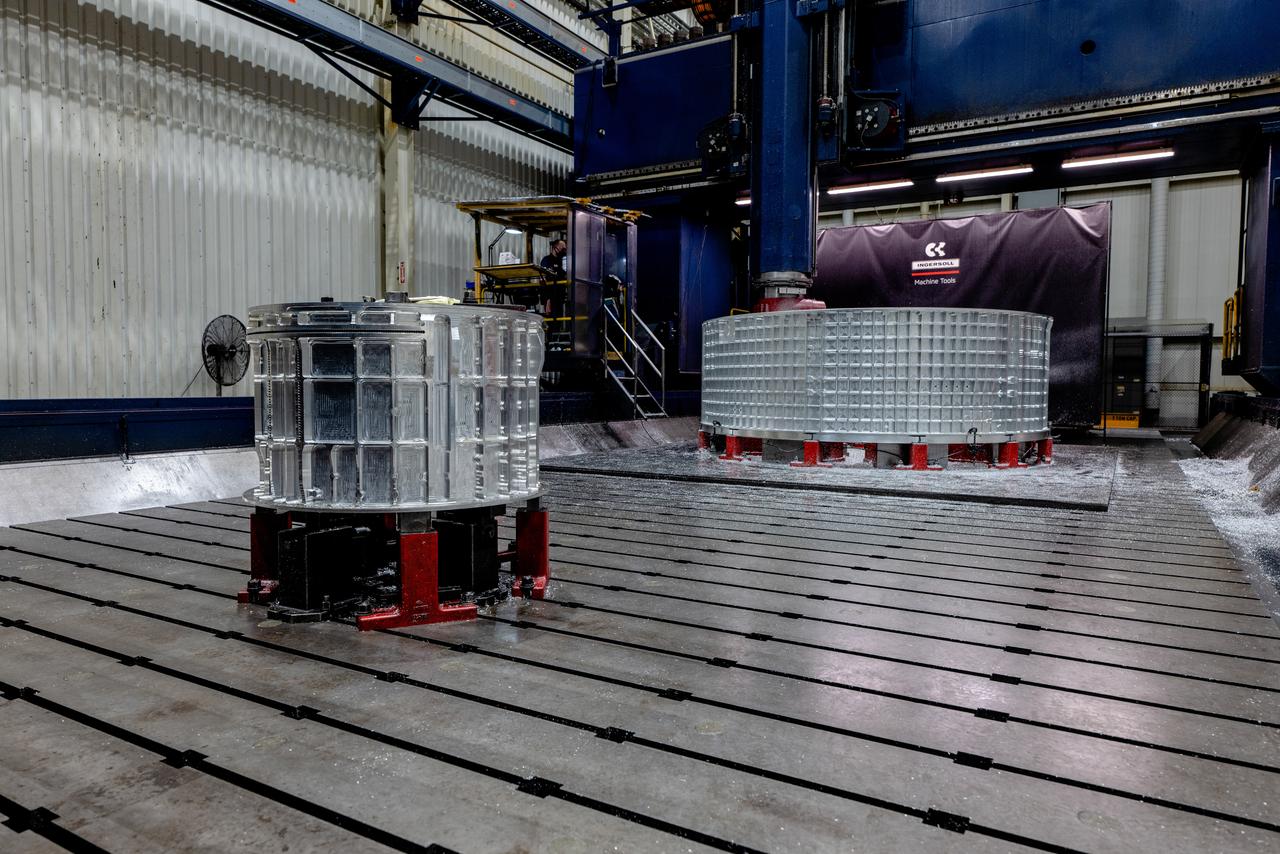
Machining of the tunnel, aft bulkhead, and barrel for the Artemis III Orion pressure vessel takes place at Ingersoll Machine Tool, Inc. in Rockford, Illinois on Sept. 28, 2020.
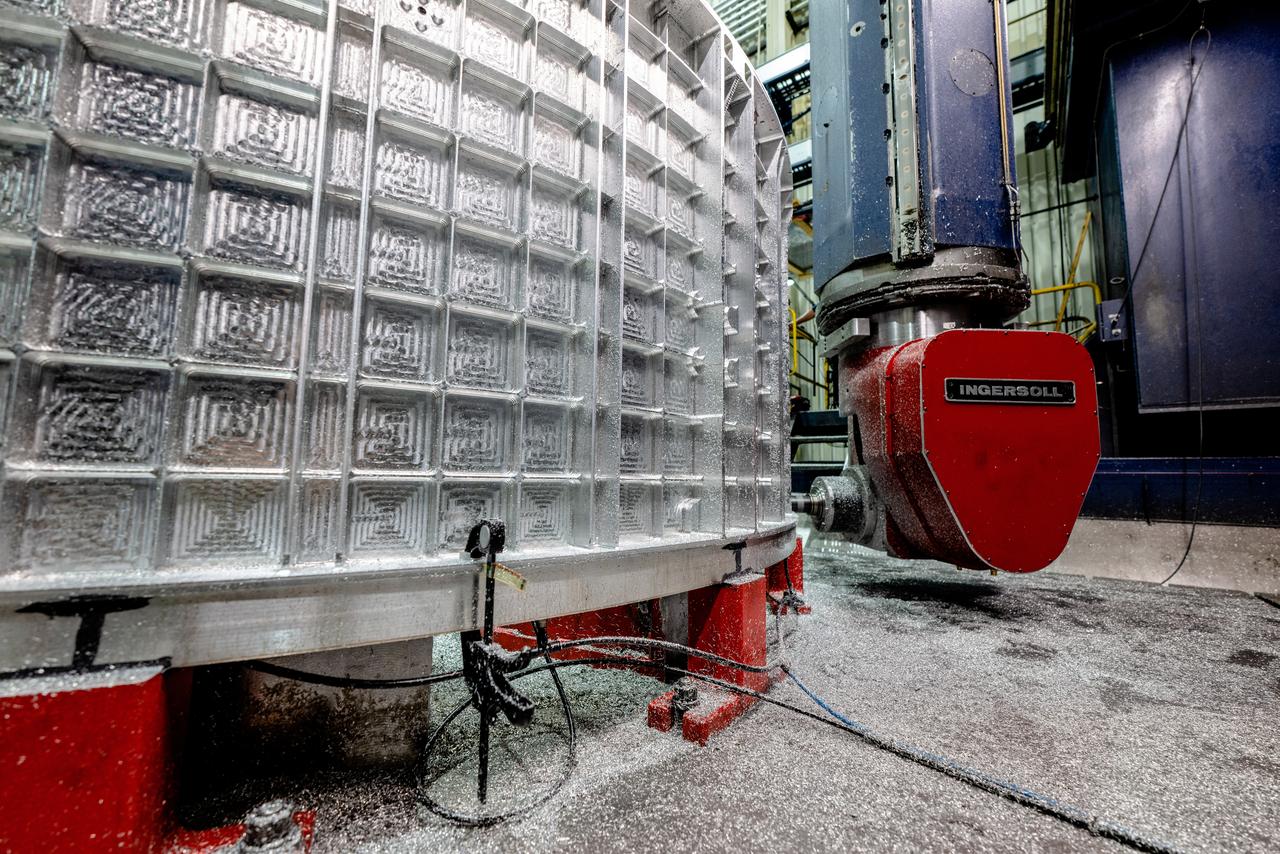
Machining of the tunnel, aft bulkhead, and barrel for the Artemis III Orion pressure vessel takes place at Ingersoll Machine Tool, Inc. in Rockford, Illinois on Sept. 28, 2020.
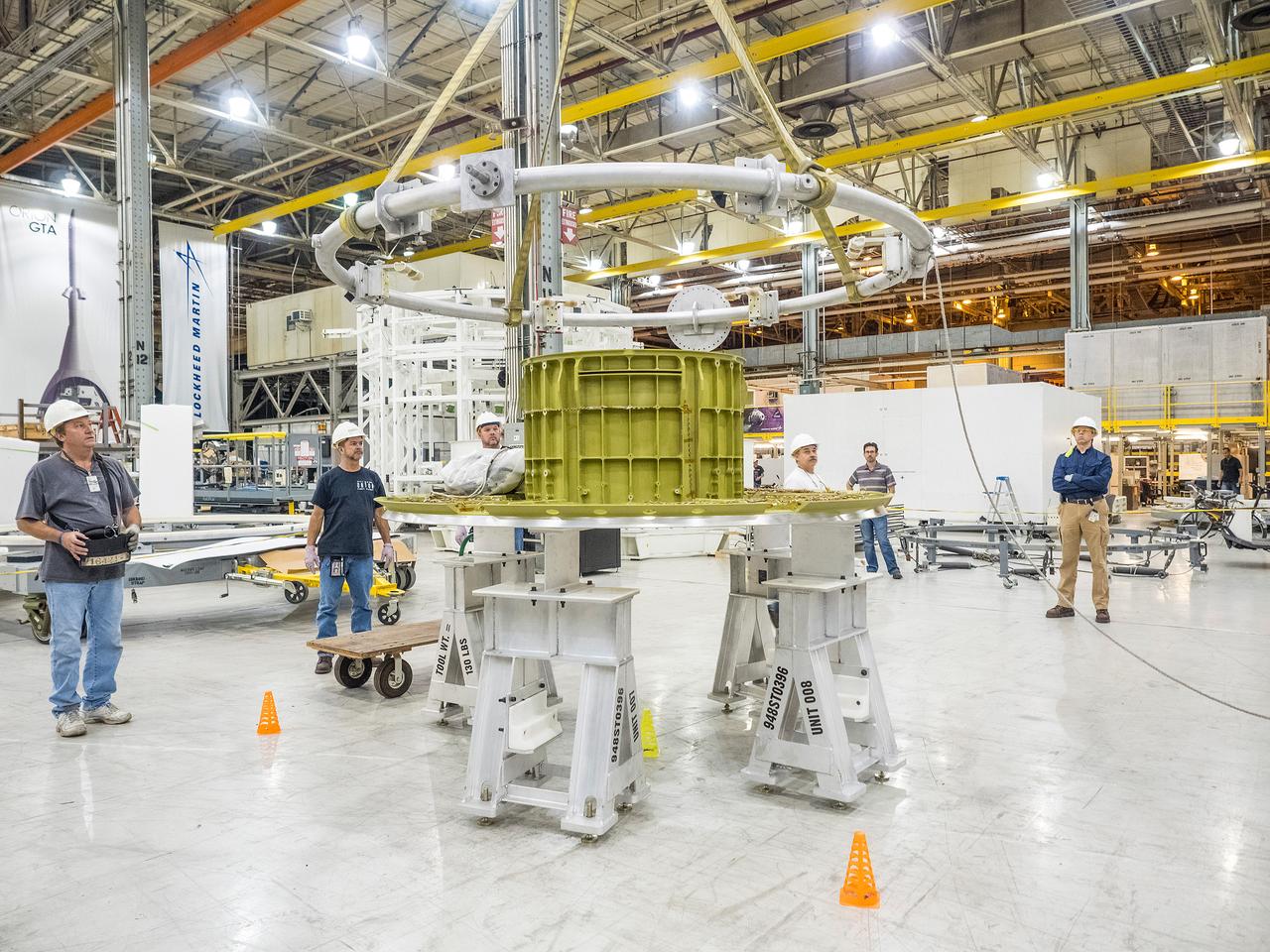
The first welded part of Artemis I Orion, the forward bulkhead and tunnel, is moved into final tooling at the Michoud Assembly Facility in New Orleans, Louisiana on Oct. 12, 2015. Part of Batch image transfer from Flickr.
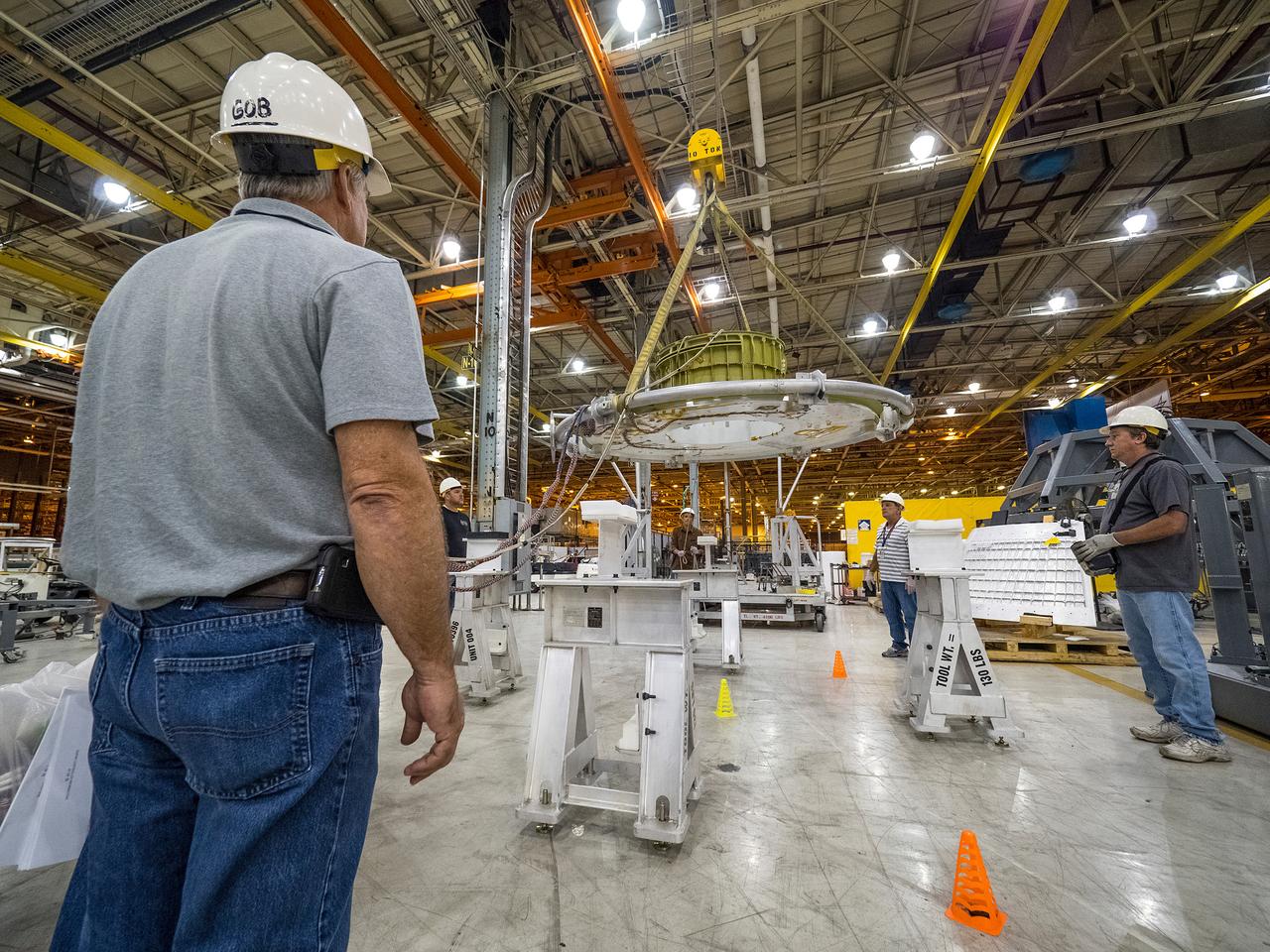
The first welded part of Artemis I Orion, the forward bulkhead and tunnel, is moved into final tooling at the Michoud Assembly Facility in New Orleans, Louisiana on Oct. 12, 2015. Part of Batch image transfer from Flickr.
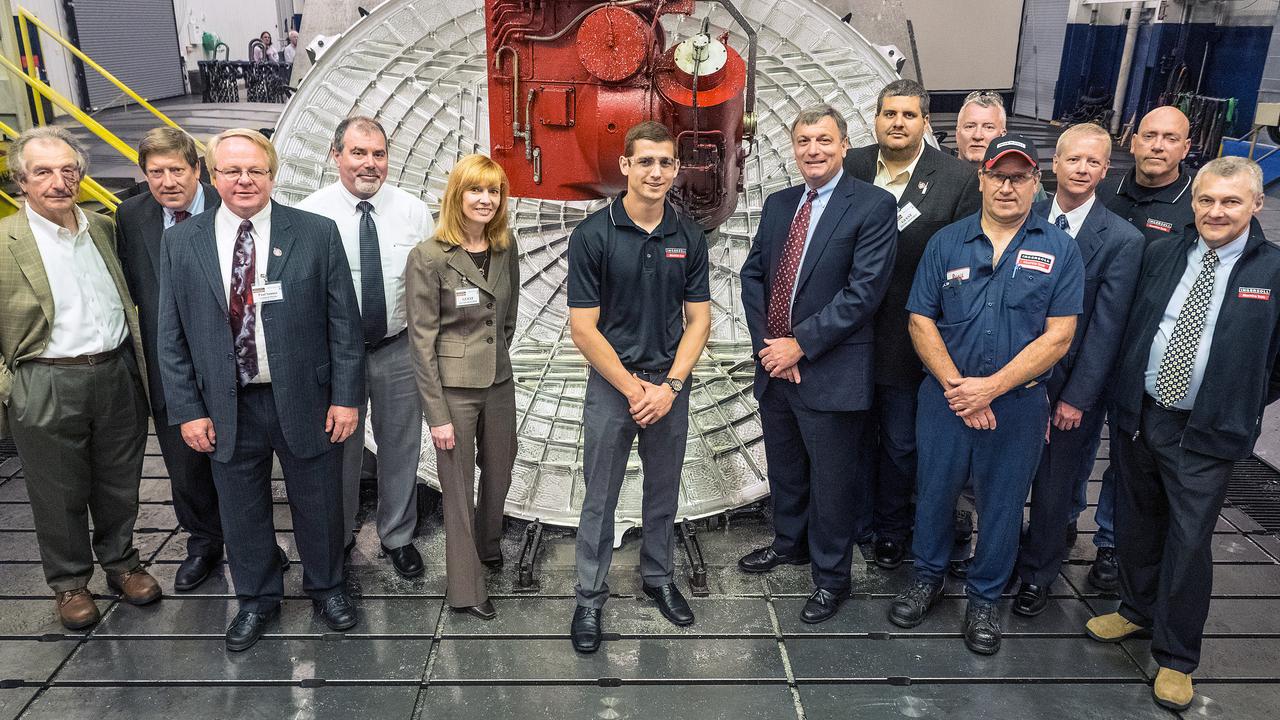
The Orion team visits Ingersoll In Rockford, IL, to see the progress on the aft bulkhead for the Artemis I Orion spacecraft on June 12, 2015. Part of Batch image transfer from Flickr.
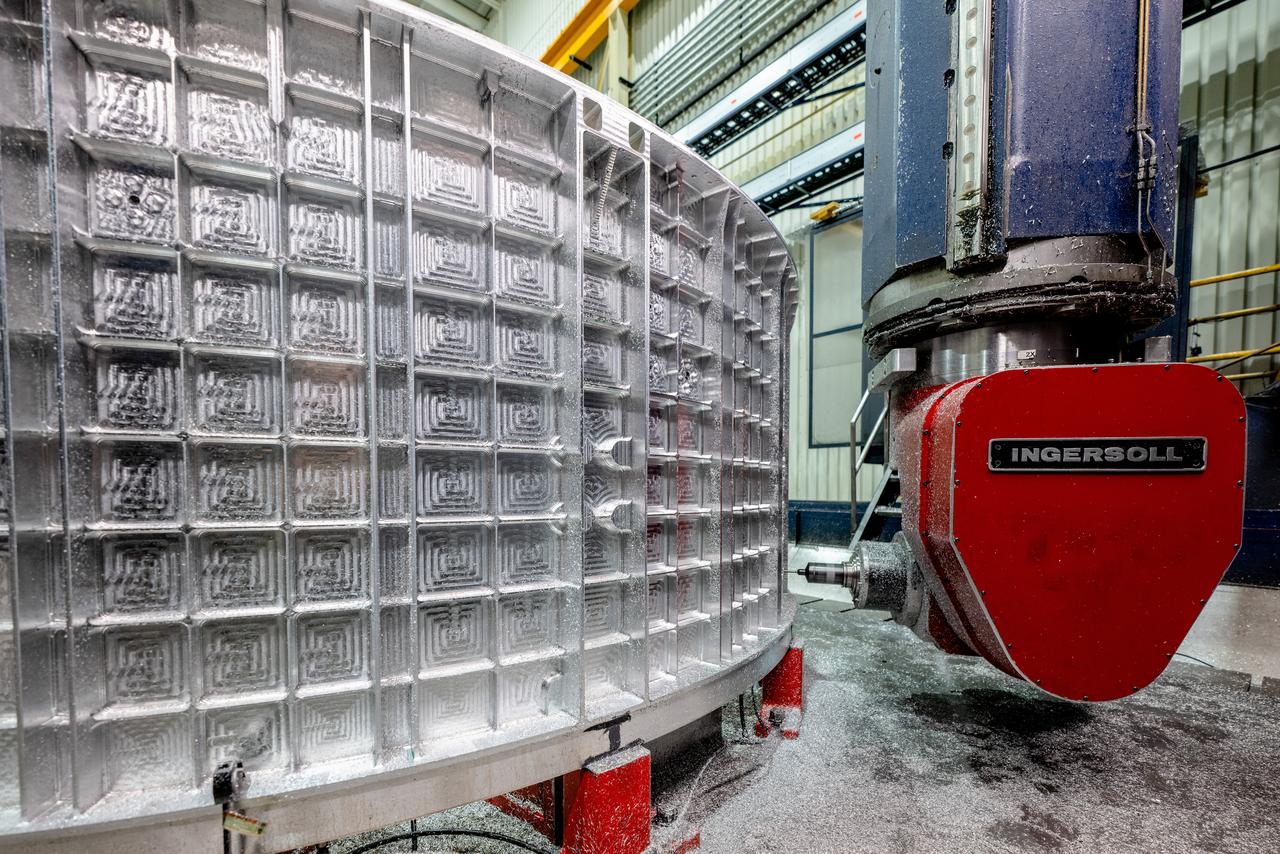
Machining of the tunnel, aft bulkhead, and barrel for the Artemis III Orion pressure vessel takes place at Ingersoll Machine Tool, Inc. in Rockford, Illinois on Sept. 28, 2020.
/Gateway - Intermodule Element Adaptor (IEA)~medium.jpg)
The Intermodule Element Adaptor (IEA) is attached to the aft bulkhead of the Habitation Element (HE) to support mechanical integration of HALO and PPE. The IEA is also used to provide an enclosure to protect the HALO batteries.
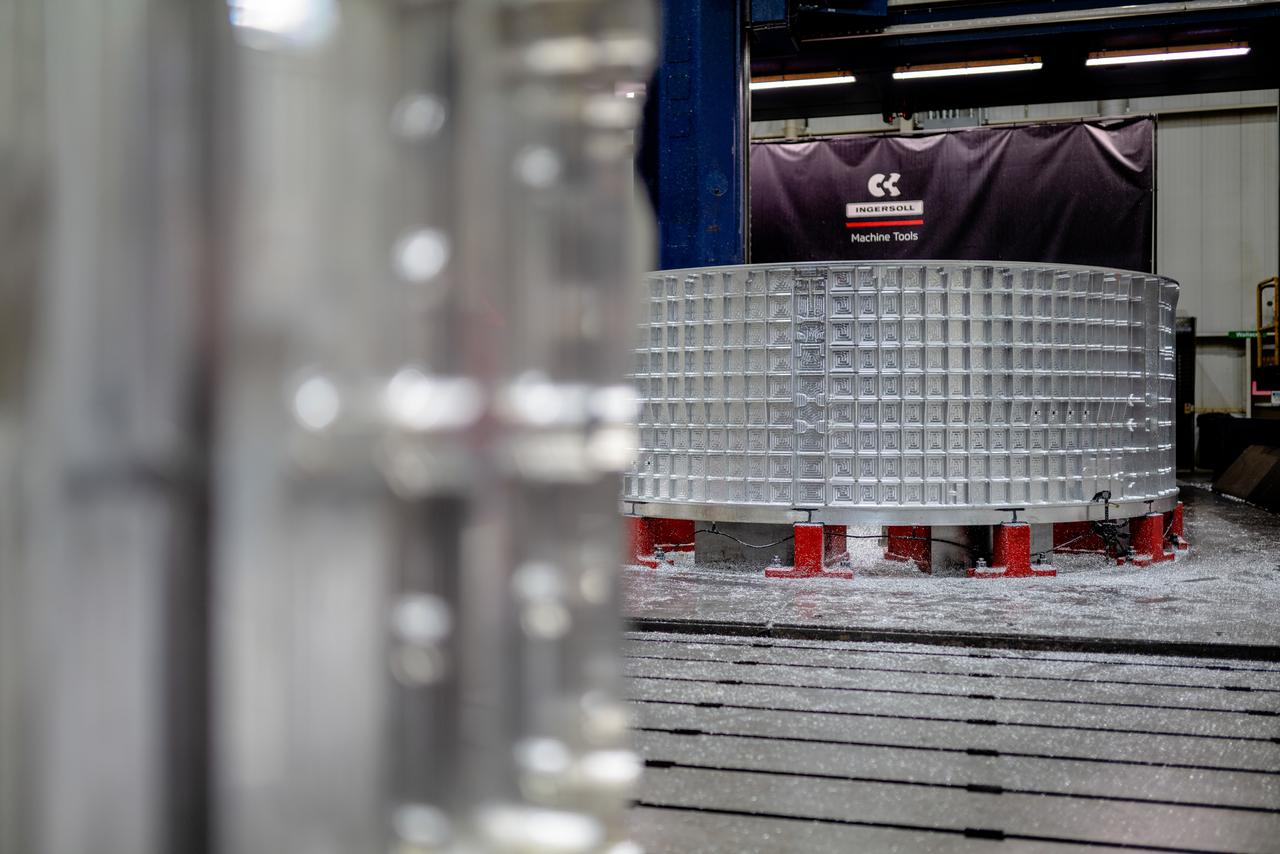
Machining of the tunnel, aft bulkhead, and barrel for the Artemis III Orion pressure vessel takes place at Ingersoll Machine Tool, Inc. in Rockford, Illinois on Sept. 28, 2020.
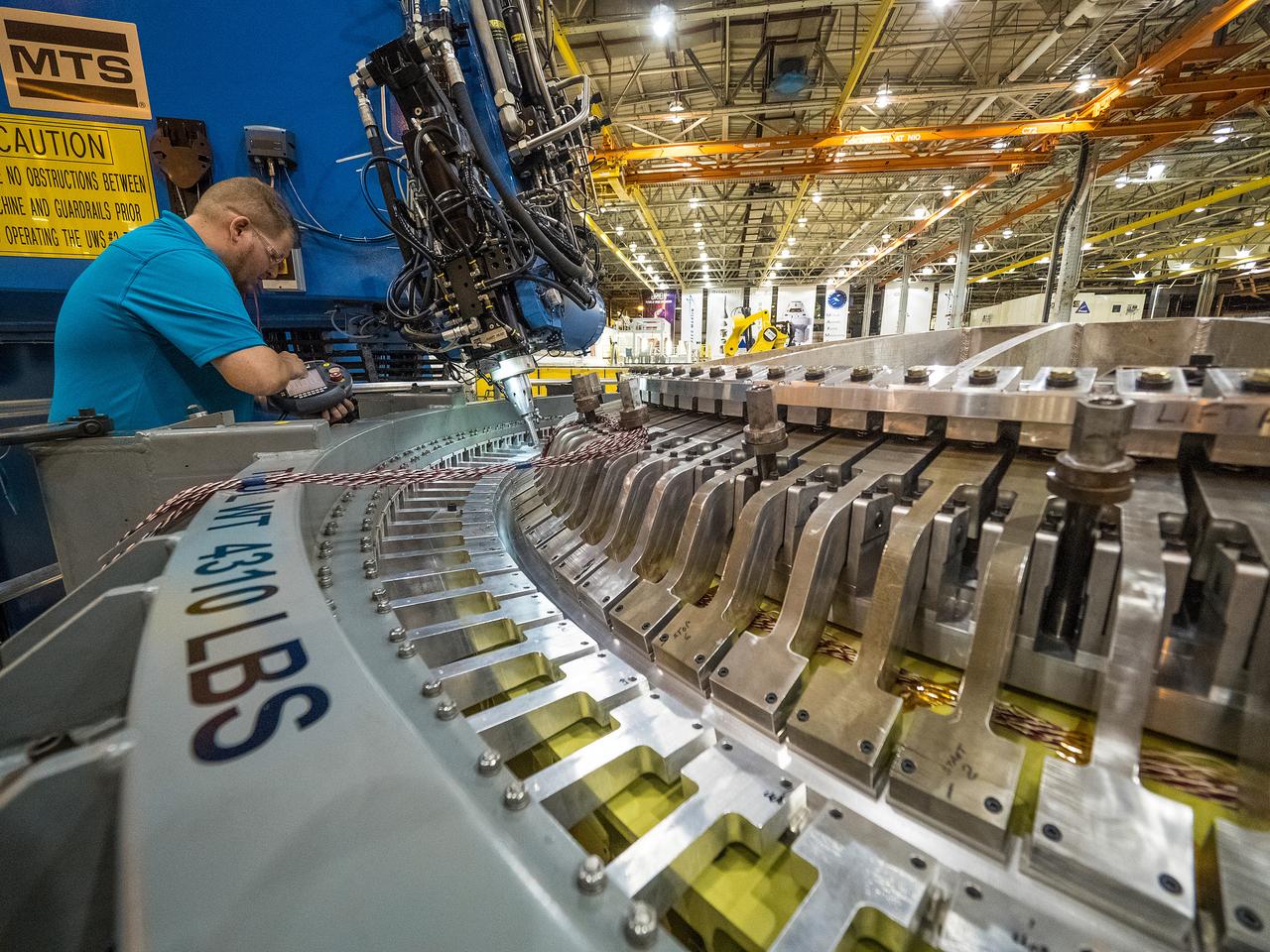
The Artemis I Orion aft bulkhead is welded to the barrel of the Orion pressure vessel at the Michoud Assembly Facility in New Orleans, Louisiana on Oct. 12, 2015. Part of Batch image transfer from Flickr.
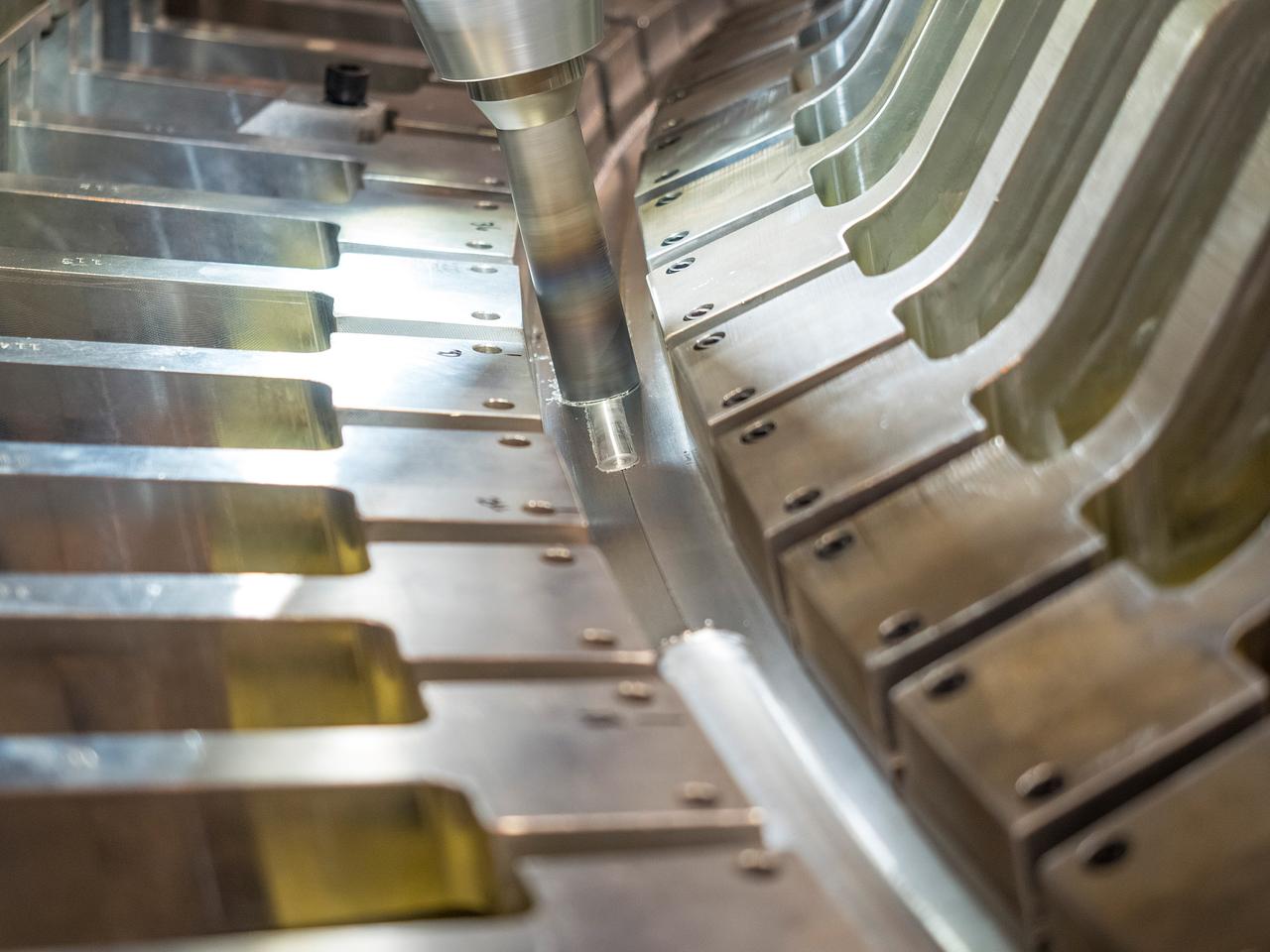
The Artemis I Orion aft bulkhead is welded to the barrel of the Orion pressure vessel at the Michoud Assembly Facility in New Orleans, Louisiana on Oct. 12, 2015. Part of Batch image transfer from Flickr.
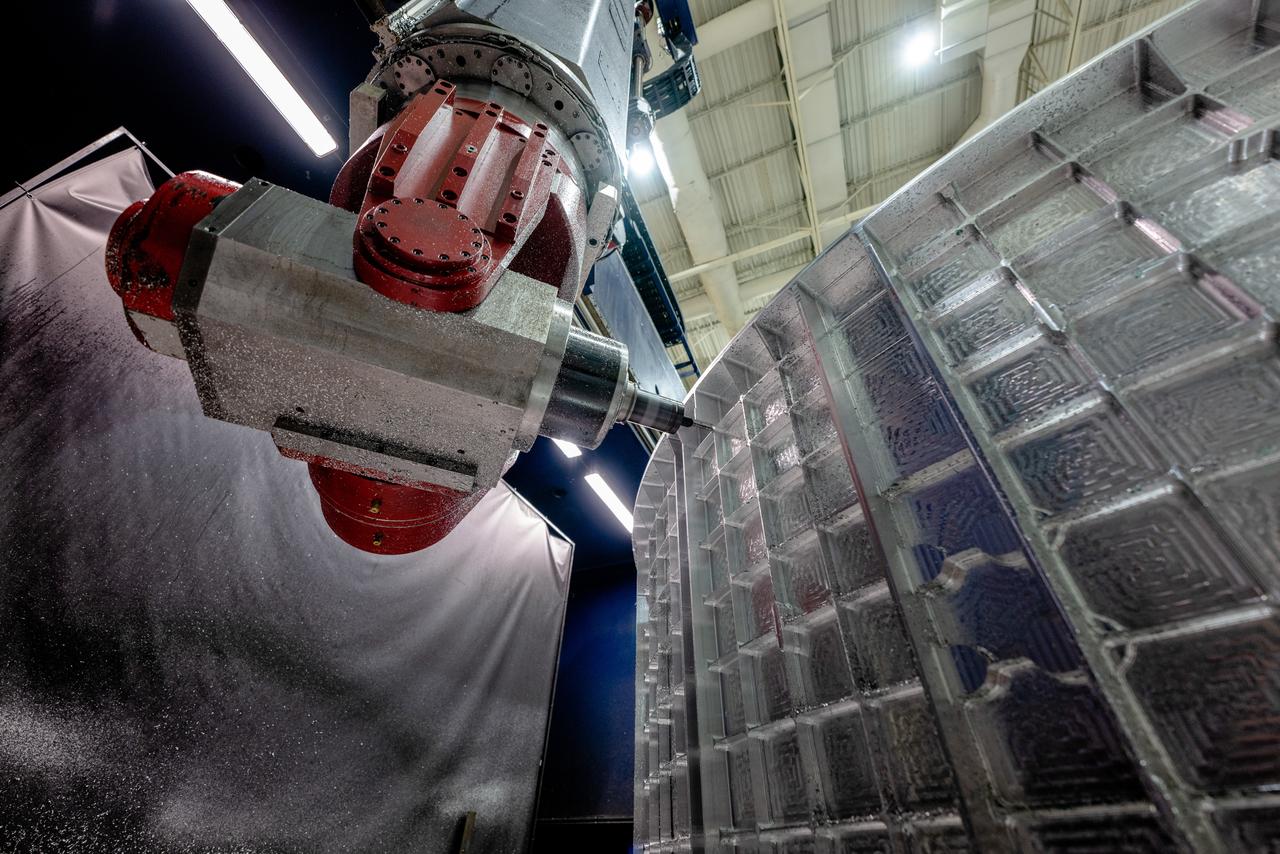
Machining of the tunnel, aft bulkhead, and barrel for the Artemis III Orion pressure vessel takes place at Ingersoll Machine Tool, Inc. in Rockford, Illinois on Sept. 28, 2020.
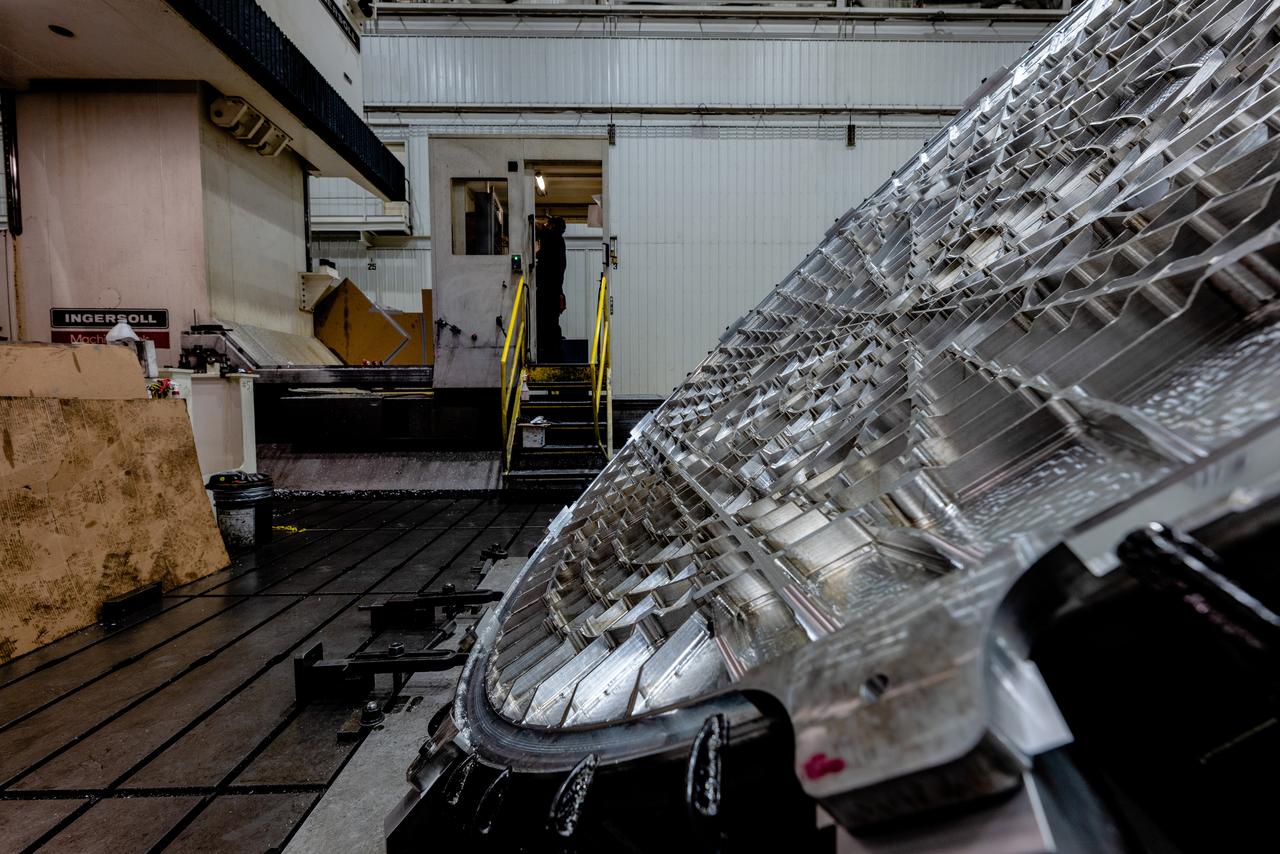
Machining of the tunnel, aft bulkhead, and barrel for the Artemis III Orion pressure vessel takes place at Ingersoll Machine Tool, Inc. in Rockford, Illinois on Sept. 28, 2020.
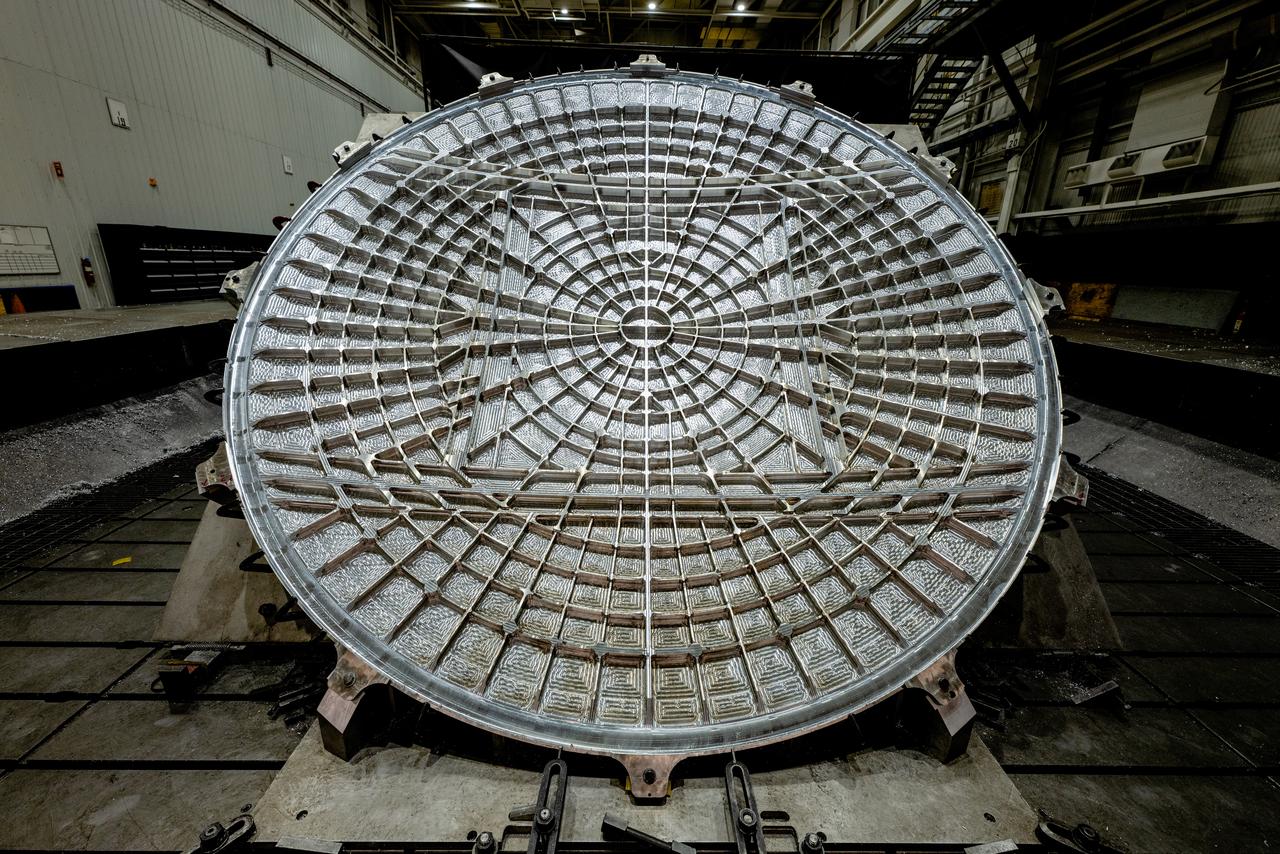
Machining of the tunnel, aft bulkhead, and barrel for the Artemis III Orion pressure vessel takes place at Ingersoll Machine Tool, Inc. in Rockford, Illinois on Sept. 28, 2020.
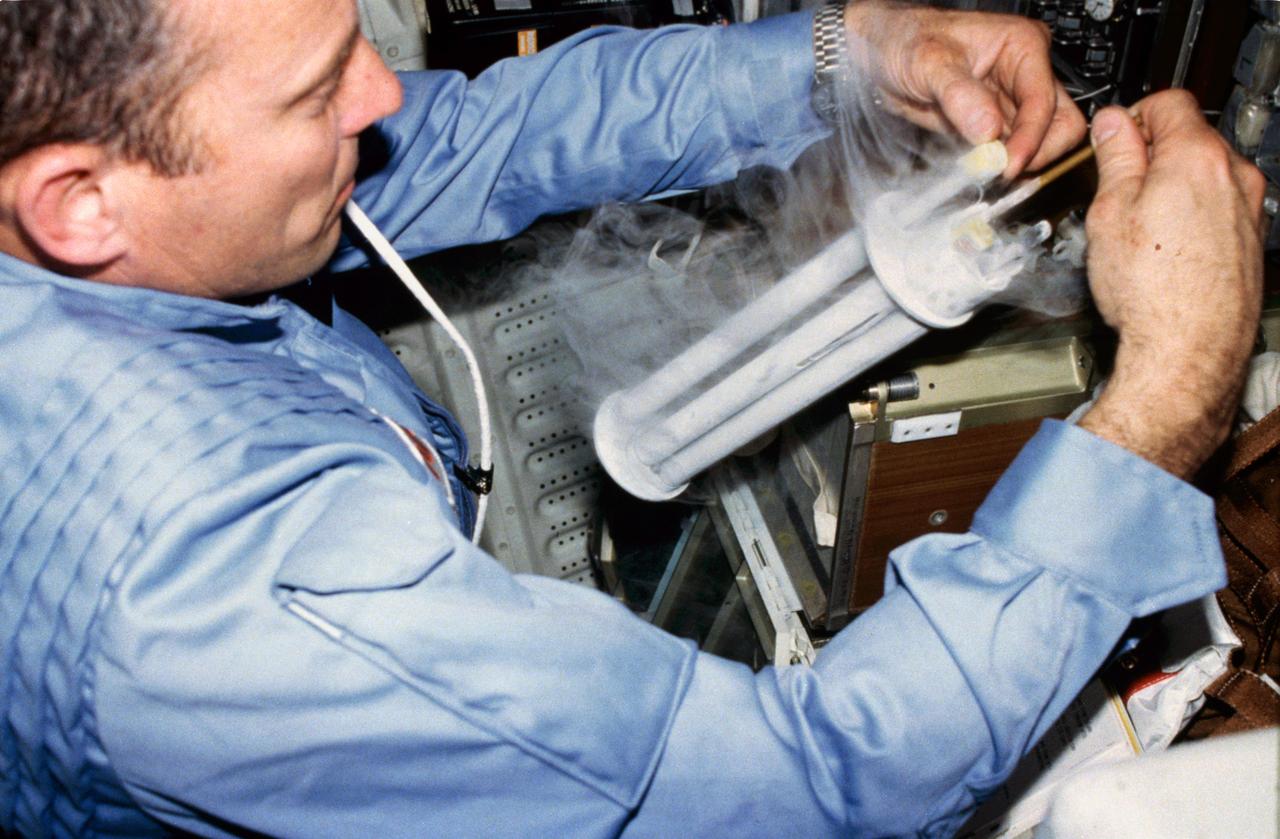
Commander Jack Lousma works with Electrophoresis Equipment Verification Test (EEVT) electrophoresis unit, cryogenic freezer and tube, and stowage locker equipment located on crew compartment middeck aft bulkhead.
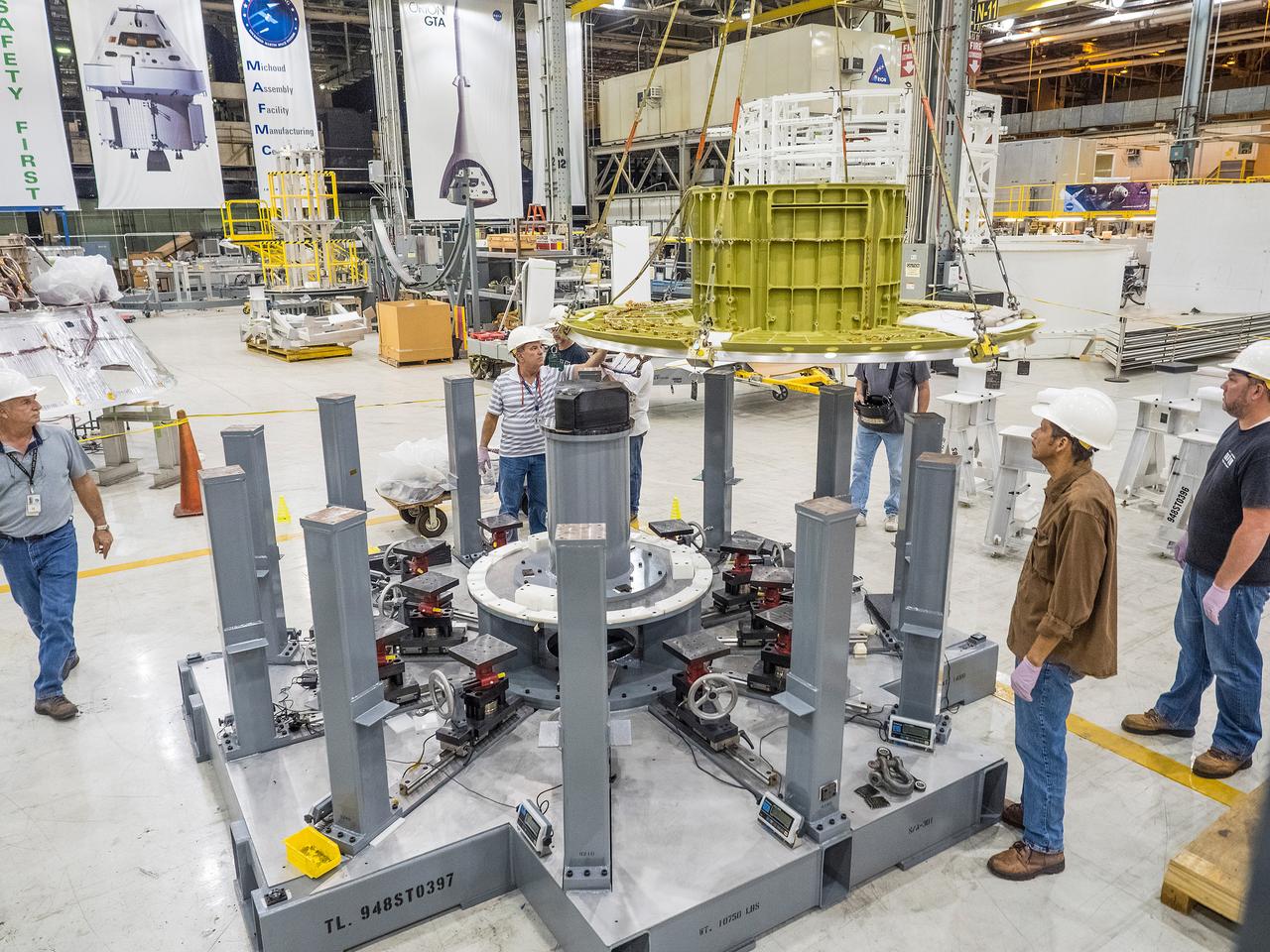
The first welded part of Artemis I Orion, the forward bulkhead and tunnel, is moved into final tooling at the Michoud Assembly Facility in New Orleans, Louisiana on Oct. 12, 2015. Part of Batch image transfer from Flickr.
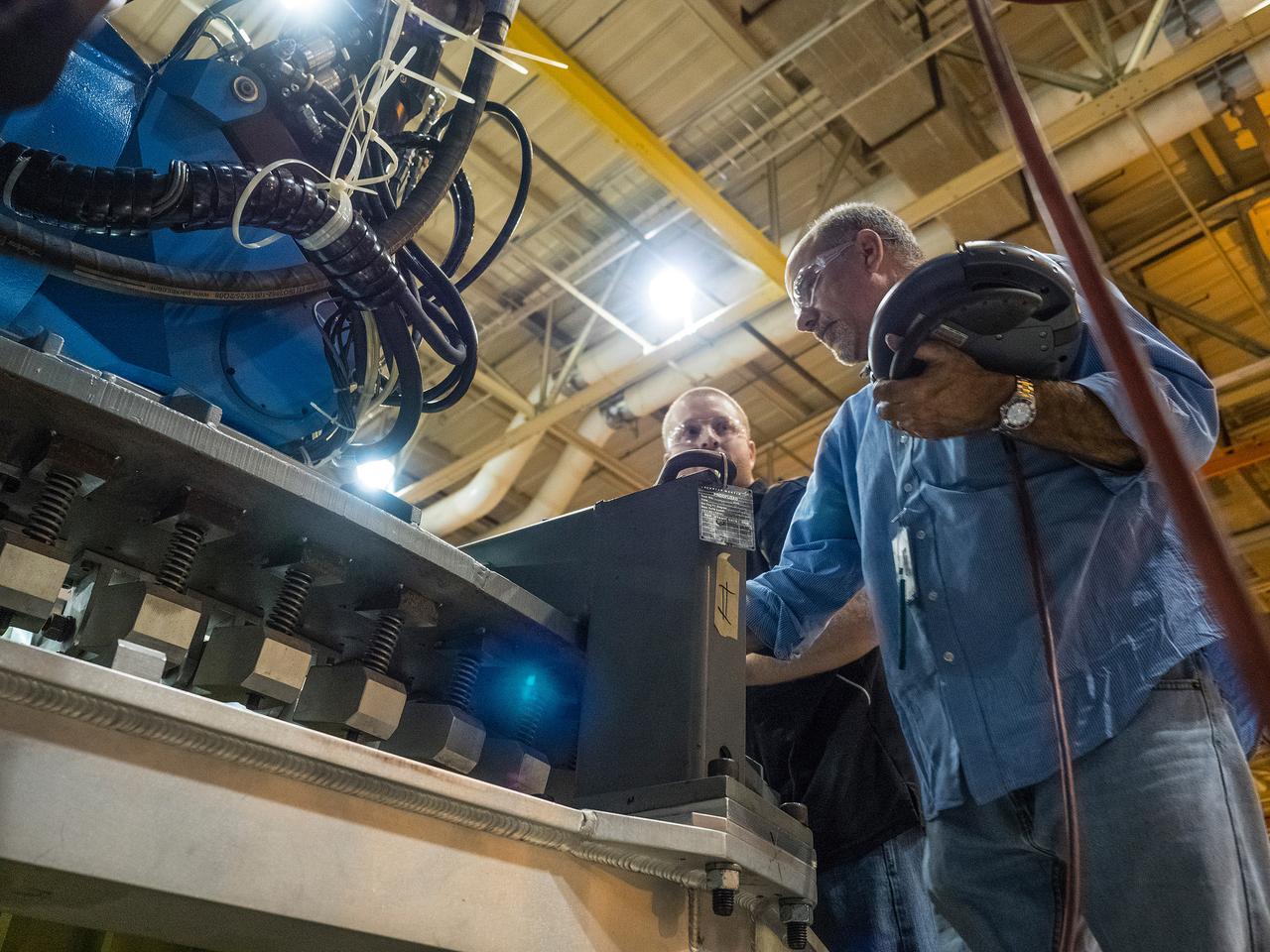
The Artemis I Orion aft bulkhead is welded to the barrel of the Orion pressure vessel at the Michoud Assembly Facility in New Orleans, Louisiana on Oct. 12, 2015. Part of Batch image transfer from Flickr.
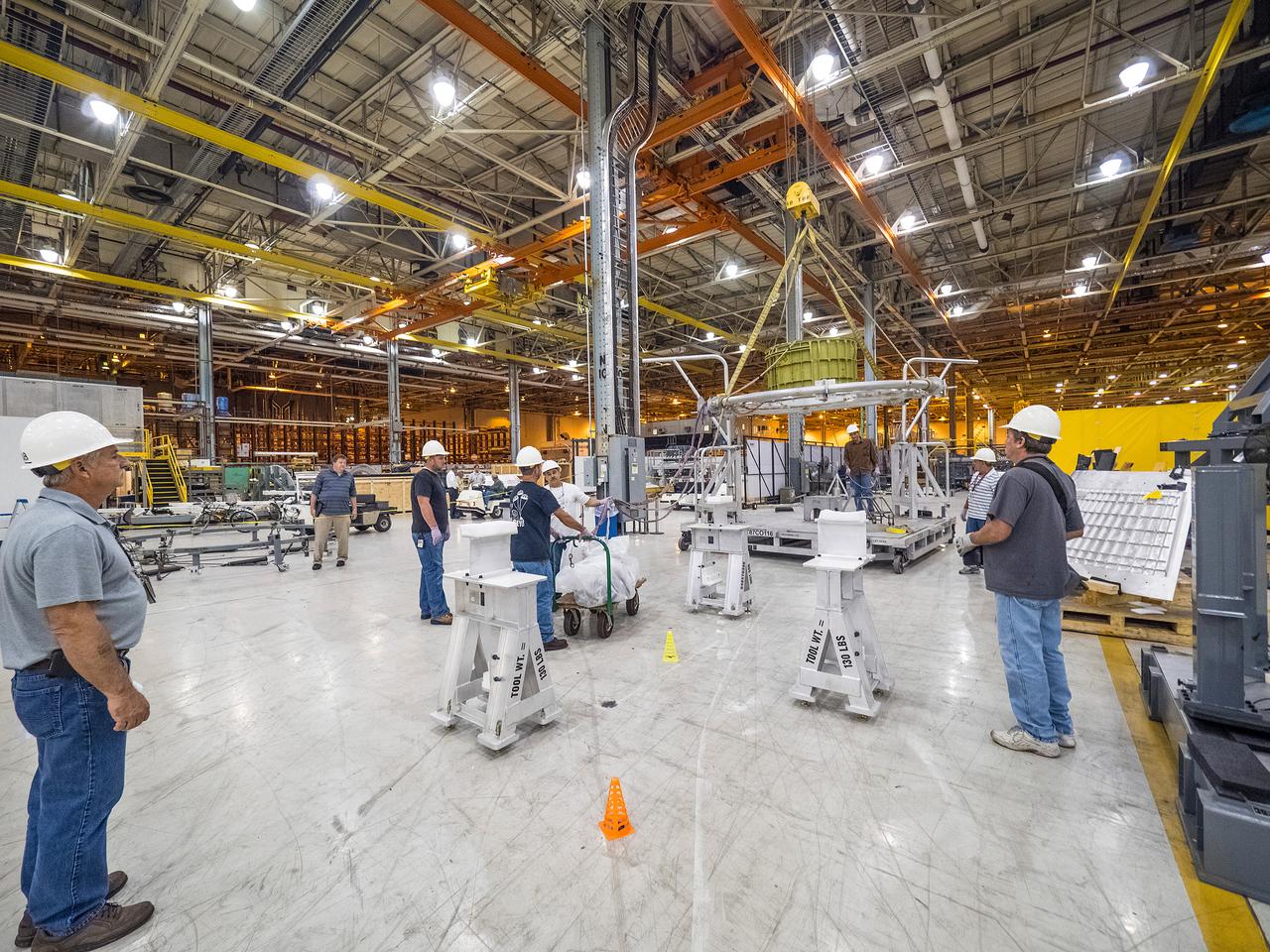
The first welded part of Artemis I Orion, the forward bulkhead and tunnel, is moved into final tooling at the Michoud Assembly Facility in New Orleans, Louisiana on Oct. 12, 2015. Part of Batch image transfer from Flickr.
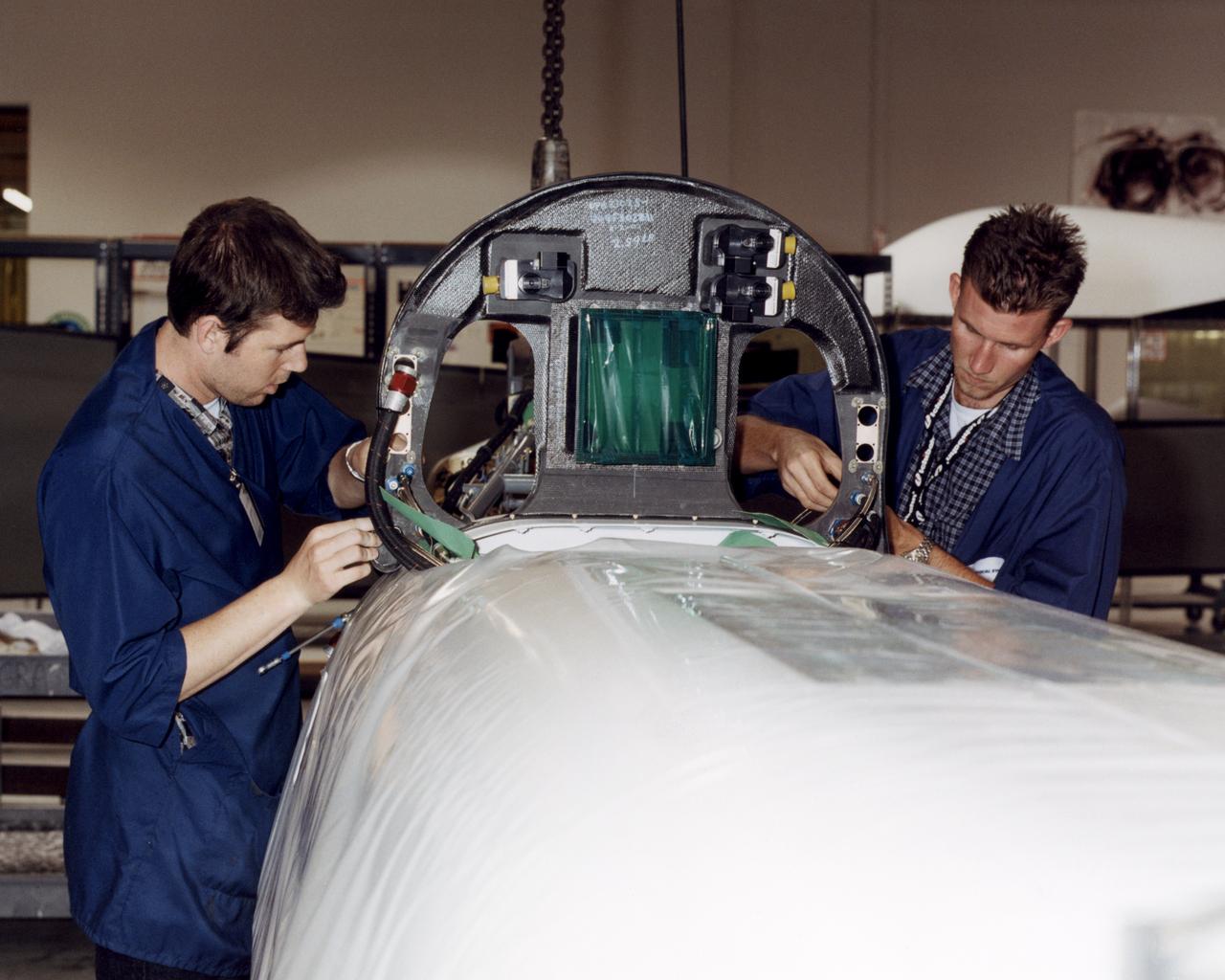
Technicians at General Atomics Aeronautical Systems, Inc., (GA-ASI) facility at Adelanto, Calif., carefully thread control lines through a bulkhead during engine installation on NASA's Altair aircraft.
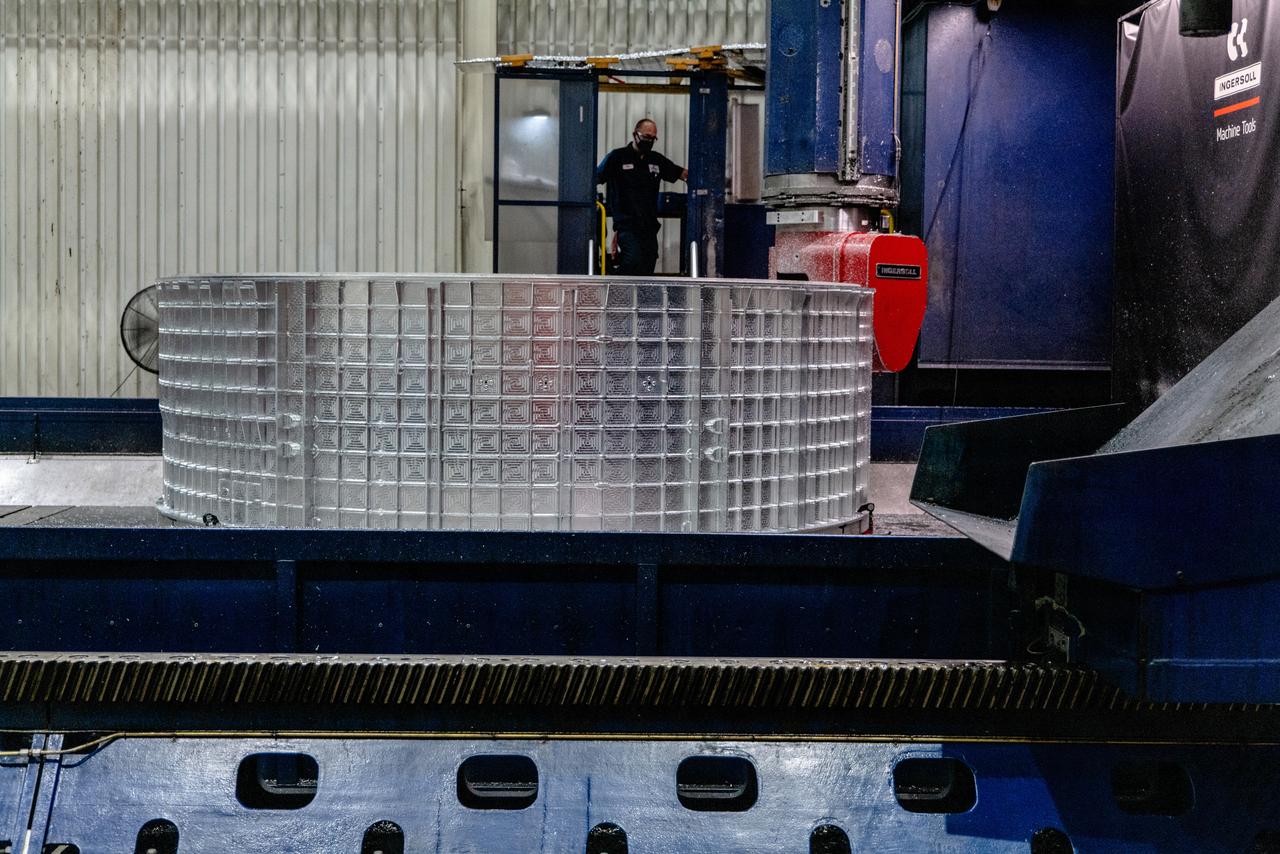
Machining of the tunnel, aft bulkhead, and barrel for the Artemis III Orion pressure vessel takes place at Ingersoll Machine Tool, Inc. in Rockford, Illinois on Sept. 28, 2020.
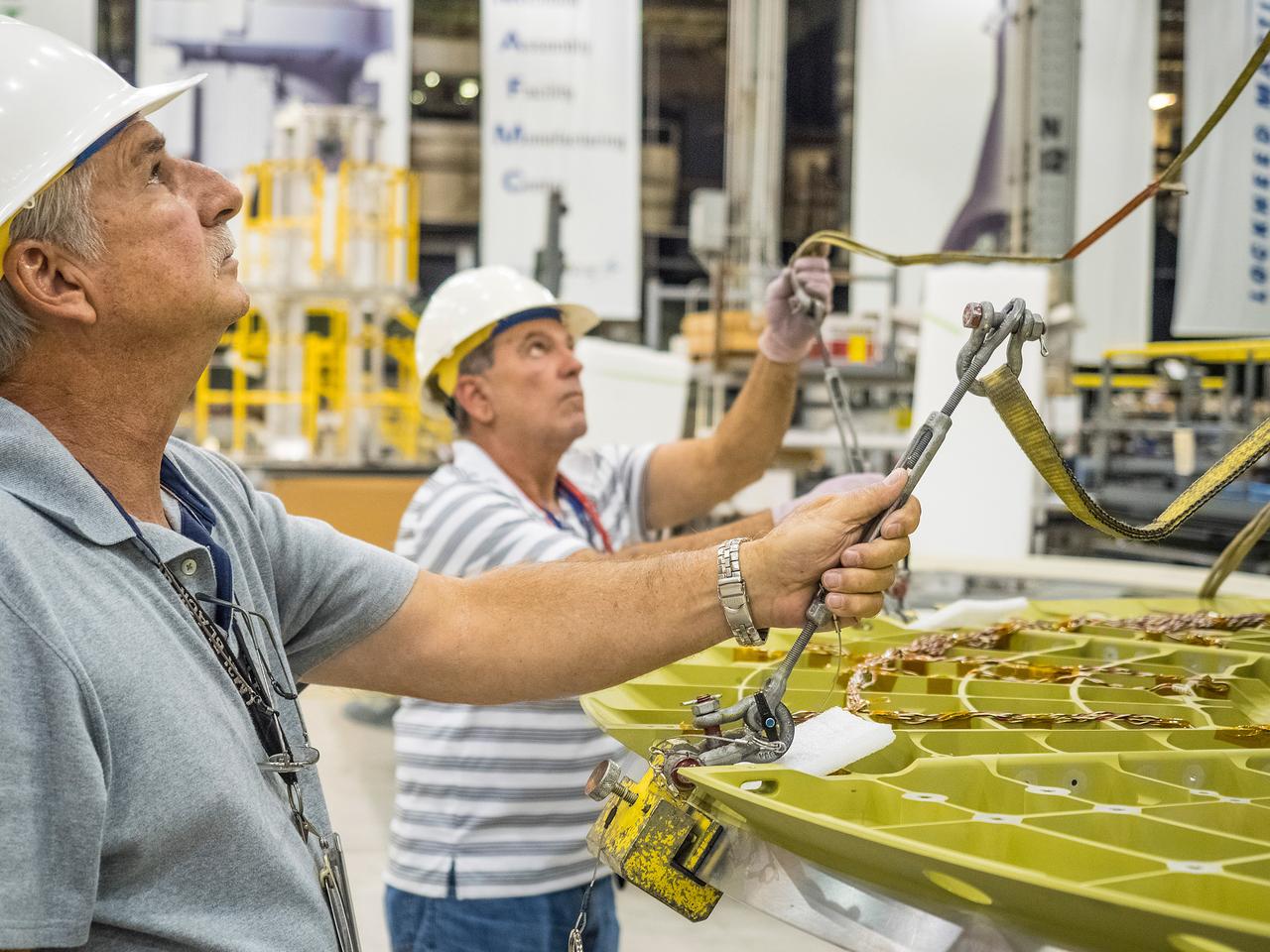
The first welded part of Artemis I Orion, the forward bulkhead and tunnel, is moved into final tooling at the Michoud Assembly Facility in New Orleans, Louisiana on Oct. 12, 2015. Part of Batch image transfer from Flickr.
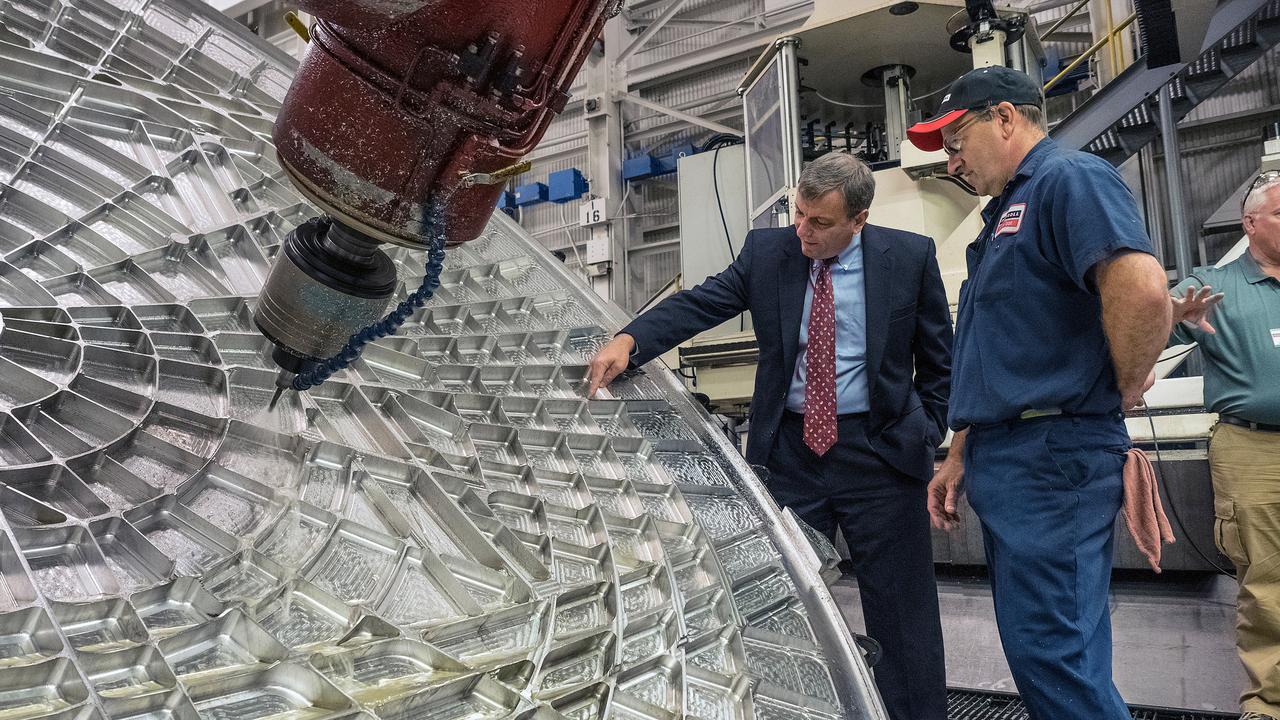
The Orion team visits Ingersoll In Rockford, IL, to see the progress on the aft bulkhead for the Artemis I Orion spacecraft on June 12, 2015. Part of Batch image transfer from Flickr.

The Artemis I Orion aft bulkhead is welded to the barrel of the Orion pressure vessel at the Michoud Assembly Facility in New Orleans, Louisiana on Oct. 12, 2015. Part of Batch image transfer from Flickr.
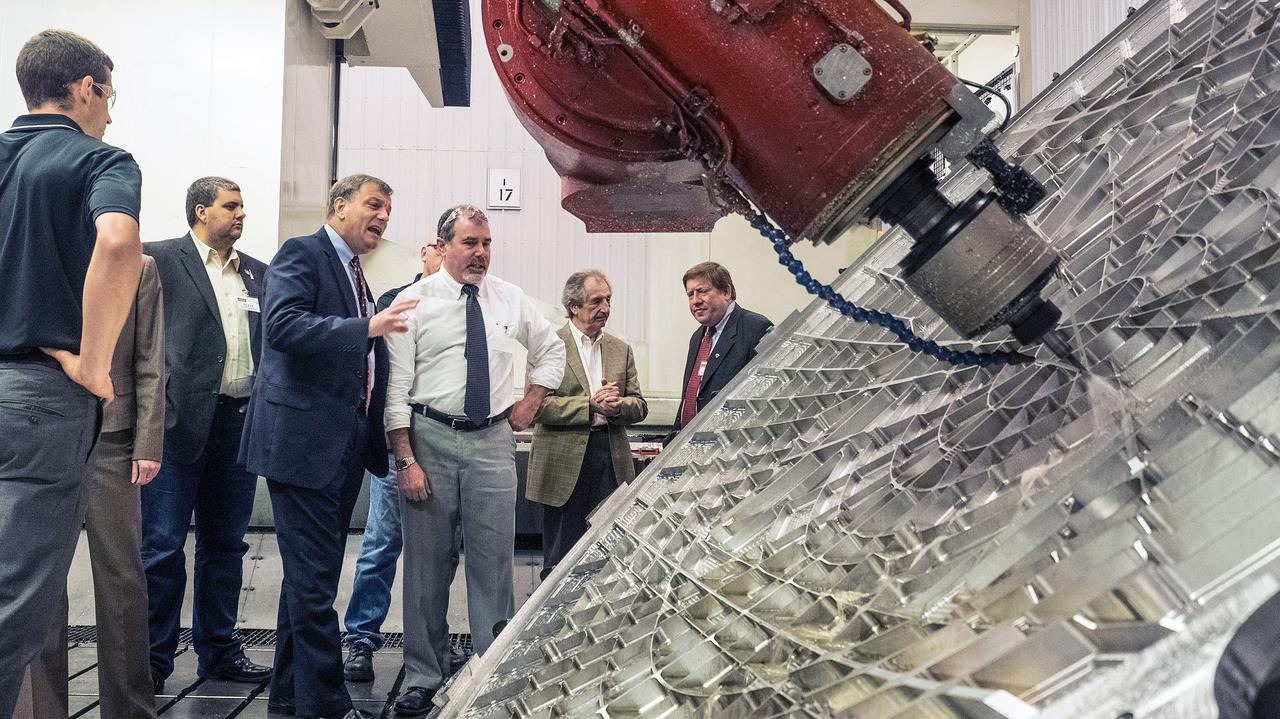
The Orion team visits Ingersoll In Rockford, IL, to see the progress on the aft bulkhead for the Artemis I Orion spacecraft on June 12, 2015. Part of Batch image transfer from Flickr.
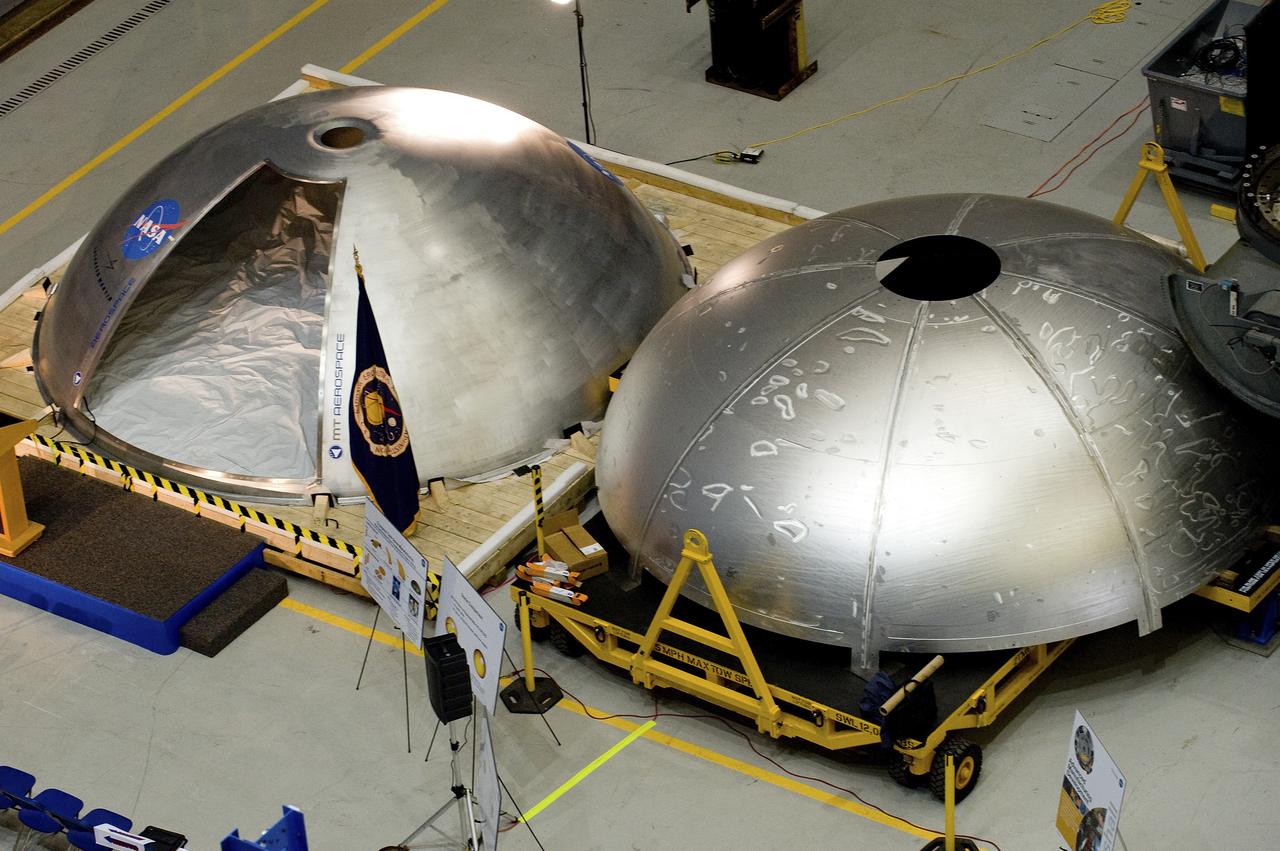
THE LEFT DOME WAS CREATED USING THE NEW MANUFACTURING PROCESSES AND ELIMINATES AT LEAST EIGHT MAJOR WELDS. THE WELD DEMARCATION LINES ARE VISIBLE ON THE TRADITIONAL FABRICATED TANK DONE ON THE RIGHT. THIS WAS PART OF THE FRICTION STIR COMMON BULKHEAD DOME UNVEILING CEREMONY IN BUILDING 4755
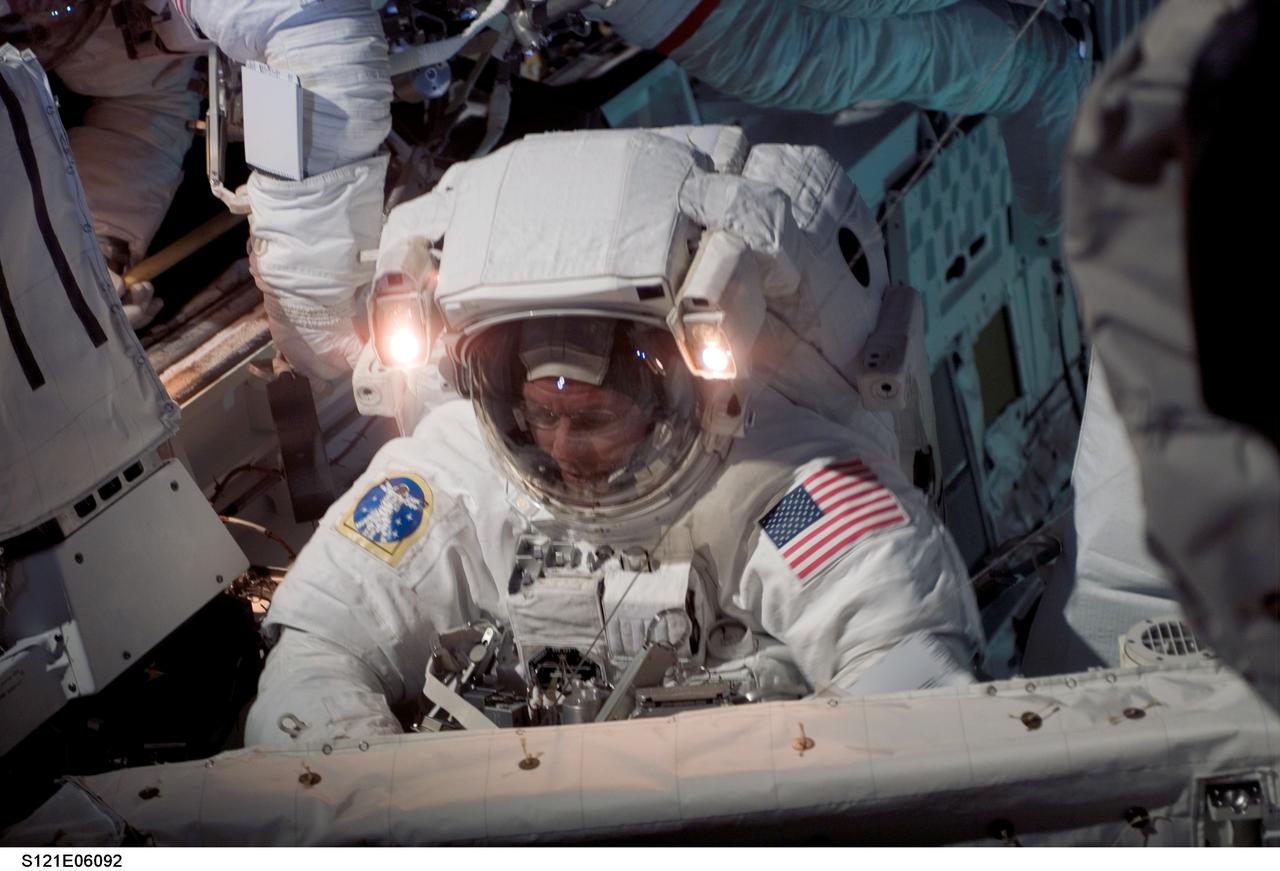
S121-E-06092 (8 July 2006) --- Astronaut Michael E. Fossum, STS-121 mission specialist, repositions tethers at the forward bulkhead of the Space Shuttle Discovery after completing the Orbiter Boom Sensor System (OBSS) evaluations during the mission's first session of extravehicular activity (EVA).
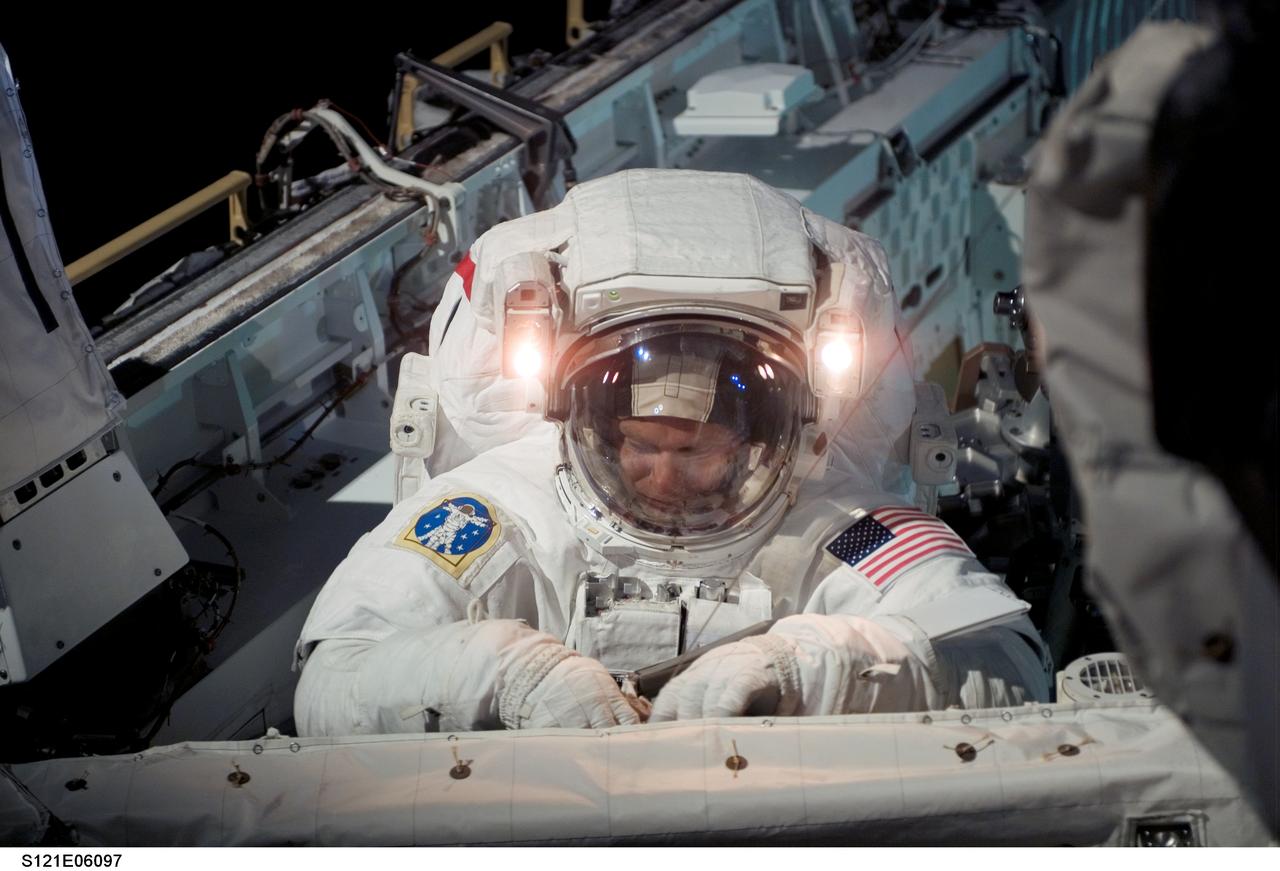
S121-E-06097 (8 July 2006) --- Astronaut Piers J. Sellers, STS-121 mission specialist, repositions tethers at the forward bulkhead of the Space Shuttle Discovery after completing the Orbiter Boom Sensor System (OBSS) evaluations during the mission's first session of extravehicular activity (EVA).
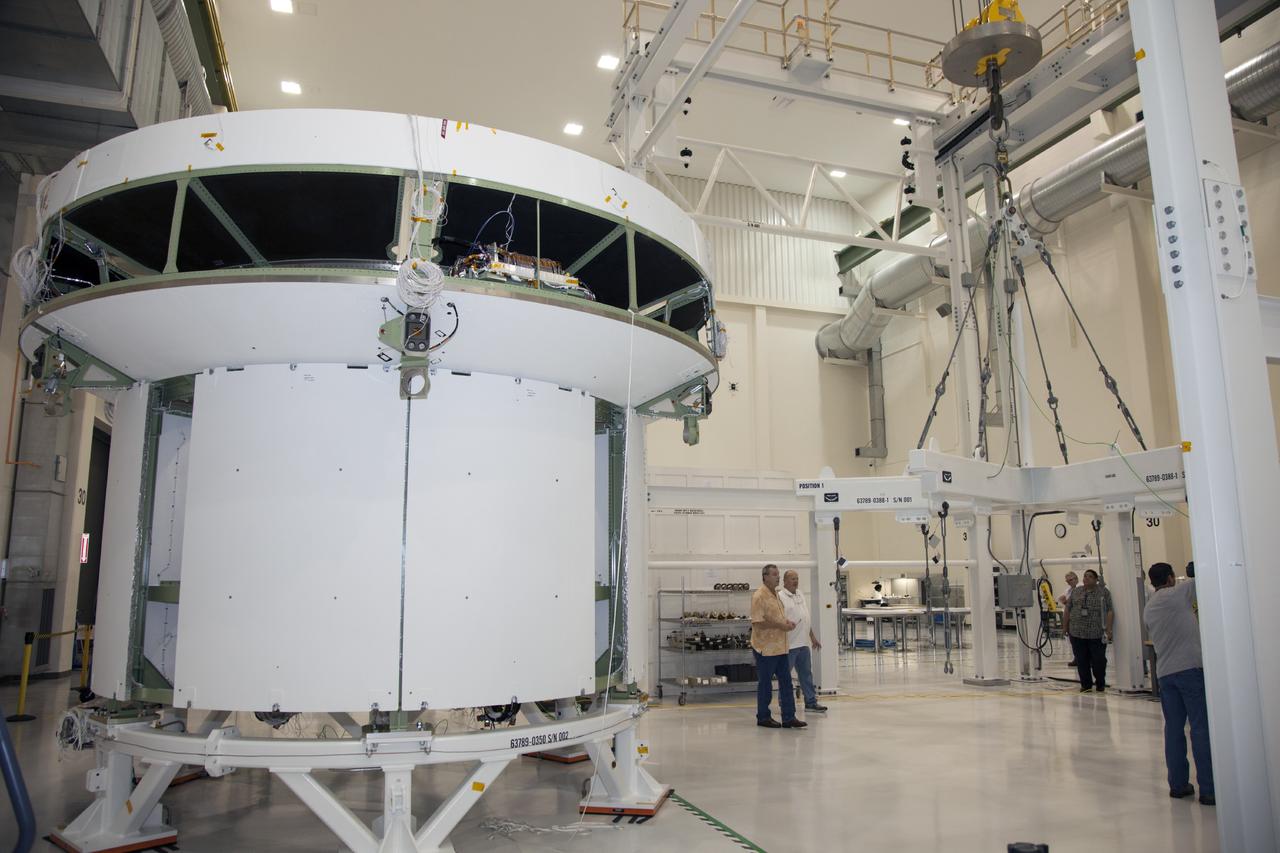
CAPE CANAVERAL, Fla. -- Inside the Operations and Checkout Building high bay at NASA’s Kennedy Space Center in Florida, technicians are preparing a crane to lift the service module bulkhead for the Orion spacecraft. The service module will be mated to the spacecraft adapter cone for testing. Technicians have applied shims, drilled fasteners and built up the cable harnesses on the bulkhead. Orion is the exploration spacecraft designed to carry astronauts to destinations not yet explored by humans, including an asteroid and Mars. It will have emergency abort capability, sustain the crew during space travel and provide safe re-entry from deep space return velocities. The first unpiloted test flight of the Orion is scheduled to launch in 2014 atop a Delta IV rocket and in 2017 on NASA’s Space Launch System rocket. For more information, visit http://www.nasa.gov/orion. Photo credit: NASA/Daniel Casper
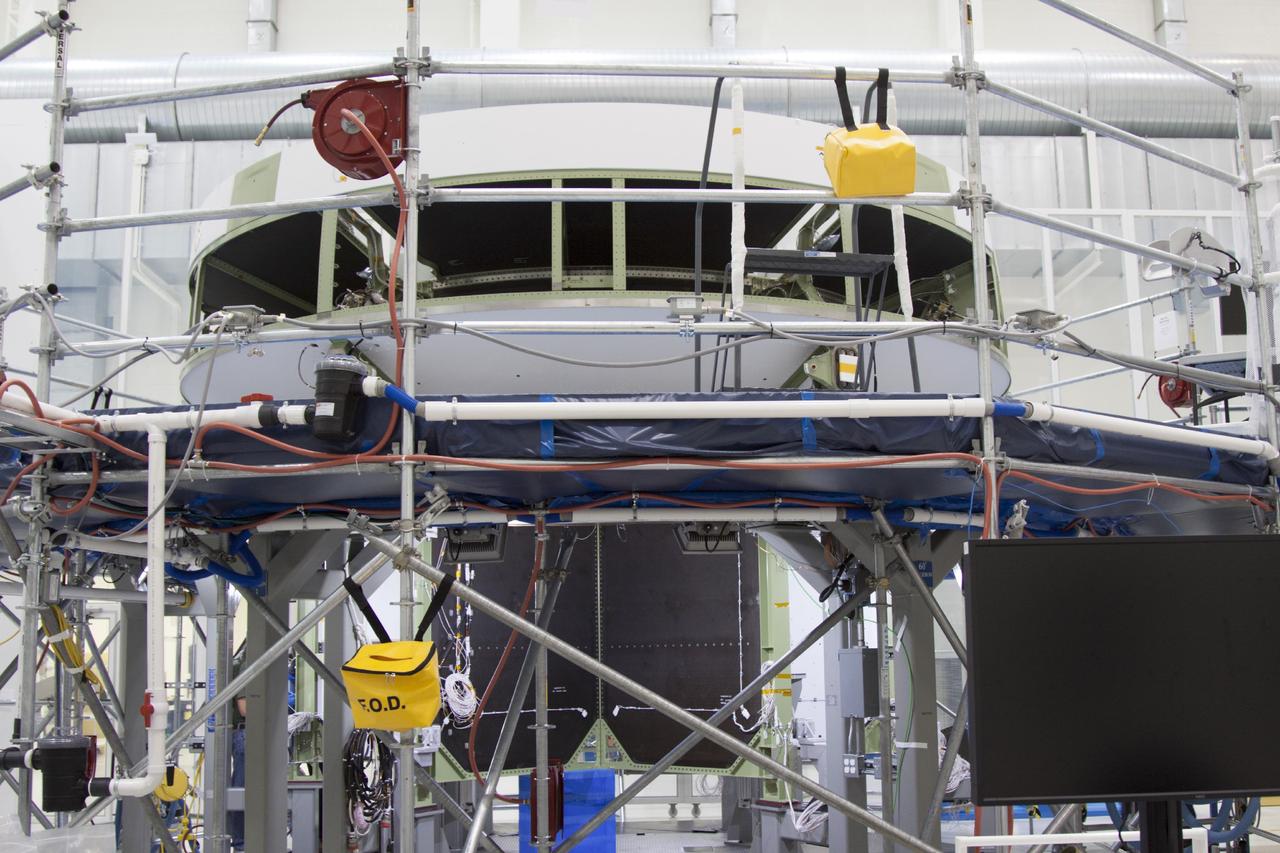
CAPE CANAVERAL, Fla. – Inside the Operations and Checkout Building high bay at NASA’s Kennedy Space Center in Florida, processing work continues on the service module bulkhead for the Orion spacecraft. Technicians have applied shims, drilled fasteners and built up the cable harnesses on the bulkhead. Orion is the exploration spacecraft designed to carry astronauts to destinations not yet explored by humans, including an asteroid and Mars. It will have emergency abort capability, sustain the crew during space travel and provide safe re-entry from deep space return velocities. The first unpiloted test flight of the Orion is scheduled to launch in 2014 atop a Delta IV rocket and in 2017 on NASA’s Space Launch System rocket. For more information, visit http://www.nasa.gov/orion. Photo credit: NASA/Jim Grossmann
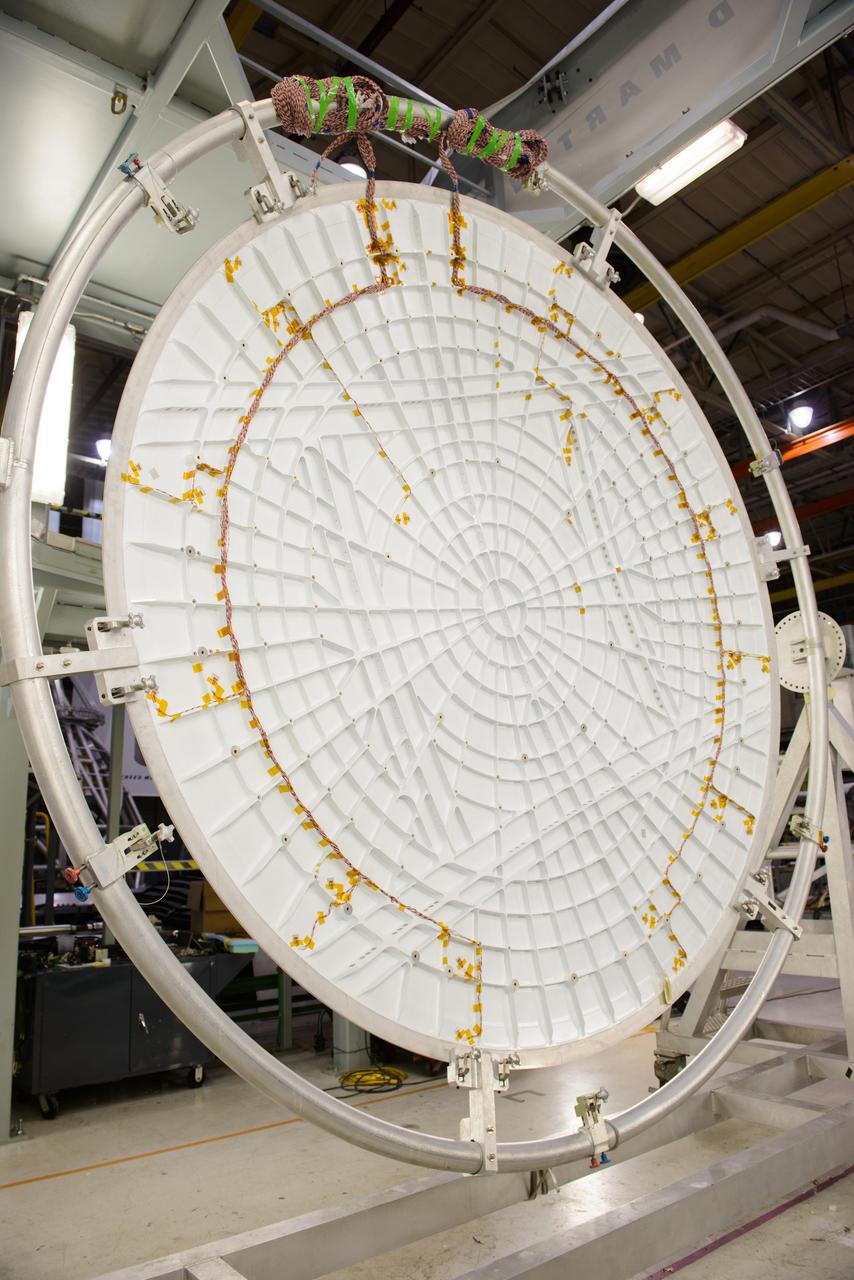
Lockheed Martin engineers at Michoud Assembly Facility in New Orleans, Louisiana, prepare elements of the Orion pressure vessel for welding on Sept. 23, 2015. Part of Batch image transfer from Flickr.
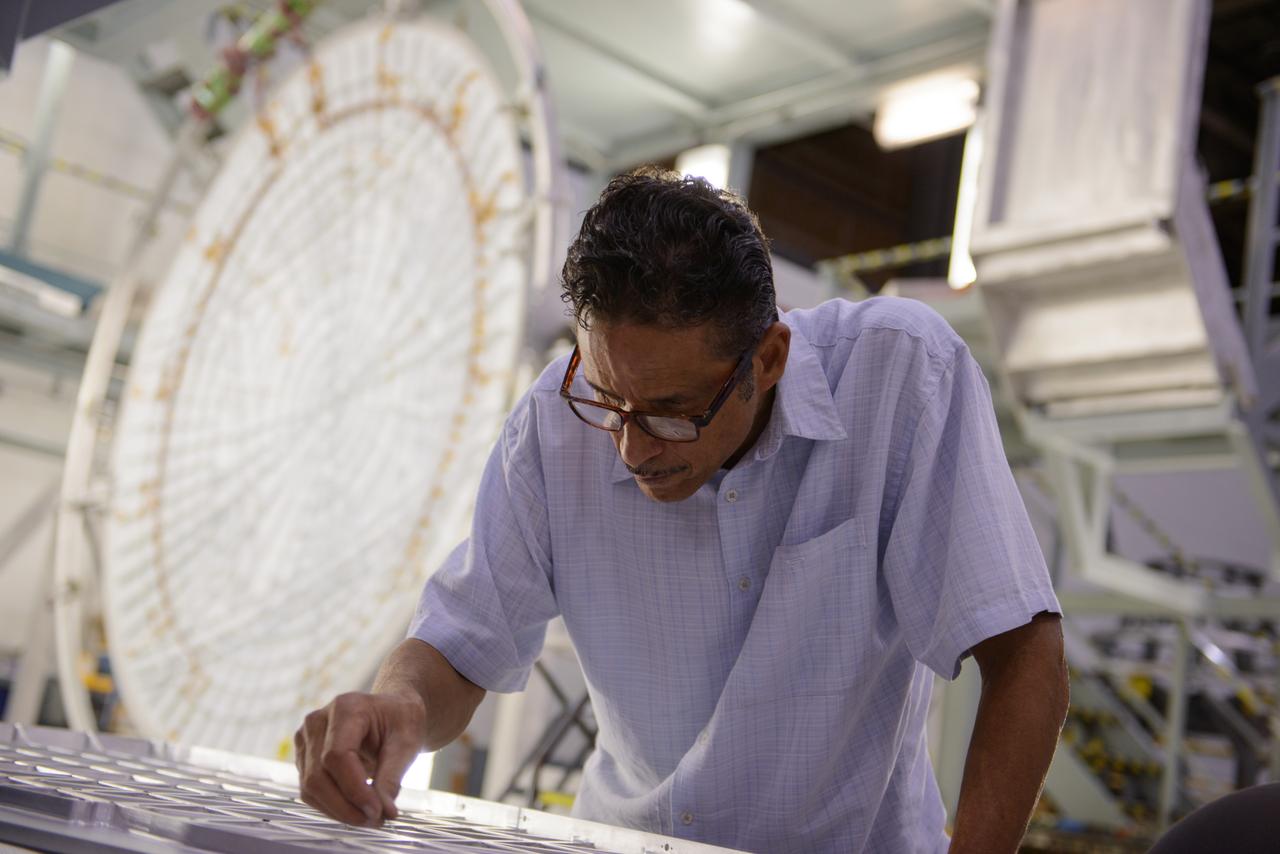
Lockheed Martin engineers at Michoud Assembly Facility in New Orleans, Louisiana, prepare elements of the Orion pressure vessel for welding on Sept. 23, 2015. Part of Batch image transfer from Flickr.
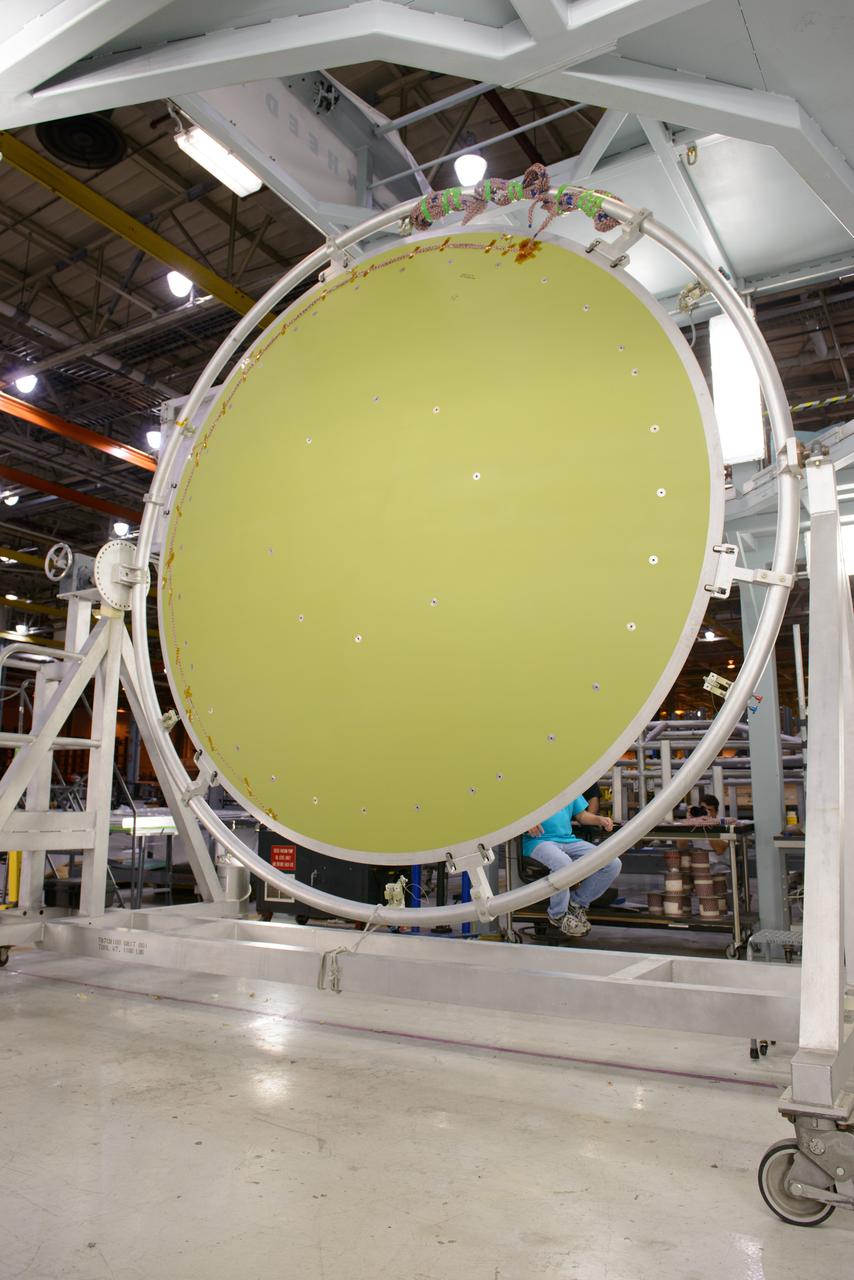
Lockheed Martin engineers at Michoud Assembly Facility in New Orleans, Louisiana, prepare elements of the Orion pressure vessel for welding on Sept. 23, 2015. Part of Batch image transfer from Flickr.
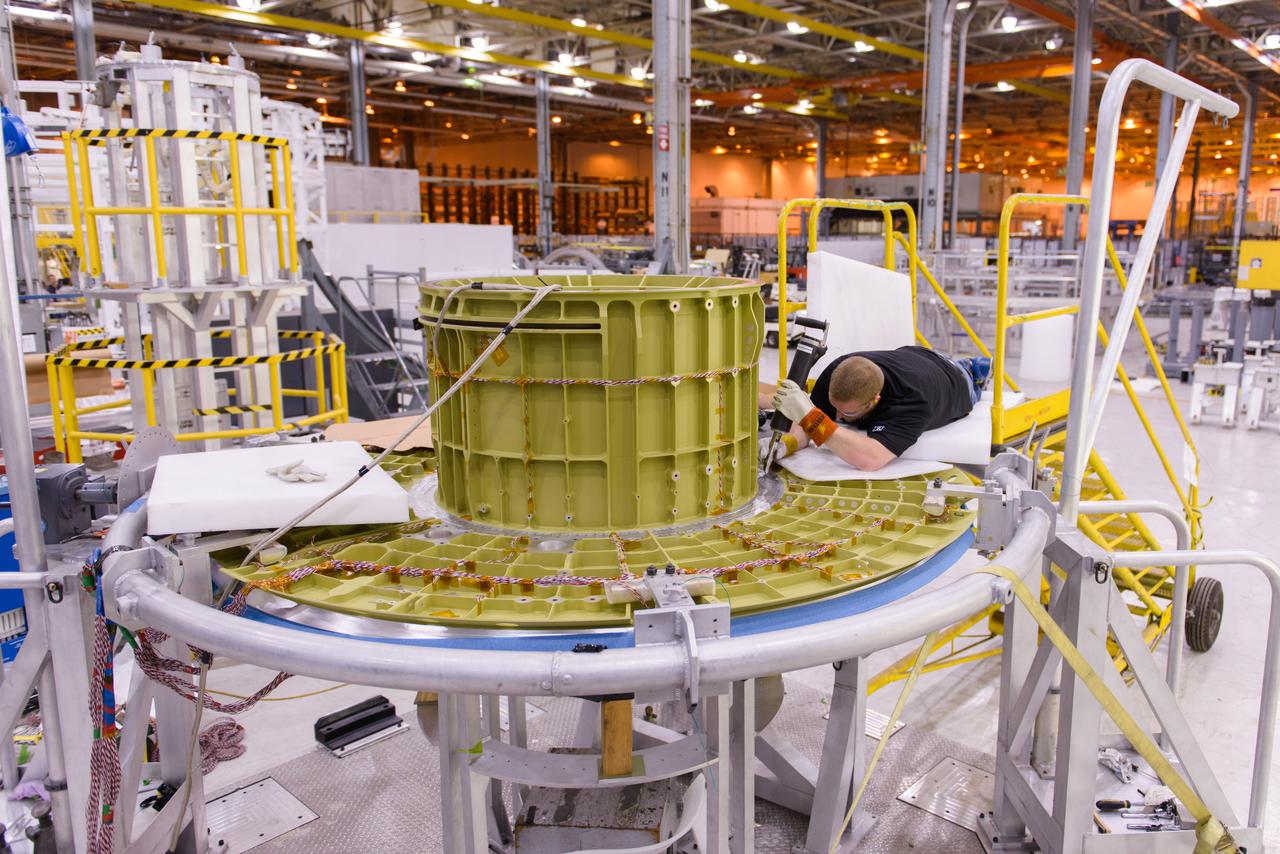
Lockheed Martin engineers at Michoud Assembly Facility in New Orleans, Louisiana, prepare elements of the Orion pressure vessel for welding on Sept. 23, 2015. Part of Batch image transfer from Flickr.
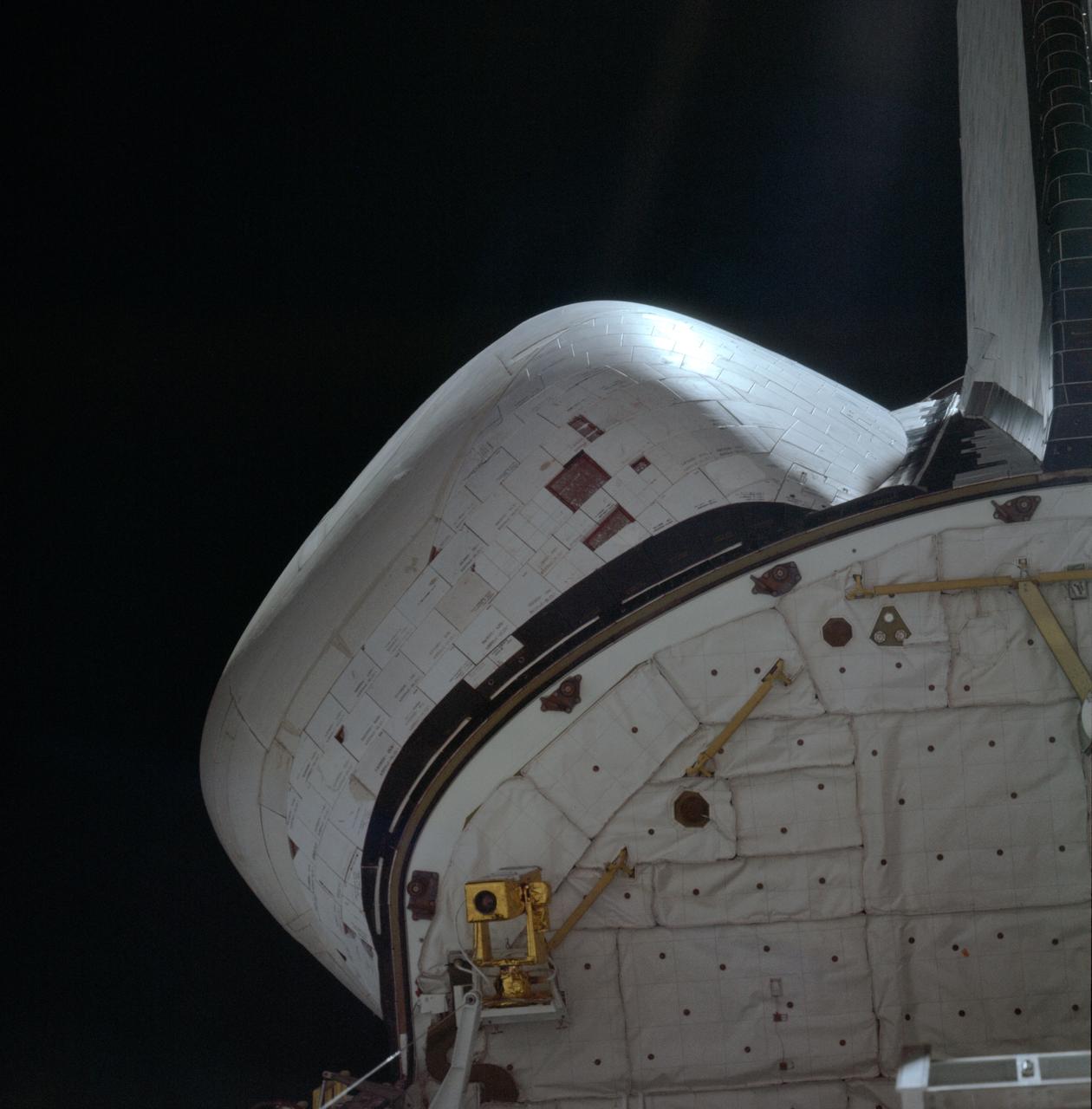
STS001-08-289 (12-14 April 1981) --- A 250mm Hasselblad view of the left OMS pod and missing tiles. Photo credit: NASA
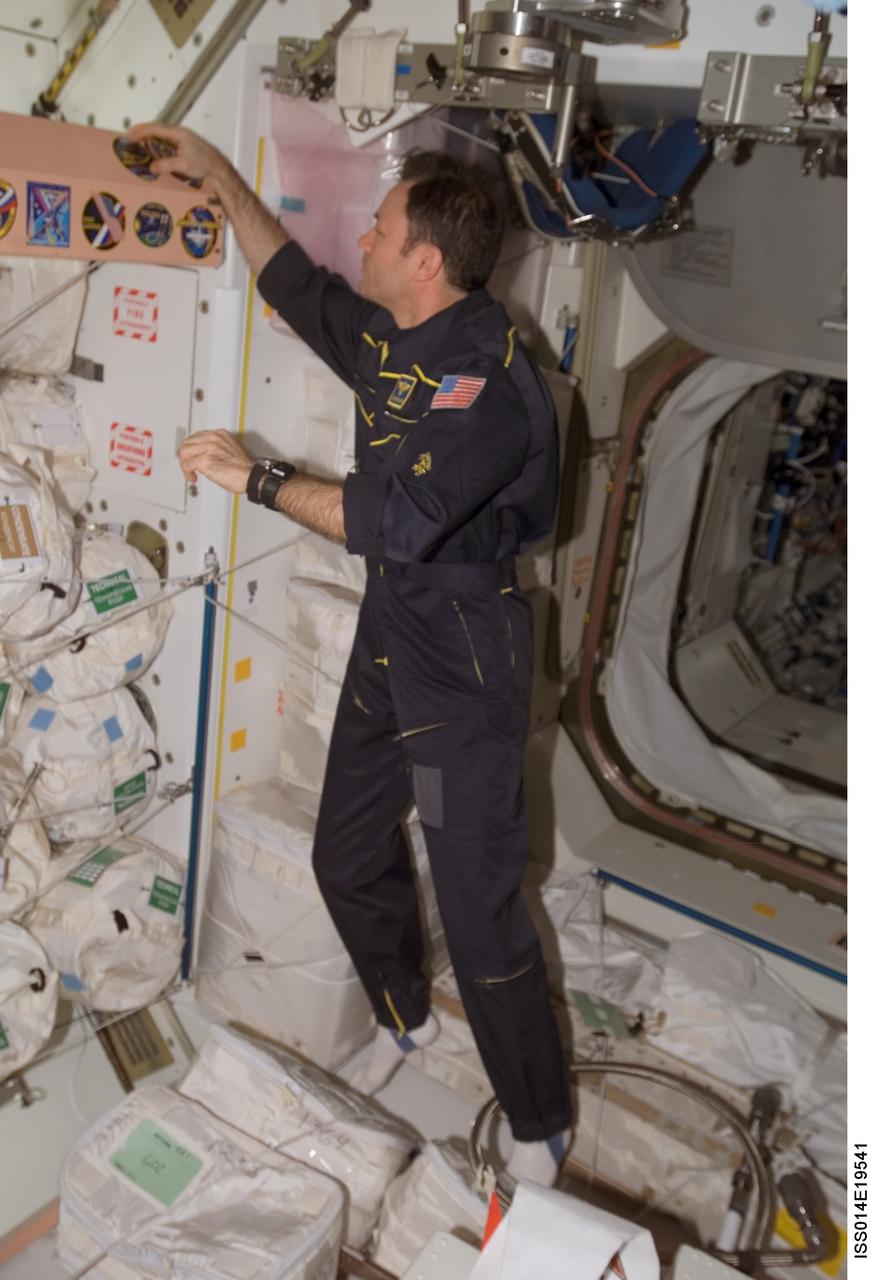
ISS014-E-19541 (17 April 2007) --- Astronaut Michael E. Lopez-Alegria, Expedition 14 commander and NASA space station science officer, adds the Expedition 14 patch to the Unity node's growing collection of insignias representing crews who have lived and worked on the International Space Station.
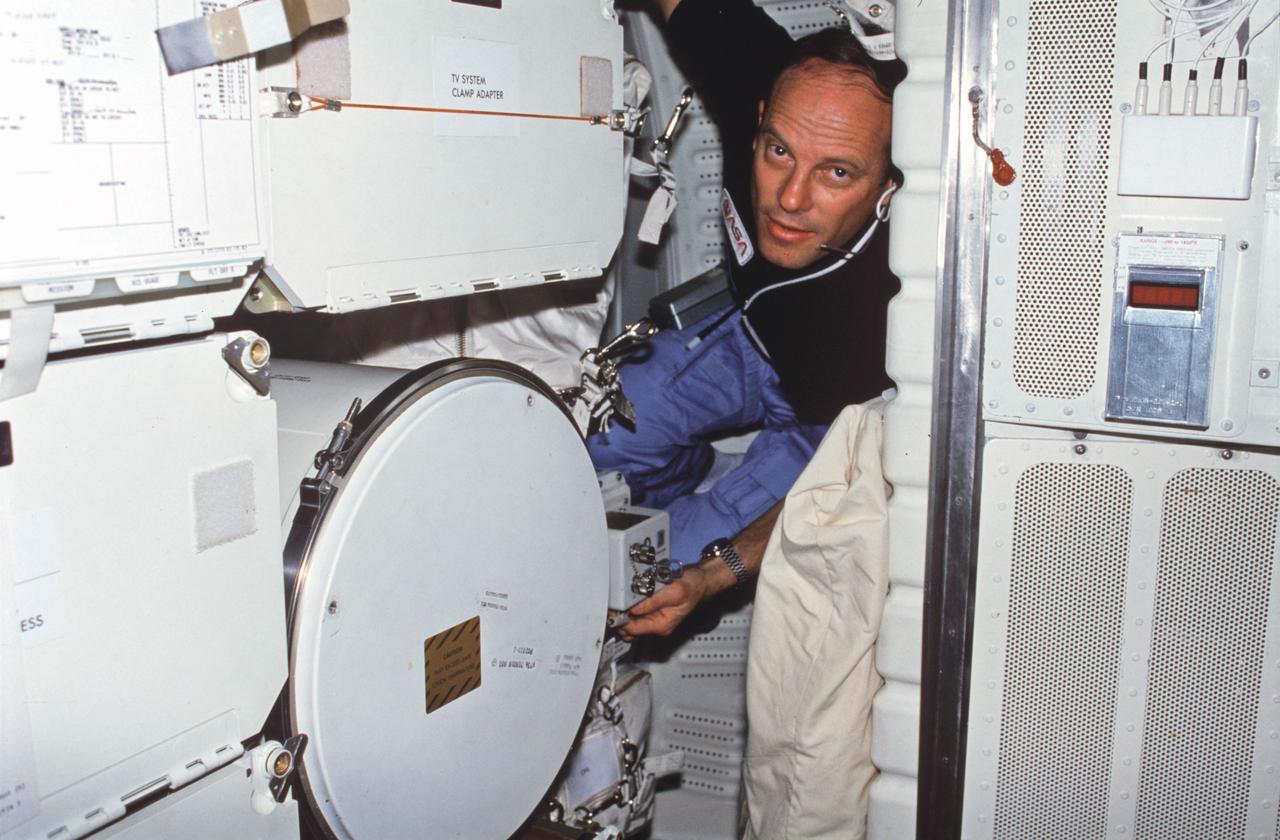
STS003-22-127 (22-30 March 1982) --- Astronaut Jack R. Lousma, STS-3 commander, wearing communications kit assembly (assy) mini-headset, adjusts controls on Monodisperse Latex Reactor (MLR) experiment located in forward middeck lockers MF57H and MF57K. To reach MLR support electronics assy controls, Lousma squeezes in between forward lockers and Development Flight Instrument (DFI) unit on starboard bulkhead. Photo credit: NASA
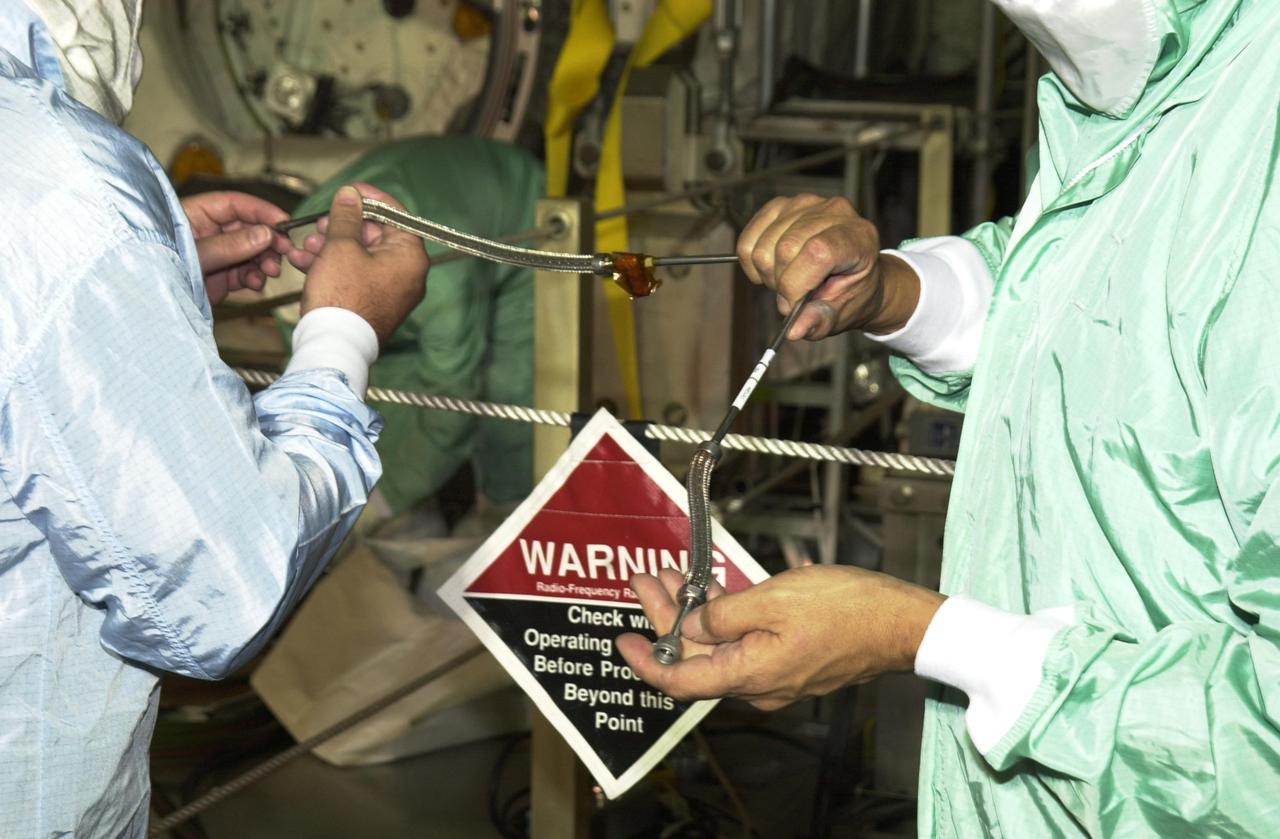
KENNEDY SPACE CENTER, FLA. -- Workers on Launch Pad 39A inspect an oxygen flex hose fitting. Through manual inspection and using helium detectors, the flex hose was identified as the source of an oxygen leak in Endeavour's mid-body. Visual inspection found a deformity in the flex line braid where it connects to rigid tubing. The entire flex hose assembly and bulkhead fitting were removed early today, and work is under way to complete the installation of a replacement.
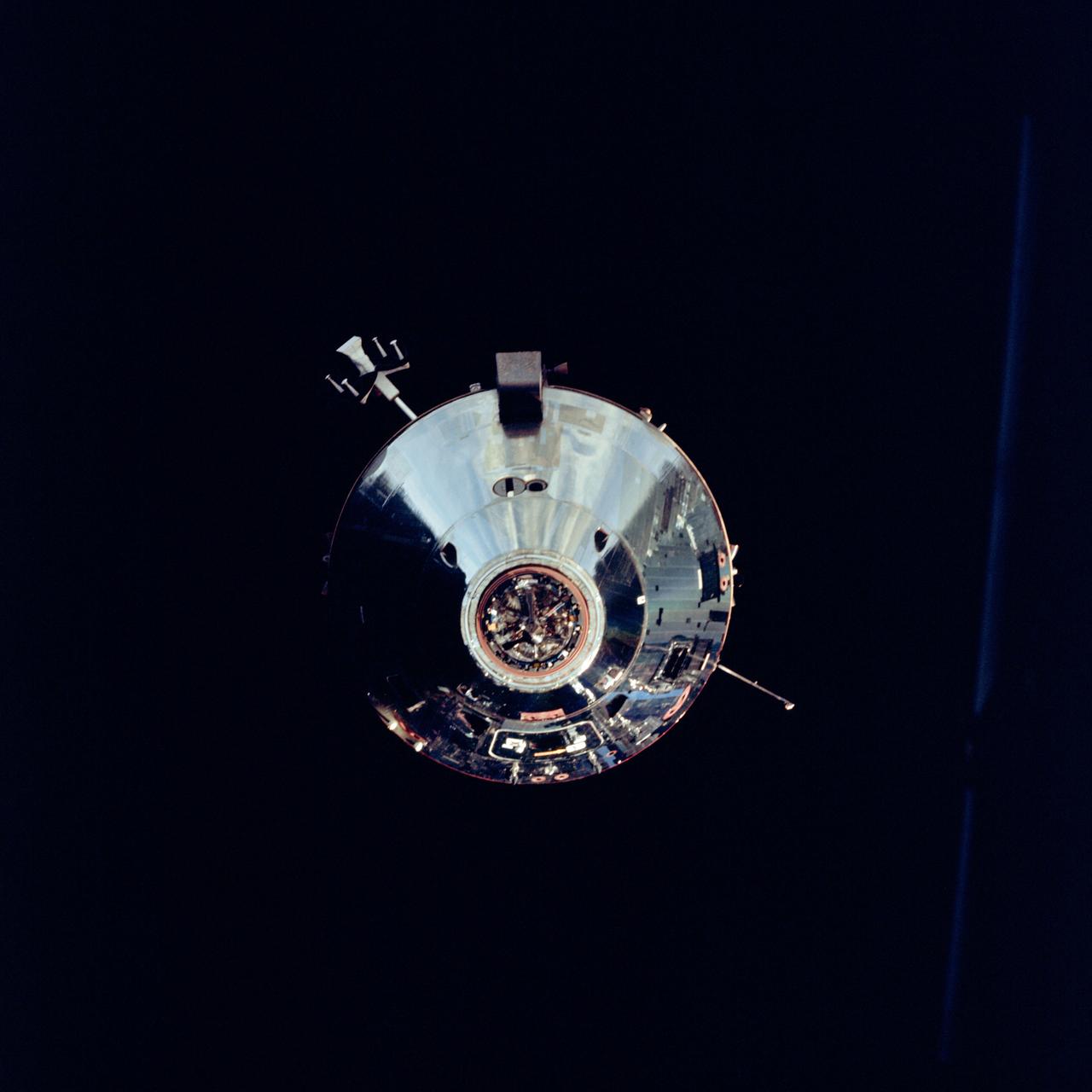
The Apollo 9 Command/Service Modules photographed from the Lunar Module,"Spider",on the fifth day of the Apollo 9 earth-orbital mission. Docking mechanism is visible in nose of the Command Module,"Gumdrop". Object jutting out from the Service Module aft bulkhead is the high-gain S-Band antenna. Film magazine was F, film type was SO-368 Ektachrome with 0.460 - 0.710 micrometers film / filter transmittance response and haze filter,80mm lens.
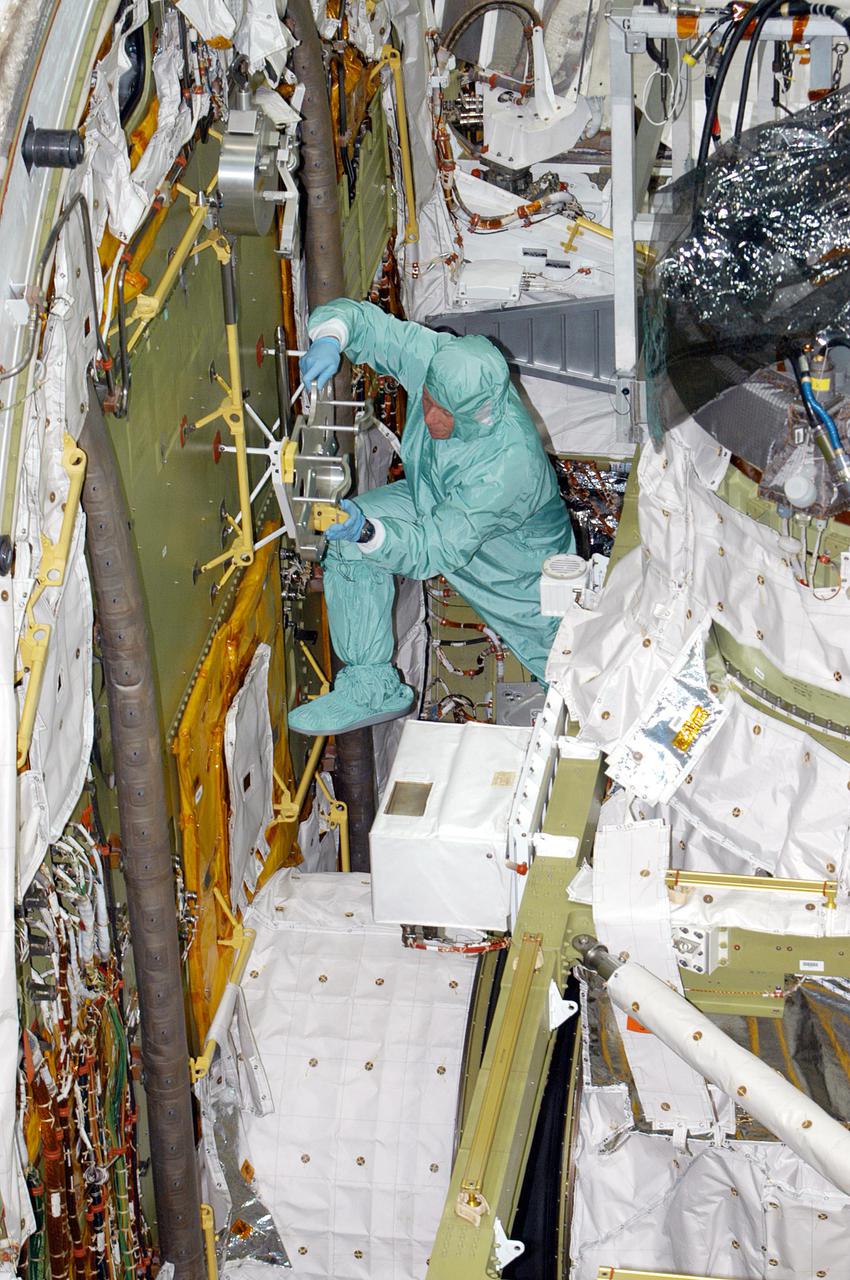
KENNEDY SPACE CENTER, FLA. - During Crew Equipment Interface Test (CEIT) in the Orbiter Processing Facility at NASA’s Kennedy Space Center, STS-121 Mission Specialist Michael E. Fossum familiarizes himself with the Portable Foot Restraint on the forward bulkhead of Atlantis. The Airlock is in the center. During CEIT, the crew has an opportunity to get a hands-on look at the orbiter and equipment they will be working with on their mission. Mission STS-121 is scheduled to launch aboard Space Shuttle Atlantis in July.
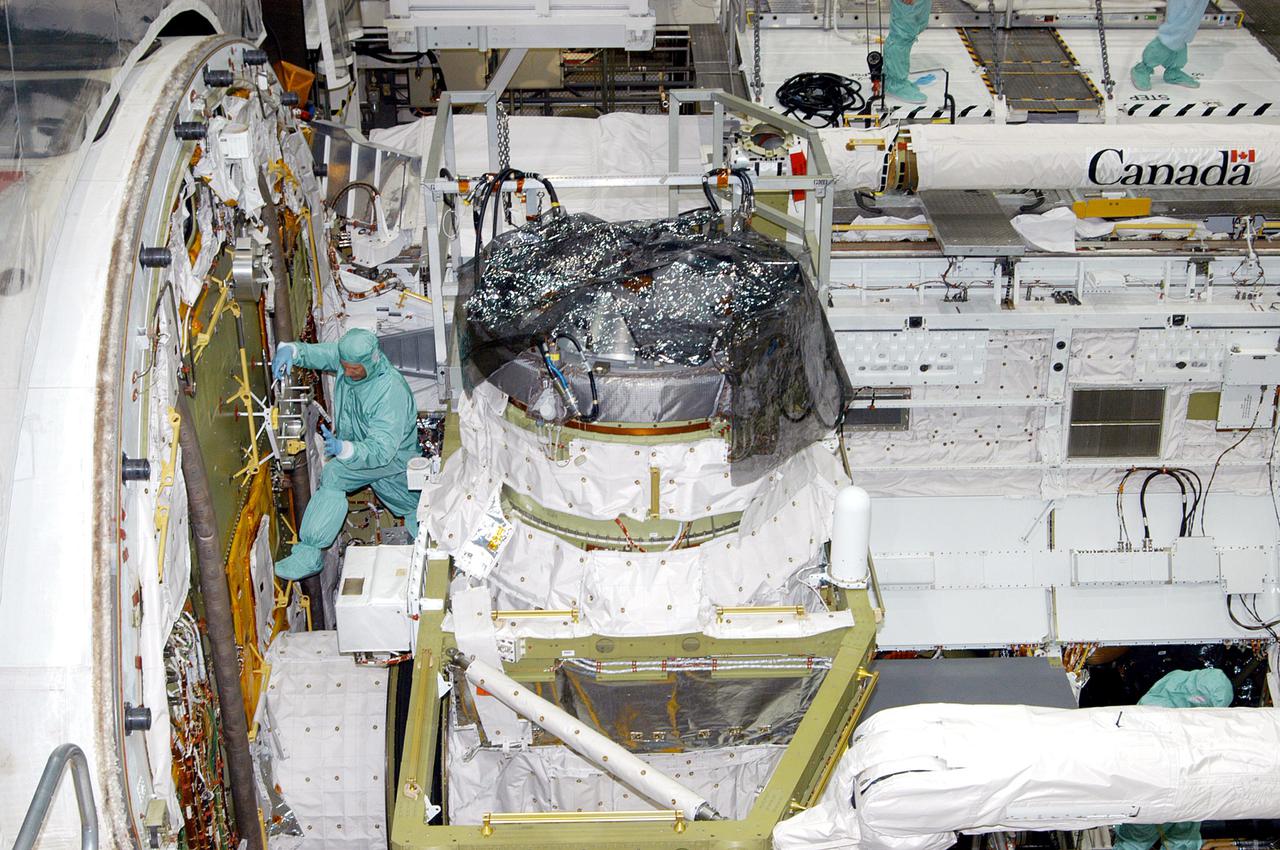
KENNEDY SPACE CENTER, FLA. - During Crew Equipment Interface Test (CEIT) in the Orbiter Processing Facility at NASA’s Kennedy Space Center, STS-121 Mission Specialist Michael E. Fossum familiarizes himself with the Portable Foot Restraint on the forward bulkhead of Atlantis. The Airlock is in the center. During CEIT, the crew has an opportunity to get a hands-on look at the orbiter and equipment they will be working with on their mission. Mission STS-121 is scheduled to launch aboard Space Shuttle Atlantis in July.
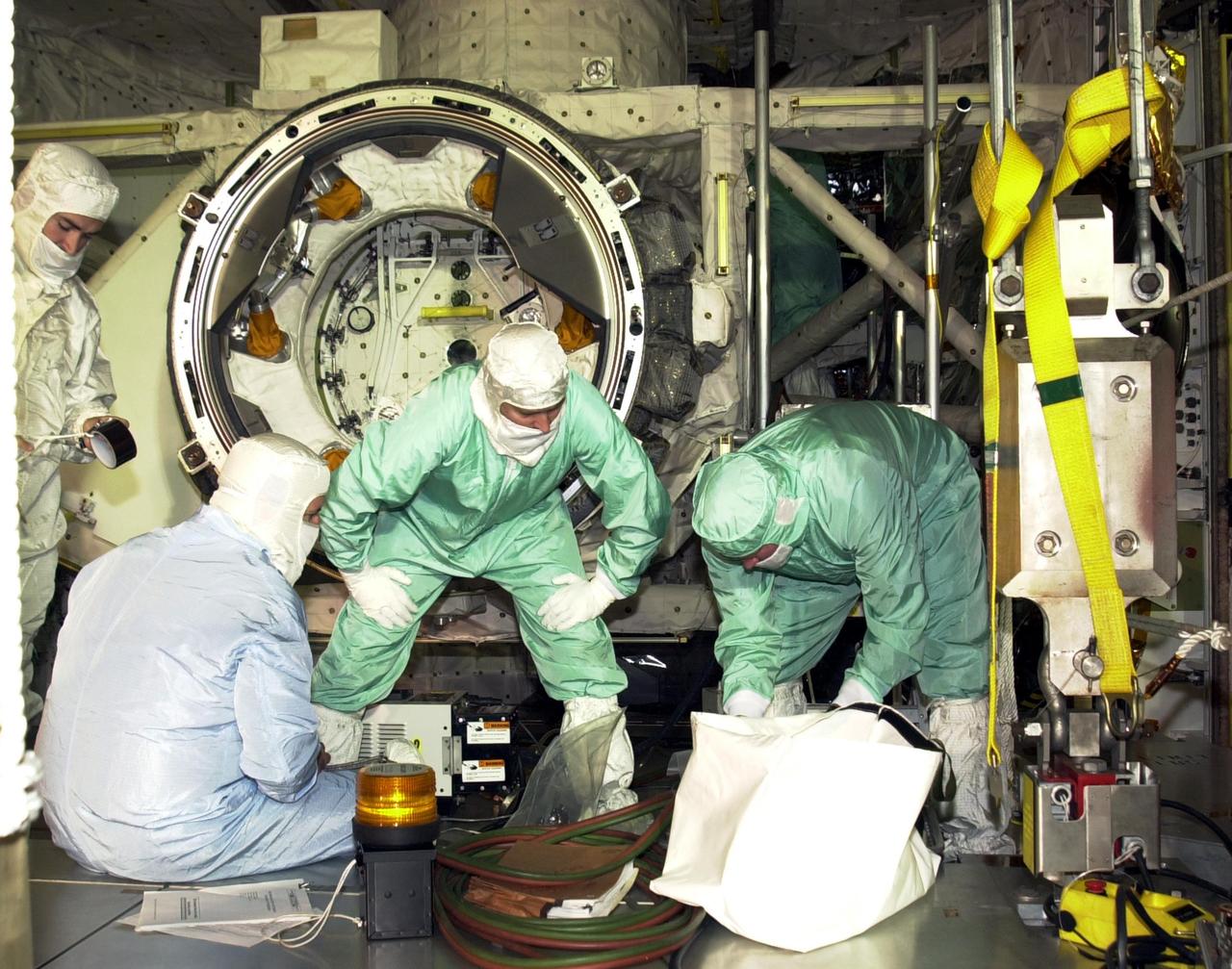
KENNEDY SPACE CENTER, FLA. -- Workers on Launch Pad 39A perform checks on Endeavour's oxygen flex hose fitting through manual inspection and using helium detectors. Visual inspection found a deformity in the flex line braid where it connects to rigid tubing. The entire flex hose assembly and bulkhead fitting were removed early today, and work is under way to complete the installation of a replacement.
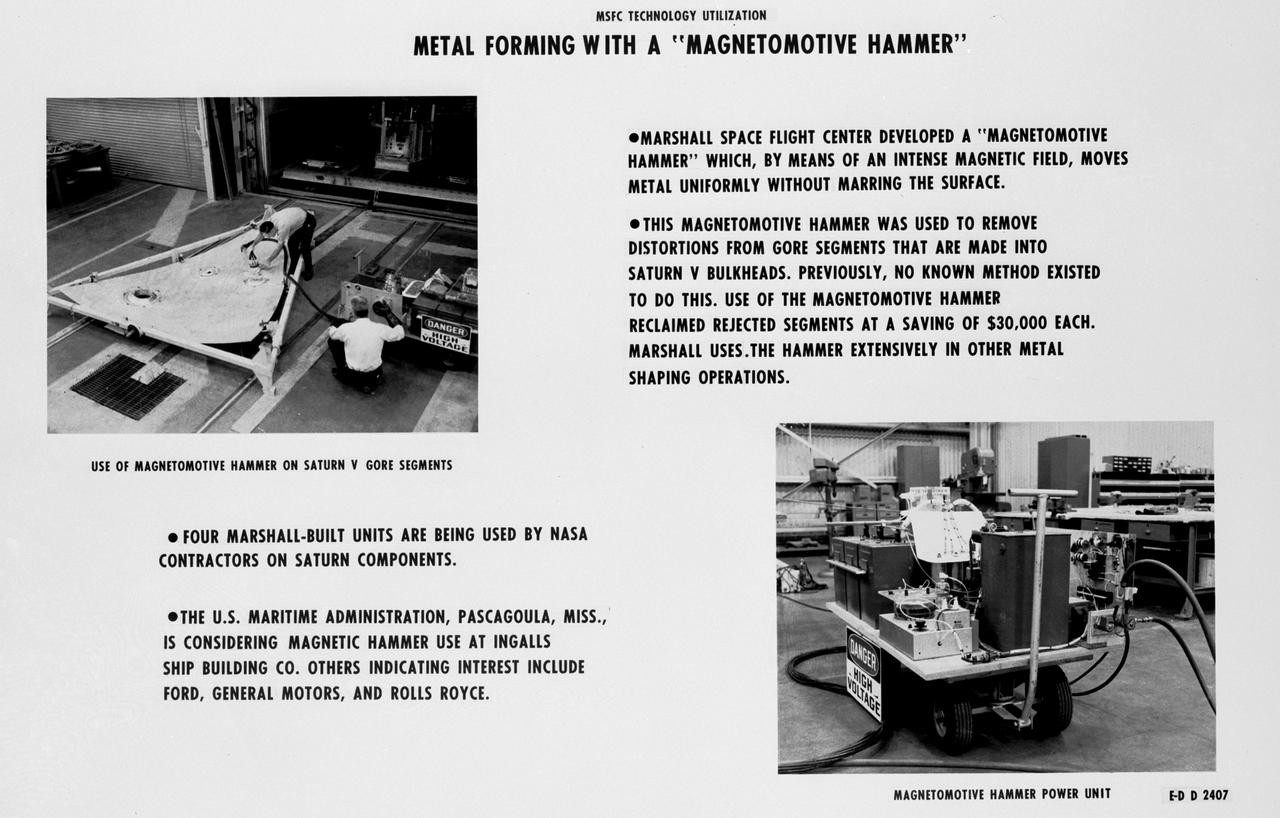
During the Apollo era Marshall Space Flight Center's engineers developed the Magnetomotive Hammer to remove distortions from Saturn V bulkhead gore segments. Using an intense magnetic field, the Hammer removed manufacturing distortions from rejected segments which otherwise would have been discarded at a cost of $30,000 each. Various automobile, ship and aircraft manufacturers adoped the technology for commercial use.
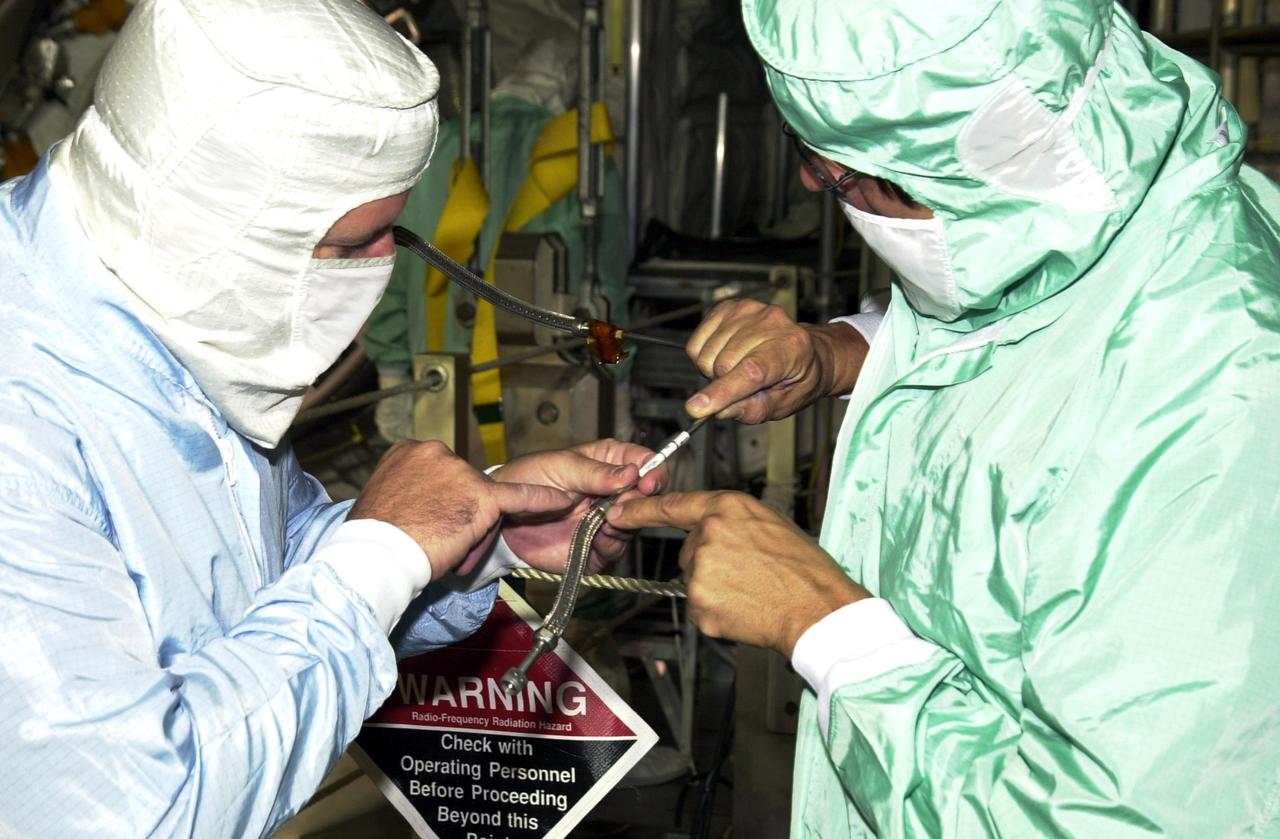
KENNEDY SPACE CENTER, FLA. -- Workers on Launch Pad 39A inspect an oxygen flex hose fitting. Through manual inspection and using helium detectors, the flex hose was identified as the source of an oxygen leak in Endeavour's mid-body. Visual inspection found a deformity in the flex line braid where it connects to rigid tubing. The entire flex hose assembly and bulkhead fitting were removed early today, and work is under way to complete the installation of a replacement.
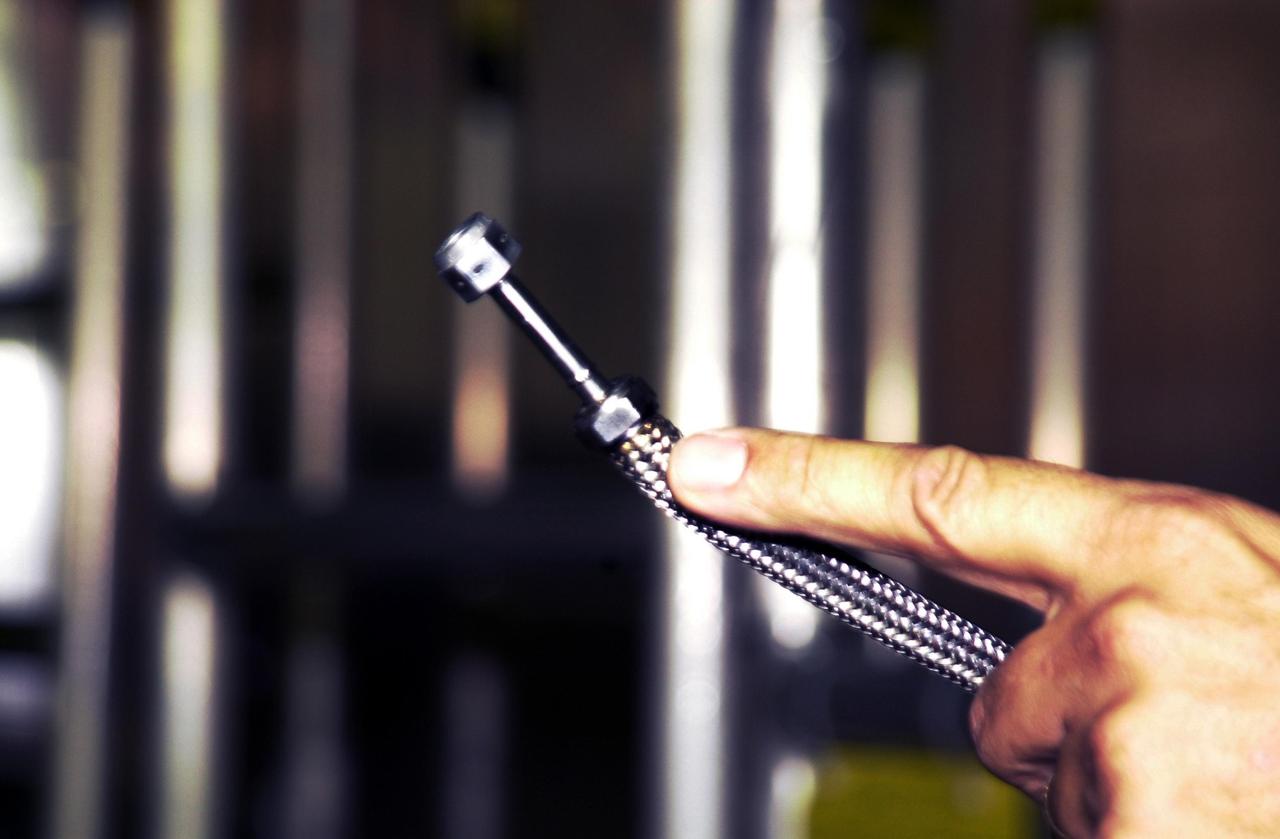
KENNEDY SPACE CENTER, FLA. -- During inspections at Launch Pad 39A, an oxygen flex hose fitting (shown here) was identified as the source of an oxygen leak in Endeavour's mid-body. The leak was identified manually and using helium detectors. Visual inspection found a deformity in the flex line braid where it connects to rigid tubing. The entire flex hose assembly and bulkhead fitting were removed early today, and work is under way to complete the installation of a replacement.
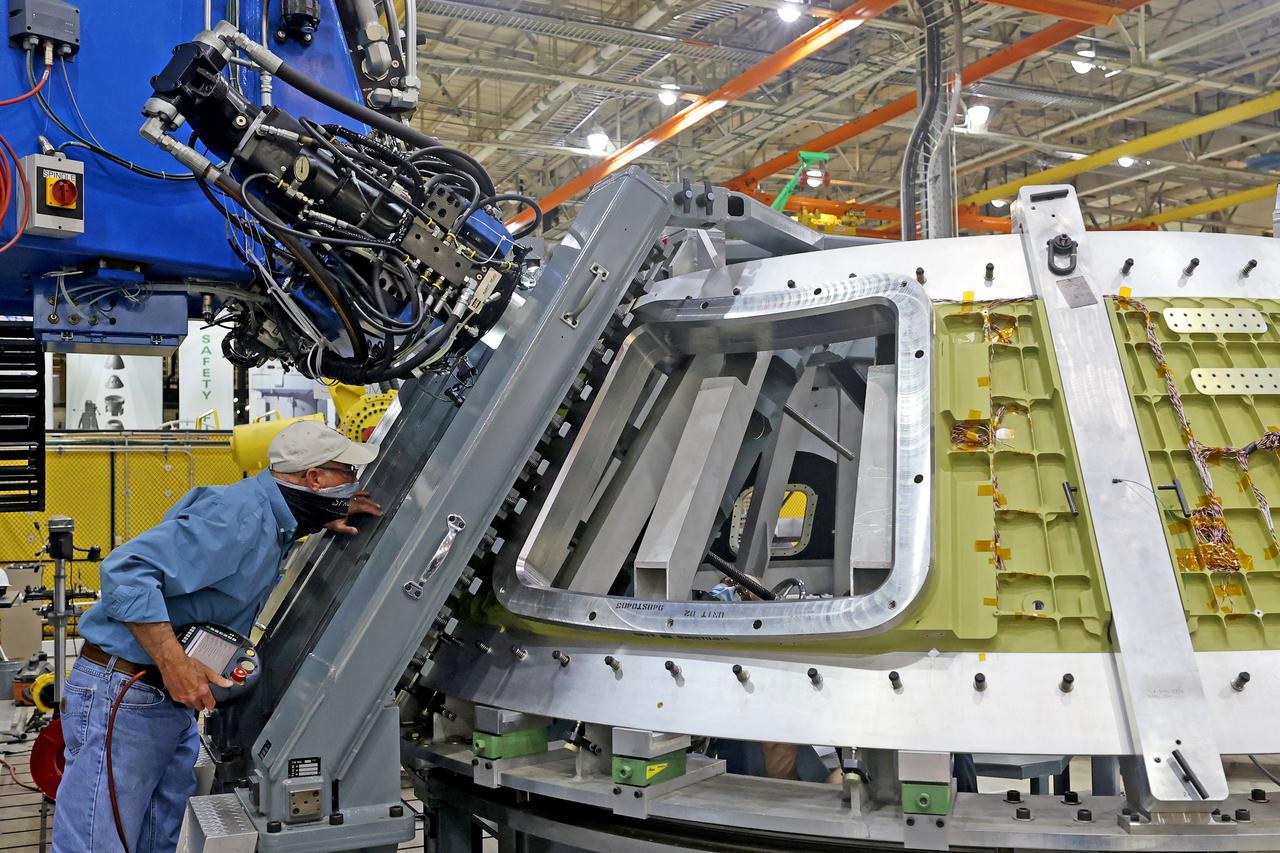
At NASA’s Michoud Assembly Facility in New Orleans, technicians from Orion prime contractor Lockheed Martin have welded together three cone-shaped panels on Orion’s crew module for the Artemis III mission that will land the first woman and next man on the Moon. The crew module’s primary structure, the pressure vessel, is comprised of seven machined aluminum alloy pieces that are welded together through a weld process that produces a strong, air-tight habitable space for astronauts during the mission. The pressure vessel is designed to withstand the harsh and demanding environment of deep space, and is the core structure upon which all the other elements of Orion’s crew module are integrated. Infographic showing the seven pieces of Orion's underlying structure With welding complete on the crew module cone panels – one of which contains windows providing astronauts views of the Moon and Earth – work will begin joining the forward bulkhead to the tunnel to create the top of the spacecraft, followed by the barrel and aft bulkhead join to form the bottom of Orion. Last, the forward bulkhead will be welded to the top of the panels and, for the seventh and closeout weld, the bottom of the cone panels will be joined to the barrel to complete the pressure vessel. Once welding of the Artemis III crew module primary structure is complete, it will be shipped to NASA’s Kennedy Space Center in Florida where it will undergo further assembly beginning this fall. Orion, the Space Launch System, and Exploration Ground Systems programs are foundational elements of the Artemis program. Artemis I will be the first integrated flight test of Orion and SLS and is targeted to launch later this year. Artemis II will follow and is the first crewed mission, taking humans farther into space than ever before. Image credit: NASA/Michael DeMocker
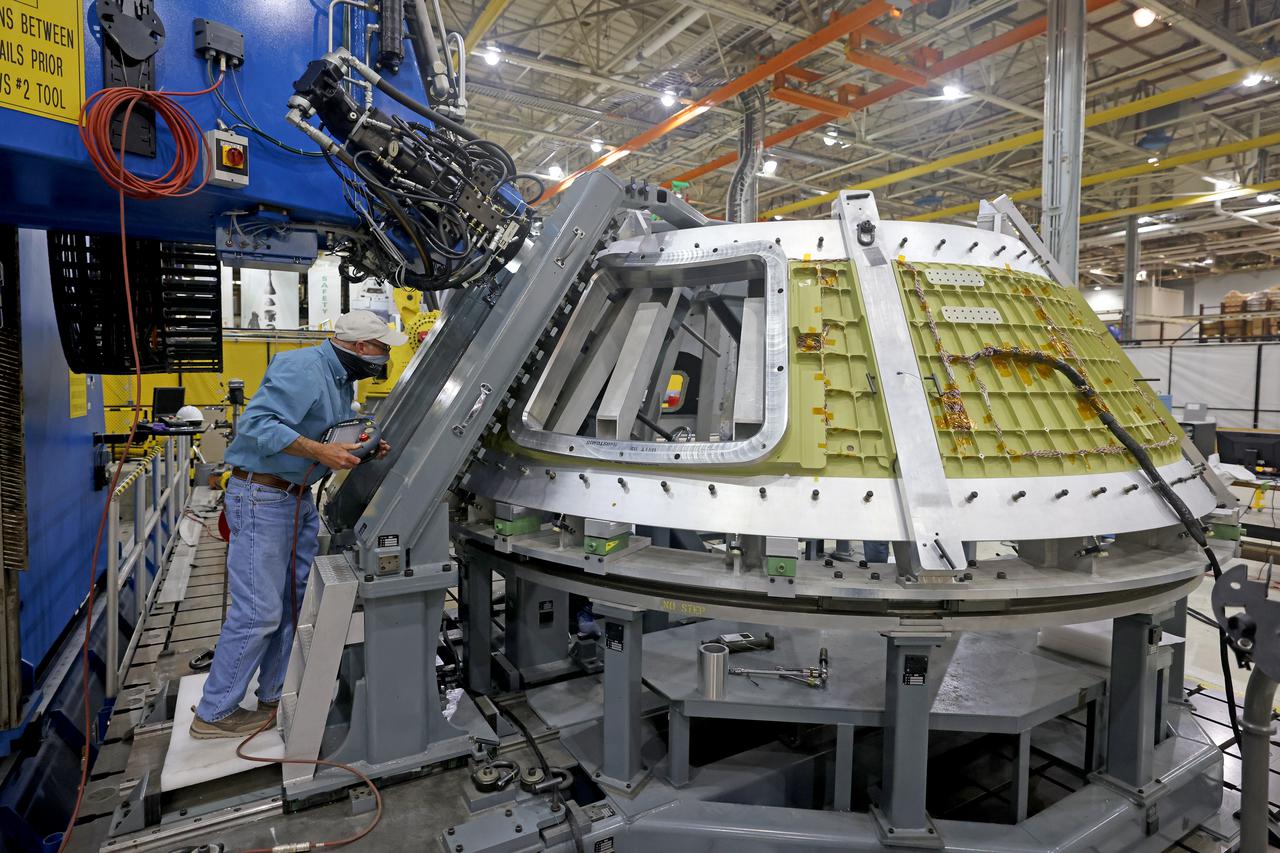
At NASA’s Michoud Assembly Facility in New Orleans, technicians from Orion prime contractor Lockheed Martin have welded together three cone-shaped panels on Orion’s crew module for the Artemis III mission that will land the first woman and next man on the Moon. The crew module’s primary structure, the pressure vessel, is comprised of seven machined aluminum alloy pieces that are welded together through a weld process that produces a strong, air-tight habitable space for astronauts during the mission. The pressure vessel is designed to withstand the harsh and demanding environment of deep space, and is the core structure upon which all the other elements of Orion’s crew module are integrated. Infographic showing the seven pieces of Orion's underlying structure With welding complete on the crew module cone panels – one of which contains windows providing astronauts views of the Moon and Earth – work will begin joining the forward bulkhead to the tunnel to create the top of the spacecraft, followed by the barrel and aft bulkhead join to form the bottom of Orion. Last, the forward bulkhead will be welded to the top of the panels and, for the seventh and closeout weld, the bottom of the cone panels will be joined to the barrel to complete the pressure vessel. Once welding of the Artemis III crew module primary structure is complete, it will be shipped to NASA’s Kennedy Space Center in Florida where it will undergo further assembly beginning this fall. Orion, the Space Launch System, and Exploration Ground Systems programs are foundational elements of the Artemis program. Artemis I will be the first integrated flight test of Orion and SLS and is targeted to launch later this year. Artemis II will follow and is the first crewed mission, taking humans farther into space than ever before. Image credit: NASA/Michael DeMocker
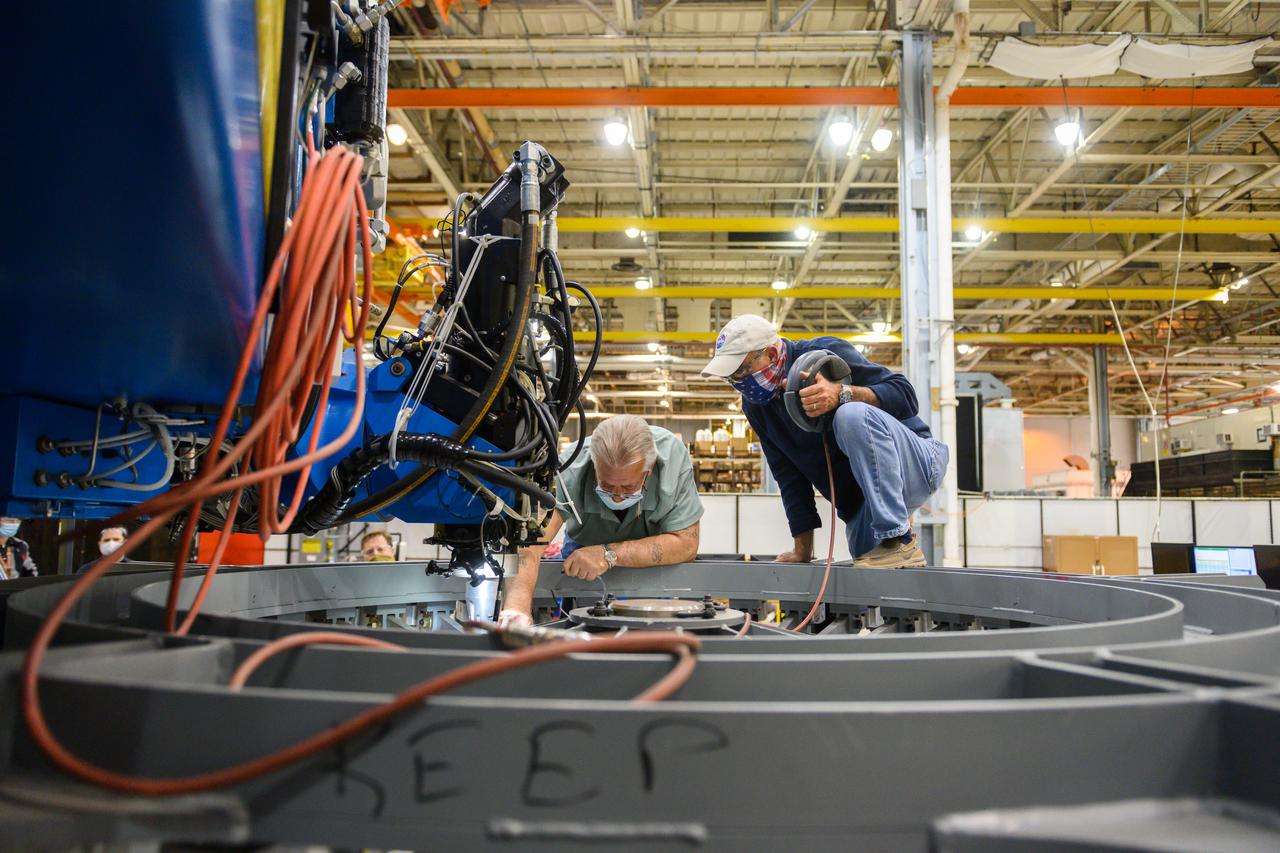
Technicians from Orion Prime Contractor Lockheed Martin weld the forward bulkhead of the pressure vessel to the tunnel hardware on the Orion Spacecraft for the Artemis III mission at NASA’s Michoud Assembly Facility in New Orleans. The crew module’s primary structure, the pressure vessel, is comprised of seven machined aluminum alloy pieces that are welded together through a weld process that produces a strong, air-tight habitable space for astronauts during the mission. The pressure vessel is designed to withstand the harsh and demanding environment of deep space and is the core structure upon which all the other elements of Orion’s crew module are integrated. This pressure vessel weld is the next step following the completion of the crew module cone panel welds and creates the top of the spacecraft. Work will then begin to join the barrel with the aft bulkhead to form the bottom of Orion. Last, the forward bulkhead will be welded to the top of the panels and, for the seventh and closeout weld, the bottom of the cone panels will be joined to the barrel to complete the pressure vessel. Once welding of the Artemis III crew module primary structure is complete, it will be shipped to NASA’s Kennedy Space Center in Florida where it will undergo further assembly beginning this fall. Orion, the Space Launch System, and Exploration Ground Systems programs are foundational elements of the Artemis program. Artemis I will be the first integrated flight test of Orion and SLS and is targeted to launch later this year. Artemis II will follow and is the first crewed mission, taking humans farther into space than ever before.
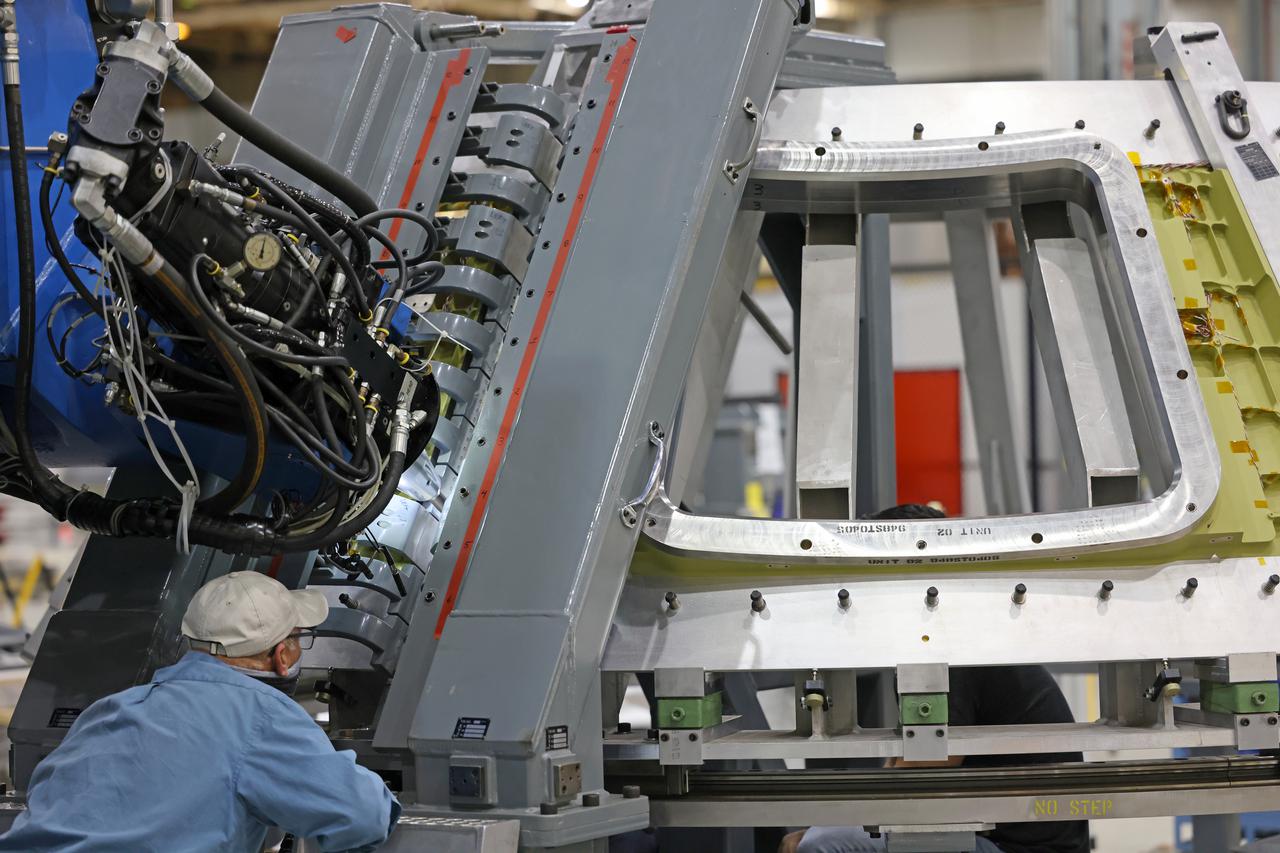
At NASA’s Michoud Assembly Facility in New Orleans, technicians from Orion prime contractor Lockheed Martin have welded together three cone-shaped panels on Orion’s crew module for the Artemis III mission that will land the first woman and next man on the Moon. The crew module’s primary structure, the pressure vessel, is comprised of seven machined aluminum alloy pieces that are welded together through a weld process that produces a strong, air-tight habitable space for astronauts during the mission. The pressure vessel is designed to withstand the harsh and demanding environment of deep space, and is the core structure upon which all the other elements of Orion’s crew module are integrated. Infographic showing the seven pieces of Orion's underlying structure With welding complete on the crew module cone panels – one of which contains windows providing astronauts views of the Moon and Earth – work will begin joining the forward bulkhead to the tunnel to create the top of the spacecraft, followed by the barrel and aft bulkhead join to form the bottom of Orion. Last, the forward bulkhead will be welded to the top of the panels and, for the seventh and closeout weld, the bottom of the cone panels will be joined to the barrel to complete the pressure vessel. Once welding of the Artemis III crew module primary structure is complete, it will be shipped to NASA’s Kennedy Space Center in Florida where it will undergo further assembly beginning this fall. Orion, the Space Launch System, and Exploration Ground Systems programs are foundational elements of the Artemis program. Artemis I will be the first integrated flight test of Orion and SLS and is targeted to launch later this year. Artemis II will follow and is the first crewed mission, taking humans farther into space than ever before. Image credit: NASA/Michael DeMocker
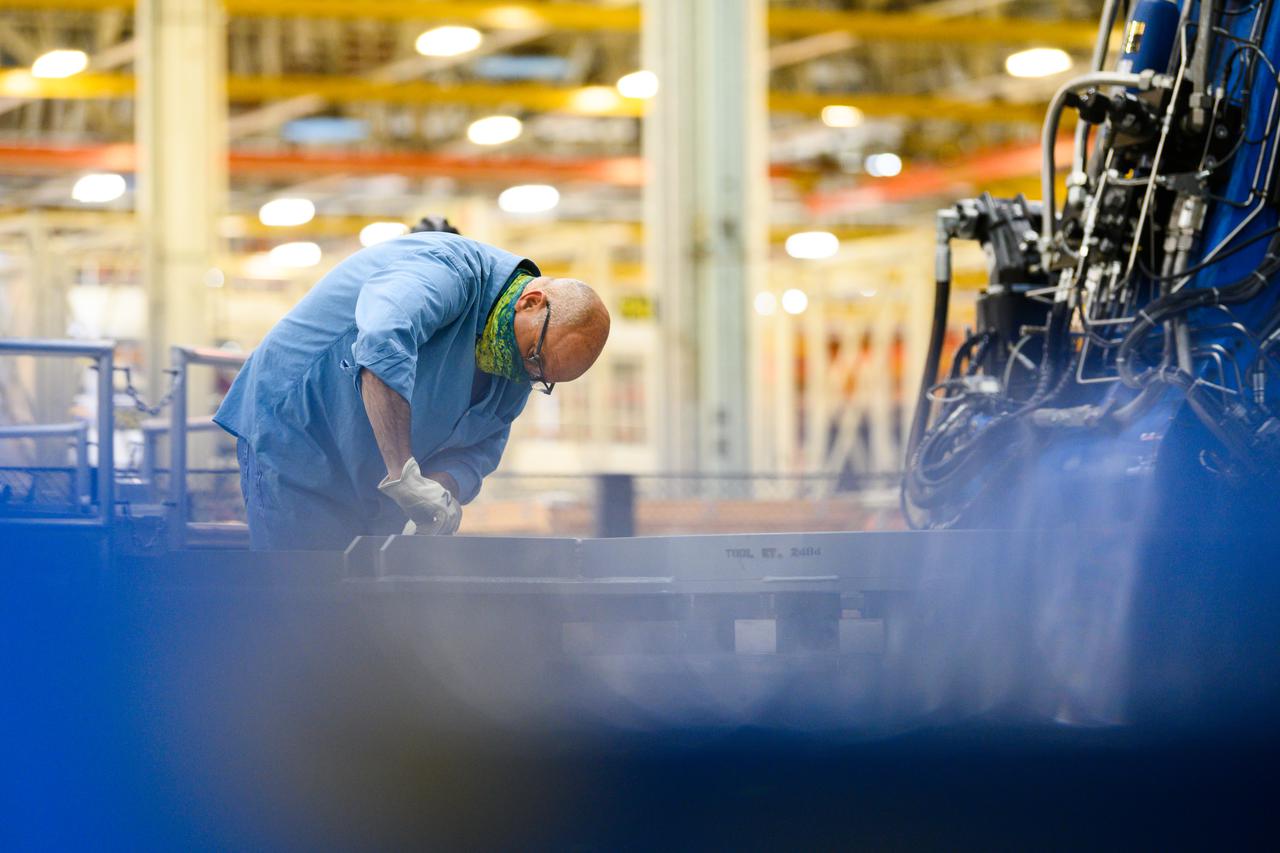
Technicians from Orion Prime Contractor Lockheed Martin weld the forward bulkhead of the pressure vessel to the tunnel hardware on the Orion Spacecraft for the Artemis III mission at NASA’s Michoud Assembly Facility in New Orleans. The crew module’s primary structure, the pressure vessel, is comprised of seven machined aluminum alloy pieces that are welded together through a weld process that produces a strong, air-tight habitable space for astronauts during the mission. The pressure vessel is designed to withstand the harsh and demanding environment of deep space and is the core structure upon which all the other elements of Orion’s crew module are integrated. This pressure vessel weld is the next step following the completion of the crew module cone panel welds and creates the top of the spacecraft. Work will then begin to join the barrel with the aft bulkhead to form the bottom of Orion. Last, the forward bulkhead will be welded to the top of the panels and, for the seventh and closeout weld, the bottom of the cone panels will be joined to the barrel to complete the pressure vessel. Once welding of the Artemis III crew module primary structure is complete, it will be shipped to NASA’s Kennedy Space Center in Florida where it will undergo further assembly beginning this fall. Orion, the Space Launch System, and Exploration Ground Systems programs are foundational elements of the Artemis program. Artemis I will be the first integrated flight test of Orion and SLS and is targeted to launch later this year. Artemis II will follow and is the first crewed mission, taking humans farther into space than ever before.
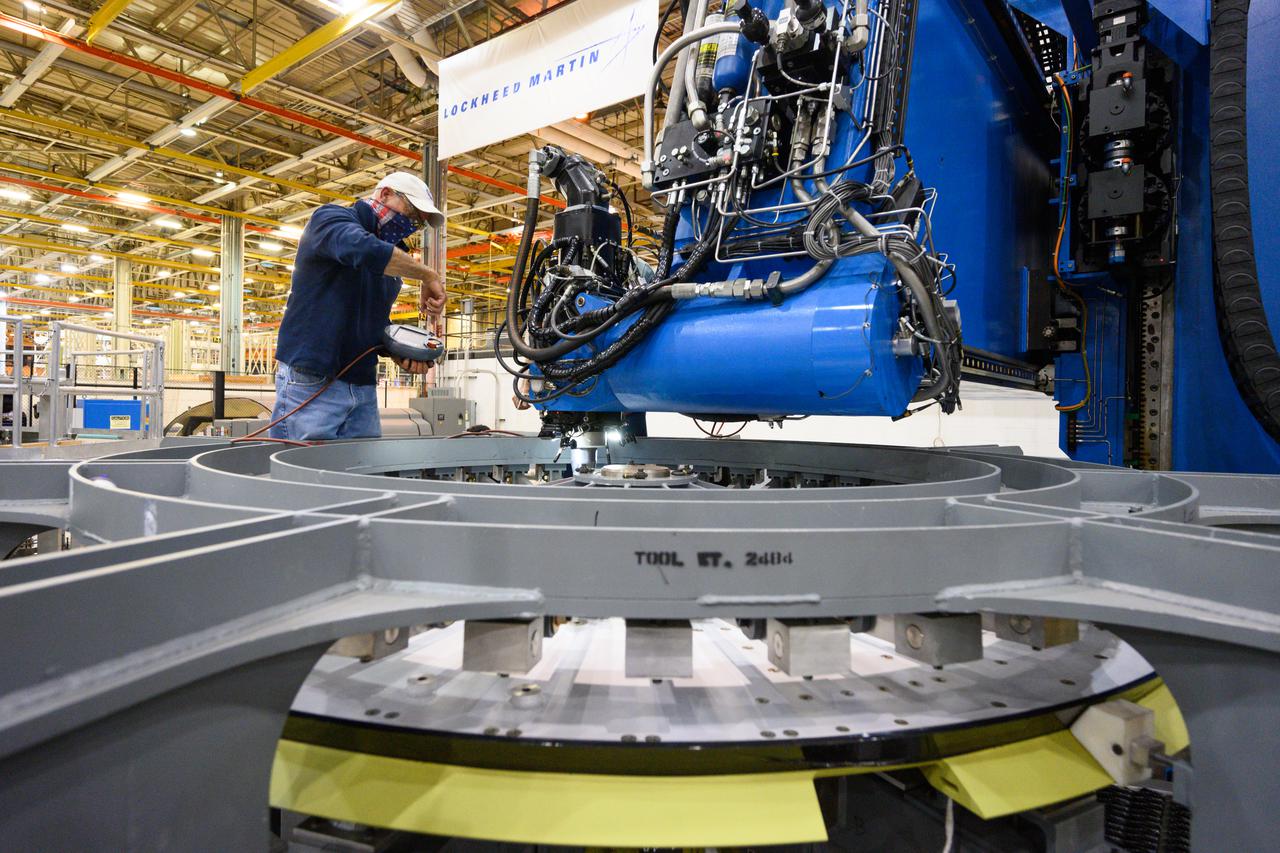
Technicians from Orion Prime Contractor Lockheed Martin weld the forward bulkhead of the pressure vessel to the tunnel hardware on the Orion Spacecraft for the Artemis III mission at NASA’s Michoud Assembly Facility in New Orleans. The crew module’s primary structure, the pressure vessel, is comprised of seven machined aluminum alloy pieces that are welded together through a weld process that produces a strong, air-tight habitable space for astronauts during the mission. The pressure vessel is designed to withstand the harsh and demanding environment of deep space and is the core structure upon which all the other elements of Orion’s crew module are integrated. This pressure vessel weld is the next step following the completion of the crew module cone panel welds and creates the top of the spacecraft. Work will then begin to join the barrel with the aft bulkhead to form the bottom of Orion. Last, the forward bulkhead will be welded to the top of the panels and, for the seventh and closeout weld, the bottom of the cone panels will be joined to the barrel to complete the pressure vessel. Once welding of the Artemis III crew module primary structure is complete, it will be shipped to NASA’s Kennedy Space Center in Florida where it will undergo further assembly beginning this fall. Orion, the Space Launch System, and Exploration Ground Systems programs are foundational elements of the Artemis program. Artemis I will be the first integrated flight test of Orion and SLS and is targeted to launch later this year. Artemis II will follow and is the first crewed mission, taking humans farther into space than ever before.
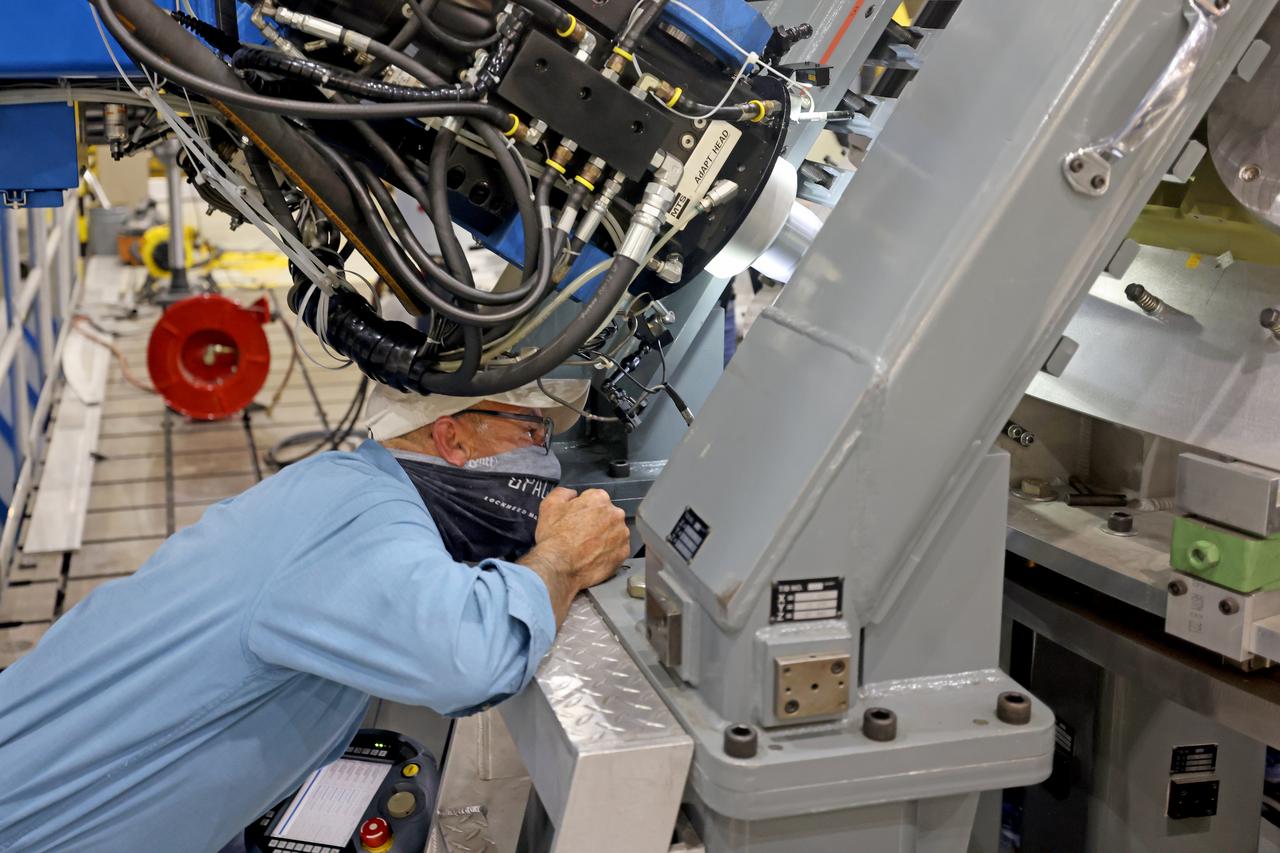
At NASA’s Michoud Assembly Facility in New Orleans, technicians from Orion prime contractor Lockheed Martin have welded together three cone-shaped panels on Orion’s crew module for the Artemis III mission that will land the first woman and next man on the Moon. The crew module’s primary structure, the pressure vessel, is comprised of seven machined aluminum alloy pieces that are welded together through a weld process that produces a strong, air-tight habitable space for astronauts during the mission. The pressure vessel is designed to withstand the harsh and demanding environment of deep space, and is the core structure upon which all the other elements of Orion’s crew module are integrated. Infographic showing the seven pieces of Orion's underlying structure With welding complete on the crew module cone panels – one of which contains windows providing astronauts views of the Moon and Earth – work will begin joining the forward bulkhead to the tunnel to create the top of the spacecraft, followed by the barrel and aft bulkhead join to form the bottom of Orion. Last, the forward bulkhead will be welded to the top of the panels and, for the seventh and closeout weld, the bottom of the cone panels will be joined to the barrel to complete the pressure vessel. Once welding of the Artemis III crew module primary structure is complete, it will be shipped to NASA’s Kennedy Space Center in Florida where it will undergo further assembly beginning this fall. Orion, the Space Launch System, and Exploration Ground Systems programs are foundational elements of the Artemis program. Artemis I will be the first integrated flight test of Orion and SLS and is targeted to launch later this year. Artemis II will follow and is the first crewed mission, taking humans farther into space than ever before. Image credit: NASA/Michael DeMocker
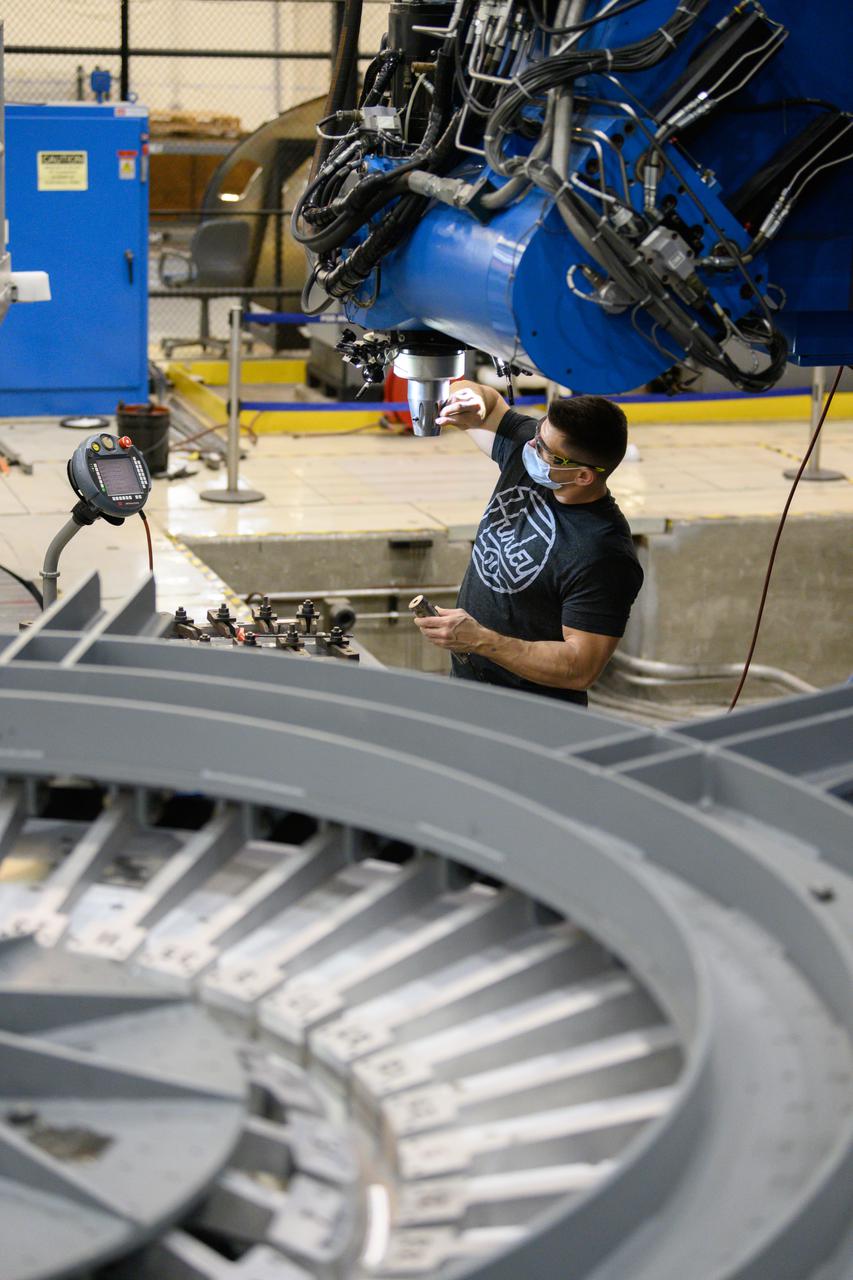
Technicians from Orion Prime Contractor Lockheed Martin weld the forward bulkhead of the pressure vessel to the tunnel hardware on the Orion Spacecraft for the Artemis III mission at NASA’s Michoud Assembly Facility in New Orleans. The crew module’s primary structure, the pressure vessel, is comprised of seven machined aluminum alloy pieces that are welded together through a weld process that produces a strong, air-tight habitable space for astronauts during the mission. The pressure vessel is designed to withstand the harsh and demanding environment of deep space and is the core structure upon which all the other elements of Orion’s crew module are integrated. This pressure vessel weld is the next step following the completion of the crew module cone panel welds and creates the top of the spacecraft. Work will then begin to join the barrel with the aft bulkhead to form the bottom of Orion. Last, the forward bulkhead will be welded to the top of the panels and, for the seventh and closeout weld, the bottom of the cone panels will be joined to the barrel to complete the pressure vessel. Once welding of the Artemis III crew module primary structure is complete, it will be shipped to NASA’s Kennedy Space Center in Florida where it will undergo further assembly beginning this fall. Orion, the Space Launch System, and Exploration Ground Systems programs are foundational elements of the Artemis program. Artemis I will be the first integrated flight test of Orion and SLS and is targeted to launch later this year. Artemis II will follow and is the first crewed mission, taking humans farther into space than ever before.
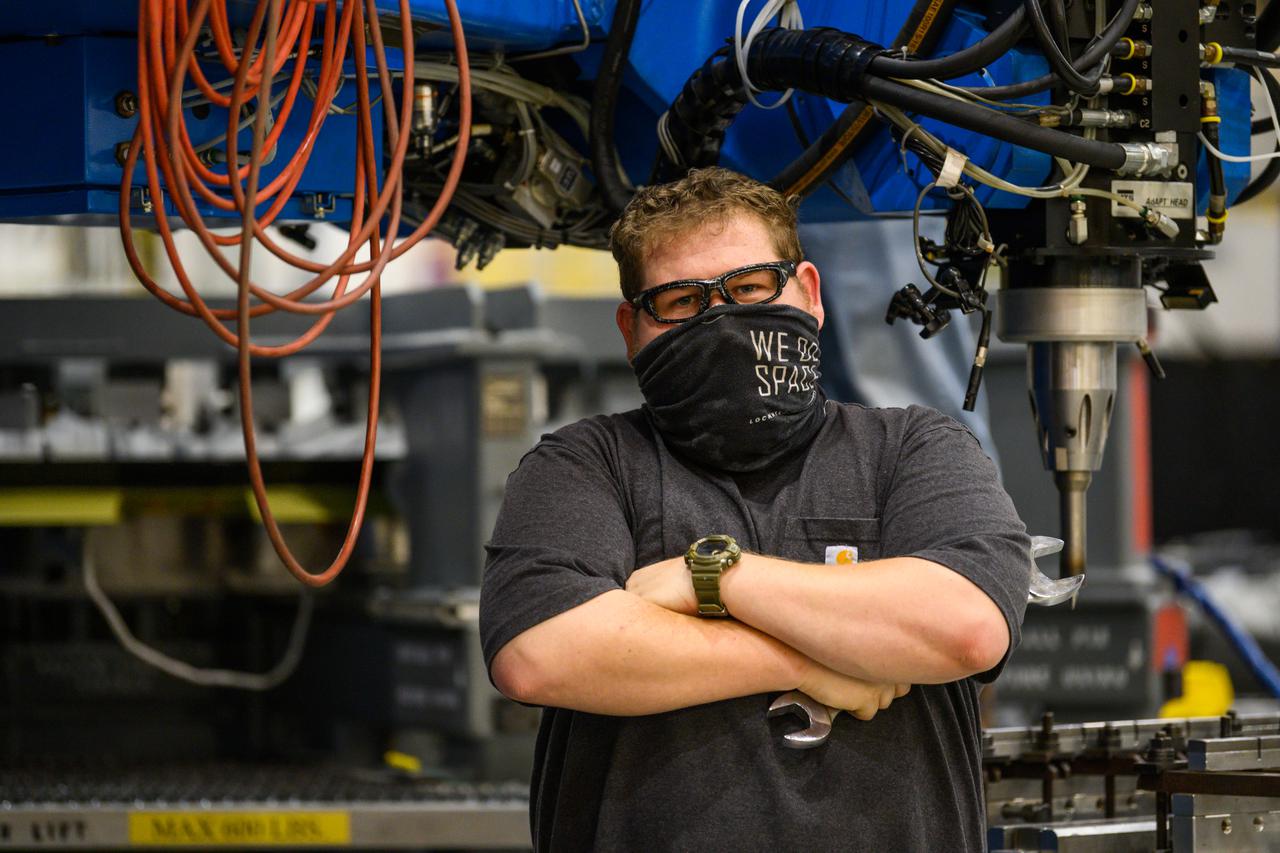
Technicians from Orion Prime Contractor Lockheed Martin weld the forward bulkhead of the pressure vessel to the tunnel hardware on the Orion Spacecraft for the Artemis III mission at NASA’s Michoud Assembly Facility in New Orleans. The crew module’s primary structure, the pressure vessel, is comprised of seven machined aluminum alloy pieces that are welded together through a weld process that produces a strong, air-tight habitable space for astronauts during the mission. The pressure vessel is designed to withstand the harsh and demanding environment of deep space and is the core structure upon which all the other elements of Orion’s crew module are integrated. This pressure vessel weld is the next step following the completion of the crew module cone panel welds and creates the top of the spacecraft. Work will then begin to join the barrel with the aft bulkhead to form the bottom of Orion. Last, the forward bulkhead will be welded to the top of the panels and, for the seventh and closeout weld, the bottom of the cone panels will be joined to the barrel to complete the pressure vessel. Once welding of the Artemis III crew module primary structure is complete, it will be shipped to NASA’s Kennedy Space Center in Florida where it will undergo further assembly beginning this fall. Orion, the Space Launch System, and Exploration Ground Systems programs are foundational elements of the Artemis program. Artemis I will be the first integrated flight test of Orion and SLS and is targeted to launch later this year. Artemis II will follow and is the first crewed mission, taking humans farther into space than ever before.
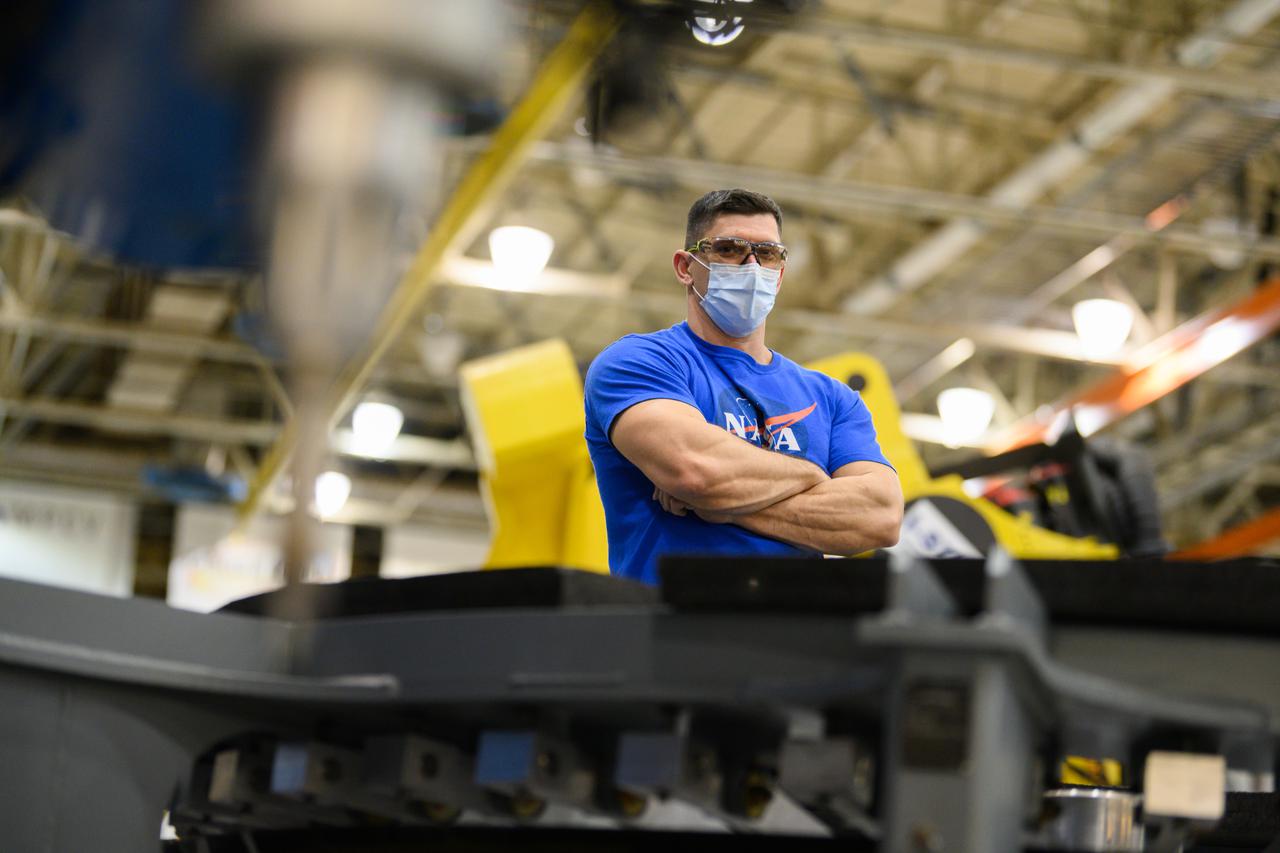
Technicians from Orion Prime Contractor Lockheed Martin weld the forward bulkhead of the pressure vessel to the tunnel hardware on the Orion Spacecraft for the Artemis III mission at NASA’s Michoud Assembly Facility in New Orleans. The crew module’s primary structure, the pressure vessel, is comprised of seven machined aluminum alloy pieces that are welded together through a weld process that produces a strong, air-tight habitable space for astronauts during the mission. The pressure vessel is designed to withstand the harsh and demanding environment of deep space and is the core structure upon which all the other elements of Orion’s crew module are integrated. This pressure vessel weld is the next step following the completion of the crew module cone panel welds and creates the top of the spacecraft. Work will then begin to join the barrel with the aft bulkhead to form the bottom of Orion. Last, the forward bulkhead will be welded to the top of the panels and, for the seventh and closeout weld, the bottom of the cone panels will be joined to the barrel to complete the pressure vessel. Once welding of the Artemis III crew module primary structure is complete, it will be shipped to NASA’s Kennedy Space Center in Florida where it will undergo further assembly beginning this fall. Orion, the Space Launch System, and Exploration Ground Systems programs are foundational elements of the Artemis program. Artemis I will be the first integrated flight test of Orion and SLS and is targeted to launch later this year. Artemis II will follow and is the first crewed mission, taking humans farther into space than ever before.
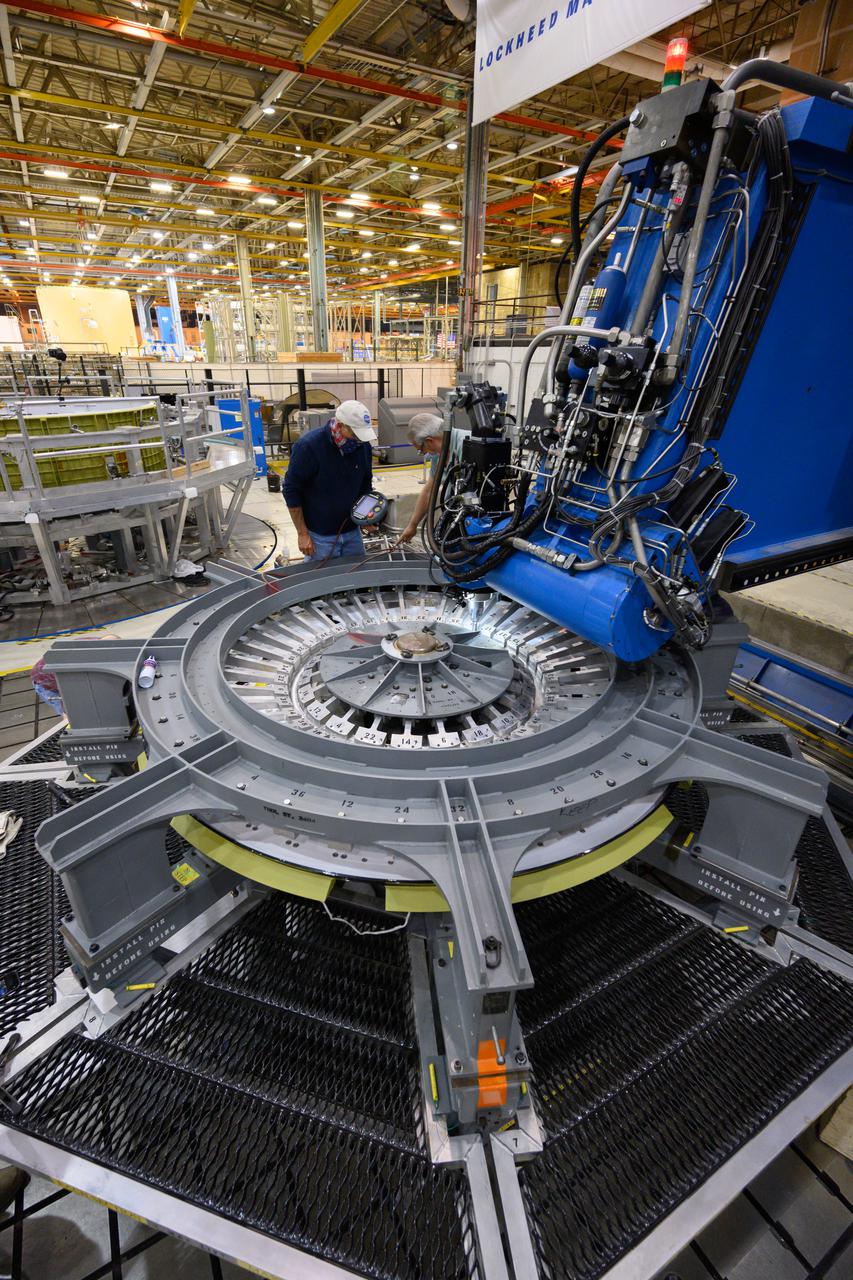
Technicians from Orion Prime Contractor Lockheed Martin weld the forward bulkhead of the pressure vessel to the tunnel hardware on the Orion Spacecraft for the Artemis III mission at NASA’s Michoud Assembly Facility in New Orleans. The crew module’s primary structure, the pressure vessel, is comprised of seven machined aluminum alloy pieces that are welded together through a weld process that produces a strong, air-tight habitable space for astronauts during the mission. The pressure vessel is designed to withstand the harsh and demanding environment of deep space and is the core structure upon which all the other elements of Orion’s crew module are integrated. This pressure vessel weld is the next step following the completion of the crew module cone panel welds and creates the top of the spacecraft. Work will then begin to join the barrel with the aft bulkhead to form the bottom of Orion. Last, the forward bulkhead will be welded to the top of the panels and, for the seventh and closeout weld, the bottom of the cone panels will be joined to the barrel to complete the pressure vessel. Once welding of the Artemis III crew module primary structure is complete, it will be shipped to NASA’s Kennedy Space Center in Florida where it will undergo further assembly beginning this fall. Orion, the Space Launch System, and Exploration Ground Systems programs are foundational elements of the Artemis program. Artemis I will be the first integrated flight test of Orion and SLS and is targeted to launch later this year. Artemis II will follow and is the first crewed mission, taking humans farther into space than ever before.
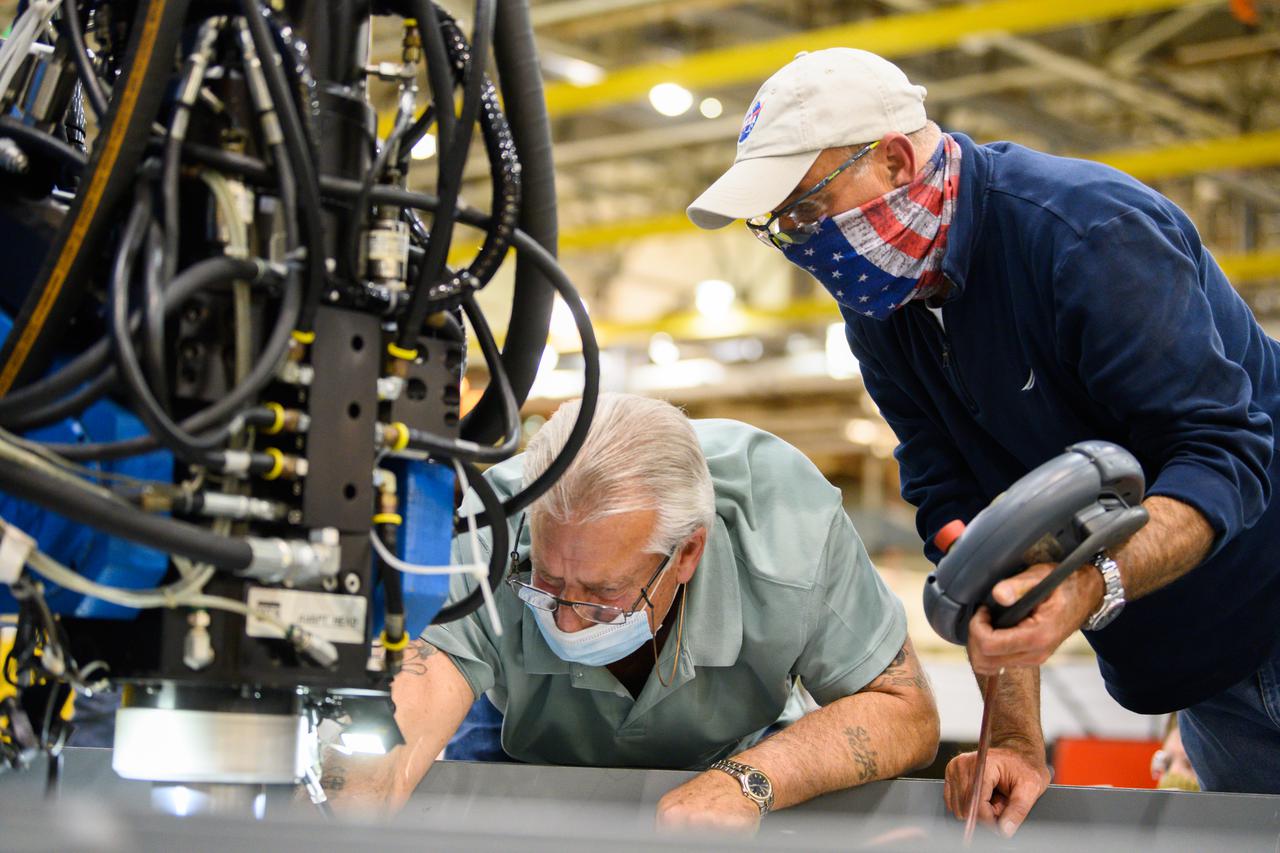
Technicians from Orion Prime Contractor Lockheed Martin weld the forward bulkhead of the pressure vessel to the tunnel hardware on the Orion Spacecraft for the Artemis III mission at NASA’s Michoud Assembly Facility in New Orleans. The crew module’s primary structure, the pressure vessel, is comprised of seven machined aluminum alloy pieces that are welded together through a weld process that produces a strong, air-tight habitable space for astronauts during the mission. The pressure vessel is designed to withstand the harsh and demanding environment of deep space and is the core structure upon which all the other elements of Orion’s crew module are integrated. This pressure vessel weld is the next step following the completion of the crew module cone panel welds and creates the top of the spacecraft. Work will then begin to join the barrel with the aft bulkhead to form the bottom of Orion. Last, the forward bulkhead will be welded to the top of the panels and, for the seventh and closeout weld, the bottom of the cone panels will be joined to the barrel to complete the pressure vessel. Once welding of the Artemis III crew module primary structure is complete, it will be shipped to NASA’s Kennedy Space Center in Florida where it will undergo further assembly beginning this fall. Orion, the Space Launch System, and Exploration Ground Systems programs are foundational elements of the Artemis program. Artemis I will be the first integrated flight test of Orion and SLS and is targeted to launch later this year. Artemis II will follow and is the first crewed mission, taking humans farther into space than ever before.
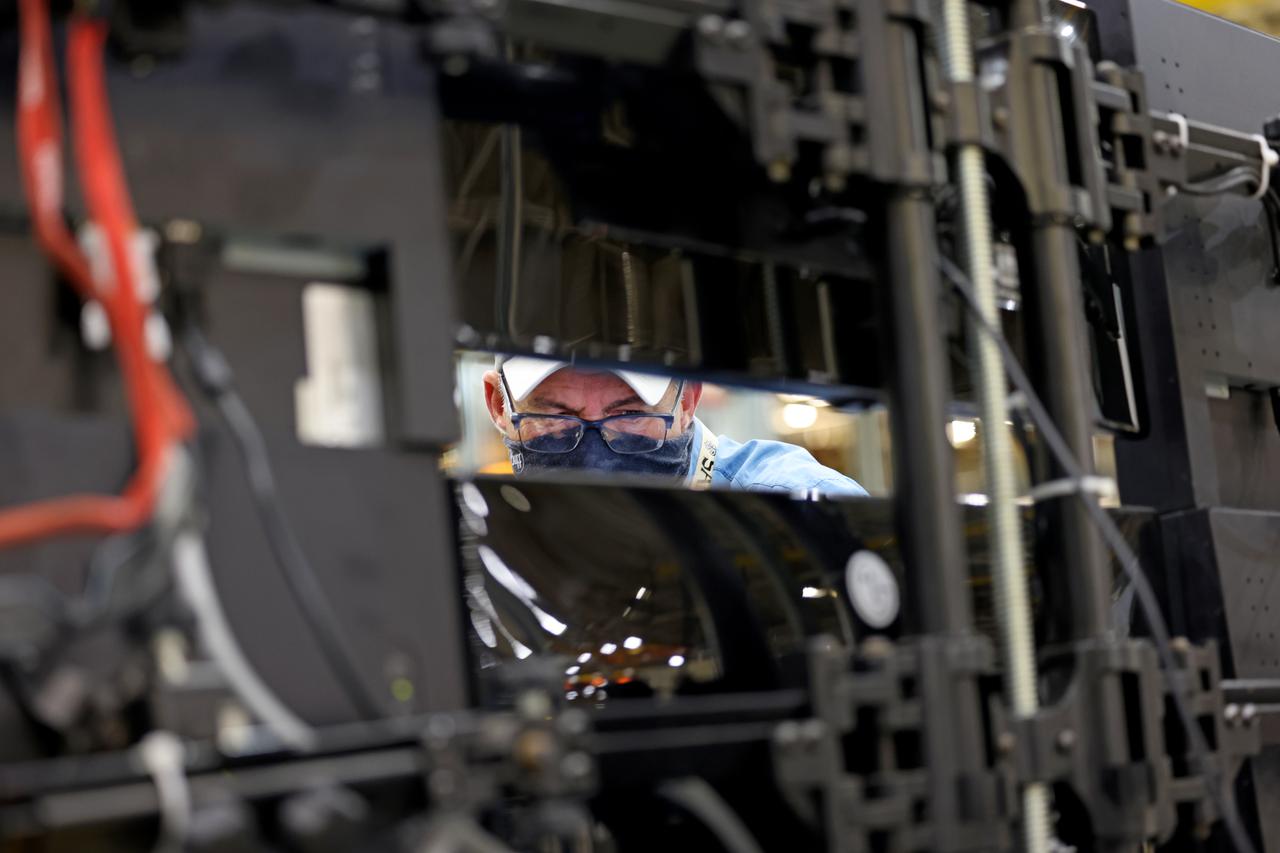
At NASA’s Michoud Assembly Facility in New Orleans, technicians from Orion prime contractor Lockheed Martin have welded together three cone-shaped panels on Orion’s crew module for the Artemis III mission that will land the first woman and next man on the Moon. The crew module’s primary structure, the pressure vessel, is comprised of seven machined aluminum alloy pieces that are welded together through a weld process that produces a strong, air-tight habitable space for astronauts during the mission. The pressure vessel is designed to withstand the harsh and demanding environment of deep space, and is the core structure upon which all the other elements of Orion’s crew module are integrated. Infographic showing the seven pieces of Orion's underlying structure With welding complete on the crew module cone panels – one of which contains windows providing astronauts views of the Moon and Earth – work will begin joining the forward bulkhead to the tunnel to create the top of the spacecraft, followed by the barrel and aft bulkhead join to form the bottom of Orion. Last, the forward bulkhead will be welded to the top of the panels and, for the seventh and closeout weld, the bottom of the cone panels will be joined to the barrel to complete the pressure vessel. Once welding of the Artemis III crew module primary structure is complete, it will be shipped to NASA’s Kennedy Space Center in Florida where it will undergo further assembly beginning this fall. Orion, the Space Launch System, and Exploration Ground Systems programs are foundational elements of the Artemis program. Artemis I will be the first integrated flight test of Orion and SLS and is targeted to launch later this year. Artemis II will follow and is the first crewed mission, taking humans farther into space than ever before. Image credit: NASA/Michael DeMocker
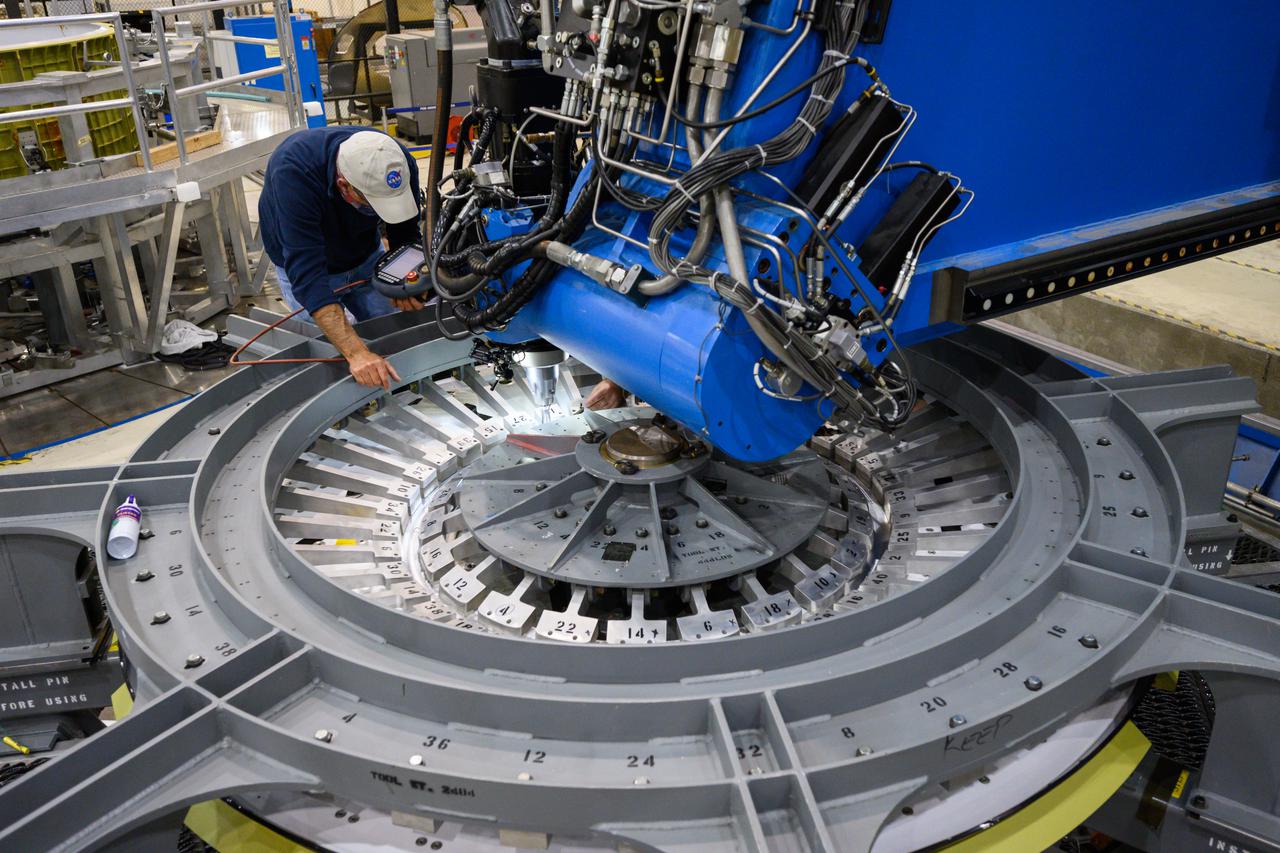
Technicians from Orion Prime Contractor Lockheed Martin weld the forward bulkhead of the pressure vessel to the tunnel hardware on the Orion Spacecraft for the Artemis III mission at NASA’s Michoud Assembly Facility in New Orleans. The crew module’s primary structure, the pressure vessel, is comprised of seven machined aluminum alloy pieces that are welded together through a weld process that produces a strong, air-tight habitable space for astronauts during the mission. The pressure vessel is designed to withstand the harsh and demanding environment of deep space and is the core structure upon which all the other elements of Orion’s crew module are integrated. This pressure vessel weld is the next step following the completion of the crew module cone panel welds and creates the top of the spacecraft. Work will then begin to join the barrel with the aft bulkhead to form the bottom of Orion. Last, the forward bulkhead will be welded to the top of the panels and, for the seventh and closeout weld, the bottom of the cone panels will be joined to the barrel to complete the pressure vessel. Once welding of the Artemis III crew module primary structure is complete, it will be shipped to NASA’s Kennedy Space Center in Florida where it will undergo further assembly beginning this fall. Orion, the Space Launch System, and Exploration Ground Systems programs are foundational elements of the Artemis program. Artemis I will be the first integrated flight test of Orion and SLS and is targeted to launch later this year. Artemis II will follow and is the first crewed mission, taking humans farther into space than ever before.
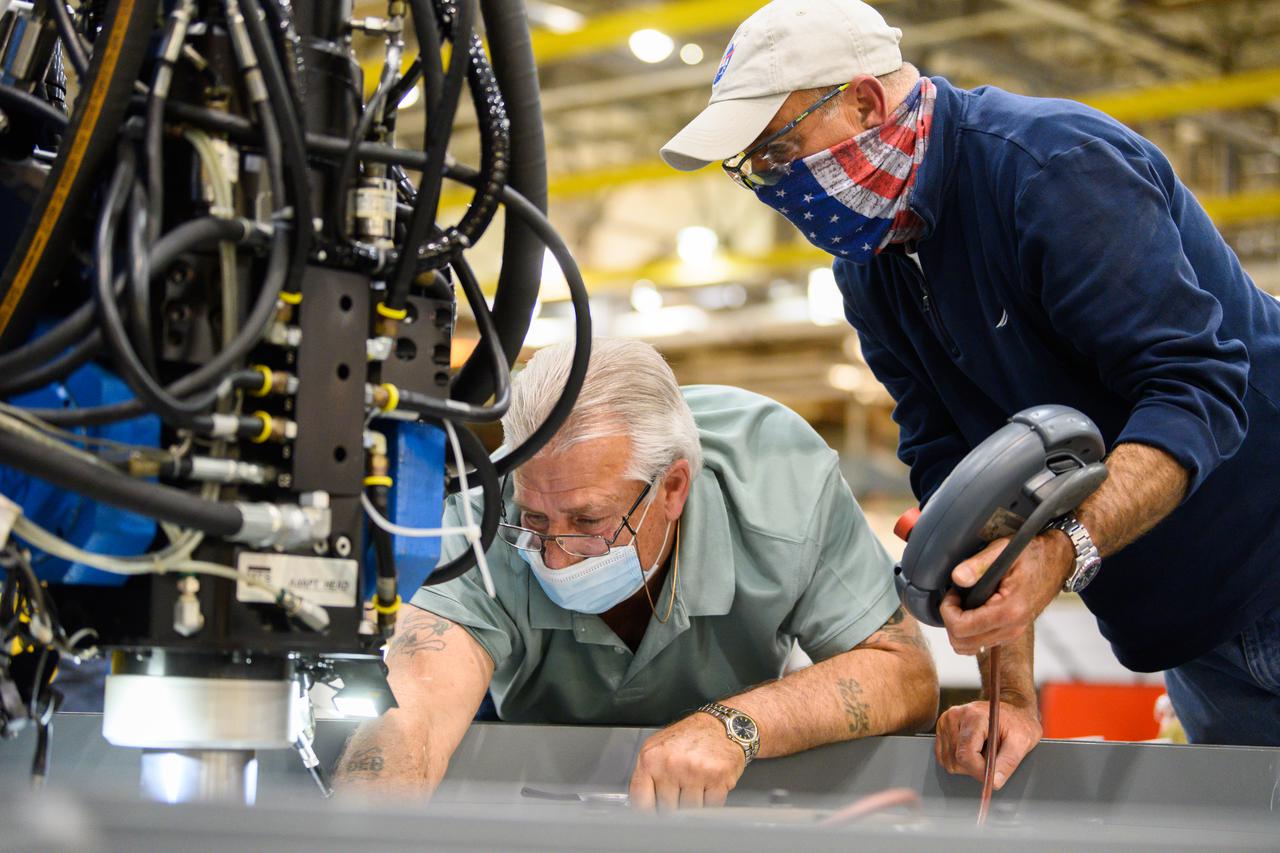
Technicians from Orion Prime Contractor Lockheed Martin weld the forward bulkhead of the pressure vessel to the tunnel hardware on the Orion Spacecraft for the Artemis III mission at NASA’s Michoud Assembly Facility in New Orleans. The crew module’s primary structure, the pressure vessel, is comprised of seven machined aluminum alloy pieces that are welded together through a weld process that produces a strong, air-tight habitable space for astronauts during the mission. The pressure vessel is designed to withstand the harsh and demanding environment of deep space and is the core structure upon which all the other elements of Orion’s crew module are integrated. This pressure vessel weld is the next step following the completion of the crew module cone panel welds and creates the top of the spacecraft. Work will then begin to join the barrel with the aft bulkhead to form the bottom of Orion. Last, the forward bulkhead will be welded to the top of the panels and, for the seventh and closeout weld, the bottom of the cone panels will be joined to the barrel to complete the pressure vessel. Once welding of the Artemis III crew module primary structure is complete, it will be shipped to NASA’s Kennedy Space Center in Florida where it will undergo further assembly beginning this fall. Orion, the Space Launch System, and Exploration Ground Systems programs are foundational elements of the Artemis program. Artemis I will be the first integrated flight test of Orion and SLS and is targeted to launch later this year. Artemis II will follow and is the first crewed mission, taking humans farther into space than ever before.