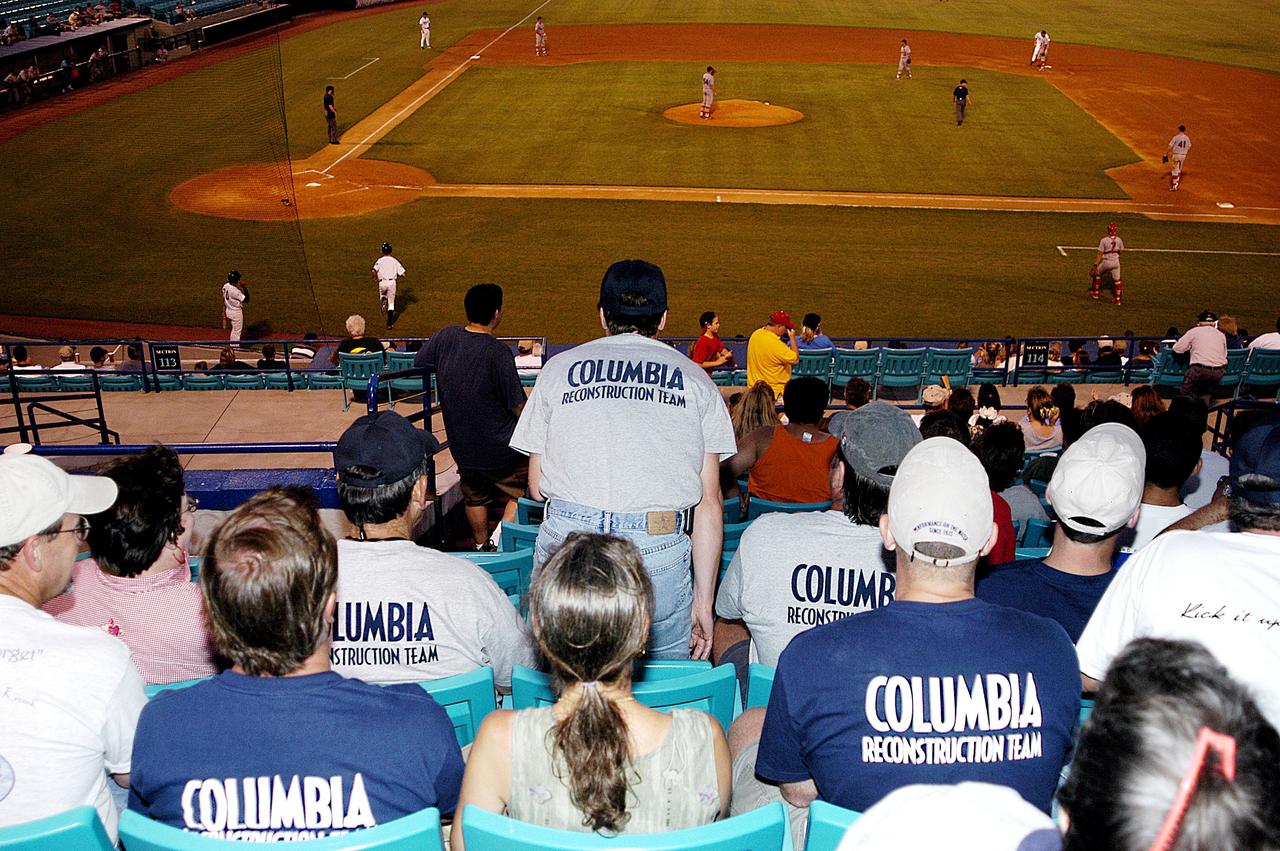
KENNEDY SPACE CENTER, FLA. - KSC employees enjoy a baseball game at Manatees Stadium, home of the Brevard Manatees, a minor league baseball team in Central Florida. The team hosted KSC employees for the game, which included a moment of silence to honor the STS-107 crew and two recovery workers who died in a helicopter crash.
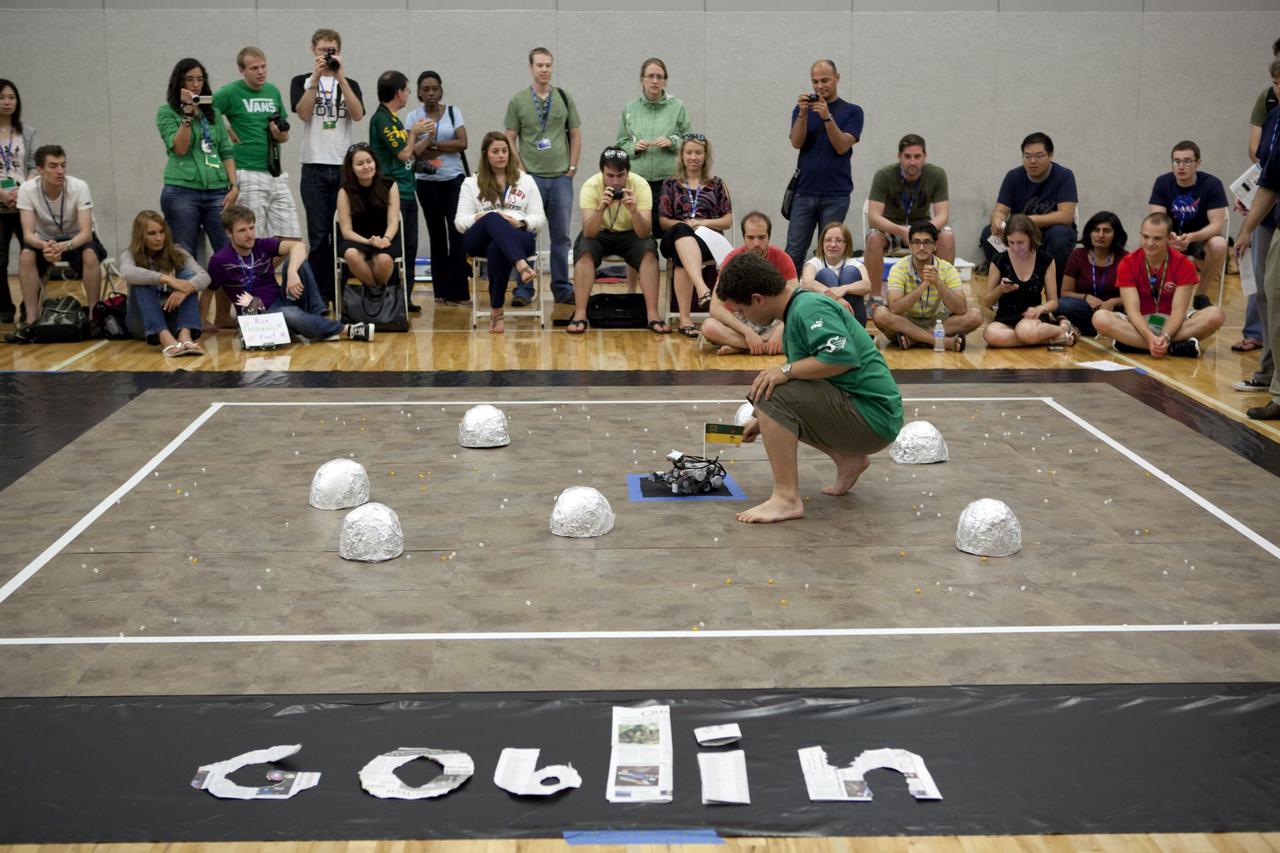
MELBOURNE, Fla. – Students and faculty watch as a robot takes part in a competition during the International Space University's Space Studies Program 2012 session inside a gymnasium at the Florida Institute of Technology in Melbourne, Fla. Photo credit: NASA/Dmitri Gerondidakis
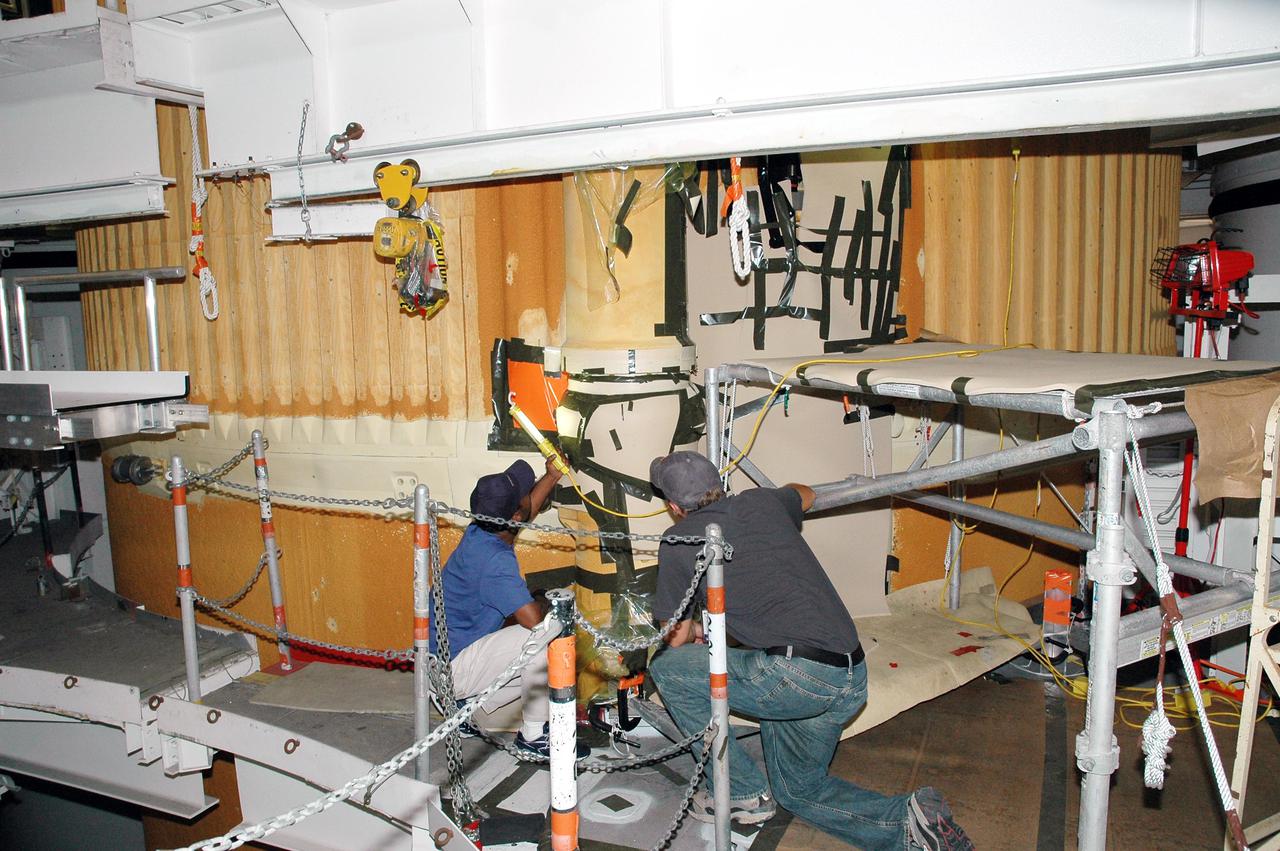
KENNEDY SPACE CENTER, FLA. - In the Vehicle Assembly Building at NASA’s Kennedy Space Center, workers inspect the newly installed liquid hydrogen bellows heater on External Tank 121. The new heater has been added to the feedline bellows to minimize the potential for ice and frost buildup. The tank has been designated to fly on Discovery for Return to Flight mission STS-114, which has a launch window extending from July 13 to July 31.
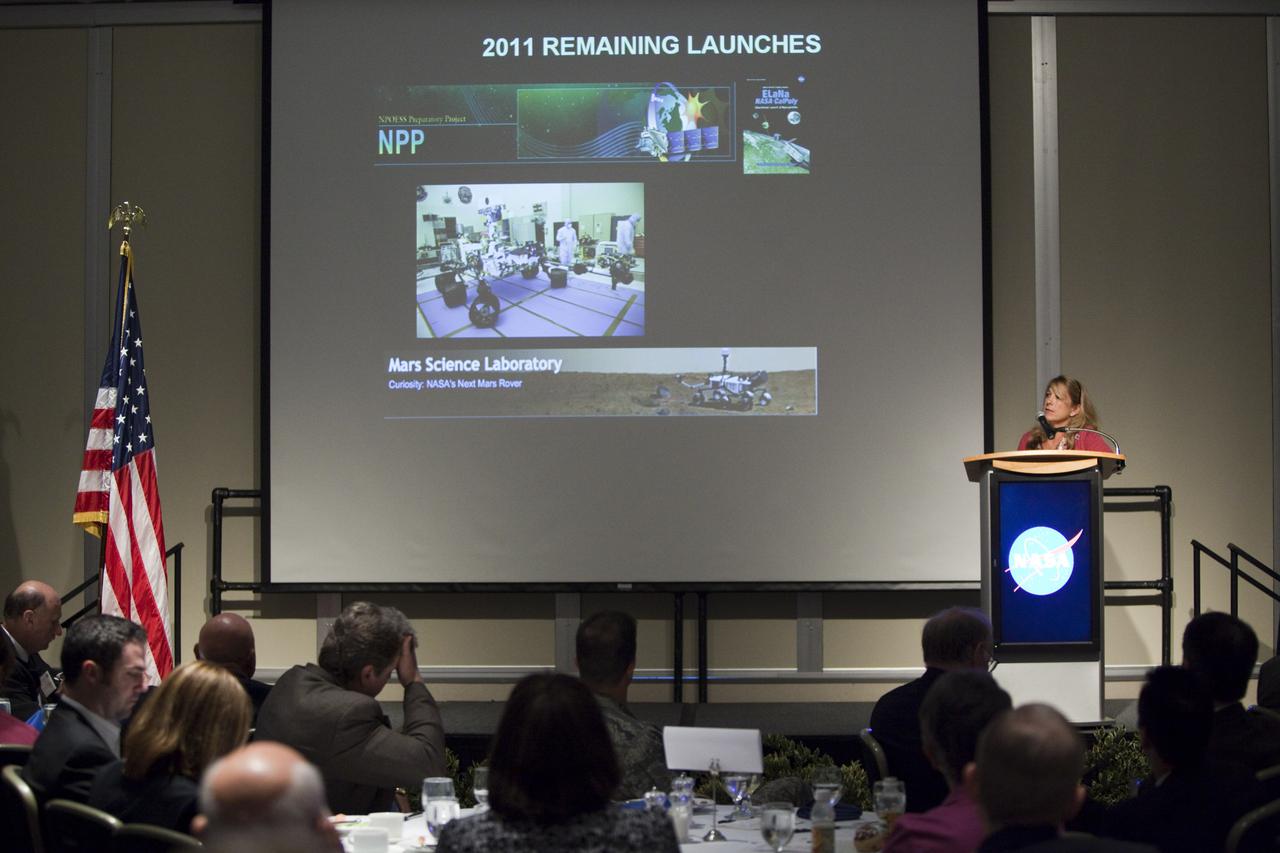
CAPE CANAVERAL, Fla. – Amanda Mitskevich, NASA’s Launch Services Program manager at Kennedy Space Center, addresses guests at the annual Community Leaders Breakfast held in the Debus Center at Kennedy's Visitor Complex in Florida. Community leaders, business executives, educators, community organizers and state and local government officials heard NASA Administrator Charlie Bolden, Kennedy Space Center Director Bob Cabana, and other senior Kennedy managers provide an overview of the future of the space center. Photo credit: NASA_Dimitri Gerondidakis
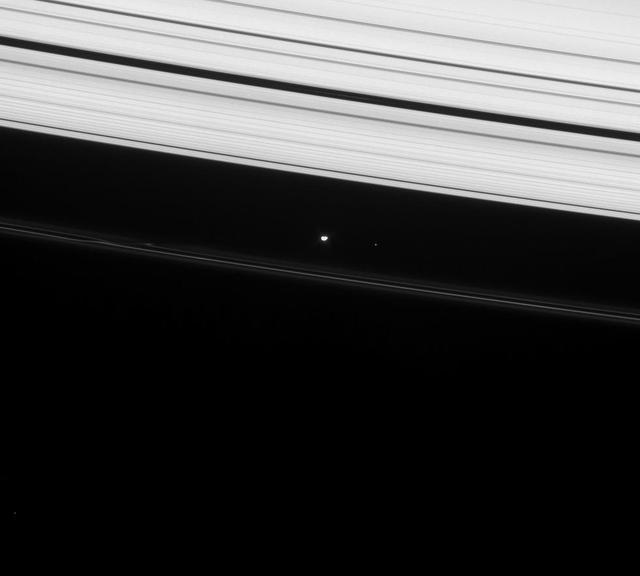
Orbit Quest
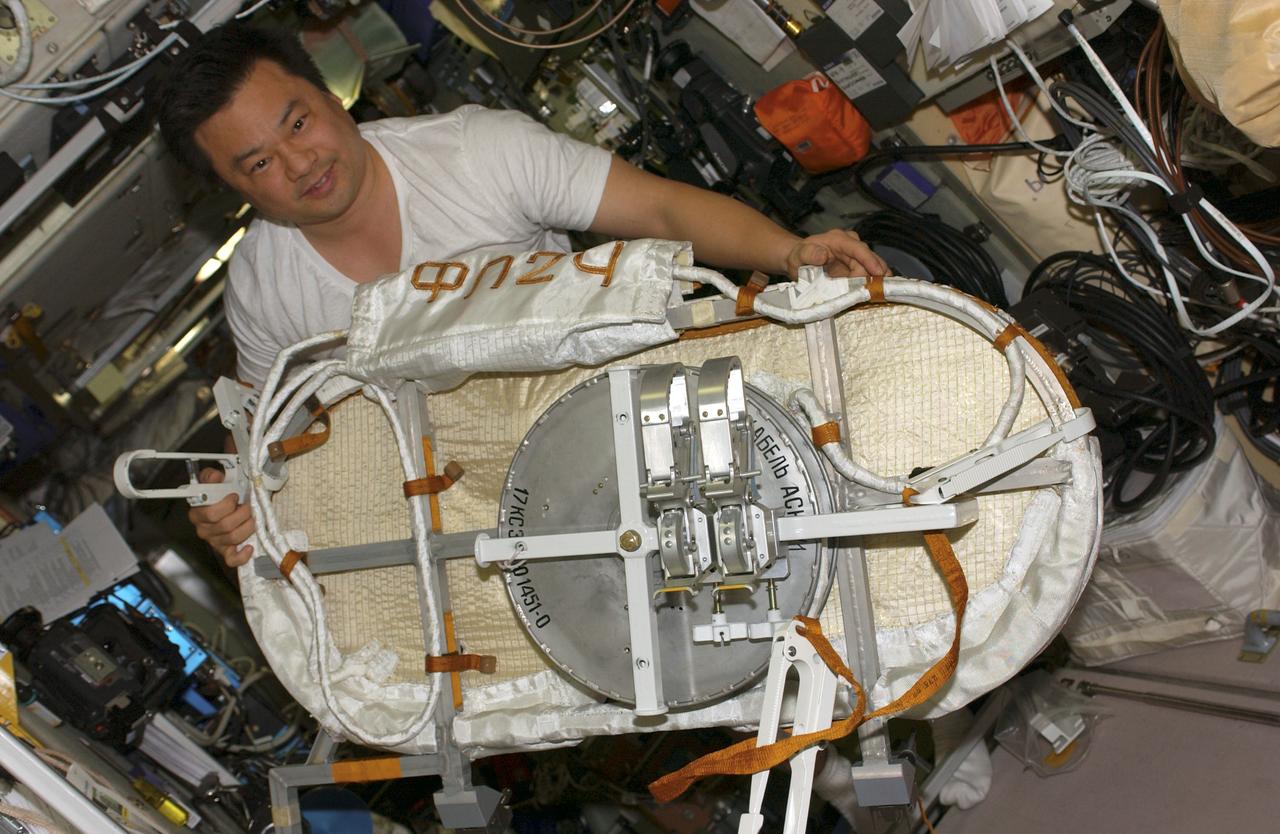
ISS010-E-20762 (21 March 2005) --- Astronaut Leroy Chiao, Expedition 10 commander and NASA ISS science officer, works with a Global Positioning System (GPS) Unit in the Zvezda Service Module of the International Space Station (ISS).
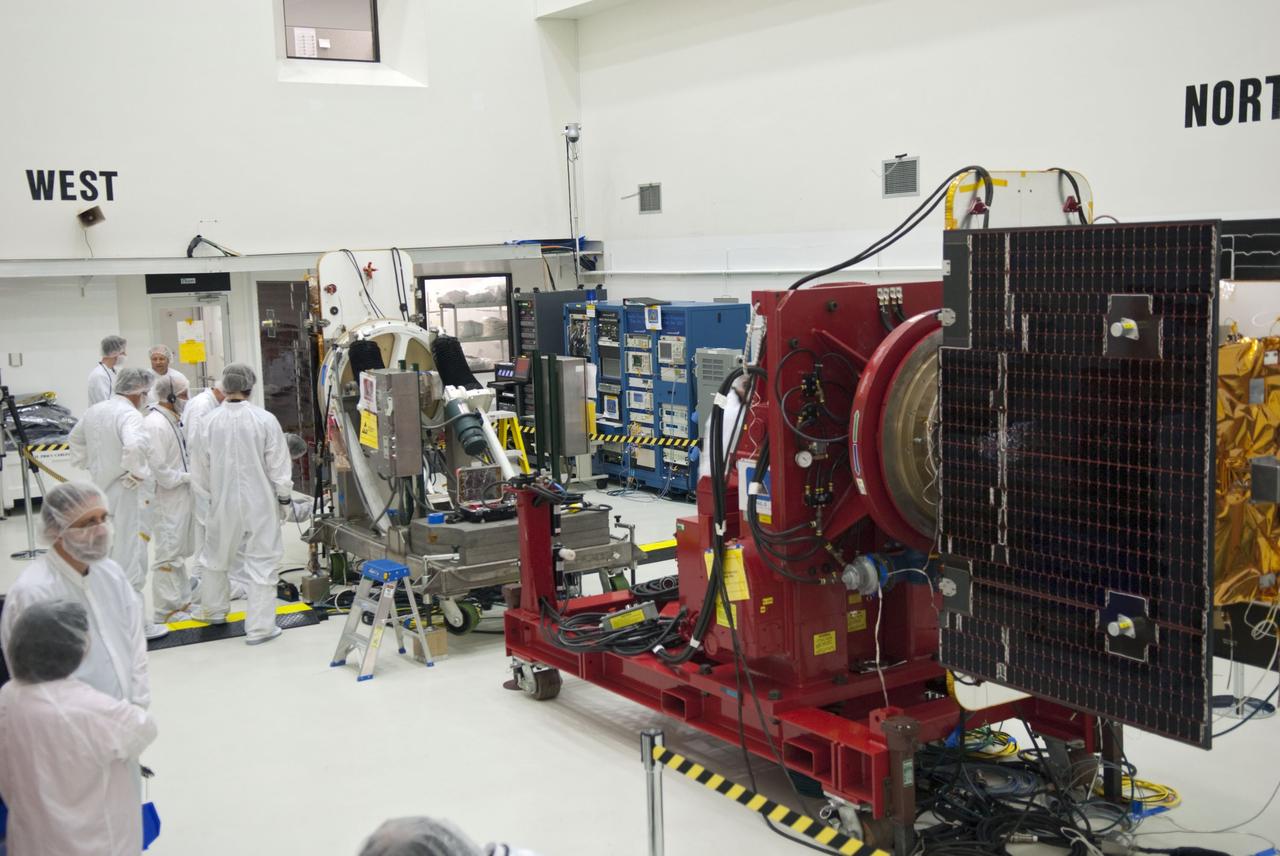
CAPE CANAVERAL, Fla. -- Technicians at Astrotech payload processing facility in Titusville, Fla., are conducting solar panel deployment tests on NASA's Gravity Recovery and Interior Laboratory, or GRAIL, twin spacecraft. The United Launch Alliance Delta II rocket that will carry GRAIL into lunar orbit already is fully stacked at NASA's Space Launch Complex 17B, and launch is scheduled for Sept. 8. The GRAIL mission is a part of NASA's Discovery Program. GRAIL will fly the twin spacecraft in tandem orbits around the moon for several months to measure its gravity field. The mission also will answer longstanding questions about Earth's moon and provide scientists a better understanding of how Earth and other rocky planets in the solar system formed. For more information, visit http://solarsystem.nasa.gov/grail/. Photo credit: NASA/Jim Grossmann
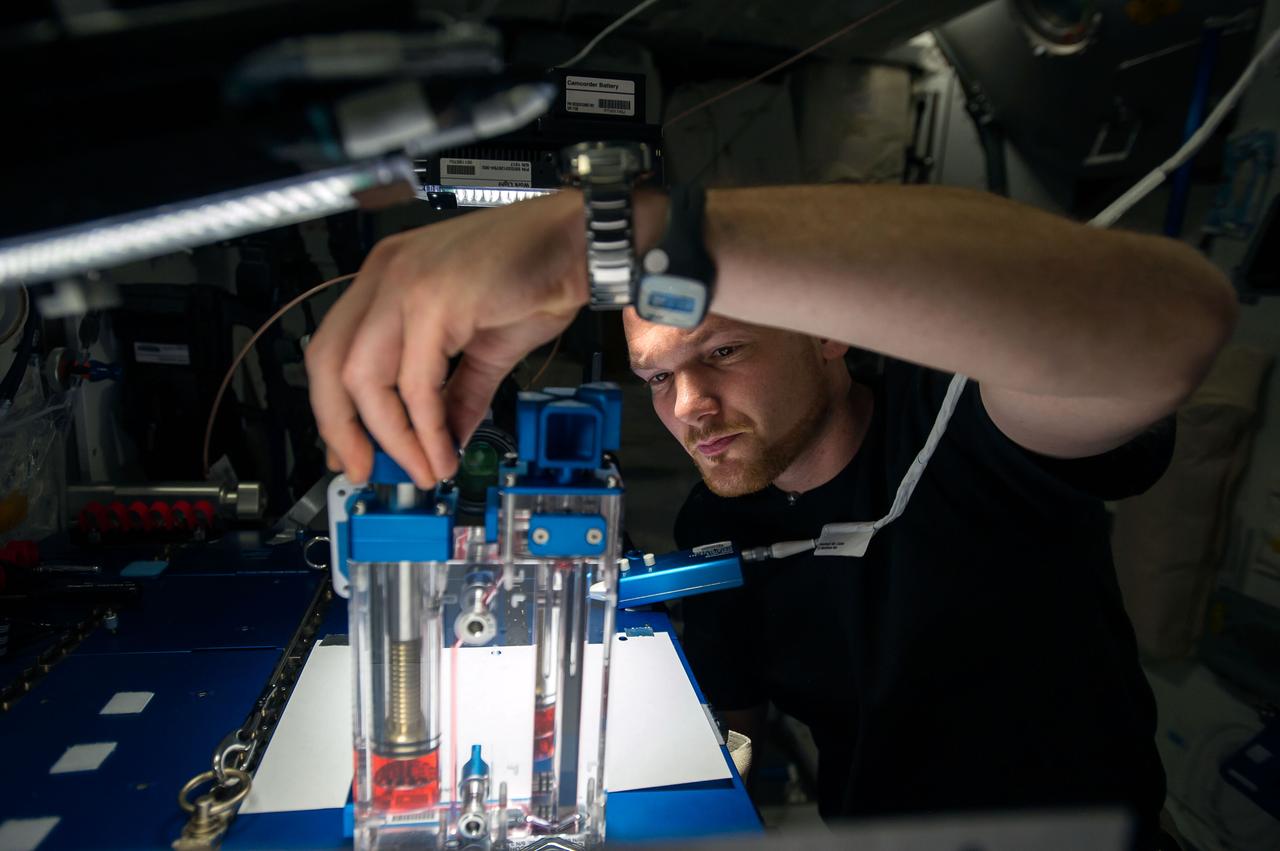
ISS040-E-015536 (19 June 2014) --- European Space Agency astronaut Alexander Gerst, Expedition 40 flight engineer, conducts a session with the Capillary Flow Experiment (CFE-2) in the Harmony node of the International Space Station. CFE is a suite of fluid physics experiments that investigate how fluids behave in microgravity which could benefit water and fuel delivery systems on future spacecraft. Scientists designed the CFE-2 to study properties of fluids and bubbles inside containers with a specific 3-D geometry.
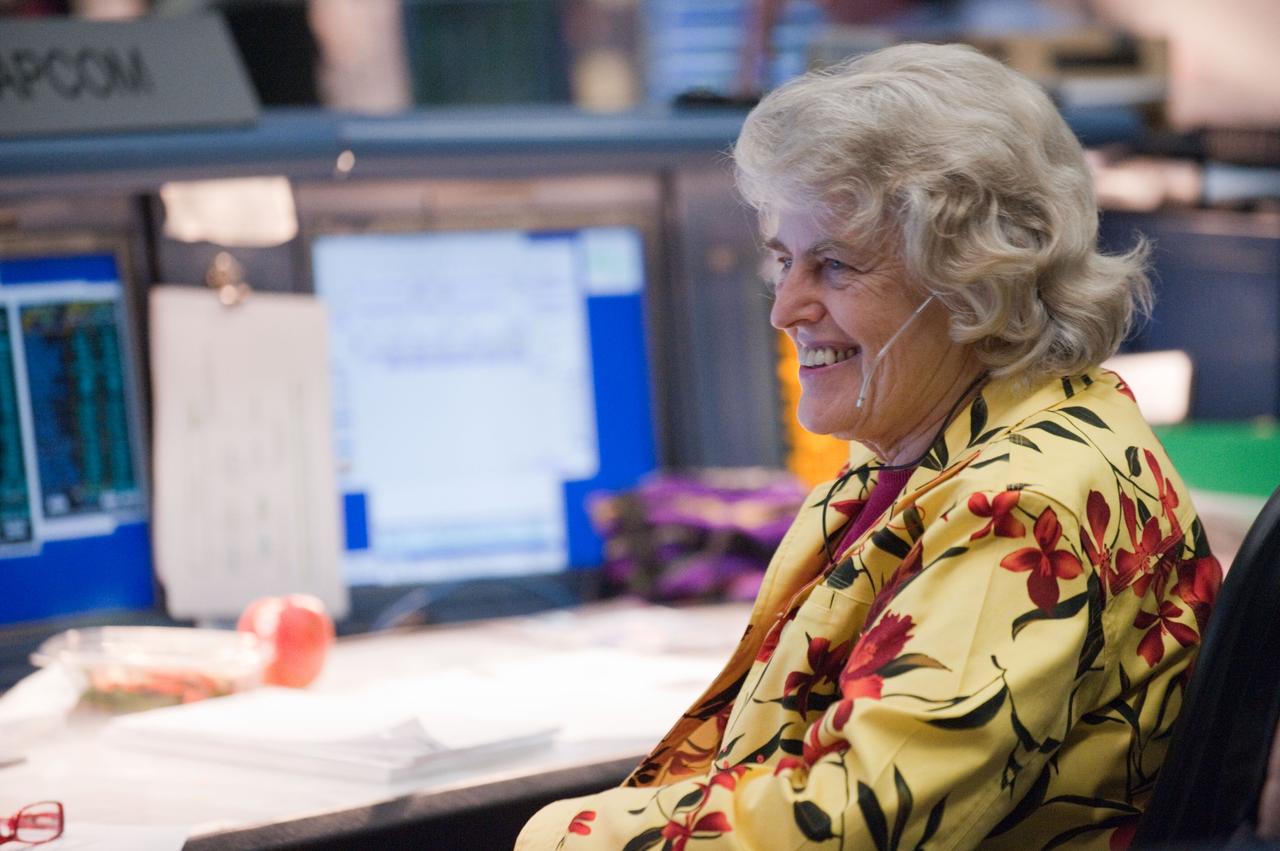
PHOTO DATE: 12 July 2011 LOCATION: Bldg. 30 - WFCR SUBJECT: STS-135 Orbit 3 Flight Controllers in WFCR. PHOTOGRAPHER: Mark Sowa
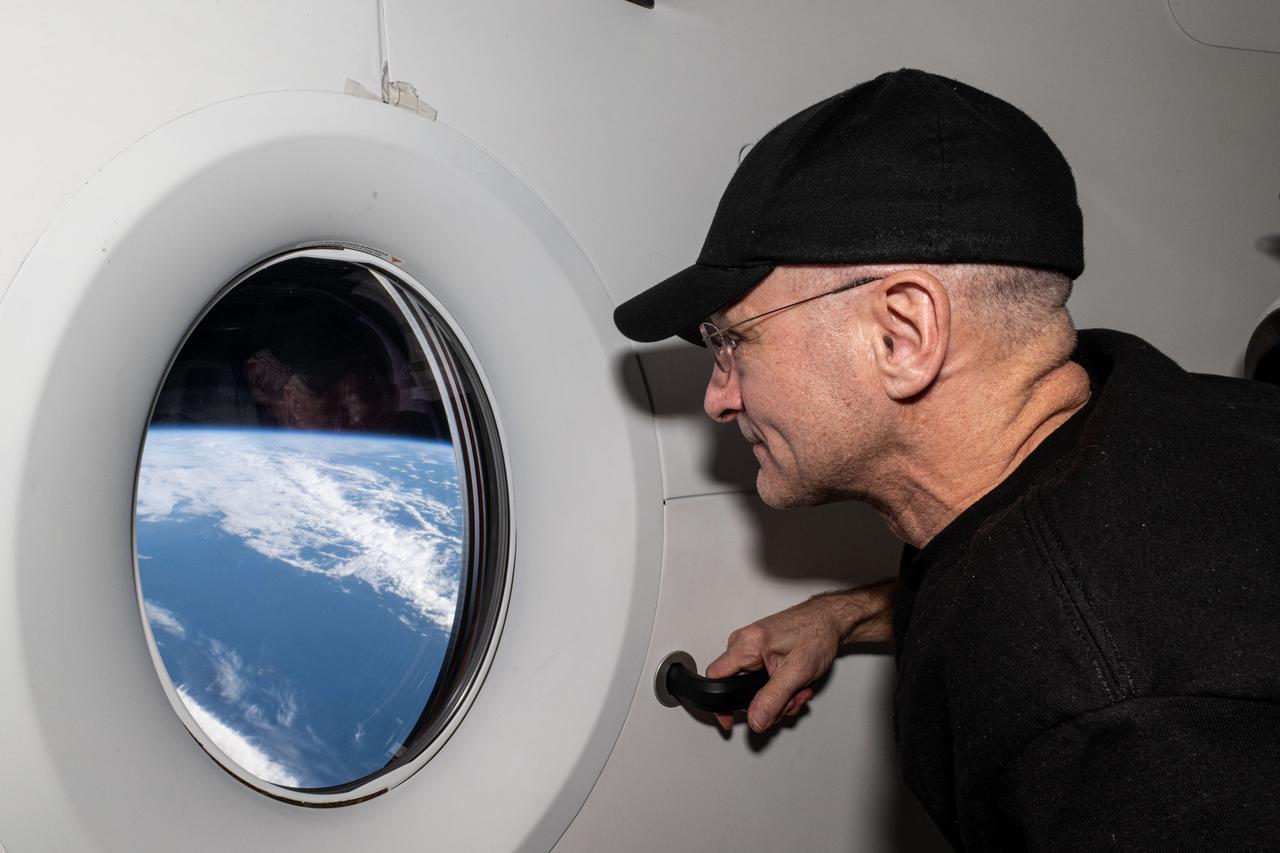
iss072e096874 (Oct. 22, 2024) --- NASA astronaut and Expedition 72 Flight Engineer Don Pettit looks out a window on the SpaceX Dragon Endeavour spacecraft as the International Space Station orbited 269 miles above the Pacific Ocean of the coast of Chile.
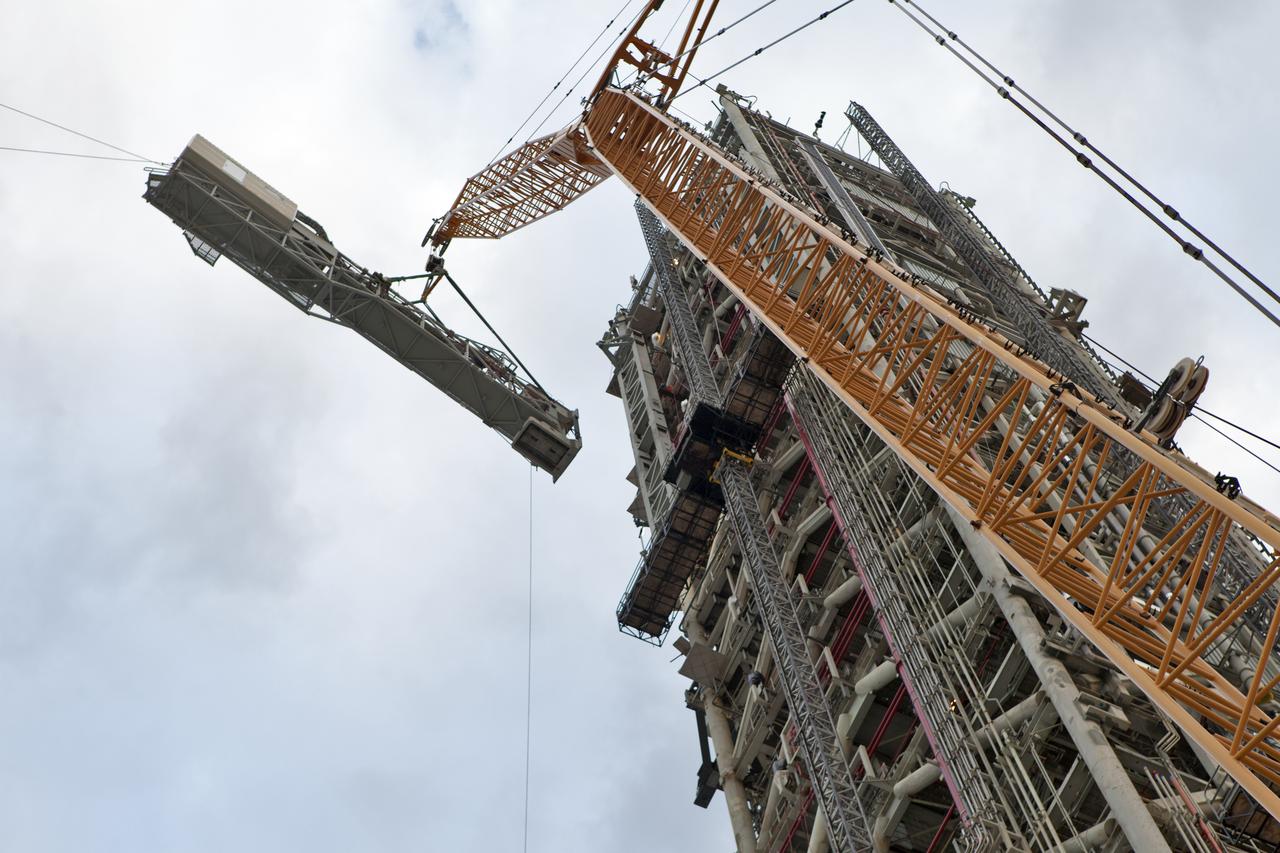
At NASA's Kennedy Space Center in Florida, a crane lifts the Orion crew access arm (CAA) so it can be attached to the mobile launcher (ML). The arm will be installed at about the 274-foot level on the ML tower. NASA's Exploration Ground Systems organization has been overseeing installation of umbilicals and other launch accessories on the 380-foot-tall ML in preparation for stacking the first launch of the Space launch System (SLS), rocket with an Orion spacecraft. The CAA is designed to rotate from its retracted position and line up with Orion's crew hatch providing entry for astronauts and technicians.
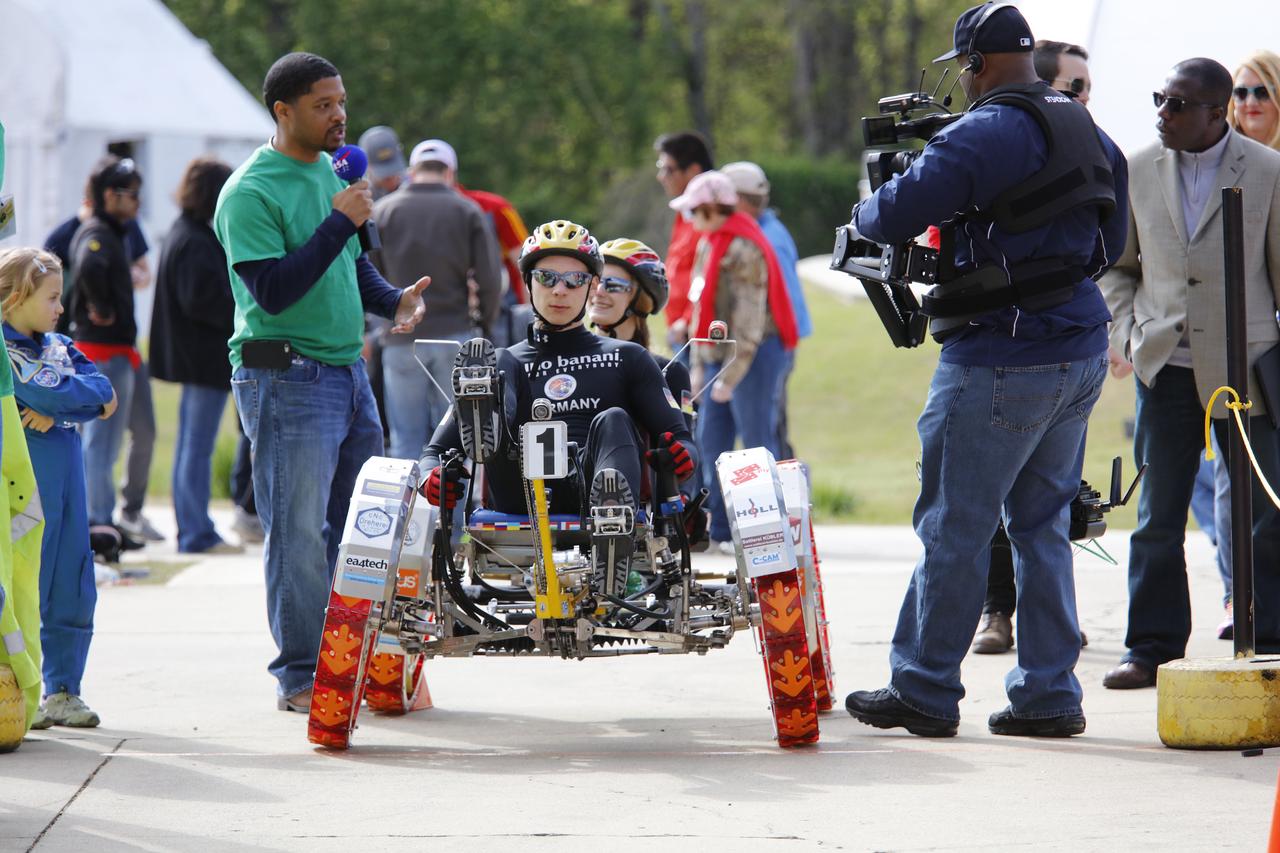
2016 ROVER CHALLENGE EVENTS AT THE U.S. SPACE AND ROCKET CENTER IN HUNTSVILLE, ALABAMA. NATIONAL AND INTERNATIONAL COLLEGE AND HIGH SCHOOL STUDENTS COME TOGETHER TO TEST THEIR ENGINEERING SKILLS OVER A SIMULATED OUTER PLANET OBSTACLE COURSE.
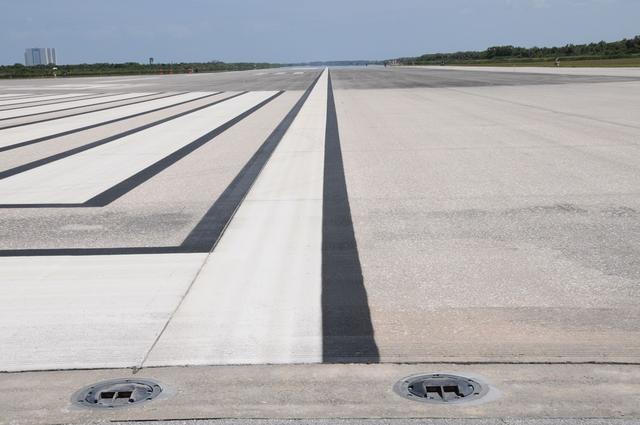
View of the Shuttle Landing Facility
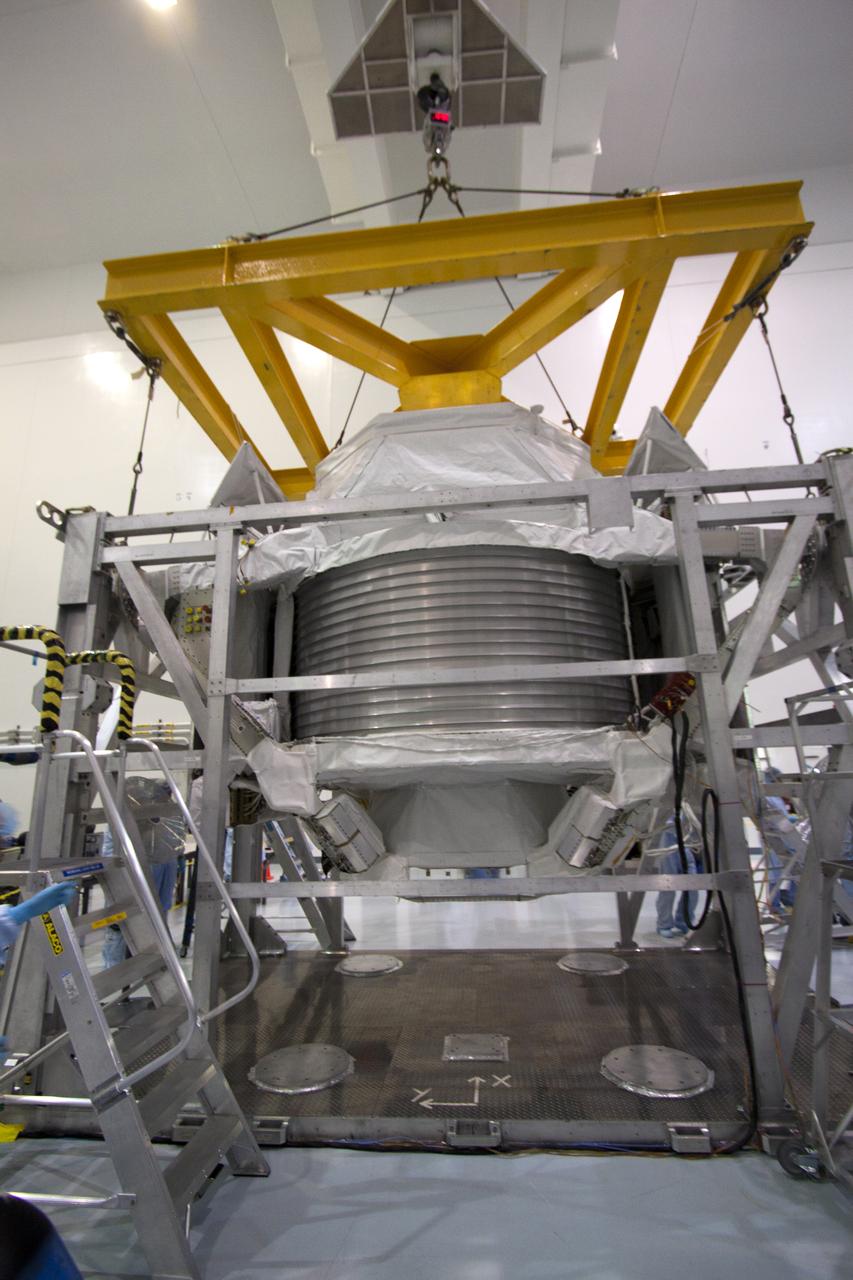
STS-134 AMS PAYLOAD LIFT IN STAND
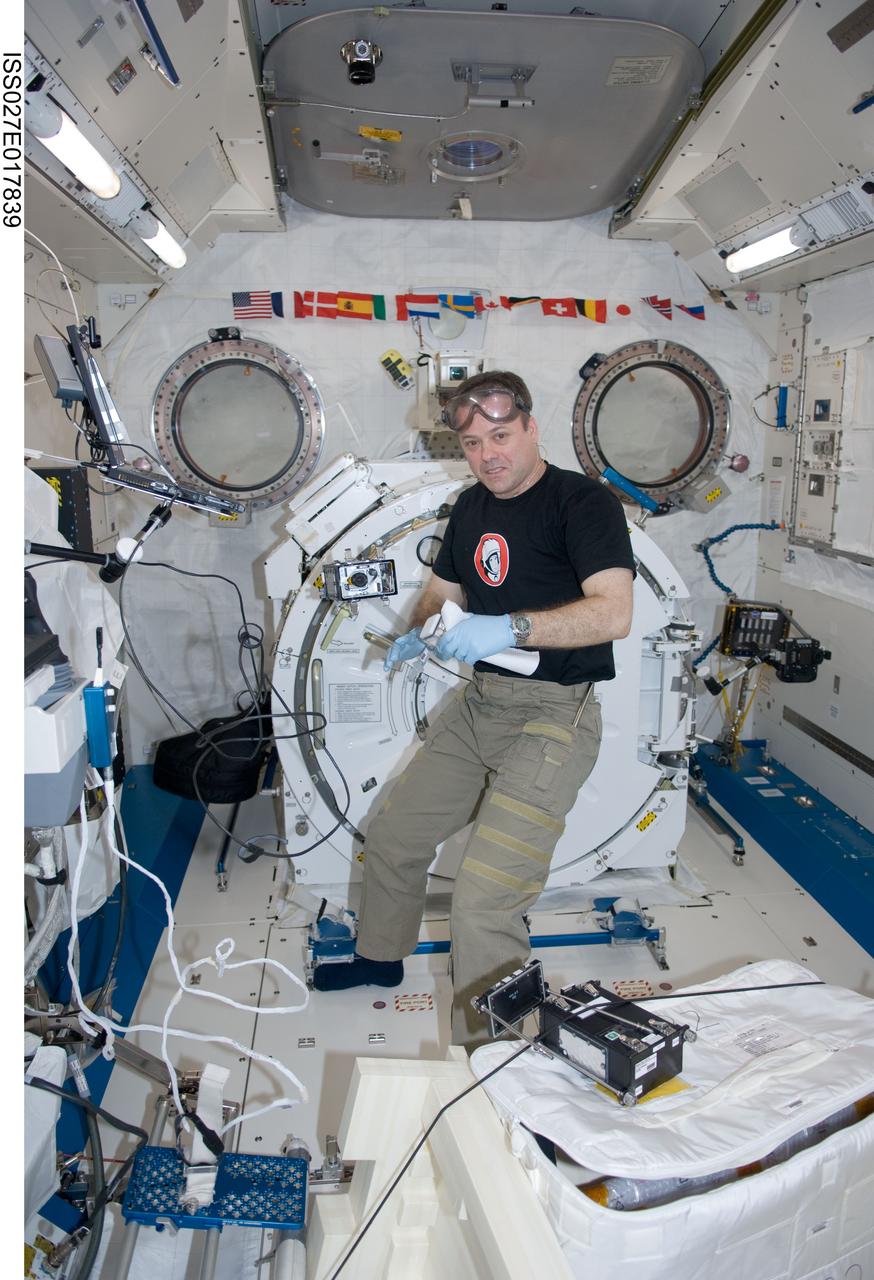
ISS027-E-017839 (28 April 2011) --- NASA astronaut Ron Garan, Expedition 27 flight engineer, supports the Dynamism of Auxin Efflux Facilitators responsible for Gravity-regulated Growth and Development in Cucumber (CsPINs) experiment in the Kibo laboratory of the International Space Station. CsPINs studies the phenomenon of tropism, i.e., the growth or turning movement of a biological organism, usually a plant, in response to an environmental stimulus. Specifically focusing on gravity, the new JAXA life science experiment investigates how plants sense gravity as an environmental signal and use it for governing their morphology and growth orientation.

NASA Associate Administrator for the Aeronautics Research Mission Directorate Bob Pearce speaks on stage prior to the unveiling of the agency’s X-59 quiet supersonic research aircraft at a January 12, 2024 event at Lockheed Martin Skunk Works in Palmdale, California. The X-59 is the centerpiece of NASA’s Quesst mission, which seeks to solve one of the major barriers to supersonic flight over land, currently banned in the United States, by making sonic booms quieter.
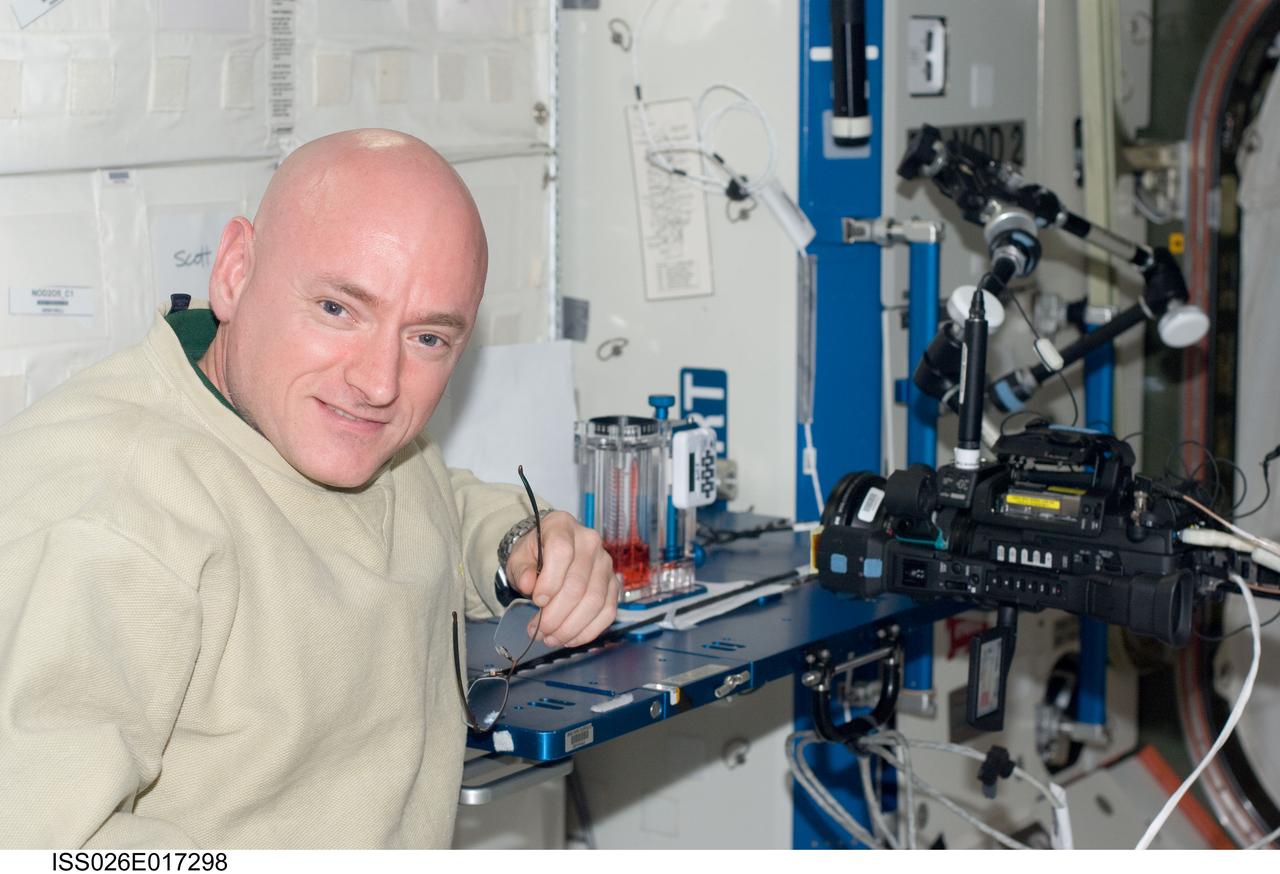
ISS026-E-017298 (11 Jan. 2011) --- NASA astronaut Scott Kelly, Expedition 26 commander, is pictured near a Capillary Flow Experiment (CFE) Vane Gap-1 experiment. The CFE is positioned on the Maintenance Work Area in the Destiny laboratory of the International Space Station. CFE observes the flow of fluid, in particular capillary phenomena, in microgravity.
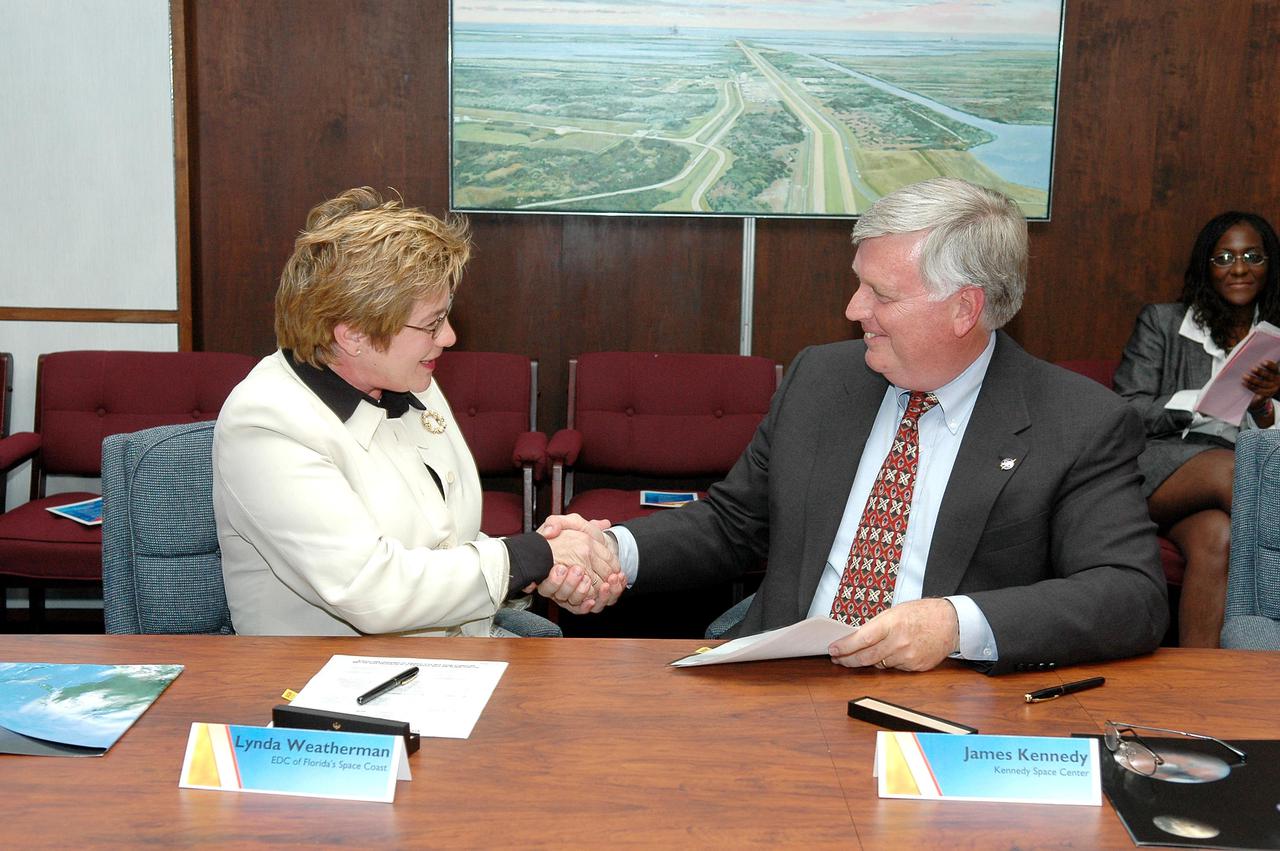
KENNEDY SPACE CENTER, FLA. - Lynda Weatherman, president and CEO of the Economic Development Commission of Florida’s Space Coast, and Jim Kennedy, director of Kennedy Space Center, congratulate each other after signing a three-year Space Act Agreement for economic development cooperation in support of existing and future missions of NASA at KSC. The agreement underscores business development strategies to ensure KSC and Brevard County continue to be competitive and develop space-related initiatives.
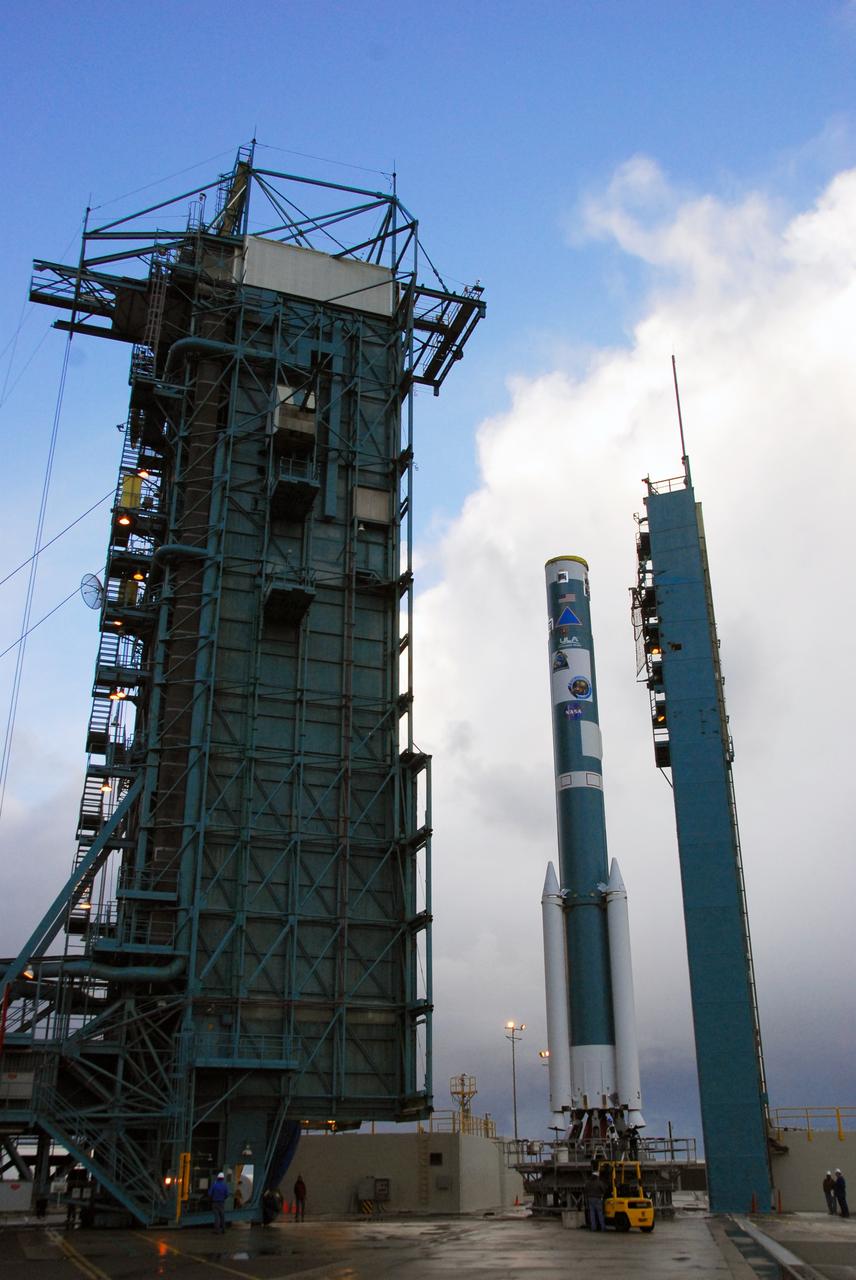
VANDENBERG AIR FORCE BASE, Calif. -- The Space Launch Complex-2 (SLC-2) service tower at Vandenberg Air Force Base in California is moved to allow United Launch Alliance technicians to hoist into position the second stage of the Delta II rocket that will carry NASA's Aquarius satellite into low Earth orbit. Scheduled to launch in June, Aquarius' mission will be to provide monthly maps of global changes in sea surface salinity. By measuring ocean salinity from space, Aquarius will provide new insights into how the massive natural exchange of freshwater between the ocean, atmosphere and sea ice influences ocean circulation, weather and climate. Also going up with the satellite are optical and thermal cameras, a microwave radiometer and the SAC-D spacecraft, which were developed with the help of institutions in Italy, France, Canada and Argentina. Photo credit: VAFB/30th Space Wing
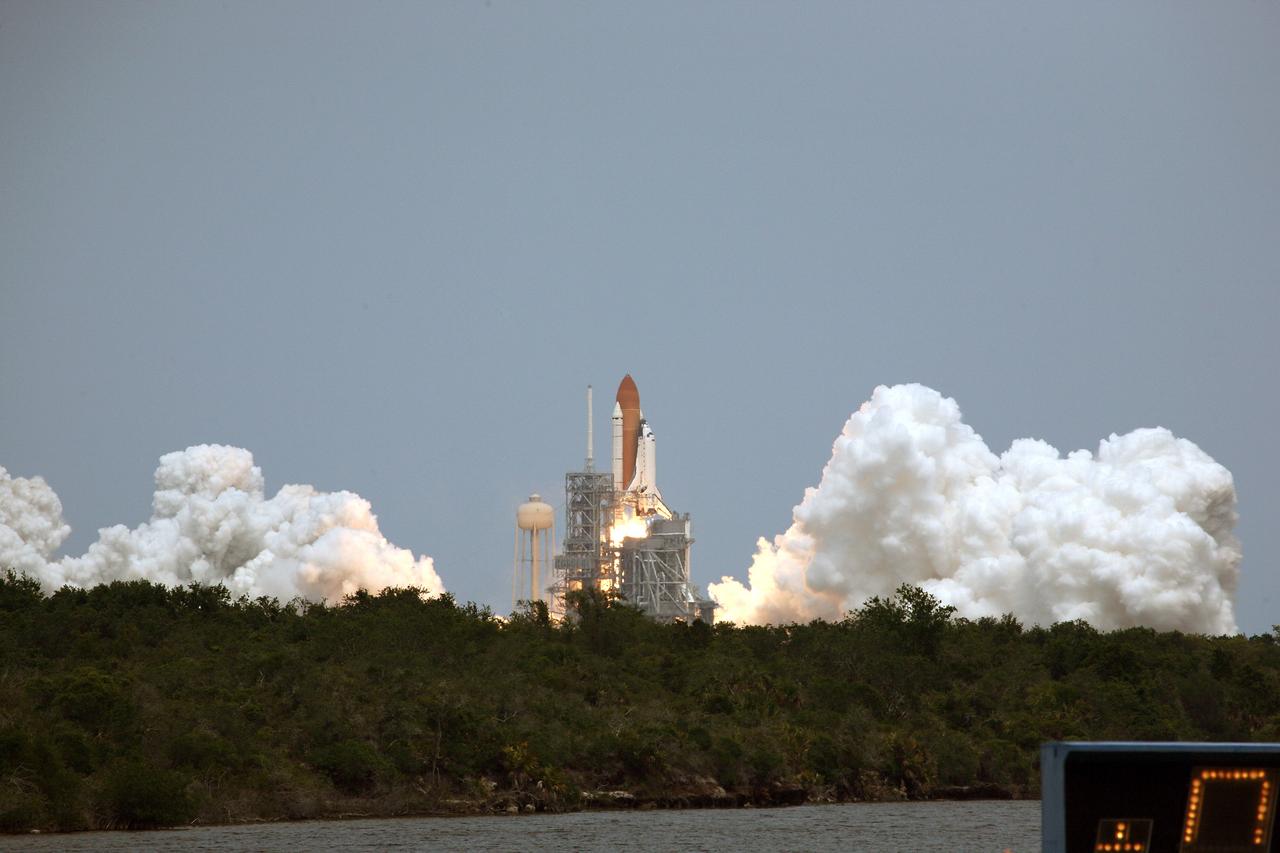
CAPE CANAVERAL, Fla. – White clouds of smoke and steam sandwich space shuttle Atlantis as it roars off Launch Pad 39A at NASA's Kennedy Space Center in Florida with its crew of seven for a rendezvous with NASA's Hubble Space Telescope. The launch was on-time at 2:01 p.m. EDT. Atlantis' 11-day flight will include five spacewalks to refurbish and upgrade the telescope with state-of-the-art science instruments that will expand Hubble's capabilities and extend its operational lifespan through at least 2014. The payload includes a Wide Field Camera 3, fine guidance sensor and the Cosmic Origins Spectrograph. Photo credit: NASA/Fletcher Hildreth
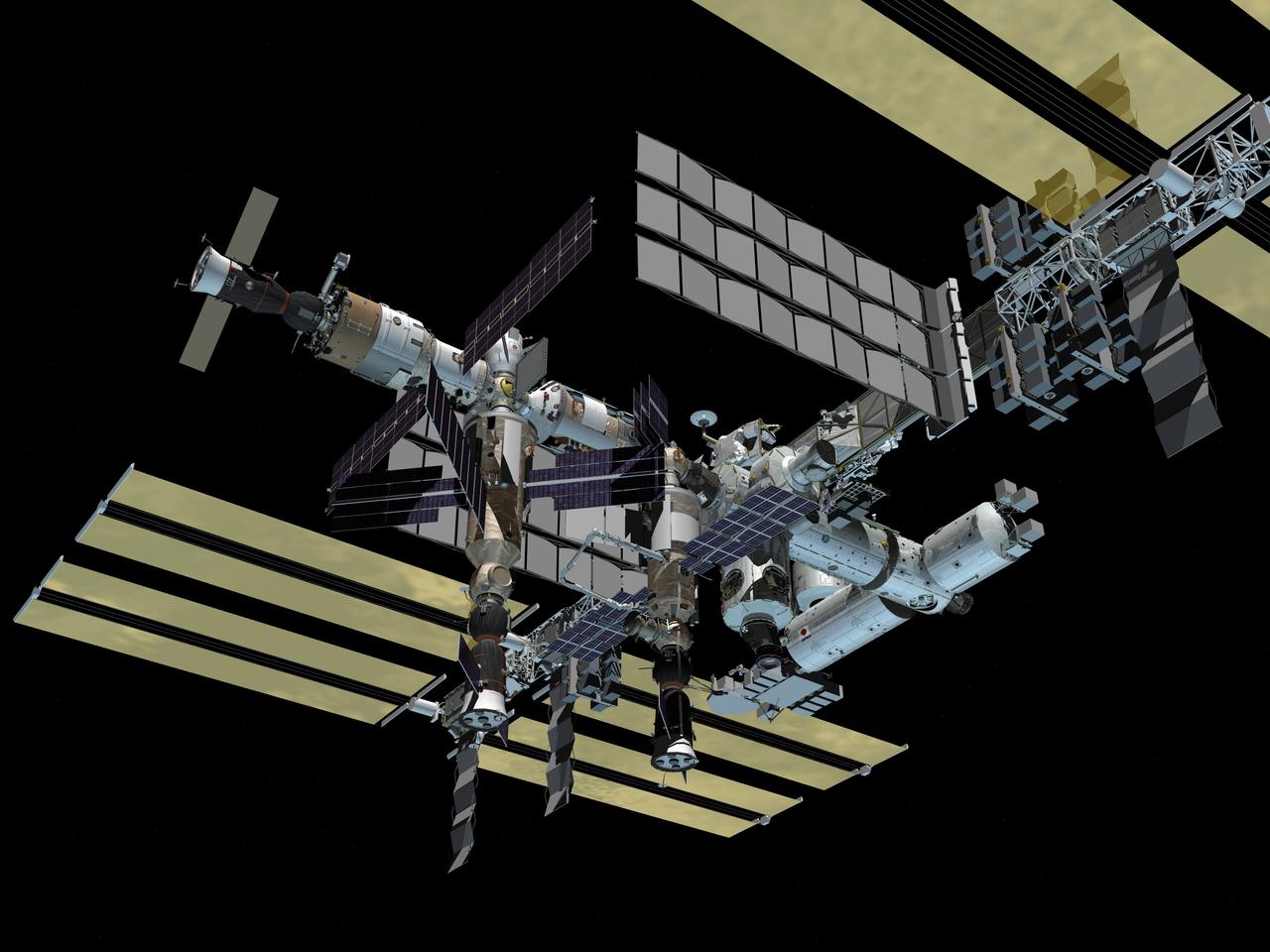
JSC2006-E-25659 (October 2006) --- Computer-generated scene showing a low-angle medium close view (starboard-aft) of the International Space Station, after assembly work is completed.

Earth observation taken during a day pass by an Expedition 37 crew member on board the International Space Station (ISS).
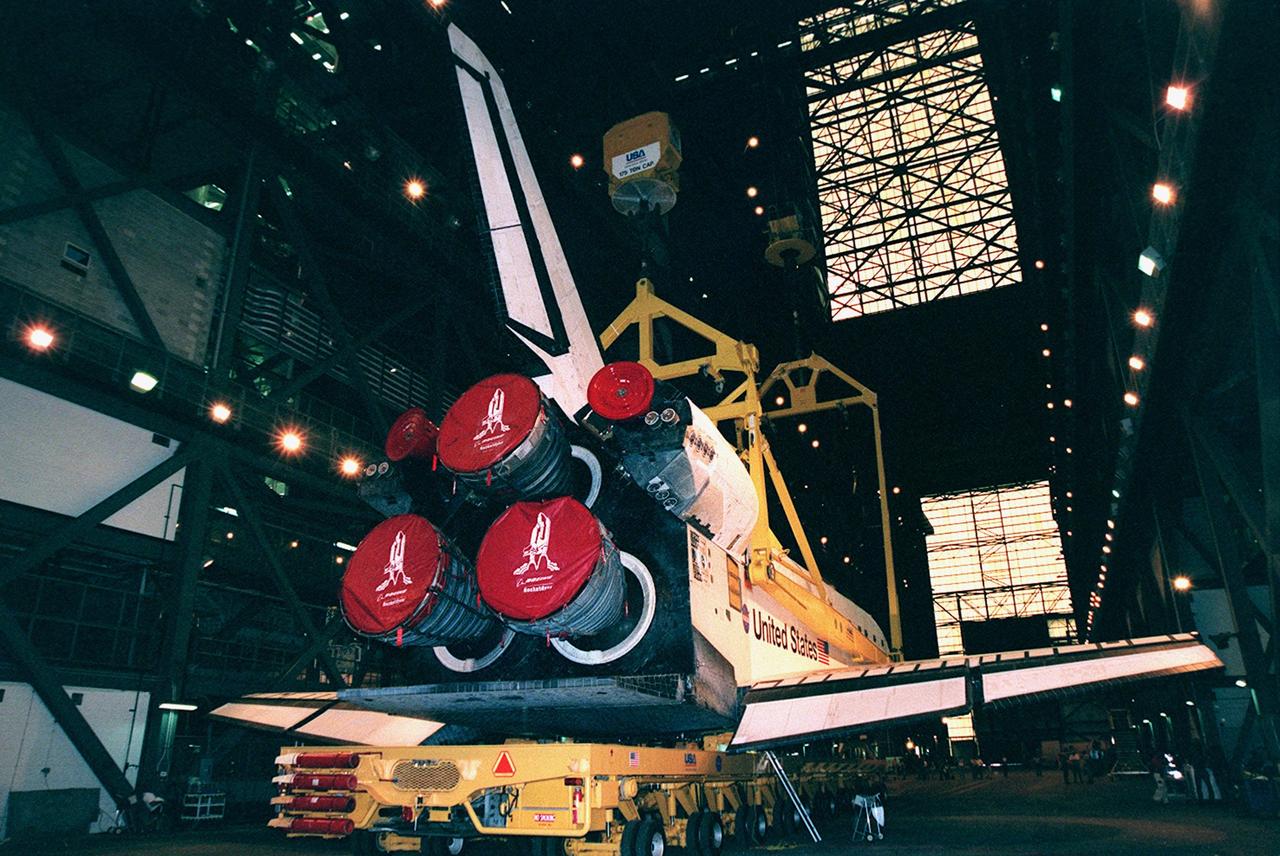
KENNEDY SPACE CENTER, FLA. -- Inside the Vehicle Assembly Building, the orbiter Atlantis rests atop a transporter in the transfer aisle while an overhead crane is placed around the space vehicle. The crane will lift Atlantis to a vertical position so it can be mated with its external tank and solid rocket boosters before being transported to Launch Pad 39A. Atlantis will fly on mission STS-101 to the International Space Station, where its crew of seven will prepare the Station for the arrival of the next pressurized module, the Russian-built Zvezda. Atlantis is expected to launch no earlier than April 17, 2000
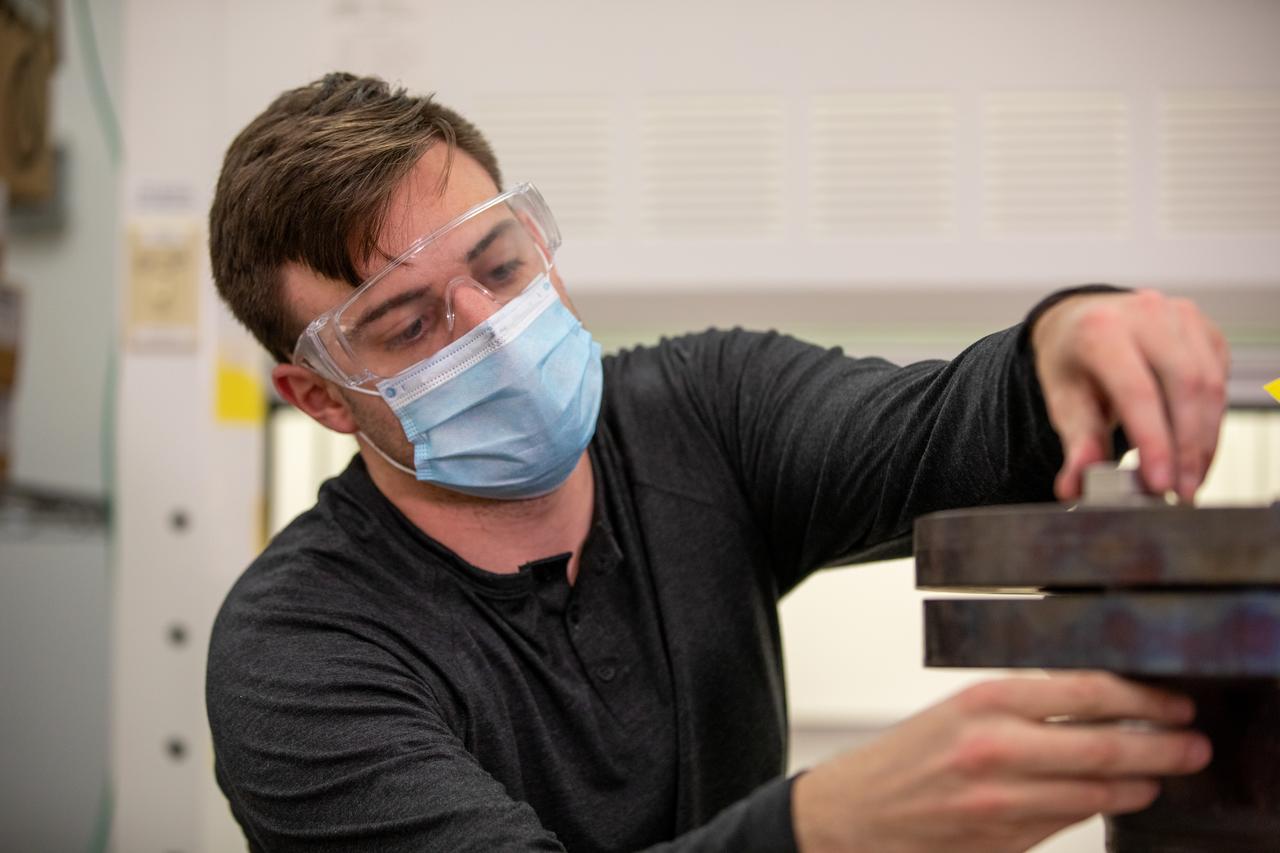
Kevin Grossman, project lead for the Gaseous Lunar Oxygen from Regolith Electrolysis (GaLORE) project at NASA Kennedy Space Center’s Swamp Works, checks the hardware for GaLORE on July 21, 2020, inside a laboratory at the center’s Neil Armstrong Operations and Checkout Building. Grossman is leading an Early Career Initiative project that is investing in turning lunar regolith into oxygen that could be used for life support for sustainable human lunar exploration on long-duration missions to Mars. GaLORE was selected as an Early Career Initiative project by NASA’s Space Technology Mission directorate.
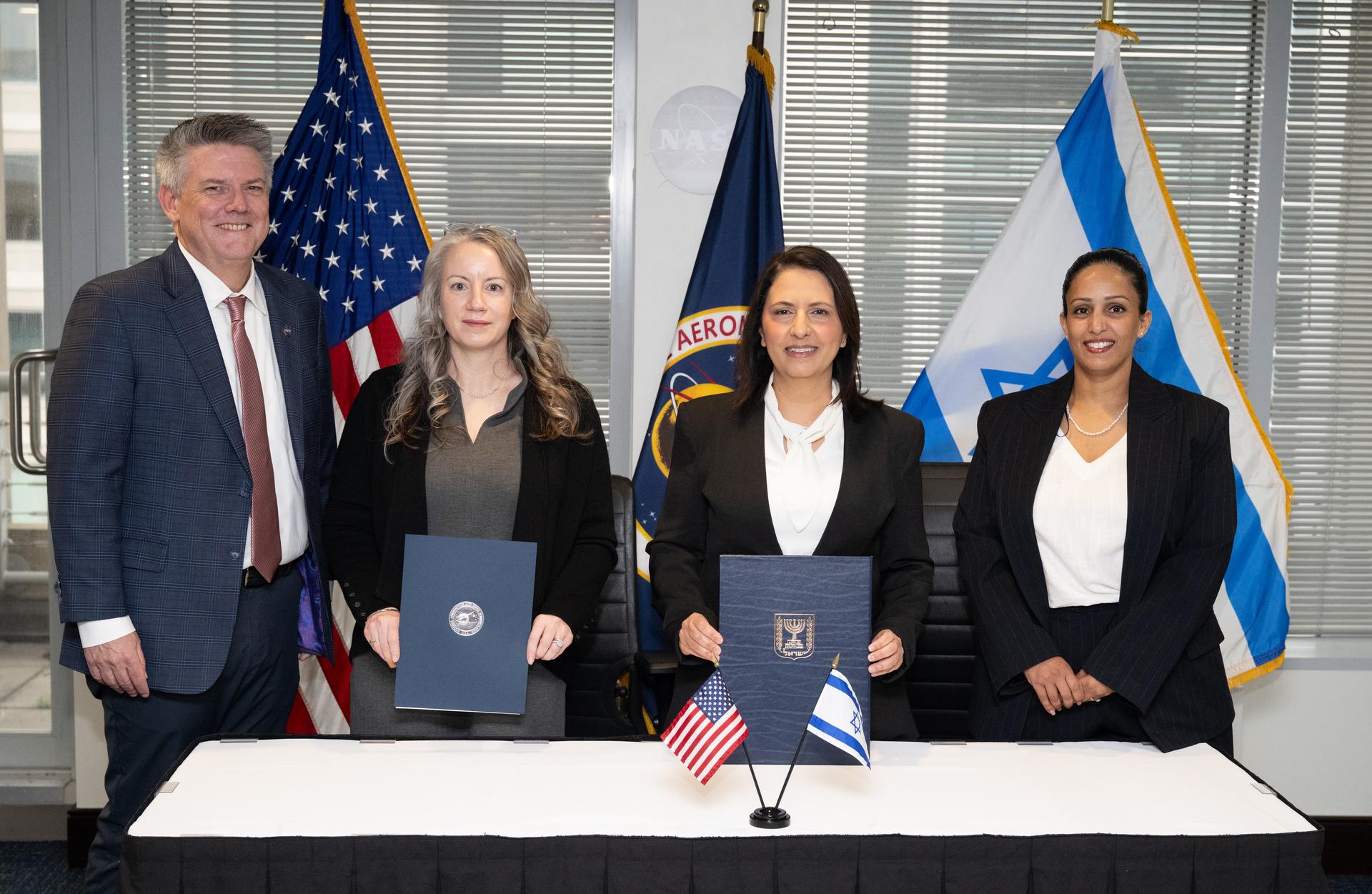
Brian Hughes, NASA Chief of Staff, left, Meredith McKay, acting associate administrator for NASA’s Office of International and Interagency Relations, second from left, Israel’s Minister for Innovation, Science, and Technology Gila Gamliel, and Shani Edri, director of International Relations in Israel’s Ministry of Innovation, Science, and Technology pose for a picture after the signing the US-Israel Space Cooperation Framework Agreement Extension, Wednesday, Dec. 10, 2025, at the Mary W. Jackson NASA Headquarters building in Washington. Photo Credit: (NASA/Joel Kowsky)
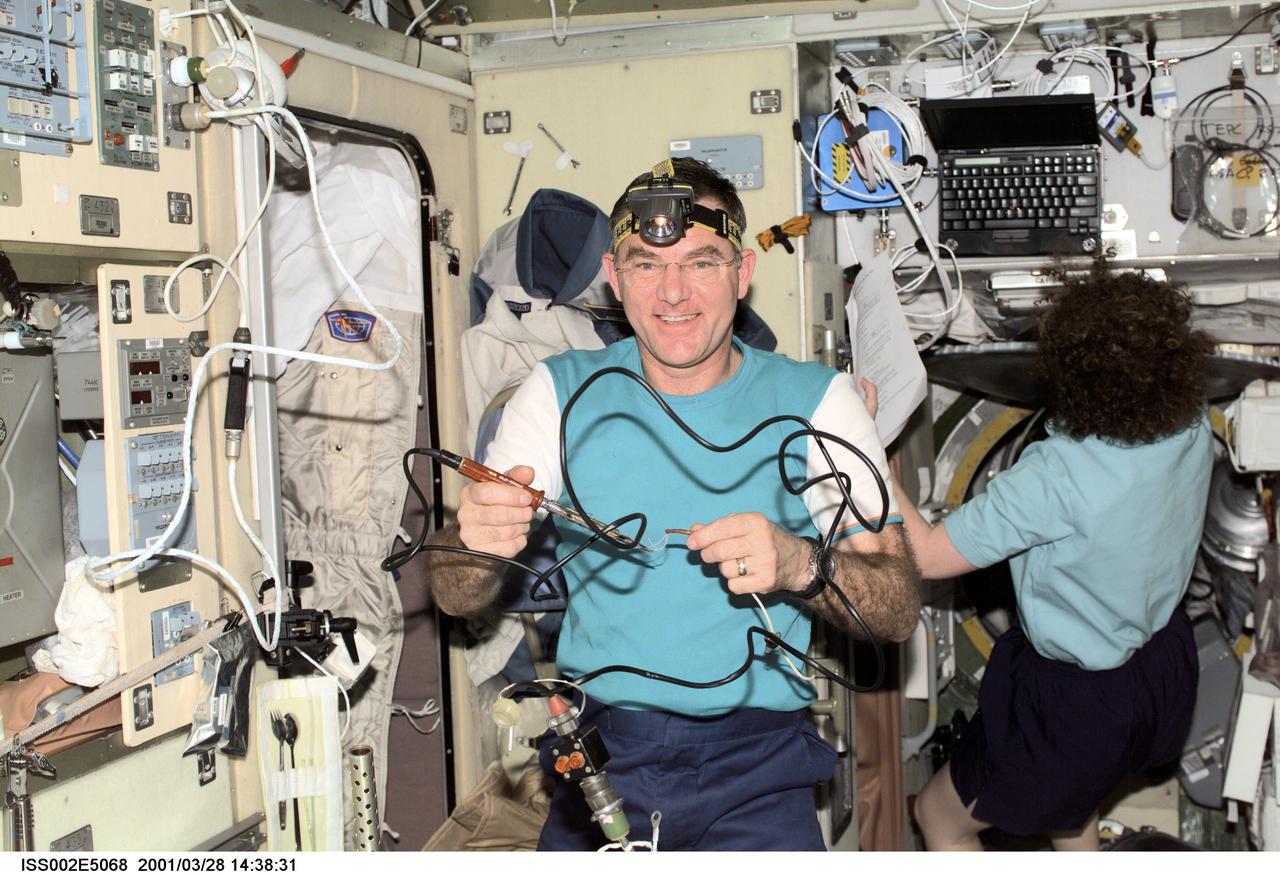
ISS002-E-5068 (28 March 2001) --- Astronaut James S. Voss, Expedition Two flight engineer, prepares to use a soldering tool for a maintenance task in the Zvezda Service Module onboard the International Space Station (ISS). Astronaut Susan J. Helms, flight engineer, is in the background. The image was recorded with a digital still camera.
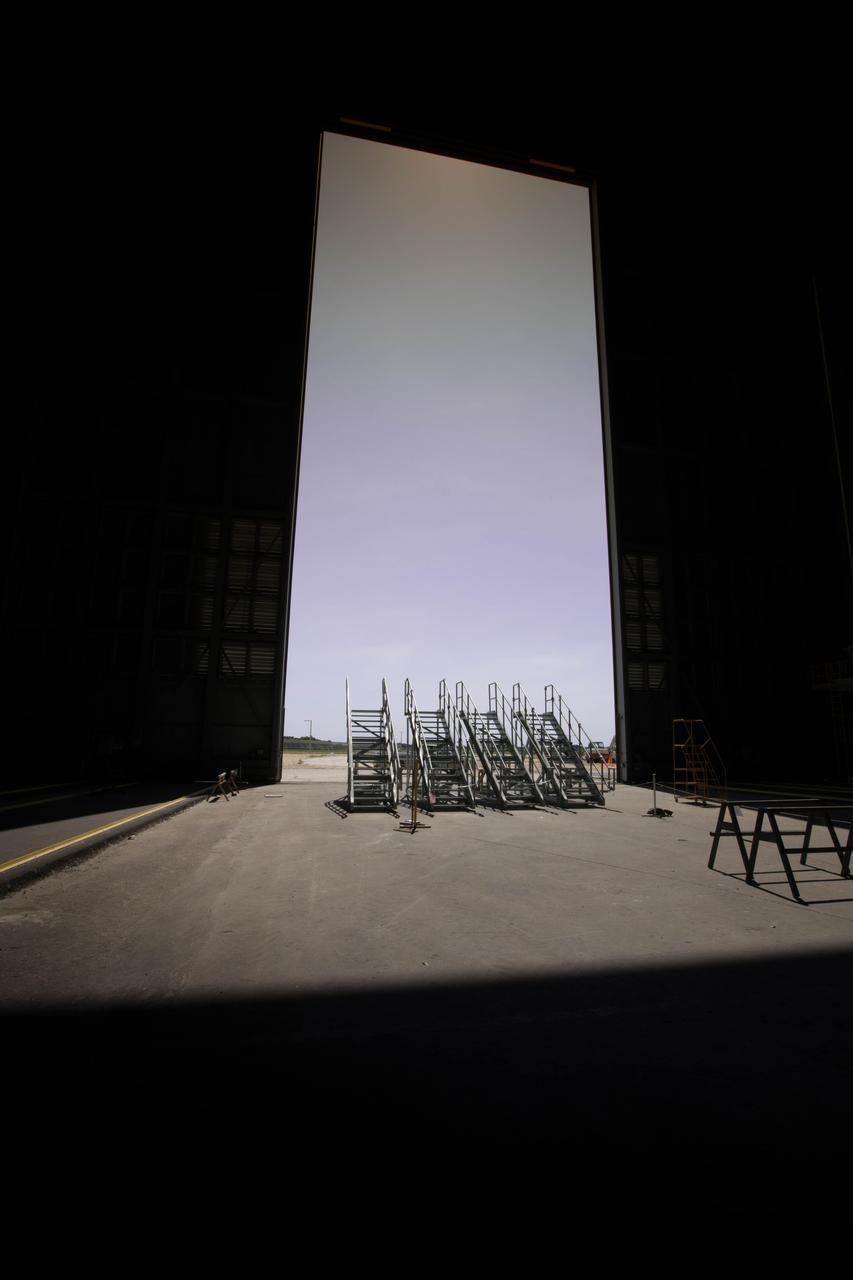
A view looking at High Bay 3 in the Vehicle Assembly Building (VAB) at NASA's Kennedy Space Center in Florida. Ten levels of new work platforms have been installed in High Bay 3. They will surround and provide access for service and processing of NASA's Space Launch System rocket and Orion spacecraft. Exploration Ground Systems oversaw the upgrades and installation of the new work platforms to support the launch of the SLS and Orion on Exploration Mission-1 and deep space missions.
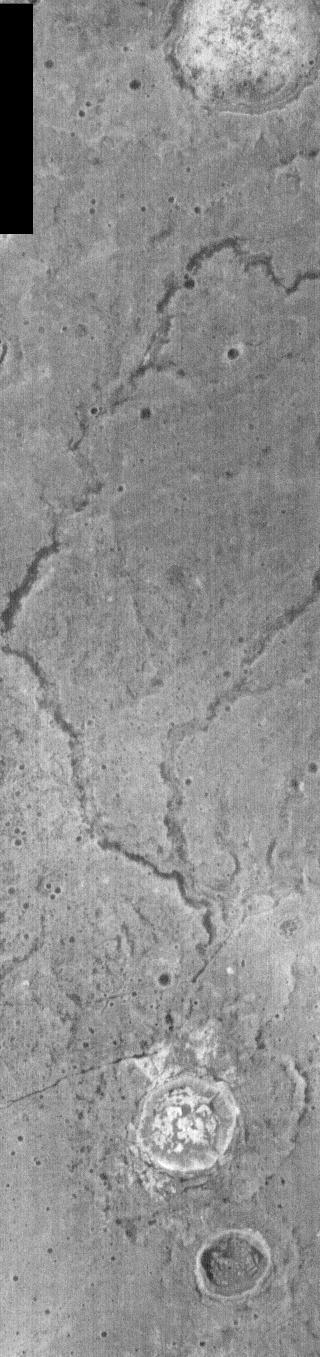
Tinto Vallis Fluvial Channel
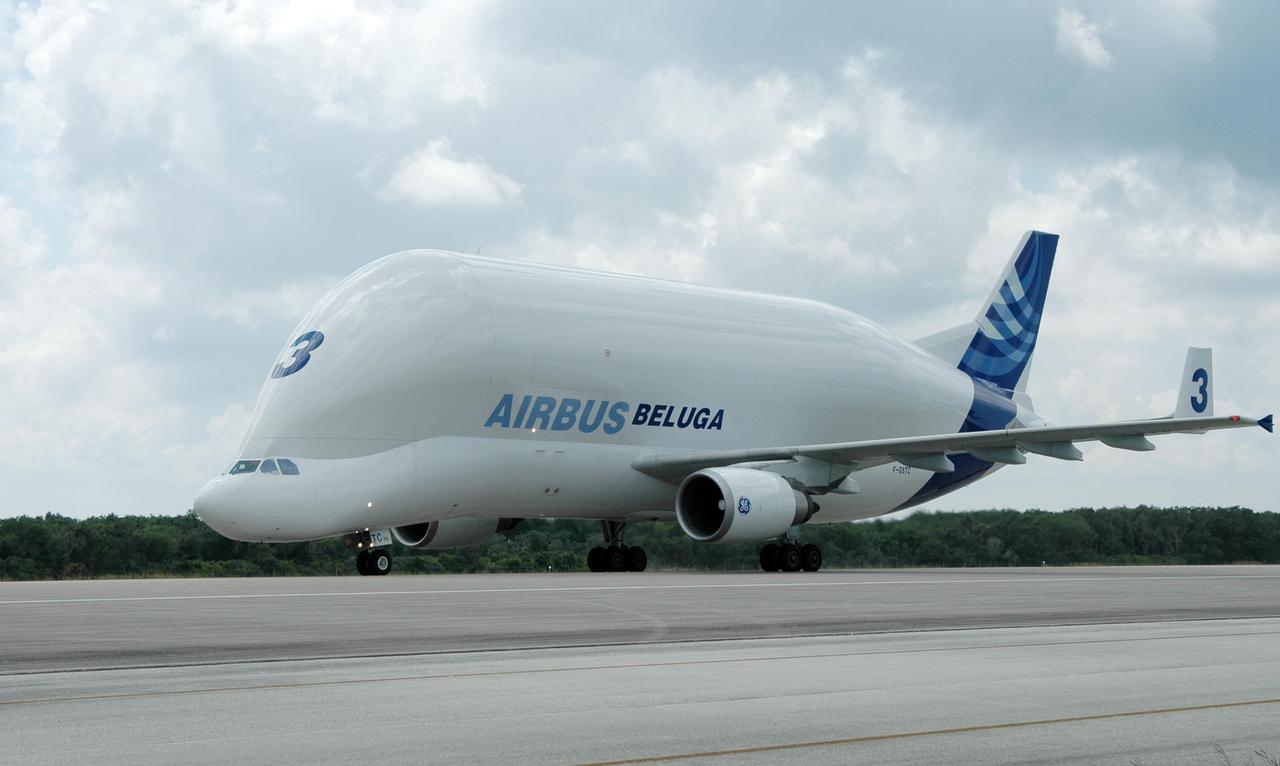
KENNEDY SPACE CENTER, FLA. - A Beluga aircraft taxis on the runway at the Shuttle Landing Facility on NASA's Kennedy Space Center. The Beluga carries the European Space Agency's research laboratory, designated Columbus, flown to Kennedy from its manufacturer in Germany. The module will be prepared for delivery to the International Space Station on a future space shuttle mission. Columbus will expand the research facilities of the station and provide researchers with the ability to conduct numerous experiments in the area of life, physical and materials sciences. Photo credit: NASA/Jim Grossmann
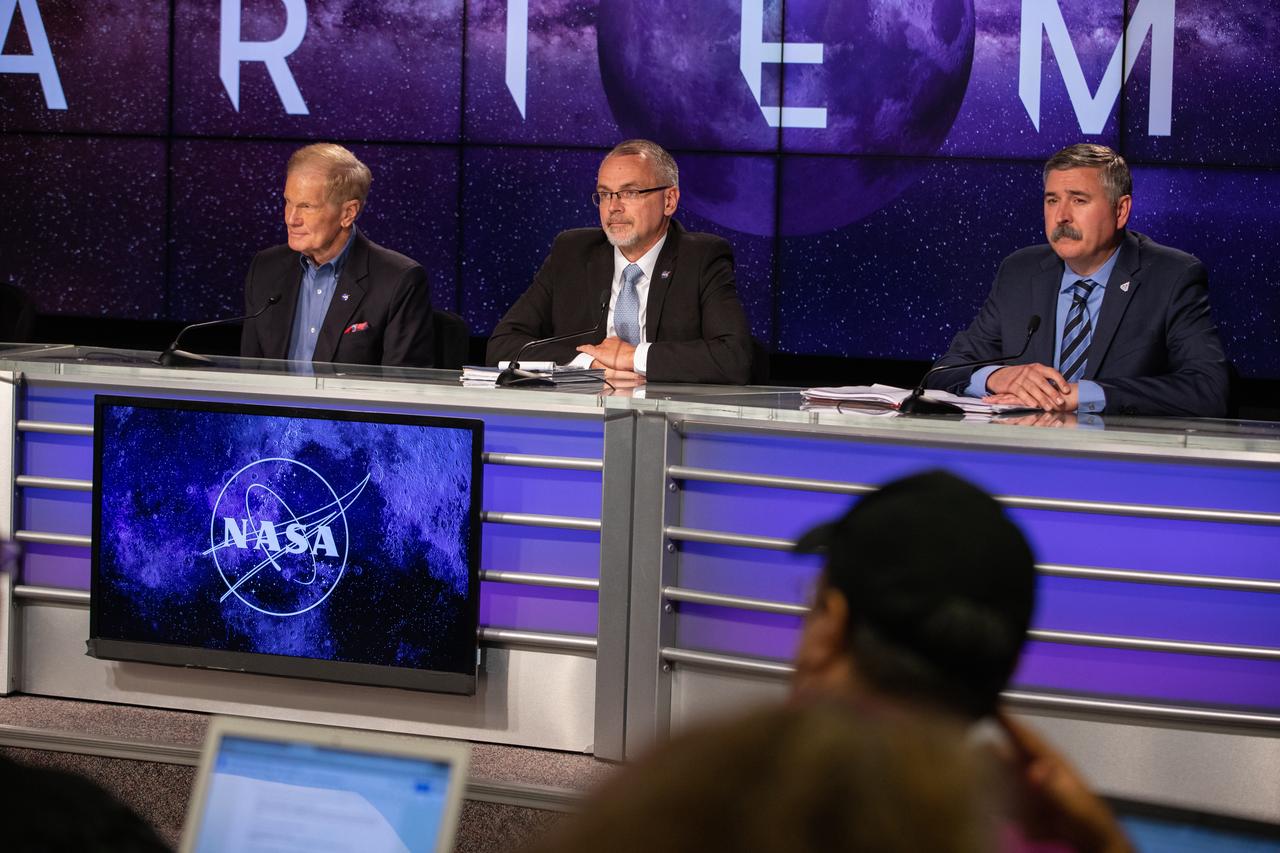
A news conference is held Sept. 3, 2022, at NASA’s Kennedy Space Center in Florida, after launch of Artemis I was waived off from Kennedy’s Launch Complex 39B. Teams encountered a liquid hydrogen leak while loading propellant into the core stage of the Space Launch System rocket. Participants are, from left, Bill Nelson, NASA administrator; Jim Free, associate administrator for NASA’s Exploration Systems Development Mission Directorate; and Mike Sarafin, Artemis mission manager. The first in a series of increasingly complex missions, Artemis I will provide a foundation for human deep space exploration and demonstrate our commitment and capability to extend human presence to the Moon and beyond. The primary goal of Artemis I is to thoroughly test the integrated systems before crewed missions by operating the spacecraft in a deep space environment, testing Orion’s heat shield, and recovering the crew module after reentry, descent, and splashdown.
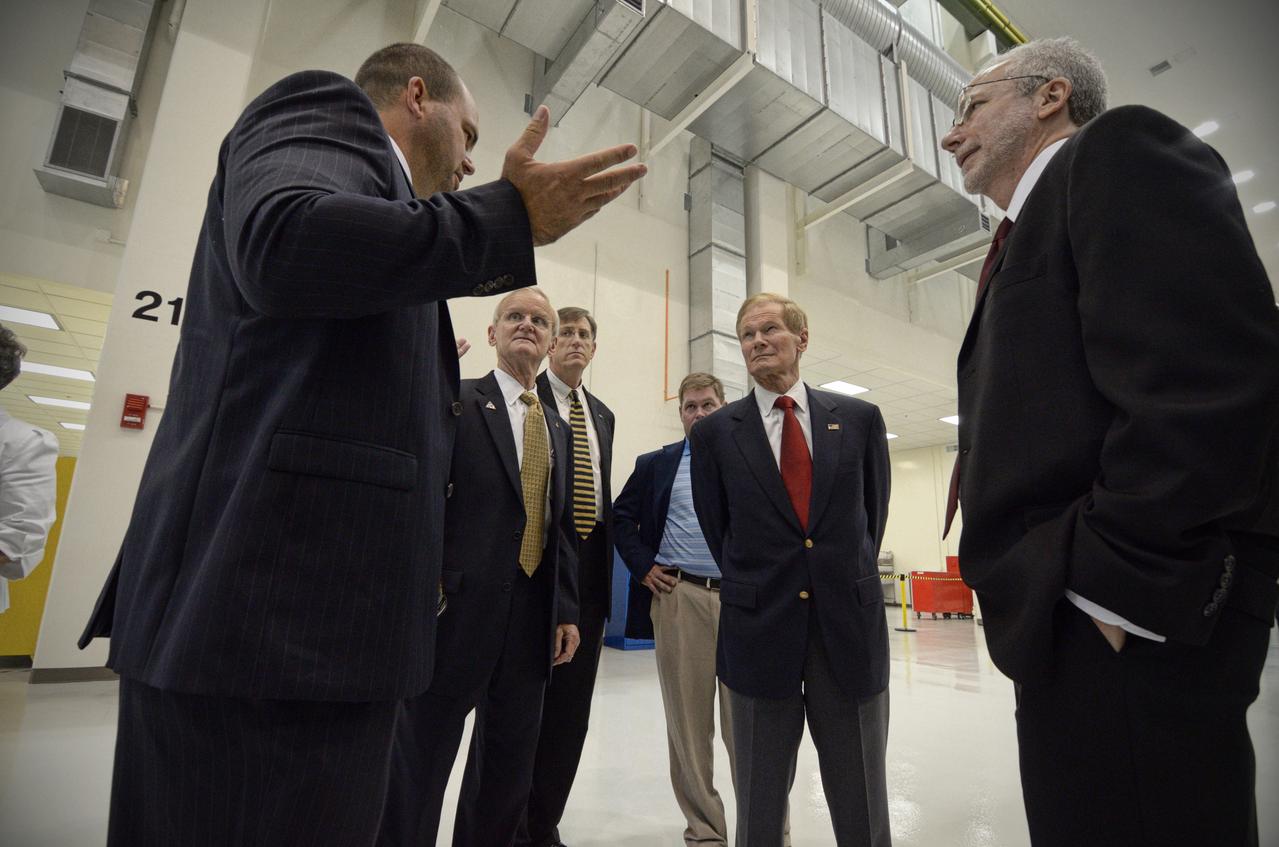
The Orion crew module pressure vessel for Exploration Flight Test-1 (EFT-1) is unveiled at a ceremony at the Operations and Checkout (O&C) Building at NASA’s Kennedy Space Center in Florida on July 2, 2012. Orion Program Manager Mark Geyer is visible talking to others. Part of Batch image transfer from Flickr.

The immense Andromeda galaxy, also known as Messier 31, is captured in full in this image from NASA Wide-field Infrared Survey Explorer. Andromeda is the closest large galaxy to our Milky Way galaxy, and is located 2.5 million light-years from our sun.
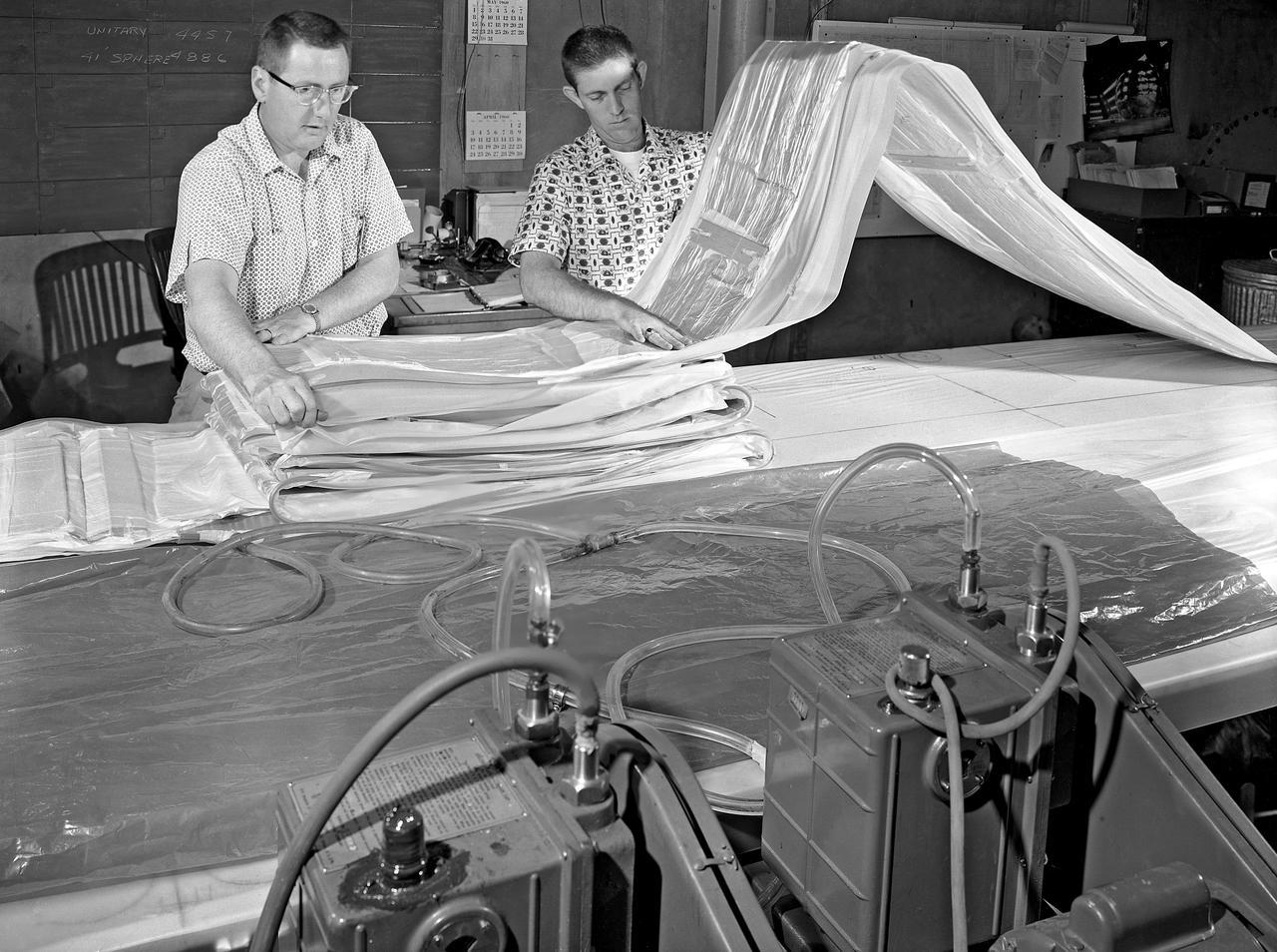
100' Satellite Packaging of Echo
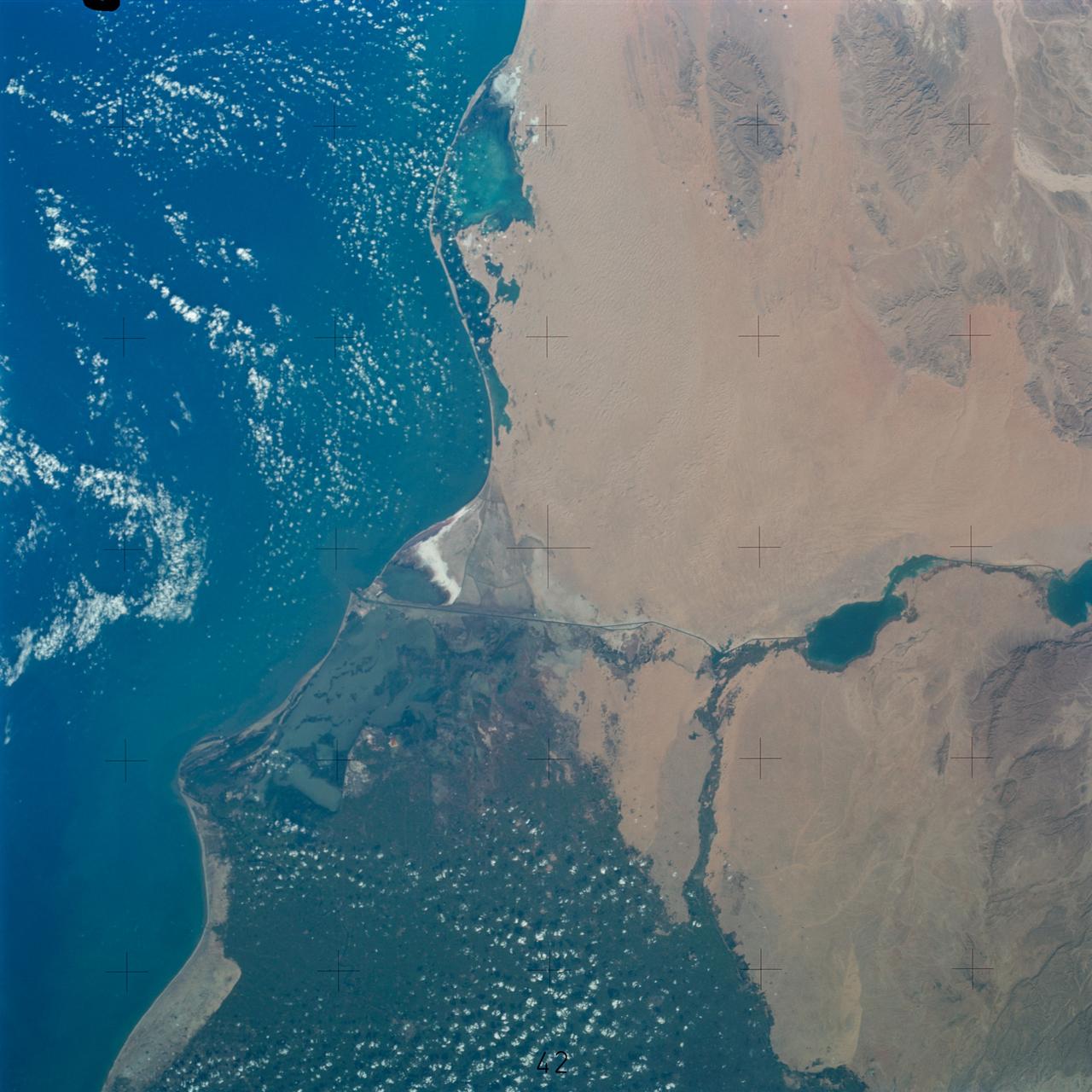
SL3-122-2620 (July-September 1973) --- Skylab 3 Earth view of the Nile Delta, Egypt and Suez Canal. Photo credit: NASA
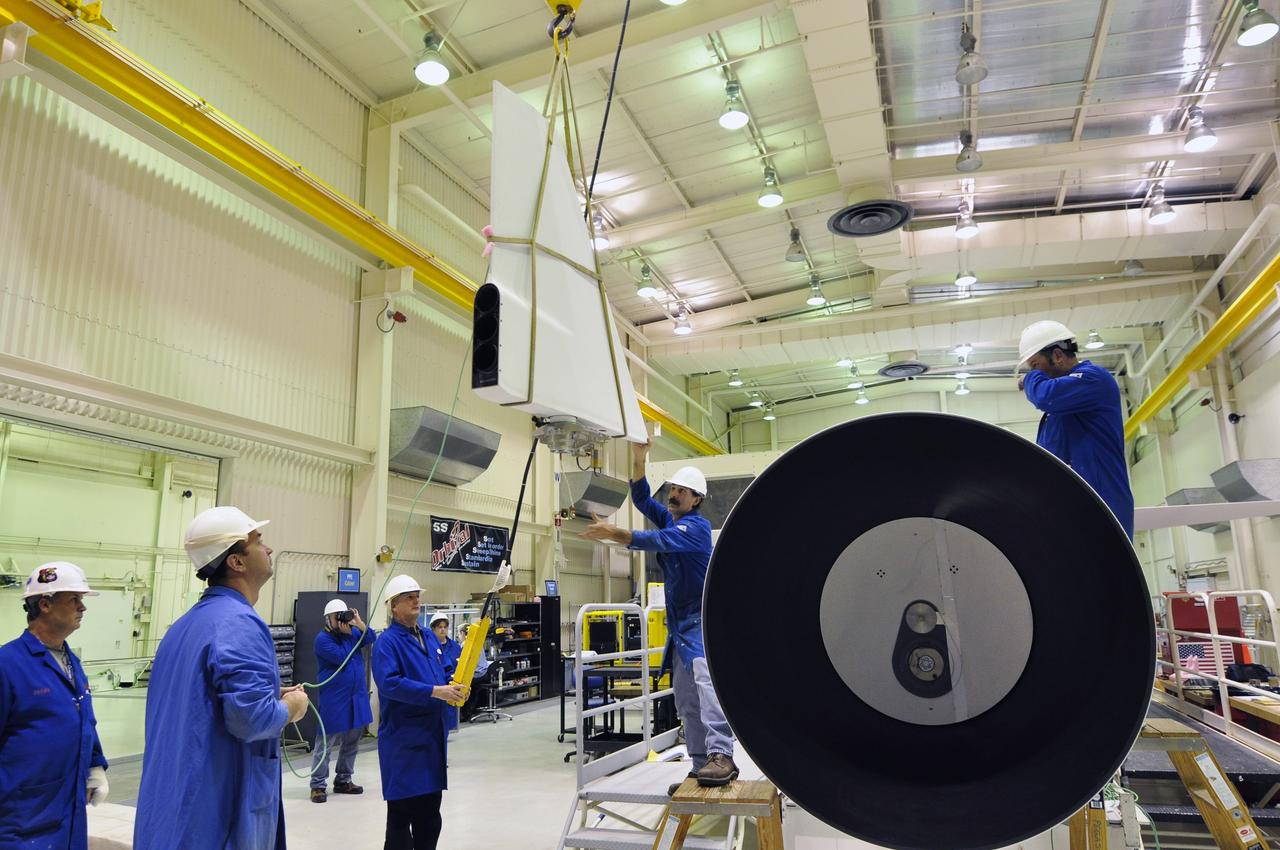
VANDENBERG AIR FORCE BASE, Calif. -- Inside a Pegasus booster processing facility at Vandenberg Air Force Base in California, an overhead crane lifts the first of the fins for the aft end of the Pegasus XL rocket's first stage as technicians guide it into place for installation. The Orbital Sciences Corp. Pegasus rocket will launch the Nuclear Spectroscopic Telescope Array (NuSTAR) into space. After the rocket and spacecraft are processed at Vandenberg, they will be flown on the Orbital Sciences’ L-1011 carrier aircraft to the Ronald Reagan Ballistic Missile Defense Test Site at the Pacific Ocean’s Kwajalein Atoll for launch. The high-energy x-ray telescope will conduct a census for black holes, map radioactive material in young supernovae remnants, and study the origins of cosmic rays and the extreme physics around collapsed stars. For more information, visit science.nasa.gov/missions/nustar/. Photo credit: NASA/Randy Beaudoin, VAFB
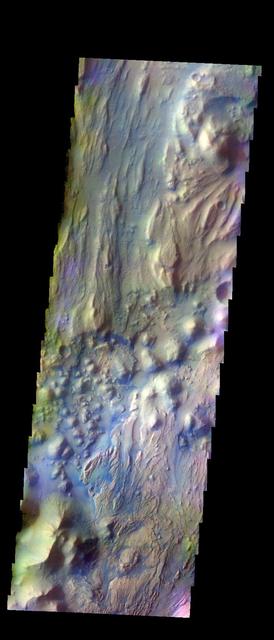
The THEMIS VIS camera contains 5 filters. The data from different filters can be combined in multiple ways to create a false color image. This image from NASA 2001 Mars Odyssey spacecraft shows the beginning of Ares Vallis at the edge of Iani Chaos.
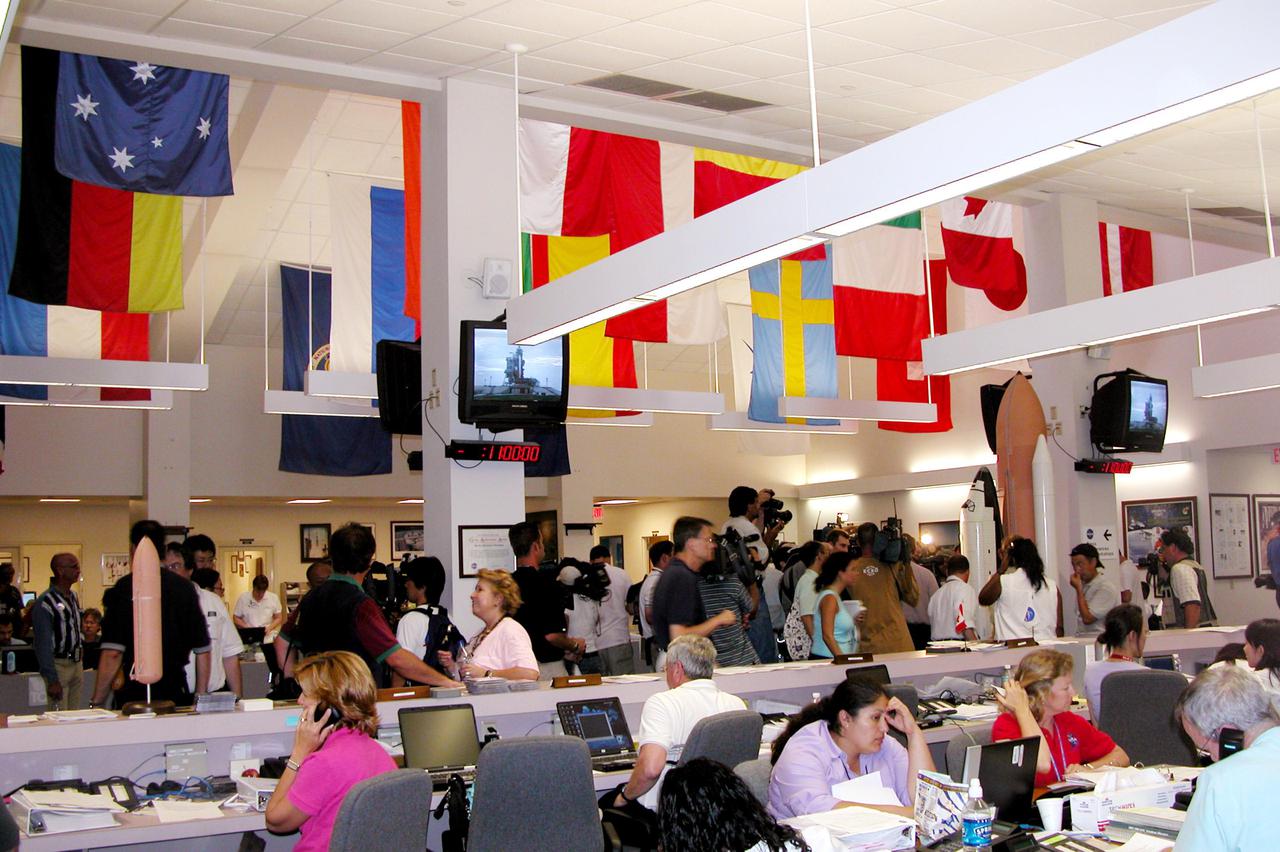
KENNEDY SPACE CENTER, FLA. - News media representatives arrive in the NASA Newsroom to cover the launch of Space Shuttle Discovery on Return to Flight mission STS-114. The countdown is under way for an anticipated liftoff at 3:51 p.m. EDT July 13. During its 12-day mission, Discovery’s seven-person crew will test new hardware and techniques to improve Shuttle safety, as well as deliver supplies to the International Space Station.
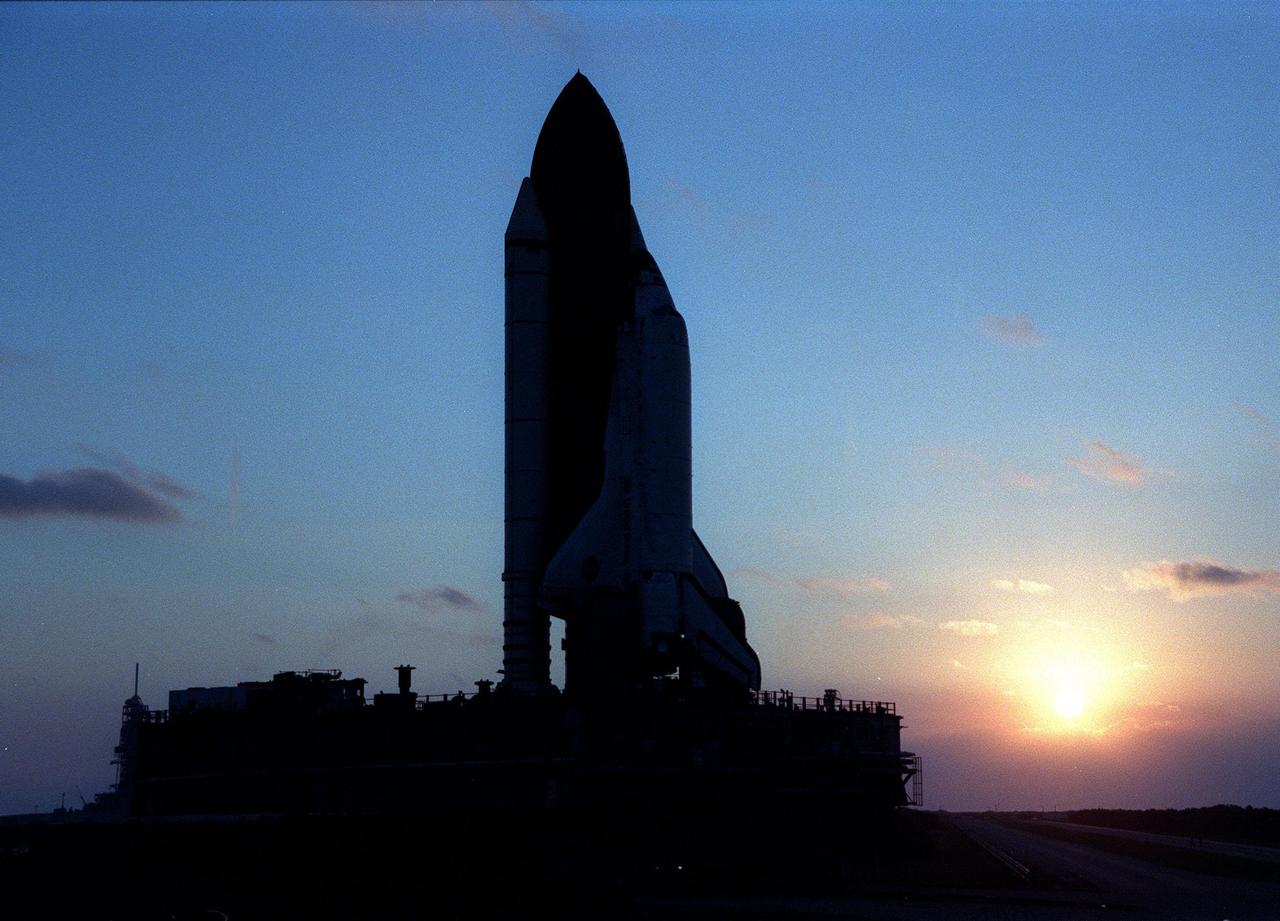
KENNEDY SPACE CENTER, FLA. -- As the sun begins to rise, a crawler transporter moves Space Shuttle Discovery from Pad 39B back to the Vehicle Assembly Building for repair of damage to the external tank foam insulation caused by hail. The necessary repair work could not be performed at the pad due to limited access to the damaged areas. The work is expected to take two to three days, allowing Discovery to roll back to the pad by midweek for launch of mission STS-96, the 94th launch in the Space Shuttle Program. This is only the 13th time since 1981 that a Shuttle has had to roll back from the pad. Liftoff will occur no earlier than May 27. STS-96 is a logistics and resupply mission for the International Space Station, carrying such payloads as a Russian crane, the Strela; a U.S.-built crane; the Spacehab Oceaneering Space System Box (SHOSS), a logistics items carrier; and STARSHINE, a student-shared experiment

This artist concept illustrates a young, red dwarf star surrounded by three planets. NASA Galaxy Evolution Explorer is helping to identify young, red dwarf stars that are close to us by detecting their ultraviolet light.
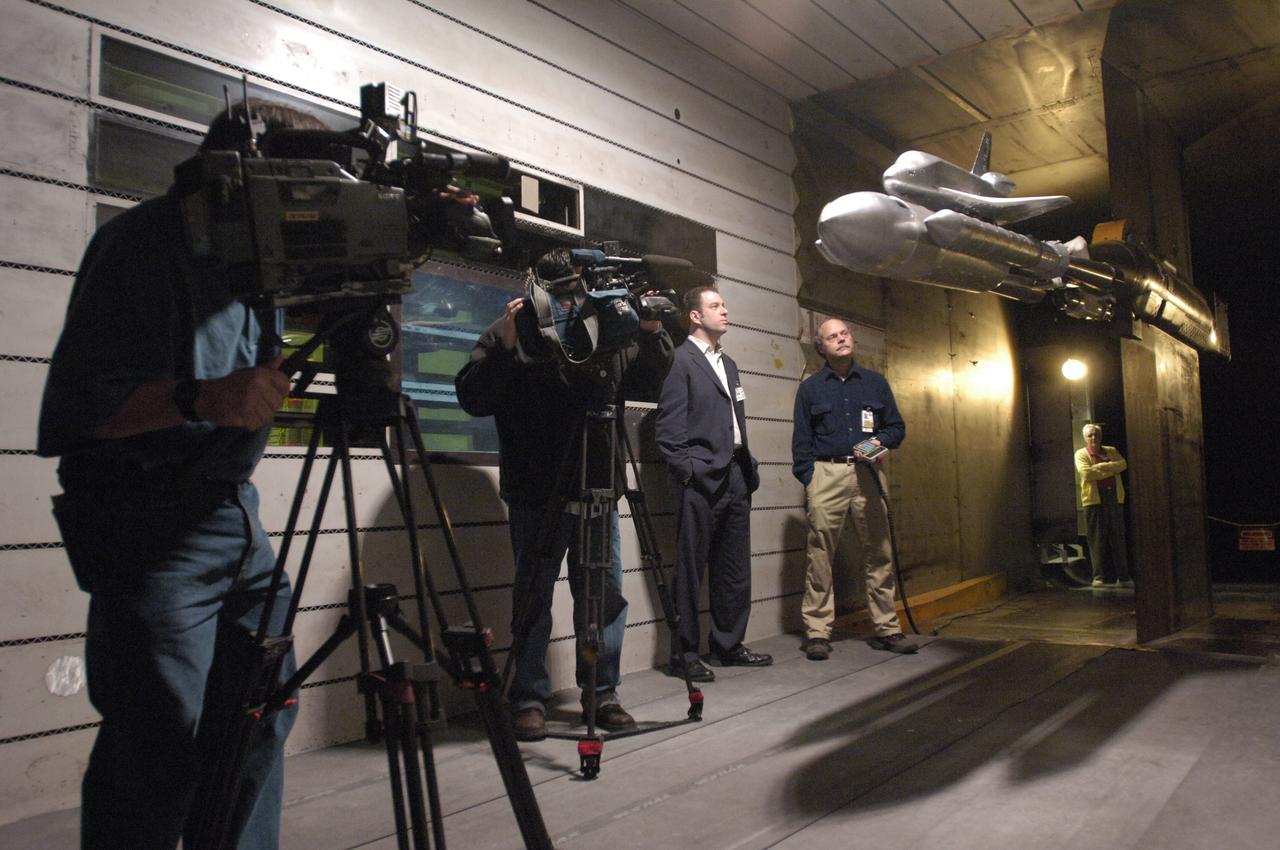
The media invited to view the 3% Space Shuttle model mounted in the Ames 11ft .w.t. with Scott Budman, NBC Channel 11 News and Jim Strong, Ames Aeronautics
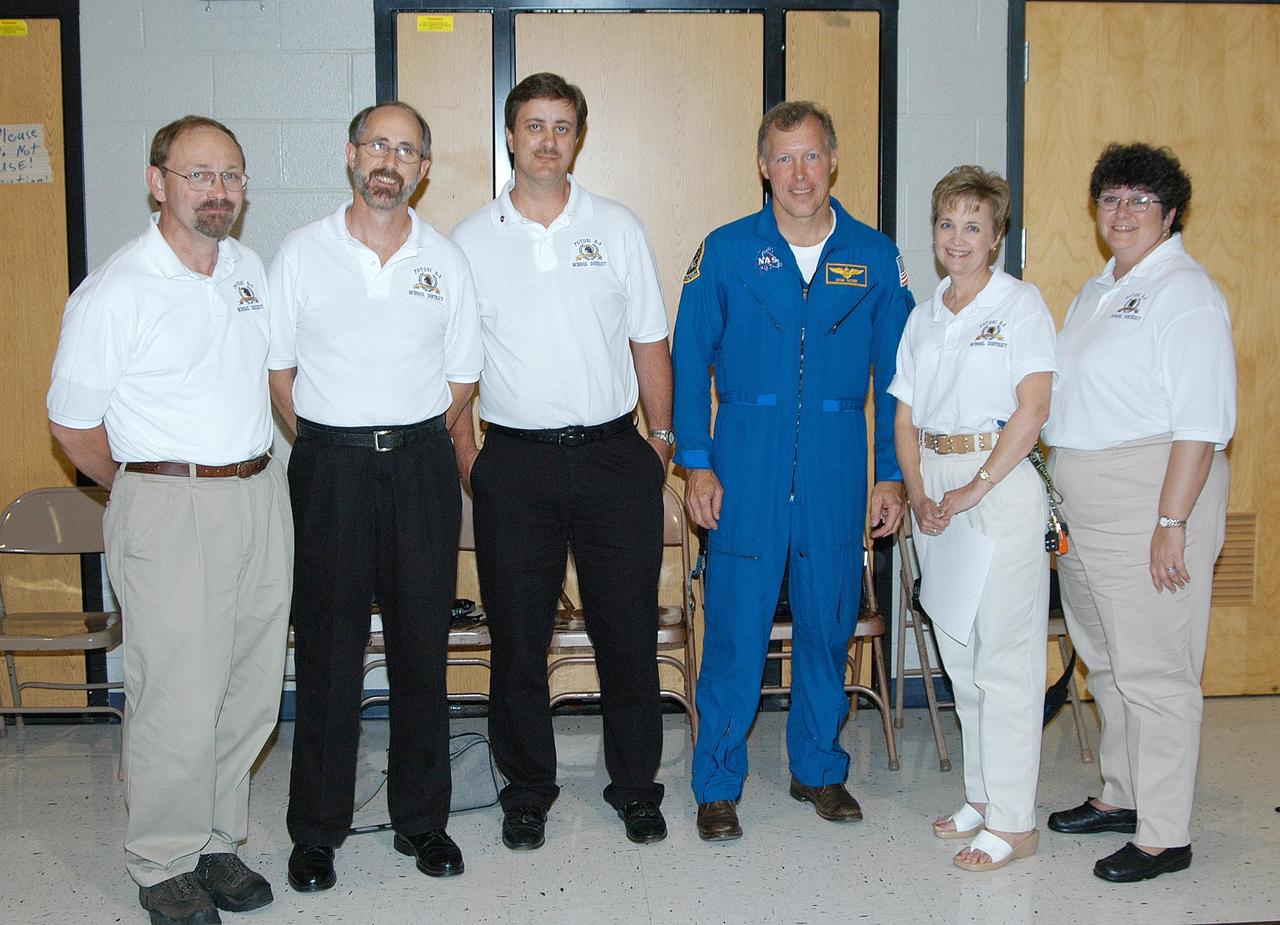
KENNEDY SPACE CENTER, FLA. -- Astronaut Dom Gorie joins faculty members of Trojan Intermediate School in Potosi, Mo., for a photo. Students from three area schools — Potosi High School, John Evans Middle School and Trojan — are on a team taking part in NASA’s Explorer Schools program. KSC Deputy Director Dr. Woodrow Whitlow and Gore are sharing America’s new vision for space exploration with the next generation of explorers. They are talking with students about our destiny as explorers, NASA’s stepping stone approach to exploring Earth, the Moon, Mars and beyond, how space impacts our lives, and how people and machines rely on each other in space.
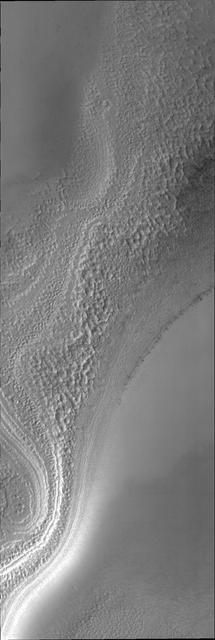
It is early springtime in the southern hemisphere of Mars in this image from NASA Mars Odyssey. The south polar cap is now illuminated by the sun and the surface can be studied as it changes with the passage of spring.
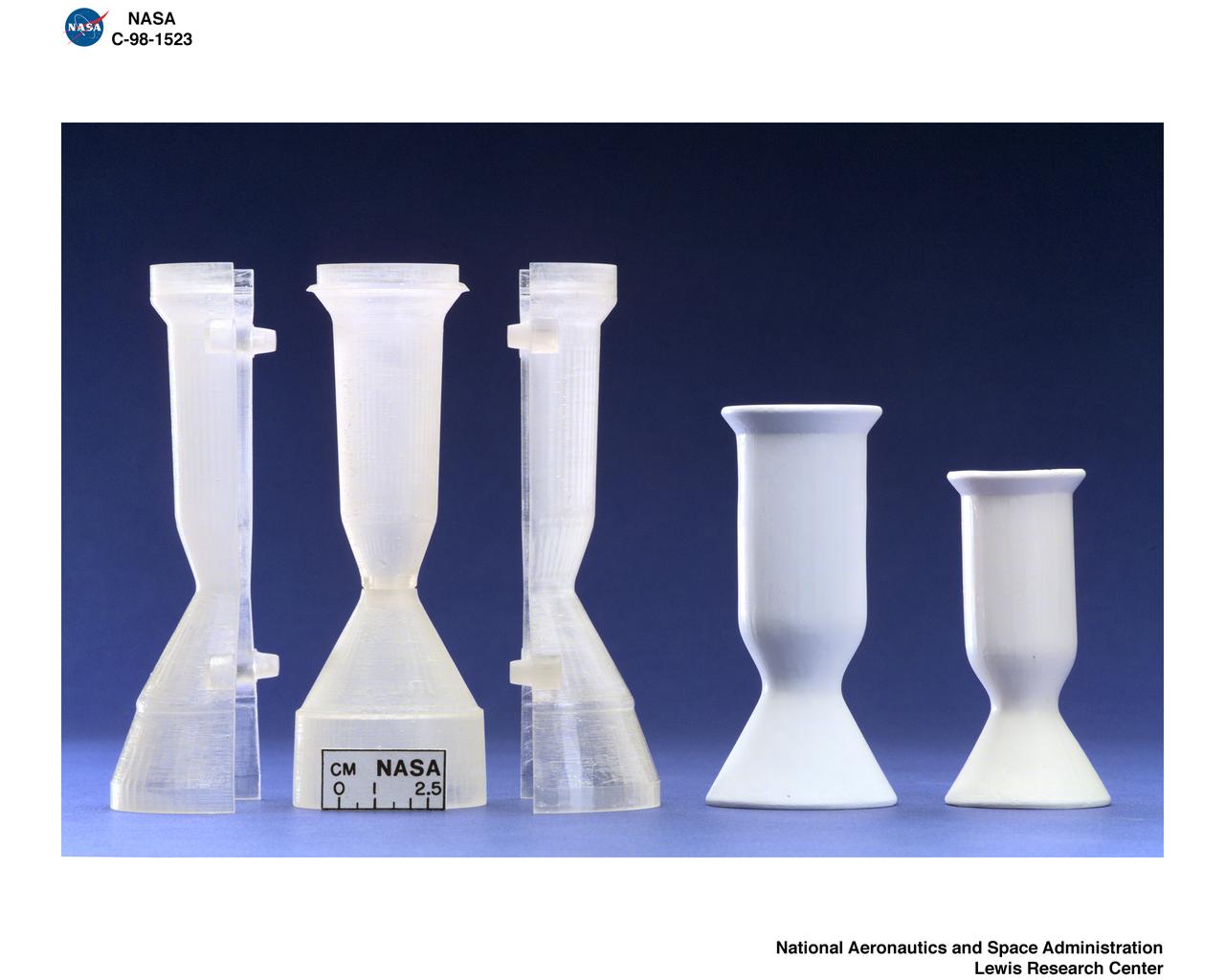
CAST CERAMIC THRUSTERS
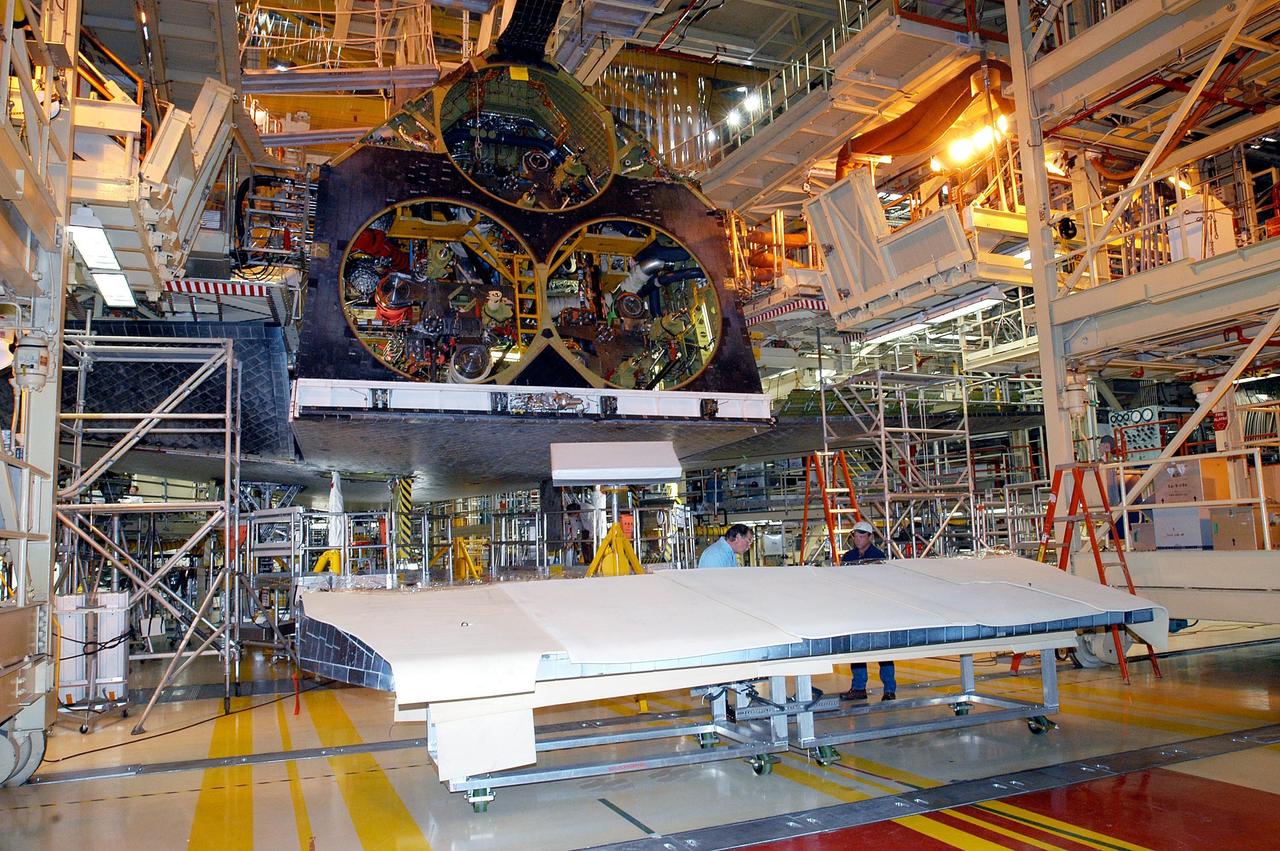
KENNEDY SPACE CENTER, FLA. - In the Orbiter Processing Facility, the body flap for the orbiter Discovery is prepared for installation. The body flap is an aluminum structure consisting of ribs, spars, skin panels and a trailing edge assembly. It thermally shields the three main engines during entry and provides pitch control trim during landing approach. Discovery is being processed for launch on the first Return to Flight mission, STS-114.
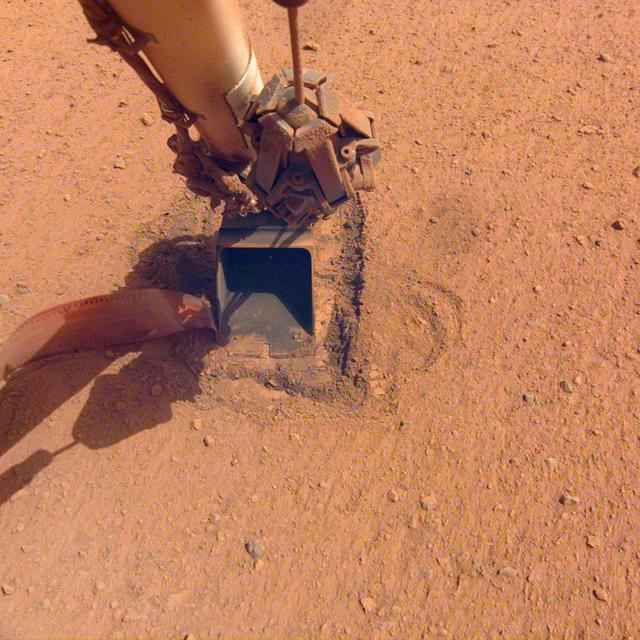
The "mole," a heat probe that traveled to Mars aboard NASA's InSight lander, as it looked after hammering on Saturday, Jan. 9, 2021, the 754th Martian day, or sol, of the mission. Since Feb. 28, 2019, the probe has been attempting to burrow into the Martian surface to take the planet's internal temperature. But the sand's unexpected tendency to clump deprived the spike-like mole of the friction it needs to hammer itself to a sufficient depth. On Jan. 9, with no progress, the team called an end to their efforts. Movie available at https://photojournal.jpl.nasa.gov/catalog/PIA24263
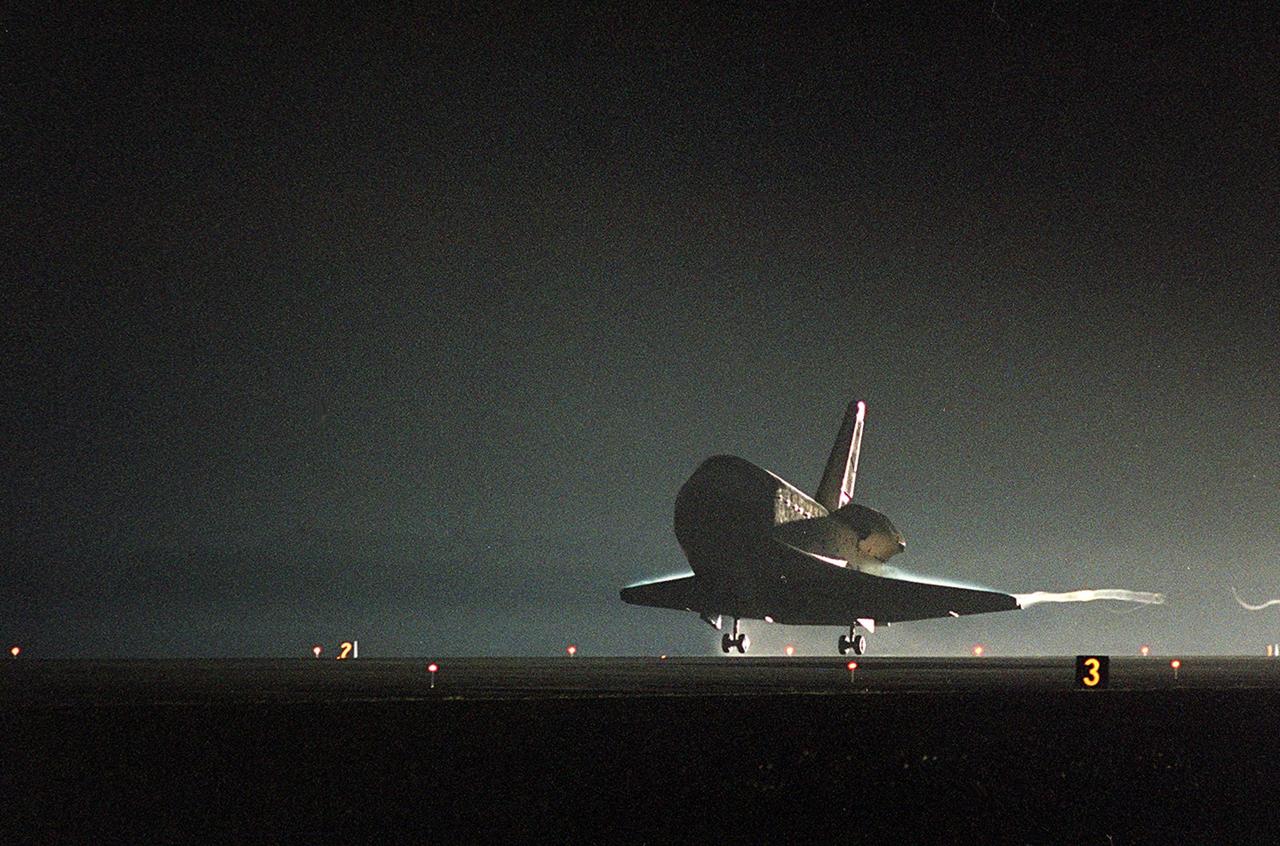
KENNEDY SPACE CENTER, Fla. -- Endeavour touches down on orbit 171on Runway 15 at the Shuttle Landing Facility to complete the successful 10-day, 19-hour and 58-minute-long STS-97 mission. Main gear touchdown was at 6:03:25 p.m. EST; nose gear touchdown at 6:03:34 p.m. EST; and wheel stop at 6:04:20 p.m. EST. At the controls is Commander Brent Jett. Other crew members on board are Pilot Michael Bloomfield and Mission Specialists Joseph Tanner, Carlos Noriega and Marc Garneau of Canada. On the 4.4-million-mile mission, Endeavour carried the P6 Integrated Truss Structure with solar arrays to power the International Space Station. The arrays and other equipment were installed during three EVAs that totaled 19 hours, 20 minutes. Endeavour was docked with the Space Station for 6 days, 23 hours, 13 minutes. This is the 16th nighttime landing for a Space Shuttle and the 53rd at Kennedy Space Center
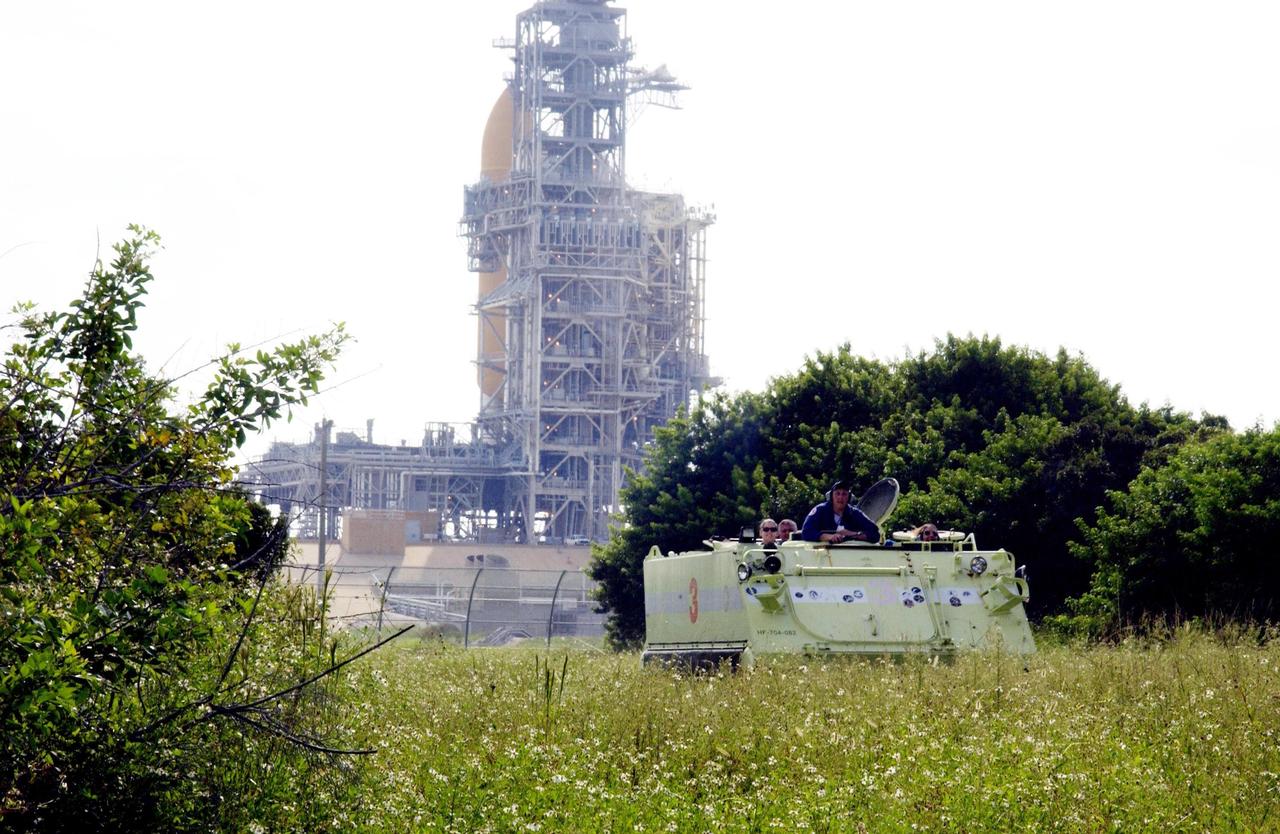
KENNEDY SPACE CENTER, Fla. - STS-112 Mission Specialist Sandra Magnus takes her turn driving the M-113 armored personnel carrier. Space Shuttle Atlantis is in the background. Magnus and the rest of the crew are at KSC for Terminal Countdown Demonstration Test activities, which also include a simulated launch countdown. Mission STS-112 aboard Space Shuttle Atlantis is scheduled to launch no earlier than Oct. 2, between 2 and 6 p.m. EDT. STS-112 is the 15th assembly mission to the International Space Station. Atlantis will be carrying the S1 Integrated Truss Structure, the first starboard truss segment. The S1 will be attached to the central truss segment, S0, during the 11-day mission.
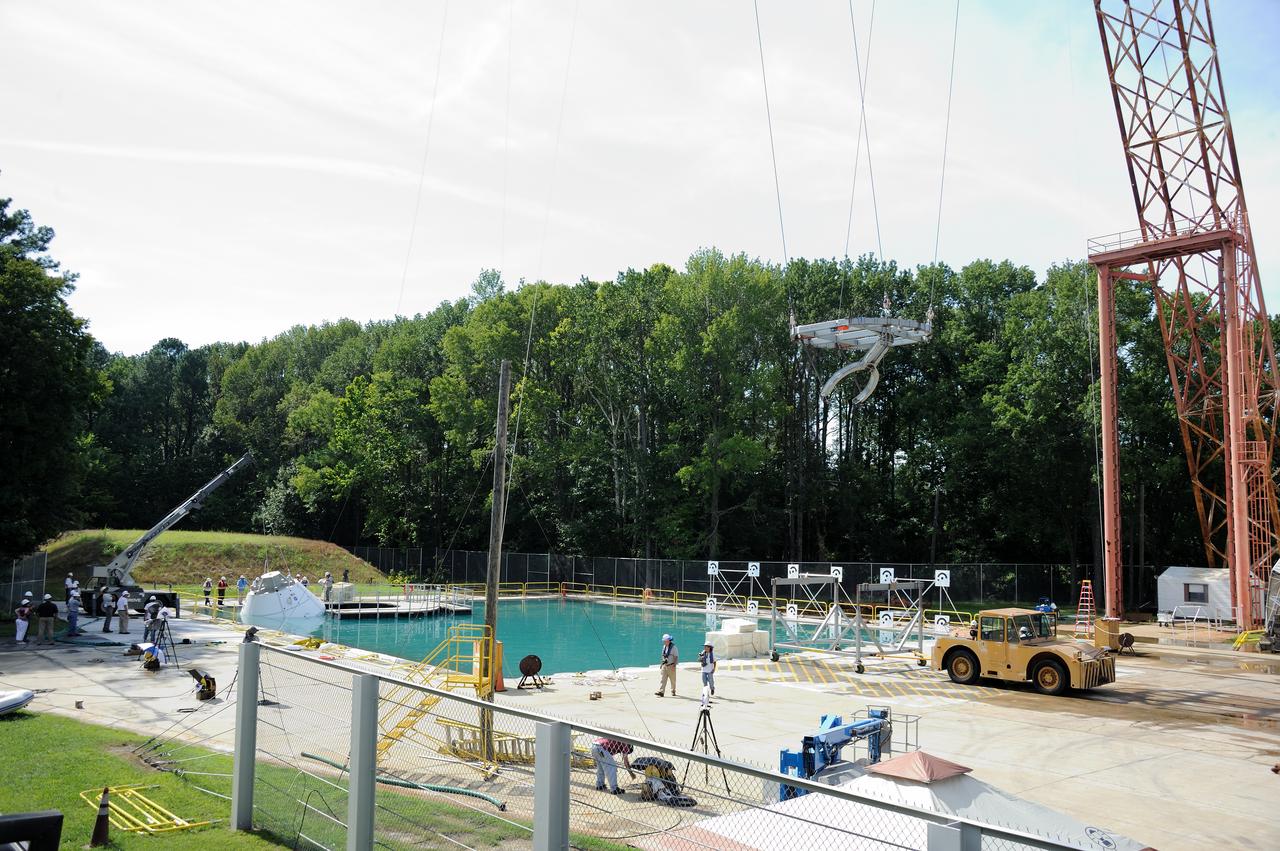
Orion Project SPLASH BTA Water Impact POT Boiler Plate Test Article (BTA) (SPLASH) Structural Passive Landing Attenuation for Survivability of Human Crew. (POT) Phase "0" Test Water Impact Test #3
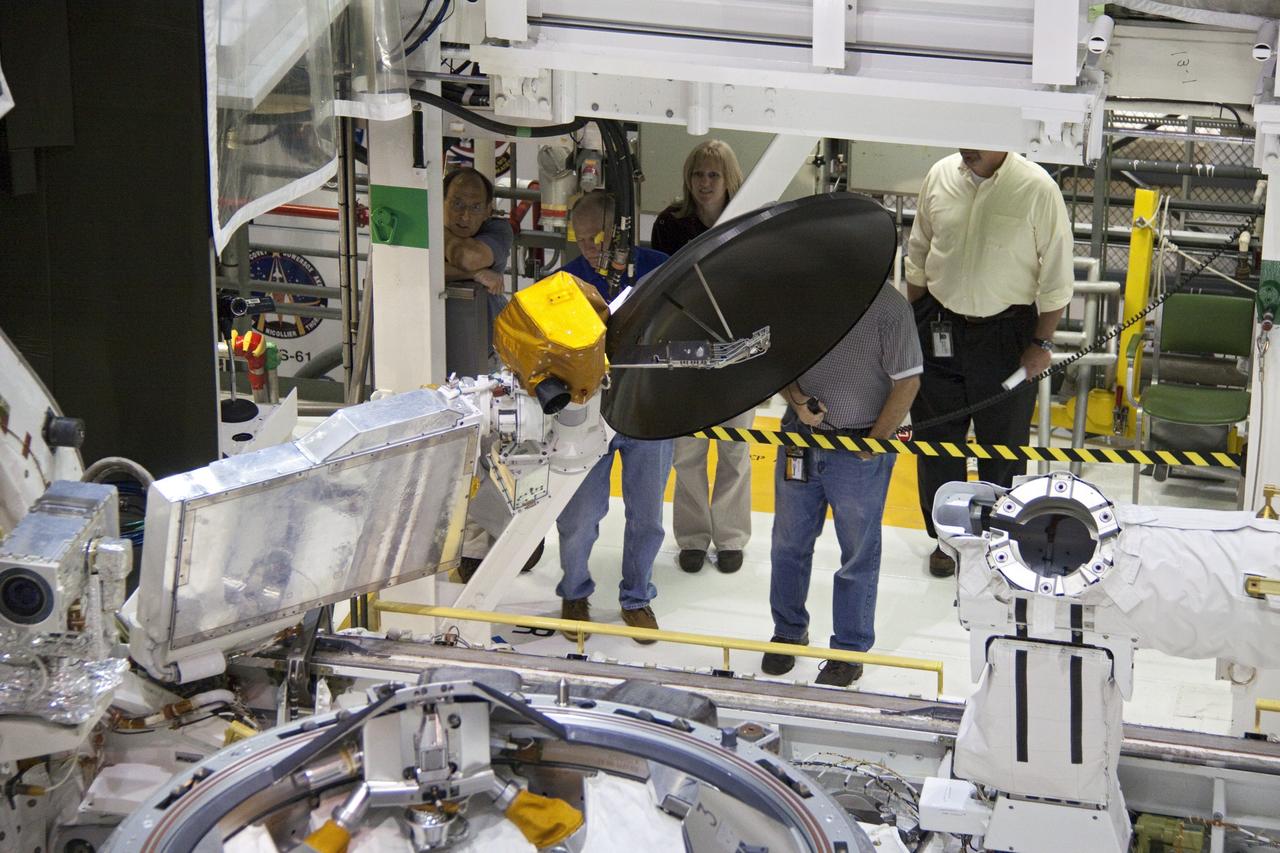
CAPE CANAVERAL, Fla. - In Orbiter Processing Facility-1 at NASA's Kennedy Space Center in Florida, the Ku-band antenna is being stowed in space shuttle Atlantis' payload bay. The antenna, which resembles a mini-satellite dish, transmits audio, video and data between Earth and the shuttle. Next, the clamshell doors of the payload bay will close completely in preparation for its move to the Vehicle Assembly Building. Atlantis is being prepared for the STS-135 mission, which will deliver the Raffaello multipurpose logistics module packed with supplies, logistics and spare parts to the International Space Station. STS-135 is targeted to launch June 28, and will be the last spaceflight for the Space Shuttle Program. Photo credit: NASA/Jack Pfaller
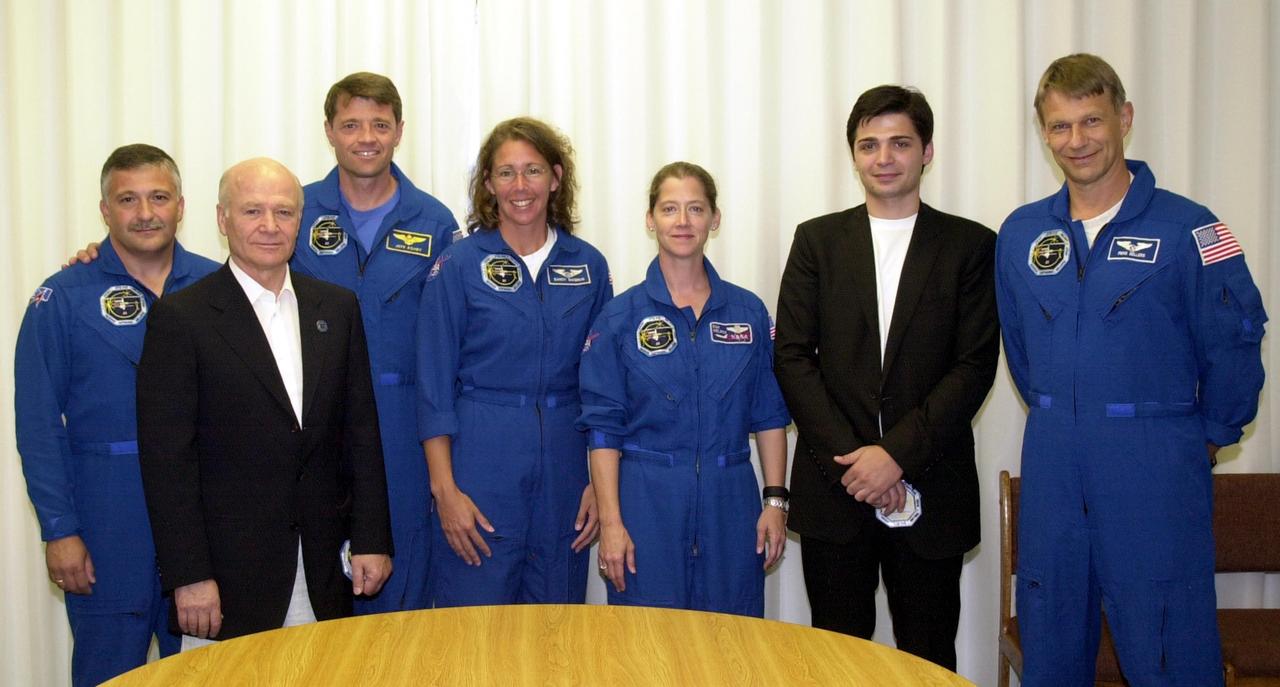
KENNEDY SPACE CENTER, FLA. - In the Operations and Checkout Building, the STS-112 crew takes time out from a visit with Russian officials to pose for a portrait. From left are Mission Specialist Fyodor N. Yurchikhin, Ph.D., a cosmonaut with the Russian Space Agency; Aslan Abashidze, President of the Autonomous Republic of Ajara in Georgia (Russia); Commander Jeffrey S. Ashby; Mission Specialist Sandra H. Magnus, Ph.D.; Pilot Pamela Ann Melroy; Georgi Abashidze, Mayor of Batumi (Yurchikhin's hometown); and Mission Specialist Piers J. Sellers, Ph.D. Mission Specialist David A. Wolf, M.D., not pictured, is also a member of the crew. The STS-112 crew is awaiting launch to the International Space Station aboard Space Shuttle Atlantis. The launch has been postponed to no earlier than Monday, Oct. 7, so that the Mission Control Center, located at the Lyndon B. Johnson Space Center in Houston, Texas, can be secured and protected from potential storm impacts from Hurricane Lili.
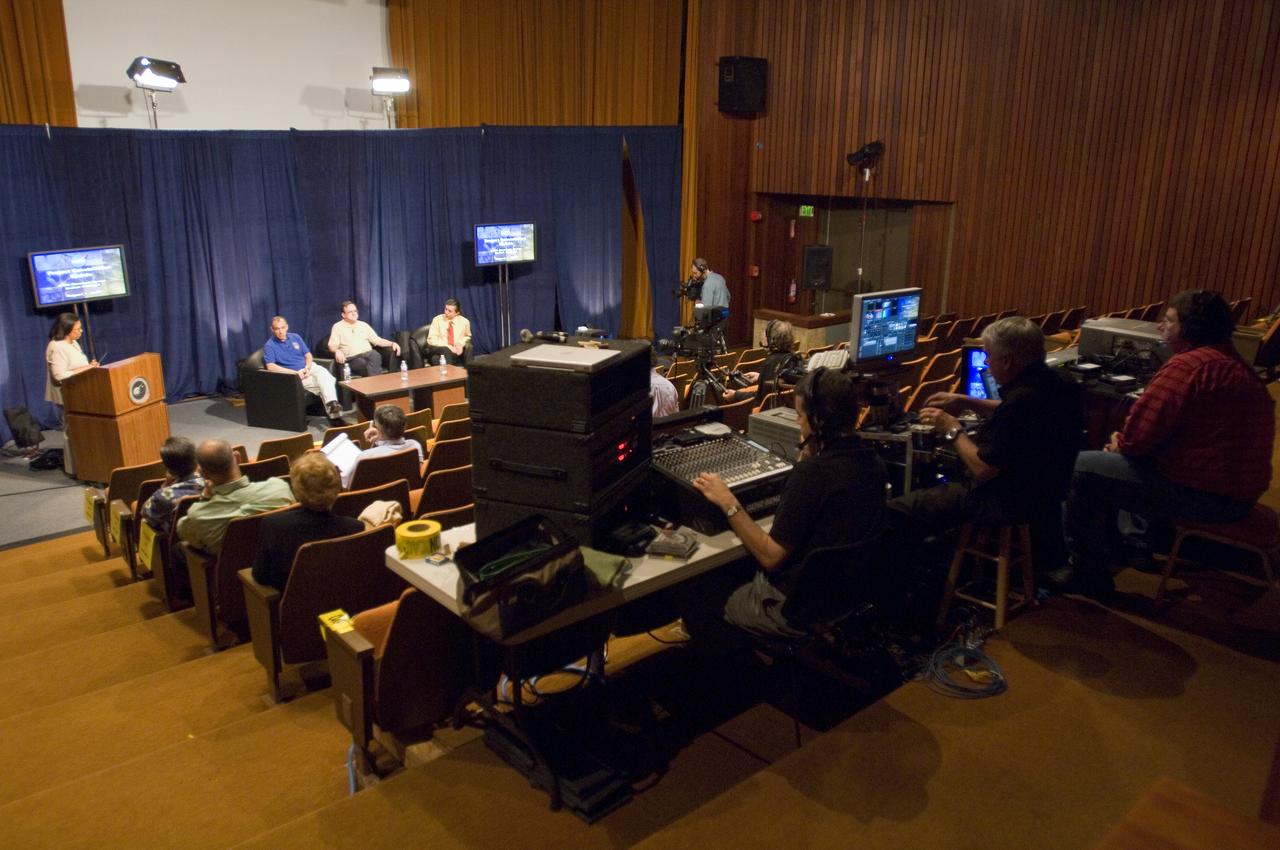
NASA Officials gather at Ames Research Center to discuss Spaceship development progress. Constellation is developing the Orion spacecraft and Ares rockets to support an American return to the moon by 2020.
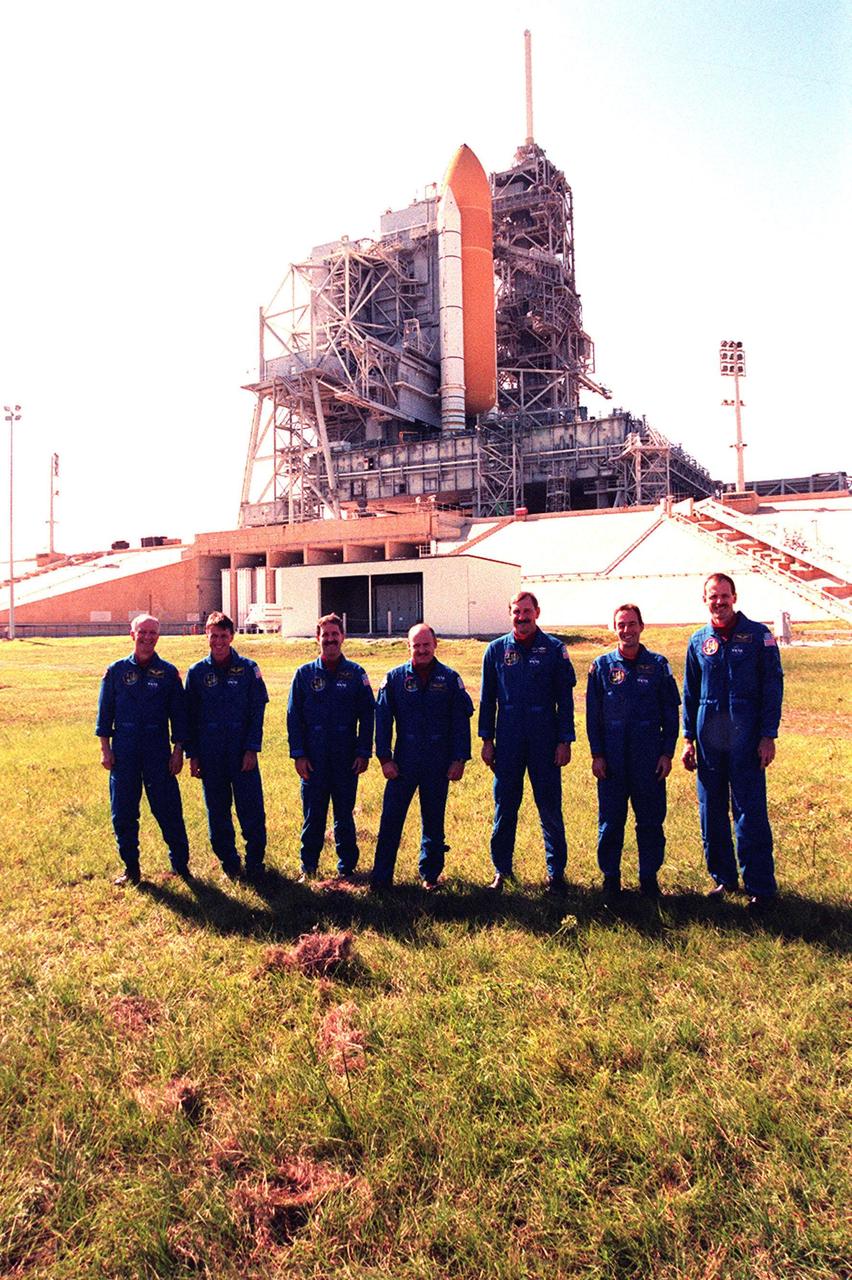
During Terminal Countdown Demonstration Test (TDCT) activities at Launch Pad 39B, the STS-103 crew pose in front of the flame trench, which is situated underneath the Mobile Launcher Platform holding Space Shuttle Discovery. Standing left to right are Mission Specialists Claude Nicollier of Switzerland, who is with the European Space Agency (ESA), C. Michael Foale (Ph.D.), John M. Grunsfeld (Ph.D.), Pilot Scott J. Kelly, Commander Curtis L. Brown Jr., and Mission Specialists Jean-François Clervoy of France, also with ESA, and Steven L. Smith. One of the solid rocket boosters and the external tank that are attached to Discovery can be seen in the photo. The flame trench is made of concrete and refractory brick, and contains an orbiter flame deflector on one side and solid rocket booster flame deflector on the other. The deflectors protect the flame trench floor and pad surface from the intense heat of launch. The TCDT provides the crew with emergency egress training, opportunities to inspect their mission payloads in the orbiter's payload bay, and simulated countdown exercises. STS-103 is a "call-up" mission due to the need to replace and repair portions of the Hubble Space Telescope, including the gyroscopes that allow the telescope to point at stars, galaxies and planets. The STS-103 crew will be replacing a Fine Guidance Sensor, an older computer with a new enhanced model, an older data tape recorder with a solid-state digital recorder, a failed spare transmitter with a new one, and degraded insulation on the telescope with new thermal insulation. The crew will also install a Battery Voltage/Temperature Improvement Kit to protect the spacecraft batteries from overcharging and overheating when the telescope goes into a safe mode. Four EVA's are planned to make the necessary repairs and replacements on the telescope. The mission is targeted for launch Dec. 6 at 2:37 a.m. EST
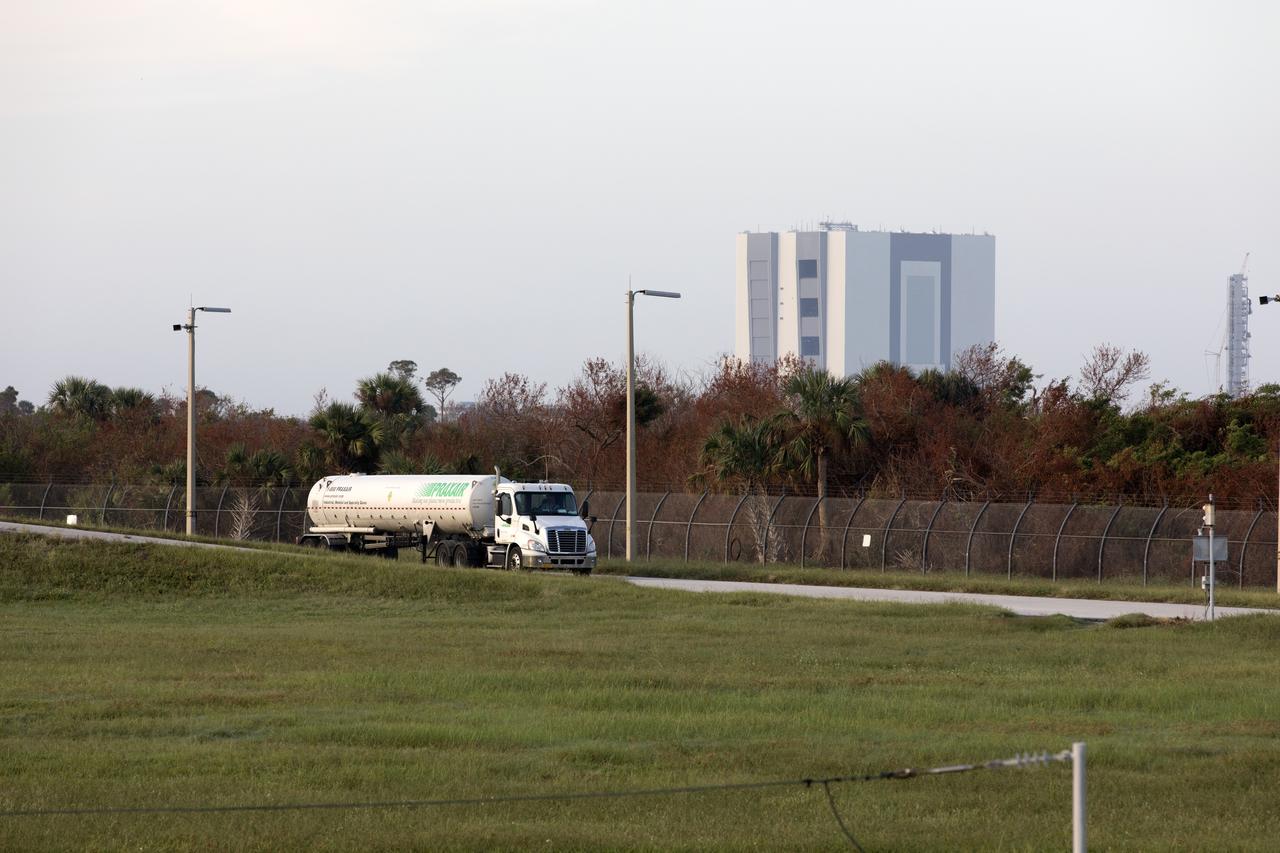
One of several Praxair trucks carrying its load of liquid oxygen, or LO2, is in route to Launch Pad 39B at NASA's Kennedy Space Center in Florida. The truck will offload LO2 slowly into a giant storage sphere located at the northwest corner of the pad to gradually chill it down from normal temperature to about negative 298 degrees Fahrenheit, during the first major integrated operation to prepare for the launch of the agency's Orion spacecraft atop the Space Launch System (SLS) rocket. The Ground Systems Development and Operations Program is overseeing upgrades and modifications to pad B to support the launch of the SLS and Orion spacecraft for Exploration Mission-1, deep space missions and NASA’s journey to Mars.
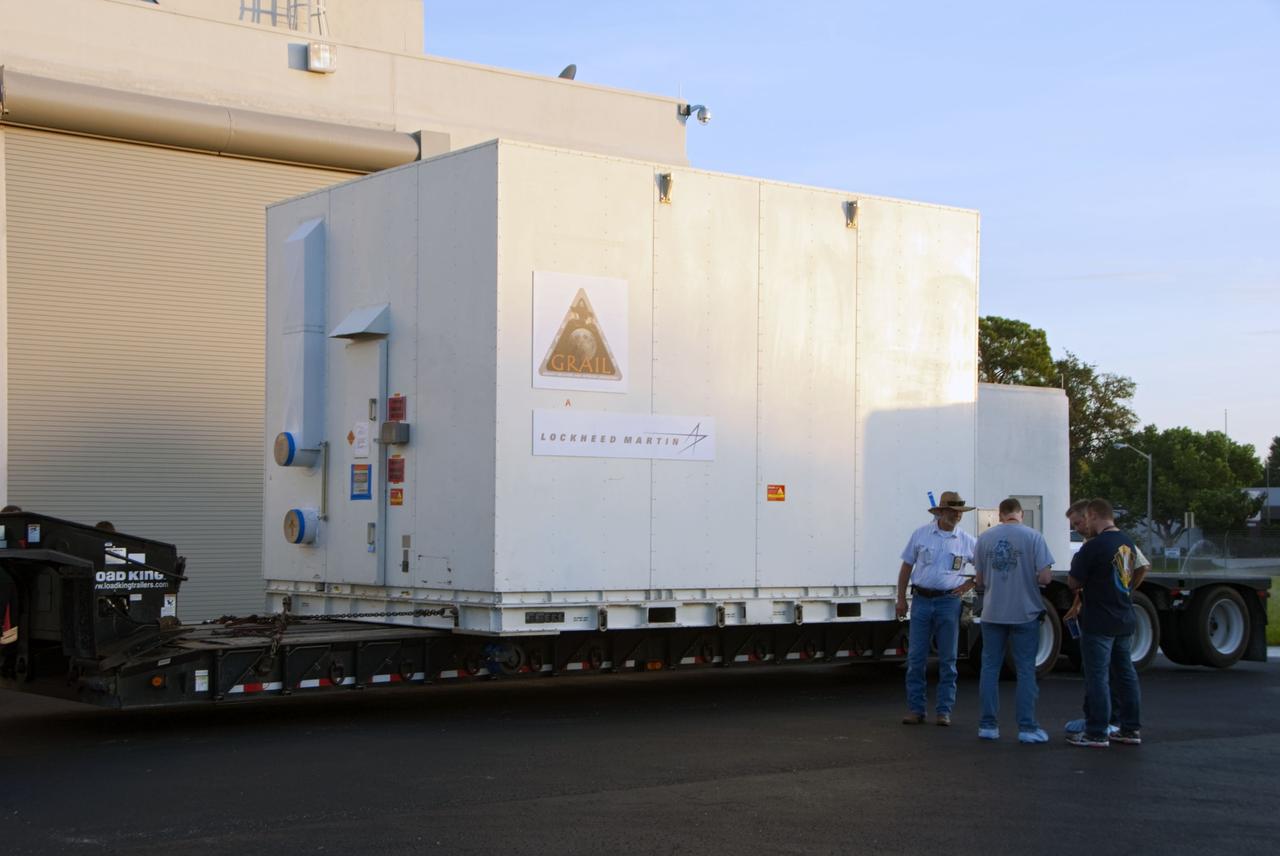
CAPE CANAVERAL, Fla. -- Preparations are under way to transport the protective canister housing NASA's twin Gravity Recovery and Interior Laboratory lunar spacecraft to the Hazardous Processing Facility (HPF) at Astrotech Space Operation's payload processing facility in Titusville, Fla. In the HPF, the spacecraft will undergo two days of fueling activities. GRAIL will fly in tandem orbits around the moon for several months to measure its gravity field. GRAIL's primary science objectives are to determine the structure of the lunar interior, from crust to core, and to advance understanding of the thermal evolution of the moon. Launch aboard a United Launch Alliance Delta II rocket from Space Launch Complex 17B on Cape Canaveral Air Force Station is scheduled for Sept. 8. For more information, visit http://www.nasa.gov/grail. Photo credit: NASA/Charisse Nahser
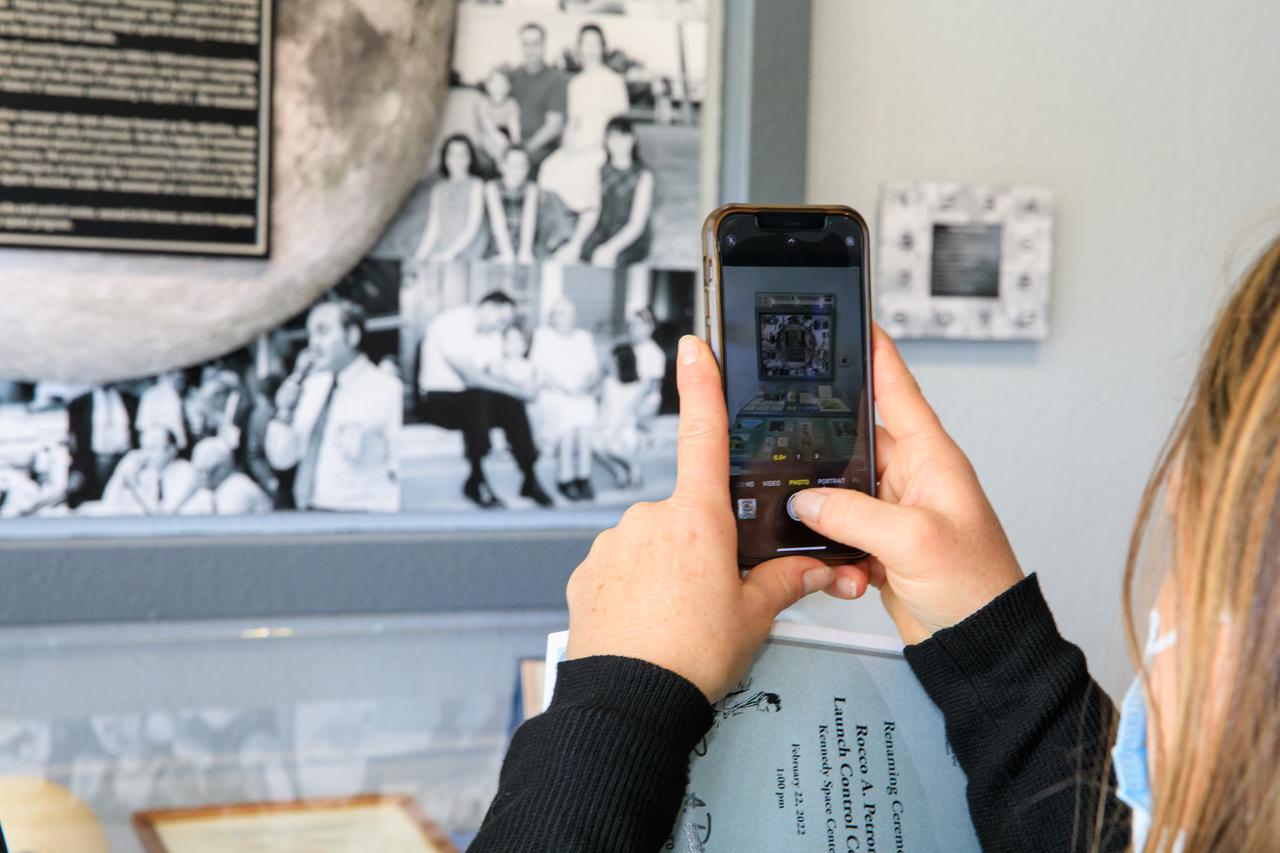
A spectator takes a photo of a display dedicated to former Kennedy Space Center director Rocco Petrone on Feb. 22, 2022. During a ceremony held at the Florida spaceport, Kennedy’s launch control center was officially renamed to the Rocco A. Petrone Launch Control Center. Petrone was instrumental in America’s first voyages to the Moon and headed the Apollo program. He died in 2006 at the age of 80.
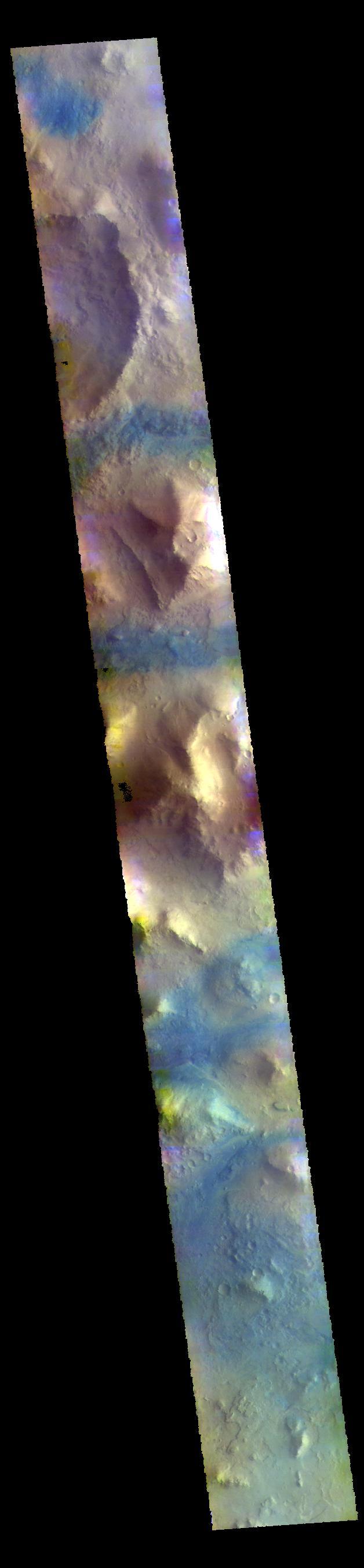
This VIS image shows part of Terra Sabaea, including plains, craters, and mesas. The dark blue tones often indicate locations of basaltic sands. The THEMIS VIS camera contains 5 filters. The data from different filters can be combined in multiple ways to create a false color image. These false color images may reveal subtle variations of the surface not easily identified in a single band image. Orbit Number: 60437 Latitude: 29.7491 Longitude: 74.5651 Instrument: VIS Captured: 2015-07-30 03:21 https://photojournal.jpl.nasa.gov/catalog/PIA22707
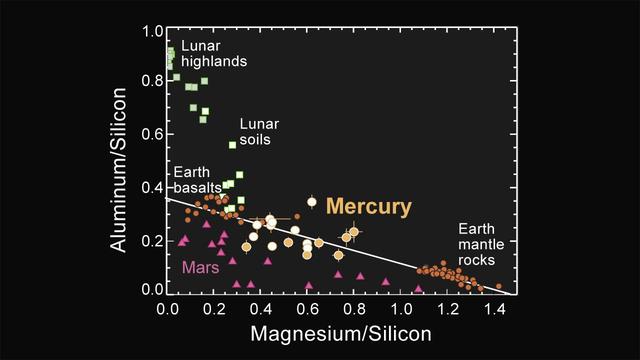
Major-element Composition of Mercury Surface Materials
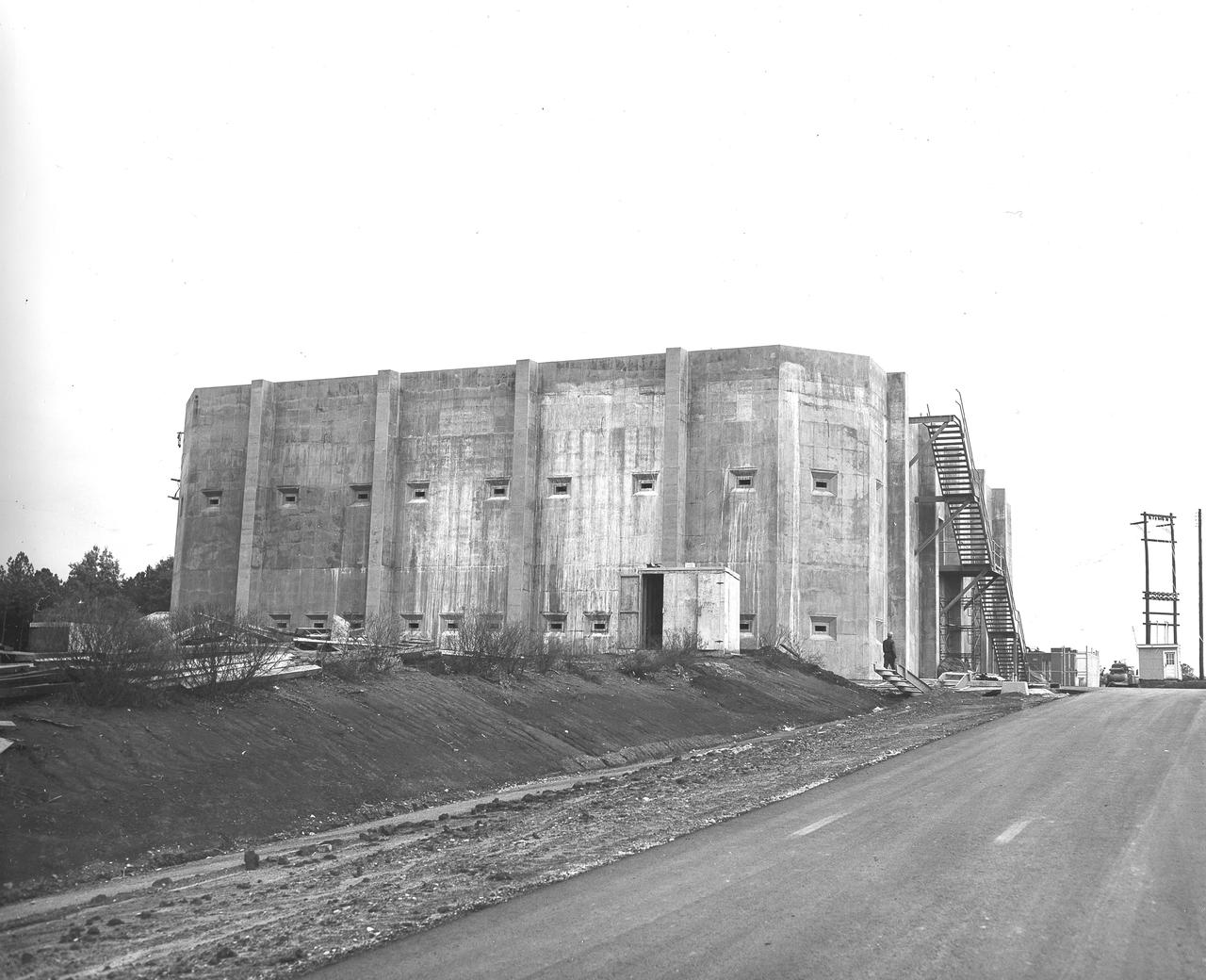
At its founding, the Marshall Space Flight Center (MSFC) inherited the Army’s Jupiter and Redstone test stands, but much larger facilities were needed for the giant stages of the Saturn V. From 1960 to 1964, the existing stands were remodeled and a sizable new test area was developed. The new comprehensive test complex for propulsion and structural dynamics was unique within the nation and the free world, and they remain so today because they were constructed with foresight to meet the future as well as on going needs. Construction of the S-IC Static test stand complex began in 1961 in the west test area of MSFC, and was completed in 1964. The S-IC static test stand was designed to develop and test the 138-ft long and 33-ft diameter Saturn V S-IC first stage, or booster stage, weighing in at 280,000 pounds. Required to hold down the brute force of a 7,500,000-pound thrust produced by 5 F-1 engines, the S-IC static test stand was designed and constructed with the strength of hundreds of tons of steel and 12,000,000 pounds of cement, planted down to bedrock 40 feet below ground level. The foundation walls, constructed with concrete and steel, are 4 feet thick. The base structure consists of four towers with 40-foot-thick walls extending upward 144 feet above ground level. The structure was topped by a crane with a 135-foot boom. With the boom in the upright position, the stand was given an overall height of 405 feet, placing it among the highest structures in Alabama at the time. In addition to the stand itself, related facilities were constructed during this time. Built directly east of the test stand was the Block House, which served as the control center for the test stand. The two were connected by a narrow access tunnel which housed the cables for the controls. This construction photo, taken November 15, 1962, depicts a view of the Block House.
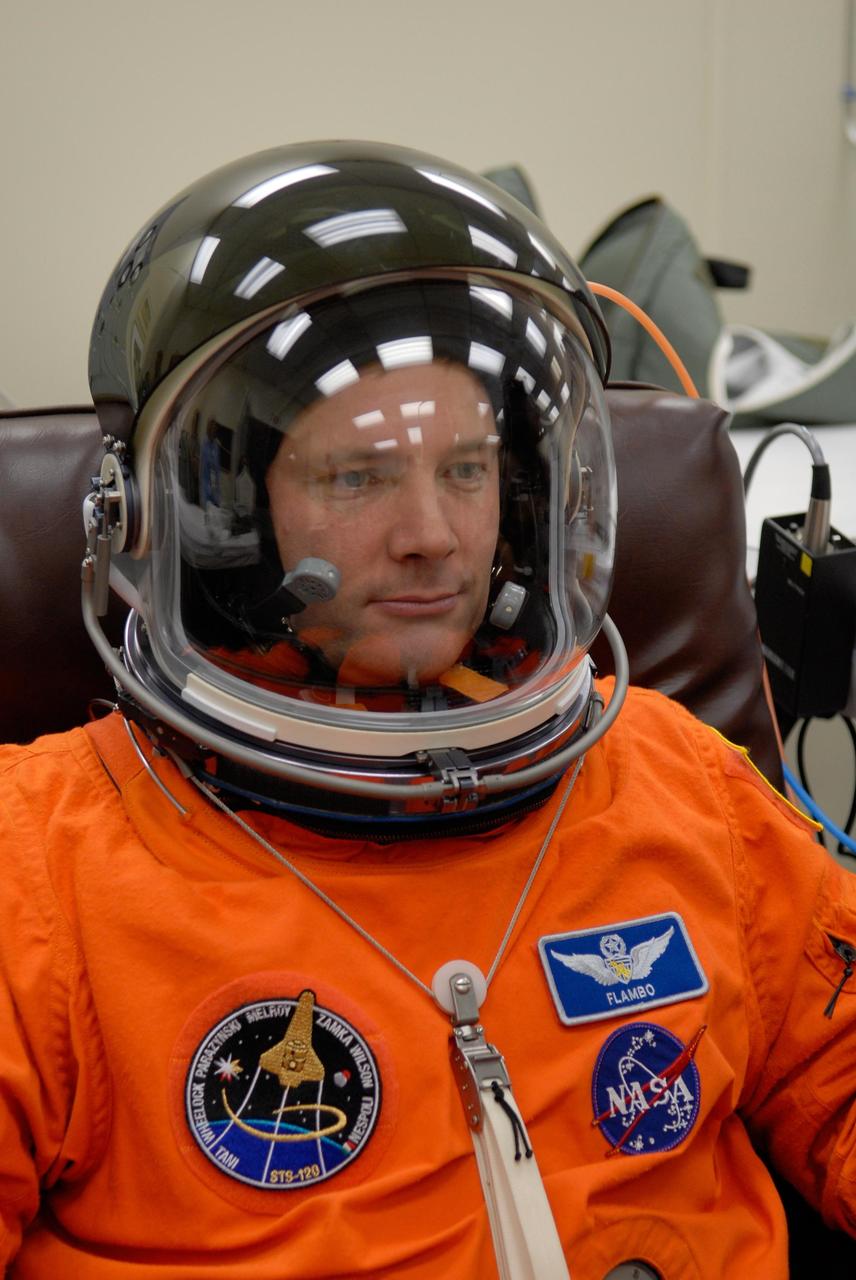
KENNEDY SPACE CENTER, FLA. -- STS-120 Mission Specialist Doug Wheelock completes suiting up to take part in a simulated launch countdown, part of the prelaunch terminal countdown demonstration test, or TCDT. His name patch reflects the nicknames the crew gave each other for the event. The TCDT provides astronauts and ground crews an opportunity to participate in various launch preparation activities, including equipment familiarization, emergency training and the simulated countdown. The STS-120 mission will deliver the U.S. Node 2 module, named Harmony, aboard space shuttle Discovery to the International Space Station. Launch of Discovery on mission STS-120 is targeted for Oct. 23 at 11:38 a.m. EDT on a 14-day mission. Photo credit: NASA/Kim Shiflett

Release Date: July 10, 2003 A rich starry sky fills the view from an ancient gas-giant planet in the core of the globular star cluster M4, as imagined in this artist's concept. The 13-billion-year-old planet orbits a helium white-dwarf star and the millisecond pulsar B1620-26, seen at lower left. The globular cluster is deficient in heavier elements for making planets, so the existence of such a world implies that planet formation may have been quite efficient and common in the early universe. Object Names: B1620-26, M4 Image Type: Artwork Illustration Credit: NASA and G. Bacon (STScI) To learn more about this image go to: <a href="http://www.nasa.gov/centers/goddard/news/topstory/2003/0709hstssu.html" rel="nofollow">www.nasa.gov/centers/goddard/news/topstory/2003/0709hstss...</a> <b><a href="http://www.nasa.gov/centers/goddard/home/index.html" rel="nofollow">NASA Goddard Space Flight Center</a></b> is home to the nation's largest organization of combined scientists, engineers and technologists that build spacecraft, instruments and new technology to study the Earth, the sun, our solar system, and the universe.
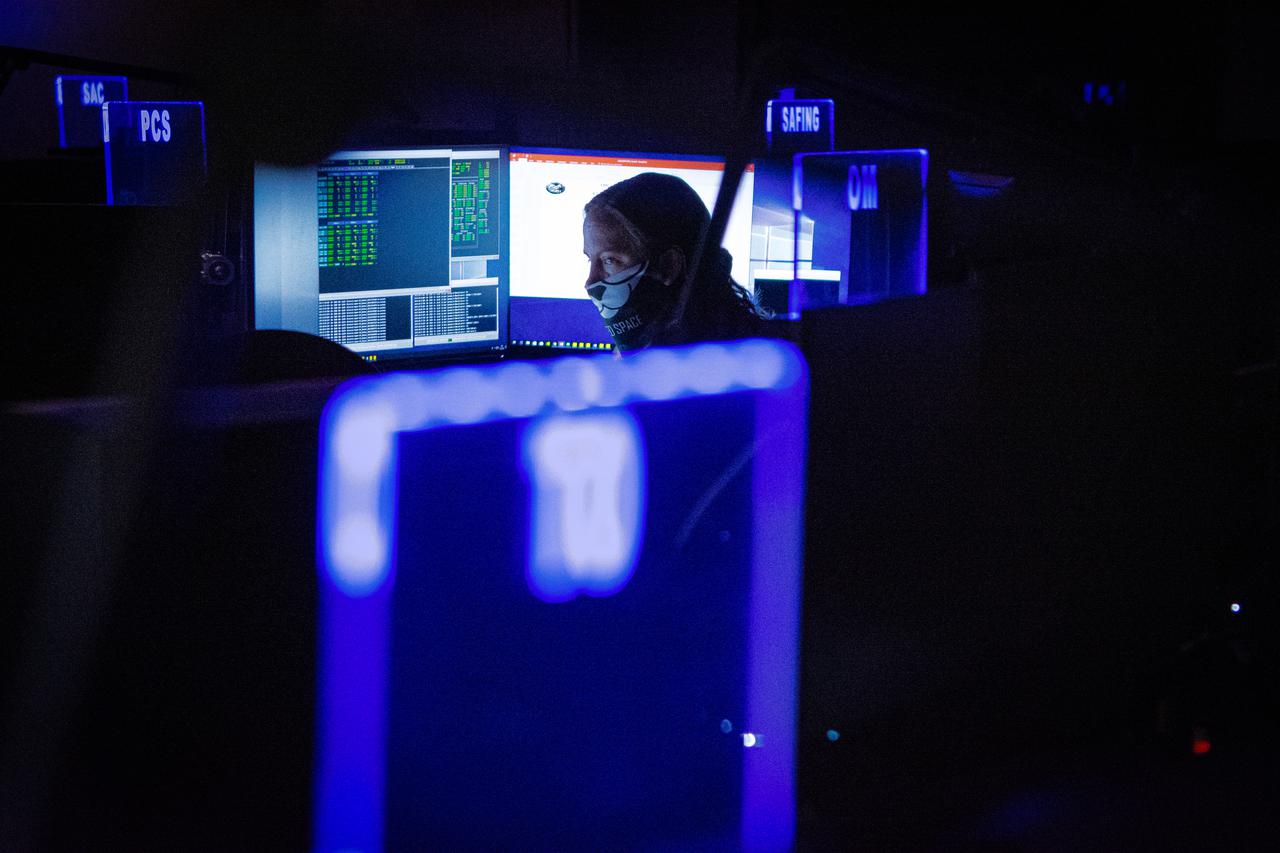
Hubble Opperations Support Room, June 16, 2020. Credit: NASA/Goddard/Rebecca Roth
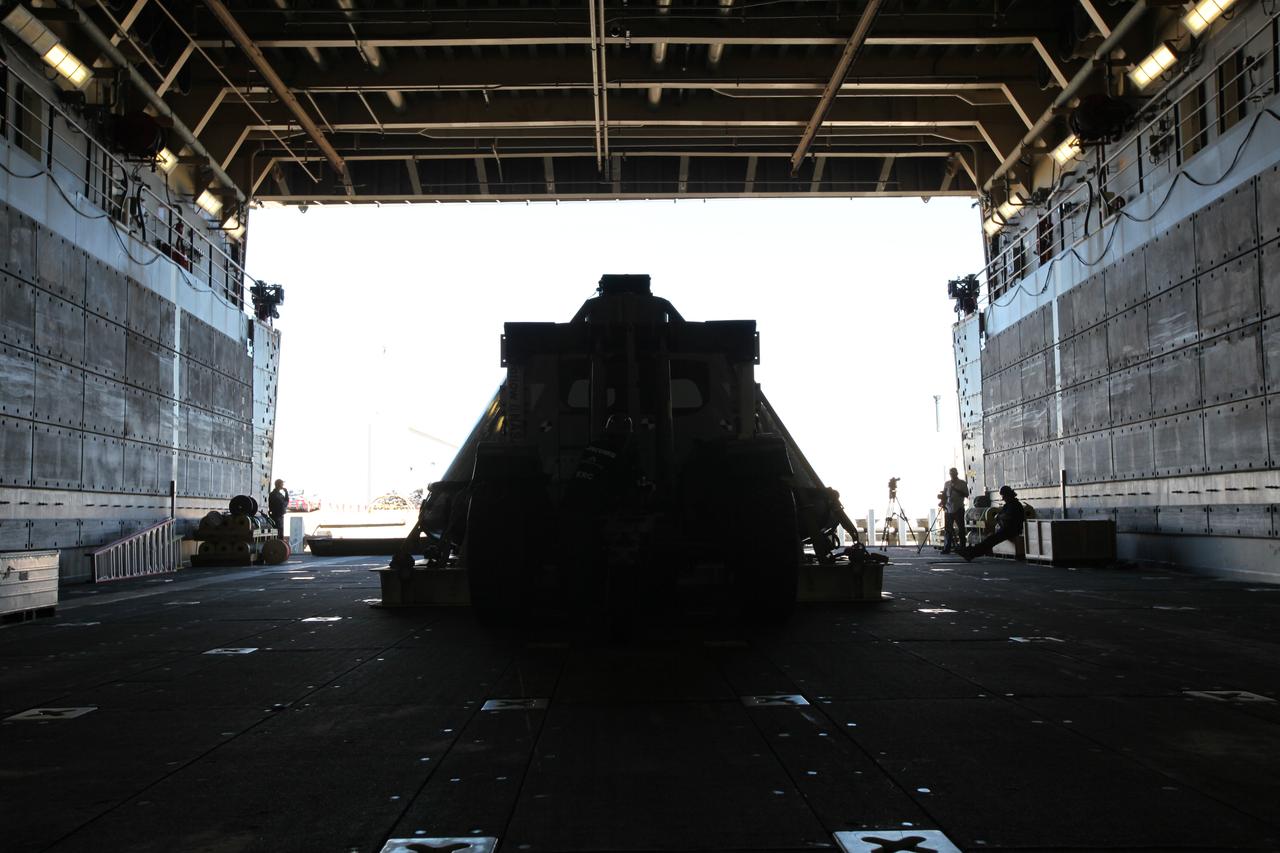
A contract of light and shadow. The test version of the Orion crew module has been transported into the well deck of the USS San Diego at Naval Base San Diego in California, as viewed from inside the ship. NASA, Orion manufacturer Lockheed Martin and the U.S. Navy will head out to sea with the Orion test spacecraft aboard for Underway Recovery Test 5 (URT-5) in the Pacific Ocean off the coast of California. During URT-5, the team will demonstrate and evaluate the recovery processes, procedures, hardware and personnel necessary for recovery of Orion on its return from a deep space mission. Orion is the exploration spacecraft designed to carry astronauts to destinations not yet explored by humans, including an asteroid and NASA Journey to Mars. It will have emergency abort capability, sustain the crew during space travel and provide safe re-entry from deep space return velocities. Orion is scheduled to launch atop NASA’s Space Launch System rocket in 2018. For more information, visit http://www.nasa.gov/orion.
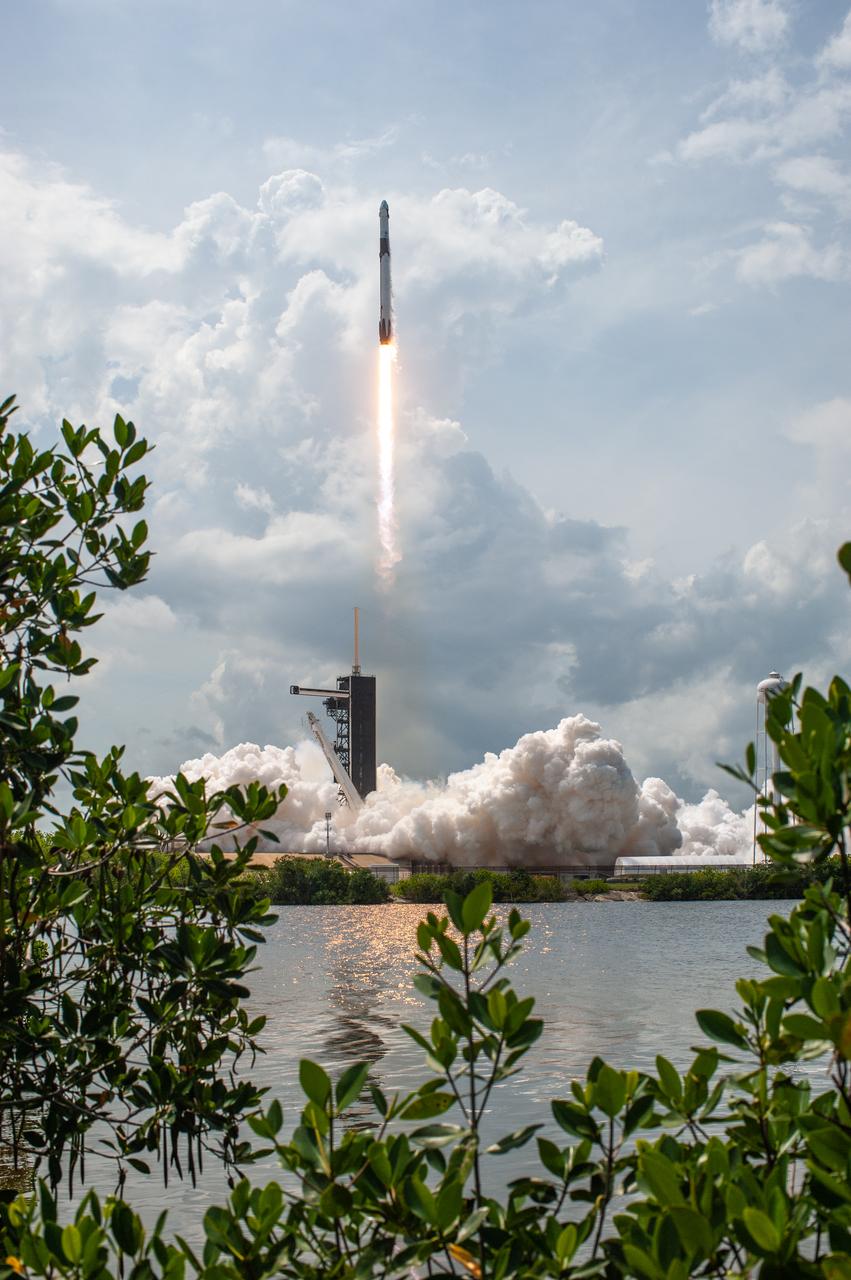
A SpaceX Falcon 9 rocket soars upward after lifting off from historic Launch Complex 39A at NASA’s Kennedy Space Center in Florida on May 30, 2020, carrying NASA astronauts Robert Behnken and Douglas Hurley to the International Space Station in a SpaceX Crew Dragon capsule for the agency’s SpaceX Demo-2 mission. Liftoff occurred at 3:22 p.m. EDT. Behnken and Hurley are the first astronauts to launch from U.S. soil to the space station since the end of the Space Shuttle Program in 2011. Part of NASA’s Commercial Crew Program, this will be SpaceX’s final flight test, paving the way for the agency to certify the crew transportation system for regular, crewed flights to the orbiting laboratory.
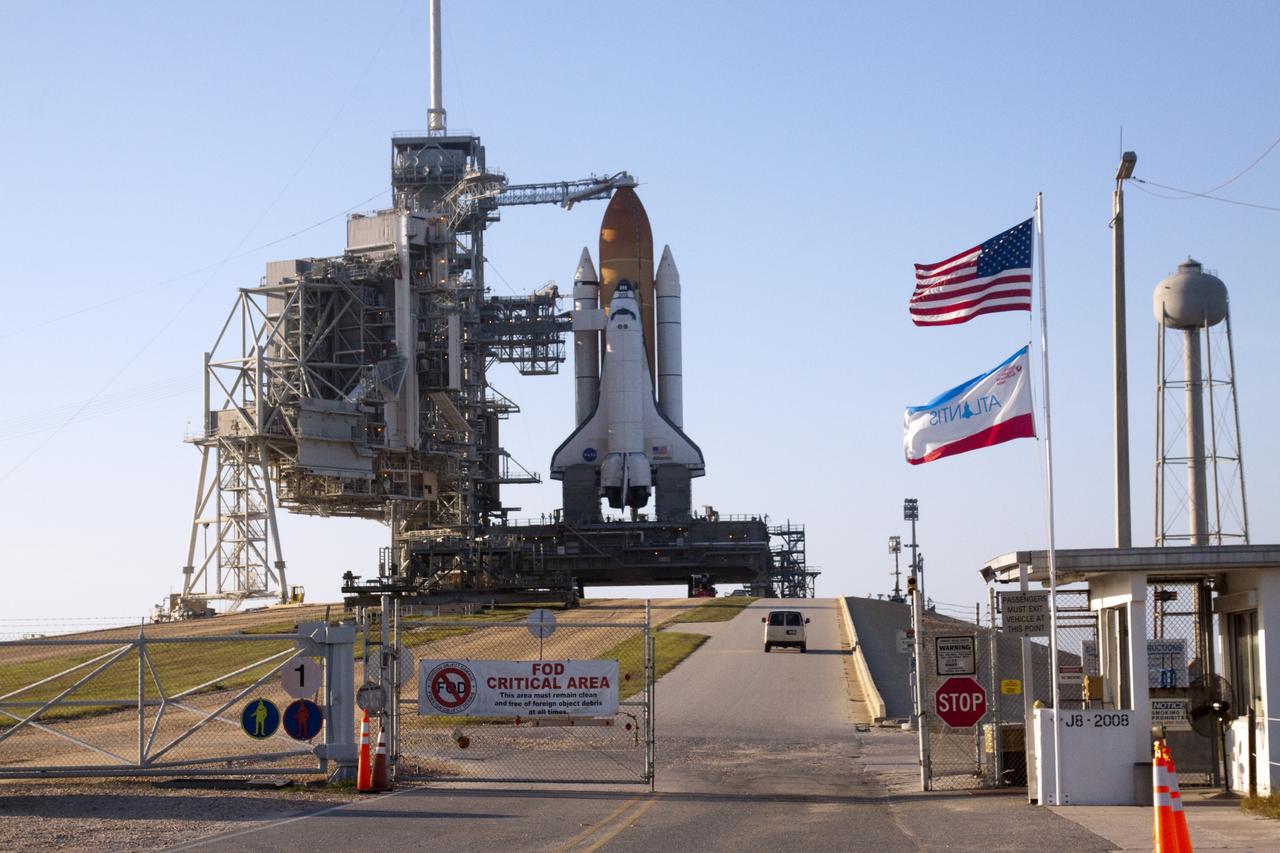
STS-132 LAUNCH L-1 RSS ROLLBACK
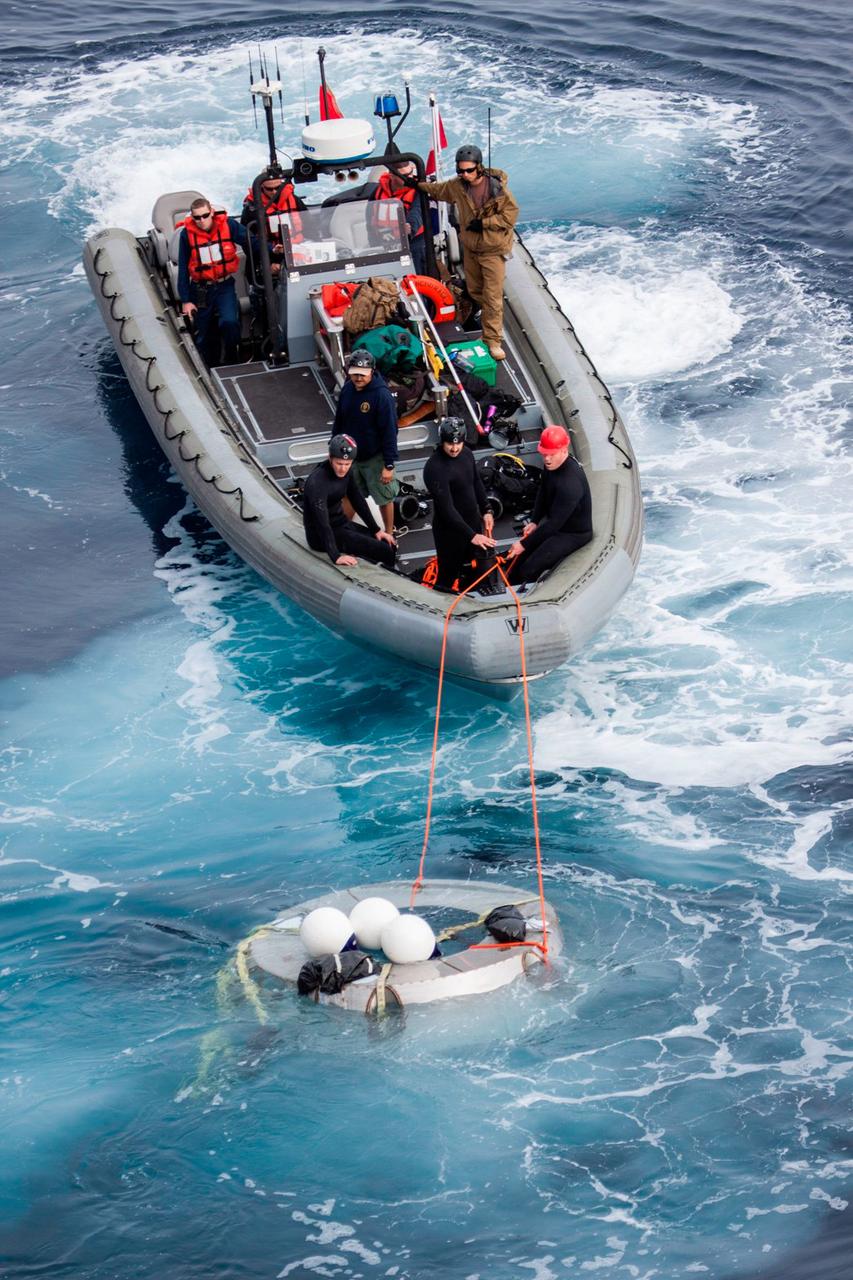
Members of the Orion recovery team work to retrieve a test version of Orion's forward bay cover, a protective shell that fits on top of the crew module, from the Pacific Ocean on Feb. 18, 2014, during an Underway Recovery Test. NASA and U.S. Navy personnel came together on board the USS San Diego, off the coast of California, to practice the processes they used to recover Orion after its splashdown following Exploration Flight Test-1 (EFT-1). Part of Batch image transfer from Flickr.
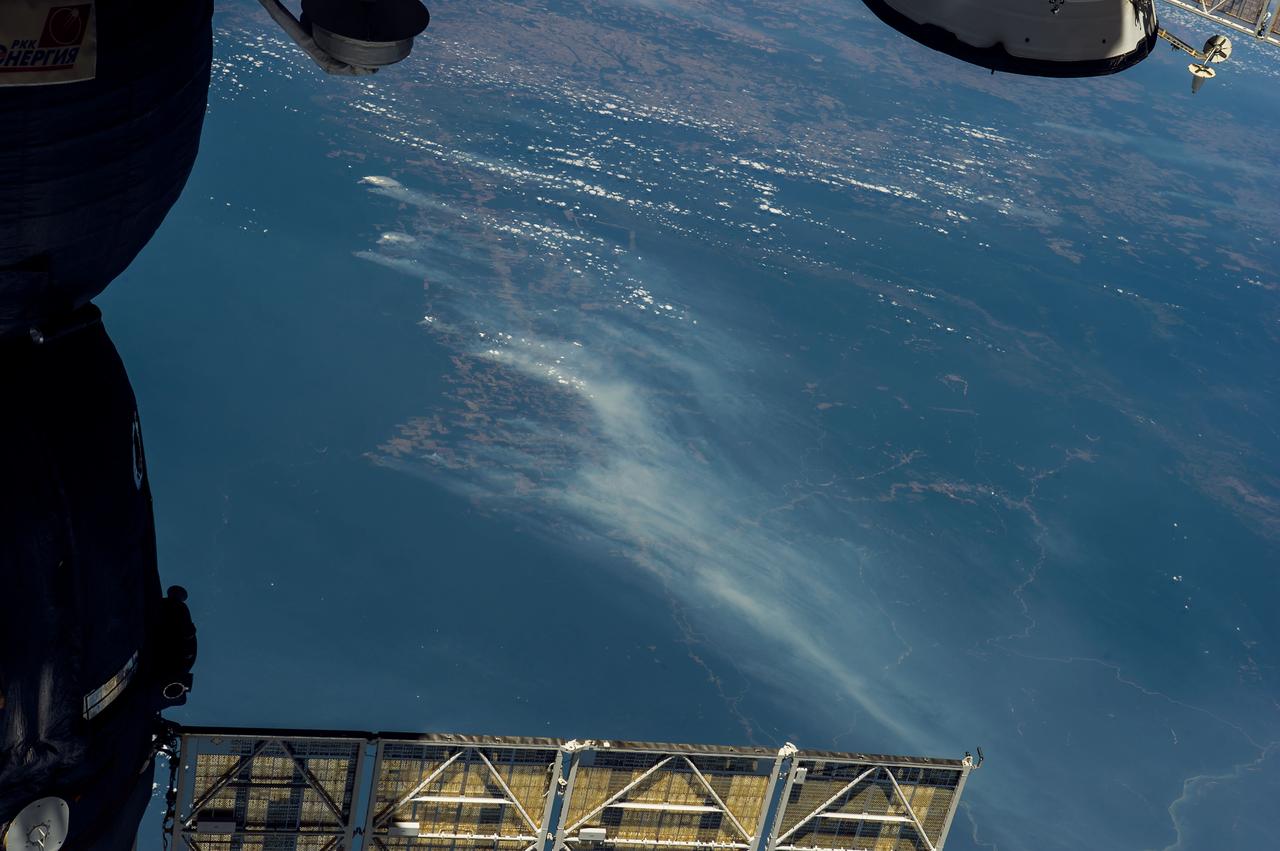
ISS040-E-103496 (19 Aug. 2014) --- On an unusually cloud-free day at the height of the dry season in Amazonia, several fires were burning, giving rise to a broad smoke pall easily seen from the International Space Station, photographed by an Expedition 40 crew member. Parts of the space station appear along the margins of the image. Against the backdrop of the dark green rainforest, several fires follow the major highway BR 163 (lower center of the image to the top left). Fires are set to clear patches of forest for agriculture, a process that reveals red-brown soils. A long line of new cleared patches snakes east from BR 163 towards the remote valley of the Rio Crepori. Extensive deforested areas in Brazil?s state of Mato Grosso appear as tan areas across the top of the image. Fires show the advance of deforestation into the state of Para, the area shown in most of this view. Para is now second after Mato Grosso in terms of deforestation acreage.
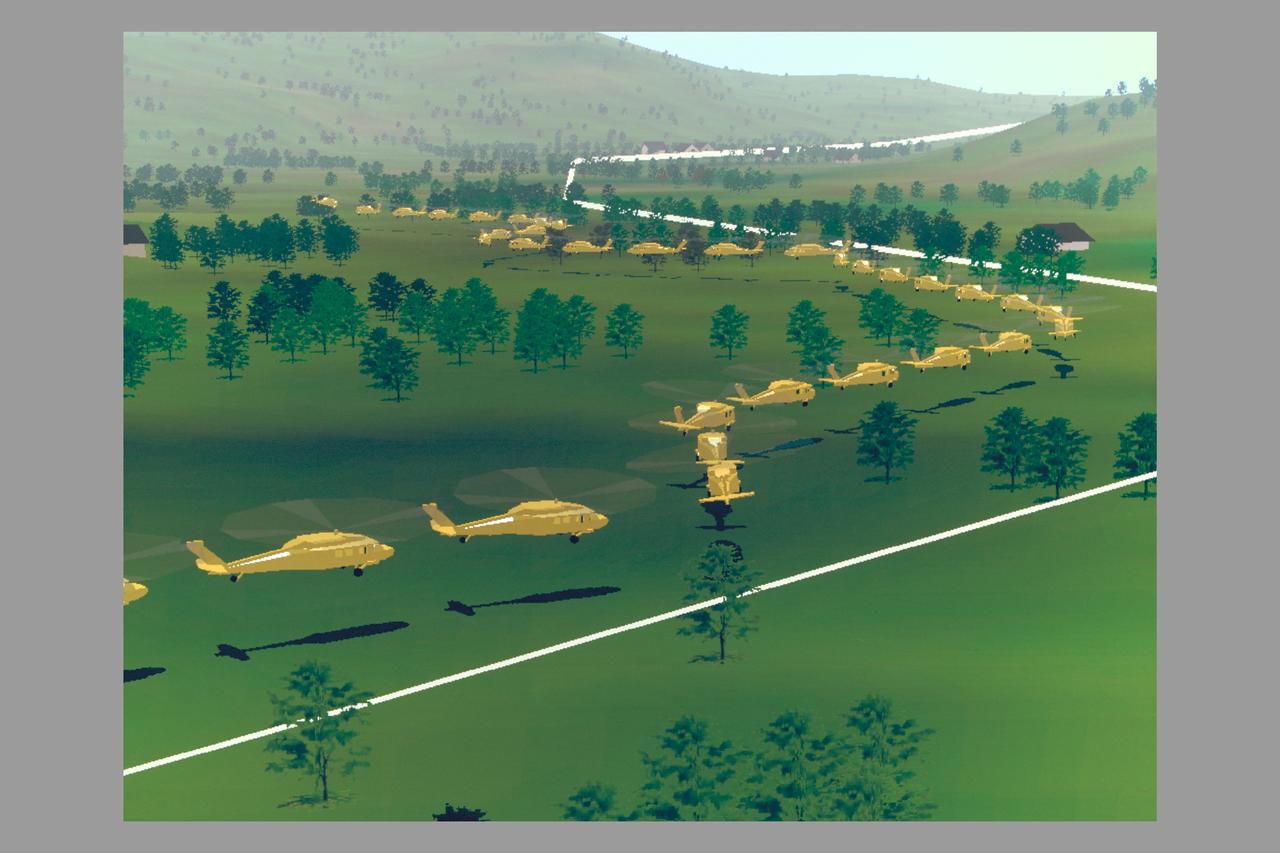
HELSIM: Helicopter Simulation slying nap of the earth
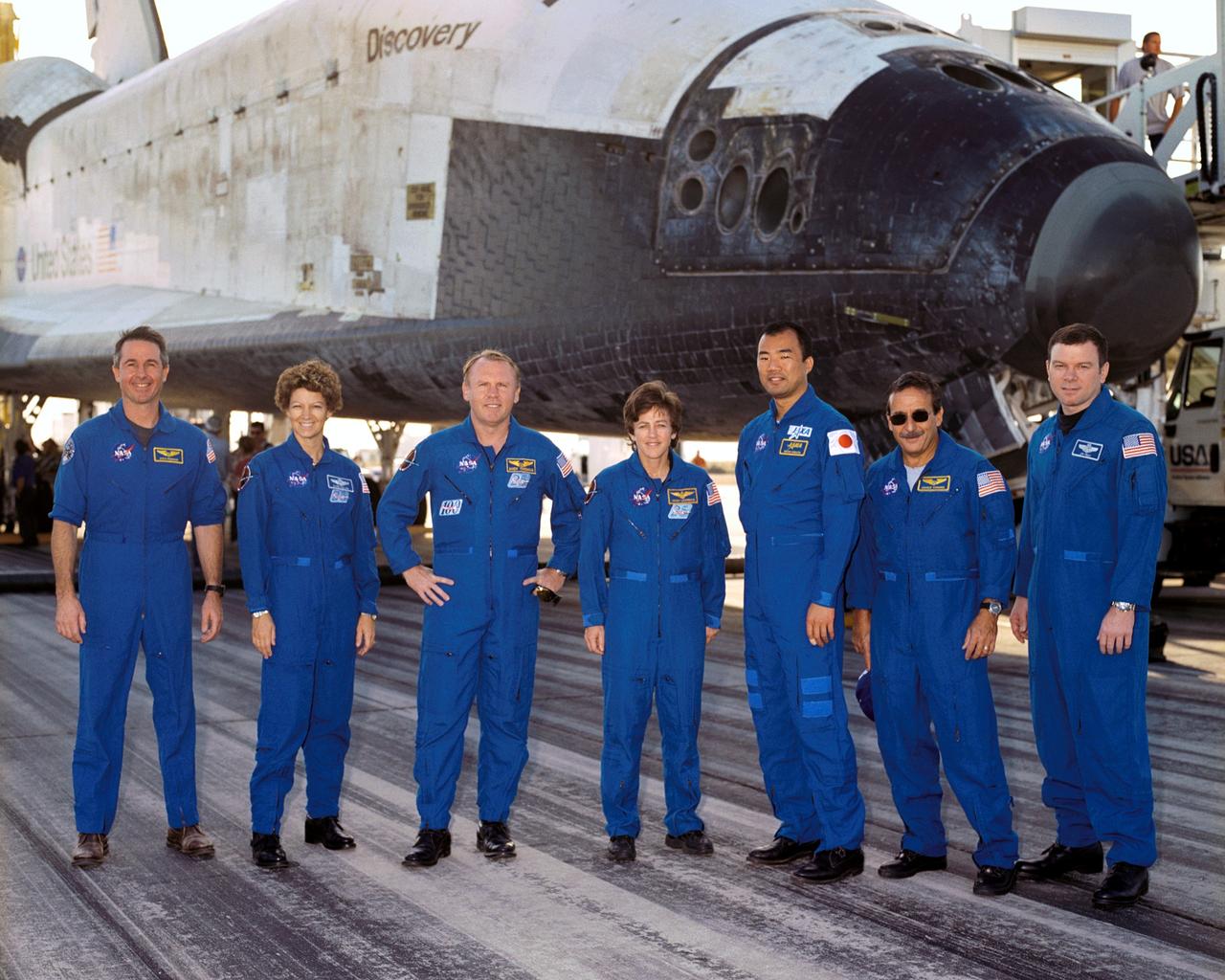
STS114-S-045 (9 August 2005) --- The STS-114 crewmembers gather for a crew photo in front of the Space Shuttle Discovery following landing at Edwards Air Force Base in California. From the left are astronauts Stephen K. Robinson, mission specialist; Eileen M. Collins, commander; Andrew S. W. Thomas, Wendy B. Lawrence, Soichi Noguchi representing Japan Aerospace Exploration Agency (JAXA), Charles J. Camarda, all mission specialists; and James M. Kelly, pilot. The landing concludes a historic 14-day, Return to Flight mission to the international space station.
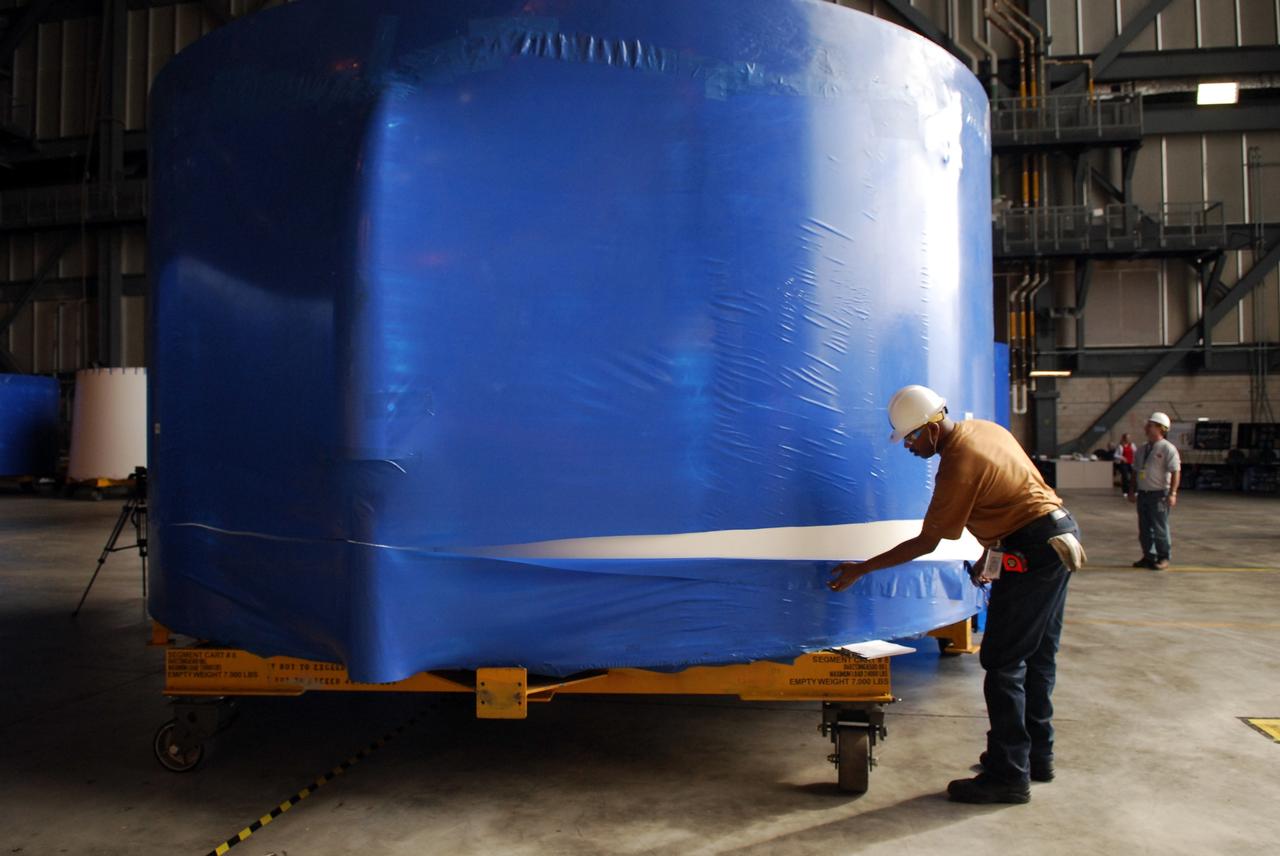
CAPE CANAVERAL, Fla. – Inside the Vehicle Assembly Building high bay 4 at NASA's Kennedy Space Center in Florida, workers from NASA's Glenn Research Center remove the blue shrink-wrapped covers on these Ares I-X upper stage simulator segments. The protective covers were used for shipping. The upper stage simulator will be used in the test flight identified as Ares I-X in 2009. The segments will simulate the mass and the outer mold line and will be more than 100 feet of the total vehicle height of 327 feet. The simulator comprises 11 segments that are approximately 18 feet in diameter. Most of the segments will be approximately 10 feet high, ranging in weight from 18,000 to 60,000 pounds, for a total of approximately 450,000 pounds. Photo credit: NASA/Troy Cryder
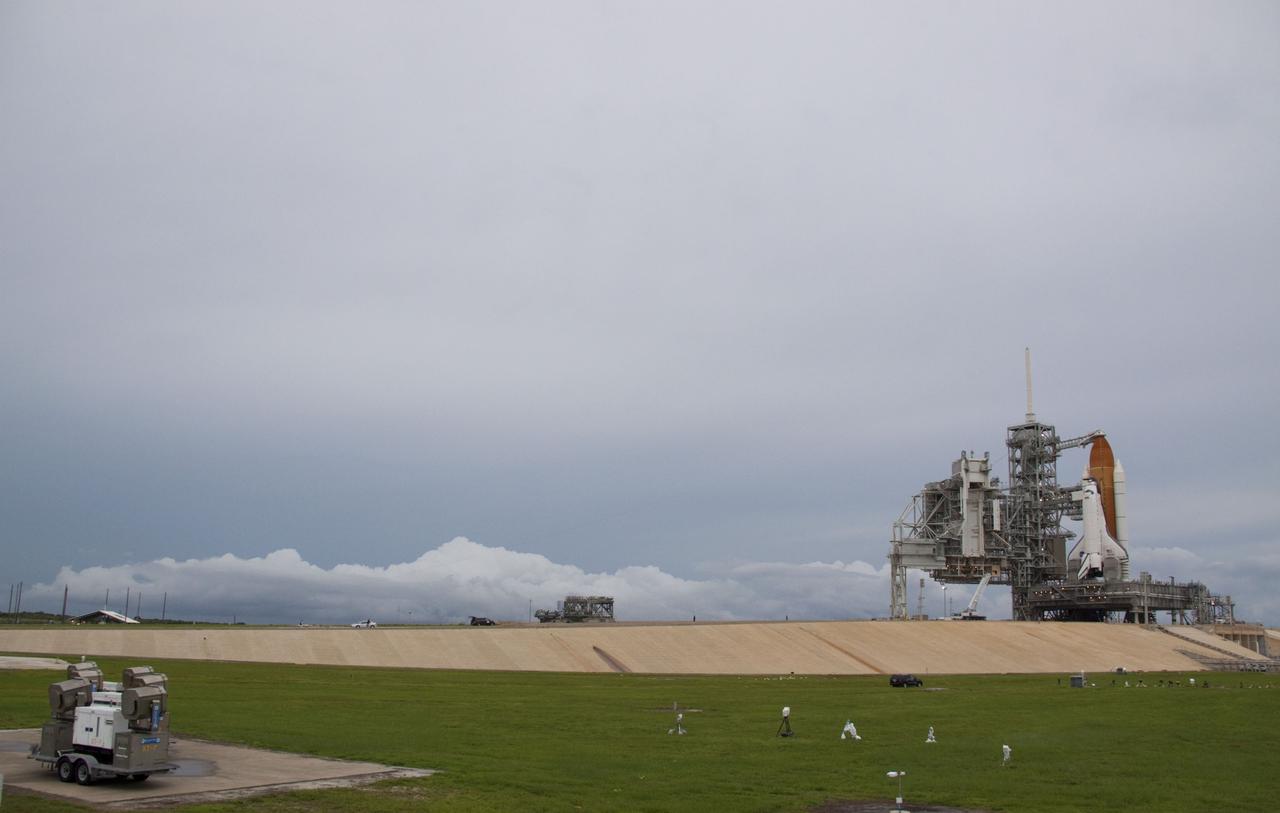
CAPE CANAVERAL, Fla. -- Space shuttle Atlantis is revealed on Launch Pad 39A at NASA's Kennedy Space Center in Florida following the move of the rotating service structure (RSS). The structure provides weather protection and access to the shuttle while it awaits liftoff on the pad. RSS "rollback" marks a major milestone in Atlantis' STS-135 mission countdown. Atlantis and its crew of four; Commander Chris Ferguson, Pilot Doug Hurley and Mission Specialists Sandy Magnus and Rex Walheim, are scheduled to lift off at 11:26 a.m. EDT on July 8 to deliver the Raffaello multi-purpose logistics module packed with supplies and spare parts to the International Space Station. Atlantis also will fly the Robotic Refueling Mission experiment that will investigate the potential for robotically refueling existing satellites in orbit. In addition, Atlantis will return with a failed ammonia pump module to help NASA better understand the failure mechanism and improve pump designs for future systems. STS-135 will be the 33rd flight of Atlantis, the 37th shuttle mission to the space station, and the 135th and final mission of NASA's Space Shuttle Program. For more information visit, www.nasa.gov/mission_pages/shuttle/shuttlemissions/sts135/index.html. Photo credit: NASA/Troy Cryder
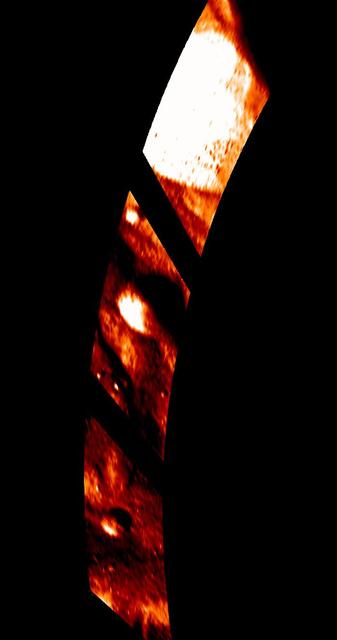
This colorized image from the visible and infrared mapping spectrometer onboard NASA Dawn spacecraft shows temperature variations at Tarpeia crater, near the south pole of the giant asteroid Vesta.
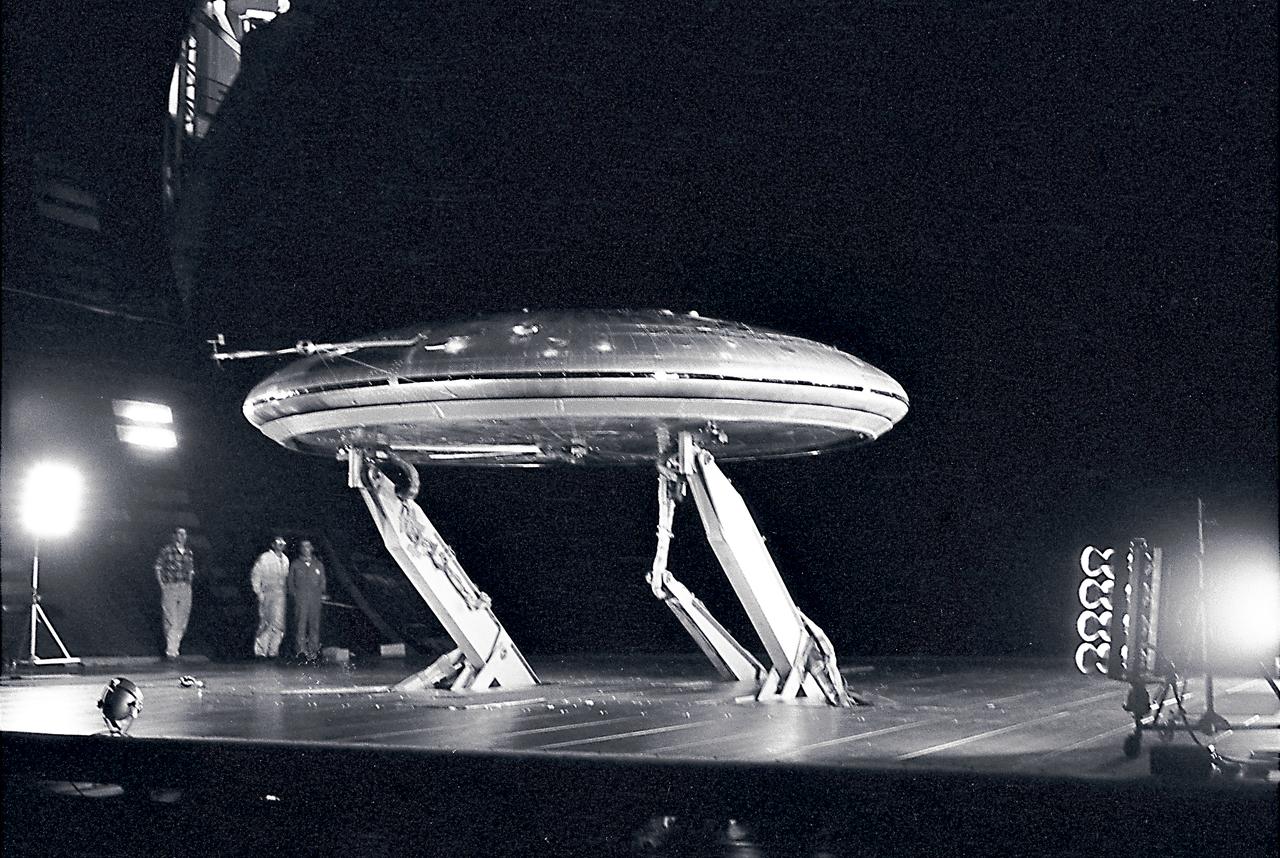
Front 3/4 view of the Avrocar mounted on variable height struts in the Ames 40x80 foot wind tunnel, without tail.
Hyperion Nose
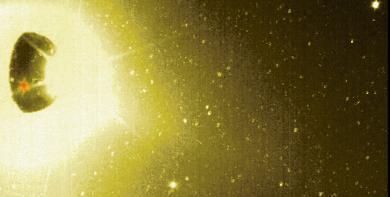
This image of Jupiter moon Io and its surrounding sky is shown in false color. It was taken at 5 hours 30 minutes Universal Time on Nov. 9, 1996 by the solid state imaging CCD system aboard NASA Galileo spacecraft,
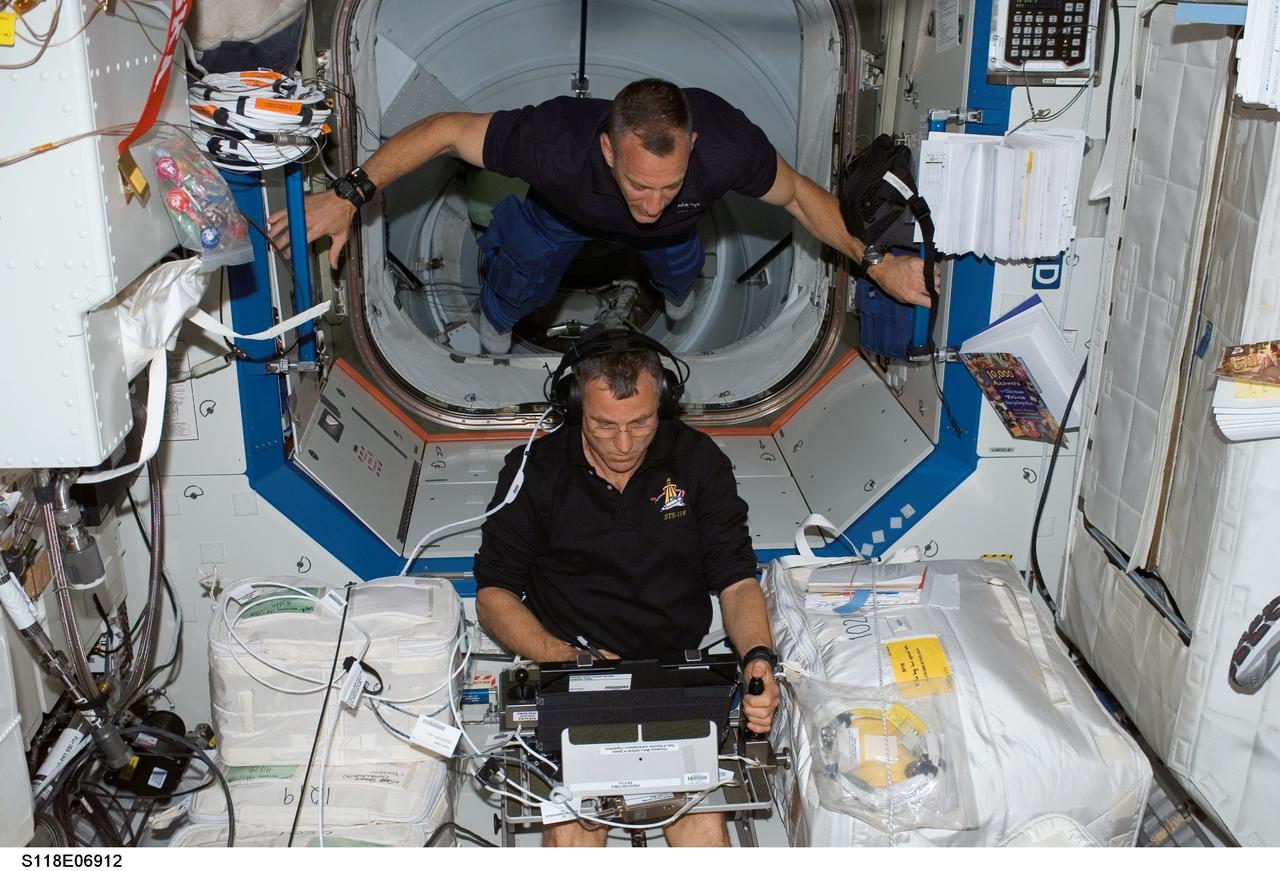
S118-E-06912 (12 Aug. 2007) --- Astronaut Dave Williams, STS-118 mission specialist representing the Canadian Space Agency, works with the Perceptual Motor Deficits in Space (PMDIS) experiment in the Destiny laboratory of the International Space Station. The PMDIS experiment will measure the decline in hand-eye coordination of shuttle astronauts while on orbit. These measurements will be used to evaluate various mechanisms thought to be responsible for the decline. Astronaut Charlie Hobaugh, pilot, looks on as he floats above Williams.
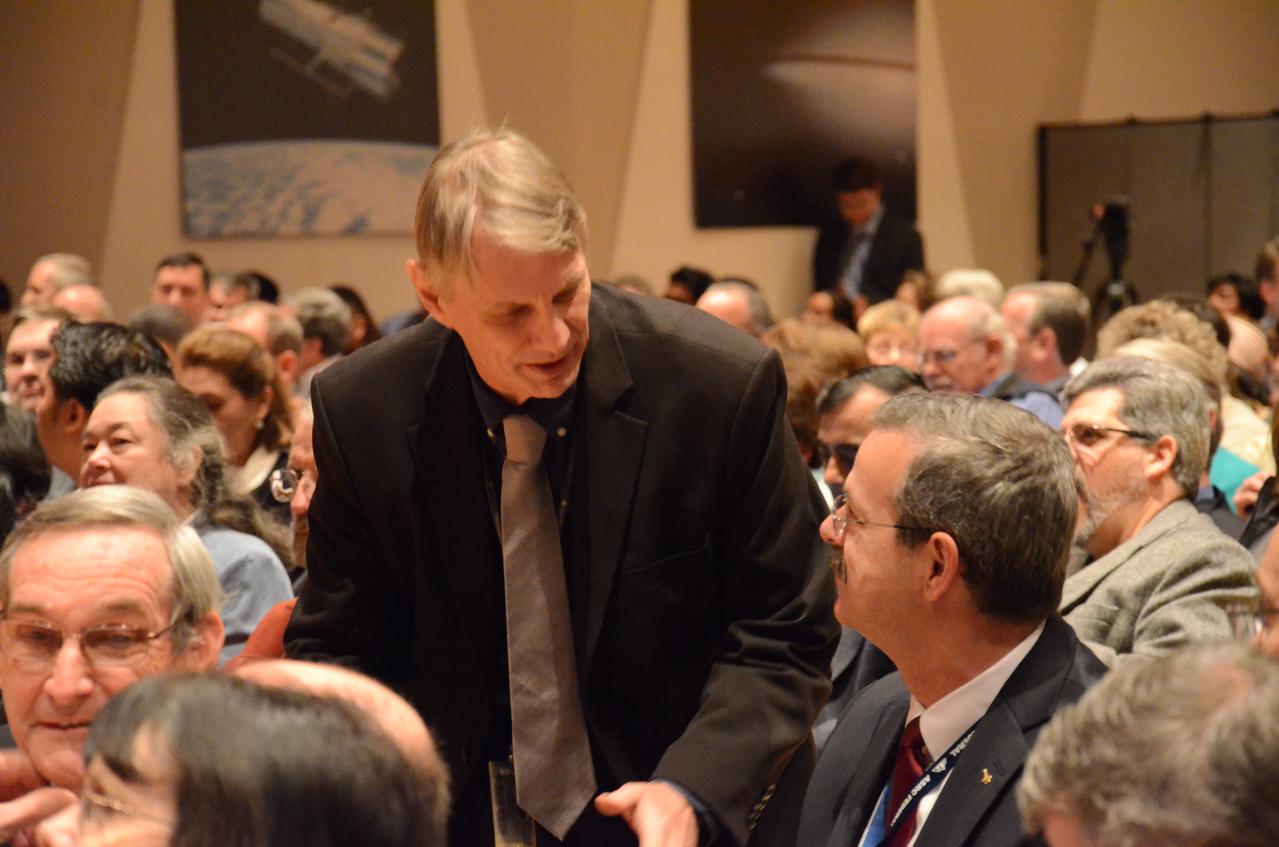
Astronauts Piers Sellers and Scott Altman chatting prior to the start of a town hall meeting at NASA Goddard. Senator Mikulski views the James Webb Space Telescope being assembled in a clean room at Goddard. Webb project manager Bill Oches talked to the Senator about the progress being made with the installation of its 18 primary mirrors. The James Webb Space Telescope is the scientific successor to NASA's Hubble Space Telescope. Maryland's Sen. Barbara Mikulski greeted employees at NASA's Goddard Space Flight Center in Greenbelt, Maryland, during a packed town hall meeting Jan. 6, 2015. She discussed her history with Goddard and appropriations for NASA in 2016. Read more: <a href="http://www.nasa.gov/feature/goddard/2016/maryland-sen-barbara-mikulski-visits-nasa-goddard" rel="nofollow">www.nasa.gov/feature/goddard/2016/maryland-sen-barbara-mi...</a> Credit: NASA/Goddard/Rebecca Roth <b><a href="http://www.nasa.gov/audience/formedia/features/MP_Photo_Guidelines.html" rel="nofollow">NASA image use policy.</a></b> <b><a href="http://www.nasa.gov/centers/goddard/home/index.html" rel="nofollow">NASA Goddard Space Flight Center</a></b> enables NASA’s mission through four scientific endeavors: Earth Science, Heliophysics, Solar System Exploration, and Astrophysics. Goddard plays a leading role in NASA’s accomplishments by contributing compelling scientific knowledge to advance the Agency’s mission. <b>Follow us on <a href="http://twitter.com/NASAGoddardPix" rel="nofollow">Twitter</a></b> <b>Like us on <a href="http://www.facebook.com/pages/Greenbelt-MD/NASA-Goddard/395013845897?ref=tsd" rel="nofollow">Facebook</a></b> <b>Find us on <a href="http://instagrid.me/nasagoddard/?vm=grid" rel="nofollow">Instagram</a></b>
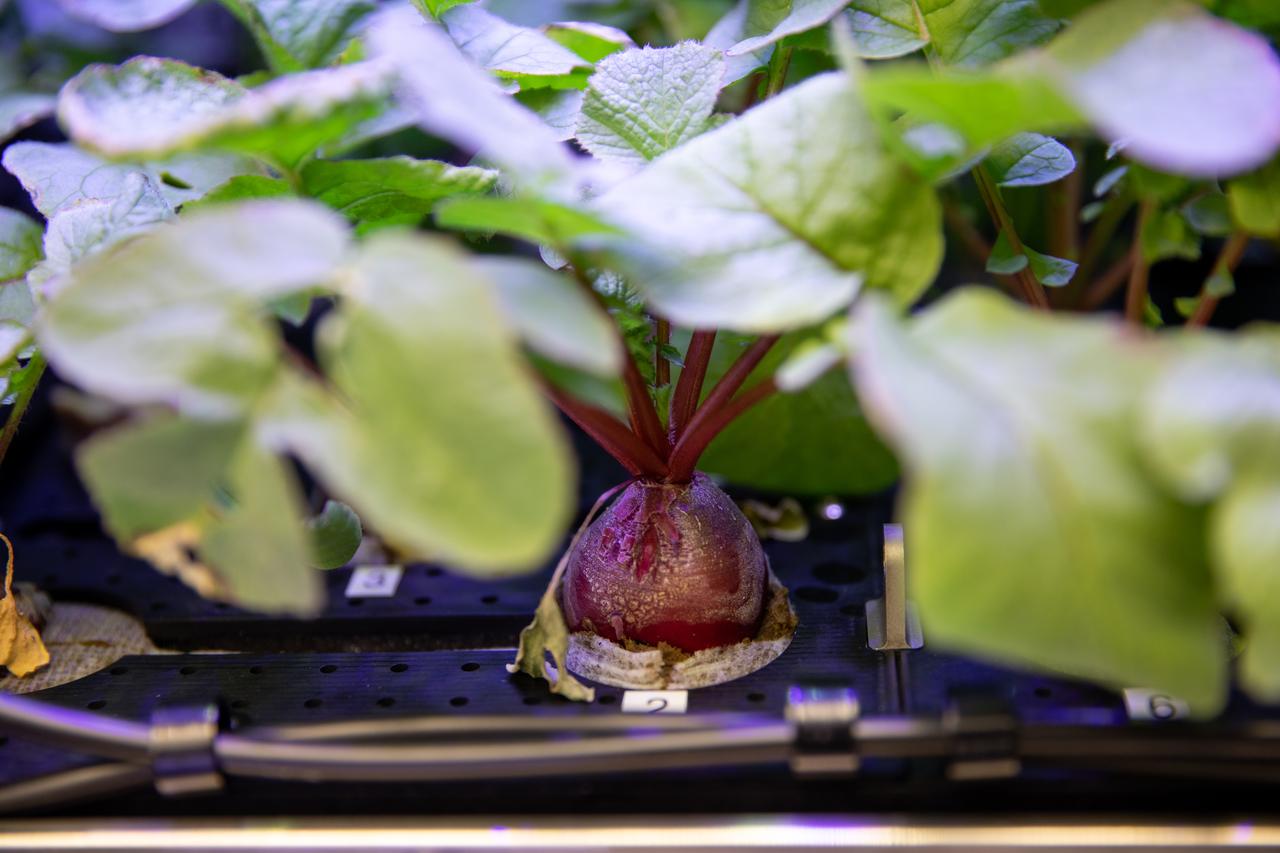
A view of radishes growing in the Advanced Plant Habitat (APH) ground unit inside the Space Station Processing Facility at NASA’s Kennedy Space Center in Florida on Dec. 14, 2020. The radishes are a ground control crop for the Plant Habitat-02 (PH-02) experiment. The experiment also involves growing two similar radish crops inside the International Space Station’s APH. NASA astronaut Kate Rubins harvested the first crop on Nov. 30, and the second harvest aboard the orbiting laboratory is planned for Dec. 30. Once samples return to Earth, researchers will compare those grown in space to the radishes grown here on Earth to better understand how microgravity affects plant growth.
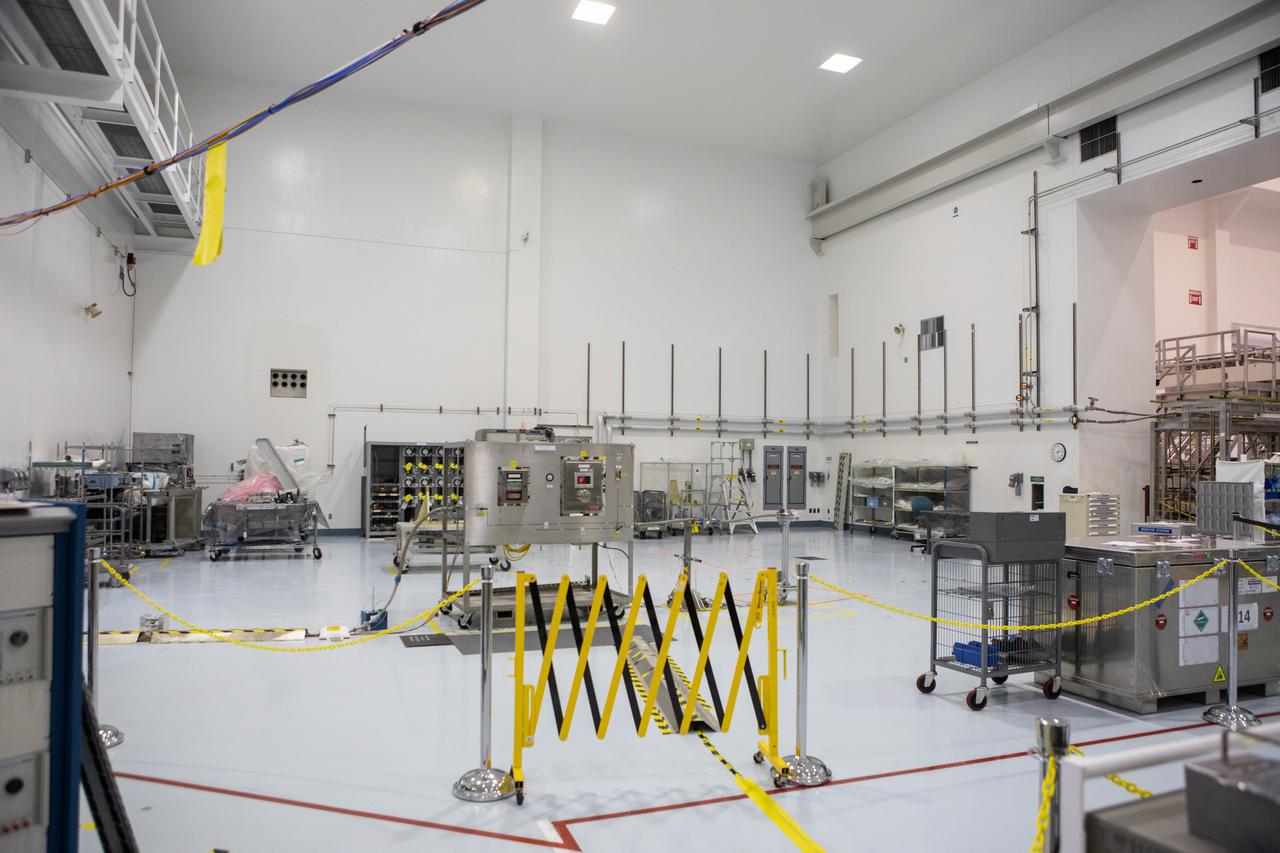
A Nitrogen Oxygen Recharge System (NORS) for the International Space Station is in view, center, in the high bay of the Space Station Processing Facility (SSPF) at NASA's Kennedy Space Center in Florida, on May 16, 2019. NORS are tanks that are used to fill the oxygen and nitrogen tanks that supply the needed gases to the station’s airlock for spacewalks and also are used as a secondary method to replenish the atmosphere inside the space station. The center is celebrating the SSPF’s 25th anniversary. The SSPF was built to process elements for the space station. Now it is providing support for current and future NASA and commercial provider programs, including Commercial Resupply Services, Artemis 1, sending the first woman and next man to the Moon, and deep space destinations including Mars.
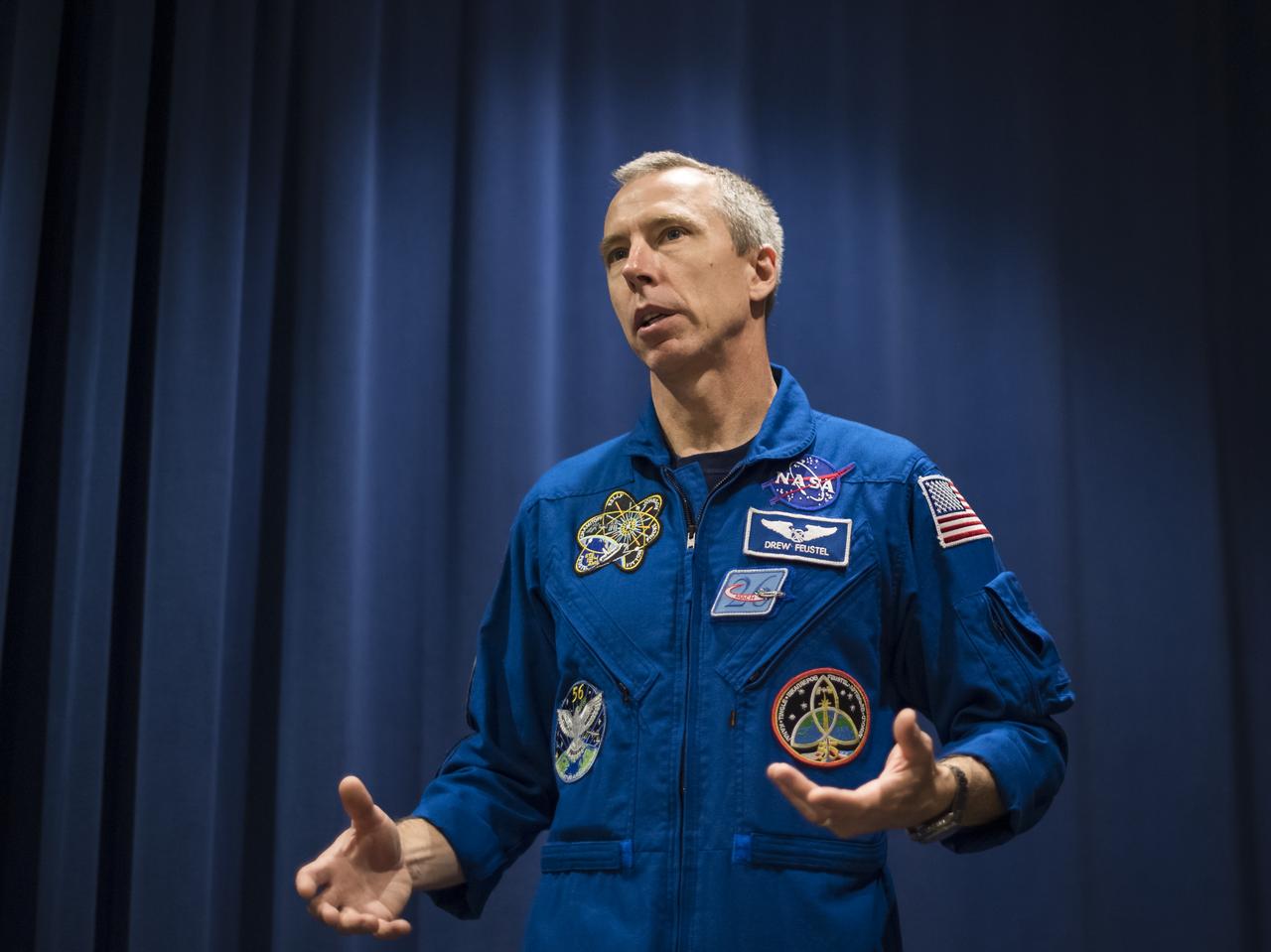
NASA astronaut Drew Feustel speaks about his experience on two shuttle missions, STS-125 and STS-134, as well as Expeditions 55 and 56 on the International Space Station, at the Embassy of Canada, Monday, May 6, 2019 in Washington. Photo Credit: (NASA/Aubrey Gemignani)
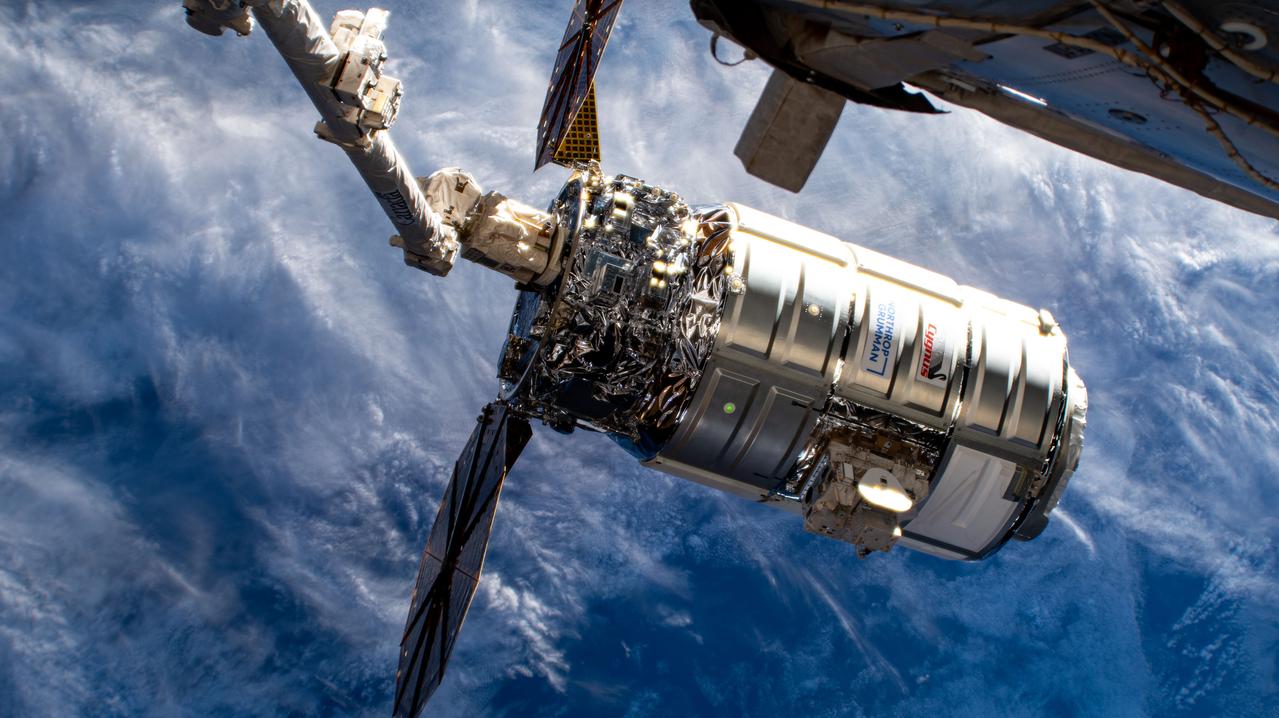
iss071e329982 (July 12, 2024) --- Northrop Grumman's Cygnus space freighter is attached to the leading end effector of the 57.7-foot-long Canadarm2 robotic arm about to be released into Earth orbit ending a five-and-a-half month cargo mission berthed to the International Space Station's Unity module.
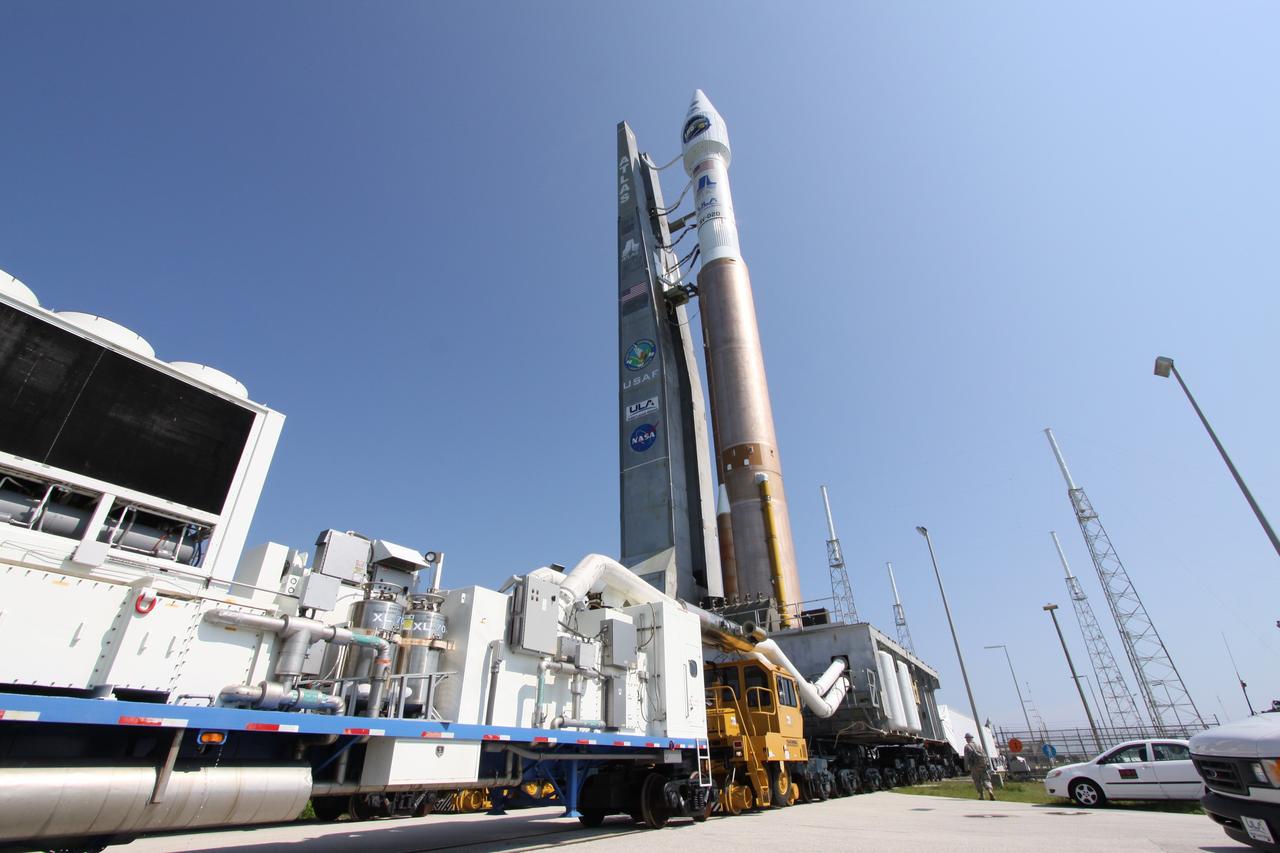
CAPE CANAVERAL, Fla. – On Launch Complex-41 on Cape Canaveral Air Force Station in Florida, the Atlas V/Centaur rocket with NASA's Lunar Reconnaissance Orbiter, or LRO, and NASA's Lunar Crater Observation and Sensing Satellite, known as LCROSS, on top roll out to the launch pad. At right are the protective lightning towers that surround the pad. LRO and LCROSS are the first missions in NASA's plan to return humans to the moon and begin establishing a lunar outpost by 2020. The LRO also includes seven instruments that will help NASA characterize the moon's surface: DIVINER, LAMP, LEND, LOLA, CRATER, Mini-RF and LROC. Launch is scheduled for 5:22 p.m. EDT June 18 . Photo credit: NASA/Jack Pfaller
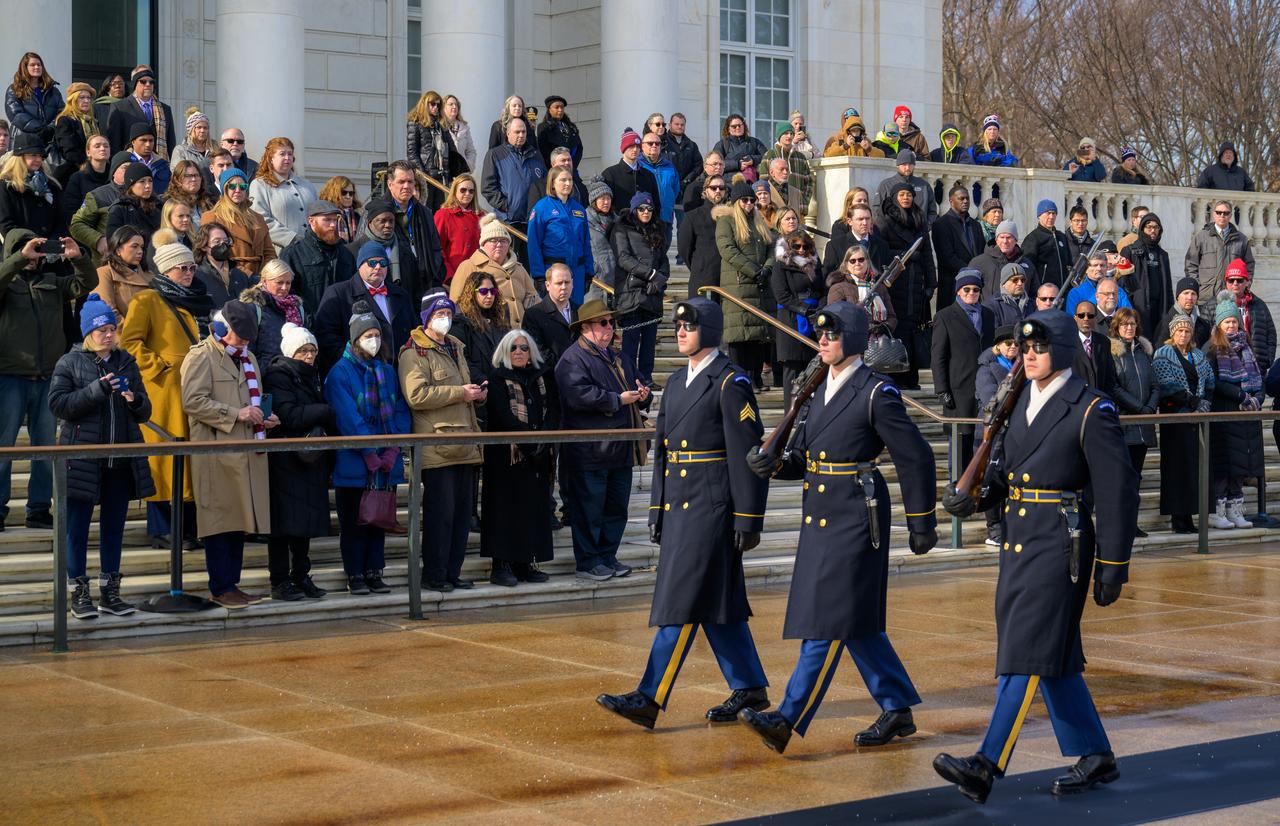
NASA leadership and guests watch the changing of the guard at the Tomb of the Unknowns as part of NASA's Day of Remembrance, Thursday, Jan. 23, 2025, at Arlington National Cemetery in Arlington, Va. Wreaths were laid in memory of those men and women who lost their lives in the quest for space exploration. Photo Credit: (NASA/Bill Ingalls)
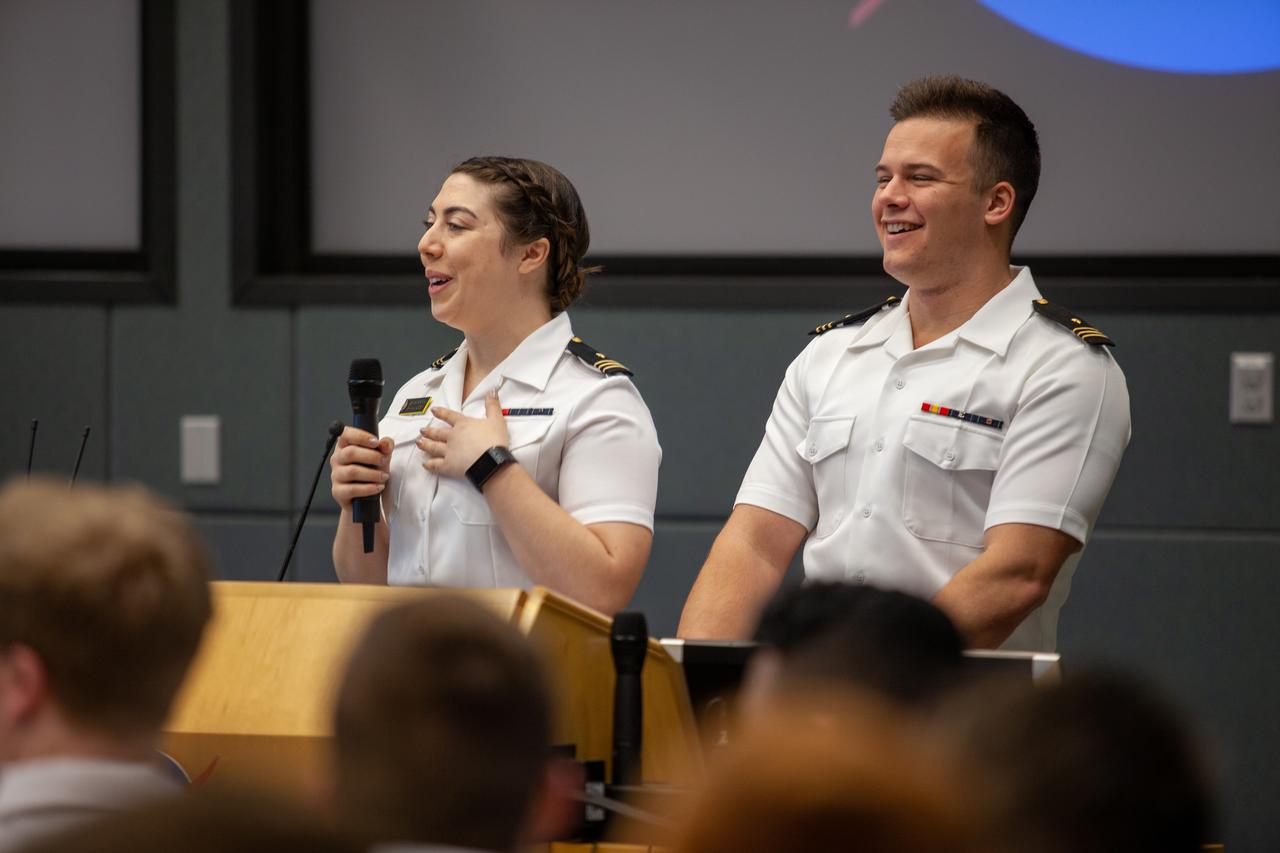
Members of the United States Naval Academy Glee Club address the crowd during a special performance for Kennedy Space Center employees at the Florida spaceport on March 10, 2020. As part of the celebration, Kennedy Director Bob Cabana discussed the deep historical ties between NASA and the U.S. Navy. The highly acclaimed Glee Club has achieved prominence as one of America’s premier choral ensembles, performing throughout the nation each year.
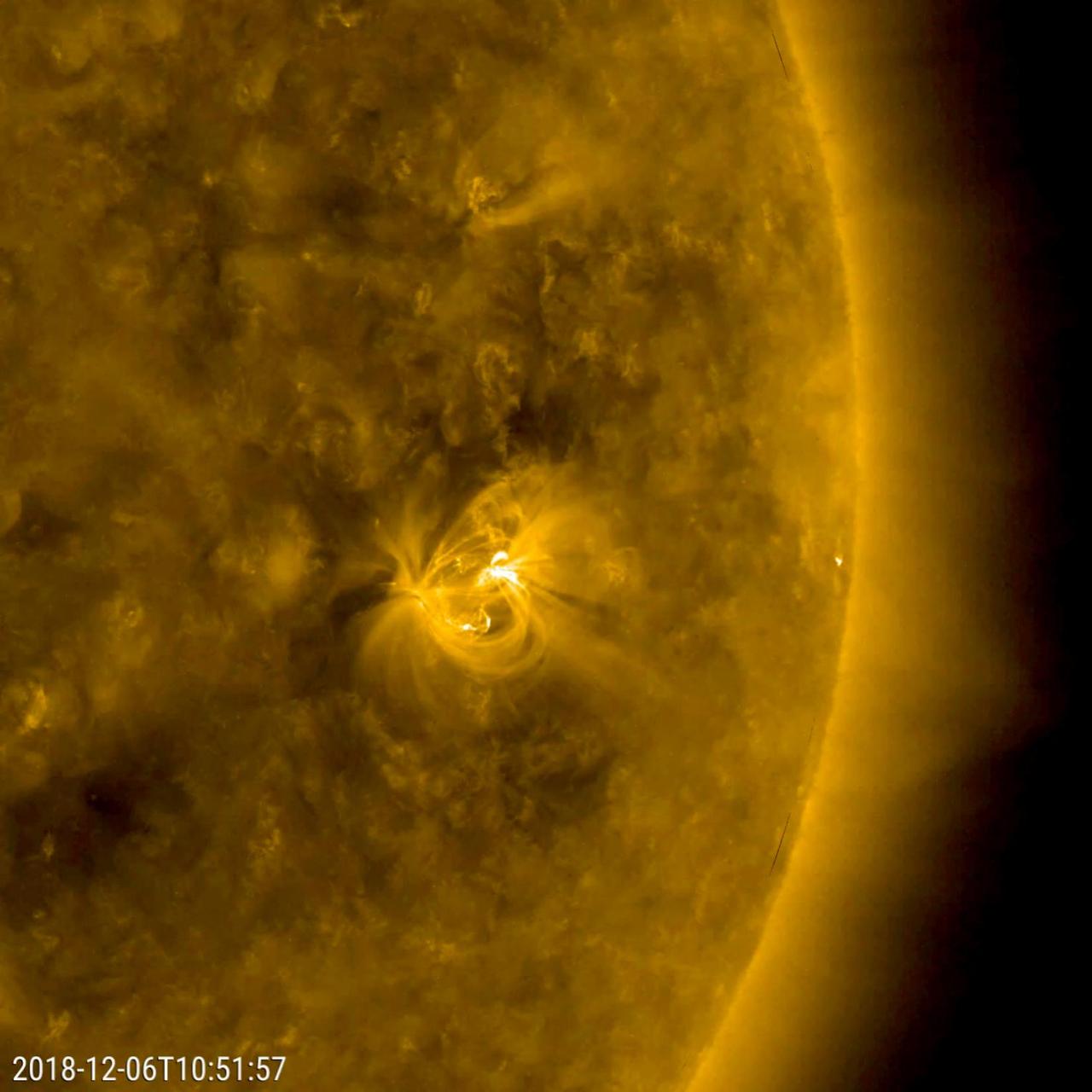
The only active region observed this week appeared on Dec. 5, 2018 and grew into an average size display of dynamic activity (Dec. 6-7, 2018). As viewed in a wavelength of extreme ultraviolet light, the region presented numerous magnetic loops of charged particles, rapidly changing their shapes and directions. As the sun is approaching its minimum level of activity in its 11 year solar cycle, we expect to see fewer and fewer active regions for quite a while. However, this active region is in the southern hemisphere of the Sun and has the North magnetic pole in the lead, so it is a sunspot of Solar Cycle 24. Movies available at https://photojournal.jpl.nasa.gov/catalog/PIA21211
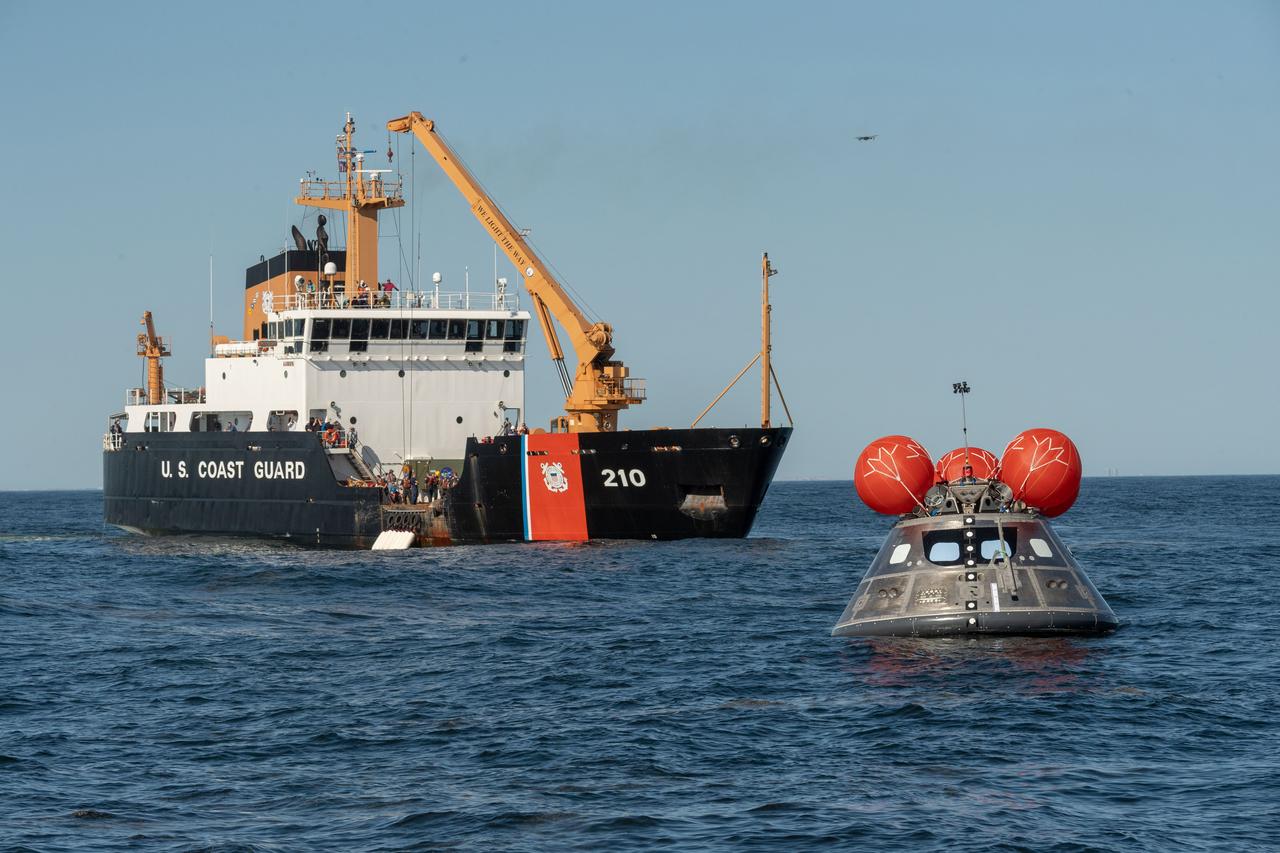
The Orion Crew Module Uprighting System (CMUS) and Neutral Buoyancy Laboratory team completed two successful sea tests off the coast of Galveston, Texas, Dec. 1-3, 2018. CMUS is designed to inflate five bags after the Orion spacecraft and its crew splash down after returning from deep space missions, enabling the capsule to upright itself. NASA partnered with United States Coast Guard and Air Force and Texas A&M Galveston teams to perform the tests operations.
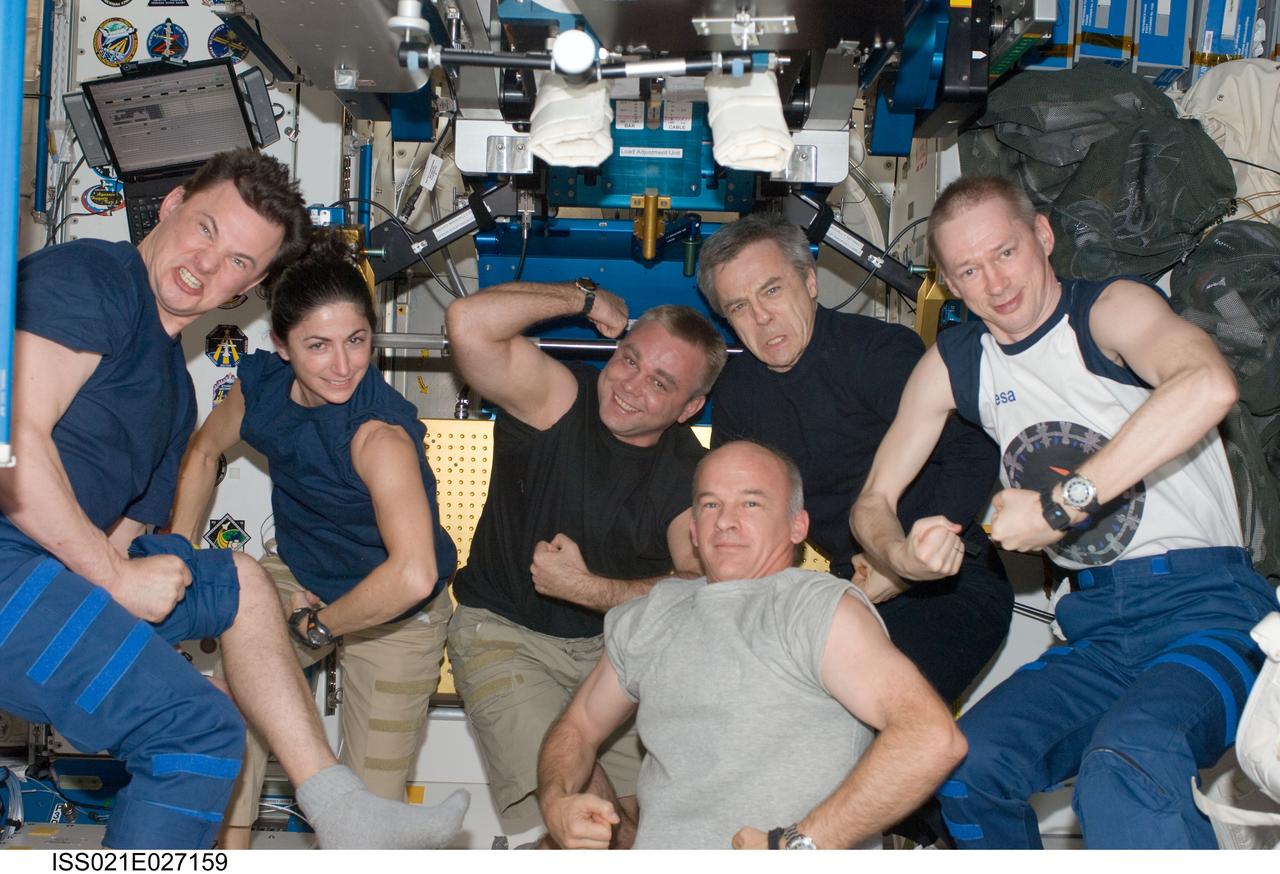
ISS021-E-027159 (15 Nov. 2009) --- European Space Agency astronaut Frank De Winne (right), Expedition 21 commander; Canadian Space Agency astronaut Robert Thirsk, NASA astronauts Jeffrey Williams (bottom) and Nicole Stott; along with Russian cosmonauts Maxim Suraev and Roman Romanenko (left), all flight engineers, enjoy a light moment in the Unity node of the International Space Station.
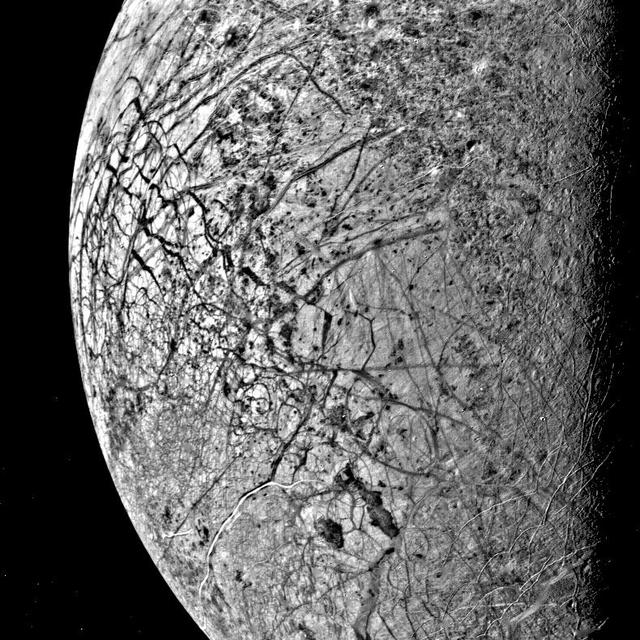
Europa Fractured Surface
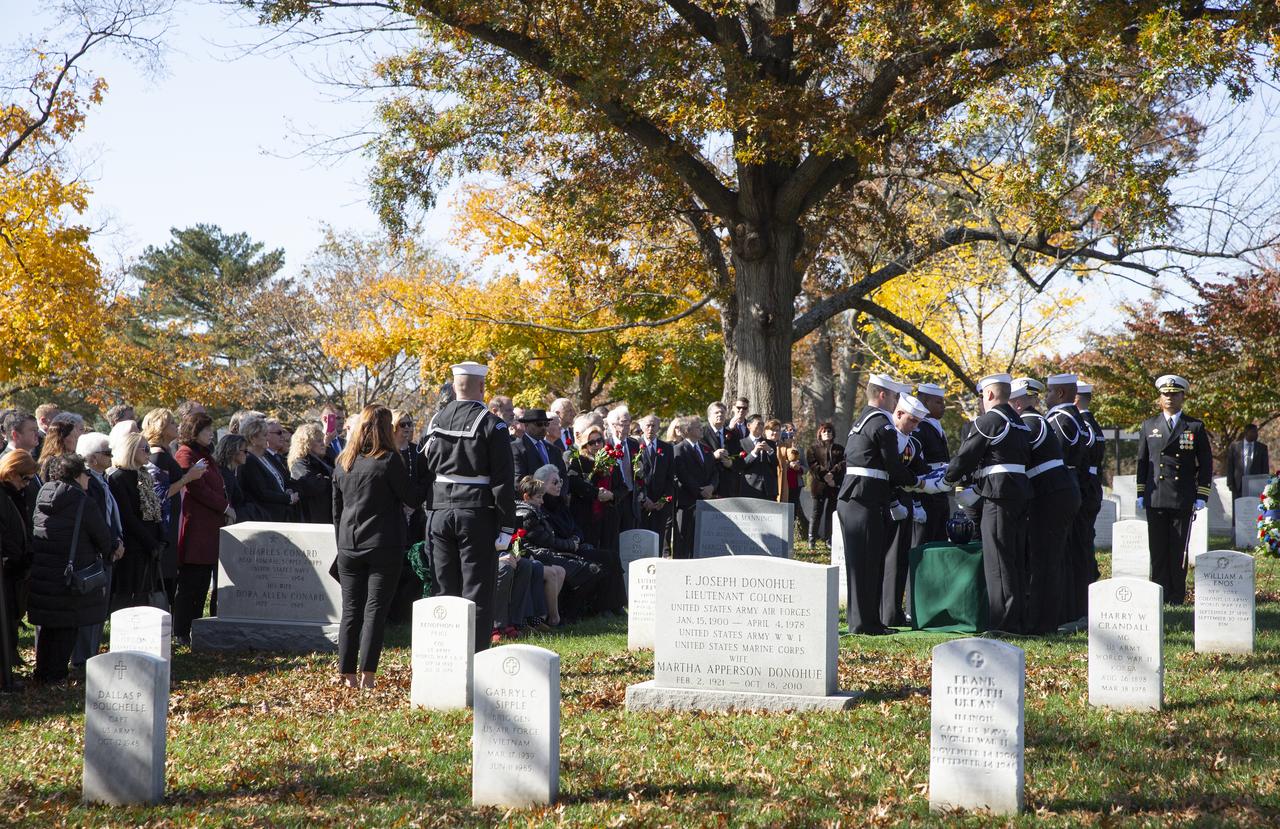
Family and friends of former astronaut Alan Bean are seen during interment services, Thursday, Nov. 8, 2018 at Arlington National Cemetery in Virginia. Selected as an astronaut in 1963, Bean flew in space twice, becoming the fourth human to walk on the Moon on Nov. 19, 1969 and spent 59 days in space as commander of the second Skylab mission in 1973. Photo Credit: (NASA/Joel Kowsky)
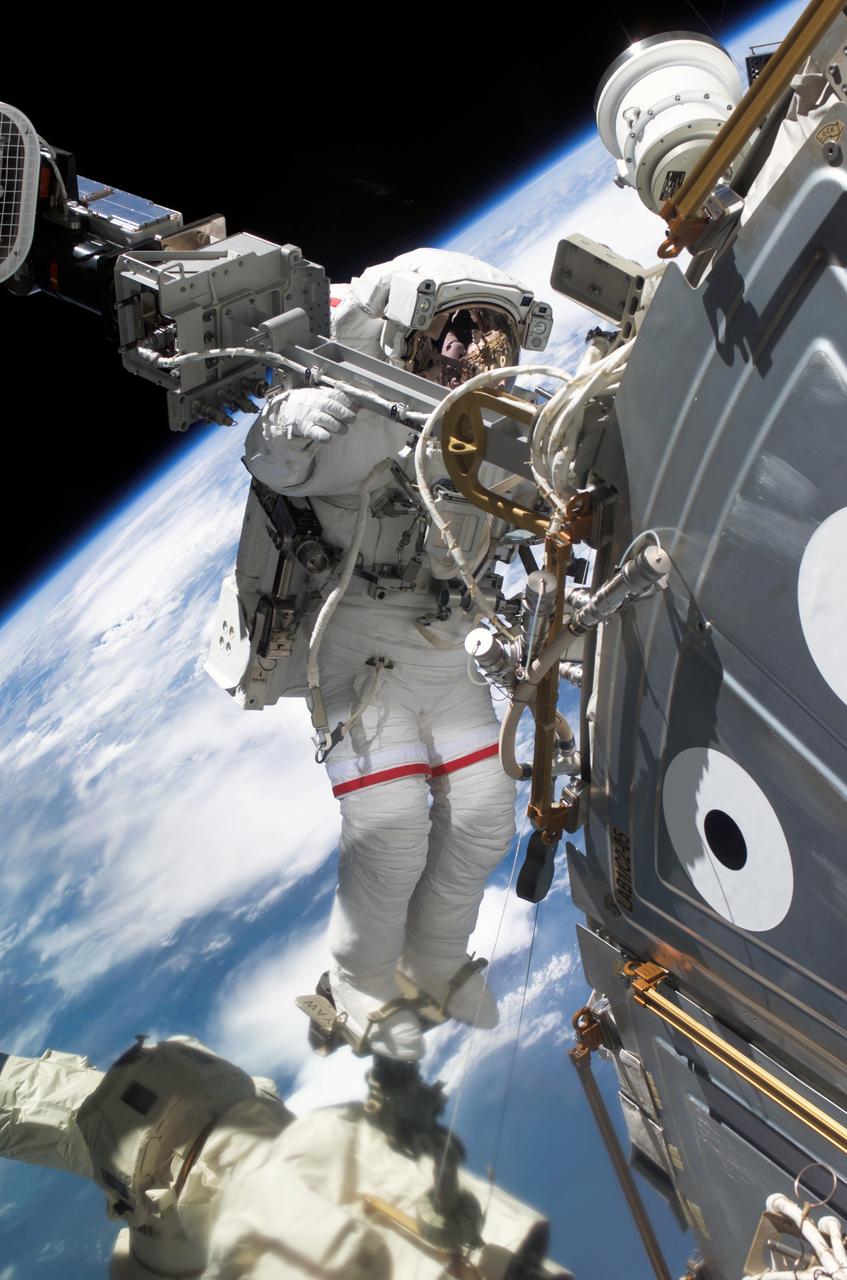
S112-E-05315 (12 Oct. 2002) --- Astronaut David A. Wolf, STS-112 mission specialist, carries out a task to install an additional exterior station television camera outside of the Destiny Laboratory during the second spacewalk of the STS-112 mission. Astronauts Wolf and Piers J. Sellers are scheduled for a total of three spacewalks for the mission.
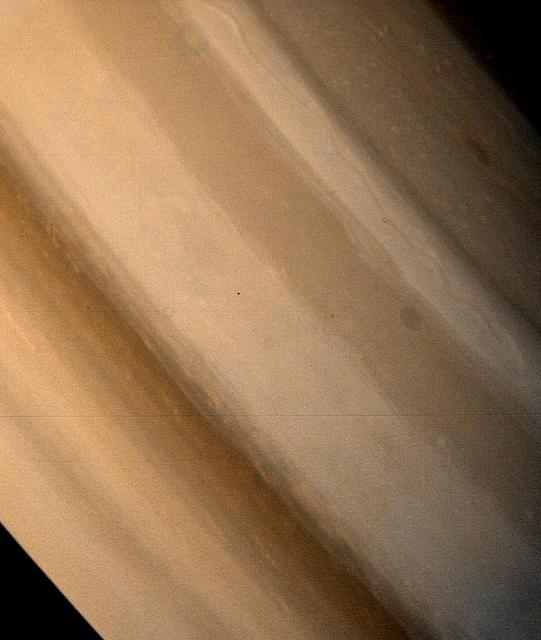
Two brown ovals, at right, some 10,000 km 6,000 miles across, were found at approximately 40 latitude in Saturn northern hemisphere by NASA Voyager 1. The photo was taken on November 7, 1980.
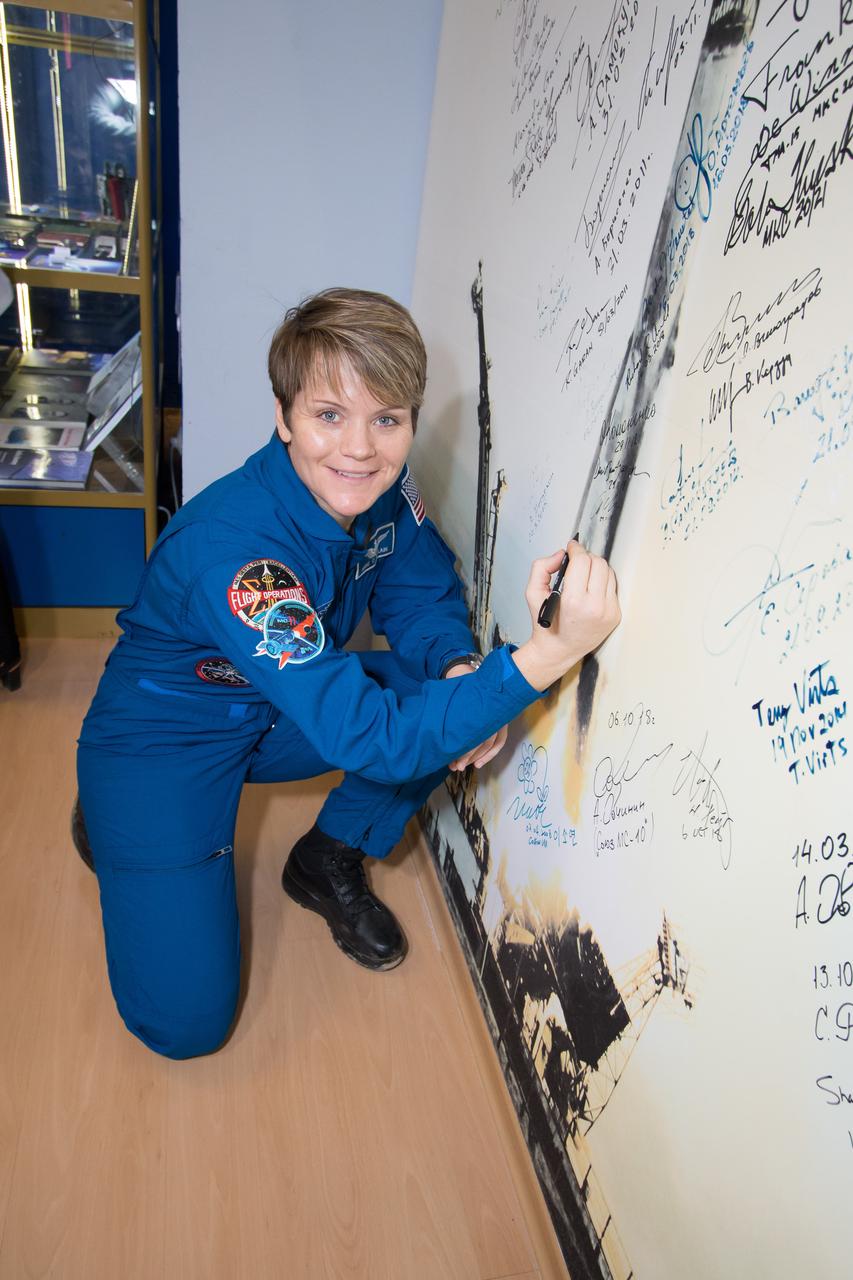
jsc2018e098093 - At the Baikonur Cosmodrome Museum in Kazakhstan, Expedition 58 crewmember Anne McClain of NASA signs a wall mural Nov. 29 as part of traditional pre-launch activities. McClain, David Saint-Jacques of the Canadian Space Agency and Oleg Kononenko of Roscosmos will launch Dec. 3 in the Soyuz MS-11 spacecraft from the Baikonur Cosmodrome in Kazakhstan for a six-and-a-half month mission on the International Space Station...NASA/Victor Zelentsov.
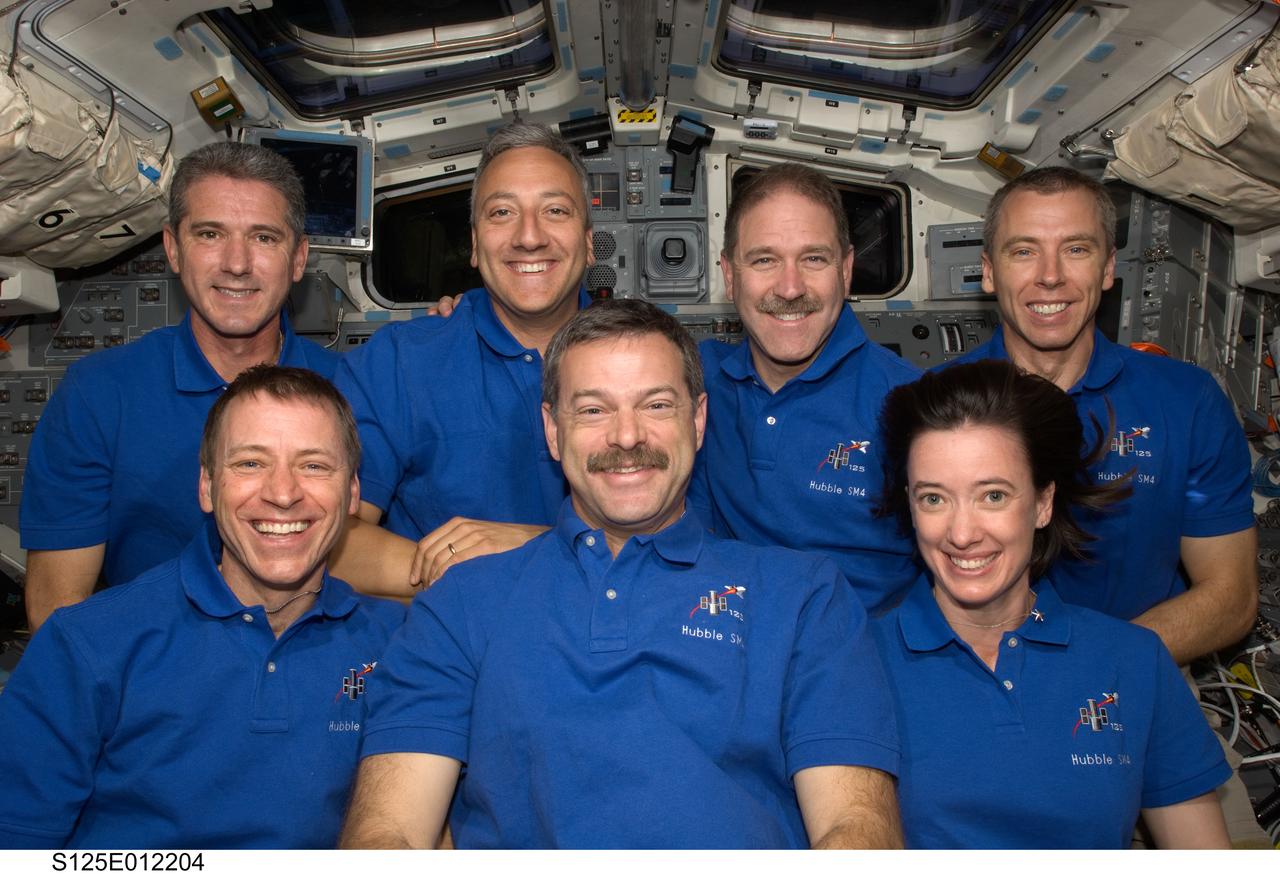
S125-E-012204 (20 May 2009) --- The crewmembers for the STS-125 mission pose for a photo following a news conference from the flight deck of the Earth-orbiting Space Shuttle Atlantis. Pictured on the front row are astronauts Scott Altman (center), commander; Gregory C. Johnson, pilot; and Megan McArthur, mission specialist. Pictured on the back row (left to right) are astronauts Michael Good, Mike Massimino, John Grunsfeld and Andrew Feustel, all mission specialists.
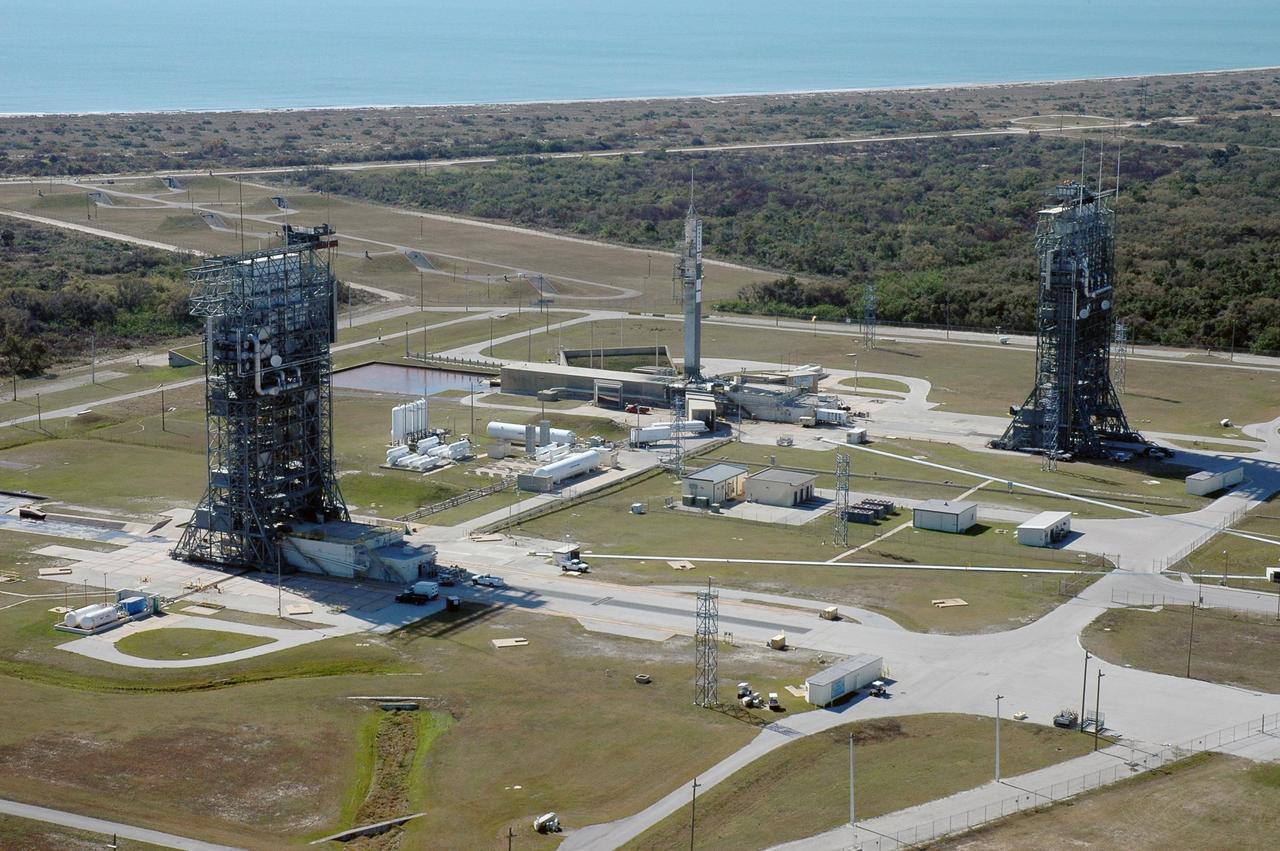
KENNEDY SPACE CENTER, FLA. - This aerial view shows the Delta II launch pads at Complex 17 on Cape Canaveral Air Force Station in Florida, rimmed by the blue Atlantic Ocean in the background. Photo credit: Cory Huston
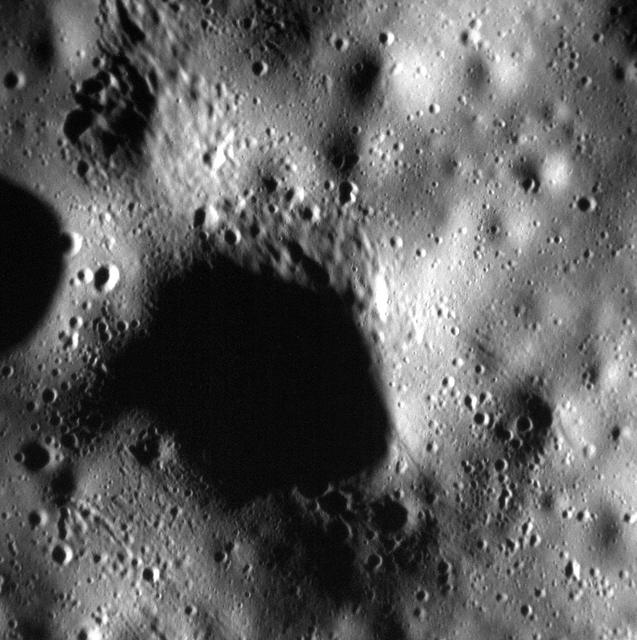
The surface in this scene captured by NASA MESSENGER spacecraft has been pummeled by secondary craters, possibly from the impact that formed the nearby Mickiewicz crater. MESSENGER has acquired nearly 25,000 images below 10 meters/pixel (~33 feet/pixel), allowing us to examine the innermost planet at an unprecedented scale. Date acquired: April 21, 2015 Image Mission Elapsed Time (MET): 71933951 Image ID: 8369698 Instrument: Narrow Angle Camera (NAC) of the Mercury Dual Imaging System (MDIS) Center Latitude: 24.12° Center Longitude: 260.65° E Resolution: 5.0 meters/pixel Scale: This scene is approximately 500 meters (0.3 mi.) across http://photojournal.jpl.nasa.gov/catalog/PIA19426
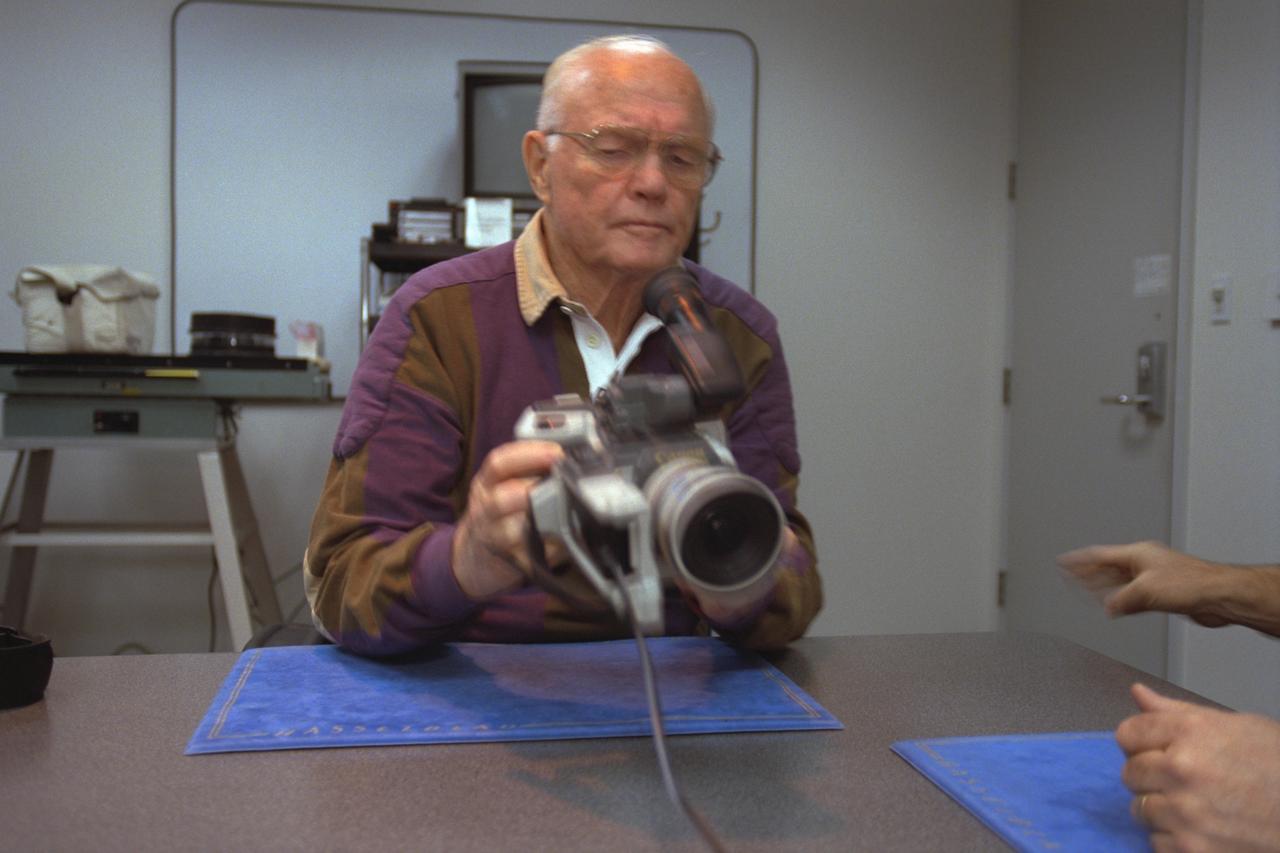
S98-08732 (9 April 1998) --- Holding a 35mm camera, U.S. Sen. John H. Glenn Jr. (D.-Ohio) gets a refresher course in photography from a JSC crew trainer (out of frame, right). The STS-95 payload specialist carried a 35mm camera on his historic MA-6 flight over 36 years ago. The photo was taken by Joe McNally, National Geographic, for NASA.
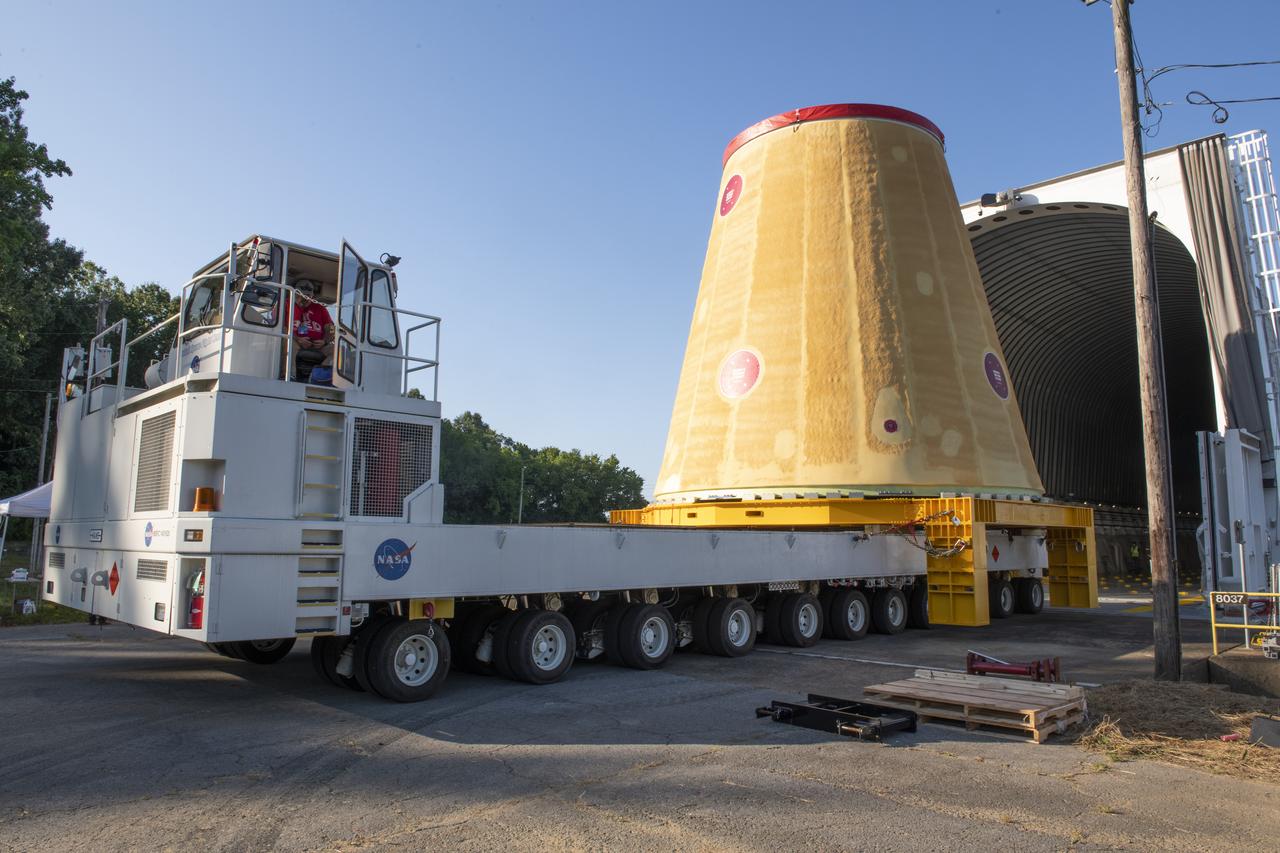
The move team loads the launch vehicle stage adapter, part of the agency’s new Space Launch System (SLS) rocket, on NASA’s Pegasus barge at NASA’s Marshall Space Flight Center in Huntsville, Alabama, July 17. The launch vehicle stage adapter, which connects the rocket’s 212-foot-tall core stage to the rocket’s upper stage, is being shipped to NASA’s Kennedy Space Center in Florida for Artemis I launch preparations. This is the final piece of Artemis I SLS rocket hardware built at Marshall to be delivered to Kennedy. Only the SLS core stage, currently in final testing at Stennis Space Center near Bay St. Louis, Mississippi, remains to be shipped to Kennedy on Pegasus. NASA is working to land the first woman and the next man on the Moon by 2024. SLS, along with Orion, the human landing system, and the Gateway in orbit around the Moon are NASA’s backbone for a new generation of deep space exploration.
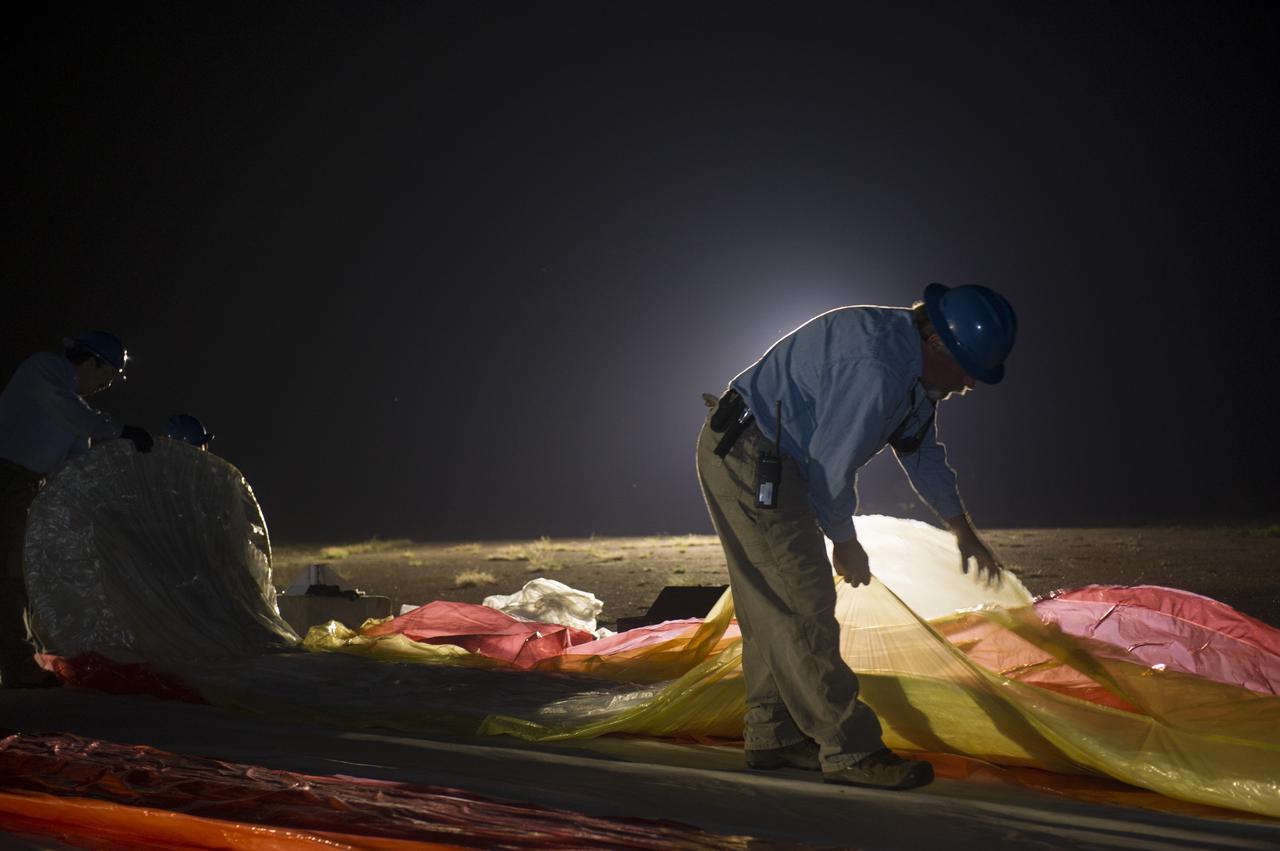
HEROES PAYLOAD AWAITS LAUNCH AS HELIUM BALLOON INFLATES IN BACKGROUND, FORT SUMNER, NEW MEXICO, SEPTEMBER 21, 2013

NASA Deputy Administrator Pam Melroy speaks in a Heads of Agency panel during the 37th Space Symposium, Wednesday, April 6, 2022, in Colorado Springs, Colorado. Photo Credit: (NASA/Bill Ingalls)
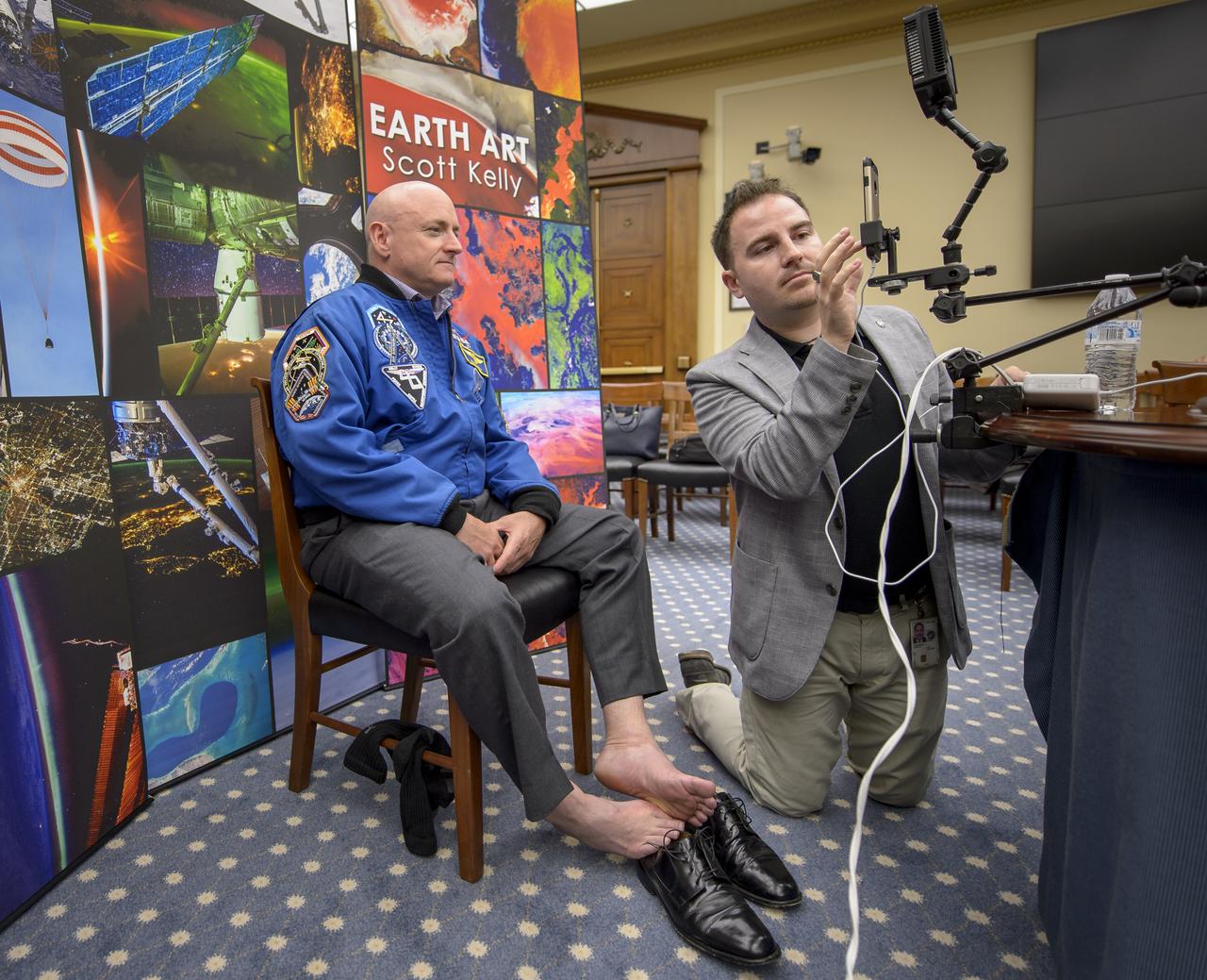
Former NASA astronaut Scott Kelly, left, gives video replies to questions from social media, Wednesday, May 25, 2016, in Washington. Photo Credit: (NASA/Bill Ingalls)
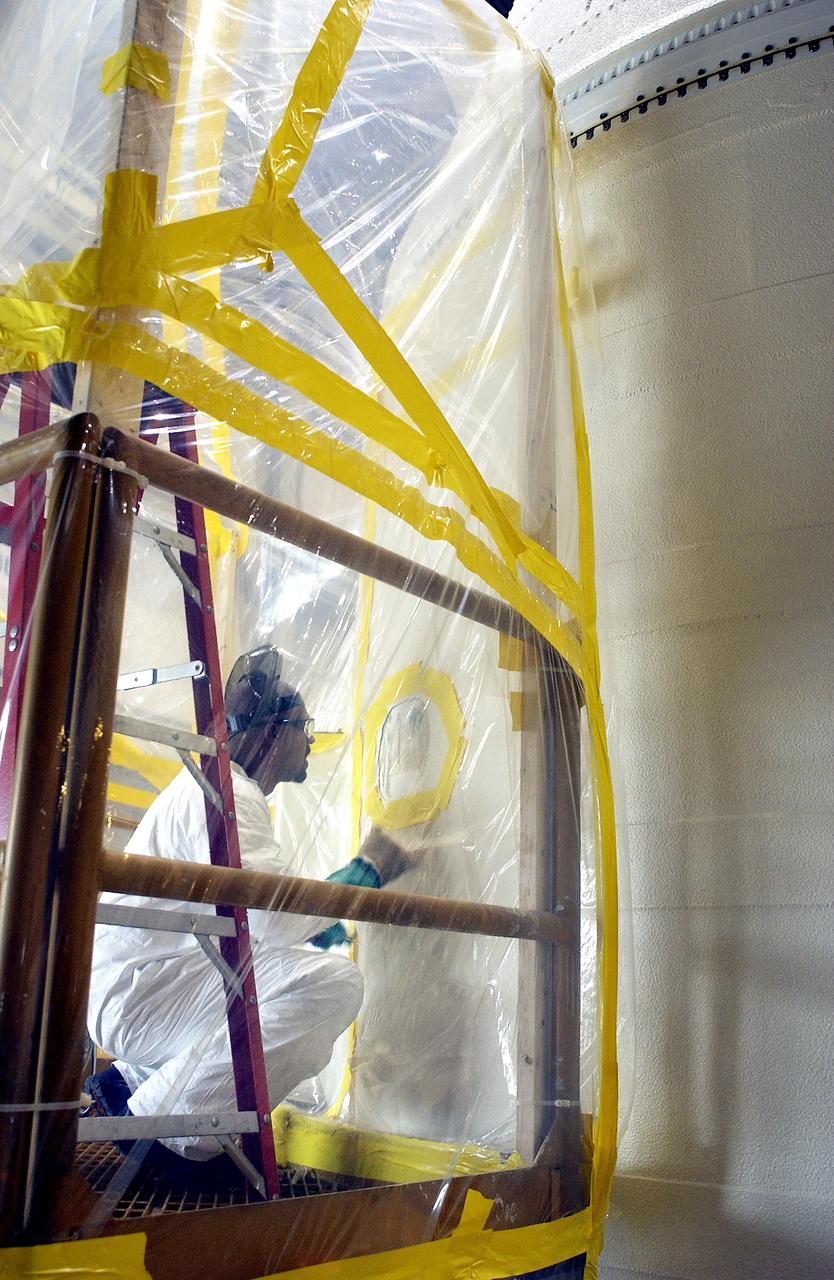
KENNEDY SPACE CENTER, FLA. - In the Solid Rocket Booster Assembly and Refurbishment Facility (ARF), Vernon Gibbs, with United Space Alliance, prepares the forward skirt of a solid rocket booster for installation of the parachute camera. Refurbishment and subassembly of Shuttle SRB hardware - primarily the forward and aft assemblies - is carried out in the ARF.