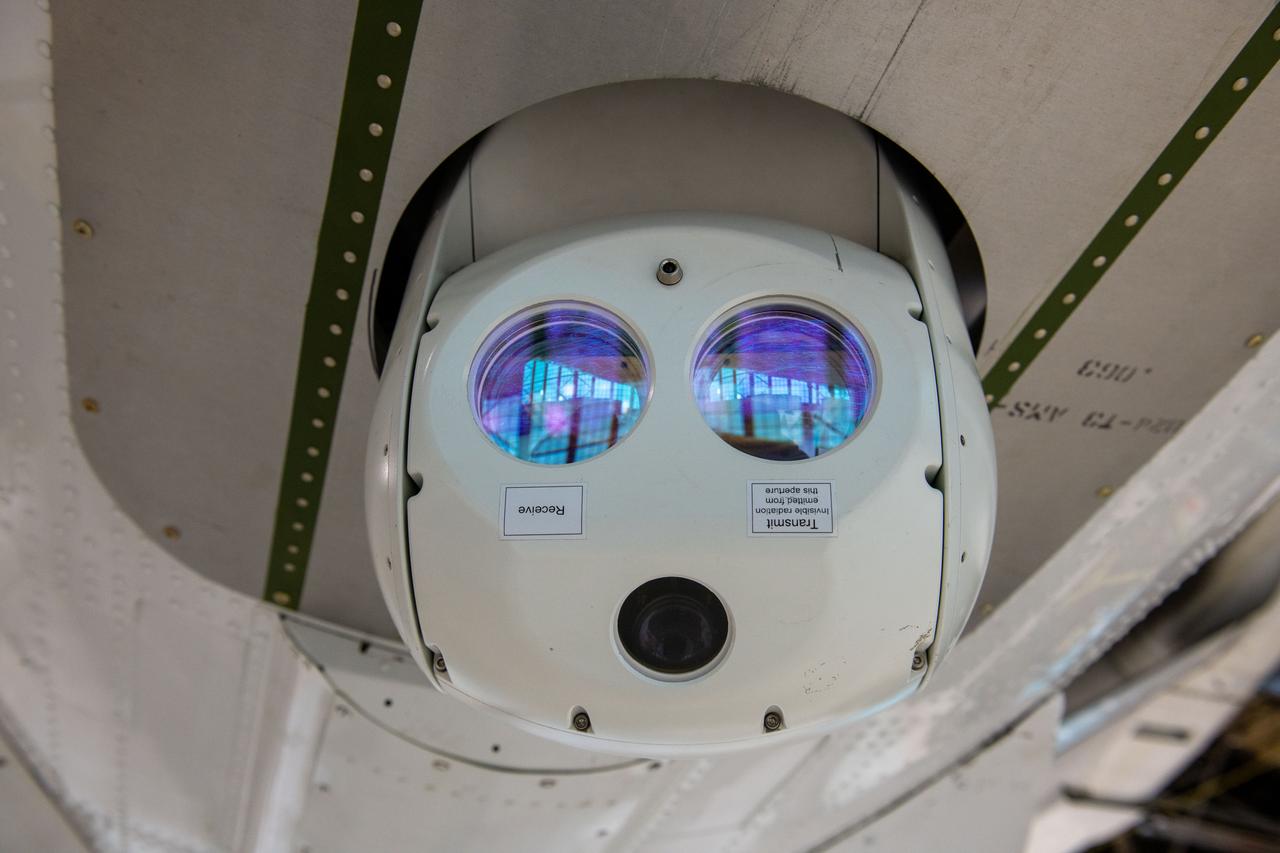
Convergent Aeronautics Solutions (CAS) Quantum Technologies (QTech)
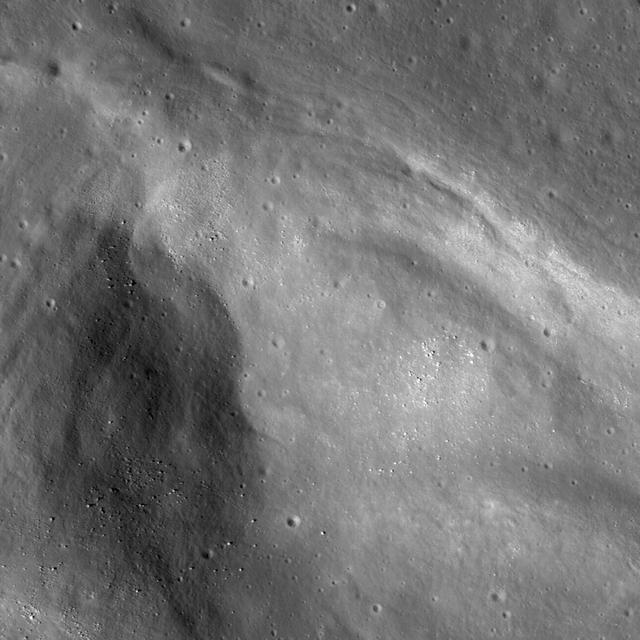
This image from NASA Lunar Reconnaissance Orbiter shows Vallis Lorca, one of four lobes that make up Aratus CA in western Mare Serenitatis near the Montes Apennius.
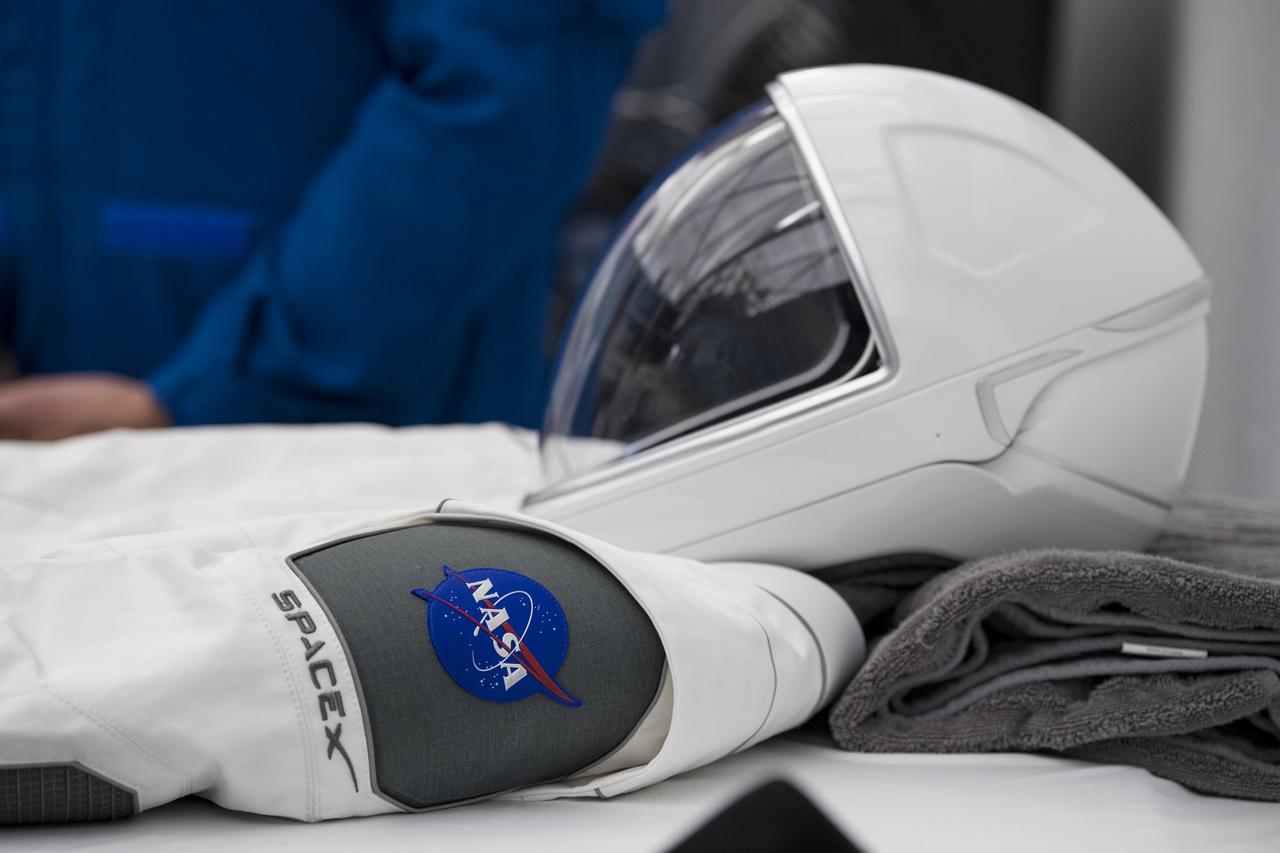
A view of one of the SpaceX suits that will be used for the Demo-2 launch at the SpaceX Headquarters, Thursday, Oct. 10, 2019 in Hawthorne, CA. Photo credit: (NASA/Aubrey Gemignani)
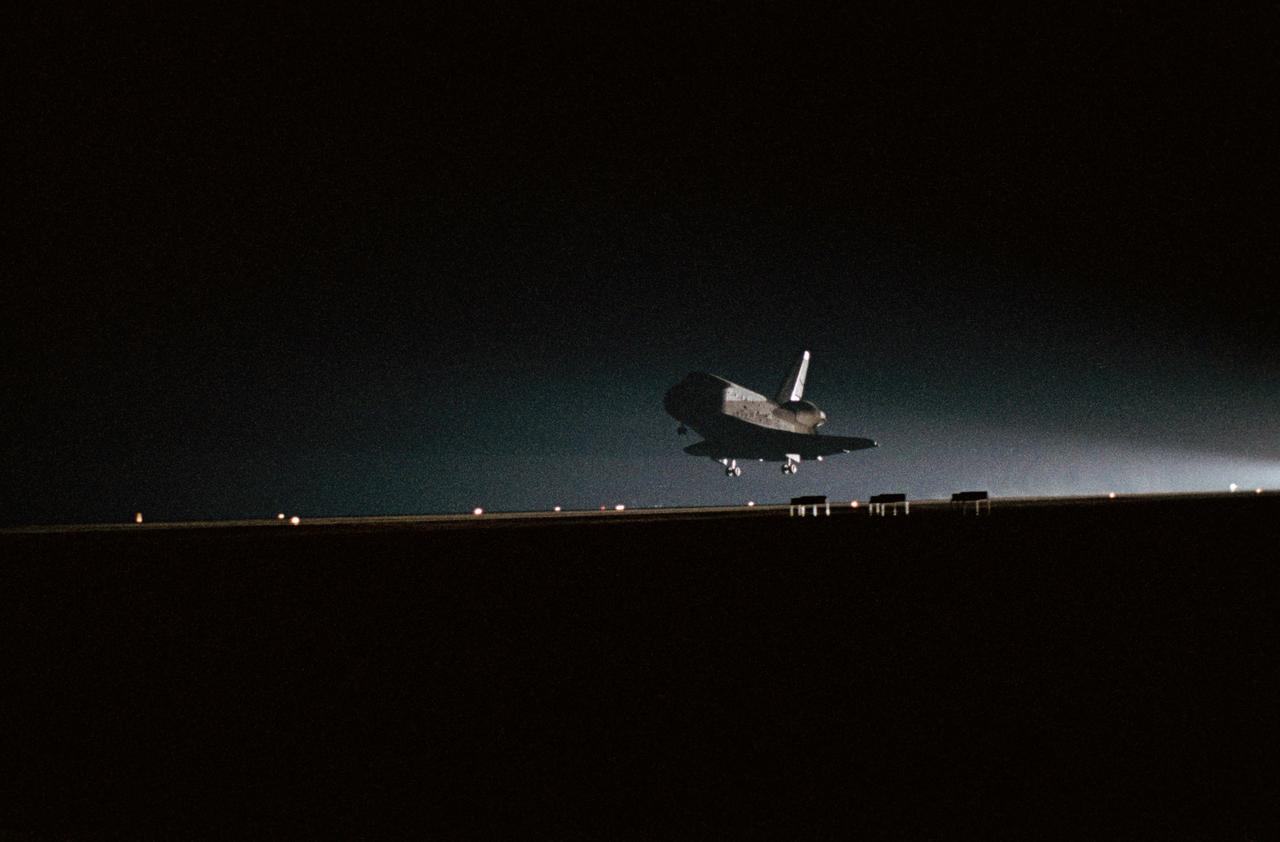
Night view, Challenger STS-8 as it is coming in for a landing. EDWARDS AFB (EAFB), CA
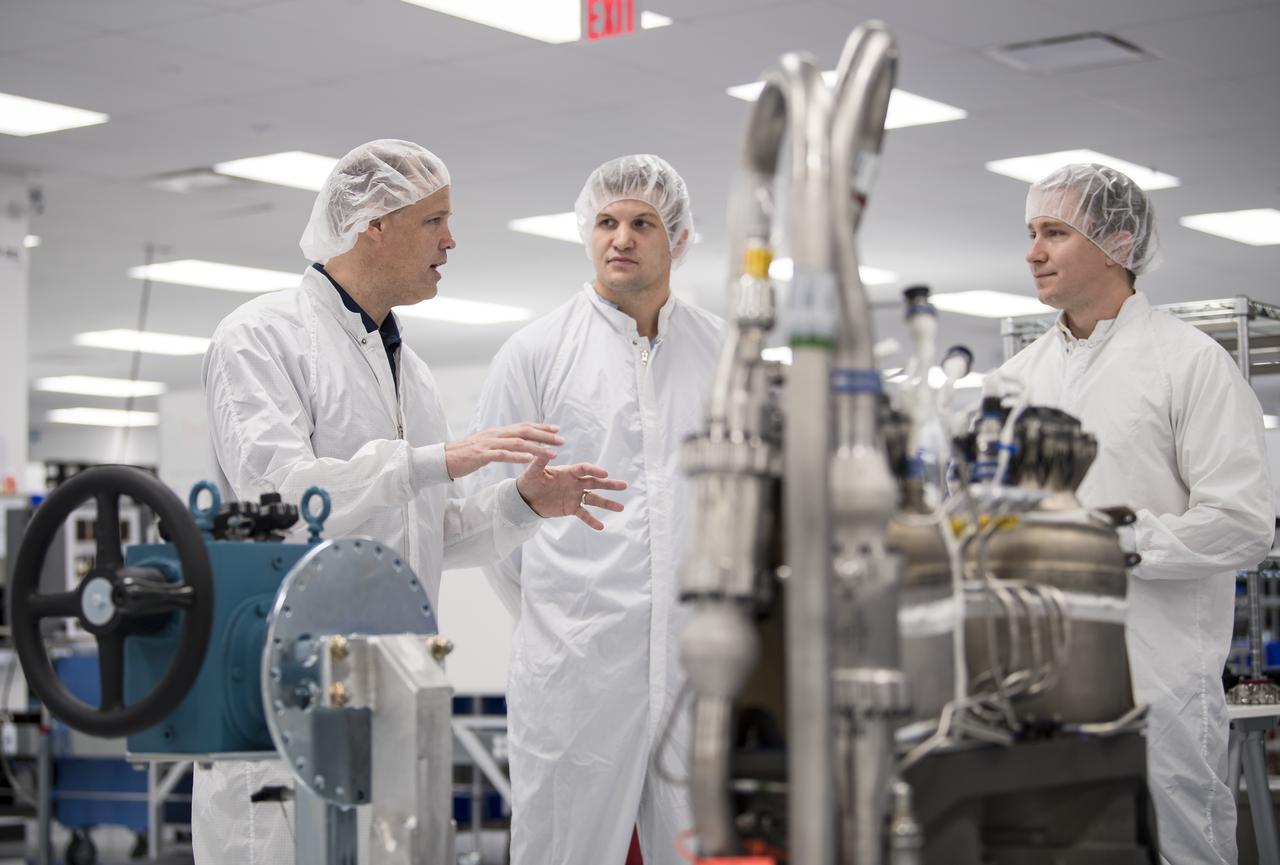
NASA Administrator Jim Bridenstine, left, speaks with SpaceX employees working on Super Draco engines during a tour of the SpaceX Headquarters, Thursday, Oct. 10, 2019 in Hawthorne, CA. Photo credit: (NASA/Aubrey Gemignani)
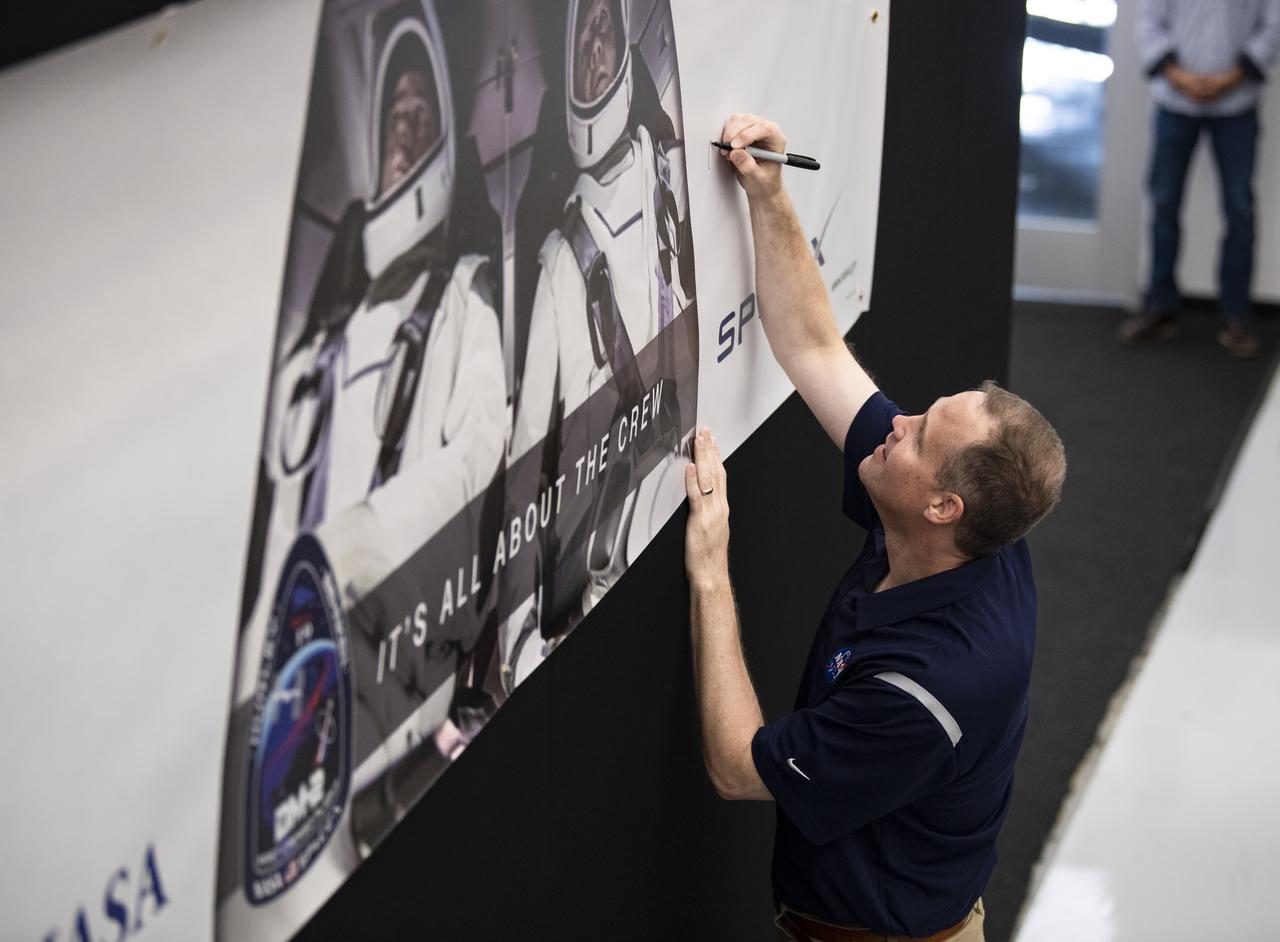
NASA Administrator Jim Bridenstine, signs a banner during a tour of the SpaceX Headquarters, Thursday, Oct. 10, 2019 in Hawthorne, CA. Photo credit: (NASA/Aubrey Gemignani)
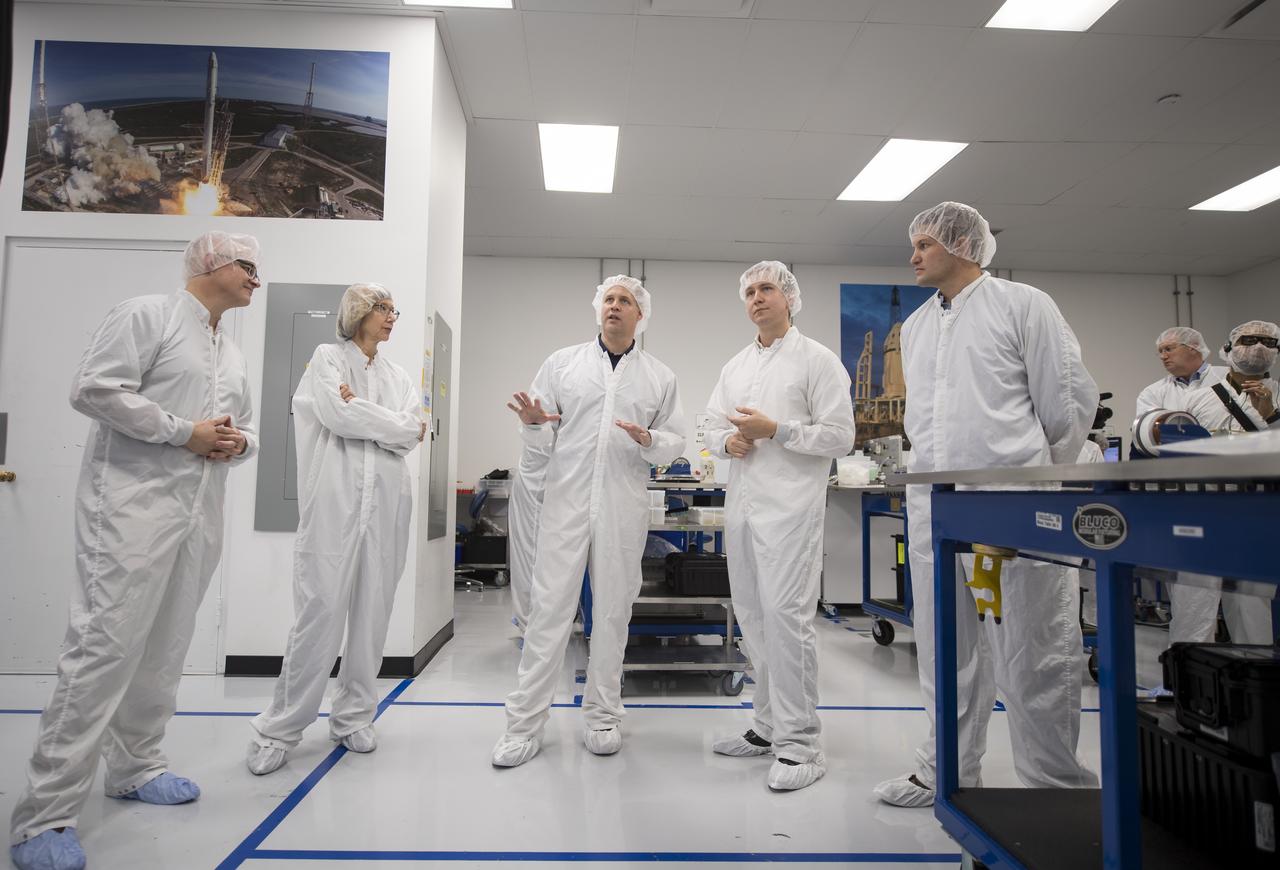
NASA Administrator Jim Bridenstine, center, speaks with SpaceX employees during a tour of the SpaceX Headquarters, Thursday, Oct. 10, 2019 in Hawthorne, CA. Photo credit: (NASA/Aubrey Gemignani)
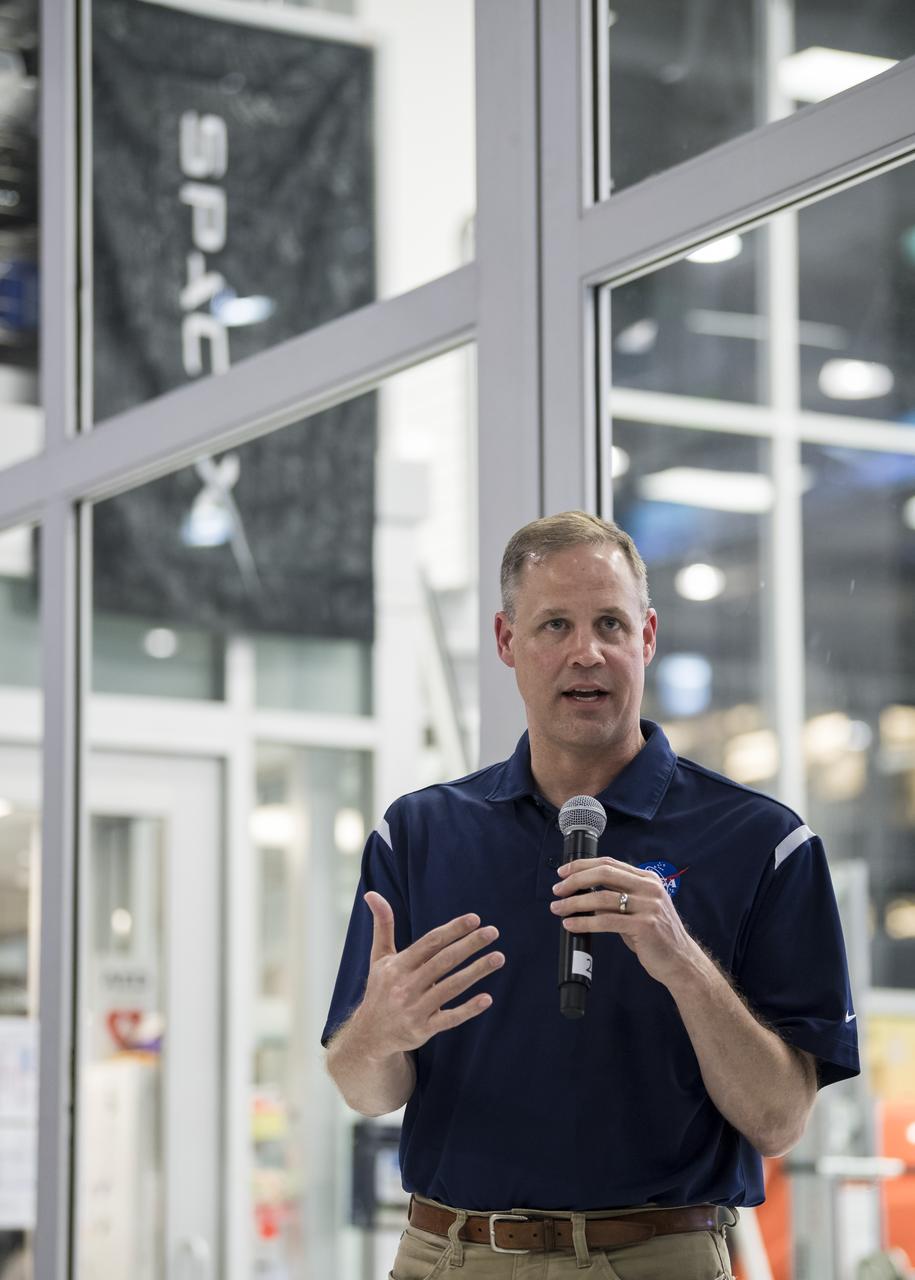
NASA Administrator Jim Bridenstine answers a question from the press in front of the Crew Dragon that is being prepared for the Demo-2 mission, at SpaceX Headquarters, Thursday, Oct. 10, 2019 in Hawthorne, CA. Photo credit: (NASA/Aubrey Gemignani)
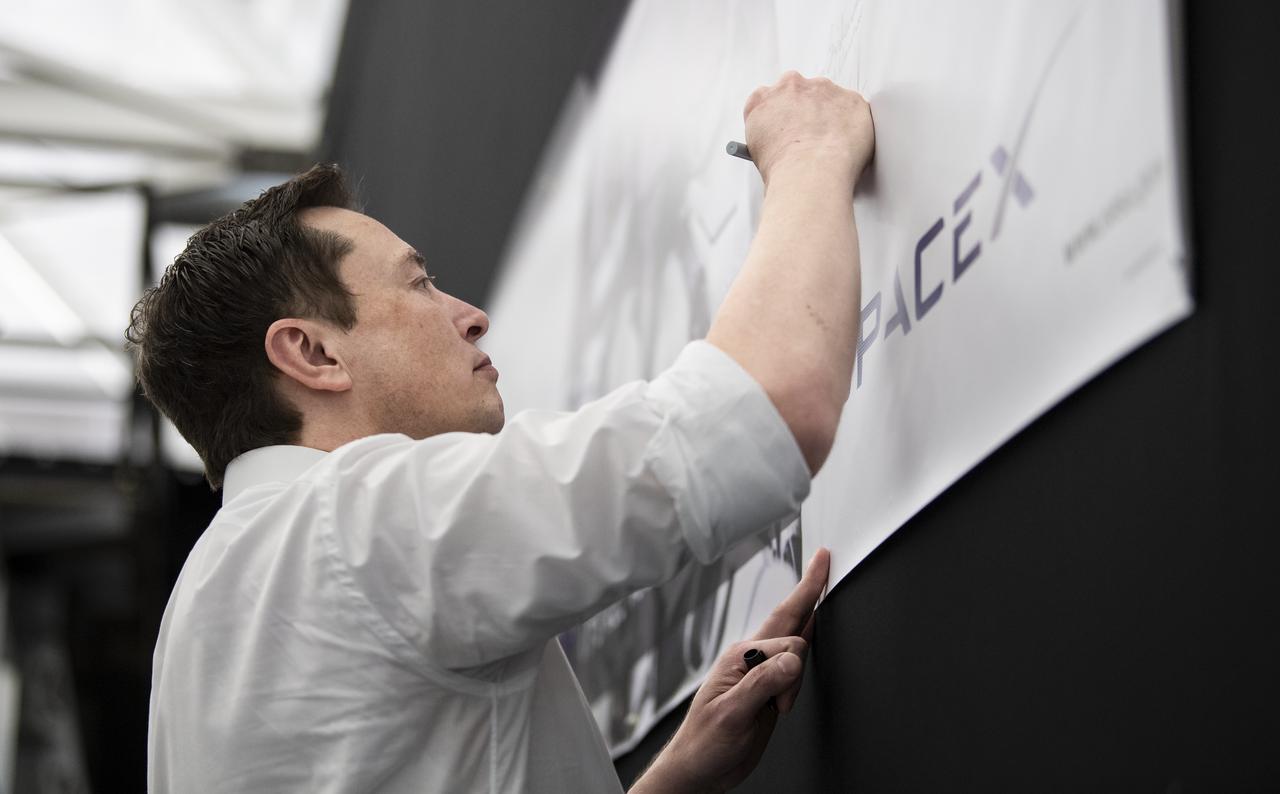
SpaceX Chief Engineer Elon Musk signs a banner after discussing progress on the Commercial Crew Program with NASA Administrator Jim Bridenstine at the SpaceX Headquarters, Thursday, Oct. 10, 2019 in Hawthorne, CA. Photo credit: (NASA/Aubrey Gemignani)
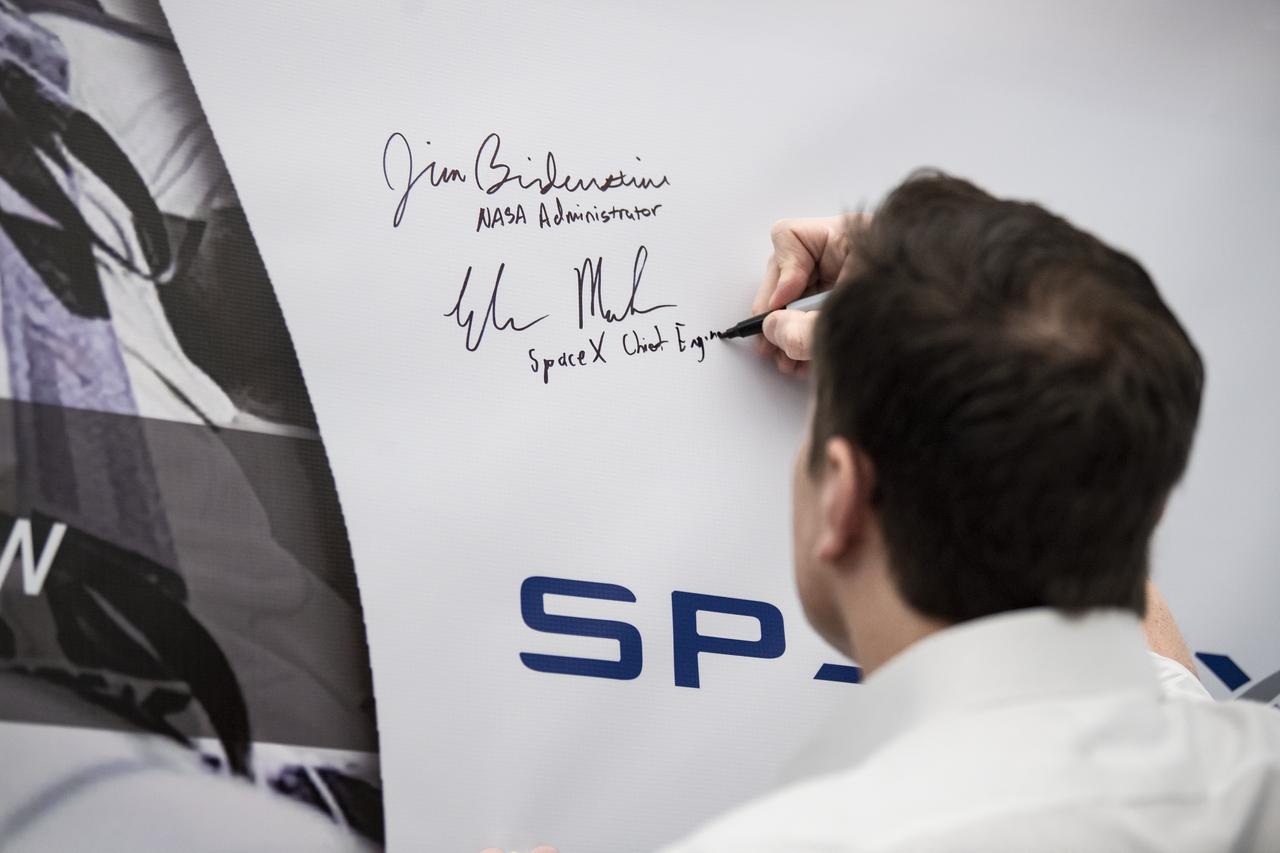
SpaceX Chief Engineer Elon Musk signs a banner after discussing progress on the Commercial Crew Program with NASA Administrator Jim Bridenstine at the SpaceX Headquarters, Thursday, Oct. 10, 2019 in Hawthorne, CA. Photo credit: (NASA/Aubrey Gemignani)

SpaceX Chief Engineer Elon Musk answers a question from the press in front of the Crew Dragon that is being prepared for the Demo-2 mission, at SpaceX Headquarters, Thursday, Oct. 10, 2019 in Hawthorne, CA. Photo credit: (NASA/Aubrey Gemignani)
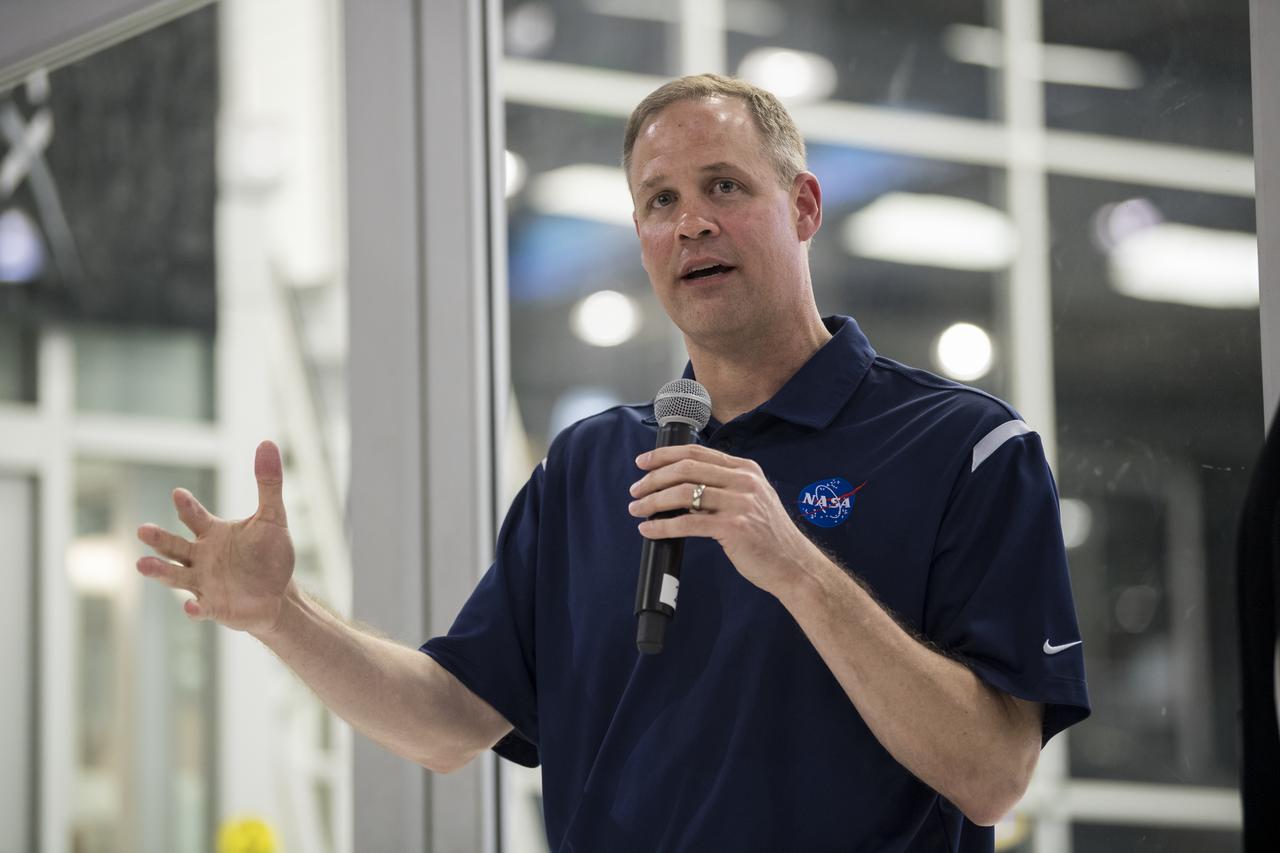
NASA Administrator Jim Bridenstine answers a question from the press in front of the Crew Dragon that is being prepared for the Demo-2 mission, at SpaceX Headquarters, Thursday, Oct. 10, 2019 in Hawthorne, CA. Photo credit: (NASA/Aubrey Gemignani)
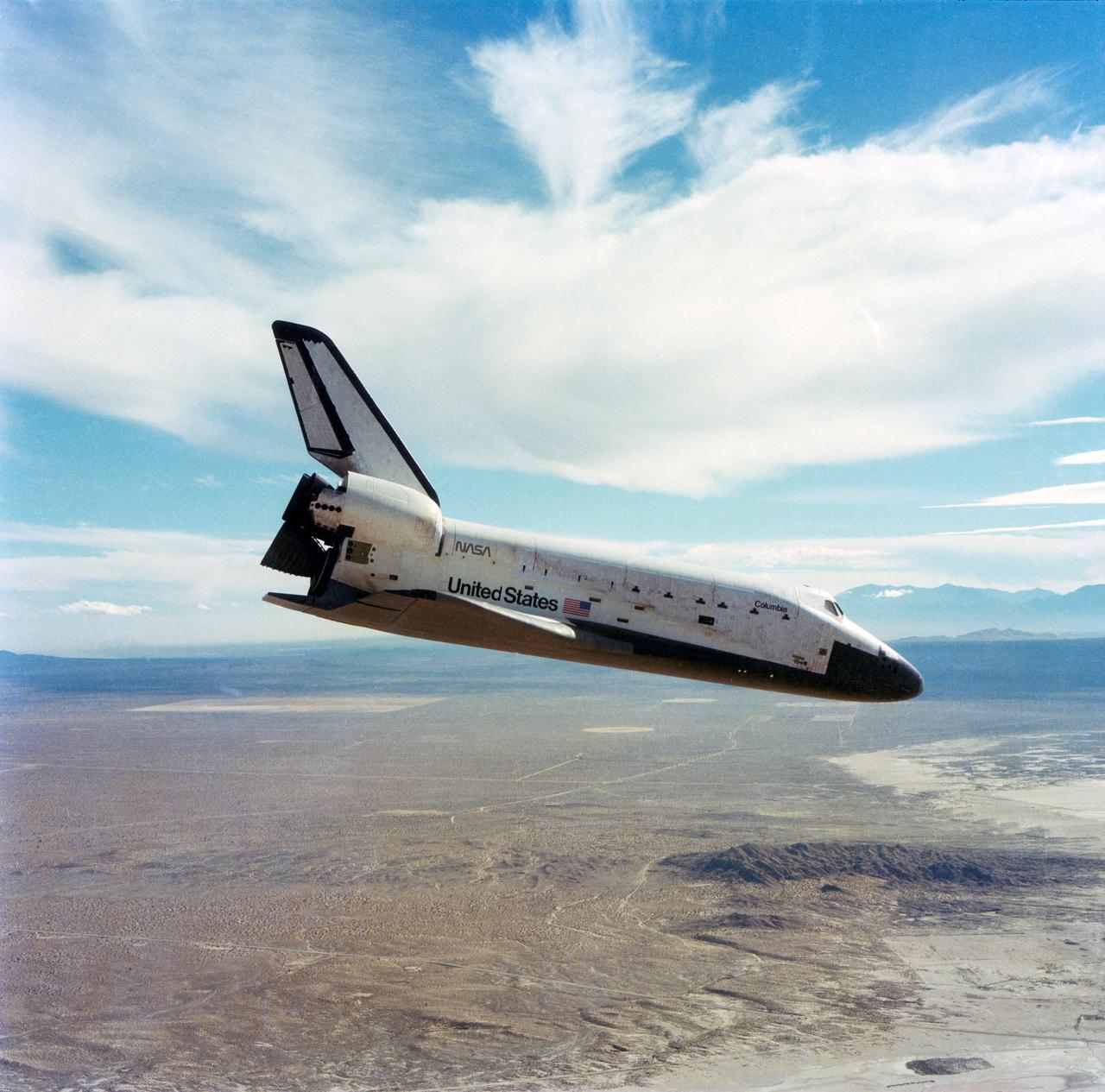
Several views of Columbia in the landing maneuver at the EAFB from T-38 Chase Aircraft and ground views. EAFB, CA
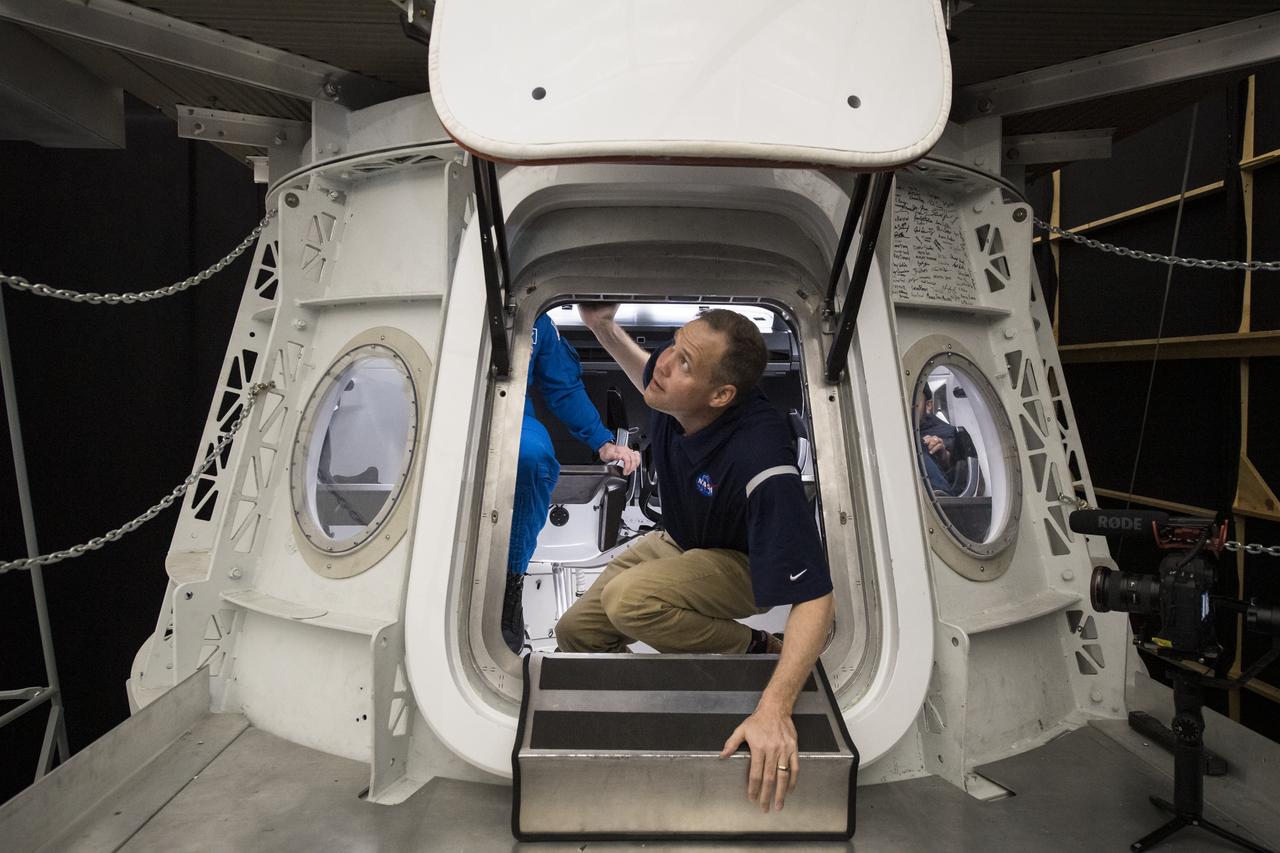
NASA Administrator Jim Bridenstine climbs out of a mockup of the Demo-2 Crew Dragon during a tour of the SpaceX Headquarters, Thursday, Oct. 10, 2019 in Hawthorne, CA. Photo credit: (NASA/Aubrey Gemignani)
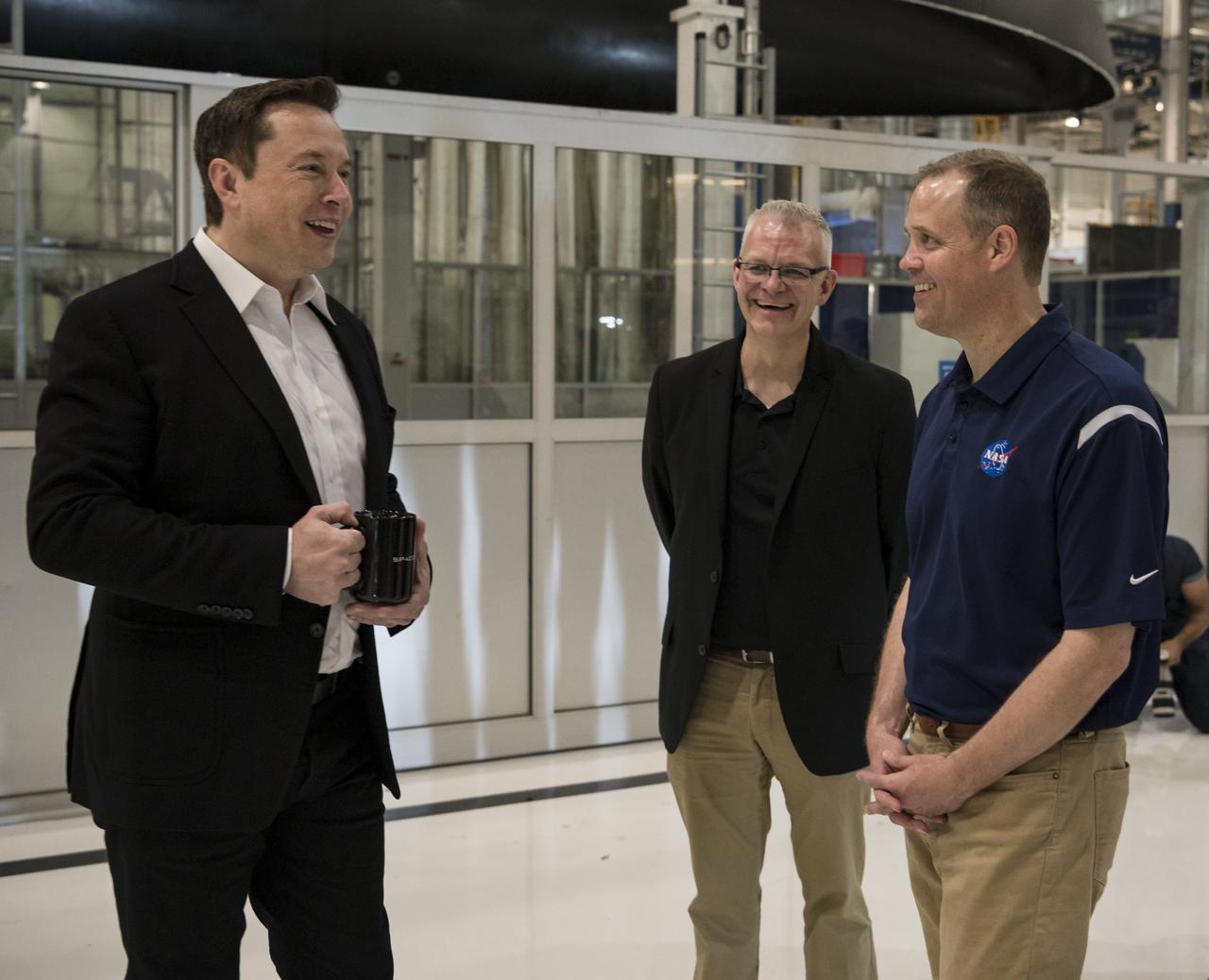
NASA Administrator Jim Bridenstine, right, speaks to SpaceX Chief Engineer Elon Musk, during a tour of the SpaceX Headquarters, Thursday, Oct. 10, 2019 in Hawthorne, CA. Photo credit: (NASA/Aubrey Gemignani)
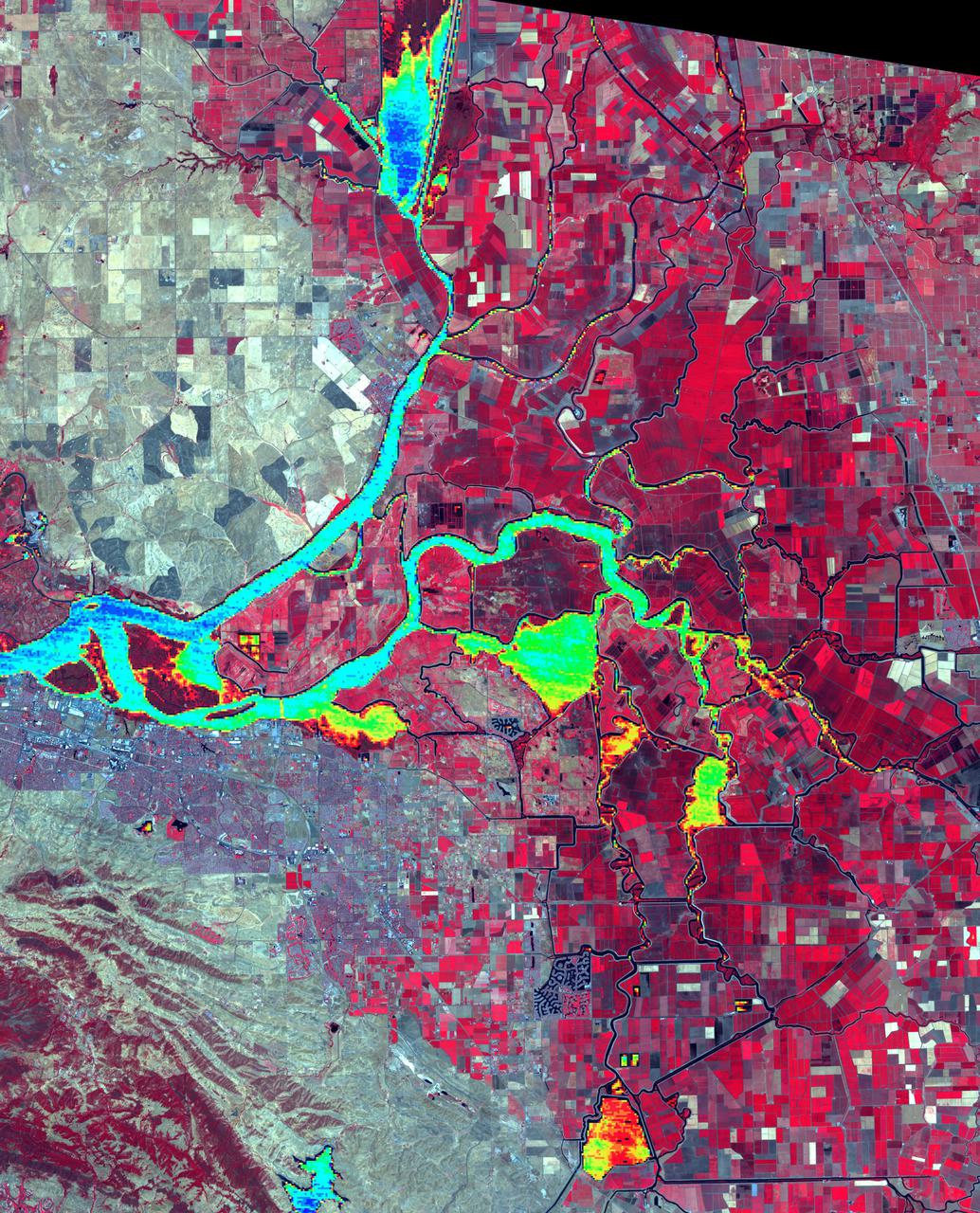
The Sacramento-San Joaquin River Delta, CA (or California Delta) has an area of about 3000 km2, and provides a large fraction of all the water used in California. The Delta drains about 50% of the water coming from the Sierra Nevada Mountains, and channels it through San Francisco's Golden Gate to the Pacific Ocean. Thousands of miles of levees now carefully control the Delta's flow, to maximize water use. The image combines a false color infrared composite (with vegetation depicted in red) with a colorized thermal infrared band to show the water temperature for the larger water bodies. Warmer temperatures are red and yellow, cooler water temperatures are blue and green. The image was acquired July 3, 2012, covers an area of 46.5 by 57.5 km, and is located at 38.1 degrees north, 121.3 degrees west. https://photojournal.jpl.nasa.gov/catalog/PIA24691
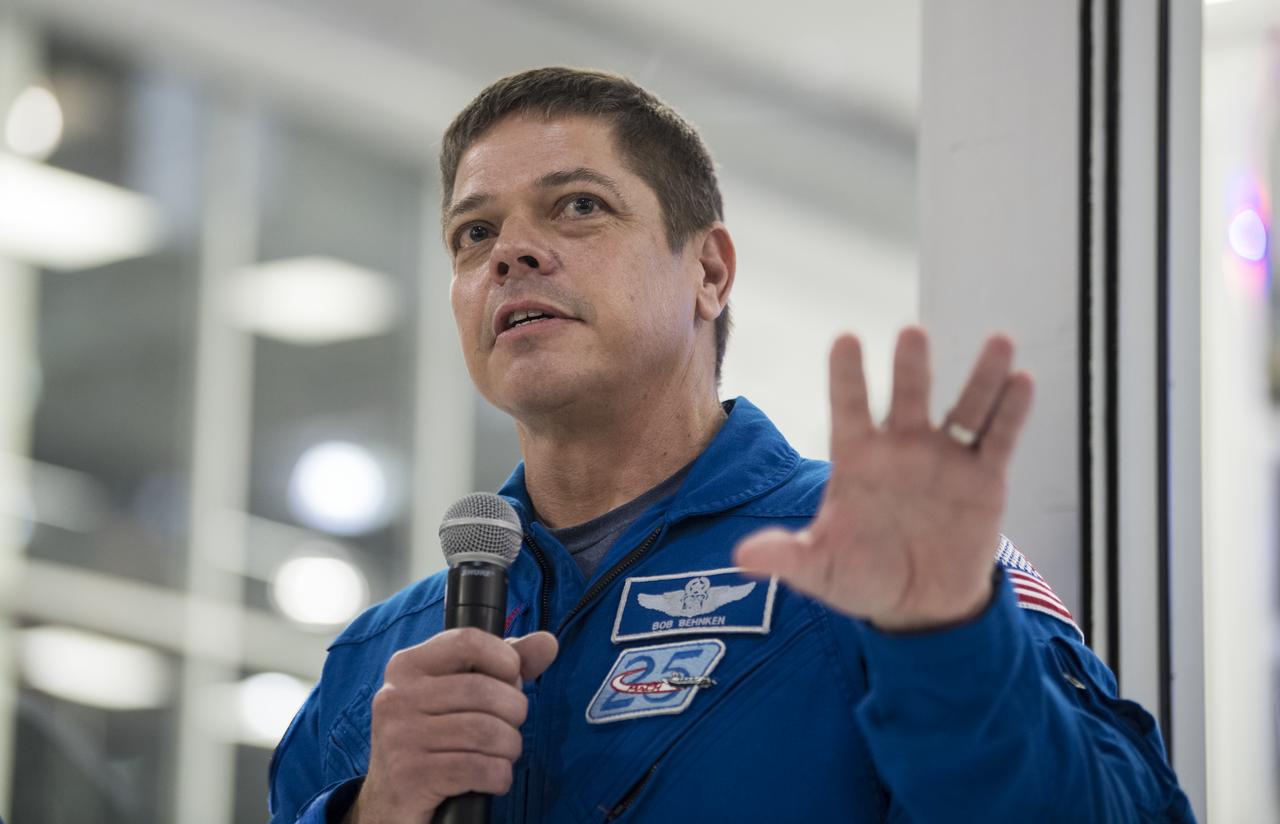
NASA astronaut Bob Behnken answers a question from the media in front of the Crew Dragon that is being prepared for the Demo-2 mission, at SpaceX Headquarters, Thursday, Oct. 10, 2019 in Hawthorne, CA. Behnken and NASA astronaut Doug Hurley are assigned to fly onboard Crew Dragon for the Demo-2 mission.Photo credit: (NASA/Aubrey Gemignani)
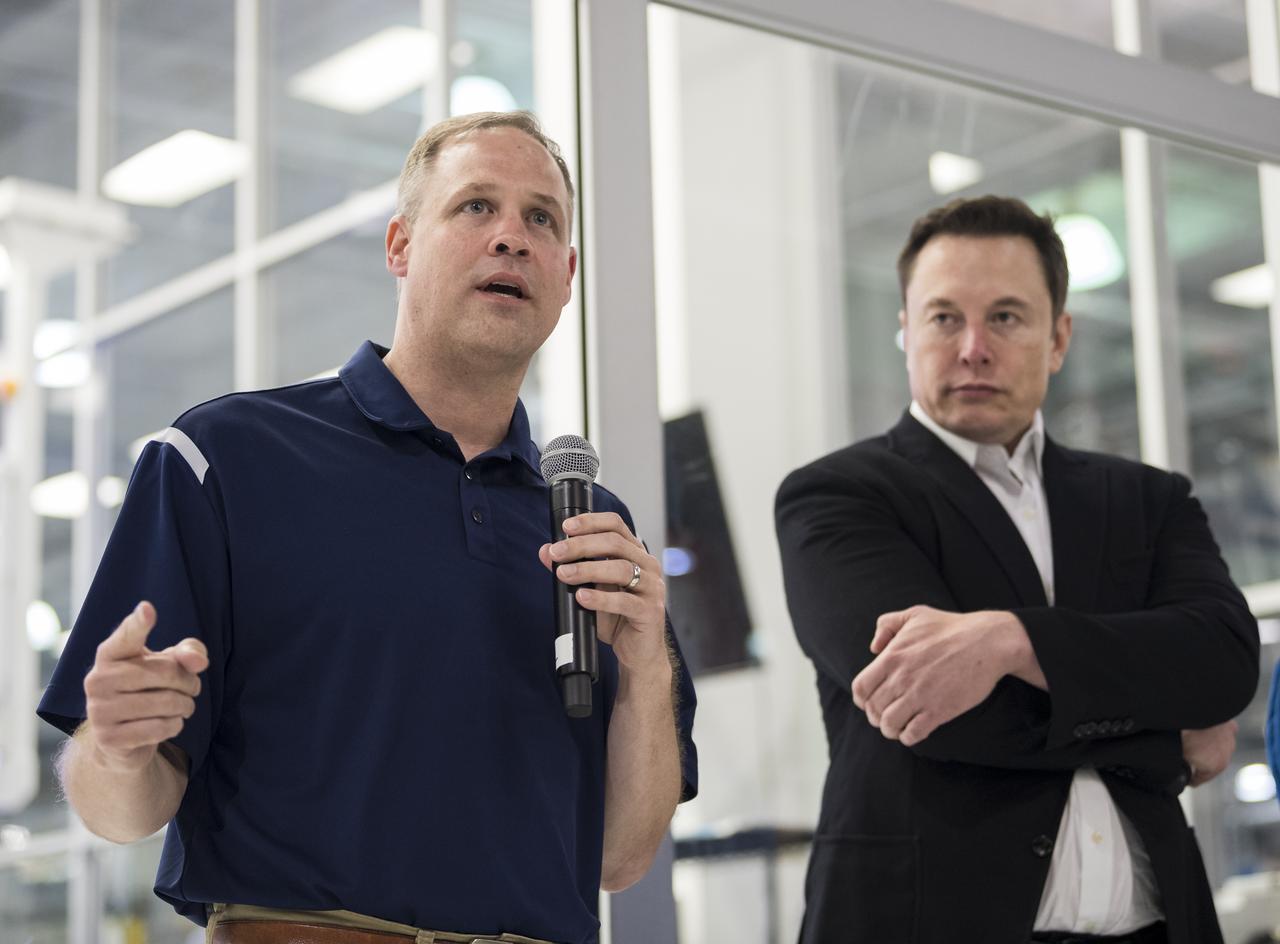
NASA Administrator Jim Bridenstine, left, and SpaceX Chief Engineer Elon Musk, right, speak to press in front of the Crew Dragon that is being prepared for the Demo-2 mission, at SpaceX Headquarters, Thursday, Oct. 10, 2019 in Hawthorne, CA. Photo credit: (NASA/Aubrey Gemignani)
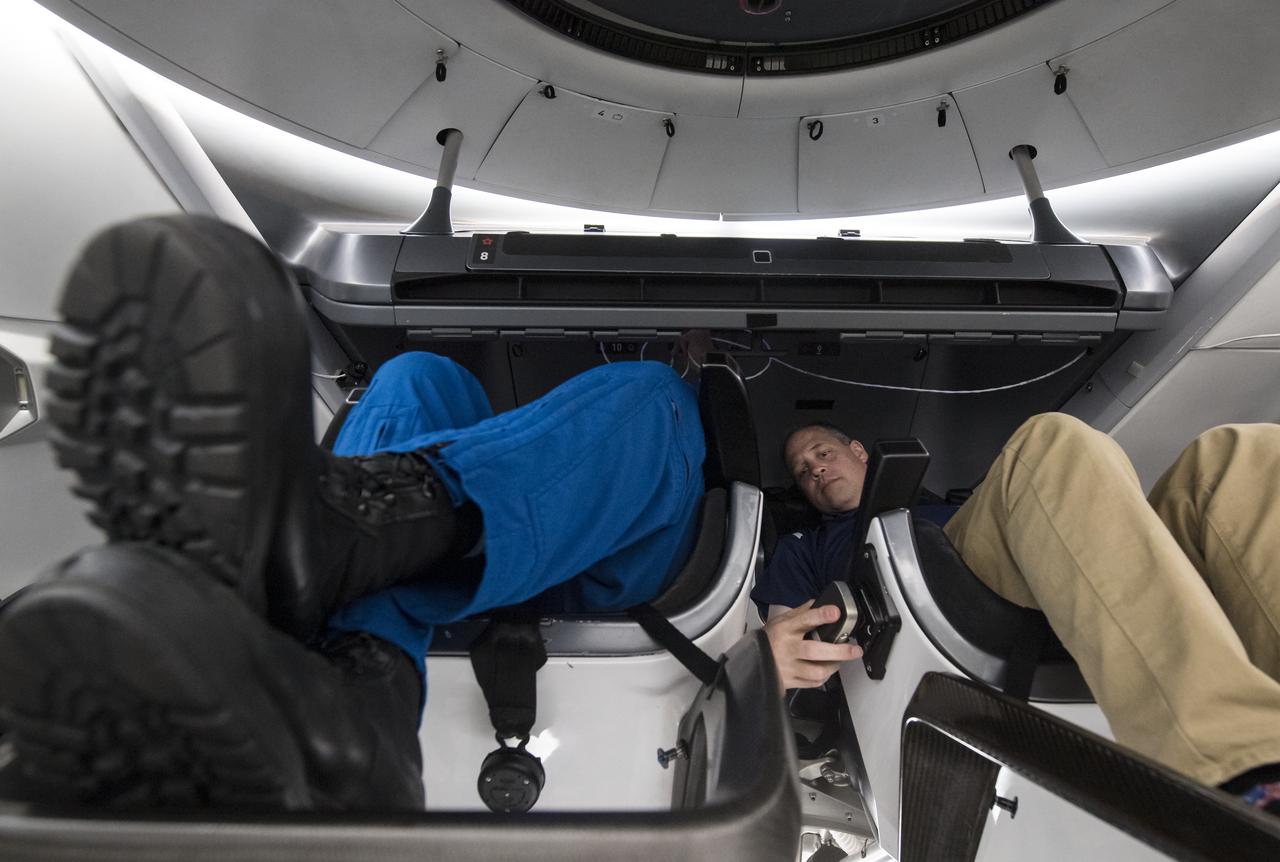
NASA Administrator Jim Bridenstine, right, sits in a mockup of the Demo-2 Crew Dragon with NASA astronaut Bob Behnken during a tour of the SpaceX Headquarters, Thursday, Oct. 10, 2019 in Hawthorne, CA. Photo credit: (NASA/Aubrey Gemignani)
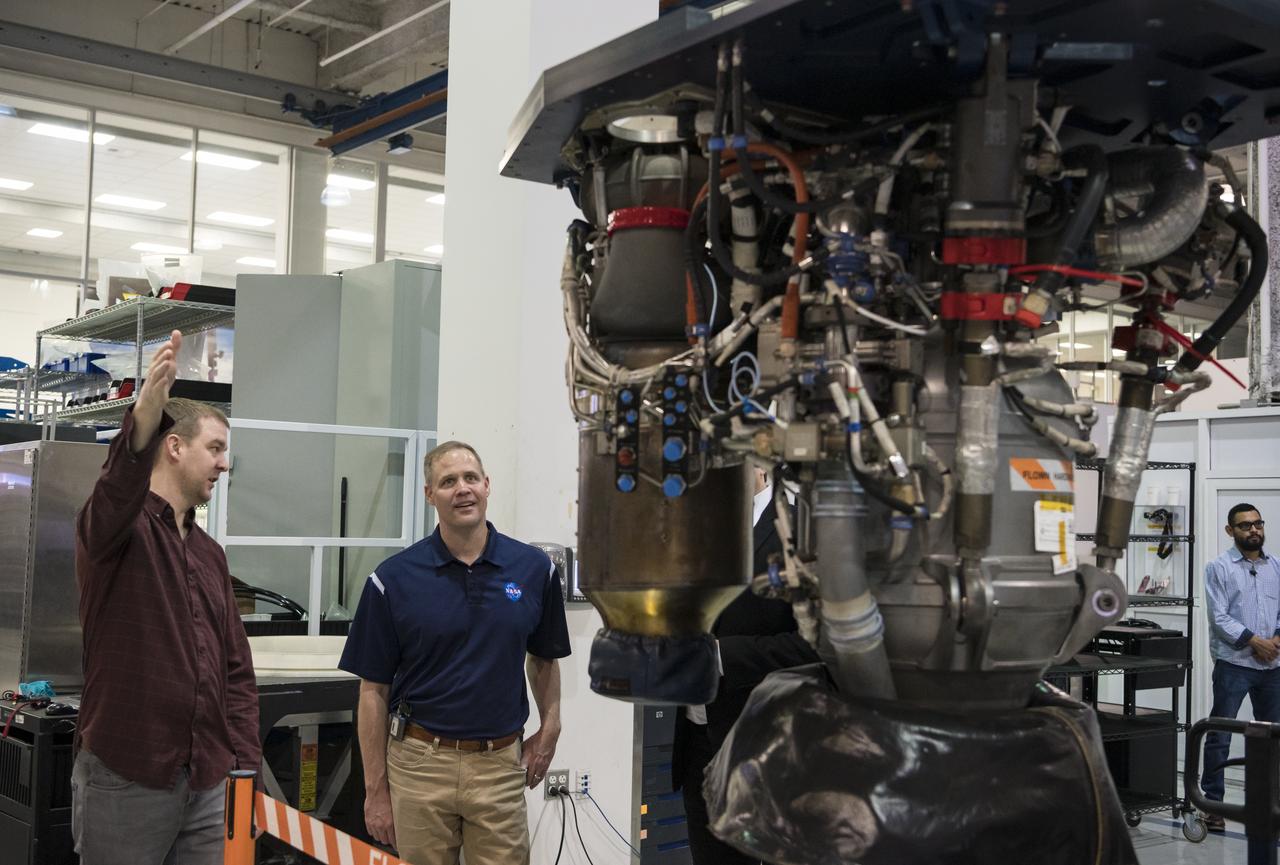
NASA Administrator Jim Bridenstine, right, speaks to SpaceX Vice President of Propulsion Engineering, Will Heltsley, about engine hardware during a tour of the SpaceX Headquarters, Thursday, Oct. 10, 2019 in Hawthorne, CA. Photo credit: (NASA/Aubrey Gemignani)
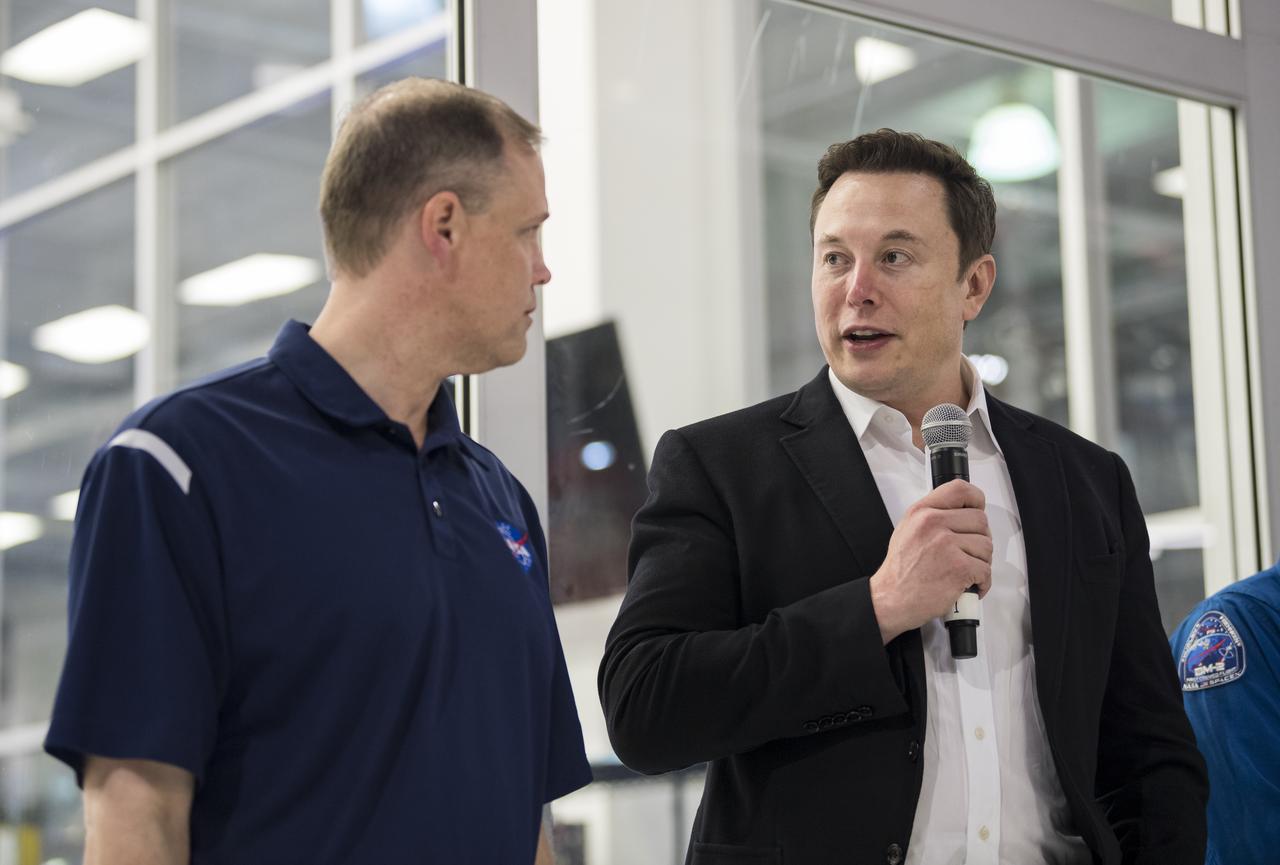
SpaceX Chief Engineer Elon Musk, right, speaks to press with NASA Administrator Jim Bridenstine, in front of the Crew Dragon that is being prepared for the Demo-2 mission, at SpaceX Headquarters, Thursday, Oct. 10, 2019 in Hawthorne, CA. Photo credit: (NASA/Aubrey Gemignani)
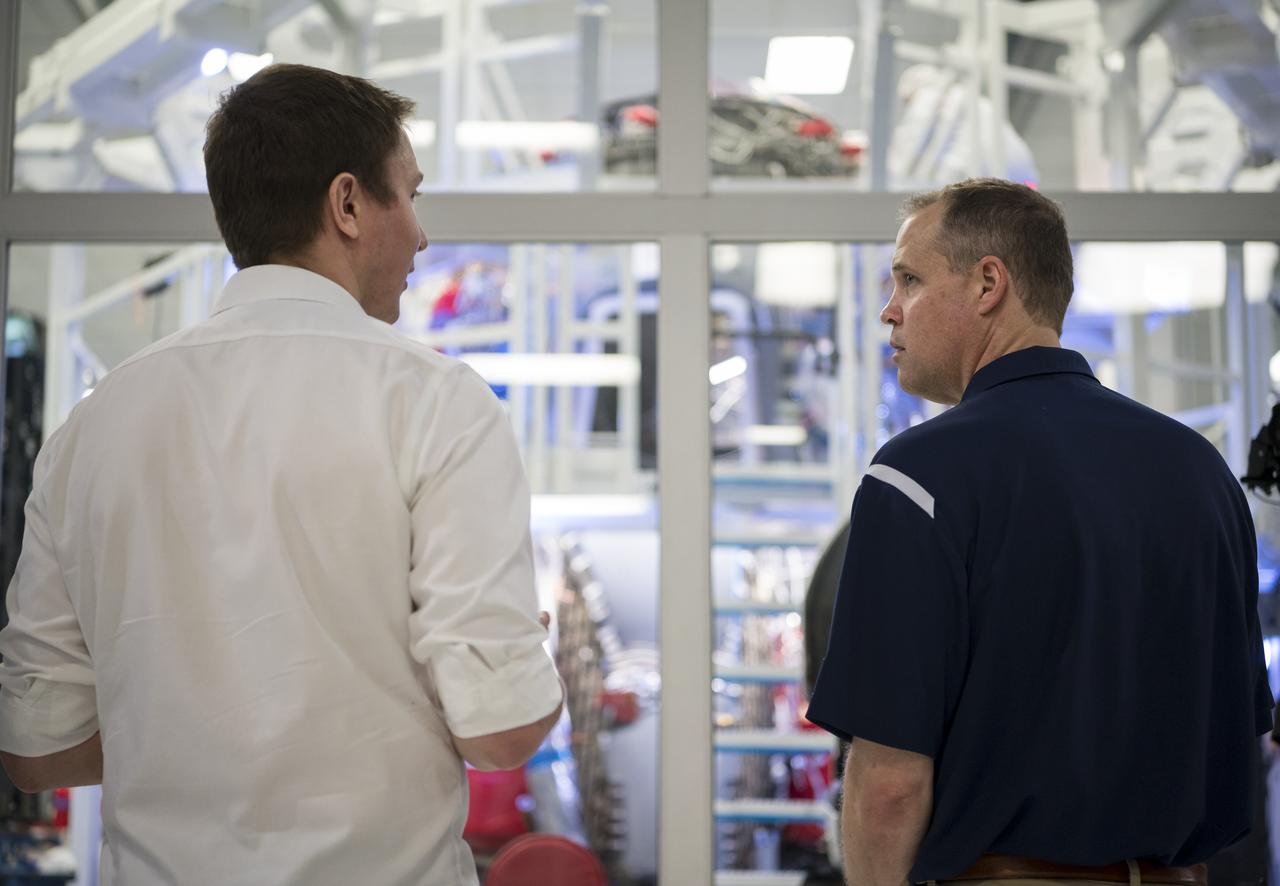
NASA Administrator Jim Bridenstine, right, speaks to Joseph Petrzelka of SpaceX about the Dragon capsule that will launch during the Demo-2 mission while on a tour of the SpaceX Headquarters, Thursday, Oct. 10, 2019 in Hawthorne, CA. Photo credit: (NASA/Aubrey Gemignani)
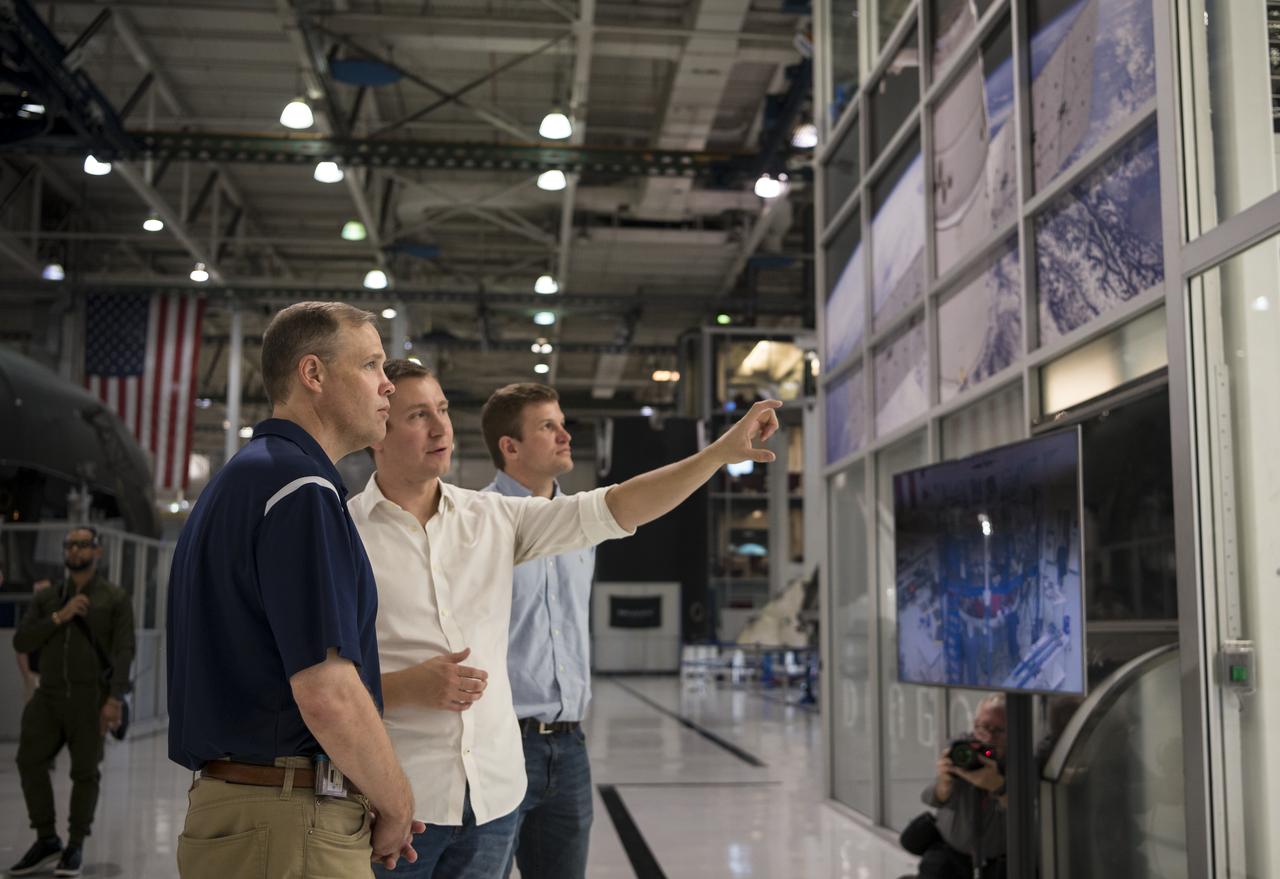
NASA Administrator Jim Bridenstine, right, speaks to Joseph Petrzelka of SpaceX about the Dragon capsule that will launch during the Demo-2 mission while on a tour of the SpaceX Headquarters, Thursday, Oct. 10, 2019 in Hawthorne, CA. Photo credit: (NASA/Aubrey Gemignani)
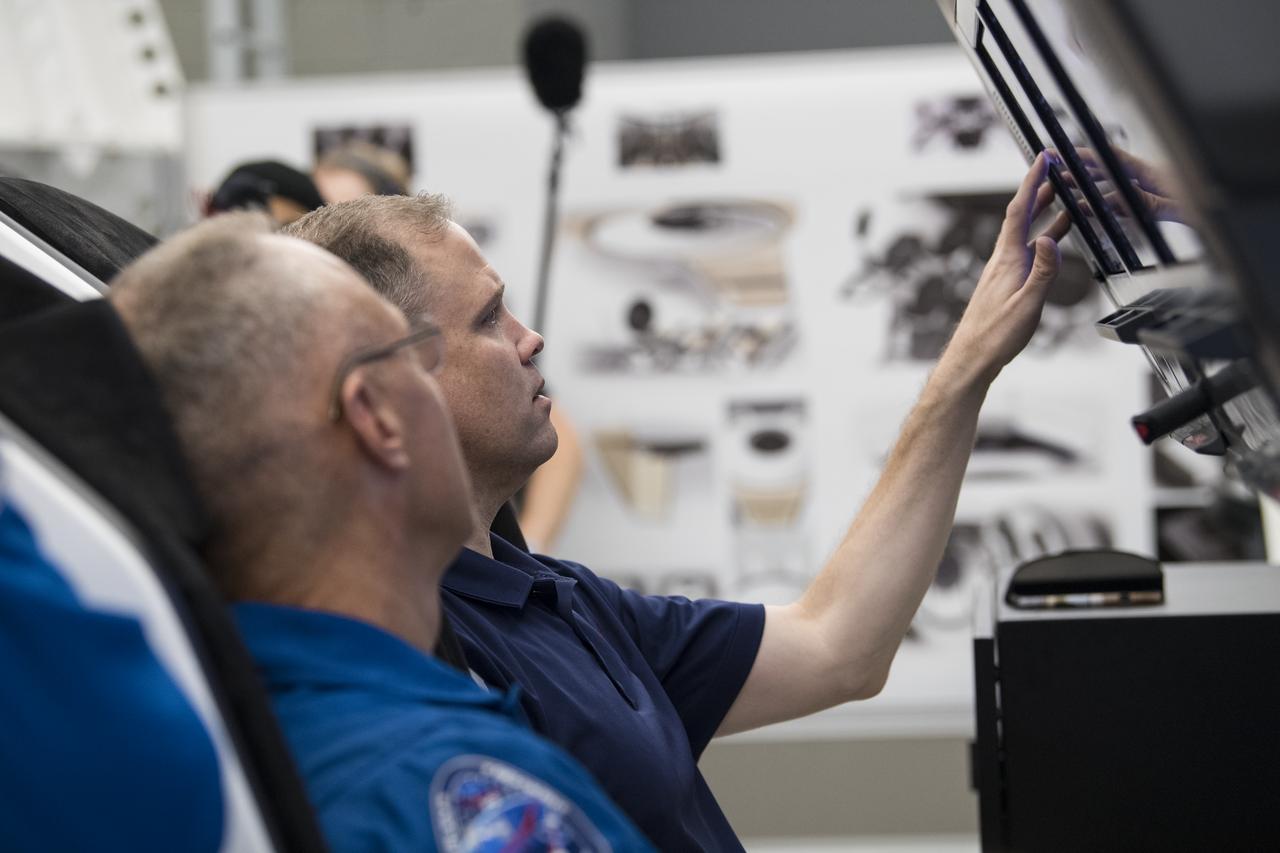
NASA Administrator Jim Bridenstine, right, participates in a crew Dragon flight simulation with NASA astronauts Doug Hurley, who will be flying aboard the Crew Dragon during the Demo-2 mission, at the SpaceX Headquarters, Thursday, Oct. 10, 2019 in Hawthorne, CA. Photo credit: (NASA/Aubrey Gemignani)
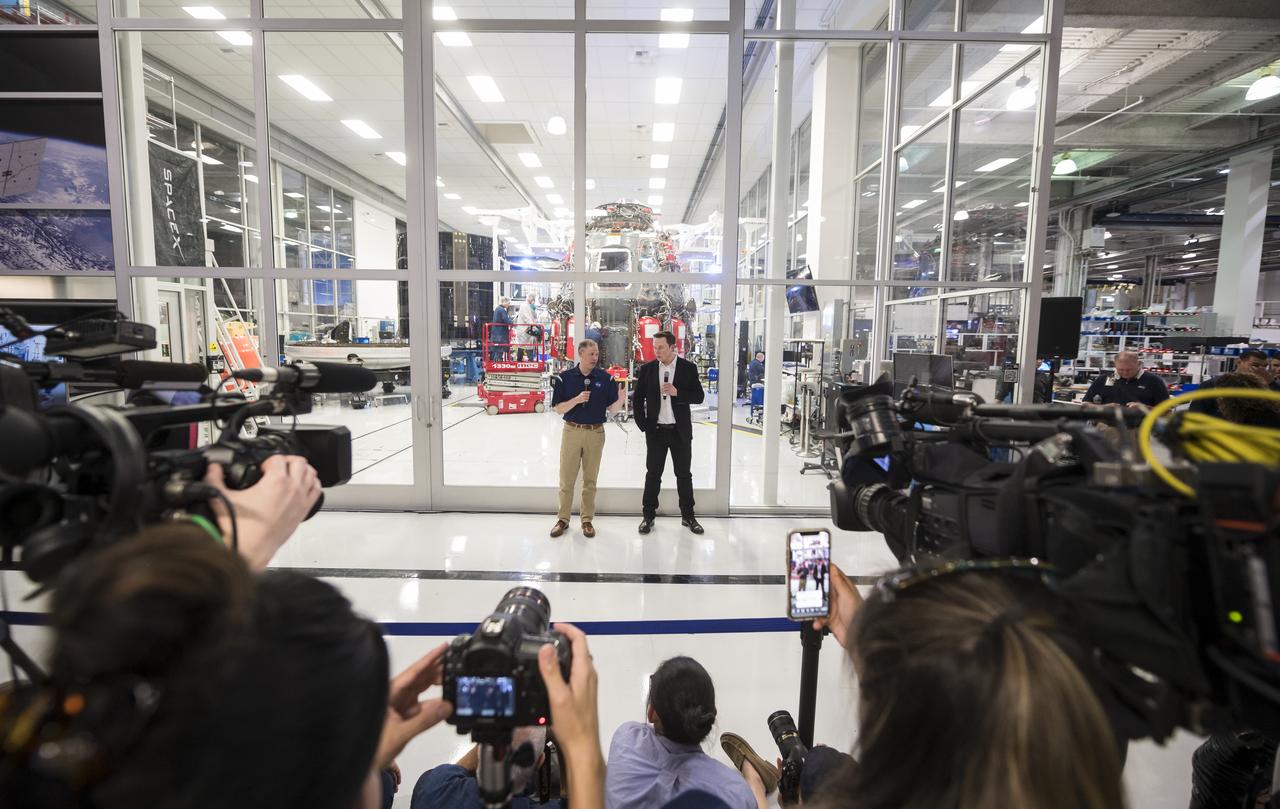
NASA Administrator Jim Bridenstine, left, and SpaceX Chief Engineer Elon Musk, right, speak to press in front of the Crew Dragon that is being prepared for the Demo-2 mission, at SpaceX Headquarters, Thursday, Oct. 10, 2019 in Hawthorne, CA. Photo credit: (NASA/Aubrey Gemignani)
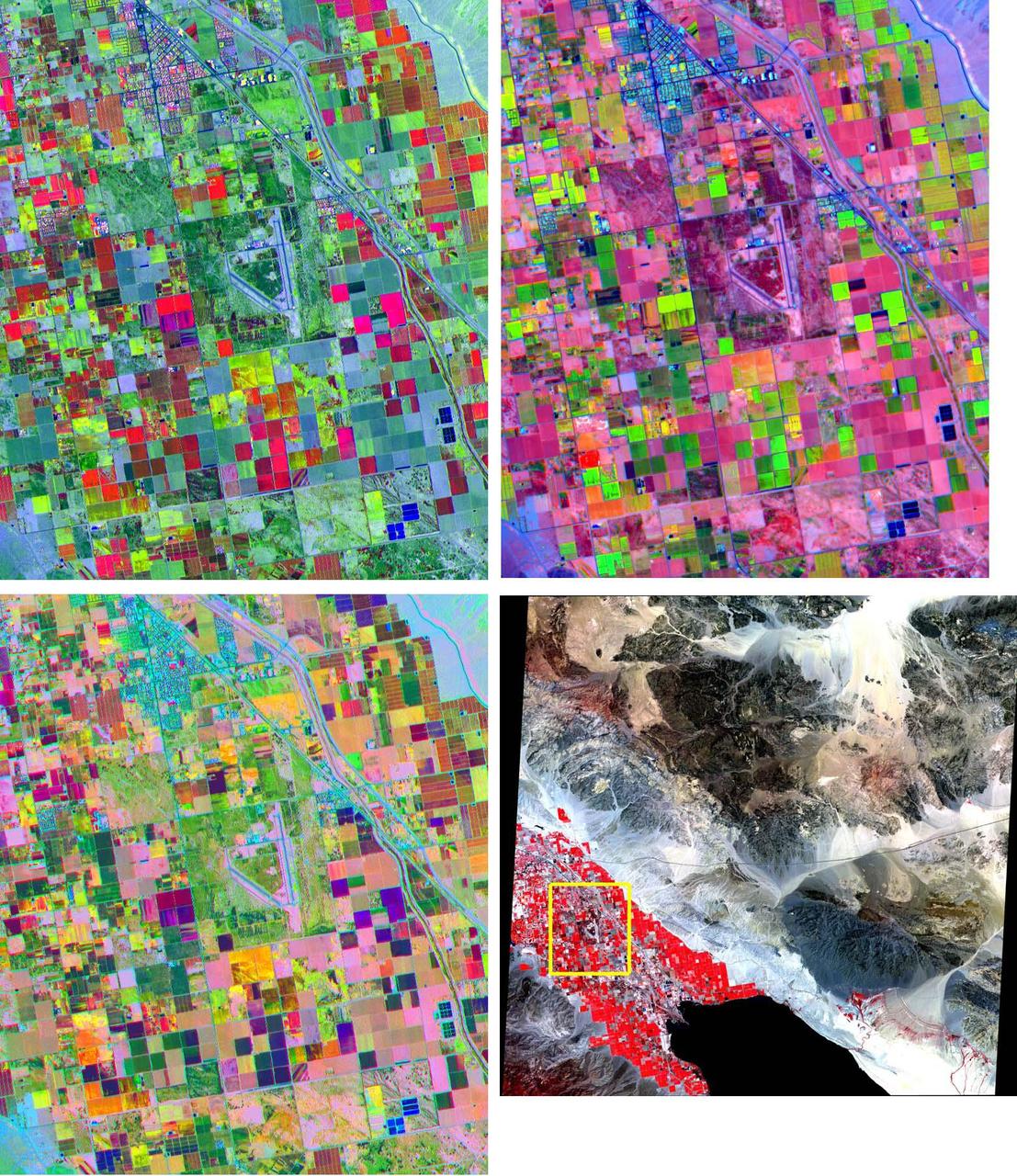
These band composites, acquired on June 4, 2000, cover a 11 by 13.5 km sub-scene in the Coachella Valley, CA. The area is shown by the yellow box on the full scene in the LOWER RIGHT corner, northwest of the Salton Sea. This is a major agricultural region of California, growing fruit and produce throughout the year. Different combinations of ASTER bands help identify the different crop types. UPPER LEFT: bands 3, 2, 1 as red, green, and blue (RGB); UPPER RIGHT: bands 4, 2, 1 as RGB; LOWER LEFT: bands 4, 3, 2 as RGB. The image is centered at 33.6 degrees north latitude, 116.1 degrees west longitude. http://photojournal.jpl.nasa.gov/catalog/PIA11161
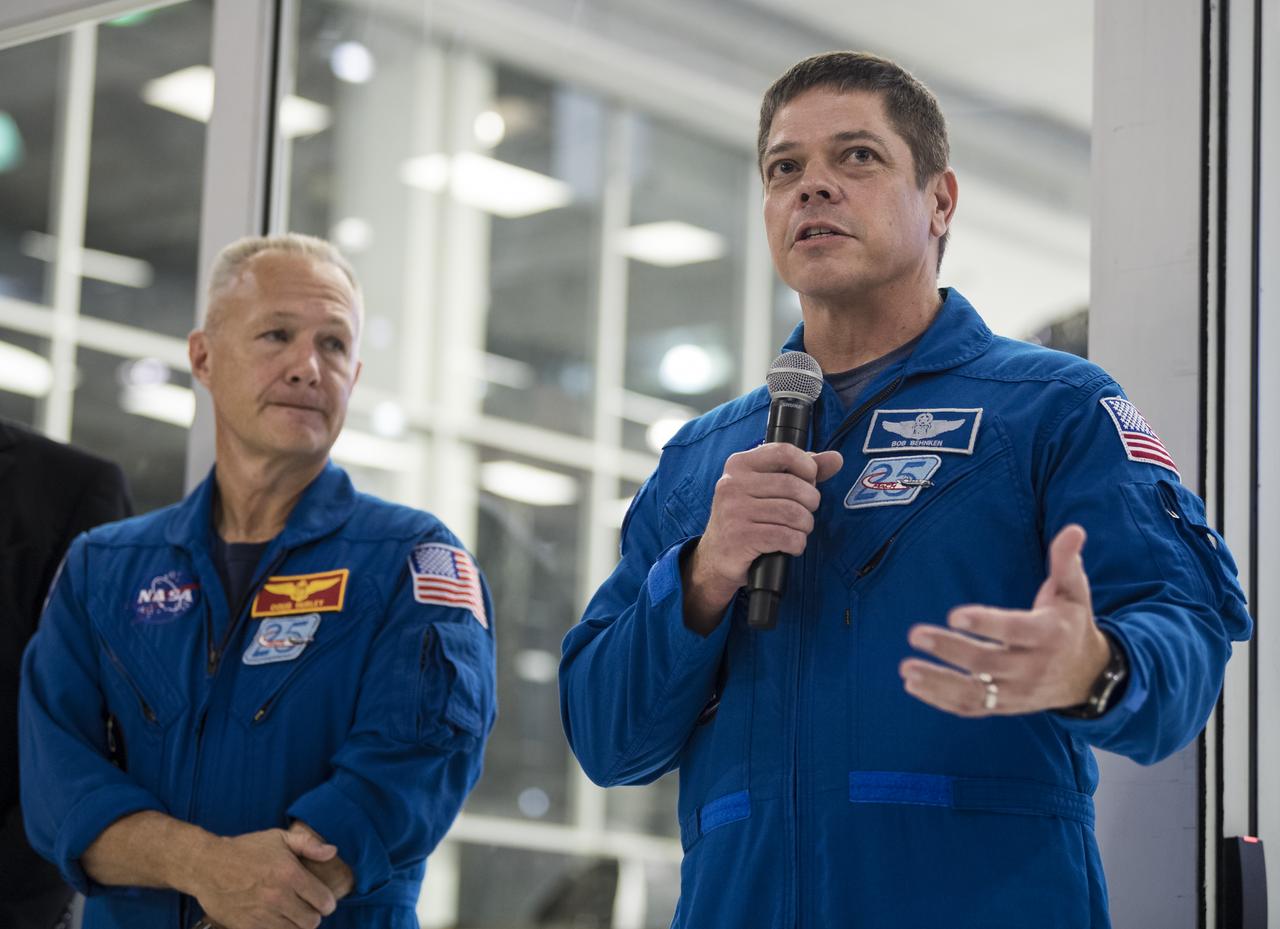
NASA astronaut Bob Behnken answers a question from the media in front of the Crew Dragon that is being prepared for the Demo-2 mission, at SpaceX Headquarters, Thursday, Oct. 10, 2019 in Hawthorne, CA. Behnken and NASA astronaut Doug Hurley are assigned to fly onboard Crew Dragon for the Demo-2 mission.Photo credit: (NASA/Aubrey Gemignani)
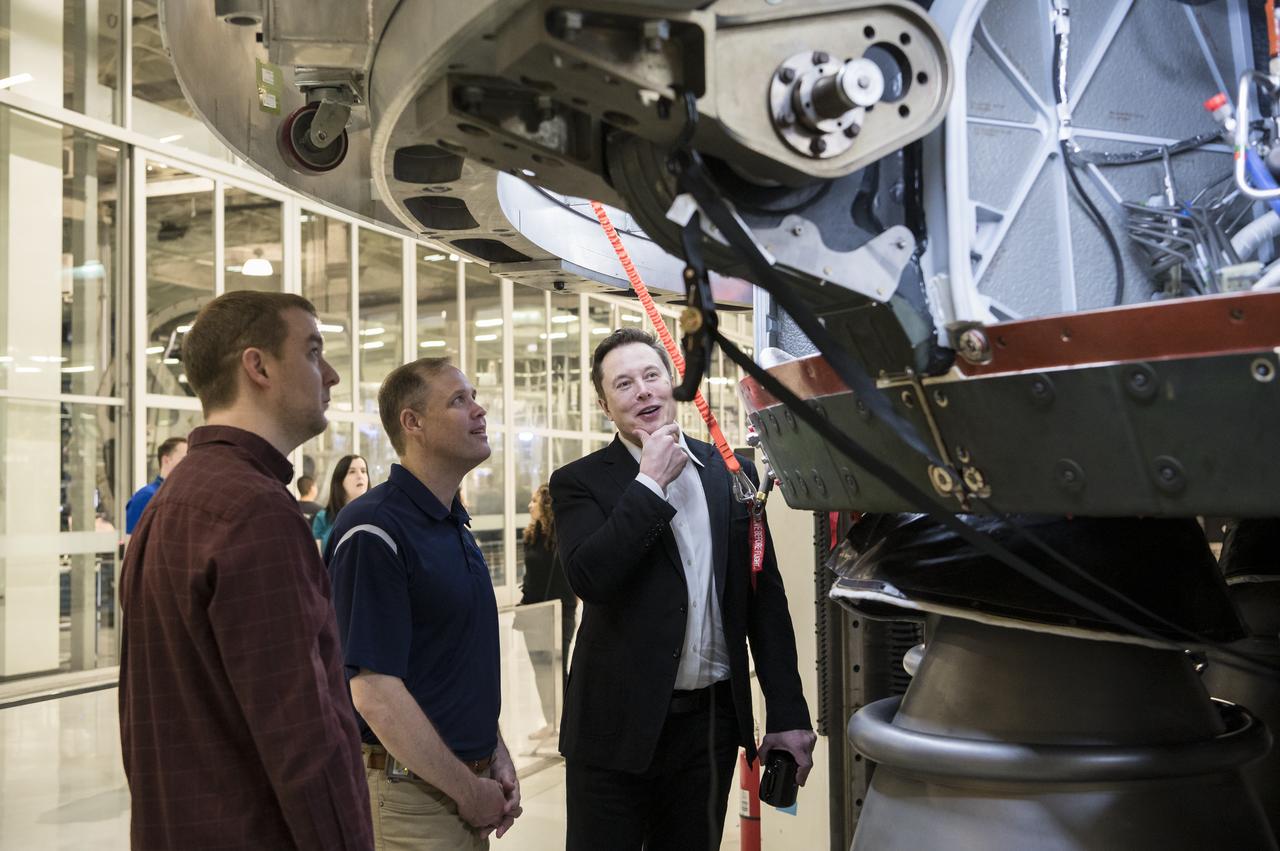
SpaceX Chief Engineer Elon Musk, right, speaks to NASA Administrator Jim Bridenstine, center, and SpaceX Vice President of Propulsion Engineering, Will Heltsley, left, while viewing the OctaWeb, part of the Merlin engine used for the Falcon rockets, at the SpaceX Headquarters, Thursday, Oct. 10, 2019 in Hawthorne, CA. Photo credit: (NASA/Aubrey Gemignani)
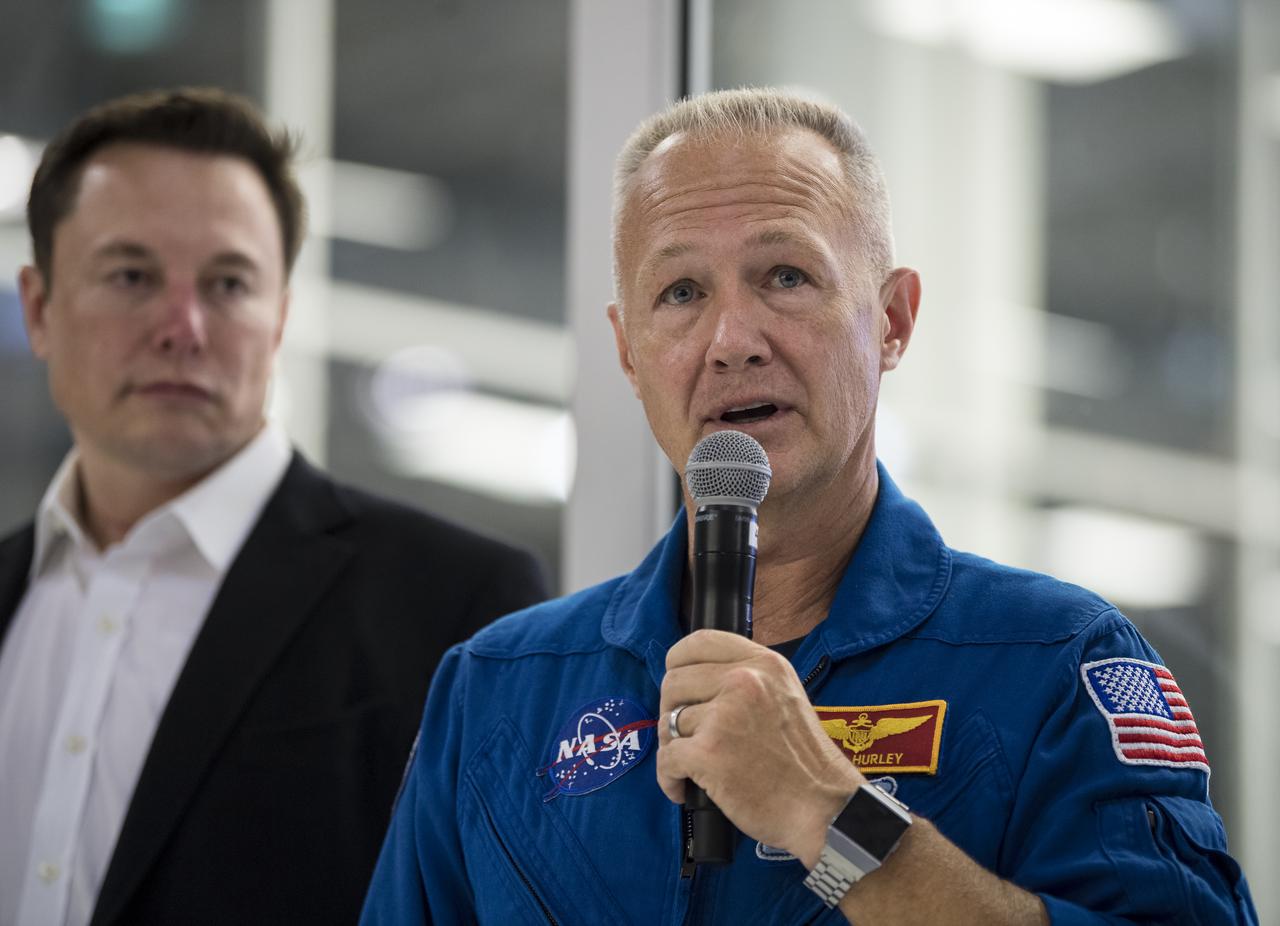
NASA astronaut Doug Hurley answers a question from the media in front of the Crew Dragon that is being prepared for the Demo-2 mission, at SpaceX Headquarters, Thursday, Oct. 10, 2019 in Hawthorne, CA. Hurley and NASA astronaut Bob Behnken are assigned to fly onboard Crew Dragon for the Demo-2 mission. Photo credit: (NASA/Aubrey Gemignani)
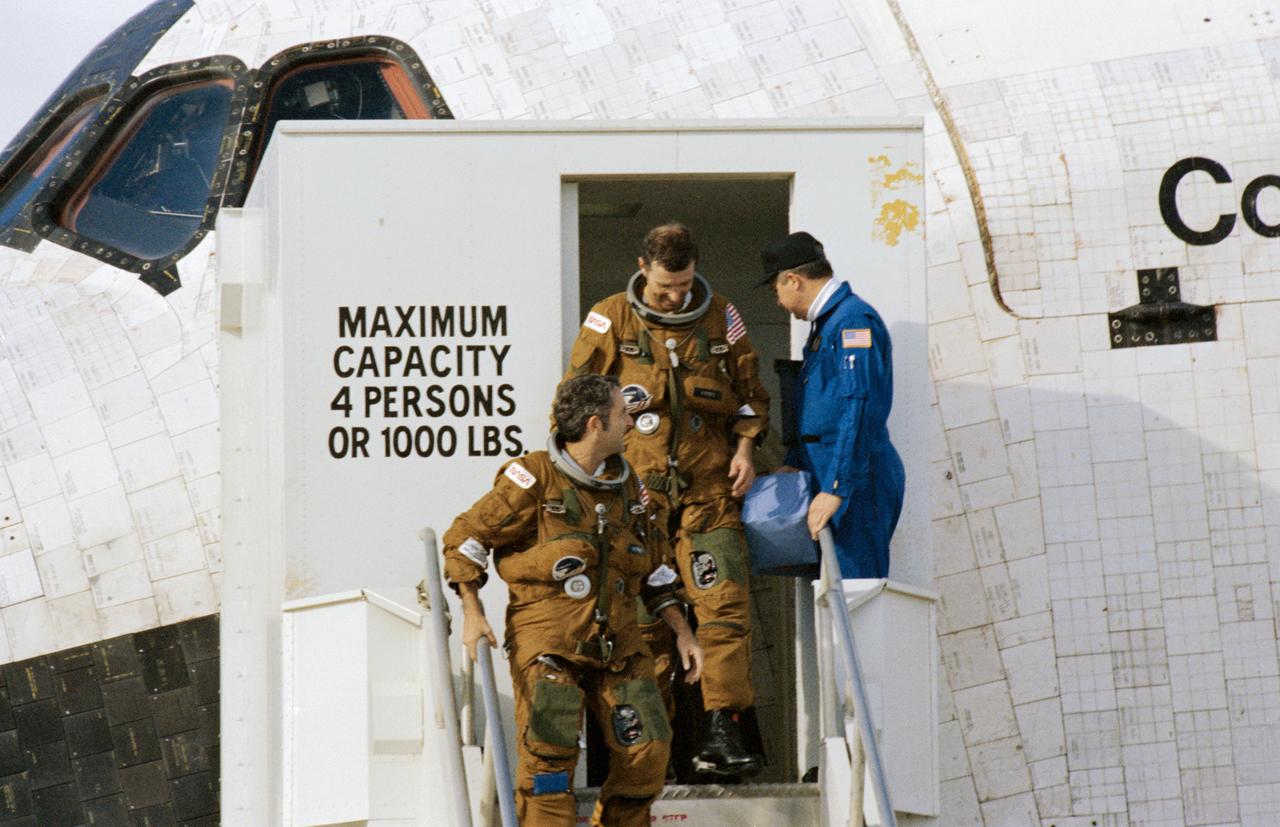
Documentary views of Space Shuttle Columbia on Lakebed Runway during De-Servicing, Crew Egress and departure from Orbiter at the end of STS-2 Mission. EAFB, CA Also available in 70 CN
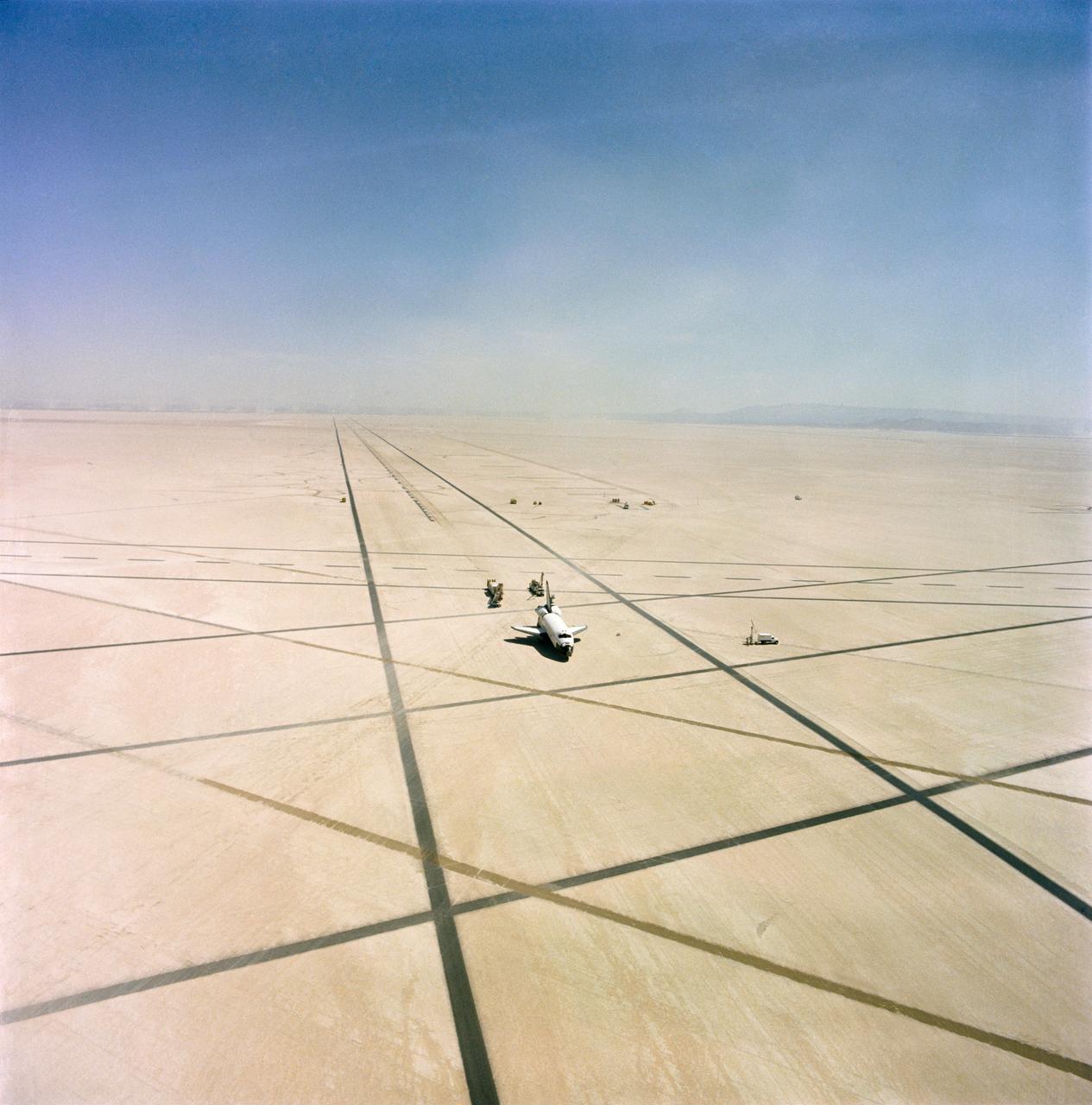
Documentary aerial and ground views of the Columbia sitting on the Lakebed Runway with the deservicing trucks following the STS-1 Mission, 04/14/1981. EAFB, CA Also available in 70 CN
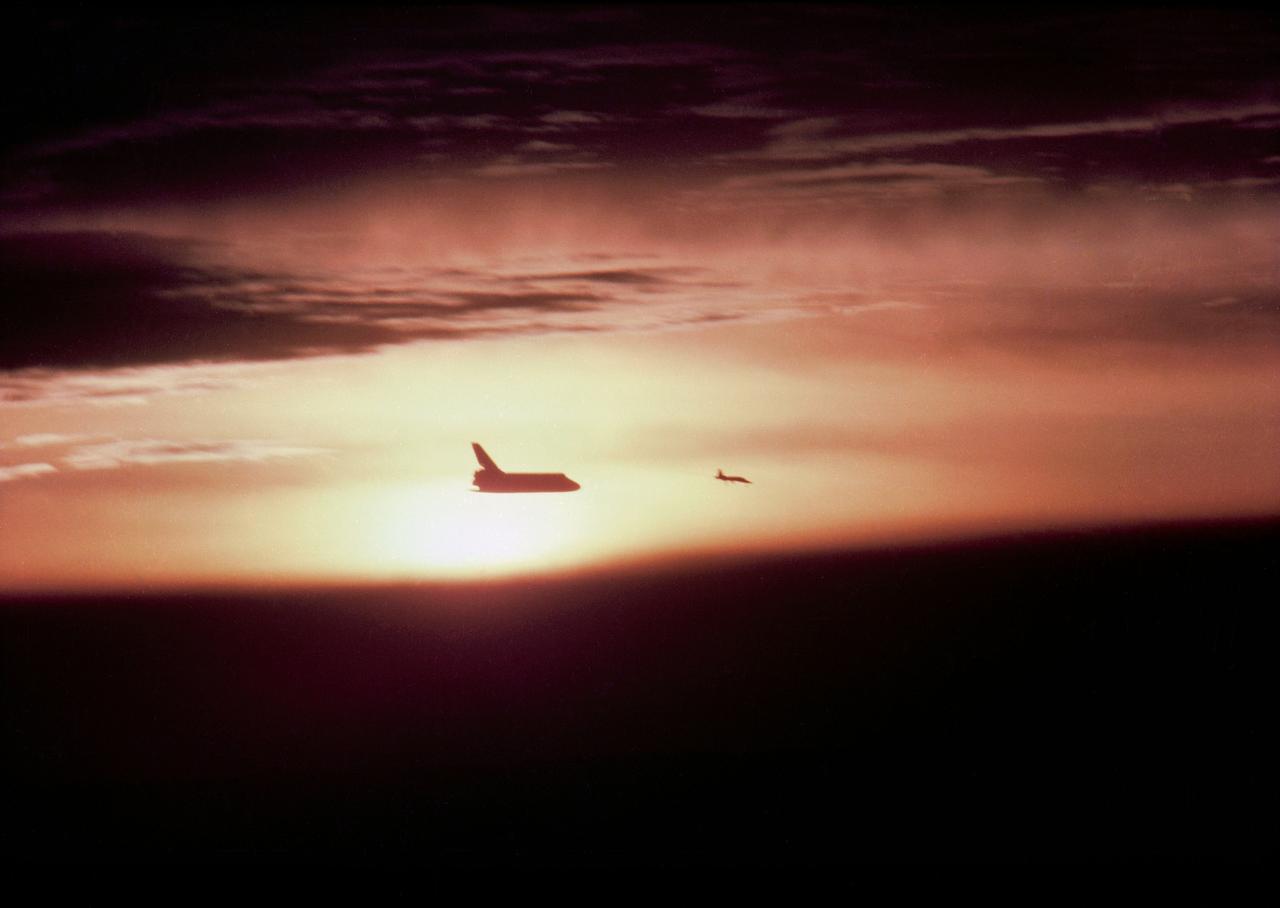
Aerial view of Orbiter "Columbia" as you look into the Sun, taken by Erik Simonsen, Rockwell International, 11/16/1982. 1. STS-5 - LANDING (INTO THE SUN) EAFB, CA
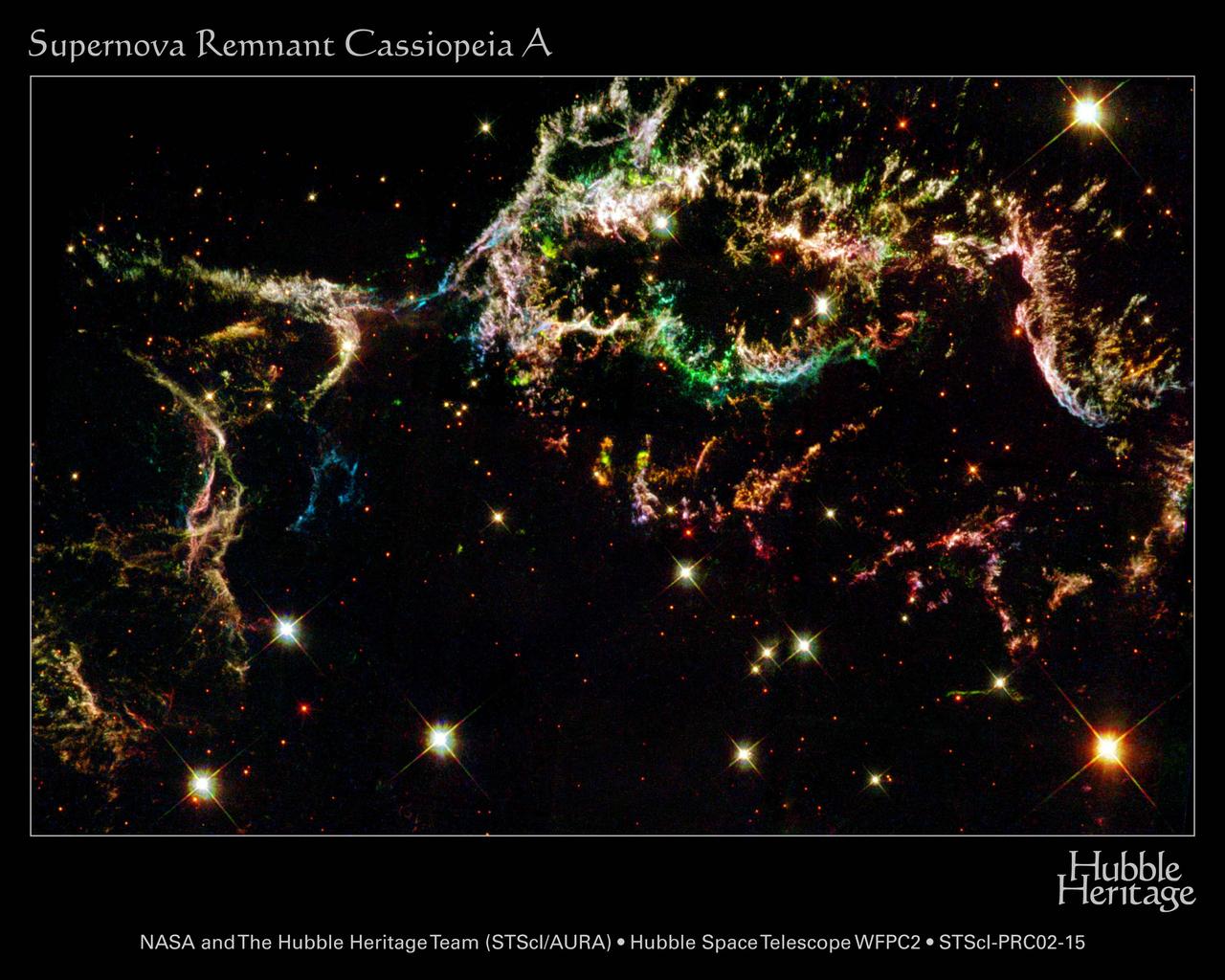
The colorful streamers that float across the sky in this photo taken by NASA's Hubble Space Telescope (HST) were created by the universe's biggest firecracker, the titanic supernova explosion of a massive star. The light from the exploding star reached Earth 320 years ago, nearly a century before the United States celebrated its birth with a bang. The dead star's shredded remains are called Cassiopeia A, or "Cas A" for short. Cas A is the youngest known supernova remnant in our Milky Way Galaxy and resides 10,000 light-years away in the constellation Cassiopeia, so the star actually blew up 10,000 years before the light reached Earth in the late 1600s. This HST image of Cas A shows for the first time that the debris is arranged into thousands of small, cooling knots of gas. This material eventually will be recycled into building new generations of stars and planets. Our own Sun and planets are constructed from the debris of supernovae that exploded billions of years ago. This photo shows the upper rim of the super nova remnant's expanding shell. Near the top of the image are dozens of tiny clumps of matter. Each small clump, originally just a small fragment of the star, is tens of times larger than the diameter of our solar system. The colors highlight parts of the debris where chemical elements are glowing. The dark blue fragments, for example, are richest in oxygen; the red material is rich in sulfur. The images were taken with the Wide Field and Planetary Camera 2 in January 2000 and January 2002. Image Credit: NASA and HST team (Stoics/AURA). Acknowledgment: R. Fesen (Darmouth) and J. Morse ( Univ. of Colorado).
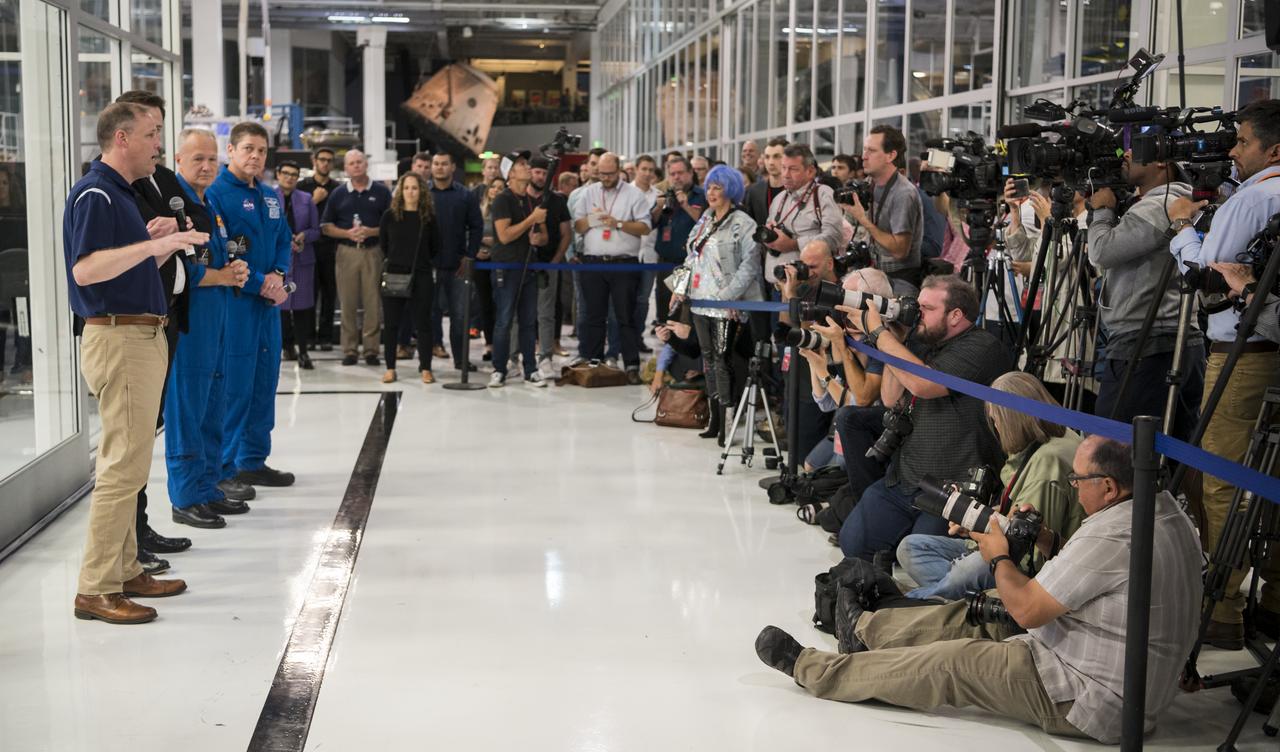
NASA Administrator Jim Bridenstine, left, speaks to press with SpaceX Chief Engineer Elon Musk, second from left, NASA astronaut Doug Hurley, second from right, and NASA astronaut Bob Behnken, at SpaceX Headquarters, Thursday, Oct. 10, 2019 in Hawthorne, CA. Photo credit: (NASA/Aubrey Gemignani)
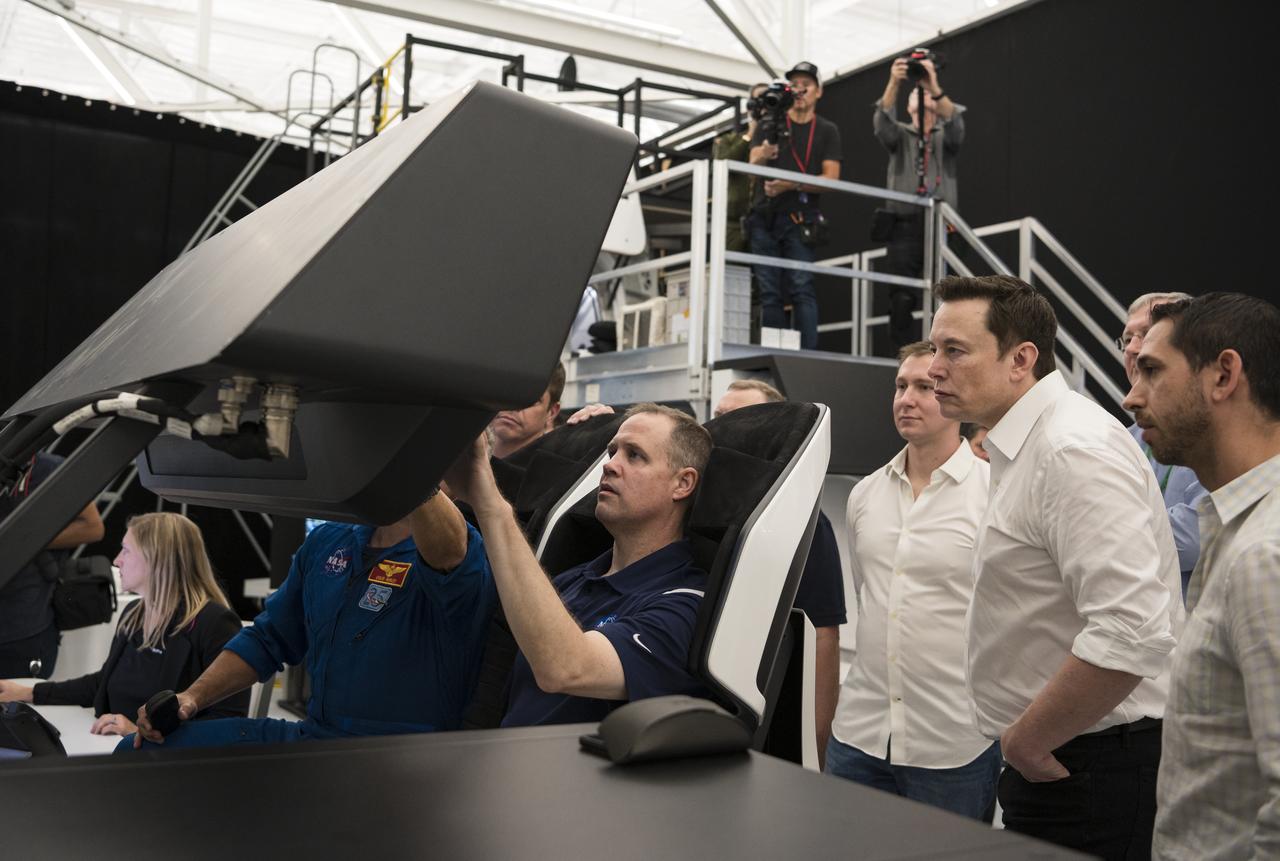
NASA Administrator Jim Bridenstine, center, participates in a crew Dragon flight simulation with NASA astronauts Doug Hurley, and Bob Behnken, while SpaceX Chief Engineer Elon Musk looks on, at the SpaceX Headquarters, Thursday, Oct. 10, 2019 in Hawthorne, CA. Photo credit: (NASA/Aubrey Gemignani)
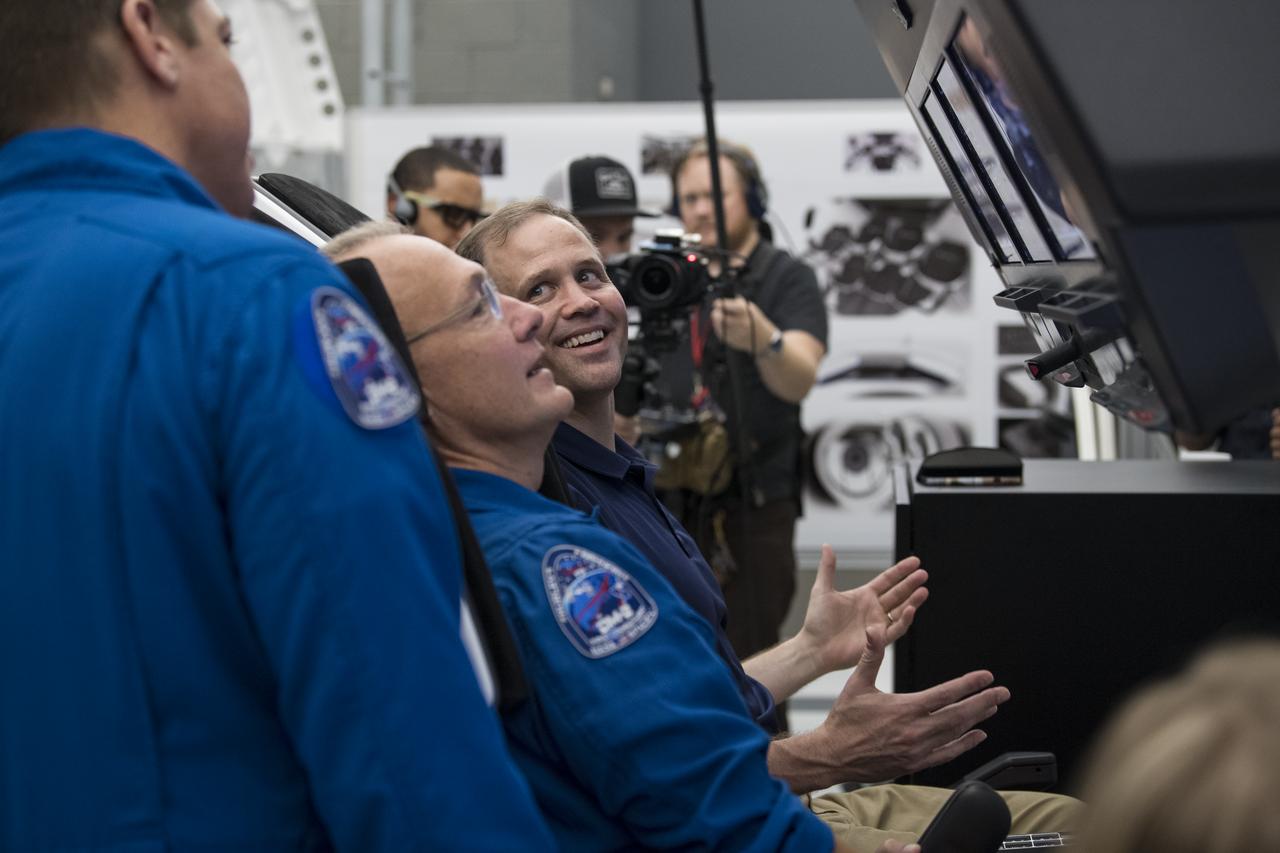
NASA Administrator Jim Bridenstine, right, participates in a Crew Dragon flight simulation with NASA astronauts Doug Hurley, center, and Bob Behnken, left, who will be flying aboard the Crew Dragon during the Demo-2 mission, at the SpaceX Headquarters, Thursday, Oct. 10, 2019 in Hawthorne, CA. Photo credit: (NASA/Aubrey Gemignani)
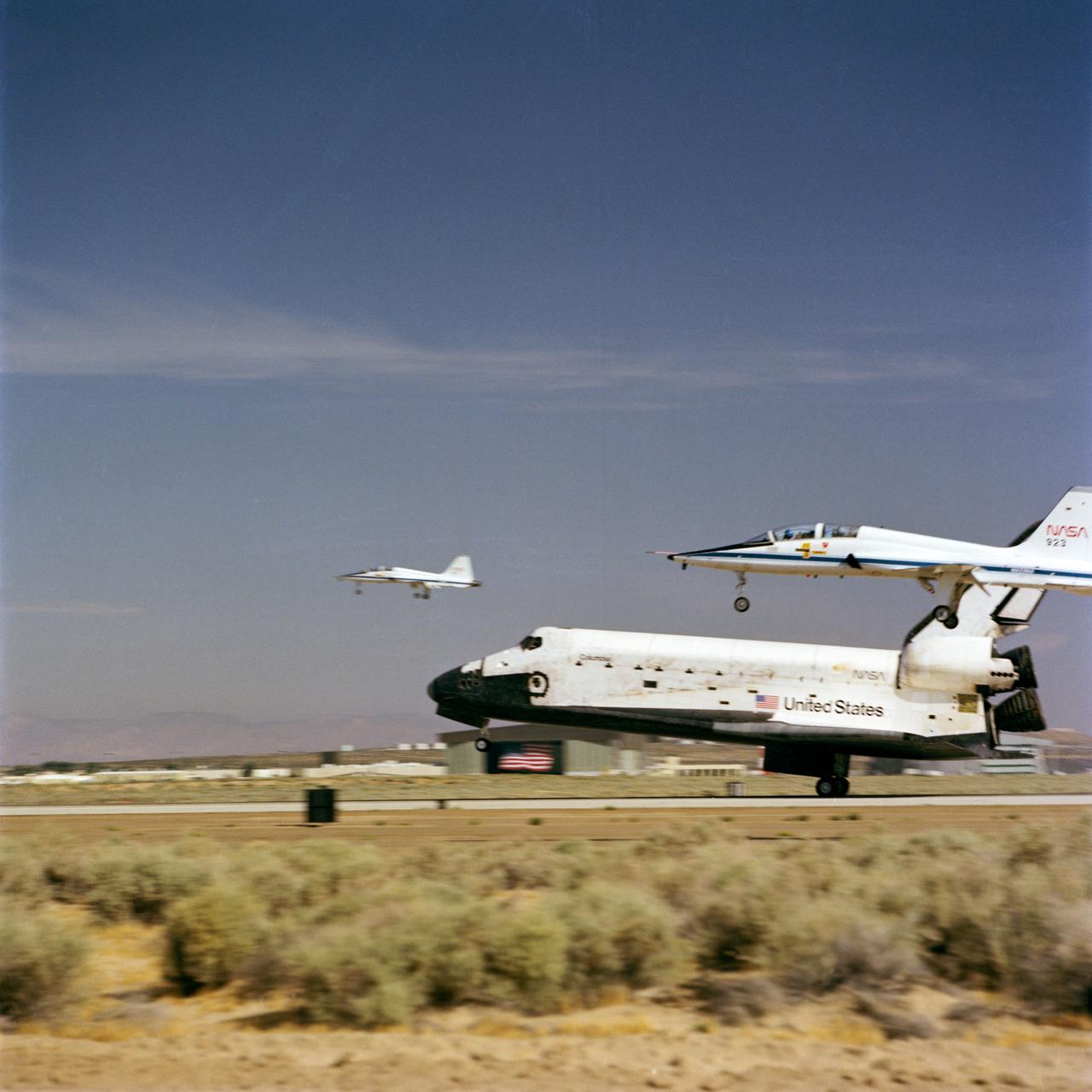
Views of the Columbia landing at EAFB ending the STS-4 Mission on 07/04/1982; of President and Mrs. Reagan greeting the crew out on the Lake bed Runway; and, the view of Roy Rogers with Astronauts Jerry Ross and Guy Gardner. 1. President Ronald Reagan & wife Nancy 2. Roy Rogers 3. Astronaut Jerry L. Ross 4. Astronaut Guy S. Gardner Edwards AFB, CA
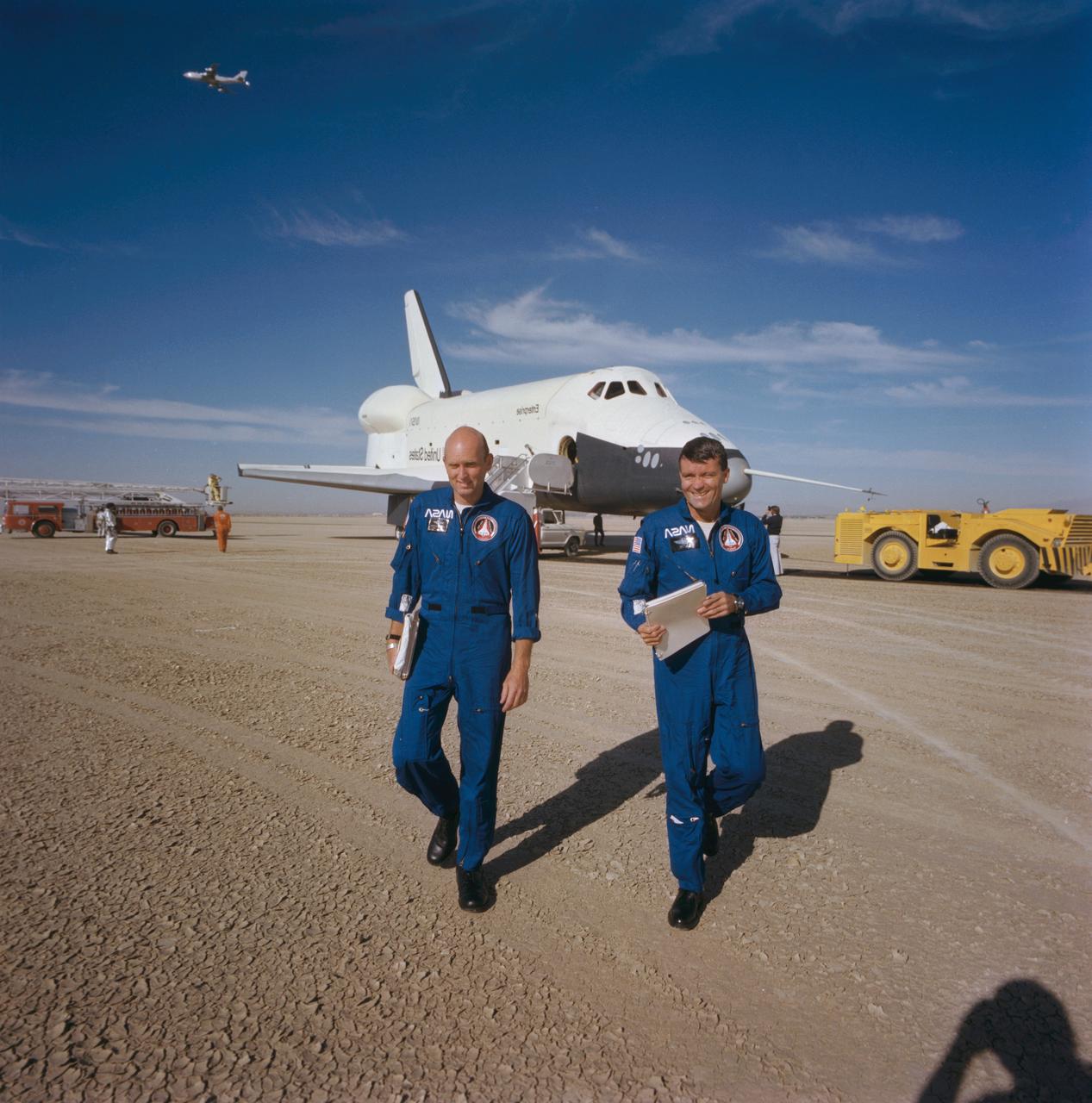
Public Affairs Office (PAO) release print of activity documenting third (3rd) "free flight" of Shuttle Orbiter 101 Spacecraft at DFRC, EAFB, CA. Astronauts Haise (left) and Fullerton in front of parking "Enterprise" just after egress. DFRC, EAFB, CA

Photography from Shuttle ALT FF-5. S77-30393: ALT Fr. 3258, a higher-up shot of the Enterprise approaching runway for landing. EAFB, CA
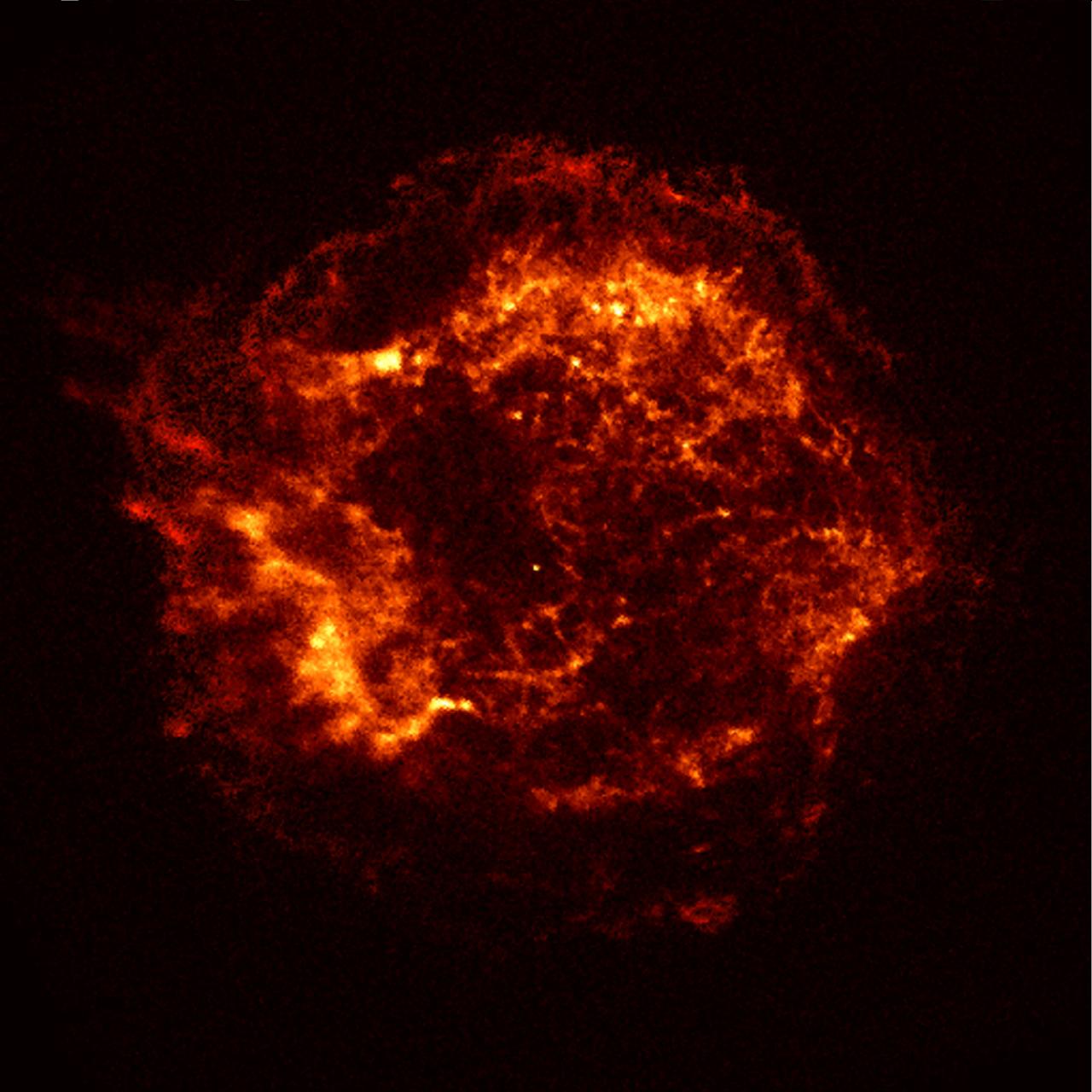
This x-ray image of the Cassiopeia A (CAS A) supernova remnant is the official first light image of the Chandra X-Ray Observatory (CXO). The 5,000-second image was made with the Advanced Charged Coupled Device (CCD) Image Spectrometer (ACIS). Two shock waves are visible: A fast outer shock and a slower irner shock. The inner shock wave is believed to be due to the collision of ejecta from the supernova explosion with a circumstellar shell of material, heating it to a temperature of 10 million-degrees Celsius. The outer shock wave is analogous to an awesome sonic boom resulting from this collision The x-rays reveal a bright object near the center, which may be the long-sought neutron star or black hole remnant of the explosion that produced Cassiopeia A. Cassiopeia A is the 320-year-old remnant of a massive star that exploded. Located in the constellation Cassiopeia, it is 10 light-years across and 10,000 light-years from Earth. A supernova occurs when a massive star has used up its nuclear fuel and the pressure drops in the central core of the star. The matter in the core is crushed by gravity to higher and higher densities, and temperatures reach billions of degrees. Under these extreme conditions, nuclear reactions occur violently and catastrophically, reversing the collapse. A thermonuclear shock wave races through the now expanding stellar debris, fusing lighter elements into heavier ones and producing a brilliant visual outburst.
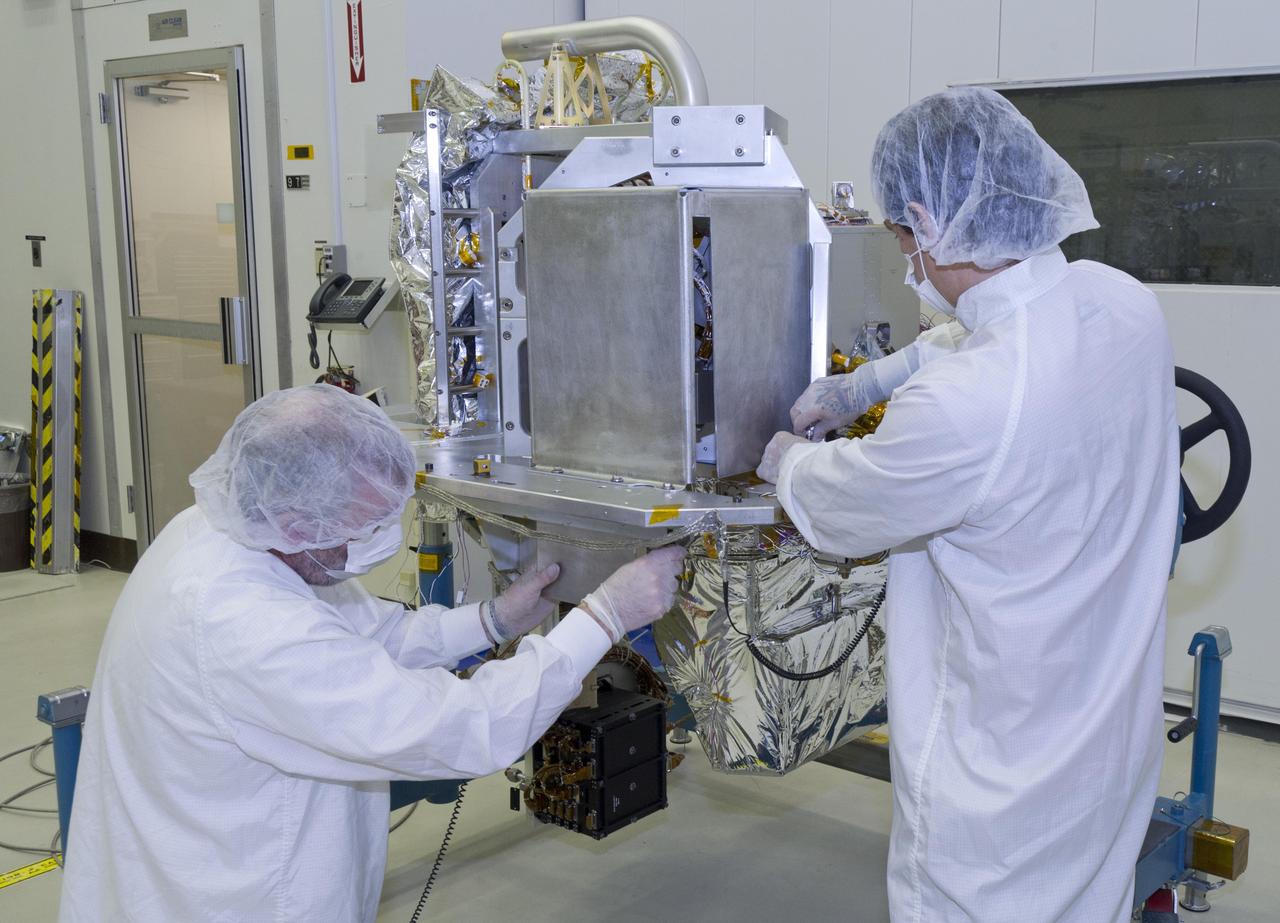
Technicians prep NASA OCO-2 instrument for shipping at Jet Propulsion Lab in Pasadena, Ca.
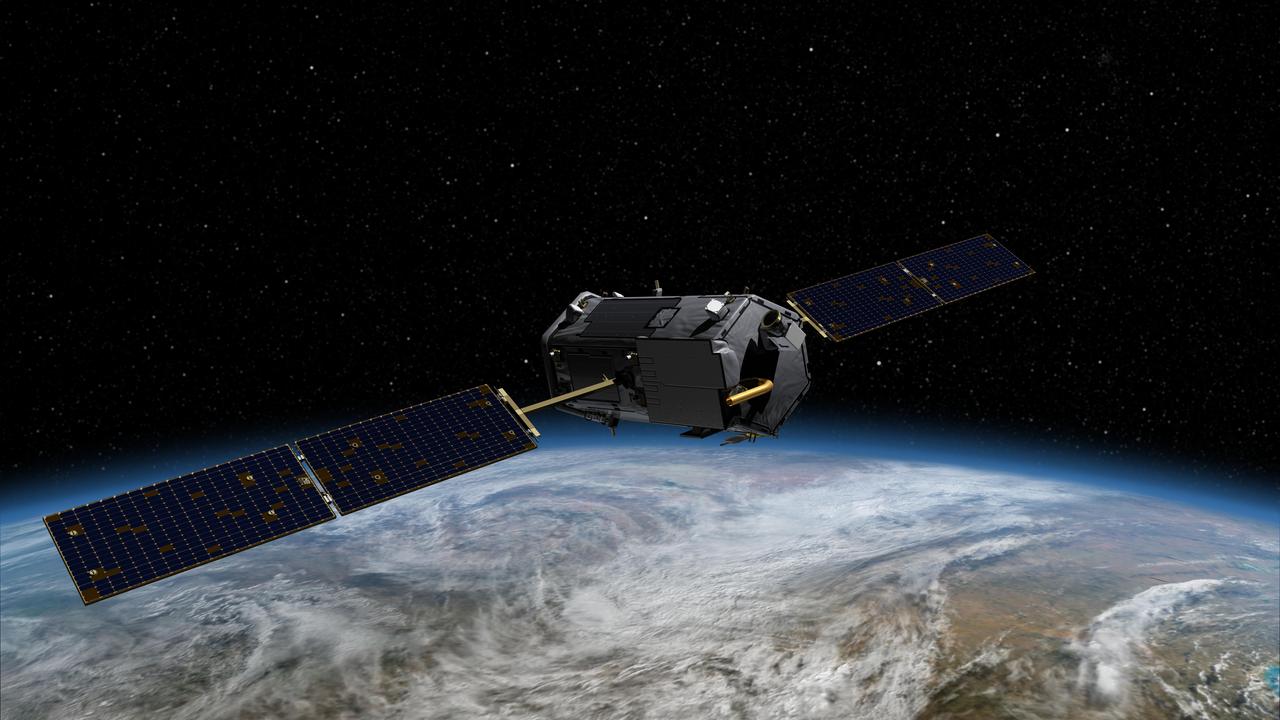
Technicians prep NASA OCO-2 instrument for shipping at Jet Propulsion Lab in Pasadena, Ca. Animation available in More Details.
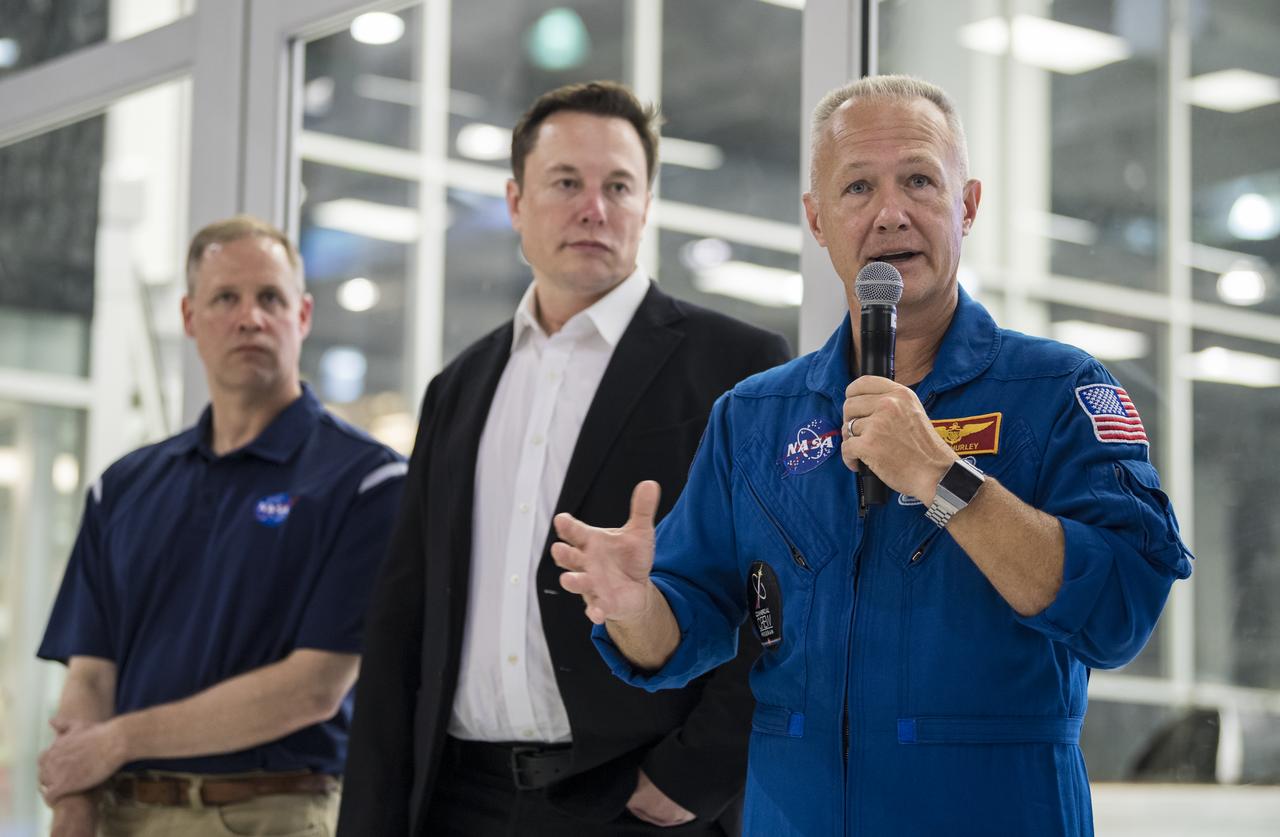
NASA astronaut Doug Hurley answers a question from the media in front of the Crew Dragon that is being prepared for the Demo-2 mission, at SpaceX Headquarters, Thursday, Oct. 10, 2019 in Hawthorne, CA. Hurley and NASA astronaut Bob Behnken are assigned to fly onboard Crew Dragon for the Demo-2 mission. Photo credit: (NASA/Aubrey Gemignani)
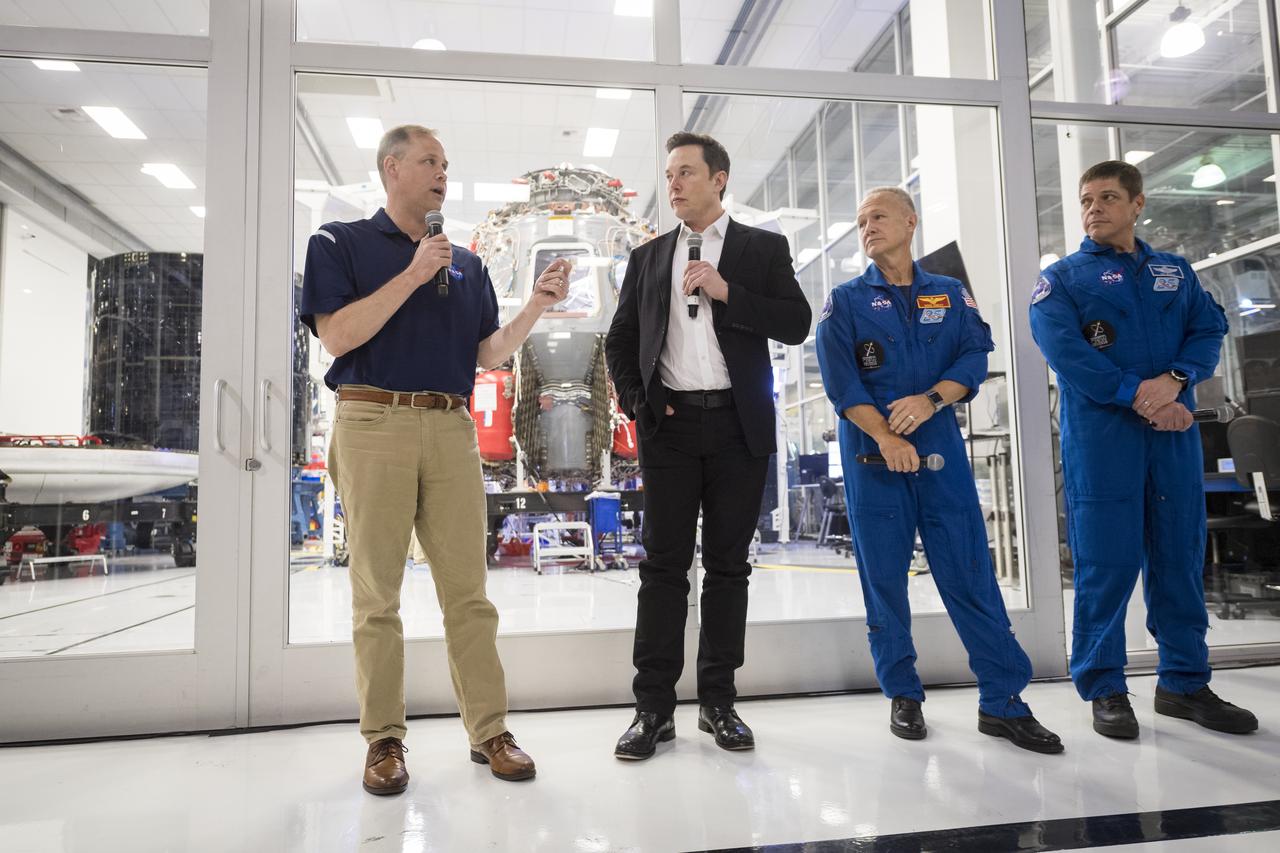
NASA Administrator Jim Bridenstine, left, speaks to press with SpaceX Chief Engineer Elon Musk, second from left, NASA astronaut Doug Hurley, second from right, and NASA astronaut Bob Behnken, in front of the Crew Dragon that is being prepared for the Demo-2 mission, at SpaceX Headquarters, Thursday, Oct. 10, 2019 in Hawthorne, CA. Photo credit: (NASA/Aubrey Gemignani)
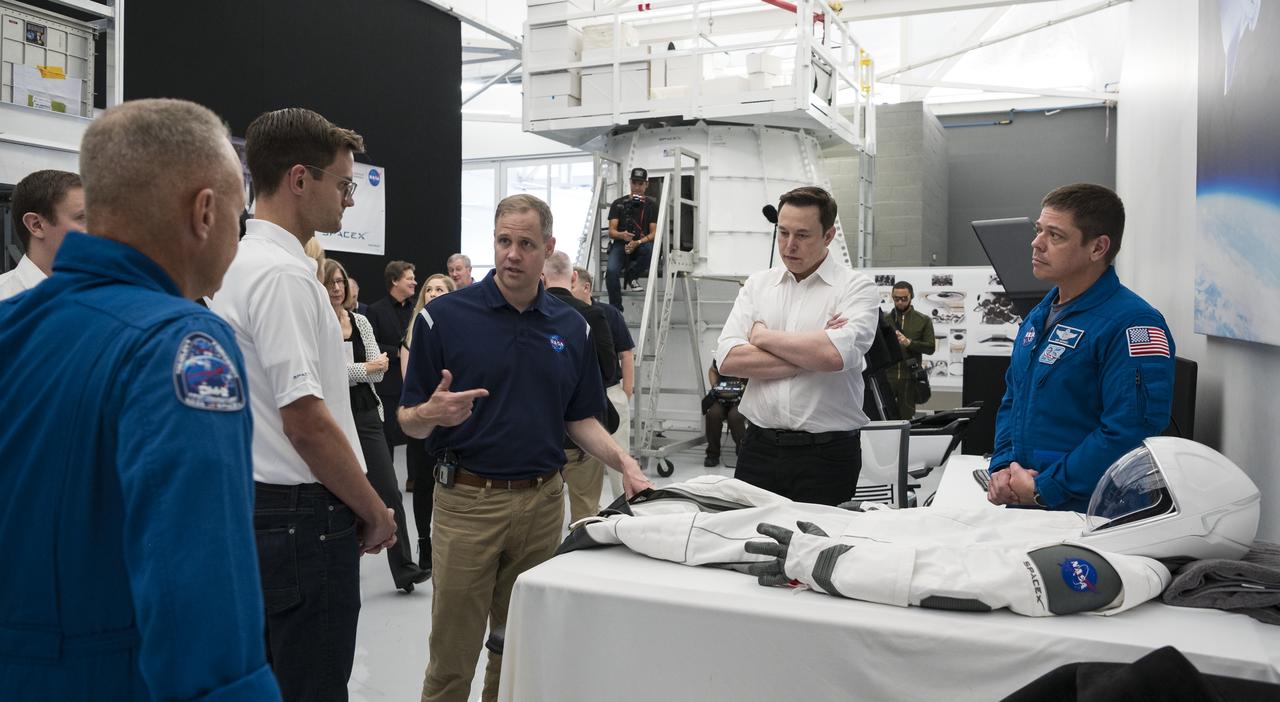
SpaceX Chief Engineer Elon Musk, second from right, and NASA astronaut Bob Behnken, right, look on as NASA Administrator Jim Bridenstine, third from left, speaks to NASA astronaut Doug Hurley, left, as they look at an identical version of the SpaceX spacesuit that he will wear for the Demo-2 mission during a visit to SpaceX Headquarters, Thursday, Oct. 10, 2019 in Hawthorne, CA. Behnken and Hurley are assigned to fly onboard Crew Dragon for the Demo-2 mission. Photo credit: (NASA/Aubrey Gemignani)
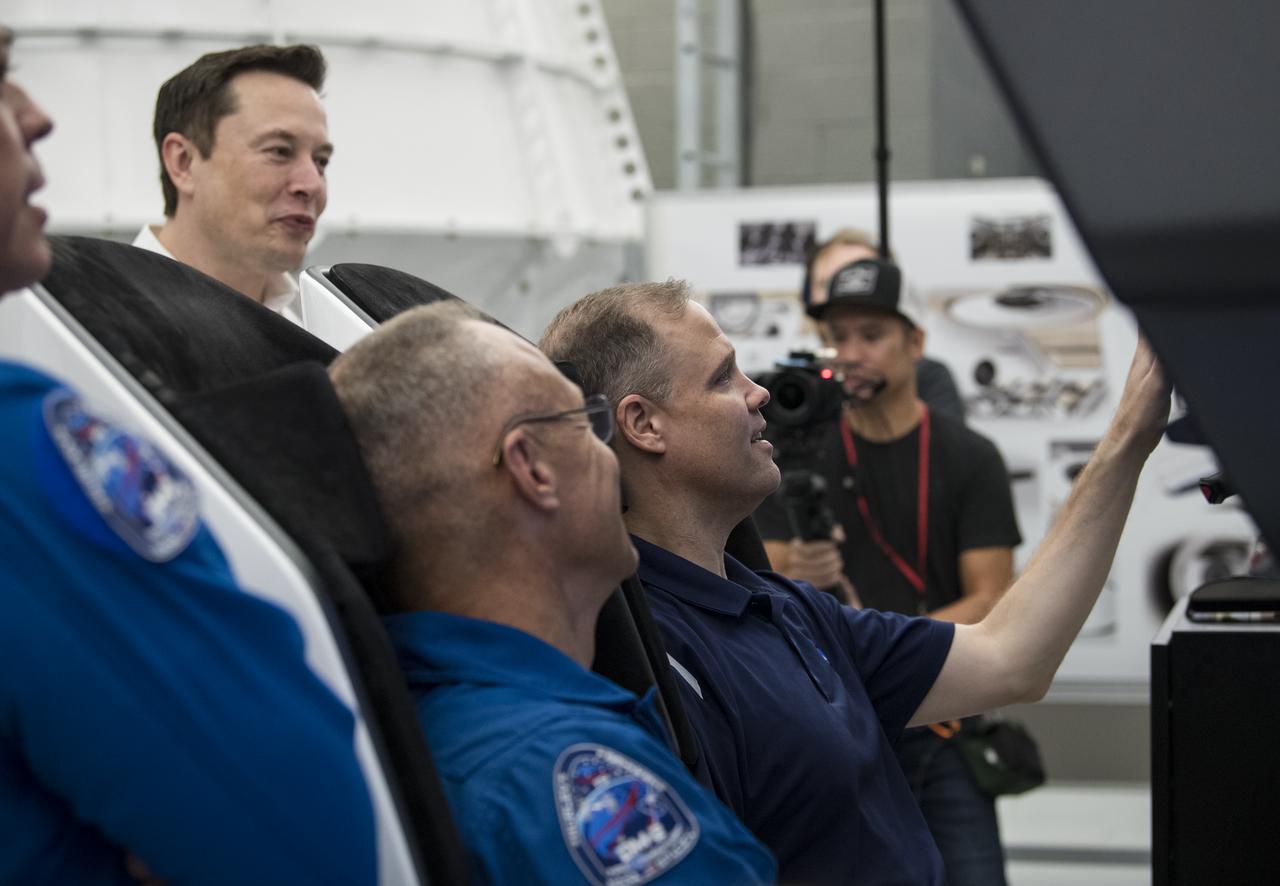
NASA Administrator Jim Bridenstine, right, participates in a crew Dragon flight simulation with NASA astronaut Doug Hurley, who will be flying aboard the Crew Dragon during the Demo-2 mission, while SpaceX Chief Engineer Elon Musk looks on, at the SpaceX Headquarters, Thursday, Oct. 10, 2019 in Hawthorne, CA. Photo credit: (NASA/Aubrey Gemignani)
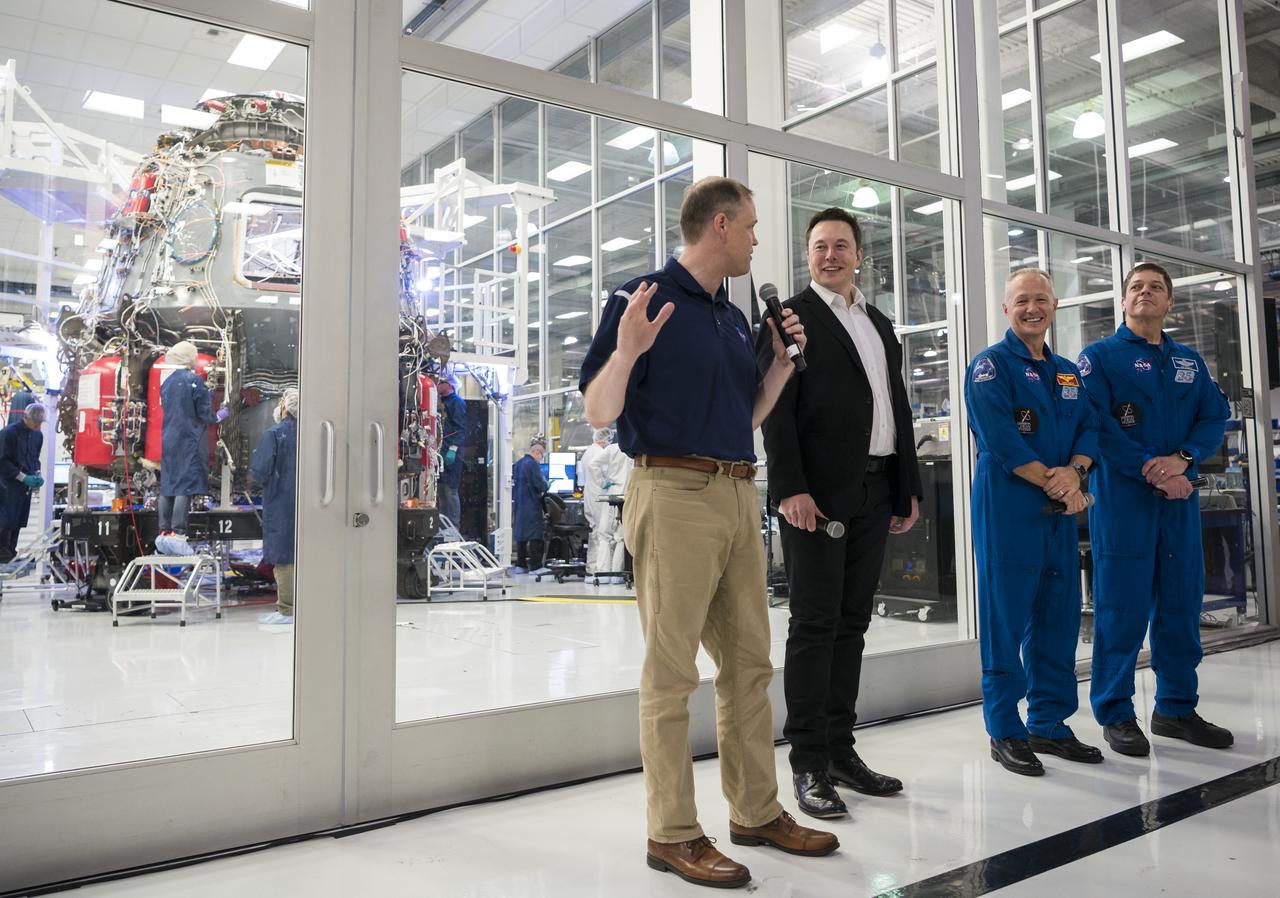
NASA Administrator Jim Bridenstine, left, speaks to press with SpaceX Chief Engineer Elon Musk, second from left, NASA astronaut Doug Hurley, second from right, and NASA astronaut Bob Behnken, in front of the Crew Dragon that is being prepared for the Demo-2 mission, at SpaceX Headquarters, Thursday, Oct. 10, 2019 in Hawthorne, CA. Photo credit: (NASA/Aubrey Gemignani)

Students from the Our Lady of Perpetual Help School in Bakersfield, CA, pass by one of NASA Dryden's F-18 chase aircraft during a tour.
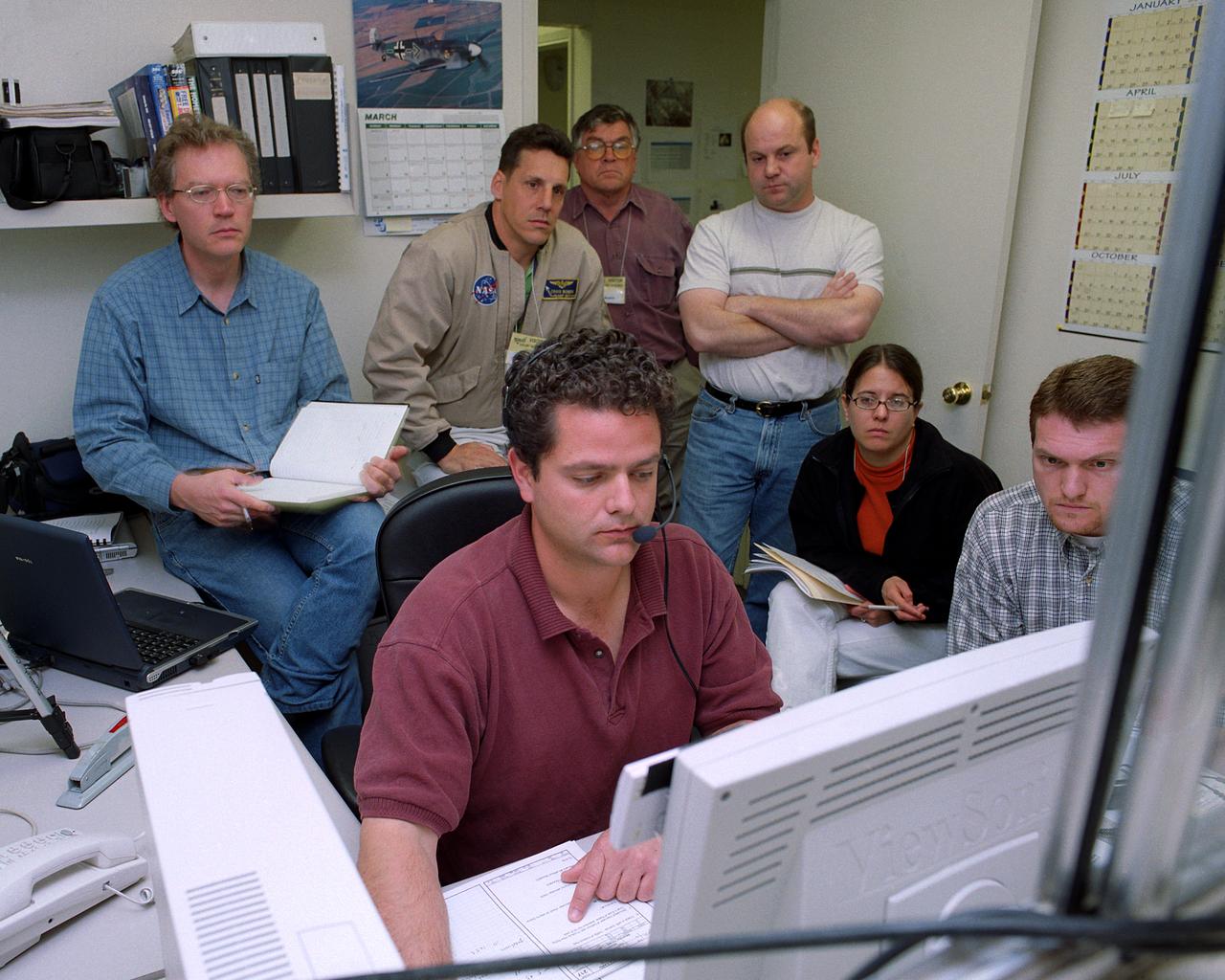
Proteus DSA control room in Mojave, CA (L to R) Jean-Pierre Soucy; Amphitech International Software engineer Craig Bomben; NASA Dryden Test Pilot Pete Siebold; (with headset, at computer controls) Scaled Composites pilot Bob Roehm; New Mexico State University (NMSU) UAV Technical Analysis Application Center (TAAC) Chuck Coleman; Scaled Composites Pilot Kari Sortland; NMSU TAAC Russell Wolfe; Modern Technology Solutions, Inc. Scaled Composites' unique tandem-wing Proteus was the testbed for a series of UAV collision-avoidance flight demonstrations. An Amphitech 35GHz radar unit installed below Proteus' nose was the primary sensor for the Detect, See and Avoid tests.
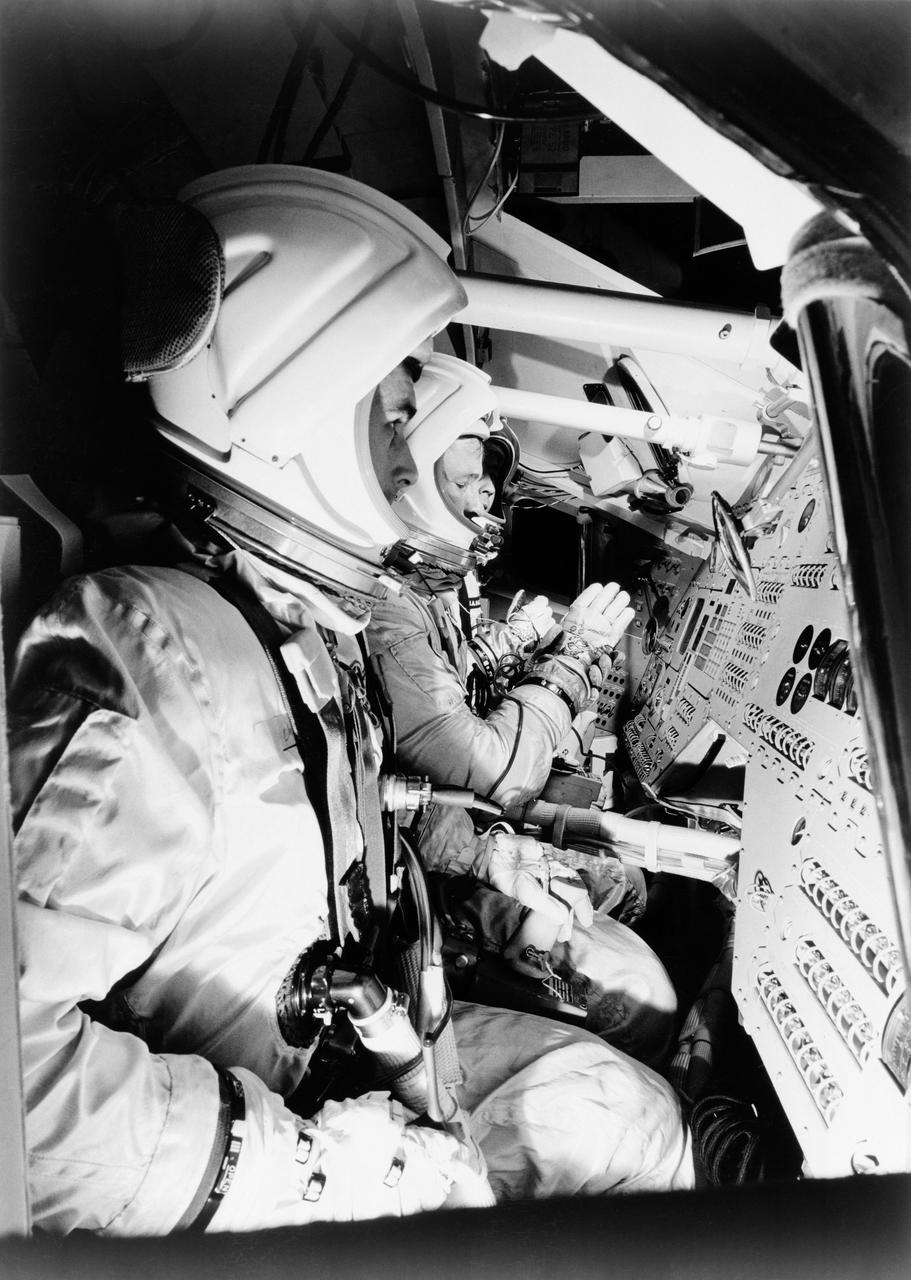
Astronauts McDivitt, Chaffee, White are shown in Spacecraft. NAA, INC., DOWNEY, CA B&W
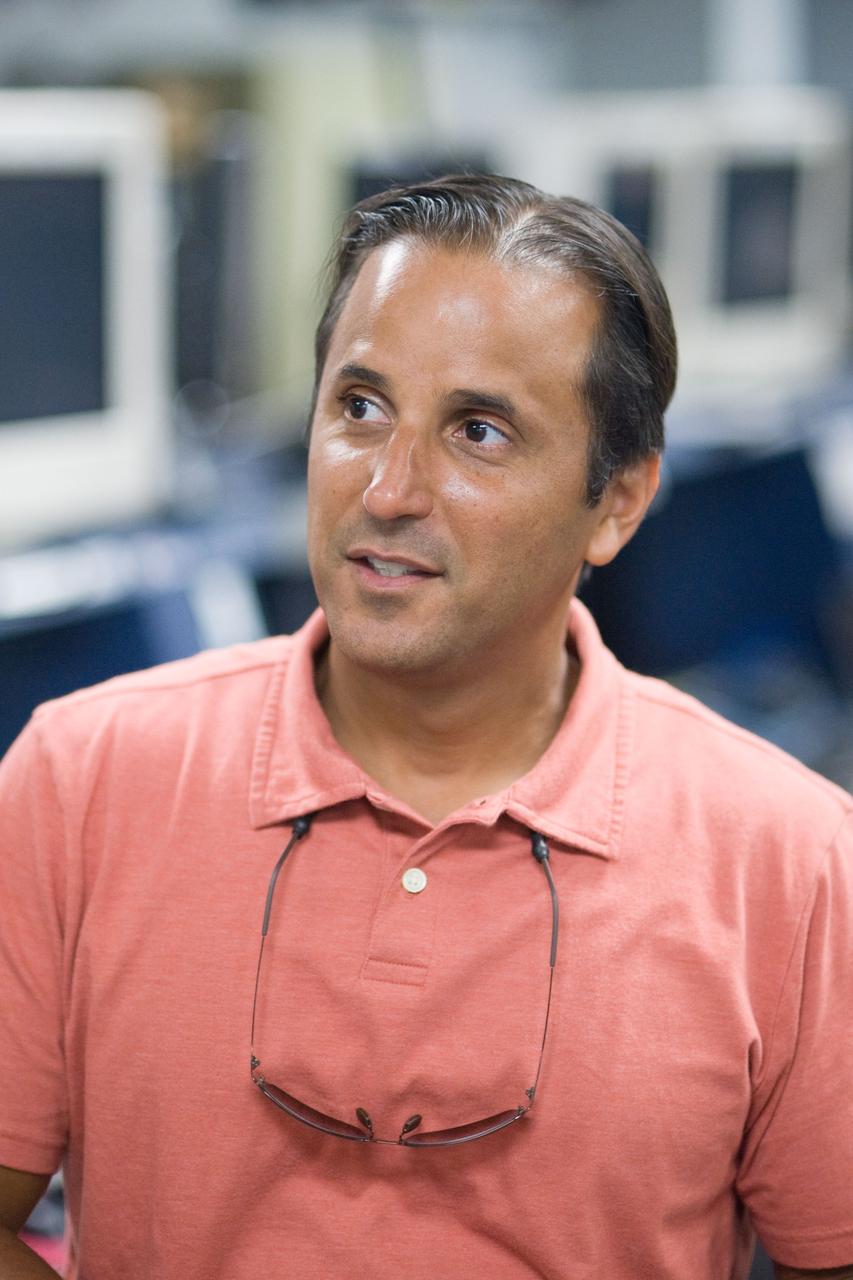
PHOTO DATE: 08-04-11 LOCATION: Bldg 5 South, SSTF SUBJECT: Expedition 31/32 crew member Joe Acaba during CAS/Robo Install Training with instructor Jared Olson. WORK ORDER: 2011-2228 PHOTOGRAPHER: James Blair
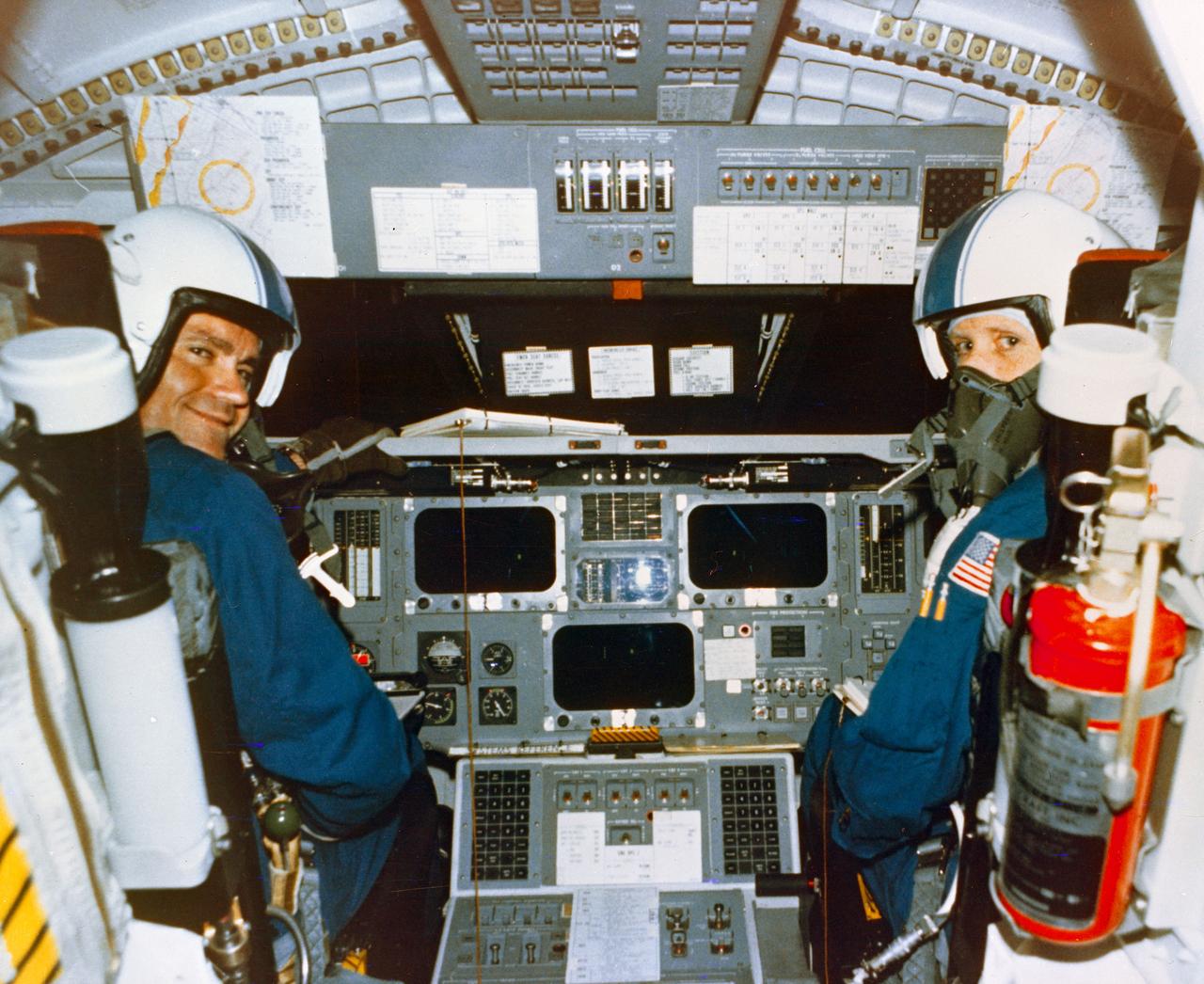
Astronauts Fred W. Haise, Jr., Commander, left, and C. Gordon Fullerton in the cockpit of the Space Shuttle Orbiter 101 "Enterprise" prior to the fifth and final FF in the Approach and Landing Test (ALT) series, from DFRC. Original photo number was 77-HC-446. DFRC, CA

Frame of color news-released stills. This was a Tail Cone Off Mission. Crew was made up of Astronauts Engle and Truly. Astronauts Engle, Truly egress Orbiter following flt. DFRC, CA
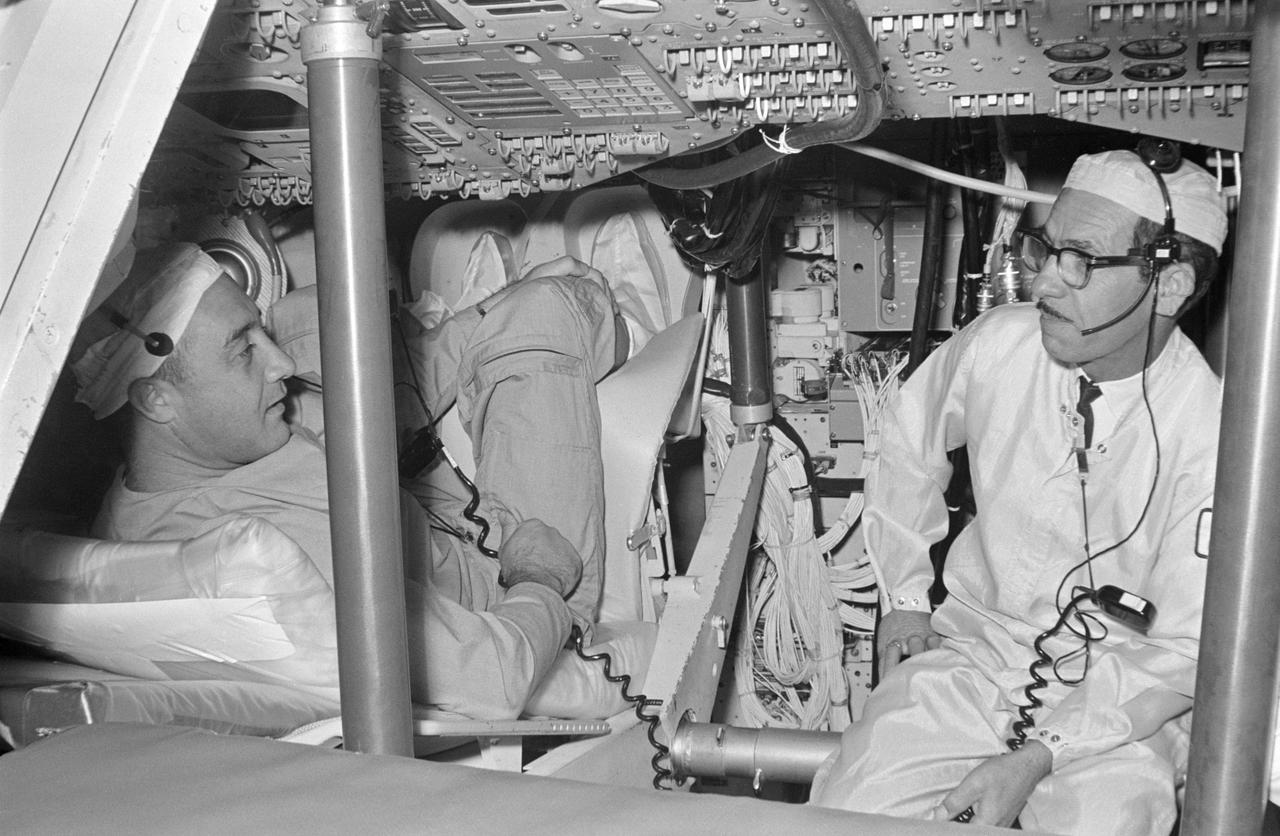
Astronaut Virgil I. Grissom and other members of the first Apollo Crew inspect spacecraft equipment during a visit to NAA. NAA, INC., DOWNEY, CA B&W
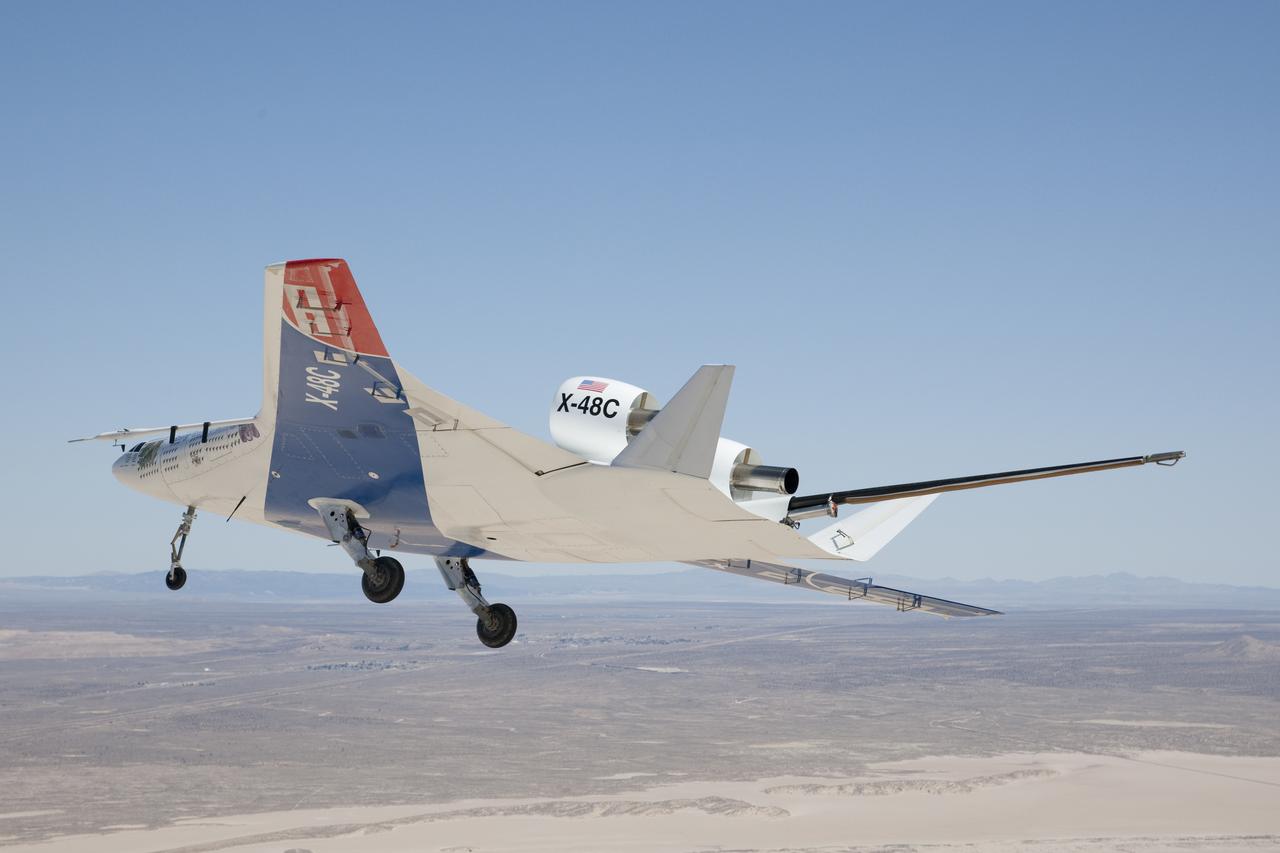
Earth and sky met as the X-48C Hybrid Wing Body aircraft flew over Edwards Air Force Base on Feb. 28, 2013, from NASA's Dryden Flight Research Center, Edwards, CA. The long boom protruding from between the tails is part of the aircraft's parachute-deployment flight termination system.
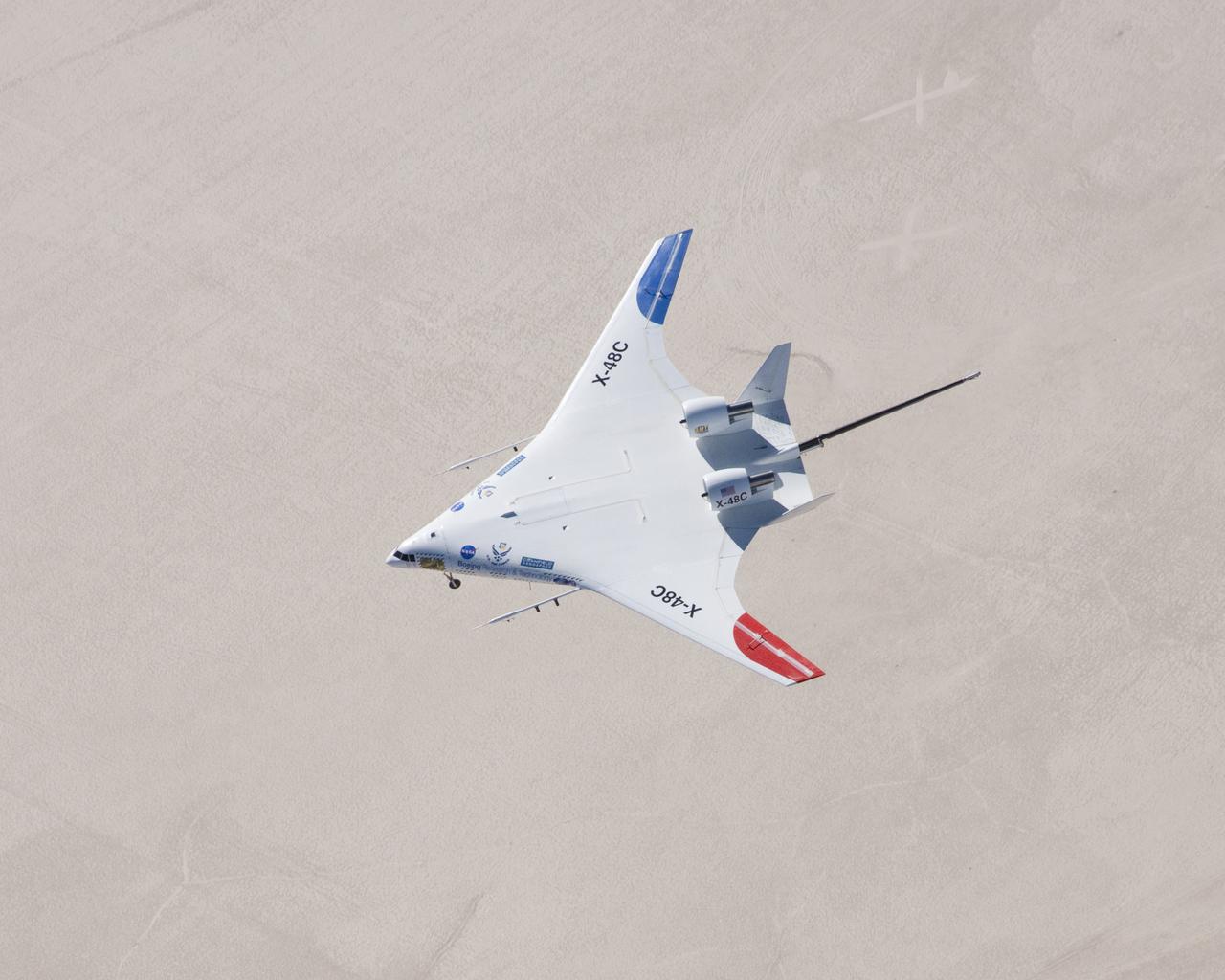
The X-48C Hybrid Wing Body aircraft flew over Rogers Dry Lake on Feb. 28, 2013, from NASA's Dryden Flight Research Center, Edwards, CA. The long boom protruding from between the tails was part of the aircraft's parachute-deployment flight termination system.
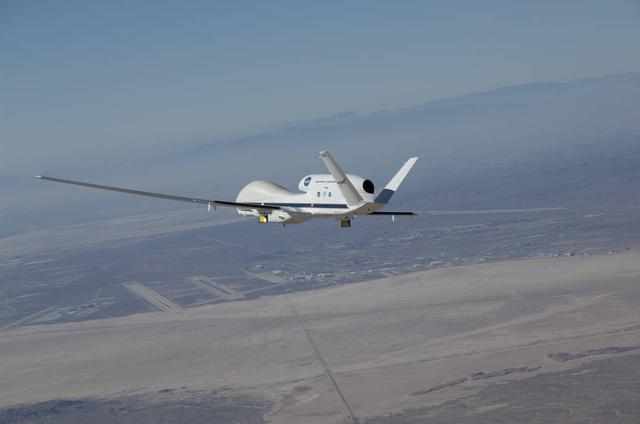
NASA's Global Hawk 872 soared over Rogers Dry Lake at Edwards Air Force Base, CA, during an instrument checkout flight for the 2014 ATTREX mission over the western Pacific Ocean. The aircraft carried 13 science instruments to measure moisture and chemical composition of the stratosphere during the campaign.

Landsat 7 image of the Santa Clara area acquired Nov 16, 2015. Landsat 7 is a U.S. satellite used to acquire remotely sensed images of the Earth's land surface and surrounding coastal regions. It is maintained by the Landsat 7 Project Science Office at the NASA Goddard Space Flight Center in Greenbelt, MD...Landsat satellites have been acquiring images of the Earth’s land surface since 1972. Currently there are more than 2 million Landsat images in the National Satellite Land Remote Sensing Data Archive. For more information visit: <a href="http://landsat.usgs.gov/" rel="nofollow">landsat.usgs.gov/</a>..To learn more about the Landsat satellite go to:.<a href="http://landsat.gsfc.nasa.gov/" rel="nofollow">landsat.gsfc.nasa.gov/</a> Credit: NASA/GSFC/Landsat 7 <b><a href="http://www.nasa.gov/audience/formedia/features/MP_Photo_Guidelines.html" rel="nofollow">NASA image use policy.</a></b> <b><a href="http://www.nasa.gov/centers/goddard/home/index.html" rel="nofollow">NASA Goddard Space Flight Center</a></b> enables NASA’s mission through four scientific endeavors: Earth Science, Heliophysics, Solar System Exploration, and Astrophysics. Goddard plays a leading role in NASA’s accomplishments by contributing compelling scientific knowledge to advance the Agency’s mission. <b>Follow us on <a href="http://twitter.com/NASAGoddardPix" rel="nofollow">Twitter</a></b> <b>Like us on <a href="http://www.facebook.com/pages/Greenbelt-MD/NASA-Goddard/395013845897?ref=tsd" rel="nofollow">Facebook</a></b> <b>Find us on <a href="http://instagrid.me/nasagoddard/?vm=grid" rel="nofollow">Instagram</a></b>
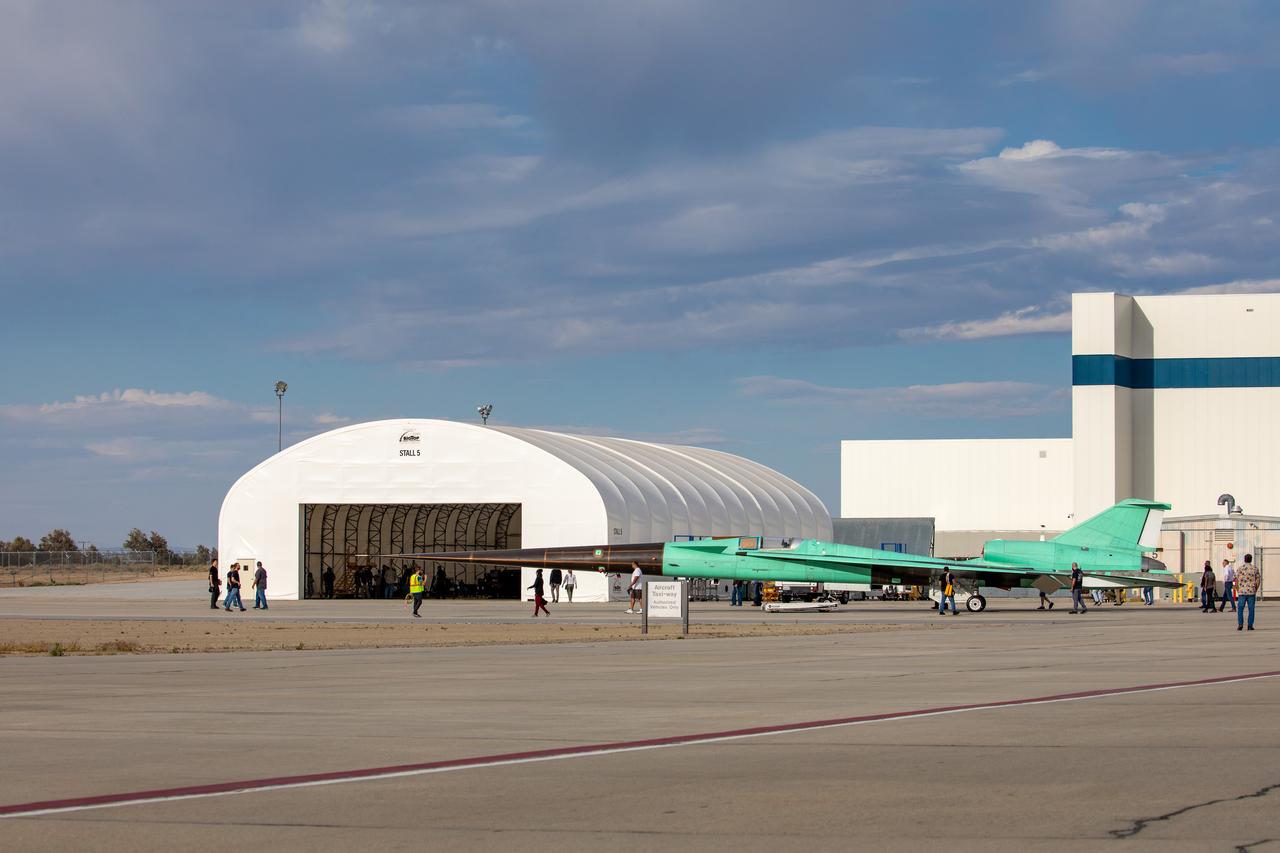
Technicians check out the X-59 aircraft as it sits near the runway at Lockheed Martin Skunk Works in Palmdale, California, on June 19, 2023. Lockheed Martin Photography By Garry Tice 1011 Lockheed Way, Palmdale, Ca. 93599 Event: Move to Run Stall 5 Date: 6/19/2023 Additional Info:
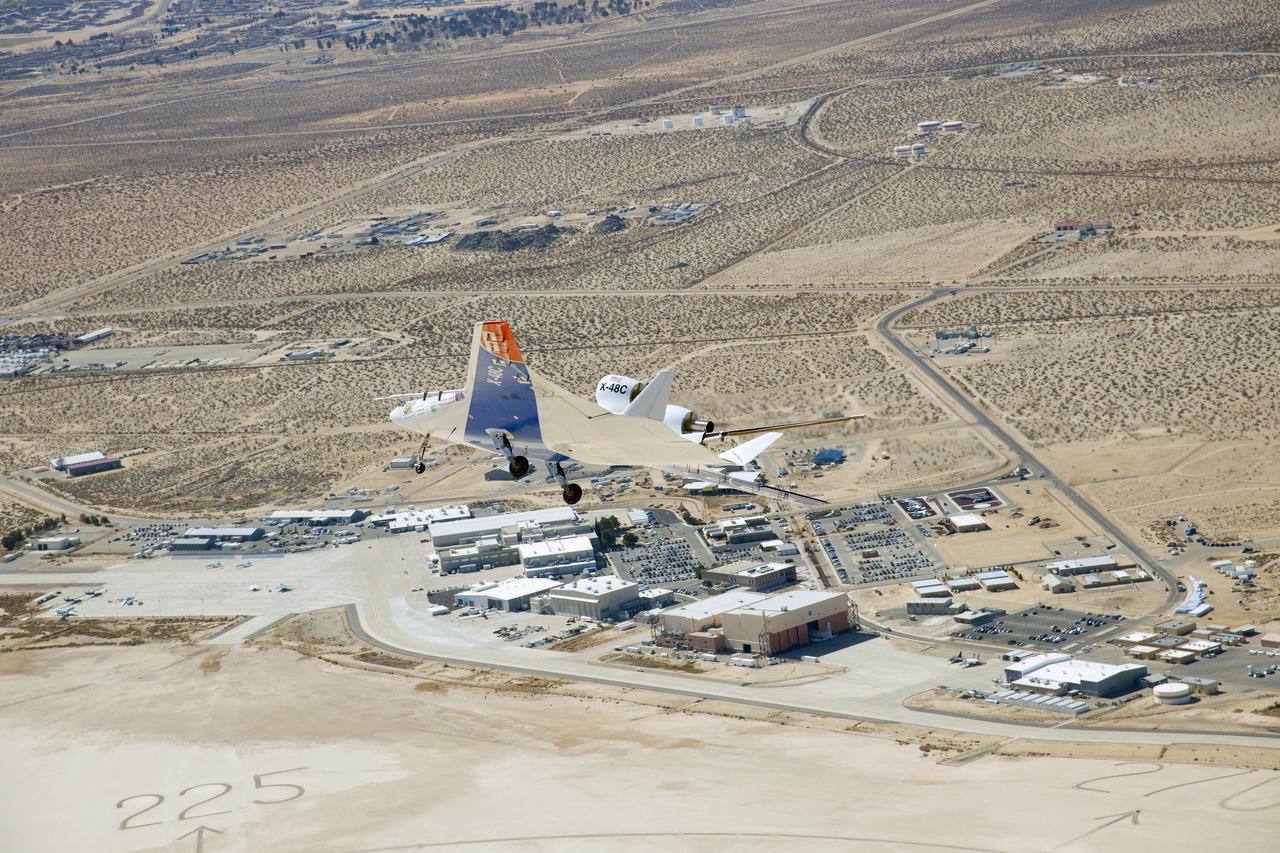
The X-48C Hybrid Wing Body research aircraft banked right over NASA's Dryden Flight Research Center at Edwards, CA during one of the sub-scale aircraft's final test flights on Feb. 28, 2013.

A joint NASA/Boeing team completed the first phase of flight tests on the unique X-48B Blended Wing Body aircraft at NASA's Dryden Flight Research Center at Edwards, CA. The team completed the 80th and last flight of the project's first phase on March 19, 2010.
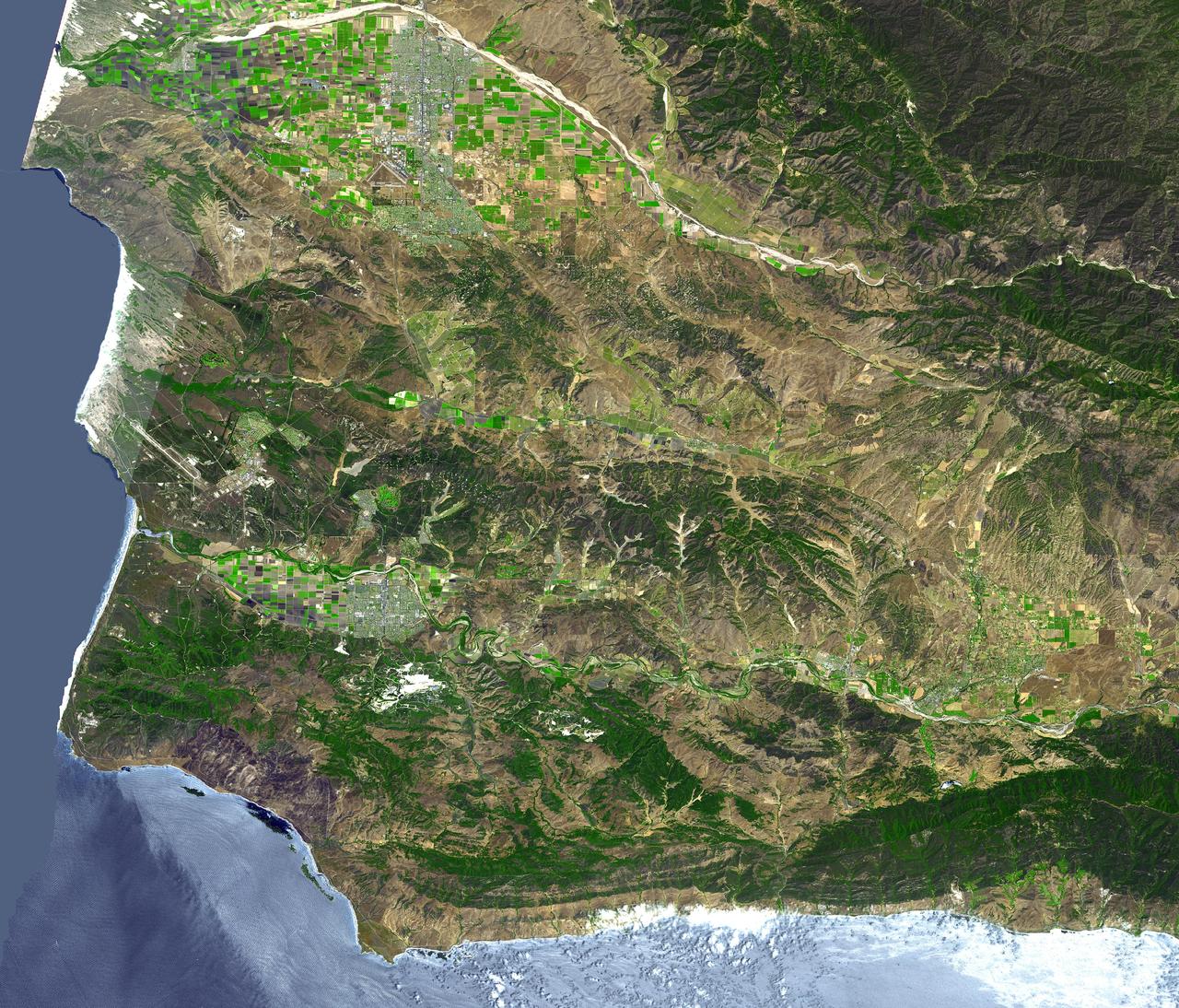
The area around Vandenberg Air Force Base, California is shown in this simulated natural color ASTER image. The city of Santa Maria is at the top left, and Lompoc is at the bottom left. Vandenberg includes the area along the coast and the prominent airport. This image was acquired on August 31, 2001 by the Advanced Spaceborne Thermal Emission and Reflection Radiometer (ASTER) on NASA's Terra satellite. With its 14 spectral bands from the visible to the thermal infrared wavelength region, and its high spatial resolution of 15 to 90 meters (about 50 to 300 feet), ASTER images Earth to map and monitor the changing surface of our planet. http://photojournal.jpl.nasa.gov/catalog/PIA03882
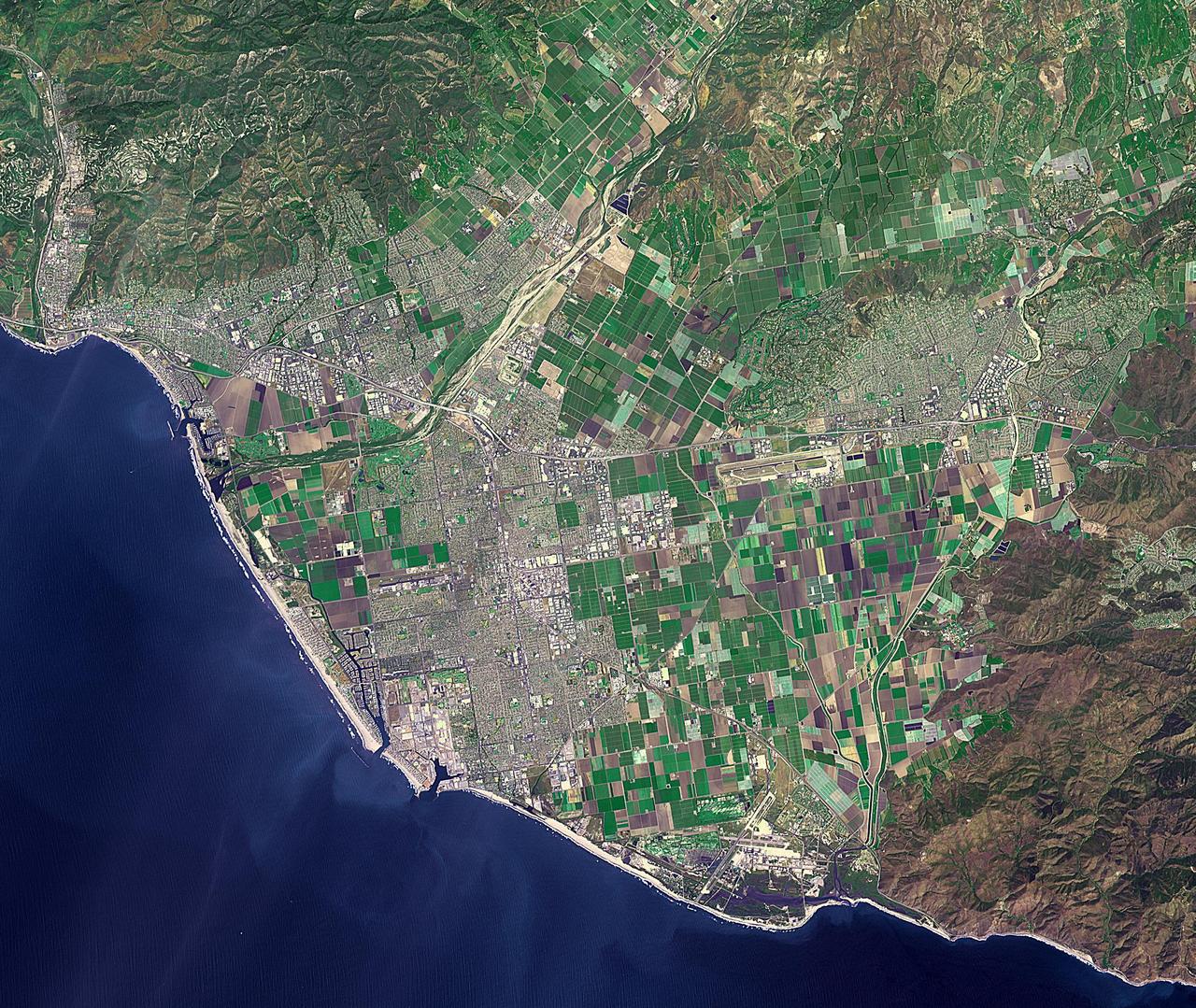
Ventura, California has a coastal site, set against hills and flanked by two rivers. Archaeologists have found remnants of human settlements dating back 10,000 years. When the Spaniards arrived at the end of the 18th century, they found the Chumash people and the Shisholop Village (Wikipedia). In 1782 Junipero Serra founded Mission San Buenaventura. Rich agricultural lands and the more recent discovery of oil led to economic growth. In late 2017, the Thomas Fire spread through the downtown and nearby communities, eventually burning over 270,000 acres. The image was acquired April 27, 2016, covers an area of 28.8 by 34.1 kilometers, and is located at 34.2 degrees north, 119.1 degrees west. https://photojournal.jpl.nasa.gov/catalog/PIA22841
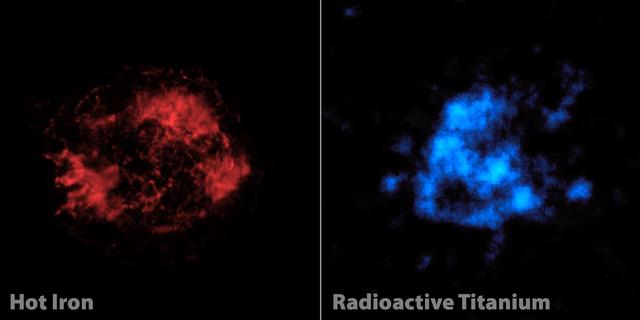
When astronomers first looked at images of a supernova remnant called Cassiopeia A, captured by NASA NuSTAR. The mystery of Cassiopeia A Cas A, a massive star that exploded in a supernova more than 11,000 years ago continues to confound scientists.
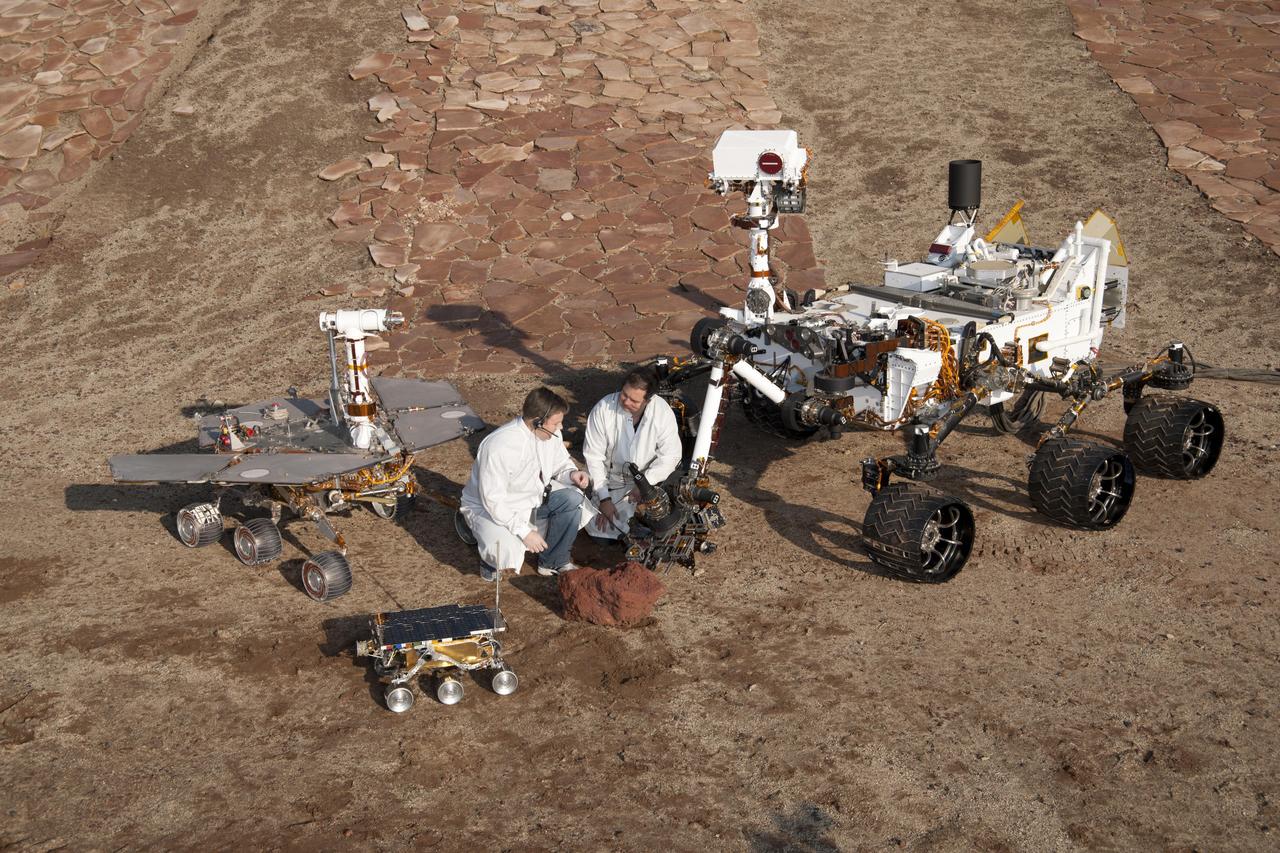
Two spacecraft engineers stand with three generations of Mars rovers developed at NASA JPL, Pasadena, Ca. Front and center is a flight spare of Sojourner, left is a working sibling to Spirit and Opportunity, right is test rover Curiosity.

This is a montage of planetary images taken by spacecraft managed by NASA’s Jet Propulsion Laboratory in Pasadena, CA. Included are from top to bottom images of Mercury, Venus, Earth and Moon, Mars, Jupiter, Saturn, Uranus and Neptune.

This is a montage of planetary images taken by spacecraft managed by NASA’s Jet Propulsion Laboratory in Pasadena, CA. Included are from top to bottom images of Mercury, Venus, Earth and Moon, Mars, Jupiter, Saturn, Uranus and Neptune.
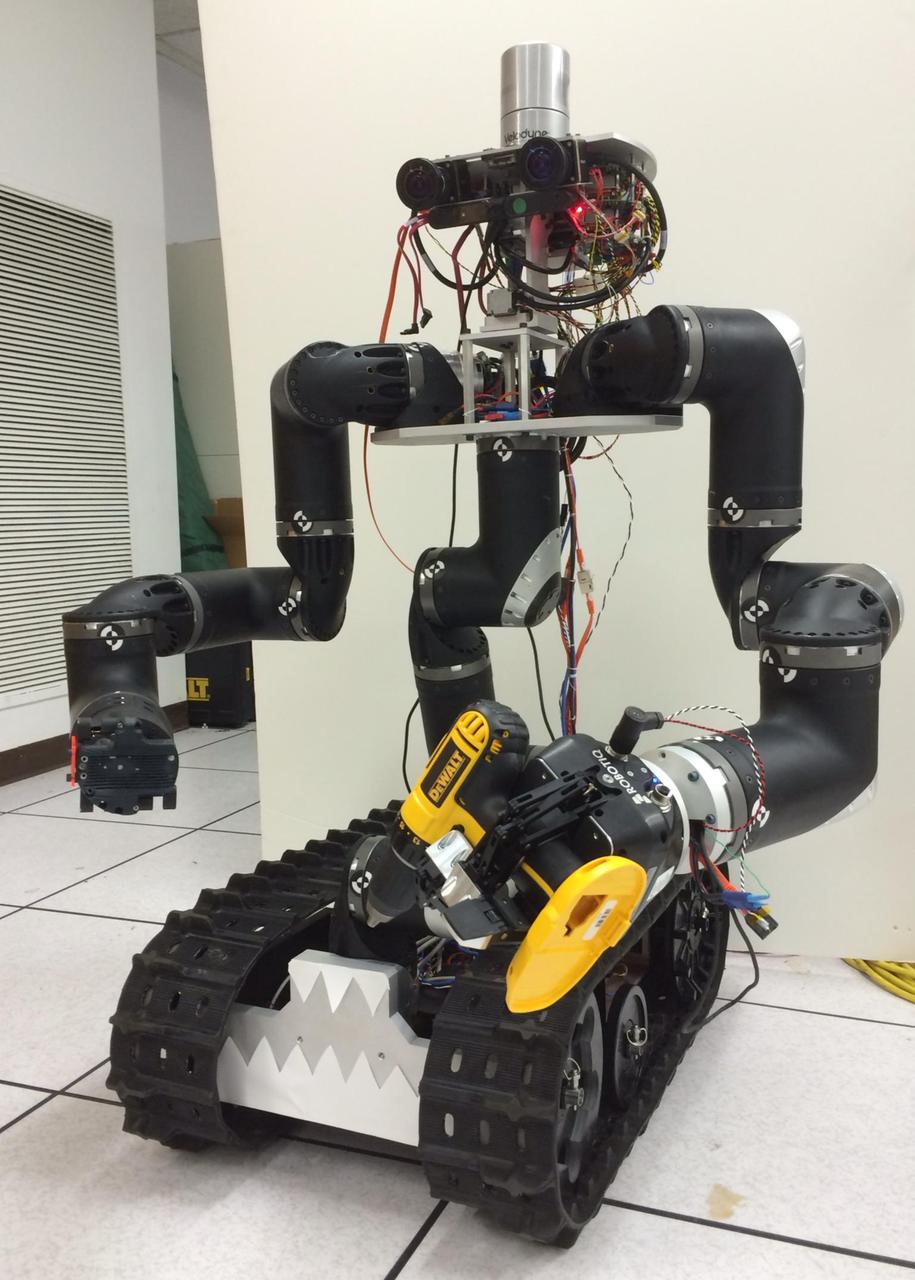
The Surrogate robot Surge, built at NASA Jet Propulsion Laboratory in Pasadena, CA., is being developed in order to extend humanity reach into hazardous environments to perform tasks such as using environmental test equipment.

Two spacecraft engineers stand with three generations of Mars rovers developed at NASA JPL, Pasadena, Ca. Front and center is a flight spare of Sojourner, left is a working sibling to Spirit and Opportunity, right is test rover Curiosity.

This is an updated montage of planetary images taken by spacecraft managed by NASA’s Jet Propulsion Laboratory in Pasadena, CA. Included are from top to bottom images of Mercury, Venus, Earth and Moon, Mars, Jupiter, Saturn, Uranus and Neptune.
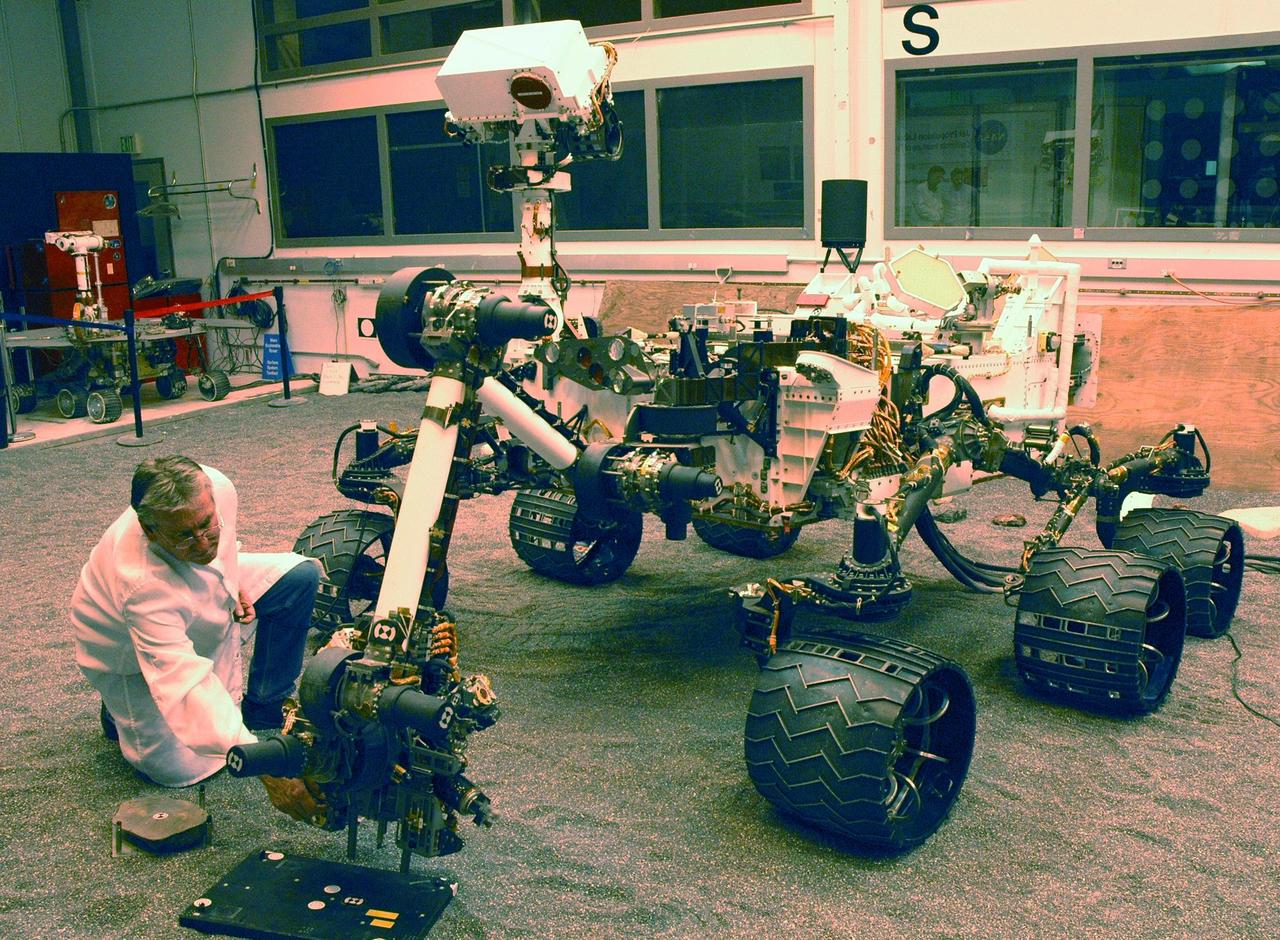
A NASA Mars Science Laboratory test rover called the Vehicle System Test Bed, or VSTB, at NASA Jet Propulsion Laboratory, Pasadena, CA serves as the closest double for Curiosity in evaluations of the mission hardware and software.
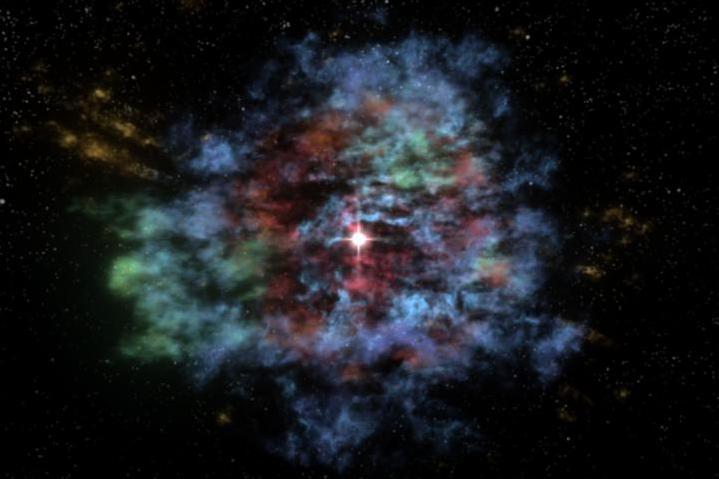
For the first time, a multiwavelength three-dimensional reconstruction of a supernova remnant has been created. This visualization of Cassiopeia A, or Cas A, the result of an explosion approximately 330 years ago, uses data from several NASA telescopes.
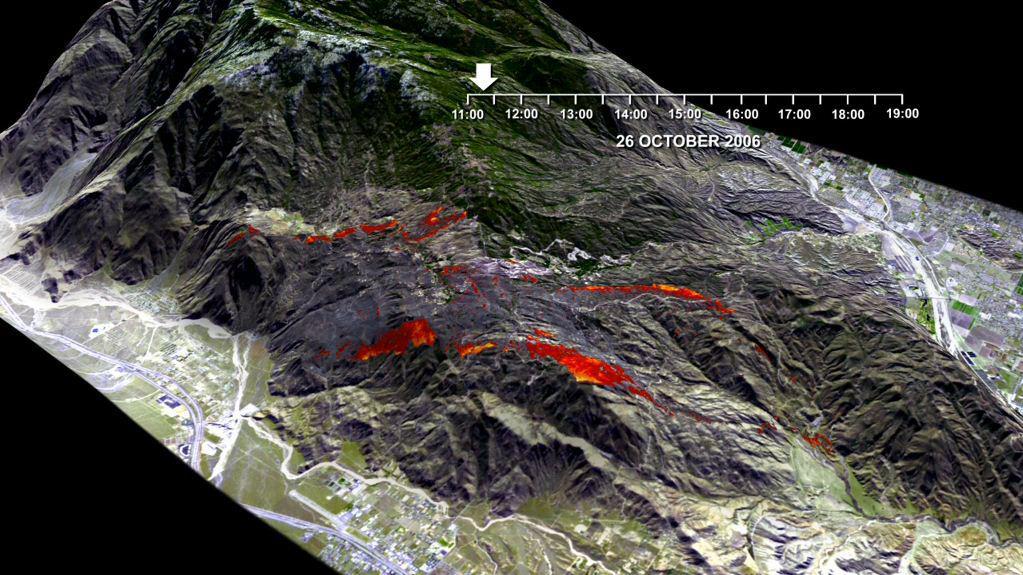
This frame is from a visualization of the rapid advance of the Esperanza Fire over the San Jacinto Mountains Riverside County, CA between 11:00 AM and 7:00 PM on October 26, 2006.
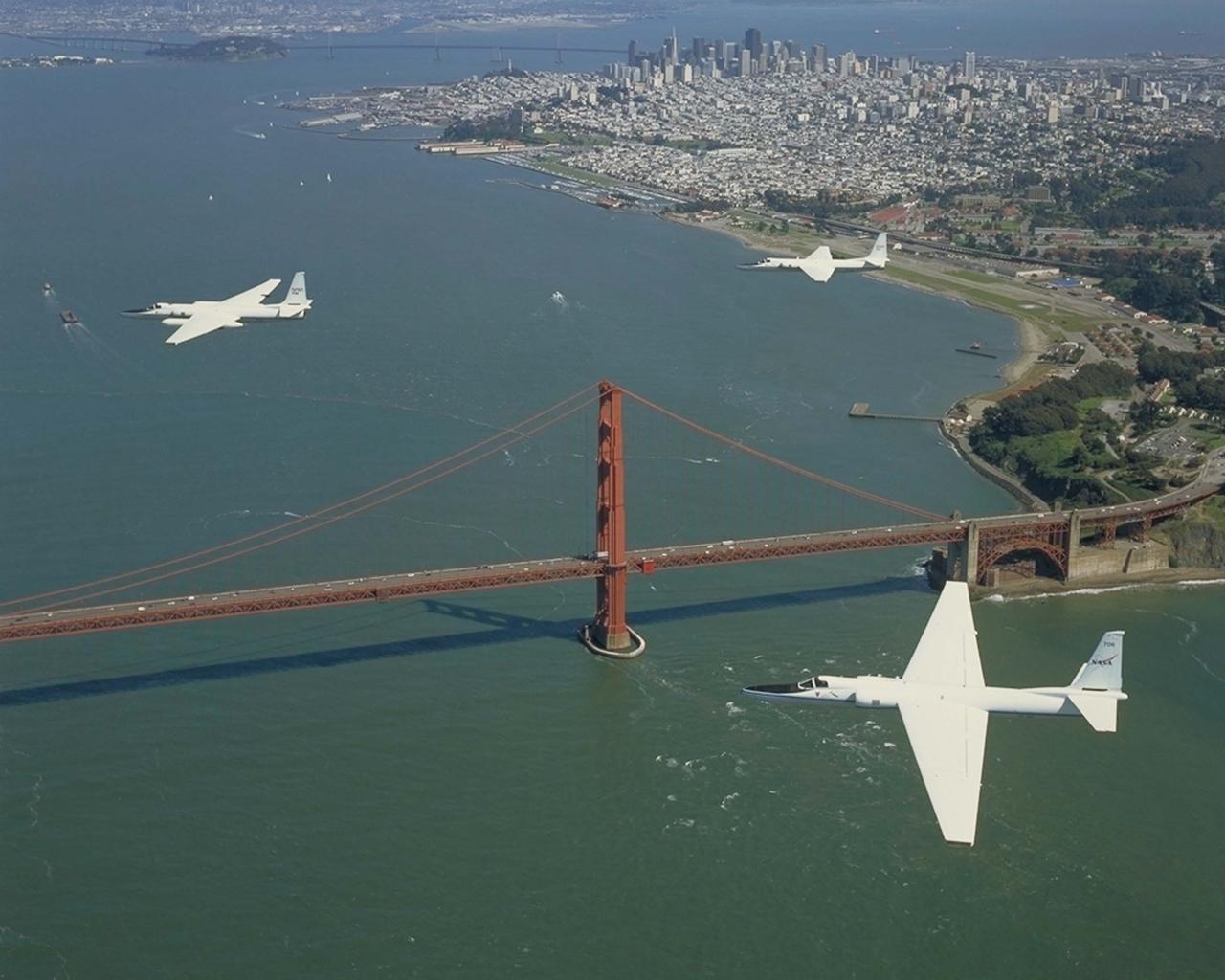
Three ER-2 Aircraft in formation over Golden Gate Bridge, San Francisco, CA on their final flight out of NASA Ames Research Center before redeployment to NASA's Dryden Flight Research Center, CA
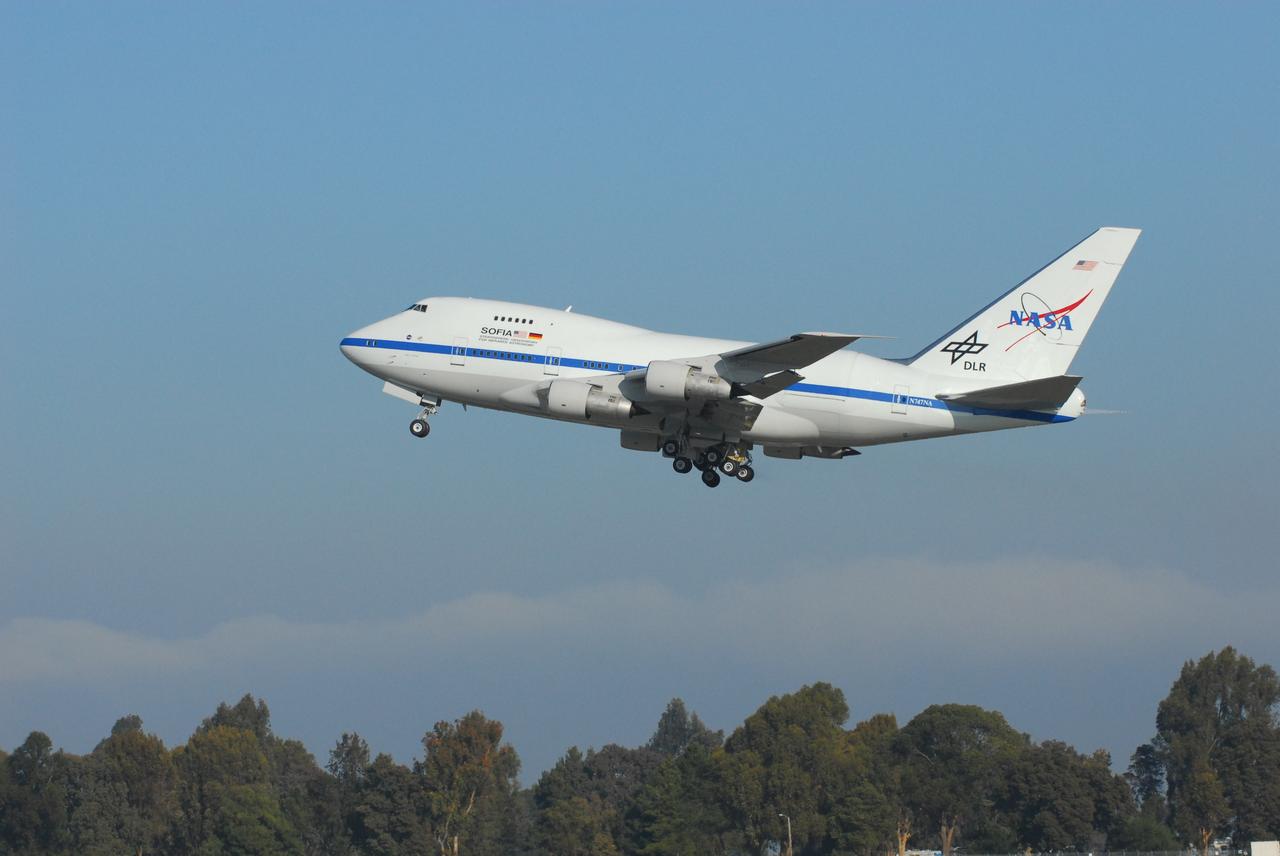
SOFIA (Stratospheric Ovservatory for Infrared Astronomy) taking off from Ames Research Center, Moffett Field, CA to return to Dryden Flight Reseach Facility, CA when the aircraft is stationed.
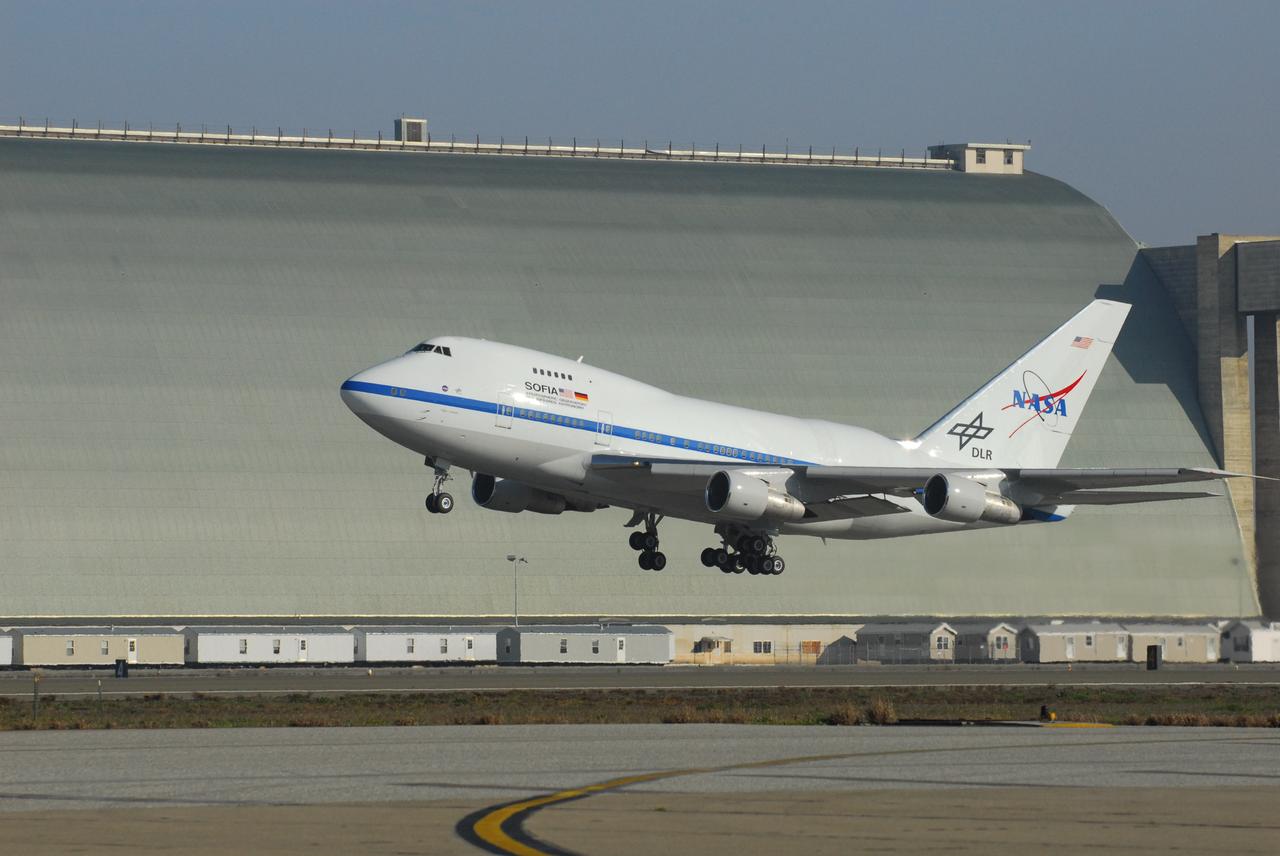
SOFIA (Stratospheric Ovservatory for Infrared Astronomy) taking off from Ames Research Center, Moffett Field, CA to return to Dryden Flight Reseach Facility, CA when the aircraft is stationed.
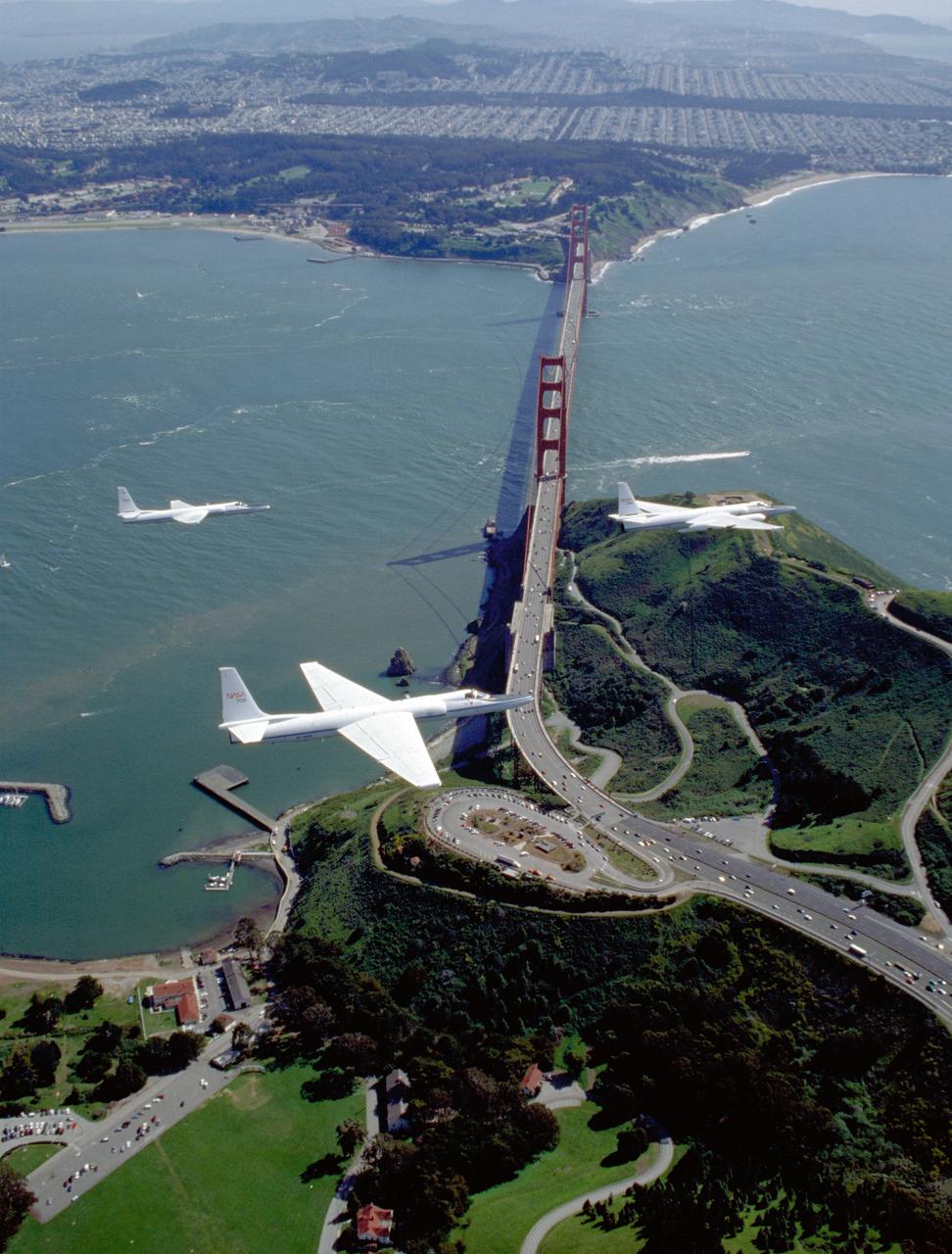
Three ER-2 Aircraft in formation over Golden Gate Bridge, San Francisco, CA on their final flight out of NASA Ames Research Center before redeployment to NASA's Dryden Flight Research Center, CA
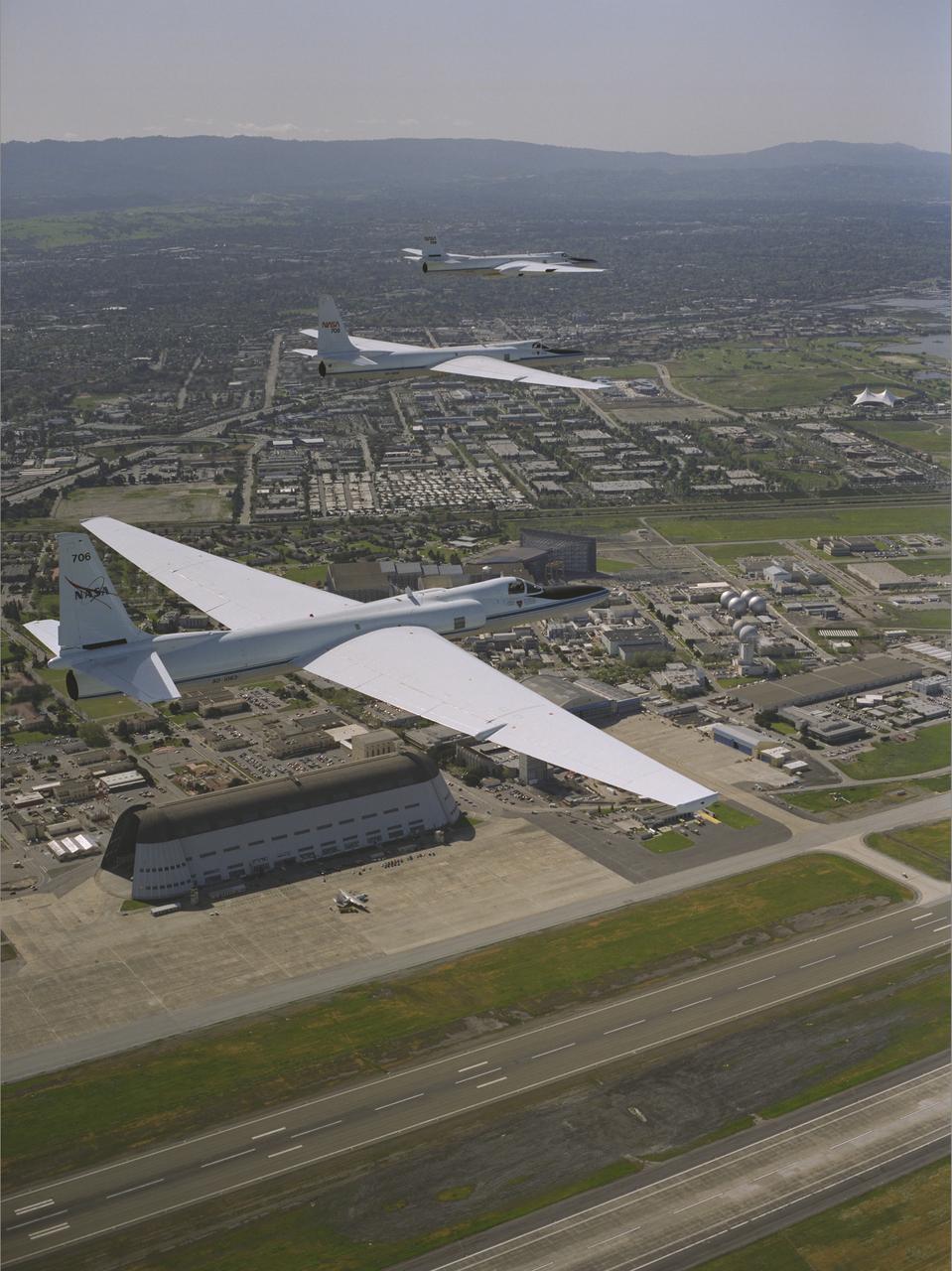
Three ER-2 Aircraft in formation over Ames Research Center, Moffett Federal Airfield , CA on their final flight before redeployment to NASA's Dryden Flight Research Center, CA
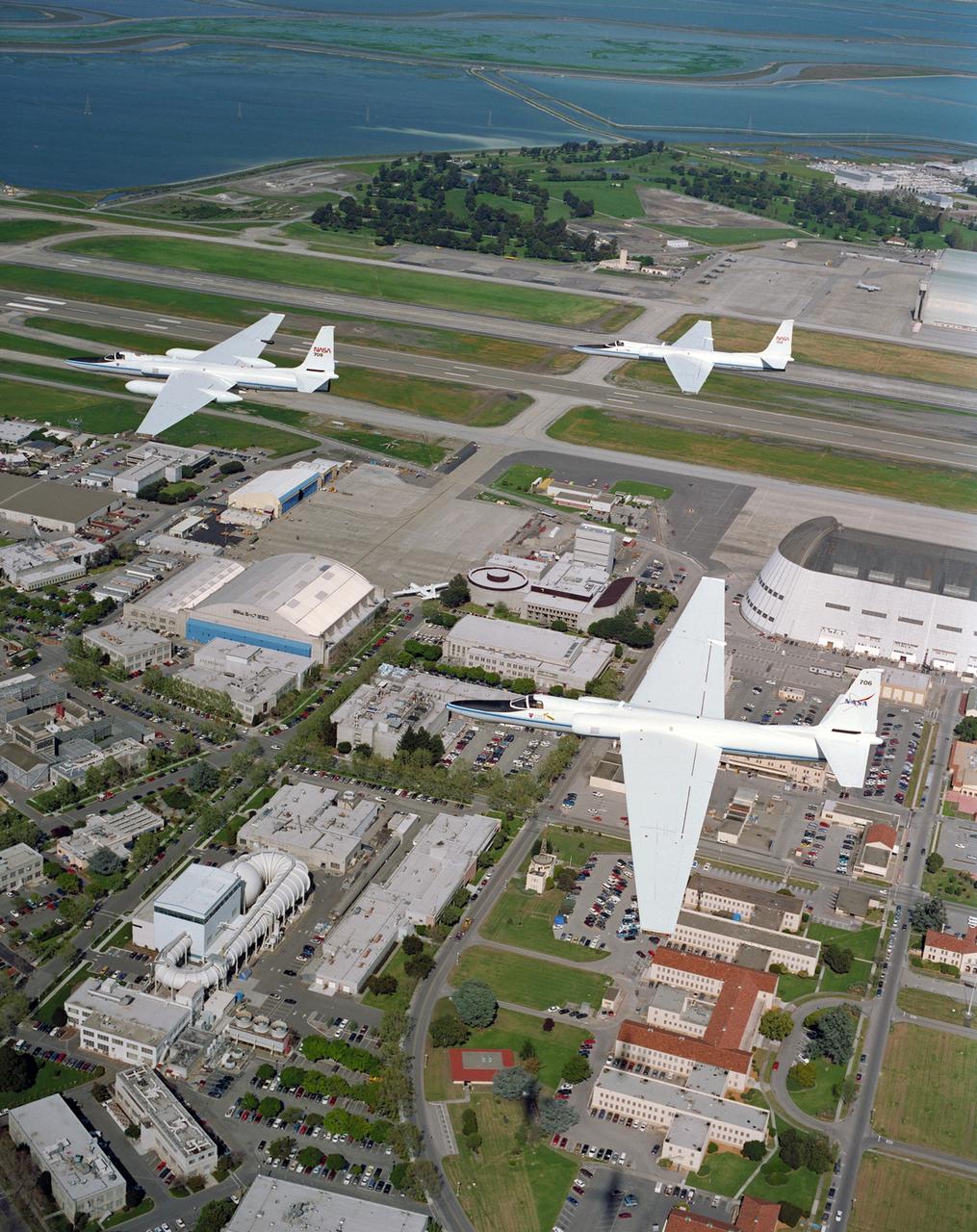
Three ER-2 Aircraft in formation over Ames Research Center, Moffett Federal Airfield , CA on their final flight before redeployment to NASA's Dryden Flight Research Center, CA
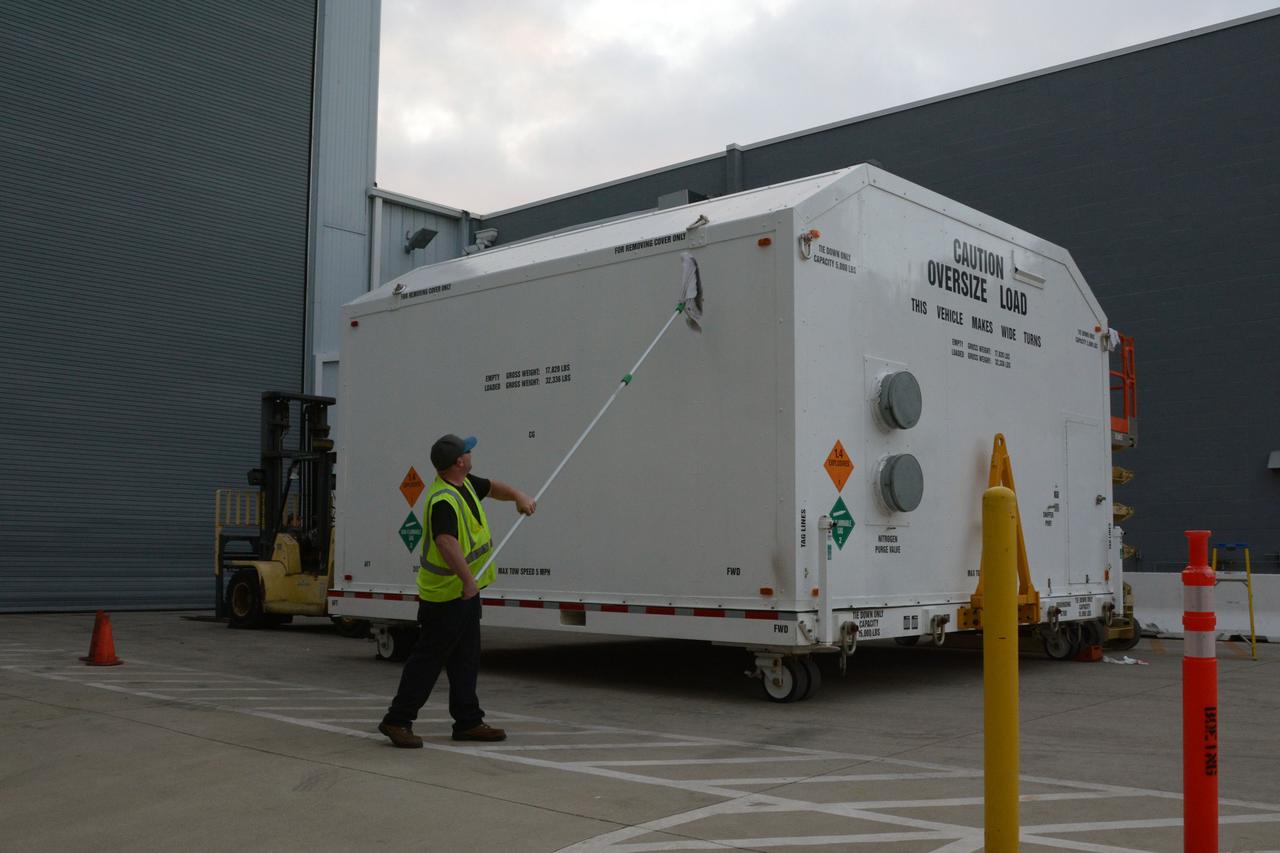
Packed in its shipping container, the spacecraft destined to fly astronauts to the International Space Station in Boeing's Crew Flight Test (CFT) arrives at the company's testing facilities in El Segundo, California, on Nov. 21, 2018. The company's CST-100 Starliner will be undergoing a series of environmental tests designed to simulate what it will experience during different stages of flight as part of NASA's Commercial Crew Program (CCP). The agency's CCP will return human spaceflight launches to U.S. soil, providing safe, reliable and cost-effective access to low-Earth orbit on systems that meet our safety and mission requirements.
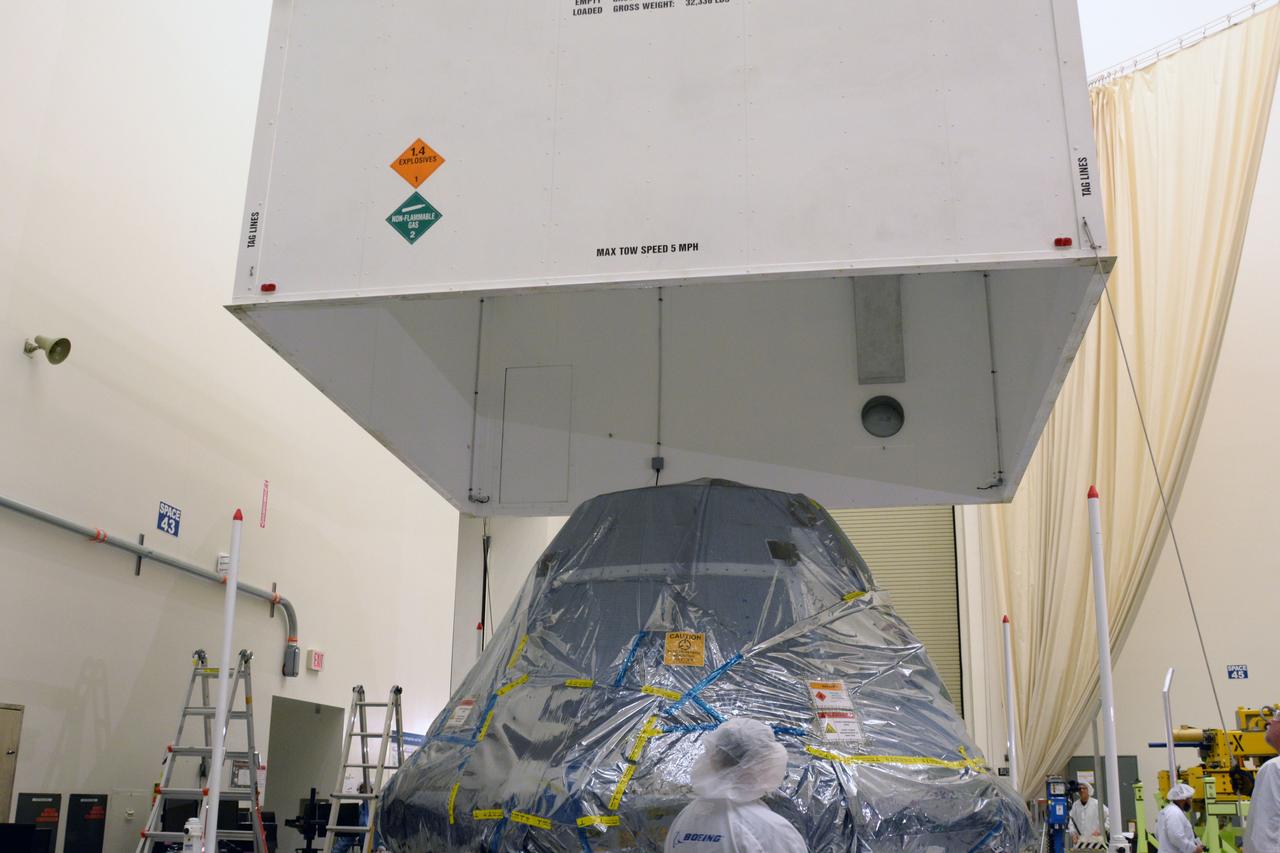
The spacecraft destined to fly astronauts to the International Space Station in Boeing's Crew Flight Test (CFT) is removed from its shipping container inside the company's testing facilities in El Segundo, California, on Nov. 21, 2018. The company's CST-100 Starliner will be undergoing a series of environmental tests designed to simulate what it will experience during different stages of flight as part of NASA's Commercial Crew Program (CCP). The agency's CCP will return human spaceflight launches to U.S. soil, providing safe, reliable and cost-effective access to low-Earth orbit on systems that meet our safety and mission requirements.
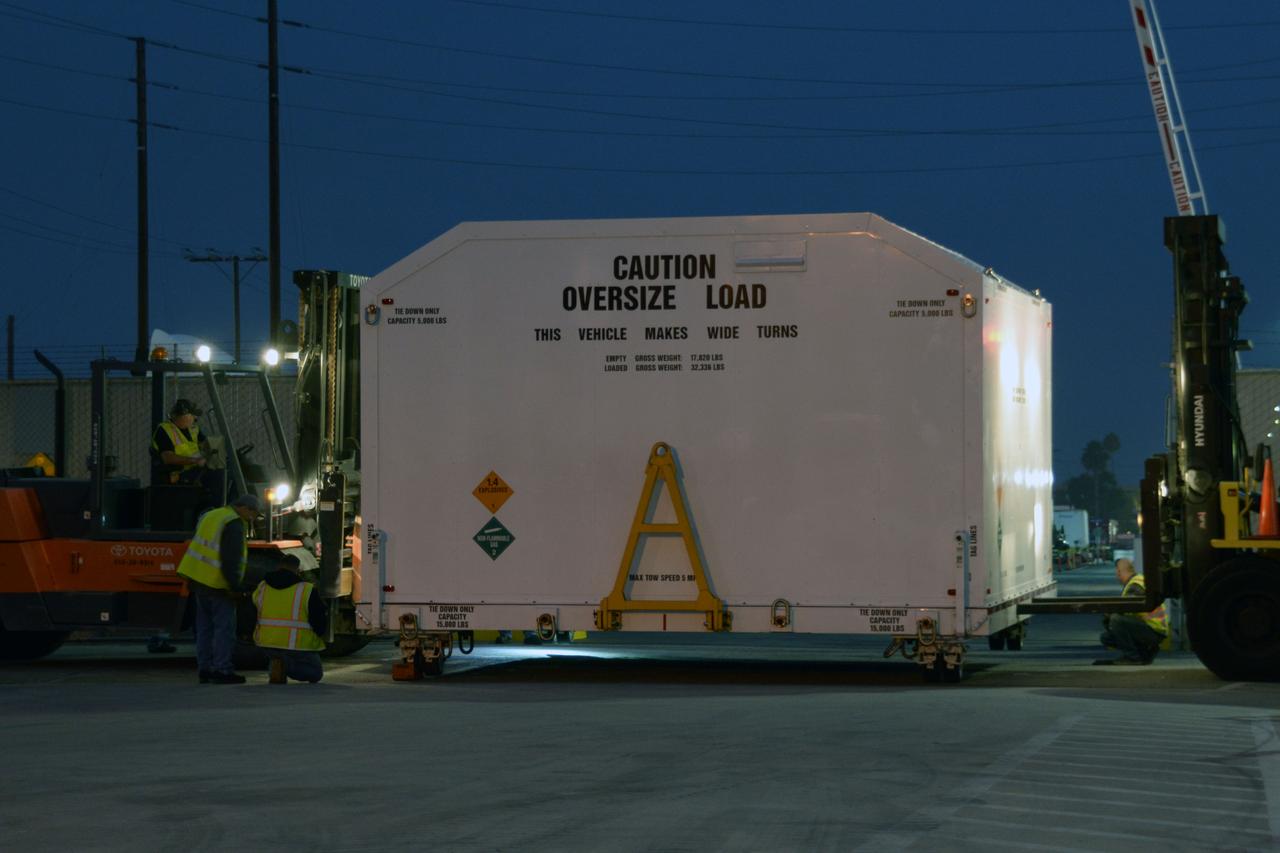
Packed in its shipping container, the spacecraft destined to fly astronauts to the International Space Station in Boeing's Crew Flight Test (CFT) arrives at the company's testing facilities in El Segundo, California, on Nov. 21, 2018. The company's CST-100 Starliner will be undergoing a series of environmental tests designed to simulate what it will experience during different stages of flight as part of NASA's Commercial Crew Program (CCP). The agency's CCP will return human spaceflight launches to U.S. soil, providing safe, reliable and cost-effective access to low-Earth orbit on systems that meet our safety and mission requirements.
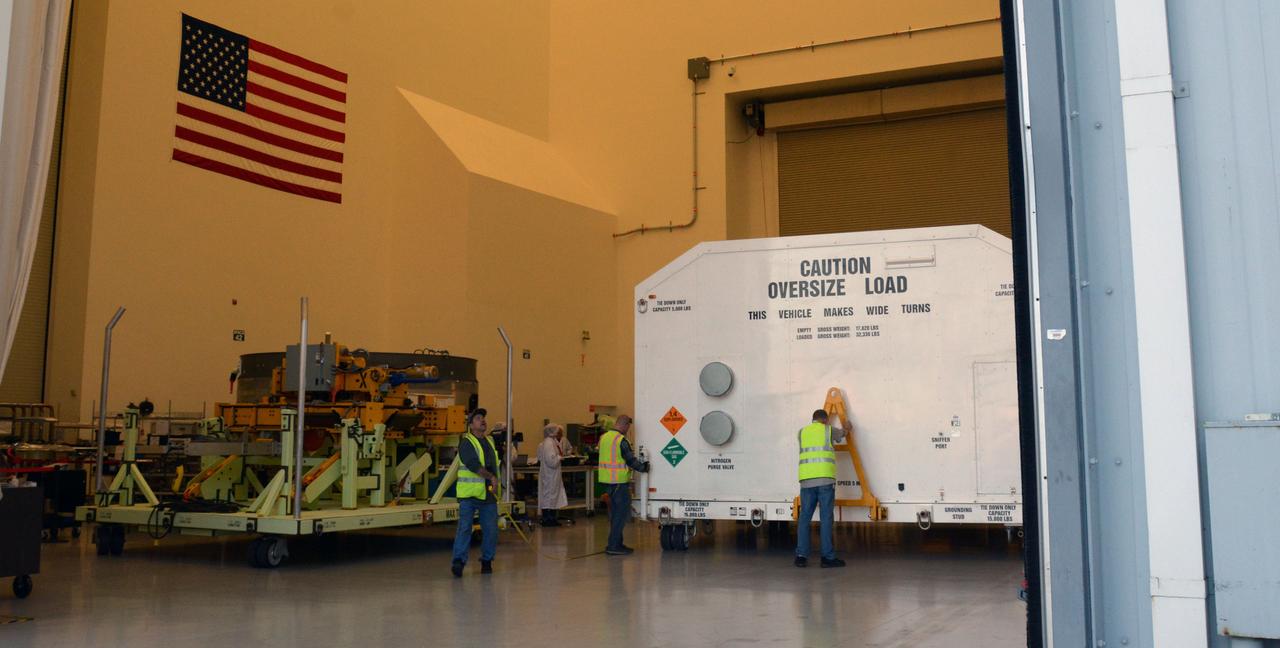
Packed in its shipping container, the spacecraft destined to fly astronauts to the International Space Station in Boeing's Crew Flight Test (CFT) arrives at the company's testing facilities in El Segundo, California, on Nov. 21, 2018. The company's CST-100 Starliner will be undergoing a series of environmental tests designed to simulate what it will experience during different stages of flight as part of NASA's Commercial Crew Program (CCP). The agency's CCP will return human spaceflight launches to U.S. soil, providing safe, reliable and cost-effective access to low-Earth orbit on systems that meet our safety and mission requirements.

The spacecraft destined to fly astronauts to the International Space Station in Boeing's Crew Flight Test (CFT) is inspected following removal from its shipping container inside the company's testing facilities in El Segundo, California, on Nov. 21, 2018. The company's CST-100 Starliner will be undergoing a series of environmental tests designed to simulate what it will experience during different stages of flight as part of NASA's Commercial Crew Program (CCP). The agency's CCP will return human spaceflight launches to U.S. soil, providing safe, reliable and cost-effective access to low-Earth orbit on systems that meet our safety and mission requirements.
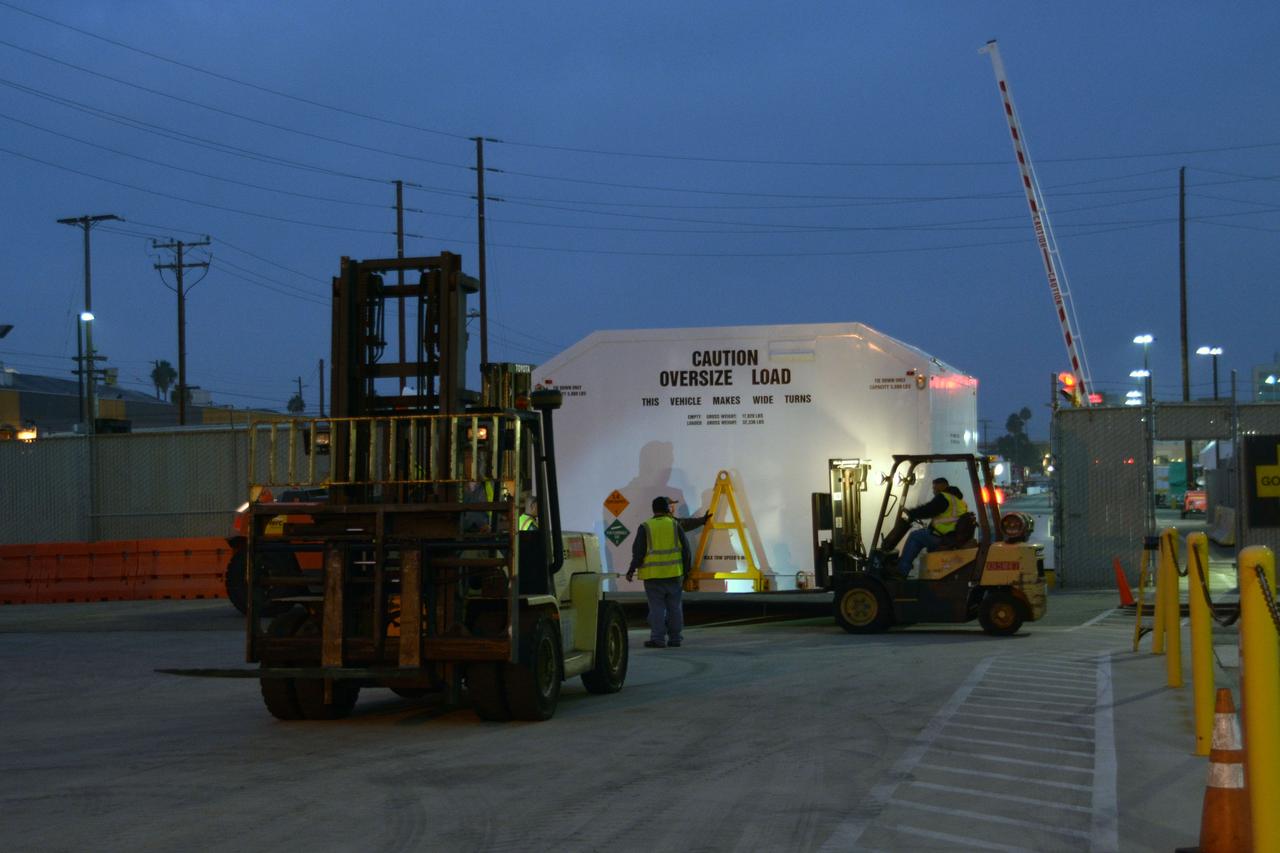
Packed in its shipping container, the spacecraft destined to fly astronauts to the International Space Station in Boeing's Crew Flight Test (CFT) arrives at the company's testing facilities in El Segundo, California, on Nov. 21, 2018. The company's CST-100 Starliner will be undergoing a series of environmental tests designed to simulate what it will experience during different stages of flight as part of NASA's Commercial Crew Program (CCP). The agency's CCP will return human spaceflight launches to U.S. soil, providing safe, reliable and cost-effective access to low-Earth orbit on systems that meet our safety and mission requirements.
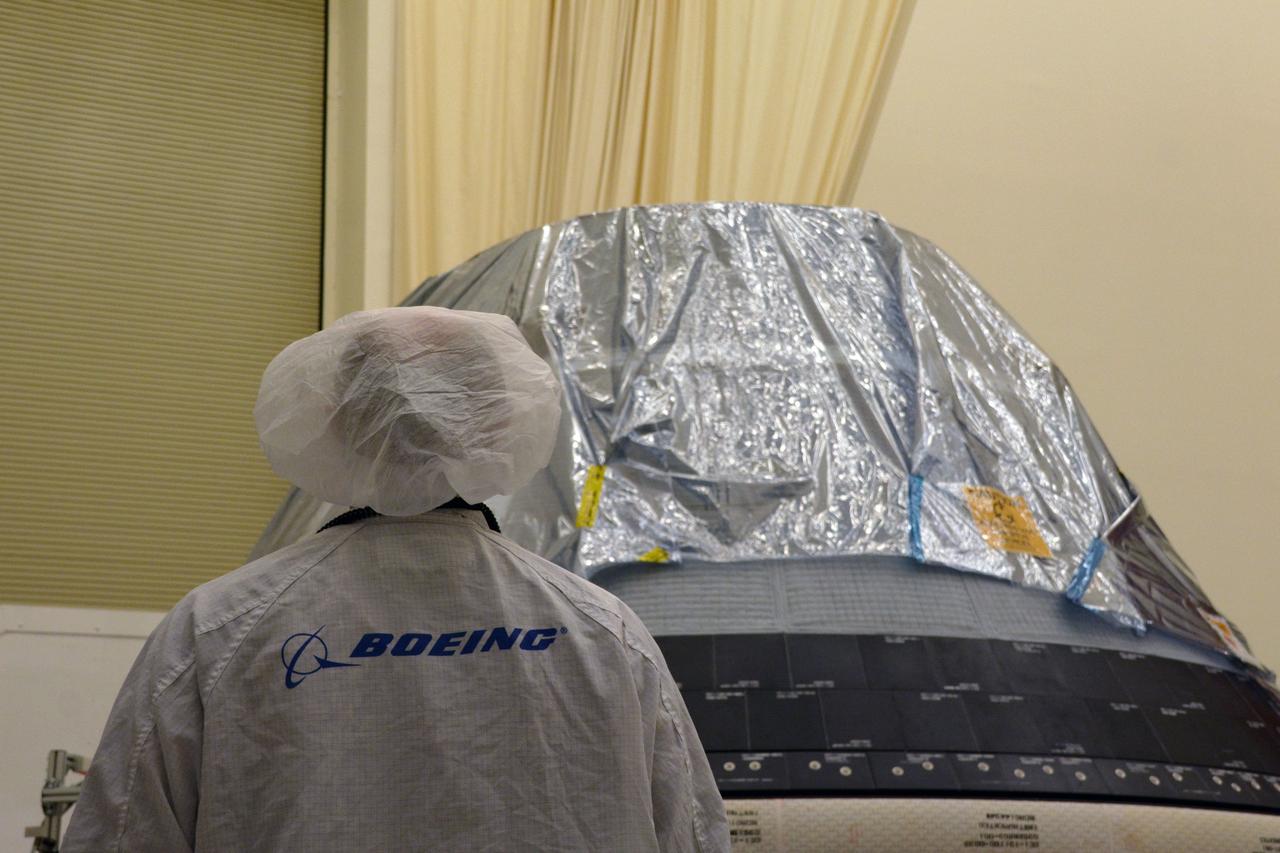
The spacecraft destined to fly astronauts to the International Space Station in Boeing's Crew Flight Test (CFT) is inspected following removal from its shipping container inside the company's testing facilities in El Segundo, California, on Nov. 21, 2018. The company's CST-100 Starliner will be undergoing a series of environmental tests designed to simulate what it will experience during different stages of flight as part of NASA's Commercial Crew Program (CCP). The agency's CCP will return human spaceflight launches to U.S. soil, providing safe, reliable and cost-effective access to low-Earth orbit on systems that meet our safety and mission requirements.
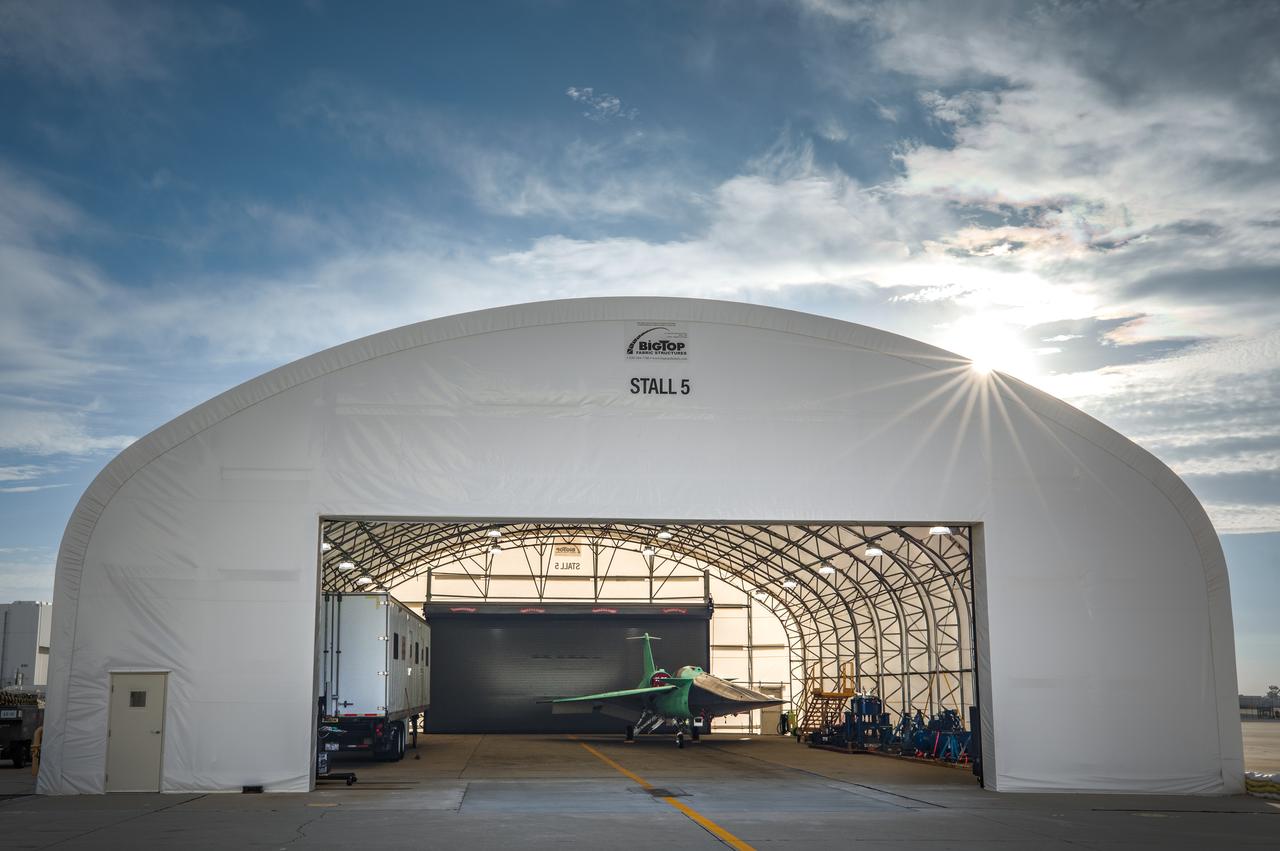
NASA’s X-59 aircraft is parked in stall five near the runway at Lockheed Martin Skunk Works in Palmdale, California, on June 19, 2023. This is where the X-59 will be housed during ground and initial flight tests. Lockheed Martin Photography By Garry Tice 1011 Lockheed Way, Palmdale, Ca. 93599 Event: Move to Run Stall 5 Date: 6/19/2023 Additional Info:
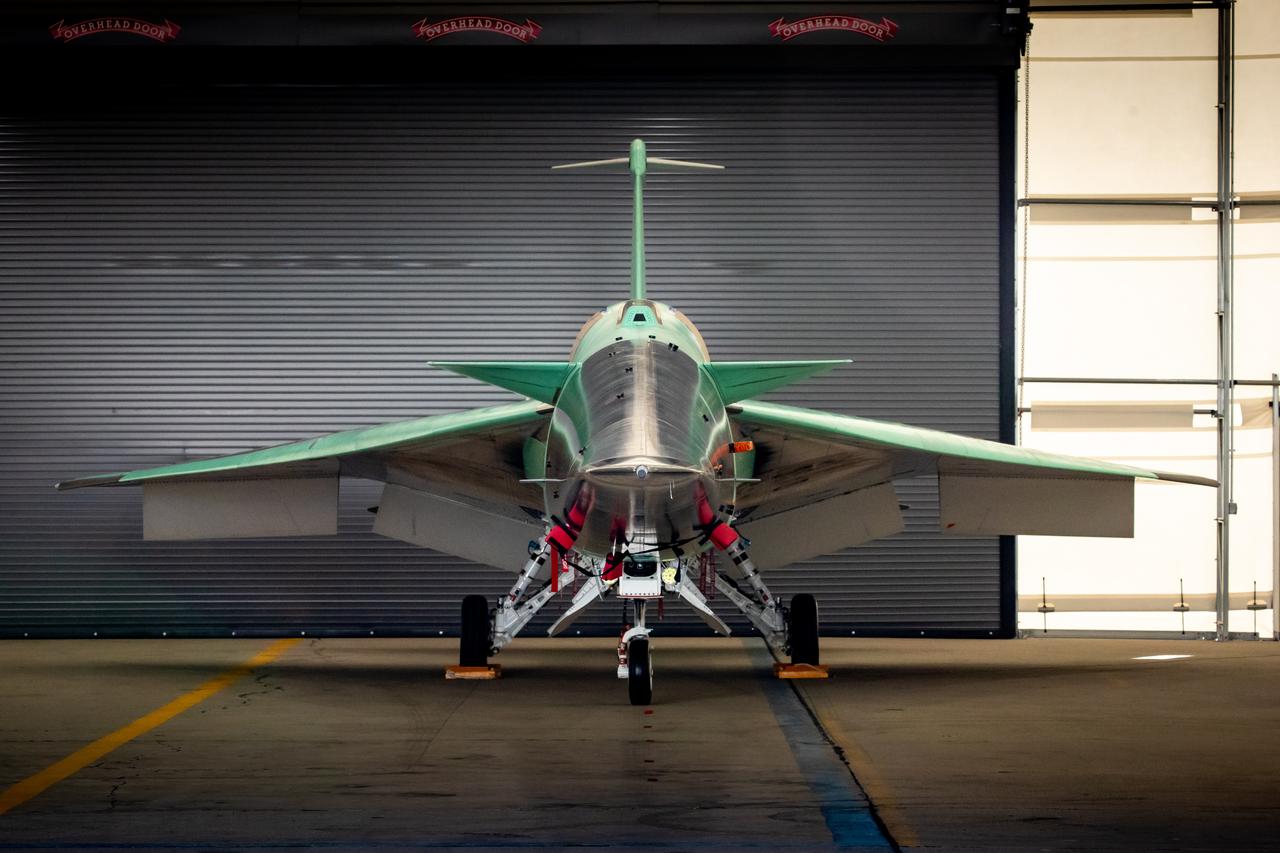
NASA’s X-59 aircraft is parked near the runway at Lockheed Martin Skunk Works in Palmdale, California, on June 19, 2023. This is where the X-59 will be housed during ground and initial flight tests. Lockheed Martin Photography By Garry Tice 1011 Lockheed Way, Palmdale, Ca. 93599 Event: Move to Run Stall 5 Date: 6/19/2023 Additional Info:
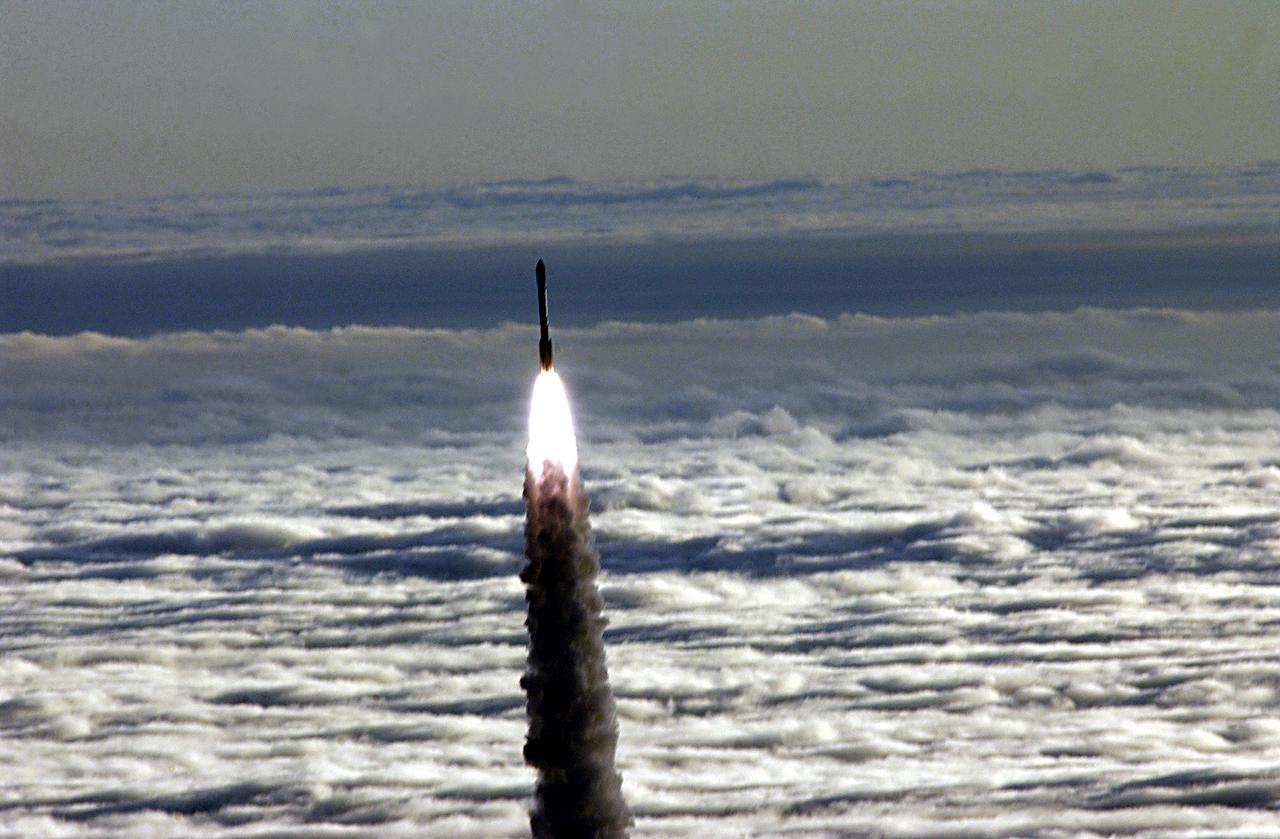
Vandenberg AFB CA-- A Boeing Delta II rocket soars above the clouds here today at Vandenberg AFB CA. The NASA payload aboard the rocket is the ICESat, an Ice Cloud and land Elevation Satellite, and CHIPSat, a Cosmic Hot Interstellar Plasma Spectrometer. ICESat, a 661-pound satellite, is a benchmark satellite for the Earth Observing System that will help scientists determine if the global sea level is rising or falling. It will observe the ice sheets that blanket the Earth’s poles to determine if they are growing or shrinking. It will assist in developing an understanding of how changes in the Earth’s atmosphere and climate affect polar ice masses and global sea level. The Geoscience Laser Altimeter System is the sole instrument on the satellite. CHIPSat, a suitcase-size 131-pound satellite, will provide information about the origin, physical processes and properties of the hot gas contained in the interstellar medium. This launch, marks the first Delta from Vandenberg this year. (USAF photo by: SSgt Lee A Osberry Jr.)
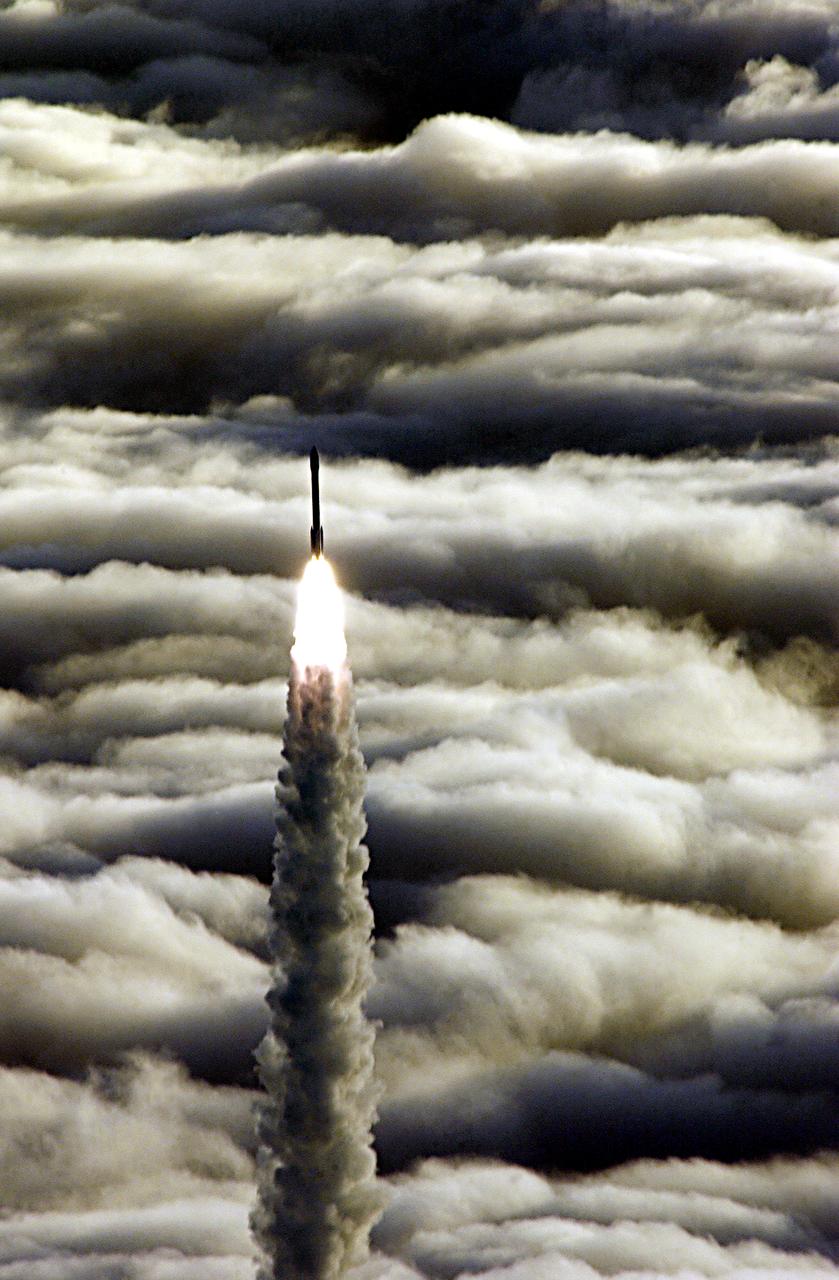
Vandenberg AFB CA-- A Boeing Delta II rocket soars above the clouds here today at Vandenberg AFB CA. The NASA payload aboard the rocket is the ICESat, an Ice Cloud and land Elevation Satellite, and CHIPSat, a Cosmic Hot Interstellar Plasma Spectrometer. ICESat, a 661-pound satellite, is a benchmark satellite for the Earth Observing System that will help scientists determine if the global sea level is rising or falling. It will observe the ice sheets that blanket the Earth’s poles to determine if they are growing or shrinking. It will assist in developing an understanding of how changes in the Earth’s atmosphere and climate affect polar ice masses and global sea level. The Geoscience Laser Altimeter System is the sole instrument on the satellite. CHIPSat, a suitcase-size 131-pound satellite, will provide information about the origin, physical processes and properties of the hot gas contained in the interstellar medium. This launch, marks the first Delta from Vandenberg this year. (USAF photo by: SSgt Lee A Osberry Jr.)
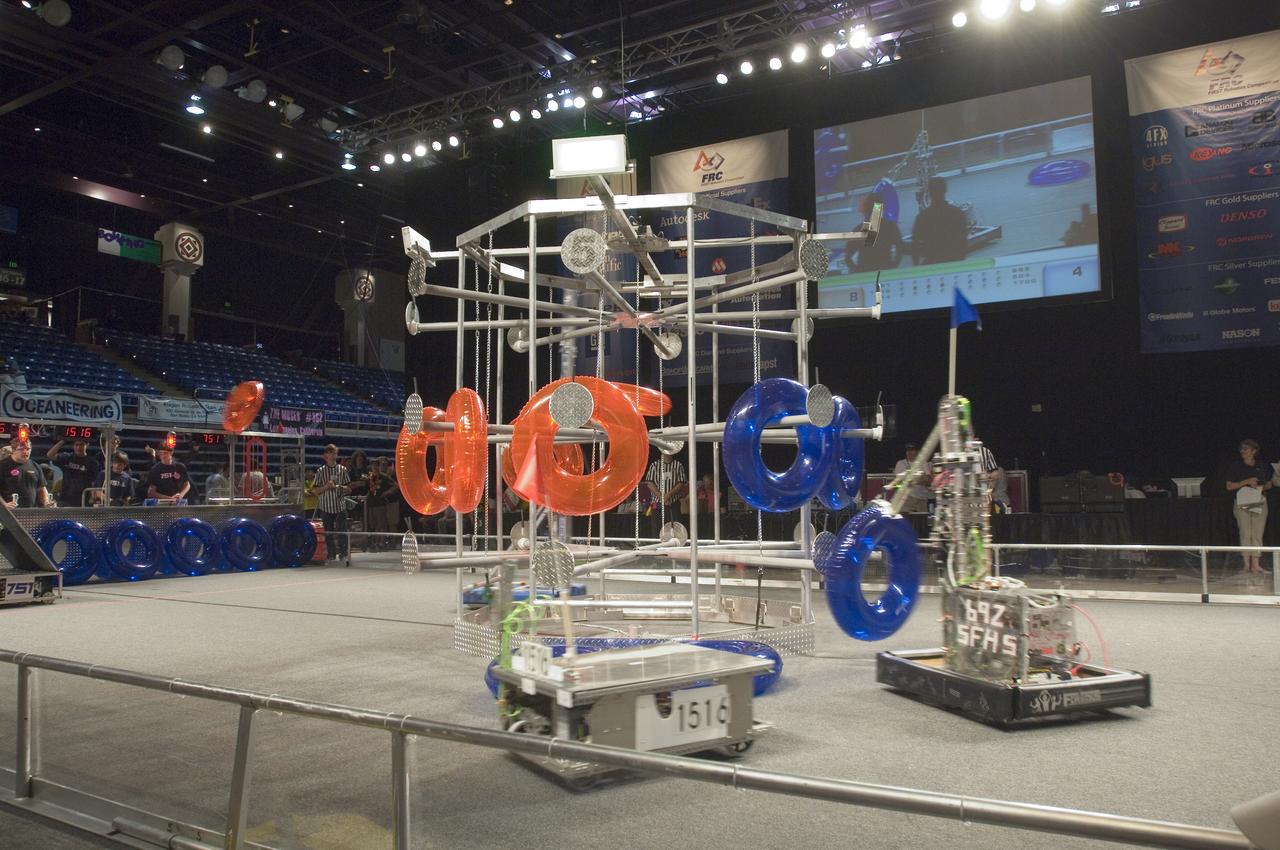
Silicon Valley FIRST Regional Robotics competition: Grizzlies - Team 1516 - W & K Automotive/ROP Cantra Costa Co, CA/San Ramon Valley Education Foundation & California High School, San Ramon, California (CA) The Fembots Team 692 - CyboSoft/PASCO Scientific/The Stewart Family/MR Pickles & St Francis High School, Sacramento, California (CA) on the floor doing battle Cheezy Poofs team-1834
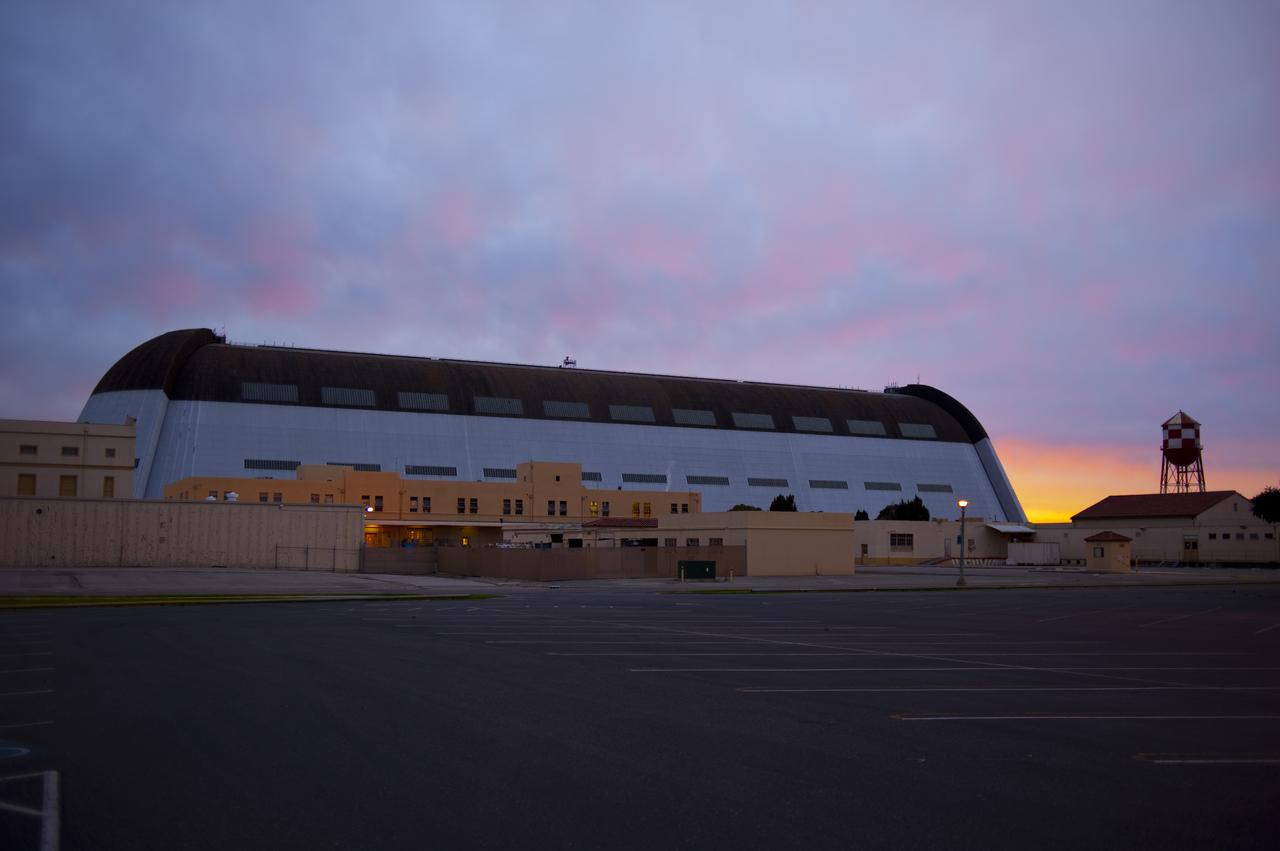
Hangar One, Moffett Federal Airfield, CA at sunrise
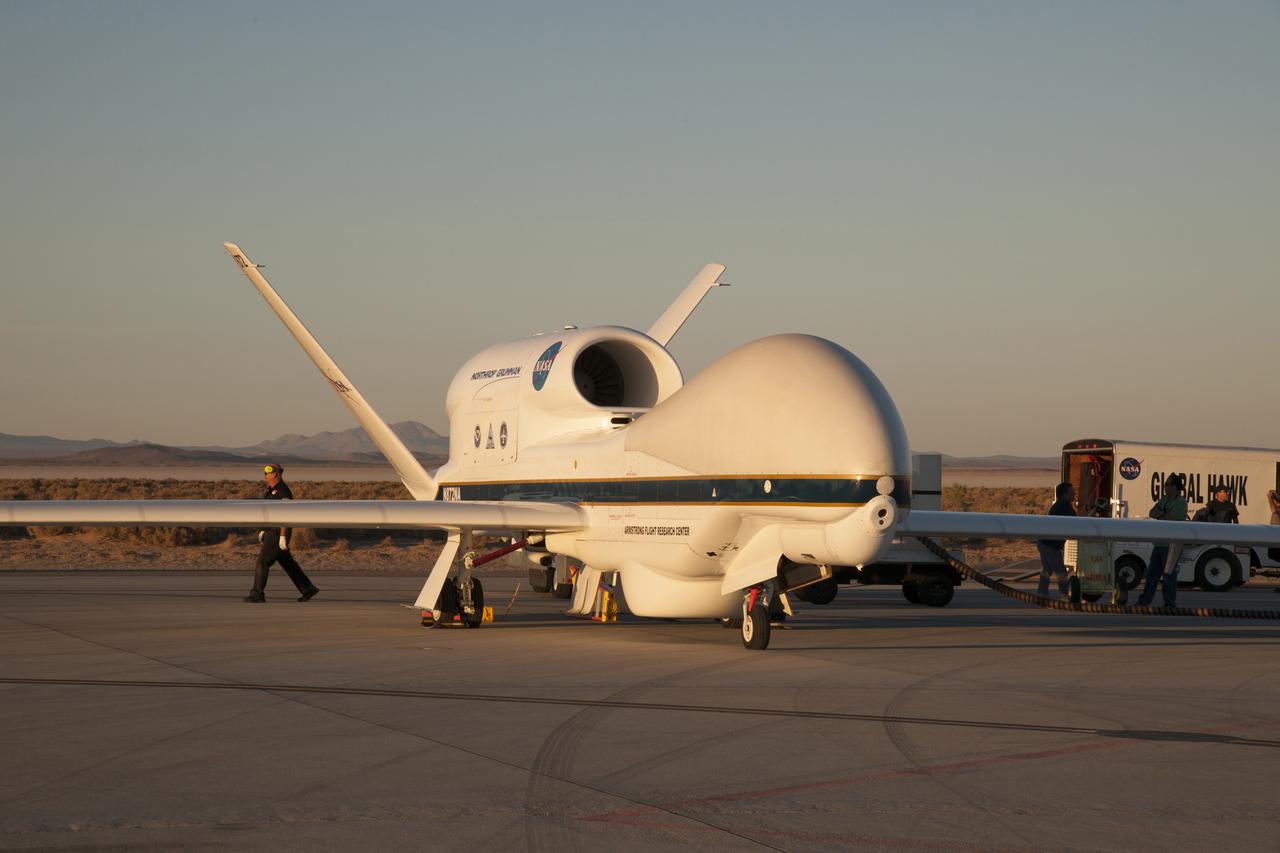
NASA’s Global Hawk aircraft was deployed to Florida from Armstrong Flight Research Center at Edwards, CA. on Oct. 6 to monitor and take scientific measurements of Hurricane Matthew. The unmanned Global Hawk will gather scientific data in support of NOAA’s Sensing Hazards with Operational Unmanned Technology (SHOUT) mission.
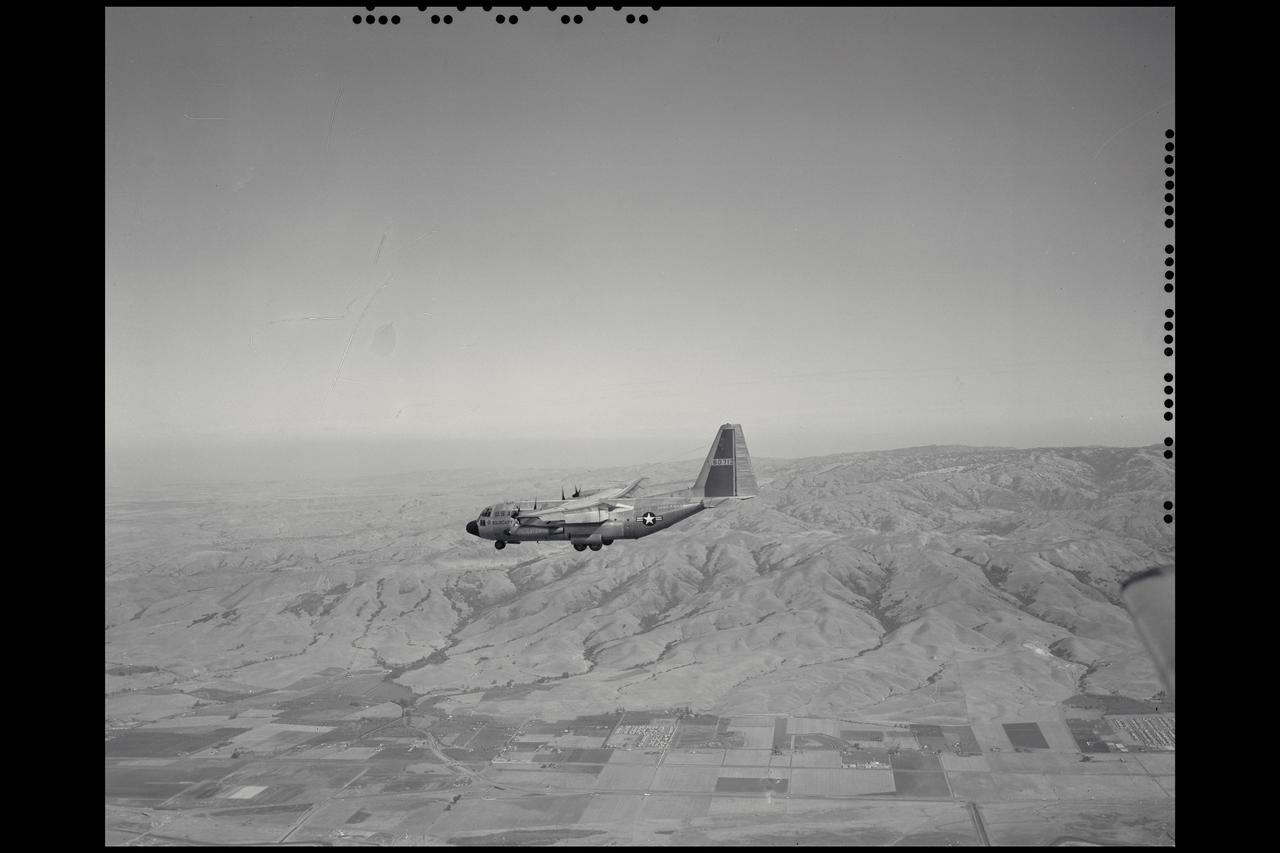
Lockheed NC-130B aircraft in flight over Santa Clara Valley, CA

DC-8 NASA 717 in flight over San Francisco, Ca
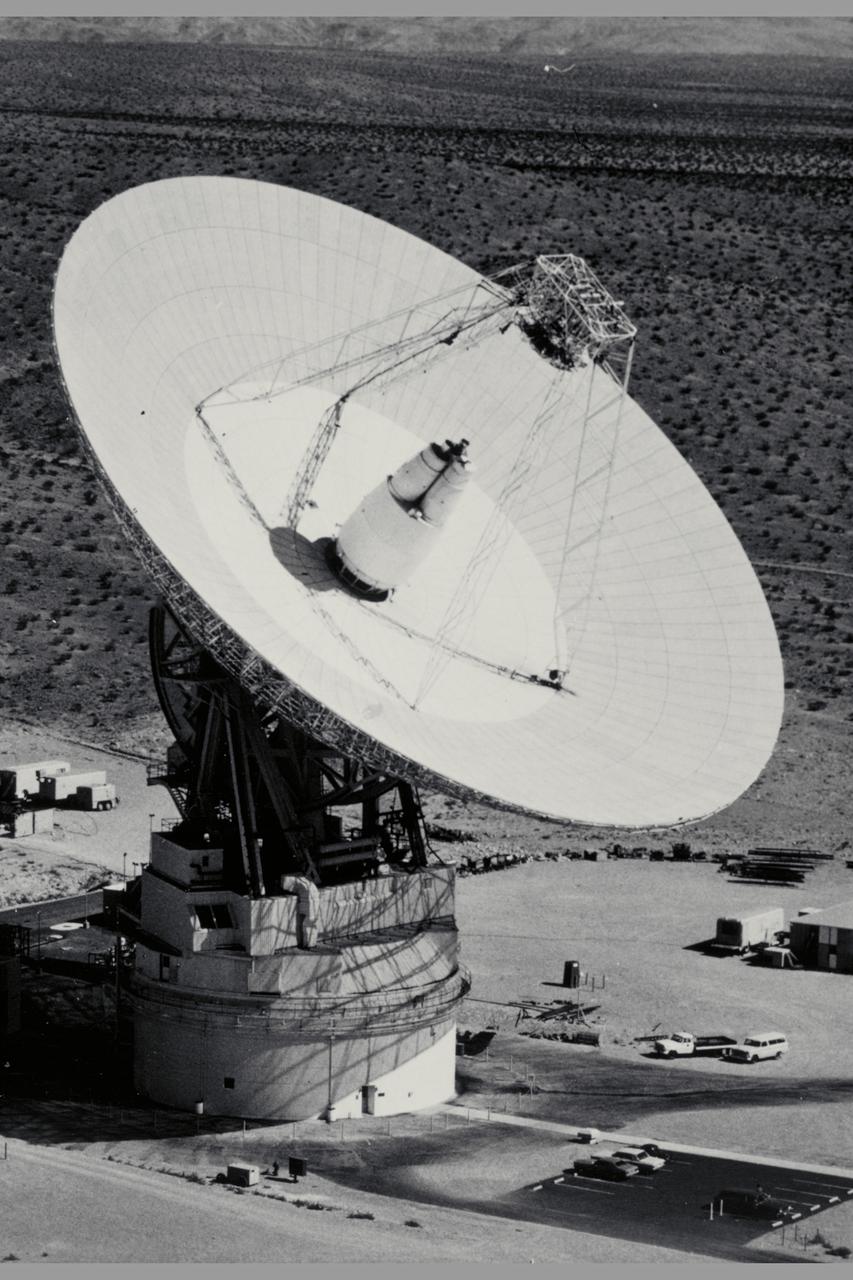
210' Dish Antenna at Goldstone Ca - used in tracking Pioneer spacecraft
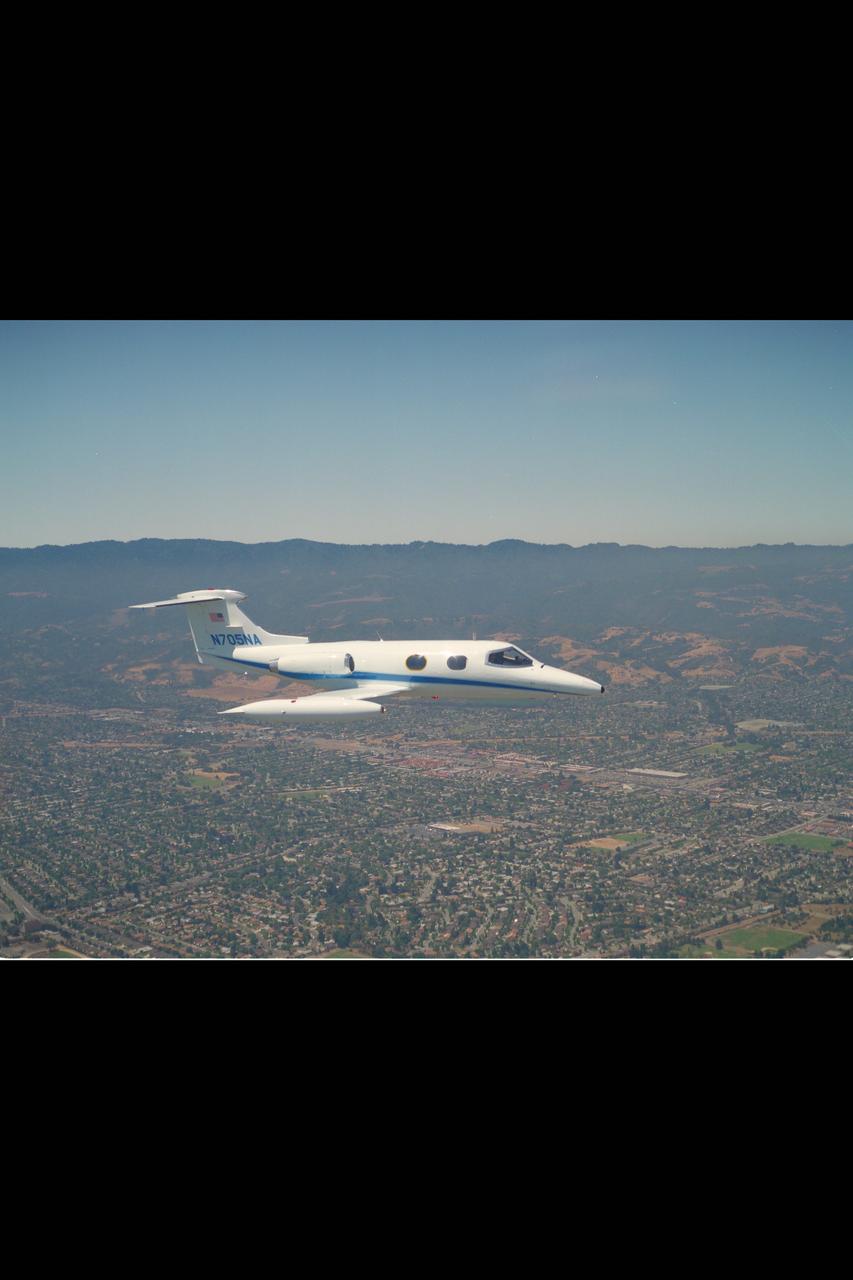
Lear Jet (NASA 705) in flight over Central CA.
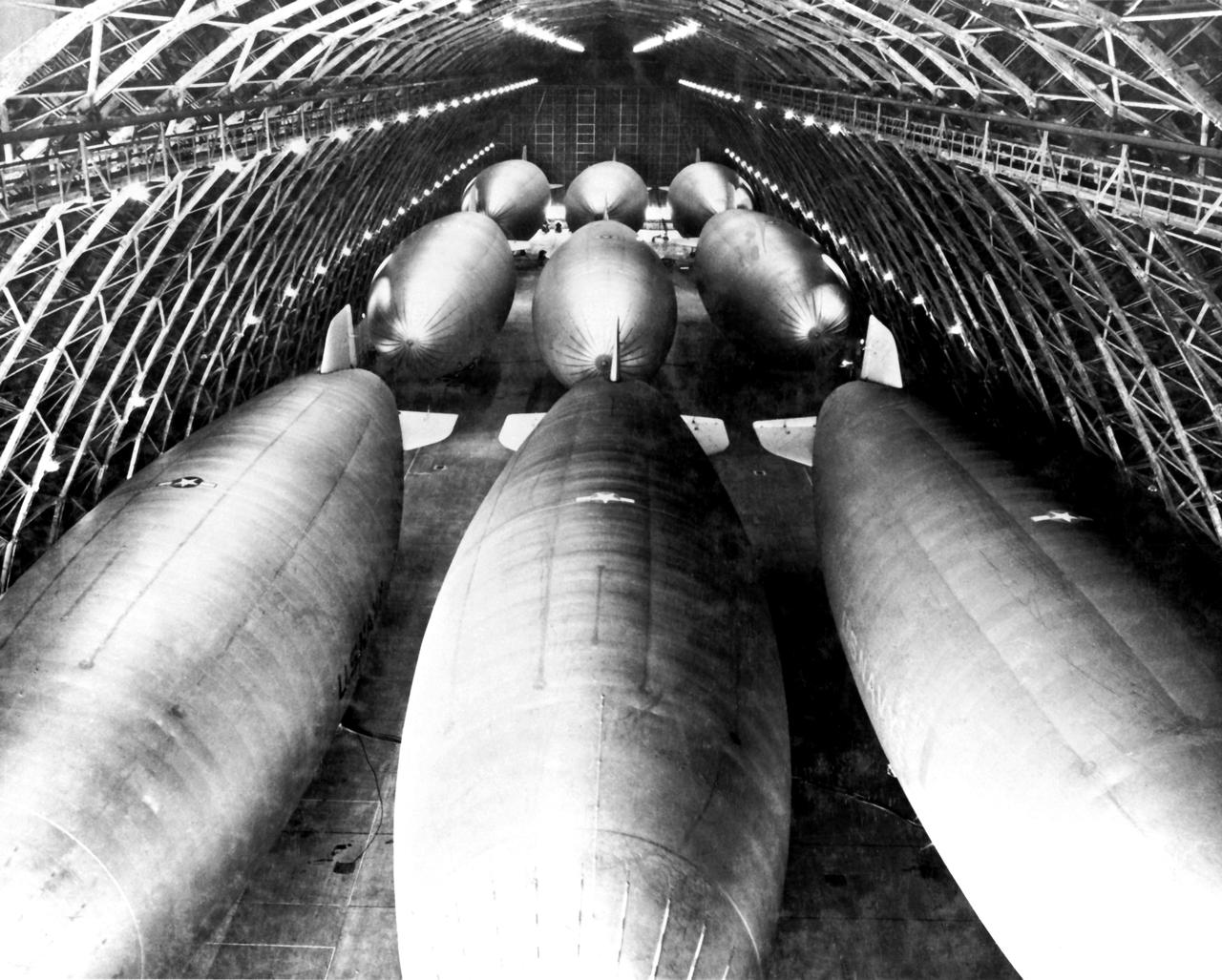
Navy Nine Blimps inflated in Hangar, NAS Sunnyvale, CA
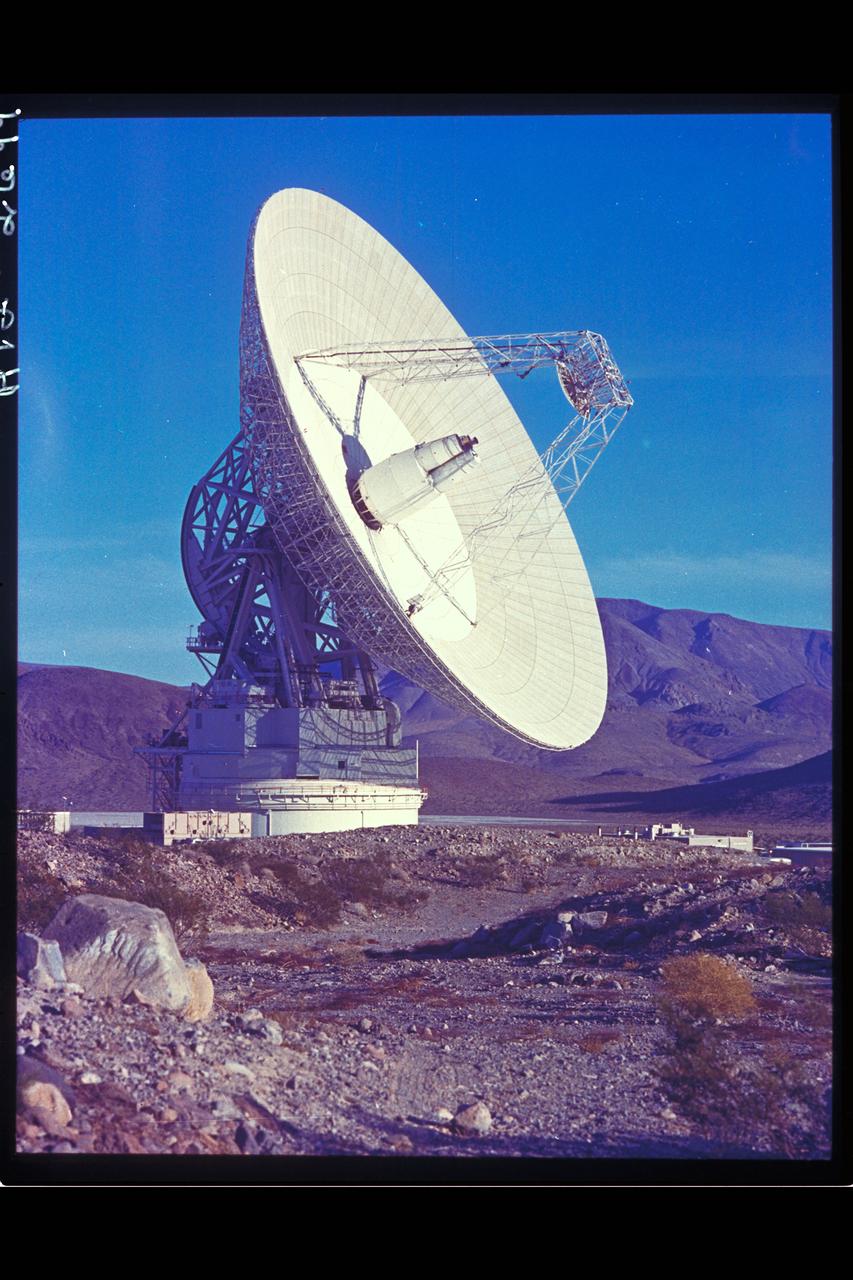
Deep Space Antenna 210' at Goldstone, CA (JPL ref: P-116594AC)

DC-8 NASA 717 in flight over San Francisco, Ca