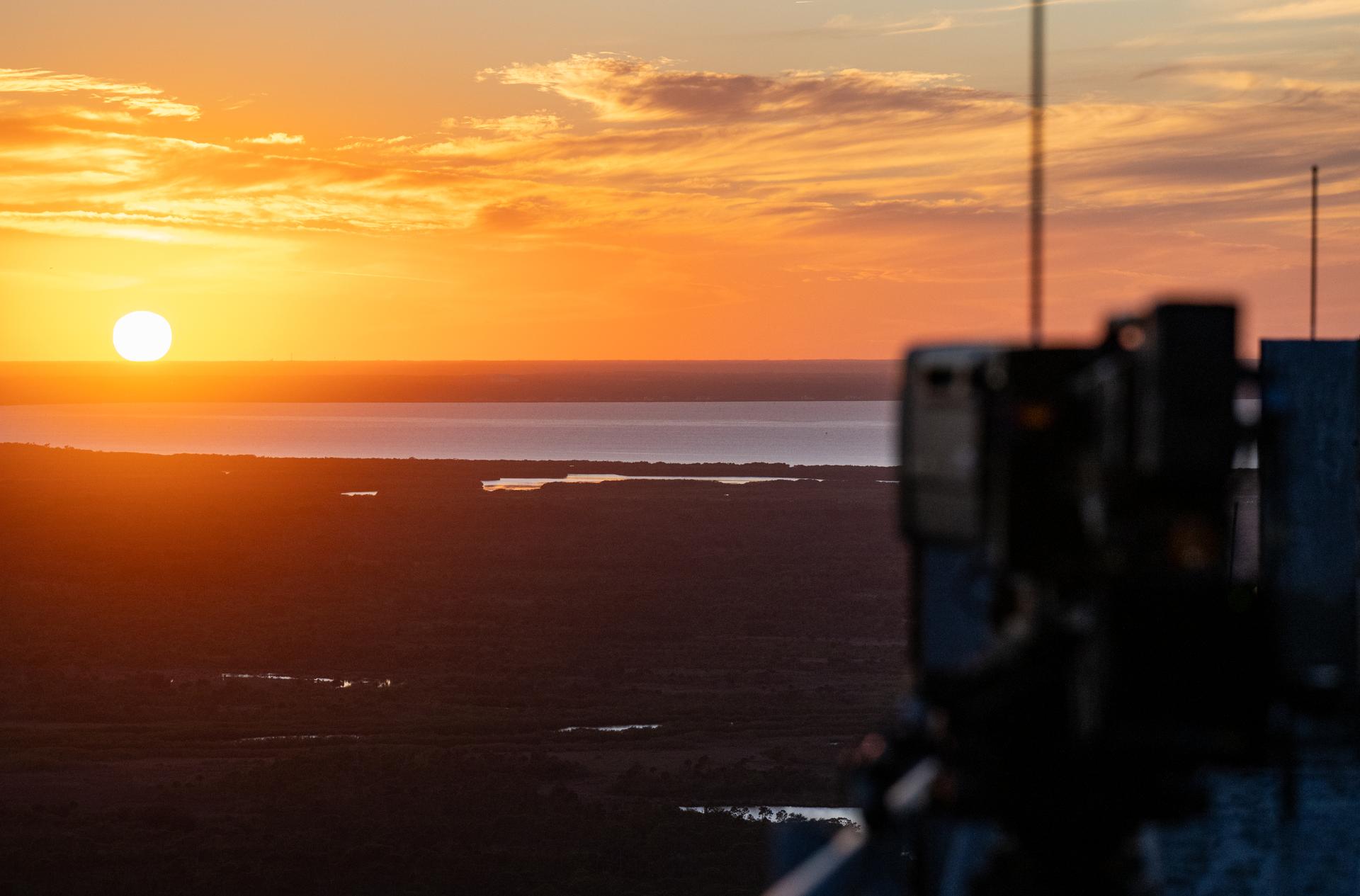
The sun sets as Artemis II crewmembers NASA astronauts Reid Wiseman, commander; Victor Glover, pilot; Christina Koch, mission specialist; and CSA (Canadian Space Agency) astronaut Jeremy Hansen, mission specialist participate in the Artemis II countdown demonstration test, Saturday, Dec. 20, 2025, at NASA’s Kennedy Space Center in Florida. For this operation, the Artemis II crew and launch teams are simulating the launch day timeline including suit-up, walkout, and spacecraft ingress and egress. Through the Artemis campaign, NASA will send astronauts to explore the Moon for scientific discovery, economic benefits, and to build the foundation for the first crewed missions to Mars, for the benefit of all. Photo Credit: (NASA/Keegan Barber)
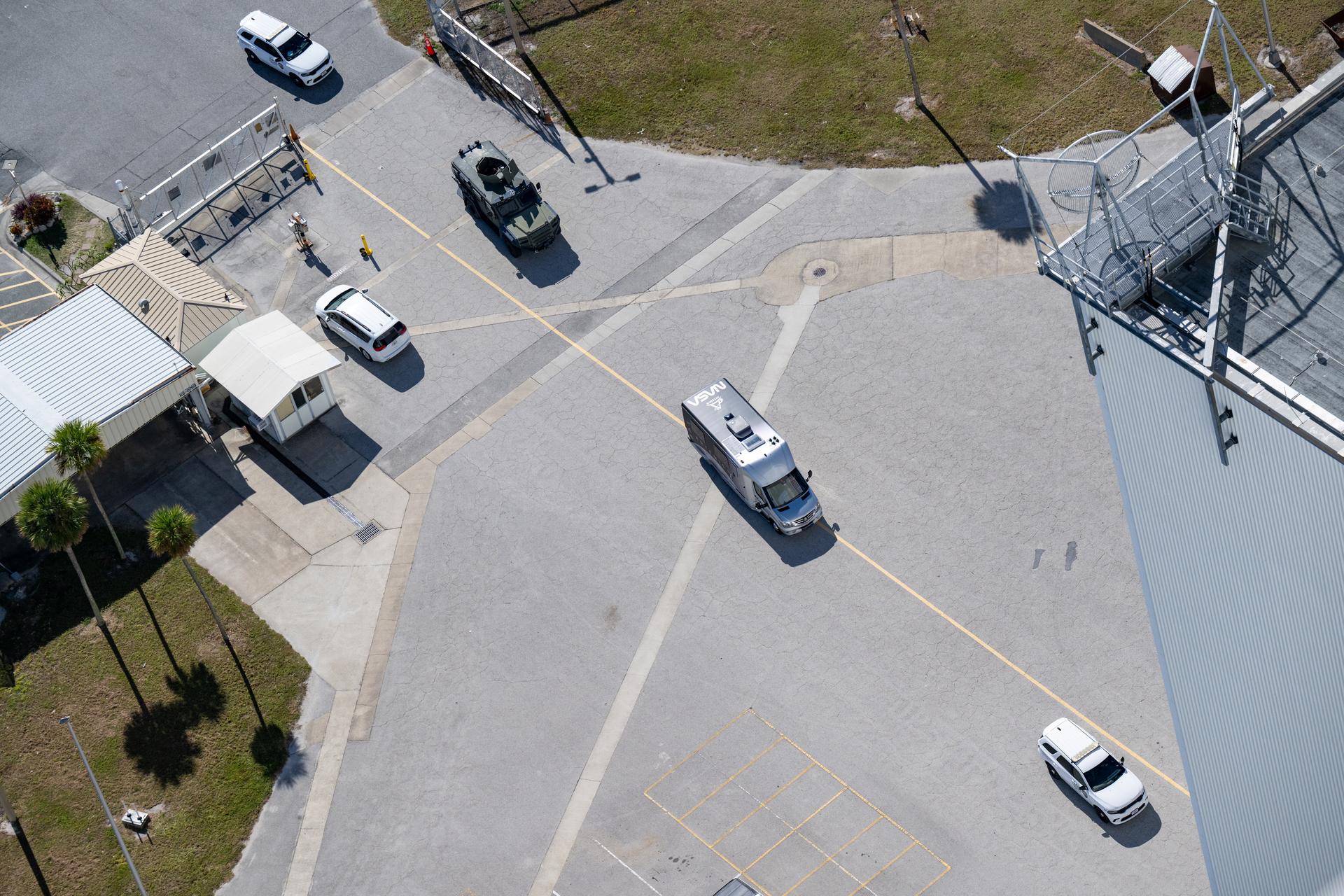
The astronaut transport vehicle carrying Artemis II crewmembers NASA astronauts Reid Wiseman, commander; Victor Glover, pilot; Christina Koch, mission specialist; and CSA (Canadian Space Agency) astronaut Jeremy Hansen, mission specialist is seen as it approaches the Vehicle Assembly Building during the Artemis II countdown demonstration test, Saturday, Dec. 20, 2025, at NASA’s Kennedy Space Center in Florida. For this operation, the Artemis II crew and launch teams are simulating the launch day timeline including suit-up, walkout, and spacecraft ingress and egress. Through the Artemis campaign, NASA will send astronauts to explore the Moon for scientific discovery, economic benefits, and to build the foundation for the first crewed missions to Mars, for the benefit of all. Photo Credit: (NASA/Keegan Barber)
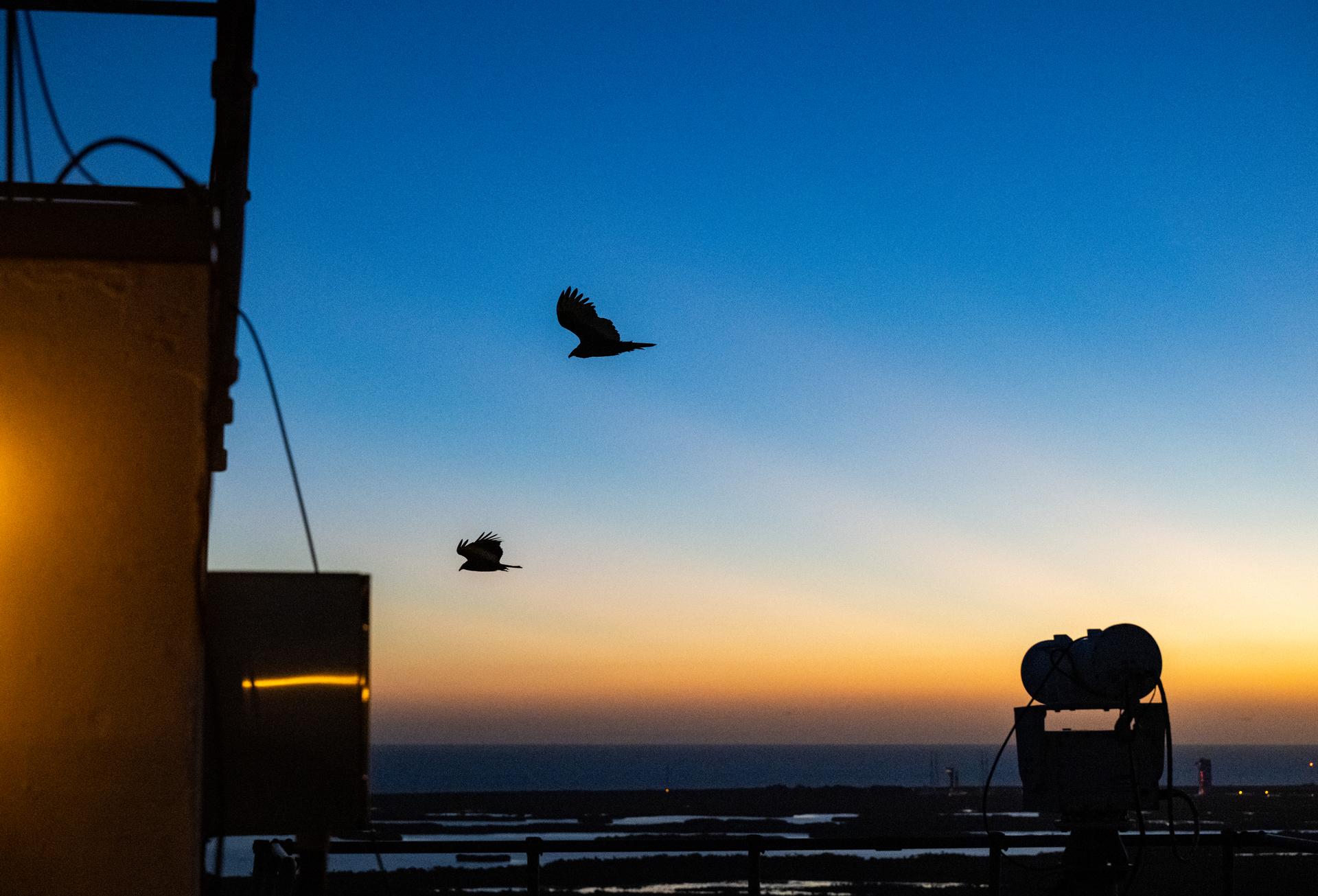
The sun rises shortly before Artemis II crewmembers NASA astronauts Reid Wiseman, commander; Victor Glover, pilot; Christina Koch, mission specialist; and CSA (Canadian Space Agency) astronaut Jeremy Hansen, mission specialist participate in the Artemis II countdown demonstration test, Saturday, Dec. 20, 2025, at NASA’s Kennedy Space Center in Florida. For this operation, the Artemis II crew and launch teams are simulating the launch day timeline including suit-up, walkout, and spacecraft ingress and egress. Through the Artemis campaign, NASA will send astronauts to explore the Moon for scientific discovery, economic benefits, and to build the foundation for the first crewed missions to Mars, for the benefit of all. Photo Credit: (NASA/Keegan Barber)
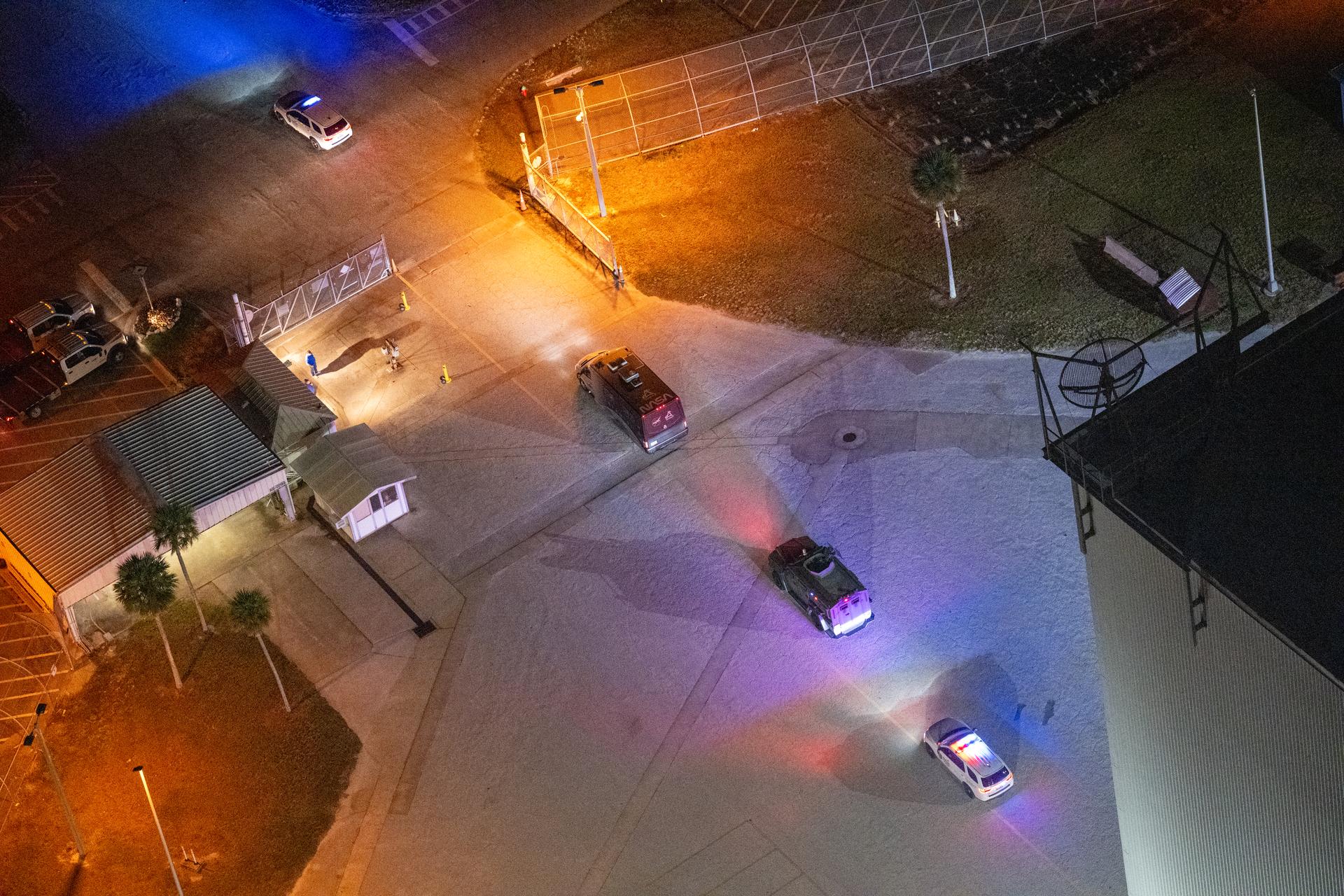
The astronaut transport vehicle carrying Artemis II crewmembers NASA astronauts Reid Wiseman, commander; Victor Glover, pilot; Christina Koch, mission specialist; and CSA (Canadian Space Agency) astronaut Jeremy Hansen, mission specialist is seen as it departs the Vehicle Assembly Building following the Artemis II countdown demonstration test, Saturday, Dec. 20, 2025, at NASA’s Kennedy Space Center in Florida. For this operation, the Artemis II crew and launch teams simulated the launch day timeline including suit-up, walkout, and spacecraft ingress and egress. Through the Artemis campaign, NASA will send astronauts to explore the Moon for scientific discovery, economic benefits, and to build the foundation for the first crewed missions to Mars, for the benefit of all. Photo Credit: (NASA/Keegan Barber)

The sun rises shortly before Artemis II crewmembers NASA astronauts Reid Wiseman, commander; Victor Glover, pilot; Christina Koch, mission specialist; and CSA (Canadian Space Agency) astronaut Jeremy Hansen, mission specialist participate in the Artemis II countdown demonstration test, Saturday, Dec. 20, 2025, at NASA’s Kennedy Space Center in Florida. For this operation, the Artemis II crew and launch teams are simulating the launch day timeline including suit-up, walkout, and spacecraft ingress and egress. Through the Artemis campaign, NASA will send astronauts to explore the Moon for scientific discovery, economic benefits, and to build the foundation for the first crewed missions to Mars, for the benefit of all. Photo Credit: (NASA/Keegan Barber)
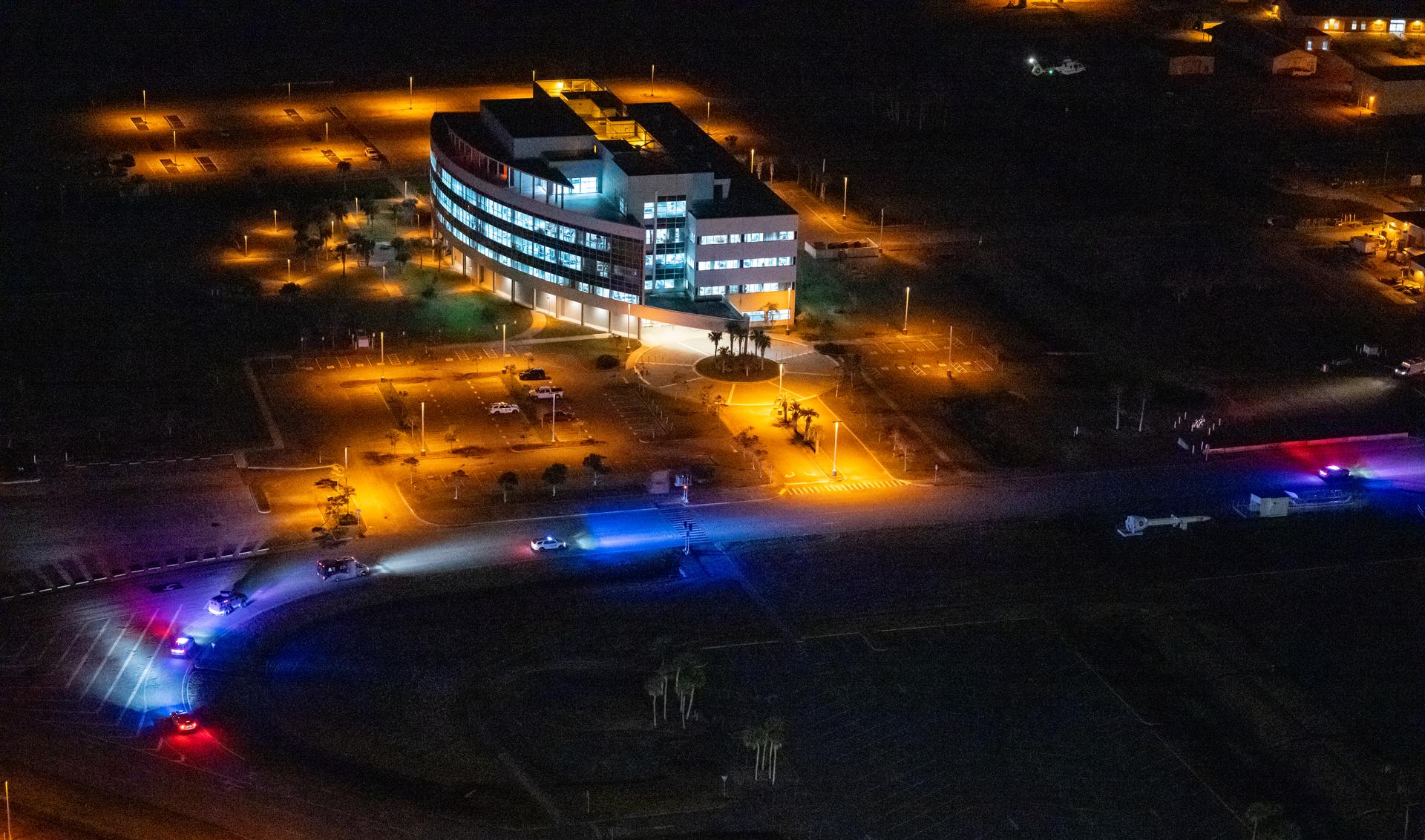
The astronaut transport vehicle carrying Artemis II crewmembers NASA astronauts Reid Wiseman, commander; Victor Glover, pilot; Christina Koch, mission specialist; and CSA (Canadian Space Agency) astronaut Jeremy Hansen, mission specialist is seen as it departs the Vehicle Assembly Building following the Artemis II countdown demonstration test, Saturday, Dec. 20, 2025, at NASA’s Kennedy Space Center in Florida. For this operation, the Artemis II crew and launch teams simulated the launch day timeline including suit-up, walkout, and spacecraft ingress and egress. Through the Artemis campaign, NASA will send astronauts to explore the Moon for scientific discovery, economic benefits, and to build the foundation for the first crewed missions to Mars, for the benefit of all. Photo Credit: (NASA/Keegan Barber)
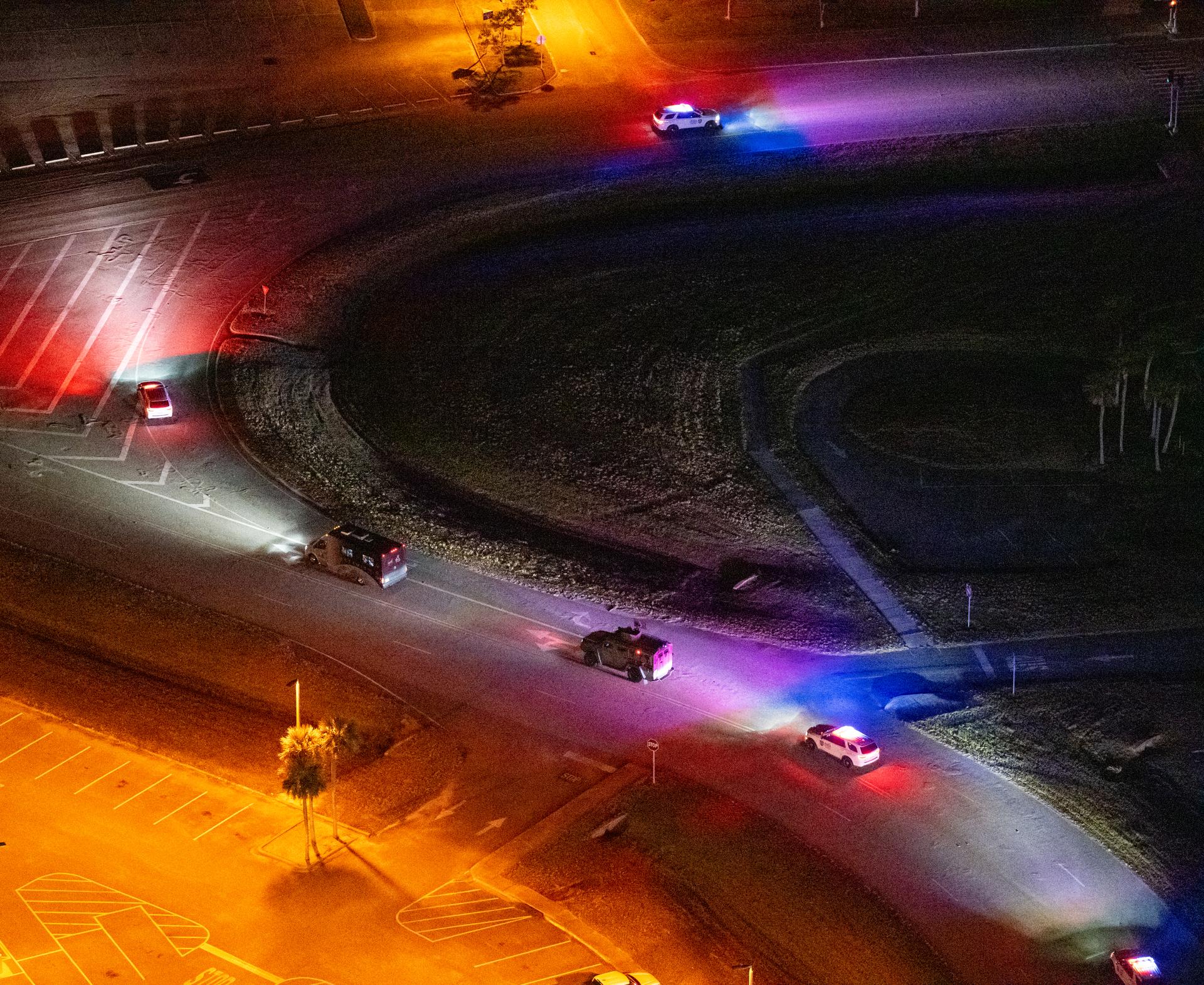
The astronaut transport vehicle carrying Artemis II crewmembers NASA astronauts Reid Wiseman, commander; Victor Glover, pilot; Christina Koch, mission specialist; and CSA (Canadian Space Agency) astronaut Jeremy Hansen, mission specialist is seen as it departs the Vehicle Assembly Building following the Artemis II countdown demonstration test, Saturday, Dec. 20, 2025, at NASA’s Kennedy Space Center in Florida. For this operation, the Artemis II crew and launch teams simulated the launch day timeline including suit-up, walkout, and spacecraft ingress and egress. Through the Artemis campaign, NASA will send astronauts to explore the Moon for scientific discovery, economic benefits, and to build the foundation for the first crewed missions to Mars, for the benefit of all. Photo Credit: (NASA/Keegan Barber)
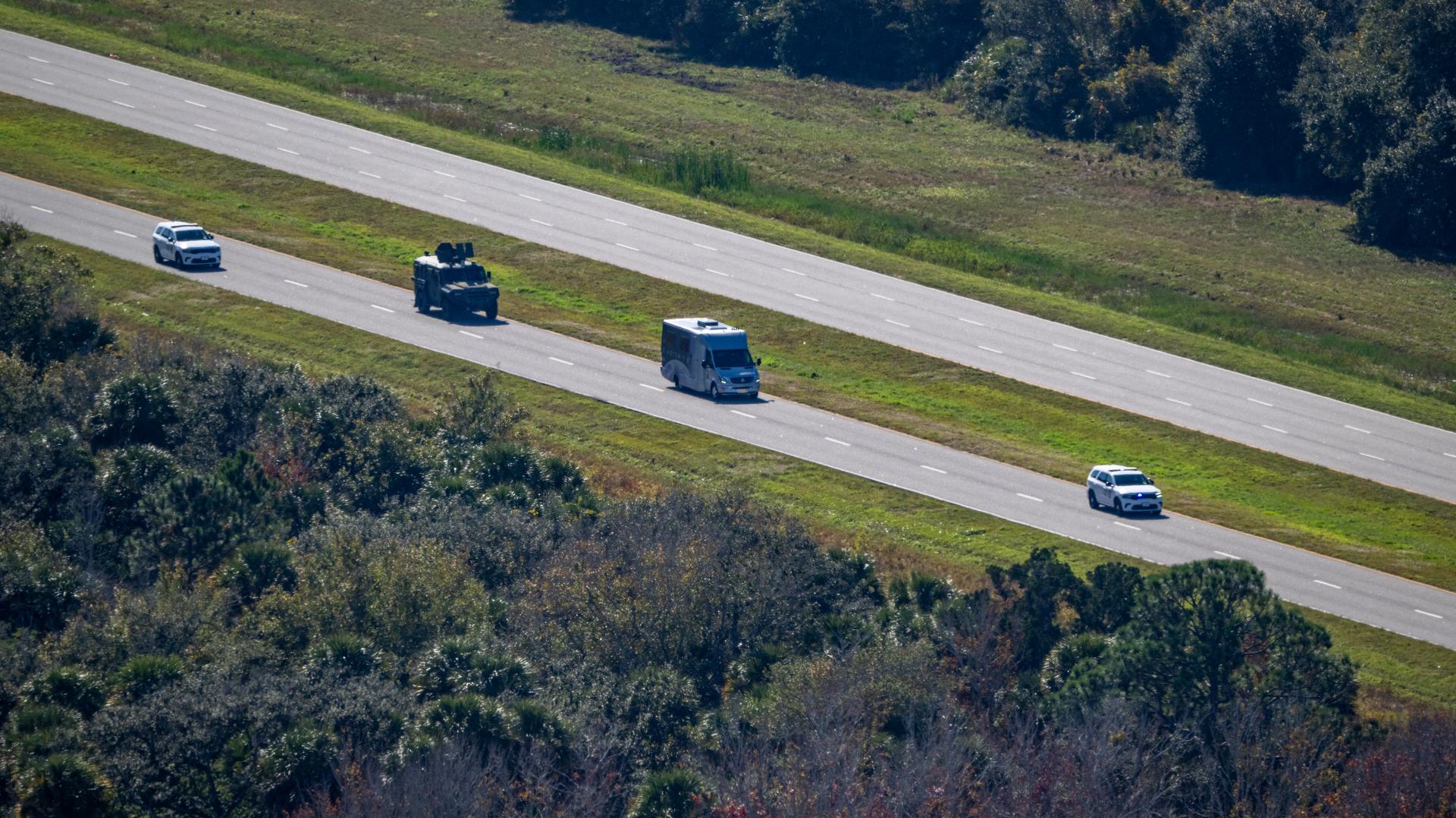
The astronaut transport vehicle carrying Artemis II crewmembers NASA astronauts Reid Wiseman, commander; Victor Glover, pilot; Christina Koch, mission specialist; and CSA (Canadian Space Agency) astronaut Jeremy Hansen, mission specialist is seen as it approaches the Vehicle Assembly Building during the Artemis II countdown demonstration test, Saturday, Dec. 20, 2025, at NASA’s Kennedy Space Center in Florida. For this operation, the Artemis II crew and launch teams are simulating the launch day timeline including suit-up, walkout, and spacecraft ingress and egress. Through the Artemis campaign, NASA will send astronauts to explore the Moon for scientific discovery, economic benefits, and to build the foundation for the first crewed missions to Mars, for the benefit of all. Photo Credit: (NASA/Keegan Barber)
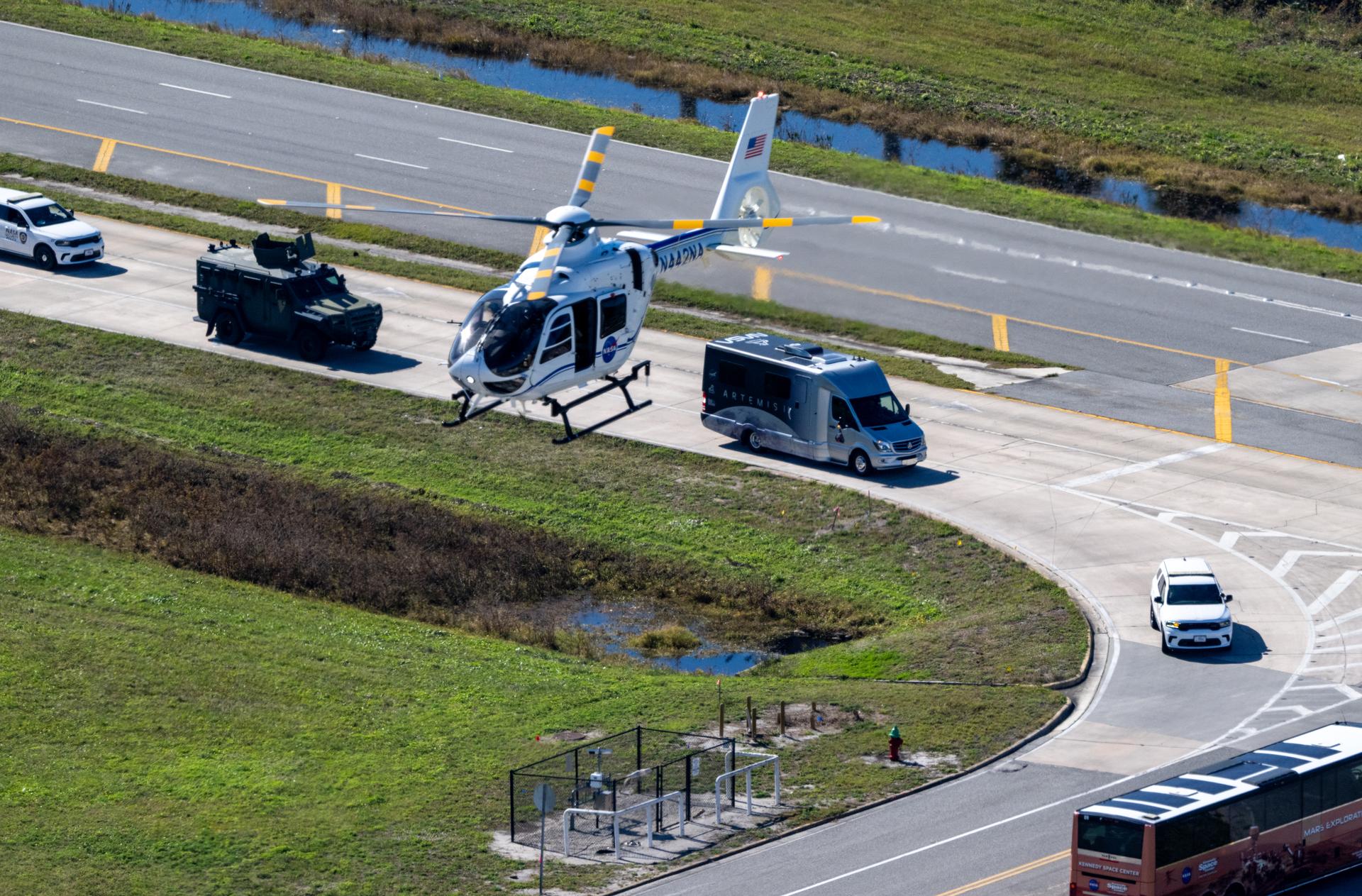
The astronaut transport vehicle carrying Artemis II crewmembers NASA astronauts Reid Wiseman, commander; Victor Glover, pilot; Christina Koch, mission specialist; and CSA (Canadian Space Agency) astronaut Jeremy Hansen, mission specialist is seen as it approaches the Vehicle Assembly Building during the Artemis II countdown demonstration test, Saturday, Dec. 20, 2025, at NASA’s Kennedy Space Center in Florida. For this operation, the Artemis II crew and launch teams are simulating the launch day timeline including suit-up, walkout, and spacecraft ingress and egress. Through the Artemis campaign, NASA will send astronauts to explore the Moon for scientific discovery, economic benefits, and to build the foundation for the first crewed missions to Mars, for the benefit of all. Photo Credit: (NASA/Keegan Barber)
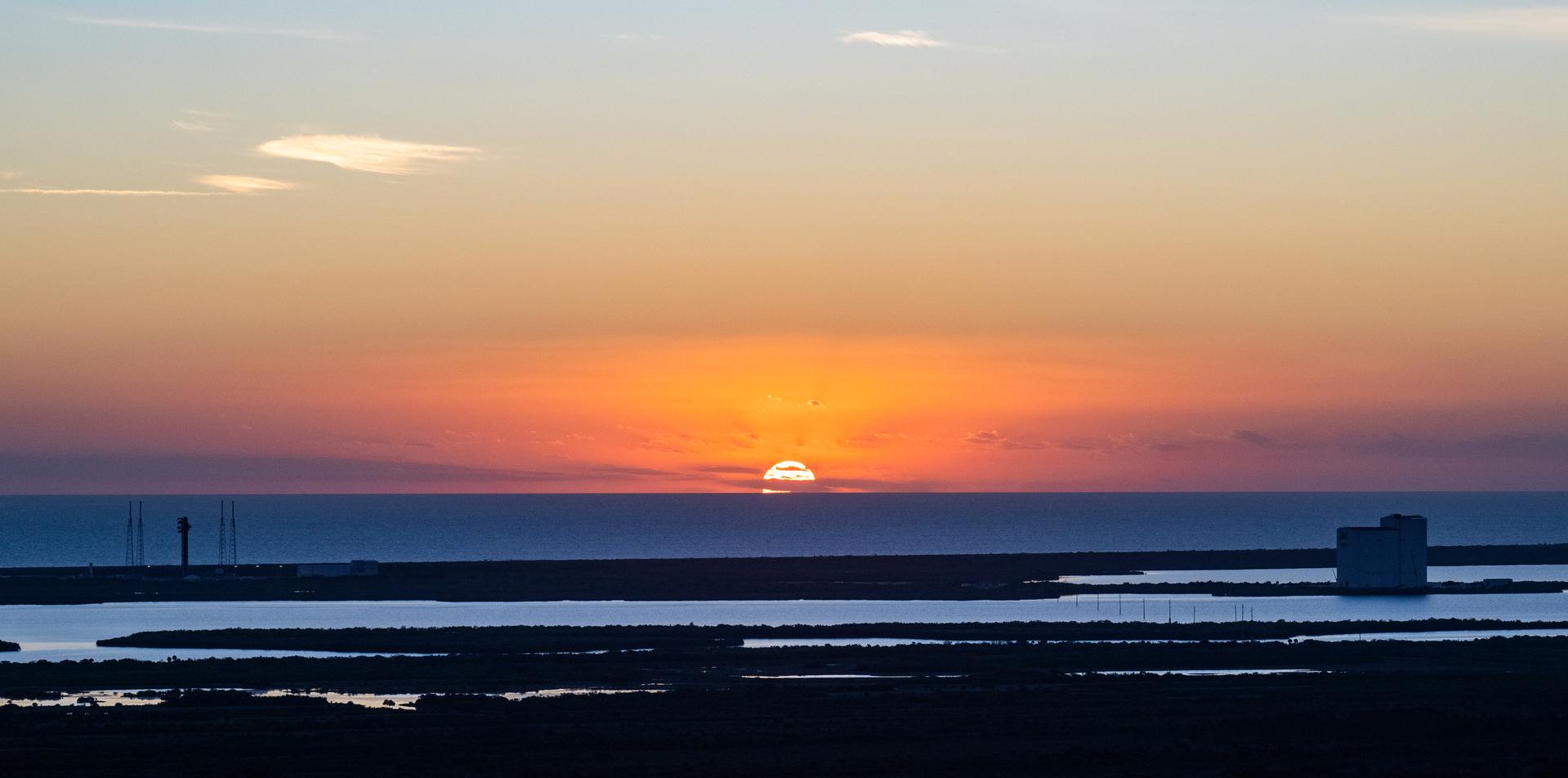
The sun rises shortly before Artemis II crewmembers NASA astronauts Reid Wiseman, commander; Victor Glover, pilot; Christina Koch, mission specialist; and CSA (Canadian Space Agency) astronaut Jeremy Hansen, mission specialist participate in the Artemis II countdown demonstration test, Saturday, Dec. 20, 2025, at NASA’s Kennedy Space Center in Florida. For this operation, the Artemis II crew and launch teams are simulating the launch day timeline including suit-up, walkout, and spacecraft ingress and egress. Through the Artemis campaign, NASA will send astronauts to explore the Moon for scientific discovery, economic benefits, and to build the foundation for the first crewed missions to Mars, for the benefit of all. Photo Credit: (NASA/Keegan Barber)
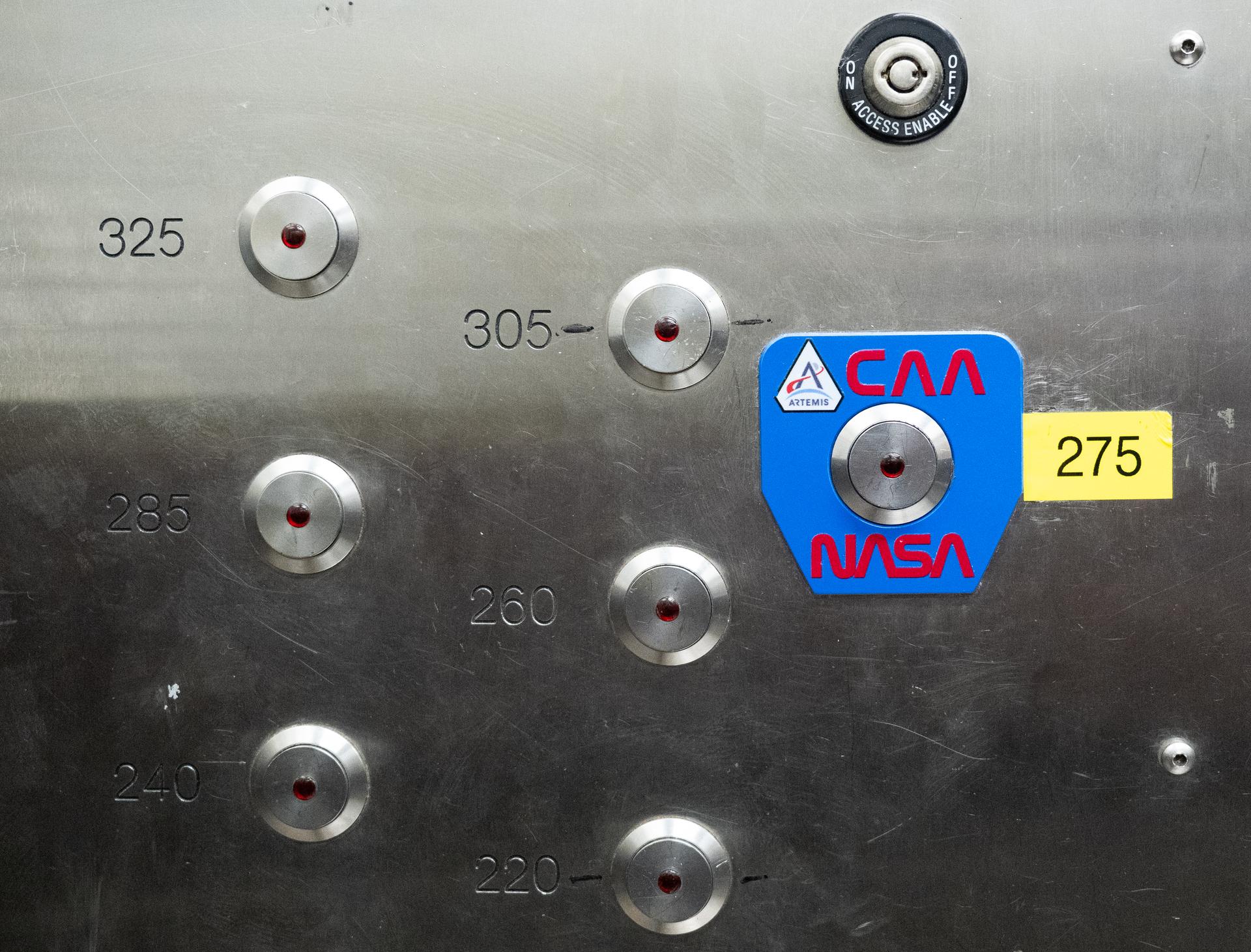
The elevator button for the 275-foot level of the mobile launcher is seen teams prepare for Artemis II crewmembers NASA astronauts Reid Wiseman, commander; Victor Glover, pilot; Christina Koch, mission specialist; and CSA (Canadian Space Agency) astronaut Jeremy Hansen, mission specialist; to arrive and board their Orion spacecraft atop NASA’s Space Launch System rocket during the Artemis II countdown demonstration test, Saturday, Dec. 20, 2025, inside the Vehicle Assembly Building at NASA’s Kennedy Space Center in Florida. For this operation, the Artemis II crew and launch teams are simulating the launch day timeline including suit-up, walkout, and spacecraft ingress and egress. Through the Artemis campaign, NASA will send astronauts to explore the Moon for scientific discovery, economic benefits, and to build the foundation for the first crewed missions to Mars, for the benefit of all. Photo Credit: (NASA/Joel Kowsky)
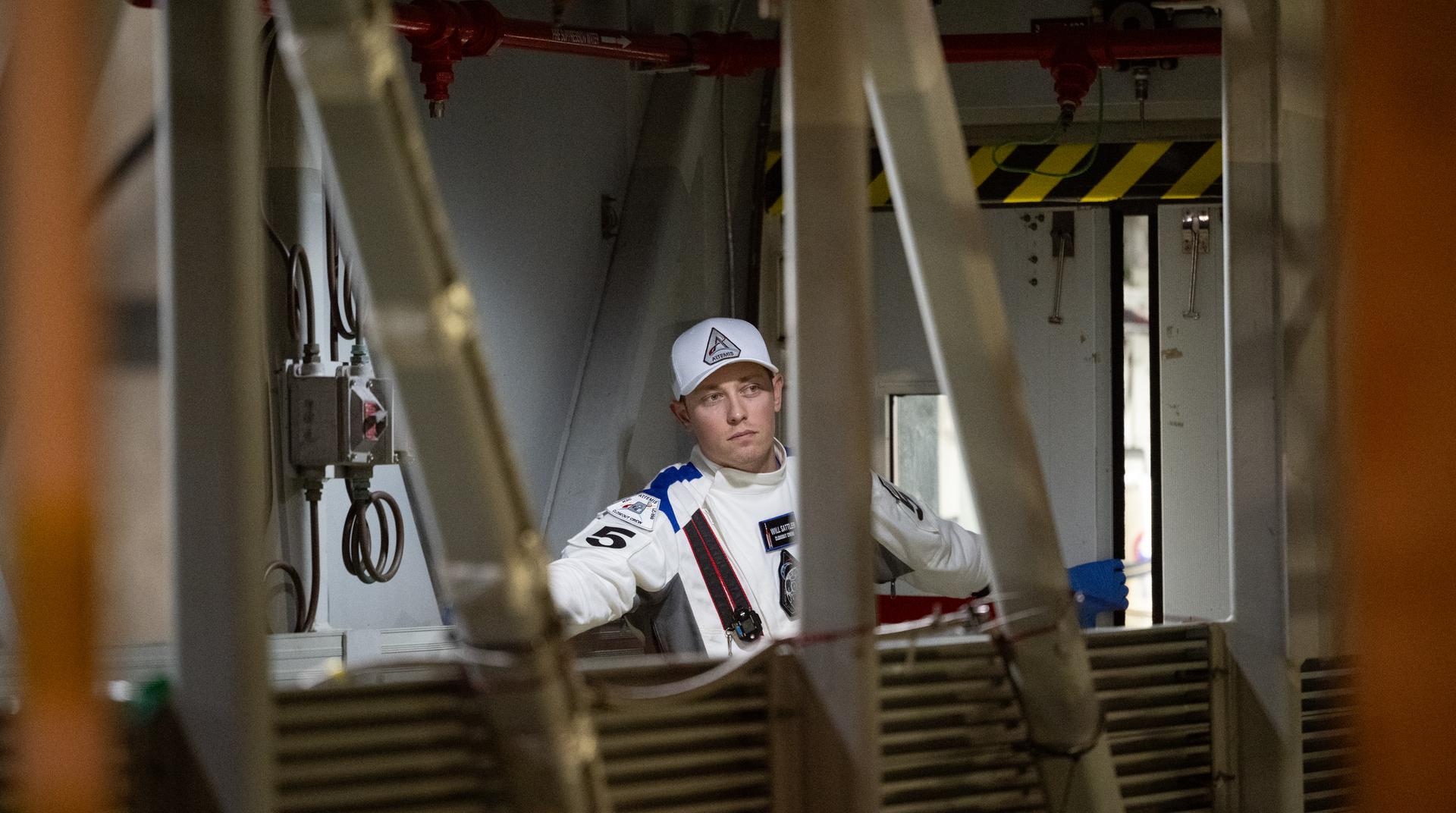
Will Sattler of the Closeout Crew is seen on the crew access arm just outside of the white room awaiting the arrival of Artemis II crewmembers NASA astronauts Reid Wiseman, commander; Victor Glover, pilot; Christina Koch, mission specialist; and CSA (Canadian Space Agency) astronaut Jeremy Hansen, mission specialist; at the 275-foot level of the mobile launcher as they prepare to board their Orion spacecraft atop NASA’s Space Launch System rocket during the Artemis II countdown demonstration test, Saturday, Dec. 20, 2025, inside the Vehicle Assembly Building at NASA’s Kennedy Space Center in Florida. For this operation, the Artemis II crew and launch teams are simulating the launch day timeline including suit-up, walkout, and spacecraft ingress and egress. Through the Artemis campaign, NASA will send astronauts to explore the Moon for scientific discovery, economic benefits, and to build the foundation for the first crewed missions to Mars, for the benefit of all. Photo Credit: (NASA/Joel Kowsky)
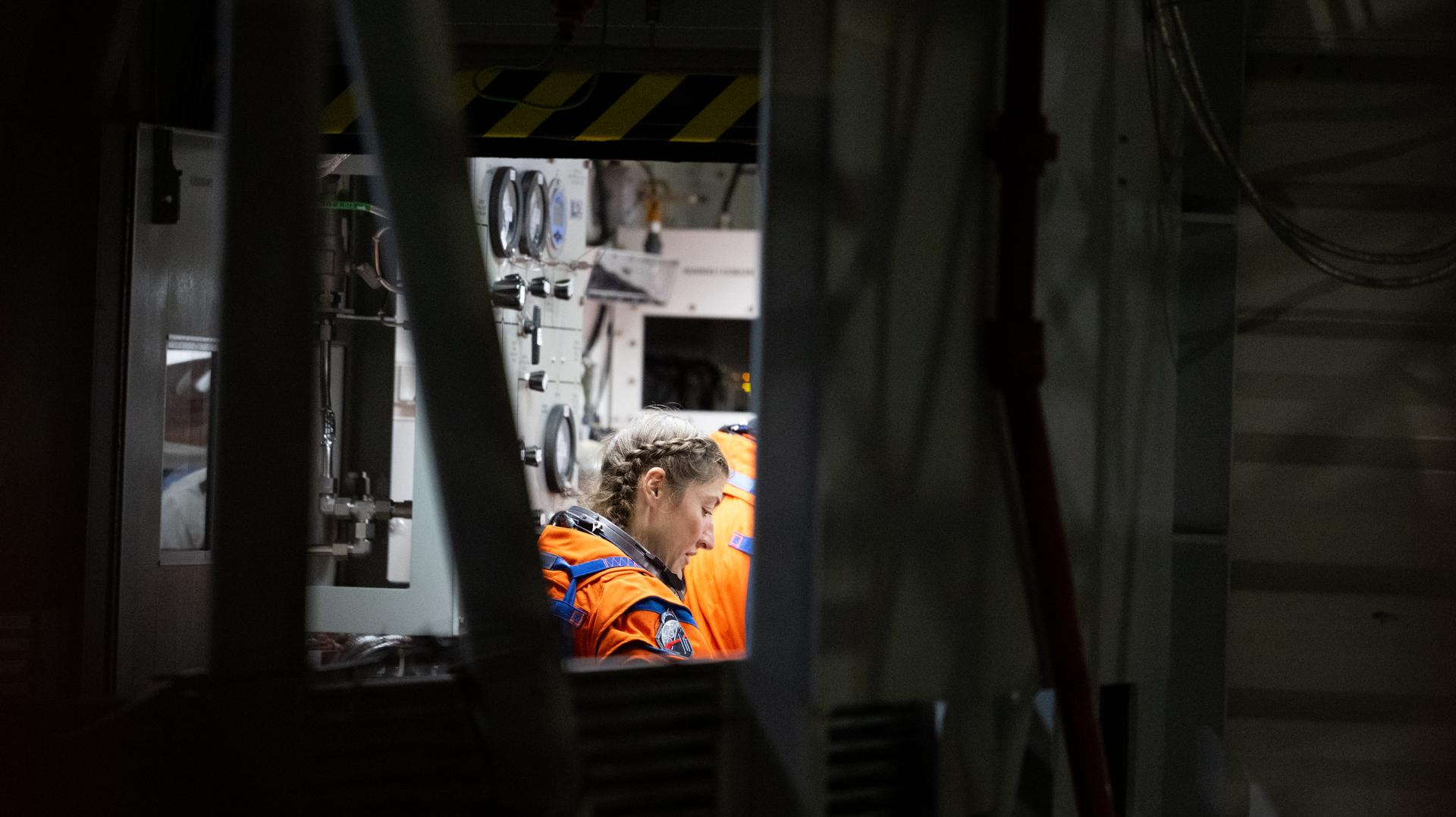
Artemis II crewmember NASA astronaut Christina Koch, mission specialist, is seen inside the white room at the 275-foot level of the mobile launcher she and fellow crewmates NASA astronauts Reid Wiseman, commander; Victor Glover, pilot; and CSA (Canadian Space Agency) astronaut Jeremy Hansen, mission specialist, prepare to board their Orion spacecraft atop NASA’s Space Launch System rocket during the Artemis II countdown demonstration test, Saturday, Dec. 20, 2025, inside the Vehicle Assembly Building at NASA’s Kennedy Space Center in Florida. For this operation, the Artemis II crew and launch teams are simulating the launch day timeline including suit-up, walkout, and spacecraft ingress and egress. Through the Artemis campaign, NASA will send astronauts to explore the Moon for scientific discovery, economic benefits, and to build the foundation for the first crewed missions to Mars, for the benefit of all. Photo Credit: (NASA/Joel Kowsky)
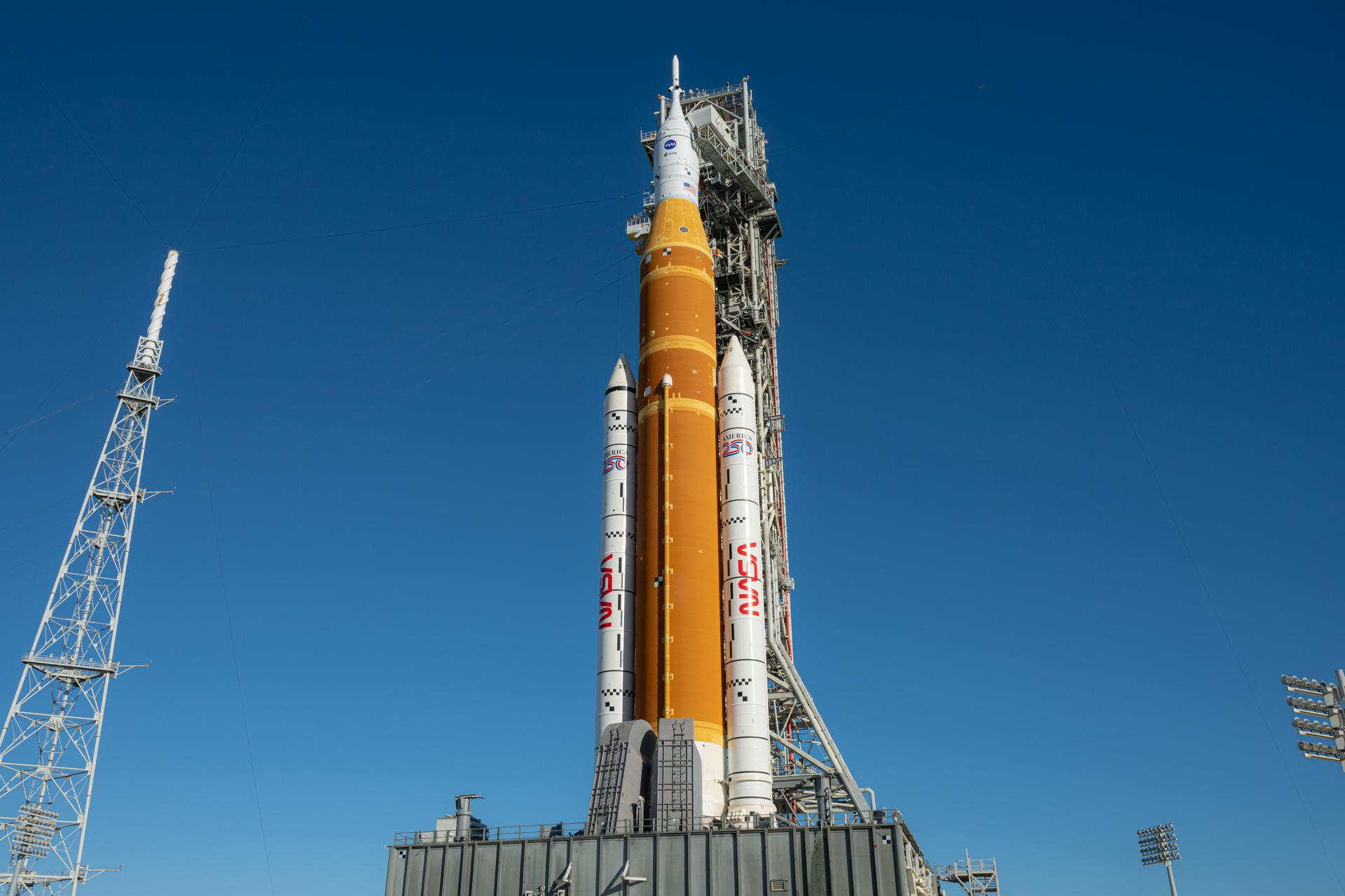
NASA’s Artemis II Space Launch System (SLS) rocket and Orion spacecraft are seen standing atop a mobile launcher at Launch Complex 39B, Monday, Feb. 2, 2026, at NASA’s Kennedy Space Center in Florida. NASA’s Artemis II test flight will take Commander Reid Wiseman, Pilot Victor Glover, and Mission Specialist Christina Koch from NASA, and Mission Specialist Jeremy Hansen from the CSA (Canadian Space Agency), around the Moon and back to Earth no later than April 2026. Photo Credit: (NASA/John Kraus)
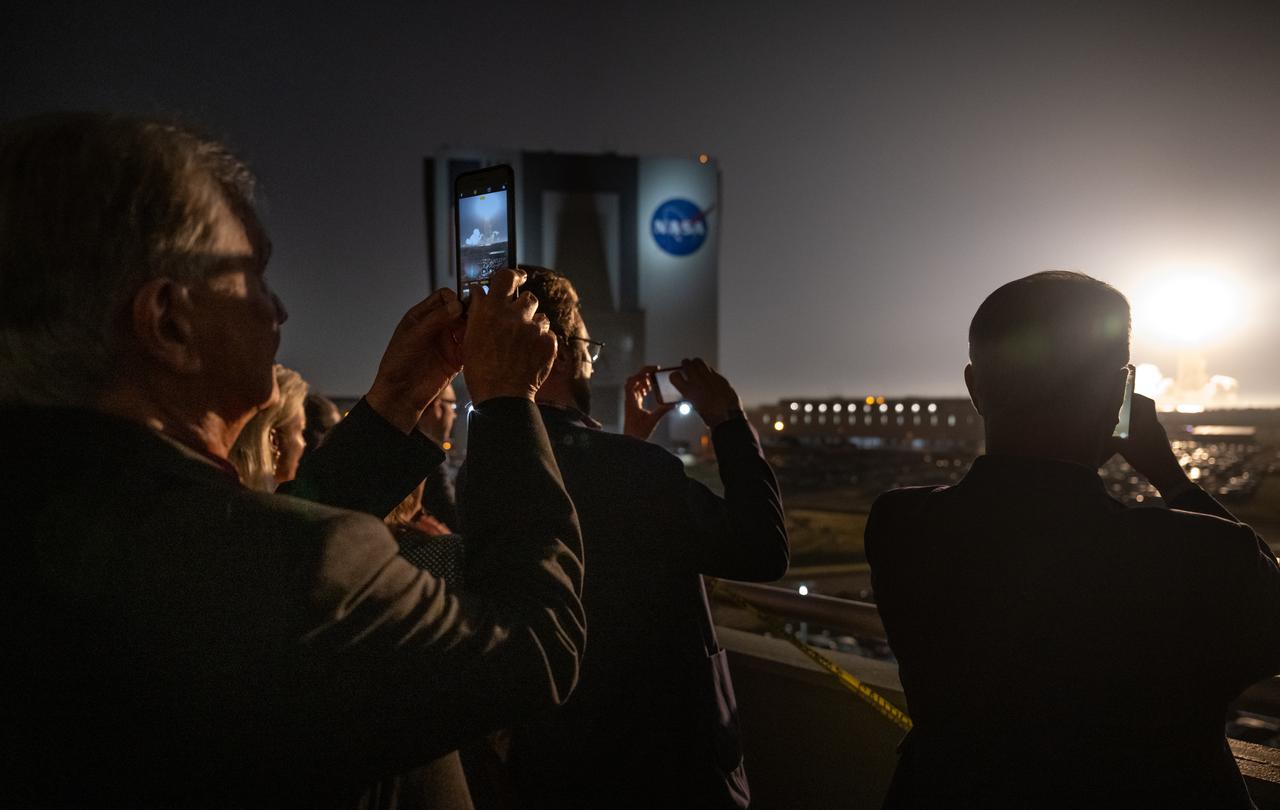
Guests watch the launch of NASA’s Space Launch System rocket carrying the Orion spacecraft on the Artemis I flight test, Wednesday, Nov. 16, 2022, from Operations and Support Building II at NASA’s Kennedy Space Center in Florida. NASA’s Artemis I flight test is the first integrated flight test of the agency’s deep space exploration systems: the Orion spacecraft, Space Launch System (SLS) rocket, and ground systems. SLS and Orion launched at 1:47 a.m. EST, from Launch Pad 39B at the Kennedy Space Center. Photo Credit: (NASA/Bill Ingalls)
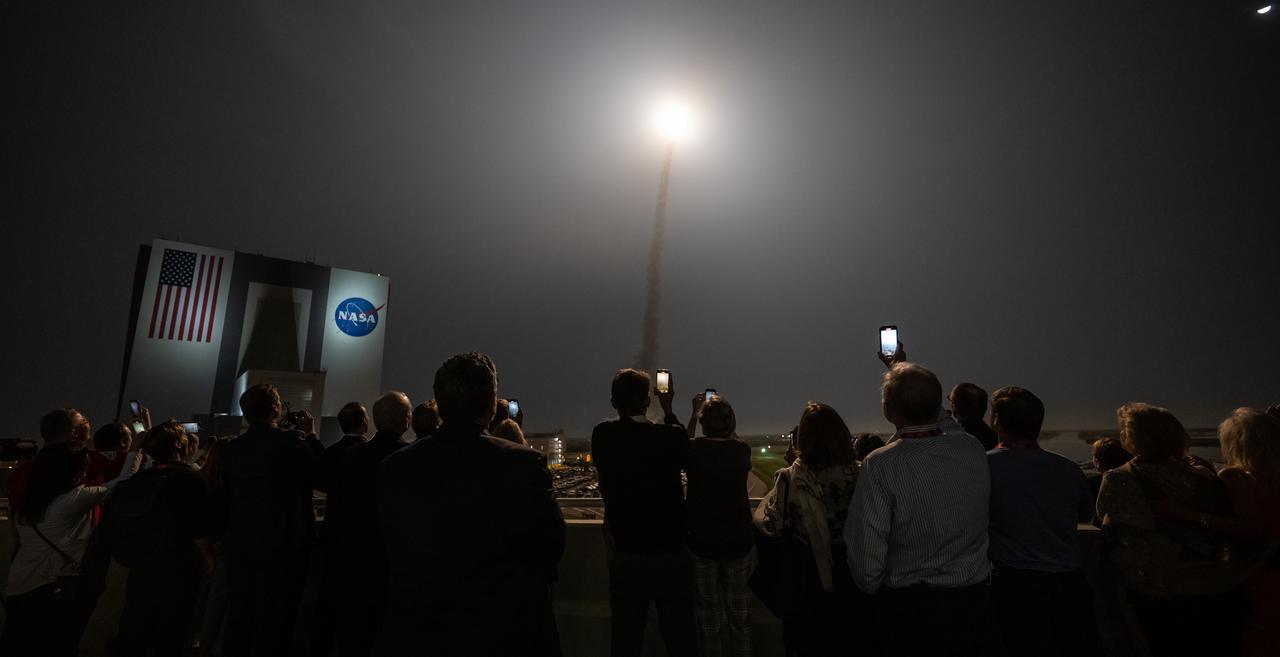
Guests watch the launch of NASA’s Space Launch System rocket carrying the Orion spacecraft on the Artemis I flight test, Wednesday, Nov. 16, 2022, from Operations and Support Building II at NASA’s Kennedy Space Center in Florida. NASA’s Artemis I flight test is the first integrated flight test of the agency’s deep space exploration systems: the Orion spacecraft, Space Launch System (SLS) rocket, and ground systems. SLS and Orion launched at 1:47 a.m. EST, from Launch Pad 39B at the Kennedy Space Center. Photo Credit: (NASA/Bill Ingalls)
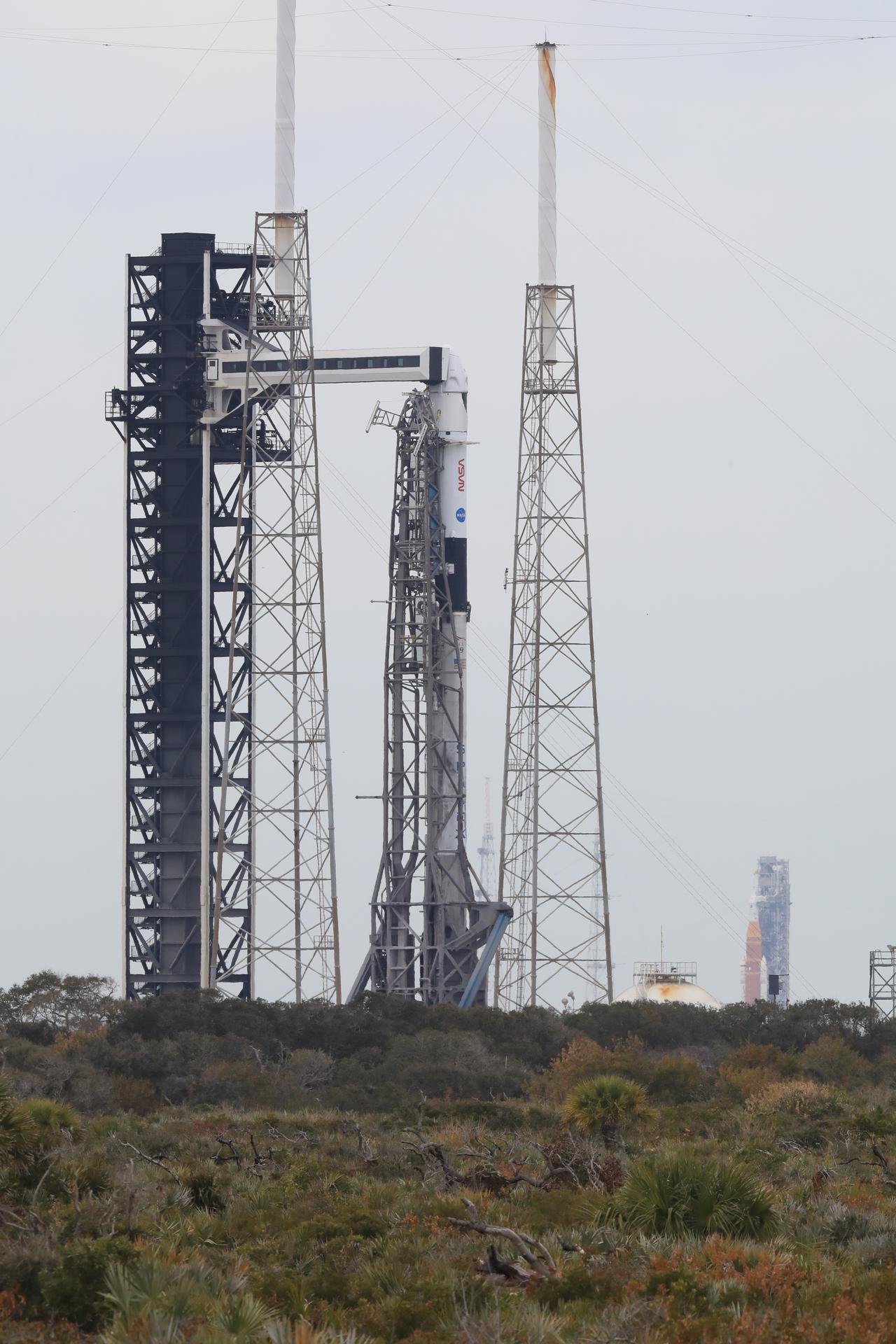
A SpaceX Falcon 9 rocket with the company's Dragon spacecraft on top stands vertical on the launch pad at Space Launch Complex 40 at Cape Canaveral Space Force Station in Florida on Wednesday, Feb. 11, 2026, ahead of NASA’s SpaceX Crew-12 launch. NASA’s Artemis II SLS (Space Launch System) rocket and Orion spacecraft can be seen in the background at the Kennedy Space Center’s Launch Complex 39B ahead of the agency’s Artemis II launch. Together, these two missions represent NASA’s ongoing efforts to advance human spaceflight, marking a pivotal moment for missions to the International Space Station, the Moon, and beyond.

The Moon shines over the Max Brewer Bridge during the Artemis II wet dress rehearsal on Monday, Feb. 2, 2026, in Titusville, Florida. The bridge spanning the Indian River Lagoon is a popular launch viewing location for Kennedy Space Center and Cape Canaveral Space Force Station.
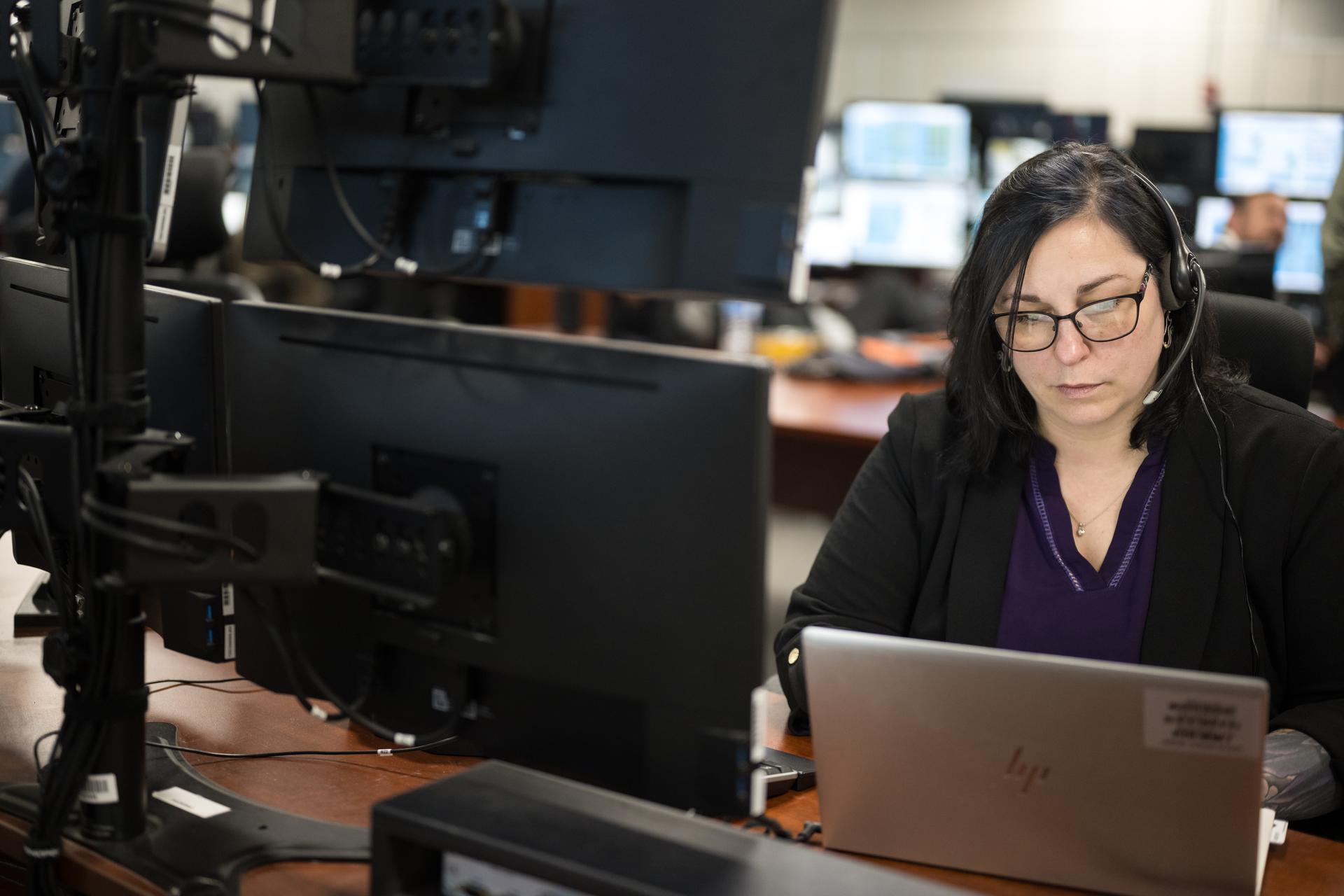
Teams monitor the progress of a Countdown Demonstration Test with Artemis II crewmembers NASA astronauts Reid Wiseman, commander; Victor Glover, pilot; Christina Koch, mission specialist; and CSA (Canadian Space Agency) astronaut Jeremy Hansen, mission specialist onboard their Orion spacecraft from Firing Room 2 of the Rocco A. Petrone Launch Control Center, Saturday, Dec. 20, 2025, at NASA’s Kennedy Space Center in Florida. For this operation, the Artemis II crew and launch teams are simulating the launch day timeline including suit-up, walkout, and spacecraft ingress and egress. Through the Artemis campaign, NASA will send astronauts to explore the Moon for scientific discovery, economic benefits, and to build the foundation for the first crewed missions to Mars, for the benefit of all. Photo Credit: (NASA/Aubrey Gemignani)
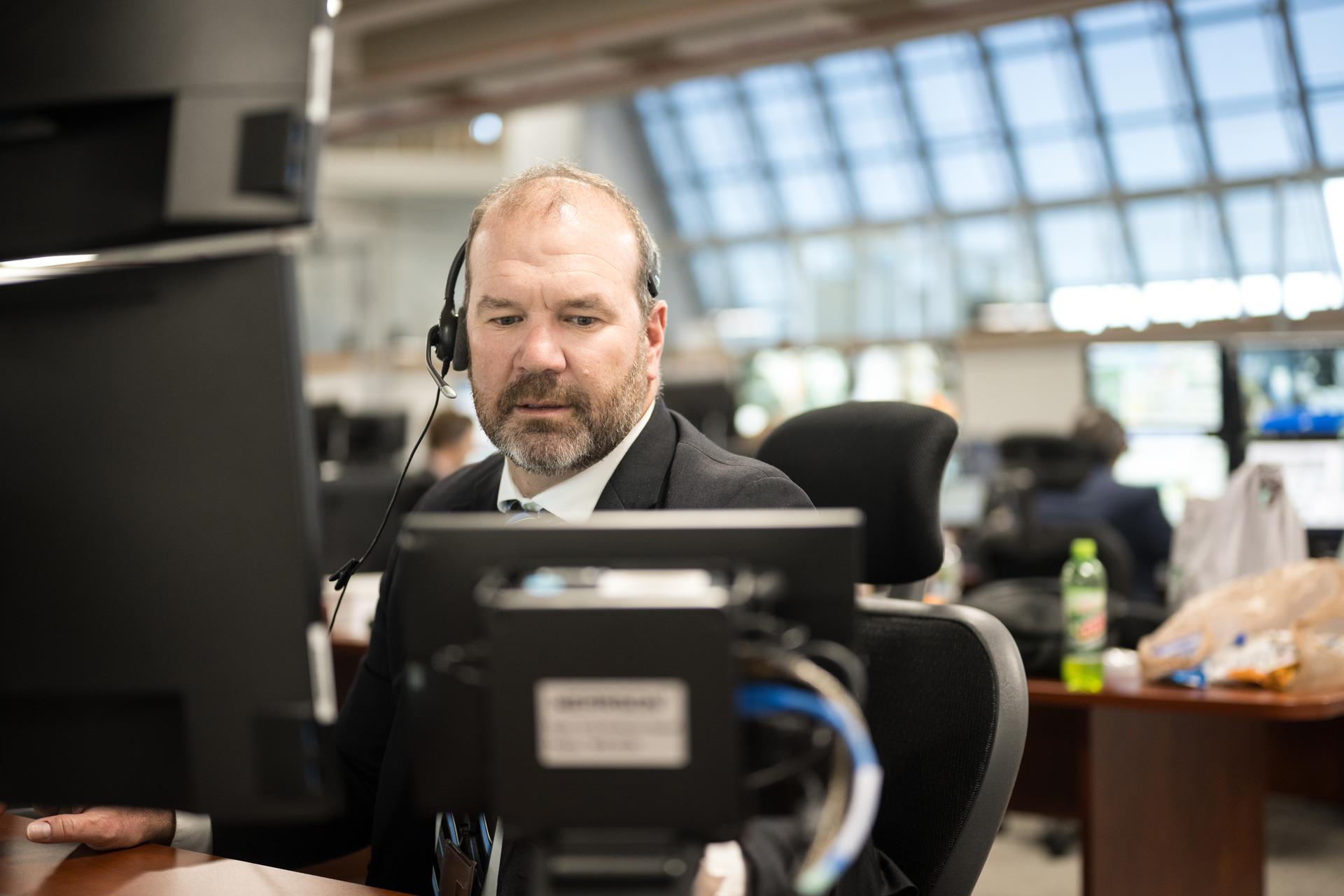
Teams monitor the progress of a Countdown Demonstration Test with Artemis II crewmembers NASA astronauts Reid Wiseman, commander; Victor Glover, pilot; Christina Koch, mission specialist; and CSA (Canadian Space Agency) astronaut Jeremy Hansen, mission specialist onboard their Orion spacecraft from Firing Room 2 of the Rocco A. Petrone Launch Control Center, Saturday, Dec. 20, 2025, at NASA’s Kennedy Space Center in Florida. For this operation, the Artemis II crew and launch teams are simulating the launch day timeline including suit-up, walkout, and spacecraft ingress and egress. Through the Artemis campaign, NASA will send astronauts to explore the Moon for scientific discovery, economic benefits, and to build the foundation for the first crewed missions to Mars, for the benefit of all. Photo Credit: (NASA/Aubrey Gemignani)
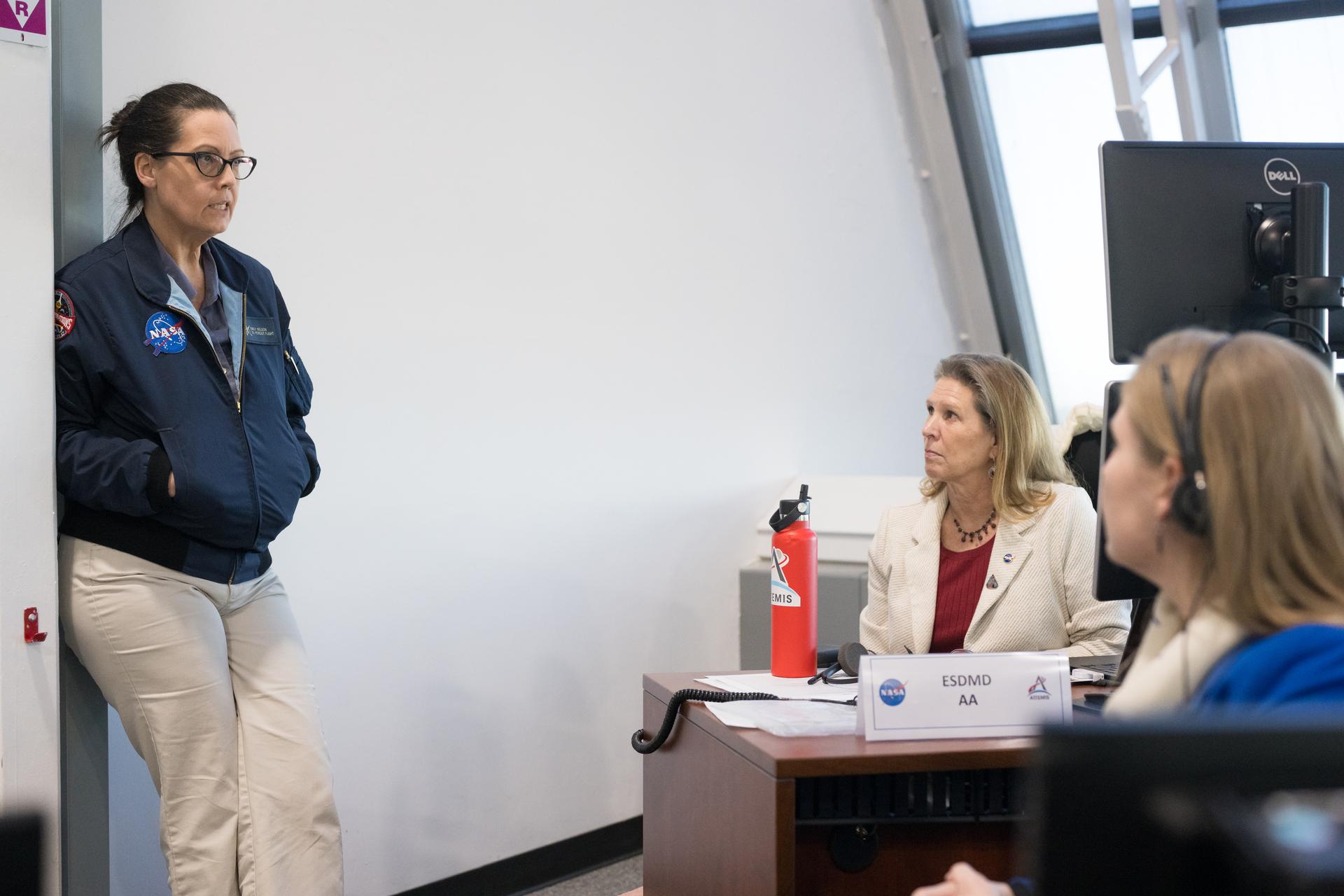
Emily Nelson, NASA's chief flight director, Lori Glaze, acting associate administrator for NASA's Exploration Systems Development Mission Directorate, and Stephanie Schierholz, chief of staff for NASA's Exploration Systems Development Mission Directorate, discuss the progress of a Countdown Demonstration Test with Artemis II crewmembers NASA astronauts Reid Wiseman, commander; Victor Glover, pilot; Christina Koch, mission specialist; and CSA (Canadian Space Agency) astronaut Jeremy Hansen, mission specialist onboard their Orion spacecraft from Firing Room 2 of the Rocco A. Petrone Launch Control Center, Saturday, Dec. 20, 2025, at NASA’s Kennedy Space Center in Florida. For this operation, the Artemis II crew and launch teams are simulating the launch day timeline including suit-up, walkout, and spacecraft ingress and egress. Through the Artemis campaign, NASA will send astronauts to explore the Moon for scientific discovery, economic benefits, and to build the foundation for the first crewed missions to Mars, for the benefit of all. Photo Credit: (NASA/Aubrey Gemignani)
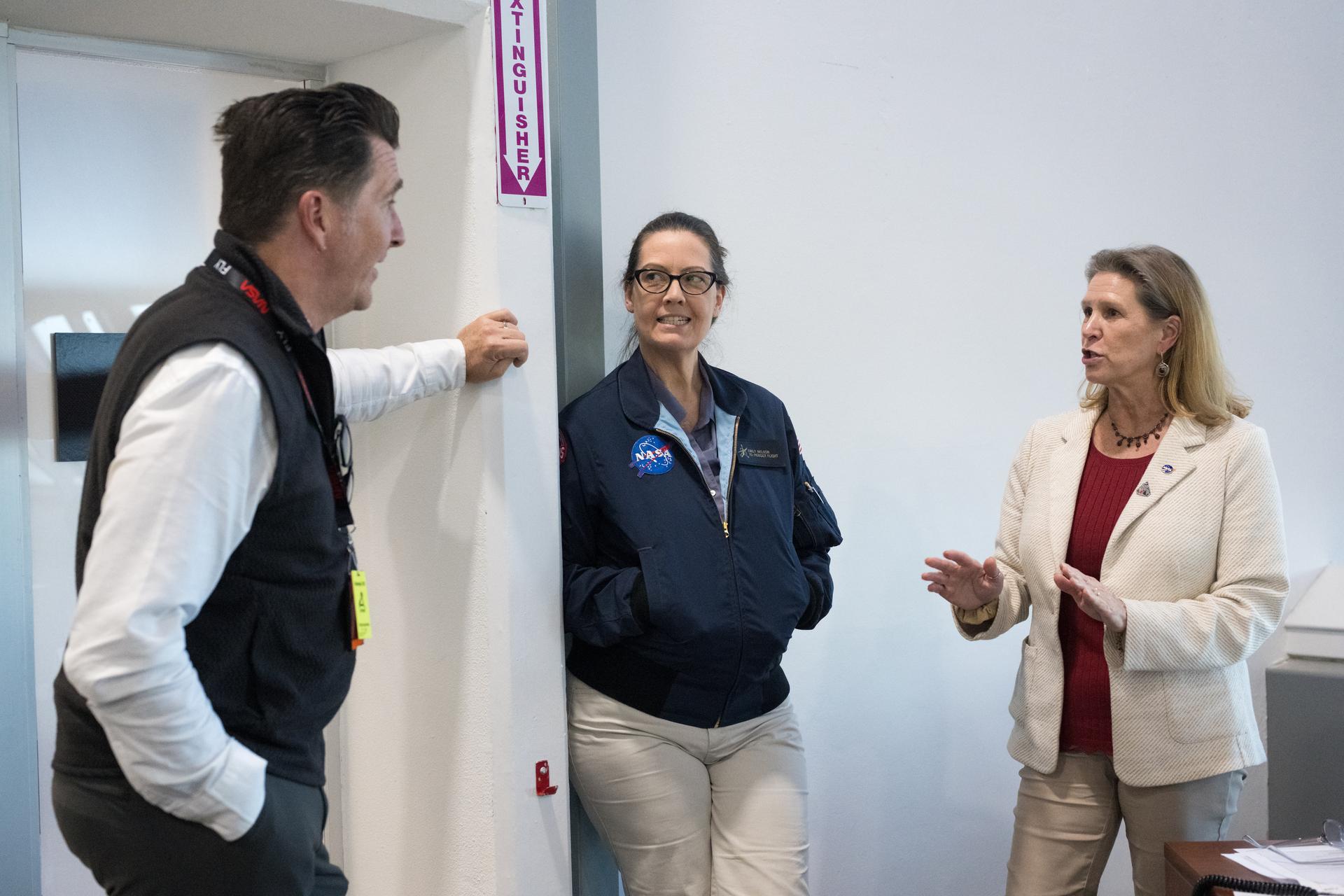
Left to right, Adam Steltzner, engineering advisor to the NASA Associate Administrator, Emily Nelson, NASA's chief flight director, and Lori Glaze, acting associate administrator for NASA's Exploration Systems Development Mission Directorate, discuss the progress of a Countdown Demonstration Test with Artemis II crewmembers NASA astronauts Reid Wiseman, commander; Victor Glover, pilot; Christina Koch, mission specialist; and CSA (Canadian Space Agency) astronaut Jeremy Hansen, mission specialist onboard their Orion spacecraft from Firing Room 2 of the Rocco A. Petrone Launch Control Center, Saturday, Dec. 20, 2025, at NASA’s Kennedy Space Center in Florida. For this operation, the Artemis II crew and launch teams are simulating the launch day timeline including suit-up, walkout, and spacecraft ingress and egress. Through the Artemis campaign, NASA will send astronauts to explore the Moon for scientific discovery, economic benefits, and to build the foundation for the first crewed missions to Mars, for the benefit of all. Photo Credit: (NASA/Aubrey Gemignani)
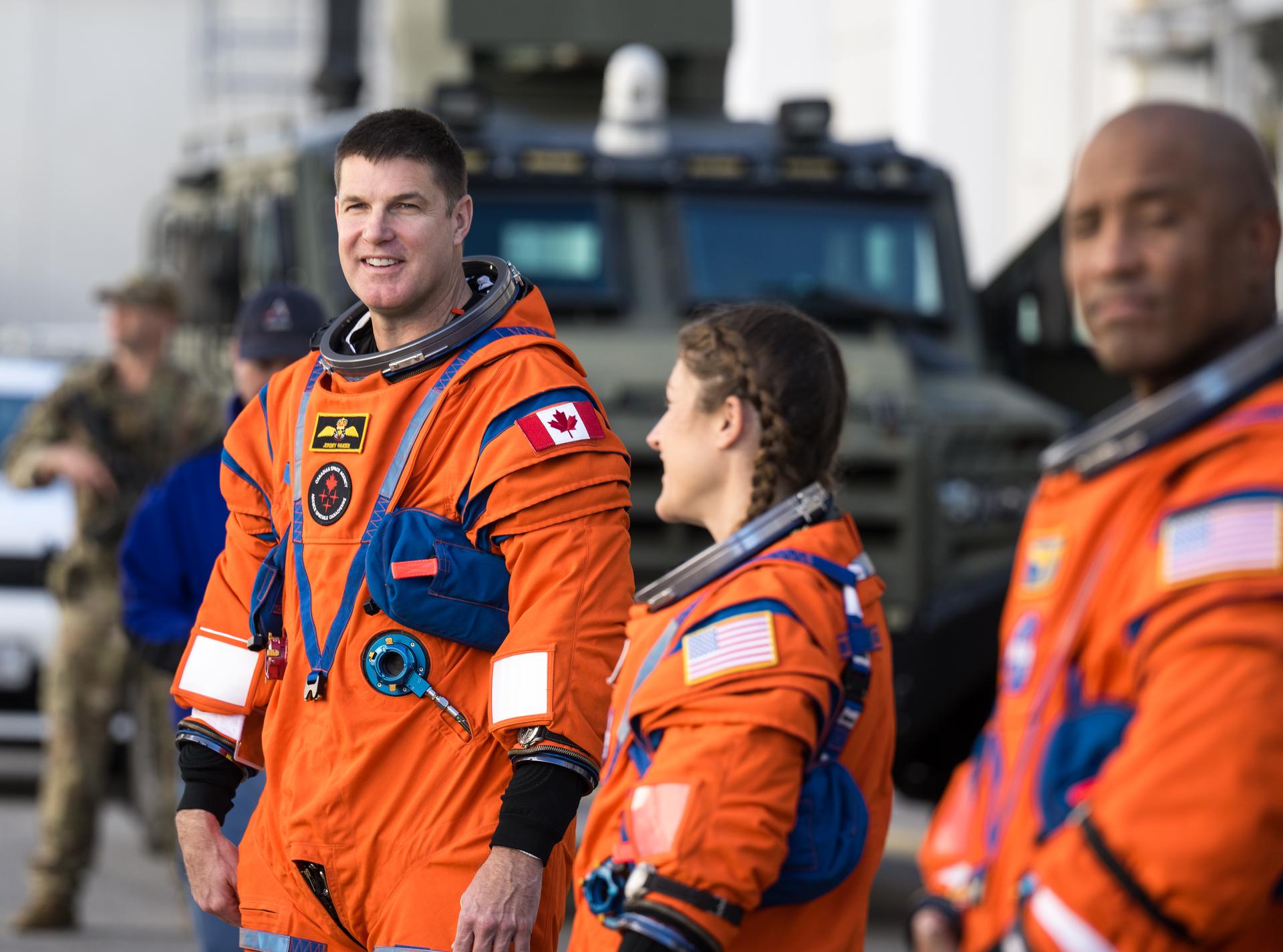
CSA (Canadian Space Agency) astronaut Jeremy Hansen, mission specialist is seen as he can his crew mates NASA astronauts Reid Wiseman, commander (not pictured); Victor Glover, pilot; and Christina Koch, mission specialist depart the Neil A. Armstrong Operations and Checkout Building to board their Orion spacecraft atop NASA’s Space Launch System rocket inside the Vehicle Assembly Building as part of the Artemis II countdown demonstration test, Saturday, Dec. 20, 2025, at NASA’s Kennedy Space Center in Florida. For this operation, the Artemis II crew and launch teams are simulating the launch day timeline including suit-up, walkout, and spacecraft ingress and egress. Through the Artemis campaign, NASA will send astronauts to explore the Moon for scientific discovery, economic benefits, and to build the foundation for the first crewed missions to Mars, for the benefit of all. Photo Credit: (NASA/Aubrey Gemignani)
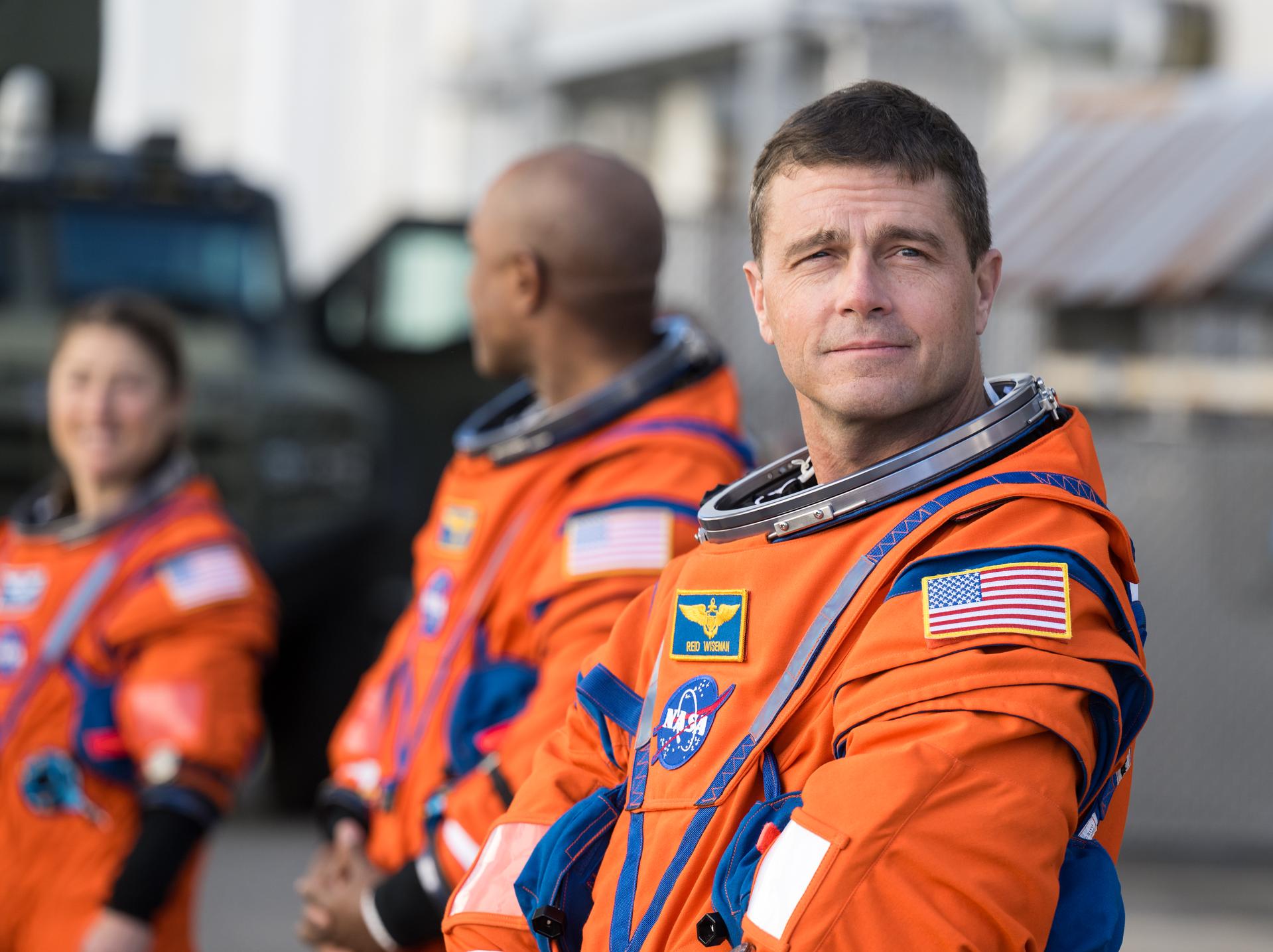
NASA astronaut Reid Wiseman, commander is seen as he and crew mates Victor Glover, pilot; Christina Koch, mission specialist; and CSA (Canadian Space Agency) astronaut Jeremy Hansen, mission specialist, not pictured, are seen as they depart the Neil A. Armstrong Operations and Checkout Building to board their Orion spacecraft atop NASA’s Space Launch System rocket inside the Vehicle Assembly Building as part of the Artemis II countdown demonstration test, Saturday, Dec. 20, 2025, at NASA’s Kennedy Space Center in Florida. For this operation, the Artemis II crew and launch teams are simulating the launch day timeline including suit-up, walkout, and spacecraft ingress and egress. Through the Artemis campaign, NASA will send astronauts to explore the Moon for scientific discovery, economic benefits, and to build the foundation for the first crewed missions to Mars, for the benefit of all. Photo Credit: (NASA/Aubrey Gemignani)
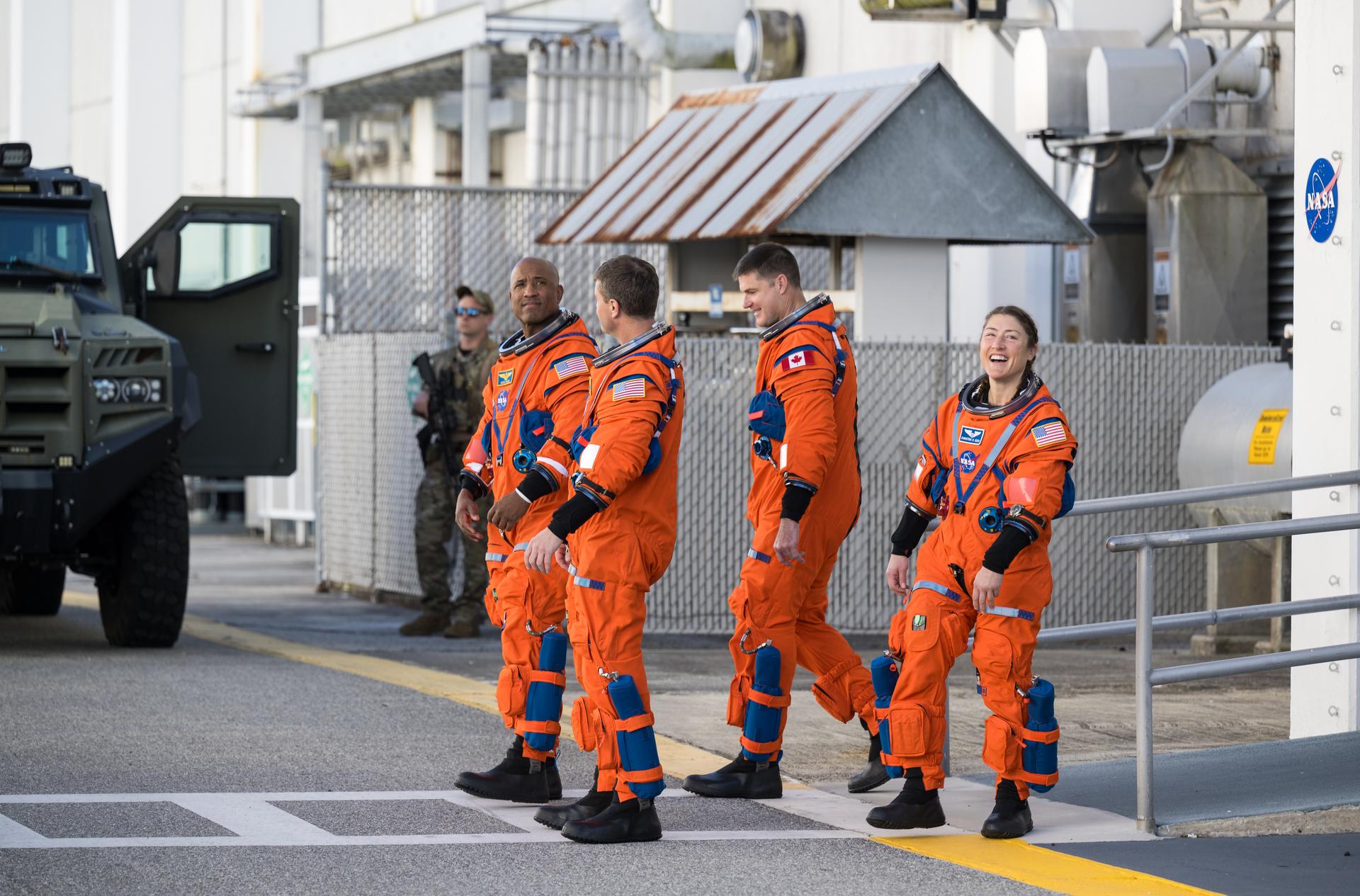
NASA astronauts Reid Wiseman, commander; Victor Glover, pilot; Christina Koch, mission specialist; and CSA (Canadian Space Agency) astronaut Jeremy Hansen, mission specialist are seen as they depart the Neil A. Armstrong Operations and Checkout Building to board their Orion spacecraft atop NASA’s Space Launch System rocket inside the Vehicle Assembly Building as part of the Artemis II countdown demonstration test, Saturday, Dec. 20, 2025, at NASA’s Kennedy Space Center in Florida. For this operation, the Artemis II crew and launch teams are simulating the launch day timeline including suit-up, walkout, and spacecraft ingress and egress. Through the Artemis campaign, NASA will send astronauts to explore the Moon for scientific discovery, economic benefits, and to build the foundation for the first crewed missions to Mars, for the benefit of all. Photo Credit: (NASA/Aubrey Gemignani)
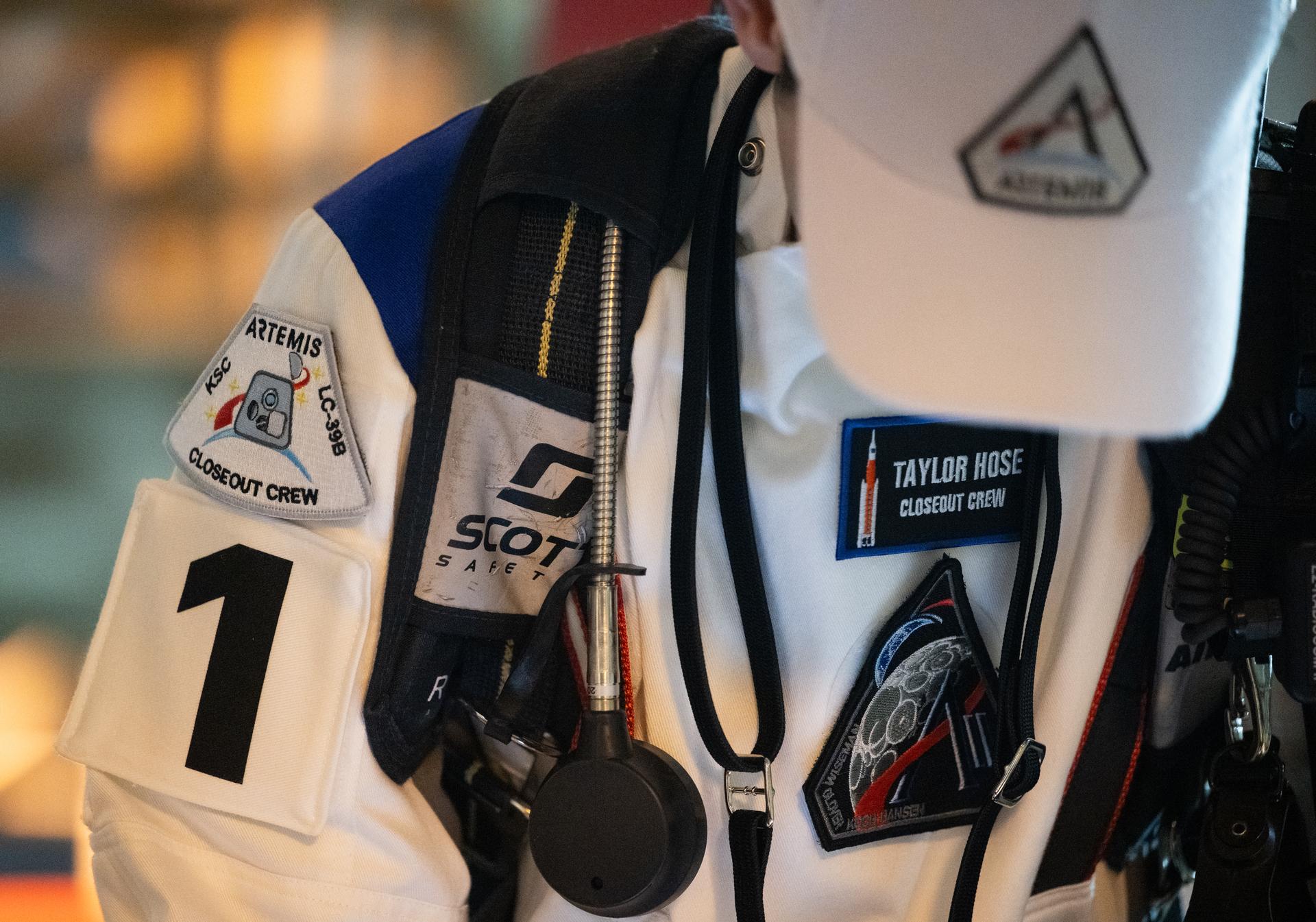
Taylor Hose, Closeout Crew lead, is seen as he prepares for the arrival of Artemis II crewmembers NASA astronauts Reid Wiseman, commander; Victor Glover, pilot; Christina Koch, mission specialist; and CSA (Canadian Space Agency) astronaut Jeremy Hansen, mission specialist; at the 275-foot level of the mobile launcher to board their Orion spacecraft atop NASA’s Space Launch System rocket during the Artemis II countdown demonstration test, Saturday, Dec. 20, 2025, inside the Vehicle Assembly Building at NASA’s Kennedy Space Center in Florida. For this operation, the Artemis II crew and launch teams are simulating the launch day timeline including suit-up, walkout, and spacecraft ingress and egress. Through the Artemis campaign, NASA will send astronauts to explore the Moon for scientific discovery, economic benefits, and to build the foundation for the first crewed missions to Mars, for the benefit of all. Photo Credit: (NASA/Joel Kowsky)
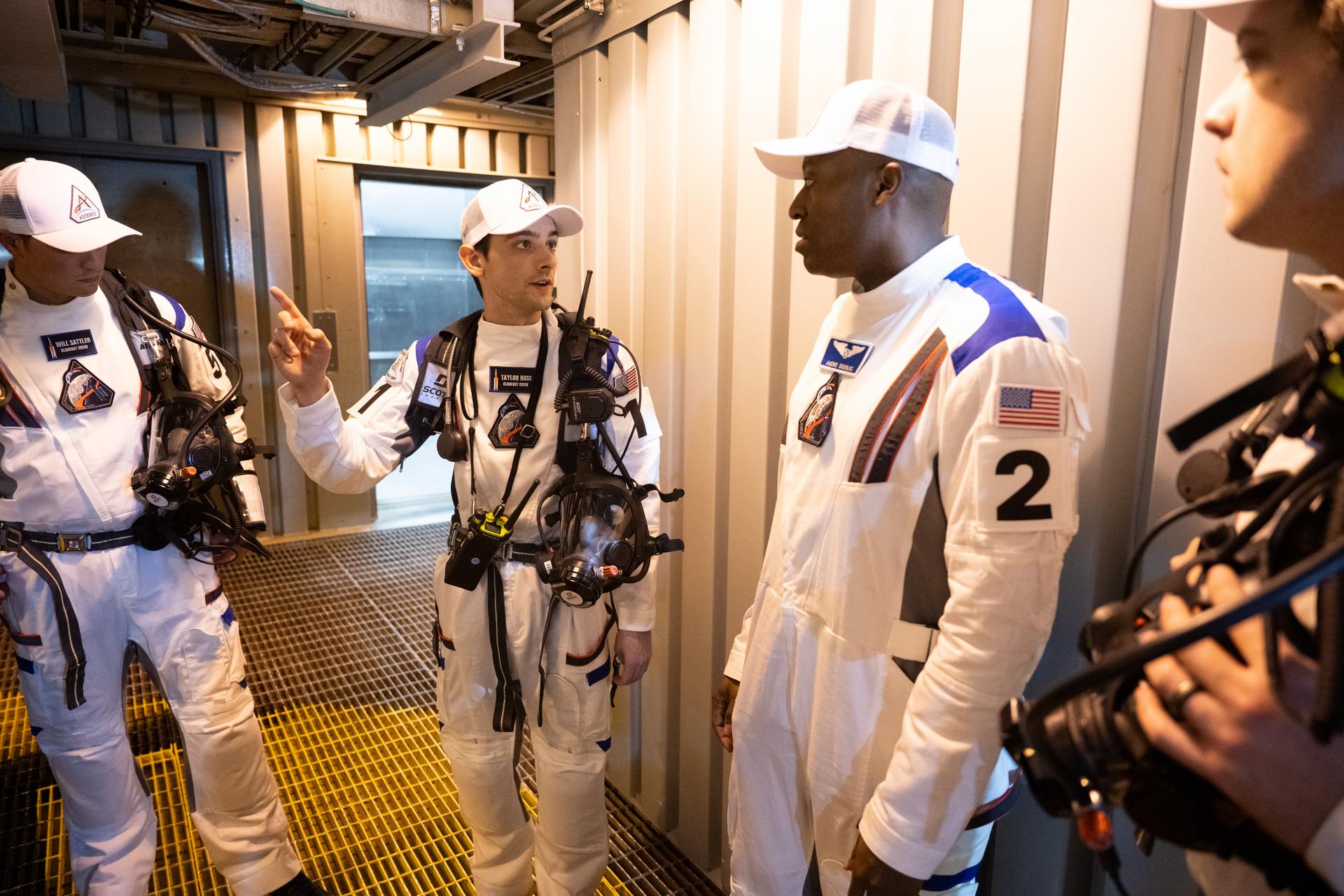
Closeout Crew lead Taylor Hose, second from left, talks with NASA astronaut Andre Douglas, second from right as he and closeout crewmembers Will Sattler, left, and Christian Warriner prepare for the arrival of Artemis II crewmembers NASA astronauts Reid Wiseman, commander; Victor Glover, pilot; Christina Koch, mission specialist; and CSA (Canadian Space Agency) astronaut Jeremy Hansen, mission specialist; at the 275-foot level of the mobile launcher as they prepare to board their Orion spacecraft atop NASA’s Space Launch System rocket during the Artemis II countdown demonstration test, Saturday, Dec. 20, 2025, inside the Vehicle Assembly Building at NASA’s Kennedy Space Center in Florida. For this operation, the Artemis II crew and launch teams are simulating the launch day timeline including suit-up, walkout, and spacecraft ingress and egress. Through the Artemis campaign, NASA will send astronauts to explore the Moon for scientific discovery, economic benefits, and to build the foundation for the first crewed missions to Mars, for the benefit of all. Photo Credit: (NASA/Joel Kowsky)
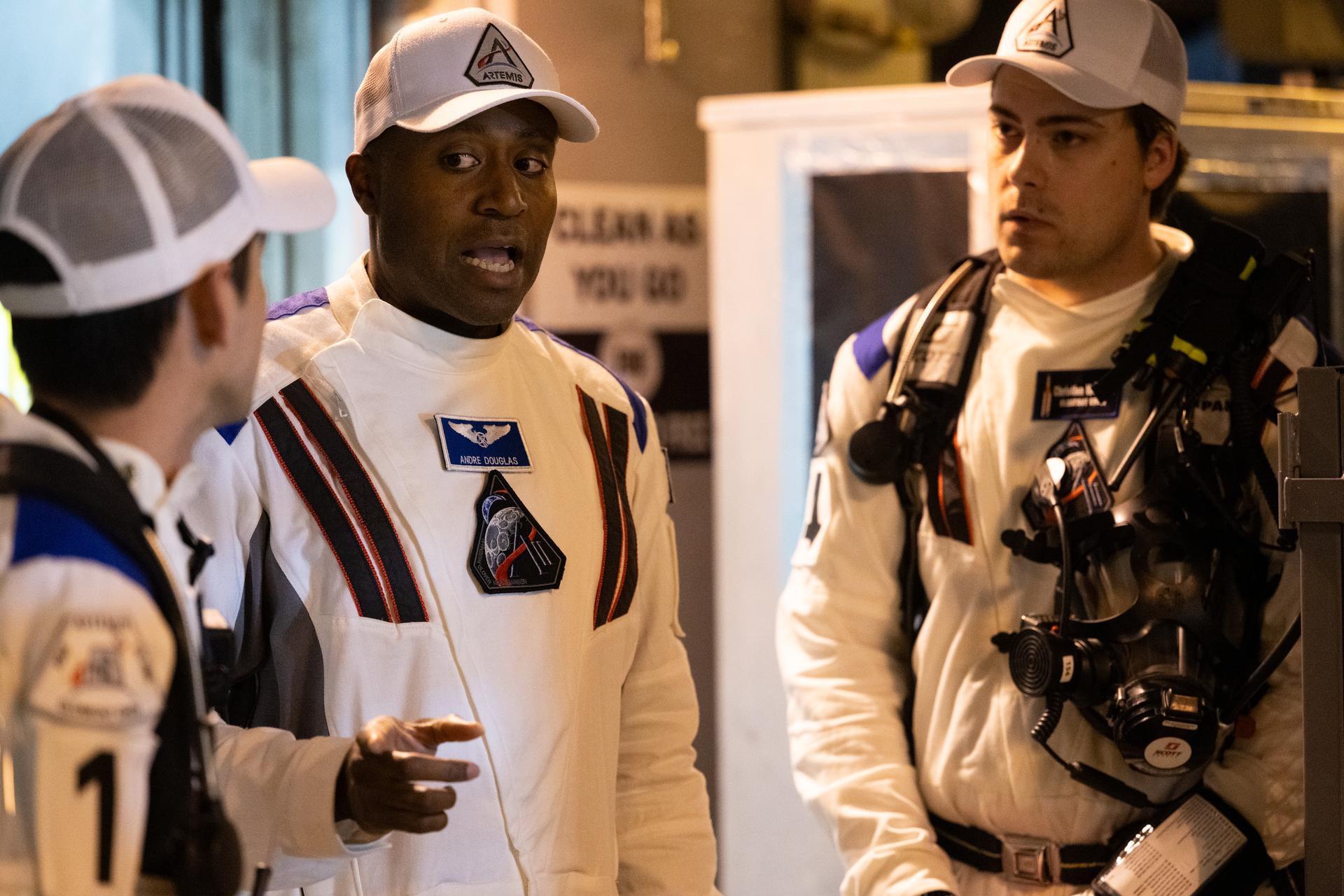
NASA astronaut Andre Douglas talks with Taylor Hose, left, Christian Warriner of the Closeout Crew as they prepare for the arrival of Artemis II crewmembers NASA astronauts Reid Wiseman, commander; Victor Glover, pilot; Christina Koch, mission specialist; and CSA (Canadian Space Agency) astronaut Jeremy Hansen, at the 275-foot level of the mobile launcher as they prepare to board their Orion spacecraft atop NASA’s Space Launch System rocket during the Artemis II countdown demonstration test, Saturday, Dec. 20, 2025, inside the Vehicle Assembly Building at NASA’s Kennedy Space Center in Florida. For this operation, the Artemis II crew and launch teams are simulating the launch day timeline including suit-up, walkout, and spacecraft ingress and egress. Through the Artemis campaign, NASA will send astronauts to explore the Moon for scientific discovery, economic benefits, and to build the foundation for the first crewed missions to Mars, for the benefit of all. Photo Credit: (NASA/Joel Kowsky)
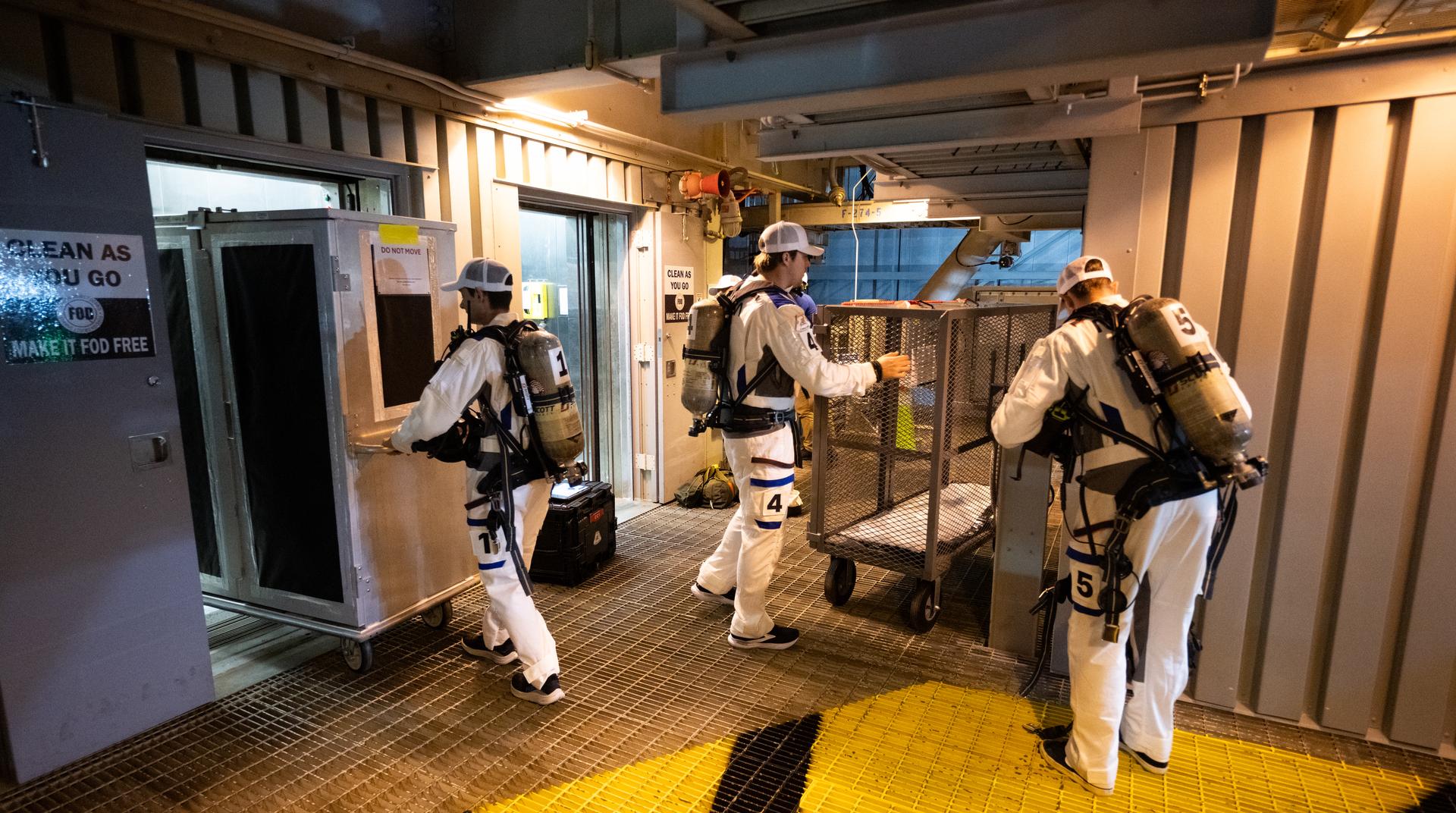
Taylor Hose, left, Christian Warriner, center, and Will Sattler of the Closeout Crew are seen as they prepare for the arrival of Artemis II crewmembers NASA astronauts Reid Wiseman, commander; Victor Glover, pilot; Christina Koch, mission specialist; and CSA (Canadian Space Agency) astronaut Jeremy Hansen, mission specialist; at the 275-foot level of the mobile launcher to board their Orion spacecraft atop NASA’s Space Launch System rocket during the Artemis II countdown demonstration test, Saturday, Dec. 20, 2025, inside the Vehicle Assembly Building at NASA’s Kennedy Space Center in Florida. For this operation, the Artemis II crew and launch teams are simulating the launch day timeline including suit-up, walkout, and spacecraft ingress and egress. Through the Artemis campaign, NASA will send astronauts to explore the Moon for scientific discovery, economic benefits, and to build the foundation for the first crewed missions to Mars, for the benefit of all. Photo Credit: (NASA/Joel Kowsky)
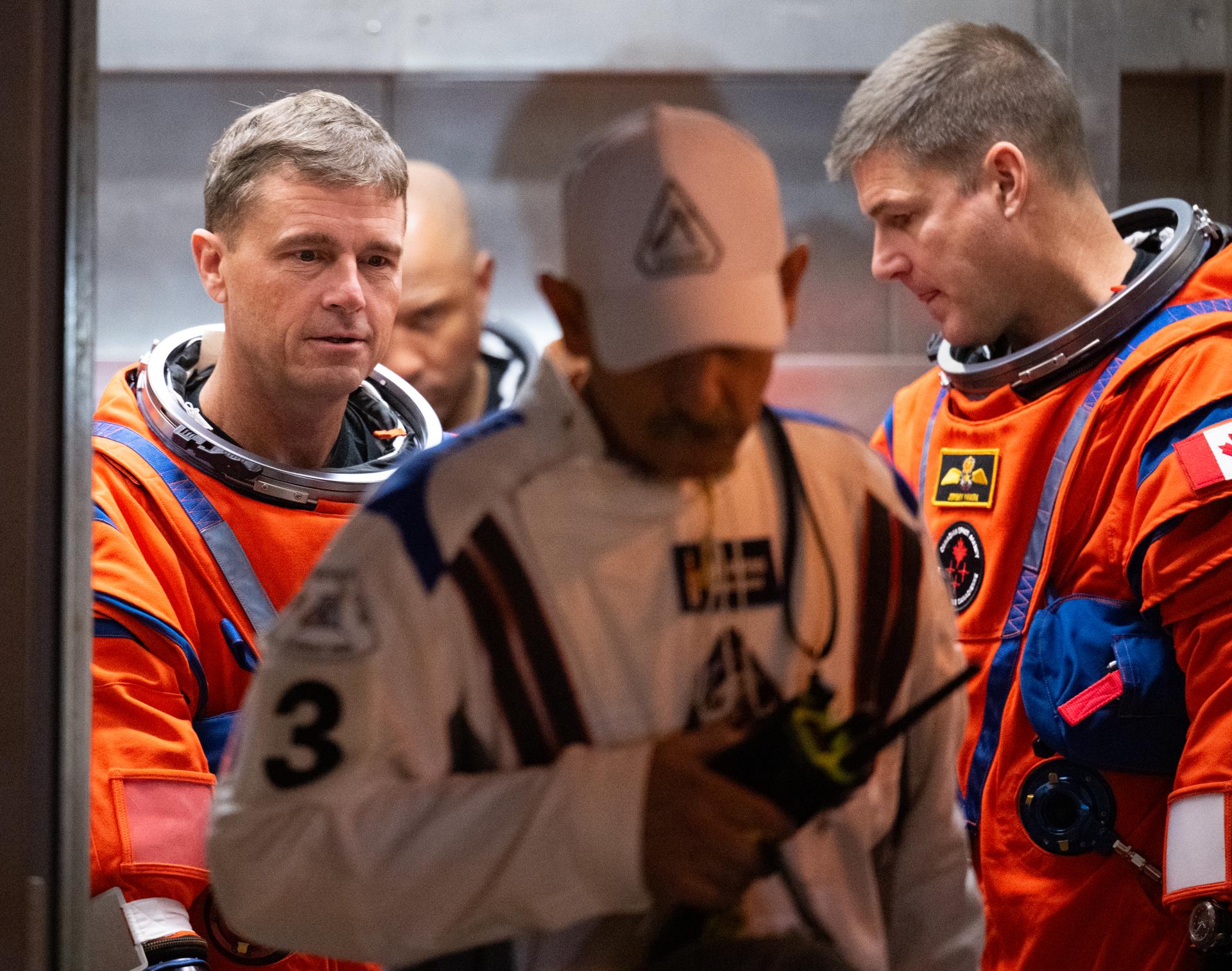
Artemis II crewmembers NASA astronauts Reid Wiseman, commander; and CSA (Canadian Space Agency) astronaut Jeremy Hansen, mission specialist are seen exit the elevator at the 275-foot level of the mobile launcher along with fellow crewmates NASA astronauts Victor Glover, pilot; and Christina Koch, mission specialist, as they prepare to board their Orion spacecraft atop NASA’s Space Launch System rocket during the Artemis II countdown demonstration test, Saturday, Dec. 20, 2025, inside the Vehicle Assembly Building at NASA’s Kennedy Space Center in Florida. For this operation, the Artemis II crew and launch teams are simulating the launch day timeline including suit-up, walkout, and spacecraft ingress and egress. Through the Artemis campaign, NASA will send astronauts to explore the Moon for scientific discovery, economic benefits, and to build the foundation for the first crewed missions to Mars, for the benefit of all. Photo Credit: (NASA/Joel Kowsky)
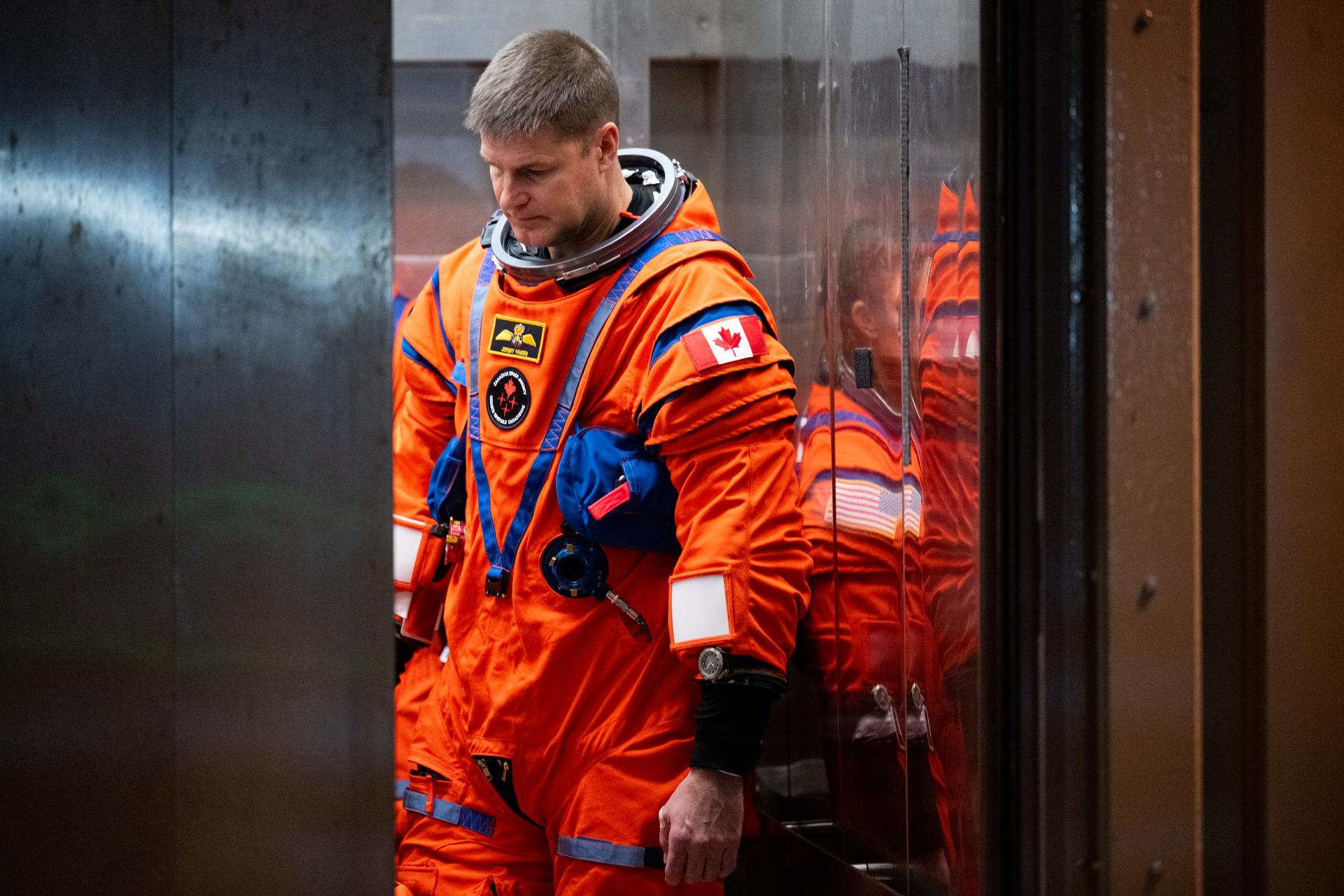
Artemis II crewmember CSA (Canadian Space Agency) astronaut Jeremy Hansen, mission specialist; is seen in the elevator as he arrives with fellow crewmates NASA astronauts Reid Wiseman, commander; Victor Glover, pilot; and Christina Koch, mission specialist; at the 275-foot level of the mobile launcher as they prepare to board their Orion spacecraft atop NASA’s Space Launch System rocket during the Artemis II countdown demonstration test, Saturday, Dec. 20, 2025, inside the Vehicle Assembly Building at NASA’s Kennedy Space Center in Florida. For this operation, the Artemis II crew and launch teams are simulating the launch day timeline including suit-up, walkout, and spacecraft ingress and egress. Through the Artemis campaign, NASA will send astronauts to explore the Moon for scientific discovery, economic benefits, and to build the foundation for the first crewed missions to Mars, for the benefit of all. Photo Credit: (NASA/Joel Kowsky)
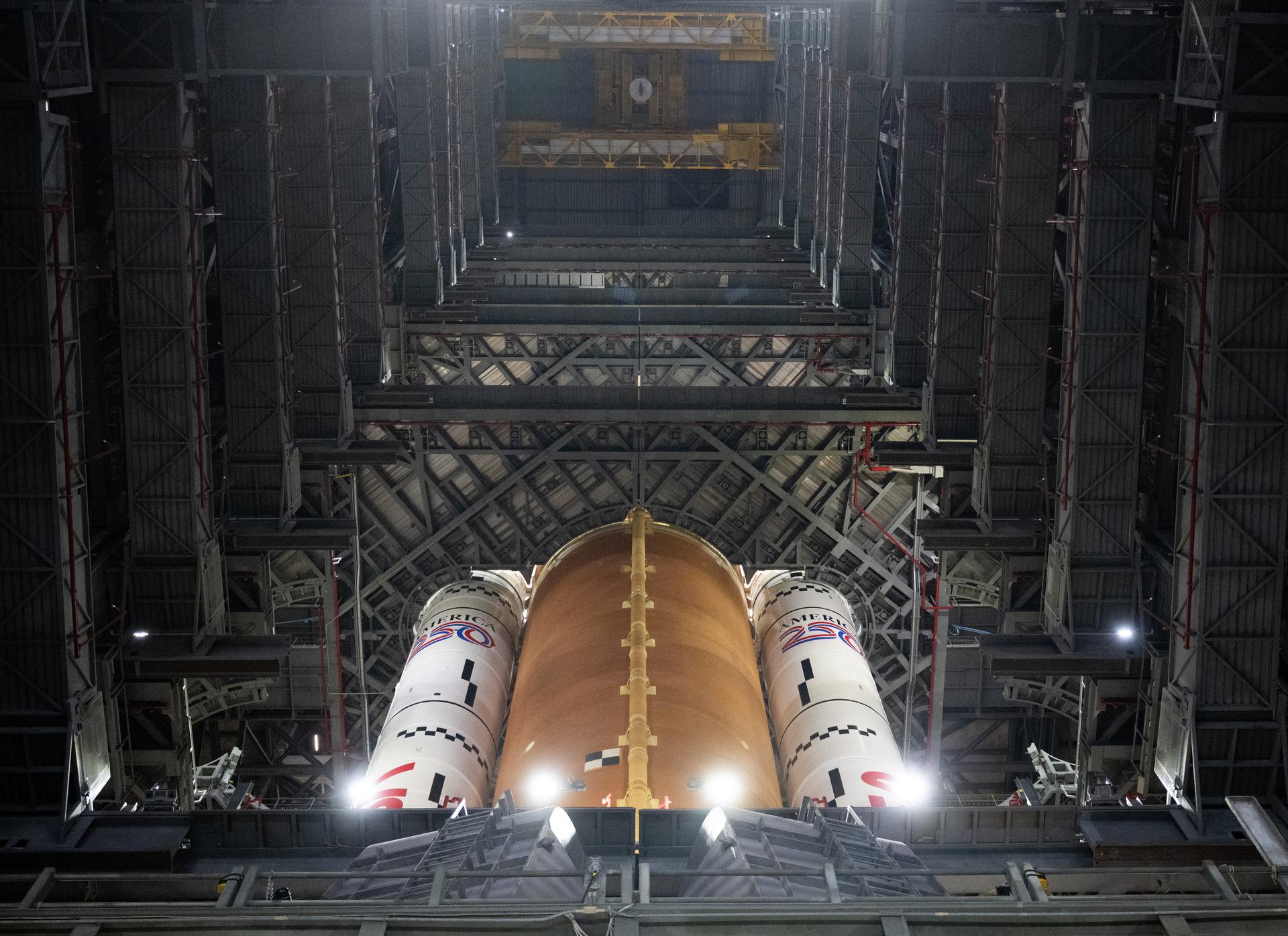
NASA’s Space Launch System rocket is seen inside high bay 3 of the Vehicle Assembly Building as Artemis II crewmembers NASA astronauts Reid Wiseman, commander; Victor Glover, pilot; Christina Koch, mission specialist; and CSA (Canadian Space Agency) astronaut Jeremy Hansen, mission specialist; board their Orion spacecraft atop the rocket during the Artemis II countdown demonstration test, Saturday, Dec. 20, 2025, NASA’s Kennedy Space Center in Florida. For this operation, the Artemis II crew and launch teams are simulating the launch day timeline including suit-up, walkout, and spacecraft ingress and egress. Through the Artemis campaign, NASA will send astronauts to explore the Moon for scientific discovery, economic benefits, and to build the foundation for the first crewed missions to Mars, for the benefit of all. Photo Credit: (NASA/Joel Kowsky)
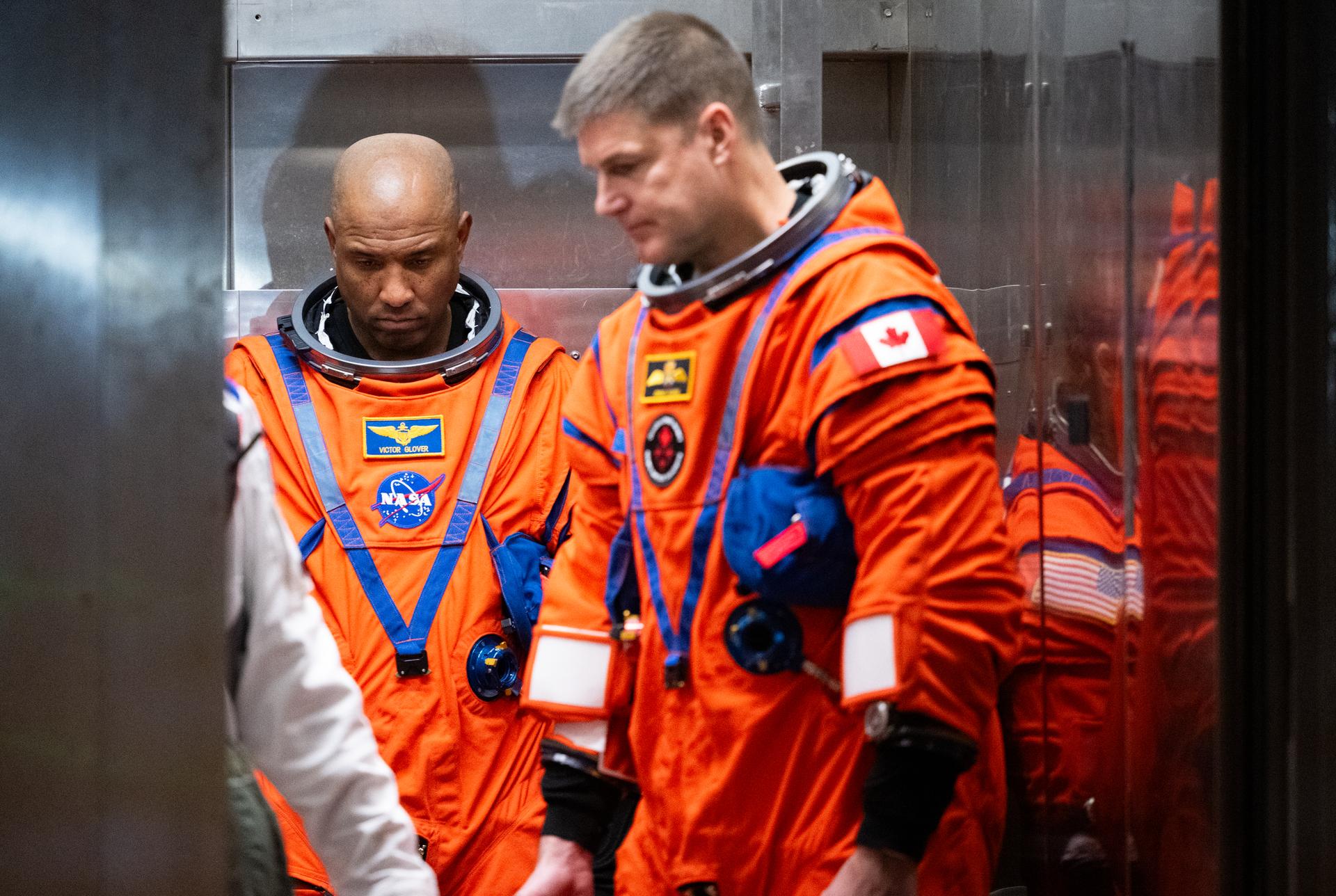
Artemis II crewmember NASA astronaut Victor Glover, pilot; left, and CSA (Canadian Space Agency) astronaut Jeremy Hansen, mission specialist; are seen in the elevator as they arrives with fellow crewmates NASA astronauts Reid Wiseman, commander; and Christina Koch, mission specialist; at the 275-foot level of the mobile launcher as they prepare to board their Orion spacecraft atop NASA’s Space Launch System rocket during the Artemis II countdown demonstration test, Saturday, Dec. 20, 2025, inside the Vehicle Assembly Building at NASA’s Kennedy Space Center in Florida. For this operation, the Artemis II crew and launch teams are simulating the launch day timeline including suit-up, walkout, and spacecraft ingress and egress. Through the Artemis campaign, NASA will send astronauts to explore the Moon for scientific discovery, economic benefits, and to build the foundation for the first crewed missions to Mars, for the benefit of all. Photo Credit: (NASA/Joel Kowsky)
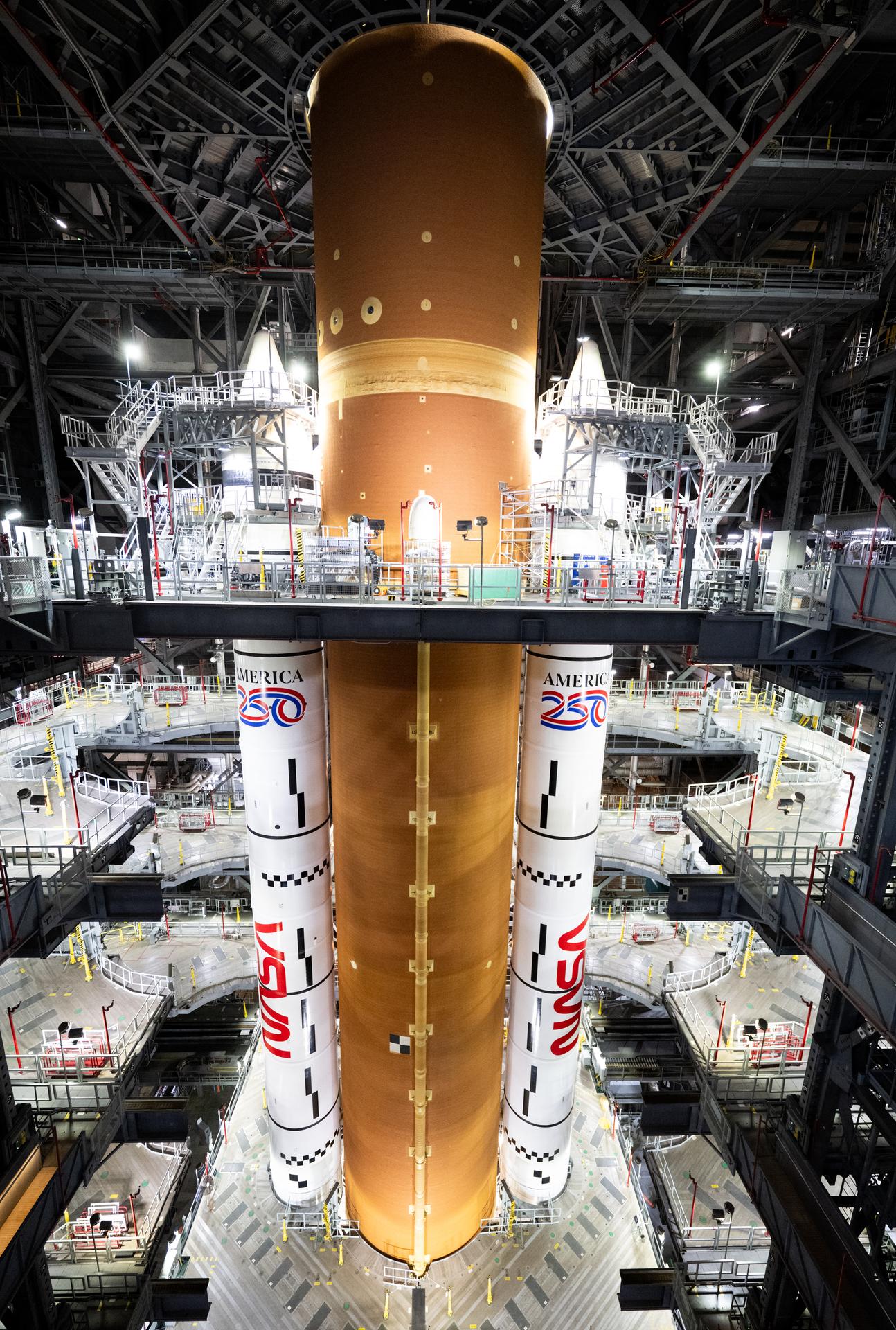
NASA’s Space Launch System rocket is seen inside high bay 3 of the Vehicle Assembly Building as teams await the arrival of Artemis II crewmembers NASA astronauts Reid Wiseman, commander; Victor Glover, pilot; Christina Koch, mission specialist; and CSA (Canadian Space Agency) astronaut Jeremy Hansen, mission specialist; to board their Orion spacecraft atop the rocket as part of the Artemis II countdown demonstration test, Saturday, Dec. 20, 2025, NASA’s Kennedy Space Center in Florida. For this operation, the Artemis II crew and launch teams are simulating the launch day timeline including suit-up, walkout, and spacecraft ingress and egress. Through the Artemis campaign, NASA will send astronauts to explore the Moon for scientific discovery, economic benefits, and to build the foundation for the first crewed missions to Mars, for the benefit of all. Photo Credit: (NASA/Joel Kowsky)
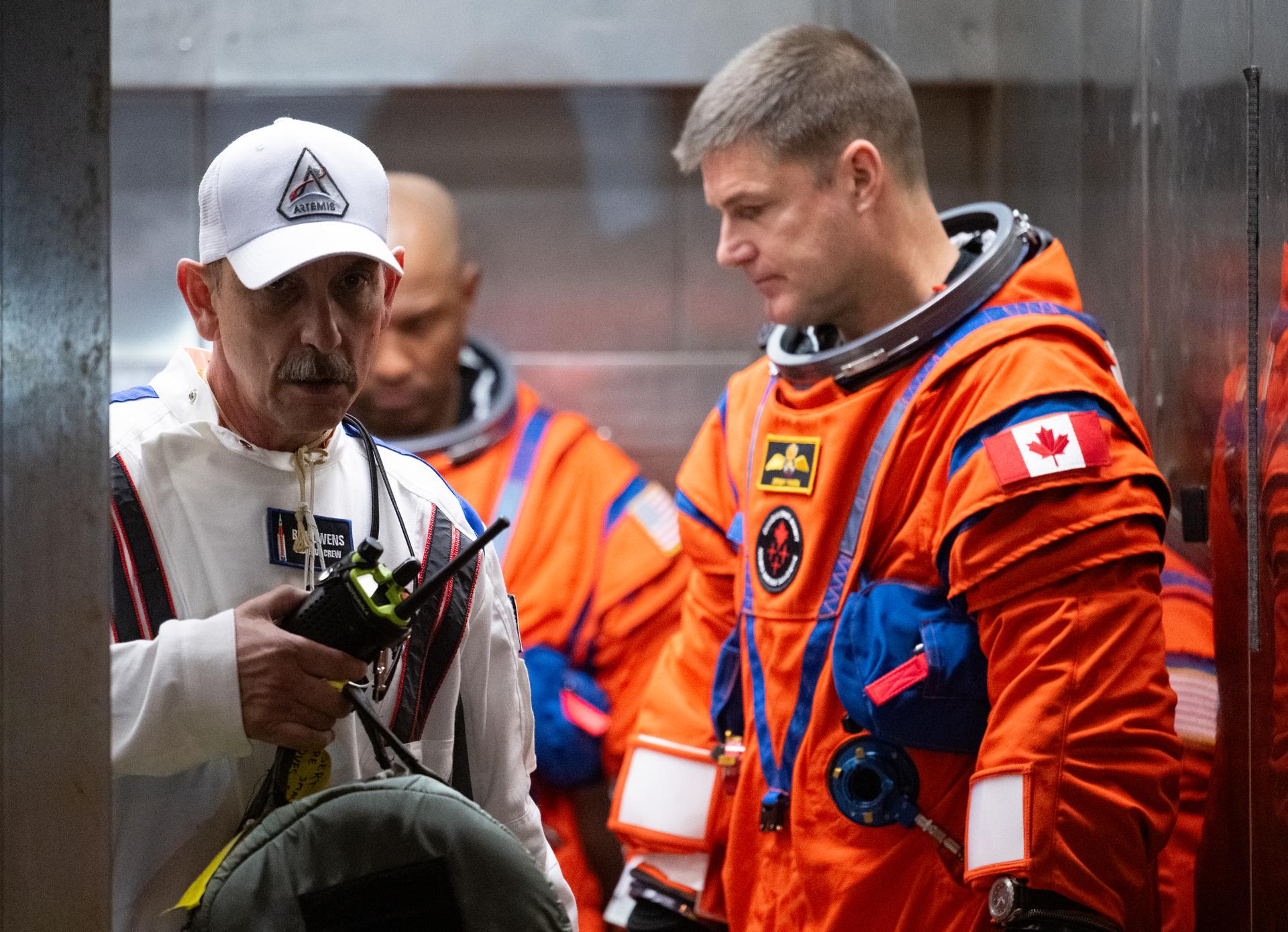
Bill Owens of the Closeout Crew is seen as he leads Artemis II crewmembers CSA (Canadian Space Agency) astronaut Jeremy Hansen, mission specialist; and NASA astronauts Reid Wiseman, commander; Victor Glover, pilot; and Christina Koch, mission specialist; out of at the elevator towards the crew access arm at the 275-foot level of the mobile launcher as they prepare to board their Orion spacecraft atop NASA’s Space Launch System rocket during the Artemis II countdown demonstration test, Saturday, Dec. 20, 2025, inside the Vehicle Assembly Building at NASA’s Kennedy Space Center in Florida. For this operation, the Artemis II crew and launch teams are simulating the launch day timeline including suit-up, walkout, and spacecraft ingress and egress. Through the Artemis campaign, NASA will send astronauts to explore the Moon for scientific discovery, economic benefits, and to build the foundation for the first crewed missions to Mars, for the benefit of all. Photo Credit: (NASA/Joel Kowsky)
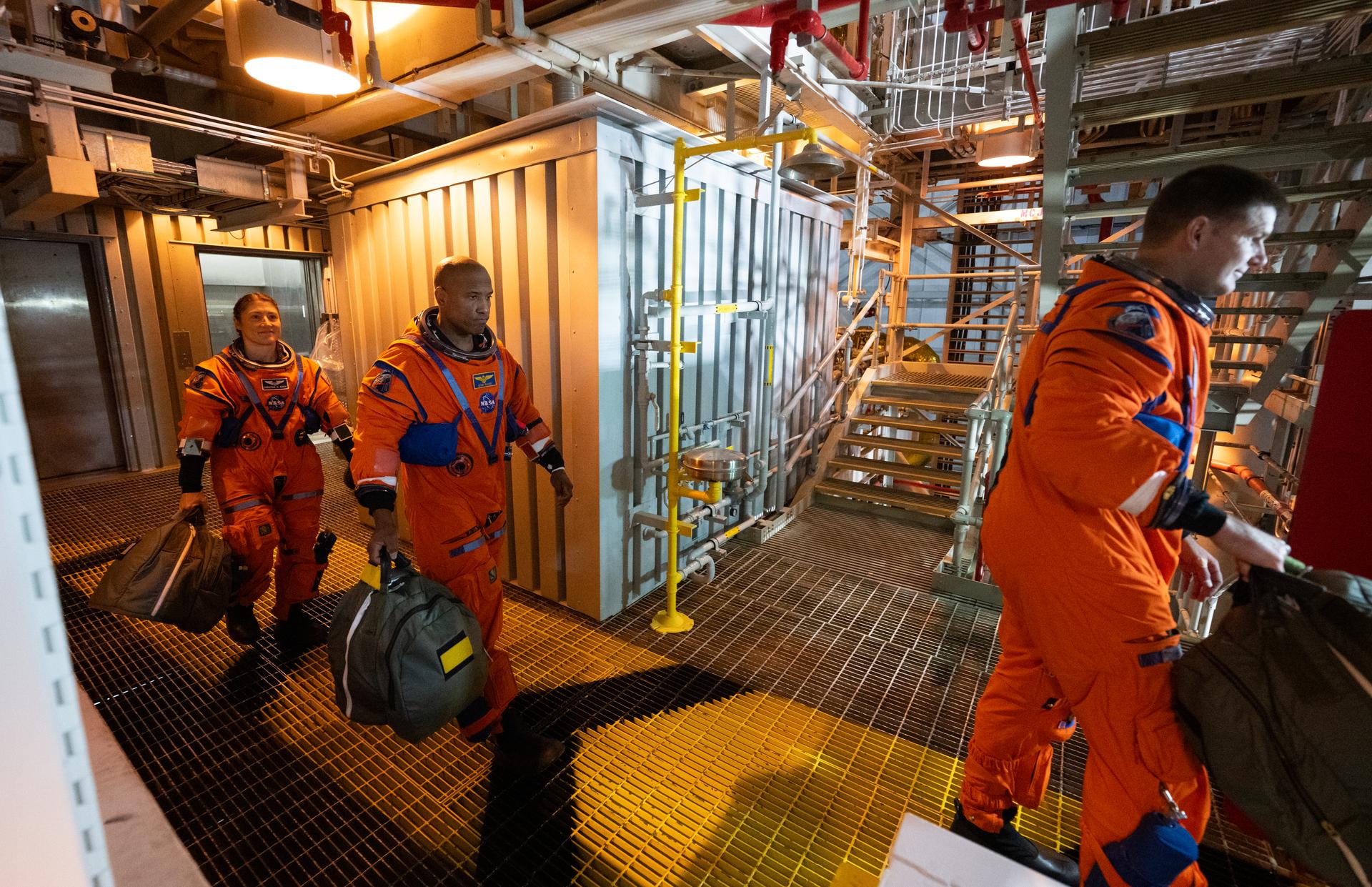
Artemis II crewmembers CSA (Canadian Space Agency) astronaut Jeremy Hansen, mission specialist, right, and NASA astronauts Victor Glover, pilot; Christina Koch, mission specialist; after exiting the elevator at the 275-foot level of the mobile launcher as they walk towards the crew access arm prepare to board their Orion spacecraft atop NASA’s Space Launch System rocket during the Artemis II countdown demonstration test, Saturday, Dec. 20, 2025, inside the Vehicle Assembly Building at NASA’s Kennedy Space Center in Florida. For this operation, the Artemis II crew and launch teams are simulating the launch day timeline including suit-up, walkout, and spacecraft ingress and egress. Through the Artemis campaign, NASA will send astronauts to explore the Moon for scientific discovery, economic benefits, and to build the foundation for the first crewed missions to Mars, for the benefit of all. Photo Credit: (NASA/Joel Kowsky)
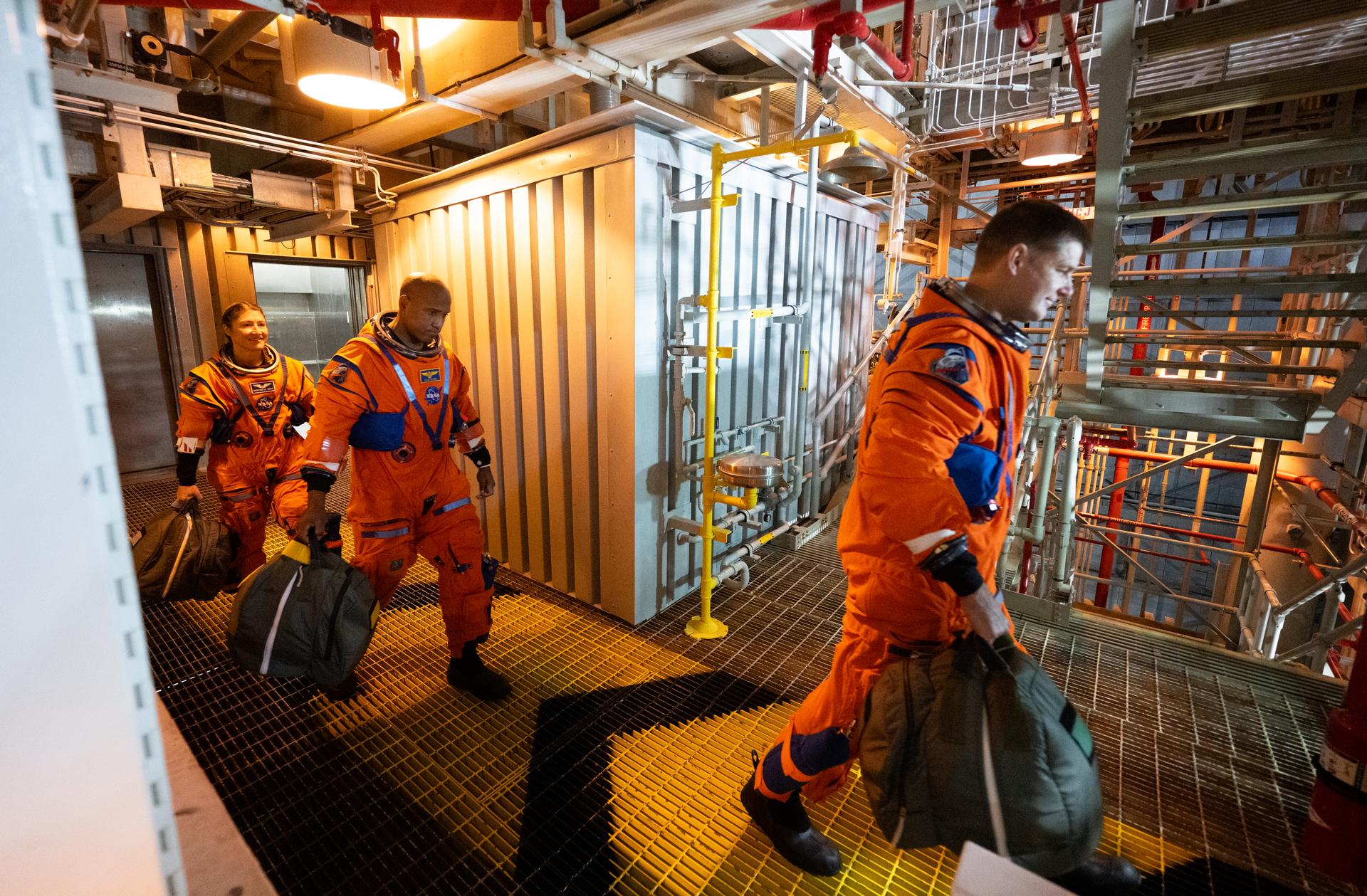
Artemis II crewmembers CSA (Canadian Space Agency) astronaut Jeremy Hansen, mission specialist, right, and NASA astronauts Victor Glover, pilot; Christina Koch, mission specialist; after exiting the elevator at the 275-foot level of the mobile launcher as they walk towards the crew access arm prepare to board their Orion spacecraft atop NASA’s Space Launch System rocket during the Artemis II countdown demonstration test, Saturday, Dec. 20, 2025, inside the Vehicle Assembly Building at NASA’s Kennedy Space Center in Florida. For this operation, the Artemis II crew and launch teams are simulating the launch day timeline including suit-up, walkout, and spacecraft ingress and egress. Through the Artemis campaign, NASA will send astronauts to explore the Moon for scientific discovery, economic benefits, and to build the foundation for the first crewed missions to Mars, for the benefit of all. Photo Credit: (NASA/Joel Kowsky)
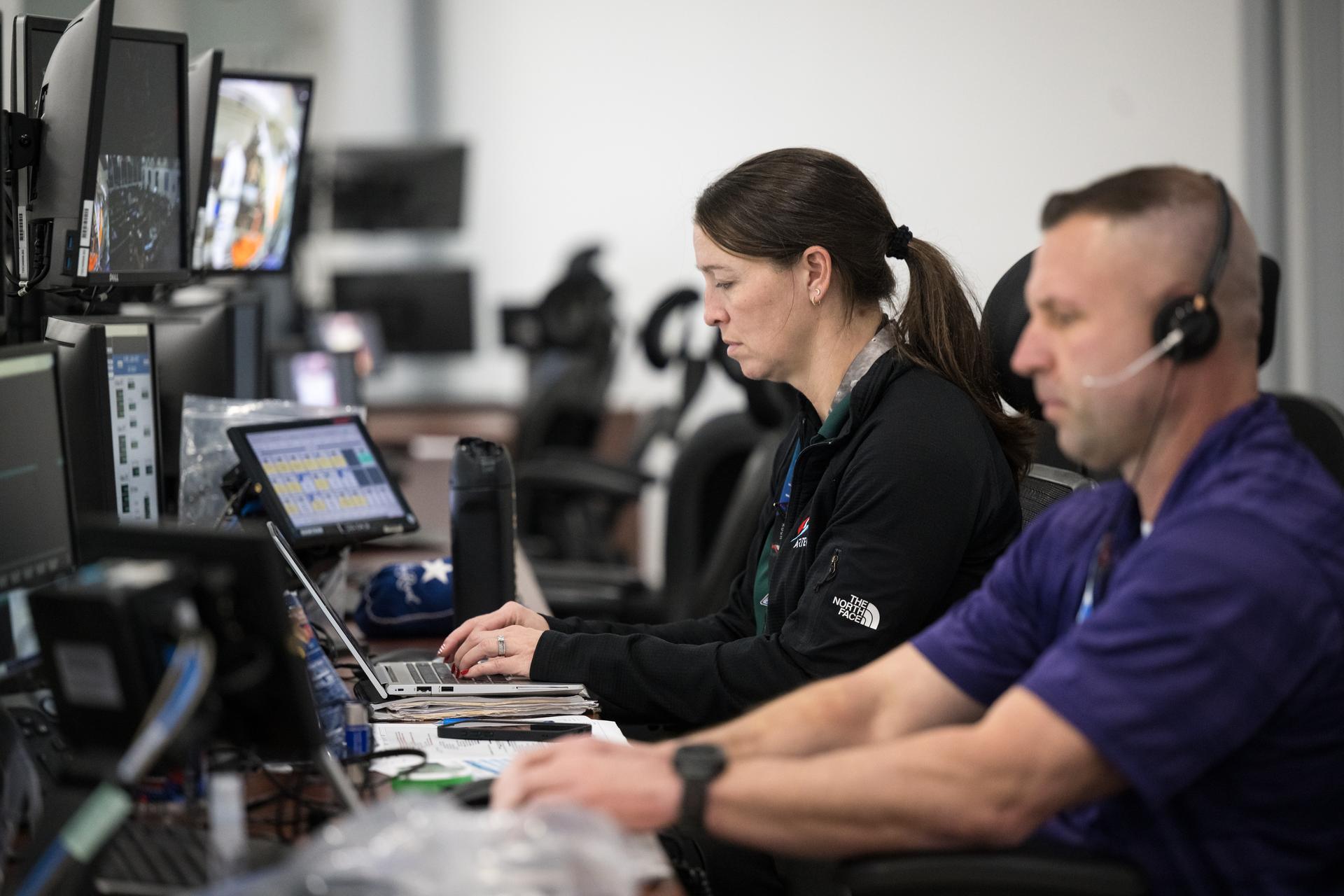
Teams monitor the progress of a Countdown Demonstration Test with Artemis II crewmembers NASA astronauts Reid Wiseman, commander; Victor Glover, pilot; Christina Koch, mission specialist; and CSA (Canadian Space Agency) astronaut Jeremy Hansen, mission specialist onboard their Orion spacecraft from Firing Room 2 of the Rocco A. Petrone Launch Control Center, Saturday, Dec. 20, 2025, at NASA’s Kennedy Space Center in Florida. For this operation, the Artemis II crew and launch teams are simulating the launch day timeline including suit-up, walkout, and spacecraft ingress and egress. Through the Artemis campaign, NASA will send astronauts to explore the Moon for scientific discovery, economic benefits, and to build the foundation for the first crewed missions to Mars, for the benefit of all. Photo Credit: (NASA/Aubrey Gemignani)
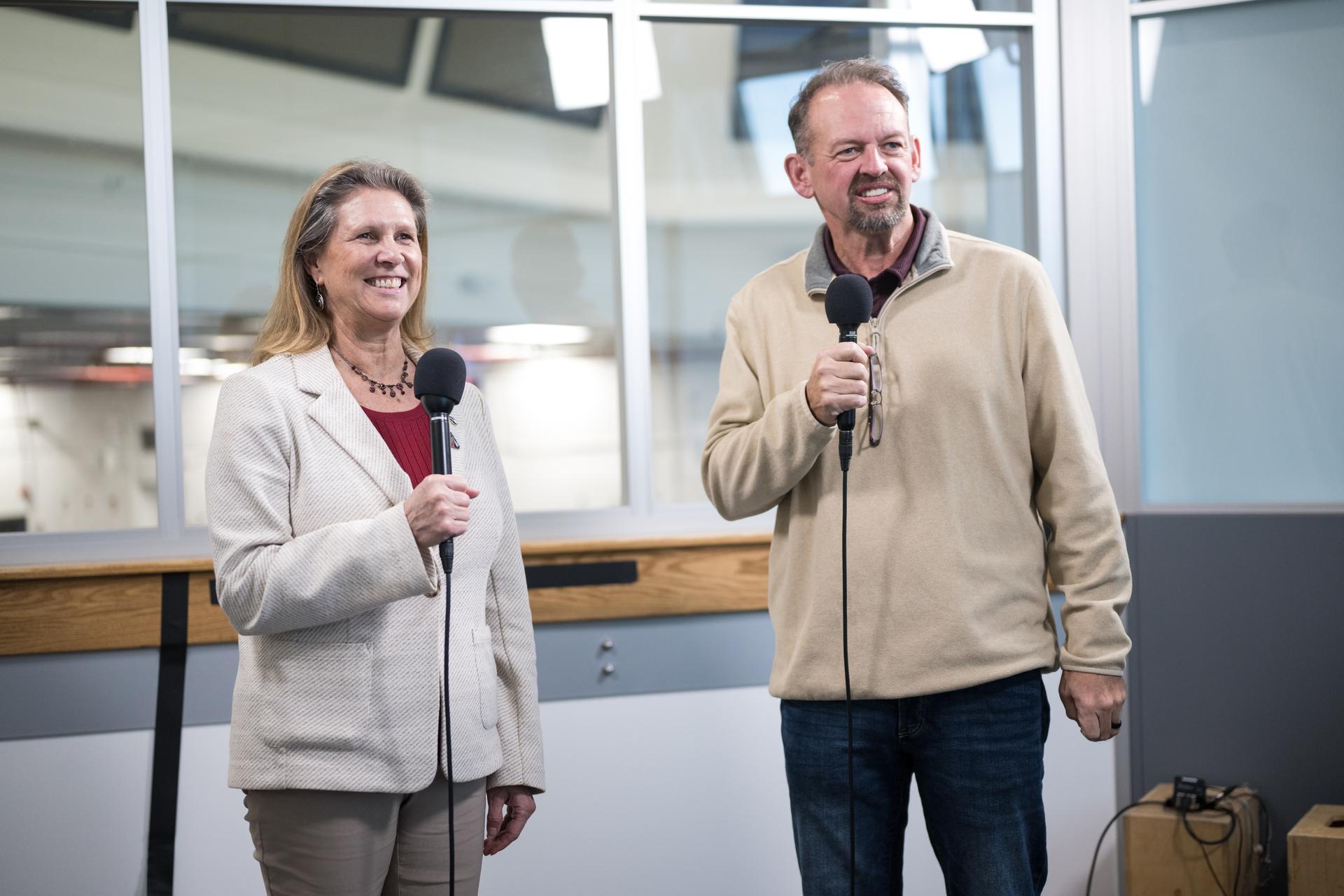
Lori Glaze, acting associate administrator for NASA's Exploration Systems Development Mission Directorate is interviewed by NASA public affairs officer Steven Siceloff during the Countdown Demonstration Test with Artemis II crewmembers NASA astronauts Reid Wiseman, commander; Victor Glover, pilot; Christina Koch, mission specialist; and CSA (Canadian Space Agency) astronaut Jeremy Hansen, mission specialist in Firing Room 2 of the Rocco A. Petrone Launch Control Center, Saturday, Dec. 20, 2025, at NASA’s Kennedy Space Center in Florida. For this operation, the Artemis II crew and launch teams are simulating the launch day timeline including suit-up, walkout, and spacecraft ingress and egress. Through the Artemis campaign, NASA will send astronauts to explore the Moon for scientific discovery, economic benefits, and to build the foundation for the first crewed missions to Mars, for the benefit of all. Photo Credit: (NASA/Aubrey Gemignani)
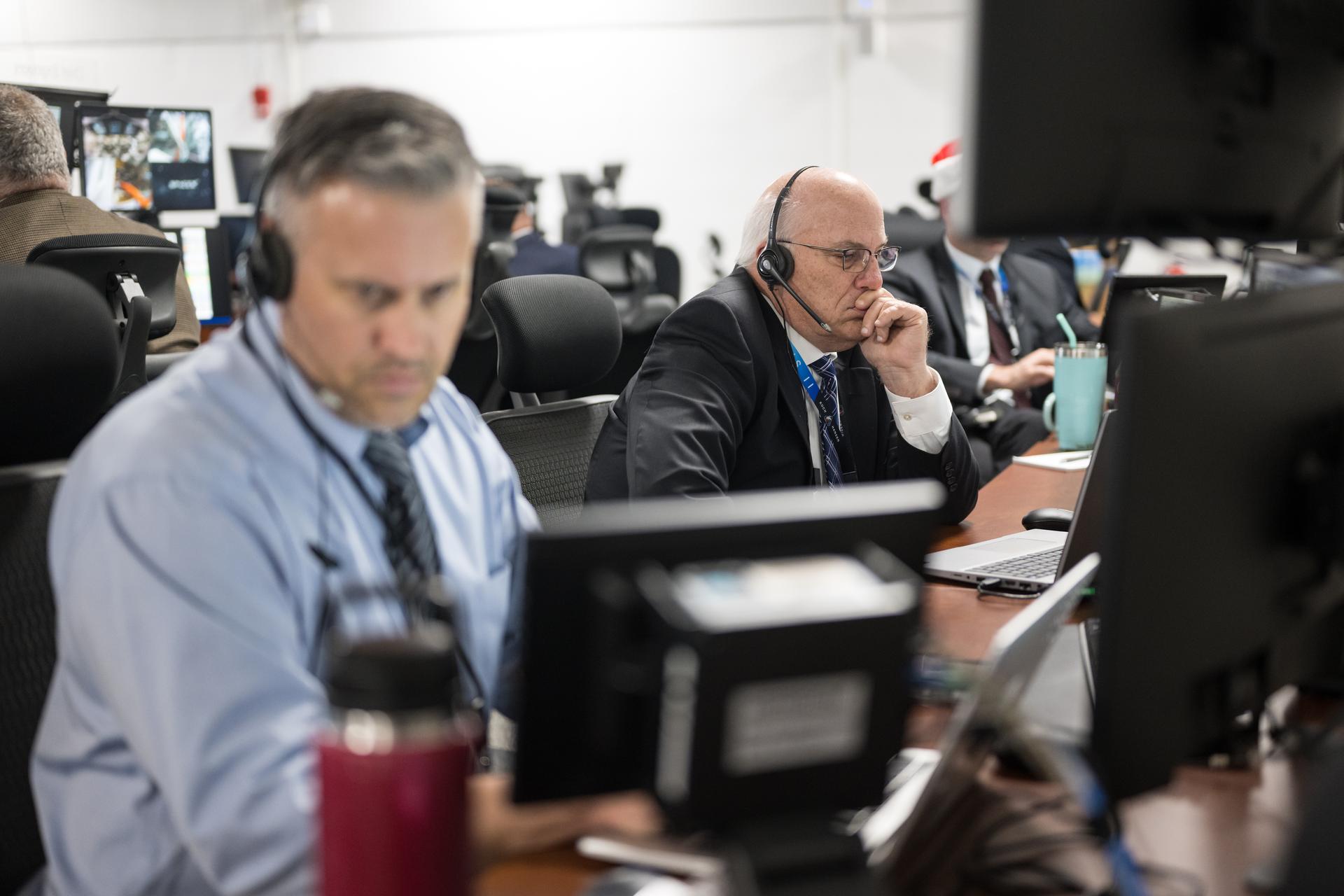
Teams monitor the progress of a Countdown Demonstration Test with Artemis II crewmembers NASA astronauts Reid Wiseman, commander; Victor Glover, pilot; Christina Koch, mission specialist; and CSA (Canadian Space Agency) astronaut Jeremy Hansen, mission specialist onboard their Orion spacecraft from Firing Room 2 of the Rocco A. Petrone Launch Control Center, Saturday, Dec. 20, 2025, at NASA’s Kennedy Space Center in Florida. For this operation, the Artemis II crew and launch teams are simulating the launch day timeline including suit-up, walkout, and spacecraft ingress and egress. Through the Artemis campaign, NASA will send astronauts to explore the Moon for scientific discovery, economic benefits, and to build the foundation for the first crewed missions to Mars, for the benefit of all. Photo Credit: (NASA/Aubrey Gemignani)

Teams monitor the progress of a Countdown Demonstration Test with Artemis II crewmembers NASA astronauts Reid Wiseman, commander; Victor Glover, pilot; Christina Koch, mission specialist; and CSA (Canadian Space Agency) astronaut Jeremy Hansen, mission specialist onboard their Orion spacecraft from Firing Room 2 of the Rocco A. Petrone Launch Control Center, Saturday, Dec. 20, 2025, at NASA’s Kennedy Space Center in Florida. For this operation, the Artemis II crew and launch teams are simulating the launch day timeline including suit-up, walkout, and spacecraft ingress and egress. Through the Artemis campaign, NASA will send astronauts to explore the Moon for scientific discovery, economic benefits, and to build the foundation for the first crewed missions to Mars, for the benefit of all. Photo Credit: (NASA/Aubrey Gemignani)

Teams monitor the progress of a Countdown Demonstration Test with Artemis II crewmembers NASA astronauts Reid Wiseman, commander; Victor Glover, pilot; Christina Koch, mission specialist; and CSA (Canadian Space Agency) astronaut Jeremy Hansen, mission specialist onboard their Orion spacecraft from Firing Room 2 of the Rocco A. Petrone Launch Control Center, Saturday, Dec. 20, 2025, at NASA’s Kennedy Space Center in Florida. For this operation, the Artemis II crew and launch teams are simulating the launch day timeline including suit-up, walkout, and spacecraft ingress and egress. Through the Artemis campaign, NASA will send astronauts to explore the Moon for scientific discovery, economic benefits, and to build the foundation for the first crewed missions to Mars, for the benefit of all. Photo Credit: (NASA/Aubrey Gemignani)
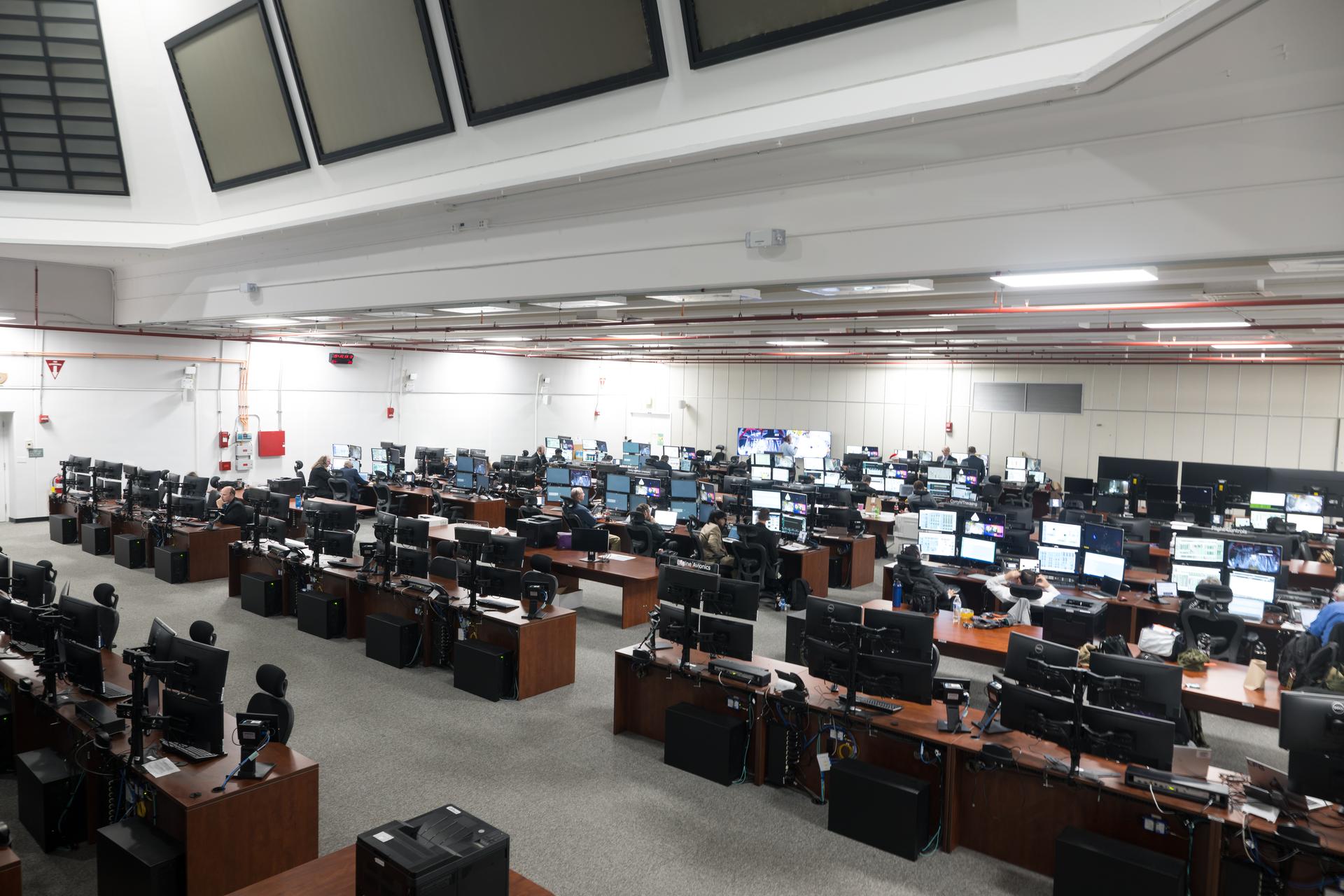
Teams monitor the progress of a Countdown Demonstration Test with Artemis II crewmembers NASA astronauts Reid Wiseman, commander; Victor Glover, pilot; Christina Koch, mission specialist; and CSA (Canadian Space Agency) astronaut Jeremy Hansen, mission specialist onboard their Orion spacecraft from Firing Room 2 of the Rocco A. Petrone Launch Control Center, Saturday, Dec. 20, 2025, at NASA’s Kennedy Space Center in Florida. For this operation, the Artemis II crew and launch teams are simulating the launch day timeline including suit-up, walkout, and spacecraft ingress and egress. Through the Artemis campaign, NASA will send astronauts to explore the Moon for scientific discovery, economic benefits, and to build the foundation for the first crewed missions to Mars, for the benefit of all. Photo Credit: (NASA/Aubrey Gemignani)
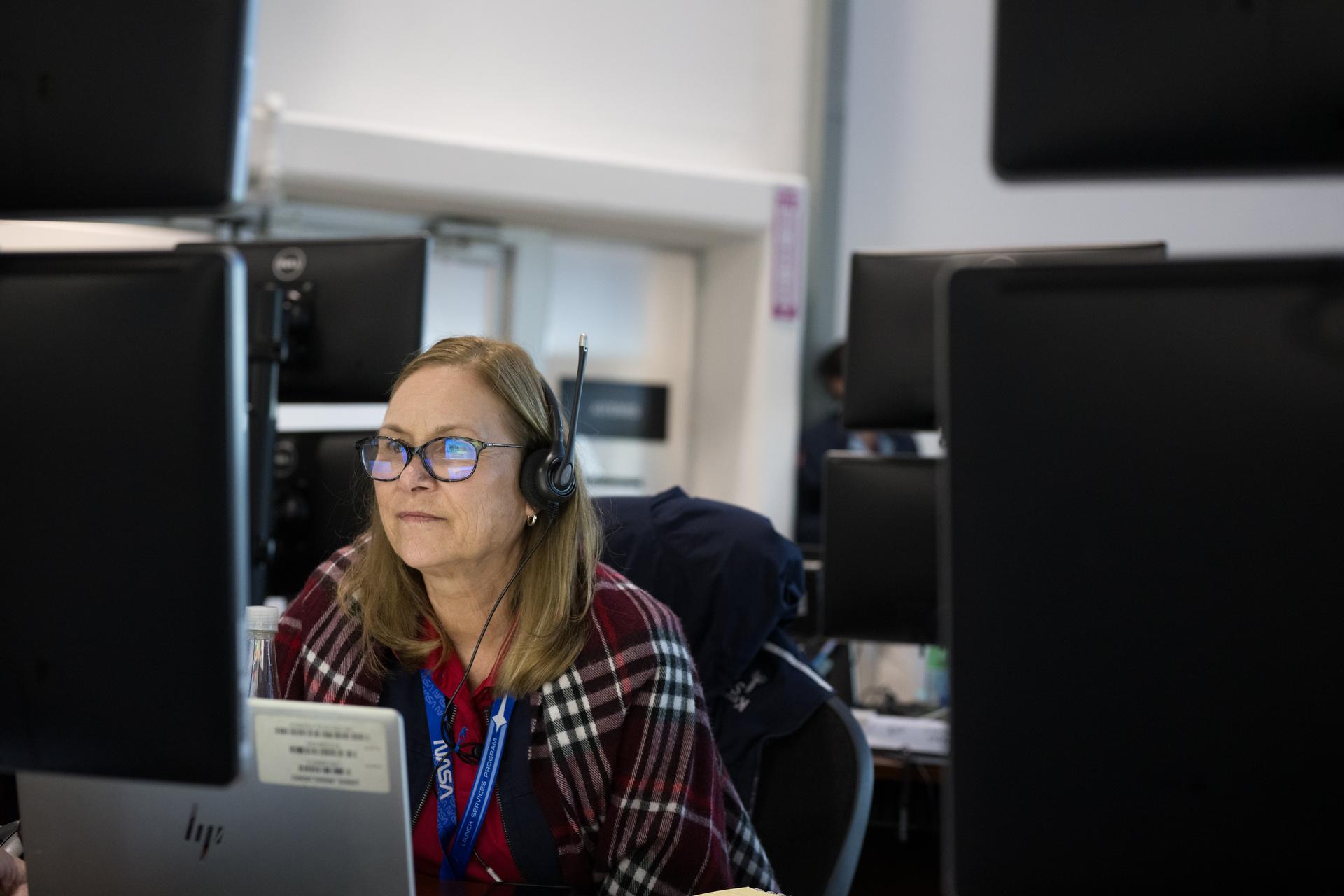
Janet Petro, director of NASA's Kennedy Space Center, monitors the progress of a Countdown Demonstration Test with Artemis II crewmembers NASA astronauts Reid Wiseman, commander; Victor Glover, pilot; Christina Koch, mission specialist; and CSA (Canadian Space Agency) astronaut Jeremy Hansen, mission specialist onboard their Orion spacecraft from Firing Room 2 of the Rocco A. Petrone Launch Control Center, Saturday, Dec. 20, 2025, at NASA’s Kennedy Space Center in Florida. For this operation, the Artemis II crew and launch teams are simulating the launch day timeline including suit-up, walkout, and spacecraft ingress and egress. Through the Artemis campaign, NASA will send astronauts to explore the Moon for scientific discovery, economic benefits, and to build the foundation for the first crewed missions to Mars, for the benefit of all. Photo Credit: (NASA/Aubrey Gemignani)

Teams monitor the progress of a Countdown Demonstration Test with Artemis II crewmembers NASA astronauts Reid Wiseman, commander; Victor Glover, pilot; Christina Koch, mission specialist; and CSA (Canadian Space Agency) astronaut Jeremy Hansen, mission specialist onboard their Orion spacecraft from Firing Room 2 of the Rocco A. Petrone Launch Control Center, Saturday, Dec. 20, 2025, at NASA’s Kennedy Space Center in Florida. For this operation, the Artemis II crew and launch teams are simulating the launch day timeline including suit-up, walkout, and spacecraft ingress and egress. Through the Artemis campaign, NASA will send astronauts to explore the Moon for scientific discovery, economic benefits, and to build the foundation for the first crewed missions to Mars, for the benefit of all. Photo Credit: (NASA/Aubrey Gemignani)
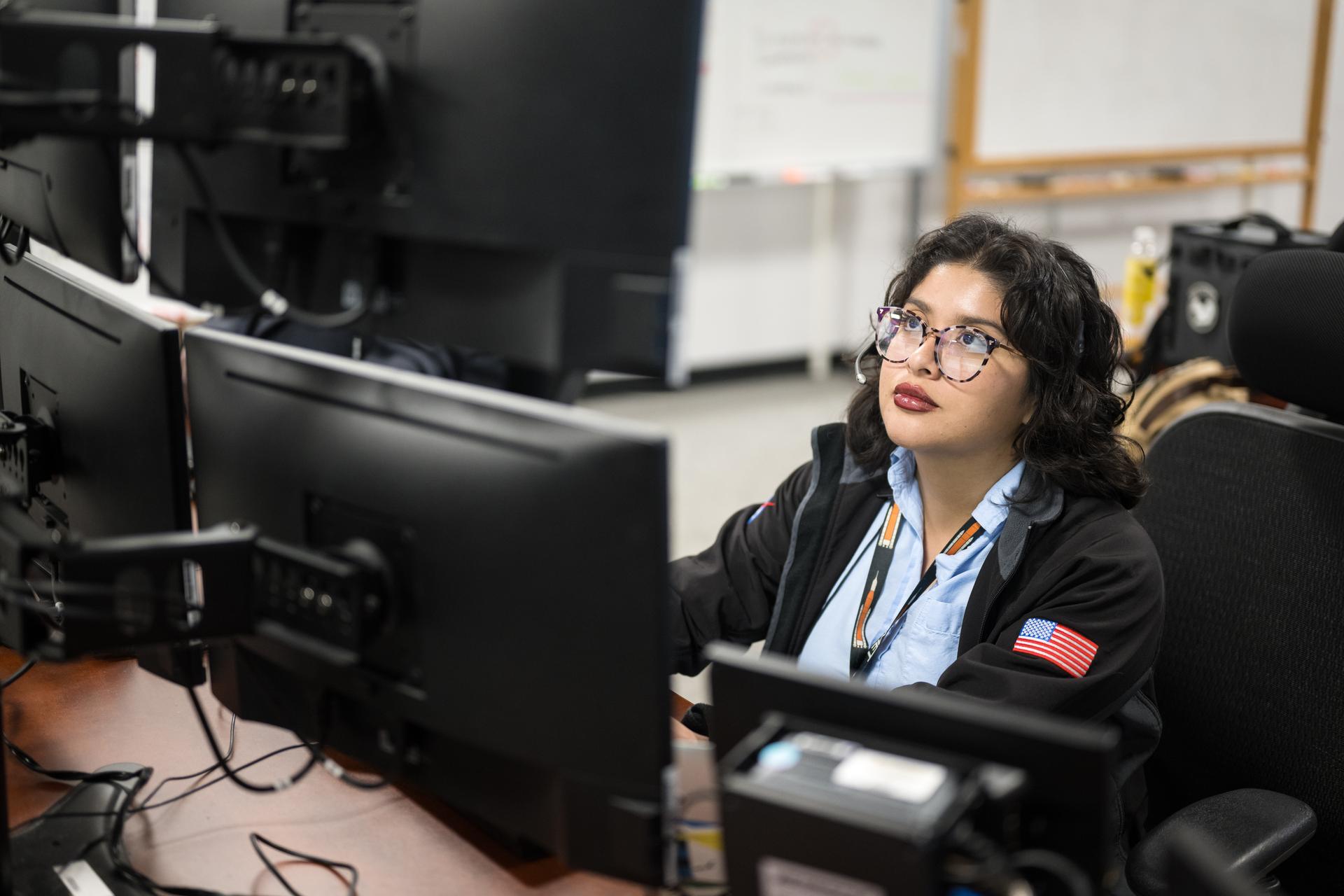
Teams monitor the progress of a Countdown Demonstration Test with Artemis II crewmembers NASA astronauts Reid Wiseman, commander; Victor Glover, pilot; Christina Koch, mission specialist; and CSA (Canadian Space Agency) astronaut Jeremy Hansen, mission specialist onboard their Orion spacecraft from Firing Room 2 of the Rocco A. Petrone Launch Control Center, Saturday, Dec. 20, 2025, at NASA’s Kennedy Space Center in Florida. For this operation, the Artemis II crew and launch teams are simulating the launch day timeline including suit-up, walkout, and spacecraft ingress and egress. Through the Artemis campaign, NASA will send astronauts to explore the Moon for scientific discovery, economic benefits, and to build the foundation for the first crewed missions to Mars, for the benefit of all. Photo Credit: (NASA/Aubrey Gemignani)
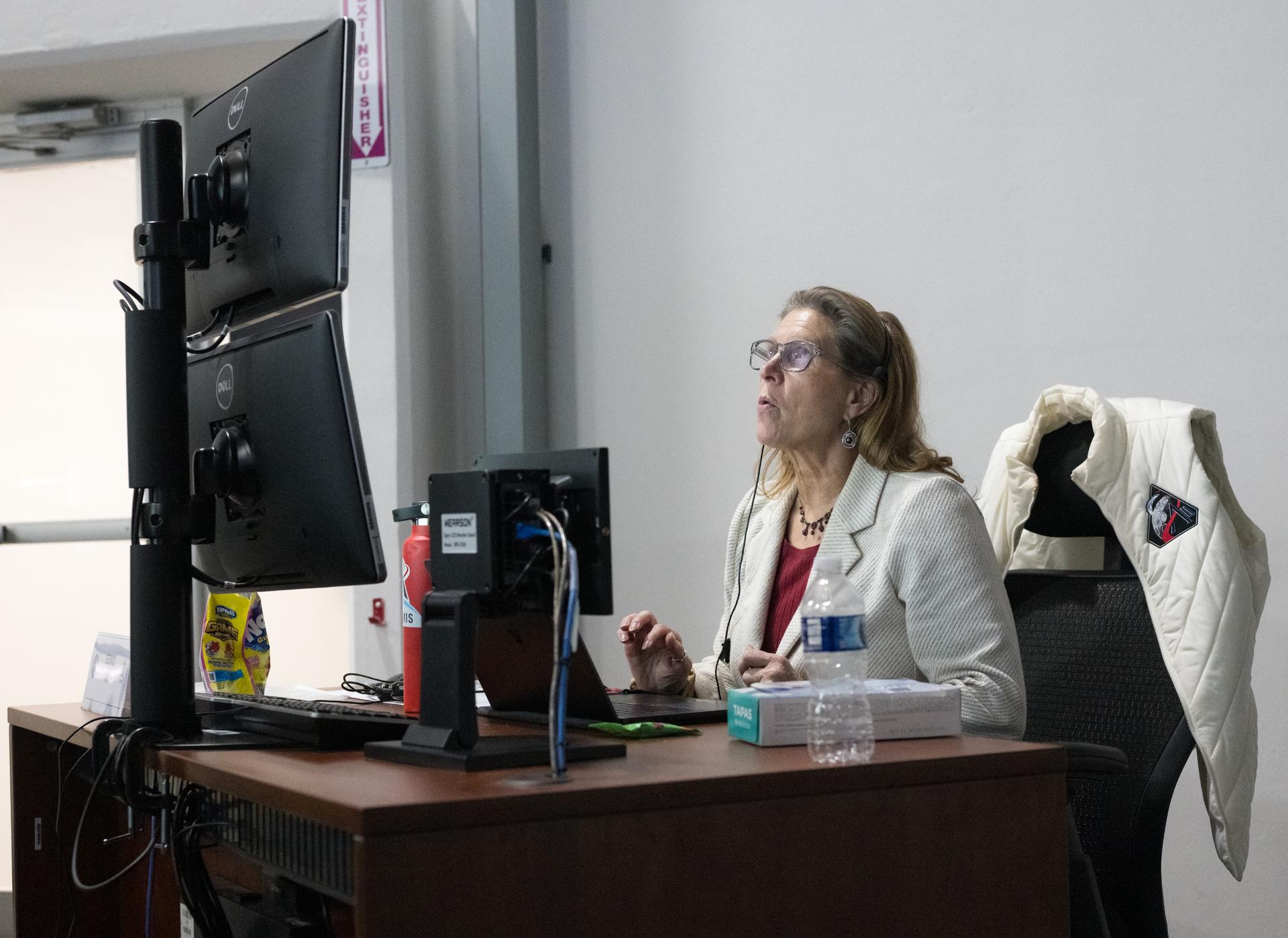
Lori Glaze, acting associate administrator for NASA's Exploration Systems Development Mission Directorate monitors the progress of a Countdown Demonstration Test with Artemis II crewmembers NASA astronauts Reid Wiseman, commander; Victor Glover, pilot; Christina Koch, mission specialist; and CSA (Canadian Space Agency) astronaut Jeremy Hansen, mission specialist onboard their Orion spacecraft from Firing Room 2 of the Rocco A. Petrone Launch Control Center, Saturday, Dec. 20, 2025, at NASA’s Kennedy Space Center in Florida. For this operation, the Artemis II crew and launch teams are simulating the launch day timeline including suit-up, walkout, and spacecraft ingress and egress. Through the Artemis campaign, NASA will send astronauts to explore the Moon for scientific discovery, economic benefits, and to build the foundation for the first crewed missions to Mars, for the benefit of all. Photo Credit: (NASA/Aubrey Gemignani)
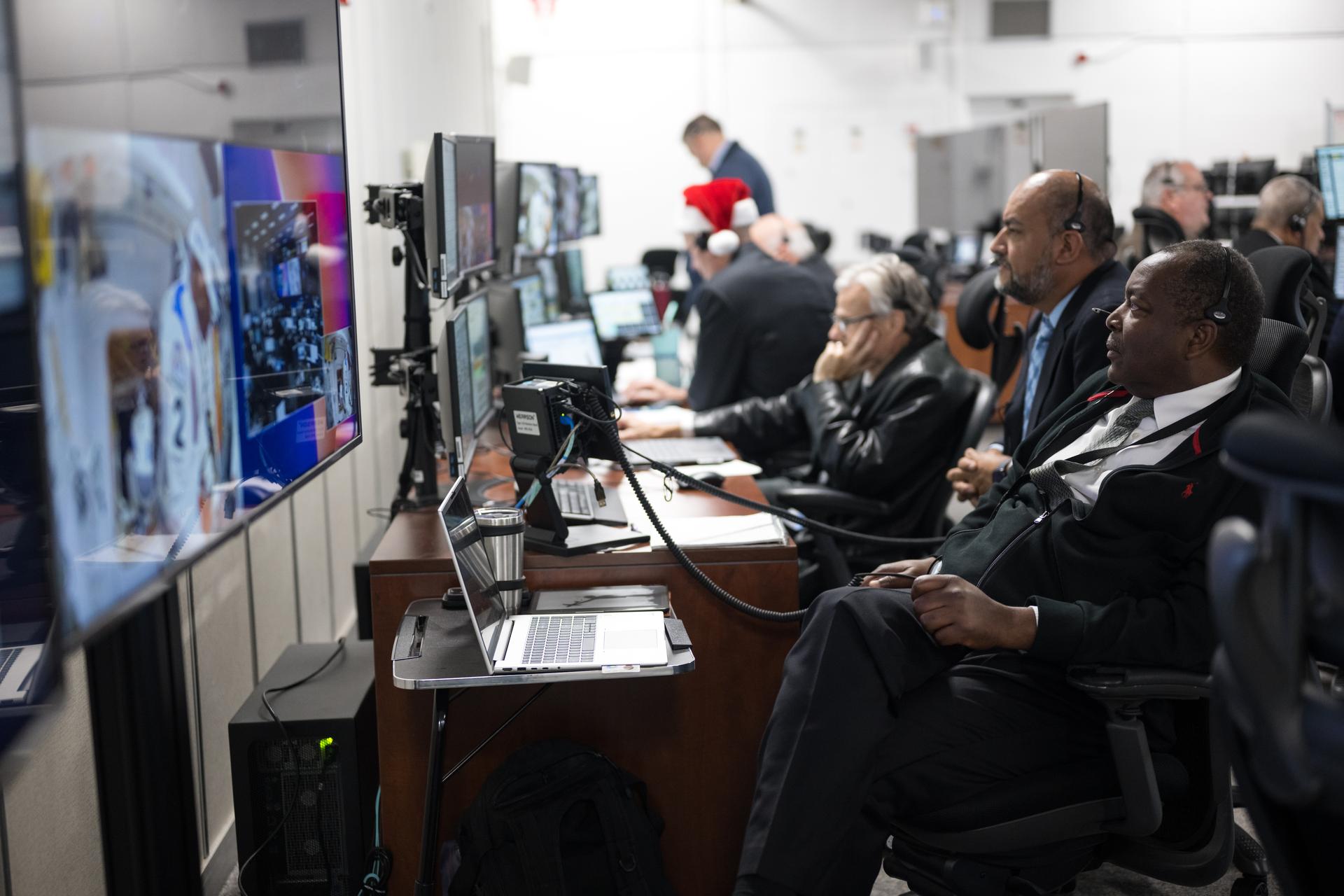
Teams monitor the progress of a Countdown Demonstration Test with Artemis II crewmembers NASA astronauts Reid Wiseman, commander; Victor Glover, pilot; Christina Koch, mission specialist; and CSA (Canadian Space Agency) astronaut Jeremy Hansen, mission specialist onboard their Orion spacecraft from Firing Room 2 of the Rocco A. Petrone Launch Control Center, Saturday, Dec. 20, 2025, at NASA’s Kennedy Space Center in Florida. For this operation, the Artemis II crew and launch teams are simulating the launch day timeline including suit-up, walkout, and spacecraft ingress and egress. Through the Artemis campaign, NASA will send astronauts to explore the Moon for scientific discovery, economic benefits, and to build the foundation for the first crewed missions to Mars, for the benefit of all. Photo Credit: (NASA/Aubrey Gemignani)
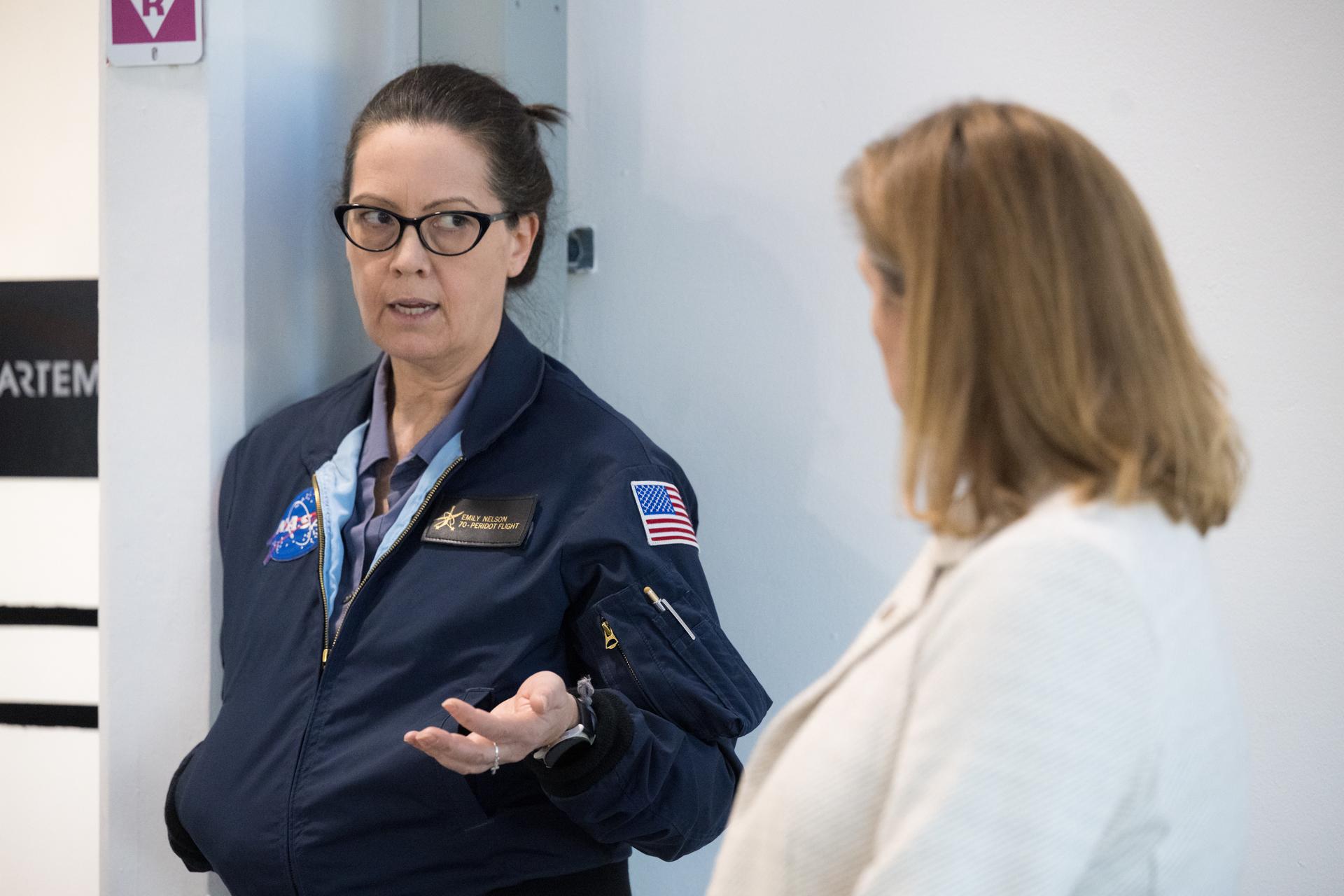
Emily Nelson, NASA's chief flight director, and Lori Glaze, acting associate administrator for NASA's Exploration Systems Development Mission Directorate, discuss the progress of a Countdown Demonstration Test with Artemis II crewmembers NASA astronauts Reid Wiseman, commander; Victor Glover, pilot; Christina Koch, mission specialist; and CSA (Canadian Space Agency) astronaut Jeremy Hansen, mission specialist onboard their Orion spacecraft from Firing Room 2 of the Rocco A. Petrone Launch Control Center, Saturday, Dec. 20, 2025, at NASA’s Kennedy Space Center in Florida. For this operation, the Artemis II crew and launch teams are simulating the launch day timeline including suit-up, walkout, and spacecraft ingress and egress. Through the Artemis campaign, NASA will send astronauts to explore the Moon for scientific discovery, economic benefits, and to build the foundation for the first crewed missions to Mars, for the benefit of all. Photo Credit: (NASA/Aubrey Gemignani)
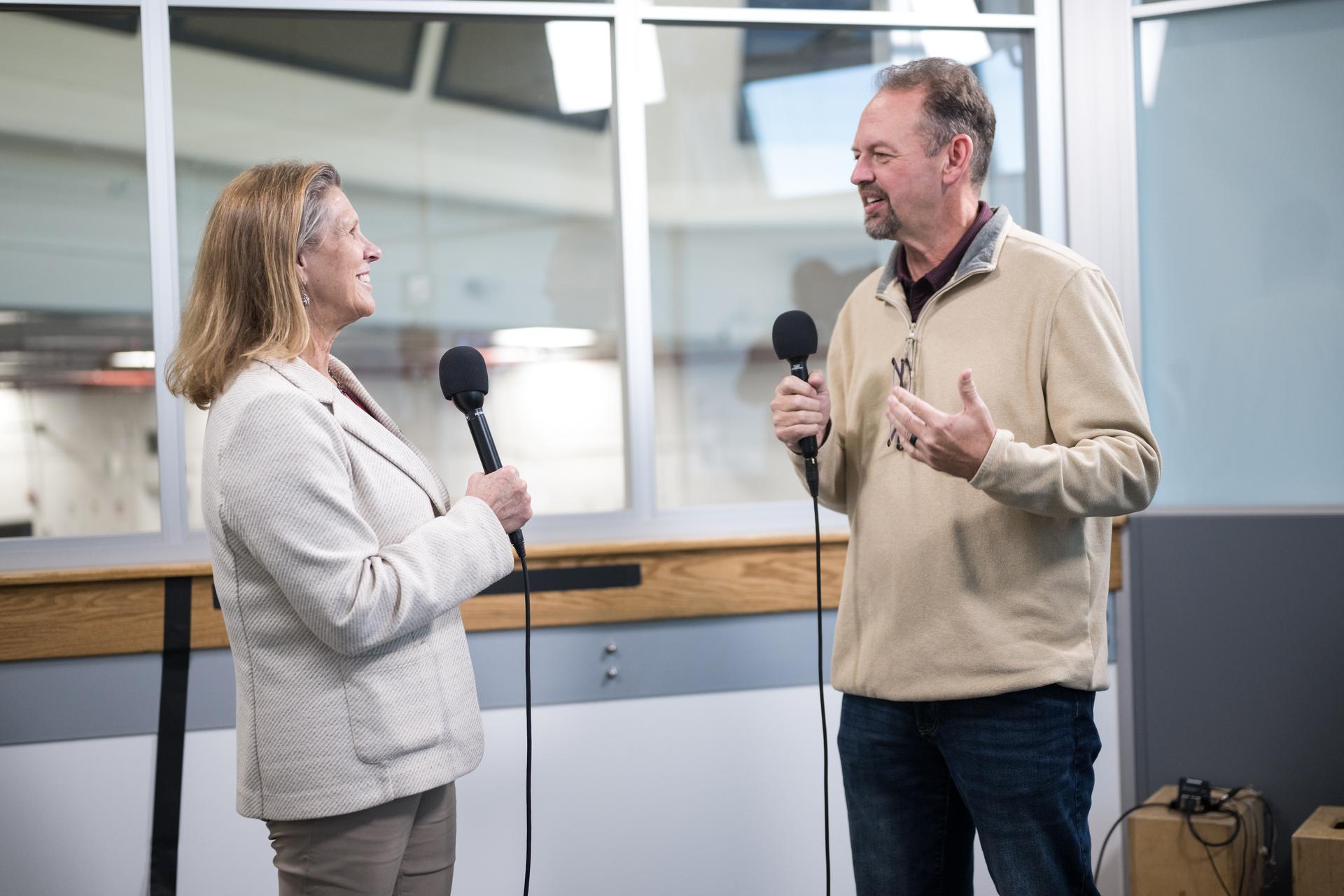
Lori Glaze, acting associate administrator for NASA's Exploration Systems Development Mission Directorate is interviewed by NASA public affairs officer Steven Siceloff during the Countdown Demonstration Test with Artemis II crewmembers NASA astronauts Reid Wiseman, commander; Victor Glover, pilot; Christina Koch, mission specialist; and CSA (Canadian Space Agency) astronaut Jeremy Hansen, mission specialist in Firing Room 2 of the Rocco A. Petrone Launch Control Center, Saturday, Dec. 20, 2025, at NASA’s Kennedy Space Center in Florida. For this operation, the Artemis II crew and launch teams are simulating the launch day timeline including suit-up, walkout, and spacecraft ingress and egress. Through the Artemis campaign, NASA will send astronauts to explore the Moon for scientific discovery, economic benefits, and to build the foundation for the first crewed missions to Mars, for the benefit of all. Photo Credit: (NASA/Aubrey Gemignani)
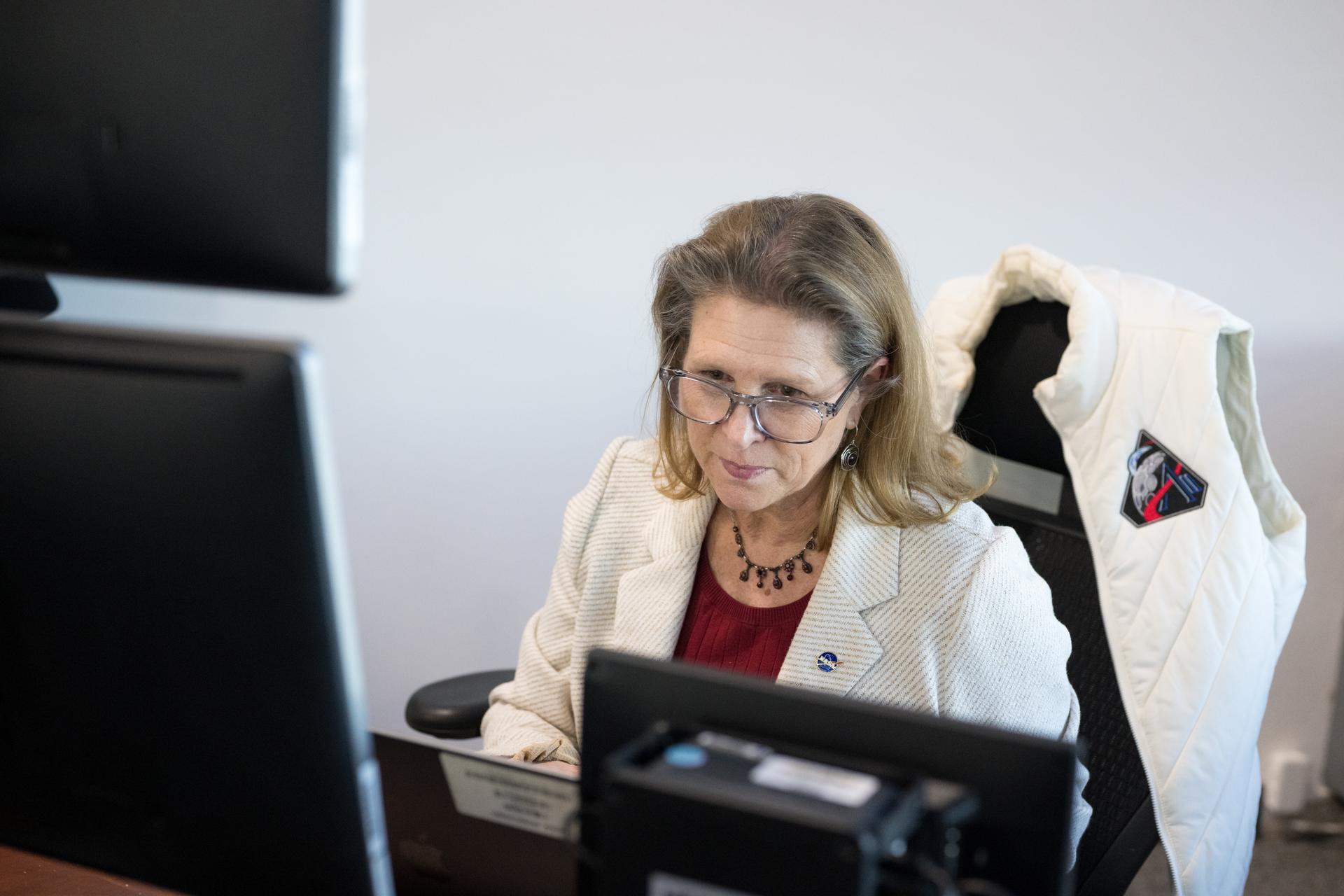
Lori Glaze, acting associate administrator for NASA's Exploration Systems Development Mission Directorate monitors the progress of a Countdown Demonstration Test with Artemis II crewmembers NASA astronauts Reid Wiseman, commander; Victor Glover, pilot; Christina Koch, mission specialist; and CSA (Canadian Space Agency) astronaut Jeremy Hansen, mission specialist onboard their Orion spacecraft from Firing Room 2 of the Rocco A. Petrone Launch Control Center, Saturday, Dec. 20, 2025, at NASA’s Kennedy Space Center in Florida. For this operation, the Artemis II crew and launch teams are simulating the launch day timeline including suit-up, walkout, and spacecraft ingress and egress. Through the Artemis campaign, NASA will send astronauts to explore the Moon for scientific discovery, economic benefits, and to build the foundation for the first crewed missions to Mars, for the benefit of all. Photo Credit: (NASA/Aubrey Gemignani)
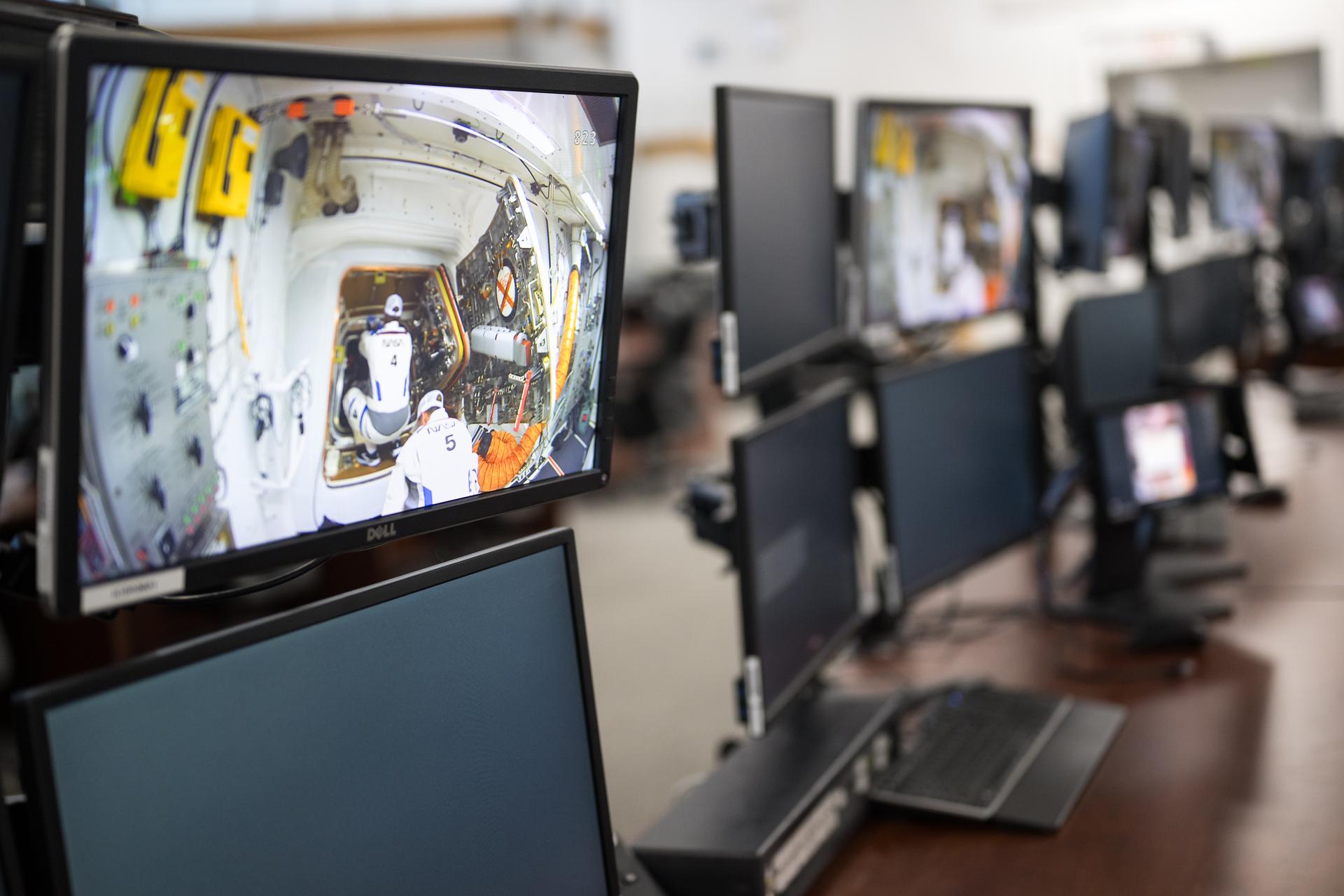
Teams monitor the progress of a Countdown Demonstration Test with Artemis II crewmembers NASA astronauts Reid Wiseman, commander; Victor Glover, pilot; Christina Koch, mission specialist; and CSA (Canadian Space Agency) astronaut Jeremy Hansen, mission specialist onboard their Orion spacecraft from Firing Room 2 of the Rocco A. Petrone Launch Control Center, Saturday, Dec. 20, 2025, at NASA’s Kennedy Space Center in Florida. For this operation, the Artemis II crew and launch teams are simulating the launch day timeline including suit-up, walkout, and spacecraft ingress and egress. Through the Artemis campaign, NASA will send astronauts to explore the Moon for scientific discovery, economic benefits, and to build the foundation for the first crewed missions to Mars, for the benefit of all. Photo Credit: (NASA/Aubrey Gemignani)
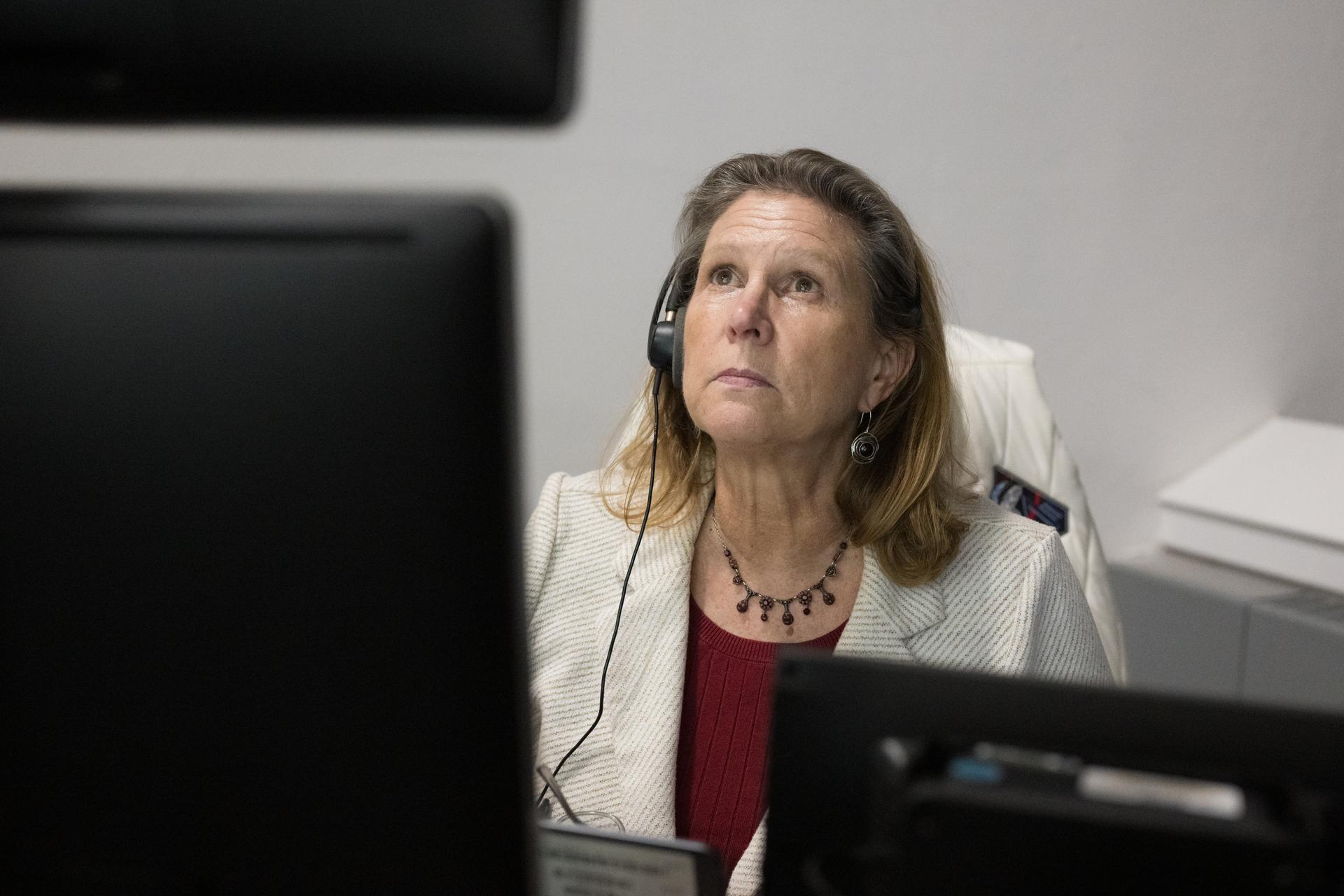
Lori Glaze, acting associate administrator for NASA's Exploration Systems Development Mission Directorate monitors the progress of a Countdown Demonstration Test with Artemis II crewmembers NASA astronauts Reid Wiseman, commander; Victor Glover, pilot; Christina Koch, mission specialist; and CSA (Canadian Space Agency) astronaut Jeremy Hansen, mission specialist onboard their Orion spacecraft from Firing Room 2 of the Rocco A. Petrone Launch Control Center, Saturday, Dec. 20, 2025, at NASA’s Kennedy Space Center in Florida. For this operation, the Artemis II crew and launch teams are simulating the launch day timeline including suit-up, walkout, and spacecraft ingress and egress. Through the Artemis campaign, NASA will send astronauts to explore the Moon for scientific discovery, economic benefits, and to build the foundation for the first crewed missions to Mars, for the benefit of all. Photo Credit: (NASA/Aubrey Gemignani)

Teams monitor the progress of a Countdown Demonstration Test with Artemis II crewmembers NASA astronauts Reid Wiseman, commander; Victor Glover, pilot; Christina Koch, mission specialist; and CSA (Canadian Space Agency) astronaut Jeremy Hansen, mission specialist onboard their Orion spacecraft from Firing Room 2 of the Rocco A. Petrone Launch Control Center, Saturday, Dec. 20, 2025, at NASA’s Kennedy Space Center in Florida. For this operation, the Artemis II crew and launch teams are simulating the launch day timeline including suit-up, walkout, and spacecraft ingress and egress. Through the Artemis campaign, NASA will send astronauts to explore the Moon for scientific discovery, economic benefits, and to build the foundation for the first crewed missions to Mars, for the benefit of all. Photo Credit: (NASA/Aubrey Gemignani)

Teams monitor the progress of a Countdown Demonstration Test with Artemis II crewmembers NASA astronauts Reid Wiseman, commander; Victor Glover, pilot; Christina Koch, mission specialist; and CSA (Canadian Space Agency) astronaut Jeremy Hansen, mission specialist onboard their Orion spacecraft from Firing Room 2 of the Rocco A. Petrone Launch Control Center, Saturday, Dec. 20, 2025, at NASA’s Kennedy Space Center in Florida. For this operation, the Artemis II crew and launch teams are simulating the launch day timeline including suit-up, walkout, and spacecraft ingress and egress. Through the Artemis campaign, NASA will send astronauts to explore the Moon for scientific discovery, economic benefits, and to build the foundation for the first crewed missions to Mars, for the benefit of all. Photo Credit: (NASA/Aubrey Gemignani)

Janet Petro, director of NASA's Kennedy Space Center, monitors the progress of a Countdown Demonstration Test with Artemis II crewmembers NASA astronauts Reid Wiseman, commander; Victor Glover, pilot; Christina Koch, mission specialist; and CSA (Canadian Space Agency) astronaut Jeremy Hansen, mission specialist onboard their Orion spacecraft from Firing Room 2 of the Rocco A. Petrone Launch Control Center, Saturday, Dec. 20, 2025, at NASA’s Kennedy Space Center in Florida. For this operation, the Artemis II crew and launch teams are simulating the launch day timeline including suit-up, walkout, and spacecraft ingress and egress. Through the Artemis campaign, NASA will send astronauts to explore the Moon for scientific discovery, economic benefits, and to build the foundation for the first crewed missions to Mars, for the benefit of all. Photo Credit: (NASA/Aubrey Gemignani)
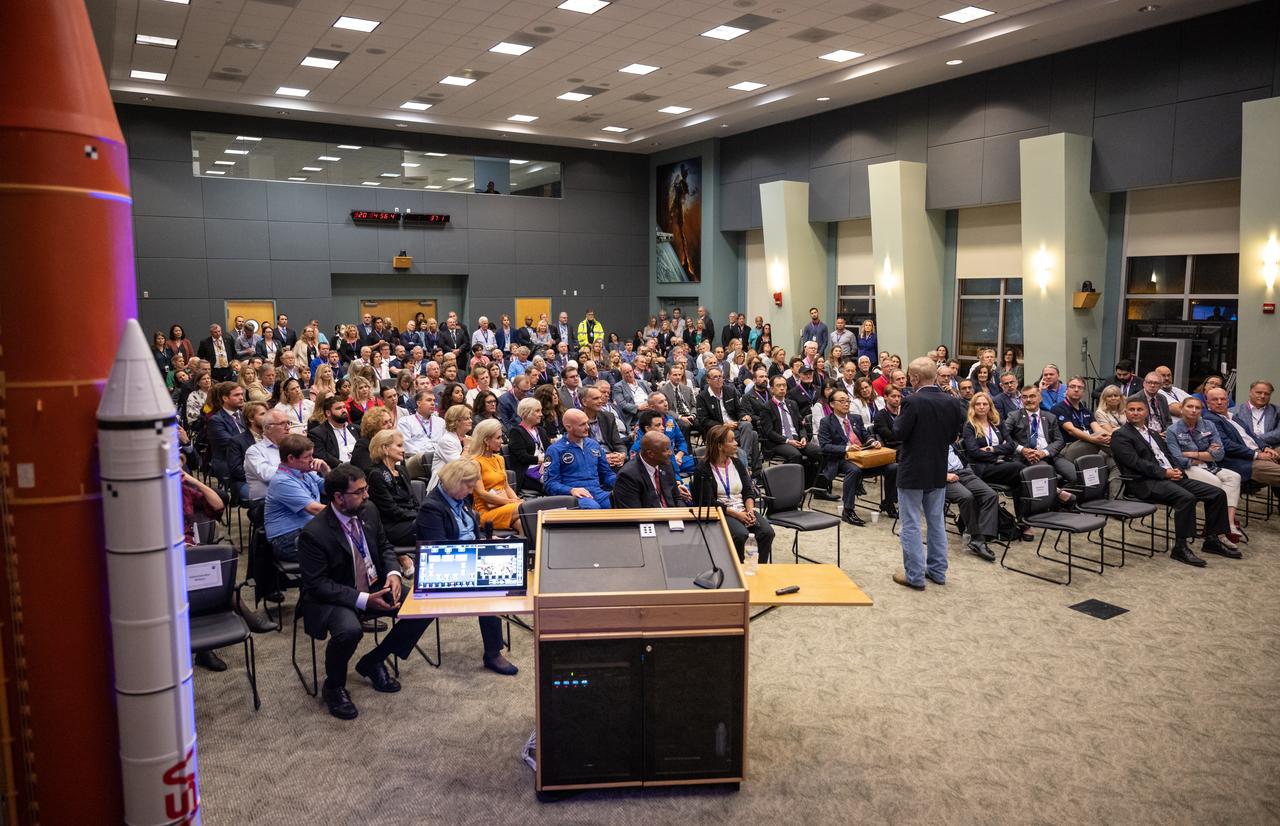
NASA Administrator Bill Nelson gives remarks ahead of the launch of NASA’s Space Launch System rocket carrying the Orion spacecraft on the Artemis I flight test, Tuesday, Nov. 15, 2022, from Operations and Support Building II at NASA’s Kennedy Space Center in Florida. NASA’s Artemis I flight test is the first integrated flight test of the agency’s deep space exploration systems: the Orion spacecraft, Space Launch System (SLS) rocket, and ground systems. Photo Credit: (NASA/Bill Ingalls)
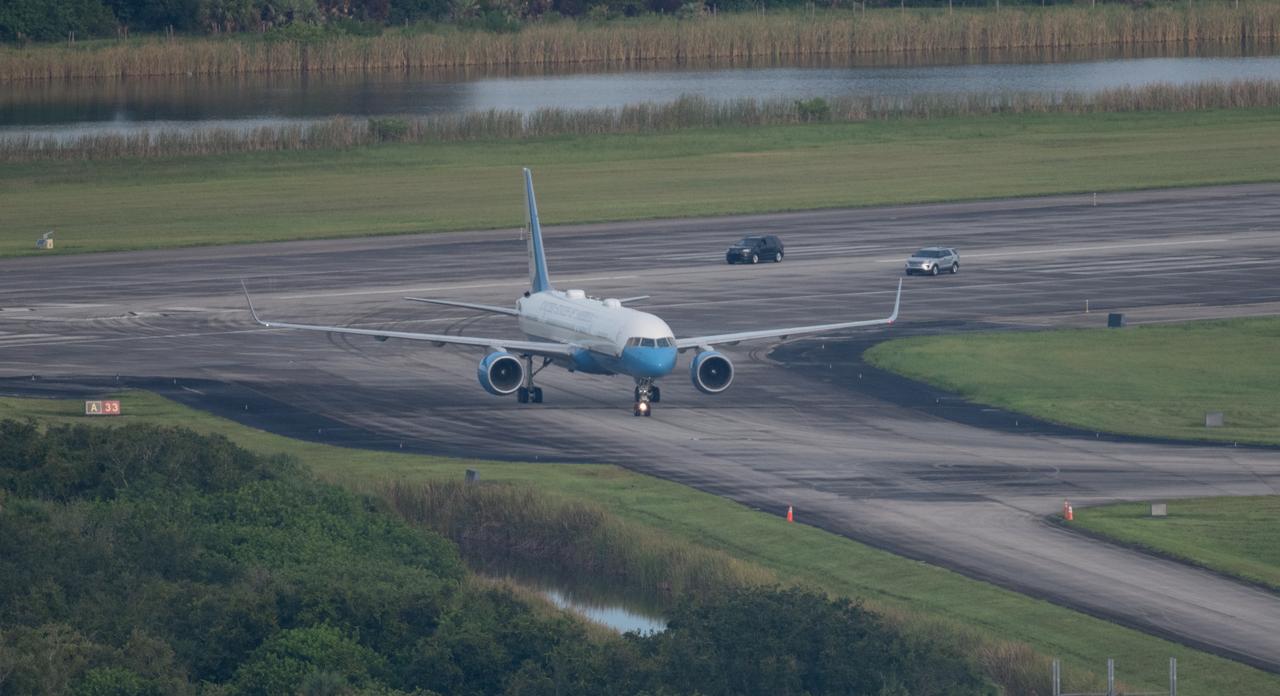
Air Force Two is seen as it arrives at the Launch and Landing Facility at NASA’s Kennedy Space Center ahead of the first launch attempt of Artemis I, Monday, Aug. 29, 2022, in Florida. NASA’s Artemis I flight test is the first integrated flight test of the agency’s deep space exploration systems: the Orion spacecraft, Space Launch System (SLS) rocket, and ground systems. The launch director halted today’s launch attempt at approximately 8:30 a.m. ET. Photo Credit: (NASA/Joel Kowsky)
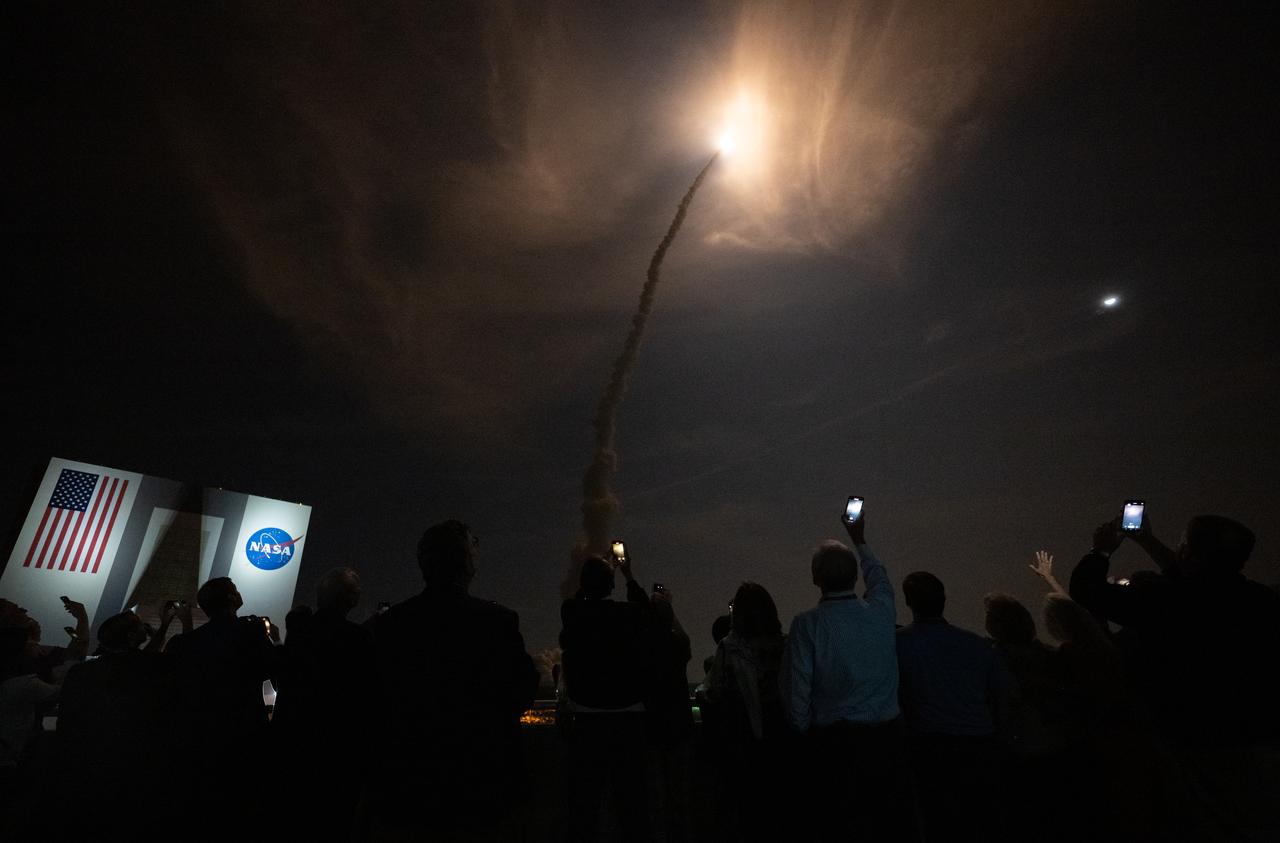
Guests watch the launch of NASA’s Space Launch System rocket carrying the Orion spacecraft on the Artemis I flight test, Wednesday, Nov. 16, 2022, from Operations and Support Building II at NASA’s Kennedy Space Center in Florida. NASA’s Artemis I flight test is the first integrated flight test of the agency’s deep space exploration systems: the Orion spacecraft, Space Launch System (SLS) rocket, and ground systems. SLS and Orion launched at 1:47 a.m. EST, from Launch Pad 39B at the Kennedy Space Center. The Moon is in the upper right. Photo Credit: (NASA/Bill Ingalls)
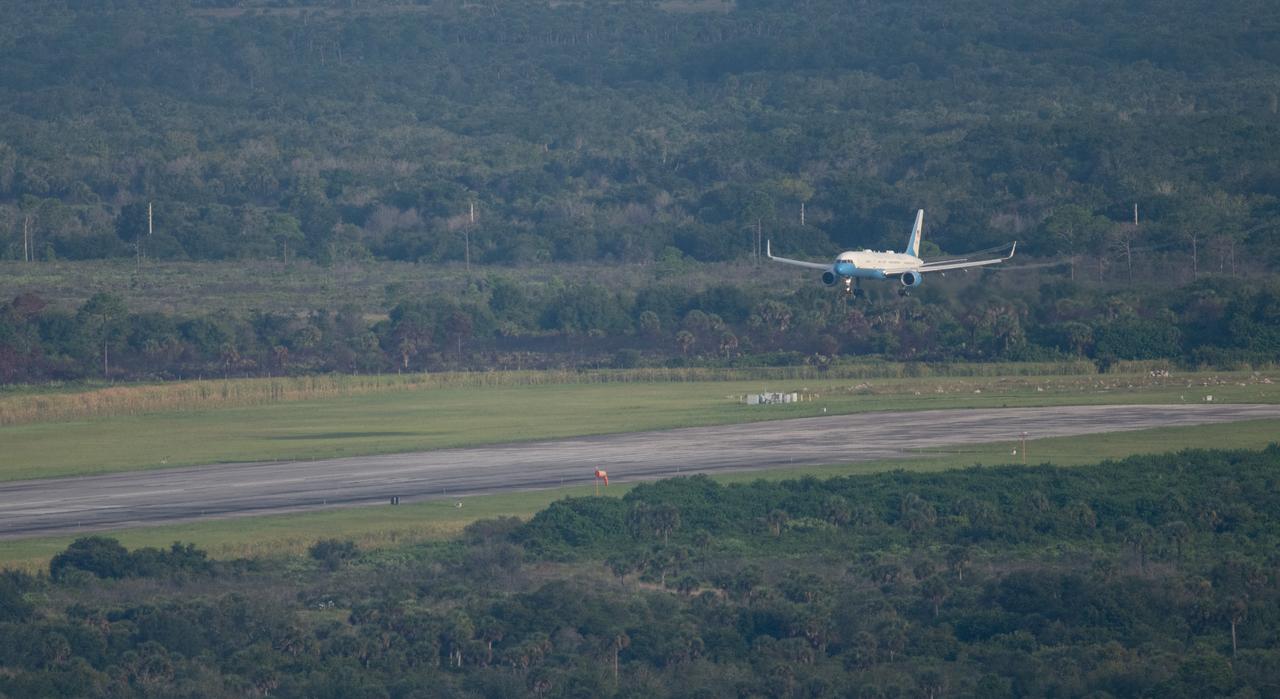
Air Force Two is seen as it arrives at the Launch and Landing Facility at NASA’s Kennedy Space Center ahead of the launch of Artemis I, Monday, Aug. 29, 2022, in Florida. NASA’s Artemis I flight test is the first integrated flight test of the agency’s deep space exploration systems: the Orion spacecraft, Space Launch System (SLS) rocket, and ground systems. The launch director halted today’s launch attempt at approximately 8:30 a.m. ET. Photo Credit: (NASA/Joel Kowsky)
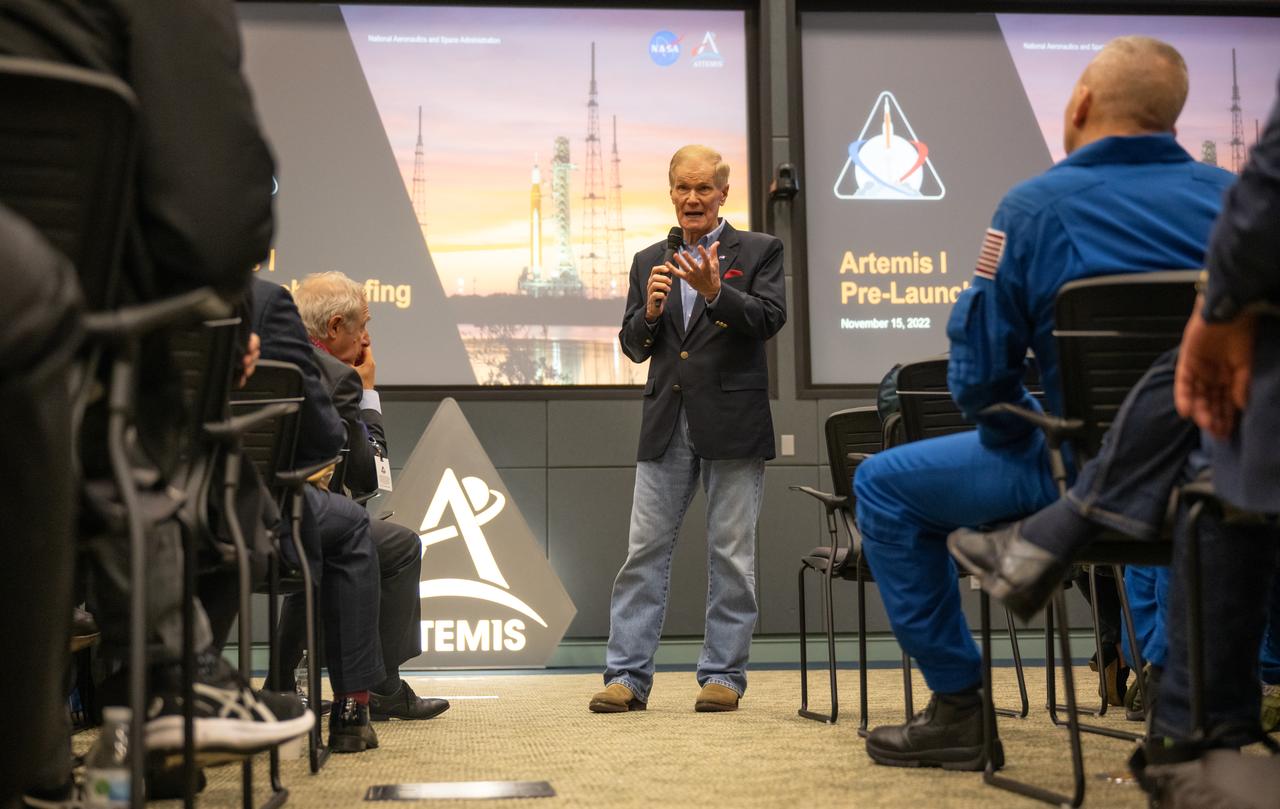
NASA Administrator Bill Nelson gives remarks ahead of the launch of NASA’s Space Launch System rocket carrying the Orion spacecraft on the Artemis I flight test, Tuesday, Nov. 15, 2022, from Operations and Support Building II at NASA’s Kennedy Space Center in Florida. NASA’s Artemis I flight test is the first integrated flight test of the agency’s deep space exploration systems: the Orion spacecraft, Space Launch System (SLS) rocket, and ground systems. Photo Credit: (NASA/Bill Ingalls)
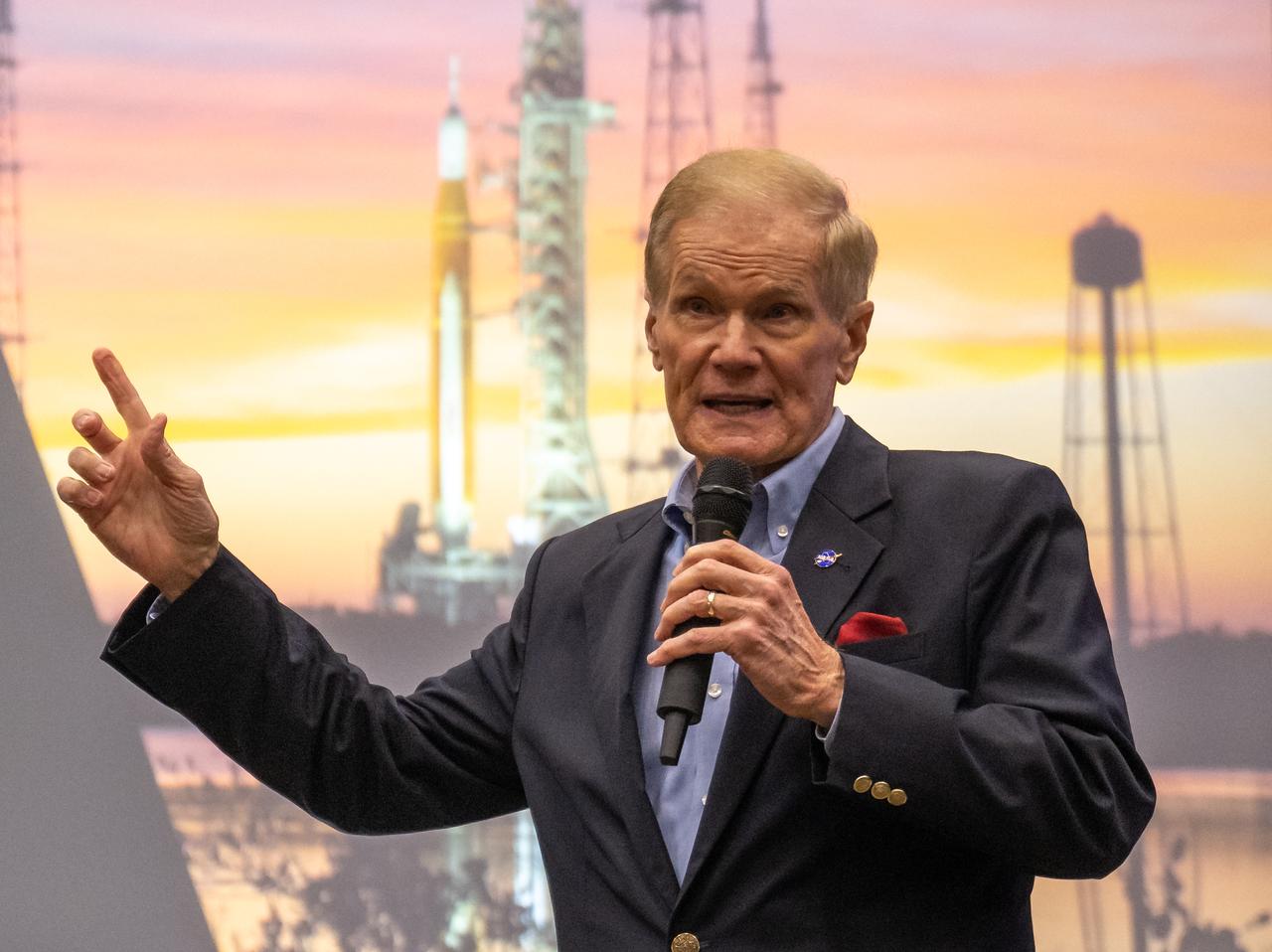
NASA Administrator Bill Nelson gives remarks ahead of the launch of NASA’s Space Launch System rocket carrying the Orion spacecraft on the Artemis I flight test, Tuesday, Nov. 15, 2022, from Operations and Support Building II at NASA’s Kennedy Space Center in Florida. NASA’s Artemis I flight test is the first integrated flight test of the agency’s deep space exploration systems: the Orion spacecraft, Space Launch System (SLS) rocket, and ground systems. Photo Credit: (NASA/Bill Ingalls)
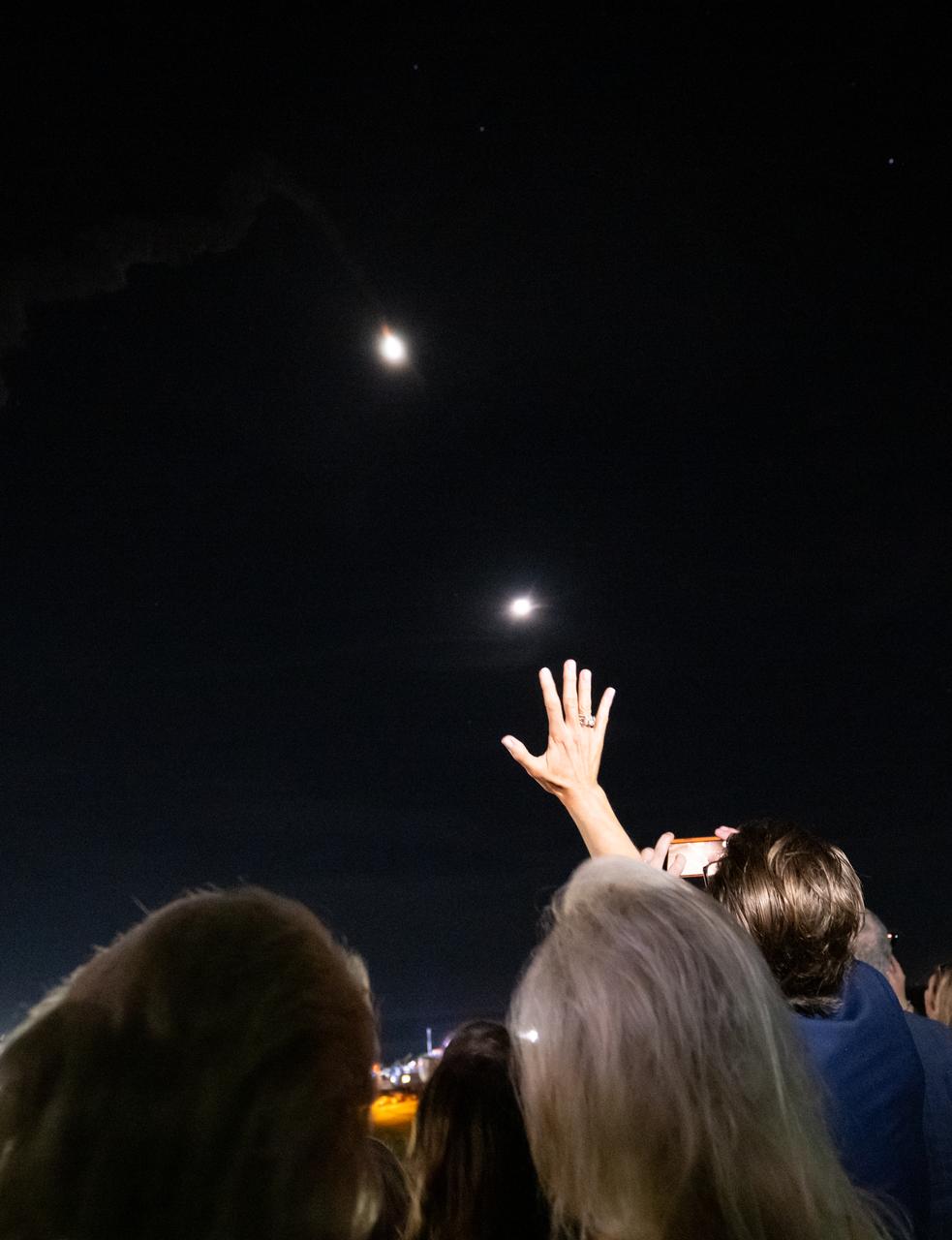
Guests watch the launch of NASA’s Space Launch System rocket carrying the Orion spacecraft on the Artemis I flight test, Wednesday, Nov. 16, 2022, from Operations and Support Building II at NASA’s Kennedy Space Center in Florida. NASA’s Artemis I flight test is the first integrated flight test of the agency’s deep space exploration systems: the Orion spacecraft, Space Launch System (SLS) rocket, and ground systems. SLS and Orion launched at 1:47 a.m. EST, from Launch Pad 39B at the Kennedy Space Center. The Moon is in the upper right. Photo Credit: (NASA/Bill Ingalls)
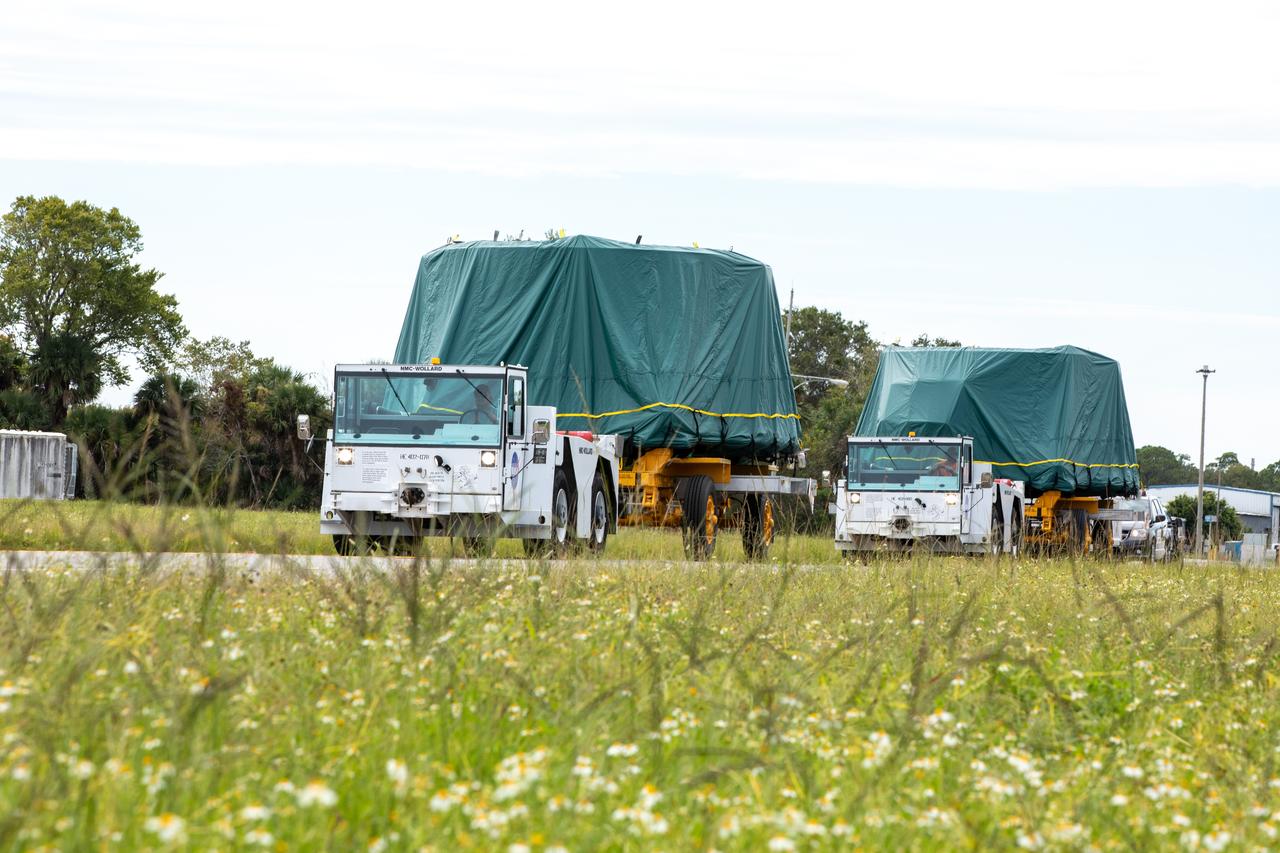
The Artemis II aft skirts for NASA's Space Launch System (SLS) rocket’s twin solid rocket boosters are transported from the Booster Fabrication Facility to the Rotation Processing and Surge Facility (RPSF) at the agency’s Kennedy Space Center in Florida on Monday, Sept. 25, 2023. The aft skirts were refurbished by Northrop Grumman and house the thrust vector control system, which controls 70 percent of the steering during initial ascent of the SLS rocket. The segments will remain in the RPSF until ready for stacking with the forward and aft parts of the boosters on the mobile launcher in High Bay 3 of the Vehicle Assembly Building. Artemis II astronauts Reid Wiseman, Victor Glover, Christina Koch, and Jeremy Hansen will launch from Kennedy, traveling around the Moon on the first crewed mission under Artemis that will test all of the Orion spacecraft’s systems.
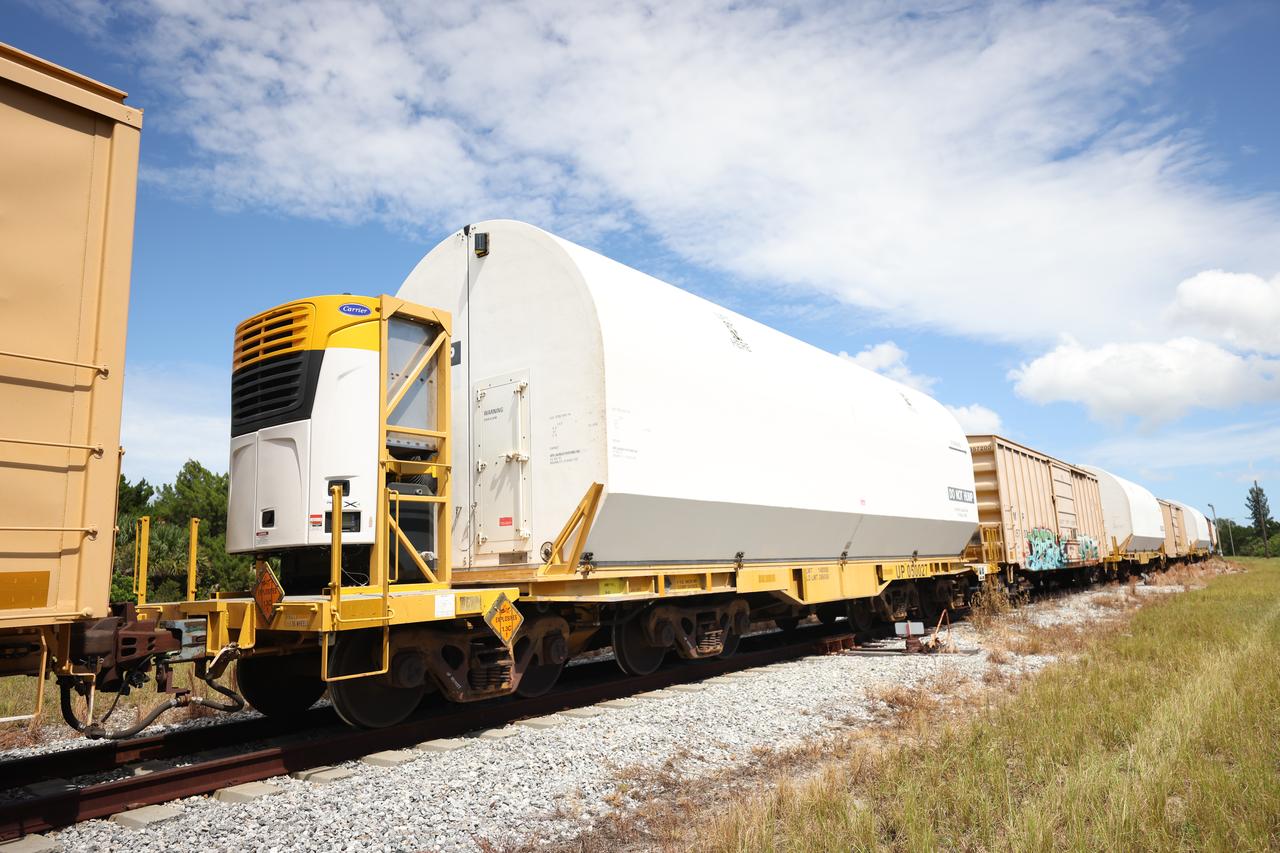
The 10 booster motor segments that will form the NASA Space Launch System rocket’s twin, five-segment solid rocket boosters for the agency’s Artemis II mission, arrive at Kennedy Space Center on Monday, Sept. 25, 2023. Due to their weight, the booster motor segments traveled by rail across eight states in specialized transporters to the Florida spaceport. Teams with NASA’s Exploration Ground Systems will process each of the segments at Kennedy in preparation for launch. Artemis II astronauts Reid Wiseman, Victor Glover, Christina Koch, and Jeremy Hansen will blast off from Kennedy, traveling around the Moon on the first crewed mission under Artemis that will test all of the Orion spacecraft’s systems.
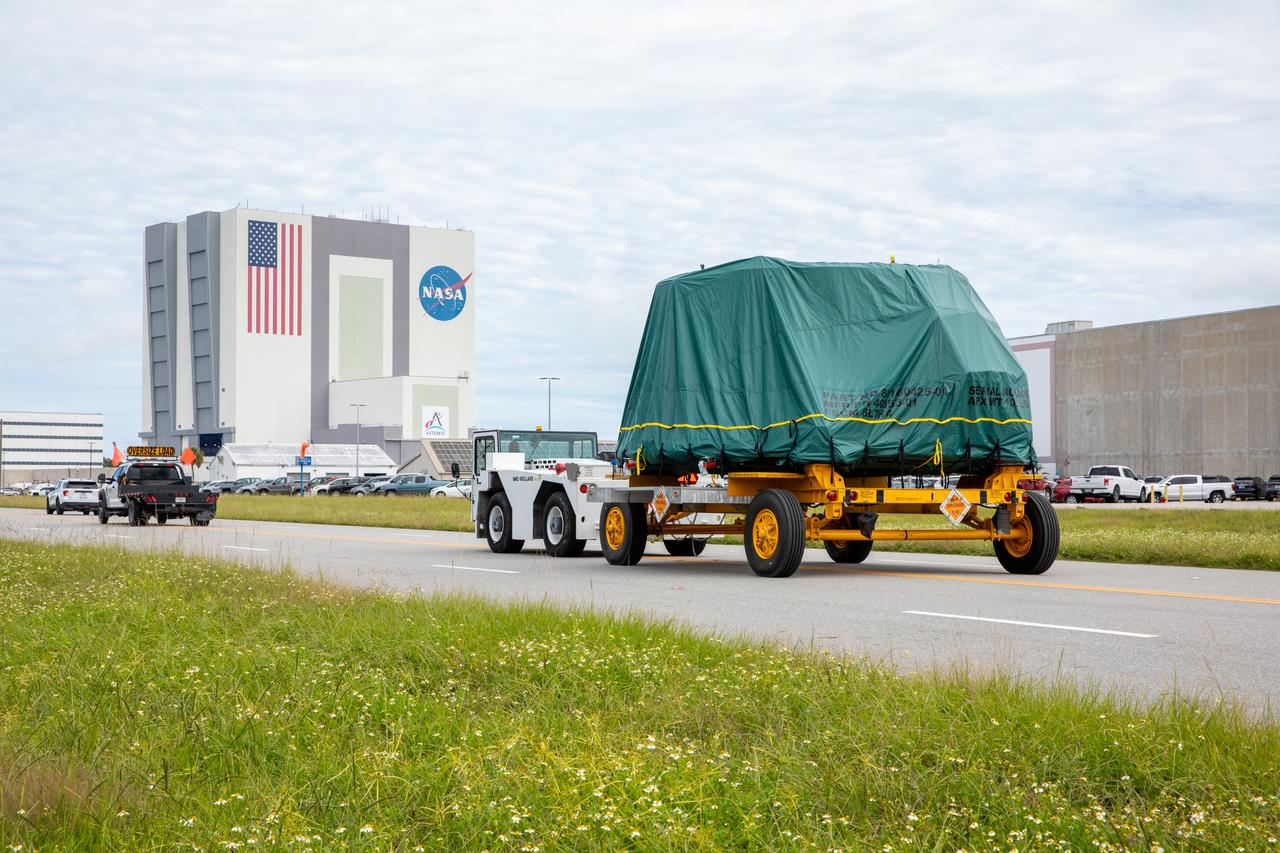
One of two Artemis II aft skirts for NASA's Space Launch System (SLS) rocket’s twin solid rocket boosters is transported from the Booster Fabrication Facility to the Rotation Processing and Surge Facility (RPSF) at the agency’s Kennedy Space Center in Florida on Monday, Sept. 25, 2023. The aft skirts were refurbished by Northrop Grumman and house the thrust vector control system, which controls 70 percent of the steering during initial ascent of the SLS rocket. The segments will remain in the RPSF until ready for stacking with the forward and aft parts of the boosters on the mobile launcher in High Bay 3 of the Vehicle Assembly Building. Artemis II astronauts Reid Wiseman, Victor Glover, Christina Koch, and Jeremy Hansen will launch from Kennedy, traveling around the Moon on the first crewed mission under Artemis that will test all of the Orion spacecraft’s systems.

One of two Artemis II aft skirts for NASA’s Space Launch System (SLS) rocket’s twin solid rocket boosters crosses railroad tracks on its way from the Booster Fabrication Facility to the Rotation Processing and Surge Facility (RPSF) at the agency’s Kennedy Space Center in Florida on Monday, Sept. 25, 2023. The aft skirts were refurbished by Northrop Grumman and house the thrust vector control system, which controls 70 percent of the steering during initial ascent of the SLS rocket. The segments will remain in the RPSF until ready for stacking with the forward and aft parts of the boosters on the mobile launcher in High Bay 3 of the Vehicle Assembly Building. Artemis II astronauts Reid Wiseman, Victor Glover, Christina Koch, and Jeremy Hansen will launch from Kennedy, traveling around the Moon on the first crewed mission under Artemis that will test all of the Orion spacecraft’s systems.

The 10 booster motor segments that will form the NASA Space Launch System rocket’s twin, five-segment solid rocket boosters for the agency’s Artemis II mission, arrive at Kennedy Space Center on Monday, Sept. 25, 2023. Due to their weight, the booster motor segments traveled by rail across eight states in specialized transporters to the Florida spaceport. Teams with NASA’s Exploration Ground Systems will process each of the segments at Kennedy in preparation for launch. Artemis II astronauts Reid Wiseman, Victor Glover, Christina Koch, and Jeremy Hansen will blast off from Kennedy, traveling around the Moon on the first crewed mission under Artemis that will test all of the Orion spacecraft’s systems.
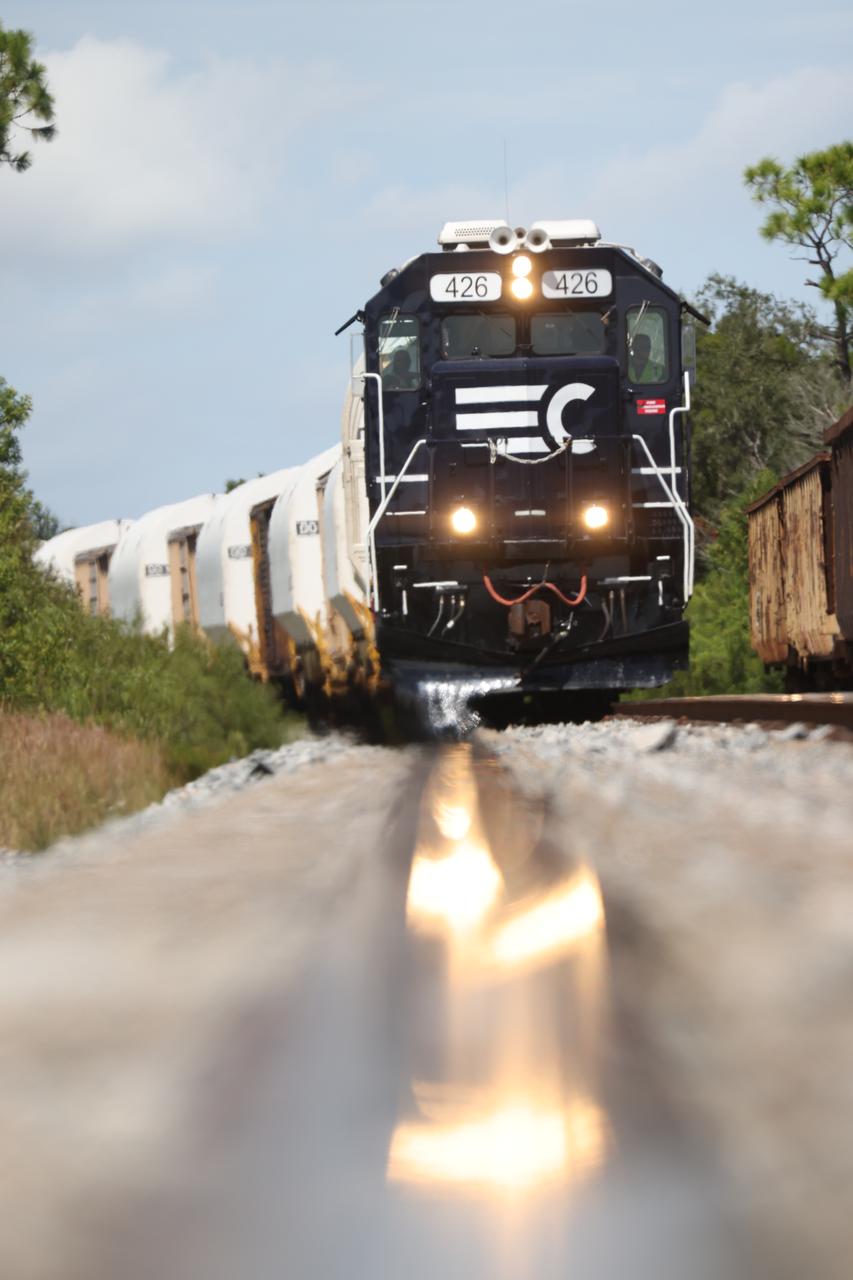
The 10 booster motor segments that will form the NASA Space Launch System rocket’s twin, five-segment solid rocket boosters for the agency’s Artemis II mission, arrive at Kennedy Space Center on Monday, Sept. 25, 2023. Due to their weight, the booster motor segments traveled by rail across eight states in specialized transporters to the Florida spaceport. Teams with NASA’s Exploration Ground Systems will process each of the segments at Kennedy in preparation for launch. Artemis II astronauts Reid Wiseman, Victor Glover, Christina Koch, and Jeremy Hansen will blast off from Kennedy, traveling around the Moon on the first crewed mission under Artemis that will test all of the Orion spacecraft’s systems.
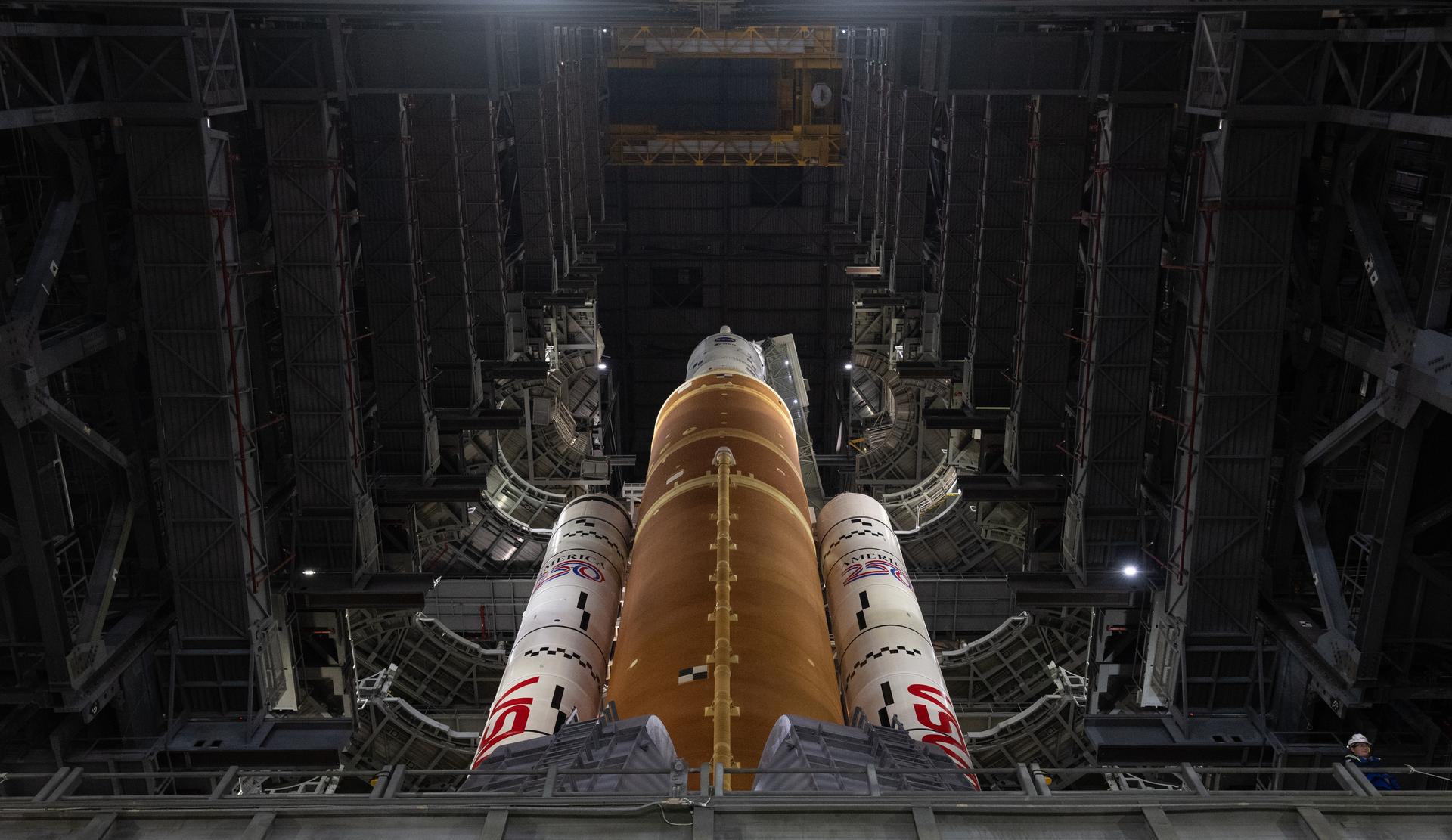
NASA’s Artemis II SLS (Space Launch System) rocket and Orion spacecraft, secured to the mobile launcher, is seen inside the Vehicle Assembly building as preparations continue for rollout to Launch Pad 39B, Friday, Jan. 16, 2026, at NASA’s Kennedy Space Center in Florida. NASA’s Artemis II flight test will take Commander Reid Wiseman, Pilot Victor Glover, and Mission Specialist Christina Koch from NASA, and Mission Specialist Jeremy Hansen from the CSA (Canadian Space Agency), around the Moon and back to Earth no later than April 2026. Photo Credit: (NASA/Joel Kowsky)
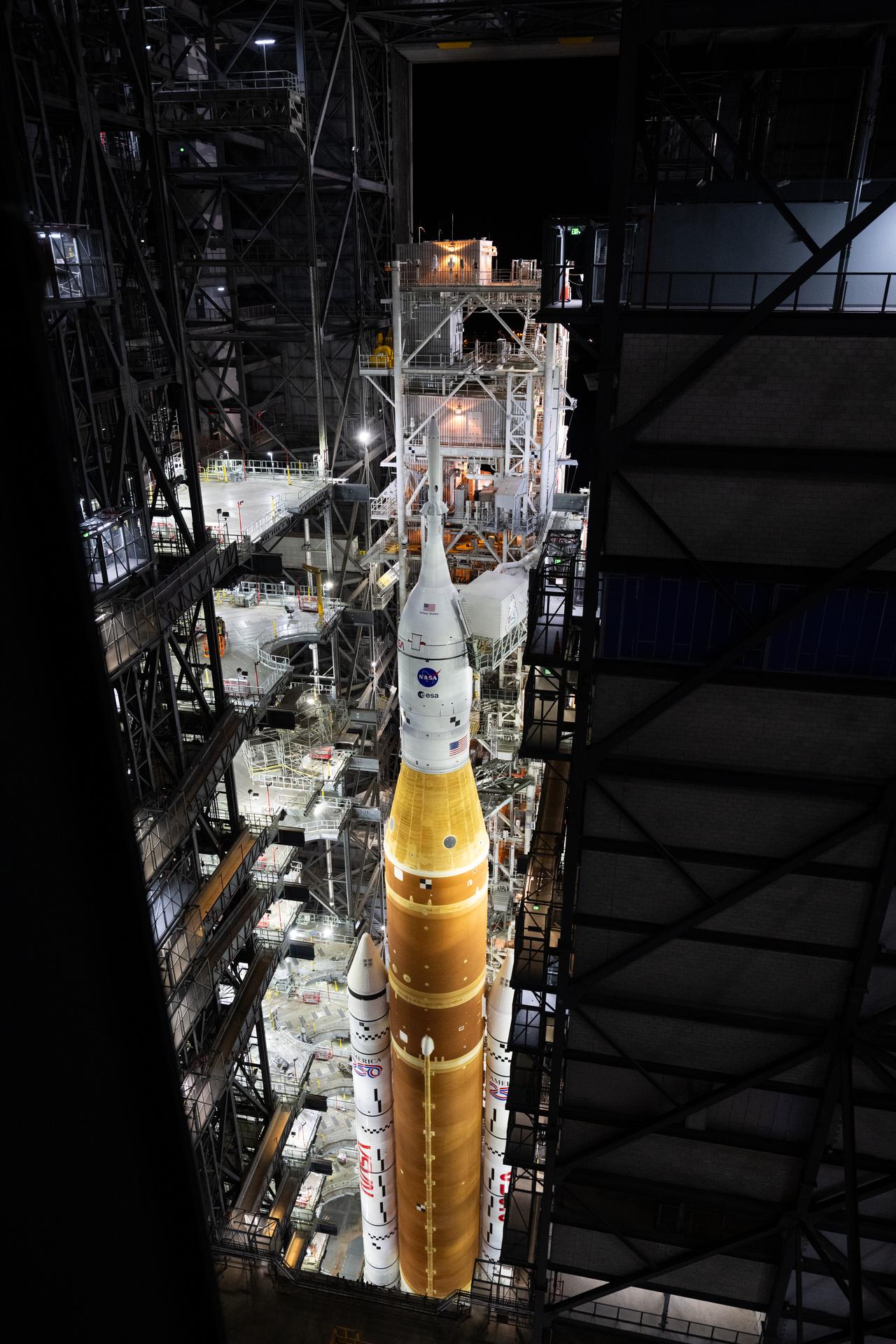
The mobile launcher with NASA’s Artemis II Space Launch System (SLS) rocket and Orion spacecraft secured to it is seen inside the Vehicle Assembly Building following the opening of the doors before rolling out to Launch Pad 39B, Saturday, Jan. 17, 2026, at NASA’s Kennedy Space Center in Florida. NASA’s Artemis II test flight will take Commander Reid Wiseman, Pilot Victor Glover, and Mission Specialist Christina Koch from NASA, and Mission Specialist Jeremy Hansen from the CSA (Canadian Space Agency), around the Moon and back to Earth no later than April 2026. Photo Credit: (NASA/Joel Kowsky)
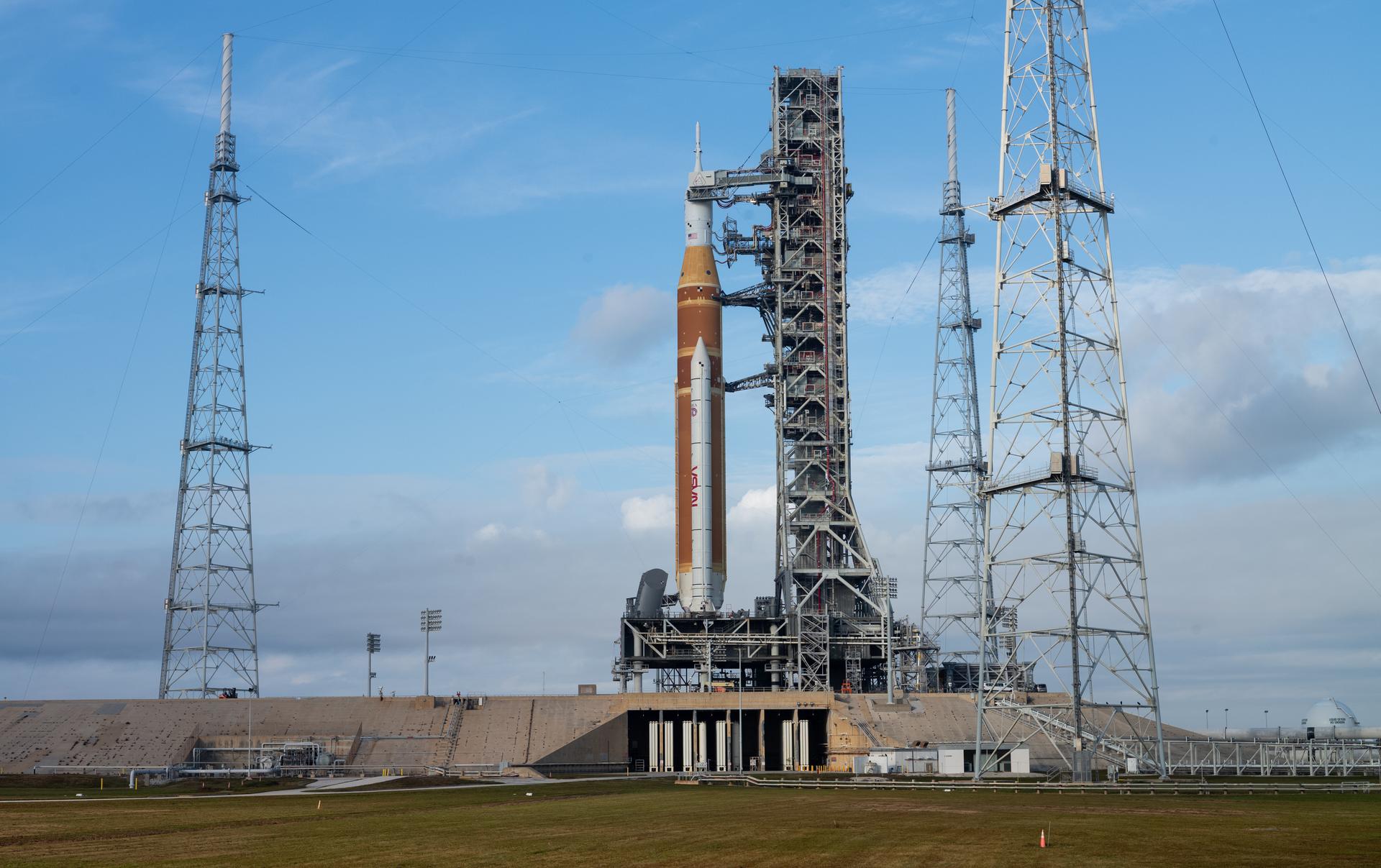
NASA’s Artemis II Space Launch System (SLS) rocket and Orion spacecraft are seen atop a mobile launcher at Launch Complex 39B, Sunday, Jan. 18, 2026, after being rolled out to the launch pad at NASA’s Kennedy Space Center in Florida. NASA’s Artemis II test flight will take Commander Reid Wiseman, Pilot Victor Glover, and Mission Specialist Christina Koch from NASA, and Mission Specialist Jeremy Hansen from the CSA (Canadian Space Agency), around the Moon and back to Earth no later than April 2026. Photo Credit: (NASA/Joel Kowsky)
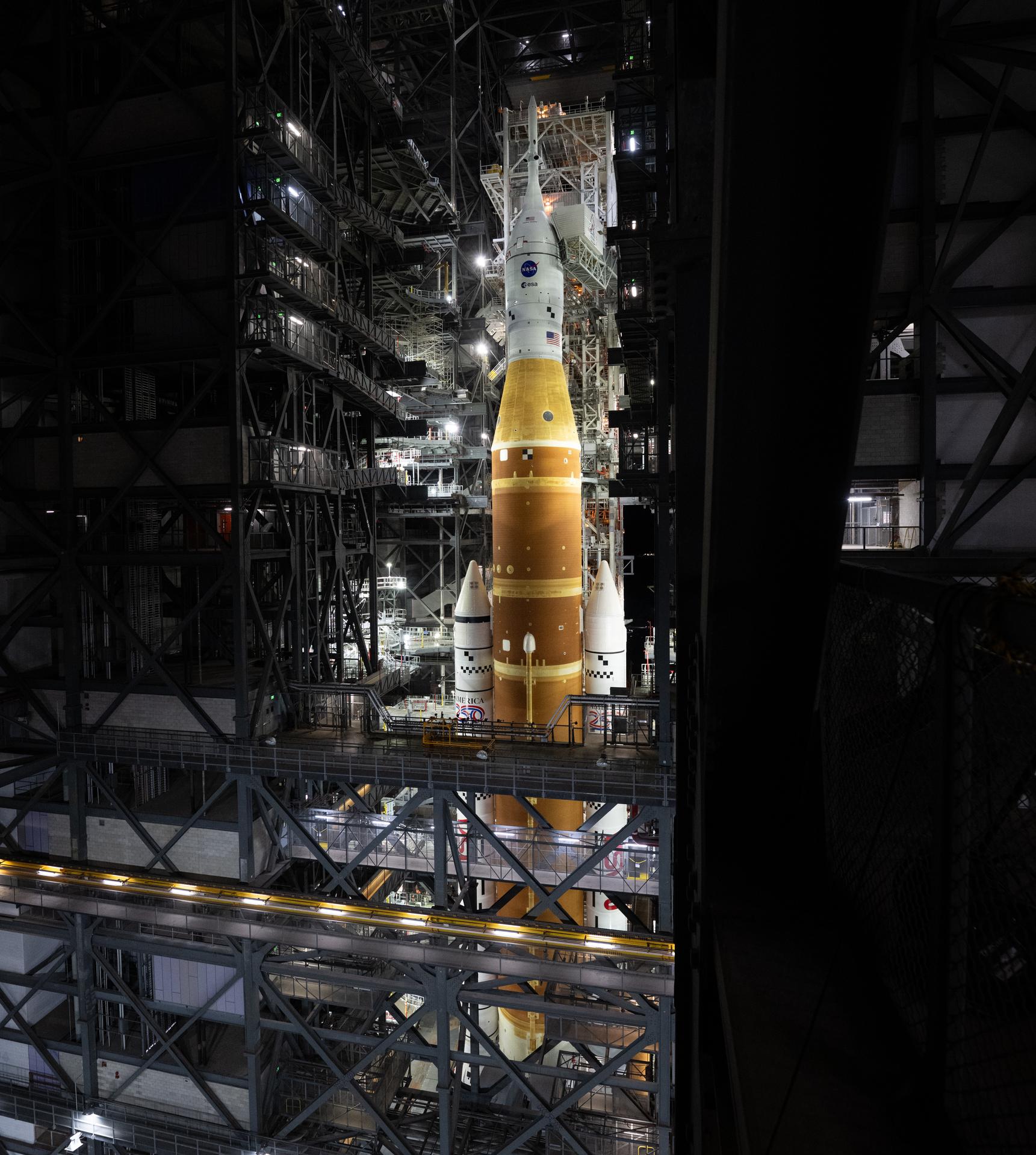
The mobile launcher with NASA’s Artemis II Space Launch System (SLS) rocket and Orion spacecraft secured to it is seen inside the Vehicle Assembly Building following the opening of the doors before rolling out to Launch Pad 39B, Saturday, Jan. 17, 2026, at NASA’s Kennedy Space Center in Florida. NASA’s Artemis II test flight will take Commander Reid Wiseman, Pilot Victor Glover, and Mission Specialist Christina Koch from NASA, and Mission Specialist Jeremy Hansen from the CSA (Canadian Space Agency), around the Moon and back to Earth no later than April 2026. Photo Credit: (NASA/Joel Kowsky)
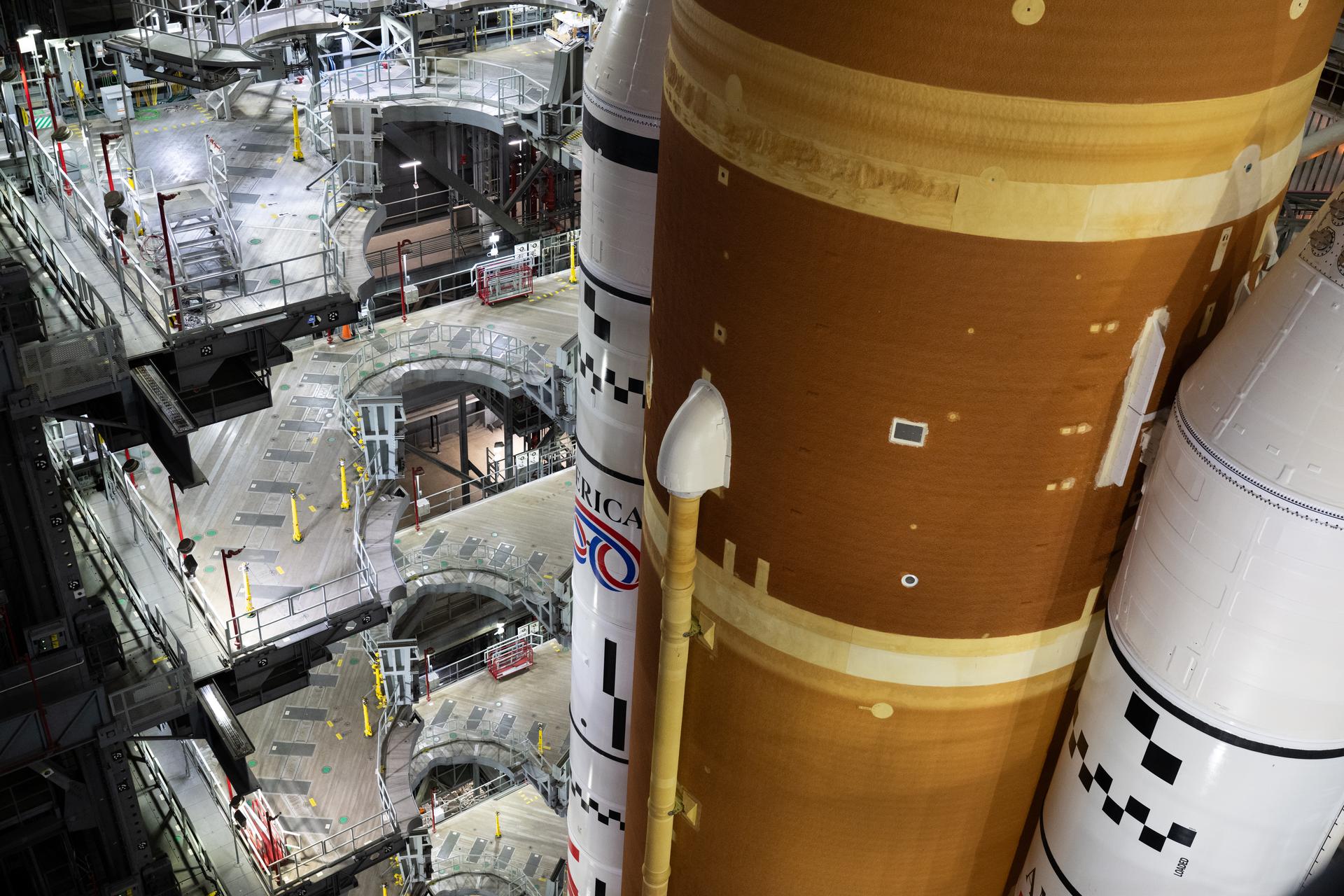
NASA’s Artemis II SLS (Space Launch System) rocket and Orion spacecraft, secured to the mobile launcher, is seen inside the Vehicle Assembly building as preparations continue for rollout to Launch Pad 39B, Friday, Jan. 16, 2026, at NASA’s Kennedy Space Center in Florida. NASA’s Artemis II flight test will take Commander Reid Wiseman, Pilot Victor Glover, and Mission Specialist Christina Koch from NASA, and Mission Specialist Jeremy Hansen from the CSA (Canadian Space Agency), around the Moon and back to Earth no later than April 2026. Photo Credit: (NASA/Joel Kowsky)
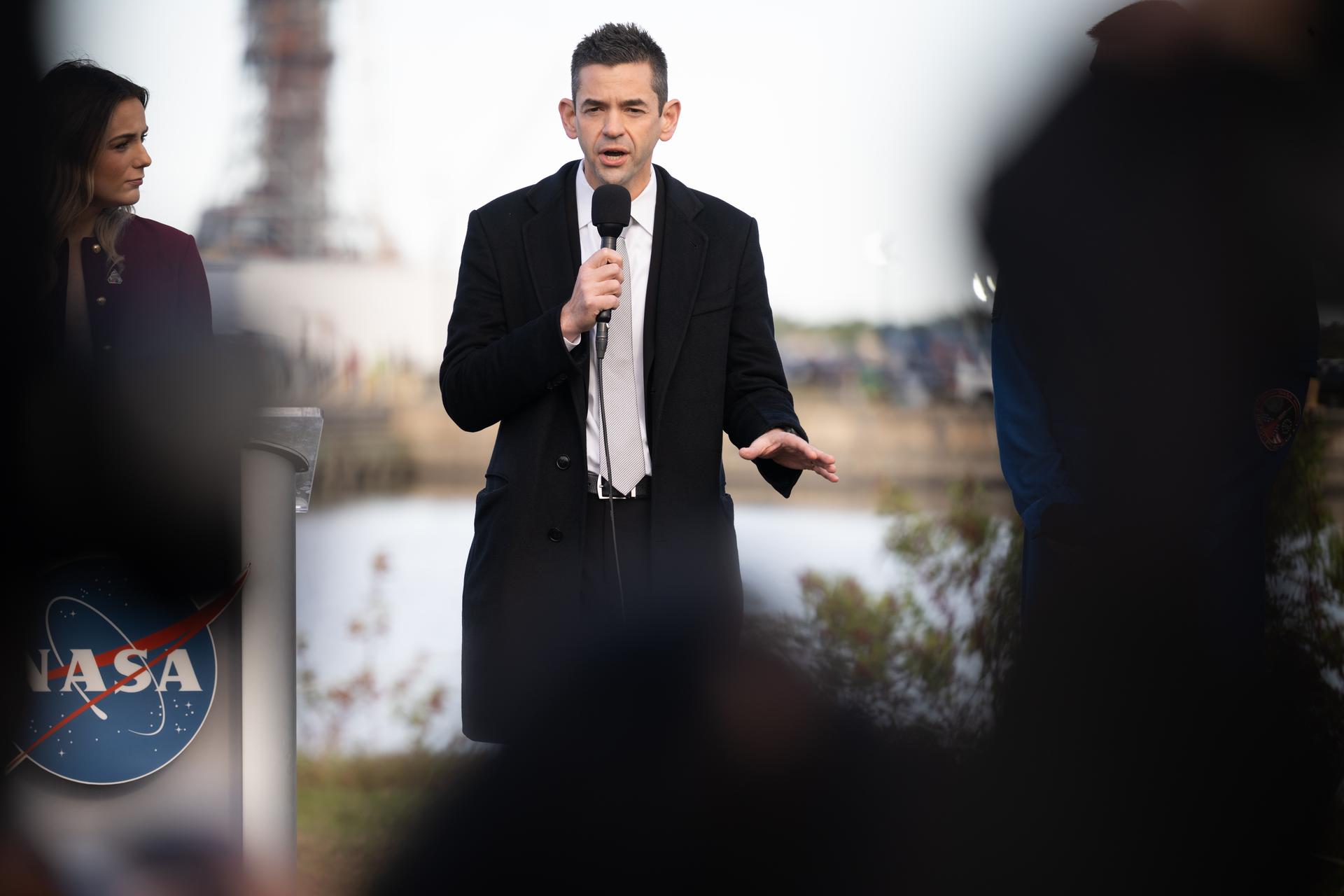
NASA Administrator Jared Isaacman speaks to members of the media during NASA’s Artemis II SLS (Space Launch System) rocket and Orion spacecraft rollout to Launch Complex 39B at NASA’s Kennedy Space Center in Florida on Saturday, Jan. 17, 2026. In the coming weeks, engineers will prepare for the wet dress rehearsal, a two-day test that simulates launch day. The Artemis II test flight will take Commander Reid Wiseman, Pilot Victor Glover, and Mission Specialist Christina Koch from NASA, and Mission Specialist Jeremy Hansen from the CSA (Canadian Space Agency), around the Moon and back to Earth no later than April 2026. Photo Credit: (NASA/Joel Kowsky)
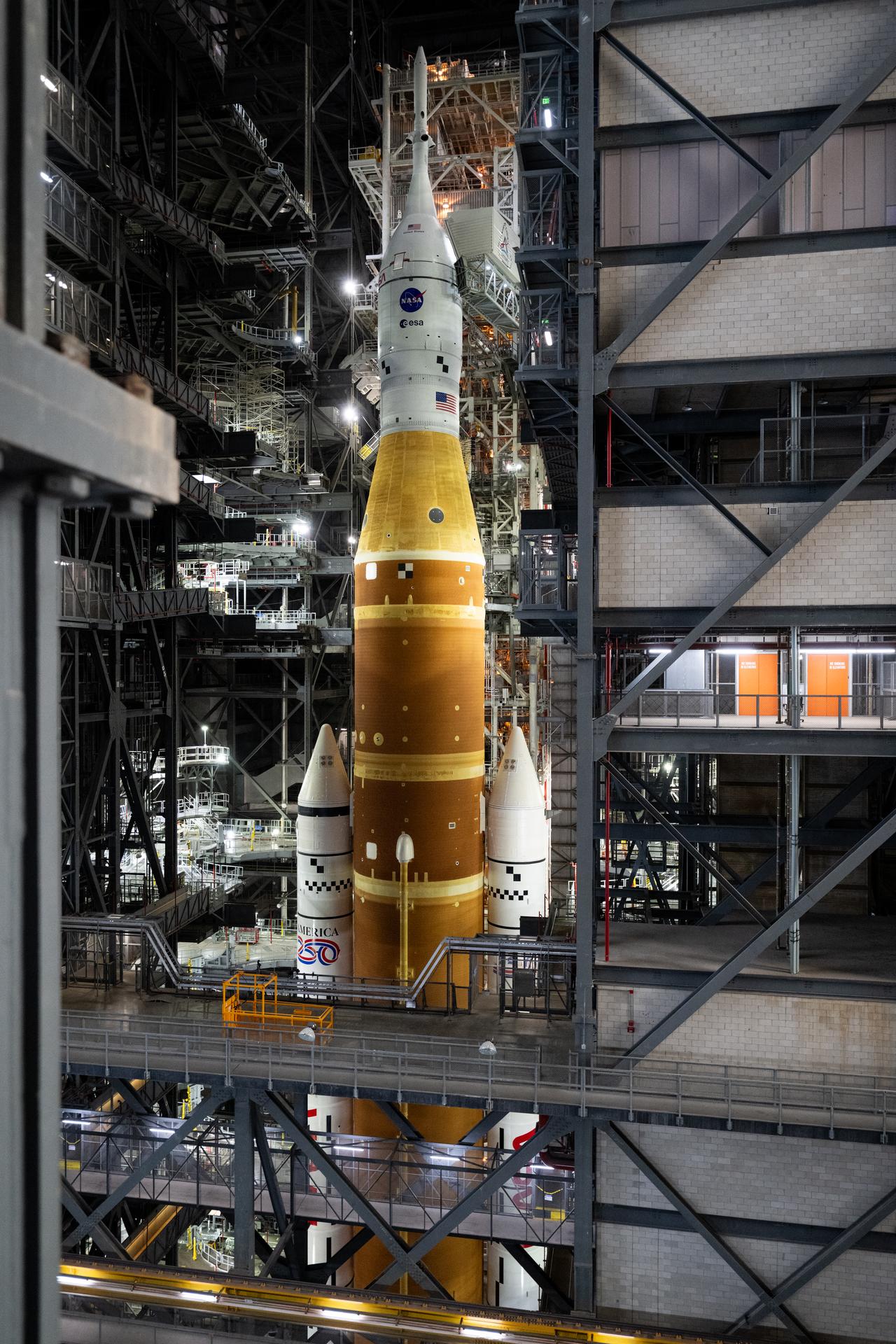
NASA’s Artemis II SLS (Space Launch System) rocket and Orion spacecraft, secured to the mobile launcher, is seen inside the Vehicle Assembly building as preparations continue for rollout to Launch Pad 39B, Friday, Jan. 16, 2026, at NASA’s Kennedy Space Center in Florida. NASA’s Artemis II flight test will take Commander Reid Wiseman, Pilot Victor Glover, and Mission Specialist Christina Koch from NASA, and Mission Specialist Jeremy Hansen from the CSA (Canadian Space Agency), around the Moon and back to Earth no later than April 2026. Photo Credit: (NASA/Joel Kowsky)
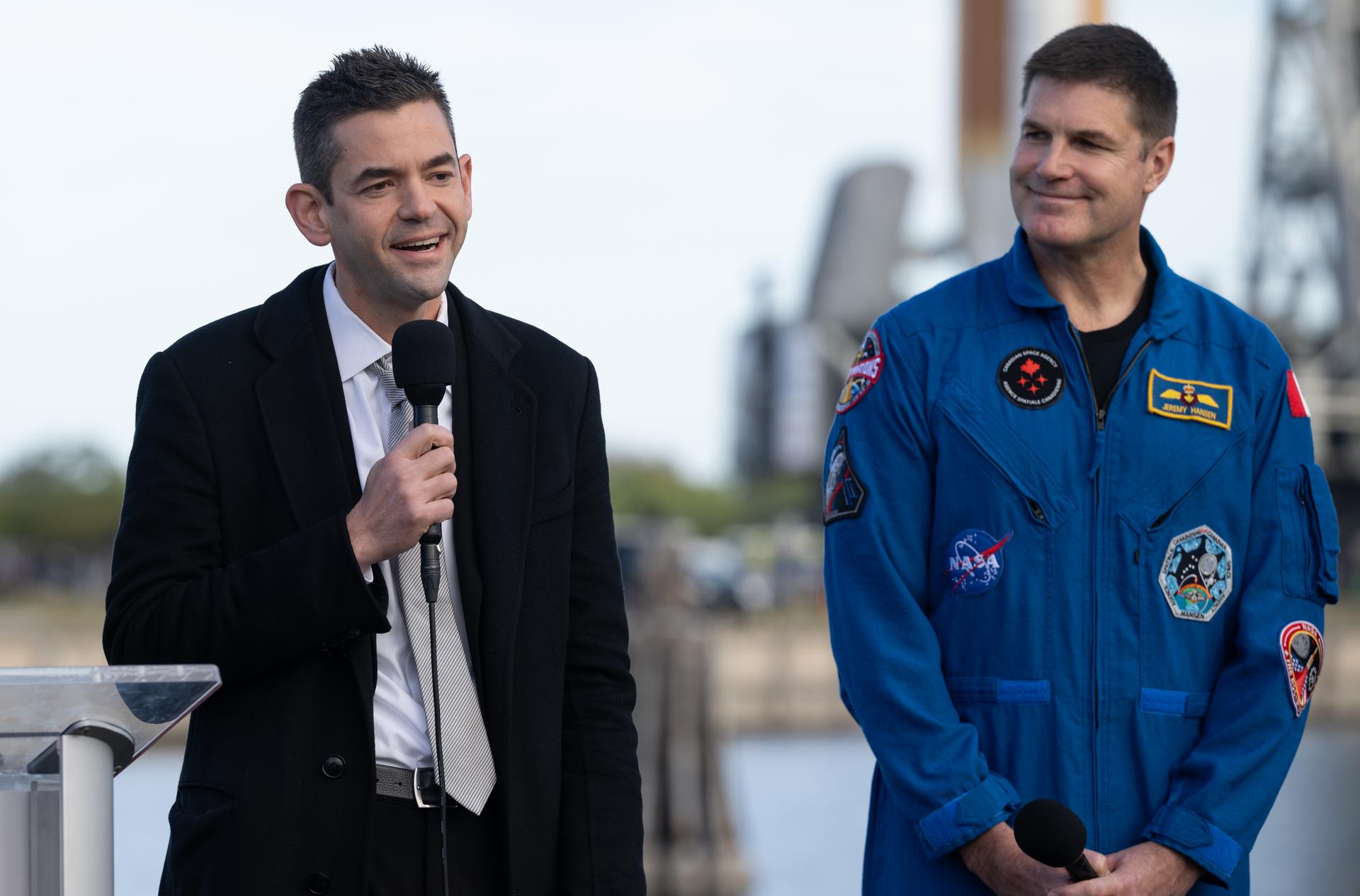
NASA Administrator Jared Isaacman speaks to members of the media during NASA’s Artemis II SLS (Space Launch System) rocket and Orion spacecraft rollout to Launch Complex 39B at NASA’s Kennedy Space Center in Florida on Saturday, Jan. 17, 2026. In the coming weeks, engineers will prepare for the wet dress rehearsal, a two-day test that simulates launch day. The Artemis II test flight will take Commander Reid Wiseman, Pilot Victor Glover, and Mission Specialist Christina Koch from NASA, and Mission Specialist Jeremy Hansen from the CSA (Canadian Space Agency), around the Moon and back to Earth no later than April 2026. Photo Credit: (NASA/Joel Kowsky)
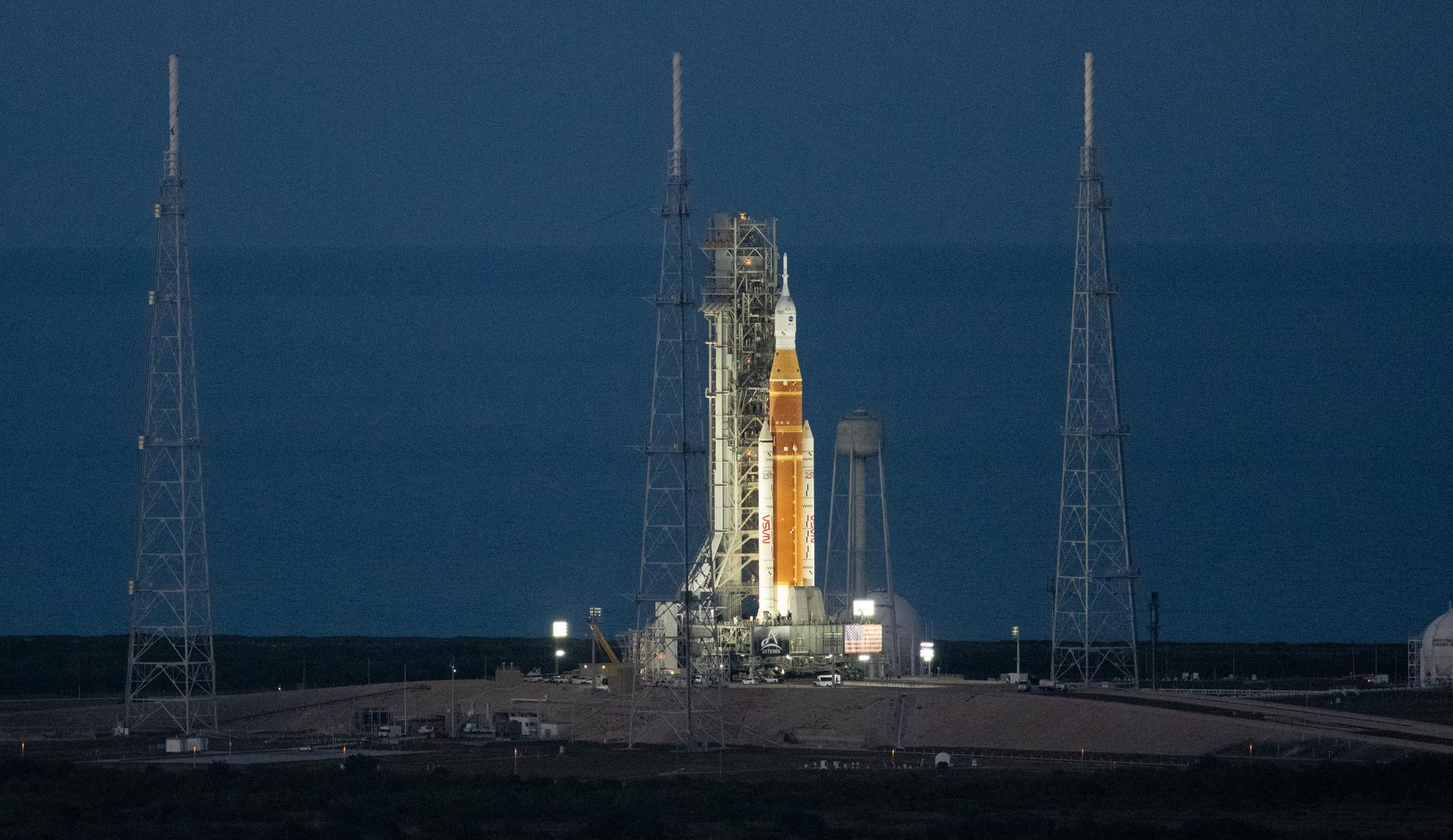
NASA’s Artemis II Space Launch System (SLS) rocket and Orion spacecraft are seen illuminated by lights after arriving at Launch Complex 39B, Saturday, Jan. 17, 2026, at NASA’s Kennedy Space Center in Florida. In the coming days, engineers will prepare for the wet dress rehearsal, a two-day test that simulates launch day. The Artemis II test flight will take Commander Reid Wiseman, Pilot Victor Glover, and Mission Specialist Christina Koch from NASA, and Mission Specialist Jeremy Hansen from the CSA (Canadian Space Agency), around the Moon and back to Earth no later than April 2026. Photo Credit: (NASA/Joel Kowsky)
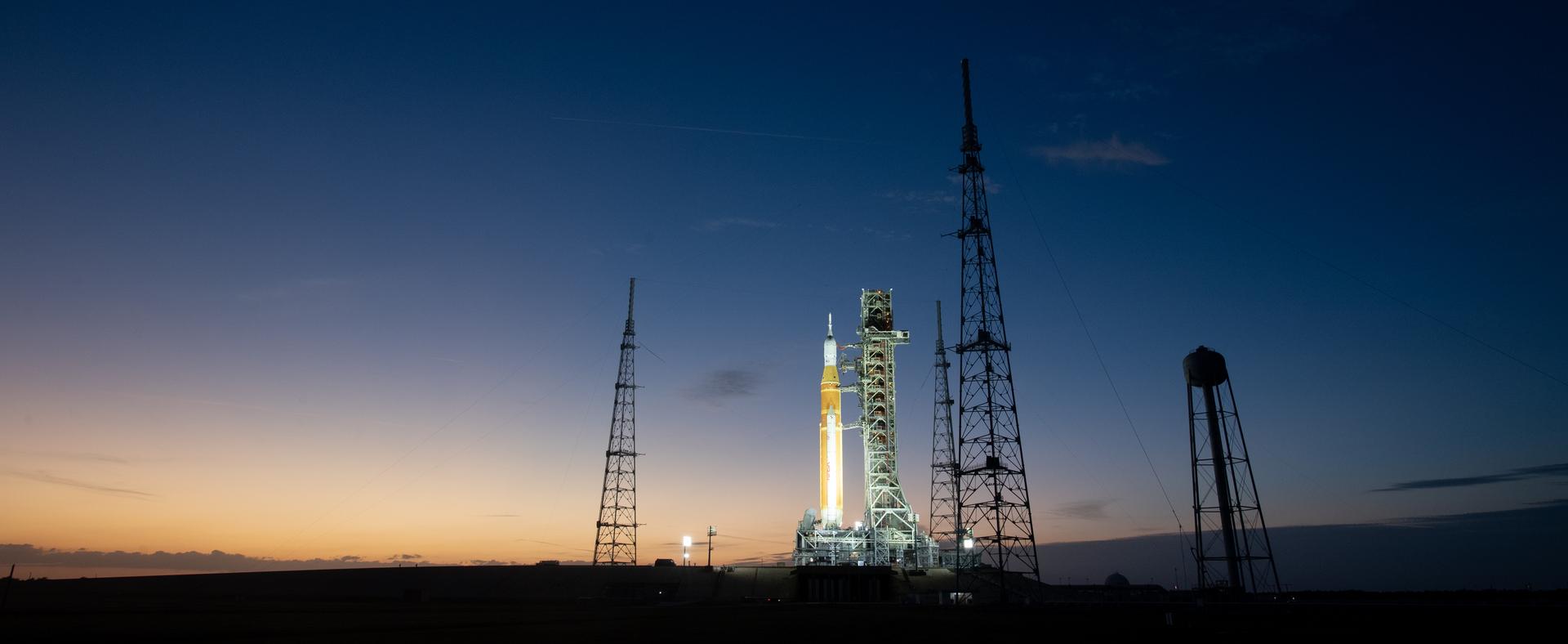
NASA’s Artemis II Space Launch System (SLS) rocket and Orion spacecraft are seen as the Sun sets after arriving at Launch Complex 39B, Saturday, Jan. 17, 2026, at NASA’s Kennedy Space Center in Florida. In the coming days, engineers will prepare for the wet dress rehearsal, a two-day test that simulates launch day. The Artemis II test flight will take Commander Reid Wiseman, Pilot Victor Glover, and Mission Specialist Christina Koch from NASA, and Mission Specialist Jeremy Hansen from the CSA (Canadian Space Agency), around the Moon and back to Earth no later than April 2026. Photo Credit: (NASA/Joel Kowsky)
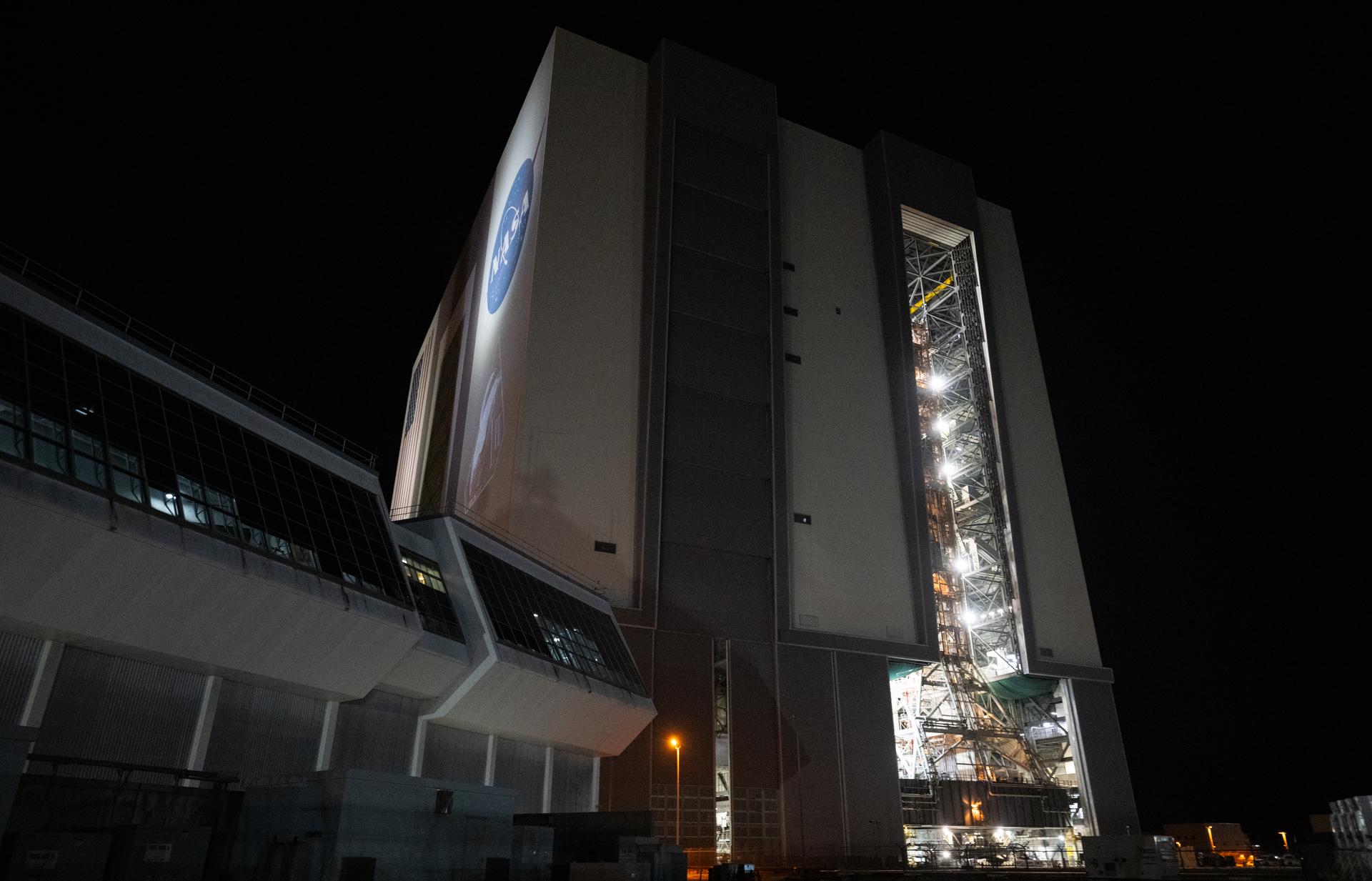
The mobile launcher with NASA’s Artemis II Space Launch System (SLS) rocket and Orion spacecraft secured to it is seen inside the Vehicle Assembly Building following the opening of the doors before rolling out to Launch Pad 39B, Saturday, Jan. 17, 2026, at NASA’s Kennedy Space Center in Florida. NASA’s Artemis II test flight will take Commander Reid Wiseman, Pilot Victor Glover, and Mission Specialist Christina Koch from NASA, and Mission Specialist Jeremy Hansen from the CSA (Canadian Space Agency), around the Moon and back to Earth no later than April 2026. Photo Credit: (NASA/Joel Kowsky)
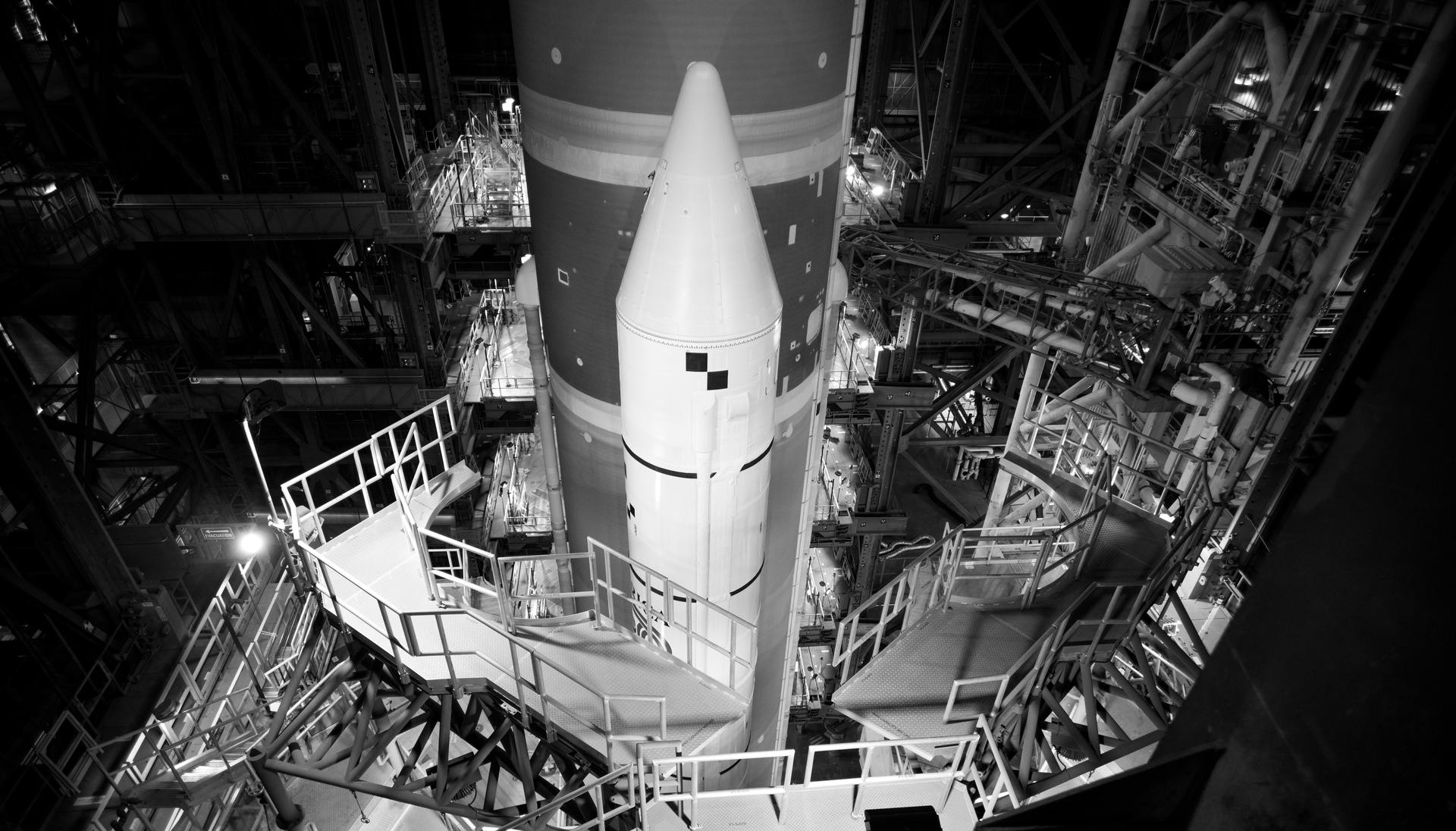
NASA’s Artemis II SLS (Space Launch System) rocket and Orion spacecraft, secured to the mobile launcher, is seen inside the Vehicle Assembly building as preparations continue for rollout to Launch Pad 39B, Friday, Jan. 16, 2026, at NASA’s Kennedy Space Center in Florida. NASA’s Artemis II flight test will take Commander Reid Wiseman, Pilot Victor Glover, and Mission Specialist Christina Koch from NASA, and Mission Specialist Jeremy Hansen from the CSA (Canadian Space Agency), around the Moon and back to Earth no later than April 2026. Photo Credit: (NASA/Joel Kowsky)
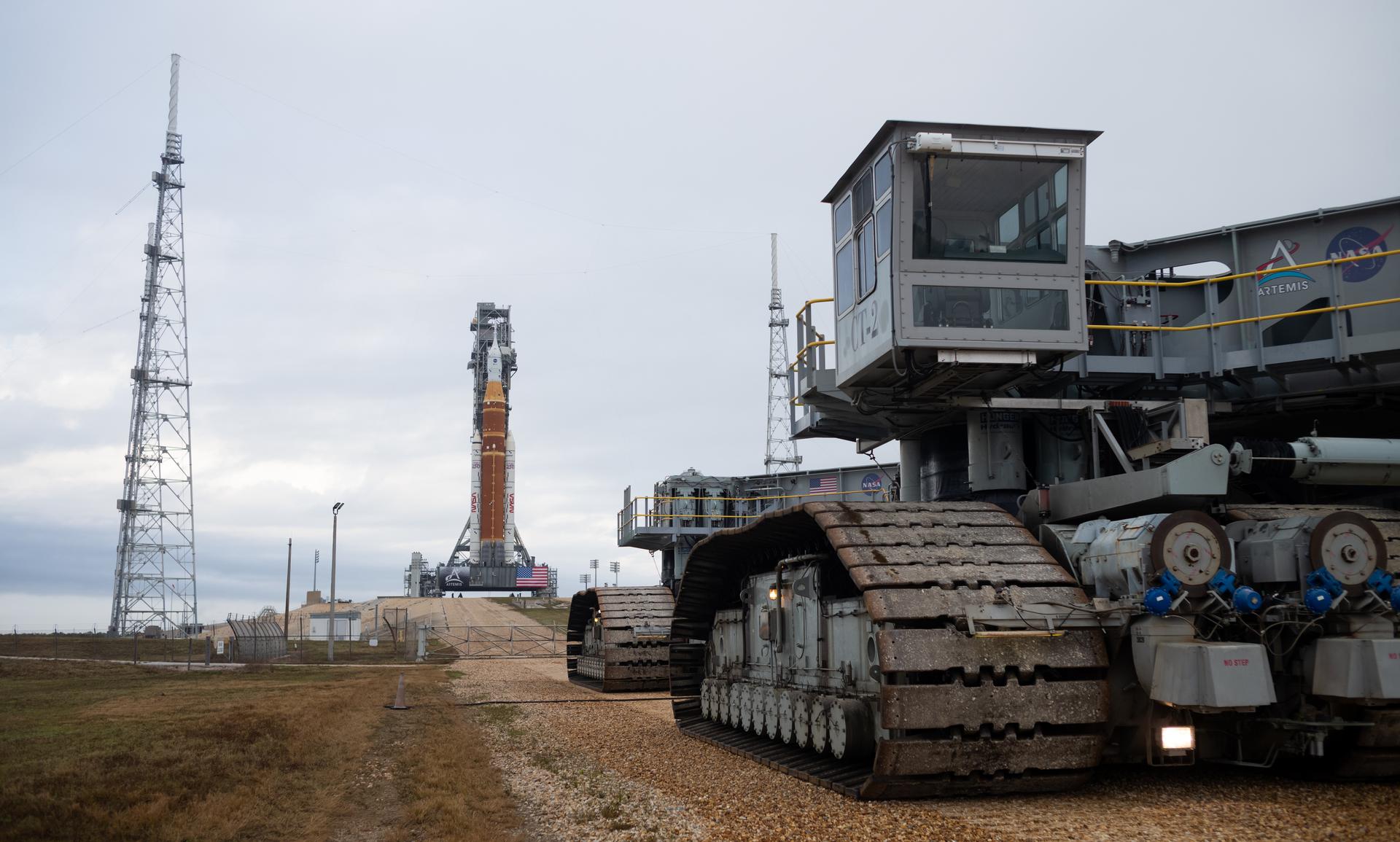
NASA’s Artemis II Space Launch System (SLS) rocket and Orion spacecraft are seen atop a mobile launcher at Launch Complex 39B, Sunday, Jan. 18, 2026, after being rolled out to the launch pad at NASA’s Kennedy Space Center in Florida. NASA’s Artemis II test flight will take Commander Reid Wiseman, Pilot Victor Glover, and Mission Specialist Christina Koch from NASA, and Mission Specialist Jeremy Hansen from the CSA (Canadian Space Agency), around the Moon and back to Earth no later than April 2026. Photo Credit: (NASA/Joel Kowsky)
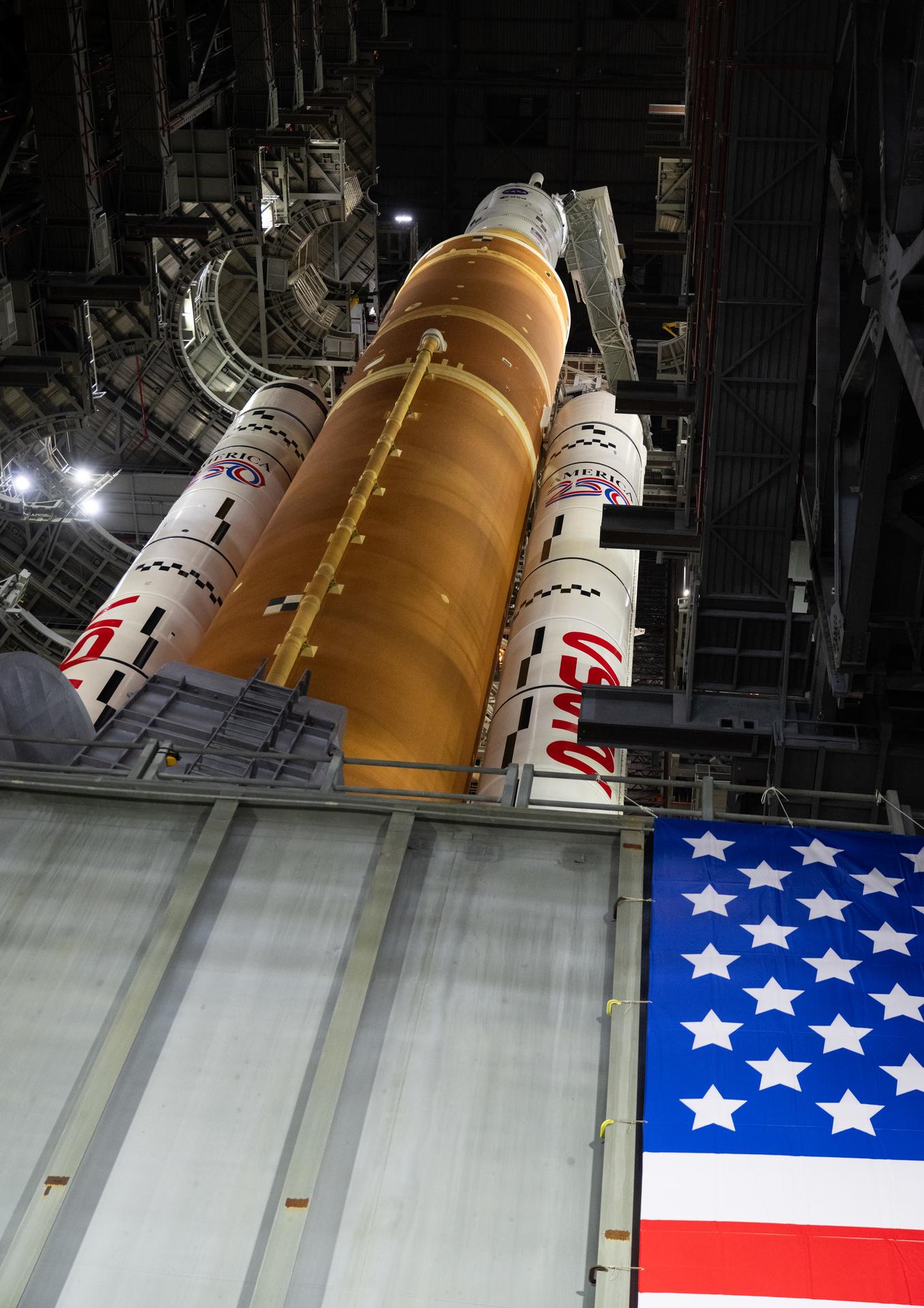
NASA’s Artemis II SLS (Space Launch System) rocket and Orion spacecraft, secured to the mobile launcher, is seen inside the Vehicle Assembly building as preparations continue for rollout to Launch Pad 39B, Friday, Jan. 16, 2026, at NASA’s Kennedy Space Center in Florida. NASA’s Artemis II flight test will take Commander Reid Wiseman, Pilot Victor Glover, and Mission Specialist Christina Koch from NASA, and Mission Specialist Jeremy Hansen from the CSA (Canadian Space Agency), around the Moon and back to Earth no later than April 2026. Photo Credit: (NASA/Joel Kowsky)
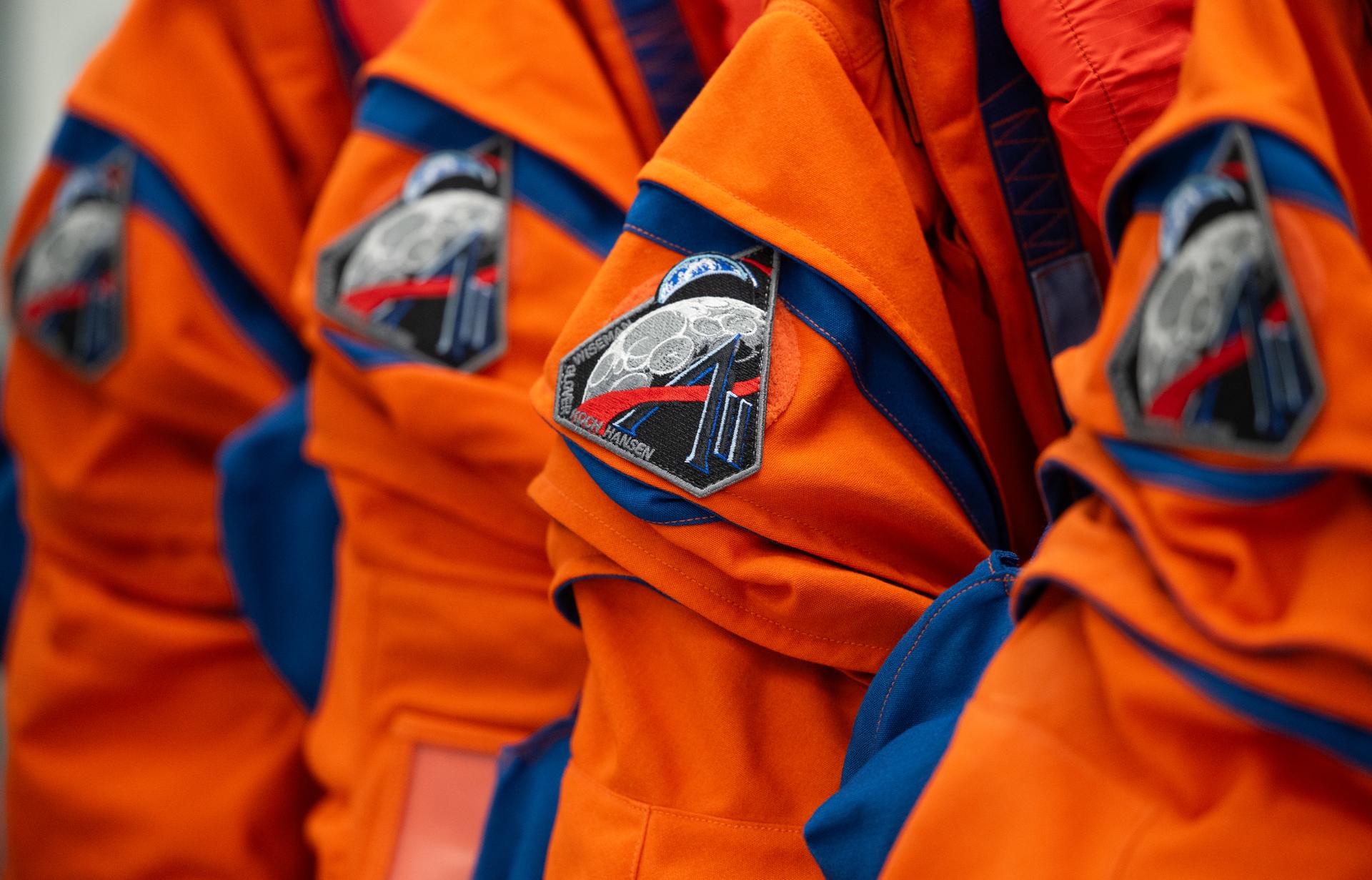
The Artemis II mission patch is seen on the right shoulder of the Orion Crew Survival System suits that Commander Reid Wiseman, Pilot Victor Glover, and Mission Specialist Christina Koch from NASA, and Mission Specialist Jeremy Hansen from the CSA (Canadian Space Agency) will wear on the Artemis II test flight are seen, Saturday, Jan. 17, 2026, in the suit-up room of the Neil A. Armstrong Operations and Checkout Building at NASA’s Kennedy Space Center in Florida. NASA’s Artemis II test flight will take Wiseman, Glover, Koch, and Hansen around the Moon and back to Earth no later than April 2026. Photo Credit: (NASA/Joel Kowsky)
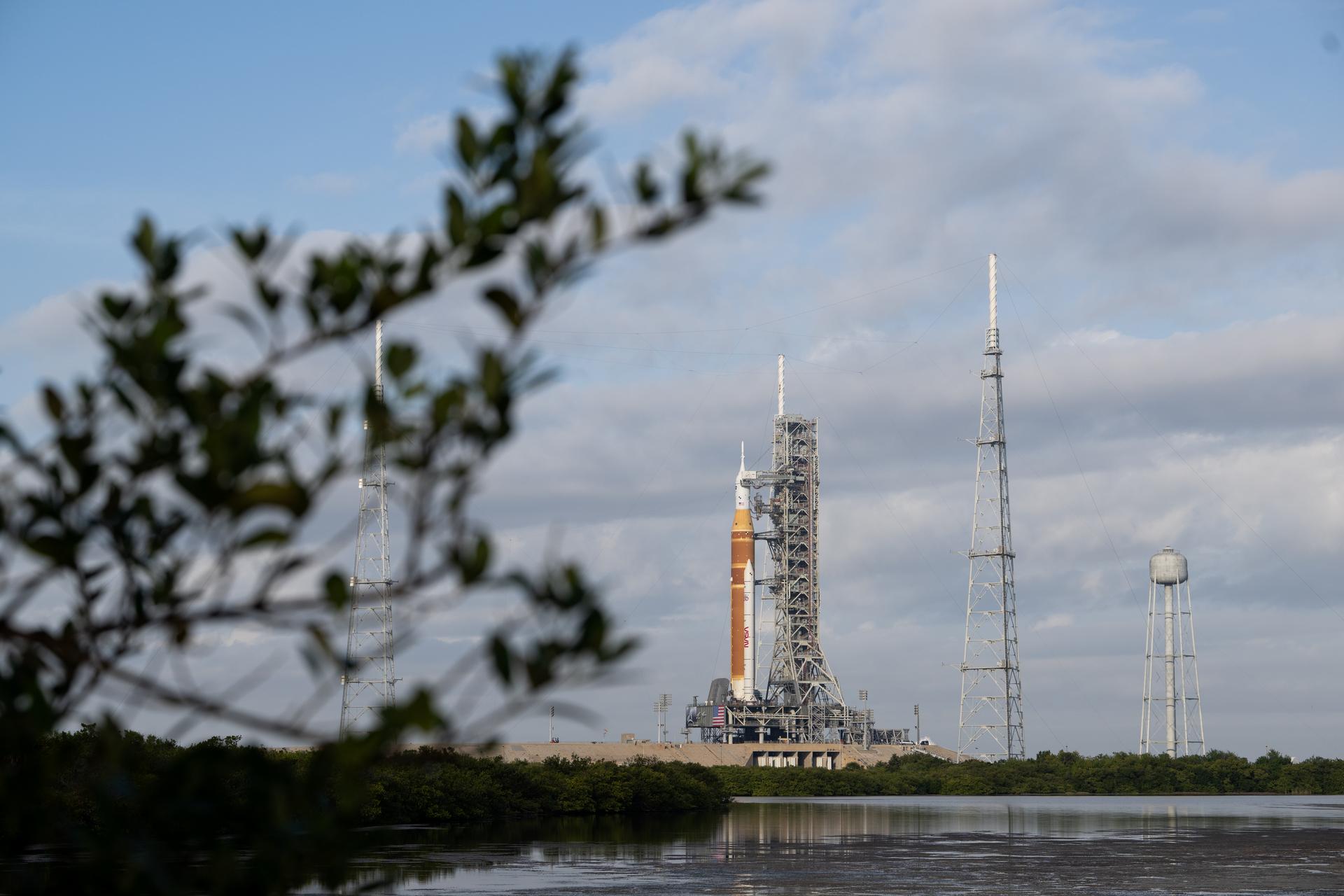
NASA’s Artemis II Space Launch System (SLS) rocket and Orion spacecraft are seen atop a mobile launcher at Launch Complex 39B, Sunday, Jan. 18, 2026, after being rolled out to the launch pad at NASA’s Kennedy Space Center in Florida. NASA’s Artemis II test flight will take Commander Reid Wiseman, Pilot Victor Glover, and Mission Specialist Christina Koch from NASA, and Mission Specialist Jeremy Hansen from the CSA (Canadian Space Agency), around the Moon and back to Earth no later than April 2026. Photo Credit: (NASA/Joel Kowsky)
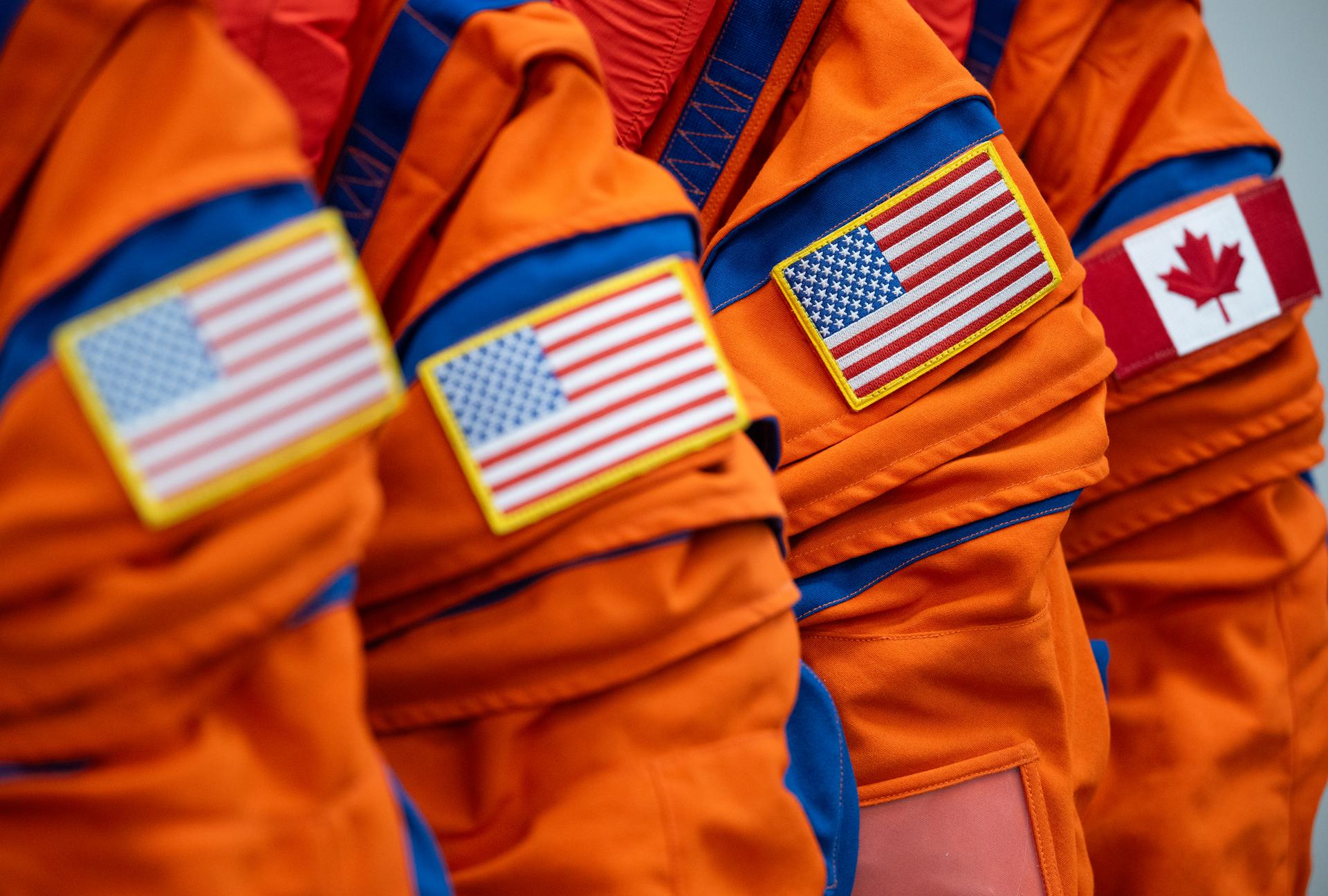
The flags of the United States and Canada are seen on the left shoulder of the Orion Crew Survival System suits that Commander Reid Wiseman, Pilot Victor Glover, and Mission Specialist Christina Koch from NASA, and Mission Specialist Jeremy Hansen from the CSA (Canadian Space Agency) will wear on the Artemis II test flight are seen, Saturday, Jan. 17, 2026, in the suit-up room of the Neil A. Armstrong Operations and Checkout Building at NASA’s Kennedy Space Center in Florida. NASA’s Artemis II test flight will take Wiseman, Glover, Koch, and Hansen around the Moon and back to Earth no later than April 2026. Photo Credit: (NASA/Joel Kowsky)
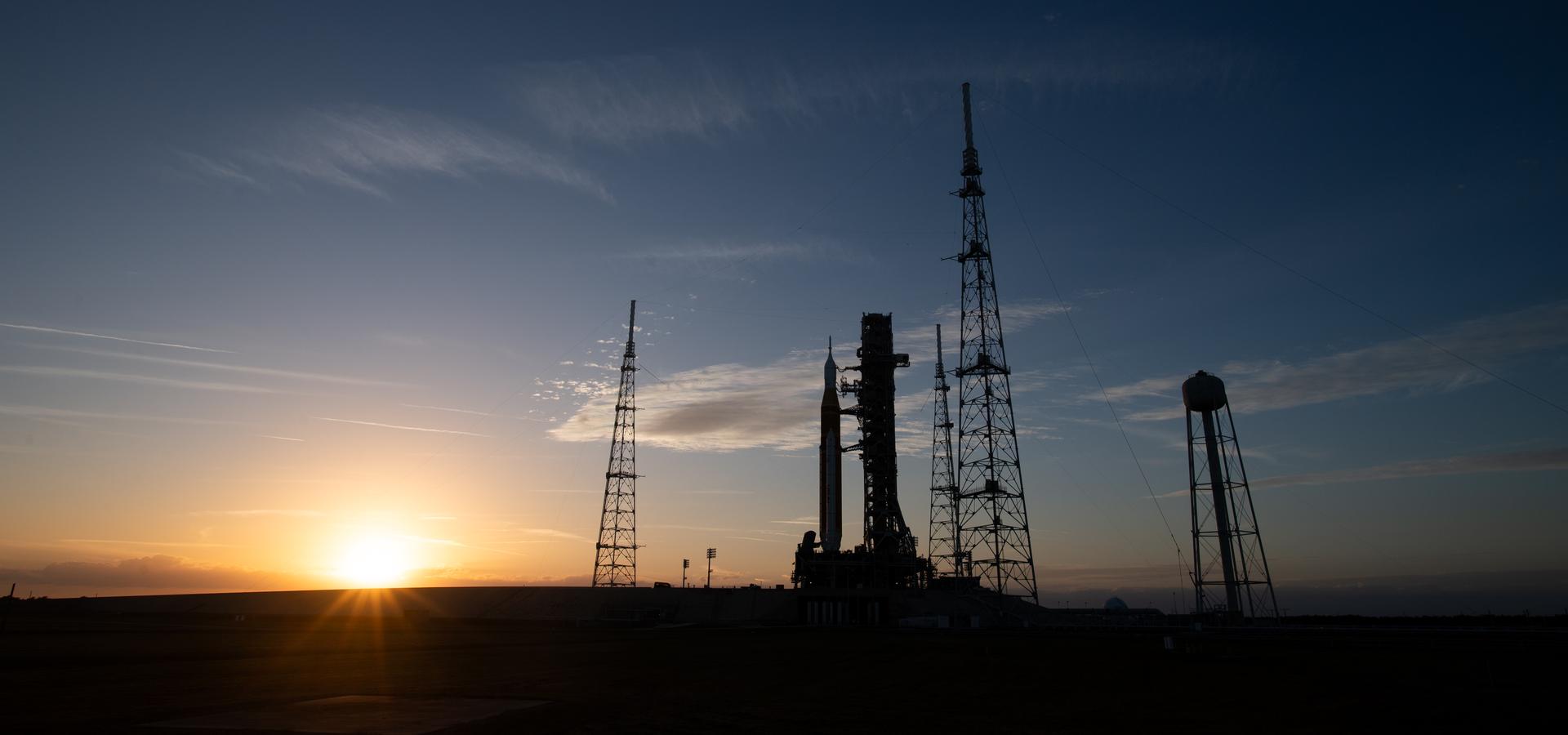
NASA’s Artemis II Space Launch System (SLS) rocket and Orion spacecraft are seen as the Sun sets after arriving at Launch Complex 39B, Saturday, Jan. 17, 2026, at NASA’s Kennedy Space Center in Florida. In the coming days, engineers will prepare for the wet dress rehearsal, a two-day test that simulates launch day. The Artemis II test flight will take Commander Reid Wiseman, Pilot Victor Glover, and Mission Specialist Christina Koch from NASA, and Mission Specialist Jeremy Hansen from the CSA (Canadian Space Agency), around the Moon and back to Earth no later than April 2026. Photo Credit: (NASA/Joel Kowsky)
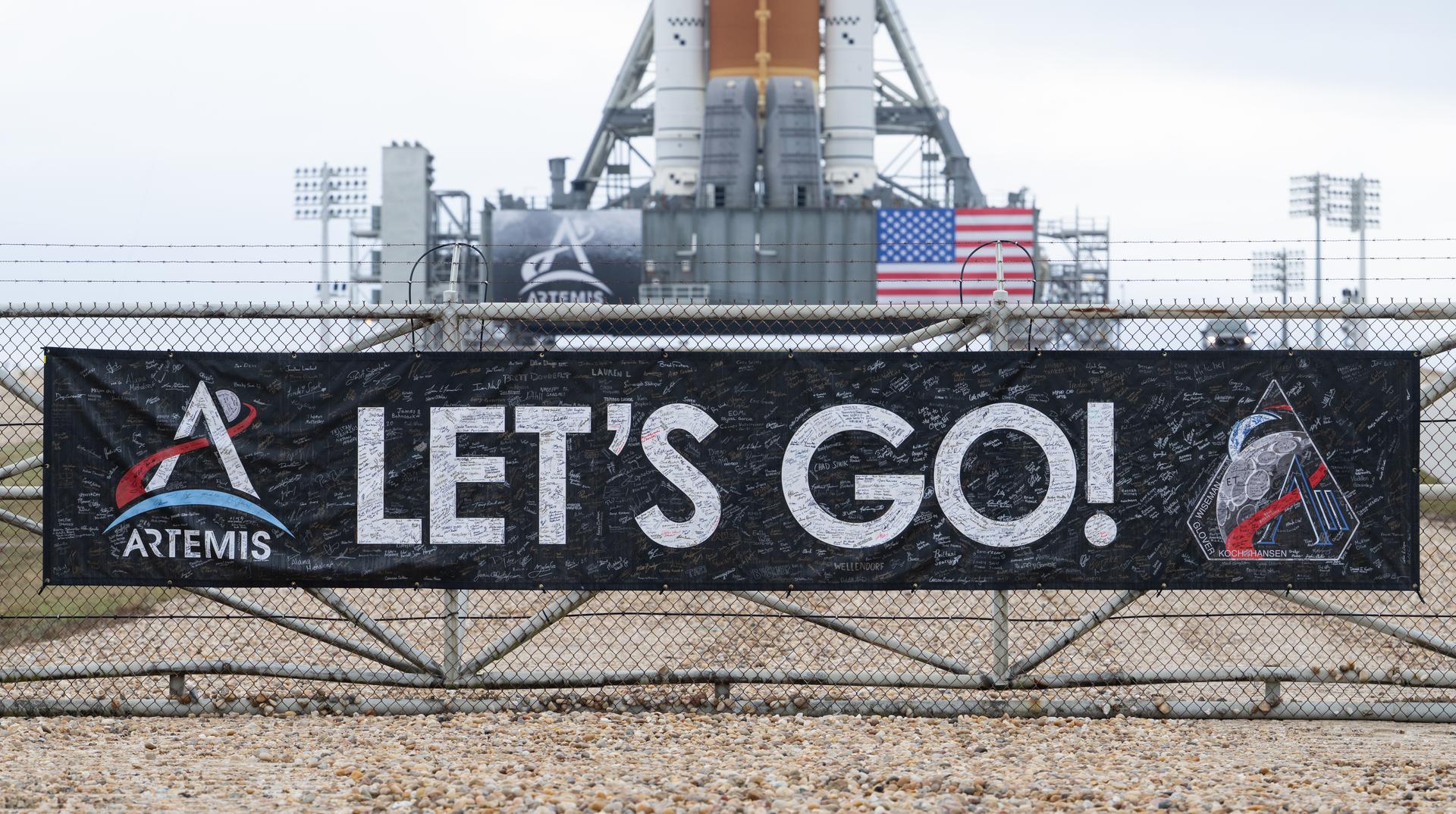
A banner covered with the signatures of NASA employees and contractors is seen on the perimeter fence of Launch Complex 39B after NASA’s Artemis II Space Launch System (SLS) rocket and Orion spacecraft were rolled out to the launch pad, Sunday, Jan. 18, 2026, at NASA’s Kennedy Space Center in Florida. NASA’s Artemis II test flight will take Commander Reid Wiseman, Pilot Victor Glover, and Mission Specialist Christina Koch from NASA, and Mission Specialist Jeremy Hansen from the CSA (Canadian Space Agency), around the Moon and back to Earth no later than April 2026. Photo Credit: (NASA/Joel Kowsky)
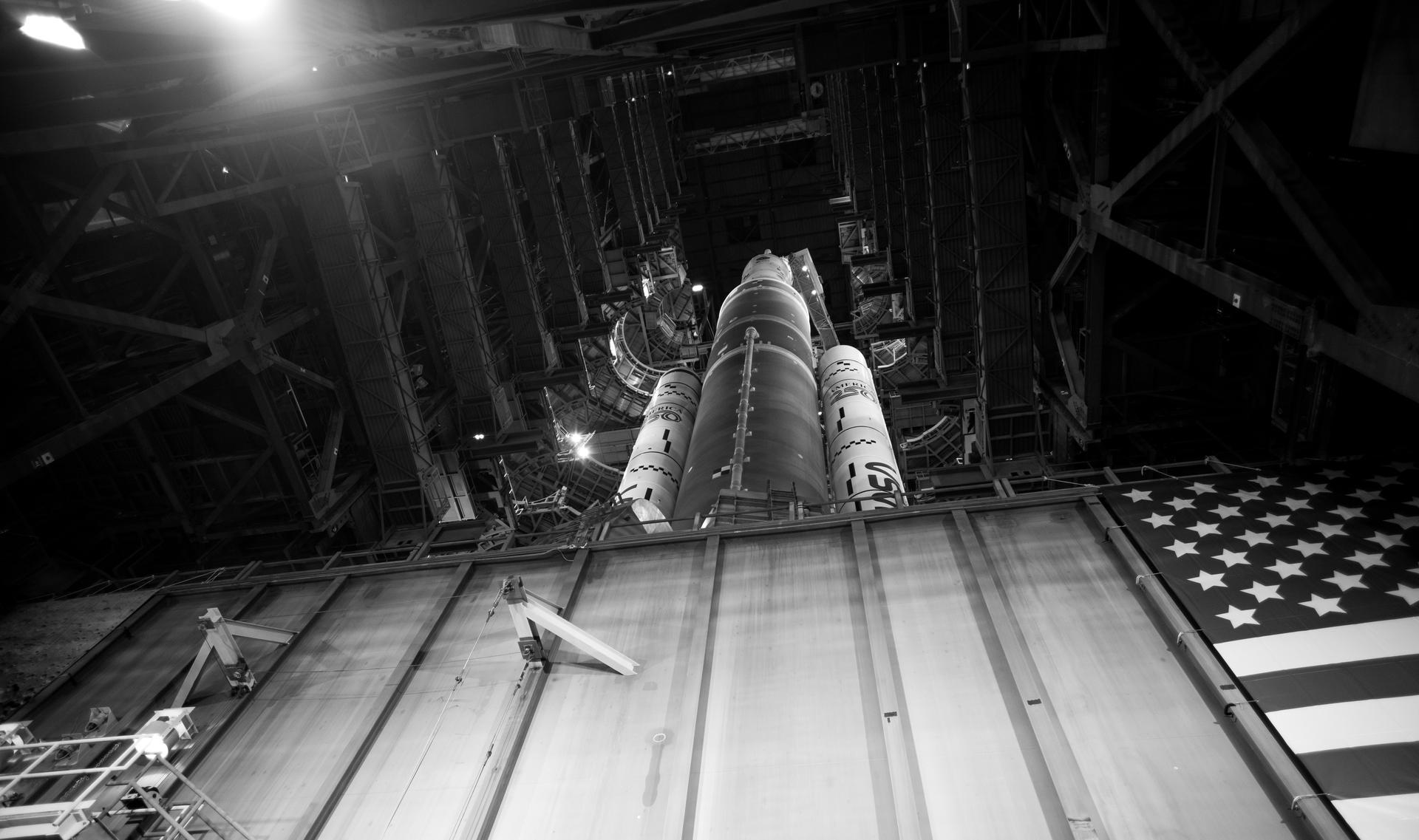
NASA’s Artemis II SLS (Space Launch System) rocket and Orion spacecraft, secured to the mobile launcher, is seen inside the Vehicle Assembly building as preparations continue for rollout to Launch Pad 39B, Friday, Jan. 16, 2026, at NASA’s Kennedy Space Center in Florida. NASA’s Artemis II flight test will take Commander Reid Wiseman, Pilot Victor Glover, and Mission Specialist Christina Koch from NASA, and Mission Specialist Jeremy Hansen from the CSA (Canadian Space Agency), around the Moon and back to Earth no later than April 2026. Photo Credit: (NASA/Joel Kowsky)
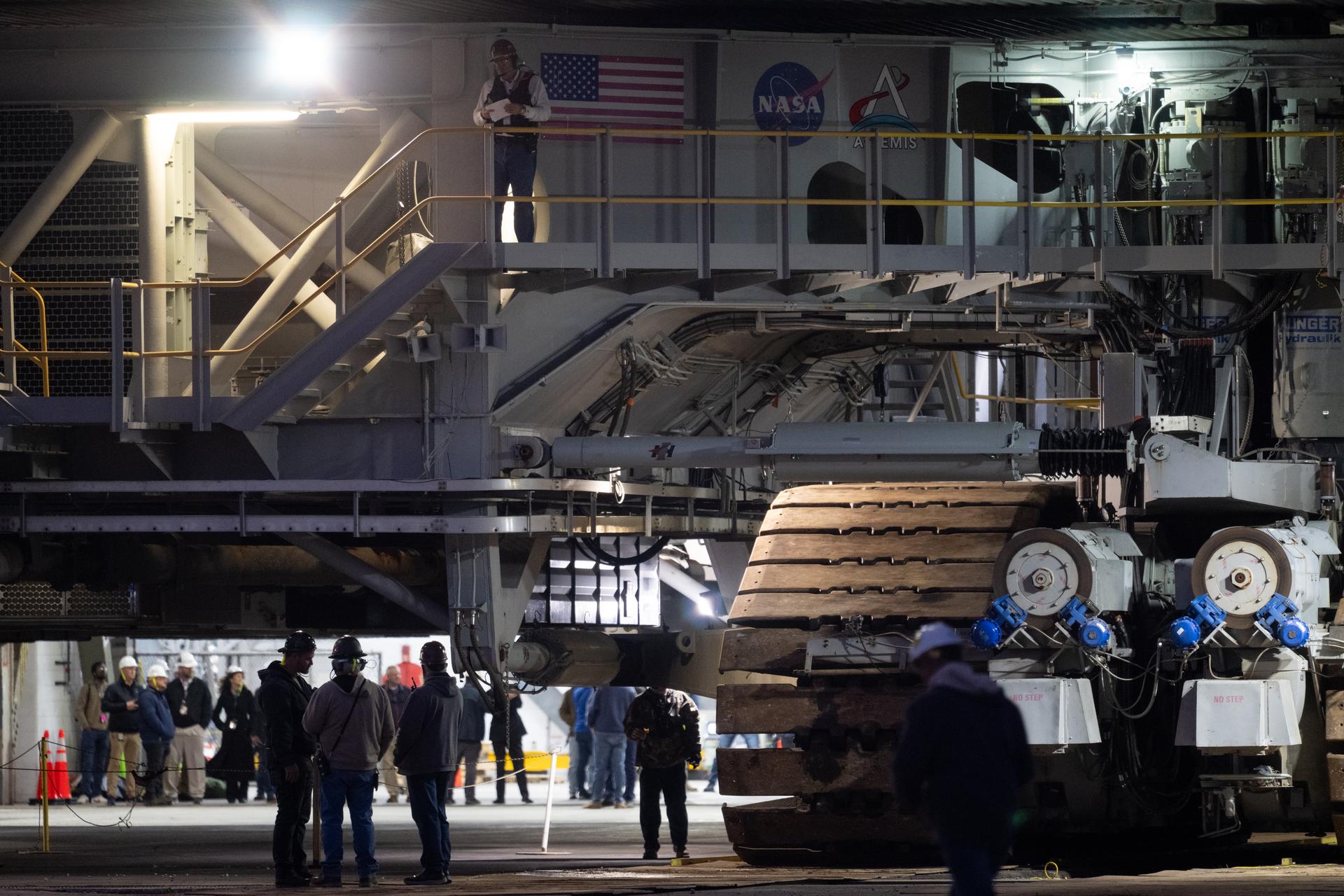
Workers are seen around crawler-transporter 2 as final preparations are made to roll NASA’s Artemis II SLS (Space Launch System) rocket and Orion spacecraft, secured to the mobile launcher, out to Launch Pad 39B, Saturday, Jan. 17, 2026, at NASA’s Kennedy Space Center in Florida. NASA’s Artemis II flight test will take Commander Reid Wiseman, Pilot Victor Glover, and Mission Specialist Christina Koch from NASA, and Mission Specialist Jeremy Hansen from the CSA (Canadian Space Agency), around the Moon and back to Earth no later than no later than April 2026. Photo Credit: (NASA/Joel Kowsky)
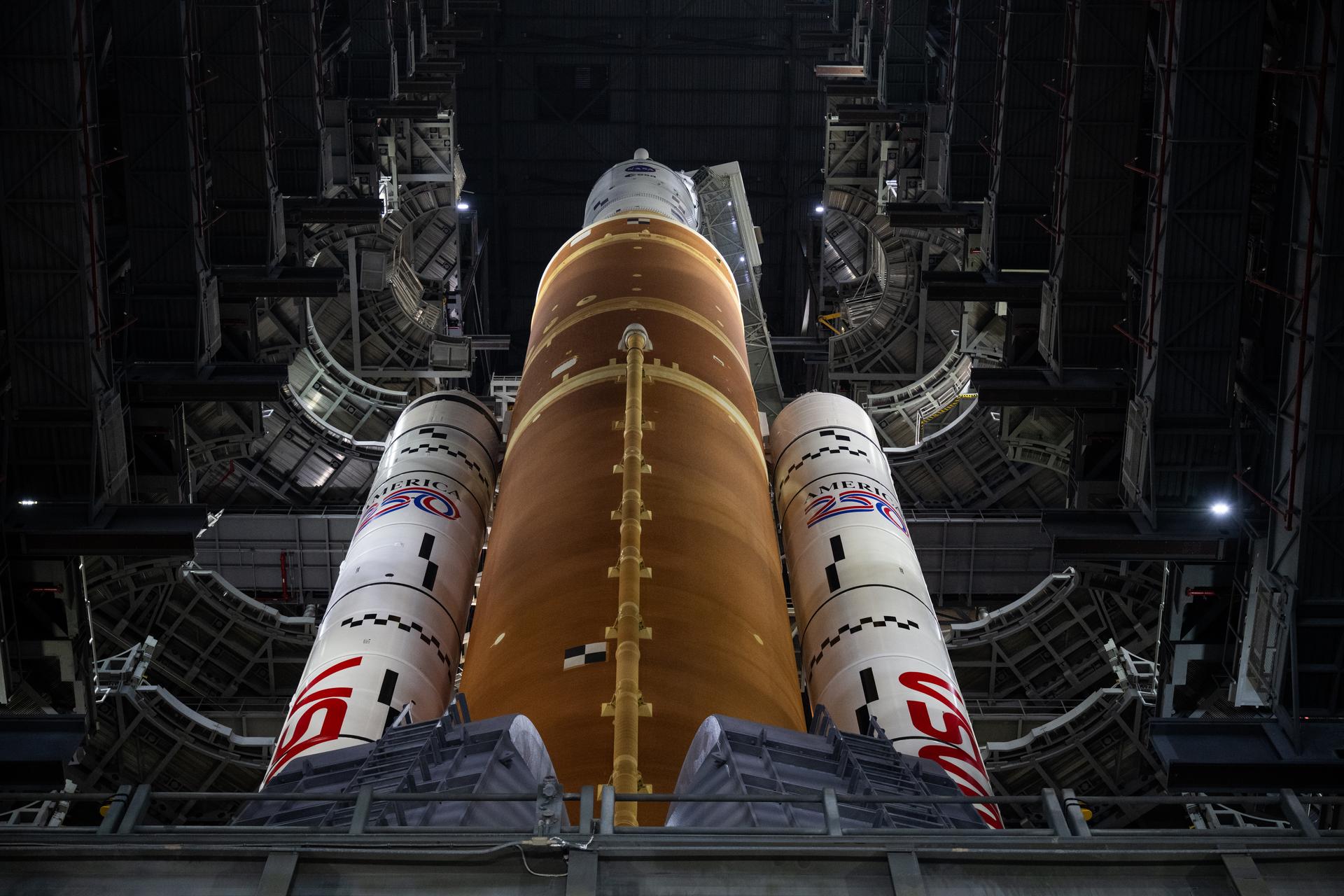
NASA’s Artemis II SLS (Space Launch System) rocket and Orion spacecraft, secured to the mobile launcher, is seen inside the Vehicle Assembly building as preparations continue for rollout to Launch Pad 39B, Friday, Jan. 16, 2026, at NASA’s Kennedy Space Center in Florida. NASA’s Artemis II flight test will take Commander Reid Wiseman, Pilot Victor Glover, and Mission Specialist Christina Koch from NASA, and Mission Specialist Jeremy Hansen from the CSA (Canadian Space Agency), around the Moon and back to Earth no later than April 2026. Photo Credit: (NASA/Joel Kowsky)
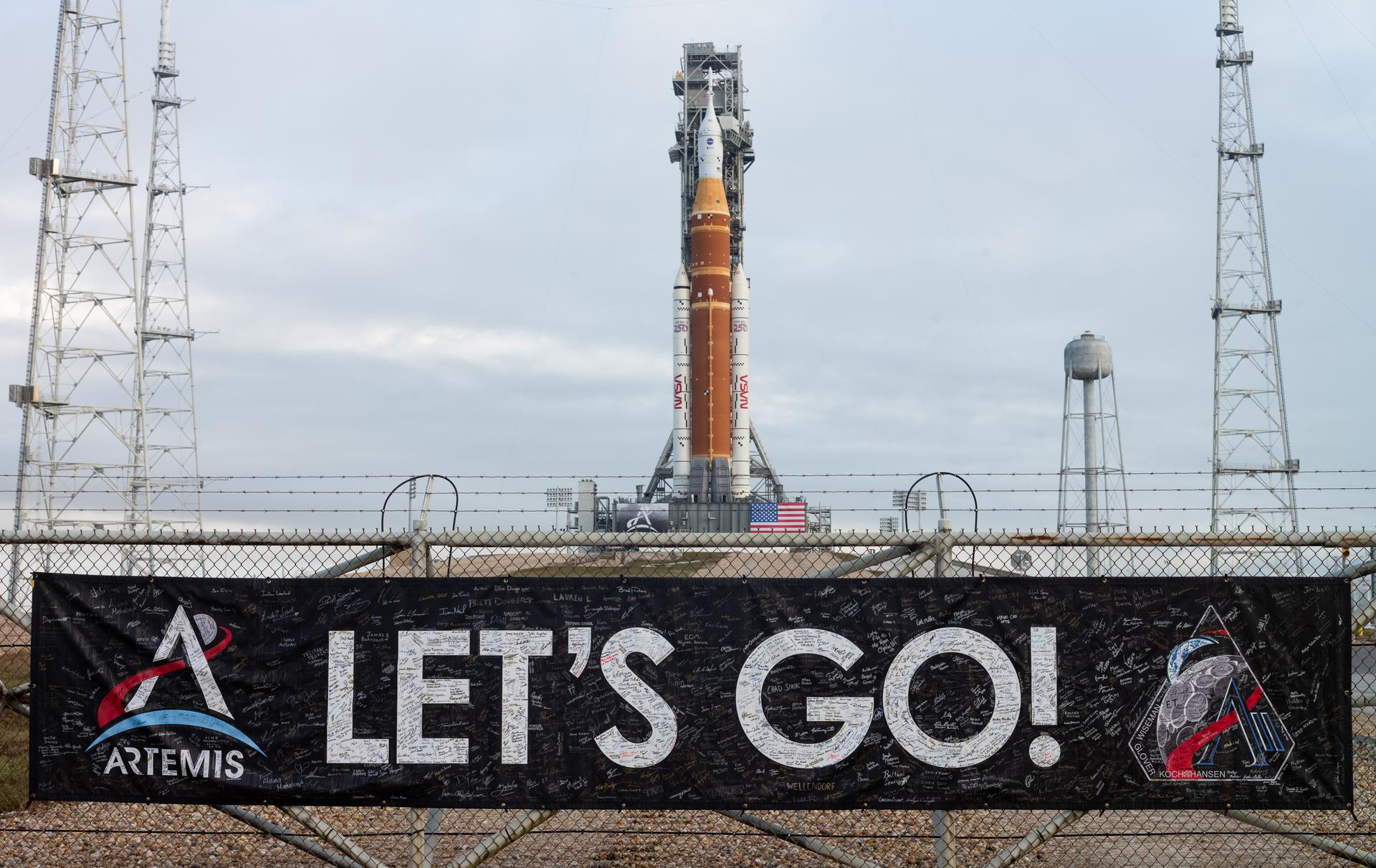
A banner covered with the signatures of NASA employees and contractors is seen on the perimeter fence of Launch Complex 39B after NASA’s Artemis II Space Launch System (SLS) rocket and Orion spacecraft were rolled out to the launch pad, Sunday, Jan. 18, 2026, at NASA’s Kennedy Space Center in Florida. NASA’s Artemis II test flight will take Commander Reid Wiseman, Pilot Victor Glover, and Mission Specialist Christina Koch from NASA, and Mission Specialist Jeremy Hansen from the CSA (Canadian Space Agency), around the Moon and back to Earth no later than April 2026. Photo Credit: (NASA/Joel Kowsky)
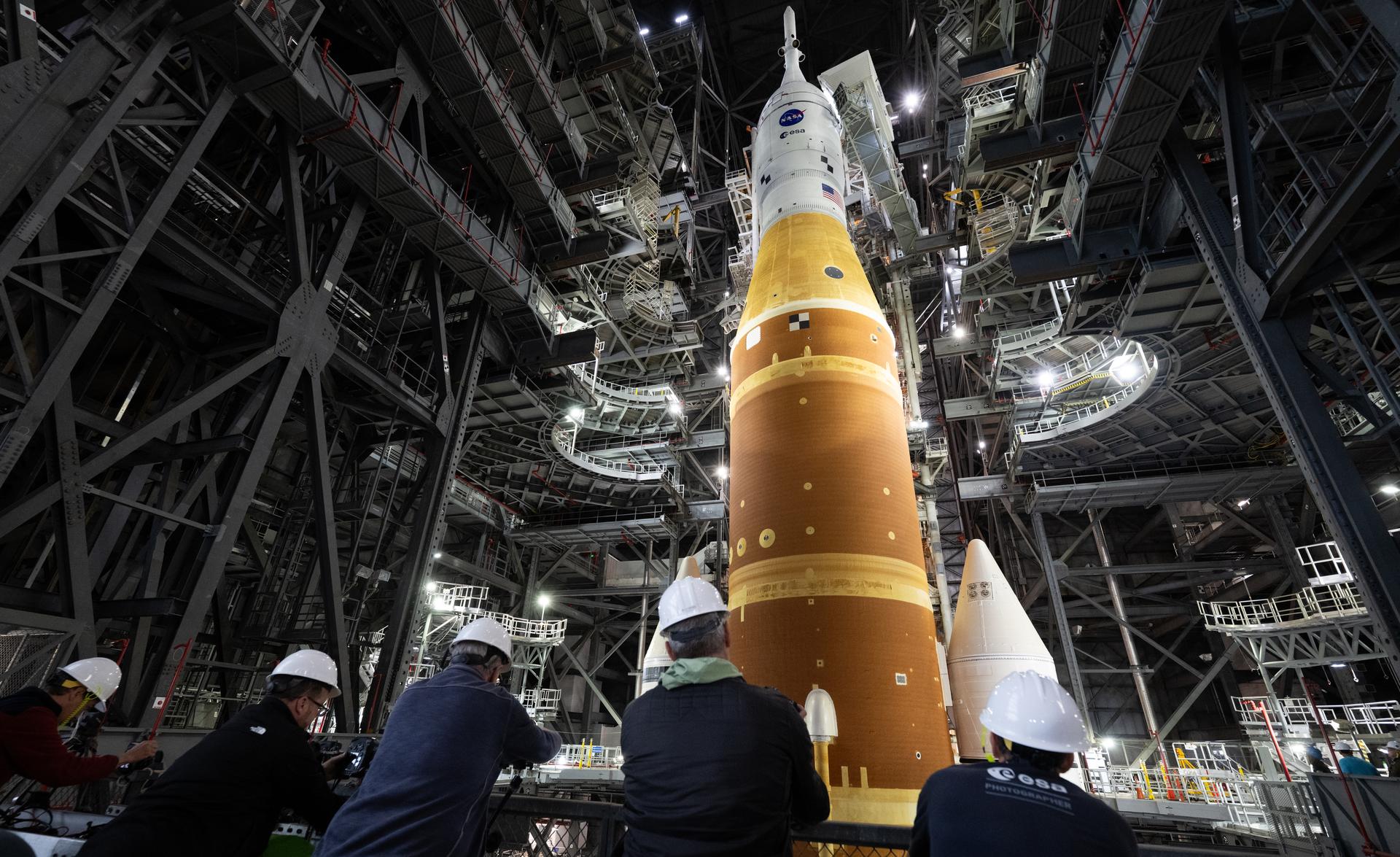
Members of the media are seen as they setup remote cameras to photograph the rollout of NASA’s Artemis II SLS (Space Launch System) rocket and Orion spacecraft inside the Vehicle Assembly building as preparations continue for rollout to Launch Pad 39B, Friday, Jan. 16, 2026, at NASA’s Kennedy Space Center in Florida. NASA’s Artemis II flight test will take Commander Reid Wiseman, Pilot Victor Glover, and Mission Specialist Christina Koch from NASA, and Mission Specialist Jeremy Hansen from the CSA (Canadian Space Agency), around the Moon and back to Earth no later than April 2026. Photo Credit: (NASA/Joel Kowsky)
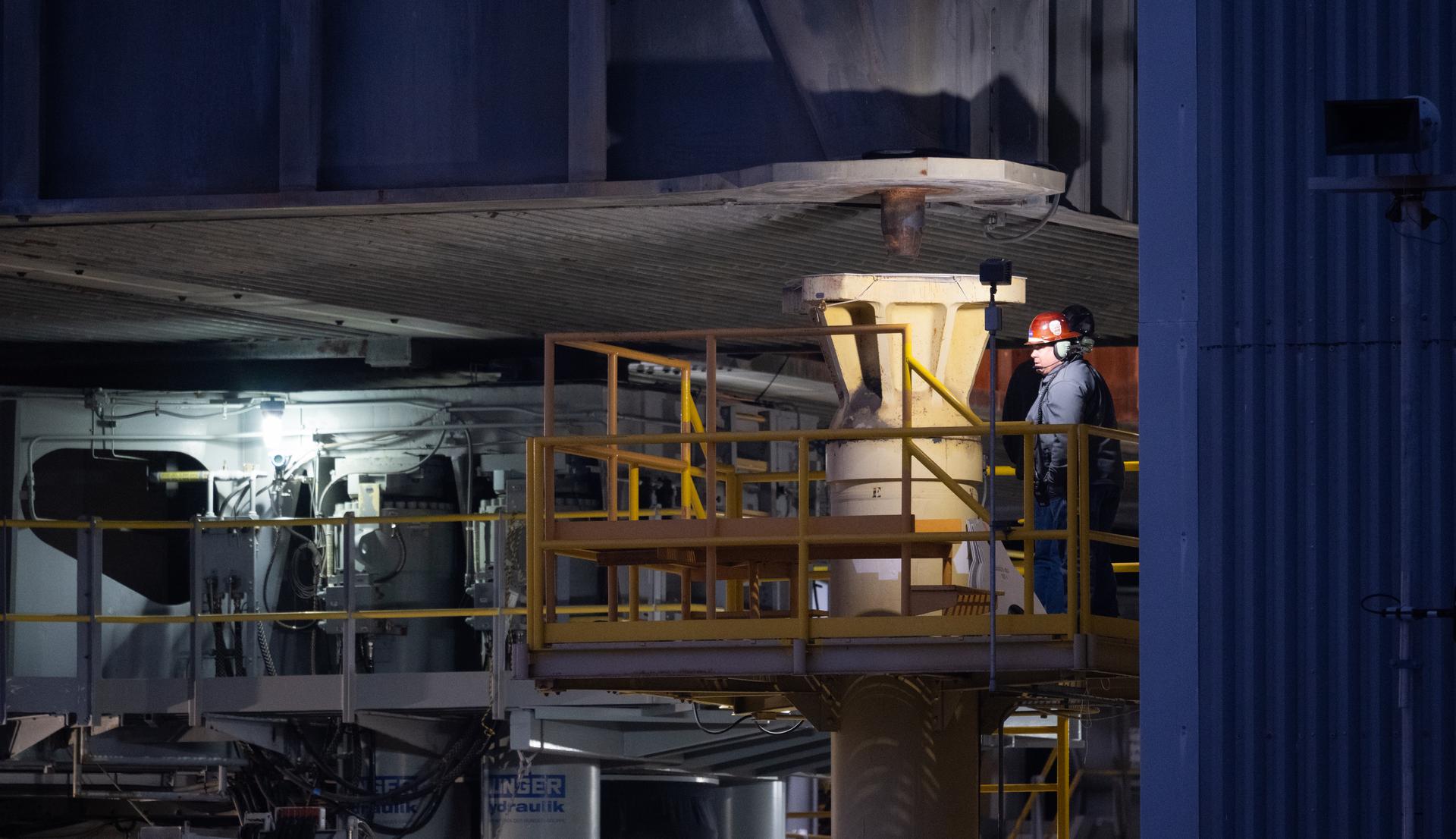
The mobile launcher with NASA’s Artemis II Space Launch System (SLS) rocket and Orion spacecraft secured to it is seen after being lifted by crawler-transporter 2 inside the Vehicle Assembly Building in preparation for rolling out to Launch Pad 39B, Saturday, Jan. 17, 2026, at NASA’s Kennedy Space Center in Florida. NASA’s Artemis II test flight will take Commander Reid Wiseman, Pilot Victor Glover, and Mission Specialist Christina Koch from NASA, and Mission Specialist Jeremy Hansen from the CSA (Canadian Space Agency), around the Moon and back to Earth no later than April 2026. Photo Credit: (NASA/Joel Kowsky)
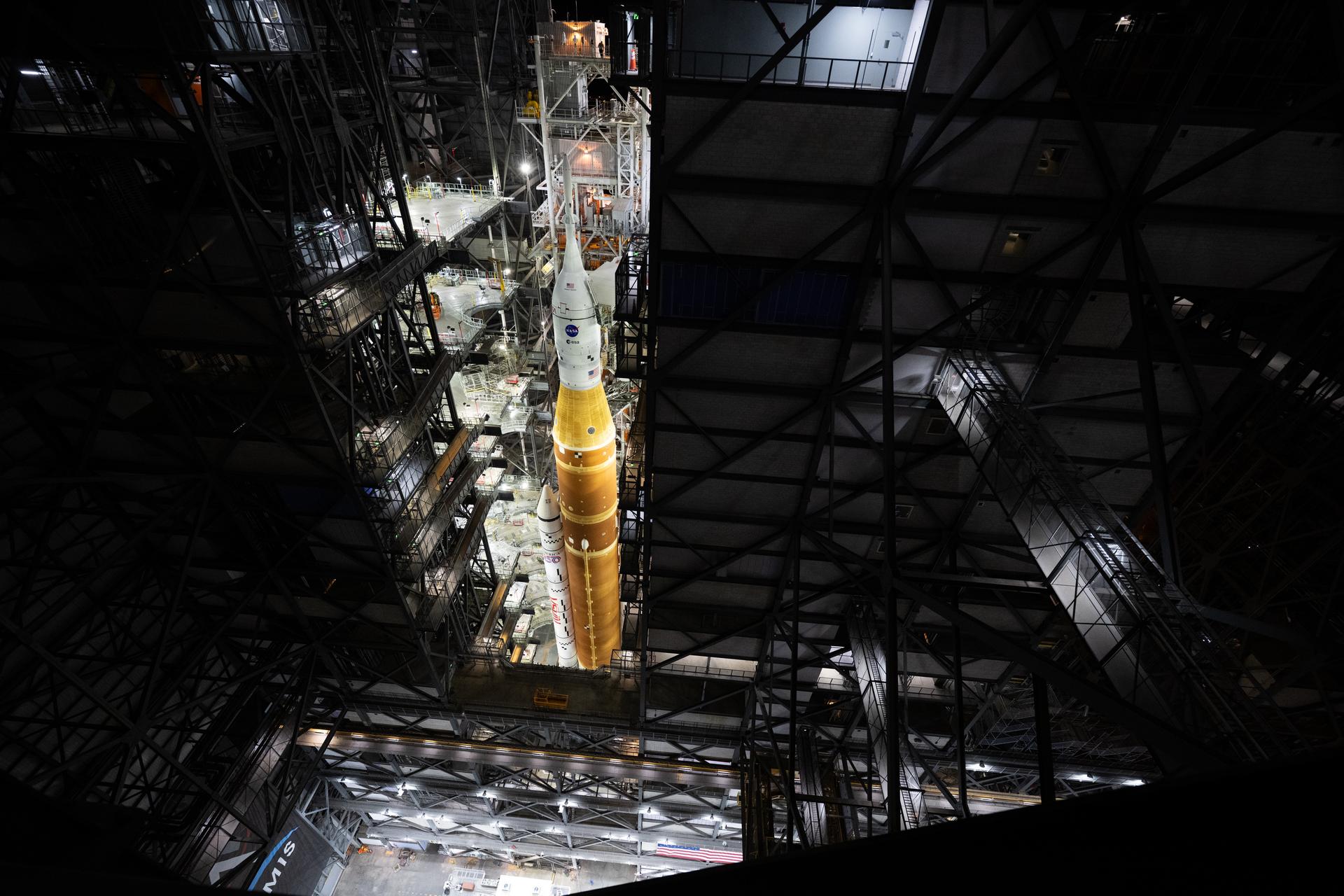
The mobile launcher with NASA’s Artemis II Space Launch System (SLS) rocket and Orion spacecraft secured to it is seen inside the Vehicle Assembly Building following the opening of the doors before rolling out to Launch Pad 39B, Saturday, Jan. 17, 2026, at NASA’s Kennedy Space Center in Florida. NASA’s Artemis II test flight will take Commander Reid Wiseman, Pilot Victor Glover, and Mission Specialist Christina Koch from NASA, and Mission Specialist Jeremy Hansen from the CSA (Canadian Space Agency), around the Moon and back to Earth no later than April 2026. Photo Credit: (NASA/Joel Kowsky)
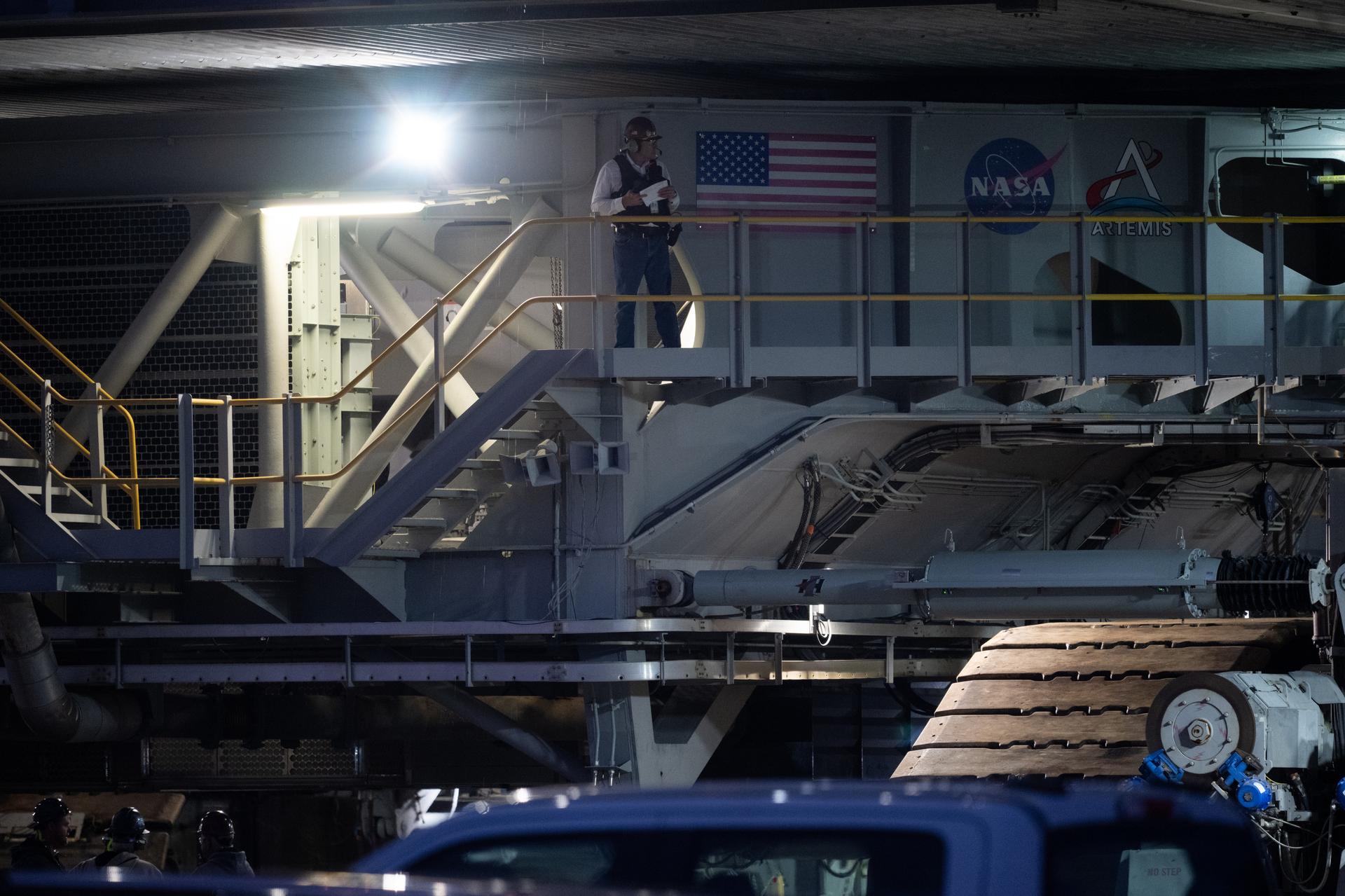
Workers are seen on crawler-transporter 2 as final preparations are made to roll NASA’s Artemis II SLS (Space Launch System) rocket and Orion spacecraft, secured to the mobile launcher, out to Launch Pad 39B, Saturday, Jan. 17, 2026, at NASA’s Kennedy Space Center in Florida. NASA’s Artemis II flight test will take Commander Reid Wiseman, Pilot Victor Glover, and Mission Specialist Christina Koch from NASA, and Mission Specialist Jeremy Hansen from the CSA (Canadian Space Agency), around the Moon and back to Earth no later than no later than April 2026. Photo Credit: (NASA/Joel Kowsky)
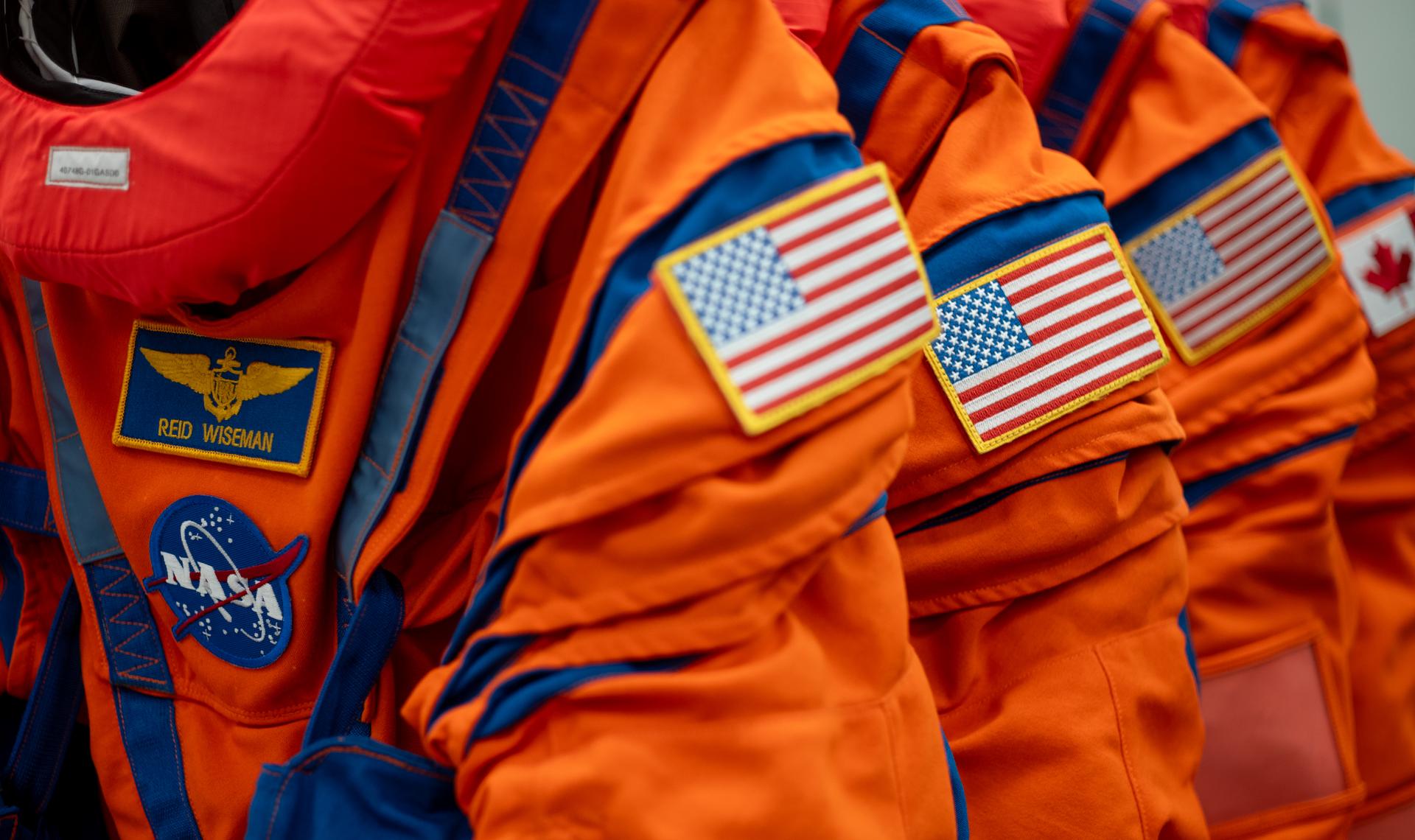
The Orion Crew Survival System suit that will be worn by Artemis II Commander Reid Wiseman of NASA and those that will be worn by Pilot Victor Glover, and Mission Specialist Christina Koch of NASA, and Mission Specialist Jeremy Hansen of the CSA (Canadian Space Agency) are seen in the suit-up room of the Neil A. Armstrong Operations and Checkout Building, Saturday, Jan. 17, 2026, at NASA’s Kennedy Space Center in Florida. NASA’s Artemis II test flight will take Wiseman, Glover, Koch, and Hansen around the Moon and back to Earth no later than April 2026. Photo Credit: (NASA/Joel Kowsky)
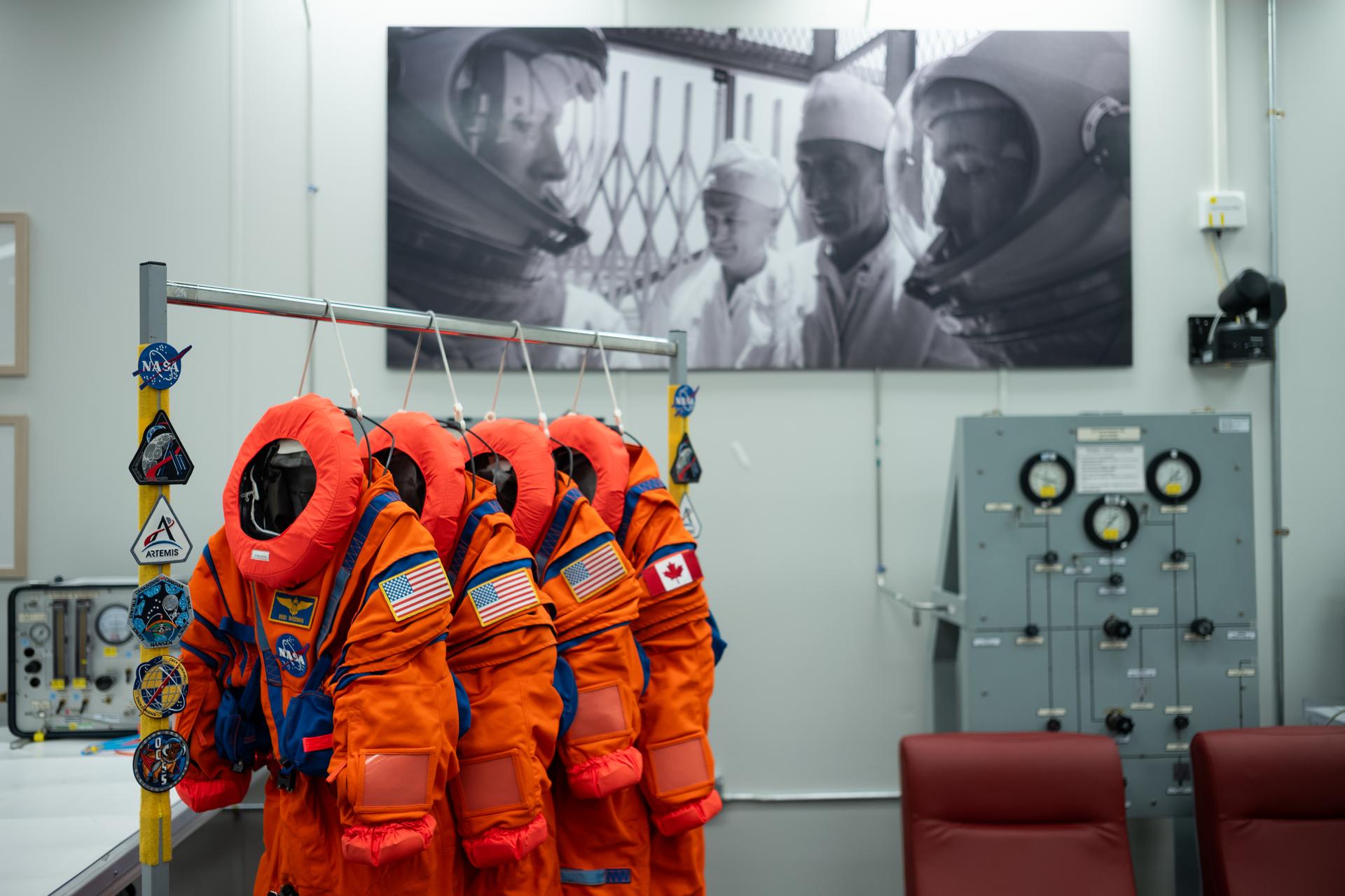
The Orion Crew Survival System suits that Commander Reid Wiseman, Pilot Victor Glover, and Mission Specialist Christina Koch from NASA, and Mission Specialist Jeremy Hansen from the CSA (Canadian Space Agency) will wear on the Artemis II test flight are seen in the suit-up room of the Neil A. Armstrong Operations and Checkout Building, Saturday, Jan. 17, 2026, at NASA’s Kennedy Space Center in Florida. NASA’s Artemis II test flight will take Wiseman, Glover, Koch, and Hansen around the Moon and back to Earth no later than April 2026. Photo Credit: (NASA/Joel Kowsky)
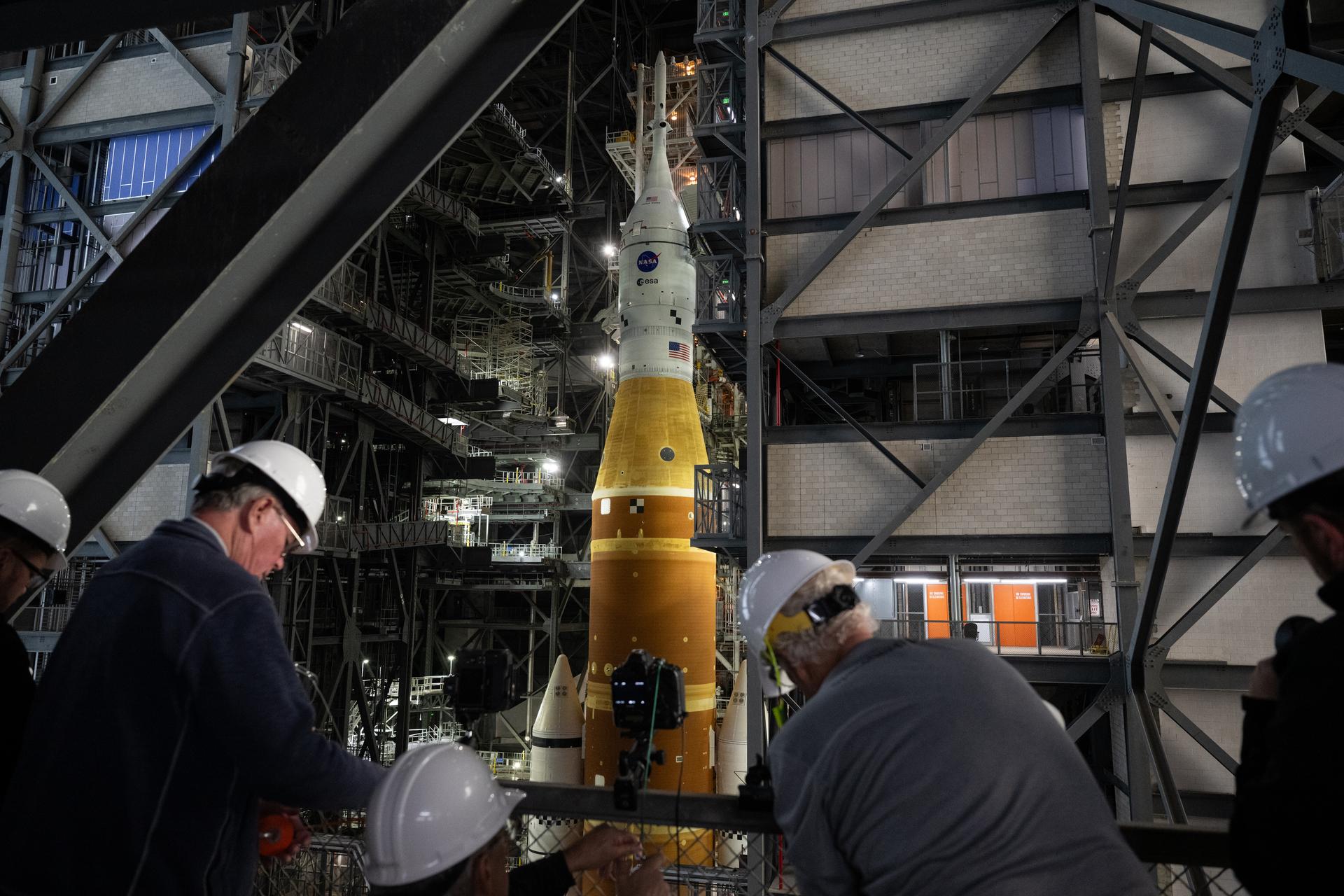
Members of the media are seen as they setup remote cameras to photograph the rollout of NASA’s Artemis II SLS (Space Launch System) rocket and Orion spacecraft inside the Vehicle Assembly building as preparations continue for rollout to Launch Pad 39B, Friday, Jan. 16, 2026, at NASA’s Kennedy Space Center in Florida. NASA’s Artemis II flight test will take Commander Reid Wiseman, Pilot Victor Glover, and Mission Specialist Christina Koch from NASA, and Mission Specialist Jeremy Hansen from the CSA (Canadian Space Agency), around the Moon and back to Earth no later than April 2026. Photo Credit: (NASA/Joel Kowsky)
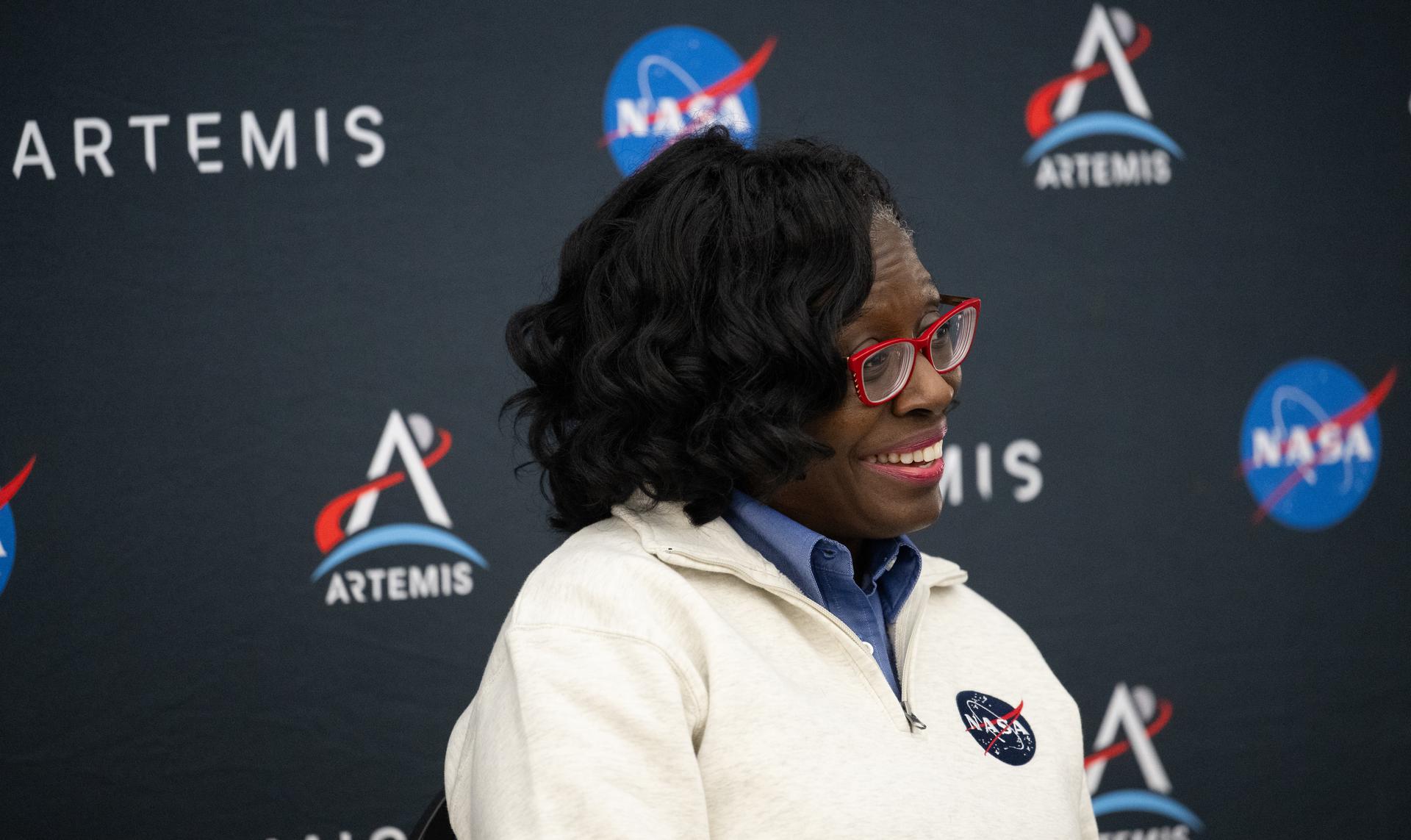
Lakiesha Hawkins, acting deputy associate administrator for NASA's Exploration Systems Development Mission Directorate speaks to members of the media during NASA’s Artemis II SLS (Space Launch System) rocket and Orion spacecraft rollout to Launch Complex 39B at NASA’s Kennedy Space Center in Florida on Saturday, Jan. 17, 2026. In the coming weeks, engineers will prepare for the wet dress rehearsal, a two-day test that simulates launch day. The Artemis II test flight will take Commander Reid Wiseman, Pilot Victor Glover, and Mission Specialist Christina Koch from NASA, and Mission Specialist Jeremy Hansen from the CSA (Canadian Space Agency), around the Moon and back to Earth no later than April 2026. Photo Credit: (NASA/Joel Kowsky)