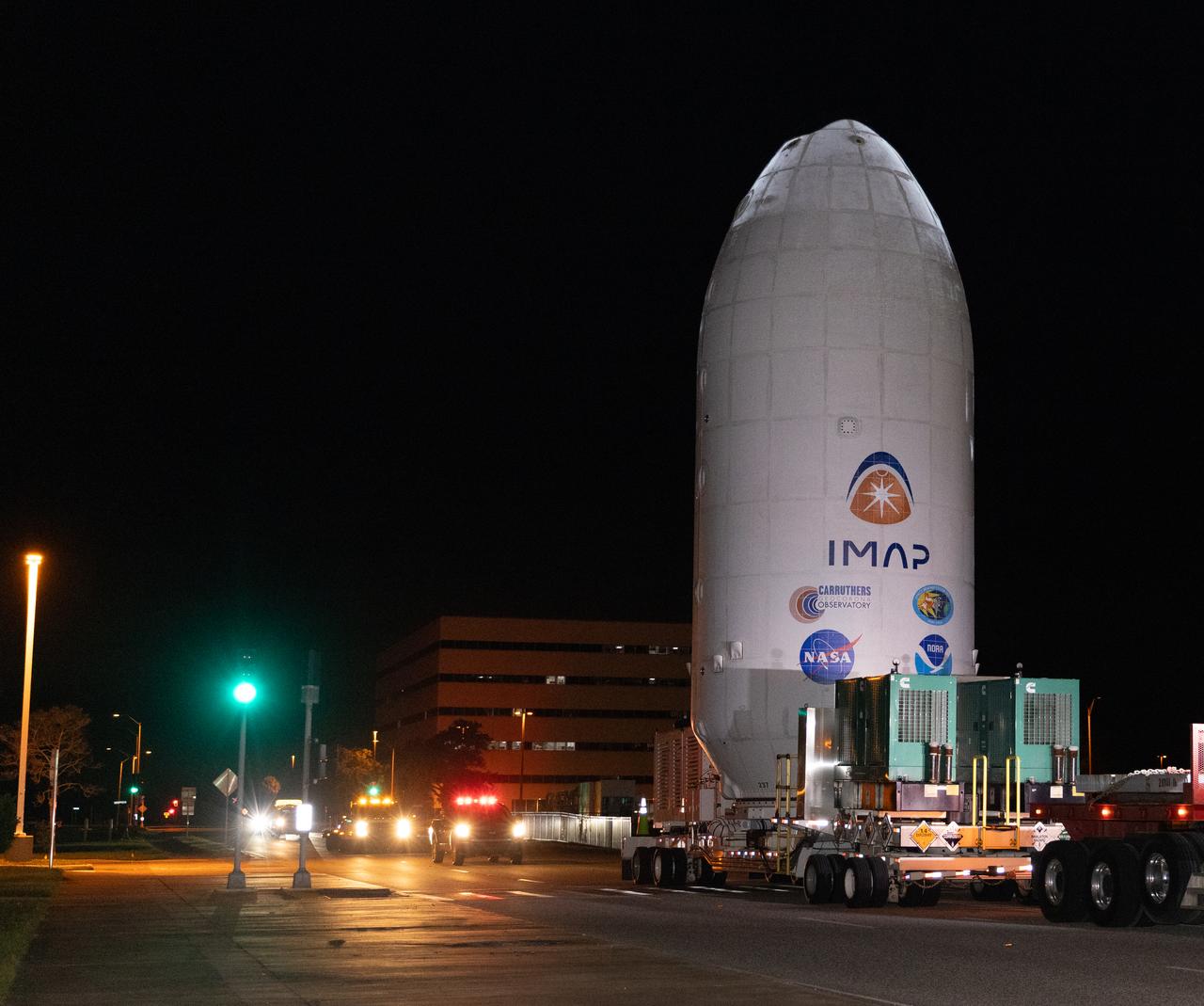
Workers transport NASA’s IMAP (Interstellar Mapping and Acceleration Probe) spacecraft along with the agency’s Carruthers Geocorona Observatory and National Oceanic and Atmospheric Administration’s (NOAA) Space Weather Follow On–Lagrange 1 (SWFO-L1) satellite late on Wednesday, Sept. 17, 2025, through early Thursday, Sept. 18, 2025, from the Astrotech Space Operations Facility in Titusville Florida, to the SpaceX hangar at Launch Complex 39A at the agency’s Kennedy Space Center in Florida. Technicians will soon mate the three spacecraft to a SpaceX Falcon 9 rocket in preparation for launch. Liftoff is targeted for 7:32 a.m. EDT, Tuesday, Sept. 23, from Launch Complex 39A at NASA Kennedy.
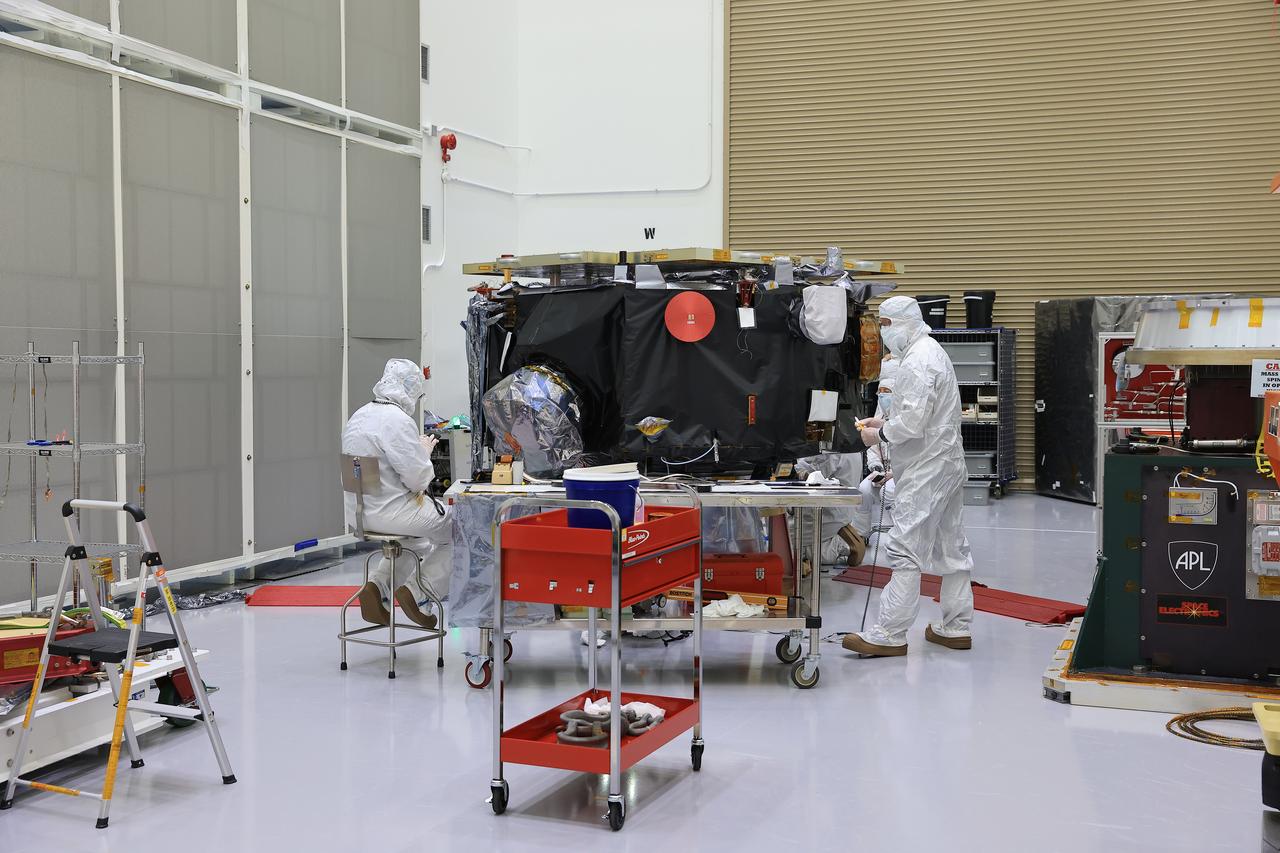
Technicians conduct blanket closeout work on NASA’s IMAP (Interstellar Mapping and Acceleration Probe) observatory at the Astrotech Space Operations Facility near NASA’s Kennedy Space Center in Florida on Friday, Aug. 15, 2025. IMAP will explore and map the boundaries of the heliosphere — a huge bubble created by the Sun’s wind that encapsulates our entire solar system — and study how the heliosphere interacts with the local galactic neighborhood beyond.

Technicians inspect NASA’s IMAP (Interstellar Mapping and Acceleration Probe) spacecraft on a spacecraft dolly inside Astrotech Space Operations Facility near the agency’s Kennedy Space Center in Florida during a NASA-hosted media day on Thursday, Aug. 28, 2025. IMAP and its two rideshares – NASA’s Carruthers Geocorona Observatory and National Oceanic and Atmospheric Administration’s (NOAA) Space Weather Follow On–Lagrange 1 (SWFO-L1) observatory – will orbit the Sun near Lagrange point 1, about one million miles from Earth, where IMAP will scan the heliosphere, a huge bubble created by the Sun’s wind that encapsulates our entire solar system, and analyze the composition of charged particles, and investigate how those particles move through the solar system.
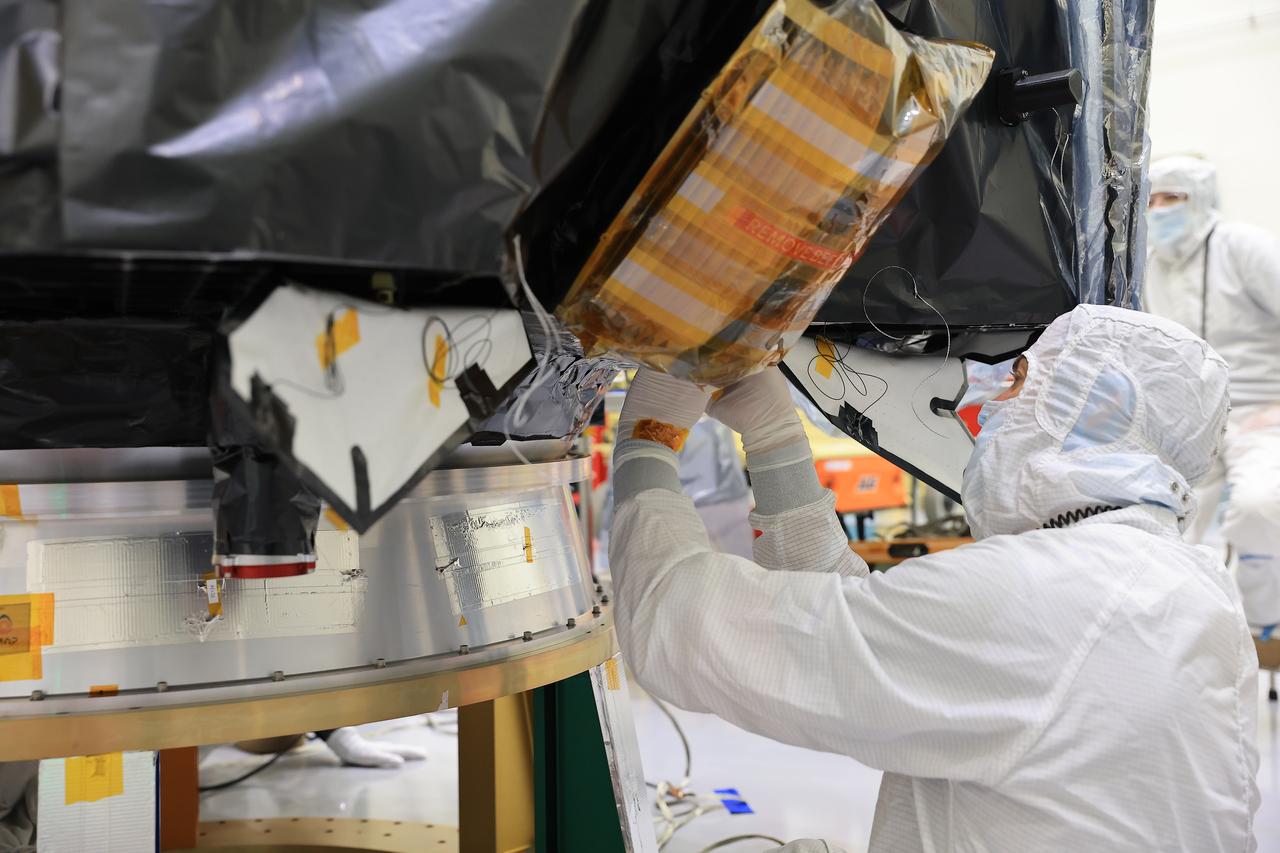
Technicians conduct blanket closeout work on NASA’s IMAP (Interstellar Mapping and Acceleration Probe) observatory at the Astrotech Space Operations Facility near NASA’s Kennedy Space Center in Florida on Friday, Aug. 15, 2025. IMAP will explore and map the boundaries of the heliosphere — a huge bubble created by the Sun’s wind that encapsulates our entire solar system — and study how the heliosphere interacts with the local galactic neighborhood beyond.
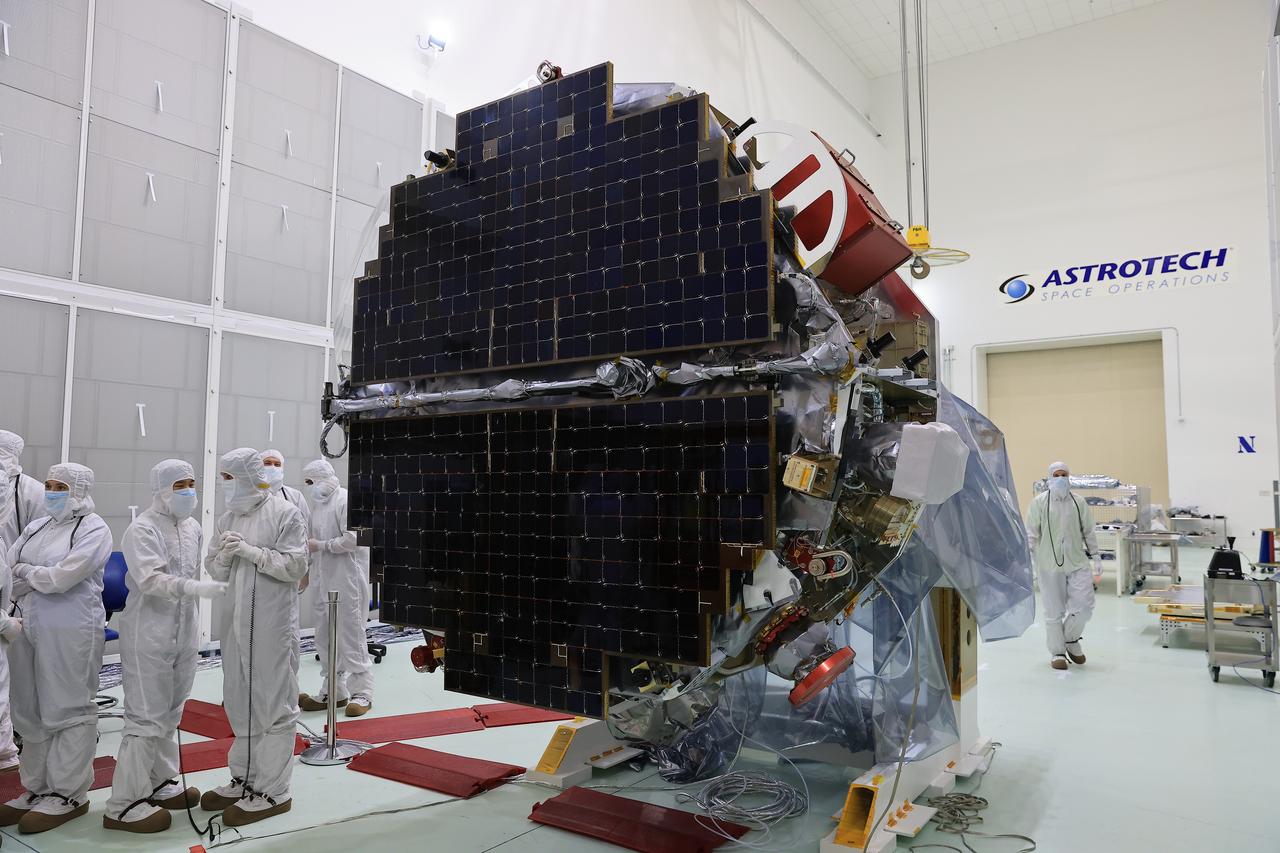
Technicians at the Astrotech Space Operations Facility near NASA’s Kennedy Space Center in Florida conduct illumination testing on Friday, July 18, 2025, by flashing a bright light that simulates the Sun into the two-panel solar array that will help power the agency’s IMAP (Interstellar Mapping and Acceleration Probe) observatory on its upcoming journey to a destination about one million miles away from Earth Lagrange Point 1. Each panel of the solar array, located on the top of IMAP, consists of 16 strings of solar cells, with 36 cells per string, and combined will convert sunlight into 500 watts of power, more than enough for the observatory, which as a system uses less power than five 100-watt incandescent light bulbs.

One of two rideshare spacecraft on NASA’s IMAP (Interstellar Mapping and Acceleration Probe) mission, NASA’s exosphere-studying Carruthers Geocorona Observatory sits on a spacecraft dolly in a high bay inside Astrotech Space Operations Facility near the agency’s Kennedy Space Center in Florida during a NASA-hosted media day on Thursday, Aug. 28, 2025. The missions, along with the National Oceanic and Atmospheric Administration’s (NOAA) Space Weather Follow On–Lagrange 1 (SWFO-L1) observatory, will orbit the Sun near Lagrange point 1, about one million miles from Earth. Carruthers will use its ultraviolet cameras to monitor how space weather from the Sun impacts the exosphere, the outermost part of Earth’s atmosphere.

The two rideshare spacecraft on NASA’s IMAP (Interstellar Mapping and Acceleration Probe) mission – NASA’s exosphere-studying Carruthers Geocorona Observatory and the National Oceanic and Atmospheric Administration’s (NOAA) Space Weather Follow On–Lagrange 1 (SWFO-L1) observatory – sit on spacecraft dollies in a high bay inside Astrotech Space Operations Facility near the agency’s Kennedy Space Center in Florida during a NASA-hosted media day on Thursday, Aug. 28, 2025. The missions will orbit the Sun near Lagrange point 1, about one million miles from Earth.
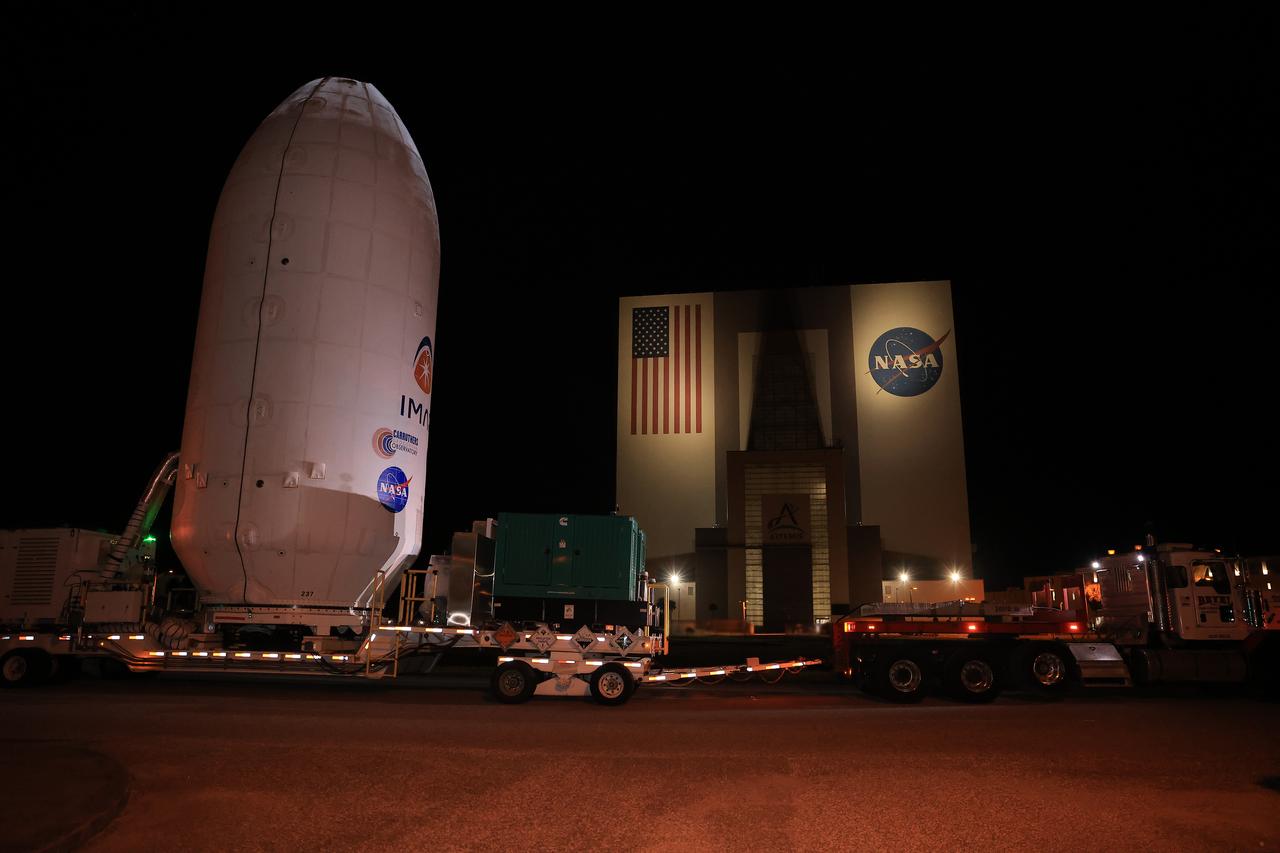
Workers transport NASA’s IMAP (Interstellar Mapping and Acceleration Probe) spacecraft along with the agency’s Carruthers Geocorona Observatory and National Oceanic and Atmospheric Administration’s (NOAA) Space Weather Follow On–Lagrange 1 (SWFO-L1) satellite late on Wednesday, Sept. 17, 2025, through early Thursday, Sept. 18, 2025, from the Astrotech Space Operations Facility in Titusville Florida, to the SpaceX hangar at Launch Complex 39A at the agency’s Kennedy Space Center in Florida. Technicians will soon mate the three spacecraft to a SpaceX Falcon 9 rocket in preparation for launch. Liftoff is targeted for 7:32 a.m. EDT, Tuesday, Sept. 23, from Launch Complex 39A at NASA Kennedy.
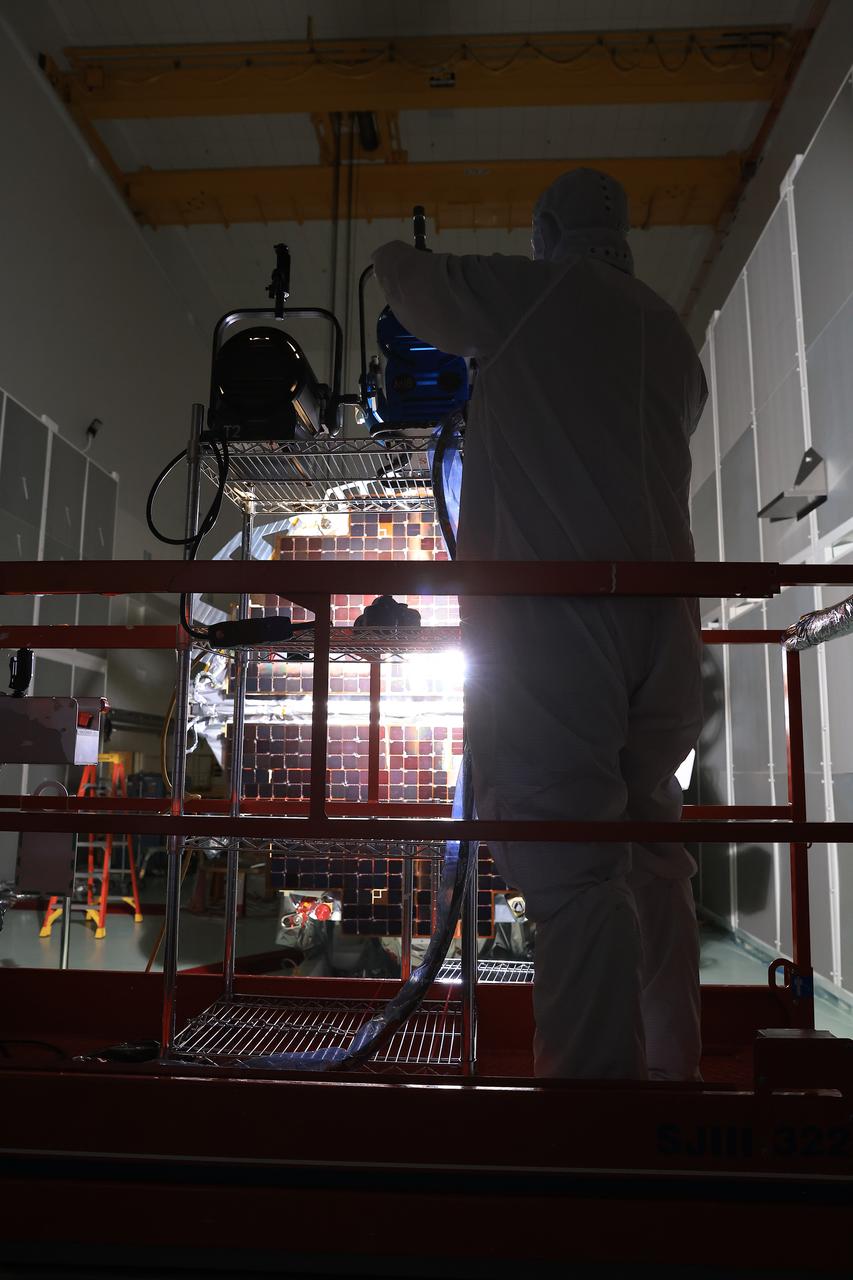
Technicians at the Astrotech Space Operations Facility near NASA’s Kennedy Space Center in Florida conduct illumination testing on Friday, July 18, 2025, by flashing a bright light that simulates the Sun into the two-panel solar array that will help power the agency’s IMAP (Interstellar Mapping and Acceleration Probe) observatory on its upcoming journey to a destination about one million miles away from Earth Lagrange Point 1. Each panel of the solar array, located on the top of IMAP, consists of 16 strings of solar cells, with 36 cells per string, and combined will convert sunlight into 500 watts of power, more than enough for the observatory, which as a system uses less power than five 100-watt incandescent light bulbs.
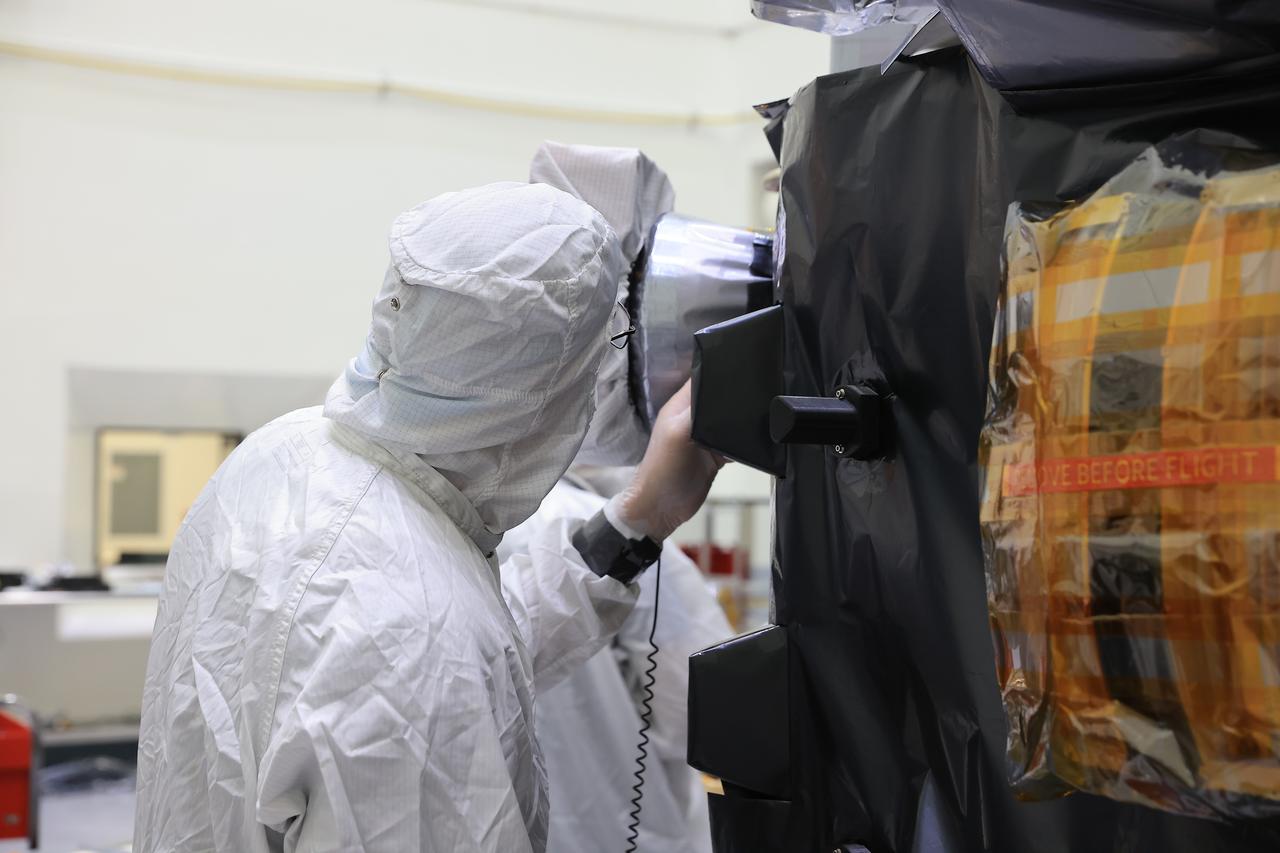
Technicians conduct blanket closeout work on NASA’s IMAP (Interstellar Mapping and Acceleration Probe) observatory at the Astrotech Space Operations Facility near NASA’s Kennedy Space Center in Florida on Friday, Aug. 15, 2025. IMAP will explore and map the boundaries of the heliosphere — a huge bubble created by the Sun’s wind that encapsulates our entire solar system — and study how the heliosphere interacts with the local galactic neighborhood beyond.
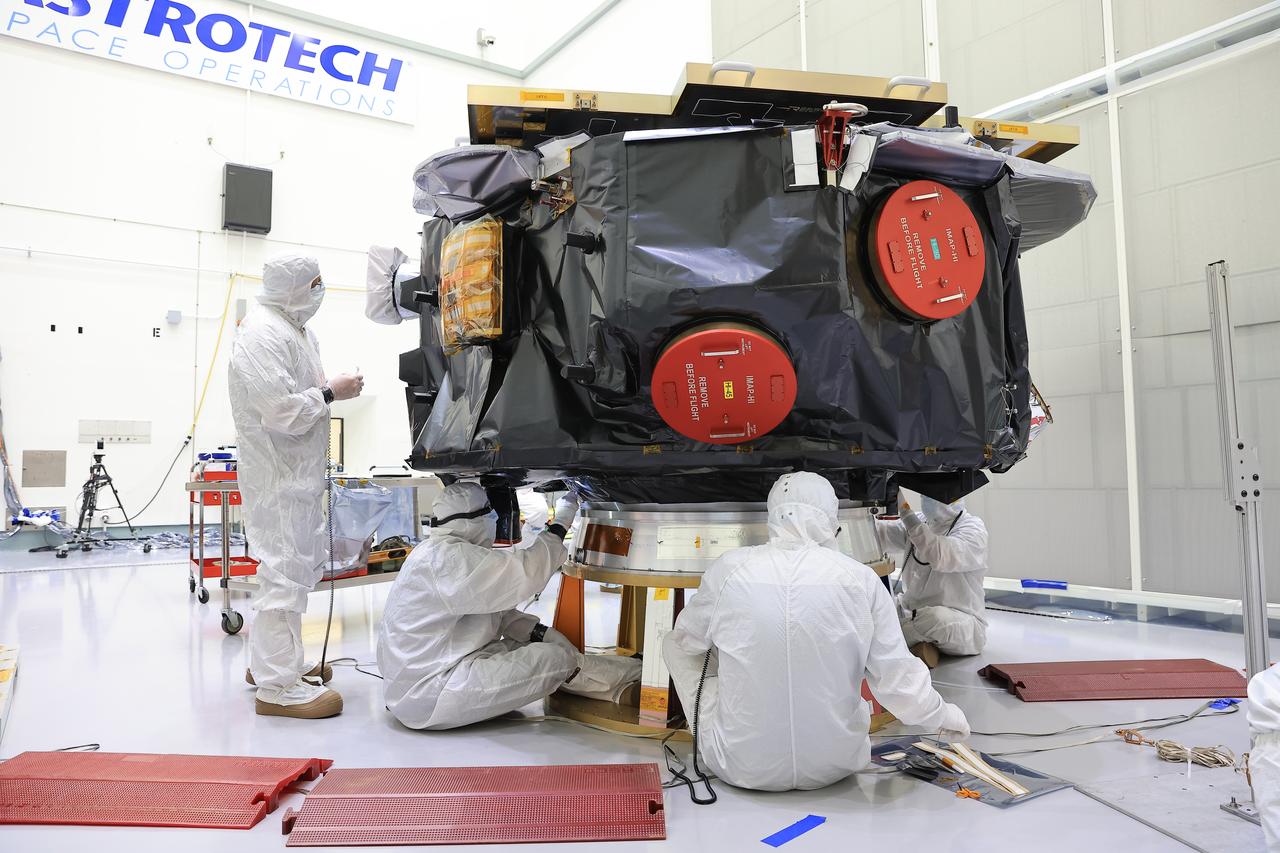
Technicians conduct blanket closeout work on NASA’s IMAP (Interstellar Mapping and Acceleration Probe) observatory at the Astrotech Space Operations Facility near NASA’s Kennedy Space Center in Florida on Friday, Aug. 15, 2025. IMAP will explore and map the boundaries of the heliosphere — a huge bubble created by the Sun’s wind that encapsulates our entire solar system — and study how the heliosphere interacts with the local galactic neighborhood beyond.
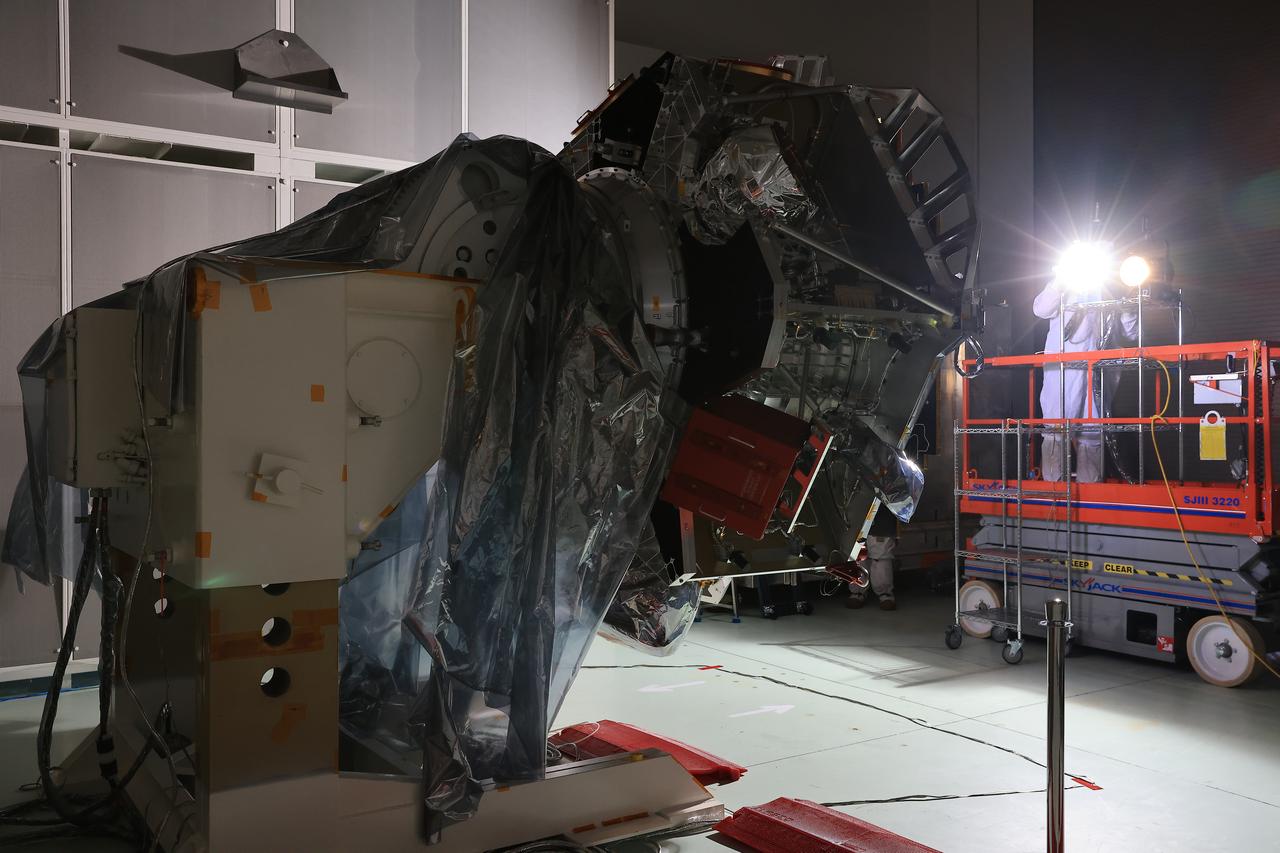
Technicians at the Astrotech Space Operations Facility near NASA’s Kennedy Space Center in Florida conduct illumination testing on Friday, July 18, 2025, by flashing a bright light that simulates the Sun into the two-panel solar array that will help power the agency’s IMAP (Interstellar Mapping and Acceleration Probe) observatory on its upcoming journey to a destination about one million miles away from Earth Lagrange Point 1. Each panel of the solar array, located on the top of IMAP, consists of 16 strings of solar cells, with 36 cells per string, and combined will convert sunlight into 500 watts of power, more than enough for the observatory, which as a system uses less power than five 100-watt incandescent light bulbs.

One of two rideshare spacecraft on NASA’s IMAP (Interstellar Mapping and Acceleration Probe) mission, the National Oceanic and Atmospheric Administration’s (NOAA) Space Weather Follow On–Lagrange 1 (SWFO-L1) observatory sits on a spacecraft dolly in a high bay inside Astrotech Space Operations Facility near the agency’s Kennedy Space Center in Florida during a NASA-hosted media day on Thursday, Aug. 28, 2025. The missions, along with NASA’s exosphere-studying Carruthers Geocorona Observatory, will orbit the Sun near Lagrange point 1, about one million miles from Earth, where SWFO-L1 will monitor the Sun and near-Earth environment using a suite of instruments that provide real-time measurements of solar activity.
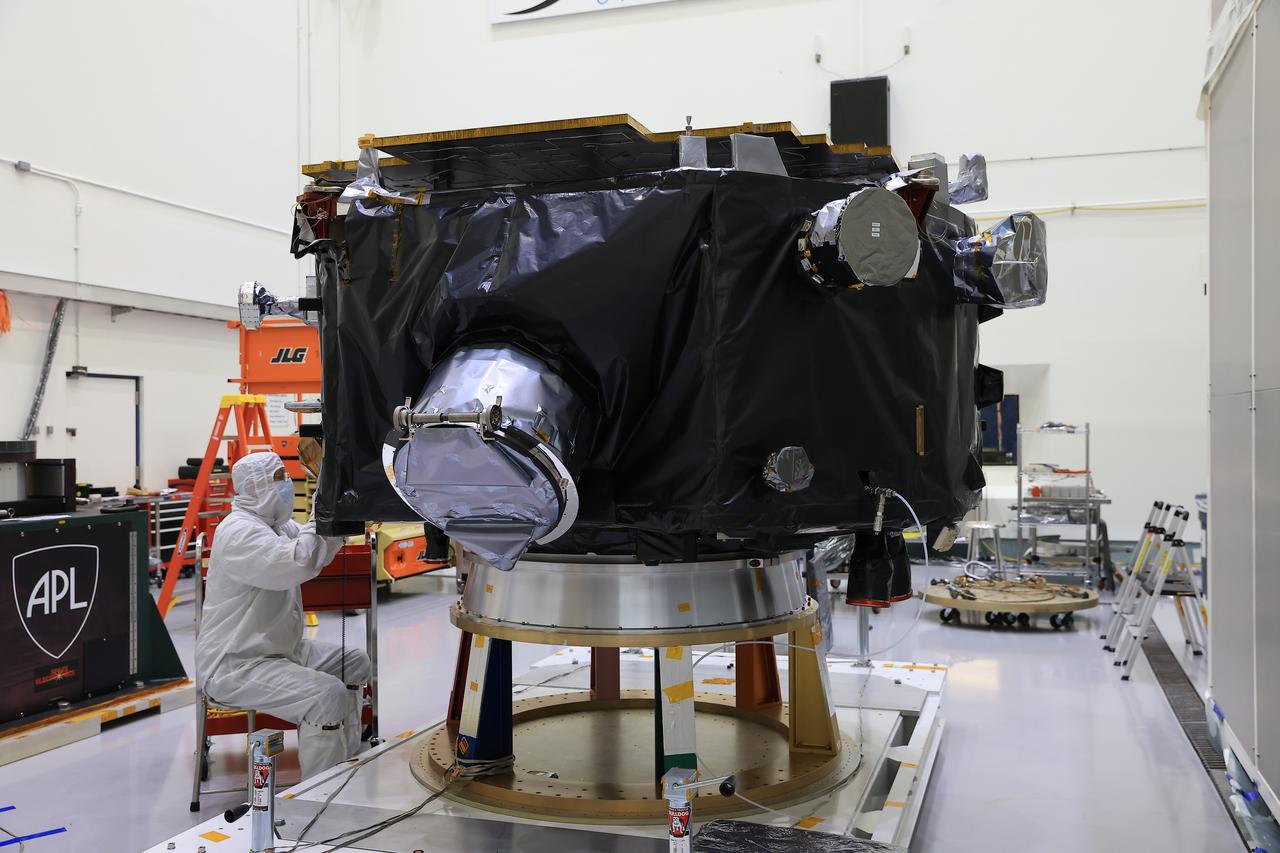
Technicians inspect NASA’s IMAP (Interstellar Mapping and Acceleration Probe) spacecraft on a spacecraft dolly inside Astrotech Space Operations Facility near the agency’s Kennedy Space Center in Florida during a NASA-hosted media day on Thursday, Aug. 28, 2025. IMAP and its two rideshares – NASA’s Carruthers Geocorona Observatory and National Oceanic and Atmospheric Administration’s (NOAA) Space Weather Follow On–Lagrange 1 (SWFO-L1) observatory – will orbit the Sun near Lagrange point 1, about one million miles from Earth, where IMAP will scan the heliosphere, a huge bubble created by the Sun’s wind that encapsulates our entire solar system, and analyze the composition of charged particles, and investigate how those particles move through the solar system.
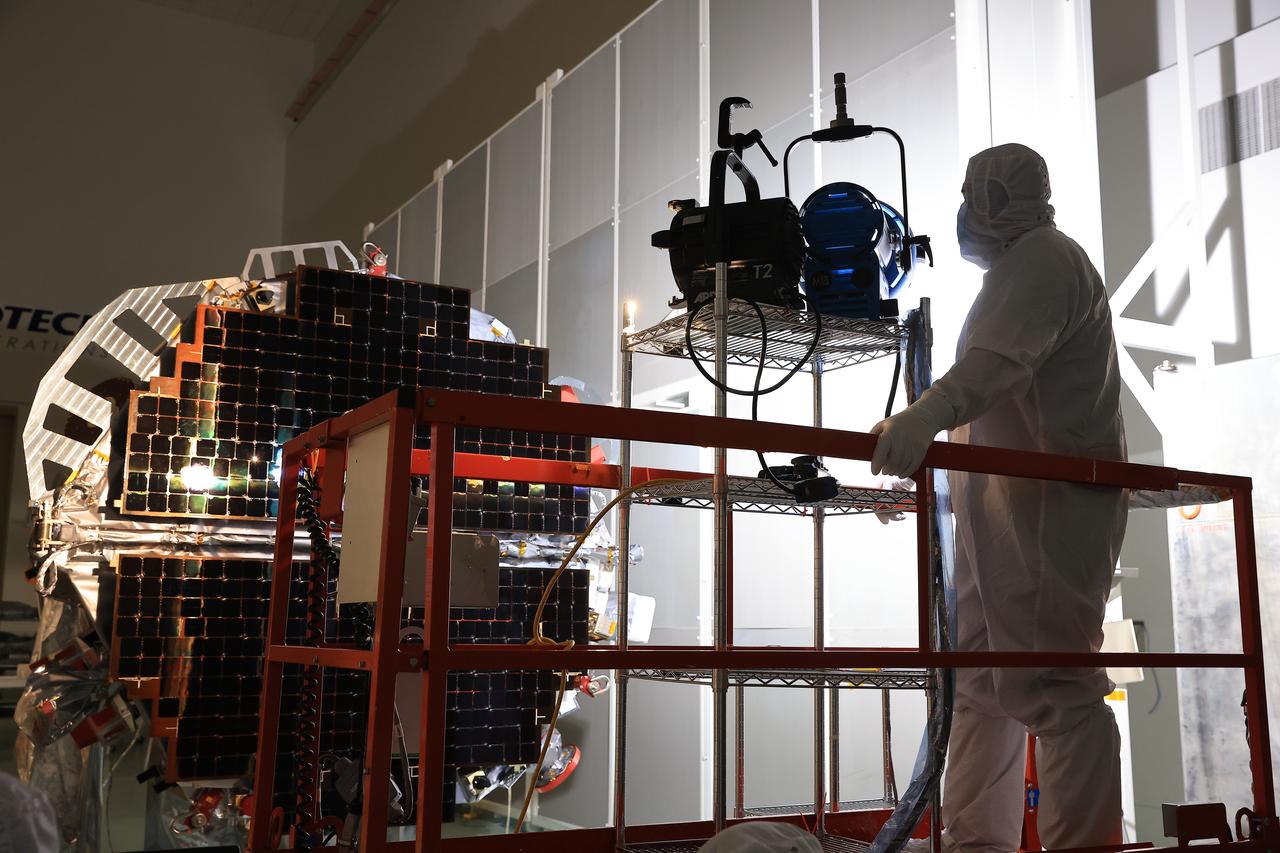
Technicians at the Astrotech Space Operations Facility near NASA’s Kennedy Space Center in Florida conduct illumination testing on Friday, July 18, 2025, by flashing a bright light that simulates the Sun into the two-panel solar array that will help power the agency’s IMAP (Interstellar Mapping and Acceleration Probe) observatory on its upcoming journey to a destination about one million miles away from Earth Lagrange Point 1. Each panel of the solar array, located on the top of IMAP, consists of 16 strings of solar cells, with 36 cells per string, and combined will convert sunlight into 500 watts of power, more than enough for the observatory, which as a system uses less power than five 100-watt incandescent light bulbs.
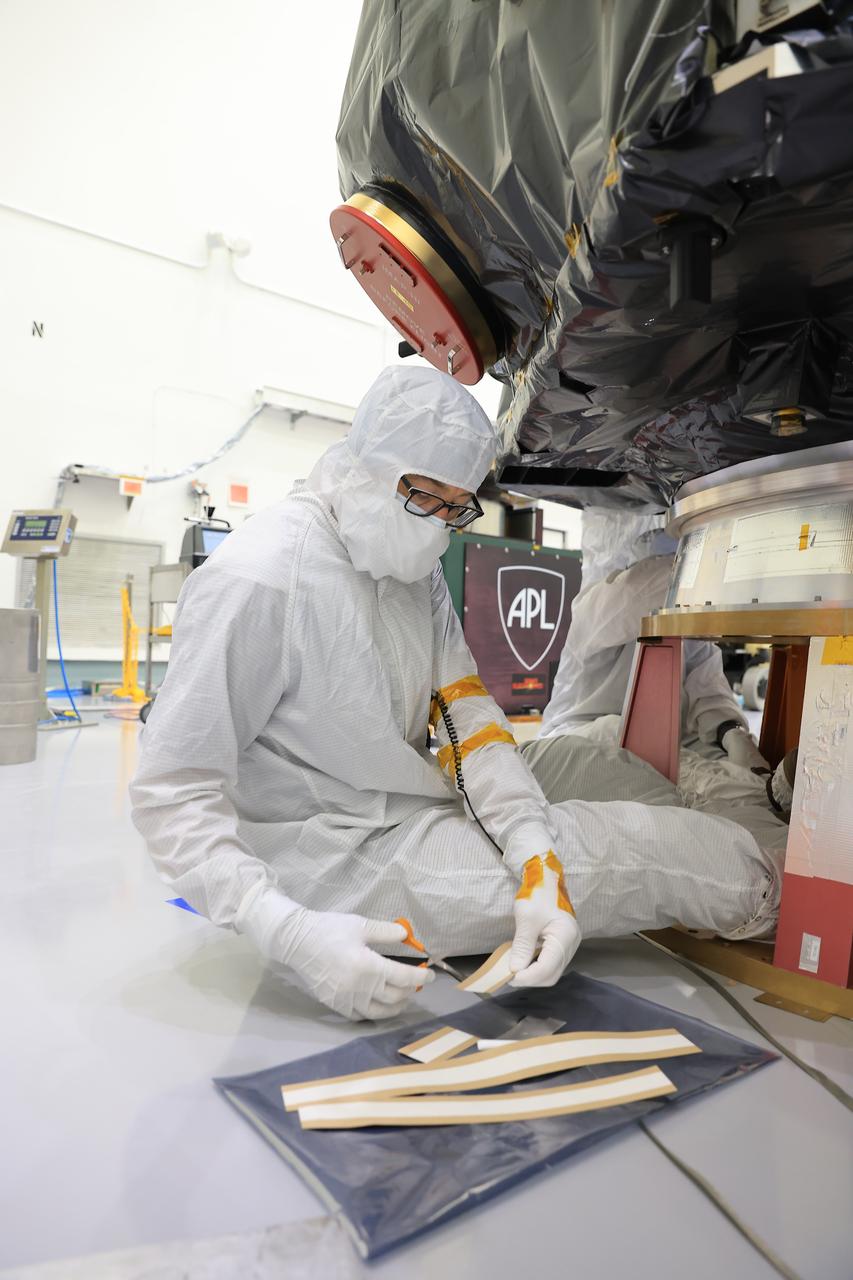
Technicians conduct blanket closeout work on NASA’s IMAP (Interstellar Mapping and Acceleration Probe) observatory at the Astrotech Space Operations Facility near NASA’s Kennedy Space Center in Florida on Friday, Aug. 15, 2025. IMAP will explore and map the boundaries of the heliosphere — a huge bubble created by the Sun’s wind that encapsulates our entire solar system — and study how the heliosphere interacts with the local galactic neighborhood beyond.
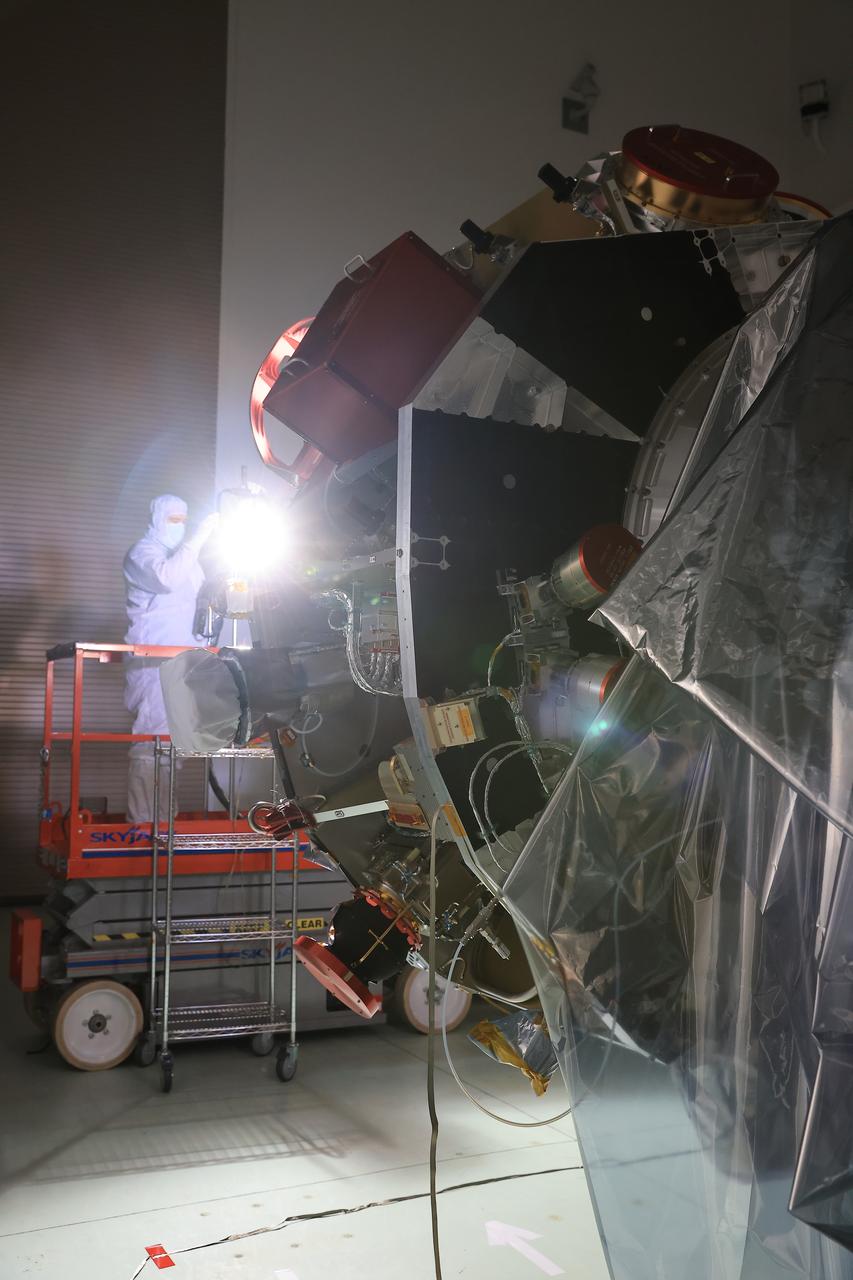
Technicians at the Astrotech Space Operations Facility near NASA’s Kennedy Space Center in Florida conduct illumination testing on Friday, July 18, 2025, by flashing a bright light that simulates the Sun into the two-panel solar array that will help power the agency’s IMAP (Interstellar Mapping and Acceleration Probe) observatory on its upcoming journey to a destination about one million miles away from Earth Lagrange Point 1. Each panel of the solar array, located on the top of IMAP, consists of 16 strings of solar cells, with 36 cells per string, and combined will convert sunlight into 500 watts of power, more than enough for the observatory, which as a system uses less power than five 100-watt incandescent light bulbs.
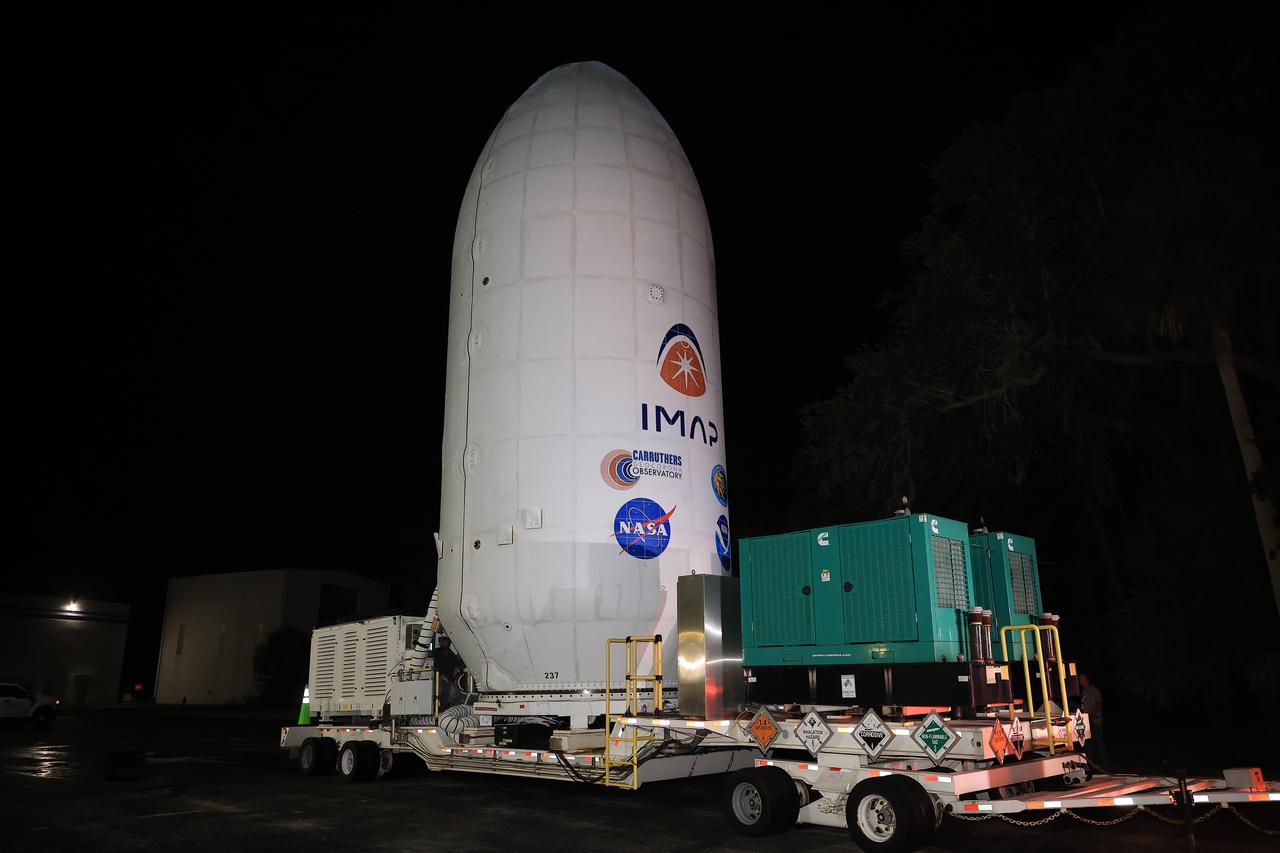
Workers transport NASA’s IMAP (Interstellar Mapping and Acceleration Probe) spacecraft along with the agency’s Carruthers Geocorona Observatory and National Oceanic and Atmospheric Administration’s (NOAA) Space Weather Follow On–Lagrange 1 (SWFO-L1) satellite late on Wednesday, Sept. 17, 2025, through early Thursday, Sept. 18, 2025, from the Astrotech Space Operations Facility in Titusville Florida, to the SpaceX hangar at Launch Complex 39A at the agency’s Kennedy Space Center in Florida. Technicians will soon mate the three spacecraft to a SpaceX Falcon 9 rocket in preparation for launch. Liftoff is targeted for 7:32 a.m. EDT, Tuesday, Sept. 23, from Launch Complex 39A at NASA Kennedy.
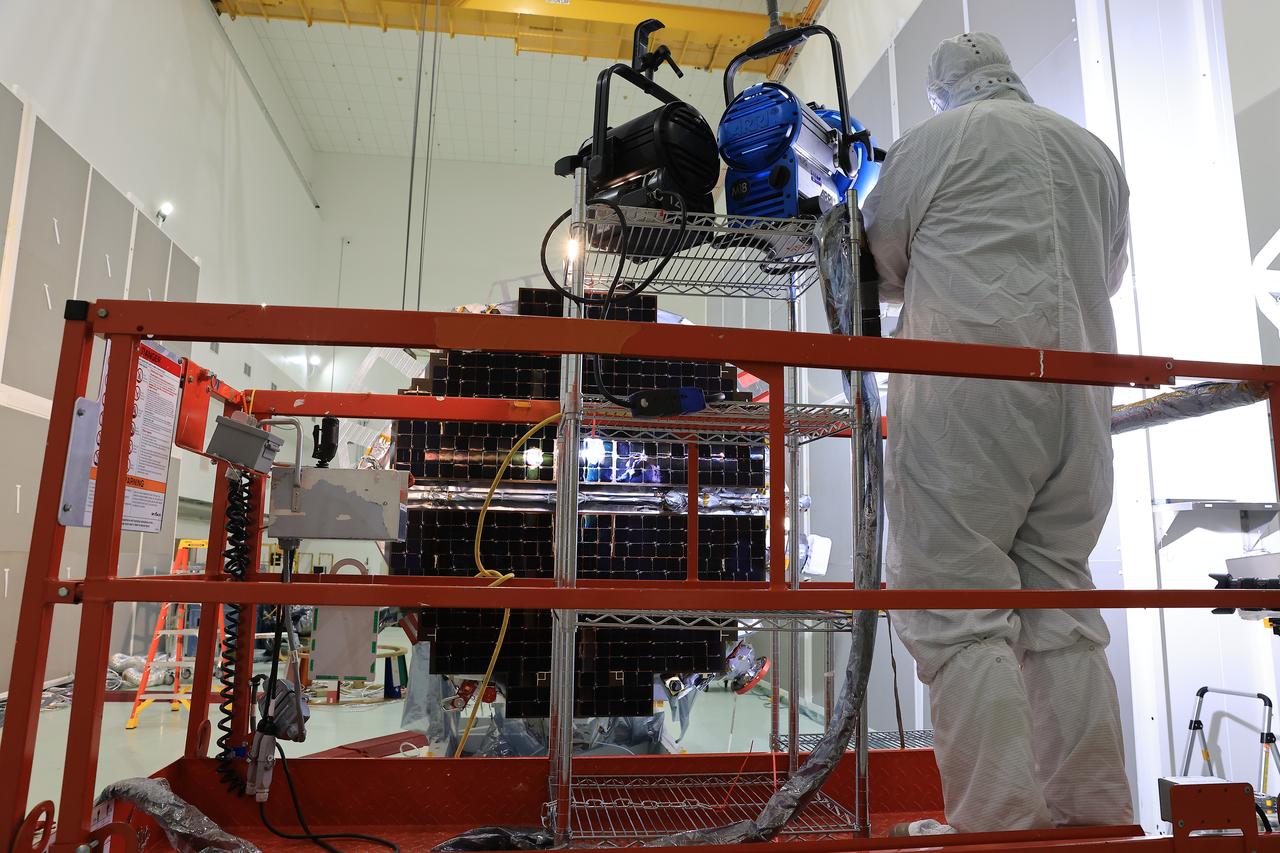
Technicians at the Astrotech Space Operations Facility near NASA’s Kennedy Space Center in Florida conduct illumination testing on Friday, July 18, 2025, by flashing a bright light that simulates the Sun into the two-panel solar array that will help power the agency’s IMAP (Interstellar Mapping and Acceleration Probe) observatory on its upcoming journey to a destination about one million miles away from Earth Lagrange Point 1. Each panel of the solar array, located on the top of IMAP, consists of 16 strings of solar cells, with 36 cells per string, and combined will convert sunlight into 500 watts of power, more than enough for the observatory, which as a system uses less power than five 100-watt incandescent light bulbs.
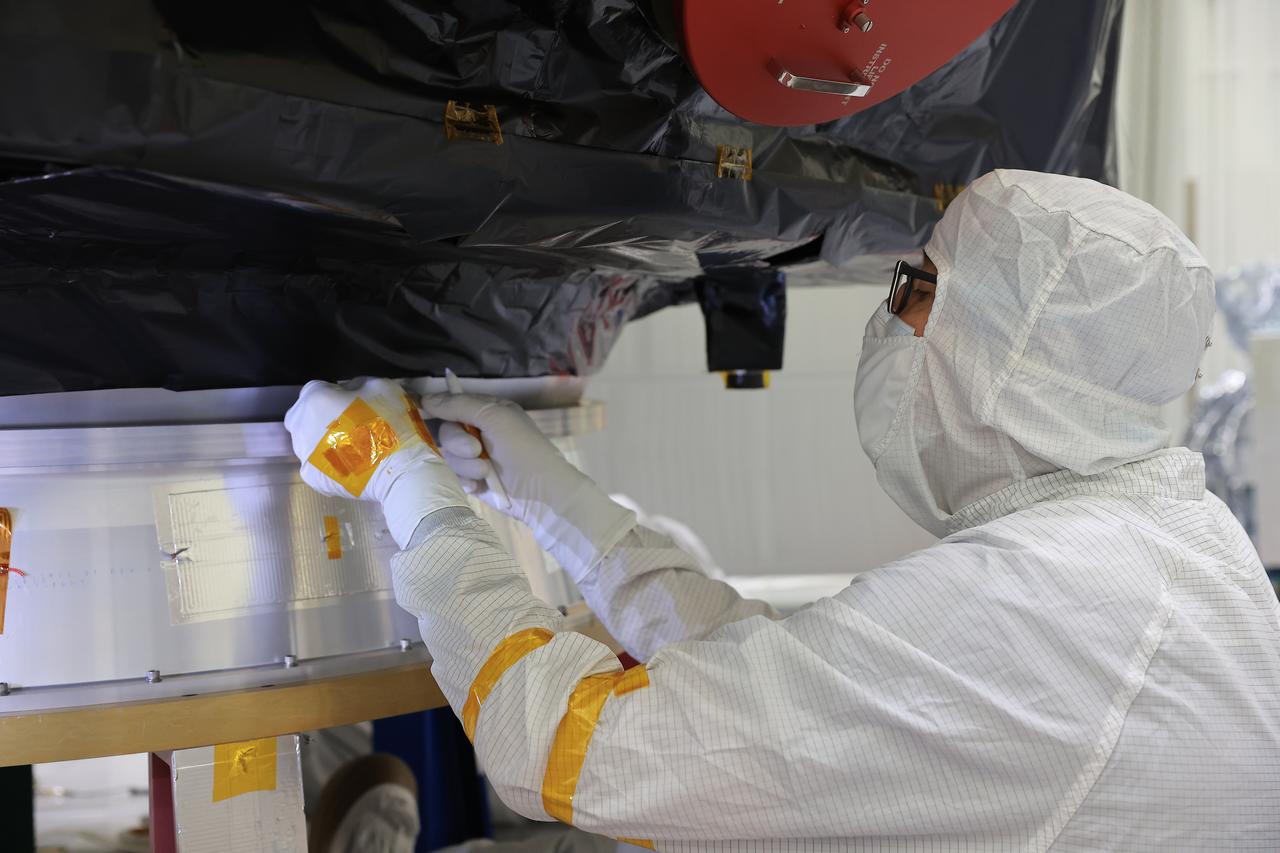
Technicians conduct blanket closeout work on NASA’s IMAP (Interstellar Mapping and Acceleration Probe) observatory at the Astrotech Space Operations Facility near NASA’s Kennedy Space Center in Florida on Friday, Aug. 15, 2025. IMAP will explore and map the boundaries of the heliosphere — a huge bubble created by the Sun’s wind that encapsulates our entire solar system — and study how the heliosphere interacts with the local galactic neighborhood beyond.
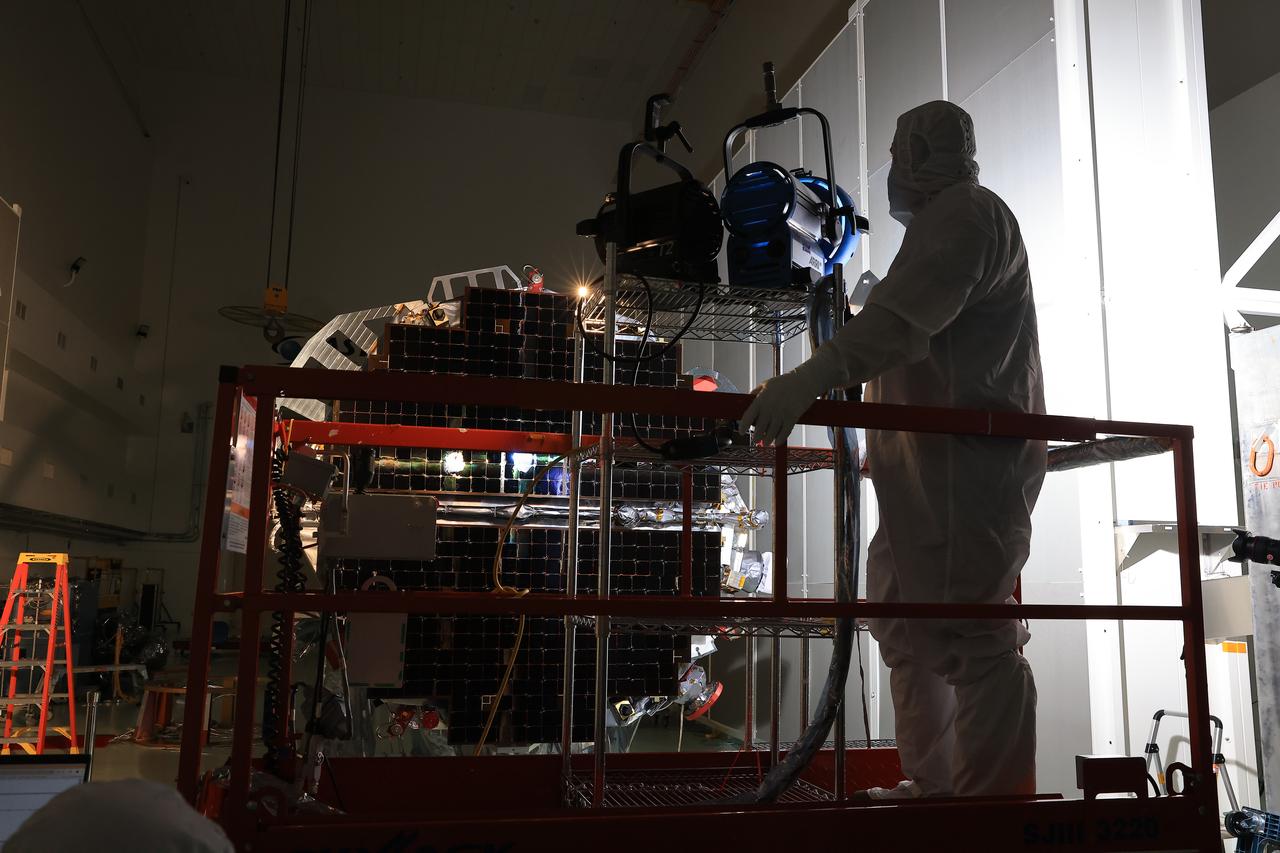
Technicians at the Astrotech Space Operations Facility near NASA’s Kennedy Space Center in Florida conduct illumination testing on Friday, July 18, 2025, by flashing a bright light that simulates the Sun into the two-panel solar array that will help power the agency’s IMAP (Interstellar Mapping and Acceleration Probe) observatory on its upcoming journey to a destination about one million miles away from Earth Lagrange Point 1. Each panel of the solar array, located on the top of IMAP, consists of 16 strings of solar cells, with 36 cells per string, and combined will convert sunlight into 500 watts of power, more than enough for the observatory, which as a system uses less power than five 100-watt incandescent light bulbs.

Technicians inspect NASA’s IMAP (Interstellar Mapping and Acceleration Probe) spacecraft on a spacecraft dolly inside Astrotech Space Operations Facility near the agency’s Kennedy Space Center in Florida during a NASA-hosted media day on Thursday, Aug. 28, 2025. IMAP and its two rideshares – NASA’s Carruthers Geocorona Observatory and National Oceanic and Atmospheric Administration’s (NOAA) Space Weather Follow On–Lagrange 1 (SWFO-L1) observatory – will orbit the Sun near Lagrange point 1, about one million miles from Earth, where IMAP will scan the heliosphere, a huge bubble created by the Sun’s wind that encapsulates our entire solar system, and analyze the composition of charged particles, and investigate how those particles move through the solar system.

One of two rideshare spacecraft on NASA’s IMAP (Interstellar Mapping and Acceleration Probe) mission, the National Oceanic and Atmospheric Administration’s (NOAA) Space Weather Follow On–Lagrange 1 (SWFO-L1) observatory sits on a spacecraft dolly in a high bay inside Astrotech Space Operations Facility near the agency’s Kennedy Space Center in Florida during a NASA-hosted media day on Thursday, Aug. 28, 2025. The missions, along with NASA’s exosphere-studying Carruthers Geocorona Observatory, will orbit the Sun near Lagrange point 1, about one million miles from Earth, where SWFO-L1 will monitor the Sun and near-Earth environment using a suite of instruments that provide real-time measurements of solar activity.
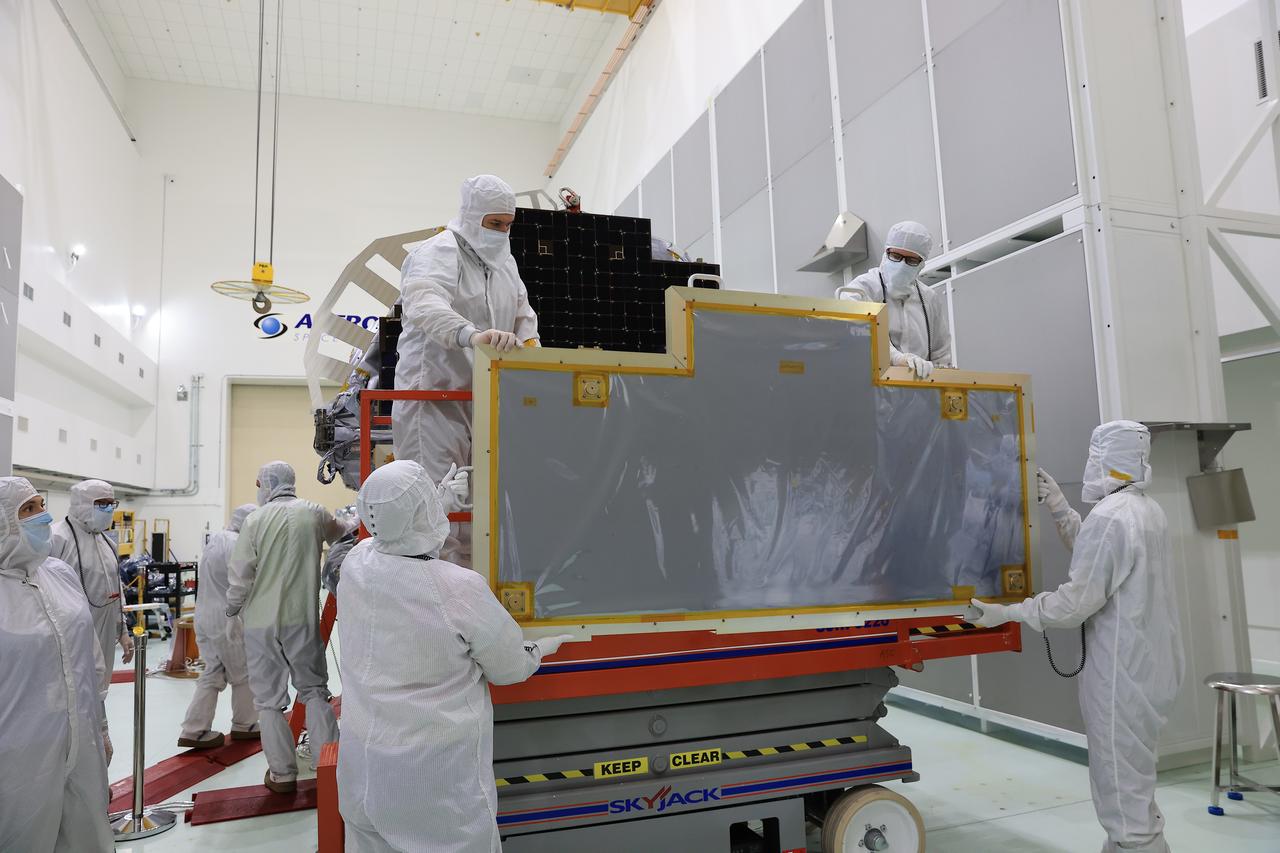
Technicians at the Astrotech Space Operations Facility near NASA’s Kennedy Space Center in Florida remove a protective covering from the two-panel solar array on Friday, July 18, 2025, that will help power the agency’s IMAP (Interstellar Mapping and Acceleration Probe) observatory on its upcoming journey to a destination about one million miles away from Earth at Lagrange Point 1. Each panel of the solar array, located on the top of IMAP, consists of 16 strings of solar cells, with 36 cells per string, and combined will convert sunlight into 500 watts of power, more than enough for the observatory, which as a system uses less power than five 100-watt incandescent light bulbs.
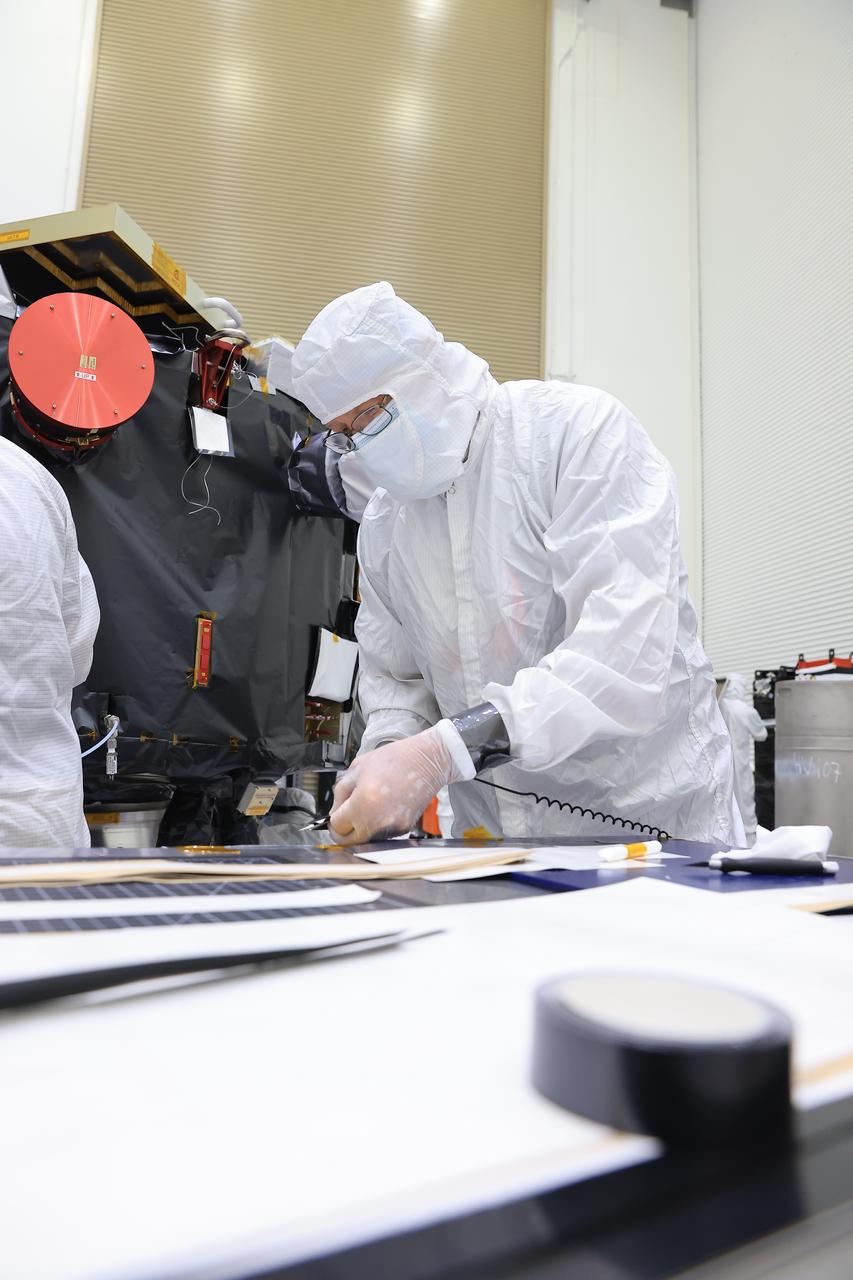
Technicians conduct blanket closeout work on NASA’s IMAP (Interstellar Mapping and Acceleration Probe) observatory at the Astrotech Space Operations Facility near NASA’s Kennedy Space Center in Florida on Friday, Aug. 15, 2025. IMAP will explore and map the boundaries of the heliosphere — a huge bubble created by the Sun’s wind that encapsulates our entire solar system — and study how the heliosphere interacts with the local galactic neighborhood beyond.
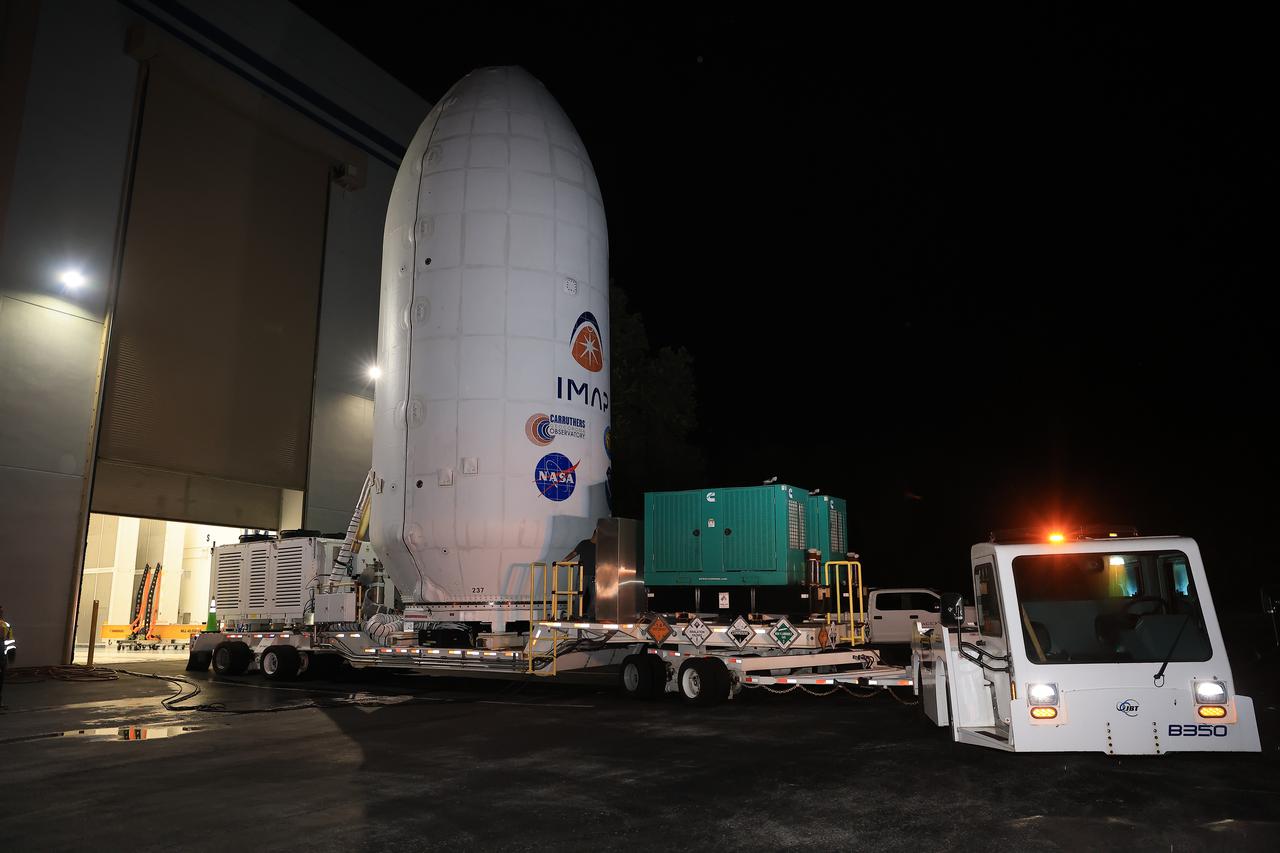
Workers transport NASA’s IMAP (Interstellar Mapping and Acceleration Probe) spacecraft along with the agency’s Carruthers Geocorona Observatory and National Oceanic and Atmospheric Administration’s (NOAA) Space Weather Follow On–Lagrange 1 (SWFO-L1) satellite late on Wednesday, Sept. 17, 2025, through early Thursday, Sept. 18, 2025, from the Astrotech Space Operations Facility in Titusville Florida, to the SpaceX hangar at Launch Complex 39A at the agency’s Kennedy Space Center in Florida. Technicians will soon mate the three spacecraft to a SpaceX Falcon 9 rocket in preparation for launch. Liftoff is targeted for 7:32 a.m. EDT, Tuesday, Sept. 23, from Launch Complex 39A at NASA Kennedy.

Technicians inspect NASA’s IMAP (Interstellar Mapping and Acceleration Probe) spacecraft on a spacecraft dolly inside Astrotech Space Operations Facility near the agency’s Kennedy Space Center in Florida during a NASA-hosted media day on Thursday, Aug. 28, 2025. IMAP and its two rideshares – NASA’s Carruthers Geocorona Observatory and National Oceanic and Atmospheric Administration’s (NOAA) Space Weather Follow On–Lagrange 1 (SWFO-L1) observatory – will orbit the Sun near Lagrange point 1, about one million miles from Earth, where IMAP will scan the heliosphere, a huge bubble created by the Sun’s wind that encapsulates our entire solar system, and analyze the composition of charged particles, and investigate how those particles move through the solar system.

One of two rideshare spacecraft on NASA’s IMAP (Interstellar Mapping and Acceleration Probe) mission, NASA’s exosphere-studying Carruthers Geocorona Observatory sits on a spacecraft dolly in a high bay inside Astrotech Space Operations Facility near the agency’s Kennedy Space Center in Florida during a NASA-hosted media day on Thursday, Aug. 28, 2025. The missions, along with the National Oceanic and Atmospheric Administration’s (NOAA) Space Weather Follow On–Lagrange 1 (SWFO-L1) observatory, will orbit the Sun near Lagrange point 1, about one million miles from Earth. Carruthers will use its ultraviolet cameras to monitor how space weather from the Sun impacts the exosphere, the outermost part of Earth’s atmosphere.