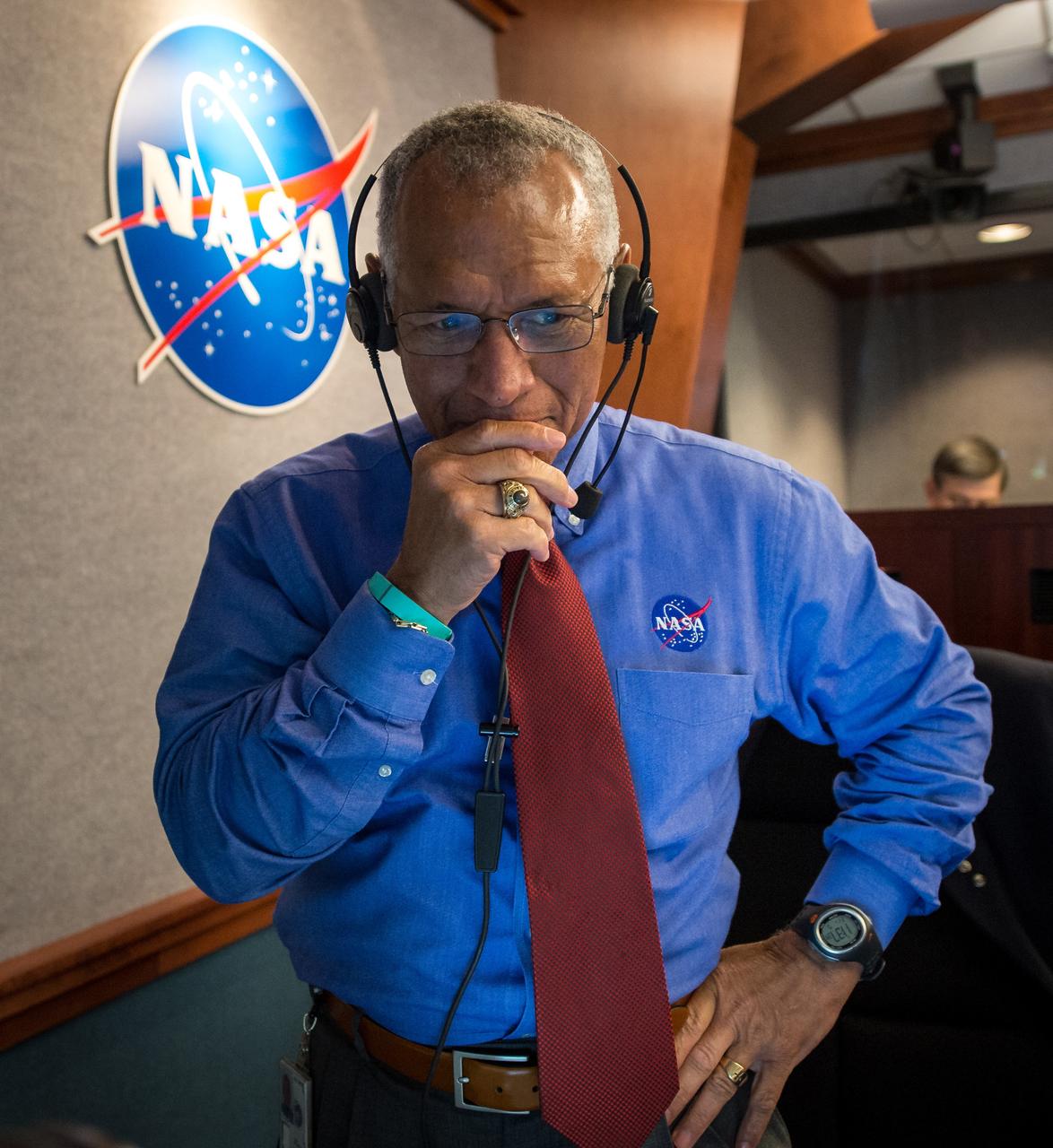
NASA Administrator Charles Bolden pauses for a moment in Building AE at Cape Canaveral Air Force Station after having watched and celebrated the Orion spacecraft splash down in the Pacific Ocean more than three hours after the spacecraft launched onboard a United Launch Alliance Delta IV Heavy rocket from Launch Complex 37, Friday, Dec. 5, 2014, Cape Canaveral, Florida. The Orion spacecraft orbited Earth twice, reaching an altitude of approximately 3,600 miles above Earth before landing. No one was aboard Orion for this flight test, but the spacecraft is designed to allow us to journey to destinations never before visited by humans, including an asteroid and Mars. Part of Batch image transfer from Flickr.
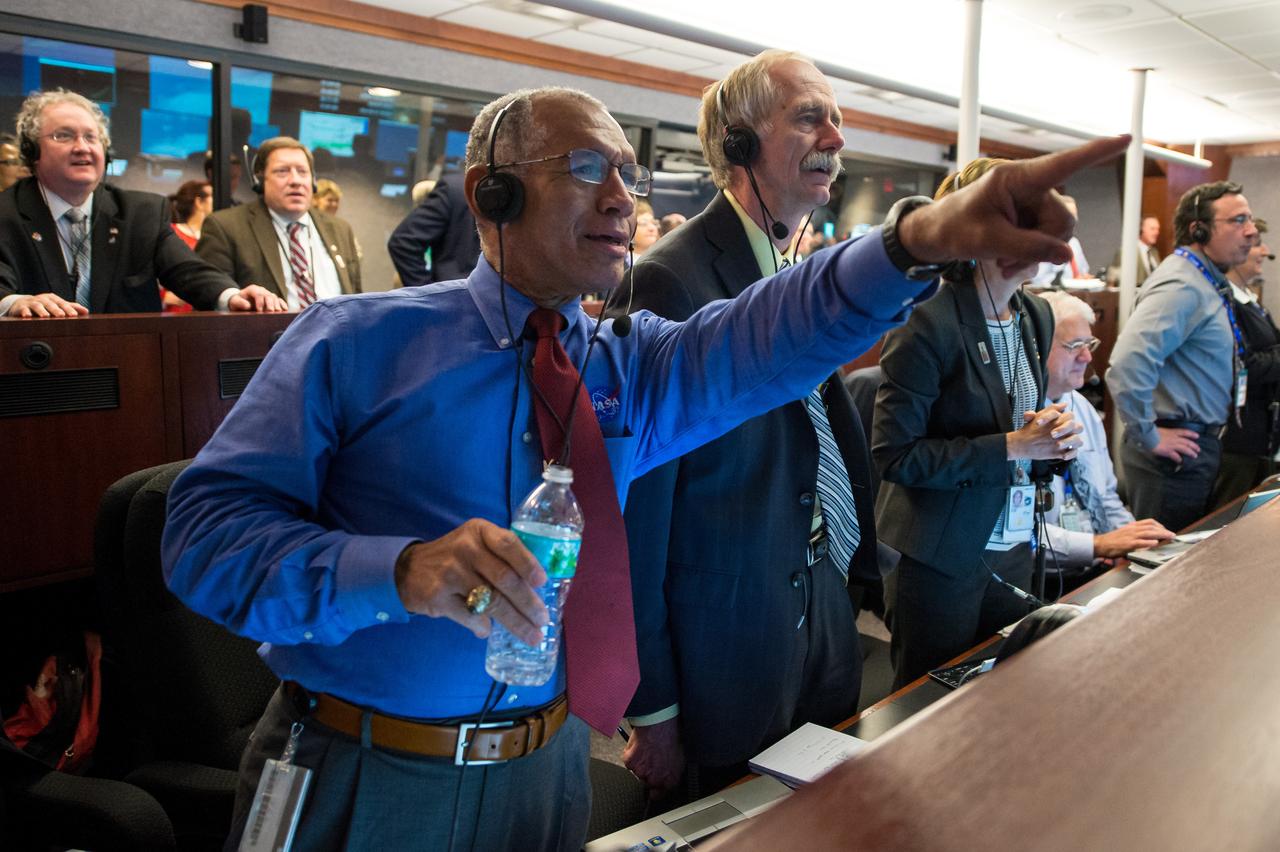
NASA Administrator Charles Bolden, left, NASA Associate Administrator for the Human Exploration and Operations Directorate William Gerstenmaier, and others in Building AE at Cape Canaveral Air Force Station, react as they watch the Orion spacecraft splash down in the Pacific Ocean a more than three hours after launching onboard a United Launch Alliance Delta IV Heavy rocket from Launch Complex 37, Friday, Dec. 5, 2014, Cape Canaveral, Florida. The Orion spacecraft orbited Earth twice, reaching an altitude of approximately 3,600 miles above Earth before landing. No one was aboard Orion for this flight test, but the spacecraft is designed to allow us to journey to destinations never before visited by humans, including an asteroid and Mars. Part of Batch image transfer from Flickr.
A United Launch Alliance Delta IV Heavy rocket with NASA’s Orion spacecraft mounted atop is seen as the Mobile Service Tower is rolled back on Dec. 3, 2014, at Cape Canaveral Air Force Station's Space Launch Complex 37, Florida. Orion is scheduled to make its first flight test on Exploration Flight Test-1 (EFT-1) on Dec. 4 with a morning launch atop the Delta IV Heavy. Part of Batch image transfer from Flickr.
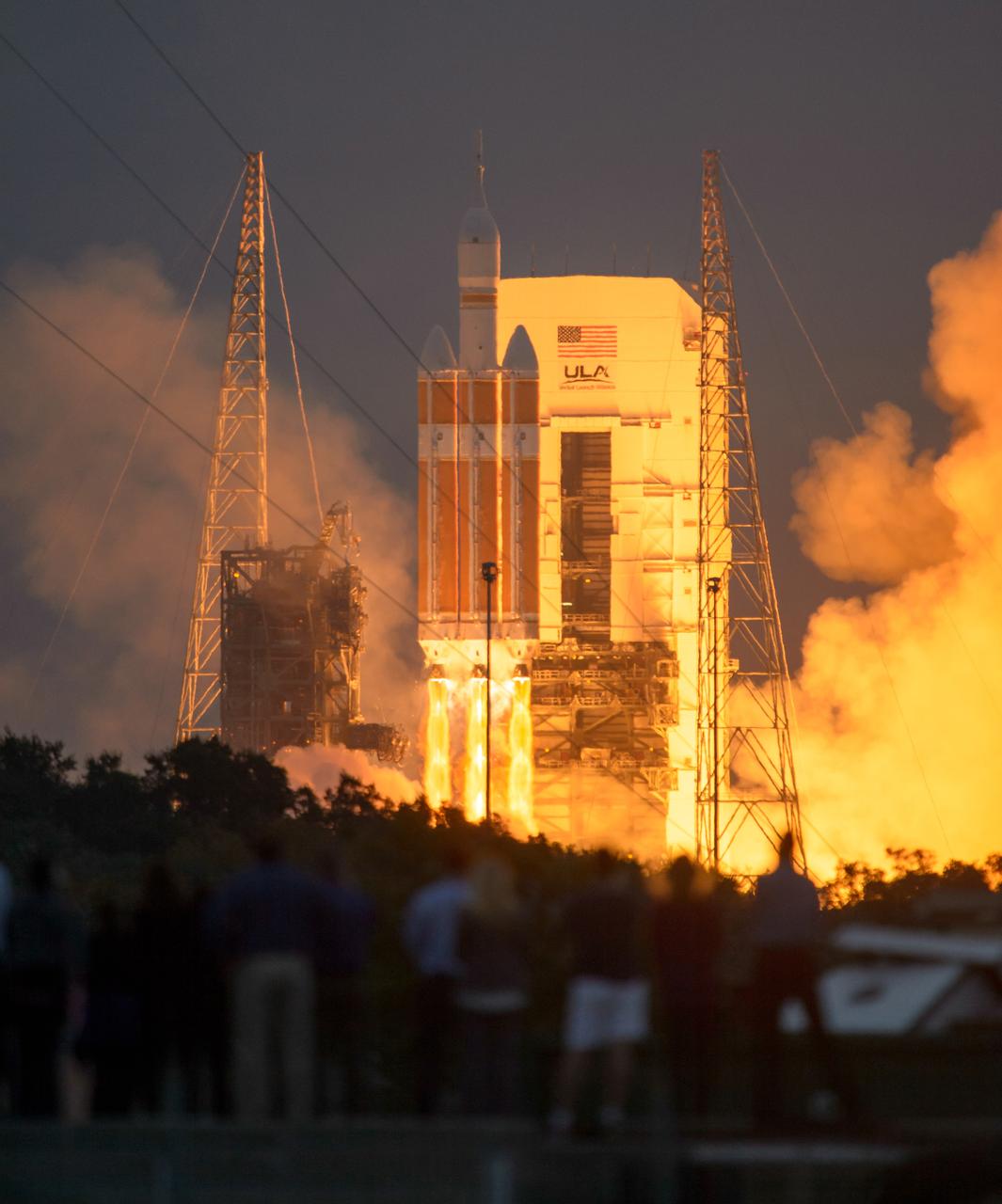
The United Launch Alliance Delta IV Heavy rocket with NASA’s Orion spacecraft mounted atop, lifts off on Exploration Flight Test-1 (EFT-1) from Cape Canaveral Air Force Station's Space Launch Complex 37 at at 7:05 a.m. EST, Friday, Dec. 5, 2014, in Florida. Part of Batch image transfer from Flickr.
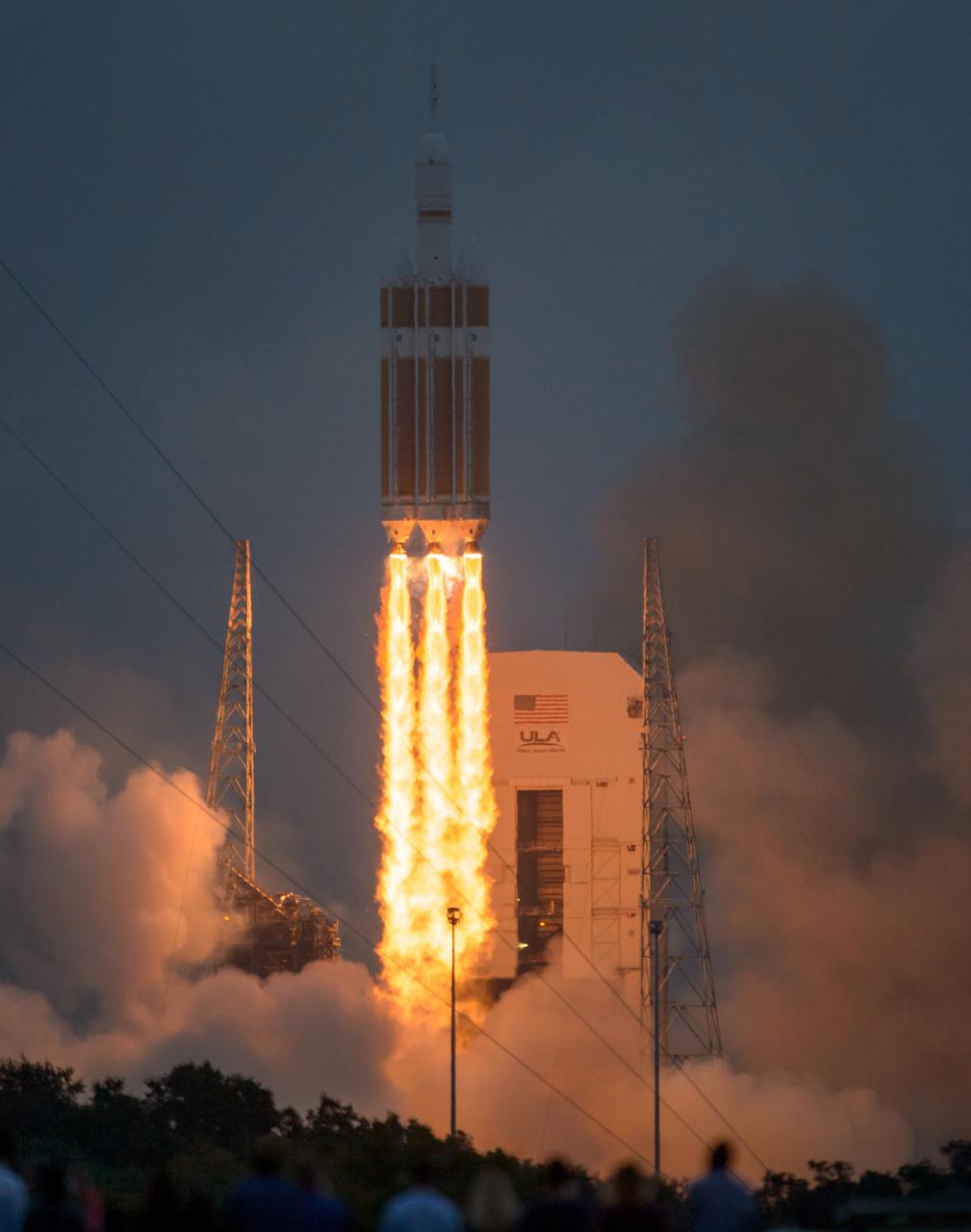
The United Launch Alliance Delta IV Heavy rocket with NASA’s Orion spacecraft mounted atop, lifts off on Exploration Flight Test-1 (EFT-1) from Cape Canaveral Air Force Station's Space Launch Complex 37 at at 7:05 a.m. EST, Friday, Dec. 5, 2014, in Florida. Part of Batch image transfer from Flickr.
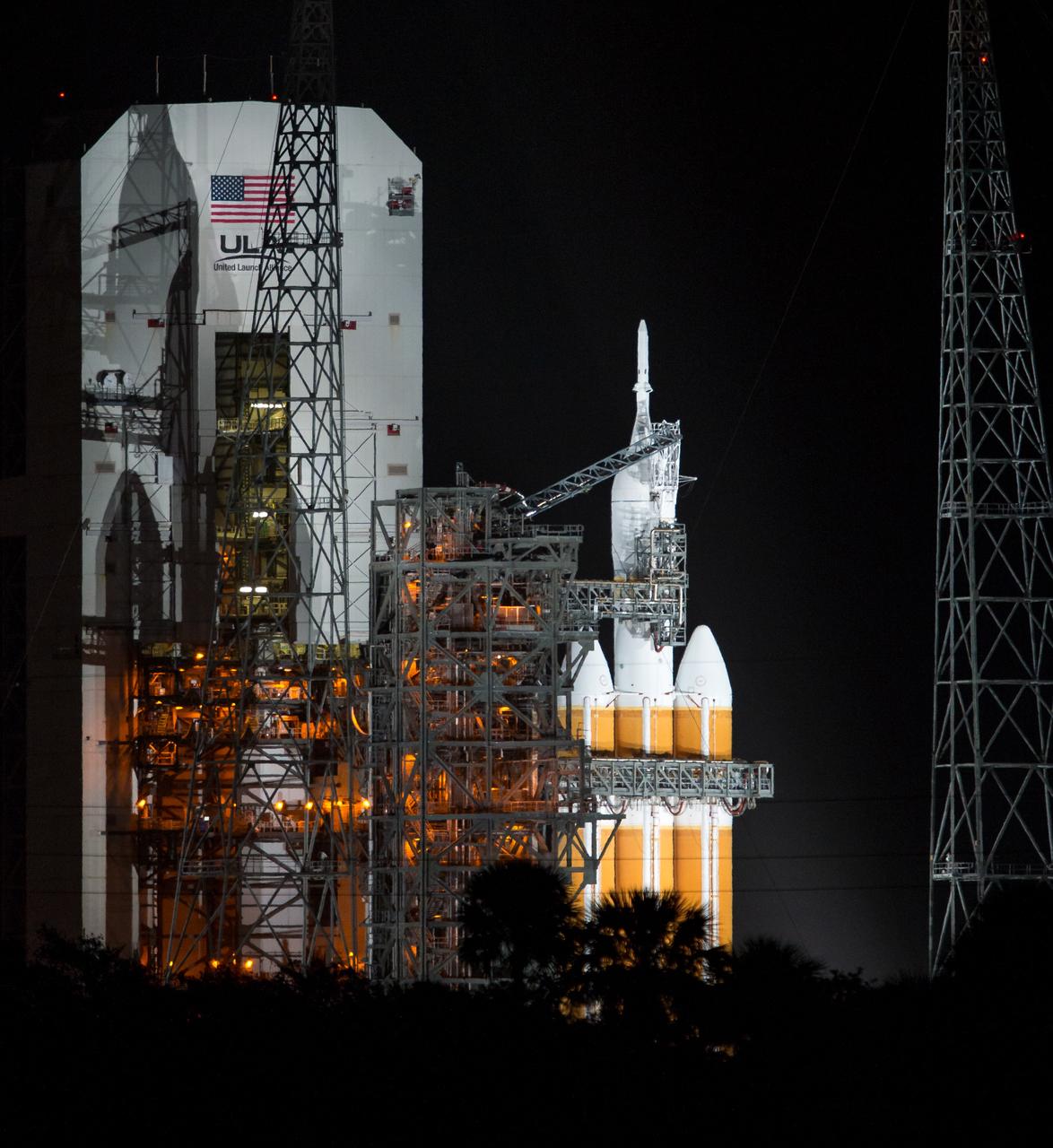
The United Launch Alliance Delta IV Heavy rocket with NASA’s Orion spacecraft mounted atop for Exploration Flight Test-1 (EFT-1) is seen early on Friday, Dec. 5, 2014, at Cape Canaveral Air Force Station's Space Launch Complex 37, Florida. Part of Batch image transfer from Flickr.
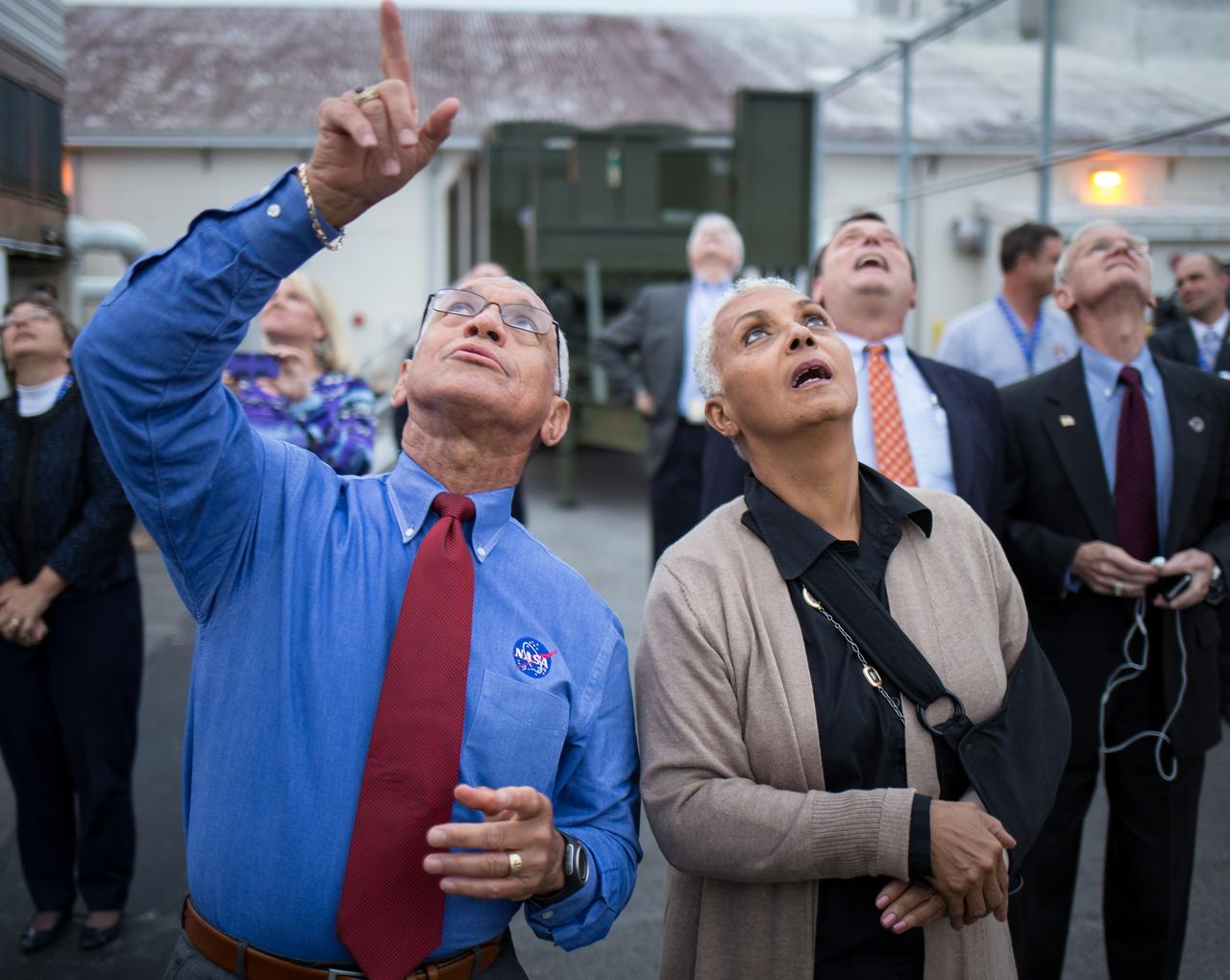
NASA Administrator Charles Bolden and his wife Jackie Bolden watch as the United Launch Alliance Delta IV Heavy rocket, with NASA’s Orion spacecraft mounted atop, lifts off on Exploration Flight Test-1 (EFT-1) from Cape Canaveral Air Force Station's Space Launch Complex 37 at at 7:05 a.m. EST, Friday, Dec. 5, 2014, Cape Canaveral, Florida. Part of Batch image transfer from Flickr.
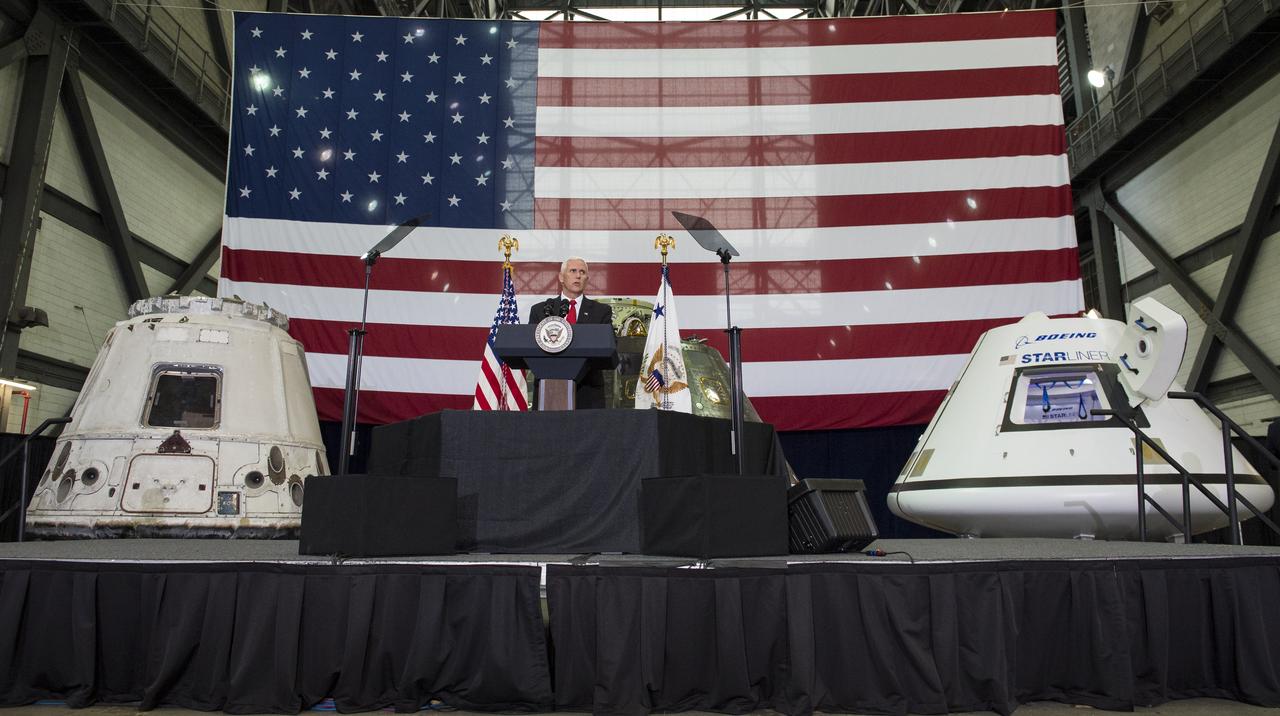
Vice President Mike Pence addresses NASA employees, in front of, from left to right, the SpaceX Dragon, NASA's Orion, and Boeing's Starliner, Thursday, July 6, 2017, at the Vehicle Assembly Building at NASA’s Kennedy Space Center (KSC) in Cape Canaveral, Florida. The Vice President thanked employees for advancing American leadership in space, before going on a tour of the center that highlighted the public-private partnerships at KSC, as both NASA and commercial companies prepare to launch American astronauts from the multi-user spaceport. Photo Credit: (NASA/Aubrey Gemignani)

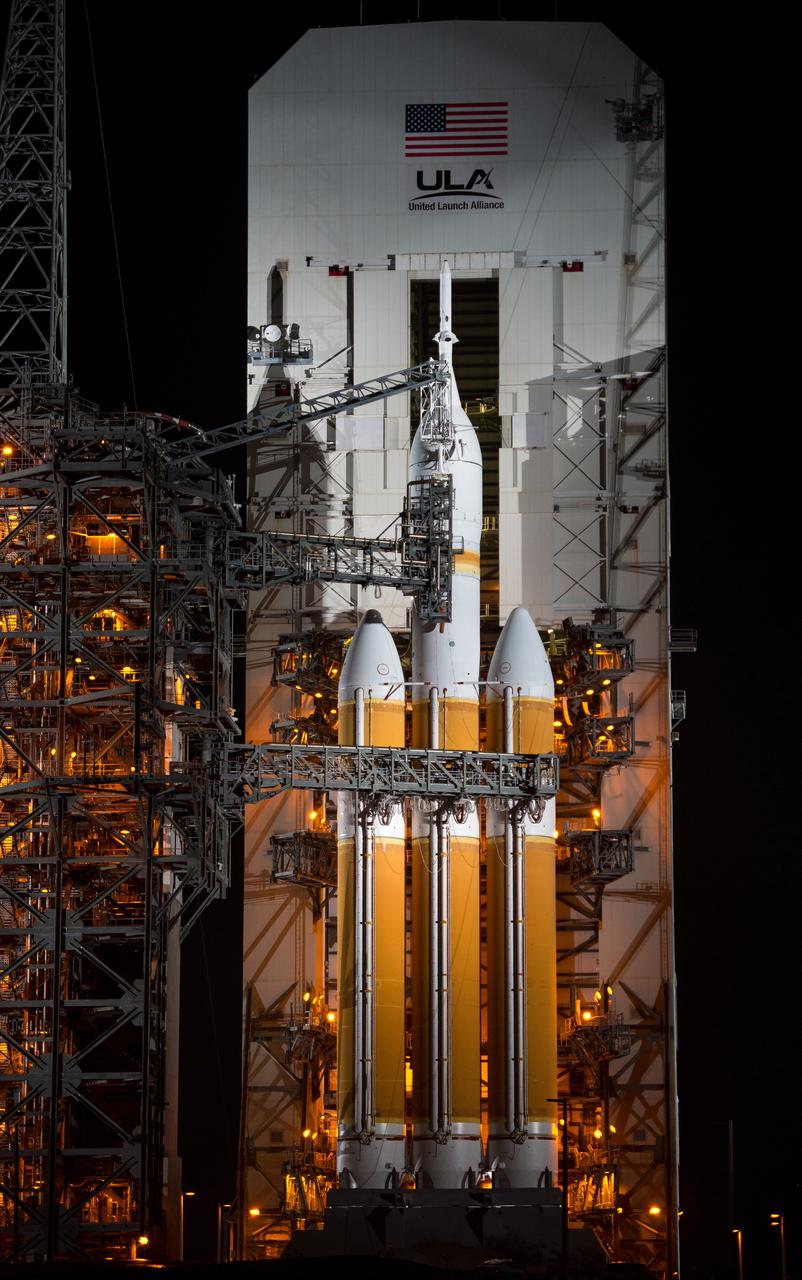
A United Launch Alliance Delta IV Heavy rocket with NASA’s Orion spacecraft mounted atop for Exploration Flight Test-1 (EFT-1) is seen illuminated in the distance in this long exposure photograph taken early on Dec. 4, 2014, at Cape Canaveral Air Force Station's Space Launch Complex 37, Florida. Part of Batch image transfer from Flickr.
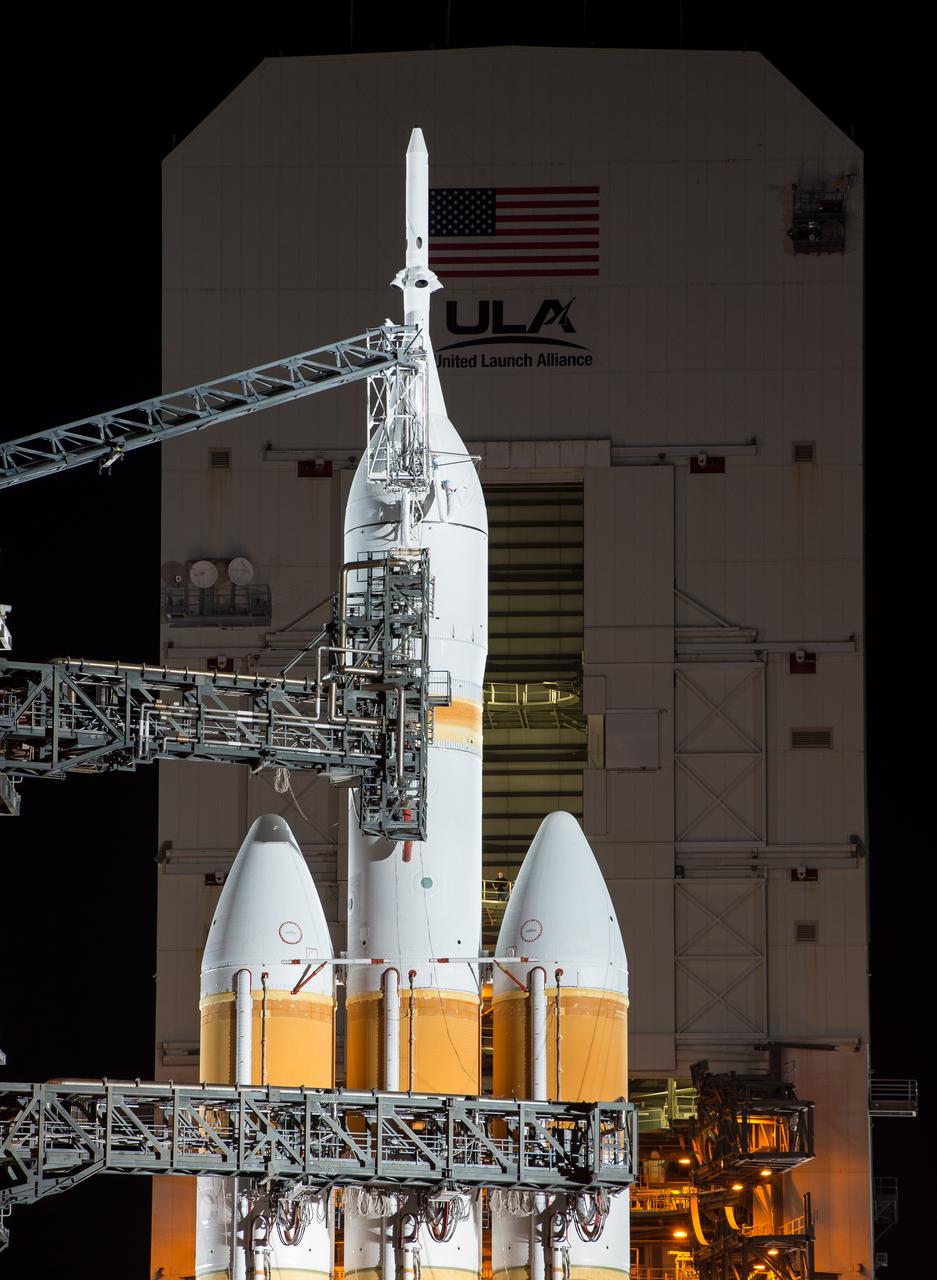
A United Launch Alliance Delta IV Heavy rocket with NASA’s Orion spacecraft mounted atop for Exploration Flight Test-1 (EFT-1) is seen after the Mobile Service Tower was finished rolling back early on Dec. 4, 2014, at Cape Canaveral Air Force Station's Space Launch Complex 37, Florida. Part of Batch image transfer from Flickr.
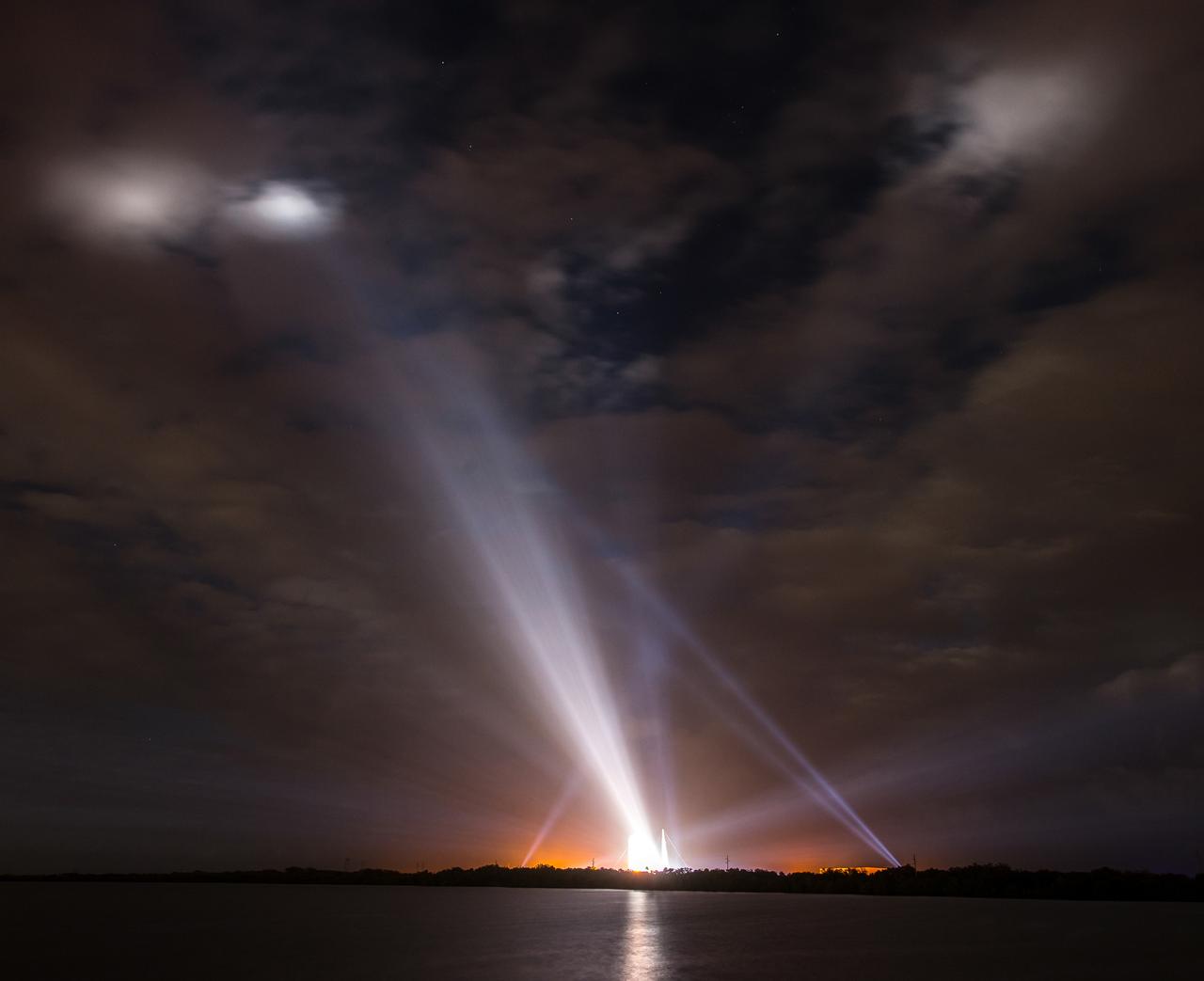
Bright lights illuminate the United Launch Alliance Delta IV Heavy rocket with NASA’s Orion spacecraft mounted atop for Exploration Flight Test-1 (EFT-1), early on Friday, Dec. 5, 2014, at Cape Canaveral Air Force Station's Space Launch Complex 37, Florida. Part of Batch image transfer from Flickr.
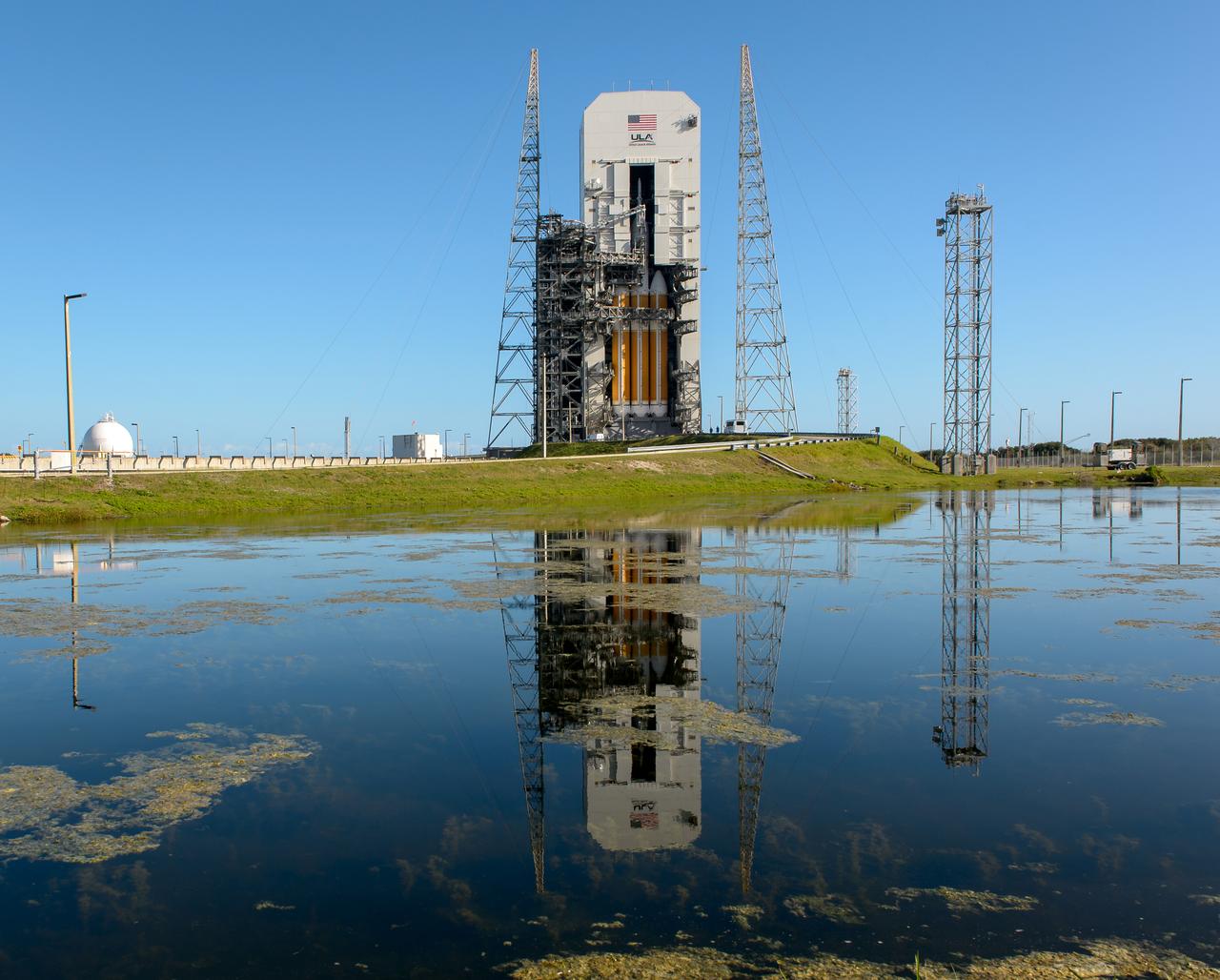
NASA’s Orion spacecraft mounted atop a United Launch Alliance Delta IV Heavy rocket is visible inside the Mobile Service Tower where the vehicle is undergoing launch preparations on Dec. 3, 2014 at Cape Canaveral Air Force Station's Space Launch Complex 37 in Florida. Part of Batch image transfer from Flickr.
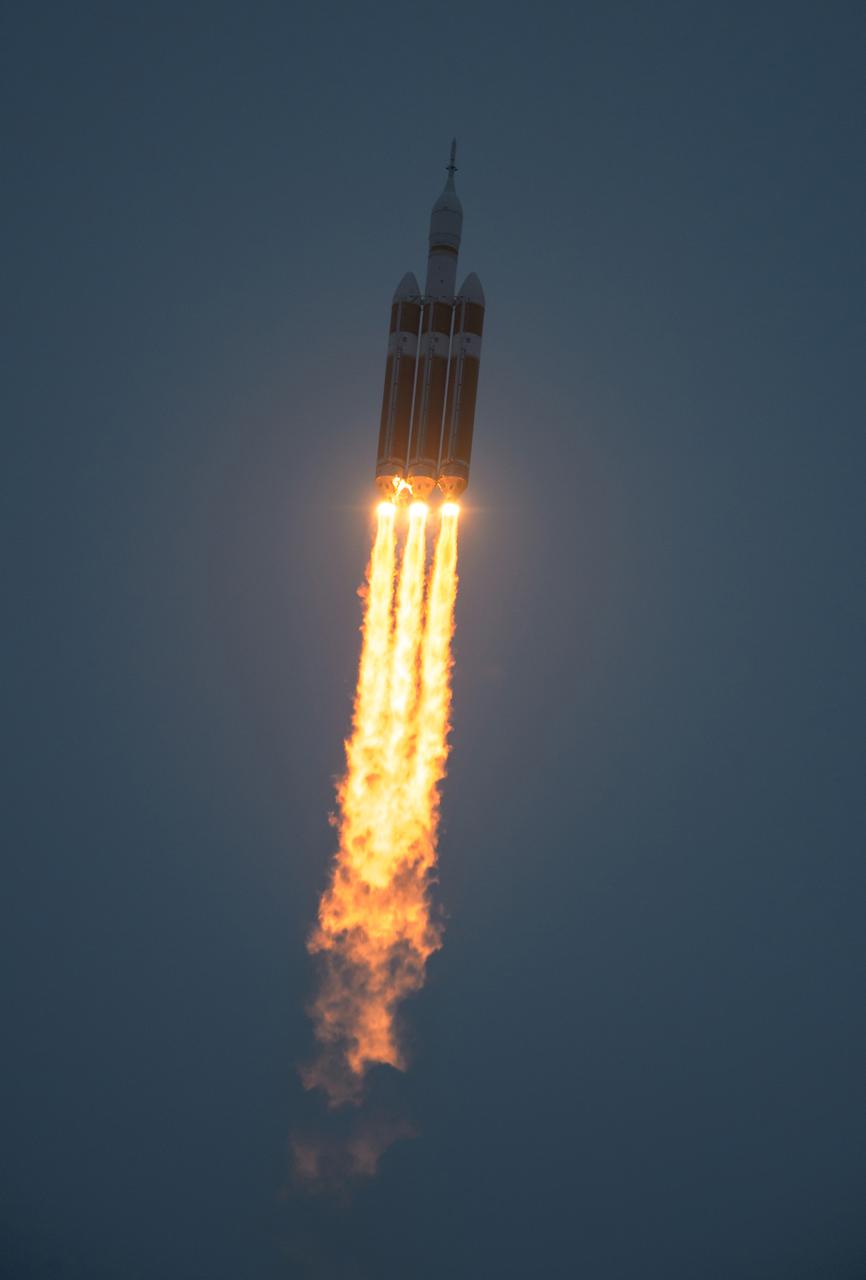
The United Launch Alliance Delta IV Heavy rocket with NASA’s Orion spacecraft mounted atop, lifts off on Exploration Flight Test-1 (EFT-1) from Cape Canaveral Air Force Station's Space Launch Complex 37 at at 7:05 a.m. EST, Friday, Dec. 5, 2014, in Florida. Part of Batch image transfer from Flickr.
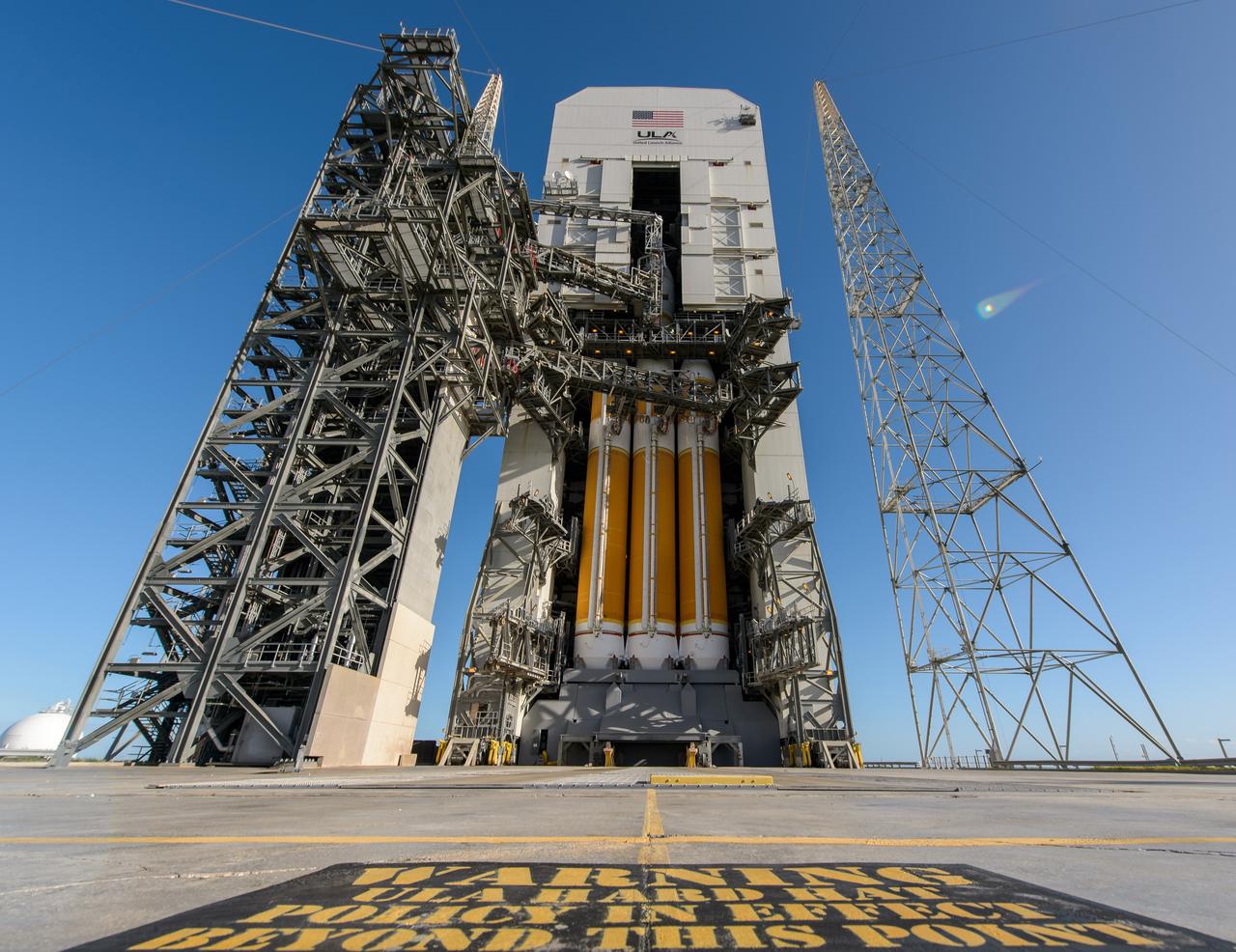
NASA’s Orion spacecraft mounted atop a United Launch Alliance Delta IV Heavy rocket is visible inside the Mobile Service Tower where the vehicle is undergoing launch preparations on Dec. 3, 2014, at Cape Canaveral Air Force Station's Space Launch Complex 37 in Florida. Part of Batch image transfer from Flickr.
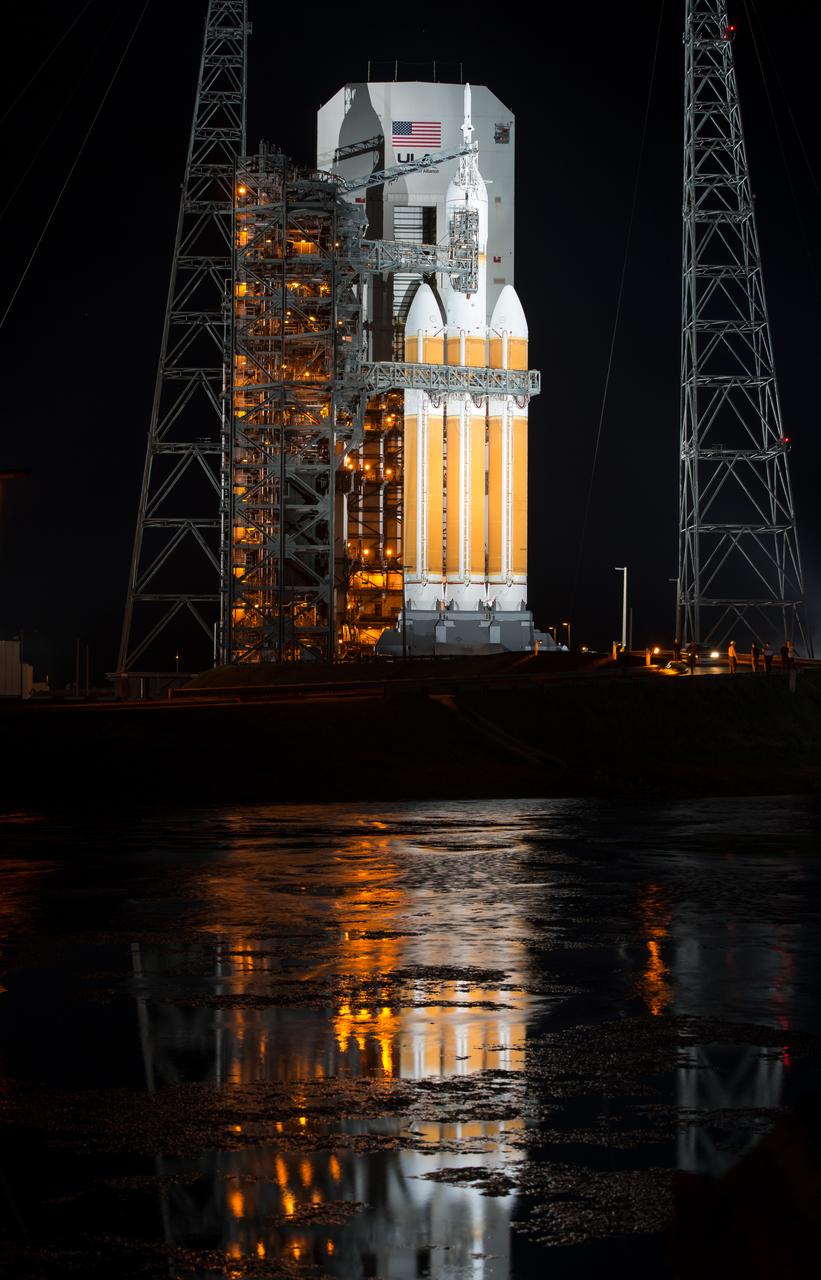
A United Launch Alliance Delta IV Heavy rocket with NASA’s Orion spacecraft mounted atop for Exploration Flight Test-1 (EFT-1) is seen after the Mobile Service Tower was finished rolling back early on Dec. 4, 2014, at Cape Canaveral Air Force Station's Space Launch Complex 37, Florida. Part of Batch image transfer from Flickr.
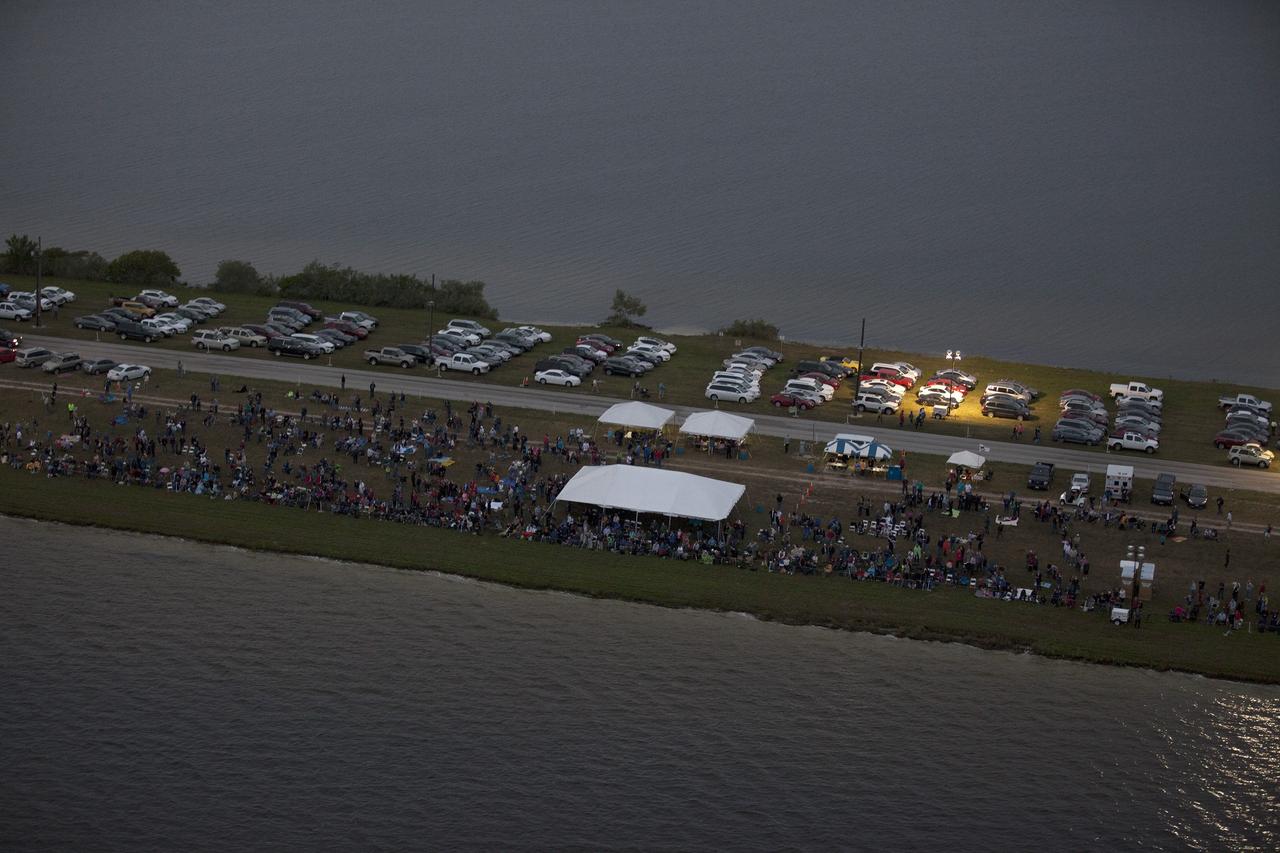
CAPE CANAVERAL, Fla. -- This helicopter view of the NASA Causeway connecting NASA's Kennedy Space Center with Cape Canaveral Air Force Staton shows the thousands of vehicles parked where guests gather to see the launch of the Orion Flight Test. For more information, visit www.nasa.gov/orion Photo credit: NASA/Kim Shiflett
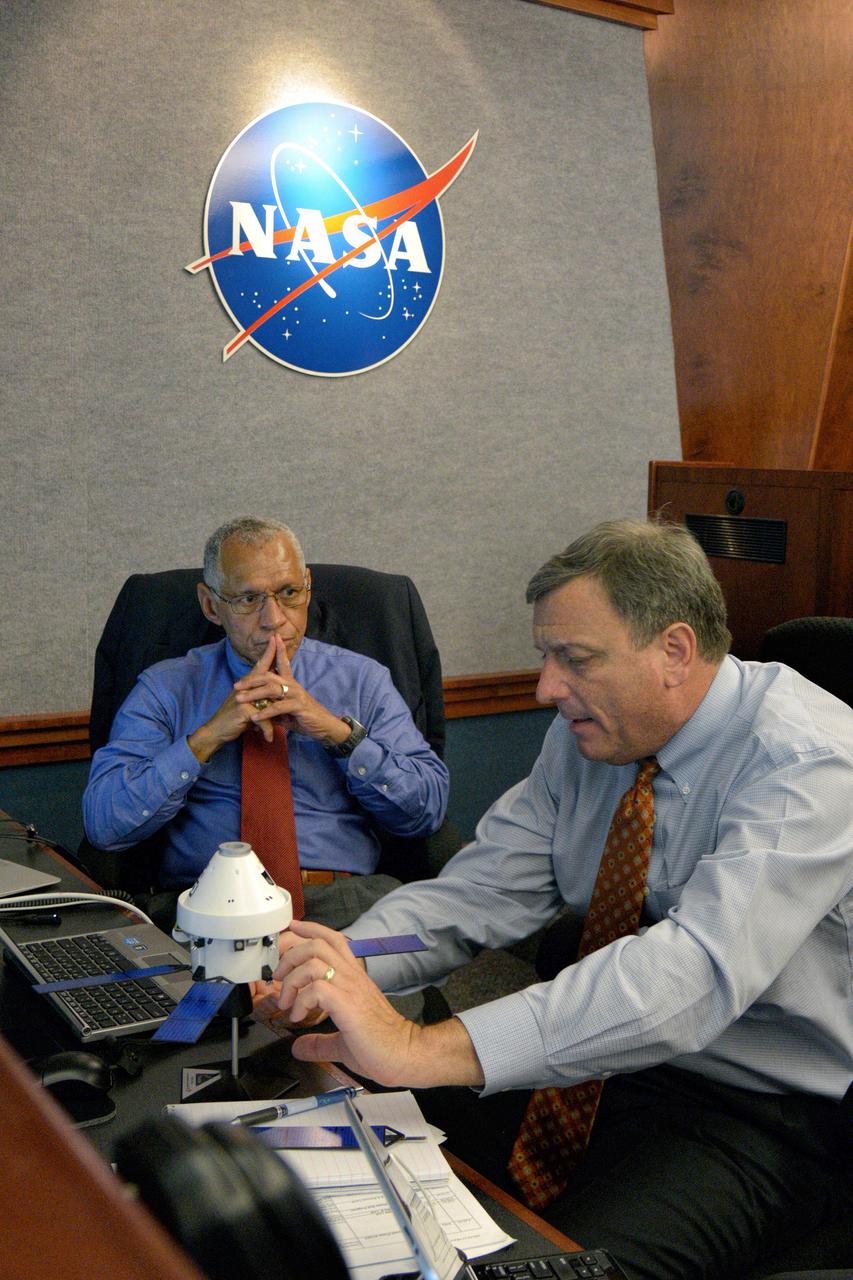
The Orion team discusses Orion operations in Building AE at Cape Canaveral Air Force Station during Exploration Flight Test-1 (EFT-1) on Dec. 5, 2014. Part of Batch image transfer from Flickr.
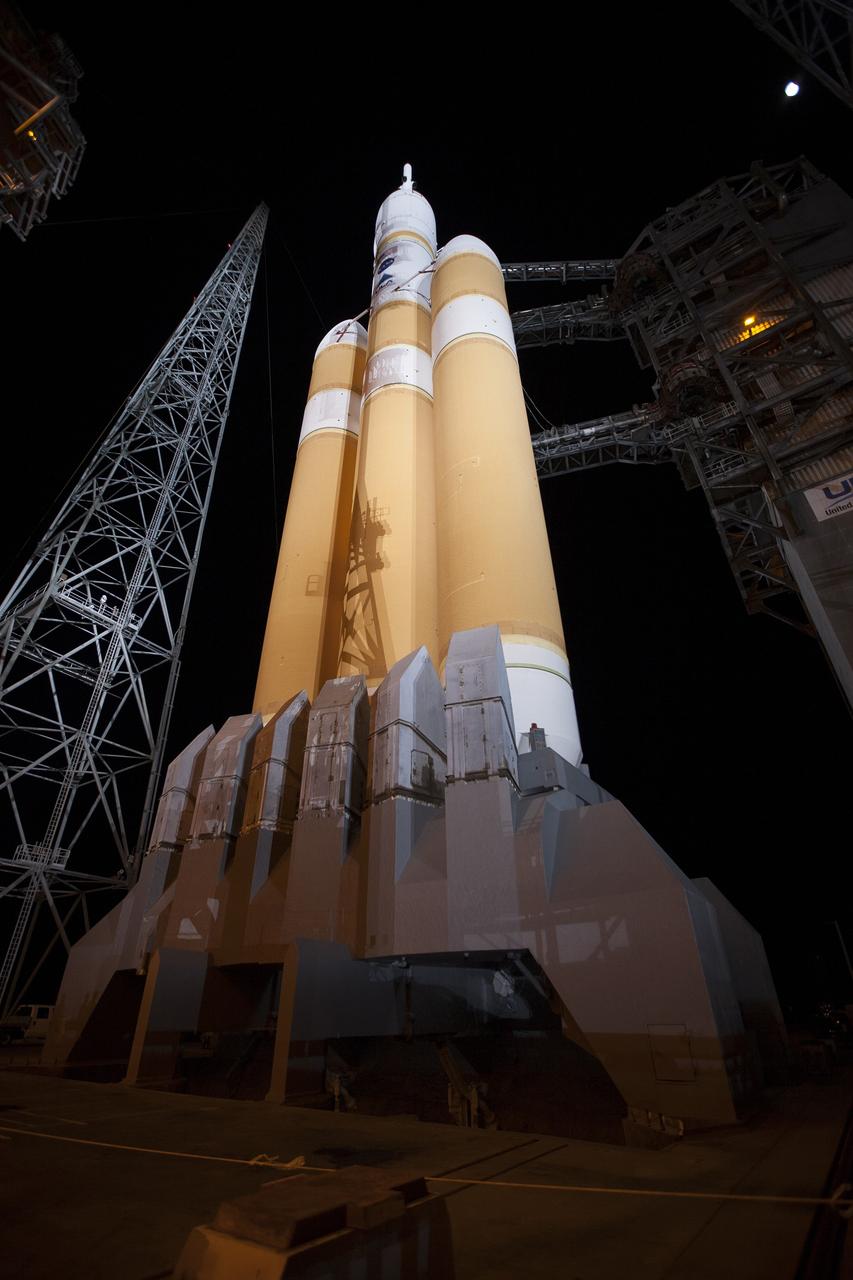
CAPE CANAVERAL, Fla. – The launch gantry is rolled back to reveal NASA's Orion spacecraft mounted atop a United Launch Alliance Delta IV Heavy rocket at Cape Canaveral Air Force Station's Space Launch Complex 37. Orion is NASA’s new spacecraft built to carry humans, designed to allow us to journey to destinations never before visited by humans, including an asteroid and Mars. For more information, visit www.nasa.gov/orion Photo credit: NASA/Kim Shiflett
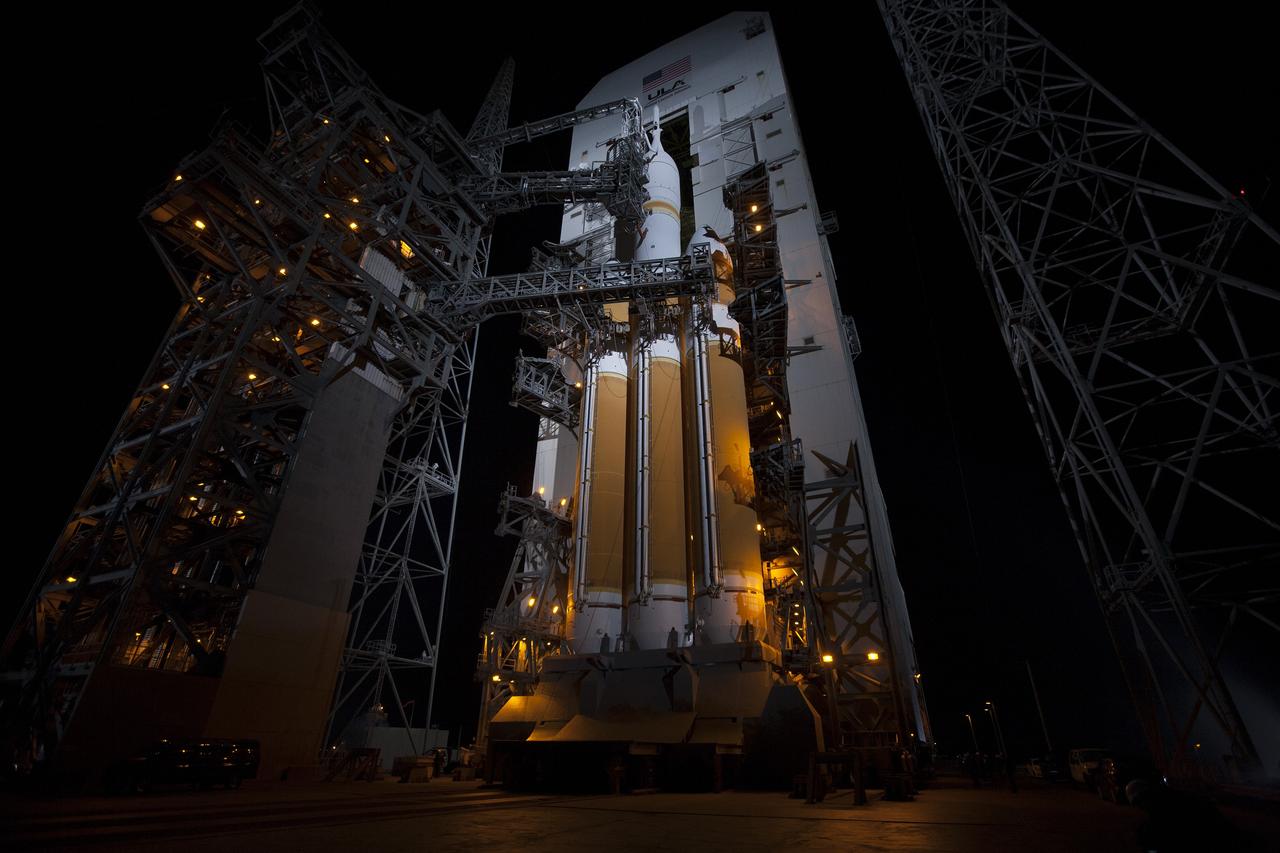
CAPE CANAVERAL, Fla. – The launch gantry is rolled back to reveal NASA's Orion spacecraft mounted atop a United Launch Alliance Delta IV Heavy rocket at Cape Canaveral Air Force Station's Space Launch Complex 37. Orion is NASA’s new spacecraft built to carry humans, designed to allow us to journey to destinations never before visited by humans, including an asteroid and Mars. For more information, visit www.nasa.gov/orion Photo credit: NASA/Kim Shiflett

CAPE CANAVERAL, Fla. – The launch gantry is rolled back to reveal NASA's Orion spacecraft mounted atop a United Launch Alliance Delta IV Heavy rocket at Cape Canaveral Air Force Station's Space Launch Complex 37. Orion is NASA’s new spacecraft built to carry humans, designed to allow us to journey to destinations never before visited by humans, including an asteroid and Mars. For more information, visit www.nasa.gov/orion Photo credit: NASA/Kim Shiflett
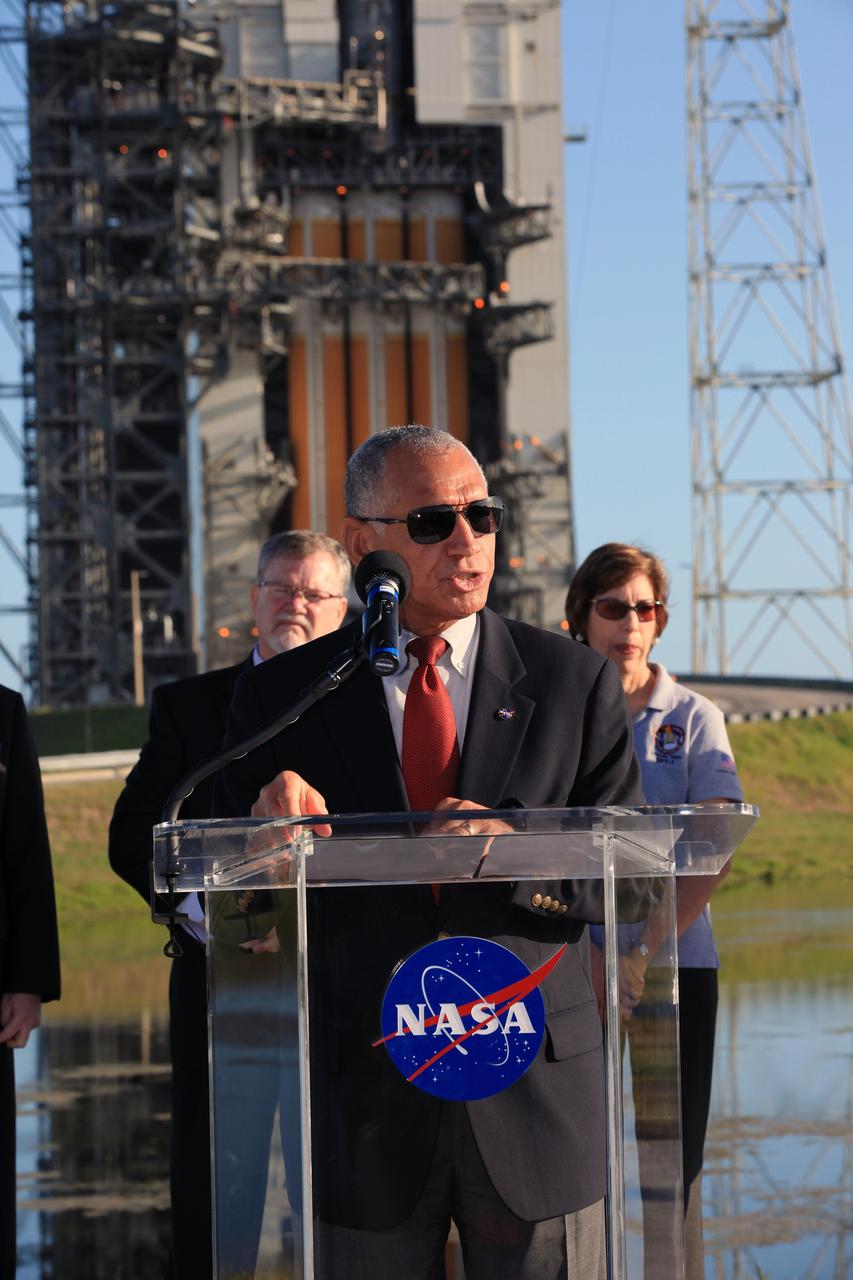
CAPE CANAVERAL, Fla. – At Cape Canaveral Air Force Station's Launch Complex 37, NASA Administrator Charlie Bolden speaks to members of the news media as the Orion spacecraft and its United Launch Alliance Delta IV Heavy rocket were being prepared for launch. Behind Bolden, from the left, are Lockheed Martin Orion Program Manager Mike Hawes and Johnson Space Center Director Ellen Ochoa. For more information, visit www.nasa.gov/orion. Photo credit: NASA/Kim Shiflett
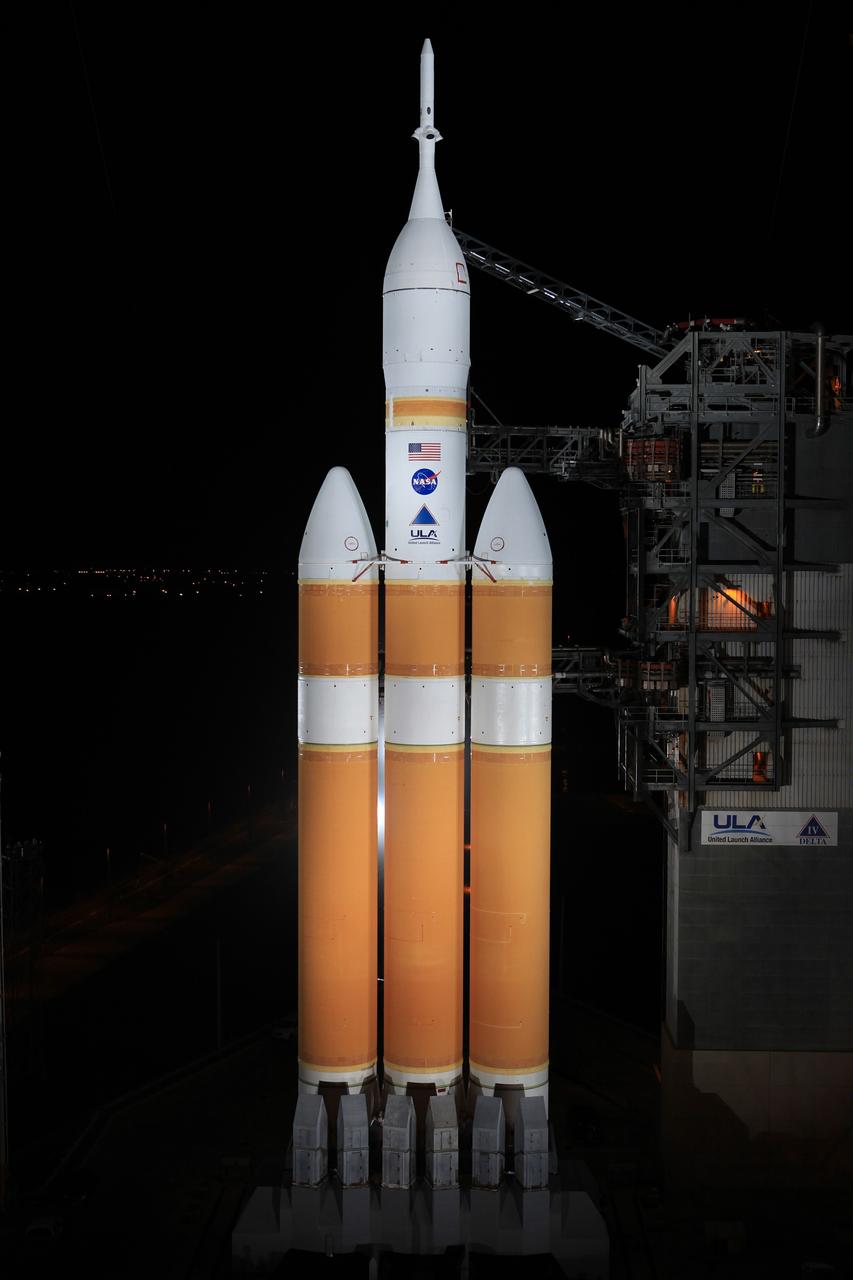
CAPE CANAVERAL, Fla. – The launch gantry is rolled back to reveal NASA's Orion spacecraft mounted atop a United Launch Alliance Delta IV Heavy rocket at Cape Canaveral Air Force Station's Space Launch Complex 37. Orion is NASA’s new spacecraft built to carry humans, designed to allow us to journey to destinations never before visited by humans, including an asteroid and Mars. For more information, visit www.nasa.gov/orion Photo credit: NASA/Kim Shiflett
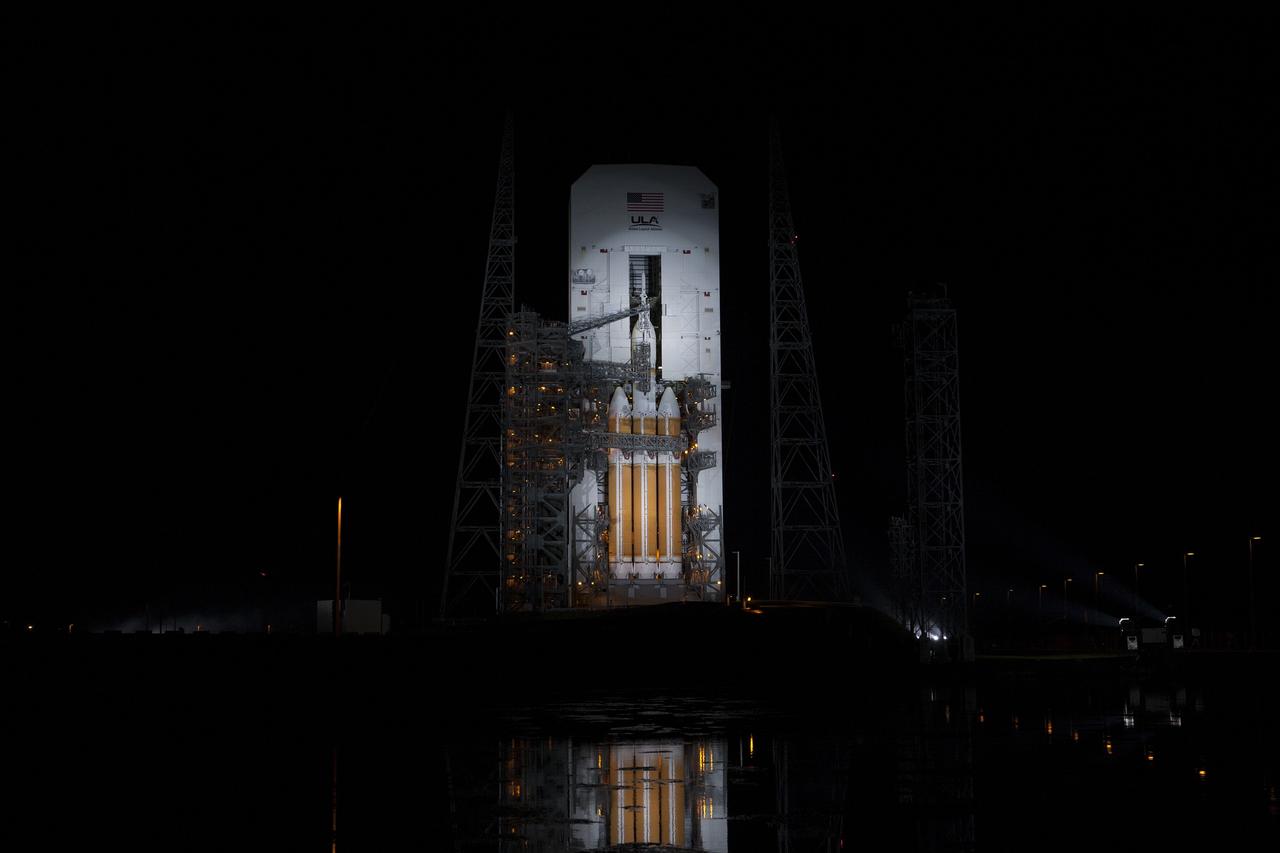
CAPE CANAVERAL, Fla. – The launch gantry is rolled back to reveal NASA's Orion spacecraft mounted atop a United Launch Alliance Delta IV Heavy rocket at Cape Canaveral Air Force Station's Space Launch Complex 37. Orion is NASA’s new spacecraft built to carry humans, designed to allow us to journey to destinations never before visited by humans, including an asteroid and Mars. For more information, visit www.nasa.gov/orion Photo credit: NASA/Kim Shiflett
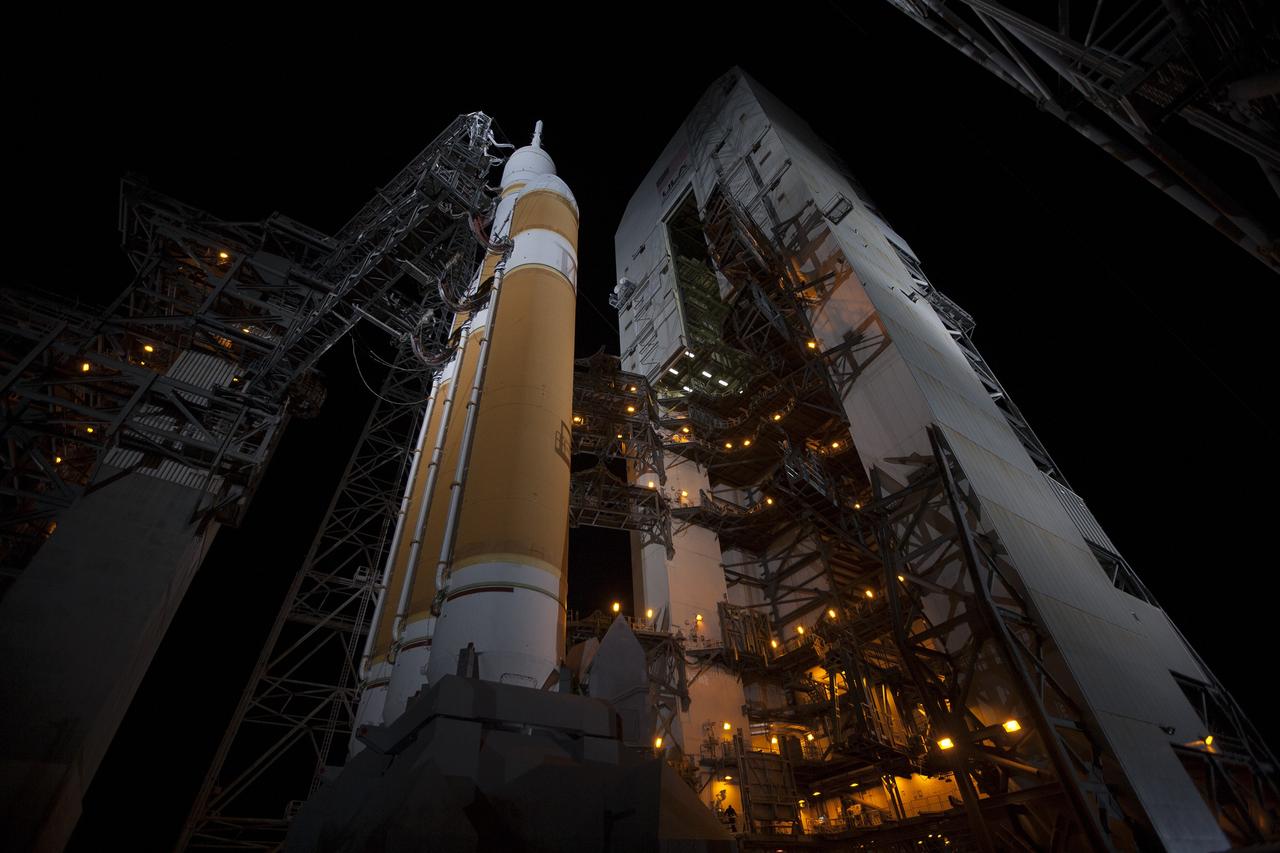
CAPE CANAVERAL, Fla. – The launch gantry is rolled back to reveal NASA's Orion spacecraft mounted atop a United Launch Alliance Delta IV Heavy rocket at Cape Canaveral Air Force Station's Space Launch Complex 37. Orion is NASA’s new spacecraft built to carry humans, designed to allow us to journey to destinations never before visited by humans, including an asteroid and Mars. For more information, visit www.nasa.gov/orion Photo credit: NASA/Kim Shiflett
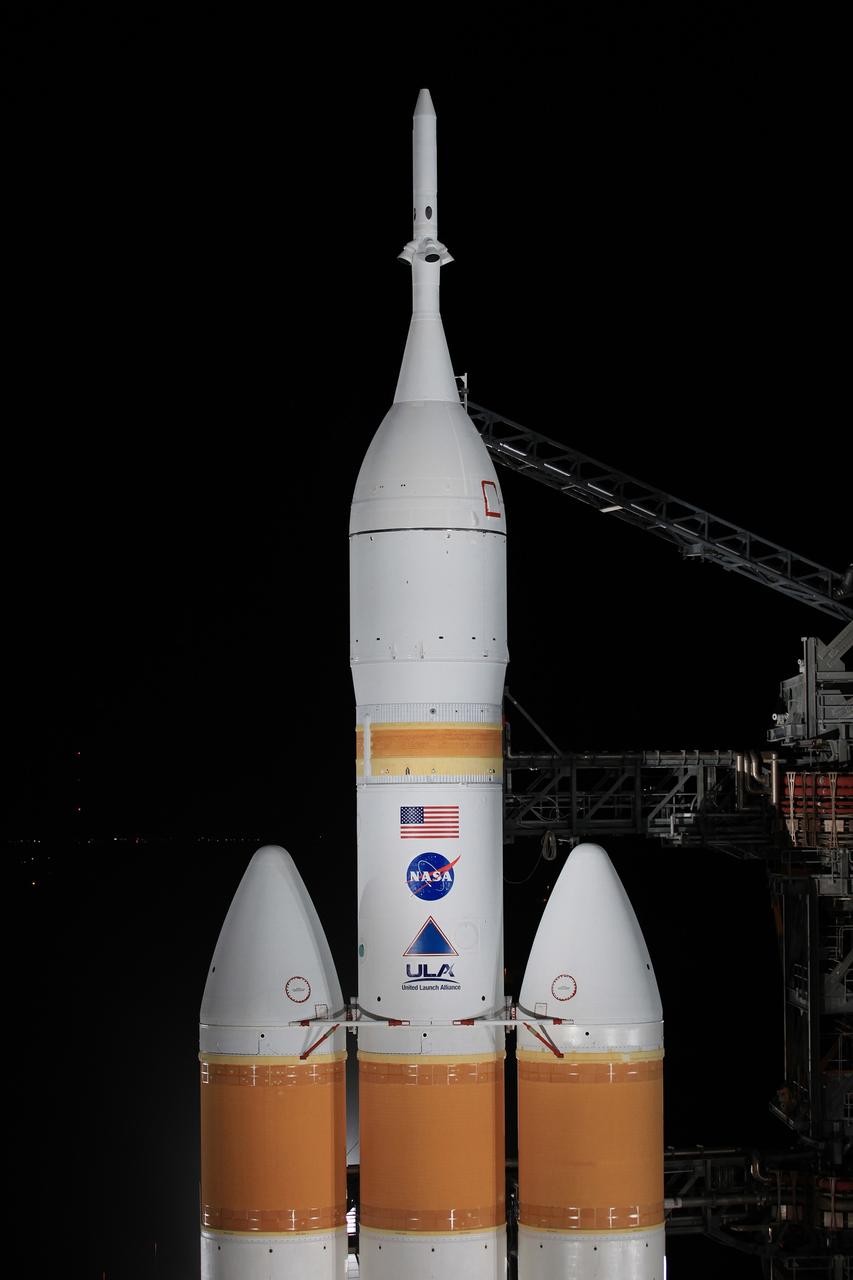
CAPE CANAVERAL, Fla. – The launch gantry is rolled back to reveal NASA's Orion spacecraft mounted atop a United Launch Alliance Delta IV Heavy rocket at Cape Canaveral Air Force Station's Space Launch Complex 37. Orion is NASA’s new spacecraft built to carry humans, designed to allow us to journey to destinations never before visited by humans, including an asteroid and Mars. For more information, visit www.nasa.gov/orion Photo credit: NASA/Kim Shiflett
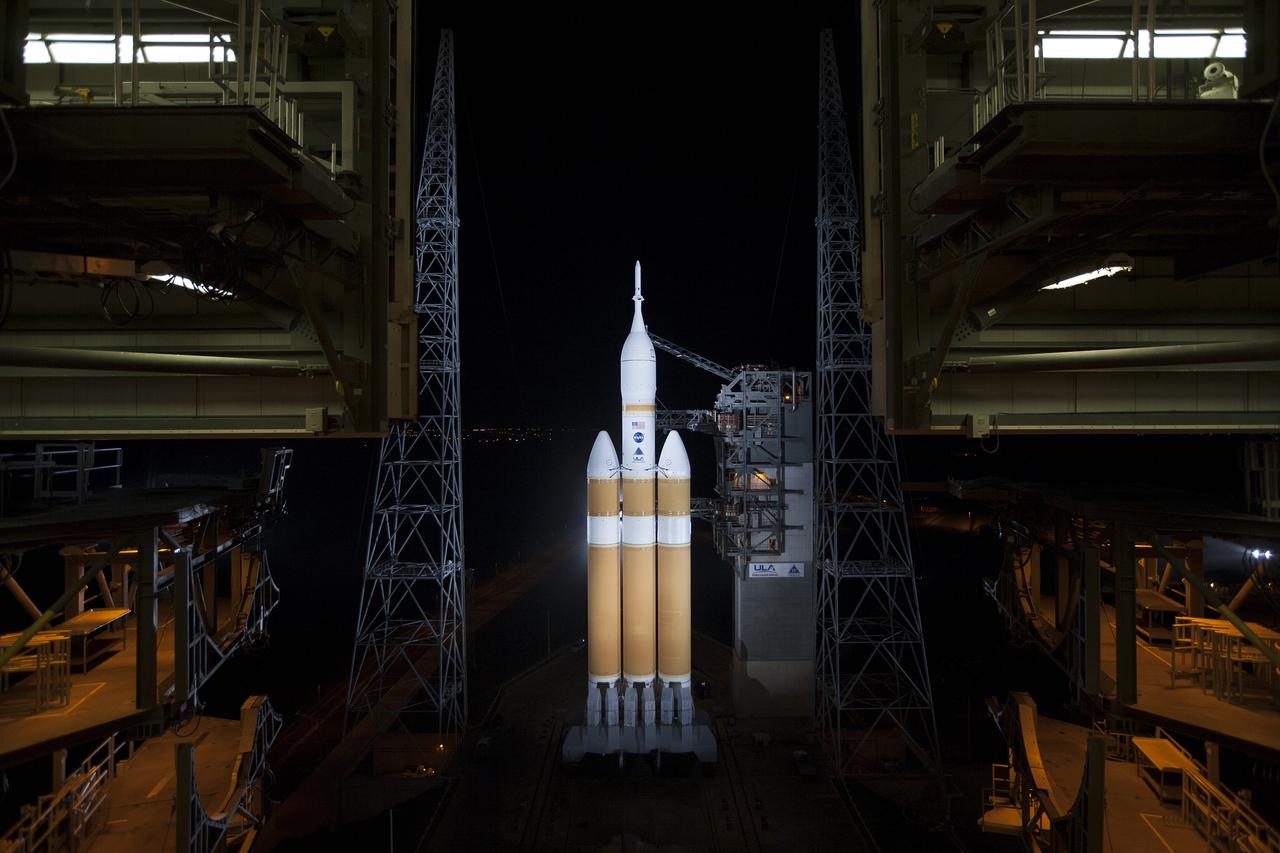
CAPE CANAVERAL, Fla. – The launch gantry is rolled back to reveal NASA's Orion spacecraft mounted atop a United Launch Alliance Delta IV Heavy rocket at Cape Canaveral Air Force Station's Space Launch Complex 37. Orion is NASA’s new spacecraft built to carry humans, designed to allow us to journey to destinations never before visited by humans, including an asteroid and Mars. For more information, visit www.nasa.gov/orion Photo credit: NASA/Kim Shiflett
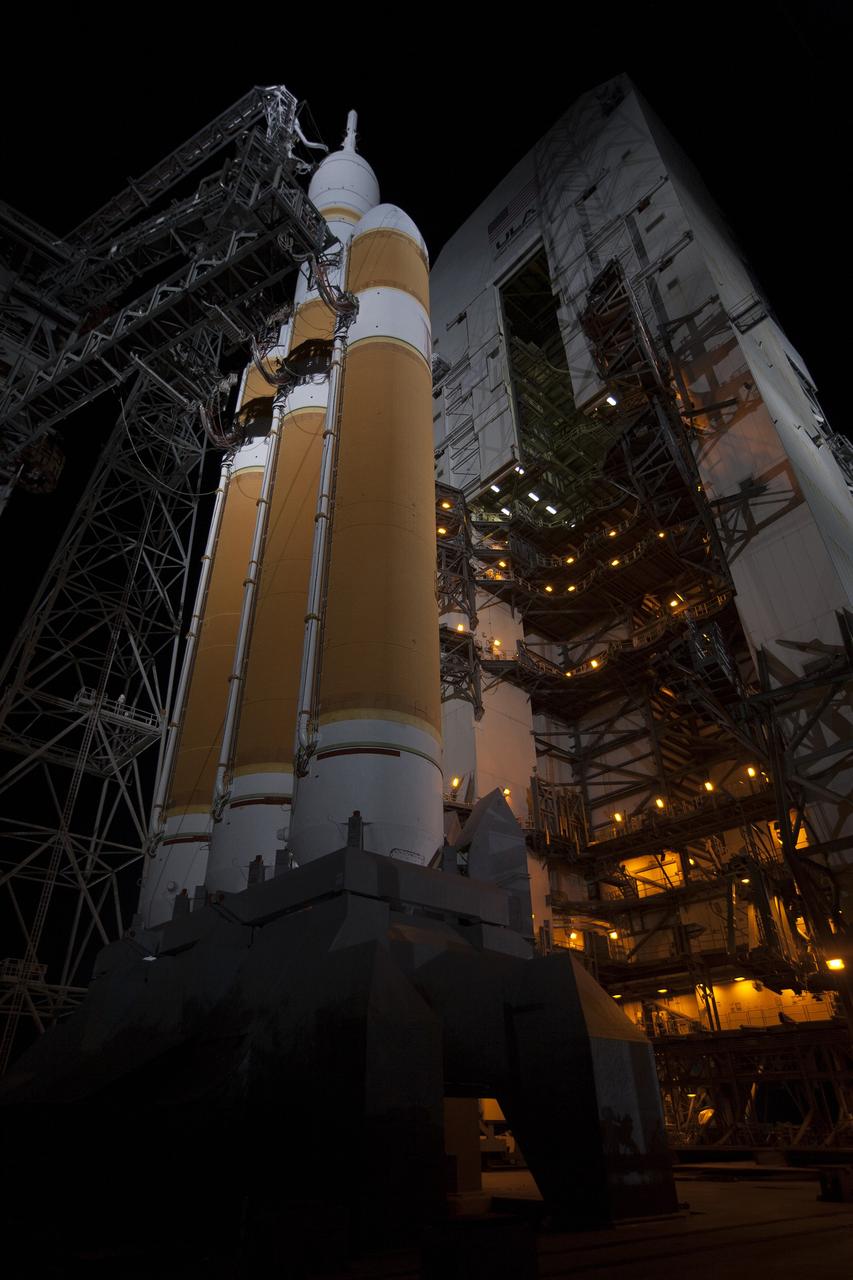
CAPE CANAVERAL, Fla. – The launch gantry is rolled back to reveal NASA's Orion spacecraft mounted atop a United Launch Alliance Delta IV Heavy rocket at Cape Canaveral Air Force Station's Space Launch Complex 37. Orion is NASA’s new spacecraft built to carry humans, designed to allow us to journey to destinations never before visited by humans, including an asteroid and Mars. For more information, visit www.nasa.gov/orion Photo credit: NASA/Kim Shiflett
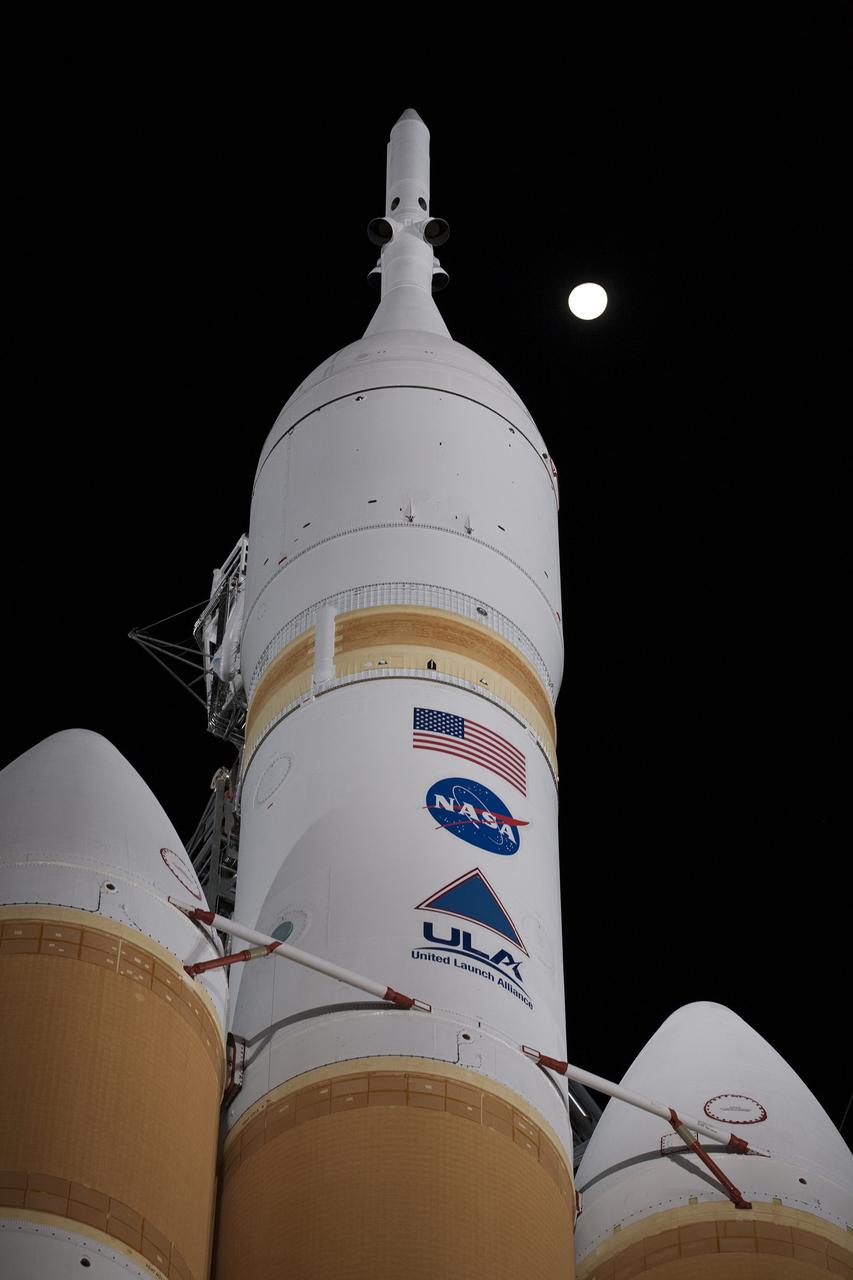
CAPE CANAVERAL, Fla. – The launch gantry is rolled back to reveal NASA's Orion spacecraft mounted atop a United Launch Alliance Delta IV Heavy rocket at Cape Canaveral Air Force Station's Space Launch Complex 37. Orion is NASA’s new spacecraft built to carry humans, designed to allow us to journey to destinations never before visited by humans, including an asteroid and Mars. For more information, visit www.nasa.gov/orion Photo credit: NASA/Kim Shiflett
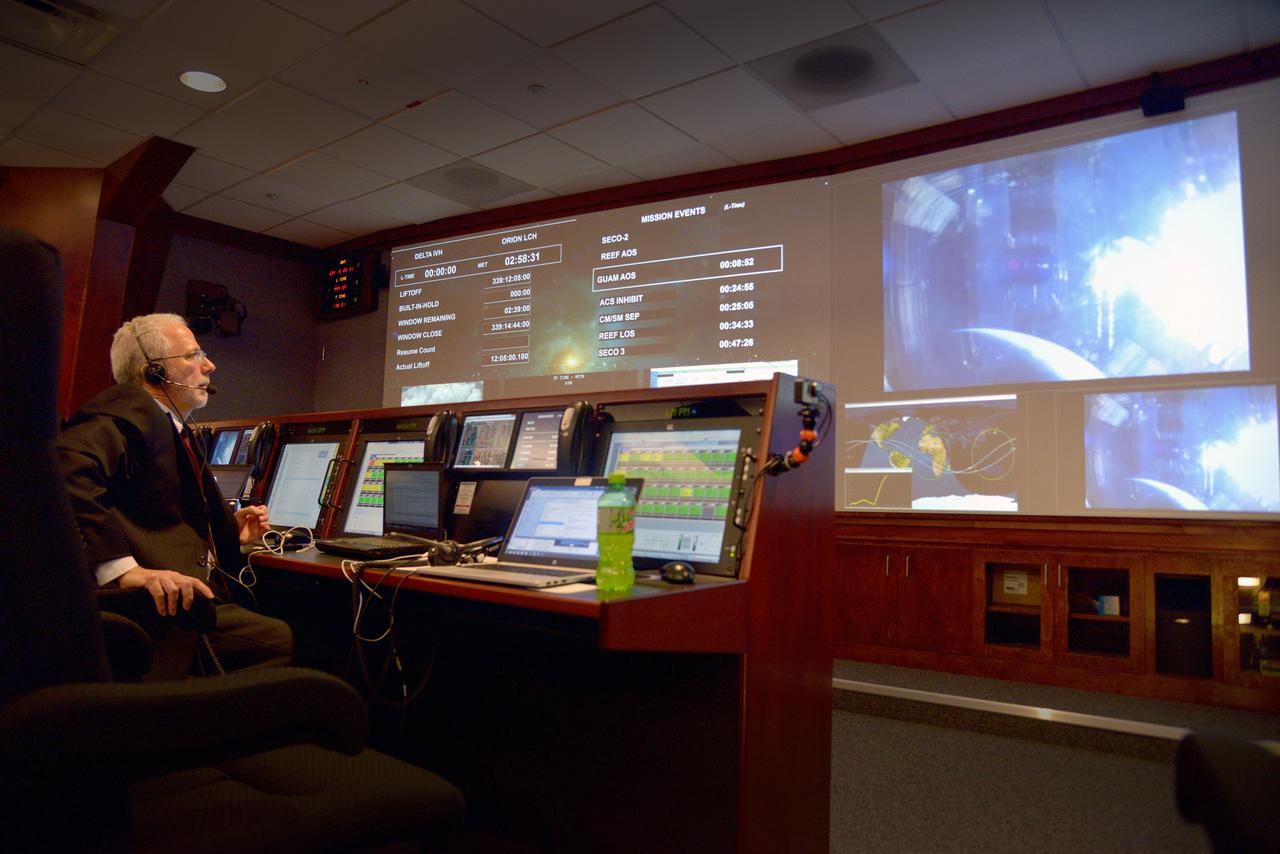
As Orion reaches an apogee of 3600 miles, Mark Geyer, Orion program manager, watches the view from Orion's windows in Building AE at Cape Canaveral Air Force Station on Dec. 5, 2014. Part of Batch image transfer from Flickr.
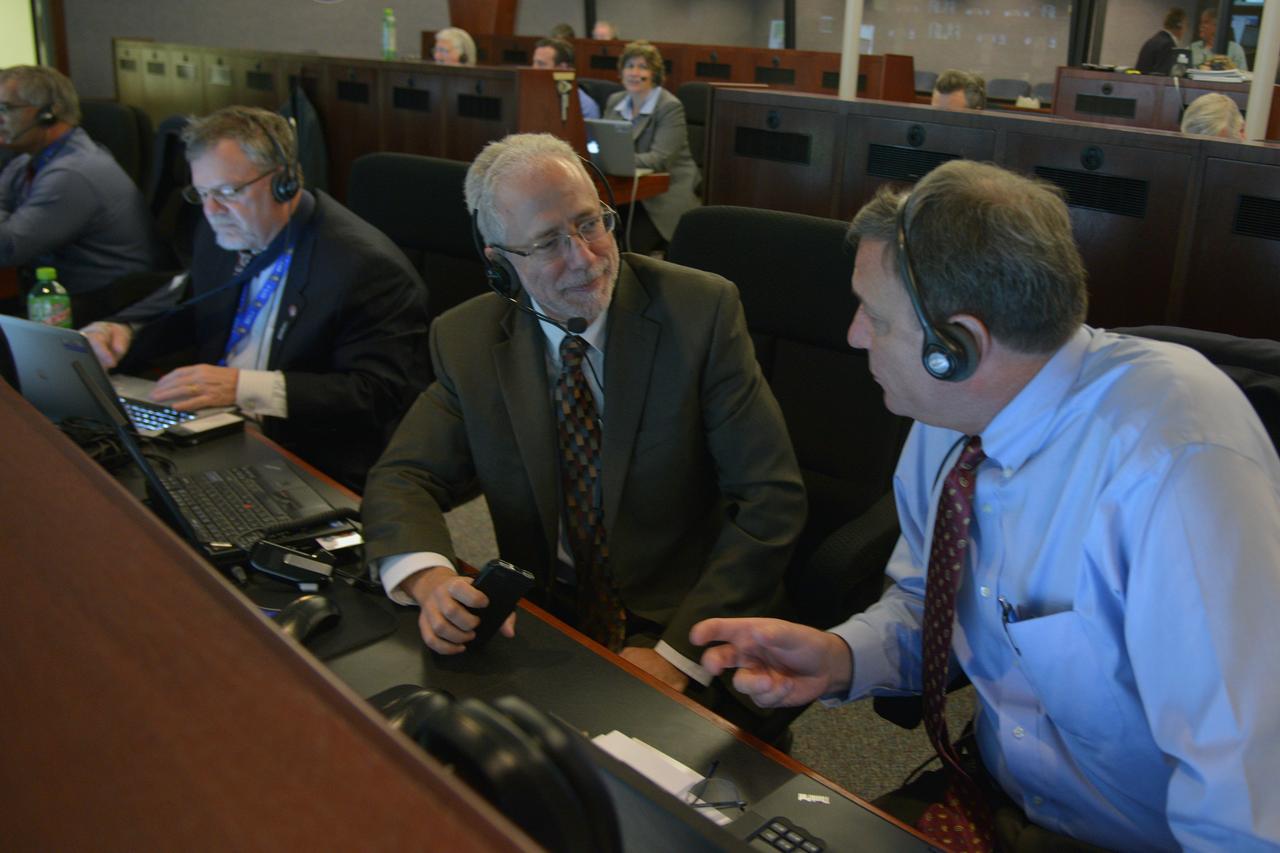
The Orion program management team reviews the launch procedure in Building AE at Cape Canaveral Air Force Station ahead of the launch of Orion on Exploration Flight Test-1 (EFT-1) on Dec. 4, 2014. Pictured from left to right: Mike Hawes, Lockheed Martin Orion program manager, Mark Geyer, NASA Orion program manager, and Mark Kirasich, NASA Orion deputy program manager. Part of Batch image transfer from Flickr.
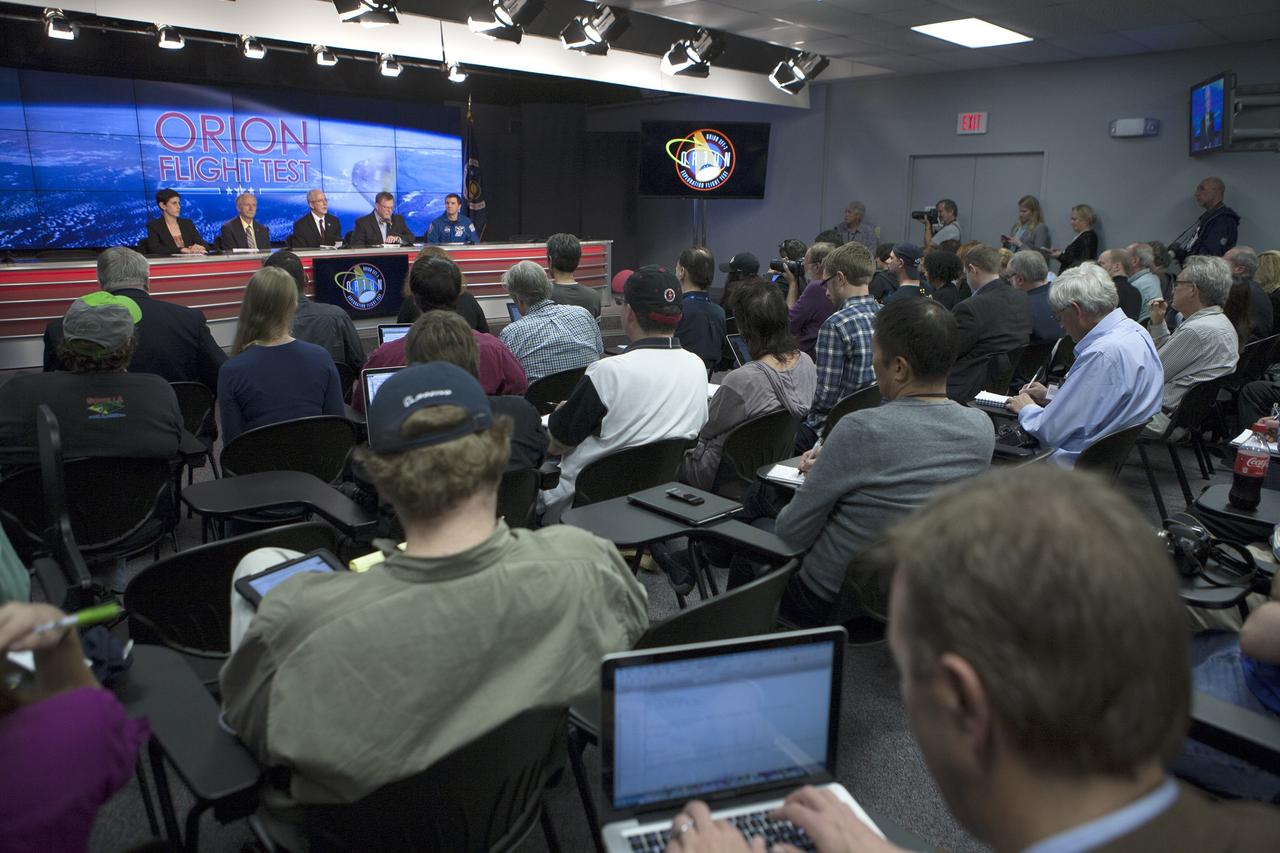
CAPE CANAVERAL, Fla. -- In the Kennedy Space Center’s Press Site auditorium, agency leaders spoke to members of the news media about the successful Orion Flight Test. From left are: Rachel Kraft, of NASA Public Affairs, Bill Gerstenmaier, NASA associate administrator for Human Exploration and Operations, Mark Geyer, Orion program manager, Mike Hawes, Lockheed Martin Orion Program manager, and NASA astronaut Rex Walheim. For more information, visit www.nasa.gov/orion Photo credit: NASA/Kim Shiflett
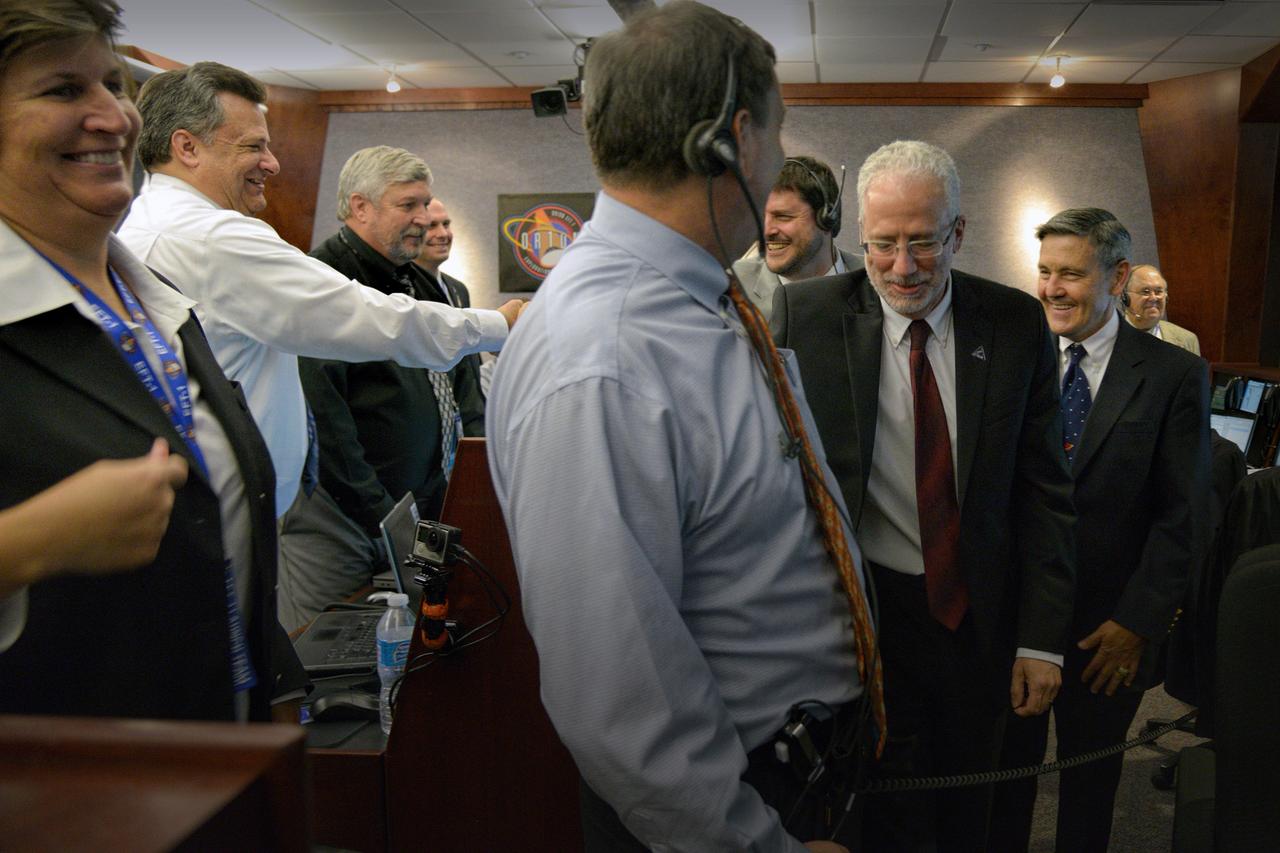
The Orion team celebrates Orion's successful Exploration Flight Test-1 (EFT-1) mission in Building AE at Cape Canaveral Air Force Station on Dec. 5, 2014. The Orion spacecraft orbited Earth twice, reaching an altitude of approximately 3,600 miles above Earth before landing. No one was aboard Orion for this flight test, but the spacecraft is designed to allow us to journey to destinations never before visited by humans, including an asteroid and Mars. Part of Batch image transfer from Flickr.
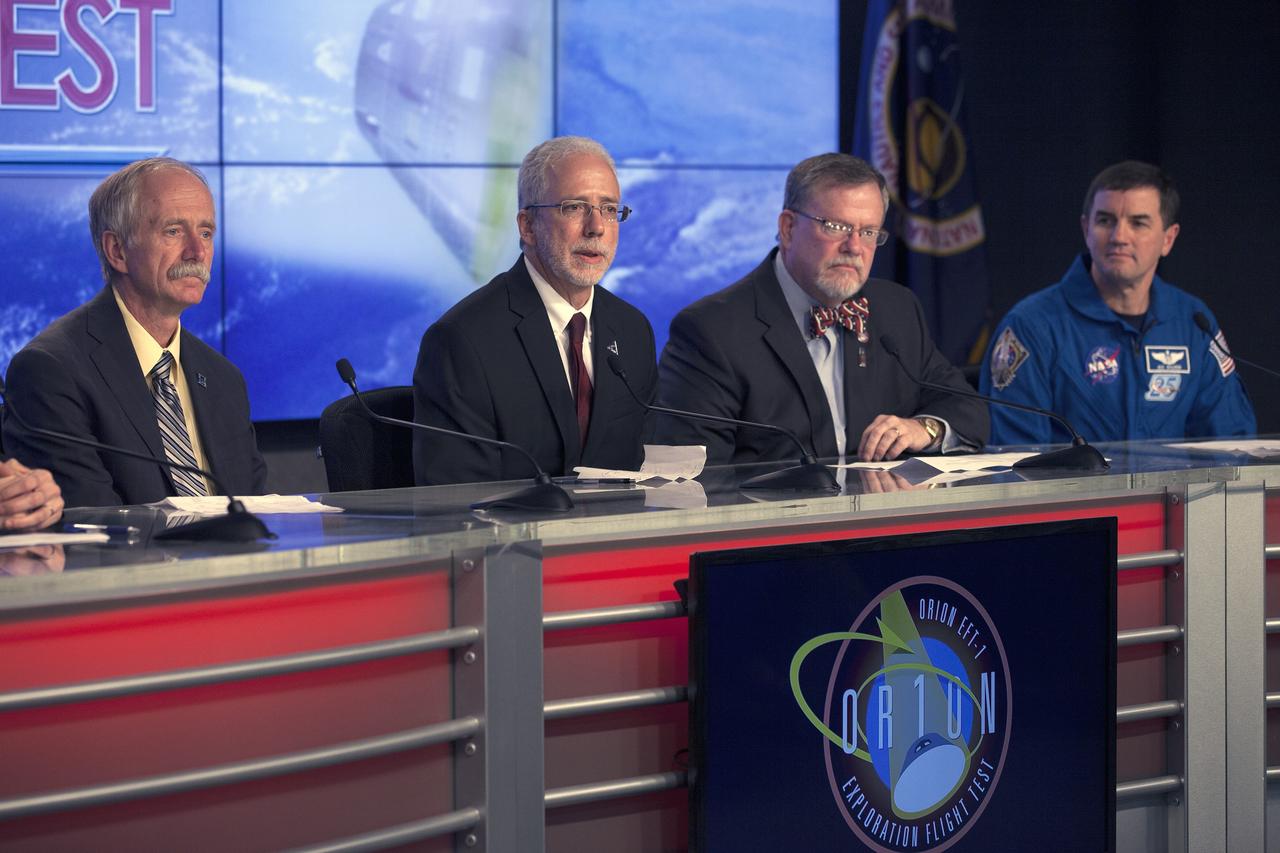
CAPE CANAVERAL, Fla. -- In the Kennedy Space Center’s Press Site auditorium, agency leaders spoke to members of the news media about the successful Orion Flight Test. From left are: Bill Gerstenmaier, NASA associate administrator for Human Exploration and Operations, Mark Geyer, Orion program manager, Mike Hawes, Lockheed Martin Orion Program manager, and NASA astronaut Rex Walheim. For more information, visit www.nasa.gov/orion Photo credit: NASA/Kim Shiflett

CAPE CANAVERAL, Fla. – At NASA's Kennedy Space Center in Florida, the agency's Orion spacecraft passes the spaceport's iconic Vehicle Assembly Building as it is transported to Launch Complex 37 at Cape Canaveral Air Force Station. After arrival at the launch pad, United Launch Alliance engineers and technicians will lift Orion and mount it atop its Delta IV Heavy rocket. Orion is the exploration spacecraft designed to carry astronauts to destinations not yet explored by humans, including an asteroid and Mars. It will have emergency abort capability, sustain the crew during space travel and provide safe re-entry from deep space return velocities. The first unpiloted flight test of Orion is scheduled to launch Dec. 4, 2014 atop a United Launch Alliance Delta IV Heavy rocket, and in 2018 on NASA’s Space Launch System rocket. For more information, visit www.nasa.gov/orion Photo credit: NASA/Frankie Martin
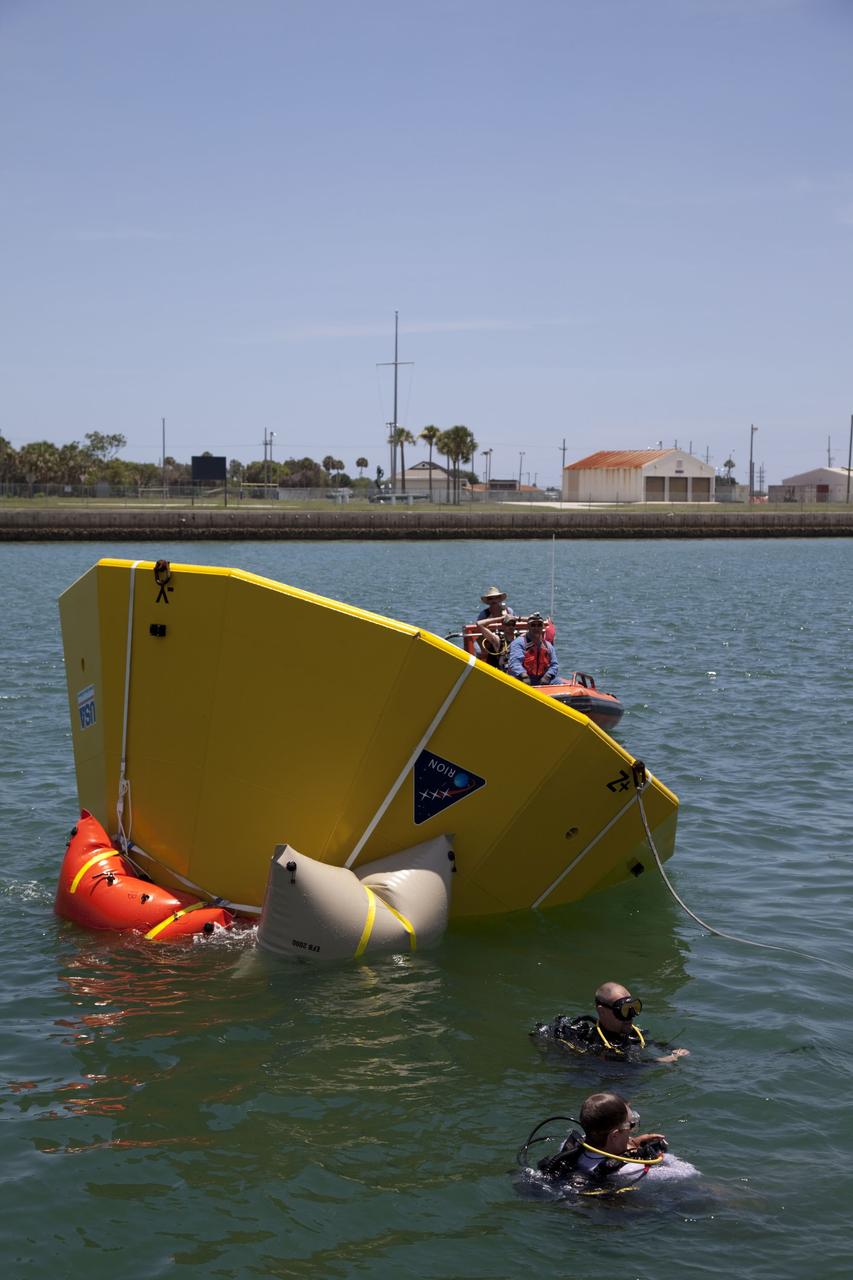
CAPE CANAVERAL, Fla. -- In the Delta turn basin at Cape Canaveral Air Force Station in Florida, United Space Alliance (USA) divers and boat crew tend an Orion test article while waiting for its lift bags to inflate. The uprighting tests are part of USA's research and development program to help develop ground operations support equipment that could be used to reorient and recover an uncrewed Orion flight test capsule after splashdown. USA is a major subcontractor to Lockheed Martin for the Orion spacecraft. The Orion Multi-Purpose Crew Vehicle is NASA's next-generation spacecraft designed for deep space missions to asteroids, moons and other interplanetary destinations throughout the solar system. Orion's first uncrewed orbital flight test is slated for 2013. For more information, visit http://www.nasa.gov/exploration/systems/mpcv/. Photo credit: NASA/Frankie Martin
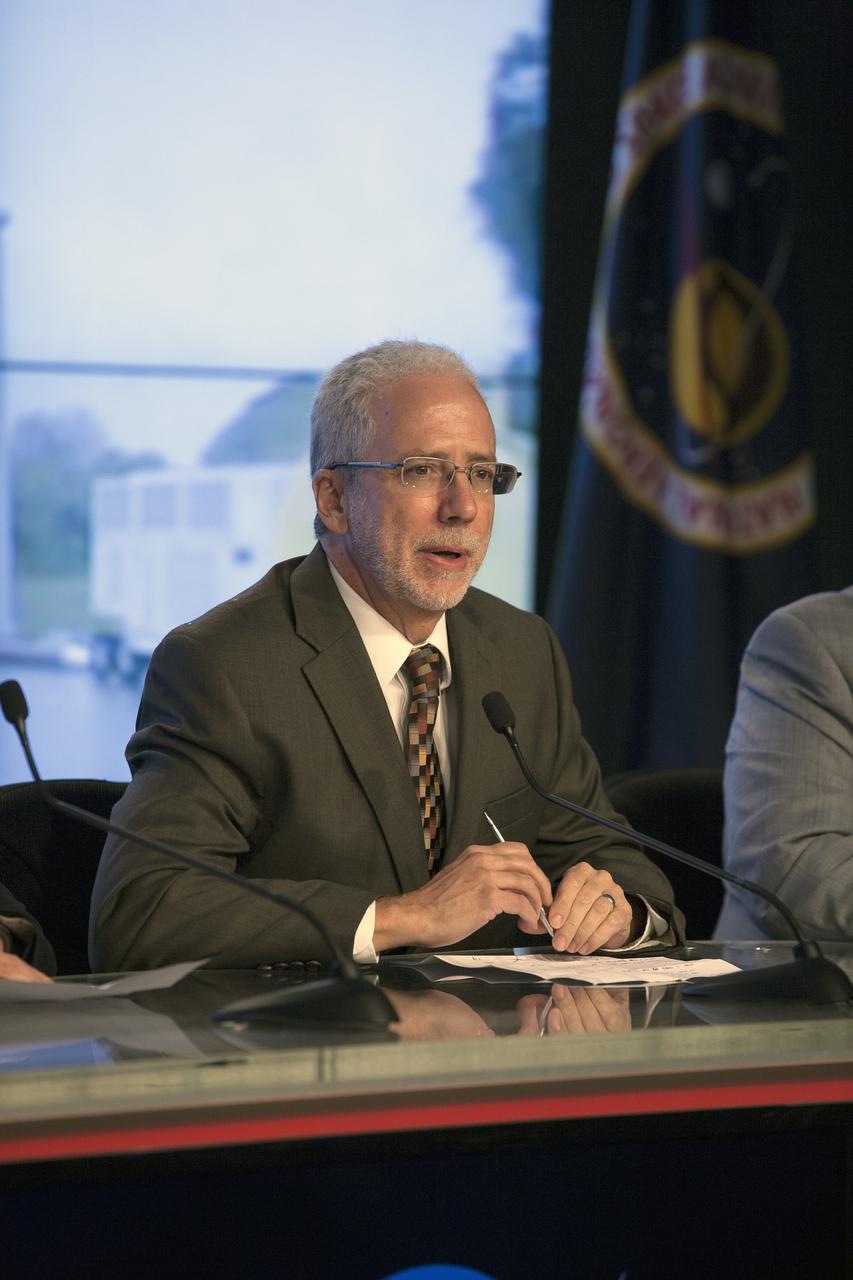
CAPE CANAVERAL, Fla. – In the Kennedy Space Center’s Press Site auditorium, NASA Orion Program manager Mark Geyer spoke to members of the news media as the completed Orion spacecraft was being prepared for its trip from the Launch Abort System Facility to Launch Complex 37 at Cape Canaveral Air Force Station. Orion is the exploration spacecraft designed to carry astronauts to destinations not yet explored by humans, including an asteroid and Mars. It will have emergency abort capability, sustain the crew during space travel and provide safe re-entry from deep space return velocities. The first unpiloted flight test of Orion is scheduled to launch Dec. 4, 2014 atop a United Launch Alliance Delta IV Heavy rocket, and in 2018 on NASA’s Space Launch System rocket. For more information, visit www.nasa.gov/orion Photo credit: NASA/Kim Shiflett
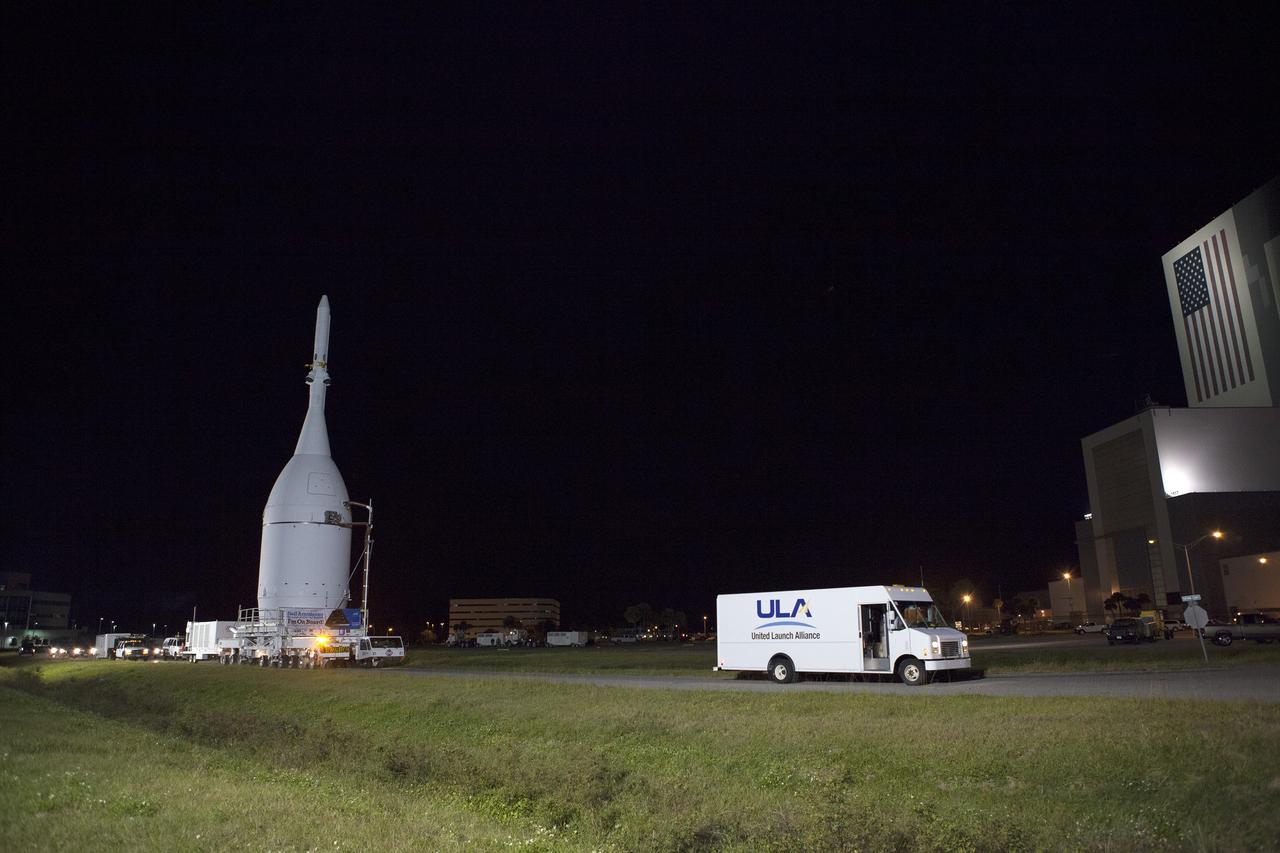
CAPE CANAVERAL, Fla. – At NASA's Kennedy Space Center in Florida, the agency's Orion is transported to Launch Complex 37 at Cape Canaveral Air Force Station. After arrival at the launch pad, United Launch Alliance engineers and technicians will lift Orion and mount it atop its Delta IV Heavy rocket. Orion is the exploration spacecraft designed to carry astronauts to destinations not yet explored by humans, including an asteroid and Mars. It will have emergency abort capability, sustain the crew during space travel and provide safe re-entry from deep space return velocities. The first unpiloted flight test of Orion is scheduled to launch Dec. 4, 2014 atop a United Launch Alliance Delta IV Heavy rocket, and in 2018 on NASA’s Space Launch System rocket. For more information, visit www.nasa.gov/orion Photo credit: NASA/Frankie Martin
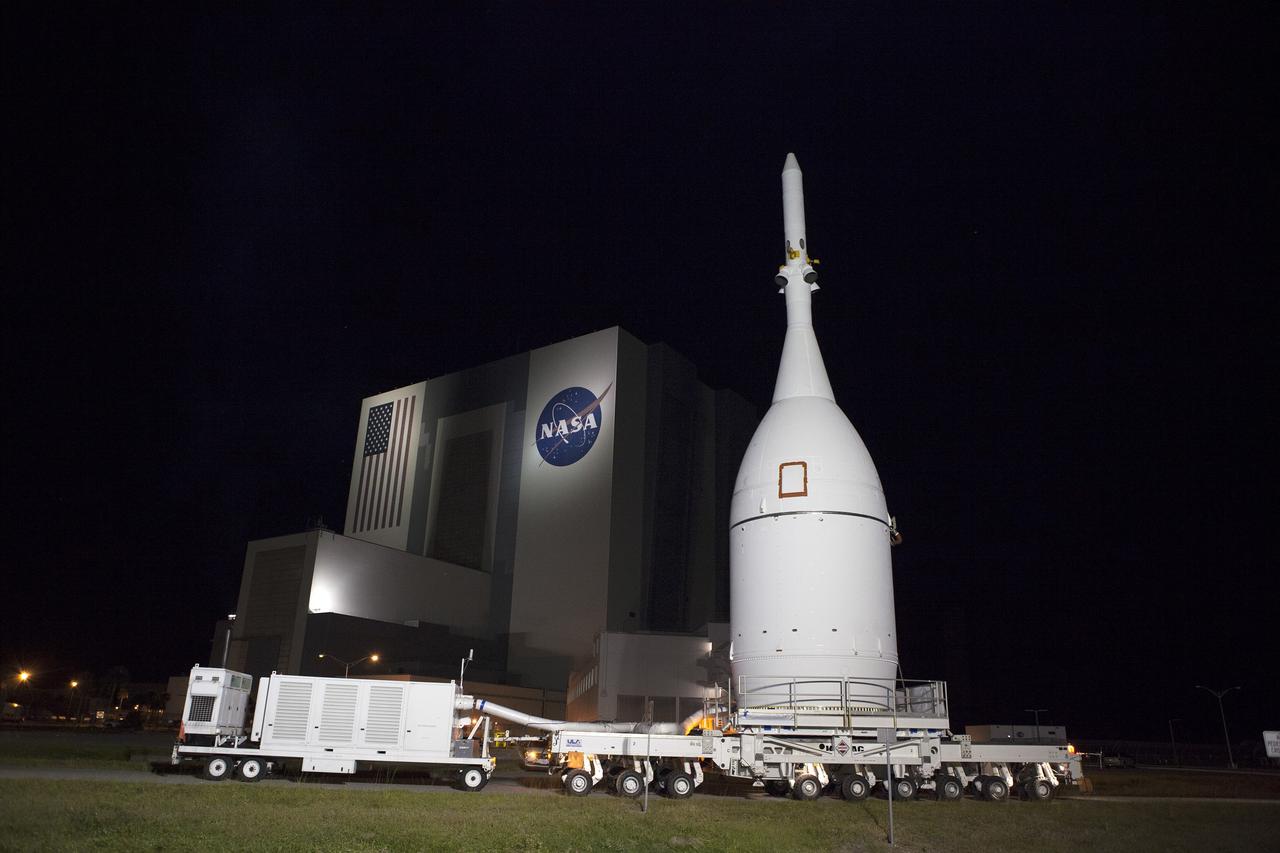
CAPE CANAVERAL, Fla. – At NASA's Kennedy Space Center in Florida, the agency's Orion spacecraft passes the spaceport's iconic Vehicle Assembly Building as it is transported to Launch Complex 37 at Cape Canaveral Air Force Station. After arrival at the launch pad, United Launch Alliance engineers and technicians will lift Orion and mount it atop its Delta IV Heavy rocket. Orion is the exploration spacecraft designed to carry astronauts to destinations not yet explored by humans, including an asteroid and Mars. It will have emergency abort capability, sustain the crew during space travel and provide safe re-entry from deep space return velocities. The first unpiloted flight test of Orion is scheduled to launch Dec. 4, 2014 atop a United Launch Alliance Delta IV Heavy rocket, and in 2018 on NASA’s Space Launch System rocket. For more information, visit www.nasa.gov/orion Photo credit: NASA/Frankie Martin
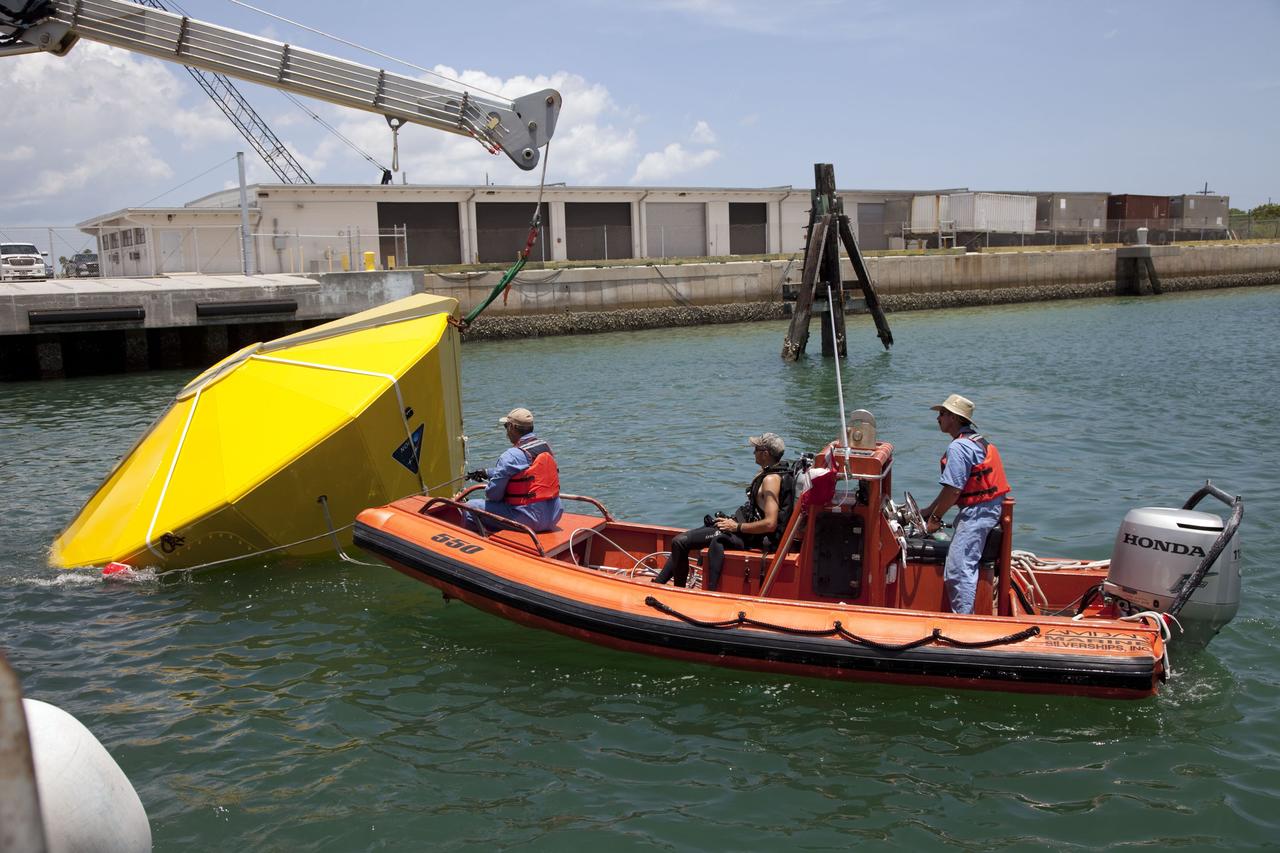
CAPE CANAVERAL, Fla. -- In the Delta turn basin at Cape Canaveral Air Force Station in Florida, United Space Alliance (USA) workers help orient an Orion test article to enable a ship's crane to rotate it. The uprighting tests are part of USA's research and development program to help develop ground operations support equipment that could be used to reorient and recover an uncrewed Orion flight test capsule after splashdown. USA is a major subcontractor to Lockheed Martin for the Orion spacecraft. The Orion Multi-Purpose Crew Vehicle is NASA's next-generation spacecraft designed for deep space missions to asteroids, moons and other interplanetary destinations throughout the solar system. Orion's first uncrewed orbital flight test is slated for 2013. For more information, visit http://www.nasa.gov/exploration/systems/mpcv/. Photo credit: NASA/Frankie Martin
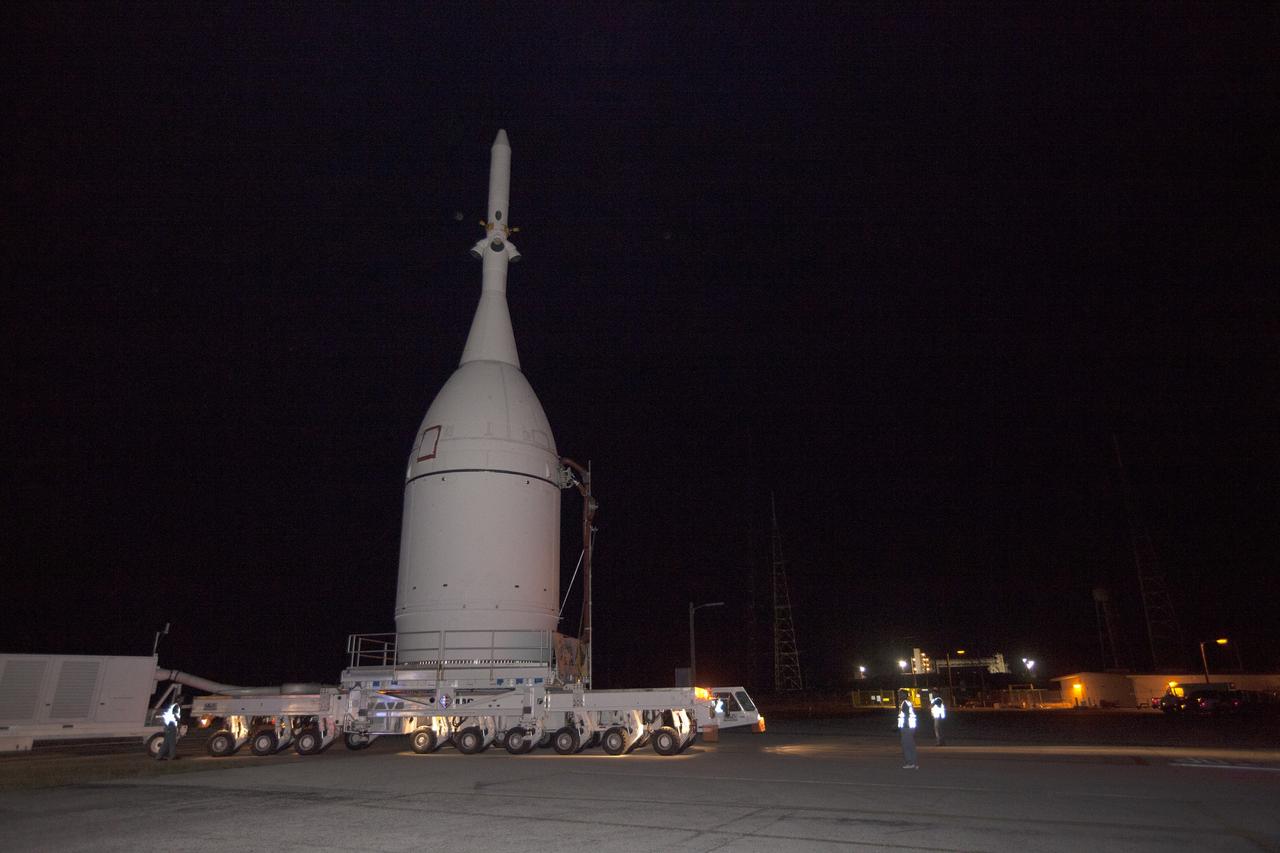
CAPE CANAVERAL, Fla. – At NASA's Kennedy Space Center in Florida, the agency's Orion spacecraft passes the spaceport's Launch Complex 39B as it is transported to Launch Complex 37 at Cape Canaveral Air Force Station. After arrival at the launch pad, United Launch Alliance engineers and technicians will lift Orion and mount it atop its Delta IV Heavy rocket. Orion is the exploration spacecraft designed to carry astronauts to destinations not yet explored by humans, including an asteroid and Mars. It will have emergency abort capability, sustain the crew during space travel and provide safe re-entry from deep space return velocities. The first unpiloted flight test of Orion is scheduled to launch Dec. 4, 2014 atop a United Launch Alliance Delta IV Heavy rocket, and in 2018 on NASA’s Space Launch System rocket. For more information, visit www.nasa.gov/orion Photo credit: NASA/Kim Shiflett
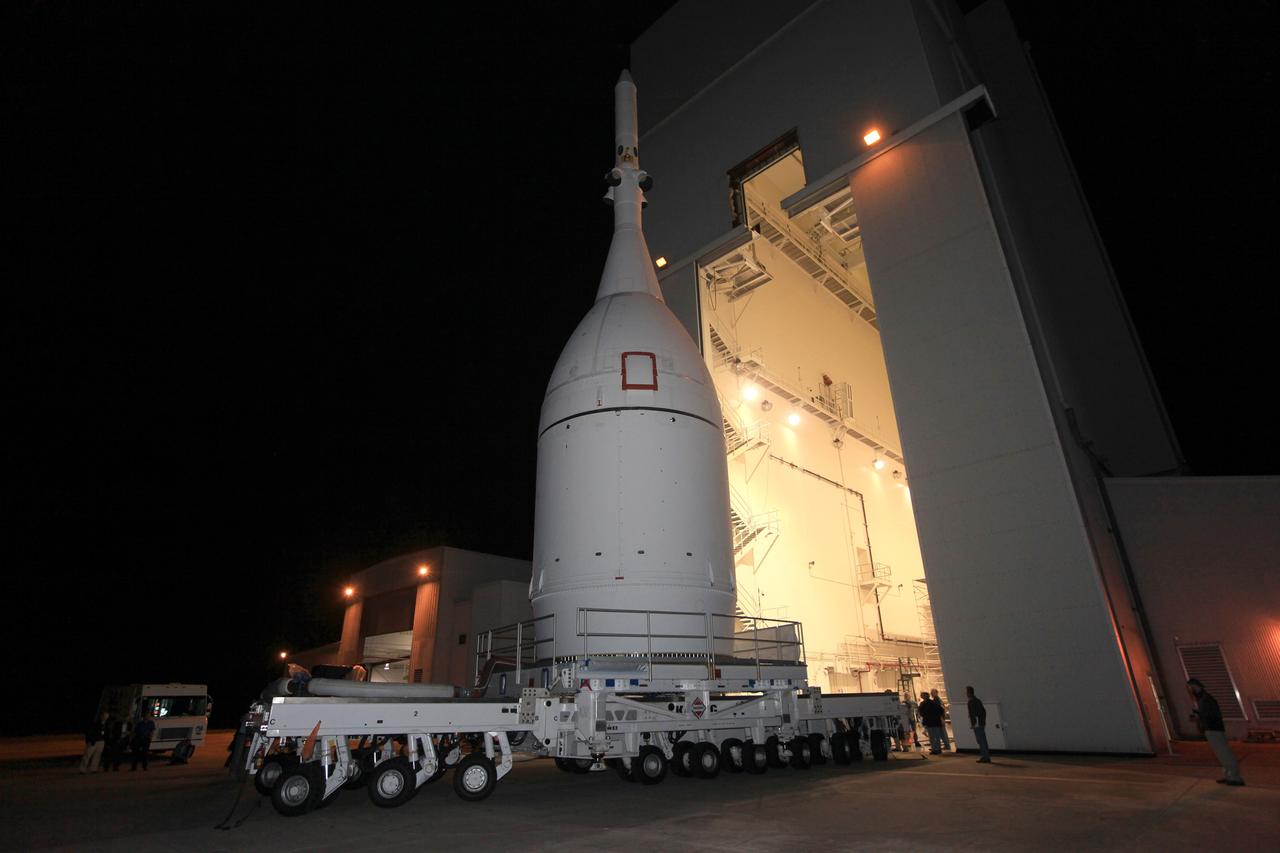
CAPE CANAVERAL, Fla. – At NASA's Kennedy Space Center in Florida, the agency's completed Orion spacecraft begins its trip from the Launch Abort System Facility to Launch Complex 37 at Cape Canaveral Air Force Station. After arrival at the launch pad, United Launch Alliance engineers and technicians will lift Orion and mount it atop its Delta IV Heavy rocket. Orion is the exploration spacecraft designed to carry astronauts to destinations not yet explored by humans, including an asteroid and Mars. It will have emergency abort capability, sustain the crew during space travel and provide safe re-entry from deep space return velocities. The first unpiloted flight test of Orion is scheduled to launch Dec. 4, 2014 atop a United Launch Alliance Delta IV Heavy rocket, and in 2018 on NASA’s Space Launch System rocket. For more information, visit www.nasa.gov/orion Photo credit: NASA/Kim Shiflett
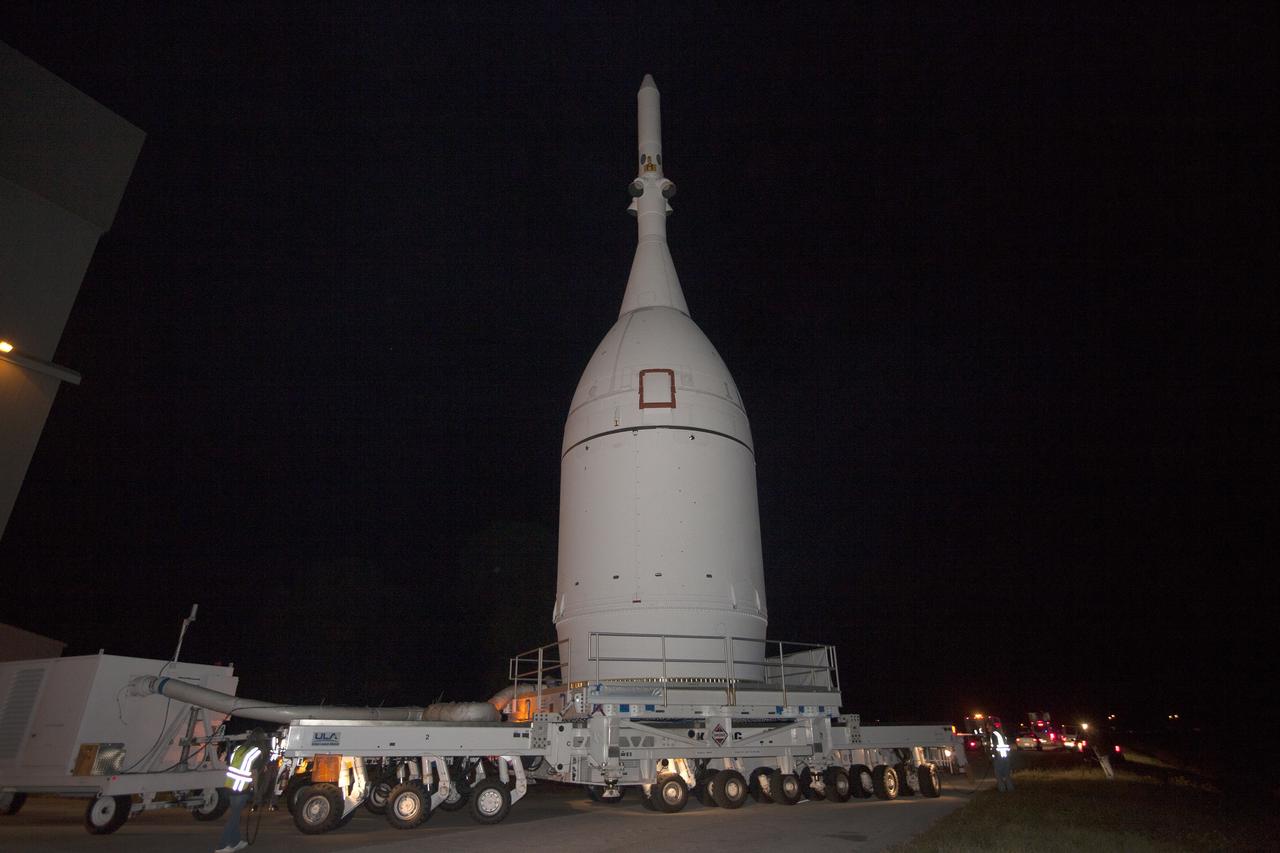
CAPE CANAVERAL, Fla. – At NASA's Kennedy Space Center in Florida, the agency's completed Orion spacecraft begins its trip from the Launch Abort System Facility to Launch Complex 37 at Cape Canaveral Air Force Station. After arrival at the launch pad, United Launch Alliance engineers and technicians will lift Orion and mount it atop its Delta IV Heavy rocket. Orion is the exploration spacecraft designed to carry astronauts to destinations not yet explored by humans, including an asteroid and Mars. It will have emergency abort capability, sustain the crew during space travel and provide safe re-entry from deep space return velocities. The first unpiloted flight test of Orion is scheduled to launch Dec. 4, 2014 atop a United Launch Alliance Delta IV Heavy rocket, and in 2018 on NASA’s Space Launch System rocket. For more information, visit www.nasa.gov/orion Photo credit: NASA/Kim Shiflett
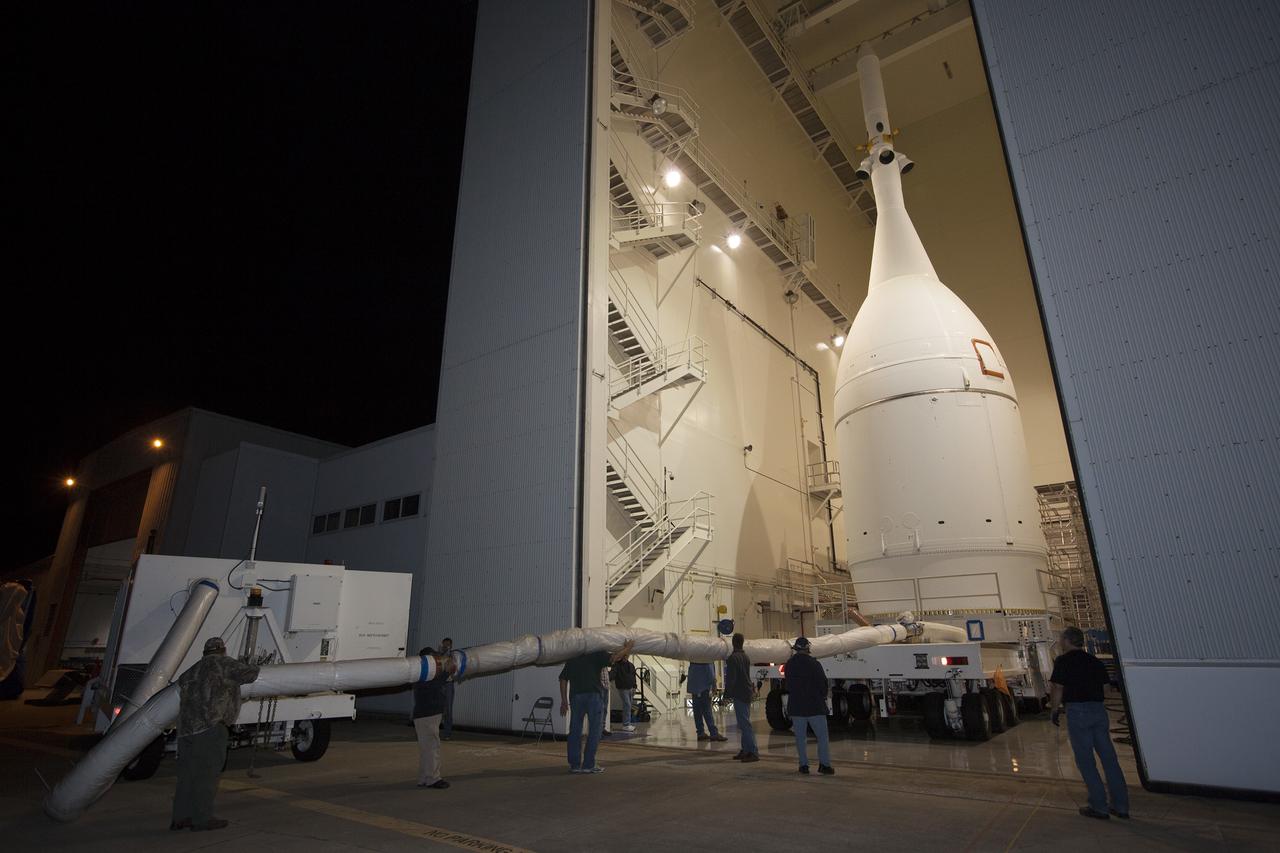
CAPE CANAVERAL, Fla. – At NASA's Kennedy Space Center in Florida, the agency's completed Orion spacecraft begins its trip from the Launch Abort System Facility to Launch Complex 37 at Cape Canaveral Air Force Station. After arrival at the launch pad, United Launch Alliance engineers and technicians will lift Orion and mount it atop its Delta IV Heavy rocket. Orion is the exploration spacecraft designed to carry astronauts to destinations not yet explored by humans, including an asteroid and Mars. It will have emergency abort capability, sustain the crew during space travel and provide safe re-entry from deep space return velocities. The first unpiloted flight test of Orion is scheduled to launch Dec. 4, 2014 atop a United Launch Alliance Delta IV Heavy rocket, and in 2018 on NASA’s Space Launch System rocket. For more information, visit www.nasa.gov/orion Photo credit: NASA/Kim Shiflett
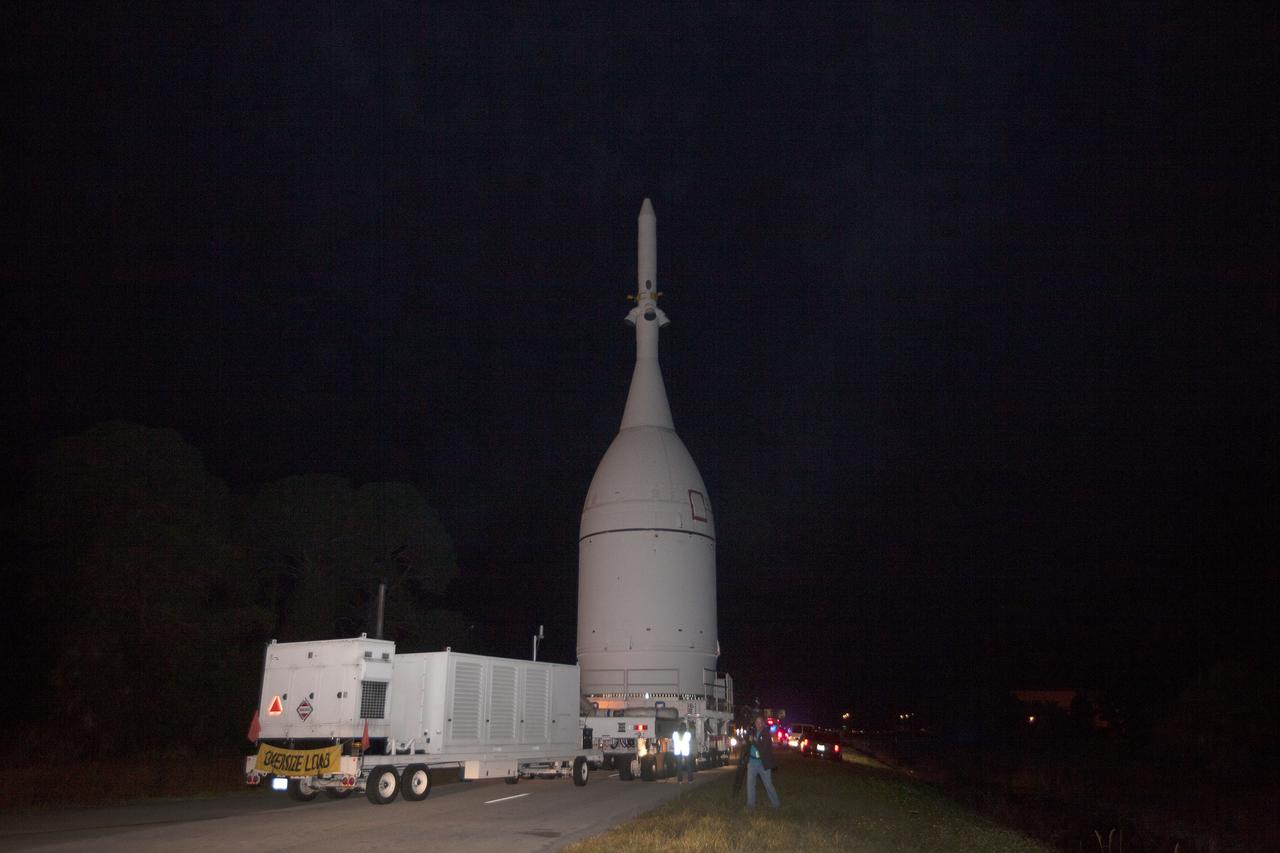
CAPE CANAVERAL, Fla. – At NASA's Kennedy Space Center in Florida, the agency's completed Orion spacecraft begins its trip from the Launch Abort System Facility to Launch Complex 37 at Cape Canaveral Air Force Station. After arrival at the launch pad, United Launch Alliance engineers and technicians will lift Orion and mount it atop its Delta IV Heavy rocket. Orion is the exploration spacecraft designed to carry astronauts to destinations not yet explored by humans, including an asteroid and Mars. It will have emergency abort capability, sustain the crew during space travel and provide safe re-entry from deep space return velocities. The first unpiloted flight test of Orion is scheduled to launch Dec. 4, 2014 atop a United Launch Alliance Delta IV Heavy rocket, and in 2018 on NASA’s Space Launch System rocket. For more information, visit www.nasa.gov/orion Photo credit: NASA/Kim Shiflett
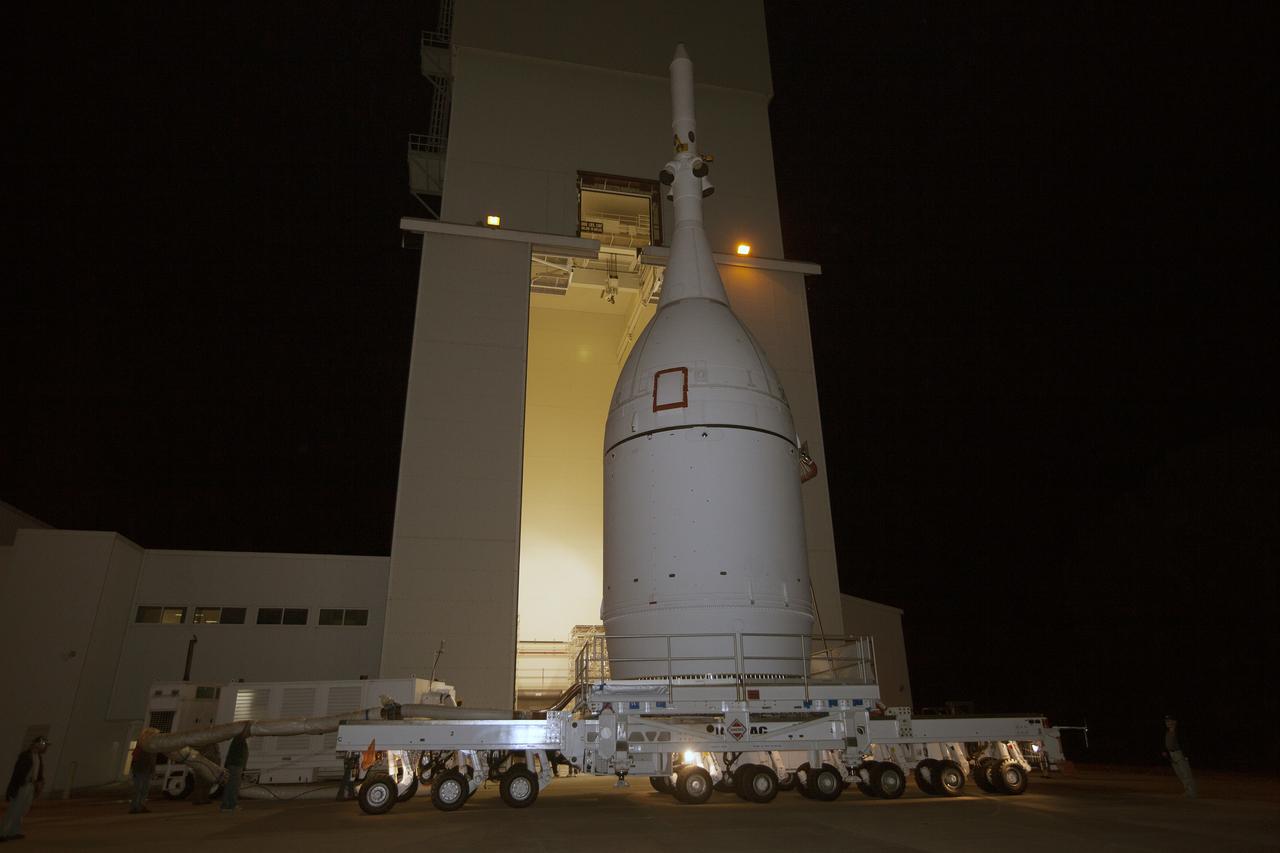
CAPE CANAVERAL, Fla. – At NASA's Kennedy Space Center in Florida, the agency's completed Orion spacecraft begins its trip from the Launch Abort System Facility to Launch Complex 37 at Cape Canaveral Air Force Station. After arrival at the launch pad, United Launch Alliance engineers and technicians will lift Orion and mount it atop its Delta IV Heavy rocket. Orion is the exploration spacecraft designed to carry astronauts to destinations not yet explored by humans, including an asteroid and Mars. It will have emergency abort capability, sustain the crew during space travel and provide safe re-entry from deep space return velocities. The first unpiloted flight test of Orion is scheduled to launch Dec. 4, 2014 atop a United Launch Alliance Delta IV Heavy rocket, and in 2018 on NASA’s Space Launch System rocket. For more information, visit www.nasa.gov/orion Photo credit: NASA/Kim Shiflett
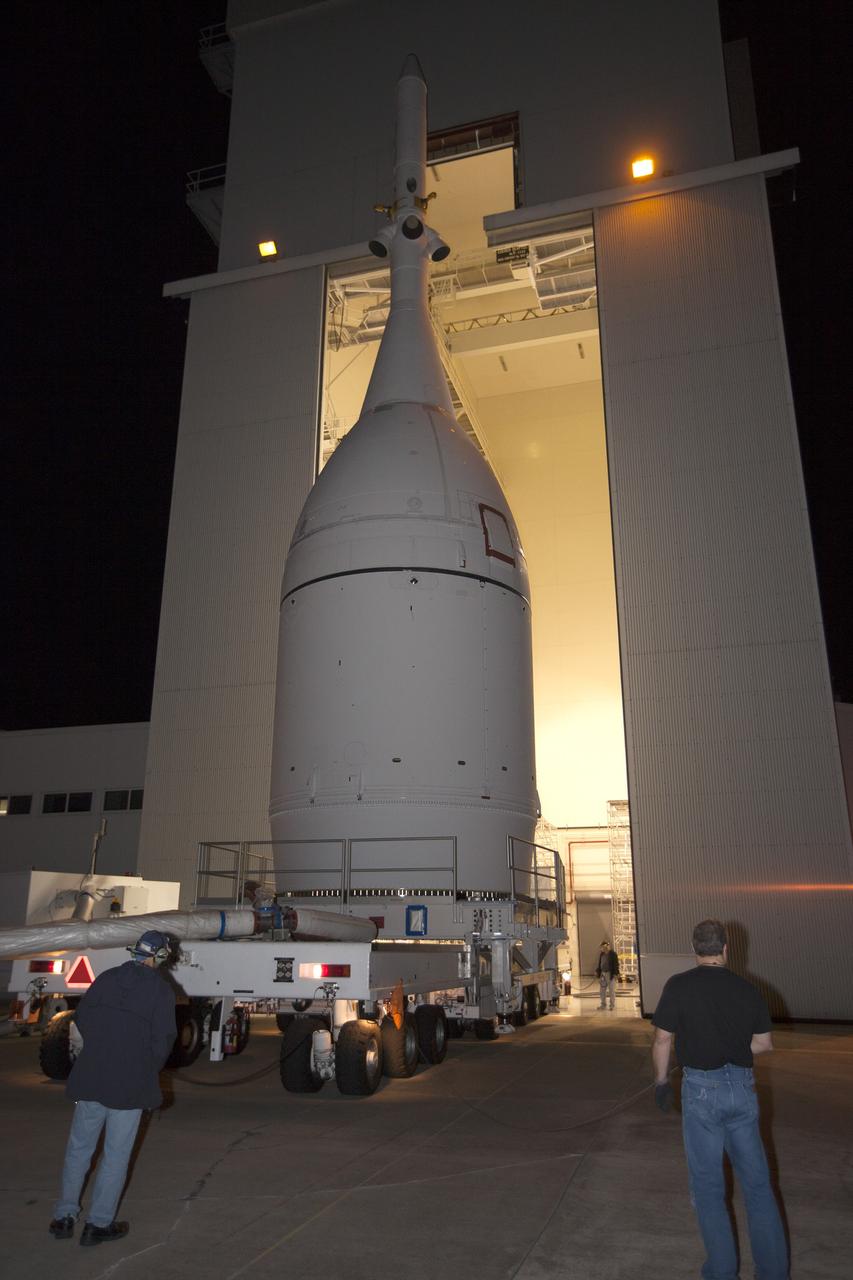
CAPE CANAVERAL, Fla. – At NASA's Kennedy Space Center in Florida, the agency's completed Orion spacecraft begins its trip from the Launch Abort System Facility to Launch Complex 37 at Cape Canaveral Air Force Station. After arrival at the launch pad, United Launch Alliance engineers and technicians will lift Orion and mount it atop its Delta IV Heavy rocket. Orion is the exploration spacecraft designed to carry astronauts to destinations not yet explored by humans, including an asteroid and Mars. It will have emergency abort capability, sustain the crew during space travel and provide safe re-entry from deep space return velocities. The first unpiloted flight test of Orion is scheduled to launch Dec. 4, 2014 atop a United Launch Alliance Delta IV Heavy rocket, and in 2018 on NASA’s Space Launch System rocket. For more information, visit www.nasa.gov/orion Photo credit: NASA/Kim Shiflett
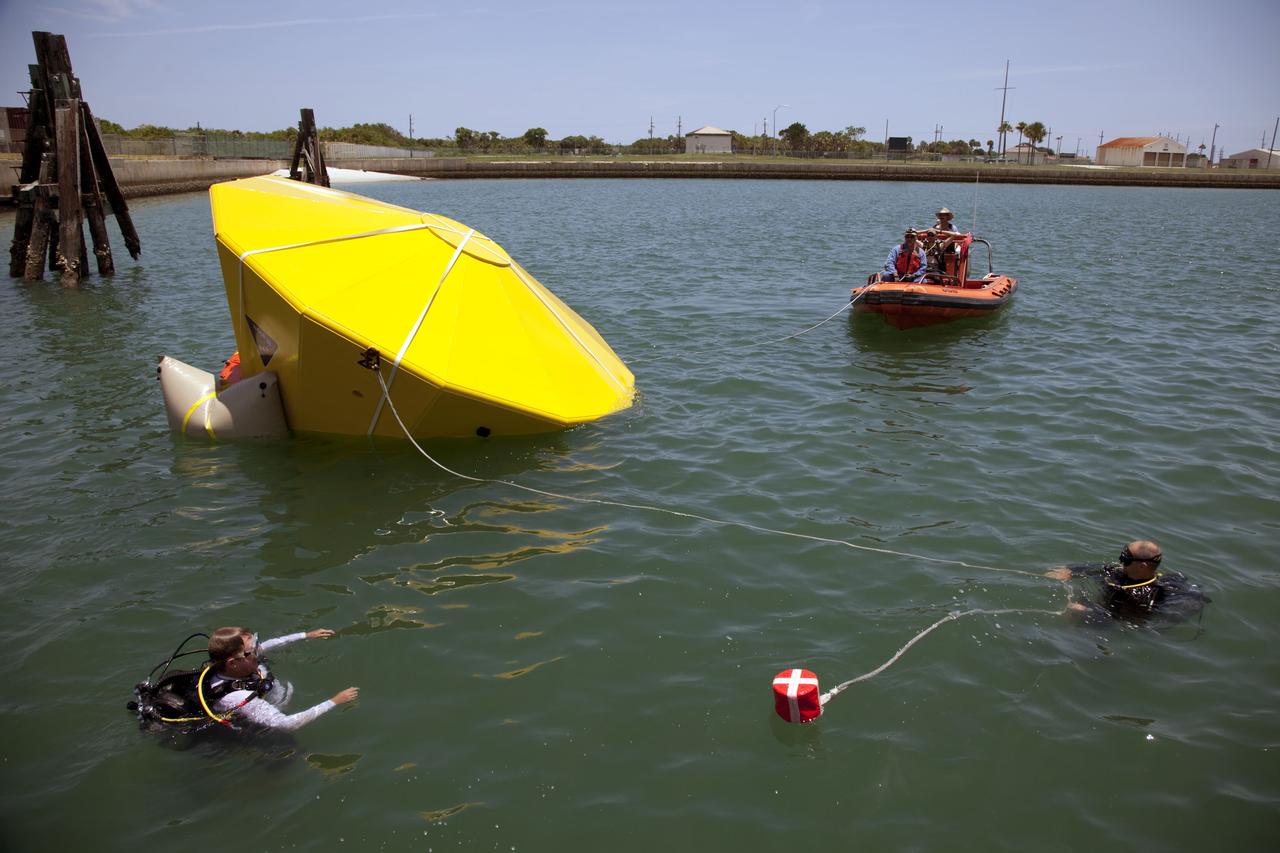
CAPE CANAVERAL, Fla. -- In the Delta turn basin at Cape Canaveral Air Force Station in Florida, United Space Alliance (USA) divers and boat crew monitor an Orion test article while waiting for its lift bags to inflate. The uprighting tests are part of USA's research and development program to help develop ground operations support equipment that could be used to reorient and recover an uncrewed Orion flight test capsule after splashdown. USA is a major subcontractor to Lockheed Martin for the Orion spacecraft. The Orion Multi-Purpose Crew Vehicle is NASA's next-generation spacecraft designed for deep space missions to asteroids, moons and other interplanetary destinations throughout the solar system. Orion's first uncrewed orbital flight test is slated for 2013. For more information, visit http://www.nasa.gov/exploration/systems/mpcv/. Photo credit: NASA/Frankie Martin
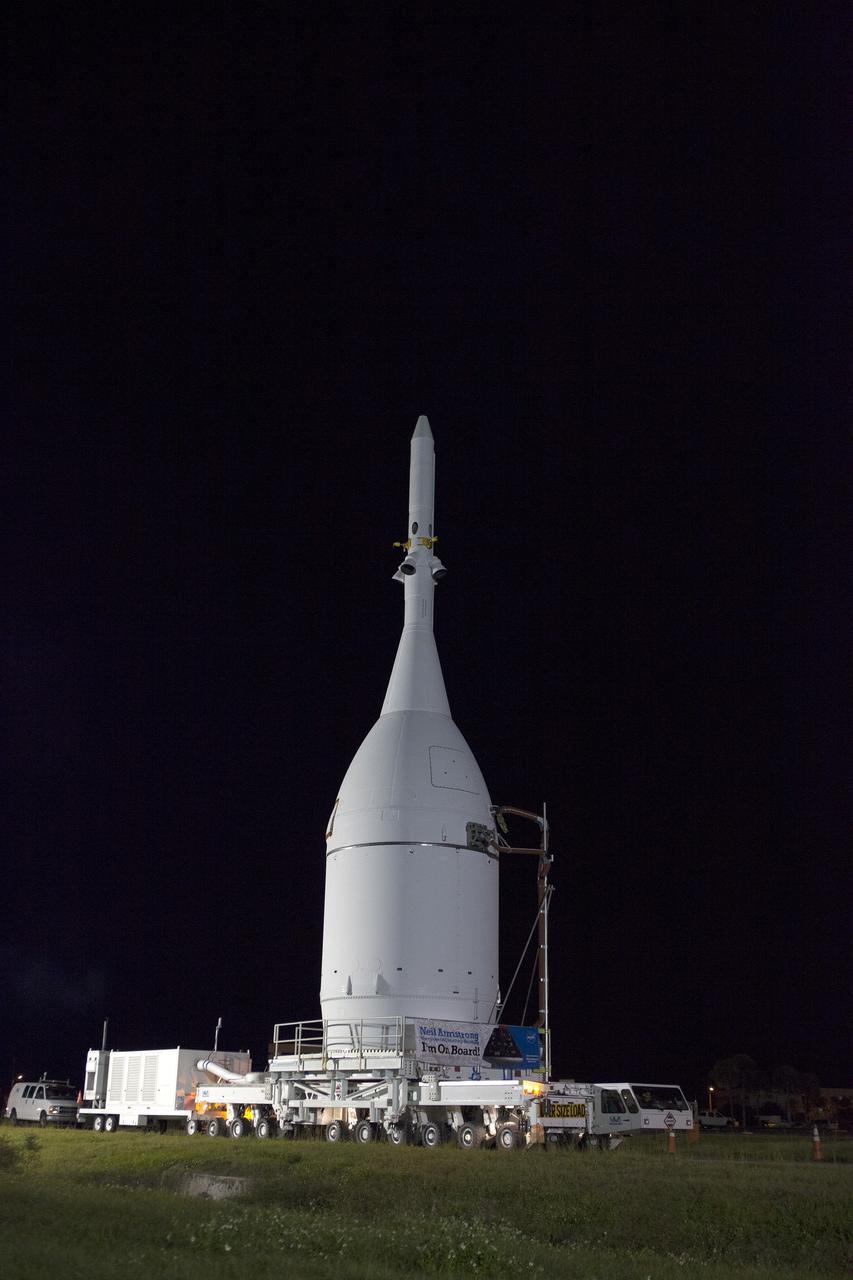
CAPE CANAVERAL, Fla. – At NASA's Kennedy Space Center in Florida, the agency's Orion is transported to Launch Complex 37 at Cape Canaveral Air Force Station. After arrival at the launch pad, United Launch Alliance engineers and technicians will lift Orion and mount it atop its Delta IV Heavy rocket. Orion is the exploration spacecraft designed to carry astronauts to destinations not yet explored by humans, including an asteroid and Mars. It will have emergency abort capability, sustain the crew during space travel and provide safe re-entry from deep space return velocities. The first unpiloted flight test of Orion is scheduled to launch Dec. 4, 2014 atop a United Launch Alliance Delta IV Heavy rocket, and in 2018 on NASA’s Space Launch System rocket. For more information, visit www.nasa.gov/orion Photo credit: NASA/Frankie Martin
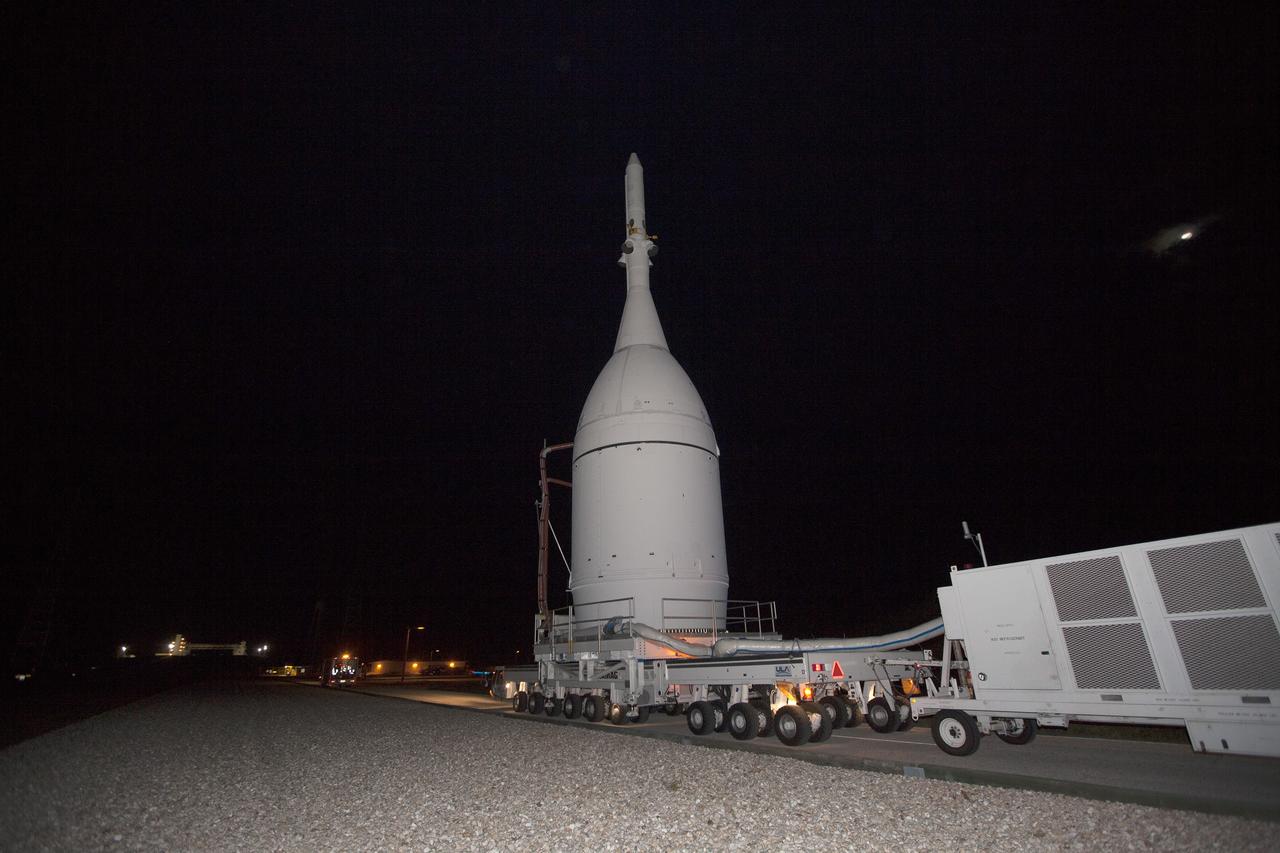
CAPE CANAVERAL, Fla. – At NASA's Kennedy Space Center in Florida, the agency's Orion is transported to Launch Complex 37 at Cape Canaveral Air Force Station. After arrival at the launch pad, United Launch Alliance engineers and technicians will lift Orion and mount it atop its Delta IV Heavy rocket. Orion is the exploration spacecraft designed to carry astronauts to destinations not yet explored by humans, including an asteroid and Mars. It will have emergency abort capability, sustain the crew during space travel and provide safe re-entry from deep space return velocities. The first unpiloted flight test of Orion is scheduled to launch Dec. 4, 2014 atop a United Launch Alliance Delta IV Heavy rocket, and in 2018 on NASA’s Space Launch System rocket. For more information, visit www.nasa.gov/orion Photo credit: NASA/Frankie Martin
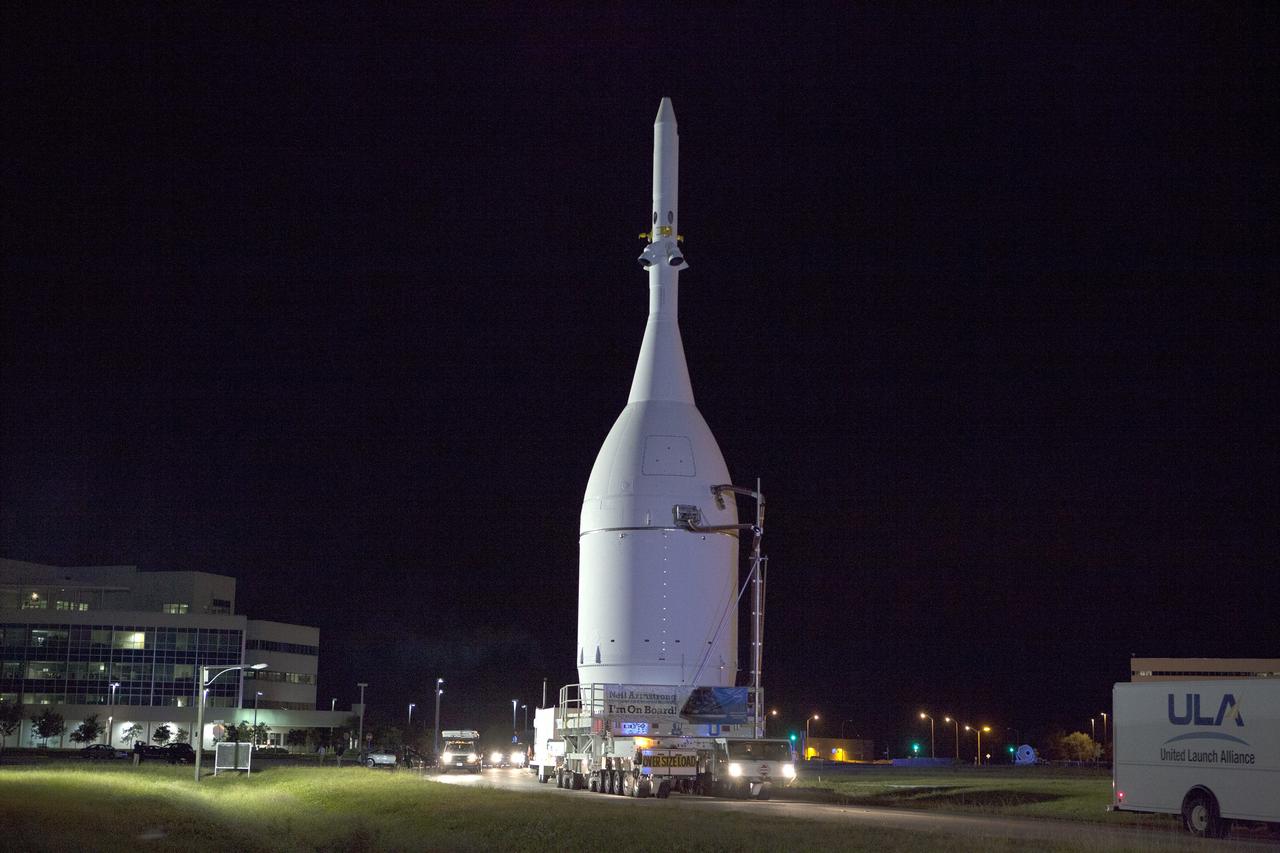
CAPE CANAVERAL, Fla. – At NASA's Kennedy Space Center in Florida, the agency's Orion spacecraft approaches the spaceport's Launch Complex 39B as it is transported to Launch Complex 37 at Cape Canaveral Air Force Station. After arrival at the launch pad, United Launch Alliance engineers and technicians will lift Orion and mount it atop its Delta IV Heavy rocket. Orion is the exploration spacecraft designed to carry astronauts to destinations not yet explored by humans, including an asteroid and Mars. It will have emergency abort capability, sustain the crew during space travel and provide safe re-entry from deep space return velocities. The first unpiloted flight test of Orion is scheduled to launch Dec. 4, 2014 atop a United Launch Alliance Delta IV Heavy rocket, and in 2018 on NASA’s Space Launch System rocket. For more information, visit www.nasa.gov/orion Photo credit: NASA/Kim Shiflett
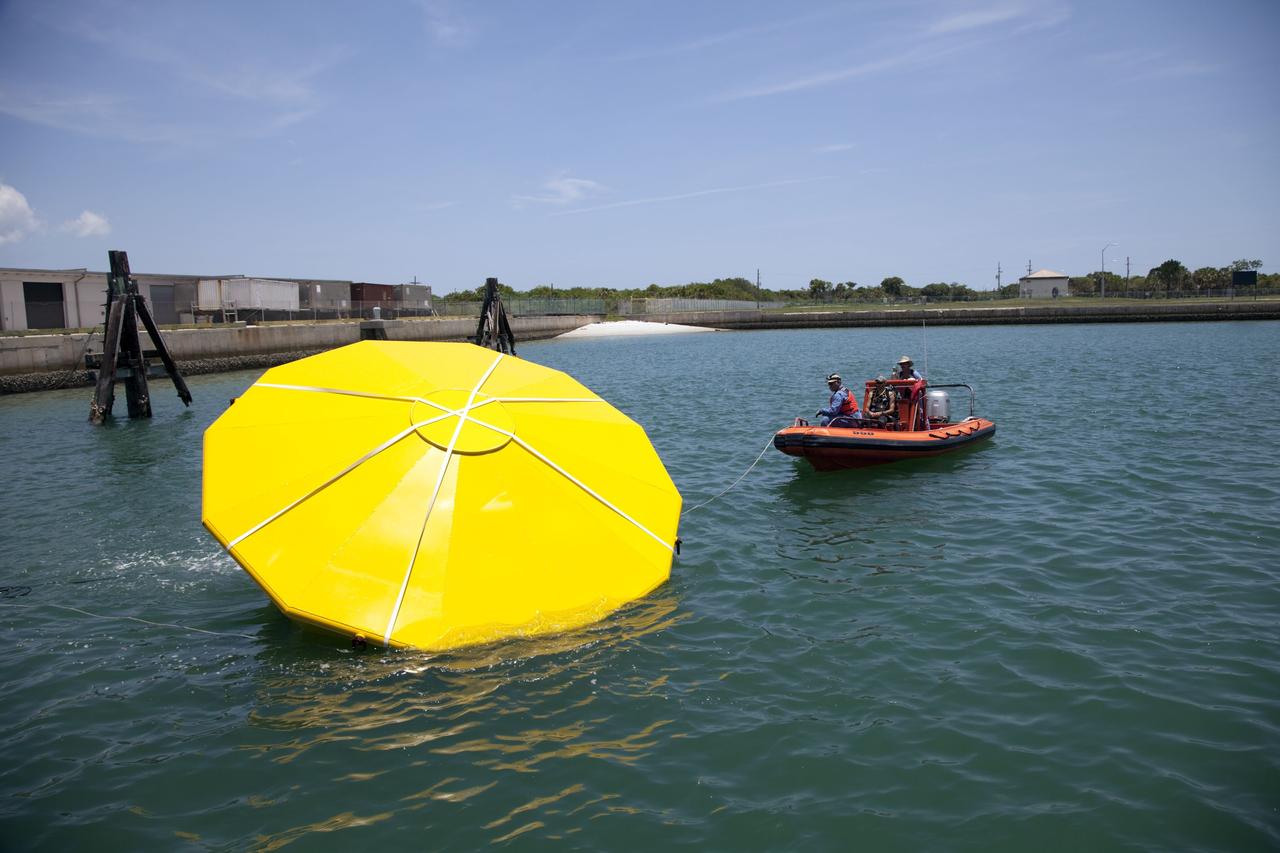
CAPE CANAVERAL, Fla. -- In the Delta turn basin at Cape Canaveral Air Force Station in Florida, United Space Alliance (USA) workers help orient an Orion test article during a roll test. The uprighting tests are part of USA's research and development program to help develop ground operations support equipment that could be used to reorient and recover an uncrewed Orion flight test capsule after splashdown. USA is a major subcontractor to Lockheed Martin for the Orion spacecraft. The Orion Multi-Purpose Crew Vehicle is NASA's next-generation spacecraft designed for deep space missions to asteroids, moons and other interplanetary destinations throughout the solar system. Orion's first uncrewed orbital flight test is slated for 2013. For more information, visit http://www.nasa.gov/exploration/systems/mpcv/. Photo credit: NASA/Frankie Martin
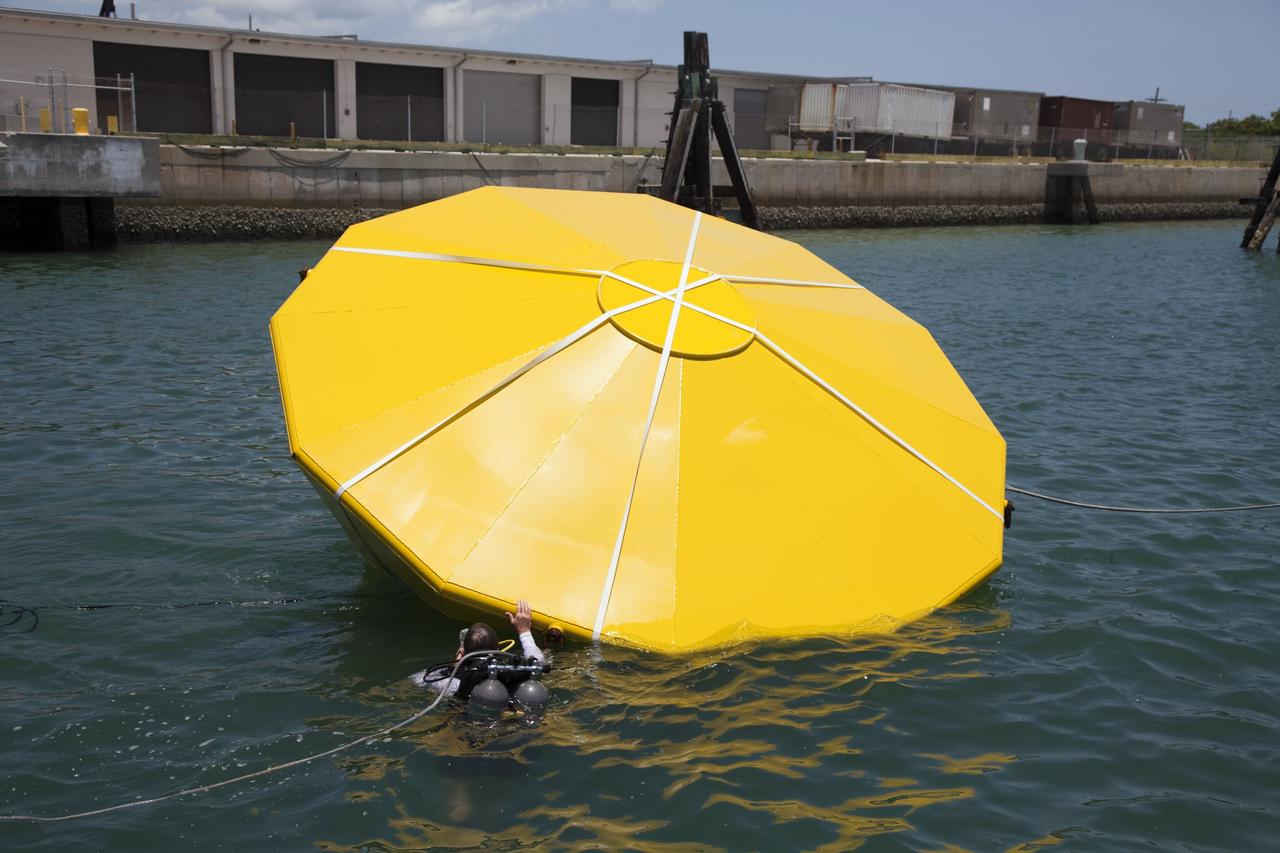
CAPE CANAVERAL, Fla. -- In the Delta turn basin at Cape Canaveral Air Force Station in Florida, a United Space Alliance (USA) diver helps orient an Orion test article during a roll test. The uprighting tests are part of USA's research and development program to help develop ground operations support equipment that could be used to reorient and recover an uncrewed Orion flight test capsule after splashdown. USA is a major subcontractor to Lockheed Martin for the Orion spacecraft. The Orion Multi-Purpose Crew Vehicle is NASA's next-generation spacecraft designed for deep space missions to asteroids, moons and other interplanetary destinations throughout the solar system. Orion's first uncrewed orbital flight test is slated for 2013. For more information, visit http://www.nasa.gov/exploration/systems/mpcv/. Photo credit: NASA/Frankie Martin
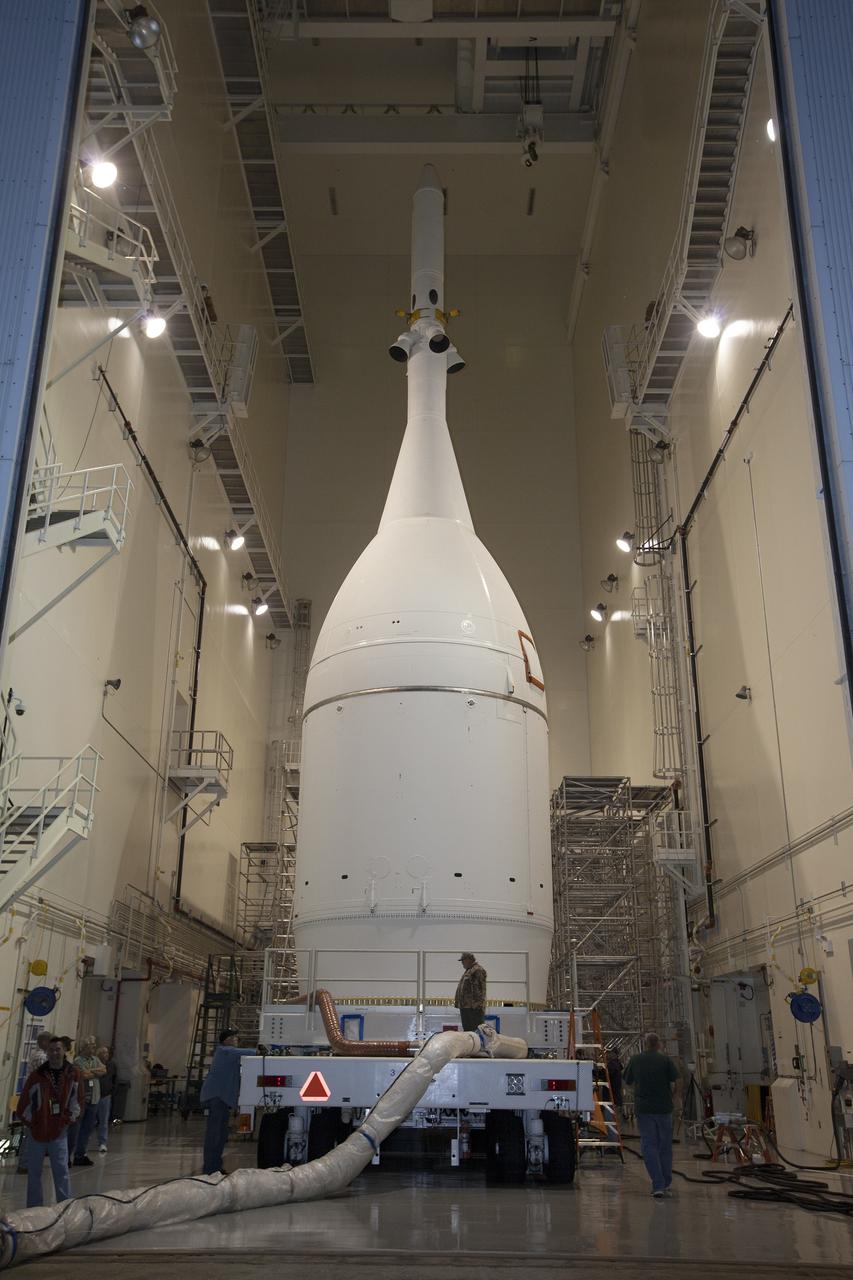
CAPE CANAVERAL, Fla. – At NASA's Kennedy Space Center in Florida, the agency's completed Orion spacecraft begins its trip from the Launch Abort System Facility to Launch Complex 37 at Cape Canaveral Air Force Station. After arrival at the launch pad, United Launch Alliance engineers and technicians will lift Orion and mount it atop its Delta IV Heavy rocket. Orion is the exploration spacecraft designed to carry astronauts to destinations not yet explored by humans, including an asteroid and Mars. It will have emergency abort capability, sustain the crew during space travel and provide safe re-entry from deep space return velocities. The first unpiloted flight test of Orion is scheduled to launch Dec. 4, 2014 atop a United Launch Alliance Delta IV Heavy rocket, and in 2018 on NASA’s Space Launch System rocket. For more information, visit www.nasa.gov/orion Photo credit: NASA/Kim Shiflett
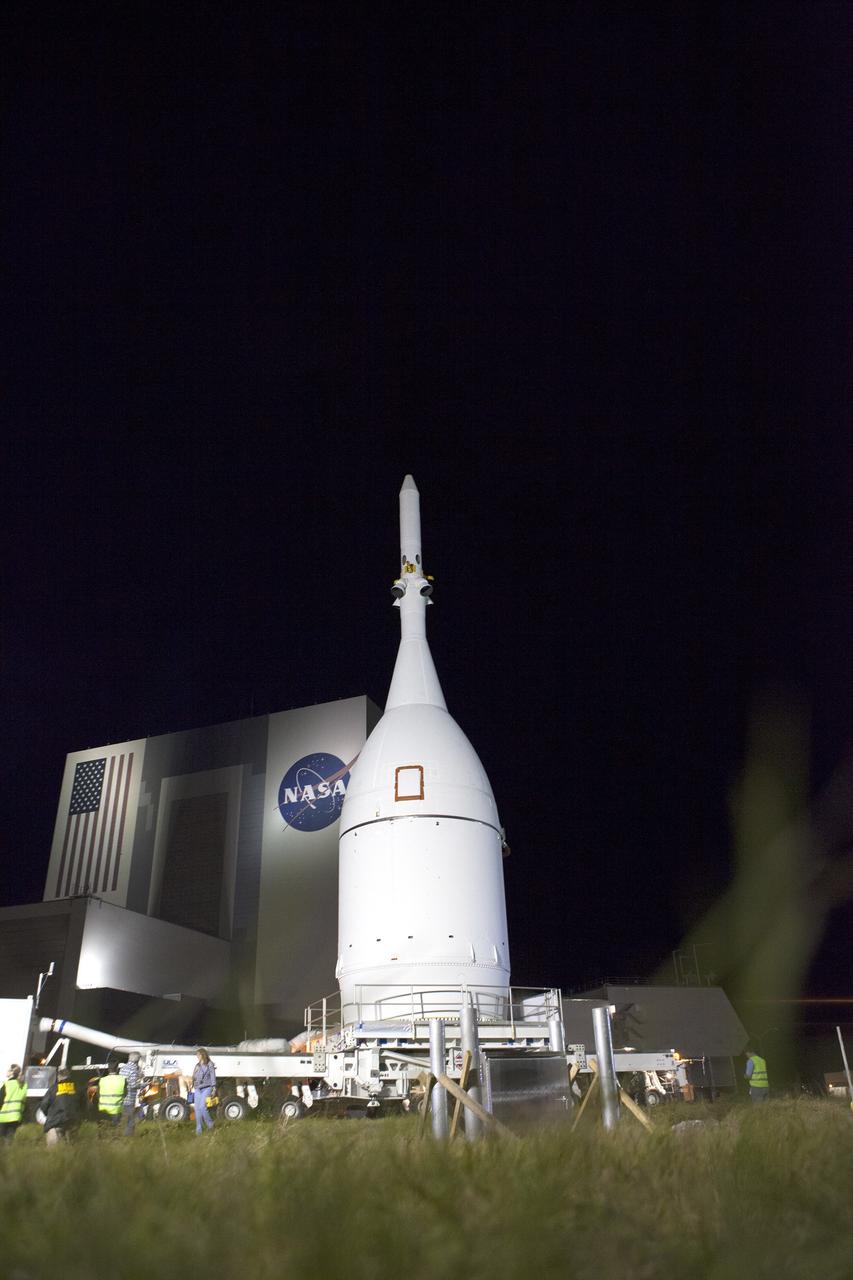
CAPE CANAVERAL, Fla. – At NASA's Kennedy Space Center in Florida, the agency's Orion spacecraft passes the spaceport's iconic Vehicle Assembly Building as it is transported to Launch Complex 37 at Cape Canaveral Air Force Station. After arrival at the launch pad, United Launch Alliance engineers and technicians will lift Orion and mount it atop its Delta IV Heavy rocket. Orion is the exploration spacecraft designed to carry astronauts to destinations not yet explored by humans, including an asteroid and Mars. It will have emergency abort capability, sustain the crew during space travel and provide safe re-entry from deep space return velocities. The first unpiloted flight test of Orion is scheduled to launch Dec. 4, 2014 atop a United Launch Alliance Delta IV Heavy rocket, and in 2018 on NASA’s Space Launch System rocket. For more information, visit www.nasa.gov/orion Photo credit: NASA/Frankie Martin
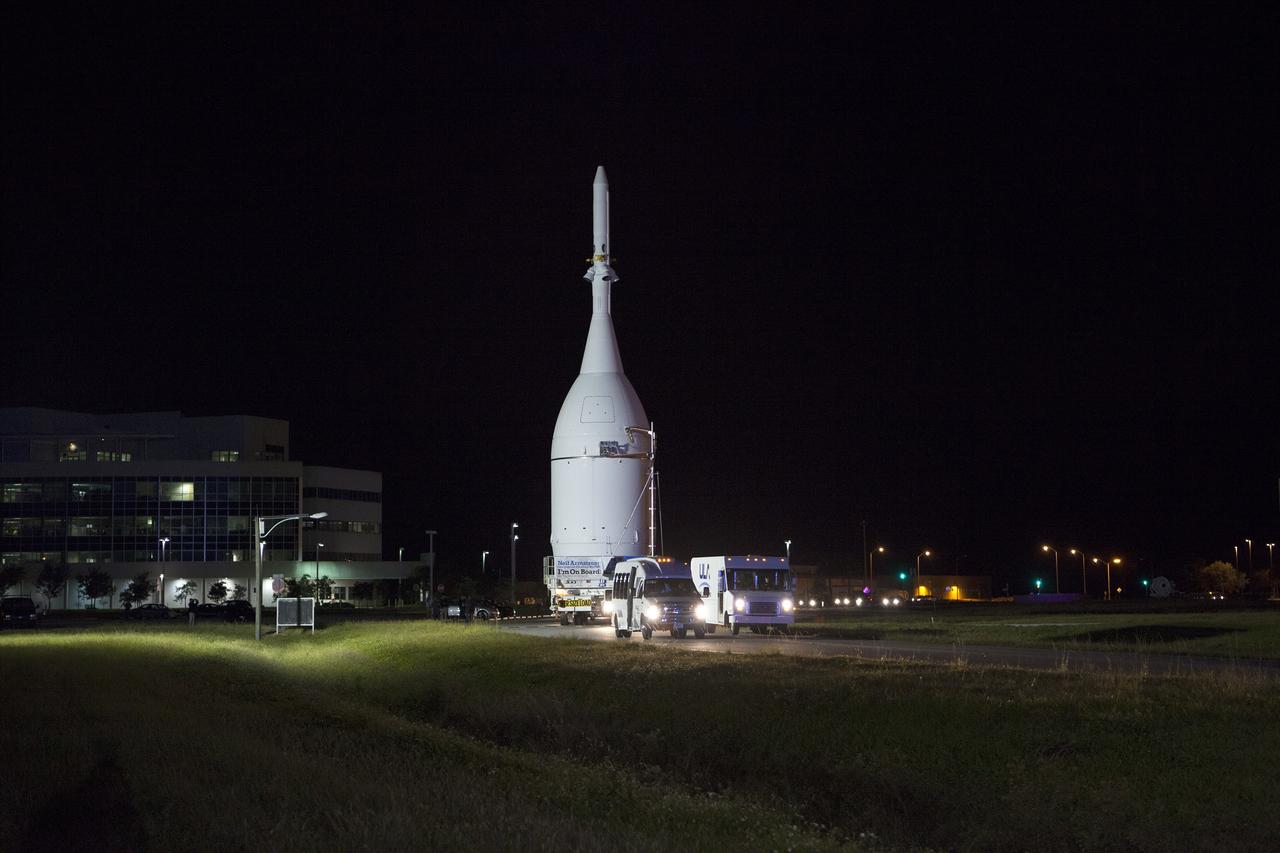
CAPE CANAVERAL, Fla. – At NASA's Kennedy Space Center in Florida, the agency's Orion is transported to Launch Complex 37 at Cape Canaveral Air Force Station. After arrival at the launch pad, United Launch Alliance engineers and technicians will lift Orion and mount it atop its Delta IV Heavy rocket. Orion is the exploration spacecraft designed to carry astronauts to destinations not yet explored by humans, including an asteroid and Mars. It will have emergency abort capability, sustain the crew during space travel and provide safe re-entry from deep space return velocities. The first unpiloted flight test of Orion is scheduled to launch Dec. 4, 2014 atop a United Launch Alliance Delta IV Heavy rocket, and in 2018 on NASA’s Space Launch System rocket. For more information, visit www.nasa.gov/orion Photo credit: NASA/Frankie Martin
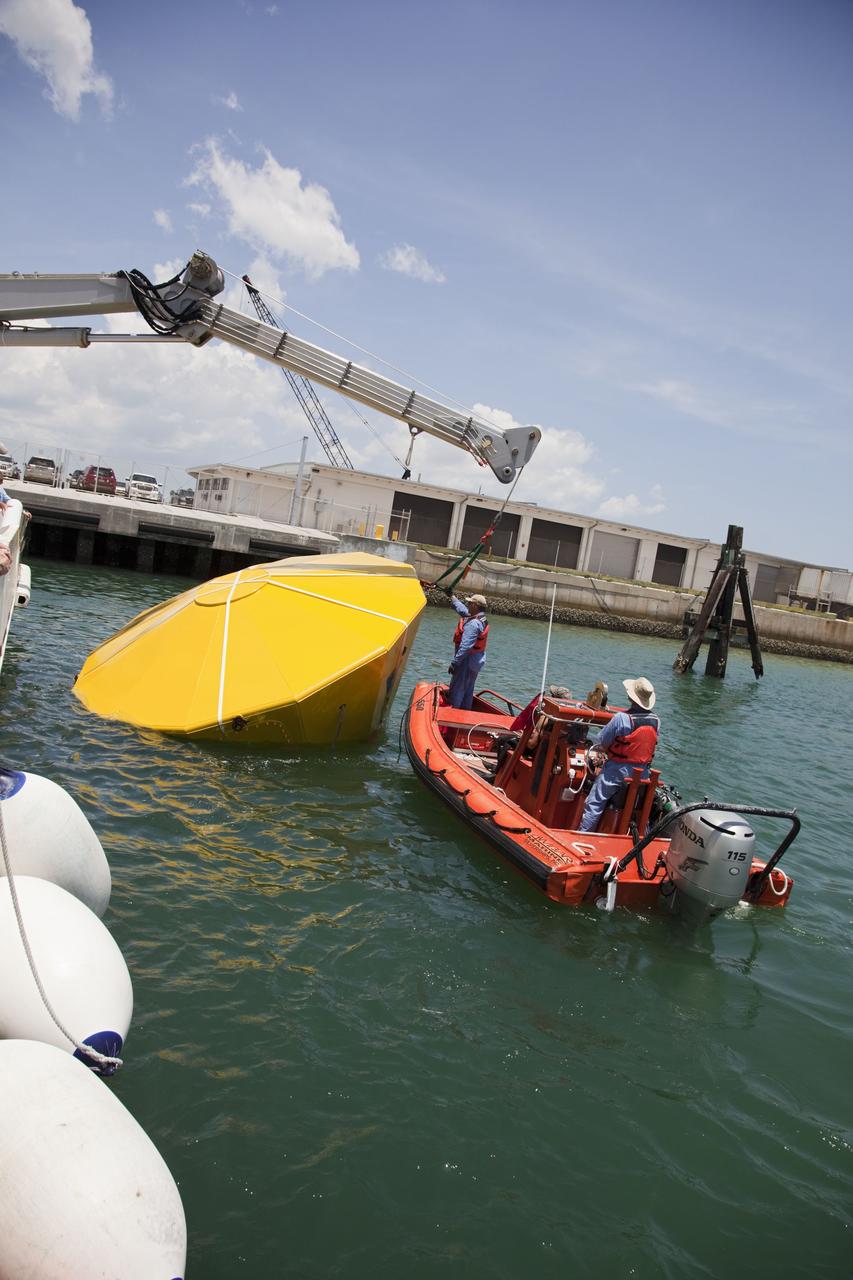
CAPE CANAVERAL, Fla. -- In the Delta turn basin at Cape Canaveral Air Force Station in Florida, United Space Alliance (USA) workers help orient an Orion test article to enable a ship's crane to rotate it. The uprighting tests are part of USA's research and development program to help develop ground operations support equipment that could be used to reorient and recover an uncrewed Orion flight test capsule after splashdown. USA is a major subcontractor to Lockheed Martin for the Orion spacecraft. The Orion Multi-Purpose Crew Vehicle is NASA's next-generation spacecraft designed for deep space missions to asteroids, moons and other interplanetary destinations throughout the solar system. Orion's first uncrewed orbital flight test is slated for 2013. For more information, visit http://www.nasa.gov/exploration/systems/mpcv/. Photo credit: NASA/Frankie Martin
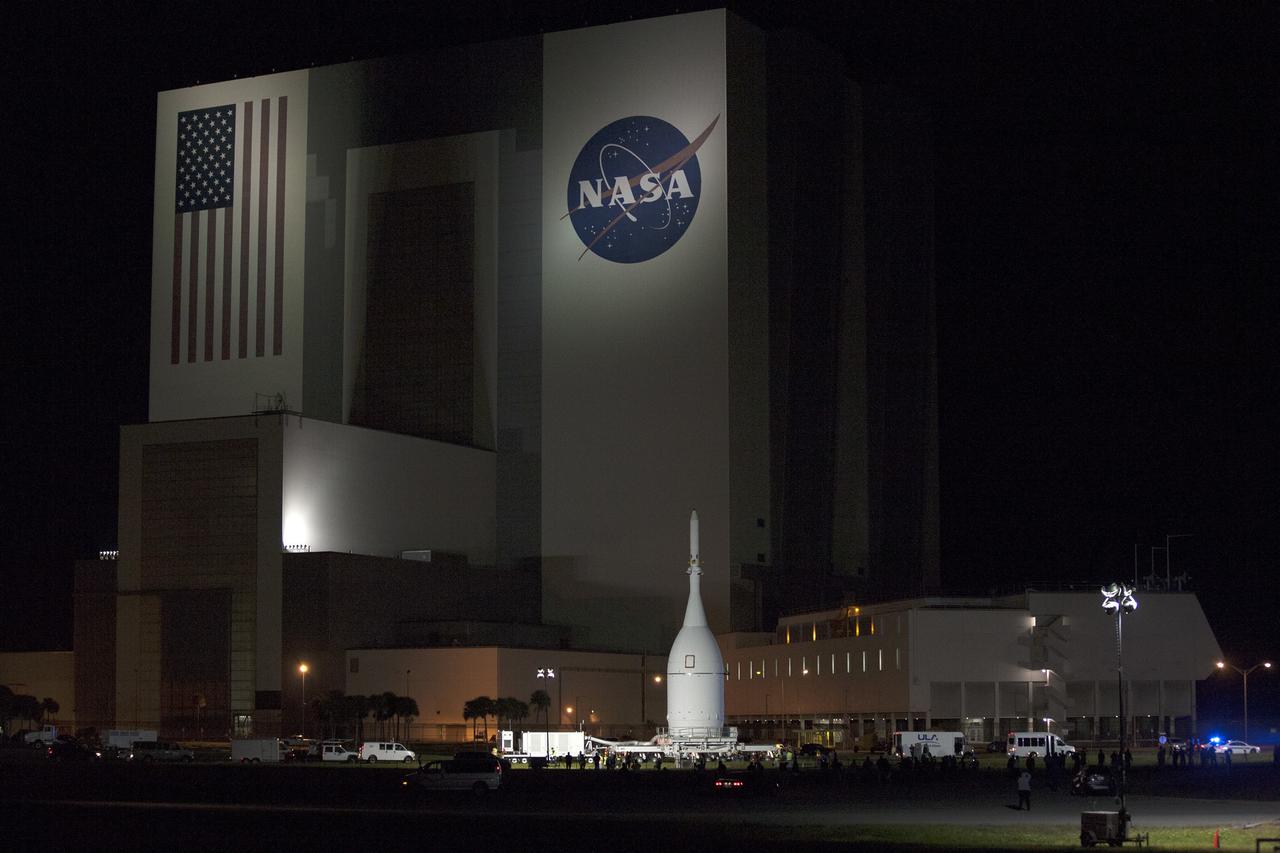
CAPE CANAVERAL, Fla. – At NASA's Kennedy Space Center in Florida, the agency's Orion spacecraft passes the spaceport's iconic Vehicle Assembly Building as it is transported to Launch Complex 37 at Cape Canaveral Air Force Station. After arrival at the launch pad, United Launch Alliance engineers and technicians will lift Orion and mount it atop its Delta IV Heavy rocket. Orion is the exploration spacecraft designed to carry astronauts to destinations not yet explored by humans, including an asteroid and Mars. It will have emergency abort capability, sustain the crew during space travel and provide safe re-entry from deep space return velocities. The first unpiloted flight test of Orion is scheduled to launch Dec. 4, 2014 atop a United Launch Alliance Delta IV Heavy rocket, and in 2018 on NASA’s Space Launch System rocket. For more information, visit www.nasa.gov/orion Photo credit: NASA/Kim Shiflett
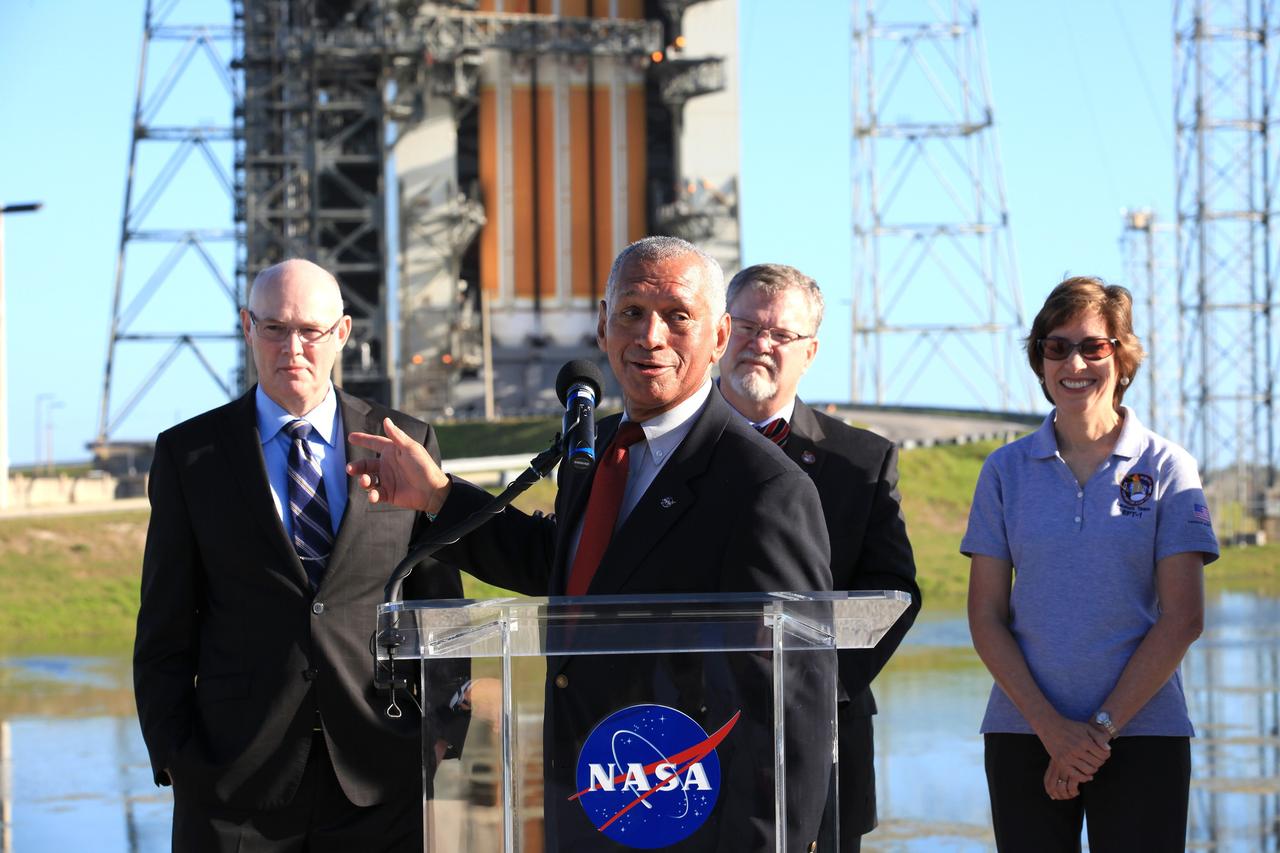
CAPE CANAVERAL, Fla. – At Cape Canaveral Air Force Station's Launch Complex 37, NASA Administrator Charlie Bolden speaks to members of the news media as the Orion spacecraft and its United Launch Alliance Delta IV Heavy rocket were being prepared for launch. Behind Bolden, from the left, are United Launch Alliance CEO Tory Bruno, Lockheed Martin Orion Program manager Mike Hawes and Johnson Space Center Director Ellen Ochoa. For more information, visit www.nasa.gov/orion. Photo credit: NASA/Kim Shiflett
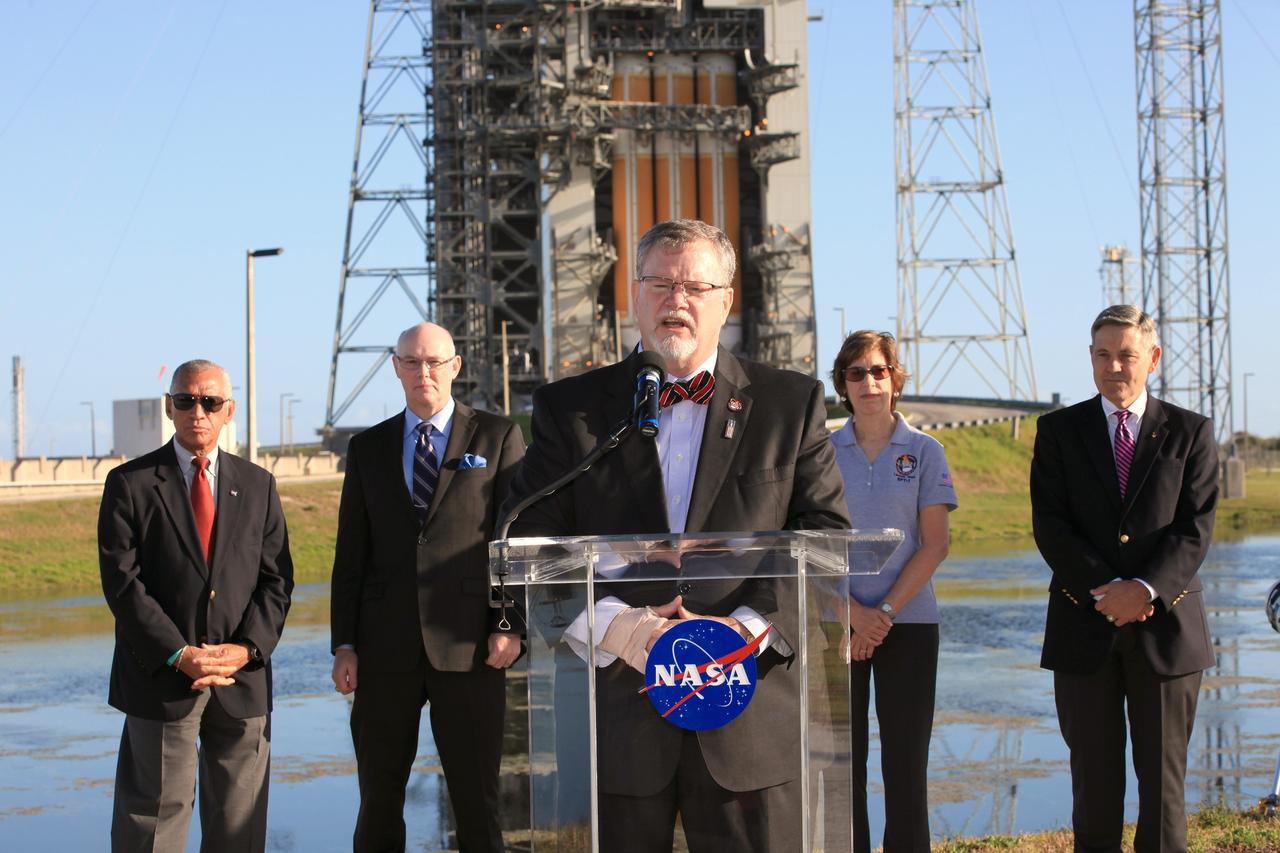
CAPE CANAVERAL, Fla. – At Cape Canaveral Air Force Station's Launch Complex 37, Lockheed Martin Orion Program manager Mike Hawes speaks to members of the news media as the Orion spacecraft and its United Launch Alliance Delta IV Heavy rocket were being prepared for launch. Behind Hawes, from the left, are NASA Administrator Charlie Bolden, United Launch Alliance CEO Tory Bruno, Johnson Space Center Director Ellen Ochoa and Kennedy Space Center Director Bob Cabana. For more information, visit www.nasa.gov/orion. Photo credit: NASA/Kim Shiflett
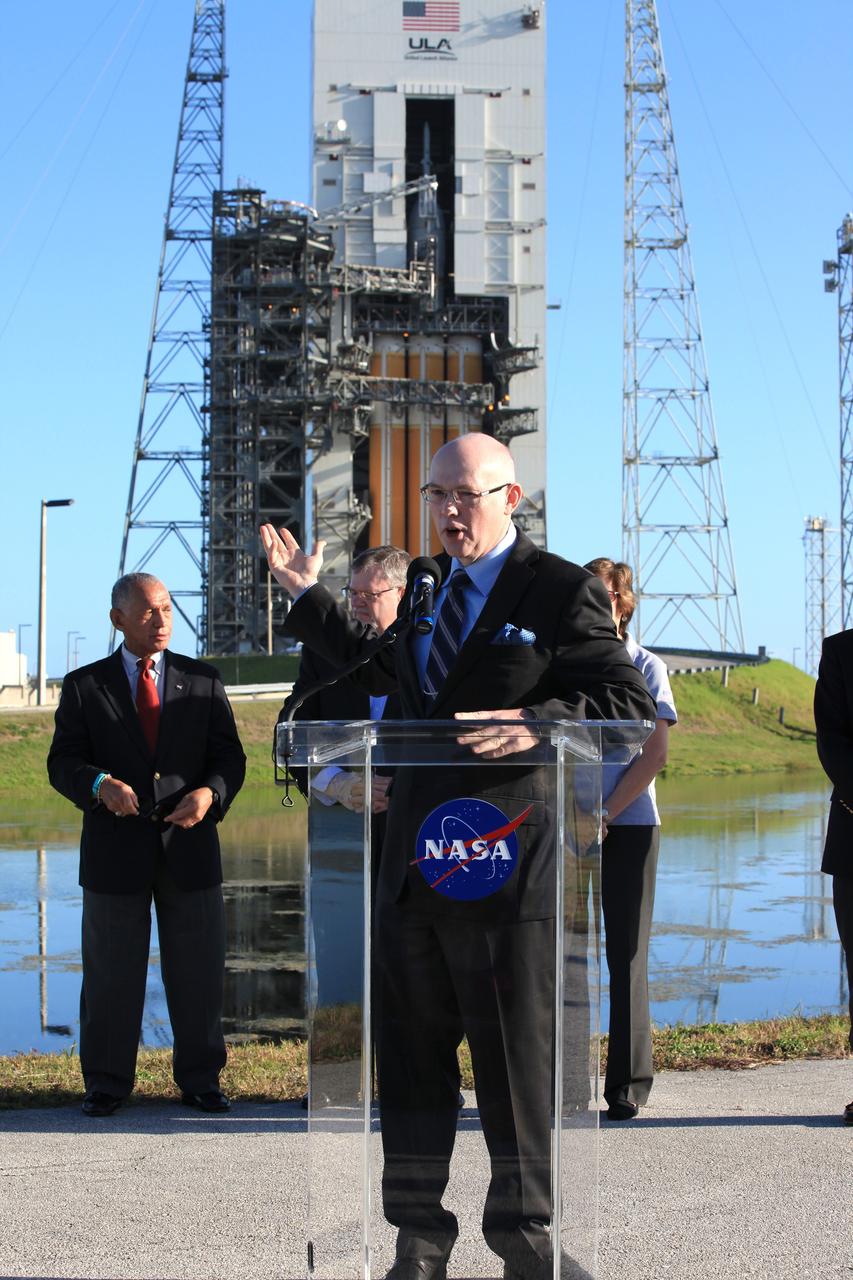
CAPE CANAVERAL, Fla. – At Cape Canaveral Air Force Station's Launch Complex 37, United Launch Alliance CEO Tory Bruno speaks to members of the news media as the Orion spacecraft and its United Launch Alliance Delta IV Heavy rocket were being prepared for launch. Behind Bruno, from the left, are NASA Administrator Charlie Bolden, Lockheed Martin Orion Program Manager Mike Hawes and Johnson Space Center Director Ellen Ochoa. For more information, visit www.nasa.gov/orion. Photo credit: NASA/Kim Shiflett
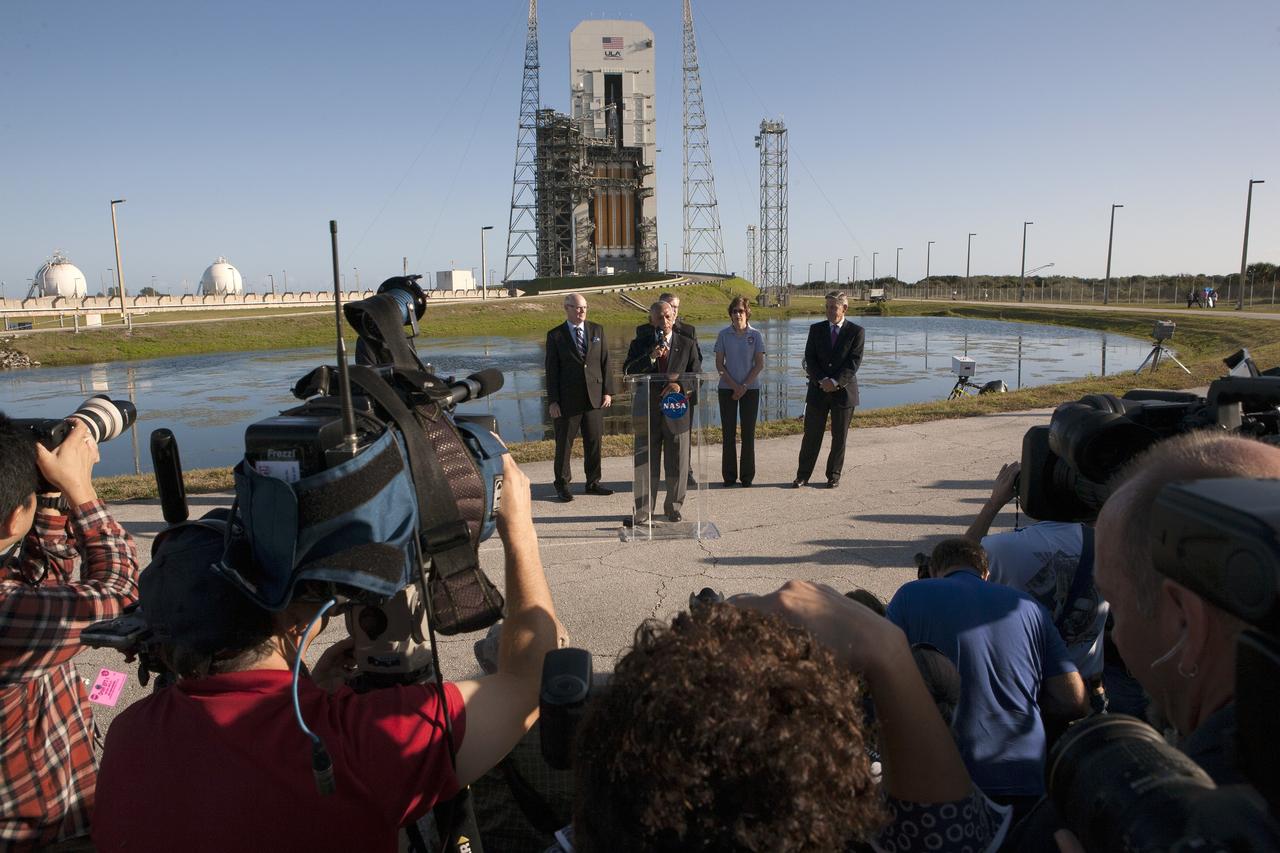
CAPE CANAVERAL, Fla. – At Cape Canaveral Air Force Station's Launch Complex 37, NASA Administrator Charlie Bolden speaks to members of the news media as the Orion spacecraft and its United Launch Alliance Delta IV Heavy rocket are being prepared for launch. Behind Bolden, from the left, are United Launch Alliance CEO Tory Bruno, Lockheed Martin Orion Program Manager Mike Hawes partially hidden behind Bolden, Johnson Space Center Director Ellen Ochoa and Kennedy Space Center Director Bob Cabana. For more information, visit www.nasa.gov/orion. Photo credit: NASA/Kim Shiflett
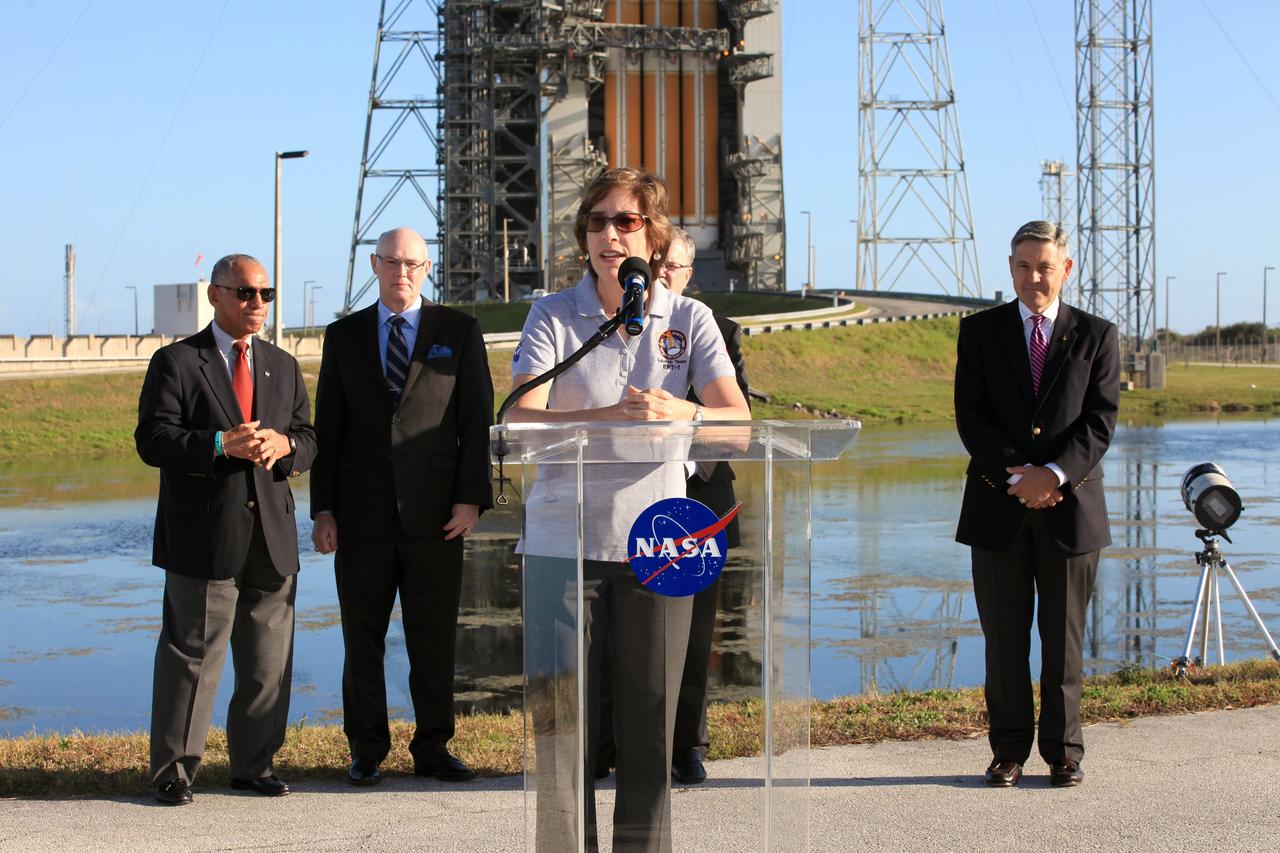
CAPE CANAVERAL, Fla. – At Cape Canaveral Air Force Station's Launch Complex 37, Johnson Space Center Director Ellen Ochoa speaks to members of the news media as the Orion spacecraft and its United Launch Alliance Delta IV Heavy rocket were being prepared for launch. Behind Ochoa, from the left, are NASA Administrator Charlie Bolden, United Launch Alliance CEO Tory Bruno, Lockheed Martin Orion Program Manager Mike Hawes and Kennedy Space Center Director Bob Cabana. For more information, visit www.nasa.gov/orion. Photo credit: NASA/Kim Shiflett
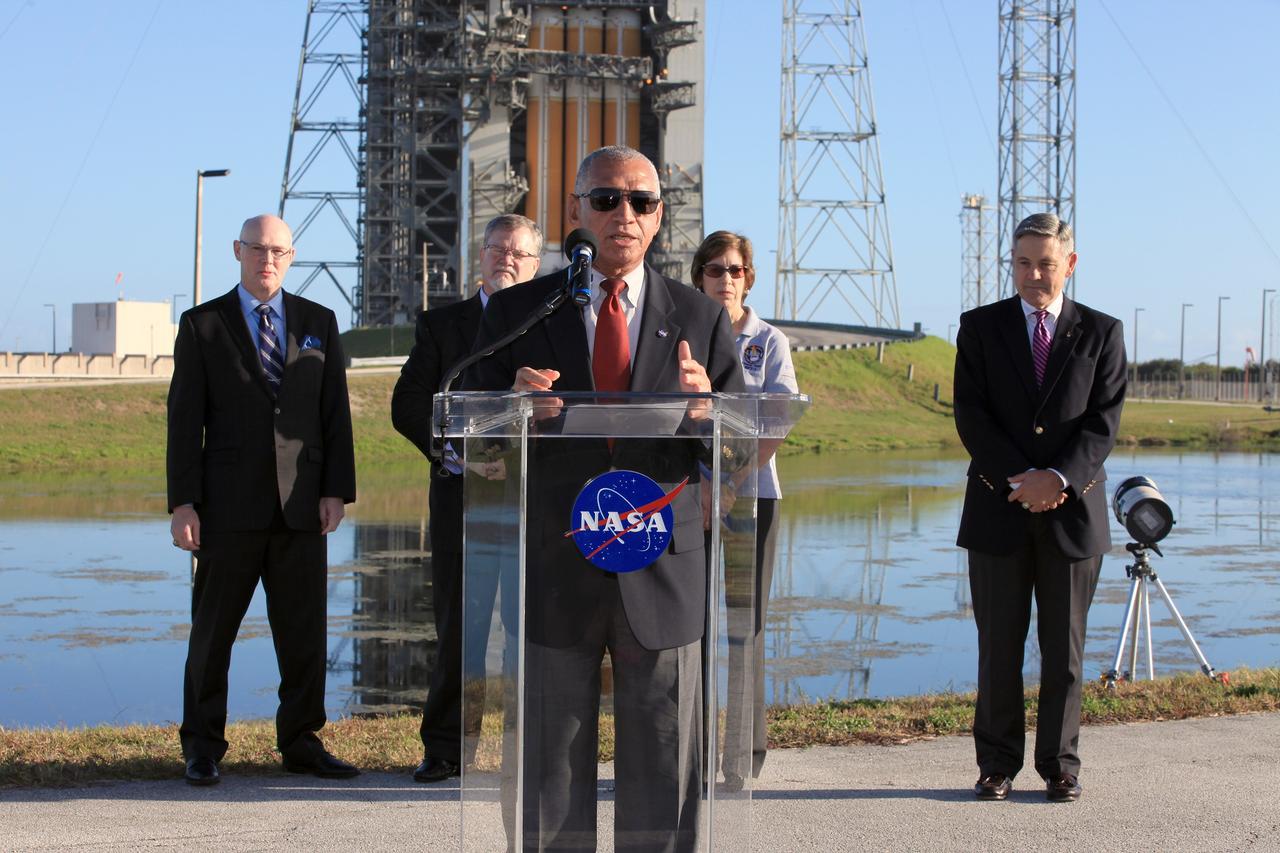
CAPE CANAVERAL, Fla. – At Cape Canaveral Air Force Station's Launch Complex 37, NASA Administrator Charlie Bolden speaks to members of the news media as the Orion spacecraft and its United Launch Alliance Delta IV Heavy rocket were being prepared for launch. Behind Bolden, from the left, are United Launch Alliance CEO Tory Bruno, Lockheed Martin Orion Program Manager Mike Hawes, Johnson Space Center Director Ellen Ochoa and Kennedy Space Center Director Bob Cabana. For more information, visit www.nasa.gov/orion. Photo credit: NASA/Kim Shiflett

CAPE CANAVERAL, Fla. – Workers begin de-stacking a mock Orion capsule and service module in the Vehicle Assembly Building at NASA's Kennedy Space Center in Florida. The stack has been used to evaluate potential techniques to be used in assembling the Orion and service module for operational flights in the future. Photo credit: NASA/Jim Grossmann
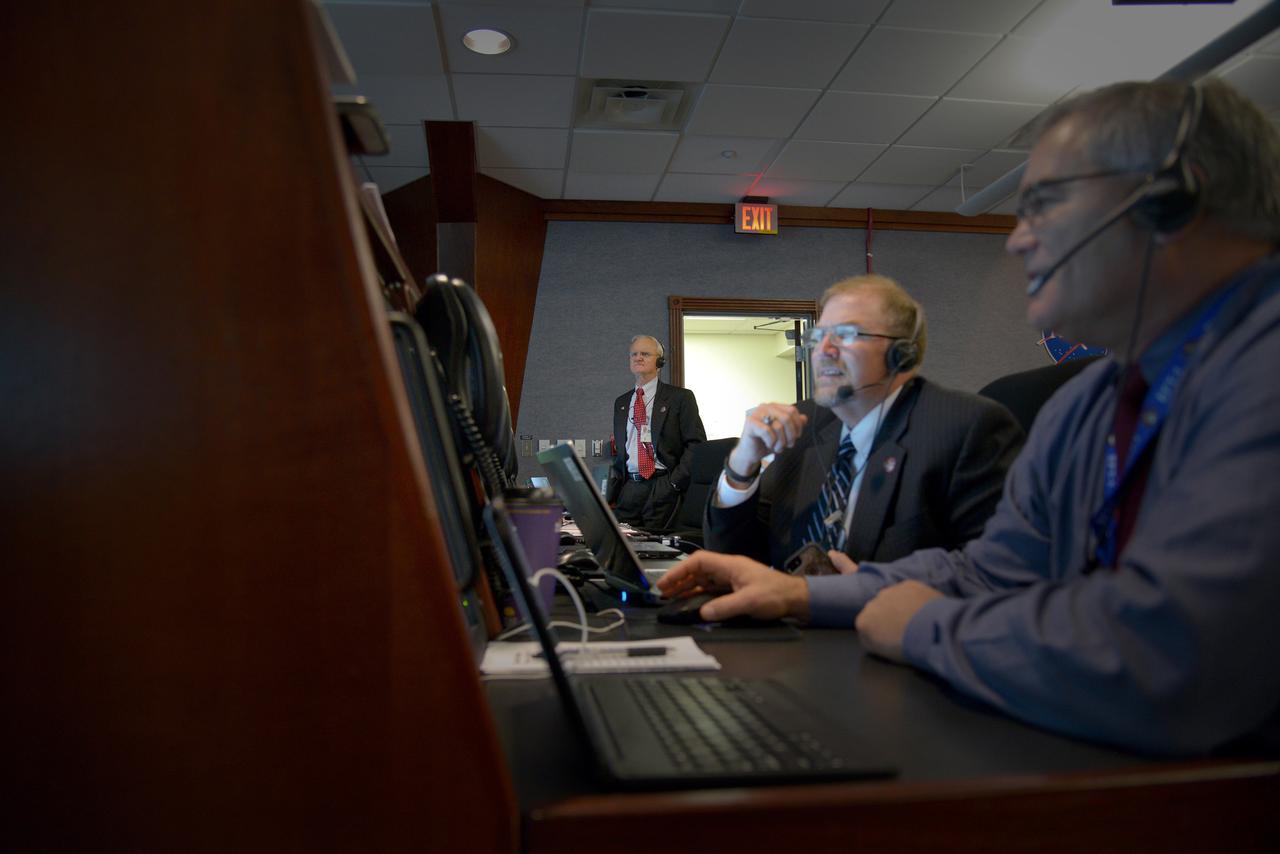
The Orion team reviews the launch procedure in Building AE at Cape Canaveral Air Force Station ahead of the launch of Orion on Exploration Flight Test-1 (EFT-1) on Dec. 4, 2014. Part of Batch image transfer from Flickr.

CAPE CANAVERAL, Fla. – Workers begin de-stacking a mock Orion capsule and service module in the Vehicle Assembly Building at NASA's Kennedy Space Center in Florida. The stack has been used to evaluate potential techniques to be used in assembling the Orion and service module for operational flights in the future. Photo credit: NASA/Jim Grossmann
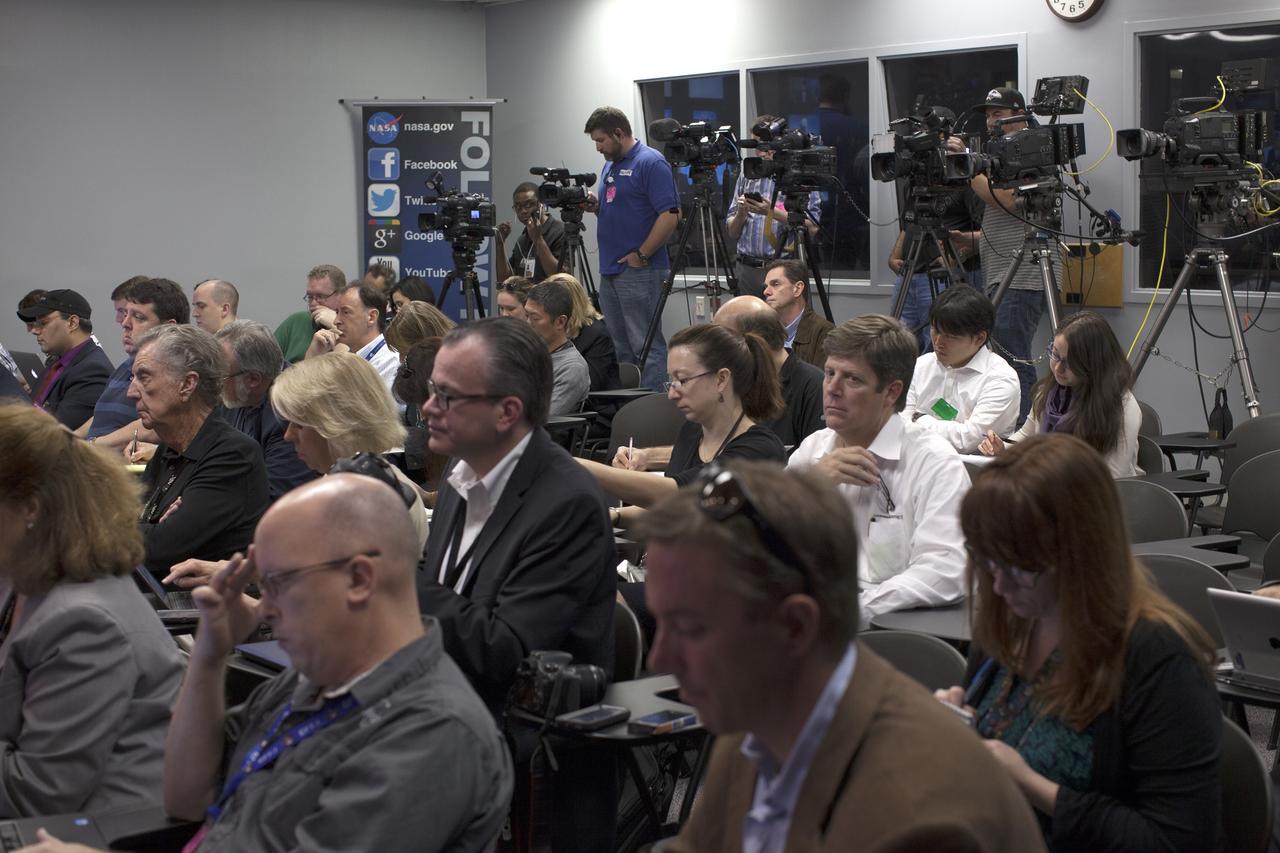
CAPE CANAVERAL, Fla. -- In the Kennedy Space Center’s Press Site auditorium, members of the news media listen as agency and industry leaders updated progress as the Orion spacecraft and its Delta IV Heavy rocket were being prepared for launch. For more information, visit www.nasa.gov/orion. Photo credit: NASA/Frankie Martin

CAPE CANAVERAL, Fla. – Workers begin de-stacking a mock Orion capsule and service module in the Vehicle Assembly Building at NASA's Kennedy Space Center in Florida. The stack has been used to evaluate potential techniques to be used in assembling the Orion and service module for operational flights in the future. Photo credit: NASA/Jim Grossmann
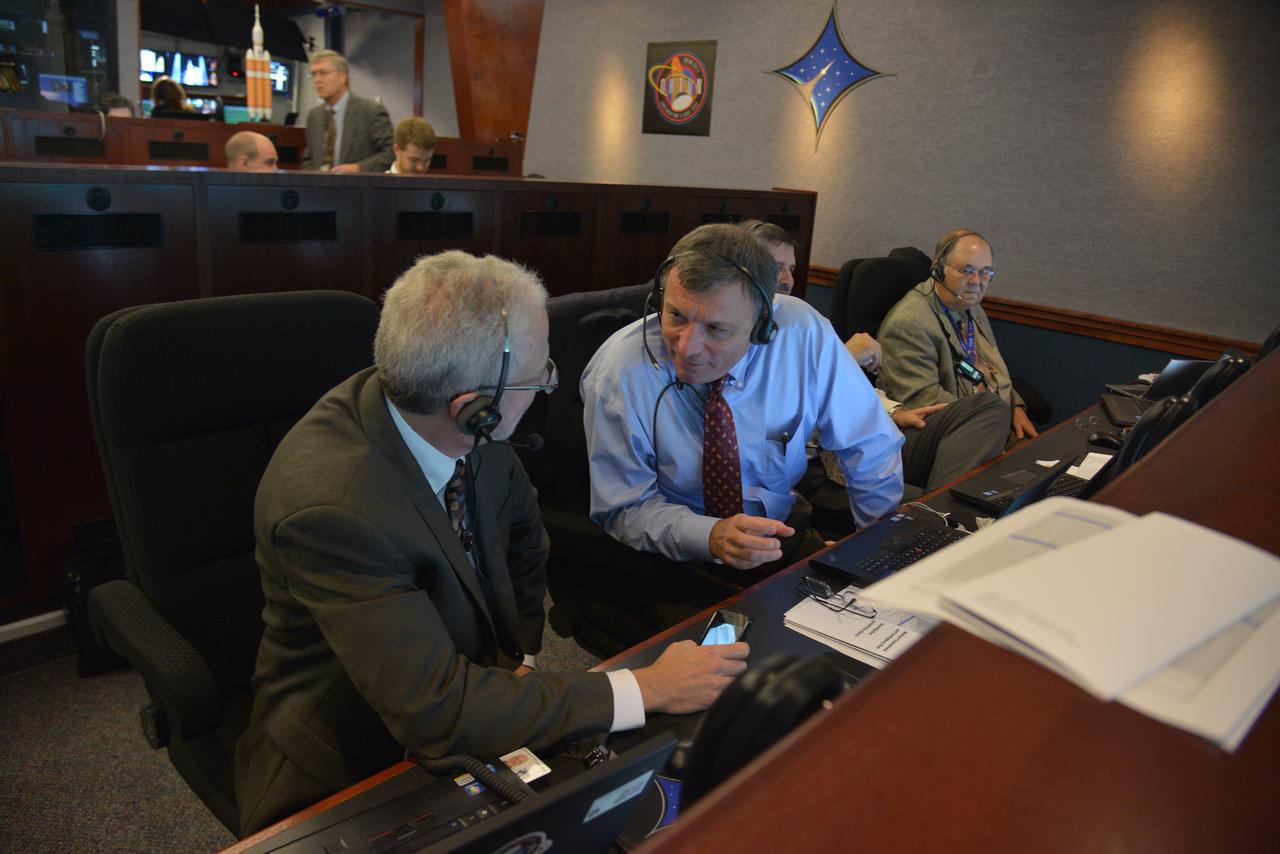
The Orion team reviews the launch procedure in Building AE at Cape Canaveral Air Force Station ahead of the launch of Orion on Exploration Flight Test-1 (EFT-1) on Dec. 4, 2014. Part of Batch image transfer from Flickr.

CAPE CANAVERAL, Fla. – Workers begin de-stacking a mock Orion capsule and service module in the Vehicle Assembly Building at NASA's Kennedy Space Center in Florida. The stack has been used to evaluate potential techniques to be used in assembling the Orion and service module for operational flights in the future. Photo credit: NASA/Jim Grossmann
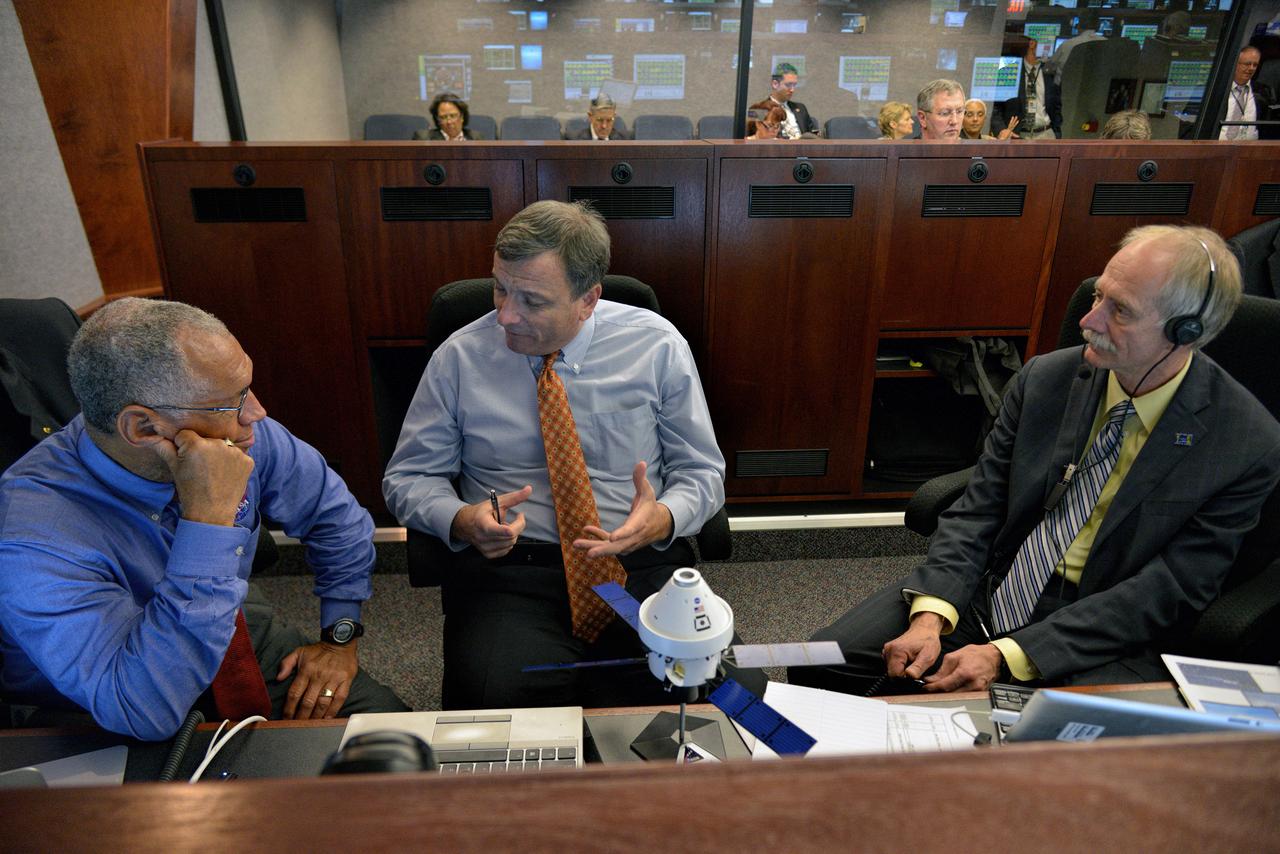
The Orion team (including NASA Administrator Charles Bolden and Operations Directorate William Gerstenmaier) discuss Orion operations in Building AE at Cape Canaveral Air Force Station during Exploration Flight Test-1 (EFT-1) on Dec. 5, 2014. Part of Batch image transfer from Flickr.
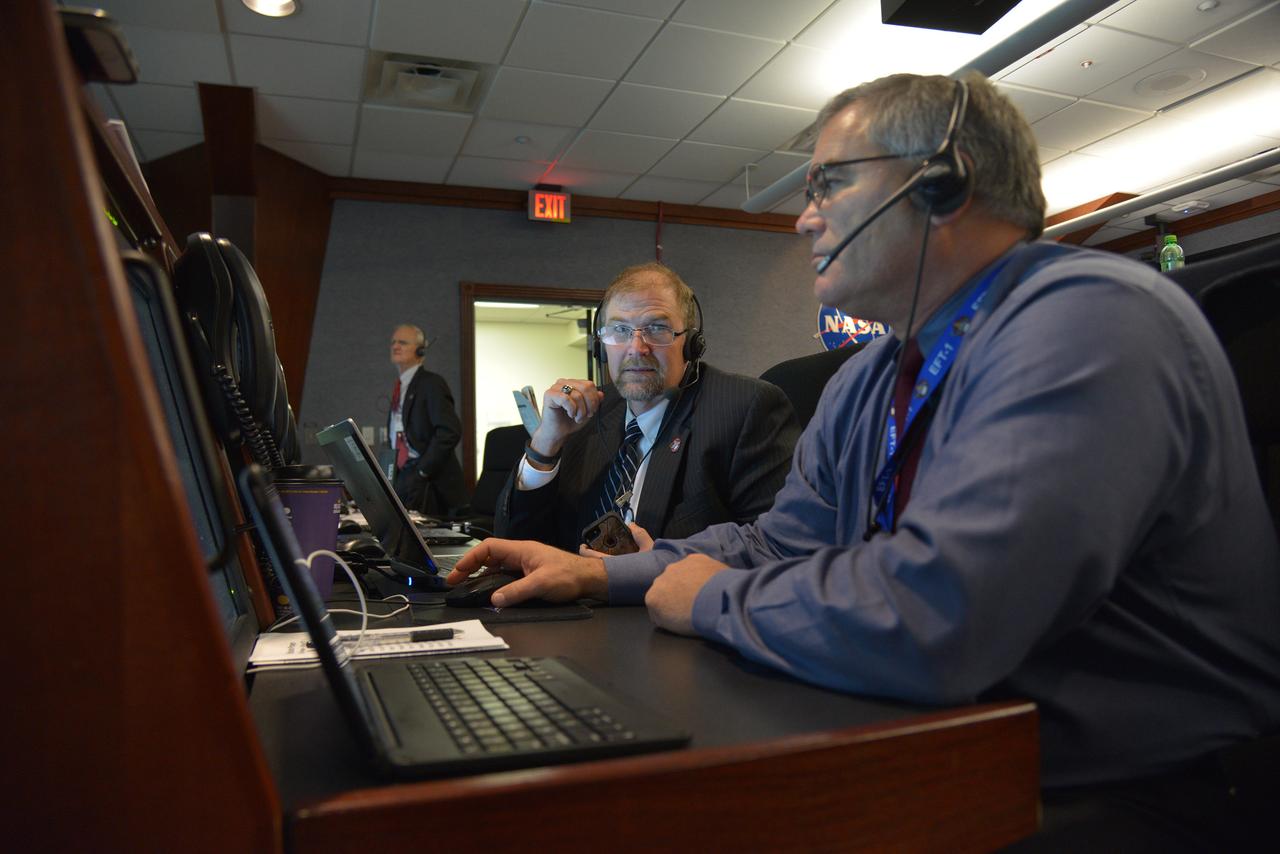
The Orion team reviews the launch procedure in Building AE at Cape Canaveral Air Force Stationahead of the launch of Orion on Exploration Flight Test-1 (EFT-1) on Dec. 4, 2014. Part of Batch image transfer from Flickr.

CAPE CANAVERAL, Fla. – Workers begin de-stacking a mock Orion capsule and service module in the Vehicle Assembly Building at NASA's Kennedy Space Center in Florida. The stack has been used to evaluate potential techniques to be used in assembling the Orion and service module for operational flights in the future. Photo credit: NASA/Jim Grossmann
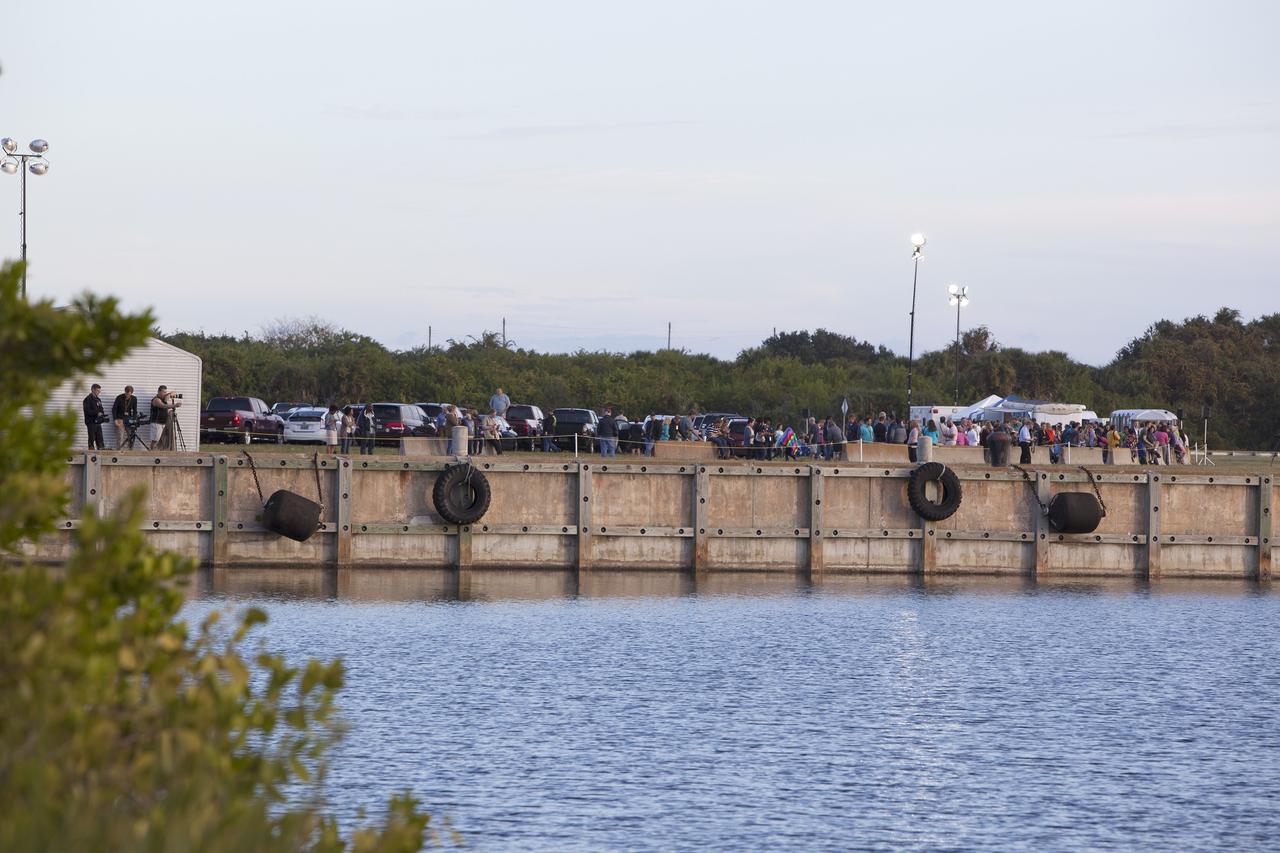
CAPE CANAVERAL, Fla. – At NASA's Kennedy Space Center in Florida, news media and other guests gather in anticipation of the launch of NASA's Orion spacecraft atop a United Launch Alliance Delta IV Heavy rocket. For more information, visit www.nasa.gov/orion Photo credit: NASA/Frankie Martin
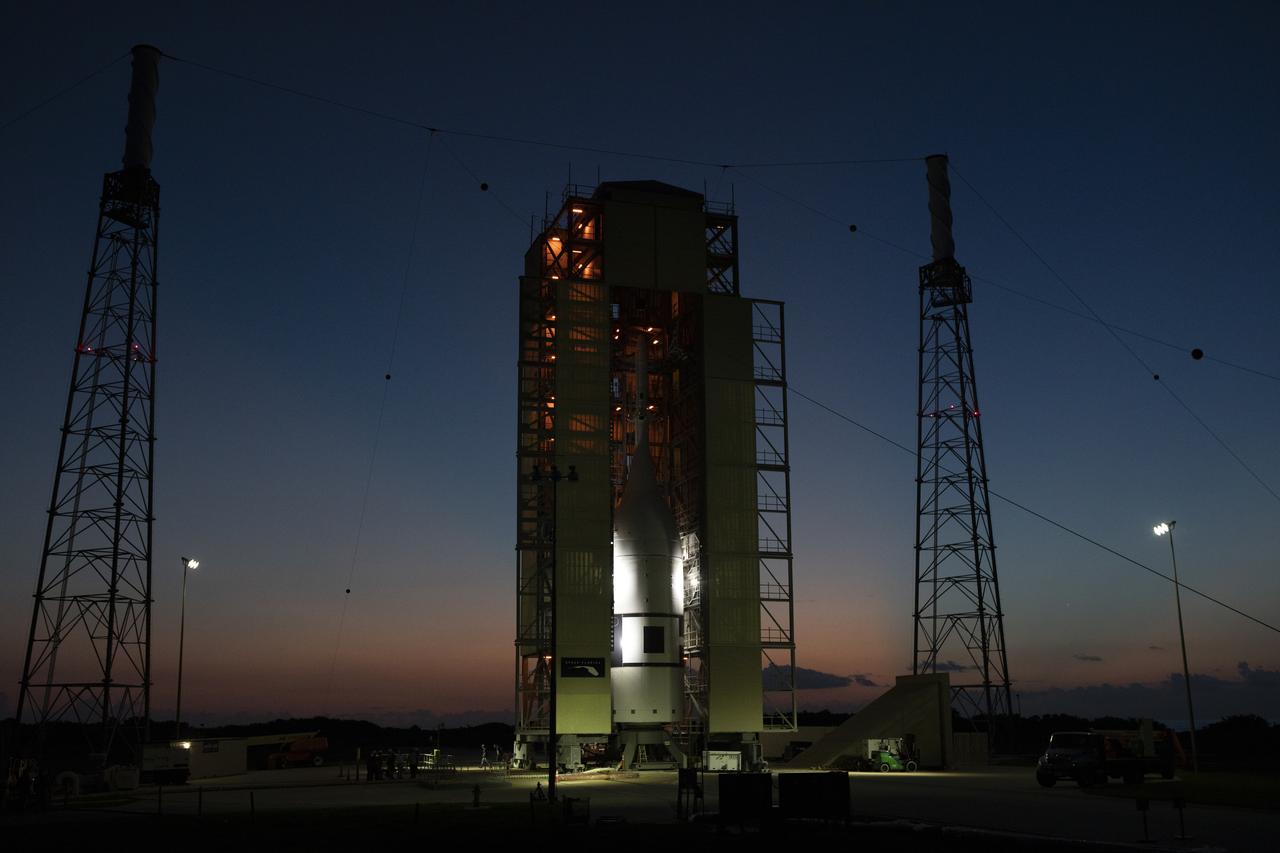
A test version of NASA’s Orion crew module is ready for rollback at Space Launch Complex 46 at Cape Canaveral Air Force Station in Florida. During a Launch Readiness Review on June 28, the team preparing to launch Orion’s Ascent Abort-2 flight test gave a “go” to proceed to launch on Tuesday, July 2.
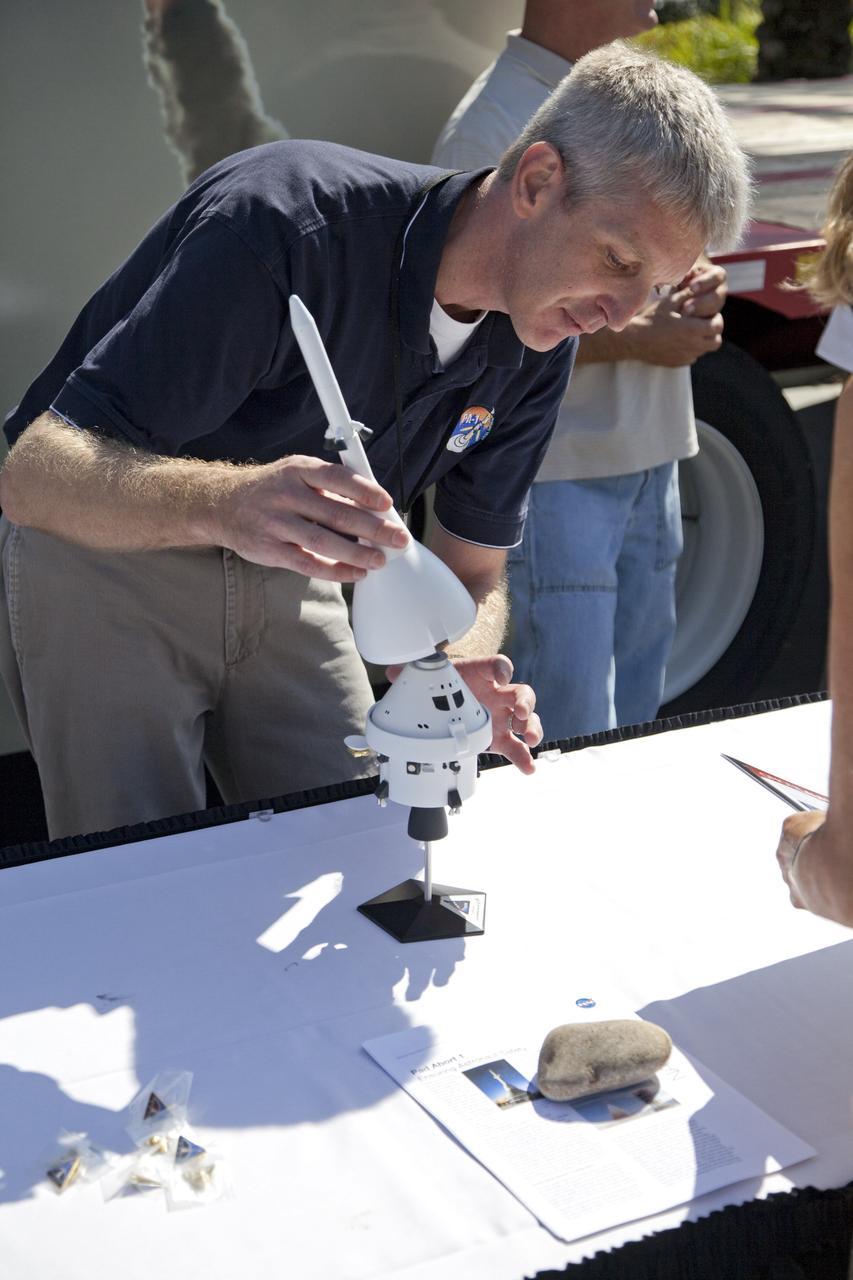
CAPE CANAVERAL, Fla. -- At the Kennedy Space Center Visitor Complex in Florida, NASA Orion Production Manager Scott Wilson shows tourists how an Orion crew exploration vehicle and its launch abort system would be stacked for launch. For information on NASA's future plans, visit www.nasa.gov. Photo credit: NASA/Frankie Martin

CAPE CANAVERAL, Fla. – Workers begin de-stacking a mock Orion capsule and service module in the Vehicle Assembly Building at NASA's Kennedy Space Center in Florida. The stack has been used to evaluate potential techniques to be used in assembling the Orion and service module for operational flights in the future. Photo credit: NASA/Jim Grossmann
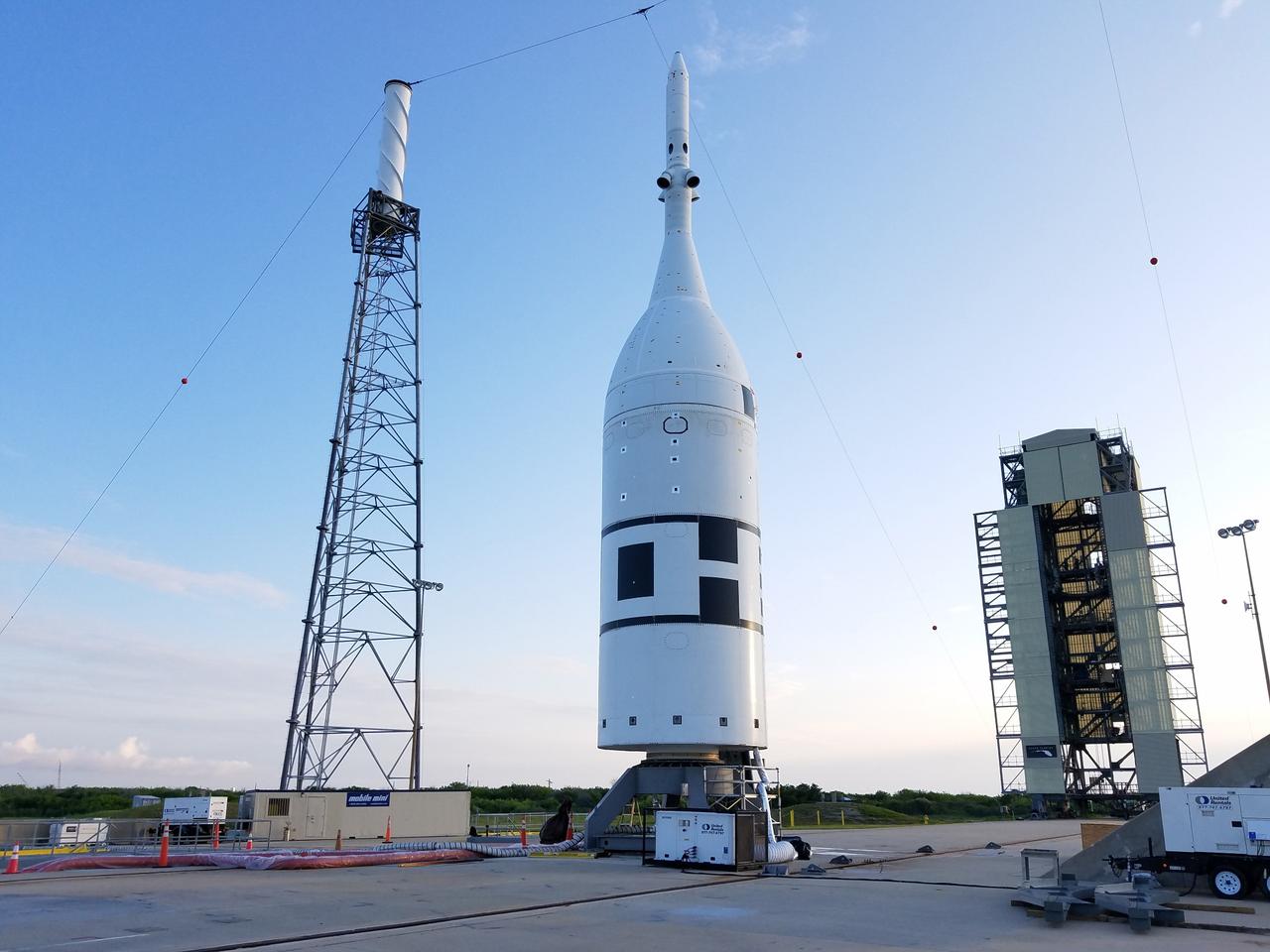
The Orion Ascent Abort-2 test booster and launch abort system on the launch pad at Cape Canaveral Air Force Station in Florida on June 27, 2019.
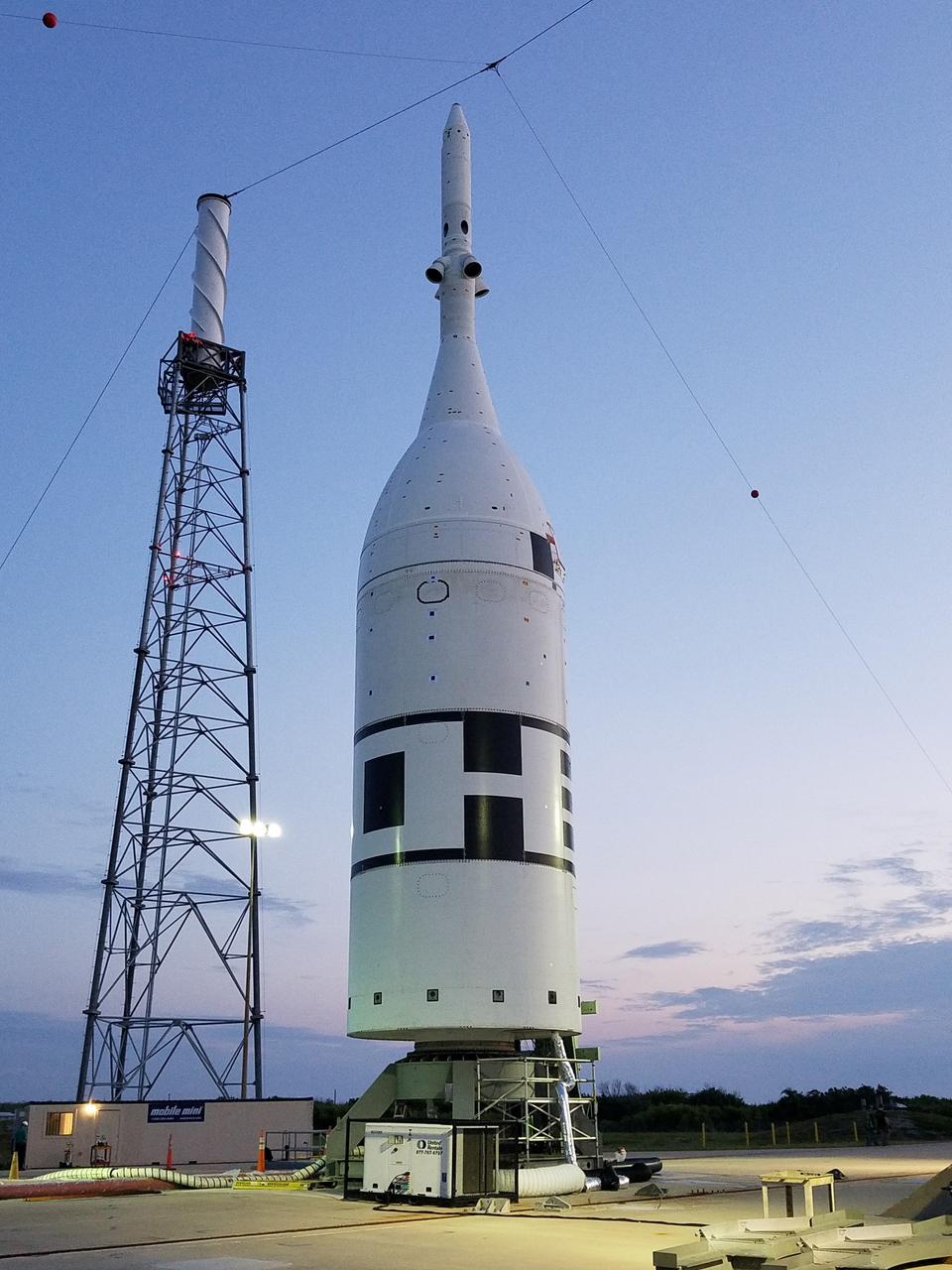
The Orion Ascent Abort-2 test booster and launch abort system on the launch pad at Cape Canaveral Air Force Station in Florida on June 27, 2019.

The Orion Ascent Abort-2 test booster and launch abort system on the launch pad at Cape Canaveral Air Force Station in Florida on June 27, 2019.
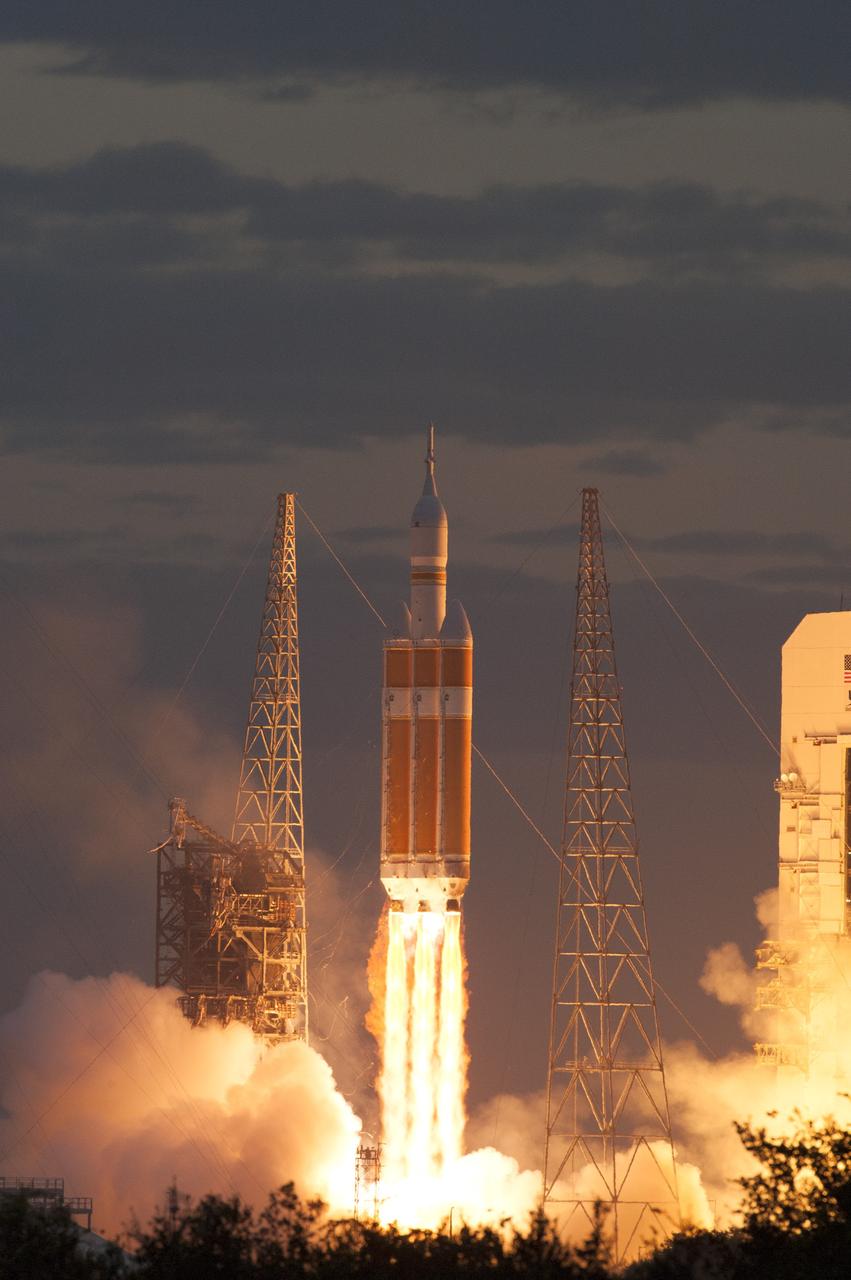
CAPE CANAVERAL, Fla. -- A Delta IV Heavy rocket lifts off from Space Launch Complex 37 at Cape Canaveral Air Force Station in Florida carrying NASA's Orion spacecraft on an unpiloted flight test to Earth orbit. Liftoff was at 7:05 a.m. EST. During the two-orbit, four-and-a-half hour mission, engineers will evaluate the systems critical to crew safety, the launch abort system, the heat shield and the parachute system. For more information, visit www.nasa.gov/orion Photo credit: NASA/Tim Terry
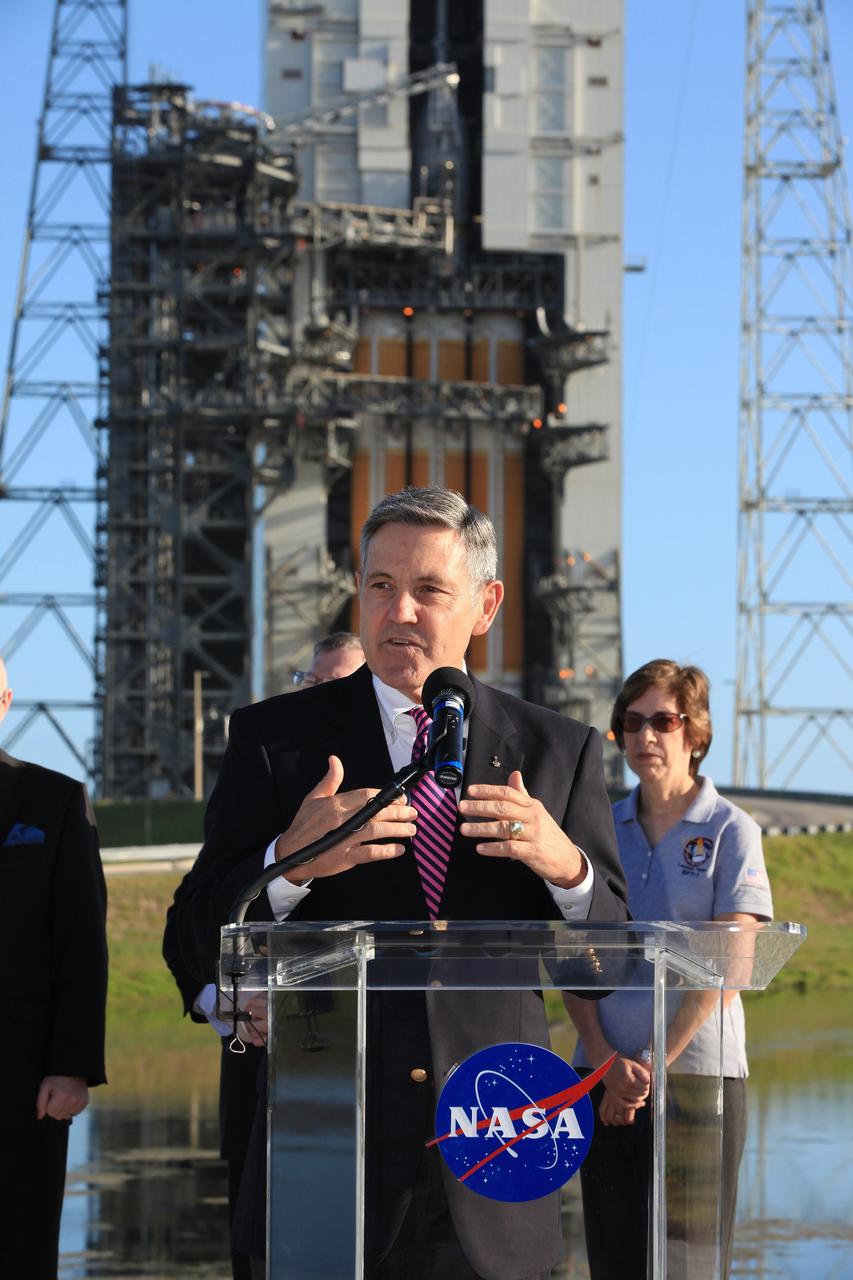
CAPE CANAVERAL, Fla. – At Cape Canaveral Air Force Station's Launch Complex 37, Kennedy Space Center Director Bob Cabana speaks to members of the news media as the Orion spacecraft and its United Launch Alliance Delta IV Heavy rocket were being prepared for launch. On the right, behind Cabana is Johnson Space Center Director Ellen Ochoa. For more information, visit www.nasa.gov/orion. Photo credit: NASA/Kim Shiflett
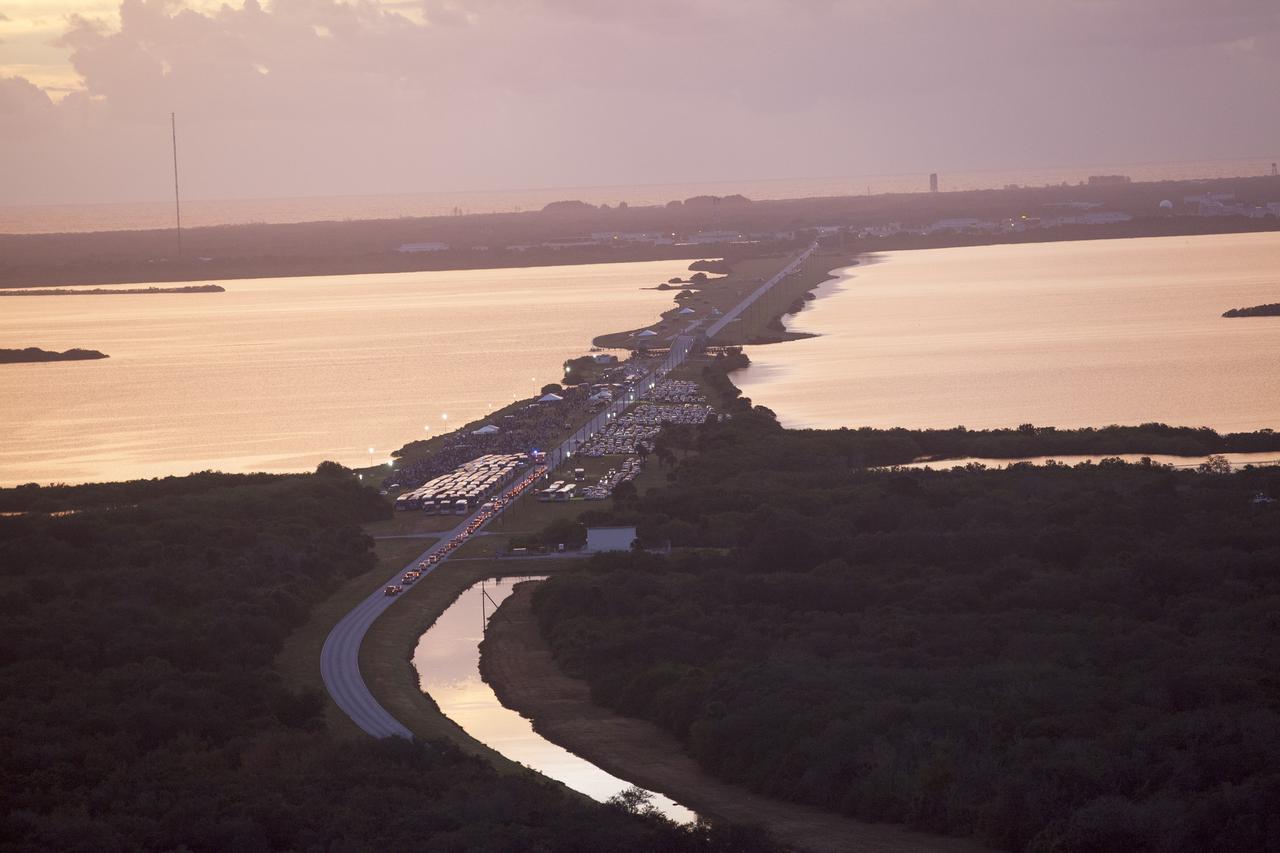
CAPE CANAVERAL, Fla. – This helicopter view of the NASA Causeway connecting NASA's Kennedy Space Center with Cape Canaveral Air Force Staton shows the thousands of vehicles parked where guests gather to see the launch of the Orion Flight Test. The liftoff was postponed because of an issue related to fill and drain valves on the Delta IV Heavy rocket that teams could not troubleshoot by the time the launch window expired. For more information, visit www.nasa.gov/orion Photo credit: NASA/Kim Shiflett
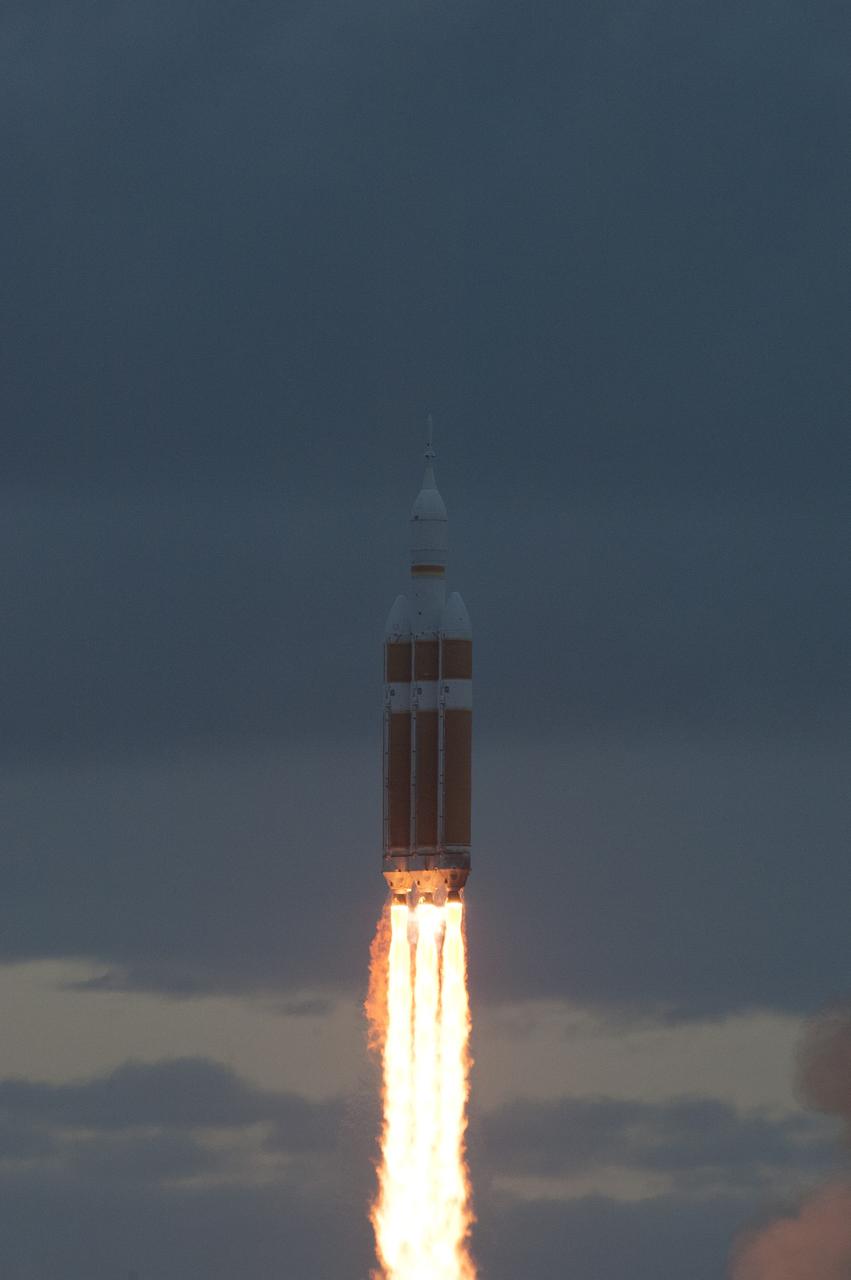
CAPE CANAVERAL, Fla. -- A Delta IV Heavy rocket lifts off from Space Launch Complex 37 at Cape Canaveral Air Force Station in Florida carrying NASA's Orion spacecraft on an unpiloted flight test to Earth orbit. Liftoff was at 7:05 a.m. EST. During the two-orbit, four-and-a-half hour mission, engineers will evaluate the systems critical to crew safety, the launch abort system, the heat shield and the parachute system. For more information, visit www.nasa.gov/orion Photo credit: NASA/Tim Terry

CAPE CANAVERAL, Fla. -- This helicopter view of Space Launch Complex 37 at Cape Canaveral Air Force Station in Florida shows the United Launch Alliance Delta IV Heavy rocket as it stands ready to boost NASA's Orion spacecraft on a 4.5-hour mission. For more information, visit www.nasa.gov/orion Photo credit: NASA/Kim Shiflett
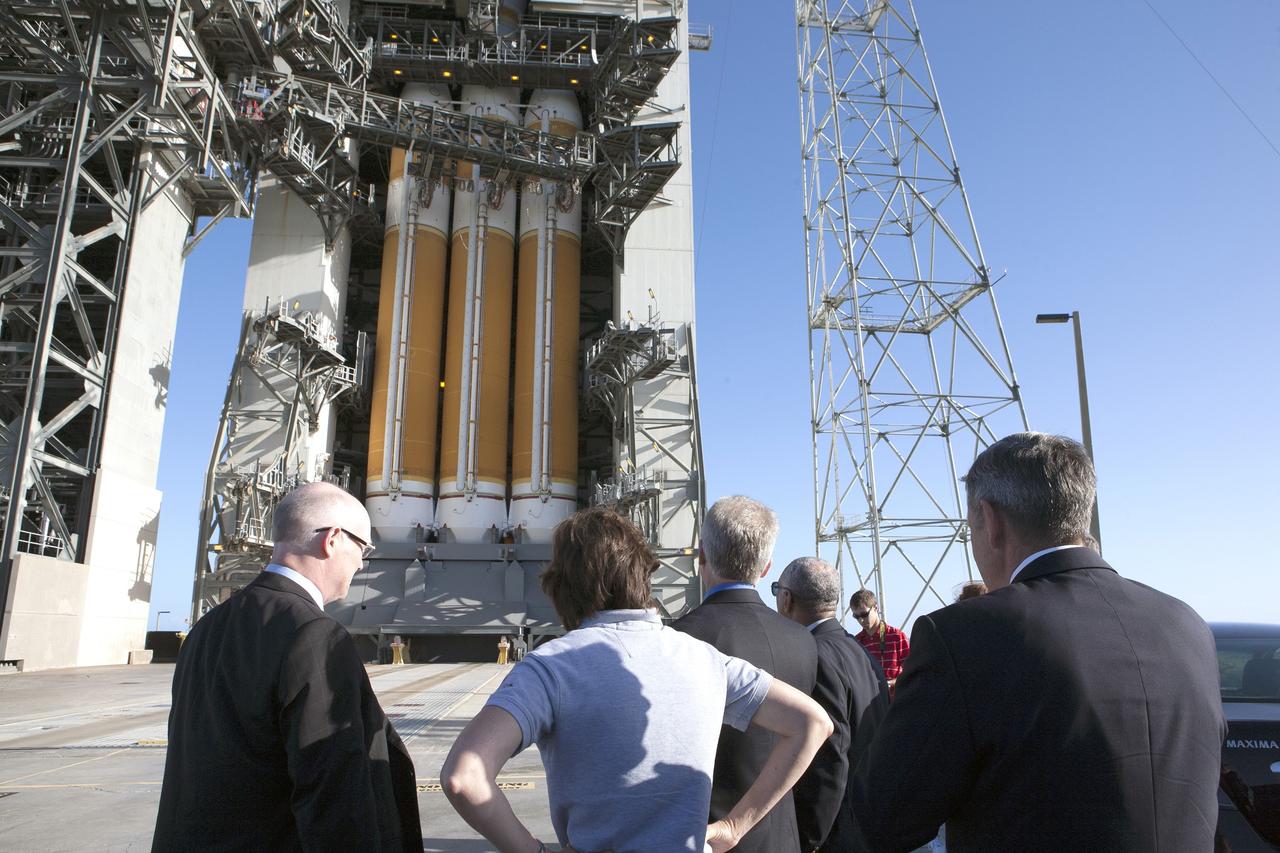
CAPE CANAVERAL, Fla. – At Cape Canaveral Air Force Station's Launch Complex 37, United Launch Alliance CEO Tory Bruno, Johnson Space Center Director Ellen Ochoa and Kennedy Space Center Director Bob Cabana, foreground with backs to the camera, get a close-up view of the United Launch Alliance Delta IV Heavy rocket being prepared to launch NASA's Orion spacecraft on its first flight test. For more information, visit www.nasa.gov/orion. Photo credit: NASA/Kim Shiflett
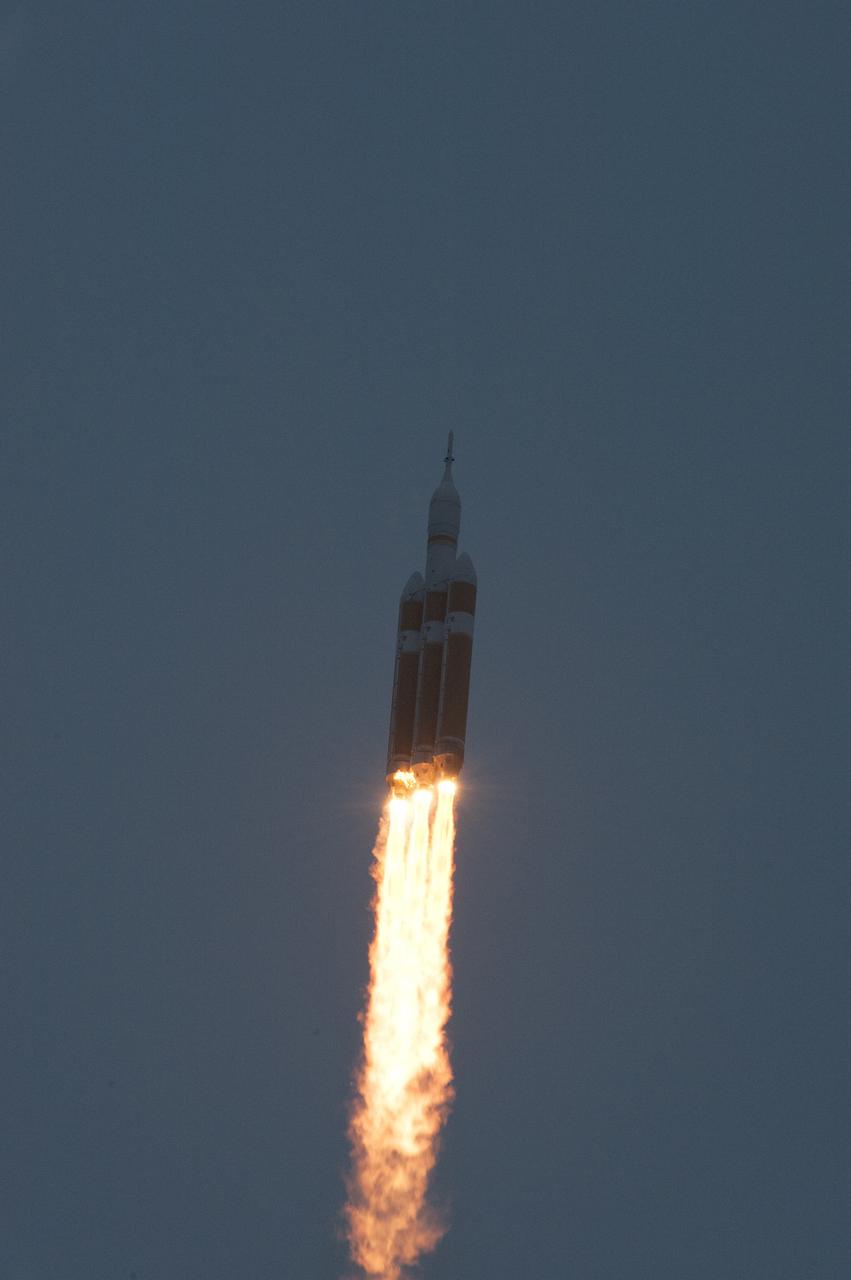
CAPE CANAVERAL, Fla. -- A Delta IV Heavy rocket lifts off from Space Launch Complex 37 at Cape Canaveral Air Force Station in Florida carrying NASA's Orion spacecraft on an unpiloted flight test to Earth orbit. Liftoff was at 7:05 a.m. EST. During the two-orbit, four-and-a-half hour mission, engineers will evaluate the systems critical to crew safety, the launch abort system, the heat shield and the parachute system. For more information, visit www.nasa.gov/orion Photo credit: NASA/Tim Terry

CAPE CANAVERAL, Fla. – This helicopter view of Space Launch Complex 37 at Cape Canaveral Air Force Station in Florida shows the United Launch Alliance Delta IV Heavy rocket as it stands ready to boost NASA's Orion spacecraft on a 4.5-hour mission. The liftoff was postponed because of an issue related to fill and drain valves on the Delta IV Heavy rocket that teams could not troubleshoot by the time the launch window expired. For more information, visit www.nasa.gov/orion Photo credit: NASA/Kim Shiflett
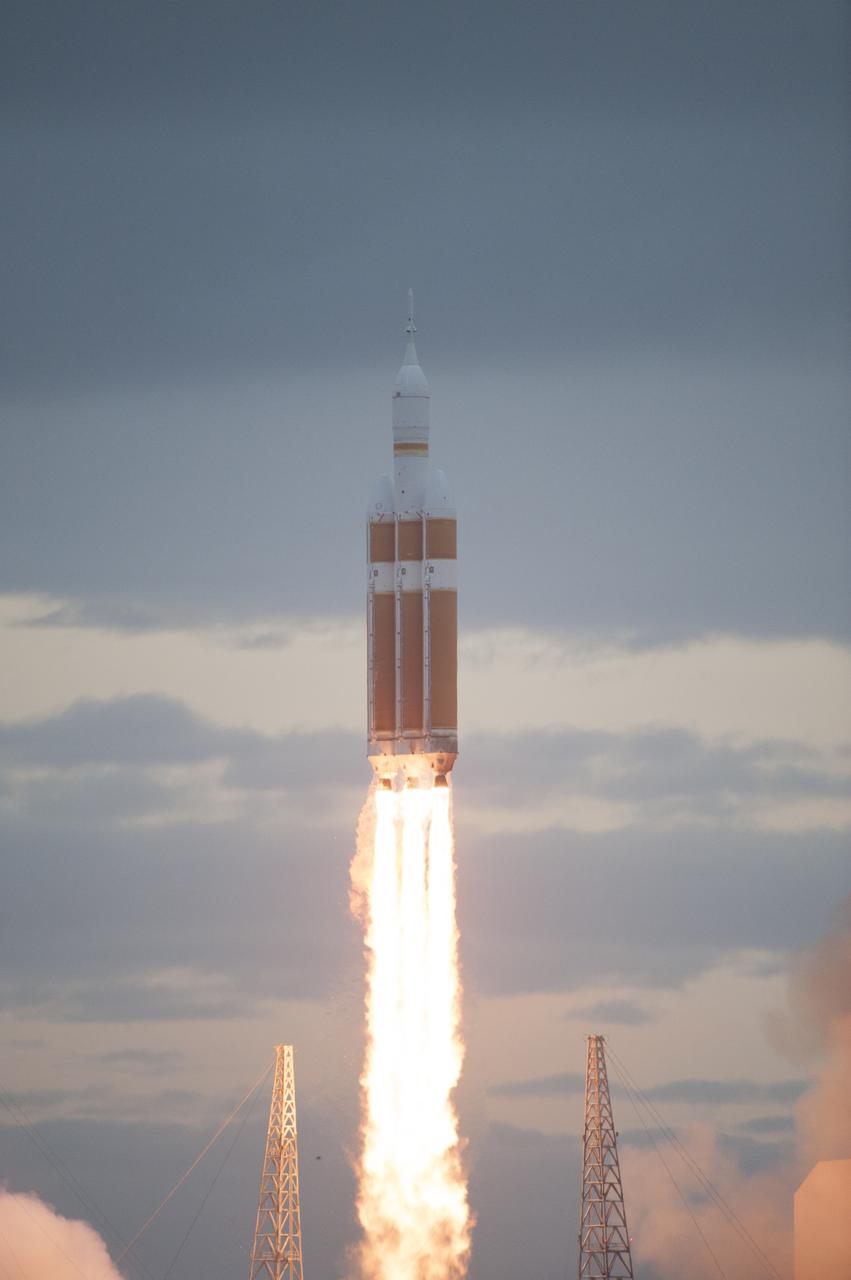
CAPE CANAVERAL, Fla. -- A Delta IV Heavy rocket lifts off from Space Launch Complex 37 at Cape Canaveral Air Force Station in Florida carrying NASA's Orion spacecraft on an unpiloted flight test to Earth orbit. Liftoff was at 7:05 a.m. EST. During the two-orbit, four-and-a-half hour mission, engineers will evaluate the systems critical to crew safety, the launch abort system, the heat shield and the parachute system. For more information, visit www.nasa.gov/orion Photo credit: NASA/Sandra Joseph
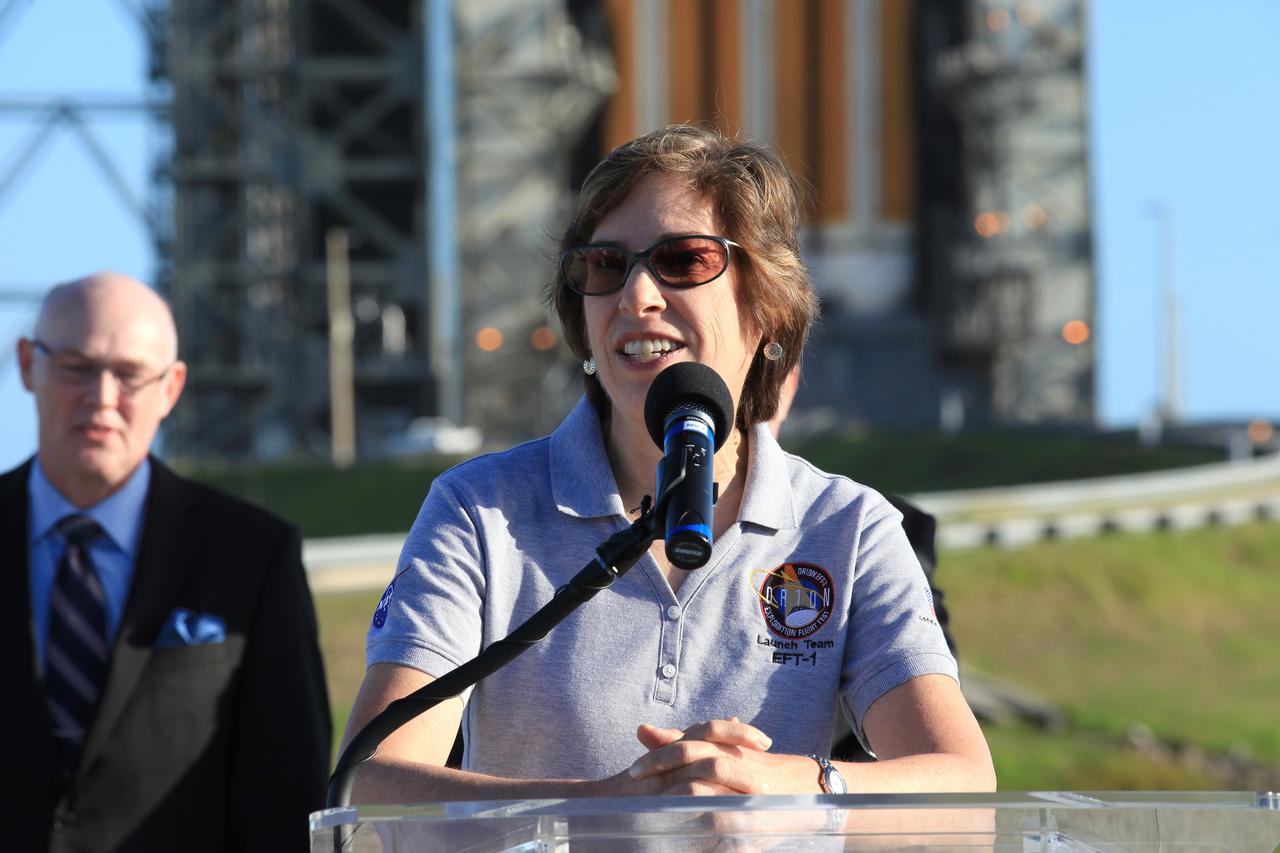
CAPE CANAVERAL, Fla. – At Cape Canaveral Air Force Station's Launch Complex 37, Johnson Space Center Director Ellen Ochoa speaks to members of the news media as the Orion spacecraft and its United Launch Alliance Delta IV Heavy rocket were being prepared for launch. Behind Ochoa is United Launch Alliance CEO Tory Bruno. For more information, visit www.nasa.gov/orion. Photo credit: NASA/Kim Shiflett
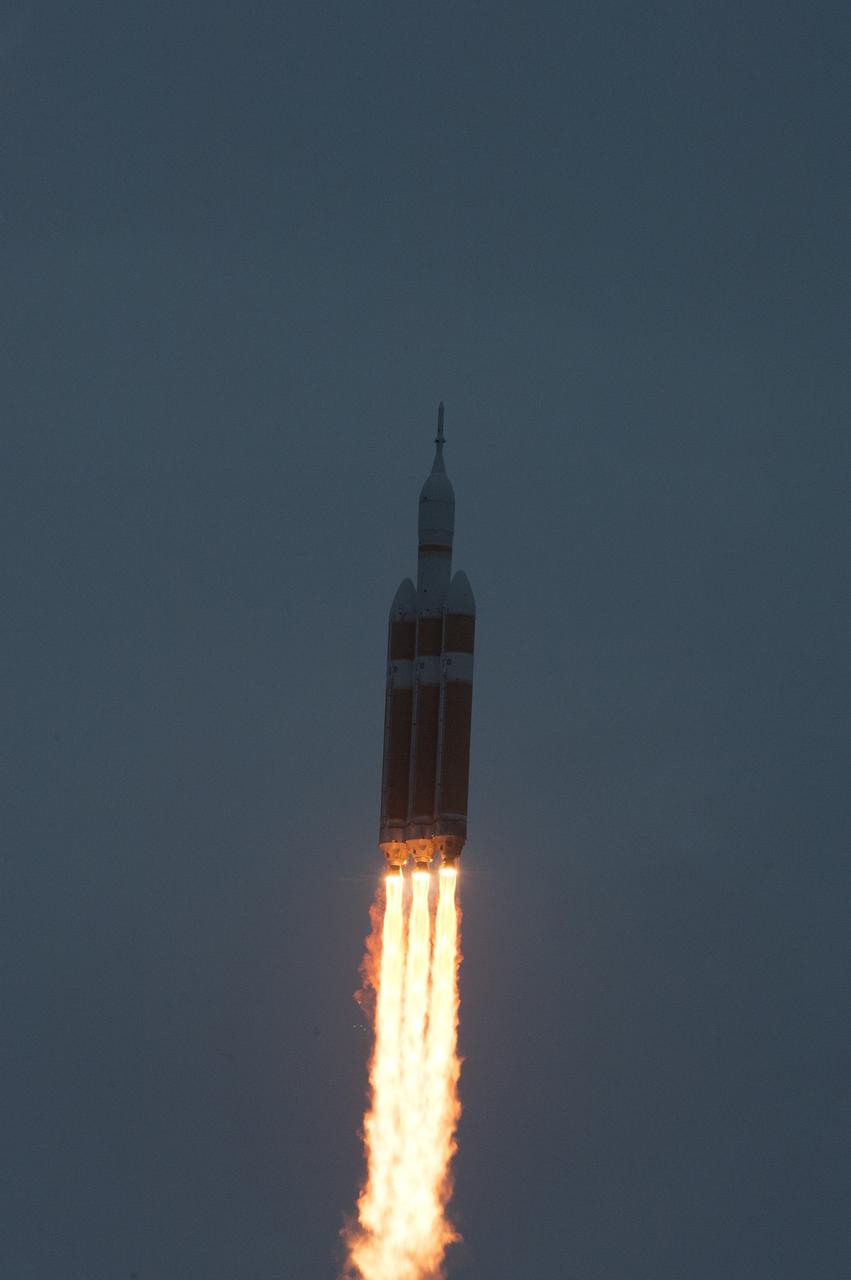
CAPE CANAVERAL, Fla. -- A Delta IV Heavy rocket lifts off from Space Launch Complex 37 at Cape Canaveral Air Force Station in Florida carrying NASA's Orion spacecraft on an unpiloted flight test to Earth orbit. Liftoff was at 7:05 a.m. EST. During the two-orbit, four-and-a-half hour mission, engineers will evaluate the systems critical to crew safety, the launch abort system, the heat shield and the parachute system. For more information, visit www.nasa.gov/orion Photo credit: NASA/Tim Terry
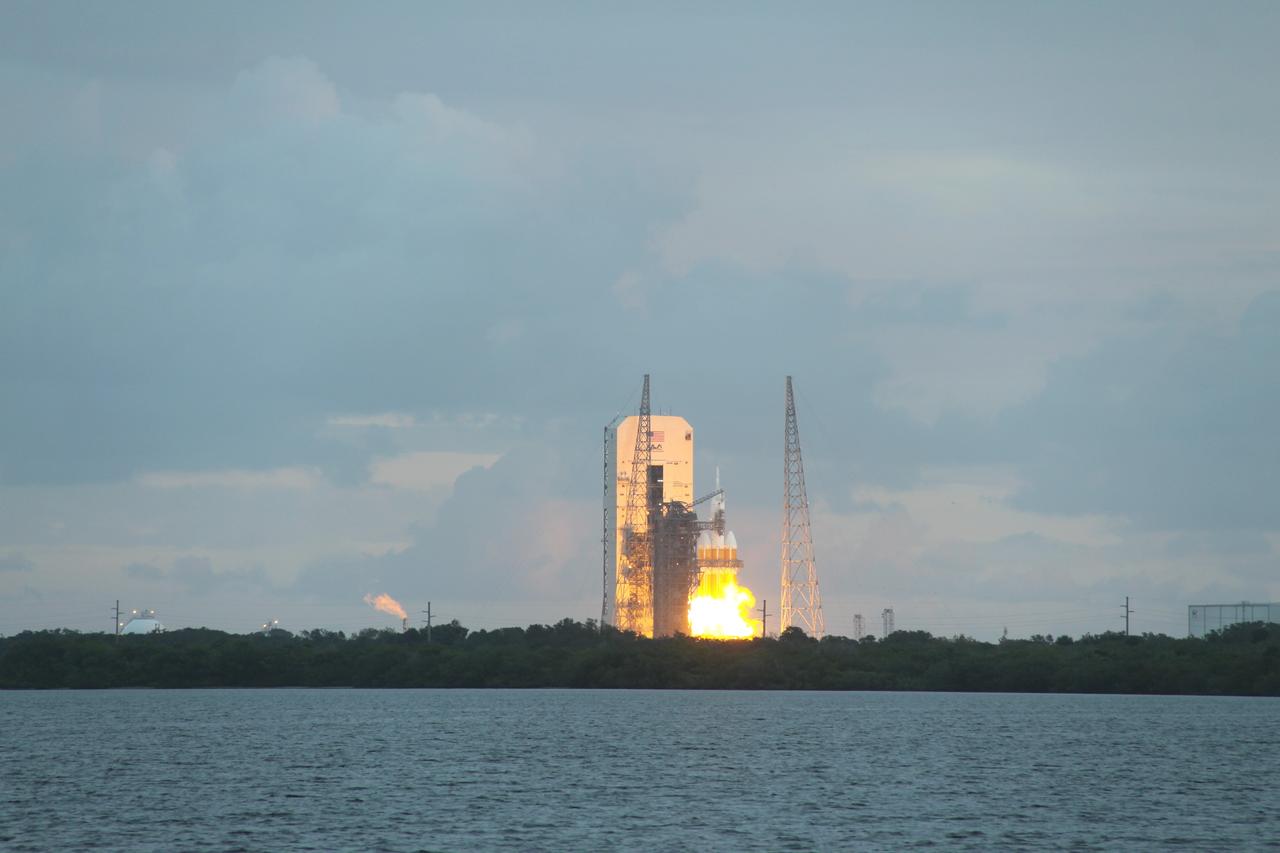
CAPE CANAVERAL, Fla. -- A Delta IV Heavy rocket lifts off from Space Launch Complex 37 at Cape Canaveral Air Force Station in Florida carrying NASA's Orion spacecraft on an unpiloted flight test to Earth orbit. Liftoff was at 7:05 a.m. EST. During the two-orbit, four-and-a-half hour mission, engineers will evaluate the systems critical to crew safety, the launch abort system, the heat shield and the parachute system. For more information, visit www.nasa.gov/orion Photo credit: NASA/Jim Grossman
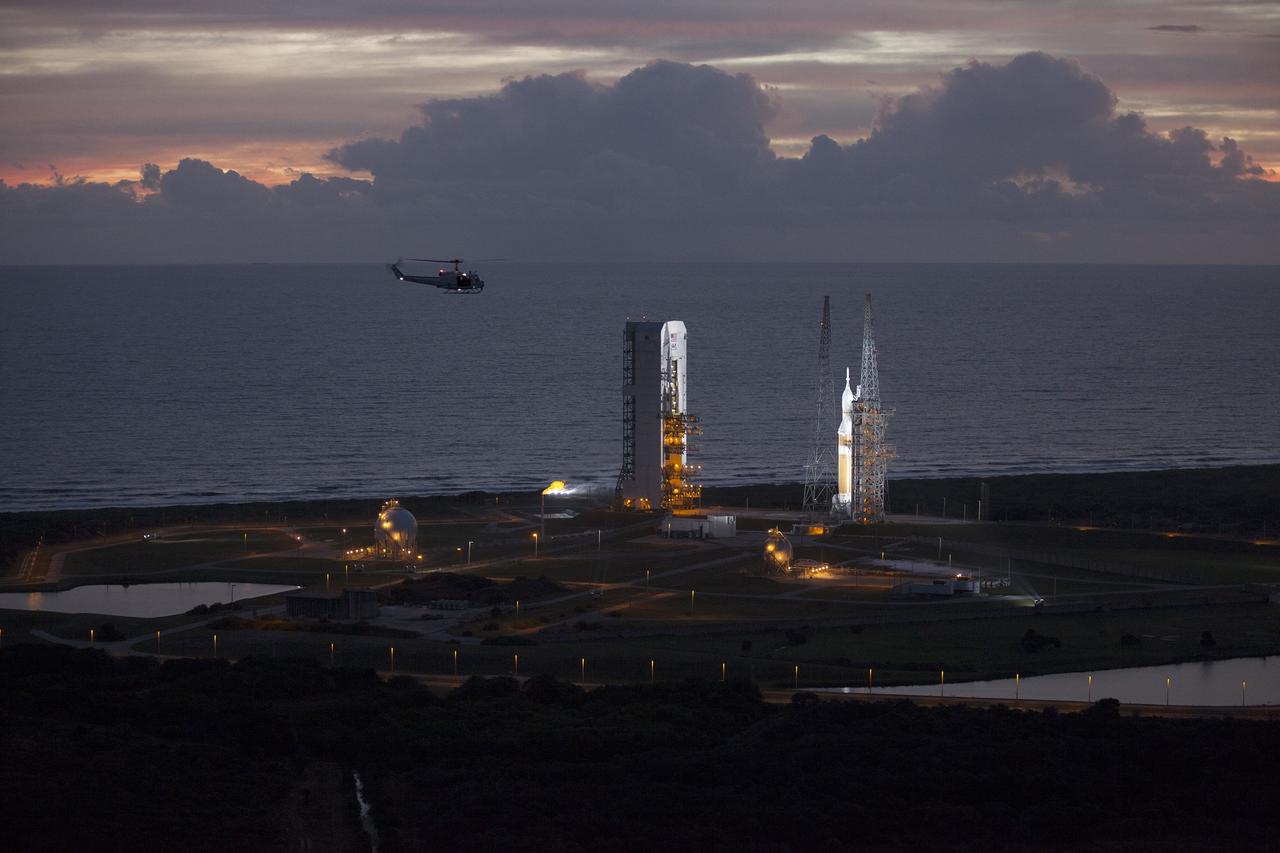
CAPE CANAVERAL, Fla. – This helicopter view of Space Launch Complex 37 at Cape Canaveral Air Force Station in Florida shows the United Launch Alliance Delta IV Heavy rocket as it stands ready to boost NASA's Orion spacecraft on a 4.5-hour mission. The liftoff was postponed because of an issue related to fill and drain valves on the Delta IV Heavy rocket that teams could not troubleshoot by the time the launch window expired. For more information, visit www.nasa.gov/orion Photo credit: NASA/Kim Shiflett

CAPE CANAVERAL, Fla. -- This helicopter view of Space Launch Complex 37 at Cape Canaveral Air Force Station in Florida shows the United Launch Alliance Delta IV Heavy rocket as it stands ready to boost NASA's Orion spacecraft on a 4.5-hour mission. For more information, visit www.nasa.gov/orion Photo credit: NASA/Kim Shiflett
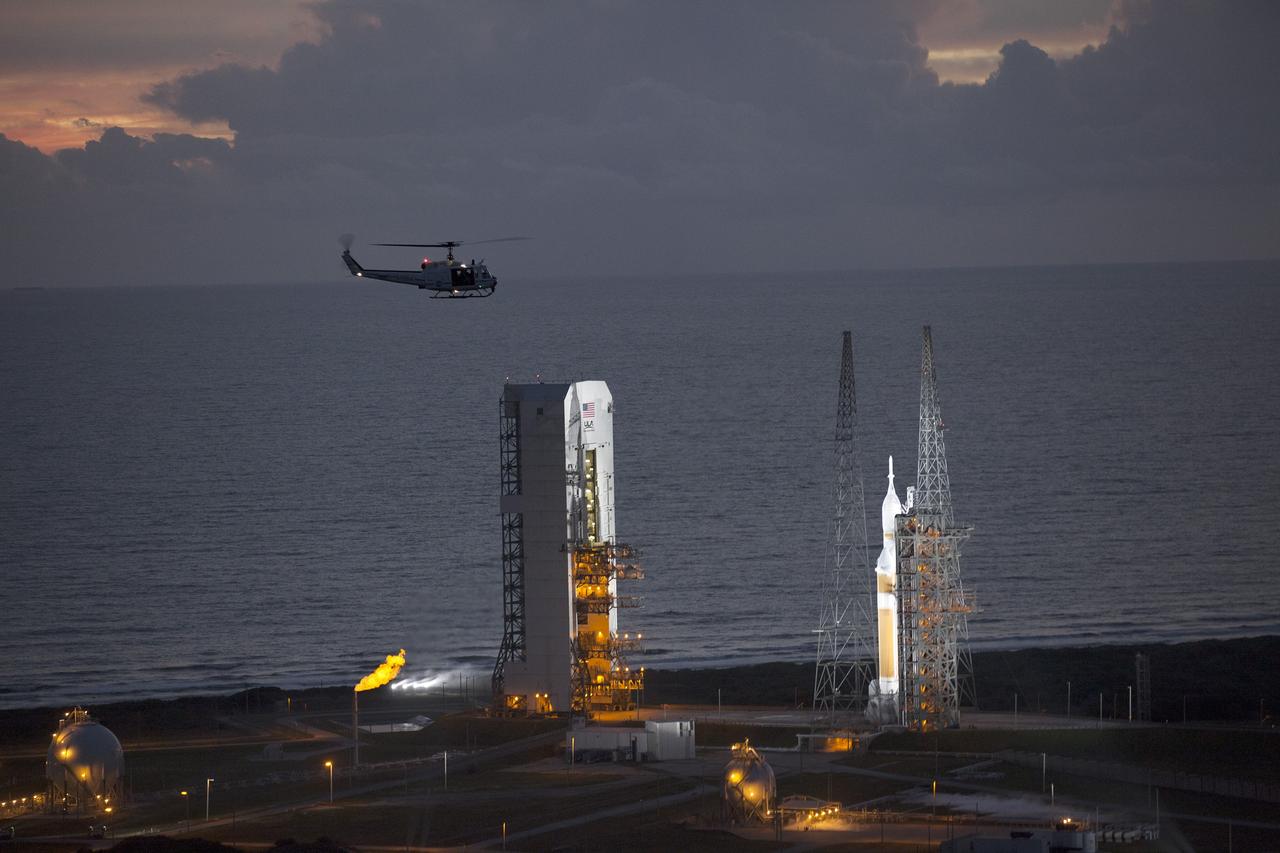
CAPE CANAVERAL, Fla. – This helicopter view of Space Launch Complex 37 at Cape Canaveral Air Force Station in Florida shows the United Launch Alliance Delta IV Heavy rocket as it stands ready to boost NASA's Orion spacecraft on a 4.5-hour mission. The liftoff was postponed because of an issue related to fill and drain valves on the Delta IV Heavy rocket that teams could not troubleshoot by the time the launch window expired. For more information, visit www.nasa.gov/orion Photo credit: NASA/Kim Shiflett
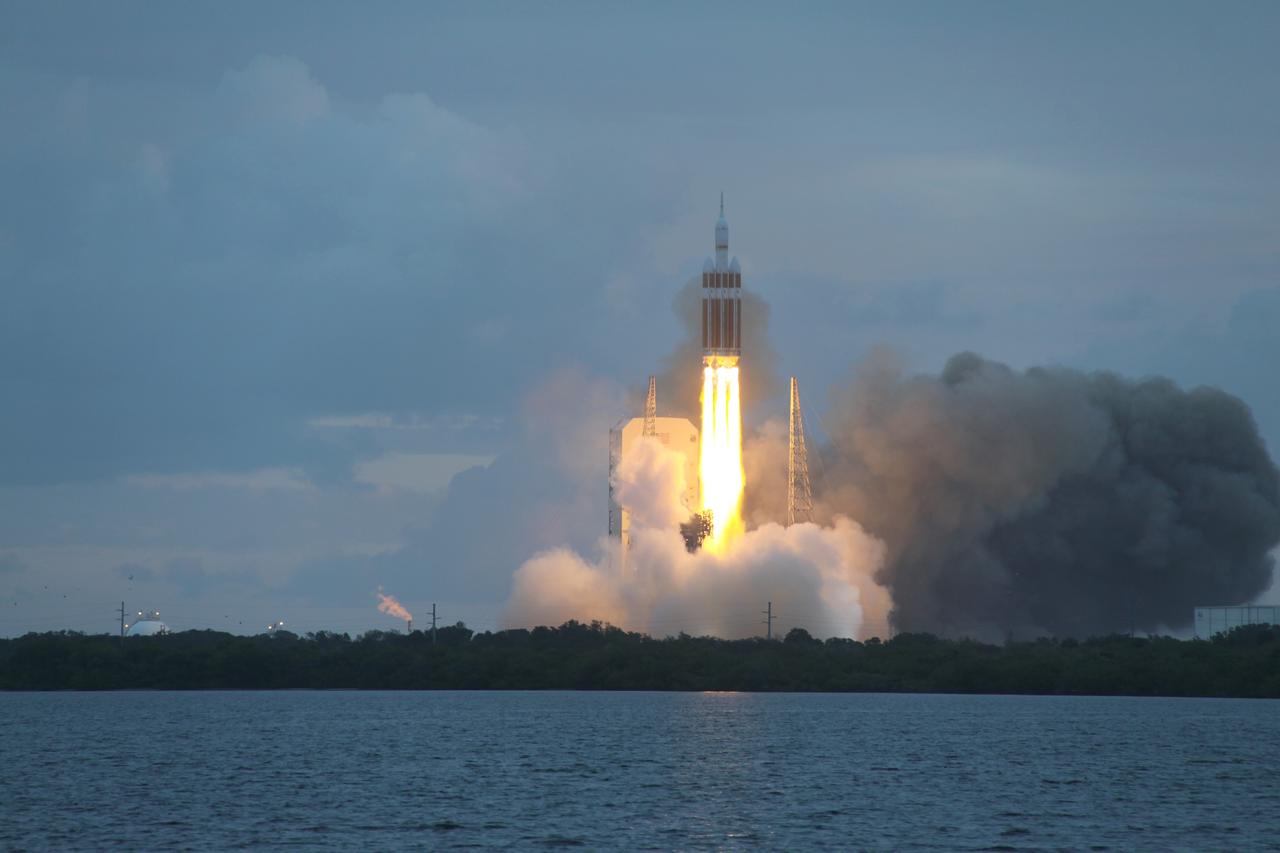
CAPE CANAVERAL, Fla. -- A Delta IV Heavy rocket lifts off from Space Launch Complex 37 at Cape Canaveral Air Force Station in Florida carrying NASA's Orion spacecraft on an unpiloted flight test to Earth orbit. Liftoff was at 7:05 a.m. EST. During the two-orbit, four-and-a-half hour mission, engineers will evaluate the systems critical to crew safety, the launch abort system, the heat shield and the parachute system. For more information, visit www.nasa.gov/orion Photo credit: NASA/Jim Grossman
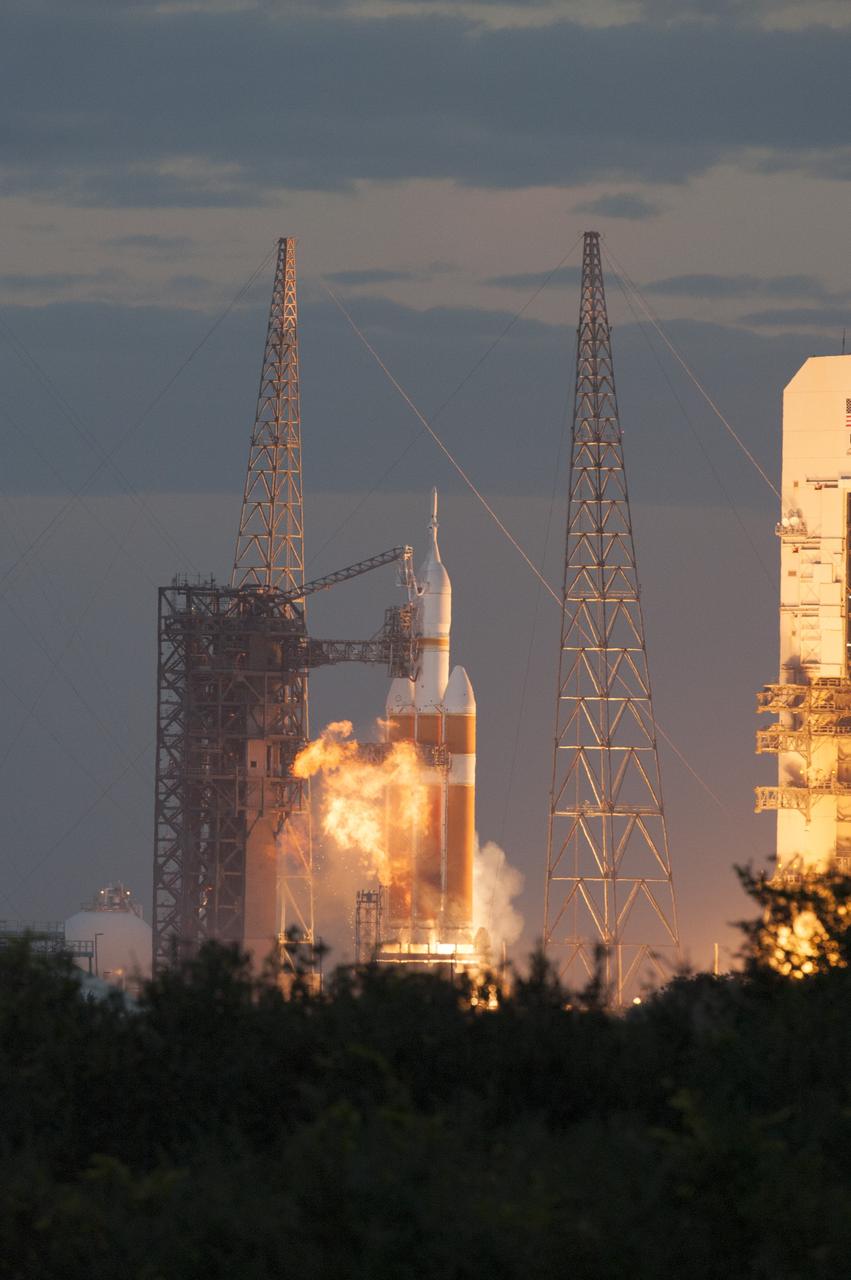
CAPE CANAVERAL, Fla. -- A Delta IV Heavy rocket lifts off from Space Launch Complex 37 at Cape Canaveral Air Force Station in Florida carrying NASA's Orion spacecraft on an unpiloted flight test to Earth orbit. Liftoff was at 7:05 a.m. EST. During the two-orbit, four-and-a-half hour mission, engineers will evaluate the systems critical to crew safety, the launch abort system, the heat shield and the parachute system. For more information, visit www.nasa.gov/orion Photo credit: NASA/Tim Terry
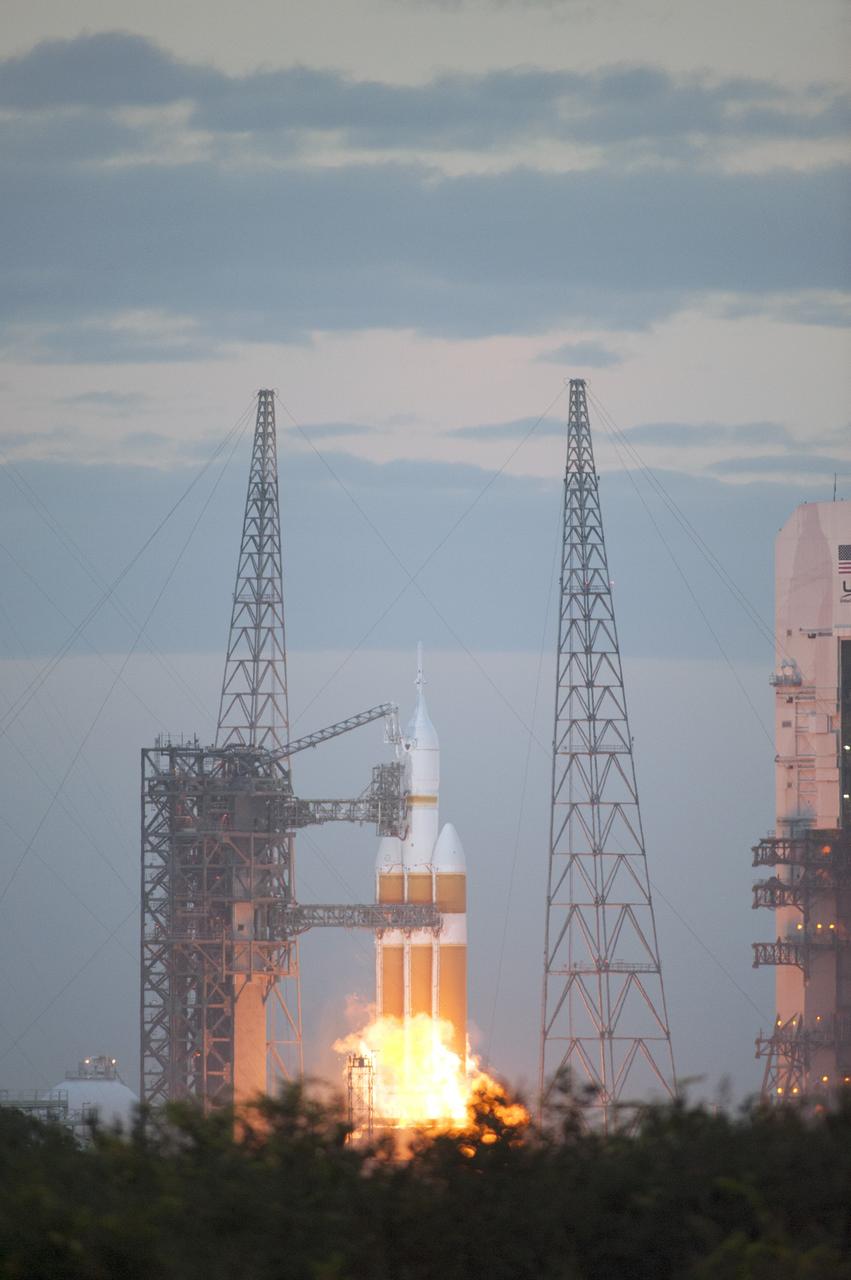
CAPE CANAVERAL, Fla. -- A Delta IV Heavy rocket lifts off from Space Launch Complex 37 at Cape Canaveral Air Force Station in Florida carrying NASA's Orion spacecraft on an unpiloted flight test to Earth orbit. Liftoff was at 7:05 a.m. EST. During the two-orbit, four-and-a-half hour mission, engineers will evaluate the systems critical to crew safety, the launch abort system, the heat shield and the parachute system. For more information, visit www.nasa.gov/orion Photo credit: NASA/Sandra Joseph
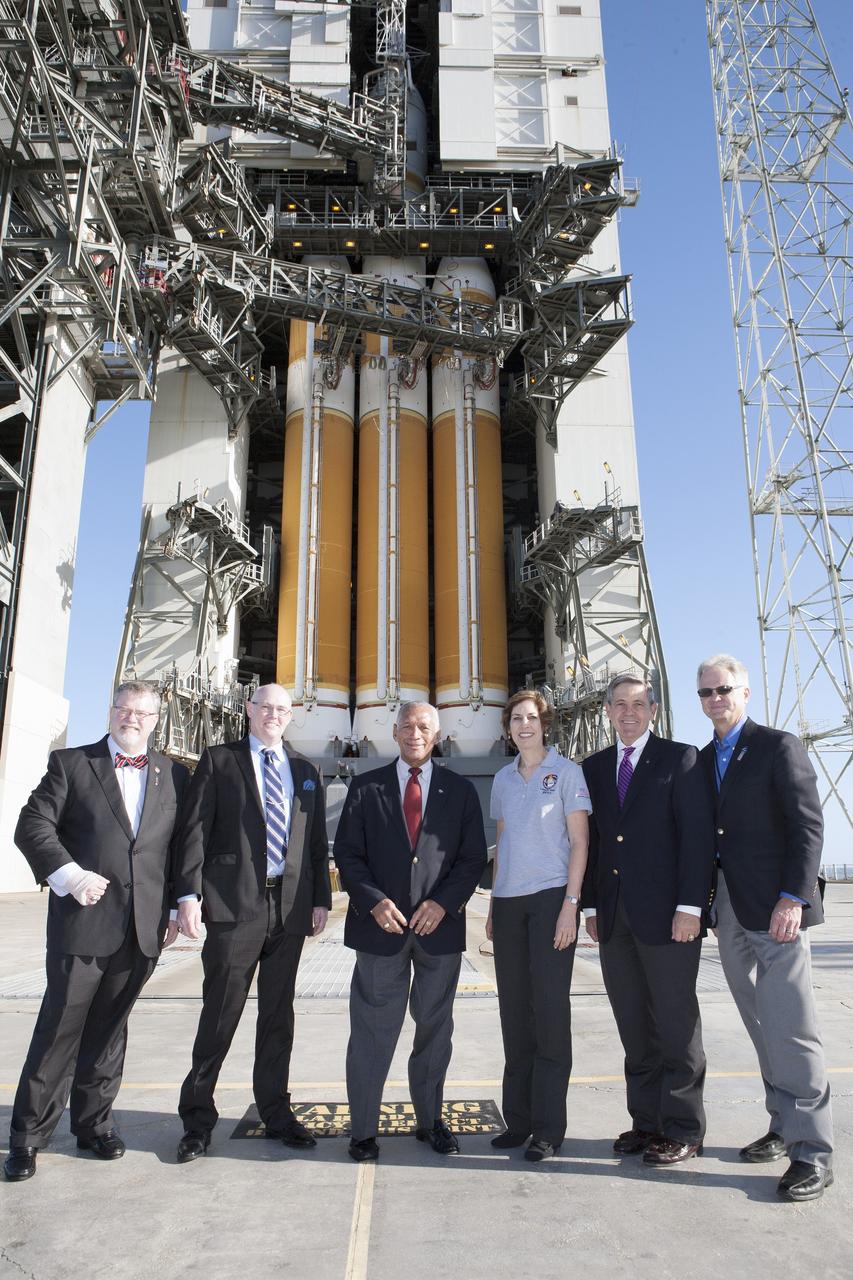
CAPE CANAVERAL, Fla. – At Cape Canaveral Air Force Station's Launch Complex 37, NASA and industry leaders pose in front of the United Launch Alliance Delta IV heavy rocket poised to launch the Orion spacecraft on its first flight test. For more information, visit www.nasa.gov/orion. Photo credit: NASA/Kim Shiflett
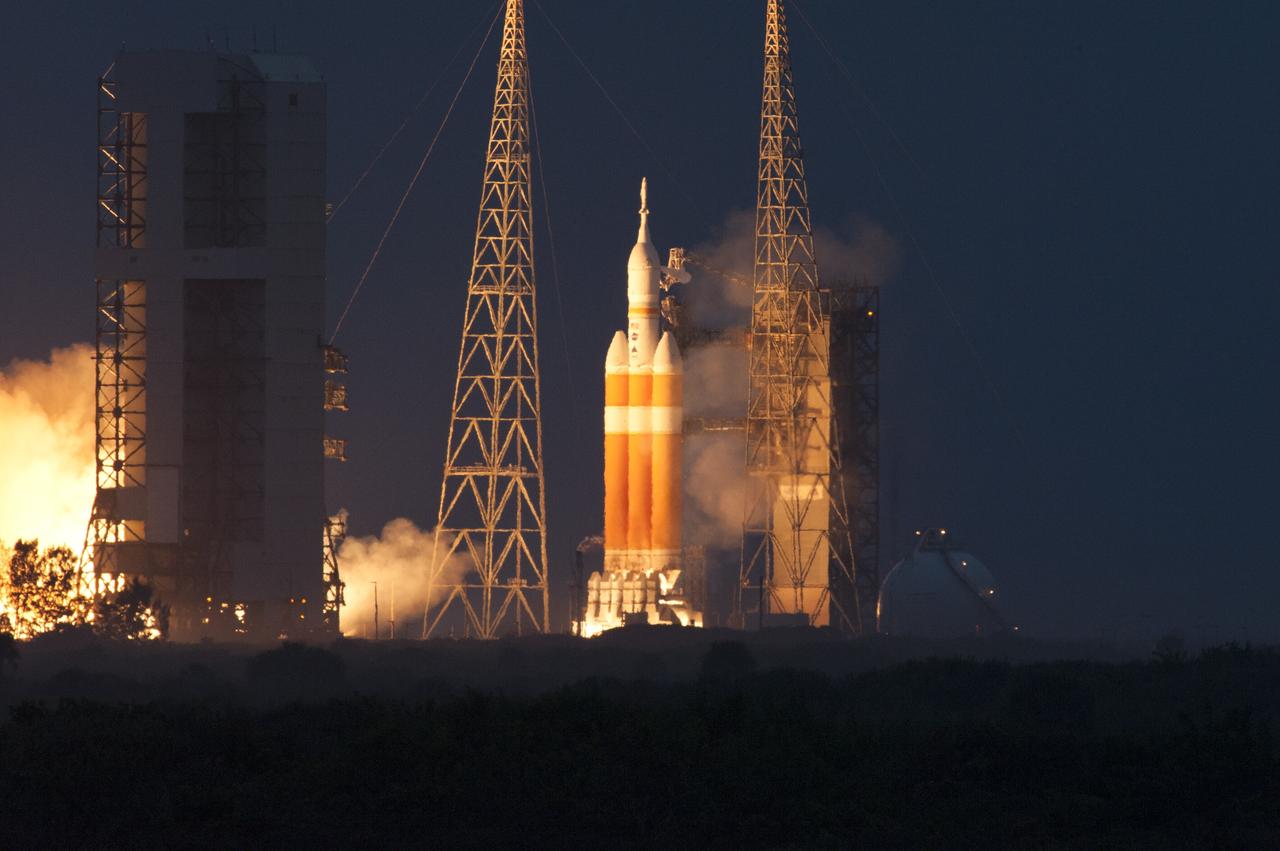
CAPE CANAVERAL, Fla. -- A Delta IV Heavy rocket roars to life at Space Launch Complex 37 at Cape Canaveral Air Force Station in Florida. The launch vehicle is carrying NASA's Orion spacecraft on an unpiloted flight test to Earth orbit. Liftoff was at 7:05 a.m. EST. The flight will send Orion 3,600 miles in altitude beyond the Earth's surface on a four-and-a-half hour mission. Photo credit: NASA/George Roberts