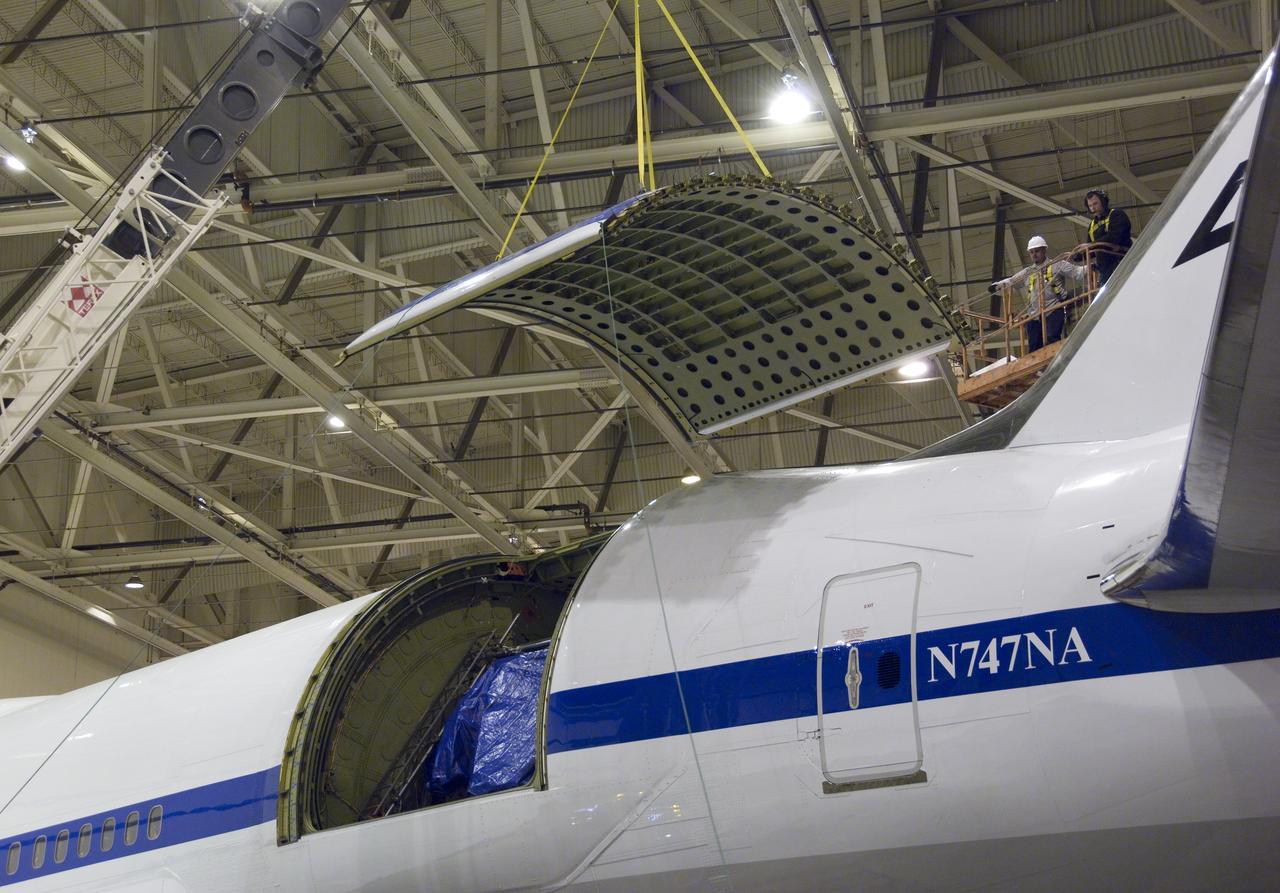
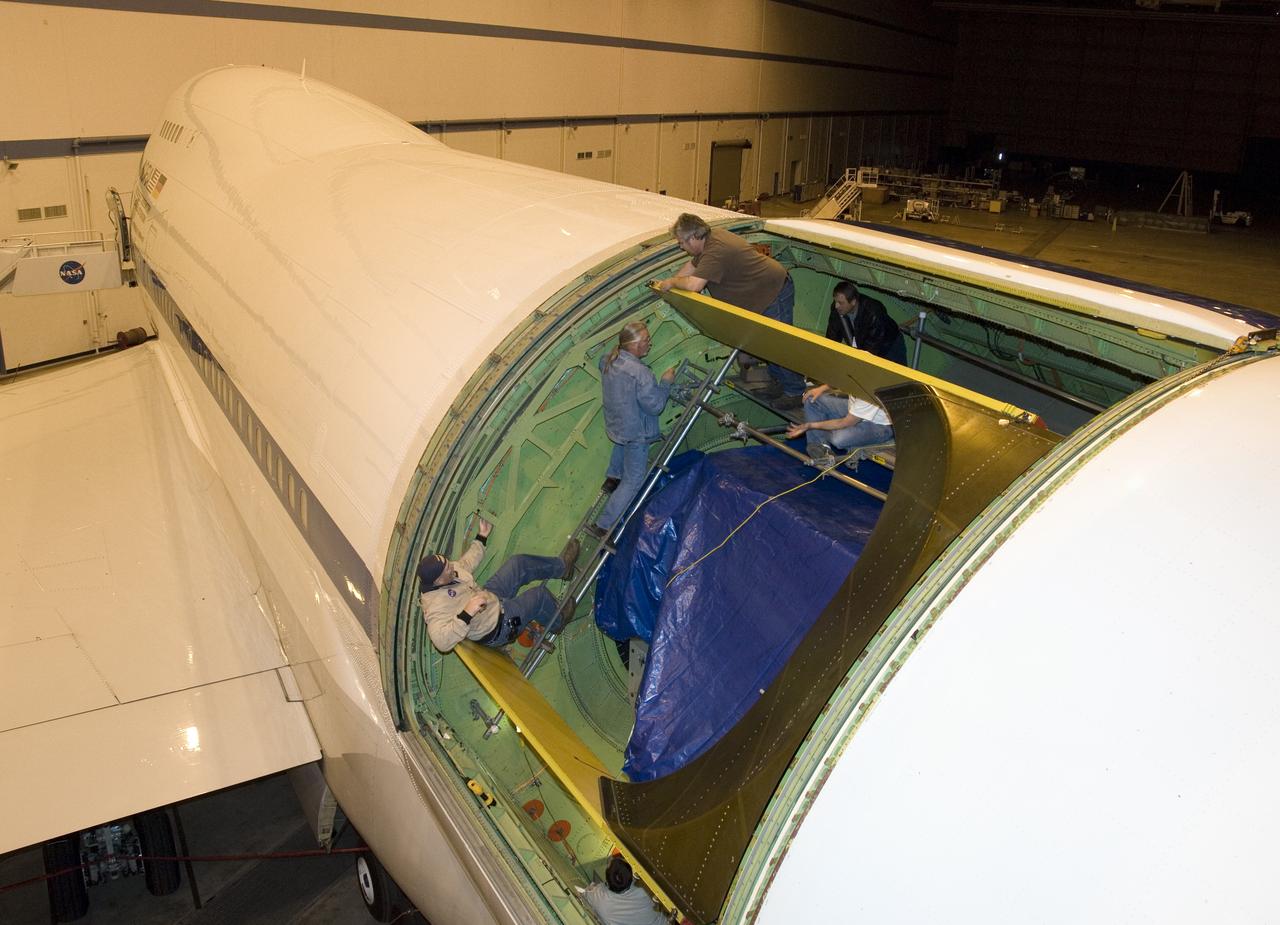
Technicians guide removal of the upper rigid door assembly that covers the telescope cavity on NASA's SOFIA 747SP in preparation for primary mirror removal.
Technicians guide removal of the upper rigid door assembly that covers the telescope cavity on NASA's SOFIA 747SP in preparation for primary mirror removal
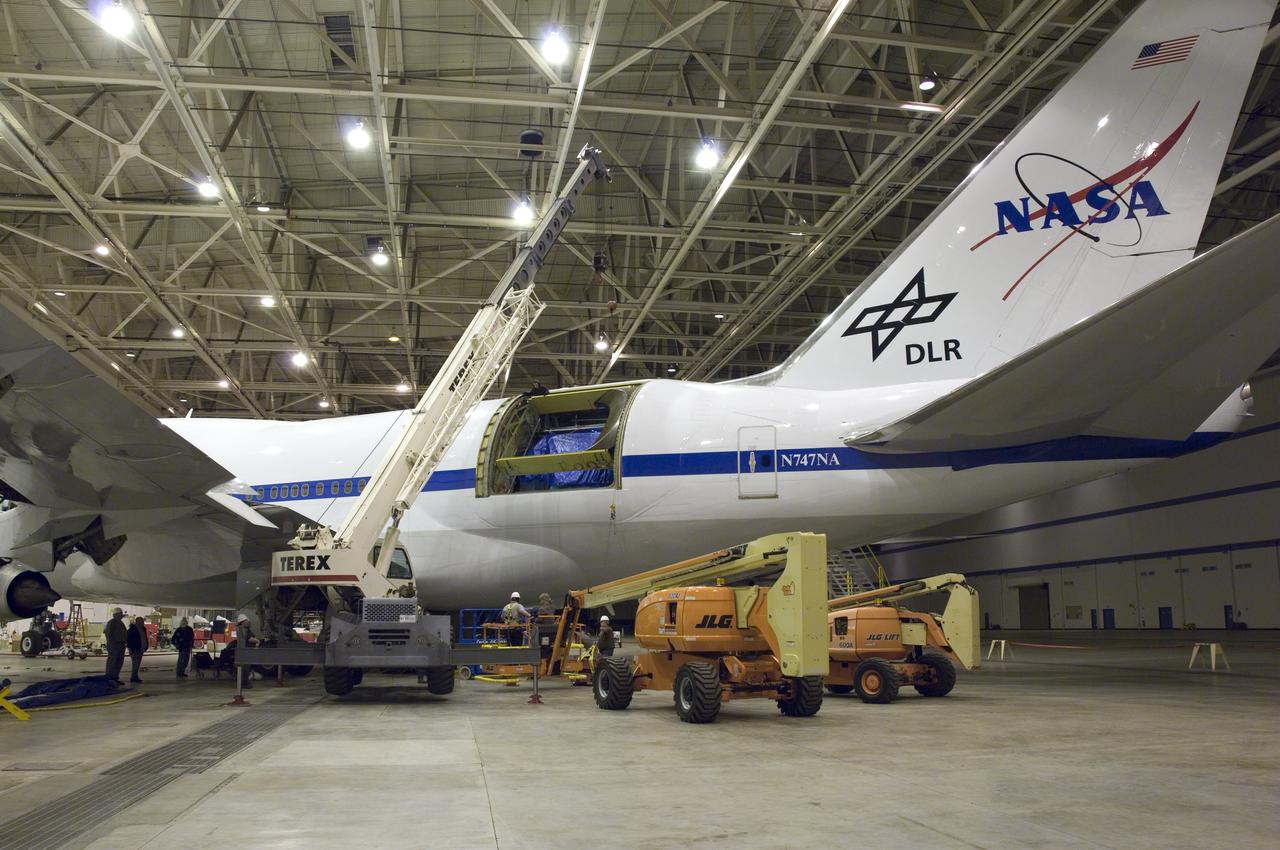
A large mobile crane and hi-lift are maneuvered into place for removal of the aperture assembly and cavity doors from NASA's SOFIA observatory aircraft.
A large mobile crane and hi-lift are maneuvered into place for removal of the aperture assembly and cavity doors from NASA's SOFIA observatory aircraft
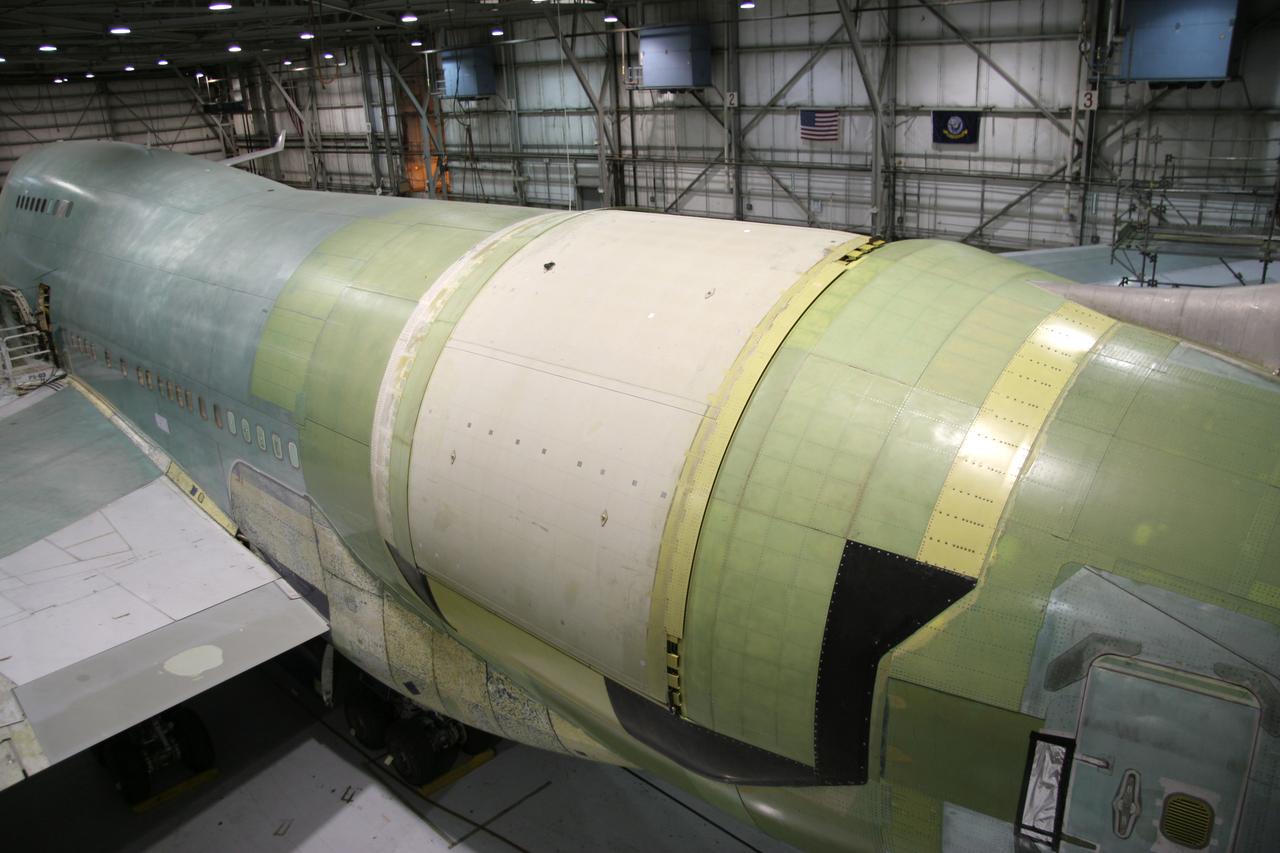
A rotating external door (white) was installed over the telescope cavity in the rear fuselage of NASA's SOFIA Boeing 747SP during modifications in Waco, Texas.
A rotating external door (white) was installed over the telescope cavity in the rear fuselage of NASA's SOFIA Boeing 747SP during modifications in Waco, Texas
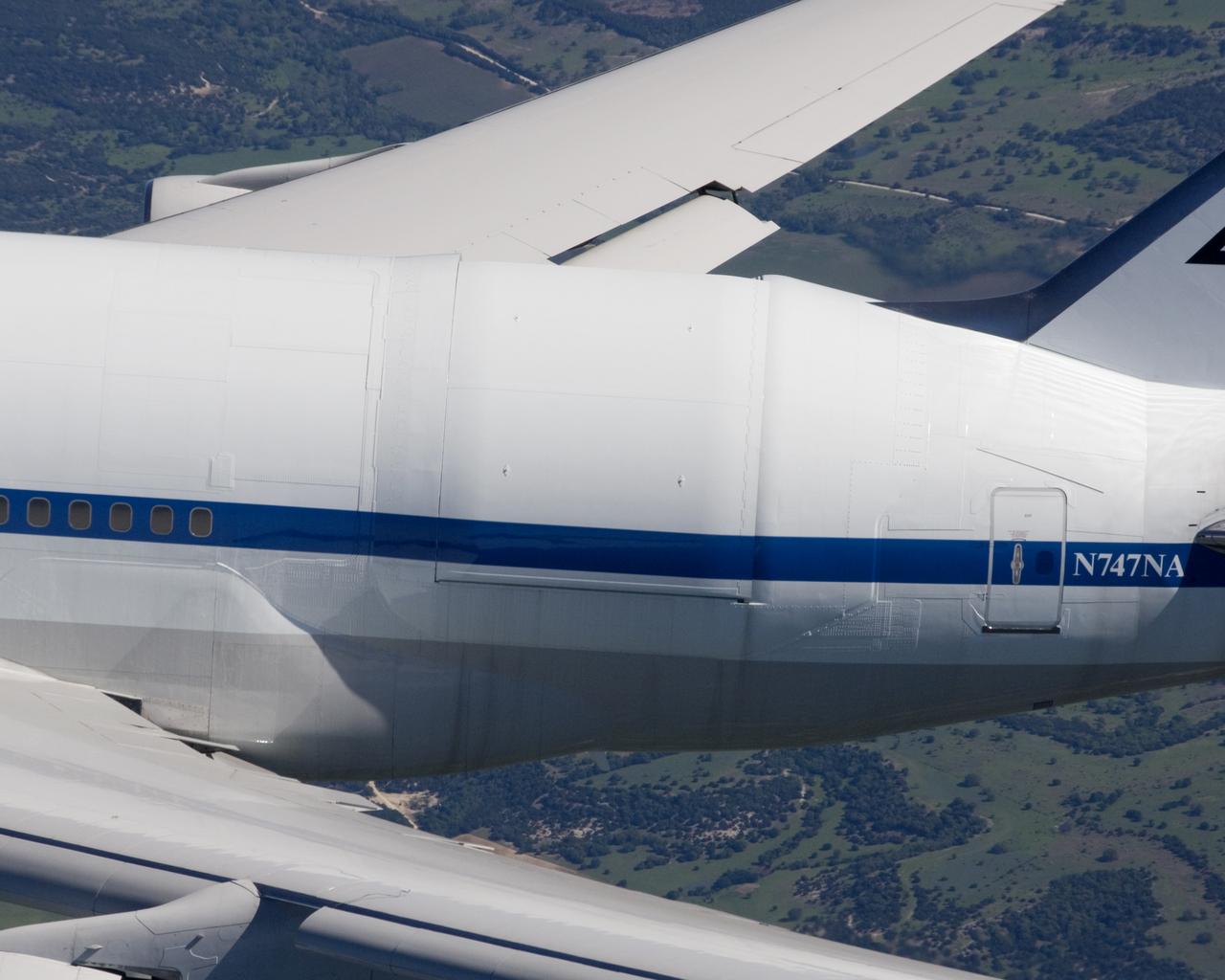
NASA's SOFIA 747SP shows evidence of modification to its aft fuselage contours to accommodate a 16-foot-tall cavity door for its 45,000-pound infrared telescope.
NASA's SOFIA 747SP shows evidence of modification to its aft fuselage contours to accommodate a 16-foot-tall cavity door for its 45,000-pound infrared telescope
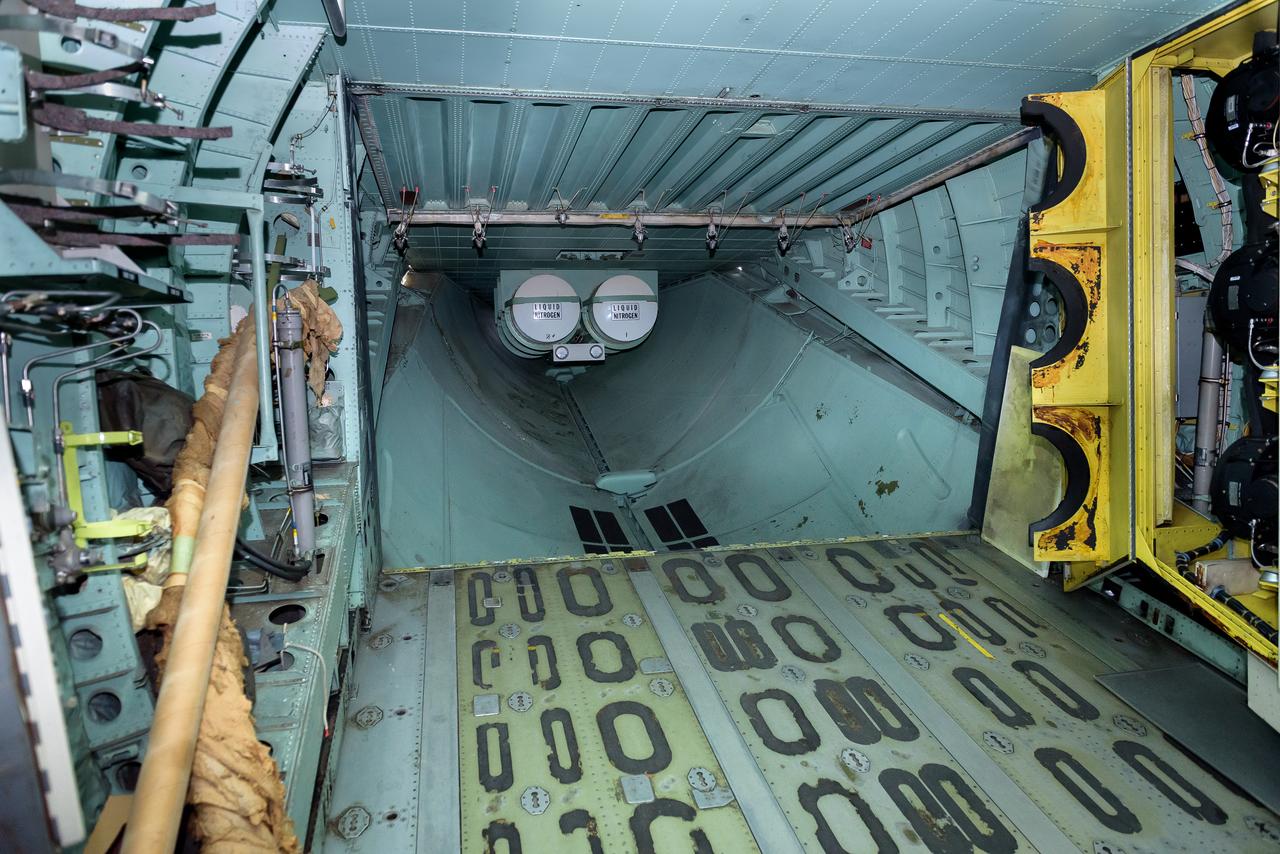
Two nitrogen, LN2, tanks mounted in the aft section of the modified C-141 Kuiper Airborne Observatory, (KAO) (NASA-714), used to cool and purge moisture from the telescope cavity.  The aft pressure door, hinged at top, was closed during flight; the clamshell cargo doors in the aft fuselage could also lower the aft ramp to allow supplies to be driven aboard.
Kuiper Airborne Observatory (KAO) Demolition
NASA's Stratospheric Observatory for Infrared Astronomy, or SOFIA, arrived at NASA's Dryden Flight Research Center at Edwards Air Force Base, Calif. on May 31, 2007. The heavily modified Boeing 747SP was ferried to Dryden from Waco, Texas, where L-3 Communications Integrated Systems installed a German-built 2.5-meter infrared telescope and made other major modifications over the past several years. SOFIA is scheduled to undergo installation and integration of mission systems and a multi-phase flight test program at Dryden over the next three years that is expected to lead to a full operational capability to conduct astronomy missions in about 2010. During its expected 20-year lifetime, SOFIA will be capable of "Great Observatory" class astronomical science, providing astronomers with access to the visible, infrared and sub-millimeter spectrum with optimized performance in the mid-infrared to sub-millimeter range.
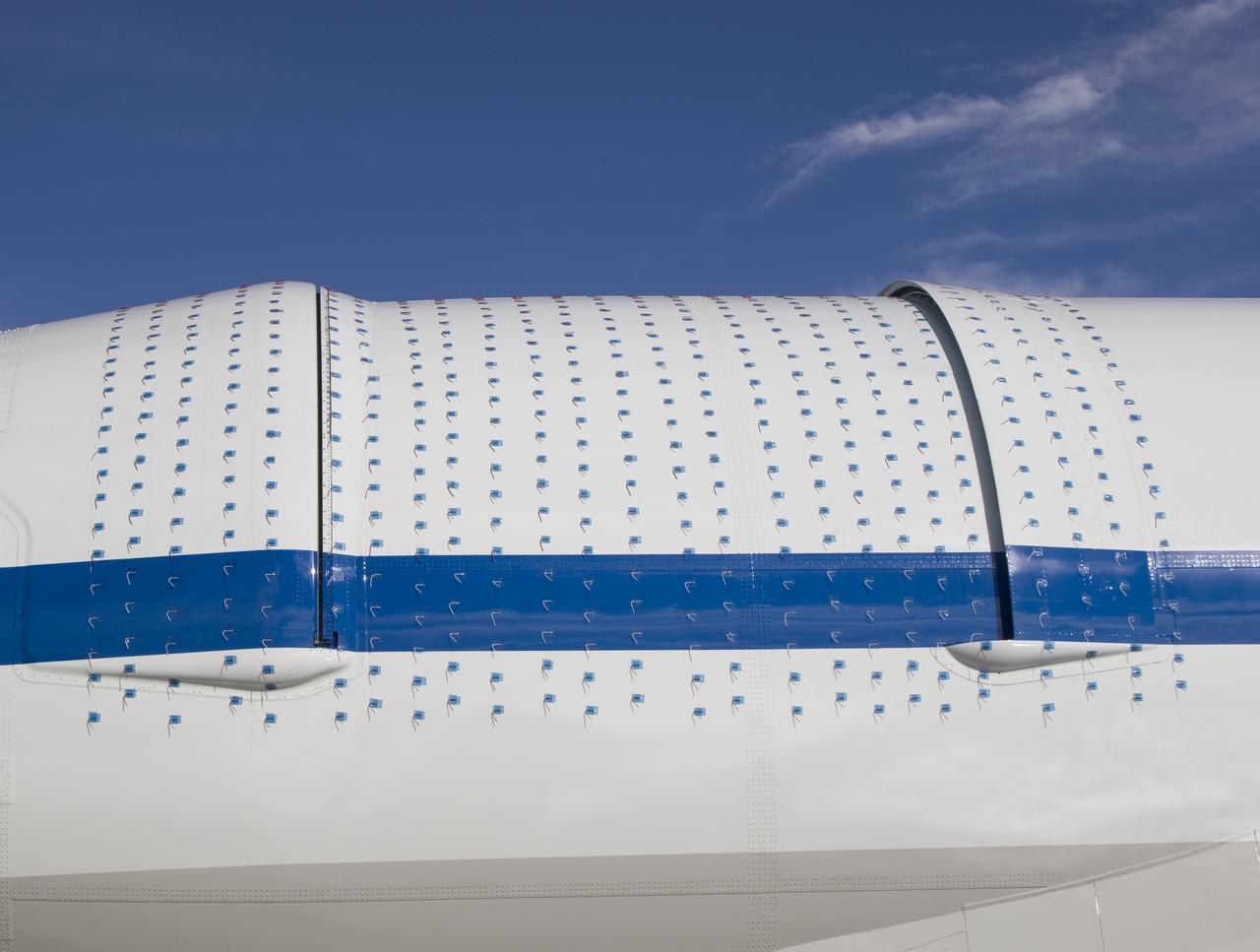
Tiny two-inch string tufts blanket the telescope cavity door and related fairings to aid visual monitoring of airflow patterns during SOFIA 747SP flight tests
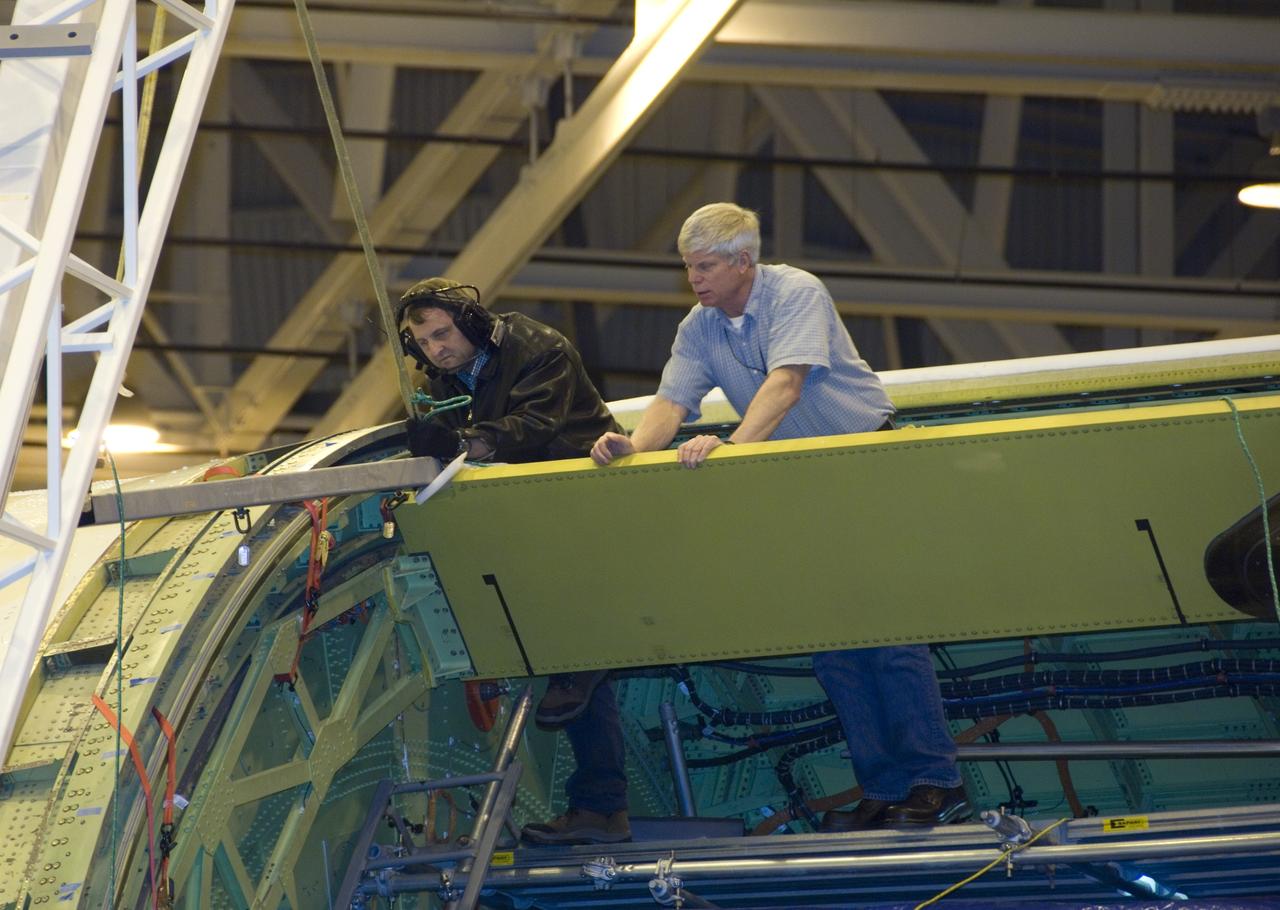
Technicians carefully maneuver a spreader bar into place before removing the telescope aperture assembly from NASA's SOFIA infrared observatory Boeing 747SP.
Technicians carefully maneuver a spreader bar into place before removing the telescope aperture assembly from NASA's SOFIA infrared observatory Boeing 747SP
Technicians carefully disassemble portions of the aperture mounting assembly from NASA's SOFIA aircraft in preparation for removal of the telescope.
Technicians carefully disassemble portions of the aperture mounting assembly from NASA's SOFIA aircraft in preparation for removal of the telescope