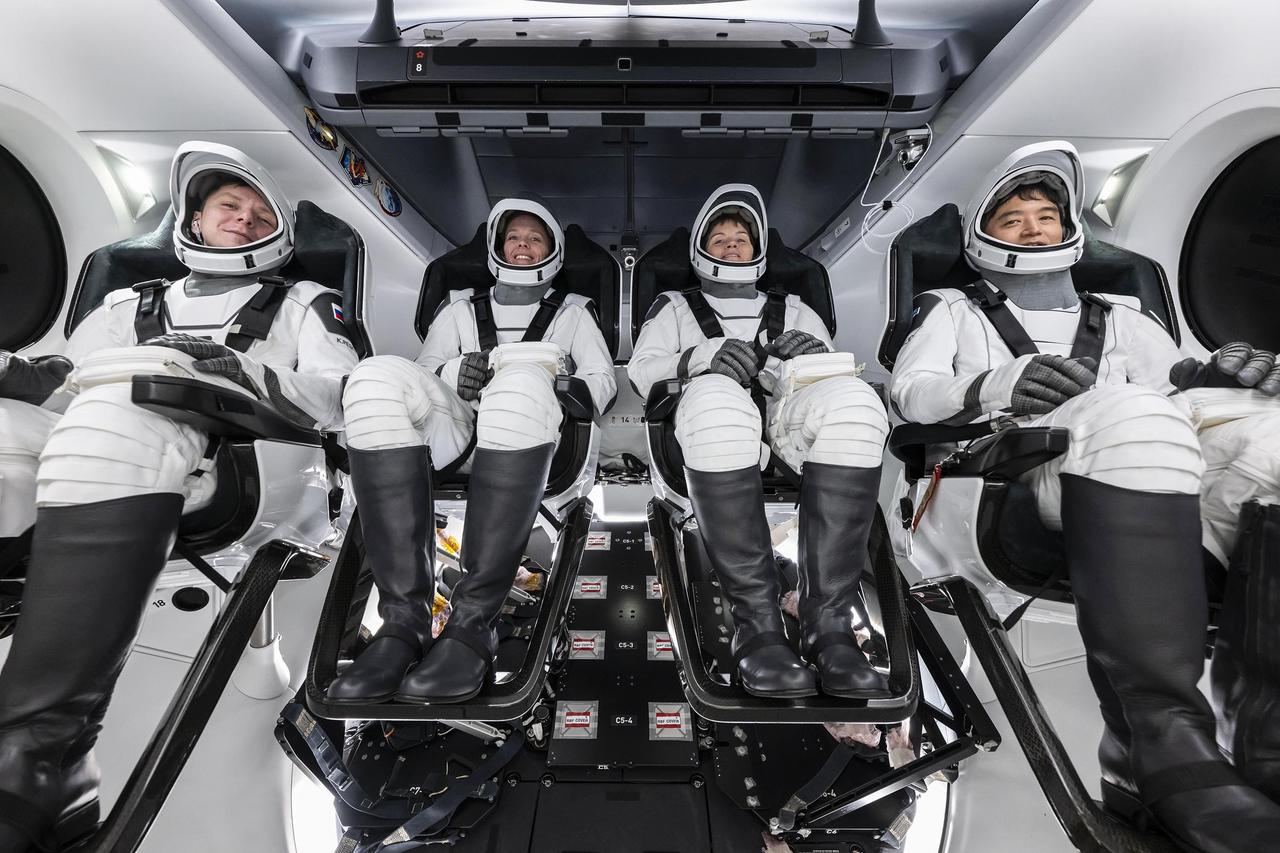
The crew of NASA’s SpaceX Crew-10 mission poses for a photo during a crew equipment interface test (CEIT) inside SpaceX’s new Dragon processing facility at the agency’s Kennedy Space Center in Florida on Monday, Feb. 17, 2025. From left, Roscosmos cosmonaut Kirill Peskov, mission specialist; NASA astronauts Nichole Ayers, pilot and Anne McClain, commander; and JAXA (Japan Aerospace Exploration Agency) astronaut Takuya Onishi, mission specialist, participated in the CEIT, which plays an important role in familiarizing crew members with the interior of the Dragon spacecraft ahead of their four-month mission to International Space Station.
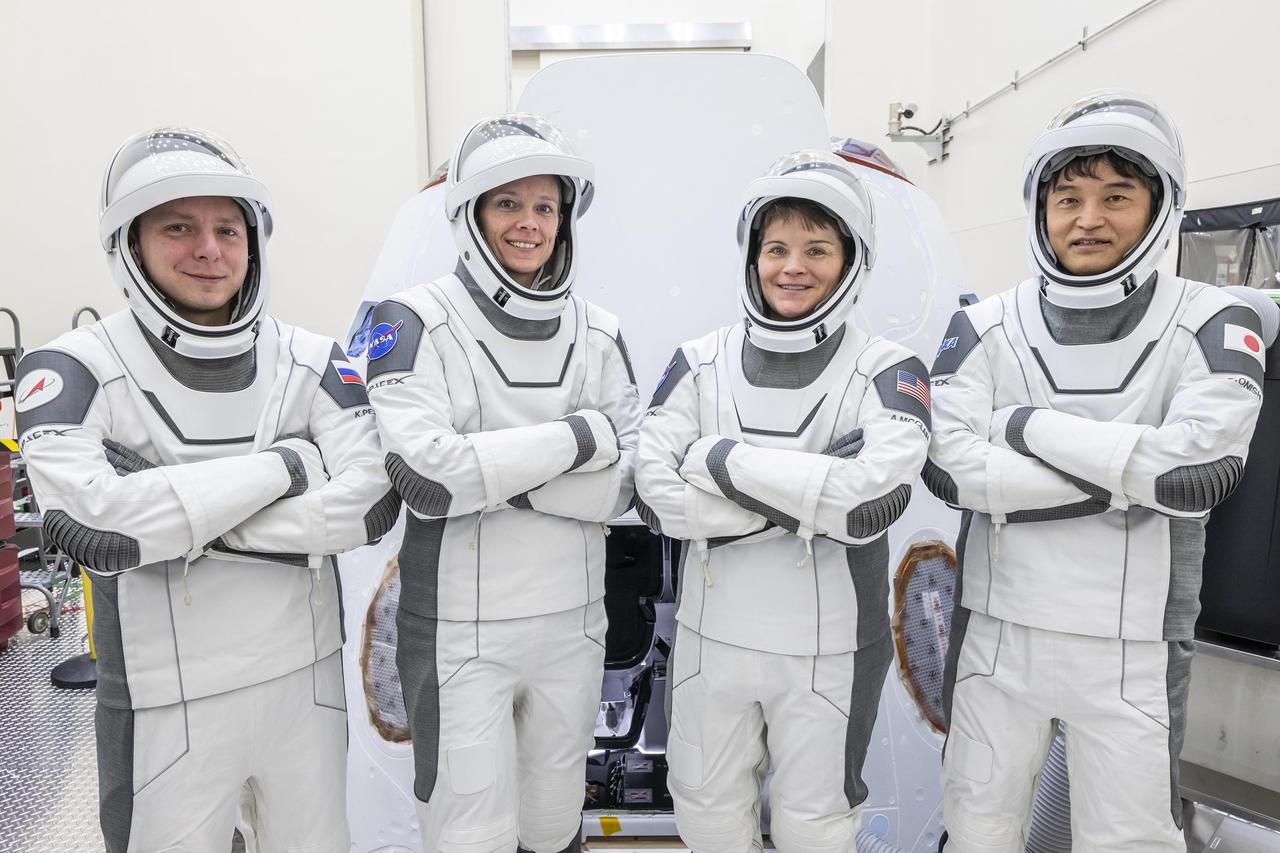
The crew of NASA’s SpaceX Crew-10 mission poses for a photo during a crew equipment interface test (CEIT) inside SpaceX’s new Dragon processing facility at the agency’s Kennedy Space Center in Florida on Monday, Feb. 17, 2025. From left, Roscosmos cosmonaut Kirill Peskov, mission specialist; NASA astronauts Nichole Ayers, pilot and Anne McClain, commander; and JAXA (Japan Aerospace Exploration Agency) astronaut Takuya Onishi, mission specialist, participated in the CEIT, which plays an important role in familiarizing crew members with the interior of the Dragon spacecraft ahead of their four-month mission to International Space Station.
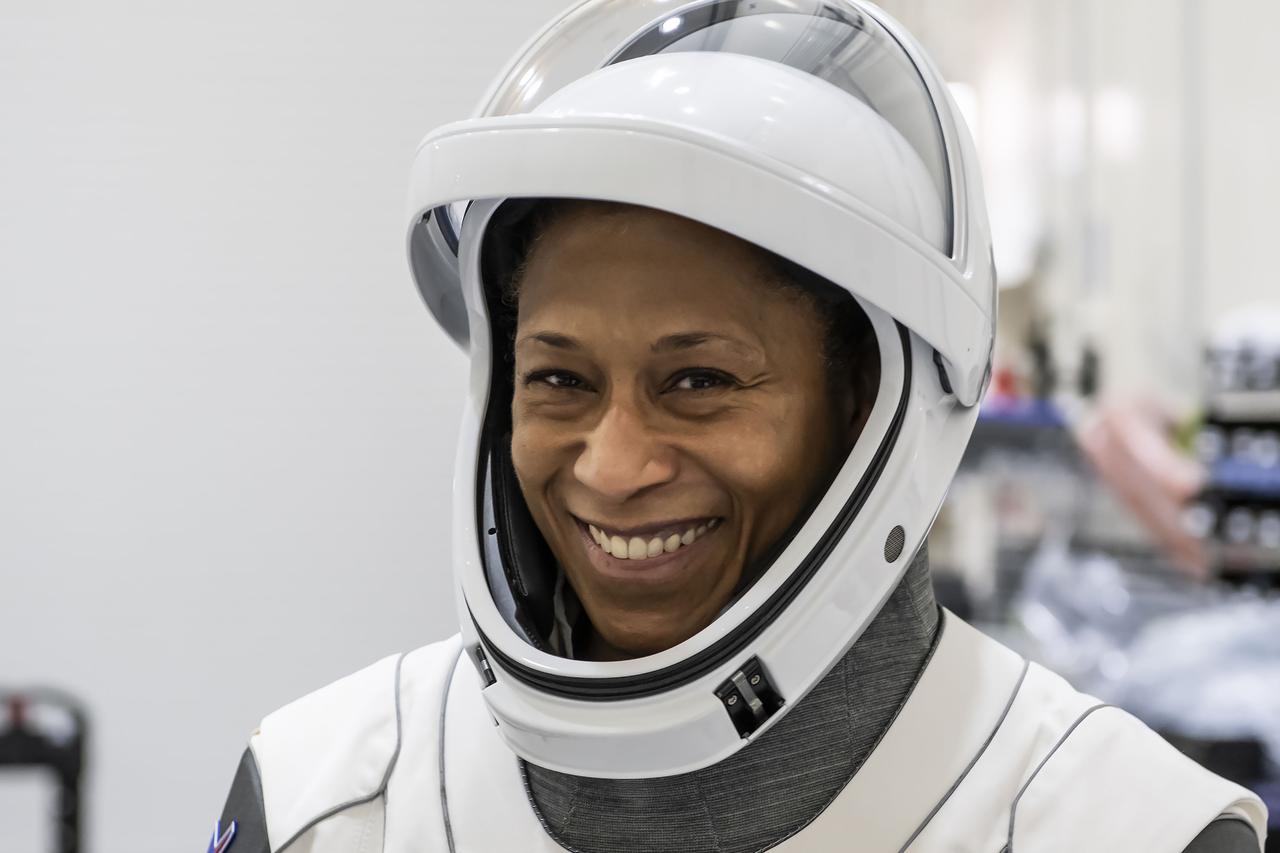
NASA astronaut Jeanette Epps, mission specialist of NASA’s SpaceX Crew-8 mission, is suited up to participate in a Crew Equipment Interface Test (CEIT) at Cape Canaveral Space Force Station in Florida on Friday, Jan. 12, 2024. During the CEIT, the astronauts practice launch and docking in a high-fidelity simulator and getting into position inside SpaceX’s Dragon capsule. As part of the agency’s Commercial Crew Program, Crew-8 marks the ninth human spaceflight mission supported by a SpaceX Dragon spacecraft and the eighth crew rotation mission to International Space Station. Crew-8 will launch on a SpaceX Falcon 9 rocket from Launch Complex 39A at NASA’s Kennedy Space Center in Florida no earlier than mid-February 2024.

SpaceX Crew-5 astronauts are suited up and ready to participate in a crew equipment interface test (CEIT) at SpaceX headquarters in Hawthorne, California, on Aug. 13, 2022. From left are Anna Kikina, mission specialist; Josh Cassada, pilot; Nicole Mann, spacecraft commander; and Koichi Wakata, mission specialist with JAXA (Japan Aerospace Exploration Agency). During the CEIT, the astronauts will practice launch and docking in a high-fidelity simulator of SpaceX’s Dragon capsule. They also will practice getting into position inside the capsule. NASA’s SpaceX Crew-5 will be the fifth crew rotation mission of the company’s human space transportation system and its sixth flight with astronauts to the International Space Station for the agency’s Commercial Crew Program. Crew-5 will launch on the Falcon 9 rocket from Launch Complex 39A at NASA’s Kennedy Space Center in Florida no earlier than Sept. 29, 2022.
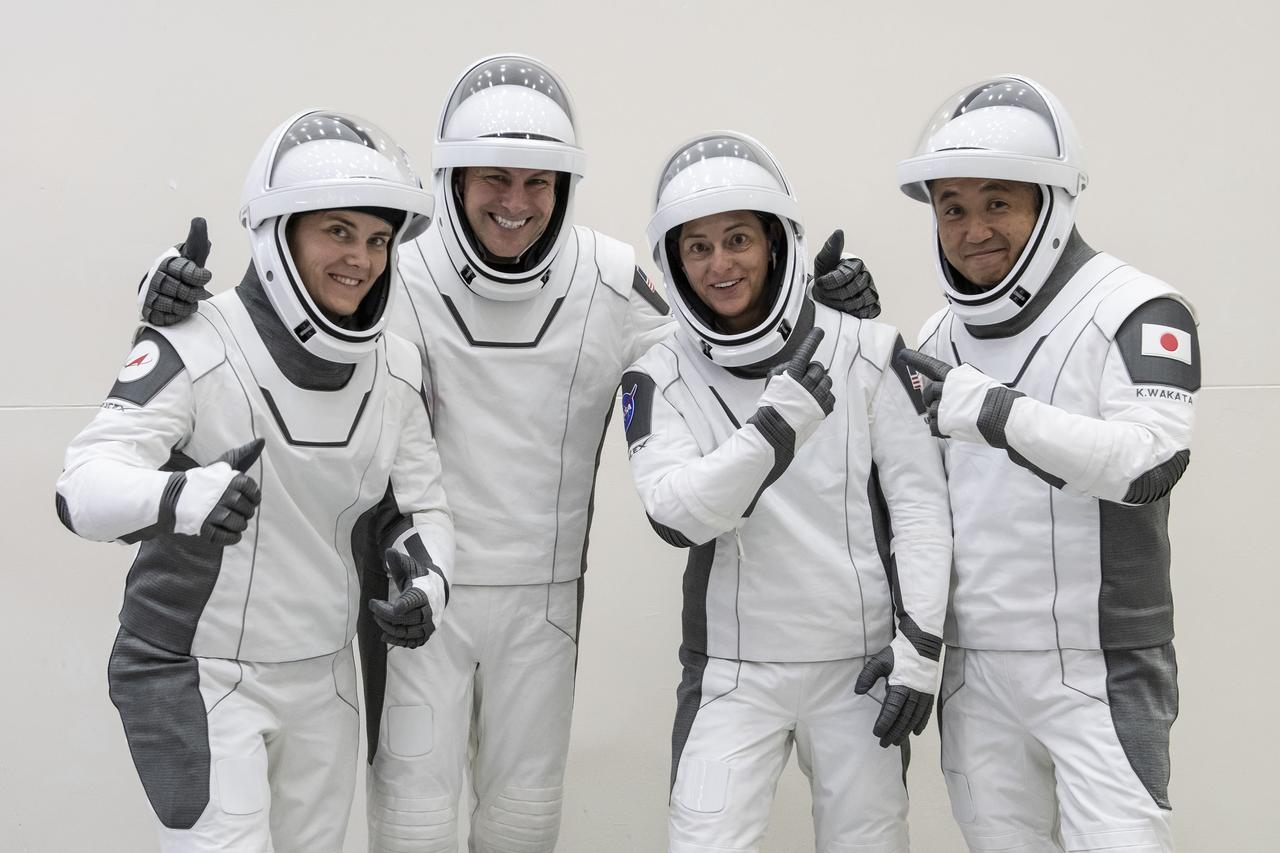
SpaceX Crew-5 astronauts give a thumbs up during a crew equipment interface test (CEIT) at SpaceX headquarters in Hawthorne, California, on Aug. 13, 2022. From left are Anna Kikina, mission specialist; Josh Cassada, pilot; Nicole Mann, spacecraft commander; and Koichi Wakata, mission specialist with JAXA (Japan Aerospace Exploration Agency). During the CEIT, the astronauts practiced launch and docking in a high-fidelity simulator of SpaceX’s Dragon capsule. Each astronaut suited up and practiced getting into position inside the capsule. NASA’s SpaceX Crew-5 will be the fifth crew rotation mission of the company’s human space transportation system and its sixth flight with astronauts to the International Space Station for the agency’s Commercial Crew Program. Crew-5 will launch on the Falcon 9 rocket from Launch Complex 39A at NASA’s Kennedy Space Center in Florida no earlier than Sept. 29, 2022.
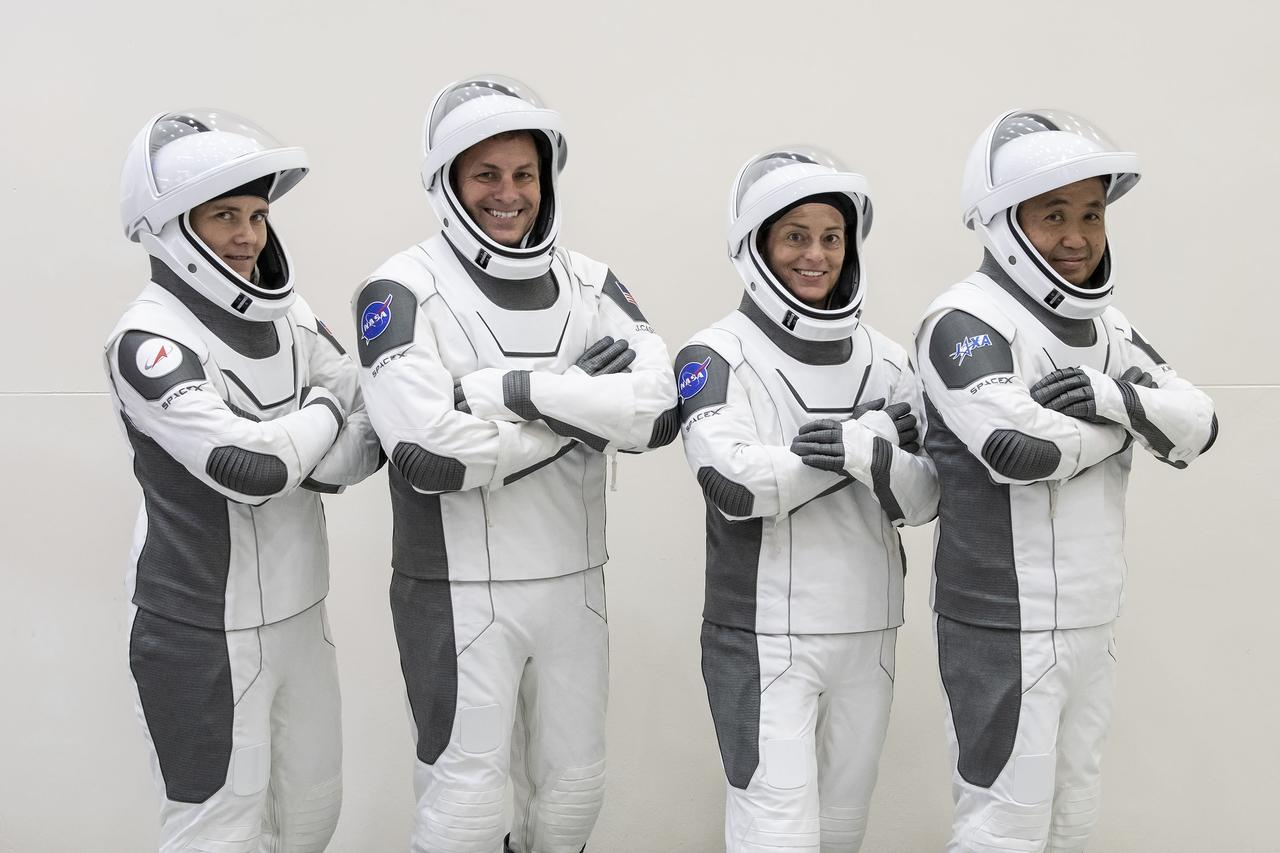
SpaceX Crew-5 astronauts take a break during a crew equipment interface test (CEIT) at SpaceX headquarters in Hawthorne, California, on Aug. 13, 2022. From left are Anna Kikina, mission specialist; Josh Cassada, pilot; Nicole Mann, spacecraft commander; and Koichi Wakata, mission specialist with JAXA (Japan Aerospace Exploration Agency). During the CEIT, the astronauts practiced launch and docking in a high-fidelity simulator of SpaceX’s Dragon capsule. Each astronaut suited up and practiced getting into position inside the capsule. NASA’s SpaceX Crew-5 will be the fifth crew rotation mission of the company’s human space transportation system and its sixth flight with astronauts to the International Space Station for the agency’s Commercial Crew Program. Crew-5 will launch on the Falcon 9 rocket from Launch Complex 39A at NASA’s Kennedy Space Center in Florida no earlier than Sept. 29, 2022.
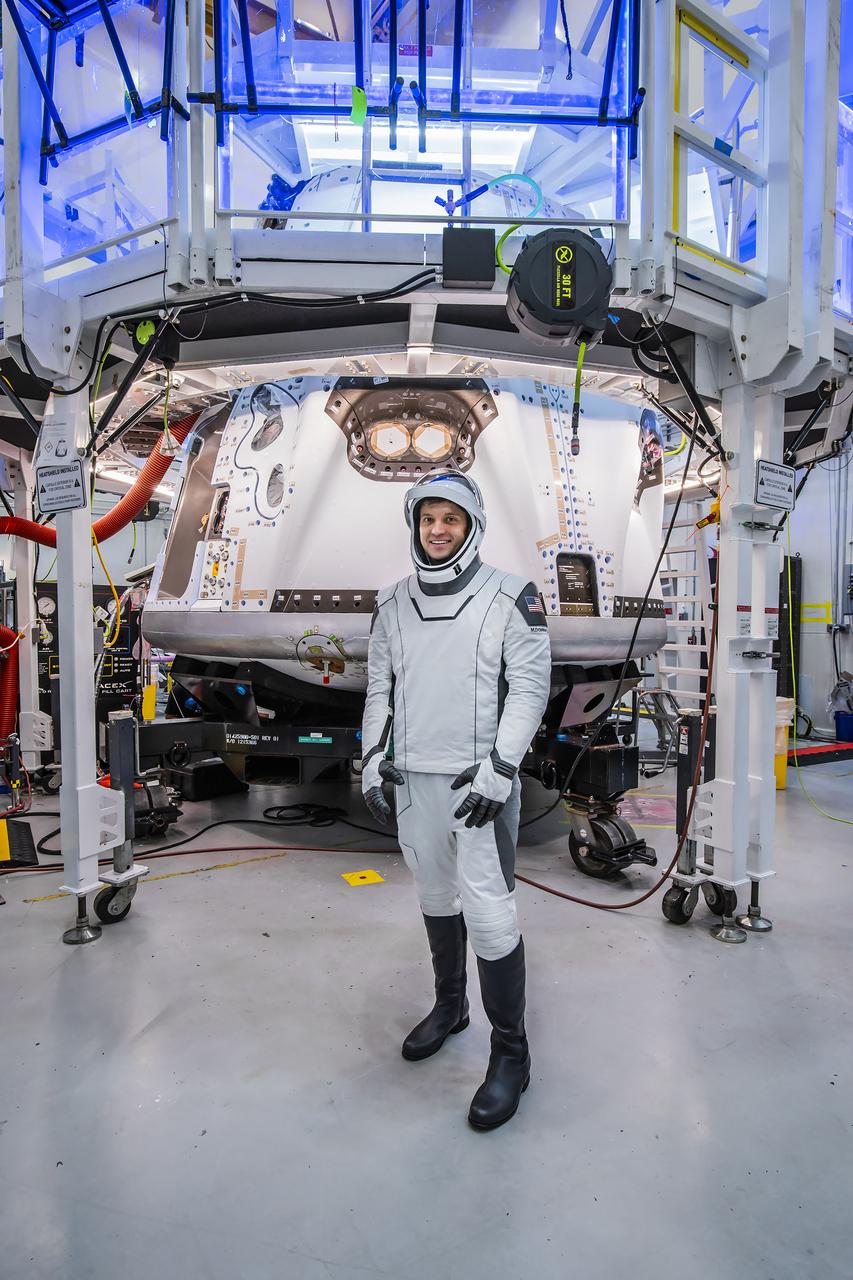
NASA astronaut Matthew Dominick, commander of NASA’s SpaceX Crew-8 mission, is suited up to participate in a Crew Equipment Interface Test (CEIT) at Cape Canaveral Space Force Station in Florida on Friday, Jan. 12, 2024. During the CEIT, the astronauts practice launch and docking in a high-fidelity simulator and getting into position inside SpaceX’s Dragon capsule. As part of the agency’s Commercial Crew Program, Crew-8 marks the ninth human spaceflight mission supported by a SpaceX Dragon spacecraft and the eighth crew rotation mission to International Space Station. Crew-8 will launch on a SpaceX Falcon 9 rocket from Launch Complex 39A at NASA’s Kennedy Space Center in Florida no earlier than mid-February 2024.
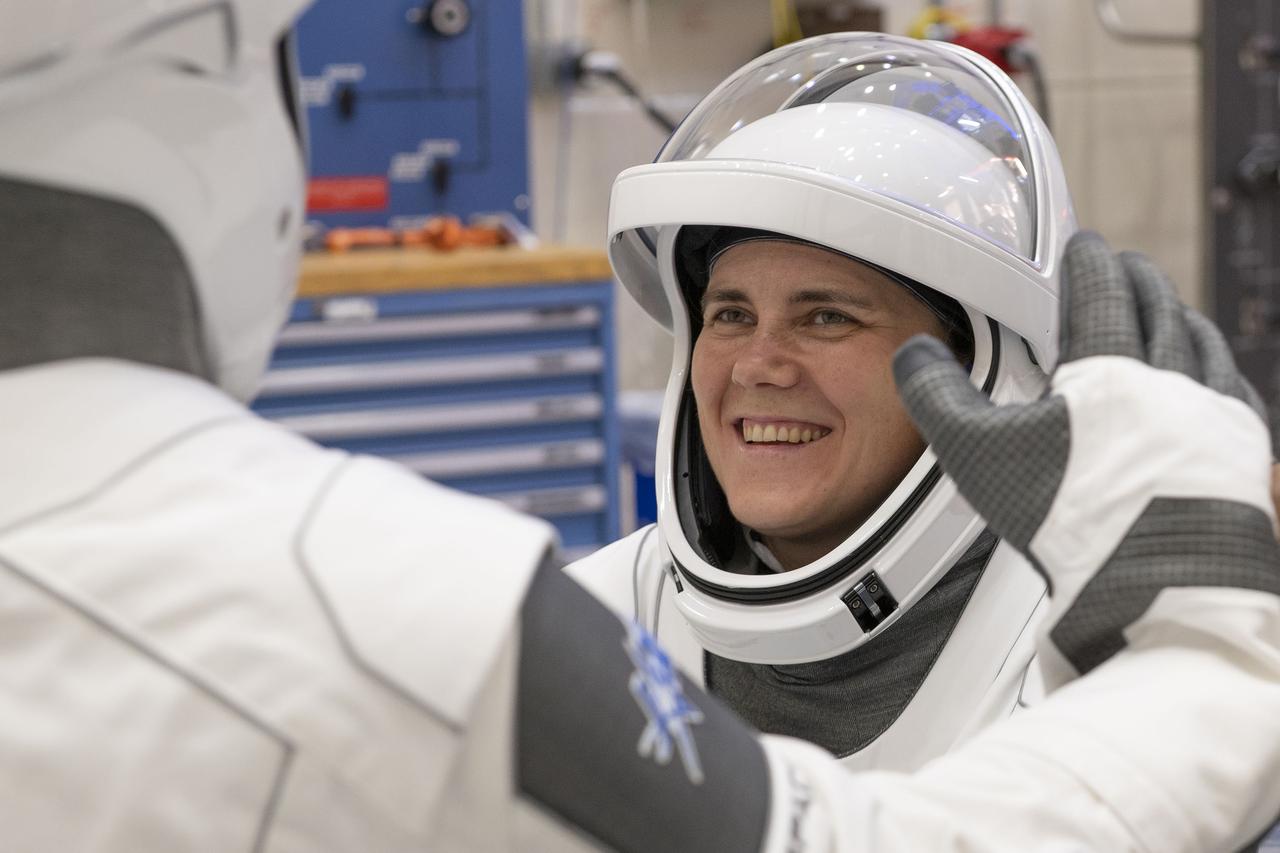
SpaceX Crew-5 astronaut Anna Kikina, mission specialist, gets suited up to participate in a crew equipment interface test (CEIT) at SpaceX headquarters in Hawthorne, California, on Aug. 13, 2022. During the CEIT, the astronauts will practice launch and docking in a high-fidelity simulator of SpaceX’s Dragon capsule. They also will practice getting into position inside the capsule. NASA’s SpaceX Crew-5 will be the fifth crew rotation mission of the company’s human space transportation system and its sixth flight with astronauts to the International Space Station for the agency’s Commercial Crew Program. Crew-5 will launch on the Falcon 9 rocket from Launch Complex 39A at NASA’s Kennedy Space Center in Florida no earlier than Sept. 29, 2022.
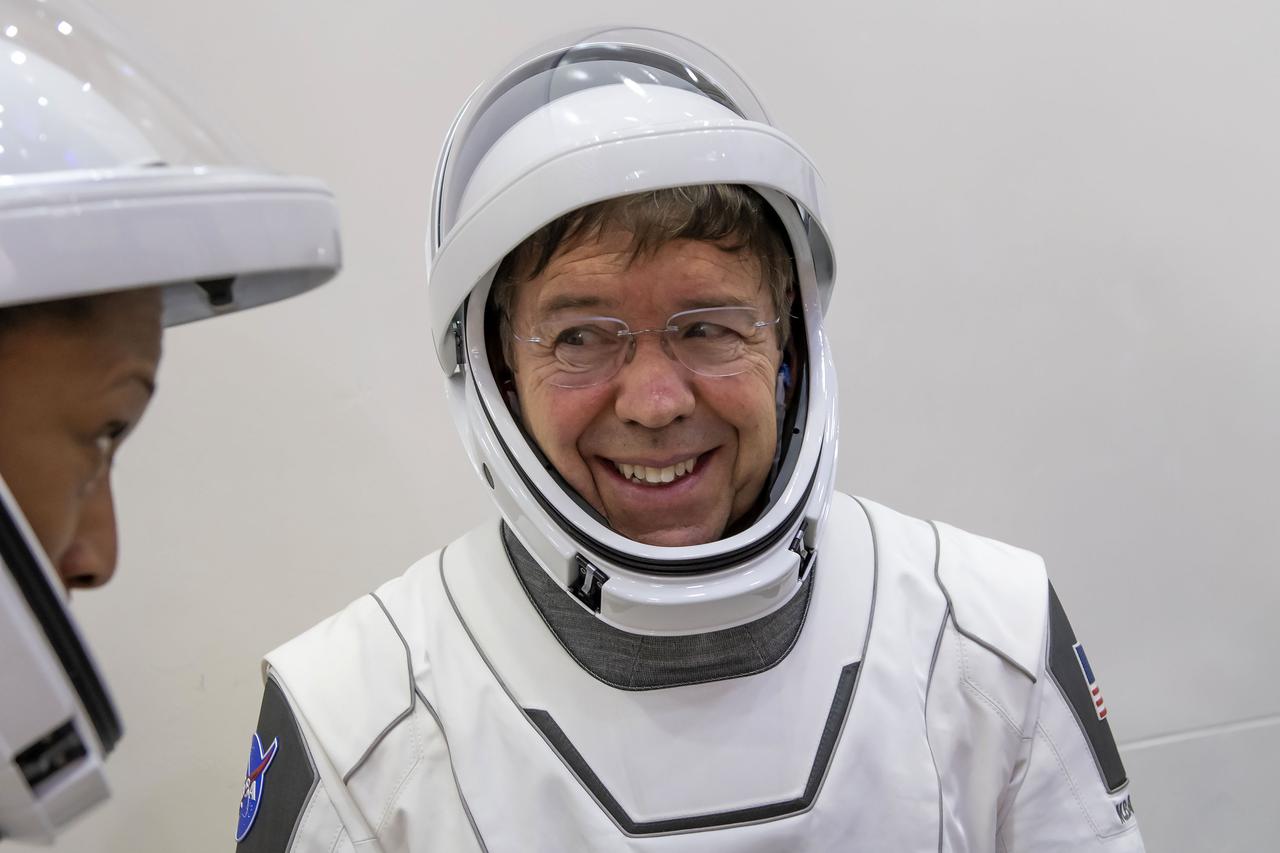
NASA astronaut Michael Barratt, pilot of NASA’s SpaceX Crew-8 mission, is suited up to participate in a Crew Equipment Interface Test (CEIT) at Cape Canaveral Space Force Station in Florida on Friday, Jan. 12, 2024. During the CEIT, the astronauts practice launch and docking in a high-fidelity simulator and getting into position inside SpaceX’s Dragon capsule. As part of the agency’s Commercial Crew Program, Crew-8 marks the ninth human spaceflight mission supported by a SpaceX Dragon spacecraft and the eighth crew rotation mission to International Space Station. Crew-8 will launch on a SpaceX Falcon 9 rocket from Launch Complex 39A at NASA’s Kennedy Space Center in Florida no earlier than mid-February 2024.
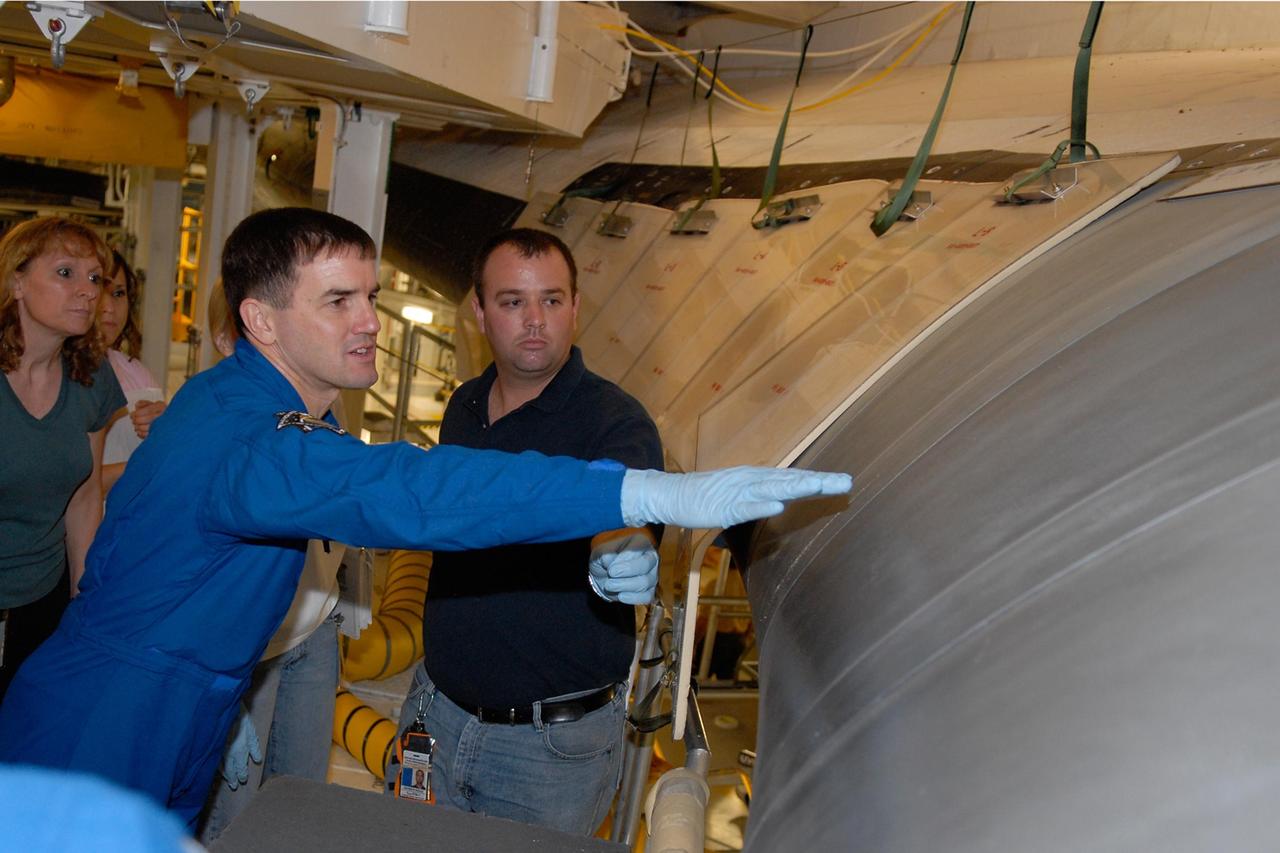
KENNEDY SPACE CENTER, FLA. -- In the Orbiter Processing Facility, STS-122 Mission Specialist Rex Walheim reaches toward the wing of space shuttle Atlantis. The crew is at Kennedy to take part in a crew equipment interface test, or CEIT, which helps familiarize them with equipment and payloads for the mission. Among the activities standard to a CEIT are harness training, inspection of the thermal protection system and camera operation for planned extravehicular activities, or EVAs. STS-122 is targeted for launch in December. Photo credit: NASA/Kim Shiflett
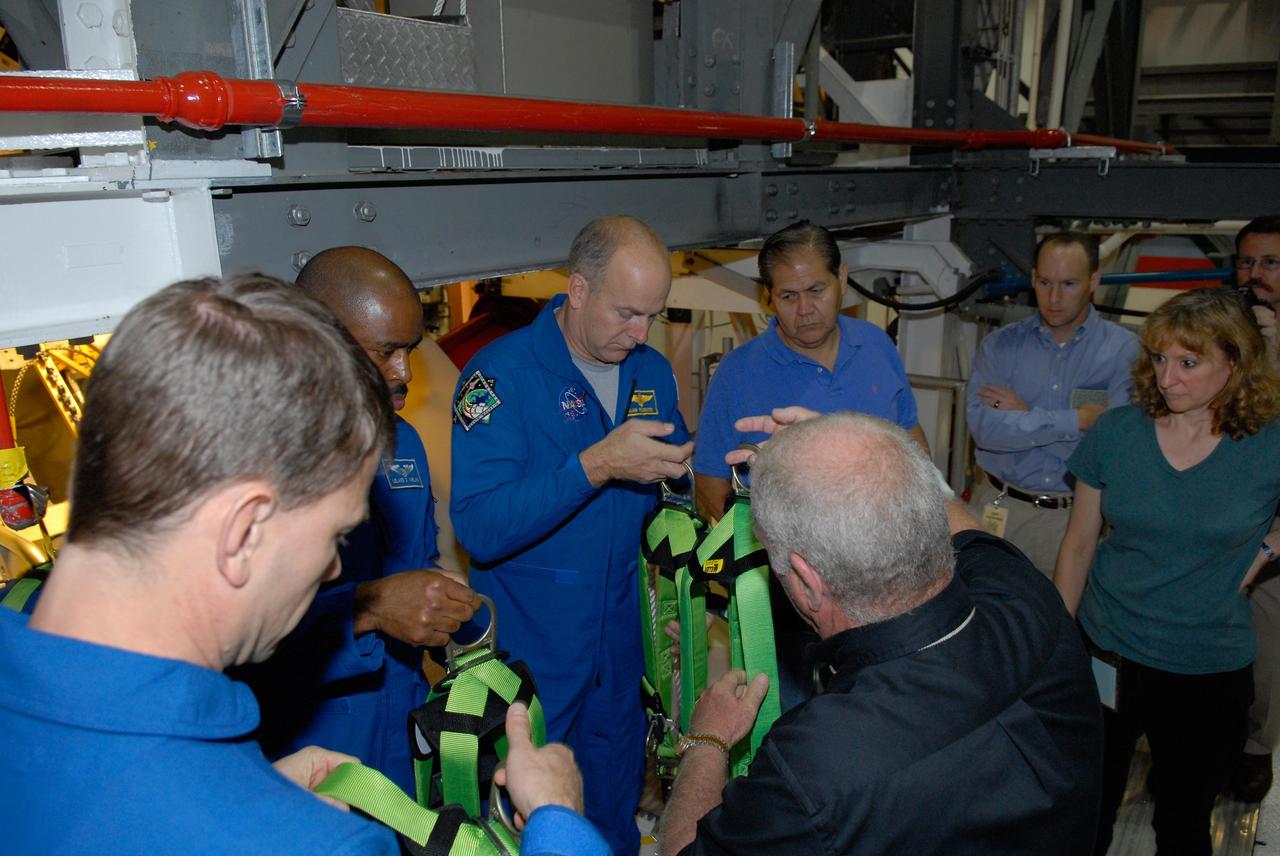
KENNEDY SPACE CENTER, FLA. -- Members of the STS-122 crew take part in harness training in the Orbiter Processing Facility at NASA's Kennedy Space Center. Seen from left are Mission Specialists Stanley Love and Leland Melvin and Pilot Alan Poindexter. The crew is at Kennedy to take part in a crew equipment interface test, or CEIT, which helps familiarize them with equipment and payloads for the mission. Among the activities standard to a CEIT are harness training, inspection of the thermal protection system and camera operation for planned extravehicular activities, or EVAs. STS-122 is targeted for launch in December. Photo credit: NASA/Kim Shiflett

KENNEDY SPACE CENTER, FLA. -- In the Orbiter Processing Facility, STS-122 crew members are introduced to part of the LESS. From left are Mission Specialists Stanley Love, Hans Schlegel and Rex Walheim. The crew is at Kennedy to take part in a crew equipment interface test, or CEIT, which helps familiarize them with equipment and payloads for the mission. Among the activities standard to a CEIT are harness training, inspection of the thermal protection system and camera operation for planned extravehicular activities, or EVAs. STS-122 is targeted for launch in December. Photo credit: NASA/Kim Shiflett

KENNEDY SPACE CENTER, FLA. -- In the Orbiter Processing Facility, STS-122 crew members are introduced to part of the LESS. From left are Mission Specialists Hans Schlegel, Rex Walheim and European Space Agency astronaut Leopold Eyharts, Commander Stephen Frick, Mission Specialist Leland Melvin and Pilot Alan Poindexter. The crew is at Kennedy to take part in a crew equipment interface test, or CEIT, which helps familiarize them with equipment and payloads for the mission. Among the activities standard to a CEIT are harness training, inspection of the thermal protection system and camera operation for planned extravehicular activities, or EVAs. STS-122 is targeted for launch in December. Photo credit: NASA/Kim Shiflett
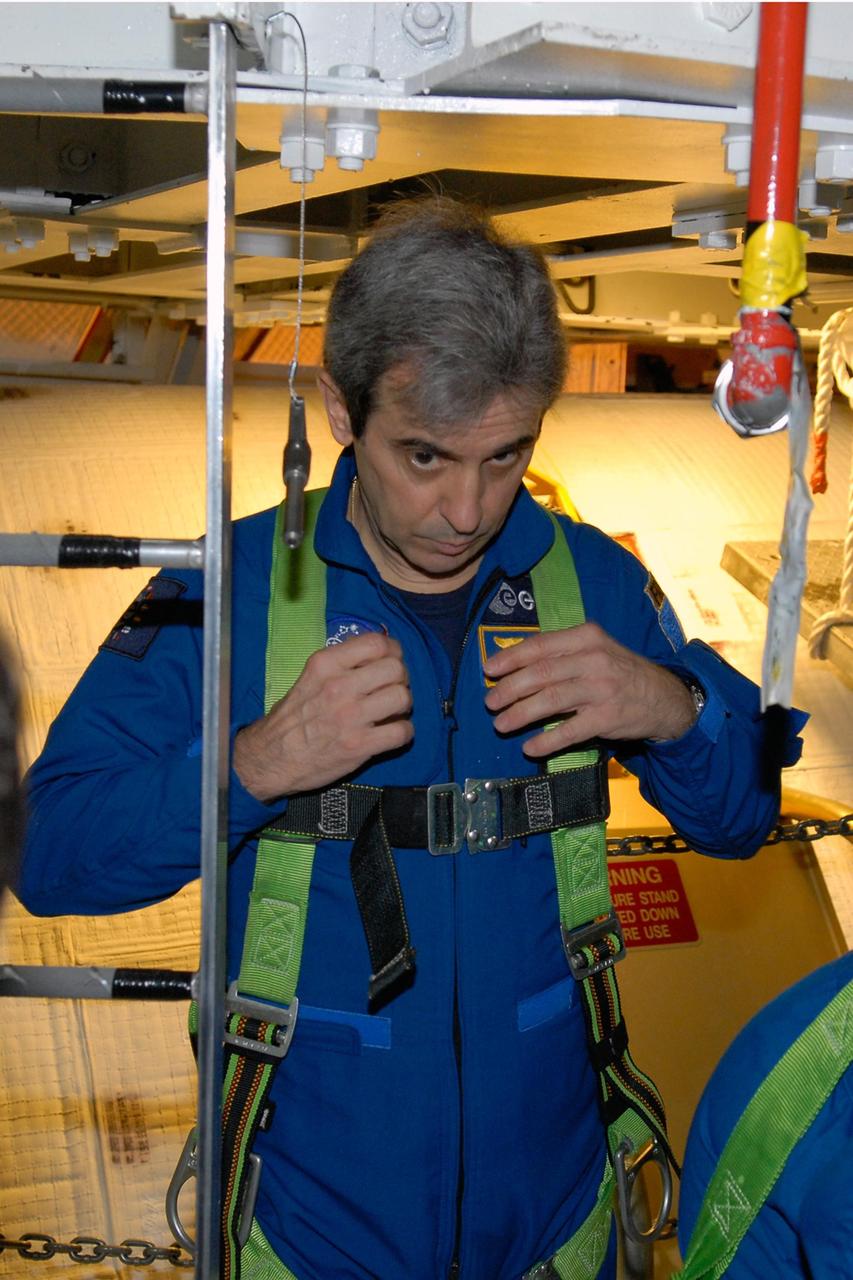
KENNEDY SPACE CENTER, FLA. -- Astronaut Leopold Eyharts, who represents the European Space Agency, tries on a harness in the Orbiter Processing Facility. Eyharts will be traveling to the International Space Station to join the Expedition 16 crew as a flight engineer. The crew is at Kennedy to take part in a crew equipment interface test, or CEIT, which helps familiarize them with equipment and payloads for the mission. Among the activities standard to a CEIT are harness training, inspection of the thermal protection system and camera operation for planned extravehicular activities, or EVAs. STS-122 is targeted for launch in December. Photo credit: NASA/Kim Shiflett
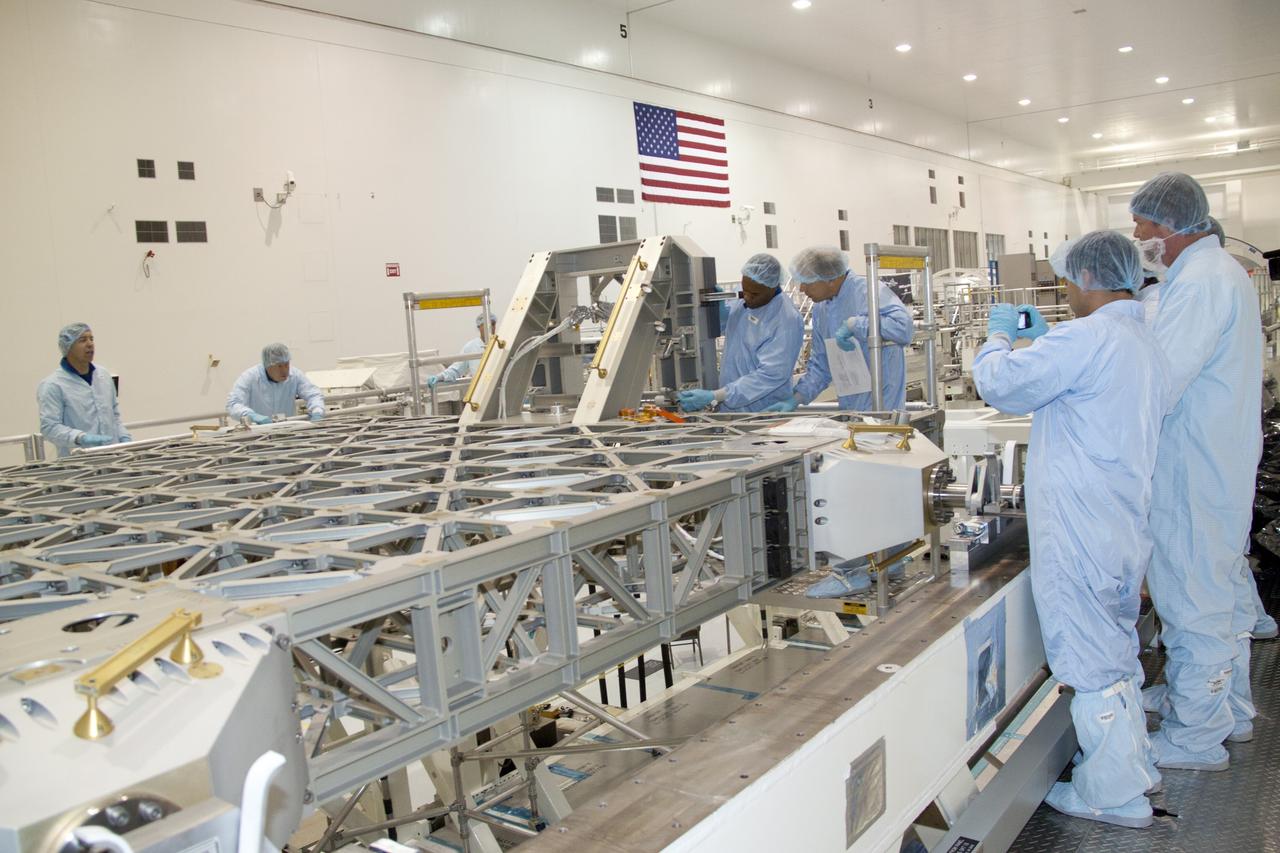
CAPE CANAVERAL, Fla. -- In the Space Station Processing Facility at NASA's Kennedy Space Center in Florida, space shuttle Discovery's STS-133 crew members are participating in the Payload Crew Equipment Interface Test, or CEIT. During this phase of CEIT the astronauts have an opportunity to inspect and handle the payload they'll be delivering to the International Space Station. Discovery is targeted to launch at 4:40 p.m. EDT Nov. 1. For more information visit www.nasa.gov/shuttle. Photo credit: NASA/Jack Pfaller
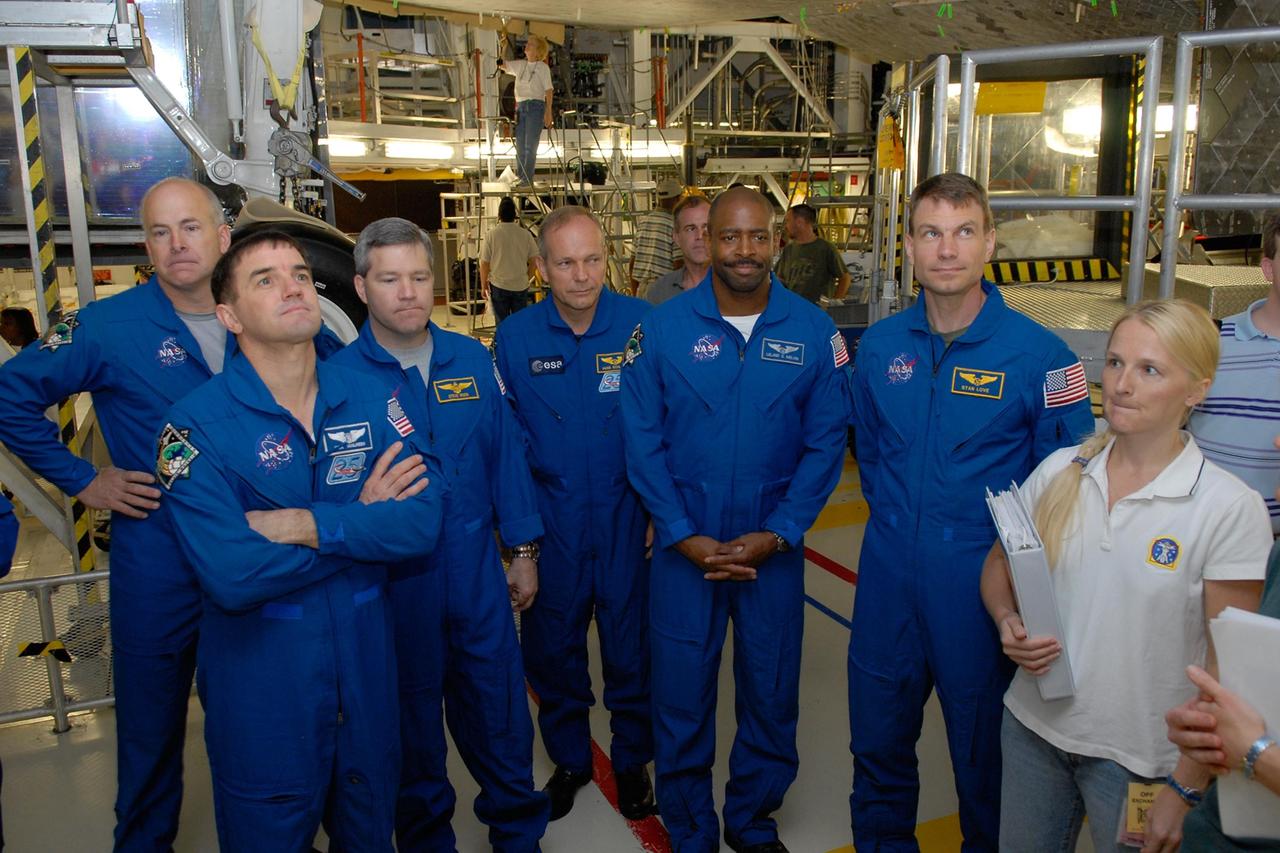
KENNEDY SPACE CENTER, FLA. -- In the Orbiter Processing Facility, members of the STS-122 crew get information about the thermal protection system on space shuttle Atlantis (overhead). From left are Pilot Alan Poindexter, Mission Specialists Rex Walheim, Commander Stephen Frick, and Mission Specialists Hans Schlegel, Leland Melvin and Stanley Love. Schlegel represents the European Space Agency. The crew is at Kennedy to take part in a crew equipment interface test, or CEIT, which helps familiarize them with equipment and payloads for the mission. Among the activities standard to a CEIT are harness training, inspection of the thermal protection system and camera operation for planned extravehicular activities, or EVAs. STS-122 is targeted for launch in December. Photo credit: NASA/Kim Shiflett
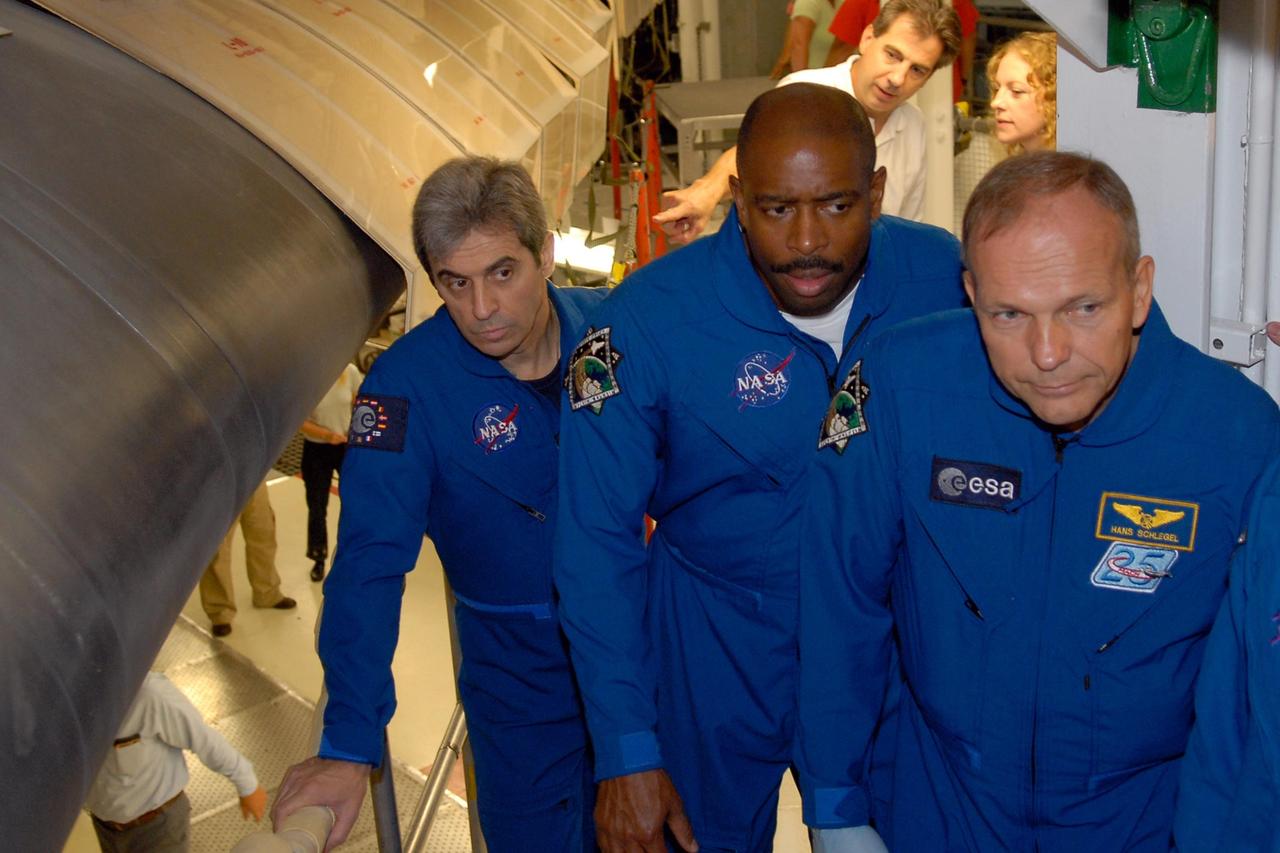
KENNEDY SPACE CENTER, FLA. -- In the Orbiter Processing Facility, STS-122 crew members stand next to the space shuttle Atlantis, which is being processed for launch on STS-122. From left are European Space Agency astronaut Leopold Eyharts and Mission Specialists Leland Melvin and Hans Schlegel, who also represents ESA. Eyharts will be traveling to the International Space Station to join the Expedition 16 crew as a flight engineer. The crew is at Kennedy to take part in a crew equipment interface test, or CEIT, which helps familiarize them with equipment and payloads for the mission. Among the activities standard to a CEIT are harness training, inspection of the thermal protection system and camera operation for planned extravehicular activities, or EVAs. STS-122 is targeted for launch in December. Photo credit: NASA/Kim Shiflett

KENNEDY SPACE CENTER, FLA. -- From a lower level in the Orbiter Processing Facility, members of the STS-122 crew check out the landing gear on space shuttle Atlantis, overhead. Dressed in their blue suits are Mission Specialist Leland Melvin, Commander Stephen Frick, European Space Agency astronaut Leopold Eyharts and Pilot Alan Poindexter. Eyharts will be traveling to the International Space Station to join the Expedition 16 crew as a flight engineer. The crew is at Kennedy to take part in a crew equipment interface test, or CEIT, which helps familiarize them with equipment and payloads for the mission. Among the activities standard to a CEIT are harness training, inspection of the thermal protection system and camera operation for planned extravehicular activities, or EVAs. STS-122 is targeted for launch in December. Photo credit: NASA/Kim Shiflett
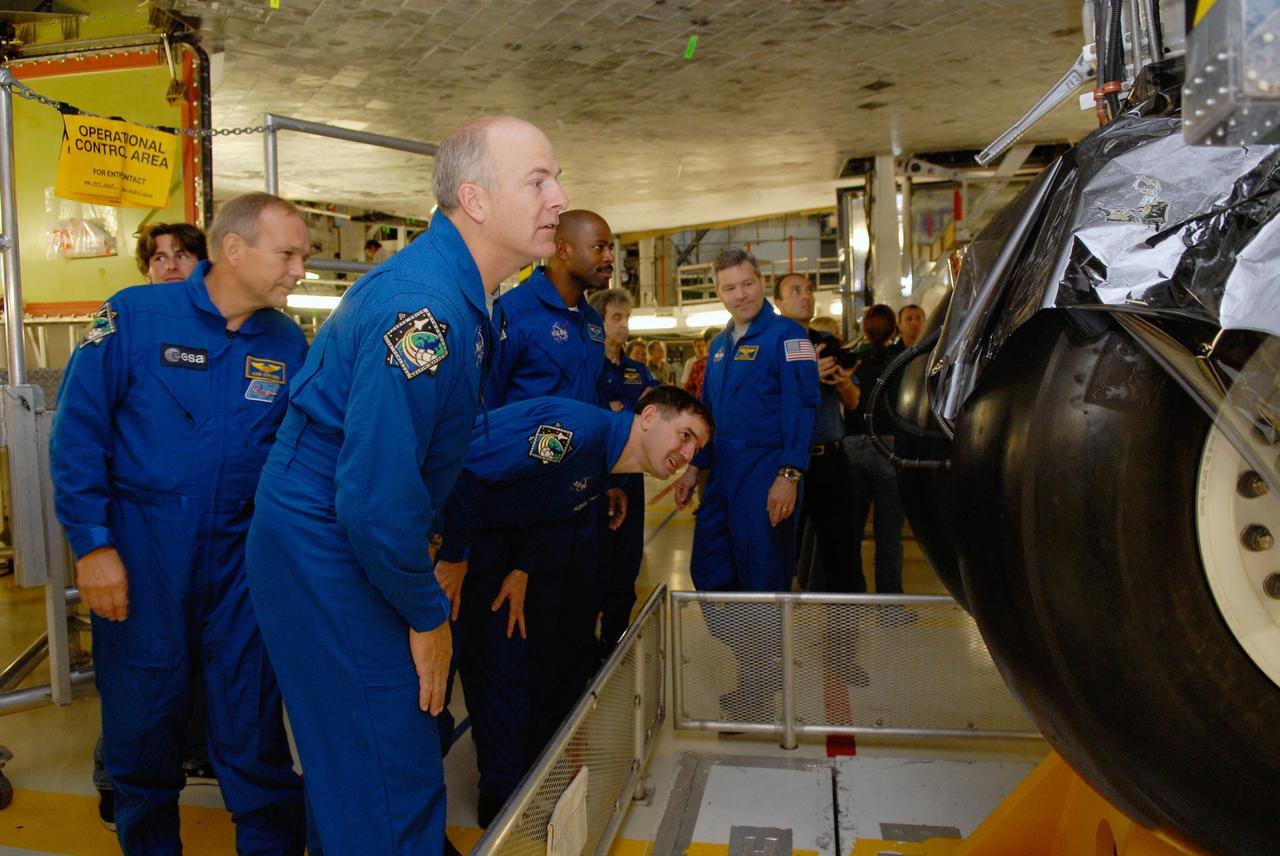
KENNEDY SPACE CENTER, FLA. -- In the Orbiter Processing Facility, members of the STS-122 crew get a close look at the landing gear on space shuttle Atlantis. From left are Mission Specialist Hans Schlegel, Pilot Alan Poindexter, Mission Specialists Rex Walheim and Leland Melvin and Commander Stephen Frick. Schlegel represents the European Space Agency. The crew is at Kennedy to take part in a crew equipment interface test, or CEIT, which helps familiarize them with equipment and payloads for the mission. Among the activities standard to a CEIT are harness training, inspection of the thermal protection system and camera operation for planned extravehicular activities, or EVAs. STS-122 is targeted for launch in December. Photo credit: NASA/Kim Shiflett
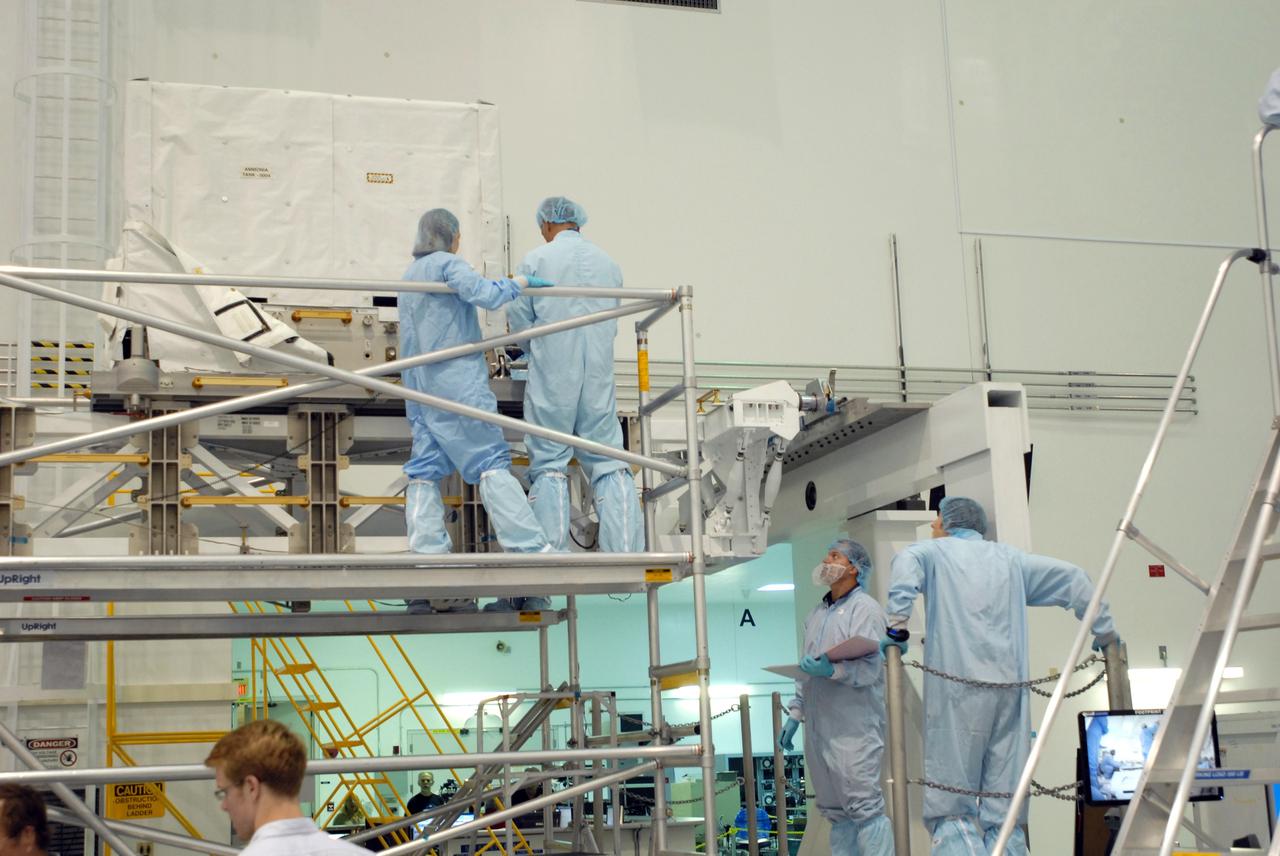
CAPE CANAVERAL, Fla. – In the Space Station Processing Facility at NASA's Kennedy Space Center in Florida, STS-128 Mission Specialists John "Danny" Olivas (top right) and Christer Fugelsang (bottom right) inspect ammonia tanks, part of the payload for their mission. Members of the STS-128 crew are at Kennedy for a crew equipment interface test, or CEIT, which provides hands-on training and observation of shuttle and flight hardware. The STS-128 flight will carry science and storage racks to the International Space Station on space shuttle Discovery. The STS-128 mission is targeted to launch on Aug. 6. Photo credit: NASA/Jim Grossmann
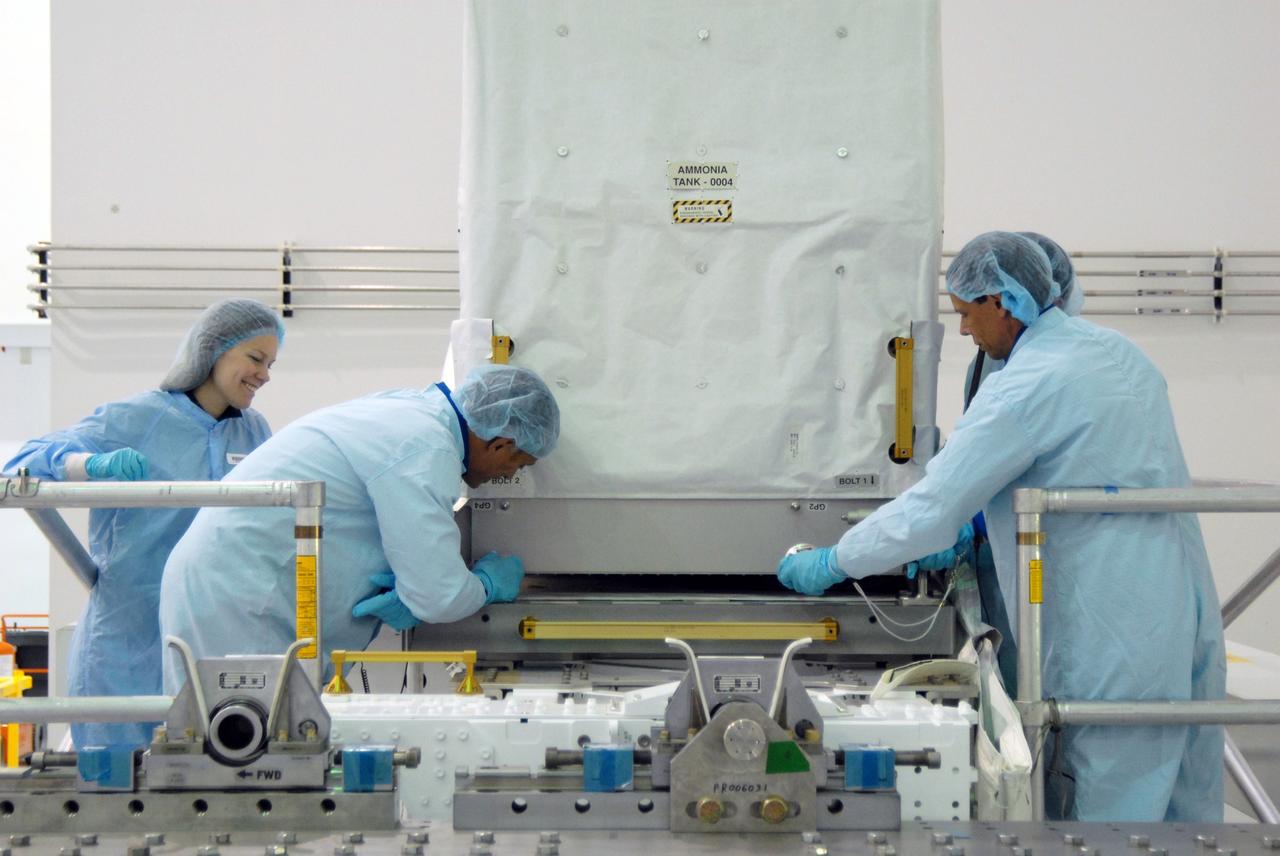
CAPE CANAVERAL, Fla. – In the Space Station Processing Facility at NASA's Kennedy Space Center in Florida, STS-128 Mission Specialists John "Danny" Olivas (second from left) and Christer Fugelsang (right) inspect ammonia tanks, part of the payload for their mission. Fugelsang is with the European Space Agency. Members of the STS-128 crew are at Kennedy for a crew equipment interface test, or CEIT, which provides hands-on training and observation of shuttle and flight hardware. The STS-128 flight will carry science and storage racks to the International Space Station on space shuttle Discovery. The STS-128 mission is targeted to launch on Aug. 6. Photo credit: NASA/Jim Grossmann
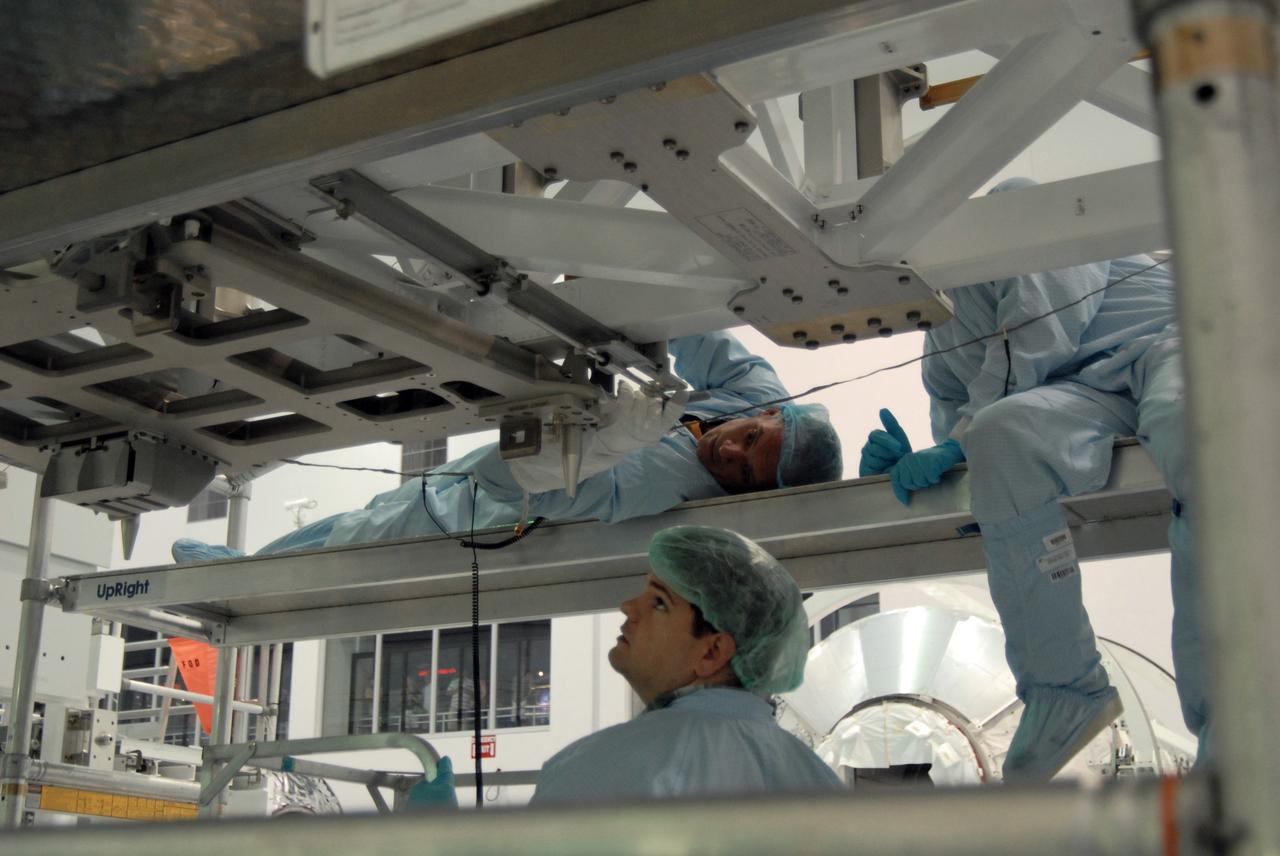
CAPE CANAVERAL, Fla. – In the Space Station Processing Facility at NASA's Kennedy Space Center in Florida, STS-128 Mission Specialist John "Danny" Olivas lies on a carrier while unbolting equipment, a task required for the mission. Members of the STS-128 crew are at Kennedy for a crew equipment interface test, or CEIT, which provides hands-on training and observation of shuttle and flight hardware. The STS-128 flight will carry science and storage racks to the International Space Station on space shuttle Discovery. The STS-128 mission is targeted to launch on Aug. 6. Photo credit: NASA/Jim Grossmann

CAPE CANAVERAL, Fla. – In the Space Station Processing Facility at NASA's Kennedy Space Center in Florida, STS-128 Mission Specialist John "Danny" Olivas lies on a carrier while unbolting equipment, a task required for the mission. Members of the STS-128 crew are at Kennedy for a crew equipment interface test, or CEIT, which provides hands-on training and observation of shuttle and flight hardware. The STS-128 flight will carry science and storage racks to the International Space Station on space shuttle Discovery. The STS-128 mission is targeted to launch on Aug. 6. Photo credit: NASA/Jim Grossmann
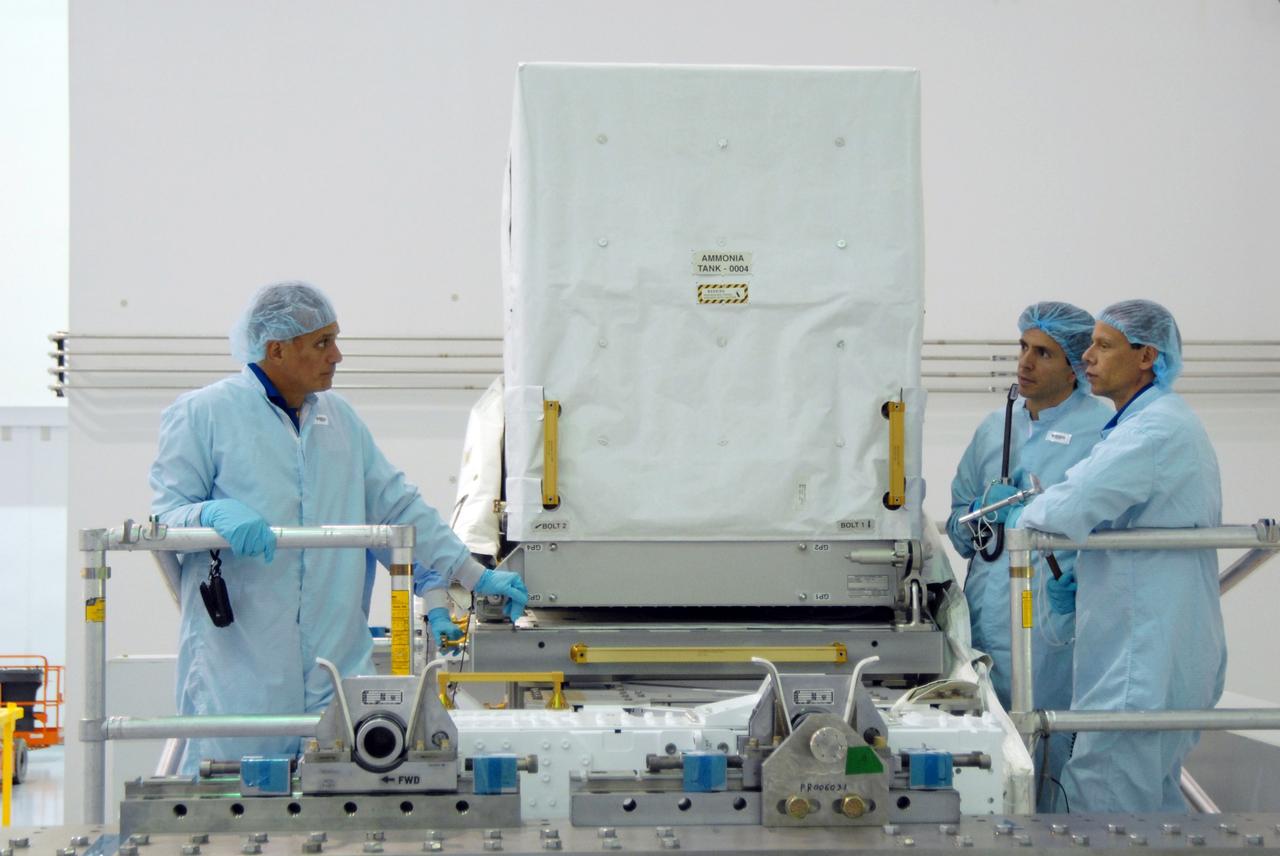
CAPE CANAVERAL, Fla. – In the Space Station Processing Facility at NASA's Kennedy Space Center in Florida, STS-128 Mission Specialists John "Danny" Olivas (left) and Christer Fugelsang (far right) inspect ammonia tanks, part of the payload for their mission. Fugelsang is with the European Space Agency. Members of the STS-128 crew are at Kennedy for a crew equipment interface test, or CEIT, which provides hands-on training and observation of shuttle and flight hardware. The STS-128 flight will carry science and storage racks to the International Space Station on space shuttle Discovery. The STS-128 mission is targeted to launch on Aug. 6. Photo credit: NASA/Jim Grossmann
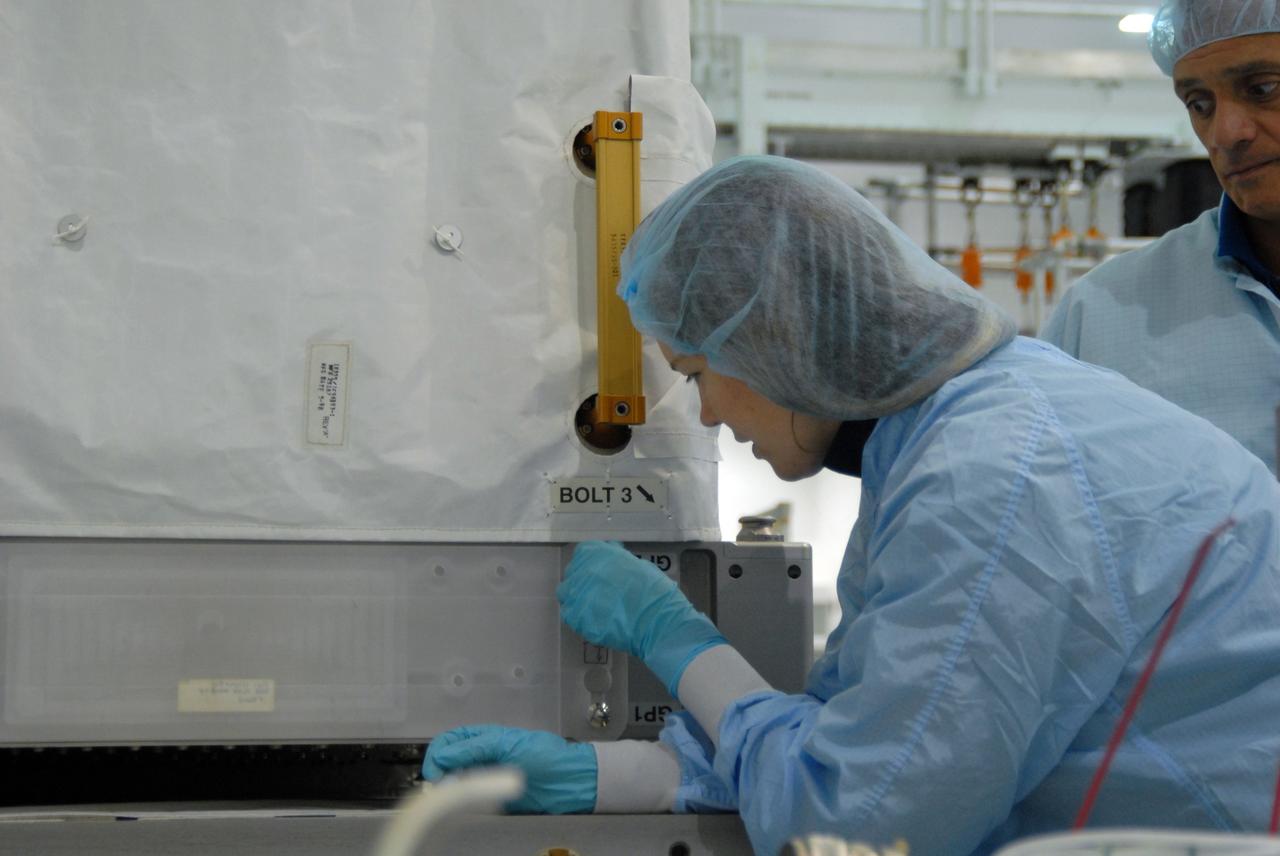
CAPE CANAVERAL, Fla. – In the Space Station Processing Facility at NASA's Kennedy Space Center in Florida, a worker demonstrates an attachment point on ammonia tanks while STS-128 Mission Specialist John "Danny" Olivas (far right) looks on. The tanks are part of the payload for their upcoming STS-128 mission. Members of the STS-128 crew are at Kennedy for a crew equipment interface test, or CEIT, which provides hands-on training and observation of shuttle and flight hardware. The STS-128 flight will carry science and storage racks to the International Space Station on space shuttle Discovery. The STS-128 mission is targeted to launch on Aug. 6. Photo credit: NASA/Jim Grossmann
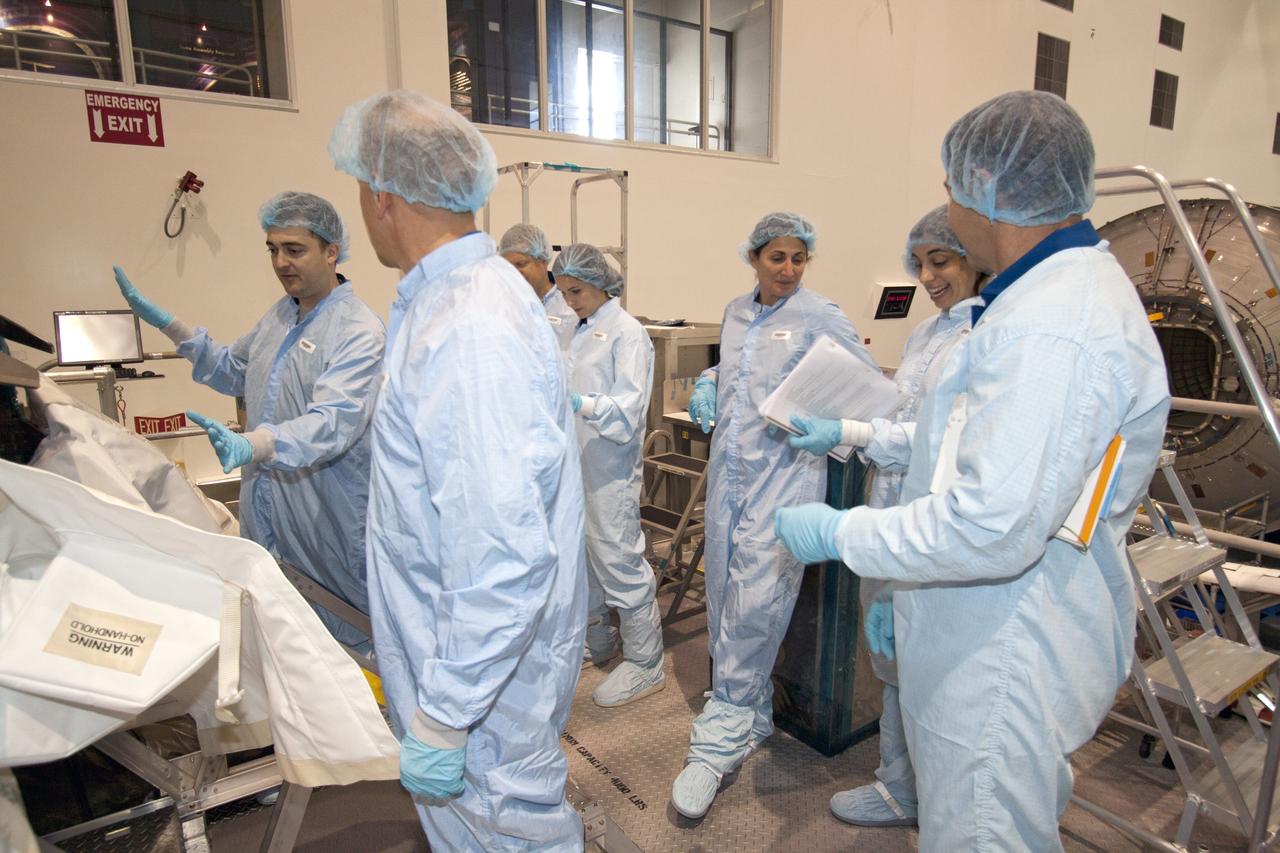
CAPE CANAVERAL, Fla. -- In the Space Station Processing Facility at NASA's Kennedy Space Center in Florida, space shuttle Discovery's STS-133 crew members are participating in the Payload Crew Equipment Interface Test, or CEIT. During this phase of CEIT the astronauts have an opportunity to see first-hand the payload they'll be delivering to the International Space Station. In the right background is the Permanent Multipurpose Module, or PMM, which is packed with supplies and critical spare parts, including Robonaut 2, the dexterous humanoid astronaut helper. Discovery is targeted to launch at 4:40 p.m. EDT Nov. 1. For more information visit www.nasa.gov/shuttle. Photo credit: NASA/Jack Pfaller
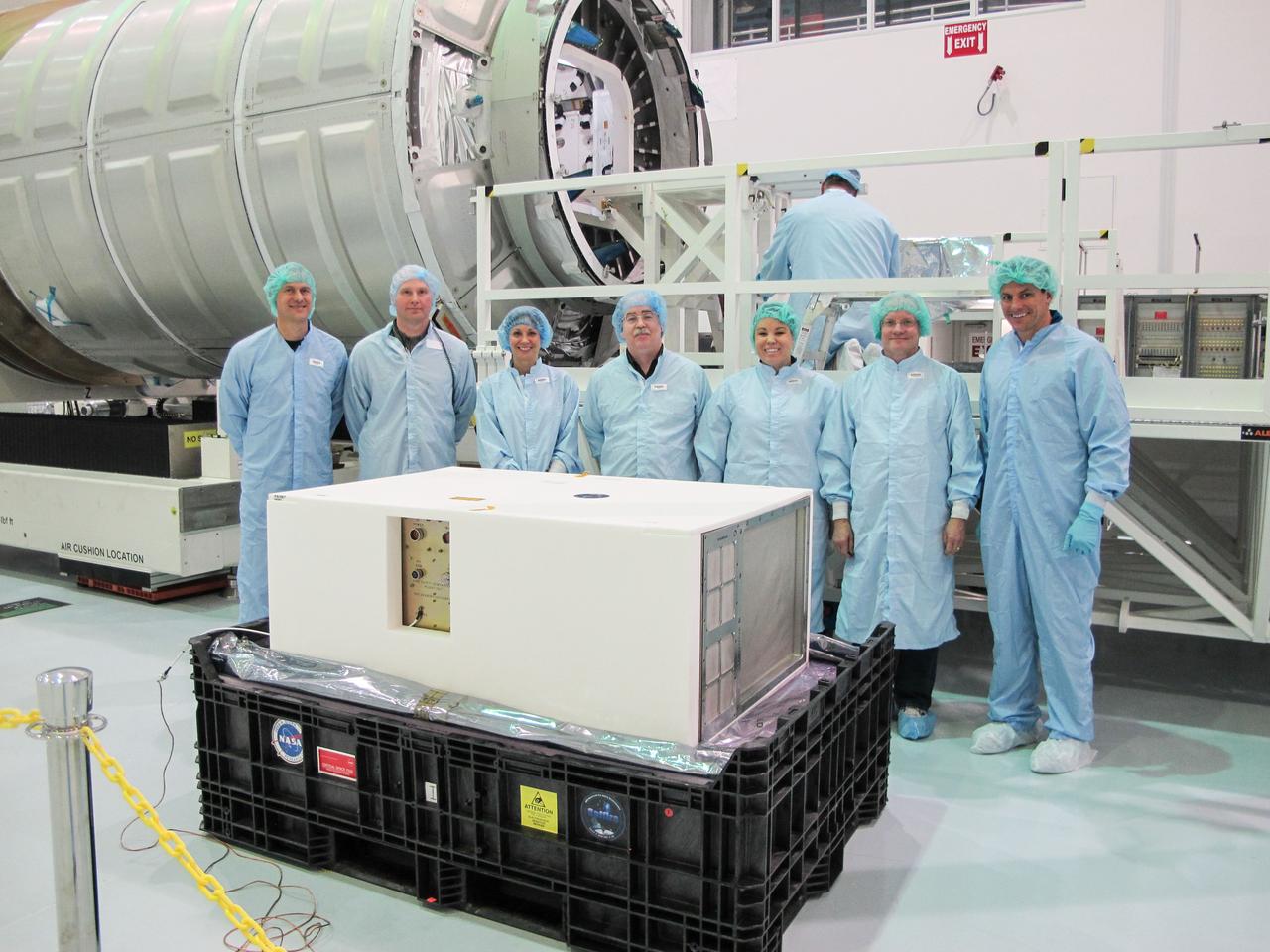
jsc2016e017570 (1/22/2016) --- Photographic documentation of Saffire-I taken during the OA-6 Crew Equipment Interface Test (CEIT) at KSC/Space Station Processing Facility (SSPF). The NASA Advanced Exploration Systems program began a project to develop and demonstrate spacecraft fire safety technologies in relevant environments. The keystone of these demonstrations is a large-scale fire safety experiment conducted on an International Space Station (ISS) re-supply vehicle after it has undocked from the ISS and before it enters the atmosphere.
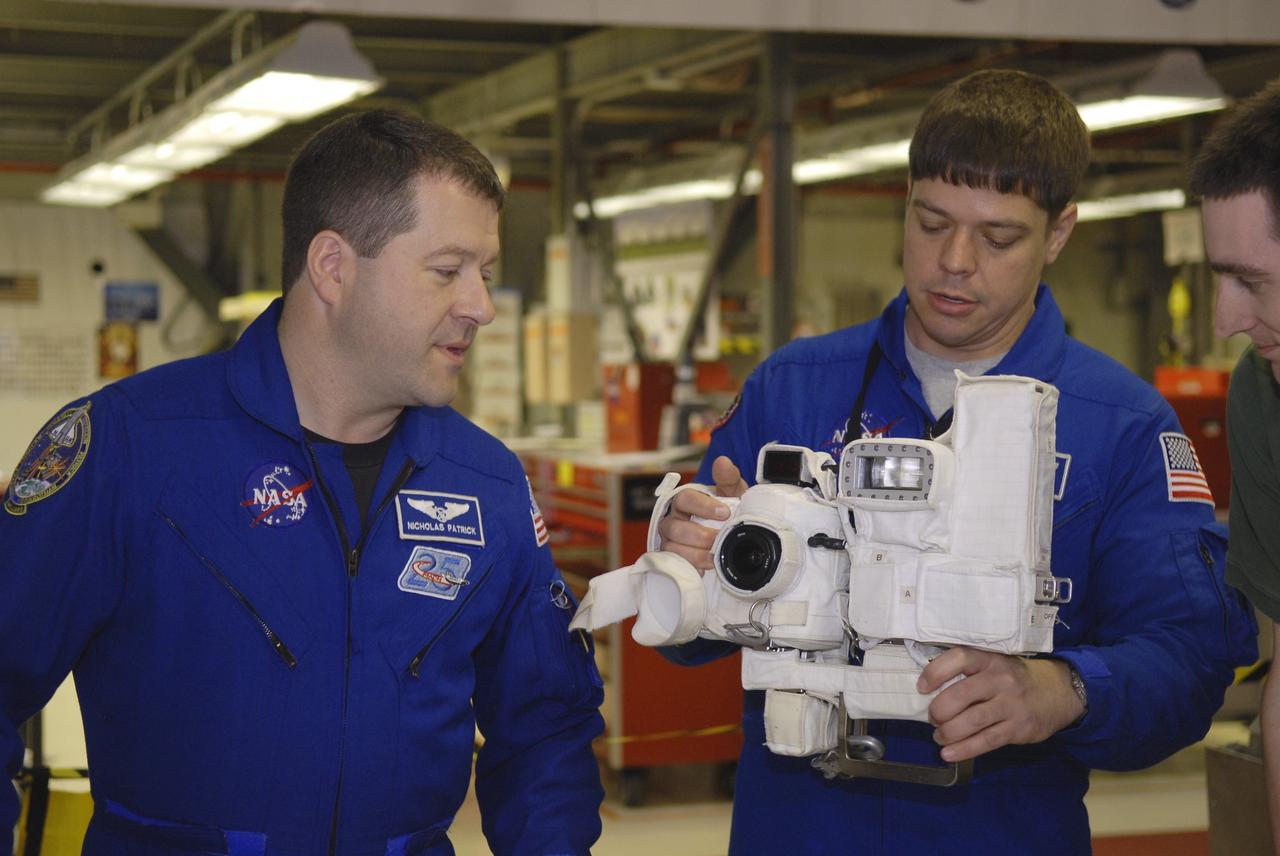
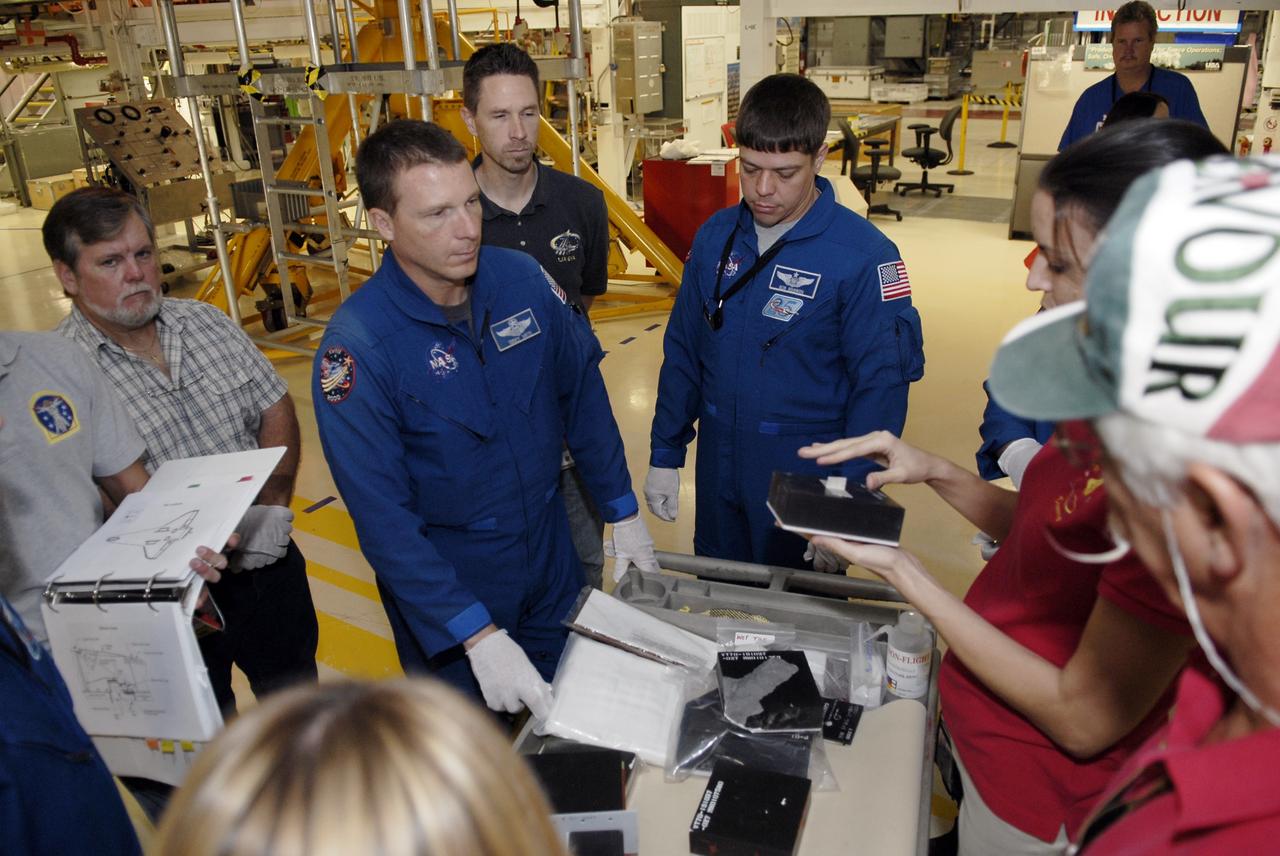
CAPE CANAVERAL, Fla. – In Orbiter Processing Facility-3 at NASA's Kennedy Space Center in Florida, STS-130 Mission Specialist Nicolas Patrick, left, discusses the operation of a camera that will fly on space shuttle Endeavour with his crewmate, Mission Specialist Robert Behnken. The crew is at Kennedy for a crew equipment interface test, or CEIT, which provides hands-on training and observation of shuttle and flight hardware. The STS-130 flight will carry the Tranquility pressurized module with a built-in cupola to the International Space Station aboard Endeavour. Launch is targeted for Feb. 4, 2010. Photo credit: NASA/Kim Shiflett
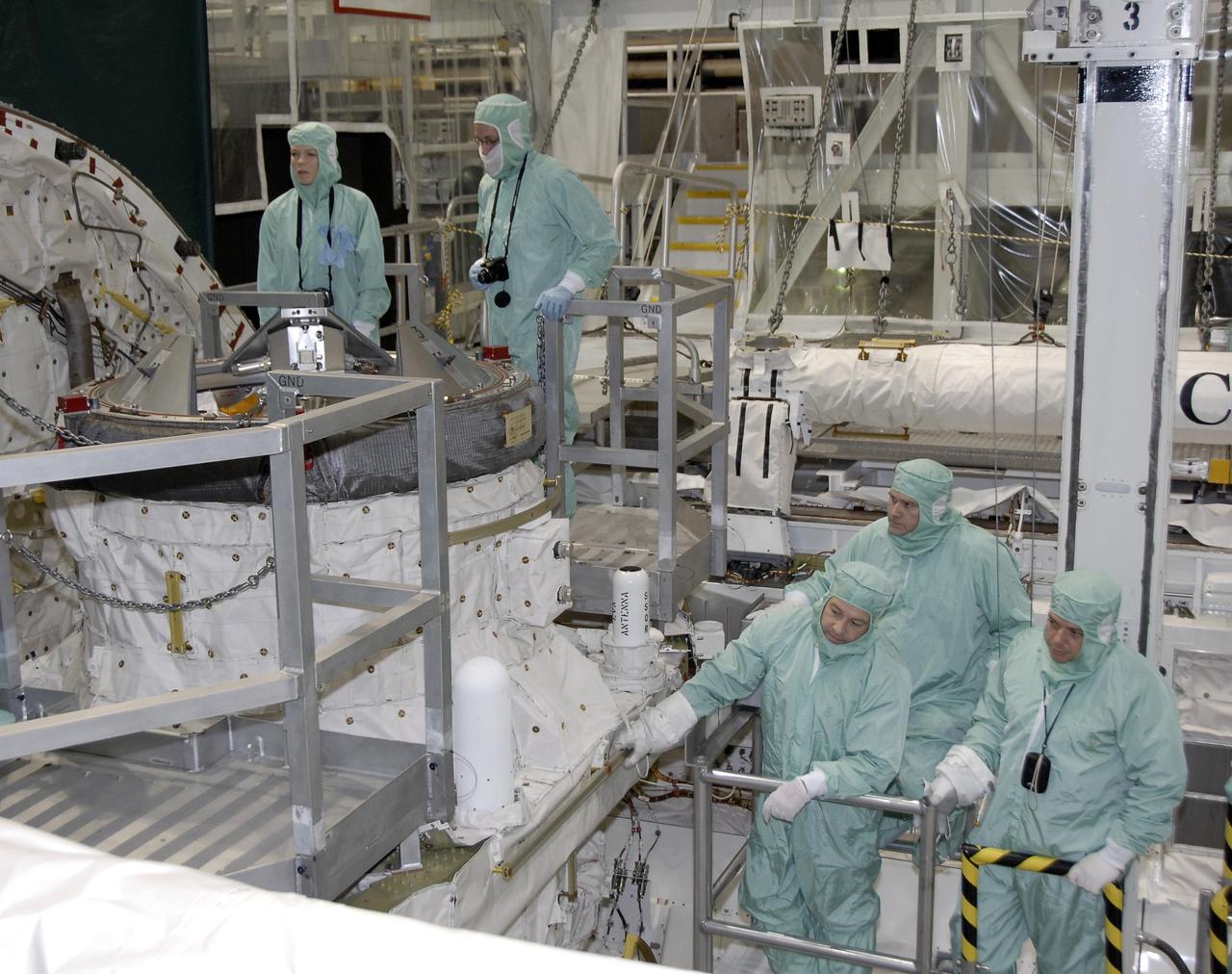
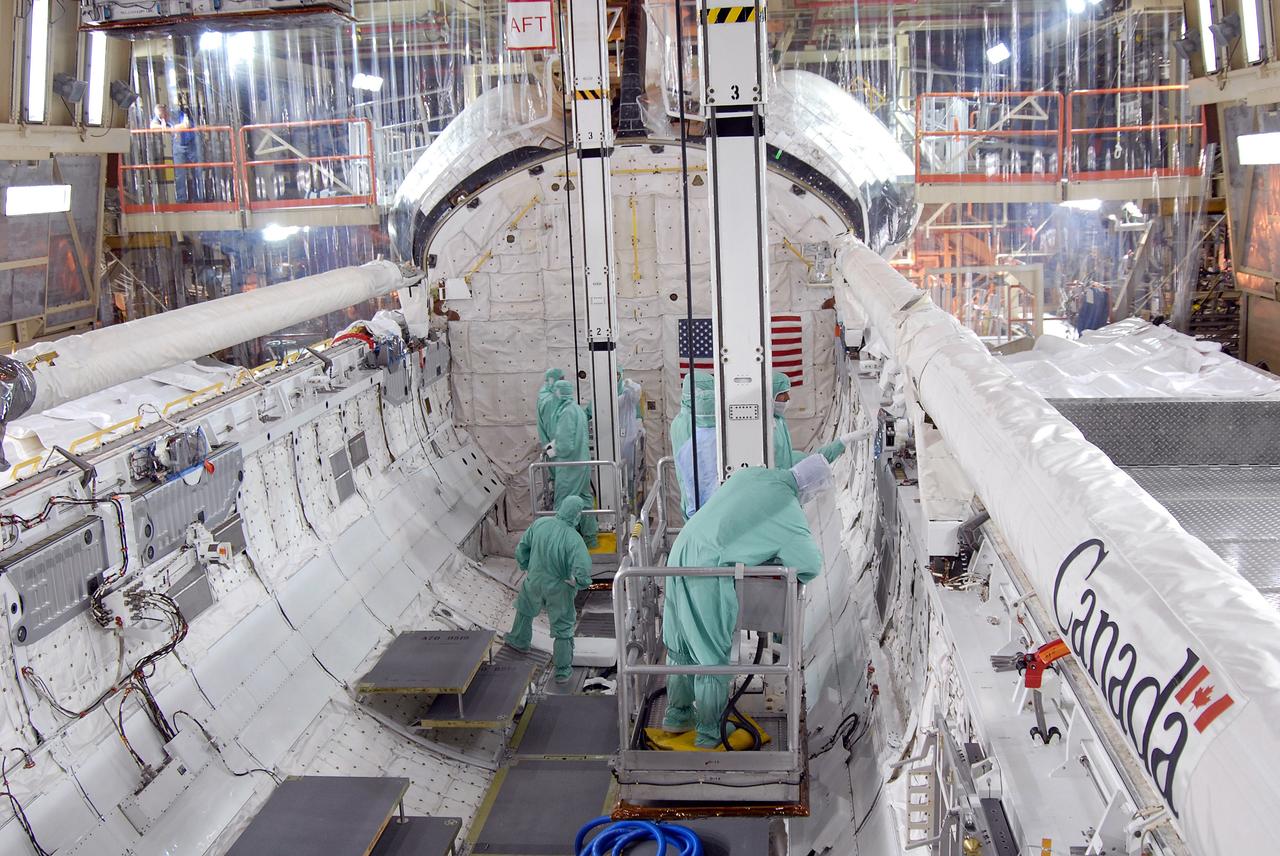
CAPE CANAVERAL, Fla. – In Orbiter Processing Facility-3 at NASA's Kennedy Space Center in Florida, members of the STS-130 crew inspect space shuttle Endeavour's payload bay. In the right corner, from left are Commander George Zamka, Pilot Terry Virts Jr. and Mission Specialist Robert Behnken. The crew is at Kennedy for a crew equipment interface test, or CEIT, which provides hands-on training and observation of shuttle and flight hardware. The STS-130 flight will carry the Tranquility pressurized module with a built-in cupola to the International Space Station aboard Endeavour. Launch is targeted for Feb. 4, 2010. Photo credit: NASA/Kim Shiflett
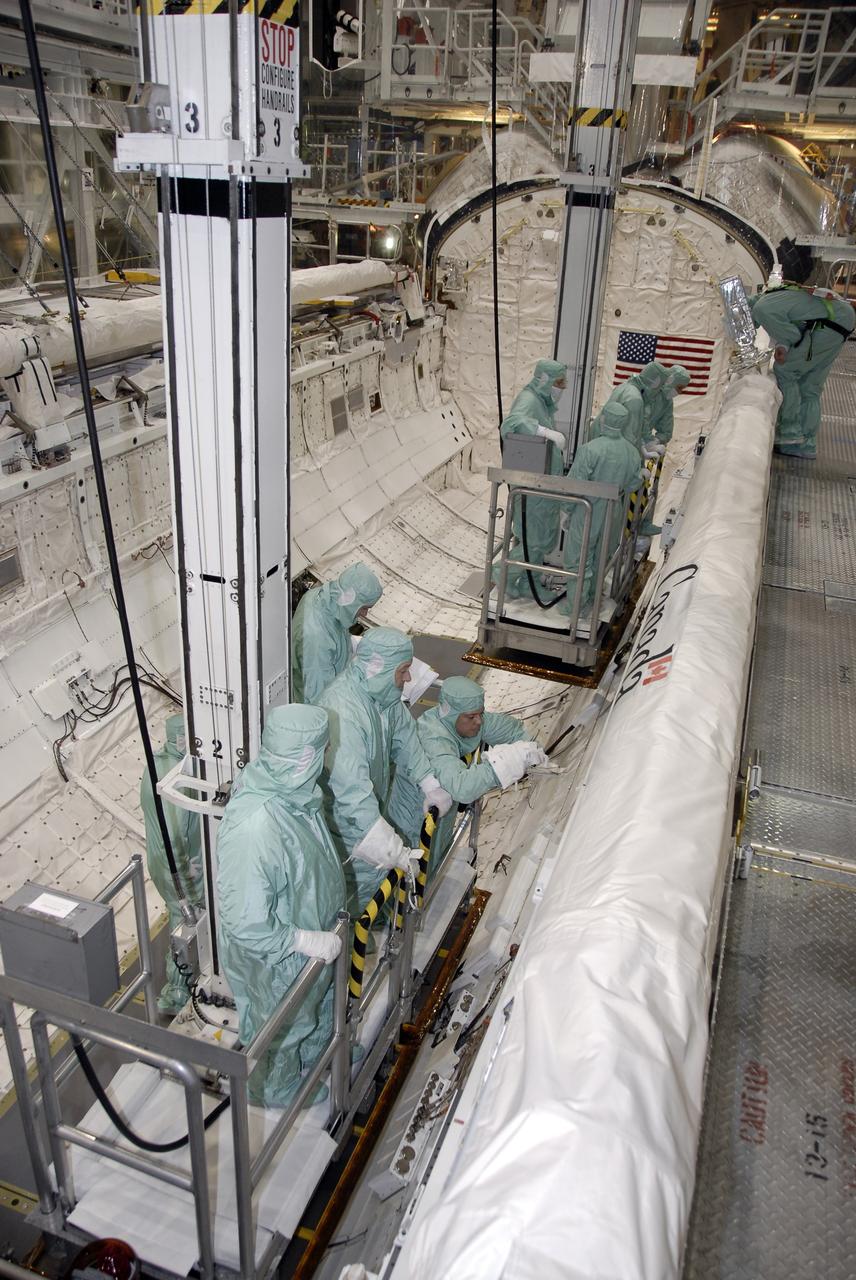
CAPE CANAVERAL, Fla. – In Orbiter Processing Facility-3 at NASA's Kennedy Space Center in Florida, members of the STS-130 crew check out the placement of the Canadian-built robotic arm in space shuttle Endeavour's payload bay. The crew is at Kennedy for a crew equipment interface test, or CEIT, which provides hands-on training and observation of shuttle and flight hardware. The STS-130 flight will carry the Tranquility pressurized module with a built-in cupola to the International Space Station aboard Endeavour. Launch is targeted for Feb. 4, 2010. Photo credit: NASA/Kim Shiflett
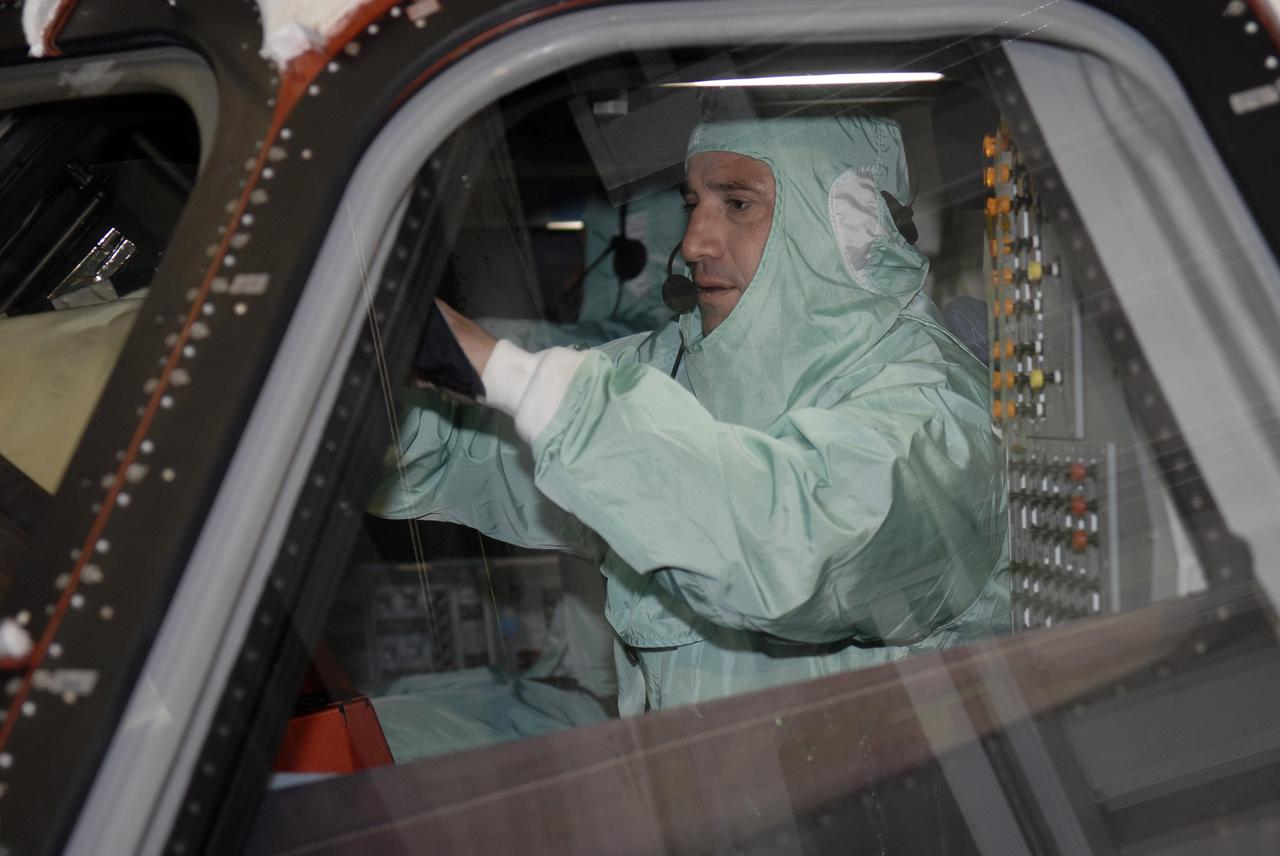
CAPE CANAVERAL, Fla. – In Orbiter Processing Facility-3 at NASA's Kennedy Space Center in Florida, STS-130 Commander George Zamka dressed in clean-room attire, known as a "bunny suit," gets the feel of the cockpit of space shuttle Endeavour. The crew is at Kennedy for a crew equipment interface test, or CEIT, which provides hands-on training and observation of shuttle and flight hardware. The STS-130 flight will carry the Tranquility pressurized module with a built-in cupola to the International Space Station aboard Endeavour. Launch is targeted for Feb. 4, 2010. Photo credit: NASA/Kim Shiflett
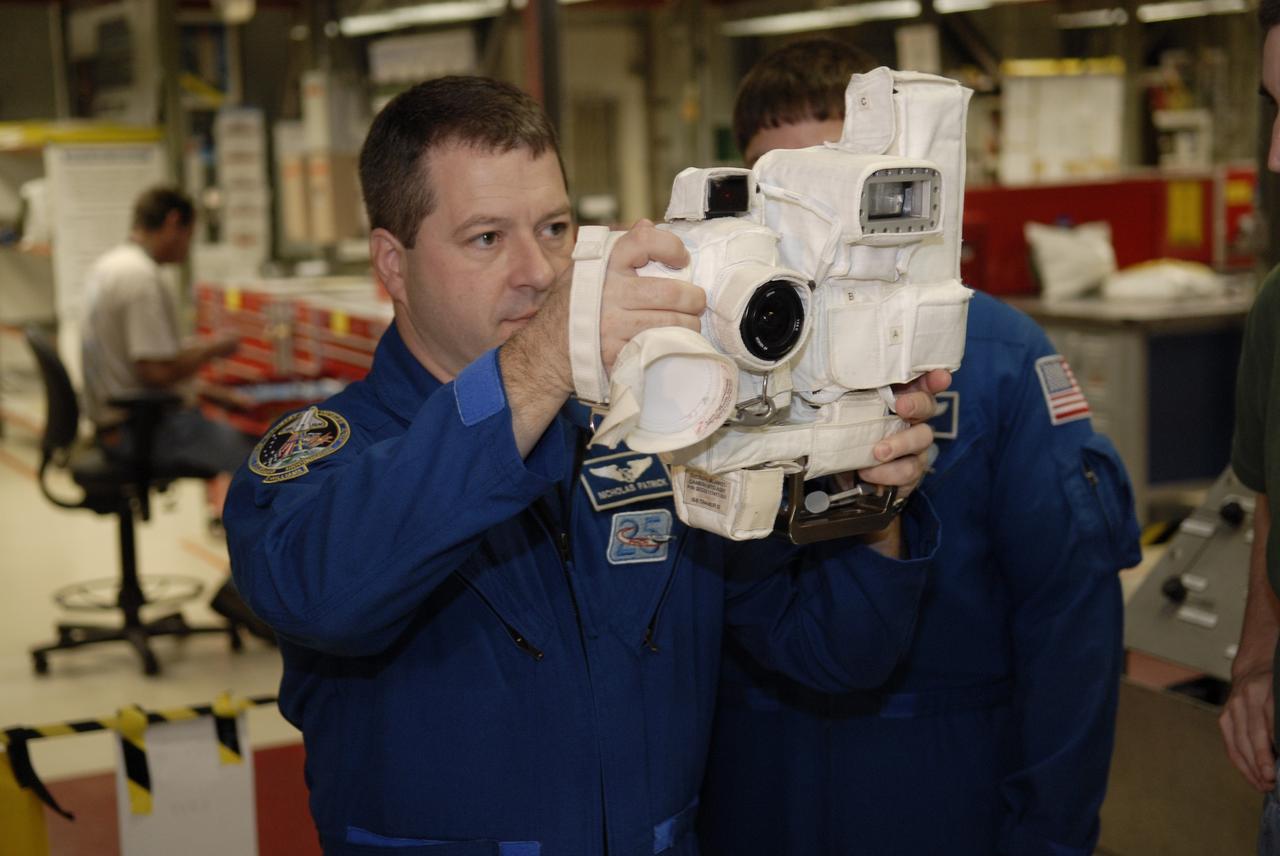
CAPE CANAVERAL, Fla. – In Orbiter Processing Facility-3 at NASA's Kennedy Space Center in Florida, STS-130 Mission Specialist Nicolas Patrick takes an opportunity to operate a camera that will fly on space shuttle Endeavour. The crew is at Kennedy for a crew equipment interface test, or CEIT, which provides hands-on training and observation of shuttle and flight hardware. The STS-130 flight will carry the Tranquility pressurized module with a built-in cupola to the International Space Station aboard Endeavour. Launch is targeted for Feb. 4, 2010. Photo credit: NASA/Kim Shiflett
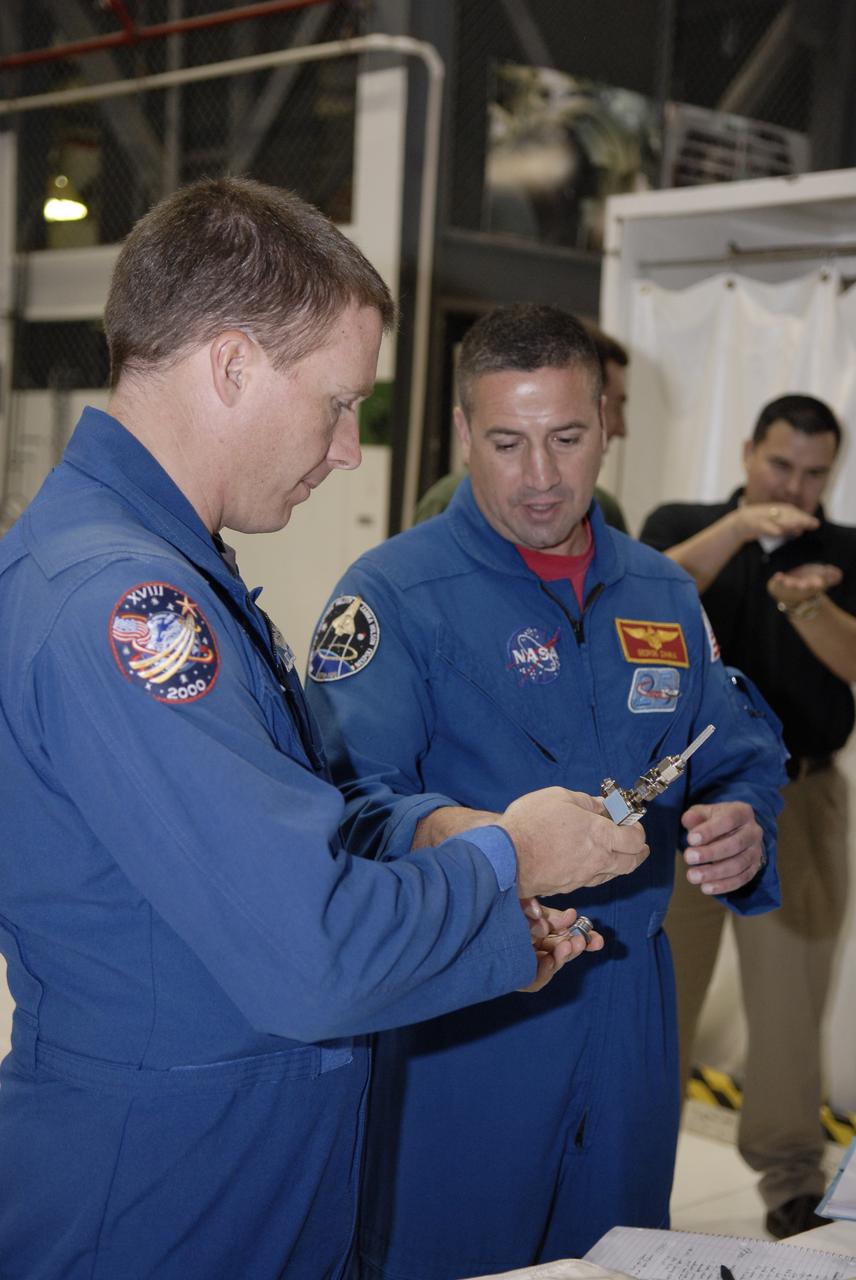
CAPE CANAVERAL, Fla. – In Orbiter Processing Facility-3 at NASA's Kennedy Space Center in Florida, STS-130 Pilot Terry Virts Jr., left, handles a piece of hardware that will fly on space shuttle Endeavour as his commander, George Zamka, looks on. The crew is at Kennedy for a crew equipment interface test, or CEIT, which provides hands-on training and observation of shuttle and flight hardware. The STS-130 flight will carry the Tranquility pressurized module with a built-in cupola to the International Space Station aboard Endeavour. Launch is targeted for Feb. 4, 2010. Photo credit: NASA/Kim Shiflett
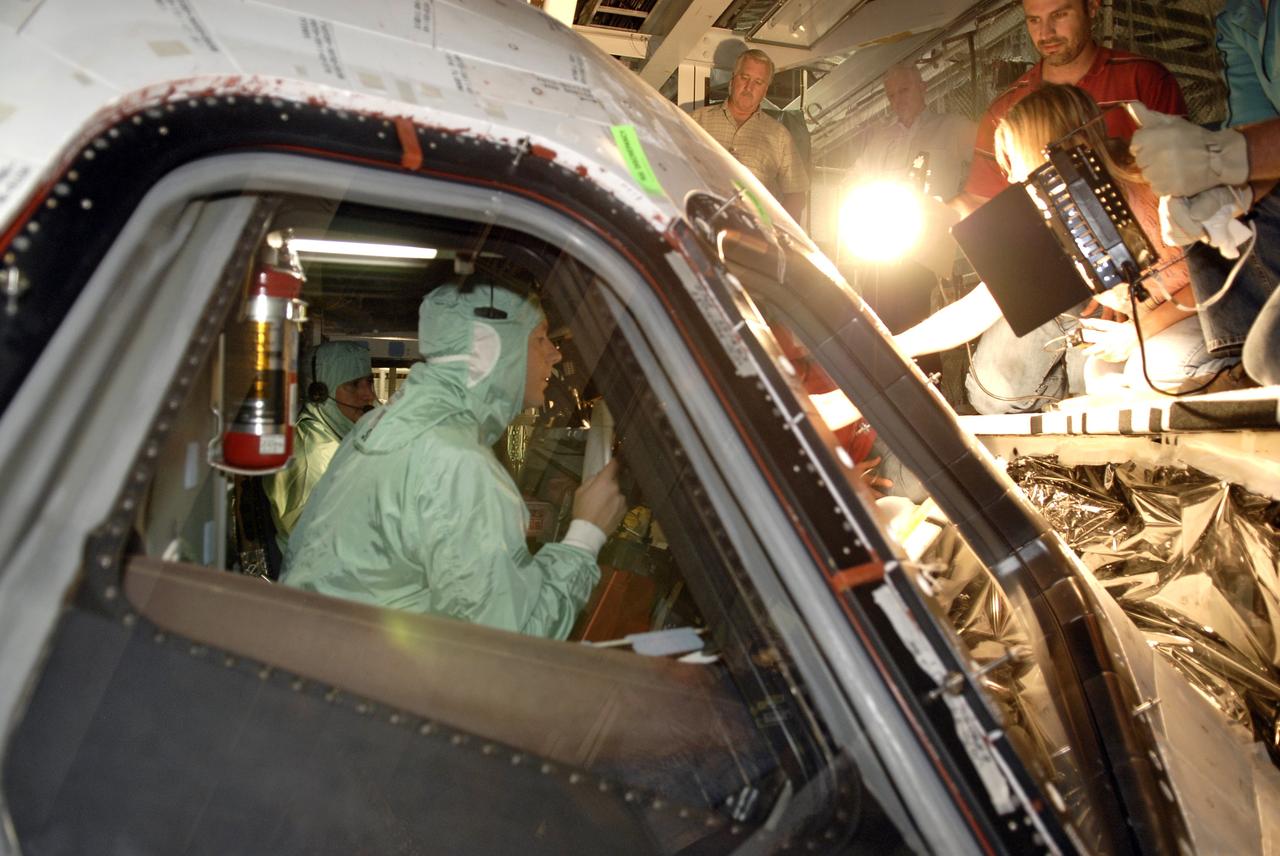
CAPE CANAVERAL, Fla. – In Orbiter Processing Facility-3 at NASA's Kennedy Space Center in Florida, STS-130 Pilot Terry Virts Jr. dressed in clean-room attire, known as a "bunny suit," tries out the cockpit of space shuttle Endeavour. The crew is at Kennedy for a crew equipment interface test, or CEIT, which provides hands-on training and observation of shuttle and flight hardware. The STS-130 flight will carry the Tranquility pressurized module with a built-in cupola to the International Space Station aboard Endeavour. Launch is targeted for Feb. 4, 2010. Photo credit: NASA/Kim Shiflett
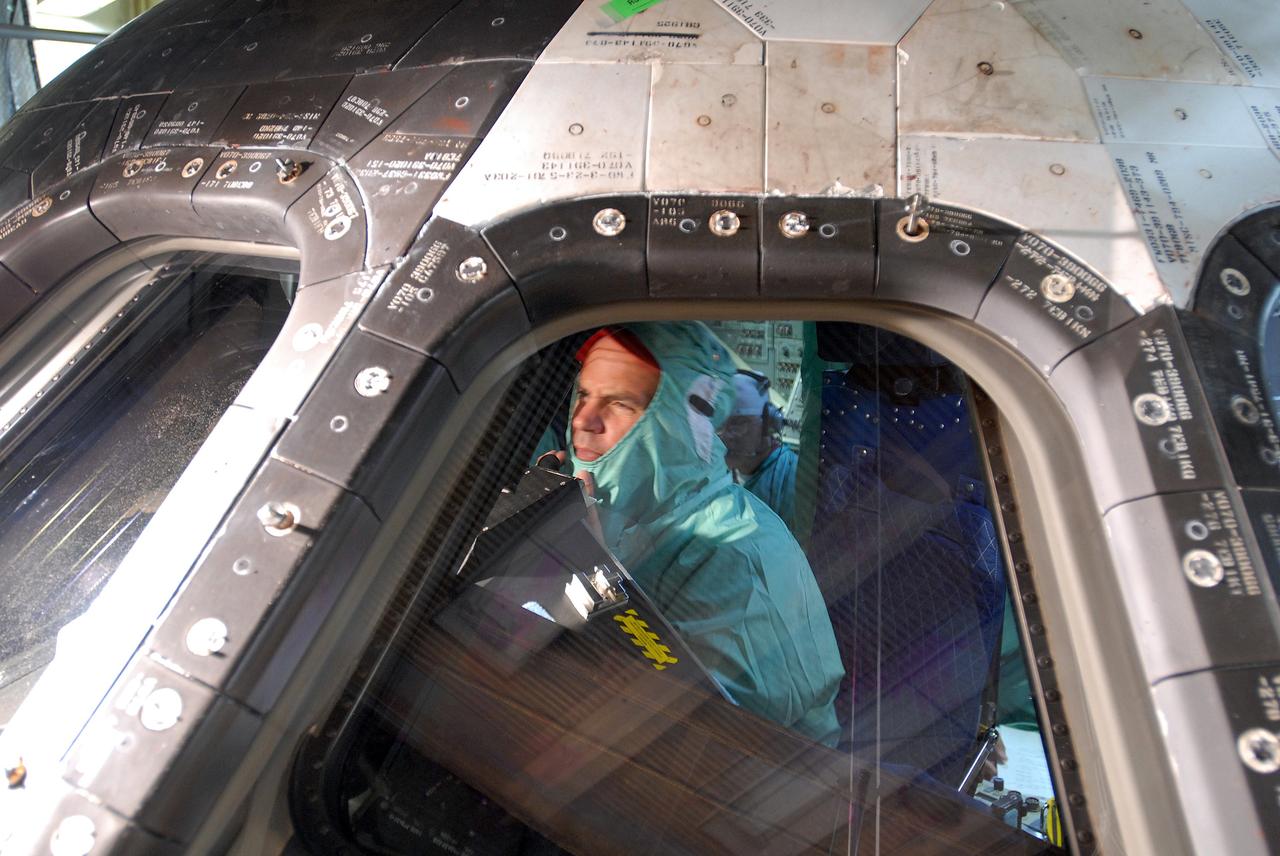
CAPE CANAVERAL, Fla. – In Orbiter Processing Facility 3 at NASA's Kennedy Space Center in Florida, STS-128 mission Commander Rick Sturckow checks out the cockpit window of space shuttle Discovery. The crew is at Kennedy for a crew equipment interface test, or CEIT, which provides hands-on training and observation of shuttle and flight hardware. The STS-128 flight will carry science and storage racks to the International Space Station on Discovery. Launch is targeted for Aug. 7. Photo credit: NASA/Jim Grossmann
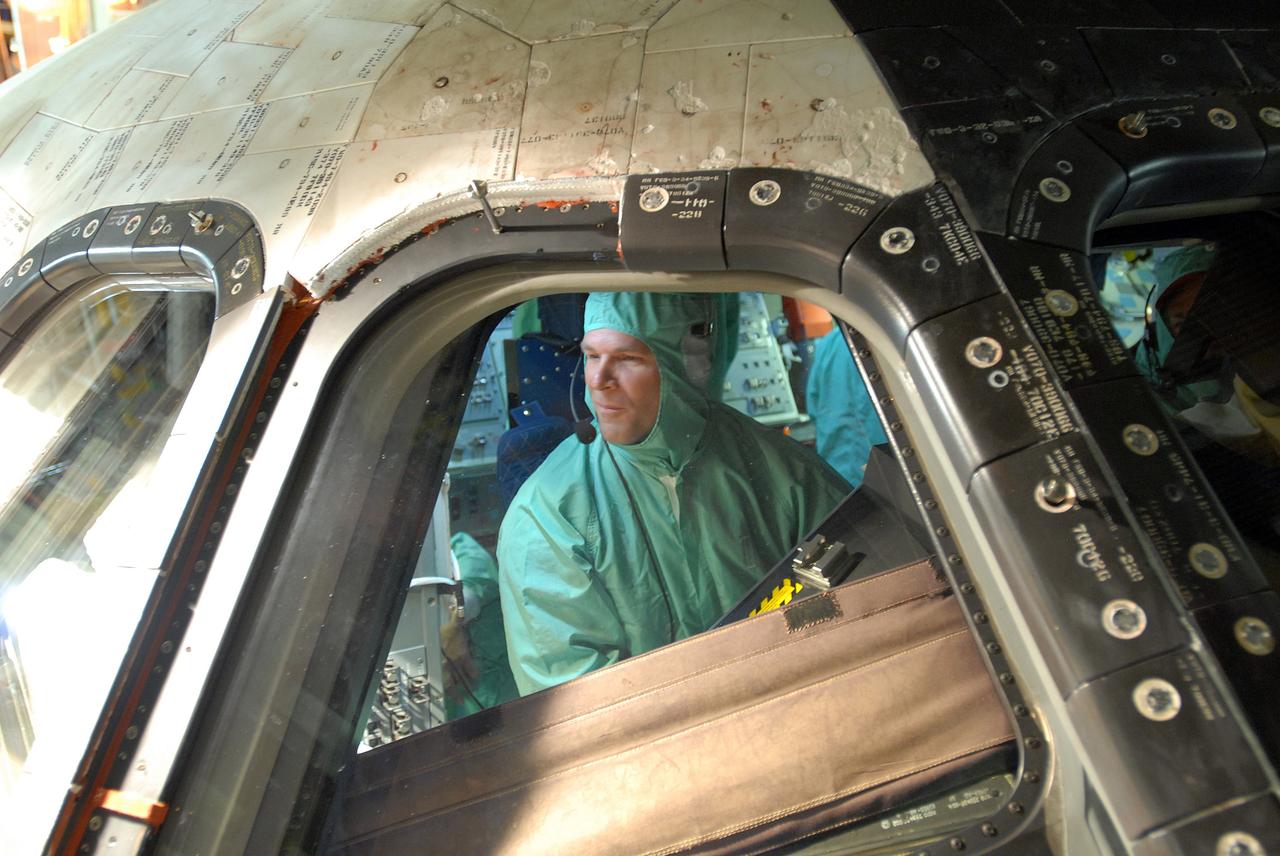
CAPE CANAVERAL, Fla. – In Orbiter Processing Facility 3 at NASA's Kennedy Space Center in Florida, STS-128 Pilot Kevin Ford checks out the cockpit windows of space shuttle Discovery. The crew is at Kennedy for a crew equipment interface test, or CEIT, which provides hands-on training and observation of shuttle and flight hardware. The STS-128 flight will carry science and storage racks to the International Space Station on Discovery. Launch is targeted for Aug. 7. Photo credit: NASA/Jim Grossmann
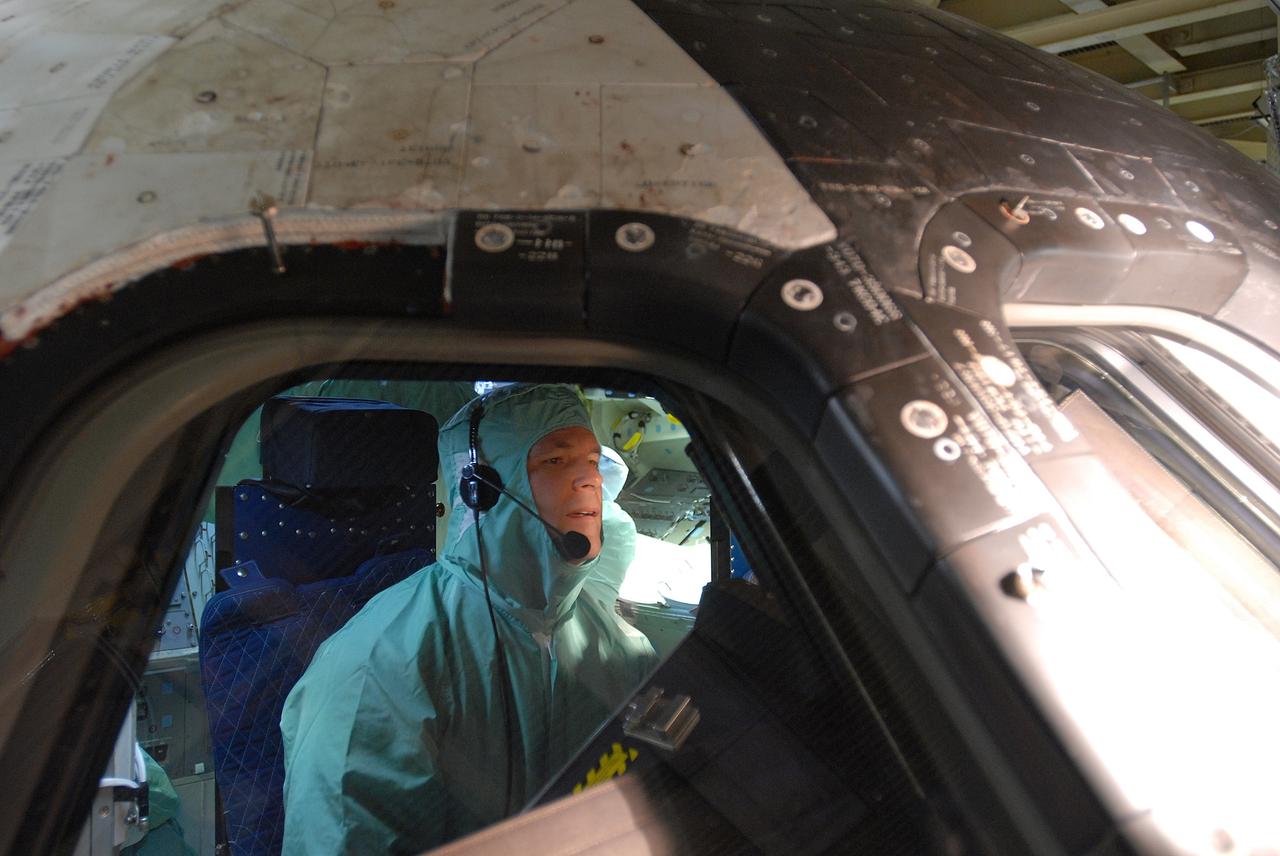
CAPE CANAVERAL, Fla. – In Orbiter Processing Facility 3 at NASA's Kennedy Space Center in Florida, STS-128 mission Pilot Kevin Ford checks out the cockpit window of space shuttle Discovery. The crew is at Kennedy for a crew equipment interface test, or CEIT, which provides hands-on training and observation of shuttle and flight hardware. The STS-128 flight will carry science and storage racks to the International Space Station on Discovery. Launch is targeted for Aug. 7. Photo credit: NASA/Jim Grossmann
CAPE CANAVERAL, Fla. – In Orbiter Processing Facility 3 at NASA's Kennedy Space Center in Florida, STS-128 crew members are lowered into space shuttle Discovery's payload bay to get a close look at equipment. The crew is at Kennedy for a crew equipment interface test, or CEIT, which provides hands-on training and observation of shuttle and flight hardware. The STS-128 flight will carry science and storage racks to the International Space Station on Discovery. Launch is targeted for Aug. 7. Photo credit: NASA/Jim Grossmann
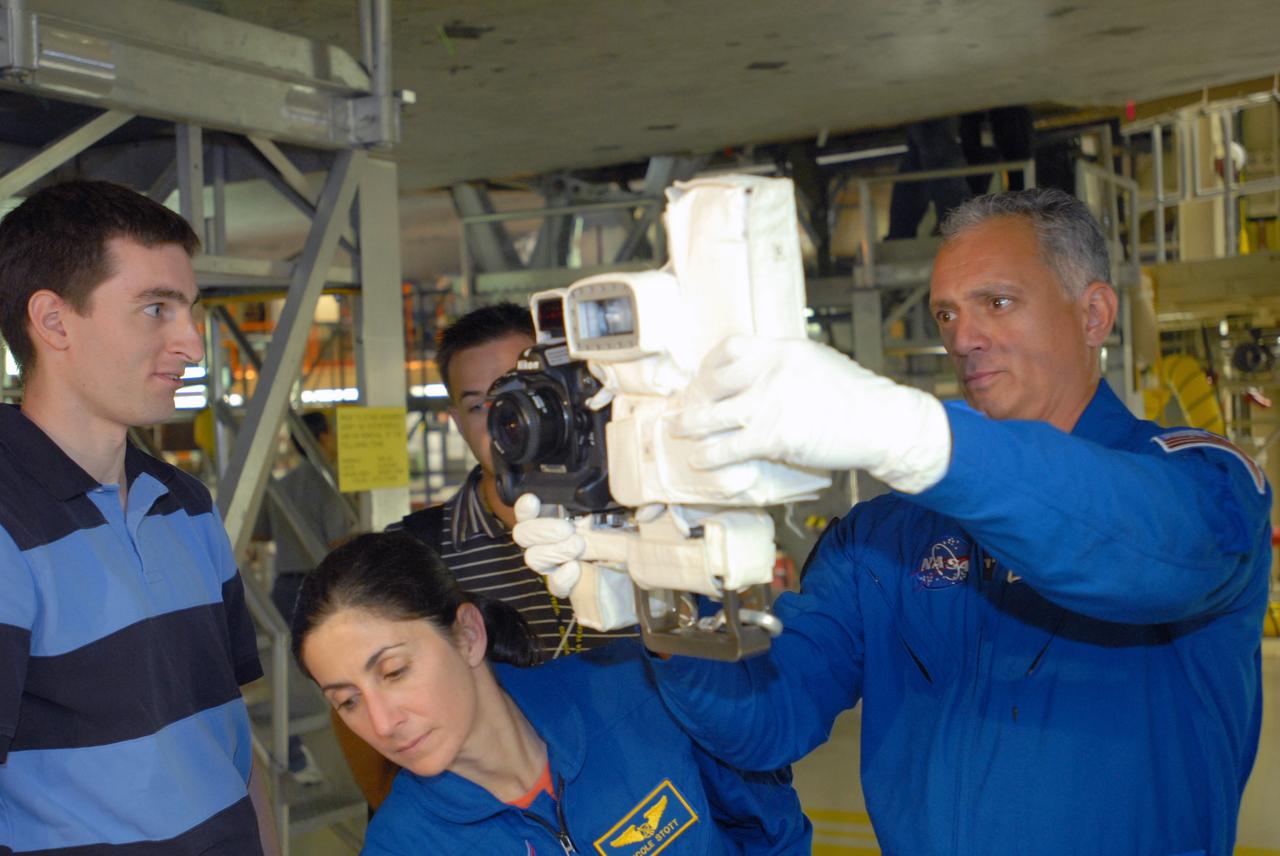
CAPE CANAVERAL, Fla. – In Orbiter Processing Facility 3 at NASA's Kennedy Space Center in Florida, STS-128 Mission Specialists Nicole Stott and John "Danny" Olivas practice with a camera they will use on their upcoming STS-128 mission. The crew is at Kennedy for a crew equipment interface test, or CEIT, which provides hands-on training and observation of shuttle and flight hardware. The STS-128 flight will carry science and storage racks to the International Space Station on Discovery. Launch is targeted for Aug. 7. Photo credit: NASA/Jim Grossmann
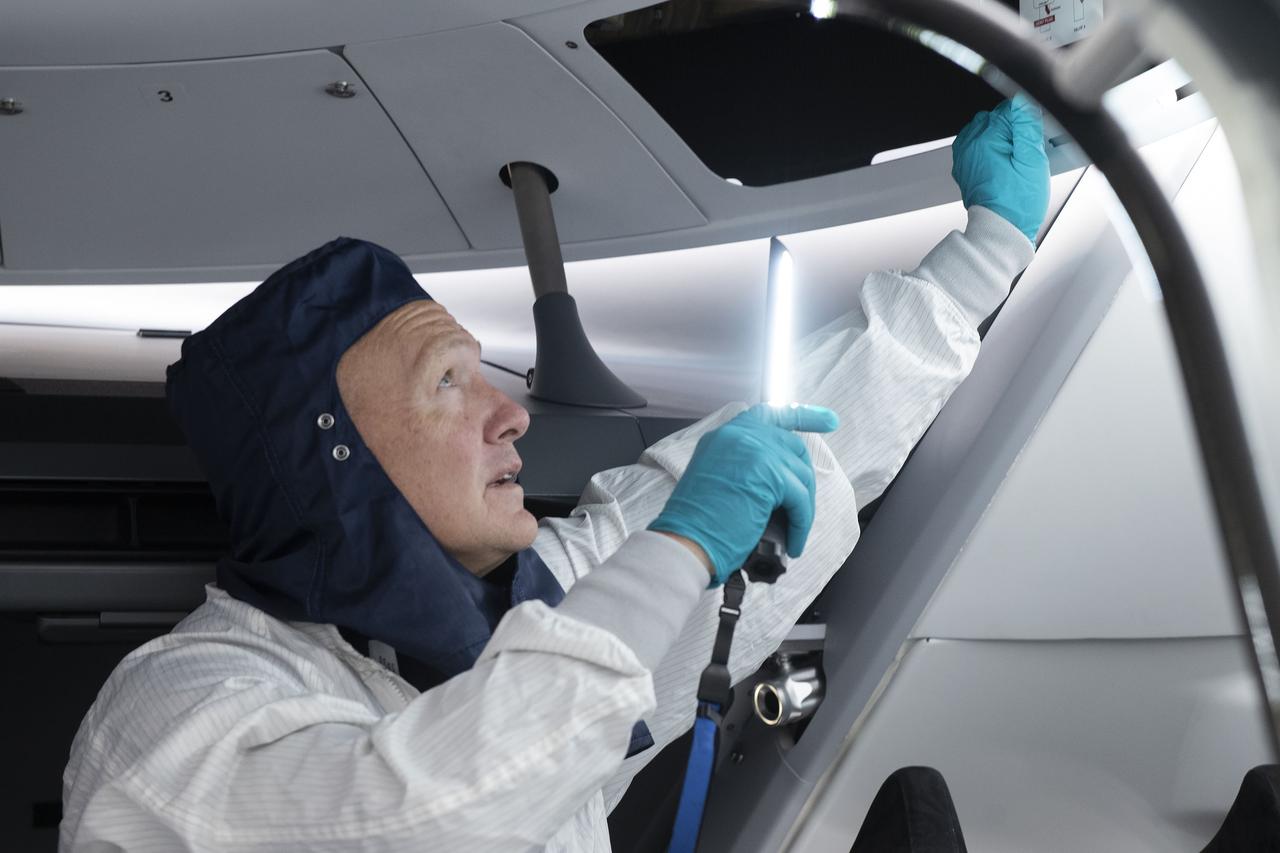
On Monday, March 30, 2020 at a SpaceX processing facility on Cape Canaveral Air Force Station in Florida, SpaceX successfully completed a fully integrated test of critical crew flight hardware ahead of Crew Dragon’s second demonstration mission to the International Space Station for NASA's Commercial Crew Program; the first flight test with astronauts onboard the spacecraft. NASA astronauts Bob Behnken and Doug Hurley participated in the test, which included flight suit leak checks, spacecraft sound verification, display panel and cargo bin inspections, seat hardware rotations, and more.
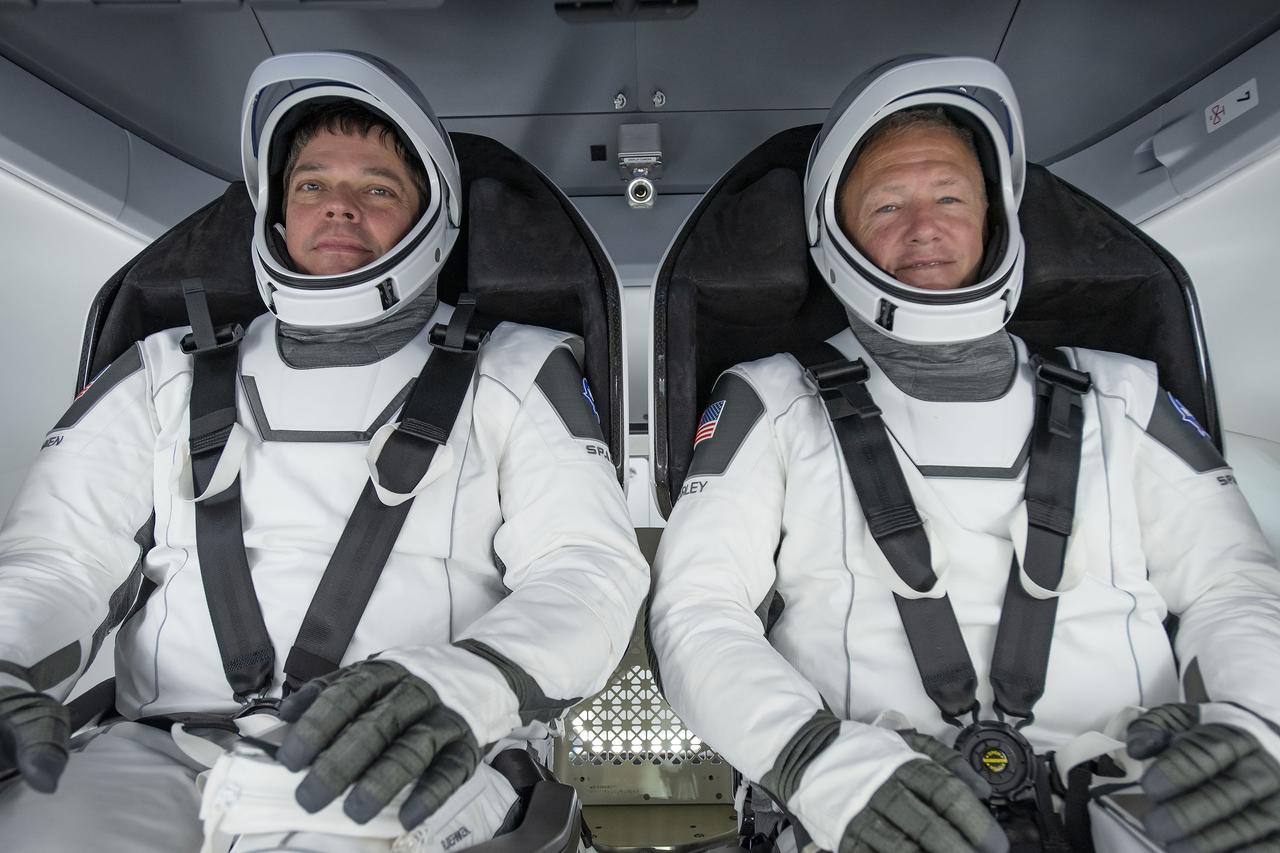
On Monday, March 30, 2020 at a SpaceX processing facility on Cape Canaveral Air Force Station in Florida, SpaceX successfully completed a fully integrated test of critical crew flight hardware ahead of Crew Dragon’s second demonstration mission to the International Space Station for NASA's Commercial Crew Program; the first flight test with astronauts onboard the spacecraft. NASA astronauts Bob Behnken and Doug Hurley participated in the test, which included flight suit leak checks, spacecraft sound verification, display panel and cargo bin inspections, seat hardware rotations, and more.
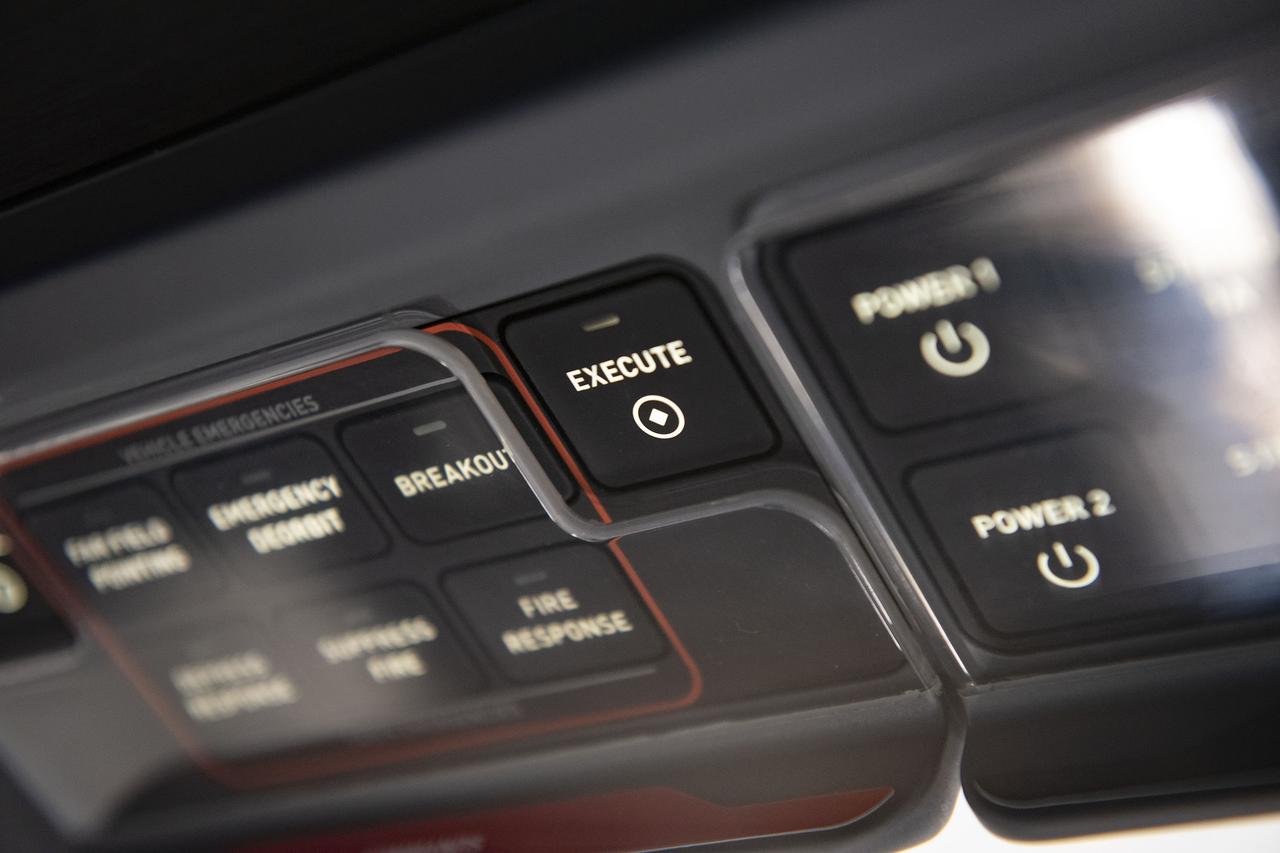
On Monday, March 30, 2020 at a SpaceX processing facility on Cape Canaveral Air Force Station in Florida, SpaceX successfully completed a fully integrated test of critical crew flight hardware ahead of Crew Dragon’s second demonstration mission to the International Space Station for NASA's Commercial Crew Program; the first flight test with astronauts onboard the spacecraft. NASA astronauts Bob Behnken and Doug Hurley participated in the test, which included flight suit leak checks, spacecraft sound verification, display panel and cargo bin inspections, seat hardware rotations, and more.
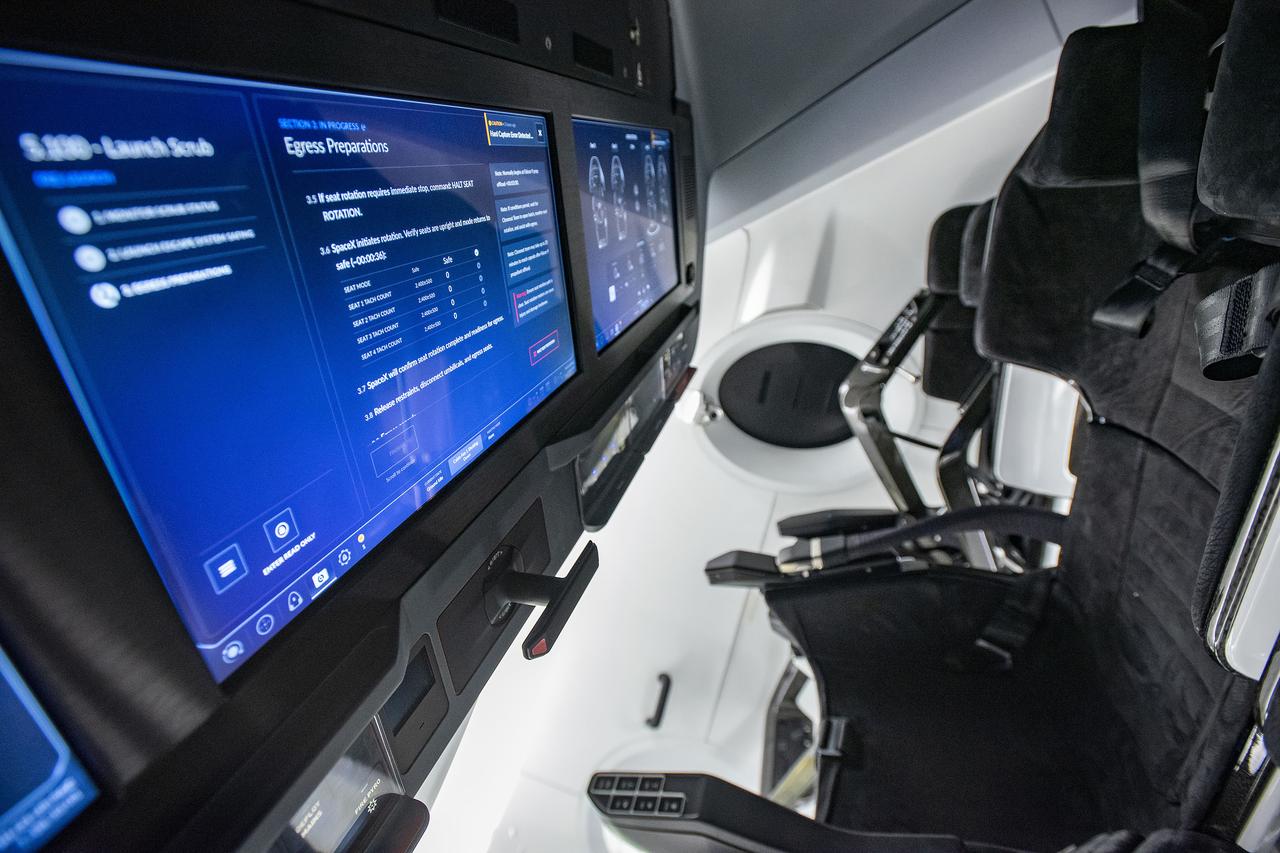
On Monday, March 30, 2020 at a SpaceX processing facility on Cape Canaveral Air Force Station in Florida, SpaceX successfully completed a fully integrated test of critical crew flight hardware ahead of Crew Dragon’s second demonstration mission to the International Space Station for NASA's Commercial Crew Program; the first flight test with astronauts onboard the spacecraft. NASA astronauts Bob Behnken and Doug Hurley participated in the test, which included flight suit leak checks, spacecraft sound verification, display panel and cargo bin inspections, seat hardware rotations, and more.
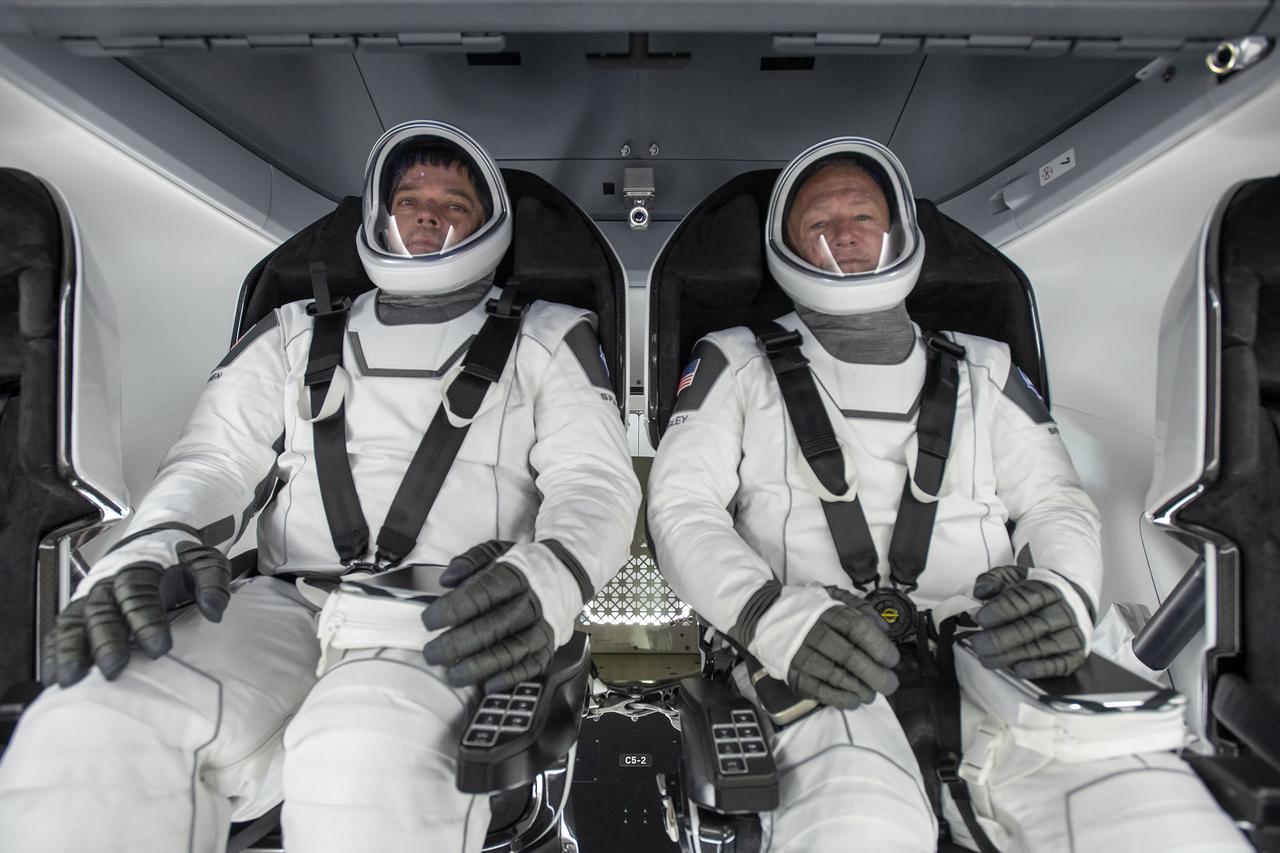
On Monday, March 30, 2020 at a SpaceX processing facility on Cape Canaveral Air Force Station in Florida, SpaceX successfully completed a fully integrated test of critical crew flight hardware ahead of Crew Dragon’s second demonstration mission to the International Space Station for NASA's Commercial Crew Program; the first flight test with astronauts onboard the spacecraft. NASA astronauts Bob Behnken and Doug Hurley participated in the test, which included flight suit leak checks, spacecraft sound verification, display panel and cargo bin inspections, seat hardware rotations, and more.
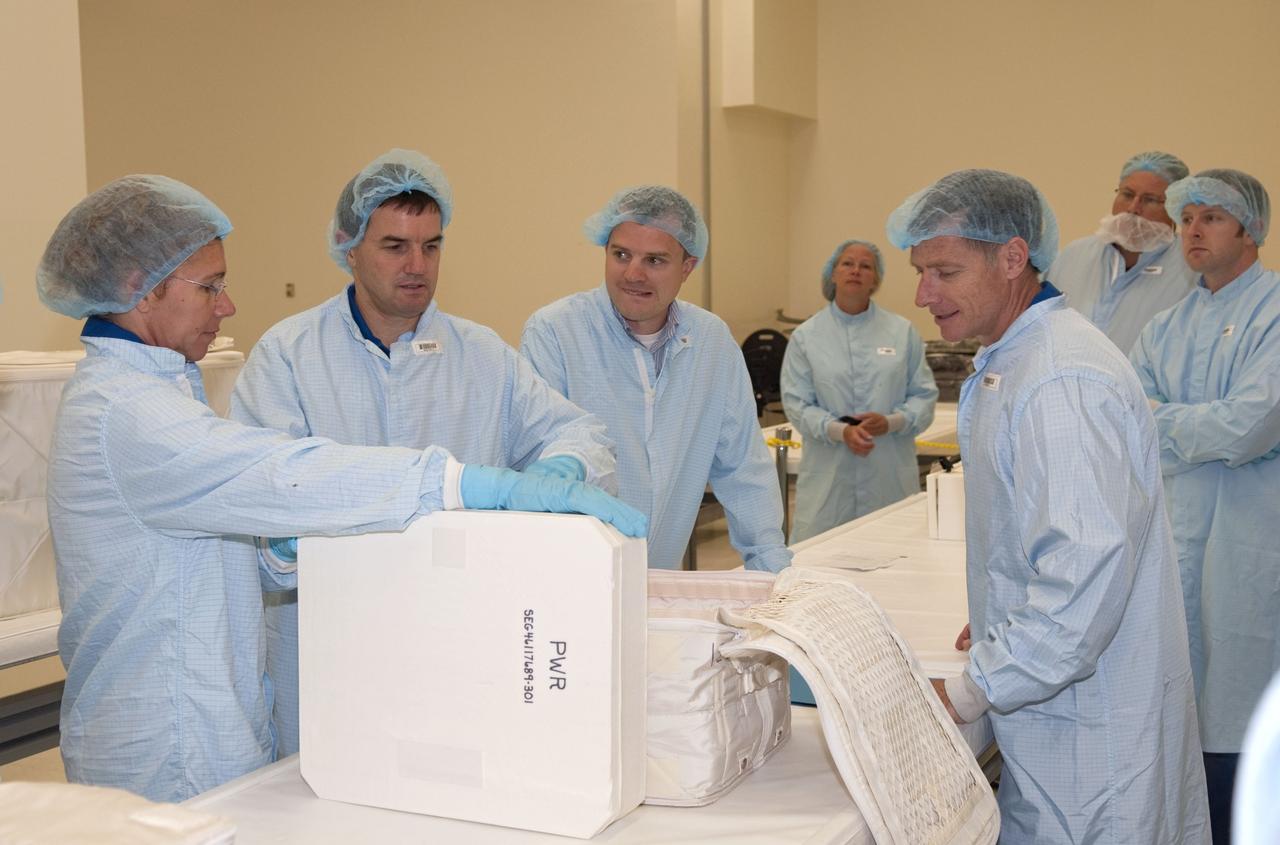
CAPE CANAVERAL, Fla. -- Space shuttle Atlantis' STS-135 crew participates in a crew equipment interface test, or CEIT, in the Space Station Processing Facility at NASA's Kennedy Space Center in Florida. The purpose of CEIT is for flight crew members to become familiar with the hardware and tools they will work with in space. Working behind the table are Mission Specialists Sandy Magnus, left, and Rex Walheim. Commander Chris Ferguson observes from the front of the table, as do technicians. STS-135 will carry the Raffaello multi-purpose logistics module packed with supplies, logistics and spare parts to the International Space Station. STS-135 also will return a failed ammonia pump module on the Lightweight Multi-Purpose Experiment Support Structure Carrier, or LMC, to help NASA better understand the failure mechanism and improve pump designs for future systems. STS-135, targeted to launch June 28, will be the 33rd flight of Atlantis, the 37th shuttle mission to the space station, and the 135th and final mission of NASA's Space Shuttle Program. For more information visit, www.nasa.gov/mission_pages/shuttle/shuttlemissions/sts135/index.html. Photo credit: NASA/Jim Grossmann
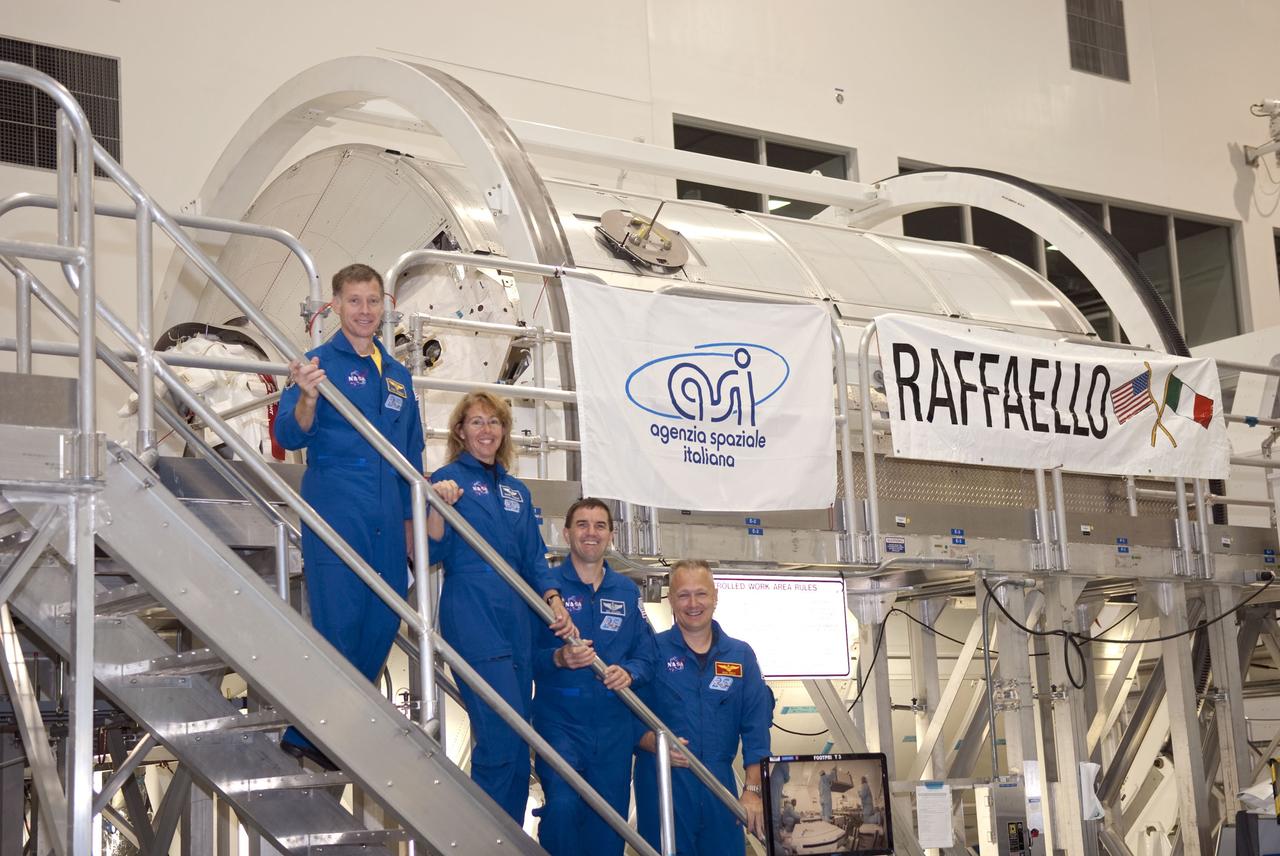
CAPE CANAVERAL, Fla. -- Space shuttle Atlantis' STS-135 crew participates in a crew equipment interface test, or CEIT, in the Space Station Processing Facility at NASA's Kennedy Space Center in Florida. The purpose of CEIT is for flight crew members to become familiar with the hardware and tools they will work with in space. Standing in front of the Raffaello multi-purpose logistics module, which will be packed with supplies, logistics and spare parts for their mission to the International Space Station, are, from left, Commander Chris Ferguson, Mission Specialists Sandy Magnus and Rex Walheim, and Pilot Doug Hurley. STS-135 also will return a failed ammonia pump module on the Lightweight Multi-Purpose Experiment Support Structure Carrier, or LMC, to help NASA better understand the failure mechanism and improve pump designs for future systems. STS-135, targeted to launch June 28, will be the 33rd flight of Atlantis, the 37th shuttle mission to the space station, and the 135th and final mission of NASA's Space Shuttle Program. For more information visit, www.nasa.gov/mission_pages/shuttle/shuttlemissions/sts135/index.html. Photo credit: NASA/Jim Grossmann
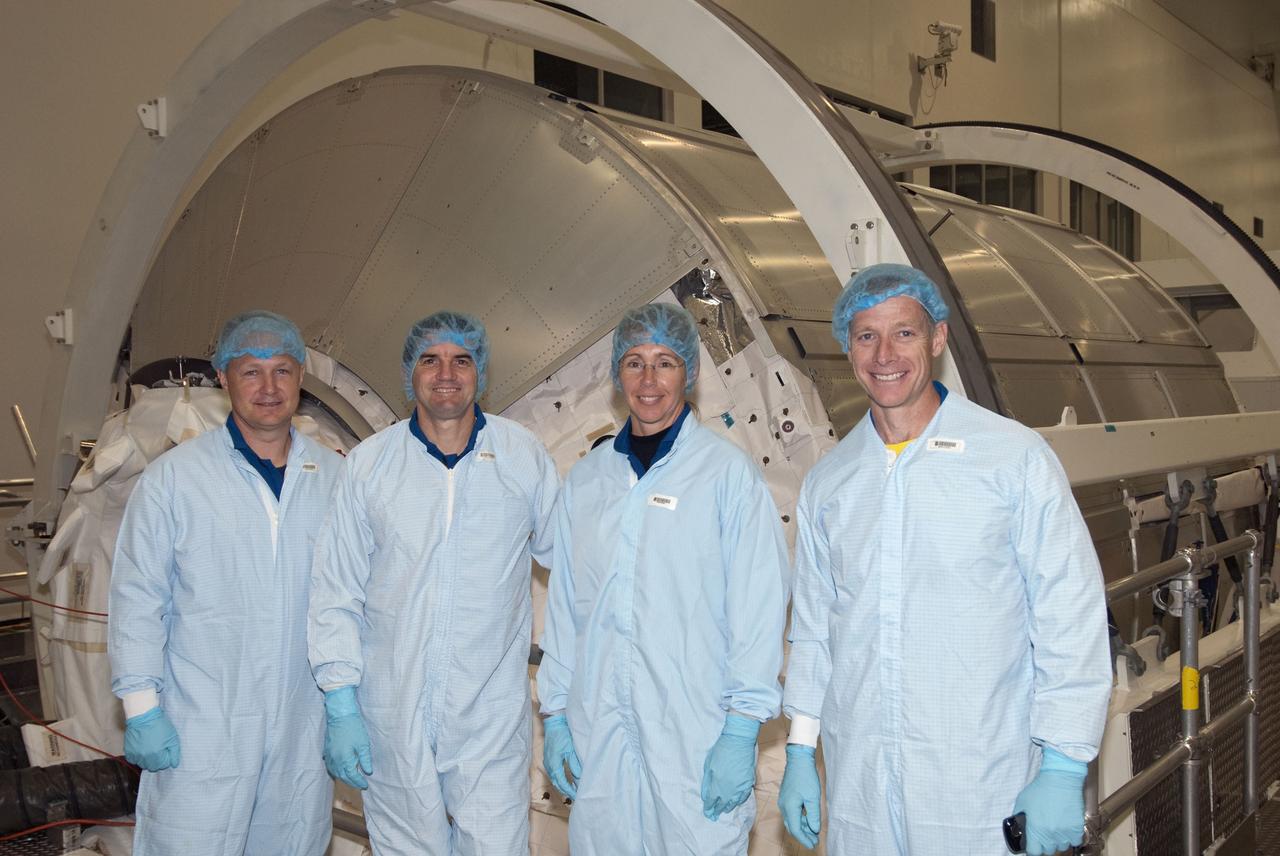
CAPE CANAVERAL, Fla. -- Space shuttle Atlantis' STS-135 crew participates in a crew equipment interface test, or CEIT, in the Space Station Processing Facility at NASA's Kennedy Space Center in Florida. The purpose of CEIT is for flight crew members to become familiar with the hardware and tools they will work with in space. Standing in front of the Raffaello multi-purpose logistics module, which will be packed with supplies, logistics and spare parts for their mission to the International Space Station, are, from left, Pilot Doug Hurley, Mission Specialists Rex Walheim and Sandy Magnus, and Commander Chris Ferguson. STS-135 also will return a failed ammonia pump module on the Lightweight Multi-Purpose Experiment Support Structure Carrier, or LMC, to help NASA better understand the failure mechanism and improve pump designs for future systems. STS-135, targeted to launch June 28, will be the 33rd flight of Atlantis, the 37th shuttle mission to the space station, and the 135th and final mission of NASA's Space Shuttle Program. For more information visit, www.nasa.gov/mission_pages/shuttle/shuttlemissions/sts135/index.html. Photo credit: NASA/Jim Grossmann
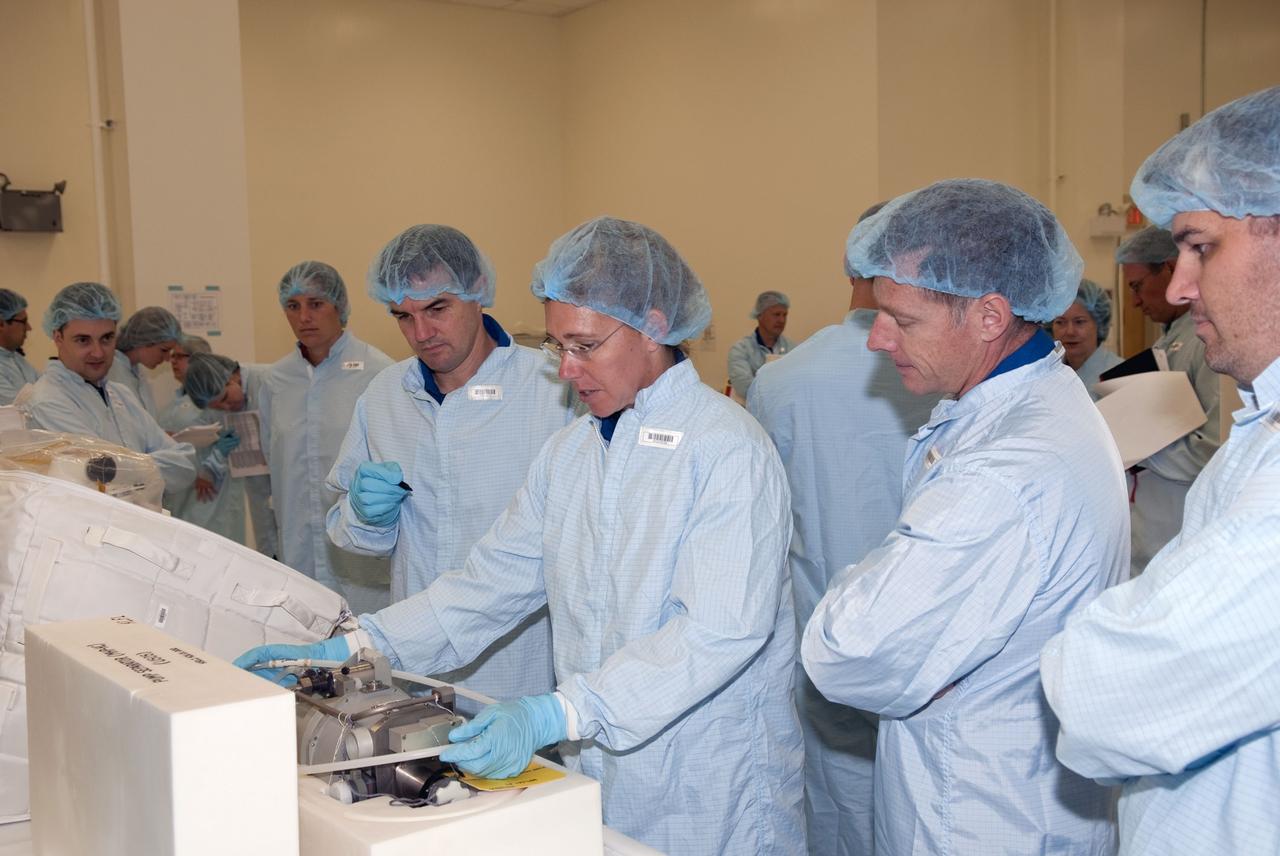
CAPE CANAVERAL, Fla. -- Space shuttle Atlantis' STS-135 crew participates in a crew equipment interface test, or CEIT, in the Space Station Processing Facility at NASA's Kennedy Space Center in Florida. The purpose of CEIT is for flight crew members to become familiar with the hardware and tools they will work with in space. Mission Specialist Sandy Magnus performs some hands-on tasks while Mission Specialist Rex Walheim, left, Commander Chris Ferguson, right, and technicians observe. STS-135 will carry the Raffaello multi-purpose logistics module packed with supplies, logistics and spare parts to the International Space Station. STS-135 also will return a failed ammonia pump module on the Lightweight Multi-Purpose Experiment Support Structure Carrier, or LMC, to help NASA better understand the failure mechanism and improve pump designs for future systems. STS-135, targeted to launch June 28, will be the 33rd flight of Atlantis, the 37th shuttle mission to the space station, and the 135th and final mission of NASA's Space Shuttle Program. For more information visit, www.nasa.gov/mission_pages/shuttle/shuttlemissions/sts135/index.html. Photo credit: NASA/Jim Grossmann
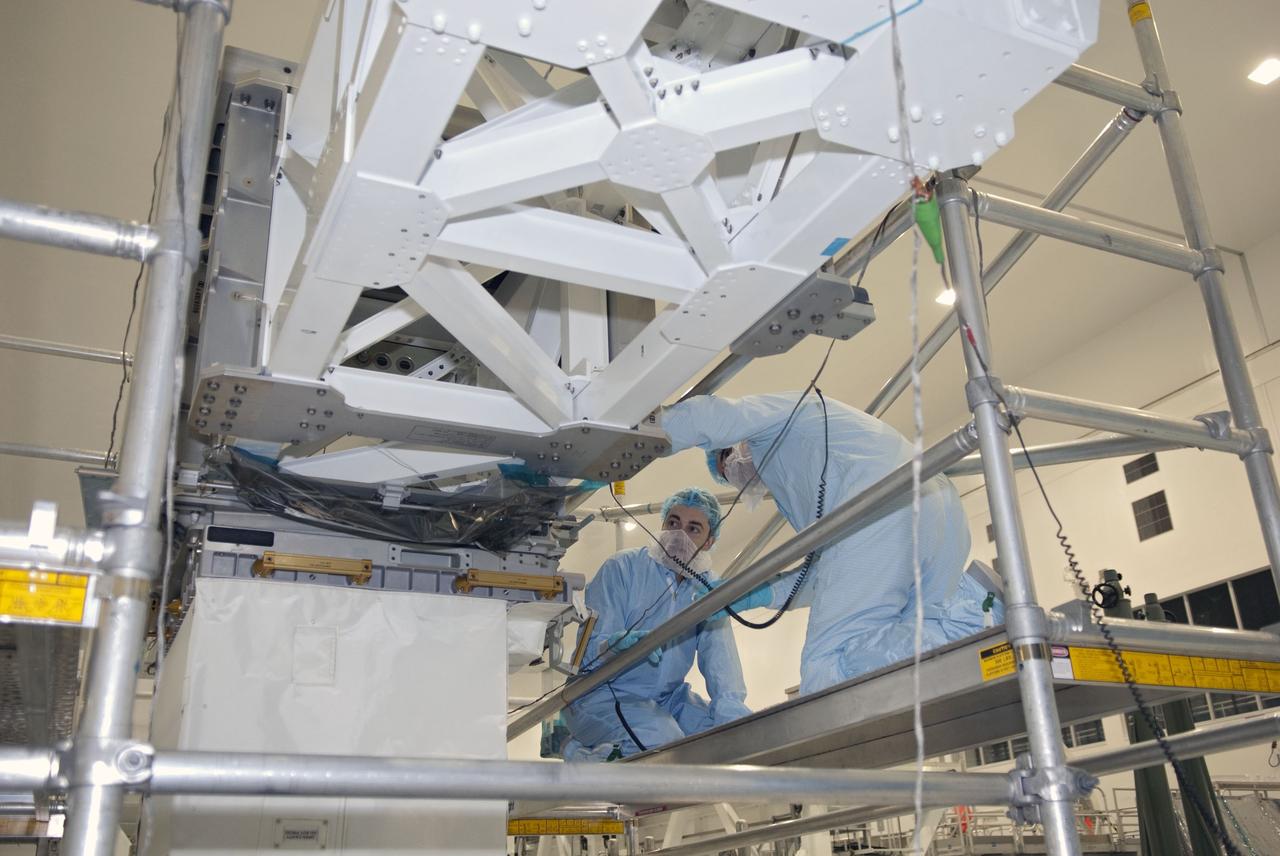
CAPE CANAVERAL, Fla. -- Space shuttle Atlantis' STS-135 crew participates in a crew equipment interface test, or CEIT, in the Space Station Processing Facility at NASA's Kennedy Space Center in Florida. The purpose of CEIT is for flight crew members to become familiar with the hardware and tools they will work with in space. Here, a technician shows Mission Specialist Rex Walheim the Lightweight Multi-Purpose Experiment Support Structure Carrier, or LMC, which will be used to return a failed ammonia pump module from the International Space Station. Crews on Earth will examine the failure mechanism to help NASA improve pump designs for future systems. STS-135 also will carry the Raffaello multi-purpose logistics module packed with supplies, logistics and spare parts. STS-135, targeted to launch June 28, will be the 33rd flight of Atlantis, the 37th shuttle mission to the space station, and the 135th and final mission of NASA's Space Shuttle Program. For more information visit, www.nasa.gov/mission_pages/shuttle/shuttlemissions/sts135/index.html. Photo credit: NASA/Jim Grossmann
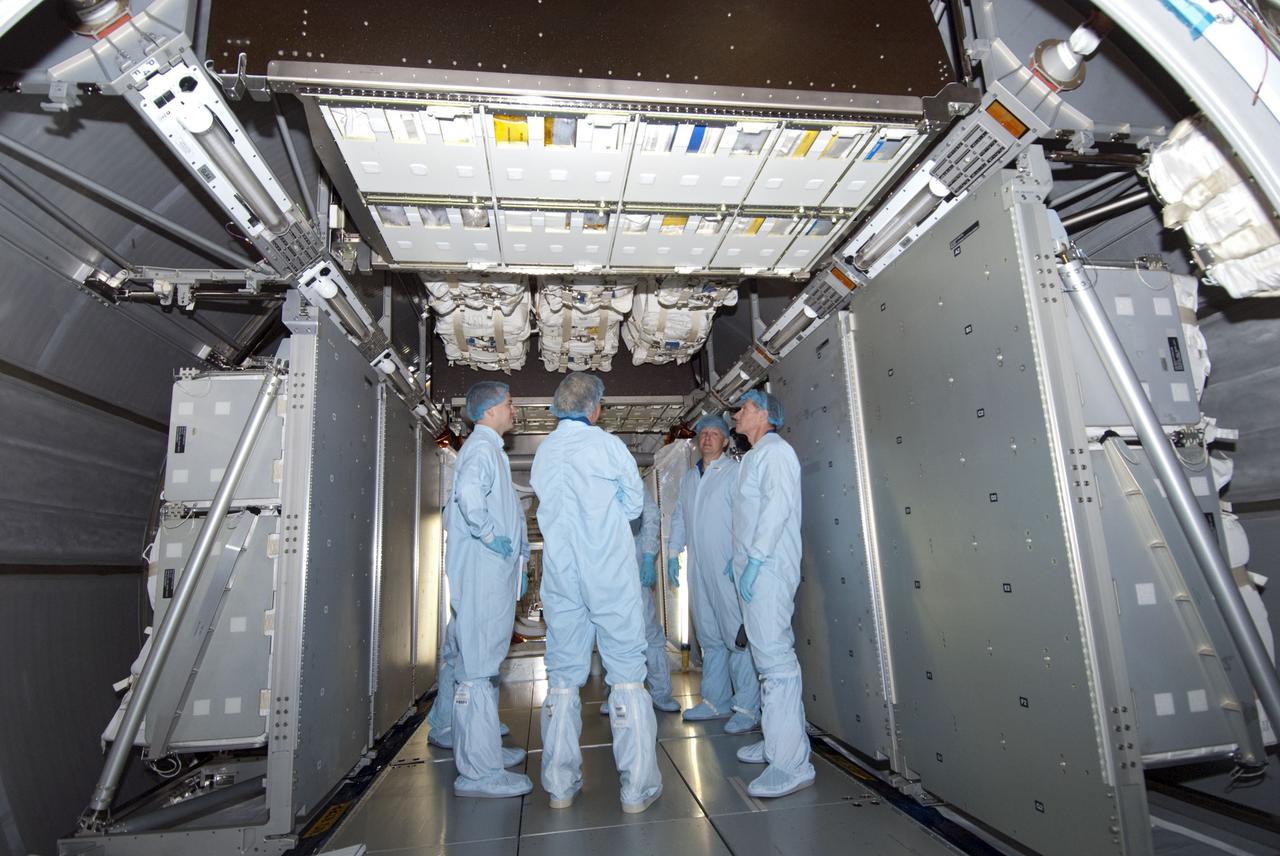
CAPE CANAVERAL, Fla. -- Space shuttle Atlantis' STS-135 crew participates in a crew equipment interface test, or CEIT, in the Space Station Processing Facility at NASA's Kennedy Space Center in Florida. The purpose of CEIT is for flight crew members to become familiar with the hardware and tools they will work with in space. Here, the four-member crew and technicians perform a walk down in the Raffaello multi-purpose logistics module, which will be packed with supplies, logistics and spare parts, bound for the International Space Station. STS-135 also will return a failed ammonia pump module on the Lightweight Multi-Purpose Experiment Support Structure Carrier, or LMC, to help NASA better understand the failure mechanism and improve pump designs for future systems. STS-135, targeted to launch June 28, will be the 33rd flight of Atlantis, the 37th shuttle mission to the space station, and the 135th and final mission of NASA's Space Shuttle Program. For more information visit, www.nasa.gov/mission_pages/shuttle/shuttlemissions/sts135/index.html. Photo credit: NASA/Jim Grossmann
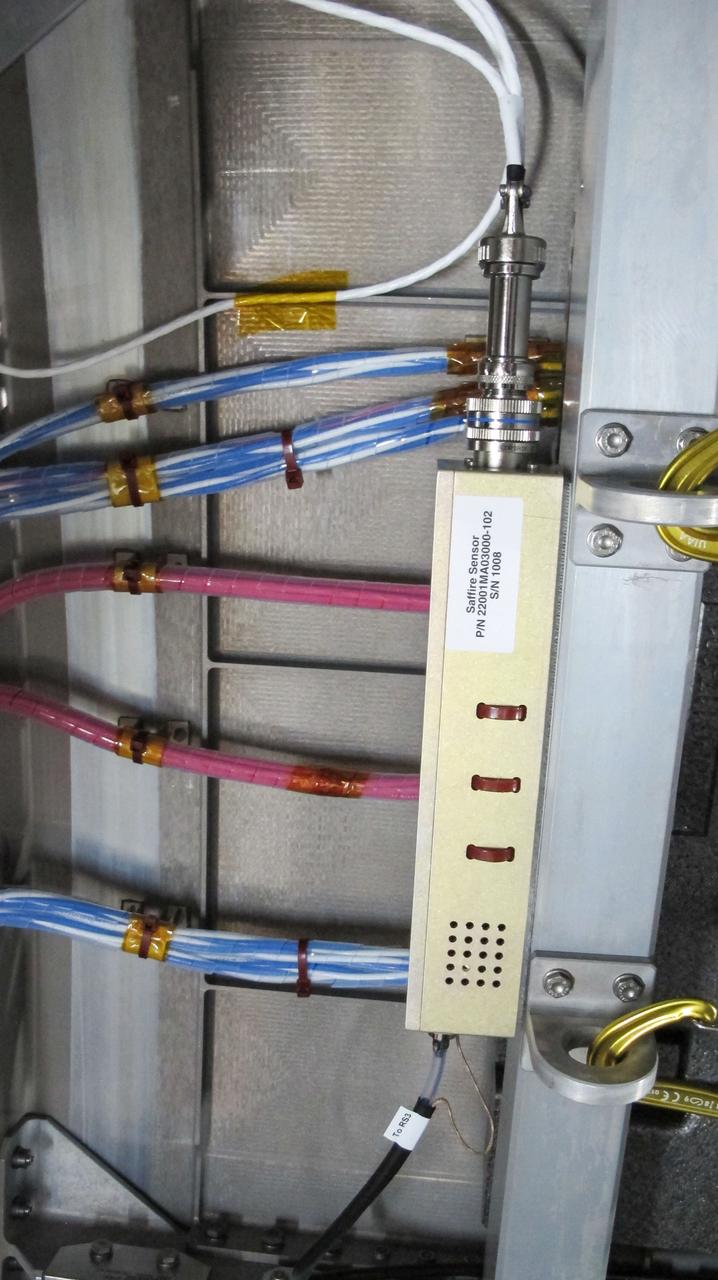
jsc2019e050038 (8/12/2019) --- Photo documentation taken during the NG-12 Crew Equipment Interface Test (CEIT) The view is of a SAFFIRE sensor. The NASA Advanced Exploration Systems program began a project to develop and demonstrate spacecraft fire safety technologies in relevant environments. The keystone of these demonstrations is a large-scale fire safety experiment conducted on an International Space Station (ISS) re-supply vehicle after it has undocked from the ISS and before it enters the atmosphere.
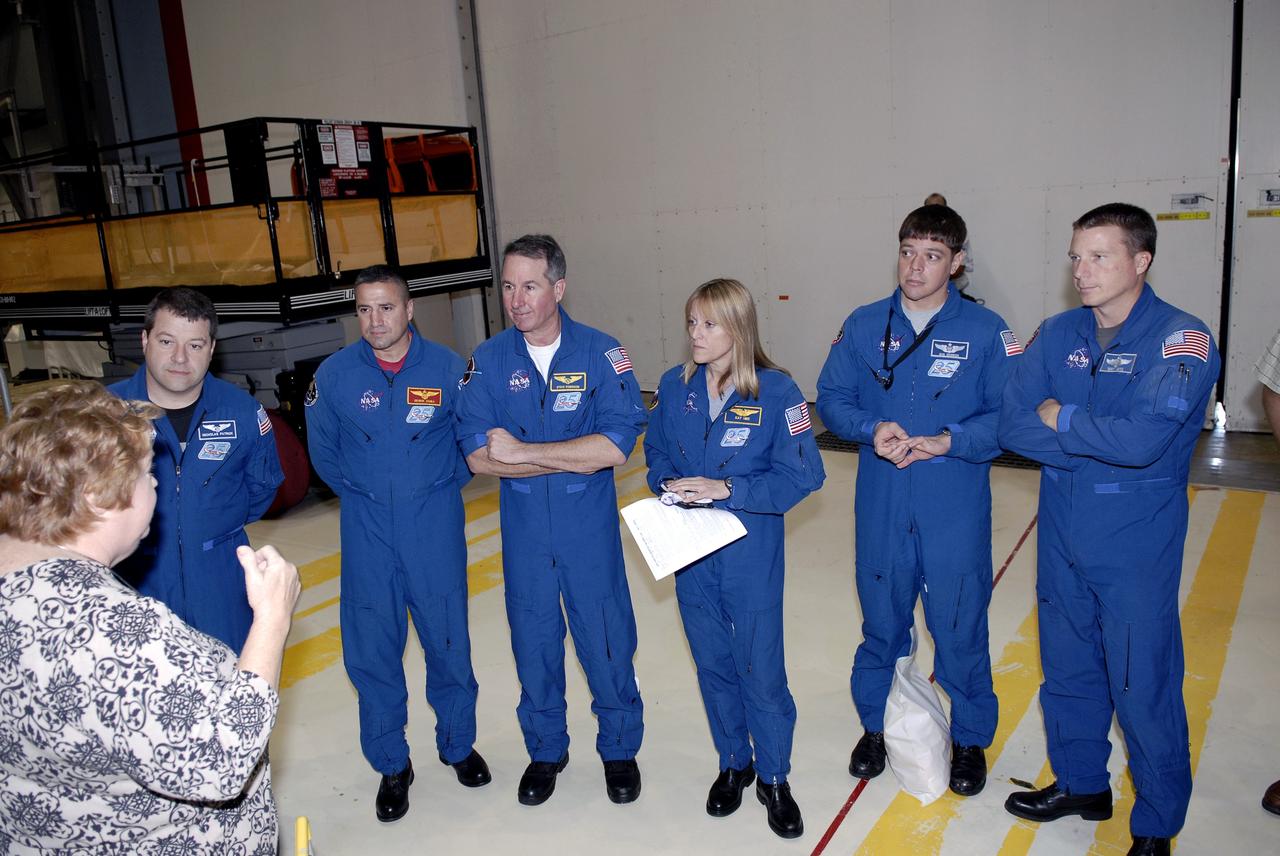
CAPE CANAVERAL, Fla. – In Orbiter Processing Facility-3 at NASA's Kennedy Space Center in Florida, members of the STS-130 crew receive a briefing about the processing of space shuttle Endeavour. From left are Mission Specialist Nicolas Patrick; Commander George Zamka; Mission Specialists Stephen Robinson, Kathryn "Kay" Hire and Robert Behnken; and Pilot Terry Virts Jr. The crew is at Kennedy for a crew equipment interface test, or CEIT, which provides hands-on training and observation of shuttle and flight hardware. The STS-130 flight will carry the Tranquility pressurized module with a built-in cupola to the International Space Station aboard Endeavour. Launch is targeted for Feb. 4, 2010. Photo credit: NASA/Steven Durnin
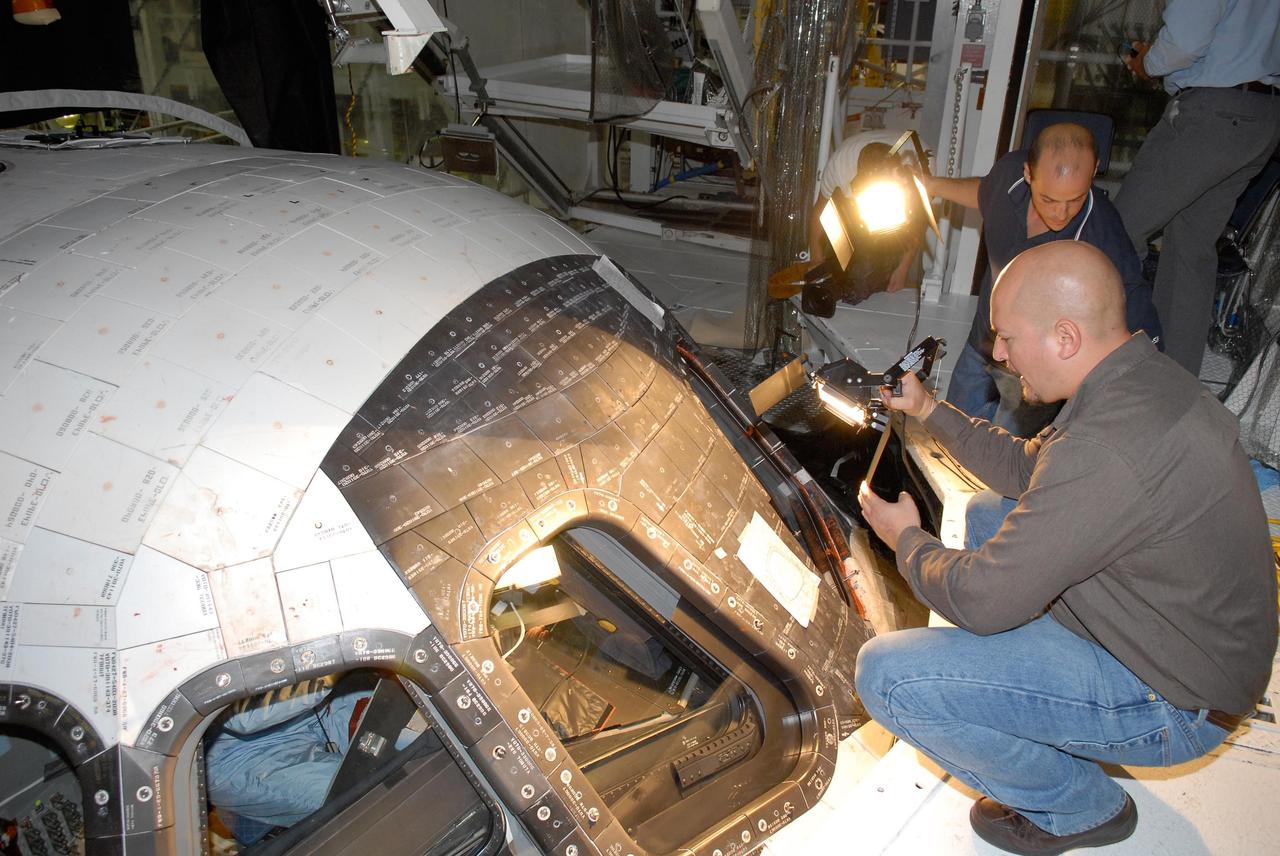
KENNEDY SPACE CENTER, FLA. -- In the Orbiter Processing Facility, United Space Alliance technicians provide lights over the space shuttle Atlantis' cockpit. STS-122 Commander Stephen Frick is inside checking the cockpit for launch readiness. The crew is at Kennedy Space Center to take part in a crew equipment interface test, which helps familiarize them with equipment and payloads for the mission. Among the activities standard to a CEIT are harness training, inspection of the thermal protection system and camera operation for planned extravehicular activities, or EVAs. The mission will carry and install the Columbus Lab, a multifunctional, pressurized laboratory that will be permanently attached to Node 2 of the space station to carry out experiments in materials science, fluid physics and biosciences, as well as to perform a number of technological applications. It is Europe’s largest contribution to the construction of the International Space Station and will support scientific and technological research in a microgravity environment. STS-122 is targeted for launch in December. Photo credit: NASA/Kim Shiflett
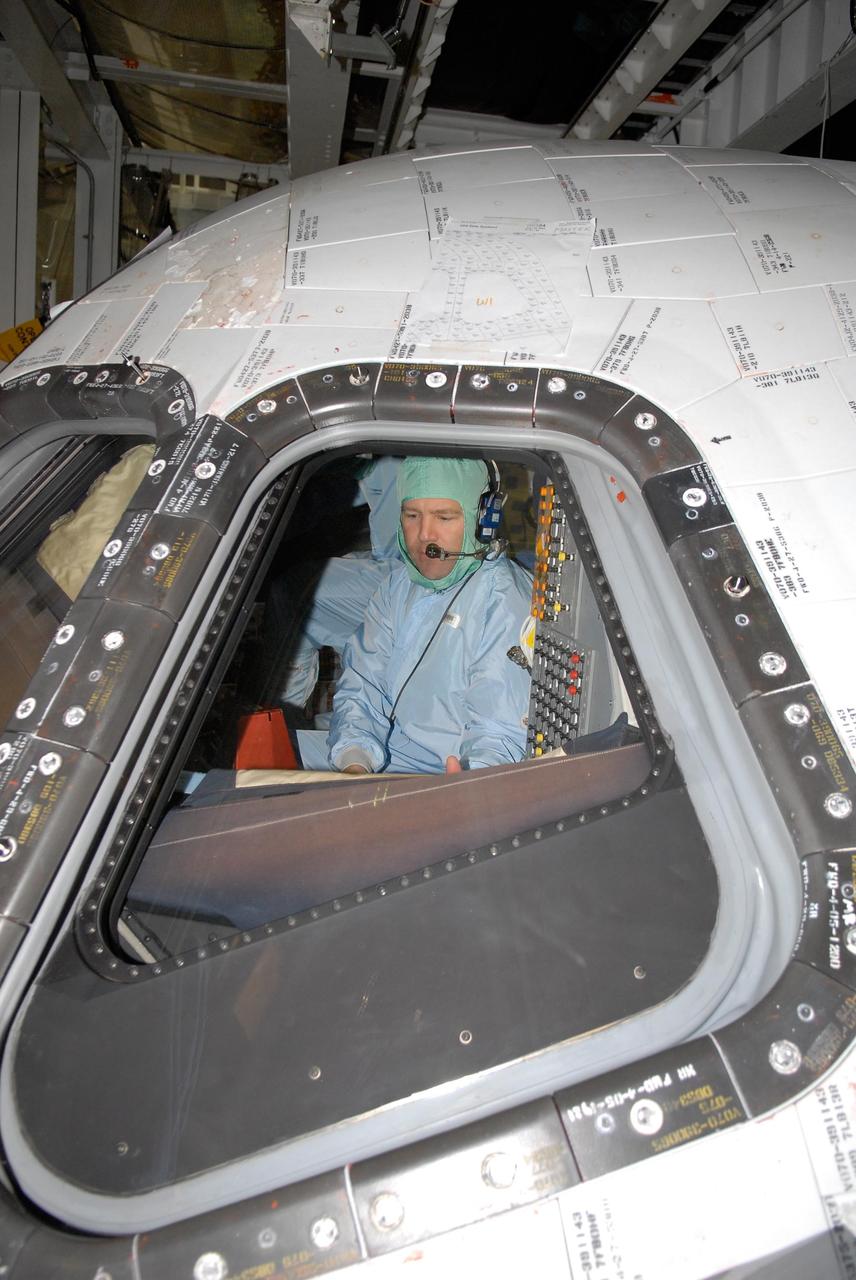
KENNEDY SPACE CENTER, FLA. -- In the Orbiter Processing Facility, STS-122 Commander Stephen Frick checks out the cockpit on space shuttle Atlantis. He and other crew members are at Kennedy Space Center to take part in a crew equipment interface test, which helps familiarize them with equipment and payloads for the mission. Among the activities standard to a CEIT are harness training, inspection of the thermal protection system and camera operation for planned extravehicular activities, or EVAs. The mission will carry and install the Columbus Lab, a multifunctional, pressurized laboratory that will be permanently attached to Node 2 of the space station to carry out experiments in materials science, fluid physics and biosciences, as well as to perform a number of technological applications. It is Europe’s largest contribution to the construction of the International Space Station and will support scientific and technological research in a microgravity environment. STS-122 is targeted for launch in December. Photo credit: NASA/Kim Shiflett
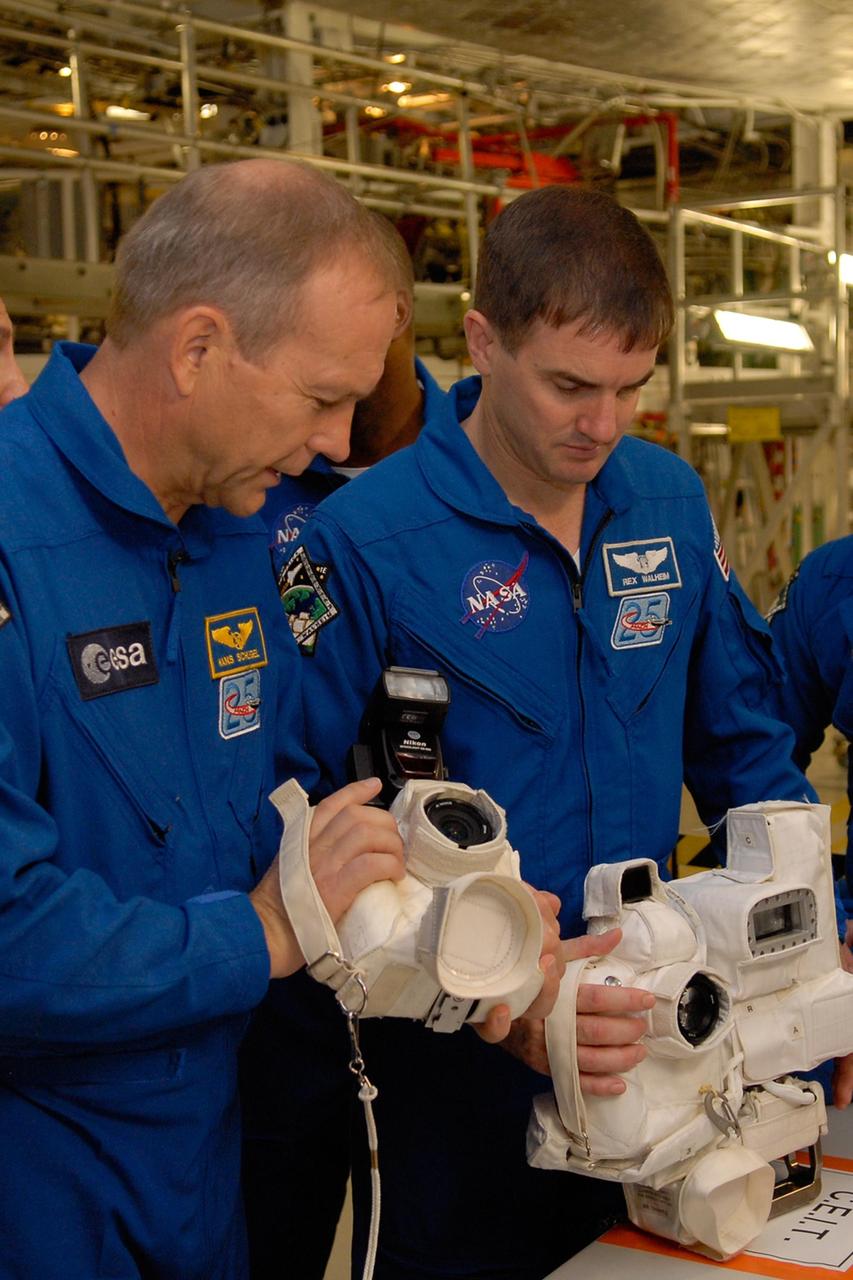
KENNEDY SPACE CENTER, FLA. -- In the Orbiter Processing Facility, members of the STS-122 crew look over cameras that will be used during the mission. From left are Mission Specialists Hans Schlegel and Rex Walheim. Schlegel represents the European Space Agency. The crew is at Kennedy Space Center to take part in a crew equipment interface test, which helps familiarize them with equipment and payloads for the mission. Among the activities standard to a CEIT are harness training, inspection of the thermal protection system and camera operation for planned extravehicular activities, or EVAs. The mission will carry and install the Columbus Lab, a multifunctional, pressurized laboratory that will be permanently attached to Node 2 of the space station to carry out experiments in materials science, fluid physics and biosciences, as well as to perform a number of technological applications. It is Europe’s largest contribution to the construction of the International Space Station and will support scientific and technological research in a microgravity environment. STS-122 is targeted for launch in December. Photo credit: NASA/Kim Shiflett

KENNEDY SPACE CENTER, FLA. -- In the Orbiter Processing Facility, STS-122 Commander Stephen Frick checks out the cockpit on space shuttle Atlantis. He and other crew members are at Kennedy Space Center to take part in a crew equipment interface test, which helps familiarize them with equipment and payloads for the mission. Among the activities standard to a CEIT are harness training, inspection of the thermal protection system and camera operation for planned extravehicular activities, or EVAs. The mission will carry and install the Columbus Lab, a multifunctional, pressurized laboratory that will be permanently attached to Node 2 of the space station to carry out experiments in materials science, fluid physics and biosciences, as well as to perform a number of technological applications. It is Europe’s largest contribution to the construction of the International Space Station and will support scientific and technological research in a microgravity environment. STS-122 is targeted for launch in December. Photo credit: NASA/Kim Shiflett
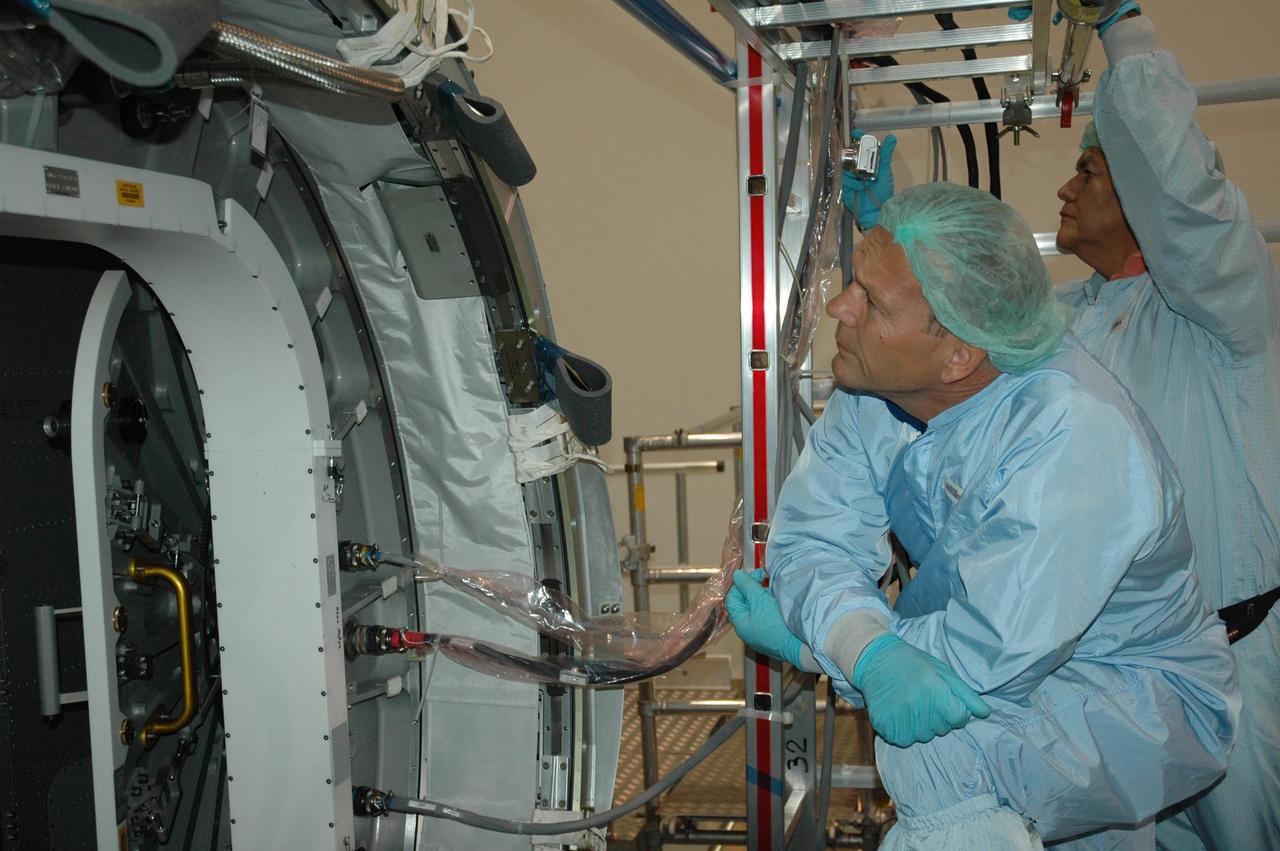
KENNEDY SPACE CENTER, FLA. STS-122 Mission Specialist Hans Schlegel looks closely at the hatch on the Columbus Research Laboratory in the Space Station Processing Facility. Schegel represents the European Space Agency. The crew is at Kennedy to take part in a crew equipment interface test, which helps familiarize them with equipment and payloads for the mission. Among the activities standard to a CEIT are harness training, inspection of the thermal protection system and camera operation for planned extravehicular activities, or EVAs. The Columbus Lab is Europe’s largest contribution to the construction of the International Space Station. It will support scientific and technological research in a microgravity environment. Columbus, a program of ESA, is a multifunctional, pressurized laboratory that will be permanently attached to Node 2 of the space station to carry out experiments in materials science, fluid physics and biosciences, as well as to perform a number of technological applications. STS-122 is targeted for launch in December. Photo credit: NASA/Jim Grossmann
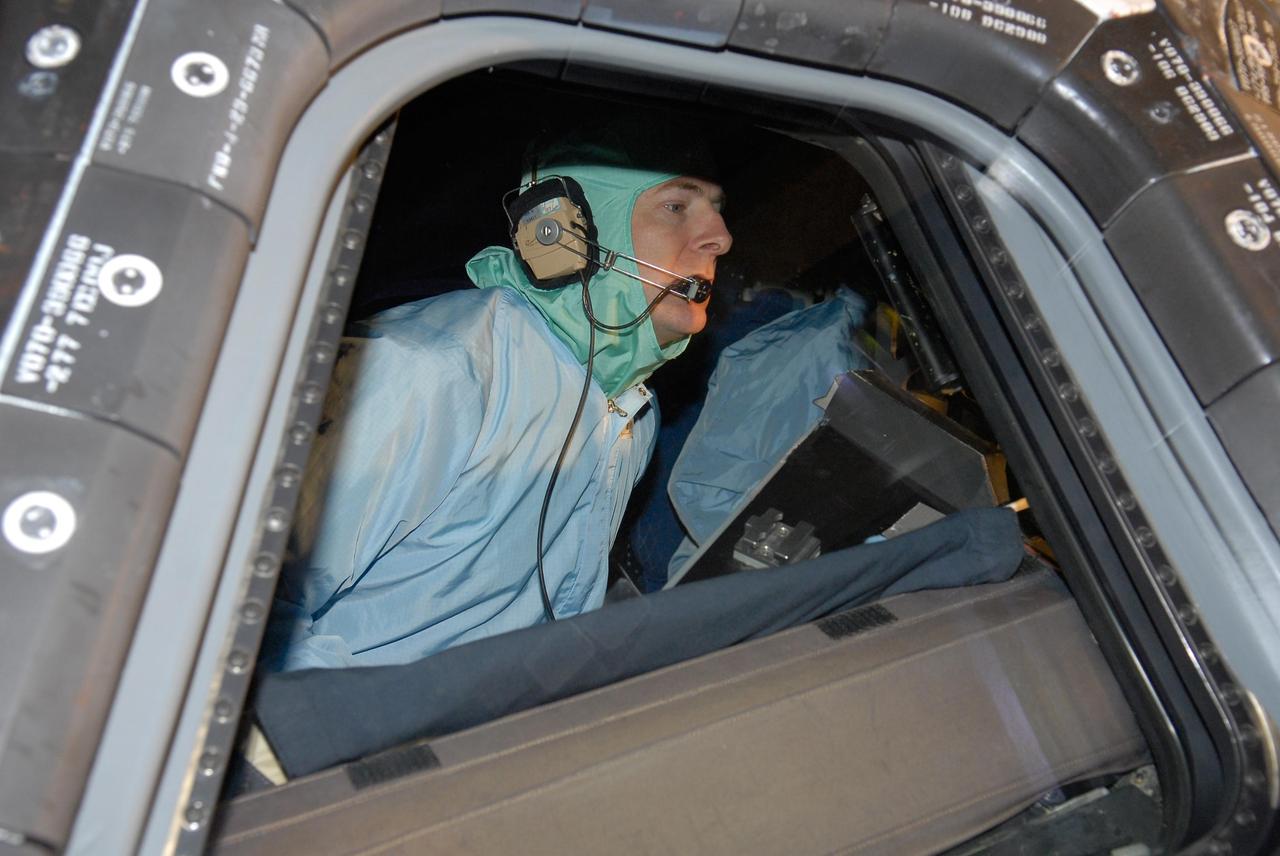
KENNEDY SPACE CENTER, FLA. -- In the Orbiter Processing Facility, STS-122 Pilot Alan Poindexter checks out the cockpit on space shuttle Atlantis. The crew is at Kennedy Space Center to take part in a crew equipment interface test, which helps familiarize them with equipment and payloads for the mission. Among the activities standard to a CEIT are harness training, inspection of the thermal protection system and camera operation for planned extravehicular activities, or EVAs. The mission will carry and install the Columbus Lab, a multifunctional, pressurized laboratory that will be permanently attached to Node 2 of the space station to carry out experiments in materials science, fluid physics and biosciences, as well as to perform a number of technological applications. It is Europe’s largest contribution to the construction of the International Space Station and will support scientific and technological research in a microgravity environment. STS-122 is targeted for launch in December. Photo credit: NASA/Kim Shiflett
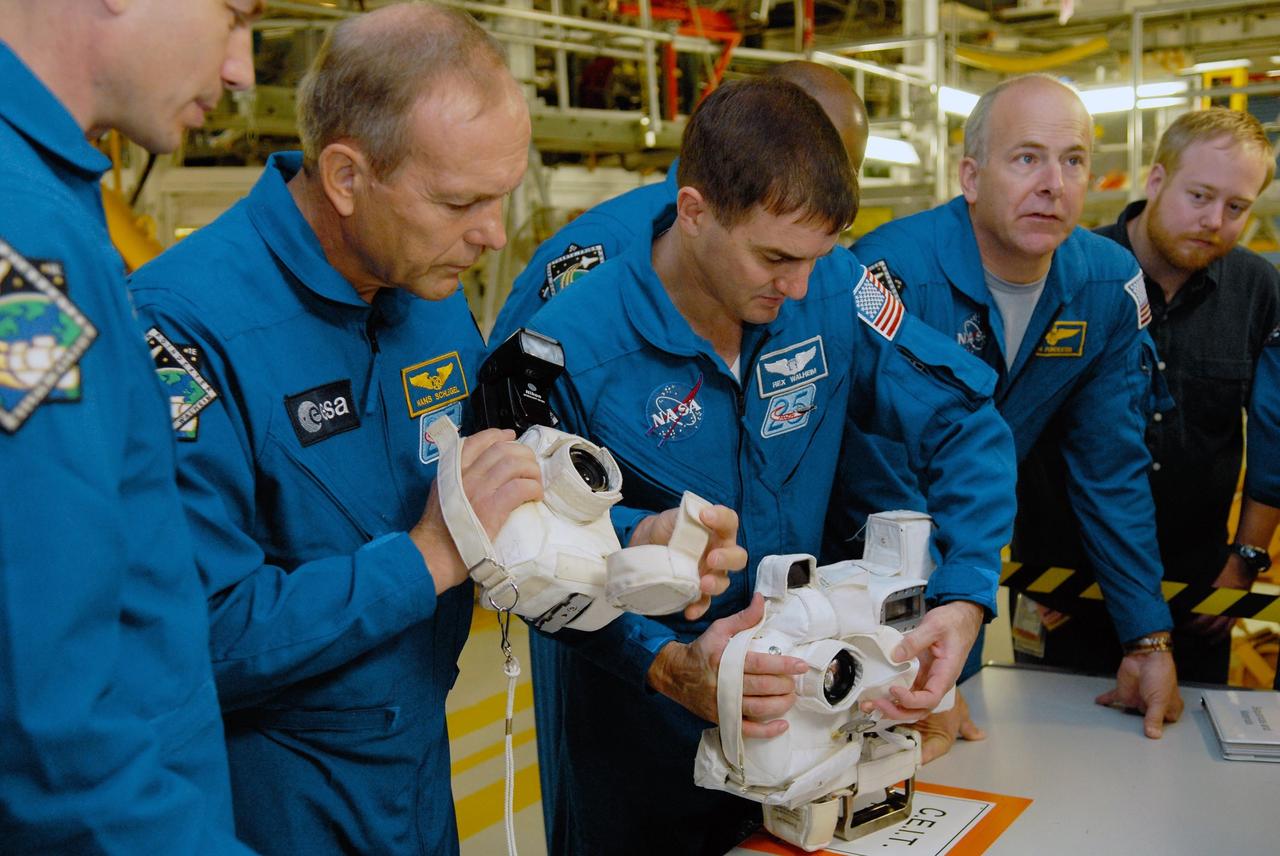
KENNEDY SPACE CENTER, FLA. -- In the Orbiter Processing Facility, members of the STS-122 crew look over cameras that will be used during the mission. From left are Mission Specialists Stanley Love, Hans Schlegel and Rex Walheim and Pilot Alan Poindexter. The crew is at Kennedy Space Center to take part in a crew equipment interface test, which helps familiarize them with equipment and payloads for the mission. Among the activities standard to a CEIT are harness training, inspection of the thermal protection system and camera operation for planned extravehicular activities, or EVAs. The mission will carry and install the Columbus Lab, a multifunctional, pressurized laboratory that will be permanently attached to Node 2 of the space station to carry out experiments in materials science, fluid physics and biosciences, as well as to perform a number of technological applications. It is Europe’s largest contribution to the construction of the International Space Station and will support scientific and technological research in a microgravity environment. STS-122 is targeted for launch in December. Photo credit: NASA/Kim Shiflett
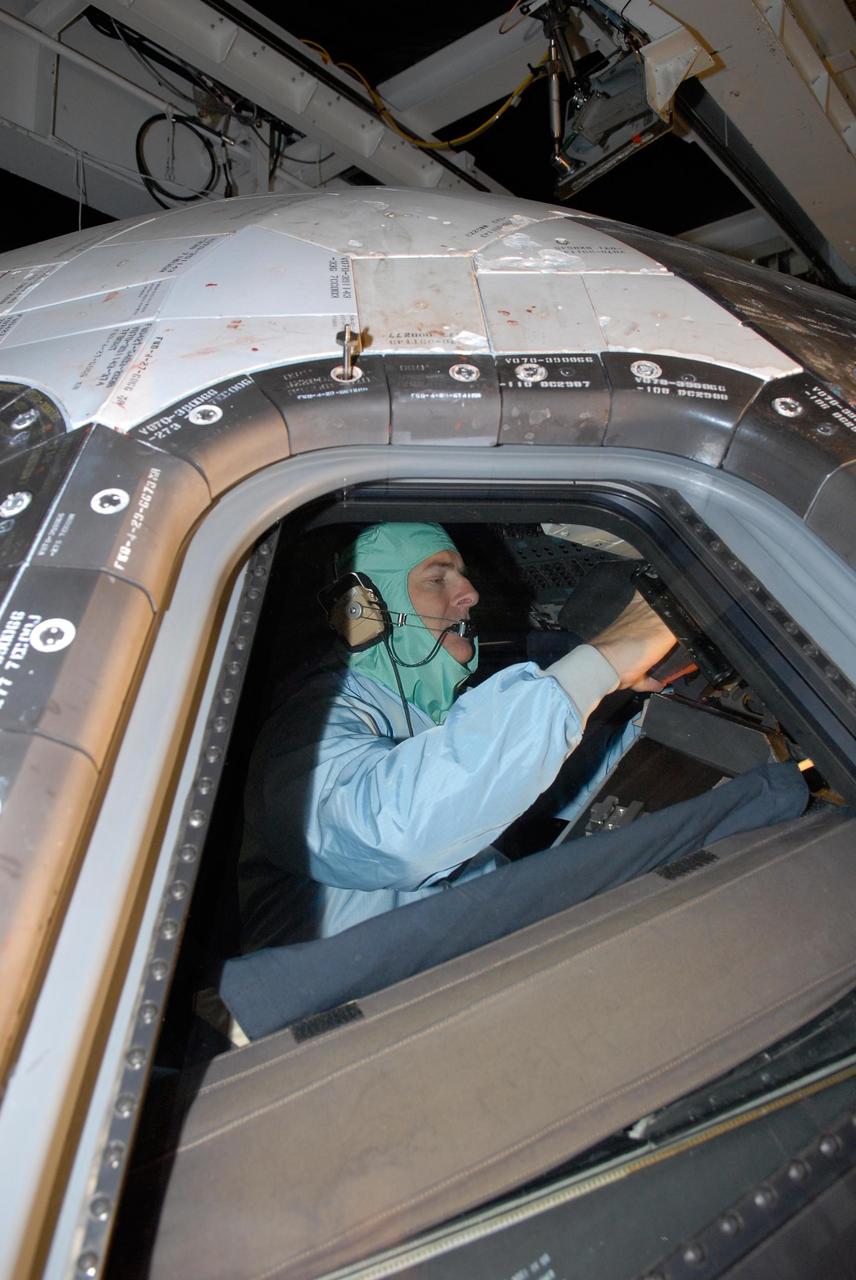
KENNEDY SPACE CENTER, FLA. -- In the Orbiter Processing Facility, STS-122 Pilot Alan Poindexter checks out the cockpit on space shuttle Atlantis. The crew is at Kennedy Space Center to take part in a crew equipment interface test, which helps familiarize them with equipment and payloads for the mission. Among the activities standard to a CEIT are harness training, inspection of the thermal protection system and camera operation for planned extravehicular activities, or EVAs. The mission will carry and install the Columbus Lab, a multifunctional, pressurized laboratory that will be permanently attached to Node 2 of the space station to carry out experiments in materials science, fluid physics and biosciences, as well as to perform a number of technological applications. It is Europe’s largest contribution to the construction of the International Space Station and will support scientific and technological research in a microgravity environment. STS-122 is targeted for launch in December. Photo credit: NASA/Kim Shiflett
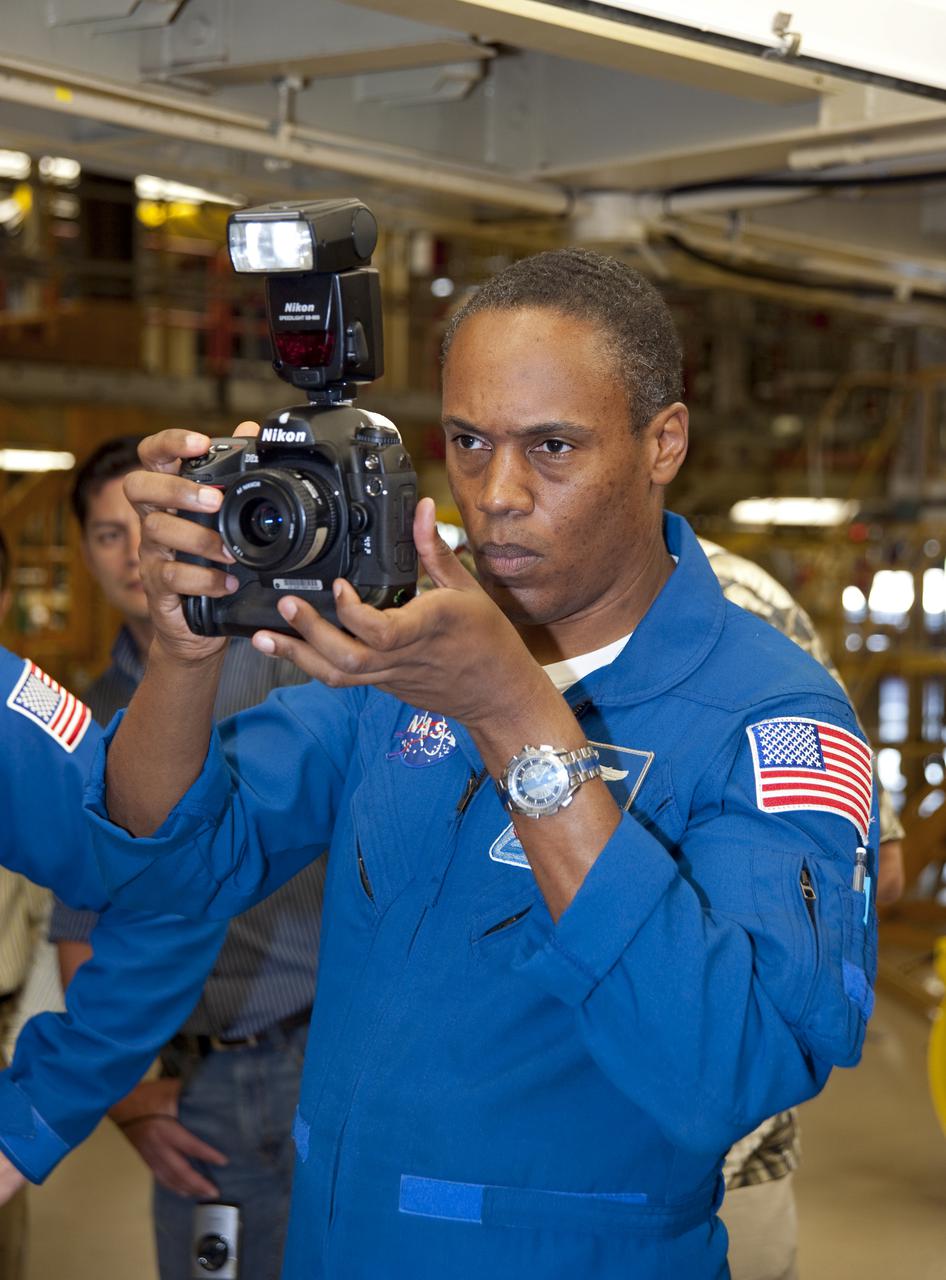
CAPE CANAVERAL, Fla. -- In Orbiter Processing Facility-3 at NASA's Kennedy Space Center in Florida, STS-133 Mission Specialist Alvin Drew looks through the viewfinder of a camera that he will use while in space. The astronauts are at Kennedy for the Crew Equipment Interface Test, or CEIT, which provides the crew with hands-on training and observation of shuttle and flight hardware for their mission to the International Space Station. Launch of the STS-133 mission on space shuttle Discovery is targeted for Nov. 1 at 4:33 p.m. EDT. Photo credit: NASA_Kim Shiflett
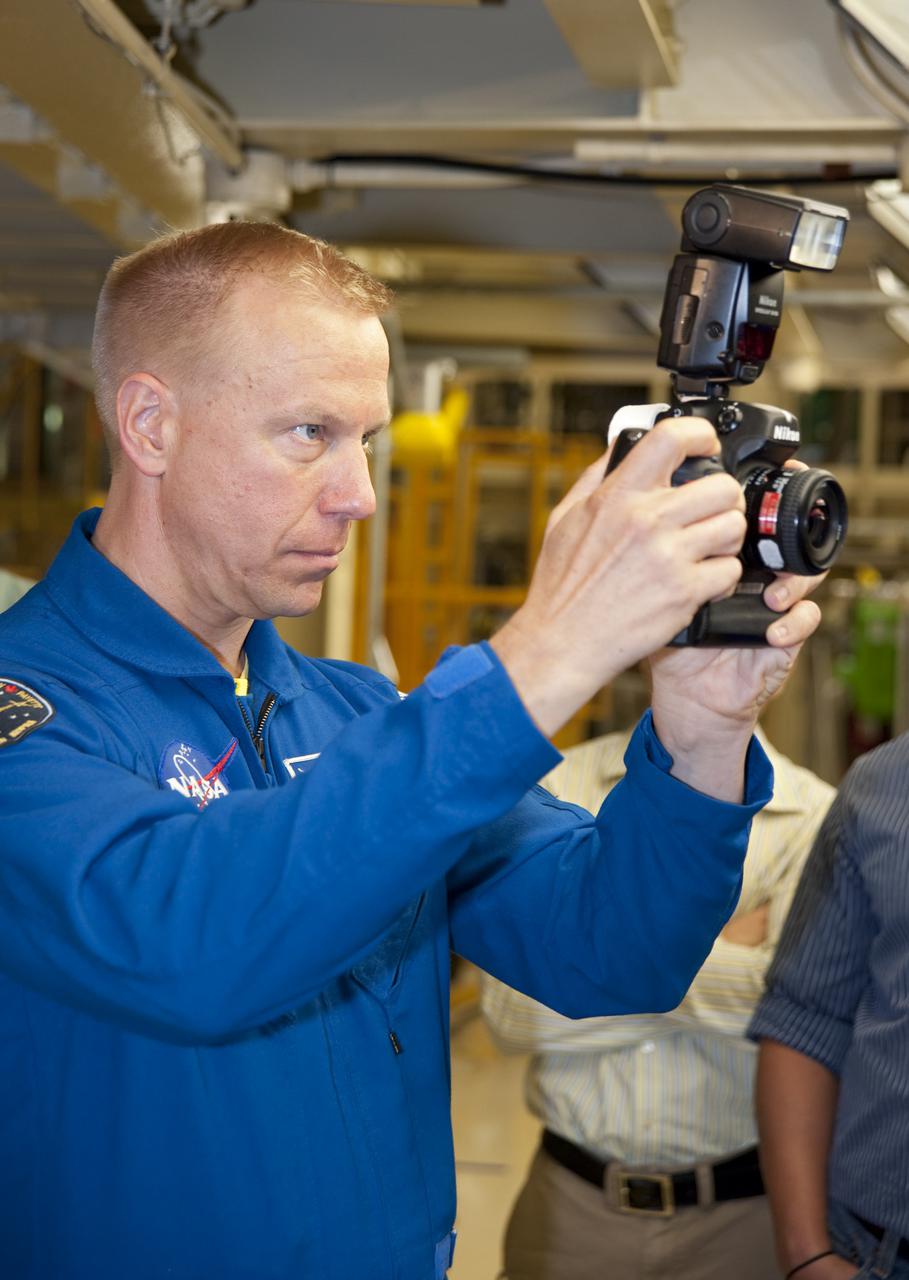
CAPE CANAVERAL, Fla. -- In Orbiter Processing Facility-3 at NASA's Kennedy Space Center in Florida, STS-133 Mission Specialist Tim Kopra looks through the viewfinder of a camera that he will use while in space. The astronauts are at Kennedy for the Crew Equipment Interface Test, or CEIT, which provides the crew with hands-on training and observation of shuttle and flight hardware for their mission to the International Space Station. Launch of the STS-133 mission on space shuttle Discovery is targeted for Nov. 1 at 4:33 p.m. EDT. Photo credit: NASA_Kim Shiflett
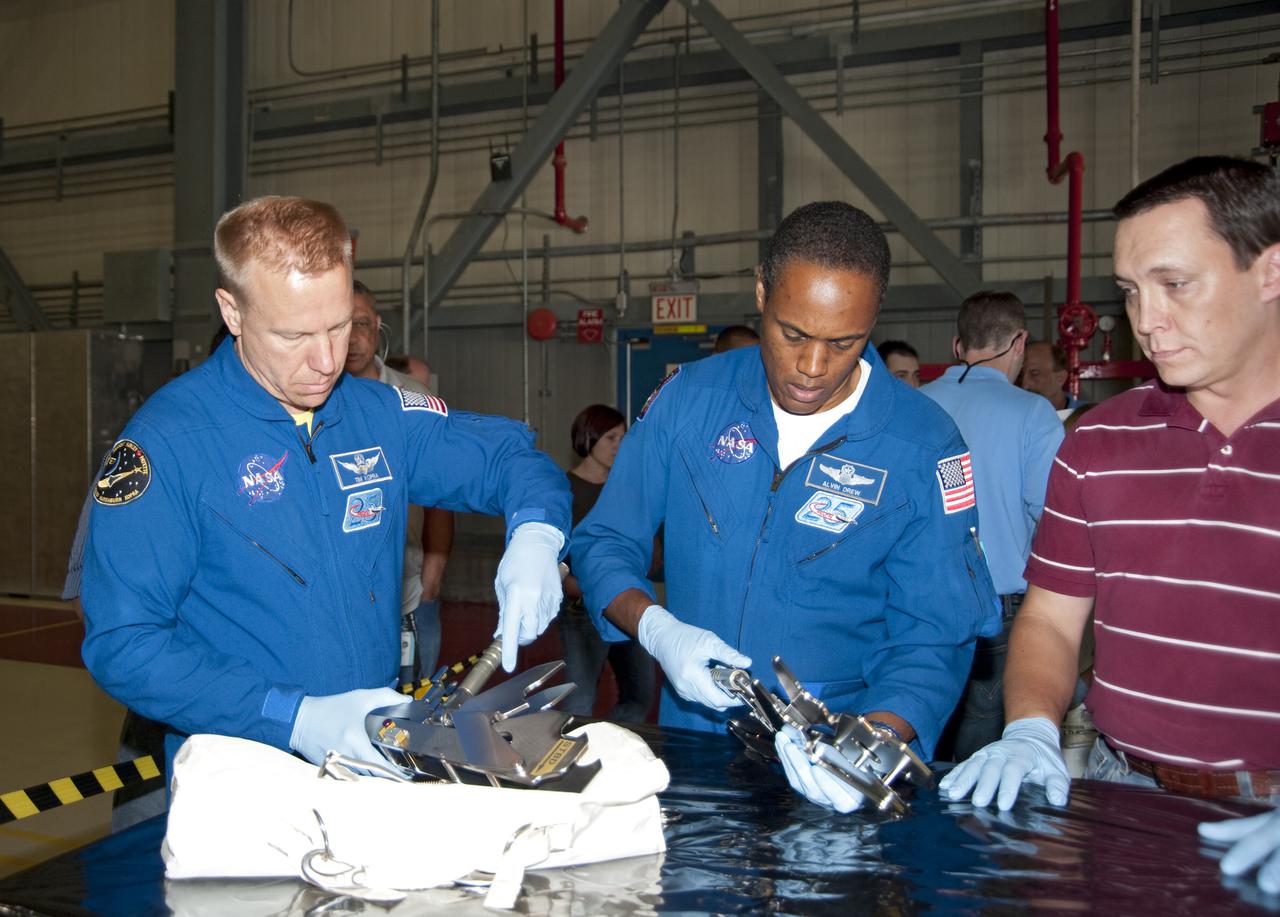
CAPE CANAVERAL, Fla. -- In Orbiter Processing Facility-3 at NASA's Kennedy Space Center in Florida, STS-133 Mission Specialists Tim Kopra (left) and Alvin drew examine hardware they will use while in space. The astronauts are at Kennedy for the Crew Equipment Interface Test, or CEIT, which provides the crew with hands-on training and observation of shuttle and flight hardware for their mission to the International Space Station. Launch of the STS-133 mission on space shuttle Discovery is targeted for Nov. 1 at 4:33 p.m. EDT. Photo credit: NASA_Kim Shiflett
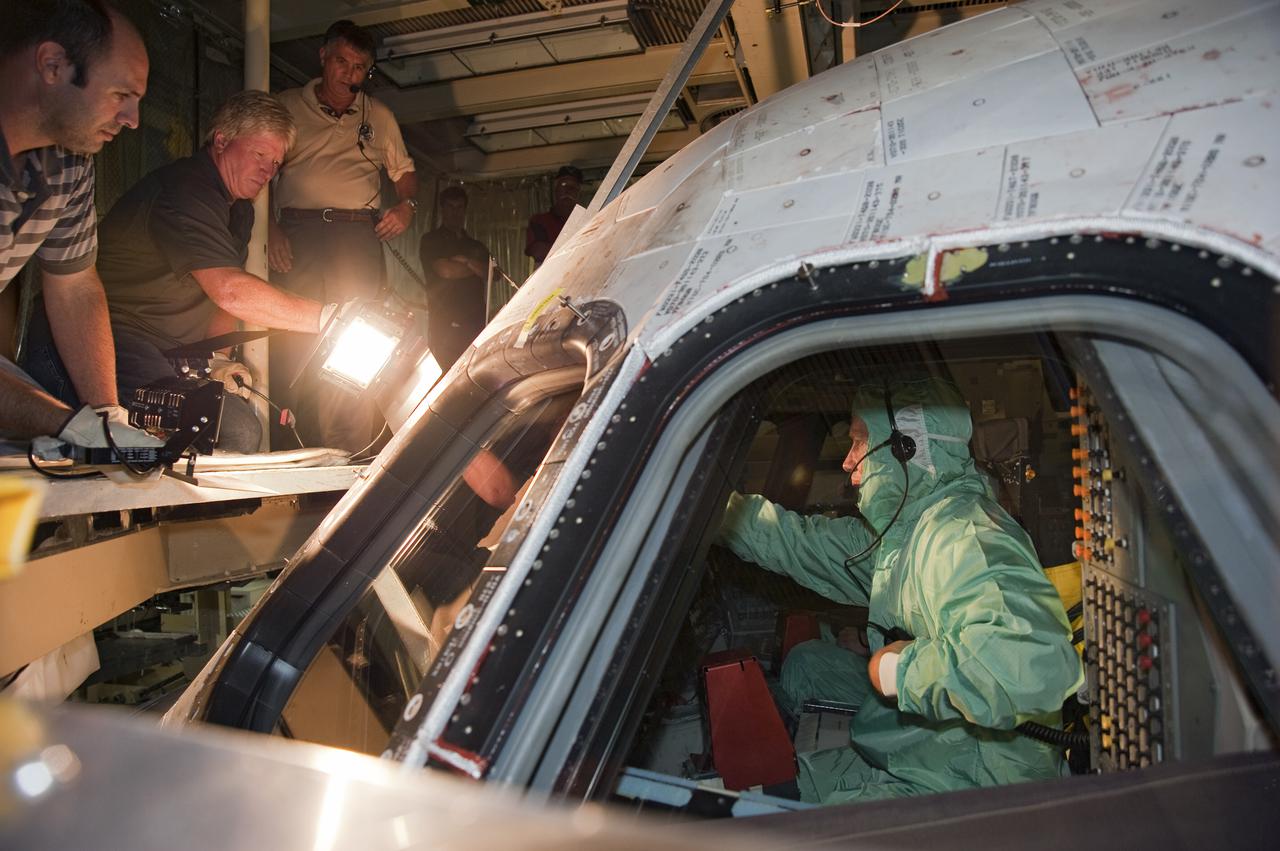
CAPE CANAVERAL, Fla. -- In Orbiter Processing Facility-3 at NASA's Kennedy Space Center in Florida, STS-133 Commander Steve Lindsey familiarizes himself with the layout of the shuttle's cockpit. The astronauts are at Kennedy for the Crew Equipment Interface Test, or CEIT, which provides the crew with hands-on training and observation of shuttle and flight hardware for their mission to the International Space Station. Launch of the STS-133 mission on space shuttle Discovery is targeted for Nov. 1 at 4:33 p.m. EDT. Photo credit: NASA_Kim Shiflett
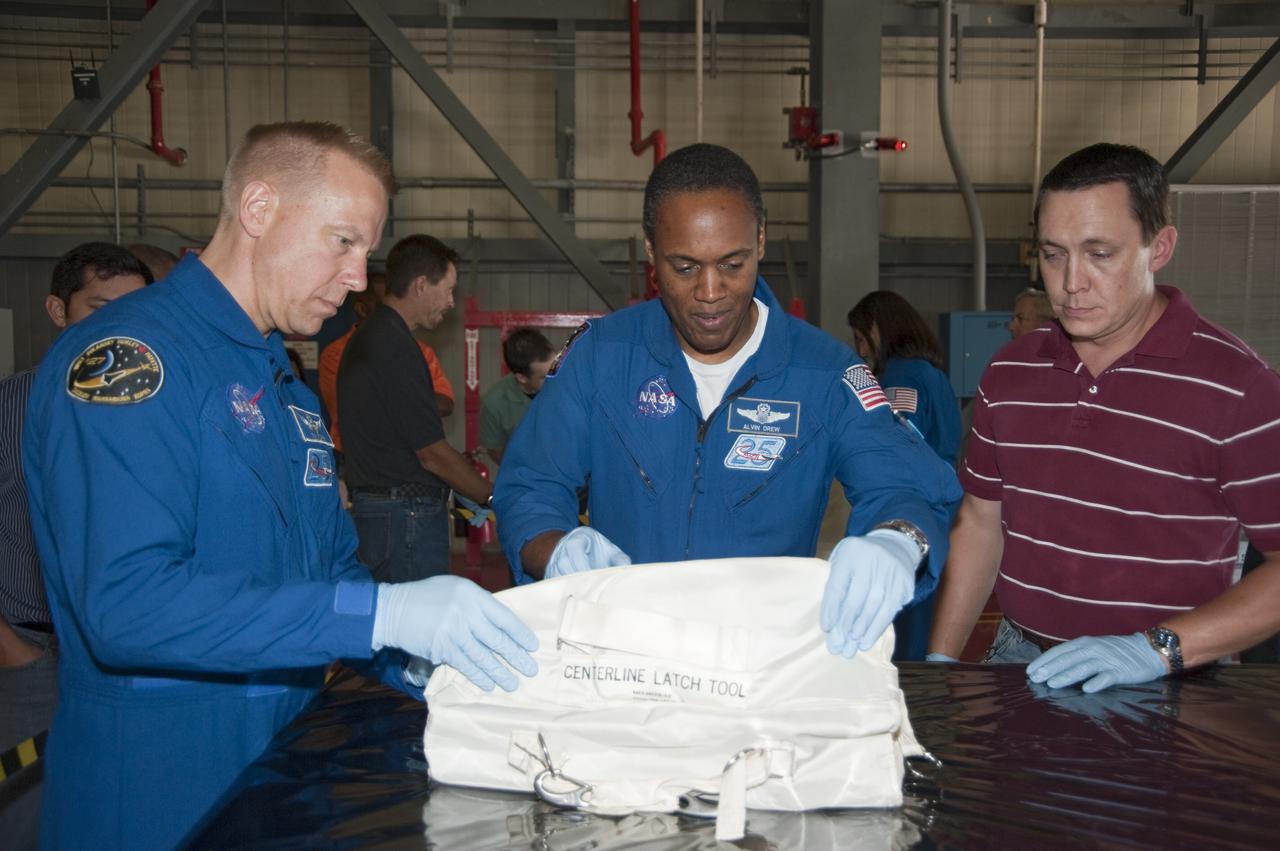
CAPE CANAVERAL, Fla. -- In Orbiter Processing Facility-3 at NASA's Kennedy Space Center in Florida, STS-133 Mission Specialists Tim Kopra (left) and Alvin drew examine hardware they will use while in space. The astronauts are at Kennedy for the Crew Equipment Interface Test, or CEIT, which provides the crew with hands-on training and observation of shuttle and flight hardware for their mission to the International Space Station. Launch of the STS-133 mission on space shuttle Discovery is targeted for Nov. 1 at 4:33 p.m. EDT. Photo credit: NASA_Kim Shiflett
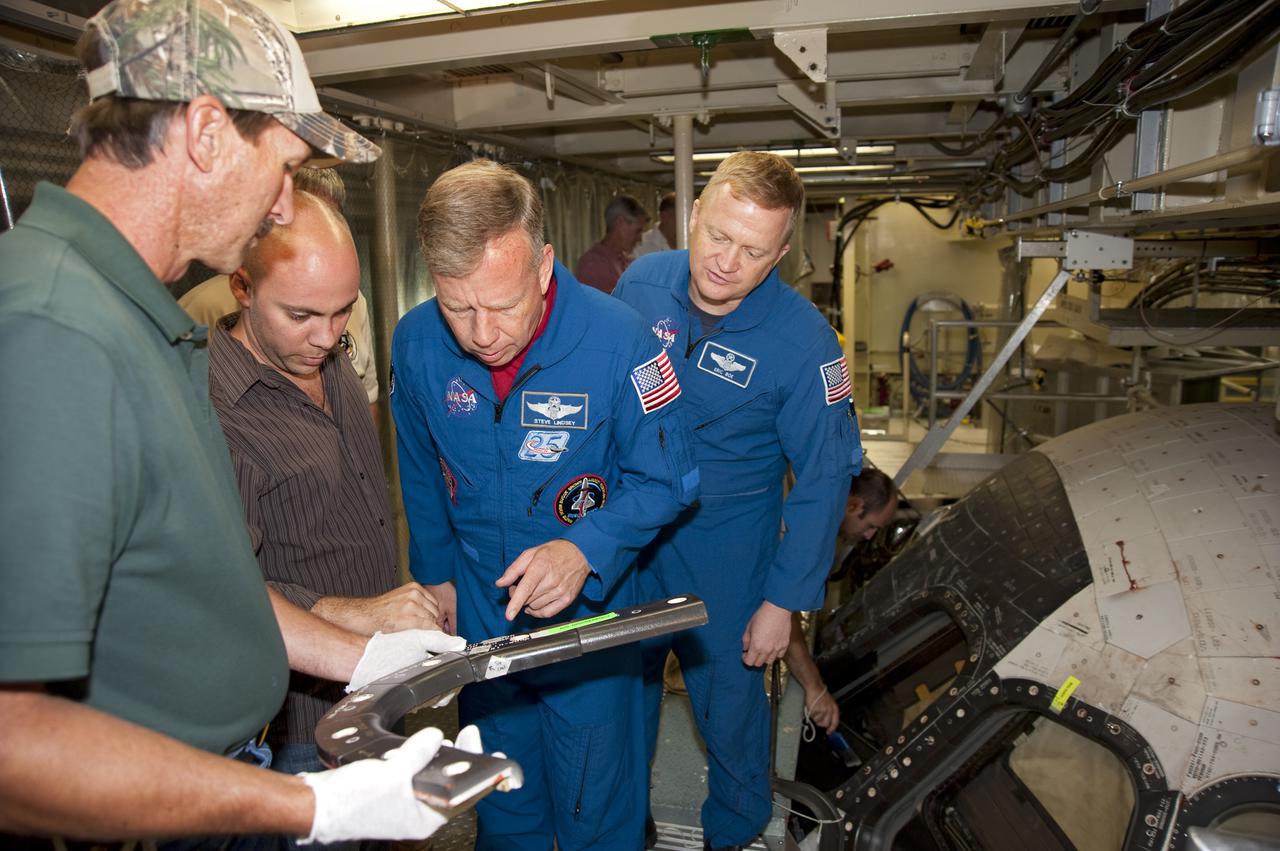
CAPE CANAVERAL, Fla. -- In Orbiter Processing Facility-3 at NASA's Kennedy Space Center in Florida, STS-133 Commander Steve Lindsey (left) and Pilot Eric Boe examine a piece of hardware that will fly on their mission. The astronauts are at Kennedy for the Crew Equipment Interface Test, or CEIT, which provides the crew with hands-on training and observation of shuttle and flight hardware for their mission to the International Space Station. Launch of the STS-133 mission on space shuttle Discovery is targeted for Nov. 1 at 4:33 p.m. EDT. Photo credit: NASA_Kim Shiflett
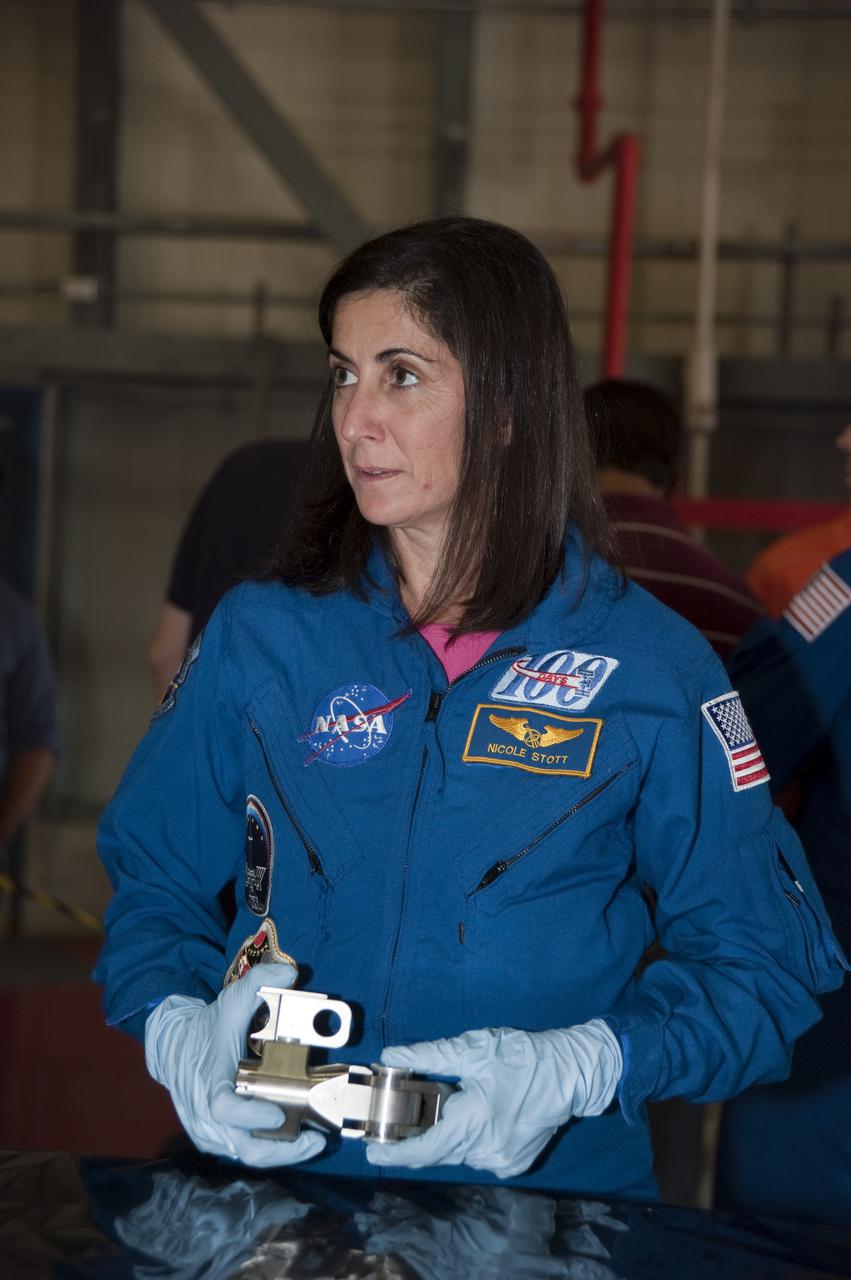
CAPE CANAVERAL, Fla. -- In Orbiter Processing Facility-3 at NASA's Kennedy Space Center in Florida, STS-133 Mission Specialist Nicole Stott is given the opportunity to get a close look of the equipment that will be used on their mission. The astronauts are at Kennedy for the Crew Equipment Interface Test, or CEIT, which provides the crew with hands-on training and observation of shuttle and flight hardware for their mission to the International Space Station. Launch of the STS-133 mission on space shuttle Discovery is targeted for Nov. 1 at 4:33 p.m. EDT. Photo credit: NASA_Kim Shiflett
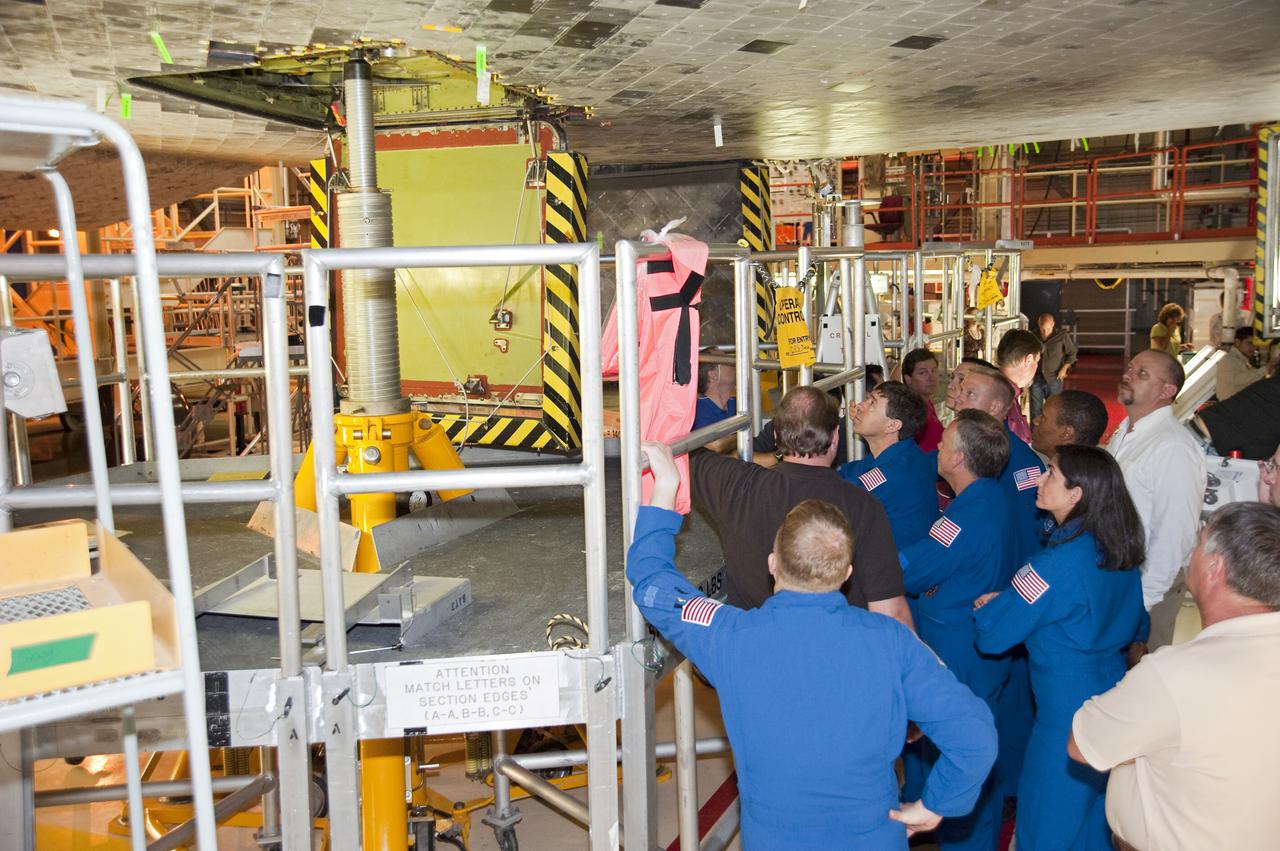
CAPE CANAVERAL, Fla. -- In Orbiter Processing Facility-3 at NASA's Kennedy Space Center in Florida, the STS-133 crew members look up into the shuttle's wheel well as a technician describes the landing gear. The astronauts are at Kennedy for the Crew Equipment Interface Test, or CEIT, which provides the crew with hands-on training and observation of shuttle and flight hardware for their mission to the International Space Station. Launch of the STS-133 mission on space shuttle Discovery is targeted for Nov. 1 at 4:33 p.m. EDT. Photo credit: NASA_Kim Shiflett
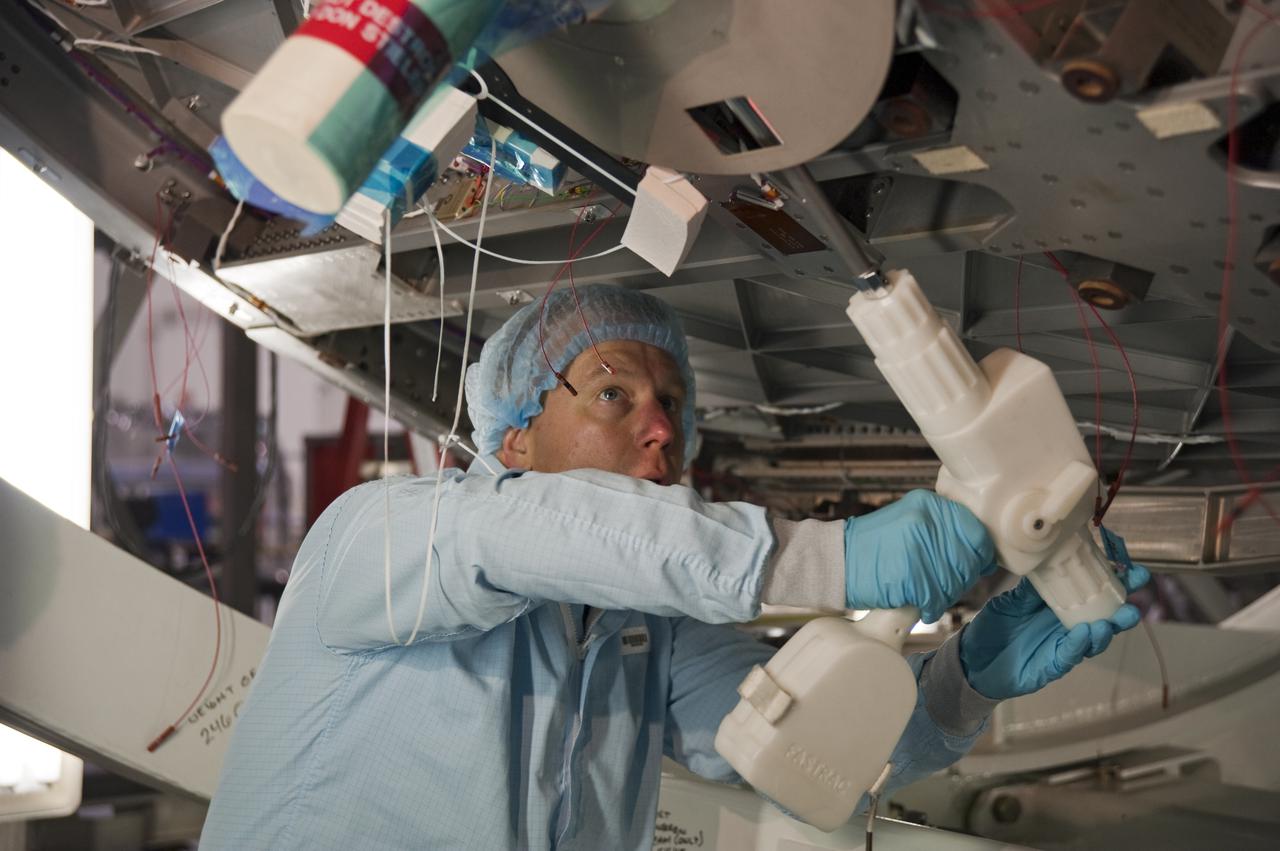
CAPE CANAVERAL, Fla. -- In the Space Station Processing Facility at NASA's Kennedy Space Center in Florida, STS-133 Mission Specialist Tim Kopra practices with a tool he will use while in space. The astronauts are at Kennedy for the Crew Equipment Interface Test, or CEIT, which provides the crew with hands-on training and observation of shuttle and flight hardware for their mission to the International Space Station. Launch of the STS-133 mission on space shuttle Discovery is targeted for Nov. 1 at 4:33 p.m. EDT. Photo credit: NASA_Kim Shiflett
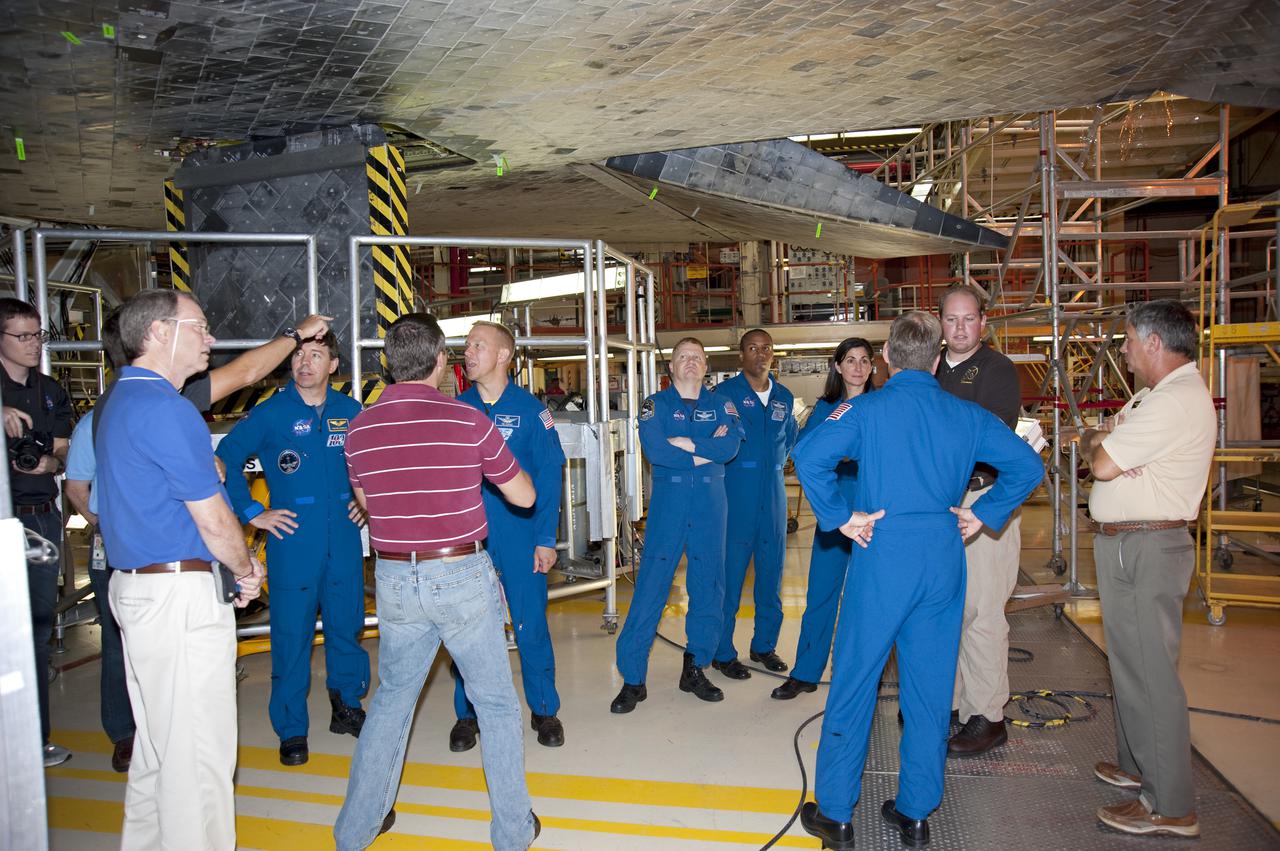
CAPE CANAVERAL, Fla. -- In Orbiter Processing Facility-3 at NASA's Kennedy Space Center in Florida, the STS-133 crew members inspect thermal protection system underneath the shuttle. The astronauts are at Kennedy for the Crew Equipment Interface Test, or CEIT, which provides the crew with hands-on training and observation of shuttle and flight hardware for their mission to the International Space Station. Launch of the STS-133 mission on space shuttle Discovery is targeted for Nov. 1 at 4:33 p.m. EDT. Photo credit: NASA_Kim Shiflett
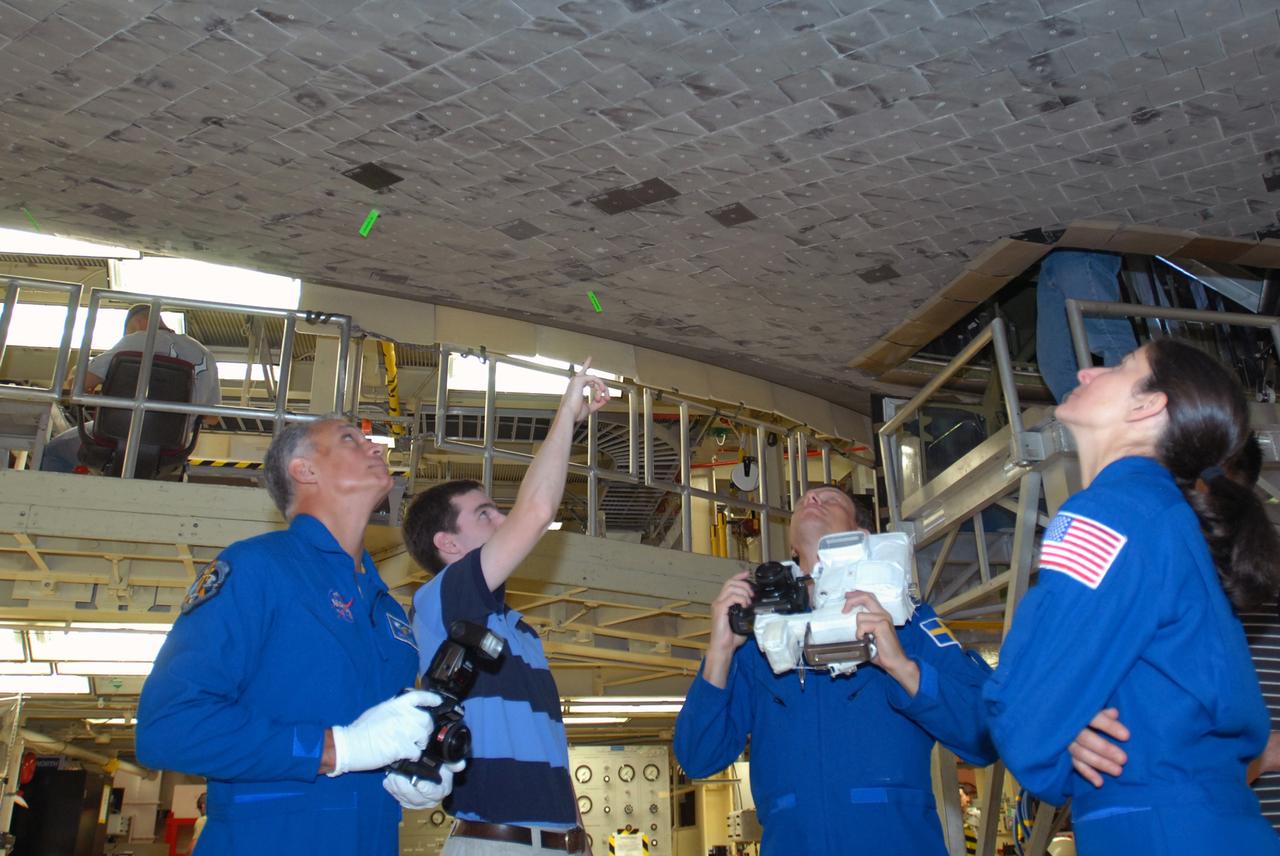
CAPE CANAVERAL, Fla. – In Orbiter Processing Facility 3 at NASA's Kennedy Space Center in Florida, STS-128 Mission Specialists John "Danny" Olivas (left) and Nicole Stott (right) look at tiles on the underside of space shuttle Discovery. At center, Mission Specialist Christer Fuglesang holds a camera. The crew is at Kennedy for a crew equipment interface test, or CEIT, which provides hands-on training and observation of shuttle and flight hardware. The STS-128 flight will carry science and storage racks to the International Space Station on Discovery. Launch is targeted for Aug. 7. Photo credit: NASA/Jim Grossmann
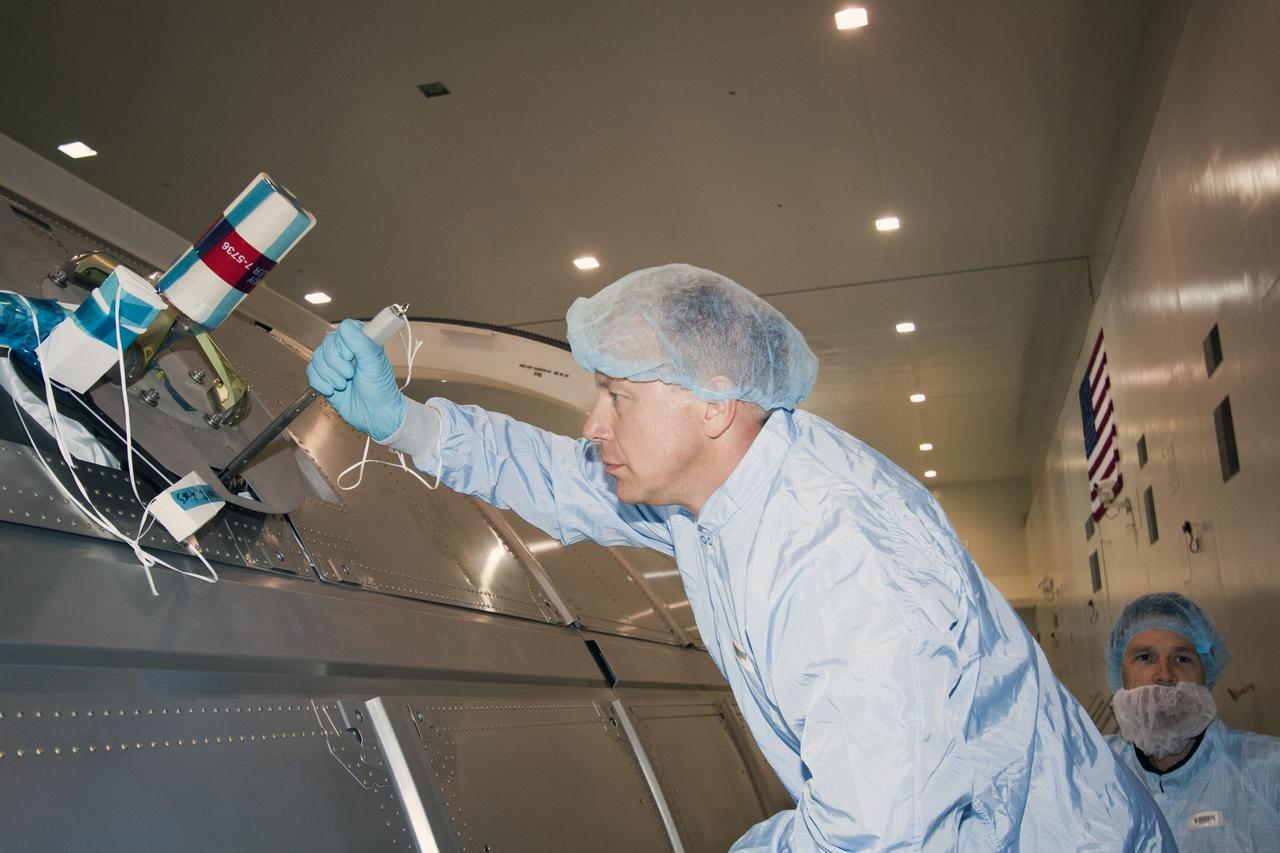
CAPE CANAVERAL, Fla. -- In the Space Station Processing Facility at NASA's Kennedy Space Center in Florida, STS-133 Mission Specialist Tim Kopra practices using a tool on the Permanent Multipurpose Module, or PMM. The astronauts are at Kennedy to participate in the Payload Crew Equipment Interface Test, or CEIT, which gives the crew an opportunity for hands-on training with tools they'll be using in space and familiarization of the payload they will be delivering to the International Space Station. Launch of space shuttle Discovery is targeted for Nov. 1 at 4:40 p.m. EDT. For more information visit, www.nasa.gov/shuttle. Photo credit: NASA/Jack Pfaller
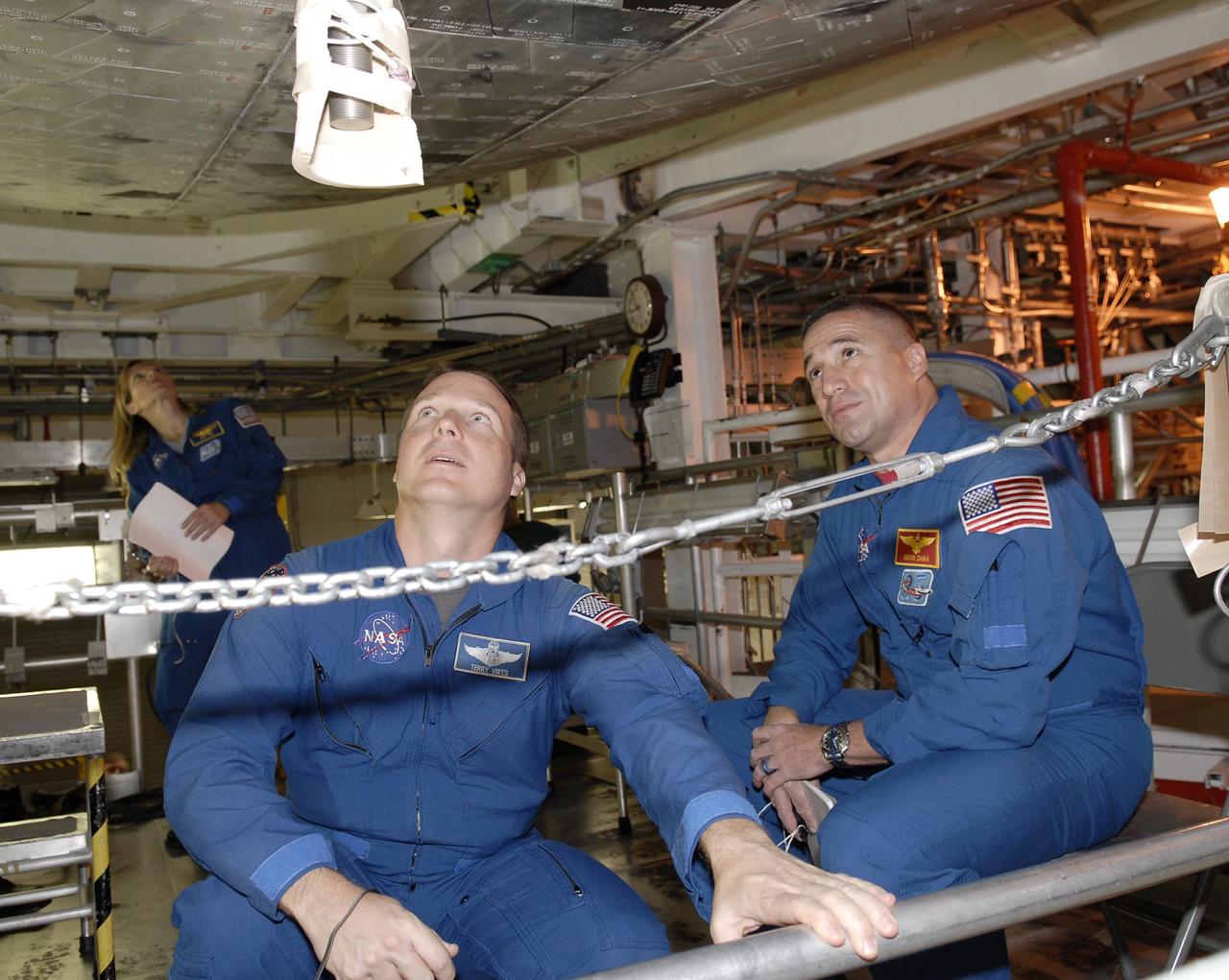
CAPE CANAVERAL, Fla. – In Orbiter Processing Facility-3 at NASA's Kennedy Space Center in Florida, STS-130 Pilot Terry Virts Jr., left, and Commander George Zamka inspect the thermal protection system beneath space shuttle Endeavour as Mission Specialist Kathryn "Kay" Hire does the same in the background. The crew is at Kennedy for a crew equipment interface test, or CEIT, which provides hands-on training and observation of shuttle and flight hardware. The STS-130 flight will carry the Tranquility pressurized module with a built-in cupola to the International Space Station aboard Endeavour. Launch is targeted for Feb. 4, 2010. Photo credit: NASA/Kim Shiflett

CAPE CANAVERAL, Fla. –In Orbiter Processing Facility 3 at NASA's Kennedy Space Center in Florida, STS-128 crew members check out the space shuttle Discovery's robotic arm. Seen here are Mission Specialists Christer Fuglesang and John "Danny" Olivas. The crew is at Kennedy for a crew equipment interface test, or CEIT, which provides hands-on training and observation of shuttle and flight hardware. The STS-128 flight will carry science and storage racks to the International Space Station on Discovery. Launch is targeted for Aug. 7. Photo credit: NASA/Jim Grossmann
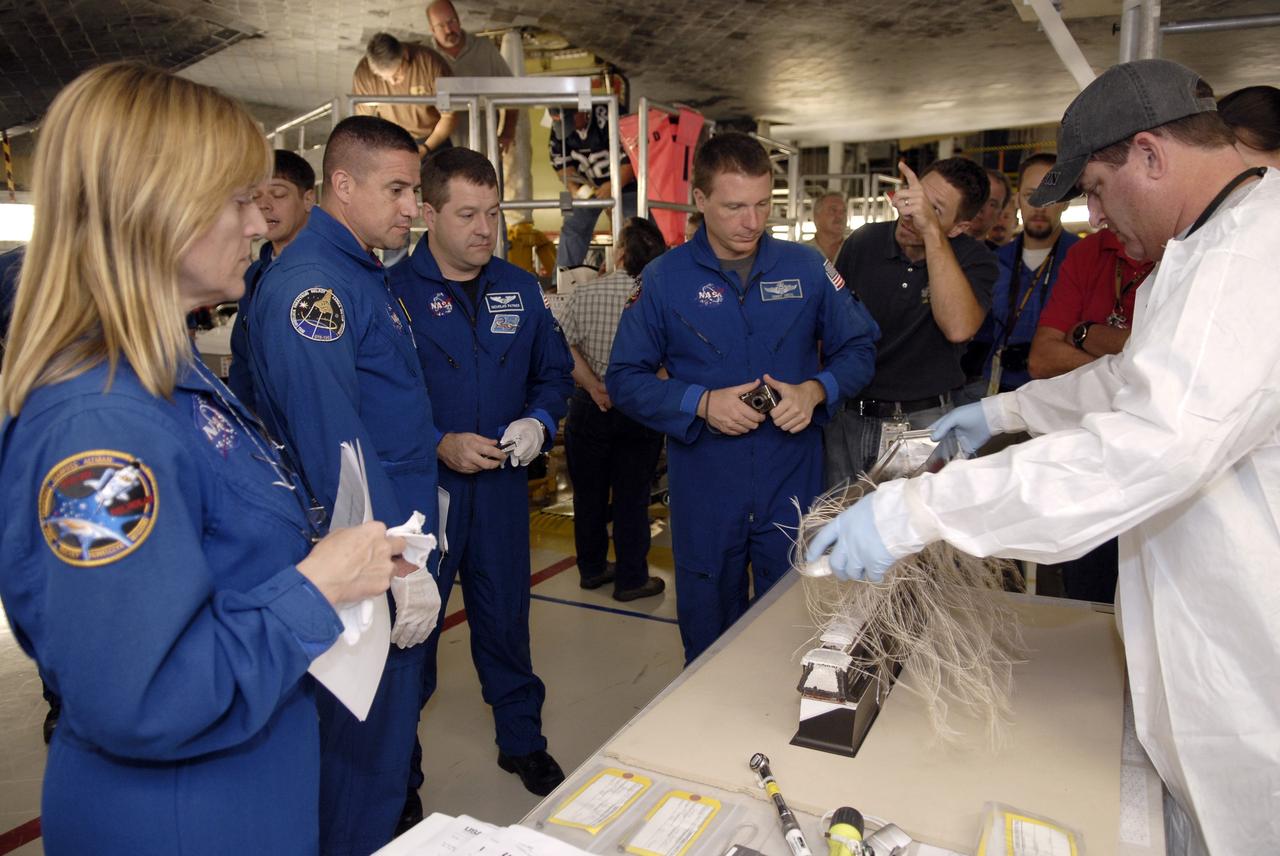
CAPE CANAVERAL, Fla. – In Orbiter Processing Facility-3 at NASA's Kennedy Space Center in Florida, members of the STS-130 crew view a demonstration on the upkeep of space shuttle Endeavour's thermal protection system. From left are Mission Specialist Kathryn "Kay" Hire, Commander George Zamka, Mission Specialist Nicolas Patrick and Pilot Terry Virts Jr. The crew is at Kennedy for a crew equipment interface test, or CEIT, which provides hands-on training and observation of shuttle and flight hardware. The STS-130 flight will carry the Tranquility pressurized module with a built-in cupola to the International Space Station aboard Endeavour. Launch is targeted for Feb. 4, 2010. Photo credit: NASA/Kim Shiflett
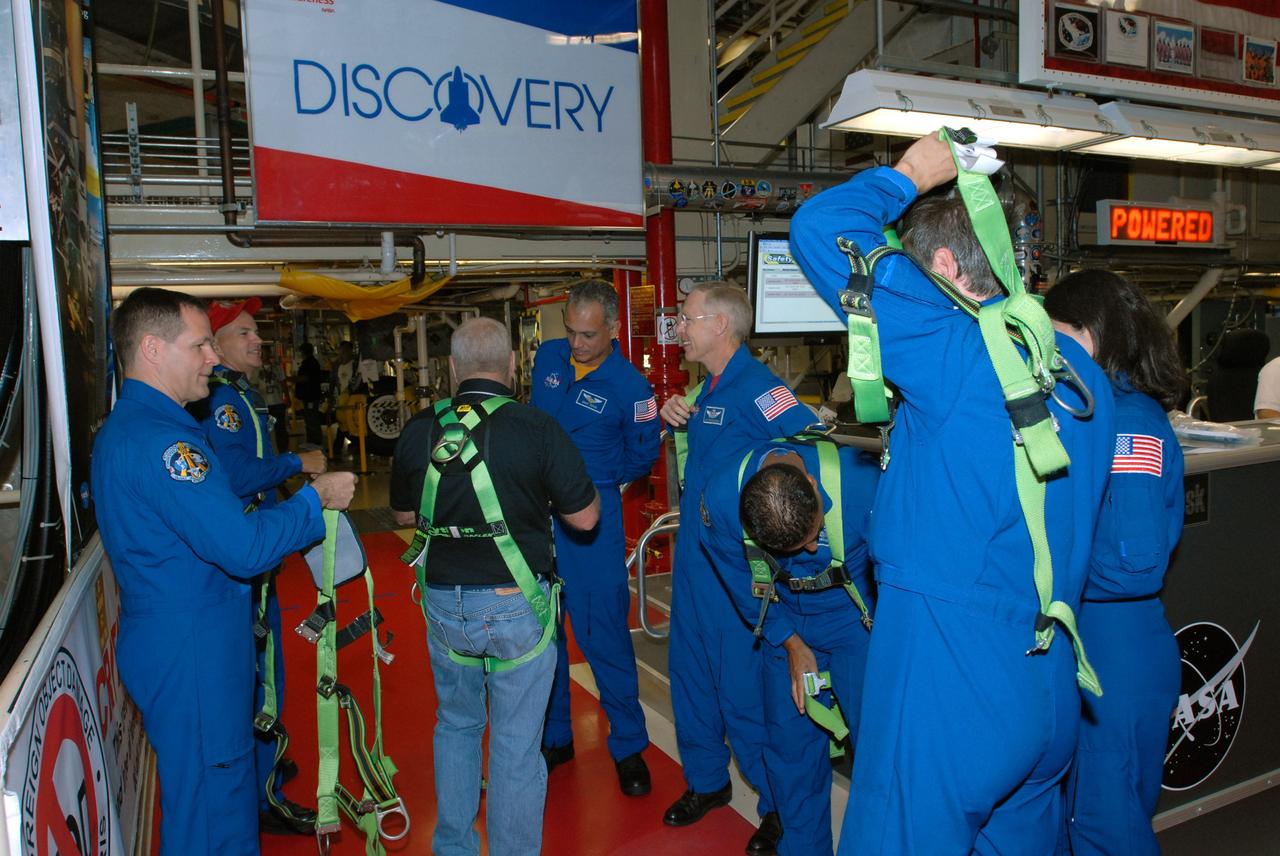
CAPE CANAVERAL, Fla. – STS-128 crew members put on harnesses before checking out space shuttle Discovery in Orbiter Processing Facility 3 at NASA's Kennedy Space Center in Florida. From left are Pilot Kevin Ford, Commander Rick Sturckow, and Mission Specialists John "Danny" Olivas, Patrick Forester, Jose Hernandez, Nicole Stott and Christer Fugelsang. The crew is at Kennedy for a crew equipment interface test, or CEIT, which provides hands-on training and observation of shuttle and flight hardware. The STS-128 flight will carry science and storage racks to the International Space Station on Discovery. Launch is targeted for Aug. 7. Photo credit: NASA/Jim Grossmann
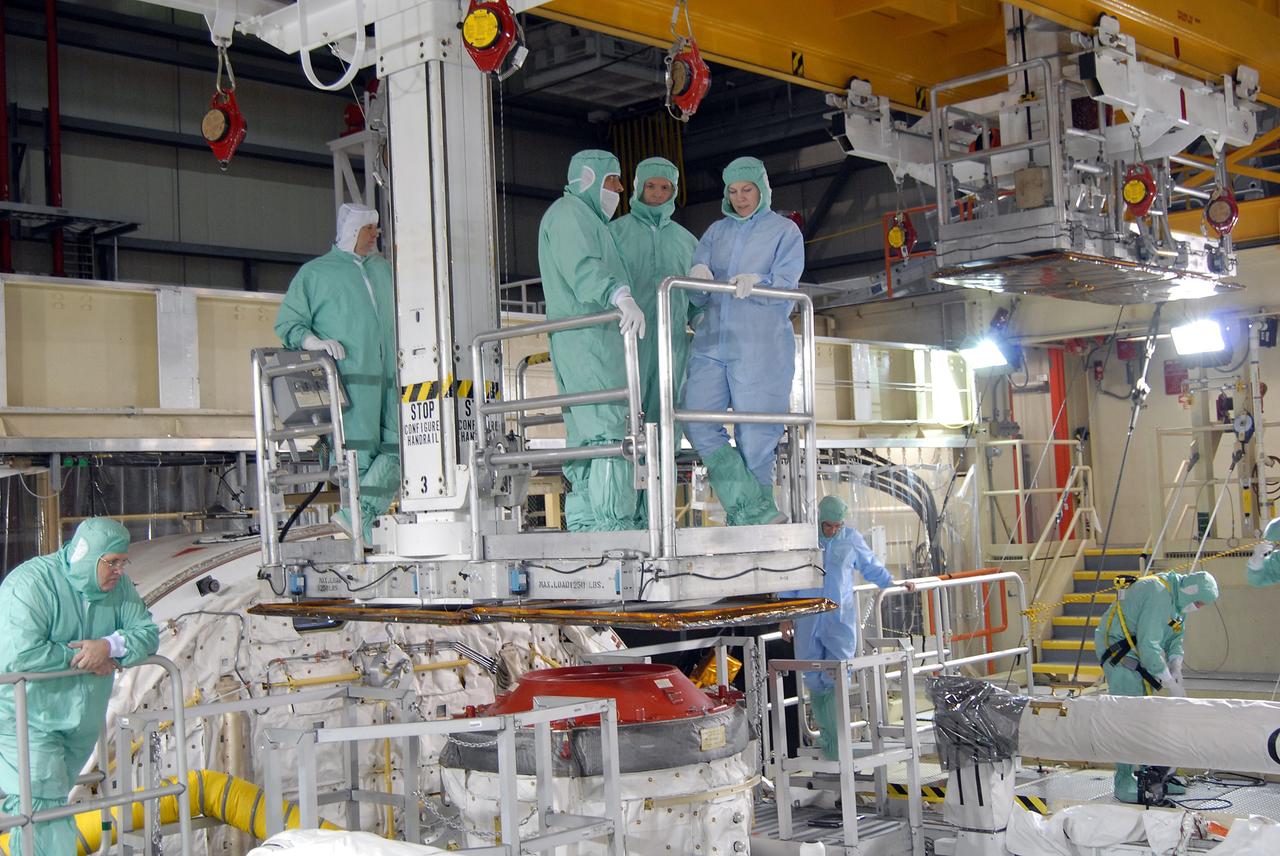
CAPE CANAVERAL, Fla. – In Orbiter Processing Facility 3 at NASA's Kennedy Space Center in Florida, STS-128 crew members are lowered into space shuttle Discovery's payload bay to check equipment. At left is Mission Specialist Jose Hernandez; at center is Commander Rick Sturckow. The crew is at Kennedy for a crew equipment interface test, or CEIT, which provides hands-on training and observation of shuttle and flight hardware. The STS-128 flight will carry science and storage racks to the International Space Station on Discovery. Launch is targeted for Aug. 7. Photo credit: NASA/Jim Grossmann
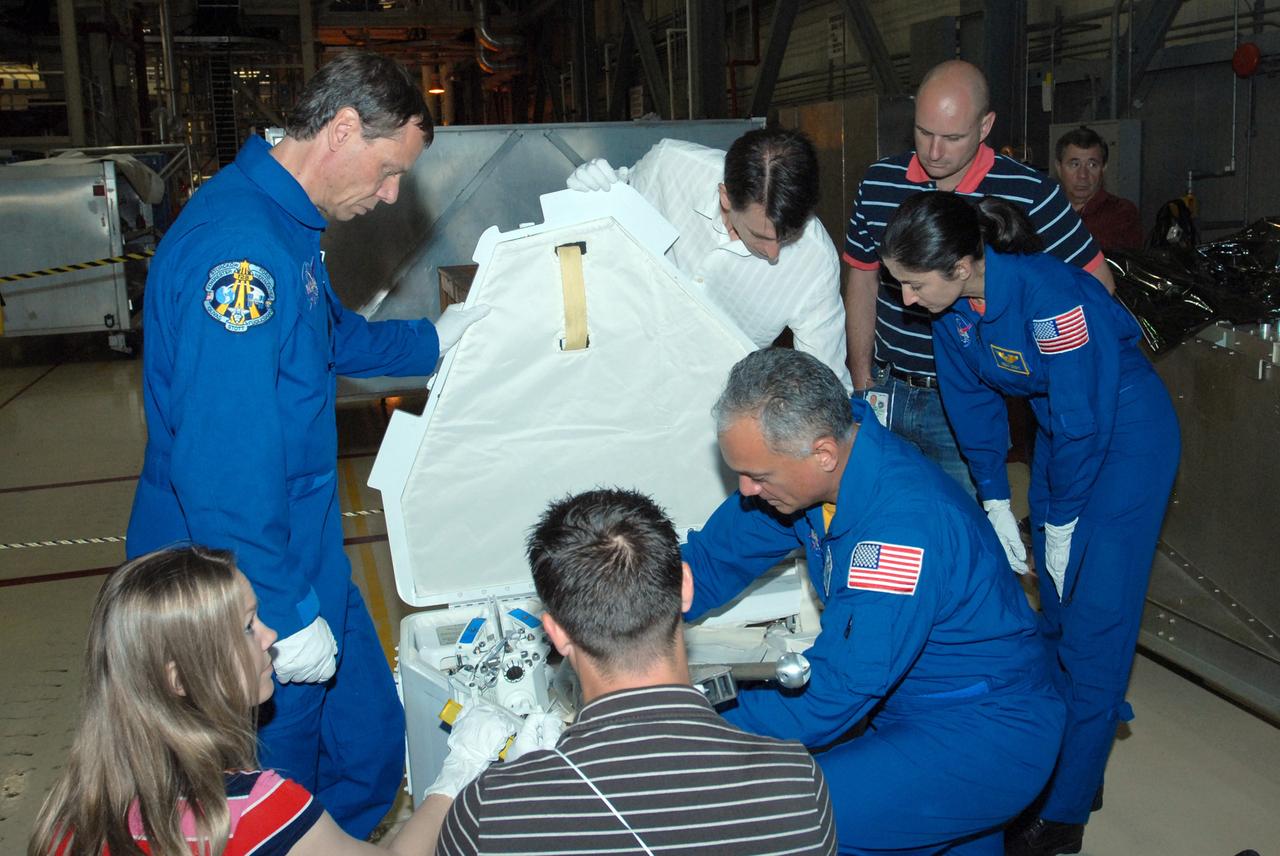
CAPE CANAVERAL, Fla. – In Orbiter Processing Facility 3 at NASA's Kennedy Space Center in Florida, STS-128 crew members check out storage containers they will use on the mission. The astronauts are, from left, Mission Specialists Christer Fuglesang, John "Danny" Olivas and Nicole Stott. The crew is at Kennedy for a crew equipment interface test, or CEIT, which provides hands-on training and observation of shuttle and flight hardware. The STS-128 flight will carry science and storage racks to the International Space Station on Discovery. Launch is targeted for Aug. 7. Photo credit: NASA/Jim Grossmann
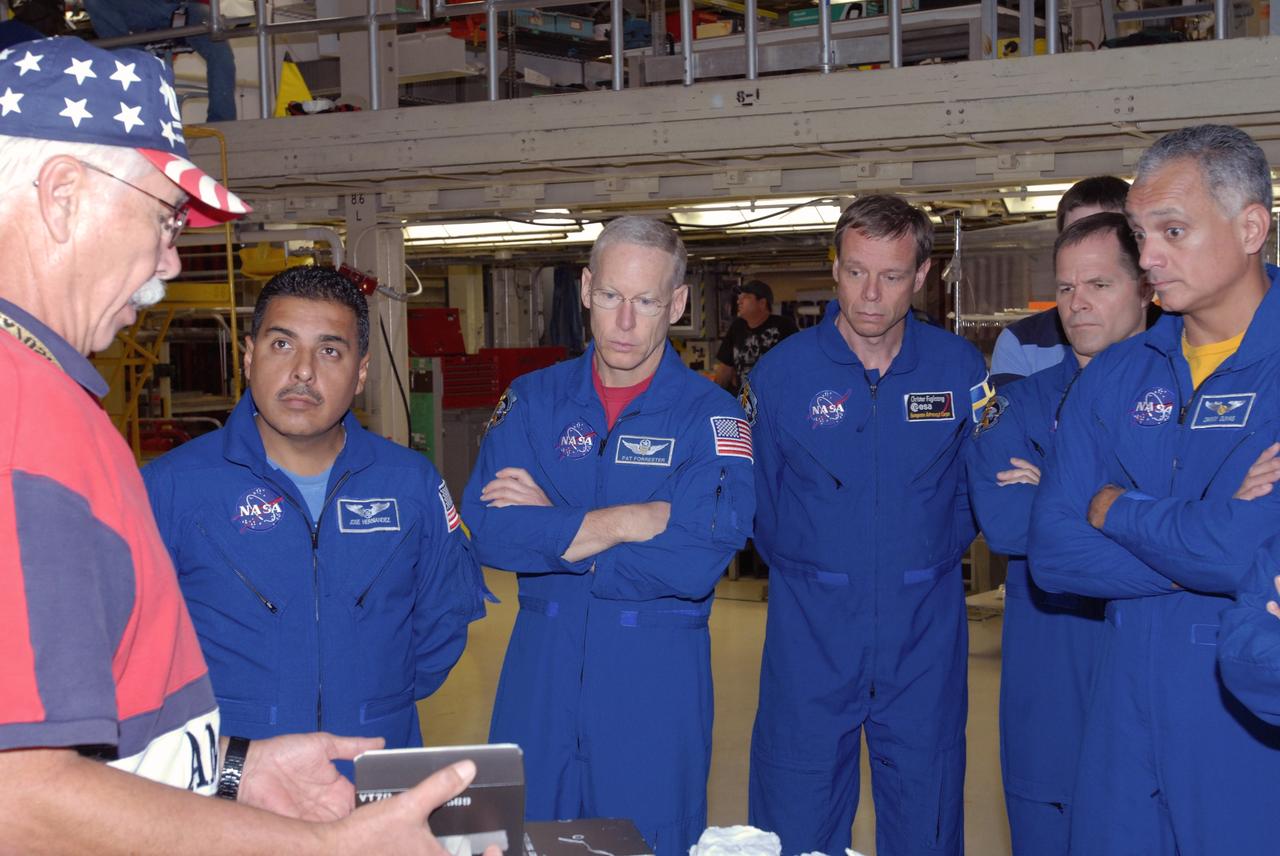
CAPE CANAVERAL, Fla. – In Orbiter Processing Facility 3 at NASA's Kennedy Space Center in Florida, STS-128 crew members listen to a tile expert while checking out space shuttle Discovery. The astronauts are, from left, Mission Specialists Jose Fernandez, Patrick Forrester and Christer Fuglesang, Pilot Kevin Ford and Mission Specialist John "Danny" Olivas. The crew is at Kennedy for a crew equipment interface test, or CEIT, which provides hands-on training and observation of shuttle and flight hardware. The STS-128 flight will carry science and storage racks to the International Space Station on Discovery. Launch is targeted for Aug. 7. Photo credit: NASA/Jim Grossmann
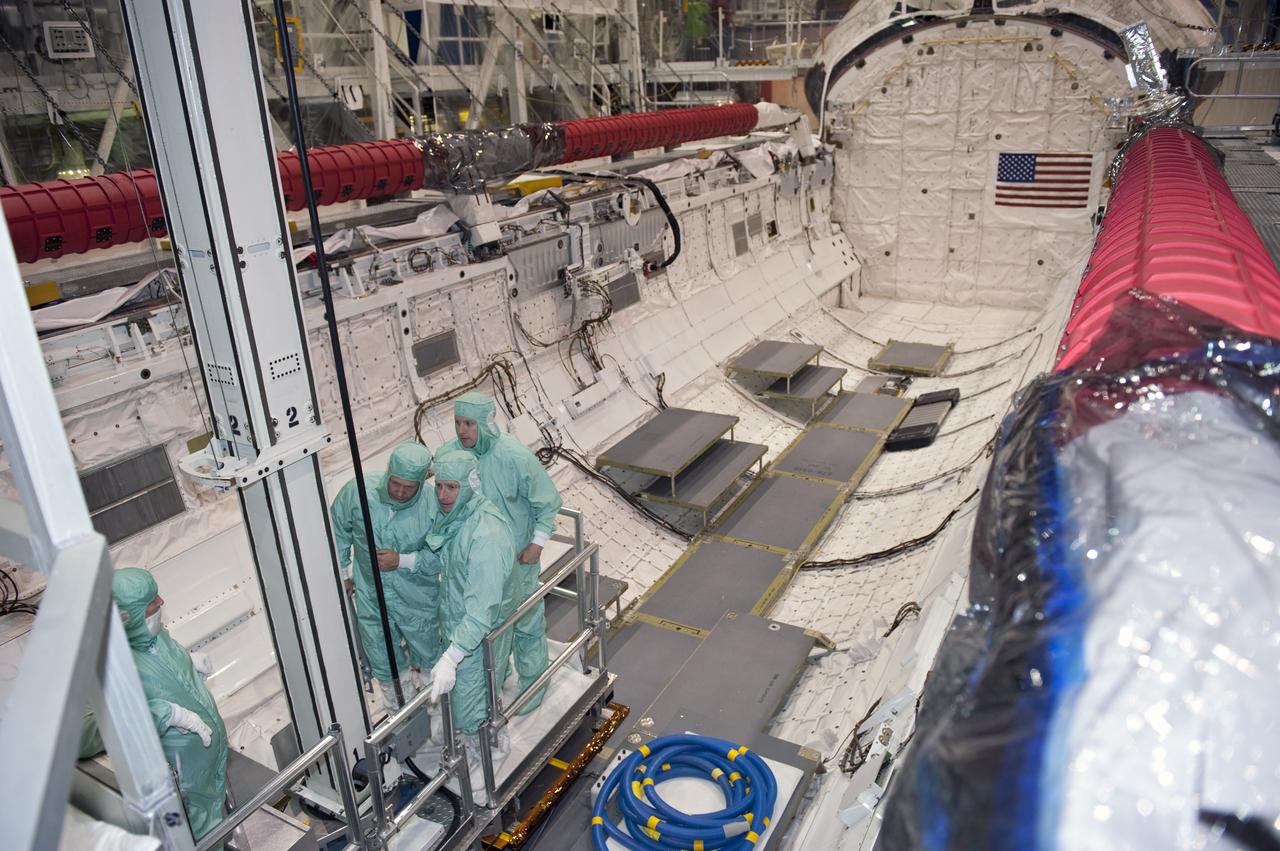
CAPE CANAVERAL, Fla. -- In Orbiter Processing Facility-1 at NASA's Kennedy Space Center in Florida, the STS-135 crew inspects shuttle Atlantis' payload bay. The four-member crew is at Kennedy to participate in the Crew Equipment Interface Test (CEIT), which gives them an opportunity for hands-on training with the tools and equipment they'll use in space and familiarization of the payload they'll deliver to the International Space Station. Atlantis is being prepared for the STS-135 mission, which will deliver Raffaello multi-purpose logistics module packed with supplies and spare parts to the station. Atlantis is targeted to launch June 28, and will be the last shuttle flight for the Space Shuttle Program. Photo credit: NASA/Kim Shiflett
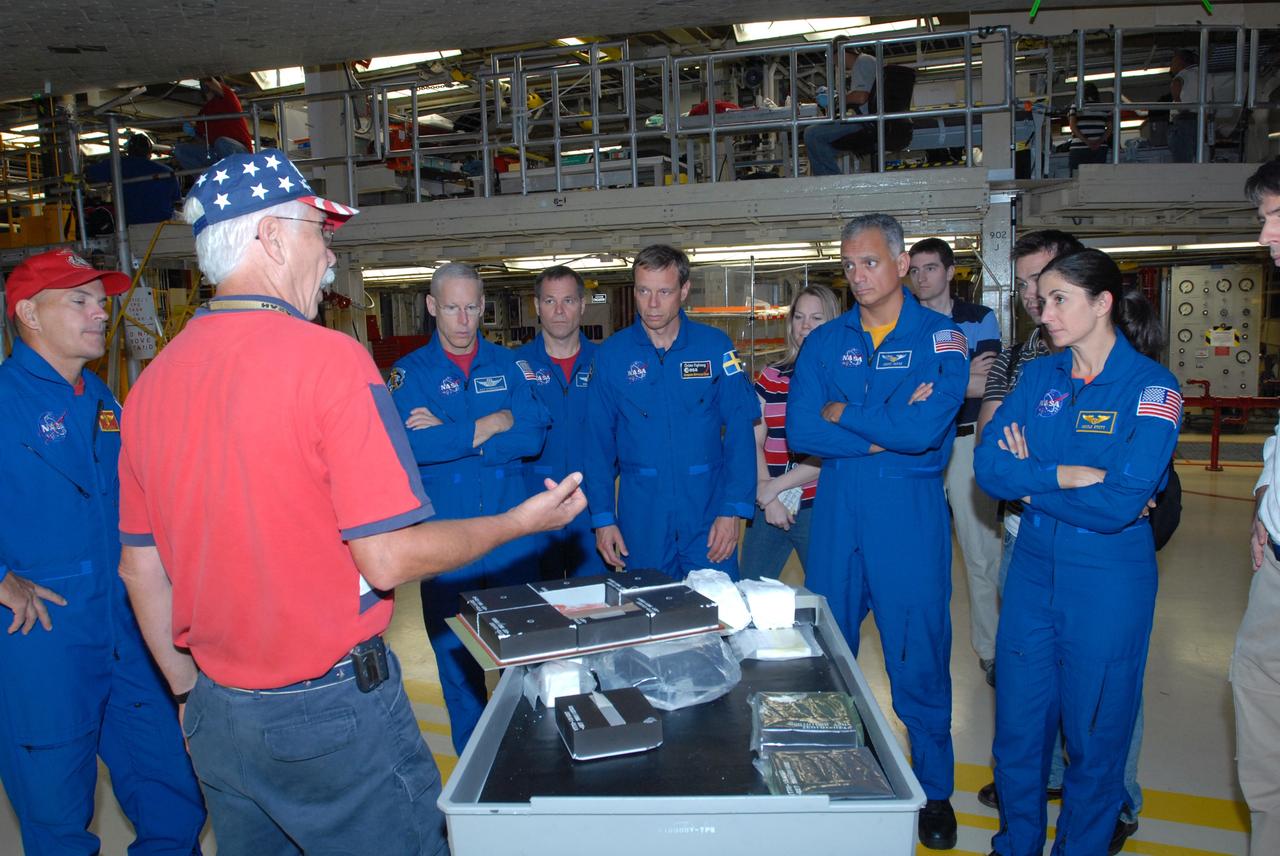
CAPE CANAVERAL, Fla. – In Orbiter Processing Facility 3 at NASA's Kennedy Space Center in Florida, STS-128 crew members listen to a tile expert while checking out space shuttle Discovery. The astronauts are, from left, Commander Rick Sturckow, Mission Specialist Patrick Forrester, Pilot Kevin Ford, and Mission Specialists Christer Fuglesang, John "Danny" Olivas and Nicole Stott. The crew is at Kennedy for a crew equipment interface test, or CEIT, which provides hands-on training and observation of shuttle and flight hardware. The STS-128 flight will carry science and storage racks to the International Space Station on Discovery. Launch is targeted for Aug. 7. Photo credit: NASA/Jim Grossmann
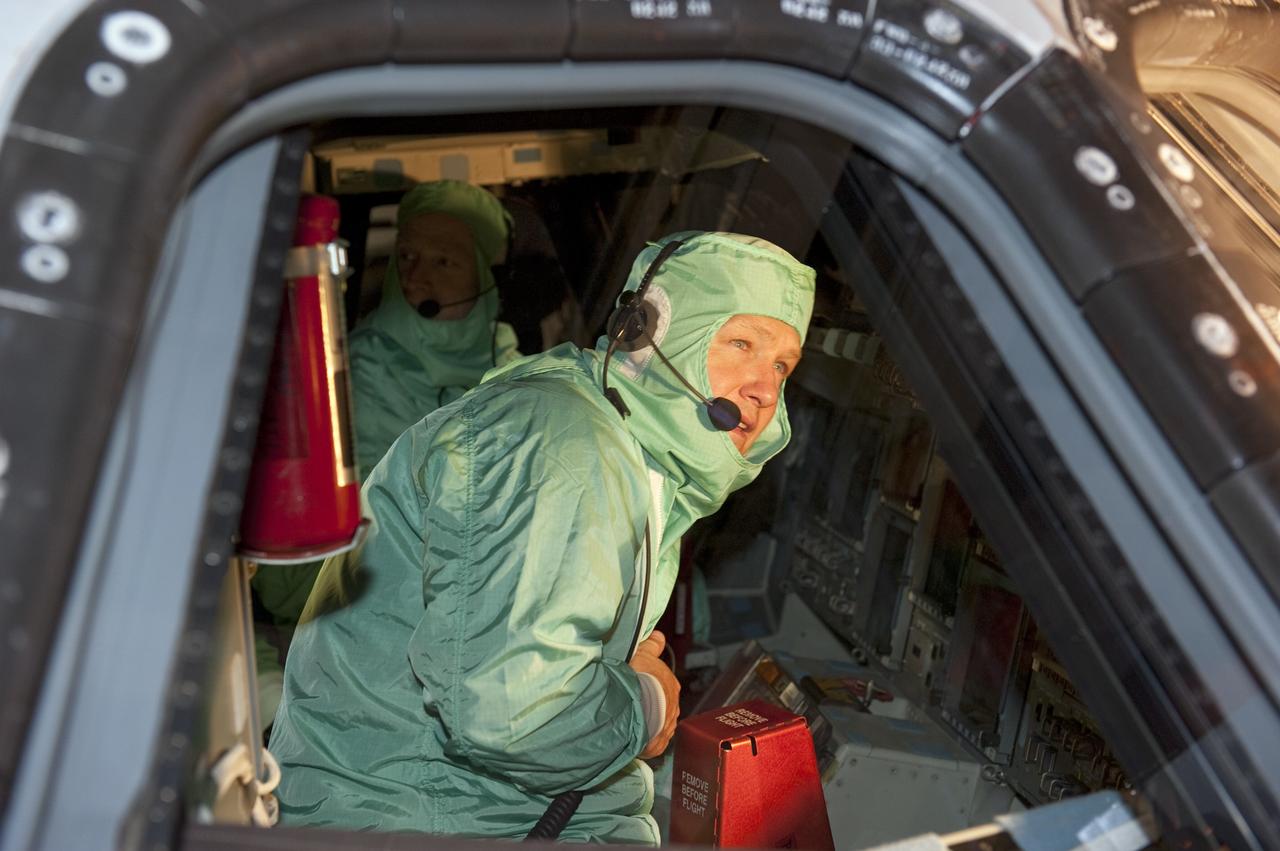
CAPE CANAVERAL, Fla. -- In Orbiter Processing Facility-1 at NASA's Kennedy Space Center in Florida, STS-135 Pilot Doug Hurley checks out shuttle Atlantis' cockpit. The four-member crew is at Kennedy to participate in the Crew Equipment Interface Test (CEIT), which gives them an opportunity for hands-on training with the tools and equipment they'll use and familiarization of the payload they'll deliver to the International Space Station. Atlantis is being prepared for the STS-135 mission, which will deliver Raffaello multi-purpose logistics module packed with supplies and spare parts to the station. Atlantis is targeted to launch June 28, and will be the last shuttle flight for the Space Shuttle Program. Photo credit: NASA/Kim Shiflett
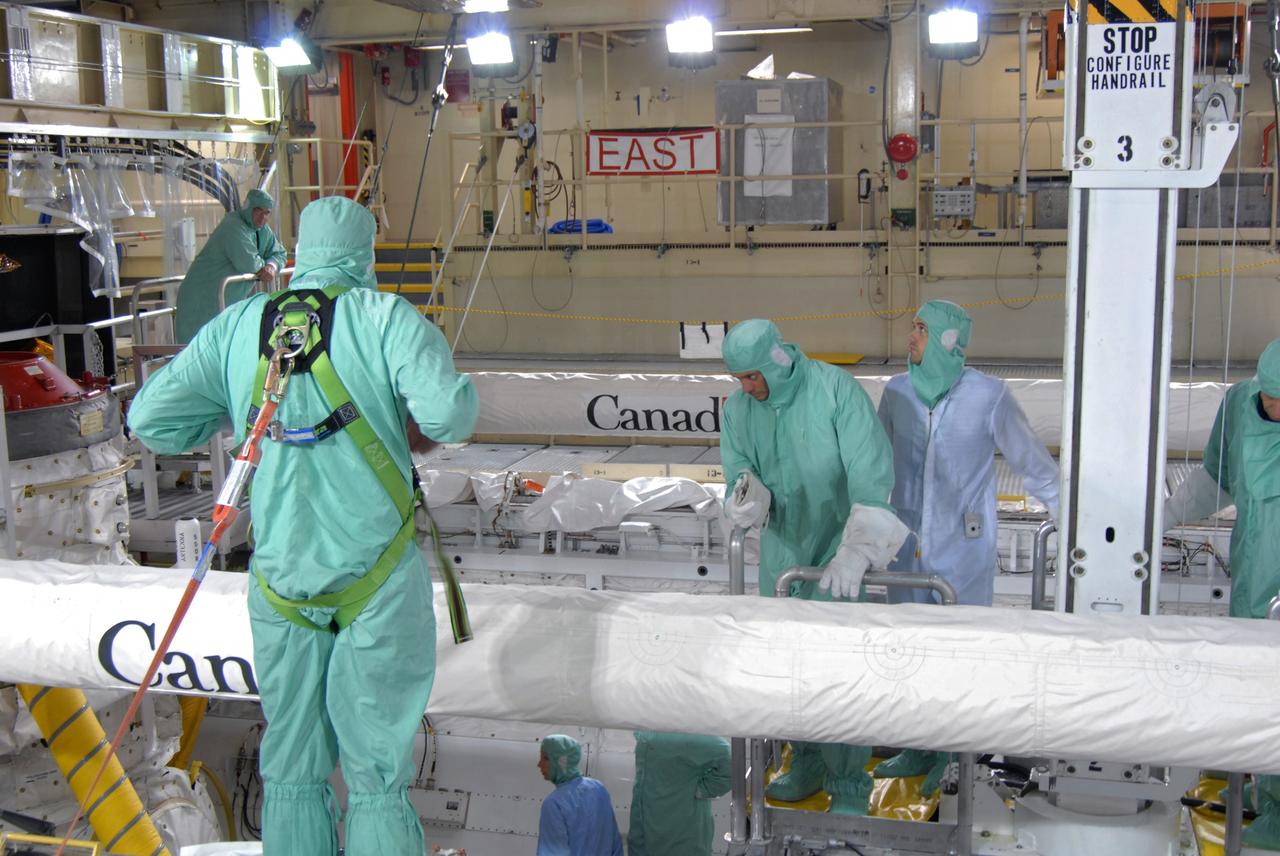
CAPE CANAVERAL, Fla. – TIn Orbiter Processing Facility 3 at NASA's Kennedy Space Center in Florida, STS-128 crew members are lowered into space shuttle Discovery's payload bay to check equipment. At center is Mission Specialist John "Danny" Olivas. The crew is at Kennedy for a crew equipment interface test, or CEIT, which provides hands-on training and observation of shuttle and flight hardware. The STS-128 flight will carry science and storage racks to the International Space Station on Discovery. Launch is targeted for Aug. 7. Photo credit: NASA/Jim Grossmann
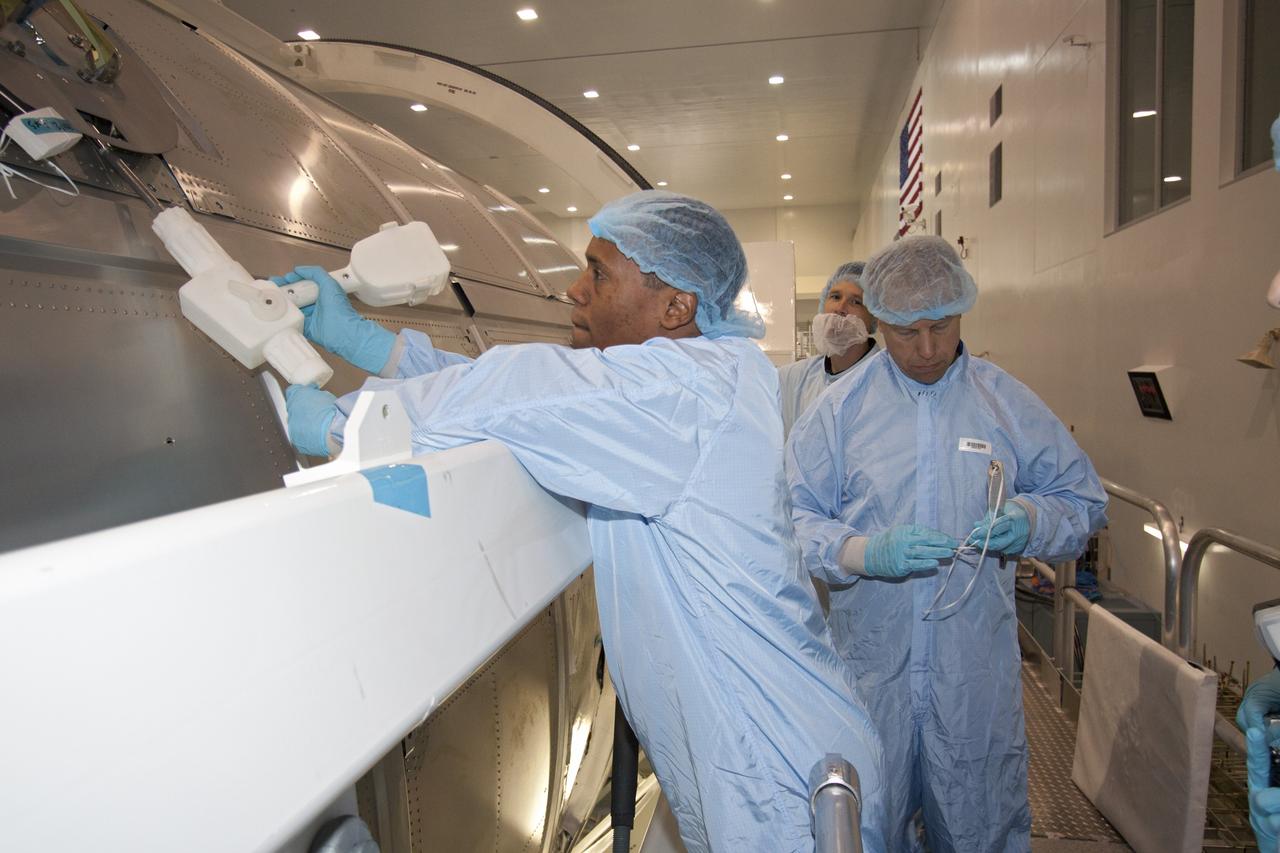
CAPE CANAVERAL, Fla. -- In the Space Station Processing Facility at NASA's Kennedy Space Center in Florida, STS-133 Mission Specialist Alvin Drew practices with a tool on the Permanent Multipurpose Module, or PMM, while Mission Specialist Tim Kopra (right) awaits his turn. The astronauts are at Kennedy to participate in the Payload Crew Equipment Interface Test, or CEIT, which gives the crew an opportunity for hands-on training with tools they'll be using in space and familiarization of the payload they will be delivering to the International Space Station. Launch of space shuttle Discovery is targeted for Nov. 1 at 4:40 p.m. EDT. For more information visit, www.nasa.gov/shuttle. Photo credit: NASA/Jack Pfaller

CAPE CANAVERAL, Fla. – In Orbiter Processing Facility 3 at NASA's Kennedy Space Center in Florida, STS-128 crew members are lowered into space shuttle Discovery's payload bay to check equipment. At left is Mission Specialist John "Danny" Olivas and at right is Mission Specialist Christer Fuglesang. The crew is at Kennedy for a crew equipment interface test, or CEIT, which provides hands-on training and observation of shuttle and flight hardware. The STS-128 flight will carry science and storage racks to the International Space Station on Discovery. Launch is targeted for Aug. 7. Photo credit: NASA/Jim Grossmann
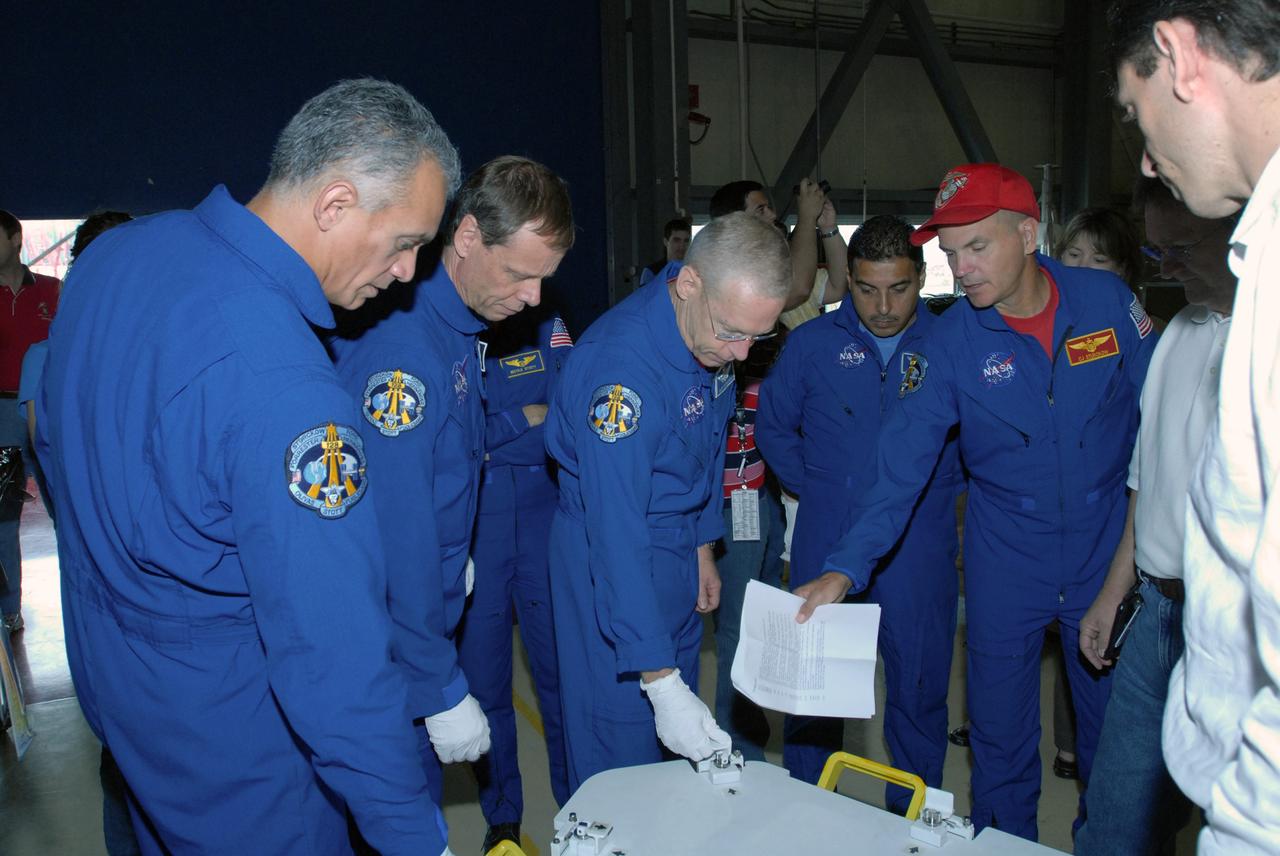
CAPE CANAVERAL, Fla. – In Orbiter Processing Facility 3 at NASA's Kennedy Space Center in Florida, STS-128 crew members check out storage containers they will use on the mission. From left are Mission Specialists John "Danny" Olivas, Christer Fuglesang, Patrick Forrester and Jose Hernandez, and Commander Rick Sturckow (pointing). The crew is at Kennedy for a crew equipment interface test, or CEIT, which provides hands-on training and observation of shuttle and flight hardware. The STS-128 flight will carry science and storage racks to the International Space Station on Discovery. Launch is targeted for Aug. 7. Photo credit: NASA/Jim Grossmann

CAPE CANAVERAL, Fla. – In Orbiter Processing Facility 3 at NASA's Kennedy Space Center in Florida, STS-128 crew members are lowered into space shuttle Discovery's payload bay. Being lowered are, at left, Mission Specialist Patrick Forester and, at right, Pilot Kevin Ford. The crew is at Kennedy for a crew equipment interface test, or CEIT, which provides hands-on training and observation of shuttle and flight hardware. The STS-128 flight will carry science and storage racks to the International Space Station on Discovery. Launch is targeted for Aug. 7. Photo credit: NASA/Jim Grossmann
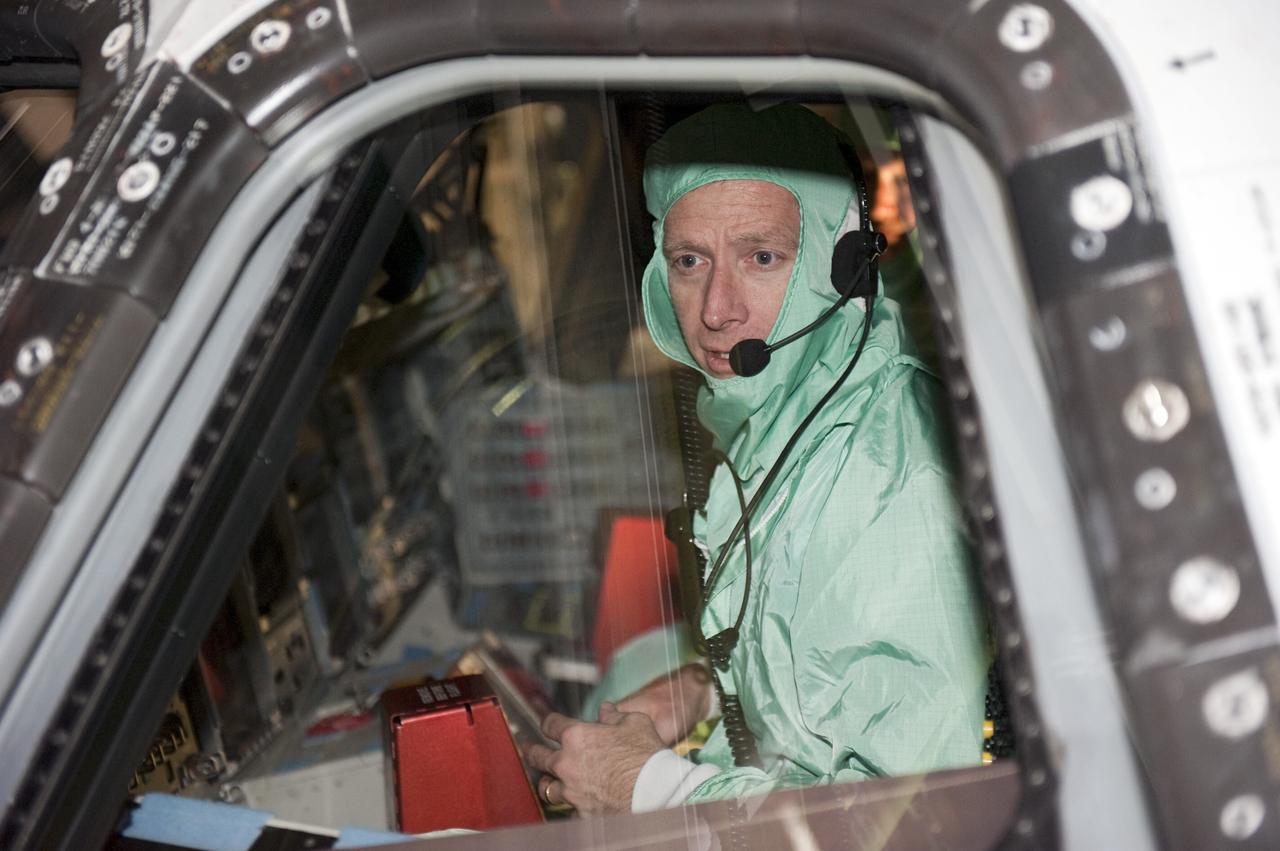
CAPE CANAVERAL, Fla. -- In Orbiter Processing Facility-1 at NASA's Kennedy Space Center in Florida, STS-135 Commander Chris Ferguson checks out shuttle Atlantis' cockpit. The four-member crew is at Kennedy to participate in the Crew Equipment Interface Test (CEIT), which gives them an opportunity for hands-on training with the tools and equipment they'll use and familiarization of the payload they'll deliver to the International Space Station. Atlantis is being prepared for the STS-135 mission, which will deliver Raffaello multi-purpose logistics module packed with supplies and spare parts to the station. Atlantis is targeted to launch June 28, and will be the last shuttle flight for the Space Shuttle Program. Photo credit: NASA/Kim Shiflett
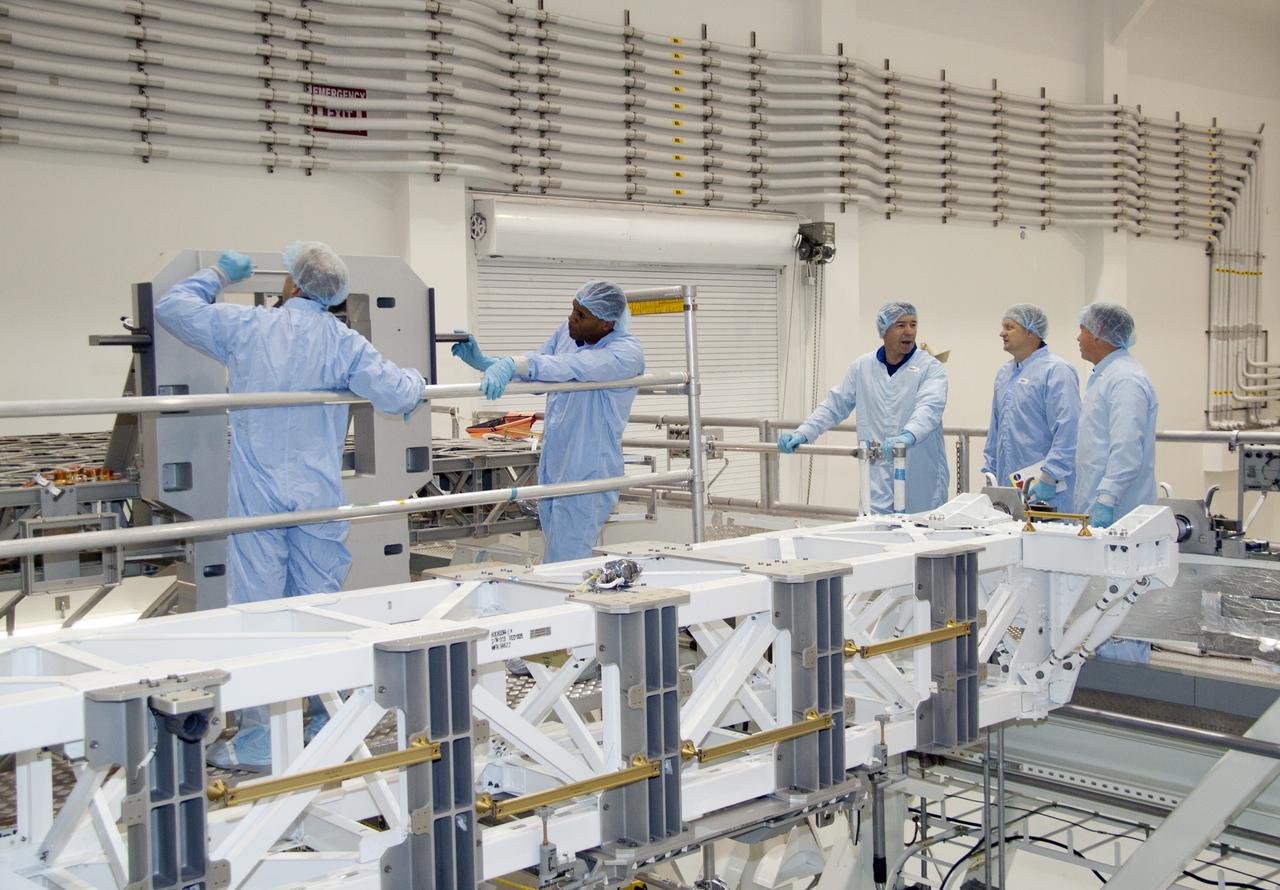
CAPE CANAVERAL, Fla. -- In the Space Station Processing Facility at NASA's Kennedy Space Center in Florida, STS-133 Mission Specialists Tim Kopra (left) and Alvin Drew inspect a component of the payload as Mission Specialist Michael Barratt and Pilot Eric Boe look on. The astronauts are at Kennedy to participate in the Payload Crew Equipment Interface Test, or CEIT, which gives the crew an opportunity for hands-on training with tools they'll be using in space and familiarization of the payload they will be delivering to the International Space Station. Launch of space shuttle Discovery is targeted for Nov. 1 at 4:40 p.m. EDT. For more information visit, www.nasa.gov/shuttle. Photo credit: NASA/Jack Pfaller
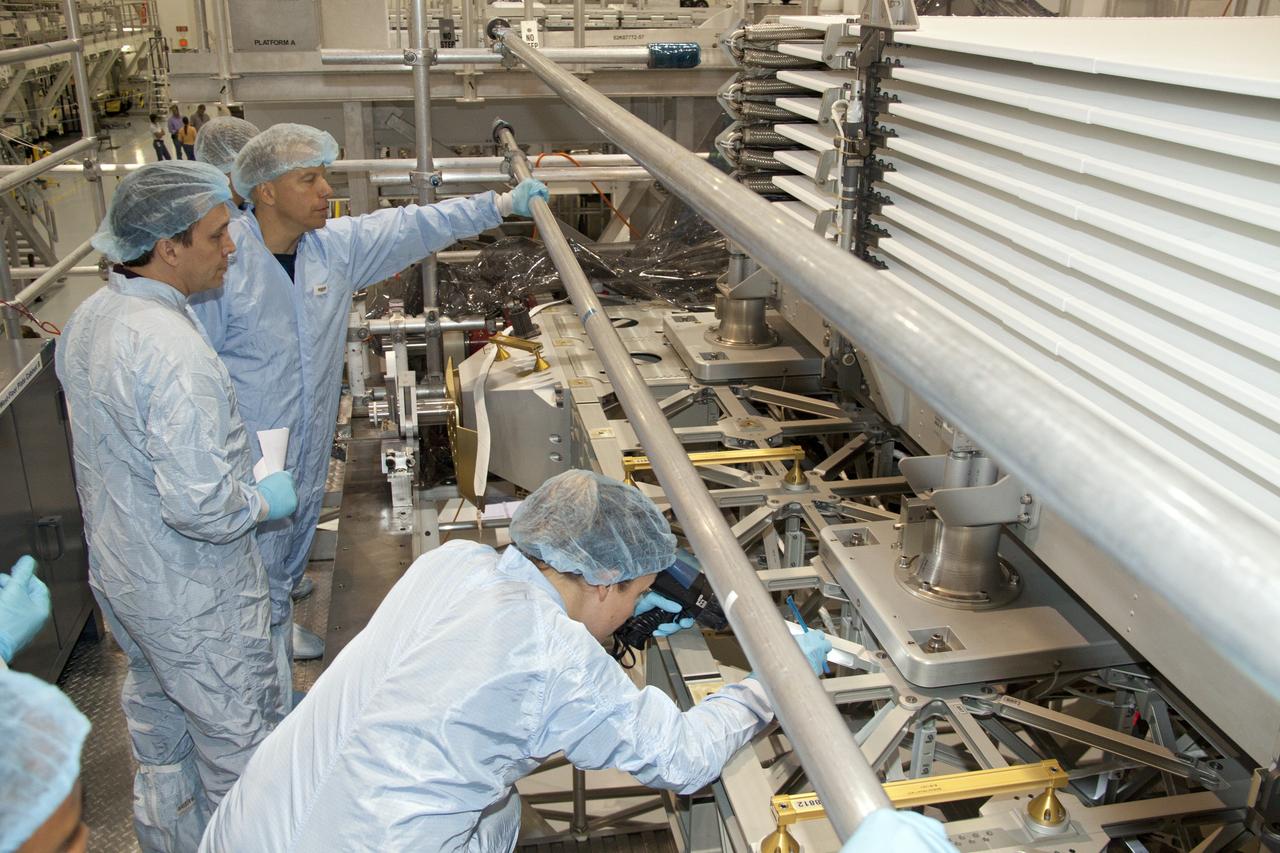
CAPE CANAVERAL, Fla. -- In the Space Station Processing Facility at NASA's Kennedy Space Center in Florida, STS-133 Mission Specialist Tim Kopra gets an up-close view of the Express Logistics Carrier-3, or ELC-3, accompanied by processing technicians. The astronauts are at Kennedy to participate in the Payload Crew Equipment Interface Test, or CEIT, which gives the crew an opportunity for hands-on training with tools they'll be using in space and familiarization of the payload they will be delivering to the International Space Station. Launch of space shuttle Discovery is targeted for Nov. 1 at 4:40 p.m. EDT. For more information visit, www.nasa.gov/shuttle. Photo credit: NASA/Jack Pfaller
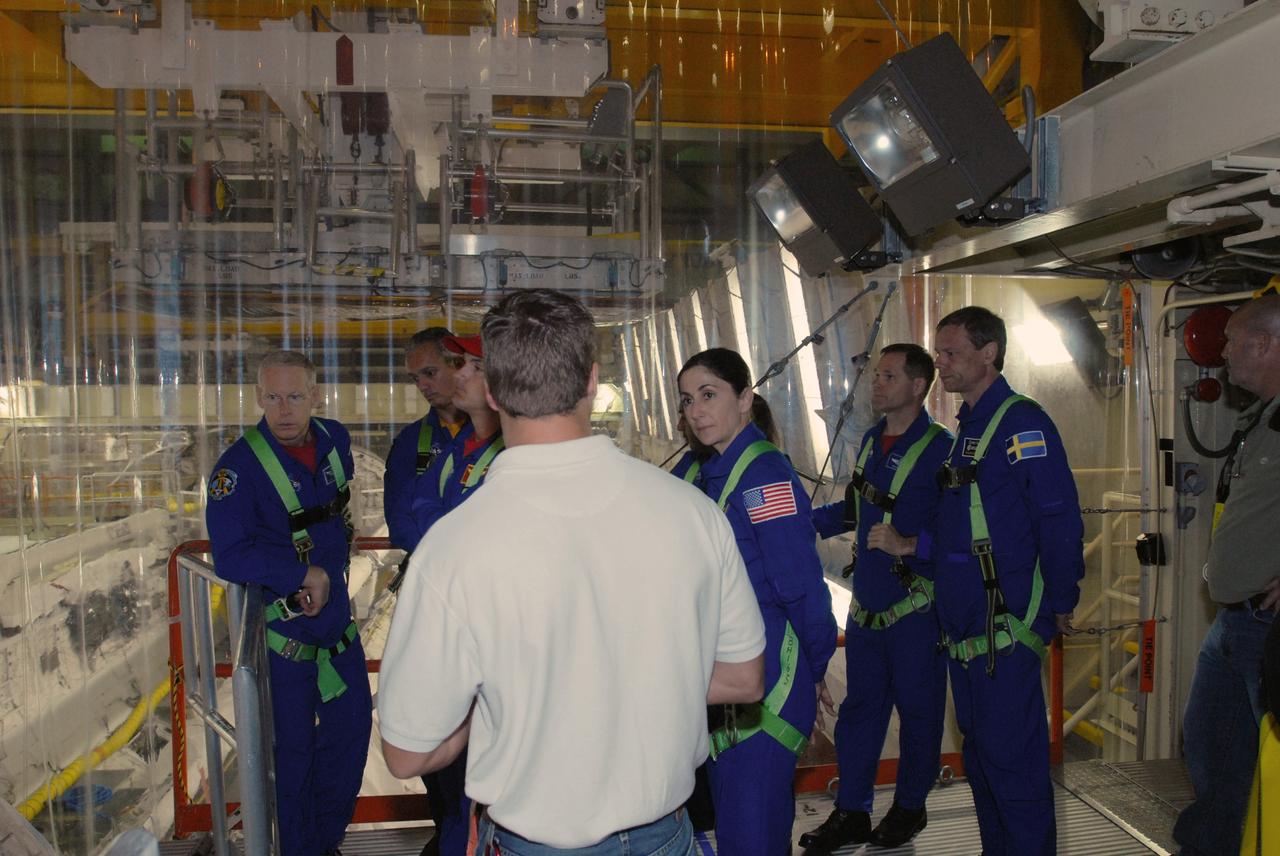
CAPE CANAVERAL, Fla. – Wearing harnesses, STS-128 crew members check out space shuttle Discovery in Orbiter Processing Facility 3 at NASA's Kennedy Space Center in Florida. From left are Mission Specialists Patrick Forrester and John "Danny" Olivas, Commander Rick Sturckow, Mission Specialist Nicole Stott, Pilot Kevin Ford and Mission Specialist Christer Fuglesang. The crew is at Kennedy for a crew equipment interface test, or CEIT, which provides hands-on training and observation of shuttle and flight hardware. The STS-128 flight will carry science and storage racks to the International Space Station on Discovery. Launch is targeted for Aug. 7. Photo credit: NASA/Jim Grossmann
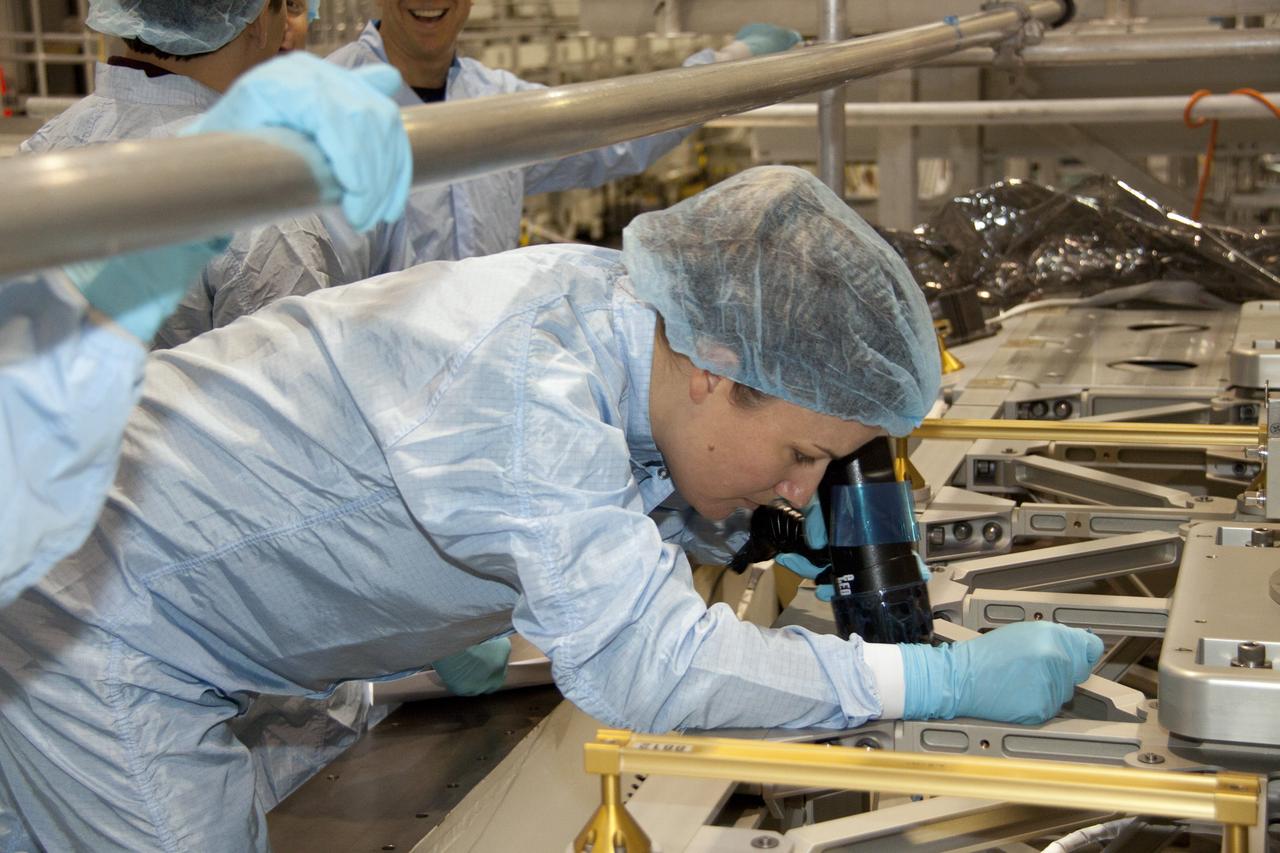
CAPE CANAVERAL, Fla. -- In the Space Station Processing Facility at NASA's Kennedy Space Center in Florida, a technician continues processing the Express Logistics Carrier-3, or ELC-3 while the STS-133 mission astronauts continue training. The astronauts are at Kennedy to participate in the Payload Crew Equipment Interface Test, or CEIT, which gives the crew an opportunity for hands-on training with tools they'll be using in space and familiarization of the payload they will be delivering to the International Space Station. Launch of space shuttle Discovery is targeted for Nov. 1 at 4:40 p.m. EDT. For more information visit, www.nasa.gov/shuttle. Photo credit: NASA/Jack Pfaller
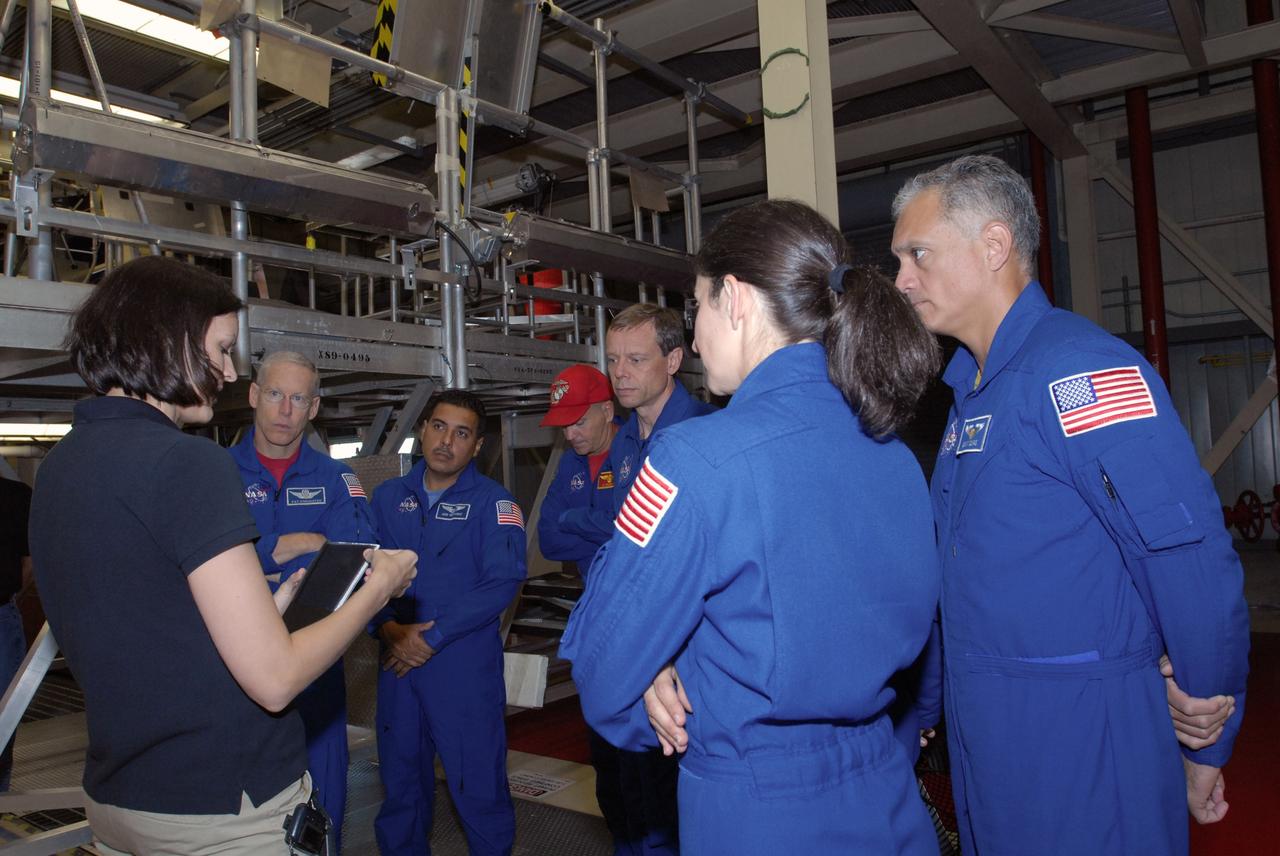
CAPE CANAVERAL, Fla. – In Orbiter Processing Facility 3 at NASA's Kennedy Space Center in Florida, STS-128 crew members listen to a tile specialist while checking out space shuttle Discovery. The astronauts are, from left, Mission Specialists Patrick Forrester and Jose Hernandez, Commander Rick Sturckow, and Mission Specialist Christer Fuglesang, Nicole Stott and John "Danny" Olivas. The crew is at Kennedy for a crew equipment interface test, or CEIT, which provides hands-on training and observation of shuttle and flight hardware. The STS-128 flight will carry science and storage racks to the International Space Station on Discovery. Launch is targeted for Aug. 7. Photo credit: NASA/Jim Grossmann
CAPE CANAVERAL, Fla. – In Orbiter Processing Facility-3 at NASA's Kennedy Space Center in Florida, STS-130 Pilot Terry Virts Jr., left, and Mission Specialist Robert Behnken receive a briefing on space shuttle Endeavour's thermal protection system. The crew is at Kennedy for a crew equipment interface test, or CEIT, which provides hands-on training and observation of shuttle and flight hardware. The STS-130 flight will carry the Tranquility pressurized module with a built-in cupola to the International Space Station aboard Endeavour. Launch is targeted for Feb. 4, 2010. Photo credit: NASA/Kim Shiflett
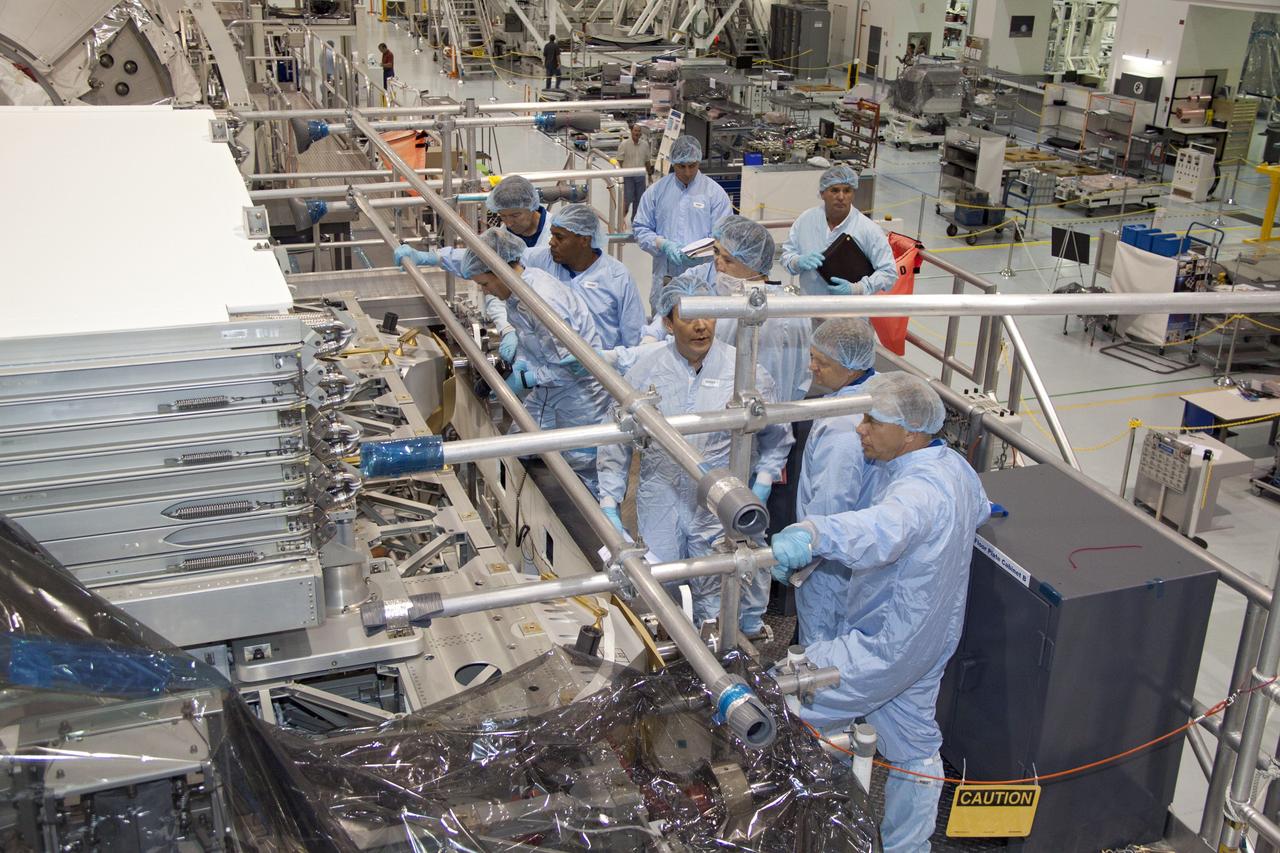
CAPE CANAVERAL, Fla. -- In the Space Station Processing Facility at NASA's Kennedy Space Center in Florida, the STS-133 crew members and processing technicians inspect the Express Logistics Carrier-3, or ELC-3. The astronauts are at Kennedy to participate in the Payload Crew Equipment Interface Test, or CEIT, which gives the crew an opportunity for hands-on training with tools they'll be using in space and familiarization of the payload they will be delivering to the International Space Station. Launch of space shuttle Discovery is targeted for Nov. 1 at 4:40 p.m. EDT. For more information visit, www.nasa.gov/shuttle. Photo credit: NASA/Jack Pfaller
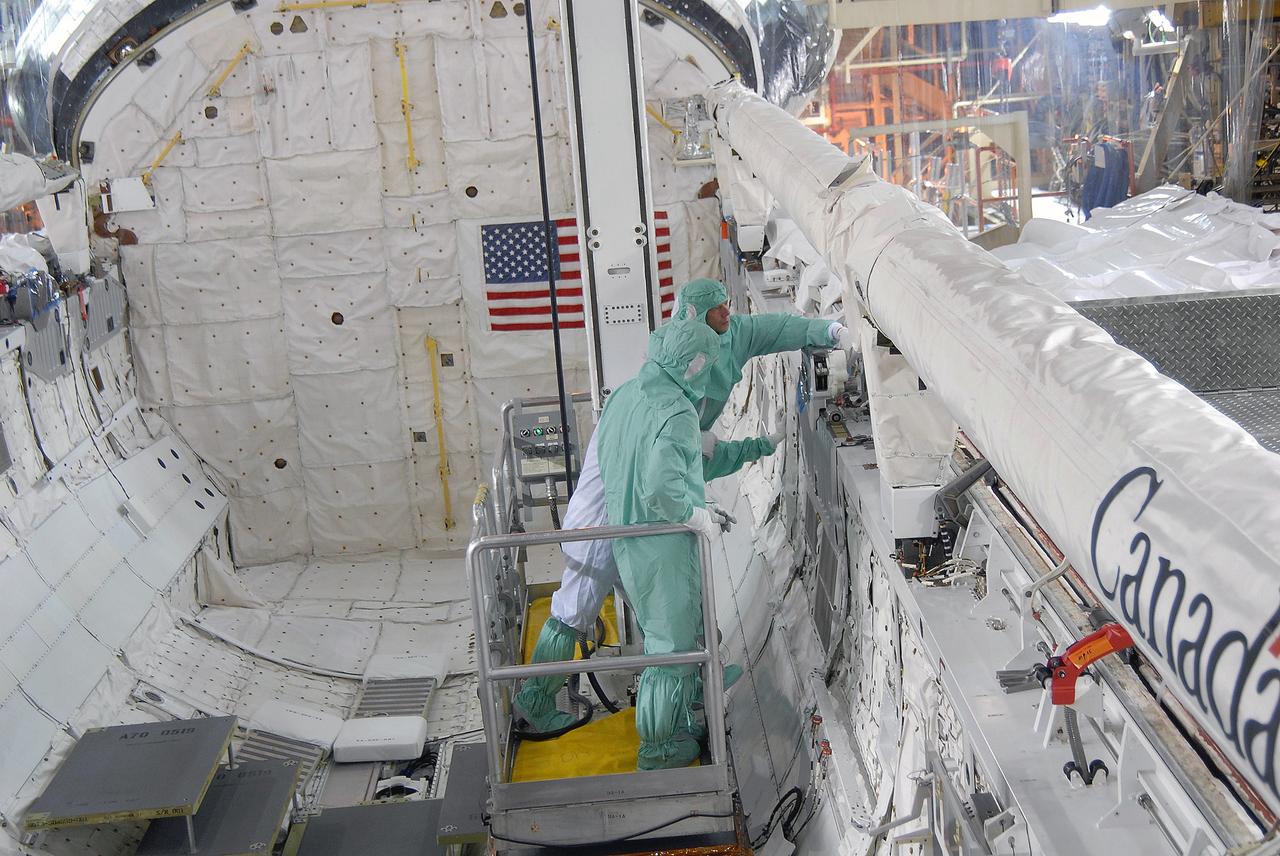
CAPE CANAVERAL, Fla. – In Orbiter Processing Facility 3 at NASA's Kennedy Space Center in Florida, STS-128 crew members check out the space shuttle Discovery's robotic arm. Reaching toward the arm is Mission Specialist Christer Fuglesang. The crew is at Kennedy for a crew equipment interface test, or CEIT, which provides hands-on training and observation of shuttle and flight hardware. The STS-128 flight will carry science and storage racks to the International Space Station on Discovery. Launch is targeted for Aug. 7. Photo credit: NASA/Jim Grossmann
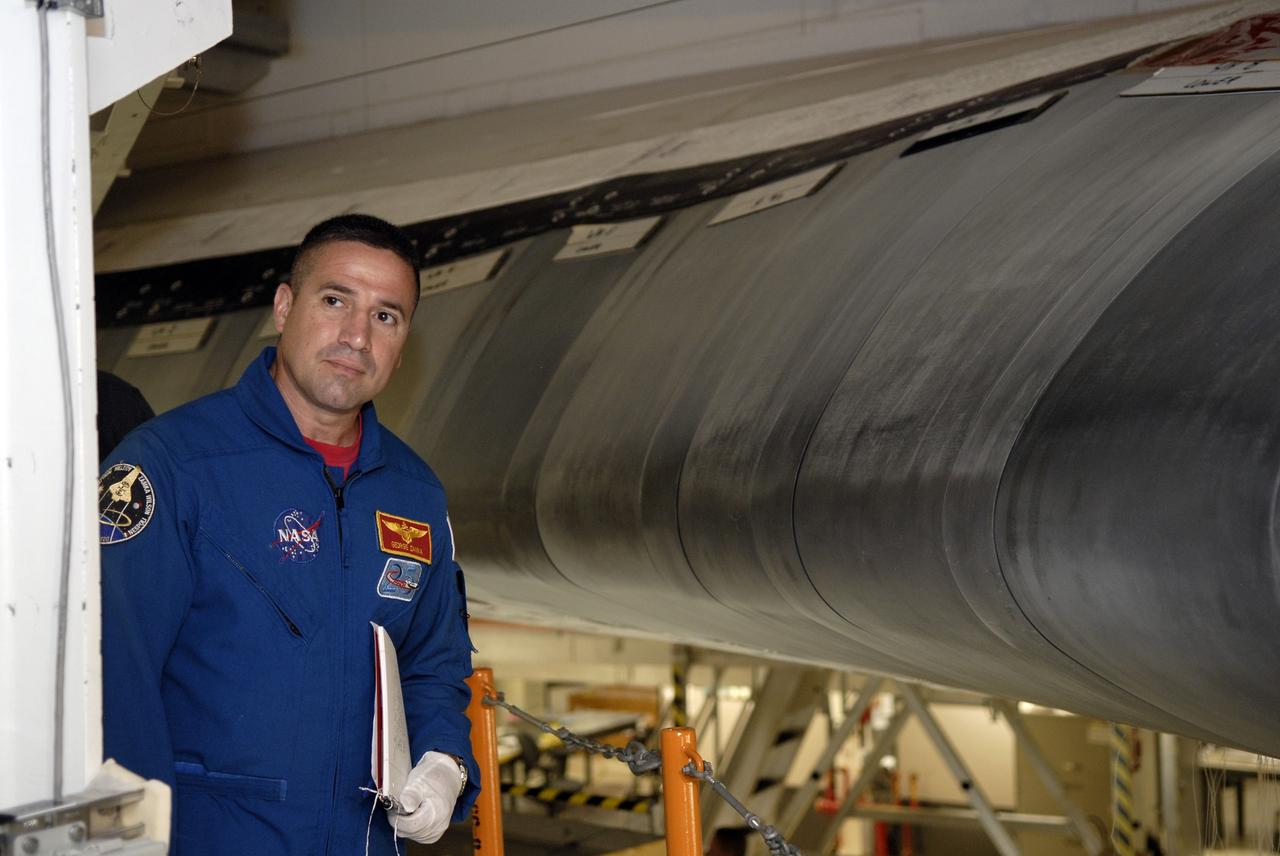
CAPE CANAVERAL, Fla. – In Orbiter Processing Facility-3 at NASA's Kennedy Space Center in Florida, STS-130 Commander George Zamka is briefed on the reinforced carbon carbon panels, part of the thermal protection system, on the leading edge of the wing of space shuttle Endeavour. The crew is at Kennedy for a crew equipment interface test, or CEIT, which provides hands-on training and observation of shuttle and flight hardware. The STS-130 flight will carry the Tranquility pressurized module with a built-in cupola to the International Space Station aboard Endeavour. Launch is targeted for Feb. 4, 2010. Photo credit: NASA/Kim Shiflett

CAPE CANAVERAL, Fla. -- In the Space Station Processing Facility at NASA's Kennedy Space Center in Florida, STS-133 crew members look on as SSPF technicians below describe the payload. From left to right are Mission Specialists Tim Kopra, Nicole Stott, Michael Barratt and Pilot Eric Boe. The astronauts are at Kennedy to participate in the Payload Crew Equipment Interface Test, or CEIT, which gives the crew an opportunity for hands-on training with tools they'll be using in space and familiarization of the payload they will be delivering to the International Space Station. Launch of space shuttle Discovery is targeted for Nov. 1 at 4:40 p.m. EDT. For more information visit, www.nasa.gov/shuttle. Photo credit: NASA/Jack Pfaller
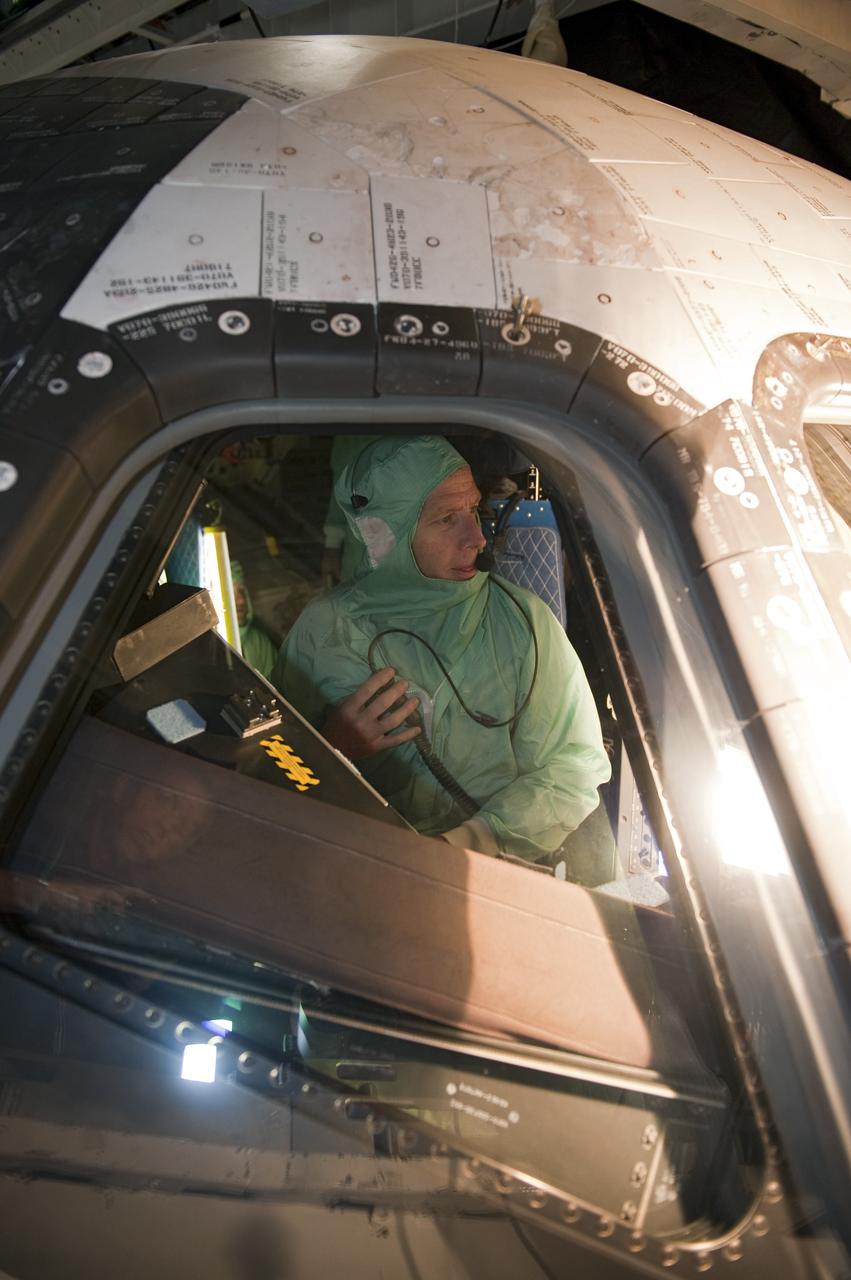
CAPE CANAVERAL, Fla. -- In Orbiter Processing Facility-1 at NASA's Kennedy Space Center in Florida, STS-135 Commander Chris Ferguson checks out shuttle Atlantis' cockpit. The four-member crew is at Kennedy to participate in the Crew Equipment Interface Test (CEIT), which gives them an opportunity for hands-on training with the tools and equipment they'll use and familiarization of the payload they'll deliver to the International Space Station. Atlantis is being prepared for the STS-135 mission, which will deliver Raffaello multi-purpose logistics module packed with supplies and spare parts to the station. Atlantis is targeted to launch June 28, and will be the last shuttle flight for the Space Shuttle Program. Photo credit: NASA/Kim Shiflett
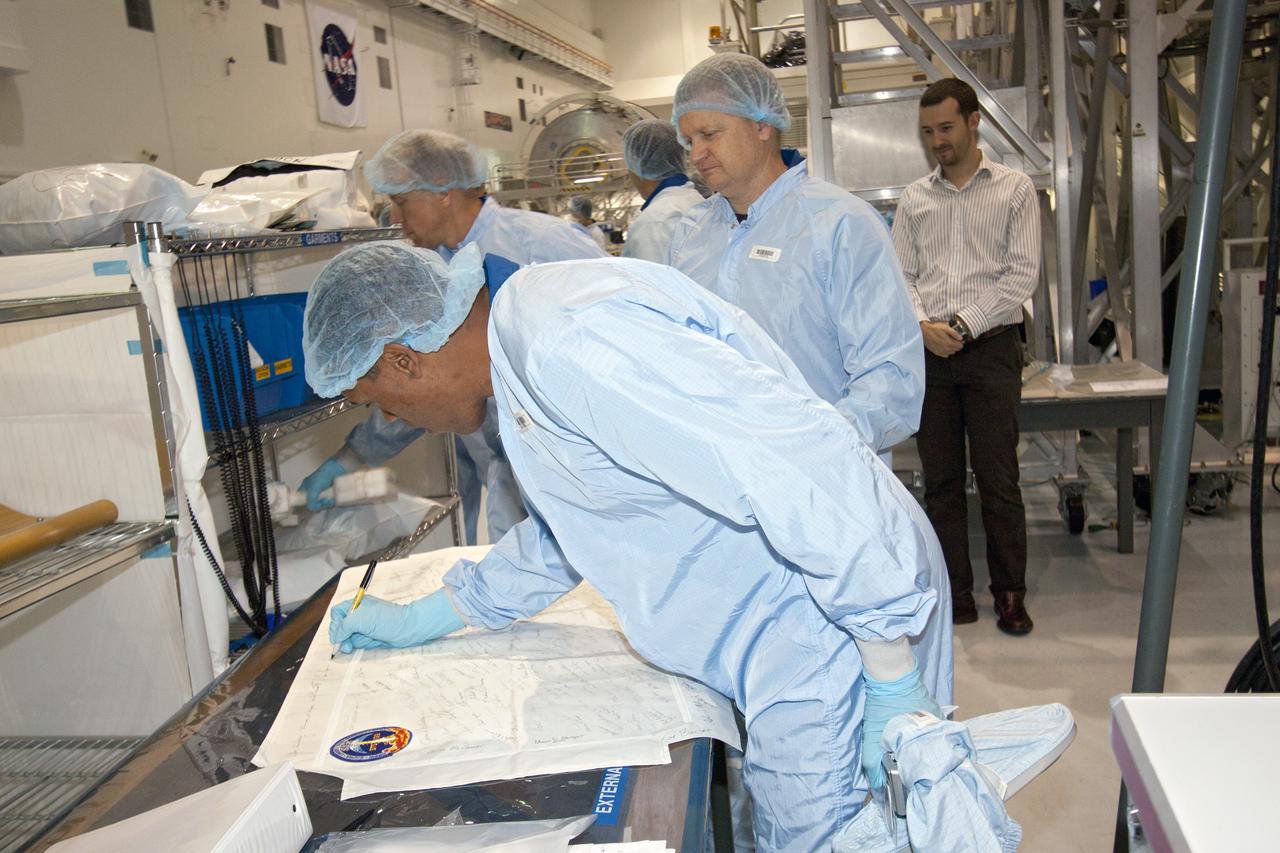
CAPE CANAVERAL, Fla. -- In the Space Station Processing Facility at NASA's Kennedy Space Center in Florida, STS-133 Mission Specialist Alvin Drew signs his name on a flag that will be flown on the mission, while Pilot Eric Boe looks on. The astronauts are at Kennedy to participate in the Payload Crew Equipment Interface Test, or CEIT, which gives the crew an opportunity for hands-on training with tools they'll be using in space and familiarization of the payload they will be delivering to the International Space Station. Launch of space shuttle Discovery is targeted for Nov. 1 at 4:40 p.m. EDT. For more information visit, www.nasa.gov/shuttle. Photo credit: NASA/Jack Pfaller