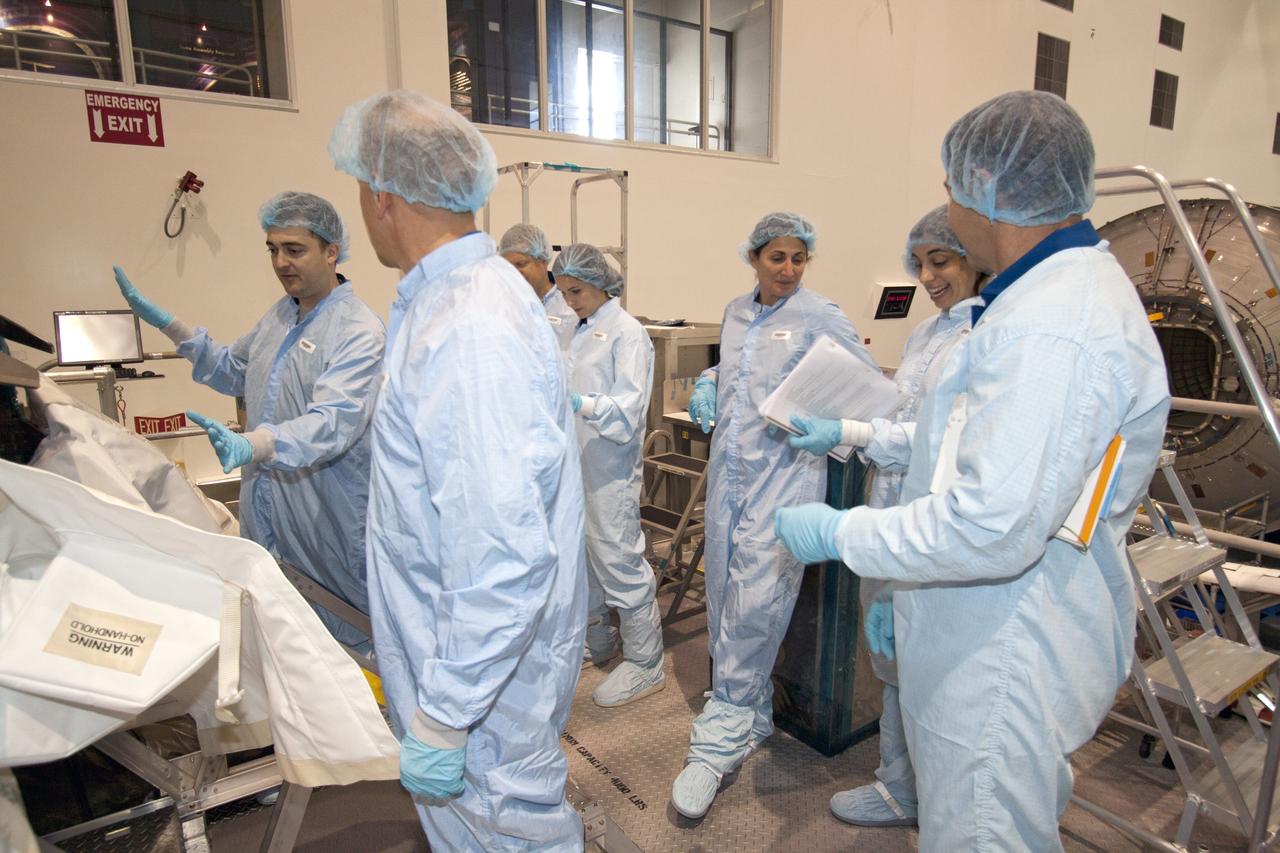
CAPE CANAVERAL, Fla. -- In the Space Station Processing Facility at NASA's Kennedy Space Center in Florida, space shuttle Discovery's STS-133 crew members are participating in the Payload Crew Equipment Interface Test, or CEIT. During this phase of CEIT the astronauts have an opportunity to see first-hand the payload they'll be delivering to the International Space Station. In the right background is the Permanent Multipurpose Module, or PMM, which is packed with supplies and critical spare parts, including Robonaut 2, the dexterous humanoid astronaut helper. Discovery is targeted to launch at 4:40 p.m. EDT Nov. 1. For more information visit www.nasa.gov/shuttle. Photo credit: NASA/Jack Pfaller
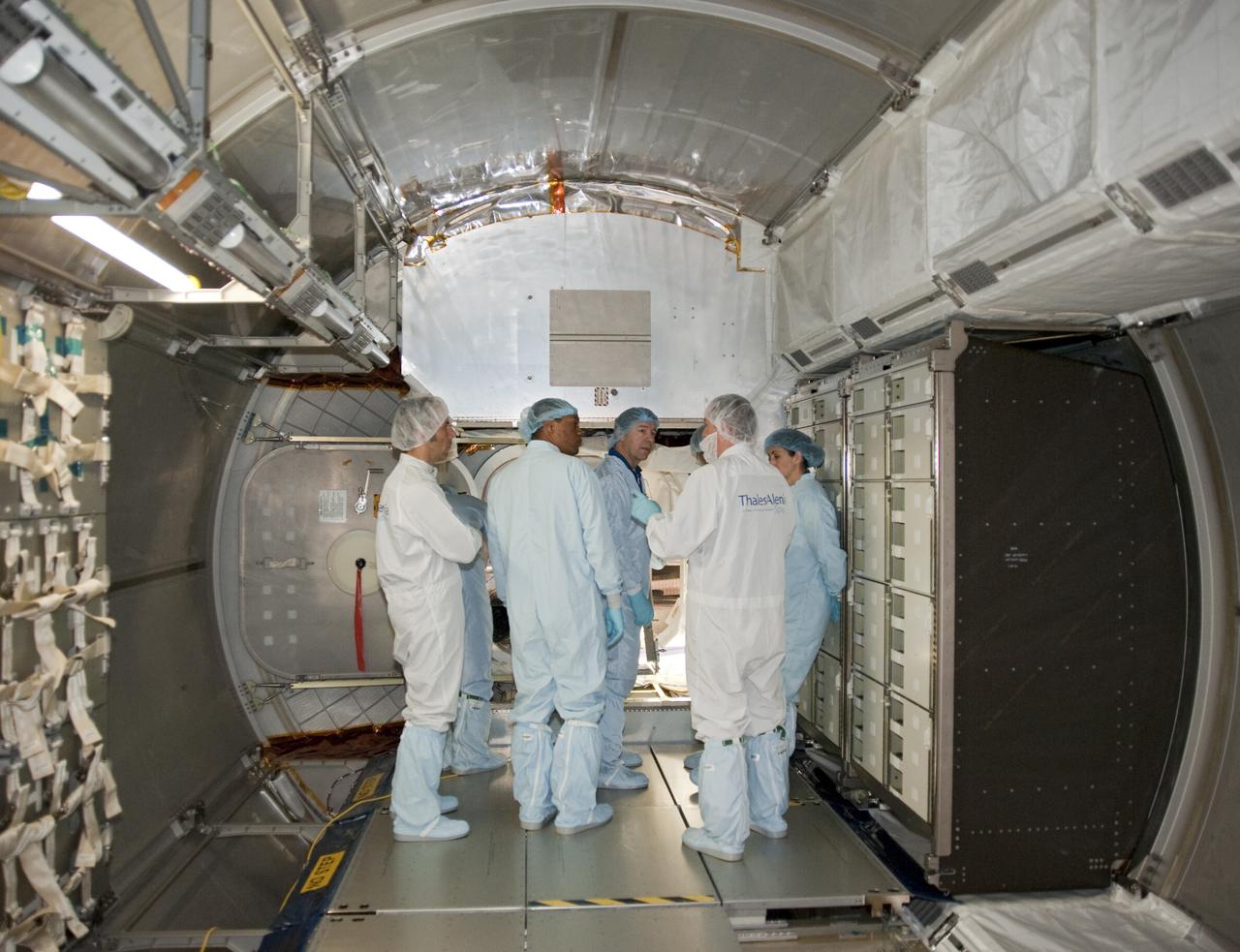
CAPE CANAVERAL, Fla. -- In the Space Station Processing Facility at NASA's Kennedy Space Center in Florida, the STS-133 crew members gather inside the Permanent Multipurpose Module, or PMM for a close look at the storage racks. The PMM will be used to carry supplies and critical spare parts to the station and will be left behind so it can be used for microgravity experiments in fluid physics, materials science, biology and biotechnology. The astronauts are at Kennedy for the Crew Equipment Interface Test, or CEIT, which provides the crew with hands-on training and observation of shuttle and flight hardware for their mission to the International Space Station. Launch of the STS-133 mission on space shuttle Discovery is targeted for Nov. 1 at 4:33 p.m. EDT. Photo credit: NASA_Kim Shiflett
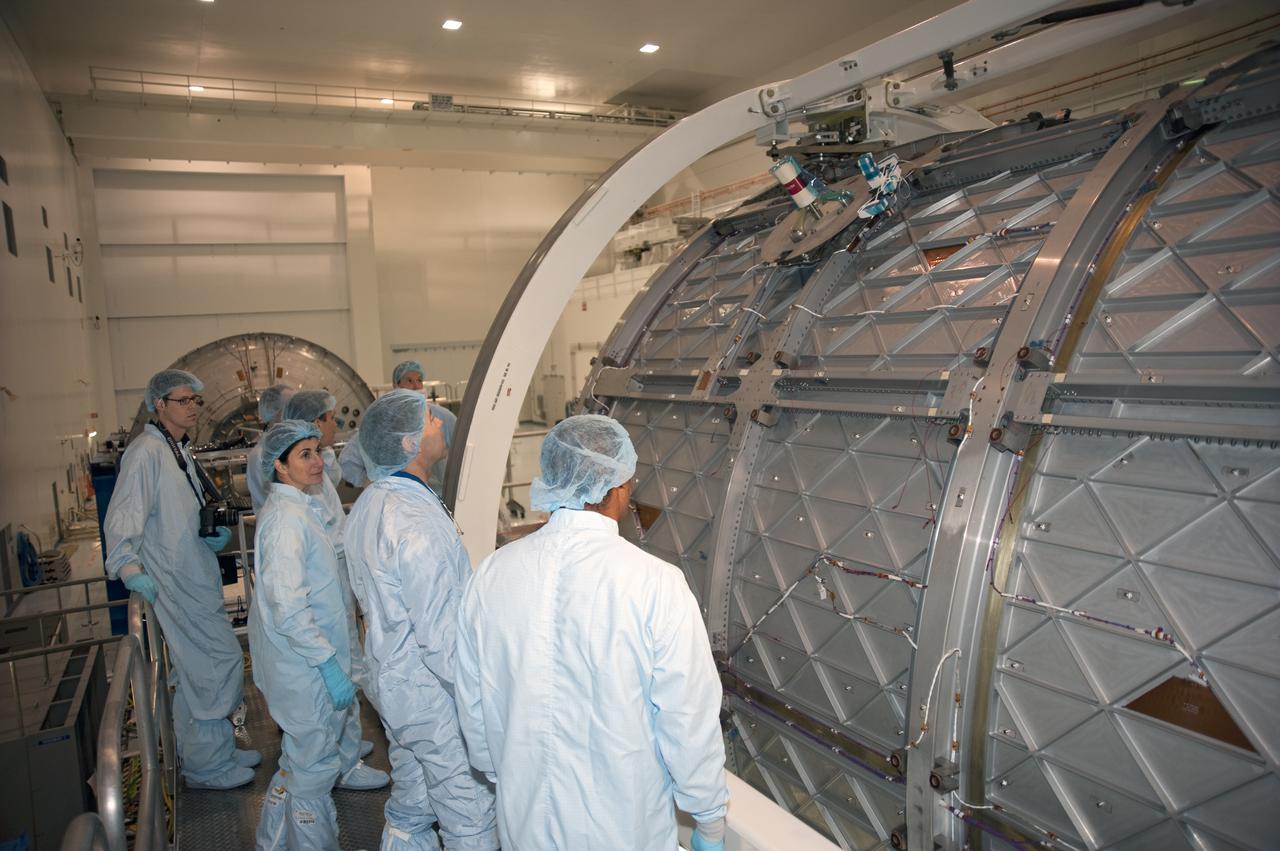
CAPE CANAVERAL, Fla. -- In the Space Station Processing Facility at NASA's Kennedy Space Center in Florida, the STS-133 crew members examine the exterior of the Permanent Multipurpose Module, or PMM. Pictured are Mission Specialists Nicole Stott and Michael Barratt. The PMM will be used to carry supplies and critical spare parts to the station and will be left behind so it can be used for microgravity experiments in fluid physics, materials science, biology and biotechnology. The astronauts are at Kennedy for the Crew Equipment Interface Test, or CEIT, which provides the crew with hands-on training and observation of shuttle and flight hardware for their mission to the International Space Station. Launch of the STS-133 mission on space shuttle Discovery is targeted for Nov. 1 at 4:33 p.m. EDT. Photo credit: NASA_Kim Shiflett
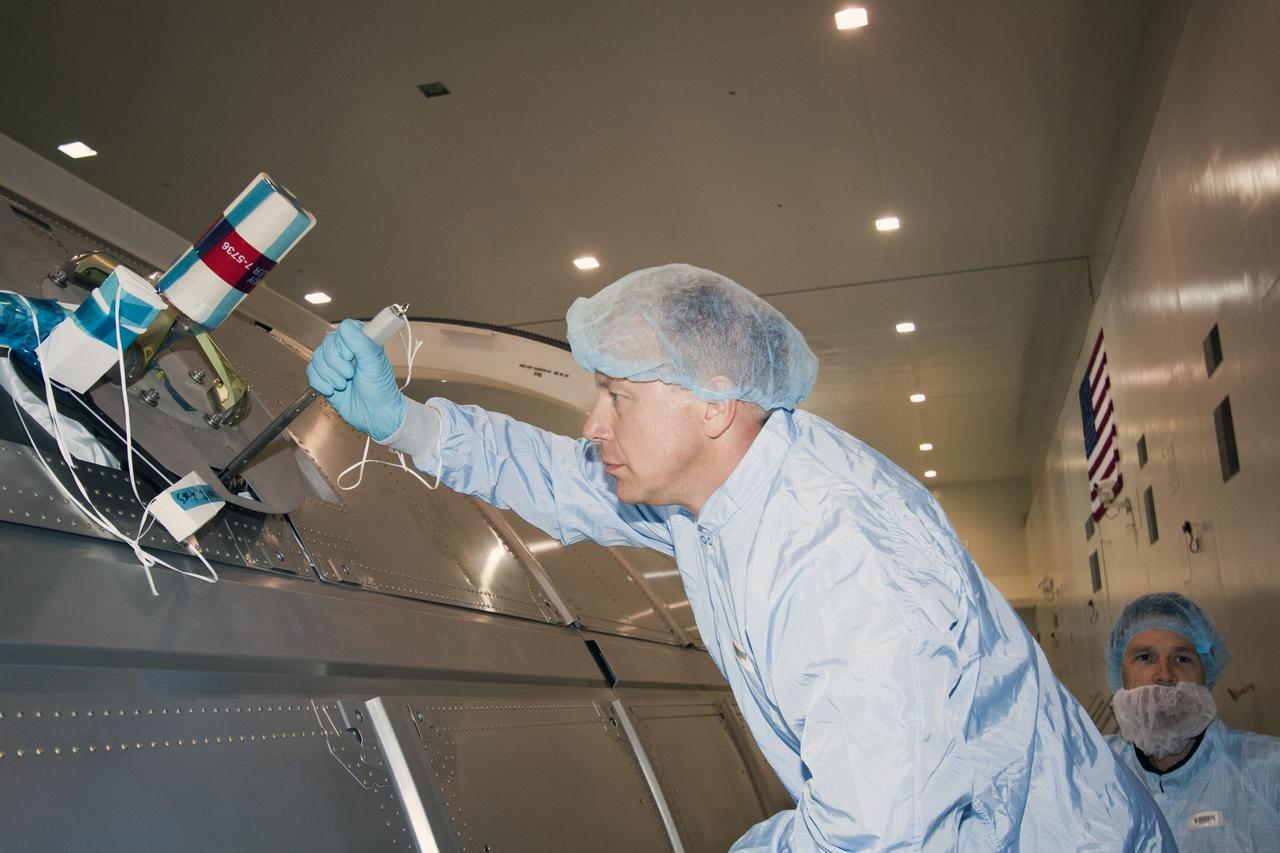
CAPE CANAVERAL, Fla. -- In the Space Station Processing Facility at NASA's Kennedy Space Center in Florida, STS-133 Mission Specialist Tim Kopra practices using a tool on the Permanent Multipurpose Module, or PMM. The astronauts are at Kennedy to participate in the Payload Crew Equipment Interface Test, or CEIT, which gives the crew an opportunity for hands-on training with tools they'll be using in space and familiarization of the payload they will be delivering to the International Space Station. Launch of space shuttle Discovery is targeted for Nov. 1 at 4:40 p.m. EDT. For more information visit, www.nasa.gov/shuttle. Photo credit: NASA/Jack Pfaller
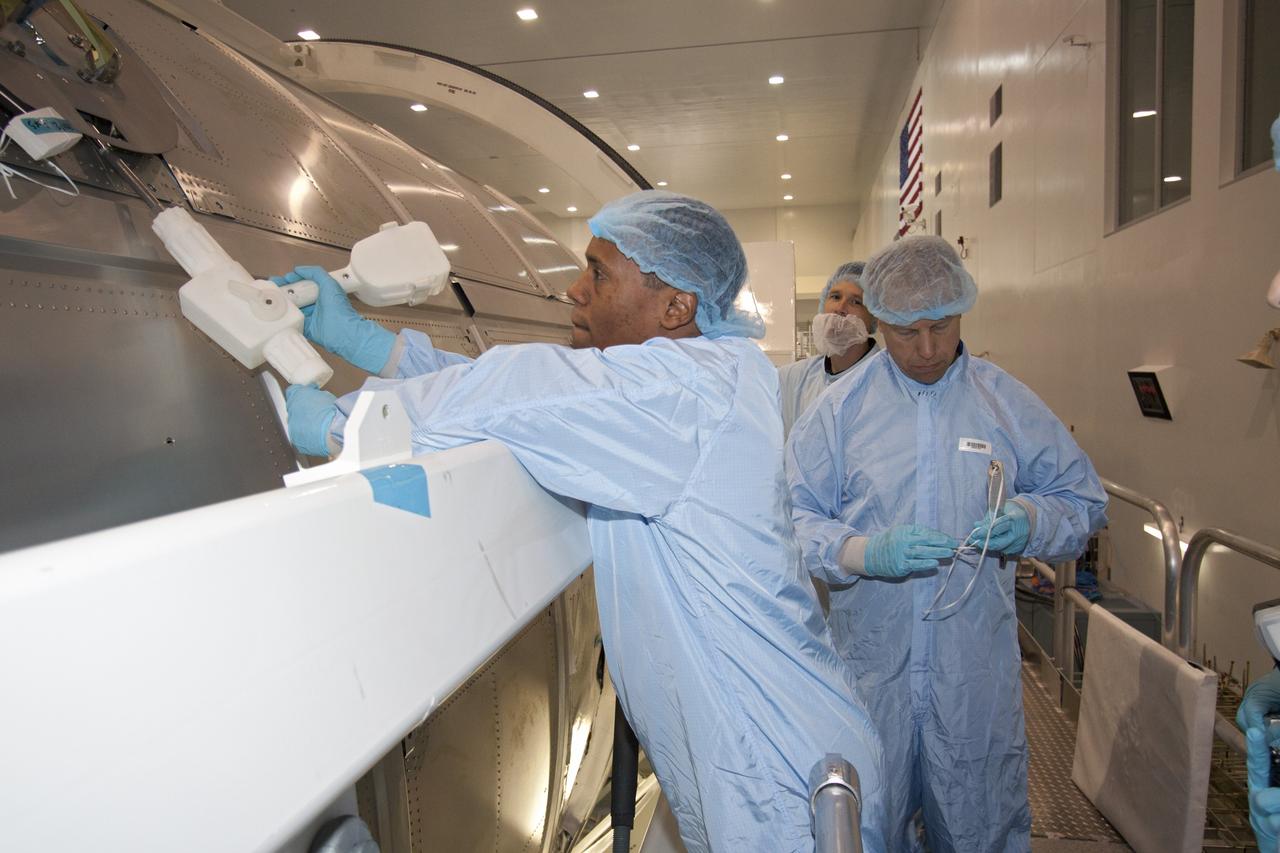
CAPE CANAVERAL, Fla. -- In the Space Station Processing Facility at NASA's Kennedy Space Center in Florida, STS-133 Mission Specialist Alvin Drew practices with a tool on the Permanent Multipurpose Module, or PMM, while Mission Specialist Tim Kopra (right) awaits his turn. The astronauts are at Kennedy to participate in the Payload Crew Equipment Interface Test, or CEIT, which gives the crew an opportunity for hands-on training with tools they'll be using in space and familiarization of the payload they will be delivering to the International Space Station. Launch of space shuttle Discovery is targeted for Nov. 1 at 4:40 p.m. EDT. For more information visit, www.nasa.gov/shuttle. Photo credit: NASA/Jack Pfaller