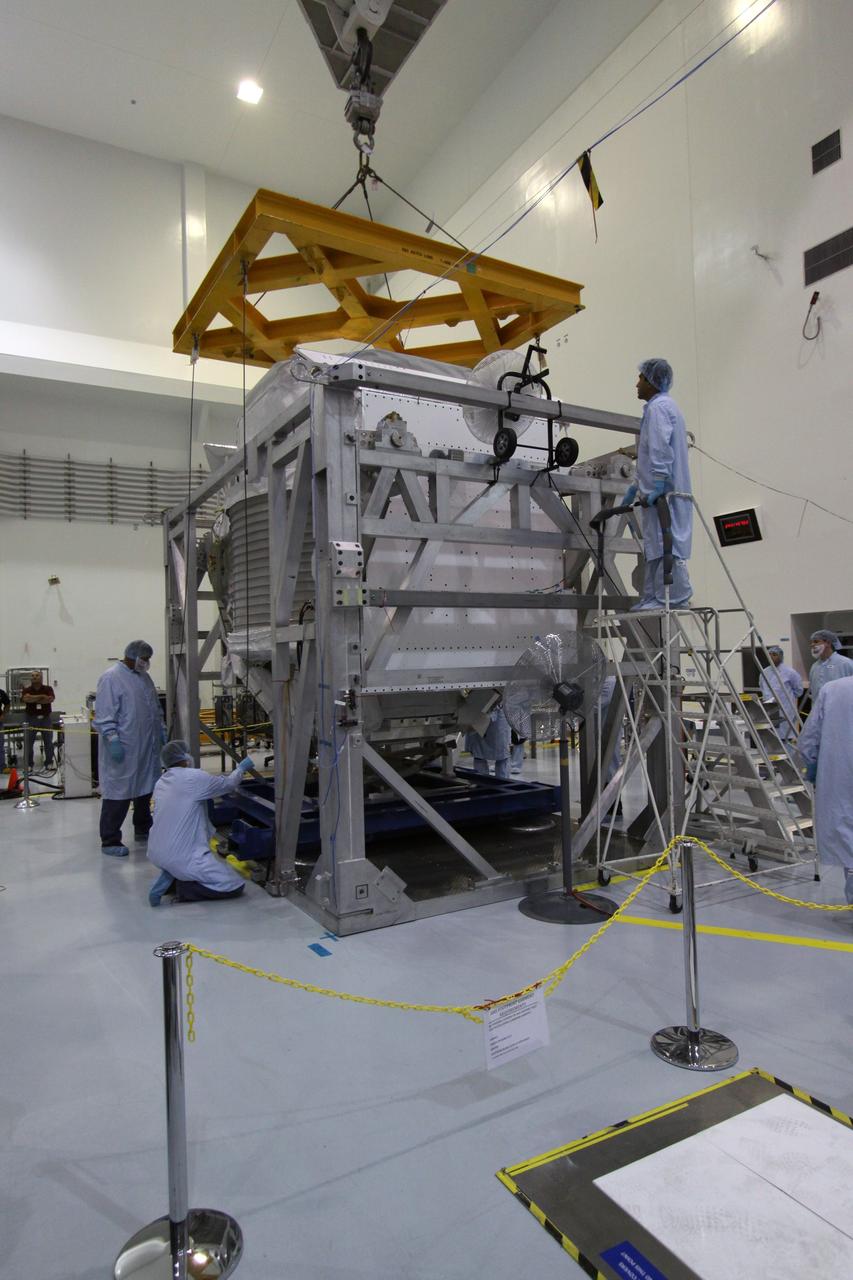
CAPE CANAVERAL, Fla. -- Technicians in the Space Station Processing Facility at NASA's Kennedy Space Center in Florida, monitor the guide wires of the overhead crane as it lifts the Payload Attach System, or PAS, up to the Alpha Magnetic Spectrometer, or AMS, for installation. The PAS provides a method of securely connecting the payload to the International Space Station. AMS, a state-of-the-art particle physics detector, is designed to operate as an external module on the International Space Station. It will use the unique environment of space to study the universe and its origin by searching for dark matter. AMS will fly to the station aboard space shuttle Endeavour's STS-134 mission targeted to launch Feb. 26, 2011. Photo credit: NASA/Jack Pfaller
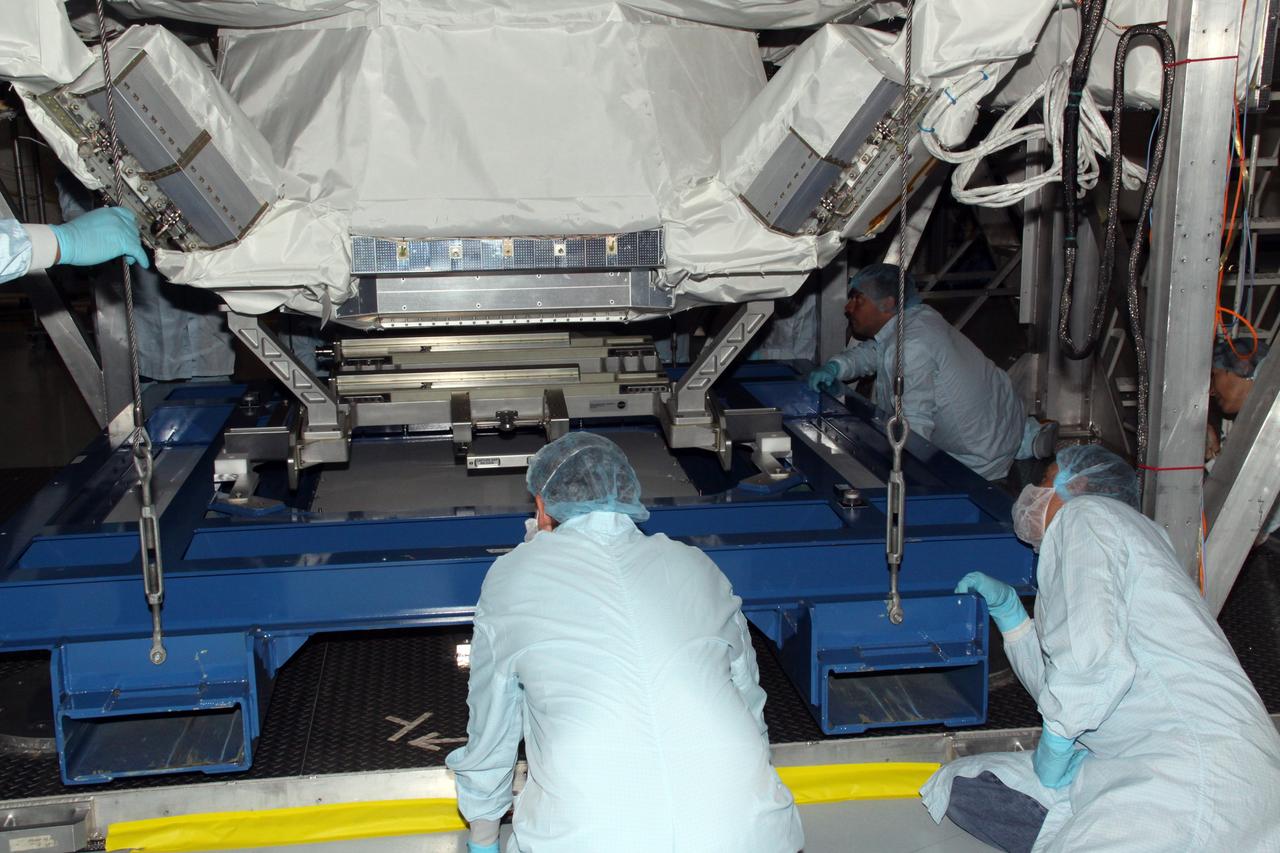
CAPE CANAVERAL, Fla. -- Technicians in the Space Station Processing Facility at NASA's Kennedy Space Center in Florida, check the progress of the Payload Attach System, or PAS, as it is lifted up to the Alpha Magnetic Spectrometer, where it will be attached to the bottom of the AMS. The PAS provides a method of securely connecting the payload to the International Space Station. AMS, a state-of-the-art particle physics detector, is designed to operate as an external module on the International Space Station. It will use the unique environment of space to study the universe and its origin by searching for dark matter. AMS will fly to the station aboard space shuttle Endeavour's STS-134 mission targeted to launch Feb. 26, 2011. Photo credit: NASA/Jack Pfaller
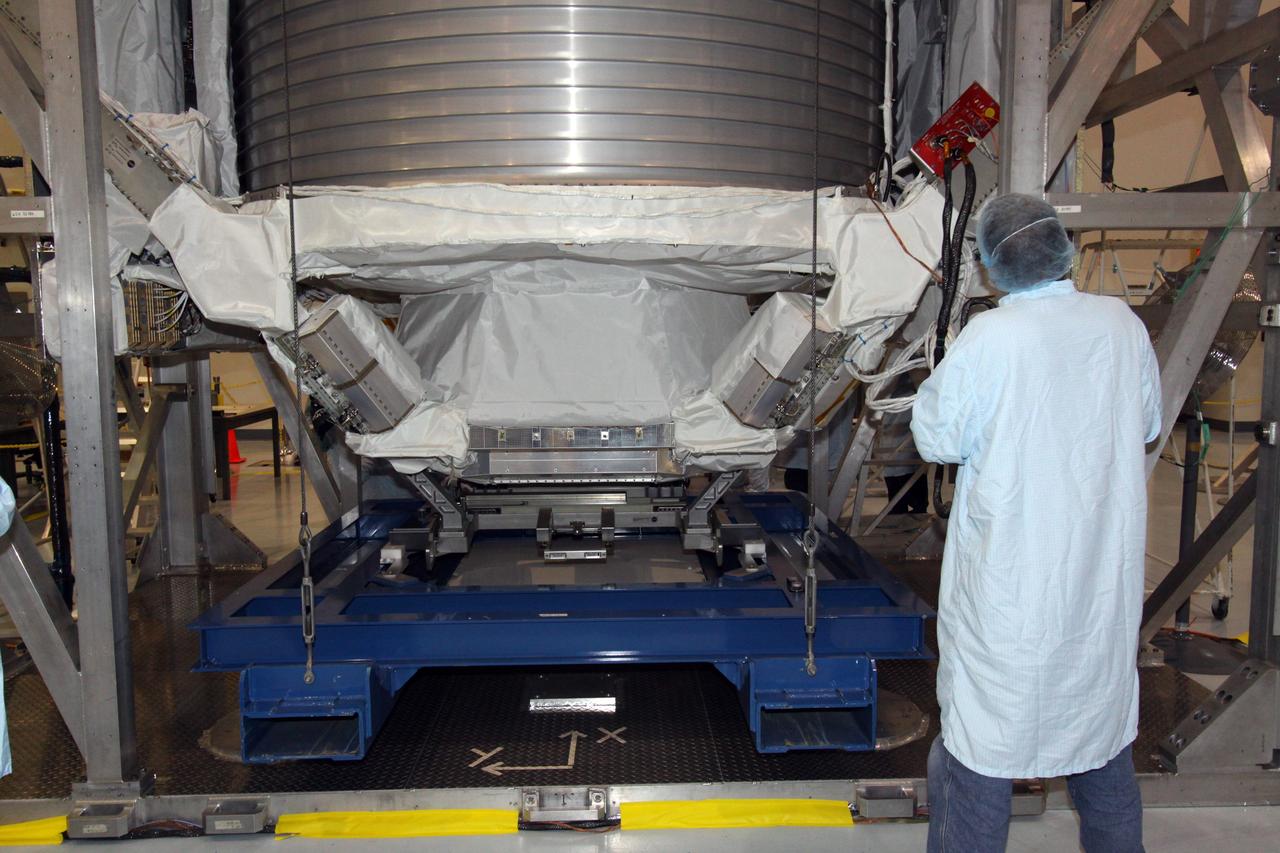
CAPE CANAVERAL, Fla. -- In the Space Station Processing Facility at NASA's Kennedy Space Center in Florida, a technician monitors the progress of the Payload Attach System, or PAS, as it is lifted up to the Alpha Magnetic Spectrometer, or AMS, where it will be attached to the bottom of the AMS. The PAS provides a method of securely connecting the payload to the International Space Station. AMS, a state-of-the-art particle physics detector, is designed to operate as an external module on the International Space Station. It will use the unique environment of space to study the universe and its origin by searching for dark matter. AMS will fly to the station aboard space shuttle Endeavour's STS-134 mission targeted to launch Feb. 26, 2011. Photo credit: NASA/Jack Pfaller
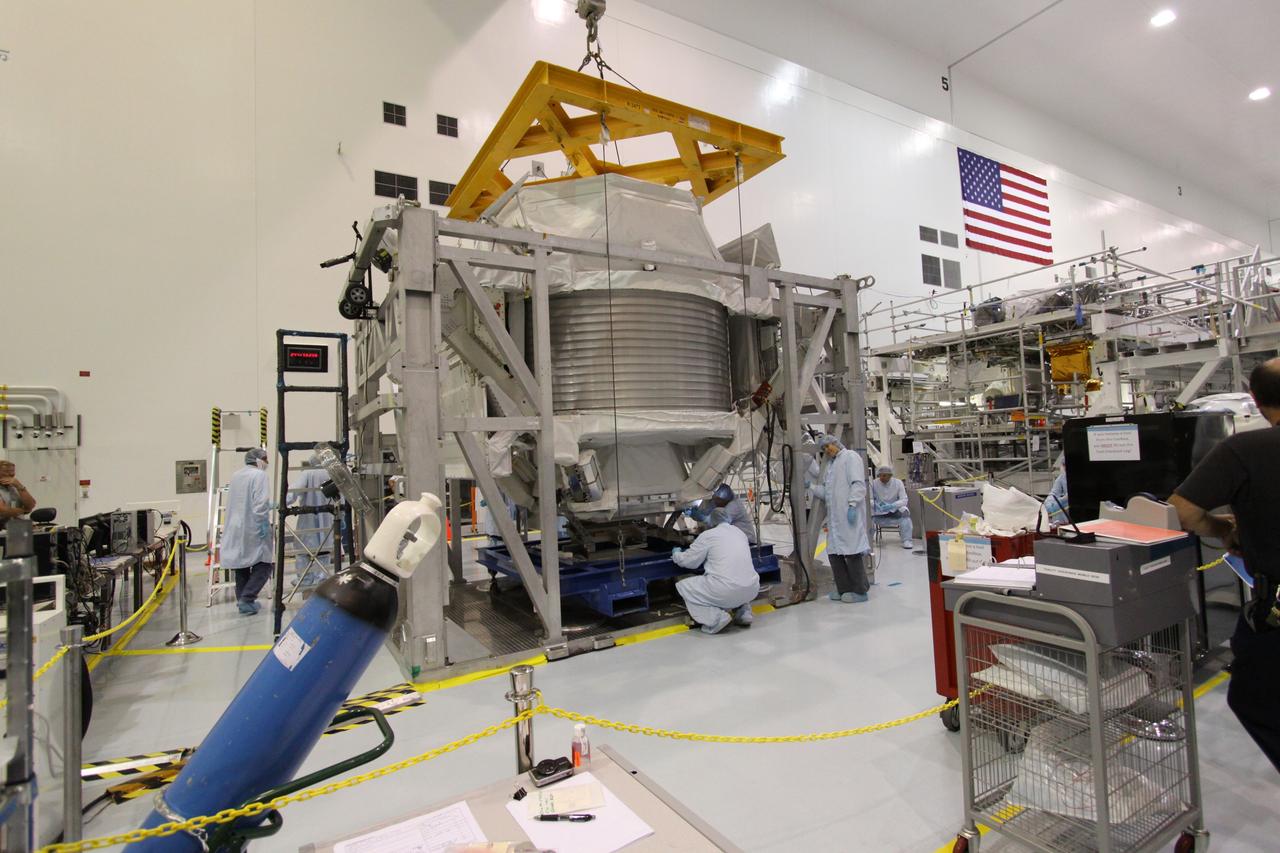
CAPE CANAVERAL, Fla. -- Technicians in the Space Station Processing Facility at NASA's Kennedy Space Center in Florida, check the progress of the Payload Attach System, or PAS, as it is lifted up to the Alpha Magnetic Spectrometer, where it will be attached to the bottom of the AMS. The PAS provides a method of securely connecting the payload to the International Space Station. AMS, a state-of-the-art particle physics detector, is designed to operate as an external module on the International Space Station. It will use the unique environment of space to study the universe and its origin by searching for dark matter. AMS will fly to the station aboard space shuttle Endeavour's STS-134 mission targeted to launch Feb. 26, 2011. Photo credit: NASA/Jack Pfaller
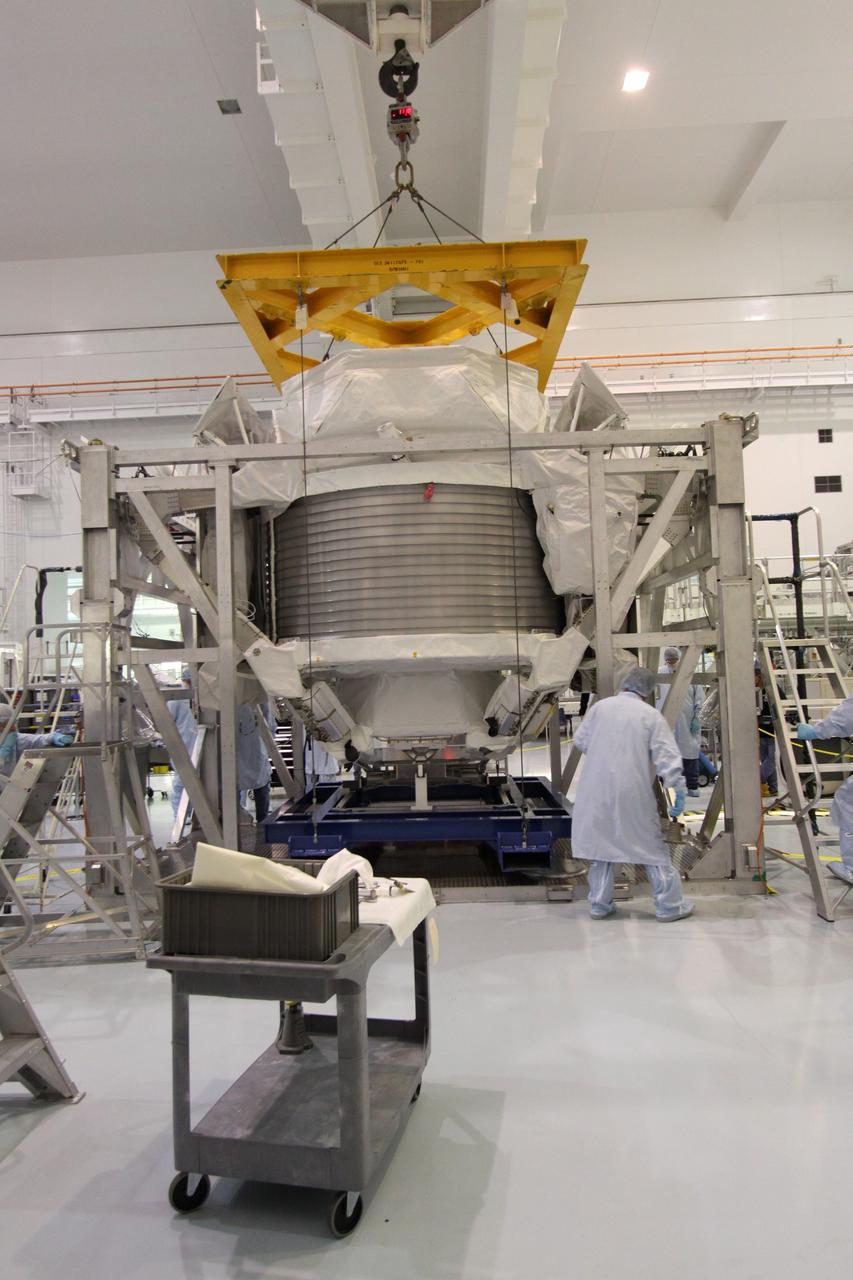
CAPE CANAVERAL, Fla. -- A technicians in the Space Station Processing Facility at NASA's Kennedy Space Center in Florida, check the progress of the Payload Attach System, or PAS, as it is lifted up to the Alpha Magnetic Spectrometer, or AMS, where it will be attached to the bottom of the AMS. The PAS provides a method of securely connecting the payload to the International Space Station. AMS, a state-of-the-art particle physics detector, is designed to operate as an external module on the International Space Station. It will use the unique environment of space to study the universe and its origin by searching for dark matter. AMS will fly to the station aboard space shuttle Endeavour's STS-134 mission targeted to launch Feb. 26, 2011. Photo credit: NASA/Jack Pfaller
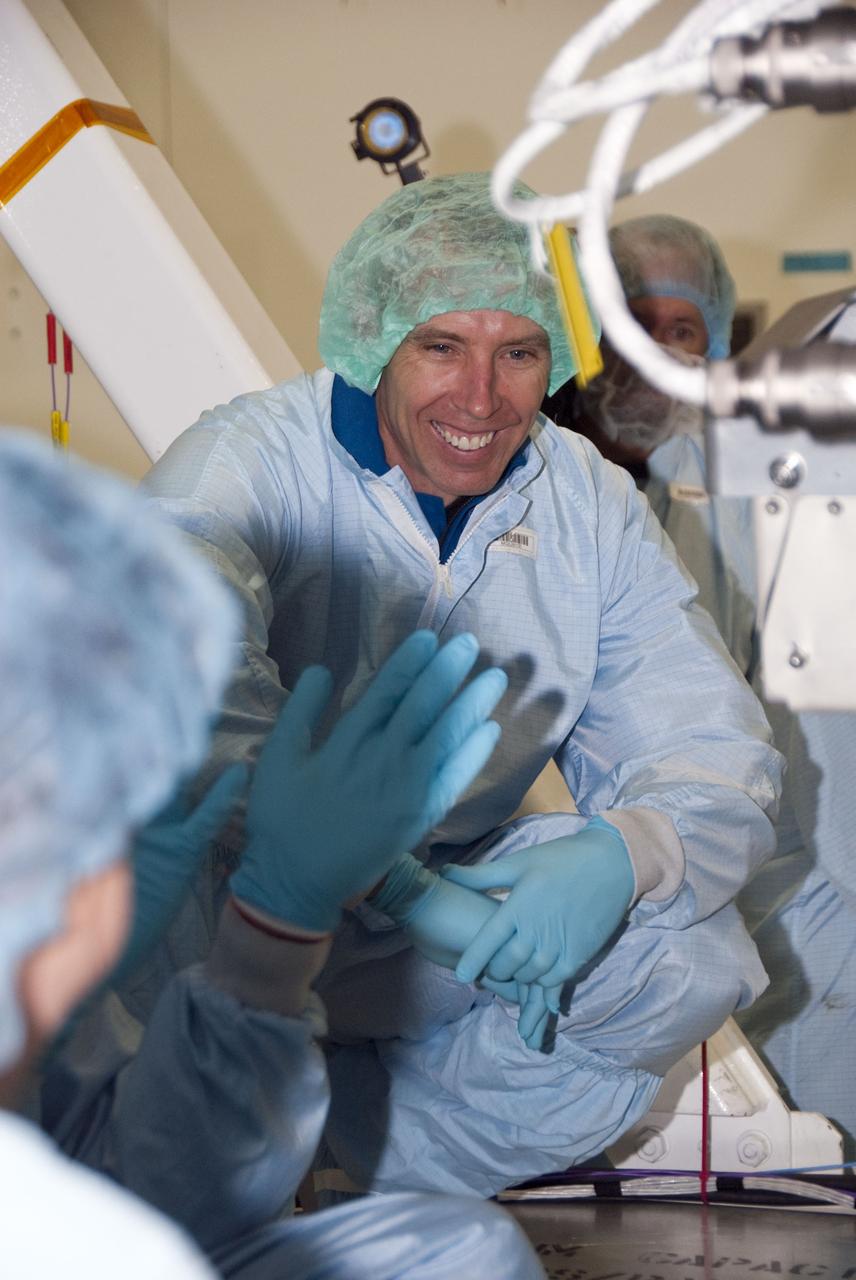
CAPE CANAVERAL, Fla. -- In the Space Station Processing Facility at NASA's Kennedy Space Center in Florida, STS-134 Mission Specialist Andrew Feustel inspects the Alpha Magnetic Spectrometer-2 (AMS) with the experiment's technicians. Feustel and his five crewmates are at Kennedy participating in the Crew Equipment Interface Test (CEIT), which gives them an opportunity for hands-on training with tools they'll be using in space and familiarization of the payload they'll be delivering to the International Space Station. Space shuttle Endeavour is targeted to launch on the STS-134 mission Feb. 27, 2011. For more information, visit www.nasa.gov/mission_pages/shuttle/shuttlemissions/sts134/index.html. Photo credit: NASA/Cory Huston
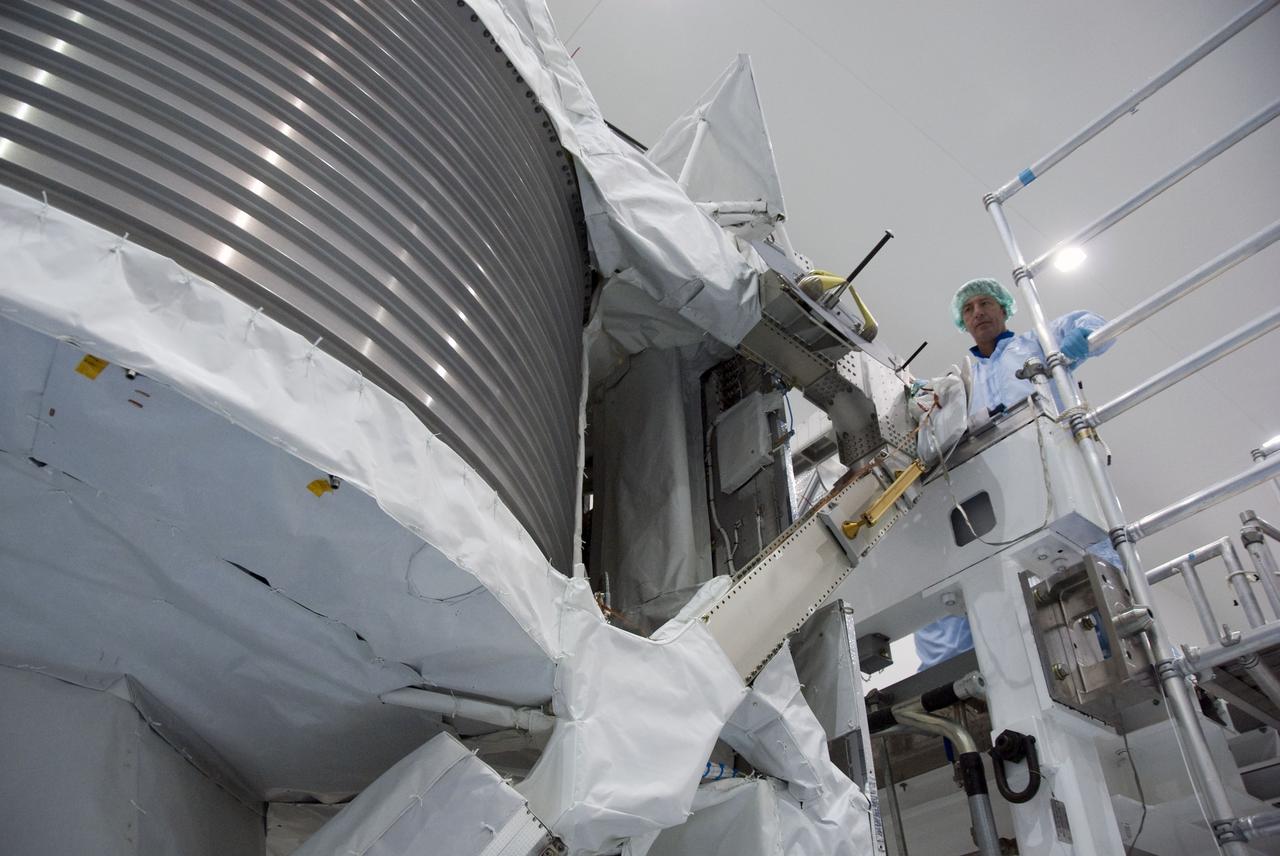
CAPE CANAVERAL, Fla. -- In the Space Station Processing Facility at NASA's Kennedy Space Center in Florida, STS-134 Mission Specialist Roberto Vittori, with the European Space Agency, inspects the Alpha Magnetic Spectrometer-2 (AMS). Vittori and his five crewmates are at Kennedy participating in the Crew Equipment Interface Test (CEIT), which gives them an opportunity for hands-on training with tools they'll be using in space and familiarization of the payload they'll be delivering to the International Space Station. Space shuttle Endeavour is targeted to launch on the STS-134 mission Feb. 27, 2011. For more information, visit www.nasa.gov/mission_pages/shuttle/shuttlemissions/sts134/index.html. Photo credit: NASA/Cory Huston
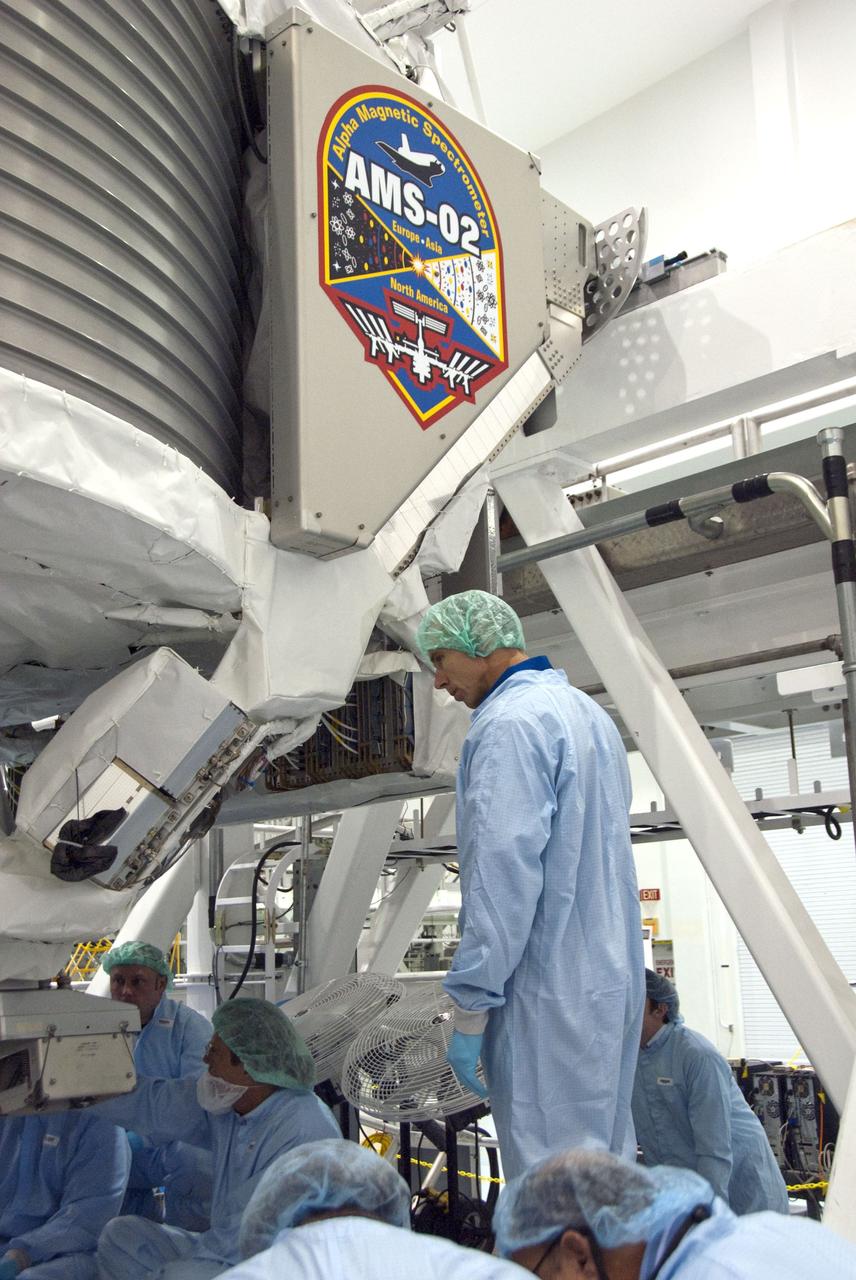
CAPE CANAVERAL, Fla. -- In the Space Station Processing Facility at NASA's Kennedy Space Center in Florida, STS-134 Mission Specialist Roberto Vittori inspects the Alpha Magnetic Spectrometer-2 (AMS) with the experiment's technicians. Vittori, who is with the European Space Agency, and his five crewmates are at Kennedy participating in the Crew Equipment Interface Test (CEIT), which gives them an opportunity for hands-on training with tools they'll be using in space and familiarization of the payload they'll be delivering to the International Space Station. Space shuttle Endeavour is targeted to launch on the STS-134 mission Feb. 27, 2011. For more information, visit www.nasa.gov/mission_pages/shuttle/shuttlemissions/sts134/index.html. Photo credit: NASA/Cory Huston
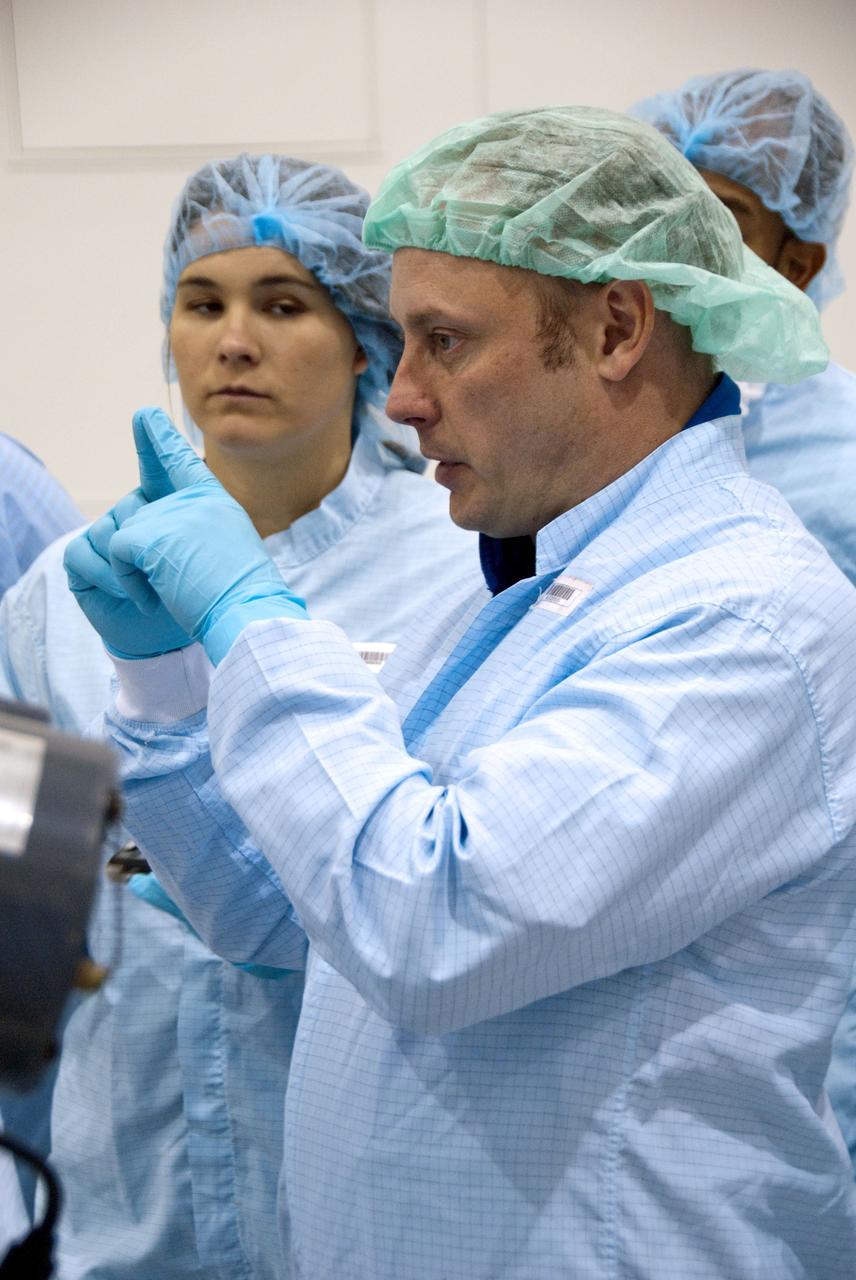
CAPE CANAVERAL, Fla. -- In the Space Station Processing Facility at NASA's Kennedy Space Center in Florida, STS-134 Mission Specialist Michael Finke, front right, checks out the Alpha Magnetic Spectrometer-2 (AMS) with the experiment's technicians. Finke and his five crewmates are at Kennedy participating in the Crew Equipment Interface Test (CEIT), which gives them an opportunity for hands-on training with tools they'll be using in space and familiarization of the payload they'll be delivering to the International Space Station. Space shuttle Endeavour is targeted to launch on the STS-134 mission Feb. 27, 2011. For more information, visit www.nasa.gov/mission_pages/shuttle/shuttlemissions/sts134/index.html. Photo credit: NASA/Cory Huston
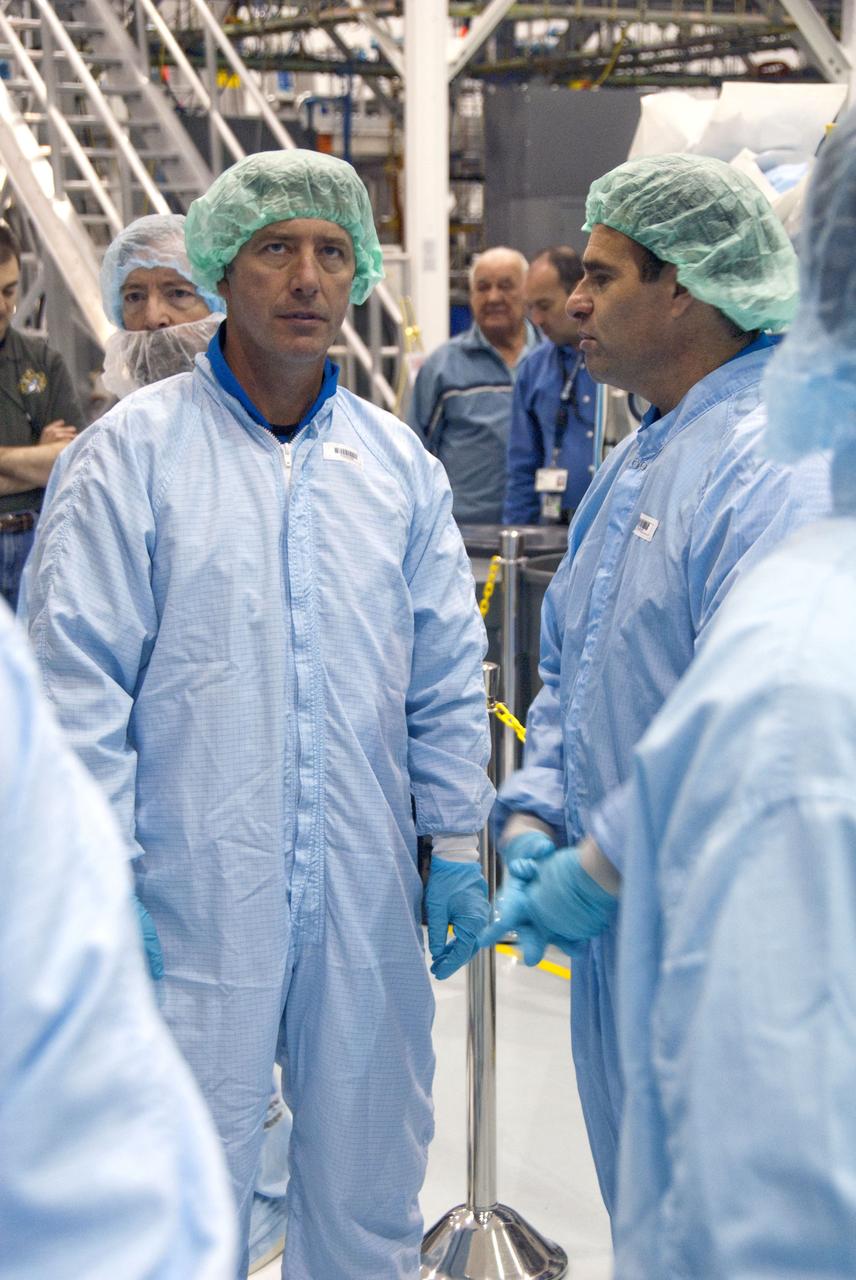
CAPE CANAVERAL, Fla. -- In the Space Station Processing Facility at NASA's Kennedy Space Center in Florida, STS-134 Mission Specialists Roberto Vittori, front left, and Greg Chamitoff check out the Alpha Magnetic Spectrometer-2 (AMS) with the experiment's technicians. The six-member STS-134 crew is at Kennedy participating in the Crew Equipment Interface Test (CEIT), which gives them an opportunity for hands-on training with tools they'll be using in space and familiarization of the payload they'll be delivering to the International Space Station. Space shuttle Endeavour is targeted to launch on the STS-134 mission Feb. 27, 2011. For more information, visit www.nasa.gov/mission_pages/shuttle/shuttlemissions/sts134/index.html. Photo credit: NASA/Cory Huston
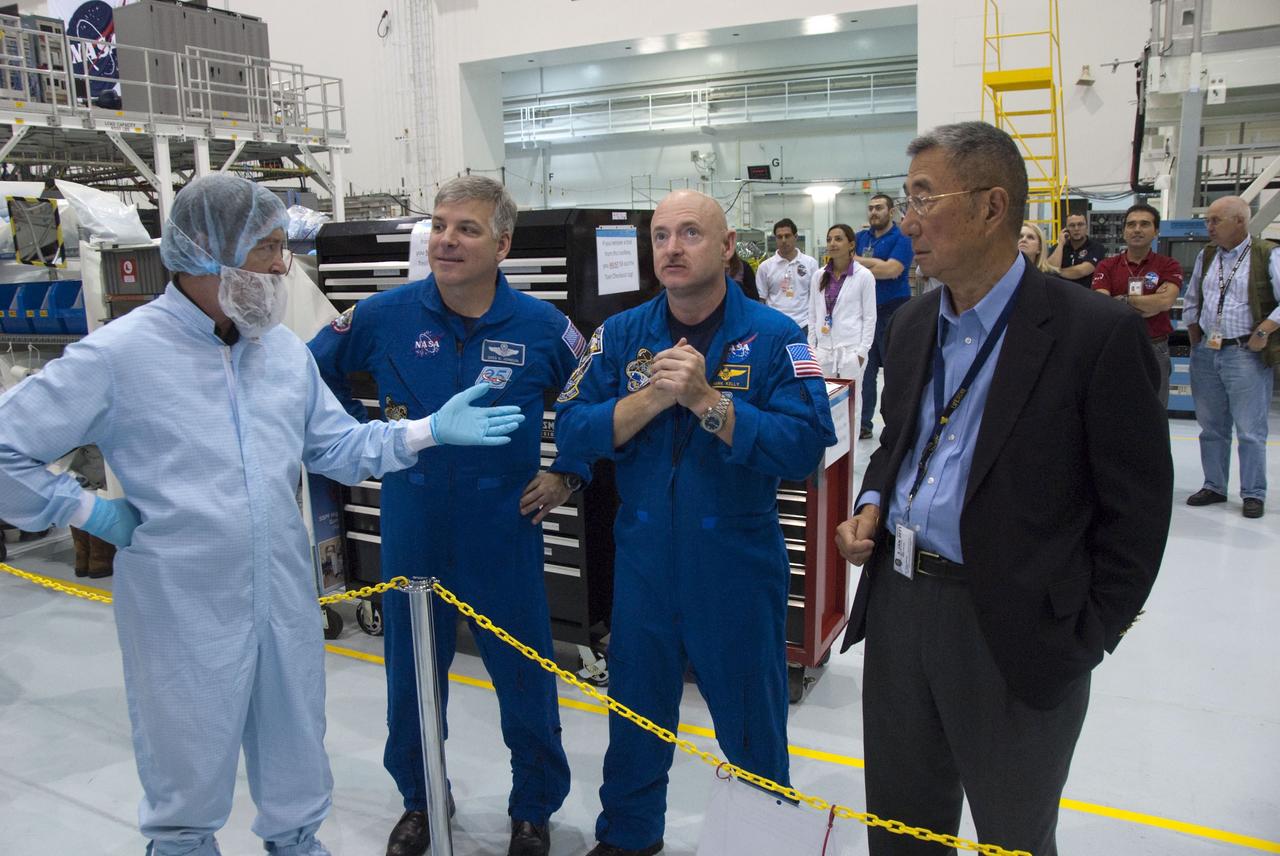
CAPE CANAVERAL, Fla. -- In the Space Station Processing Facility at NASA's Kennedy Space Center in Florida, a technician, left, talks about the Alpha Magnetic Spectrometer-2 (AMS) with STS-134 Pilot Gregory H. Johnson, Commander Mark Kelly and the experiment's principal investigator, Prof. Samuel Ting. The six-member STS-134 crew is at Kennedy participating in the Crew Equipment Interface Test (CEIT), which gives them an opportunity for hands-on training with tools they'll be using in space and familiarization of the payload they'll be delivering to the International Space Station. Space shuttle Endeavour is targeted to launch on the STS-134 mission Feb. 27, 2011. For more information, visit www.nasa.gov/mission_pages/shuttle/shuttlemissions/sts134/index.html. Photo credit: NASA/Cory Huston
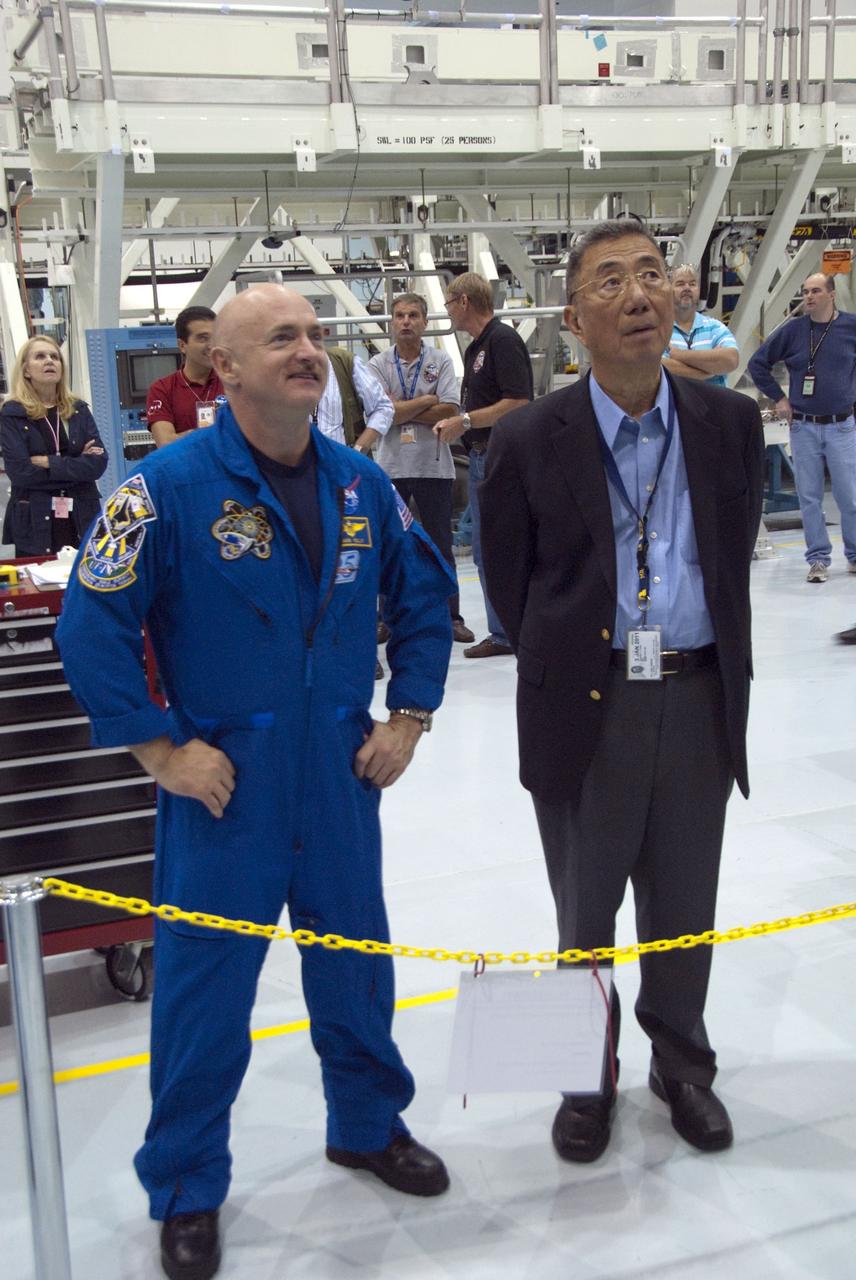
CAPE CANAVERAL, Fla. -- In the Space Station Processing Facility at NASA's Kennedy Space Center in Florida, STS-134 Commander Mark Kelly, front left, checks out the Alpha Magnetic Spectrometer-2 (AMS) with the experiment's principal investigator, Prof. Samuel Ting. Kelly and his five crewmates are at Kennedy participating in the Crew Equipment Interface Test (CEIT), which gives them an opportunity for hands-on training with tools they'll be using in space and familiarization of the payload they'll be delivering to the International Space Station. Space shuttle Endeavour is targeted to launch on the STS-134 mission Feb. 27, 2011. For more information, visit www.nasa.gov/mission_pages/shuttle/shuttlemissions/sts134/index.html. Photo credit: NASA/Cory Huston