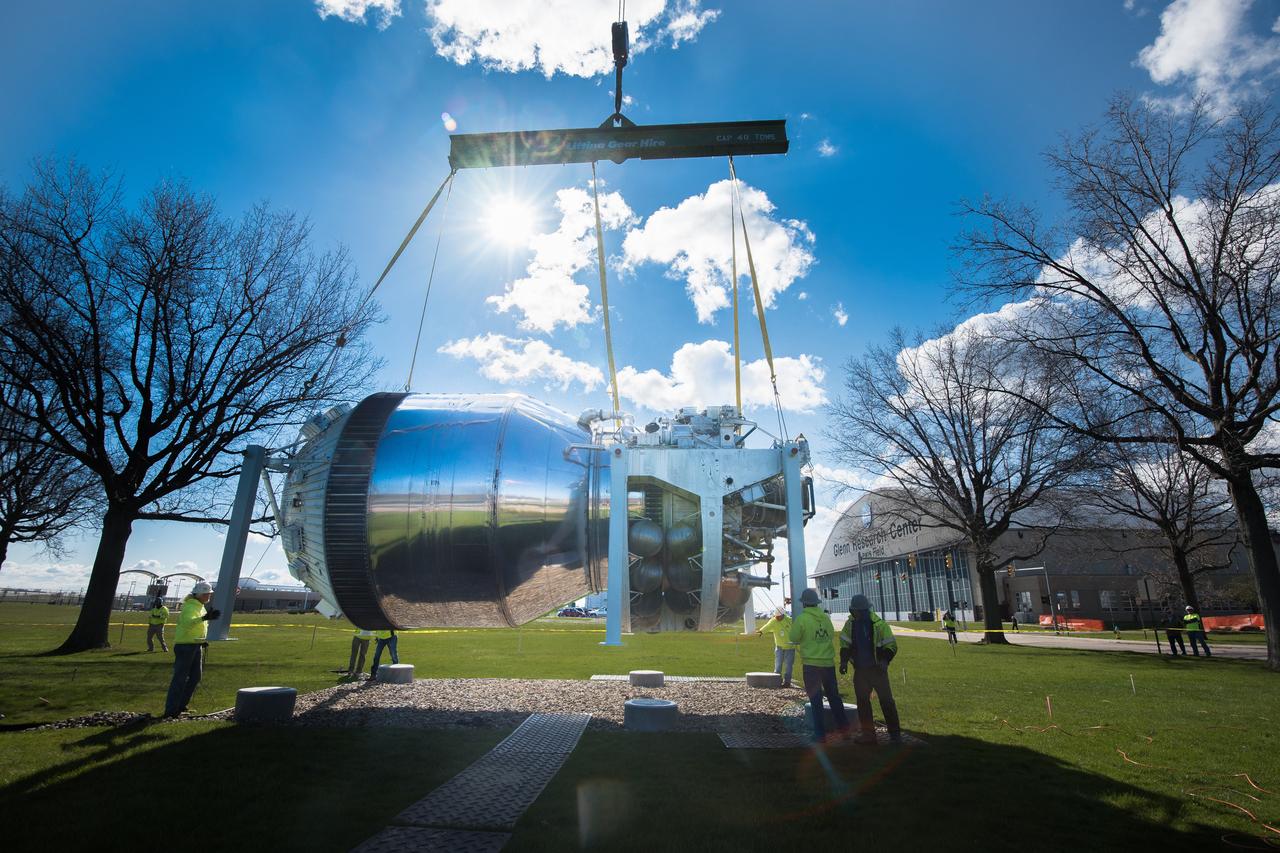
The 6,600 pound Centaur test article is a rare artifact recently transported from the U.S. Space and Rocket Center in Alabama. Centaur, developed at NASA Glenn Research Center in the late 1950s, was the world's first high-energy upper stage, burning liquid hydrogen (LH2) and liquid oxygen (LOX), and has enabled the launch of some of NASA's most important scientific missions over its 50-year history. In this image, technicians prepare to mount the hardware on a permanent display stand close to the main entrance at NASA Glenn Research Center.
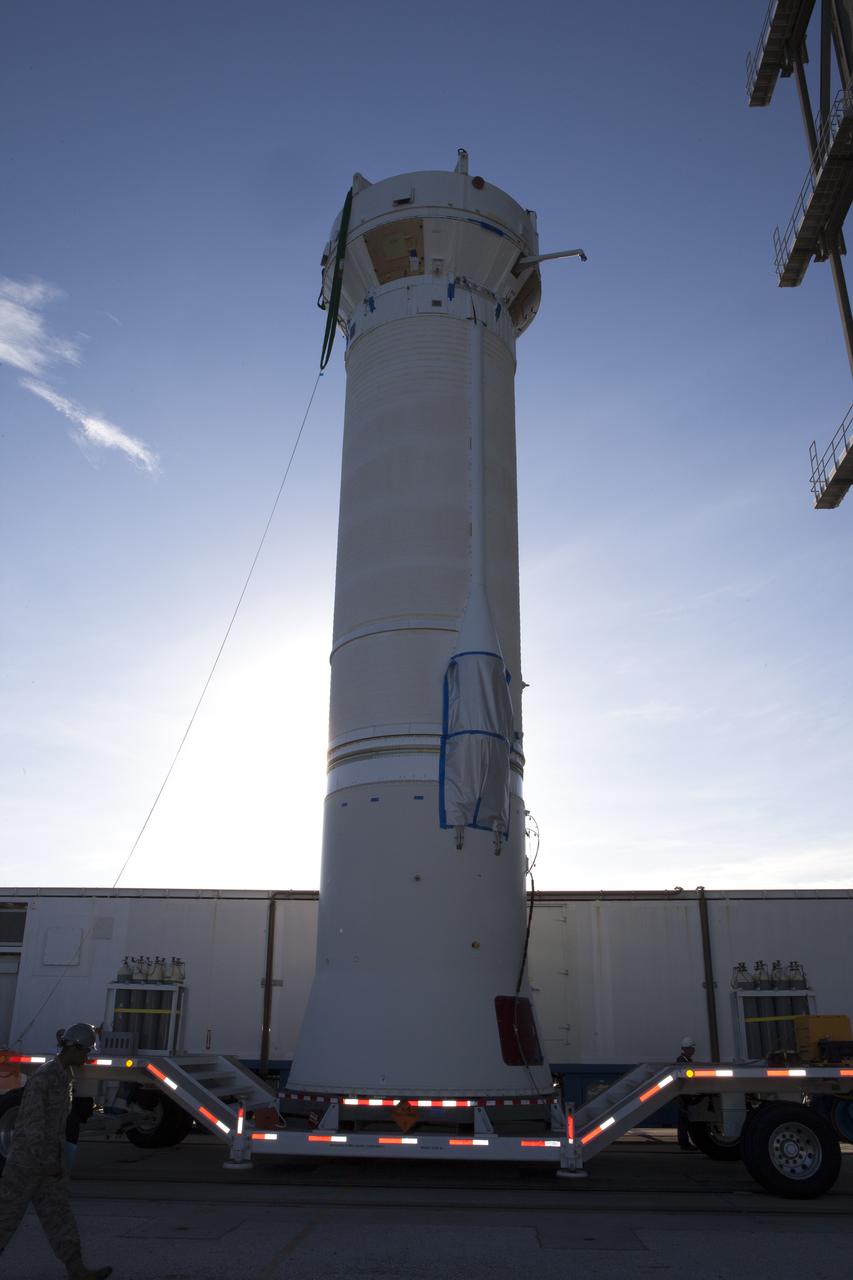
A Centaur upper stage, standing upright on a transporter, is prepared to be lifted and attached to the United Launch Alliance Atlas V rocket first stage booster at Space Launch Complex 41 on Florida’s Cape Canaveral Air Force Station. With a Centaur upper stage, the rocket will boost NASA’s Origins, Spectral Interpretation, Resource Identification, Security-Regolith Explorer, or OSIRIS-REx spacecraft. Targeted for liftoff Sept. 8, 2016, OSIRIS-Rex will be the first U.S. mission to sample an asteroid, retrieve at least two ounces of surface material and return it to Earth for study. The asteroid, Bennu, may hold clues to the origin of the solar system and the source of water and organic molecules found on Earth.
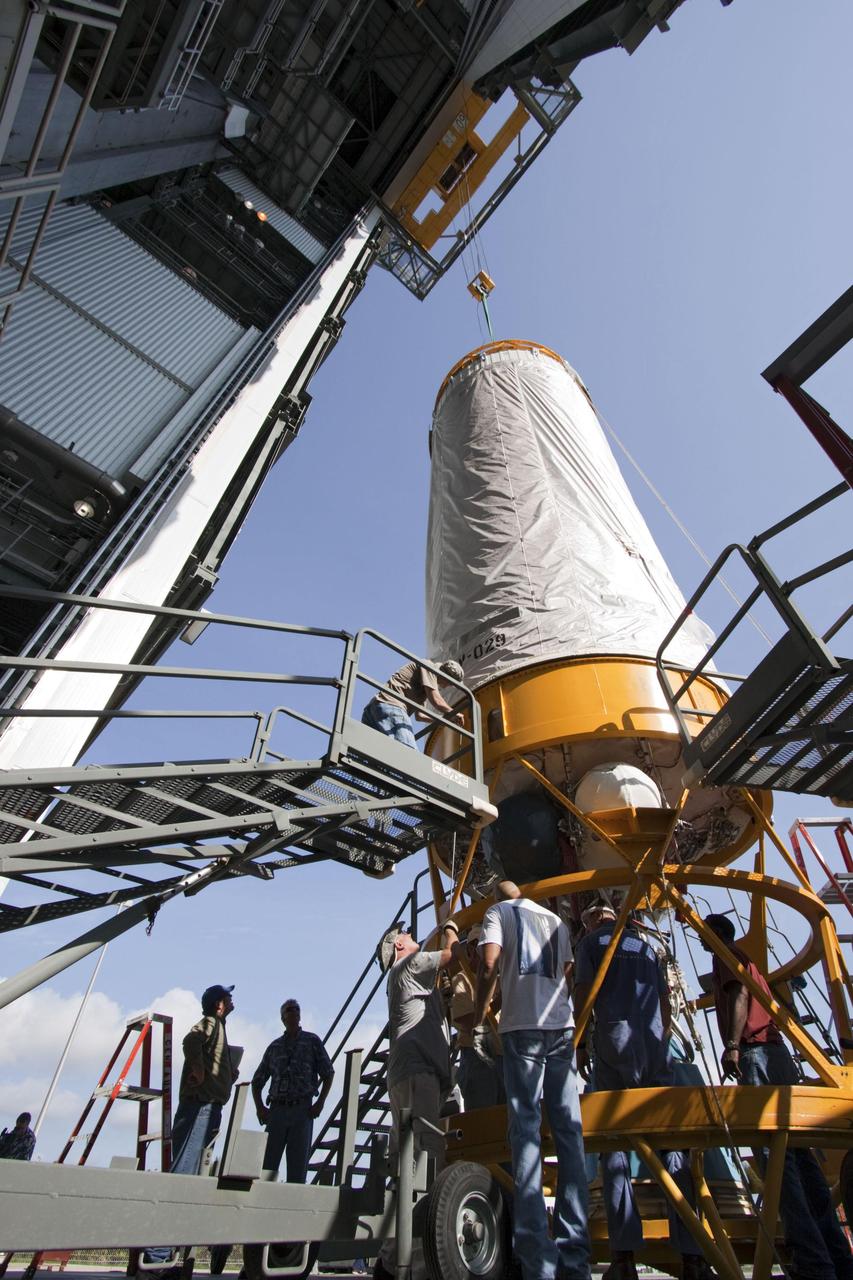
Workers guide an overhead crane as it lifts the Centaur upper stage at the Cape Canaveral Air Force Station, Fla., June 24, 2011. The Centaur is slated to launch NASA Juno spacecraft on August 5.
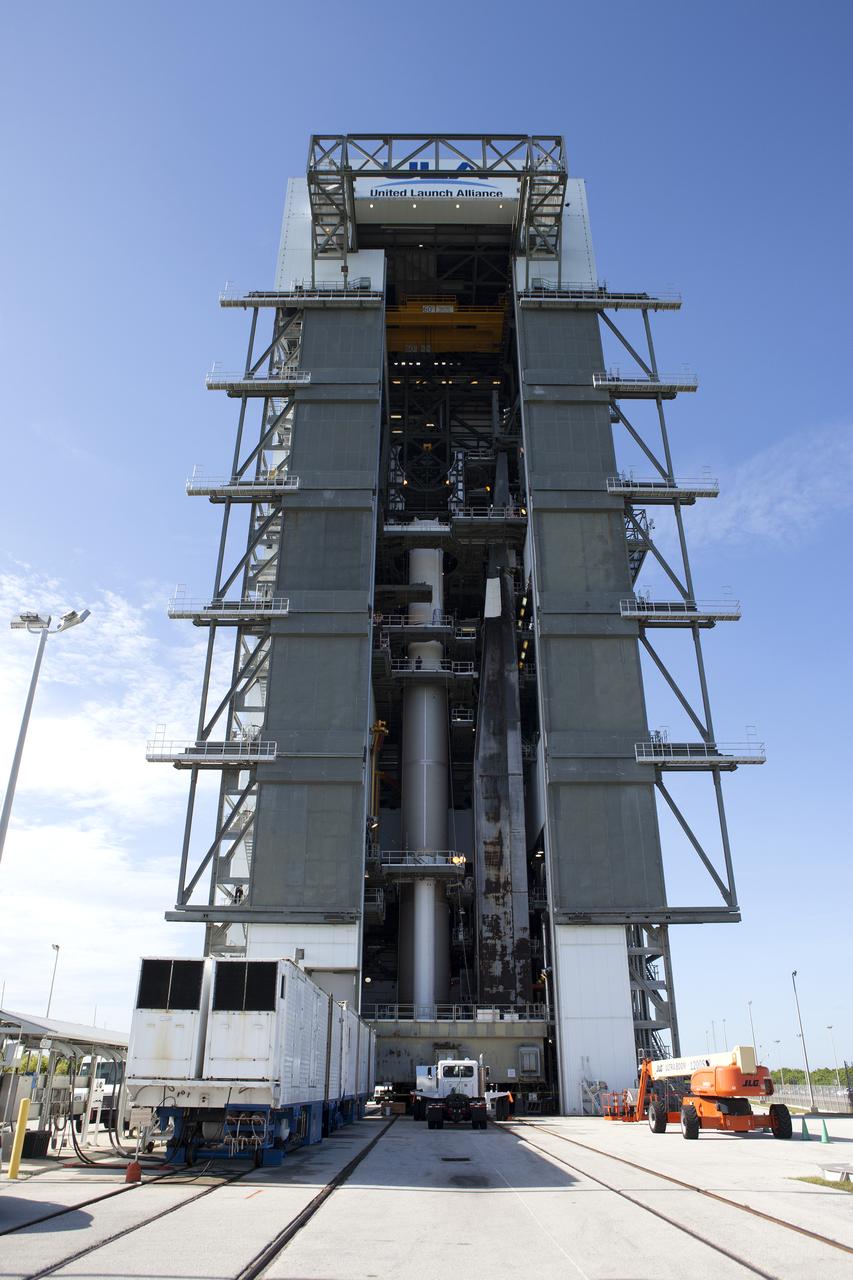
A Centaur upper stage has been lowered into position atop the United Launch Alliance Atlas V rocket first stage booster at Space Launch Complex 41 on Florida’s Cape Canaveral Air Force Station. The rocket will boost NASA’s Origins, Spectral Interpretation, Resource Identification, Security-Regolith Explorer, or OSIRIS-REx spacecraft. Targeted for liftoff Sept. 8, 2016, OSIRIS-Rex will be the first U.S. mission to sample an asteroid, retrieve at least two ounces of surface material and return it to Earth for study. The asteroid, Bennu, may hold clues to the origin of the solar system and the source of water and organic molecules found on Earth.
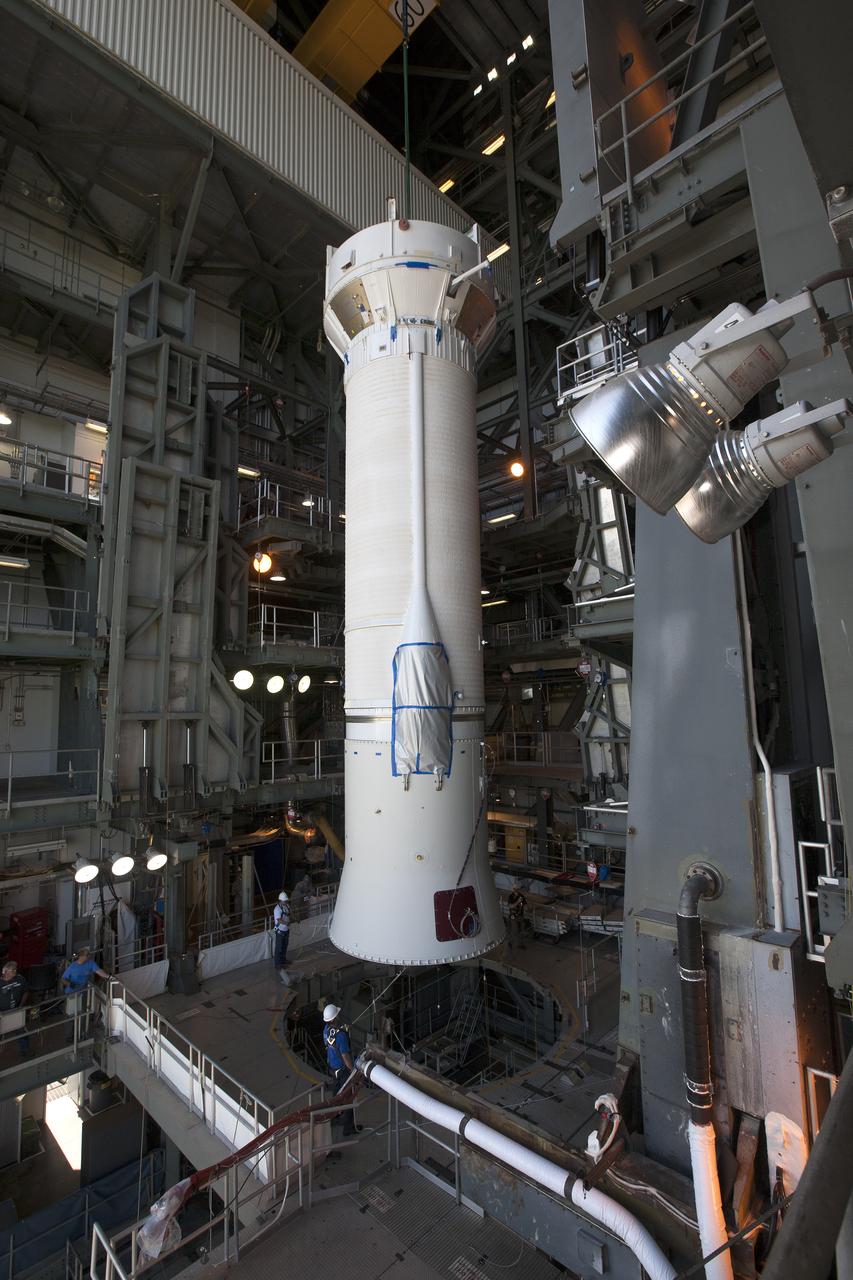
Team members prepare to attach a Centaur upper stage to the United Launch Alliance Atlas V rocket first stage booster at Space Launch Complex 41 on Florida’s Cape Canaveral Air Force Station. The rocket will boost NASA’s Origins, Spectral Interpretation, Resource Identification, Security-Regolith Explorer, or OSIRIS-REx spacecraft. Targeted for liftoff Sept. 8, 2016, OSIRIS-Rex will be the first U.S. mission to sample an asteroid, retrieve at least two ounces of surface material and return it to Earth for study. The asteroid, Bennu, may hold clues to the origin of the solar system and the source of water and organic molecules found on Earth.
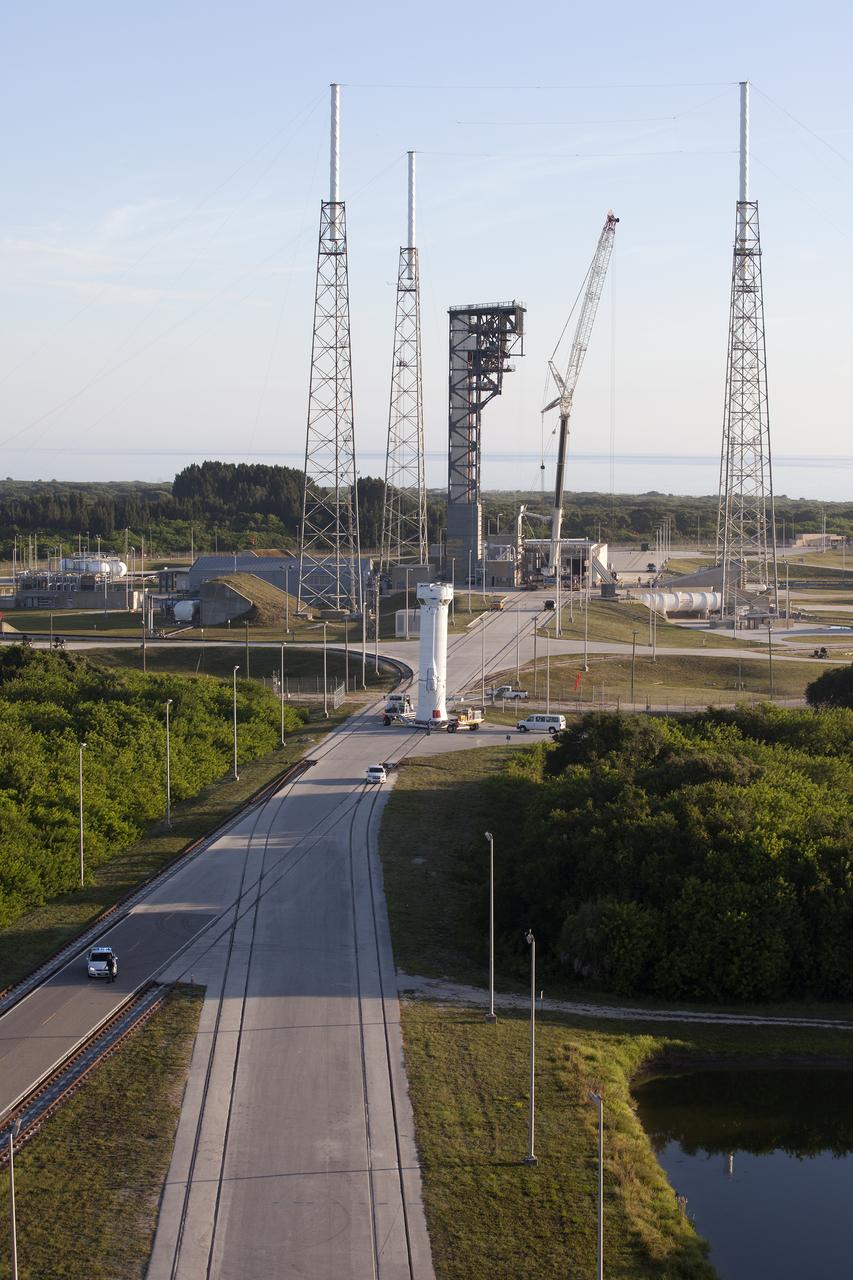
A Centaur upper stage, standing upright on a transporter, arrives at Space Launch Complex 41 on Florida’s Cape Canaveral Air Force Station, where it will be attached to the United Launch Alliance Atlas V rocket first stage booster. The rocket will boost NASA’s Origins, Spectral Interpretation, Resource Identification, Security-Regolith Explorer, or OSIRIS-REx spacecraft. Targeted for liftoff Sept. 8, 2016, OSIRIS-Rex will be the first U.S. mission to sample an asteroid, retrieve at least two ounces of surface material and return it to Earth for study. The asteroid, Bennu, may hold clues to the origin of the solar system and the source of water and organic molecules found on Earth.
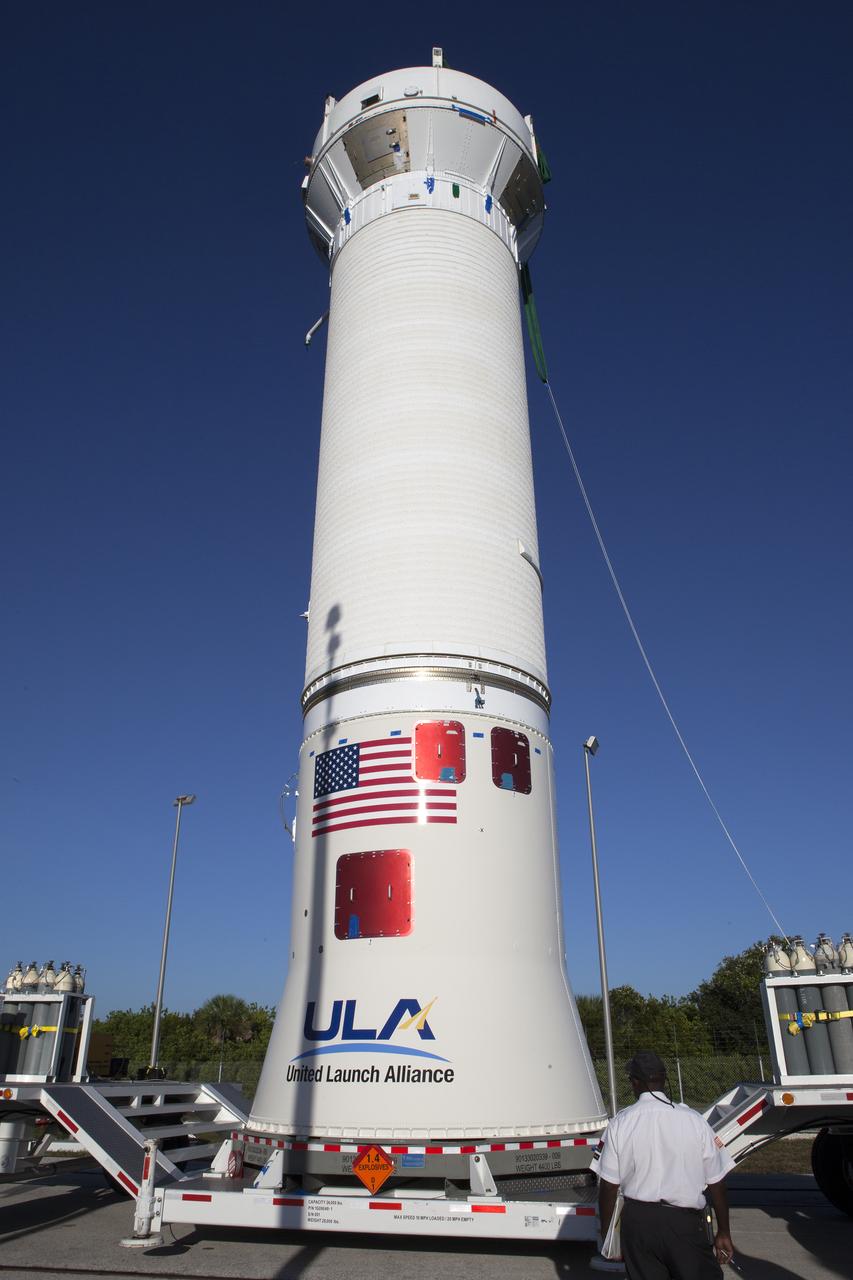
A Centaur upper stage, standing upright on a transporter, is prepared to be lifted and attached to the United Launch Alliance Atlas V rocket first stage booster at Space Launch Complex 41 on Florida’s Cape Canaveral Air Force Station. The rocket will boost NASA’s Origins, Spectral Interpretation, Resource Identification, Security-Regolith Explorer, or OSIRIS-REx spacecraft. Targeted for liftoff Sept. 8, 2016, OSIRIS-Rex will be the first U.S. mission to sample an asteroid, retrieve at least two ounces of surface material and return it to Earth for study. The asteroid, Bennu, may hold clues to the origin of the solar system and the source of water and organic molecules found on Earth.
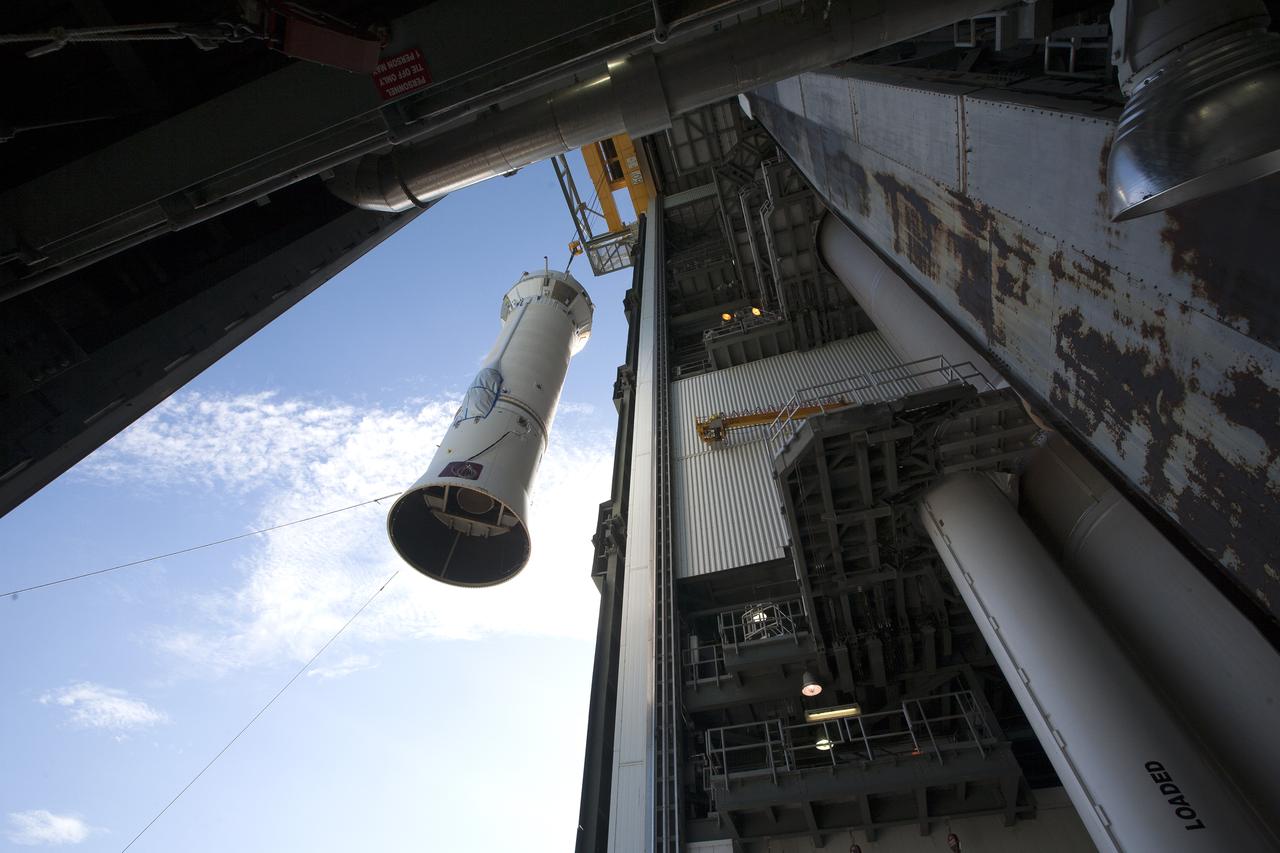
A Centaur upper stage is lifted at Space Launch Complex 41 on Florida’s Cape Canaveral Air Force Station, where it will be attached to the United Launch Alliance Atlas V rocket first stage booster. The rocket will boost NASA’s Origins, Spectral Interpretation, Resource Identification, Security-Regolith Explorer, or OSIRIS-REx spacecraft. Targeted for liftoff Sept. 8, 2016, OSIRIS-Rex will be the first U.S. mission to sample an asteroid, retrieve at least two ounces of surface material and return it to Earth for study. The asteroid, Bennu, may hold clues to the origin of the solar system and the source of water and organic molecules found on Earth.
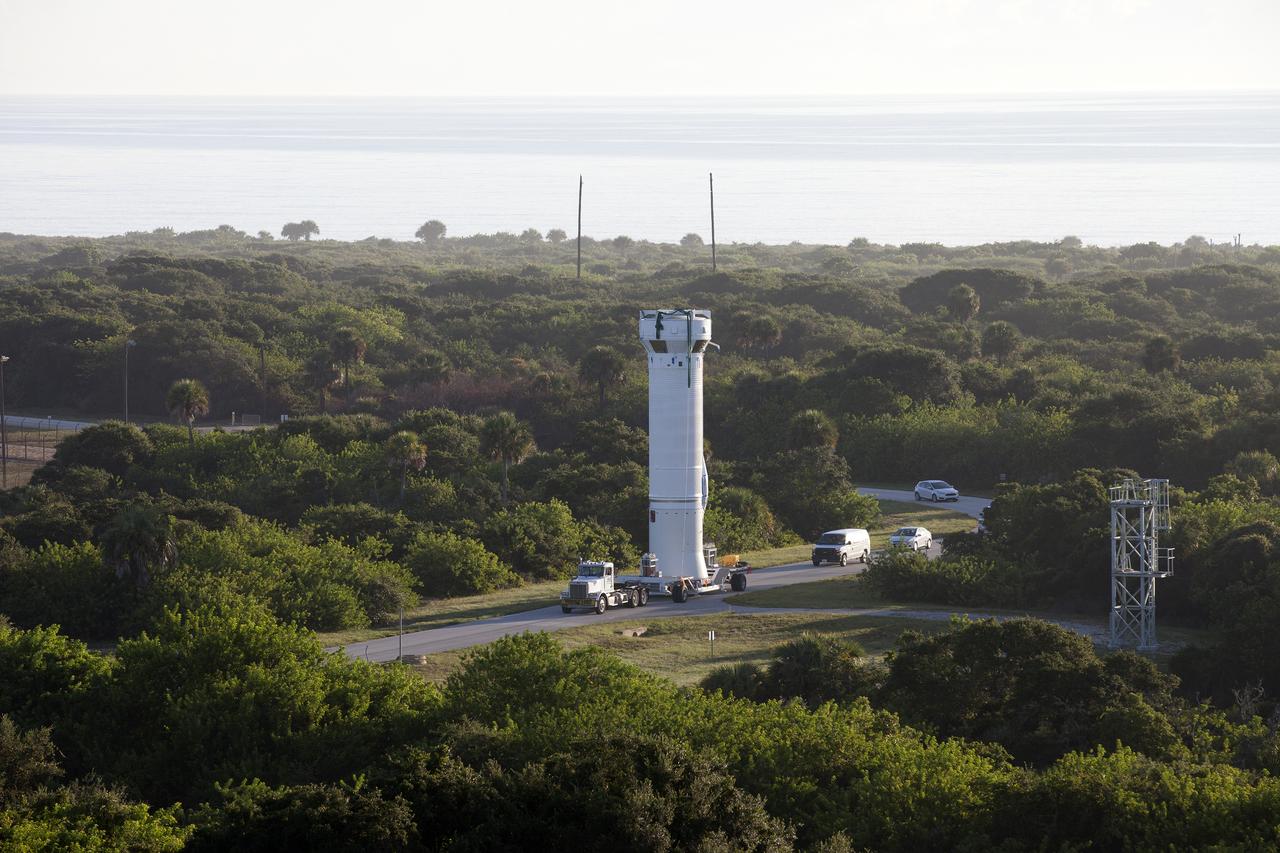
A Centaur upper stage, standing upright on a transporter, is driven to Space Launch Complex 41 on Florida’s Cape Canaveral Air Force Station, where it will be attached to the United Launch Alliance Atlas V rocket first stage booster. The rocket will boost NASA’s Origins, Spectral Interpretation, Resource Identification, Security-Regolith Explorer, or OSIRIS-REx spacecraft. Targeted for liftoff Sept. 8, 2016, OSIRIS-Rex will be the first U.S. mission to sample an asteroid, retrieve at least two ounces of surface material and return it to Earth for study. The asteroid, Bennu, may hold clues to the origin of the solar system and the source of water and organic molecules found on Earth.
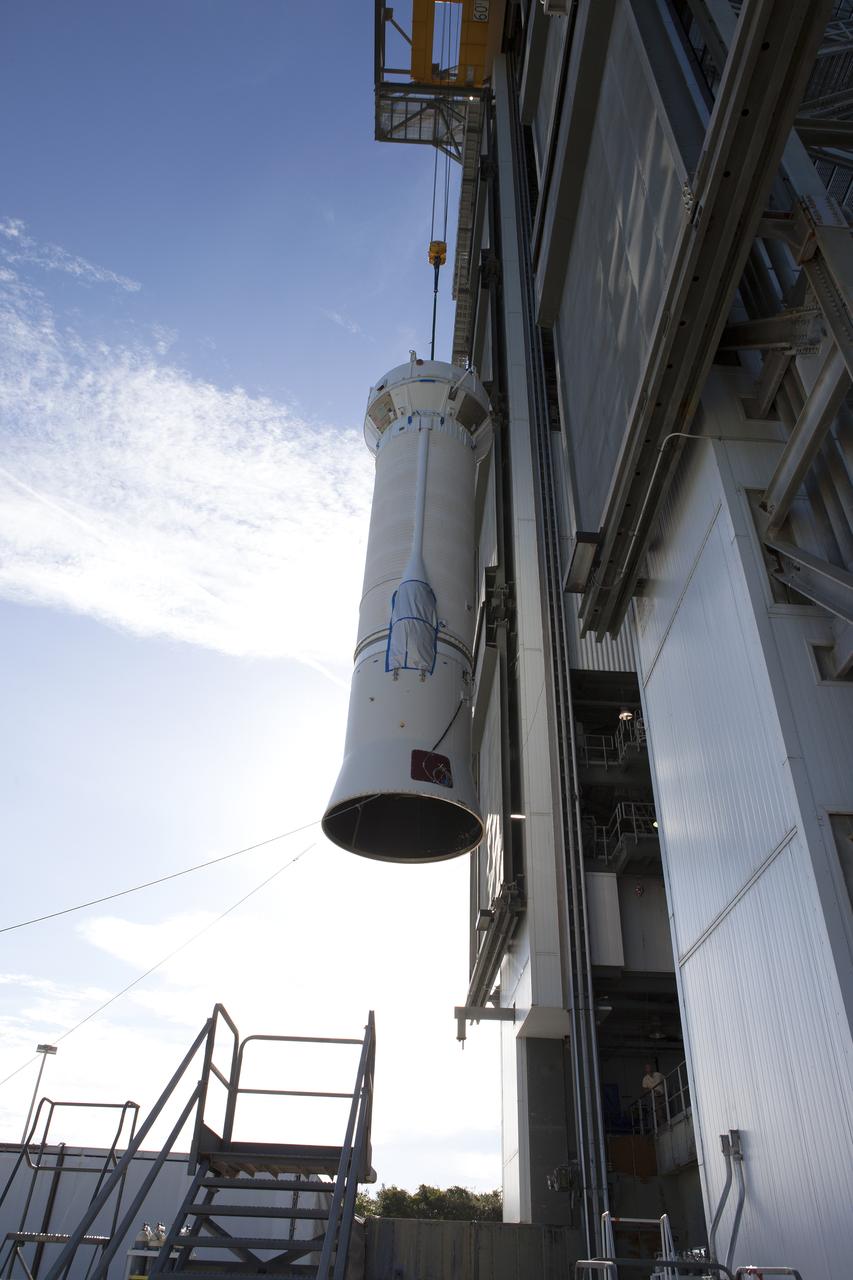
A Centaur upper stage is lifted at Space Launch Complex 41 on Florida’s Cape Canaveral Air Force Station, where it will be attached to the United Launch Alliance Atlas V rocket first stage booster. The rocket will boost NASA’s Origins, Spectral Interpretation, Resource Identification, Security-Regolith Explorer, or OSIRIS-REx spacecraft. Targeted for liftoff Sept. 8, 2016, OSIRIS-Rex will be the first U.S. mission to sample an asteroid, retrieve at least two ounces of surface material and return it to Earth for study. The asteroid, Bennu, may hold clues to the origin of the solar system and the source of water and organic molecules found on Earth.
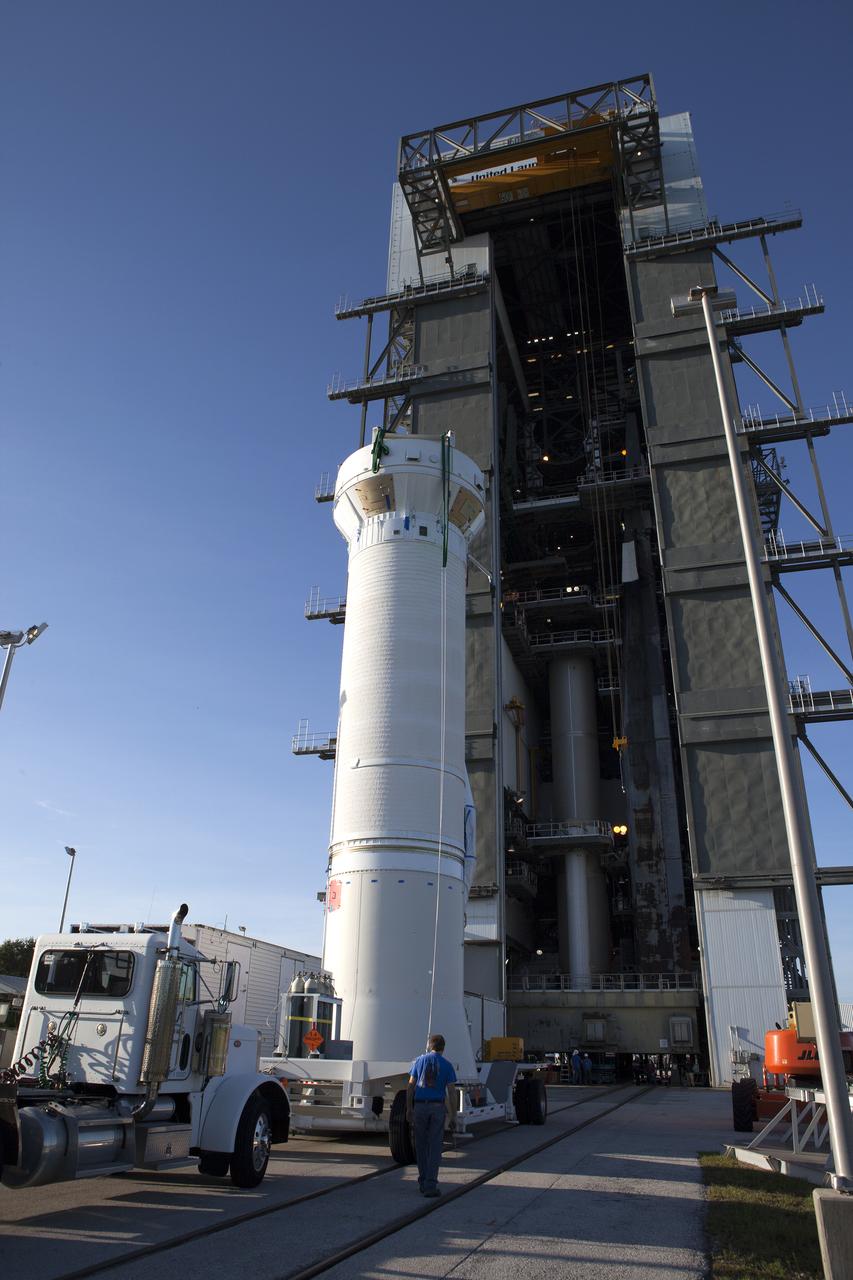
A Centaur upper stage, standing upright on a transporter, is prepared to be lifted and attached to the United Launch Alliance Atlas V rocket first stage booster at Space Launch Complex 41 on Florida’s Cape Canaveral Air Force Station. The rocket will boost NASA’s Origins, Spectral Interpretation, Resource Identification, Security-Regolith Explorer, or OSIRIS-REx spacecraft. Targeted for liftoff Sept. 8, 2016, OSIRIS-Rex will be the first U.S. mission to sample an asteroid, retrieve at least two ounces of surface material and return it to Earth for study. The asteroid, Bennu, may hold clues to the origin of the solar system and the source of water and organic molecules found on Earth.
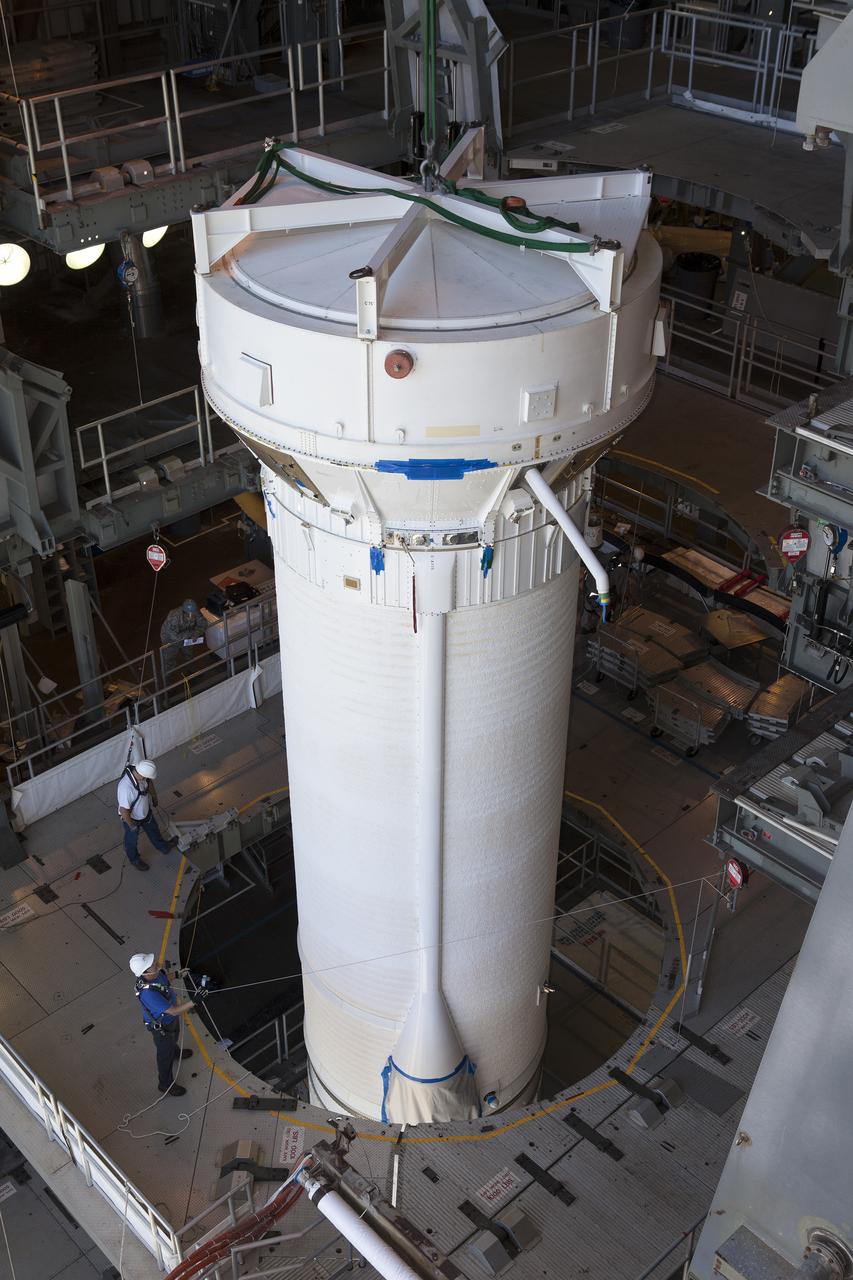
Team members prepare to attach a Centaur upper stage to the United Launch Alliance Atlas V rocket first stage booster at Space Launch Complex 41 on Florida’s Cape Canaveral Air Force Station. The rocket will boost NASA’s Origins, Spectral Interpretation, Resource Identification, Security-Regolith Explorer, or OSIRIS-REx spacecraft. Targeted for liftoff Sept. 8, 2016, OSIRIS-Rex will be the first U.S. mission to sample an asteroid, retrieve at least two ounces of surface material and return it to Earth for study. The asteroid, Bennu, may hold clues to the origin of the solar system and the source of water and organic molecules found on Earth.
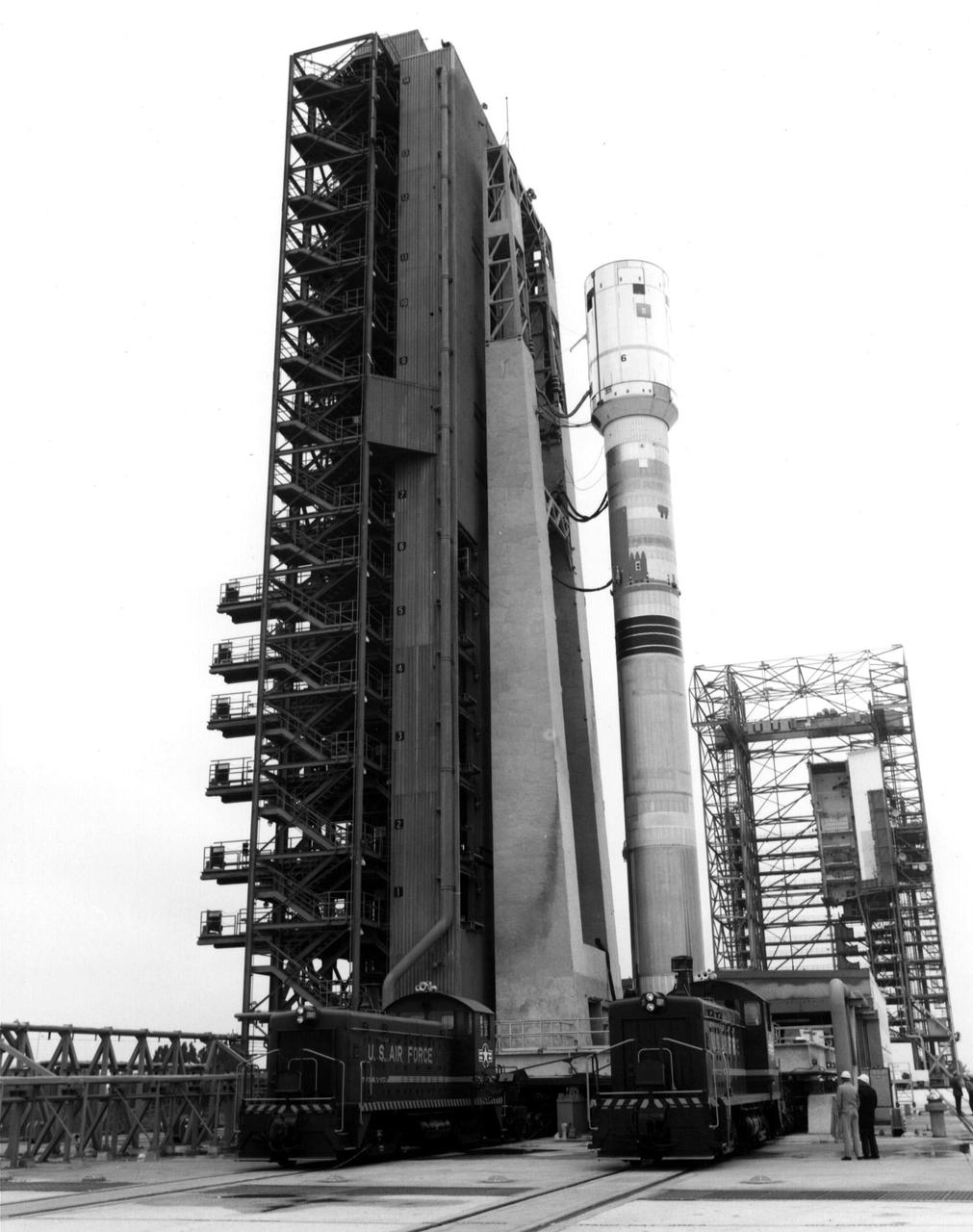
The Titan/Centaur-6 launch vehicle was moved to Launch Complex 41 at Kennedy Space Center in Florida to complete checkout procedures in preparation for launch. The photo is dated January 1977. This launch vehicle carried Voyager 1 into space on September 5, 1977. https://photojournal.jpl.nasa.gov/catalog/PIA21739
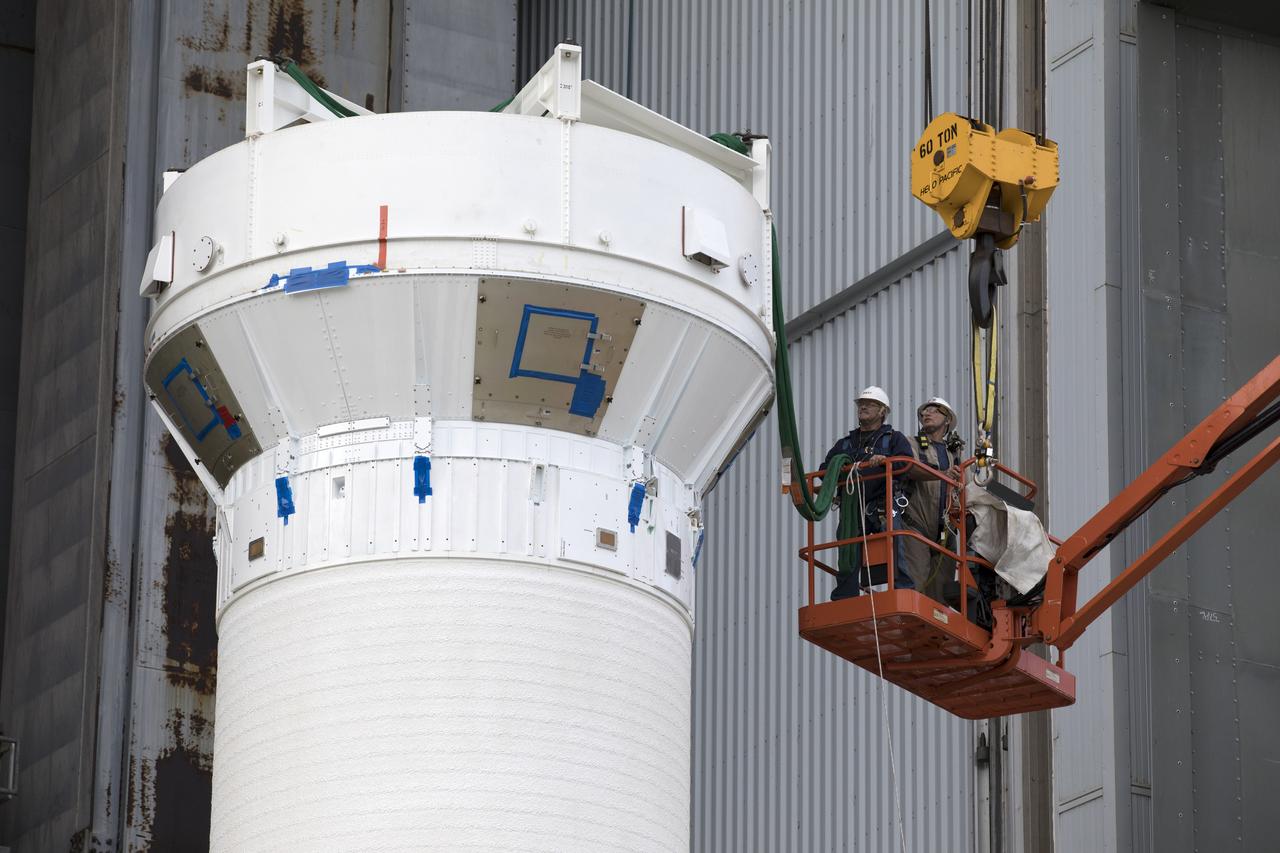
Technicians with United Launch Alliance (ULA) attach crane lines to the Centaur upper stage of the ULA Atlas V Centaur stage at the Vertical Integration Facility at Space Launch Complex 41 at Cape Canaveral Air Force Station in Florida. The Centaur stage will be lifted and mated to the first stage booster. The rocket is being prepared for Orbital ATK's seventh commercial resupply mission, CRS-7, to the International Space Station. Orbital ATK's CYGNUS pressurized cargo module is scheduled to launch atop ULA's Atlas V rocket from Pad 41 on March 19, 2017. CYGNUS will deliver 7,600 pounds of supplies, equipment and scientific research materials to the space station.
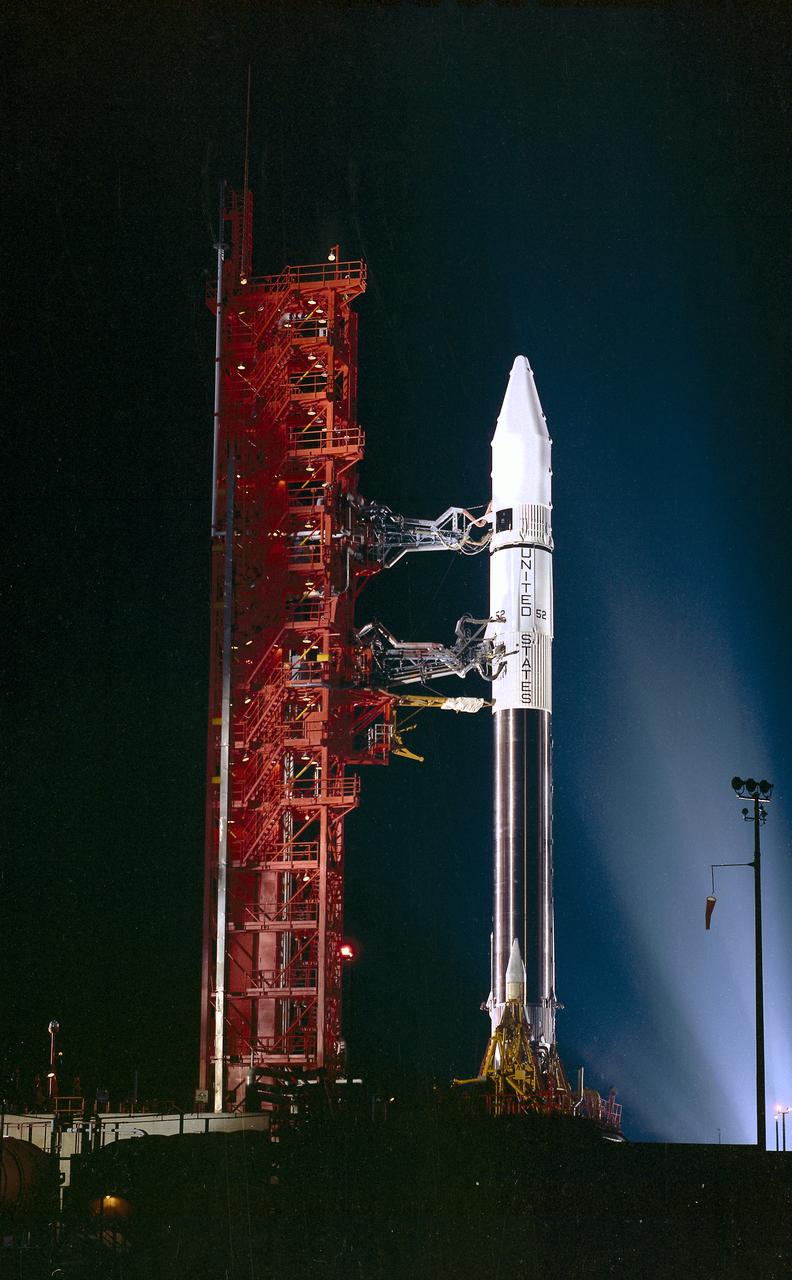
The Atlas-Centaur-52 launch vehicle on the launch pad. The Atlas-Centaur-52 placed the High Energy Astronomy Observatory-2 (HEAO-2) in orbit on November 13, 1978.
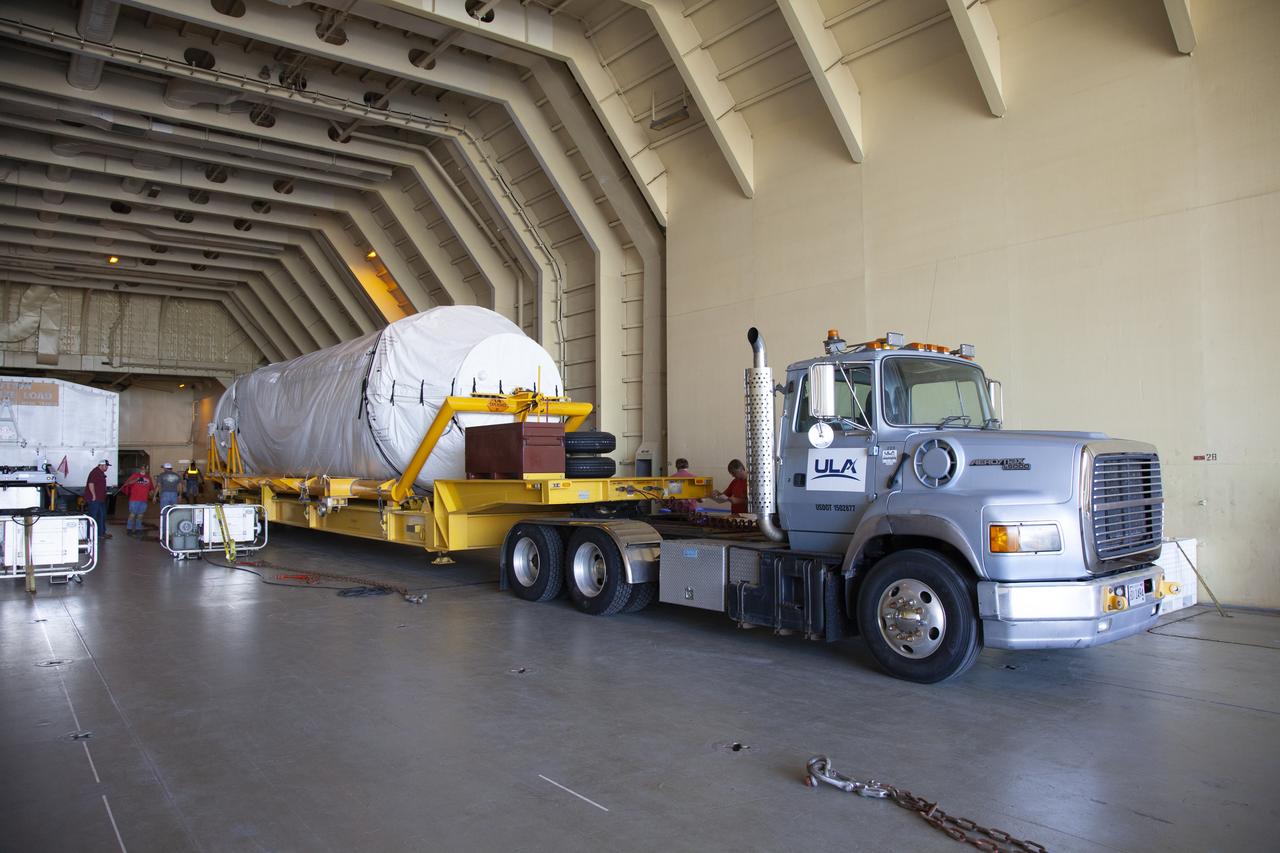
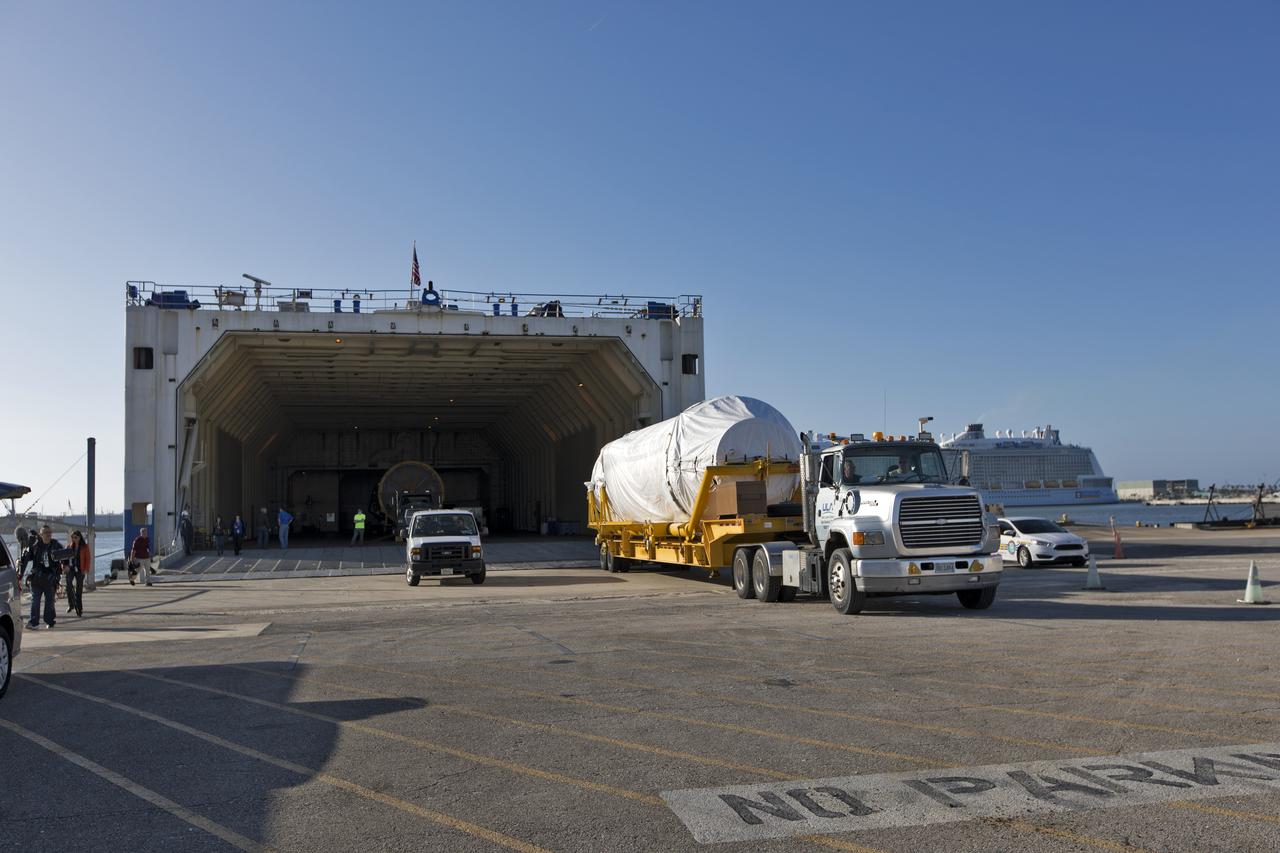
A transport truck moves a United Launch Alliance (ULA) two-engine Centaur upper stage from the company’s Mariner ship that just arrived at Port Canaveral in Florida. The Centaur will be transported to the Atlas Spaceflight Operations Center at Cape Canaveral Air Force Station for preliminary checkouts. Mounted atop a ULA Atlas V rocket, the Centaur will help launch a Boeing CST-100 Starliner spacecraft on an uncrewed Orbital Flight Test from Space Launch Complex 41 at the Cape. NASA’s Commercial Crew Program will return human spaceflight launches to U.S. soil, providing safe, reliable and cost-effective access to low-Earth orbit on systems that meet our safety and mission requirements.
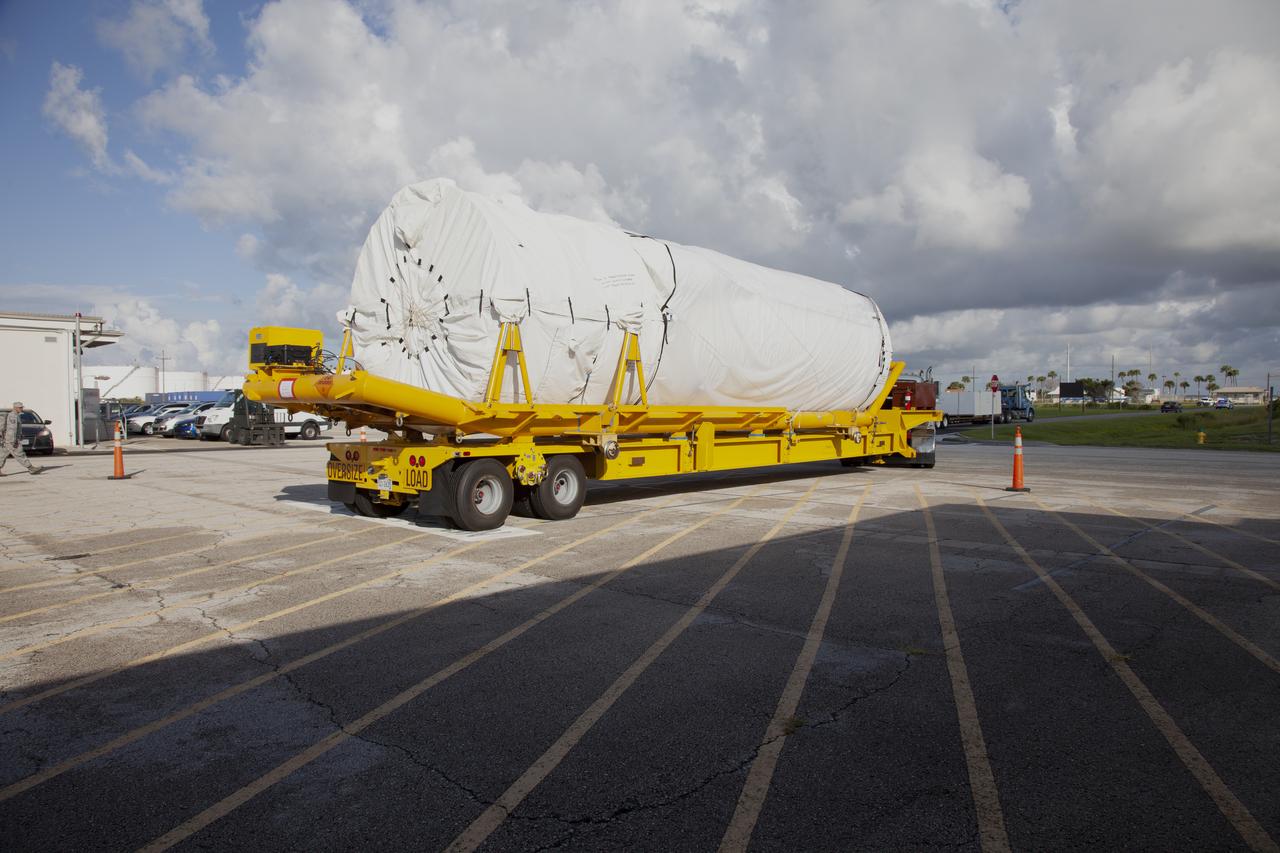
A transport truck moves a United Launch Alliance (ULA) two-engine Centaur upper stage from the company’s Mariner ship that just arrived at Port Canaveral in Florida. The Centaur will be transported to the Atlas Spaceflight Operations Center at Cape Canaveral Air Force Station for preliminary checkouts. Mounted atop a ULA Atlas V rocket, the Centaur will help launch a Boeing CST-100 Starliner spacecraft on an uncrewed Orbital Flight Test from Space Launch Complex 41 at the Cape. NASA’s Commercial Crew Program will return human spaceflight launches to U.S. soil, providing safe, reliable and cost-effective access to low-Earth orbit on systems that meet our safety and mission requirements.
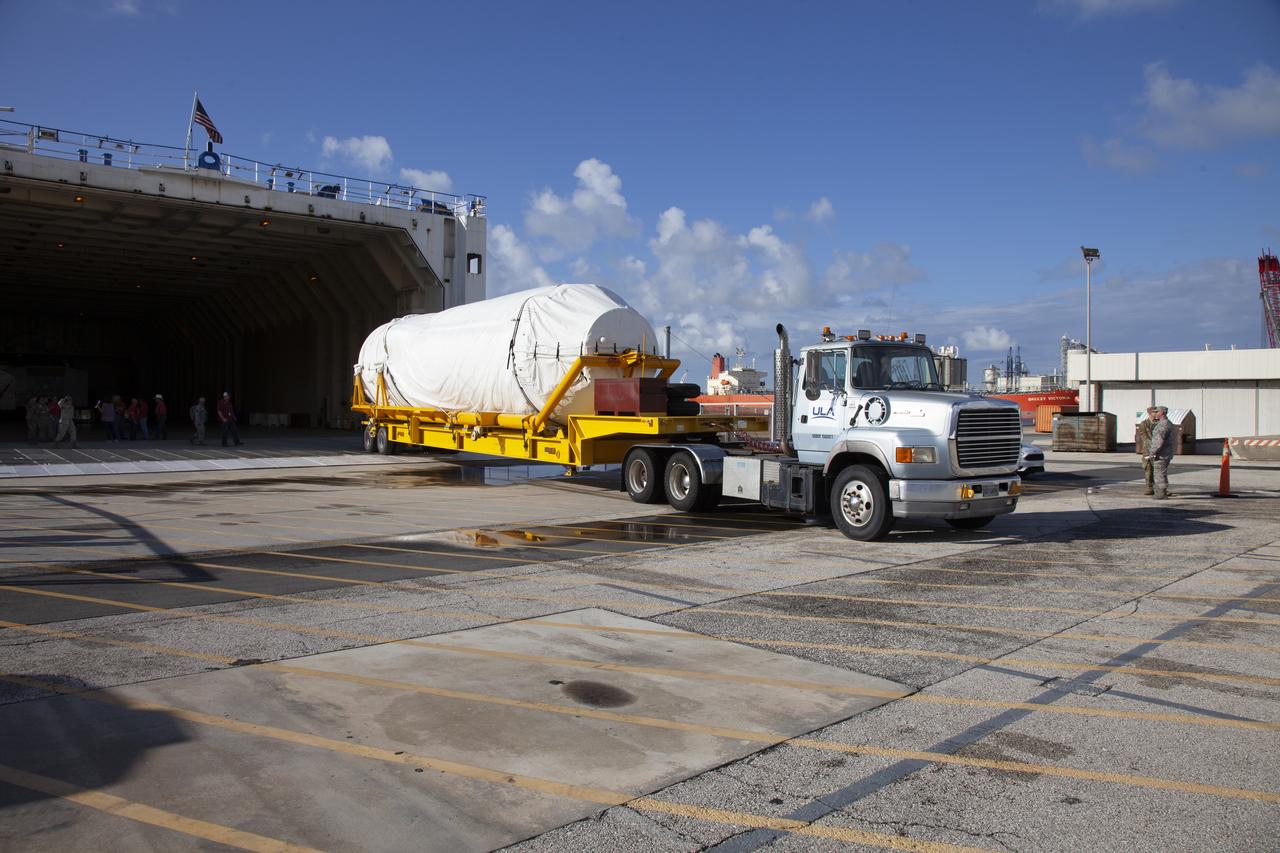
A transport truck moves a United Launch Alliance (ULA) two-engine Centaur upper stage from the company’s Mariner ship that just arrived at Port Canaveral in Florida. The Centaur will be transported to the Atlas Spaceflight Operations Center at Cape Canaveral Air Force Station for preliminary checkouts. Mounted atop a ULA Atlas V rocket, the Centaur will help launch a Boeing CST-100 Starliner spacecraft on an uncrewed Orbital Flight Test from Space Launch Complex 41 at the Cape. NASA’s Commercial Crew Program will return human spaceflight launches to U.S. soil, providing safe, reliable and cost-effective access to low-Earth orbit on systems that meet our safety and mission requirements.
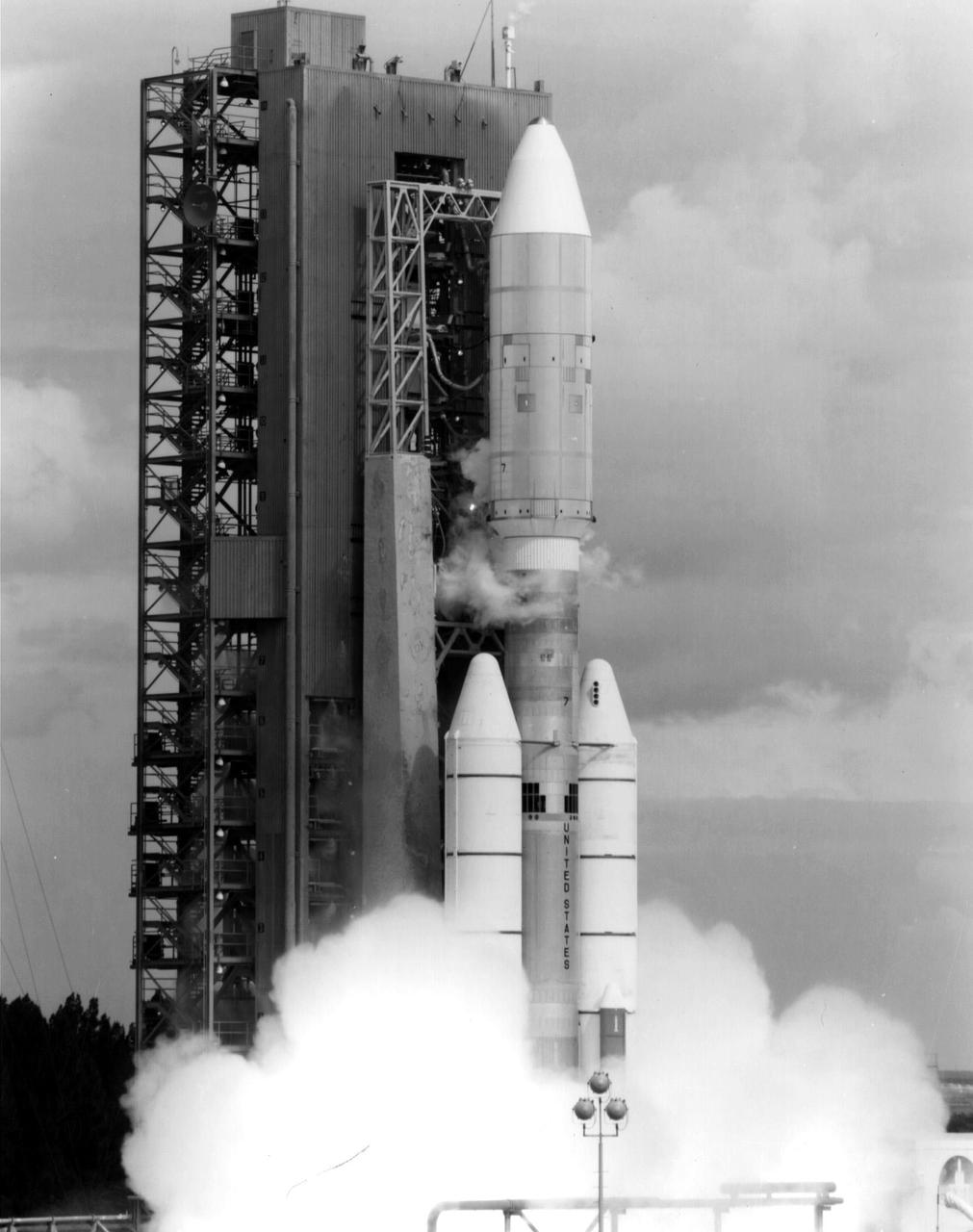
NASA's Voyager 2 spacecraft launched atop its Titan/Centaur-7 launch vehicle from Cape Canaveral Air Force Station in Florida on August 20, 1977, at 10:29 a.m. local time. https://photojournal.jpl.nasa.gov/catalog/PIA21745
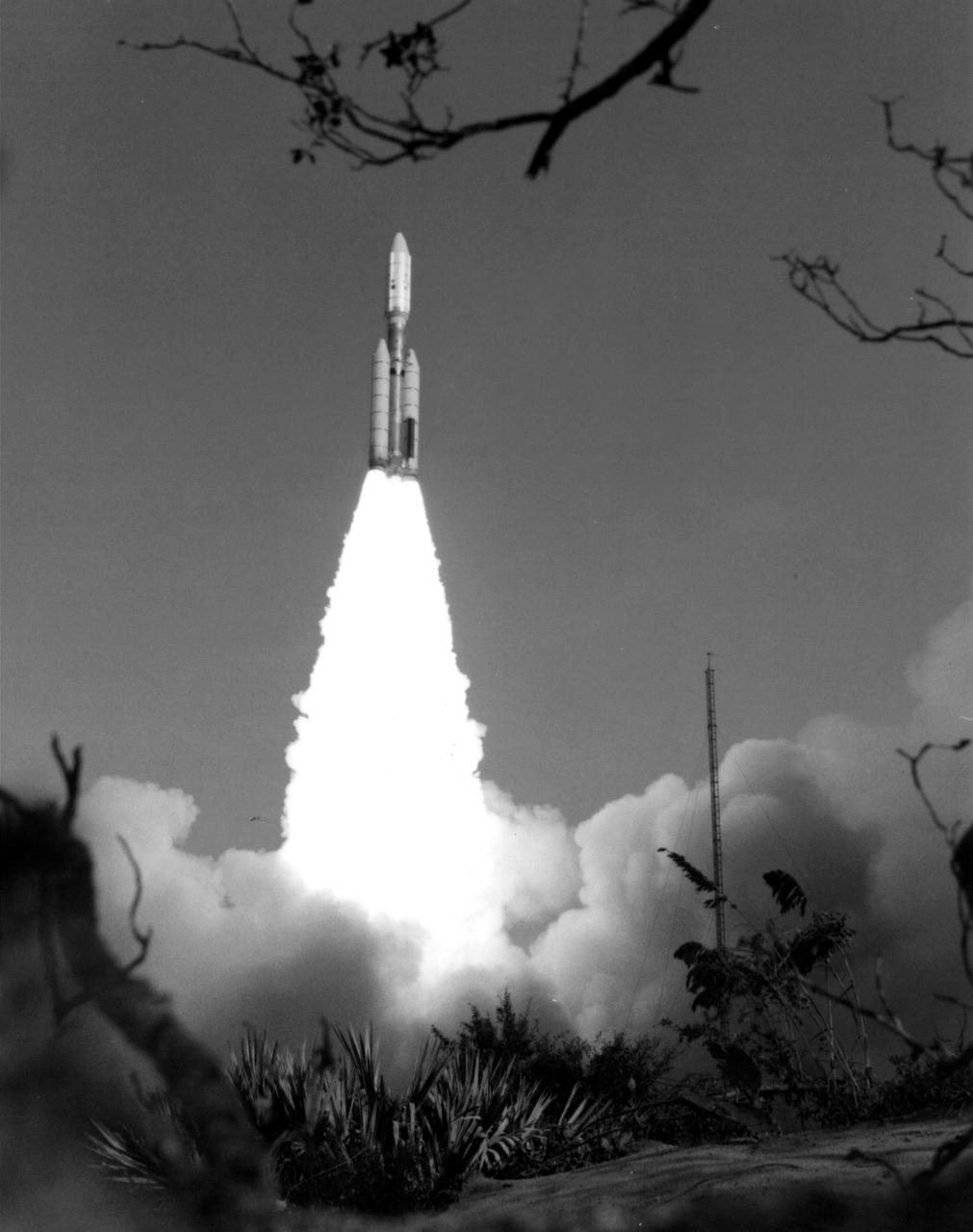
NASA's Voyager 1 spacecraft launched atop its Titan/Centaur-6 launch vehicle from the Kennedy Space Center Launch Complex in Florida on September 5, 1977, at 8:56 a.m. local time. https://photojournal.jpl.nasa.gov/catalog/PIA21746
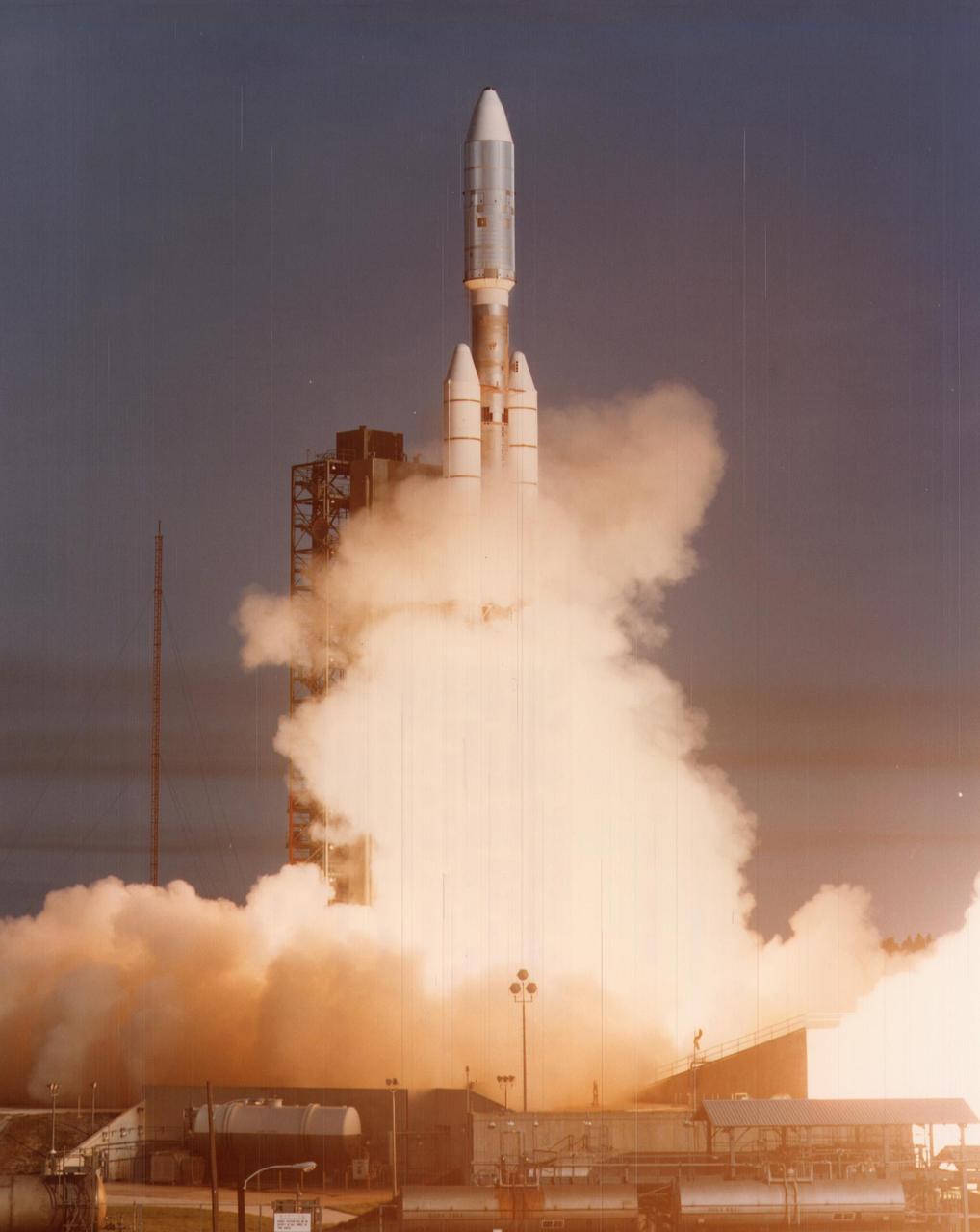
NASA's Voyager 1 spacecraft launched atop its Titan/Centaur-6 launch vehicle from the Kennedy Space Center Launch Complex in Florida on September 5, 1977, at 8:56 a.m. local time. https://photojournal.jpl.nasa.gov/catalog/PIA21747

NASA's Voyager 2 spacecraft launched atop its Titan/Centaur-7 launch vehicle from Cape Canaveral Air Force Station in Florida on August 20, 1977, at 10:29 a.m. local time. https://photojournal.jpl.nasa.gov/catalog/PIA21744
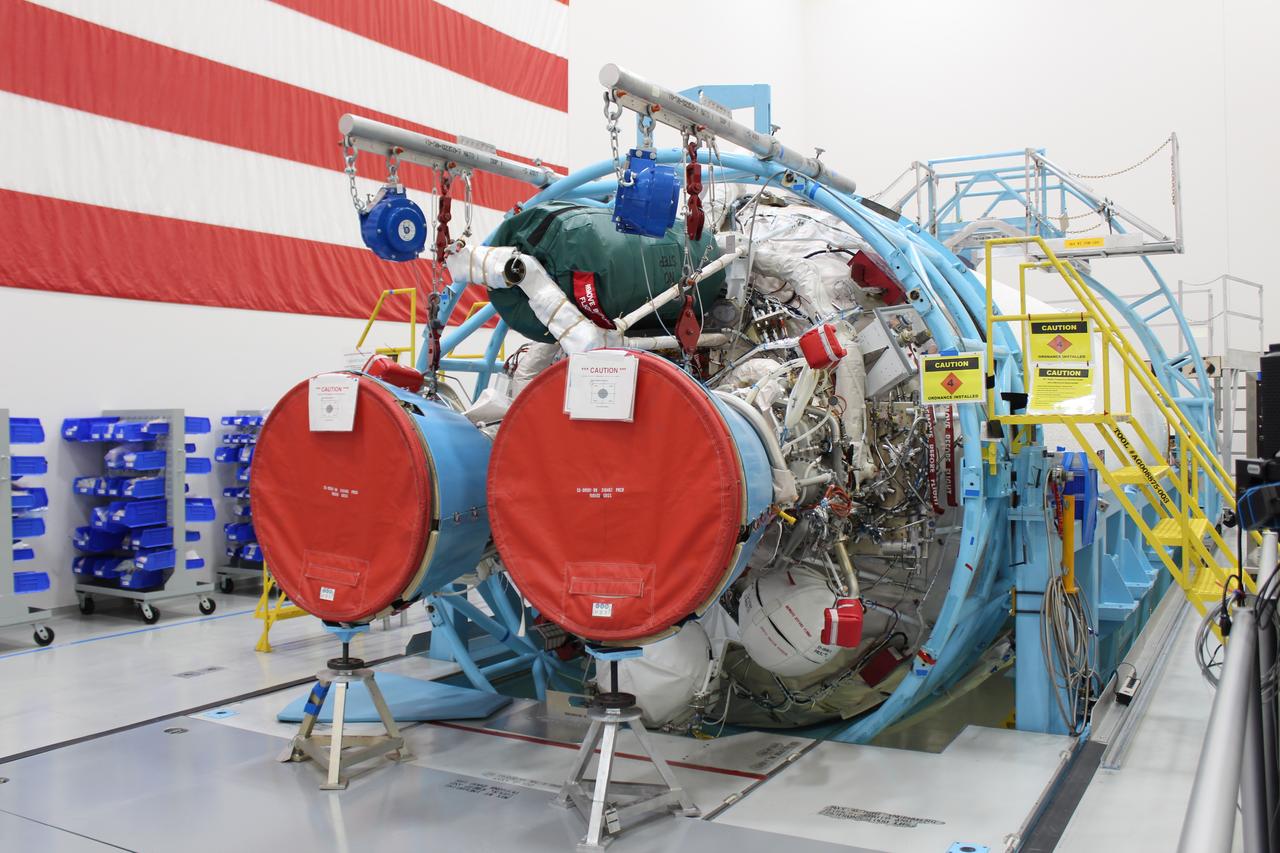
A United Launch Alliance (ULA) Atlas V dual engine Centaur upper stage is in ULA’s factory in Decatur, Alabama on March 29, 2019. The dual engine upper stage is being prepared for Boeing’s CST-100 Starliner Crew Flight Test. Soon the upper stage will be assembled with the first stage booster and shipped aboard the company’s Mariner cargo ship to NASA’s Kennedy Space Center in Florida. Starliner and the Atlas V rockets that will launch the spacecraft, are key elements of NASA’s Commercial Crew Program to restore the capability to send astronauts to the International Space Station from U.S. soil.
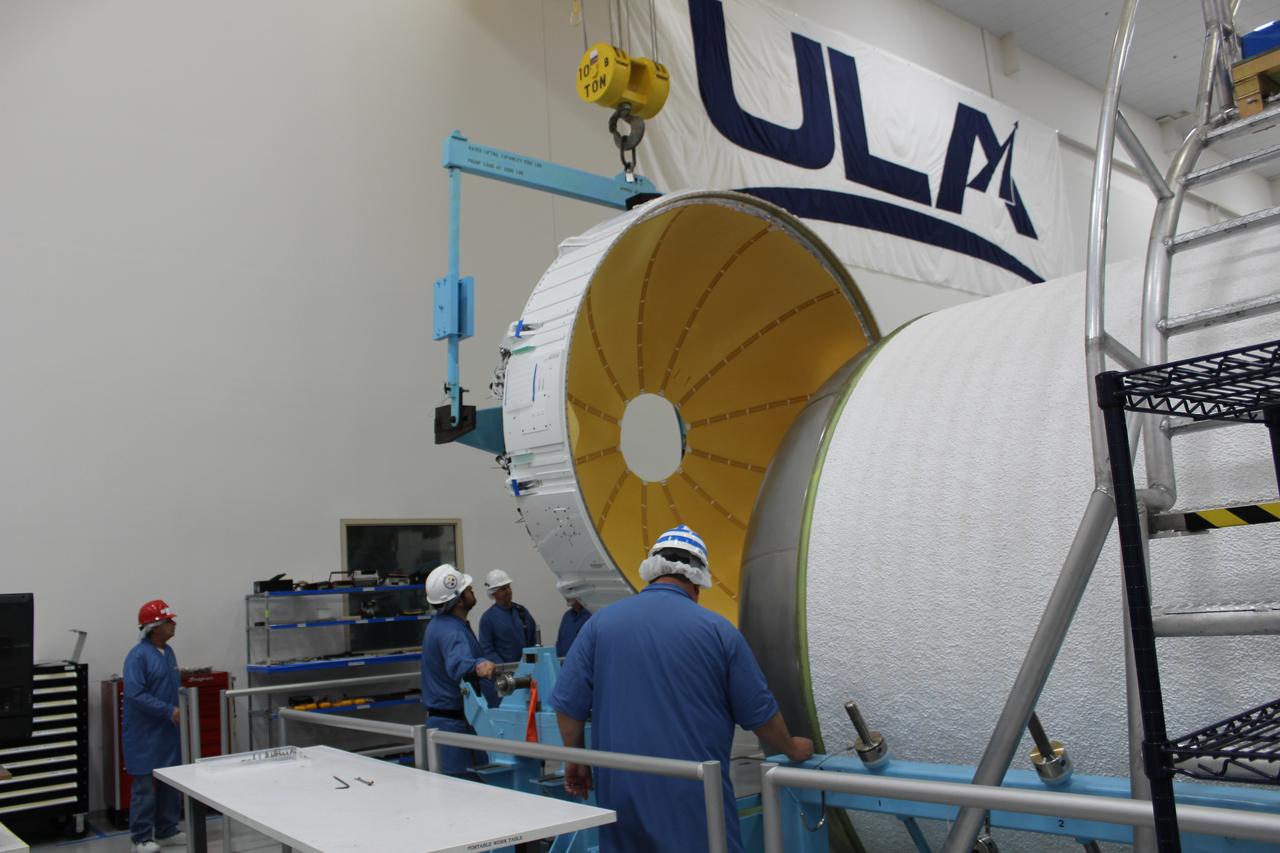
Workers assemble a United Launch Alliance (ULA) Atlas V dual engine Centaur upper stage in ULA’s factory in Decatur, Alabama on March 29, 2019. The dual engine upper stage is being prepared for the first crew rotation mission of Boeing’s CST-100 Starliner to the International Space Station. Starliner and the Atlas V rockets that will launch the spacecraft, are key elements of NASA’s Commercial Crew Program to restore the capability to send astronauts to the space station from U.S. soil.
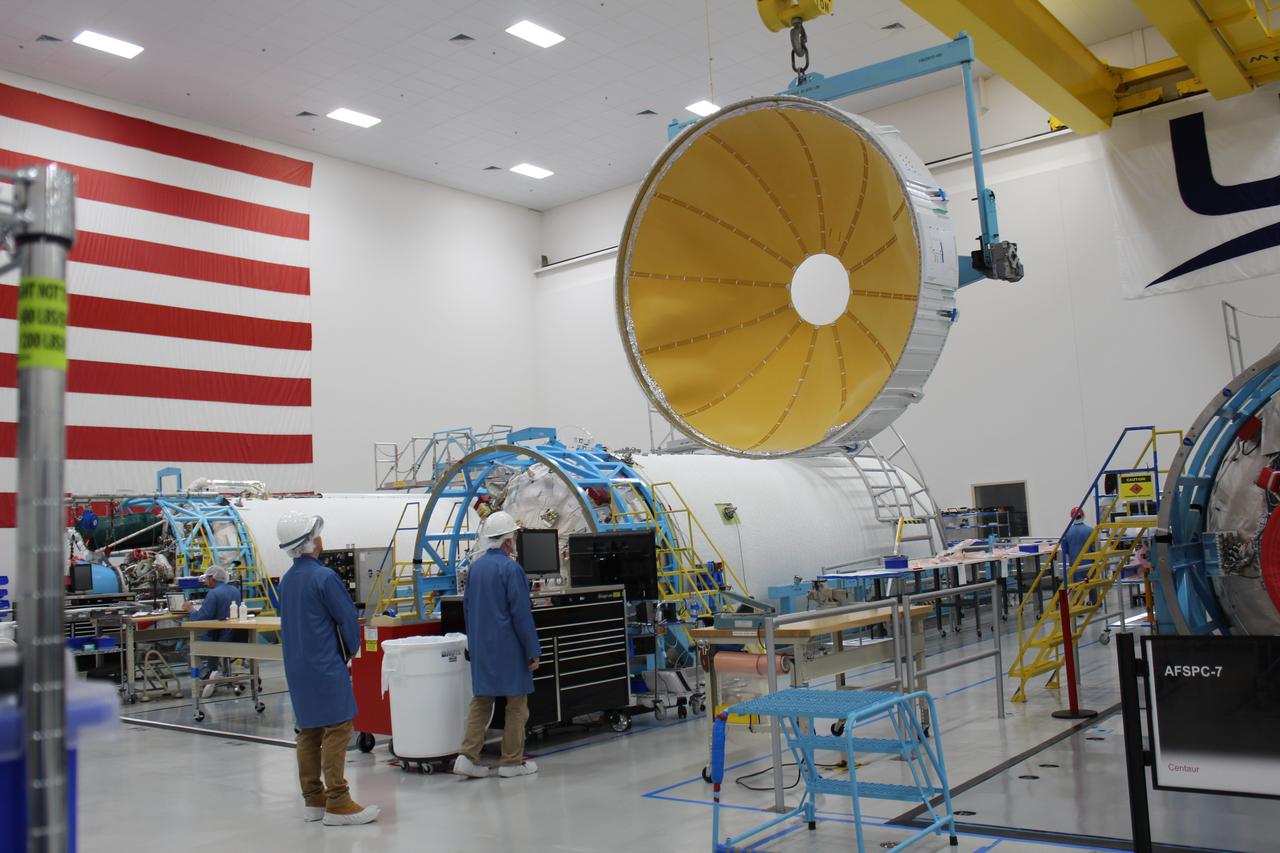
Workers assemble a United Launch Alliance (ULA) Atlas V dual engine Centaur upper stage in ULA’s factory in Decatur, Alabama on March 29, 2019. The dual engine upper stage is being prepared for the first crew rotation mission of Boeing’s CST-100 Starliner to the International Space Station. Starliner and the Atlas V rockets that will launch the spacecraft, are key elements of NASA’s Commercial Crew Program to restore the capability to send astronauts to the space station from U.S. soil.
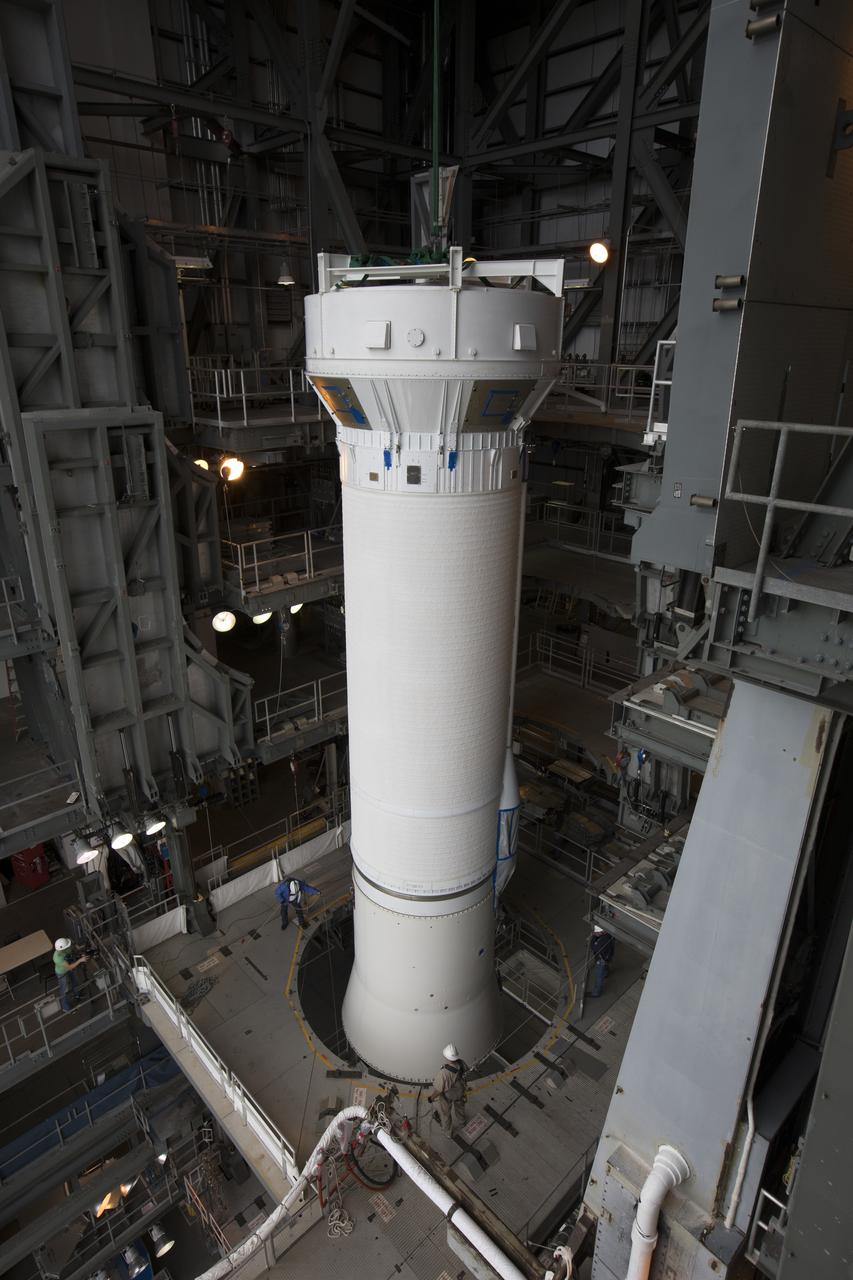
The Centaur upper stage of the United Launch Alliance (ULA) Atlas V rocket has been lifted up inside the Vertical Integration Facility at Space Launch Complex 41 at Cape Canaveral Air Force Station in Florida. The Centaur stage will be lowered and mated to the first stage booster. The rocket is being prepared for Orbital ATK's seventh commercial resupply mission, CRS-7, to the International Space Station. Orbital ATK's CYGNUS pressurized cargo module is scheduled to launch atop ULA's Atlas V rocket from Pad 41 on March 19, 2017. CYGNUS will deliver 7,600 pounds of supplies, equipment and scientific research materials to the space station.
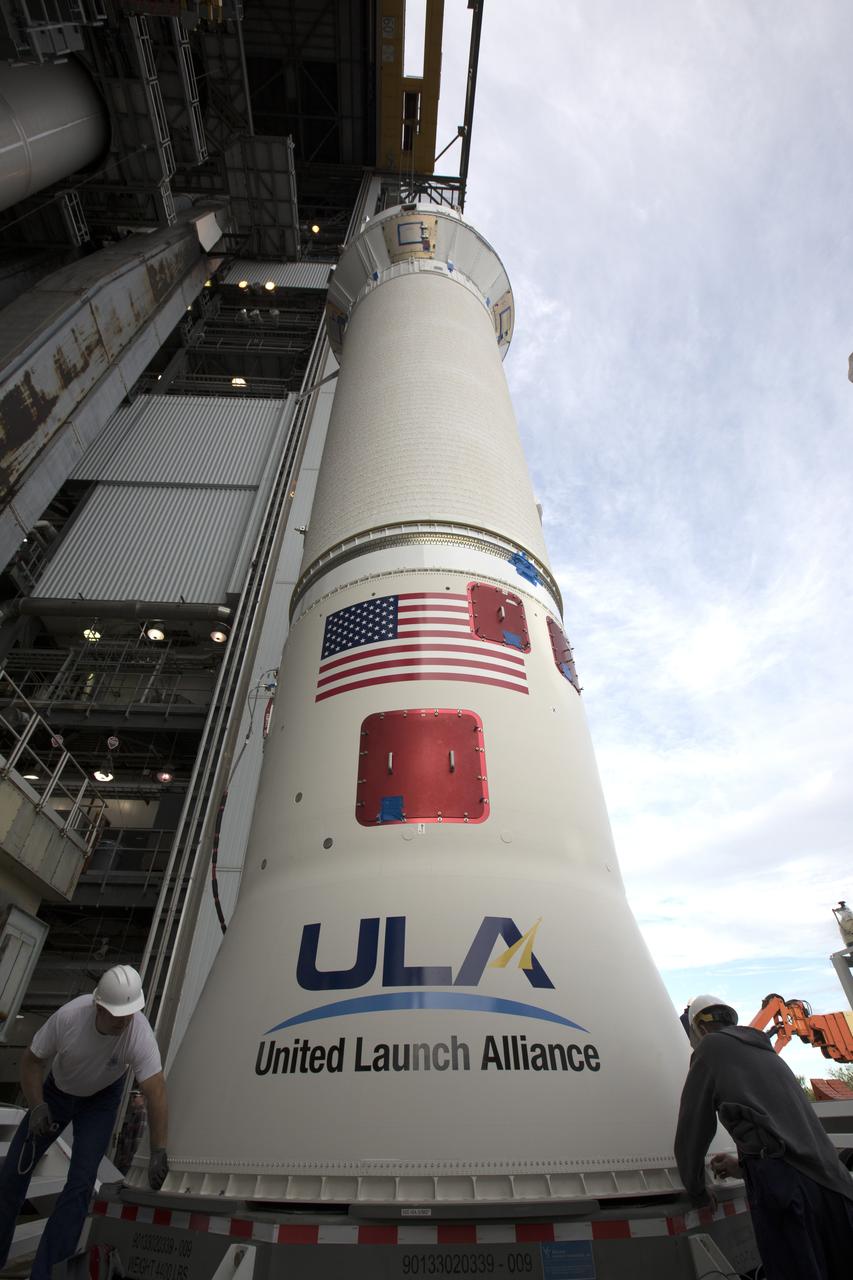
The Centaur upper stage of the United Launch Alliance (ULA) Atlas V rocket arrives at the Vertical Integration Facility at Space Launch Complex 41 at Cape Canaveral Air Force Station in Florida. The Centaur stage will be lifted and mated to the first stage booster. The rocket is being prepared for Orbital ATK's seventh commercial resupply mission, CRS-7, to the International Space Station. Orbital ATK's CYGNUS pressurized cargo module is scheduled to launch atop ULA's Atlas V rocket from Pad 41 on March 19, 2017. CYGNUS will deliver 7,600 of pounds of supplies, equipment and scientific research materials to the space station.
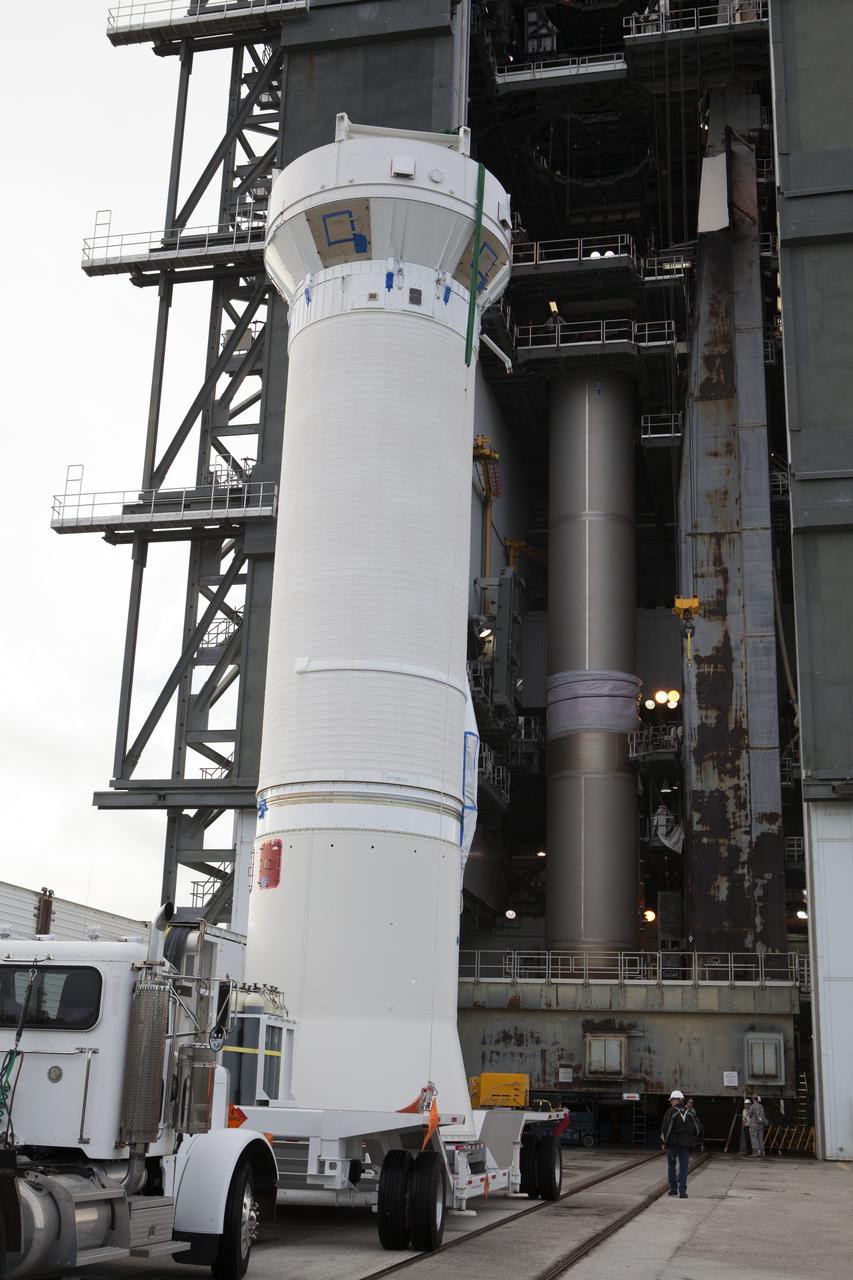
The Centaur upper stage of the United Launch Alliance (ULA) Atlas V rocket arrives at the Vertical Integration Facility at Space Launch Complex 41 at Cape Canaveral Air Force Station in Florida. The Centaur stage will be lifted and mated to the first stage booster. The rocket is being prepared for Orbital ATK's seventh commercial resupply mission, CRS-7, to the International Space Station. Orbital ATK's CYGNUS pressurized cargo module is scheduled to launch atop ULA's Atlas V rocket from Pad 41 on March 19, 2017. CYGNUS will deliver 7,600 pounds of supplies, equipment and scientific research materials to the space station.
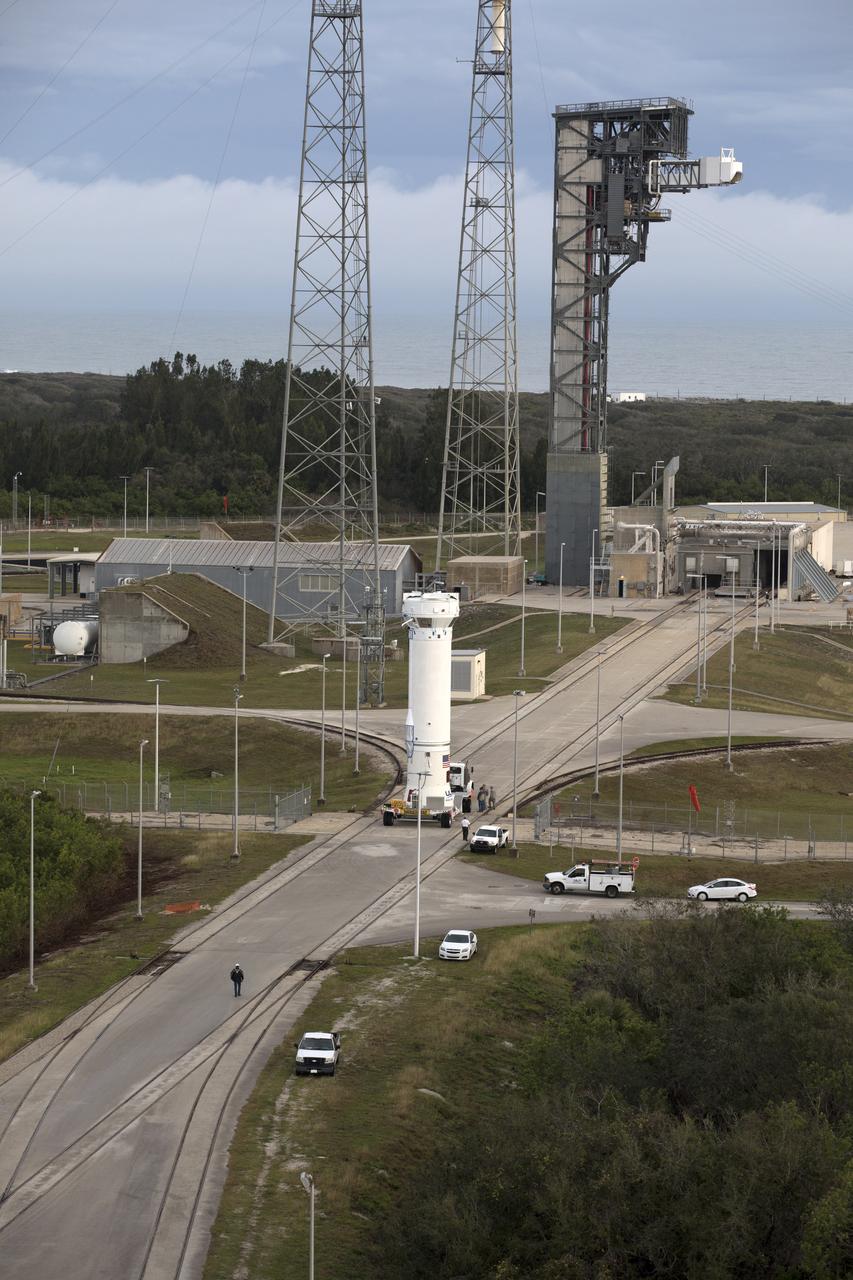
The Centaur upper stage of the United Launch Alliance (ULA) Atlas V rocket is transported to the Vertical Integration Facility at Space Launch Complex 41 at Cape Canaveral Air Force Station in Florida. The Centaur stage will be lifted and mated to the first stage booster. The rocket is being prepared for Orbital ATK's seventh commercial resupply mission, CRS-7, to the International Space Station. Orbital ATK's CYGNUS pressurized cargo module is scheduled to launch atop ULA's Atlas V rocket from Pad 41 on March 19, 2017. CYGNUS will deliver 7,600 pounds of supplies, equipment and scientific research materials to the space station.
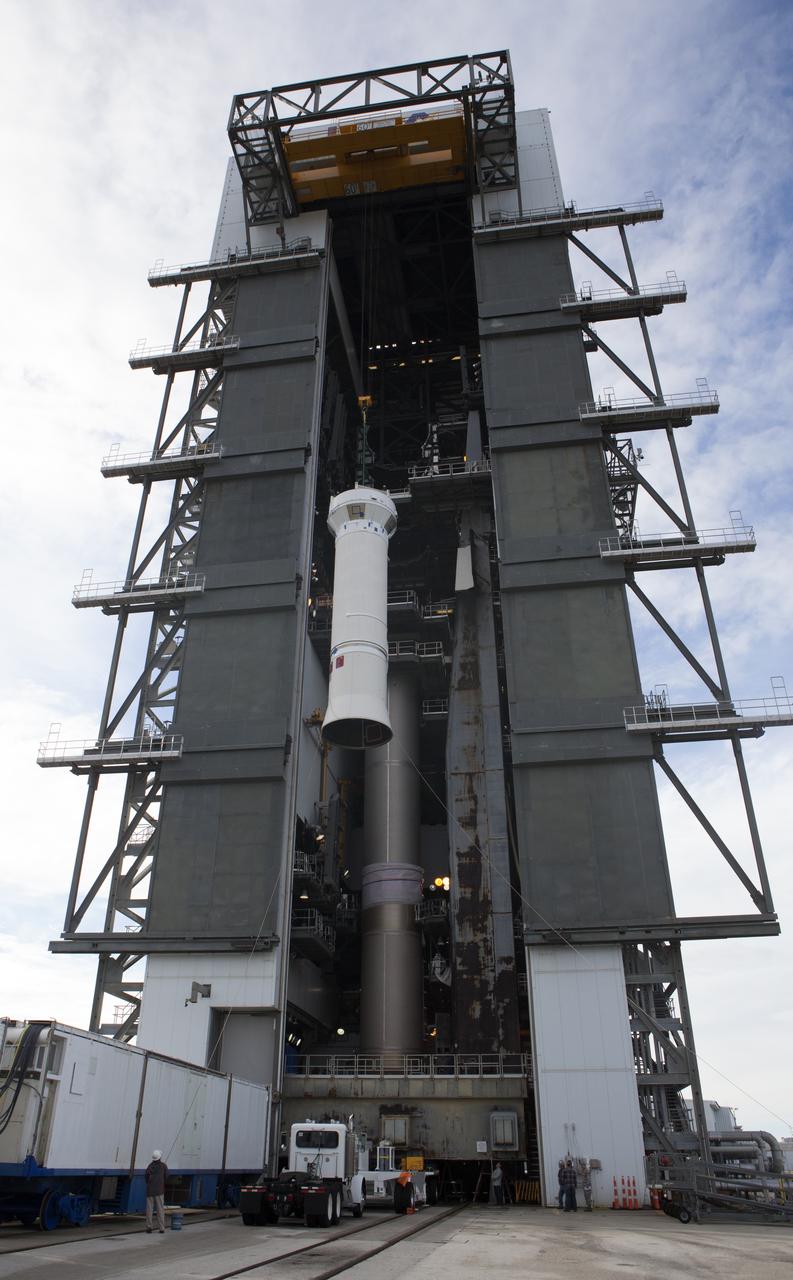
The Centaur upper stage of the United Launch Alliance (ULA) Atlas V rocket is lifted up by crane at the Vertical Integration Facility at Space Launch Complex 41 at Cape Canaveral Air Force Station in Florida. The Centaur stage will be lifted inside the VIF and lowered for mating to the first stage booster. The rocket is being prepared for Orbital ATK's seventh commercial resupply mission, CRS-7, to the International Space Station. Orbital ATK's CYGNUS pressurized cargo module is scheduled to launch atop ULA's Atlas V rocket from Pad 41 on March 19, 2017. CYGNUS will deliver 7,600 pounds of supplies, equipment and scientific research materials to the space station.
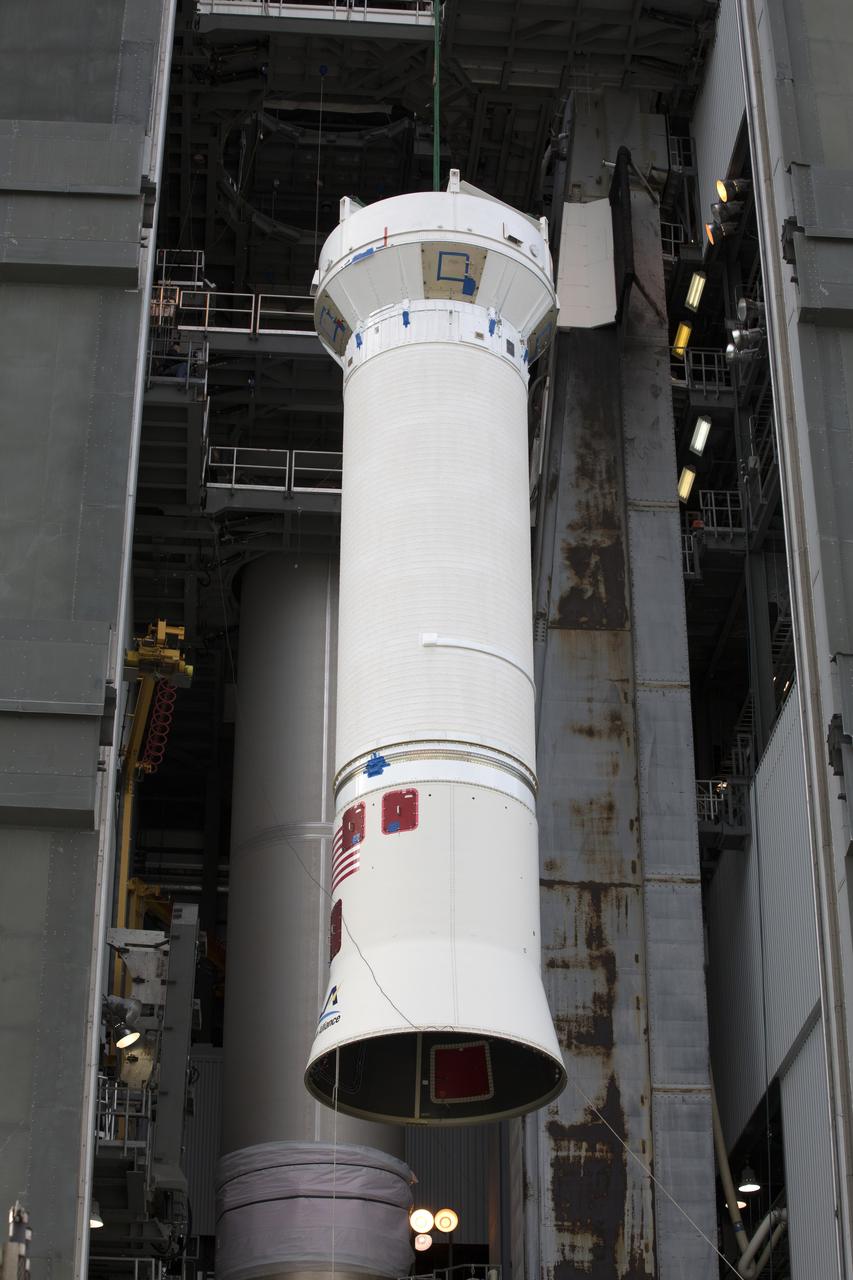
The Centaur upper stage of the United Launch Alliance (ULA) Atlas V rocket is lifted in the Vertical Integration Facility at Space Launch Complex 41 at Cape Canaveral Air Force Station in Florida. The Centaur stage will be mated to the first stage booster. The rocket is being prepared for Orbital ATK's seventh commercial resupply mission, CRS-7, to the International Space Station. Orbital ATK's CYGNUS pressurized cargo module is scheduled to launch atop ULA's Atlas V rocket from Pad 41 on March 19, 2017. CYGNUS will deliver 7,600 pounds of supplies, equipment and scientific research materials to the space station.
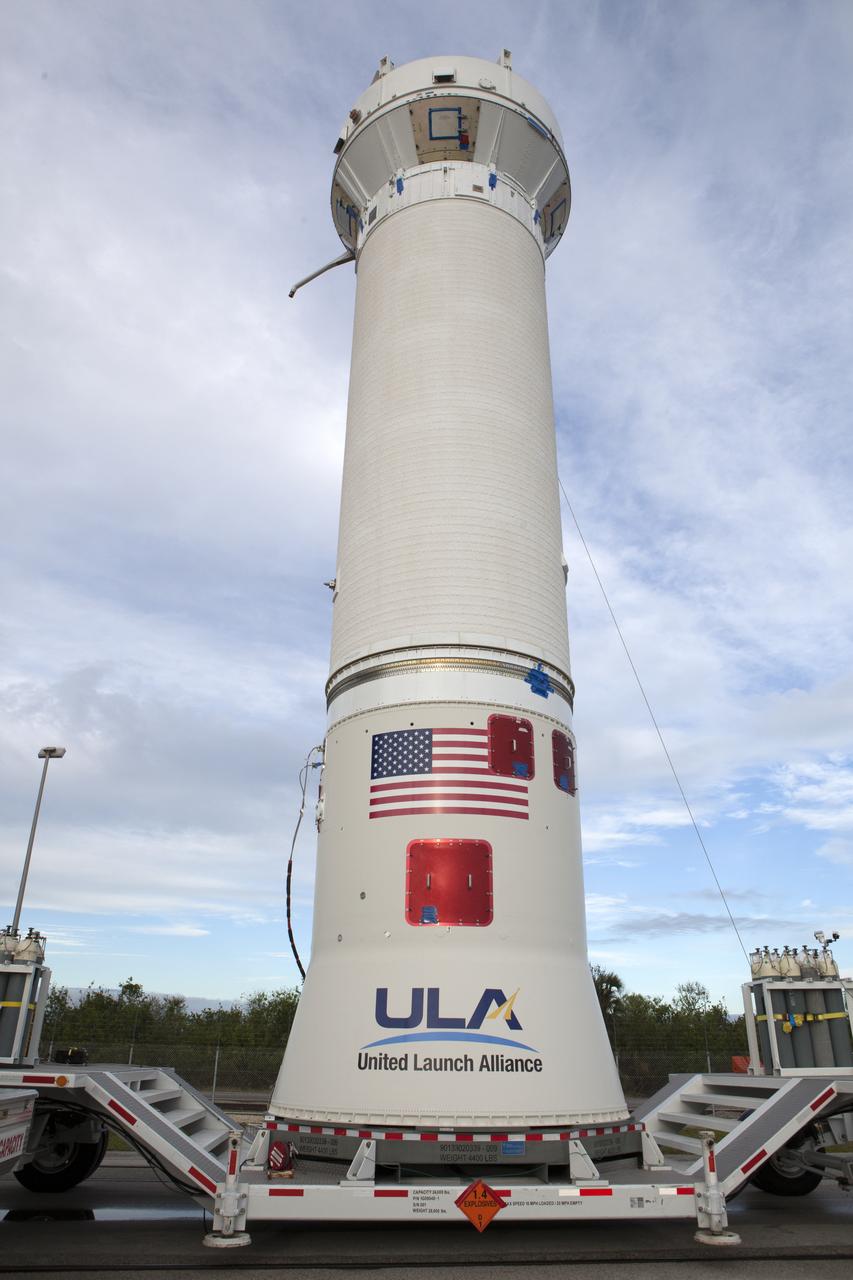
The Centaur upper stage of the United Launch Alliance (ULA) Atlas V rocket arrives at the Vertical Integration Facility at Space Launch Complex 41 at Cape Canaveral Air Force Station in Florida. The Centaur stage will be lifted and mated to the first stage booster. The rocket is being prepared for Orbital ATK's seventh commercial resupply mission, CRS-7, to the International Space Station. Orbital ATK's CYGNUS pressurized cargo module is scheduled to launch atop ULA's Atlas V rocket from Pad 41 on March 19, 2017. CYGNUS will deliver 7,600 pounds of supplies, equipment and scientific research materials to the space station.
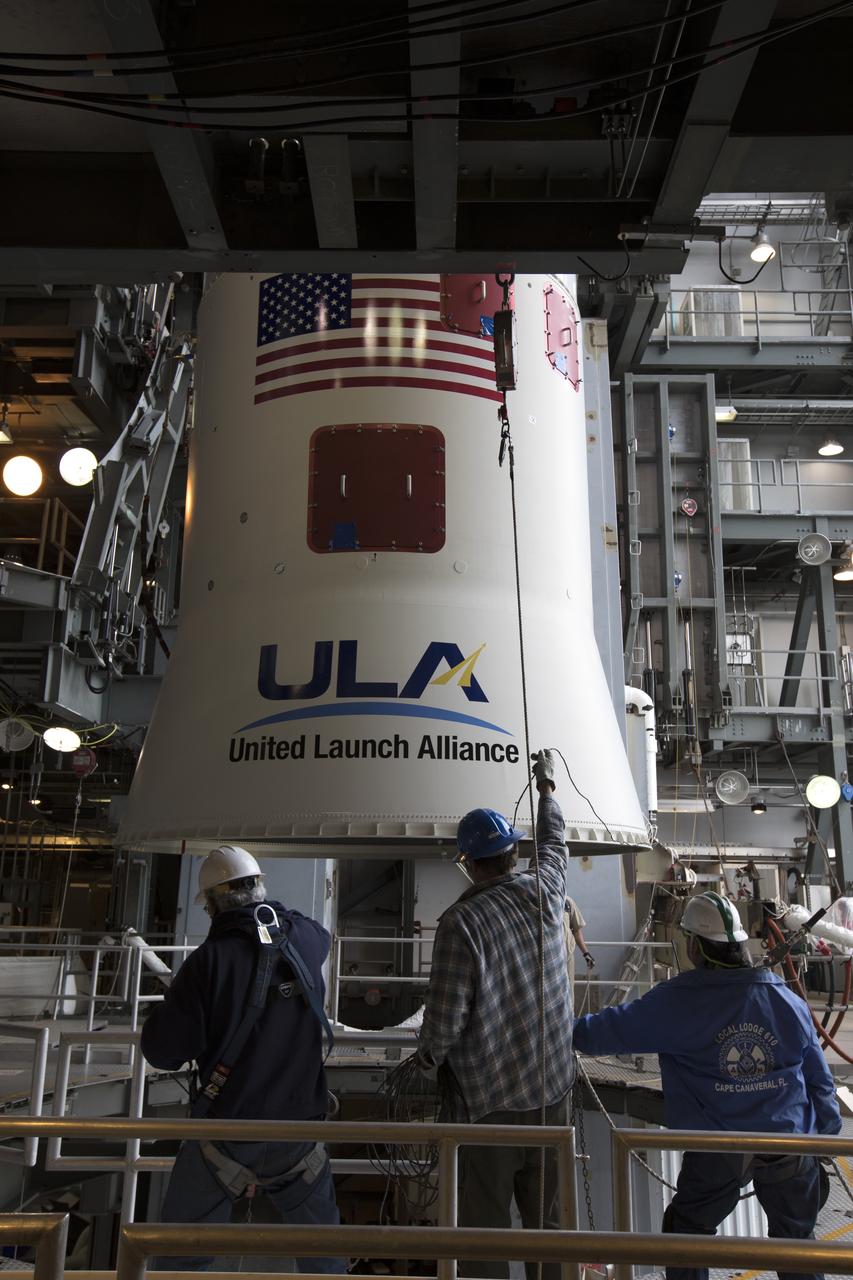
Technicians with United Launch Alliance (ULA) monitor the progress as a crane lifts the Centaur upper stage of the ULA Atlas V rocket up inside the Vertical Integration Facility at Space Launch Complex 41 at Cape Canaveral Air Force Station in Florida. The Centaur stage will be mated to the first stage booster. The rocket is being prepared for Orbital ATK's seventh commercial resupply mission, CRS-7, to the International Space Station. Orbital ATK's CYGNUS pressurized cargo module is scheduled to launch atop ULA's Atlas V rocket from Pad 41 on March 19, 2017. CYGNUS will deliver 7,600 pounds of supplies, equipment and scientific research materials to the space station.

Technicians with United Launch Alliance (ULA) assist as a crane lifts the Centaur upper stage of the ULA Atlas V rocket up inside the Vertical Integration Facility at Space Launch Complex 41 at Cape Canaveral Air Force Station in Florida. The Centaur stage will be mated to the first stage booster. The rocket is being prepared for Orbital ATK's seventh commercial resupply mission, CRS-7, to the International Space Station. Orbital ATK's CYGNUS pressurized cargo module is scheduled to launch atop ULA's Atlas V rocket from Pad 41 on March 19, 2017. CYGNUS will deliver 7,600 pounds of supplies, equipment and scientific research materials to the space station.
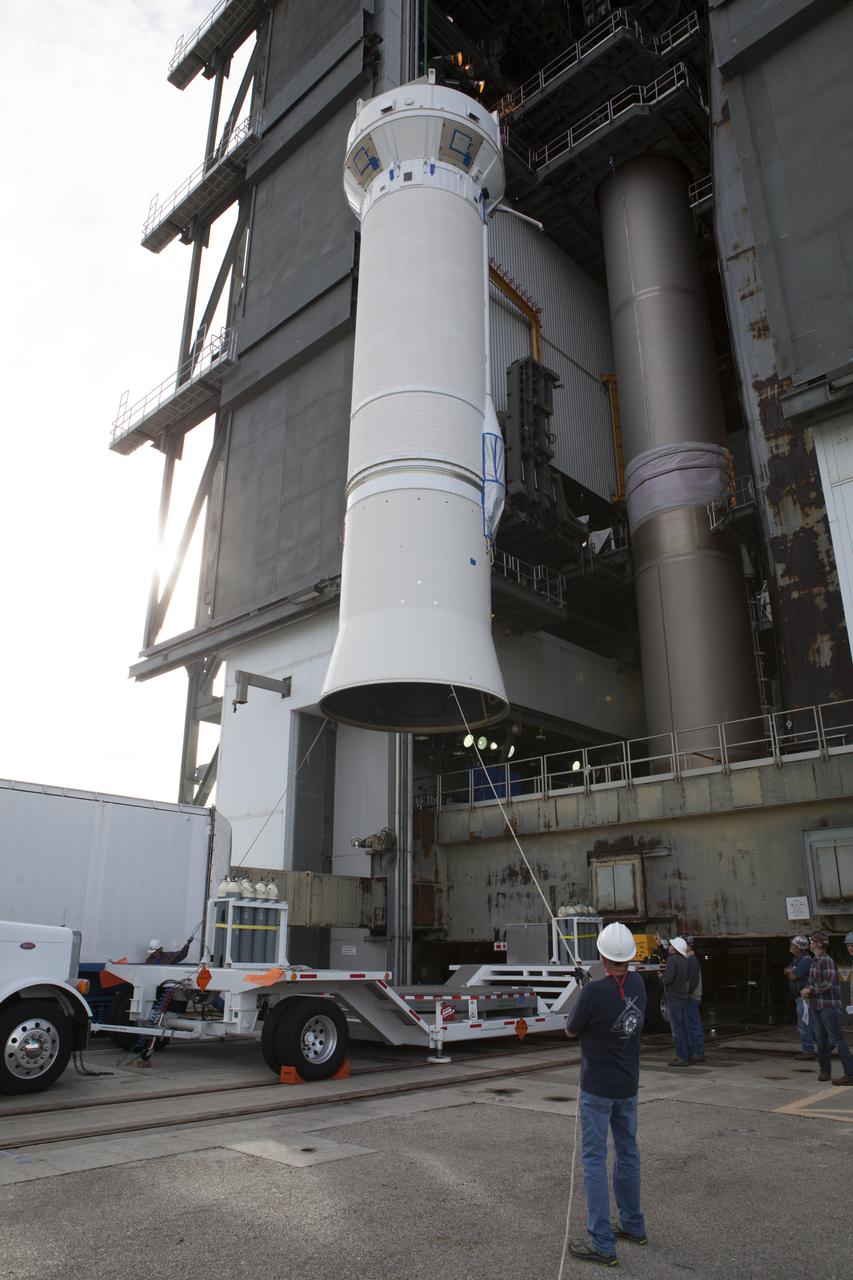
The Centaur upper stage of the United Launch Alliance (ULA) Atlas V rocket is lifted up by crane at the Vertical Integration Facility (VIF) at Space Launch Complex 41 at Cape Canaveral Air Force Station in Florida. The Centaur stage will be moved into the VIF, lifted up and mated to the first stage booster. The rocket is being prepared for Orbital ATK's seventh commercial resupply mission, CRS-7, to the International Space Station. Orbital ATK's CYGNUS pressurized cargo module is scheduled to launch atop ULA's Atlas V rocket from Pad 41 on March 19, 2017. CYGNUS will deliver 7,600 pounds of supplies, equipment and scientific research materials to the space station.
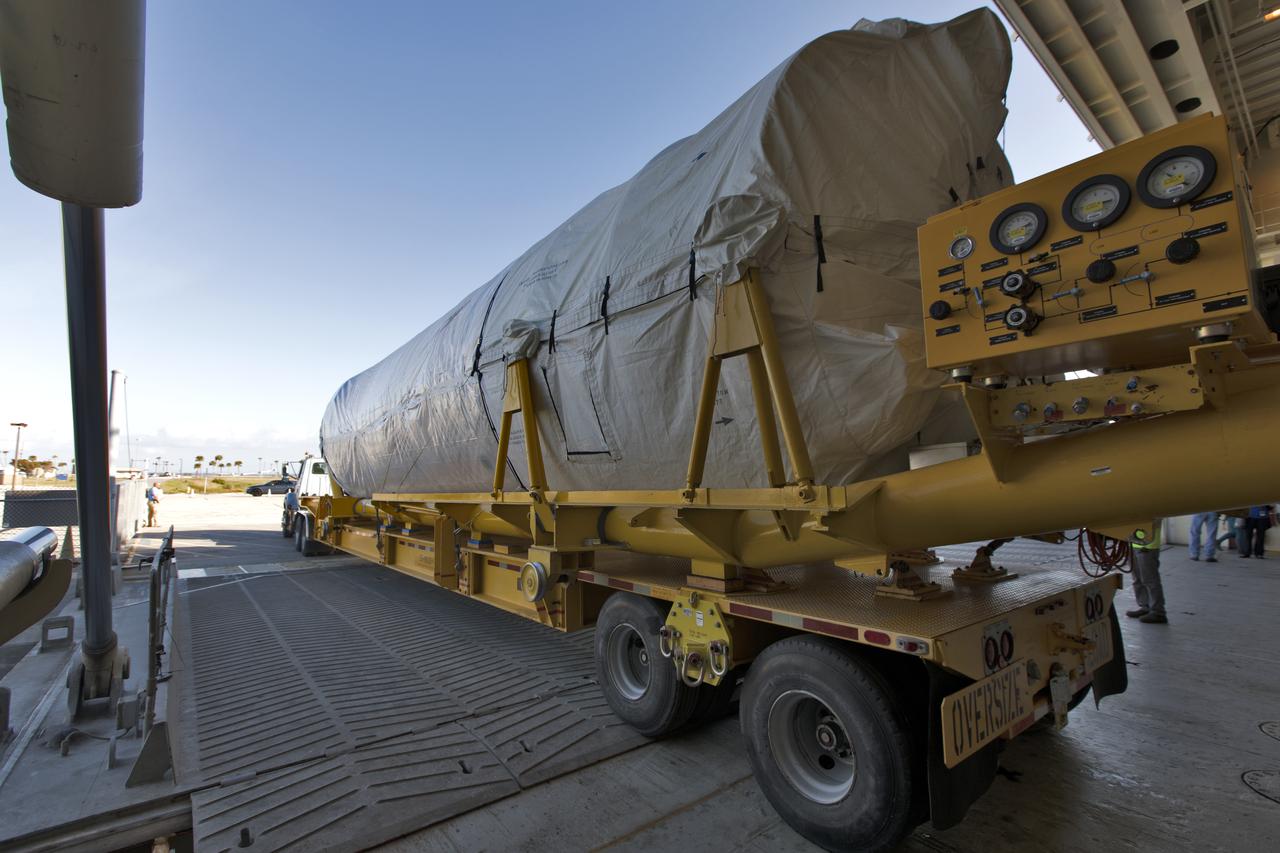
The United Launch Alliance Atlas V booster and Centaur stage for NOAA's Geostationary Operational Environmental Satellite-S (GOES-S) are offloaded from the Mariner transport ship at the Army Wharf at Cape Canaveral Air Force Station in Florida. They will be transported to the Atlas Spaceflight Operations Center near Space Launch Complex 41 at CCAFS. GOES-S is the second in a series of four advanced geostationary weather satellites. The satellite is slated to launch aboard the Atlas V rocket March 1.
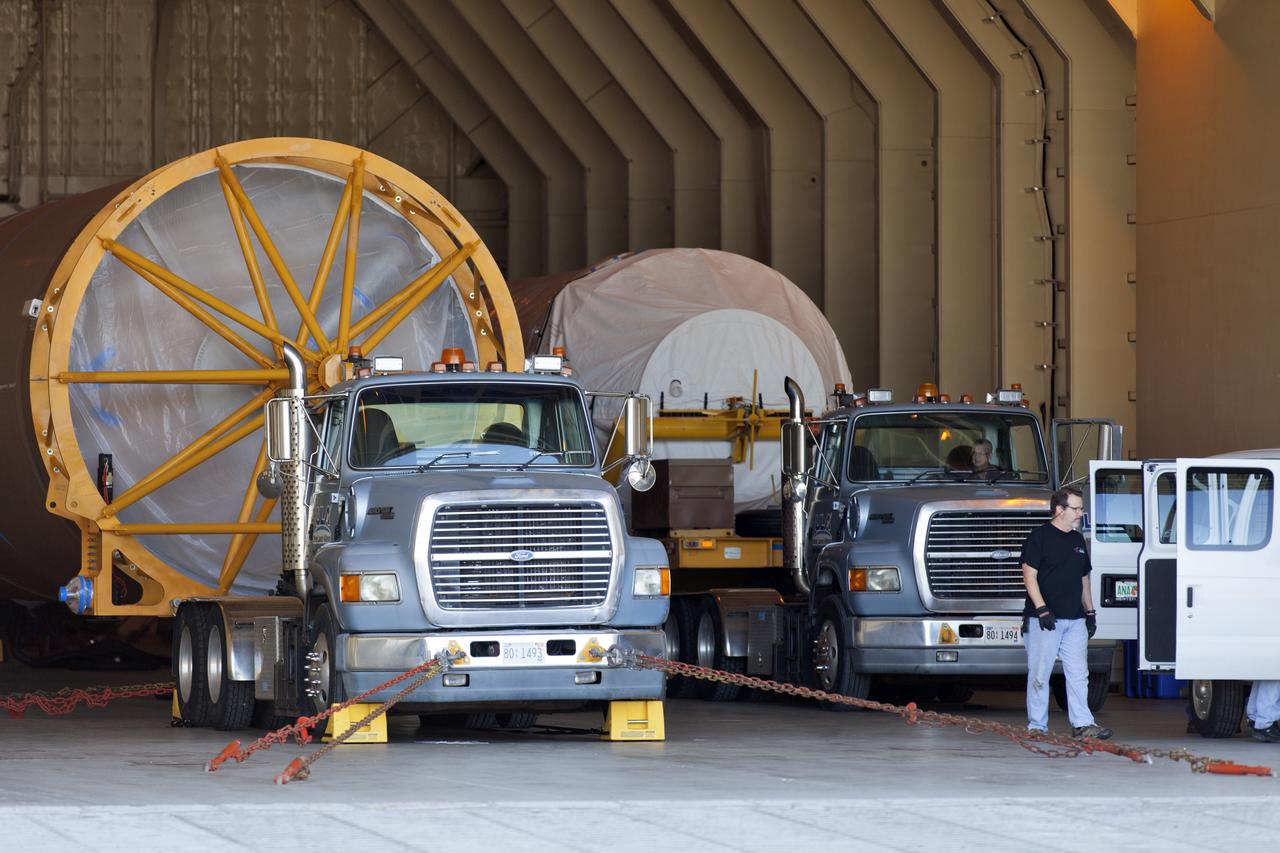
Preparations are underway to offload the United Launch Alliance Atlas V booster and Centaur stage for NOAA's Geostationary Operational Environmental Satellite-S (GOES-S) from the Mariner transport ship at the Army Wharf at Cape Canaveral Air Force Station in Florida. They will be transported to the Atlas Spaceflight Operations Center near Space Launch Complex 41 at CCAFS. GOES-S is the second in a series of four advanced geostationary weather satellites. The satellite is slated to launch aboard the Atlas V rocket March 1.
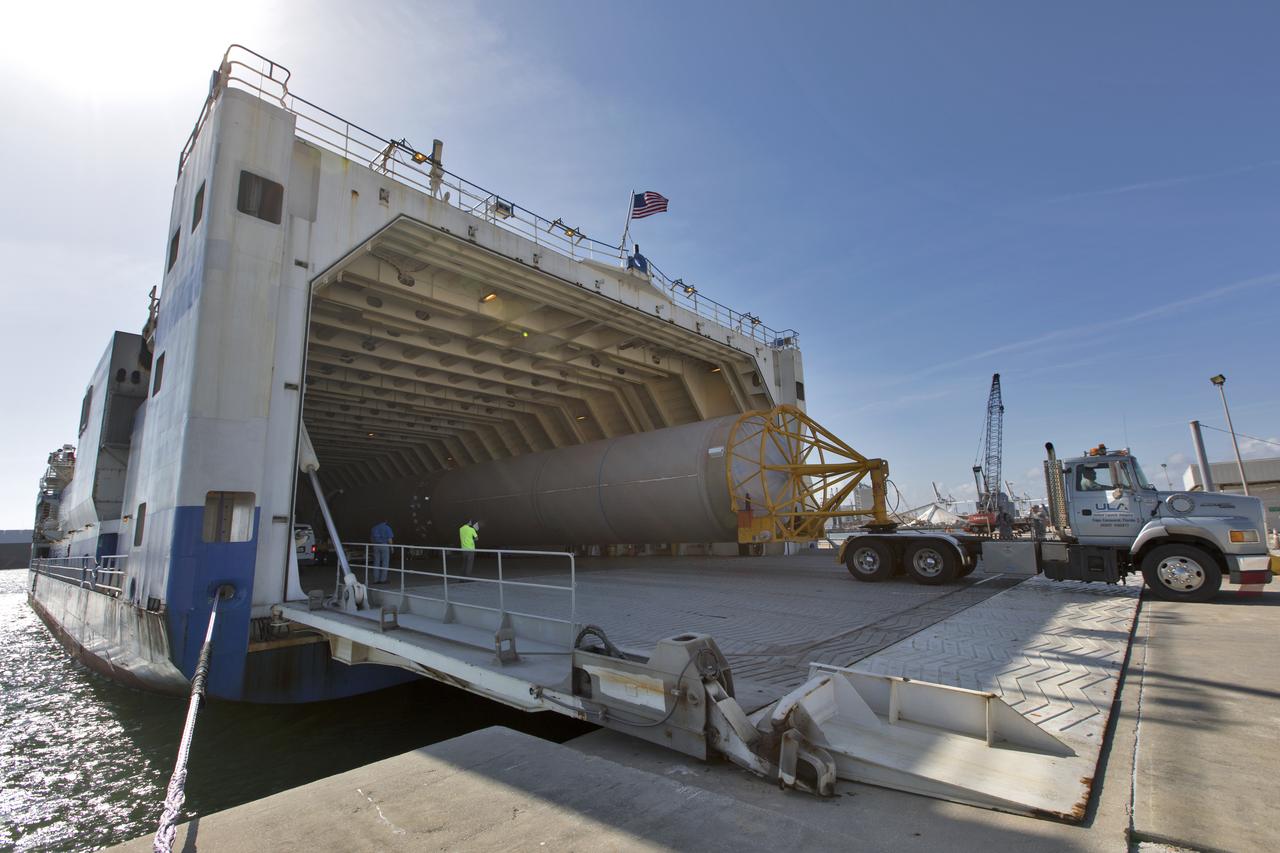
The United Launch Alliance Atlas V booster and Centaur stage for NOAA's Geostationary Operational Environmental Satellite-S (GOES-S) are offloaded from the Mariner transport ship at the Army Wharf at Cape Canaveral Air Force Station in Florida. They will be transported to the Atlas Spaceflight Operations Center near Space Launch Complex 41 at CCAFS. GOES-S is the second in a series of four advanced geostationary weather satellites. The satellite is slated to launch aboard the Atlas V rocket March 1.
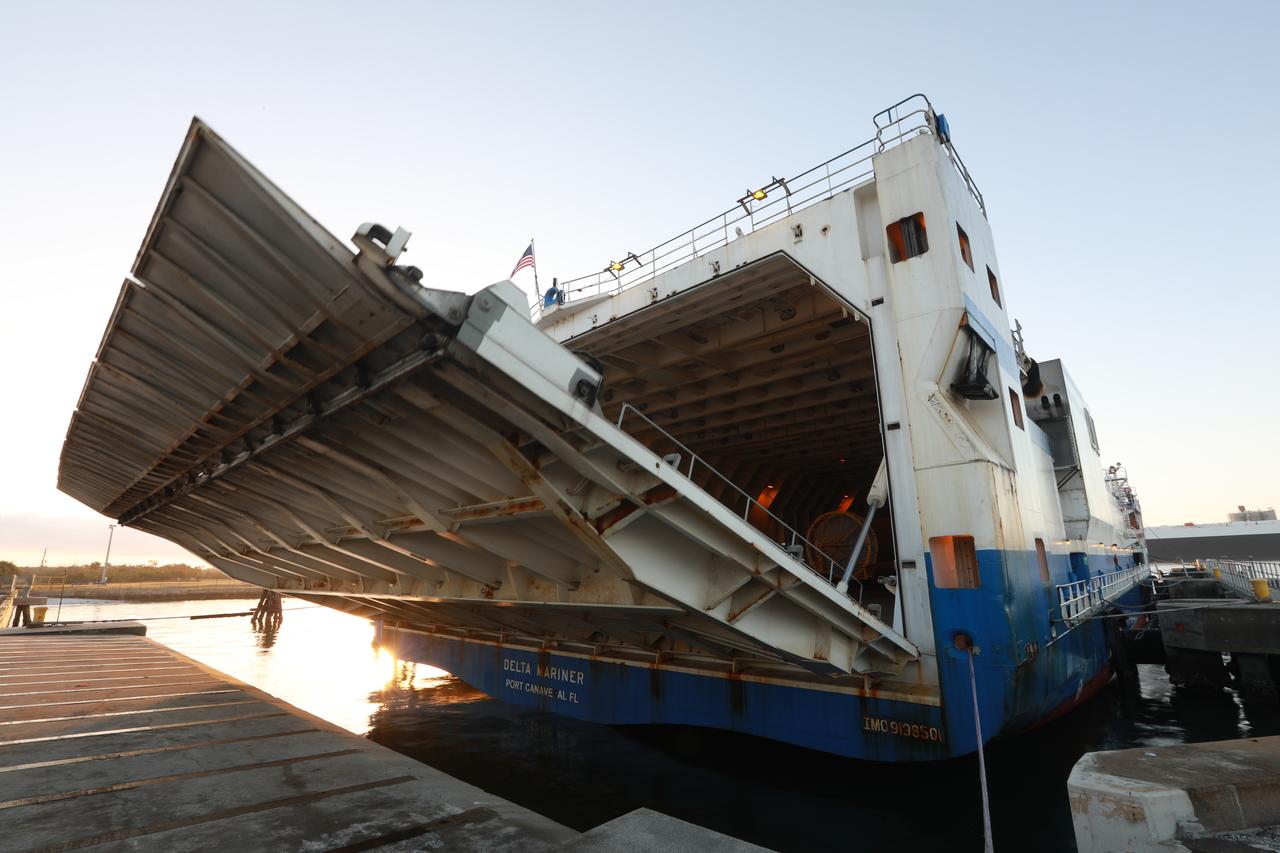
The Mariner transport ship arrives at the Army Wharf at Cape Canaveral Air Force Station in Florida, carrying the United Launch Alliance Atlas V booster and Centaur stage for NOAA's Geostationary Operational Environmental Satellite-S (GOES-S). They will be offloaded and transported to the Atlas Spaceflight Operations Center near Space Launch Complex 41 at CCAFS. GOES-S is the second in a series of four advanced geostationary weather satellites. The satellite is slated to launch aboard the Atlas V rocket March 1.
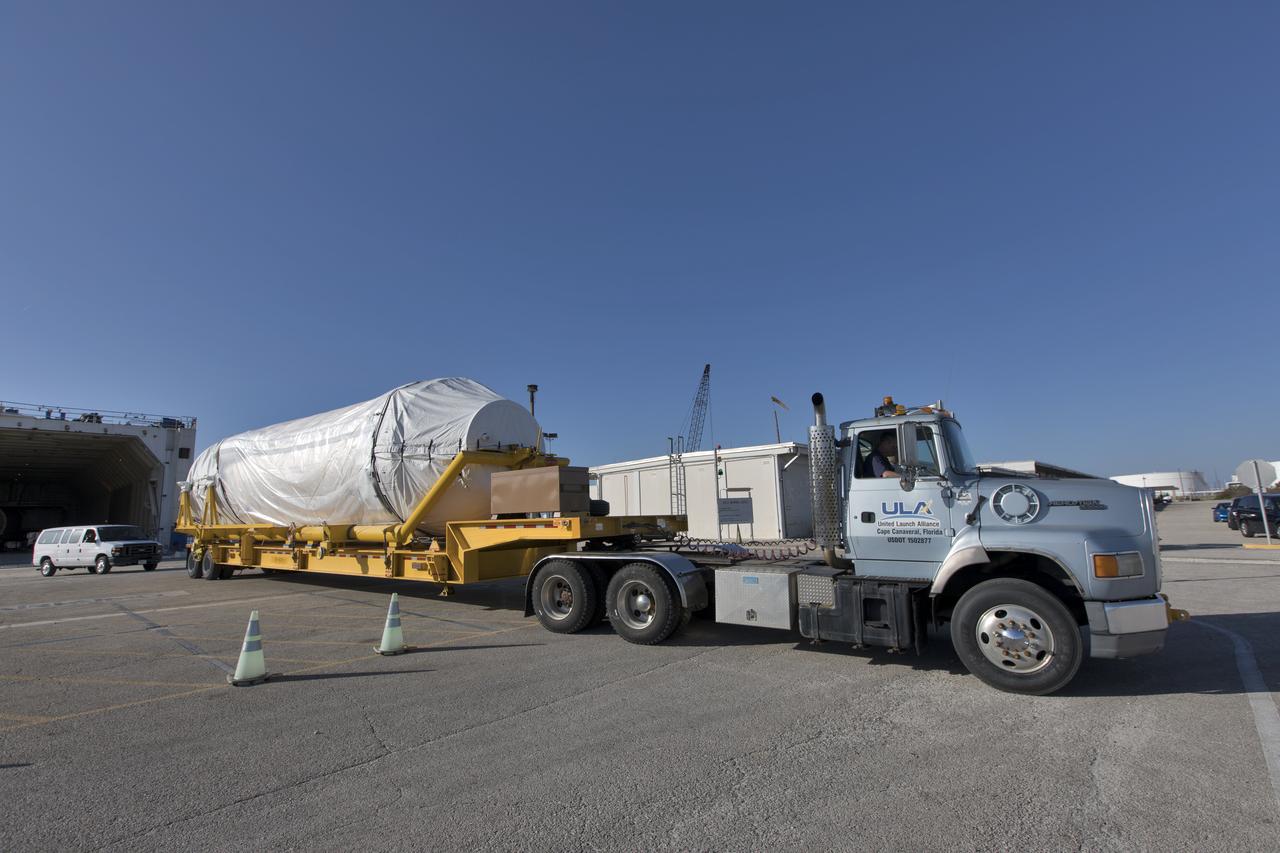
The United Launch Alliance Atlas V booster and Centaur stage for NOAA's Geostationary Operational Environmental Satellite-S (GOES-S) are offloaded from the Mariner transport ship at the Army Wharf at Cape Canaveral Air Force Station in Florida. They will be transported to the Atlas Spaceflight Operations Center near Space Launch Complex 41 at CCAFS. GOES-S is the second in a series of four advanced geostationary weather satellites. The satellite is slated to launch aboard the Atlas V rocket March 1.
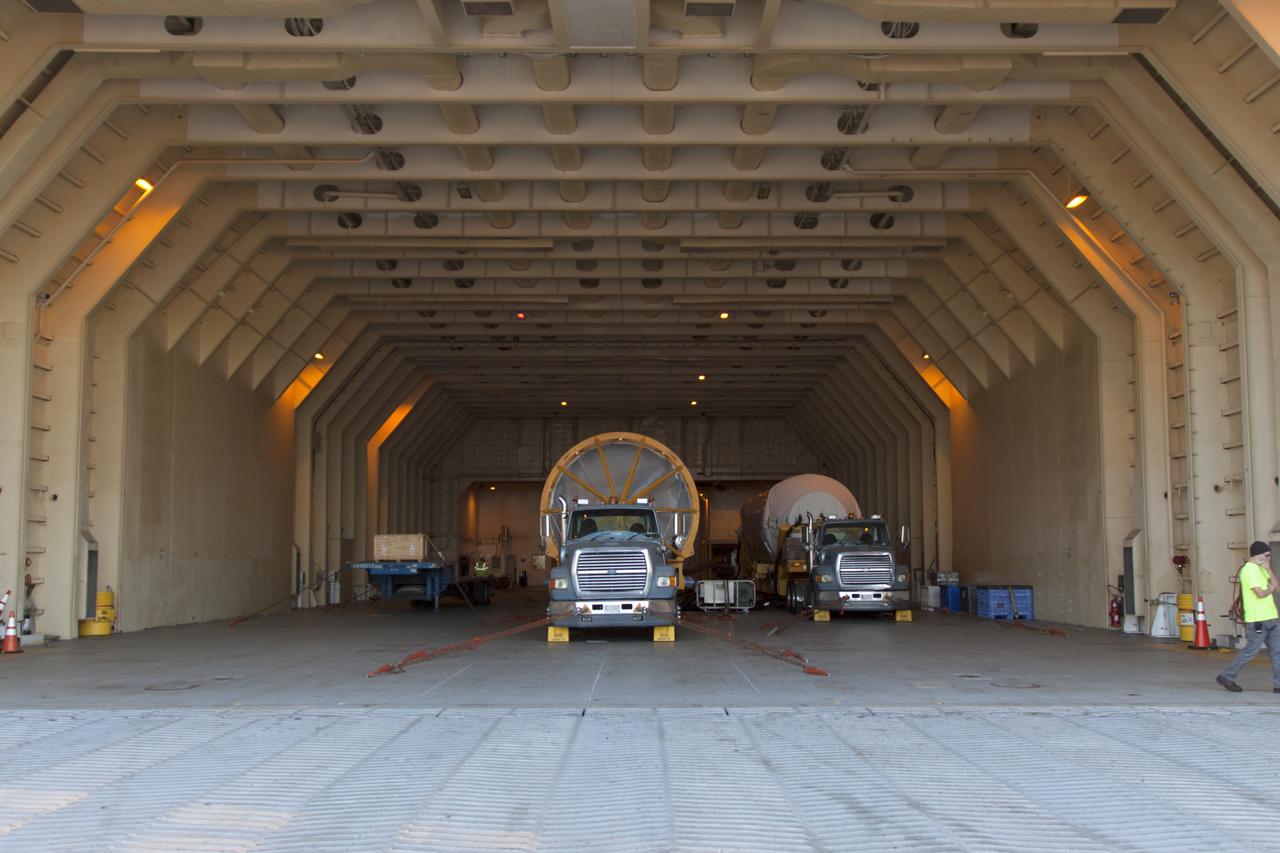
Preparations are underway to offload the United Launch Alliance Atlas V booster and Centaur stage for NOAA's Geostationary Operational Environmental Satellite-S (GOES-S) from the Mariner transport ship at the Army Wharf at Cape Canaveral Air Force Station in Florida. They will be transported to the Atlas Spaceflight Operations Center near Space Launch Complex 41 at CCAFS. GOES-S is the second in a series of four advanced geostationary weather satellites. The satellite is slated to launch aboard the Atlas V rocket March 1.
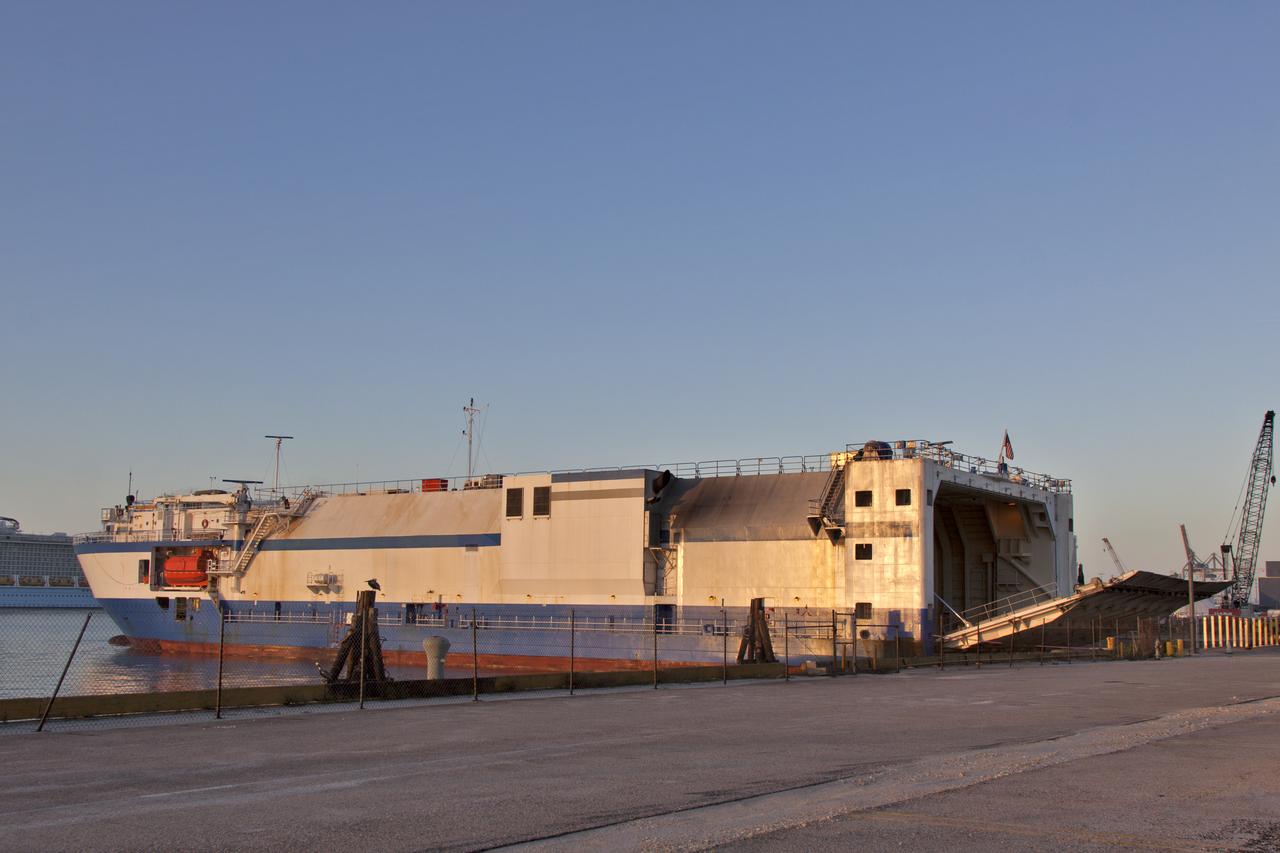
The Mariner transport ship arrives at the Army Wharf at Cape Canaveral Air Force Station in Florida, carrying the United Launch Alliance Atlas V booster and Centaur stage for NOAA's Geostationary Operational Environmental Satellite-S (GOES-S). They will be offloaded and transported to the Atlas Spaceflight Operations Center near Space Launch Complex 41 at CCAFS. GOES-S is the second in a series of four advanced geostationary weather satellites. The satellite is slated to launch aboard the Atlas V rocket March 1.
The United Launch Alliance Atlas V booster and Centaur stage for NOAA's Geostationary Operational Environmental Satellite-S (GOES-S) are offloaded from the Mariner transport ship at the Army Wharf at Cape Canaveral Air Force Station in Florida. They will be transported to the Atlas Spaceflight Operations Center near Space Launch Complex 41 at CCAFS. GOES-S is the second in a series of four advanced geostationary weather satellites. The satellite is slated to launch aboard the Atlas V rocket March 1.
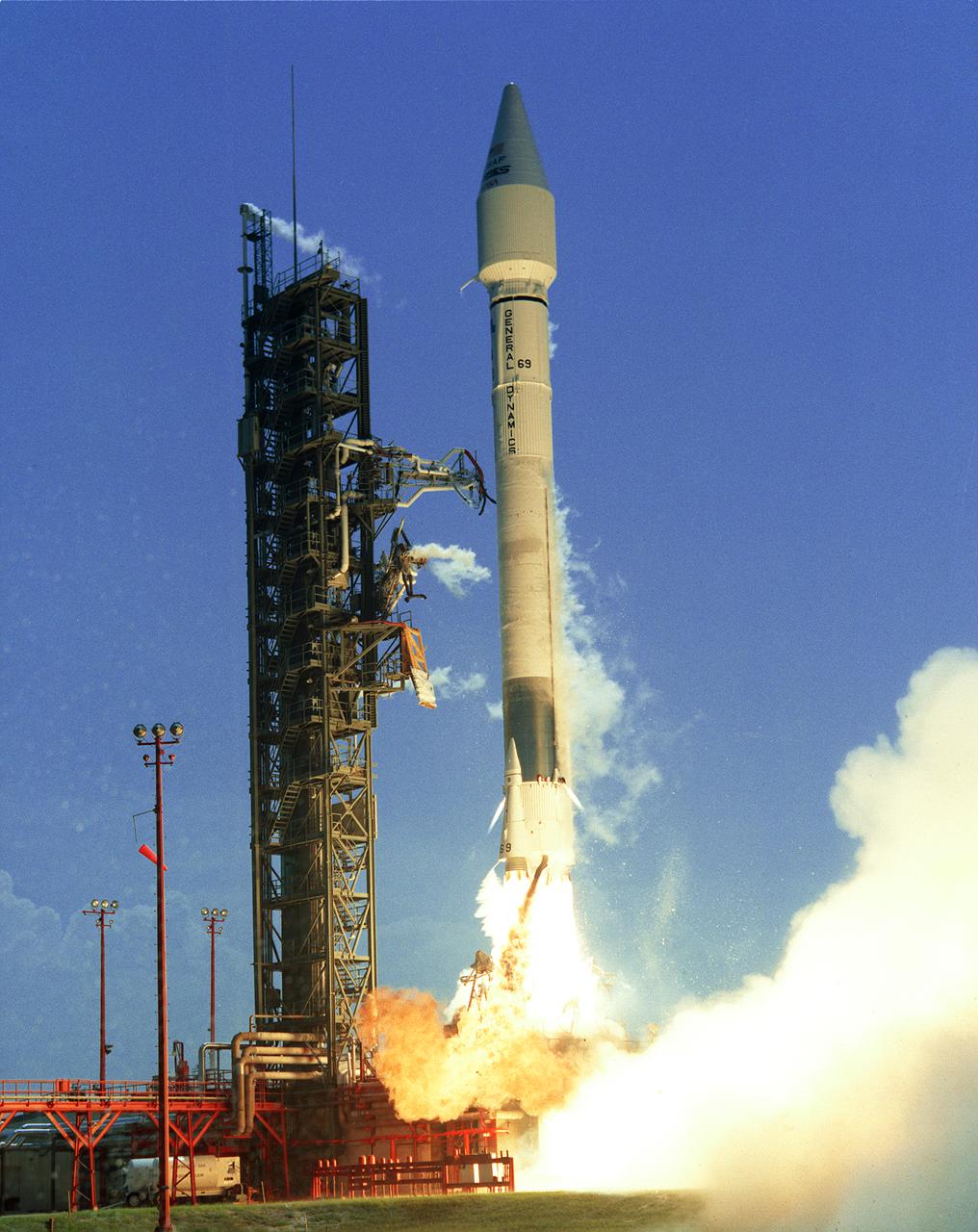
The Atlas-Centaur, AC-69, launched the Combined Release and Radiation Effects Satellite (CRRES) in orbit on July 25, 1990.
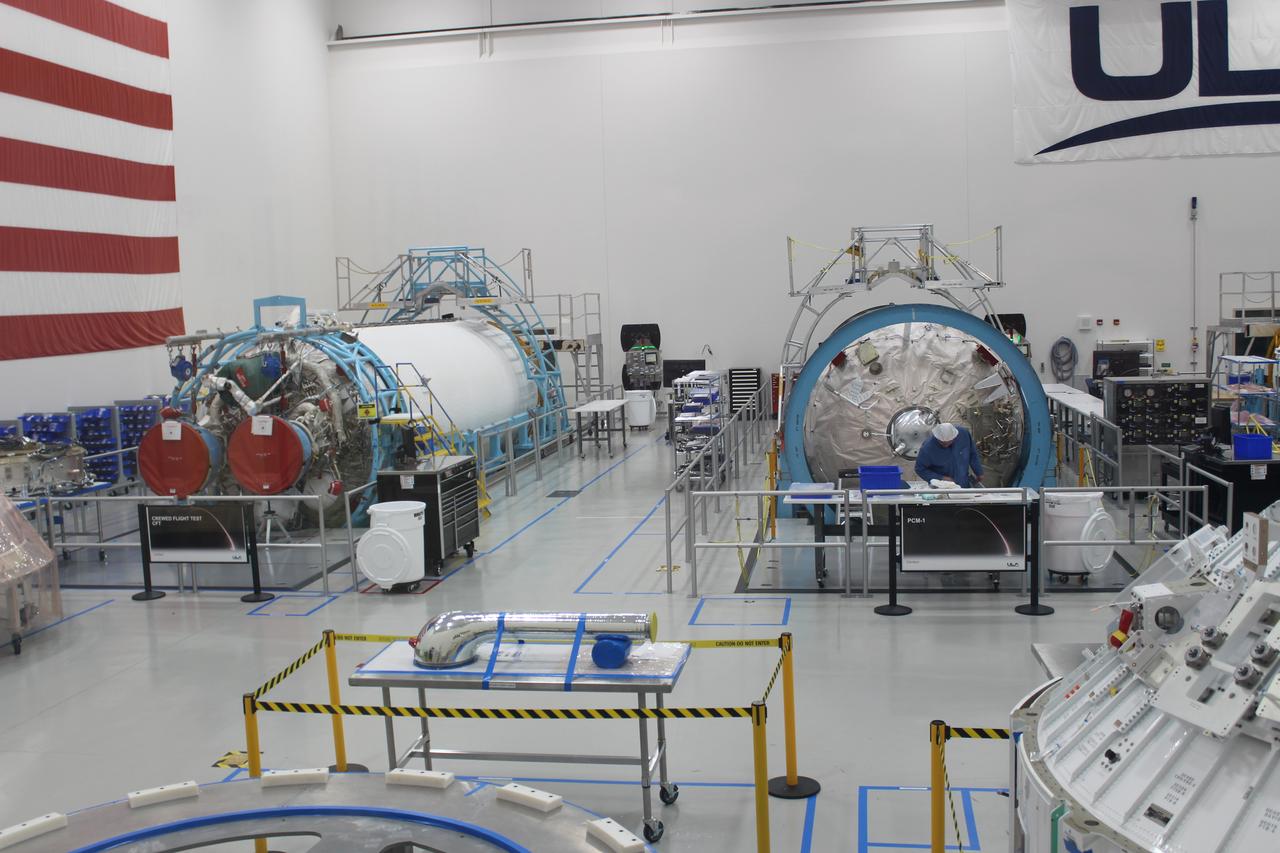
Two United Launch Alliance (ULA) Atlas V dual engine Centaur upper stages are in production in ULA's factory in Decatur, Alabama on March 1, 2019. One is for Boeing’s Crew Flight Test on the CST-100 Starliner, and the other will be used for the first crew rotation mission on the Starliner. One of the Centaur upper stages will be assembled to the first stage booster. They will be shipped aboard the company’s Mariner cargo ship to NASA’s Kennedy Space Center in Florida. Starliner and the Atlas V rockets that will launch the spacecraft, are key to restoring the nation’s capability to send astronauts to the space station from U.S. soil with NASA’s Commercial Crew Program. NASA astronauts Mike Fincke and Nicole Mann, and Boeing astronaut Chris Ferguson will launch to the space station aboard the Starliner for the Crew Flight Test.
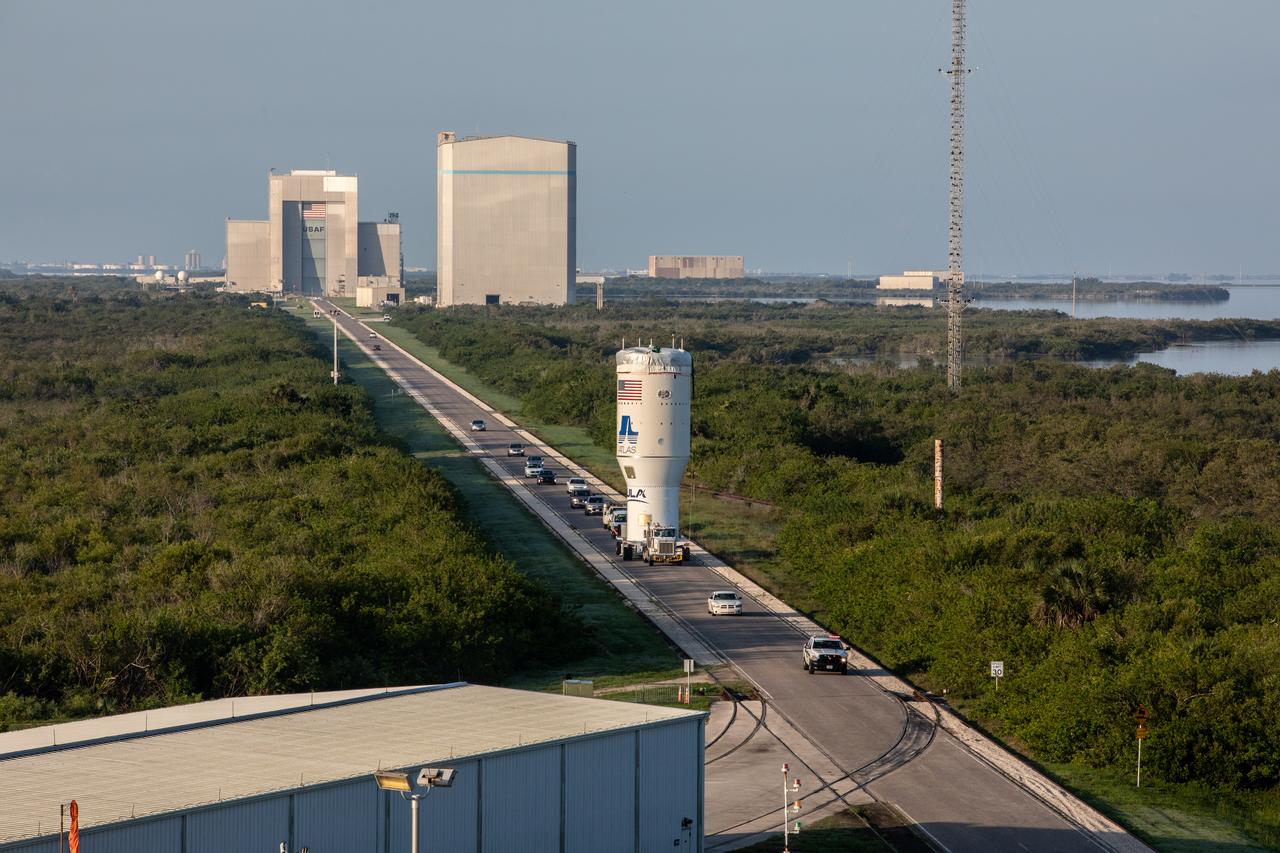
The single-engine Centaur upper stage for the United Launch Alliance Atlas V rocket for NASA’s Mars Perseverance rover is being transported to the Vertical Integration Facility at Space Launch Complex 41 at Cape Canaveral Air Force Station in Florida on June 10, 2020. The Centaur will be lifted up and attached to the rocket’s first stage. The Mars Perseverance rover is scheduled to launch atop the Atlas V 541 rocket from Pad 41 on July 20, 2020. The rover is part of NASA’s Mars Exploration Program, a long-term effort of robotic exploration of the Red Planet. The rover’s seven instruments will search for habitable conditions in the ancient past and signs of past microbial life on Mars. The Launch Services Program at Kennedy is responsible for launch management.

The single-engine Centaur upper stage for the United Launch Alliance Atlas V rocket for NASA’s Mars Perseverance rover is being transported to the Vertical Integration Facility at Space Launch Complex 41 at Cape Canaveral Air Force Station in Florida on June 10, 2020. The Centaur will be lifted up and attached to the rocket’s first stage. The Mars Perseverance rover is scheduled to launch atop the Atlas V 541 rocket from Pad 41 on July 20, 2020. The rover is part of NASA’s Mars Exploration Program, a long-term effort of robotic exploration of the Red Planet. The rover’s seven instruments will search for habitable conditions in the ancient past and signs of past microbial life on Mars. The Launch Services Program at Kennedy is responsible for launch management.
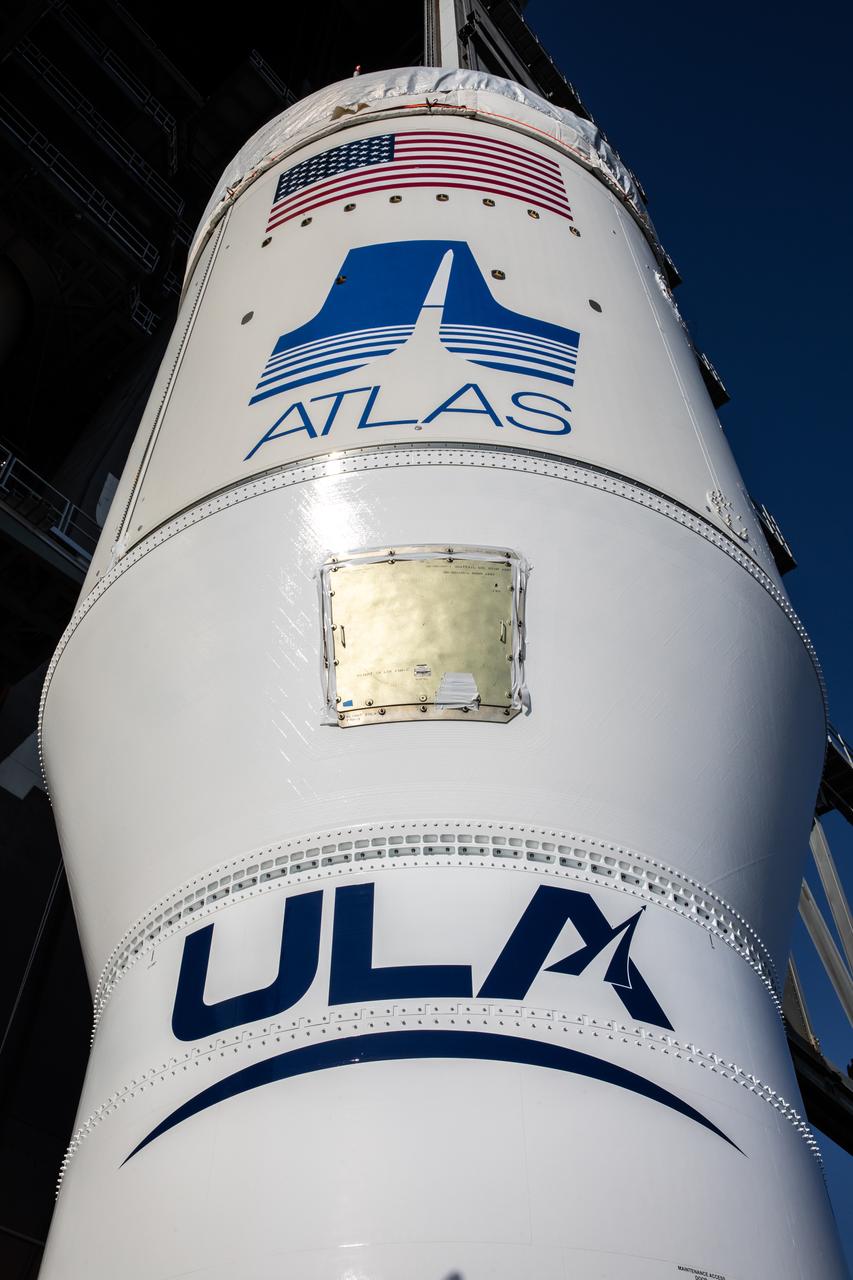
A close-up view of the single-engine Centaur upper stage for the United Launch Alliance Atlas V rocket for NASA’s Mars Perseverance rover as it is being lifted up into the Vertical Integration Facility at Space Launch Complex 41 at Cape Canaveral Air Force Station in Florida on June 10, 2020. The Centaur will be lifted up and attached to the rocket’s first stage. The Mars Perseverance rover is scheduled to launch atop the Atlas V 541 rocket from Pad 41 on July 20, 2020. The rover is part of NASA’s Mars Exploration Program, a long-term effort of robotic exploration of the Red Planet. The rover’s seven instruments will search for habitable conditions in the ancient past and signs of past microbial life on Mars. The Launch Services Program at Kennedy is responsible for launch management.
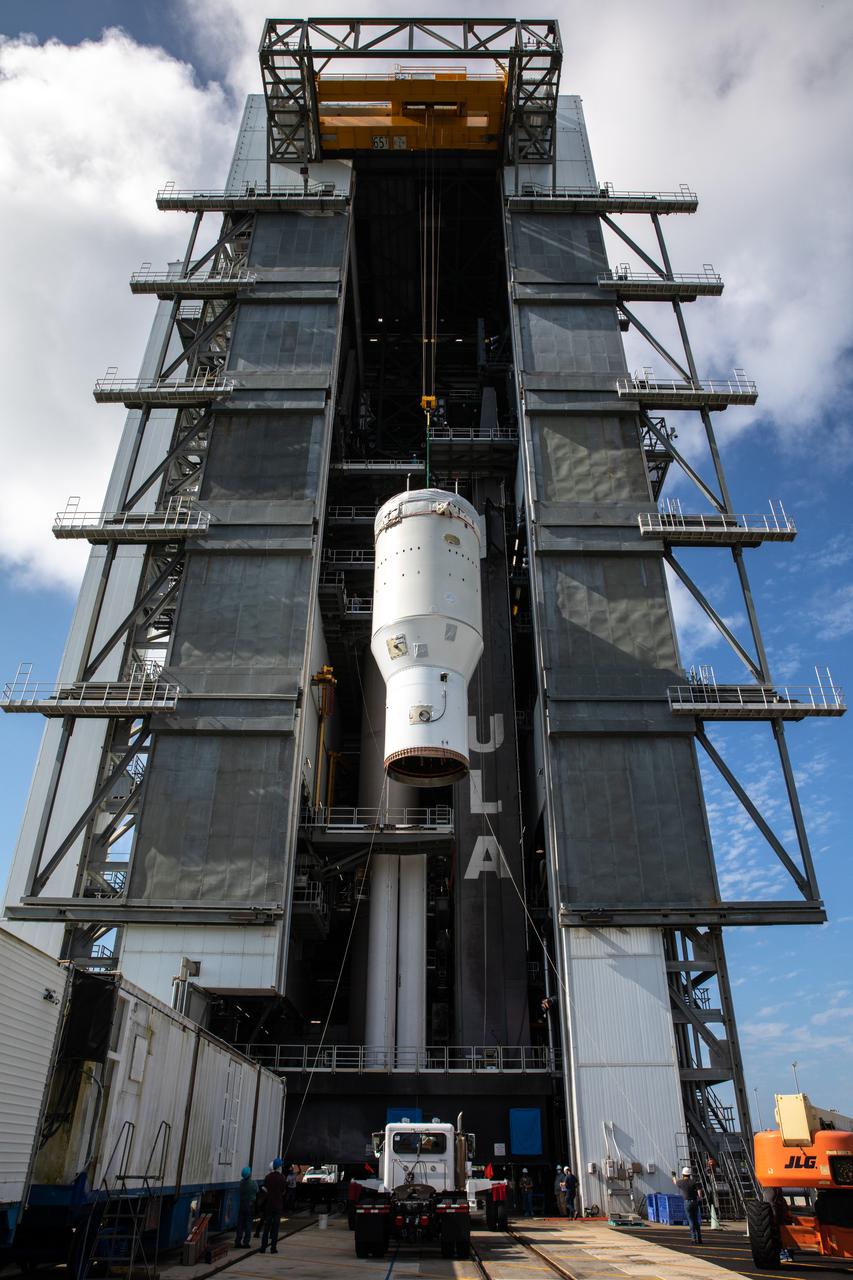
The single-engine Centaur upper stage for the United Launch Alliance Atlas V rocket for NASA’s Mars Perseverance rover is lifted up inside Vertical Integration Facility at Space Launch Complex 41 at Cape Canaveral Air Force Station in Florida on June 10, 2020. The Centaur will be attached to the rocket’s first stage. The Mars Perseverance rover is scheduled to launch atop the Atlas V 541 rocket from Pad 41 on July 20, 2020. The rover is part of NASA’s Mars Exploration Program, a long-term effort of robotic exploration of the Red Planet. The rover’s seven instruments will search for habitable conditions in the ancient past and signs of past microbial life on Mars. The Launch Services Program at Kennedy is responsible for launch management.

A crane has been attached to the single-engine Centaur upper stage for the United Launch Alliance Atlas V rocket for NASA’s Mars Perseverance rover at the Vertical Integration Facility at Space Launch Complex 41 at Cape Canaveral Air Force Station in Florida on June 10, 2020. The Centaur will be lifted up and attached to the rocket’s first stage. The Mars Perseverance rover is scheduled to launch atop the Atlas V 541 rocket from Pad 41 on July 20, 2020. The rover is part of NASA’s Mars Exploration Program, a long-term effort of robotic exploration of the Red Planet. The rover’s seven instruments will search for habitable conditions in the ancient past and signs of past microbial life on Mars. The Launch Services Program at Kennedy is responsible for launch management.
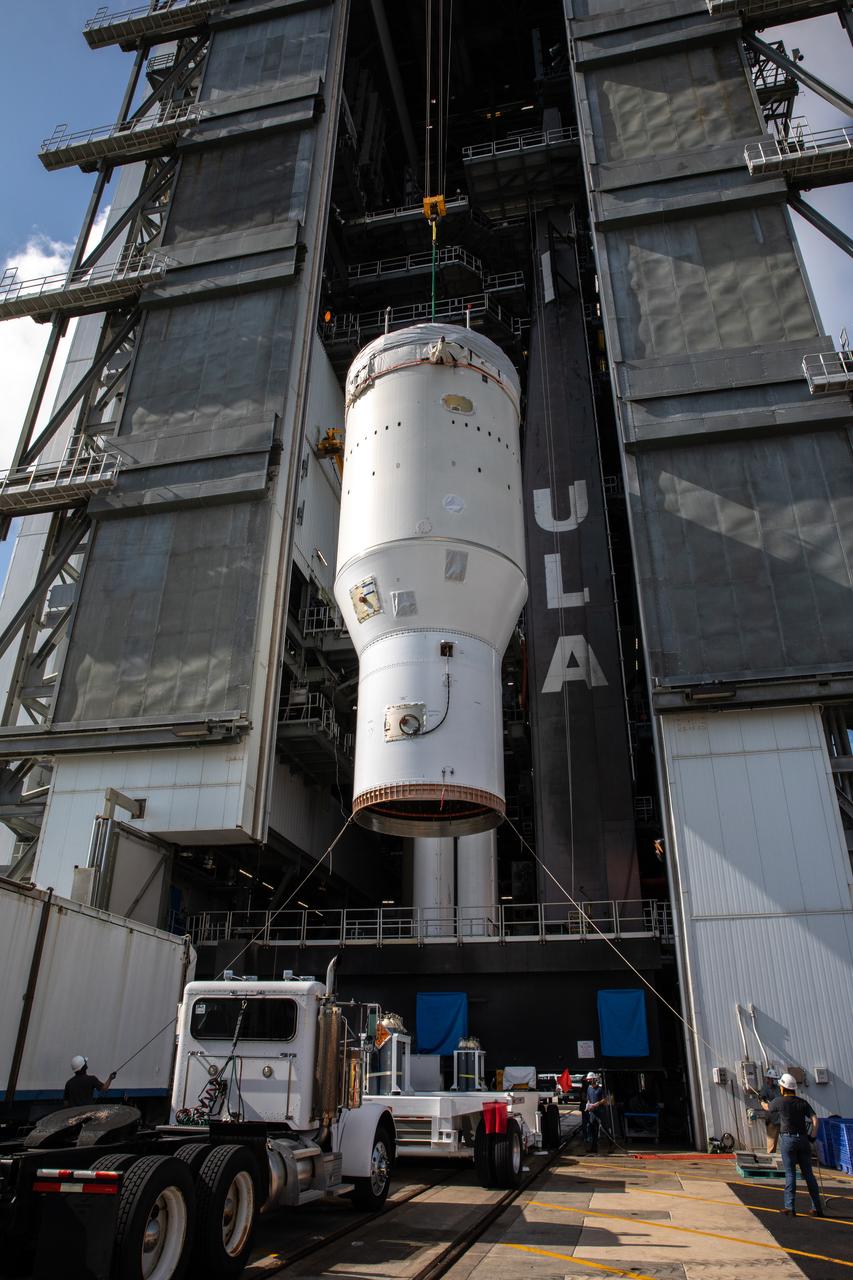
The single-engine Centaur upper stage for the United Launch Alliance Atlas V rocket for NASA’s Mars Perseverance rover is lifted up at the Vertical Integration Facility at Space Launch Complex 41 at Cape Canaveral Air Force Station in Florida on June 10, 2020. The Centaur will be attached to the rocket’s first stage. The Mars Perseverance rover is scheduled to launch atop the Atlas V 541 rocket from Pad 41 on July 20, 2020. The rover is part of NASA’s Mars Exploration Program, a long-term effort of robotic exploration of the Red Planet. The rover’s seven instruments will search for habitable conditions in the ancient past and signs of past microbial life on Mars. The Launch Services Program at Kennedy is responsible for launch management.
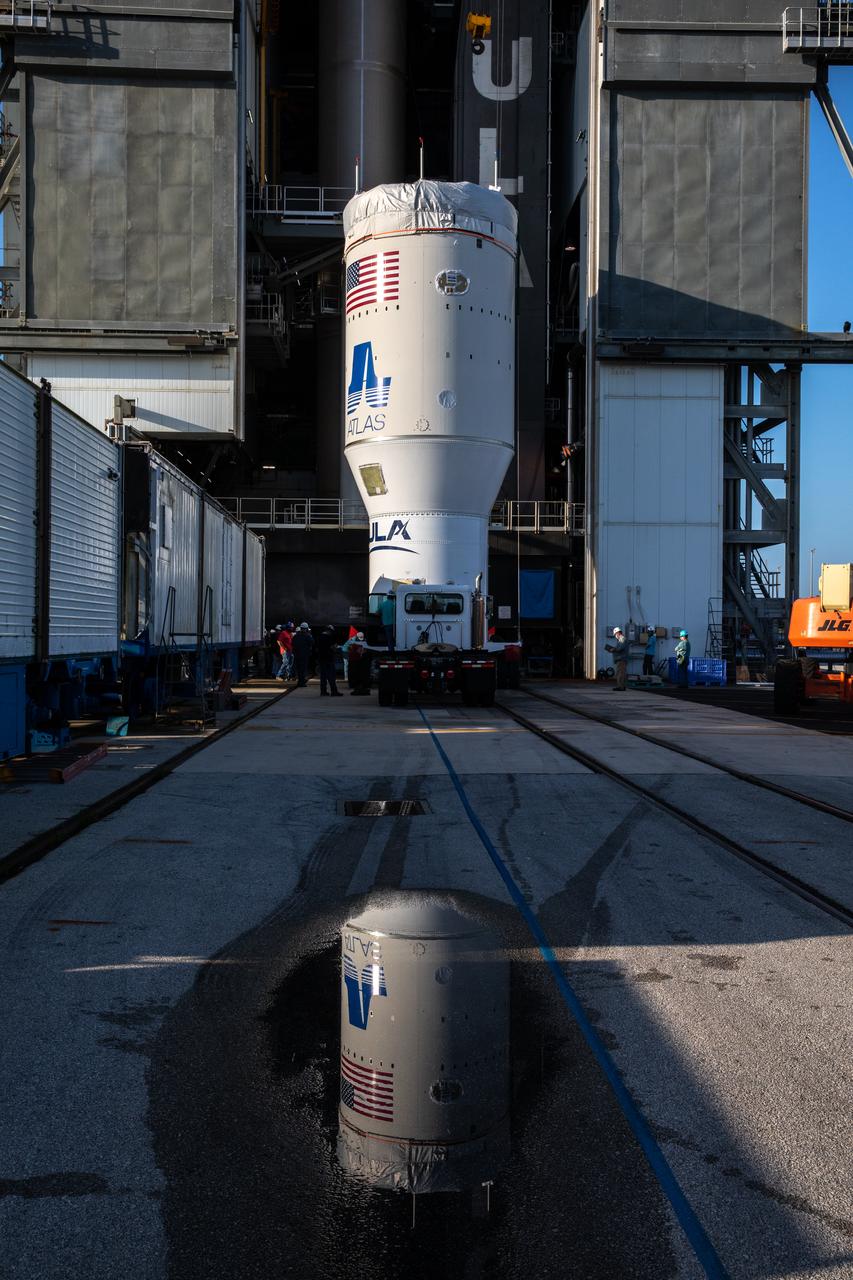
The single-engine Centaur upper stage for the United Launch Alliance Atlas V rocket for NASA’s Mars Perseverance rover arrives at the Vertical Integration Facility at Space Launch Complex 41 at Cape Canaveral Air Force Station in Florida on June 10, 2020. The Centaur will be lifted up and attached to the rocket’s first stage. The Mars Perseverance rover is scheduled to launch atop the Atlas V 541 rocket from Pad 41 on July 20, 2020. The rover is part of NASA’s Mars Exploration Program, a long-term effort of robotic exploration of the Red Planet. The rover’s seven instruments will search for habitable conditions in the ancient past and signs of past microbial life on Mars. The Launch Services Program at Kennedy is responsible for launch management.
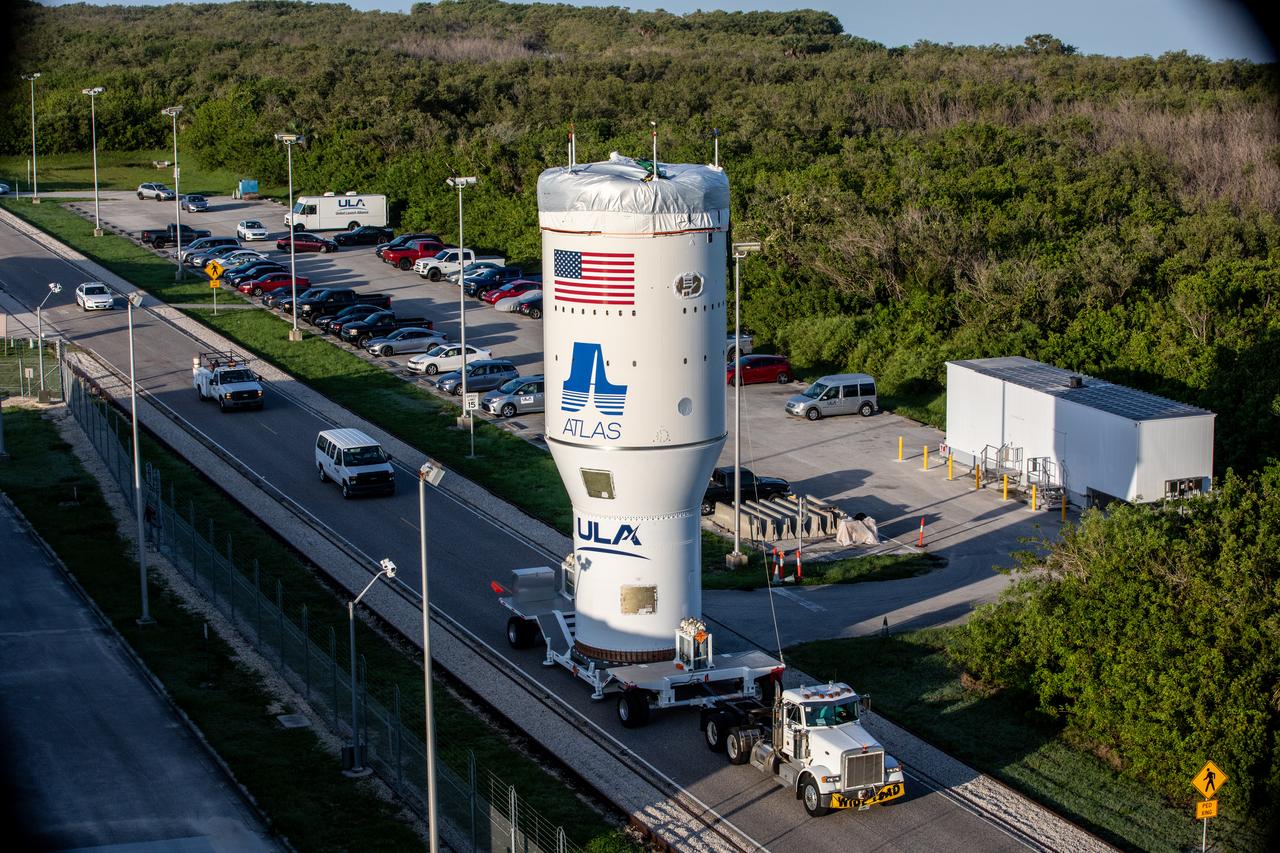
The single-engine Centaur upper stage for the United Launch Alliance Atlas V rocket for NASA’s Mars Perseverance rover is being transported to the Vertical Integration Facility at Space Launch Complex 41 at Cape Canaveral Air Force Station in Florida on June 10, 2020. The Centaur will be lifted up and attached to the rocket’s first stage. The Mars Perseverance rover is scheduled to launch atop the Atlas V 541 rocket from Pad 41 on July 20, 2020. The rover is part of NASA’s Mars Exploration Program, a long-term effort of robotic exploration of the Red Planet. The rover’s seven instruments will search for habitable conditions in the ancient past and signs of past microbial life on Mars. The Launch Services Program at Kennedy is responsible for launch management.
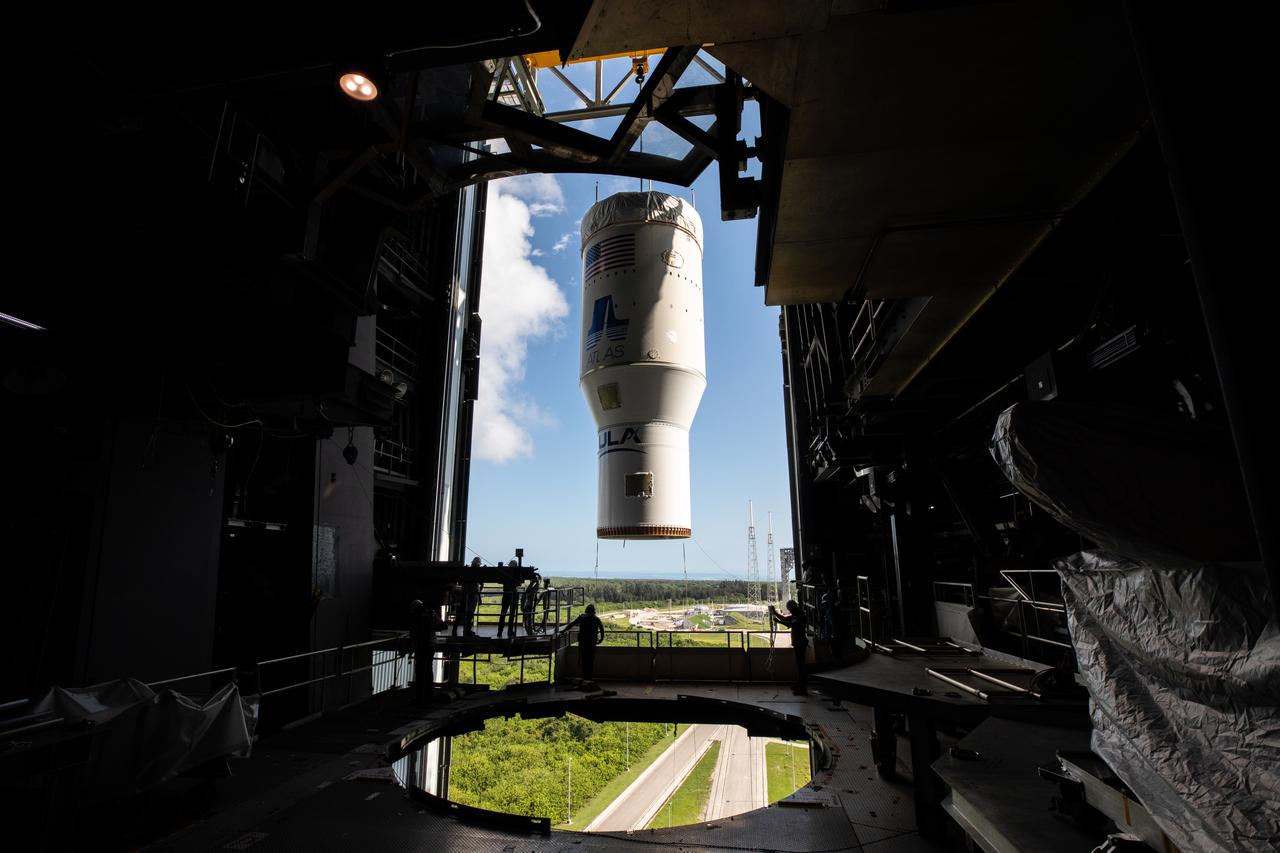
A view from inside the Vertical Integration Facility at Space Launch Complex 41 at Cape Canaveral Air Force Station in Florida, as the single-engine Centaur upper stage is lifted up for mating to the United Launch Alliance Atlas V rocket for NASA’s Mars Perseverance rover on June 10, 2020. The Centaur will be attached to the rocket’s first stage. The Mars Perseverance rover is scheduled to launch atop the Atlas V 541 rocket from Pad 41 on July 20, 2020. The rover is part of NASA’s Mars Exploration Program, a long-term effort of robotic exploration of the Red Planet. The rover’s seven instruments will search for habitable conditions in the ancient past and signs of past microbial life on Mars. The Launch Services Program at Kennedy is responsible for launch management.
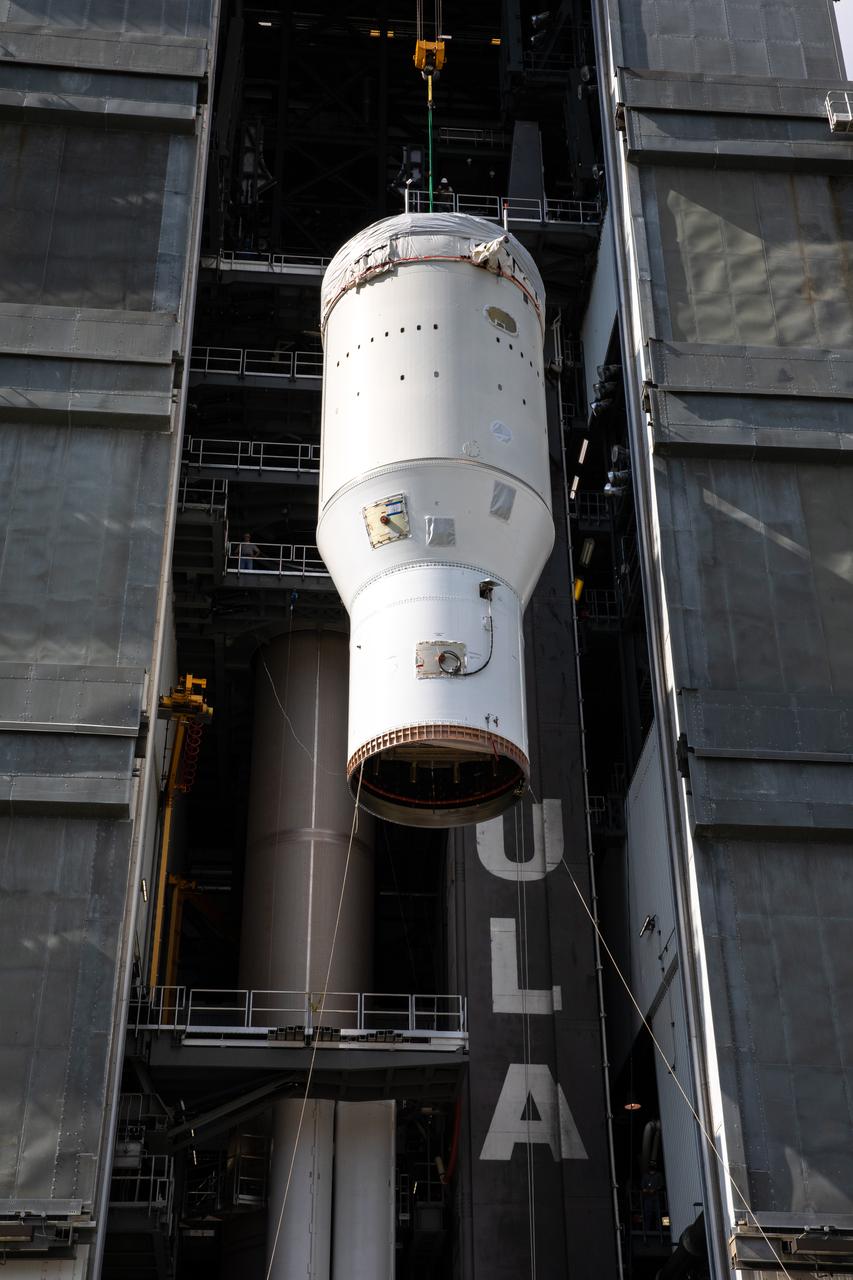
The single-engine Centaur upper stage for the United Launch Alliance Atlas V rocket for NASA’s Mars Perseverance rover is lifted up inside the Vertical Integration Facility at Space Launch Complex 41 at Cape Canaveral Air Force Station in Florida on June 10, 2020. The Centaur will be attached to the rocket’s first stage. The Mars Perseverance rover is scheduled to launch atop the Atlas V 541 rocket from Pad 41 on July 20, 2020. The rover is part of NASA’s Mars Exploration Program, a long-term effort of robotic exploration of the Red Planet. The rover’s seven instruments will search for habitable conditions in the ancient past and signs of past microbial life on Mars. The Launch Services Program at Kennedy is responsible for launch management.
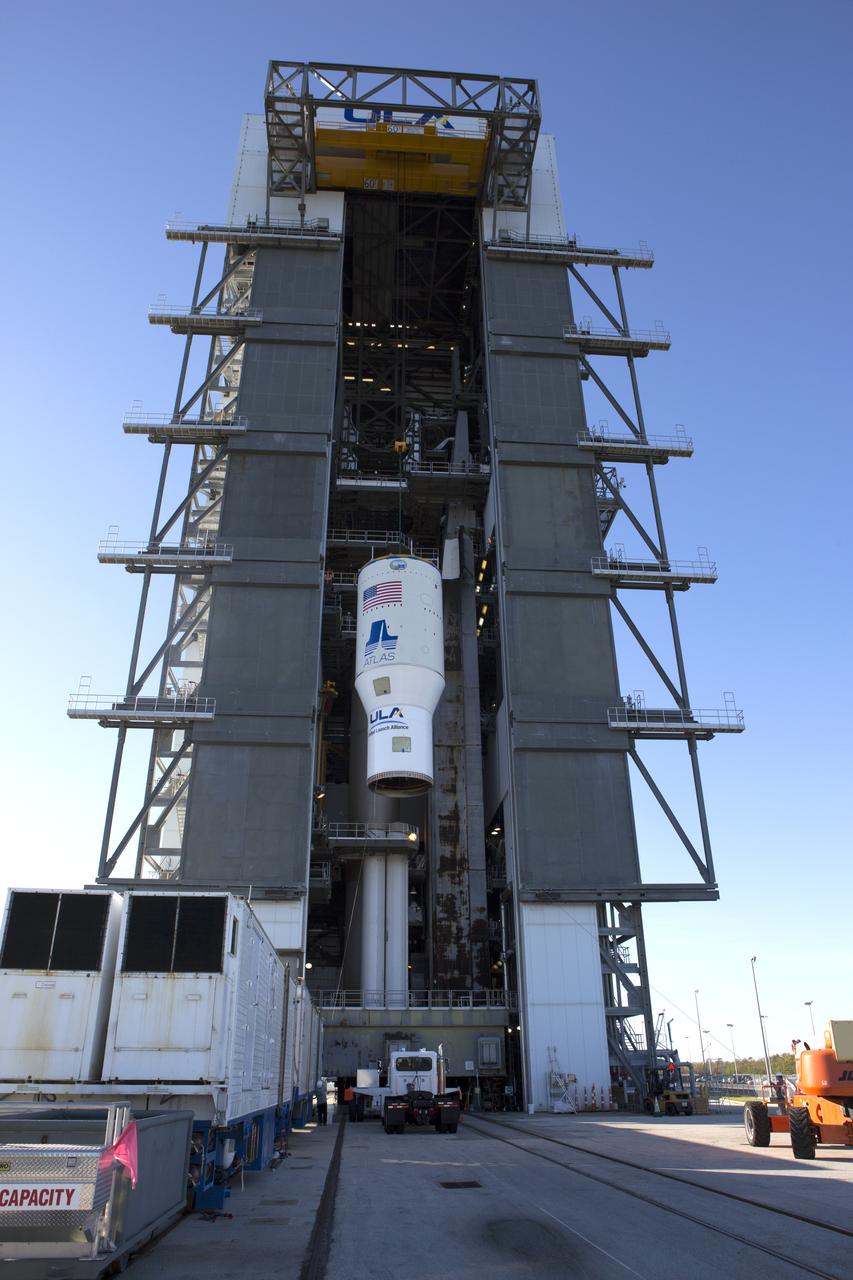
The United Launch Alliance Atlas V Centaur second stage is lifted up by crane for transfer into Vertical Integration Facility at Space Launch Complex 41 at Cape Canaveral Air Force Station in Florida. The Geostationary Operational Environmental Satellite (GOES-R) will launch aboard the Atlas V rocket in November. GOES-R is the first satellite in a series of next-generation NOAA GOES Satellites.
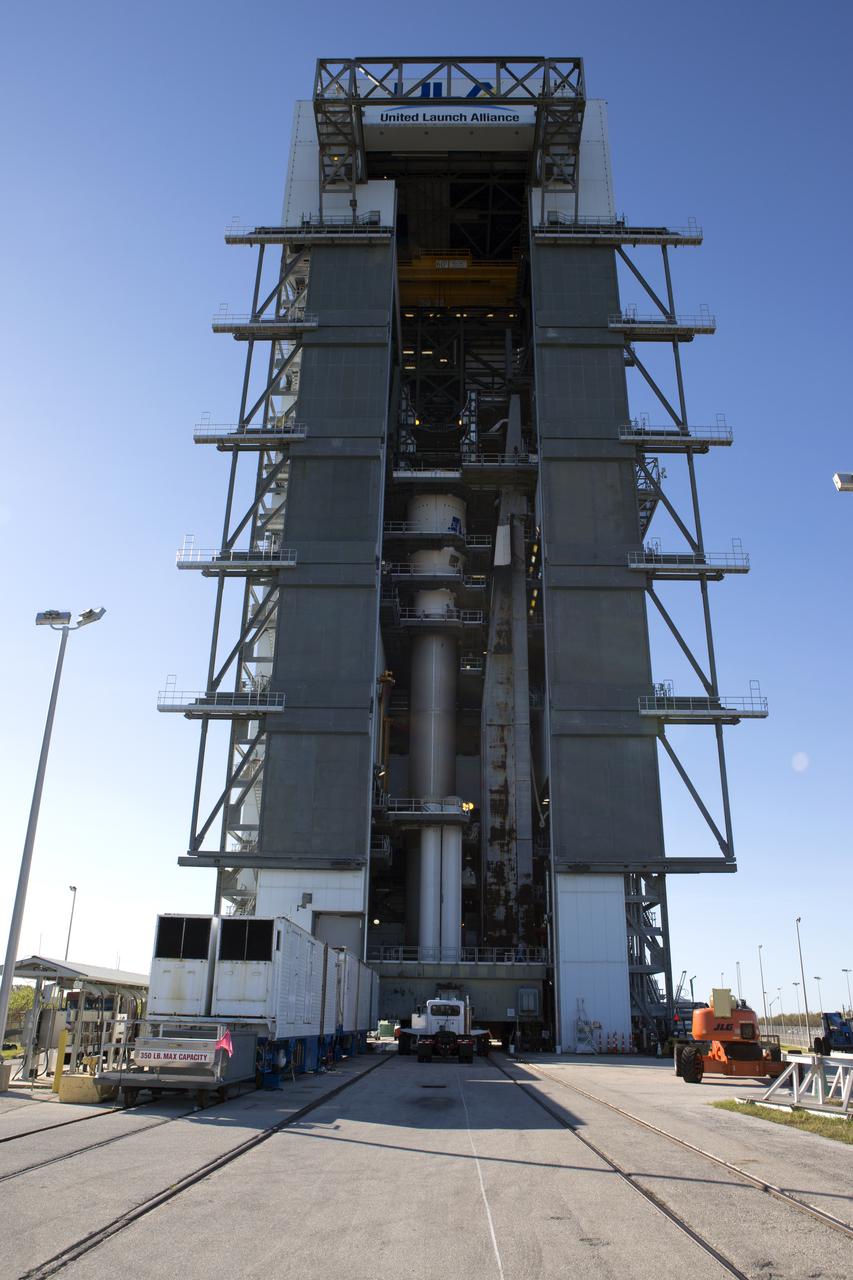
Operations are underway to stack the United Launch Alliance Atlas V Centaur second stage onto the first stage in the Vertical Integration Facility at Space Launch Complex 41 at Cape Canaveral Air Force Station in Florida. The Geostationary Operational Environmental Satellite (GOES-R) will launch aboard the Atlas V rocket in November. GOES-R is the first satellite in a series of next-generation NOAA GOES Satellites.
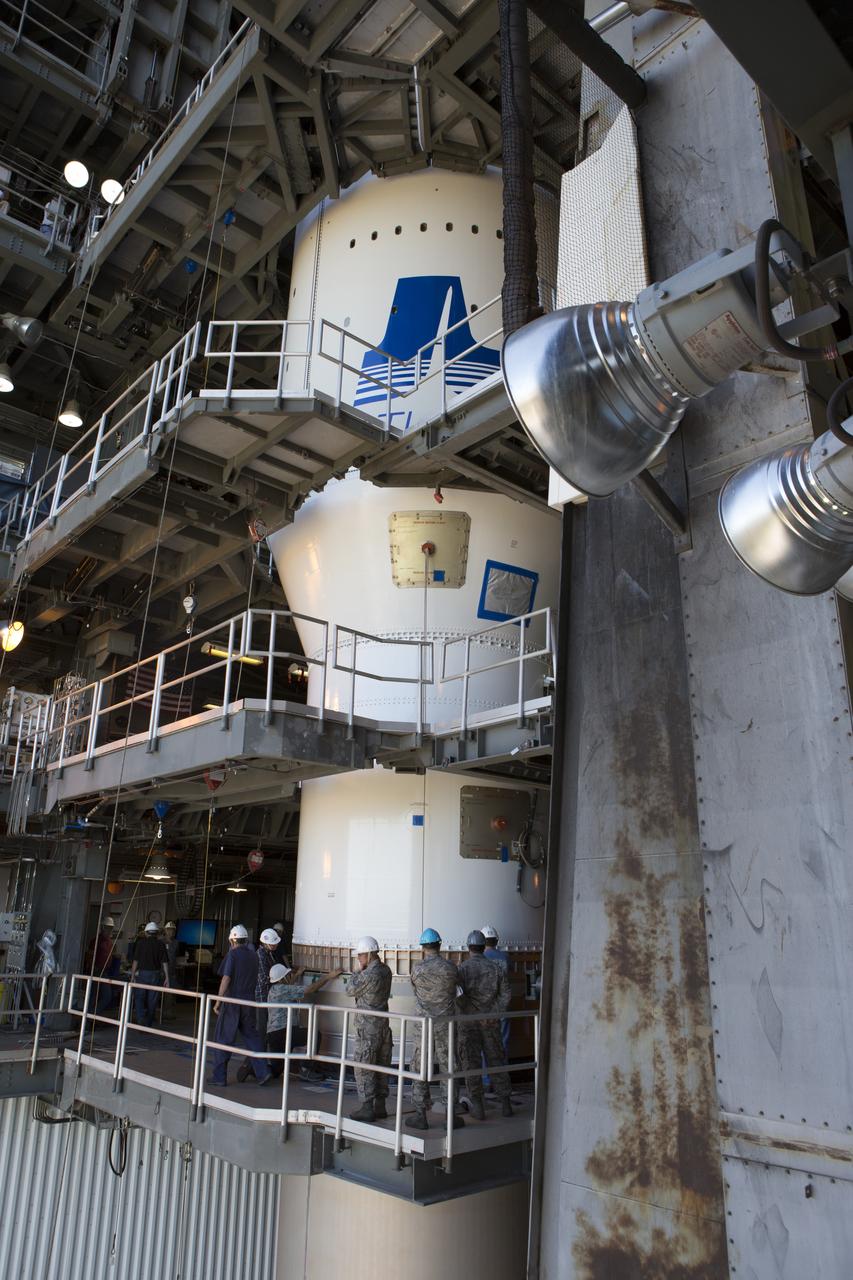
Operations are underway to stack the United Launch Alliance Atlas V Centaur second stage onto the first stage in the Vertical Integration Facility at Space Launch Complex 41 at Cape Canaveral Air Force Station in Florida. The Geostationary Operational Environmental Satellite (GOES-R) will launch aboard the Atlas V rocket in November. GOES-R is the first satellite in a series of next-generation NOAA GOES Satellites.
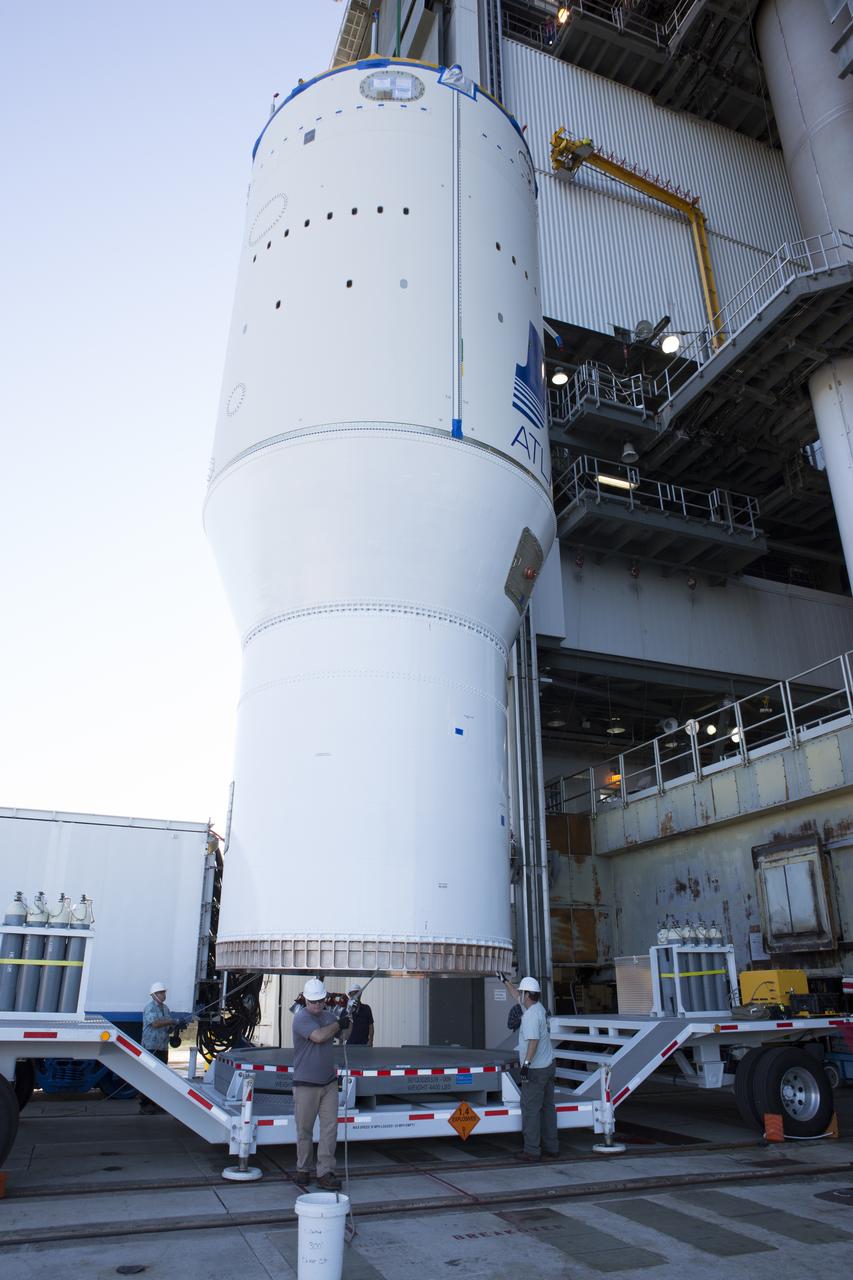
United Launch Alliance team members assist as operation begin to lift the Atlas V Centaur second stage into the Vertical Integration Facility at Space Launch Complex 41 at Cape Canaveral Air Force Station in Florida. The Geostationary Operational Environmental Satellite (GOES-R) will launch aboard the Atlas V rocket in November. GOES-R is the first satellite in a series of next-generation NOAA GOES Satellites.
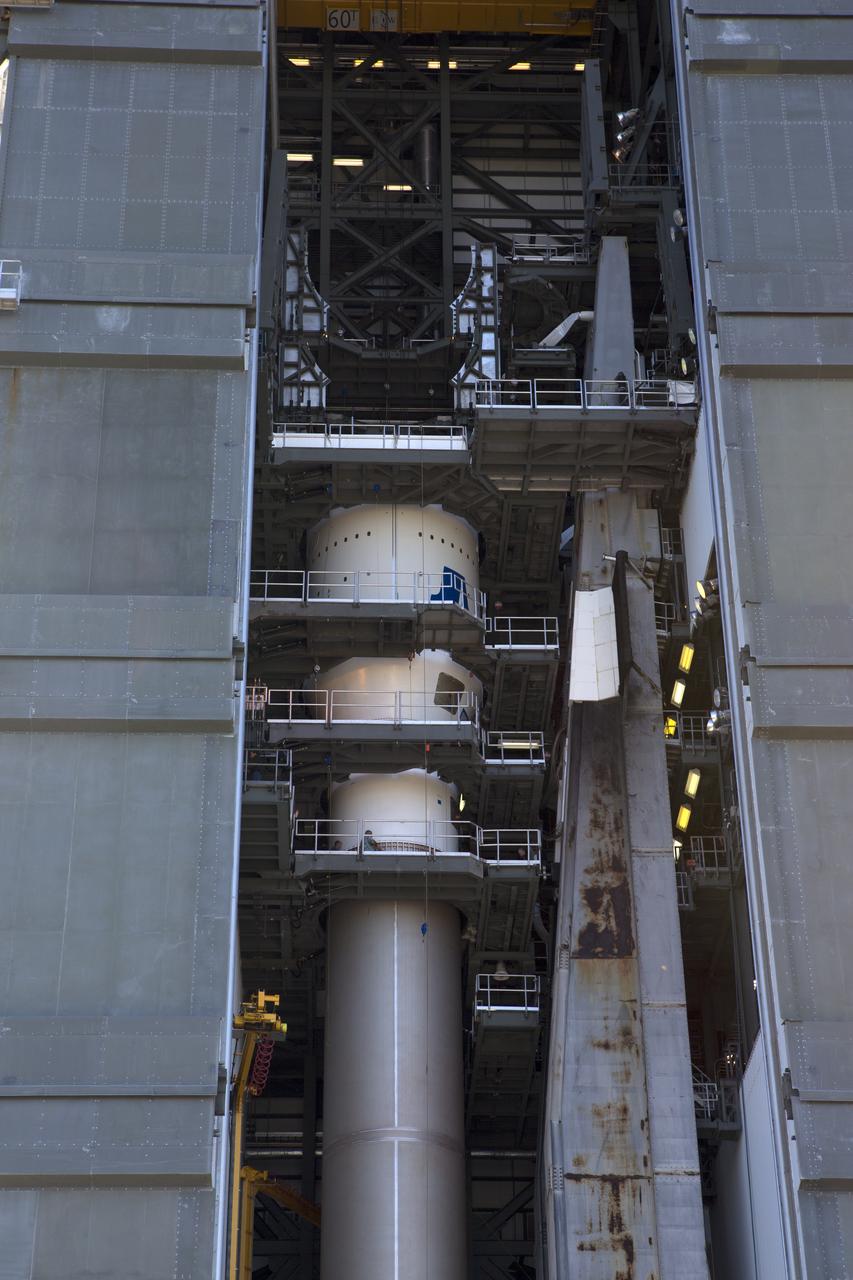
The United Launch Alliance Atlas V Centaur second stage has been mated to the first stage in the Vertical Integration Facility at Space Launch Complex 41 at Cape Canaveral Air Force Station in Florida. The Geostationary Operational Environmental Satellite (GOES-R) will launch aboard the Atlas V rocket in November. GOES-R is the first satellite in a series of next-generation NOAA GOES Satellites.
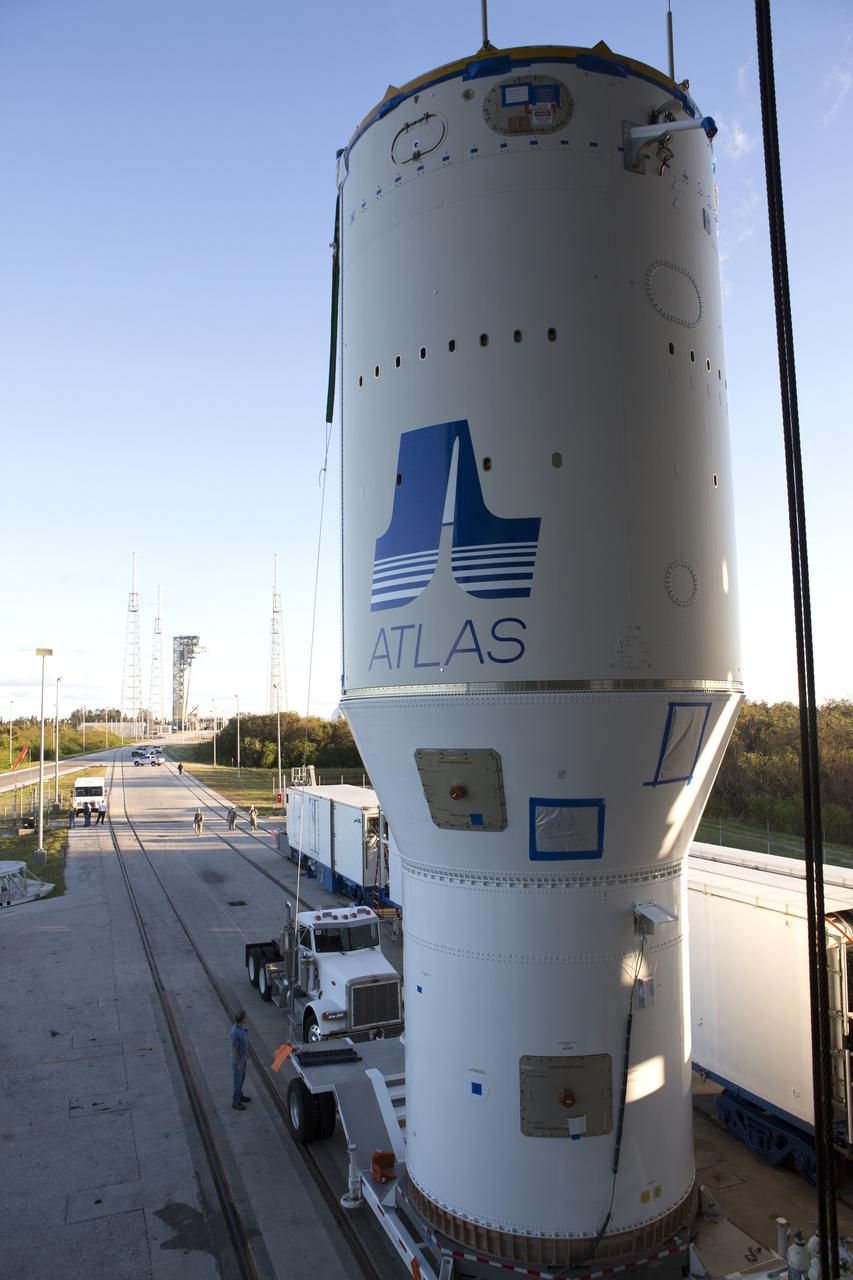
A close-up view of the United Launch Alliance Atlas V Centaur second stage as it travels to the Vertical Integration Facility at Space Launch Complex 41 at Cape Canaveral Air Force Station in Florida. The Geostationary Operational Environmental Satellite (GOES-R) will launch aboard the Atlas V rocket in November. GOES-R is the first satellite in a series of next-generation NOAA GOES Satellites.
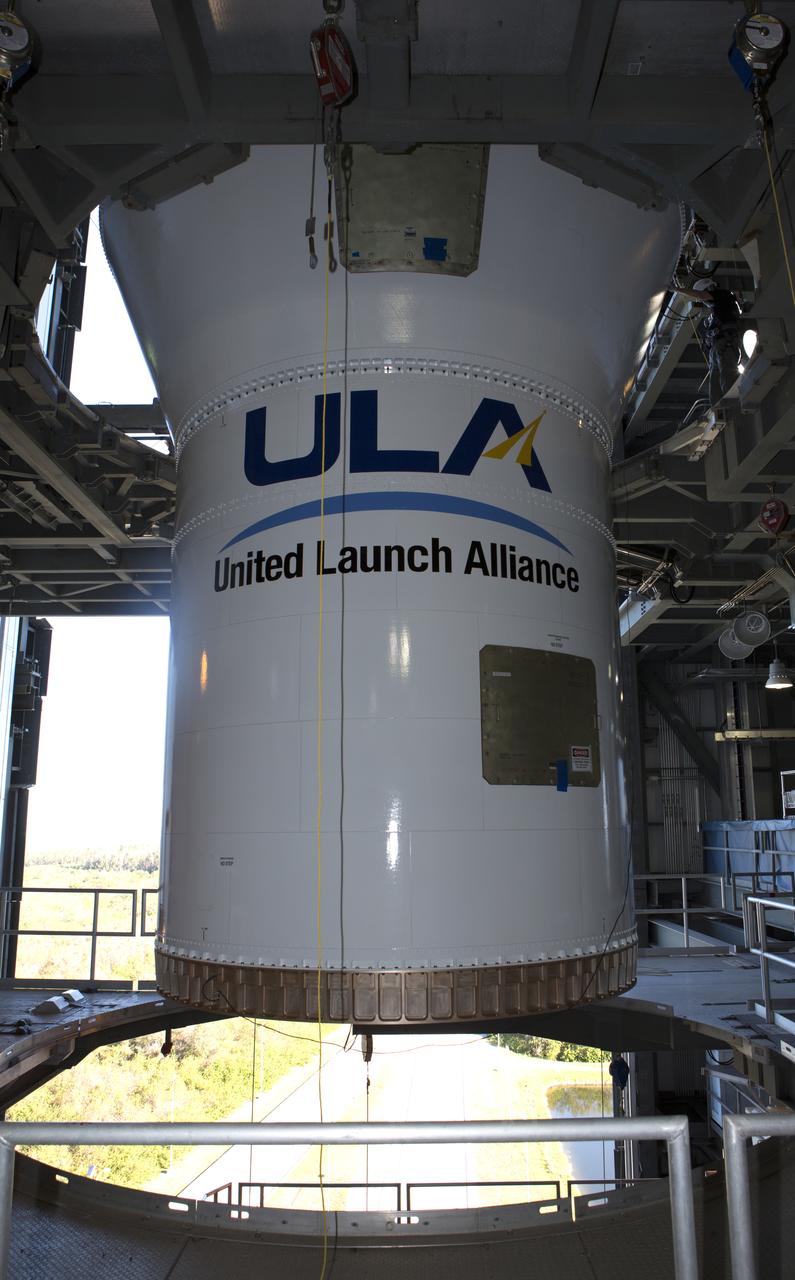
The United Launch Alliance Atlas V Centaur second stage has been lifted up and transferred into the Vertical Integration Facility at Space Launch Complex 41 at Cape Canaveral Air Force Station in Florida. The Geostationary Operational Environmental Satellite (GOES-R) will launch aboard the Atlas V rocket in November. GOES-R is the first satellite in a series of next-generation NOAA GOES Satellites.
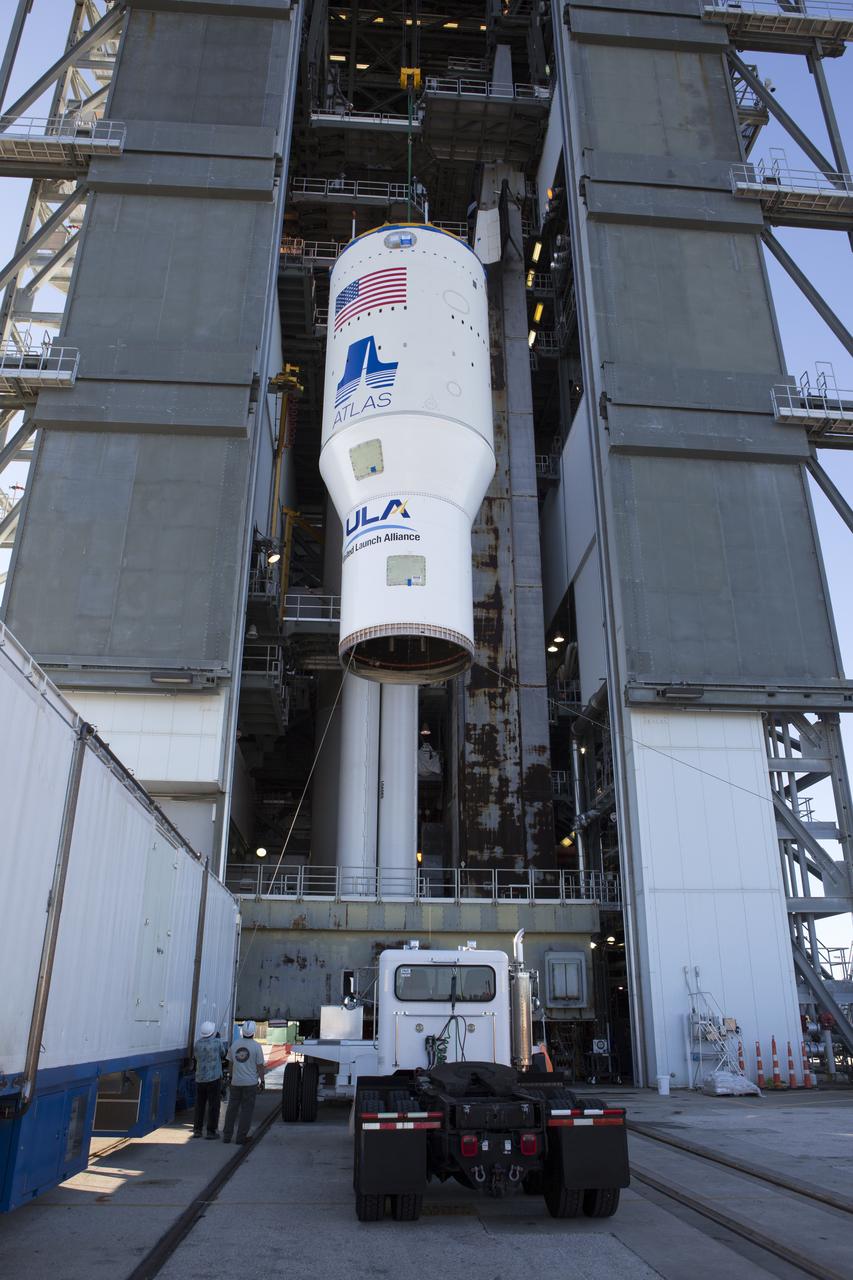
The United Launch Alliance Atlas V Centaur second stage is lifted up for transfer into the Vertical Integration Facility at Space Launch Complex 41 at Cape Canaveral Air Force Station in Florida. The Geostationary Operational Environmental Satellite (GOES-R) will launch aboard the Atlas V rocket in November. GOES-R is the first satellite in a series of next-generation NOAA GOES Satellites.
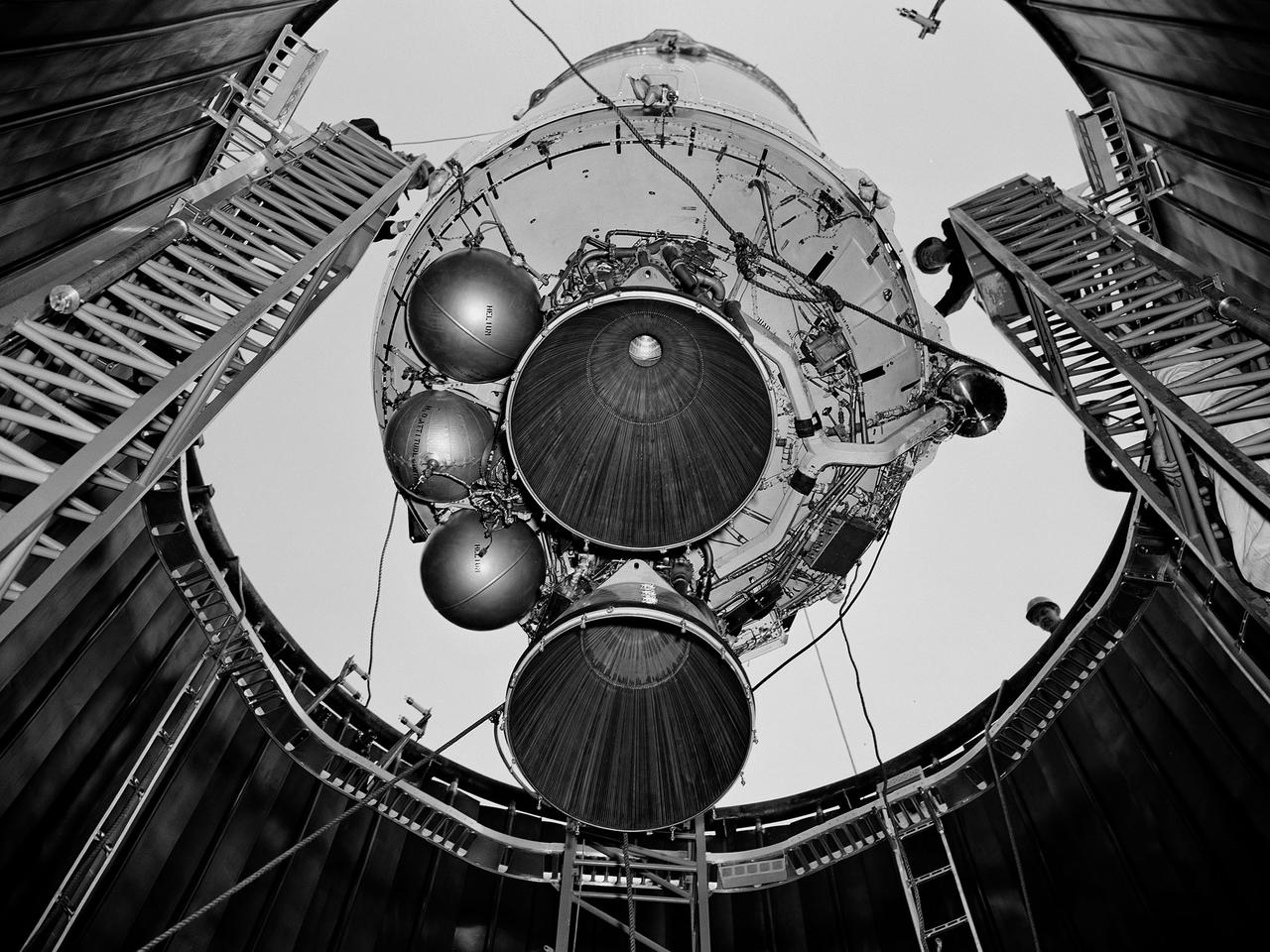
A Centaur second-stage rocket is lowered into the vacuum tank inside the Space Power Chambers at NASA’s Lewis Research Center. Centaur was to be paired with an Atlas booster to send the Surveyor spacecraft to the moon as a precursor to the Apollo landings. Lewis was assigned responsibility for the Centaur Program after the failure of its first developmental flight in May 1962. Lewis’ Altitude Wind Tunnel was converted into two large test chambers—the Space Power Chambers. The facility’s vacuum chamber, seen here, allowed the Centaur to be stood up vertically and subjected to atmospheric conditions-- pressures, temperature, and radiation--similar to those it would encounter in space. The Centaur for these tests was delivered to Cleveland in a C‒130 aircraft on September 27, 1963. The rocket was set up in the facility’s high bay where Lewis technicians and General Dynamics consultants updated its flight systems to match the upcoming Atlas-Centaur‒4 mission. Months were spent reharnessing the Centaur’s electronics, learning about the systems, and being taught how to handle flight hardware. By early spring 1964, the extensive setup of both the spacecraft and the chamber was finally completed. On March 19 the Centaur was rolled out from the shop, hoisted high into the air by a crane, and lowered into the waiting space tank. Researchers were able to verify that the Centaur’s electronics and electrical systems functioned reliably in a space environment.
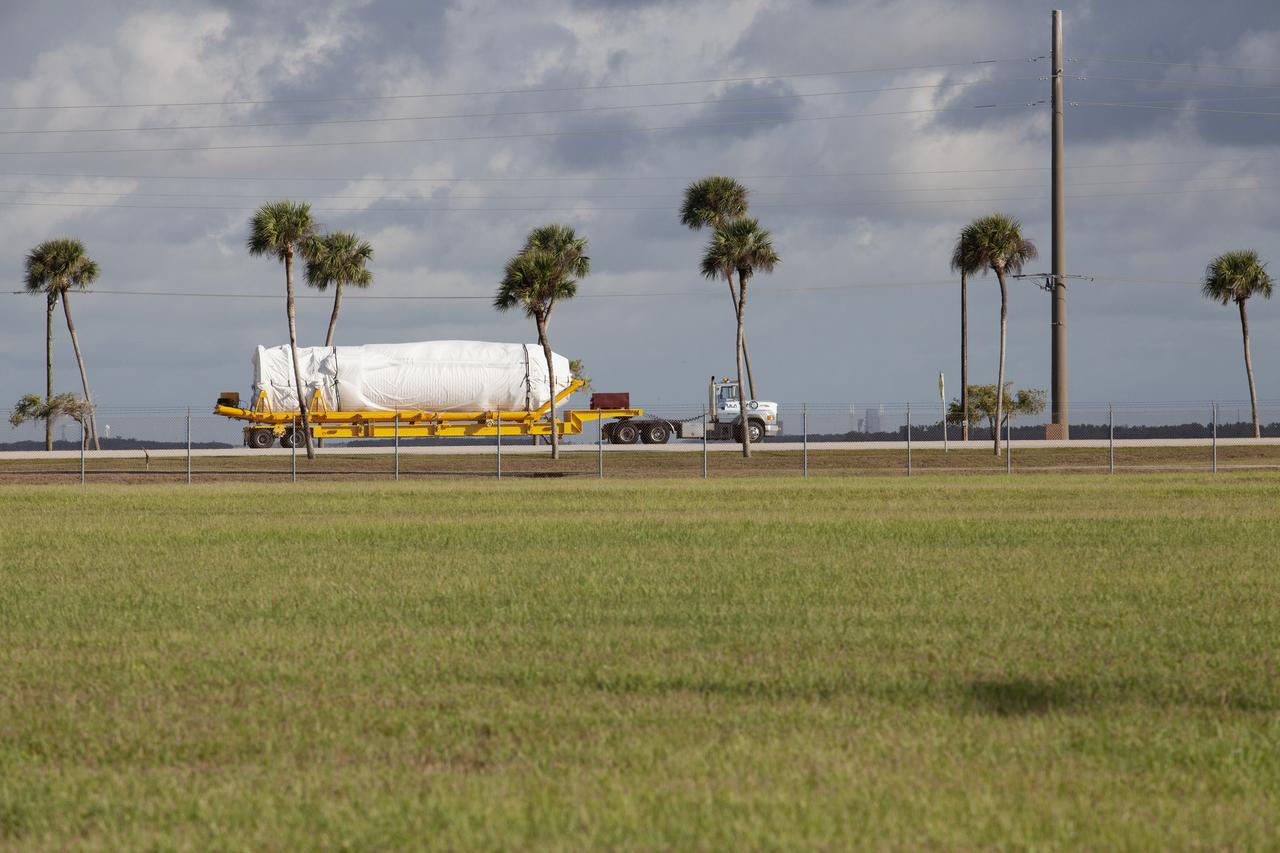
A truck transports a United Launch Alliance (ULA) two-engine Centaur upper stage from Port Canaveral in Florida to the Atlas Spaceflight Operations Center at Cape Canaveral Air Force Station for preliminary checkouts. Mounted atop a ULA Atlas V rocket, the Centaur will help launch a Boeing CST-100 Starliner spacecraft on an uncrewed Orbital Flight Test from Space Launch Complex 41 at the Cape. NASA’s Commercial Crew Program will return human spaceflight launches to U.S. soil, providing safe, reliable and cost-effective access to low-Earth orbit on systems that meet our safety and mission requirements.
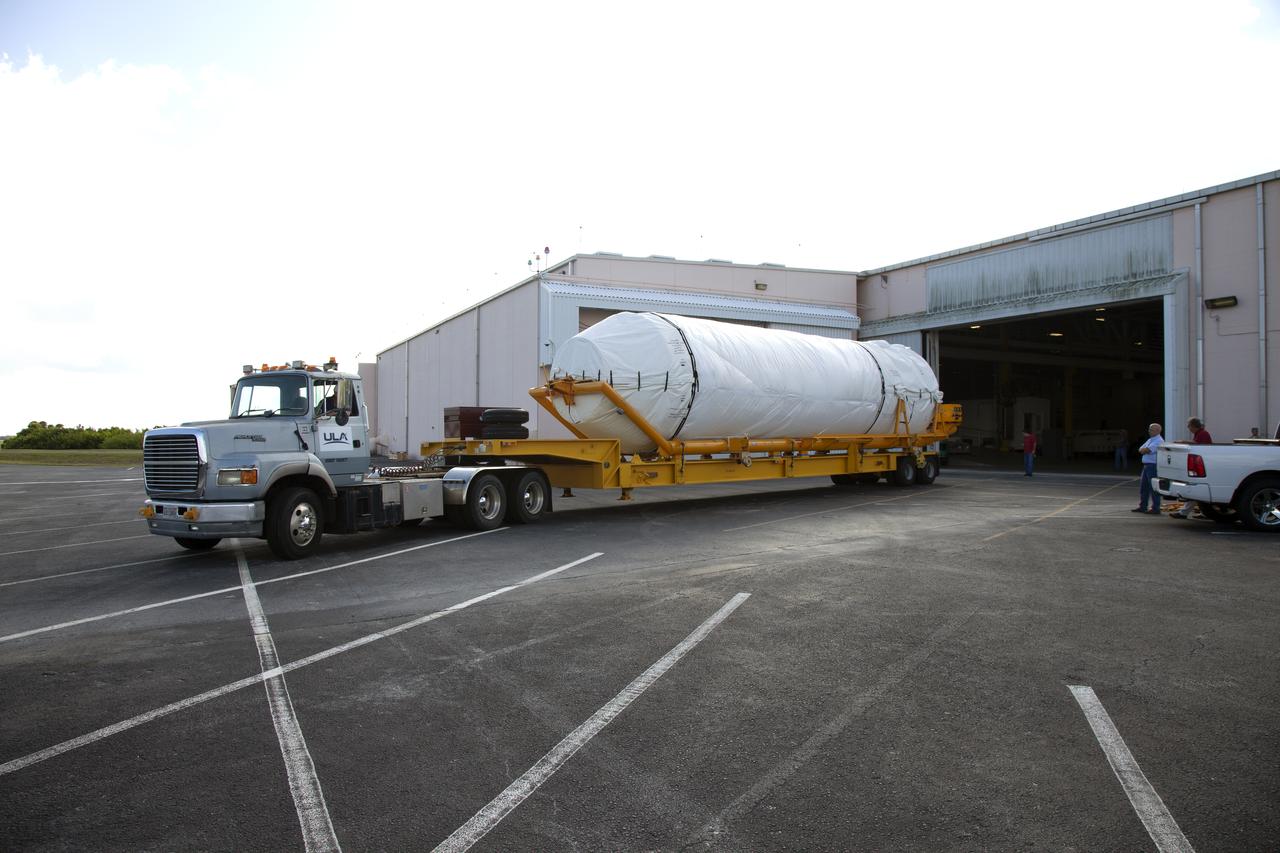
A transport truck with a United Launch Alliance (ULA) two-engine Centaur upper stage arrives at the Atlas Spaceflight Operations Center at Cape Canaveral Air Force Station for preliminary checkouts. Mounted atop a ULA Atlas V rocket, the Centaur will help launch a Boeing CST-100 Starliner spacecraft on an uncrewed Orbital Flight Test from Space Launch Complex 41 at the Cape. NASA’s Commercial Crew Program will return human spaceflight launches to U.S. soil, providing safe, reliable and cost-effective access to low-Earth orbit on systems that meet our safety and mission requirements.
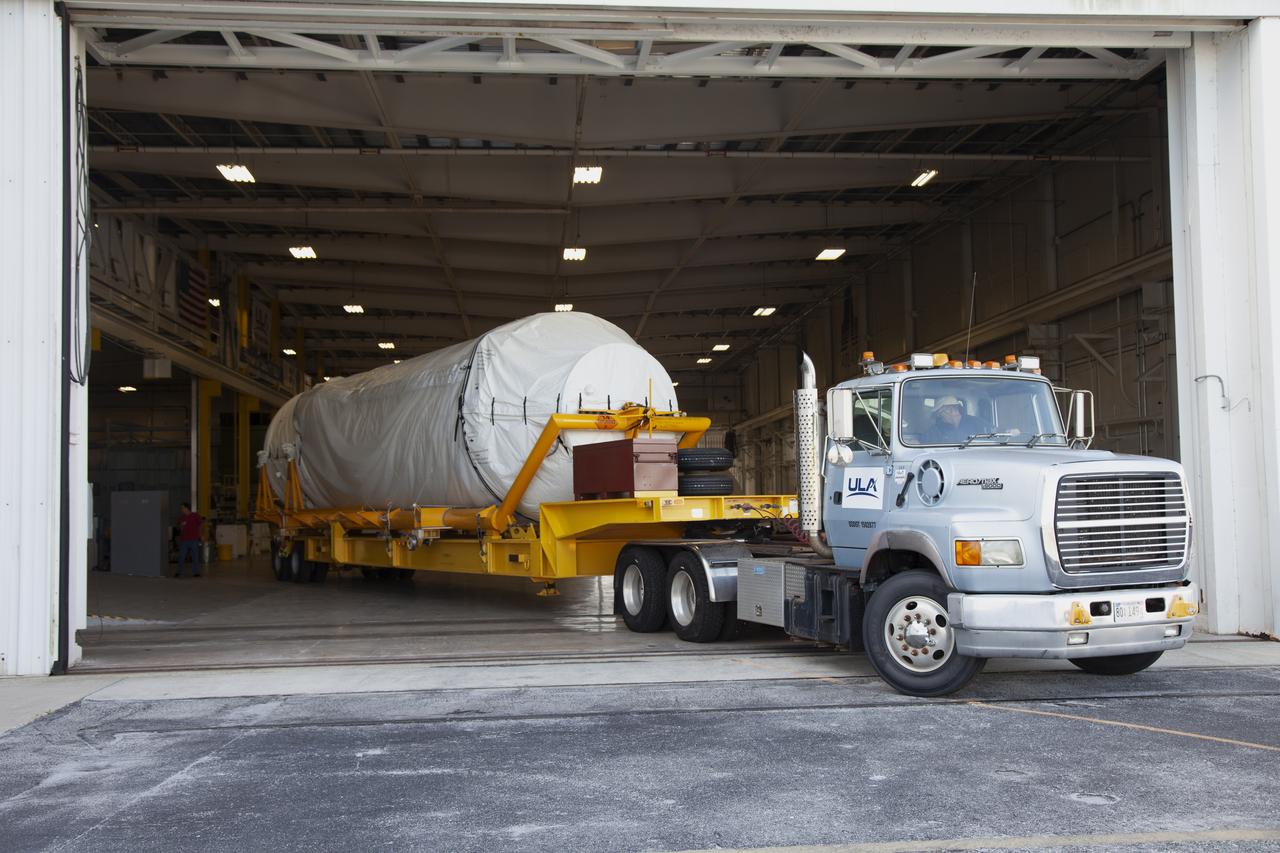
A transport truck with a United Launch Alliance (ULA) two-engine Centaur upper stage arrives at the Atlas Spaceflight Operations Center at Cape Canaveral Air Force Station for preliminary checkouts. Mounted atop a ULA Atlas V rocket, the Centaur will help launch a Boeing CST-100 Starliner spacecraft on an uncrewed Orbital Flight Test from Space Launch Complex 41 at the Cape. NASA’s Commercial Crew Program will return human spaceflight launches to U.S. soil, providing safe, reliable and cost-effective access to low-Earth orbit on systems that meet our safety and mission requirements.
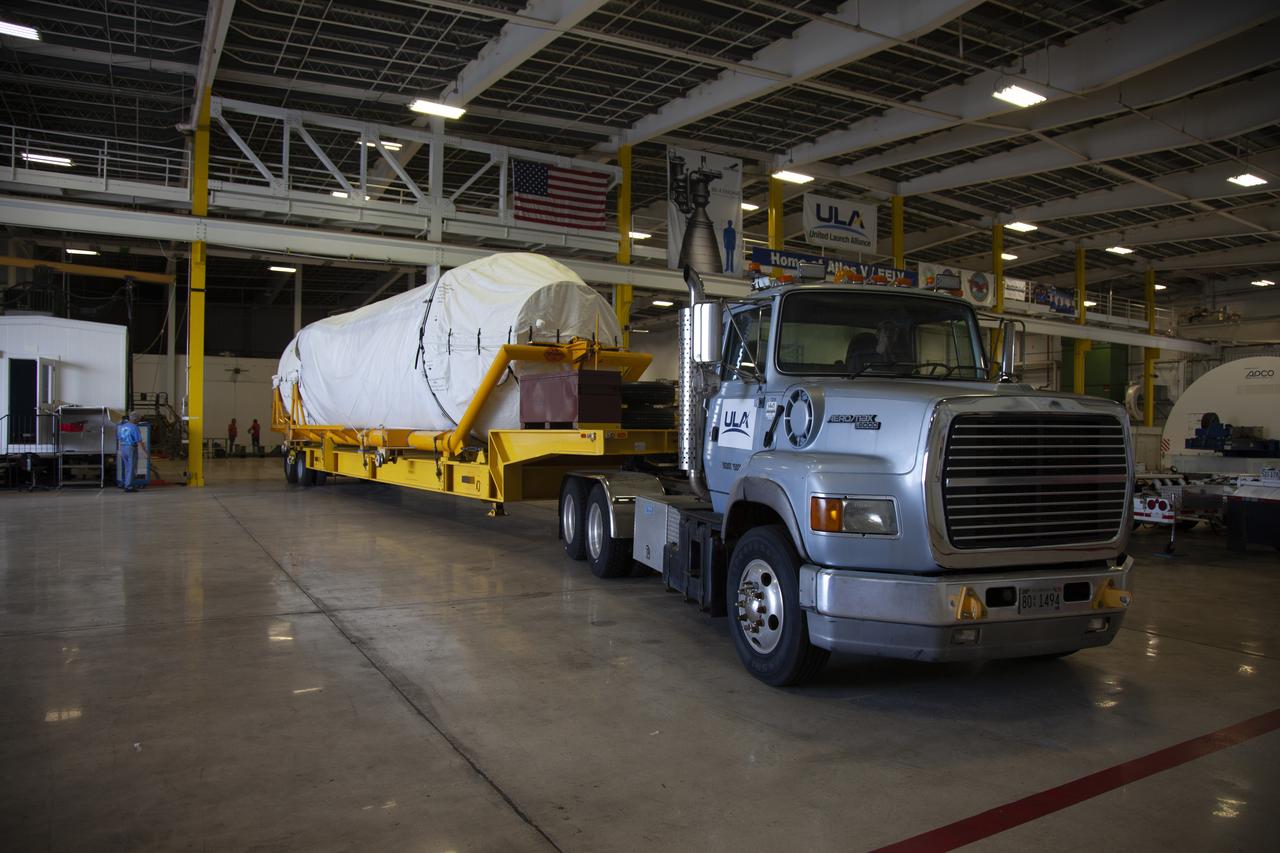
A transport truck with a United Launch Alliance (ULA) two-engine Centaur upper stage arrives at the Atlas Spaceflight Operations Center at Cape Canaveral Air Force Station for preliminary checkouts. Mounted atop a ULA Atlas V rocket, the Centaur will help launch a Boeing CST-100 Starliner spacecraft on an uncrewed Orbital Flight Test from Space Launch Complex 41 at the Cape. NASA’s Commercial Crew Program will return human spaceflight launches to U.S. soil, providing safe, reliable and cost-effective access to low-Earth orbit on systems that meet our safety and mission requirements.
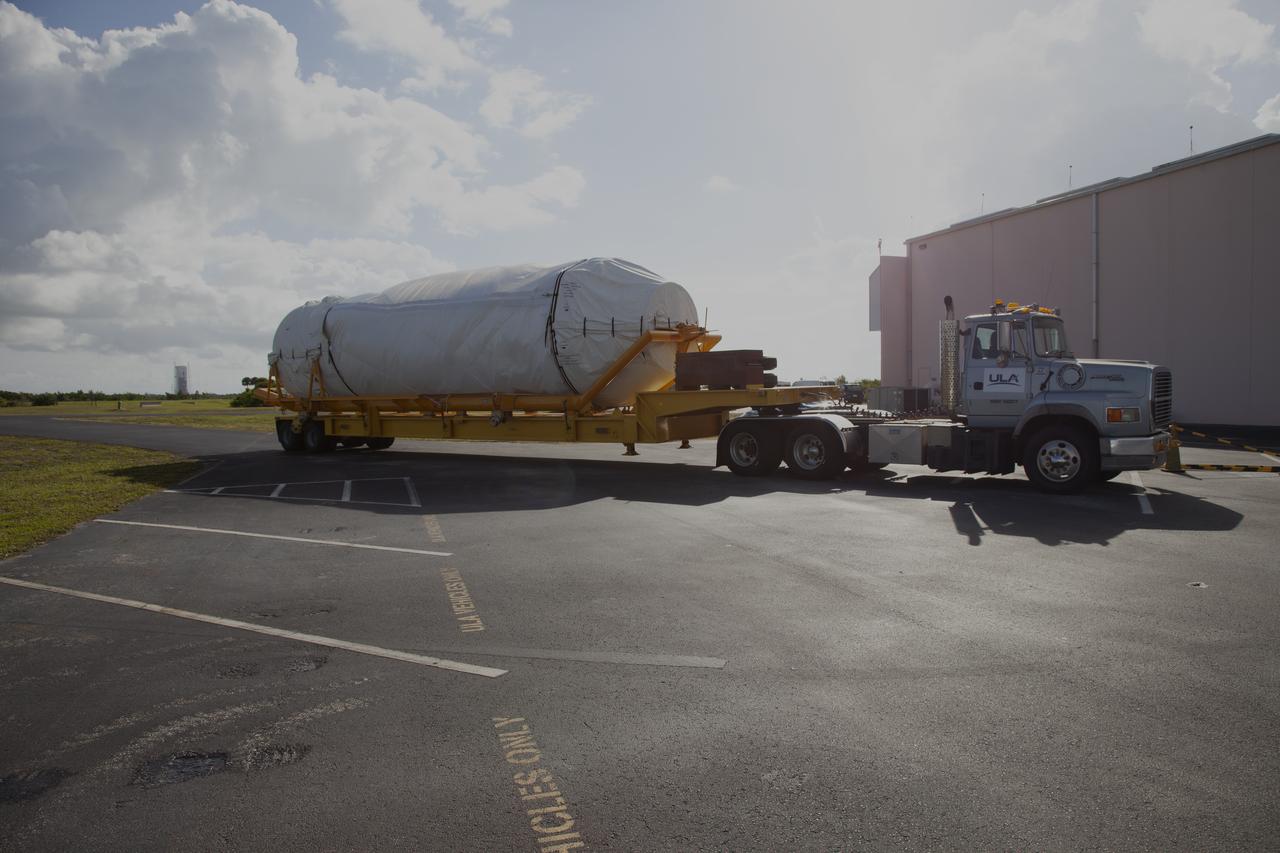
A transport truck with a United Launch Alliance (ULA) two-engine Centaur upper stage arrives at the Atlas Spaceflight Operations Center at Cape Canaveral Air Force Station for preliminary checkouts. Mounted atop a ULA Atlas V rocket, the Centaur will help launch a Boeing CST-100 Starliner spacecraft on an uncrewed Orbital Flight Test from Space Launch Complex 41 at the Cape. NASA’s Commercial Crew Program will return human spaceflight launches to U.S. soil, providing safe, reliable and cost-effective access to low-Earth orbit on systems that meet our safety and mission requirements.
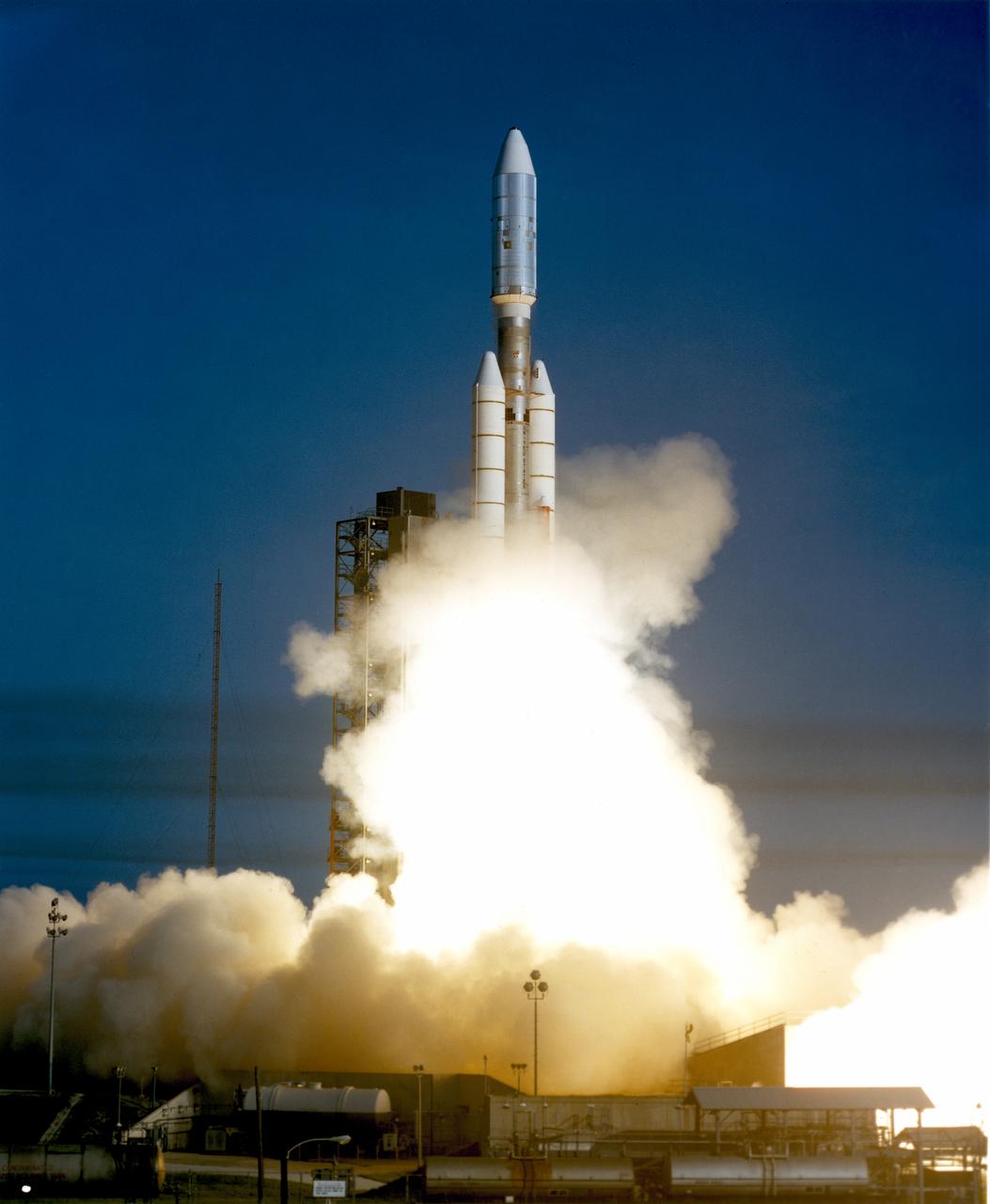
The Voyager 1 aboard the Titan III/Centaur lifted off on September 5, 1977, joining its sister spacecraft, the Voyager 2, on a mission to the outer planets.
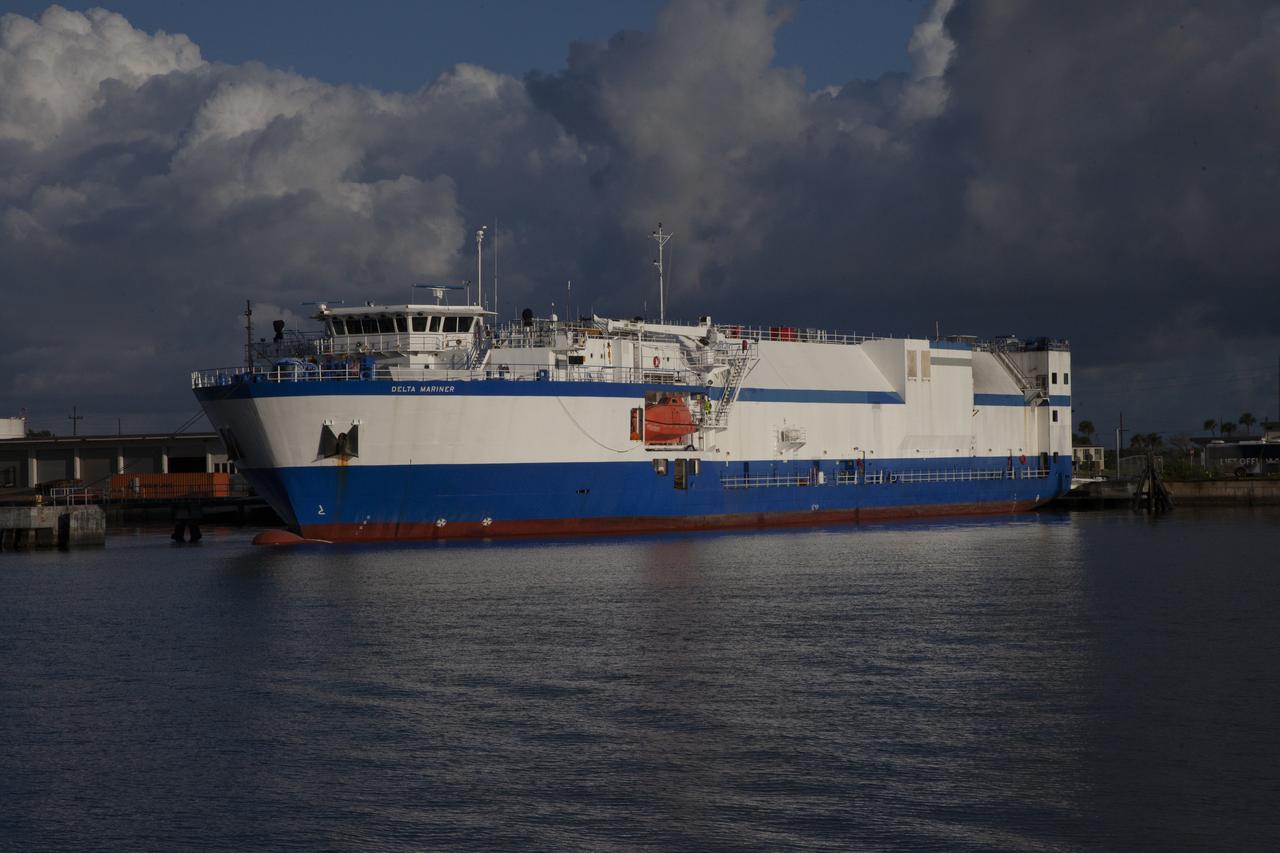
The United Launch Alliance (ULA) Mariner ship arrives at Port Canaveral in Florida carrying a two-engine Centaur upper stage for the upcoming uncrewed Orbital Flight Test of a Boeing CST-100 Starliner spacecraft. As part of NASA's Commercial Crew Program (CCP), the Starliner is part of the next generation of American spacecraft that will launch astronauts to the International Space Station. Starliner will launch early next year atop a ULA Atlas V rocket with the Centaur upper stage from Space Launch Complex 41 at Cape Canaveral Air Force Statin. NASA’s Commercial Crew Program will return human spaceflight launches to U.S. soil, providing safe, reliable and cost-effective access to low-Earth orbit on systems that meet our safety and mission requirements.
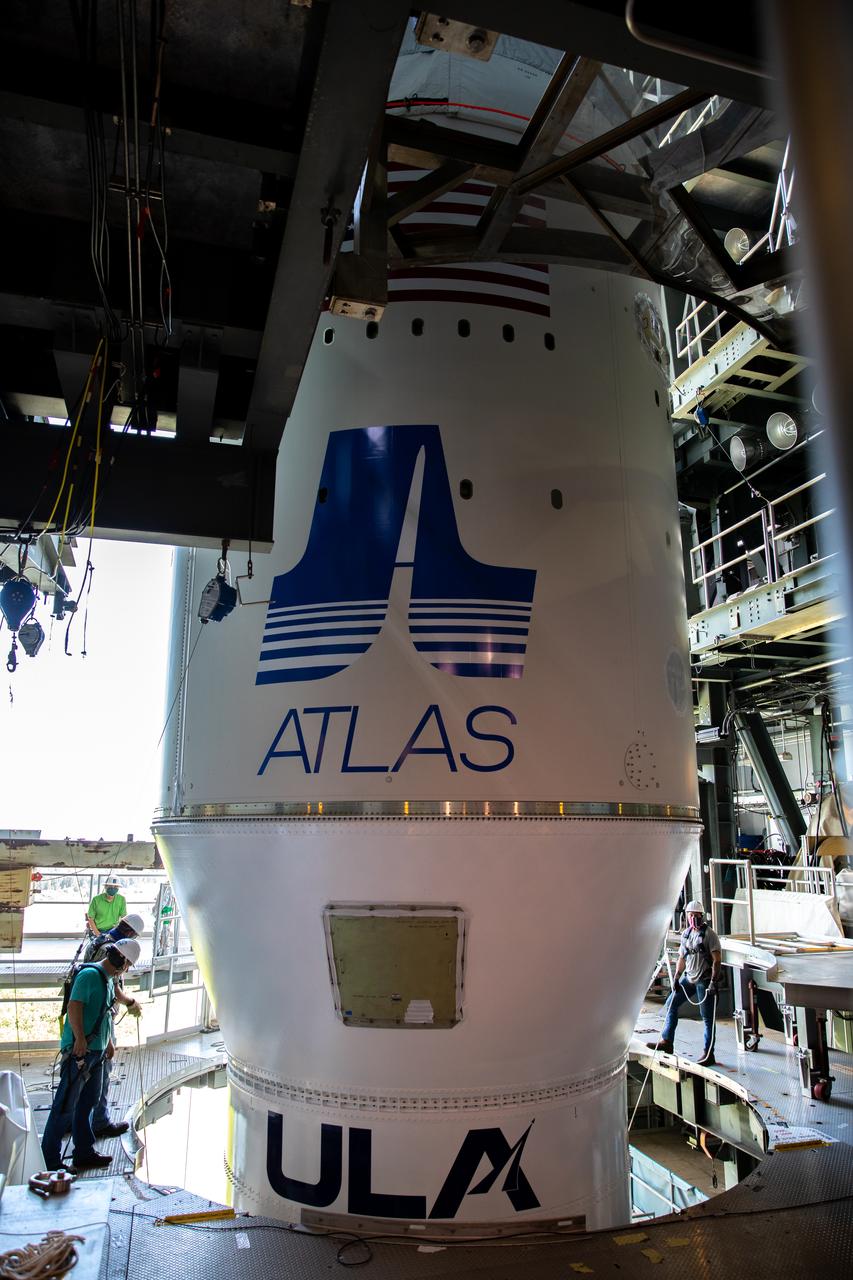
Inside the Vertical Integration Facility at Space Launch Complex 41 at Cape Canaveral Air Force Station in Florida, the single-engine Centaur upper stage is being mated to the United Launch Alliance Atlas V rocket on June 10, 2020. NASA’s Mars Perseverance rover is scheduled to launch atop the Atlas V 541 rocket from Pad 41 on July 20, 2020. The rover is part of NASA’s Mars Exploration Program, a long-term effort of robotic exploration of the Red Planet. The rover’s seven instruments will search for habitable conditions in the ancient past and signs of past microbial life on Mars. The Launch Services Program at Kennedy is responsible for launch management.
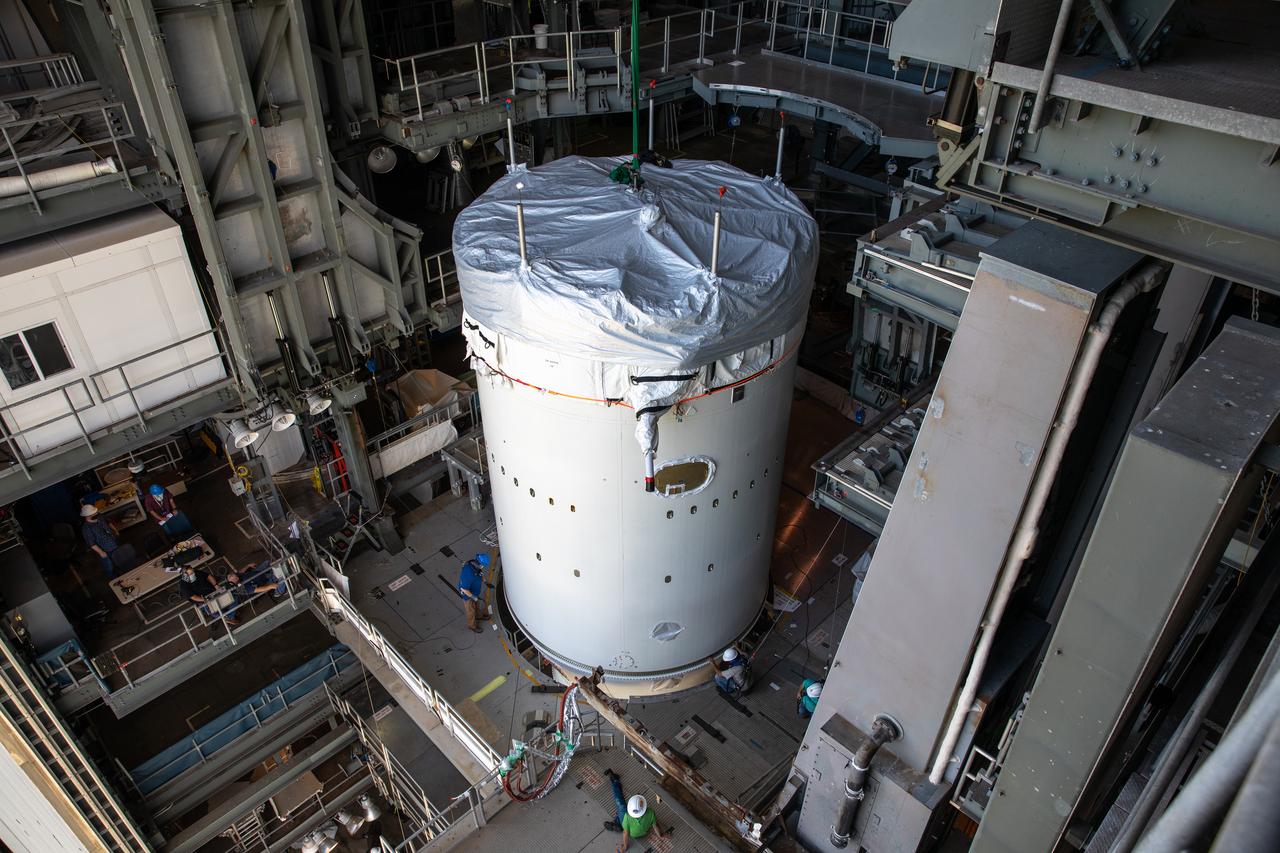
Inside the Vertical Integration Facility at Space Launch Complex 41 at Cape Canaveral Air Force Station in Florida, a crane lowers the single-engine Centaur upper stage for mating to the United Launch Alliance Atlas V rocket on June 10, 2020. NASA’s Mars Perseverance rover is scheduled to launch atop the Atlas V 541 rocket from Pad 41 on July 20, 2020. The rover is part of NASA’s Mars Exploration Program, a long-term effort of robotic exploration of the Red Planet. The rover’s seven instruments will search for habitable conditions in the ancient past and signs of past microbial life on Mars. The Launch Services Program at Kennedy is responsible for launch management.
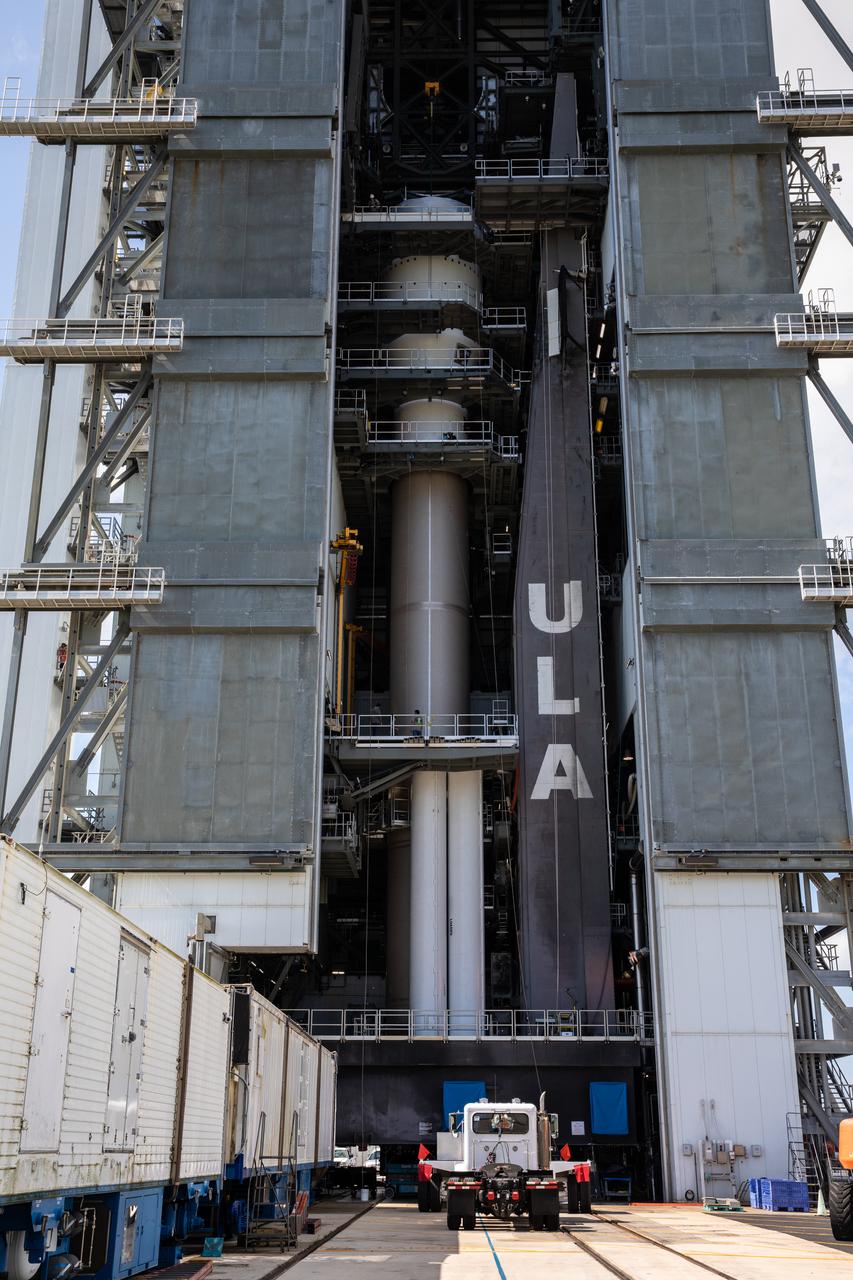
Inside the Vertical Integration Facility at Space Launch Complex 41 at Cape Canaveral Air Force Station in Florida, the single-engine Centaur upper stage is mated to the United Launch Alliance Atlas V rocket on June 10, 2020. NASA’s Mars Perseverance rover is scheduled to launch atop the Atlas V 541 rocket from Pad 41 on July 20, 2020. The rover is part of NASA’s Mars Exploration Program, a long-term effort of robotic exploration of the Red Planet. The rover’s seven instruments will search for habitable conditions in the ancient past and signs of past microbial life on Mars. The Launch Services Program at Kennedy is responsible for launch management.
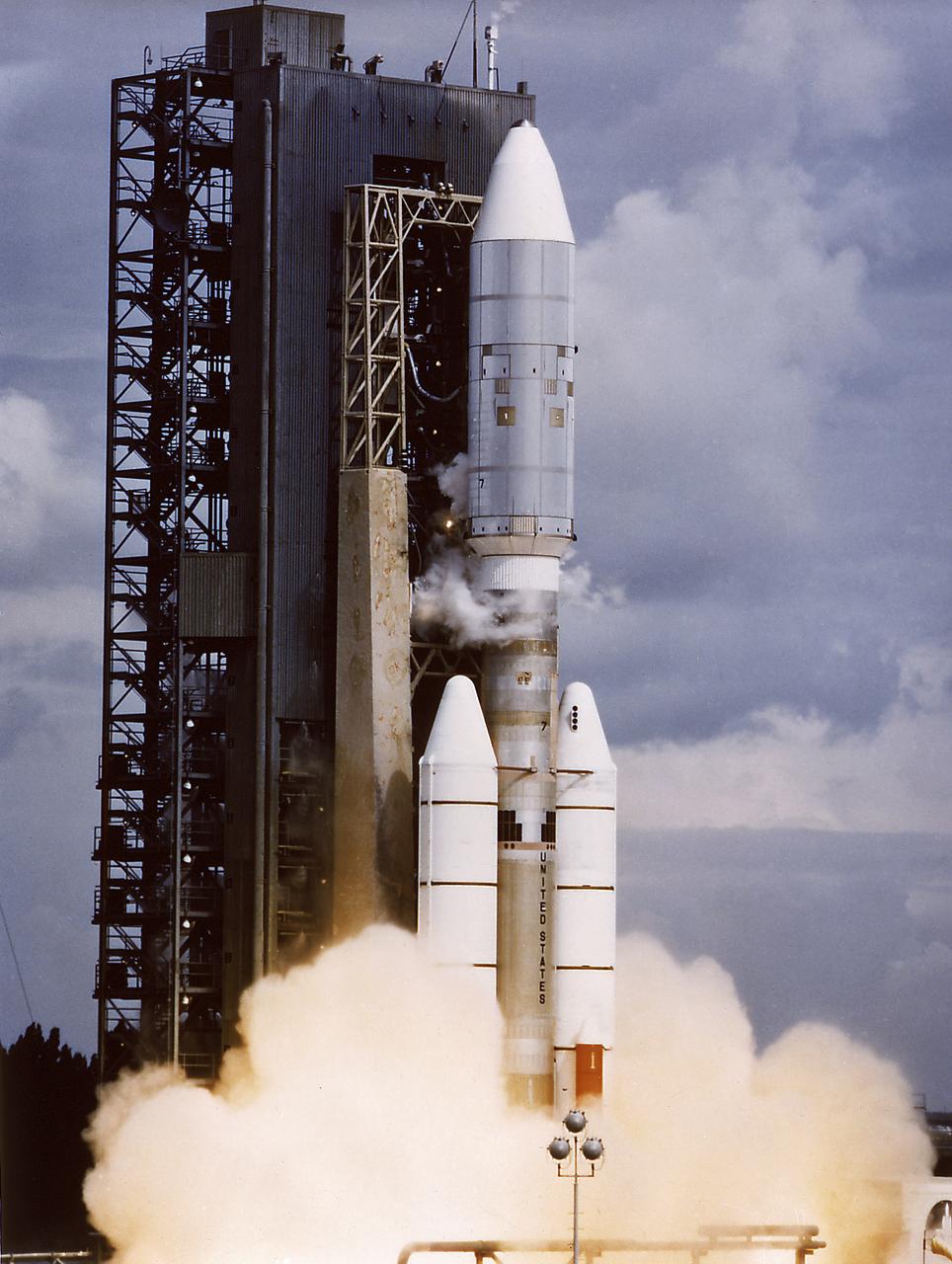
The Voyager 2 aboard Titan III-Centaur launch vehicle lifted off on August 20, 1977. The Voyager 2 was a scientific satellite to study the Jupiter and the Saturn planetary systems including their satellites and Saturn's rings.
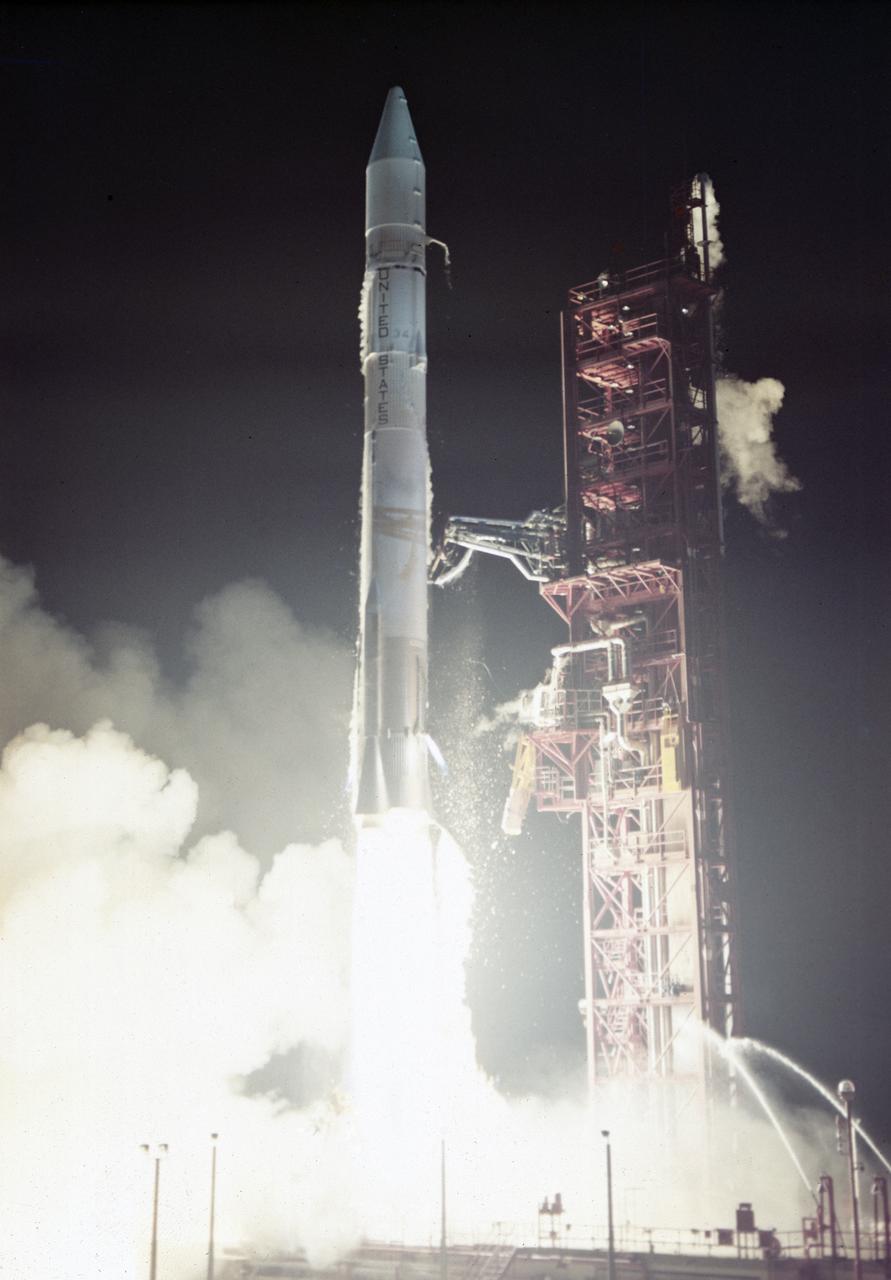
The launch of the Atlas-Centaur carrying the Mariner X spacecraft on November 3, 1973. This mission was for the exploration of the planets Venus and Mercury.
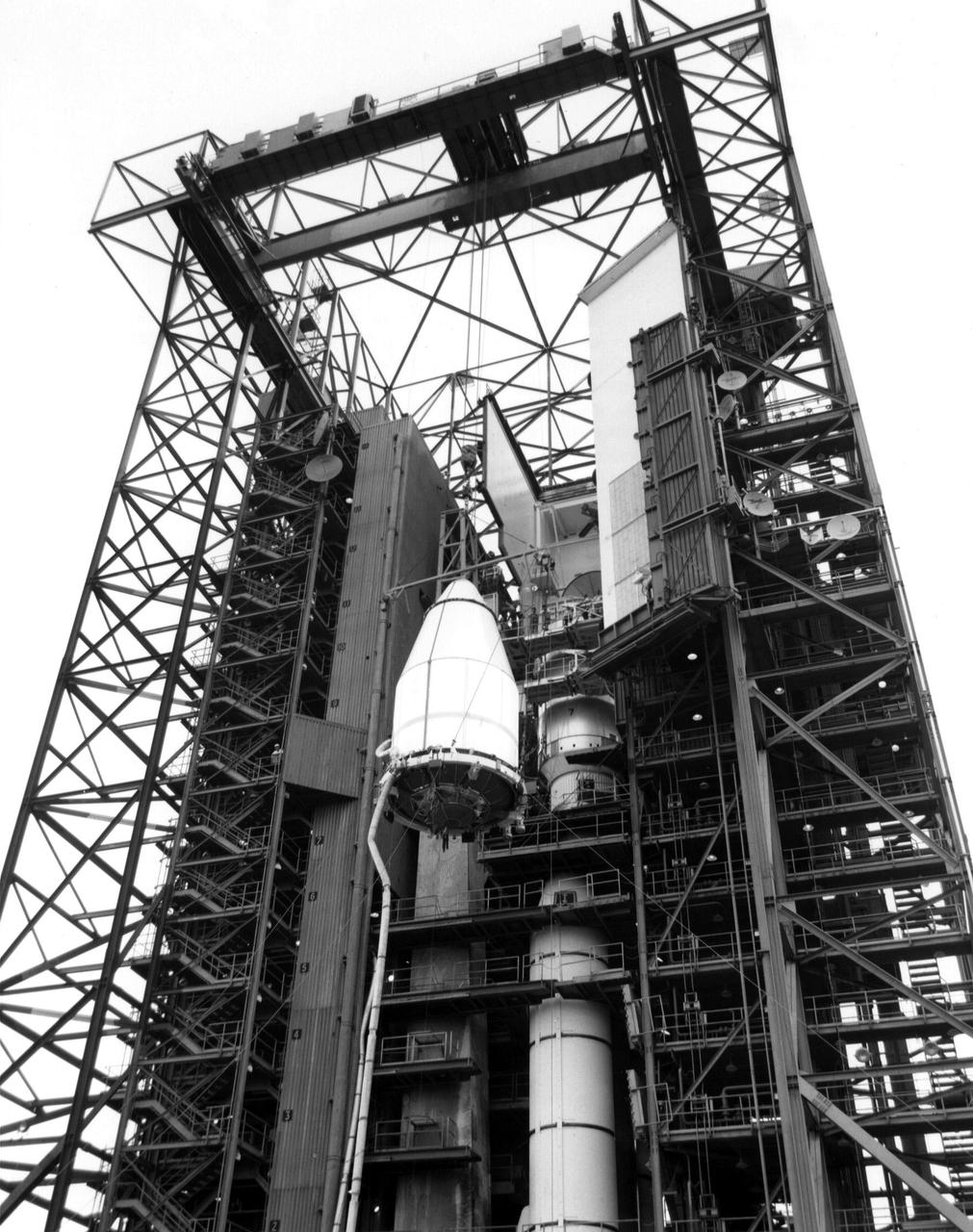
NASA's Voyager 2 spacecraft, encapsulated within its payload fairing, is seen on August 5, 1977. It launched atop the Titan/Centaur-7 launch vehicle from Cape Canaveral Air Force Station in Florida on August 20, 1977, at 10:29 a.m. local time. https://photojournal.jpl.nasa.gov/catalog/PIA21742
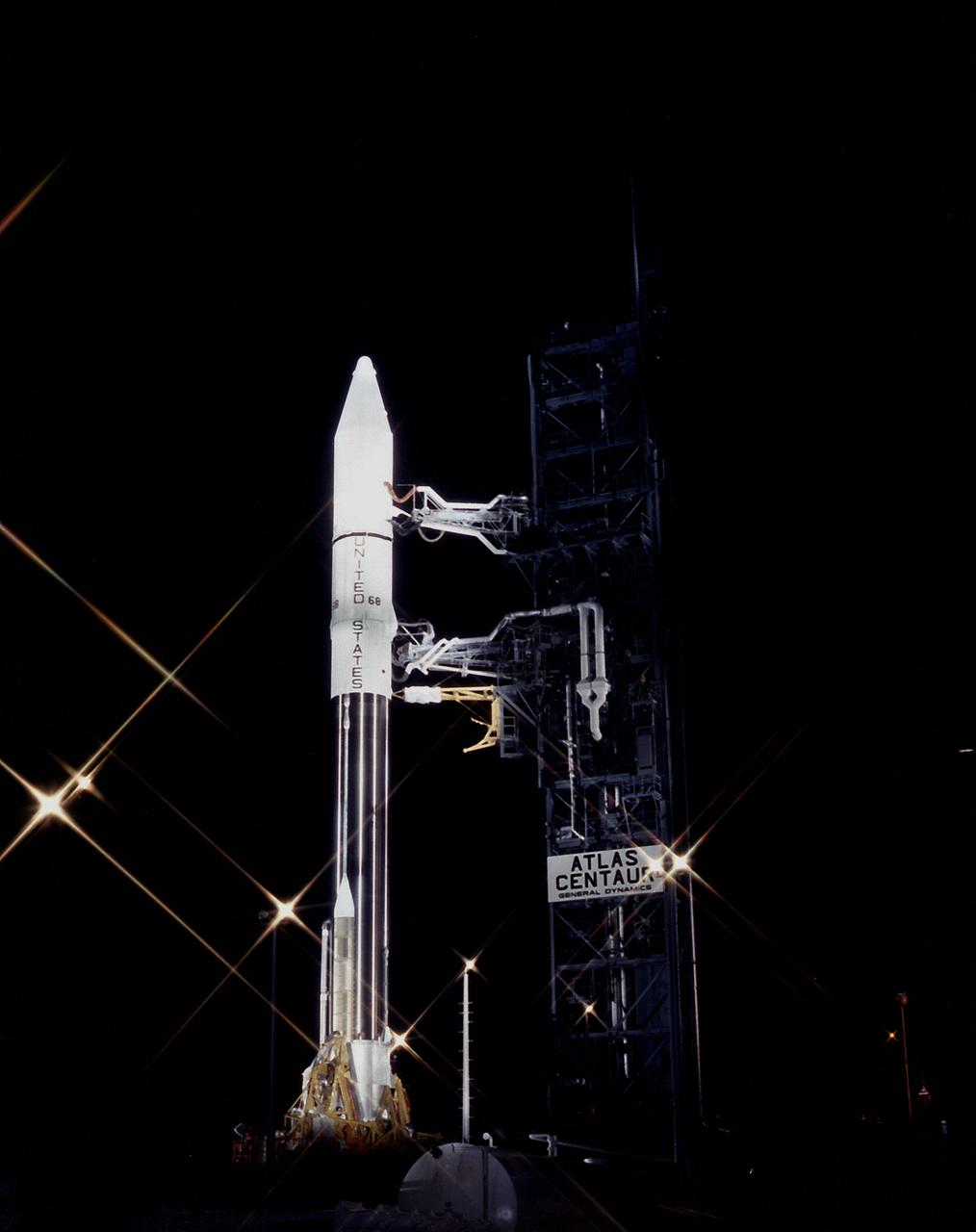
The Atlas-Centaur, AC-68 vehicle, with the FLTSATCOM (F-8 Communication Satellite) aboard, on the Complex 36 at the Cape Canaveral Air Force Station. The FLTSATCOM will provide communications for ships and submarines at sea, planes in the air and military ground units throughout the world. It will also provide instant communications between the President and the Commanding Officers.
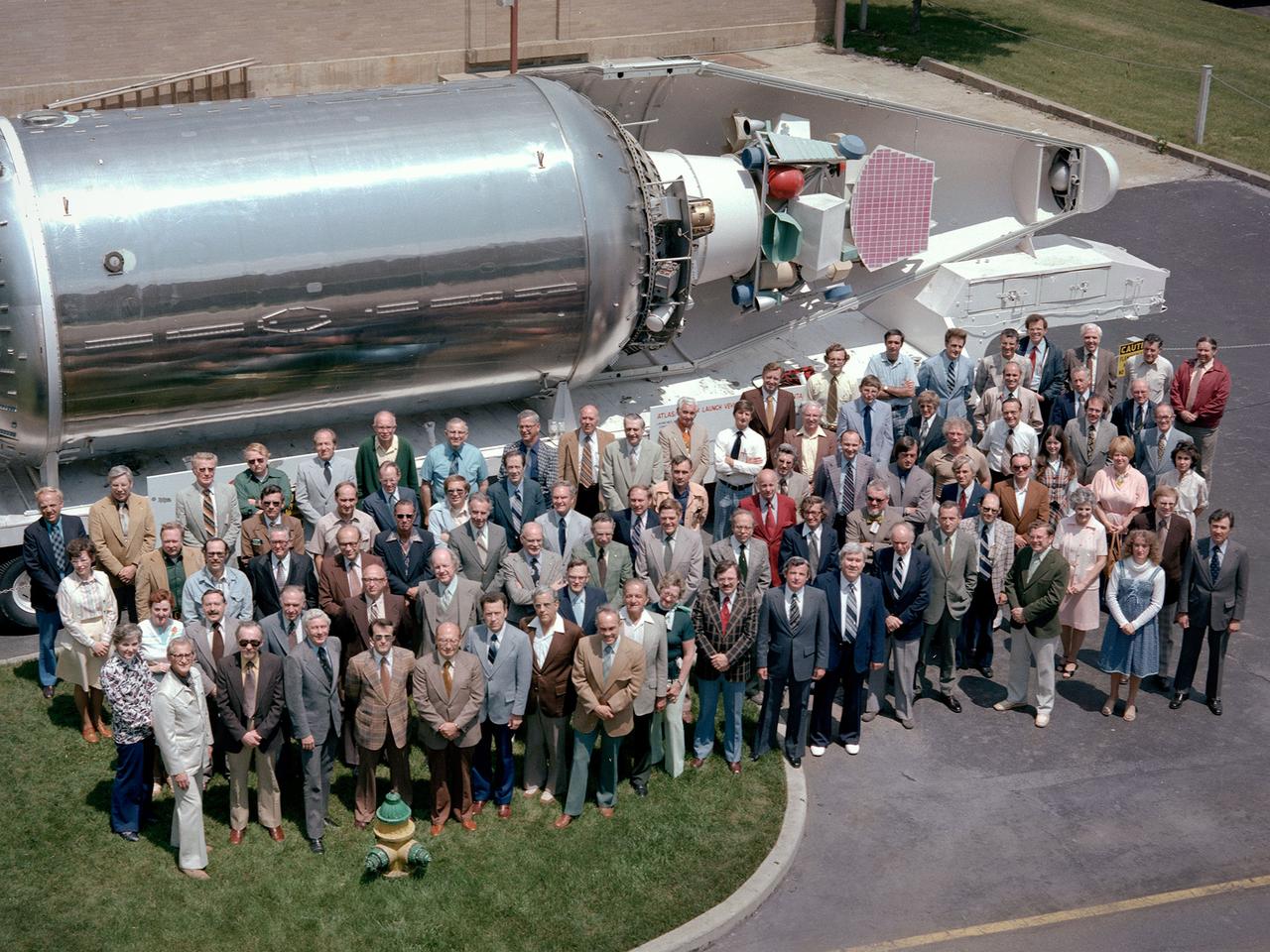
The National Aeronautics and Space Administration (NASA) Lewis Research Center’s Launch Vehicle Directorate in front of a full-scale model of the Centaur second-stage rocket. The photograph was taken to mark Centaur’s fiftieth launch. NASA Lewis managed the Centaur Program since 1962. At that time, the only prior launch attempt ended in failure. Lewis improved the spacecraft and tested it extensively throughout the early 1960s. In May 1966 an Atlas-Centaur sent the Surveyor spacecraft to the moon. It was the first successful soft landing on another planet. The Launch Vehicles Division was formed in 1969 to handle the increasing number of Centaur launches. The Lewis team became experts at integrating the payload with the Centaur and calculating proper trajectories for the missions. Centaur’s first 50 missions included Orbiting Astronomical Observatories, the Mariner 6 and 7 flybys of Mars, Mariner 9 which was the first spacecraft to orbit around another planet, the Pioneer 10 and 11 missions to the outer solar system, the Mariner 10 flyby of Venus and Mercury, the Viking 1 and 2 Mars landers, Voyagers 1 and 2 missions to Jupiter, Saturn, Uranus, and Neptune, and the Pioneer 12 and 13 flights to Venus.
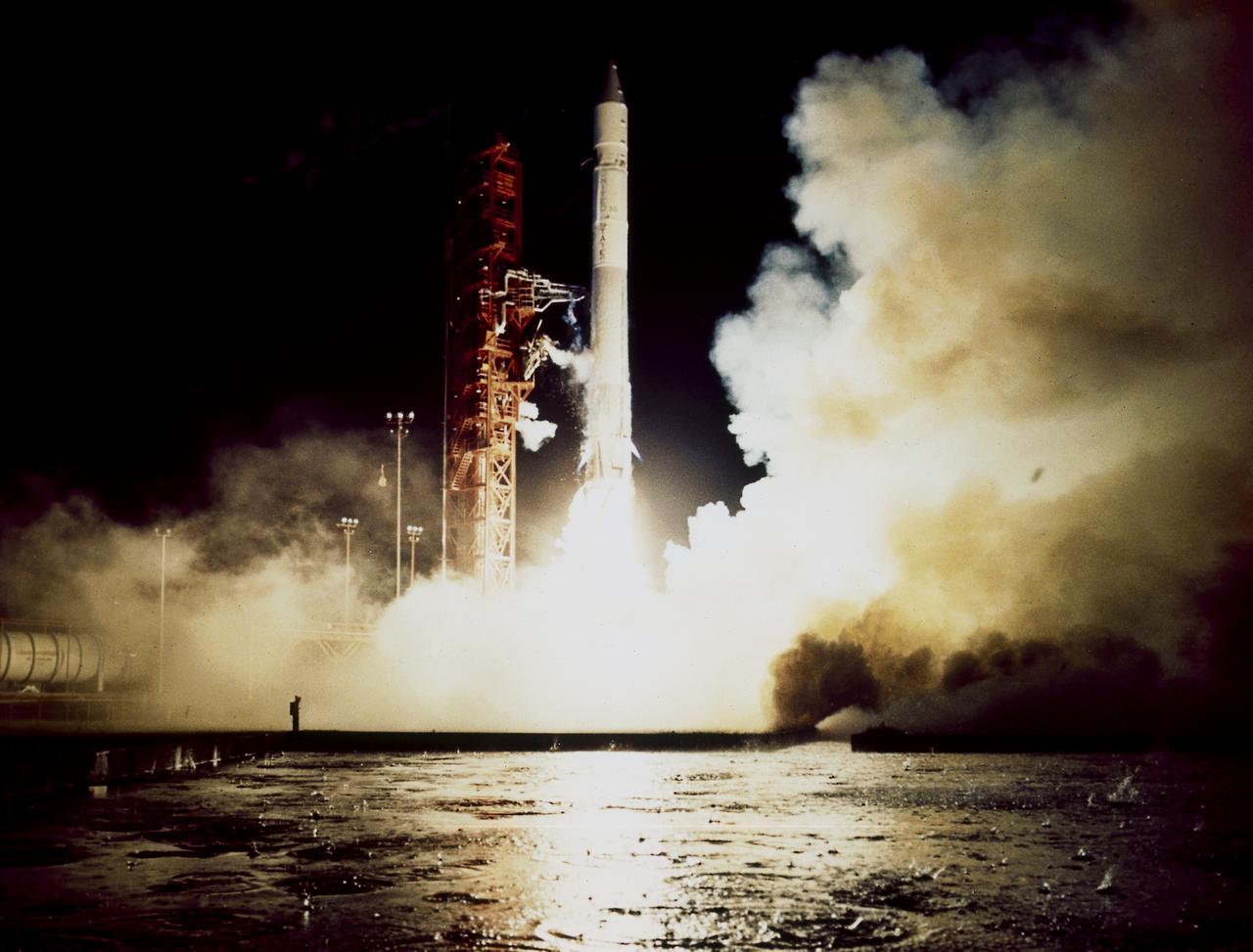
The launch of the Atlas-Centaur carrying the Pioneer G (11) spacecraft on April 5, 1973. The objects of this flight was to explore the planet Jupiter and its environment.
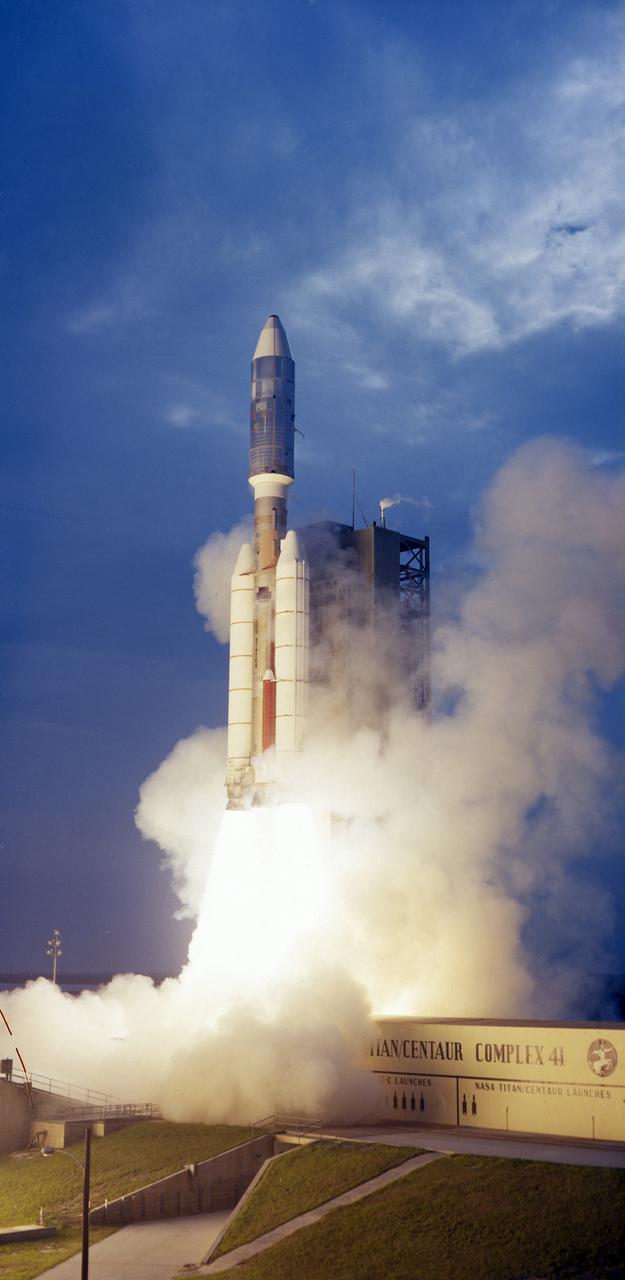
The Titan III-Centaur carrying the Viking 1 Lander lifted off on August 20, 1975. The Viking Lander conducted a detailed scientific investigation of the planet Mars.
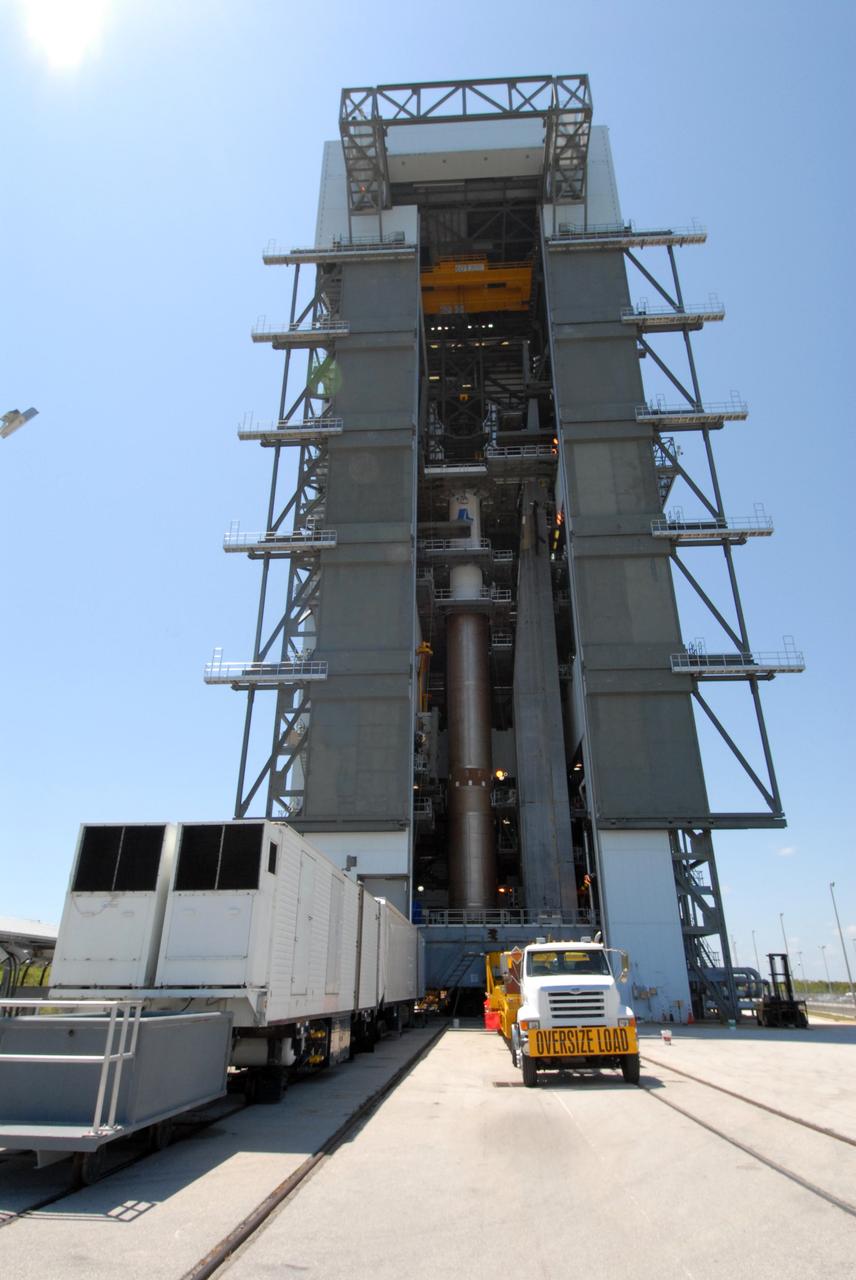
CAPE CANAVERAL, Fla. –– On Cape Canaveral Air Force Station's Launch Complex 41, the Centaur upper stage is moved into place in the Vertical Integration Facility for installation onto the Atlas V first stage, seen below it. The Atlas V/Centaur is the launch vehicle for NASA's Lunar Reconnaissance Orbiter, or LRO, and NASA's Lunar CRater Observation and Sensing Satellite, known as LCROSS. LCROSS and LRO are the first missions in NASA's plan to return humans to the moon and begin establishing a lunar outpost by 2020. Photo credit: NASA/Jack Pfaller
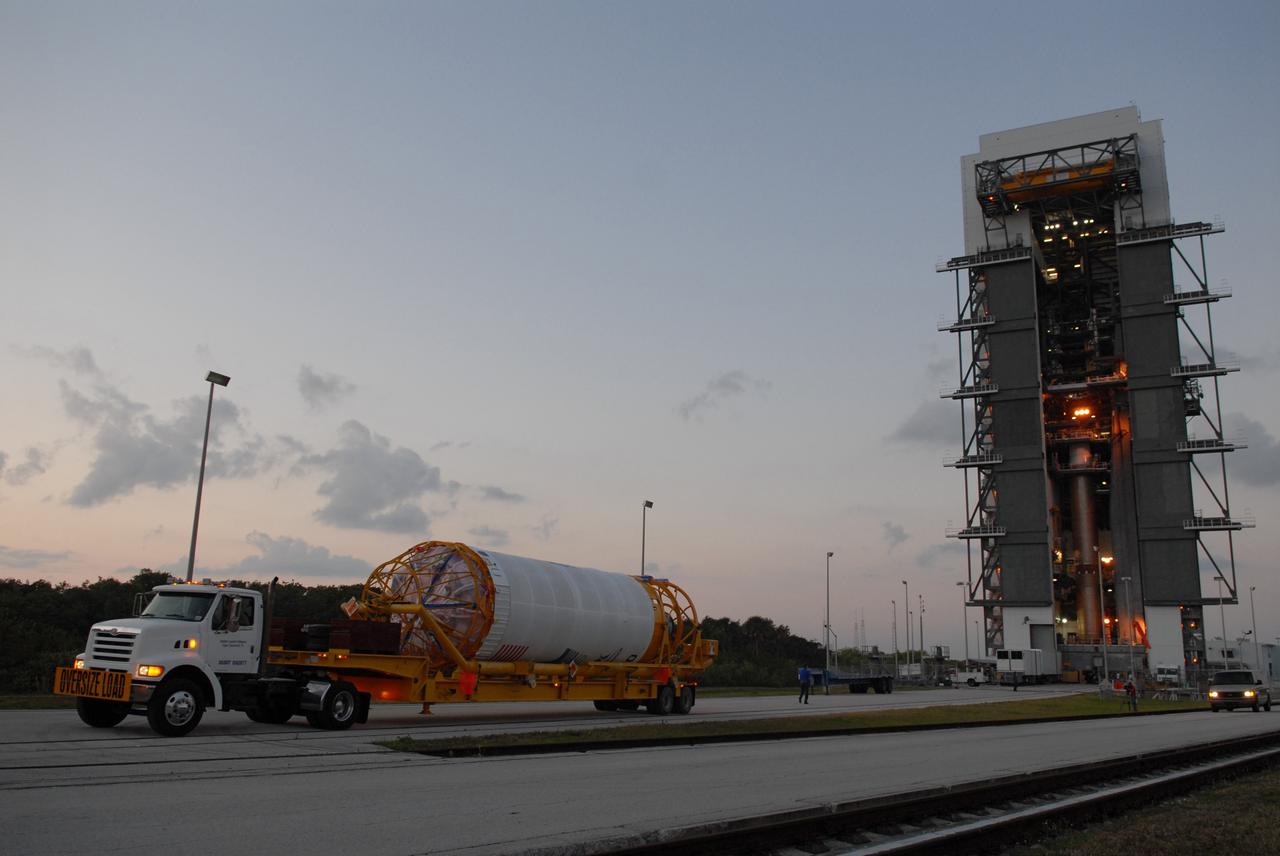
CAPE CANAVERAL, Fla. –– The Centaur upper stage is transported to the Vertical Integration Facility near Cape Canaveral Air Force Station's Launch Complex 41, where it will be lifted onto the Atlas V first stage. The Atlas V/Centaur is the launch vehicle for NASA's Lunar Reconnaissance Orbiter, or LRO, and NASA's Lunar CRater Observation and Sensing Satellite, known as LCROSS. LCROSS and LRO are the first missions in NASA's plan to return humans to the moon and begin establishing a lunar outpost by 2020. Photo credit: NASA/Jack Pfaller

CAPE CANAVERAL, Fla. –– On Cape Canaveral Air Force Station's Launch Complex 41, the Centaur upper stage is moved inside the Vertical Integration Facility for installation onto the Atlas V first stage, already in the tower. The Atlas V/Centaur is the launch vehicle for NASA's Lunar Reconnaissance Orbiter, or LRO, and NASA's Lunar CRater Observation and Sensing Satellite, known as LCROSS. LCROSS and LRO are the first missions in NASA's plan to return humans to the moon and begin establishing a lunar outpost by 2020. Photo credit: NASA/Jack Pfaller
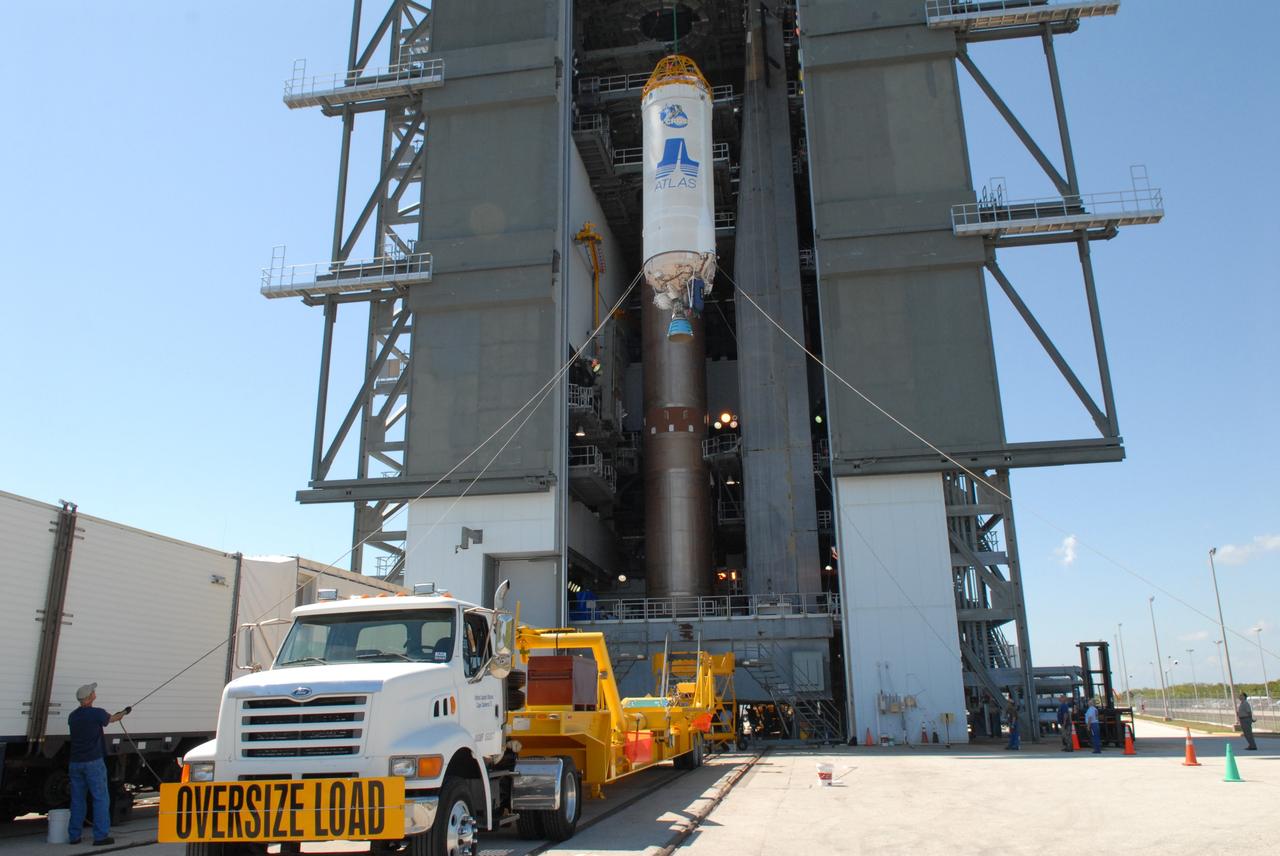
CAPE CANAVERAL, Fla. –– On Cape Canaveral Air Force Station's Launch Complex 41, the crane lifts the Centaur upper stage into the Vertical Integration Facility for installation onto the Atlas V first stage, already in the tower. The Atlas V/Centaur is the launch vehicle for NASA's Lunar Reconnaissance Orbiter, or LRO, and NASA's Lunar CRater Observation and Sensing Satellite, known as LCROSS. LCROSS and LRO are the first missions in NASA's plan to return humans to the moon and begin establishing a lunar outpost by 2020. Photo credit: NASA/Jack Pfaller
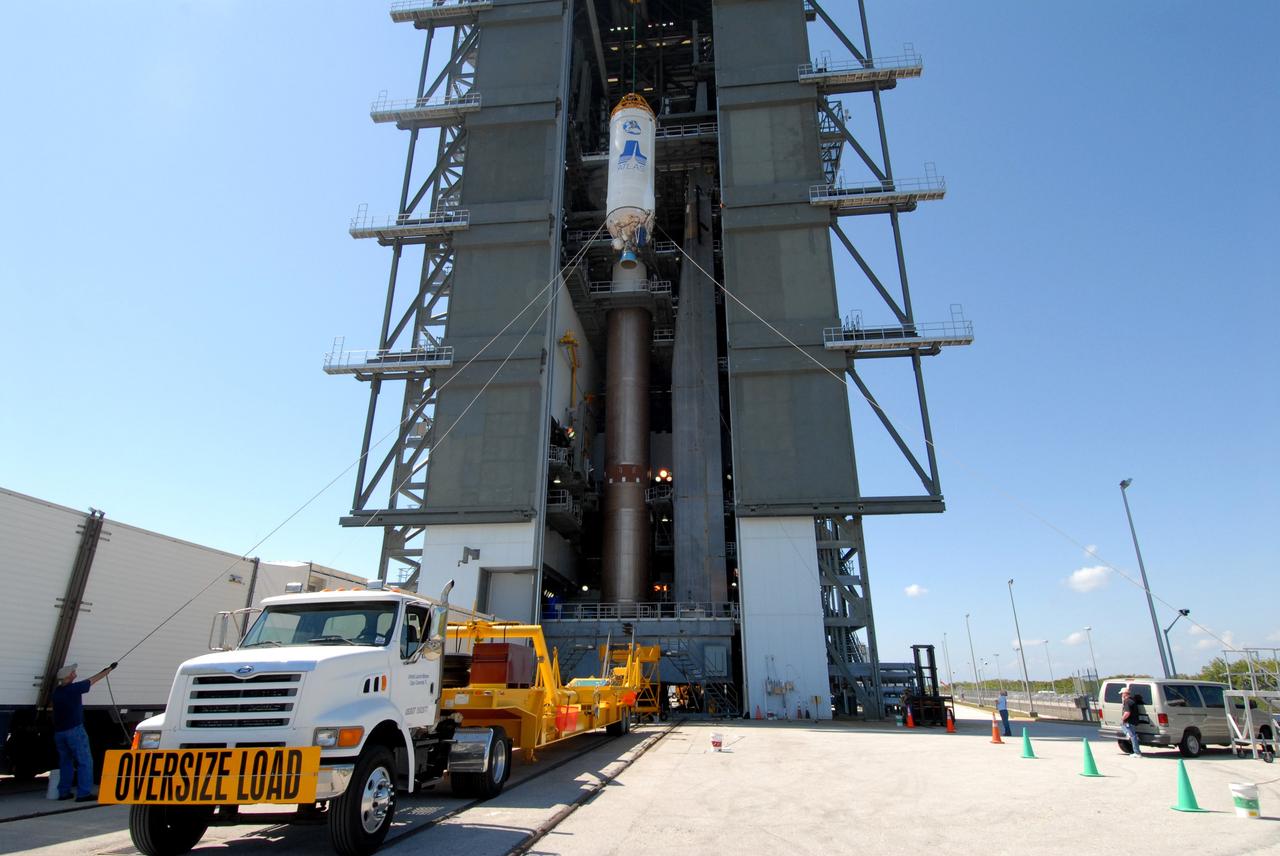
CAPE CANAVERAL, Fla. –– On Cape Canaveral Air Force Station's Launch Complex 41, the crane lifts the Centaur upper stage into the Vertical Integration Facility for installation onto the Atlas V first stage, seen in the tower. The Atlas V/Centaur is the launch vehicle for NASA's Lunar Reconnaissance Orbiter, or LRO, and NASA's Lunar CRater Observation and Sensing Satellite, known as LCROSS. LCROSS and LRO are the first missions in NASA's plan to return humans to the moon and begin establishing a lunar outpost by 2020. Photo credit: NASA/Jack Pfaller
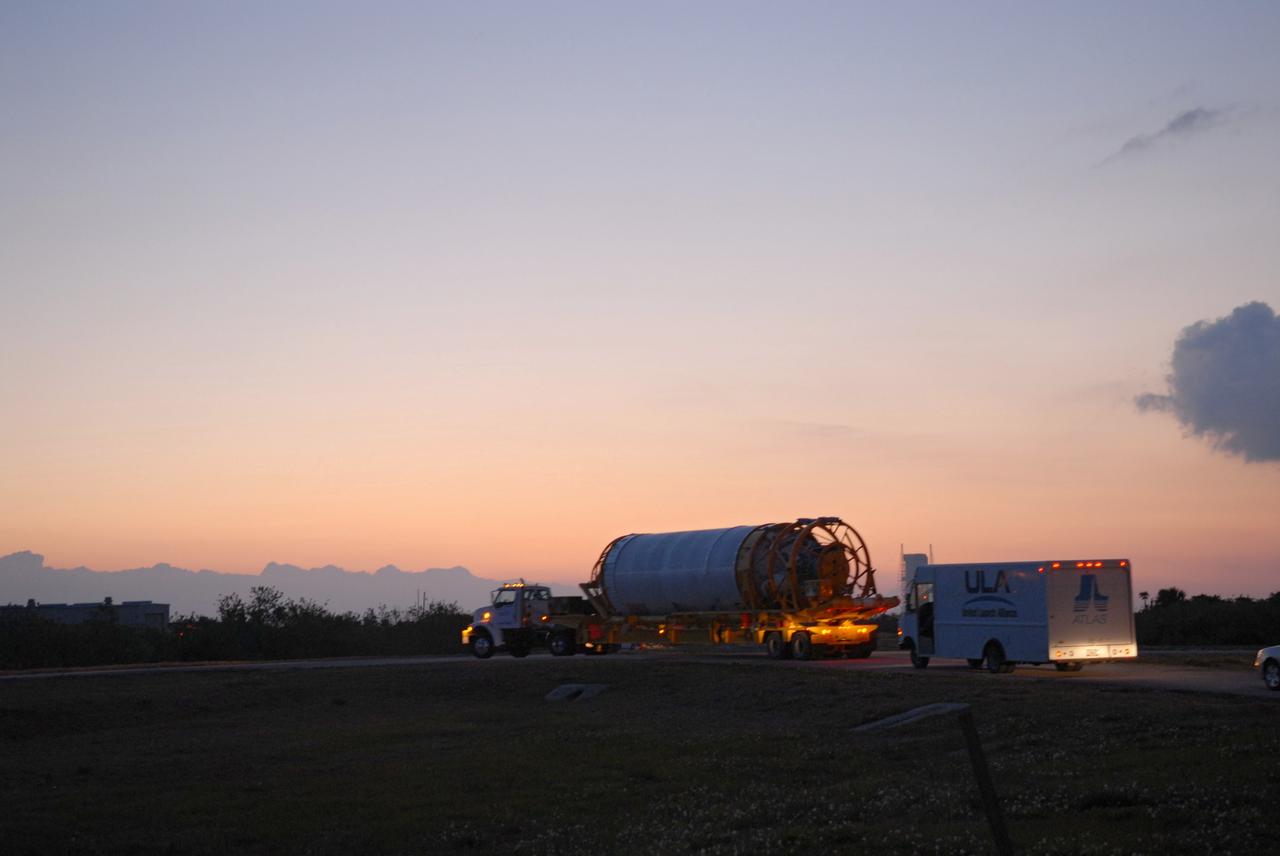
CAPE CANAVERAL, Fla. –– The Centaur upper stage is transported to the Vertical Integration Facility near Cape Canaveral Air Force Station's Launch Complex 41, where it will be lifted onto the Atlas V first stage. The Atlas V/Centaur is the launch vehicle for NASA's Lunar Reconnaissance Orbiter, or LRO, and NASA's Lunar CRater Observation and Sensing Satellite, known as LCROSS. LCROSS and LRO are the first missions in NASA's plan to return humans to the moon and begin establishing a lunar outpost by 2020. Photo credit: NASA/Jack Pfaller
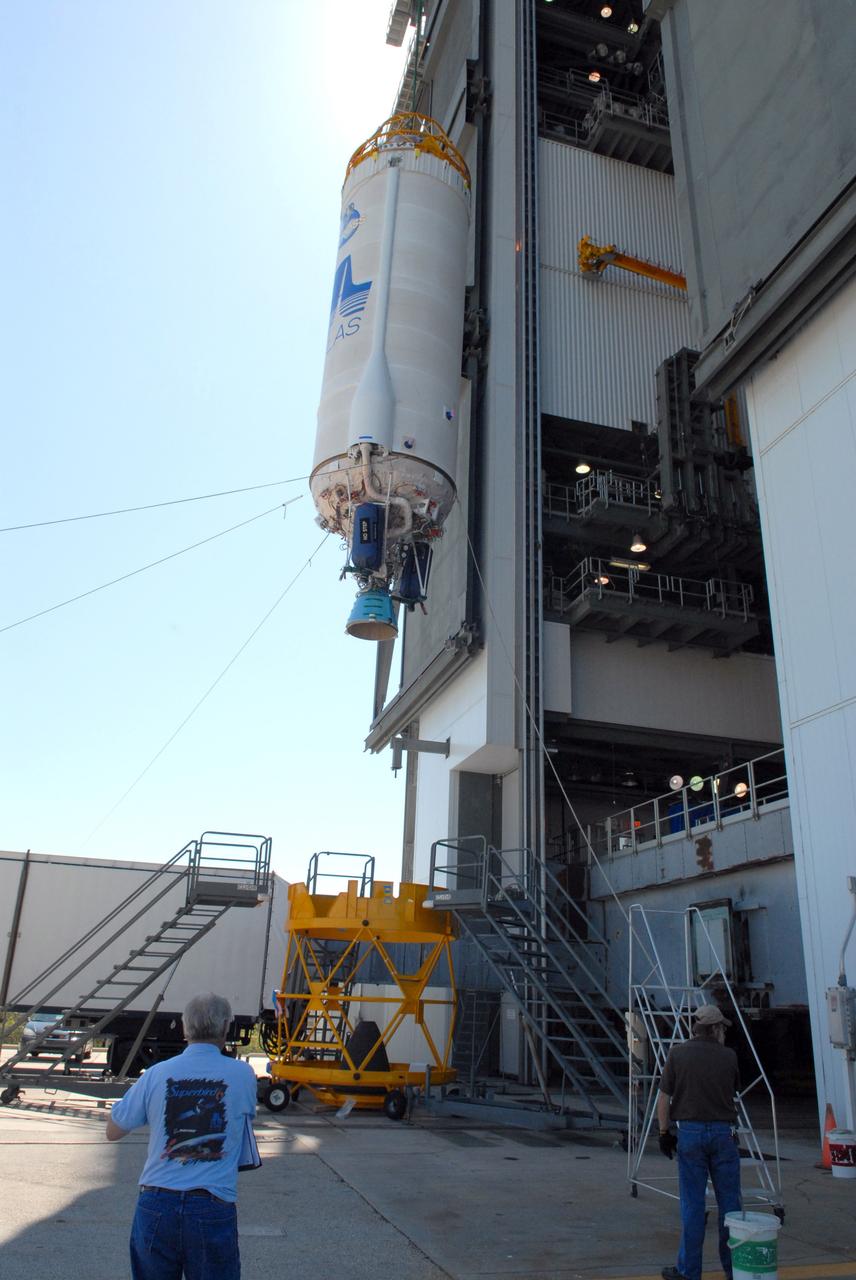
CAPE CANAVERAL, Fla. –– On Cape Canaveral Air Force Station's Launch Complex 41, the crane lifts the Centaur upper stage into the Vertical Integration Facility for installation onto the Atlas V first stage, already in the tower. The Atlas V/Centaur is the launch vehicle for NASA's Lunar Reconnaissance Orbiter, or LRO, and NASA's Lunar CRater Observation and Sensing Satellite, known as LCROSS. LCROSS and LRO are the first missions in NASA's plan to return humans to the moon and begin establishing a lunar outpost by 2020. Photo credit: NASA/Jack Pfaller
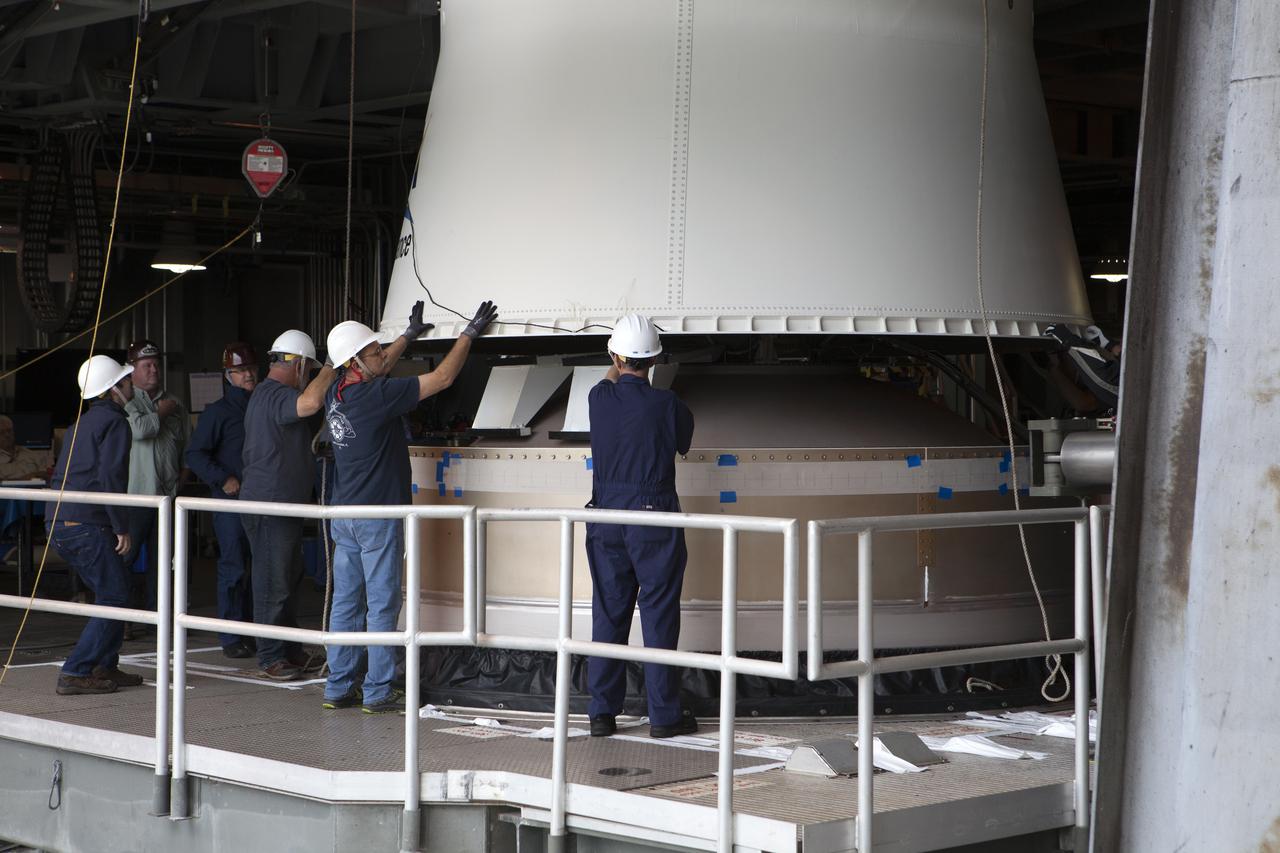
Technicians with United Launch Alliance (ULA) assist as the Centaur upper stage of the ULA Atlas V rocket is lowered onto the first stage booster inside the Vertical Integration Facility at Space Launch Complex 41 at Cape Canaveral Air Force Station in Florida. The rocket is being prepared for Orbital ATK's seventh commercial resupply mission, CRS-7, to the International Space Station. Orbital ATK's CYGNUS pressurized cargo module is scheduled to launch atop ULA's Atlas V rocket from Pad 41 on March 19, 2017. CYGNUS will deliver 7,600 pounds of supplies, equipment and scientific research materials to the space station.
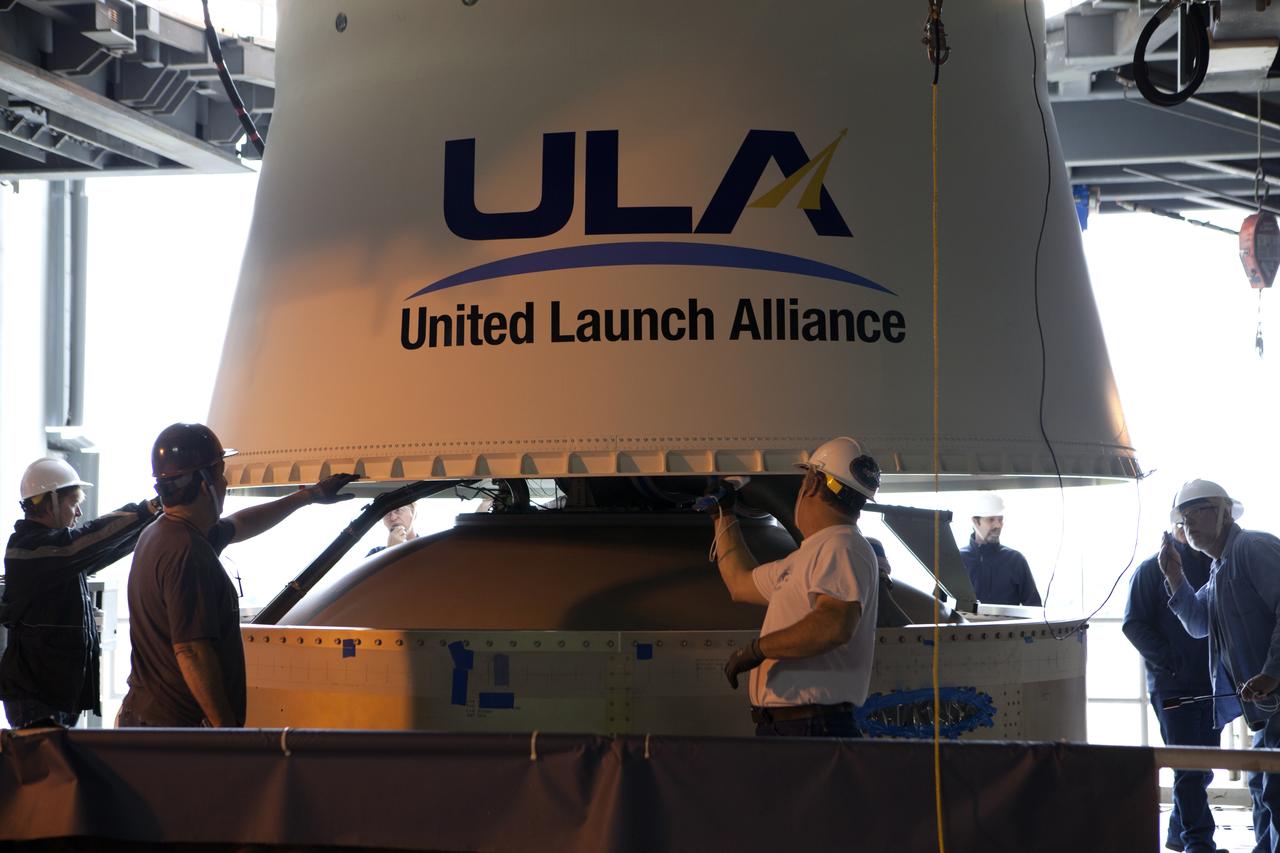
Technicians with United Launch Alliance (ULA) assist as the Centaur upper stage of the ULA Atlas V rocket is lowered onto the first stage booster inside the Vertical Integration Facility at Space Launch Complex 41 at Cape Canaveral Air Force Station in Florida. The rocket is being prepared for Orbital ATK's seventh commercial resupply mission, CRS-7, to the International Space Station. Orbital ATK's CYGNUS pressurized cargo module is scheduled to launch atop ULA's Atlas V rocket from Pad 41 on March 19, 2017. CYGNUS will deliver 7,600 of pounds of supplies, equipment and scientific research materials to the space station.
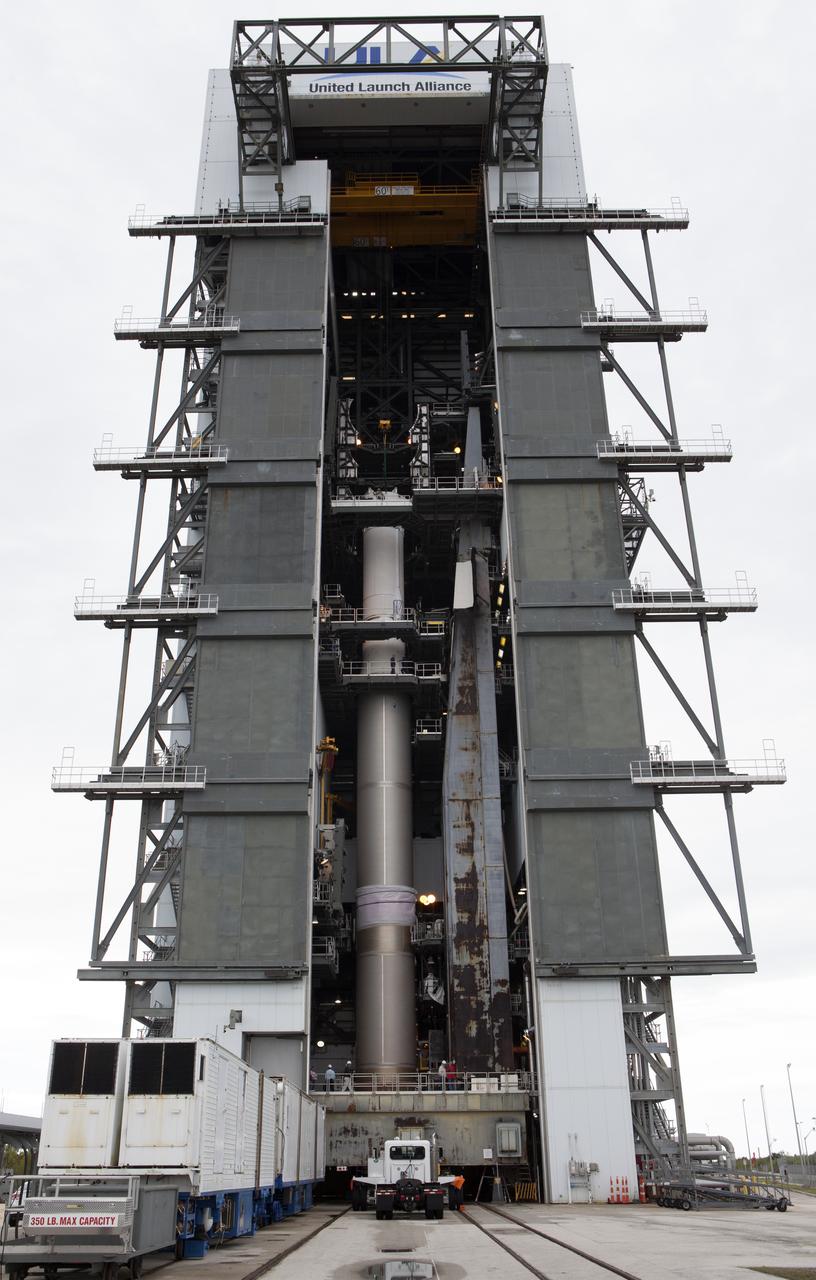
The Centaur upper stage of the United Launch Alliance (ULA) Atlas V rocket is secured on top of the first stage booster inside the Vertical Integration Facility at Space Launch Complex 41 at Cape Canaveral Air Force Station in Florida. The rocket is being prepared for Orbital ATK's seventh commercial resupply mission, CRS-7, to the International Space Station. Orbital ATK's CYGNUS pressurized cargo module is scheduled to launch atop ULA's Atlas V rocket from Pad 41 on March 19, 2017. CYGNUS will deliver 7,600 pounds of supplies, equipment and scientific research materials to the space station.
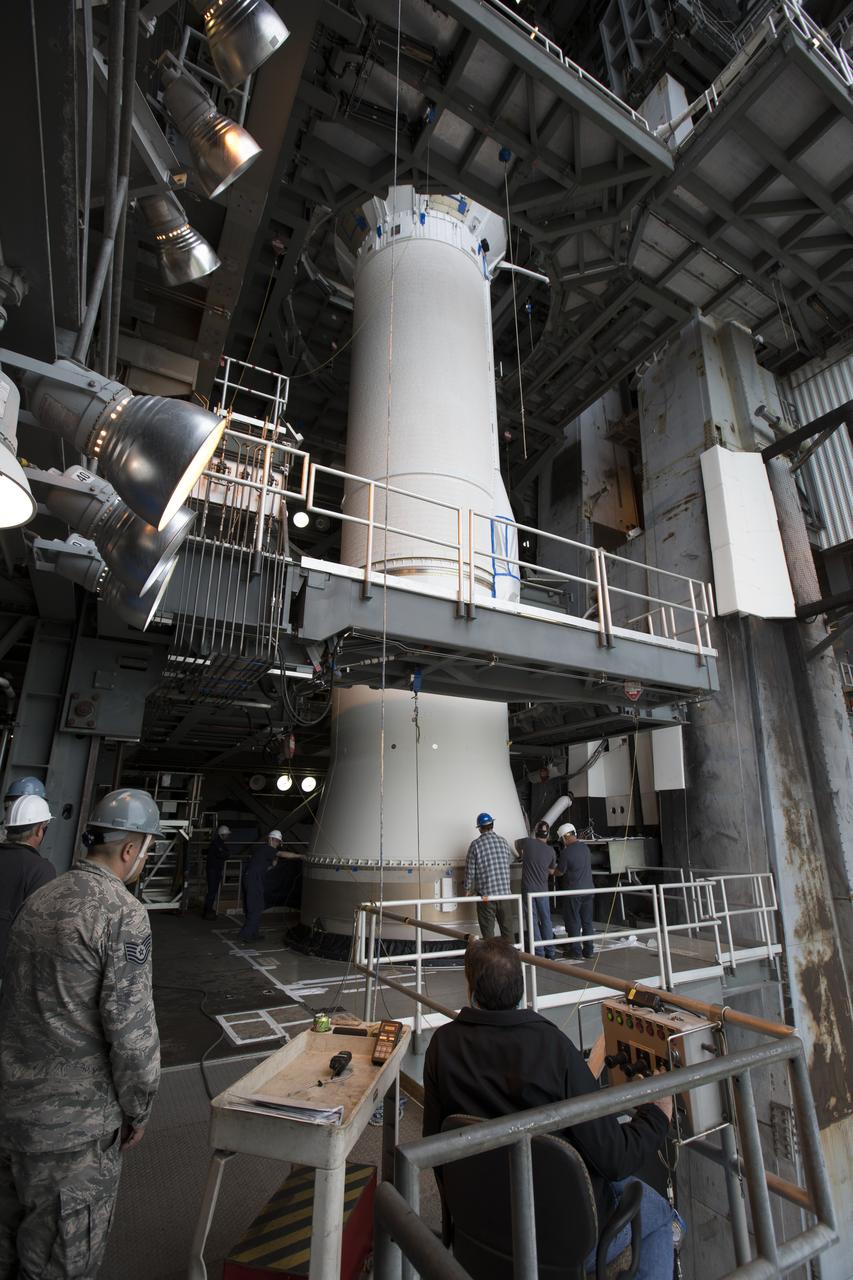
Technicians with United Launch Alliance (ULA) assist as the Centaur upper stage of the ULA Atlas V rocket is lowered onto the first stage booster inside the Vertical Integration Facility at Space Launch Complex 41 at Cape Canaveral Air Force Station in Florida. The rocket is being prepared for Orbital ATK's seventh commercial resupply mission, CRS-7, to the International Space Station. Orbital ATK's CYGNUS pressurized cargo module is scheduled to launch atop ULA's Atlas V rocket from Pad 41 on March 19, 2017. CYGNUS will deliver 7,600 pounds of supplies, equipment and scientific research materials to the space station.
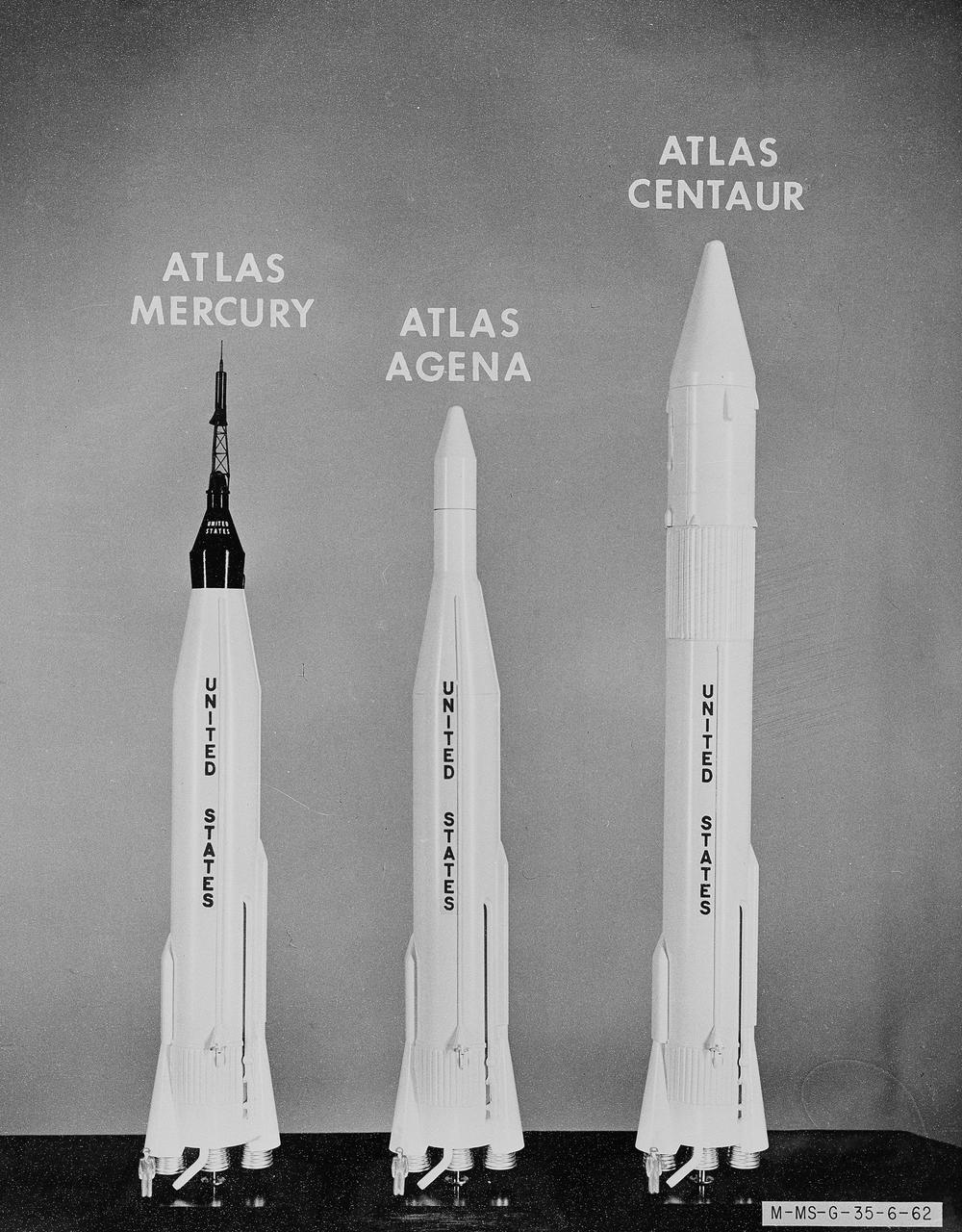
Photographed are models of early rocketry: The Atlas Mercury, Atlas Centaur, and Atlas Agena.
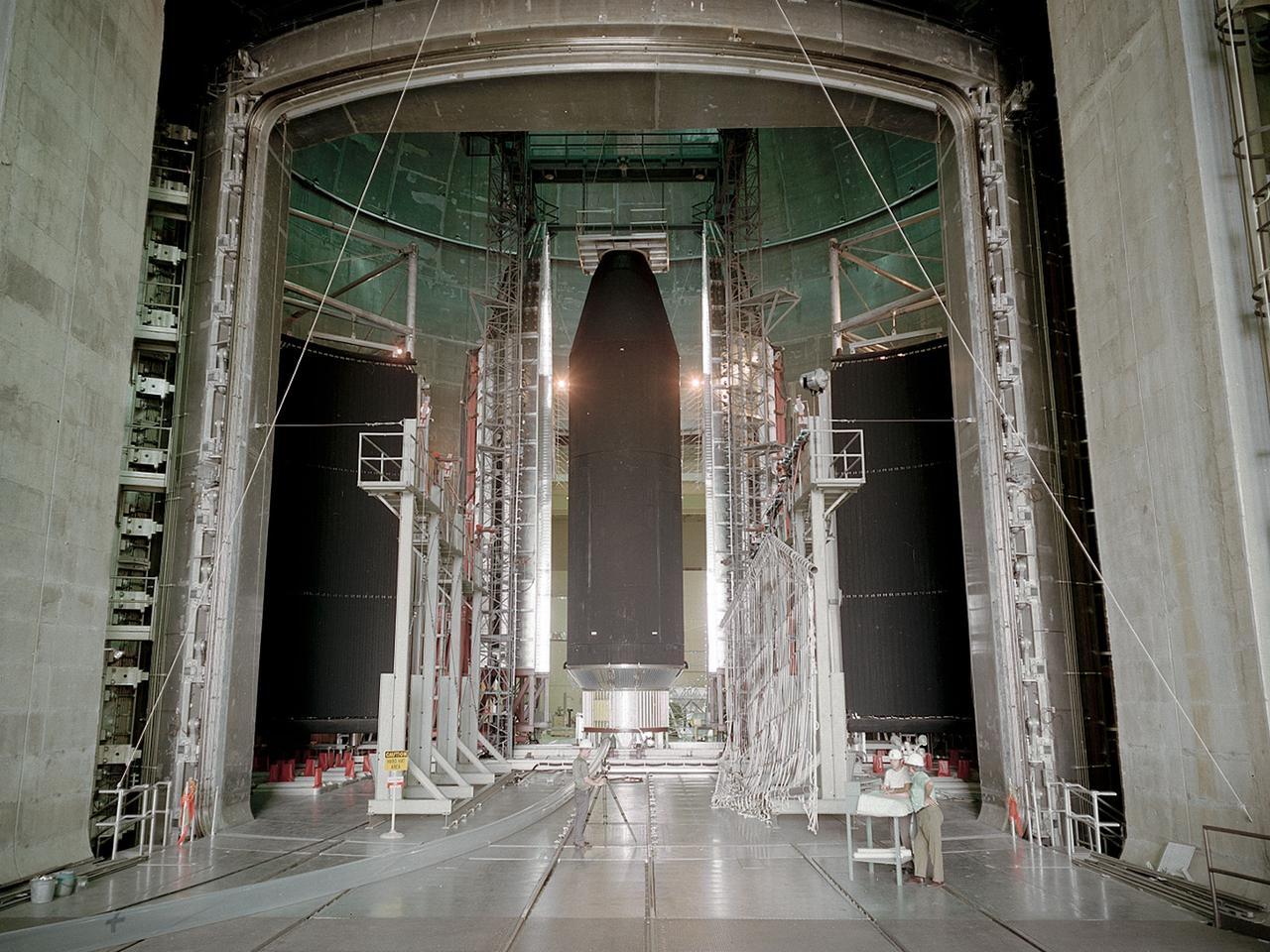
The Centaur Standard Shroud prepared for a jettison test in the Space Power Facility at the National Aeronautics and Space Administration’s (NASA) Plum Brook Station. In the late 1960s NASA engineers were planning the ambitious new Viking mission to send two rover vehicles to the surface of Mars. The Viking rovers were the heaviest payloads ever attempted by the Centaur second-stage rocket. Each Viking was over three times the weight of the Atlas-Centaur’s previous heaviest payload. Consequently, NASA engineers sought to mate the Centaur with the more powerful Titan III booster for the launches. General Dynamics created a new version of the Centaur, D-1T, specifically for Titan. The D-1T’s most significant modification was a completely new shroud designed by Lockheed, called the Centaur Standard Shroud. The conical two-piece covering encapsulated the payload to protect it against adverse conditions and improve the aerodynamics as the launch vehicle passed through the atmosphere. The shroud would be jettisoned when the vehicle reached the edge of space. A string of tests were conducted in Plum Brook’s Nuclear Rocket Dynamics and Control Facility (B-3) during 1973 and 1974. The new shroud performed flawlessly during the actual Viking launches in 1975. Viking 1 and 2 operated on the Martian surface until November 1982 and April 1980, respectively.
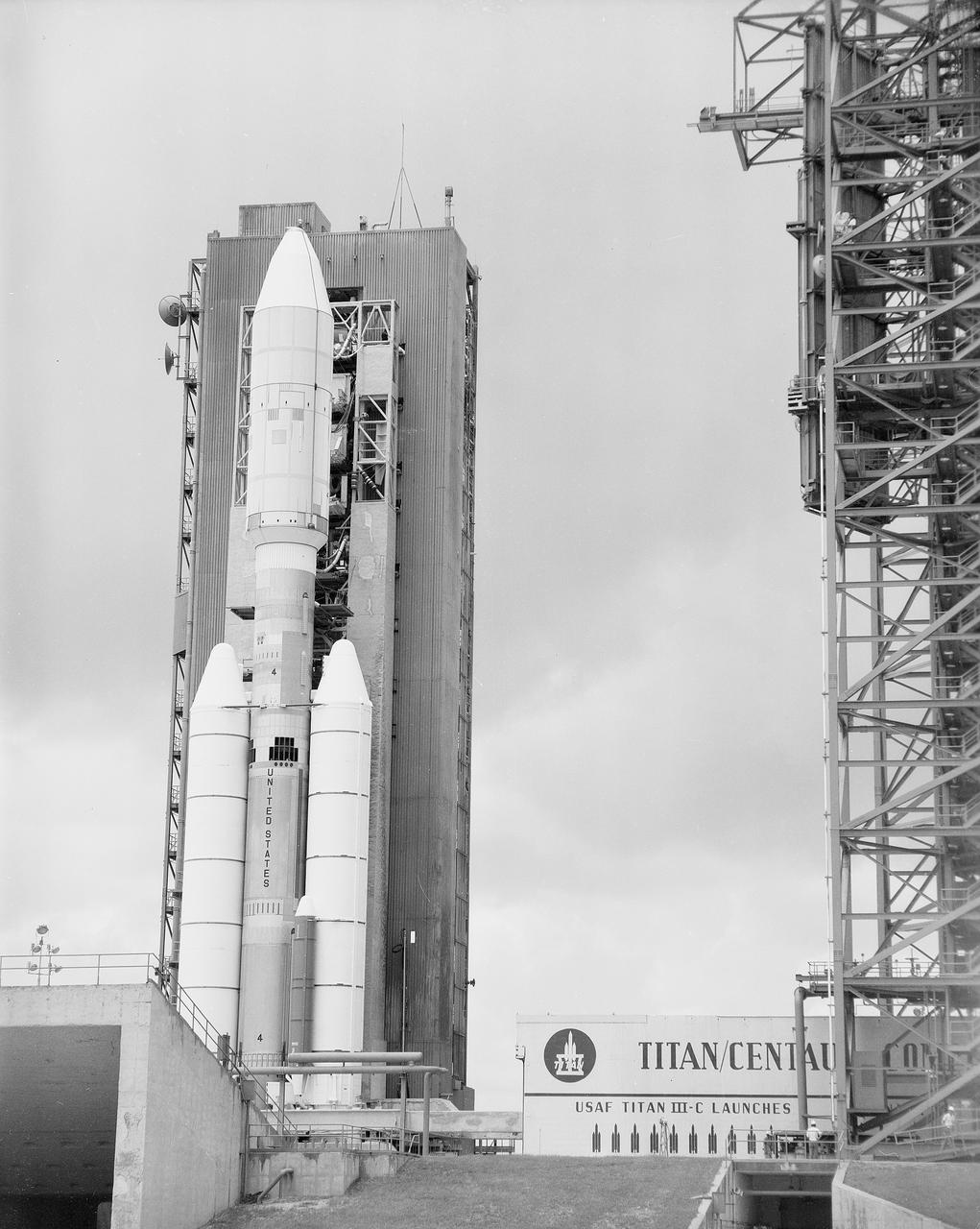
The Titan III/Centaur, Viking 1, is sitting on the launch pad ready for blast off. The launch occurred on August 20, 1975. The mission was for the scientific investigation of Mars, and United States’ first attempt to soft land a spacecraft on another planet.

Inside the Vertical Integration Facility at Space Launch Complex 41 at Cape Canaveral Air Force Station in Florida, United Launch Alliance (ULA) workers assist as a crane lowers the single-engine Centaur upper stage for mating to the ULA Atlas V rocket on June 10, 2020. NASA’s Mars Perseverance rover is scheduled to launch atop the Atlas V 541 rocket from Pad 41 on July 20, 2020. The rover is part of NASA’s Mars Exploration Program, a long-term effort of robotic exploration of the Red Planet. The rover’s seven instruments will search for habitable conditions in the ancient past and signs of past microbial life on Mars. The Launch Services Program at Kennedy is responsible for launch management.
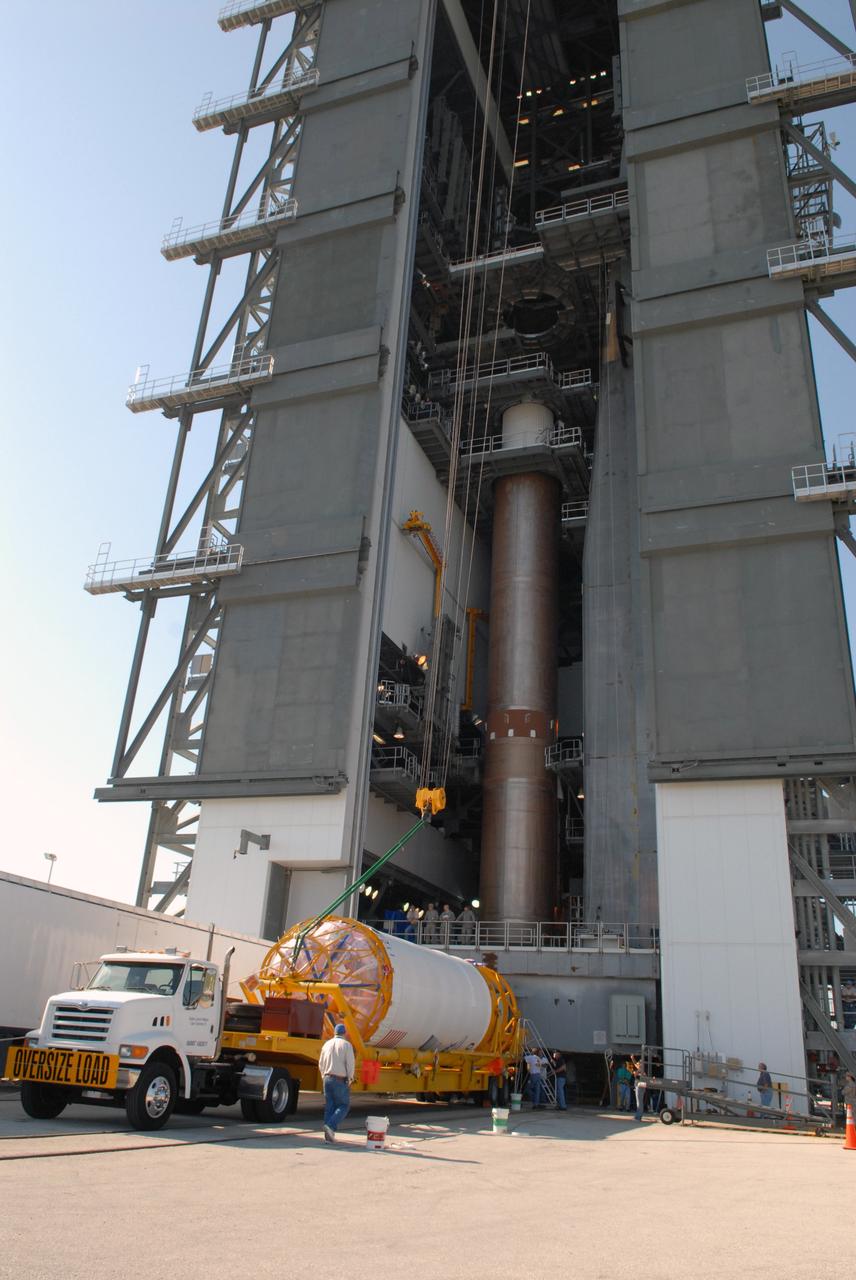
CAPE CANAVERAL, Fla. –– On Cape Canaveral Air Force Station's Launch Complex 41, cranes are attached to the Centaur upper stage in order to raise it to vertical. It will be lifted into the Vertical Integration Facility for installation onto the Atlas V first stage, already in the tower. The Atlas V/Centaur is the launch vehicle for NASA's Lunar Reconnaissance Orbiter, or LRO, and NASA's Lunar CRater Observation and Sensing Satellite, known as LCROSS. LCROSS and LRO are the first missions in NASA's plan to return humans to the moon and begin establishing a lunar outpost by 2020. Photo credit: NASA/Jack Pfaller
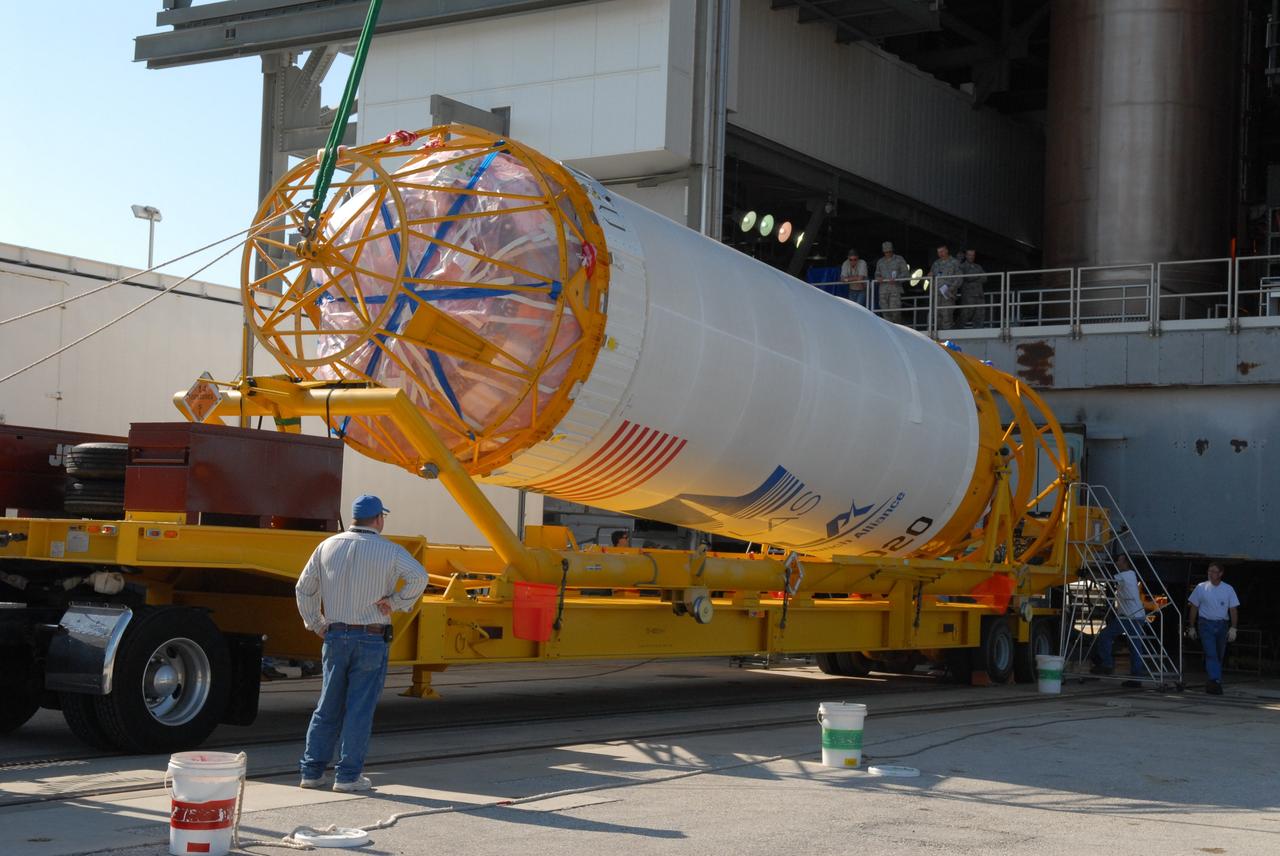
CAPE CANAVERAL, Fla. –– On Cape Canaveral Air Force Station's Launch Complex 41, the Centaur upper stage is raised from its transporter. When it is vertical, it will be lifted into the Vertical Integration Facility for installation onto the Atlas V first stage, already in the tower. The Atlas V/Centaur is the launch vehicle for NASA's Lunar Reconnaissance Orbiter, or LRO, and NASA's Lunar CRater Observation and Sensing Satellite, known as LCROSS. LCROSS and LRO are the first missions in NASA's plan to return humans to the moon and begin establishing a lunar outpost by 2020. Photo credit: NASA/Jack Pfaller
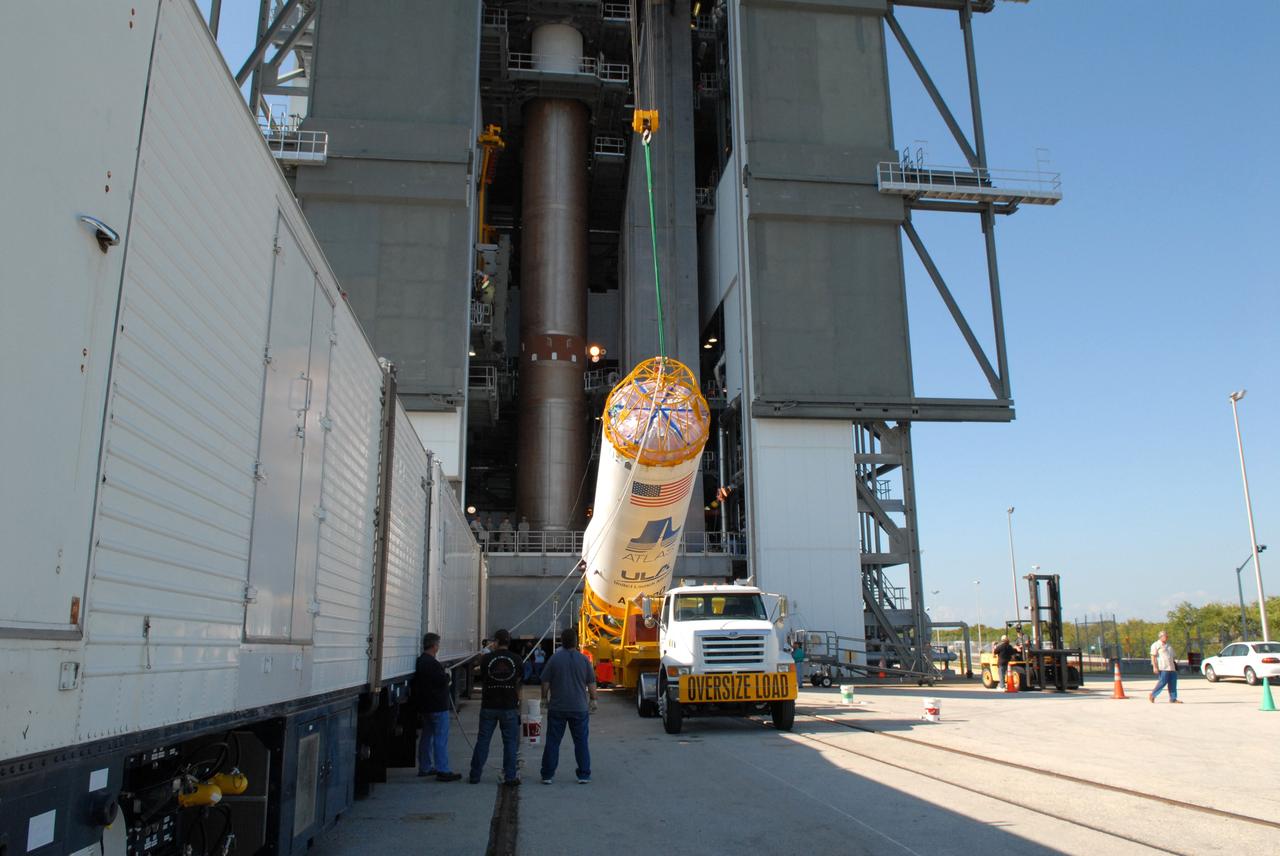
CAPE CANAVERAL, Fla. –– On Cape Canaveral Air Force Station's Launch Complex 41, the Centaur upper stage is raised from its transporter. When it is vertical, it will be lifted into the Vertical Integration Facility for installation onto the Atlas V first stage, already in the tower. The Atlas V/Centaur is the launch vehicle for NASA's Lunar Reconnaissance Orbiter, or LRO, and NASA's Lunar CRater Observation and Sensing Satellite, known as LCROSS. LCROSS and LRO are the first missions in NASA's plan to return humans to the moon and begin establishing a lunar outpost by 2020. Photo credit: NASA/Jack Pfaller
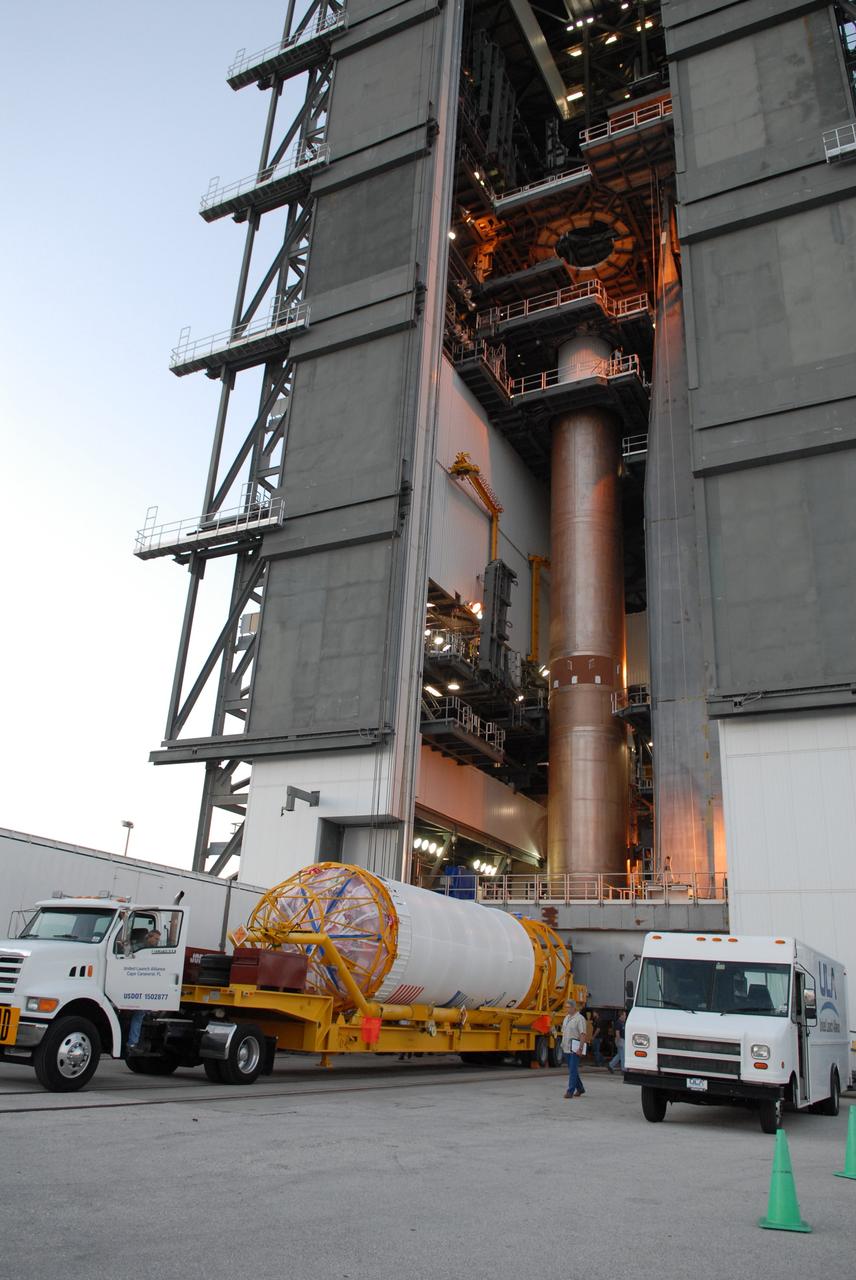
CAPE CANAVERAL, Fla. –– The Centaur upper stage arrives at the Vertical Integration Facility near Cape Canaveral Air Force Station's Launch Complex 41, where it will be lifted onto the Atlas V first stage, already in the tower. The Atlas V/Centaur is the launch vehicle for NASA's Lunar Reconnaissance Orbiter, or LRO, and NASA's Lunar CRater Observation and Sensing Satellite, known as LCROSS. LCROSS and LRO are the first missions in NASA's plan to return humans to the moon and begin establishing a lunar outpost by 2020. Photo credit: NASA/Jack Pfaller