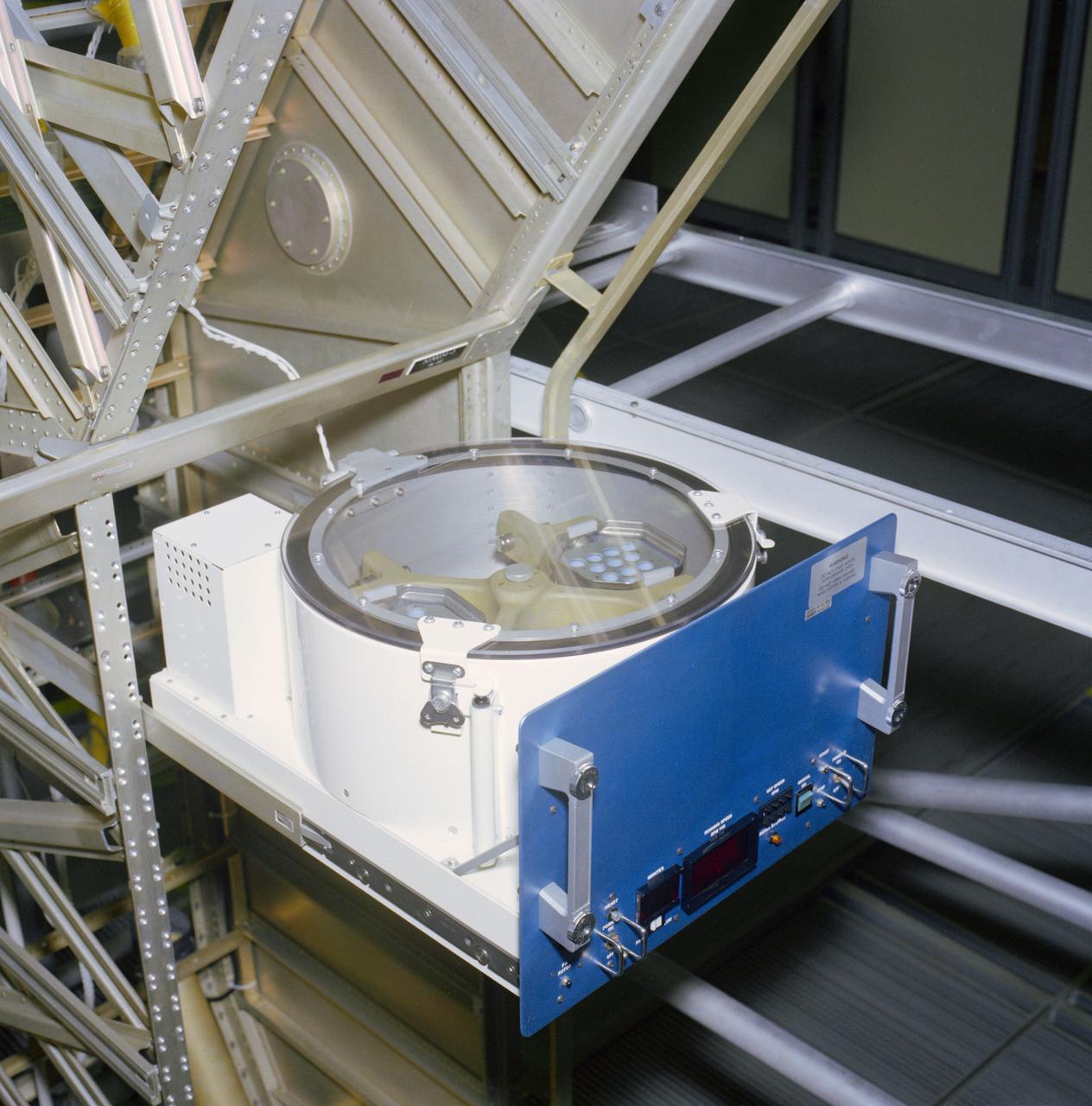
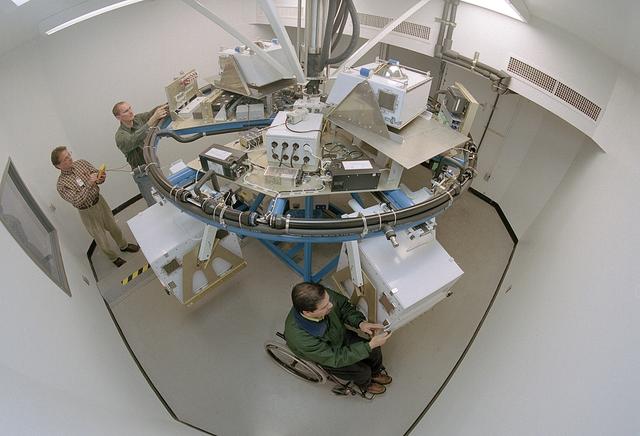
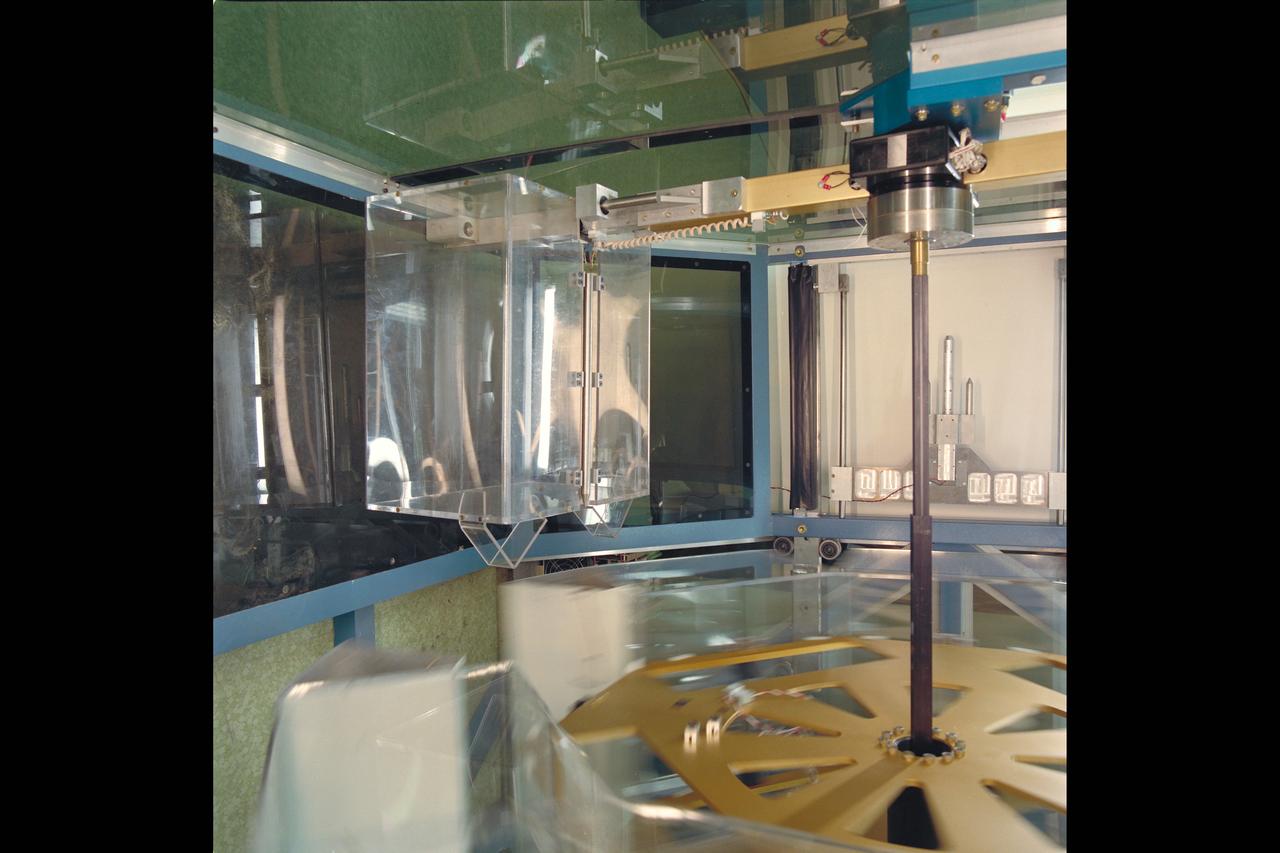
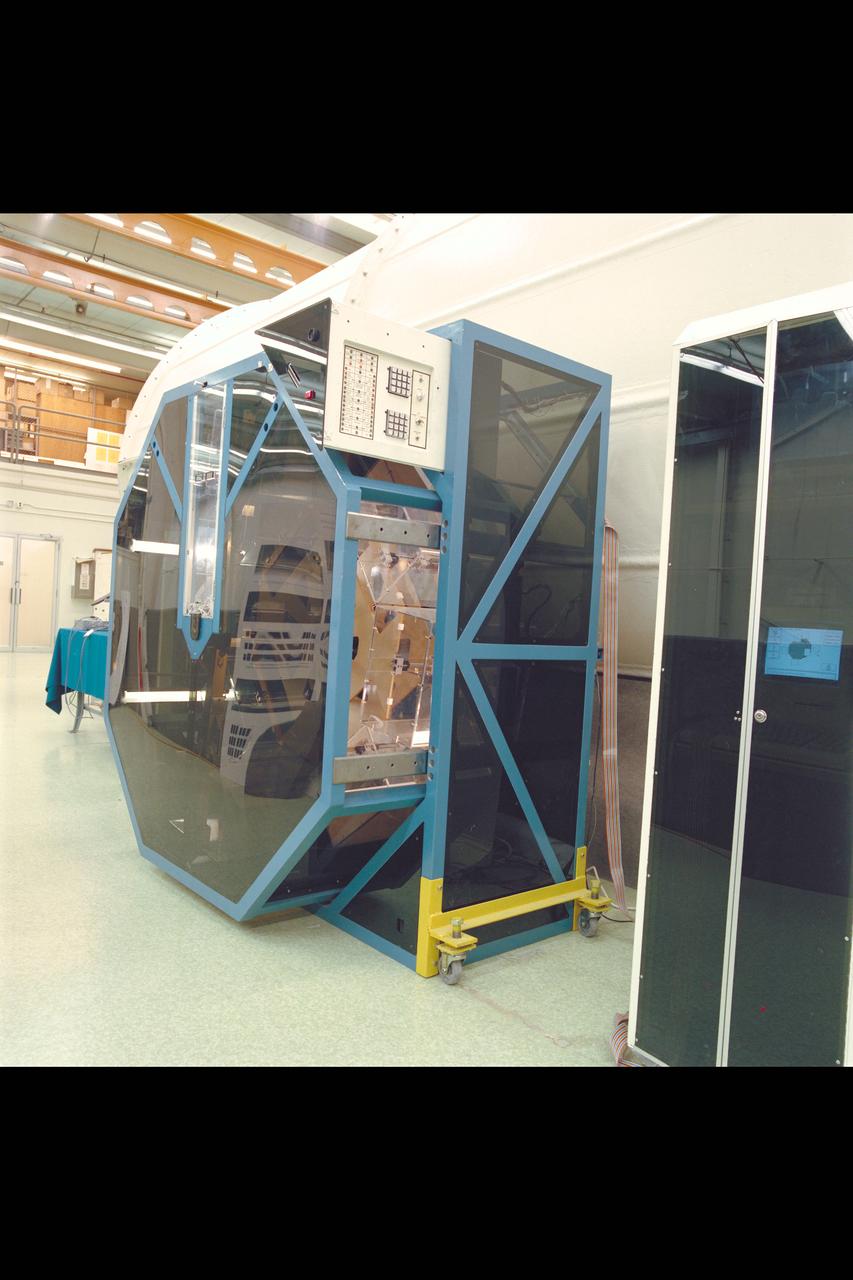
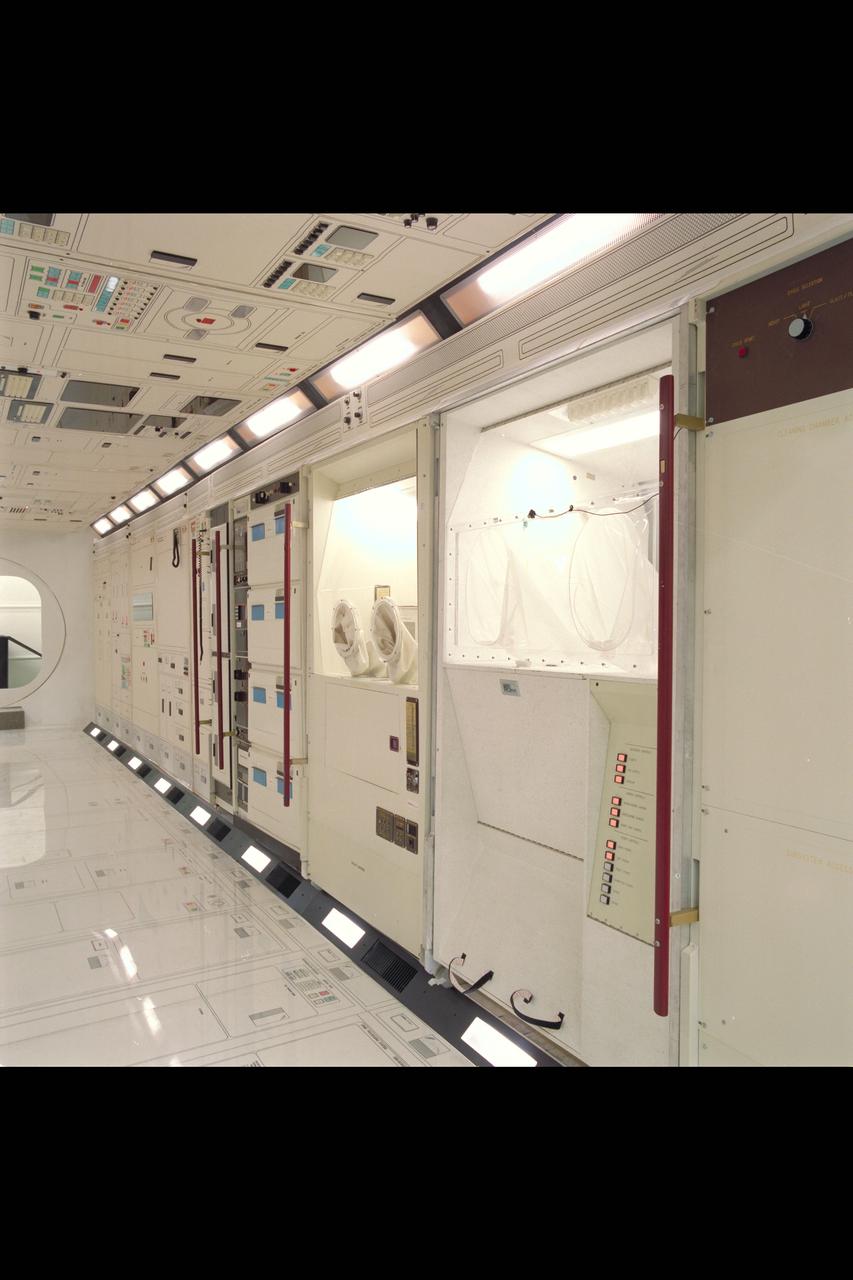
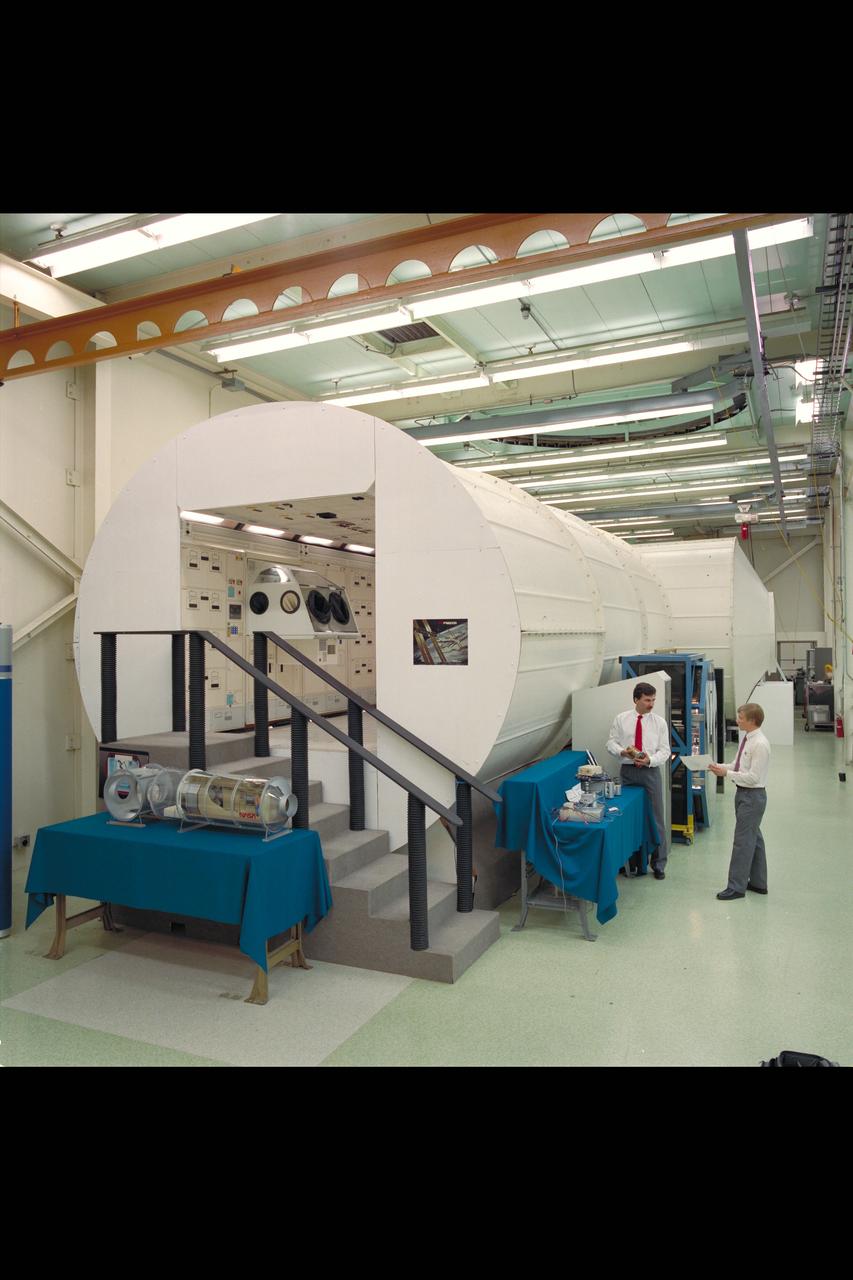
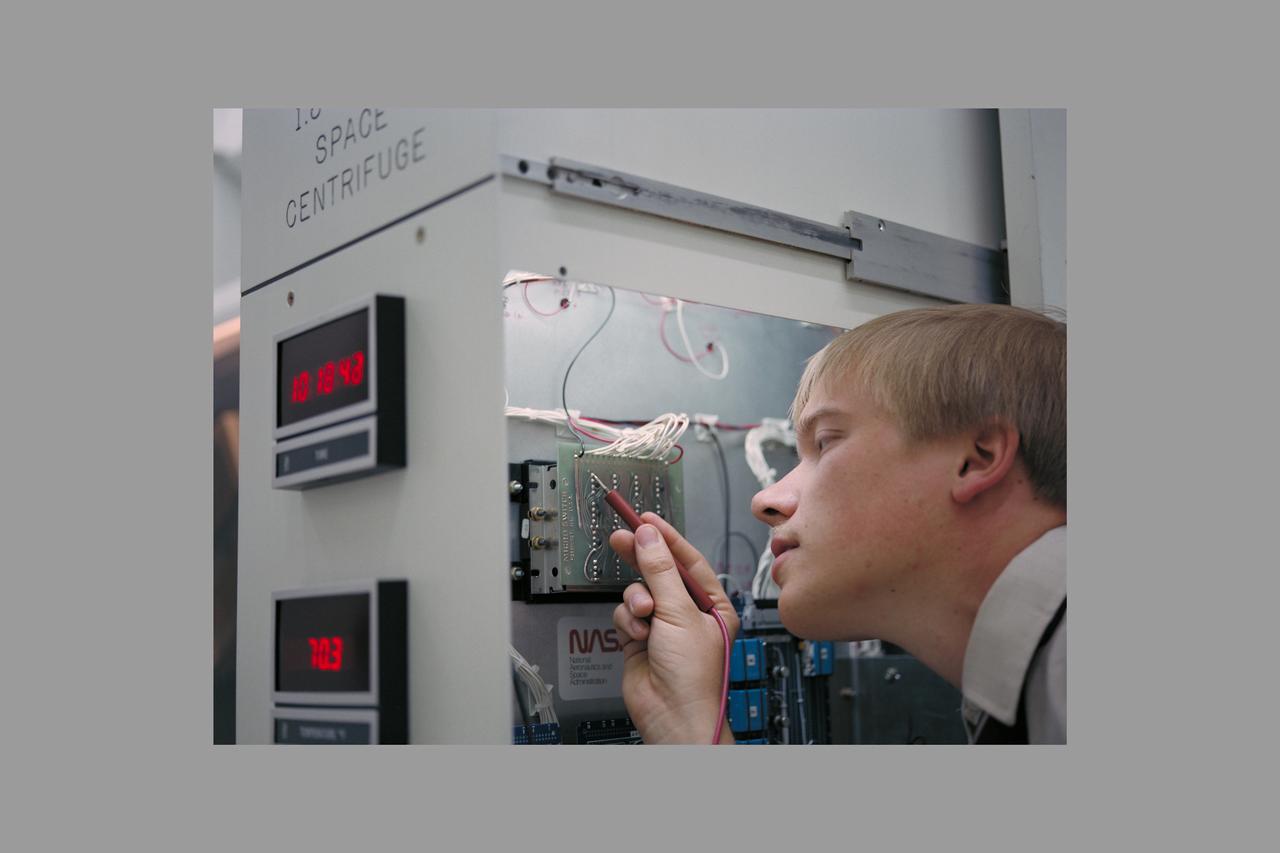
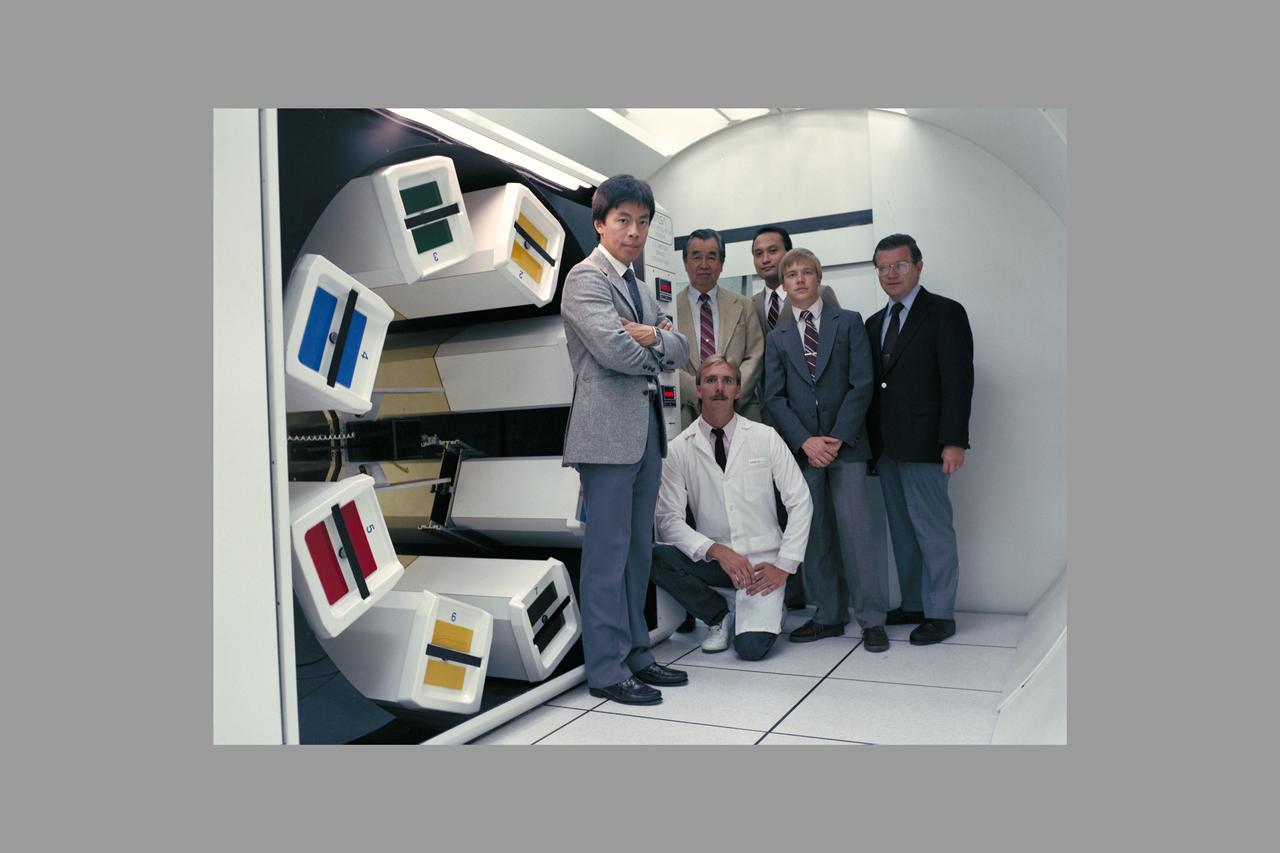
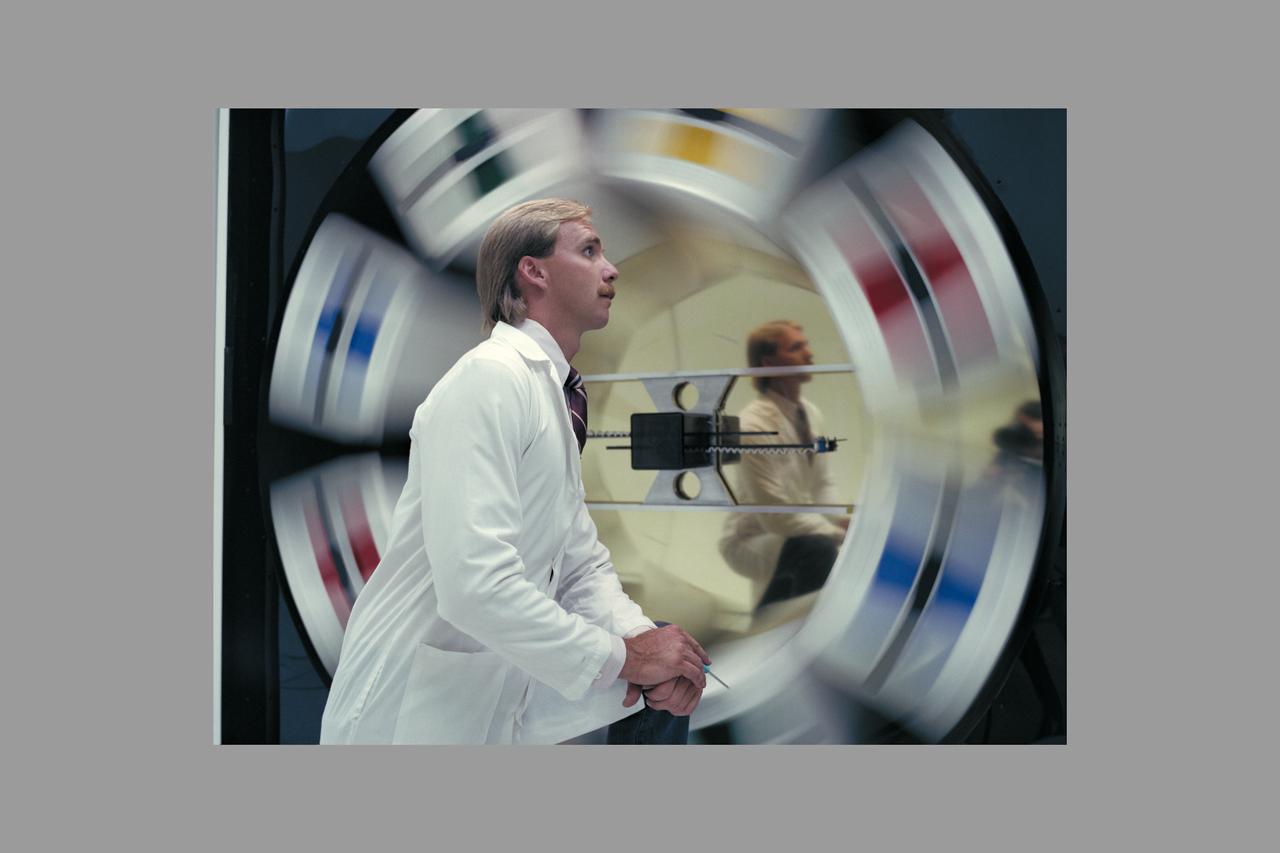
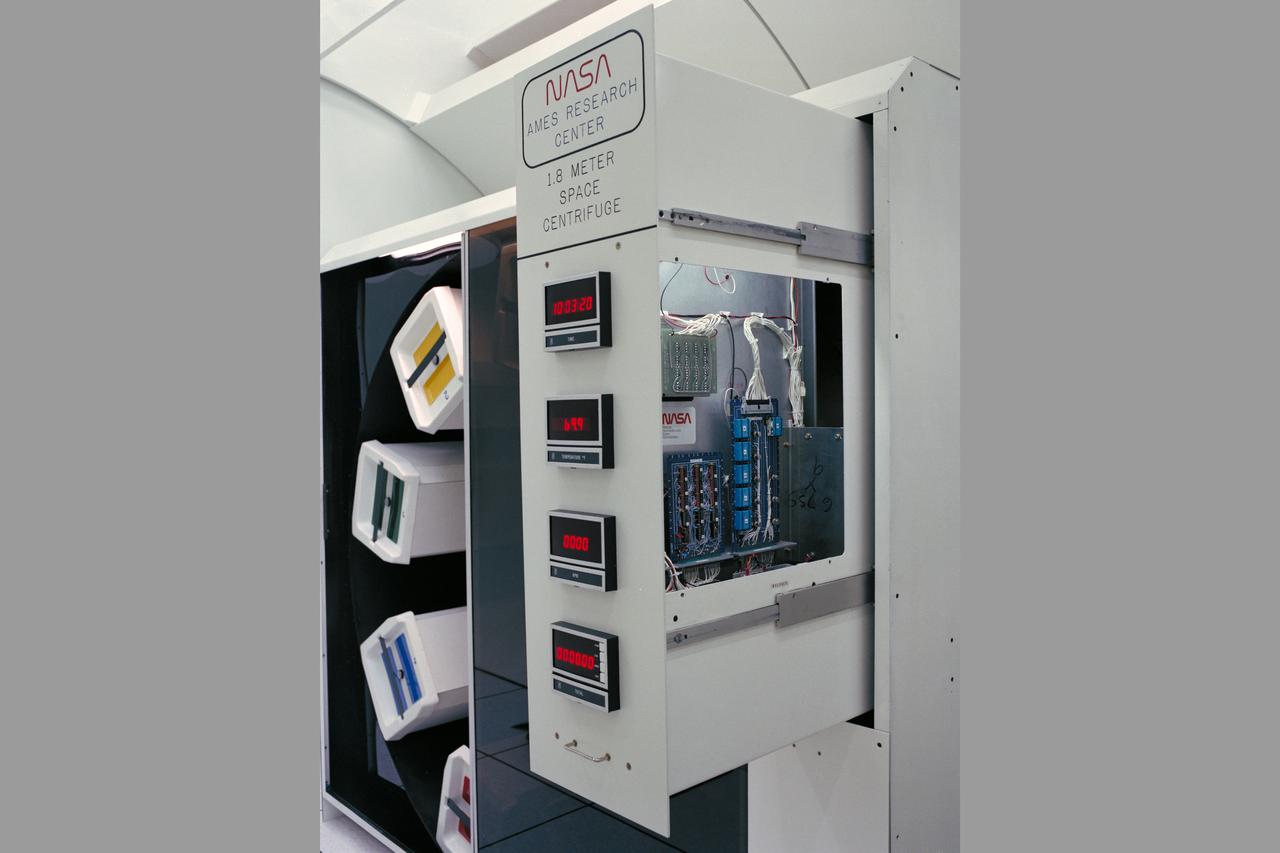
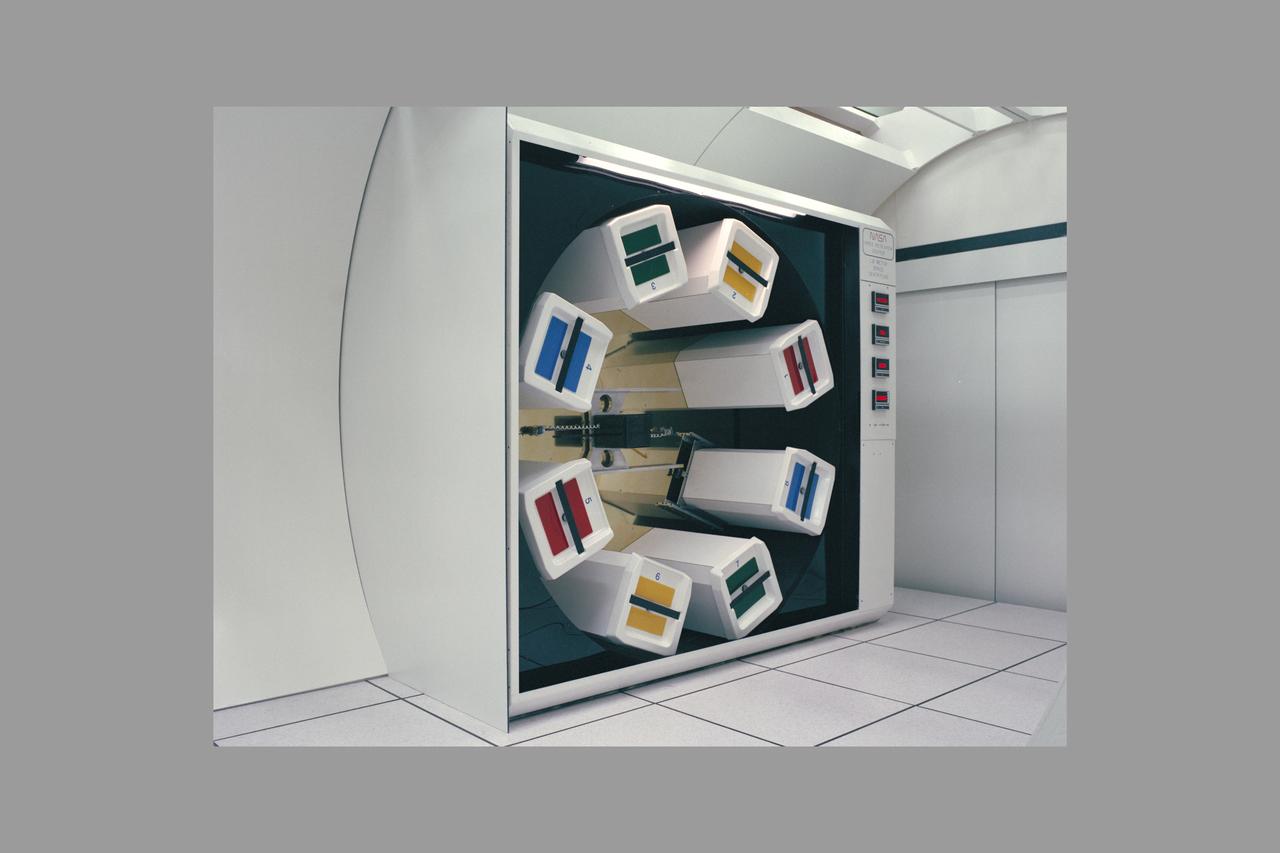
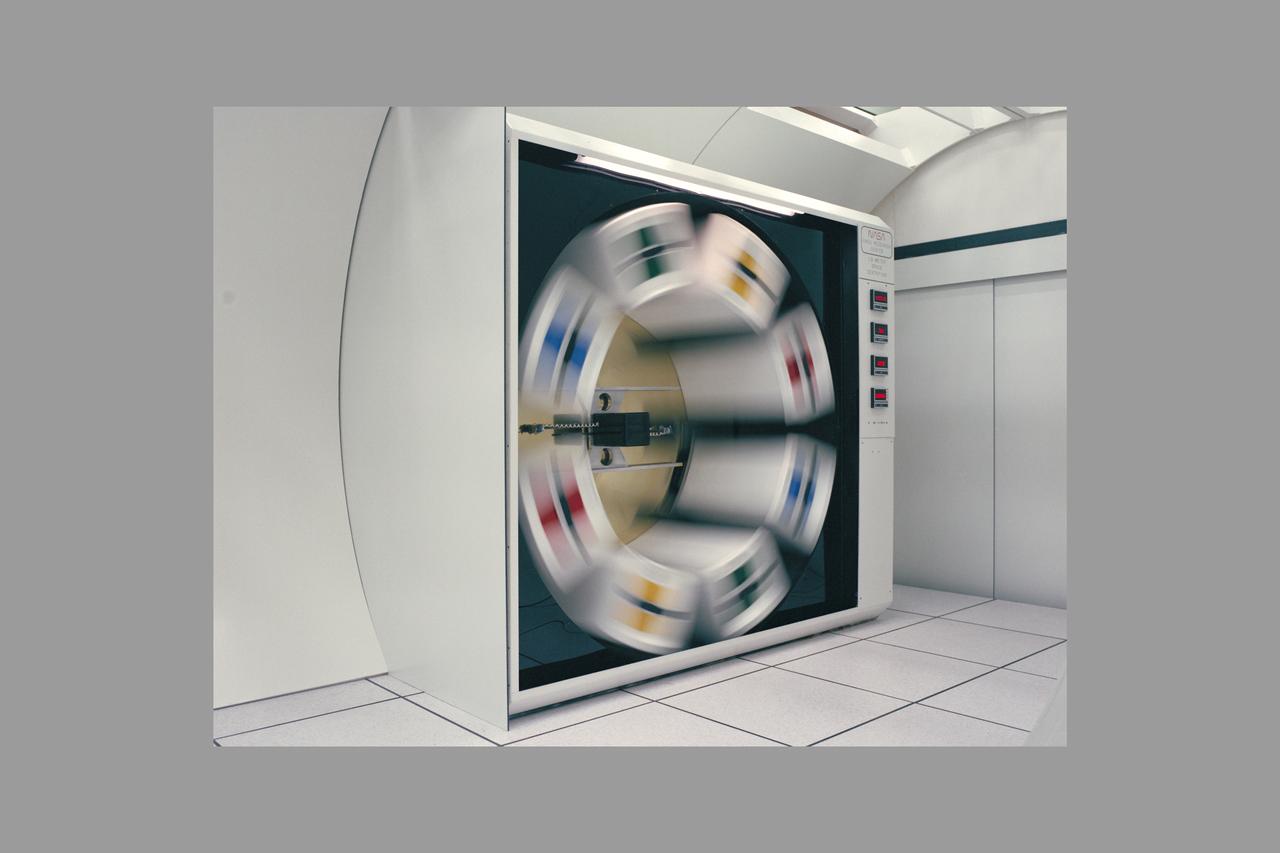
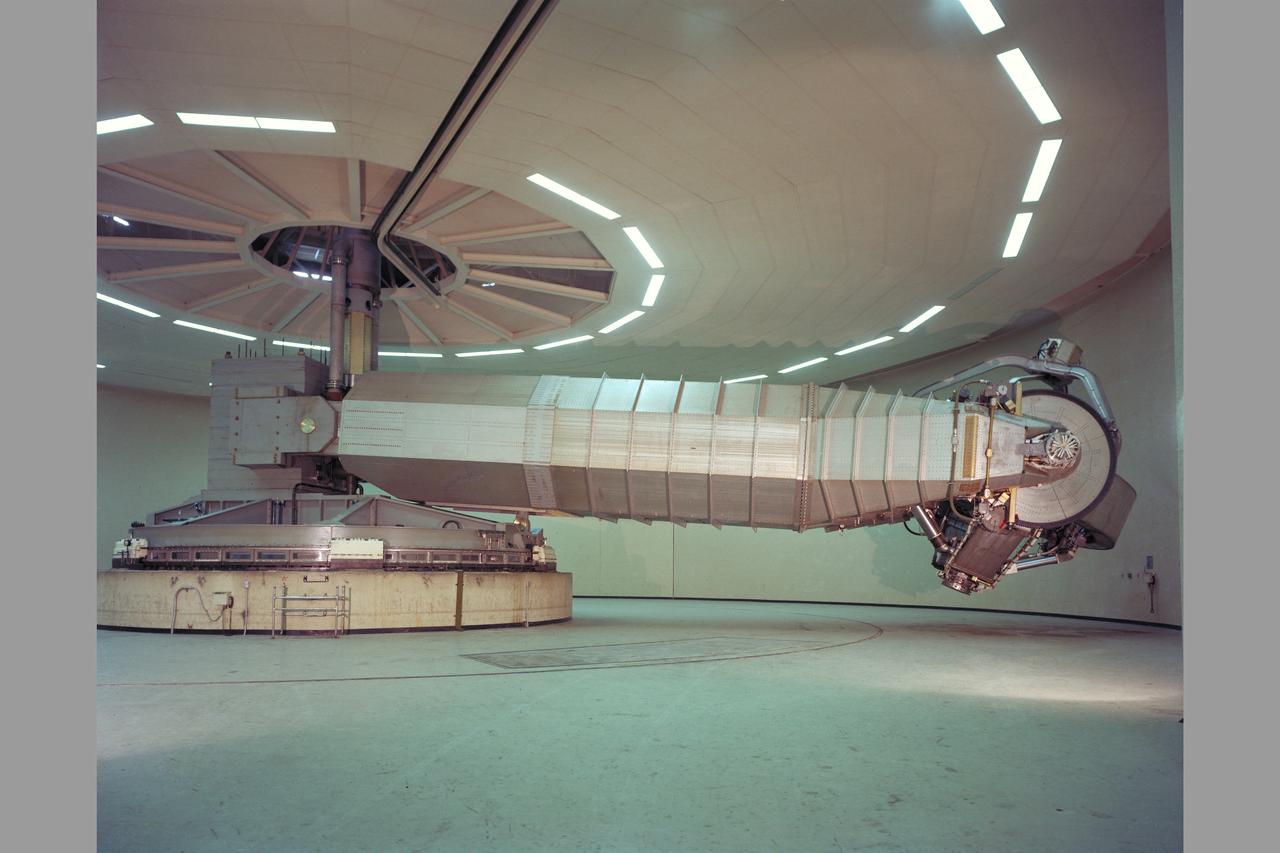
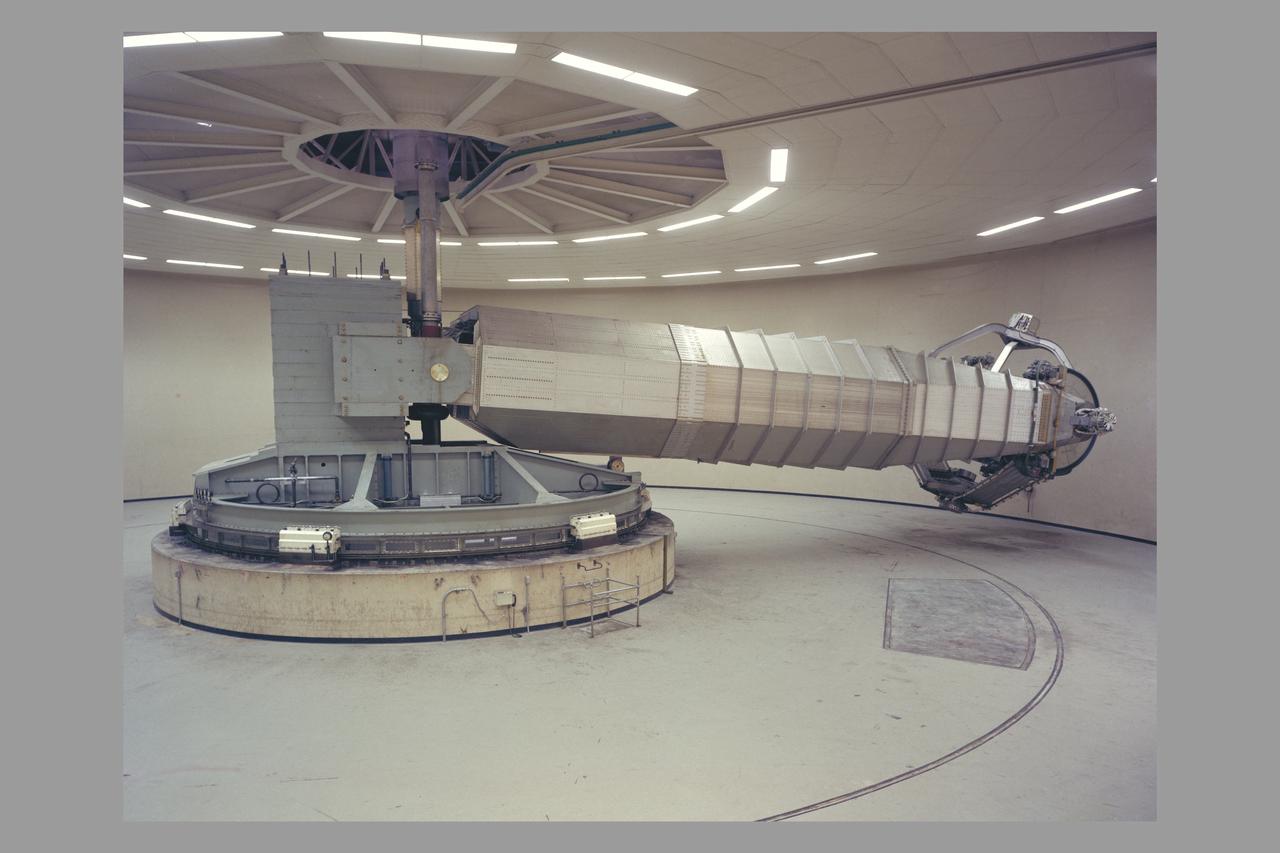
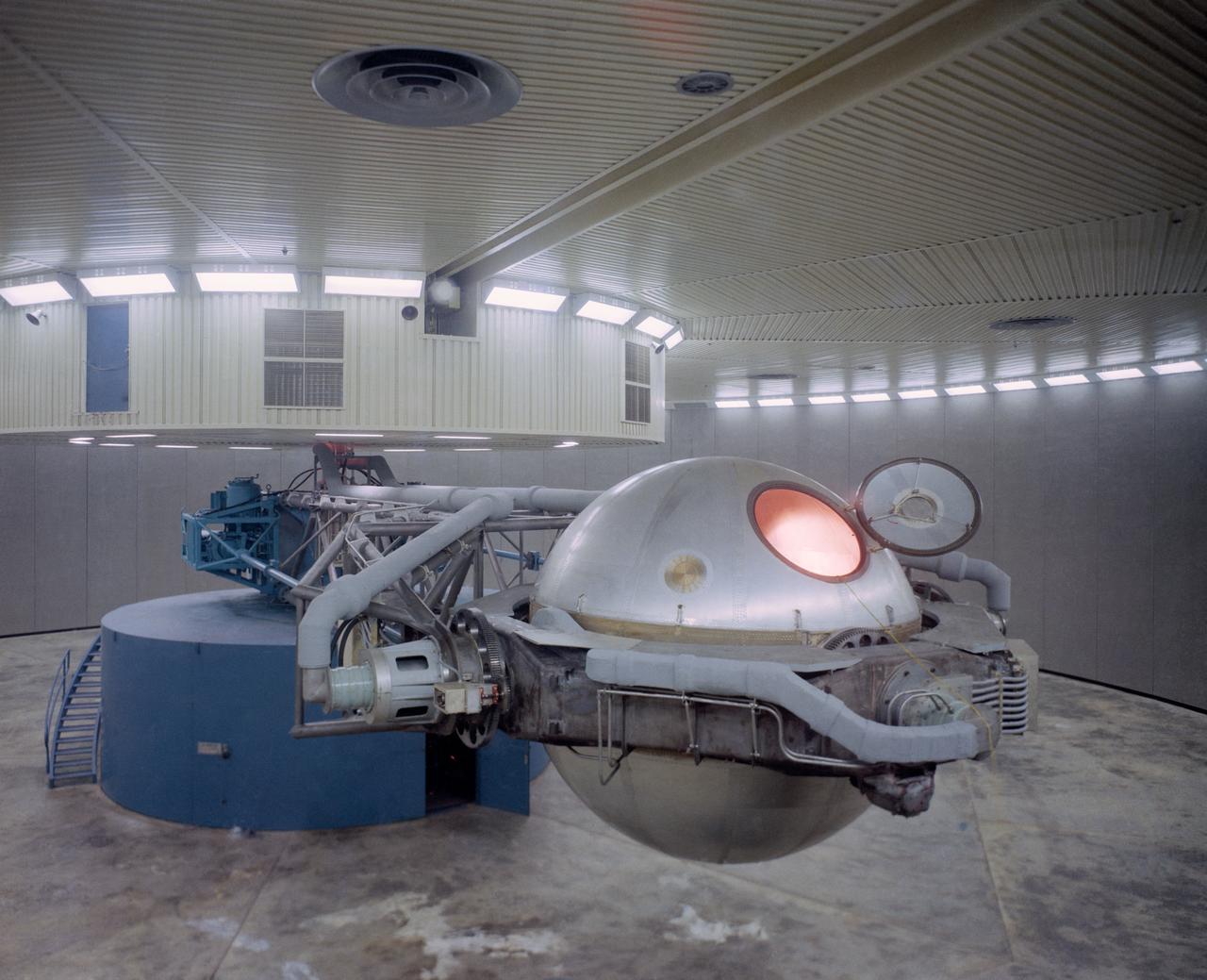
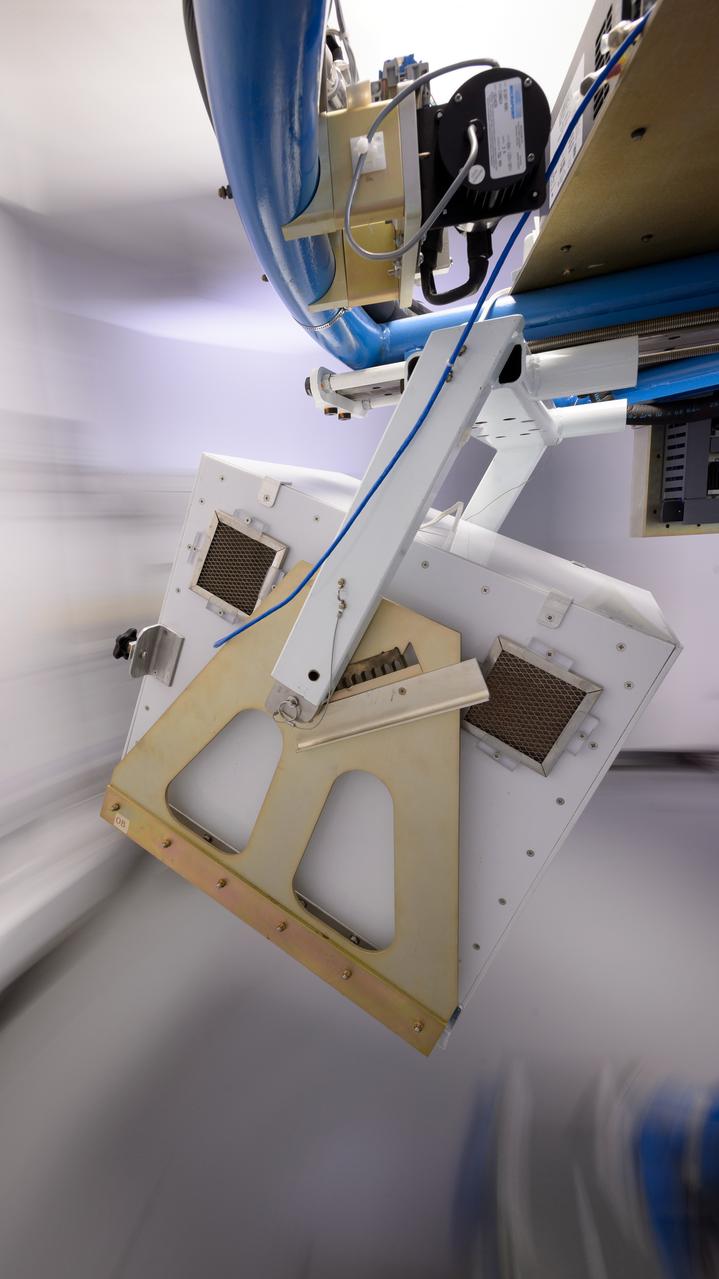
A specimen cab mounted on the Space Biosciences division’s 1.22-meter radius centrifuge with centrifuge in motion in N239A.
1.22-Meter Radius Centrifuge
S81-25565 (Feb 1981) --- Expected to be a busy item of flight hardware on the Spacelab Life   Sciences (SLS-1) mission is this low-gravity centrifuge.  To be flown onboard Columbia for STS-40, the centrifuge is able to simulate several gravity levels (0.5 g, 1.0 g, 1.5 g. and 2.0 g).  Blood samples, taken during the  flight, will be placed in the centrifuge, fixed for post flight analysis and transferred to a freezer.
Centrifuge for SLS-1
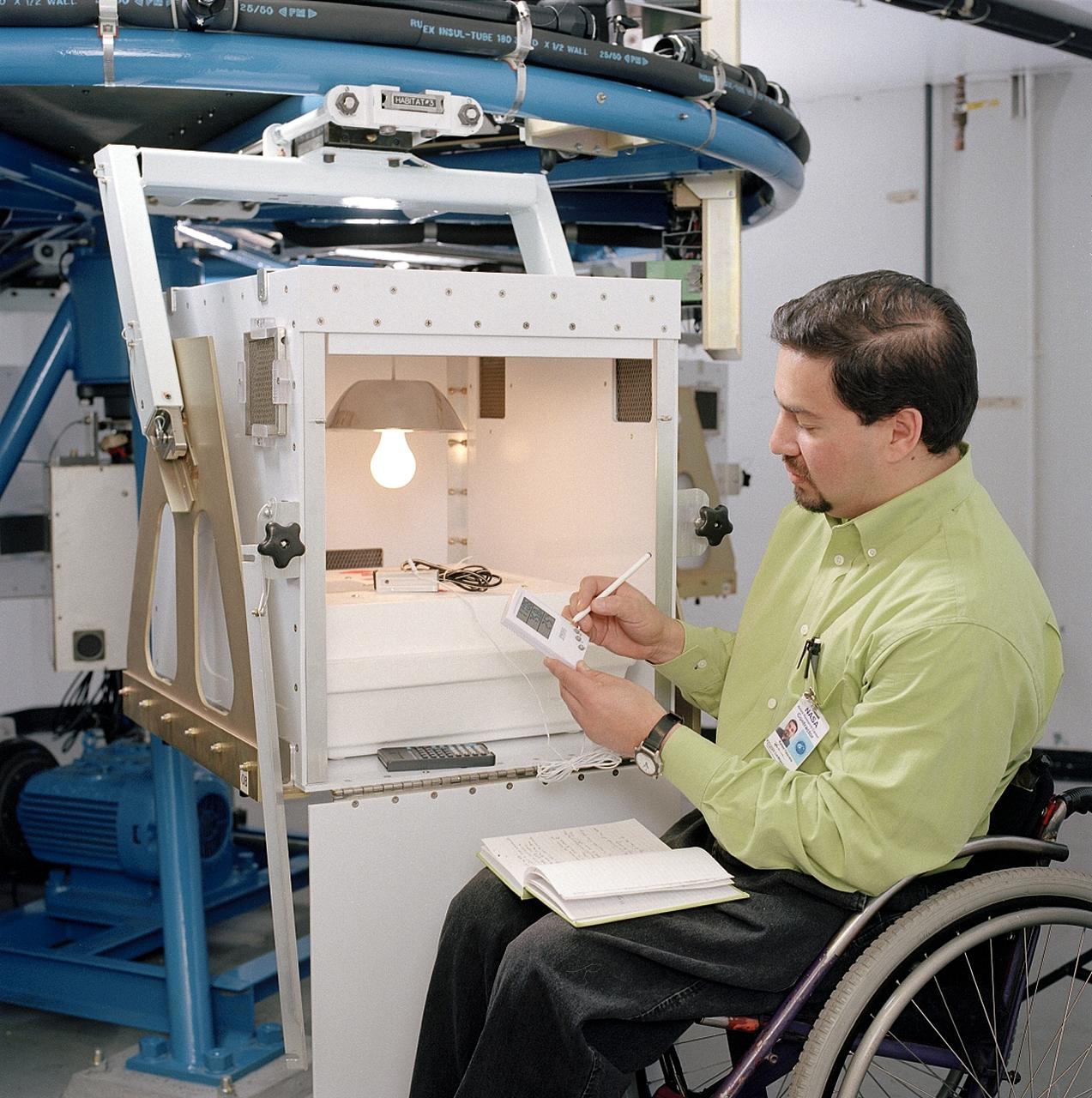
N-239A: 8ft centrifuge facility: Centrifuge and incubator with Omar Talavera
ARC-2003-AC03-0019-6
N-239A: 8ft centrifuge facility overhead view of centrifuge with Russ Westbrook, Duncan Atchison and Omar Talavera
ARC-2003-AC03-0019-3
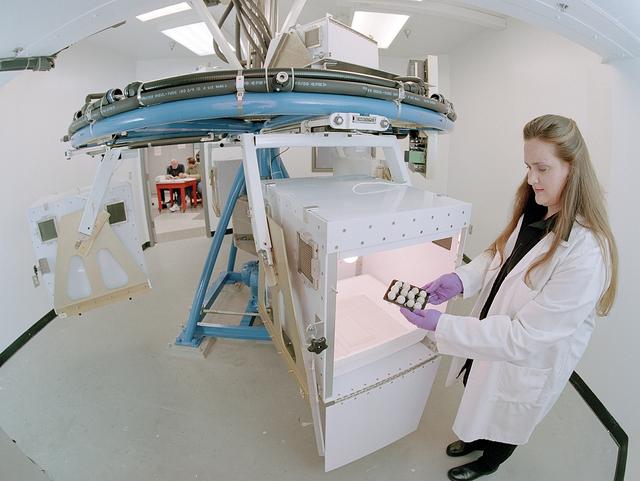
N-239A: 8ft centrifuge facility: centrifuge and quail eggs in incubator with Tianna Shaw
ARC-2003-AC03-0019-4
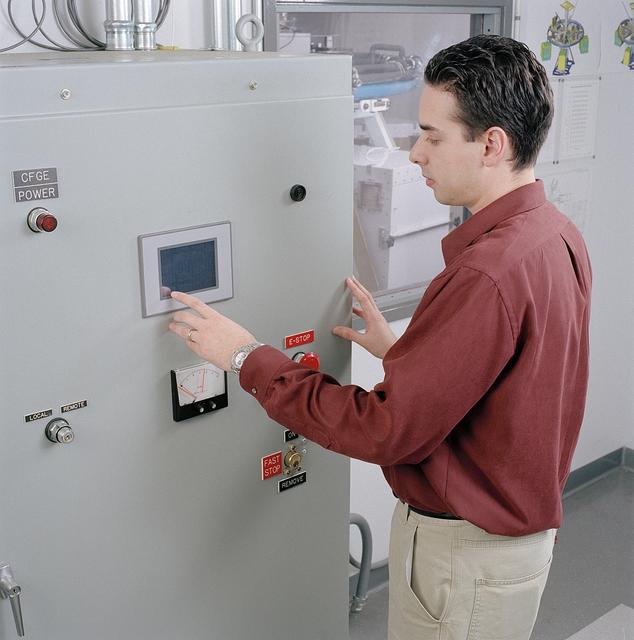
N-239A: 8ft centrifuge facility: centrifuge touch screen control panel with Tom Lyzod
ARC-2003-AC03-0019-5
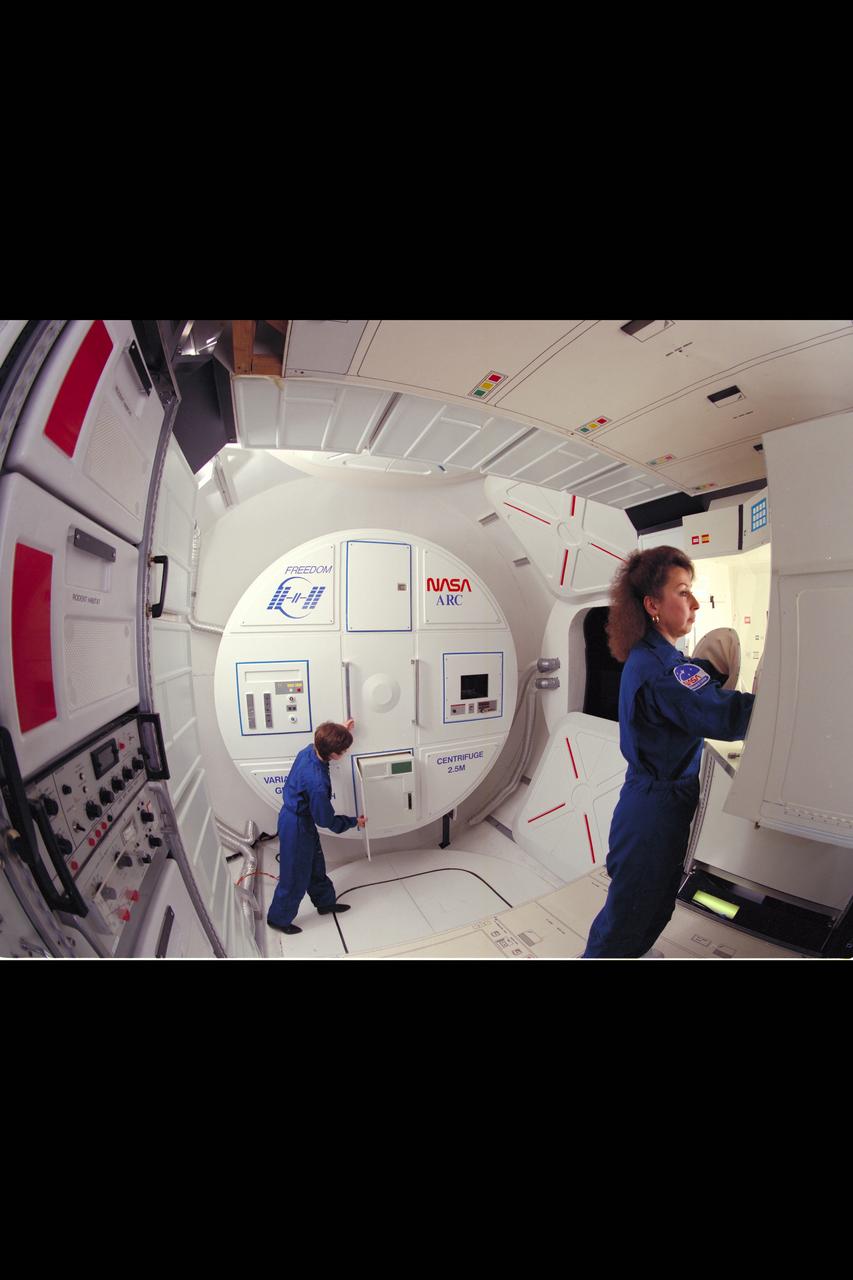
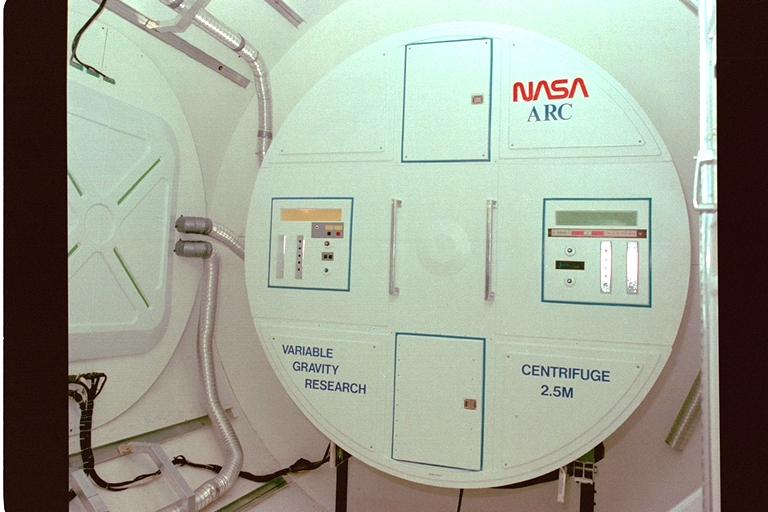
N-244 2.5M Centrifuge interior
ARC-1991-AC91-0191-9
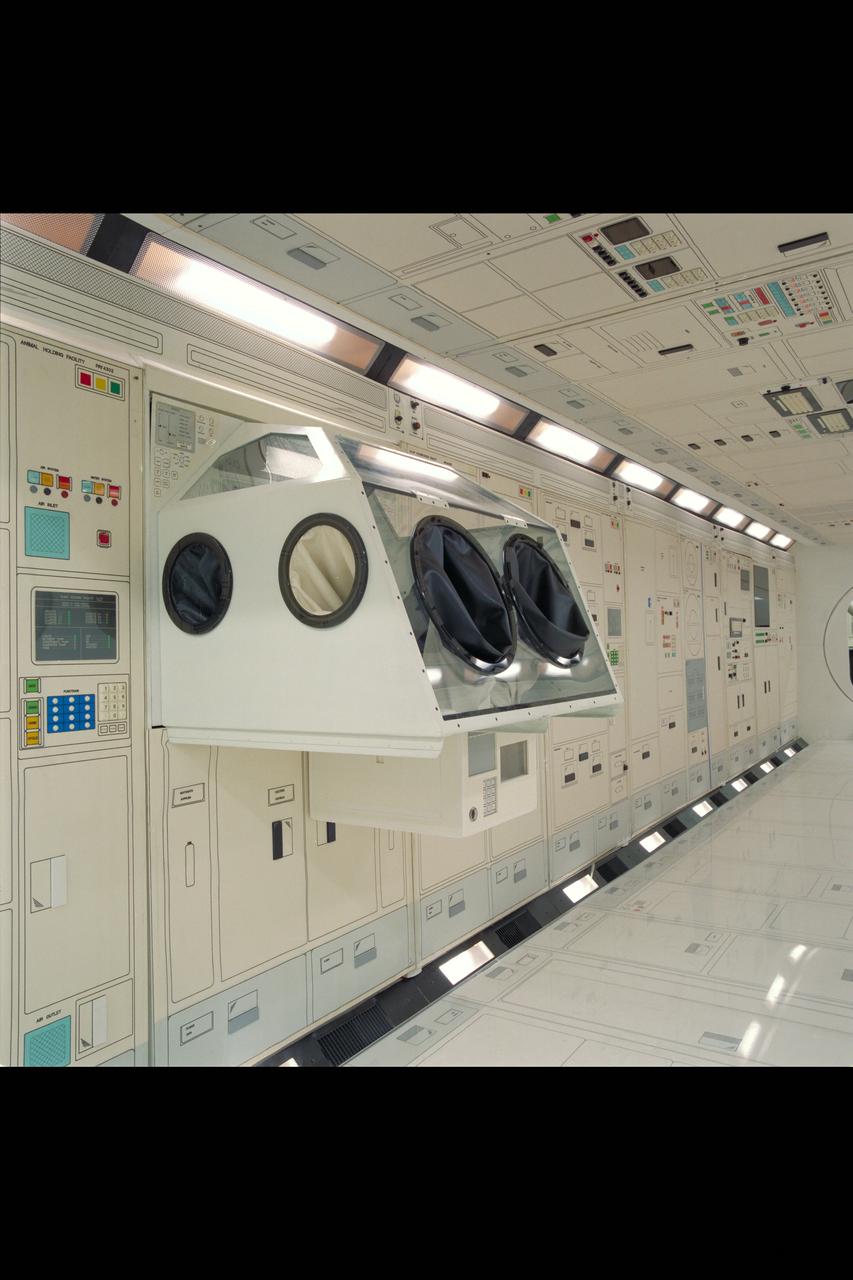
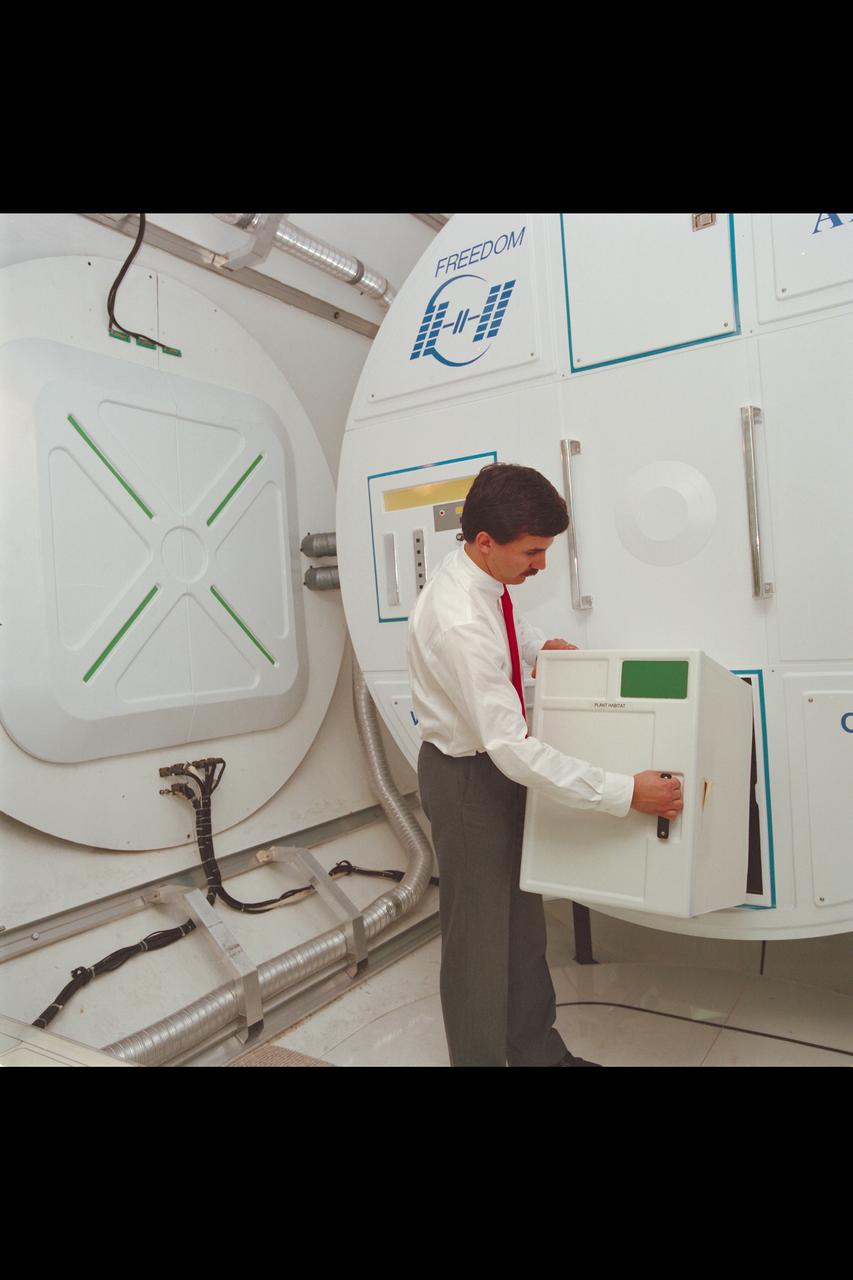
N-244 2.5M Centrifuge Facility mock-up
ARC-1991-AC91-0191-15
N-244 2.5M Centrifuge Facility mock-up
ARC-1991-AC91-0191-4
CENTRIFUGE FACILITY MOCKUP WITH TONI ORTEGA AND LISA HUNTER
ARC-1994-AC94-0281-1
N-244 2.5M Centrifuge Facility mock-up
ARC-1991-AC91-0191-16
N-244 2.5M Centrifuge Facility mock-up back view
ARC-1991-AC91-0191-7
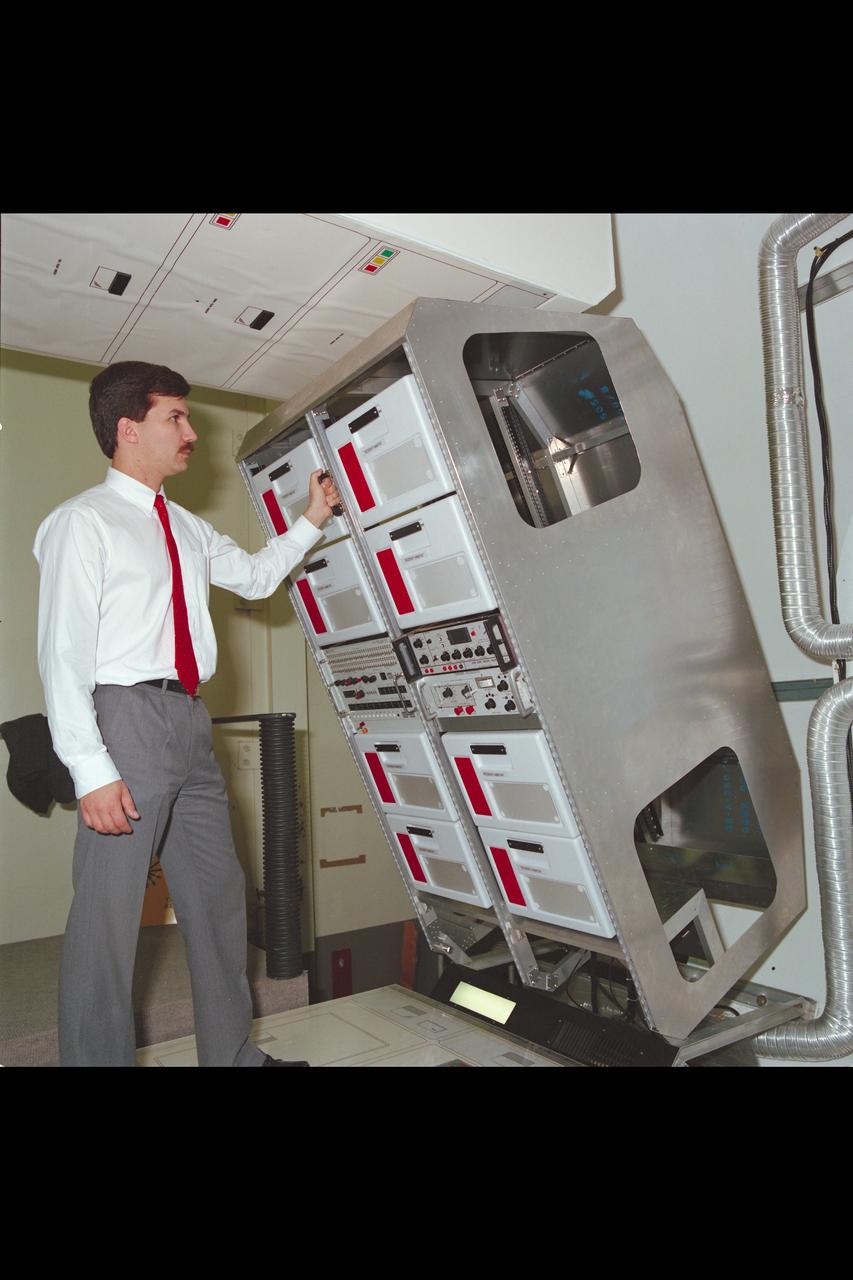
N-244 2.5M Centrifuge Facility mock-up  (Mike Horkachuck demonstrates)
ARC-1991-AC91-0191-10
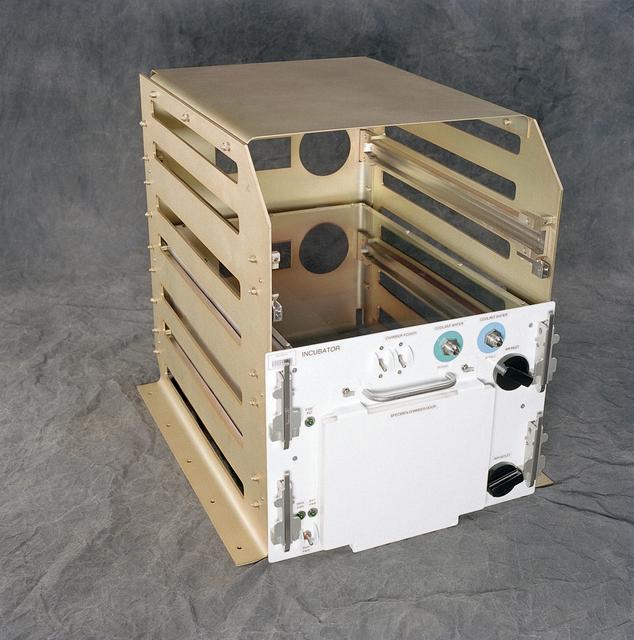
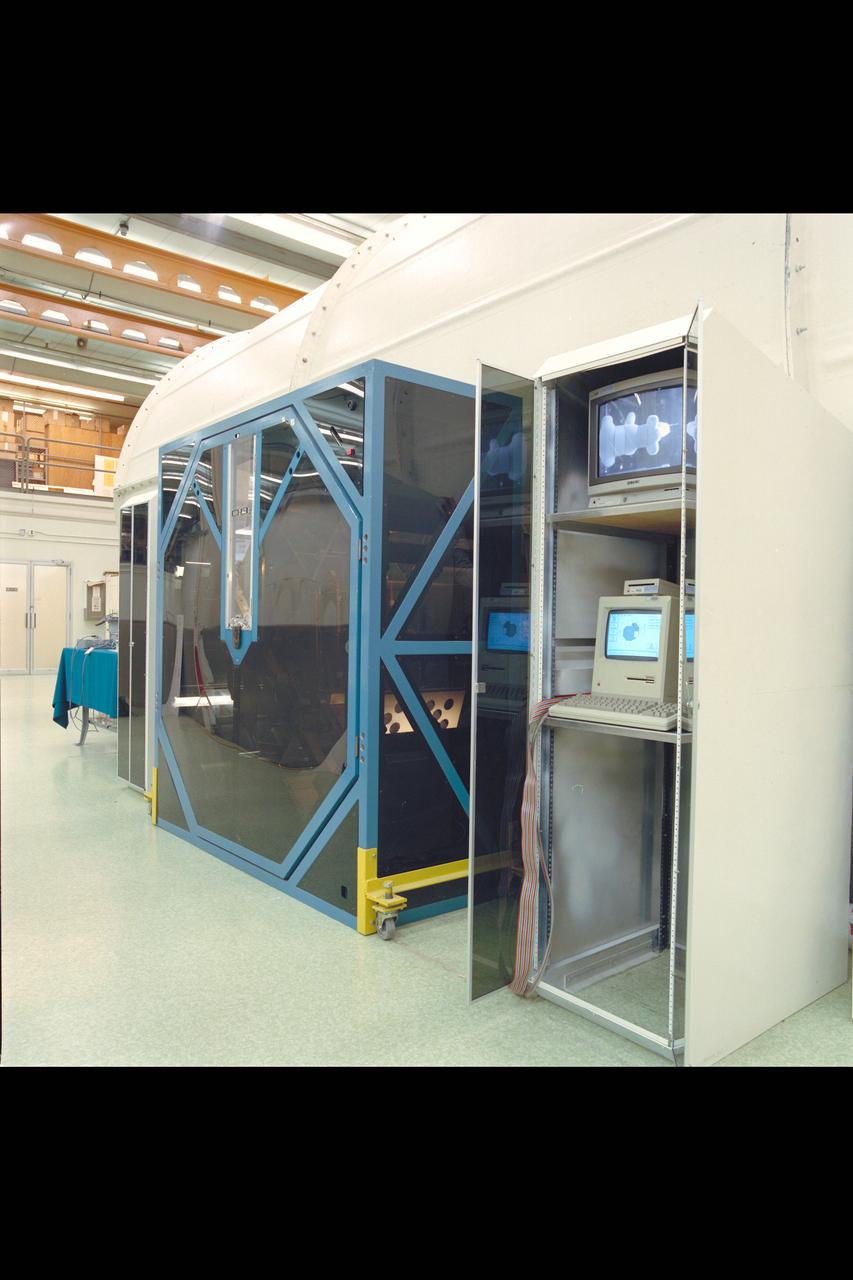
N-239A: 8ft centrifuge facility ISS incubator - compatible rack and incubator
ARC-2003-AC03-0019-2
N-244 2.5M Centrifuge Facility mock-up  (Mike Horkachuck demonstrates)
ARC-1991-AC91-0191-13
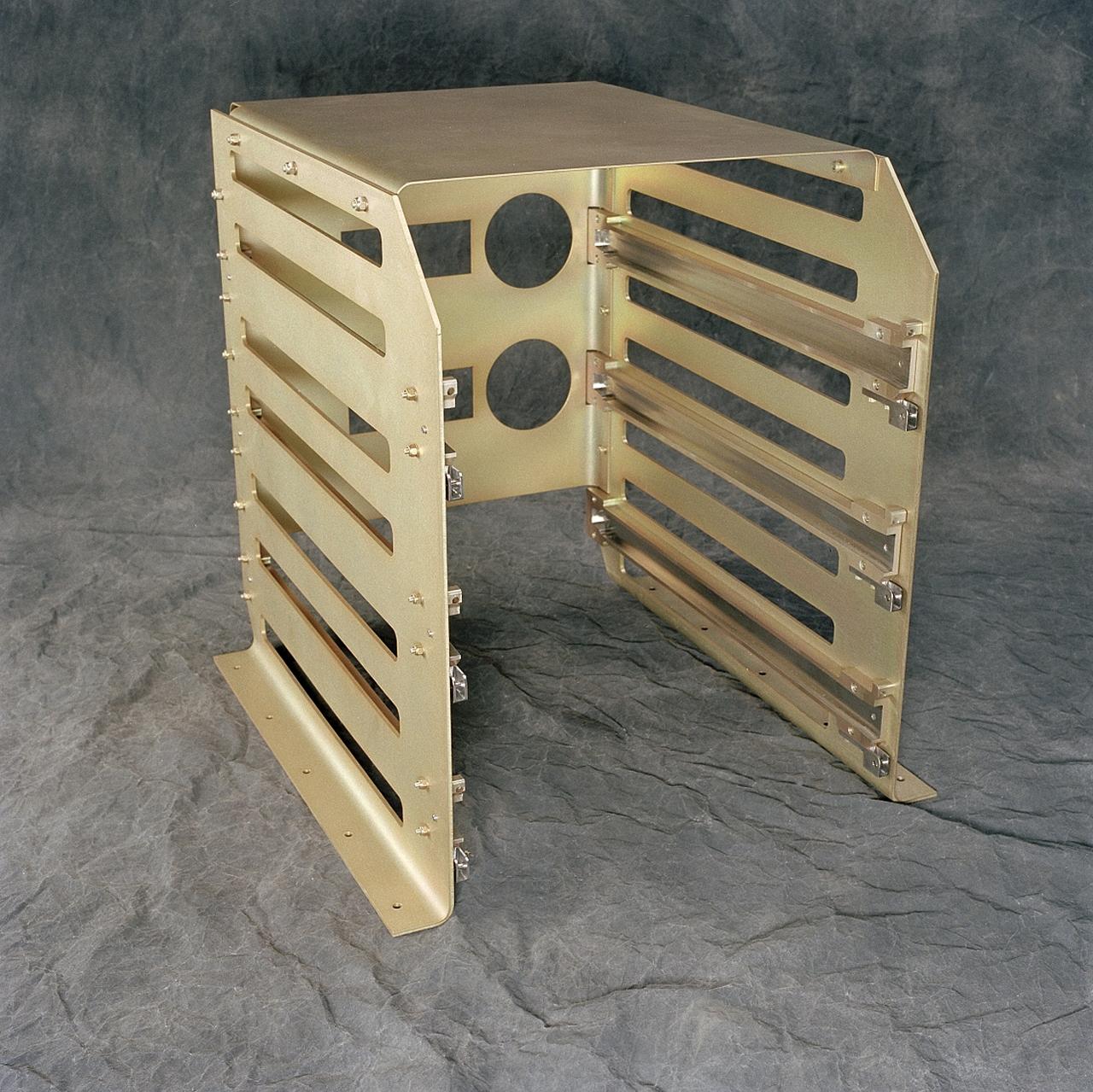
N-239A: 8ft centrifuge facility ISS incubator - compatible rack
ARC-2003-AC03-0019-1
N-244 2.5M Centrifuge Facility mock-up (Mike Horkachuck and David Menche demonstrate)
ARC-1991-AC91-0191-6
Ames Research Center's  2.5M Centrifuge Facility mock-up in Bldg N-244
ARC-1991-AC91-0191-2
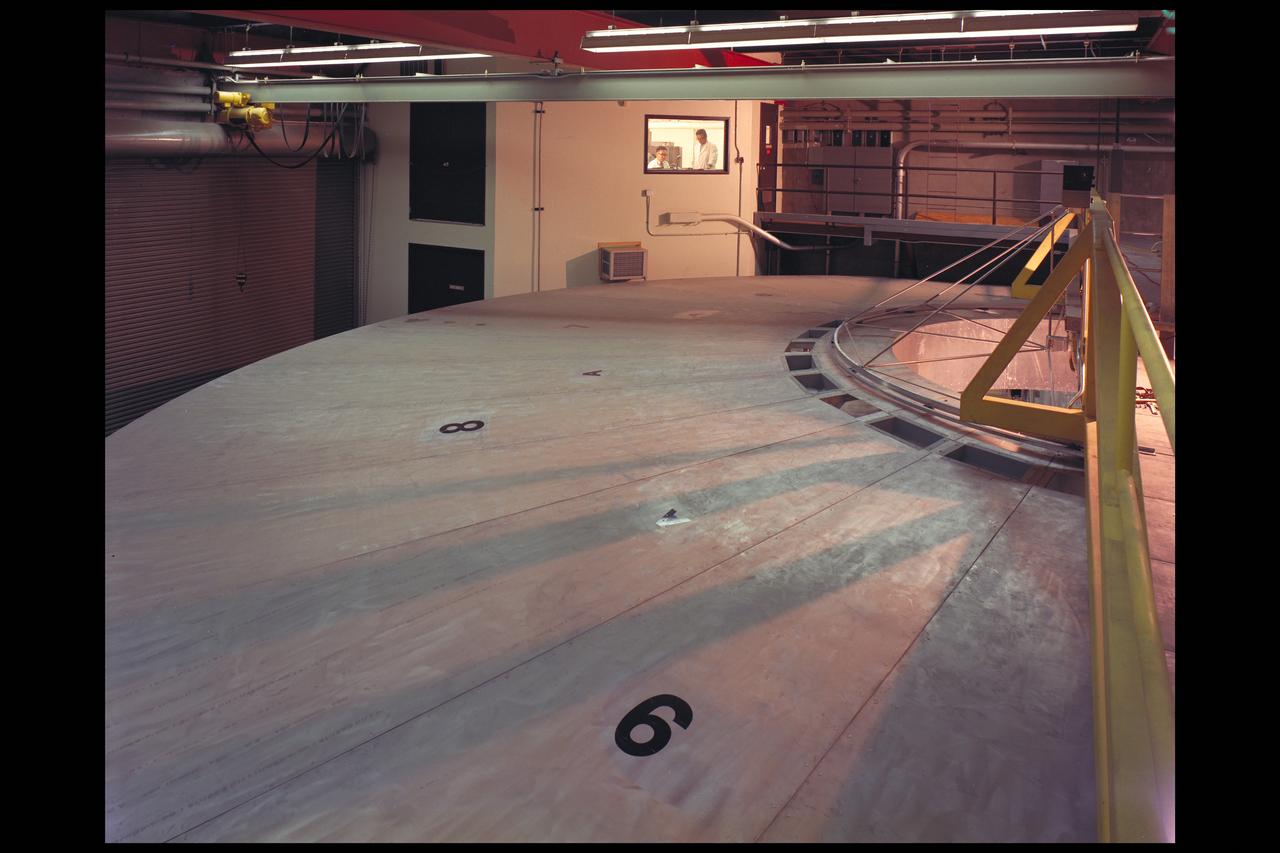
50ft. Low 'G' Centrifuge N-239A  (Dr Jiro Oyama and & B Daligcon (r) can be seen through window into control room
ARC-1968-A-41649
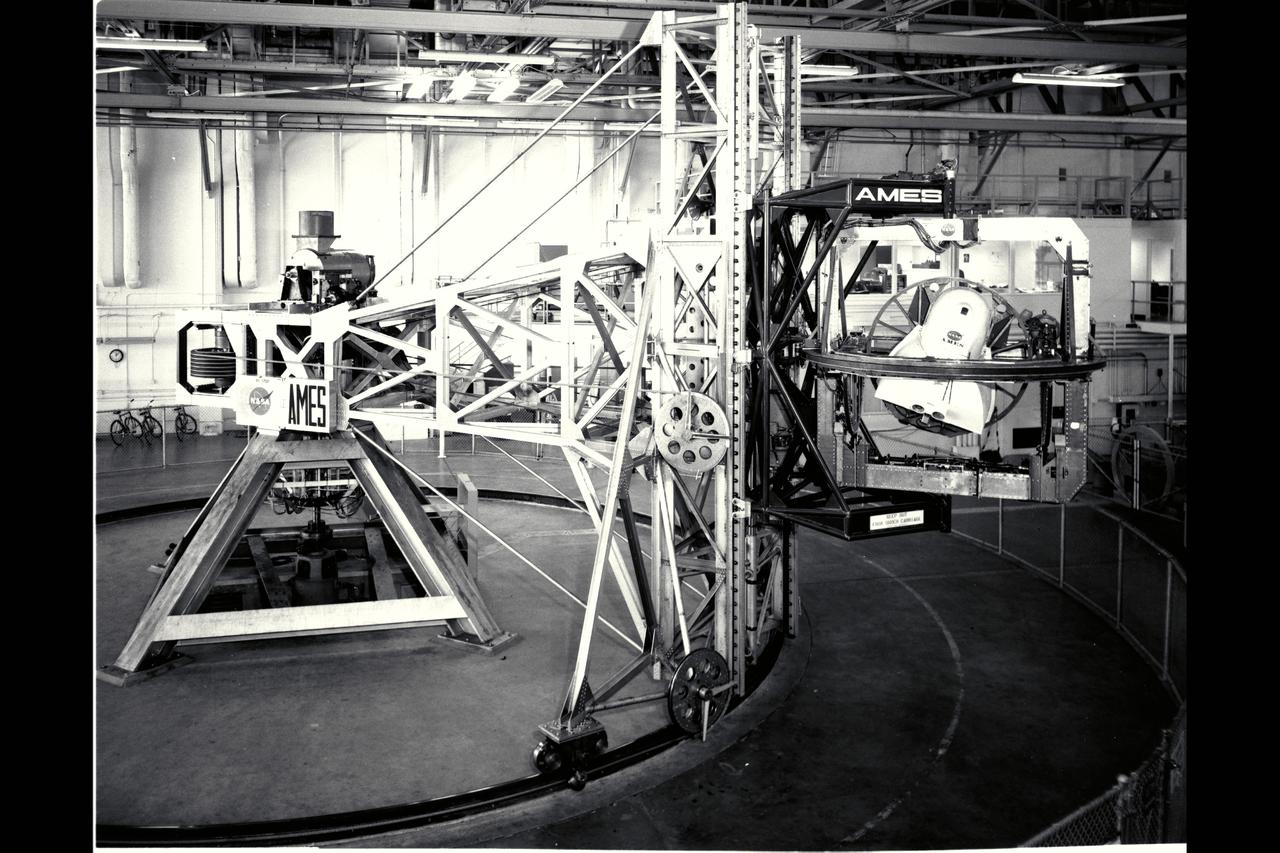
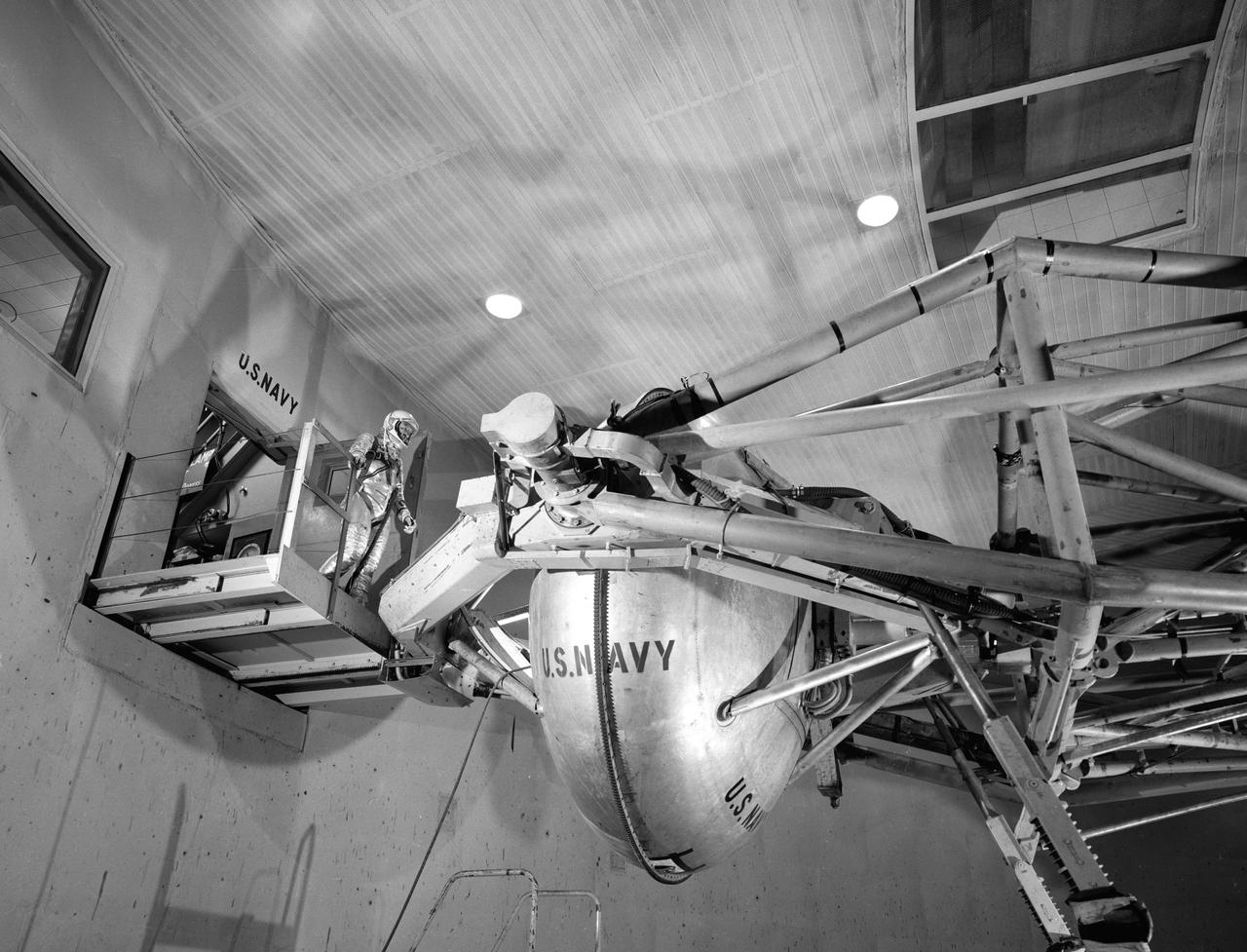
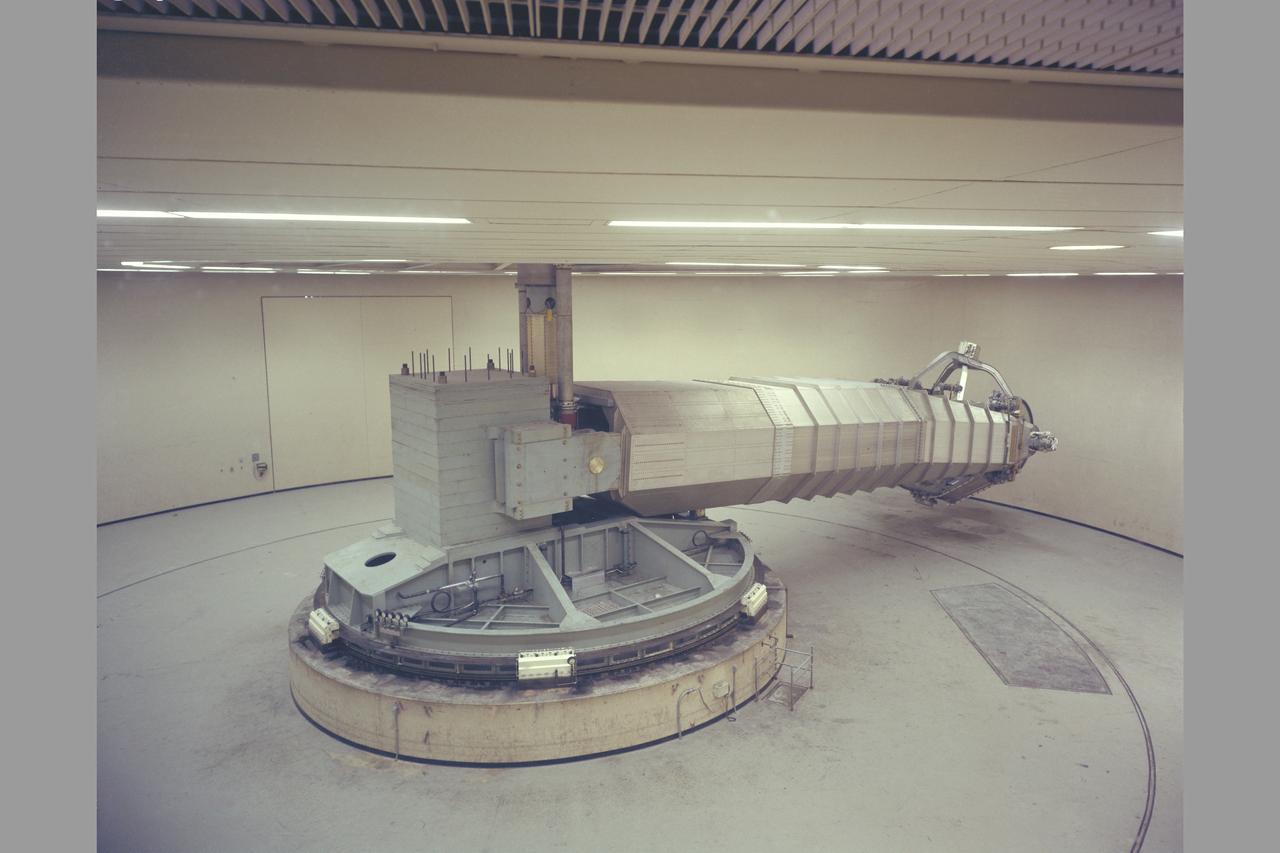
Ames 5 degrees-of-freedom motion simulator: This simulator incorporated a centrifuge of 30ft radius. The simulatored cockpit, located intn a hooded cab at the end of the centrifuge arm, was driven by motors, as required by the simulation, about each of its three axes (itch, roll, and yaw). The cab was also driven through a limited range of motion along the vertical axis and of course was driven by the centrifuge arm along a curved path of fixed radius in the horizontal plane. Thus the motions that could be simulated i the cab were three angular motions, one translational motion, and a curvilinear combination of the remaining two translational motions. The curvilinear motions, and associated accelerations, were, of course, fairly representative of airplane flight. The simulator was placed in operation early in 1961.   ref: Adventures in Research (pg 341/341) NASA SP-4302
ARC-1962-A-29323
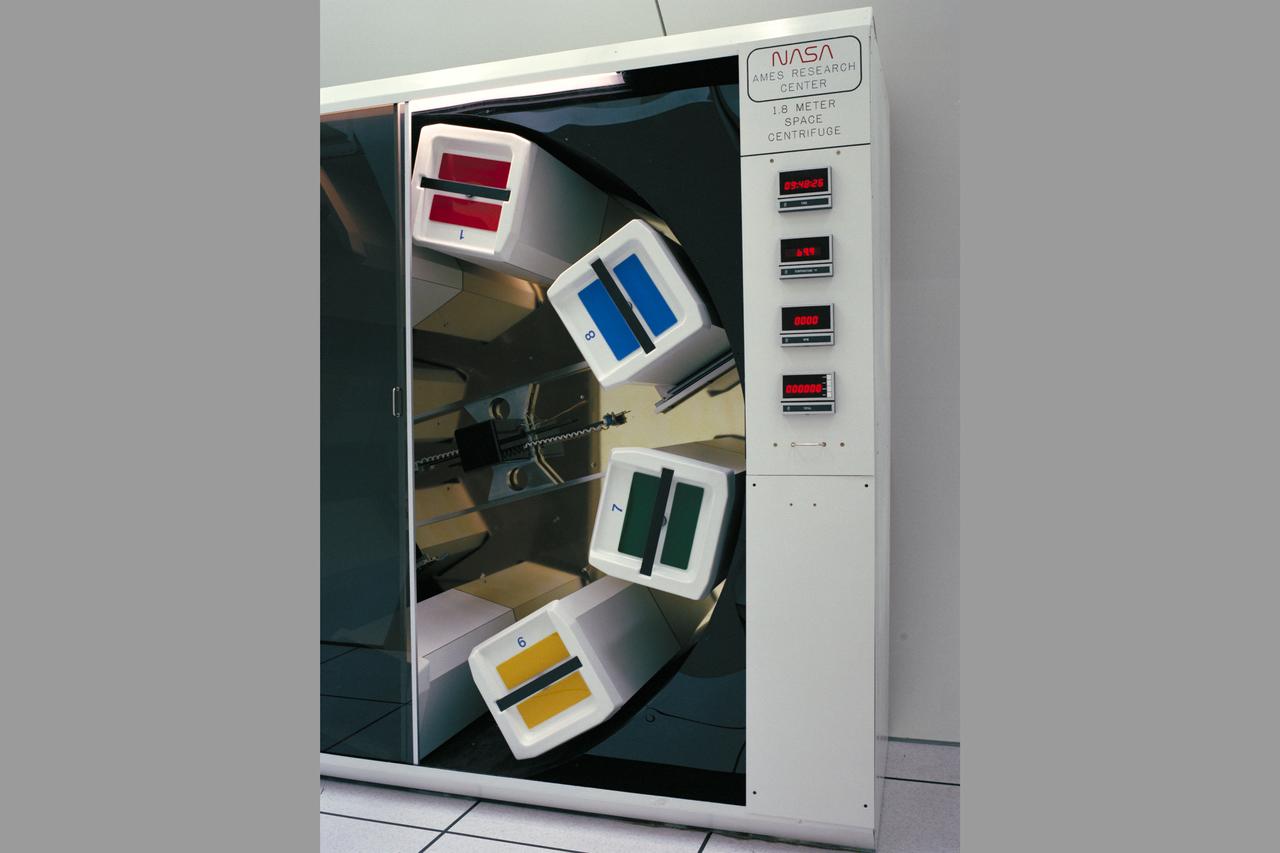
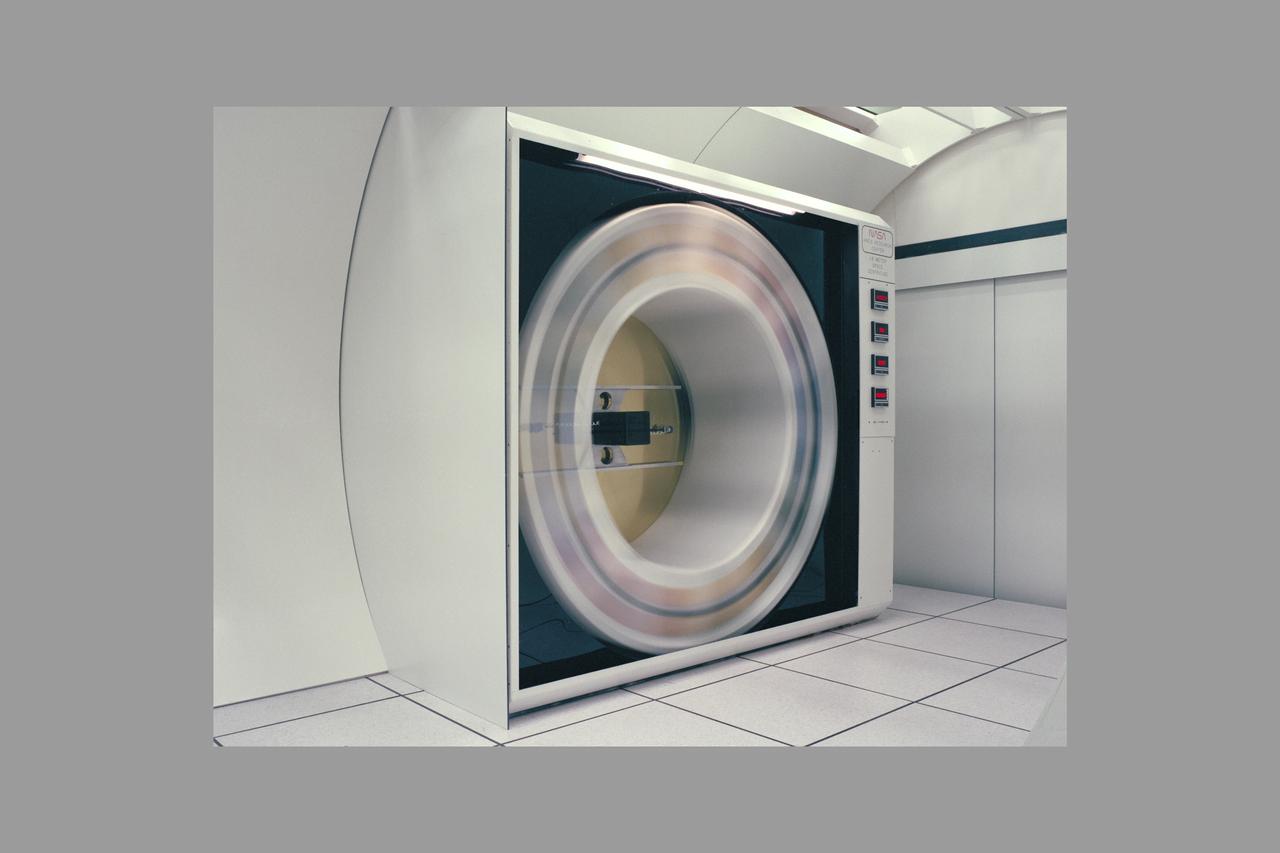
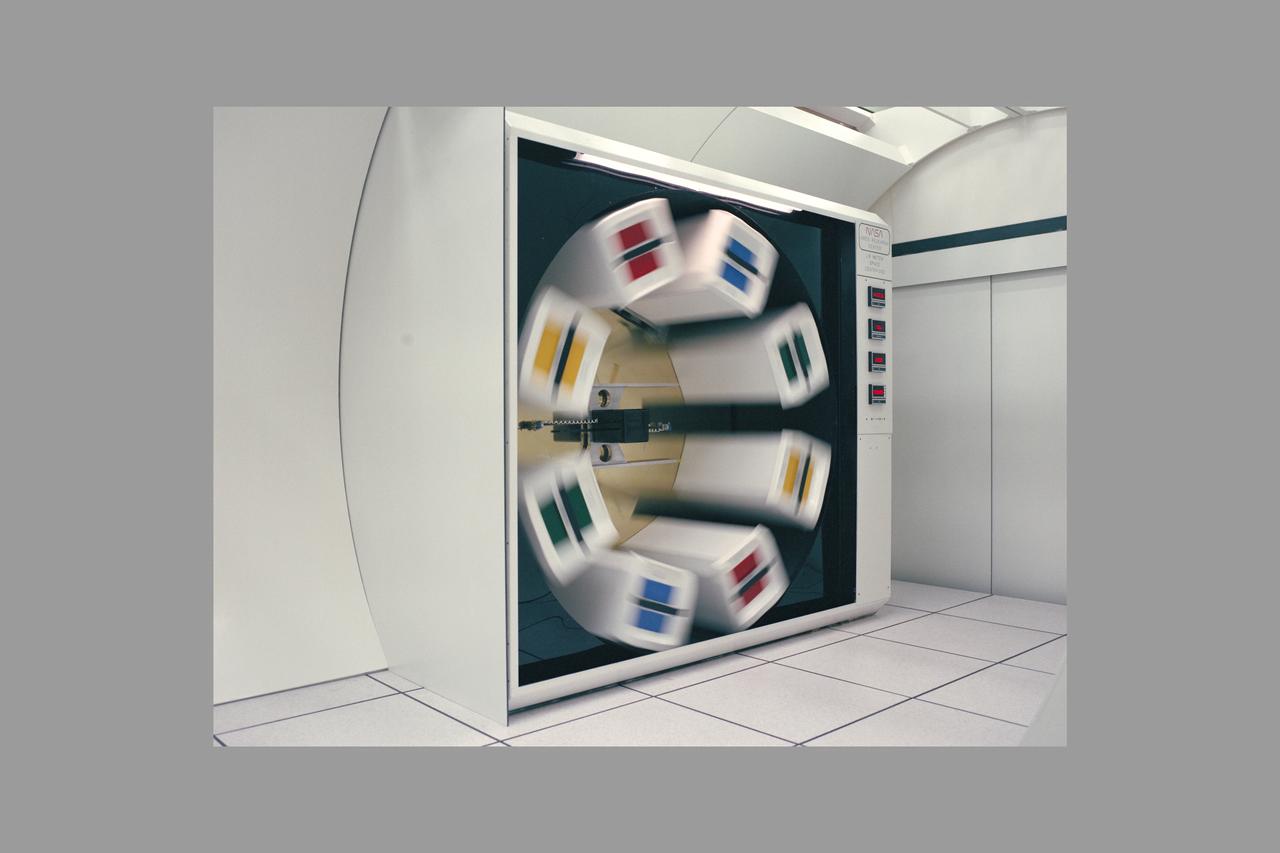
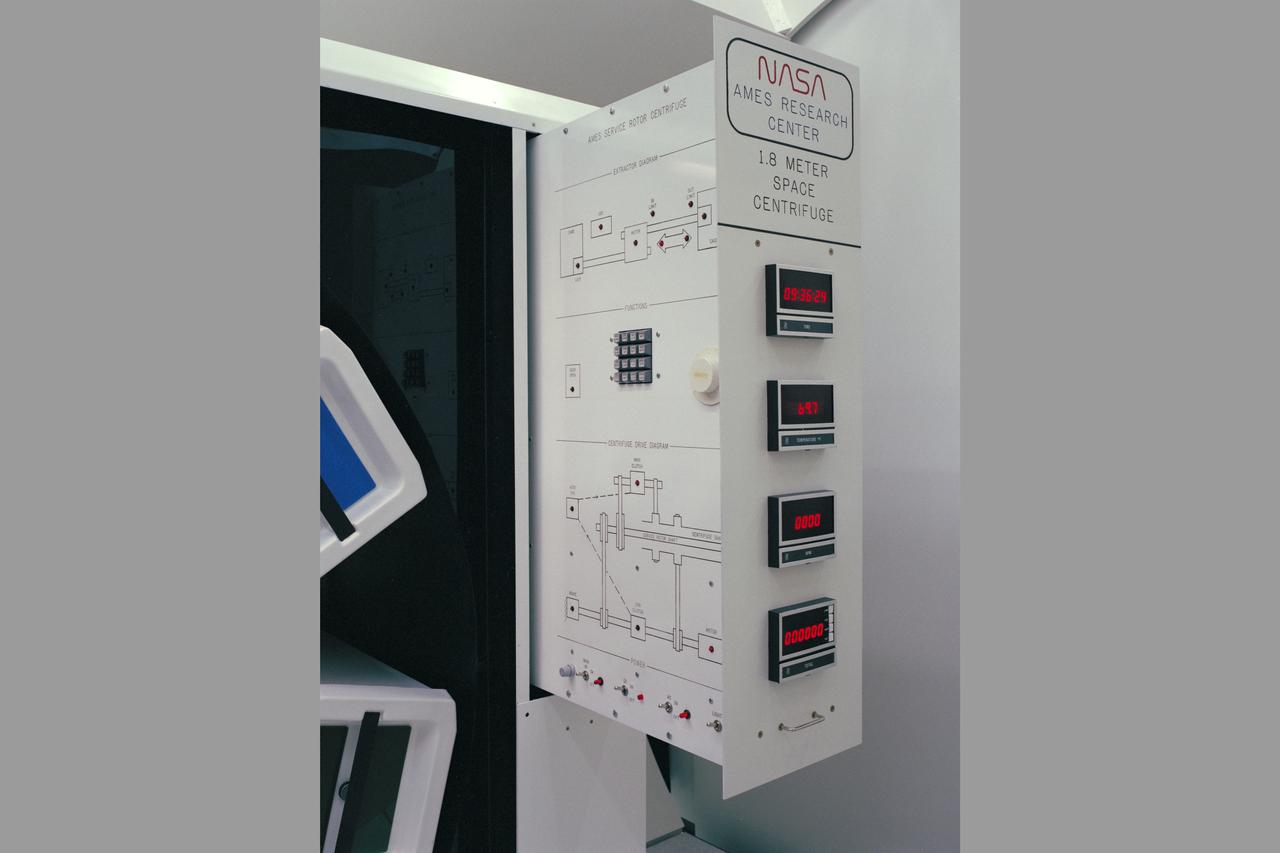
1.8m Space Station Centrifuge N-244 High Bay (ISF)
ARC-1987-AC87-0281-37
1.8m Space Station Centrifuge N-244 High Bay (ISF)
ARC-1987-AC87-0281-33
1.8m Space Station Centrifuge N-244 High Bay (ISF)
ARC-1987-AC87-0281-35
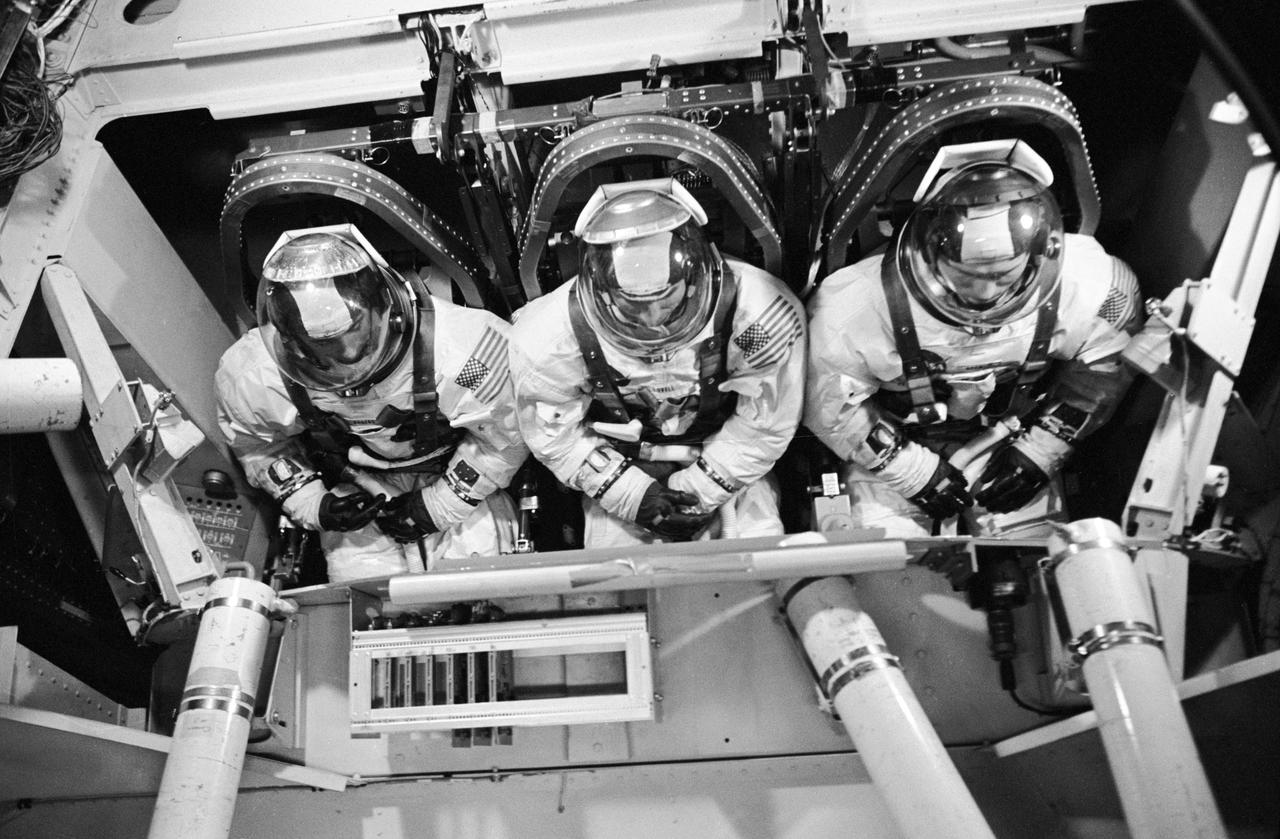
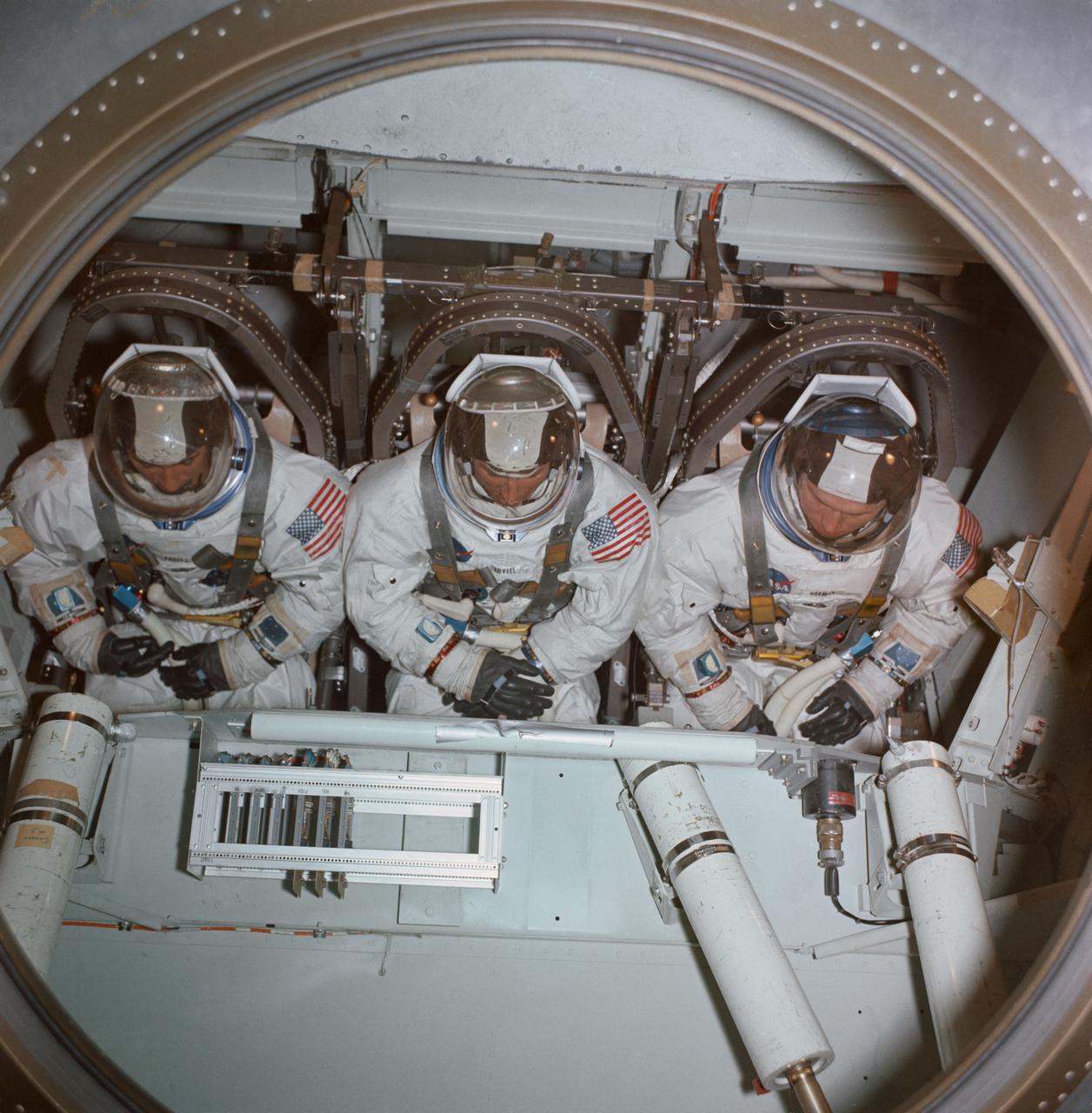
S68-53283 (1 Nov. 1968) --- The Apollo 8 prime crew is seen inside the gondola during centrifuge training in MSC's Flight Acceleration Facility, Building 29. Left to right, are astronauts William A. Anders, lunar module pilot, James A. Lovell Jr., command module pilot; and Frank Borman, commander.  Photo credit: NASA
Crew Training - Apollo 8 (Centrifuge) - MSC
1.8m Space Station Centrifuge N-244 High Bay (ISF) International Space Facility
ARC-1987-AC87-0281-42
1.8m Space Station Centrifuge N-244 High Bay (ISF) International Space Facility
ARC-1987-AC87-0281-39
1.8m Space Station Centrifuge N-244 High Bay (ISF) International Space Facility
ARC-1987-AC87-0281-41
1.8m Space Station Centrifuge N-244 High Bay (ISF) International Space Facility
ARC-1987-AC87-0837-1
1.8m Space Station Centrifuge N-244 High Bay (ISF) International Space Facility
ARC-1987-AC87-0281-43
1.8m Space Station Centrifuge N-244 High Bay (ISF) International Space Facility
ARC-1987-AC87-0281-40
1.8m Space Station Centrifuge N-244 High Bay (ISF) International Space Facility
ARC-1987-AC87-0281-45
1.8m Space Station Centrifuge N-244 High Bay (ISF) International Space Facility
ARC-1987-AC87-0281-44
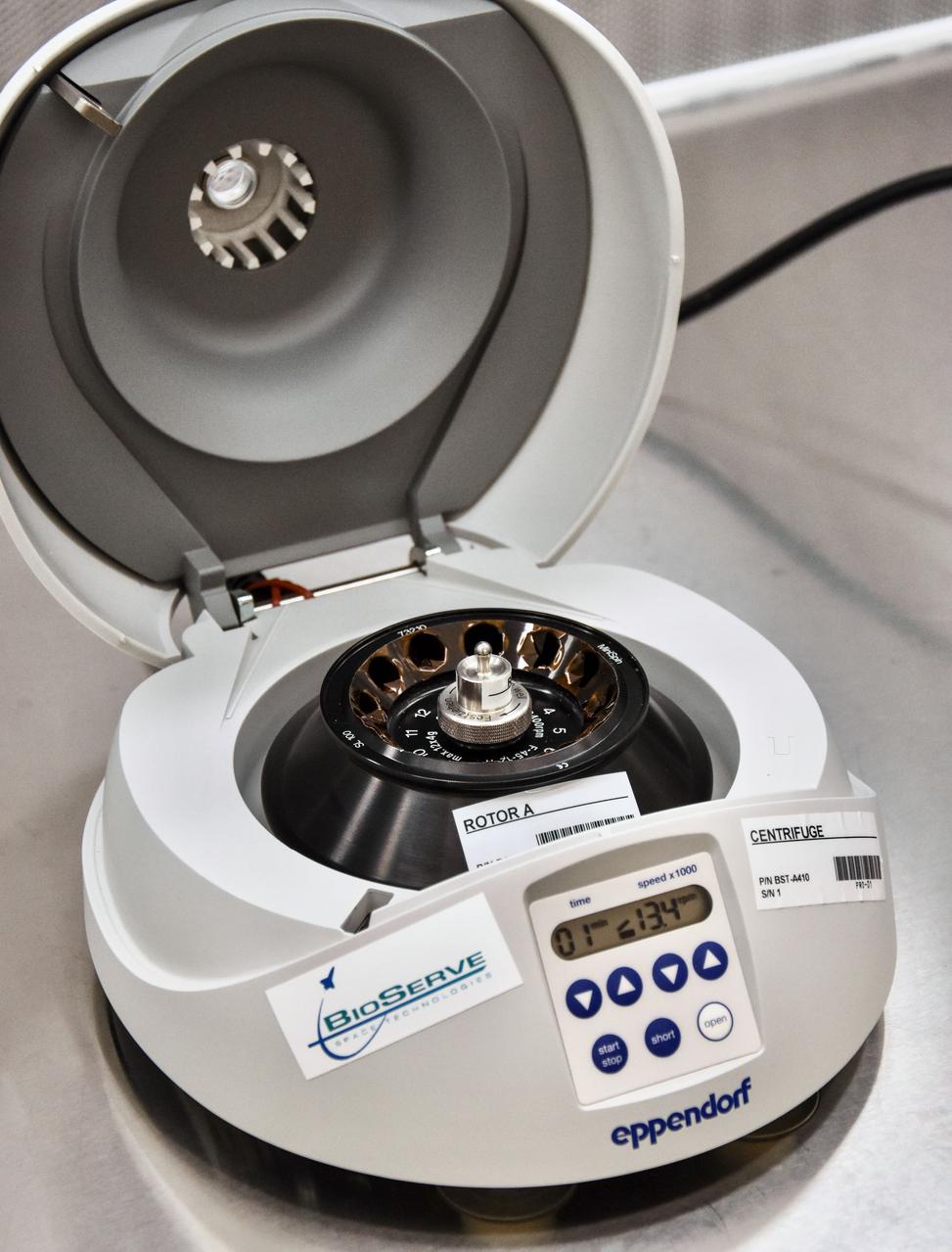
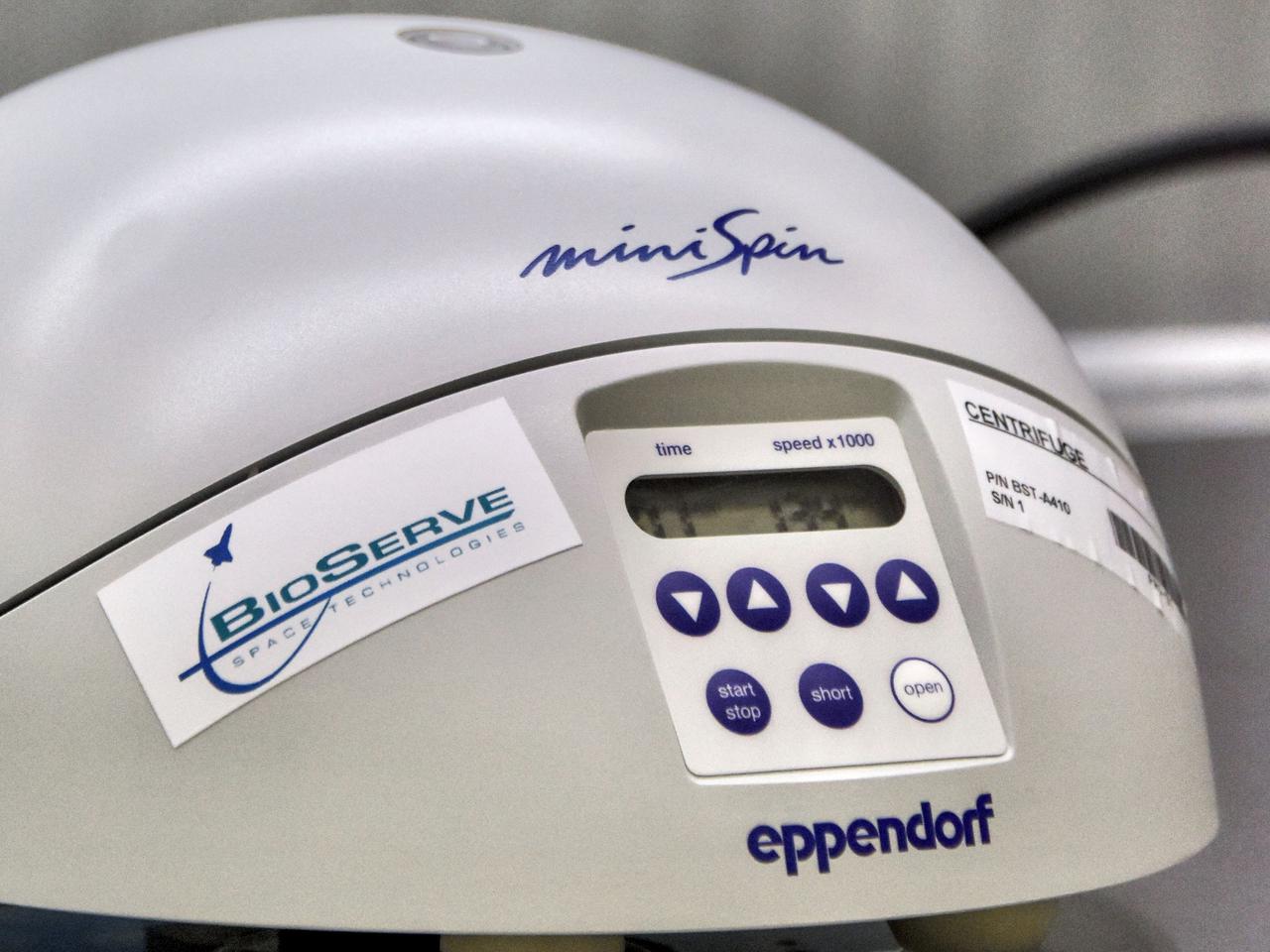
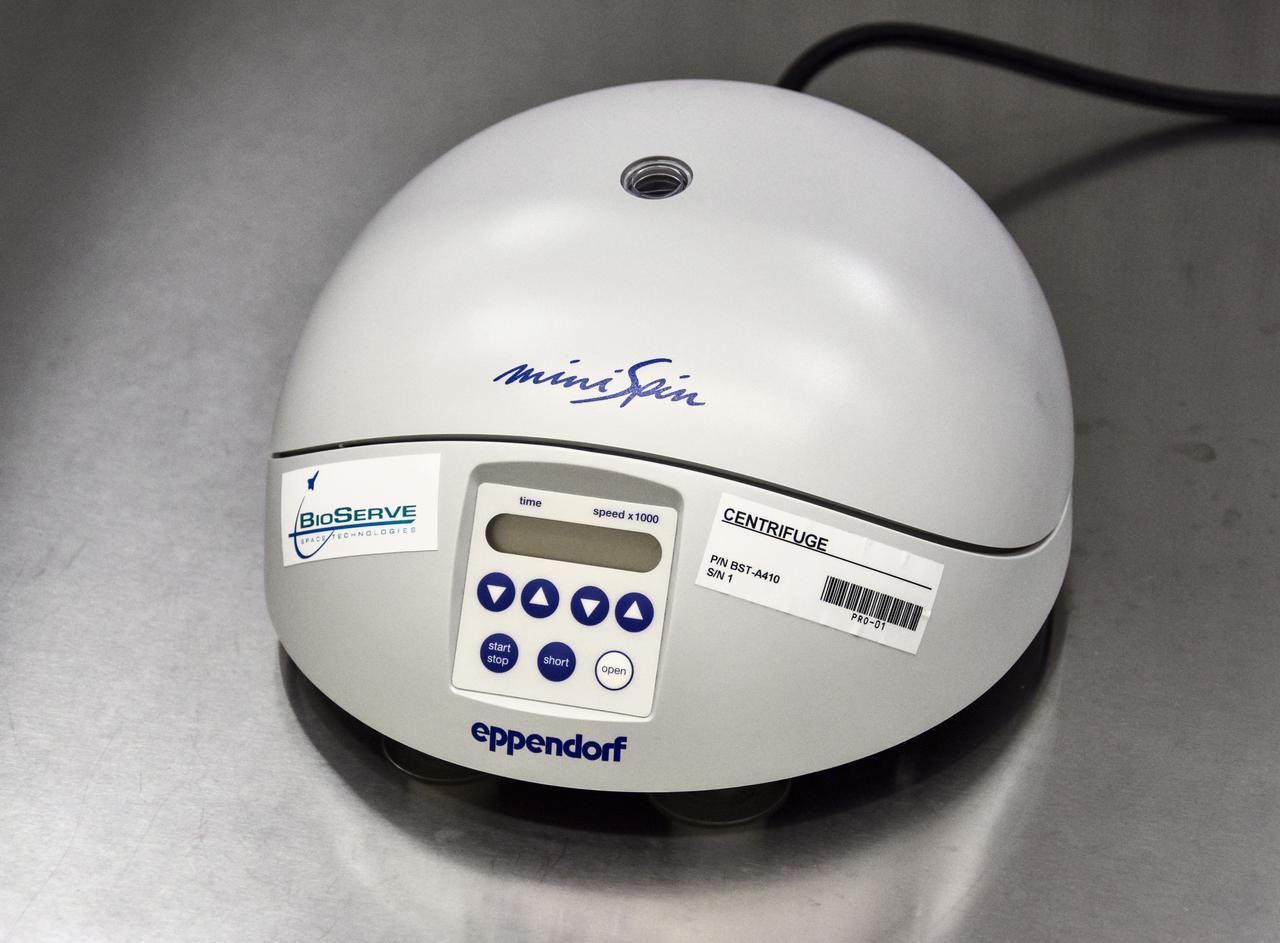
jsc2022e031231 (8/13/2021) --- A preflight  closeup view of the BioServe Centrifuge’s user interface. The BioServe Centrifuge facility supports a wide variety of life, physical, and materials science research. It enables separation of substances with differing densities, including cell cultures, DNA, protein, blood, and sedimentation samples. Image courtesy of BioServe Space Technologies.
BioServe Centrifuge
jsc2022e031230 (8/13/2021) --- A preflight view of the interior of the BioServe Centrifuge in nominal configuration with Rotor A. The BioServe Centrifuge facility supports a wide variety of life, physical, and materials science research. It enables separation of substances with differing densities, including cell cultures, DNA, protein, blood, and sedimentation samples.Image courtesy of BioServe Space Technologies.
BioServe Centrifuge
S68-53194 (1 Nov. 1968) --- The Apollo 8 prime crew inside the centrifuge gondola in Building 29 during centrifuge training in MSC's Flight Acceleration Facility. (View with crew lying on back) Left to right are astronauts William A. Anders, lunar module pilot; James A. Lovell Jr., command module pilot; and Frank Borman, commander.  Photo credit: NASA
Apollo 8 prime crew inside centrifuge gondola in bldg 29 during training
N-243 Flight and Guidance Centrifuge: Is used for spacecraft mission simulations and is adaptable to two configurations.  Configuration 1: The cab will accommodate a three-man crew for space mission research. The accelerations and rates are intended to be smoothly applicable at very low value so the navigation and guidance procedures using a high-accuracy, out-the window display may be simulated.  Configuration 2: The simulator can use a one-man cab for human tolerance studies and performance testing. Atmosphere and tempertaure can be varied as stress inducements.  This simlator is operated closed-loop with digital or analog computation. It is currently man-rated for 3.5g maximum.
ARC-1971-AC71-6490
N-243 Flight and Guidance Centrifuge: Is used for spacecraft mission simulations and is adaptable to two configurations.  Configuration 1: The cab will accommodate a three-man crew for space mission research. The accelerations and rates are intended to be smoothly applicable at very low value so the navigation and guidance procedures using a high-accuracy, out-the window display may be simulated.  Configuration 2: The simulator can use a one-man cab for human tolerance studies and performance testing. Atmosphere and tempertaure can be varied as stress inducements.  This simlator is operated closed-loop with digital or analog computation. It is currently man-rated for 3.5g maximum.
ARC-1971-AC71-6488
N-243 Flight and Guidance Centrifuge: Is used for spacecraft mission simulations and is adaptable to two configurations.  Configuration 1: The cab will accommodate a three-man crew for space mission research. The accelerations and rates are intended to be smoothly applicable at very low value so the navigation and guidance procedures using a high-accuracy, out-the window display may be simulated.  Configuration 2: The simulator can use a one-man cab for human tolerance studies and performance testing. Atmosphere and tempertaure can be varied as stress inducements.  This simlator is operated closed-loop with digital or analog computation. It is currently man-rated for 3.5g maximum.
ARC-1971-AC71-6486
jsc2022e031229 (8/13/2021) --- A preflight view of the The BioServe Centrifuge facility supports a wide variety of life, physical, and materials science research. The Centrifuge is compatible with BioServe’s extensive array of investigation-specific hardware. Small, portable, and easy to set up, the facility further enhances the International Space Station’s scientific capabilities. Image courtesy of BioServe Space Technologies.
BioServe Centrifuge
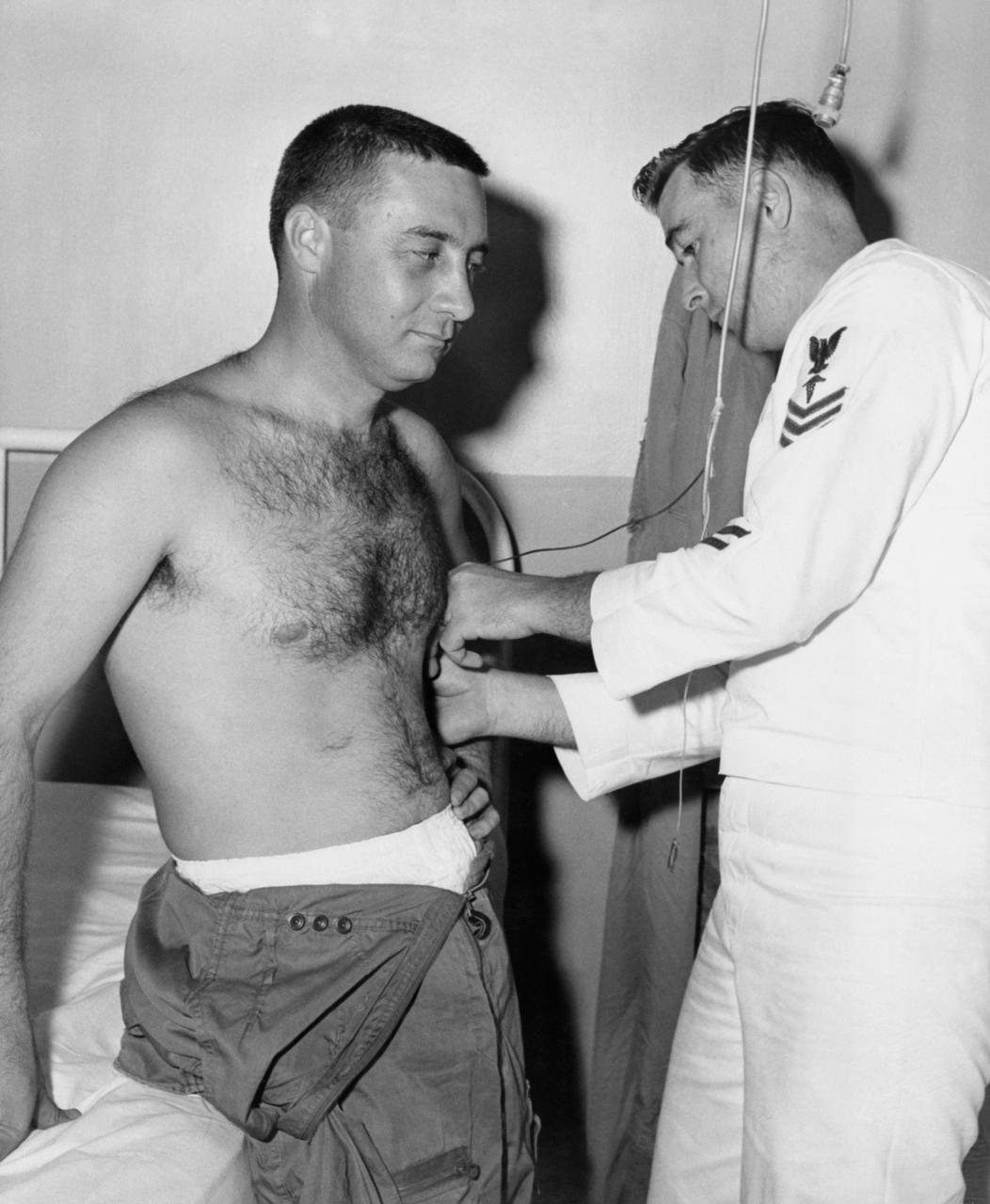
B59-00586 (1959) --- Astronaut Virgil (Gus) Grissom is seen preparing for training in the centrifuge at Johnsville. A Navy corpsman attaches sensors to Grissom to monitor his body's reaction to the centrifuge. Photo credit: NASA
Astronaut Virgil Grissom - Training Prep - Centrifuge - Johnsonville, PA
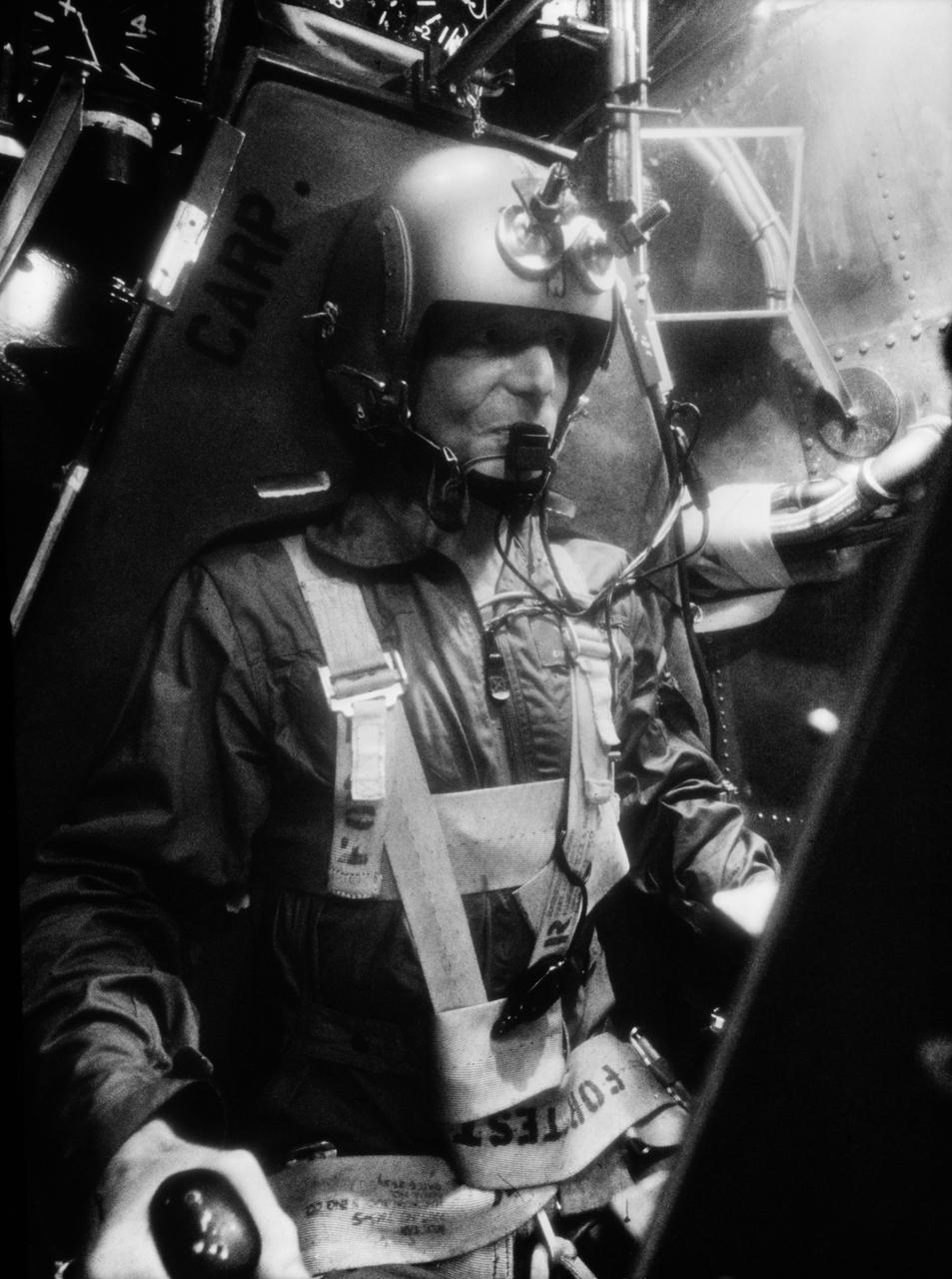
B59-00723 (1959) --- Close-up of astronaut M. Scott Carpenter, prime pilot for the Mercury-Atlas 7 (MA-7) mission, during centrifuge training. (M-199) Photo credit: NASA
Personnel - Astronaut Scott Carpenter - Centrifuge
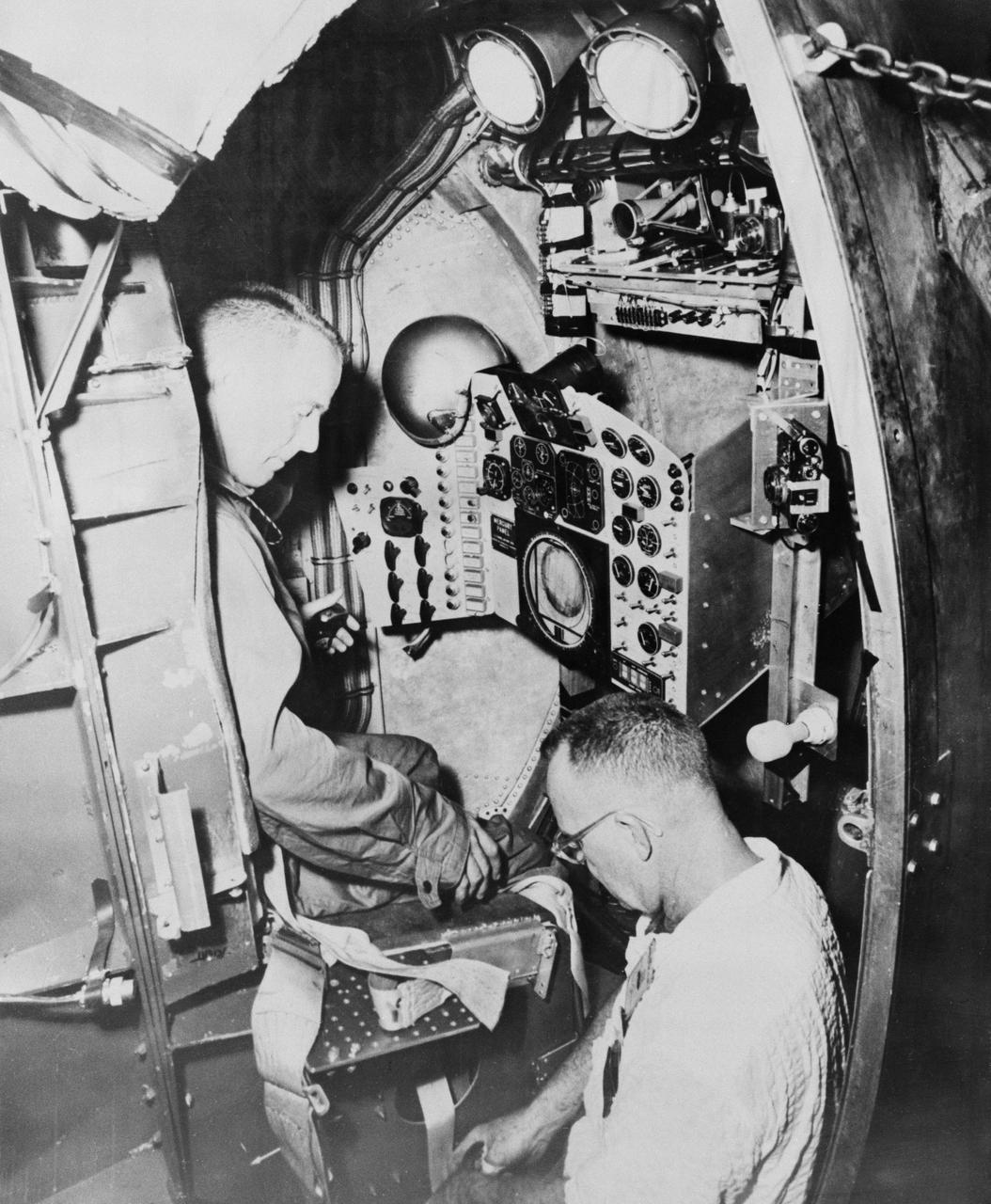
B59-00570 (August 1959) --- Astronaut Scott Carpenter trains at the centrifuge procedures trainer at Wright Field, Johnsville, Pennsylvania, for project Mercury. Photo credit: NASA
Astronaut Scott Carpenter during centrifuge training
S68-53186 (1 Nov. 1968) --- Astronaut Frank Borman, Apollo 8 commander, egresses the gondola in Building 29 after centrifuge training in the Manned Spacecraft Center's (MSC) Flight Acceleration Facility (FAF).
Crew Training - Apollo 8 (Centrifuge) - MSC
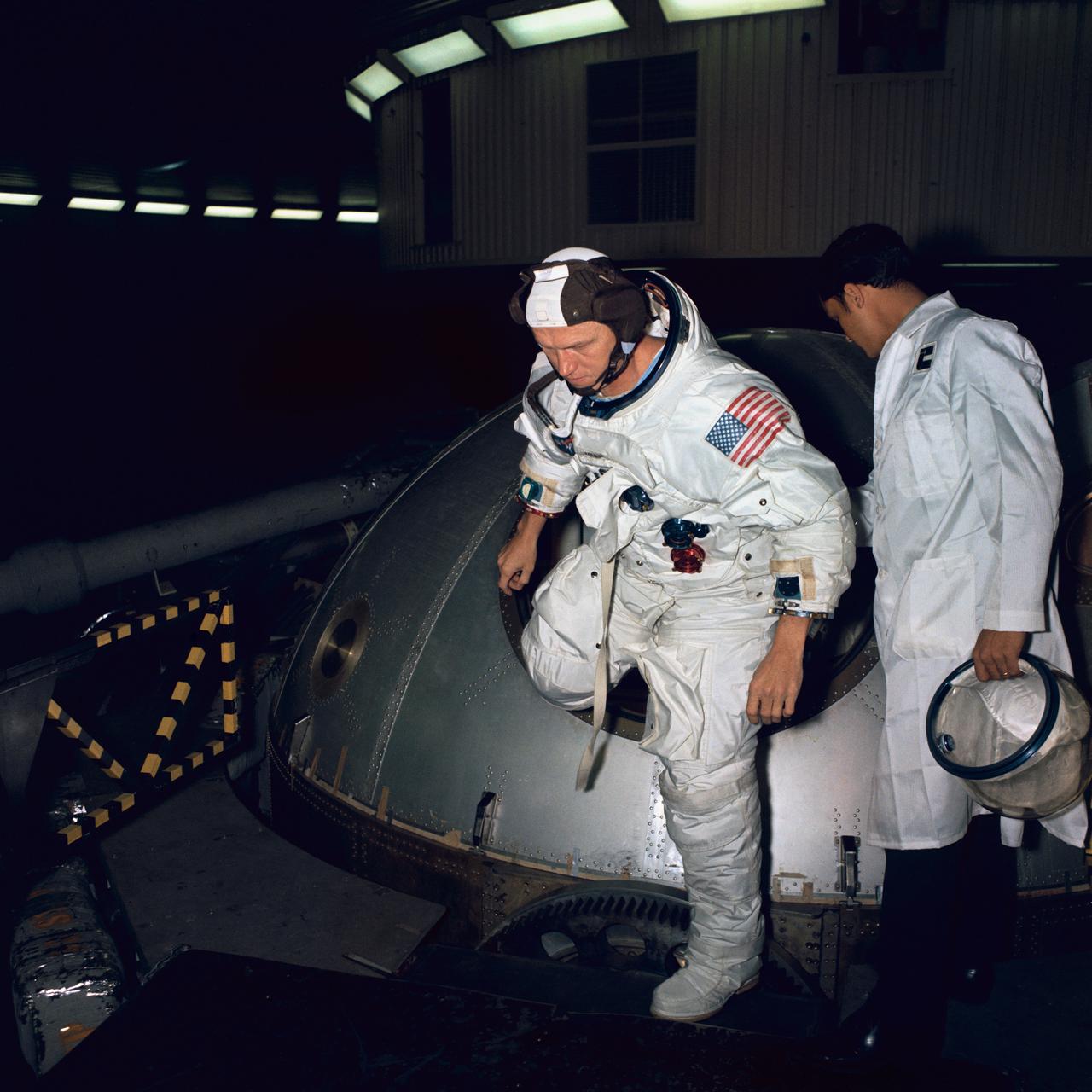
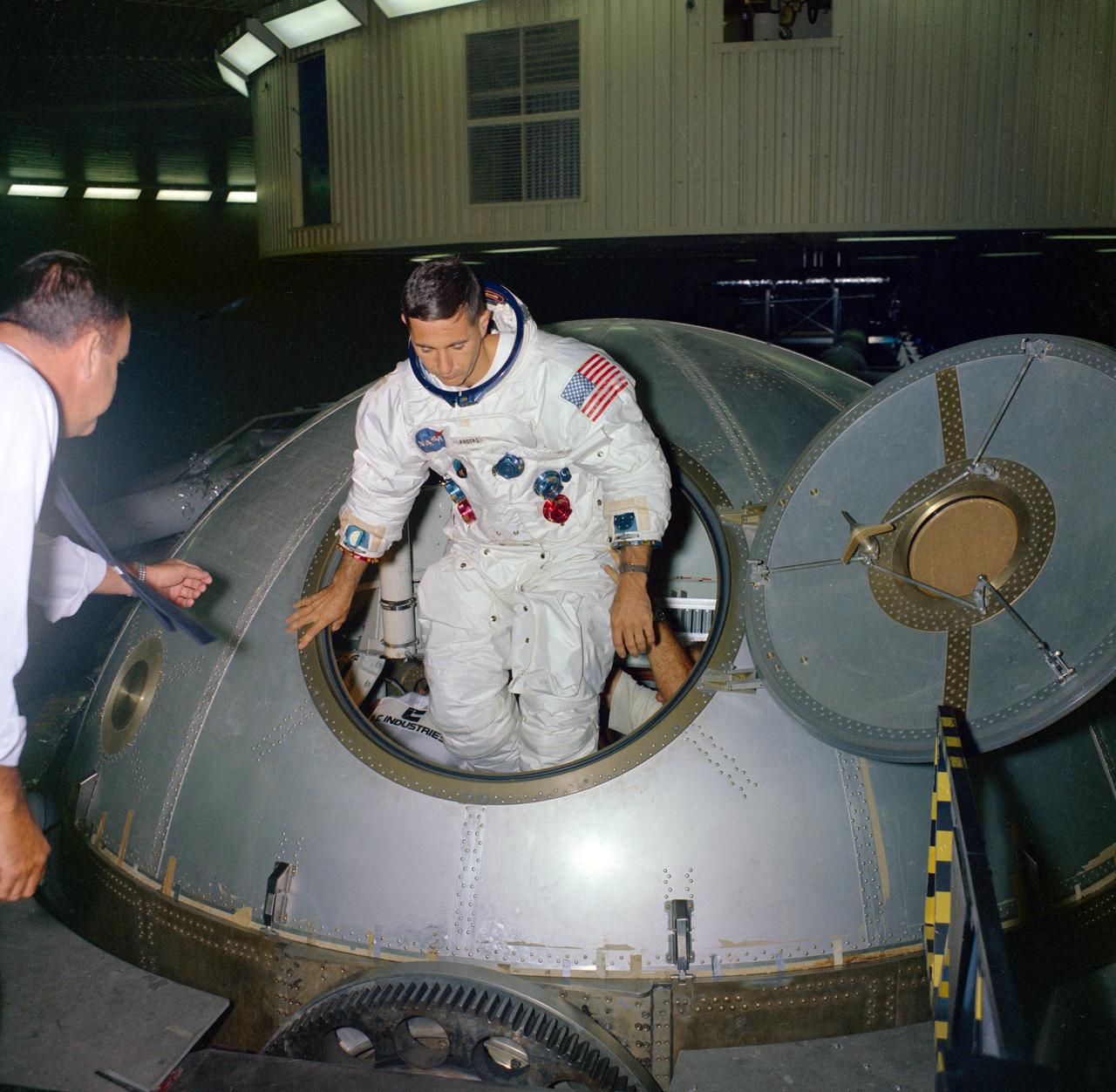
Apollo 8 astronaut William A. Anders, lunar module pilot, steps out of the centrifuge gondola in bldg 29 during centrifuge training in the Manned Spacecraft Center's (MSC) Flight Acceleration Facility.
Apollo 8 prime crew inside centrifuge gondola in bldg 29 during training
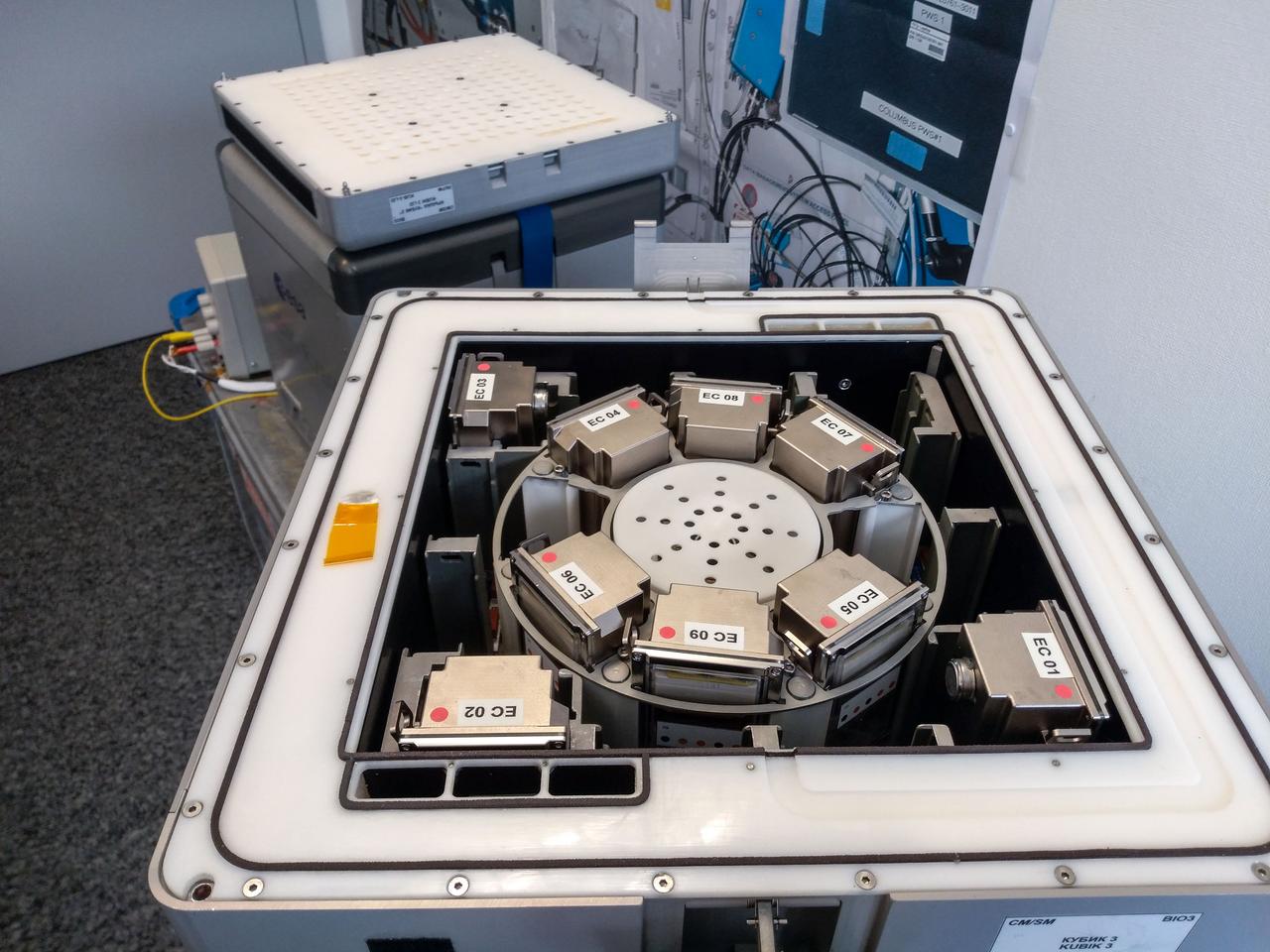
jsc2019e039824 (4/3/2019) --- Preflight imagery showing nine BioRock experimental containers each containing a bioreactor in the KUBIK centrifuge. The KUBIK will be used to simulate Martian and terrestrial gravity. The purpose of the Biorock investigation is to examine the effects of altered gravity on the rock/microbe/liquid system as a whole. (Image Courtesy of: ESA)
9 BioRock experinmental units in a KUBIK centrifuge
G60-02461 (1960) --- Astronaut Walter M. Schirra Jr. prepares to enter gondola of centrifuge which is used to test gravitational stress on astronauts training for spaceflight. Schirra became the pilot of the Mercury-Atlas 8 (MA-8) six-orbit space mission. Photo credit: NASA
SCHIRRA, WALTER, JR., ASTRONAUT - TRAINING - CENTRIFUGE - PA
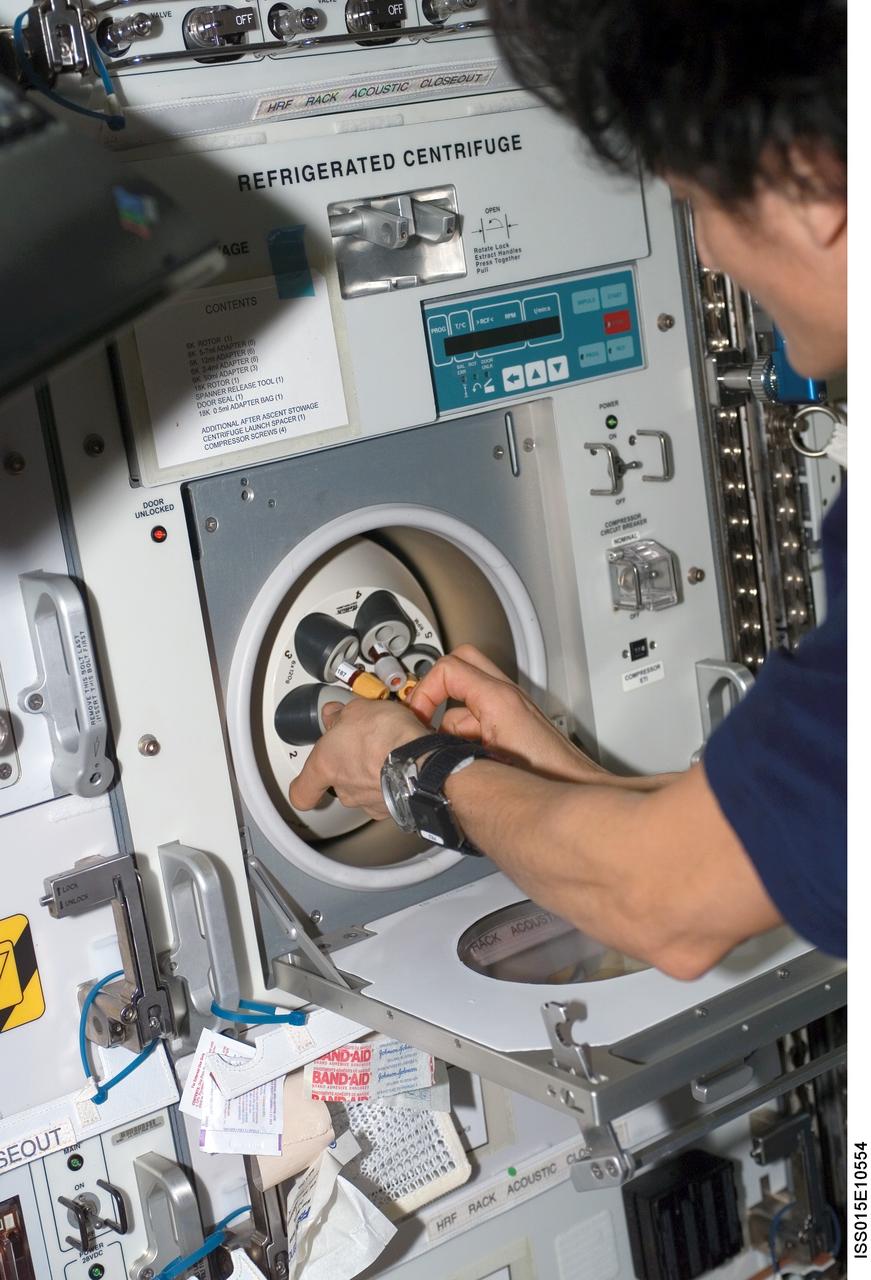
ISS015-E-10554 (1 June 2007) --- Astronaut Sunita L. Williams, Expedition 15 flight engineer, loads test samples in the Human Research Facility 2 (HRF-2) Refrigerated Centrifuge as a part of the Nutritional Status Assessment (Nutrition) experiment in the Destiny laboratory of the International Space Station. The results of the Nutrition experiment will be used to better understand the time course effects of space flight on human physiology.
Williams loads the HRF2 Refrigerated Centrifuge for the Nutrition Experiment during Expedition 15
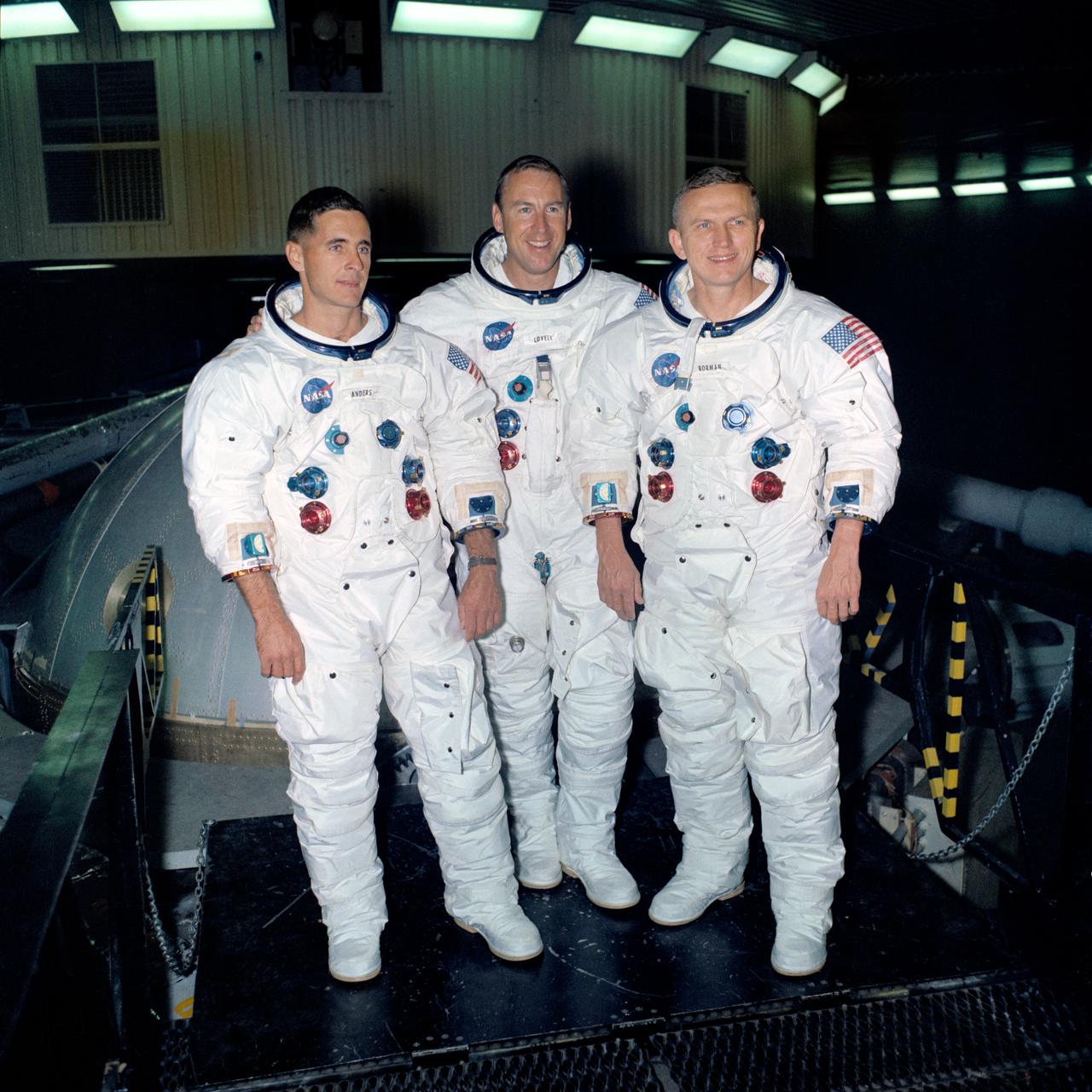
S68-53187 (1 Nov. 1968) --- The prime crew of the Apollo 8 lunar orbit mission stands beside the gondola in Building 29 after suiting up for centrifuge training in the Manned Spacecraft Center's (MSC) Flight Acceleration Facility (FAF). Left to right, are astronauts William A. Anders, lunar module pilot; James A. Lovell Jr., command module pilot; and Frank Borman, commander.
Apollo 8 Prime Crew - Gondola for Centrifuge Training - MSC
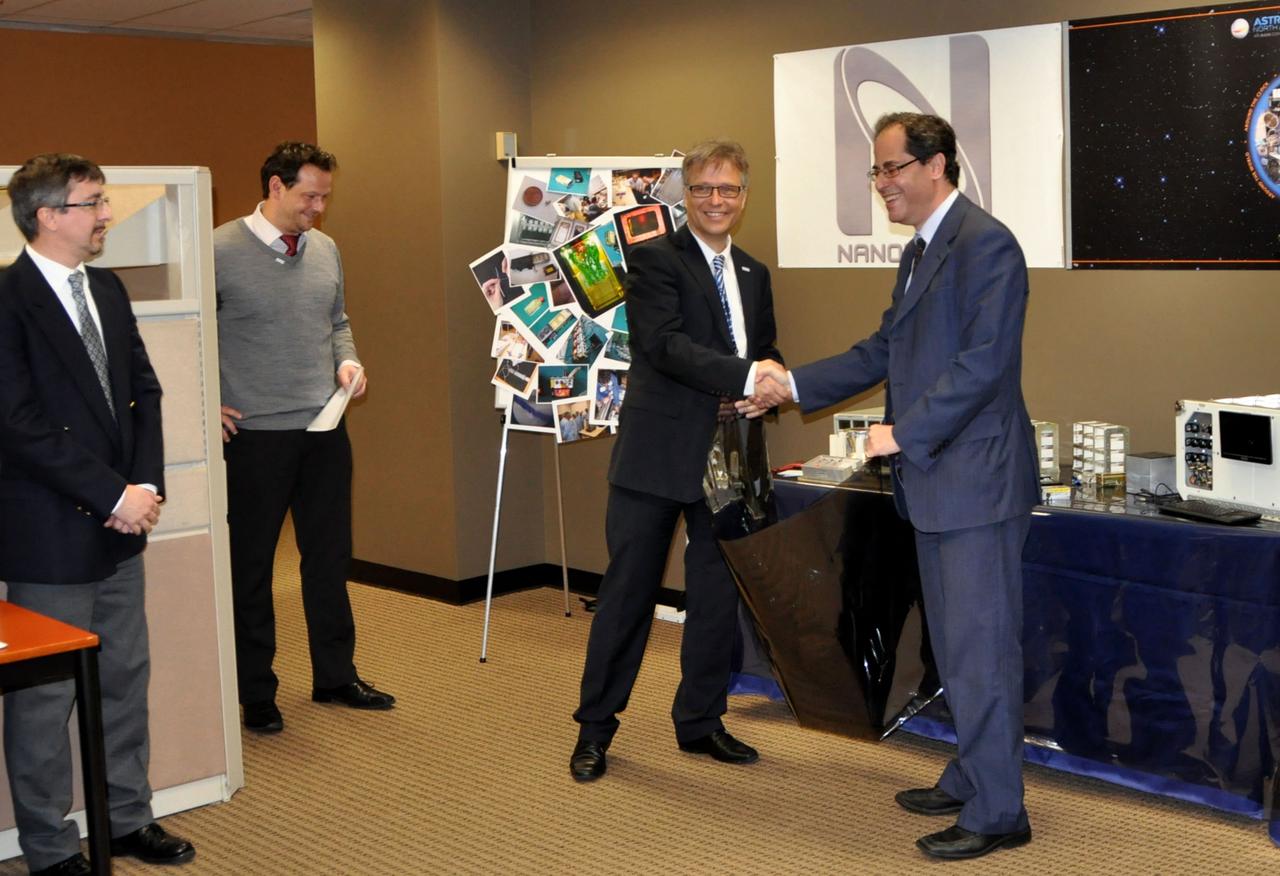
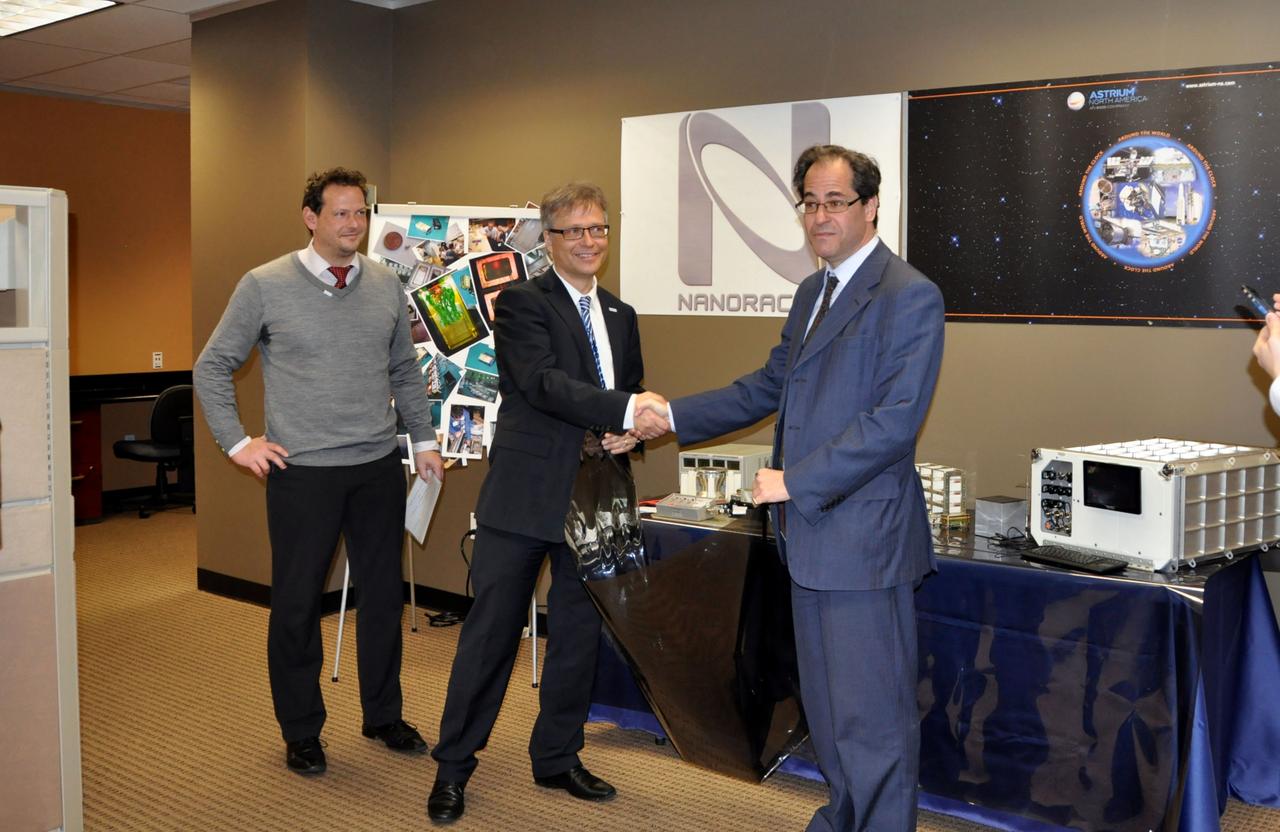
JSC2012-E-029874 (14 Feb. 2012) --- During a ceremony on Feb. 14 at the Astrium North America facility in Houston, two principal participants shake hands as a gravitational research centrifuge gets handed over by Astrium ST to NanoRacks LLC representatives. The handshake of Ulrich Kuebler (second right) of Astrium ST and Jeff Manber, managing director of NanoRacks,  symbolizes the working relationship between Astrium ST and NanoRacks, who are working in cooperation with NASA, to deliver the commercial centrifuge facility to the International Space Station. At left are Luca Pieroni of Kayser Italia, one of Astrium's partners in construction the centrifuge, and Achim Schwarzwaelder of Astrium ST . NASA Photo courtesy Astrium North America
jsc2012e029874
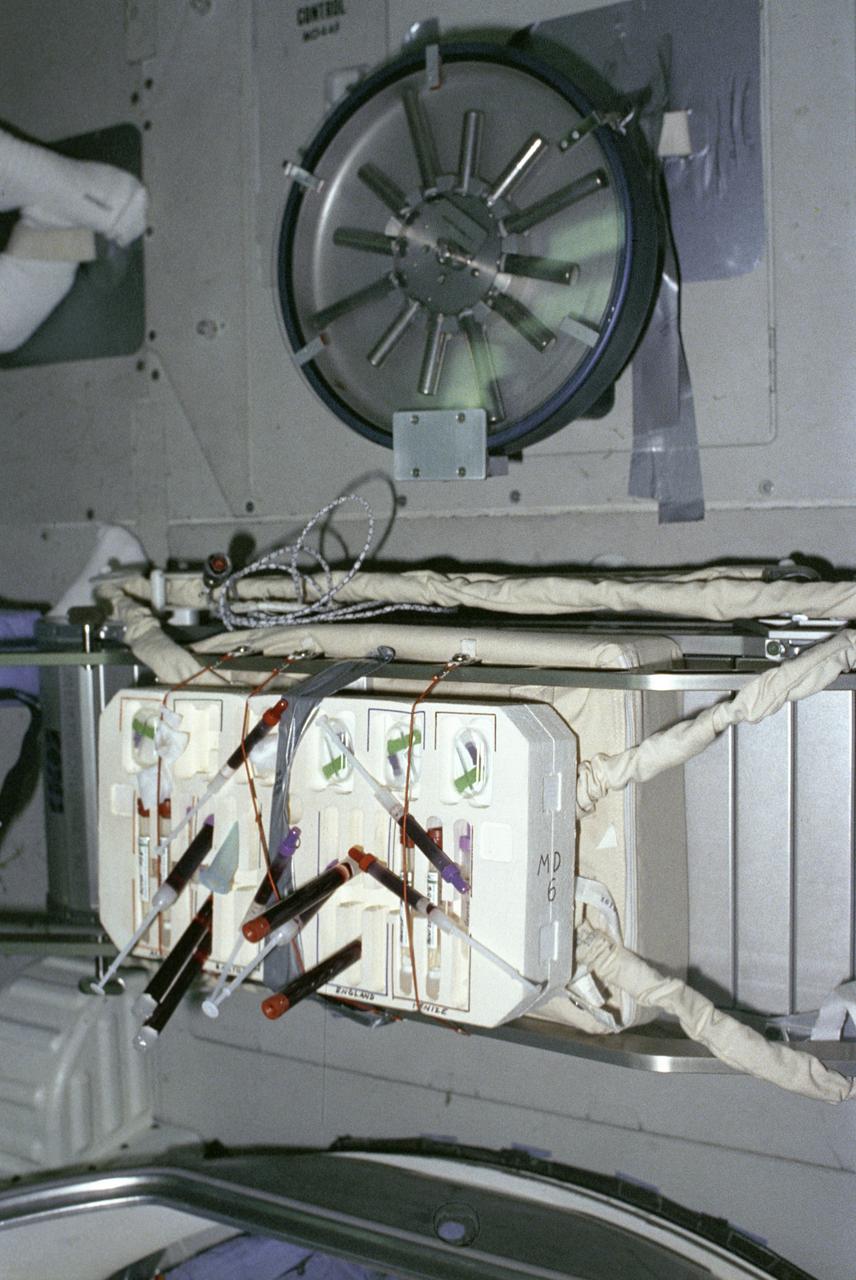
While instruments on the pallets in the payload bay observed the universe, biological experiments were performed in the middeck of the Shuttle Orbiter Challenger. Studying life processes in a microgravity environment can shed new light on the functioning of biological systems on Earth. These investigations can also help us understand how living organisms react to prolonged weightlessness. One such experiment was the vitamin D metabolites and bone demineralization experiment. This investigation measured the vitamin d metabolite levels of crew members to gain information on the cause of bone demineralization and mineral imbalance that occur during prolonged spaceflight as well as on Earth. Research into the biochemical nature of vitamin D has shown that the D-metabolites play a major role in regulating the body's calcium and phosphorus levels. One major function of the most biologically active vitamin D metabolite is to regulate the amount of calcium absorbed from the diet and taken out of bones. This investigation had two phases. The first was the developmental phase, which included extensive testing before flight, and the second, or final phase, involved the postflight analysis of the crew's blood samples. This photograph shows a blood draw test kit and centrifuge used for the experiment aboard the Spacelab-2. Marshall Space Flight Center had management responsibilities of all Spacelab missions.
Spacelab
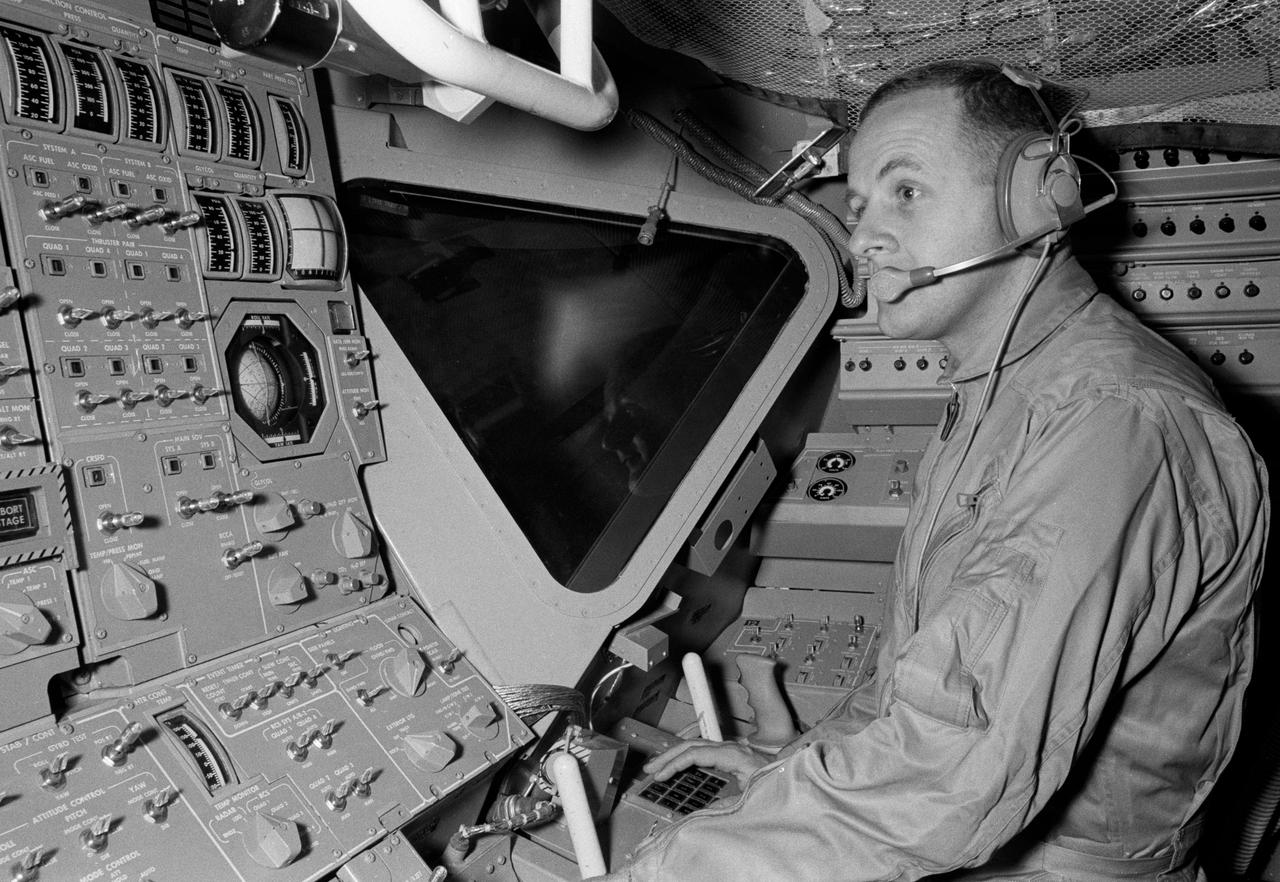
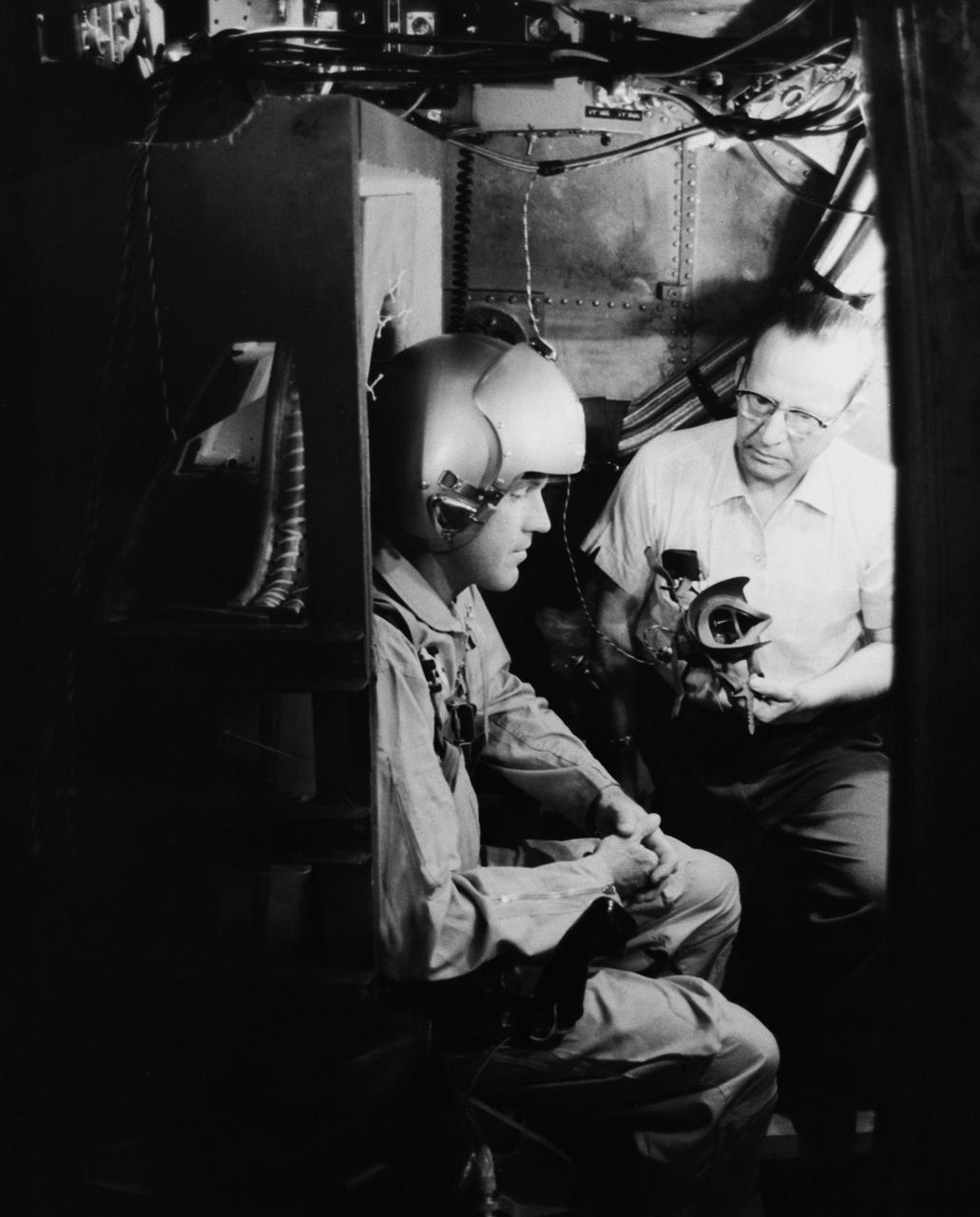
Views of Astronaut Dr. Philip K. Chapman training in the Lunar Module (LM) Simulator, Centrifuge, and the Apollo Mission Simulator. MSC
s68-20944
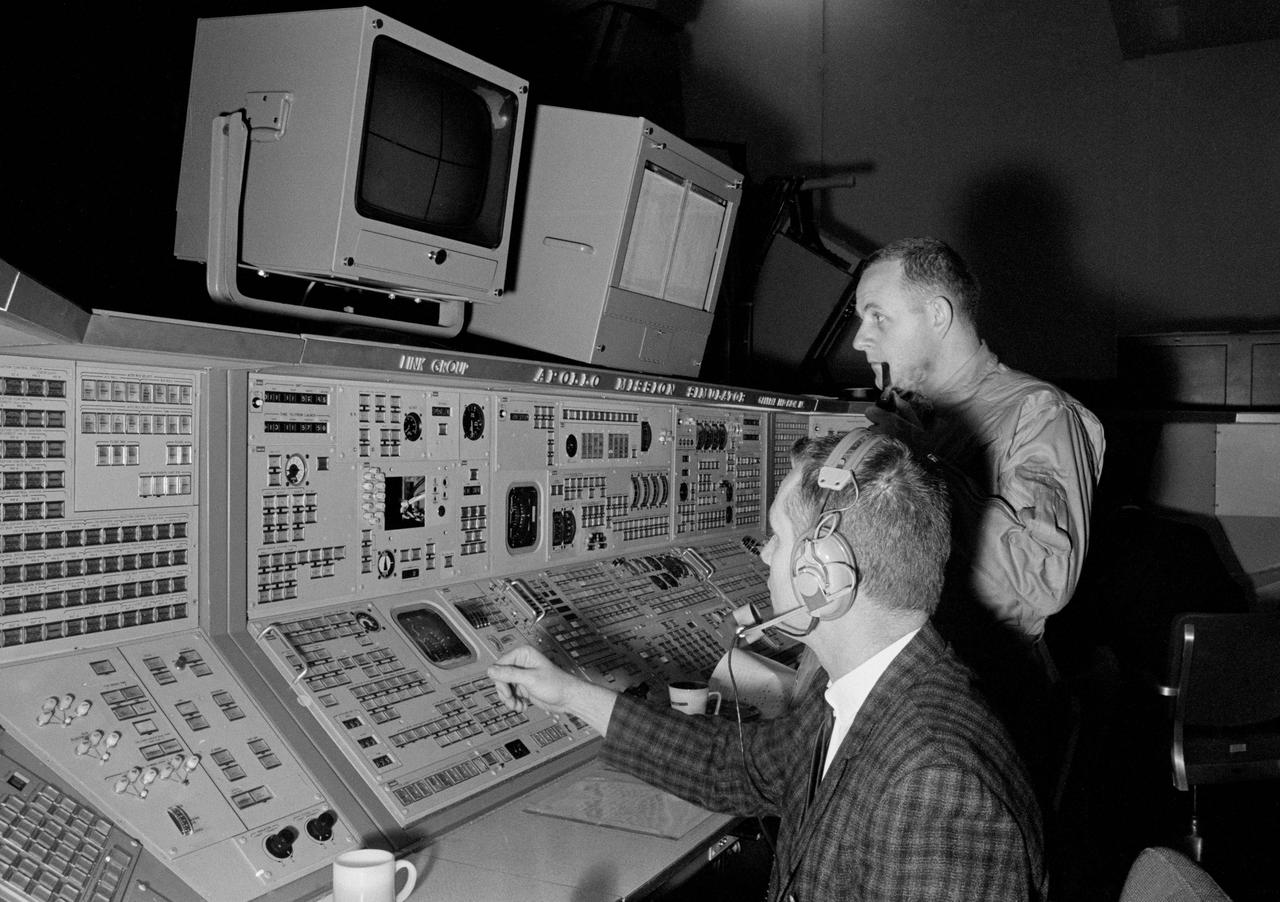
Views of Astronaut Dr. Philip K. Chapman training in the Lunar Module (LM) Simulator, Centrifuge, and the Apollo Mission Simulator. MSC
s68-20948
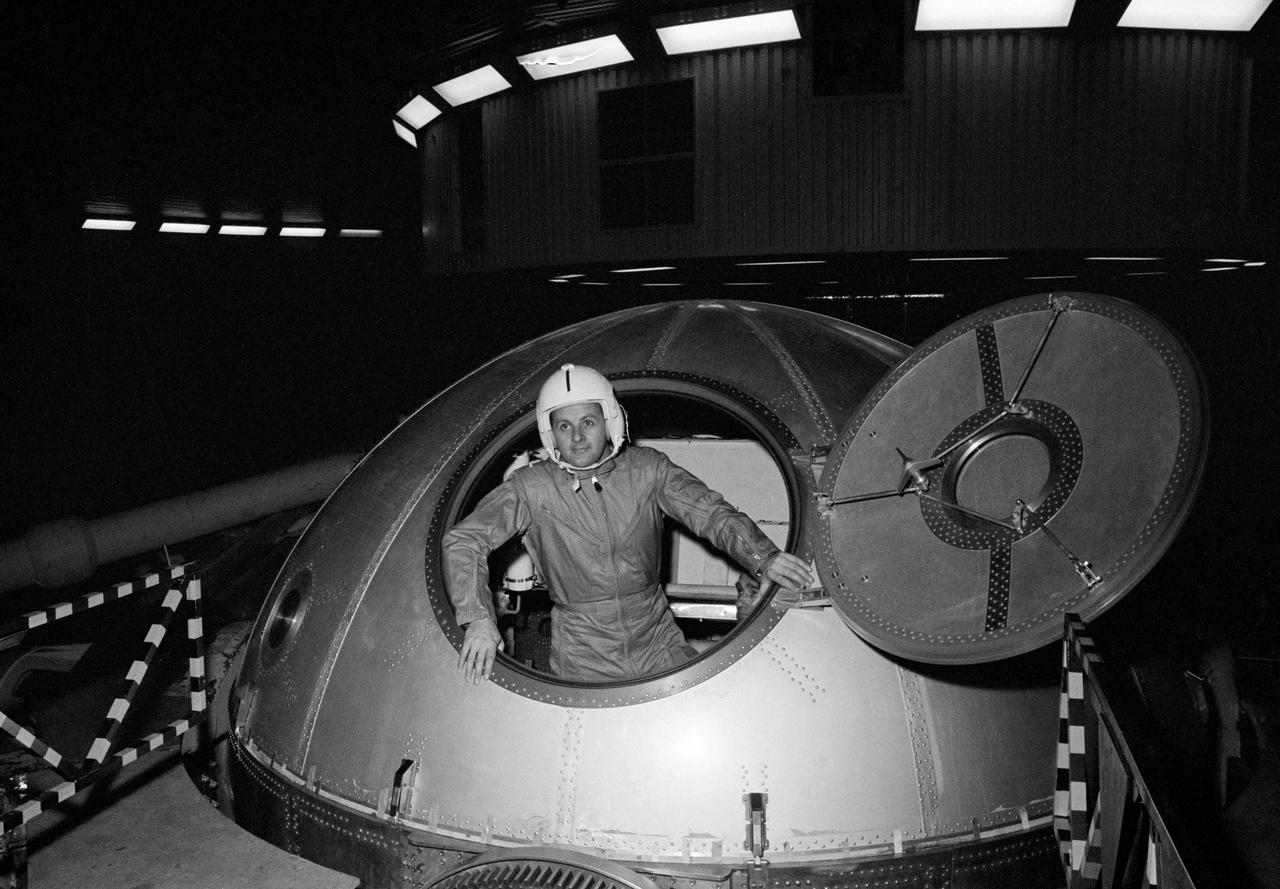
Views of Astronaut Dr. Philip K. Chapman training in the Lunar Module (LM) Simulator, Centrifuge, and the Apollo Mission Simulator. MSC
s68-20956
JSC2012-E-029873 (14 Feb. 2012) --- This is a medium close-up view of a gravitational research centrifuge which Astrium Space Transportation handed over to NanoRacks LLC, during a ceremony on Feb. 14 at Astrium North America?s Houston facility. Astrium ST and NanoRacks are working in cooperation with NASA to deliver the commercial centrifuge facility to the International Space Station. NASA Photo courtesy Astrium North America
jsc2012e029873
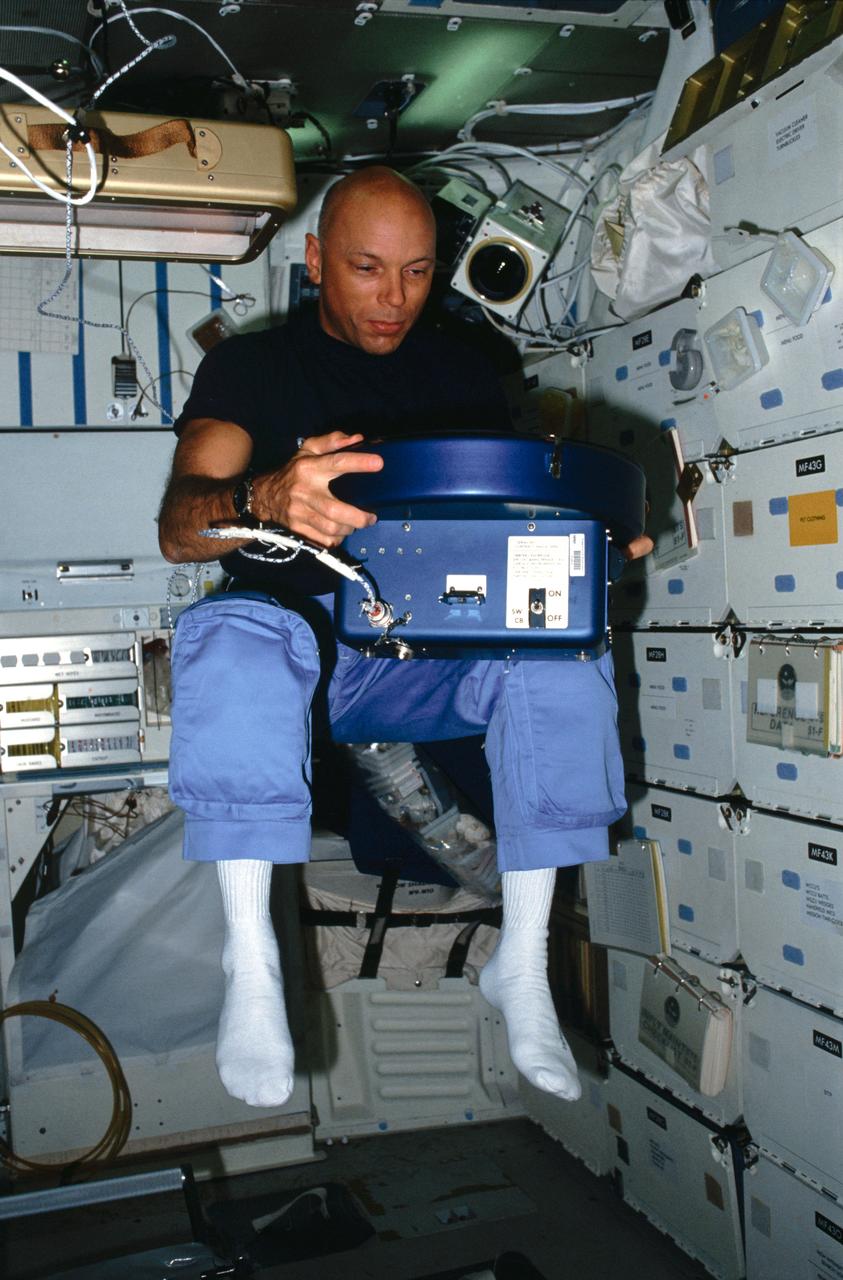
51F-13-021 (29 July-6 Aug 1985) --- Astronaut Story Musgrave, STS51F  mission specialist, is seen hitching a zero-g ride on a blood centrifuge on the middeck of the space shuttle Challenger.  "The centrifuge got more workout than just separation of our blood," crewmate John Bartoe, payload specialist,  later told a gathering of media representatives at the 51F post-flight press conference, referring to Musgrave's off-duty antics.  Photo credit: NASA
MS Musgrave handled hardware in the FWD MDDK
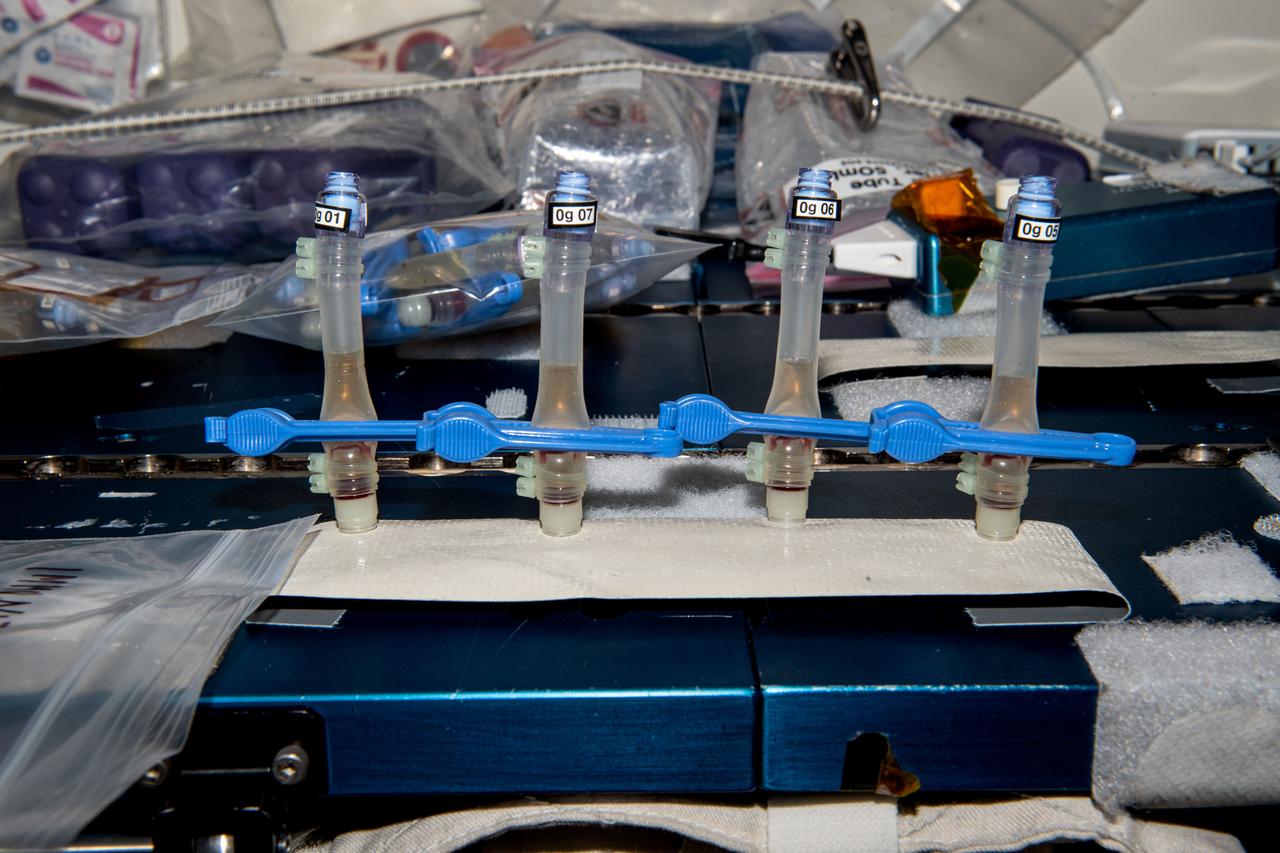
iss069e086233 (9/8/2023) --- A view of sample preparation for centrifuge operations in the Human Research Facility (HRF) centrifuge aboard the International Space Station (ISS). The Monitoring the Cellular Immunity by In Vitro Delayed Type Hypersensitivity (DTH) Assay on the ISS (Immunity Assay) investigation aims to monitor the impact of spaceflight stressors on cellular immune functions in a blood sample, with the help of a functional immune test.
iss069e086233
S63-03978 (1963) --- Astronaut L. Gordon Cooper Jr., prime pilot for the Mercury-Atlas 9 (MA-9) mission, is strapped into the gondola while undergoing tests in the centrifuge at the Naval Air Development Center, Johnsville, Pennsylvania. The centrifuge is used to investigate by simulation the pilot's capability to control the vehicle during the actual flight in its booster and reentry profile. Photo credit: NASA
CONTOUR COUCH - MERCURY-ATLAS (MA)-9 PRELAUNCH - ASTRONAUT COOPER - PA
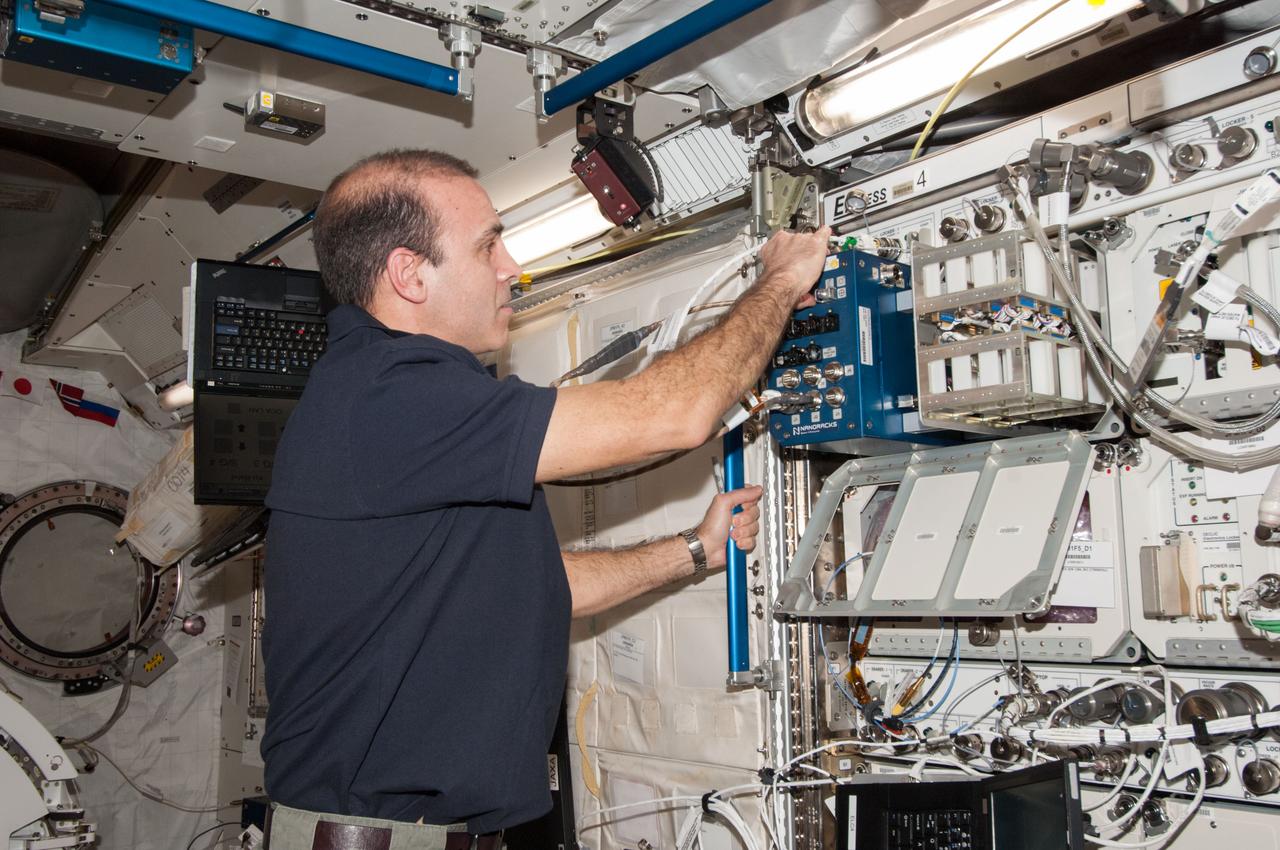
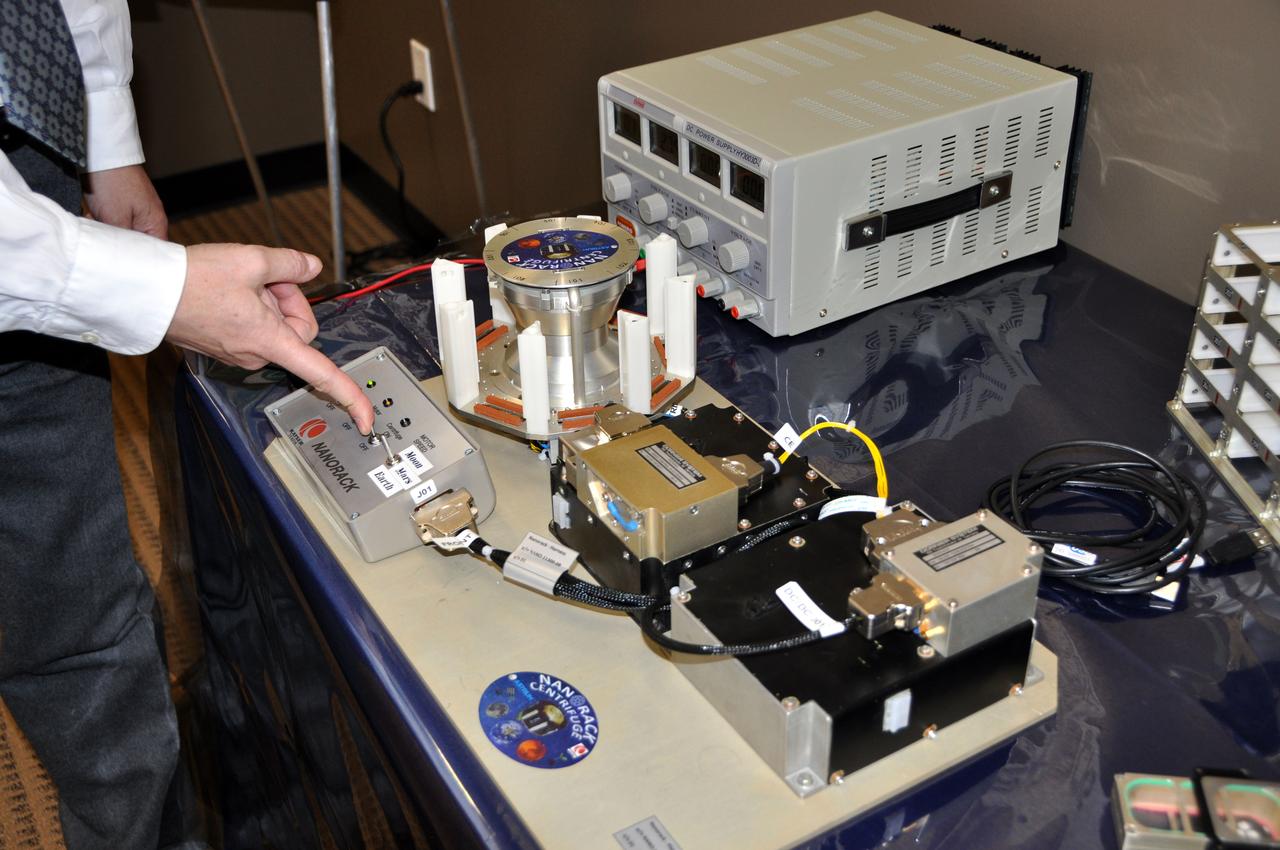
ISS038-E-024791 (2 Jan. 2014) --- In the International Space Station's Kibo laboratory, NASA astronaut Rick Mastracchio, Expedition 38 flight engineer, performs troubleshooting on the Biorack centrifuge for NanoRacks, a facility that provides lower-cost microgravity research facilities for small payloads utilizing a standardized "plug-and-play" interface. Mastracchio checked the three settings of the centrifuge, which is designed to simulate the gravity of Earth, the moon and Mars.
iss038e024791
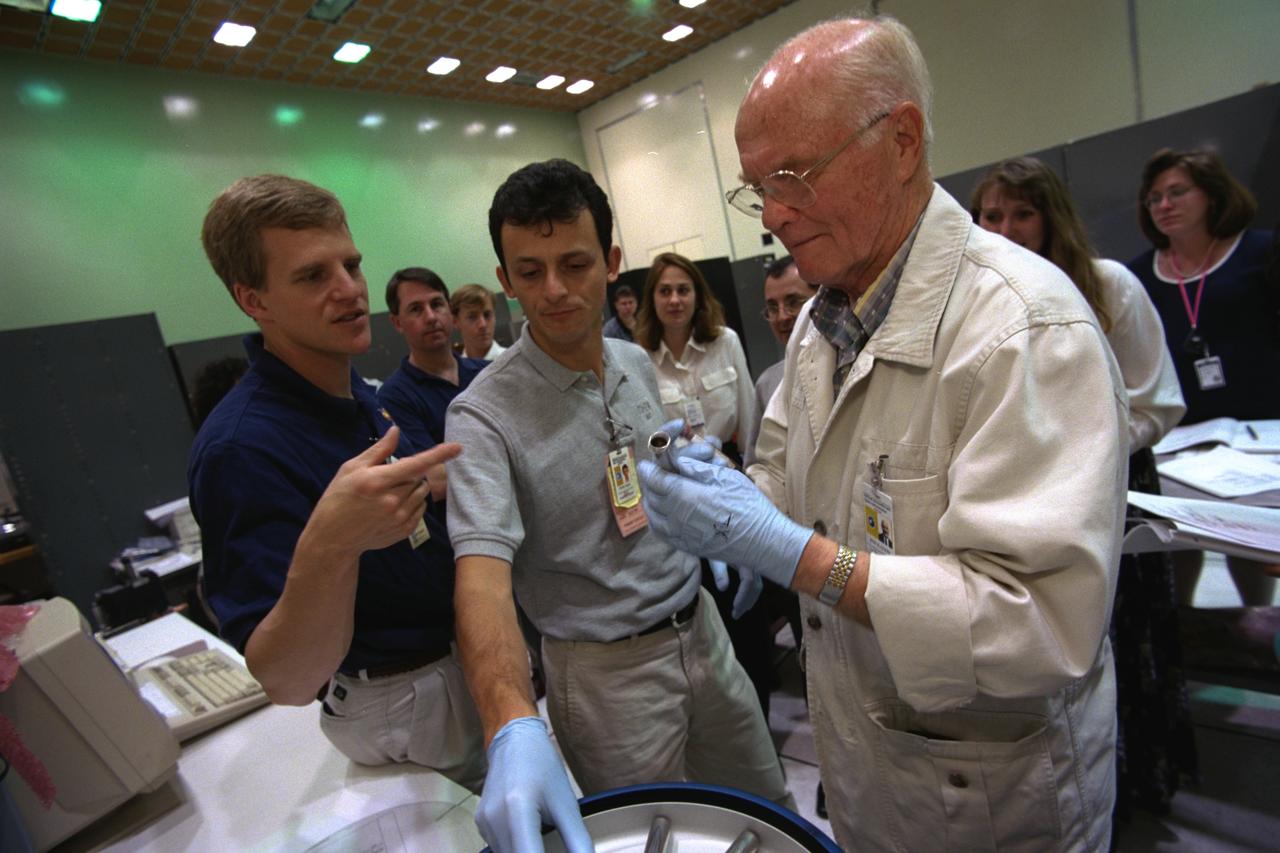
S98-08741 (May 1998) --- Three crew members in training for the STS-95 mission check out a training version of a blood centrifuge that will accompany them aboard the Space Shuttle Discovery later this year. In the foreground (from the left), are astronauts Scott E. Parazynski and Pedro Duque, both mission specialists, and U.S. Sen. John H. Glenn Jr., payload specialist. Duque, representing the European Space Agency (ESA), has his right hand on the centrifuge.  Sen. Glenn holds a vial of blood that would be placed inside the centrifuge. Among those in the background is astronaut Stephen K. Robinson (left side of frame), STS-95 mission specialist. The photo was taken by Joe McNally, National Geographic, for NASA.
Various views of STS-95 Senator John Glenn during training
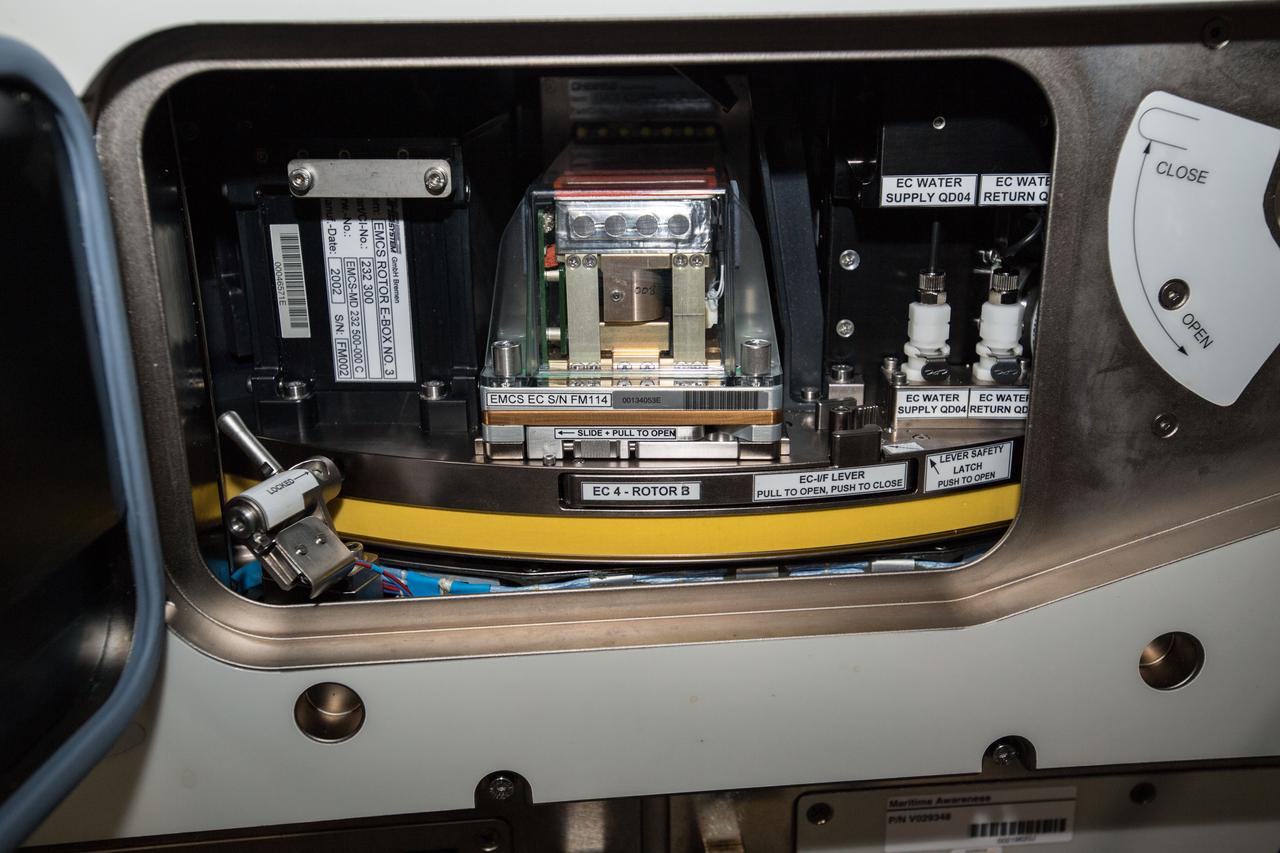
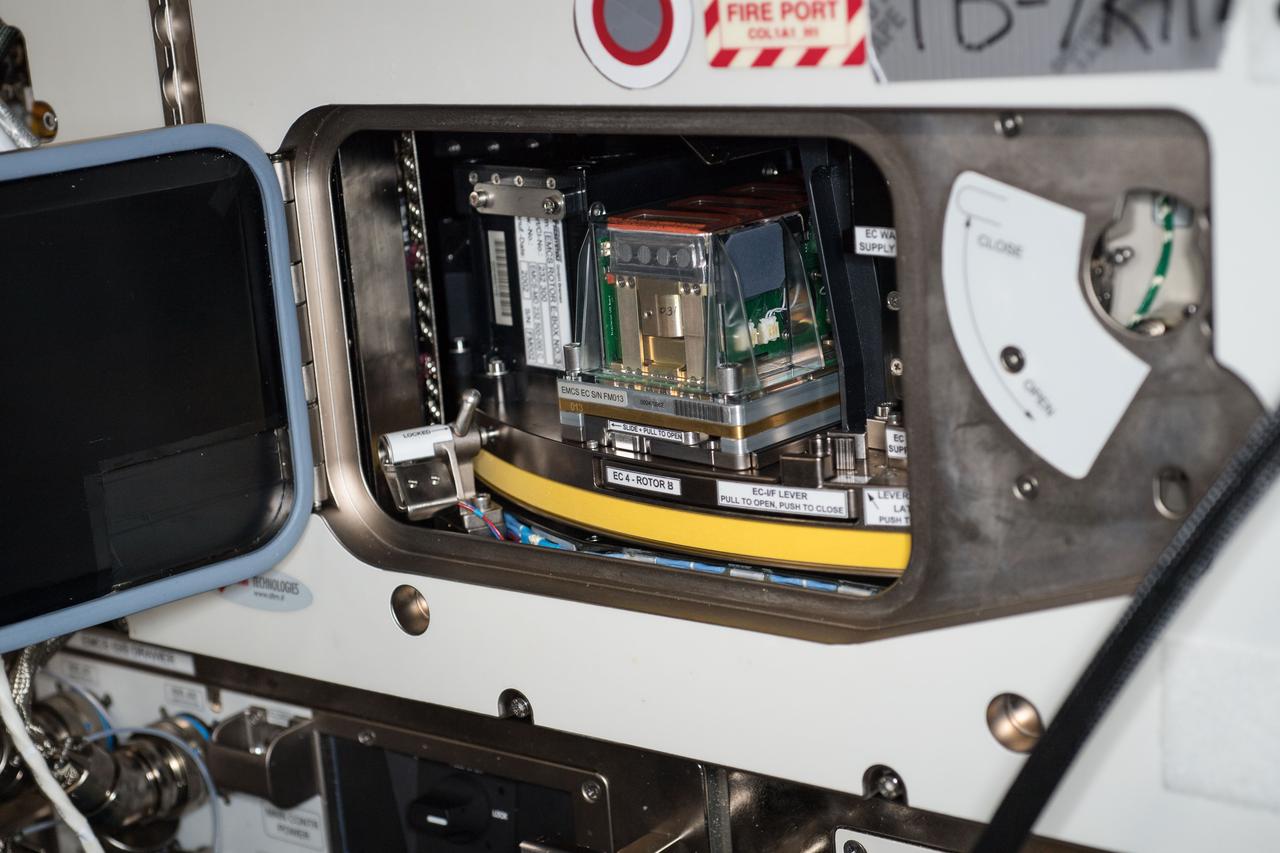
iss054e037079 (Feb. 8, 2018) --- Plant Gravity Perception experiment in a centrifuge on a European Modular Cultivation System (EMCS) Experiment Container (EC) to test the gravity-sensing ability of plants in microgravity.
EMCS Experiment Container for the Plant Gravity Perception Experiment
iss054e026863 (Feb. 2, 2018) --- The Plant Gravity Perception experiment in a centrifuge before its second run on the European Modular Cultivation System (EMCS) Experiment Container (EC) to test the gravity-sensing ability of plants in microgravity.
EMCS EC Connector Inspection Imagery
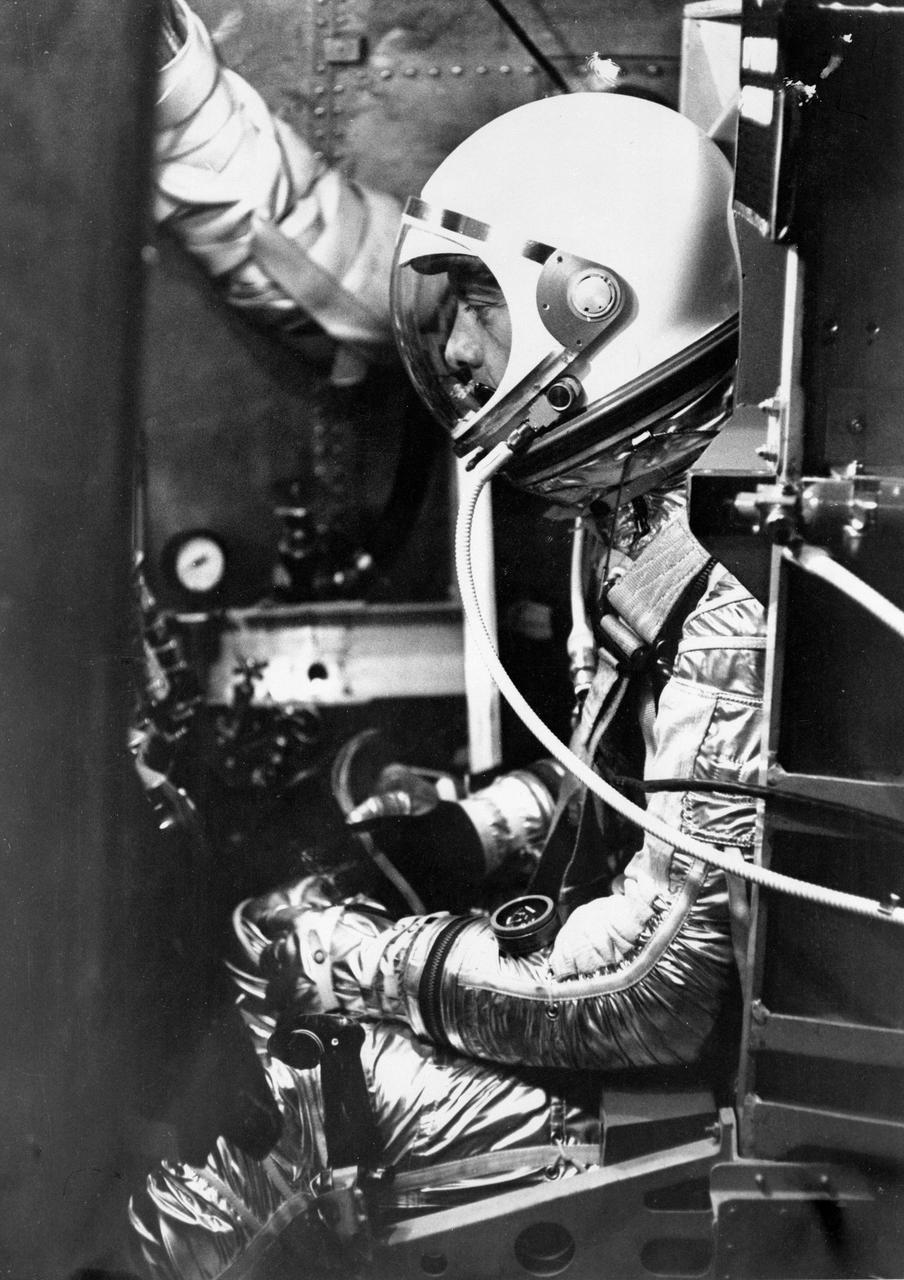
G60-02402 (1960) --- Astronaut Alan B. Shepard Jr. prepares for testing in a capsule of the U.S. Navy's centrifuge at Johnsville, Pennsylvania. Photo credit: NASA or National Aeronautics and Space Administration
SHEPARD, ALAN B., ASTRONAUT - MISC. - PA
JSC2012-E-029875 (14 Feb. 2012) --- During a ceremony on Feb. 14 at the Astrium North America facility in Houston, two principal participants shake hands as a gravitational research centrifuge gets handed over by Astrium ST to NanoRacks LLC representatives. The handshake of Ulrich Kuebler (second right) of Astrium ST and Jeff Manber, managing director of NanoRacks,  symbolizes the working relationship between Astrium ST and NanoRacks, who are working in cooperation with NASA, to deliver the commercial centrifuge facility to the International Space Station. At left is Achim Schwarzwaelder of Astrium ST. NASA Photo courtesy Astrium North America
jsc2012e029875
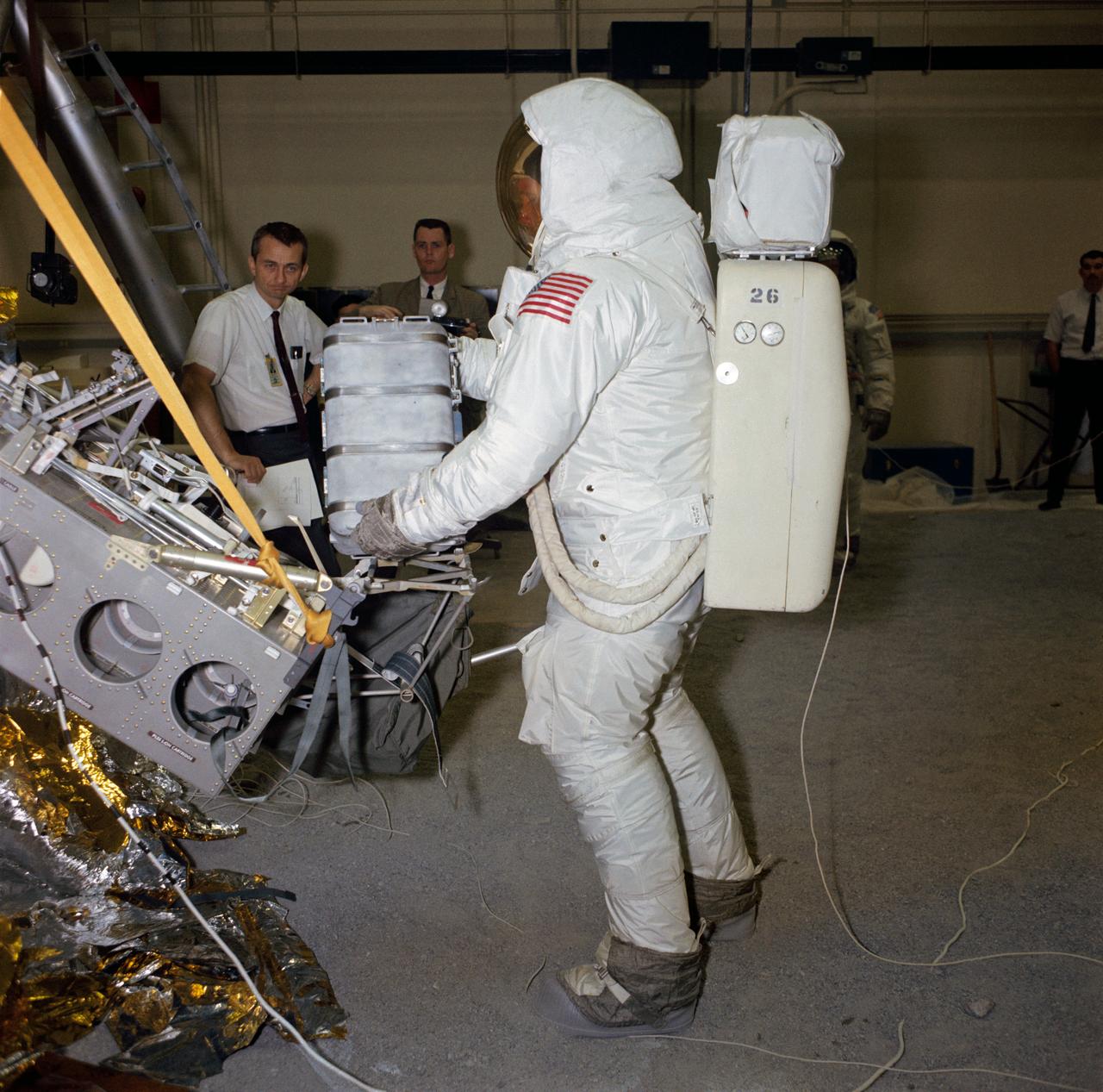
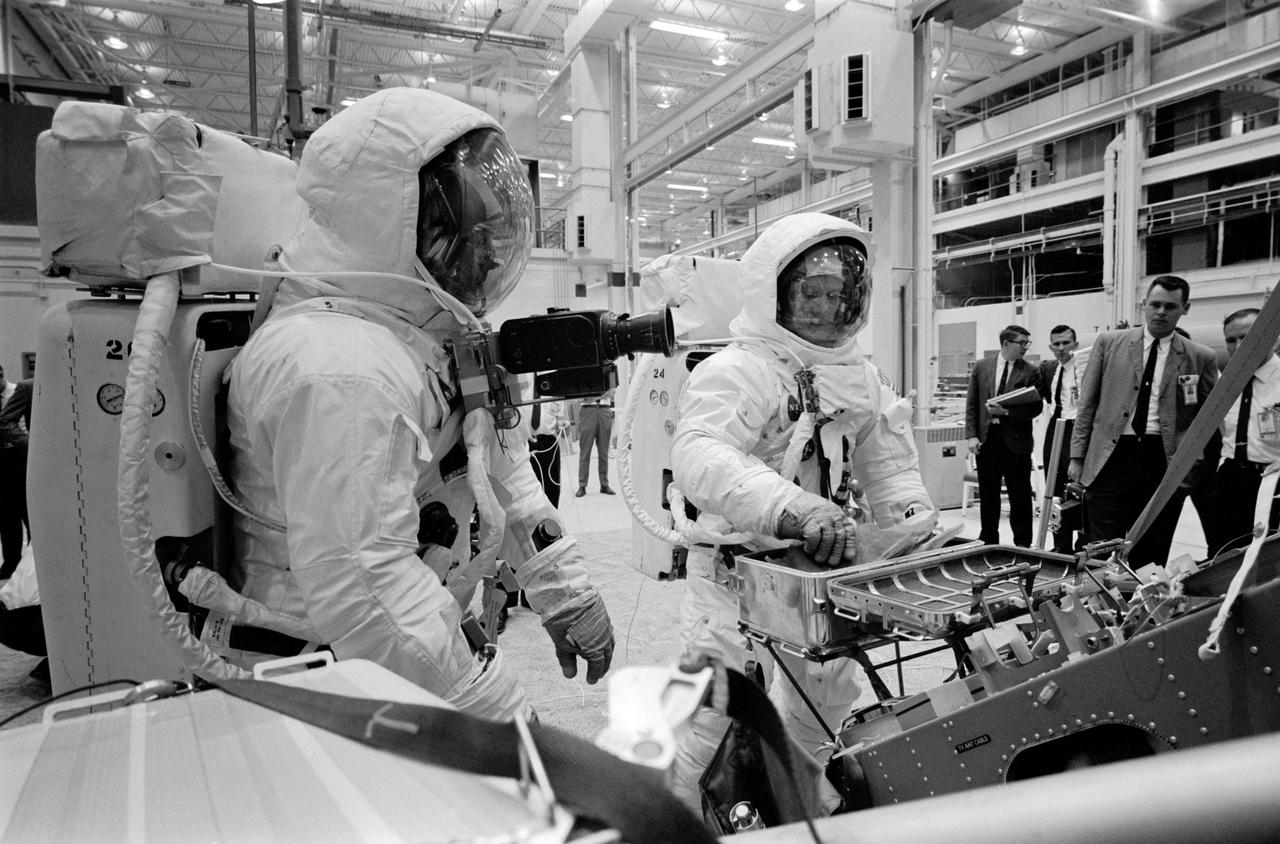
S69-31075 (18 April 1969) --- Suited astronaut Neil A. Armstrong, wearing an Extravehicular Mobility Unit (EMU), participates in lunar surface simulation training on April 18, 1969 in building 9, Manned Spacecraft Center (MSC).  Armstrong is prime crew commander of the Apollo 11 lunar landing mission.  Here, he is opening a sample return container.  On the right is the Modular Equipment Stowage Assembly (MESA) and the Lunar Module (LM) mockup.
Armstrong - Centrifuge- MSC
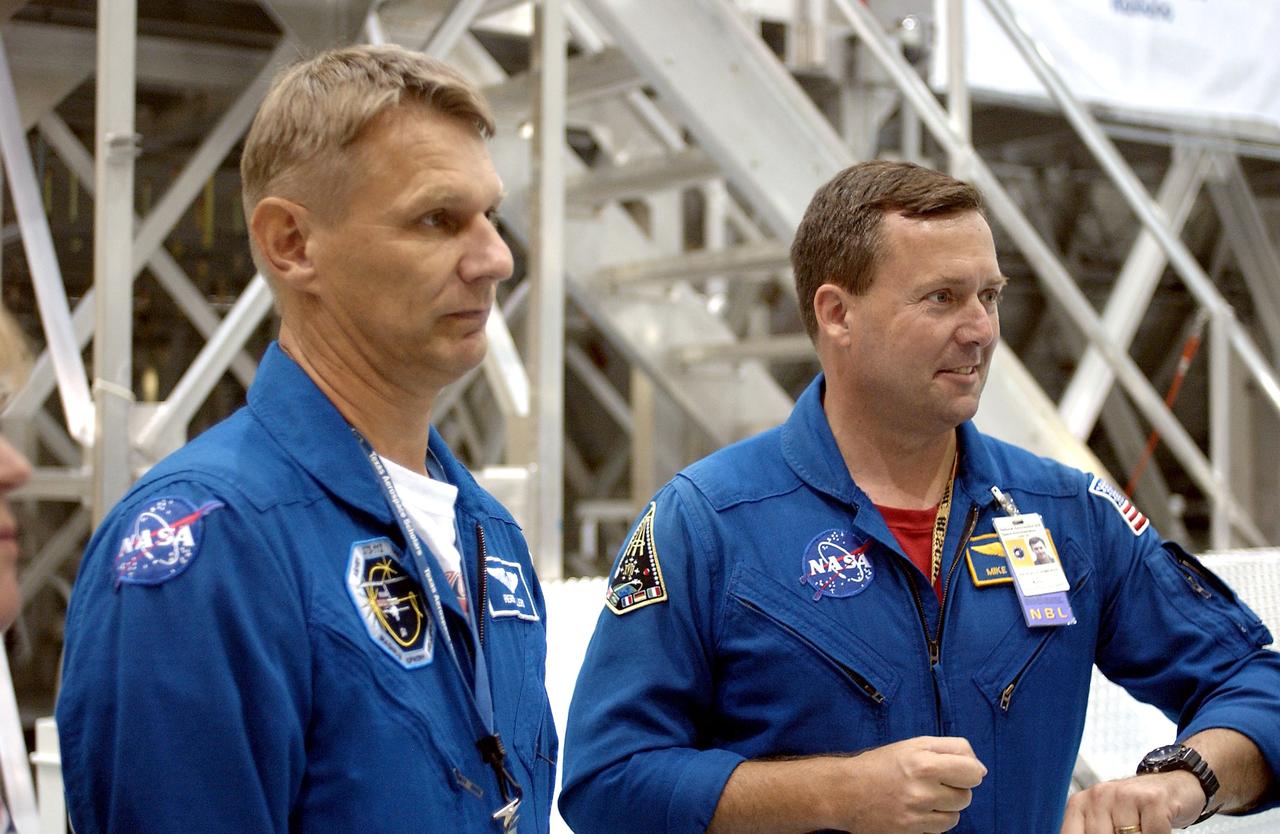
KENNEDY SPACE CENTER, FLA. -   STS-120 Mission Specialists Piers Sellers and Michael Foreman are in the Space Station Processing Facility for hardware familiarization.  The mission will deliver the second of three Station connecting modules, Node 2, which attaches to the end of U.S. Lab.  It will provide attach locations for the Japanese laboratory, European laboratory, the Centrifuge Accommodation Module and later Multi-Purpose Logistics Modules.  The addition of Node 2 will complete the U.S. core of the International Space Station.
KENNEDY SPACE CENTER, FLA. - STS-120 Mission Specialists Piers Sellers and Michael Foreman are in the Space Station Processing Facility for hardware familiarization. The mission will deliver the second of three Station connecting modules, Node 2, which attaches to the end of U.S. Lab. It will provide attach locations for the Japanese laboratory, European laboratory, the Centrifuge Accommodation Module and later Multi-Purpose Logistics Modules. The addition of Node 2 will complete the U.S. core of the International Space Station.
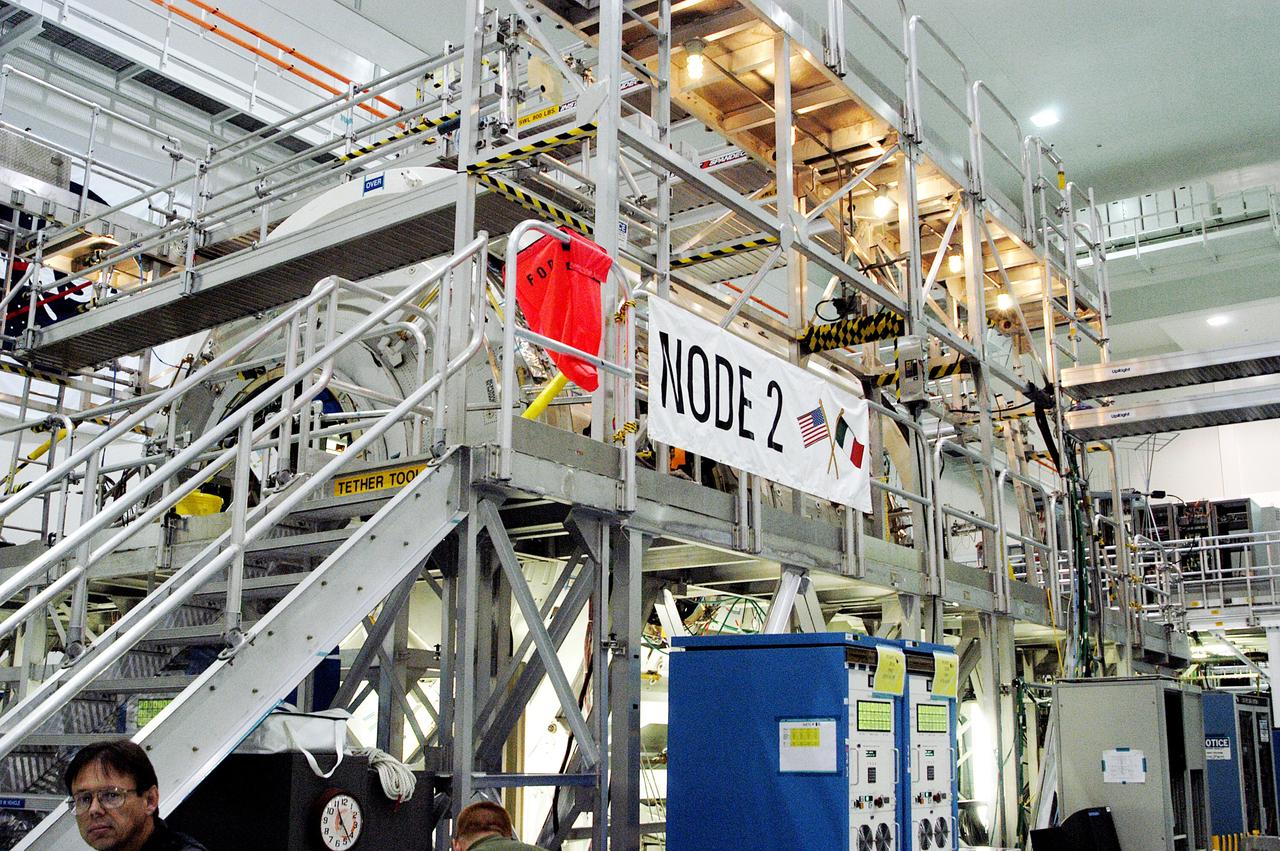
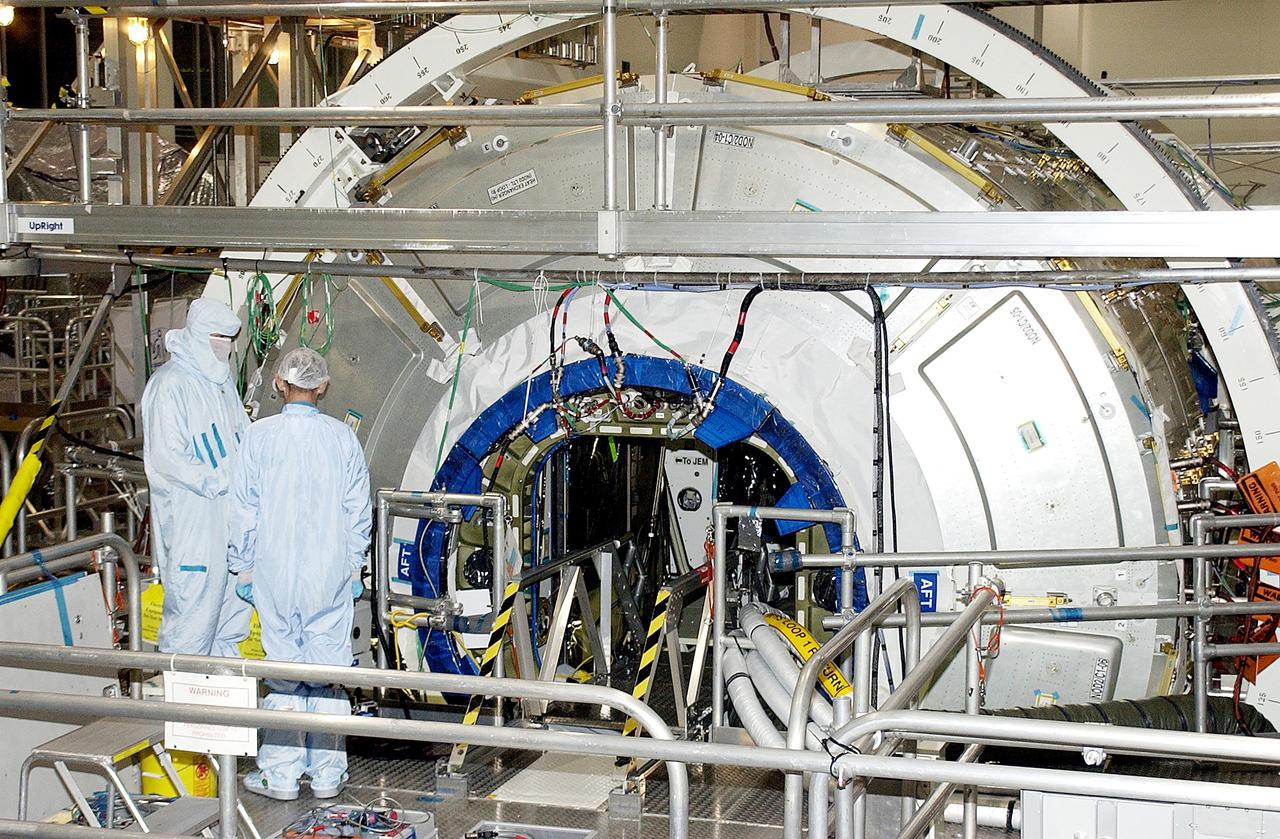
KENNEDY SPACE CENTER, FLA. - The  U.S. Node 2 is undergoing a Multi-Element Integrated Test (MEIT) in the Space Station Processing Facility.  Node 2 attaches to the end of the U.S. Lab on the ISS and provides attach locations for the Japanese laboratory, European laboratory, the Centrifuge Accommodation Module and, eventually, Multipurpose Logistics Modules. It will provide the primary docking location for the Shuttle when a pressurized mating adapter is attached to Node 2.  Installation of the module will complete the U.S. Core of the ISS.
KENNEDY SPACE CENTER, FLA. - The U.S. Node 2 is undergoing a Multi-Element Integrated Test (MEIT) in the Space Station Processing Facility. Node 2 attaches to the end of the U.S. Lab on the ISS and provides attach locations for the Japanese laboratory, European laboratory, the Centrifuge Accommodation Module and, eventually, Multipurpose Logistics Modules. It will provide the primary docking location for the Shuttle when a pressurized mating adapter is attached to Node 2. Installation of the module will complete the U.S. Core of the ISS.
Suited Apollo XI Crewmen Armstrong and Aldrin training in Apollo Lunar Surface Experiments Package (ALSEP) deployment in Building 5, as Astronaut Mike Collins trains in the Building 20 Centrifuge.       S-Band Antenna (31148 thru 31165, 31178 thru 31179)    MSC, HOUSTON, TX
Crew Training - Apollo XI - MSC
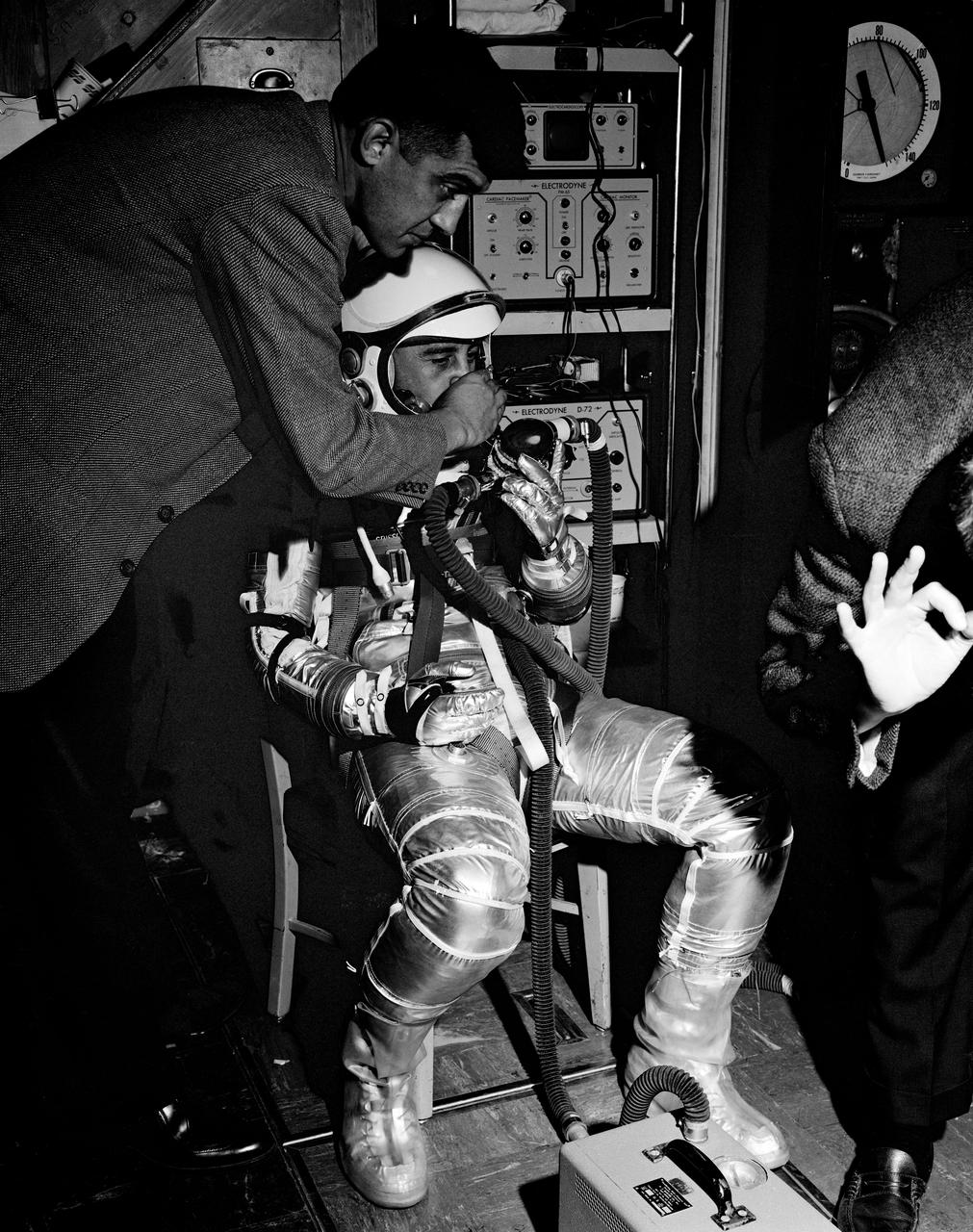
G61-00490 (1961) --- Astronaut Virgil I. (Gus) Grissom, wearing the new Mercury pressure suit, is preparing for centrifuge training. He is receiving assistance in adjusting the breathing apparatus which is attached to a data recording device at his feet. Assisting him is Dr. Jackson. Photo credit: NASA
SUIT TEST - ASTRONAUT GRISSOM
The new centrifuge at MSC, located in the Flight Acceleration Facility (FAF), Bldg. 29.  The 50-ft. arm can swing the 3-man gondola to create G-Forces Astronauts will experience during liftoffs and re-entry conditions.                  MSC, HOUSTON, TX                                             CN
BLDG. 29 - INTERIOR (CLOSEUP) - GONDOLA - MSC
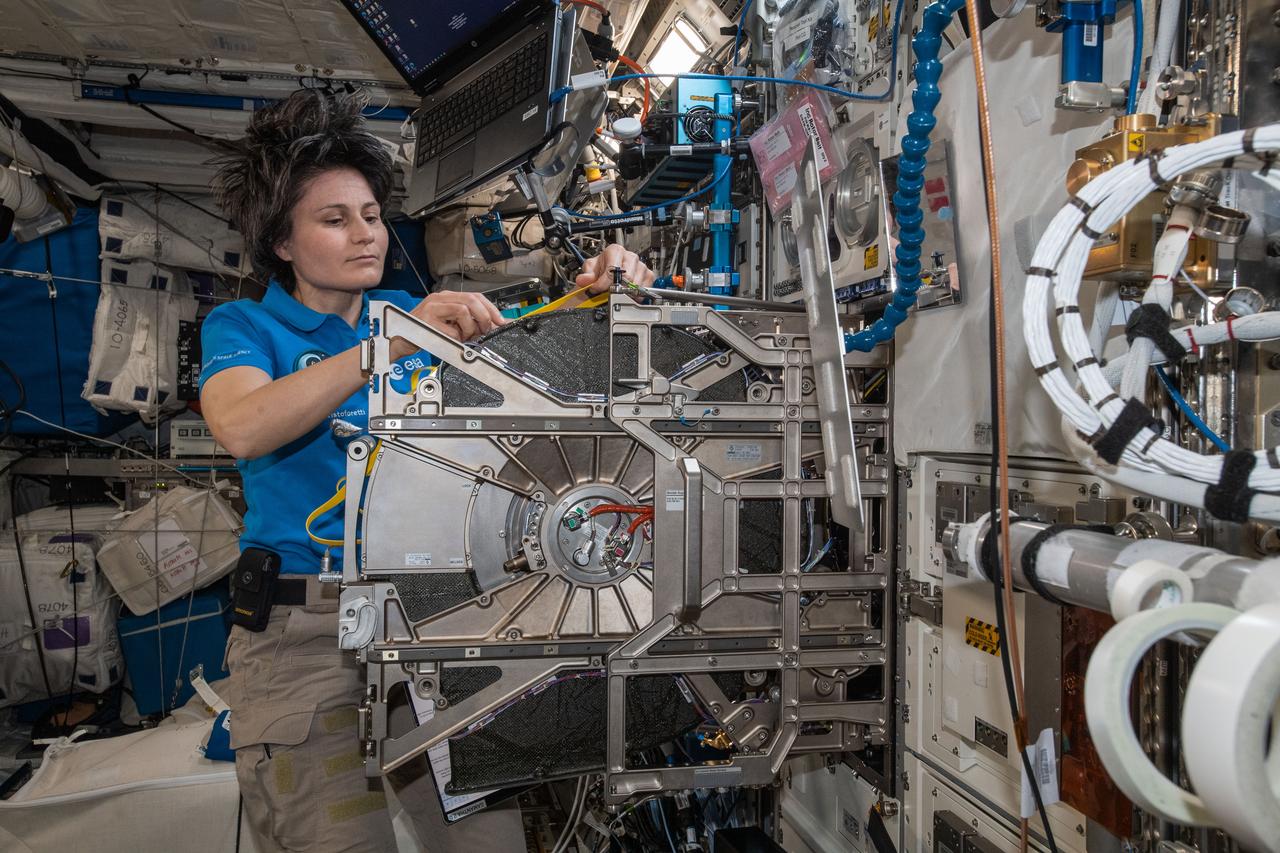
iss067e148954 (June 23, 2022) --- ESA (European Space Agency) astronaut and Expedition 67 Flight Engineer Samantha Cristoforetti replaces centrifuge components inside the Columbus laboratory module's BioLab, a research facility that studies the effects of space and radiation on single celled and multi-cellular organisms
iss067e148954
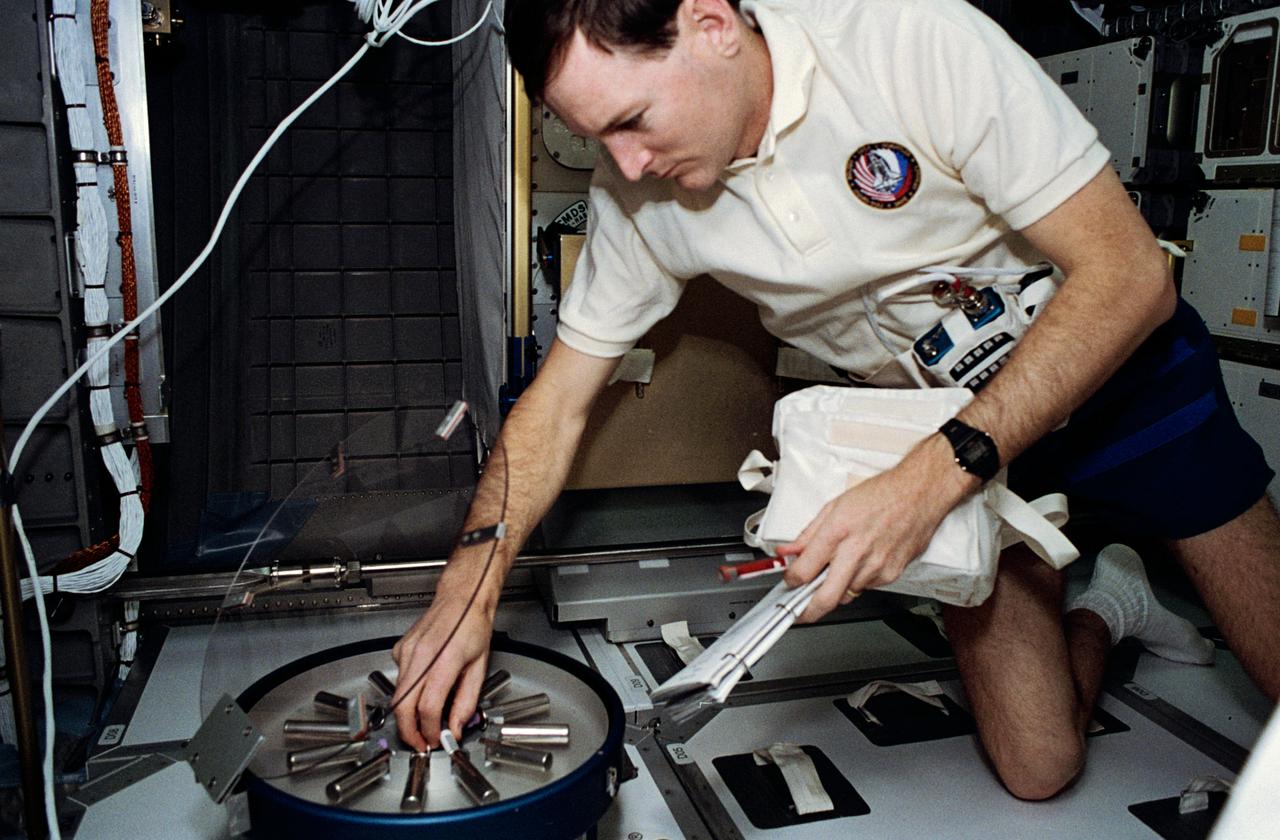
STS060-301-003 (3-11 Feb 1994) --- Astronaut Kenneth S. Reightler, STS-60 pilot, processes biomedical samples in a centrifuge aboard the SPACEHAB module.  Reightler joined four other NASA astronauts and a Russian cosmonaut for eight days of research aboard the Space Shuttle Discovery.
Astronaut Kenneth Reightler processes biomedical samples in SPACEHAB
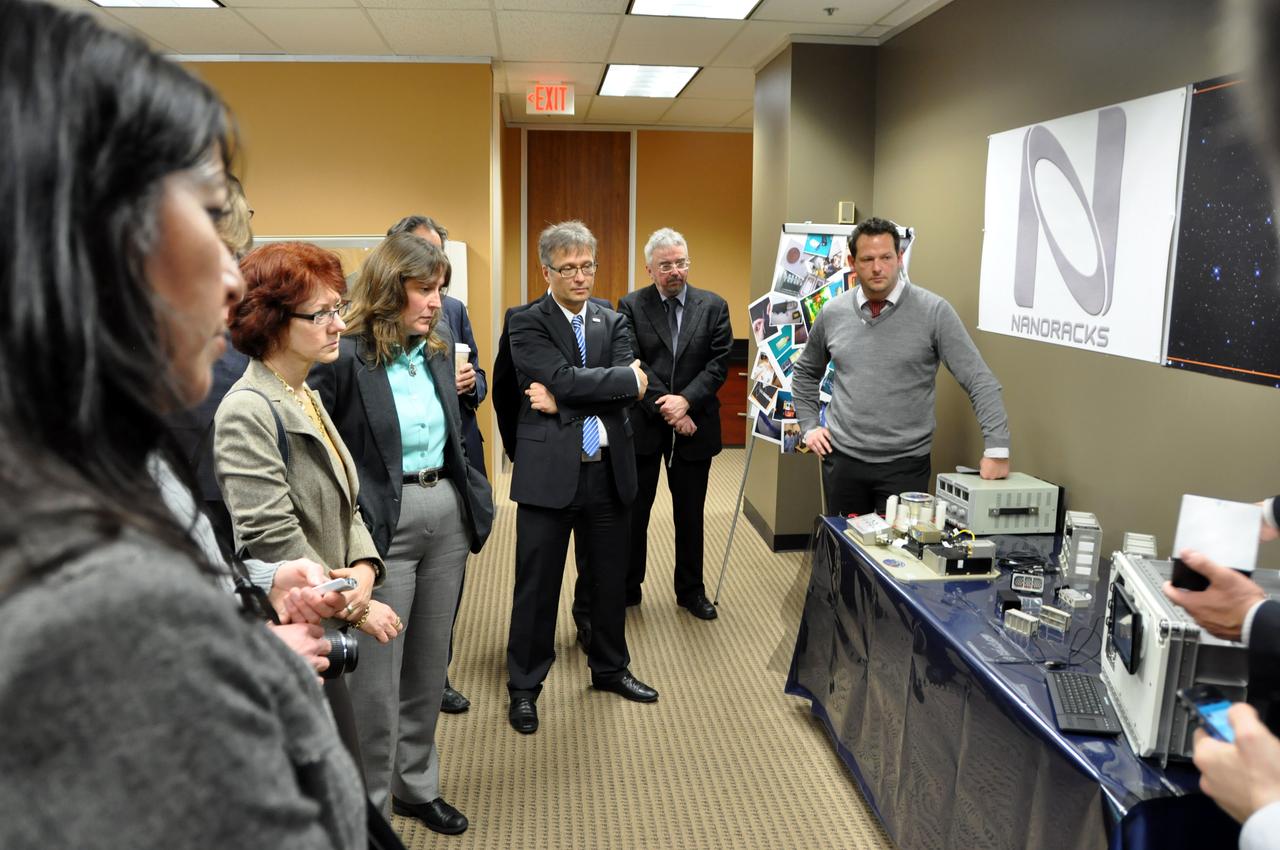
JSC2012-E-029876 (14 Feb. 2012) --- During a ceremony on Feb. 14, at the Astrium North America facility in Houston, the group of participants monitors a demonstration of the gravitational research centrifuge which Astrium ST handed over to NanoRacks LLC representatives. From the left are Jeanne Kranz of the staff of U.S. Rep. Pete Olson; Jeanne Becker, President, CEO and Executive Director of the Center for the Advancement of Science in Space (CASIS); Marybeth Edeen, U.S. National Lab manager at NASA?s Johnson Space Center; Ulrich Kuebler, Uwe Pape, and Achim Schwarzwaelder, all with Astrium ST .  Astrium ST and NanoRacks are teaming up to cooperate with NASA to deliver a commercial centrifuge facility to the International Space Station. NASA Photo courtesy Astrium North America
jsc2012e029876
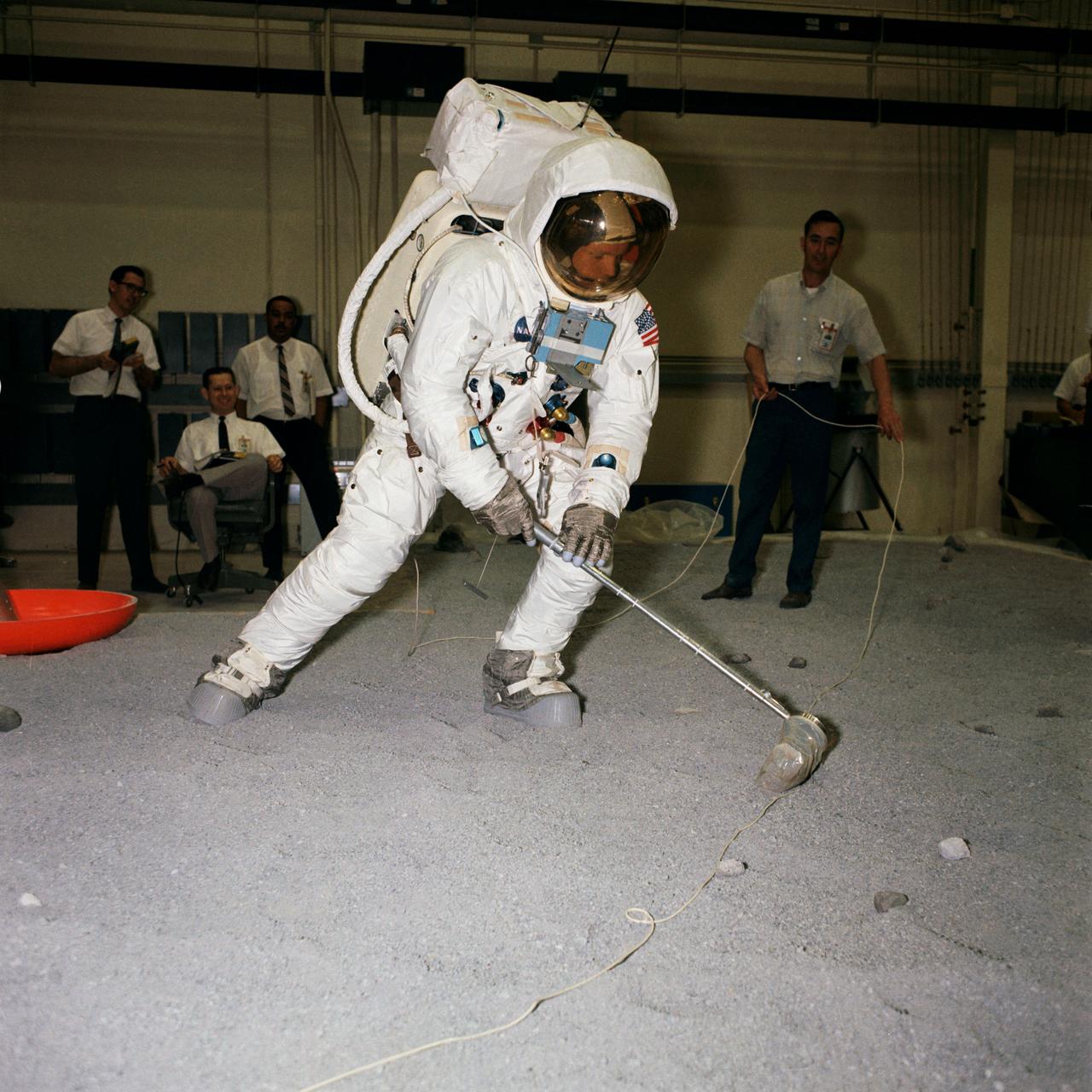
S69-31048 (18 April 1969) --- Suited astronaut Neil A. Armstrong, wearing an Extravehicular Mobility Unit (EMU), participates in lunar surface simulation training on April 18, 1969, in Building 9, Manned Spacecraft Center.  Armstrong is the prime crew commander of the Apollo 11 lunar landing mission. Here, he practices scooping up a lunar sample.
Armstrong - scooping sample - CREW TRAINING - APOLLO XI - MSC
KENNEDY SPACE CENTER, FLA.  - In the Space Station Processing Facility, work is ongoing on the U.S. Node 2, the second of three Space Station connecting modules.  The Italian-built Node 2 attaches to the end of the U.S. Lab and will provide attach locations for the Japanese laboratory, European laboratory, the Centrifuge Accommodation Module and, later, Multipurpose Logistics Modules. It will provide the primary docking location for the Shuttle when a pressurized mating adapter is attached to Node 2.  Installation of the module will complete the U.S. Core of the ISS.  Node 2 is the designated payload for mission STS-120.  No orbiter or launch date has been determined yet.
KENNEDY SPACE CENTER, FLA. - In the Space Station Processing Facility, work is ongoing on the U.S. Node 2, the second of three Space Station connecting modules. The Italian-built Node 2 attaches to the end of the U.S. Lab and will provide attach locations for the Japanese laboratory, European laboratory, the Centrifuge Accommodation Module and, later, Multipurpose Logistics Modules. It will provide the primary docking location for the Shuttle when a pressurized mating adapter is attached to Node 2. Installation of the module will complete the U.S. Core of the ISS. Node 2 is the designated payload for mission STS-120. No orbiter or launch date has been determined yet.
KENNEDY SPACE CENTER, FLA.  -  Work is ongoing on the U.S. Node 2 in the Space Station Processing Facility.  The second of three Space Station connecting modules, the Italian-built Node 2 attaches to the end of the U.S. Lab and will provide attach locations for the Japanese laboratory, European laboratory, the Centrifuge Accommodation Module and, later, Multipurpose Logistics Modules. It will provide the primary docking location for the Shuttle when a pressurized mating adapter is attached to Node 2.  Installation of the module will complete the U.S. Core of the ISS.  Node 2 is the designated payload for mission STS-120.  No orbiter or launch date has been determined yet.
KENNEDY SPACE CENTER, FLA. - Work is ongoing on the U.S. Node 2 in the Space Station Processing Facility. The second of three Space Station connecting modules, the Italian-built Node 2 attaches to the end of the U.S. Lab and will provide attach locations for the Japanese laboratory, European laboratory, the Centrifuge Accommodation Module and, later, Multipurpose Logistics Modules. It will provide the primary docking location for the Shuttle when a pressurized mating adapter is attached to Node 2. Installation of the module will complete the U.S. Core of the ISS. Node 2 is the designated payload for mission STS-120. No orbiter or launch date has been determined yet.
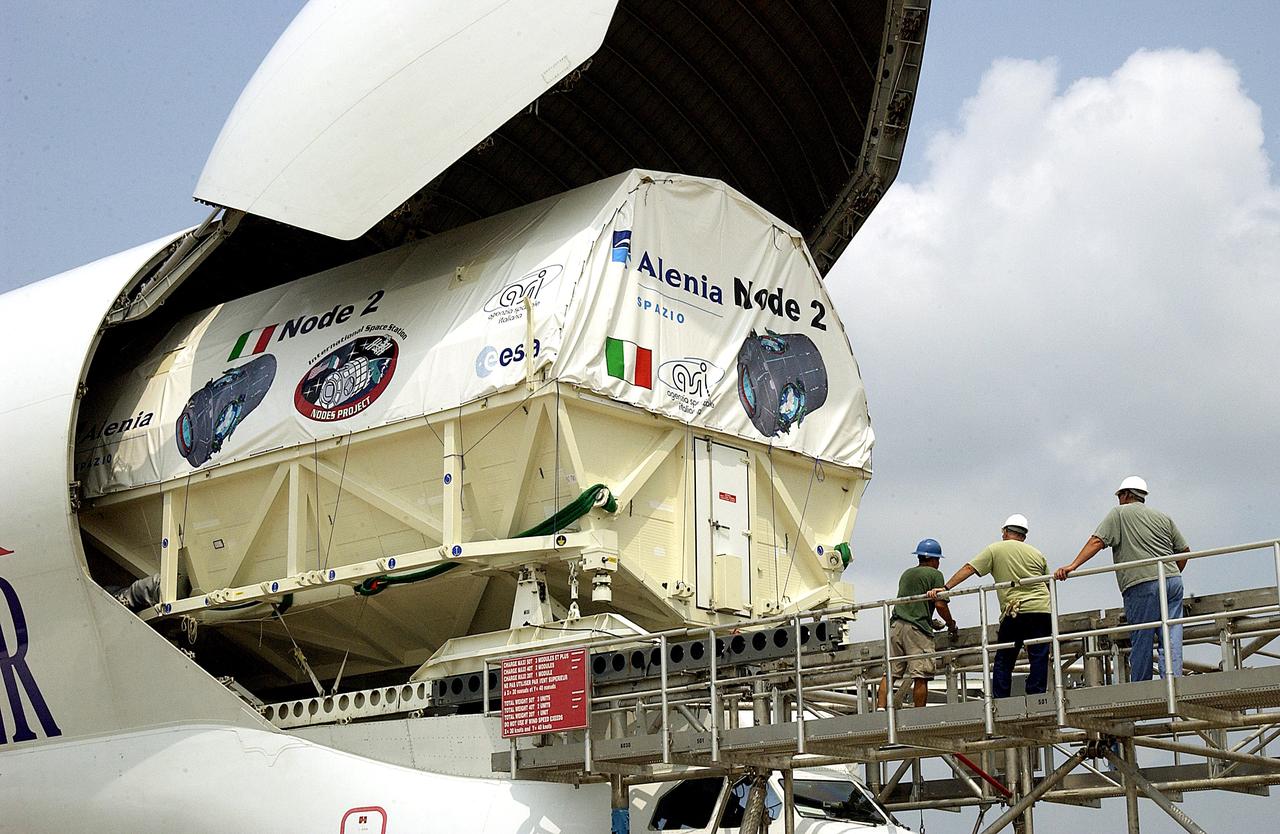
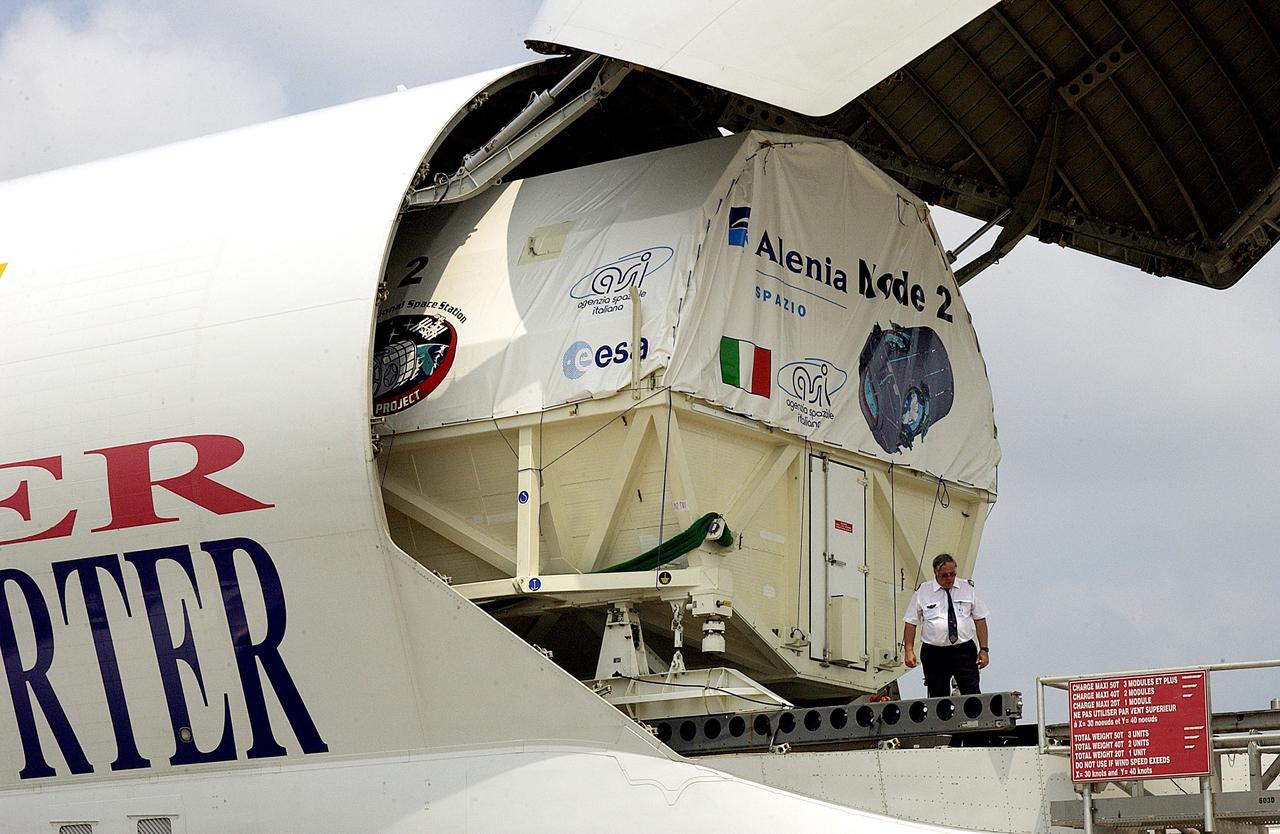
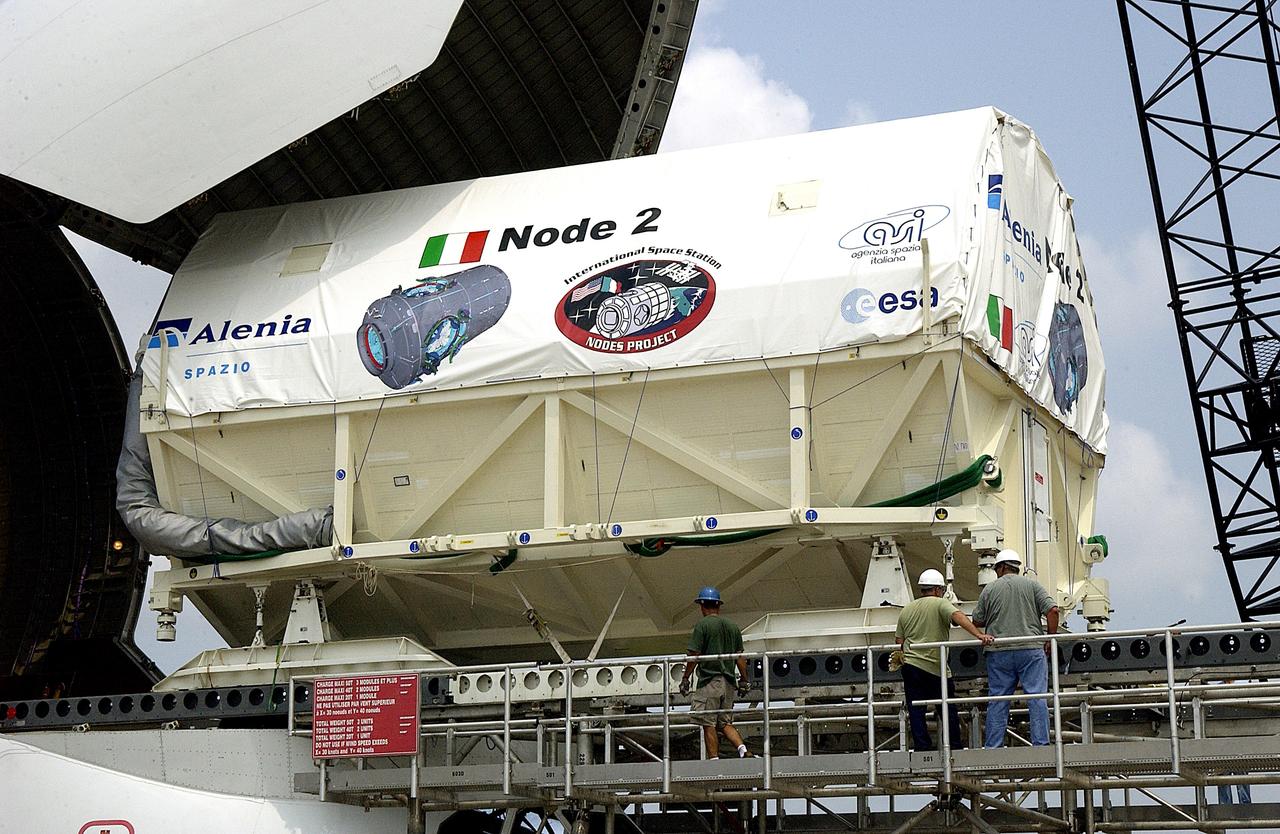
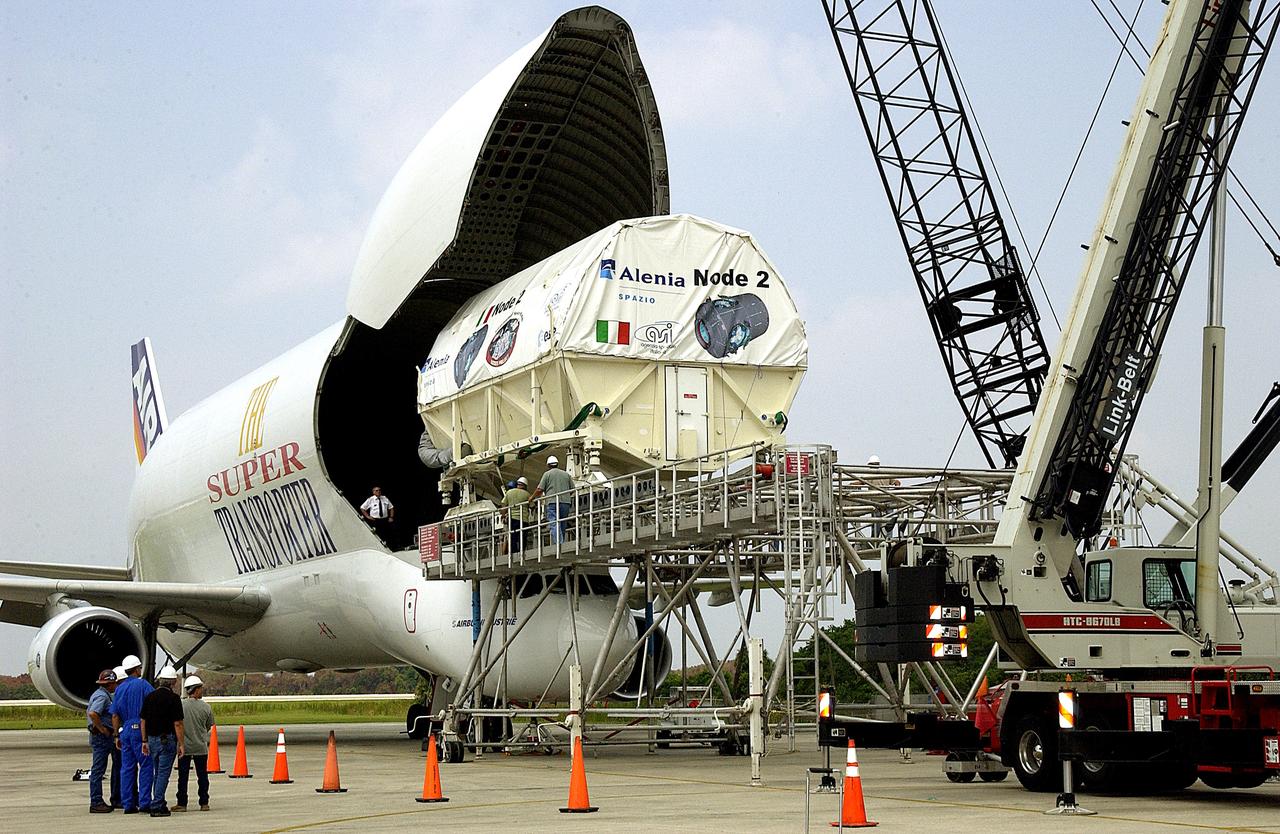
KENNEDY SPACE CENTER, FLA. - At the Shuttle Landing Facility, the nose of the Beluga aircraft is open to offload the Italian-built module, U.S. Node 2, for the International Space Station.  The second of three Station connecting modules, Node 2 attaches to the end of the U.S. Lab and provides attach locations for the Japanese laboratory, European laboratory, the Centrifuge Accommodation Module and, later, Multipurpose Logistics Modules. It will provide the primary docking location for the Shuttle when a pressurized mating adapter is attached to Node 2.  Installation of the module will complete  the U.S. Core of the ISS.  Node 2 is the designated payload for mission STS-120.  No orbiter or launch date has been determined yet.
KENNEDY SPACE CENTER, FLA. - At the Shuttle Landing Facility, the nose of the Beluga aircraft is open to offload the Italian-built module, U.S. Node 2, for the International Space Station. The second of three Station connecting modules, Node 2 attaches to the end of the U.S. Lab and provides attach locations for the Japanese laboratory, European laboratory, the Centrifuge Accommodation Module and, later, Multipurpose Logistics Modules. It will provide the primary docking location for the Shuttle when a pressurized mating adapter is attached to Node 2. Installation of the module will complete the U.S. Core of the ISS. Node 2 is the designated payload for mission STS-120. No orbiter or launch date has been determined yet.
KENNEDY SPACE CENTER, FLA. - The U.S. Node 2 is unveiled after its arrival in the Space Station Processing Facility.  The second of three Station connecting modules, the Italian-built Node 2 attaches to the end of the U.S. Lab and provides attach locations for the Japanese laboratory, European laboratory, the Centrifuge Accommodation Module and, later, Multipurpose Logistics Modules. It will provide the primary docking location for the Shuttle when a pressurized mating adapter is attached to Node 2.  Installation of the module will complete  the U.S. Core of the ISS.  Node 2 is the designated payload for mission STS-120.  No orbiter or launch date has been determined yet.
KENNEDY SPACE CENTER, FLA. - The U.S. Node 2 is unveiled after its arrival in the Space Station Processing Facility. The second of three Station connecting modules, the Italian-built Node 2 attaches to the end of the U.S. Lab and provides attach locations for the Japanese laboratory, European laboratory, the Centrifuge Accommodation Module and, later, Multipurpose Logistics Modules. It will provide the primary docking location for the Shuttle when a pressurized mating adapter is attached to Node 2. Installation of the module will complete the U.S. Core of the ISS. Node 2 is the designated payload for mission STS-120. No orbiter or launch date has been determined yet.
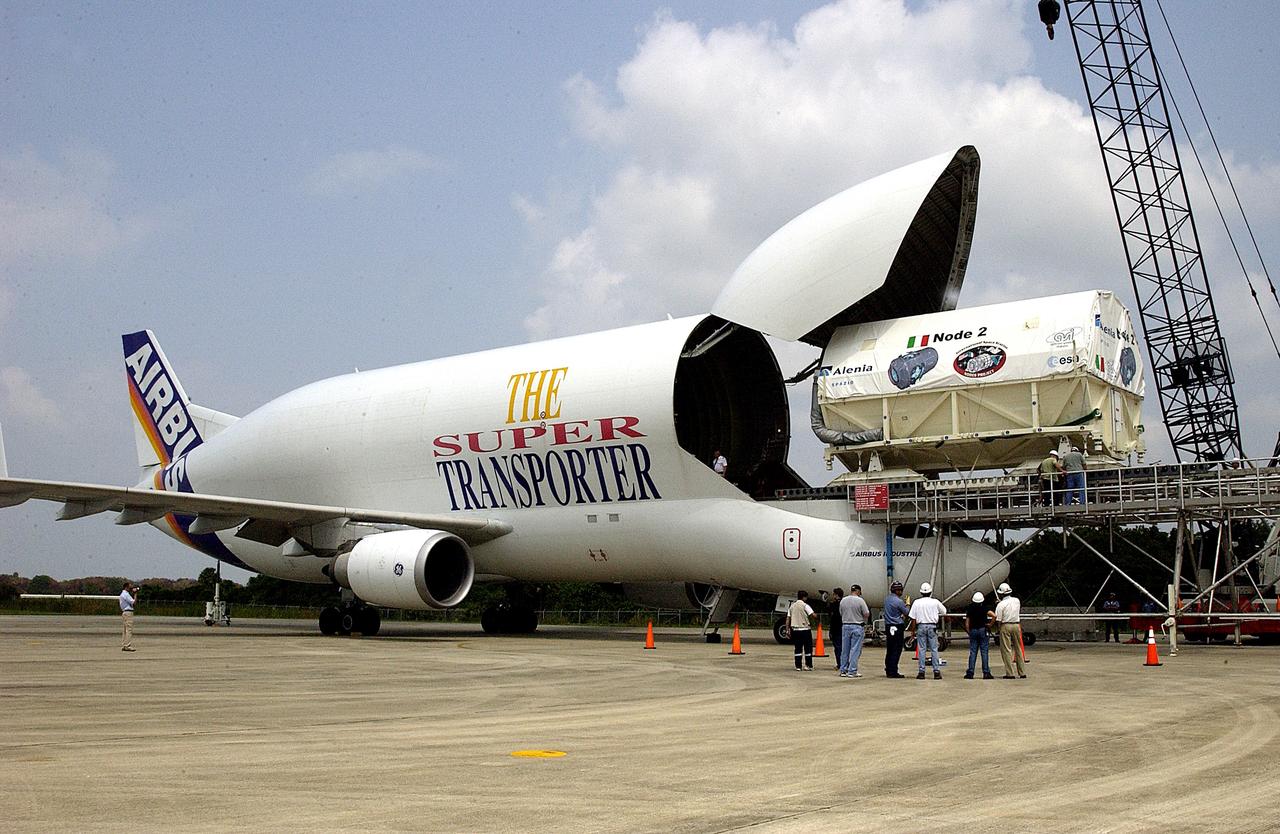
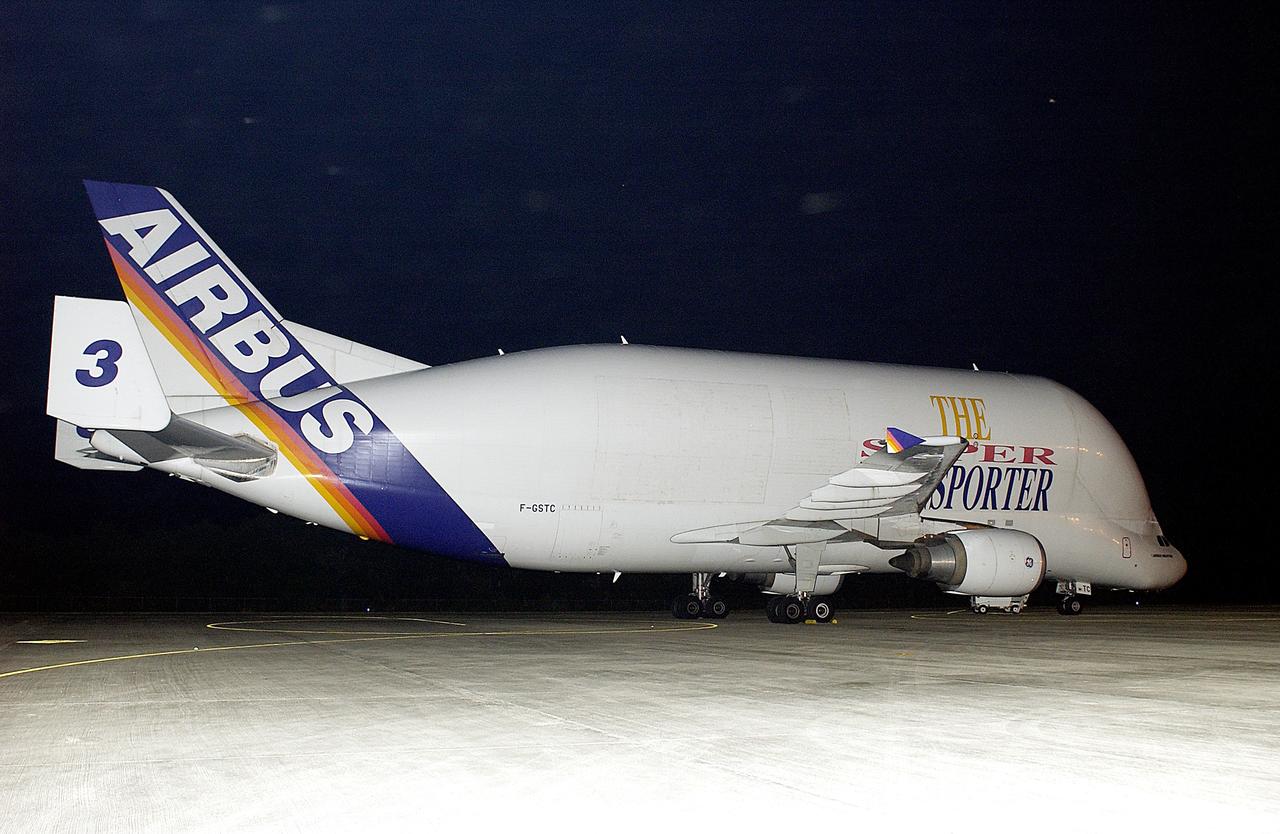
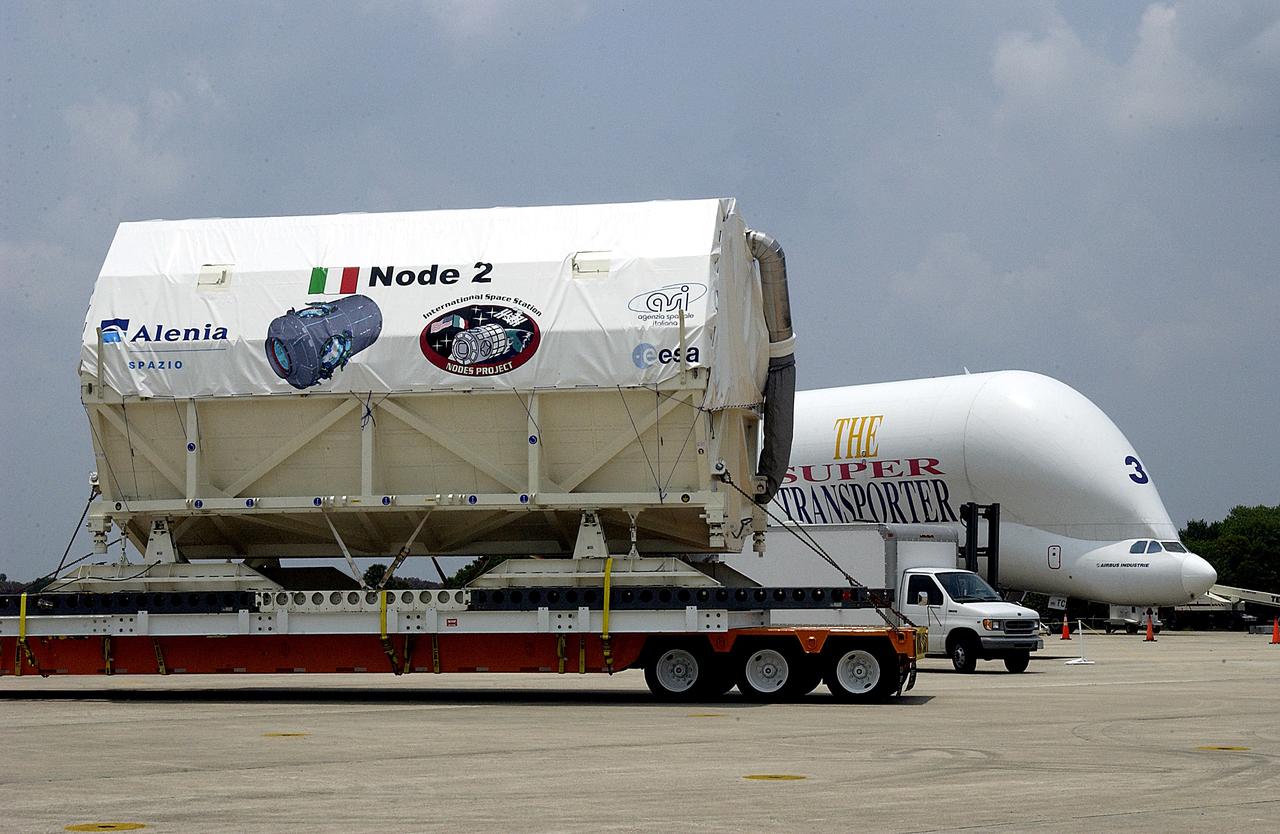
KKENNEDY SPACE CENTER, FLA. -  A Beluga aircraft arrives at the Shuttle Landing Facility with its cargo of the Italian-built module, U.S. Node 2, for the International Space Station.  The second of three Station connecting modules, Node 2 attaches to the end of the U.S. Lab and provides attach locations for the Japanese laboratory, European laboratory, the Centrifuge Accommodation Module and, later, Multipurpose Logistics Modules. It will provide the primary docking location for the Shuttle when a pressurized mating adapter is attached to Node 2.  Installation of the module will complete  the U.S. Core of the ISS.  Node 2 is the designated payload for mission STS-120.  No orbiter or launch date has been determined yet.
KKENNEDY SPACE CENTER, FLA. - A Beluga aircraft arrives at the Shuttle Landing Facility with its cargo of the Italian-built module, U.S. Node 2, for the International Space Station. The second of three Station connecting modules, Node 2 attaches to the end of the U.S. Lab and provides attach locations for the Japanese laboratory, European laboratory, the Centrifuge Accommodation Module and, later, Multipurpose Logistics Modules. It will provide the primary docking location for the Shuttle when a pressurized mating adapter is attached to Node 2. Installation of the module will complete the U.S. Core of the ISS. Node 2 is the designated payload for mission STS-120. No orbiter or launch date has been determined yet.
KENNEDY SPACE CENTER, FLA. -  The Italian-built module, U.S. Node 2, is moved into the Space Station Processing Facility. The second of three connecting modules on the International Space Station, Node 2 attaches to the end of the U.S. Lab and provides attach locations for the Japanese laboratory, European laboratory, the Centrifuge Accommodation Module and, later, Multipurpose Logistics Modules. It will provide the primary docking location for the Shuttle when a pressurized mating adapter is attached to Node 2.  Installation of the module will complete  the U.S. Core of the ISS.  Node 2 is the designated payload for mission STS-120.  No orbiter or launch date has been determined yet.
KENNEDY SPACE CENTER, FLA. - The Italian-built module, U.S. Node 2, is moved into the Space Station Processing Facility. The second of three connecting modules on the International Space Station, Node 2 attaches to the end of the U.S. Lab and provides attach locations for the Japanese laboratory, European laboratory, the Centrifuge Accommodation Module and, later, Multipurpose Logistics Modules. It will provide the primary docking location for the Shuttle when a pressurized mating adapter is attached to Node 2. Installation of the module will complete the U.S. Core of the ISS. Node 2 is the designated payload for mission STS-120. No orbiter or launch date has been determined yet.
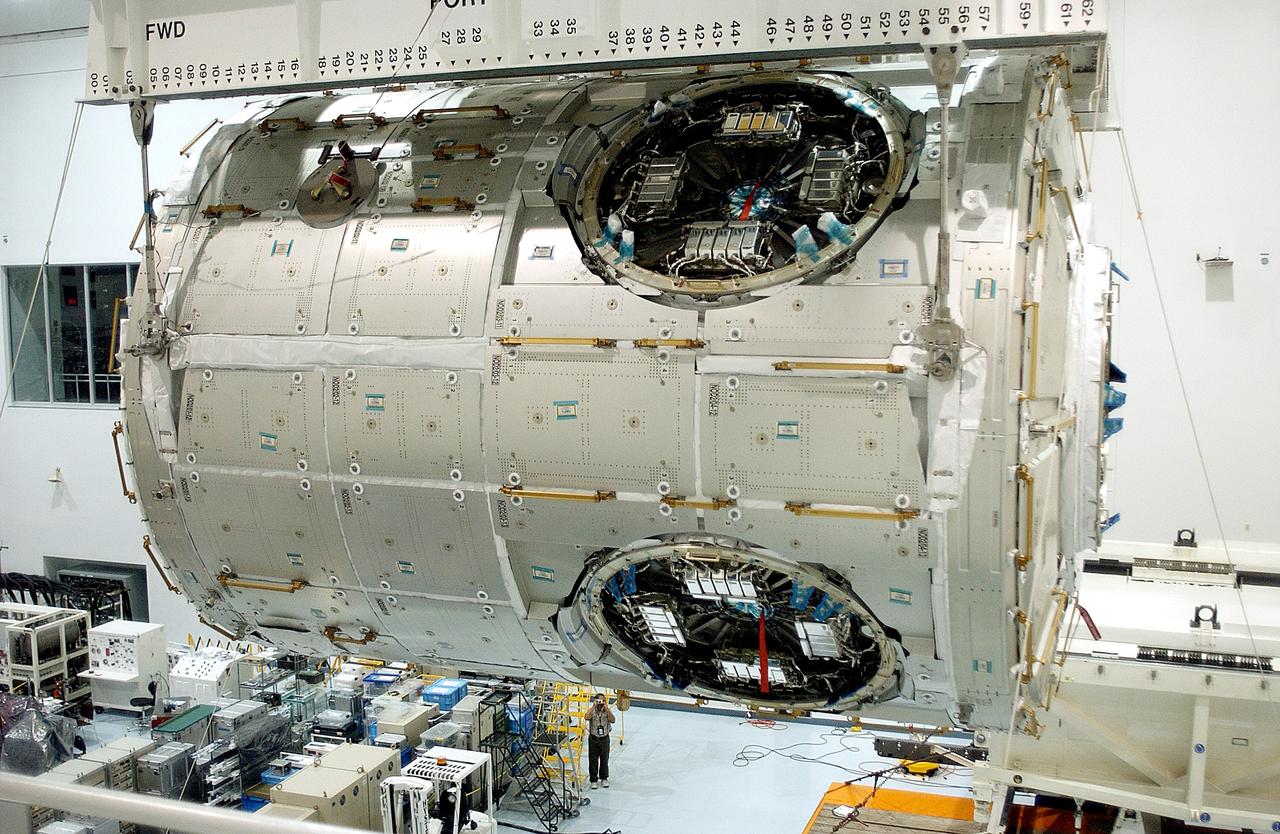
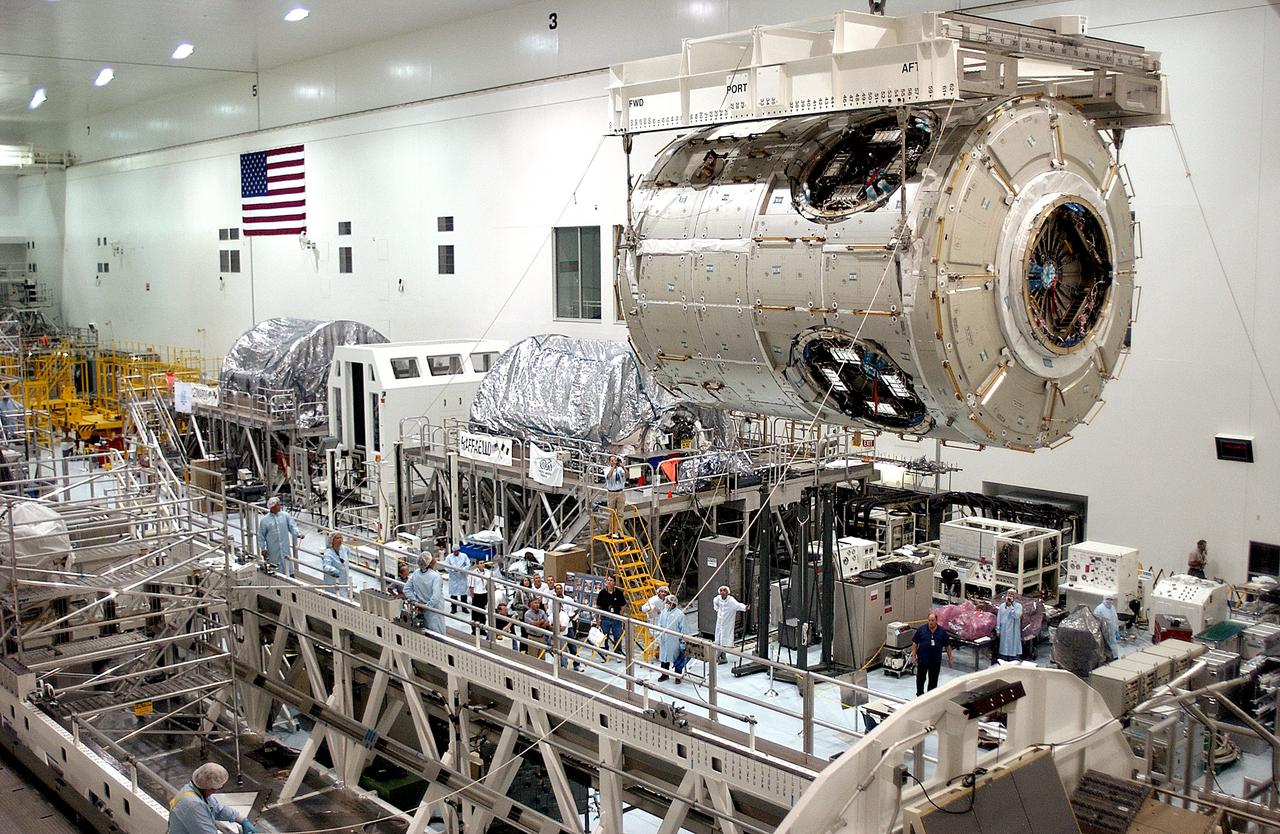
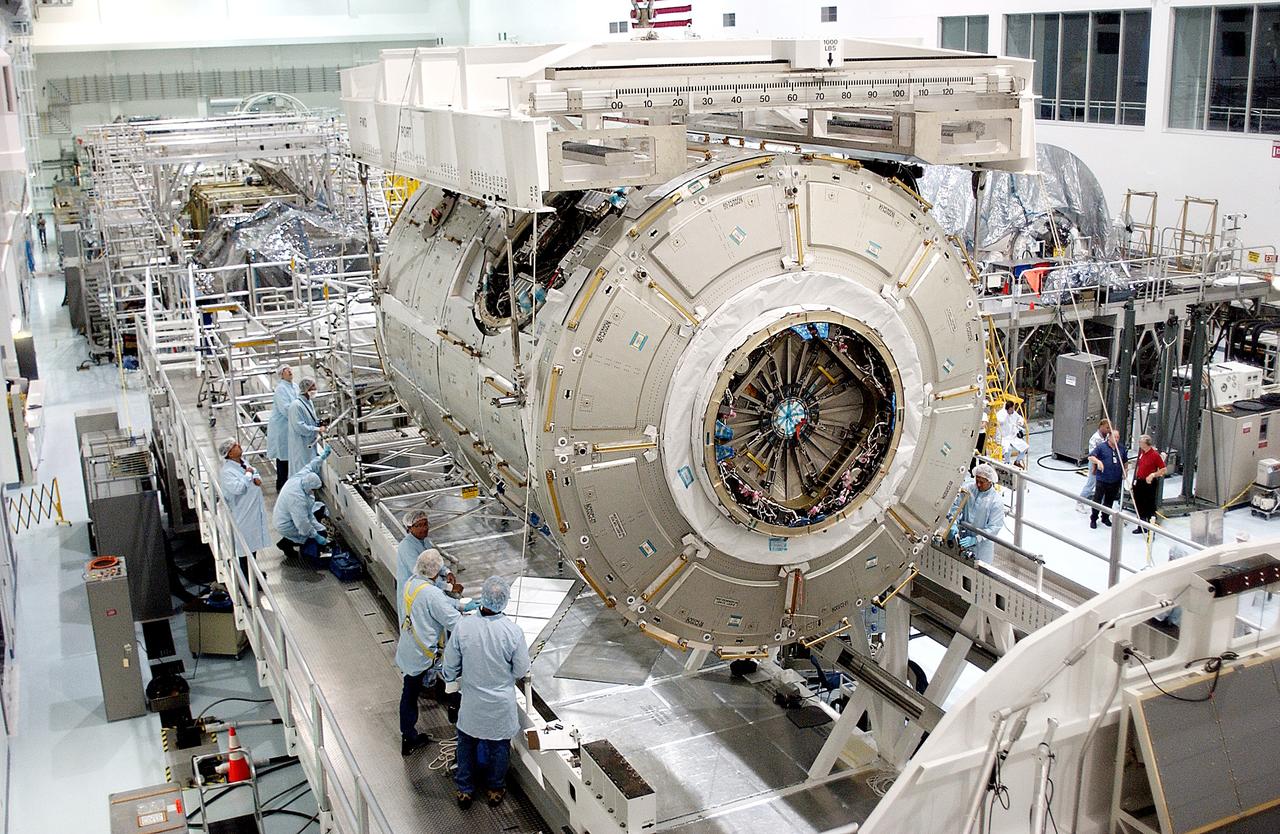
KENNEDY SPACE CENTER, FLA. - An overhead crane in the Space Station Processing Facility carries the U.S. Node 2 across the floor to a workstand.  The second of three connecting modules on the International Space Station, the Italian-built Node 2 attaches to the end of the U.S. Lab and provides attach locations for the Japanese laboratory, European laboratory, the Centrifuge Accommodation Module and, later, Multipurpose Logistics Modules. It will provide the primary docking location for the Shuttle when a pressurized mating adapter is attached to Node 2.  Installation of the module will complete  the U.S. Core of the ISS.  Node 2 is the designated payload for mission STS-120.  No orbiter or launch date has been determined yet.
KENNEDY SPACE CENTER, FLA. - An overhead crane in the Space Station Processing Facility carries the U.S. Node 2 across the floor to a workstand. The second of three connecting modules on the International Space Station, the Italian-built Node 2 attaches to the end of the U.S. Lab and provides attach locations for the Japanese laboratory, European laboratory, the Centrifuge Accommodation Module and, later, Multipurpose Logistics Modules. It will provide the primary docking location for the Shuttle when a pressurized mating adapter is attached to Node 2. Installation of the module will complete the U.S. Core of the ISS. Node 2 is the designated payload for mission STS-120. No orbiter or launch date has been determined yet.
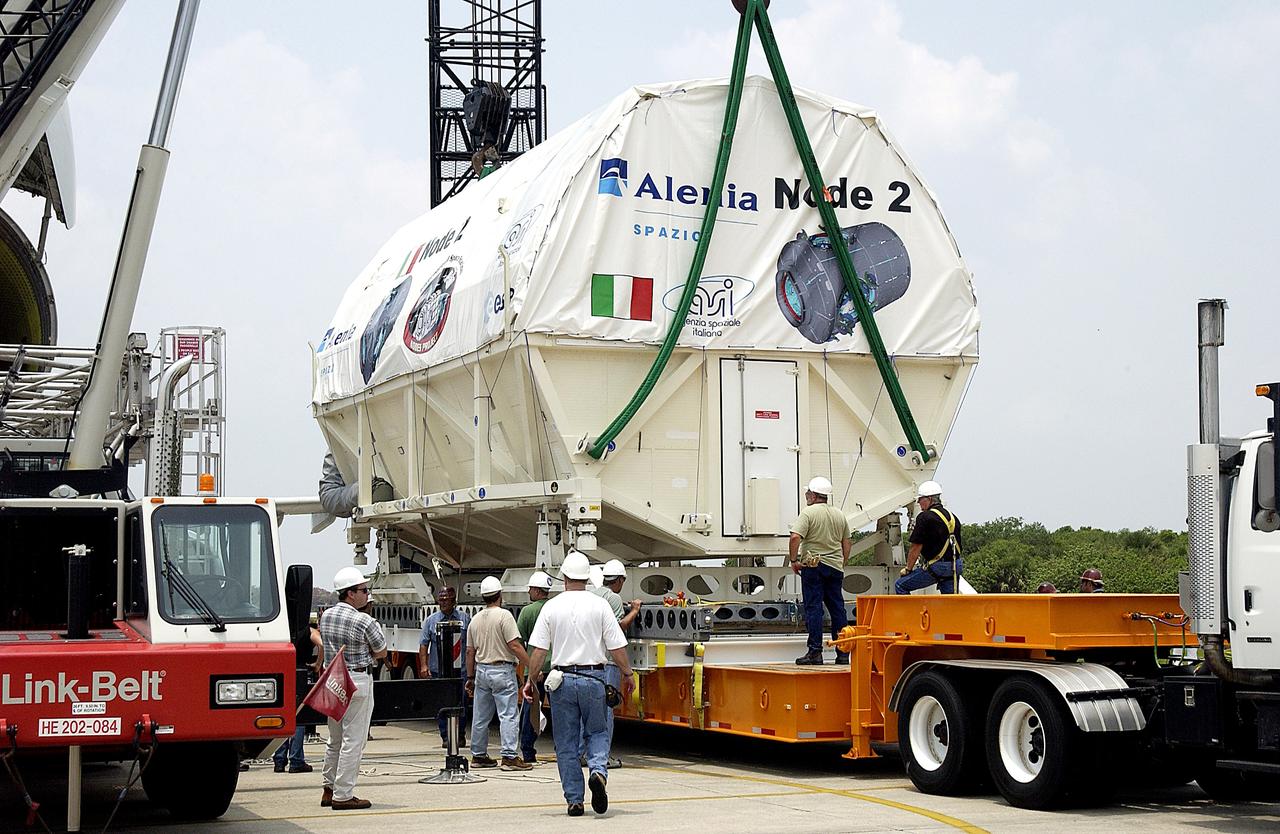
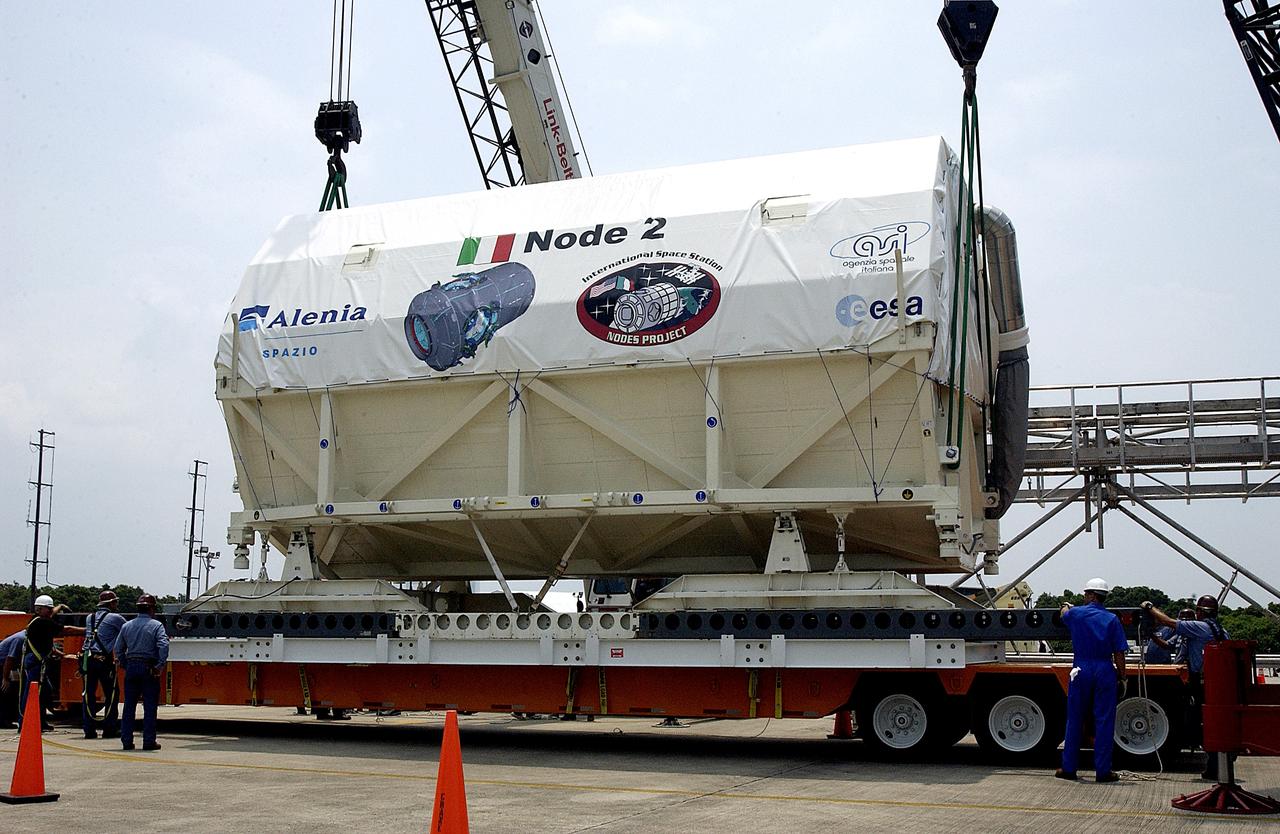
KENNEDY SPACE CENTER, FLA. -  The Italian-built module, U.S. Node 2, is lowered onto a transporter after its arrival at the Shuttle Landing Facility.  It will be taken to the Space Station Processing Facility.  The second of three connecting modules on the International Space Station, Node 2 attaches to the end of the U.S. Lab and provides attach locations for the Japanese laboratory, European laboratory, the Centrifuge Accommodation Module and, later, Multipurpose Logistics Modules. It will provide the primary docking location for the Shuttle when a pressurized mating adapter is attached to Node 2.  Installation of the module will complete  the U.S. Core of the ISS.  Node 2 is the designated payload for mission STS-120.  No orbiter or launch date has been determined yet.
KENNEDY SPACE CENTER, FLA. - The Italian-built module, U.S. Node 2, is lowered onto a transporter after its arrival at the Shuttle Landing Facility. It will be taken to the Space Station Processing Facility. The second of three connecting modules on the International Space Station, Node 2 attaches to the end of the U.S. Lab and provides attach locations for the Japanese laboratory, European laboratory, the Centrifuge Accommodation Module and, later, Multipurpose Logistics Modules. It will provide the primary docking location for the Shuttle when a pressurized mating adapter is attached to Node 2. Installation of the module will complete the U.S. Core of the ISS. Node 2 is the designated payload for mission STS-120. No orbiter or launch date has been determined yet.
KENNEDY SPACE CENTER, FLA. - The U.S. Node 2 is moved toward a workstand in the Space Station Processing Facility.  The second of three connecting modules on the International Space Station, the Italian-built Node 2 attaches to the end of the U.S. Lab and provides attach locations for the Japanese laboratory, European laboratory, the Centrifuge Accommodation Module and, later, Multipurpose Logistics Modules. It will provide the primary docking location for the Shuttle when a pressurized mating adapter is attached to Node 2.  Installation of the module will complete  the U.S. Core of the ISS.  Node 2 is the designated payload for mission STS-120.  No orbiter or launch date has been determined yet.
KENNEDY SPACE CENTER, FLA. - The U.S. Node 2 is moved toward a workstand in the Space Station Processing Facility. The second of three connecting modules on the International Space Station, the Italian-built Node 2 attaches to the end of the U.S. Lab and provides attach locations for the Japanese laboratory, European laboratory, the Centrifuge Accommodation Module and, later, Multipurpose Logistics Modules. It will provide the primary docking location for the Shuttle when a pressurized mating adapter is attached to Node 2. Installation of the module will complete the U.S. Core of the ISS. Node 2 is the designated payload for mission STS-120. No orbiter or launch date has been determined yet.
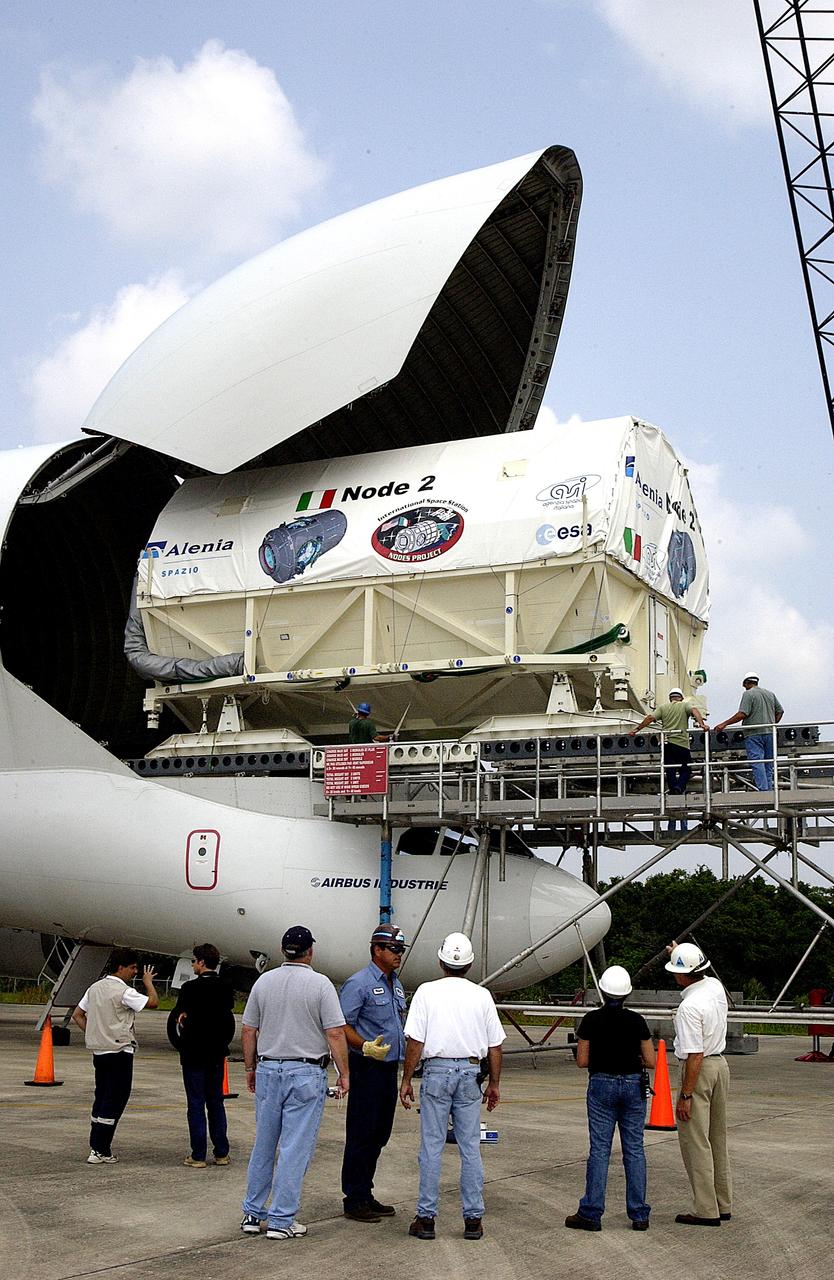
KENNEDY SPACE CENTER, FLA. - The Italian-built module, U.S. Node 2, for the International Space Station is offloaded from a Beluga at the Shuttle Landing Facility. The second of three Station connecting modules, Node 2 attaches to the end of the U.S. Lab and provides attach locations for the Japanese laboratory, European laboratory, the Centrifuge Accommodation Module and, later, Multipurpose Logistics Modules. It will provide the primary docking location for the Shuttle when a pressurized mating adapter is attached to Node 2.  Installation of the module will complete  the U.S. Core of the ISS.  Node 2 is the designated payload for mission STS-120.  No orbiter or launch date has been determined yet.
KENNEDY SPACE CENTER, FLA. - The Italian-built module, U.S. Node 2, for the International Space Station is offloaded from a Beluga at the Shuttle Landing Facility. The second of three Station connecting modules, Node 2 attaches to the end of the U.S. Lab and provides attach locations for the Japanese laboratory, European laboratory, the Centrifuge Accommodation Module and, later, Multipurpose Logistics Modules. It will provide the primary docking location for the Shuttle when a pressurized mating adapter is attached to Node 2. Installation of the module will complete the U.S. Core of the ISS. Node 2 is the designated payload for mission STS-120. No orbiter or launch date has been determined yet.
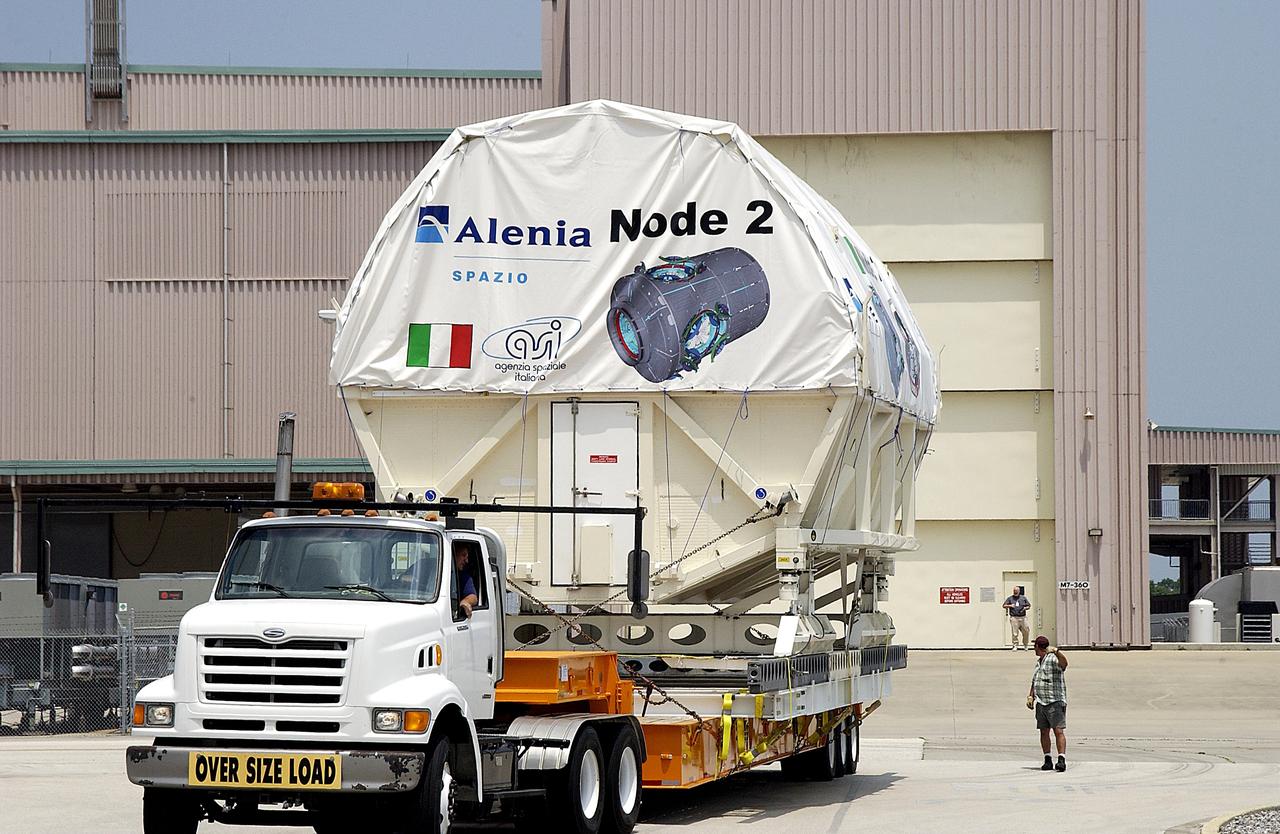
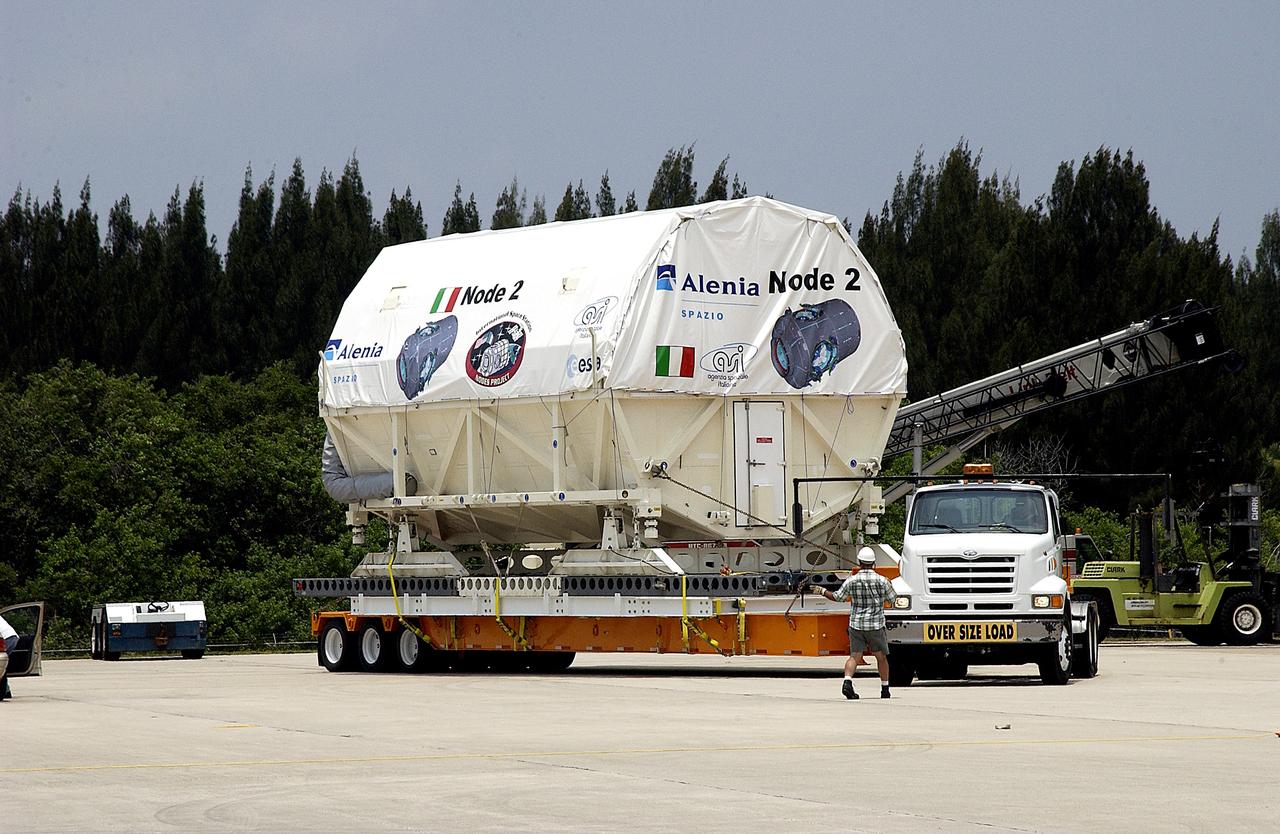
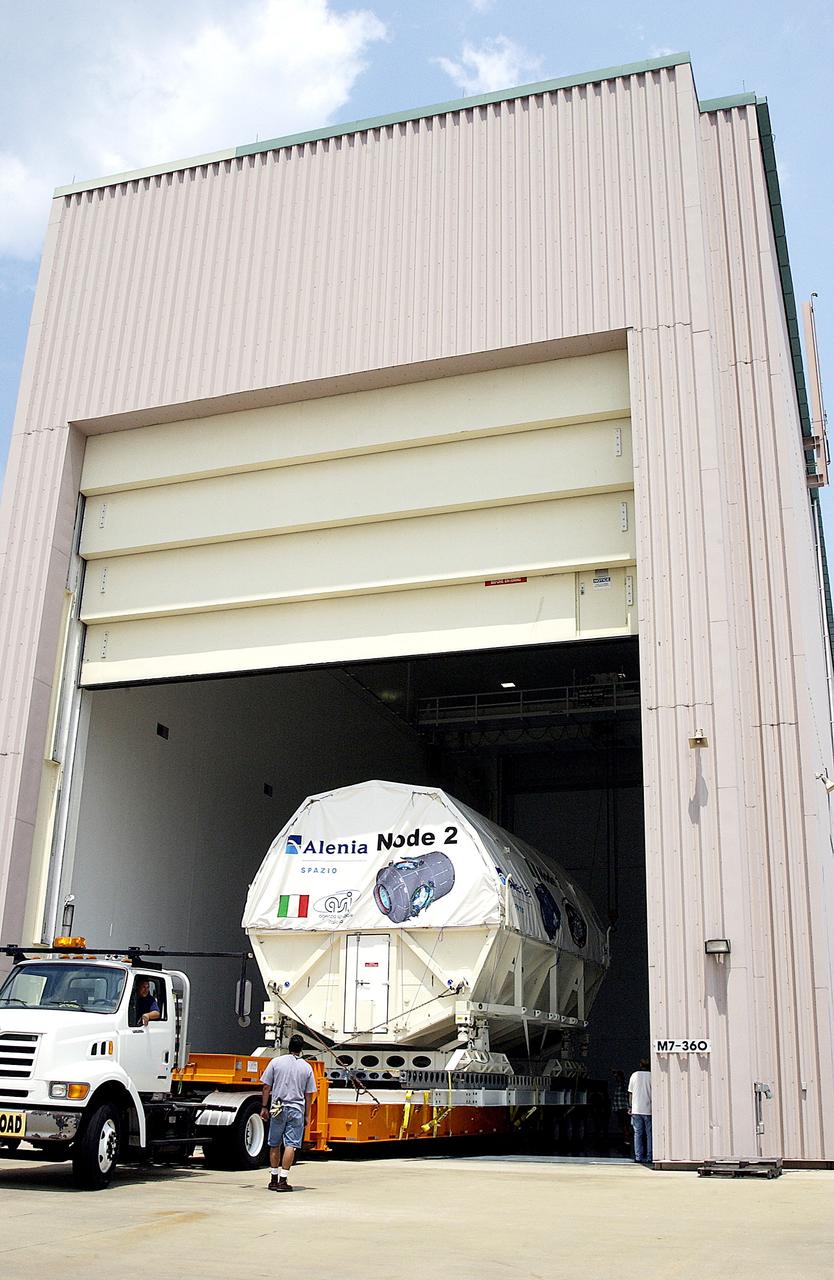
KENNEDY SPACE CENTER, FLA. -  The Italian-built module, U.S. Node 2, moves past the Vehicle Assembly Building as it is transferred to the Space Station Processing Facility. The second of three connecting modules on the International Space Station, Node 2 attaches to the end of the U.S. Lab and provides attach locations for the Japanese laboratory, European laboratory, the Centrifuge Accommodation Module and, later, Multipurpose Logistics Modules. It will provide the primary docking location for the Shuttle when a pressurized mating adapter is attached to Node 2.  Installation of the module will complete  the U.S. Core of the ISS.  Node 2 is the designated payload for mission STS-120.  No orbiter or launch date has been determined yet.
KENNEDY SPACE CENTER, FLA. - The Italian-built module, U.S. Node 2, moves past the Vehicle Assembly Building as it is transferred to the Space Station Processing Facility. The second of three connecting modules on the International Space Station, Node 2 attaches to the end of the U.S. Lab and provides attach locations for the Japanese laboratory, European laboratory, the Centrifuge Accommodation Module and, later, Multipurpose Logistics Modules. It will provide the primary docking location for the Shuttle when a pressurized mating adapter is attached to Node 2. Installation of the module will complete the U.S. Core of the ISS. Node 2 is the designated payload for mission STS-120. No orbiter or launch date has been determined yet.
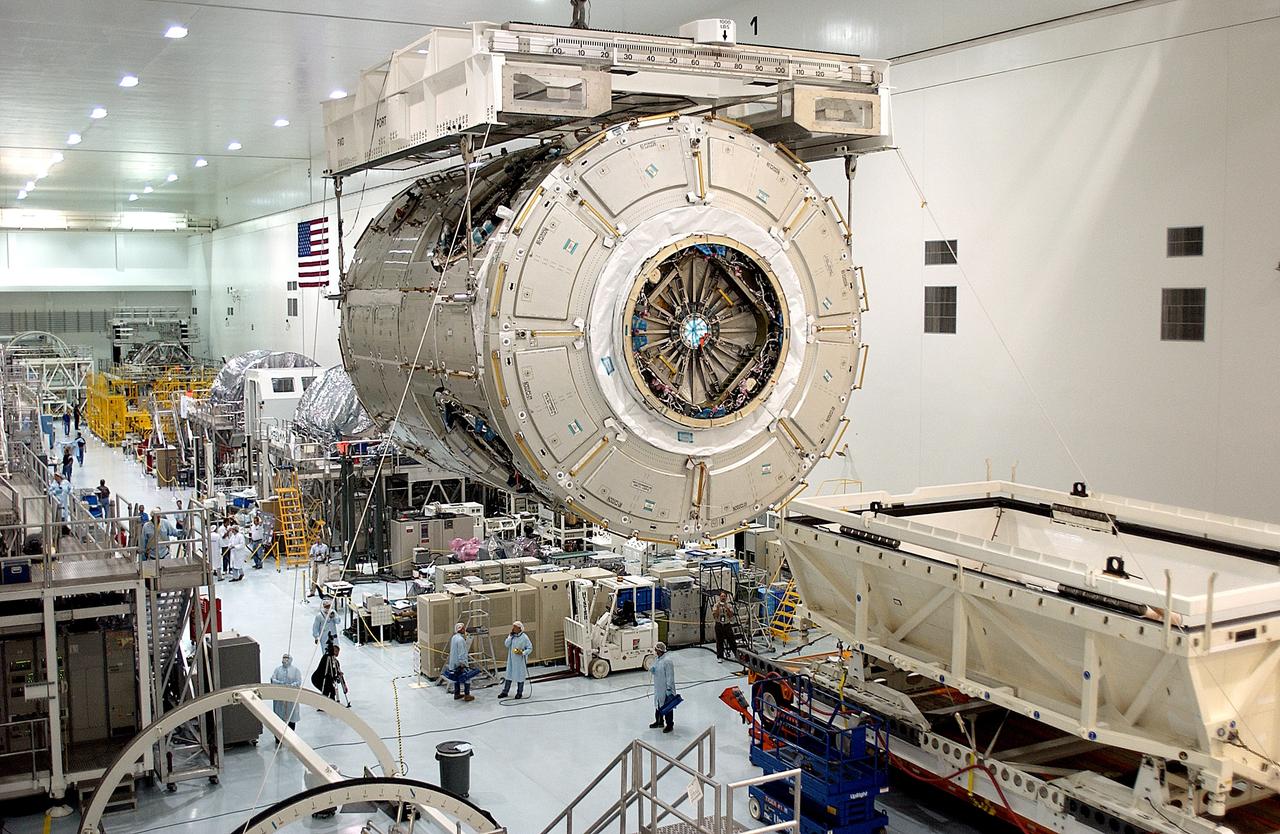
KENNEDY SPACE CENTER, FLA. - An overhead crane in the Space Station Processing Facility is attached to the U.S. Node 2 to lift it out of its shipping container.  The node will be moved to a workstand.  The second of three connecting modules on the International Space Station, the Italian-built Node 2 attaches to the end of the U.S. Lab and provides attach locations for the Japanese laboratory, European laboratory, the Centrifuge Accommodation Module and, later, Multipurpose Logistics Modules. It will provide the primary docking location for the Shuttle when a pressurized mating adapter is attached to Node 2.  Installation of the module will complete  the U.S. Core of the ISS.  Node 2 is the designated payload for mission STS-120.  No orbiter or launch date has been determined yet.
KENNEDY SPACE CENTER, FLA. - An overhead crane in the Space Station Processing Facility is attached to the U.S. Node 2 to lift it out of its shipping container. The node will be moved to a workstand. The second of three connecting modules on the International Space Station, the Italian-built Node 2 attaches to the end of the U.S. Lab and provides attach locations for the Japanese laboratory, European laboratory, the Centrifuge Accommodation Module and, later, Multipurpose Logistics Modules. It will provide the primary docking location for the Shuttle when a pressurized mating adapter is attached to Node 2. Installation of the module will complete the U.S. Core of the ISS. Node 2 is the designated payload for mission STS-120. No orbiter or launch date has been determined yet.
KENNEDY SPACE CENTER, FLA. - The Italian-built module, U.S. Node 2, for the International Space Station is offloaded from a Beluga aircraft at the Shuttle Landing Facility. The second of three Station connecting modules, Node 2 attaches to the end of the U.S. Lab and provides attach locations for the Japanese laboratory, European laboratory, the Centrifuge Accommodation Module and, later, Multipurpose Logistics Modules. It will provide the primary docking location for the Shuttle when a pressurized mating adapter is attached to Node 2.  Installation of the module will complete  the U.S. Core of the ISS.  Node 2 is the designated payload for mission STS-120.  No orbiter or launch date has been determined yet.
KENNEDY SPACE CENTER, FLA. - The Italian-built module, U.S. Node 2, for the International Space Station is offloaded from a Beluga aircraft at the Shuttle Landing Facility. The second of three Station connecting modules, Node 2 attaches to the end of the U.S. Lab and provides attach locations for the Japanese laboratory, European laboratory, the Centrifuge Accommodation Module and, later, Multipurpose Logistics Modules. It will provide the primary docking location for the Shuttle when a pressurized mating adapter is attached to Node 2. Installation of the module will complete the U.S. Core of the ISS. Node 2 is the designated payload for mission STS-120. No orbiter or launch date has been determined yet.
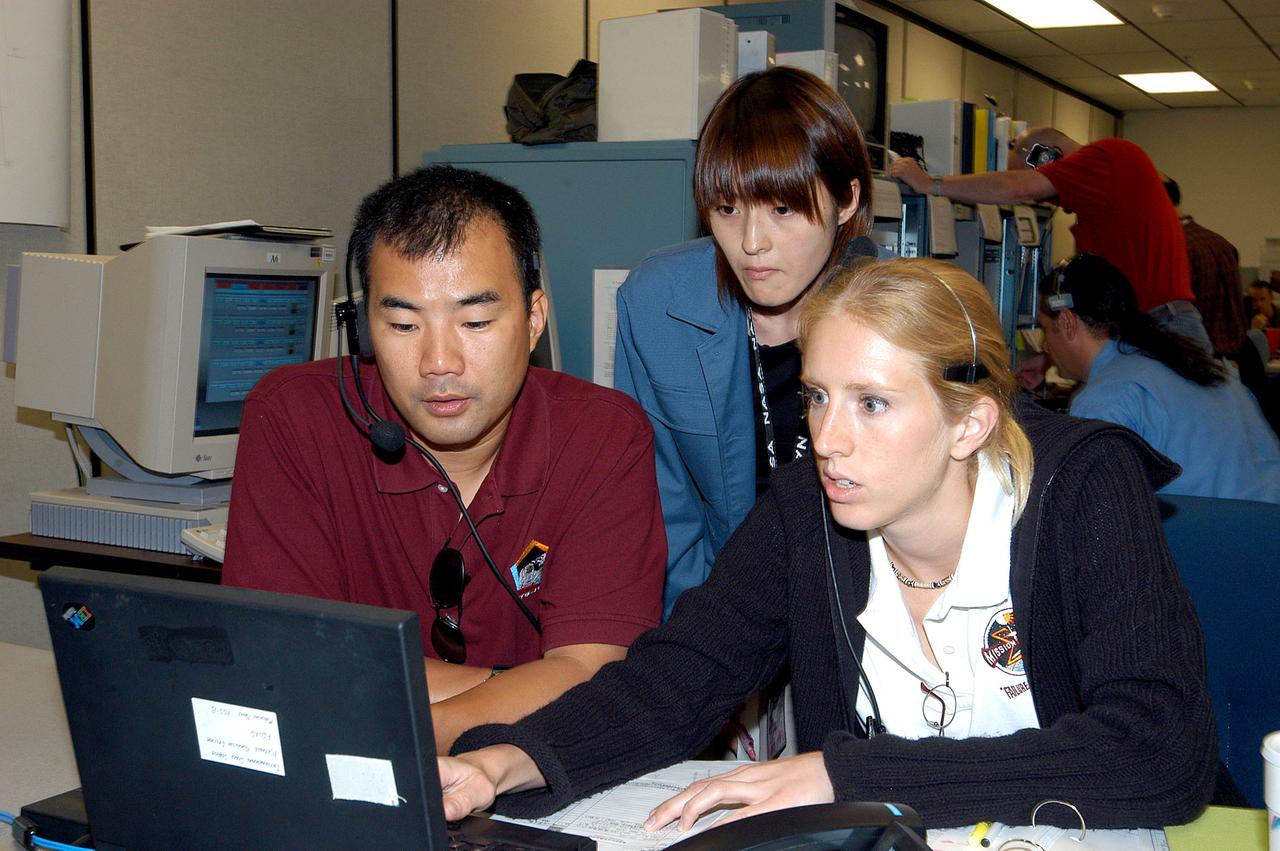
KENNEDY SPACE CENTER, FLA. -  Astronaut Soichi Noguchi (left), with the National Space Development Agency of Japan (NASDA), works at a console during a Multi-Element Integrated Test (MEIT) of the U.S. Node 2 and the Japanese Experiment Module (JEM) in the Space Station Processing Facility.  The JEM, developed by NASDA, is Japan's primary contribution to the Station. It will enhance the unique research capabilities of the orbiting complex by providing an additional environment for astronauts to conduct science experiments. Noguchi is assigned to mission STS-114 as a mission specialist.  Node 2 provides attach locations for the Japanese laboratory, as well as European laboratory, the Centrifuge Accommodation Module and, eventually, Multipurpose Logistics Modules.  Installation of the module will complete the U.S. Core of the ISS.
KENNEDY SPACE CENTER, FLA. - Astronaut Soichi Noguchi (left), with the National Space Development Agency of Japan (NASDA), works at a console during a Multi-Element Integrated Test (MEIT) of the U.S. Node 2 and the Japanese Experiment Module (JEM) in the Space Station Processing Facility. The JEM, developed by NASDA, is Japan's primary contribution to the Station. It will enhance the unique research capabilities of the orbiting complex by providing an additional environment for astronauts to conduct science experiments. Noguchi is assigned to mission STS-114 as a mission specialist. Node 2 provides attach locations for the Japanese laboratory, as well as European laboratory, the Centrifuge Accommodation Module and, eventually, Multipurpose Logistics Modules. Installation of the module will complete the U.S. Core of the ISS.
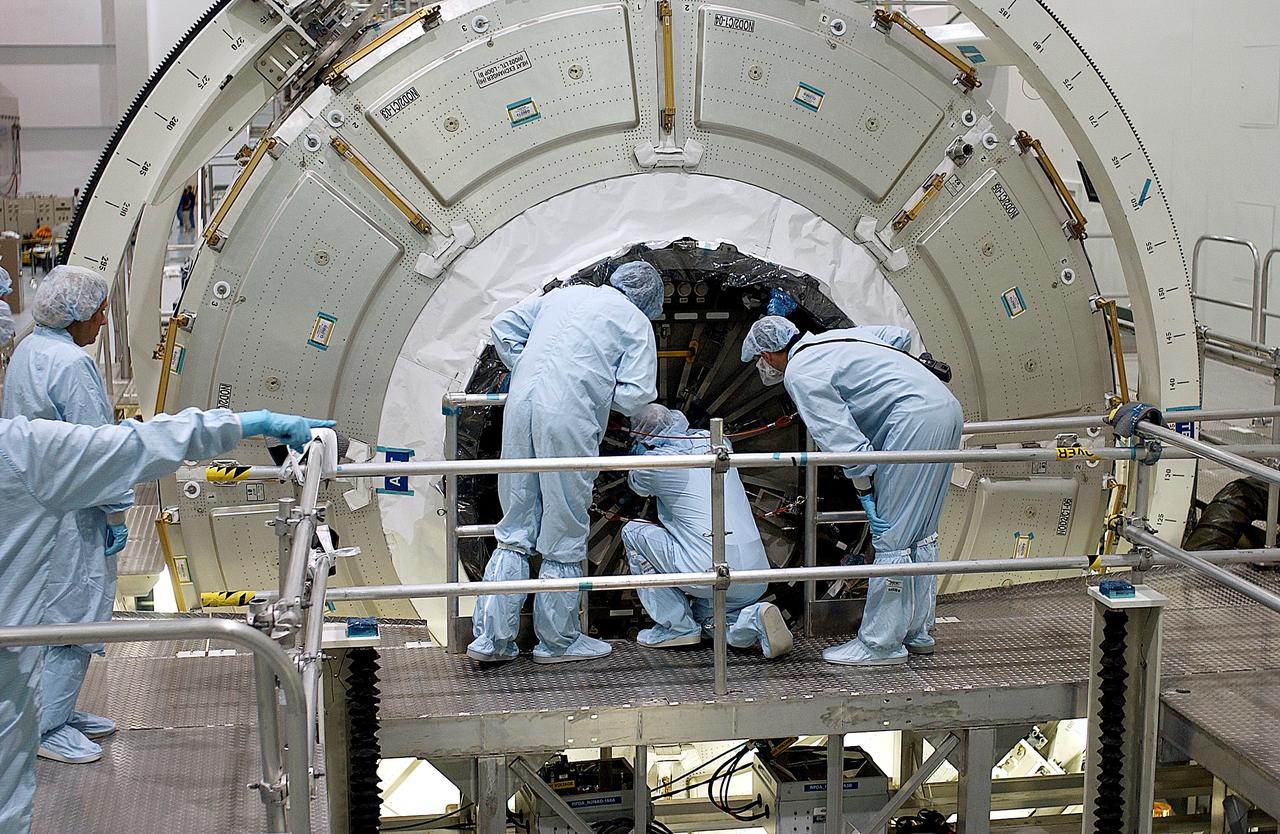
KENNEDY SPACE CENTER, FLA. -  Workers in the Space Station Processing Facility attempt to open the hatch on the Italian-built Node 2, a future element of the International Space Station.  Node 2 arrived at KSC June 1.  The second of three Station connecting modules, the module  attaches to the end of the U.S. Lab and provides attach locations for the Japanese laboratory, European laboratory, the Centrifuge Accommodation Module and, later, Multipurpose Logistics Modules. It will provide the primary docking location for the Shuttle when a pressurized mating adapter is attached to Node 2.  Installation of the module will complete  the U.S. Core of the ISS.  Node 2 is the designated payload for mission STS-120.  No orbiter or launch date has been determined yet.
KENNEDY SPACE CENTER, FLA. - Workers in the Space Station Processing Facility attempt to open the hatch on the Italian-built Node 2, a future element of the International Space Station. Node 2 arrived at KSC June 1. The second of three Station connecting modules, the module attaches to the end of the U.S. Lab and provides attach locations for the Japanese laboratory, European laboratory, the Centrifuge Accommodation Module and, later, Multipurpose Logistics Modules. It will provide the primary docking location for the Shuttle when a pressurized mating adapter is attached to Node 2. Installation of the module will complete the U.S. Core of the ISS. Node 2 is the designated payload for mission STS-120. No orbiter or launch date has been determined yet.
KENNEDY SPACE CENTER, FLA. - The Italian-built module, U.S. Node 2, for the International Space Station is offloaded from a Beluga aircraft at the Shuttle Landing Facility. The second of three Station connecting modules, Node 2 attaches to the end of the U.S. Lab and provides attach locations for the Japanese laboratory, European laboratory, the Centrifuge Accommodation Module and, later, Multipurpose Logistics Modules. It will provide the primary docking location for the Shuttle when a pressurized mating adapter is attached to Node 2.  Installation of the module will complete  the U.S. Core of the ISS.  Node 2 is the designated payload for mission STS-120.  No orbiter or launch date has been determined yet.
KENNEDY SPACE CENTER, FLA. - The Italian-built module, U.S. Node 2, for the International Space Station is offloaded from a Beluga aircraft at the Shuttle Landing Facility. The second of three Station connecting modules, Node 2 attaches to the end of the U.S. Lab and provides attach locations for the Japanese laboratory, European laboratory, the Centrifuge Accommodation Module and, later, Multipurpose Logistics Modules. It will provide the primary docking location for the Shuttle when a pressurized mating adapter is attached to Node 2. Installation of the module will complete the U.S. Core of the ISS. Node 2 is the designated payload for mission STS-120. No orbiter or launch date has been determined yet.
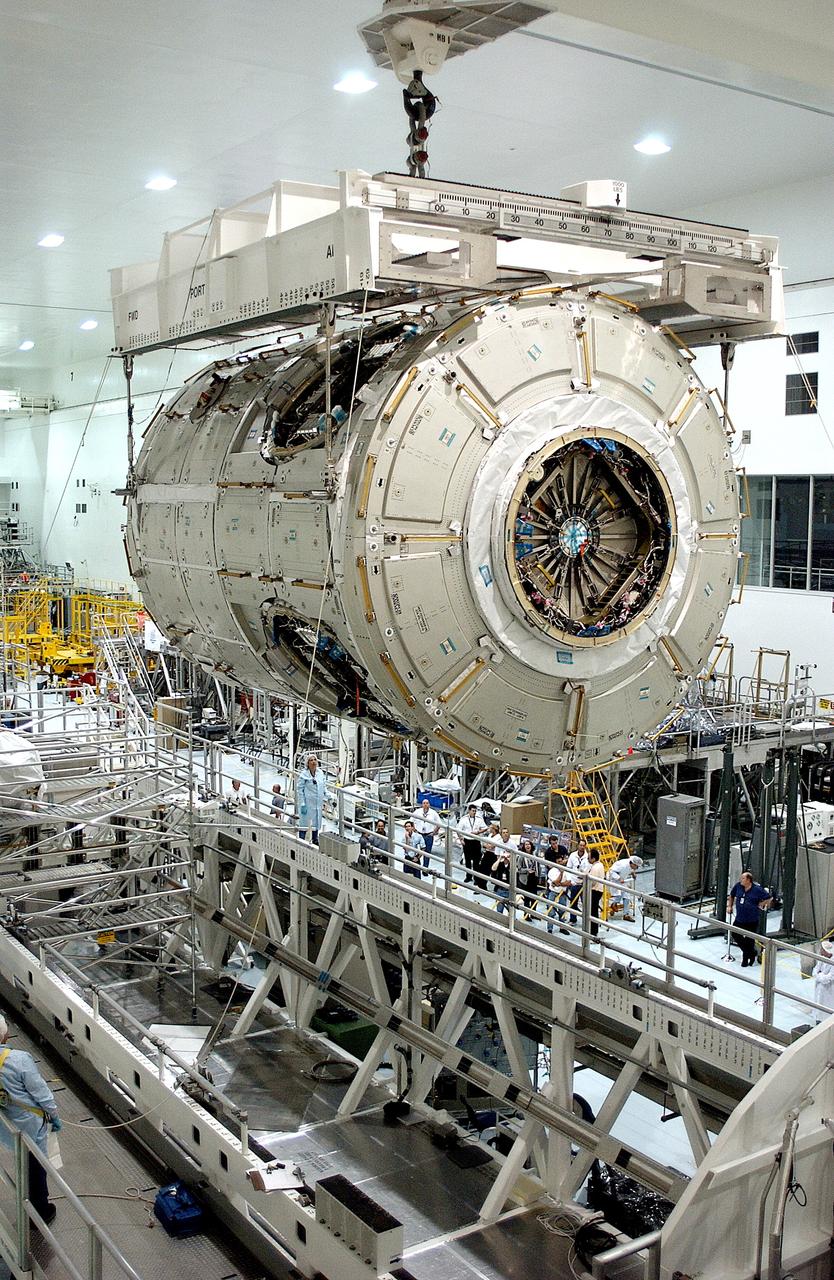
KENNEDY SPACE CENTER, FLA. - An overhead crane in the Space Station Processing Facility lifts the U.S. Node 2 out of its shipping container.  The node will be moved to a workstand.  The second of three connecting modules on the International Space Station, the Italian-built Node 2 attaches to the end of the U.S. Lab and provides attach locations for the Japanese laboratory, European laboratory, the Centrifuge Accommodation Module and, later, Multipurpose Logistics Modules. It will provide the primary docking location for the Shuttle when a pressurized mating adapter is attached to Node 2.  Installation of the module will complete  the U.S. Core of the ISS.  Node 2 is the designated payload for mission STS-120.  No orbiter or launch date has been determined yet.
KENNEDY SPACE CENTER, FLA. - An overhead crane in the Space Station Processing Facility lifts the U.S. Node 2 out of its shipping container. The node will be moved to a workstand. The second of three connecting modules on the International Space Station, the Italian-built Node 2 attaches to the end of the U.S. Lab and provides attach locations for the Japanese laboratory, European laboratory, the Centrifuge Accommodation Module and, later, Multipurpose Logistics Modules. It will provide the primary docking location for the Shuttle when a pressurized mating adapter is attached to Node 2. Installation of the module will complete the U.S. Core of the ISS. Node 2 is the designated payload for mission STS-120. No orbiter or launch date has been determined yet.
KENNEDY SPACE CENTER, FLA. - The Italian-built module, U.S. Node 2, for the International Space Station is offloaded from a Beluga at the Shuttle Landing Facility. The second of three Station connecting modules, Node 2 attaches to the end of the U.S. Lab and provides attach locations for the Japanese laboratory, European laboratory, the Centrifuge Accommodation Module and, later, Multipurpose Logistics Modules. It will provide the primary docking location for the Shuttle when a pressurized mating adapter is attached to Node 2.  Installation of the module will complete  the U.S. Core of the ISS.  Node 2 is the designated payload for mission STS-120.  No orbiter or launch date has been determined yet.
KENNEDY SPACE CENTER, FLA. - The Italian-built module, U.S. Node 2, for the International Space Station is offloaded from a Beluga at the Shuttle Landing Facility. The second of three Station connecting modules, Node 2 attaches to the end of the U.S. Lab and provides attach locations for the Japanese laboratory, European laboratory, the Centrifuge Accommodation Module and, later, Multipurpose Logistics Modules. It will provide the primary docking location for the Shuttle when a pressurized mating adapter is attached to Node 2. Installation of the module will complete the U.S. Core of the ISS. Node 2 is the designated payload for mission STS-120. No orbiter or launch date has been determined yet.
KENNEDY SPACE CENTER, FLA. - The U.S. Node 2 moves toward a workstand in the Space Station Processing Facility.  The second of three connecting modules on the International Space Station, the Italian-built Node 2 attaches to the end of the U.S. Lab and provides attach locations for the Japanese laboratory, European laboratory, the Centrifuge Accommodation Module and, later, Multipurpose Logistics Modules. It will provide the primary docking location for the Shuttle when a pressurized mating adapter is attached to Node 2.  Installation of the module will complete  the U.S. Core of the ISS.  Node 2 is the designated payload for mission STS-120.  No orbiter or launch date has been determined yet.
KENNEDY SPACE CENTER, FLA. - The U.S. Node 2 moves toward a workstand in the Space Station Processing Facility. The second of three connecting modules on the International Space Station, the Italian-built Node 2 attaches to the end of the U.S. Lab and provides attach locations for the Japanese laboratory, European laboratory, the Centrifuge Accommodation Module and, later, Multipurpose Logistics Modules. It will provide the primary docking location for the Shuttle when a pressurized mating adapter is attached to Node 2. Installation of the module will complete the U.S. Core of the ISS. Node 2 is the designated payload for mission STS-120. No orbiter or launch date has been determined yet.
KENNEDY SPACE CENTER, FLA. - The Italian-built module, U.S. Node 2, for the International Space Station is offloaded from a Beluga aircraft at the Shuttle Landing Facility. The second of three Station connecting modules, Node 2 attaches to the end of the U.S. Lab and provides attach locations for the Japanese laboratory, European laboratory, the Centrifuge Accommodation Module and, later, Multipurpose Logistics Modules. It will provide the primary docking location for the Shuttle when a pressurized mating adapter is attached to Node 2.  Installation of the module will complete  the U.S. Core of the ISS.  Node 2 is the designated payload for mission STS-120.  No orbiter or launch date has been determined yet.
KENNEDY SPACE CENTER, FLA. - The Italian-built module, U.S. Node 2, for the International Space Station is offloaded from a Beluga aircraft at the Shuttle Landing Facility. The second of three Station connecting modules, Node 2 attaches to the end of the U.S. Lab and provides attach locations for the Japanese laboratory, European laboratory, the Centrifuge Accommodation Module and, later, Multipurpose Logistics Modules. It will provide the primary docking location for the Shuttle when a pressurized mating adapter is attached to Node 2. Installation of the module will complete the U.S. Core of the ISS. Node 2 is the designated payload for mission STS-120. No orbiter or launch date has been determined yet.
KENNEDY SPACE CENTER, FLA. - The Italian-built module, U.S. Node 2, for the International Space Station is offloaded from a Beluga aircraft at the Shuttle Landing Facility. The second of three Station connecting modules, Node 2 attaches to the end of the U.S. Lab and provides attach locations for the Japanese laboratory, European laboratory, the Centrifuge Accommodation Module and, later, Multipurpose Logistics Modules. It will provide the primary docking location for the Shuttle when a pressurized mating adapter is attached to Node 2.  Installation of the module will complete  the U.S. Core of the ISS.  Node 2 is the designated payload for mission STS-120.  No orbiter or launch date has been determined yet.
KENNEDY SPACE CENTER, FLA. - The Italian-built module, U.S. Node 2, for the International Space Station is offloaded from a Beluga aircraft at the Shuttle Landing Facility. The second of three Station connecting modules, Node 2 attaches to the end of the U.S. Lab and provides attach locations for the Japanese laboratory, European laboratory, the Centrifuge Accommodation Module and, later, Multipurpose Logistics Modules. It will provide the primary docking location for the Shuttle when a pressurized mating adapter is attached to Node 2. Installation of the module will complete the U.S. Core of the ISS. Node 2 is the designated payload for mission STS-120. No orbiter or launch date has been determined yet.
KENNEDY SPACE CENTER, FLA. -  The Italian-built module, U.S. Node 2, moves past the Beluga aircraft that brought it to KSC as it is transferred to the Space Station Processing Facility. The second of three connecting modules on the International Space Station, Node 2 attaches to the end of the U.S. Lab and provides attach locations for the Japanese laboratory, European laboratory, the Centrifuge Accommodation Module and, later, Multipurpose Logistics Modules. It will provide the primary docking location for the Shuttle when a pressurized mating adapter is attached to Node 2.  Installation of the module will complete  the U.S. Core of the ISS.  Node 2 is the designated payload for mission STS-120.  No orbiter or launch date has been determined yet.
KENNEDY SPACE CENTER, FLA. - The Italian-built module, U.S. Node 2, moves past the Beluga aircraft that brought it to KSC as it is transferred to the Space Station Processing Facility. The second of three connecting modules on the International Space Station, Node 2 attaches to the end of the U.S. Lab and provides attach locations for the Japanese laboratory, European laboratory, the Centrifuge Accommodation Module and, later, Multipurpose Logistics Modules. It will provide the primary docking location for the Shuttle when a pressurized mating adapter is attached to Node 2. Installation of the module will complete the U.S. Core of the ISS. Node 2 is the designated payload for mission STS-120. No orbiter or launch date has been determined yet.
KENNEDY SPACE CENTER, FLA. -  The Italian-built module, U.S. Node 2, is secured on a transporter after its arrival at the Shuttle Landing Facility.  It will be taken to the Space Station Processing Facility.  The second of three connecting modules on the International Space Station, Node 2 attaches to the end of the U.S. Lab and provides attach locations for the Japanese laboratory, European laboratory, the Centrifuge Accommodation Module and, later, Multipurpose Logistics Modules. It will provide the primary docking location for the Shuttle when a pressurized mating adapter is attached to Node 2.  Installation of the module will complete  the U.S. Core of the ISS.  Node 2 is the designated payload for mission STS-120.  No orbiter or launch date has been determined yet.
KENNEDY SPACE CENTER, FLA. - The Italian-built module, U.S. Node 2, is secured on a transporter after its arrival at the Shuttle Landing Facility. It will be taken to the Space Station Processing Facility. The second of three connecting modules on the International Space Station, Node 2 attaches to the end of the U.S. Lab and provides attach locations for the Japanese laboratory, European laboratory, the Centrifuge Accommodation Module and, later, Multipurpose Logistics Modules. It will provide the primary docking location for the Shuttle when a pressurized mating adapter is attached to Node 2. Installation of the module will complete the U.S. Core of the ISS. Node 2 is the designated payload for mission STS-120. No orbiter or launch date has been determined yet.
KENNEDY SPACE CENTER, FLA. -  The Italian-built module, U.S. Node 2, begins its transfer from  the Shuttle Landing Facility to the Space Station Processing Facility.  The second of three connecting modules on the International Space Station, Node 2 attaches to the end of the U.S. Lab and provides attach locations for the Japanese laboratory, European laboratory, the Centrifuge Accommodation Module and, later, Multipurpose Logistics Modules. It will provide the primary docking location for the Shuttle when a pressurized mating adapter is attached to Node 2.  Installation of the module will complete  the U.S. Core of the ISS.  Node 2 is the designated payload for mission STS-120.  No orbiter or launch date has been determined yet.
KENNEDY SPACE CENTER, FLA. - The Italian-built module, U.S. Node 2, begins its transfer from the Shuttle Landing Facility to the Space Station Processing Facility. The second of three connecting modules on the International Space Station, Node 2 attaches to the end of the U.S. Lab and provides attach locations for the Japanese laboratory, European laboratory, the Centrifuge Accommodation Module and, later, Multipurpose Logistics Modules. It will provide the primary docking location for the Shuttle when a pressurized mating adapter is attached to Node 2. Installation of the module will complete the U.S. Core of the ISS. Node 2 is the designated payload for mission STS-120. No orbiter or launch date has been determined yet.
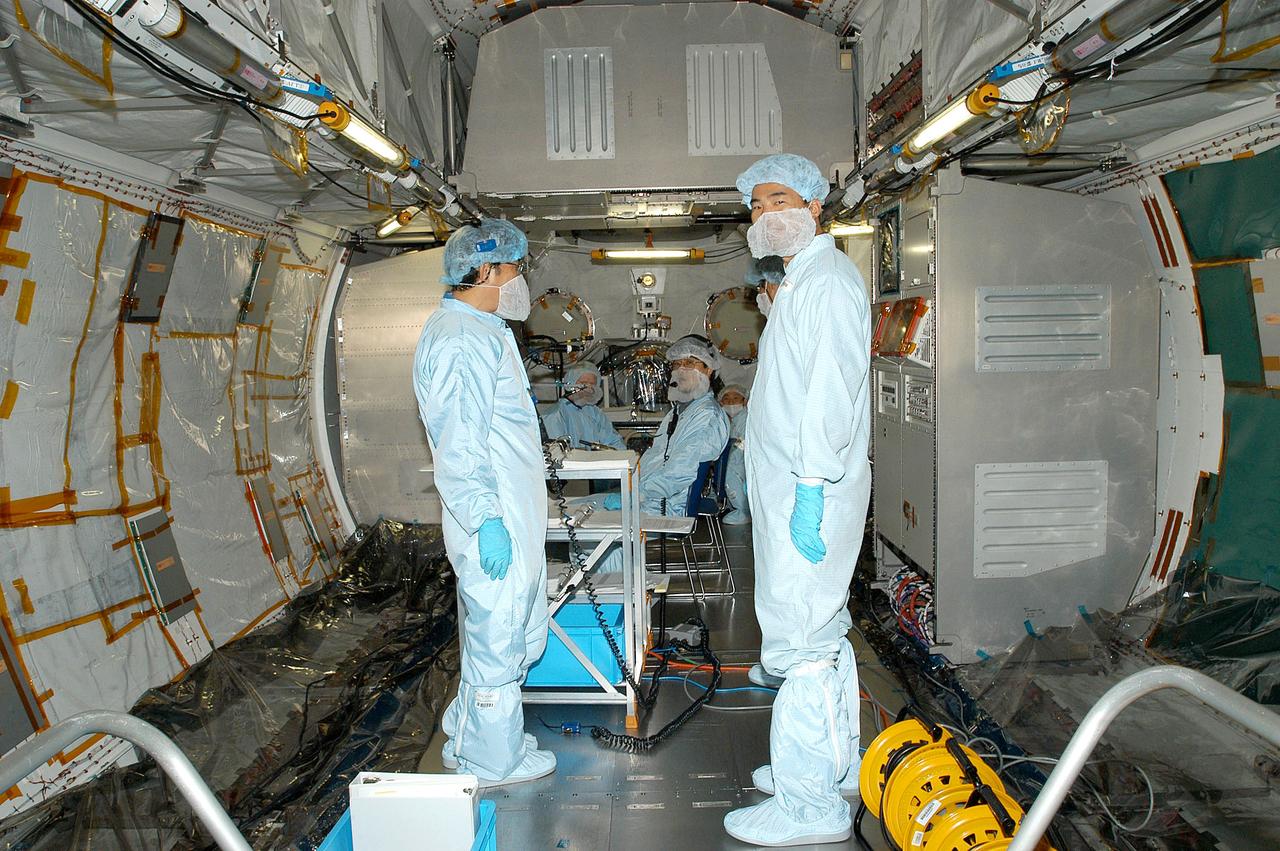
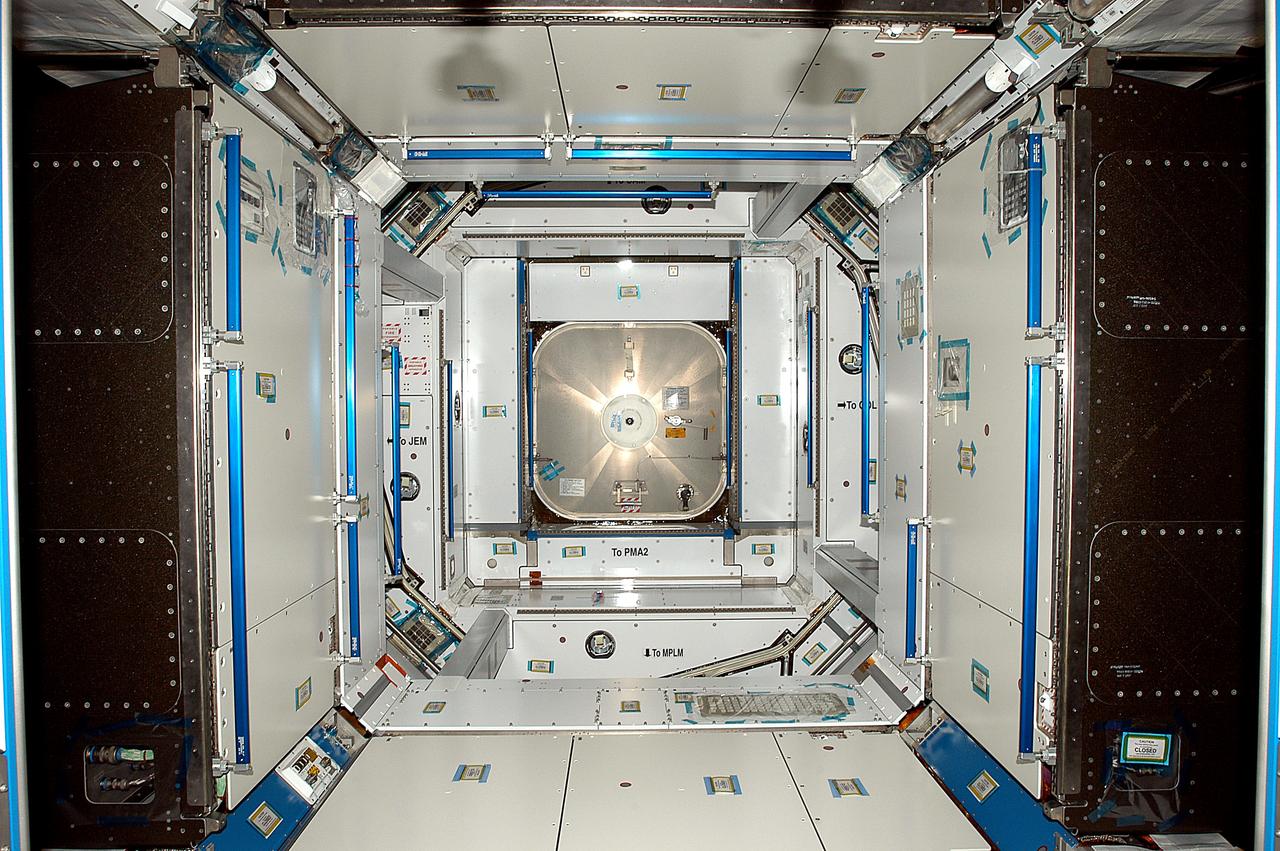
KENNEDY SPACE CENTER, FLA. -  The inside of the Italian-built Node 2 looks pristine after opening of the hatch.  A future element of the International Space Station,  Node 2 arrived at KSC June 1.  The second of three Station connecting modules, Node 2 attaches to the end of the U.S. Lab and provides attach locations for the Japanese laboratory, European laboratory, the Centrifuge Accommodation Module and, later, Multipurpose Logistics Modules. It will provide the primary docking location for the Shuttle when a pressurized mating adapter is attached to Node 2.  Installation of the module will complete  the U.S. Core of the ISS.  Node 2 is the designated payload for mission STS-120.  No orbiter or launch date has been determined yet.
KENNEDY SPACE CENTER, FLA. - The inside of the Italian-built Node 2 looks pristine after opening of the hatch. A future element of the International Space Station, Node 2 arrived at KSC June 1. The second of three Station connecting modules, Node 2 attaches to the end of the U.S. Lab and provides attach locations for the Japanese laboratory, European laboratory, the Centrifuge Accommodation Module and, later, Multipurpose Logistics Modules. It will provide the primary docking location for the Shuttle when a pressurized mating adapter is attached to Node 2. Installation of the module will complete the U.S. Core of the ISS. Node 2 is the designated payload for mission STS-120. No orbiter or launch date has been determined yet.
KENNEDY SPACE CENTER, FLA. -  The Italian-built module, U.S. Node 2, nears the Space Station Processing Facility after its move from the Shuttle Landing Facility. The second of three connecting modules on the International Space Station, Node 2 attaches to the end of the U.S. Lab and provides attach locations for the Japanese laboratory, European laboratory, the Centrifuge Accommodation Module and, later, Multipurpose Logistics Modules. It will provide the primary docking location for the Shuttle when a pressurized mating adapter is attached to Node 2.  Installation of the module will complete  the U.S. Core of the ISS.  Node 2 is the designated payload for mission STS-120.  No orbiter or launch date has been determined yet.
KENNEDY SPACE CENTER, FLA. - The Italian-built module, U.S. Node 2, nears the Space Station Processing Facility after its move from the Shuttle Landing Facility. The second of three connecting modules on the International Space Station, Node 2 attaches to the end of the U.S. Lab and provides attach locations for the Japanese laboratory, European laboratory, the Centrifuge Accommodation Module and, later, Multipurpose Logistics Modules. It will provide the primary docking location for the Shuttle when a pressurized mating adapter is attached to Node 2. Installation of the module will complete the U.S. Core of the ISS. Node 2 is the designated payload for mission STS-120. No orbiter or launch date has been determined yet.
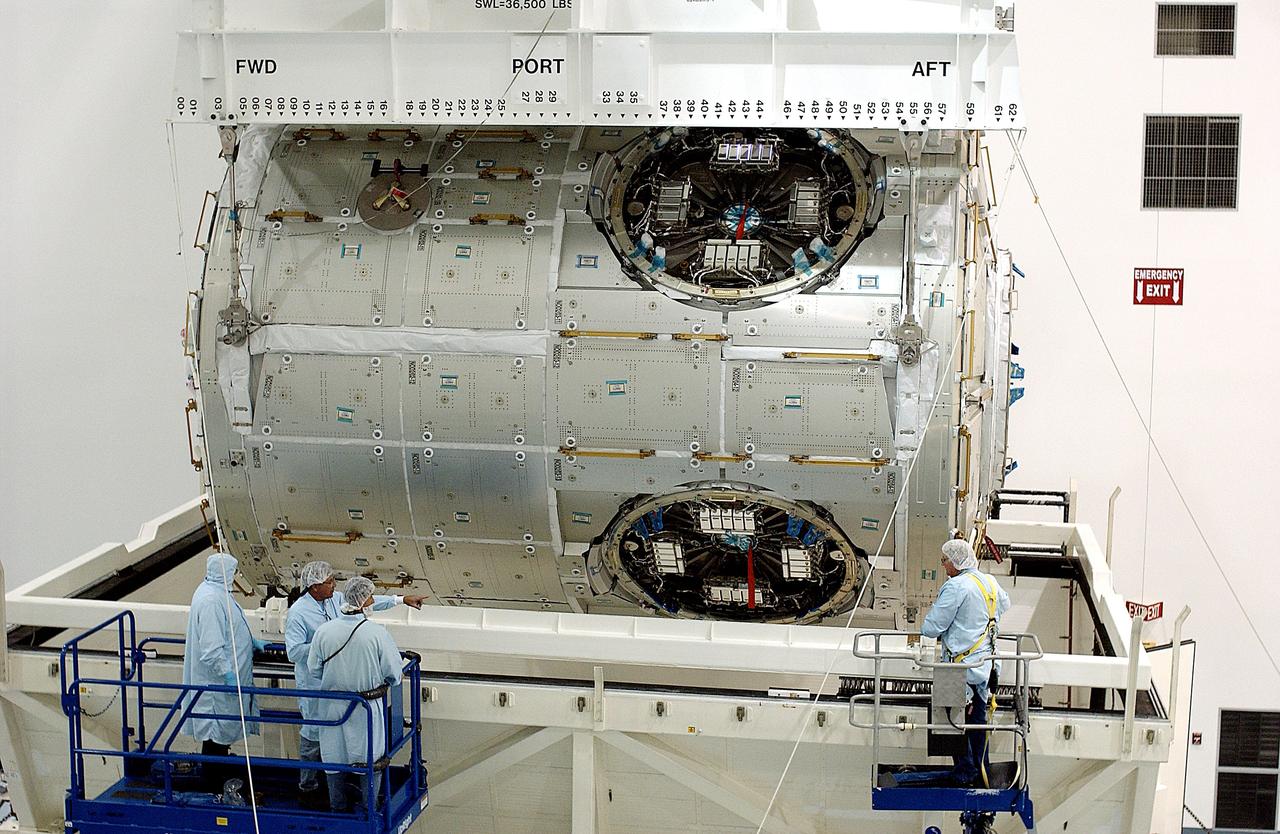
KENNEDY SPACE CENTER, FLA. -  The U.S. Node 2 is lowered onto a workstand in the Space Station Processing Facility.  The second of three connecting modules on the International Space Station, the Italian-built Node 2 attaches to the end of the U.S. Lab and provides attach locations for the Japanese laboratory, European laboratory, the Centrifuge Accommodation Module and, later, Multipurpose Logistics Modules. It will provide the primary docking location for the Shuttle when a pressurized mating adapter is attached to Node 2.  Installation of the module will complete  the U.S. Core of the ISS.  Node 2 is the designated payload for mission STS-120.  No orbiter or launch date has been determined yet.
KENNEDY SPACE CENTER, FLA. - The U.S. Node 2 is lowered onto a workstand in the Space Station Processing Facility. The second of three connecting modules on the International Space Station, the Italian-built Node 2 attaches to the end of the U.S. Lab and provides attach locations for the Japanese laboratory, European laboratory, the Centrifuge Accommodation Module and, later, Multipurpose Logistics Modules. It will provide the primary docking location for the Shuttle when a pressurized mating adapter is attached to Node 2. Installation of the module will complete the U.S. Core of the ISS. Node 2 is the designated payload for mission STS-120. No orbiter or launch date has been determined yet.