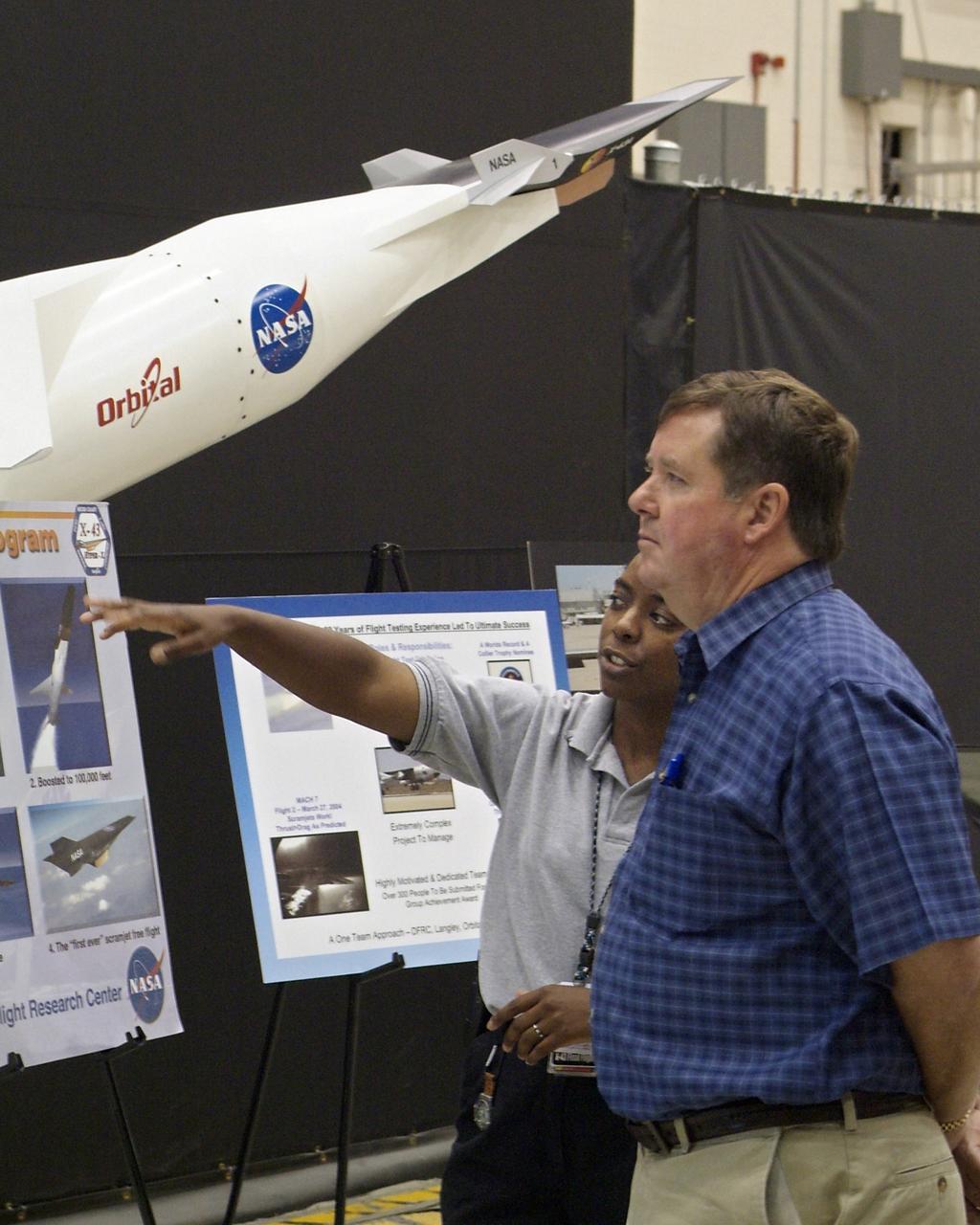
Rep. Ken Calvert, (R-Calif.), chairman of the House Subcommittee on Space and Aeronautics, received an update on the mission of NASA's Dryden Flight Research Center during a visit on June 2, 2005. Rep. Calvert, accompanied by several staff members, was briefed by center management on the Dryden's role as a flight research institution, and then reviewed some of the center's recent, current and upcoming flight research projects during a tour of the facility. During the afternoon, Rep. Calvert received similar briefings on a variety of projects at several aerospace development firms at the Civilian Flight Test Center in Mojave. Rep. Calvert's tour of NASA Dryden was the second in a series of visits to all 10 NASA field centers to better acquaint him with the roles and responsibilities of each center.
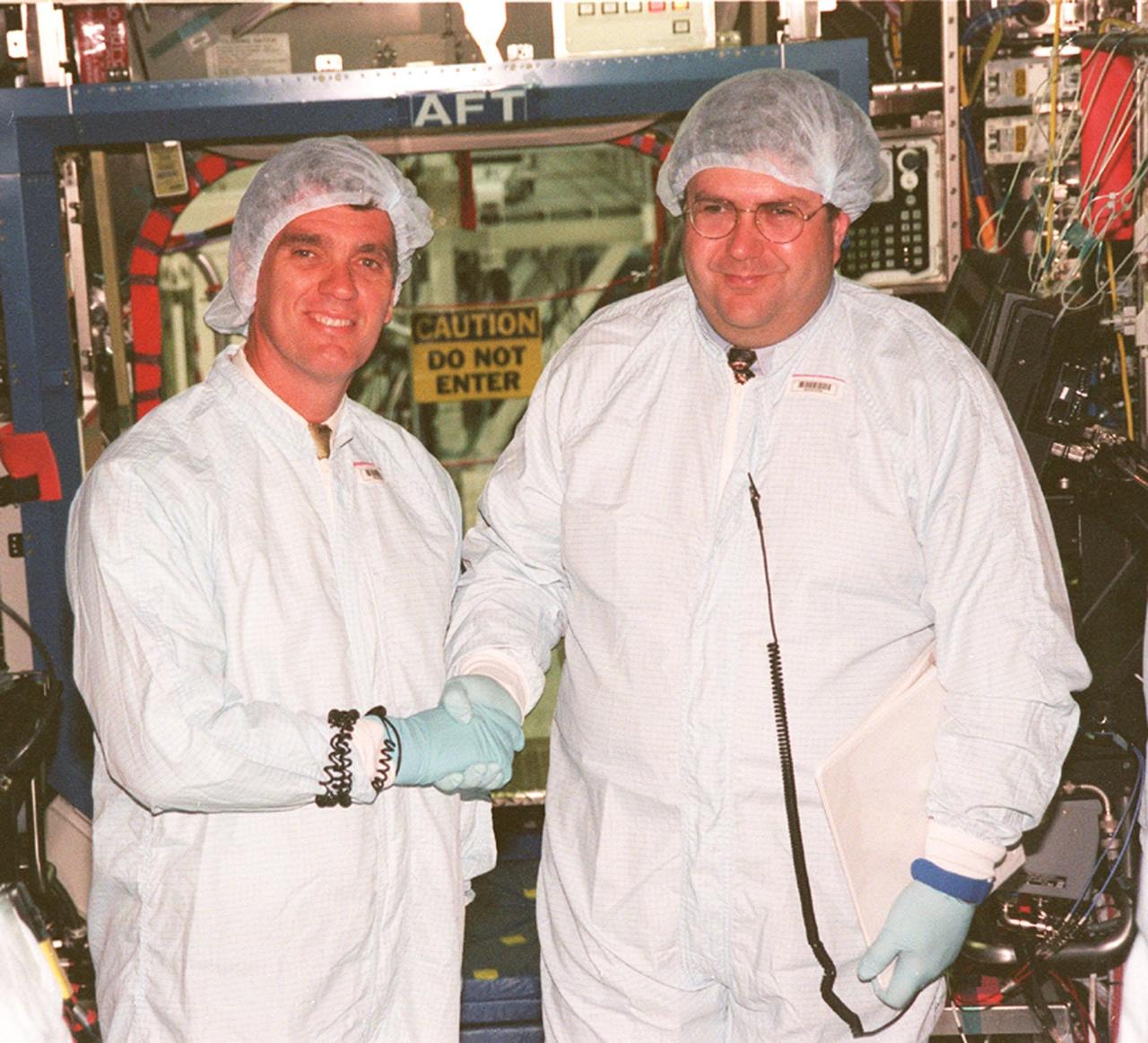
KENNEDY SPACE CENTER, FLA. -- Standing in front of the U.S. Lab, named Destiny, U.S. Rep. Dave Weldon (left) thanks Thomas R. "Randy" Galloway, with the Space Station Hardware Integration Office, for briefing him on the equipment inside the Lab. Weldon is on the House Science Committee and vice chairman of the Space and Aeronautics Subcommittee. Destiny is scheduled to be launched on Space Shuttle Endeavour in early 2000. It will become the centerpiece of scientific research on the ISS, with five equipment racks aboard to provide essential functions for station systems, including high data-rate communications, and to maintain the station's orientation using control gyroscopes launched earlier. Additional equipment and research racks will be installed in the laboratory on subsequent Shuttle flights
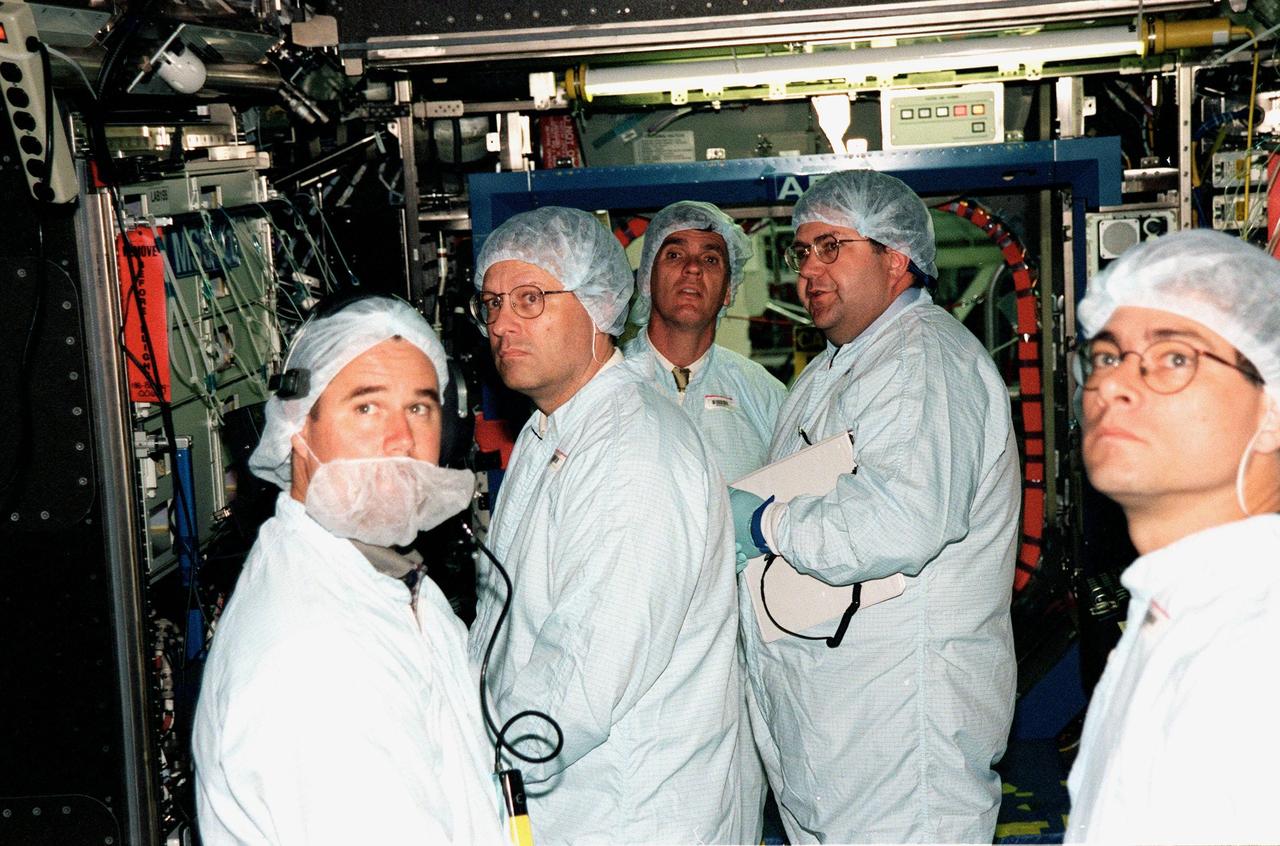
KENNEDY SPACE CENTER, FLA. -- In the Space Station Processing Facility, U.S. Rep. Dave Weldon (center) and his chief of staff Dana Gartzke (second from left) get a close-up look at the interior of the U.S. Lab, called "Destiny." Thomas R. "Randy" Galloway (second from right), with the Space Station Hardware Integration Office, helps with their familiarization of the equipment. They are joined (far left and right) by workers from Boeing. Weldon is on the House Science Committee and vice chairman of the Space and Aeronautics Subcommittee. Destiny is scheduled to be launched on Space Shuttle Endeavour in early 2000. It will become the centerpiece of scientific research on the ISS, with five equipment racks aboard to provide essential functions for station systems, including high data-rate communications, and to maintain the station's orientation using control gyroscopes launched earlier. Additional equipment and research racks will be installed in the laboratory on subsequent Shuttle flights

KENNEDY SPACE CENTER, FLA. -- In the Space Station Processing Facility, U.S. Rep Dave Weldon (at left) looks at the U.S. Lab, called Destiny. With him are Thomas R. "Randy" Galloway, with the Space Station Hardware Integration Office, Dana Gartzke, the congressman's chief of staffm and Boeing workers. Weldon is on the House Science Committee and vice chairman of the Space and Aeronautics Subcommittee. Destiny is scheduled to be launched on Space Shuttle Endeavour in early 2000. It will become the centerpiece of scientific research on the ISS, with five equipment racks aboard to provide essential functions for station systems, including high data-rate communications, and to maintain the station's orientation using control gyroscopes launched earlier. Additional equipment and research racks will be installed in the laboratory on subsequent Shuttle flights
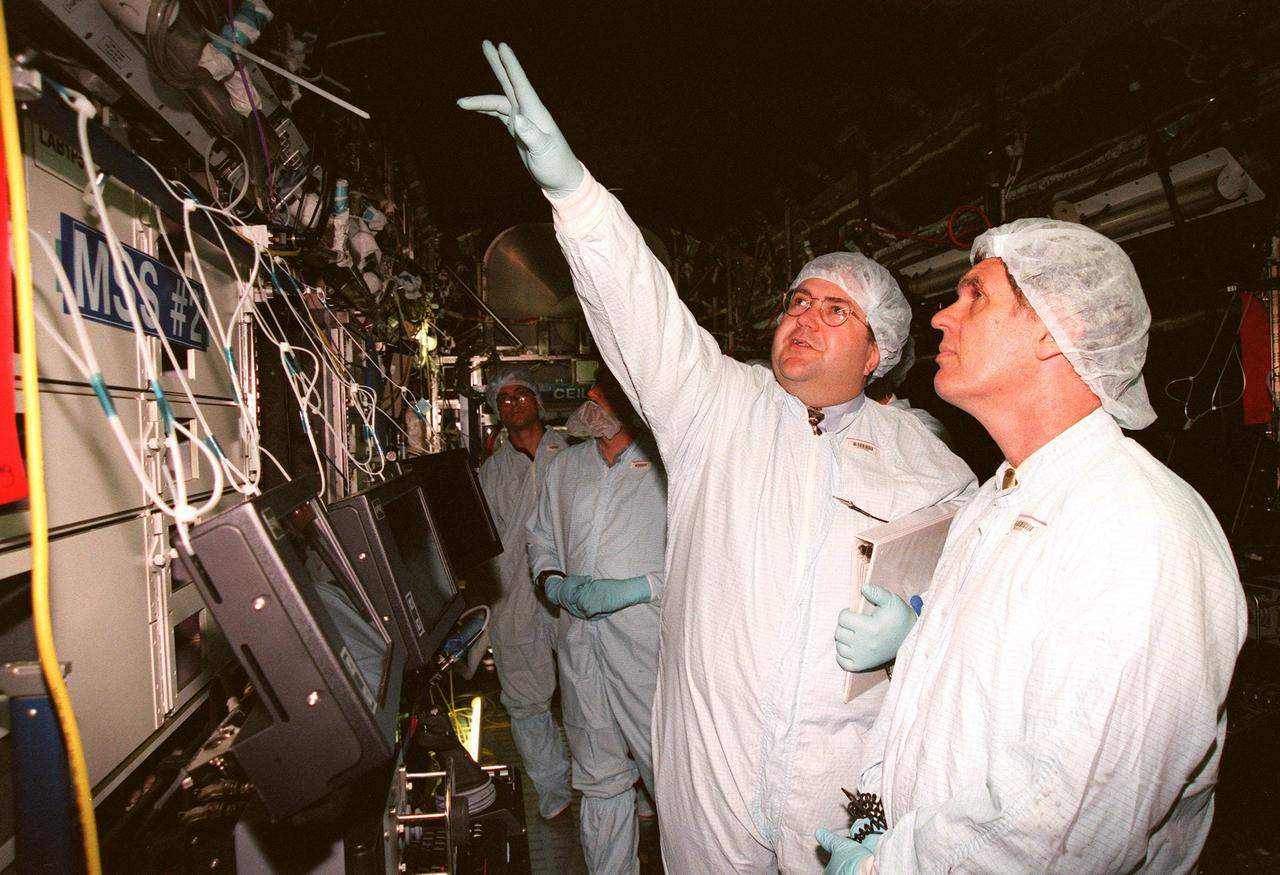
KENNEDY SPACE CENTER, FLA. -- In the Space Station Processing Facility, Thomas R. "Randy" Galloway, with the Space Station Hardware Integration Office, points out a feature to U.S. Rep. Dave Weldon (right) in the U.S. Lab, called "Destiny." In the far background is Dana Gartzke, the congressman's chief of staff. Weldon is on the House Science Committee and vice chairman of the Space and Aeronautics Subcommittee. Destiny is scheduled to be launched on Space Shuttle Endeavour in early 2000. It will become the centerpiece of scientific research on the ISS, with five equipment racks aboard to provide essential functions for station systems, including high data-rate communications, and to maintain the station's orientation using control gyroscopes launched earlier. Additional equipment and research racks will be installed in the laboratory on subsequent Shuttle flights
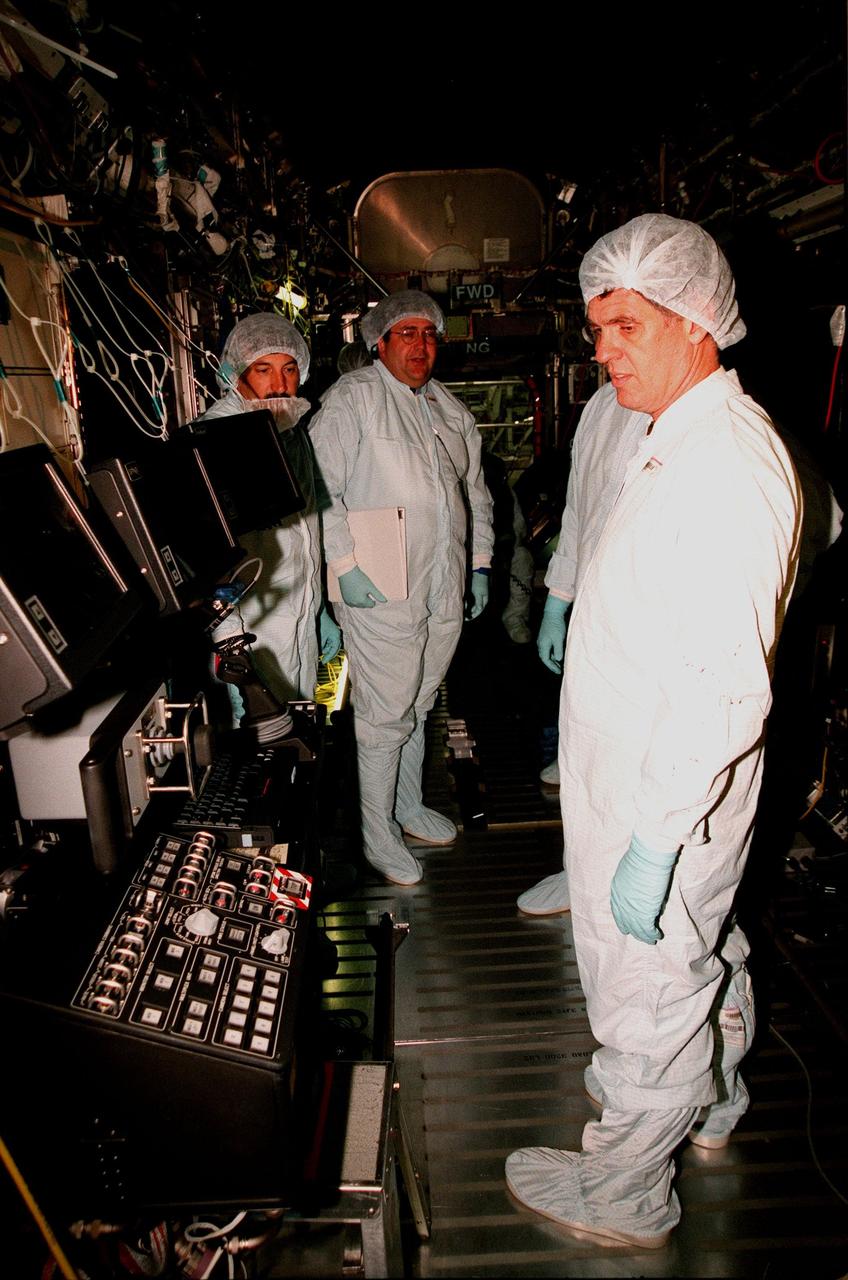
KENNEDY SPACE CENTER, FLA. -- Inside the U.S. Lab, called "Destiny," which is in the Space Station Processing Facility, U.S. Rep. Dave Weldon (right) looks over equipment. In the background (center) is Thomas R. "Randy" Galloway, with the Space Station Hardware Integration Office. Weldon is on the House Science Committee and vice chairman of the Space and Aeronautics Subcommittee. Destiny is scheduled to be launched on Space Shuttle Endeavour in early 2000. It will become the centerpiece of scientific research on the ISS, with five equipment racks aboard to provide essential functions for station systems, including high data-rate communications, and to maintain the station's orientation using control gyroscopes launched earlier. Additional equipment and research racks will be installed in the laboratory on subsequent Shuttle flights
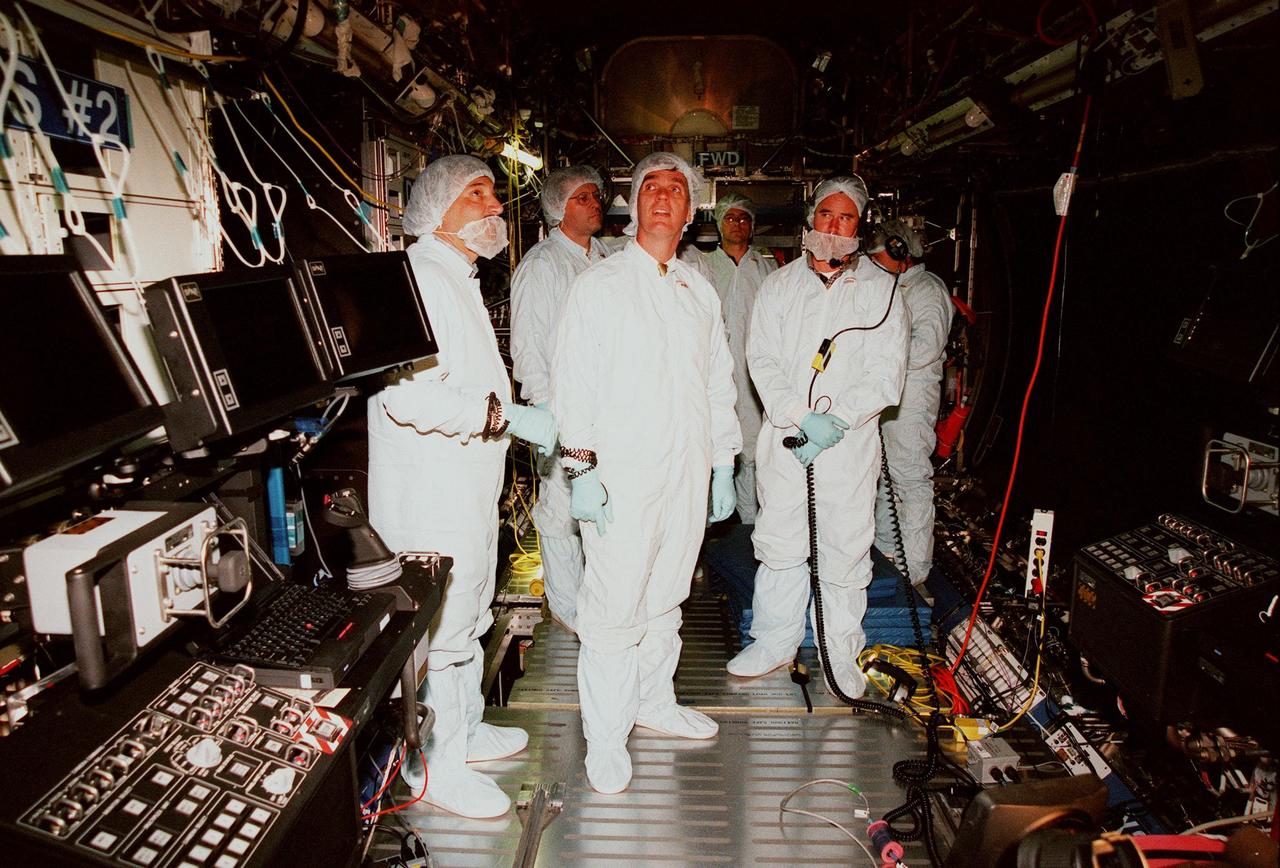
KENNEDY SPACE CENTER, FLA. -- In the Space Station Processing Facility, U.S. Rep. Dave Weldon (center) looks over the U.S. Laboratory, called "Destiny," with a group of Boeing workers. Behind (left) the congressman is Dana Gartzke, the congressman's chief of staff. Weldon is on the House Science Committee and vice chairman of the Space and Aeronautics Subcommittee. Destiny, which will become the centerpiece of scientific research on the ISS, will have five equipment racks aboard to provide essential functions for station systems, including high data-rate communications, and to maintain the station's orientation using control gyroscopes launched earlier. Additional equipment and research racks will be installed in the laboratory on subsequent Shuttle flights. Destiny is scheduled to be launched on Space Shuttle Endeavour in early 2000
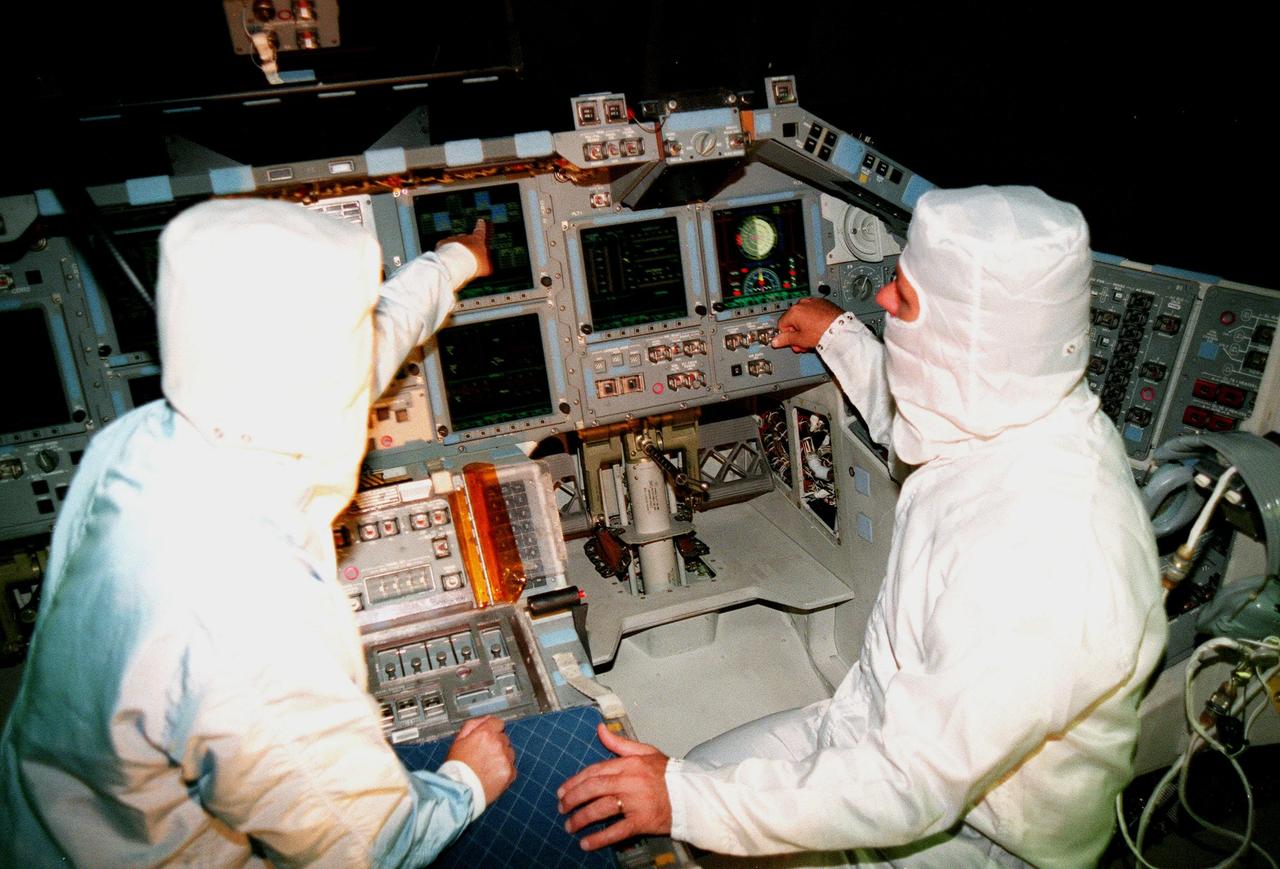
KENNEDY SPACE CENTER, FLA. -- In the cockpit of the orbiter Atlantis, which is in the Orbiter Processing Facility, Laural Patrick (left), a systems engineer with MEDS, points out a feature of the newly installed Multifunction Electronic Display Subsystem (MEDS), known as the "glass cockpit," to U.S. Rep. Dave Weldon. The congressman is on the House Science Committee and vice chairman of the Space and Aeronautics Subcommittee. He was in Palmdale, Calif., when Atlantis underwent the modification and he wanted to see the final product. The full-color, flat-panel MEDS upgrade improves crew/orbiter interaction with easy-to-read, graphic portrayals of key flight indicators like attitude display and mach speed. The installation makes Atlantis the most modern orbiter in the fleet and equals the systems on current commercial jet airliners and military aircraft. Atlantis is scheduled to fly on mission STS-101 in early December
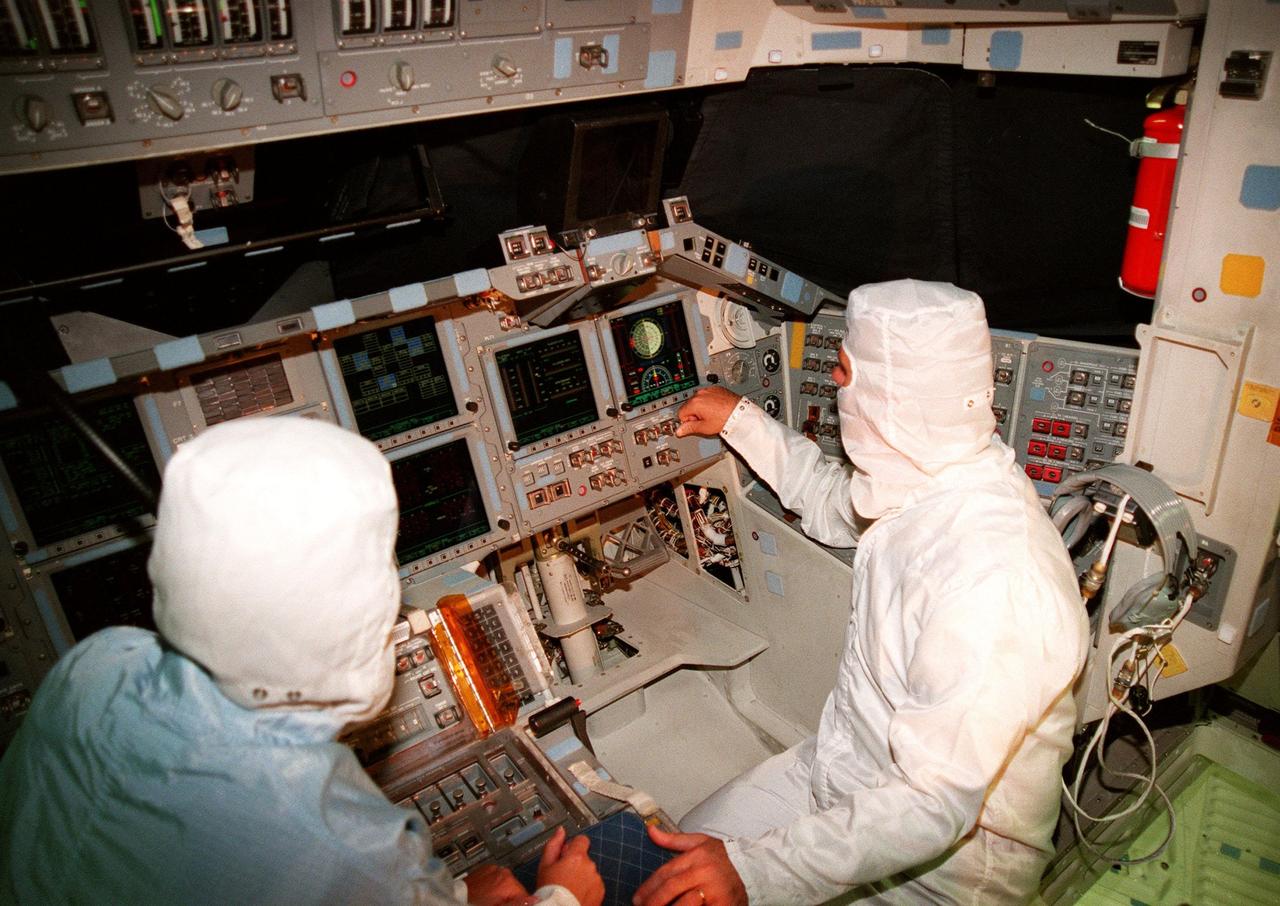
KENNEDY SPACE CENTER, FLA. -- In the cockpit of the orbiter Atlantis, which is in the Orbiter Processing Facility, U.S. Rep. Dave Weldon (right) looks at the newly installed Multifunction Electronic Display Subsystem (MEDS), known as the "glass cockpit." At left is Laural Patrick, a systems engineer with MEDS. Weldon is on the House Science Committee and vice chairman of the Space and Aeronautics Subcommittee. He was in Palmdale, Calif., when Atlantis underwent the modification and he wanted to see the final product. The full-color, flat-panel MEDS upgrade improves crew/orbiter interaction with easy-to-read, graphic portrayals of key flight indicators like attitude display and mach speed. The installation makes Atlantis the most modern orbiter in the fleet and equals the systems on current commercial jet airliners and military aircraft. Atlantis is scheduled to fly on mission STS-101 in early December
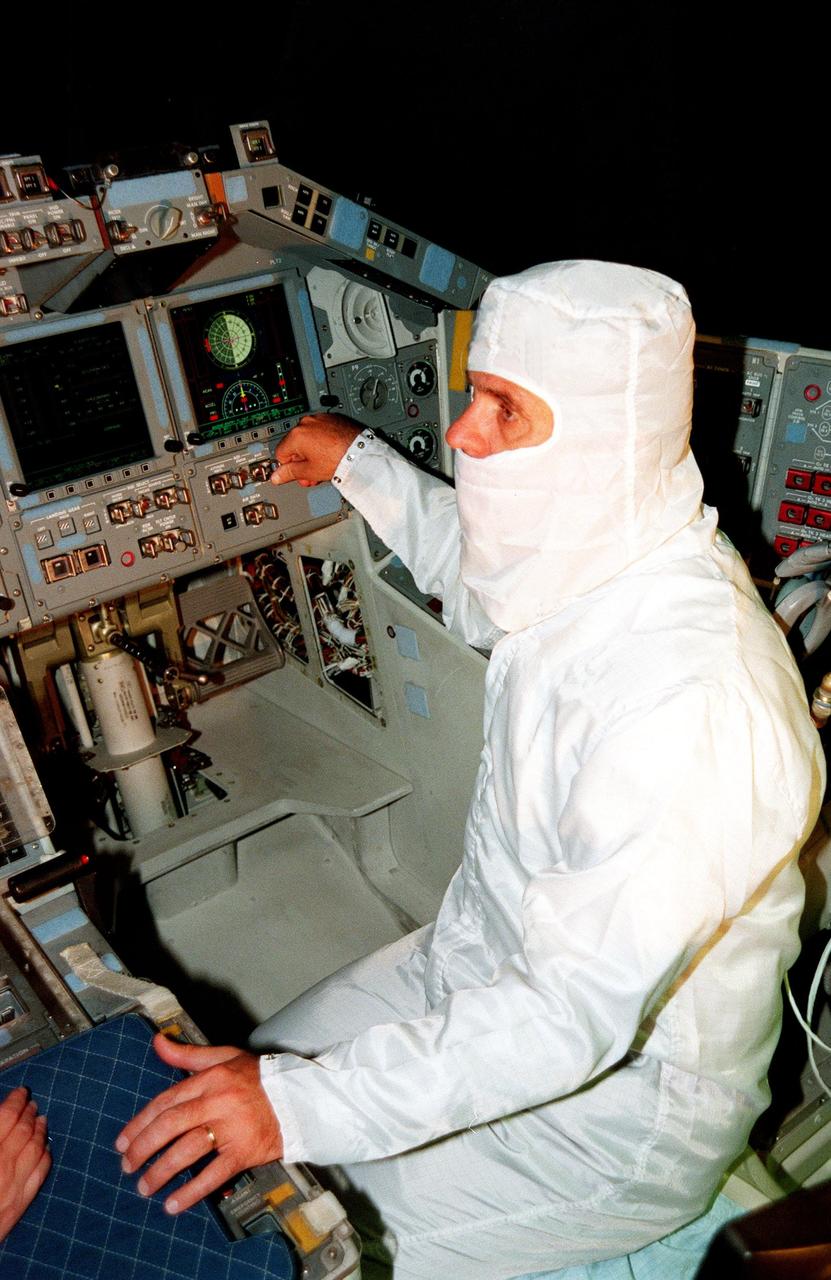
KENNEDY SPACE CENTER, FLA. -- In the cockpit of the orbiter Atlantis, which is in the Orbiter Processing Facility, U.S. Rep. Dave Weldon looks at the newly installed Multifunction Electronic Display Subsystem (MEDS), known as the "glass cockpit." Weldon is on the House Science Committee and vice chairman of the Space and Aeronautics Subcommittee. He was in Palmdale, Calif., when Atlantis underwent the modification and he wanted to see the final product. The full-color, flat-panel MEDS upgrade improves crew/orbiter interaction with easy-to-read, graphic portrayals of key flight indicators like attitude display and mach speed. The installation makes Atlantis the most modern orbiter in the fleet and equals the systems on current commercial jet airliners and military aircraft. Atlantis is scheduled to fly on mission STS-101 in early December