Chasing Away the Blues
NASA Dryden Flight Research Center's T-34 support aircraft provided safety chase for the joint NASA/Boeing X-48B.
Dryden's T-34 Chases the X-48B
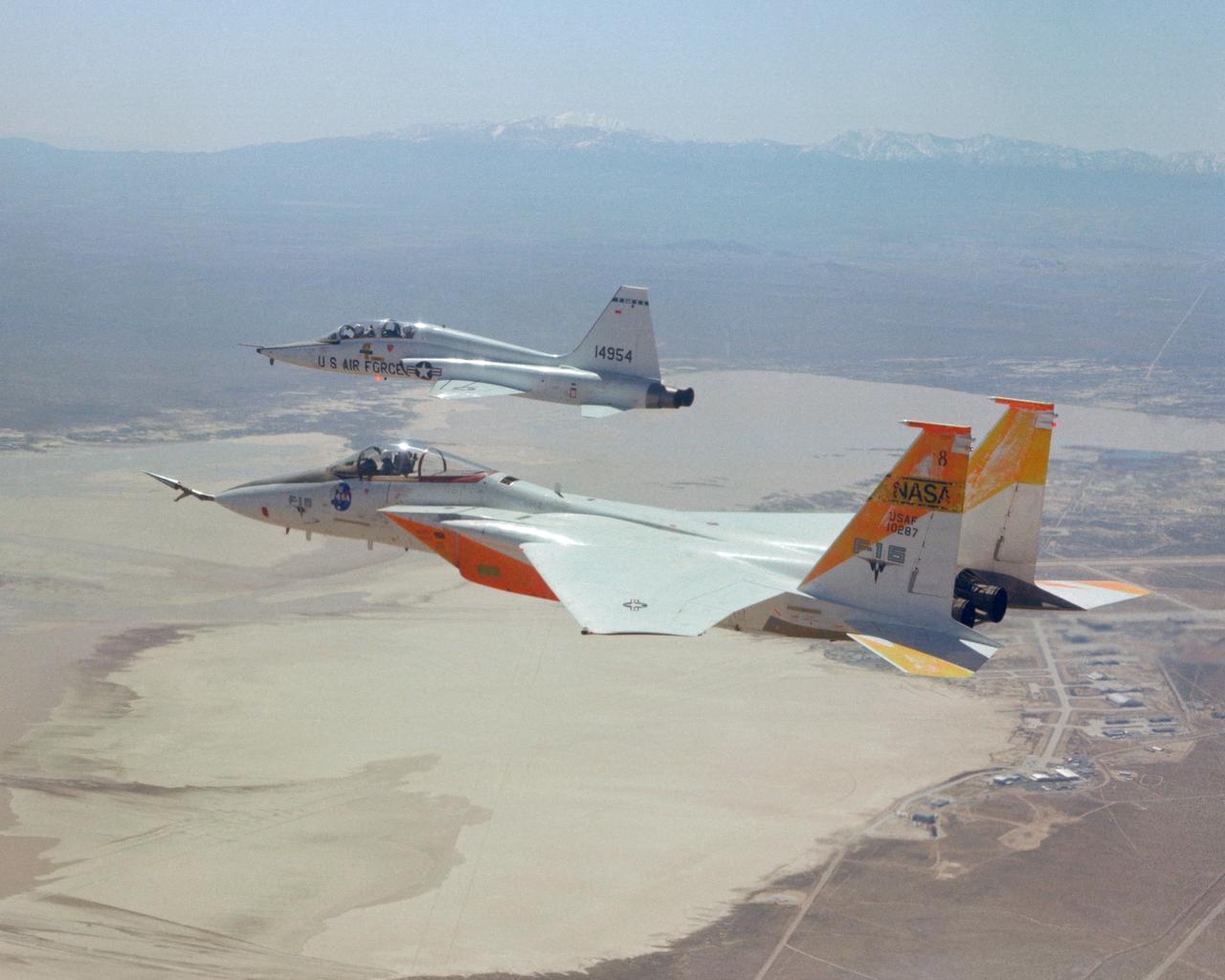
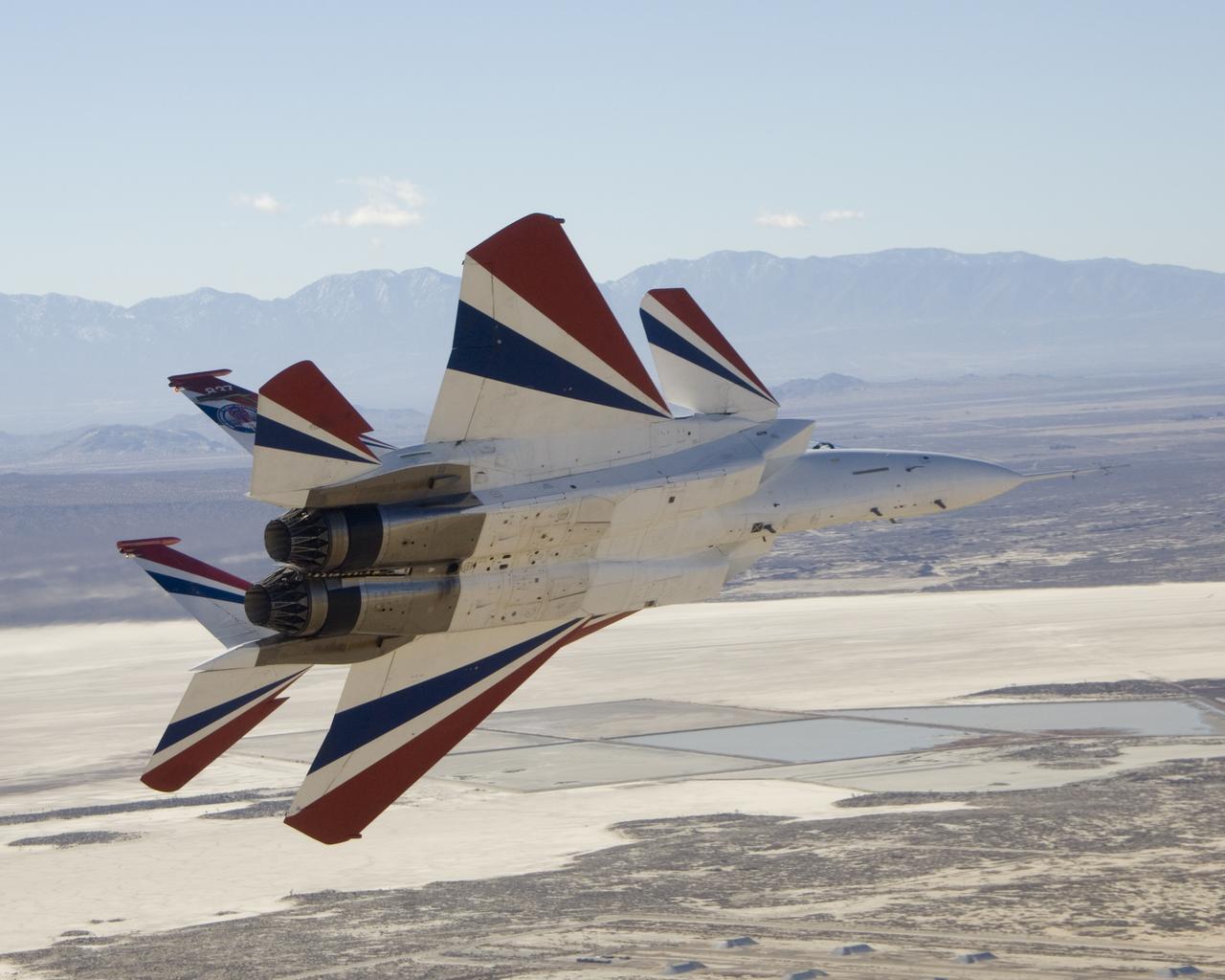
An in-flight photo of the NASA F-15A used to carry a 10 degree cone to collect aerodynamic data to calibrate the data from wind tunnels. Acting as chase for the flight was a NASA T-38 aircraft.
F-15A #287 flies formation with a T-38 chase over Edwards AFB.
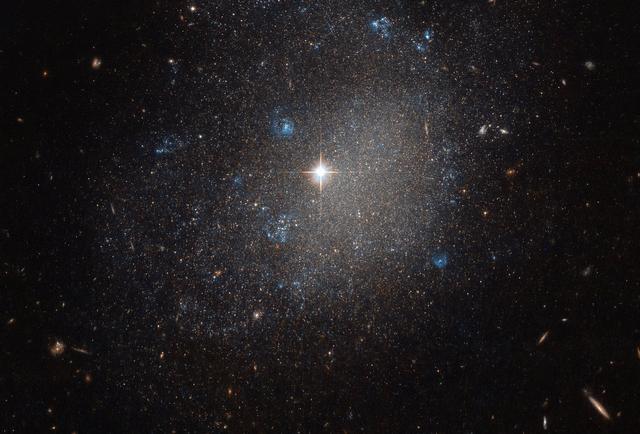
On a clear evening in April of 1789, the renowned astronomer William Herschel continued his unrelenting survey of the night sky, hunting for new cosmic objects — and found cause to celebrate! He spotted this bright spiral galaxy, named NGC 4707, lurking in the constellation of Canes Venatici or The Hunting Dog. NGC 4707 lies roughly 22 million light-years from Earth.  Over two centuries later, the NASA/ESA Hubble Space Telescope is able to "chase down" and view the same galaxy in far greater detail than Herschel could, allowing us to appreciate the intricacies and characteristics of NGC 4707 as never before. This striking image comprises observations from Hubble’s Advanced Camera for Surveys (ACS), one of a handful of high-resolution instruments currently aboard the space telescope.  Herschel himself reportedly described NGC 4707 as a “small, stellar” galaxy; while it is classified as a spiral (type Sm), its overall shape, center, and spiral arms are very loose and undefined, and its central bulge is either very small or non-existent. It instead appears as a rough sprinkling of stars and bright flashes of blue on a dark canvas.  The blue smudges seen across the frame highlight regions of recent or ongoing star formation, with newborn stars glowing in bright, intense shades of cyan and turquoise.  Image credit: ESA/Hubble & NASA
Hubble Chases a Small Stellar Galaxy in the Hunting Dog
The No Chase COA (NCC) team at NASA Armstrong Flight Research Center pose for a group photo with the unmanned aircraft system the Ikhana.
NASA’s AFRC No Chase COA Team
The back seat instrument panel on the NASA T-34C chase plane. In its role as a military trainer, the instructor pilot would ride in the back seat, while the student would be in the front seat. As a chase plane, the back seat would be occupied by a photographer. The aircraft was previously used at the Lewis Research Center in propulsion experiments involving turboprop engines, and was used as a chase aircraft at Dryden for smaller and slower research projects.  Chase aircraft accompany research flights for photography and video purposes, and also as support for safety and research. At Dryden, the T-34 is used mainly for smaller remotely piloted vehicles which fly slower than NASA's F-18's, used for larger scale projects. This aircraft was returned to the U.S. Navy in May of 2002.  The T-34C, built by Beech, carries a crew of 2 and is nicknamed the Mentor.
T-34C back seat instrument panel
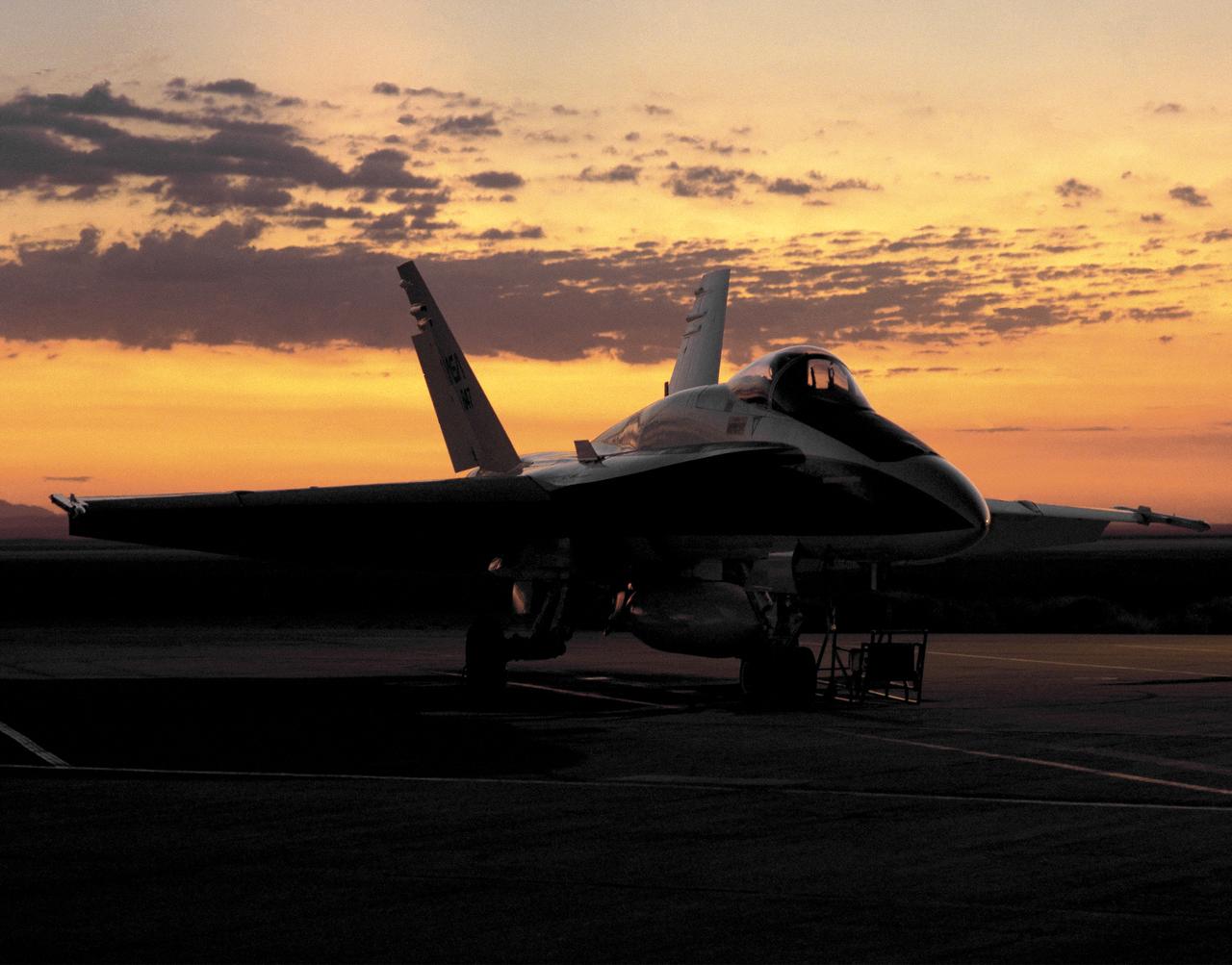
One of NASA's F/A-18 Hornets on the ramp at the Dryden Flight Research Center, Edwards, California at dawn August 6, 1993. F-18 aircraft, on loan to NASA by the U.S. Navy, were flown at Dryden as support aircraft and as research testbeds. As support aircraft, they were used primarily for safety chase, pilot proficiency and aerial photography. As research aircraft, they were involved in thrust vectoring and high angle of attack research, as well as numerous smaller scale experiments.
EC93-42116-2
A NASA T-34C aircraft, used for safety chase, is shown flying above the Dryden Flight Research Center, Edwards, California in March 1997. The aircraft was previously used at the Lewis Research Center in propulsion experiments involving turboprop engines, and was used as a chase aircraft at Dryden for smaller and slower research projects.  Chase aircraft accompany research flights for photography and video purposes, and also as support for safety and research. At Dryden, the T-34 is used mainly for smaller remotely piloted vehicles which fly slower than NASA's F-18's, used for larger scale projects. This aircraft was returned to the U.S. Navy in May of 2002.  The T-34C, built by Beech, carries a crew of 2 and is nicknamed the Mentor.
T-34C in flight
A NASA T-34C aircraft, used for safety chase, is shown flying above the Dryden Flight Research Center, Edwards, California in March 1997. The aircraft was previously used at the Lewis Research Center in propulsion experiments involving turboprop engines, and was used as a chase aircraft at Dryden for smaller and slower research projects.  Chase aircraft accompany research flights for photography and video purposes, and also as support for safety and research. At Dryden, the T-34 is used mainly for smaller remotely piloted vehicles which fly slower than NASA's F-18's, used for larger scale projects. This aircraft was returned to the U.S. Navy in May of 2002.  The T-34C, built by Beech, carries a crew of 2 and is nicknamed the Mentor.
T-34C in flight
NASA pilot Ed Lewis with the T-34C aircraft on the Dryden Flight Research Center Ramp. The aircraft was previously used at the Lewis Research Center in propulsion experiments involving turboprop engines, and was used as a chase aircraft at Dryden for smaller and slower research projects.  Chase aircraft accompany research flights for photography and video purposes, and also as support for safety and research. At Dryden, the T-34 is used mainly for smaller remotely piloted vehicles which fly slower than NASA's F-18's, used for larger scale projects. This aircraft was returned to the U.S. Navy in May of 2002.
Pilot Ed Lewis with T-34C aircraft on ramp
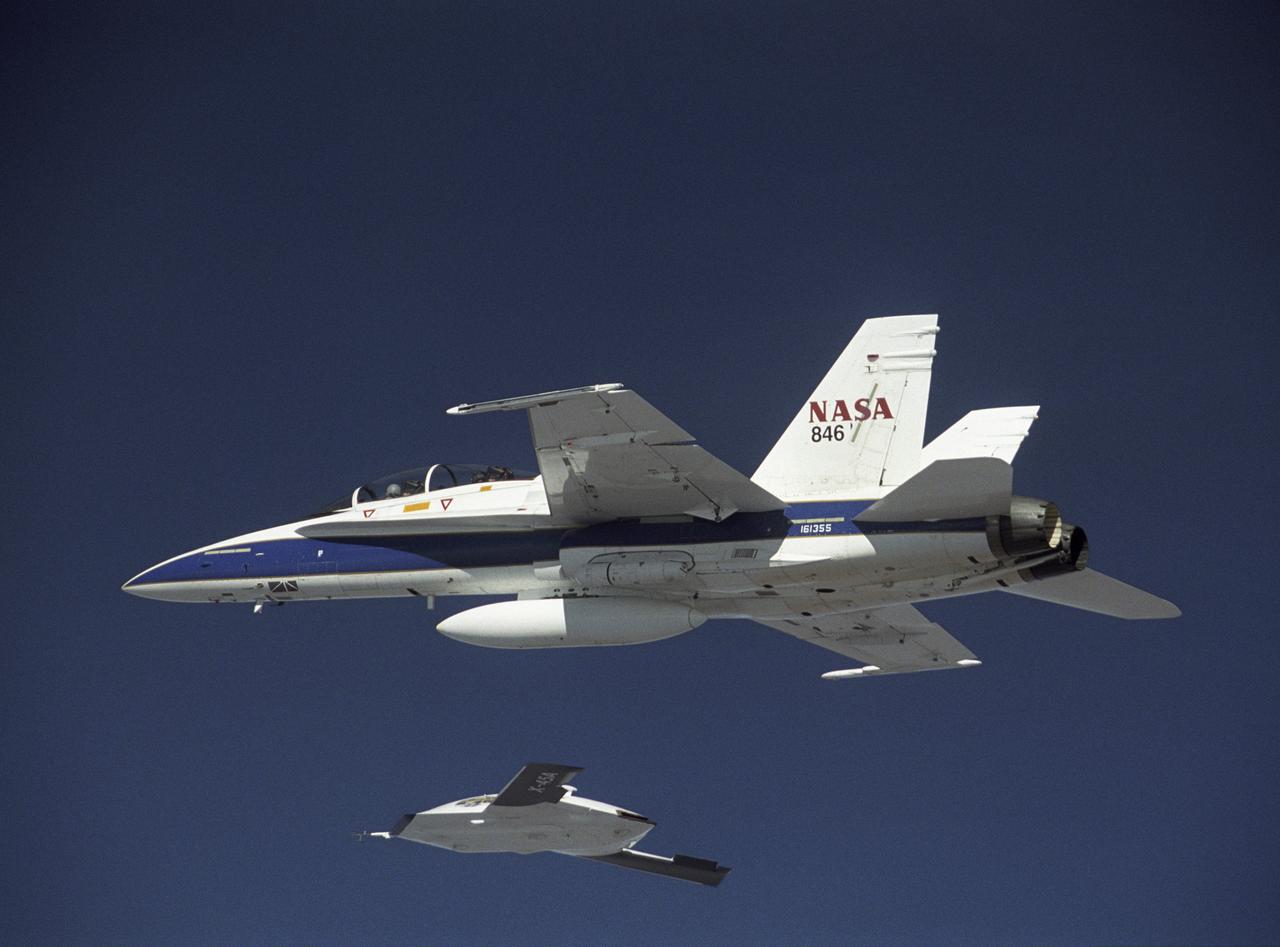
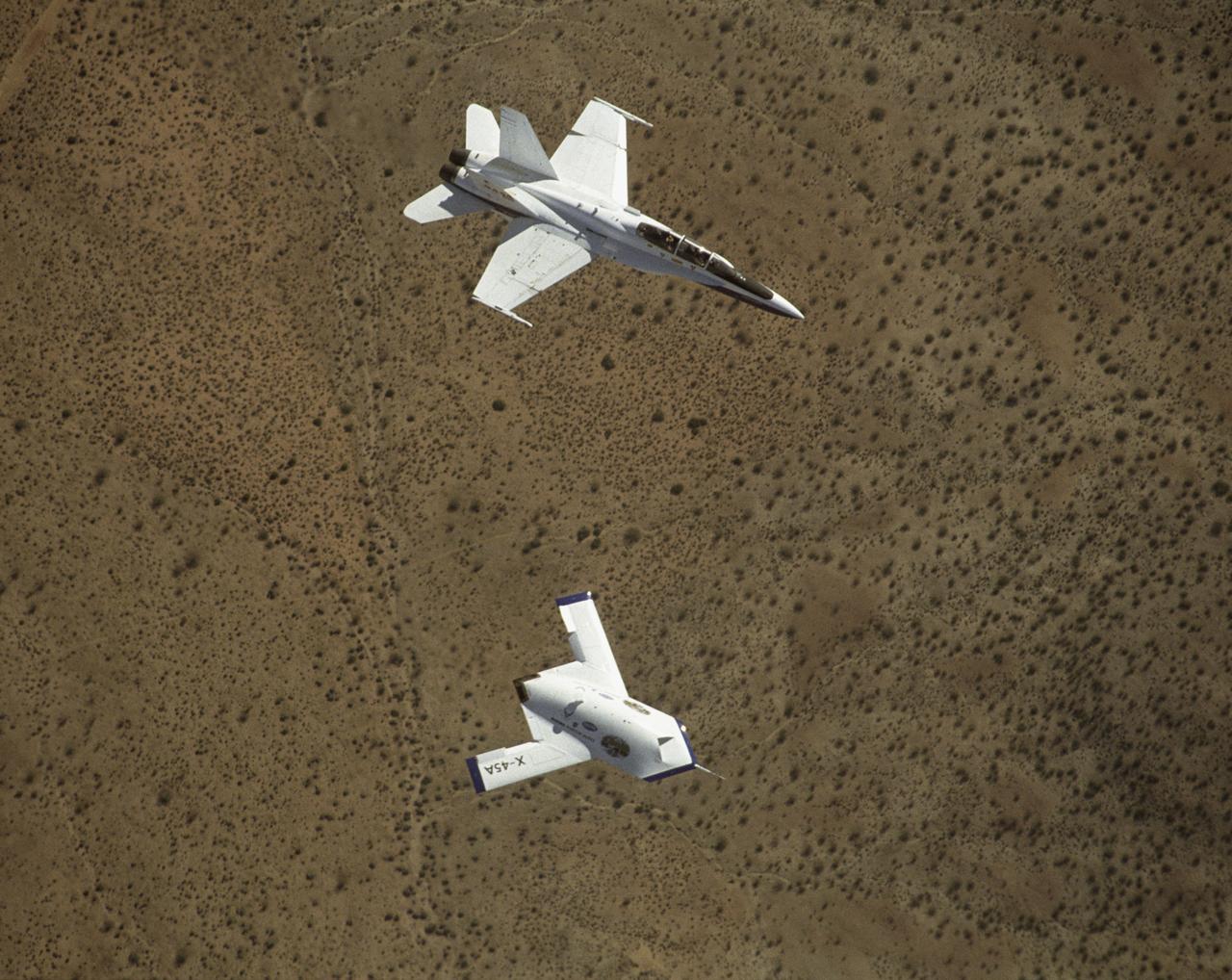
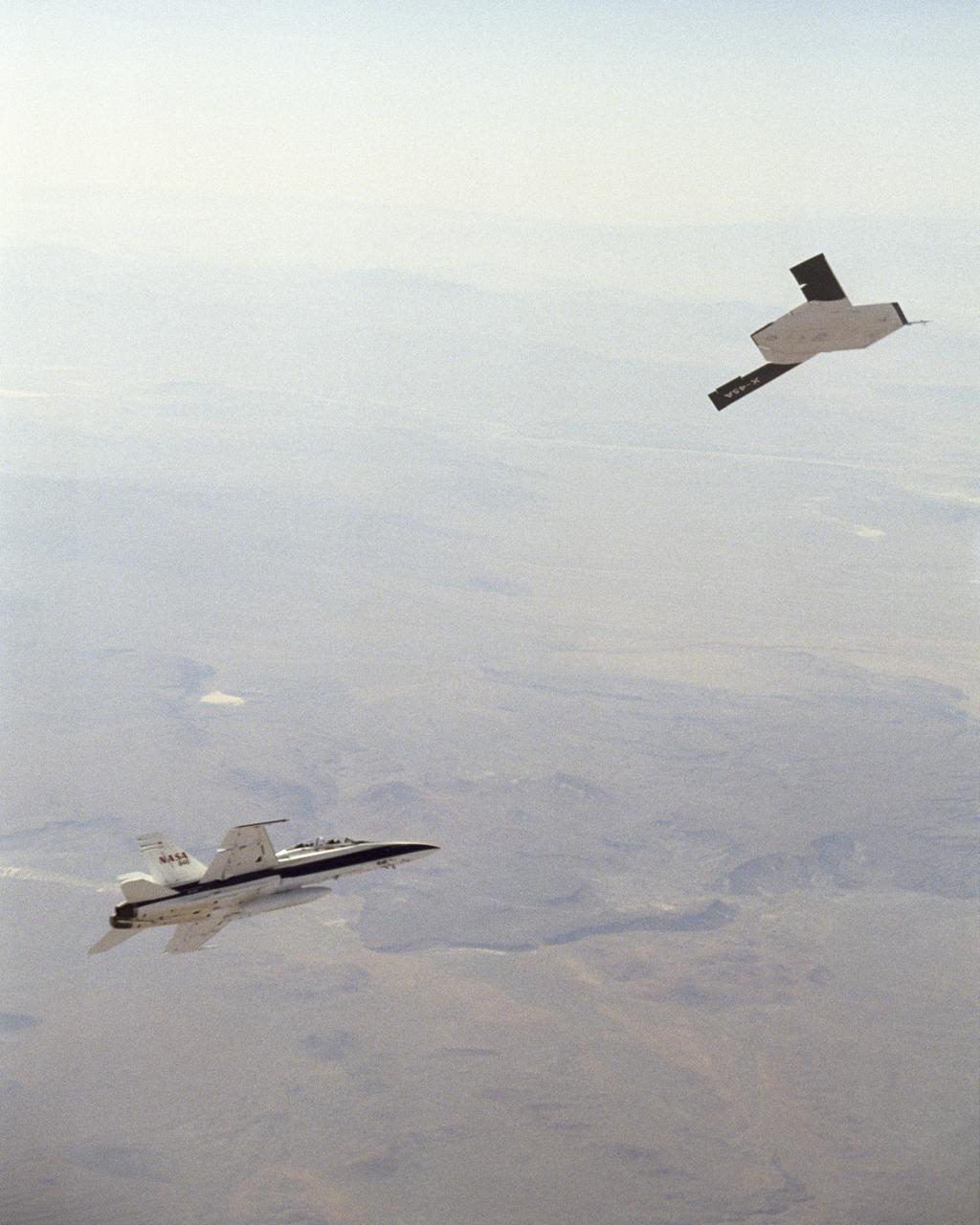
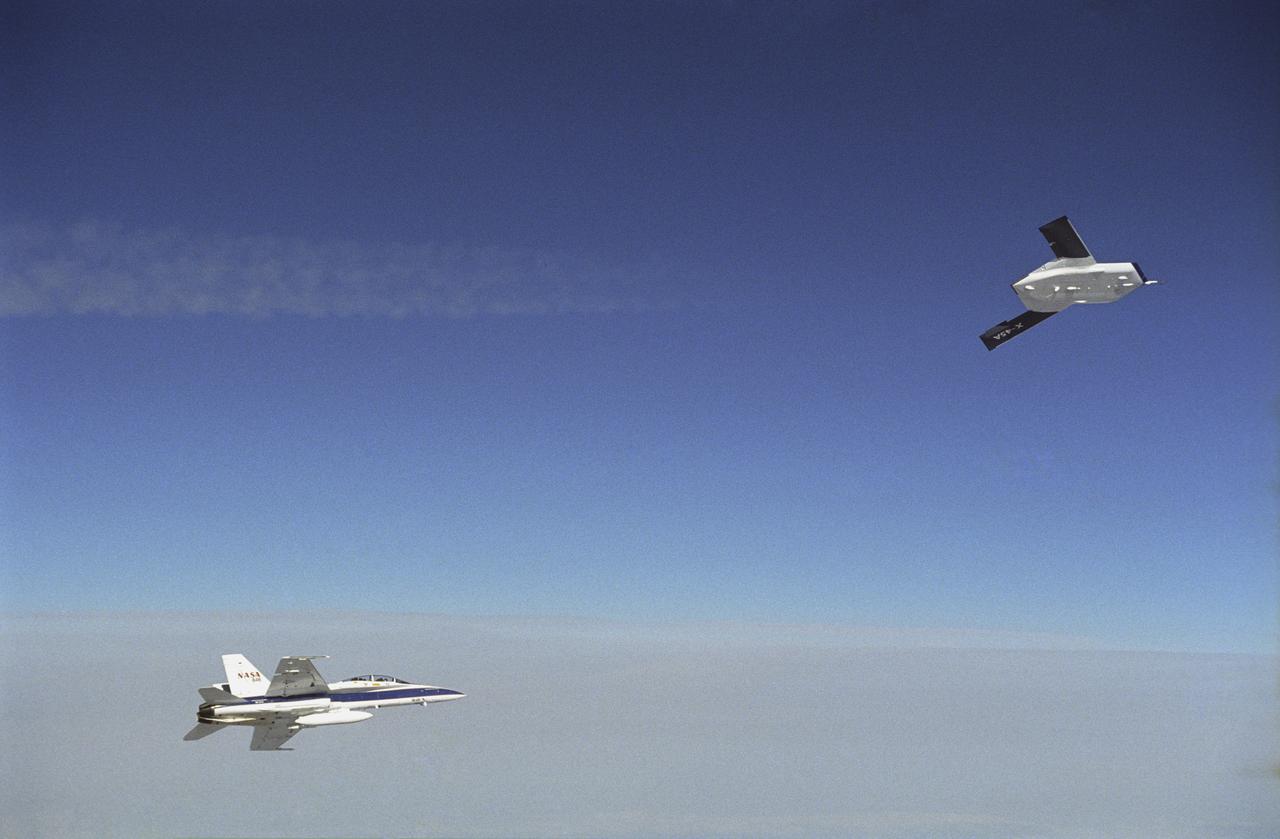
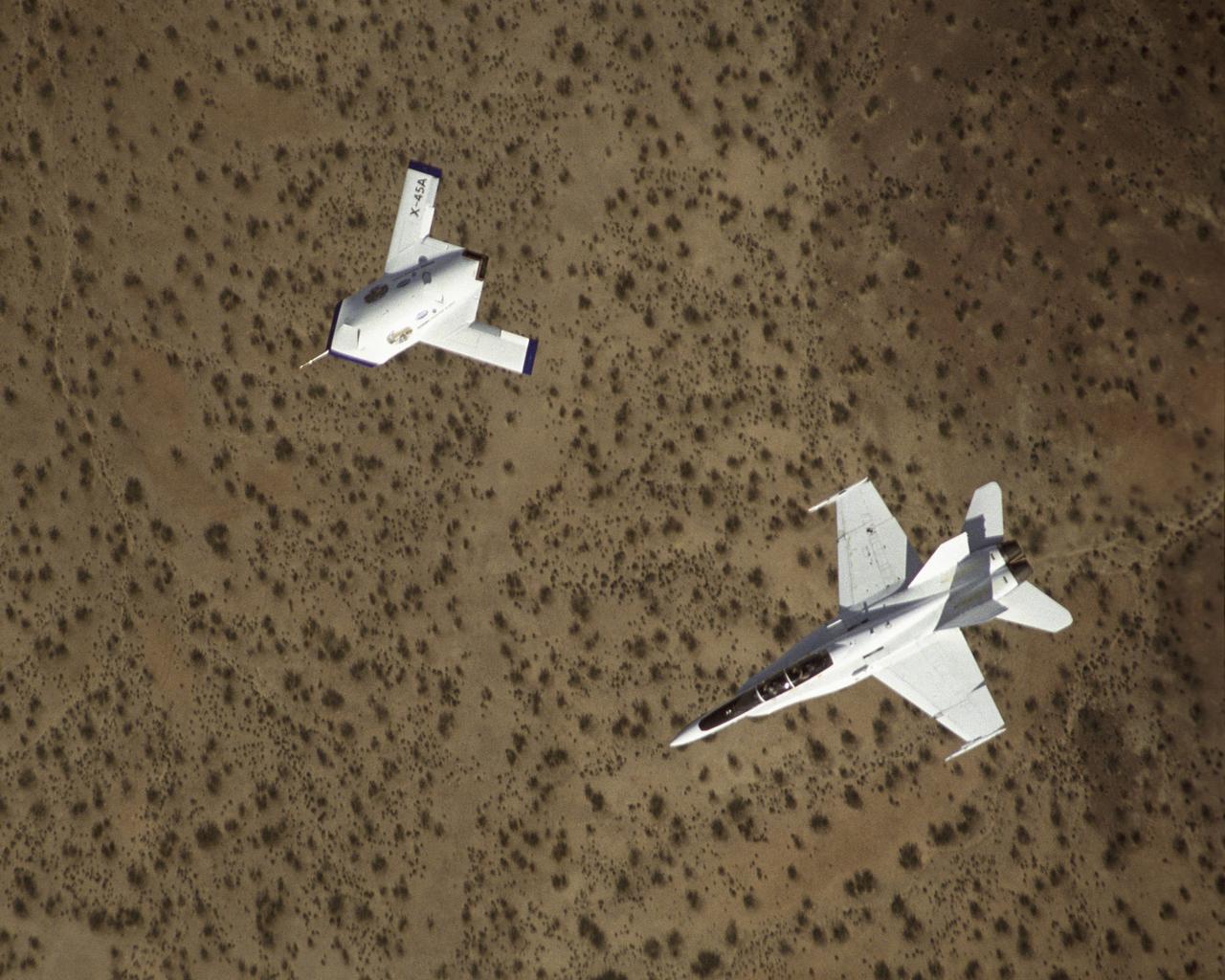
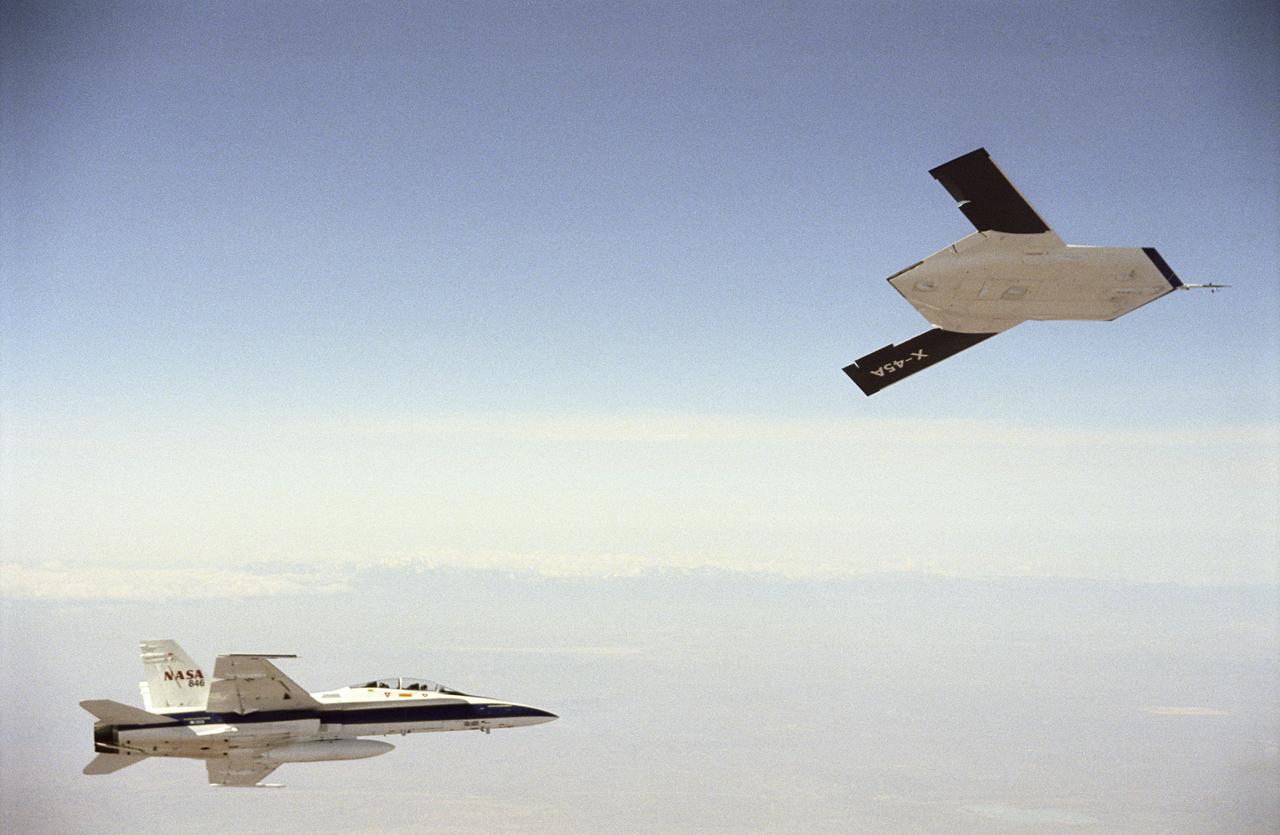
X-45A in flight with F-18 #846 chase aircraft, during first GPS-guided weapon demonstration flight.
X-45A in flight with F-18 #846 chase aircraft, during first GPS-guided weapon demonstration flight
X-45A in flight with F-18 #846 chase aircraft, during first GPS-guided weapon demonstration flight.
X-45A in flight with F-18 #846 chase aircraft, during first GPS-guided weapon demonstration flight
X-45A in flight with F-18 #846 chase aircraft, during first GPS-guided weapon demonstration flight.
X-45A in flight with F-18 #846 chase aircraft, during first GPS-guided weapon demonstration flight
X-45A in flight with F-18 #846 chase aircraft, during first GPS-guided weapon demonstration flight.
X-45A in flight with F-18 #846 chase aircraft, during first GPS-guided weapon demonstration flight
X-45A in flight with F-18 #846 chase aircraft, during first GPS-guided weapon demonstration flight.
X-45A in flight with F-18 #846 chase aircraft, during first GPS-guided weapon demonstration flight
X-45A in flight with F-18 #846 chase aircraft, during first GPS-guided weapon demonstration flight.
X-45A in flight with F-18 #846 chase aircraft, during first GPS-guided weapon demonstration flight
NASA Administrator Michael Griffin, right, and Brian Chase, NASA's Assistant Administrator for Legislative Affairs confer prior to the start of a hearing before the House Science & Technology Committee  regarding NASA's FY 2007 budget request, Thursday, Feb., 16, 2006, in Washington. Photo Credit: (NASA/Bill Ingalls)
Fiscal Year 2007 House Budget Hearing
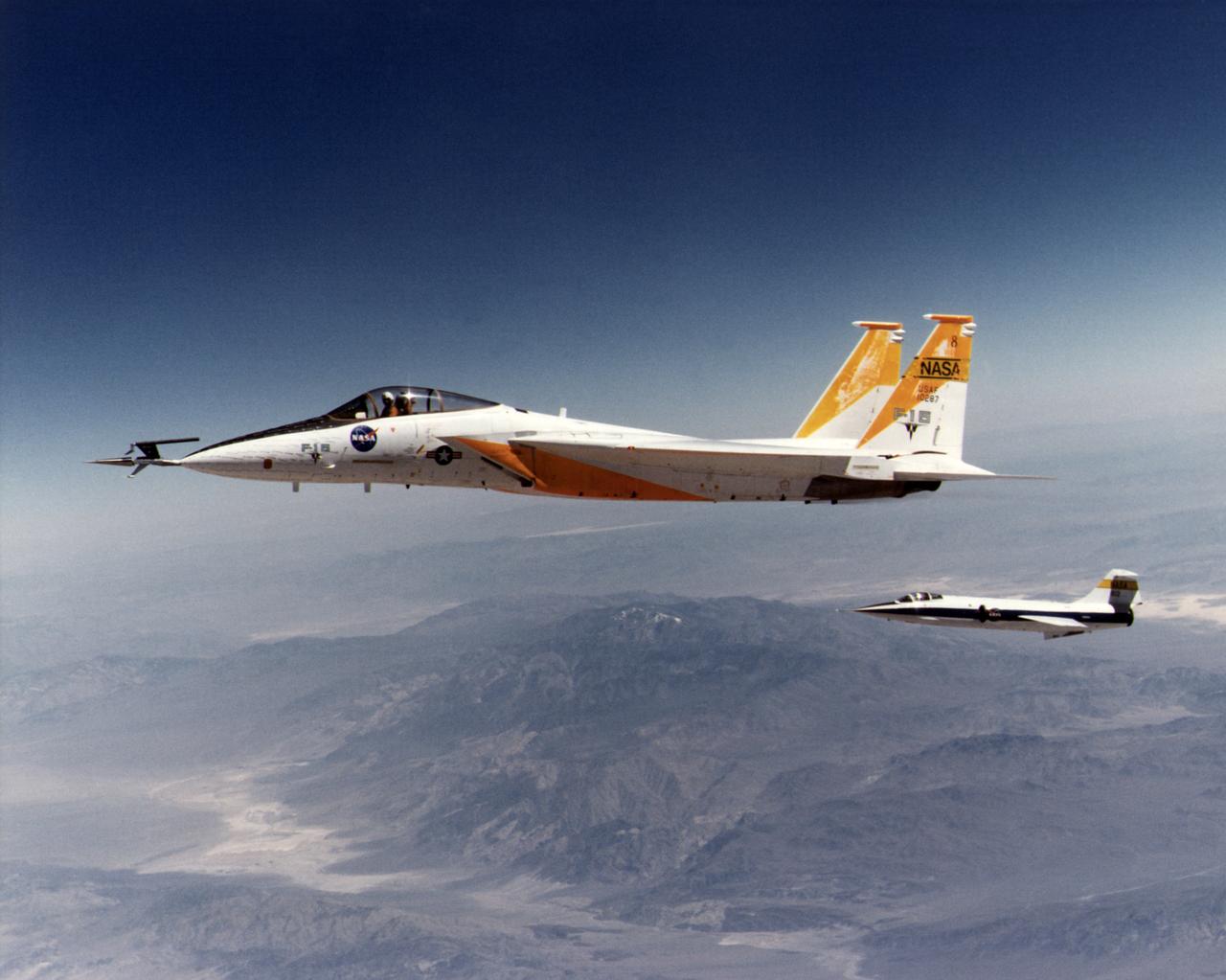
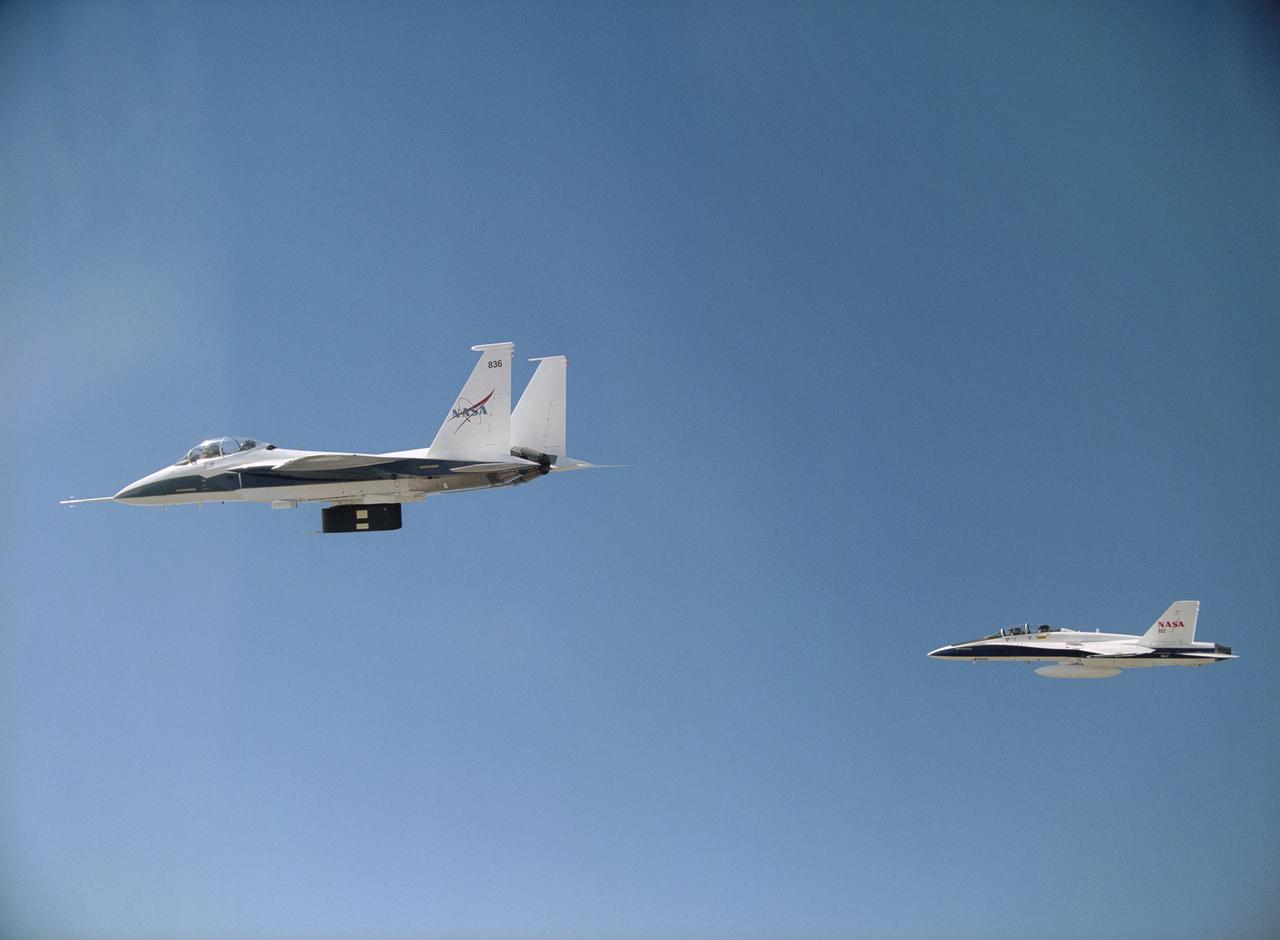
An in-flight photo of the NASA F-15A used to carry a 10 degree cone to collect aerodynamic data to calibrate the data from wind tunnels. The flight was made on May 17, 1978. Acting as chase for the flight was a NASA F-104 aircraft.
F-15A in flight with 10 degree cone experiment and F-104N chase
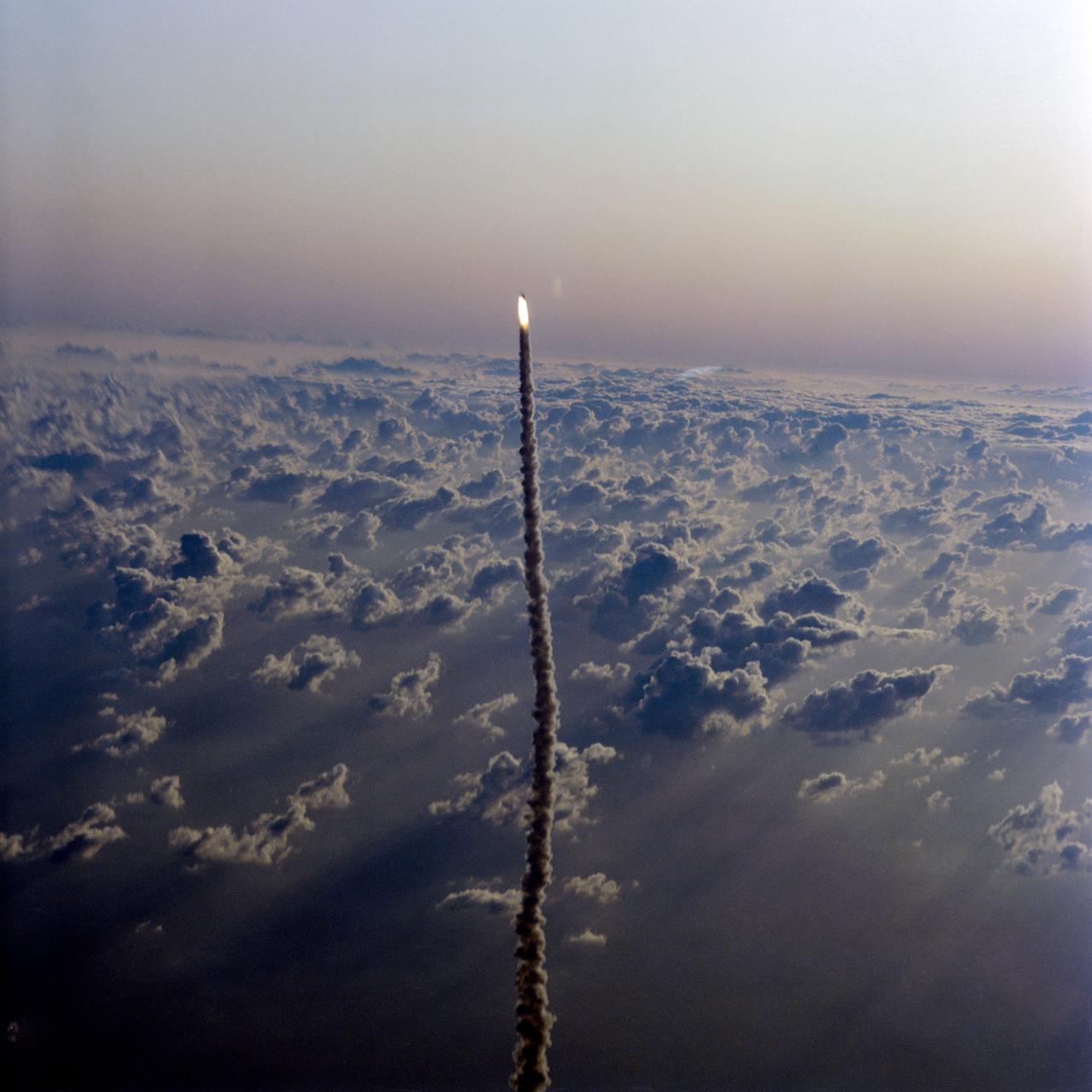
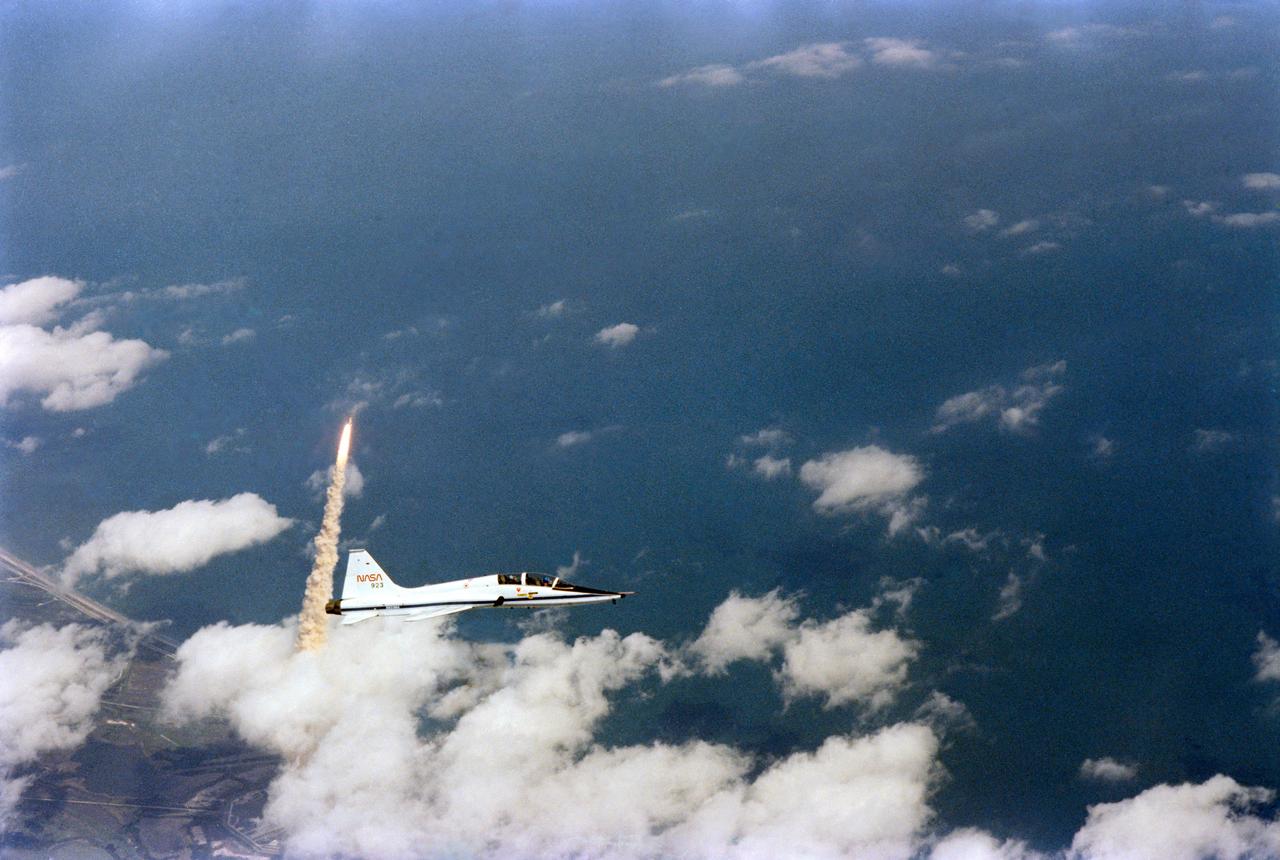
Aerial views of the STS-5 launch from T-38 chase aircraft Nov. 11, 1982. Shuttle Columbia can be seen as a small figure trailed by a line of smoke.
Aerial views of the STS-5 launch from T-38 chase aircraft Nov. 11, 1982
Students from the Our Lady of Perpetual Help School in Bakersfield, CA, pass by one of NASA Dryden's F-18 chase aircraft during a tour.
Students from the Our Lady of Perpetual Help School in Bakersfield, CA, pass by one of NASA Dryden's F-18 chase aircraft during a tour
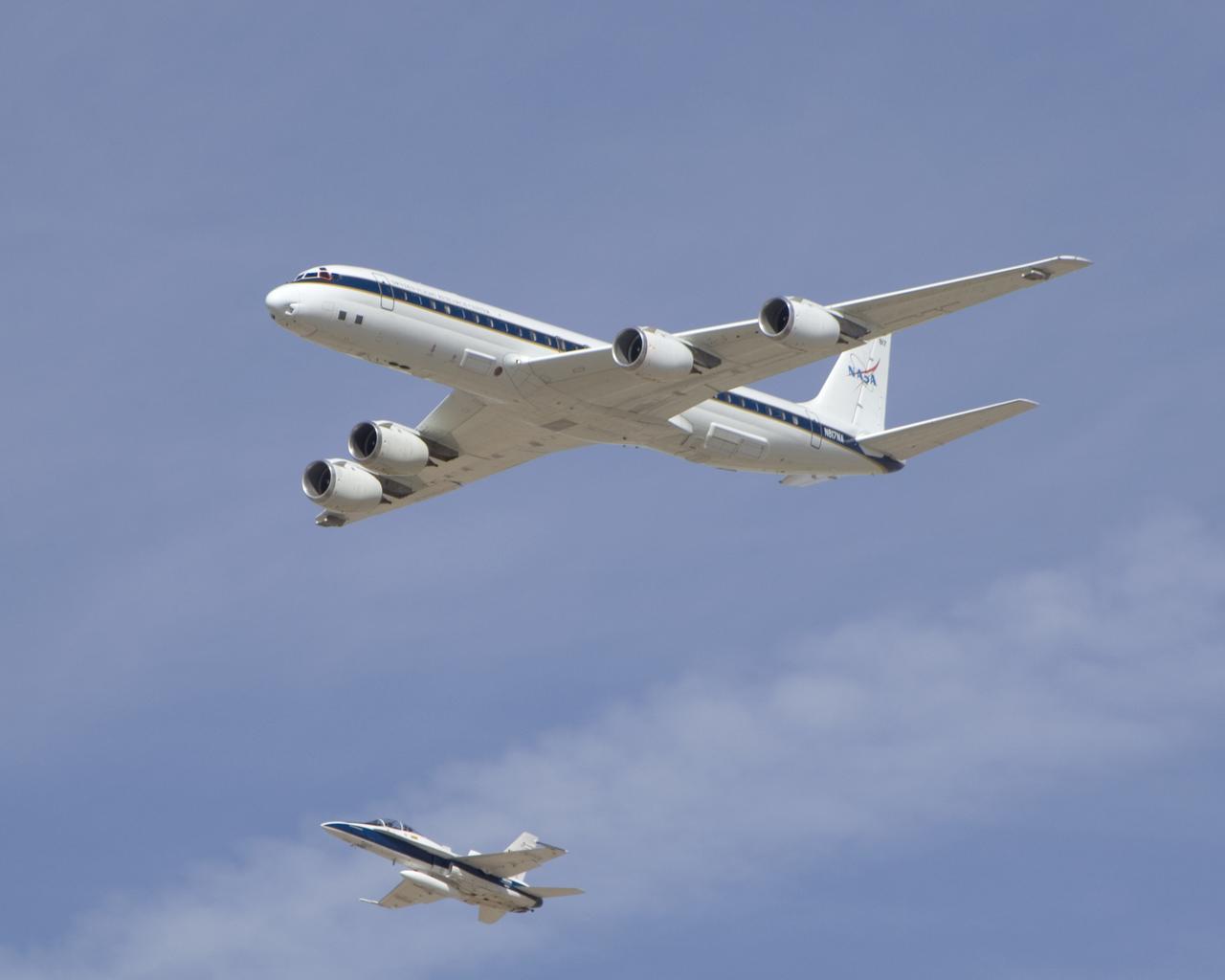
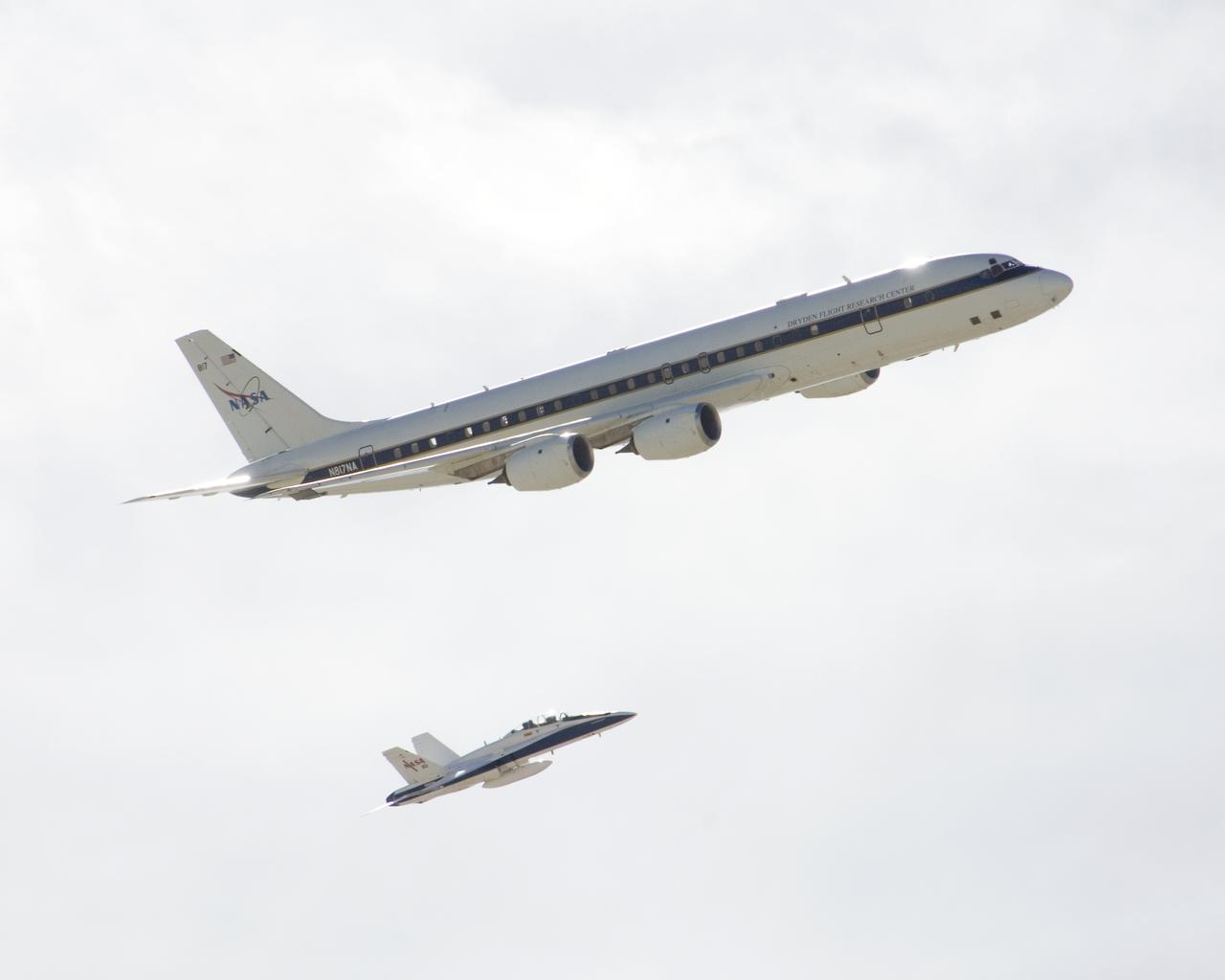
NASA's DC-8 airborne science laboratory is shadowed by a NASA F/A-18 chase plane during a flyover of the Dryden Aircraft Operations Facility in Palmdale, Calif.
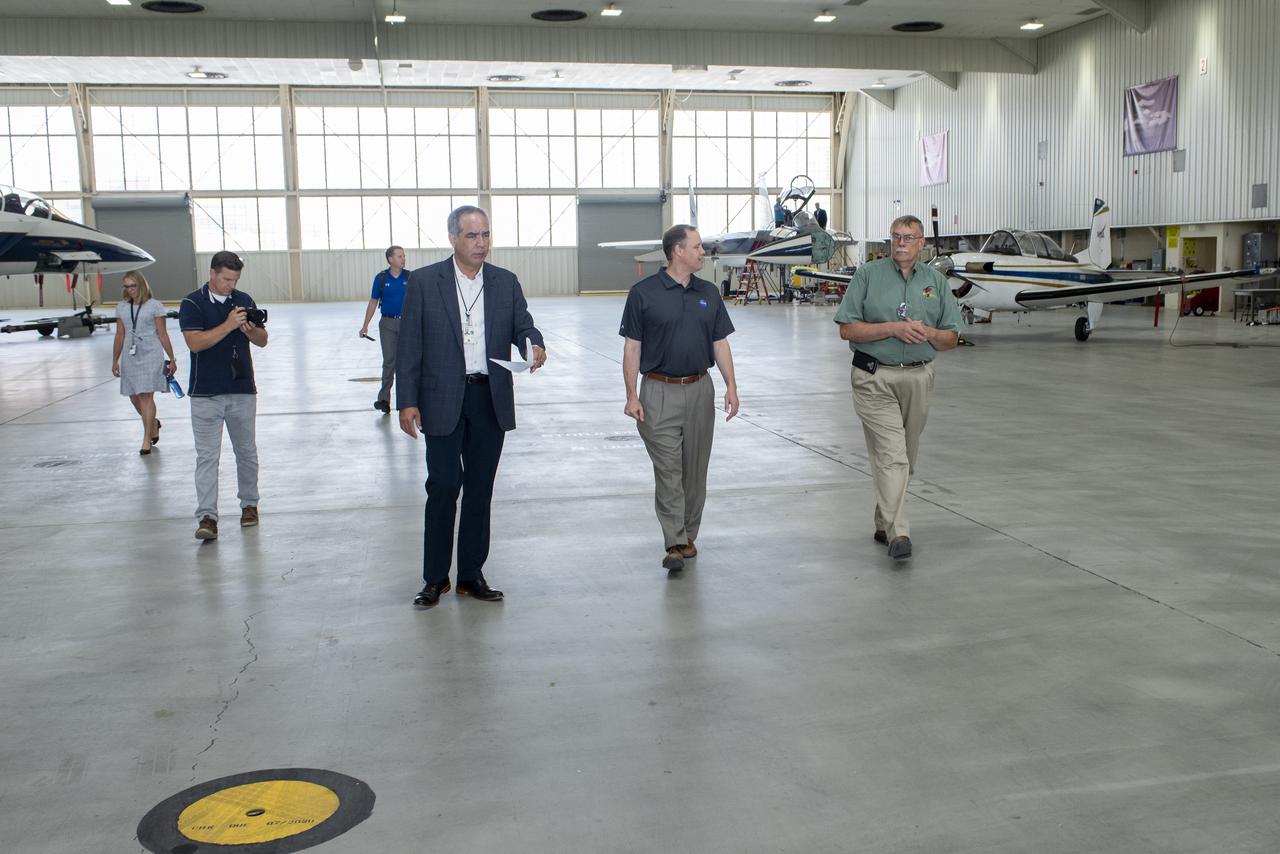
Bridenstine tours main Armstrong hangar that houses the center aircraft used for flight research and safety chase such as F/A-18, F-15B/D, King Air B-200, T-34C and TG-14 aircraft.
NASA Administrator Bridenstine and Armstrong Center Director McBride discuss the capabilities and use of aircraft for flight research inside one of the aircraft hangars at the center.
NASA's F-15B carrying thermal insulation foam on its flight test fixture is shadowed by a NASA F-18B chase aircraft during a LIFT experiment research flight.
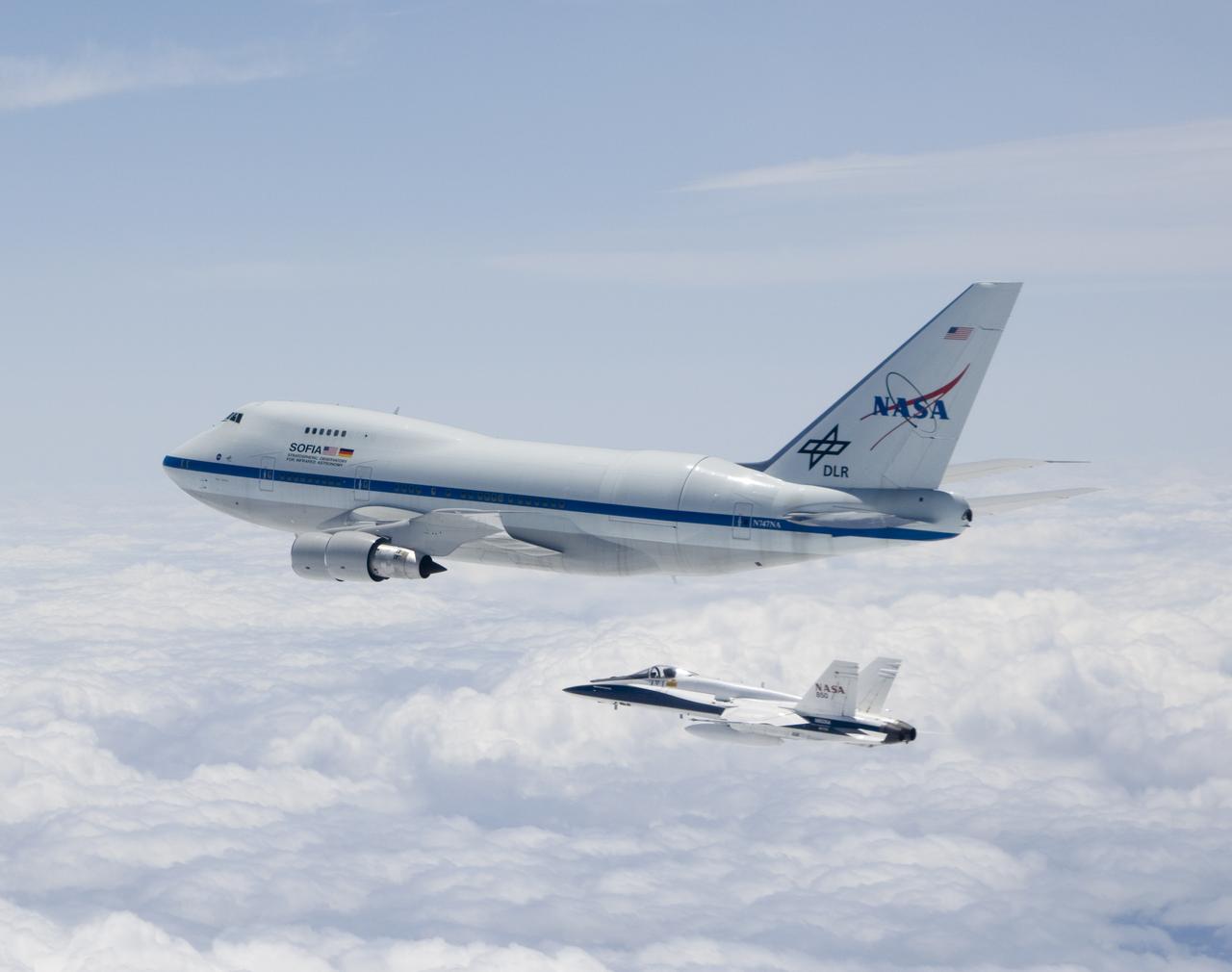
NASA's SOFIA airborne observatory is shadowed by a NASA F/A-18 safety chase aircraft during its second checkout flight near Waco, Texas on May 10, 2007.
NASA's SOFIA airborne observatory is shadowed by a NASA F/A-18 safety chase aircraft during its second checkout flight near Waco, Texas on May 10, 2007
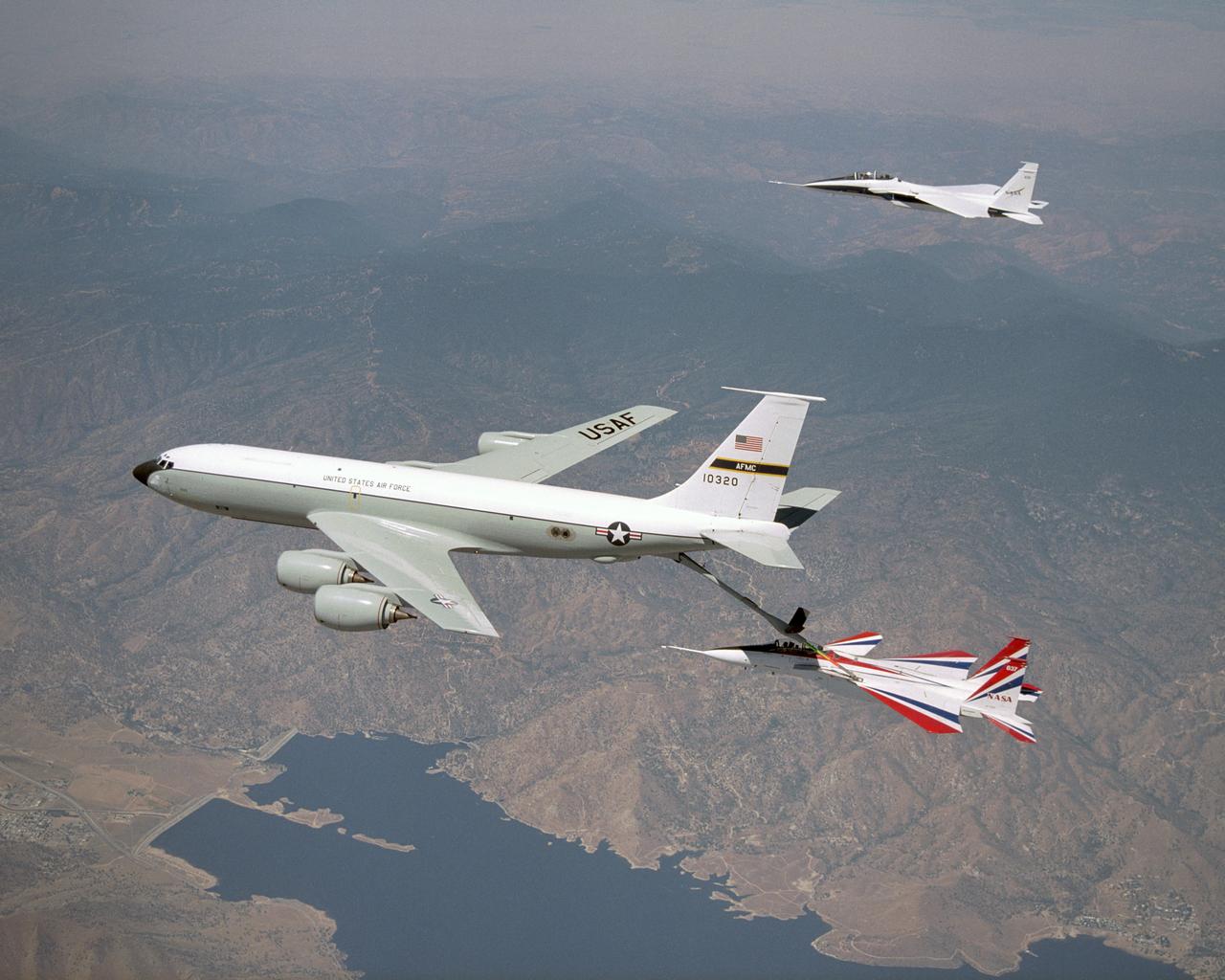
One of NASA's two F-15 research aircraft gets refueled in mid-air over Lake Isabella from a USAF KC-135 tanker while NASA's other F-15 flies chase alongside.
Two small Range Safety System antennas are located just behind the engine inlets of NASA's NF-15B research aircraft as it banks away from the chase plane.
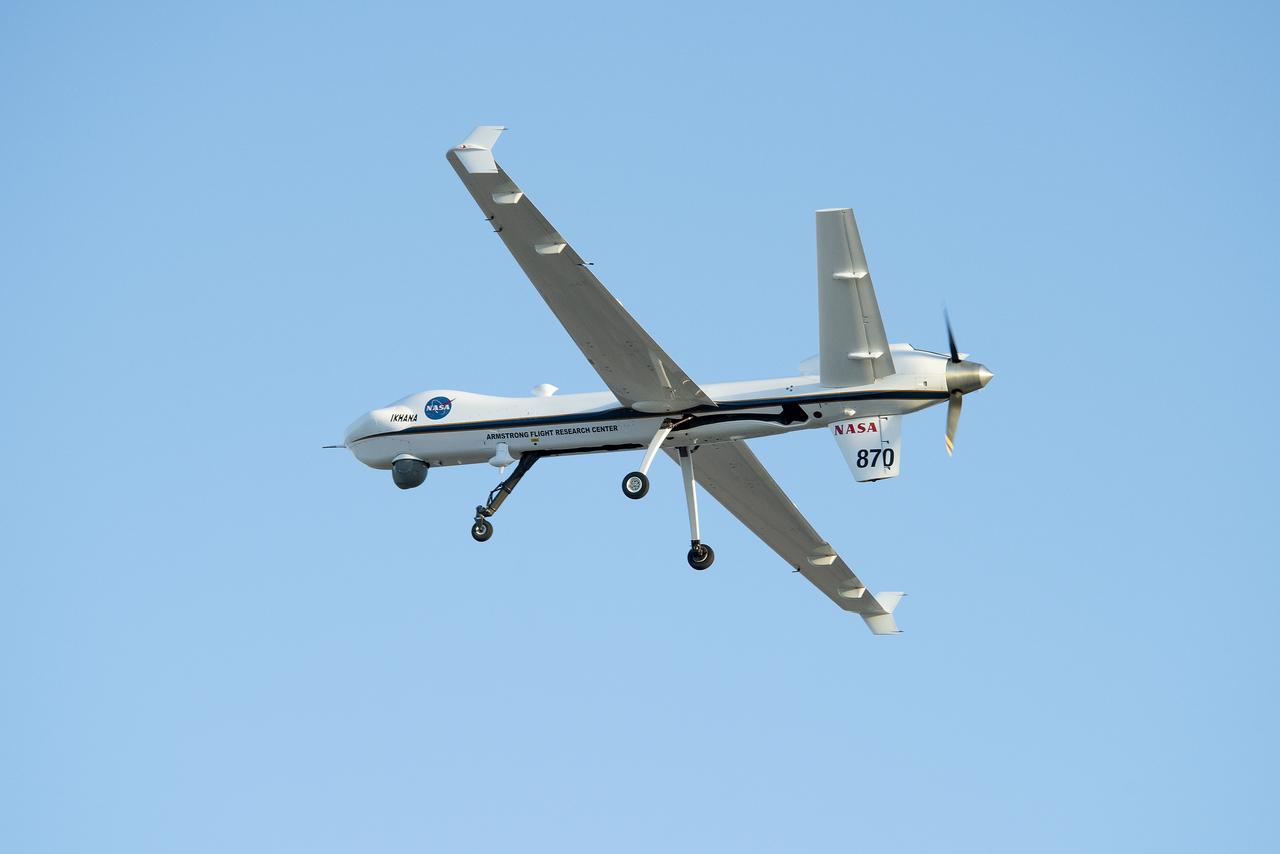
On June 12, 2018, NASA’s remotely-piloted Ikhana aircraft, lifted off from Edwards Air Force Base for its first mission in the National Airspace System without a safety chase aircraft. The June 12 flight successfully demonstrated the first remotely-piloted aircraft to use airborne detect and avoid technology to meet the intent of the FAA’s “see and avoid” rules.
NASA’s Ikhana Aircraft Lifts off for First Flight in the National Airspace System Without a Chase Plane
On June 12, 2018, NASA’s remotely-piloted Ikhana aircraft, based at the agency’s Armstrong Flight Research Center in Edwards, California, lifted off for its first mission in the National Airspace System without a safety chase aircraft. The June 12 flight successfully demonstrated the first remotely-piloted aircraft to use airborne detect and avoid technology to meet the intent of the FAA’s “see and avoid” rules.
NASA’s Ikhana Aircraft Lifts off for First Flight in the National Airspace System Without a Chase Plane
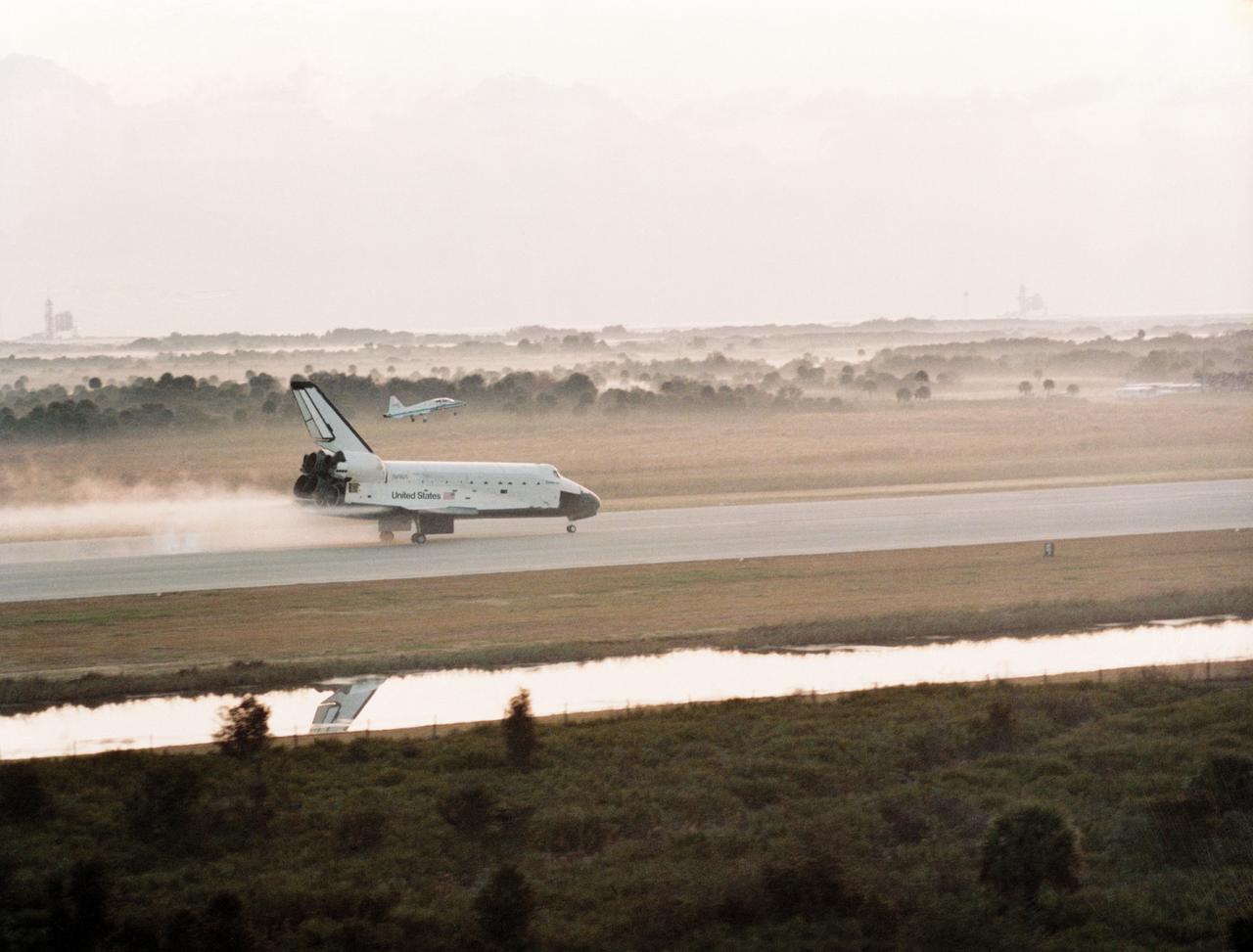
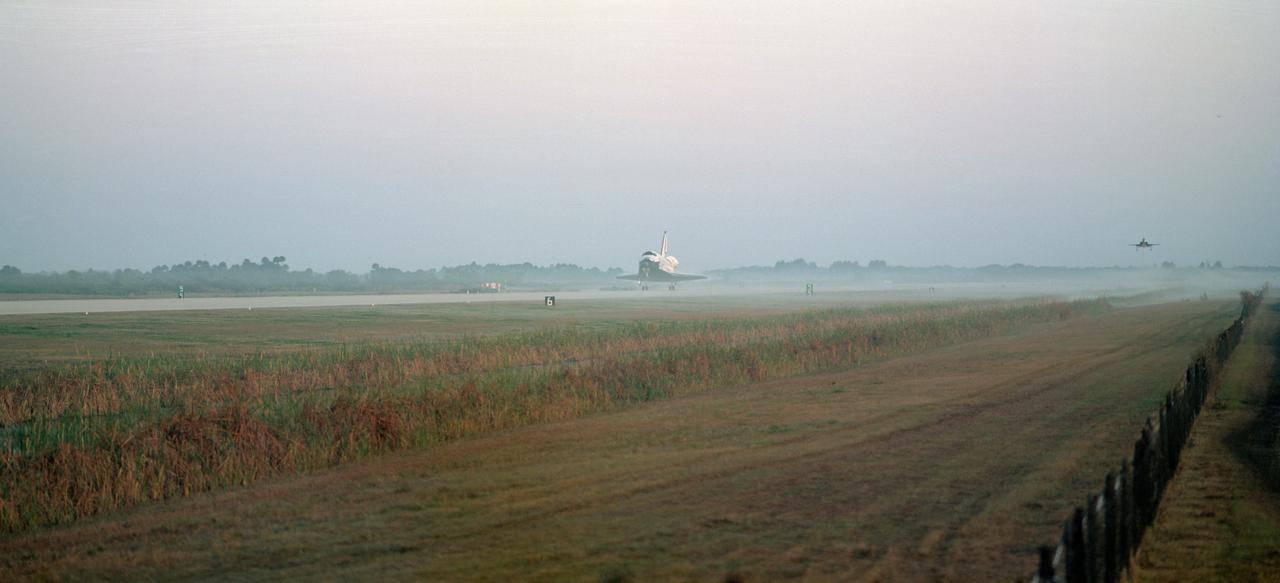
S84-27717 (11 Feb 1984) --- A chase plane gets a "front row" position to view the touchdown of the total landing gear of the Space Shuttle Challenger as the reusable spacecraft makes NASA's first landing on the runway at the Kennedy Space Center's (KSC) landing facility.  This photograph was taken from another T-38 chase plane.
Landing - Shuttle Challenger - STS-41B Mission - KSC
This view from a NASA Dryden F-18 chase aircraft shows Dryden's highly modified F-15B, tail number 837, which resumed Intelligent Flight Control System (IFCS) project flights on Dec. 6, 2002.
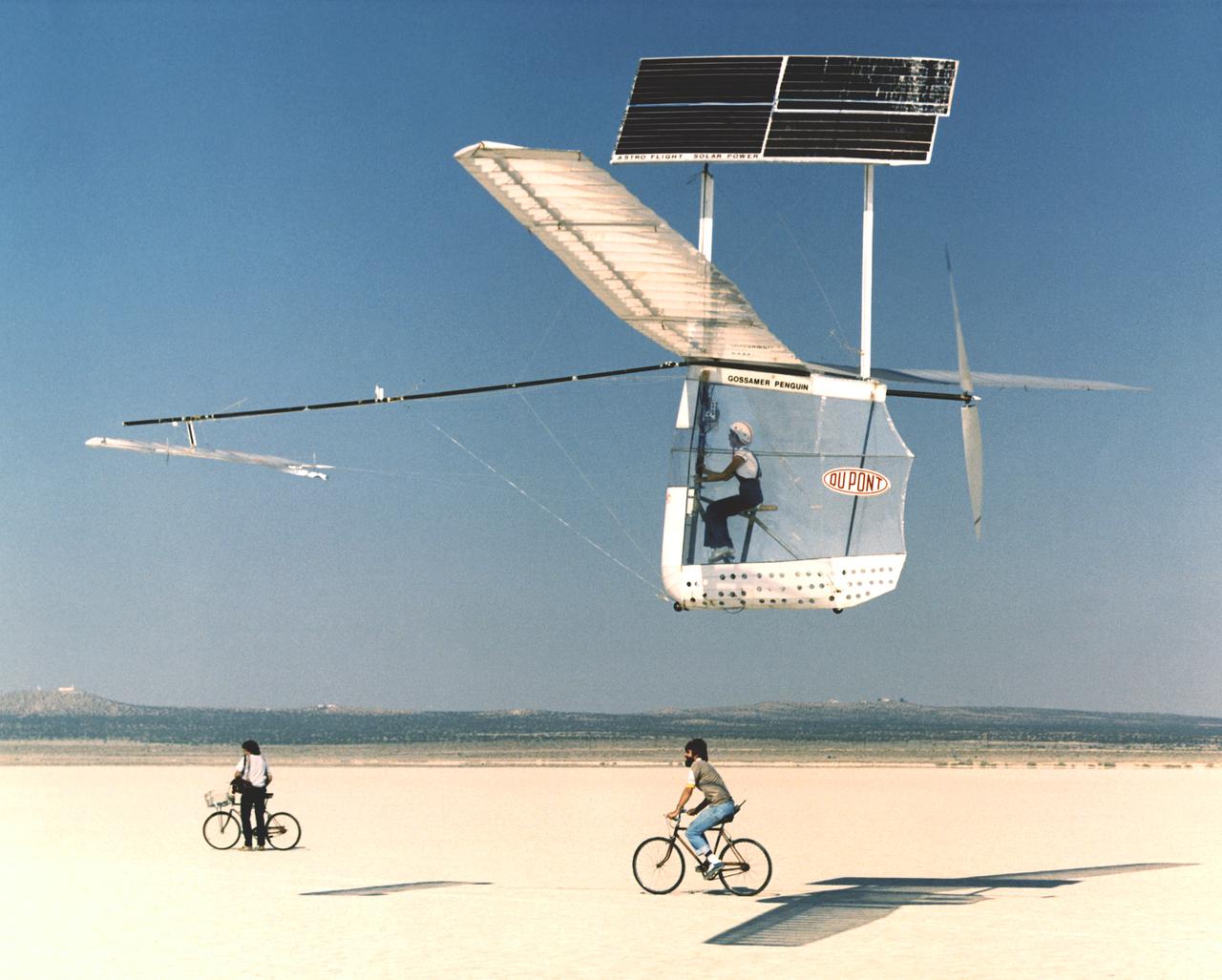
Solar-powered Gossamer Penguin in flight with Janice Brown and Ray Morgan riding chase bicycle.
EC80-13413
Air-to-air views of STS-3 Launch from T-38 Chase Aircraft.        KSC, FL
LAUNCH (AERIALS) - STS-3 - KSC
NASA’s C-20A with Generation Orbit’s hypersonic testbed attached is chased by the agency’s F-18 jet for safety and photography.
NASA Armstrong Flight Tests Generation Orbit’s Hypersonic Testbed on Agency C-20A
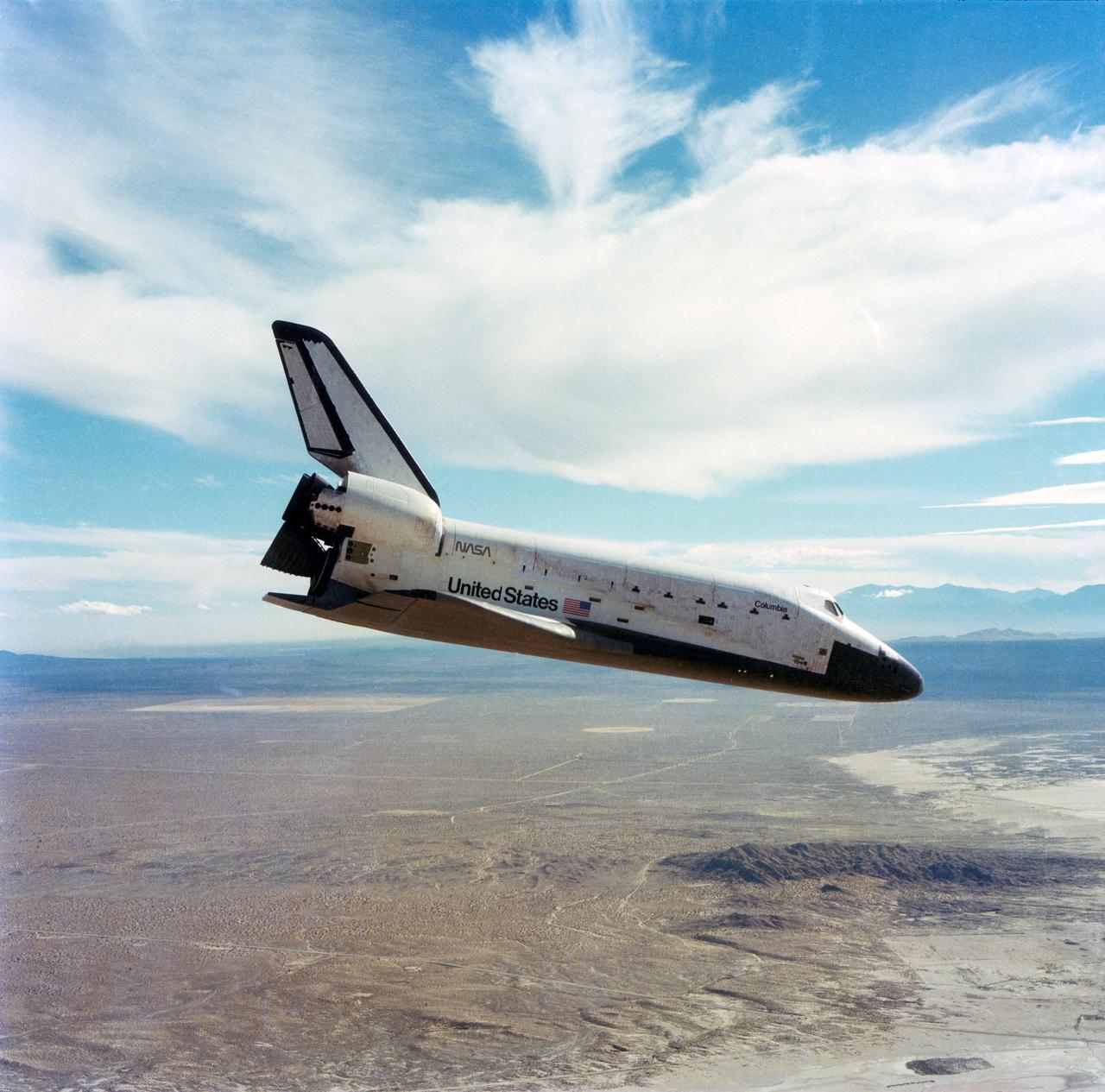
Several views of Columbia in the landing maneuver at the EAFB from T-38 Chase Aircraft and ground views.   EAFB, CA
Landing - STS-2 - Edwards AFB (EAFB), CA
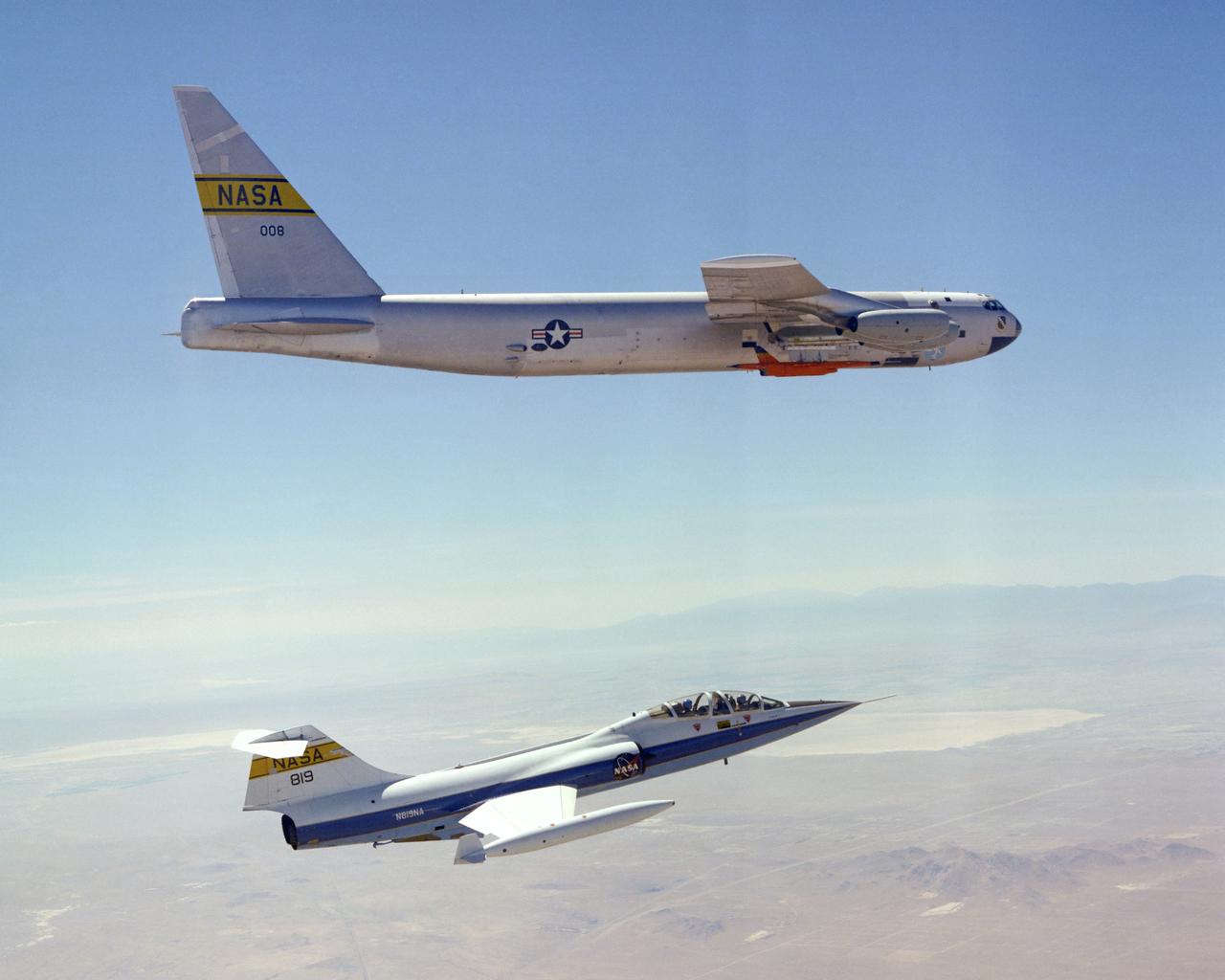
F-104B #819 flies chase on the NB-52B #008 during the first DAST captive flight.
EC77-8122
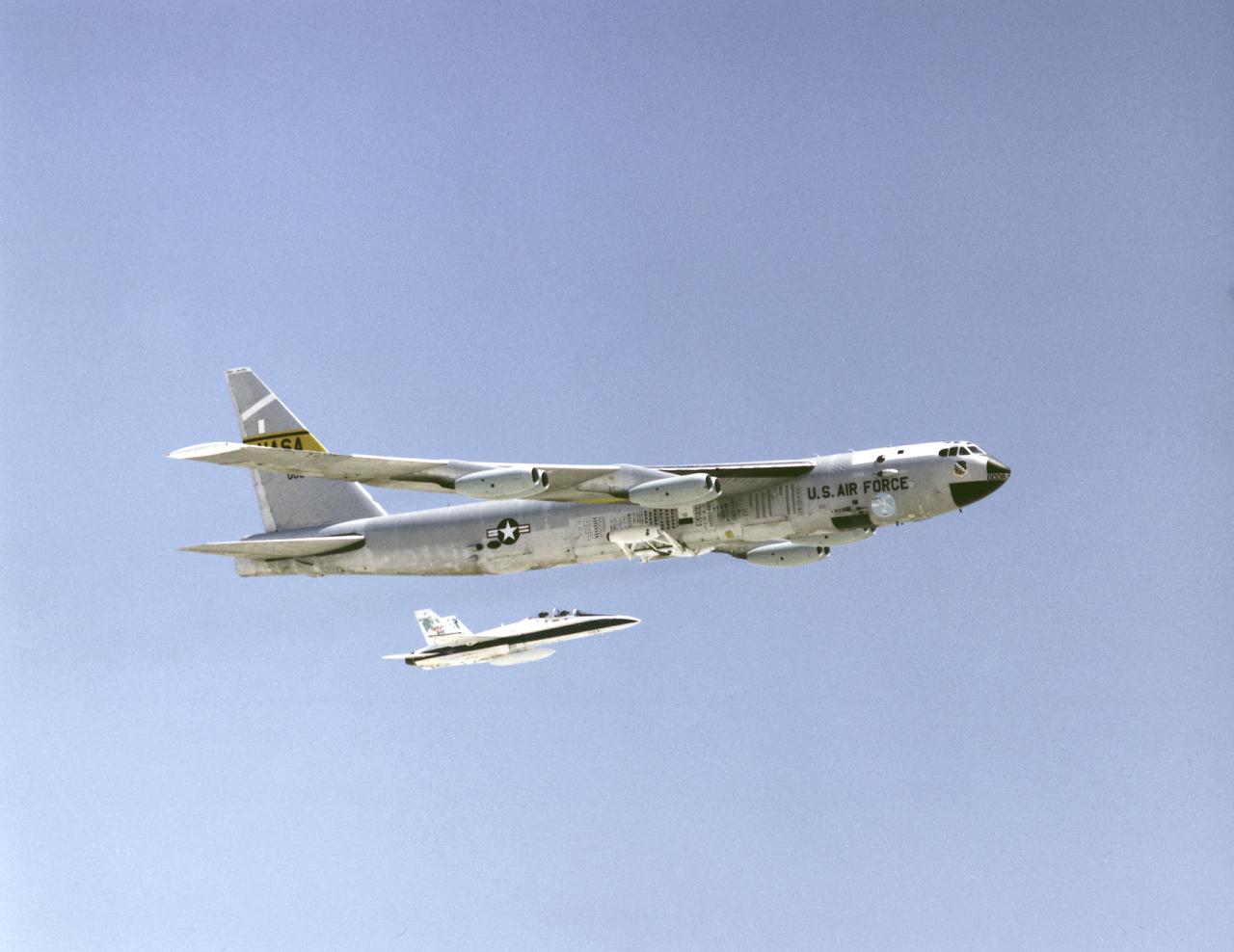
Dryden B-52 Launch Aircraft Accompanied by an F-18 Safety Chase Commemorating 40th Anniversary of Research Flights
EC95-43205-1
PAO news release material for the 5th and final FF of the ALT series.   Precise moment of separation captured by camera from a T-38 chase plane.
Approach & Landing Test (ALT) - Shuttle - Public Affairs Office (PAO) News Release - Free-Flight (FF)-5 Photography
The F-18 simulator at NASA's Dryden Flight Research Center, Edwards, California. Simulators offer a safe and economical alternative to actual flights to gather data, as well as being excellent facilities for pilot practice and training. The F-18 Hornet is used primarily as a safety chase and mission support aircraft at NASA's Dryden Flight Research Center, Edwards, California. As support aircraft, the F-18's are used for safety chase, pilot proficiency, aerial photography and other mission support functions.
The F-18 simulator at NASA's Dryden Flight Research Center, Edwards, California
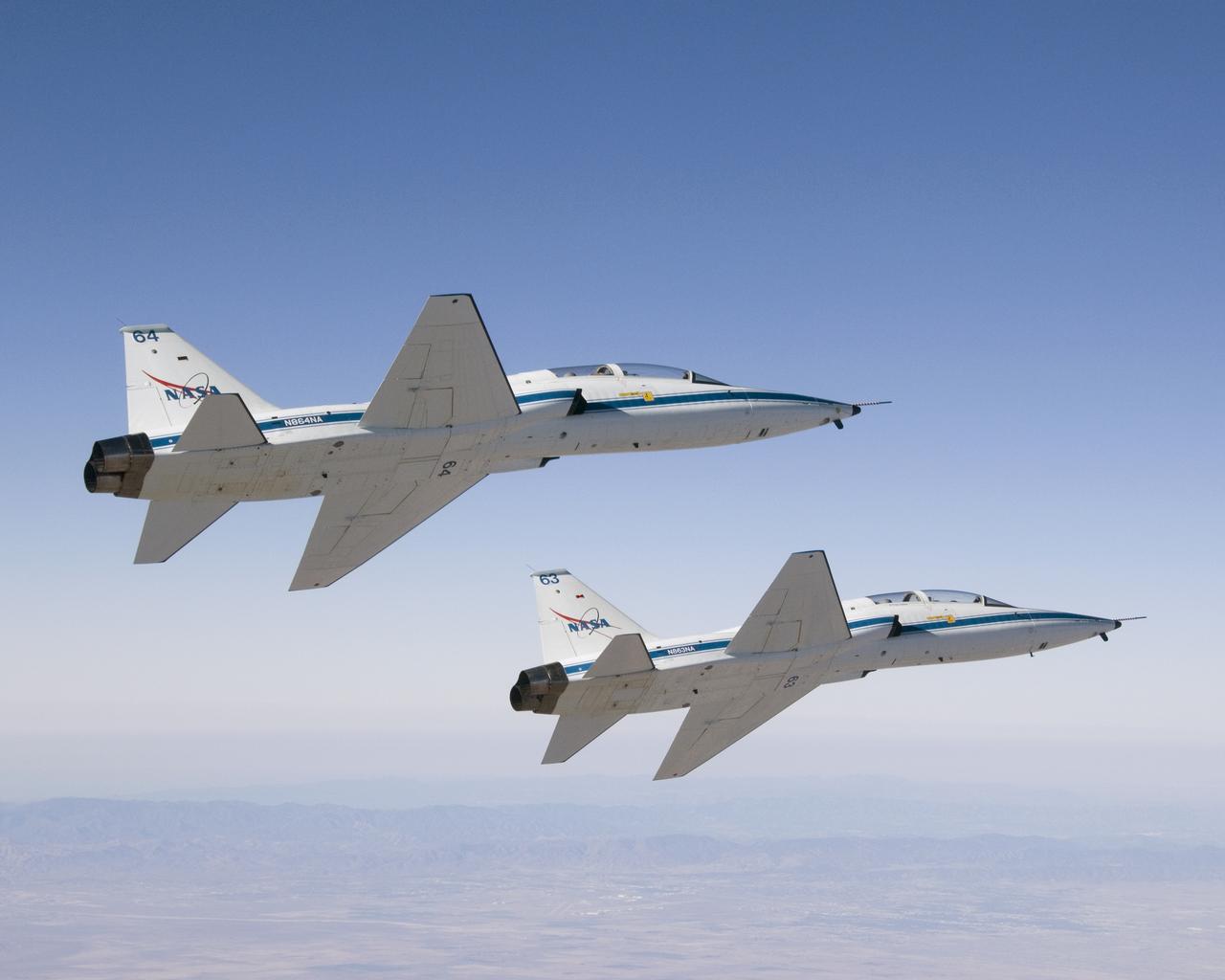
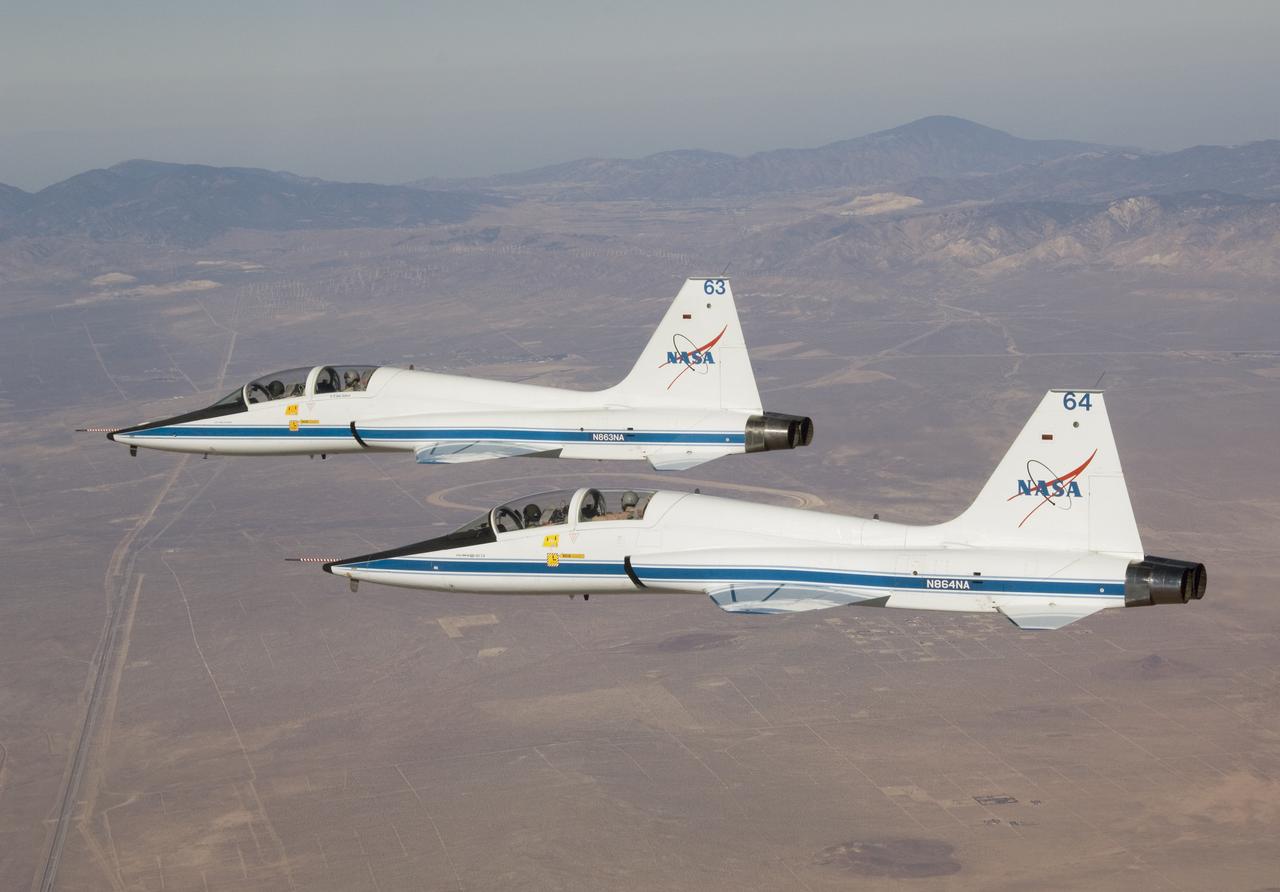
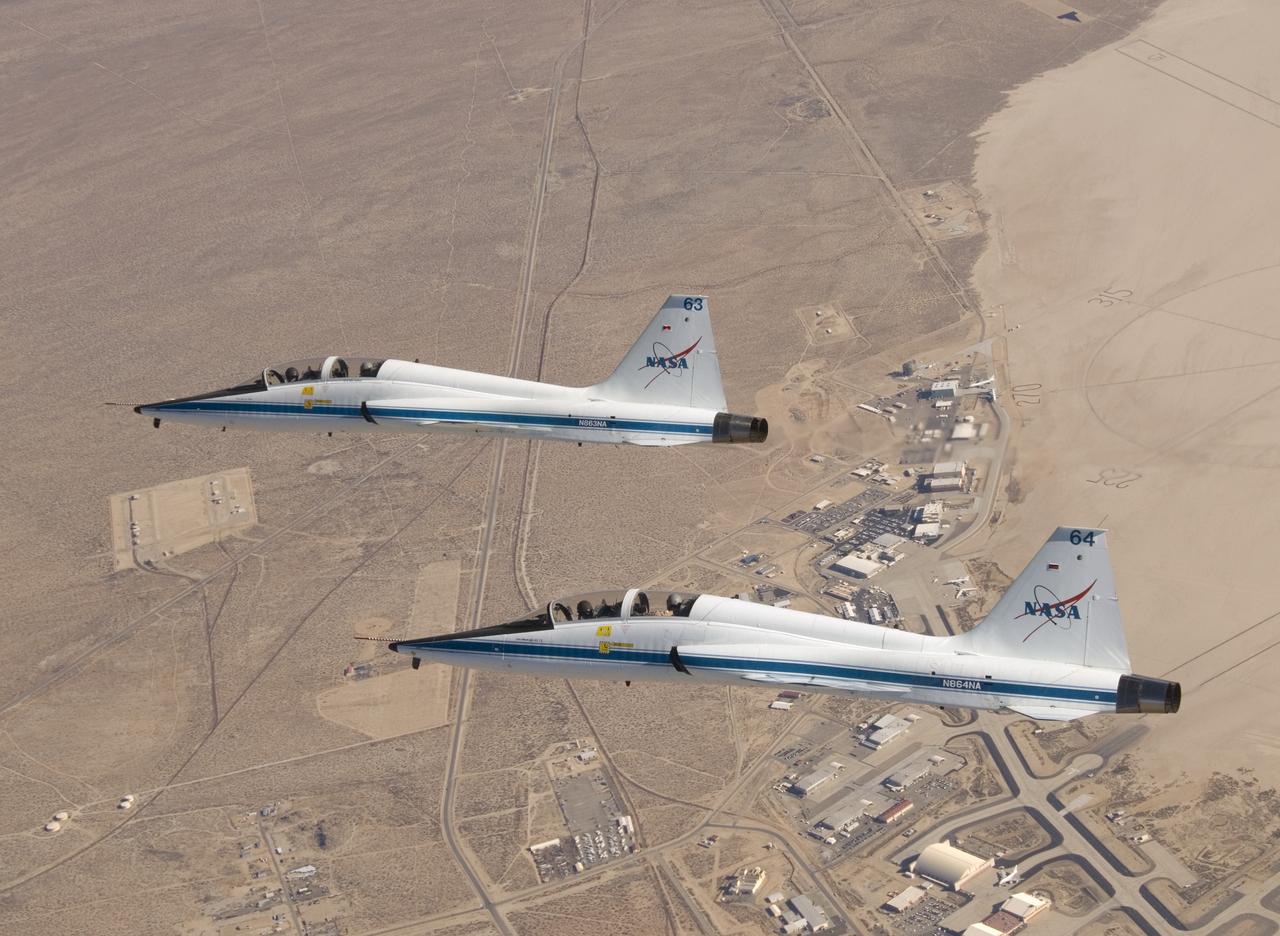
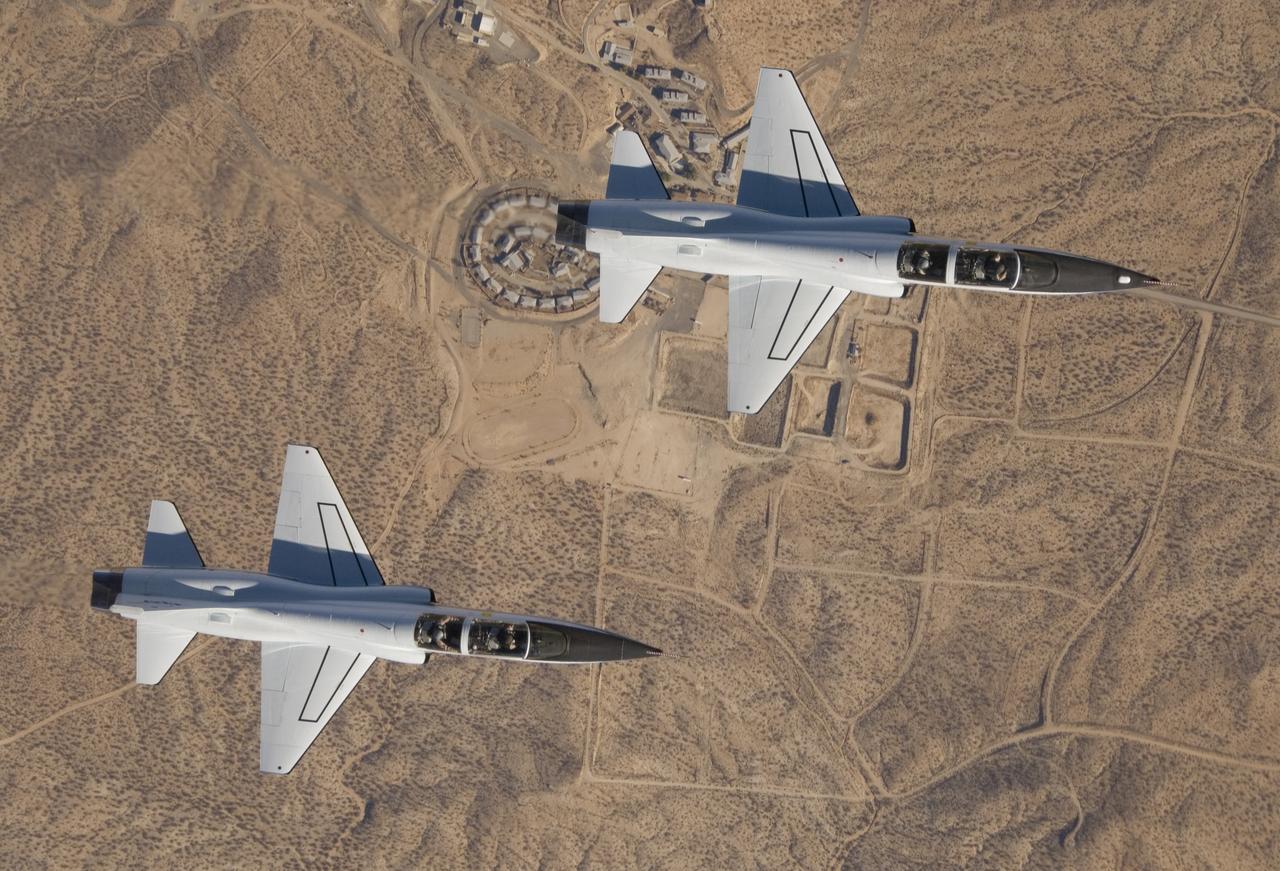
NASA Dryden Flight Research Center's two T-38A Talon mission support aircraft flew together for the first time on Sept. 26, 2007 while conducting pitot-static airspeed calibration checks during routine pilot proficiency flights. The two aircraft, flown by NASA research pilots Kelly Latimer and Frank Batteas, joined up with a NASA Dryden F/A-18 flown by NASA research pilot Dick Ewers to fly the airspeed calibrations at several speeds and altitudes that would be flown by the Stratospheric Observatory for Infrared Astronomy (SOFIA) Boeing 747SP during its initial flight test phase. The T-38s, along with F/A-18s, serve in a safety chase role during those test missions, providing critical instrument and visual monitoring for the flight test series.
NASA Dryden's two T-38A mission support aircraft fly in tight formation while conducting a pitot-static airspeed calibration check near Edwards Air Force Base
NASA Dryden Flight Research Center's two T-38A Talon mission support aircraft flew together for the first time on Sept. 26, 2007 while conducting pitot-static airspeed calibration checks during routine pilot proficiency flights. The two aircraft, flown by NASA research pilots Kelly Latimer and Frank Batteas, joined up with a NASA Dryden F/A-18 flown by NASA research pilot Dick Ewers to fly the airspeed calibrations at several speeds and altitudes that would be flown by the Stratospheric Observatory for Infrared Astronomy (SOFIA) Boeing 747SP during its initial flight test phase. The T-38s, along with F/A-18s, serve in a safety chase role during those test missions, providing critical instrument and visual monitoring for the flight test series.
NASA Dryden's two T-38A mission support aircraft fly in tight formation while conducting a pitot-static airspeed calibration check near Edwards Air Force Base
NASA Dryden Flight Research Center's two T-38A Talon mission support aircraft flew together for the first time on Sept. 26, 2007 while conducting pitot-static airspeed calibration checks during routine pilot proficiency flights. The two aircraft, flown by NASA research pilots Kelly Latimer and Frank Batteas, joined up with a NASA Dryden F/A-18 flown by NASA research pilot Dick Ewers to fly the airspeed calibrations at several speeds and altitudes that would be flown by the Stratospheric Observatory for Infrared Astronomy (SOFIA) Boeing 747SP during its initial flight test phase. The T-38s, along with F/A-18s, serve in a safety chase role during those test missions, providing critical instrument and visual monitoring for the flight test series.
NASA Dryden's two T-38A mission support aircraft fly in tight formation while conducting a pitot-static airspeed calibration check near Edwards Air Force Base
NASA Dryden Flight Research Center's two T-38A Talon mission support aircraft flew together for the first time on Sept. 26, 2007 while conducting pitot-static airspeed calibration checks during routine pilot proficiency flights. The two aircraft, flown by NASA research pilots Kelly Latimer and Frank Batteas, joined up with a NASA Dryden F/A-18 flown by NASA research pilot Dick Ewers to fly the airspeed calibrations at several speeds and altitudes that would be flown by the Stratospheric Observatory for Infrared Astronomy (SOFIA) Boeing 747SP during its initial flight test phase. The T-38s, along with F/A-18s, serve in a safety chase role during those test missions, providing critical instrument and visual monitoring for the flight test series.
NASA Dryden's two T-38A mission support aircraft fly in tight formation while conducting a pitot-static airspeed calibration check near Edwards Air Force Base
NASA’s Ikhana aircraft, based at the agency’s Armstrong Flight Research Center in Edwards, California, flew for 2.5 hours on June 12 in the national airspace without a safety chase aircraft.
NASA’s Ikhana Aircraft During Takeoff for June 12 Flight
NASA’s Ikhana aircraft, based at the agency’s Armstrong Flight Research Center in Edwards, California, takes off for the agency’s first large-scale, remotely-piloted aircraft flight in the national airspace without a safety chase aircraft.
NASA’s Ikhana Aircraft During Takeoff for June 12 Flight
This unique view, looking directly up at two NASA Dryden F/A-18's used in the Autonomous Formation Flight (AFF) program, was captured by Carla Thomas from another F-18 flying safety/chase.
EC01-0328-4
NASA’s Ikhana aircraft, based at the agency’s Armstrong Flight Research Center in Edwards, California, flew for 2.5 hours on June 12 in the national airspace without a safety chase aircraft.
NASA’s Ikhana Aircraft During Takeoff for June 12 Flight
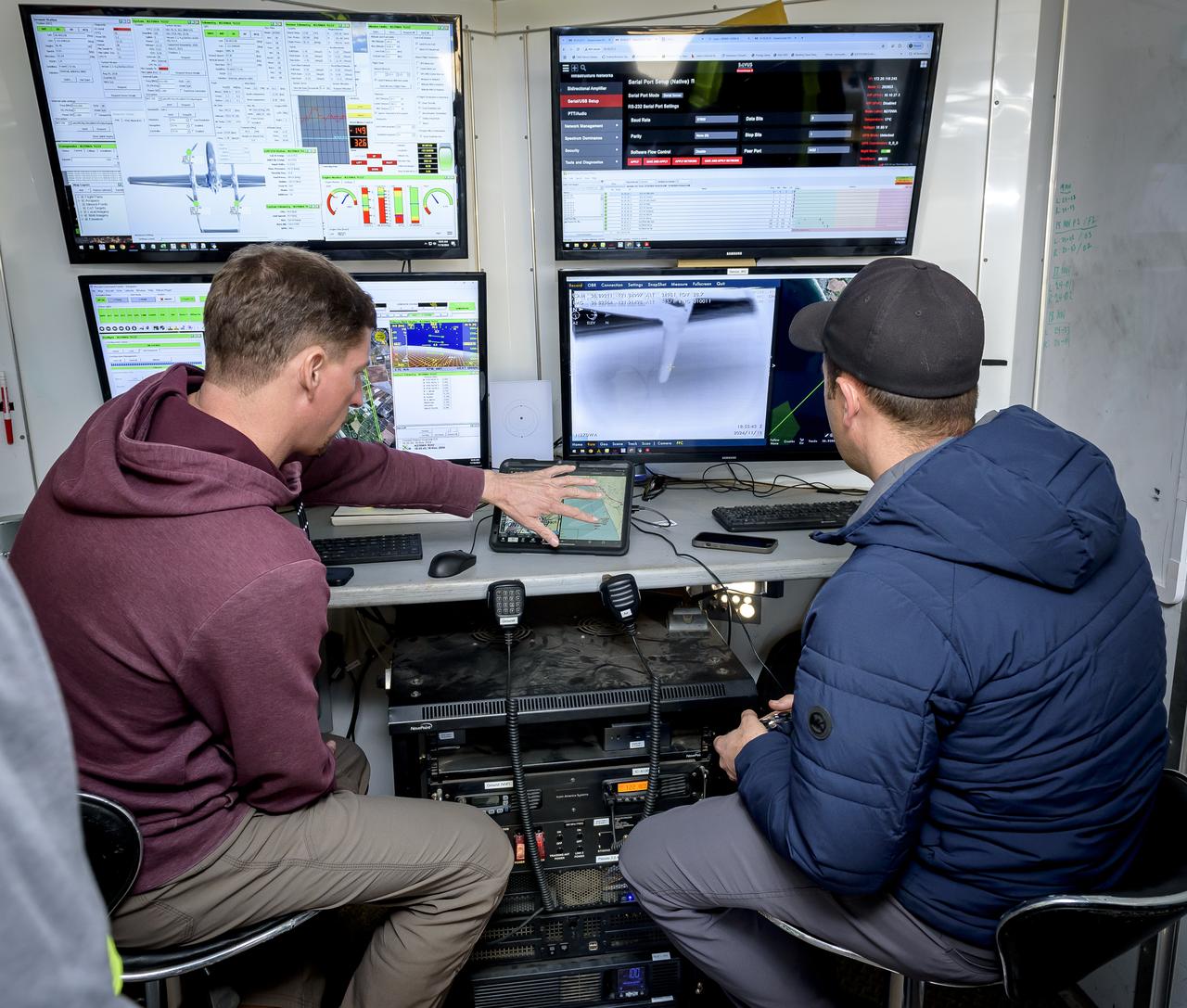
Co-founders of Overwatch Aero Chase Pietenpol, at the Ground Control Station (GCS) monitoring the flight of the L3Harris FVR90 Unmanned Aerial Vehicle (UAV) at the Monterey Bay Academy Airport near Watsonville, California.
Advanced Capabilities for Emergency Response Operations (ACERO)
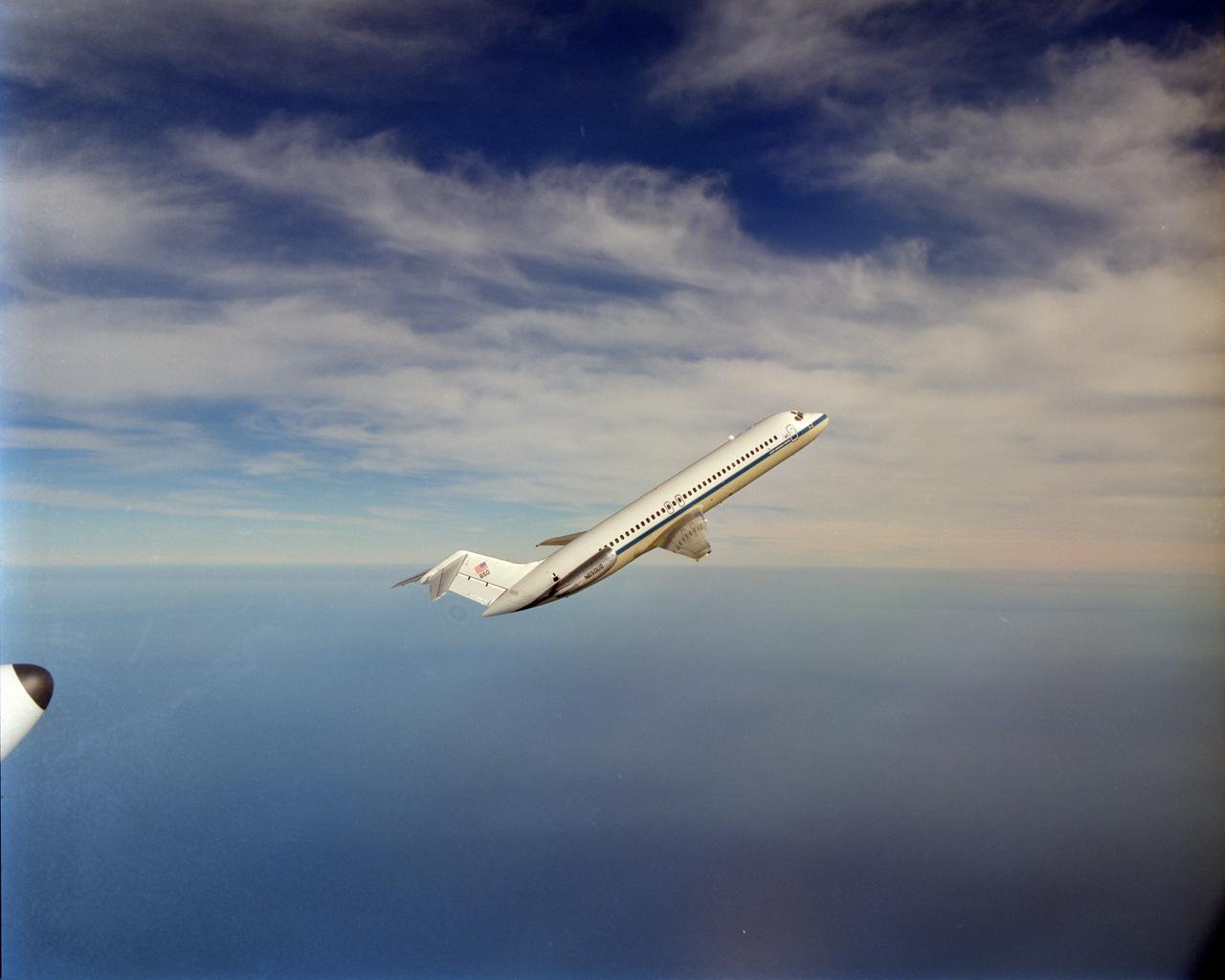
NASA aircraft DC-9 microgravity plane performs it's first test parabolas over Lake Erie.  This was photographed by the NASA Glenn Lear Jet in a chase plane configuration.
GRC-1994-C-04159
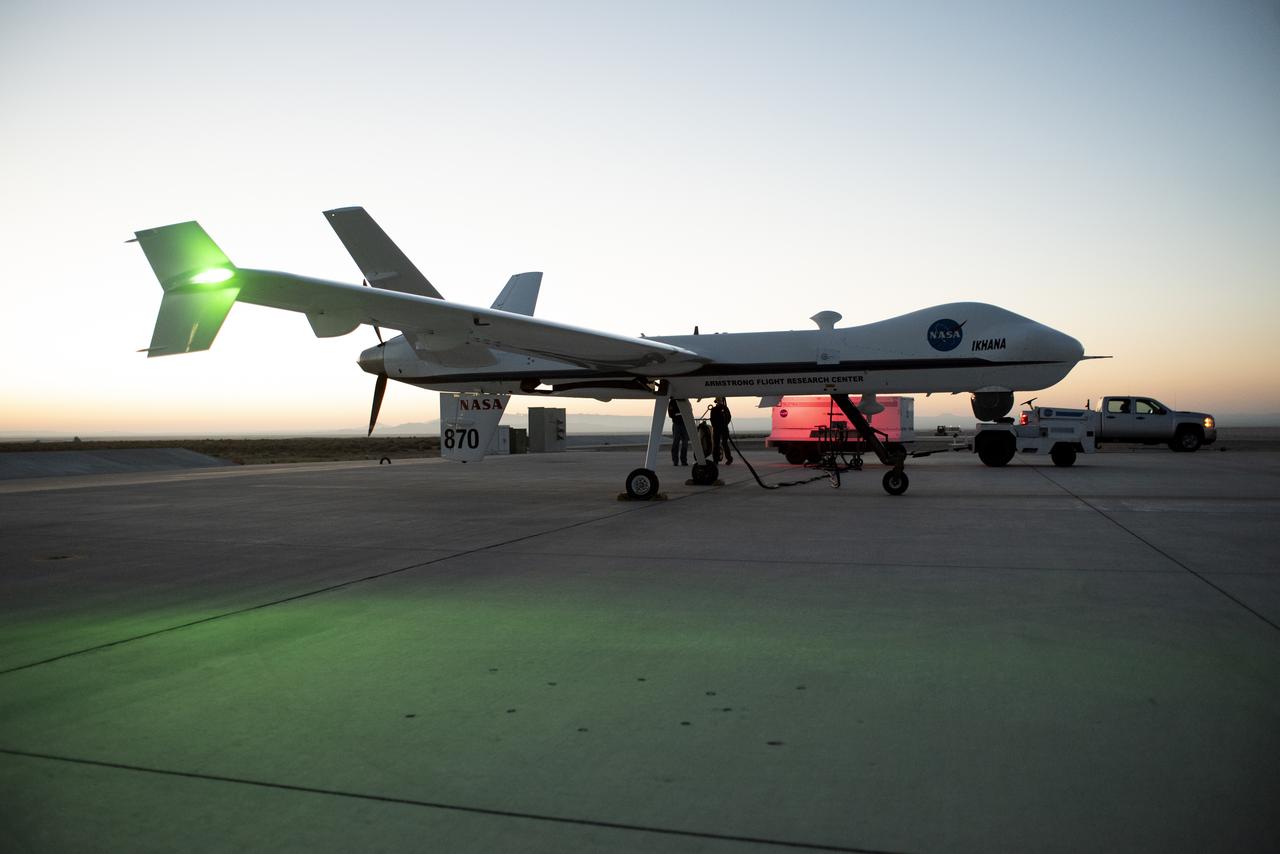
NASA’s remotely-piloted Ikhana aircraft, based at the agency’s Armstrong Flight Research Center in Edwards, California, is flown in preparation for its first mission in the National Airspace System without a safety chase aircraft.
NASAs Ikhana Aircraft Prepares for Flight in the National Airspace System
Co-founders of Overwatch Aero Chase Pietenpol, left, and Jordan Hahn at the Ground Control Station (GCS) monitoring the flight of the L3Harris FVR90 Unmanned Aerial Vehicle (UAV) at the Monterey Bay Academy Airport near Watsonville, California.
Advanced Capabilities for Emergency Response Operations (ACERO)
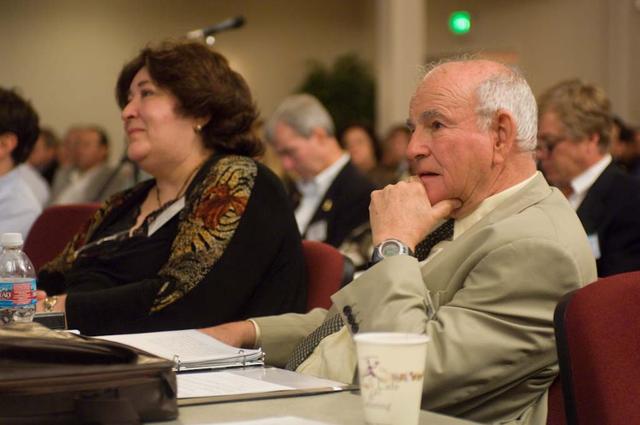
International Space Station (ISS) National Laboratory Workshop L-R Lynn Harper, Ames and Baruch Blumberg, Nobel Laureate, Fox Chase Cancer Center during talk on Science on the international Space Station, Past and Future.
ARC-2007-ACD07-0189-018
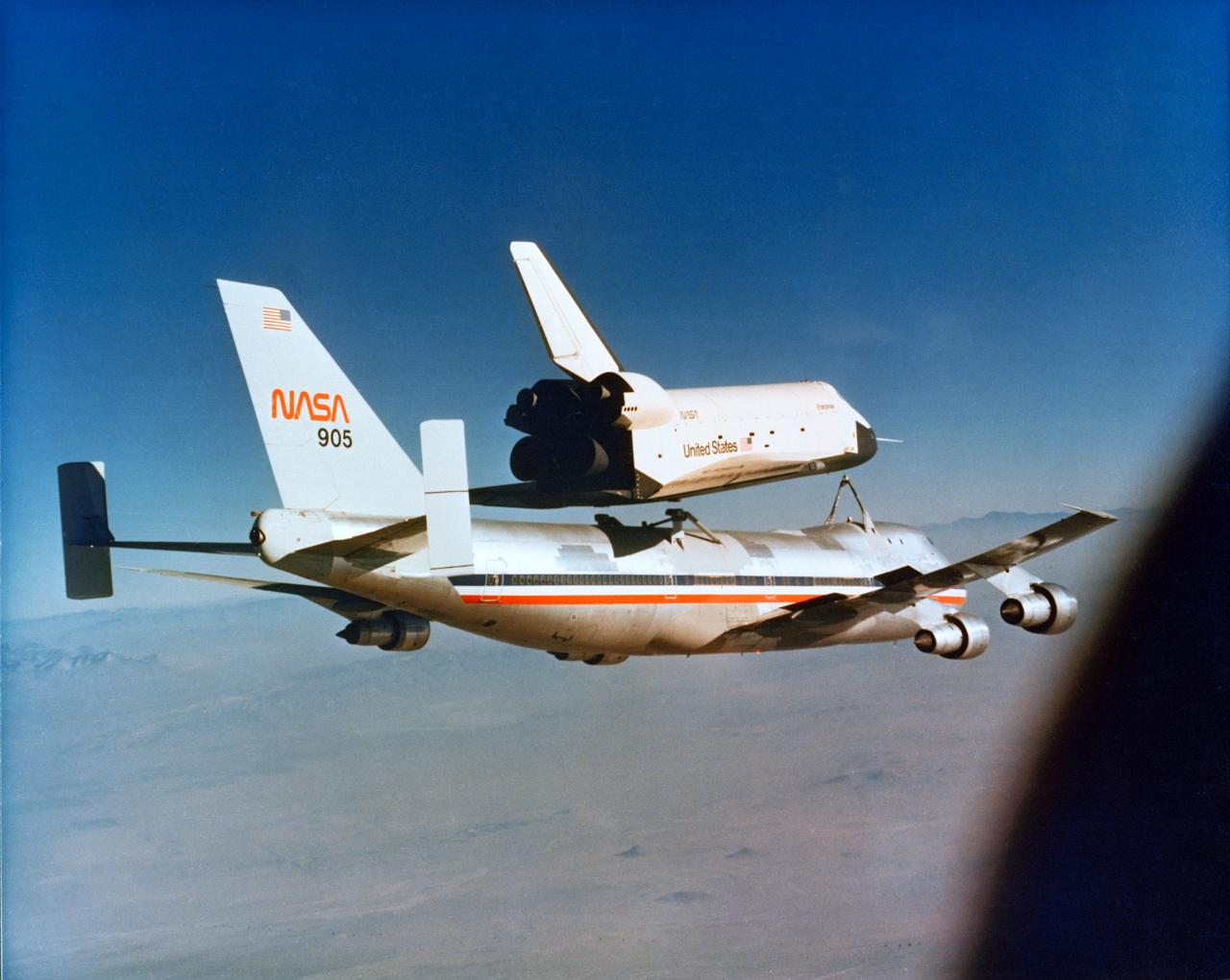
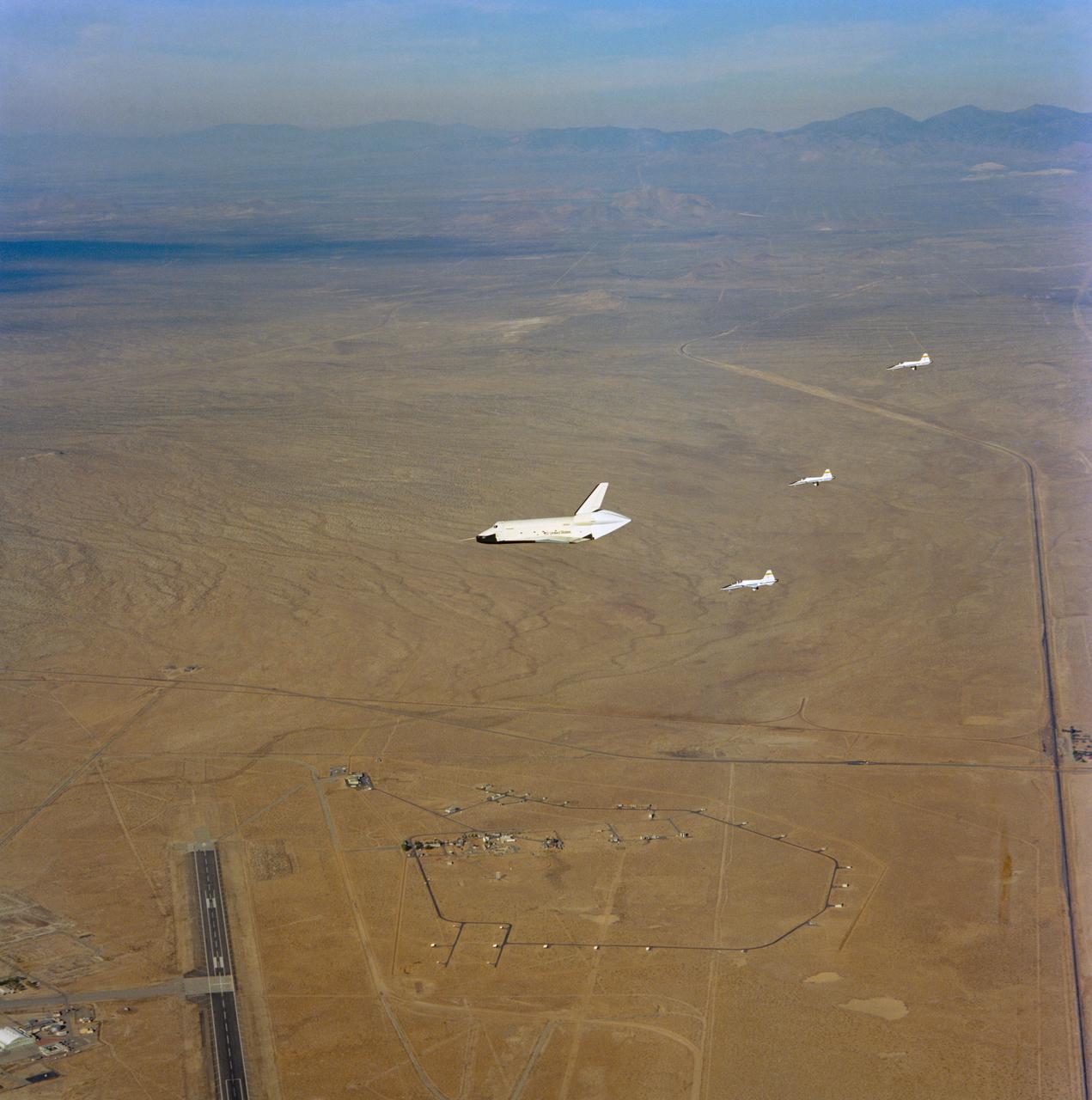
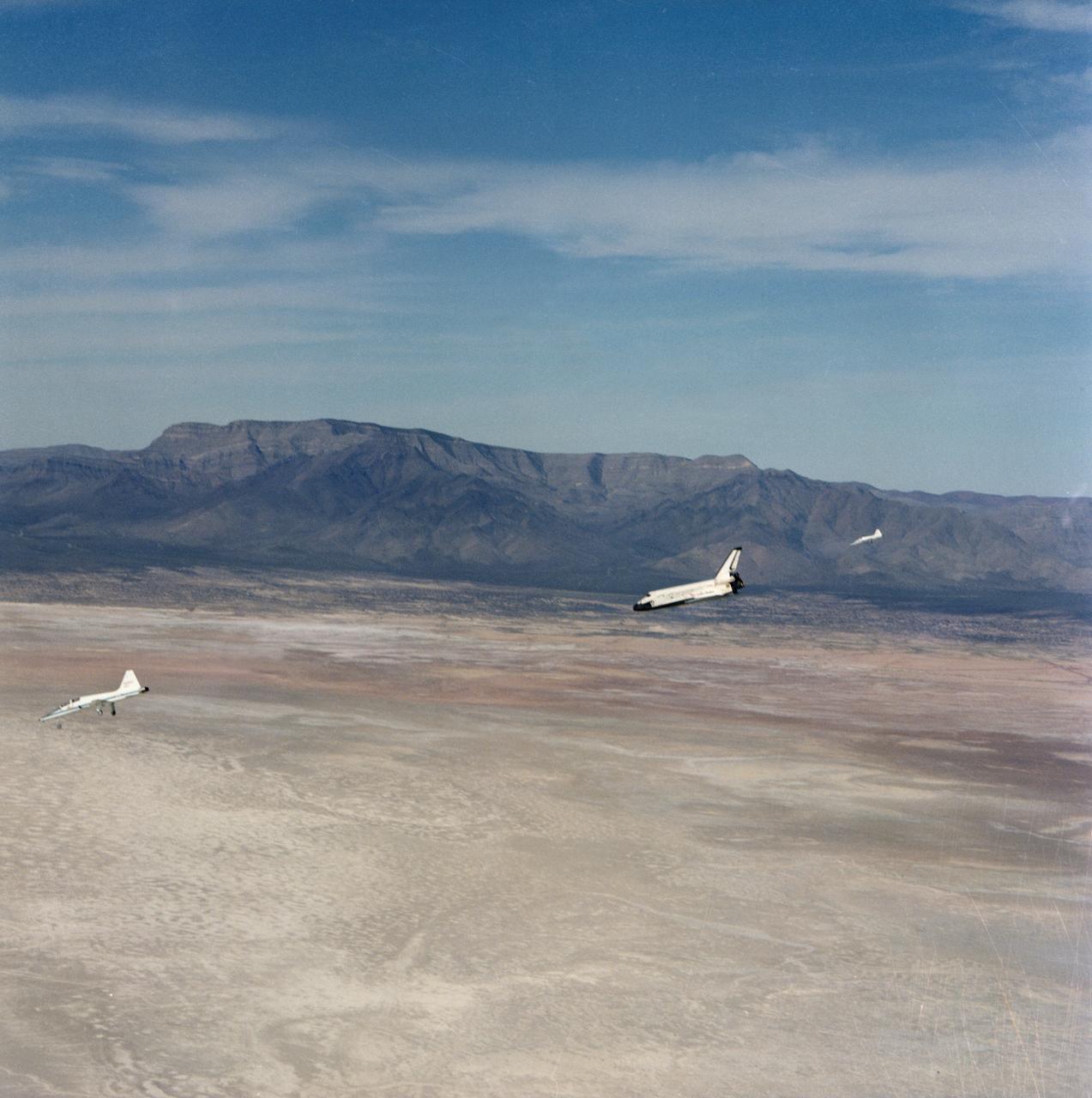
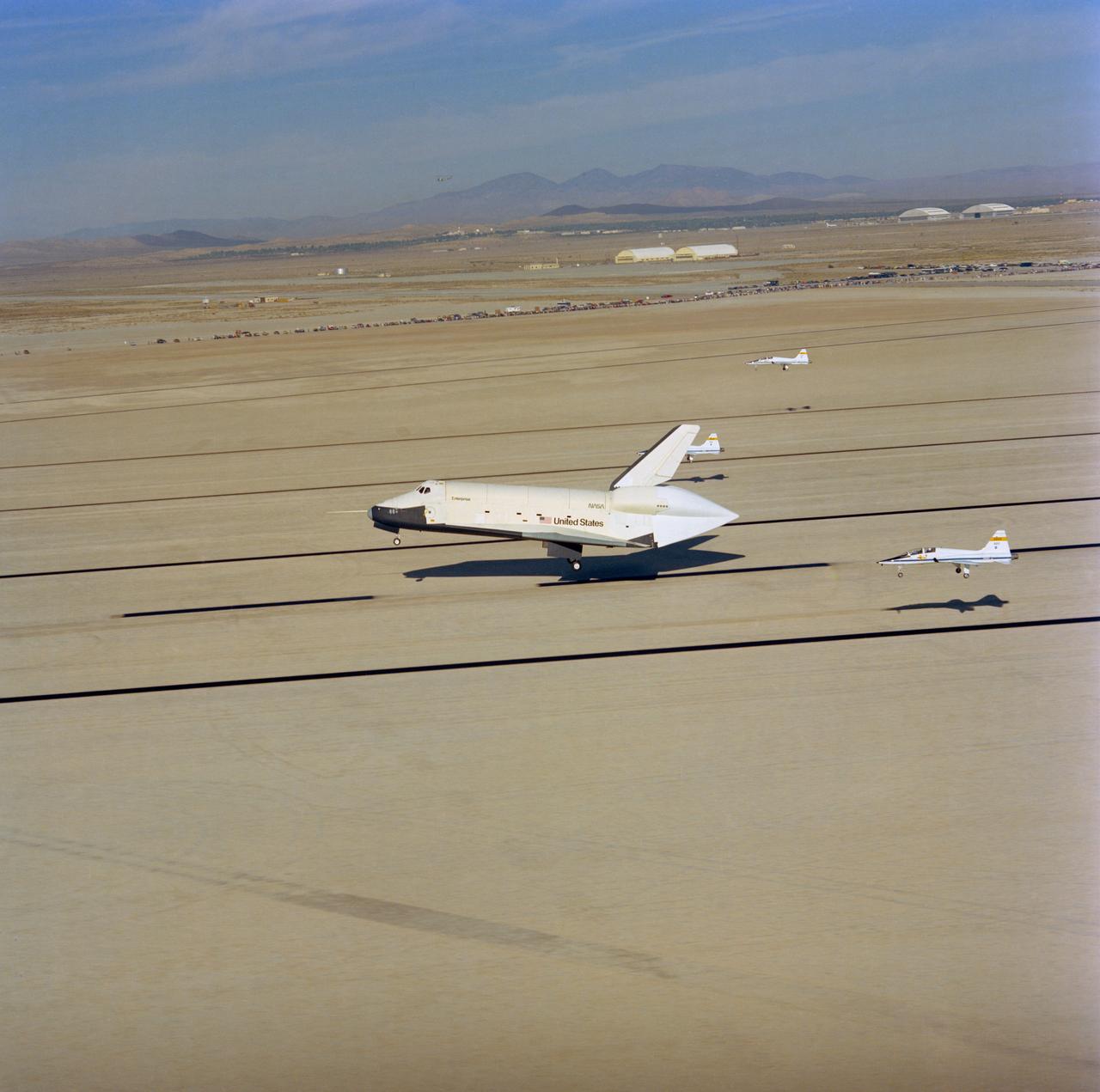
S77-28667 (23 Sept 1977) ---  The shuttle Orbiter 101 "Enterprise" soars above the North Base area of Edwards Air Force Base during its five-minute, 34-second unpowered flight, the third of a series of manned Shuttle Approach and Landing Tests (ALT).  Moments earlier the "Enterprise" had separated from its 747 carrier aircraft, atop which it sat upon takeoff from the Dryden Flight Research Center (DFRC), with its crew of astronauts Fred W. Haise Jr., commander, and C. Gordon Fullerton, pilot.  Three T-38 chase planes follow.  This photograph was taken from a fourth T-38 chase plane.
Orbiter 101- Shuttle Approach & Landing Test (ALT) Free-Flight (FF)-3 - Edwards AFB (EAFB), CA
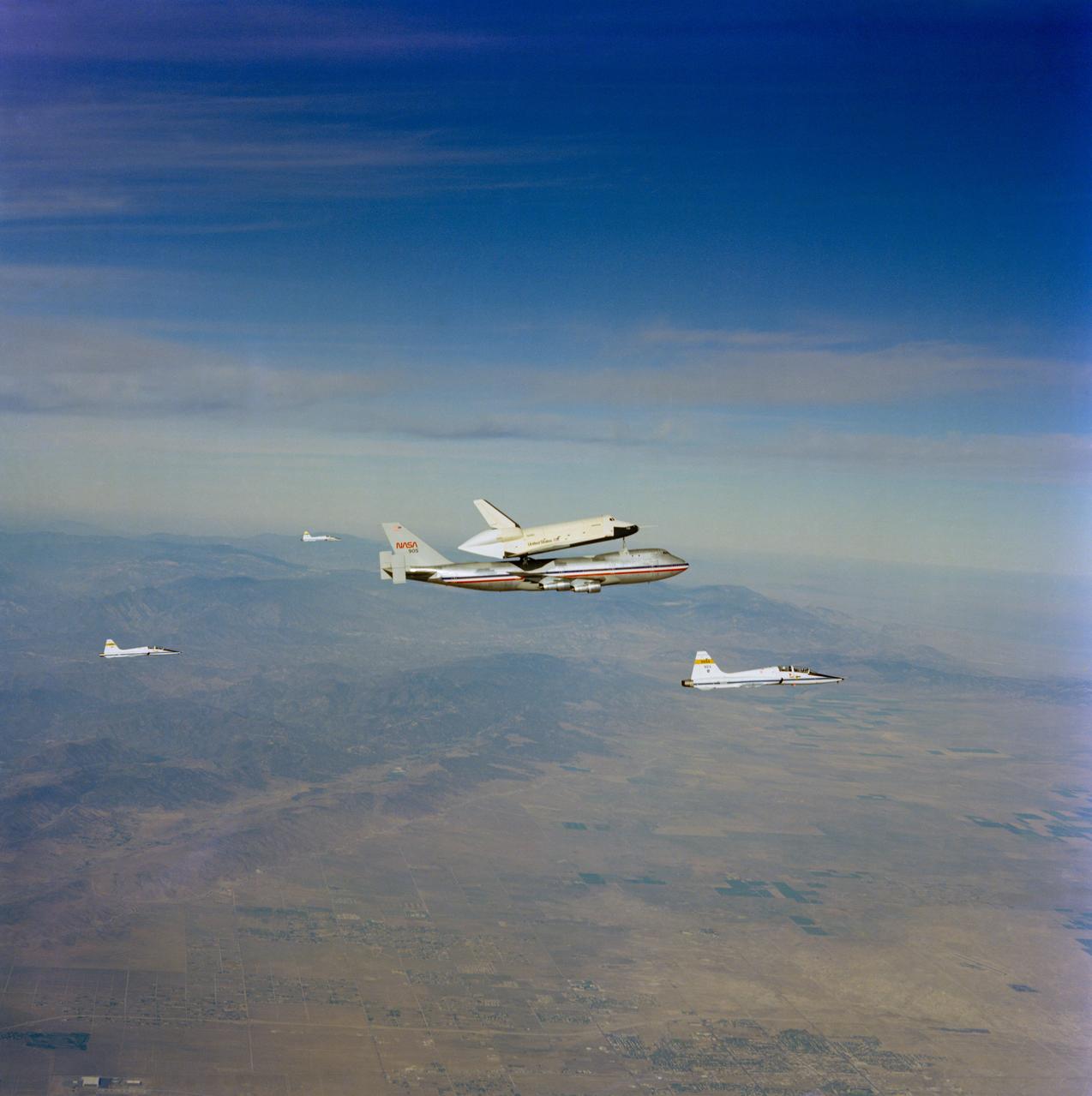
S77-28649 (23 Sept 1977) ---  The shuttle Orbiter 101 "Enterprise" sits atop the NASA 747 carrier aircraft in a piggy-back configuration prior to separation for the third free flight of the Shuttle Approach and Landing Tests (ALT) conducted on September 23, 1977, at the Dryden Flight Research Center (DFRC) in Southern California. The crew of the "enterprise" consisted of astronauts Fred W. Haise Jr., commander, and C. Gordon Fullerton, pilot.  This photo was shot from one of the T-38 chase planes accompanying the ALT craft.  Three other T-38 chase planes are pictured.
Orbiter "Enterprise" rides "piggy-back" atop NASA 747 carrier
This infrared image from NASA Wide-field Infrared Survey Explorer shows the Lambda Centauri nebula, a star-forming cloud in our Milky Way galaxy, also known as the Running Chicken nebula.
Chasing Chickens in the Lambda Centauri Nebula
Aircraft maintenance crews at NASA‘s Armstrong Flight Research Center prepare the remotely-piloted Ikhana aircraft for a test flight. The test flight was performed to validate key technologies and operations necessary for FAA’s approval to fly the aircraft in the National Airspace System June 12, 2018, without a safety chase aircraft.
Sun Rises over NASA’s Ikhana Aircraft as Armstrong Maintenance Crews Prepare the Aircraft for a Test Flight
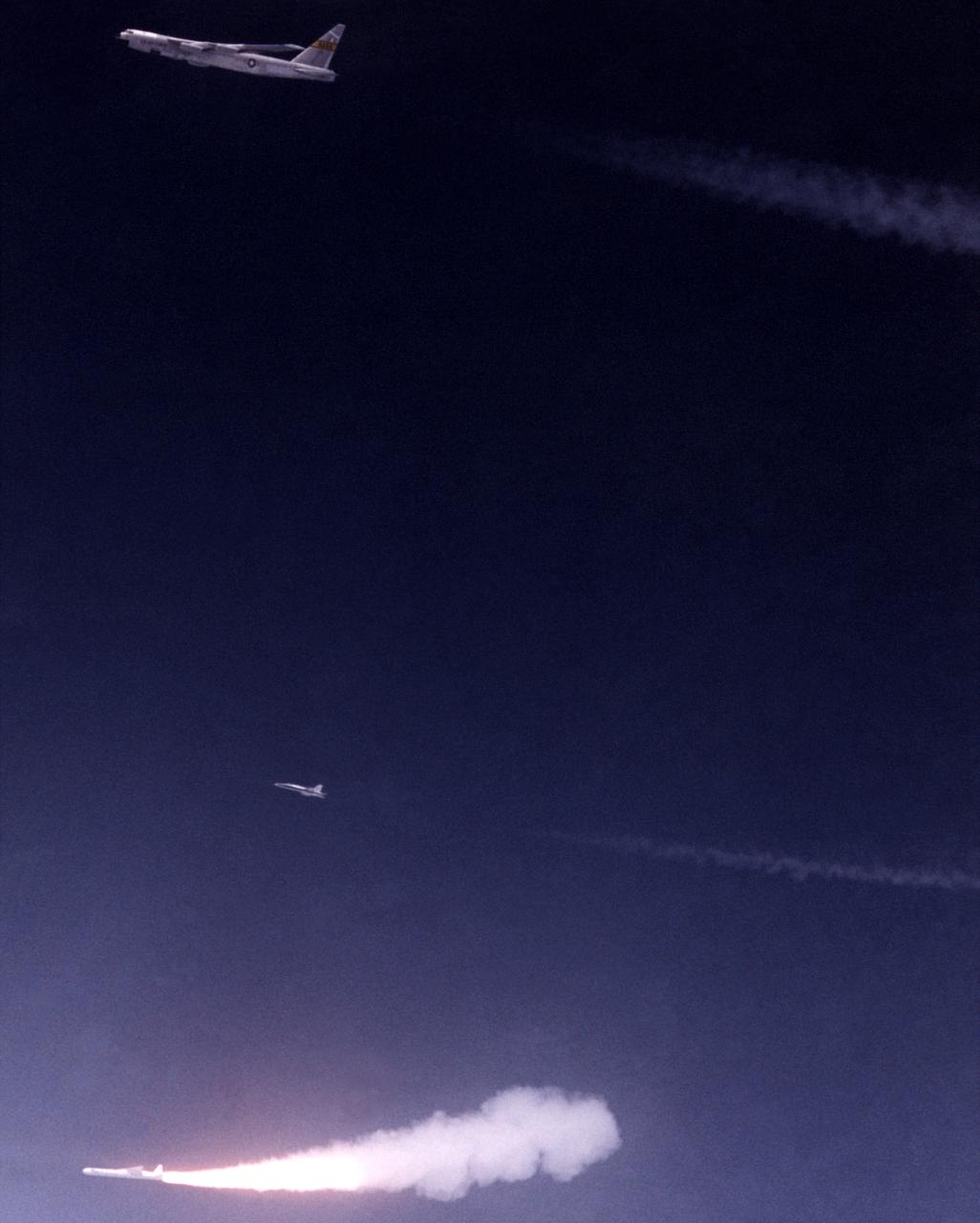
Against the midnight blue of a high-altitude sky, Orbital Sciences’ Pegasus winged rocket booster ignites after being dropped from NASA’s B-52 mothership on a July 1991 flight. A NASA chase plane for the flight is also visible above the rocket and below the B-52.
Pegasus Engine Ignites after Drop from B-52 Mothership
Aircraft maintenance crews at NASA‘s Armstrong Flight Research Center prepare the remotely-piloted Ikhana aircraft for a test flight of Ikhana. The test flight was performed to validate key technologies and operations necessary for FAA’s approval to fly the aircraft in the National Airspace System June 12, 2018, without a safety chase aircraft.
NASAs Aircraft Maintenance Crews Prepare the Ikhana Aircraft for a Test Flight
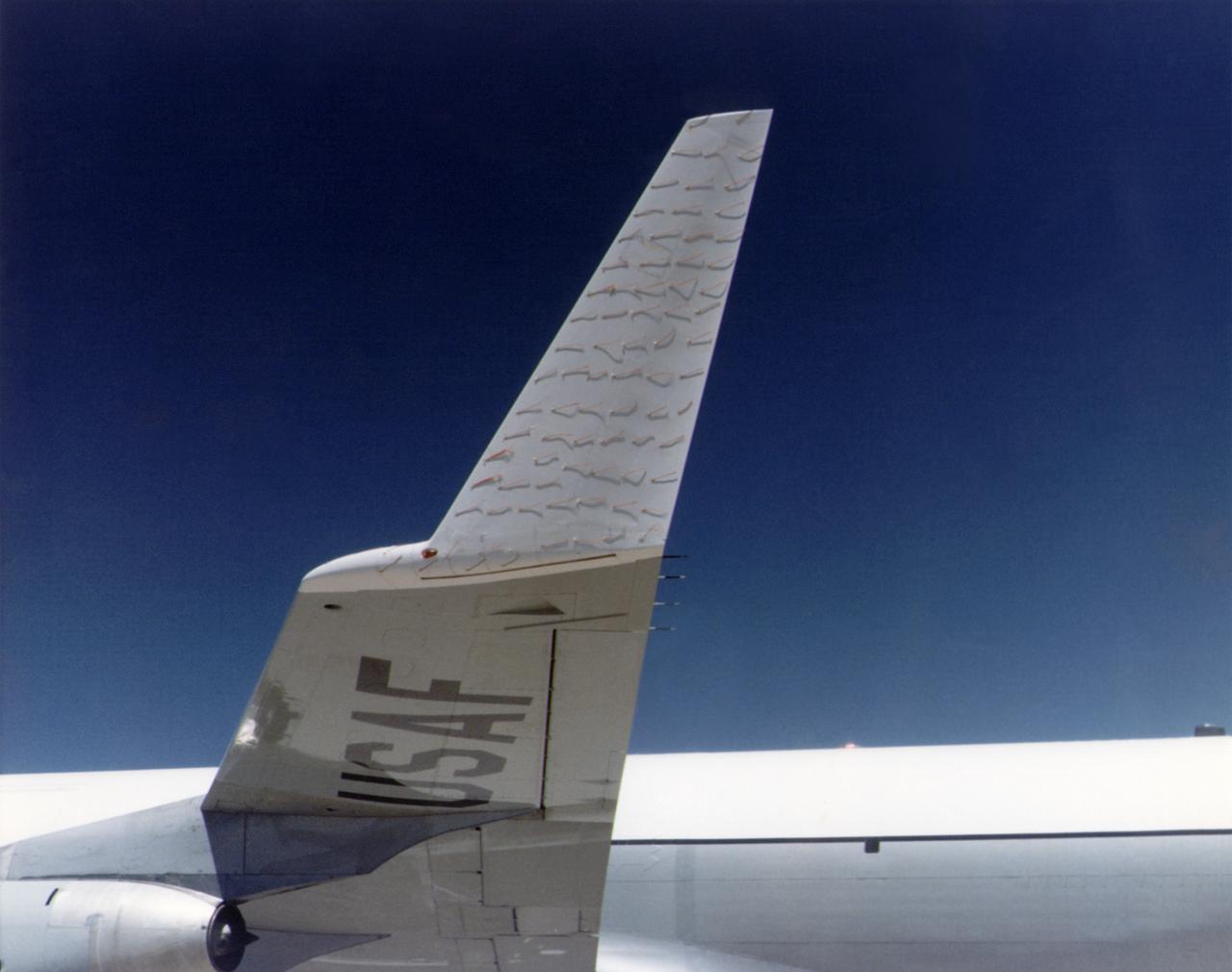
A chase plane view of the tufts on the KC-135 winglet. The use of tufts in flight research dates back to the early days of the NACA, and remains an effective means of observing airflow even today. In this procedure, rows of strings are attached to an airplane's surface, with one end of each string taped to the airplane and the other end free to swing about in the airflow. The movements of the tufts are photographed by on-board cameras or a chase plane. If the tufts are arrayed in neat rows, as seen here, then the airflow is smooth over the airplane's surface. If, however, they are moving about violently, it suggests turbulent airflow. Such motions may indicate high drag, flow separation (such as in a stall), or buffeting. In some cases, tufts will actually point forward, indicating the airflow has reversed direction.
EC79-11481
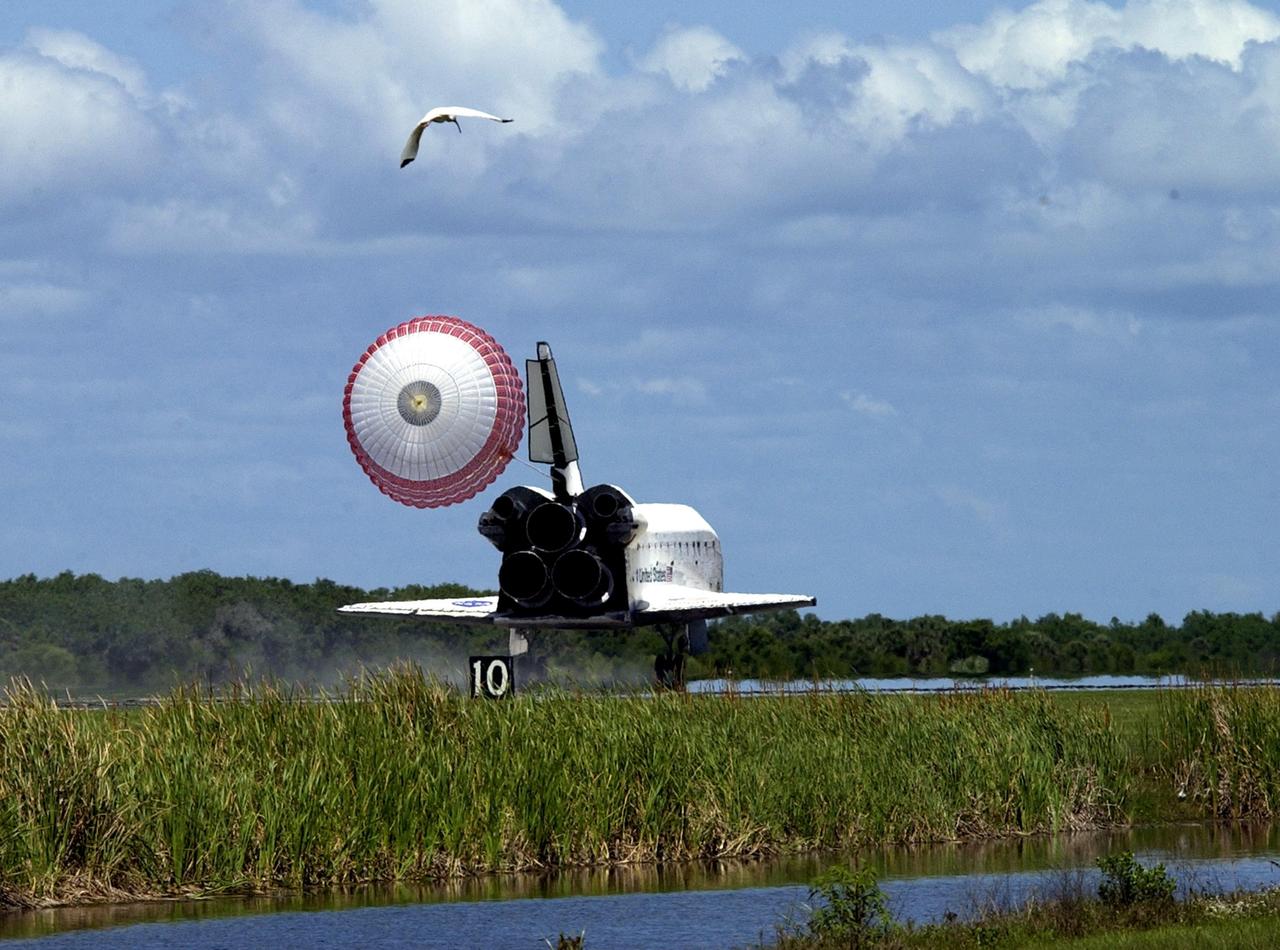
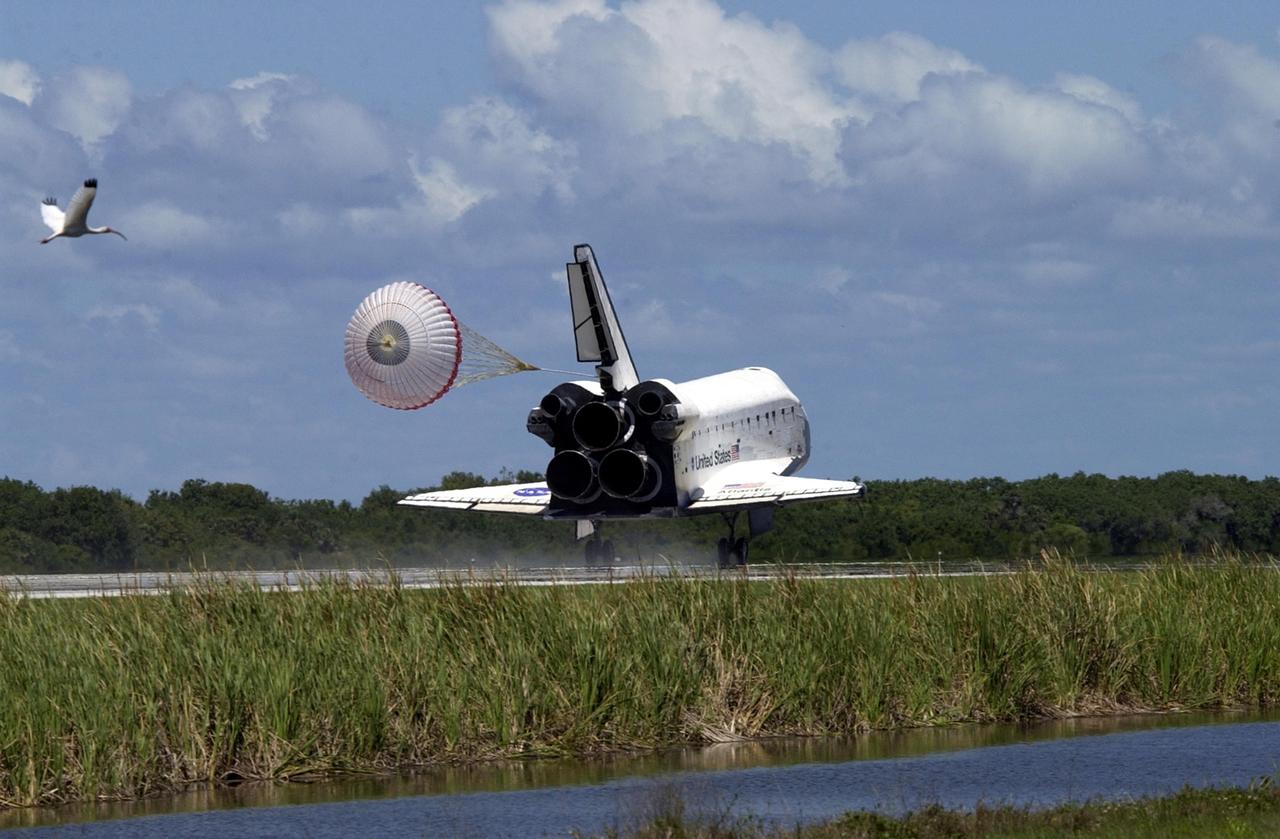
KENNEDY SPACE CENTER, FLA. - A wood stork appears to chase Atlantis as it lands on runway 33 with its drag chute deployed. The landing completes the 10-day, 19-hour, 4.5-million mile mission STS-110 to the International Space Station.  In the upper right corner is the chase plane following Atlantis' path. The orbiter carries the returning crew Commander Michael Bloomfield, Pilot Stephen Frick and Mission Specialists Jerry Ross, Steven Smith, Ellen Ochoa, Lee Morin and Rex Walheim.  Main gear touchdown was 12:26:57 p.m. EDT, nose gear touchdown was 12:27:09 p.m. and wheel stop was 12:28:07 p.m.  The crew delivered and installed the S0 truss, which will support cooling and power systems essential for the addition of future international laboratories, on the Station.
KSC-02pd0509
KENNEDY SPACE CENTER, FLA. -- A wood stork appears to chase Atlantis as it lands on runway 33 with its drag chute deployed. The landing completes the 10-day, 19-hour, 4.5-million mile mission STS-110 to the International Space Station.  In the upper right corner is the chase plane following Atlantis' path. The orbiter carries the returning crew Commander Michael Bloomfield, Pilot Stephen Frick and Mission Specialists Jerry Ross, Steven Smith, Ellen Ochoa, Lee Morin and Rex Walheim.  Main gear touchdown was 12:26:57 p.m. EDT, nose gear touchdown was 12:27:09 p.m. and wheel stop was 12:28:07 p.m.  The crew delivered and installed the S0 truss, which will support cooling and power systems essential for the addition of future international laboratories, on the Station
KSC-02pd0521
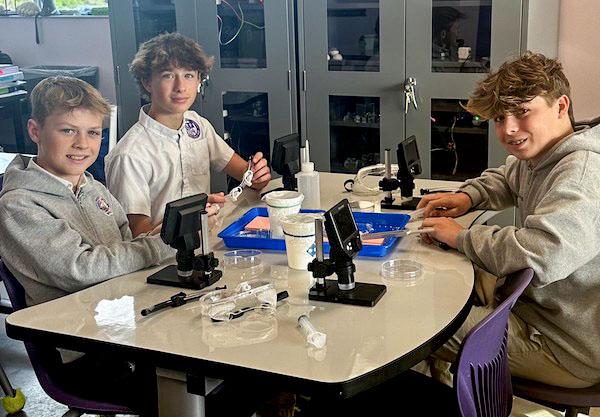
jsc2024e066527 (10/4/2024) --- Pinecrest Academy Space Coast students Cameron Winchester, Chase Elden-Moore and Baylen Wreggit experiment on tardigrades extending the efficacy of Hemlibra. Their experiment is part of the Nanoracks-National Center for Earth and Space Science Education-Surveyor-Student Spaceflight Experiments Program Mission 18 to ISS (Nanoracks-NCESSE-Surveyor-SSEP).
Preflight Imagery for Nanoracks-NCESSE-Surveyor-SSEP
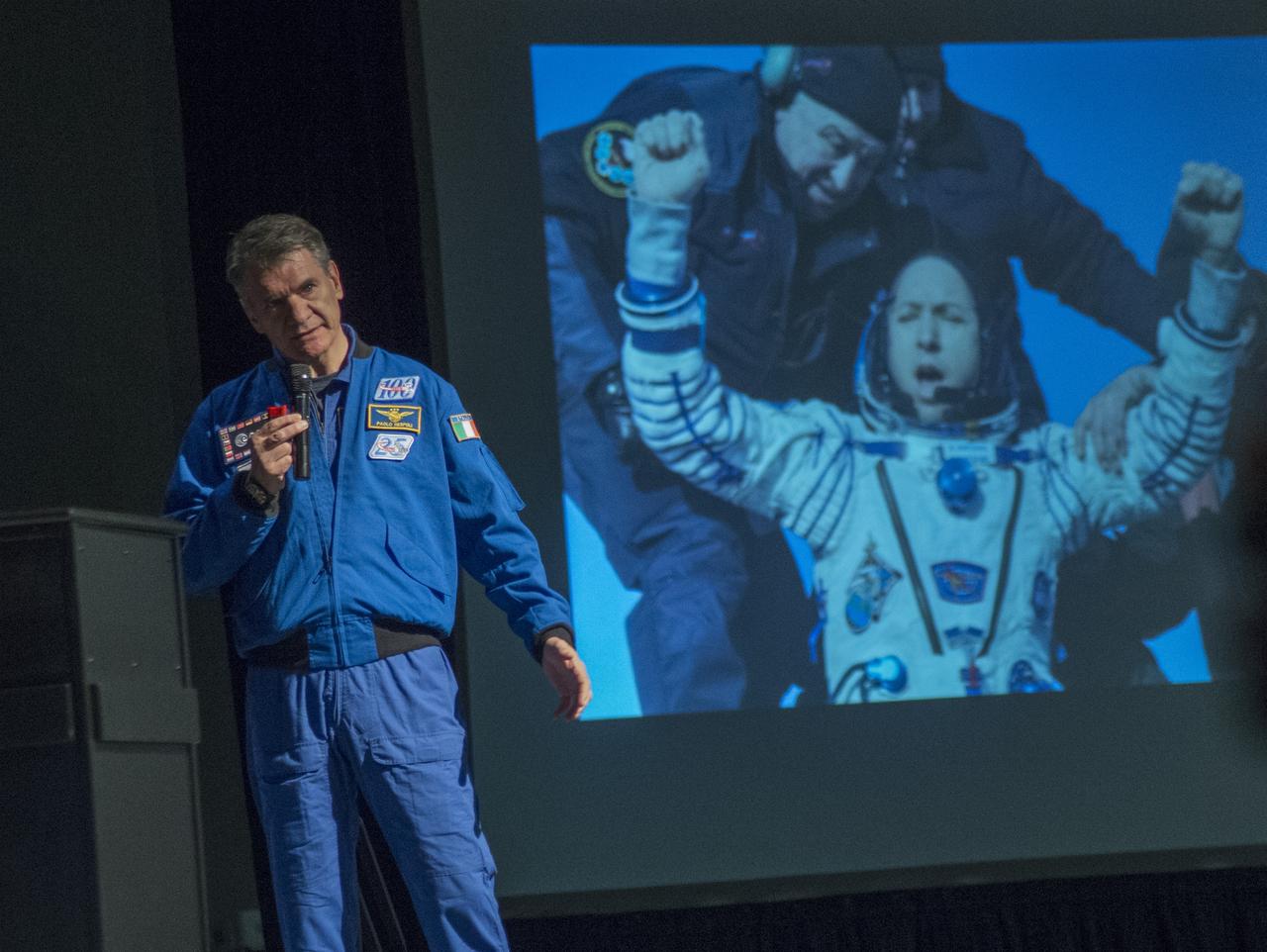
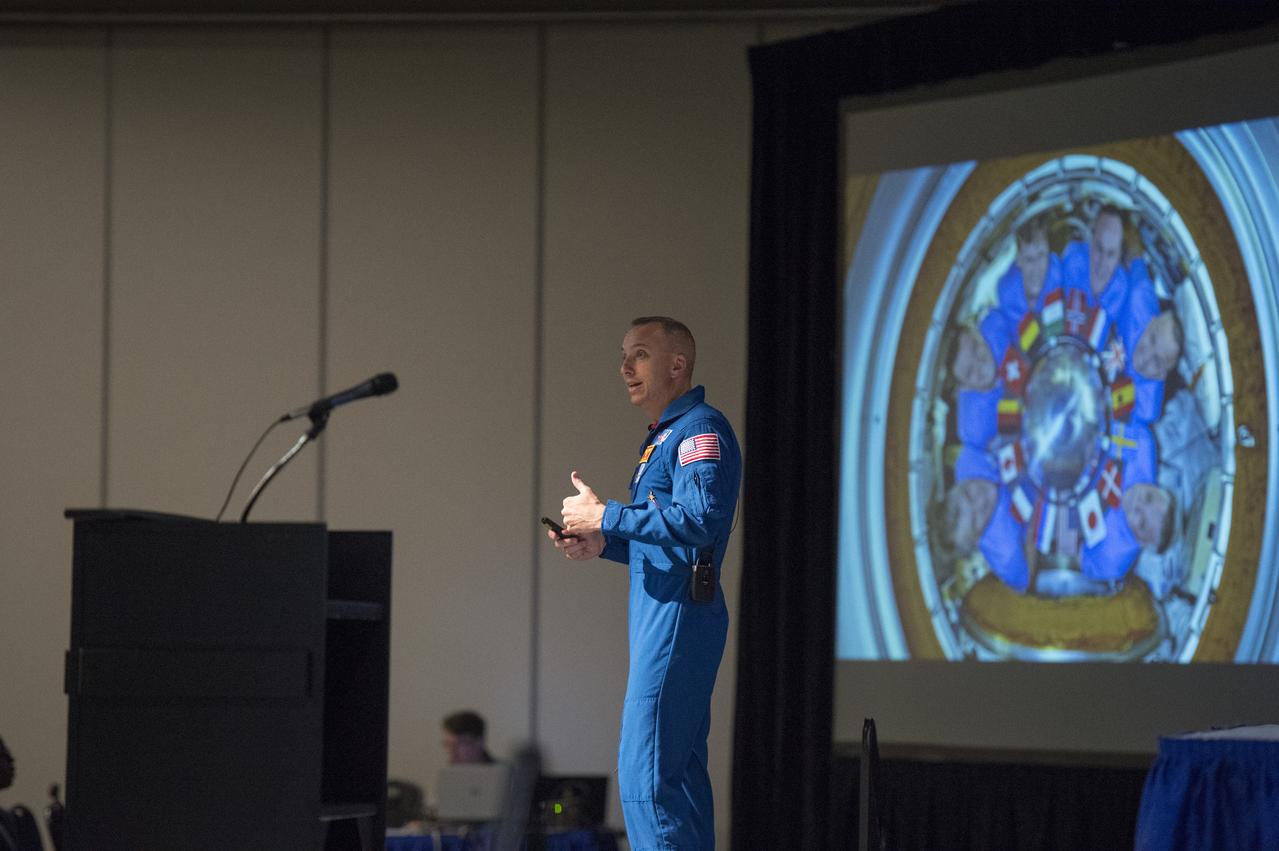
On Thursday, April 5, over 800 middle school, high school and college and university students representing 23 states listened as NASA astronaut Randy Bresnik and European Space Agency astronaut Paolo Nespoli told shared their experiences of exploring space and chasing their dreams. The students were in Huntsville for a week of activities as part of NASA Student Launch.
2018 NASA Student Launch event, Bragg Farms, Toney, Al
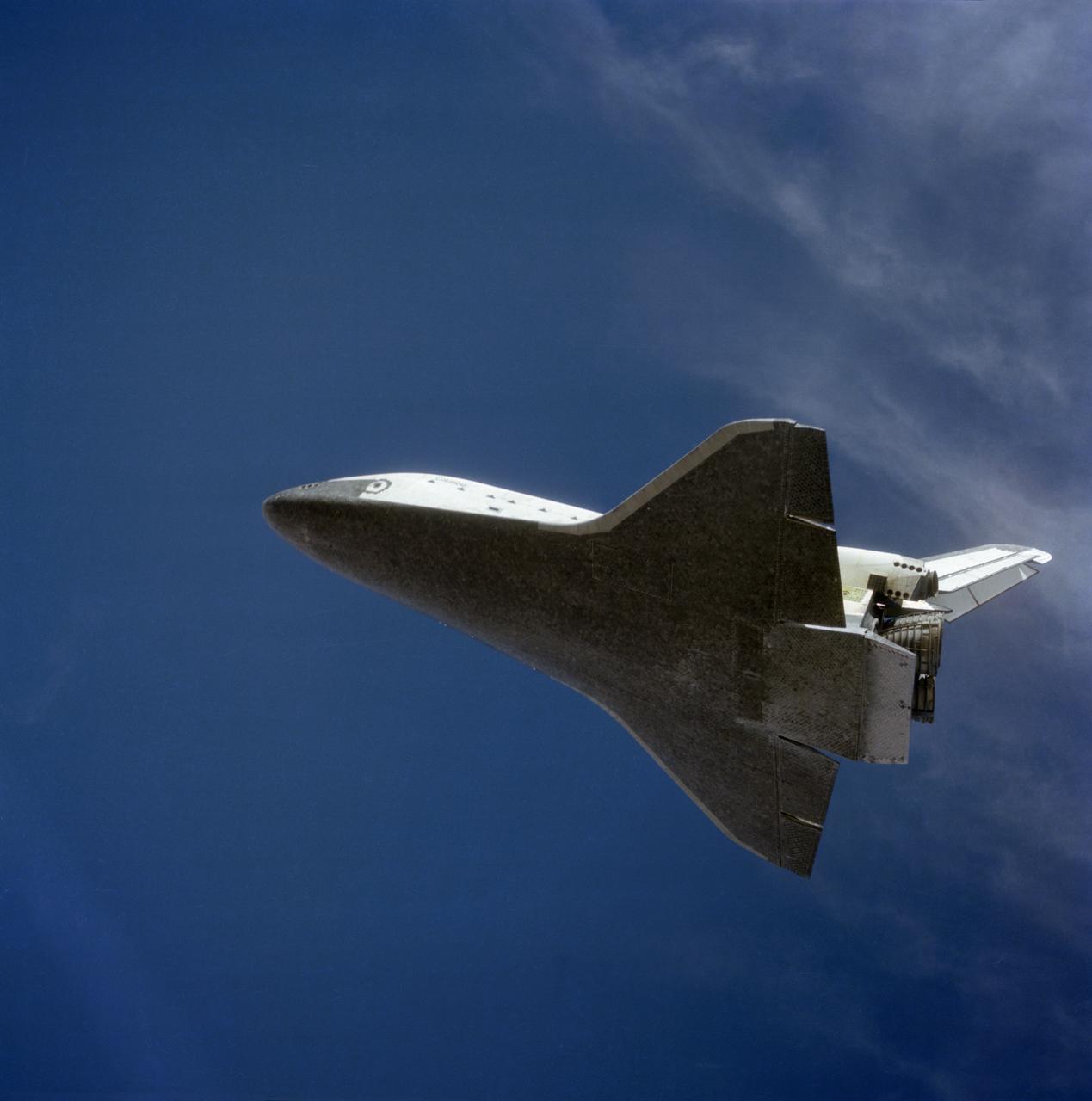
S81-39564 (14 Nov. 1981) --- This view of the space shuttle Columbia (STS-2) was made with a hand-held 70mm camera in the rear station of the T-38 chase plane. Mission specialist/astronaut Kathryn D. Sullivan exposed the frame as astronauts Joe N. Engle and Richard H. Truly aboard the Columbia guided the vehicle to an unpowered but smooth landing on the desert area of Edwards Air Force base in California. The picture provides a good view of the underside of the returning spacecraft. Photo credit: NASA
Landing - STS-2 - Edwards AFB (EAFB), CA
nhq201704100014 (April 10, 2017) --- Russian Search and Rescue teams chase the Soyuz MS-02 spacecraft as it lands with Expedition 50 Commander Shane Kimbrough of NASA and Flight Engineers Sergey Ryzhikov and Andrey Borisenko of Roscosmos near the town of Zhezkazgan, Kazakhstan on Monday, April 10, 2017 (Kazakh time). Kimbrough, Ryzhikov, and Borisenko are returning after 173 days in space where they served as members of the Expedition 49 and 50 crews onboard the International Space Station. Photo Credit: (NASA/Bill Ingalls)
Expedition 50 Soyuz MS-02 Landing
Russian support crews give chase during the landing of the Soyuz TMA-08M spacecraft with Expedition 36 Commander Pavel Vinogradov of the Russian Federal Space Agency (Roscosmos), Flight Engineer Alexander Misurkin of Roscosmos and Flight Engineer Chris Cassidy, Wednesday, Sept. 11, 2013. Vinogradov, Misurkin and Cassidy are returning to Earth after five and a half months on the International Space Station. Photo Credit: (NASA/Bill Ingalls)
Expedition 36 Soyuz TMA-08M Landing
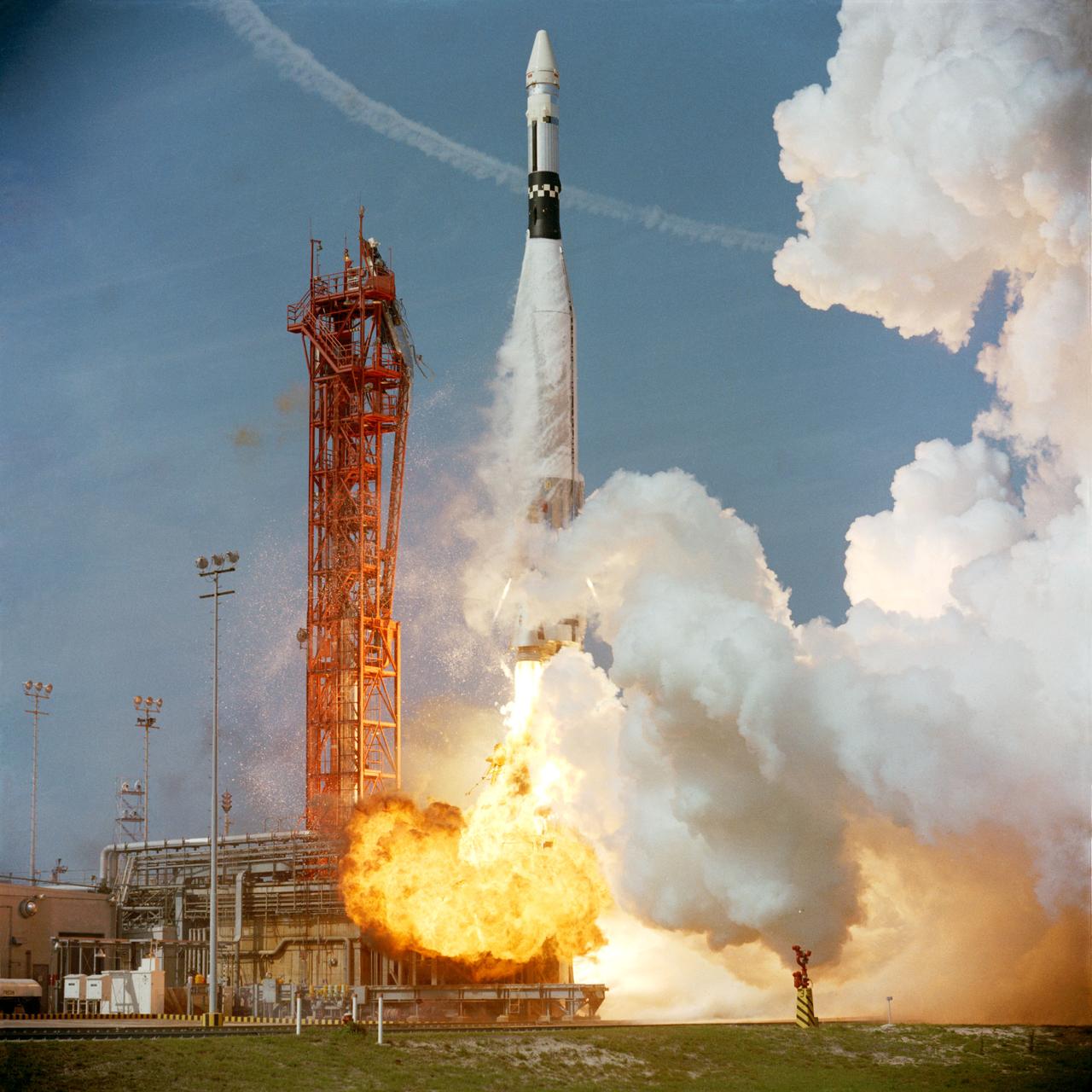
S66-24482 (16 March 1966) --- An Agena Target Docking Vehicle atop an Atlas rocket lifts off from Launch Complex 14 at Cape Kennedy at 10 a.m., March 16, 1966 just prior to the Gemini-8 liftoff at nearby Launch Complex 19. The Agena served as a rendezvous and docking vehicle for the Gemini-8 spacecraft. A chase plane leaves a contrail in the background. Photo credit: NASA
LIFTOFF - GEMINI-TITAN (GT)-8 - ATLAS/AGENA - CAPE
On Thursday, April 5, over 800 middle school, high school and college and university students representing 23 states listened as NASA astronaut Randy Bresnik and European Space Agency astronaut Paolo Nespoli told shared their experiences of exploring space and chasing their dreams. The students were in Huntsville for a week of activities as part of NASA Student Launch.
2018 NASA Student Launch event, Bragg Farms, Toney, Al
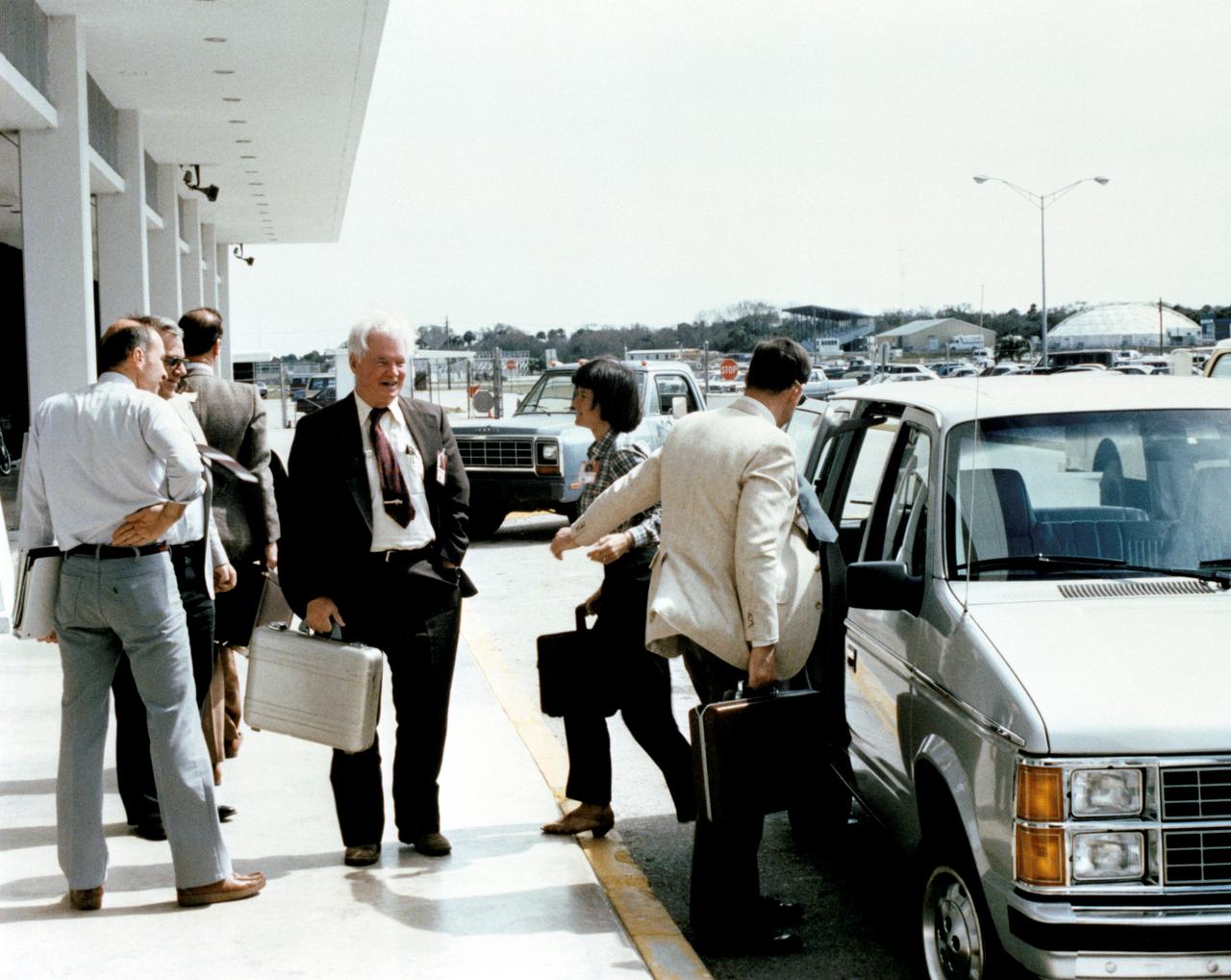
51L-10166 (4 March 1986) --- Members of the Presidential Commission on the space shuttle Challenger accident arrive at the Launch Control Center at Kennedy Space Center (KSC). Commission members present are Robert Hotz (center) and Dr. Sally Ride. Others pictured are John Chase, staff assistant to the Commission (far right) and from left to right: Bob Sieck, Director of Shuttle operations; Jack Martin and John Fabian.
Members of the Presidential commission on Challenger accident arrive at KSC
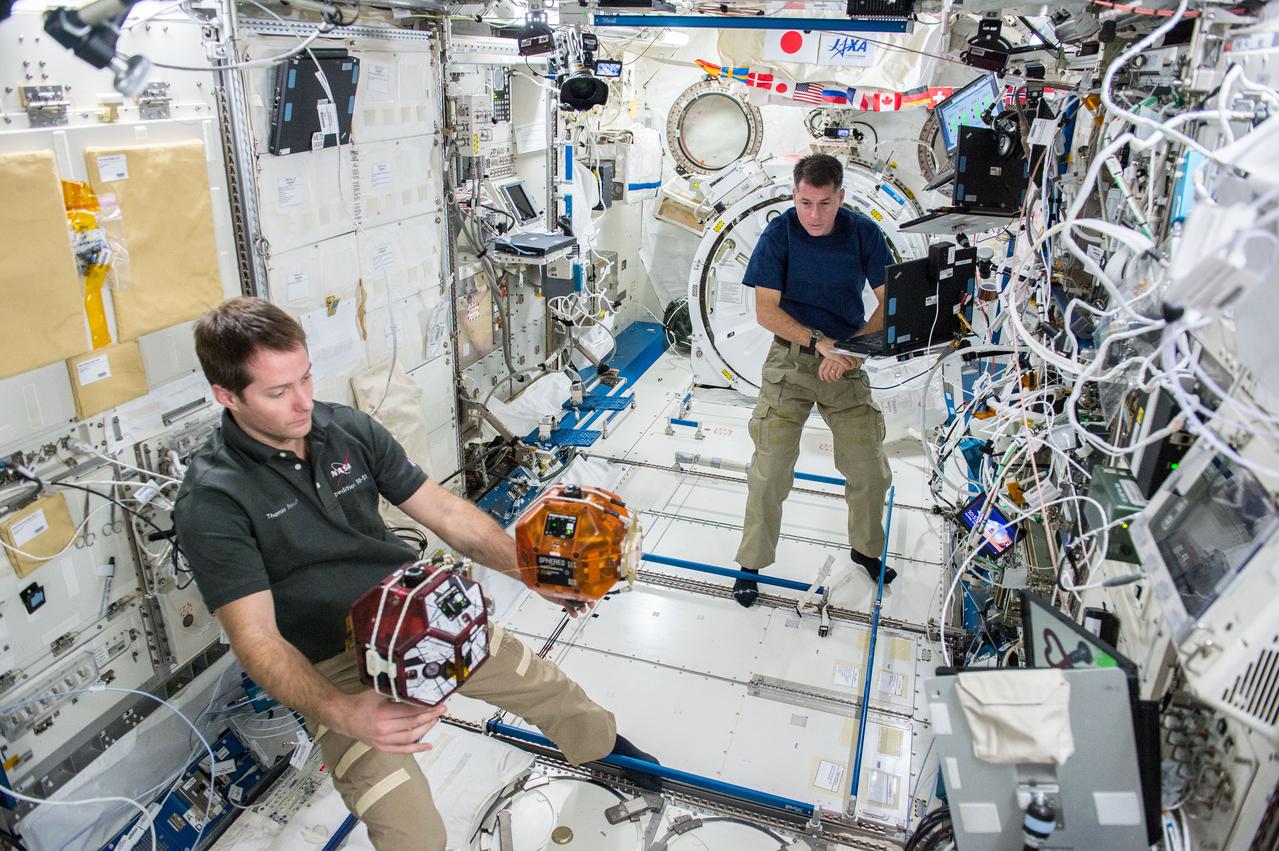
iss050e013146 (12/1/2016) --- NASA astronaut Shane Kimbrough and European Space Agency (ESA) astronaut Thomas Pesquet during the Synchronized Position Hold, Engage, Reorient, Experimental Satellites Tether Demo, in the Japanese Experiment Module (JEM) Pressurized Module (JPM). The SPHERES Tether Demo studies the dynamics of a tethered capture object and a “space tug” chase vehicle, improving computer programs needed for removing space debris as well as capturing scientific samples from other planets.
SPHERES Tether Demo
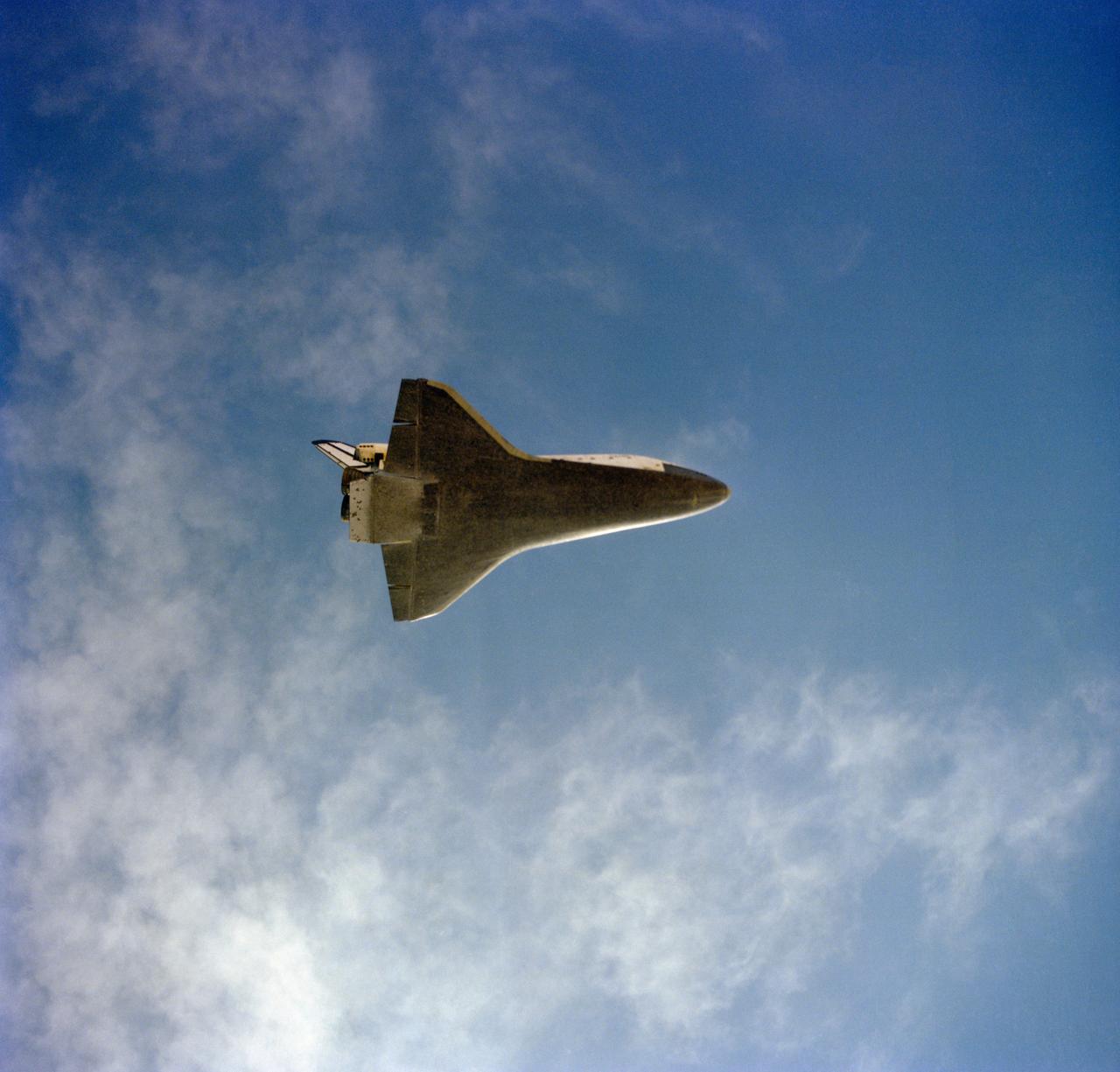
S82-28835 (30 March 1982) --- This unique view of the underside of the space shuttle orbiter Columbia was taken with a handheld camera aboard a T-38 chase plane over the White Sands Missile Range in New Mexico. Bad weather here yesterday vanished and the STS-3 crew of astronaut Jack R. Lousma and C. Gordon Fullerton greeted a pleasant climate along with a large crowd of spectators upon their landing. The successful landing was the first attempted in the actual orbiter on New Mexico soil. Photo credit: NASA
LANDING - STS-3 - NORTHRUP STRIP, NM
nhq201704100016 (April 10, 2017) --- Russian Search and Rescue teams chase the Soyuz MS-02 spacecraft as it lands with Expedition 50 Commander Shane Kimbrough of NASA and Flight Engineers Sergey Ryzhikov and Andrey Borisenko of Roscosmos near the town of Zhezkazgan, Kazakhstan on Monday, April 10, 2017 (Kazakh time). Kimbrough, Ryzhikov, and Borisenko are returning after 173 days in space where they served as members of the Expedition 49 and 50 crews onboard the International Space Station. Photo Credit: (NASA/Bill Ingalls)
Expedition 50 Soyuz MS-02 Landing
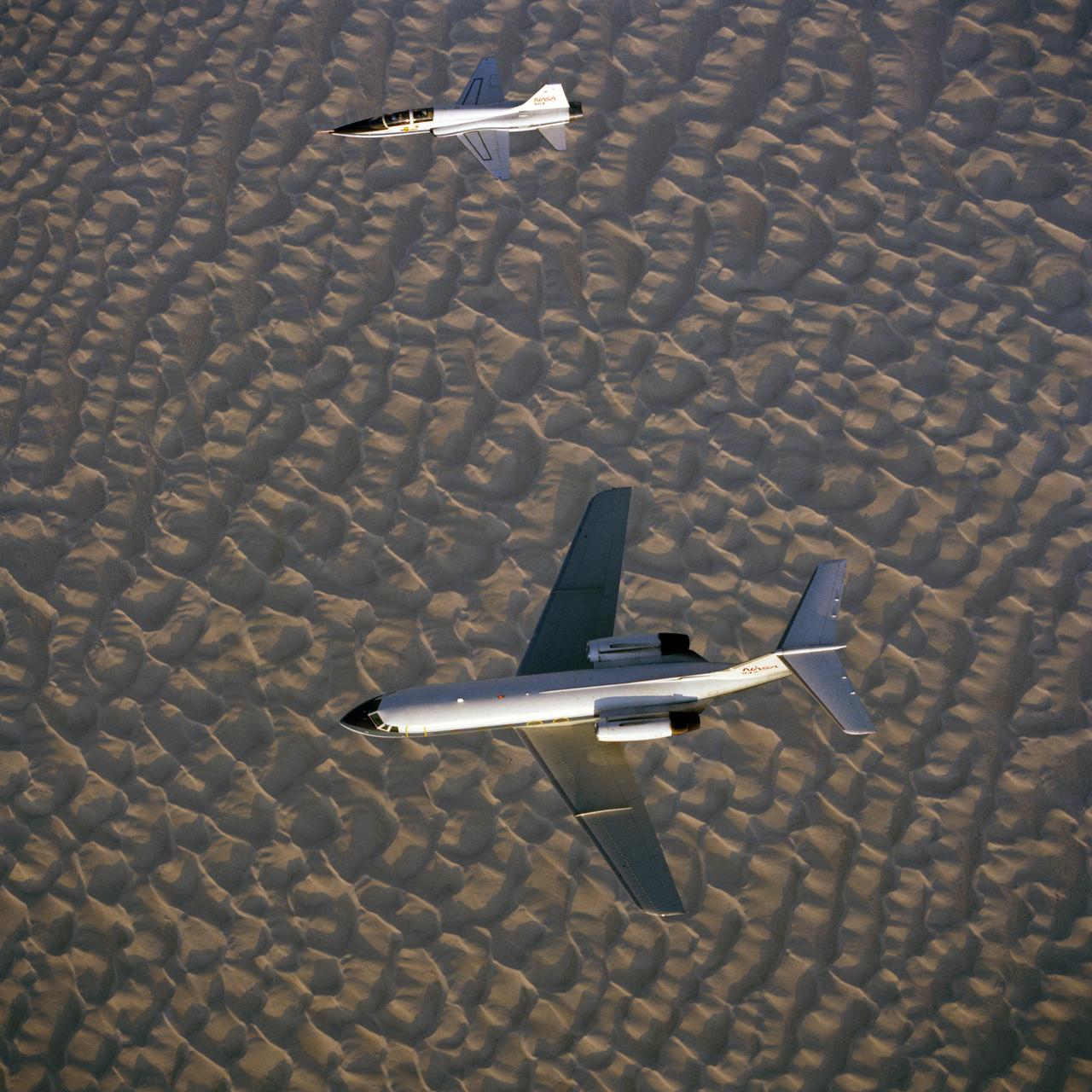
S82-32204 (October 1982) --- NASA 947 and NASA 904, two aircraft stationed at Ellington Air Base for the Johnson Space Center (JSC), are captured during a training and familiarization flight over White Sands, New Mexico. The Gulfstream aircraft (bottom) is NASA?s Space Shuttle Training Aircraft (STA) and the T-38 jet serves as a chase plane. Photo credit: NASA
SIMULATION (LANDING) - SHUTTLE - CA
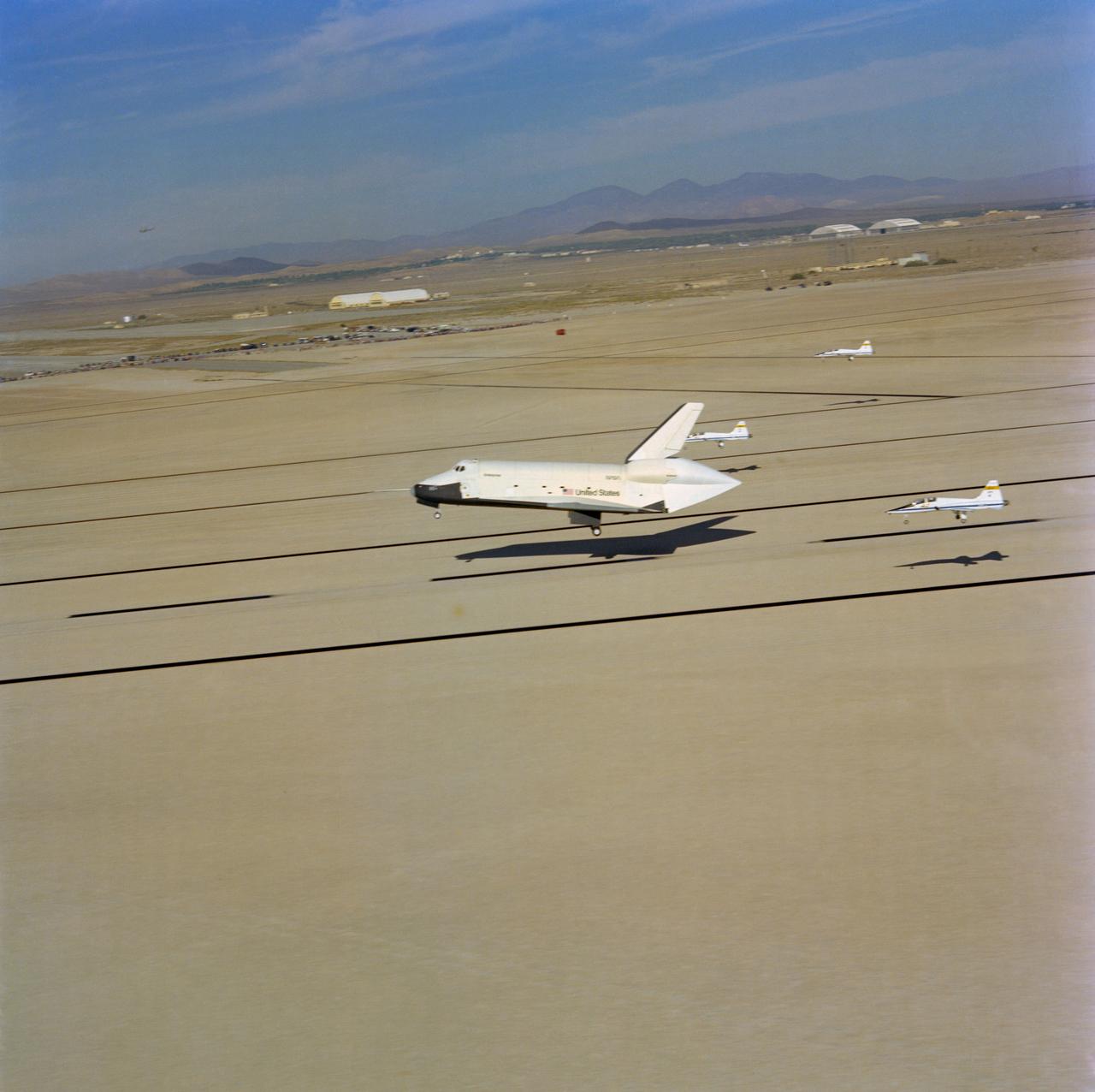
S77-28540 (23 Sept 1977)  ---  The shuttle Orbiter 101 "Enterprise" approaches touchdown on the runway at Edwards Air Force Base to conclude a five-minute, 34-second unpowered flight, the third of Shuttle Approach and Landing Tests (ALT) series, on September 23, 1977.  Thress T-38 chase planes follow close by.  Astronauts Fred W. Haise Jr., commander, and C. Gordon Fullerton, pilot, were the crew aboard the "Enterprise" for this flight.
Third (3rd) - "Free Flight" - Shuttle Orbiter 101 Spacecraft - Dryden Flight Research Center (DFRC), Edwards AFB (EAFB), CA
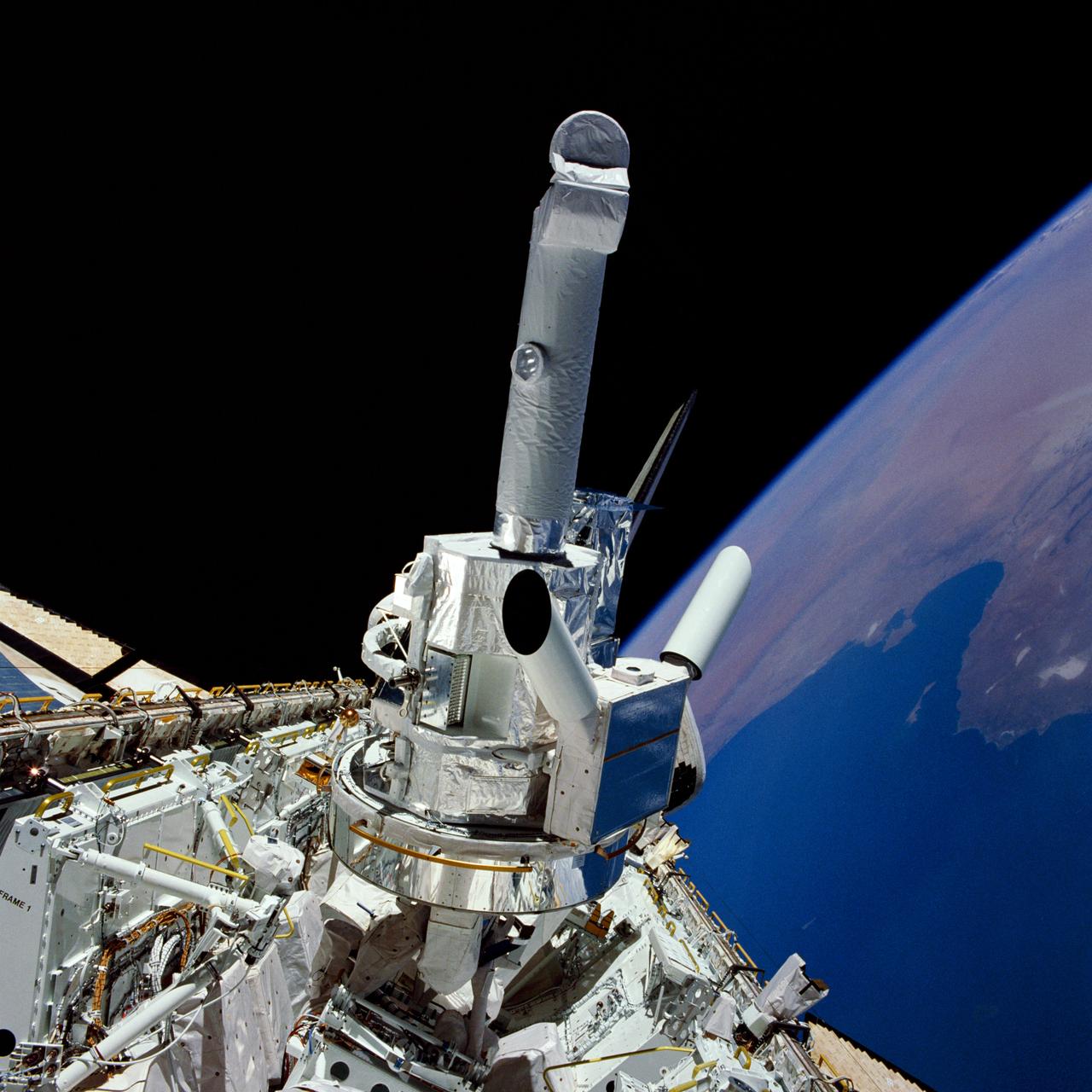
51F-33-005 (29 July - 6 August 1985) --- Experiments and the instrument pointing system (IPS) for Spacelab 2 are backdropped against the Libya/Tunisia Mediterranean coast and black space in this 70mm view photographed through the aft flight deck windows of the Space Shuttle Challenger. Also partially visible among the cluster of Spacelab 2 hardware are the solar optical universal polarimeter (SOUP) experiment and the coronal helium abundance experiment (CHASE).
View of Spacelab 2 pallet in the open payload bay
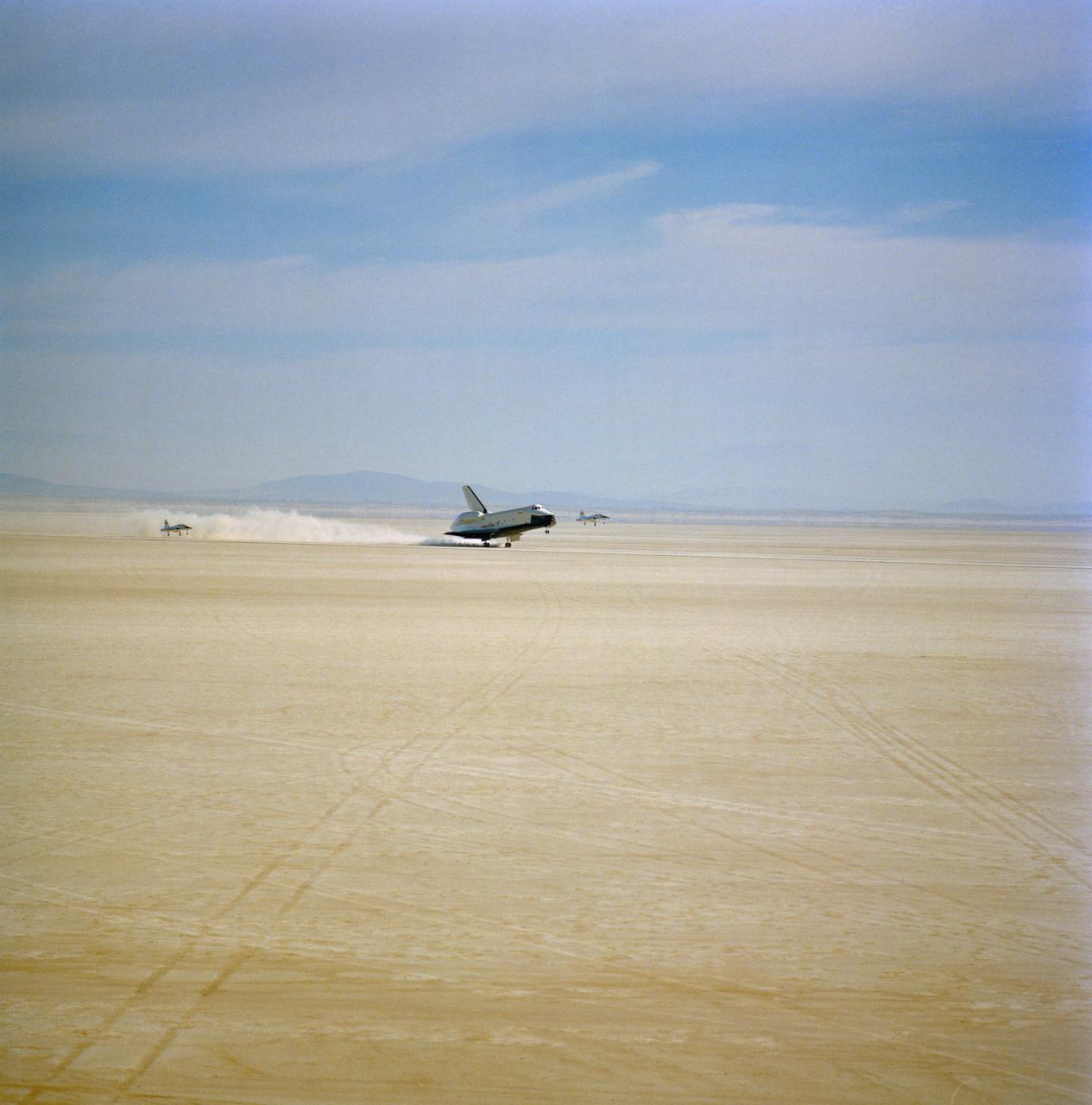
S77-28209 (13 Sept 1977) --- The shuttle orbiter 101 "Enterprise" lands on the desert at Edwards Air Force Base to conclude a five-minute, 31-second unpowered flight during the second free-flight of the Shuttle Approach and Landing Test (ALT) series, on September 13, 1977.  Two T-38 chase planes remain with the "Enterprise" for the landing.  Asstronauts Joe H. Engle, commander, and Richard H. Truly, pilot, were the crewmen for the flight.
Shuttle Orbiter "Enterprise" lands at Edwards AFB after second ALT
S84-27154 (11 Feb 1984) --- The first Space Shuttle landing on the Kennedy Space Center?s landing facility was recorded by a ground camera on February 11, 1984.  A T-38 chase plane trails the Challenger.  The nose gear has not yet touched down in this scene.  Aboard the spacecraft were Astronauts Vance D. Brand, commander; Robert L. Gibson, pilot; and Bruce McCandless II, Ronald R. McNair and Robert L. Stewart, all mission specialists.
Views of the Challenger landing at Kennedy to end shuttle mission 41-B
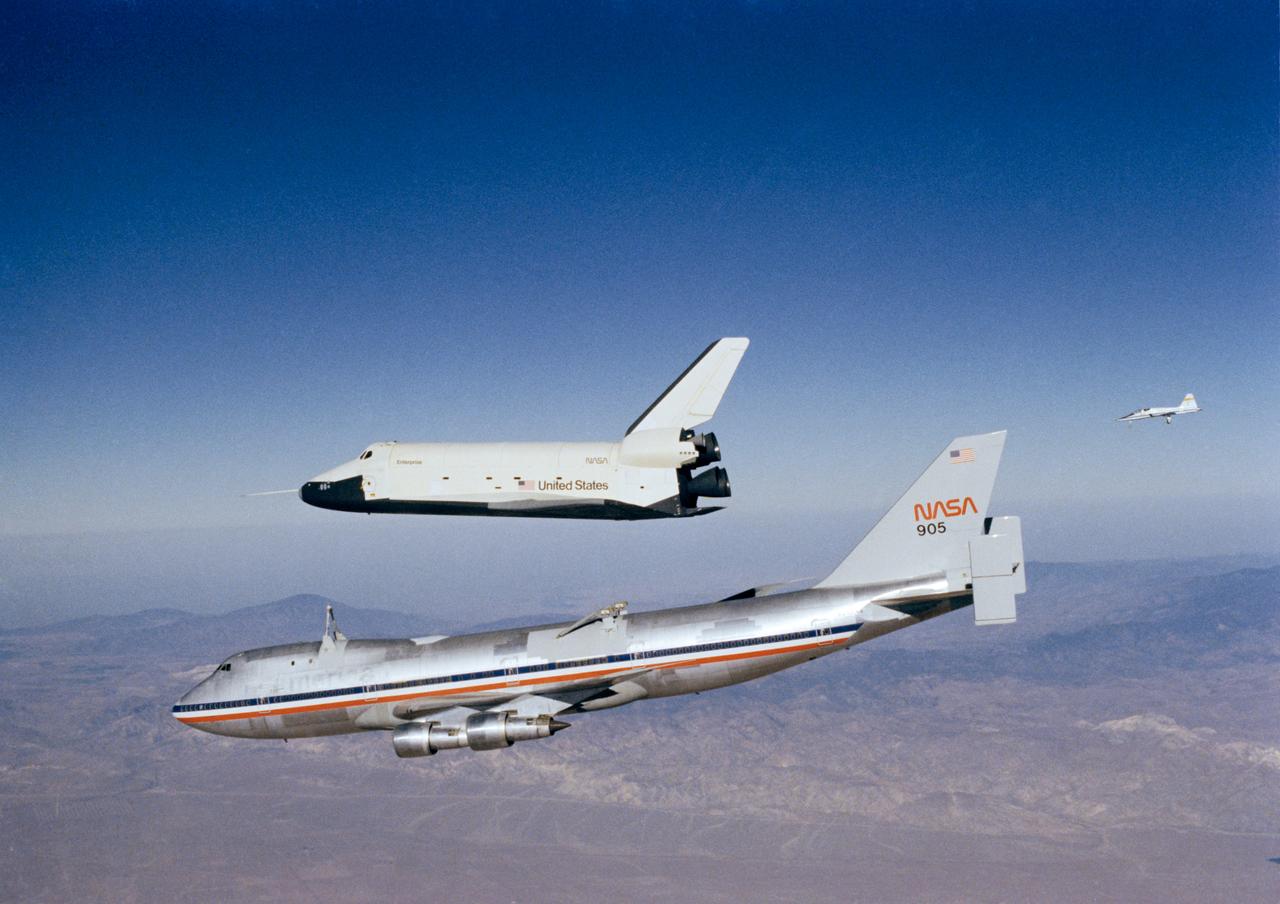
S77-28931 (12 Oct. 1977) --- The Orbiter 101 "Enterprise" separates from the NASA 747 carrier aircraft to begin its first "tailcone-off" unpowered flight over desert and mountains of Southern California. A T-38 chase plane follows in right background. This was the fourth in a series of five piloted free flights.  Photo credit: NASA
The Orbiter 101 "Enterprise" separates from the NASA 747 carrier aircraft
S77-28668 (23 Sept 1977) ---  The shuttle Orbiter 101 "Enterprise" approaches touchdown on the runway at Edwards Air Force Base to conclude a five-minute, 34-second unpowered flight, the third of Shuttle Approach and Landing Tests (ALT) series, on September 23, 1977.  Thress T-38 chase planes follow close by.  Astronauts Fred W. Haise Jr., commander, and C. Gordon Fullerton, pilot, were the crew aboard the "Enterprise" for this flight.
Shuttle Orbiter "Enterprise" lands at Edwards AFB after third ALT
nhq201704100015 (April 10, 2017) ---  Russian Search and Rescue teams chase the Soyuz MS-02 spacecraft as it lands with Expedition 50 Commander Shane Kimbrough of NASA and Flight Engineers Sergey Ryzhikov and Andrey Borisenko of Roscosmos near the town of Zhezkazgan, Kazakhstan on Monday, April 10, 2017 (Kazakh time). Kimbrough, Ryzhikov, and Borisenko are returning after 173 days in space where they served as members of the Expedition 49 and 50 crews onboard the International Space Station. Photo Credit: (NASA/Bill Ingalls)
Expedition 50 Soyuz MS-02 Landing
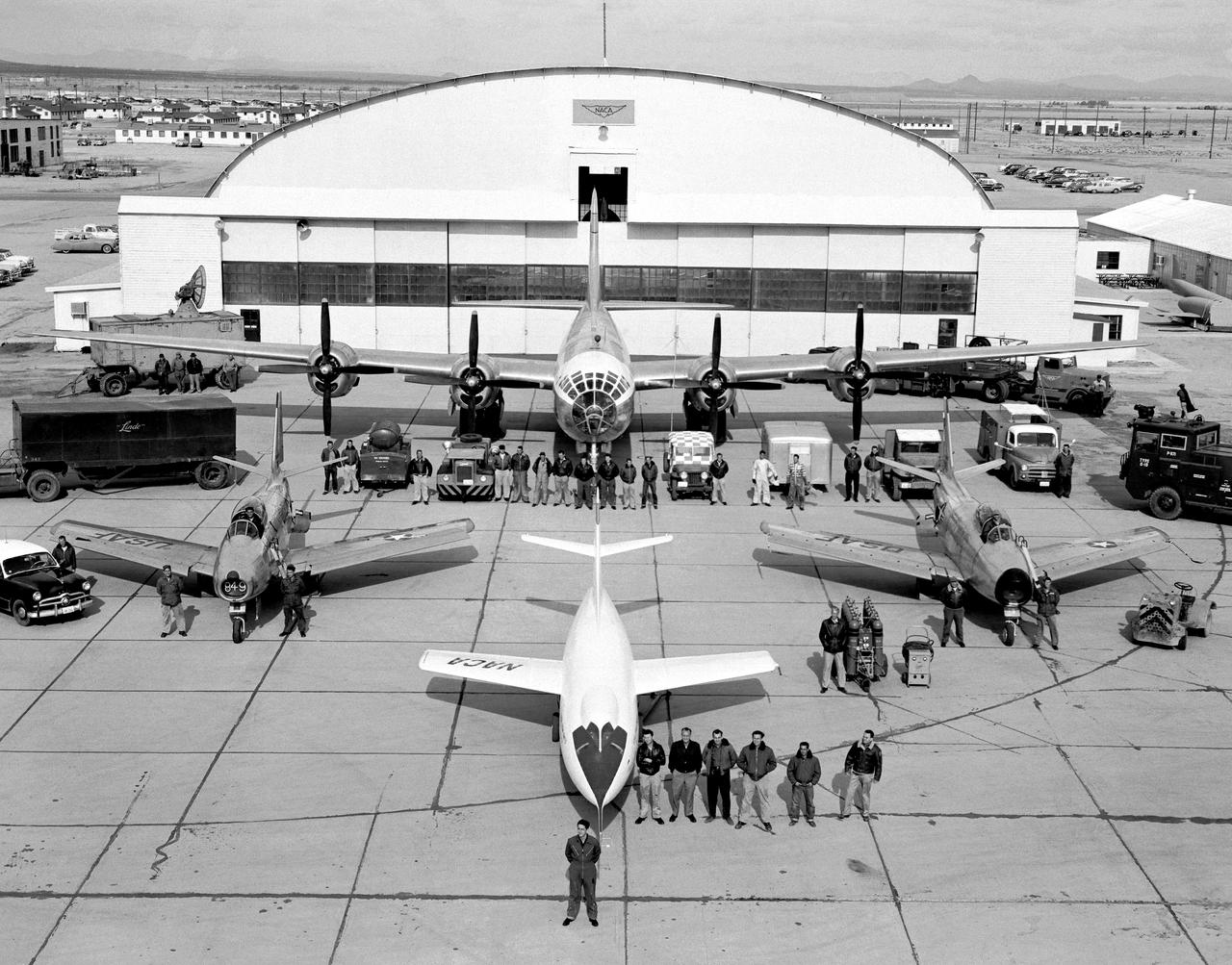
These people and this equipment supported the flight of the NACA D-558-2 Skyrocket at the High-Speed Flight Station at South Base, Edwards AFB. Note the two Sabre chase planes, the P2B-1S launch aircraft, and the profusion of ground support equipment, including communications, tracking, maintenance, and rescue vehicles. Research pilot A. Scott Crossfield stands in front of the Skyrocket.
E-1152
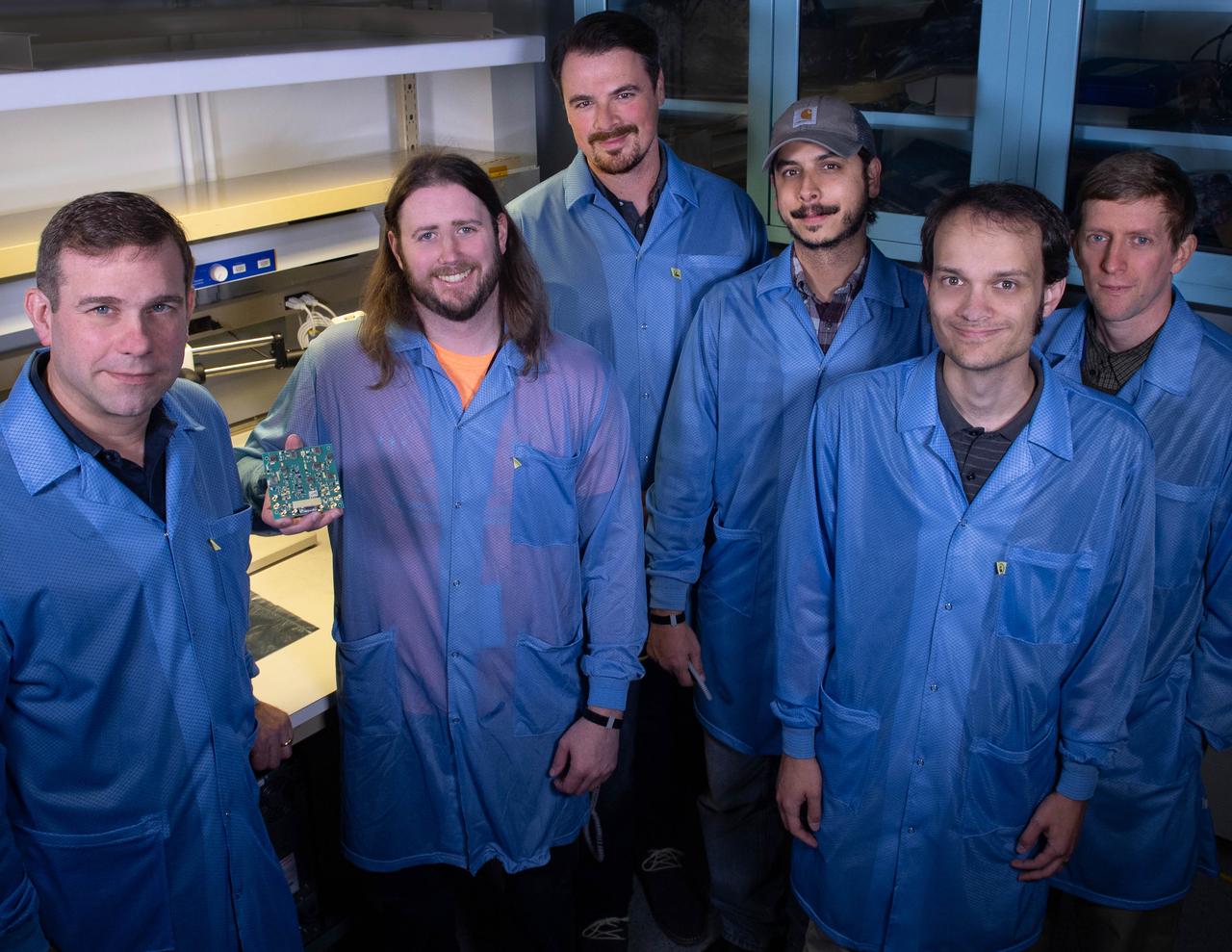
Several Goddard technologists are involved in a new CubeSat technology-demonstration mission called SNoOPI, which employs a novel remote-sensing technique for measuring soil-moisture levels. From left to right: Jeffrey Piepmeier, Chase Kielbasa, who is holding a first-generation prototype circuit board for the SNoOPI instrument, Joseph Knuble, Manuel Vega, Michael Coon, and Derek Hudson.
SNoOPI: A Flying Ace for Soil Moisture and Snow Measurements
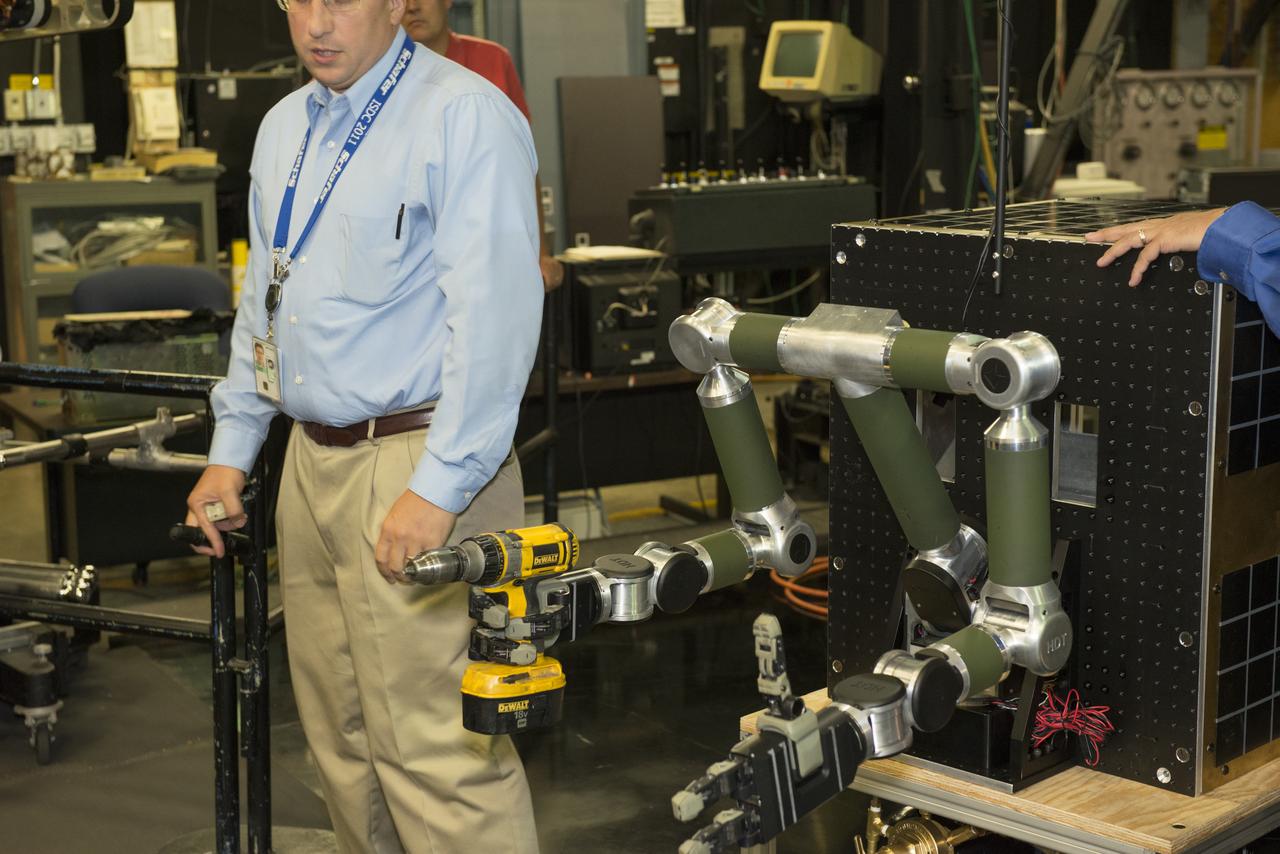
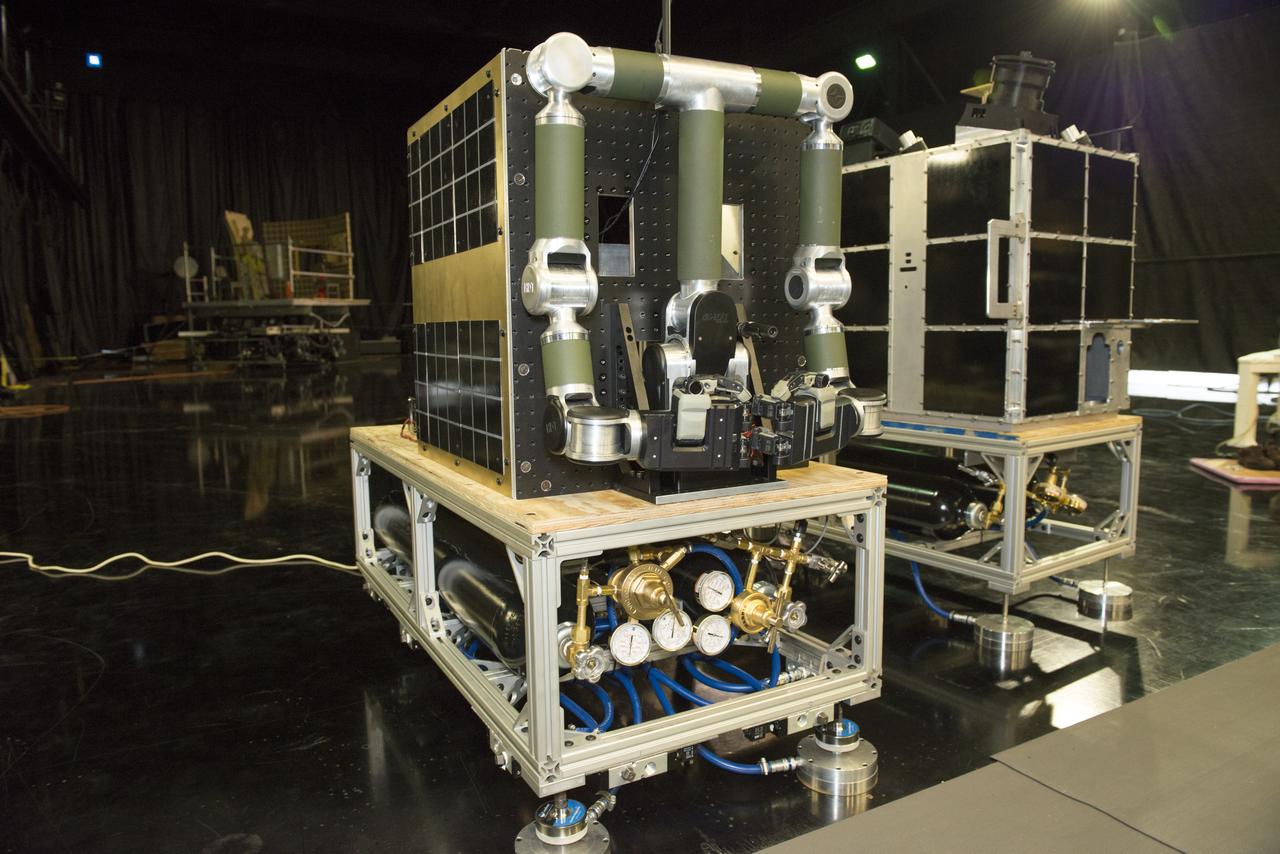
FINAL DEMONSTRATION OF A WIRELESS DATA TASK SUPPORTED BY SLS ADVANCED DEVELOPMENT USED TO DEMONSTRATE REAL-TIME VIDEO OVER WIRELESS CONNECTIONS ALONG WITH DATA AND COMMANDS AS DEMONSTRATED VIA THE ROBOTIC ARMS. THE ARMS AND VIDEO CAMERAS WERE MOUNTED ON FREE FLOATING AIR-BEARING VEHICLES TO SIMULATE CONDITIONS IN SPACE. THEY WERE USED TO SHOW HOW A CHASE VEHICLE COULD MOVE UP TO AND CAPTURE A SATELLITE, SUCH AS THE FASTSAT MOCKUP DEMONSTRITING HOW ROBOTIC TECHNOLOGY AND SMALL SPACECRAFT COULD ASSIST WITH ORBITAL DEBRIS MITIGATION
1200738
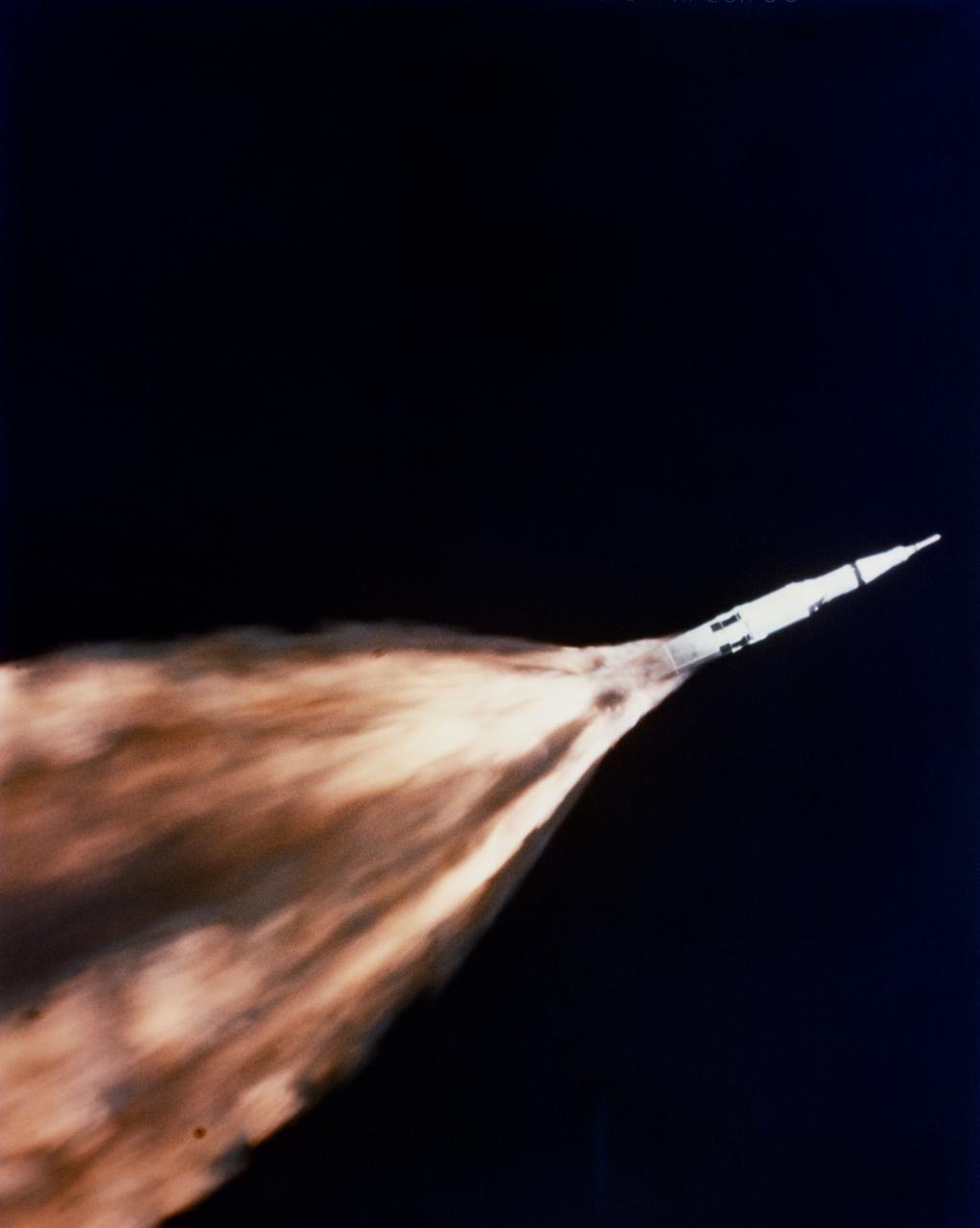
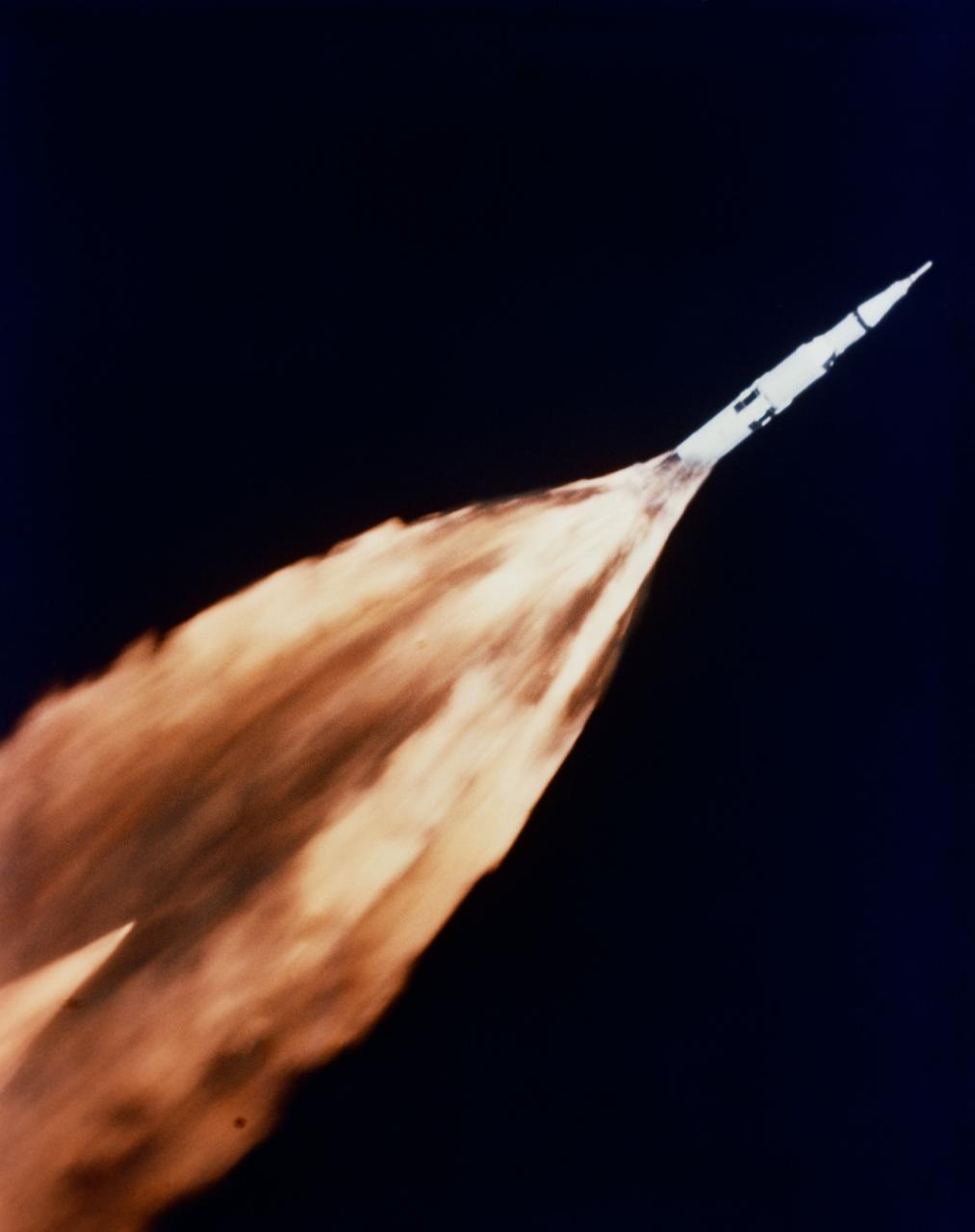
S68-27365 (4 April 1968) --- The five F-1 engines of the huge Apollo/Saturn V space vehicle's first (S-IC) stage leave a gigantic trail of flame in the sky above the Kennedy Space Center seconds after liftoff. The launch of the Apollo 6 (Spacecraft 020/Saturn 502) unmanned space mission occurred at 07:00:01.5 (EST), April 4, 1968. This view of the Apollo 6 launch was taken from a chase plane.
F-1 engines of Apollo/Saturn V first stage leave trail of flame after liftoff
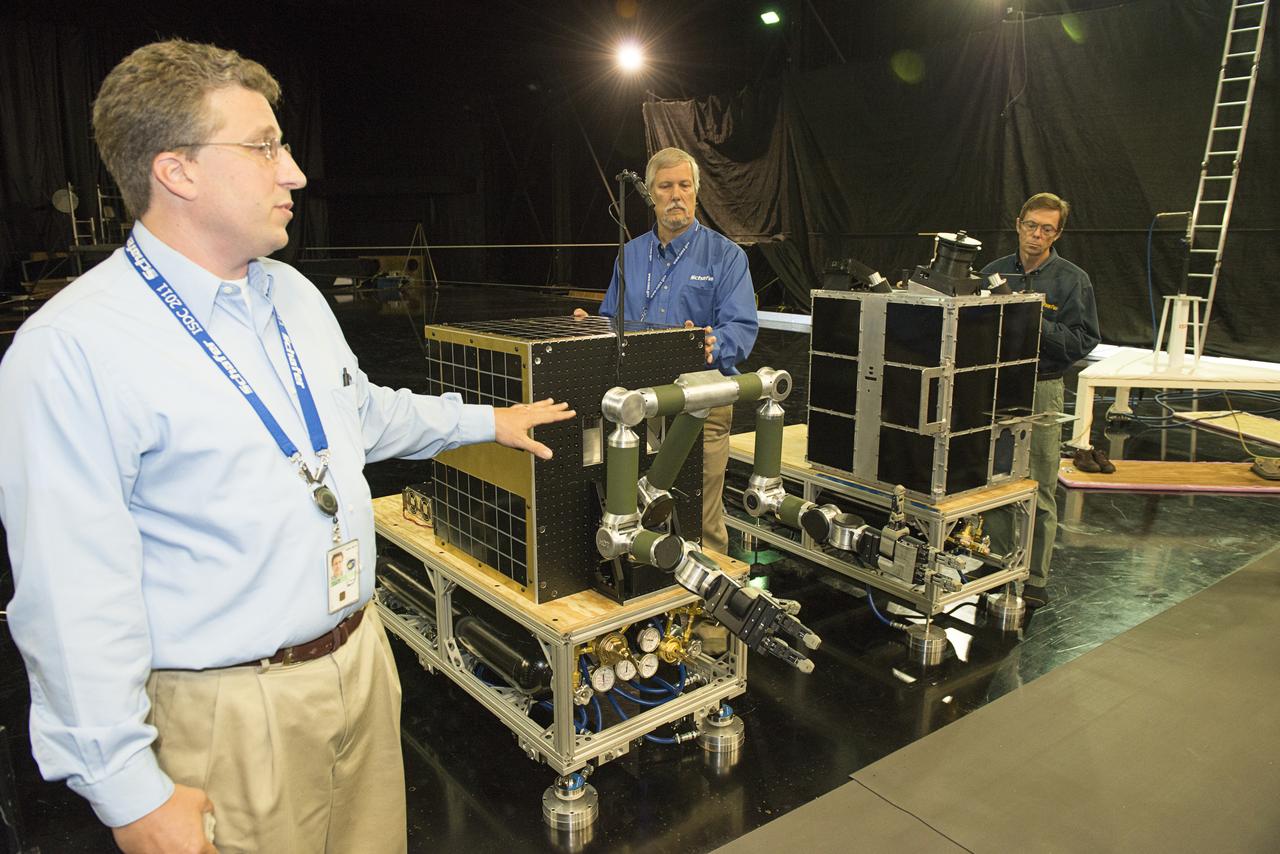
FINAL DEMONSTRATION OF A WIRELESS DATA TASK SUPPORTED BY SLS ADVANCED DEVELOPMENT USED TO DEMONSTRATE REAL-TIME VIDEO OVER WIRELESS CONNECTIONS ALONG WITH DATA AND COMMANDS AS DEMONSTRATED VIA THE ROBOTIC ARMS. THE ARMS AND VIDEO CAMERAS WERE MOUNTED ON FREE FLOATING AIR-BEARING VEHICLES TO SIMULATE CONDITIONS IN SPACE. THEY WERE USED TO SHOW HOW A CHASE VEHICLE COULD MOVE UP TO AND CAPTURE A SATELLITE, SUCH AS THE FASTSAT MOCKUP DEMONSTRITING HOW ROBOTIC TECHNOLOGY AND SMALL SPACECRAFT COULD ASSIST WITH ORBITAL DEBRIS MITIGATION
1200739
FINAL DEMONSTRATION OF A WIRELESS DATA TASK SUPPORTED BY SLS ADVANCED DEVELOPMENT USED TO DEMONSTRATE REAL-TIME VIDEO OVER WIRELESS CONNECTIONS ALONG WITH DATA AND COMMANDS AS DEMONSTRATED VIA THE ROBOTIC ARMS. THE ARMS AND VIDEO CAMERAS WERE MOUNTED ON FREE FLOATING AIR-BEARING VEHICLES TO SIMULATE CONDITIONS IN SPACE. THEY WERE USED TO SHOW HOW A CHASE VEHICLE COULD MOVE UP TO AND CAPTURE A SATELLITE, SUCH AS THE FASTSAT MOCKUP DEMONSTRITING HOW ROBOTIC TECHNOLOGY AND SMALL SPACECRAFT COULD ASSIST WITH ORBITAL DEBRIS MITIGATION
1200737
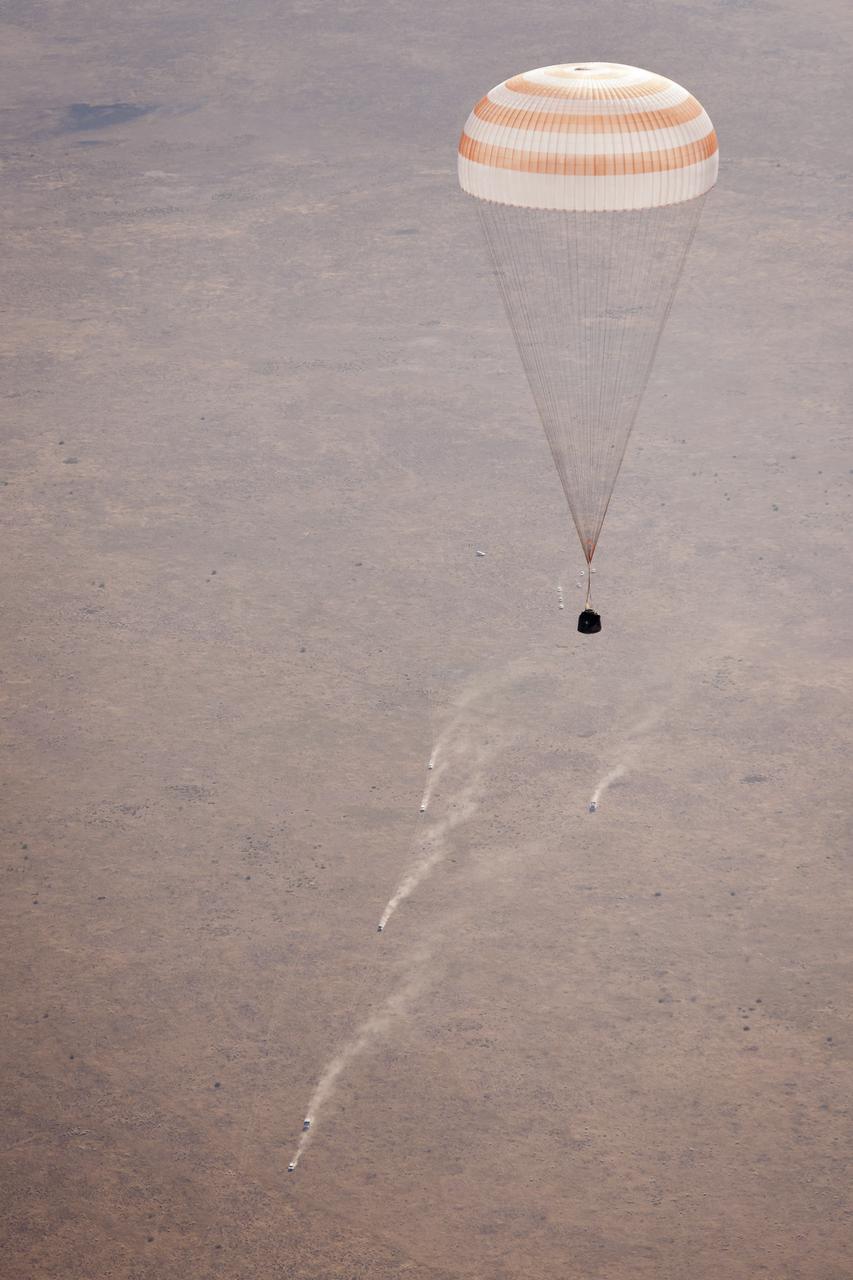
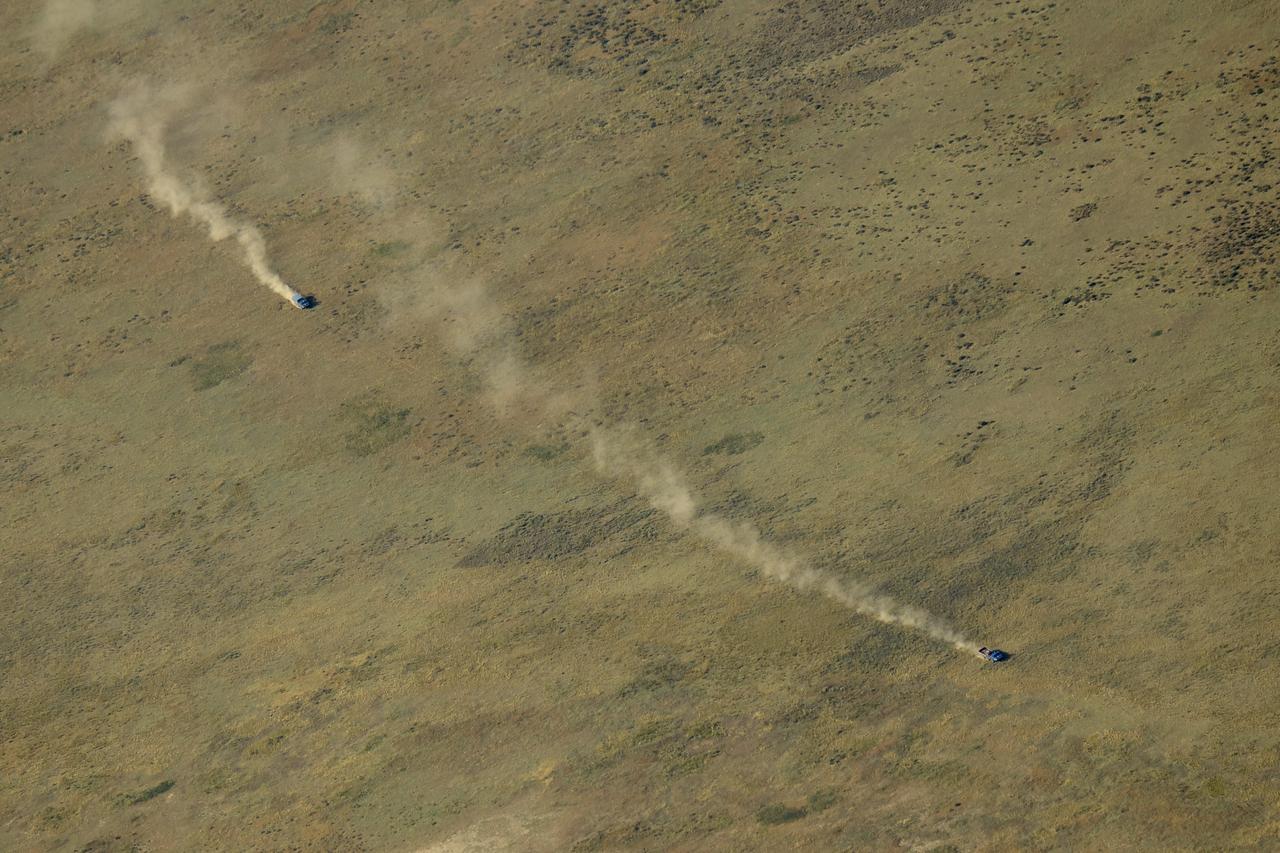
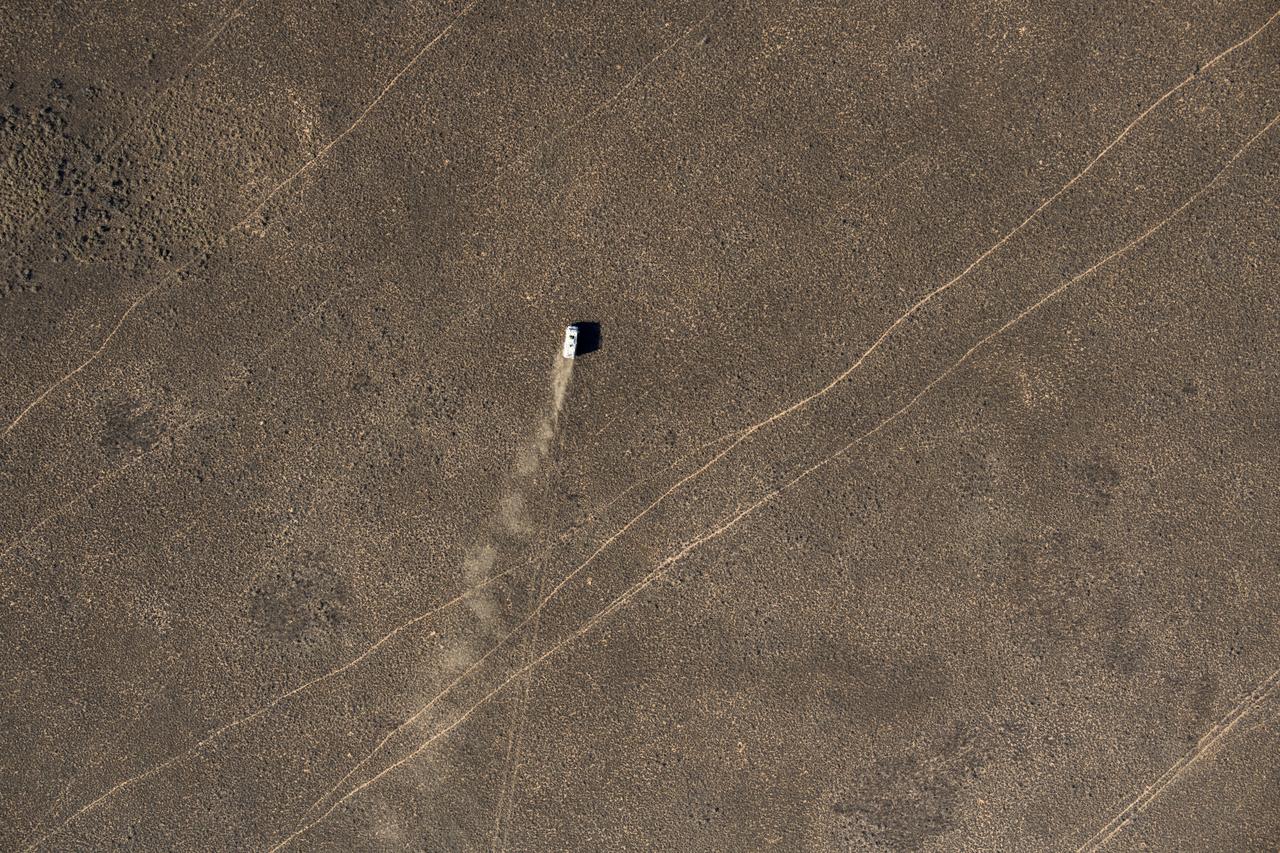
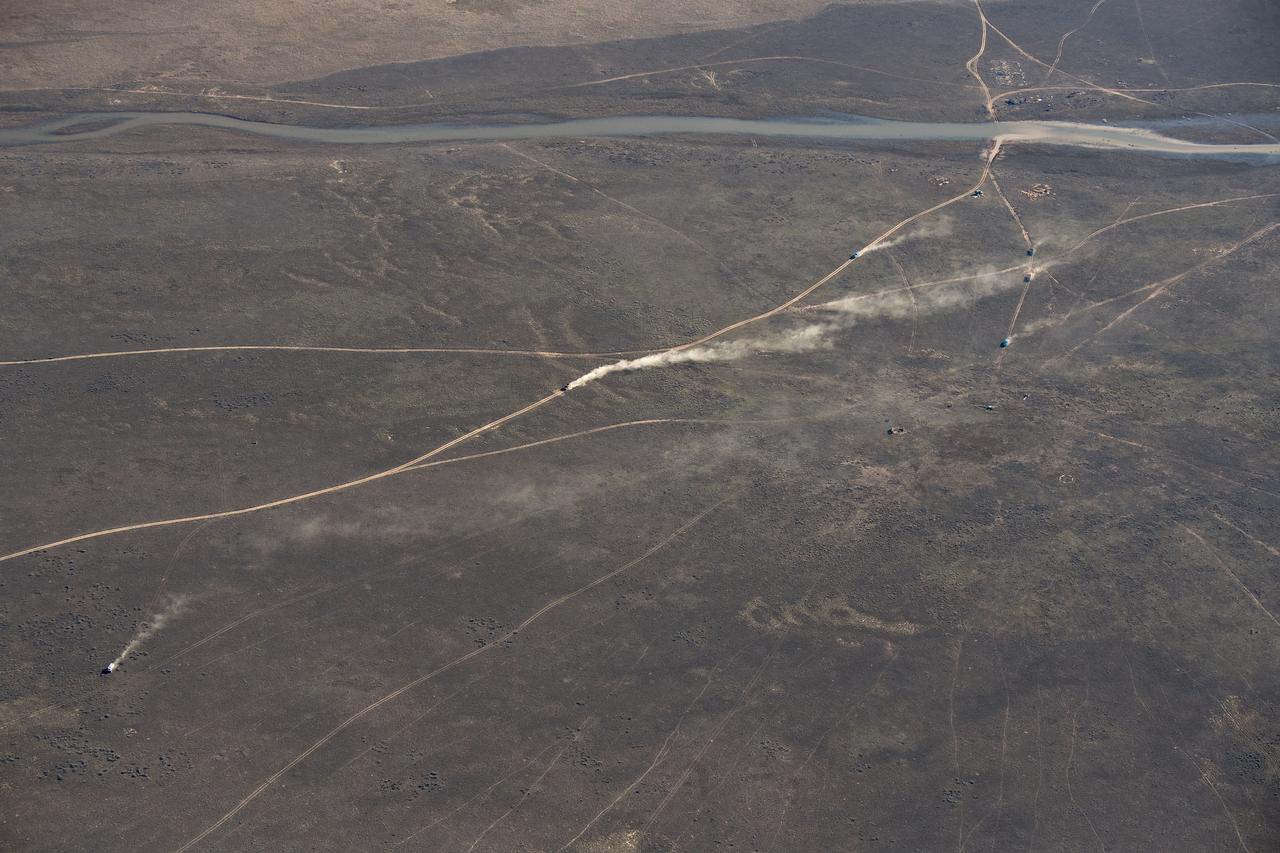
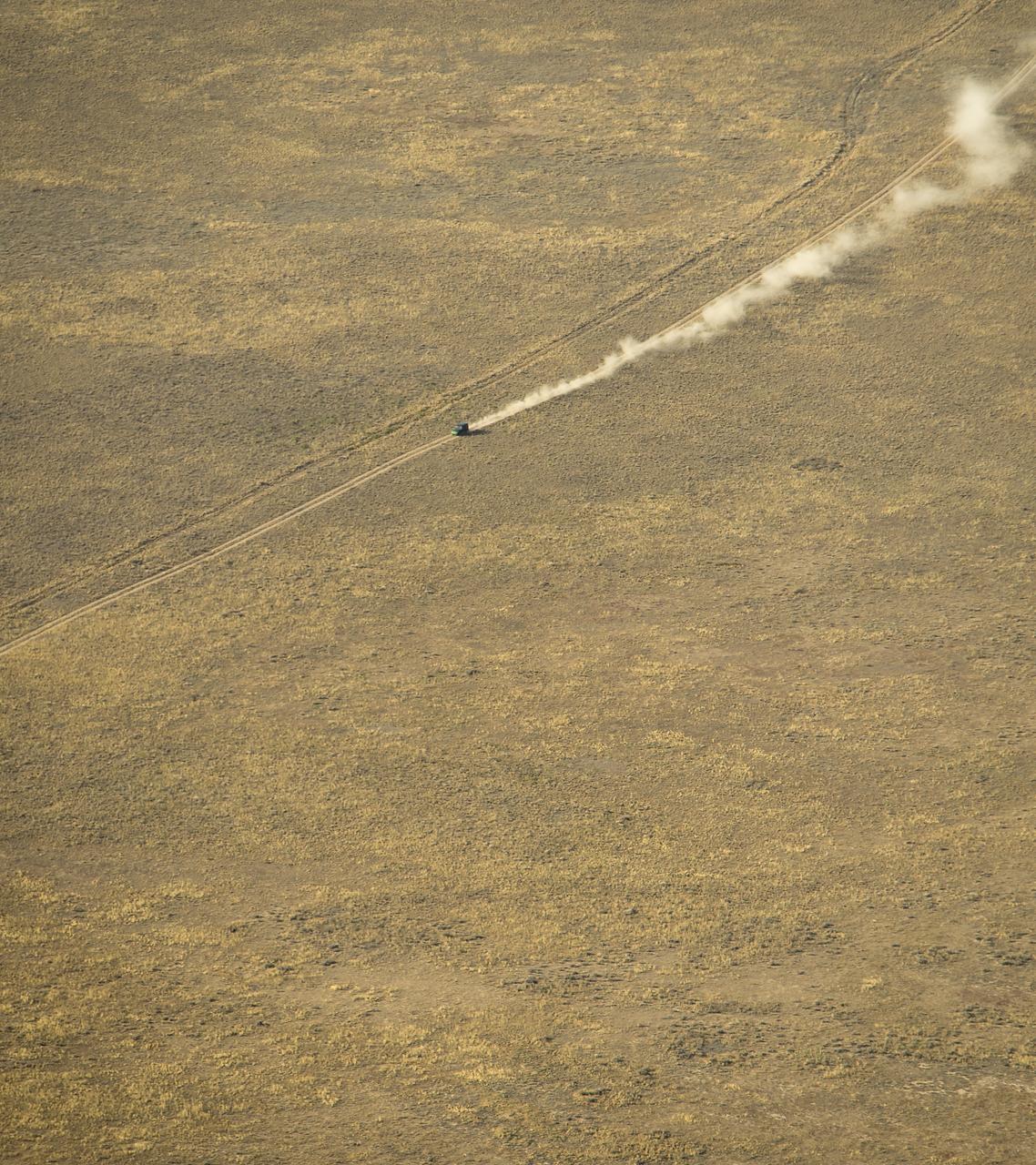
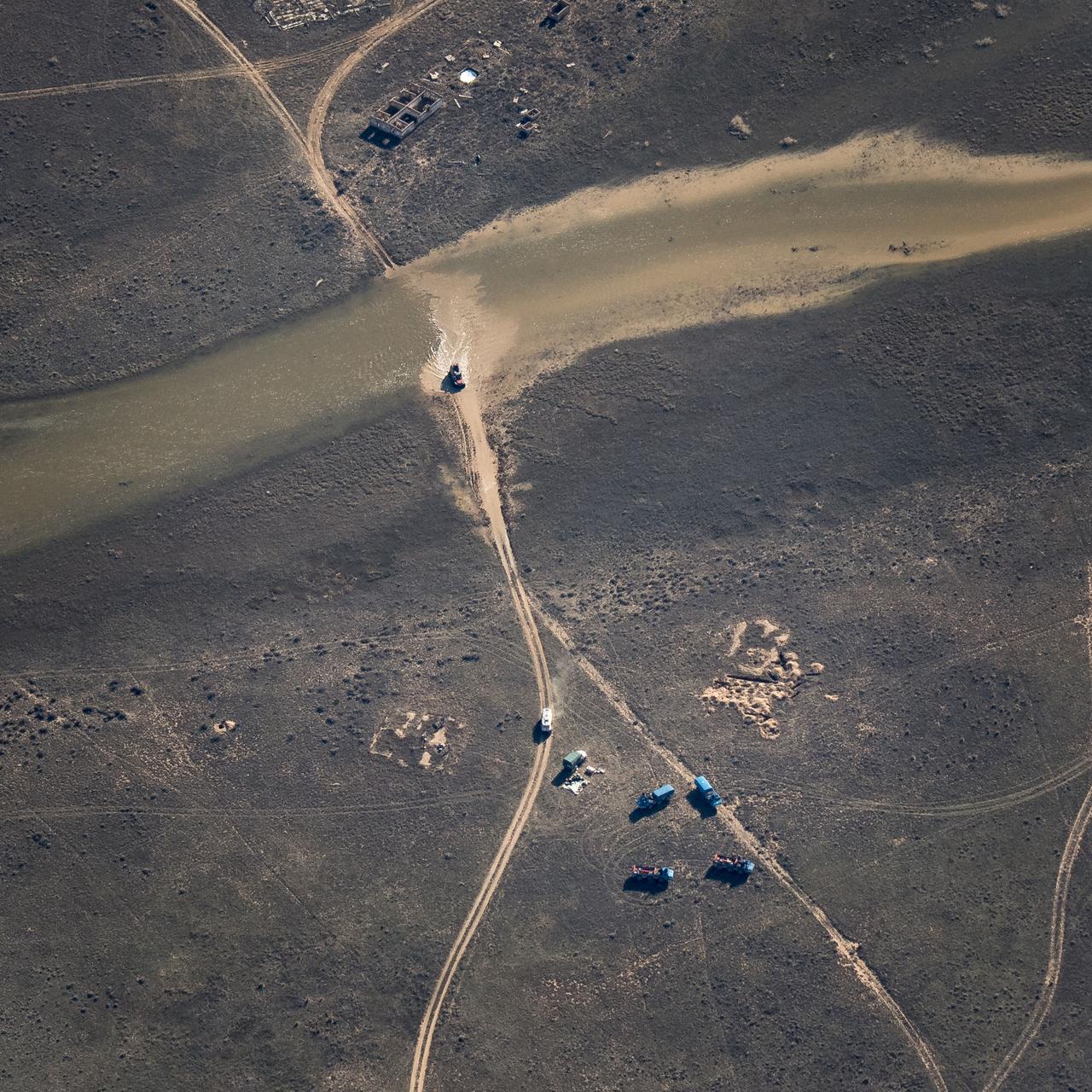
Russian Search and Rescue teams in all-terrain vehicles chase the Soyuz MS-11 spacecraft as it lands with Expedition 59 crew members Anne McClain of NASA, David Saint-Jacques of the Canadian Space Agency, and Oleg Kononenko of Roscosmos, Tuesday, June 25, 2019 Kazakh time (June 24 Eastern time). McClain, Saint-Jacques, and Kononenko are returning after 204 days in space where they served as members of the Expedition 58 and 59 crews onboard the International Space Station. Photo Credit: (NASA/Bill Ingalls)
Expedition 59 Soyuz MS-11 Landing
S68-27366 (4 April 1968) --- The five F-1 engines of the huge Apollo/Saturn V space vehicle's first (S-IC) stage leave a gigantic trail of flame in the sky above the Kennedy Space Center seconds after liftoff. The launch of the Apollo 6 (Spacecraft 020/Saturn 502) unmanned space mission occurred at 07:00:01.5 (EST), April 4, 1968. This view of the Apollo 6 launch was taken from a chase plane.
F-1 engines of Apollo/Saturn V first stage leave trail of flame after liftoff
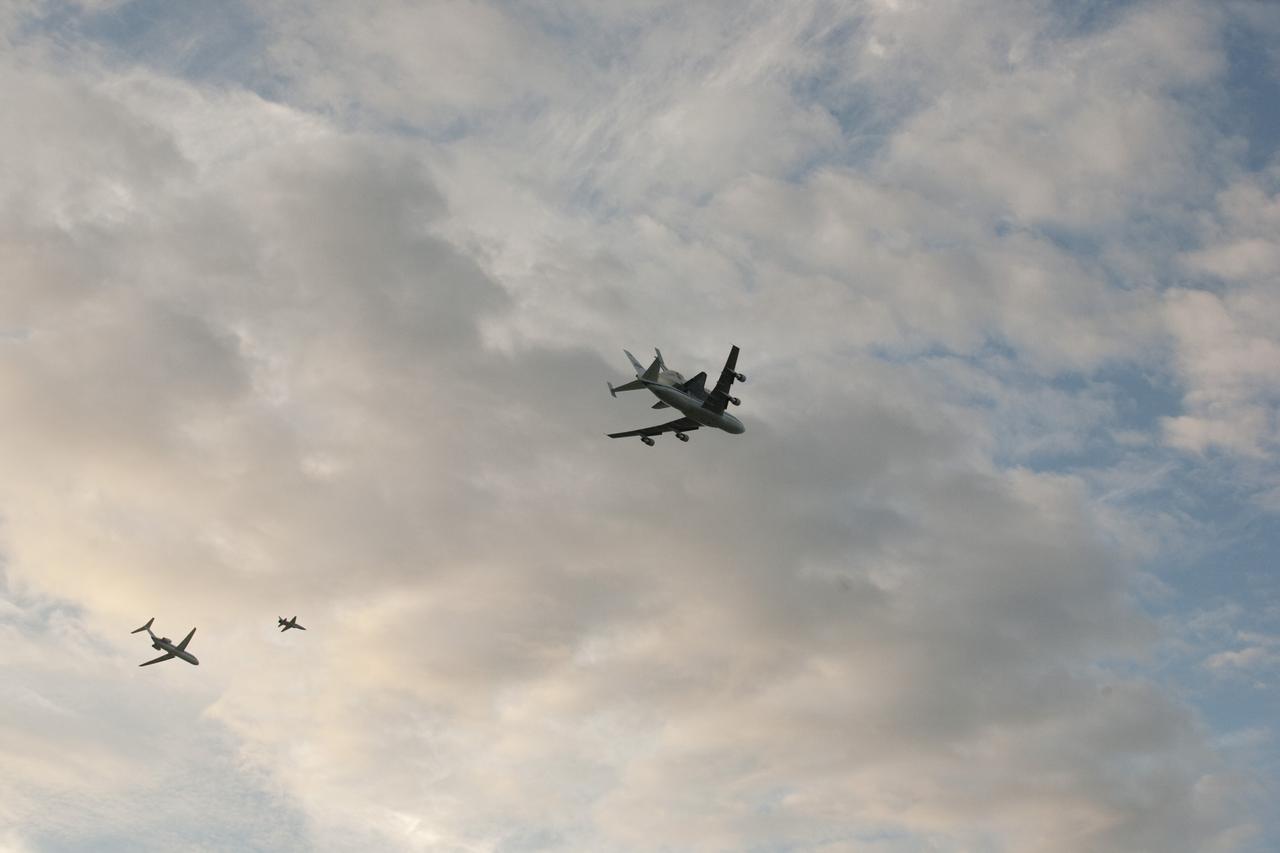
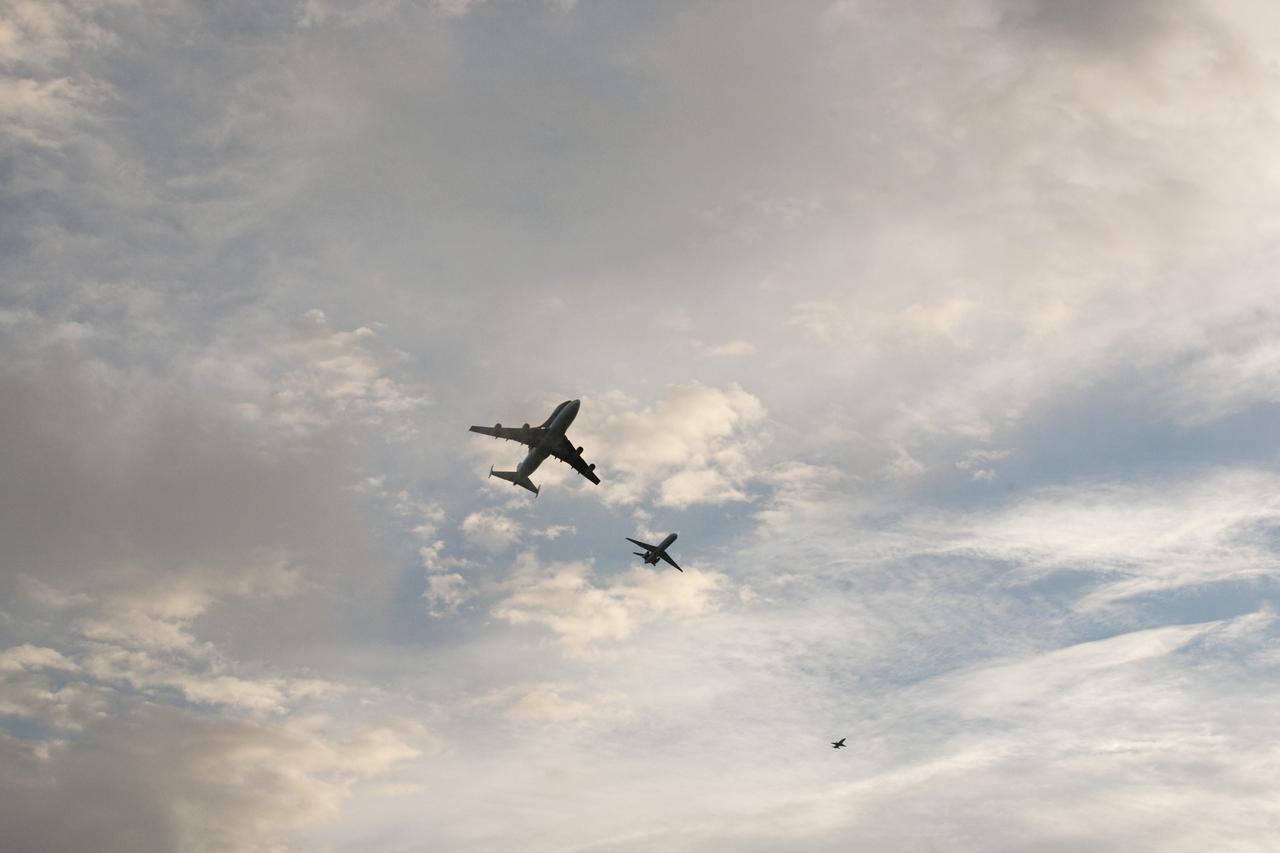
COCOA BEACH, Fla. – NASA's Shuttle Carrier Aircraft, or SCA, with the space shuttle Endeavour mounted atop, right, is accompanied by a T-38 chase aircraft, center, and a pathfinder aircraft flying along Cocoa Beach.    The SCA, a modified 747 jetliner, will fly Endeavour to Los Angeles where it will be placed on public display at the California Science Center. This is the final ferry flight scheduled in the Space Shuttle Program era. For more information on the shuttles' transition and retirement, visit http://www.nasa.gov/transition.  Photo credit: NASA/Alan Ault
KSC-2012-5425
COCOA BEACH, Fla. – NASA's Shuttle Carrier Aircraft, or SCA, with the space shuttle Endeavour mounted atop, left, is accompanied by its pathfinder aircraft, center, and a T-38 chase aircraft flying along Cocoa Beach.    The SCA, a modified 747 jetliner, will fly Endeavour to Los Angeles where it will be placed on public display at the California Science Center. This is the final ferry flight scheduled in the Space Shuttle Program era. For more information on the shuttles' transition and retirement, visit http://www.nasa.gov/transition.  Photo credit: NASA/Alan Ault
KSC-2012-5424
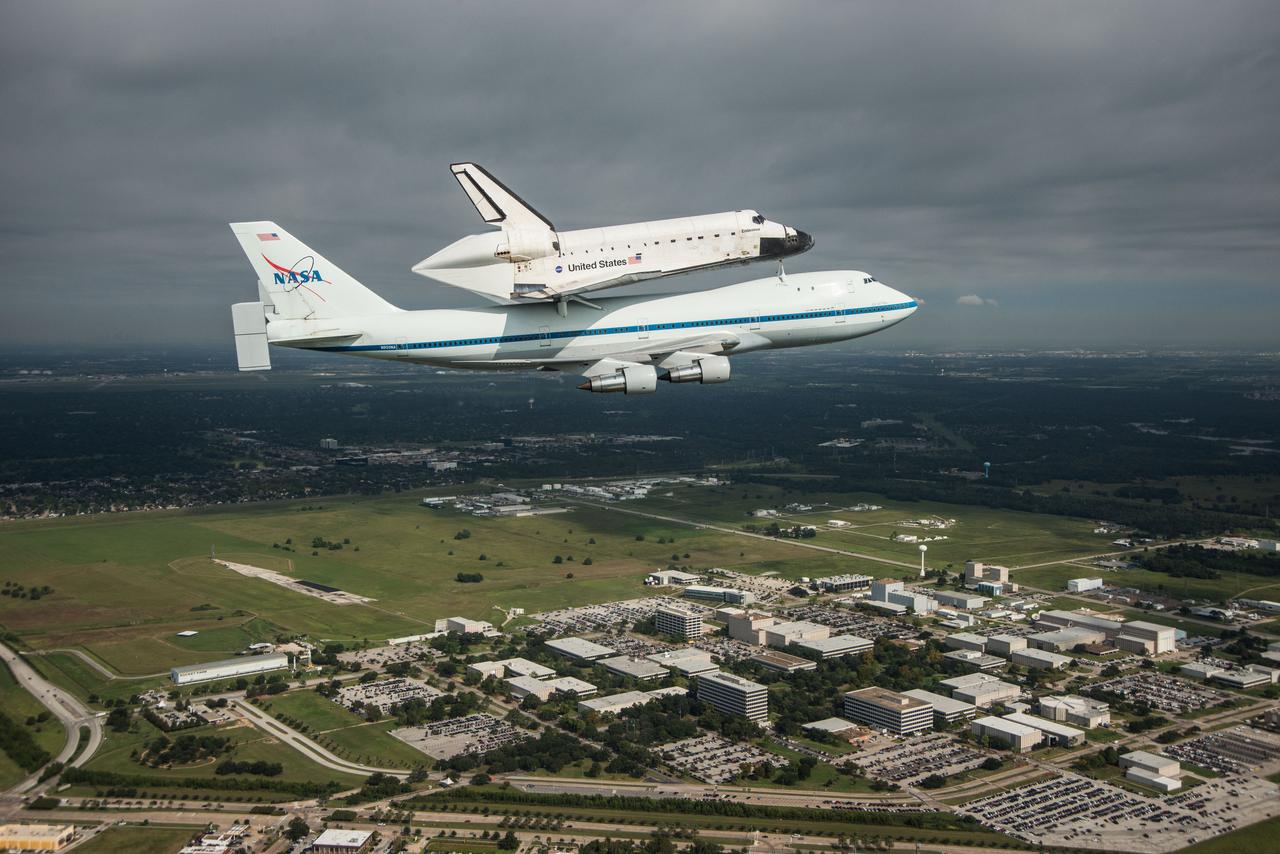
Space Shuttle Endeavour is ferried by NASA's Shuttle Carrier Aircraft (SCA) over the Johnson Space Center in Houston, Texas on September 19, 2012. NASA pilots Jeff Moultrie and Bill Rieke are at the controls of the Shuttle Carrier Aircraft. Photo taken by  NASA photographer Sheri Locke in the backseat of a NASA T-38 chase plane with NASA pilot Thomas E. Parent at the controls. Photo Credit: NASA/ Sheri Locke
Endeavour sitting atop NASA's Shuttle Carrier Aircraft (SCA)
S82-28840 (30 March 1982) --- T-38 chase planes remain relatively close to the NASA reusable space shuttle Columbia (STS-3) as it heads for a completion of an eight-day mission on the White Sands Missile Range's Northrup strip. Astronauts Jack R. Lousma and C. Gordon Fullerton were aboard the craft. This view was photographed from another T-38. Photo credit: NASA
LANDING - STS-3 - NORTHRUP STRIP, NM
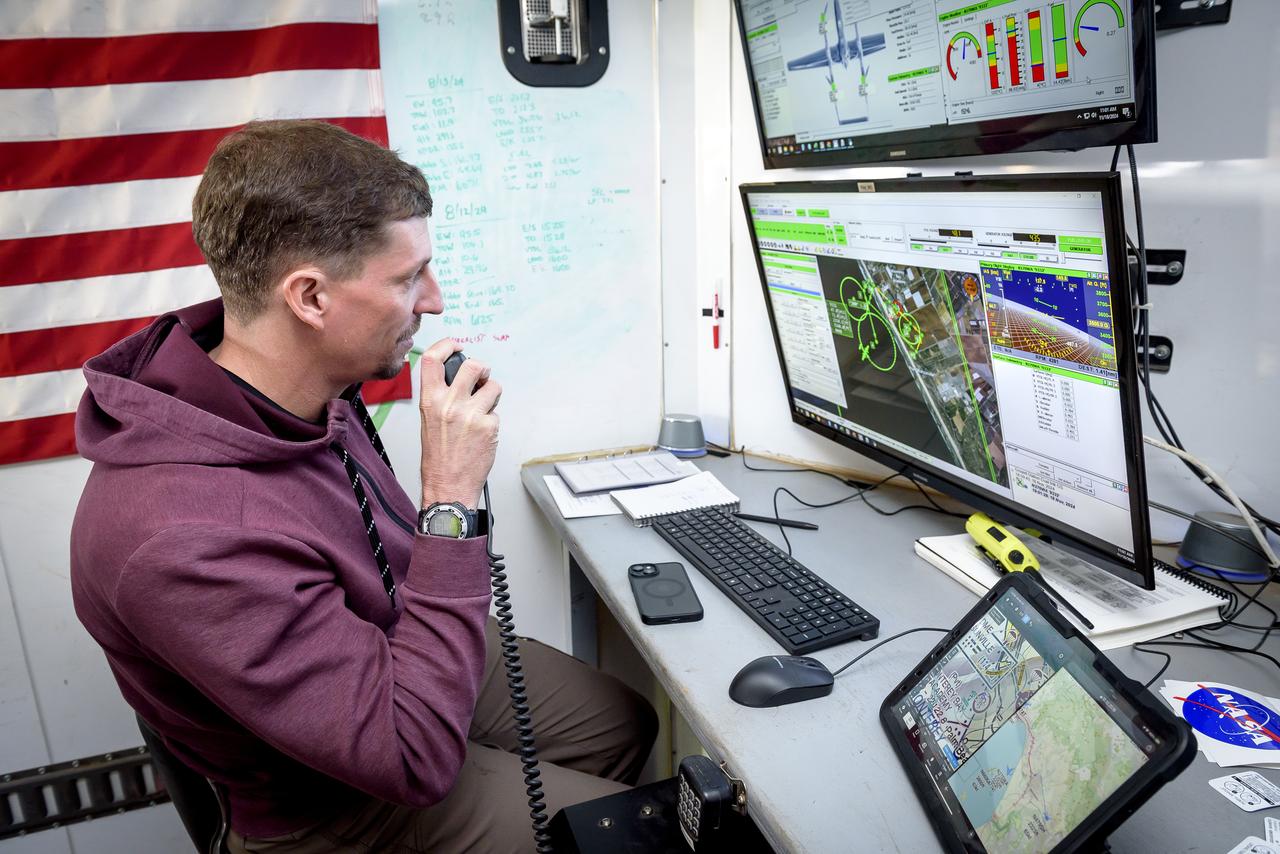
Engineers at NASA‘s Armstrong Flight Research Center sit in a control room to monitor the remotely-piloted Ikhana aircraft during a test flight. The test flight was used to validate key technologies and operations necessary to receive approval from the FAA’s to fly the aircraft in the National Airspace System June 12, 2018, without a safety chase aircraft.
NASAs Engineers in Mission Control Monitor Ikhana Aircraft During a Test Flight
Ground support vehicles can be seen chasing the Soyuz TMA-21 spacecraft as it lands with Expedition 28 Commander Andrey Borisenko, and Flight Engineers Ron Garan, and Alexander Samokutyaev in a remote area outside of the town of Zhezkazgan, Kazakhstan, on Friday, Sept. 16, 2011. NASA Astronaut Garan, Russian Cosmonauts Borisenko and Samokutyaev are returning from more than five months onboard the International Space Station where they served as members of the Expedition 27 and 28 crews. Photo Credit: (NASA/Bill Ingalls)
Expedition 28 Landing
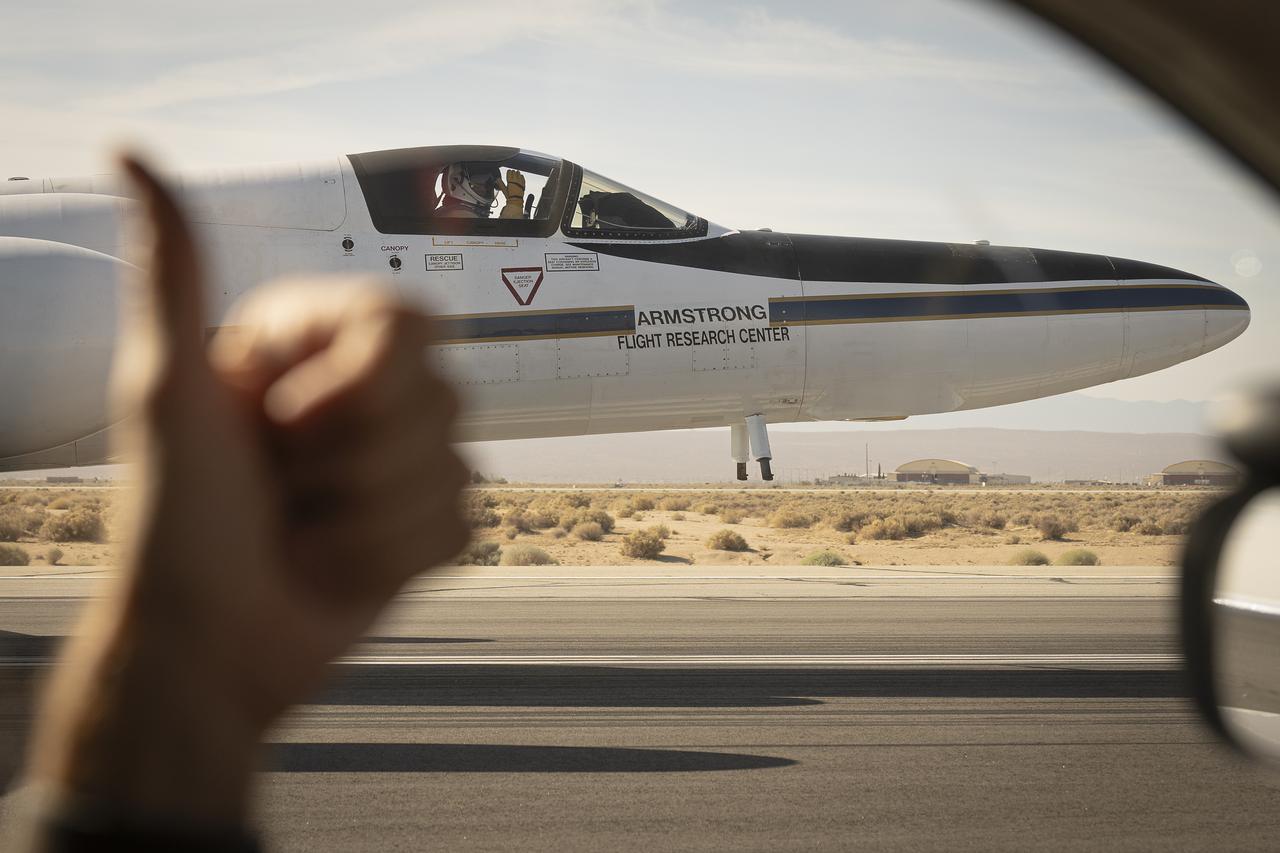
From the window of the ER-2 chase car, a crew member gives a thumbs up to the pilot as NASA Armstrong Flight Research Center’s ER-2 aircraft taxis at Edwards, California, on Thursday, Aug. 21, 2025. The gesture signals a final check before takeoff for the high-altitude mission supporting the Geological Earth Mapping Experiment (GEMx).
NASA ER-2 Flies Geological Mapping Mission
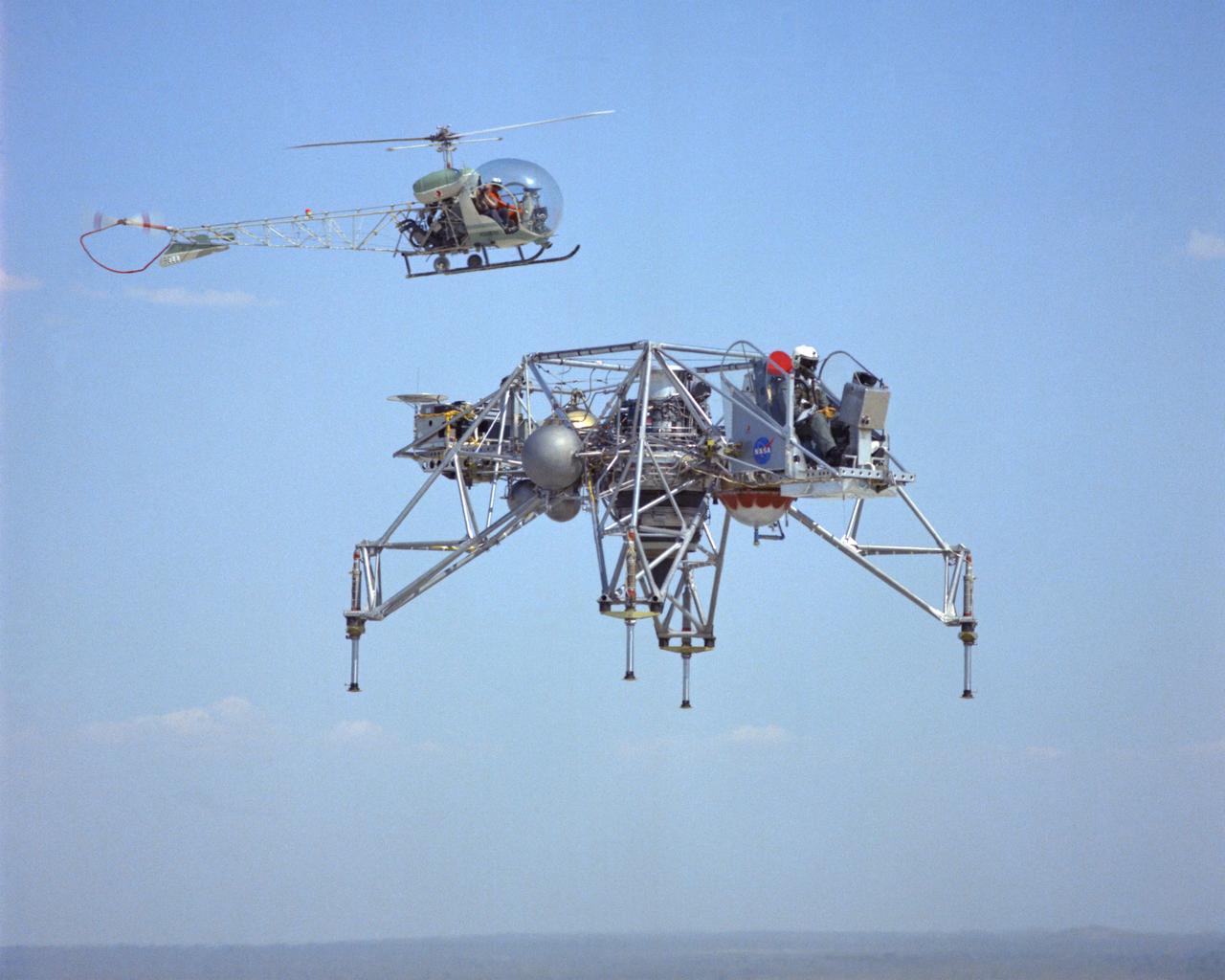
LLRV flight #1-16-61F with Bell 47 Helicopter providing chase support. The use of chase planes was a critical part of flight research well before the establishment of what was then called the NACA Muroc Flight Test Unit in September 1947 (now the NASA Dryden Flight Research Center). They act as a second set of eyes for the research pilot, warning him of any problems. When test flights of the LLRV began in October 1964, chase support for the vehicle was supplied by a Bell 47 helicopter. It could hover close by, providing information such as altitude and descent rate. LLRV test operations were phased out in late 1966 and early 1967. When Apollo planning was underway in 1960, NASA was looking for a simulator to profile the descent to the Moon's surface. Three concepts surfaced: an electronic simulator, a tethered device, and the ambitious Dryden contribution, a free-flying vehicle. All three became serious projects, but eventually the NASA Flight Research Center’s (FRC) Lunar Landing Research Vehicle (LLRV) became the most significant one. After conceptual planning and meetings with engineers from Bell Aerosystems Company, Buffalo, N.Y., NASA FRC issued a $3.6 million production contract awarded in 1963, for delivery of the first of two vehicles for flight studies.  Built of tubular aluminum alloy like a giant four-legged bedstead, the vehicle was to simulate a lunar landing profile from around 1500 feet to the Moon’s surface. The LLRV had a turbofan engine mounted vertically in a gimbal, with 4200 pounds of thrust. The engine, lifted the vehicle up to the test altitude and was then throttled back to support five-sixths of the vehicle's weight, thus simulating the reduced gravity of the Moon. Two lift rockets with thrust that could be varied from 100 to 500 pounds handled the LLRV's rate of descent and horizontal translations. Sixteen smaller rockets, mounted in pairs, gave the pilot control in pitch, yaw, and roll. The pilot’s platform extended forward between t
EC65-0649
S77-28139 (13 Sept 1977) --- The Orbiter 101 "Enterprise" is seen riding "piggy-back" atope the NASA 747 carrier aircraft during the second free flight of the Shuttle Approach and Landing Tests (ALT) conducted on September 13, 1977, at the Dryden Flight Research Center in Southern California.  Moments later the Orbiter 101 separated from the 747 and made a five-minute, 28-second unpowered flight before landing.  Astronauts Joe H. Engle, commander, and Richard H. Truly, pilot, were the crew of the "Enterprise." two T-38 chase planes are seen in the background.  The ALT free flights are designed to verify orbiter subsonic airworthiness, integrated systems operations and pilot-guided approach andlanding capability and satisfy prerequisites to automatic flight control and navigation mode.  Astronaut Vance D. Brand took this picture while riding in T-38 chase plane number five.  He used a 70mm Hasselblad camera with an 80mm lens.
s77-28139
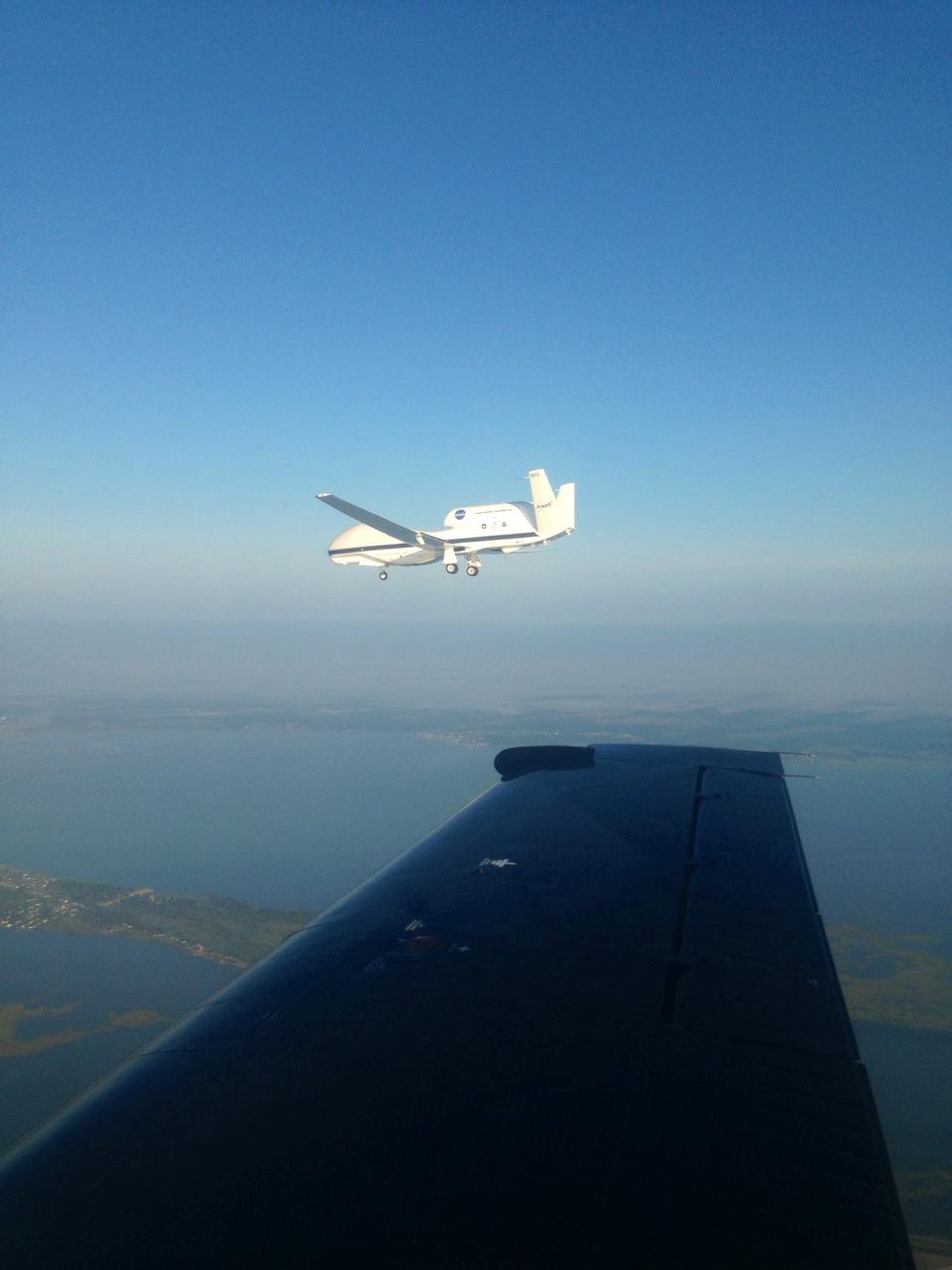
The NASA Wallops T-34 chase aircraft intercepted Global Hawk 872 on its descent to runway 28 at NASA's Wallops Flight Facility in Wallops Island, Va. This photo of the Global Hawk was taken from the chase plane after finishing its third science flight.   For more information about NASA's HS3 mission, visit: <a href="http://www.nasa.gov/HS3" rel="nofollow">www.nasa.gov/HS3</a>     Credit: NASA/ Brea Reeves  <b><a href="http://www.nasa.gov/audience/formedia/features/MP_Photo_Guidelines.html" rel="nofollow">NASA image use policy.</a></b>  <b><a href="http://www.nasa.gov/centers/goddard/home/index.html" rel="nofollow">NASA Goddard Space Flight Center</a></b> enables NASA’s mission through four scientific endeavors: Earth Science, Heliophysics, Solar System Exploration, and Astrophysics. Goddard plays a leading role in NASA’s accomplishments by contributing compelling scientific knowledge to advance the Agency’s mission.  <b>Follow us on <a href="http://twitter.com/NASA_GoddardPix" rel="nofollow">Twitter</a></b>  <b>Like us on <a href="http://www.facebook.com/pages/Greenbelt-MD/NASA-Goddard/395013845897?ref=tsd" rel="nofollow">Facebook</a></b>  <b>Find us on <a href="http://instagram.com/nasagoddard?vm=grid" rel="nofollow">Instagram</a></b>
NASA HS3 Global Hawk on the Wing
Photo of the chase plane landing at NASA's Wallops Flight Facility, Wallops Island, Va. at 7:39 a.m. today, Aug. 14, 2013. The chase plane was used during the landing of NASA's Global Hawk unmanned aerial vehicle. The Global Hawk will be used during the Hurricane Severe Storms Sentinel (HS3) mission. For more information, visit:  <a href="http://www.nasa.gov/HS3.   " rel="nofollow">www.nasa.gov/HS3.   </a>   Photo Credit: NASA Wallops Text: Keith Koehler/NASA Wallops Flight Facility   <b><a href="http://www.nasa.gov/audience/formedia/features/MP_Photo_Guidelines.html" rel="nofollow">NASA image use policy.</a></b>  <b><a href="http://www.nasa.gov/centers/goddard/home/index.html" rel="nofollow">NASA Goddard Space Flight Center</a></b> enables NASA’s mission through four scientific endeavors: Earth Science, Heliophysics, Solar System Exploration, and Astrophysics. Goddard plays a leading role in NASA’s accomplishments by contributing compelling scientific knowledge to advance the Agency’s mission.  <b>Follow us on <a href="http://twitter.com/NASA_GoddardPix" rel="nofollow">Twitter</a></b>  <b>Like us on <a href="http://www.facebook.com/pages/Greenbelt-MD/NASA-Goddard/395013845897?ref=tsd" rel="nofollow">Facebook</a></b>  <b>Find us on <a href="http://instagram.com/nasagoddard?vm=grid" rel="nofollow">Instagram</a></b>
BAR_6249
Initial flight-testing of the ACTE followed extensive wind tunnel experiments. For the first phase of ACTE flights, the experimental control surfaces were locked at a specified setting. Varied flap settings on subsequent tests are now demonstrating the capability of the flexible surfaces under actual flight conditions.
ED14-0338-081