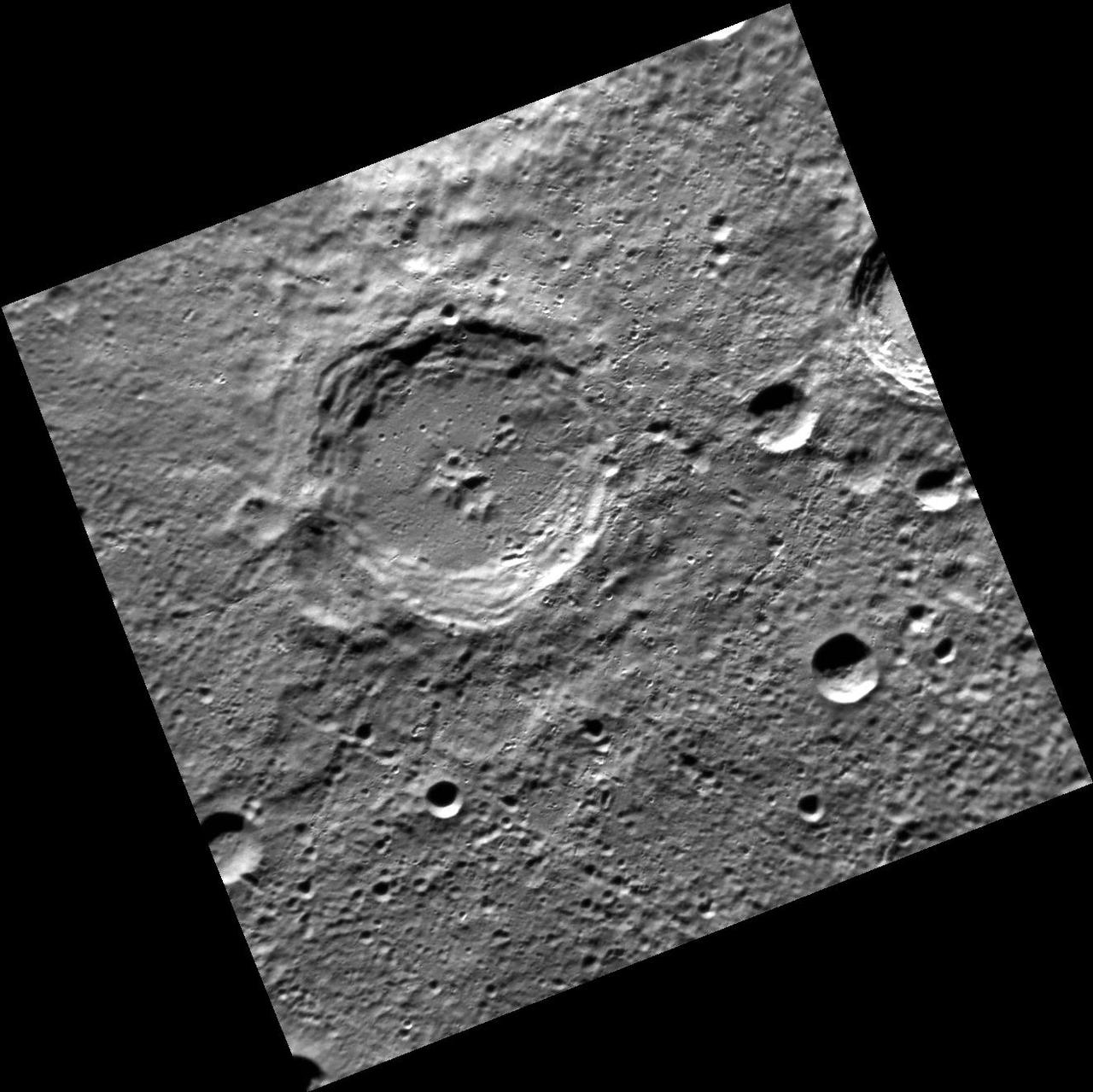
A Christmas Crater
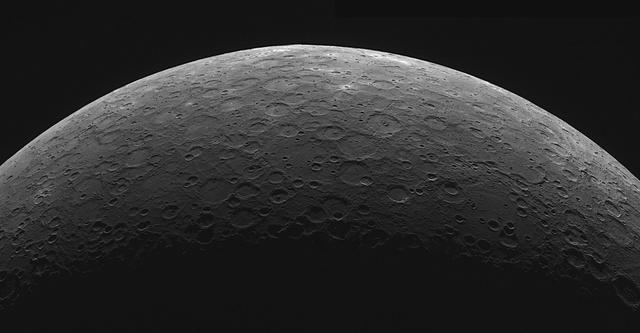
A Mercury Christmas Carol
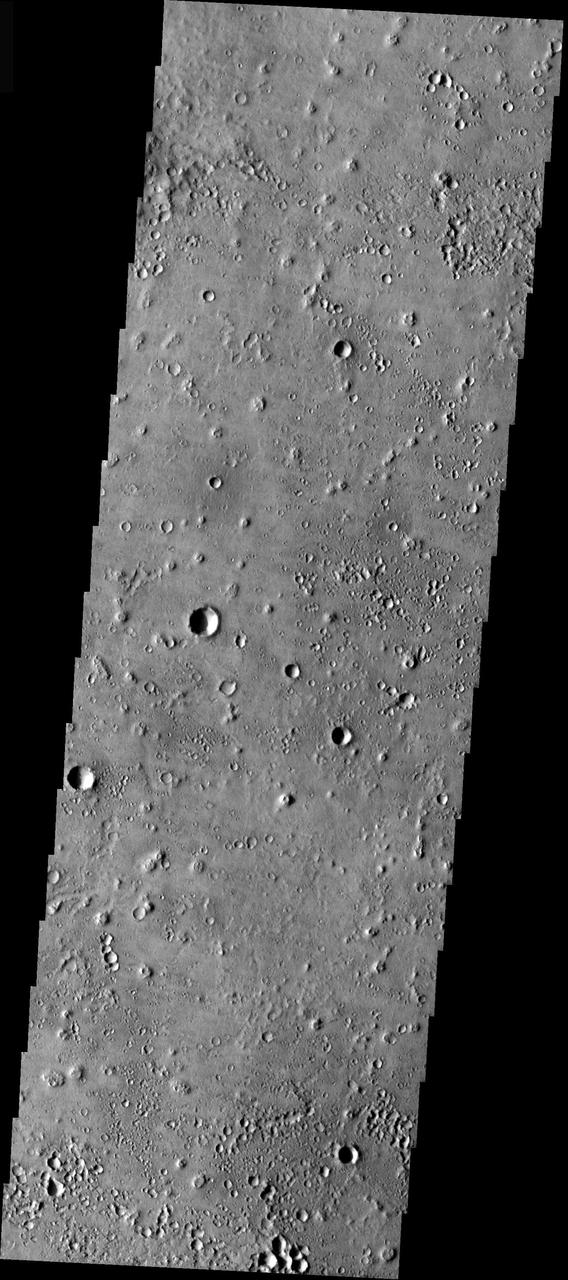
A Martian Christmas Present
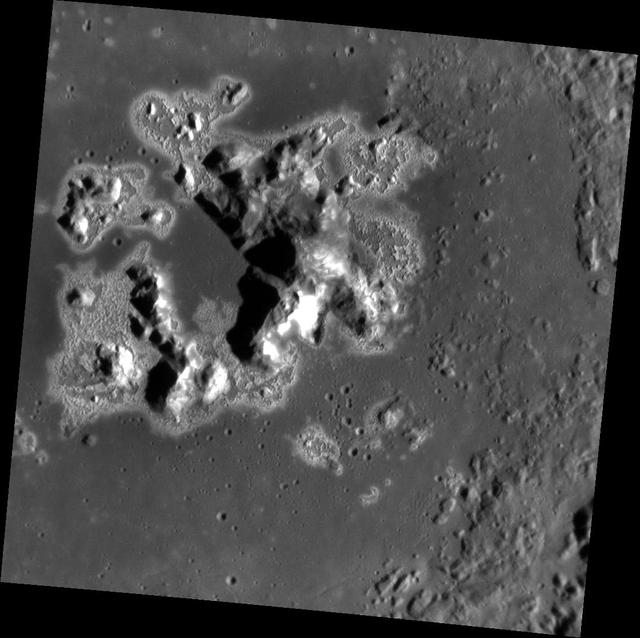
Dreaming of a White Christmas
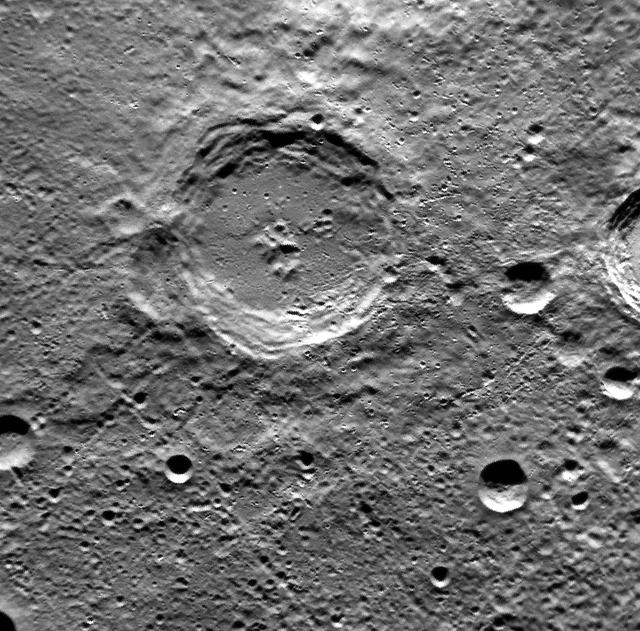
Release Date: December 21, 2011 The crater at the center of this image is named Dickens, after Charles Dickens, the English novelist who lived from 1812 to 1870. Among Dickens' famous works is A Christmas Carol, the story of Bob Cratchit, his family, and horrible boss Mr. Scrooge. Scientists studying Mercury might consider the Mariner 10 mission to be Christmas Past, MESSENGER to be Christmas Present, and the European Bepi-Colombo mission to be Christmas Yet To Come. This image was acquired as part of MDIS's high-resolution surface morphology base map. The surface morphology base map will cover more than 90% of Mercury's surface with an average resolution of 250 meters/pixel (0.16 miles/pixel or 820 feet/pixel). Images acquired for the surface morphology base map typically have off-vertical Sun angles (i.e., high incidence angles) and visible shadows so as to reveal clearly the topographic form of geologic features. The MESSENGER spacecraft is the first ever to orbit the planet Mercury, and the spacecraft's seven scientific instruments and radio science investigation are unraveling the history and evolution of the Solar System's innermost planet. Visit the Why Mercury? section of this website to learn more about the key science questions that the MESSENGER mission is addressing. During the one-year primary mission, MDIS is scheduled to acquire more than 75,000 images in support of MESSENGER's science goals. Credit: NASA/Johns Hopkins University Applied Physics Laboratory/Carnegie Institution of Washington <b><a href="http://www.nasa.gov/audience/formedia/features/MP_Photo_Guidelines.html" rel="nofollow">NASA image use policy.</a></b> <b><a href="http://www.nasa.gov/centers/goddard/home/index.html" rel="nofollow">NASA Goddard Space Flight Center</a></b> enables NASA’s mission through four scientific endeavors: Earth Science, Heliophysics, Solar System Exploration, and Astrophysics. Goddard plays a leading role in NASA’s accomplishments by contributing compelling scientific knowledge to advance the Agency’s mission. <b>Follow us on <a href="http://twitter.com/NASA_GoddardPix" rel="nofollow">Twitter</a></b> <b>Like us on <a href="http://www.facebook.com/pages/Greenbelt-MD/NASA-Goddard/395013845897?ref=tsd" rel="nofollow">Facebook</a></b> <b>Find us on <a href="http://instagrid.me/nasagoddard/?vm=grid" rel="nofollow">Instagram</a></b>
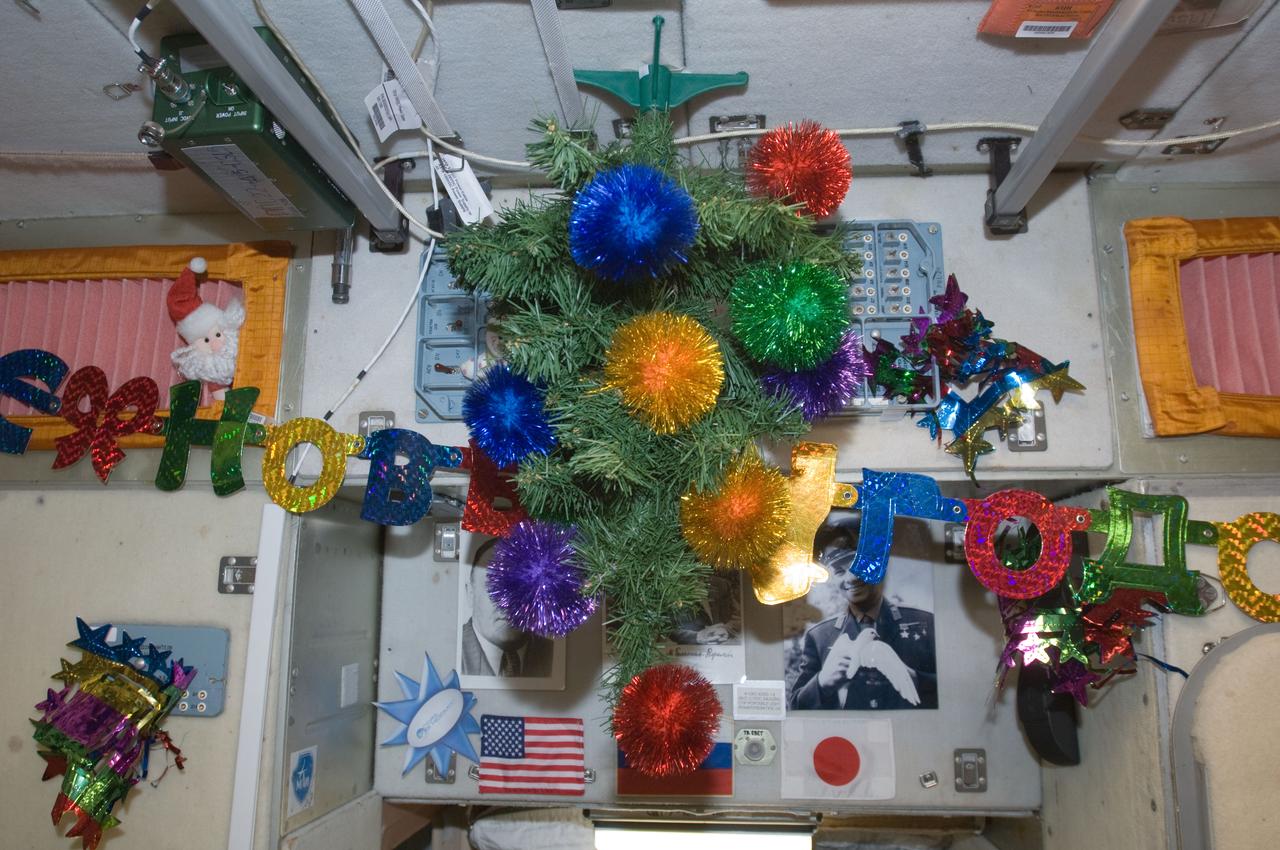
View of Christmas decorations in the Service Module (SM). The garland has Russian phrase that translates to recognize the New Year. Photo was taken during Expedition 34.
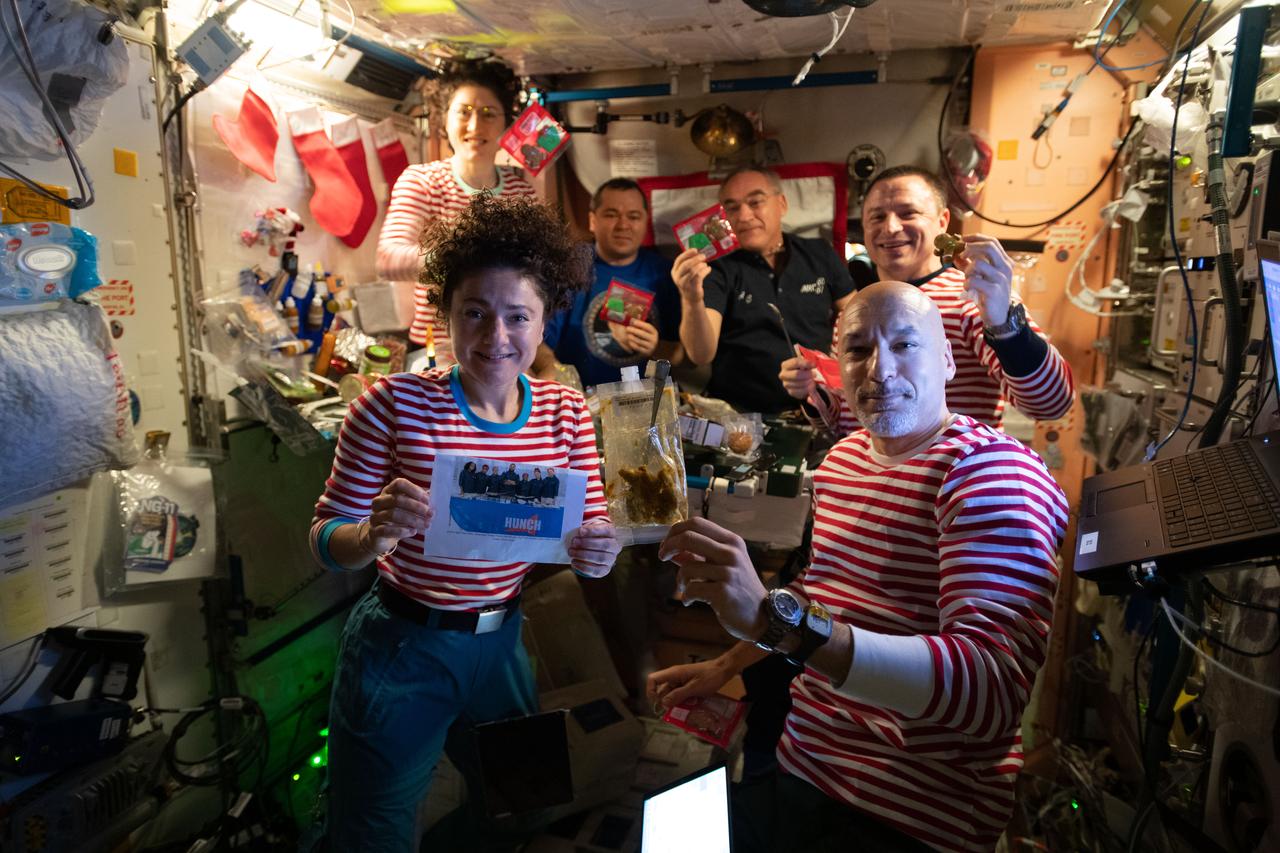
iss061e096558 (Dec. 25, 2019) --- The Expedition 61 crew celebrates Christmas day with a brunch inside the International Space Station's Unity module decorated with stockings, flashlight "candles" and a Christmas tree banner. Clockwise from bottom left are, NASA Flight Engineers Jessica Meir and Christina Koch, Roscosmos Flight Engineers Oleg Skripochka and Alexander Skvortsov, NASA Flight Engineer Drew Morgan, and Commander Luca Parmitano of the European Space Agency (ESA).
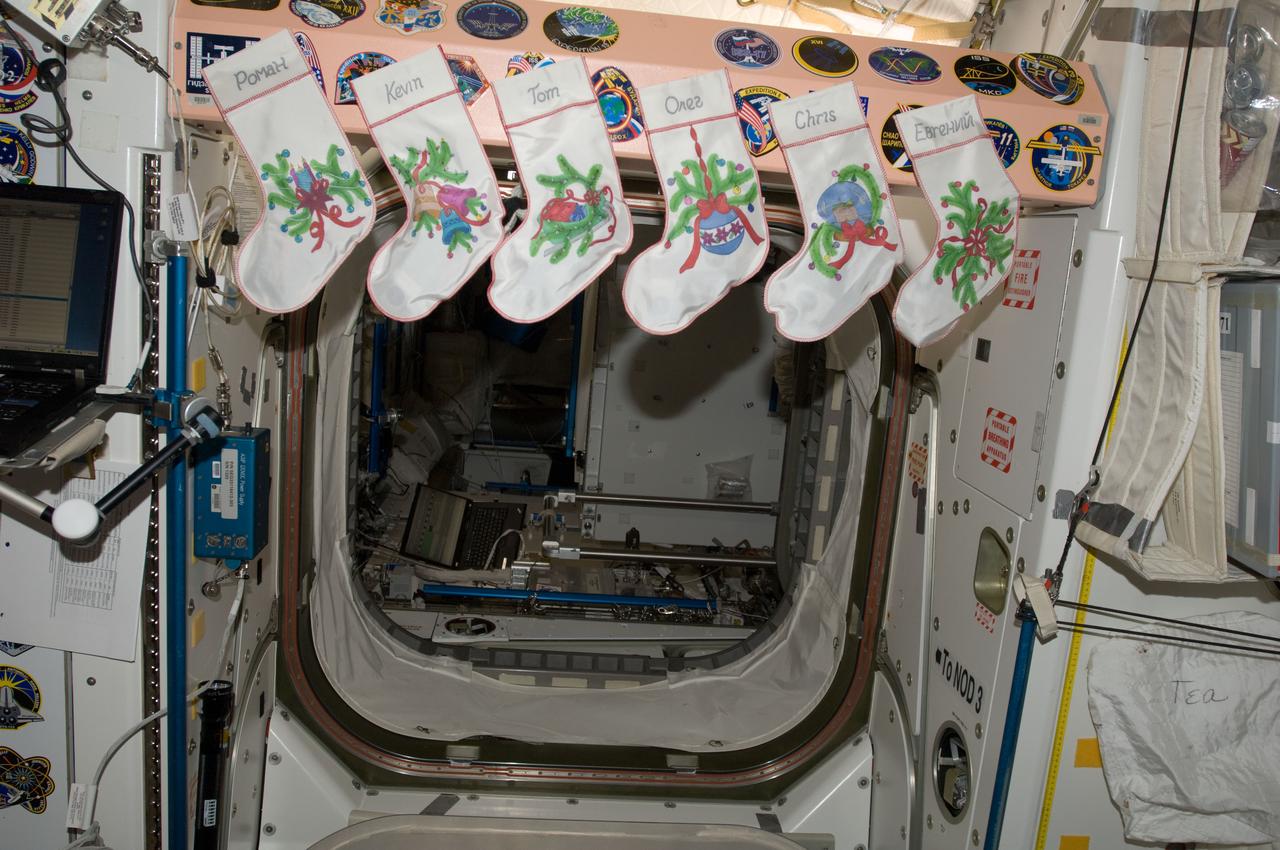
View of Expedition 34 Christmas stockings hanging at the Node 1 hatch. Photo was taken during Expedition 34.
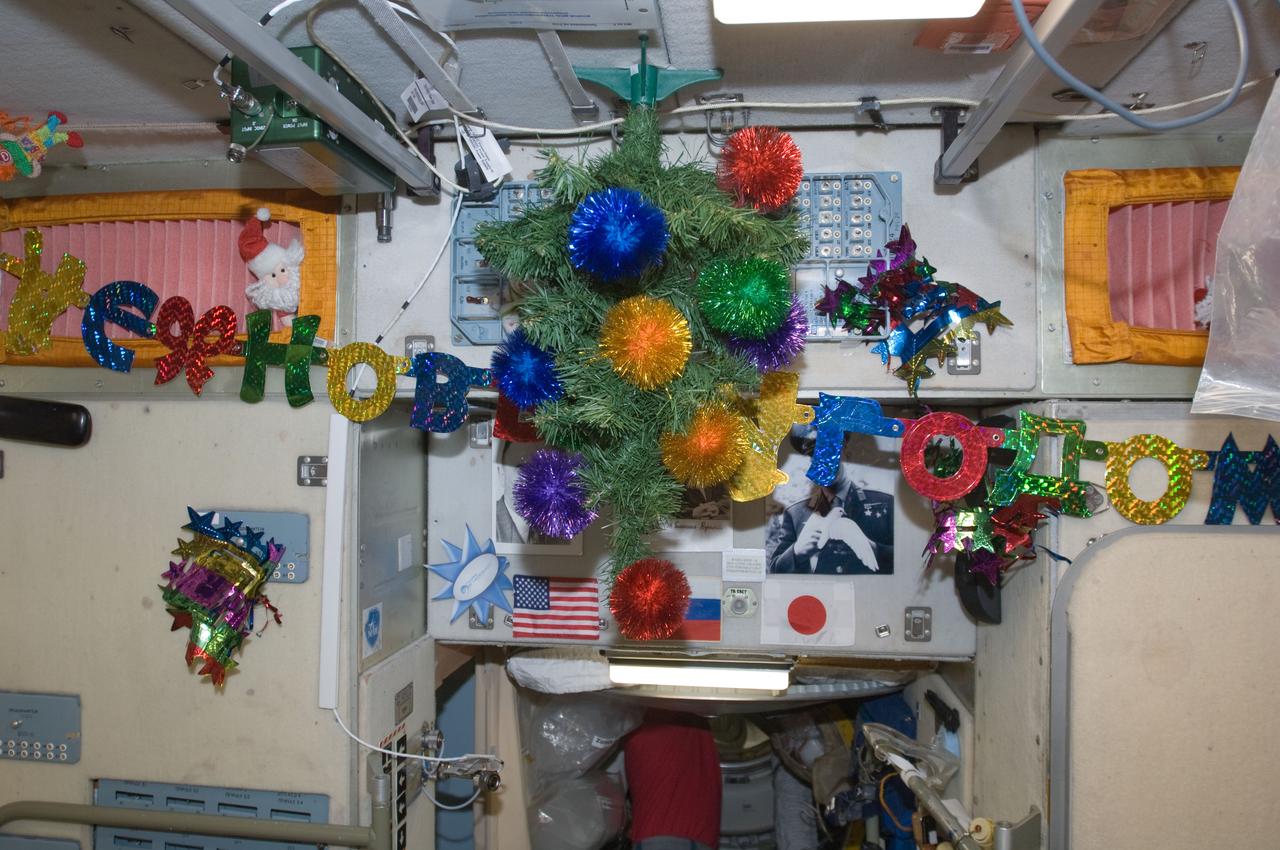
ISS034-E-009706 (23 Dec. 2012) --- Ornaments adorn the Russian segment of the International Space Station in preparation for Christmas. This scene is in the Zvezda module, but not too far away, on the NASA side of the outpost, stockings and other decorations were soon being prepared for the holiday.
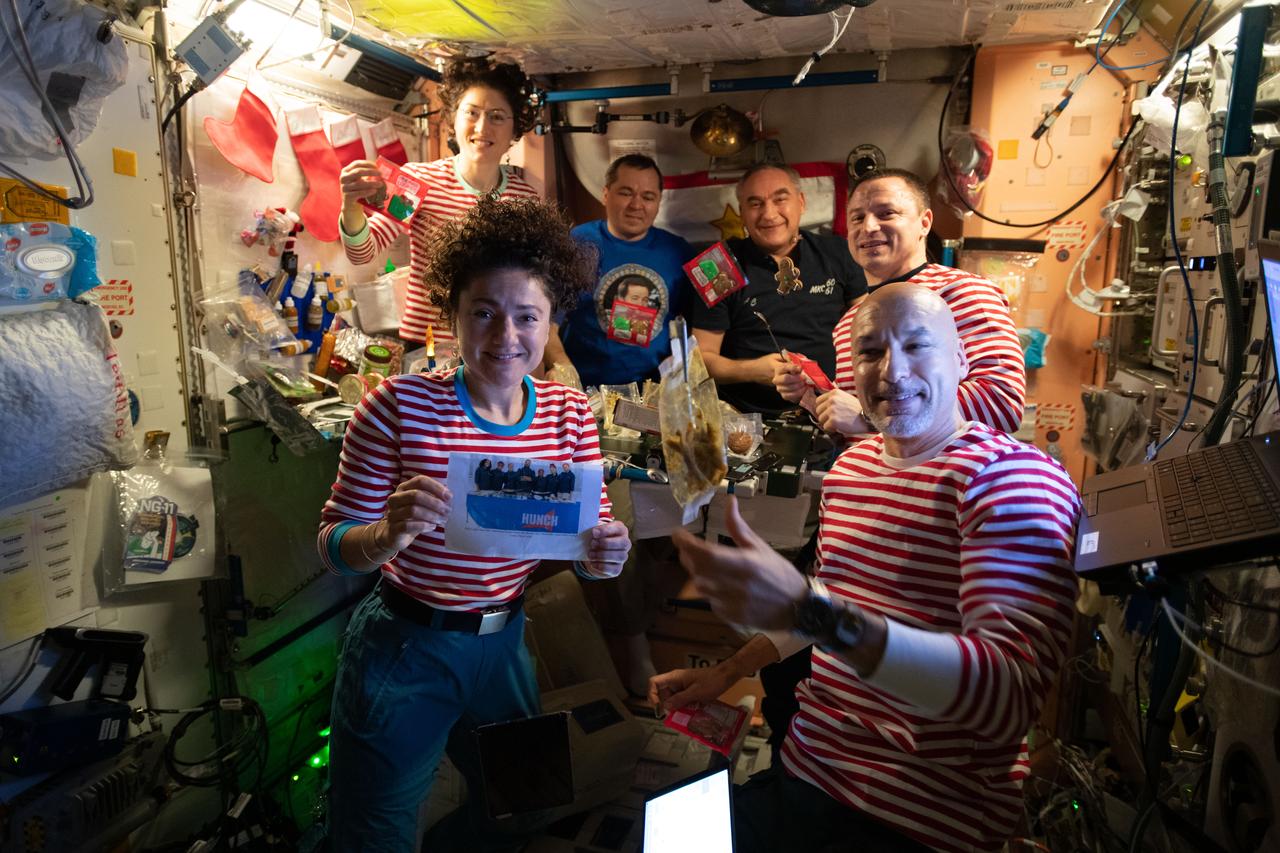
iss061e096558 (Dec. 25, 2019) --- The Expedition 64 crew celebrates Christmas day with a brunch inside the International Space Station's Unity module decorated with stockings, flashlight "candles" and a Christmas tree banner. Clockwise from bottom left are, NASA Flight Engineers Jessica Meir and Christina Koch, Roscosmos Flight Engineers Oleg Skripochka and Alexander Skvortsov, NASA Flight Engineer Drew Morgan, and Commander Luca Parmitano of the European Space Agency (ESA).
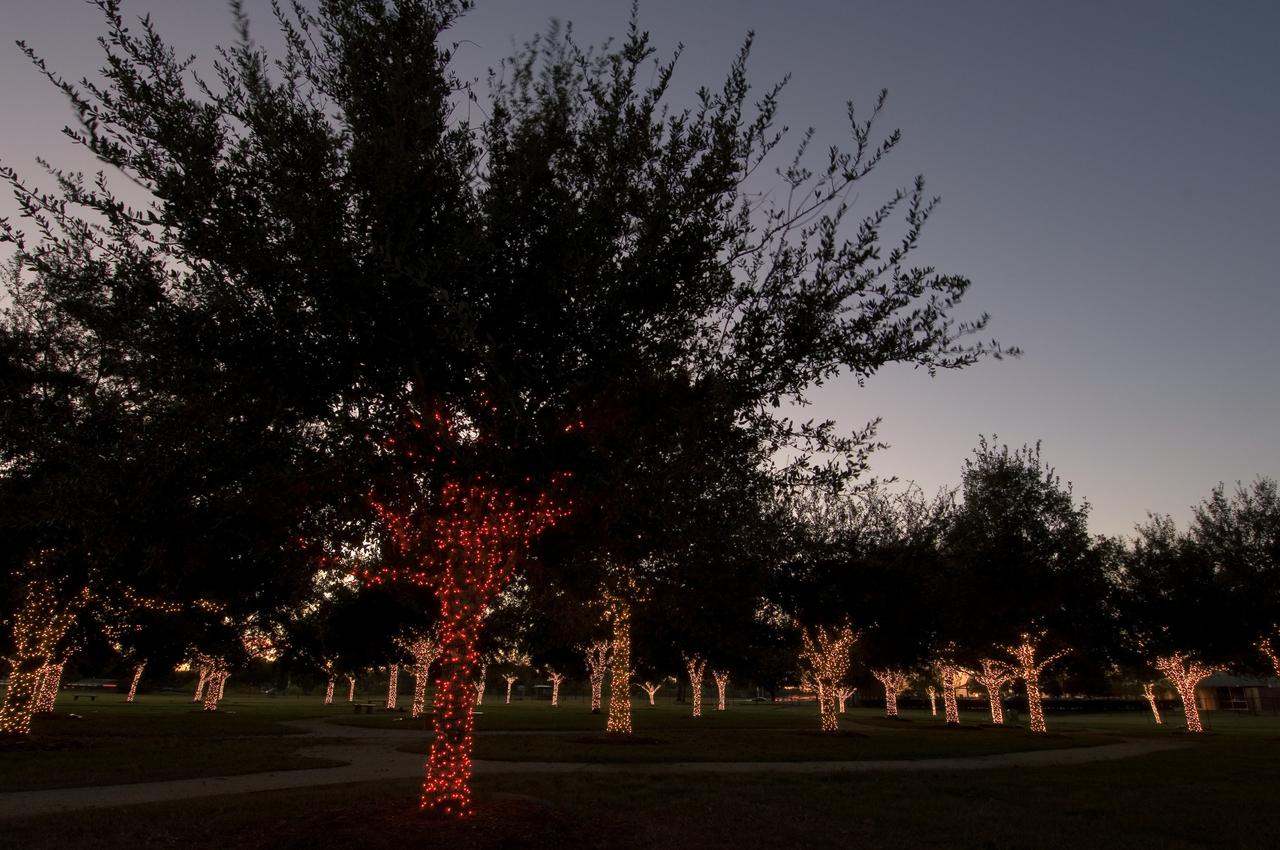
View of Christmas Lights on Memorial Tree Grove at dusk at entrance to JSC.
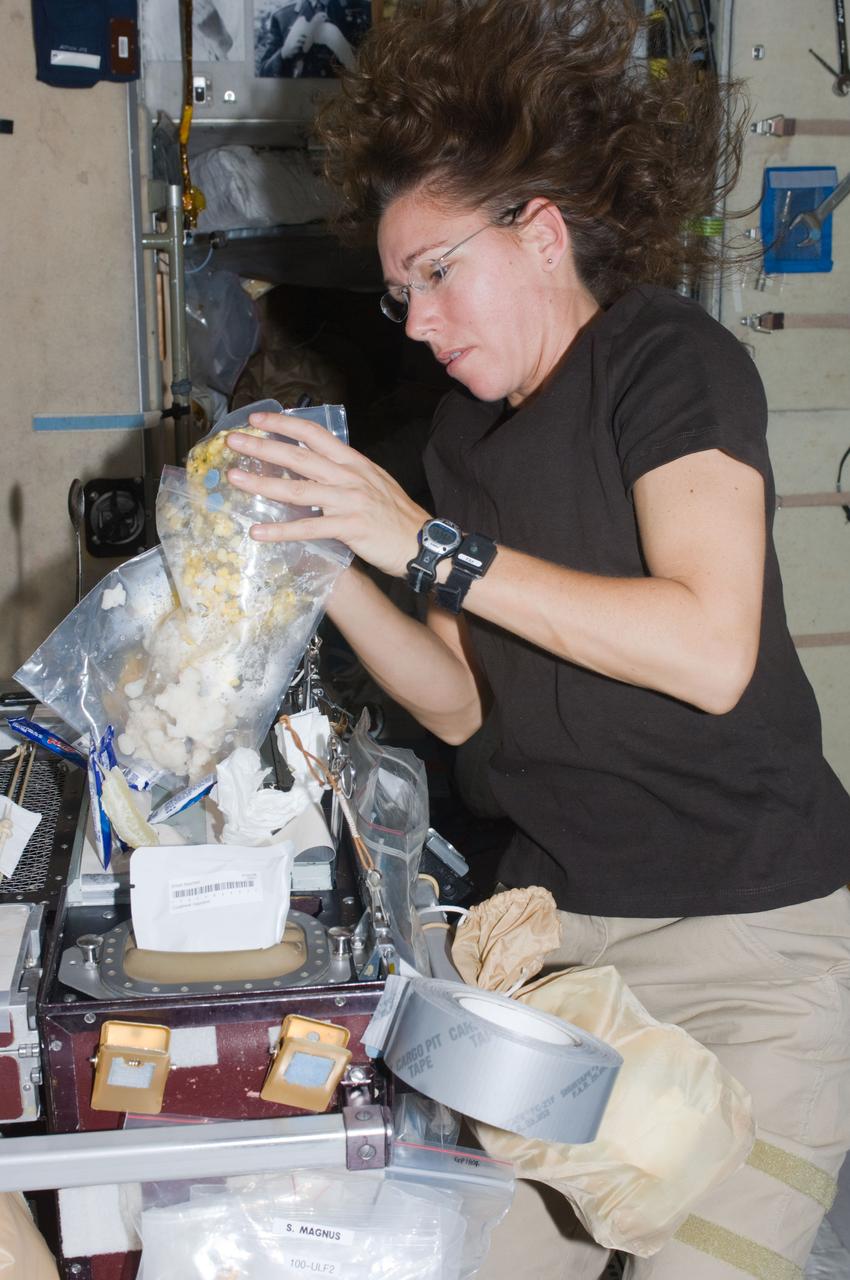
ISS018-E-015340 (25 Dec. 2008) --- Astronaut Sandra Magnus, Expedition 18 flight engineer, prepares to eat a Christmas meal at the galley in the Zvezda Service Module of the International Space Station.
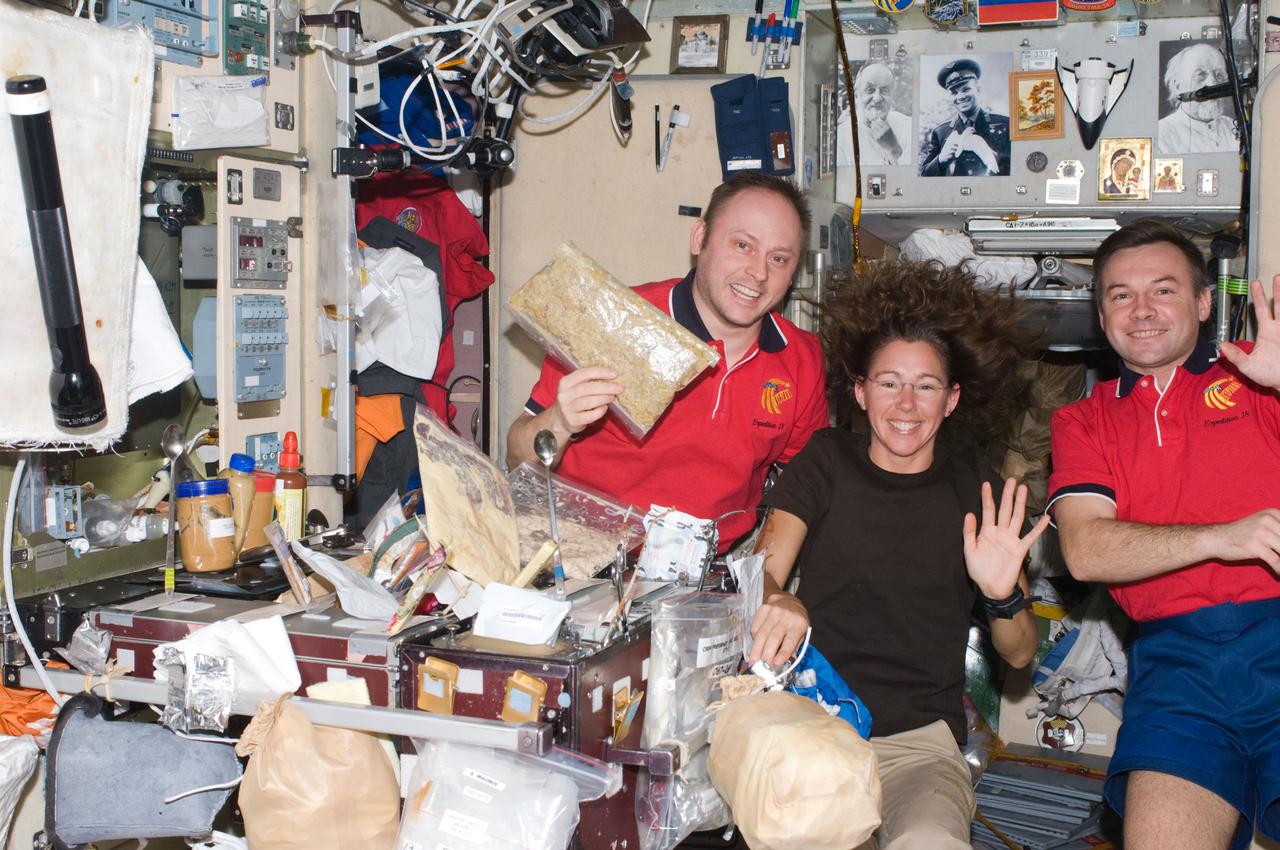
ISS018-E-015379 (25 Dec. 2008) --- Astronauts Michael Fincke (left), Expedition 18 commander; Sandra Magnus and cosmonaut Yury Lonchakov, both flight engineers, pose for a photo as they prepare to share a Christmas meal at the galley in the Zvezda Service Module of the International Space Station.
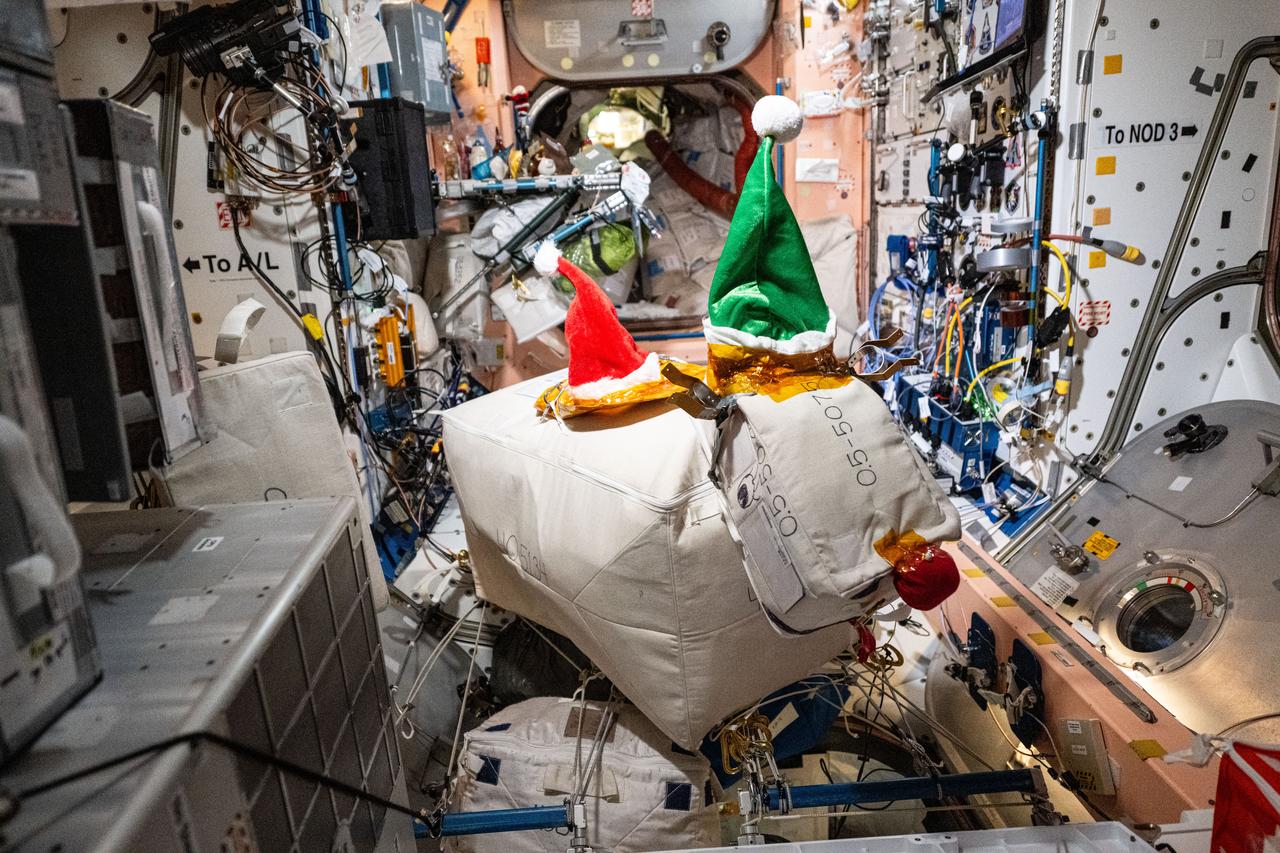
iss072e362773 (Nov. 24, 2024) --- The Expedition 72 crew is getting into the Christmas spirit aboard the International Space Station using excess hardware, cargo bags, and recently-delivered Santa hats to decorate the orbiting lab's Unity module with a familiar reindeer.
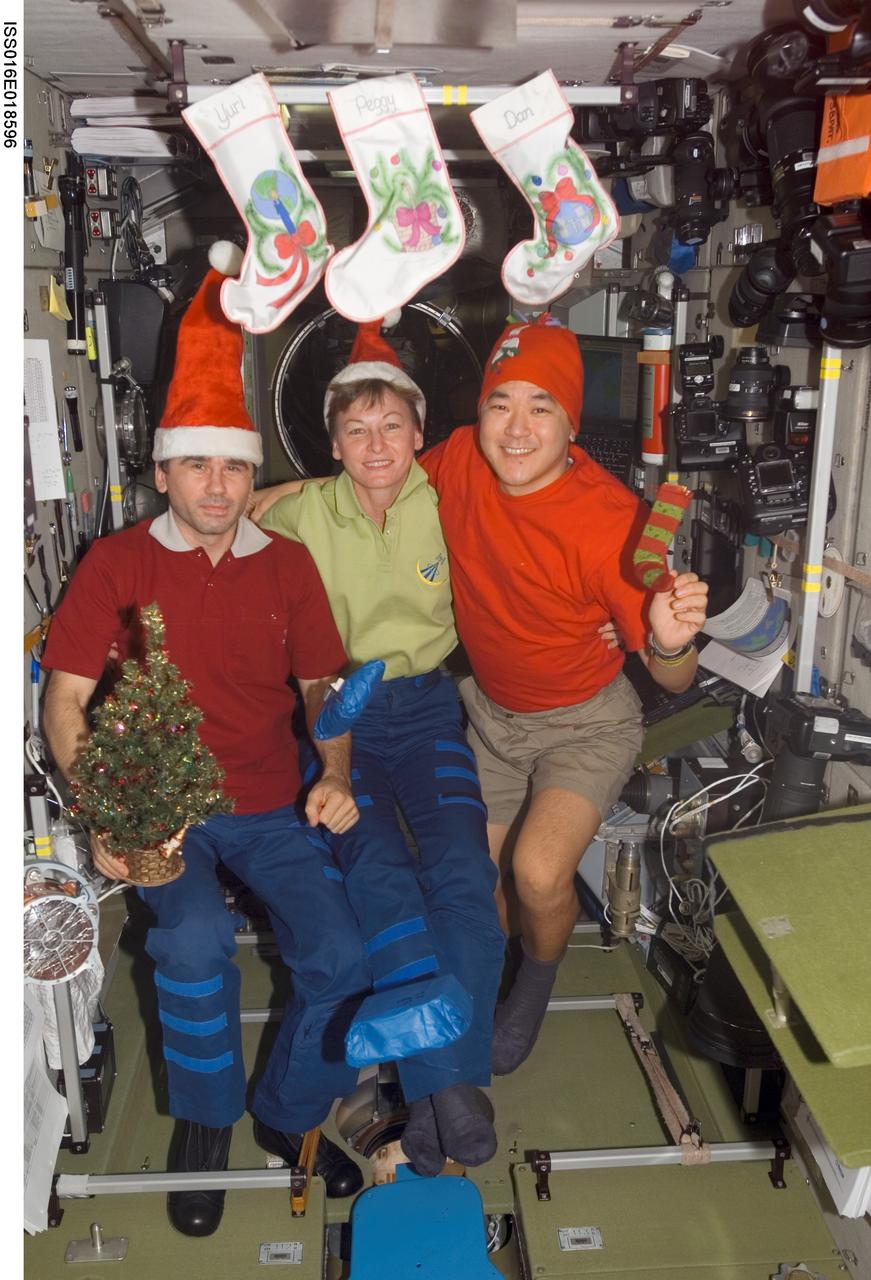
ISS016-E-018596 (25 Dec. 2007) --- The Expedition 16 crewmembers pose for a Christmas photo in the Zvezda Service Module of the International Space Station. From the left are cosmonaut Yuri I. Malenchenko, flight engineer representing Russia's Federal Space Agency; NASA astronauts Peggy A. Whitson, commander; and Daniel Tani, flight engineer.
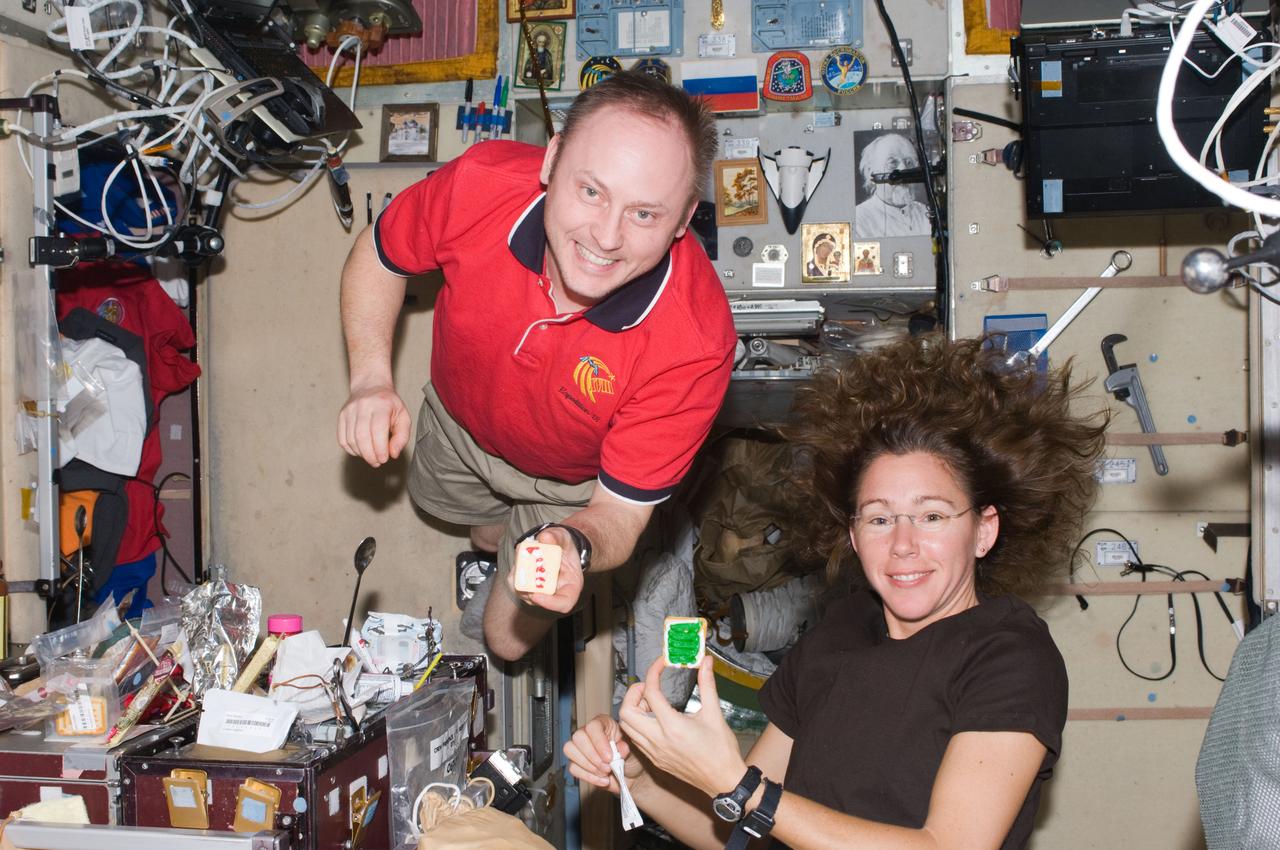
ISS018-E-015394 (25 Dec. 2008) --- Astronauts Michael Fincke, Expedition 18 commander, and Sandra Magnus, flight engineer, hold Christmas cookies while posing for a photo near the galley in the Zvezda Service Module of the International Space Station.
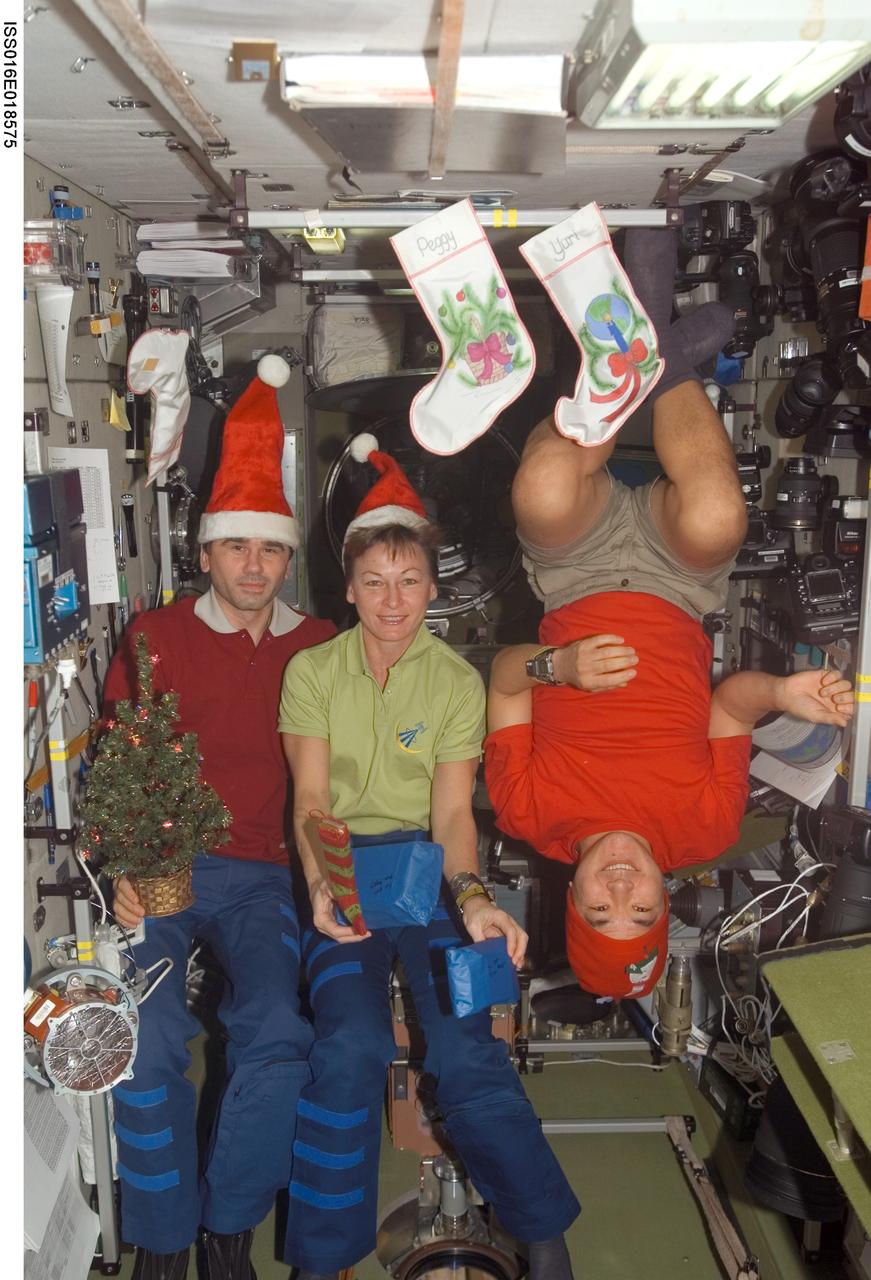
ISS016-E-018575 (25 Dec. 2007) --- The Expedition 16 crewmembers pose for a Christmas photo in the Zvezda Service Module of the International Space Station. From the left are cosmonaut Yuri I. Malenchenko, flight engineer representing Russia's Federal Space Agency; NASA astronauts Peggy A. Whitson, commander; and Daniel Tani, flight engineer.
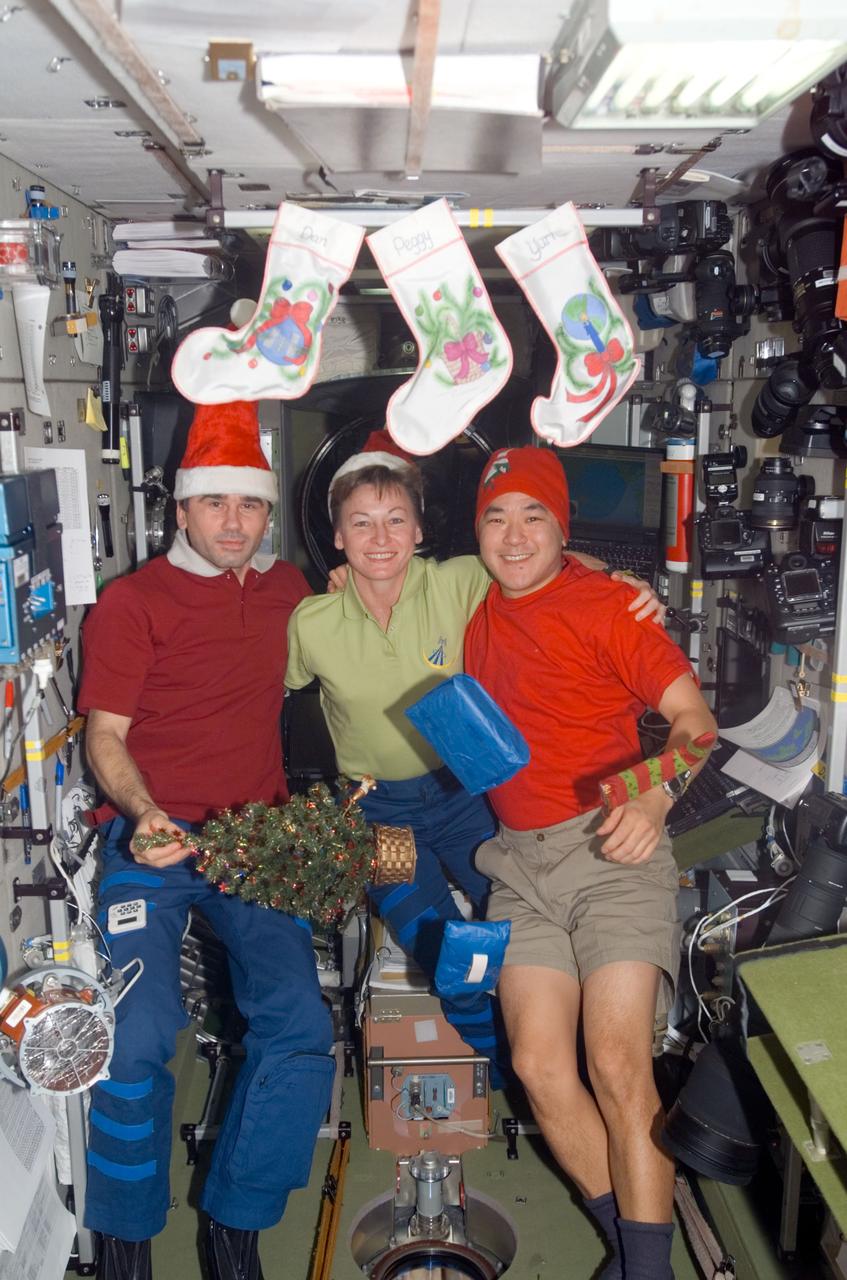
ISS016-E-018580 (25 Dec. 2007) --- The Expedition 16 crewmembers pose for a Christmas photo in the Zvezda Service Module of the International Space Station. From the left are cosmonaut Yuri I. Malenchenko, flight engineer representing Russia's Federal Space Agency; NASA astronauts Peggy A. Whitson, commander; and Daniel Tani, flight engineer.
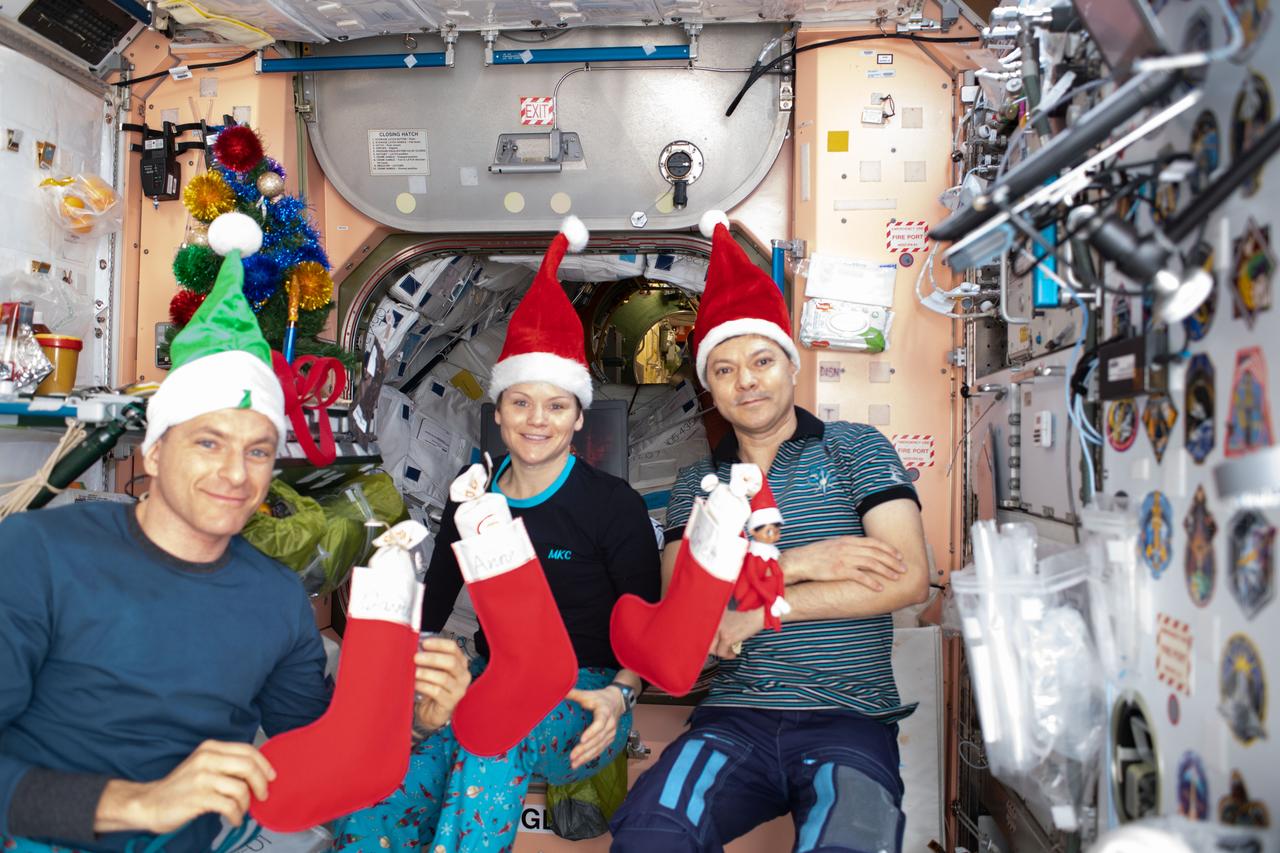
iss058e000835 (Dec. 25, 2019) --- Expedition 58 Flight Engineers (from left) David Saint-Jacques of the Canadian Space Agency (CXSA) and Anne McClain of NASA, with Commander Oleg Kononenko of Roscosmos are pictured in a festive mood opening their stockings on Christmas day inside the International Space Station's Unity module.
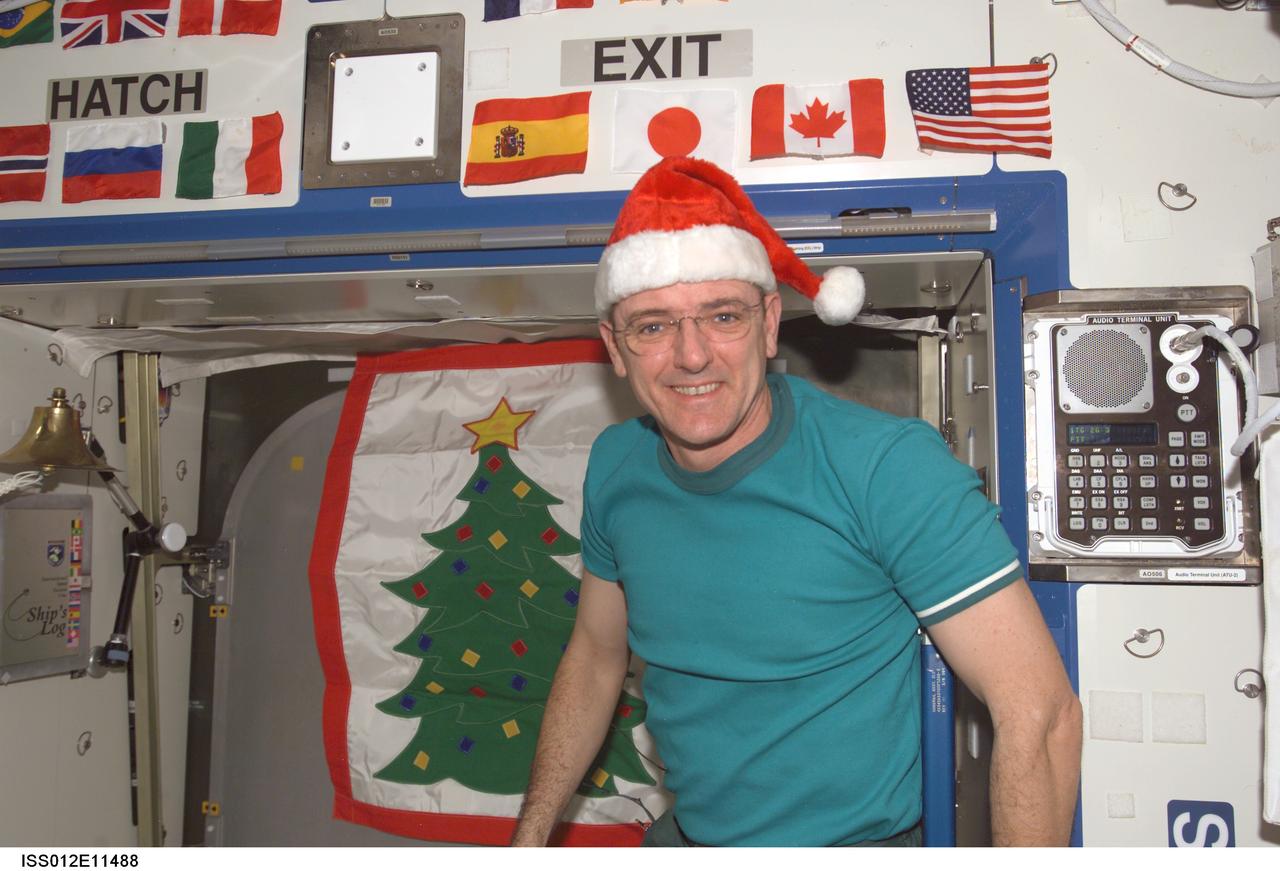
ISS012-E-11488 (11 Dec. 2005) --- Astronaut William S. (Bill) McArthur Jr., Expedition 12 commander and NASA space station science officer, poses with Christmas decorations in the Destiny laboratory of the International Space Station.
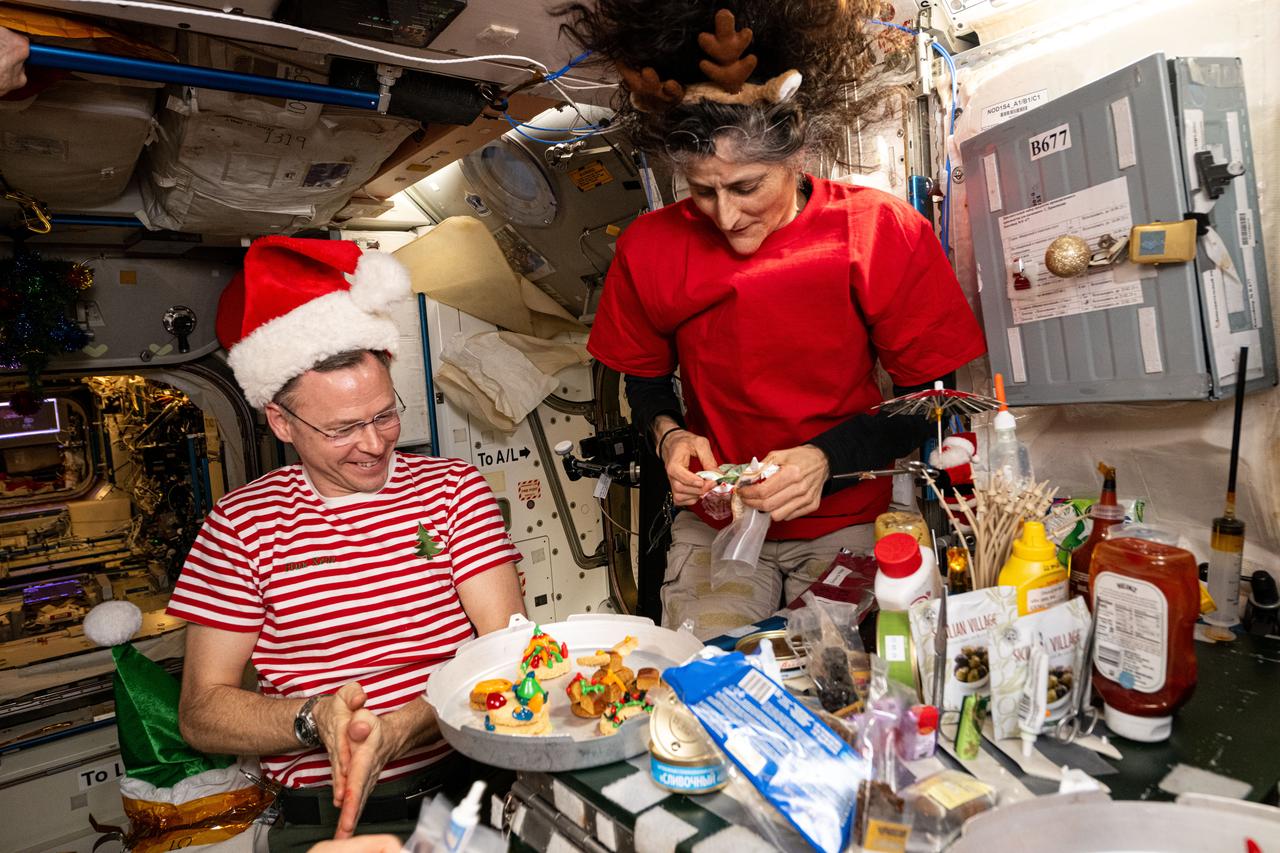
iss072e403985 (Dec. 24, 2024) --- NASA astronauts Nick Hague and Suni Williams, Expedition 72 flight engineer and commander respectively, share snacks and goodies on Christmas Eve inside the gallery of the International Space Station's Unity module.
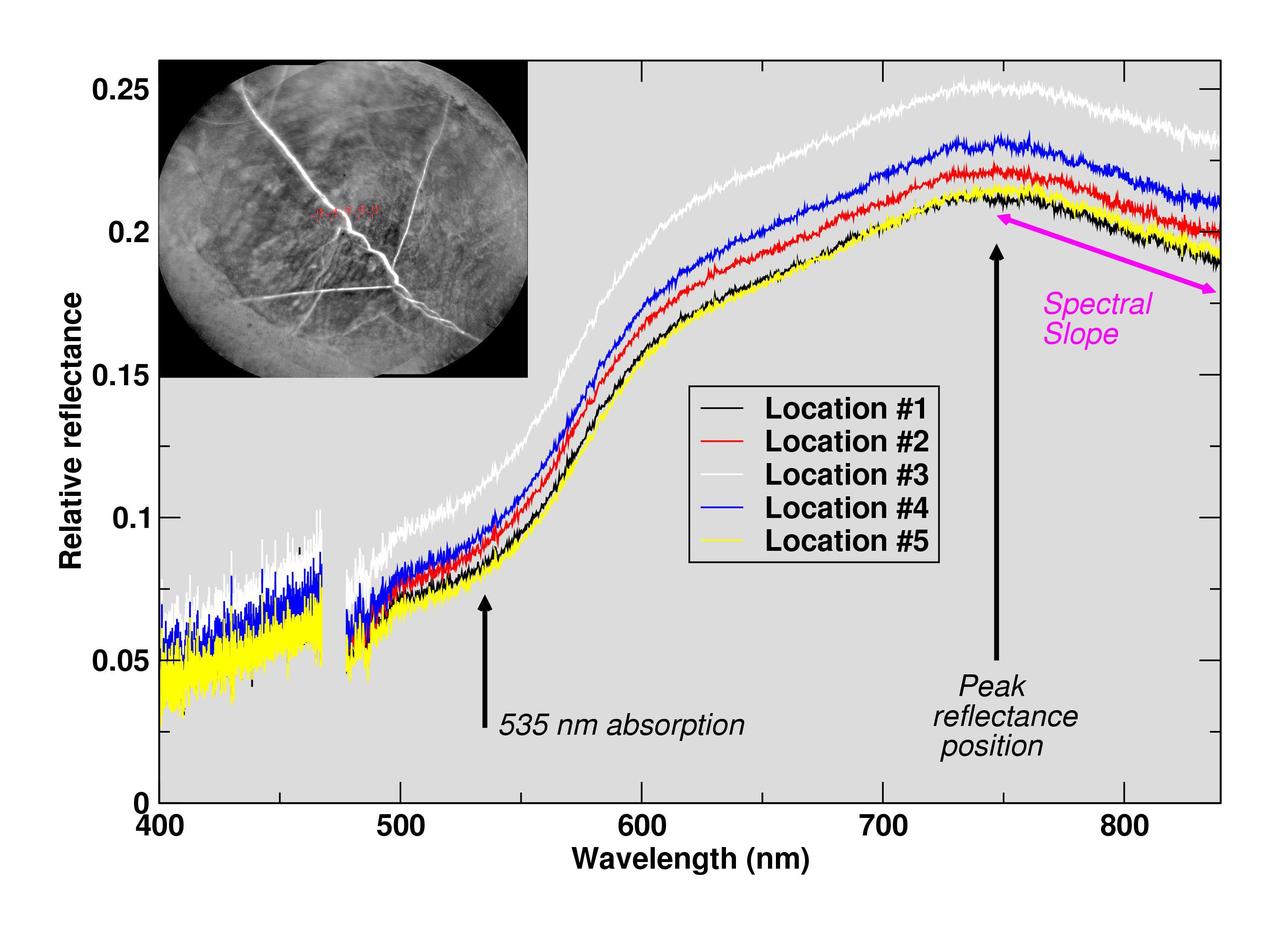
The Chemistry and Camera (ChemCam) instrument on NASA's Curiosity Mars rover examined a freshly brushed area on target rock "Christmas Cove" and found spectral evidence of hematite, an iron-oxide mineral. ChemCam sometimes zaps rocks with a laser, but can also be used, as in this case, in a "passive" mode. In this type of investigation, the instrument's telescope delivers to spectrometers the sunlight reflected from a small target point. The upper-left inset of this graphic is an image from ChemCam's Remote Micro-Imager with five labeled points that the instrument analyzed. The image covers an area about 2 inches (5 centimeters) wide, and the bright lines are fractures in the rock filled with calcium sulfate minerals. The five charted lines of the graphic correspond to those five points and show the spectrometer measurements of brightness at thousands of different wavelengths, from 400 nanometers (at the violet end of the visible-light spectrum) to 840 nanometers (in near-infrared). Sections of the spectrum measurements that are helpful for identifying hematite are annotated. These include a dip around 535 nanometers, the green-light portion of the spectrum at which fine-grained hematite tends to absorb more light and reflect less compared to other parts of the spectrum. That same green-absorbing characteristic of the hematite makes it appear purplish when imaged through special filters of Curiosity's Mast Camera and even in usual color images. The spectra also show maximum reflectance values near 750 nanometers, followed by a steep decrease in the spectral slope toward 840 nanometers, both of which are consistent with hematite. This ChemCam examination of Christmas Cove was part of an experiment to determine whether the rock had evidence of hematite under a tan coating of dust. The target area was brushed with Curiosity's Dust Removal Tool prior to these ChemCam passive observations on Sept. 17, 2017, during the 1,819th Martian day, or sol, of Curiosity's work on Mars. https://photojournal.jpl.nasa.gov/catalog/PIA22068
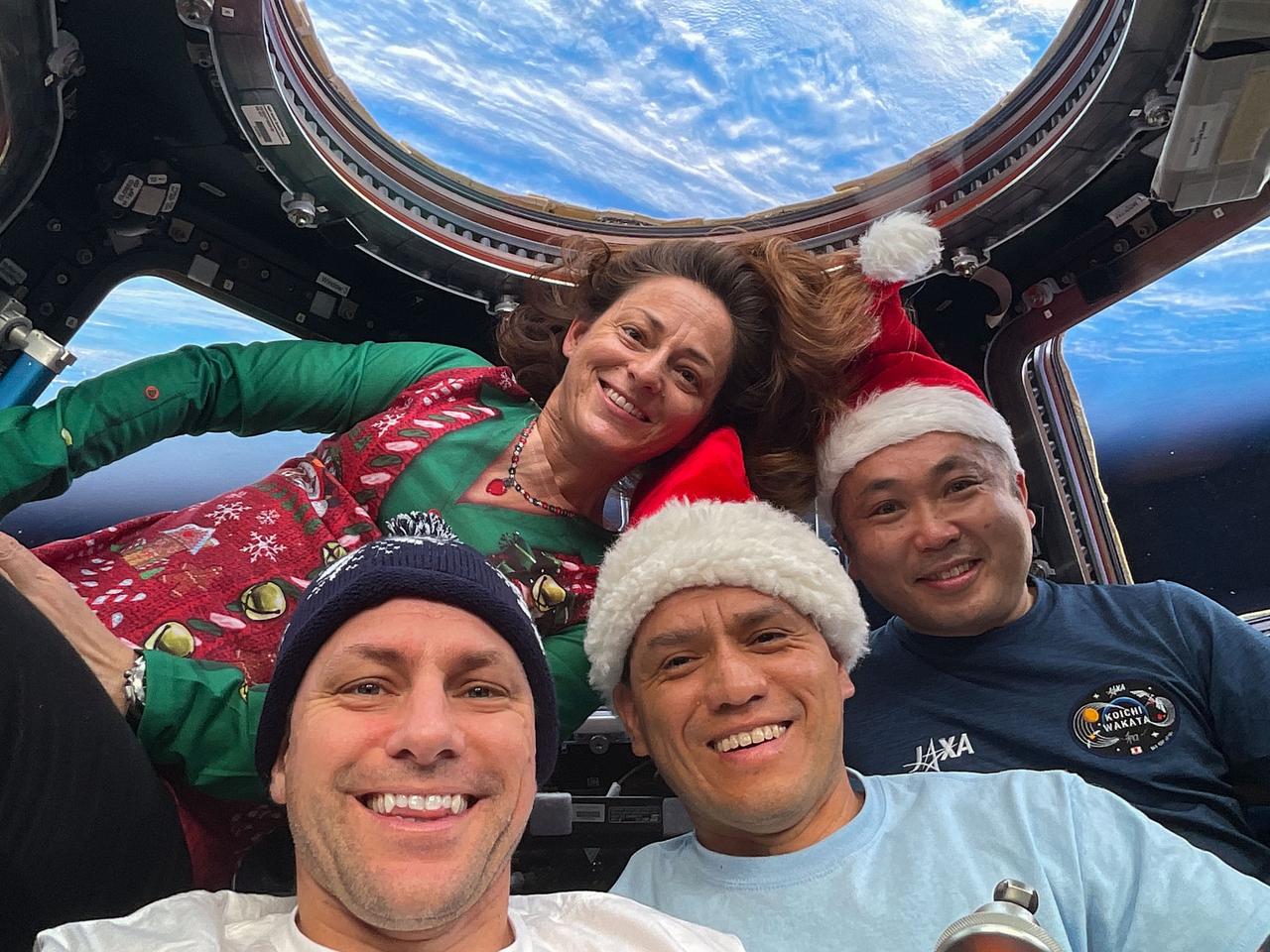
iss068e032486 (Dec. 25, 2022) --- Expedition 68 Flight Engineers (from left) Josh Cassada, Nicole Mann, and Frank Rubio, all from NASA, and Koichi Wakata of the Japan Aerospace Exploration Agency (JAXA), pose for a festive portrait on Christmas Day inside the cupola as the International Space Station orbited 270 miles above the southern Atlantic Ocean.
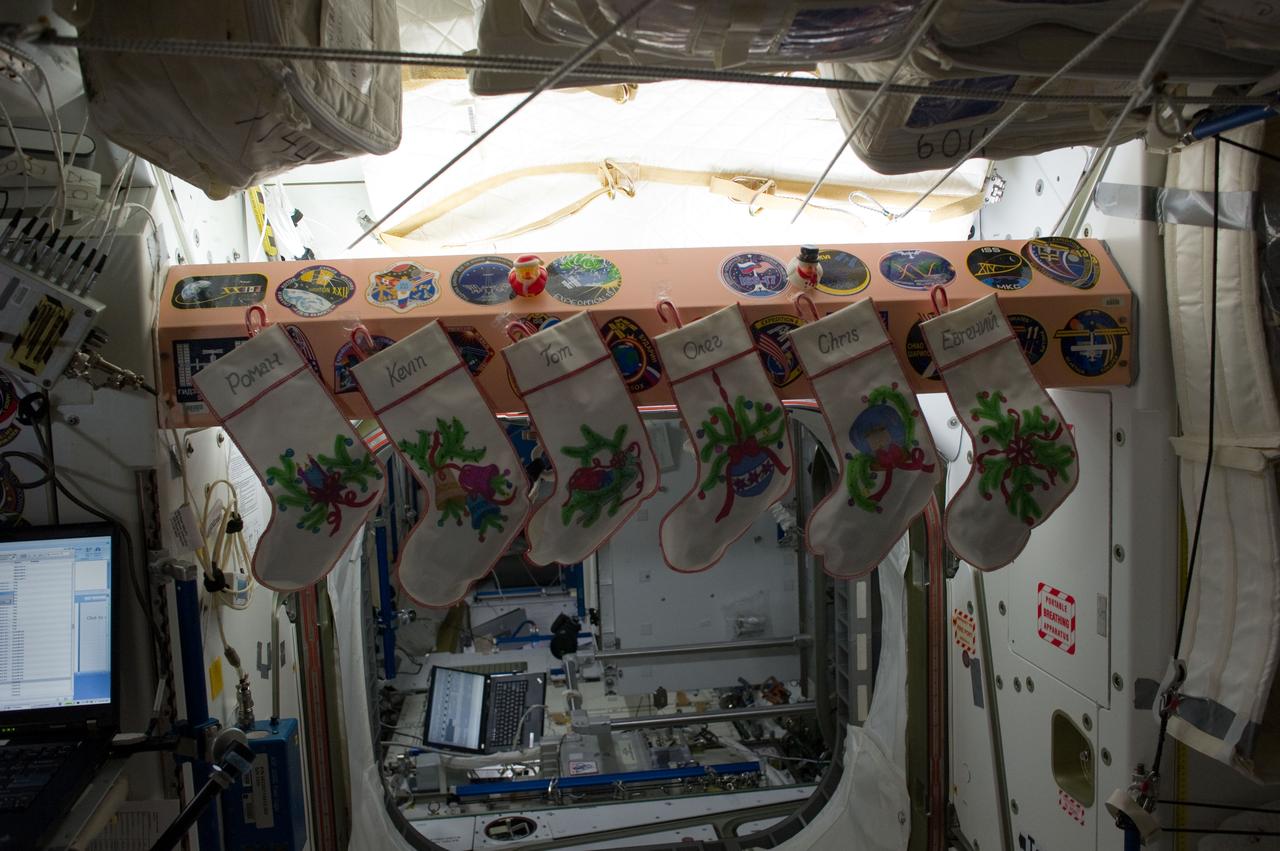
ISS034-E-010298 (25 Dec. 2012) --- Stockings were obviously hung with care on Christmas Day aboard the International Space Station, but for some reason, the fireplace stand-in on Unity couldn't support a real fire. This minor detail didn't faze the spirit of the recently reunited crew members, however. The individual names of the six Expedition 34 crew members are inscribed on their respective stockings. The scene is actually in Node 1, called Unity, which was the first U.S.-built element of the International Space Station that was launched, and it connects the U.S. and Russian segments of the orbital outpost.
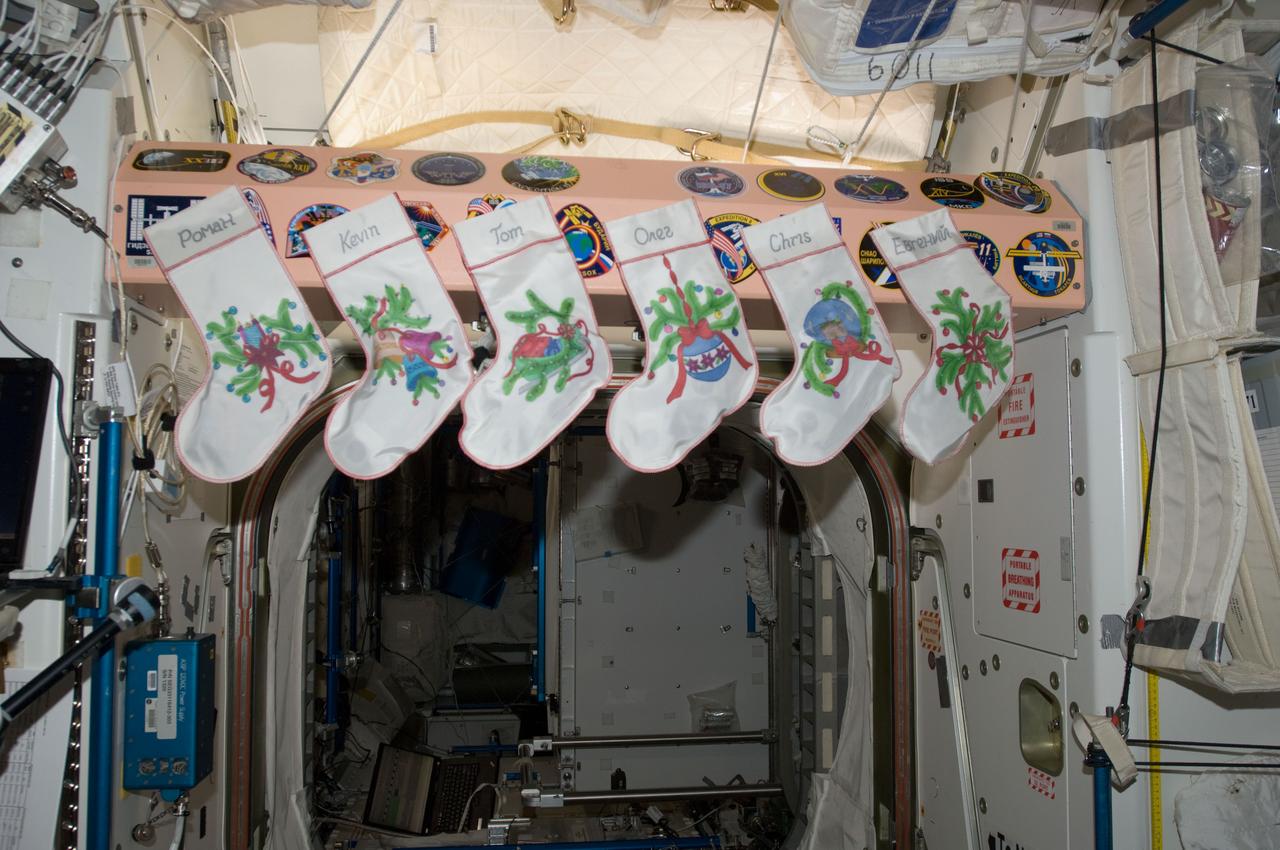
ISS034-E-009737 (25 Dec. 2012) --- Stockings were obviously hung with care on Christmas Day aboard the International Space Station, but for some reason, the fireplace stand-in on Unity couldn't support a real fire. This minor detail didn't faze the spirit of the recently reunited crew members, however. The individual names of the six Expedition 34 crew members are inscribed on their respective stockings. The scene is actually in Node 1, called Unity, which was the first U.S.-built element of the International Space Station that was launched, and it connects the U.S. and Russian segments of the orbital outpost.
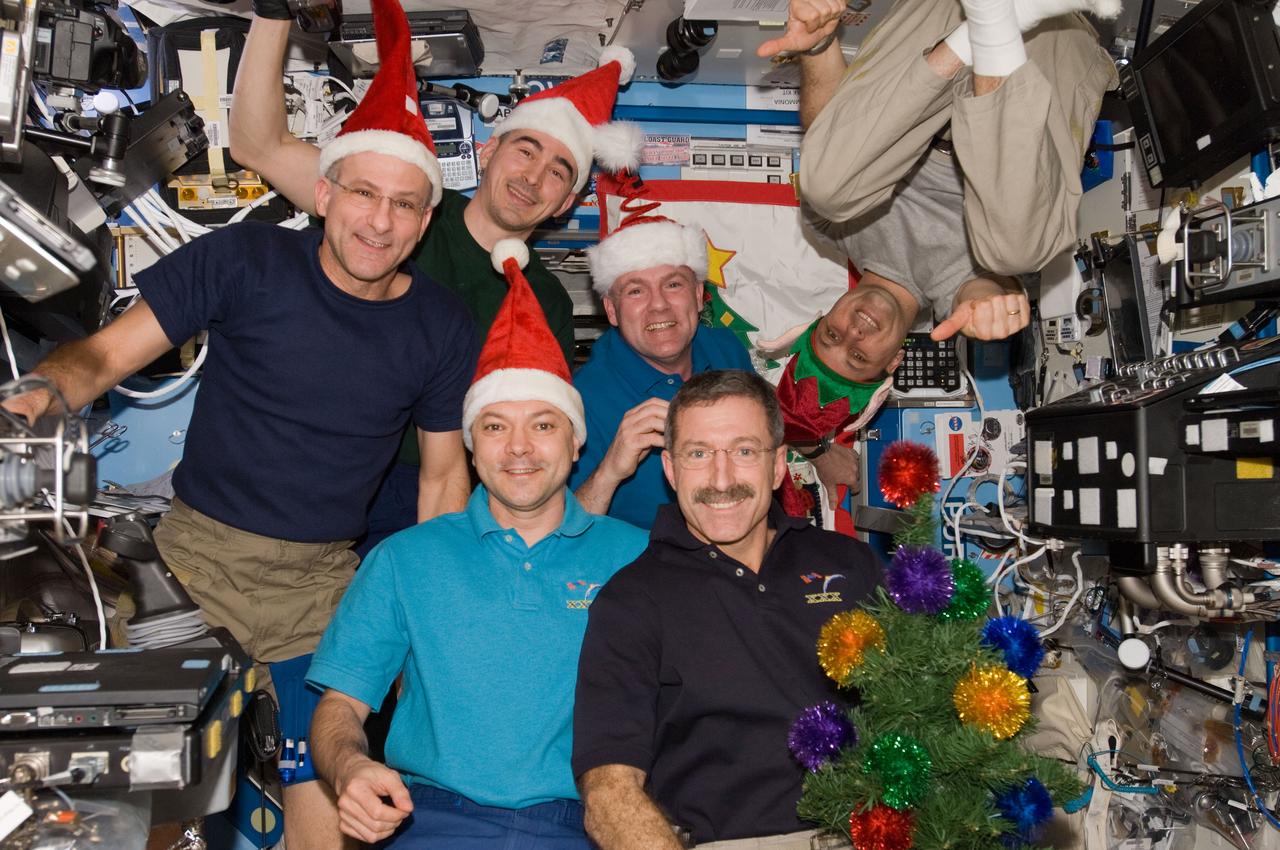
ISS030-E-015674 (25 Dec. 2011 --- The six Expedition 30 crew members assemble in the U.S. Lab (Destiny)aboard the International Space Station for a brief celebration of the Christmas holiday on Dec. 25. In front are Expedition 30 Commander Dan Burbank (right) and Flight Engineer Oleg Kononenko. On the back row, left to right, are Flight Engineers Don Pettit, Anatoly Ivanishin, Andre Kuipers and Anton Shkaplerov (suspended with his feet anchored above the group). Burbank and Pettit are NASA astronauts; Kononenko, Shkaplerov and Ivanishin are Russian cosmonauts; and Kuipers represents the European Space Agency.
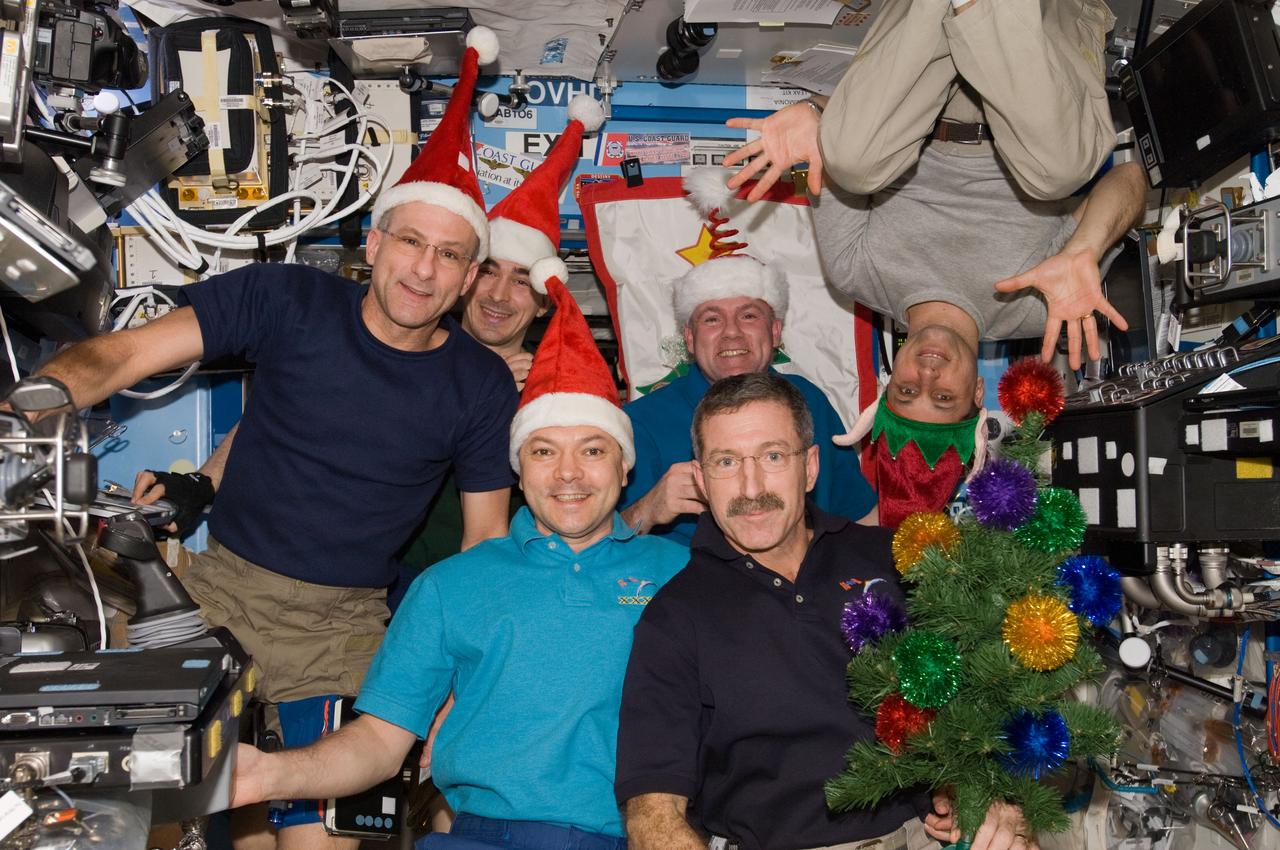
ISS030-E-015666 (25 Dec. 2011) --- The six Expedition 30 crew members assemble in the U.S. Lab (Destiny) aboard the International Space Station for a brief celebration of the Christmas holiday on Dec. 25. In front are Expedition 30 Commander Dan Burbank (right) and Flight Engineer Oleg Kononenko. On the back row, left to right, are Flight Engineers Don Pettit, Anatoly Ivanishin, Andre Kuipers and Anton Shkaplerov (suspended with his feet anchored above the group). Burbank and Pettit are NASA astronauts; Kononenko, Shkaplerov and Ivanishin are Russian cosmonauts; and Kuipers represents the European Space Agency.
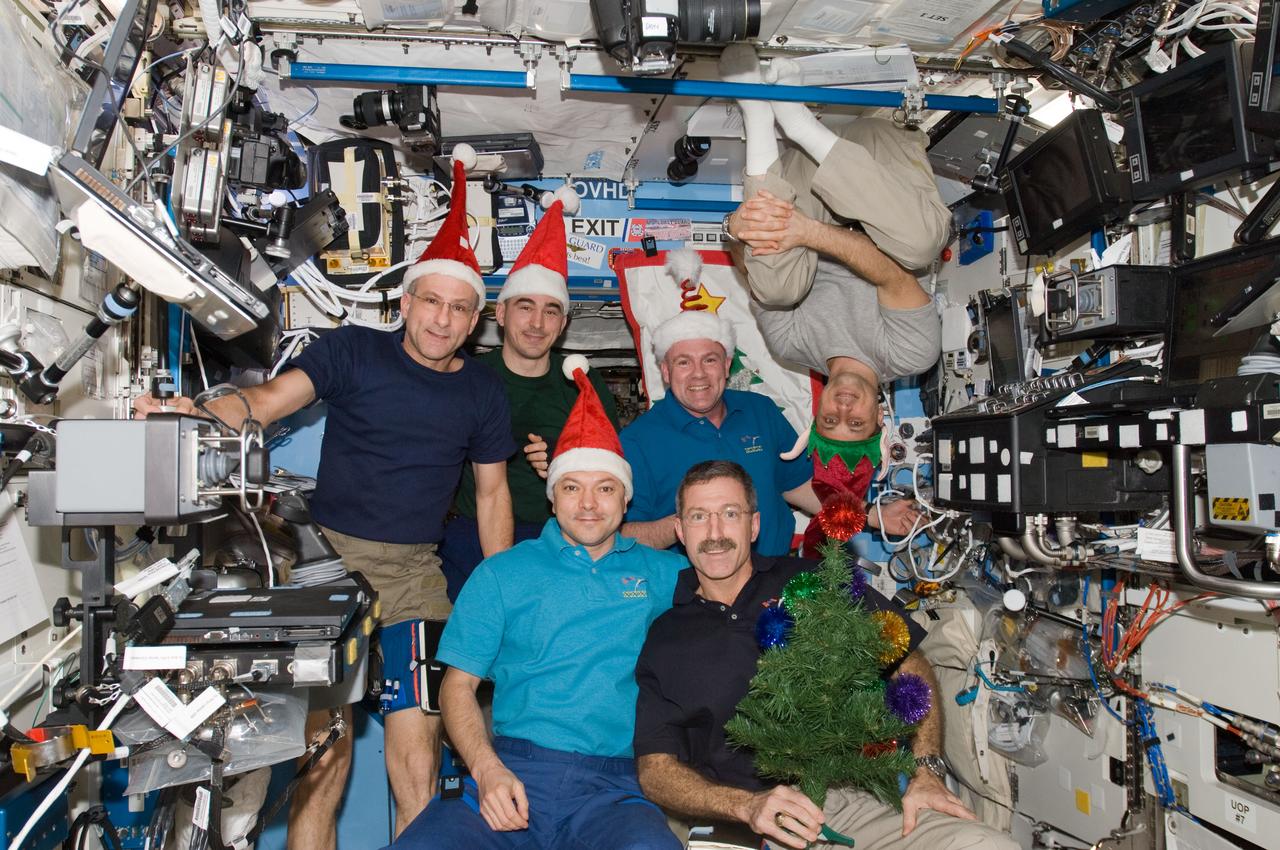
ISS030-E-015660 (25 Dec. 2011) --- The six Expedition 30 crew members assemble in the U.S. Lab (Destiny) aboard the International Space Station for a brief celebration of the Christmas holiday on Dec. 25. In front are Expedition 30 Commander Dan Burbank (right) and Flight Engineer Oleg Kononenko. On the back row, left to right, are Flight Engineers Don Pettit, Anatoly Ivanishin, Andre Kuipers and Anton Shkaplerov (suspended with his feet anchored above the group). Burbank and Pettit are NASA astronauts; Kononenko, Shkaplerov and Ivanishin are Russian cosmonauts; and Kuipers represents the European Space Agency.
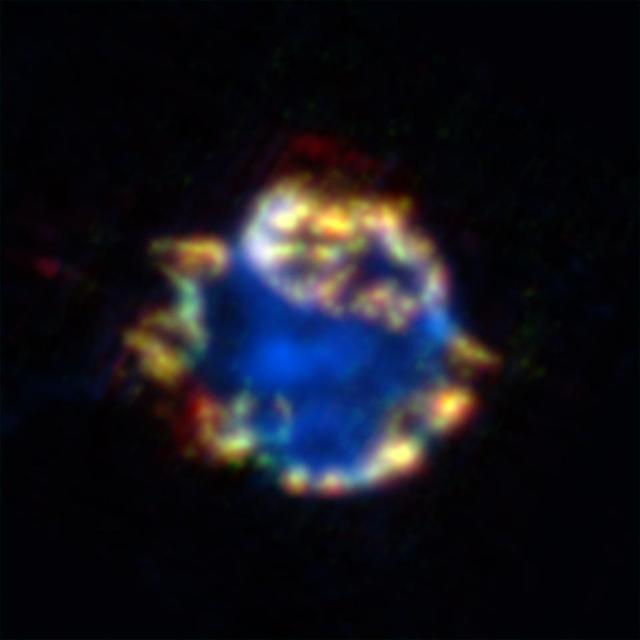
NASA Spitzer Space Telescope used its infrared camera to image this beautiful bulb which might look like a Christmas ornament but is the blown-out remains of a stellar explosion, or supernova.
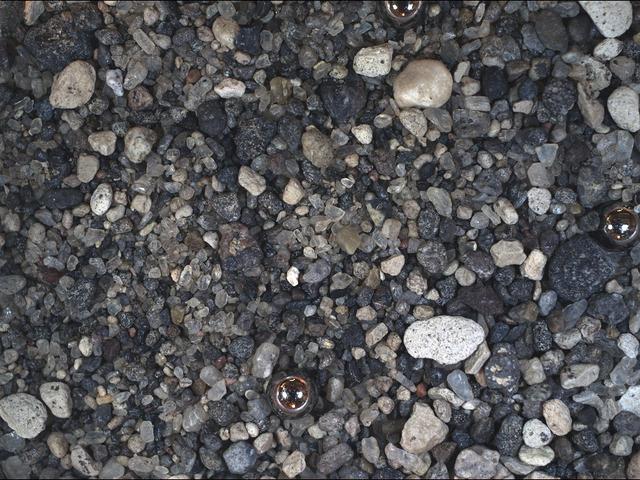
This view of grains from a sand dune near Christmas Lake, Ore., was taken by a testing twin of Mars Hand Lens Imager MAHLI camera on NASA Mars Science Laboratory.
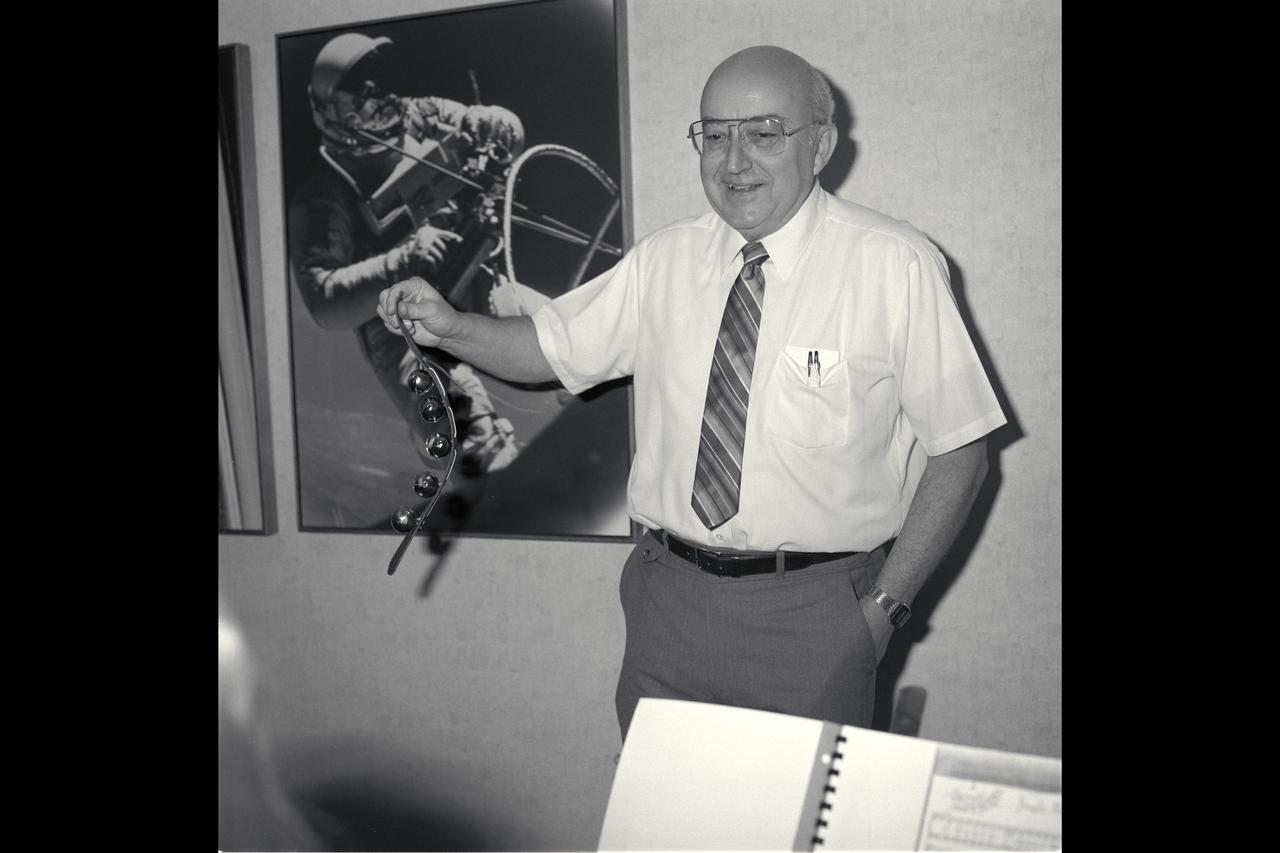
Sy Syvertson being entertained by the Ames Christmas Carolers
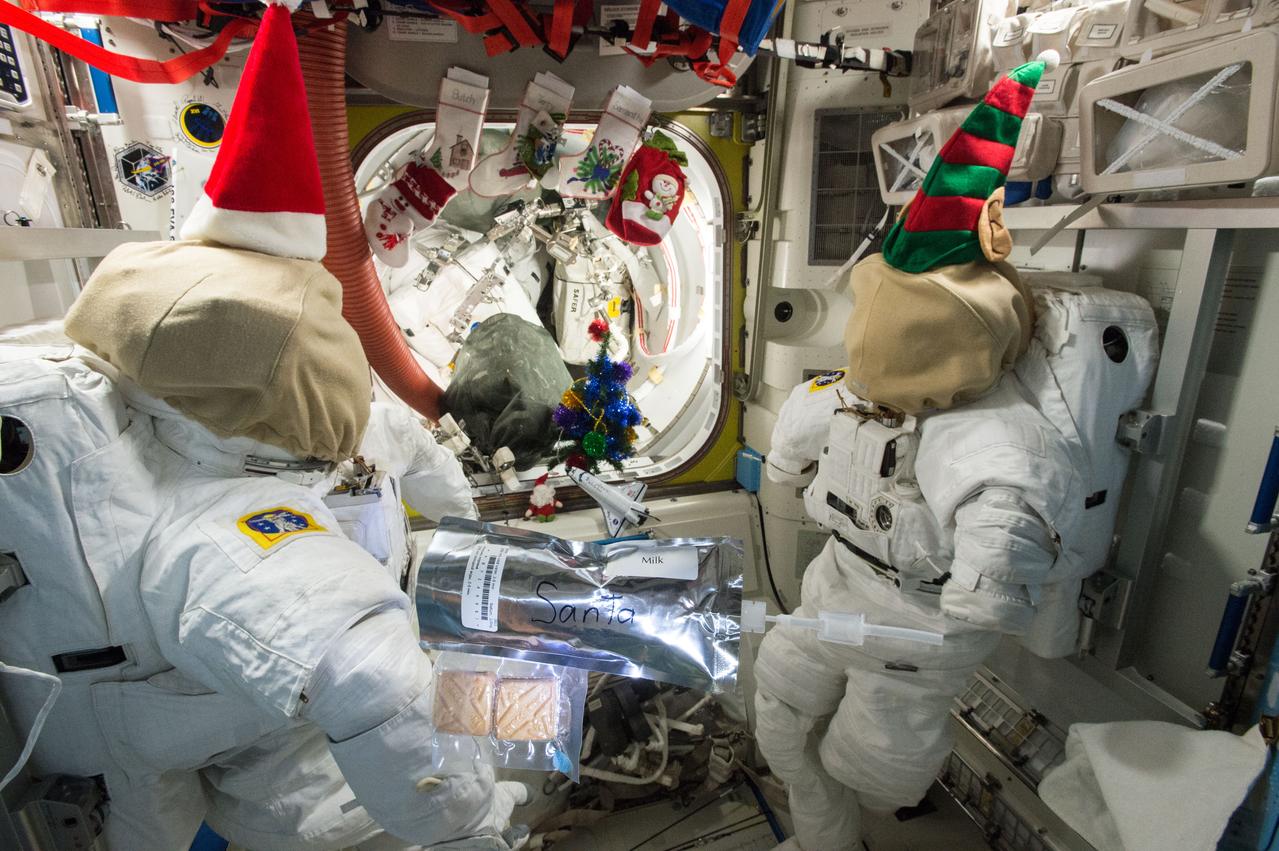
GMT358_23_07_Terry Virts_twas the night before christmas in the airlock_128

Newborn stars, hidden behind thick dust, are revealed in this image of a section of the Christmas Tree cluster from NASA Spitzer Space Telescope, created in joint effort between Spitzer infrared array camera and multiband imaging photometer instrument
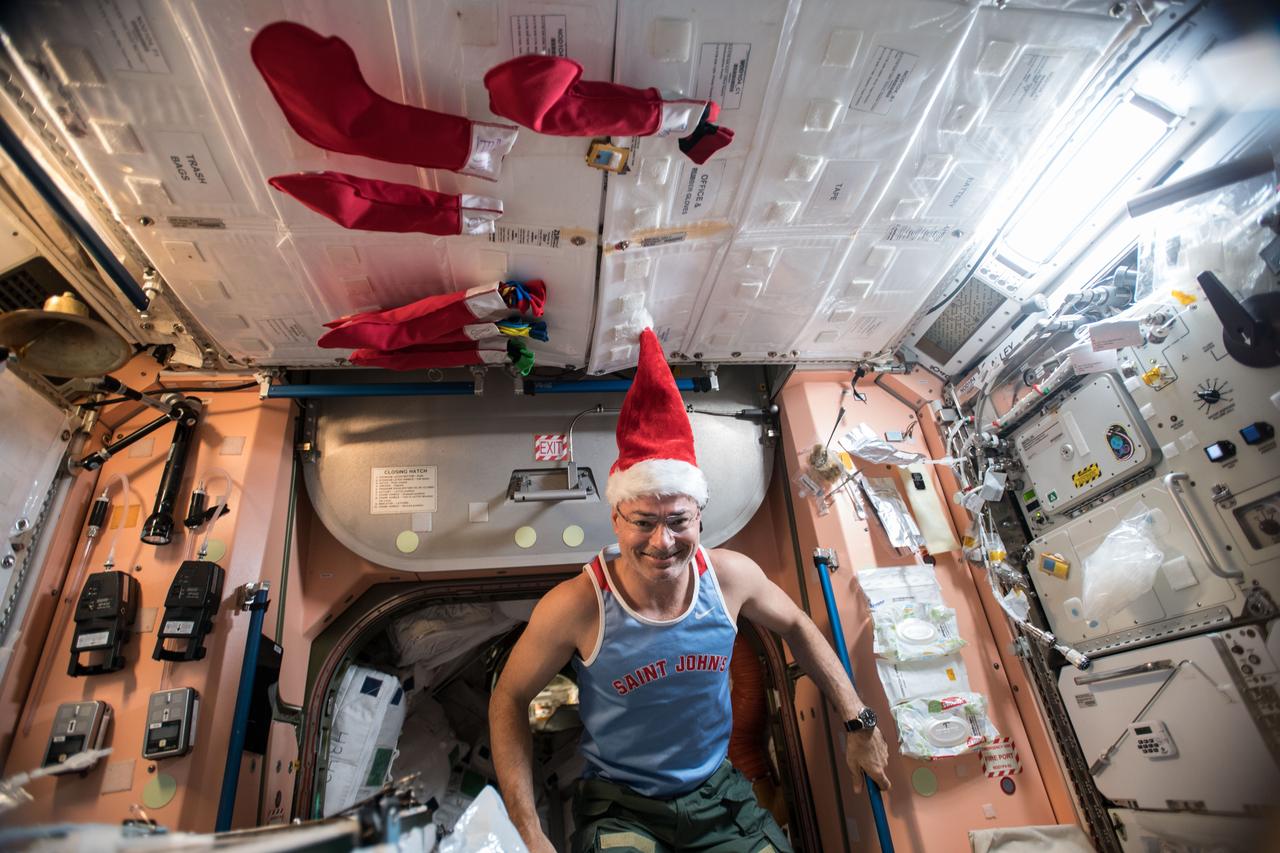
iss054e005591 (Dec. 24, 2017) --- NASA astronaut Mark Vande Hei "stirs" in the orbital house that is the International Space Station on Christmas Eve.
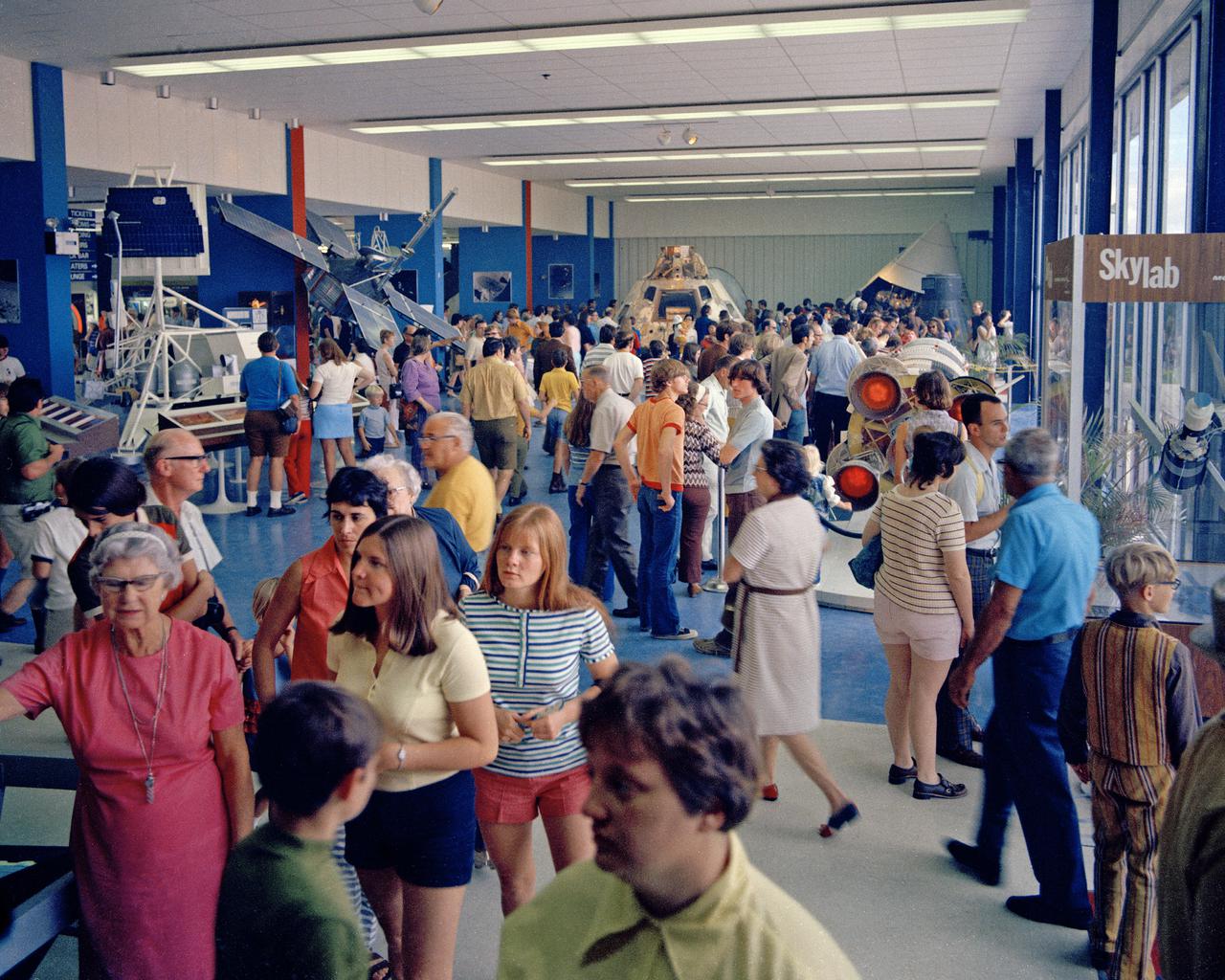
CAPE KENNEDY, Fla. -- At the Kennedy Space Center in Florida, the Christmas season brought large crowds at Visitors Information Center. Photo Credit: NASA
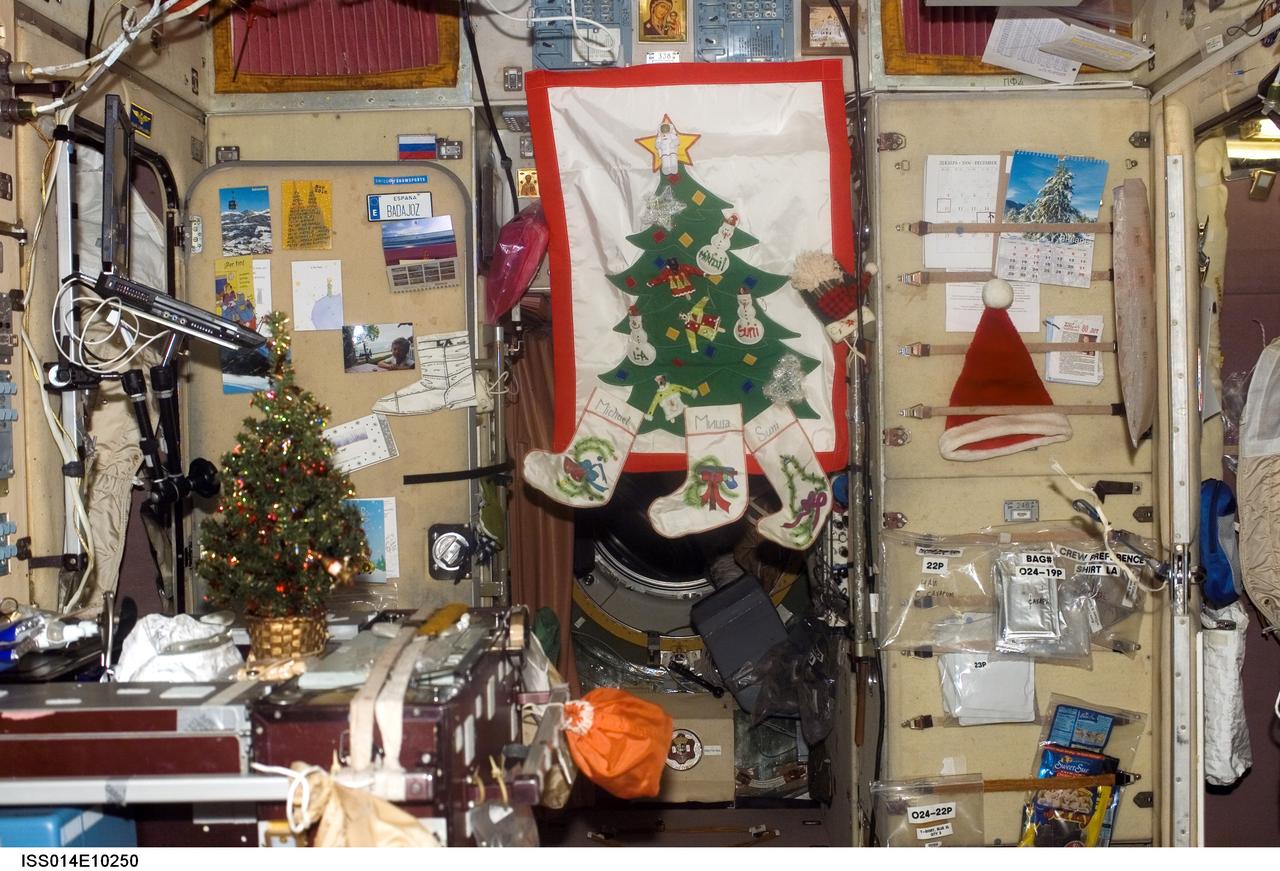
ISS014-E-10250 (25 Dec. 2006) --- Christmas decorations in the Zvezda Service Module of the International Space Station are featured in this image photographed by an Expedition 14 crewmember.
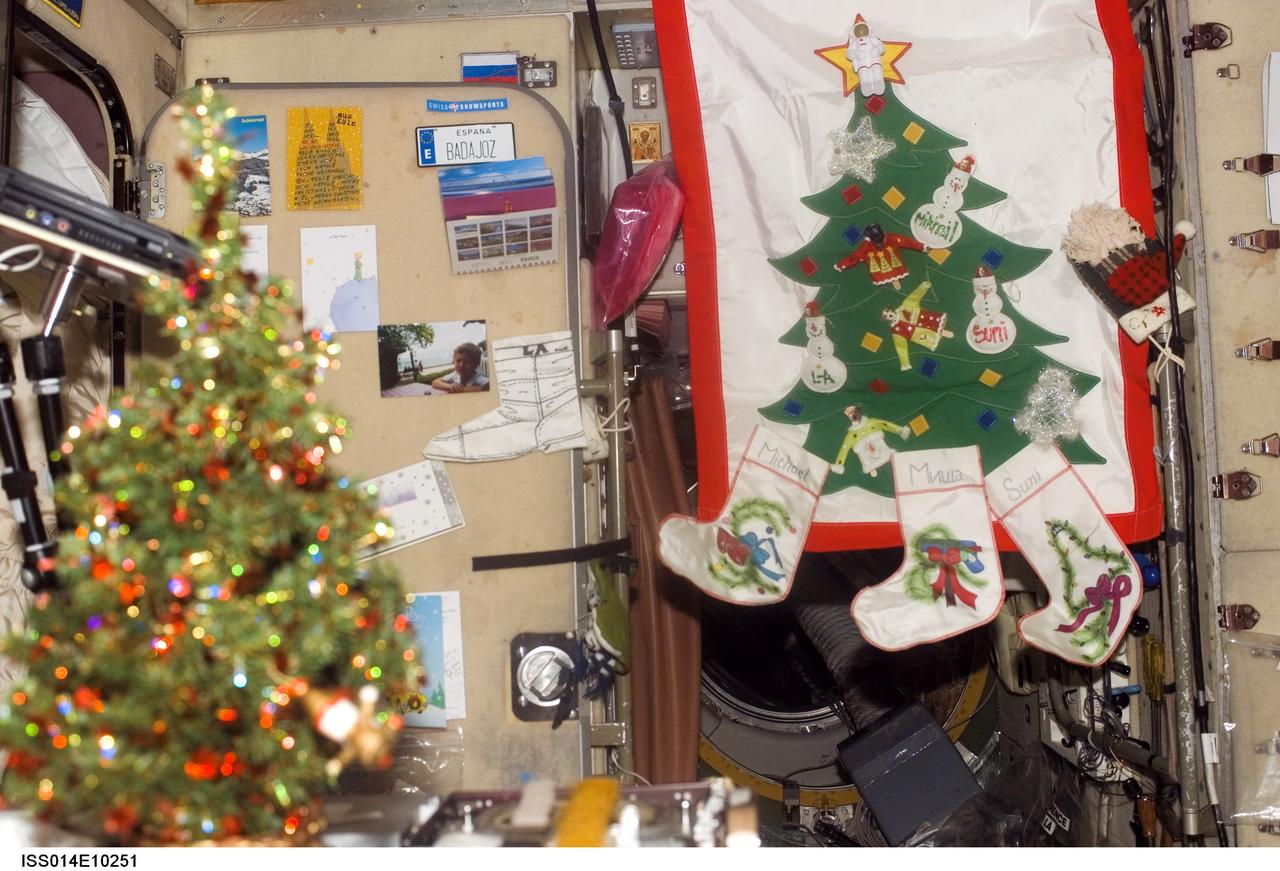
ISS014-E-10251 (25 Dec. 2006) --- Christmas decorations in the Zvezda Service Module of the International Space Station are featured in this image photographed by an Expedition 14 crewmember.
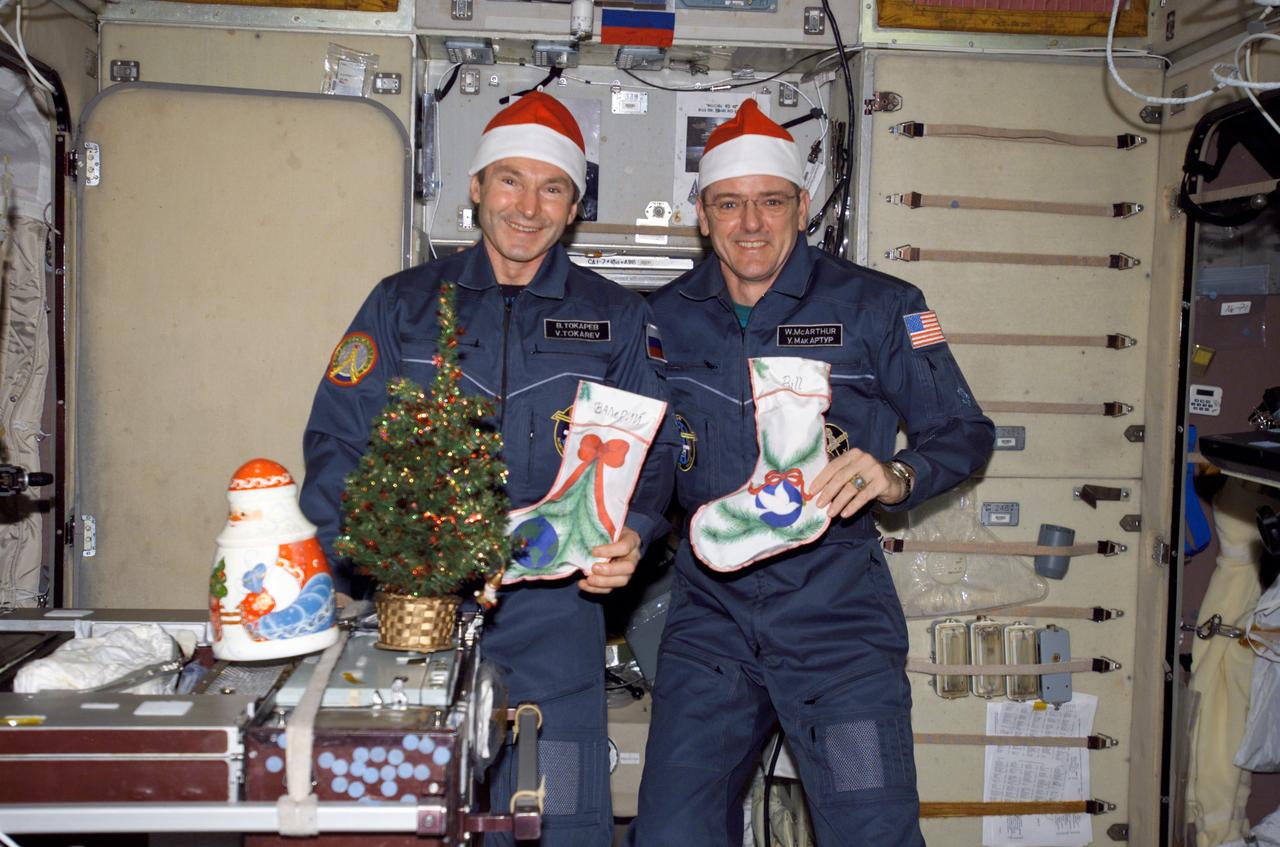
ISS012-E-14244 (28 Dec. 2005) --- Astronaut William S. (Bill) McArthur Jr. (right), Expedition 13 commander and NASA space station science officer, and cosmonaut Valery I. Tokarev, flight engineer representing Russia's Federal Space Agency, pose for a holiday photo in the Zvezda Service Module of the International Space Station. McArthur and Tokarev are holding Christmas stockings and wearing Santa Claus hats. A small Christmas tree and Santa Claus figurine sit on the gallery table in the foreground.
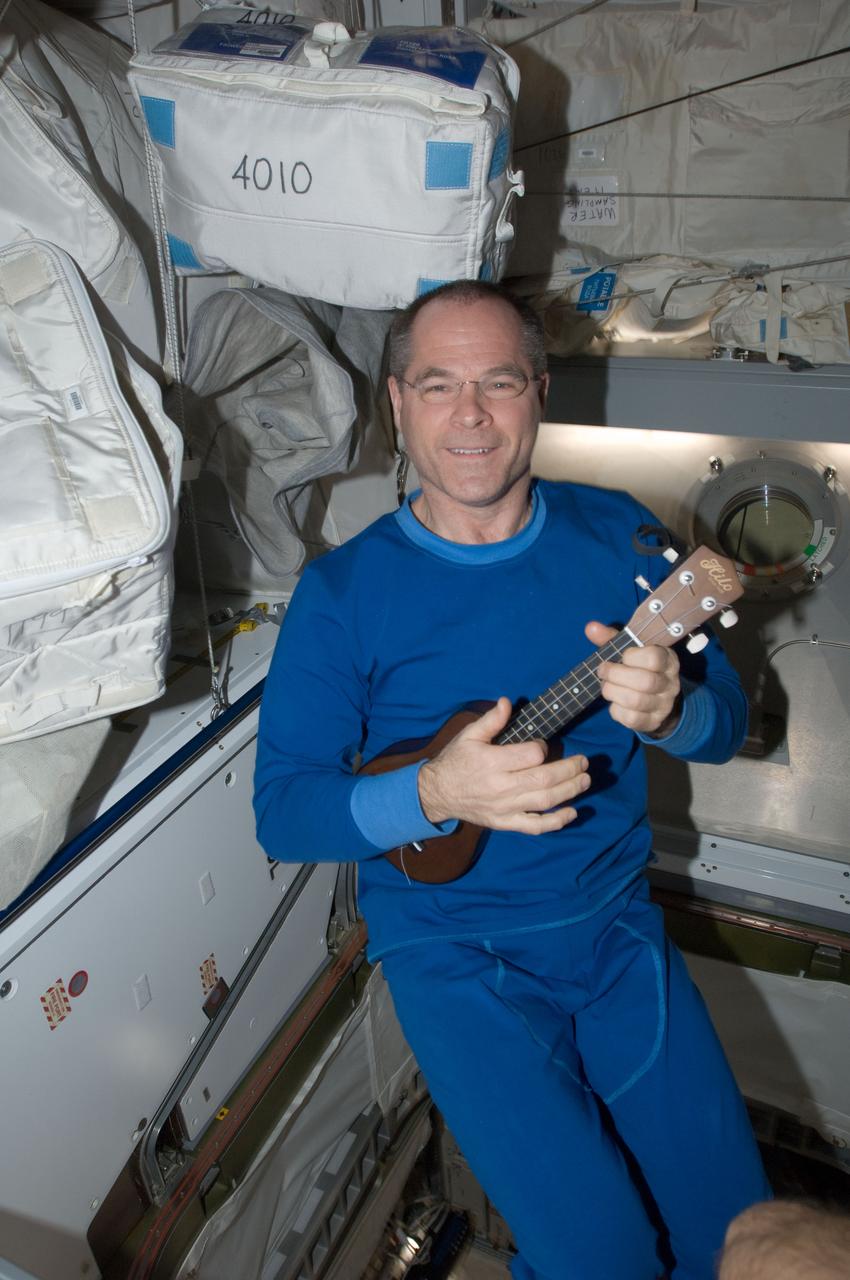
ISS034-E-009697 (23 Dec. 2012) --- Inside the Tranquility node of the International Space Station, Expedition 34 Commander Kevin Ford plays a ukulele on Dec. 23, 2012. Two days later, the Expedition 34 crew members assembled their voices and instruments to make Christmas music for the "folks at home," in other words, all the people celebrating Christmas on Earth.
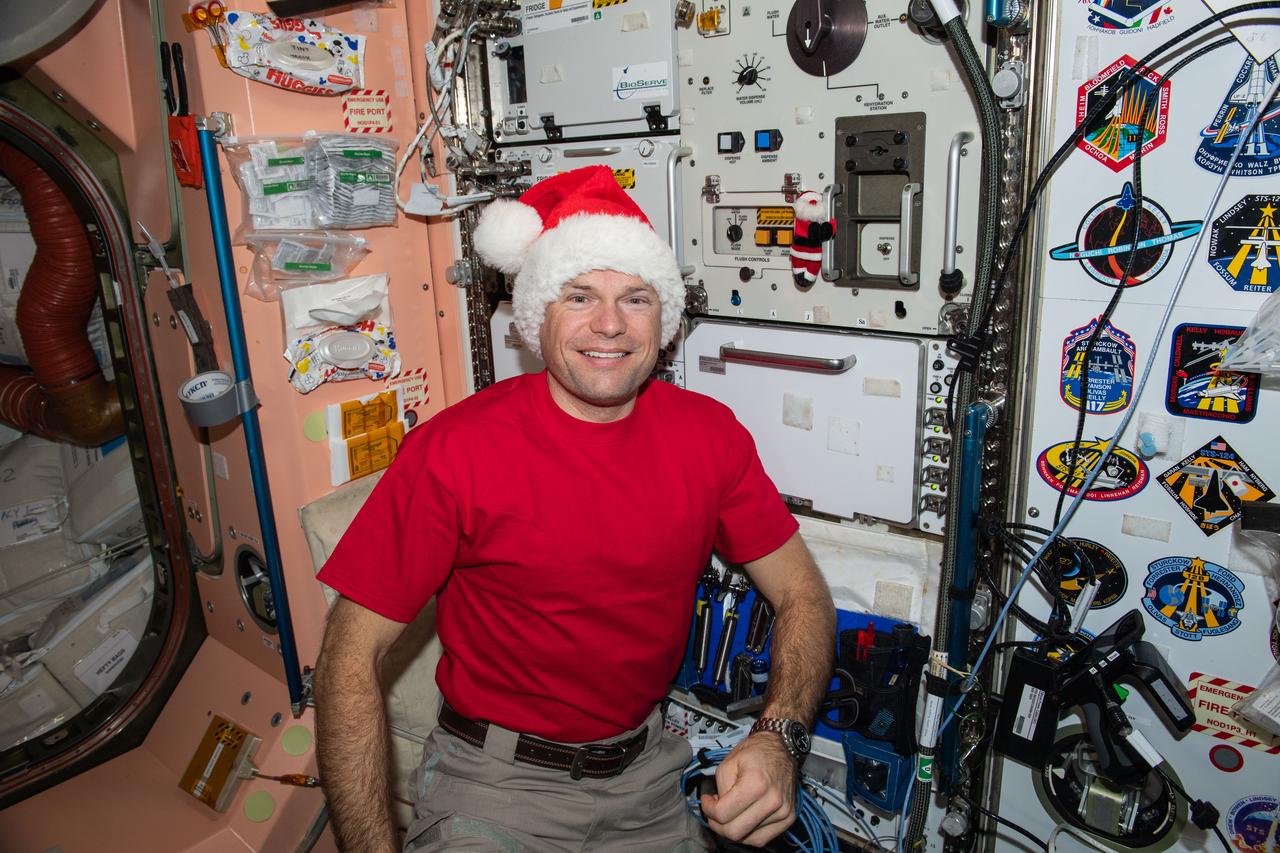
iss070e022023 (Nov. 9, 2023) --- ESA (European Space Agency) astronaut and Expedition 70 Commander Andreas Mogensen gets ready for the Christmas season and poses for a fun portrait wearing a Santa Claus hat.
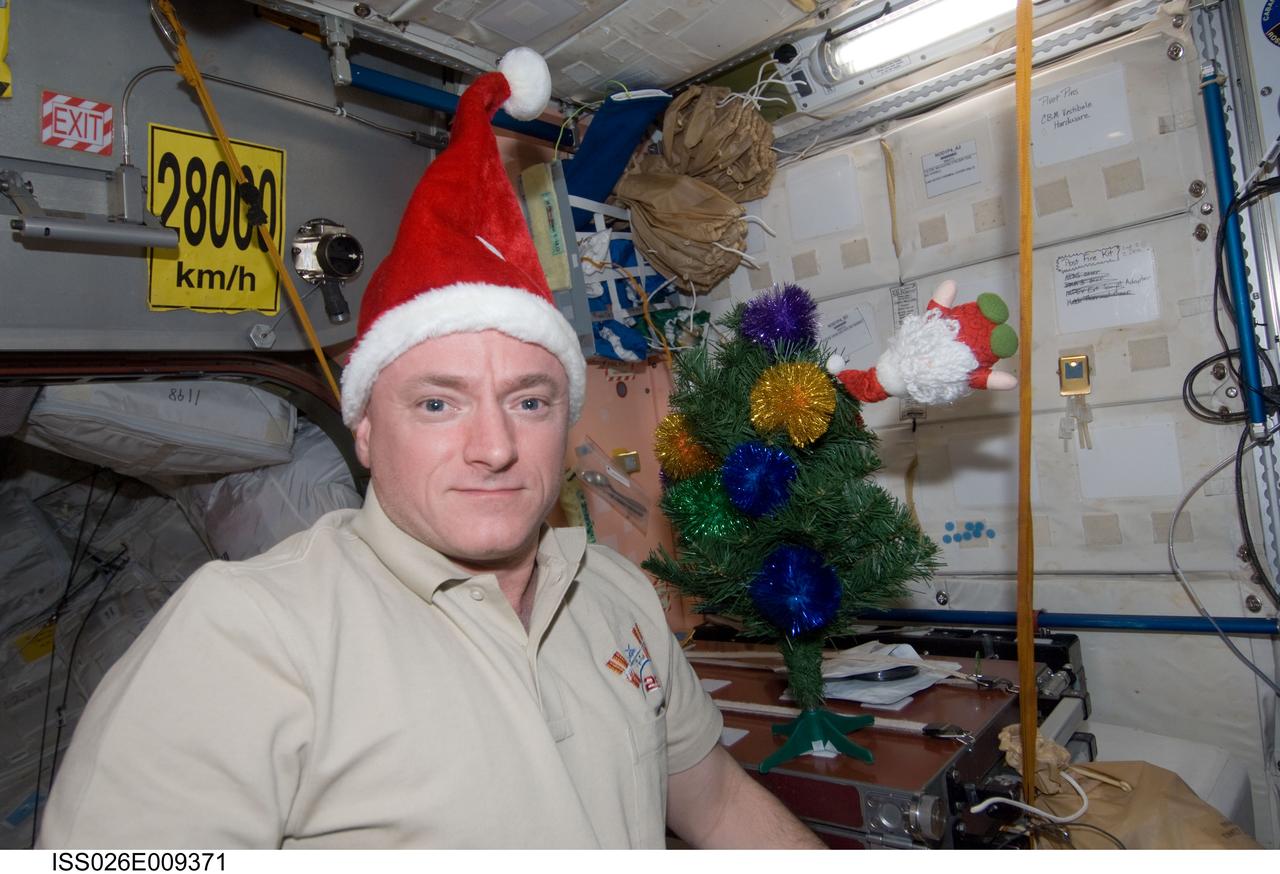
ISS026-E-009371 (12 Dec. 2010) --- Wearing a Santa Claus hat, NASA astronaut Scott Kelly, Expedition 26 commander, poses for a holiday photo near Christmas decorations in the Unity node of the International Space Station.
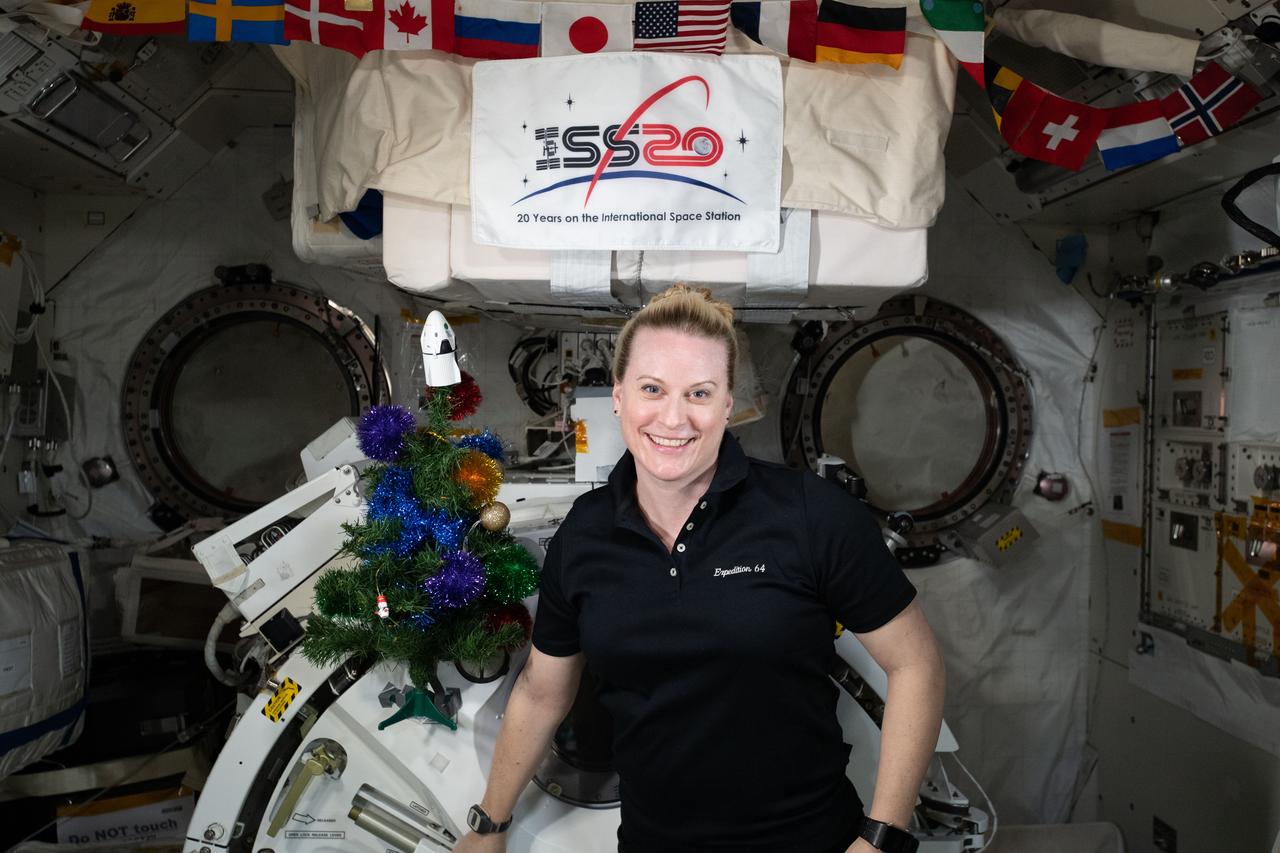
iss064e013899 (Dec. 18, 2020) --- NASA astronaut and Expedition 64 Flight Engineer Kate Rubins poses for a holiday season portrait with a Christmas tree inside Japan's Kibo laboratory module.
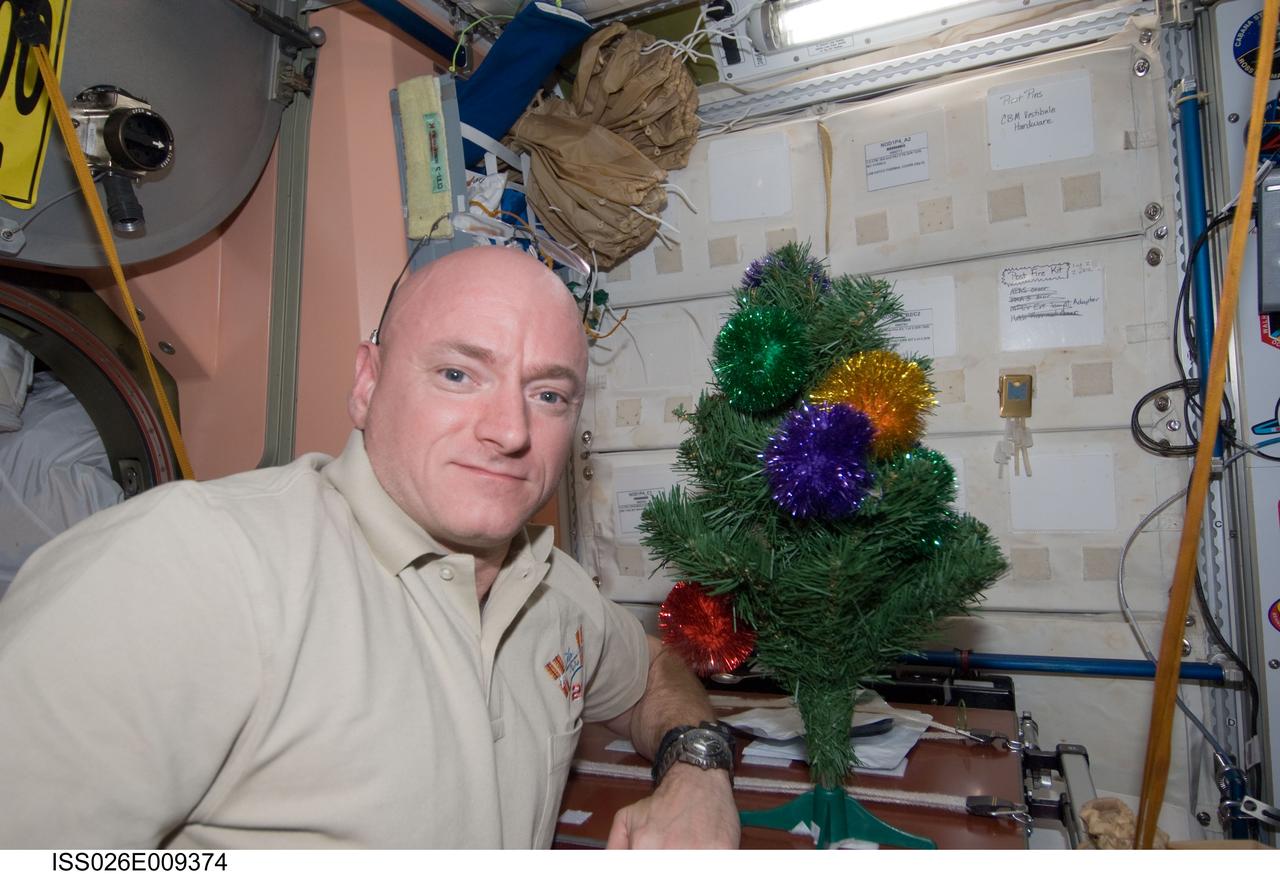
ISS026-E-009374 (12 Dec. 2010) --- NASA astronaut Scott Kelly, Expedition 26 commander, poses for a holiday photo near Christmas decorations in the Unity node of the International Space Station.
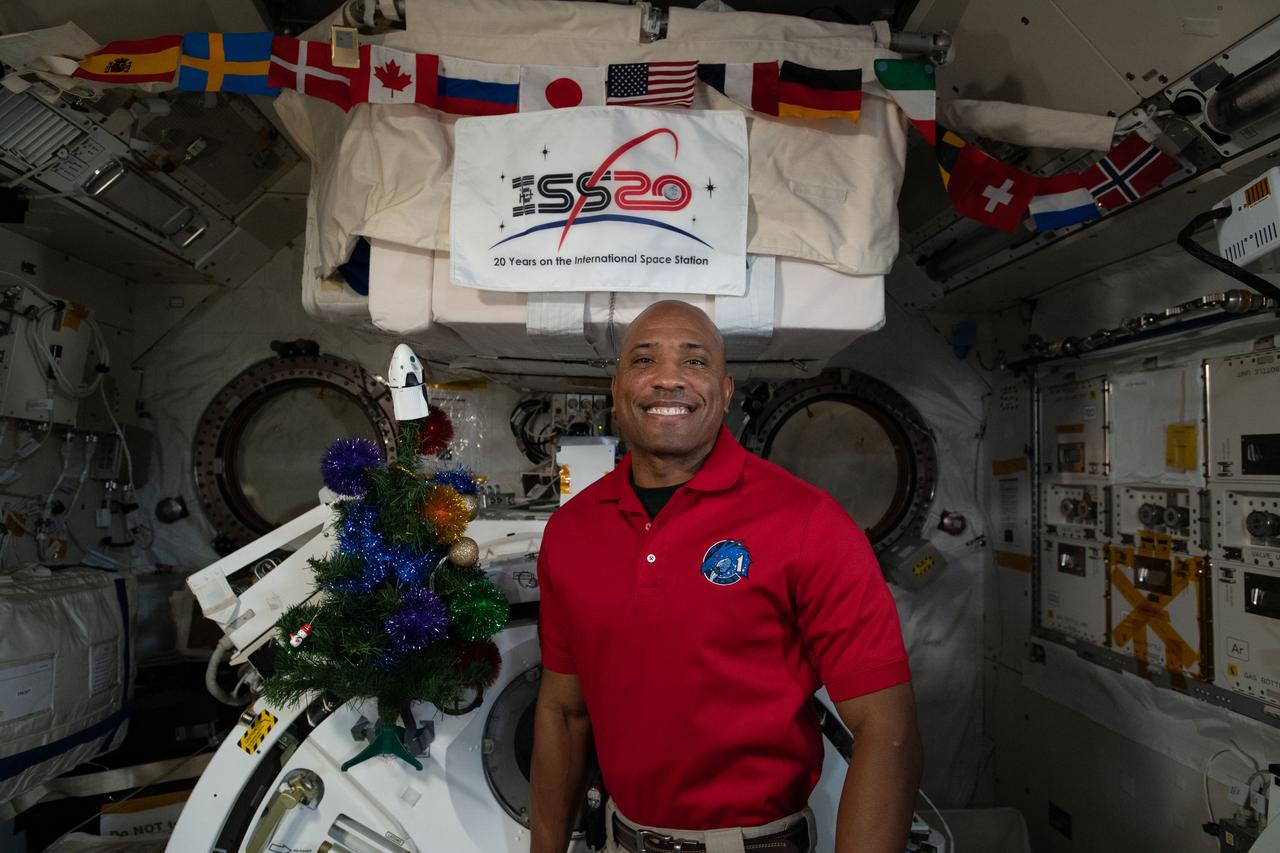
iss064e013906 (Dec. 18, 2020) --- NASA astronaut and Expedition 64 Flight Engineer Victor Glover poses for a holiday season portrait with a Christmas tree inside Japan's Kibo laboratory module.
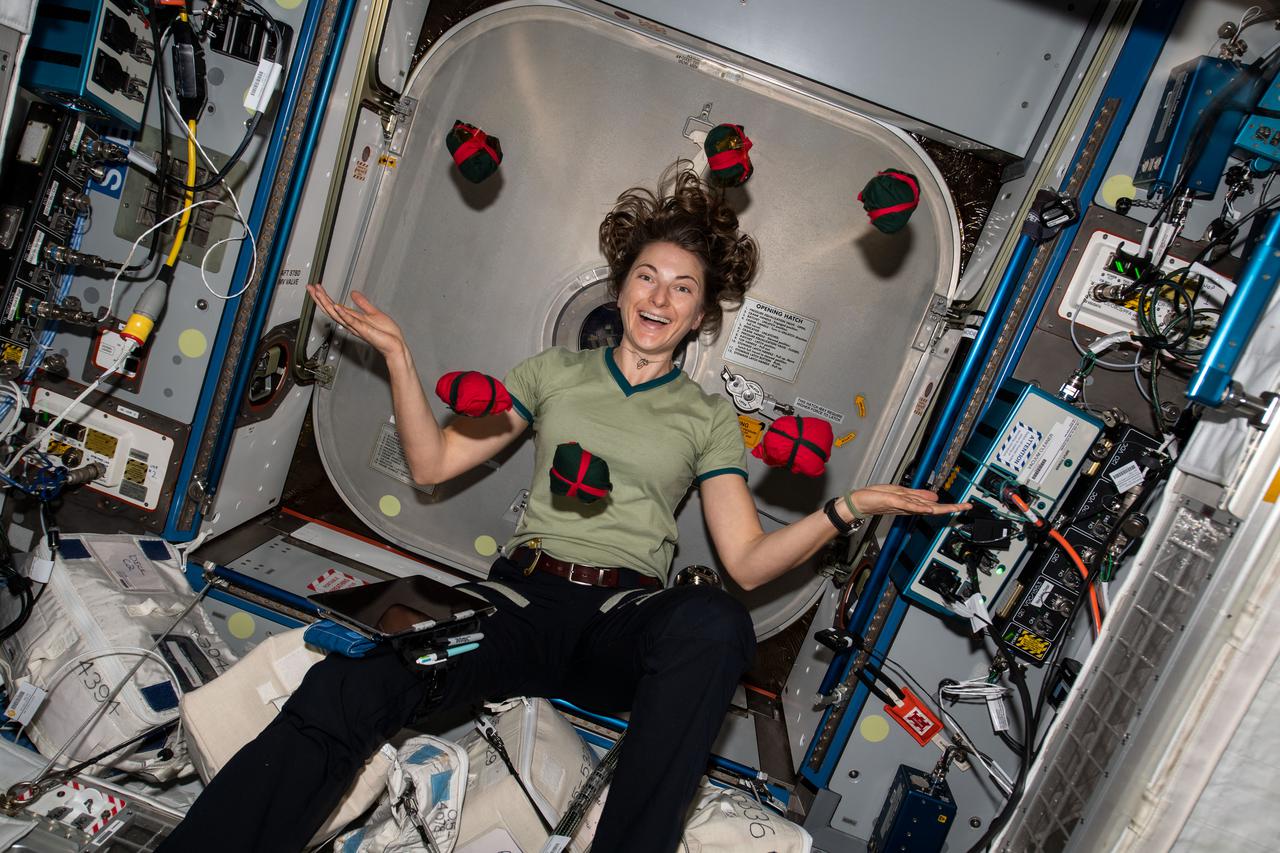
iss066e093622 (Dec. 20, 2021) --- NASA astronaut and Expedition 66 Flight Engineer Kayla Barron is pictured seemingly juggles Christmas presents aboard the International Space Station.

iss054e005627 (Dec. 25, 2017) --- A Christmas Day sunrise is photographed from the International Space Station as the four astronauts and two cosmonauts of Expedition 54 orbited above the Pacific Ocean.
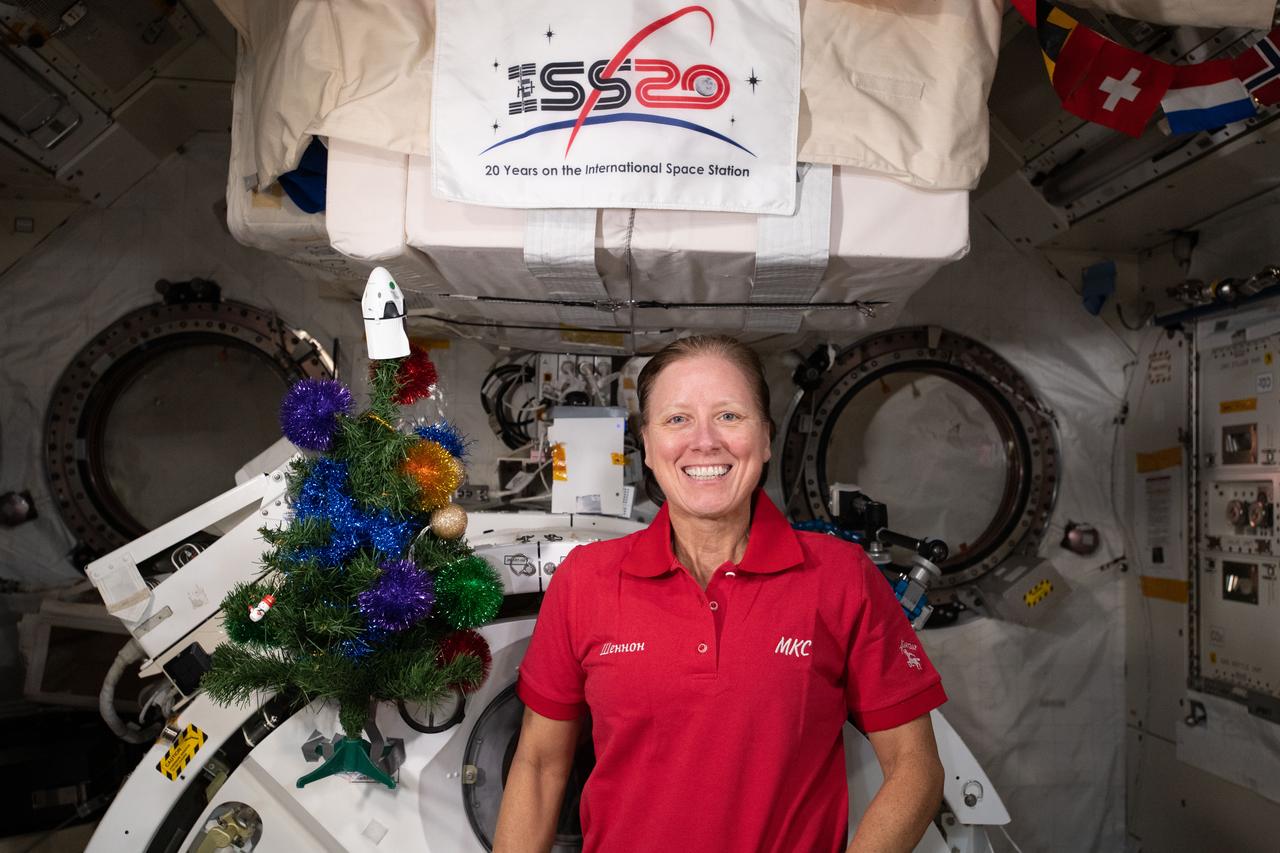
iss064e013903 (Dec. 18, 2020) --- NASA astronaut and Expedition 64 Flight Engineer Shannon Walker poses for a holiday season portrait with a Christmas tree inside Japan's Kibo laboratory module.
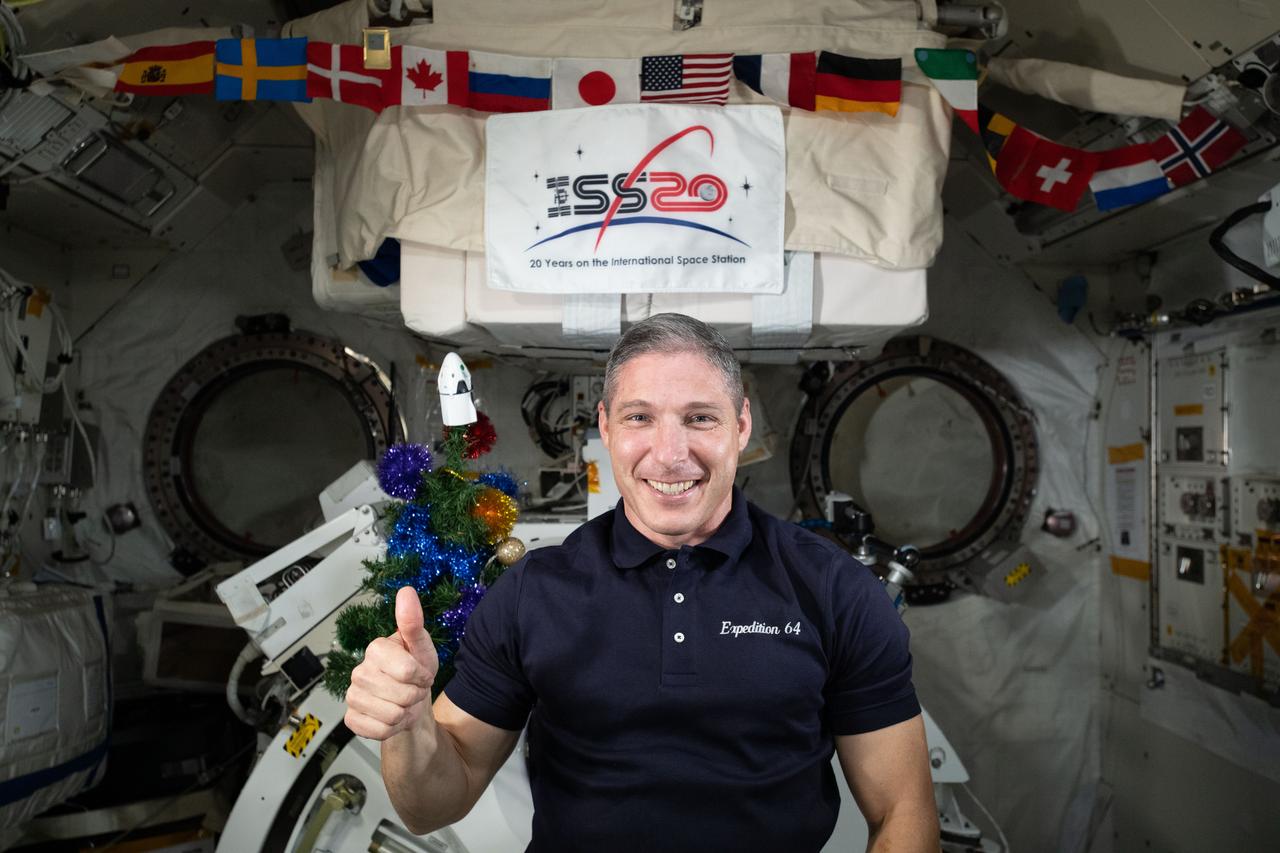
iss064e013898 (Dec. 18, 2020) --- NASA astronaut and Expedition 64 Flight Engineer Michael Hopkins poses for a holiday season portrait with a Christmas tree inside Japan's Kibo laboratory module.
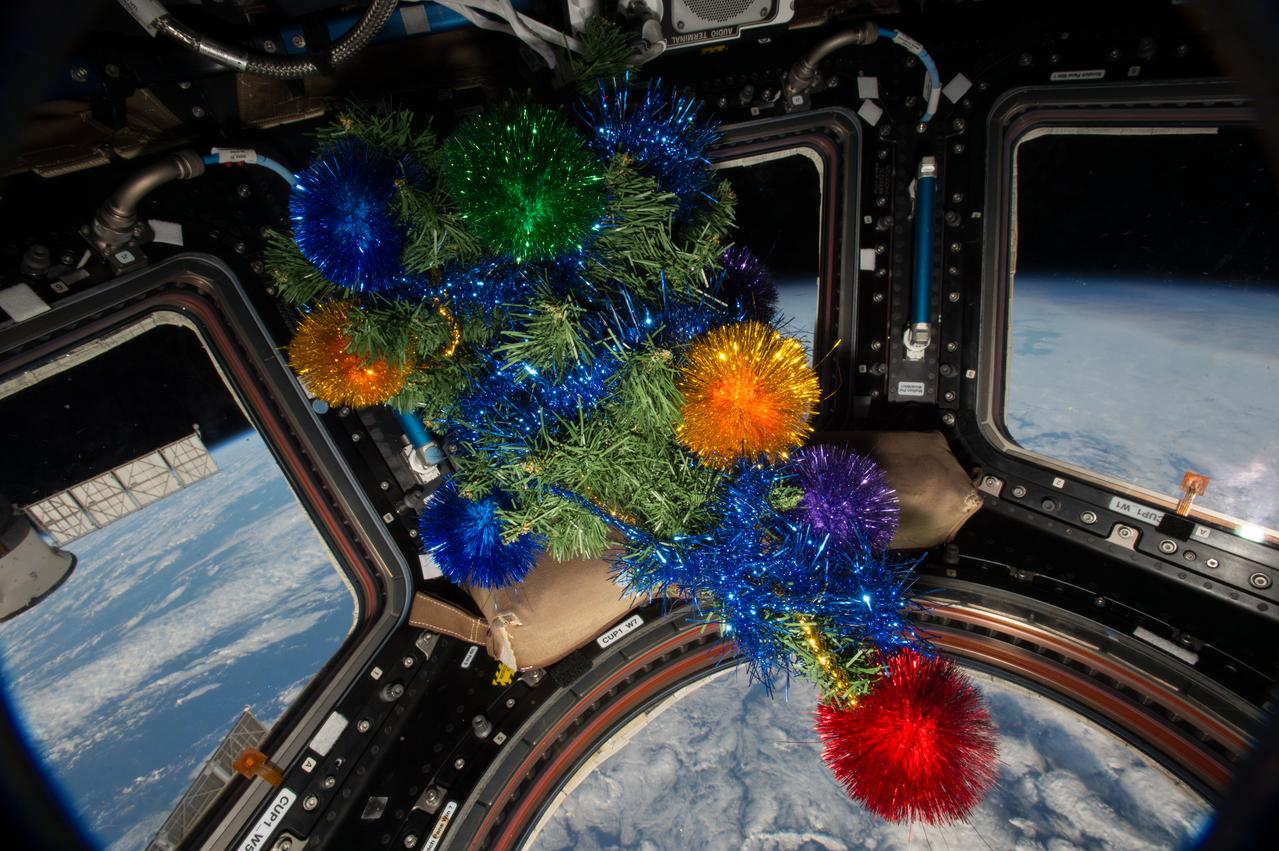
ISS046e002700 (12/25/2015) --- Happy Holiday in space. The crew of Expedition 46 decorated the International Space Station’s Cupola module, a 360-degree series of windows that provides a stunning view of Earth for observations, while also containing the primary controls for the Canadarm2 robotic arm.

This enhanced-color mosaic showing the Martian surface outside of Jezero Crater was taken by NASA's Perseverance from the crater rim at a location where the rover collected a sample dubbed "Silver Mountain." The 83 frames used to generate the mosaic were acquired by the rover's Mastcam-Z instrument on Dec. 25, 2024, the 1,368th Martian day, or sol, of Perseverance's mission. Enhanced-color images have their color bands processed to improve visual contrast and accentuate color differences. Arizona State University leads the operations of the Mastcam-Z instrument, working in collaboration with Malin Space Science Systems in San Diego, on the design, fabrication, testing, and operation of the cameras, and in collaboration with the Niels Bohr Institute of the University of Copenhagen on the design, fabrication, and testing of the calibration targets. A key objective for Perseverance's mission on Mars is astrobiology, including the search for signs of ancient microbial life. The rover will characterize the planet's geology and past climate, pave the way for human exploration of the Red Planet, and be the first mission to collect and cache Martian rock and regolith (broken rock and dust). Subsequent NASA missions, in cooperation with ESA (European Space Agency), would send spacecraft to Mars to collect these sealed samples from the surface and return them to Earth for in-depth analysis. The Mars 2020 Perseverance mission is part of NASA's Mars Exploration Program (MEP) portfolio and the agency's Moon to Mars exploration approach, which includes Artemis missions to the Moon that will help prepare for human exploration of the Red Planet. https://photojournal.jpl.nasa.gov/catalog/PIA26530

iss042e065678 (12/25/14) --- Expedition 42 Commander Barry Wilmore of NASA and Flight Engineer Samantha Cristoforetti of the European Space Agency (ESA) pose for the camera on Christmas day aboard the International Space Station. Wilmore is holding a patch traditionally given to astronauts following their first flight on a Soyuz spacecraft.
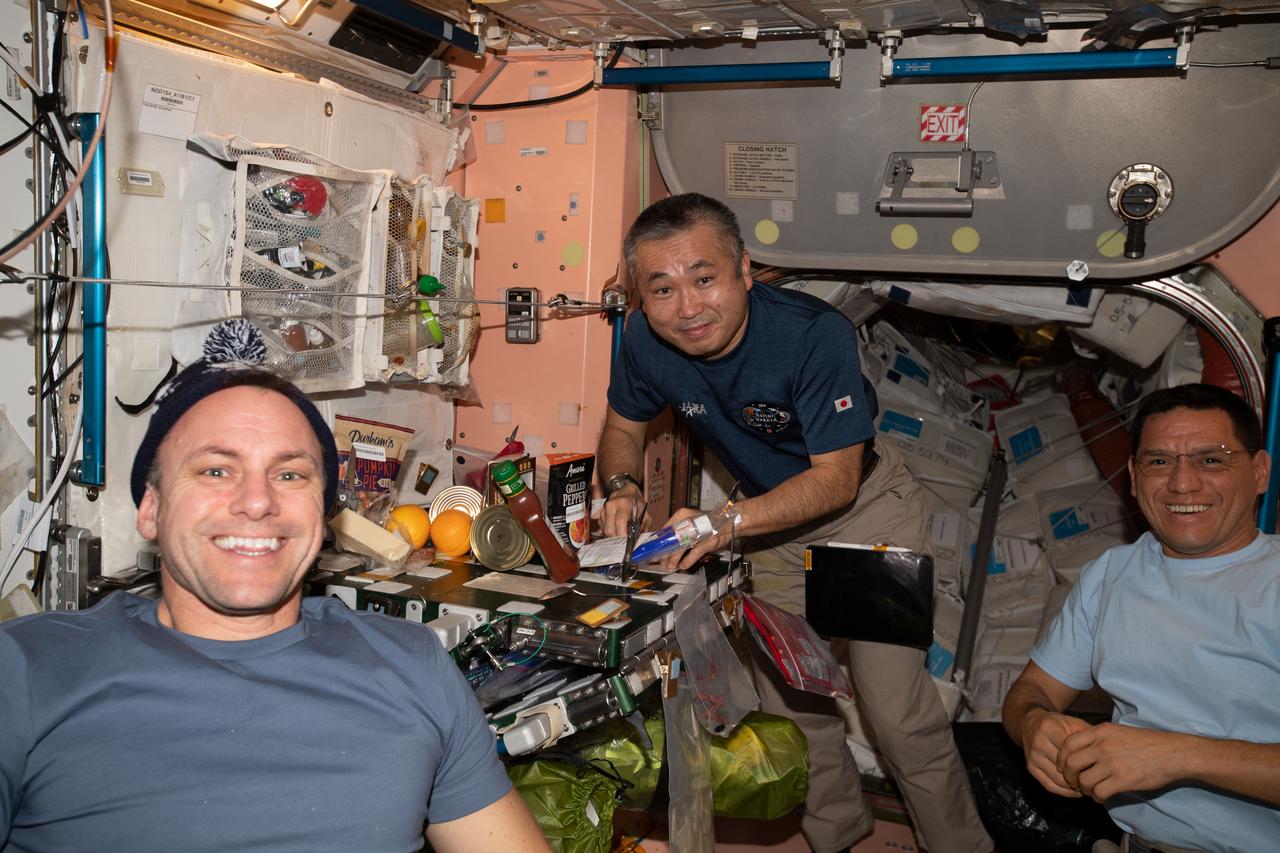
iss068e032600 (Dec. 24, 2022) --- Expedition 68 Flight Engineers (from left) Josh Cassada of NASA, Koichi Wakata of the Japan Aerospace Exploration Agency (JAXA), and Frank Rubio of NASA, pose for a photograph while sharing a meal on Christmas Eve inside the International Space Station's Unity module.
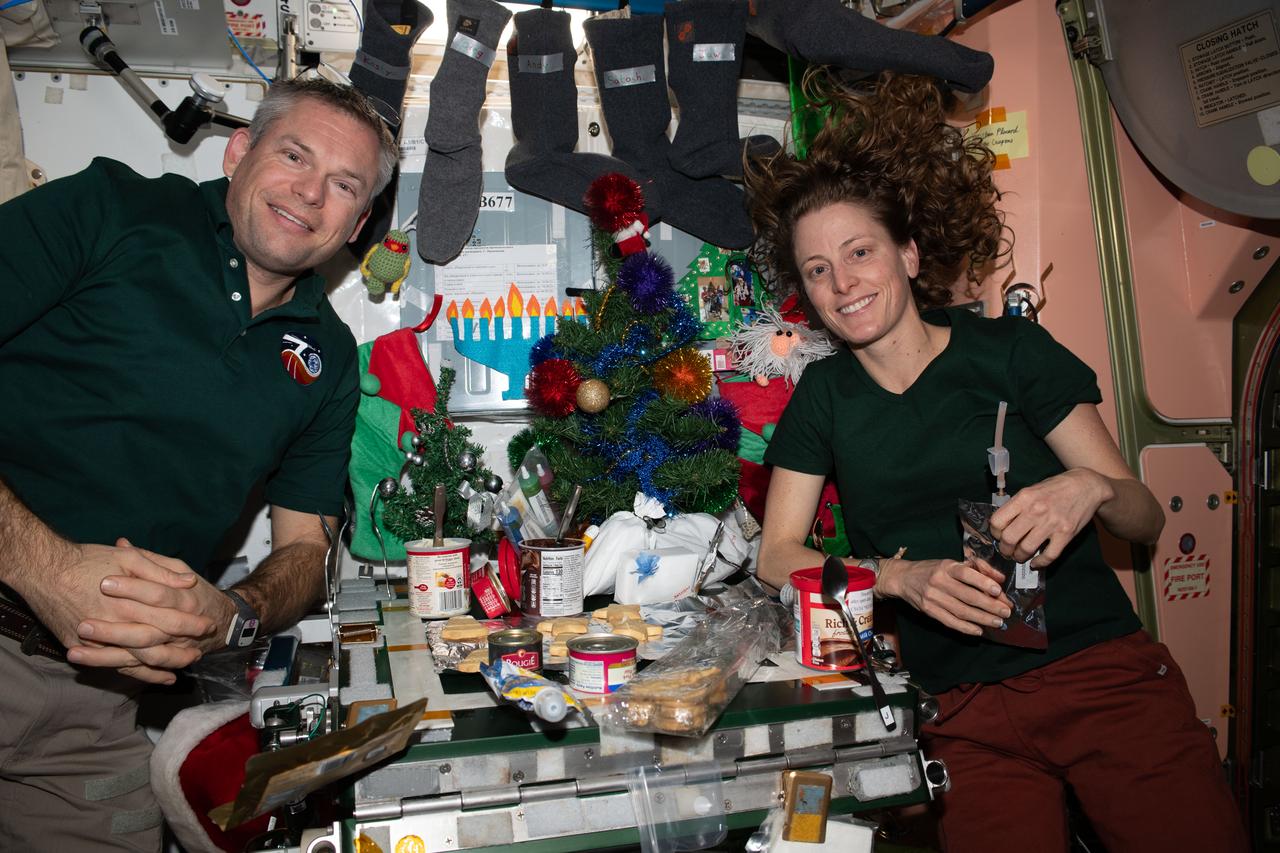
iss070e045128 (Dec. 24, 2023) --- Expedition 70 Commander Andreas Mogensen from ESA (European Space Agency) and NASA Flight Engineer Loral O'Hara are pictured inside the International Space Station's Unity module enjoying a Christmas Day meal.
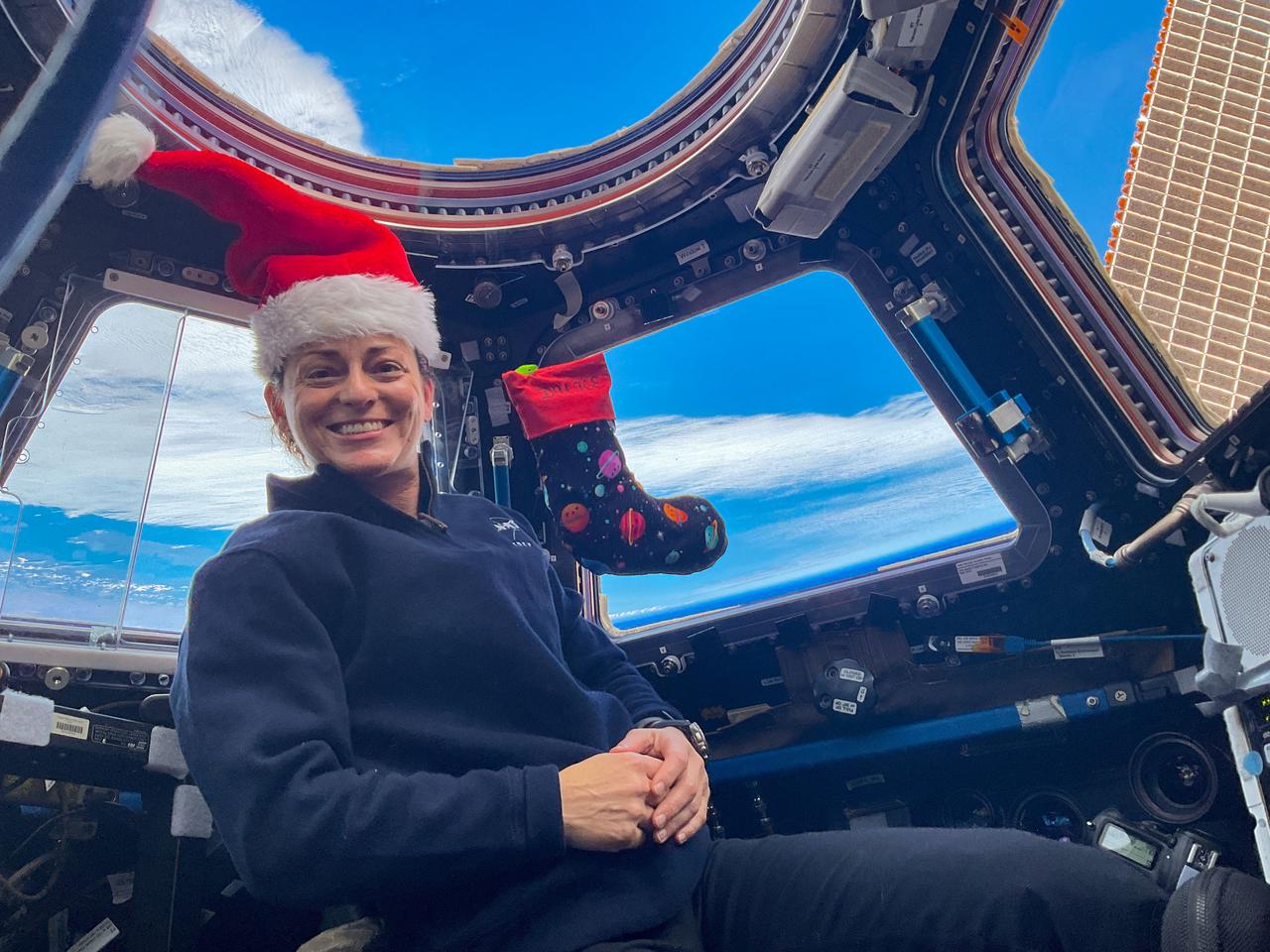
iss068e032470 (Dec. 24, 2022) --- Expedition 68 Flight Engineer Nicole Mann of NASA poses for a festive portrait on Christmas Eve inside the cupola as the International Space Station orbited 268 miles above the Pacific Ocean off the coast of southern Chile.
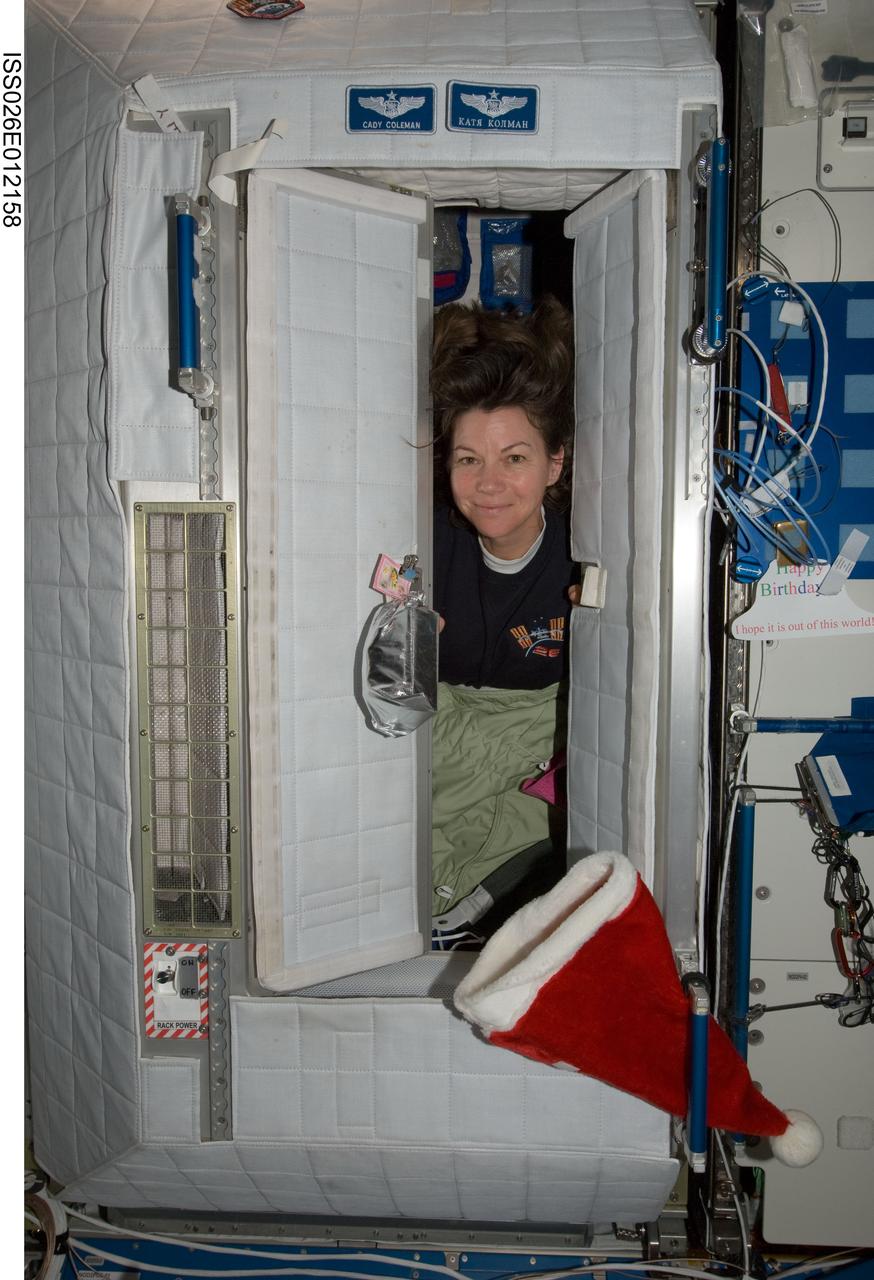
ISS026-E-012158 (25 Dec. 2010) --- NASA astronaut Catherine (Cady) Coleman, Expedition 26 flight engineer, and one of six crew members currently aboard the International Space Station, peeks out of her sleeping quarters on Christmas morning to view the station’s decorations and gifts.

Decked out in reds, greens, blues and whites, this image captured by NASA Terra satellite March 8, 2001 highlights the Canadian province of New Brunswick.
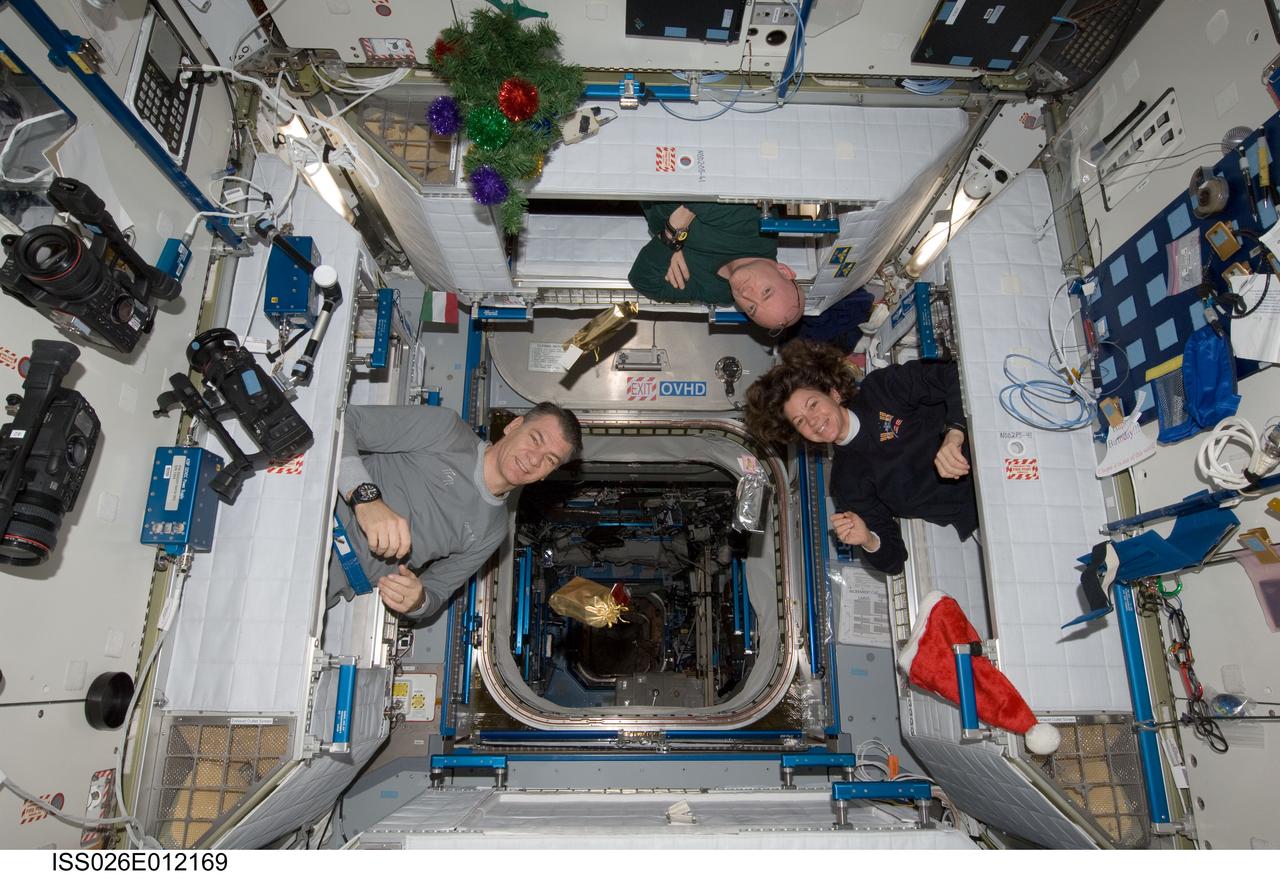
ISS026-E-012169 (25 Dec. 2010) --- Three of the six crew members aboard the International Space Station peek out of their sleeping quarters on Christmas morning to view the station?s decorations and gifts. Shown, from left, are European Space Agency astronaut Paolo Nespoli, Expedition 26 flight engineer, NASA astronaut Scott Kelly, Expedition 26 commander, and NASA astronaut Catherine (Cady) Coleman, flight engineer.
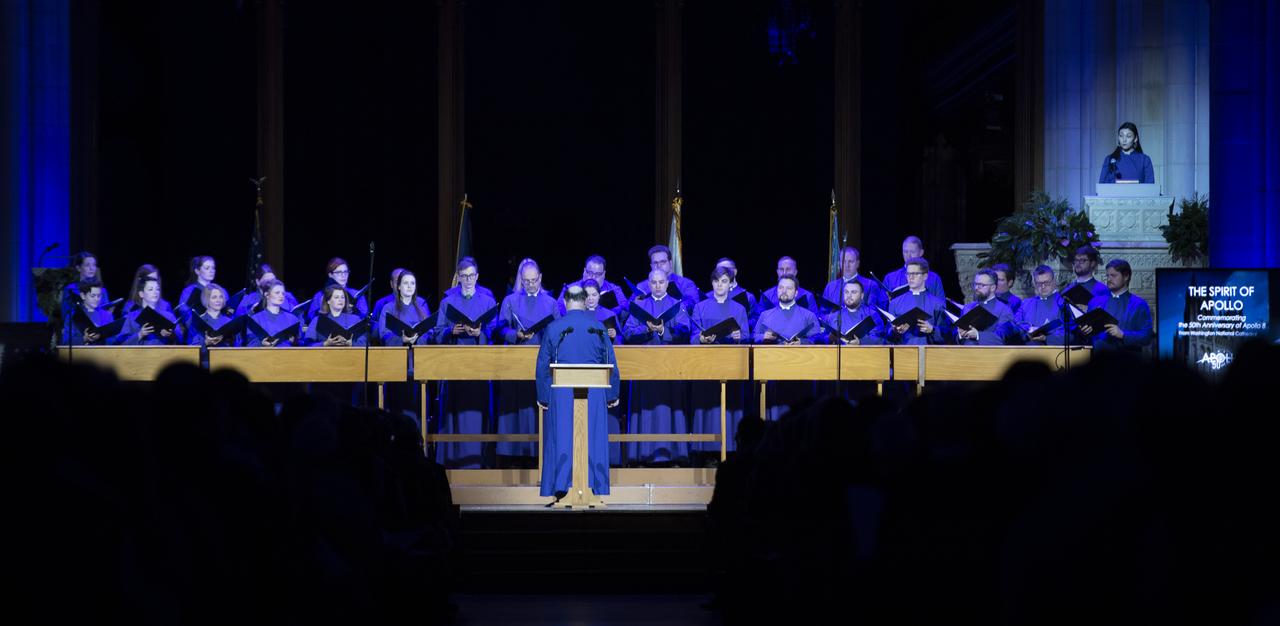
The Washington National Cathedral Choir performs a choral performance of Apollo 8's Christmas Eve broadcast during the Smithsonian National Air and Space Museum's Spirit of Apollo event commemorating the 50th anniversary of Apollo 8, Tuesday, Dec. 11, 2018 at the Washington National Cathedral in Washington, DC. Apollo 8 was humanity's first journey to another world, taking astronauts Frank Borman, Jim Lovell, and William Anders to the Moon and back in December of 1968. Photo Credit: (NASA/Joel Kowsky)
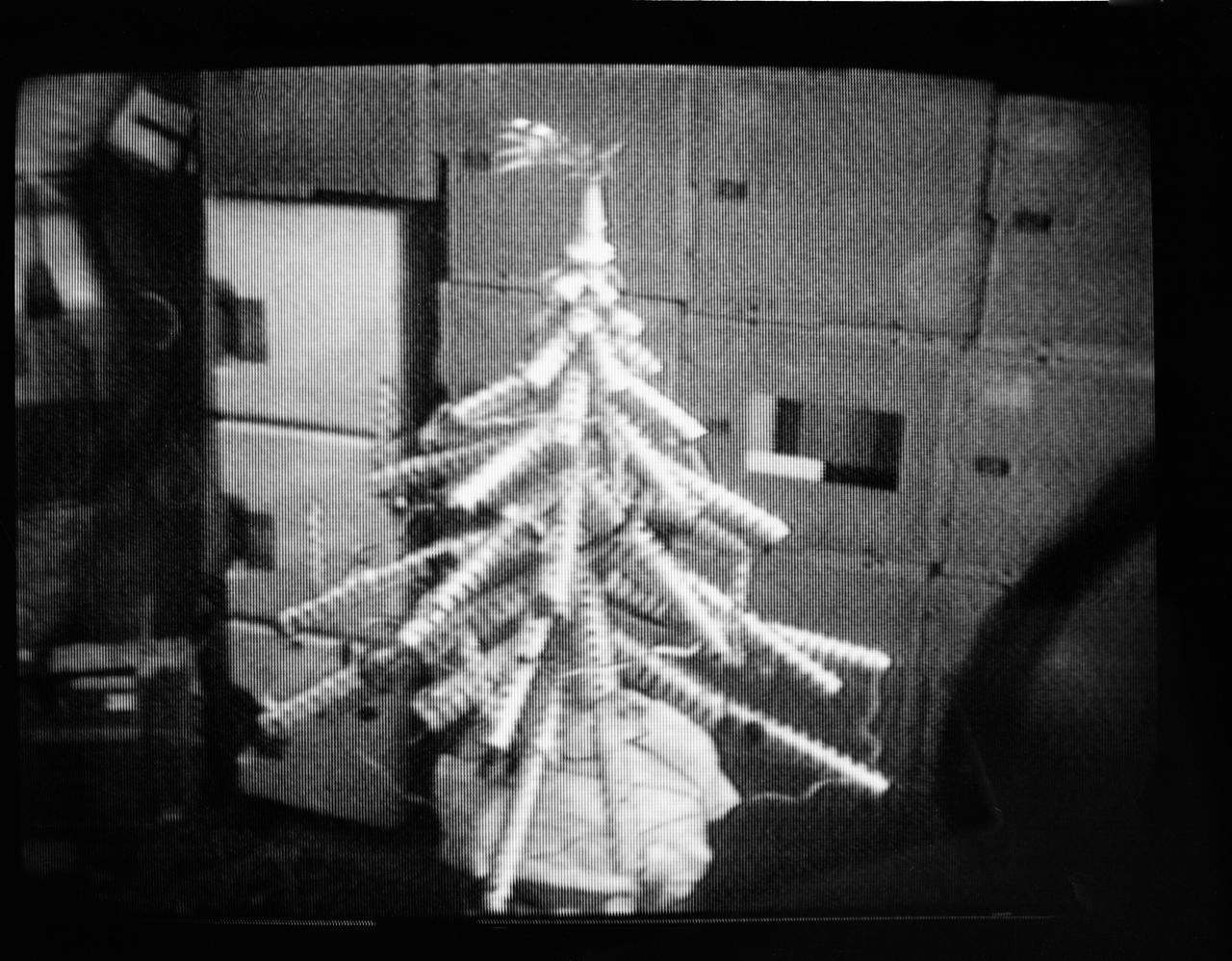
S73-38687 (24 Dec. 1973) --- This "Christmas tree" was created by the three crewmen of the third manned Skylab mission (Skylab 4) aboard the space station in Earth orbit. Food cans were used to fashion the tree. This photograph was made from a television transmission made from a video tape recording on Dec. 24, 1973. Photo credit: NASA
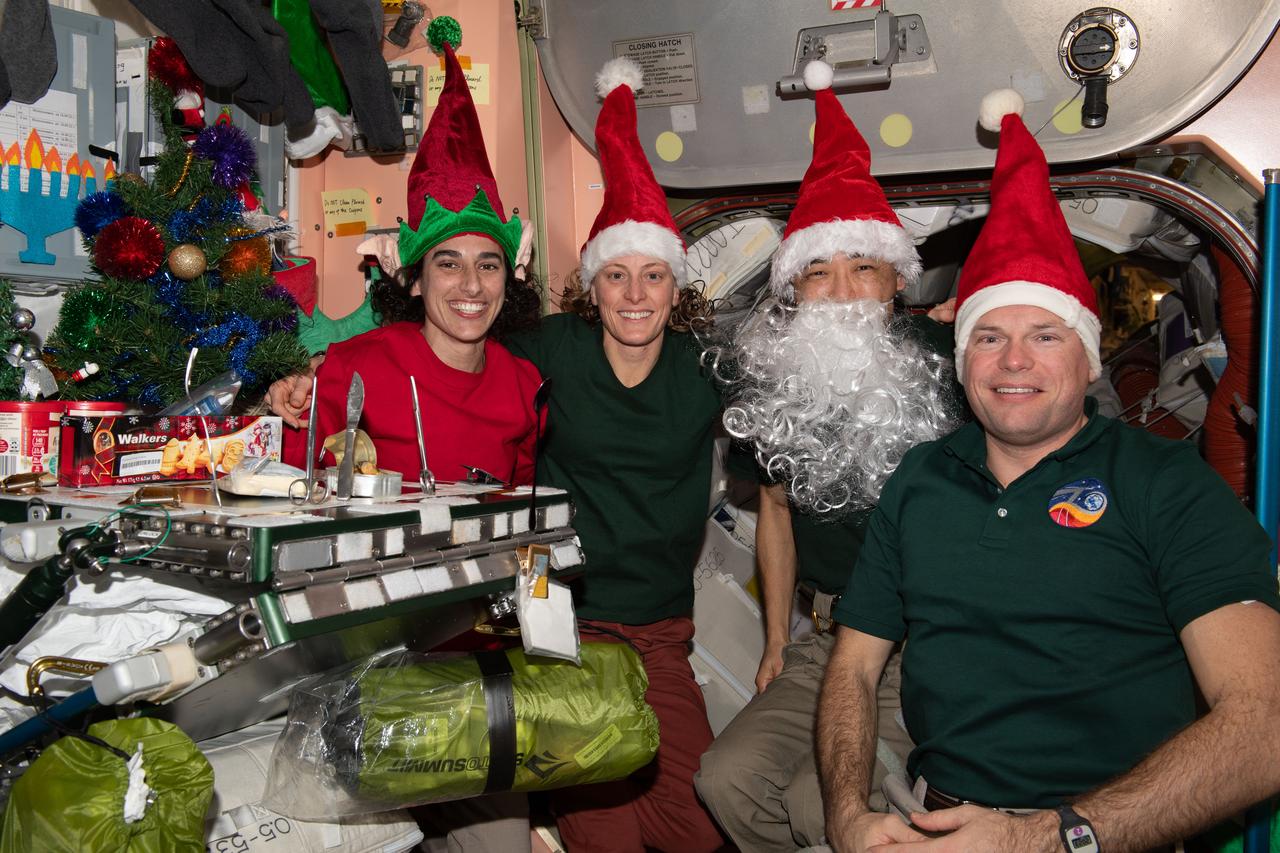
iss070e045419 (Dec. 24, 2023) --- Four Expedition 70 crewmates join each other inside the International Space Station's Unity module for Christmas Eve festivities. From left are, NASA Flight Engineers Jasmin Moghbeli and Loral O'Hara; Flight Engineer Koichi Wakata from JAXA (Japan Aerospace Exploration Agency); and Commander Andreas Mogensen from ESA (European Space Agency).
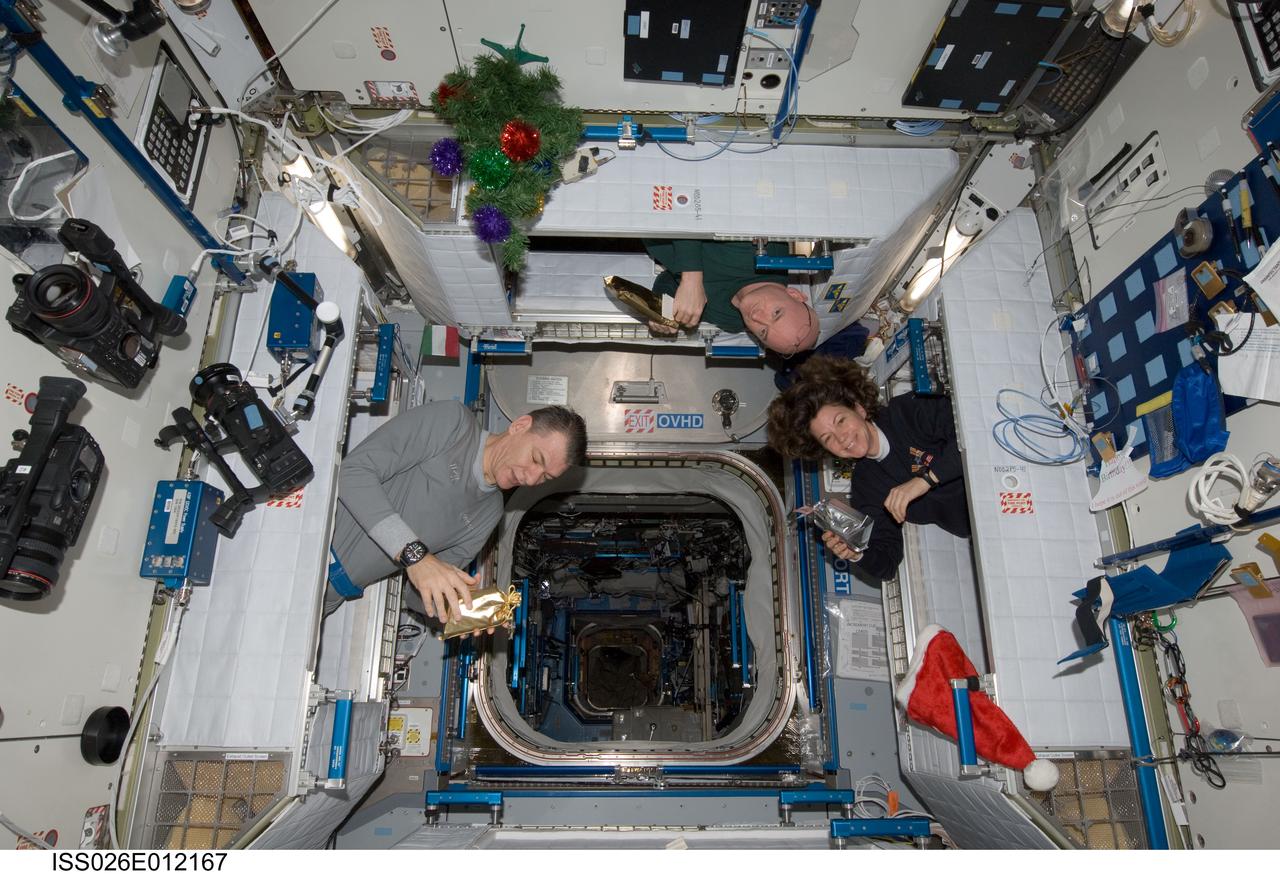
ISS026-E-012167 (25 Dec. 2010) --- Three of the six crew members aboard the International Space Station peek out of their sleeping quarters on Christmas morning to view the station’s decorations and gifts. Shown, from left, are European Space Agency astronaut Paolo Nespoli, Expedition 26 flight engineer, NASA astronaut Scott Kelly, Expedition 26 commander, and NASA astronaut Catherine (Cady) Coleman, flight engineer
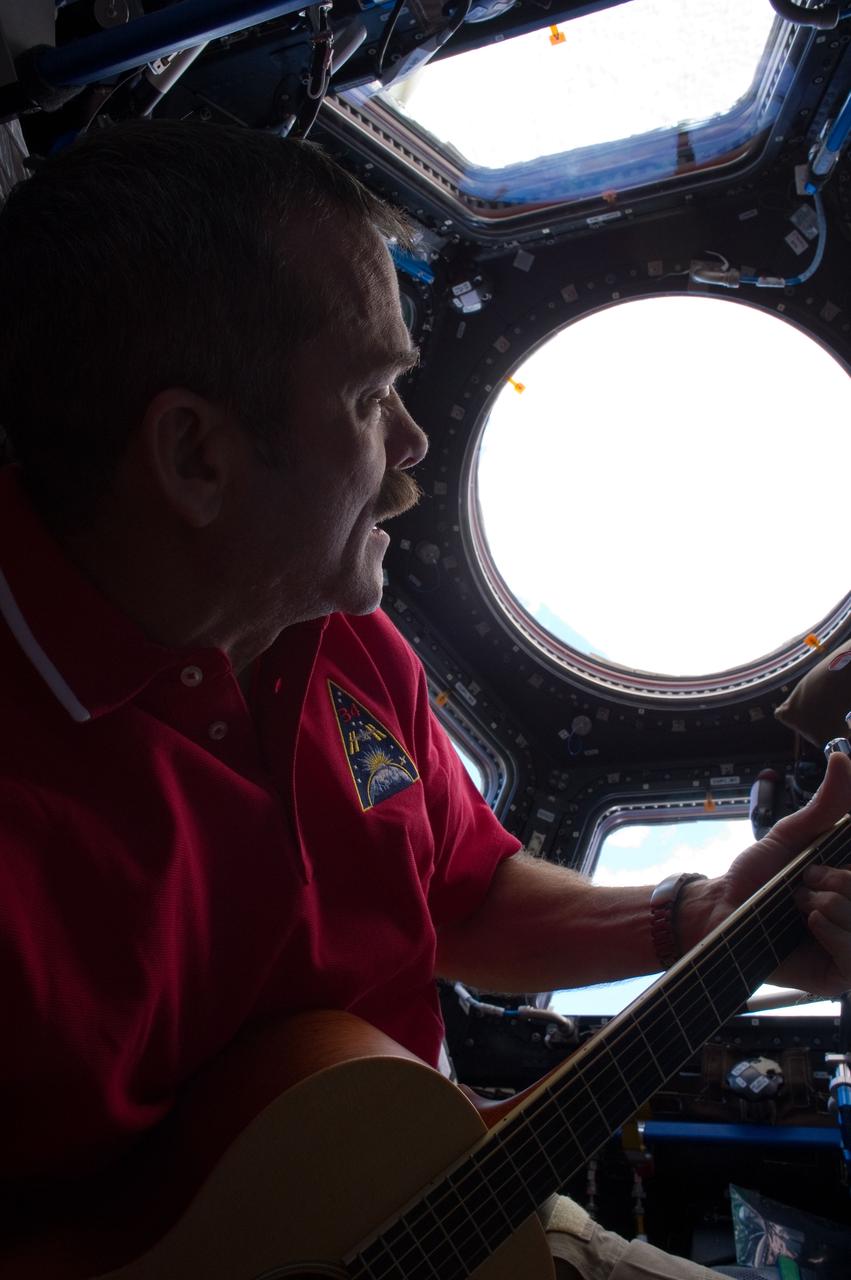
ISS034-E-010295 (25 Dec. 2012) --- Canadian Space Agency astronaut Chris Hadfield strums his guitar in the International Space Station's Cupola on Dec. 25, 2012. Hadfield, a long-time member of an astronaut band called Max Q, later joined with the other five Expedition 34 crew members in a more spacious location to provide an assortment of Christmas carols for the public.
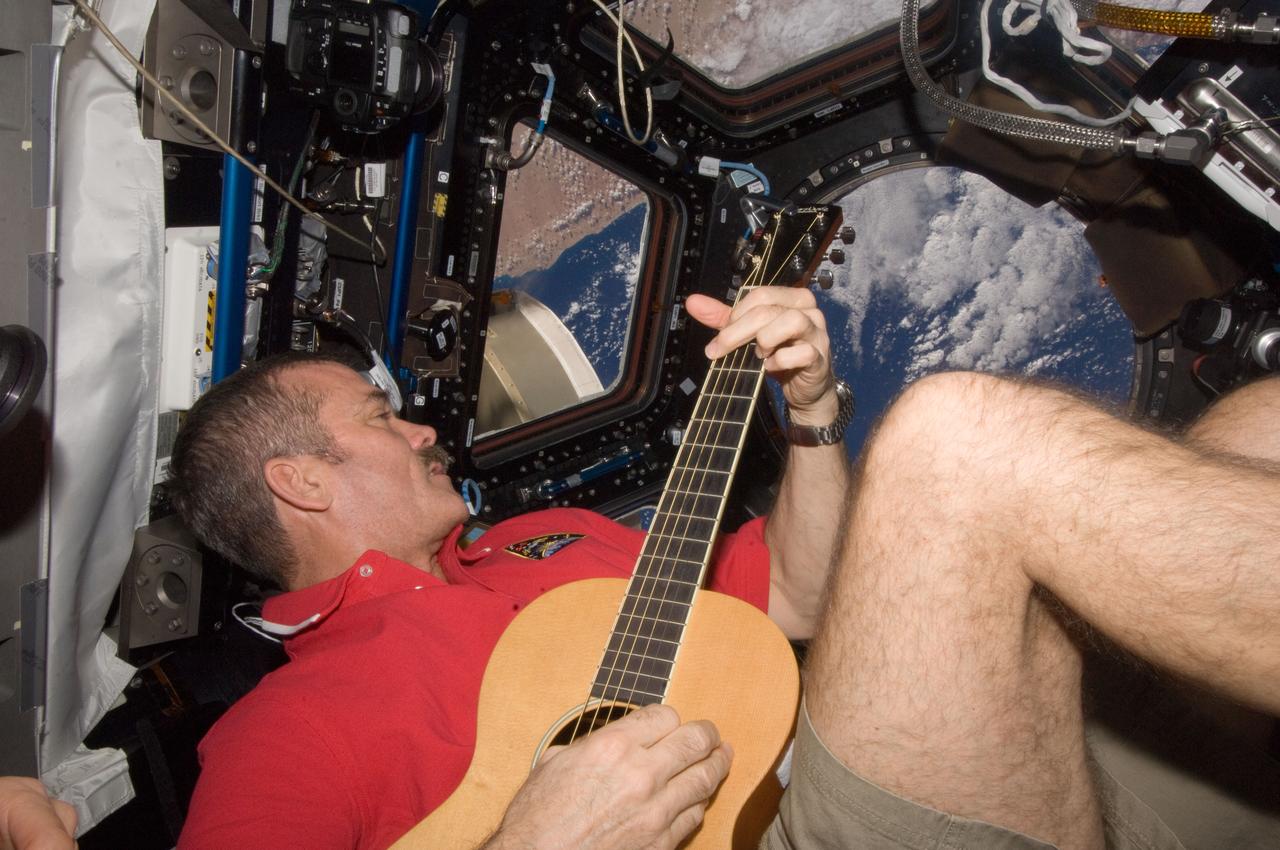
ISS034-E-009799 (25 Dec. 2012) --- Canadian Space Agency astronaut Chris Hadfield strums his guitar in the International Space Station's Cupola on Dec. 25, 2012. Hadfield, a long-time member of an astronaut band called Max Q, later joined with the other five Expedition 34 crew members in a more spacious location to provide an assortment of Christmas carols for the public.
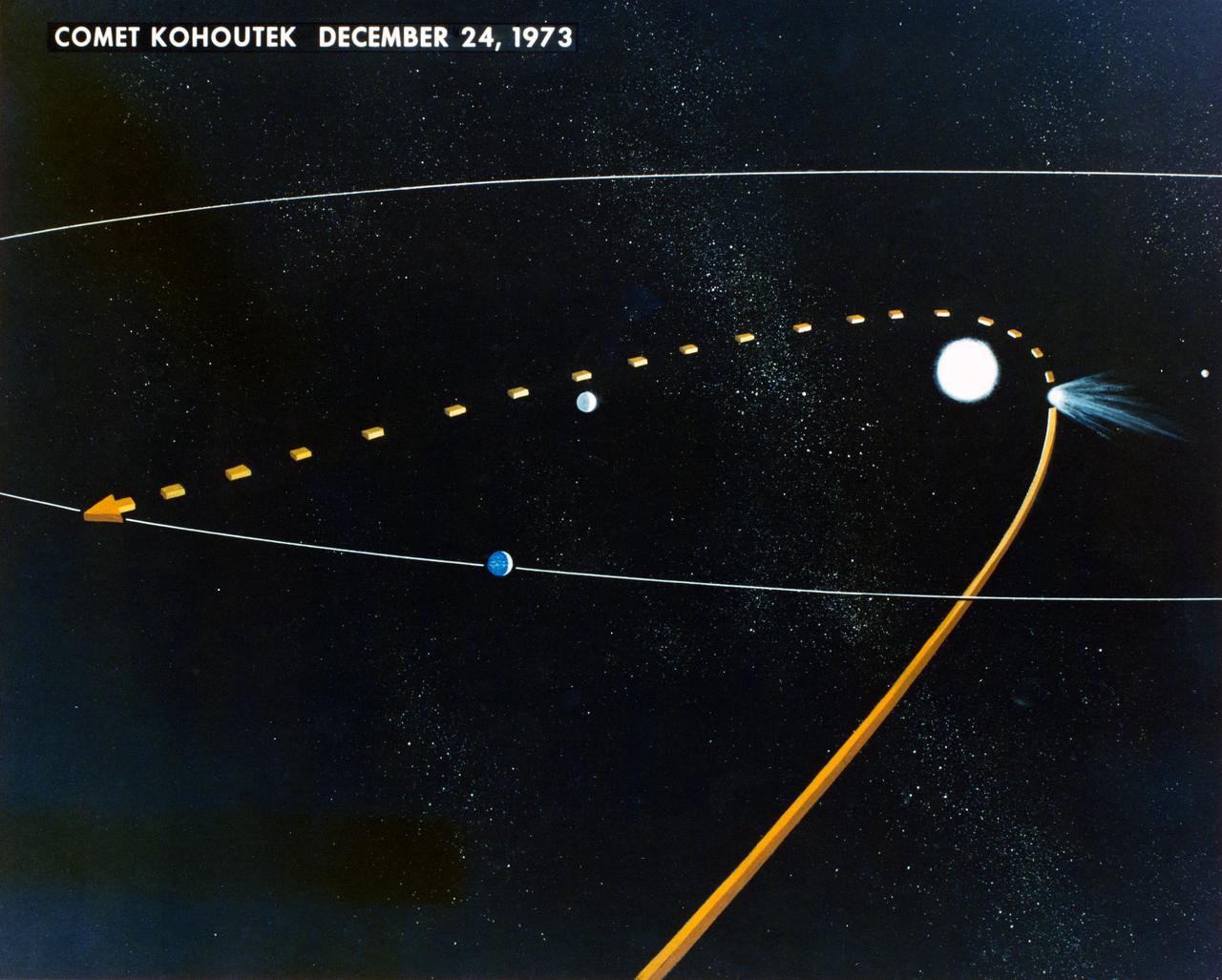
S73-37273 (24 Dec. 1973) --- An artist's concept illustrating the trajectory of the newly-discovered Comet Kohoutek in relation to the sun and to Earth and the plane of Earth's orbit. The picture show's the position of Kohoutek on Christmas Eve, 1973. The Skylab space station in Earth orbit will provide a favorable location from which to observe the passing of the comet. Photo credit: NASA
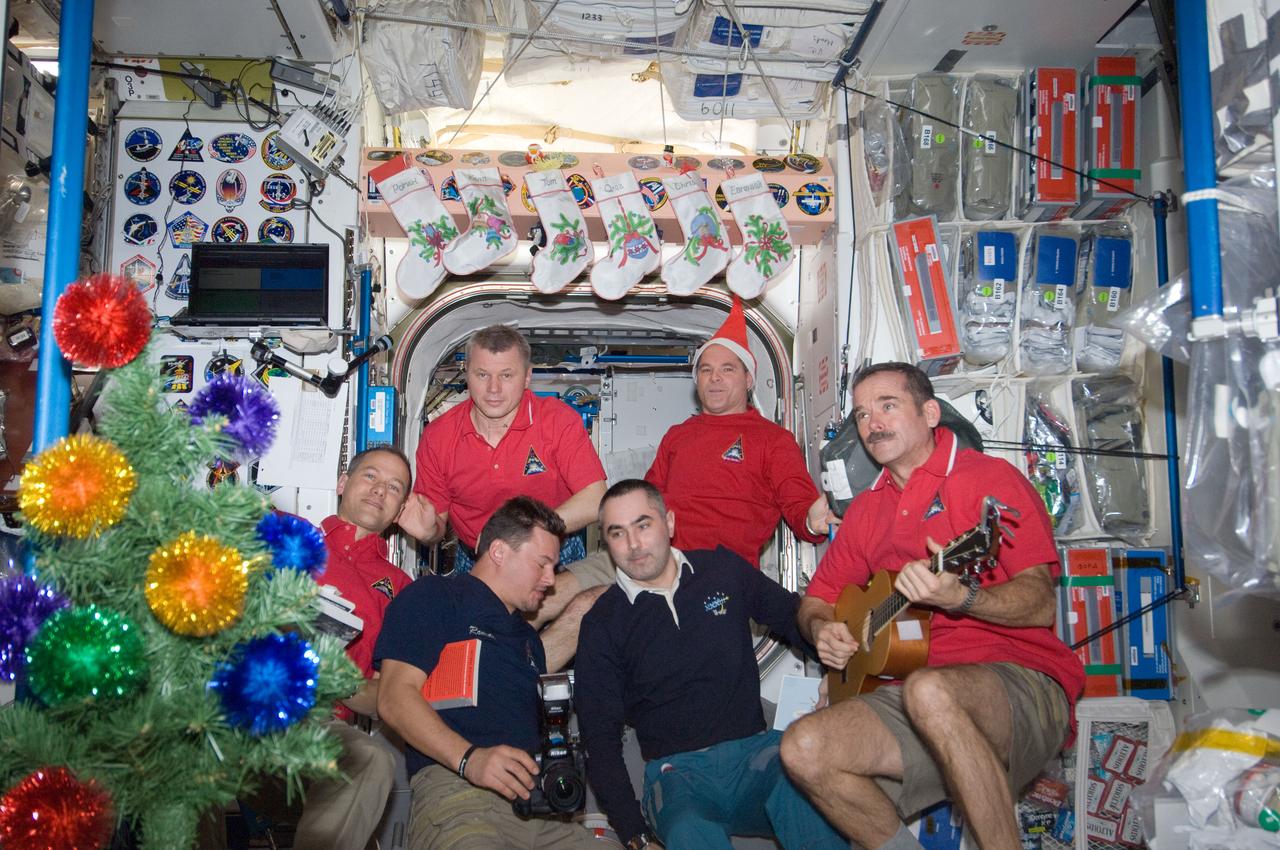
ISS034-E-010478 (24 Dec. 2012) --- Expedition 34 crew members assemble in the Unity node of the International Space Station for a brief celebration of the Christmas holiday. Pictured clockwise (from top right) are NASA astronaut Kevin Ford, commander; Canadian Space Agency astronaut Chris Hadfield, Russian cosmonauts Evgeny Tarelkin and Roman Romanenko, NASA astronaut Tom Marshburn and Russian cosmonaut Oleg Novitskiy, all flight engineers.
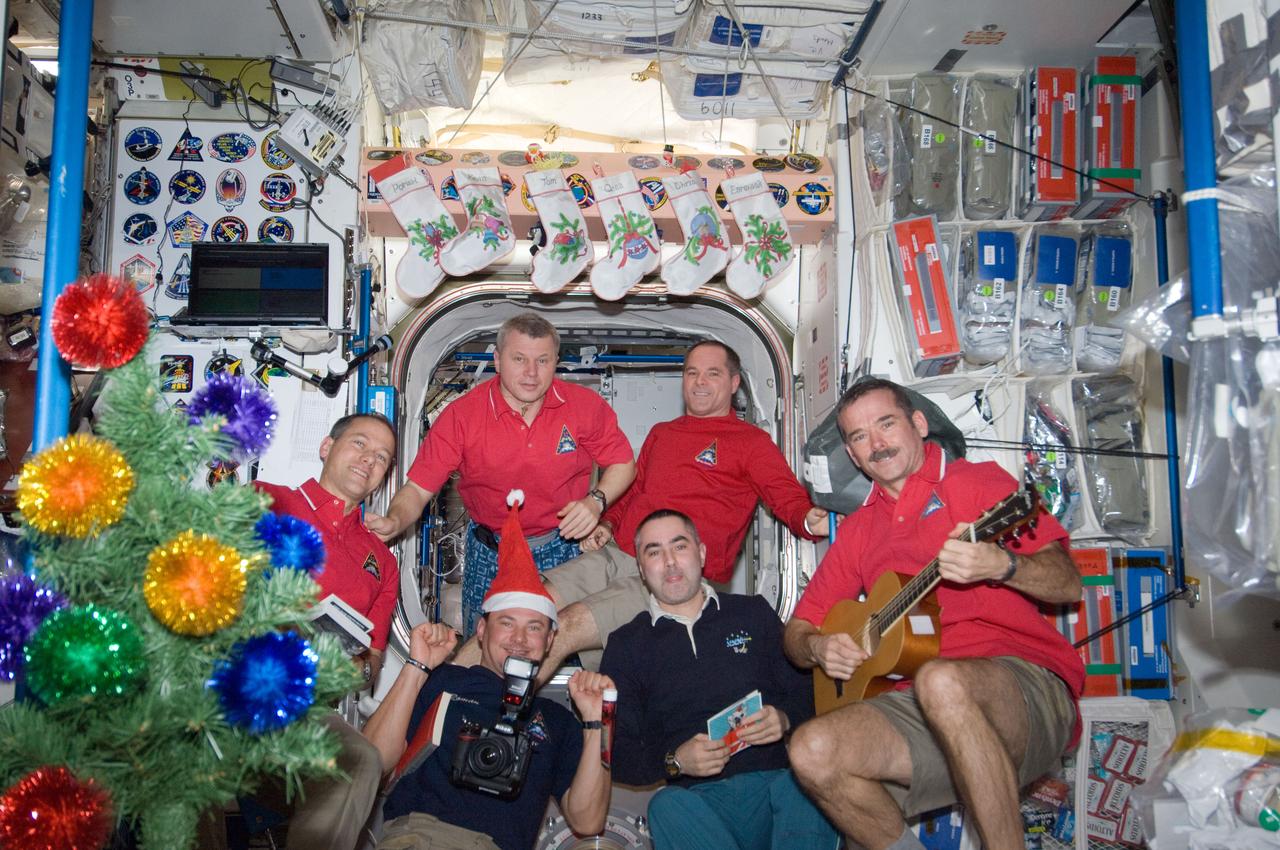
ISS034-E-010476 (24 Dec. 2012) --- Expedition 34 crew members assemble in the Unity node of the International Space Station for a brief celebration of the Christmas holiday. Pictured clockwise (from top right) are NASA astronaut Kevin Ford, commander; Canadian Space Agency astronaut Chris Hadfield, Russian cosmonauts Evgeny Tarelkin and Roman Romanenko, NASA astronaut Tom Marshburn and Russian cosmonaut Oleg Novitskiy, all flight engineers.
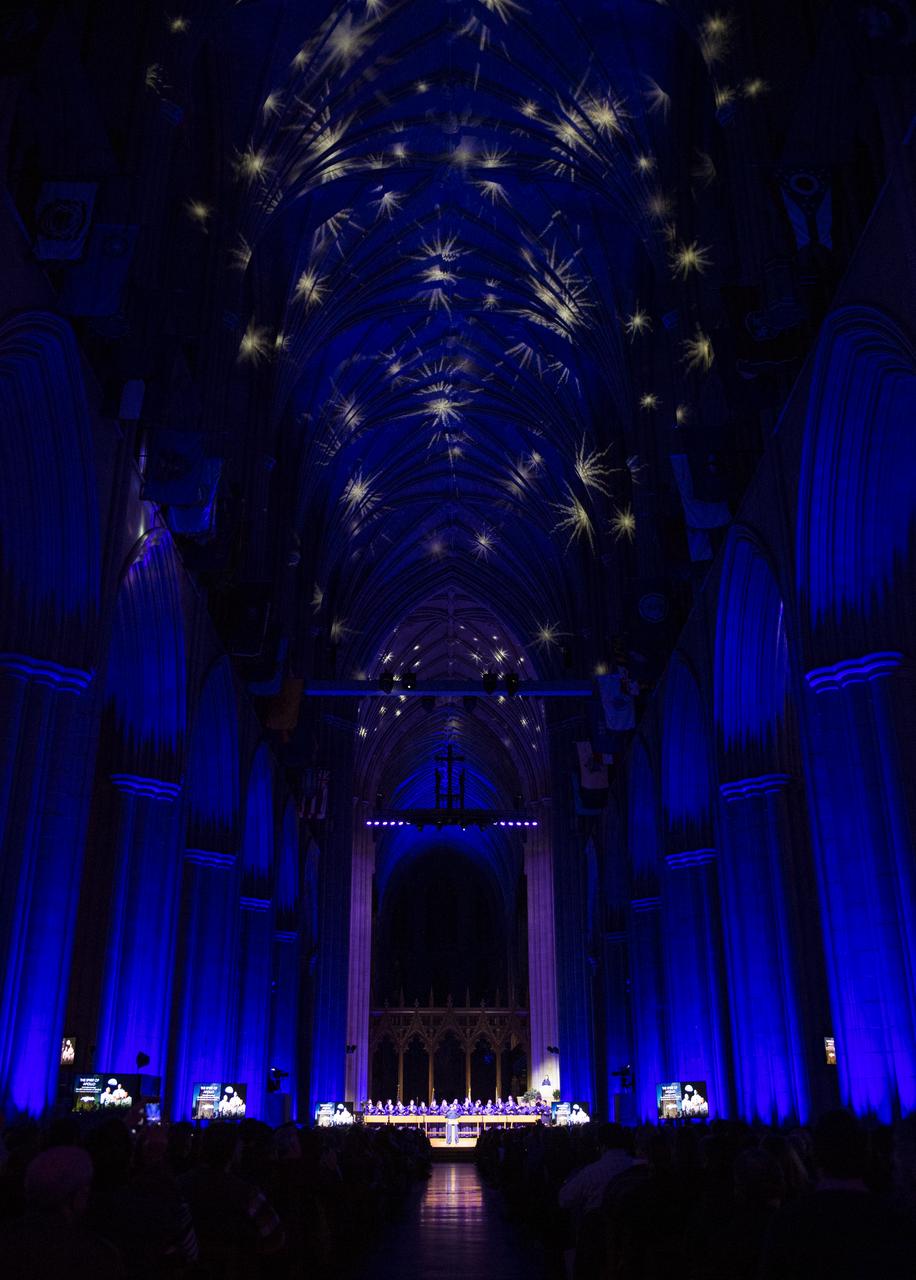
The Washington National Cathedral Choir performs a choral performance of Apollo 8's Christmas Eve broadcast during the Smithsonian National Air and Space Museum's Spirit of Apollo event commemorating the 50th anniversary of Apollo 8, Tuesday, Dec. 11, 2018 at the Washington National Cathedral in Washington, DC. Apollo 8 was humanity's first journey to another world, taking astronauts Frank Borman, Jim Lovell, and William Anders to the Moon and back in December of 1968. Photo Credit: (NASA/Joel Kowsky)
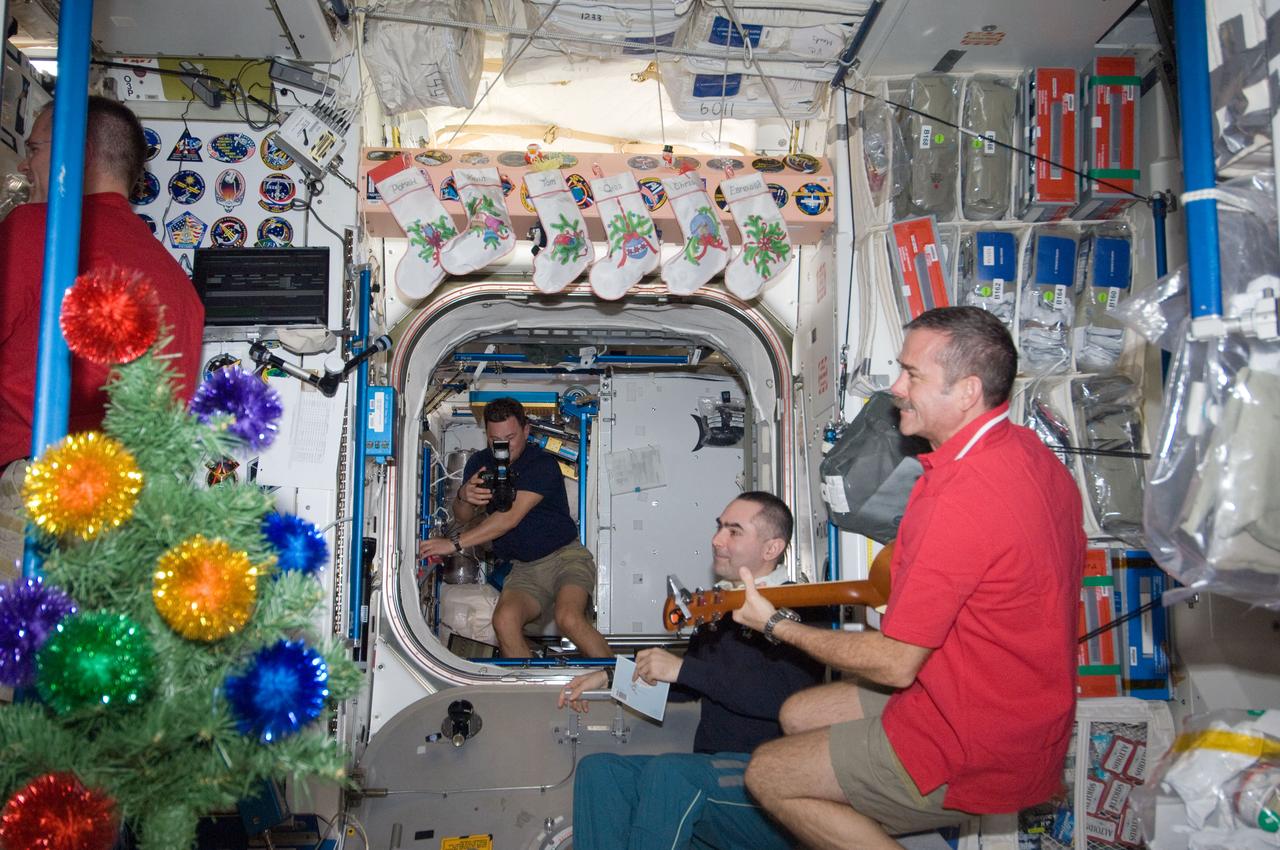
ISS034-E-010504 (24 Dec. 2012) --- Expedition 34 crew members assemble in the Unity node of the International Space Station for a brief celebration of the Christmas holiday. Pictured are NASA astronaut Kevin Ford (partially obscured at left), commander; Canadian Space Agency astronaut Chris Hadfield (with guitar at right), Russian cosmonauts Roman Romanenko (with camera) and Evgeny Tarelkin, all flight engineers.
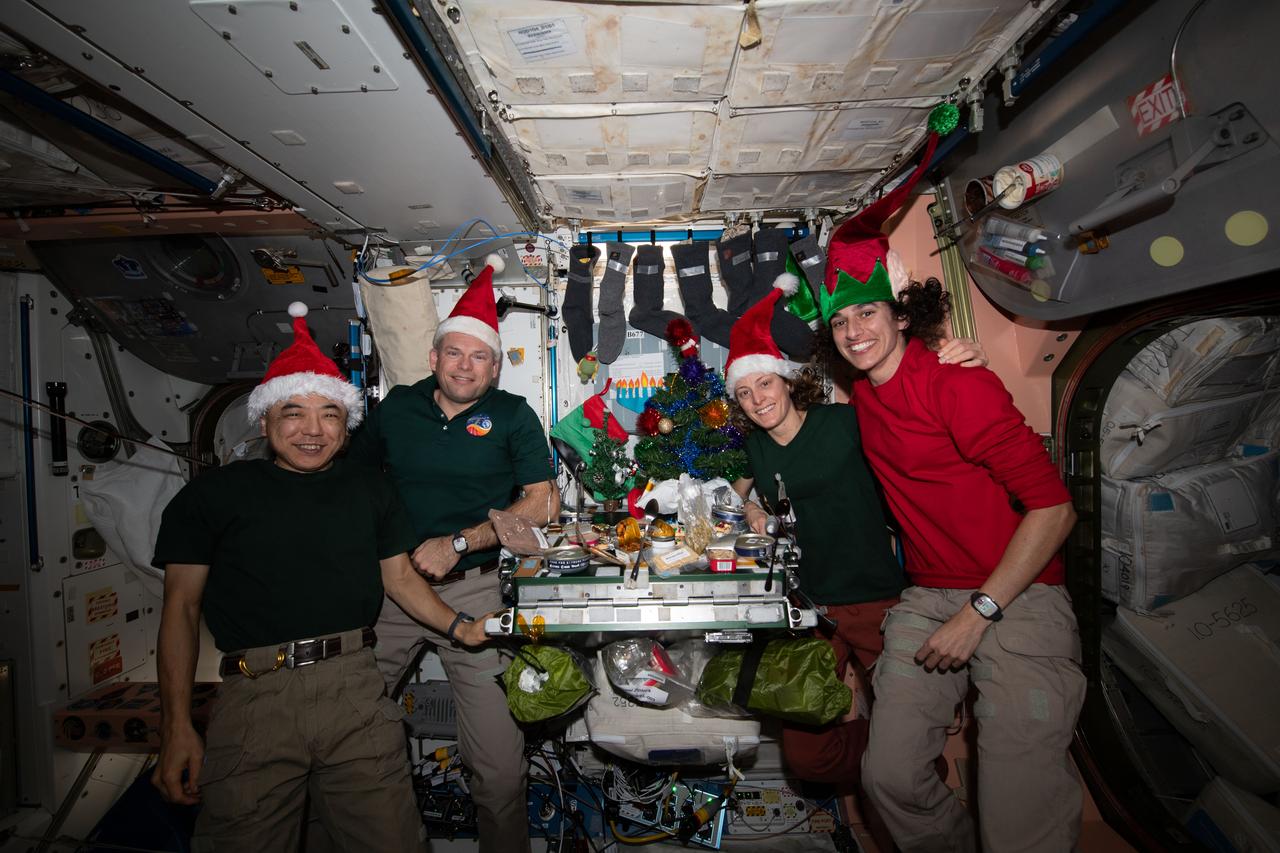
iss070e044842 (Dec. 25, 2023) --- Four Expedition 70 crewmates join each other inside the International Space Station's Unity module for a Christmas Day meal. From left are, Flight Engineer Koichi Wakata from JAXA (Japan Aerospace Exploration Agency); Commander Andreas Mogensen from ESA (European Space Agency); and NASA Flight Engineers Loral O'Hara and Jasmin Moghbeli.
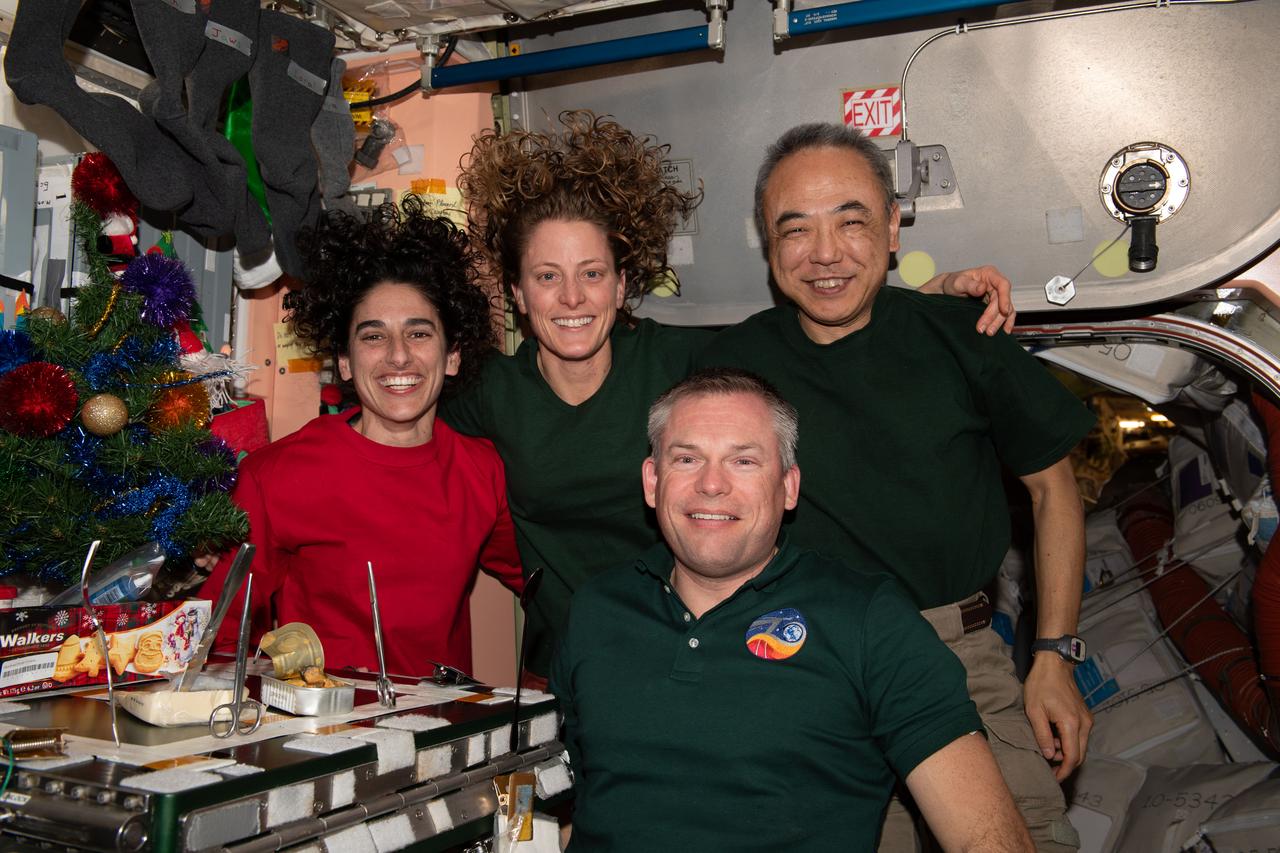
iss070e045409 (Dec. 24, 2023) --- Four Expedition 70 crewmates join each other inside the International Space Station's Unity module for a Christmas Eve portrait. Clockwise from left are, NASA Flight Engineers Jasmin Moghbeli and Loral O'Hara; Flight Engineer Koichi Wakata from JAXA (Japan Aerospace Exploration Agency); and Commander Andreas Mogensen from ESA (European Space Agency).
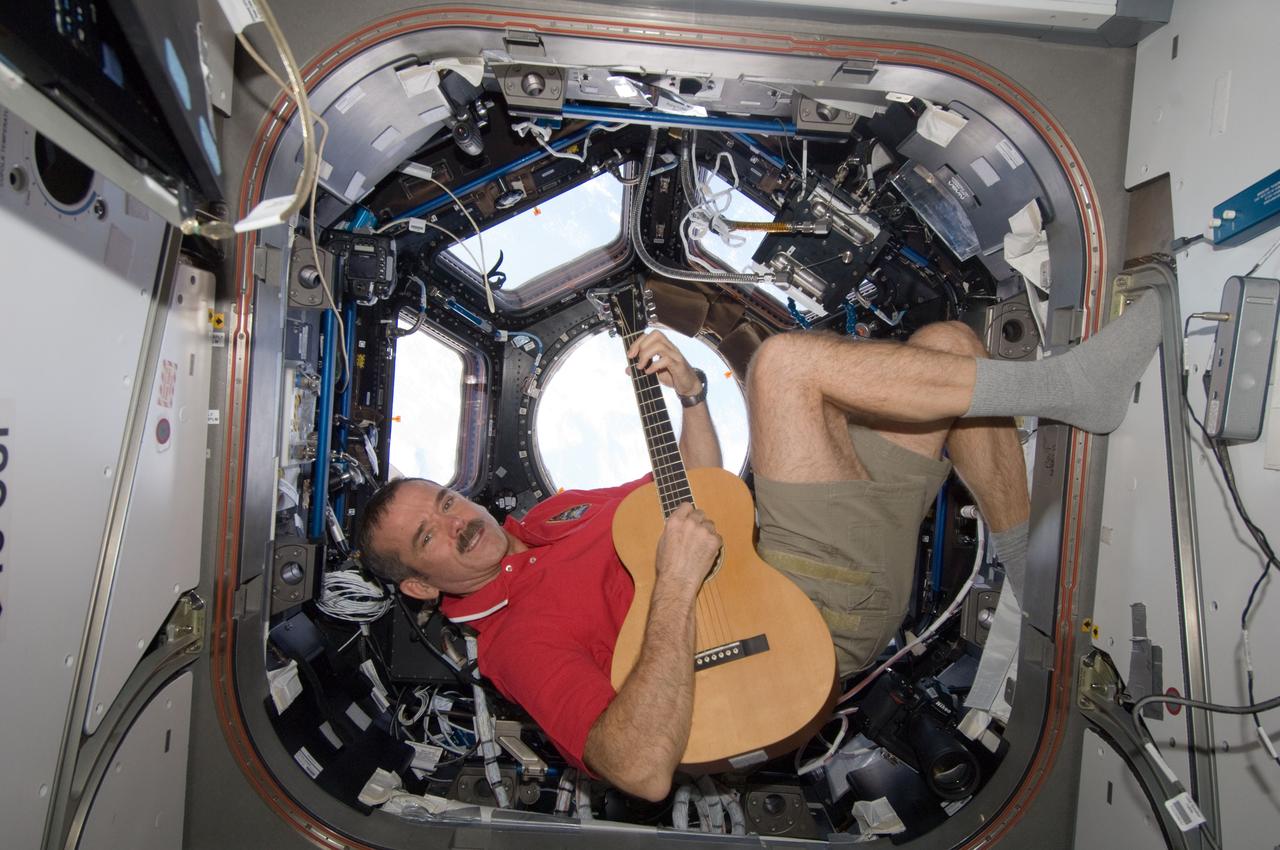
ISS034-E-009787 (25 Dec. 2012) --- Canadian Space Agency astronaut Chris Hadfield strums his guitar in the International Space Station's Cupola on Dec. 25, 2012. Hadfield, a long-time member of an astronaut band called Max Q, later joined with the other five Expedition 34 crew members in a more spacious location to provide an assortment of Christmas carols for the public.
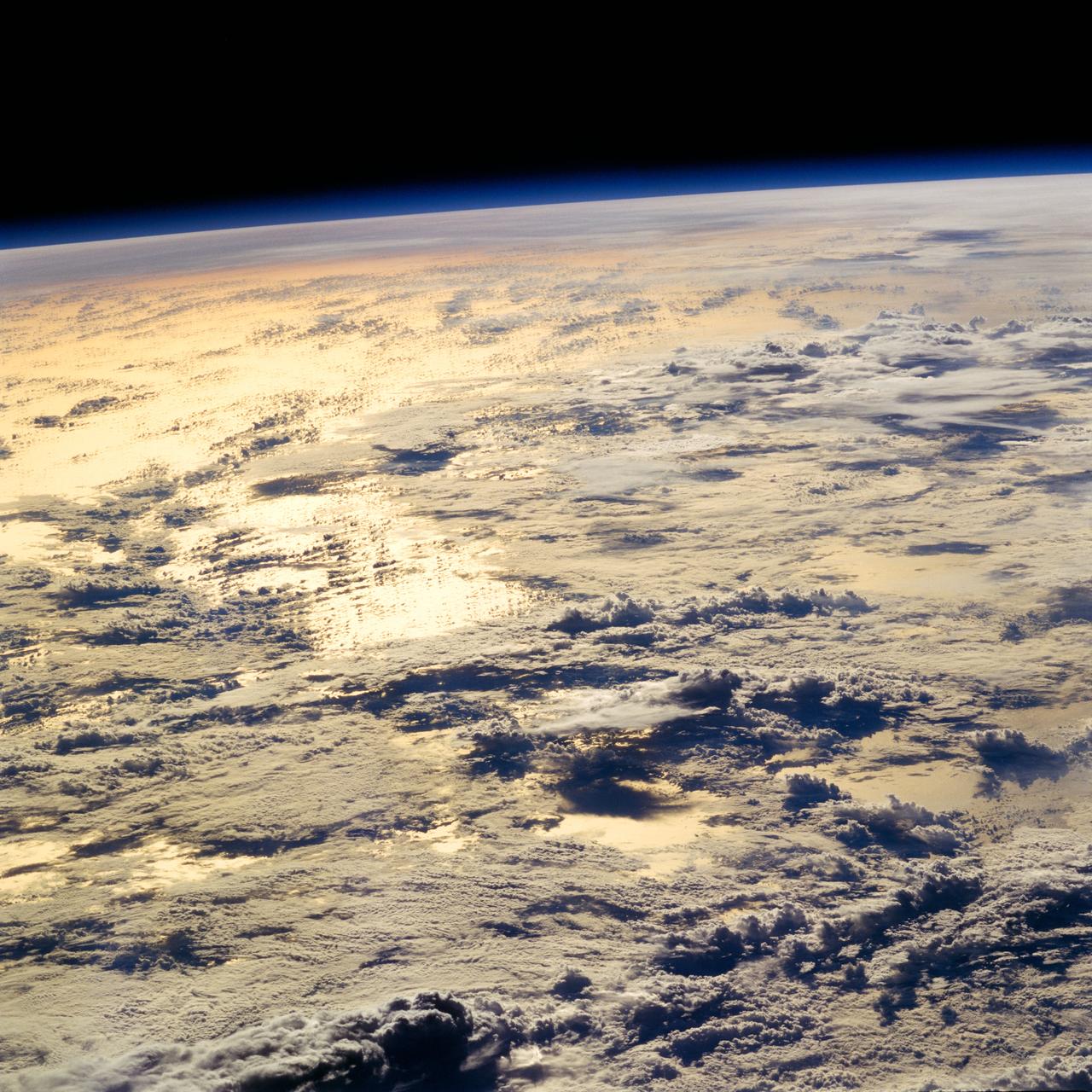
STS080-759-075 (19 Nov.-7 Dec. 1996) --- This 70mm handheld camera's panoramic view was photographed by the STS-80 crewmembers to capture the aesthetic side of space travel. The scene was in the South Pacific Ocean southwest of Hawaii and west of Christmas Island. The angle of the space shuttle Columbia and the sunglint feature gives the picture an almost three-dimensional affect.

ISS018-E-014691 (23 Dec. 2008) --- Astronaut Sandra Magnus, Expedition 18 flight engineer, floats between two Russian Orlan spacesuits with Santa hats in the Harmony node of the International Space Station.
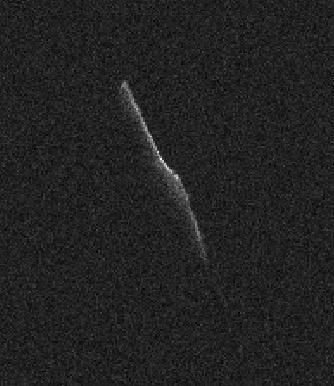
The elongated asteroid in this radar image, named 2003 SD220, will safely fly past Earth on Thursday, Dec. 24, 2015, at a distance of 6.8 million miles (11 million kilometers). The image was taken on Dec. 22 by scientists using NASA's 230-foot (70-meter) Deep Space Network antenna at Goldstone, California, when the asteroid was approaching its flyby distance. This asteroid is at least 3,600 feet (1,100 meters) long. In 2018, it will safely pass Earth at a distance of 1.8 million miles (2.8 million kilometers). http://photojournal.jpl.nasa.gov/catalog/PIA20280
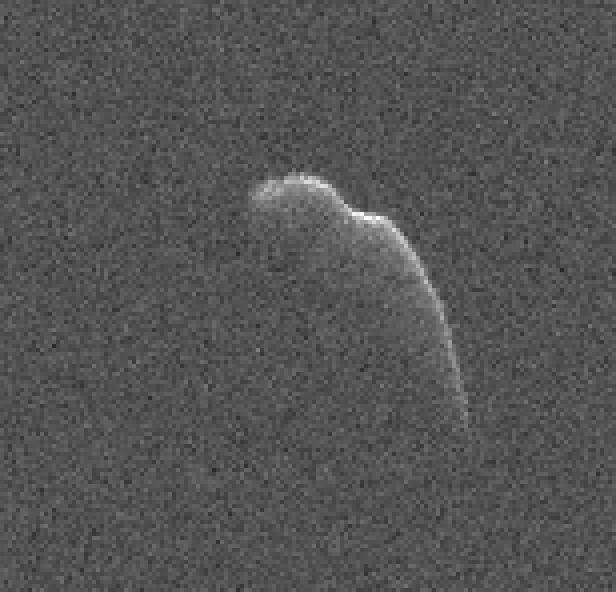
This image of an asteroid that is at least 3,600 feet (1,100 meters) long was taken on Dec. 17, 2015, by scientists using NASA's 230-foot (70-meter) DSS-14 antenna at Goldstone, California. This asteroid, named 2003 SD2020, will safely fly past Earth on Thursday, Dec. 24, at a distance of 6.8 million miles (11 million kilometers). At the time this image was taken, the asteroid was about 7.3 million miles (12 million kilometers) from Earth. In 2018, this asteroid will fly past Earth at a distance of 1.8 million miles (2.8 million kilometers). http://photojournal.jpl.nasa.gov/catalog/PIA20279
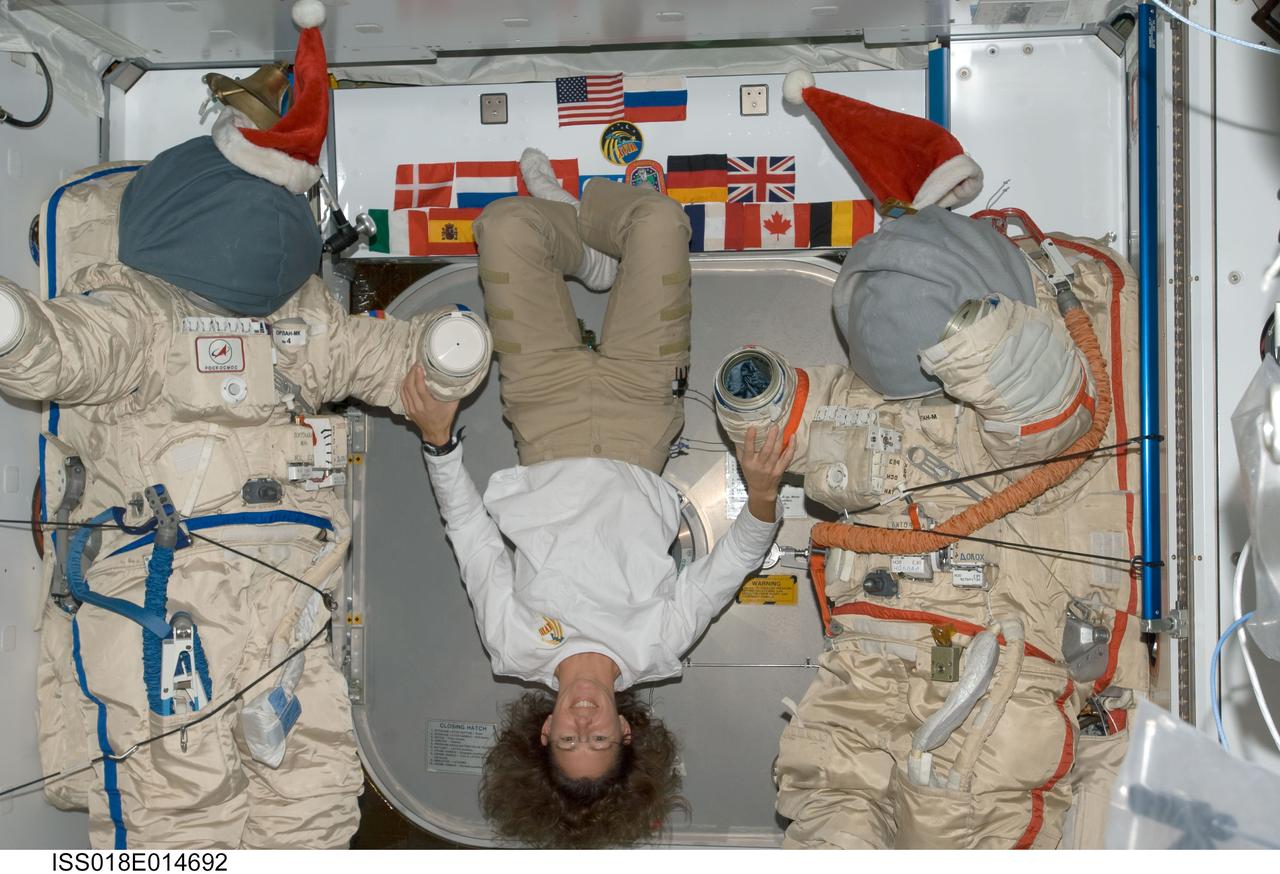
ISS018-E-014692 (23 Dec. 2008) --- Astronaut Sandra Magnus, Expedition 18 flight engineer, floats between two Russian Orlan spacesuits with Santa hats in the Harmony node of the International Space Station.
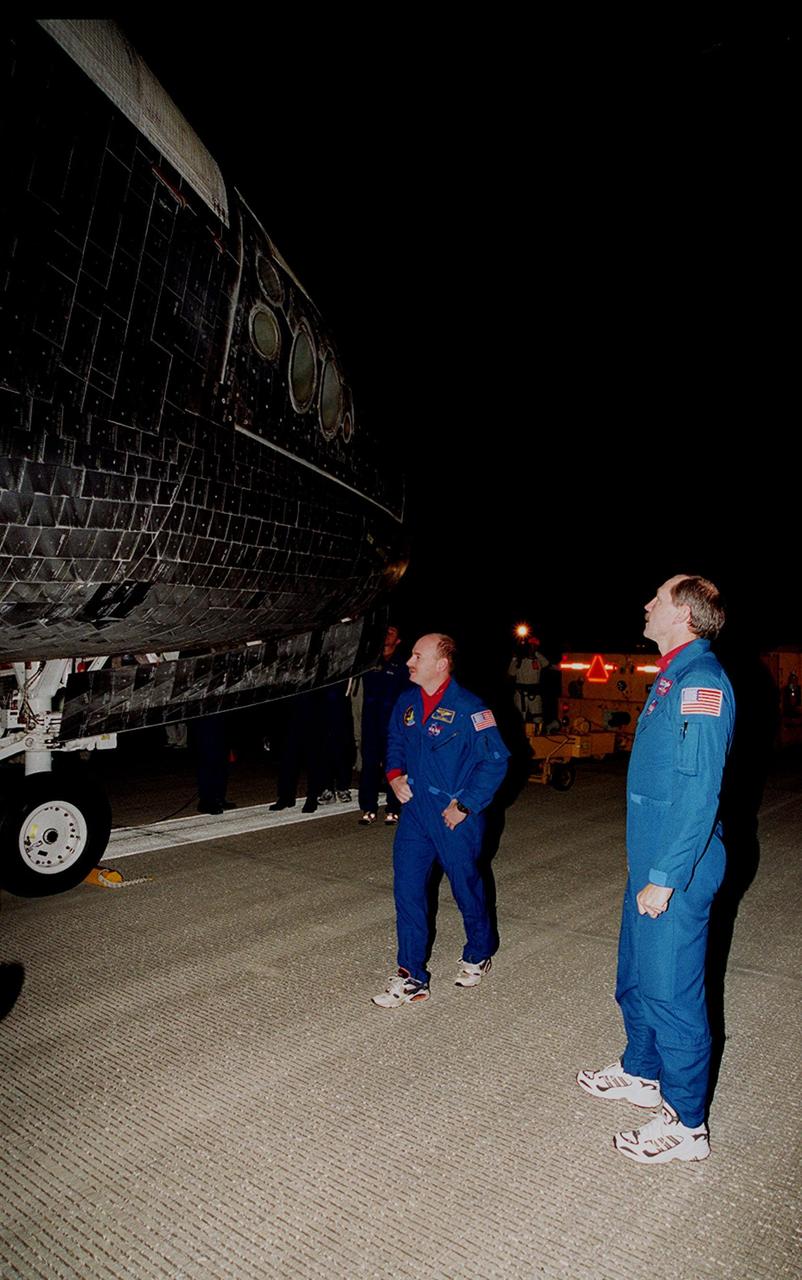
After landing at the Shuttle Landing Facility, STS-103 Pilot Scott J. Kelly (left) and Commander Curtis L. Brown Jr. (right) look at the tiles on orbiter Discovery. They and other crew members Mission Specialists Steven L. Smith, C. Michael Foale (Ph.D.), John M. Grunsfeld (Ph.D.), Jean-Francois Clervoy of France and Claude Nicollier of Switzerland, completed a successful eight-day mission to service the Hubble Space Telescope, spending the Christmas holiday in space in order to accomplish their mission before the end of 1999. During the mission, Discovery's four space-walking astronauts, Smith, Foale, Grunsfeld and Nicollier, spent 24 hours and 33 minutes upgrading and refurbishing Hubble, making it more capable than ever to renew its observations of the universe. Mission objectives included replacing gyroscopes and an old computer, installing another solid state recorder, and replacing damaged insulation in the telescope. Hubble was released from the end of Discovery's robot arm on Christmas Day. Main gear touchdown was at 7:00:47 p.m. EST. Nose gear touchdown occurred at 7:00:58 p.m. EST and wheel stop at 7:01:34 p.m. EST. This was the 96th flight in the Space Shuttle program and the 27th for the orbiter Discovery. The landing was the 20th consecutive Shuttle landing in Florida and the 13th night landing in Shuttle program history
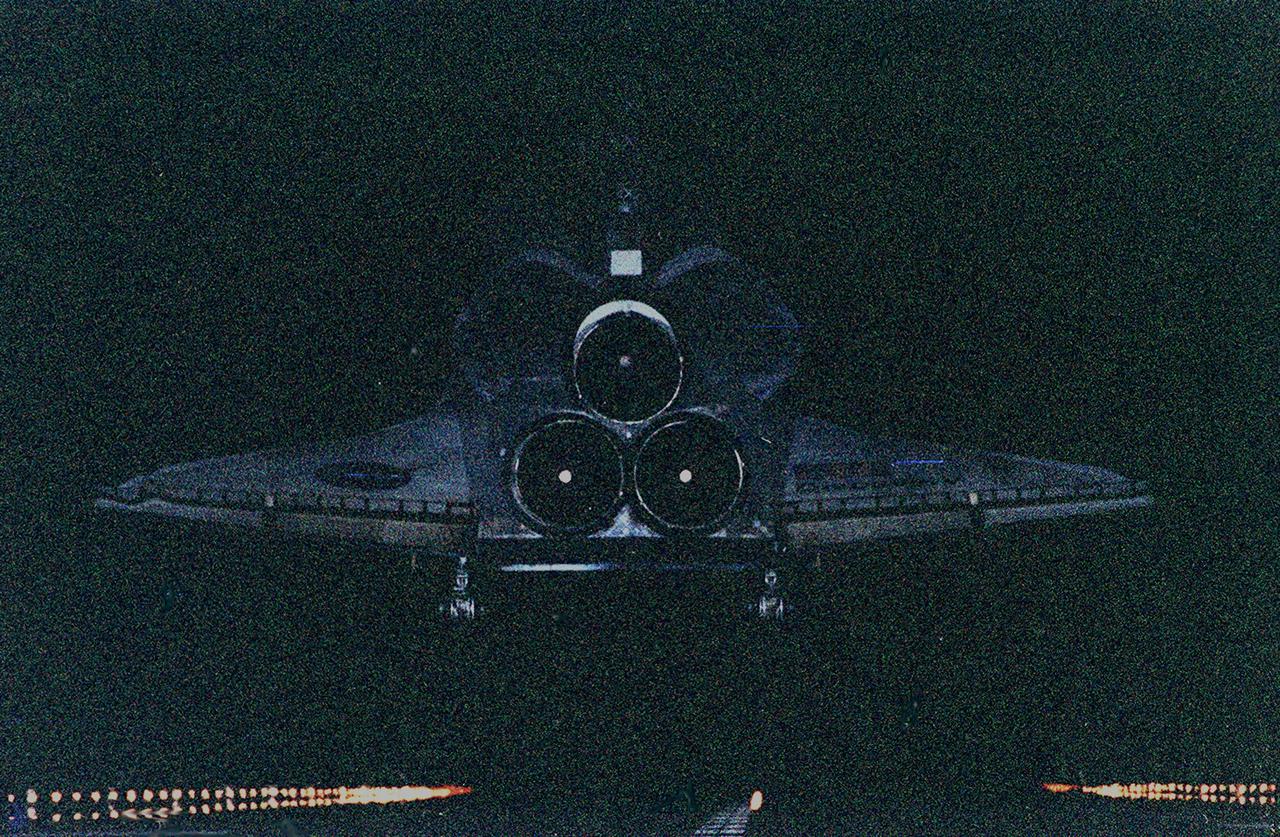
KENNEDY SPACE CENTER, Fla. -- The orbiter Discovery looks like a blue ghost as it drops from the darkness onto lighted runway 33 at KSC's Shuttle Landing Facility. After traveling more than 3,267,000 miles on a successful eight-day mission to service the Hubble Space Telescope, the orbiter touches down at 7:00:47 p.m. EST. Aboard are Commander Curtis L. Brown Jr., Pilot Scott J. Kelly, and Mission Specialists Steven L. Smith, C. Michael Foale (Ph.D.), John M. Grunsfeld (Ph.D.), Claude Nicollier of Switzerland and Jean-François Clervoy of France, who spent the Christmas holiday in space in order to accomplish their mission before the end of 1999. During the mission, Discovery's four space-walking astronauts, Smith, Foale, Grunsfeld and Nicollier, spent 24 hours and 33 minutes upgrading and refurbishing Hubble, making it more capable than ever to renew its observations of the universe. Mission objectives included replacing gyroscopes and an old computer, installing another solid state recorder, and replacing damaged insulation in the telescope. Hubble was released from the end of Discovery's robot arm on Christmas Day. This was the 96th flight in the Space Shuttle program and the 27th for the orbiter Discovery. The landing was the 20th consecutive Shuttle landing in Florida and the 13th night landing in Shuttle program history
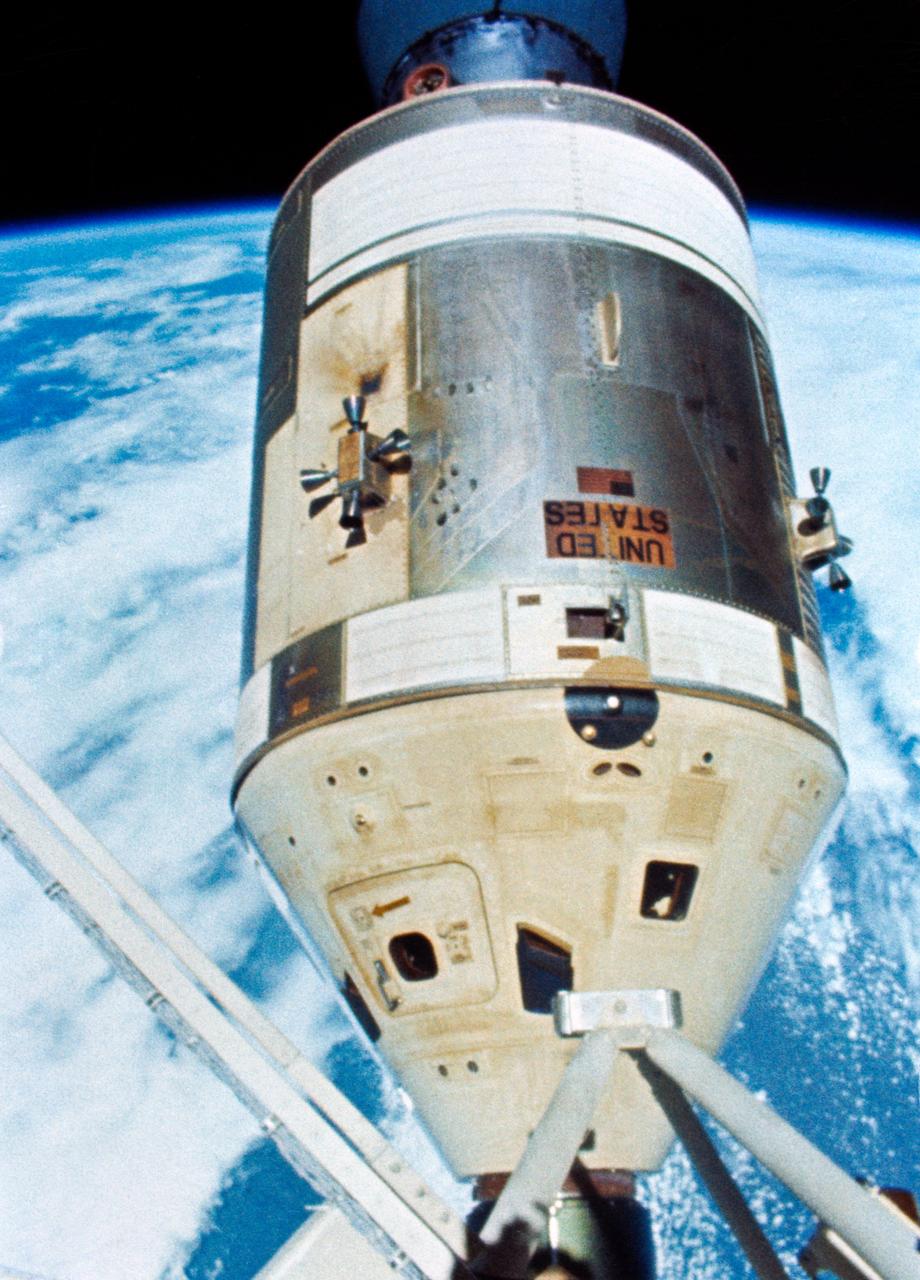
S74-17457 (3 Feb. 1974) --- This view of the Skylab 4 Command/Service Module in a docked configuration is a frame from a roll of movie film exposed by a 16mm Maurer camera. The other four components of the Skylab space station in Earth orbit are out of view to the right. This picture was taken by astronaut Gerald P. Carr, Skylab 4 commander, during the final Skylab extravehicular activity (EVA) which took place on Feb. 3, 1974. The crew members -- Gerald Carr, Edward Gibson and William Pogue -- were the first NASA astronauts to spend New Year's in space. A week earlier, they became the first crew to perform an EVA on Christmas day. Photo credit: NASA
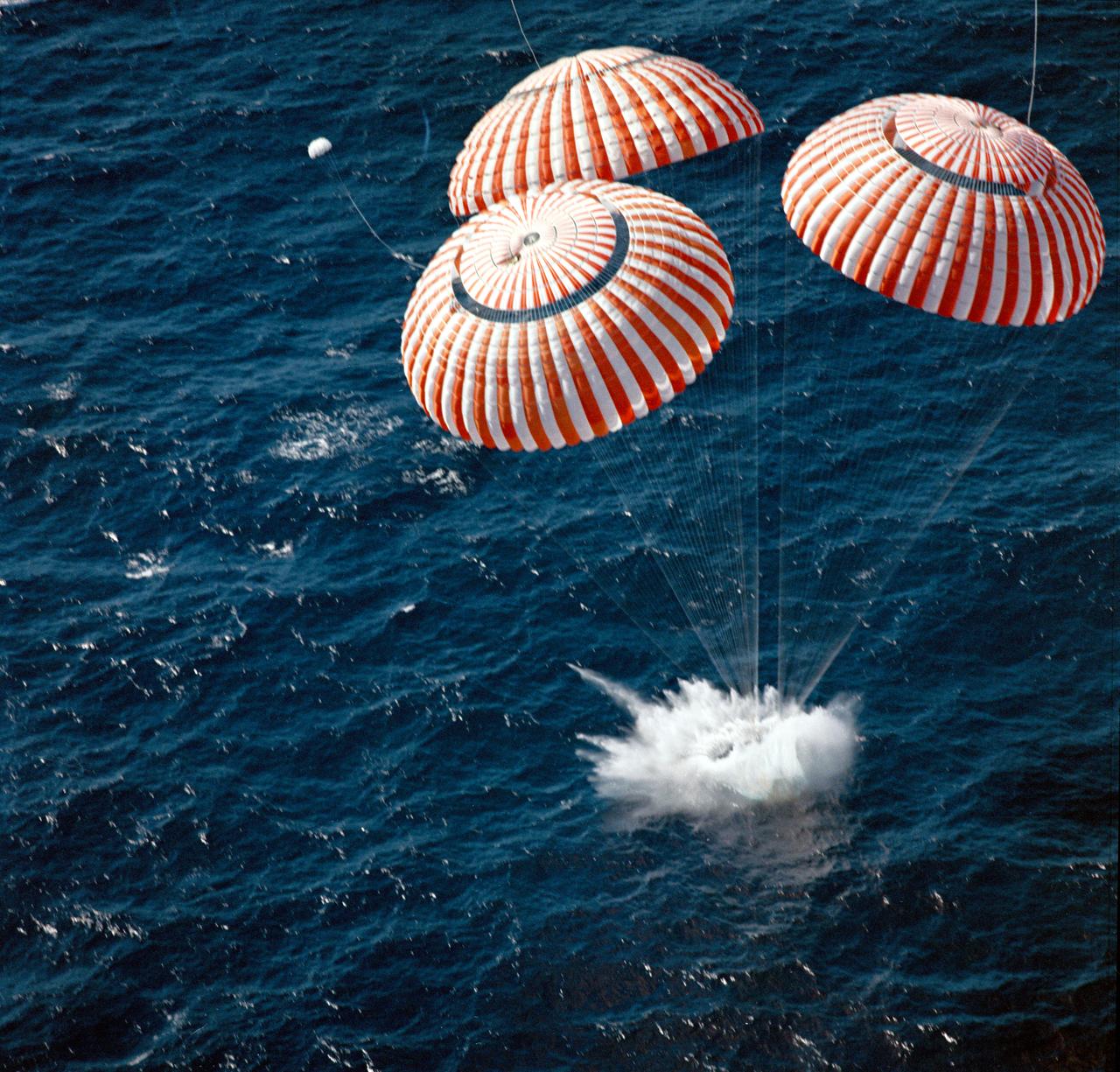
S72-36293 (27 April 1972) --- The Apollo 16 Command Module (CM), with astronauts John W. Young, Thomas K. Mattingly II, and Charles M. Duke Jr. aboard, splashed down in the central Pacific Ocean to successfully conclude their lunar landing mission. The splashdown occurred at 290:37:06 ground elapsed time, 1:45:06 p.m. (CST) Thursday, April 27, 1972, at coordinates of 00:43.2 degrees south latitude and 156:11.4 degrees west longitude. A point approximately 215 miles southeast of Christmas Island. Later the three crewmen were picked up by a helicopter from the prime recovery ship USS Ticonderoga.
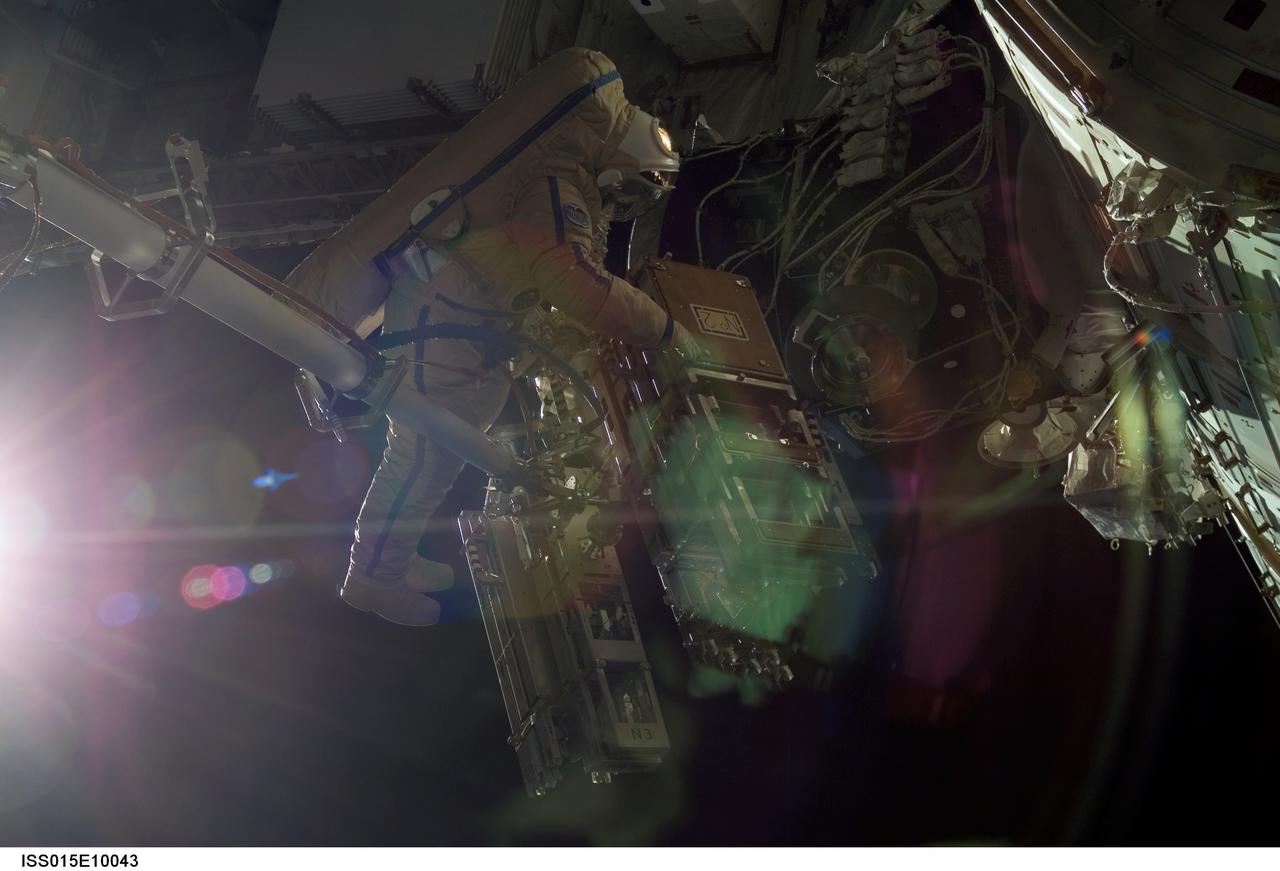
ISS015-E-10043 (30 May 2007) --- Cosmonaut Oleg V. Kotov, Expedition 15 flight engineer representing Russia's Federal Space Agency, wearing a Russian Orlan spacesuit, participates in a session of extravehicular activity (EVA). Among other tasks, Kotov and cosmonaut Fyodor N. Yurchikhin (out of frame), commander representing Russia's Federal Space Agency, retrieved the "Christmas tree" bundle of three packages of 17 protective debris panels for installation around the forward cone of the Zvezda Service Module of the International Space Station and to install the first set of those panels. The aluminum debris protection panels are designed to shield the module from micro-meteoroids.
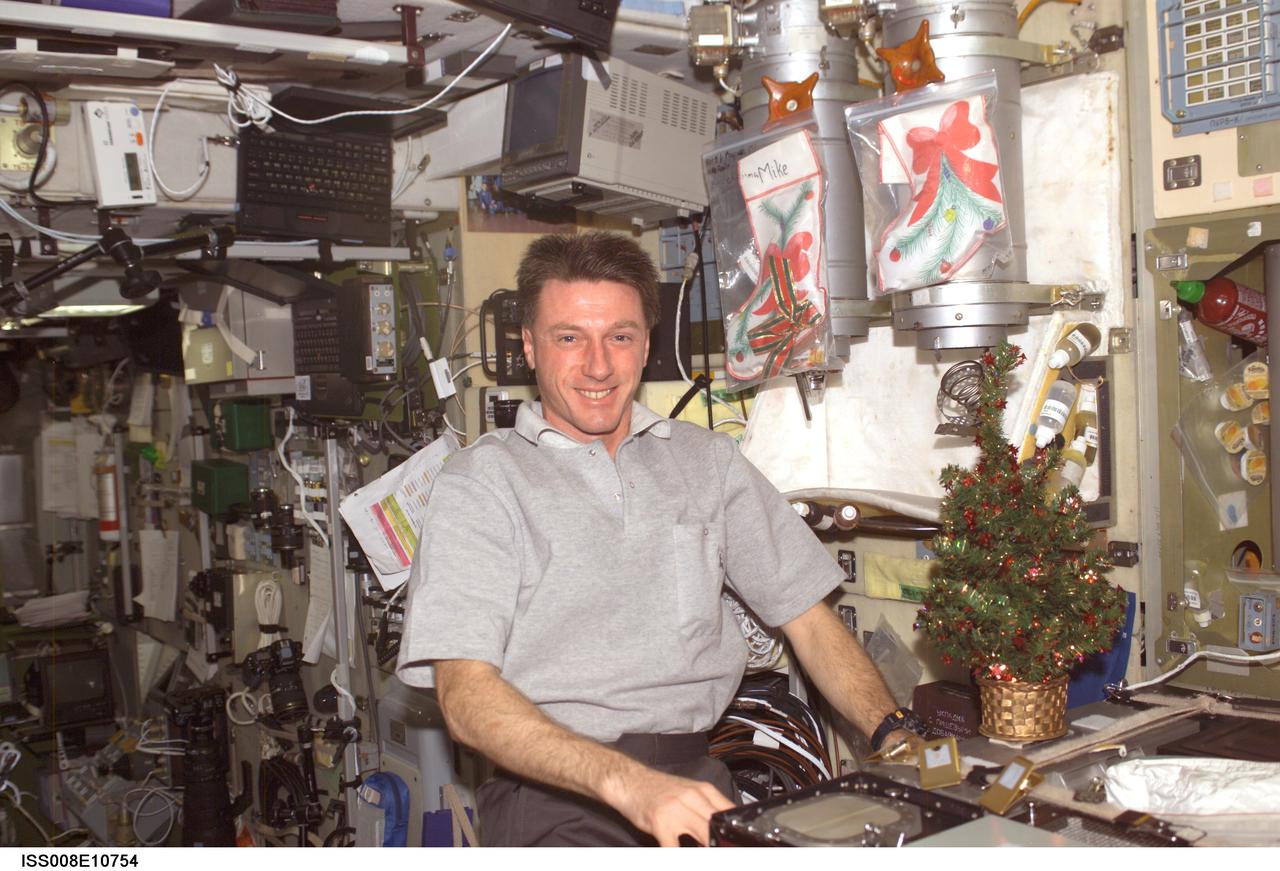
ISS008-E-10754 (28 December 2003) --- Astronaut C. Michael Foale, Expedition 8 mission commander and NASA ISS science officer, poses with holiday decorations in the Zvezda Service Module on the International Space Station (ISS).
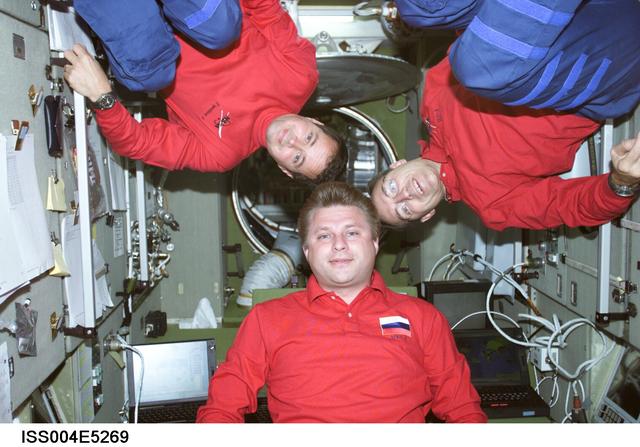
ISS004-E-5269 (December 2001) --- Cosmonaut Yuri I. Onufrienko, Expedition Four mission commander, flanked by astronauts Daniel W. Bursch (left) and Carl E. Walz, both flight engineers, pose for an informal crew photo in the Zvezda Service Module on the International Space Station (ISS). Onufrienko represents Rosaviakosmos. The image was taken with a digital still camera.
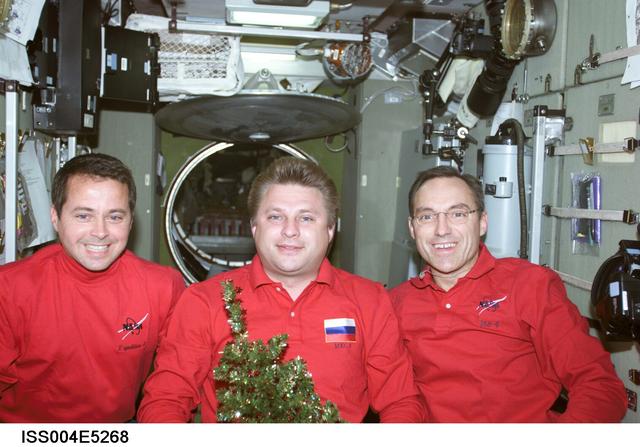
ISS004-E-5268 (December 2001) --- Cosmonaut Yuri I. Onufrienko, Expedition Four mission commander, flanked by astronauts Daniel W. Bursch (left) and Carl E. Walz, both flight engineers, pose for an informal holiday crew photo in the Zvezda Service Module on the International Space Station (ISS). Onufrienko represents Rosaviakosmos. The image was taken with a digital still camera.
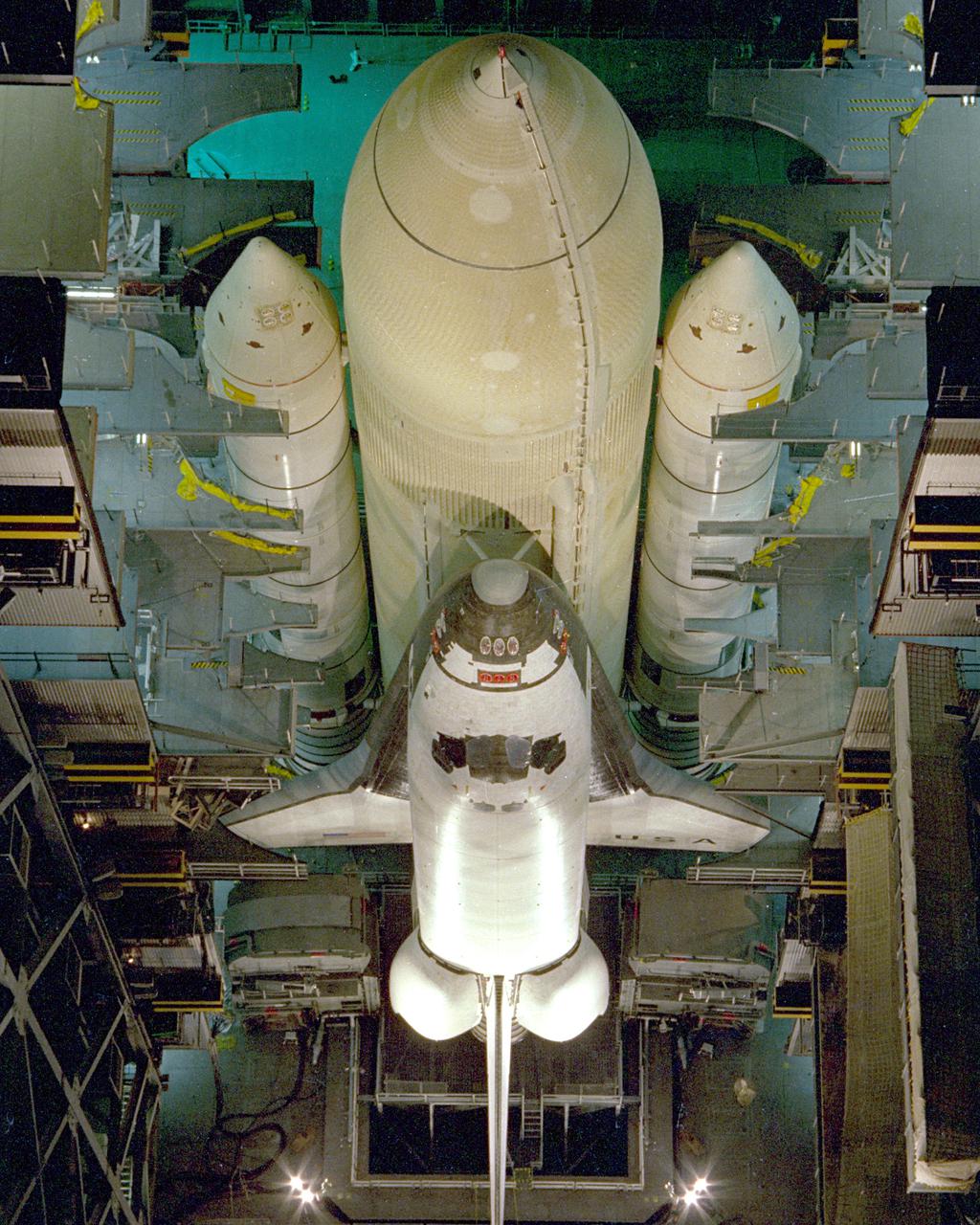
KENNEDY SPACE CENTER, FLA. - Assembly of the first Space Shuttle vehicle, scheduled to make its first orbital test flight in March 1981, was completed today with the mating of the Orbiter Columbia to its external tank in the Vehicle Assembly Building's High Bay 3. Columbia, shown here still attached to its hoisting sling, was moved to the VAB on Nov. 24 having completed tests and tile installation in the adjacent Orbiter Processing Facility. The other Shuttle components, the twin solid rocket boosters and the external propellant tank, were stacked on the Mobile Launcher Platform in High Bay 3 in January and November of this year, respectively. The current schedule calls for the rollout of the assembled Space Shuttle to Pad A at Launch Complex 39 shortly after Christmas.
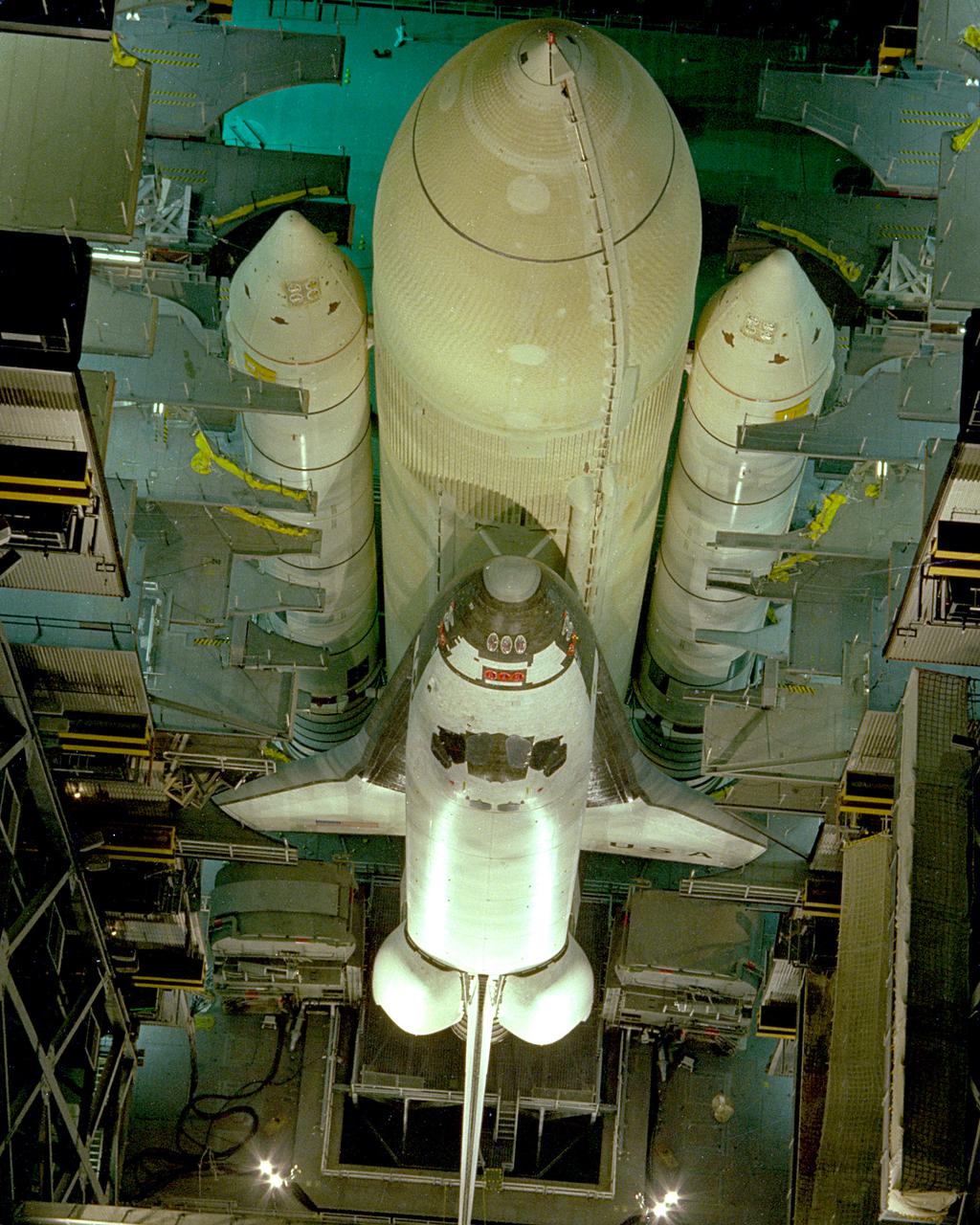
KENNEDY SPACE CENTER, FLA. - Assembly of the first Space Shuttle vehicle, scheduled to make its first orbital test flight in March 1981, was completed today with the mating of the Orbiter Columbia to its eternal tank in the Vehicle Assembly Building's High Bay 3. Columbia, shown here still attached to its hoisting sling, was moved to the VAB on Nov. 24 having completed tests and tile installation in the adjacent Orbiter Processing Facility. The other Shuttle components, the twin solid rocket boosters and the external propellant tank, were stacked on the Mobile launcher Platform in High Bay 3 in January and November of this year, respectively. The current schedule calls for the rollout of the assembled Space Shuttle to Pad A at Launch Complex 39 shortly after Christmas.
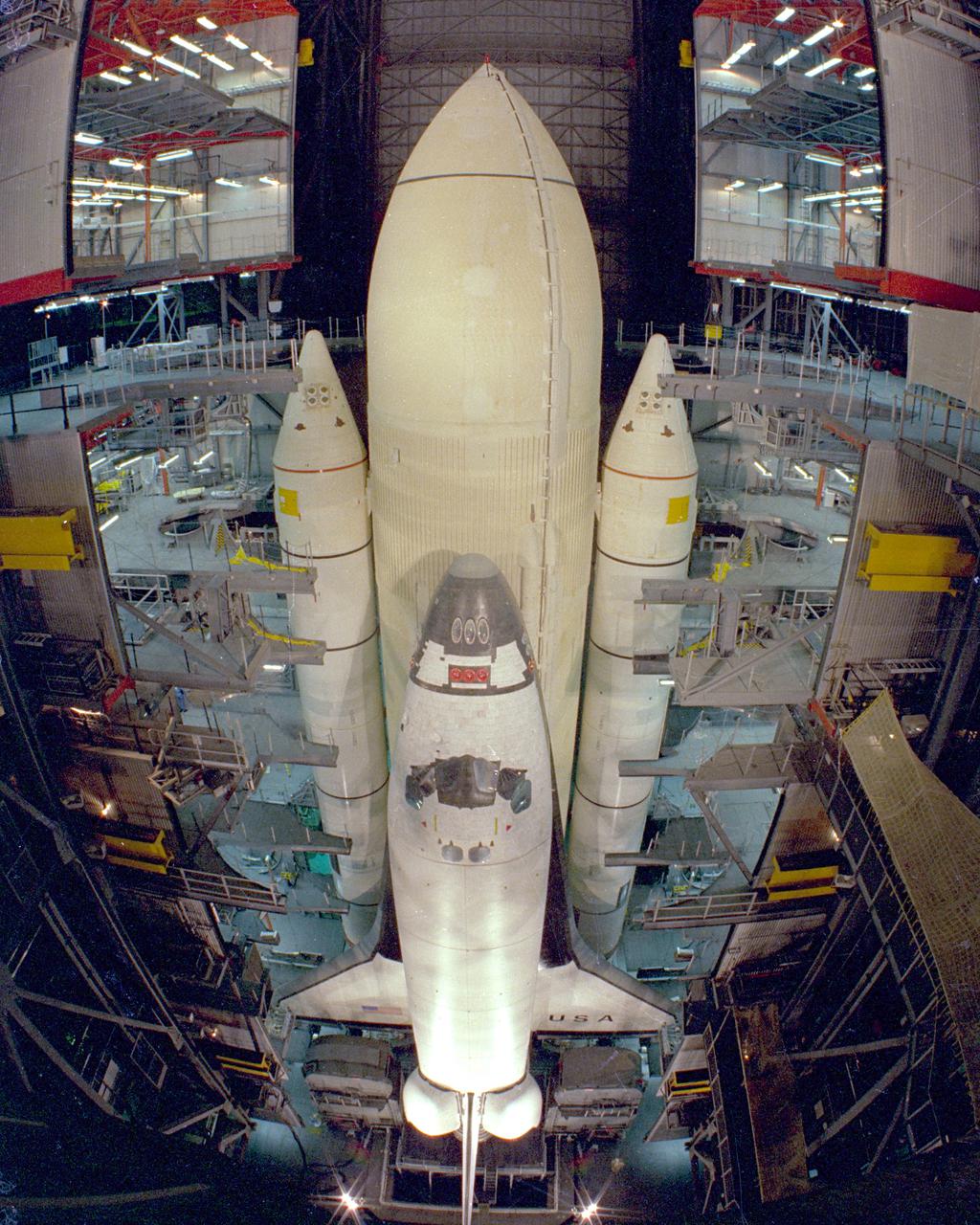
KENNEDY SPACE CENTER, FLA. - Assembly of the first Space Shuttle vehicle, scheduled to make its first orbital test flight in March 1981, was completed today with the mating of the Orbiter Columbia to its eternal tank in the Vehicle Assembly Building's High Bay 3. Columbia, shown here still attached to its hoisting sling, was moved to the VAB on Nov. 24 having completed tests and tile installation in the adjacent Orbiter Processing Facility. The other Shuttle components, the twin solid rocket boosters and the external propellant tank, were stacked on the Mobile launcher Platform in High Bay 3 in January and November of this year, respectively. The current schedule calls for the rollout of the assembled Space Shuttle to Pad A at Launch Complex 39 shortly after Christmas.
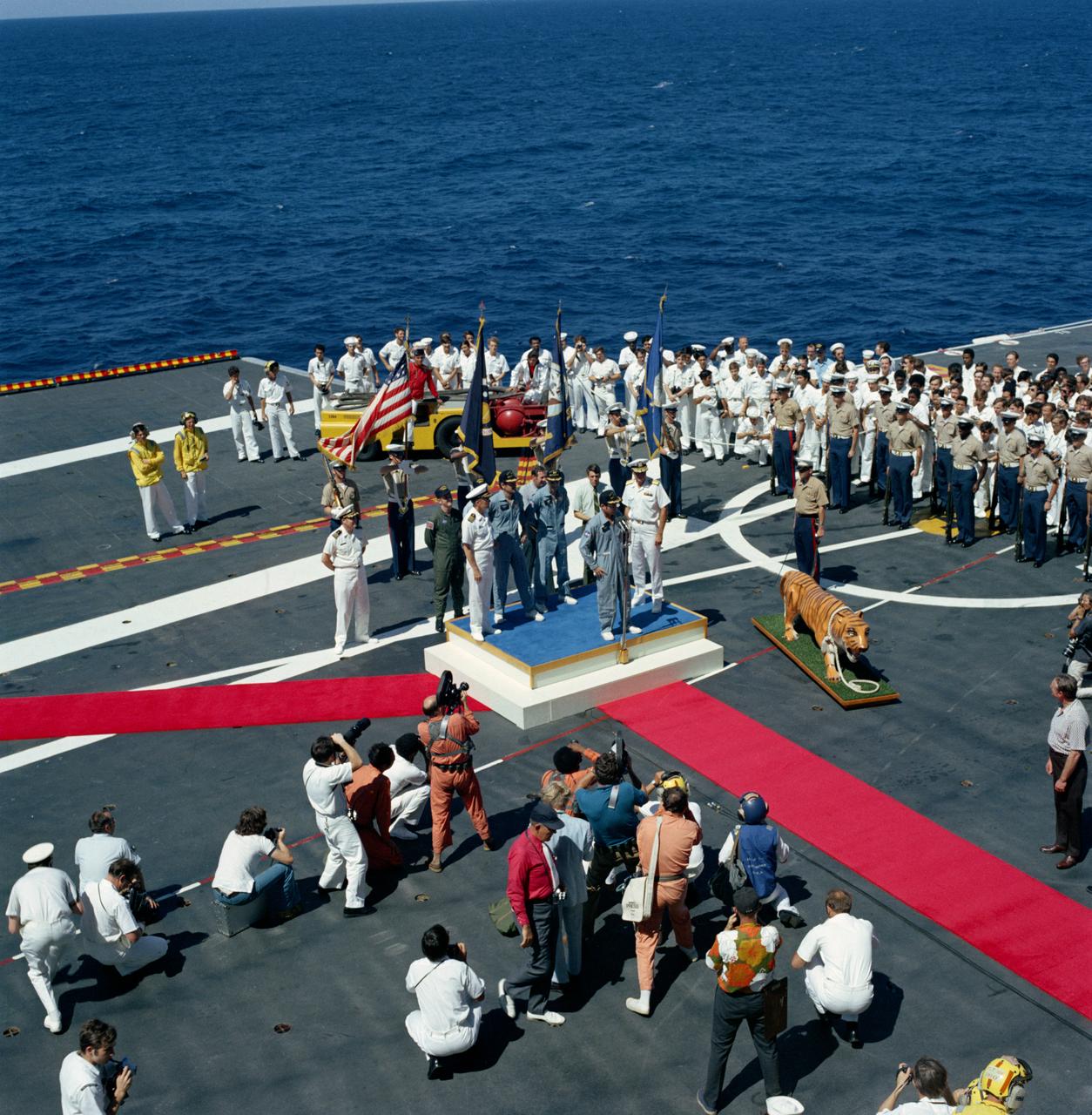
S72-36262 (27 April 1972) --- A high-angle view of the Apollo 16 welcoming aboard ceremonies on the deck of the prime recovery ship, USS Ticonderoga. It was soon after the splashdown of the Apollo 16 Command Module (CM) in the central Pacific Ocean approximately 215 miles southeast of Christmas Island. Astronaut John W. Young, commander, is standing at the microphone. Standing behind Young are astronaut Charles M. Duke Jr. (Left), lunar module pilot; and astronaut Thomas K. Mattingly II, command module pilot. The splashdown occurred at 290:37:06 ground elapsed time, 1:45:06 p.m. (CST), Thursday, April 27, 1972. The coordinates were 00:43.2 degrees south latitude and 156:11.4 degrees west longitude. The three crew members were picked up by helicopter and flown to the deck of the USS Ticonderoga.
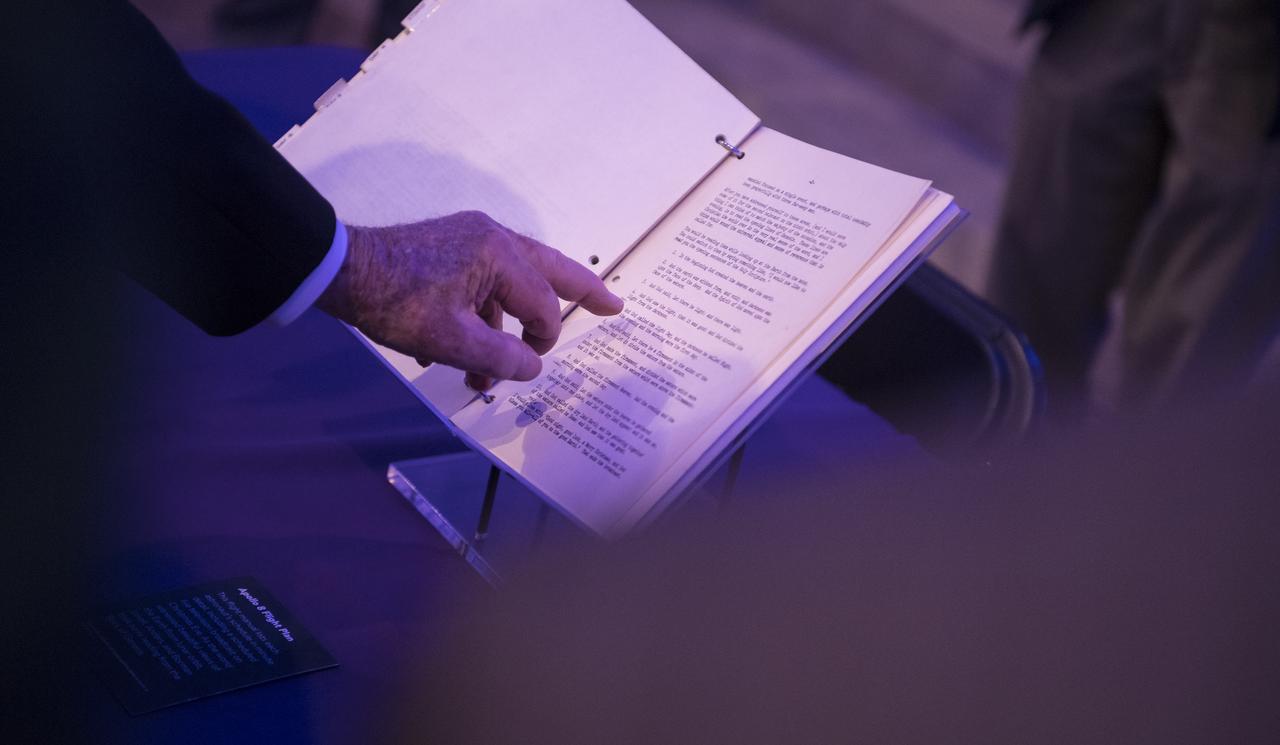
Apollo 8 astronaut Jim Lovell points to the lines from Genesis in his flight plan that were read during a television broadcast by him, Frank Borman, and William Anders as they orbited the Moon on Christmas Eve in 1968, Tuesday, Dec. 11, 2018 at the Washington National Cathedral in Washington, DC. Lovell's flight plan, which is usually displayed at the Adler Planetarium in Chicago, was one of the artifacts from the mission that were on display during the Smithsonian National Air and Space Museum's Spirit of Apollo event commemorating the 50th anniversary of Apollo 8. Apollo 8 was humanity's first journey to another world, taking astronauts Frank Borman, Jim Lovell, and William Anders to the Moon and back in December of 1968. Photo Credit: (NASA/Joel Kowsky)
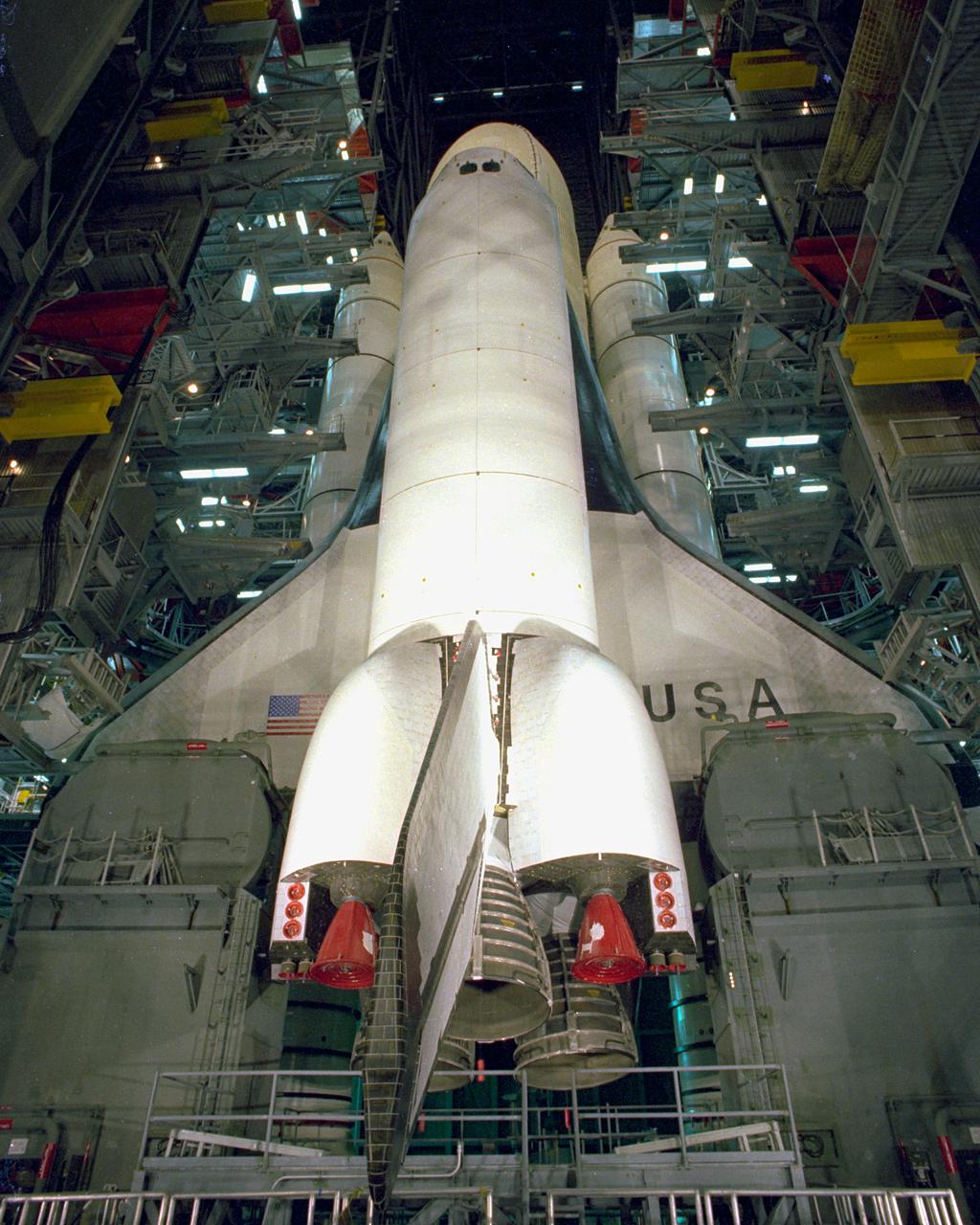
KENNEDY SPACE CENTER, FLA. - Assembly of the first Space Shuttle vehicle, scheduled to make its first orbital test flight in March 1981, was completed today with the mating of the Orbiter Columbia to its external tank in the Vehicle Assembly Building's High Bay 3. Columbia, shown here still attached to its hoisting sling, was moved to the VAB on Nov. 24 having completed tests and tile installation in the adjacent Orbiter Processing Facility. The other Shuttle components, the twin solid rocket boosters and the external propellant tank, were stacked on the Mobile Launcher Platform in High Bay 3 in January and November of this year, respectively. The current schedule calls for the rollout of the assembled Space Shuttle to Pad A at Launch Complex 39 shortly after Christmas.
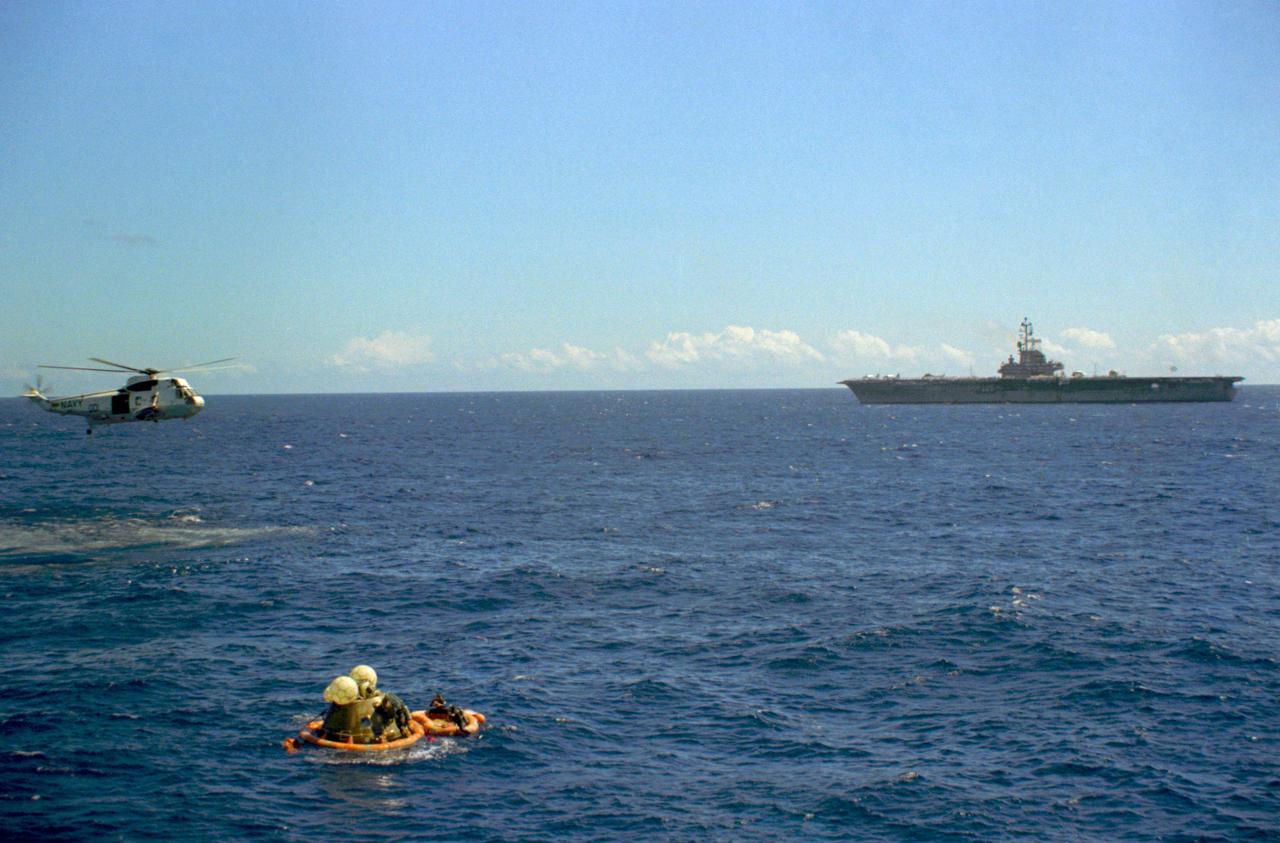
S72-36602 (27 April 1972) --- The Apollo 16 Command Module bobbles photographed in the waters of the central Pacific Ocean during recovery operations. The prime recovery ship, USS Ticonderoga, is in the background. A recovery helicopter hovers overhead. The Apollo 16 crew, astronauts John W. Young, Thomas K. Mattingly II, and Charles M. Duke Jr., were picked up by helicopter and flown to the deck of the ship. The splashdown occurred at 290:37:06 ground elapsed time, 1:45:06 p.m. (CST), Thursday, April 27, 1972, at coordinates of 00:45.2 degrees south latitude and 156:11.4 degrees west longitude, a point approximately 215 miles southeast of Christmas Island. A team of Earth Landing System swimmers assisted with the recovery operations.
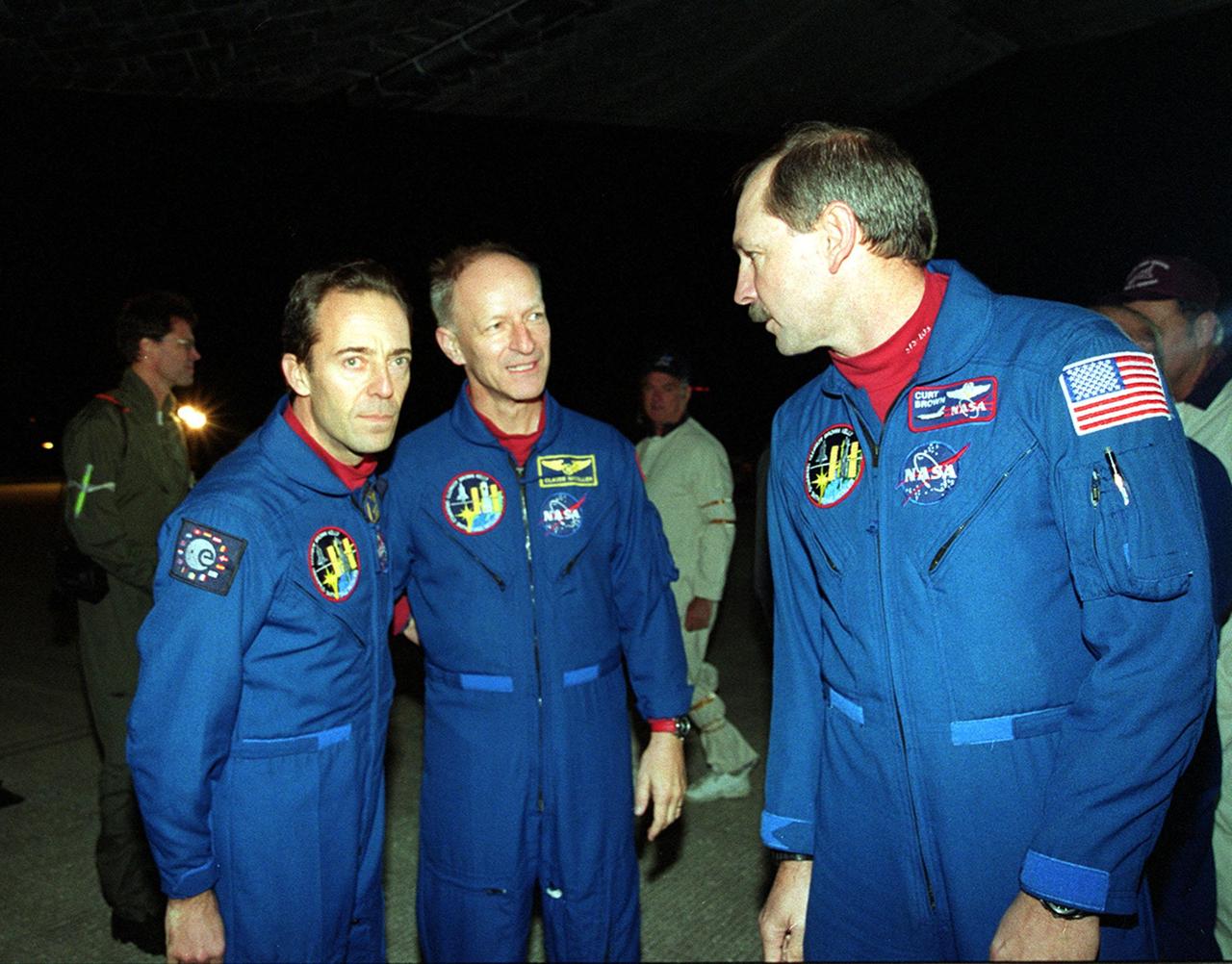
After landing at the Shuttle Landing Facility, STS-103 Mission Specialists Jean-Francois Clervoy of France and Claude Nicollier of Switzerland, who are with the European Space Agency, listen to a comment by Commander Curtis L. Brown Jr. while looking over the orbiter Discovery. Other members of the crew are Pilot Scott J. Kelly and Mission Specialists Steven L. Smith, C. Michael Foale (Ph.D.), and John M. Grunsfeld (Ph.D.). The crew of seven completed a successful eight-day mission to service the Hubble Space Telescope, spending the Christmas holiday in space in order to accomplish their mission before the end of 1999. During the mission, Discovery's four space-walking astronauts, Smith, Foale, Grunsfeld and Nicollier, spent 24 hours and 33 minutes upgrading and refurbishing Hubble, making it more capable than ever to renew its observations of the universe. Mission objectives included replacing gyroscopes and an old computer, installing another solid state recorder, and replacing damaged insulation in the telescope. Hubble was released from the end of Discovery's robot arm on Christmas Day. Main gear touchdown was at 7:00:47 p.m. EST. Nose gear touchdown occurred at 7:00:58 p.m. EST and wheel stop at 7:01:34 p.m. EST. This was the 96th flight in the Space Shuttle program and the 27th for the orbiter Discovery. The landing was the 20th consecutive Shuttle landing in Florida and the 13th night landing in Shuttle program history
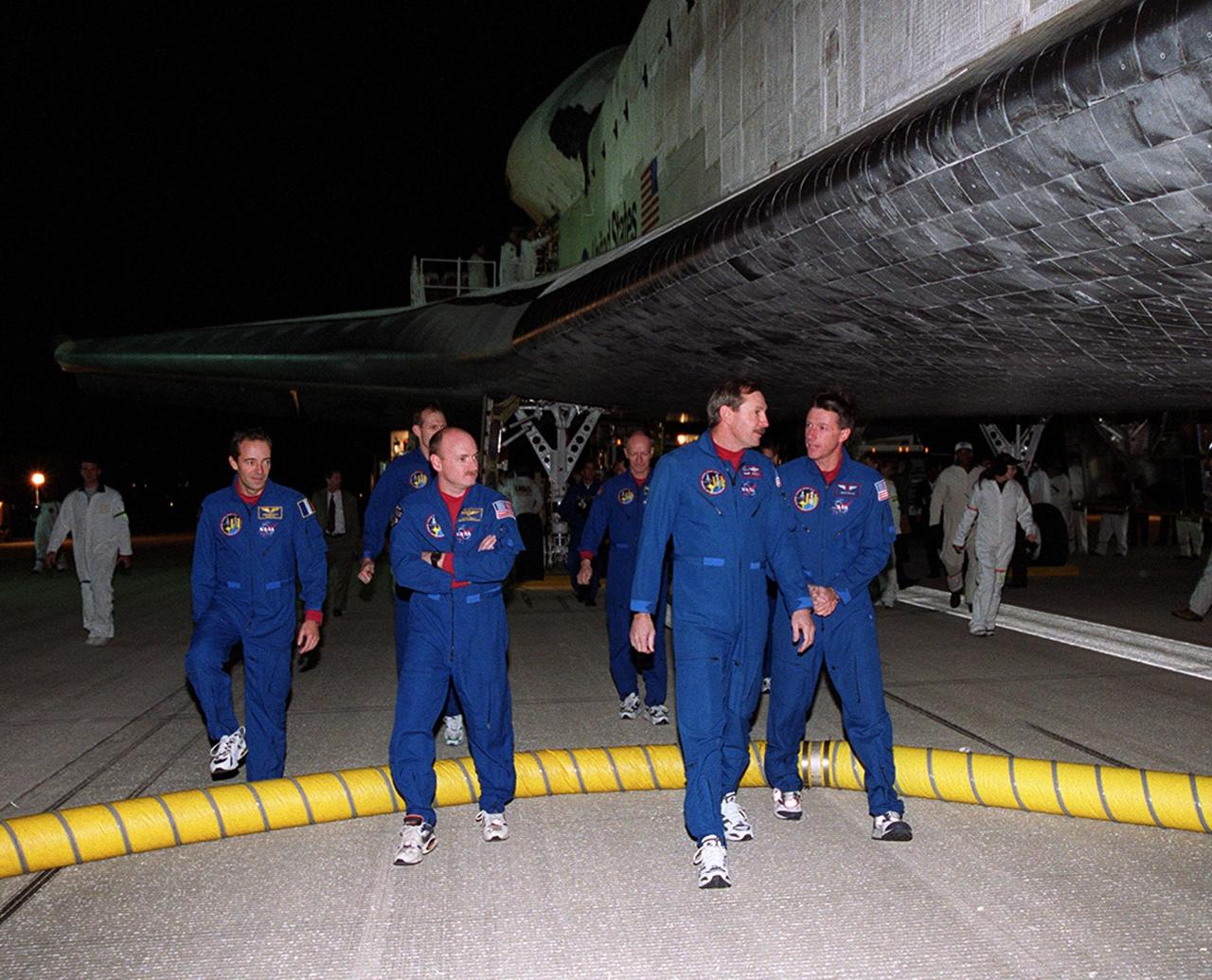
After landing at the Shuttle Landing Facility, the STS-103 crew looks over the orbiter Discovery. In the foreground, from left, are Mission Specialist Jean-Francois Clervoy of France, Pilot Scott J. Kelly, Commander Curtis L. Brown Jr. and Mission Specialist C. Michael Foale (Ph.D.); behind them, from left, are Mission Specialists Steven L. Smith and Claude Nicollier of Switzerland. The remaining crew member (not shown) is Mission Specialist John M. Grunsfeld (Ph.D.). The crew of seven completed a successful eight-day mission to service the Hubble Space Telescope, spending the Christmas holiday in space in order to accomplish their mission before the end of 1999. During the mission, Discovery's four space-walking astronauts, Smith, Foale, Grunsfeld and Nicollier, spent 24 hours and 33 minutes upgrading and refurbishing Hubble, making it more capable than ever to renew its observations of the universe. Mission objectives included replacing gyroscopes and an old computer, installing another solid state recorder, and replacing damaged insulation in the telescope. Hubble was released from the end of Discovery's robot arm on Christmas Day. Main gear touchdown was at 7:00:47 p.m. EST. Nose gear touchdown occurred at 7:00:58 p.m. EST and wheel stop at 7:01:34 p.m. EST. This was the 96th flight in the Space Shuttle program and the 27th for the orbiter Discovery. The landing was the 20th consecutive Shuttle landing in Florida and the 13th night landing in Shuttle program history
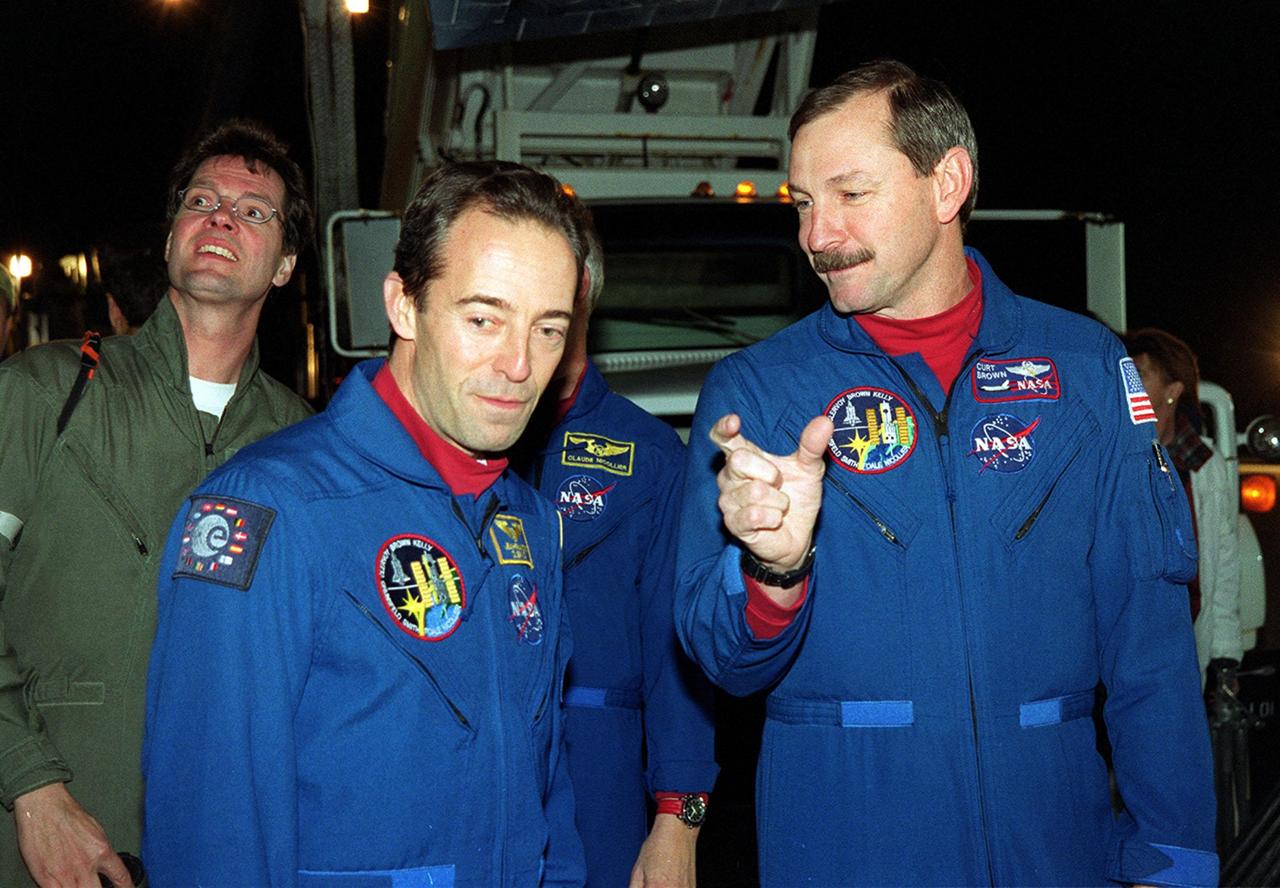
After landing at the Shuttle Landing Facility, STS-103 Mission Specialist Jean-François Clervoy of France (left), with the European Space Agency (ESA), and Commander Curtis L. Brown Jr. (right) look over the orbiter Discovery. They and other crew members Pilot Scott J. Kelly and Mission Specialists Steven L. Smith, C. Michael Foale (Ph.D.), John M. Grunsfeld (Ph.D.) and Claude Nicollier of Switzerland (also with ESA), completed a successful eight-day mission to service the Hubble Space Telescope, spending the Christmas holiday in space in order to accomplish their mission before the end of 1999. During the mission, Discovery's four space-walking astronauts, Smith, Foale, Grunsfeld and Nicollier, spent 24 hours and 33 minutes upgrading and refurbishing Hubble, making it more capable than ever to renew its observations of the universe. Mission objectives included replacing gyroscopes and an old computer, installing another solid state recorder, and replacing damaged insulation in the telescope. Hubble was released from the end of Discovery's robot arm on Christmas Day. Main gear touchdown was at 7:00:47 p.m. EST. Nose gear touchdown occurred at 7:00:58 p.m. EST and wheel stop at 7:01:34 p.m. EST. This was the 96th flight in the Space Shuttle program and the 27th for the orbiter Discovery. The landing was the 20th consecutive Shuttle landing in Florida and the 13th night landing in Shuttle program history
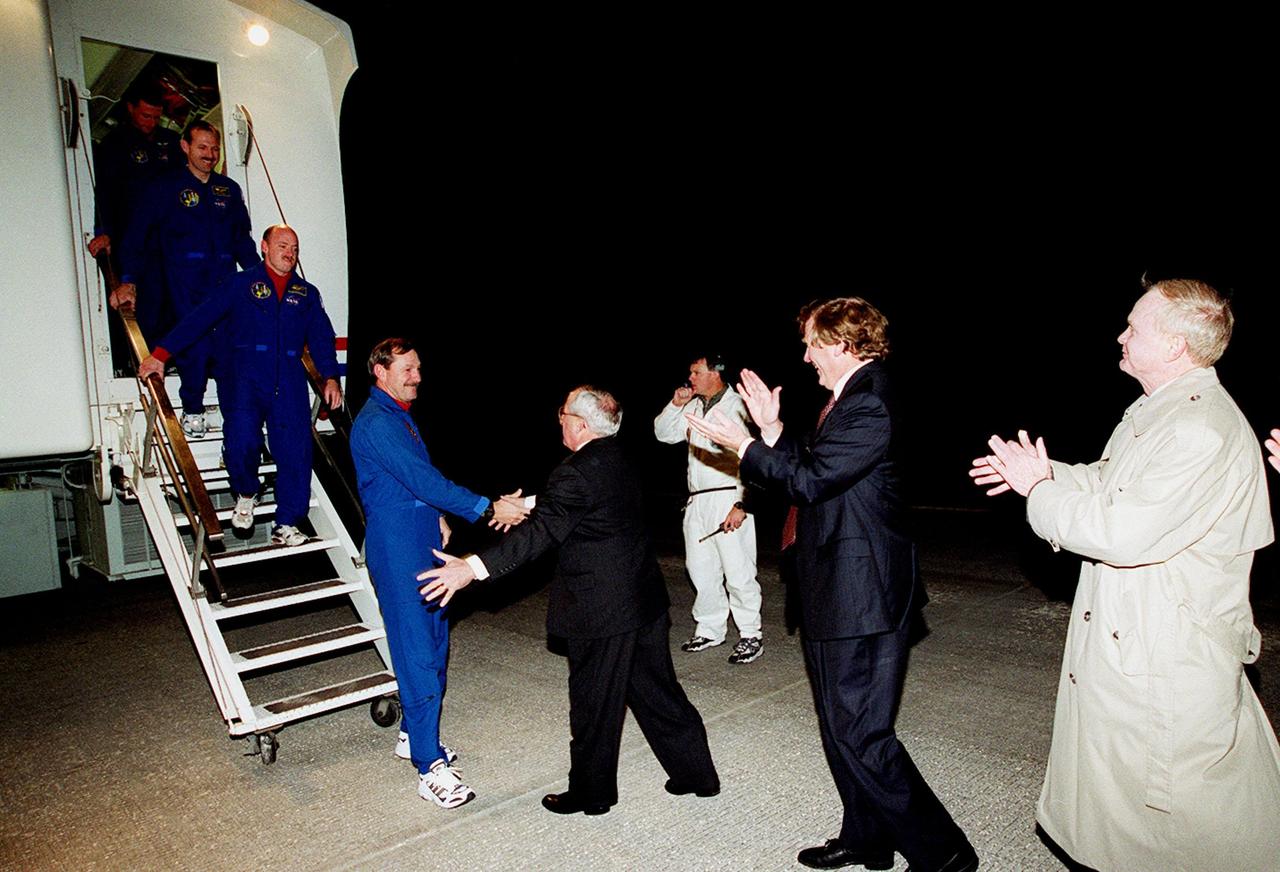
As he exits the Crew Hatch Access Vehicle, STS-103 Commander Curtis L. Brown Jr. is greeted with a handshake by Joseph Rothenberg, associate administrator, Office of Space Flight. Descending the stairs behind Brown are (left to right) Mission Specialists C. Michael Foale (Ph.D.) and John M. Grunsfeld (Ph.D.) and Pilot Scott J. Kelly. At right, applauding the astronauts return are Earle Huckins, deputy associate administrator, Office of Space Science, and Roy Bridges, director, Kennedy Space Center. Others in the crew (not shown) are Mission Specialists Steven L. Smith, and Jean-Francois Clervoy of France and Claude Nicollier of Switzerland, who are with the European Space Agency. The crew of seven completed a successful eight-day mission to service the Hubble Space Telescope, spending the Christmas holiday in space in order to accomplish their mission before the end of 1999. During the mission, Discovery's four space-walking astronauts, Smith, Foale, Grunsfeld and Nicollier, spent 24 hours and 33 minutes upgrading and refurbishing Hubble, making it more capable than ever to renew its observations of the universe. Mission objectives included replacing gyroscopes and an old computer, installing another solid state recorder, and replacing damaged insulation in the telescope. Hubble was released from the end of Discovery's robot arm on Christmas Day. Main gear touchdown was at 7:00:47 p.m. EST. Nose gear touchdown occurred at 7:00:58 p.m. EST and wheel stop at 7:01:34 p.m. EST. This was the 96th flight in the Space Shuttle program and the 27th for the orbiter Discovery. The landing was the 20th consecutive Shuttle landing in Florida and the 13th night landing in Shuttle program history
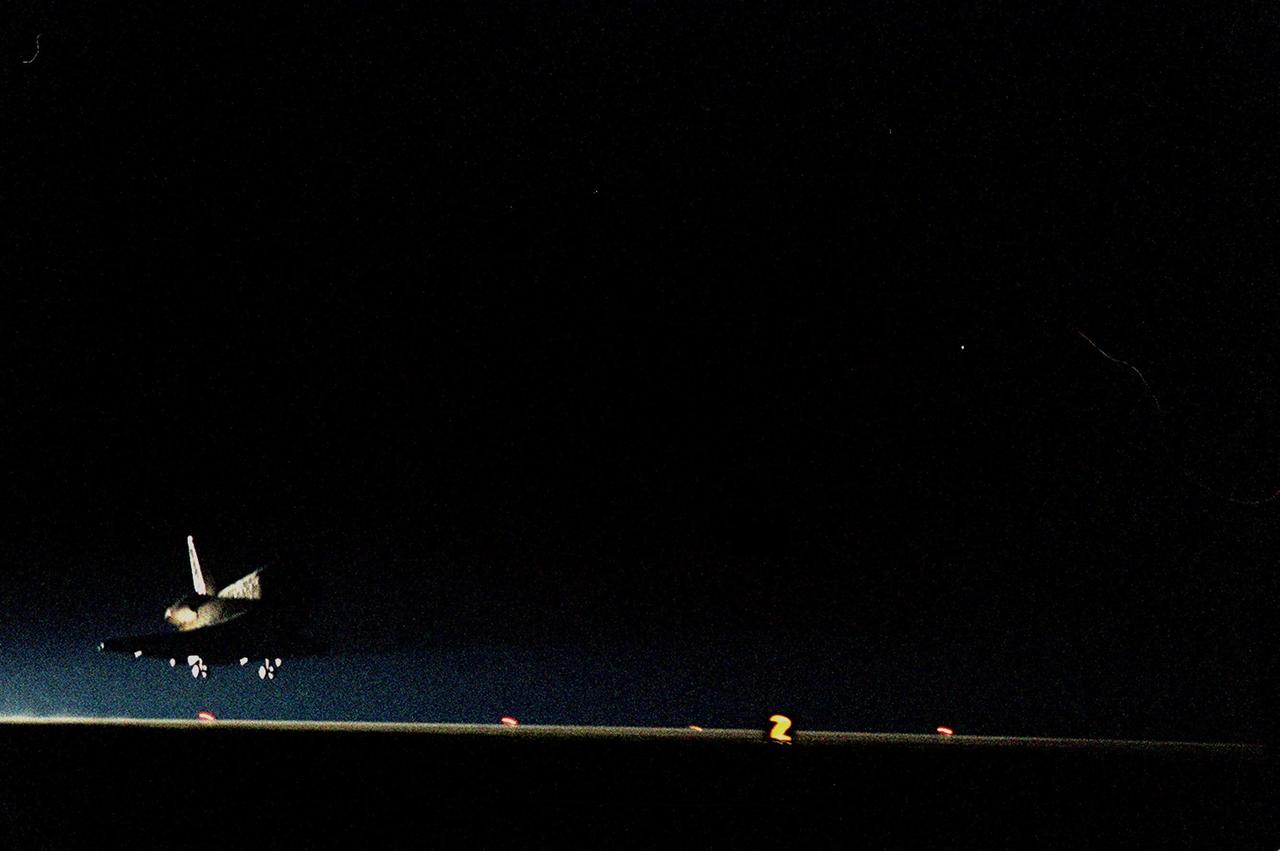
KENNEDY SPACE CENTER, Fla. -- The Space Shuttle Discovery drops out of the darkness onto runway 33 at the Shuttle Landing Facility after traveling more than 3,267,000 miles on a successful eight-day mission to service the Hubble Space Telescope. Astronauts Curtis L. Brown Jr., Commander; Scott J. Kelly, Pilot; and Steven L. Smith, C. Michael Foale (Ph.D.), John M. Grunsfeld (Ph.D.), Claude Nicollier of Switzerland and Jean-François Clervoy of France, all Mission Specialists, spent the Christmas holiday in space in order to accomplish their mission before the end of 1999. During the mission, Discovery's four space-walking astronauts, Smith, Foale, Grunsfeld and Nicollier, spent 24 hours and 33 minutes upgrading and refurbishing Hubble, making it more capable than ever to renew its observations of the universe. Mission objectives included replacing gyroscopes and an old computer, installing another solid state recorder, and replacing damaged insulation in the telescope. Hubble was released from the end of Discovery's robot arm on Christmas Day. Main gear touchdown was at 7:00:47 p.m. EST. Nose gear touchdown occurred at 7:00:58 p.m. EST and wheel stop at 7:01:34 p.m. EST. This was the 96th flight in the Space Shuttle program and the 27th for the orbiter Discovery. The landing was the 20th consecutive Shuttle landing in Florida and the 13th night landing in Shuttle program history
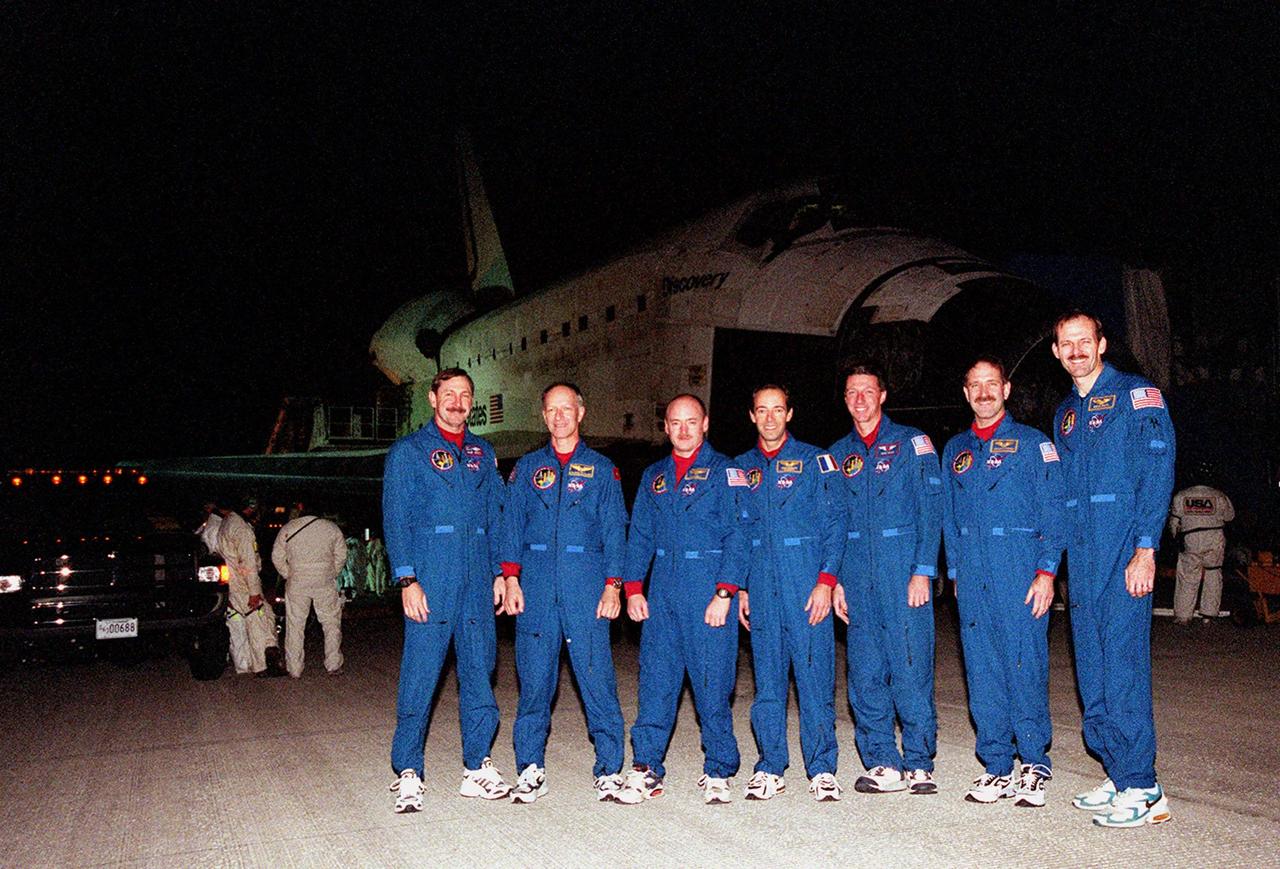
After landing at the Shuttle Landing Facility, the STS-103 crew poses in front of the orbiter Discovery. Standing left to right are Commander Curtis L. Brown Jr., Mission Specialist Claude Nicollier of Switzerland, Pilot Scott J. Kelly, and Mission Specialists Jean-Francois Clervoy of France, C. Michael Foale (Ph.D.), John M. Grunsfeld (Ph.D.) and Steven L. Smith. The crew of seven completed a successful eight-day mission to service the Hubble Space Telescope, spending the Christmas holiday in space in order to accomplish their mission before the end of 1999. During the mission, Discovery's four space-walking astronauts, Smith, Foale, Grunsfeld and Nicollier, spent 24 hours and 33 minutes upgrading and refurbishing Hubble, making it more capable than ever to renew its observations of the universe. Mission objectives included replacing gyroscopes and an old computer, installing another solid state recorder, and replacing damaged insulation in the telescope. Hubble was released from the end of Discovery's robot arm on Christmas Day. Main gear touchdown was at 7:00:47 p.m. EST. Nose gear touchdown occurred at 7:00:58 p.m. EST and wheel stop at 7:01:34 p.m. EST. This was the 96th flight in the Space Shuttle program and the 27th for the orbiter Discovery. The landing was the 20th consecutive Shuttle landing in Florida and the 13th night landing in Shuttle program history
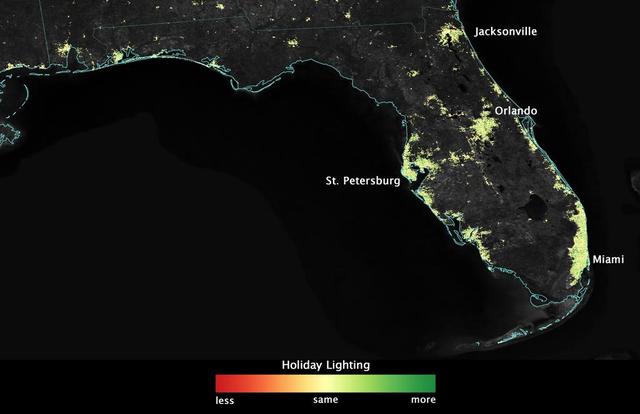
City lights shine brighter during the holidays in the United States when compared with the rest of the year, as shown using a new analysis of daily data from the NASA-NOAA Suomi NPP satellite. Dark green pixels are areas where lights are 50 percent brighter, or more, during December. Because snow reflects so much light, the researchers could only analyze snow-free cities. They focused on the U.S. West Coast from San Francisco and Los Angeles, and cities south of a rough imaginary line from St. Louis to Washington, D.C. Credit: Jesse Allen, NASA’s Earth Observatory Read more: <a href="http://www.nasa.gov/content/goddard/satellite-sees-holiday-lights-brighten-cities." rel="nofollow">www.nasa.gov/content/goddard/satellite-sees-holiday-light...</a>.<b><a href="http://www.nasa.gov/audience/formedia/features/MP_Photo_Guidelines.html" rel="nofollow">NASA image use policy.</a></b> <b><a href="http://www.nasa.gov/centers/goddard/home/index.html" rel="nofollow">NASA Goddard Space Flight Center</a></b> enables NASA’s mission through four scientific endeavors: Earth Science, Heliophysics, Solar System Exploration, and Astrophysics. Goddard plays a leading role in NASA’s accomplishments by contributing compelling scientific knowledge to advance the Agency’s mission. <b>Follow us on <a href="http://twitter.com/NASAGoddardPix" rel="nofollow">Twitter</a></b> <b>Like us on <a href="http://www.facebook.com/pages/Greenbelt-MD/NASA-Goddard/395013845897?ref=tsd" rel="nofollow">Facebook</a></b> <b>Find us on <a href="http://instagram.com/nasagoddard?vm=grid" rel="nofollow">Instagram</a></b>
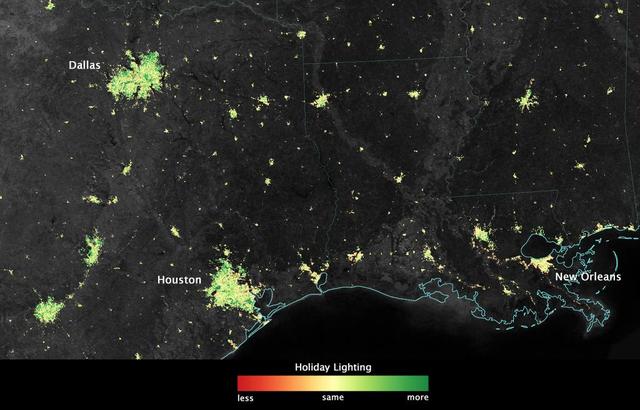
City lights shine brighter during the holidays in the United States when compared with the rest of the year, as shown using a new analysis of daily data from the NASA-NOAA Suomi NPP satellite. Dark green pixels are areas where lights are 50 percent brighter, or more, during December. Because snow reflects so much light, the researchers could only analyze snow-free cities. They focused on the U.S. West Coast from San Francisco and Los Angeles, and cities south of a rough imaginary line from St. Louis to Washington, D.C. Credit: Jesse Allen, NASA’s Earth Observatory Read more: <a href="http://www.nasa.gov/content/goddard/satellite-sees-holiday-lights-brighten-cities." rel="nofollow">www.nasa.gov/content/goddard/satellite-sees-holiday-light...</a>.<b><a href="http://www.nasa.gov/audience/formedia/features/MP_Photo_Guidelines.html" rel="nofollow">NASA image use policy.</a></b> <b><a href="http://www.nasa.gov/centers/goddard/home/index.html" rel="nofollow">NASA Goddard Space Flight Center</a></b> enables NASA’s mission through four scientific endeavors: Earth Science, Heliophysics, Solar System Exploration, and Astrophysics. Goddard plays a leading role in NASA’s accomplishments by contributing compelling scientific knowledge to advance the Agency’s mission. <b>Follow us on <a href="http://twitter.com/NASAGoddardPix" rel="nofollow">Twitter</a></b> <b>Like us on <a href="http://www.facebook.com/pages/Greenbelt-MD/NASA-Goddard/395013845897?ref=tsd" rel="nofollow">Facebook</a></b> <b>Find us on <a href="http://instagram.com/nasagoddard?vm=grid" rel="nofollow">Instagram</a></b>
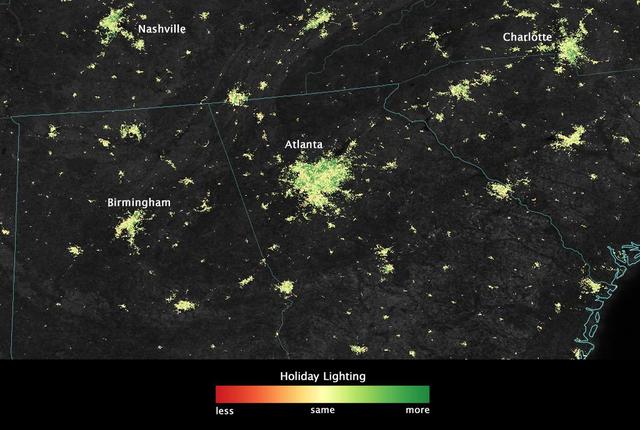
City lights shine brighter during the holidays in the United States when compared with the rest of the year, as shown using a new analysis of daily data from the NASA-NOAA Suomi NPP satellite. Dark green pixels are areas where lights are 50 percent brighter, or more, during December. Because snow reflects so much light, the researchers could only analyze snow-free cities. They focused on the U.S. West Coast from San Francisco and Los Angeles, and cities south of a rough imaginary line from St. Louis to Washington, D.C. Credit: Jesse Allen, NASA’s Earth Observatory Read more: <a href="http://www.nasa.gov/content/goddard/satellite-sees-holiday-lights-brighten-cities." rel="nofollow">www.nasa.gov/content/goddard/satellite-sees-holiday-light...</a>.<b><a href="http://www.nasa.gov/audience/formedia/features/MP_Photo_Guidelines.html" rel="nofollow">NASA image use policy.</a></b> <b><a href="http://www.nasa.gov/centers/goddard/home/index.html" rel="nofollow">NASA Goddard Space Flight Center</a></b> enables NASA’s mission through four scientific endeavors: Earth Science, Heliophysics, Solar System Exploration, and Astrophysics. Goddard plays a leading role in NASA’s accomplishments by contributing compelling scientific knowledge to advance the Agency’s mission. <b>Follow us on <a href="http://twitter.com/NASAGoddardPix" rel="nofollow">Twitter</a></b> <b>Like us on <a href="http://www.facebook.com/pages/Greenbelt-MD/NASA-Goddard/395013845897?ref=tsd" rel="nofollow">Facebook</a></b> <b>Find us on <a href="http://instagram.com/nasagoddard?vm=grid" rel="nofollow">Instagram</a></b>