
Cloudy Pole

Cloudy Pole

Decades of satellite observations and astronaut photographs show that clouds dominate space-based views of Earth. One study based on nearly a decade of satellite data estimated that about 67 percent of Earth’s surface is typically covered by clouds. This is especially the case over the oceans, where other research shows less than 10 percent of the sky is completely clear of clouds at any one time. Over land, 30 percent of skies are completely cloud free. Earth’s cloudy nature is unmistakable in this global cloud fraction map, based on data collected by the Moderate Resolution Imaging Spectroradiometer (MODIS) on the Aqua satellite. While MODIS collects enough data to make a new global map of cloudiness every day, this version of the map shows an average of all of the satellite’s cloud observations between July 2002 and April 2015. Colors range from dark blue (no clouds) to light blue (some clouds) to white (frequent clouds).
From Cloudy to Clear

Cloudy Image of Cerberus Rupes Dark Lineation

Hubble Look at Mars Shows Canyon Dust Storm, Cloudy Conditions for Pathfinder Landing
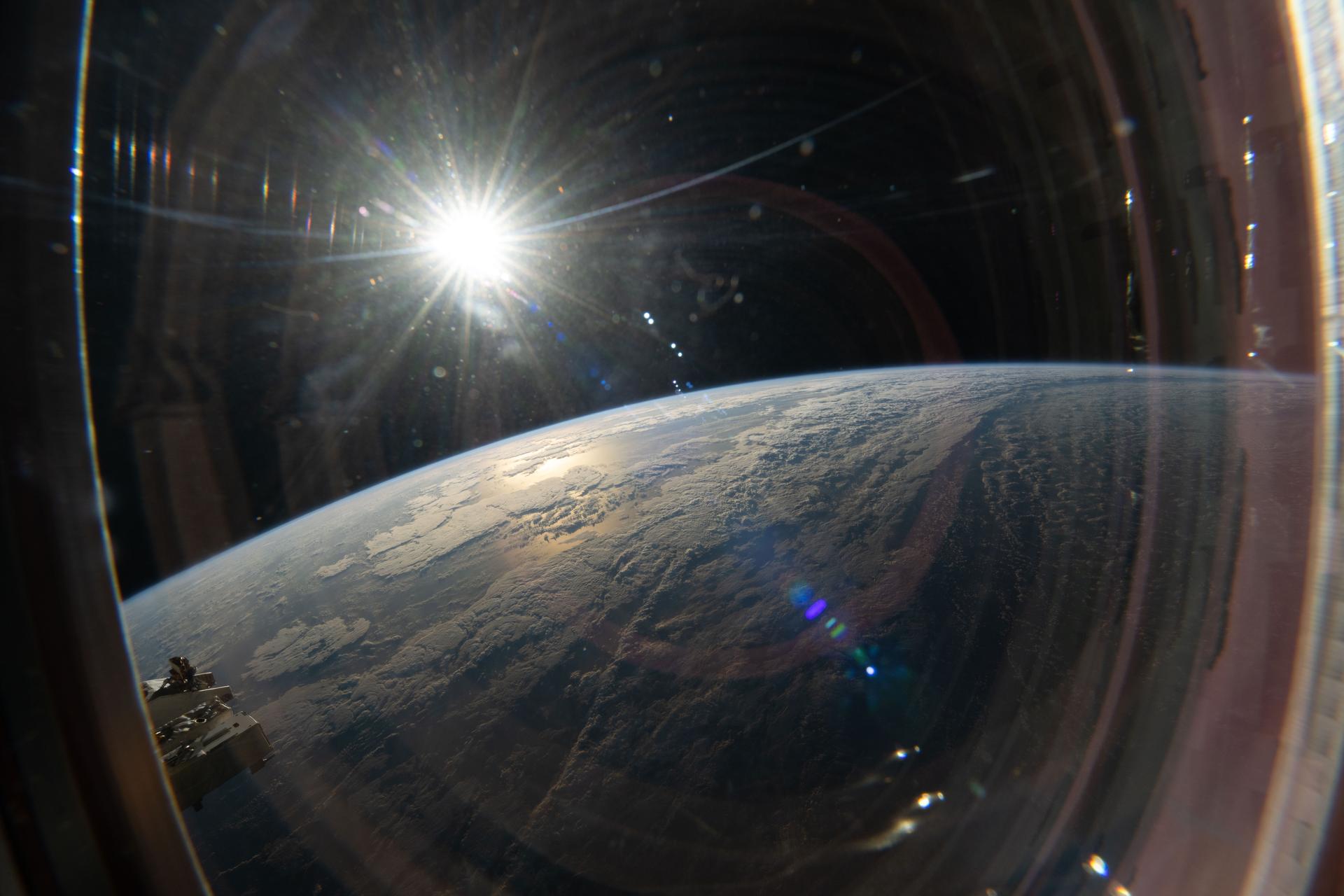
iss075e0103110 (Sept. 9, 2026) --- This view from a window on the SpaceX Dragon highlights the sun illuminating a cloudy Pacific Ocean as the International Space Station orbited 263 miles above Earth. Credit: NASA/Jessica Meir
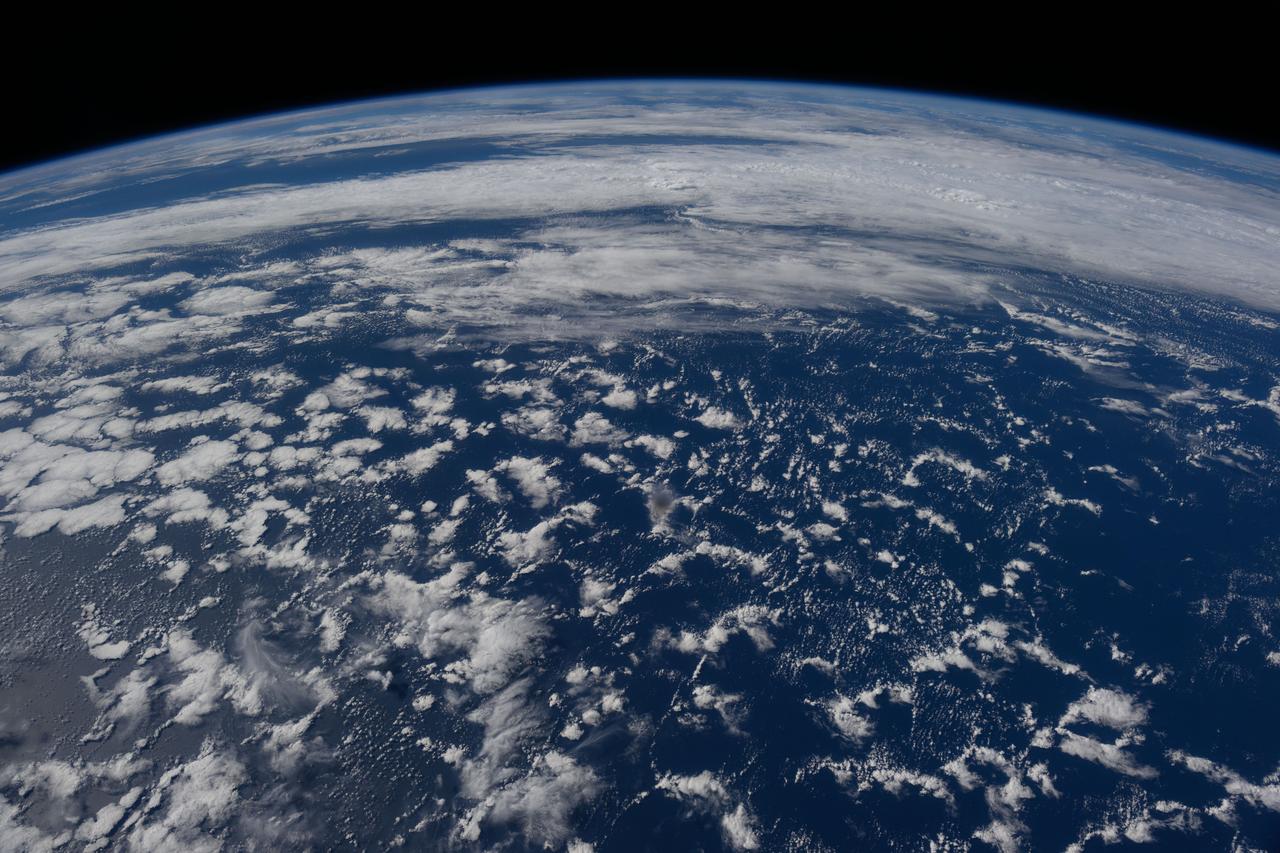
iss072e769023 (March 10, 2025) --- A cloudy Indian Ocean southwest of Perth, Australia, is pictured from the International Space Station as it orbited 268 miles above.
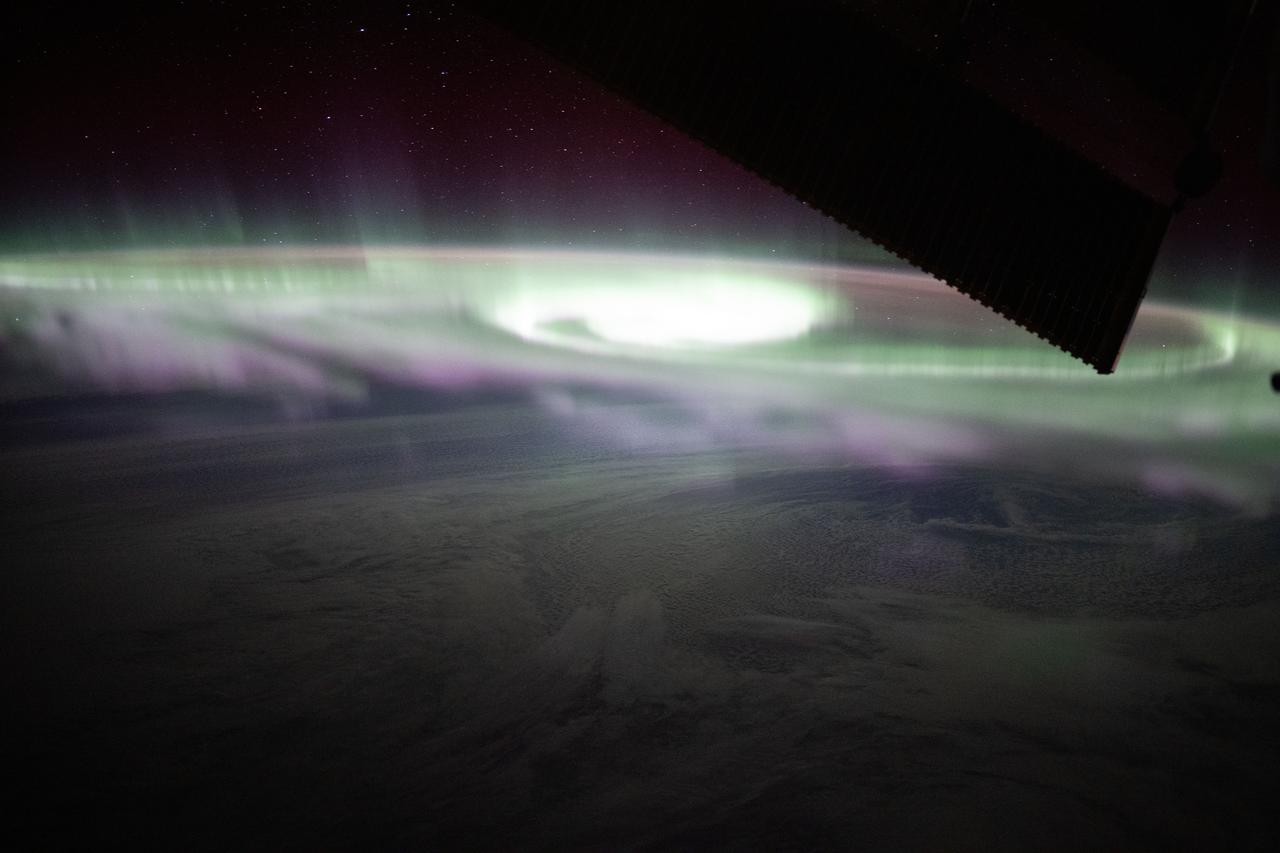
iss073e0256896 (June 3, 2025) --- The aurora australis swirls over a cloudy Pacific Ocean in this photograph from the International Space Station as it orbited 270 miles above and southeast of New Zealand.

iss072e397138 (Dec. 19, 2024) --- The Himalayas separate the arid steppe of China's Tibetan Plateau from a cloudy Indian subcontinent in this photograph from the International Space Station as it soared 261 miles above Asia.
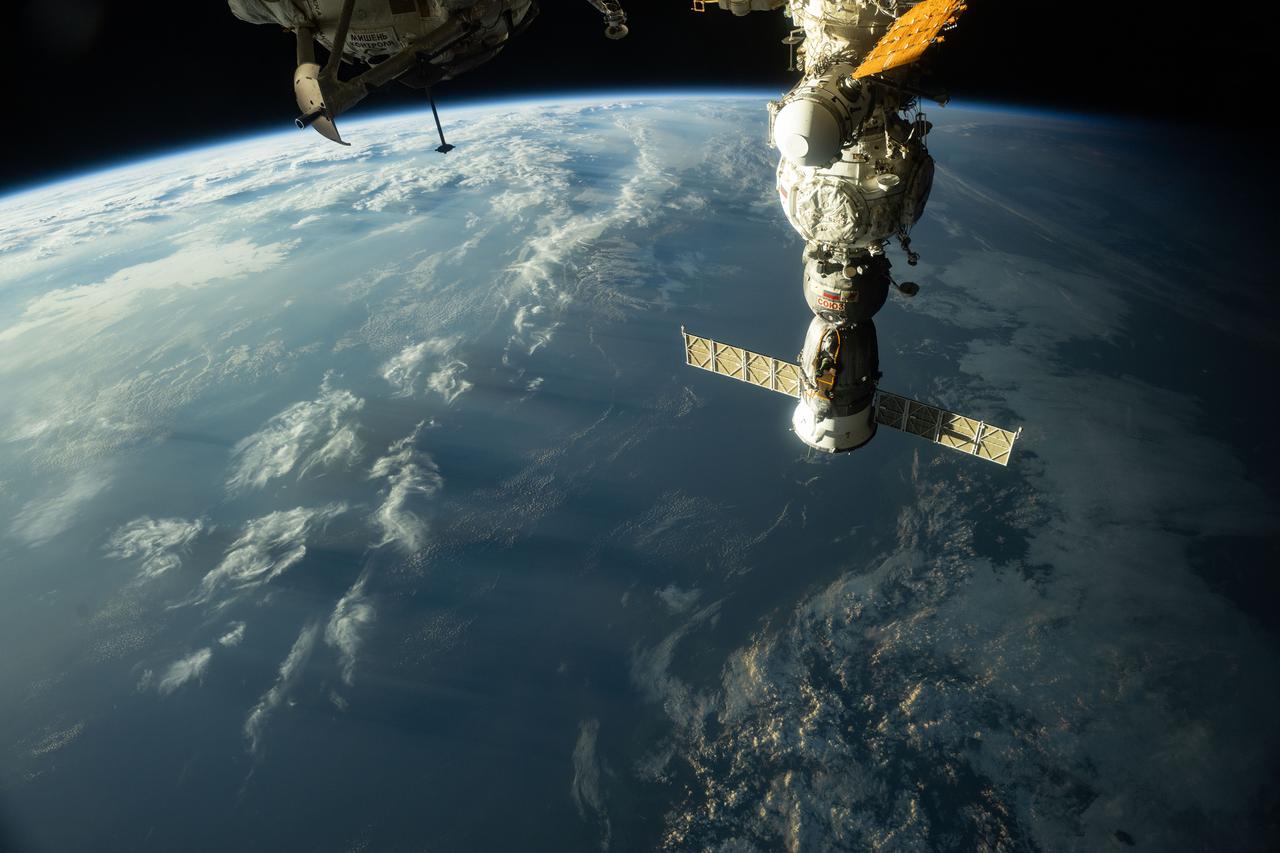
iss073e0384035 (Juny 12, 2025) --- The sunset casts long, cloudy shadows over Japan in this photograph from the International Space Station as it orbited 259 miles above the island nation. In the right foreground, the Soyuz MS-27 crew ship is docked to the Prichal module.
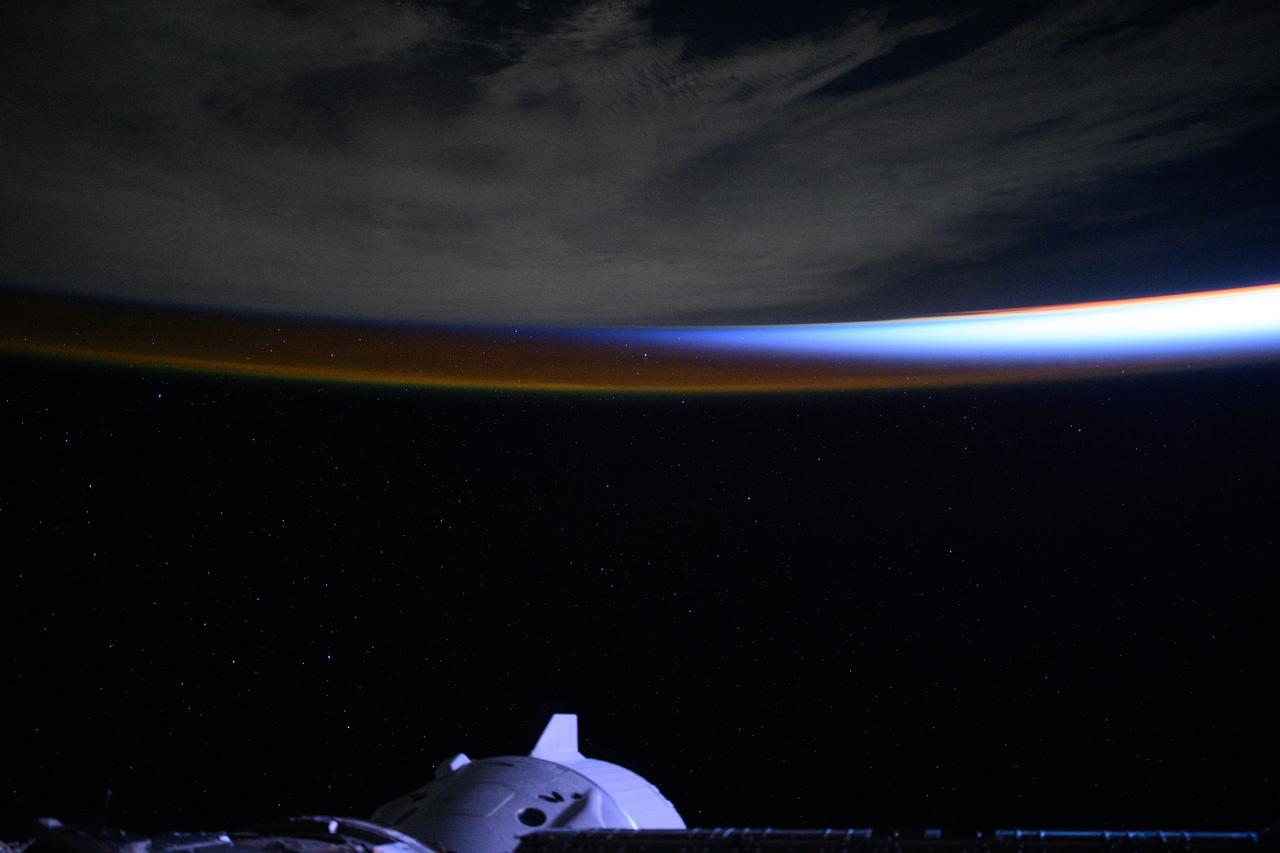
iss073e0203873 (May 19, 2025) --- An orbital sunrise breaks above a cloudy Atlantic Ocean and intersects with Earth's atmospheric glow in this photograph from the International Space Station as it orbited 268 miles overhead. At bottom, is the SpaceX Dragon crew spacecraft docked to the orbital outpost's forward port on the Harmony module.
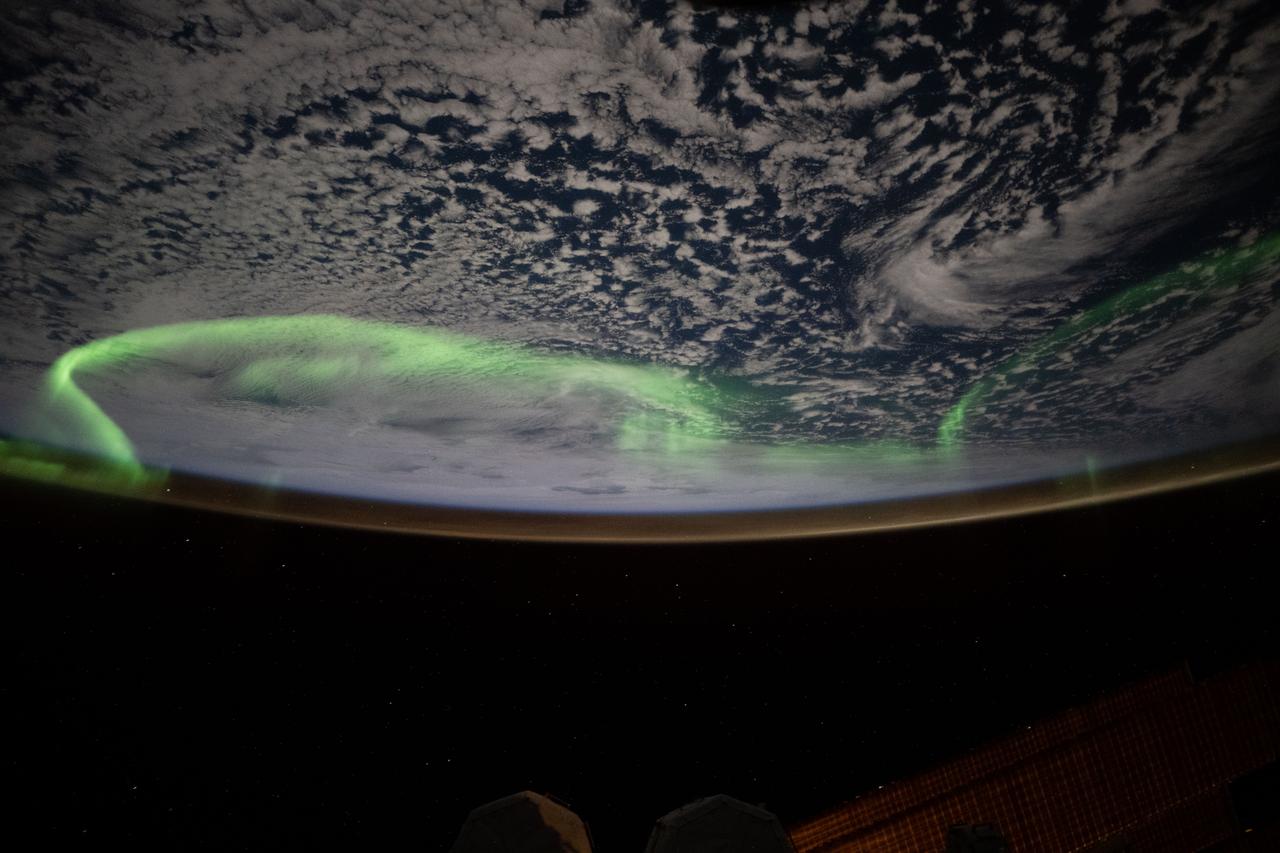
iss073e0247726 (June 12, 2025) --- The aurora australis arcs above a partly cloudy Indian Ocean in this photograph from the International Space Station as it orbited 269 miles above in between Australia and Antarctica.
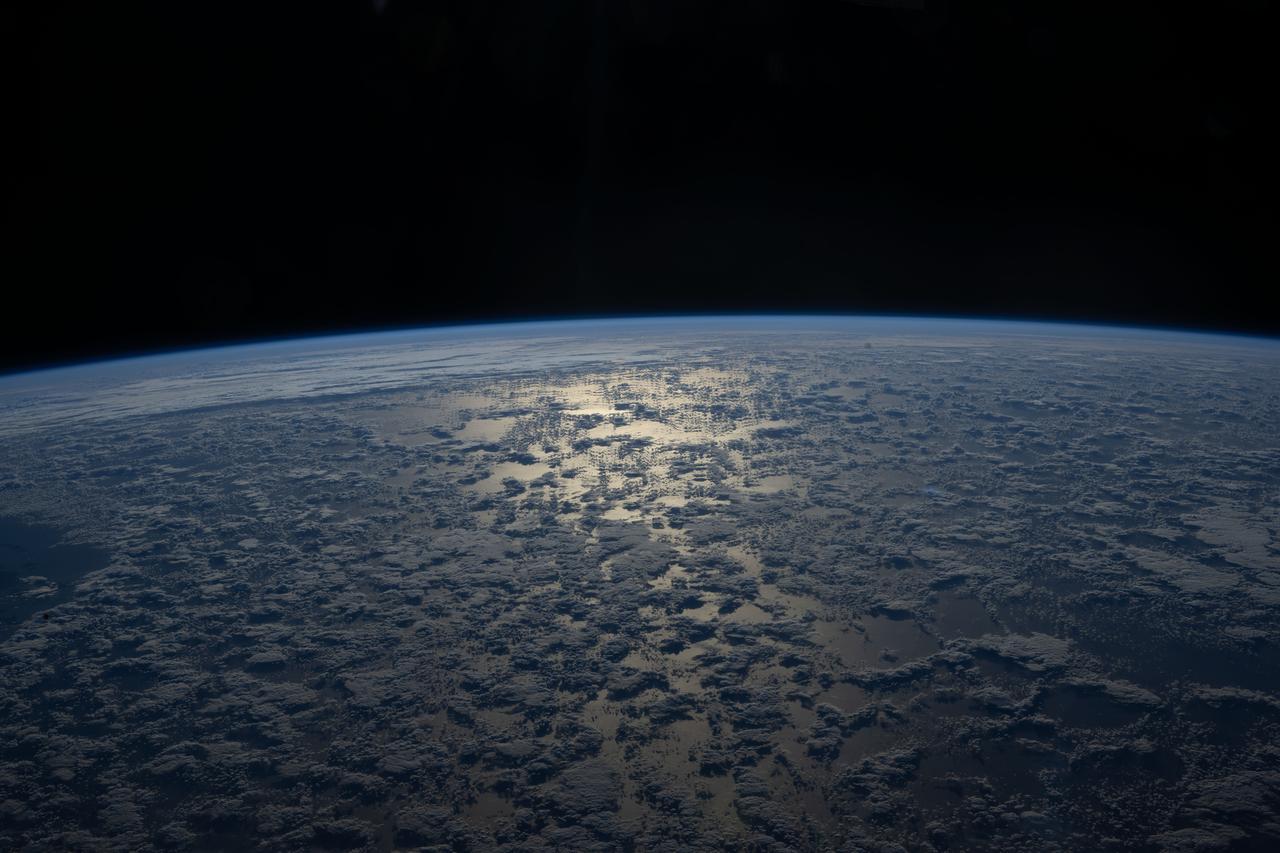
iss073e0107413 (May 17, 2025) --- The Sun's glint beams off a partly cloudy Indian Ocean in this photograph from the International Space Station as it orbited 271 miles above and south of Australia's island state of Tasmania.
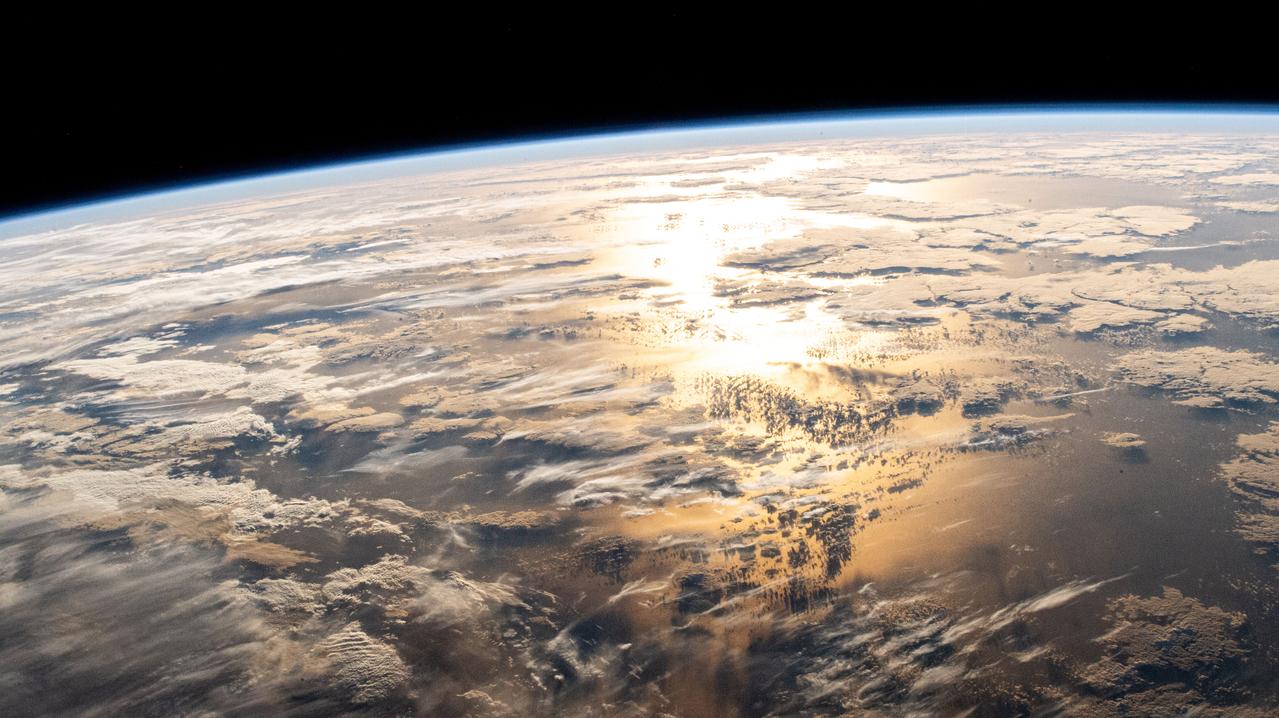
iss072e695136 (March 5, 2025) --- The sun's glint beams off a partly cloudy Atlantic Ocean just after sunrise as the International Space Station orbited 263 miles above.
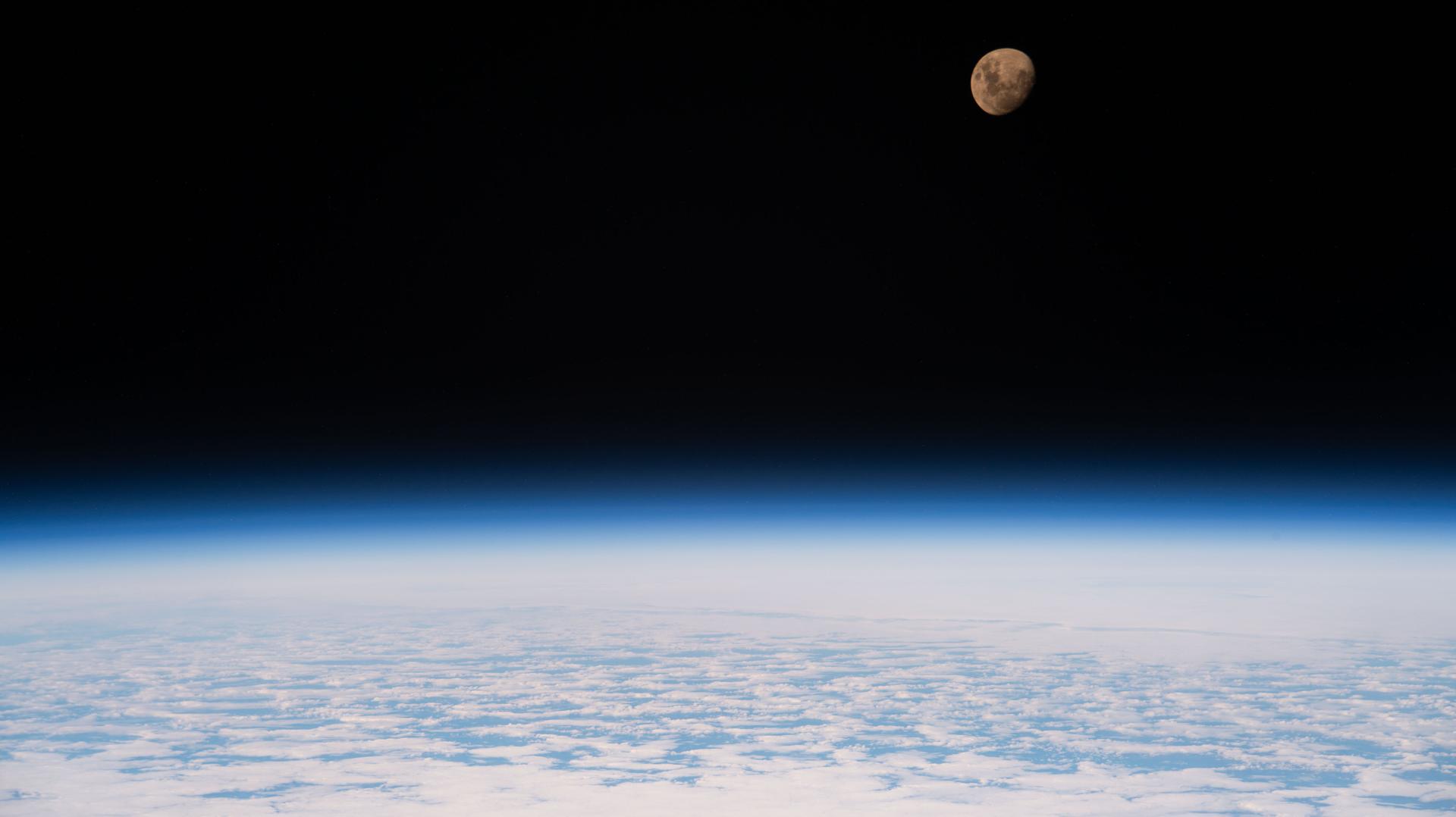
iss074e0777184 (June 1, 2026) --- The waxing gibbous Moon is pictured above Earth from the International Space Station as it orbited 264 miles above a partly cloudy Indian Ocean southeast of Madagascar. Credit: NASA
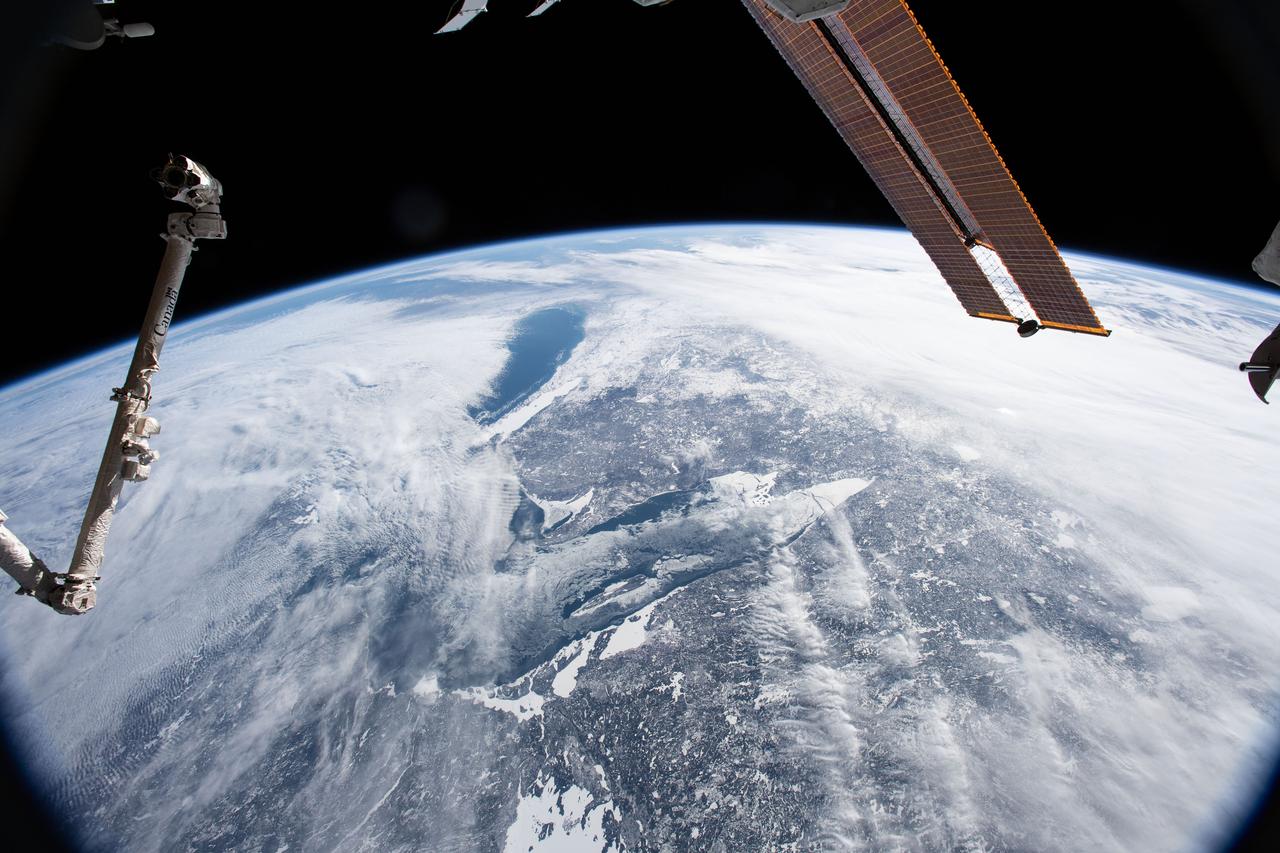
iss058e013234 (Feb. 13, 2019) --- The International Space Station was flying 256 miles above Canada when an Expedition 58 crew member, looking north to south, photographed Lake Superior and Lake Michigan surrounded by the cloudy and frozen terrain of the North American continent.
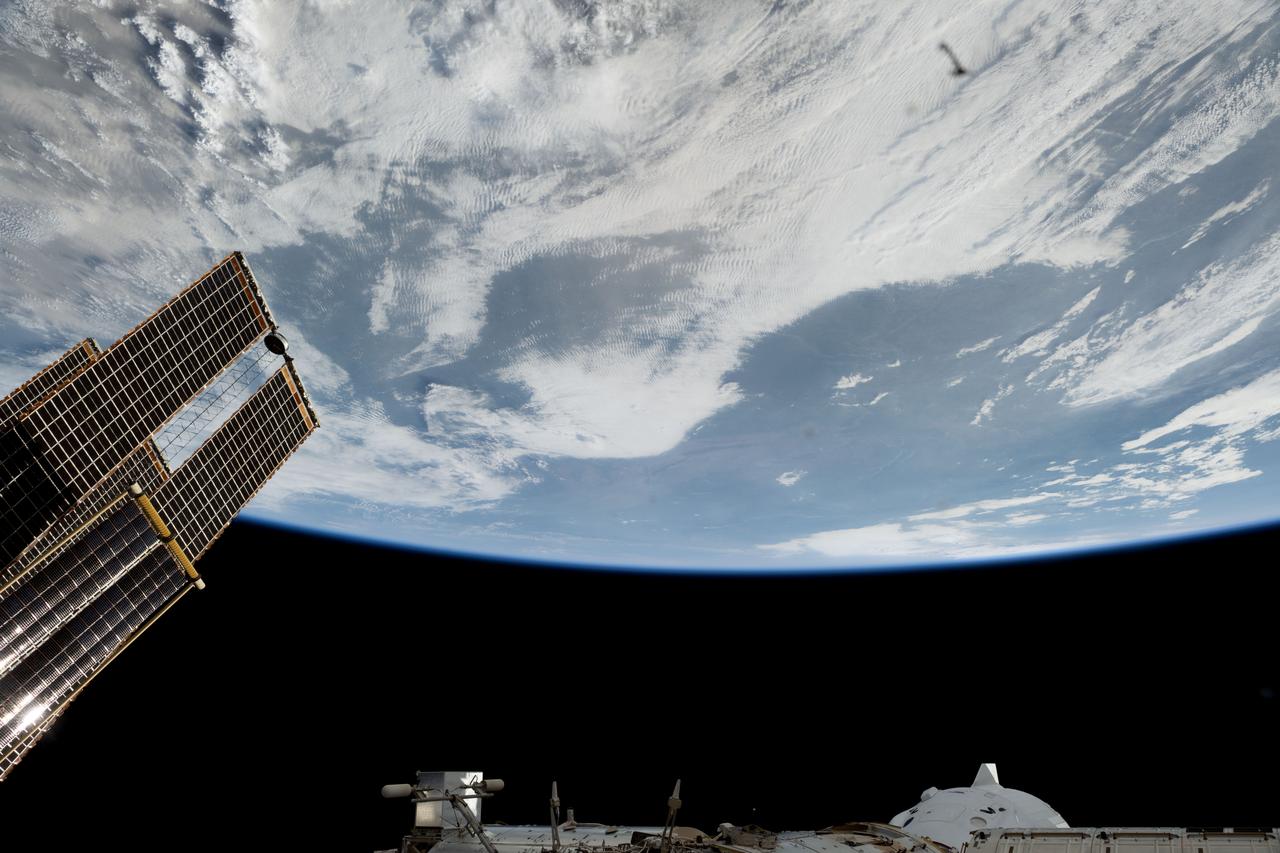
iss073e0044592 (April 28, 2025) --- Partially obscured, at bottom right, is the SpaceX Dragon crew spacecraft docked to the Harmony module's forward port on the International Space Station. At left, are a set of the orbital outpost's main solar arrays and rollout solar arrays. The space station was orbiting 262 miles above a cloudy North America at the time of this photograph.
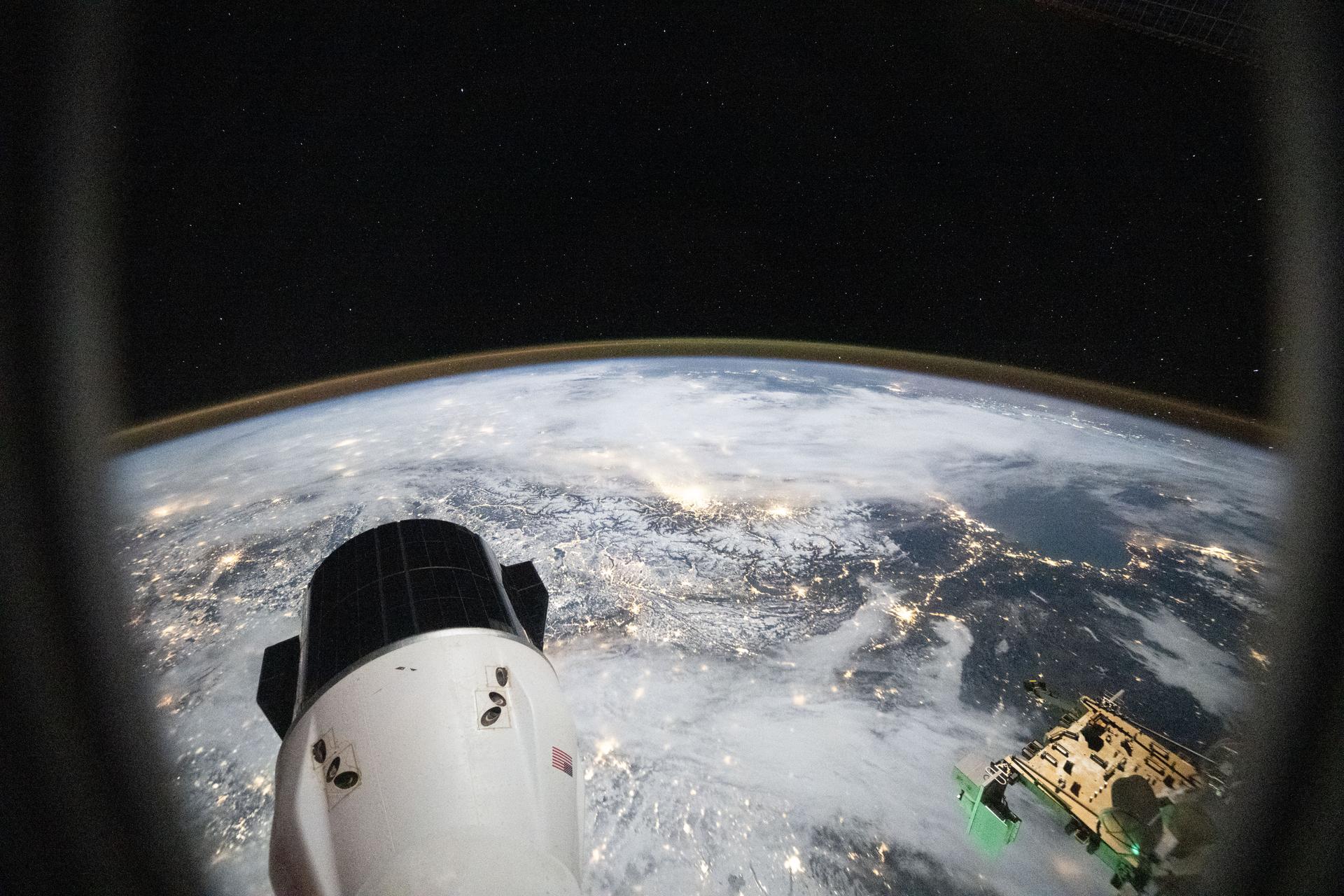
iss074e0224384 (Jan. 6, 2026) --- City lights sparkle across a cloudy Europe and the Alps in this photograph from a window on a SpaceX Dragon crew spacecraft as the International Space Station orbited 266 miles above Germany at approximately 2:37 a.m. local time. In the foreground, is another SpaceX Dragon spacecraft. Credit: JAXA/Kimiya Yui
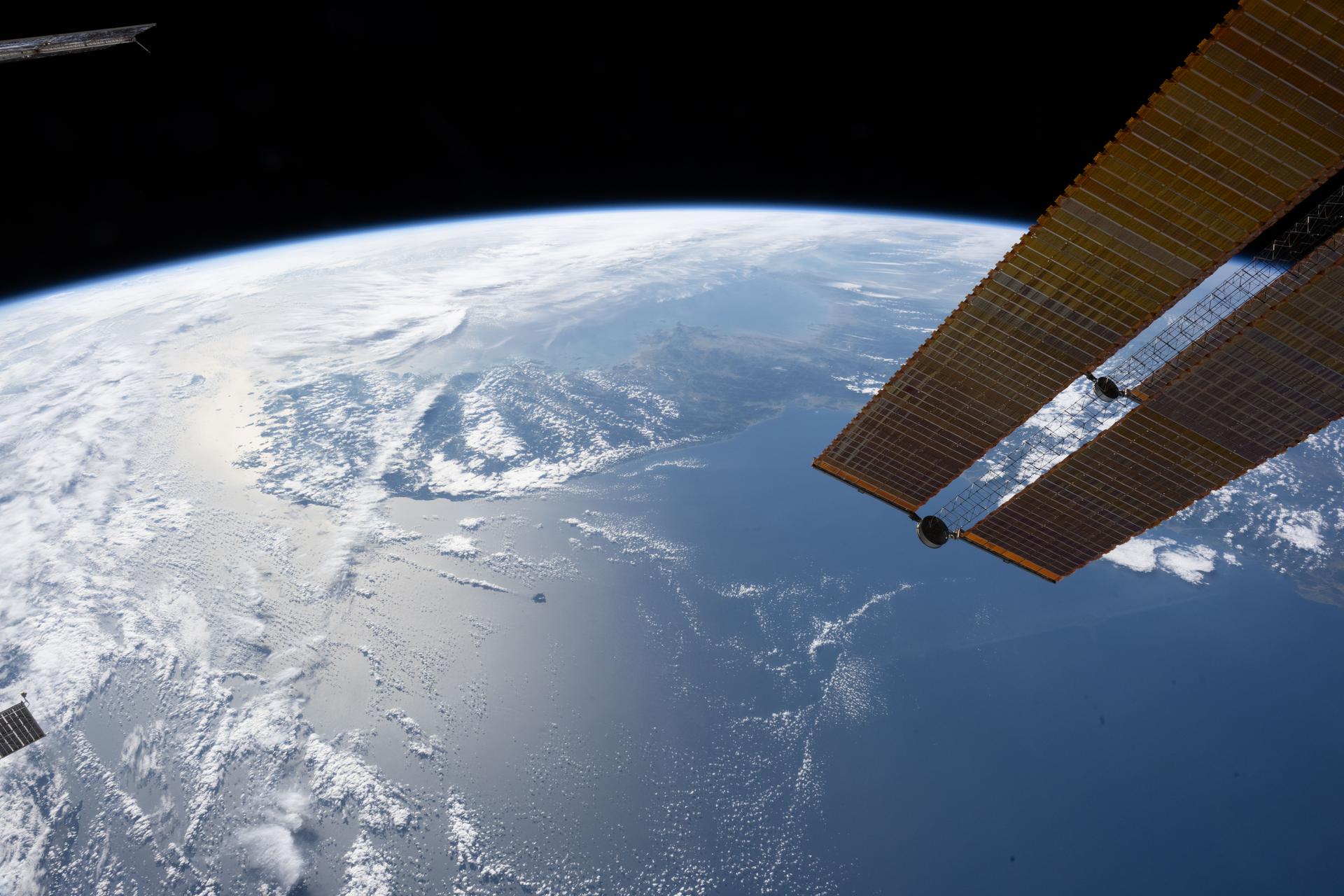
iss073e0983131 (Sept. 21, 2025) --- A partly cloudy Korean Peninsula, surrounded by the sun's glint reflecting off the Sea of Japan and the Yellow Sea, is pictured from the International Space Station as it orbited 259 miles above Earth off the coast of western Japan.
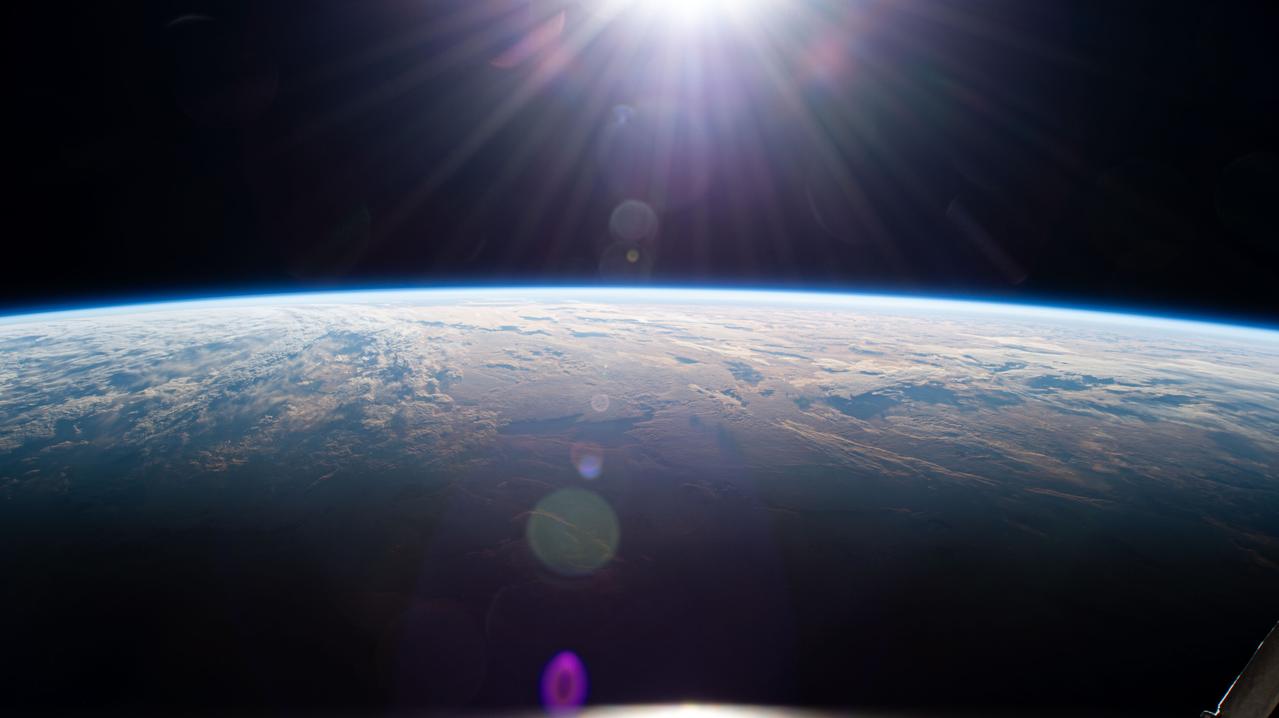
iss072e838362 (March 26, 2025) --- Sunrise above Earth's horizon begins illuminating a cloudy Indian Ocean and reveals the terminator, the dividing line between night and day, in this photograph from the International Space Station as it orbited 271 miles above.
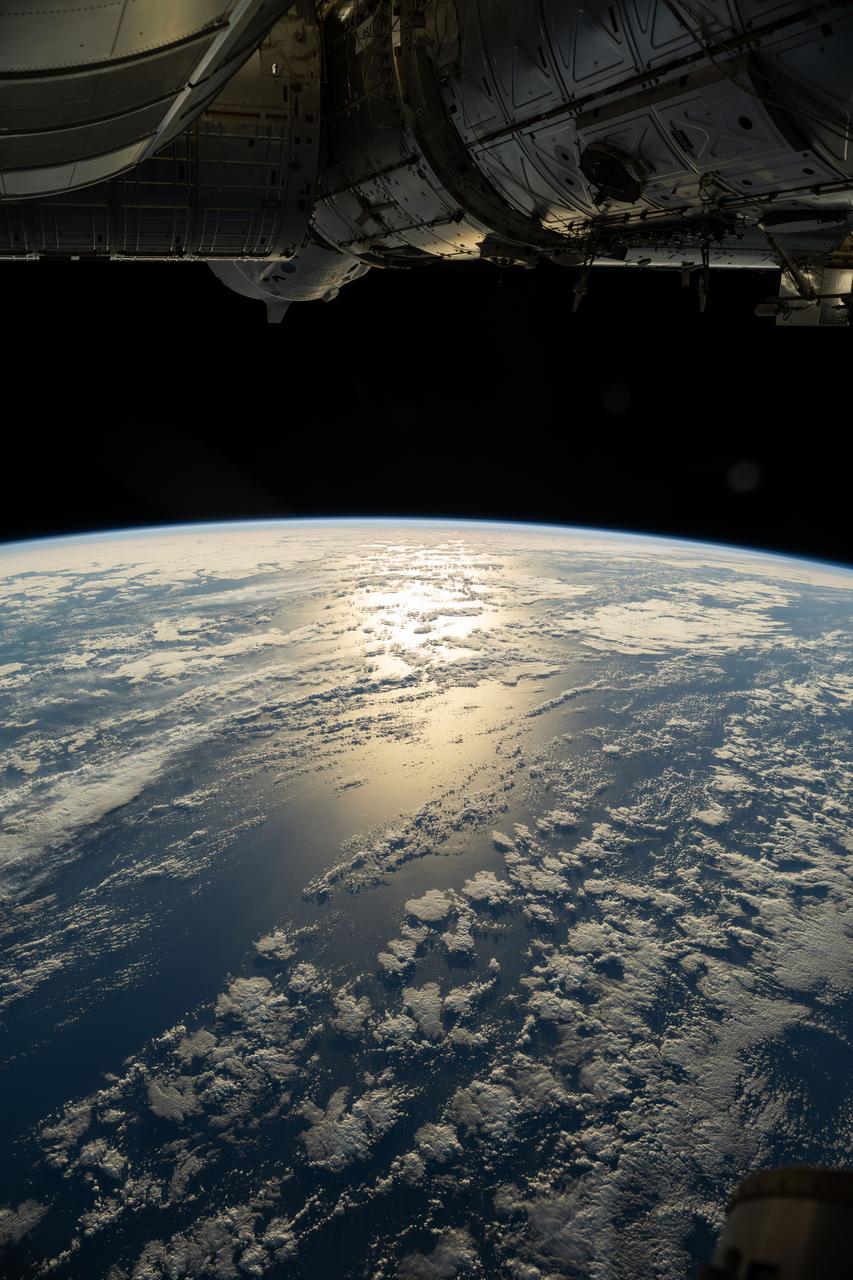
iss073e0177079 (June 2, 2025) --- The sun's glint beams off a partly cloudy southern Pacific Ocean in this photograph from the International Space Station as it orbited 264 miles above. At top, a partially obscured SpaceX Dragon crew spacecraft can be seen docked to the orbital outpost's forward port on the Harmony module.

iss073e0247649 (June 10, 2025) --- The aurora australis arcs back and forth above a partly cloudy Indian Ocean in this photograph from the International Space Station as it orbited 270 miles above in between Australia and Antarctica. At center top, is the Rassvet module, at lower right, is the Soyuz MS-27 crew ship docked to the Prichal module.
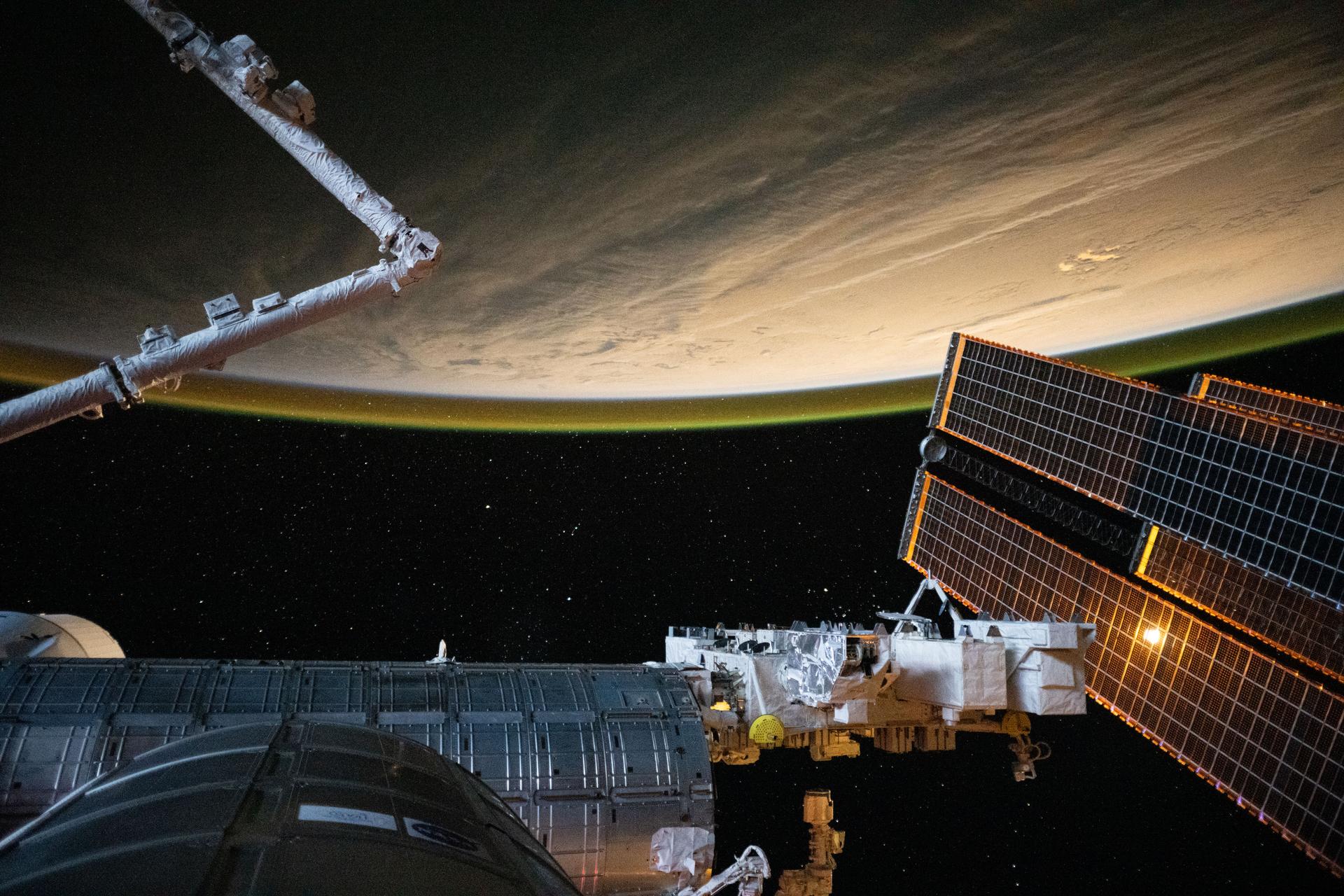
iss073e0868771 (Oct. 9, 2025) --- This tranquil view from the International Space Station captures the Kibo laboratory module with its Exposed Facility, a portion of the station’s main solar arrays (right), and part of the Canadarm2 robotic arm (left). The photograph was taken during an orbital sunset as the station soared 270 miles above a cloudy Atlantic Ocean off the coast of South Africa.
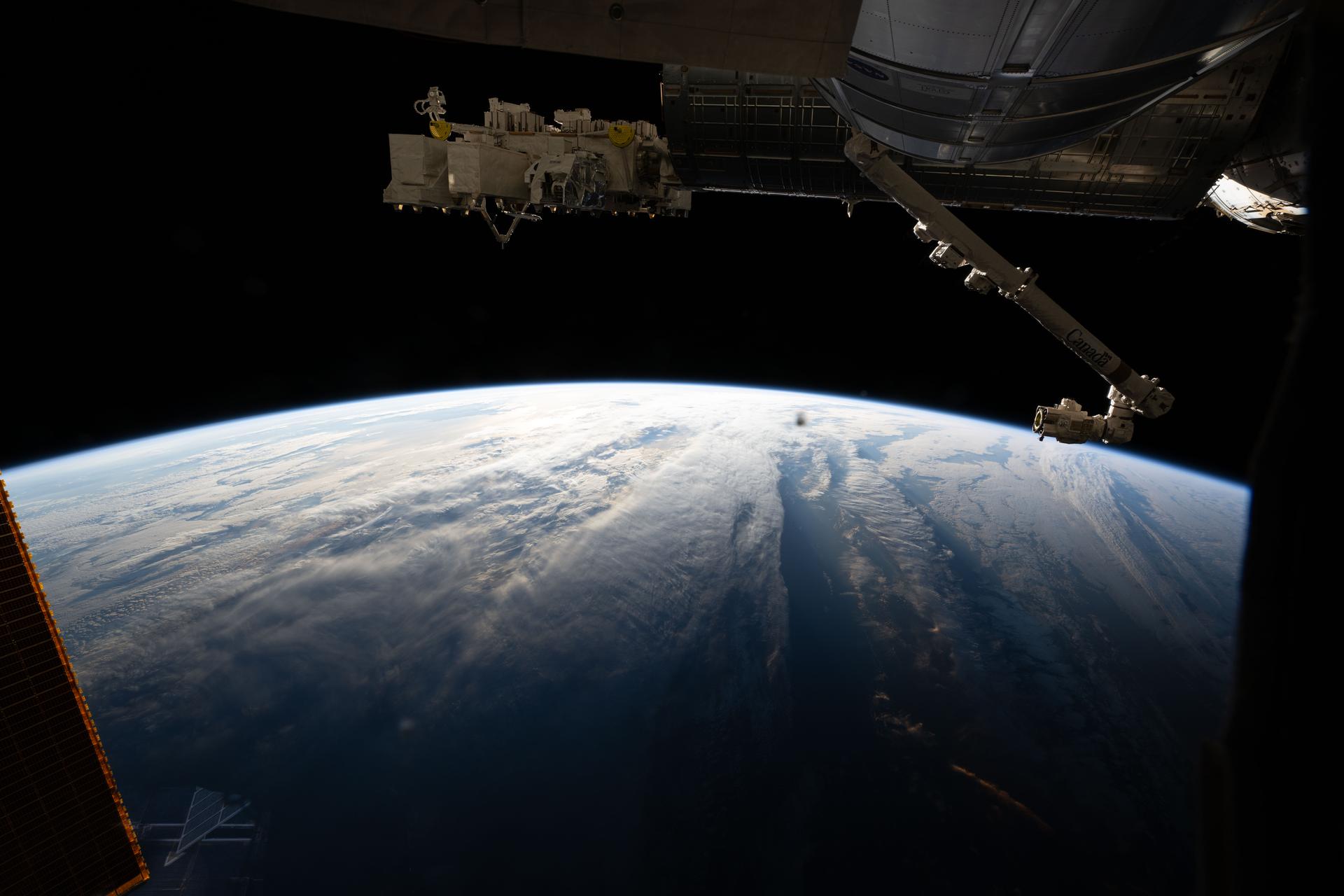
iss074e0519830 (March 15, 2026) --- The International Space Station orbits 267 miles above a cloudy Atlantic Ocean southwest of Cape Town, South Africa. The Kibo laboratory module's External Platform and the Canadarm2 robotic arm highlight the top foreground above Earth's terminator—the line between night and day—in this photograph taken at approximately 6:36 a.m. local time. Credit: ESA/Sophie Adenot
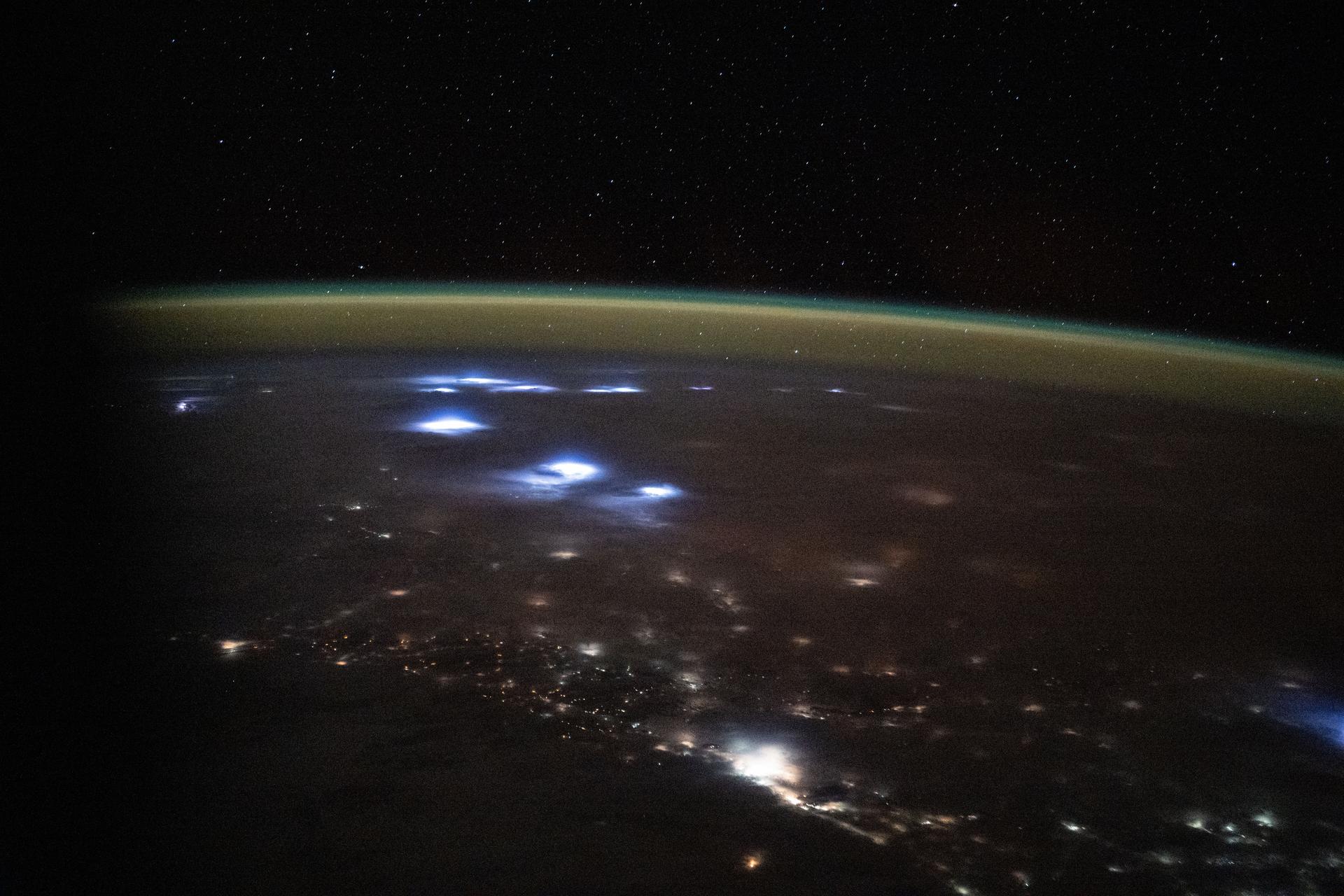
iss073e0817052 (Sept. 27, 2025) --- Warm, diffuse city lights and bright lightning storms illuminate the cloudy nighttime landscape of western Africa in this image captured from the International Space Station. A soft yellow-green atmospheric glow, created by atoms and molecules releasing energy absorbed from solar radiation earlier in the day, blankets Earth’s horizon. The orbital outpost was soaring 260 miles above the Atlantic Ocean at approximately 11:05 p.m. local time when this photograph was taken.
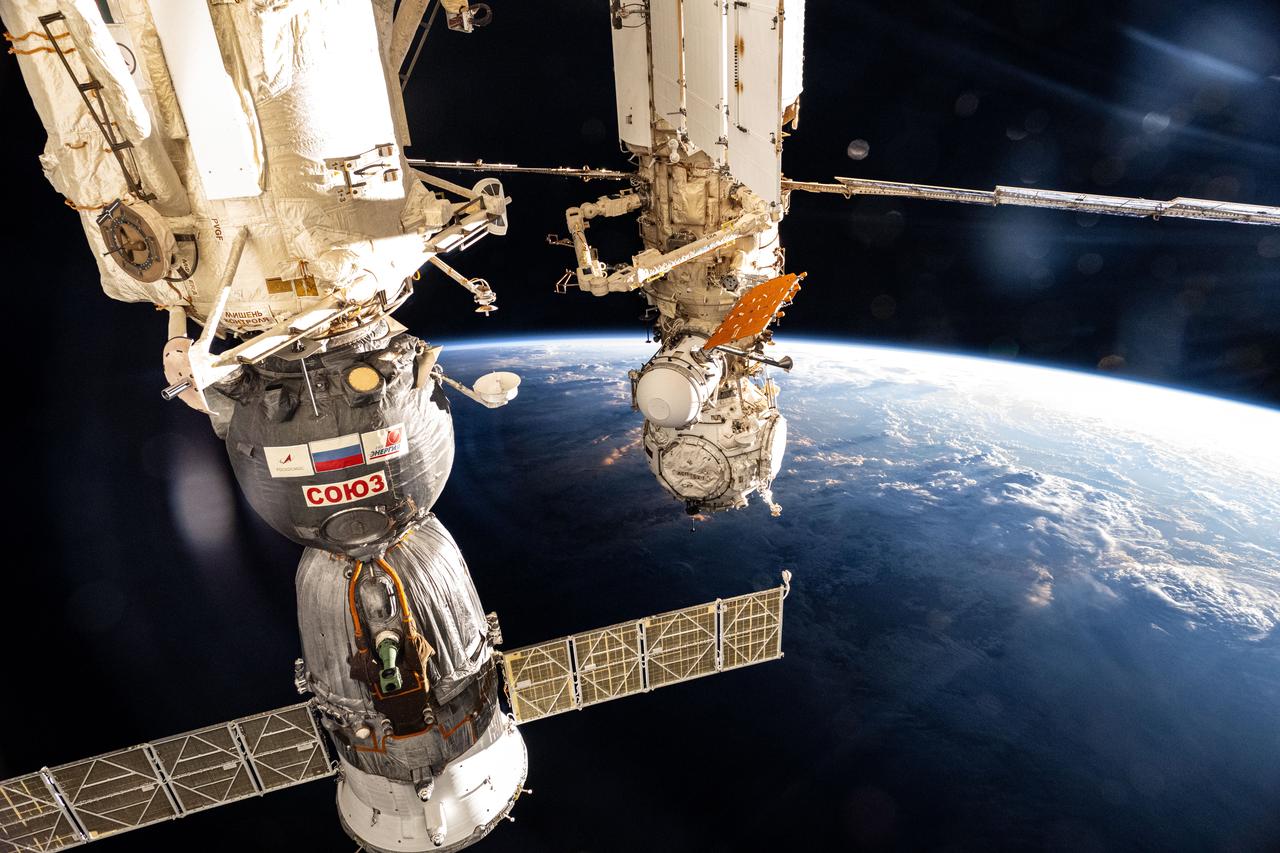
iss072e188529 (Nov. 13, 2024) --- The International Space Station soars into an orbital sunset 259 miles above a cloudy Pacific Ocean northwest of the Hawaiian island chain. At left, the Soyuz MS-26 crew ship is pictured docked to the Rassvet module. At center, the Prichal docking module and the European robotic arm are pictured attached to the Nauka science module.
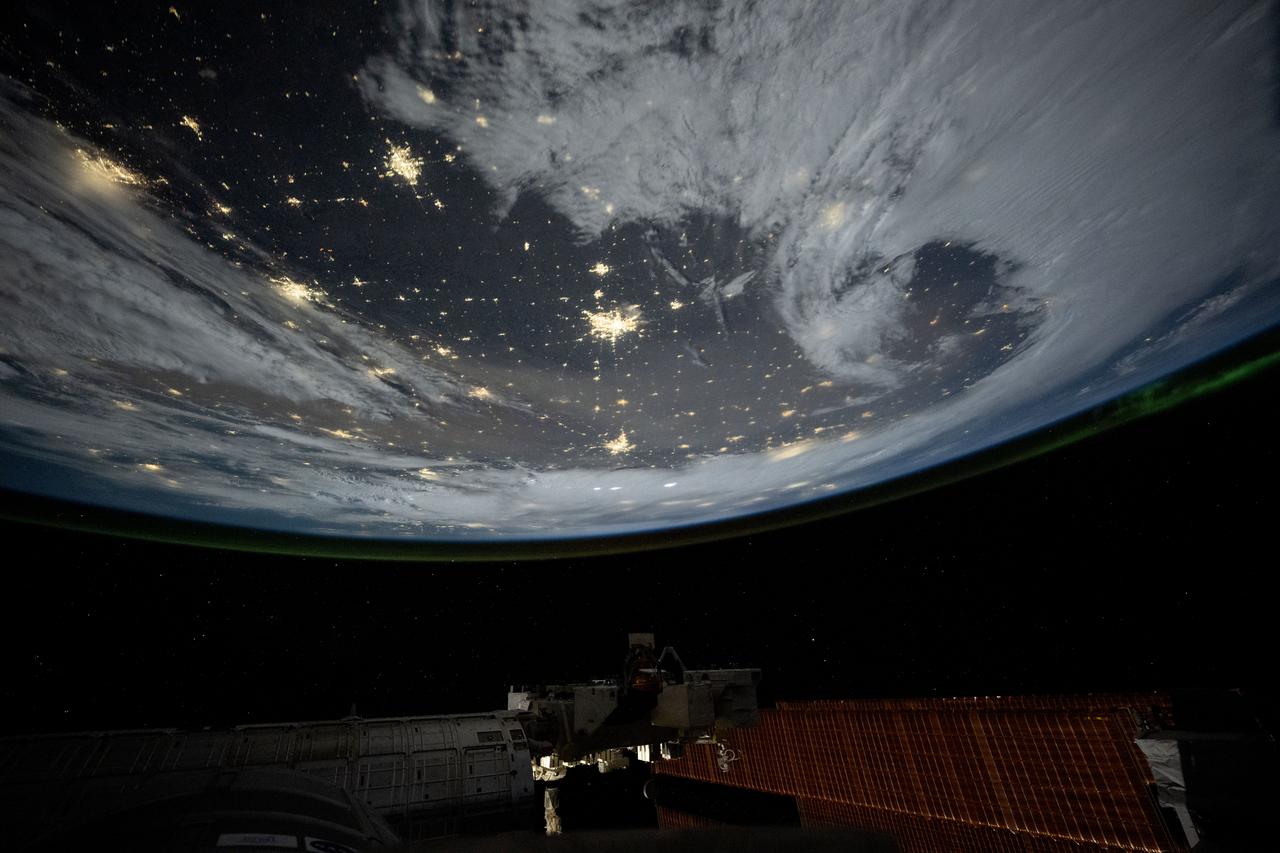
iss072e842757 (March 15, 2025) --- City lights dot the cloudy, midwestern landscape of the United States with a wispy aurora above Earth's horizon in this photograph from the International Space Station as it orbited 261 miles above the Sunflower State of Kansas. In the bottom foreground, is the Kibo laboratory module's Exposed Facility, an external research platform, and the orbital outpost's main solar arrays.
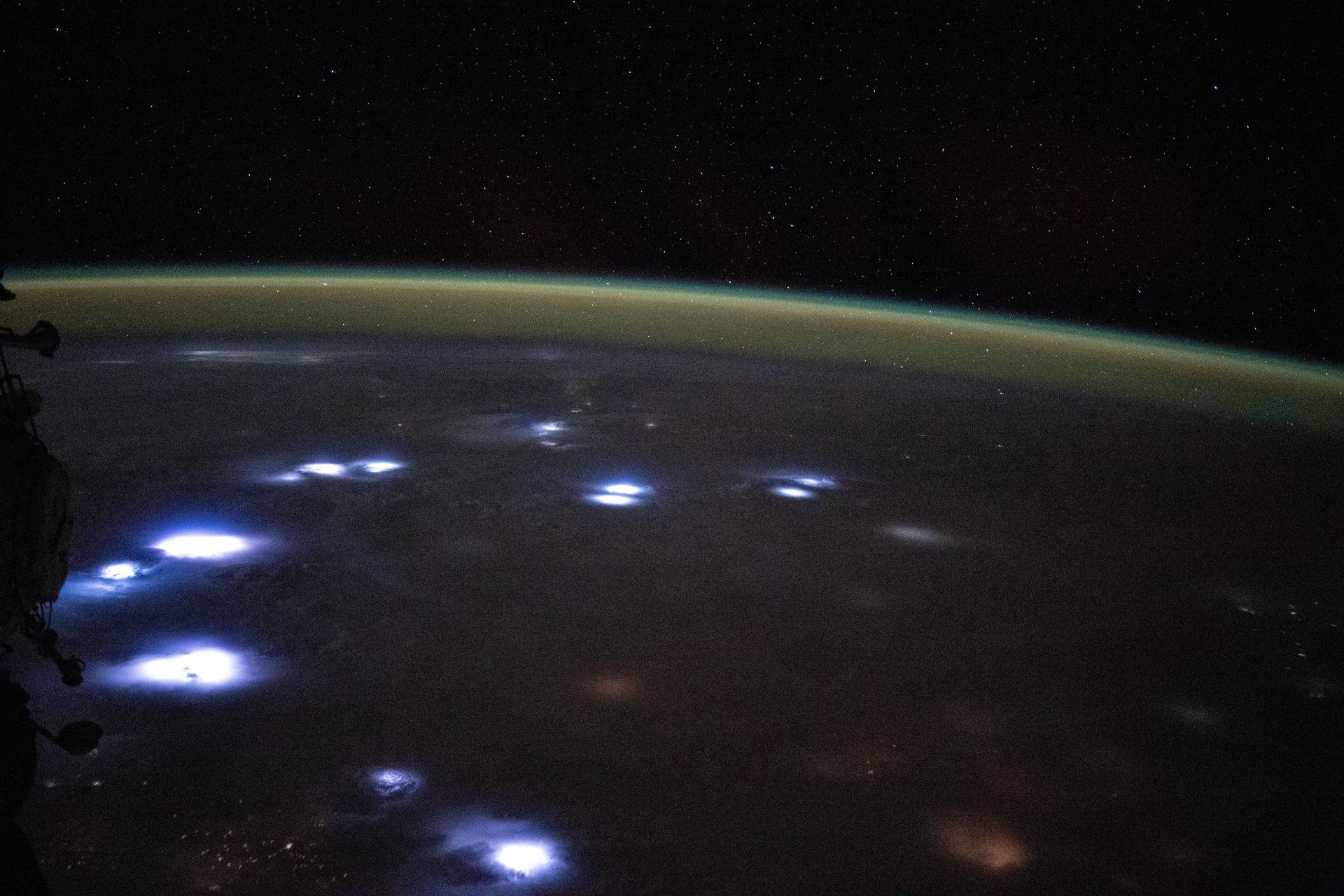
iss073e0816985 (Sept. 27, 2025) --- Bright lightning storms illuminate the cloudy landscape of western Africa in this image captured from the International Space Station. A soft yellow-green atmospheric glow, created by atoms and molecules releasing energy absorbed from solar radiation earlier in the day, blankets Earth’s horizon. The orbital outpost was soaring 260 miles above the Atlantic coast of Ghana at approximately 11:04 p.m. local time when this photograph was taken.

This NASA Mars Odyssey image was taken during winter in the southern hemisphere, meaning that the usually cloudy Hellas Basin is relatively free from clouds.
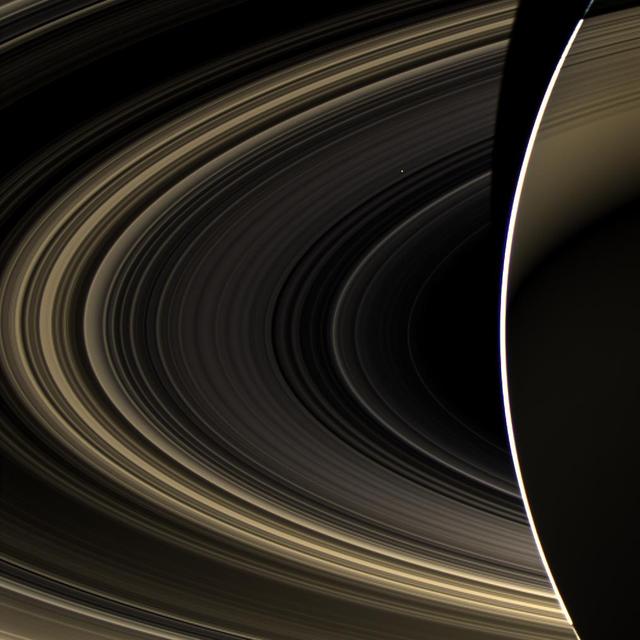
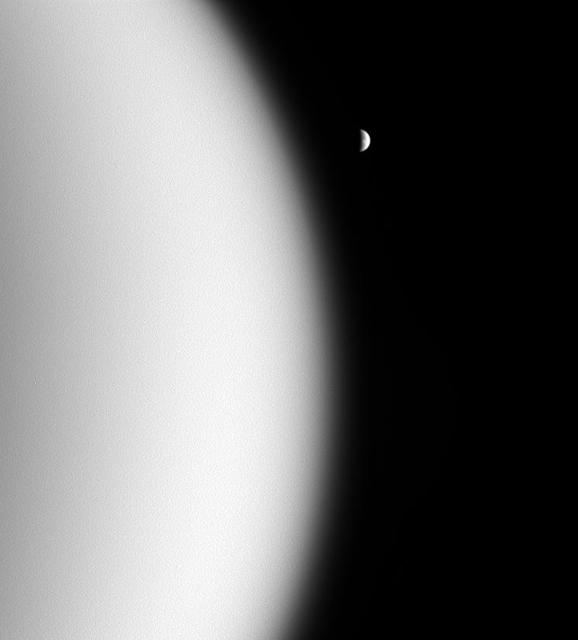
Peering over the shoulder of giant Saturn, through its rings, and across interplanetary space, NASA Cassini spacecraft spies the bright, cloudy terrestrial planet, Venus.

This somewhat cloudy image from NASA Mars Odyssey spacecraft shows a stunning example of layered deposits in Terby crater, just north of the Hellas impact basin.

This artist concept, based on spectral observations from NASA Hubble Space Telescope and Spitzer Space Telescope, shows a cloudy Jupiter-like planet that orbits very close to its fiery hot star.
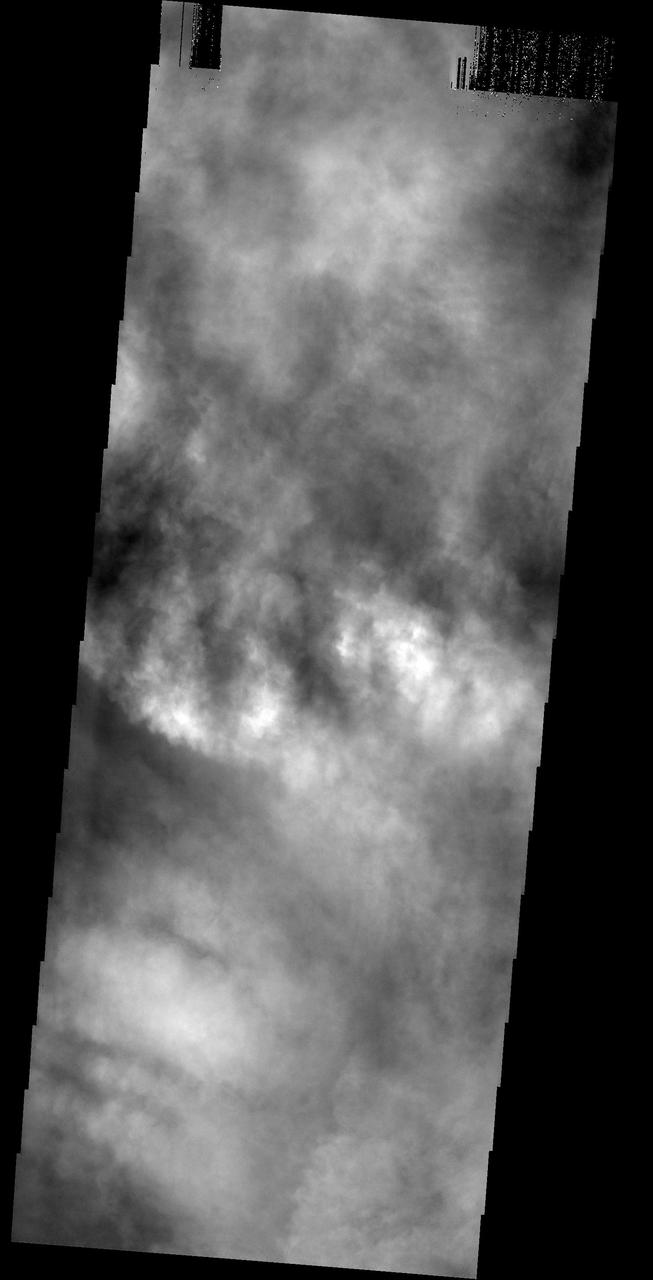
The surface of Mars is completely hidden from view by clouds

Clouds are common feature over the north polar dunes in spring. This image captured by NASA 2001 Mars Odyssey spacecraft shows line after line of puffy clouds, with hints of dark sand dunes below.

This VIS image shows a layer of clouds over the South polar cap. Orbit Number: 75301 Latitude: -84.8947 Longitude: 243.682 Instrument: VIS Captured: 2018-12-05 13:05 https://photojournal.jpl.nasa.gov/catalog/PIA22901
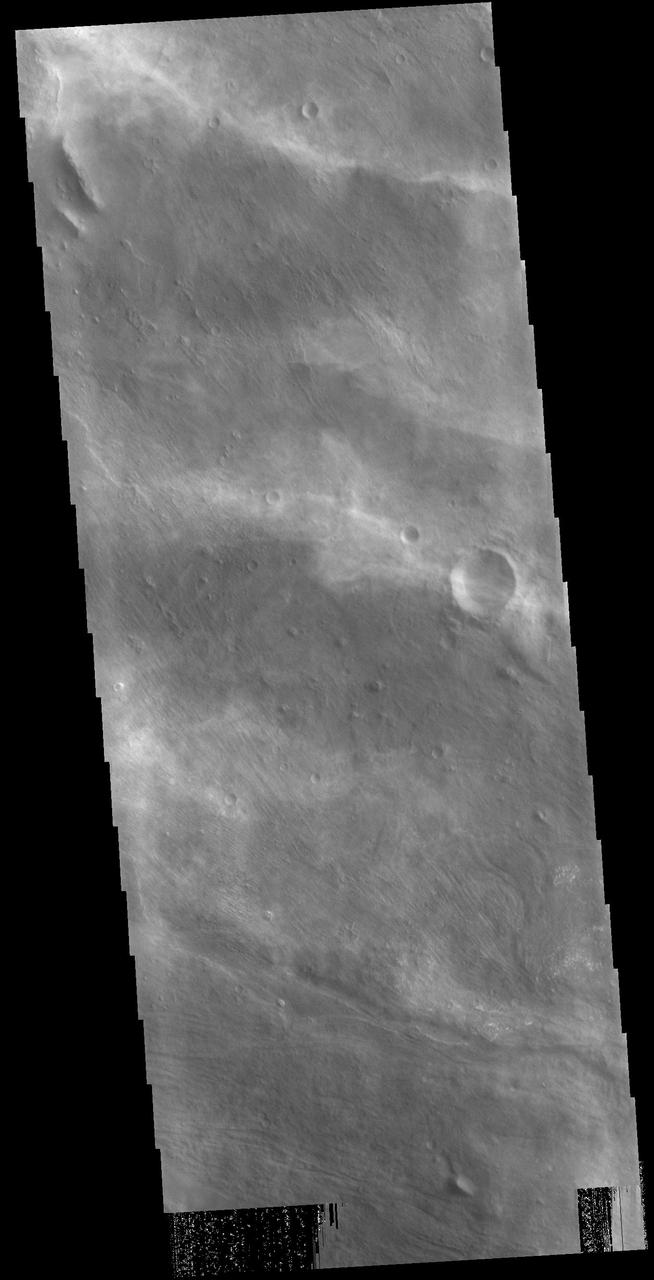
The diffuse streaks of white in this VIS image are clouds. These are high altitude winter clouds over Melas Chasma. Streamers of clouds like this are moving very quickly in high altitude winds. Orbit Number: 88213 Latitude: -11.5665 Longitude: 290.207 Instrument: VIS Captured: 2021-11-02 18:14 https://photojournal.jpl.nasa.gov/catalog/PIA25195
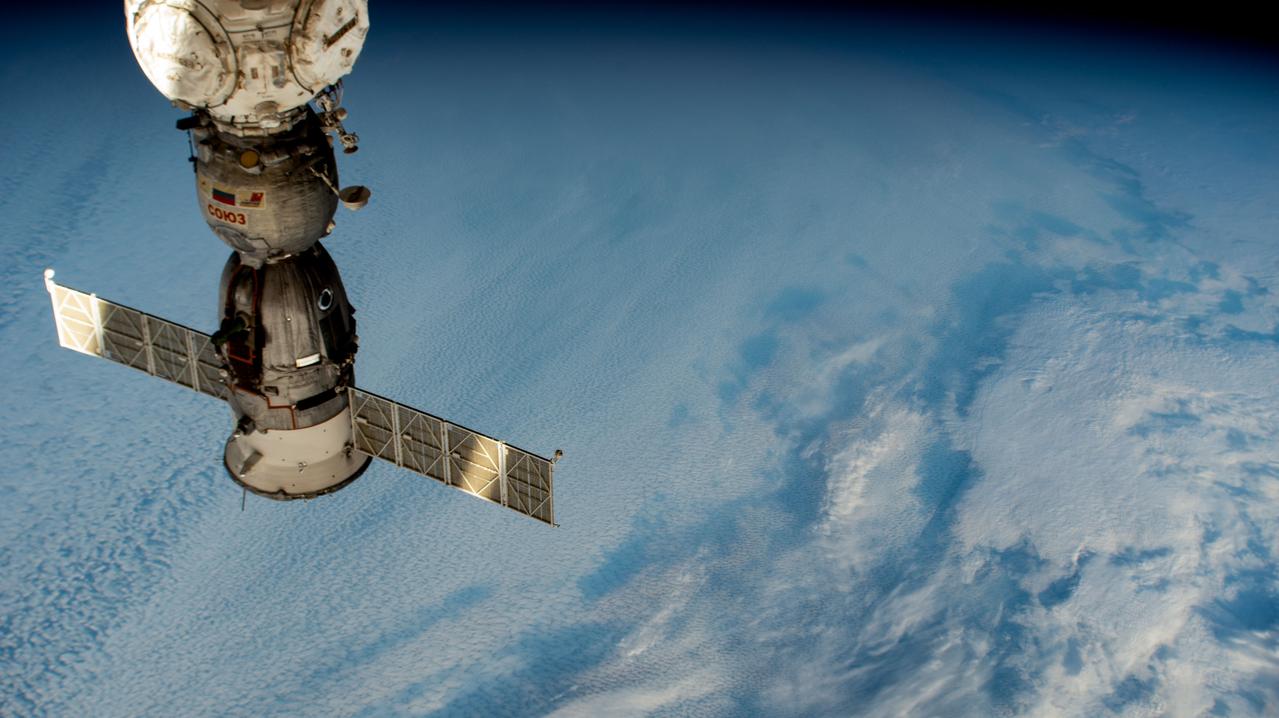
iss071e364343 (July 18, 2024) --- The Soyuz MS-25 crew ship is pictured docked to the International Space Station's Prichal docking module, where it has remained since March 25, 2024, as it soared 274 miles above a cloudy Indian Ocean.
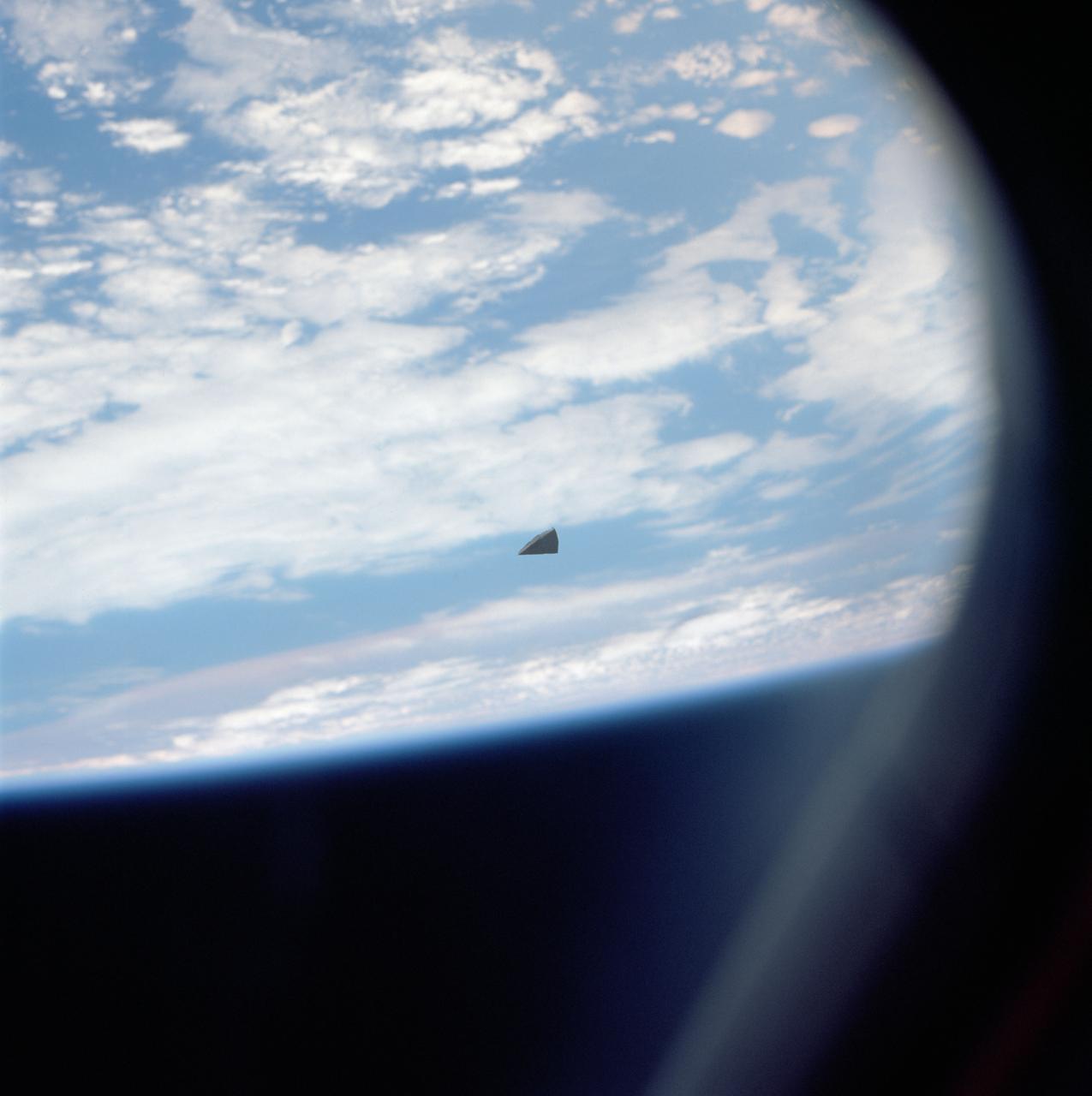
A small piece of thermal insulation tile floats in space near the Shuttle Columbia. The cloudy surface of the earth is used as a background.
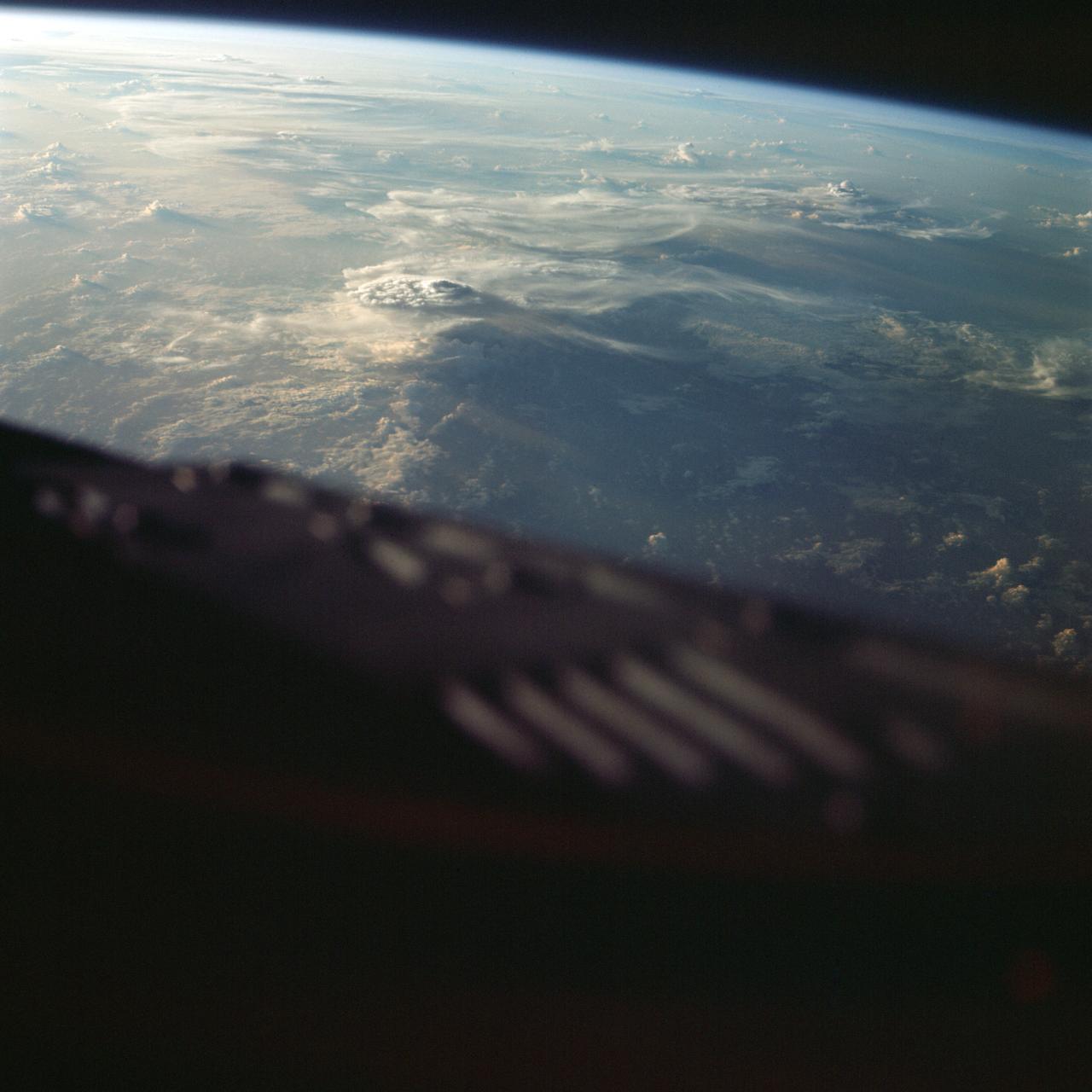
S65-18752 (23 March 1965) --- View of a cloudy part of Earth as seen from the Gemini-3 spacecraft while in orbit.
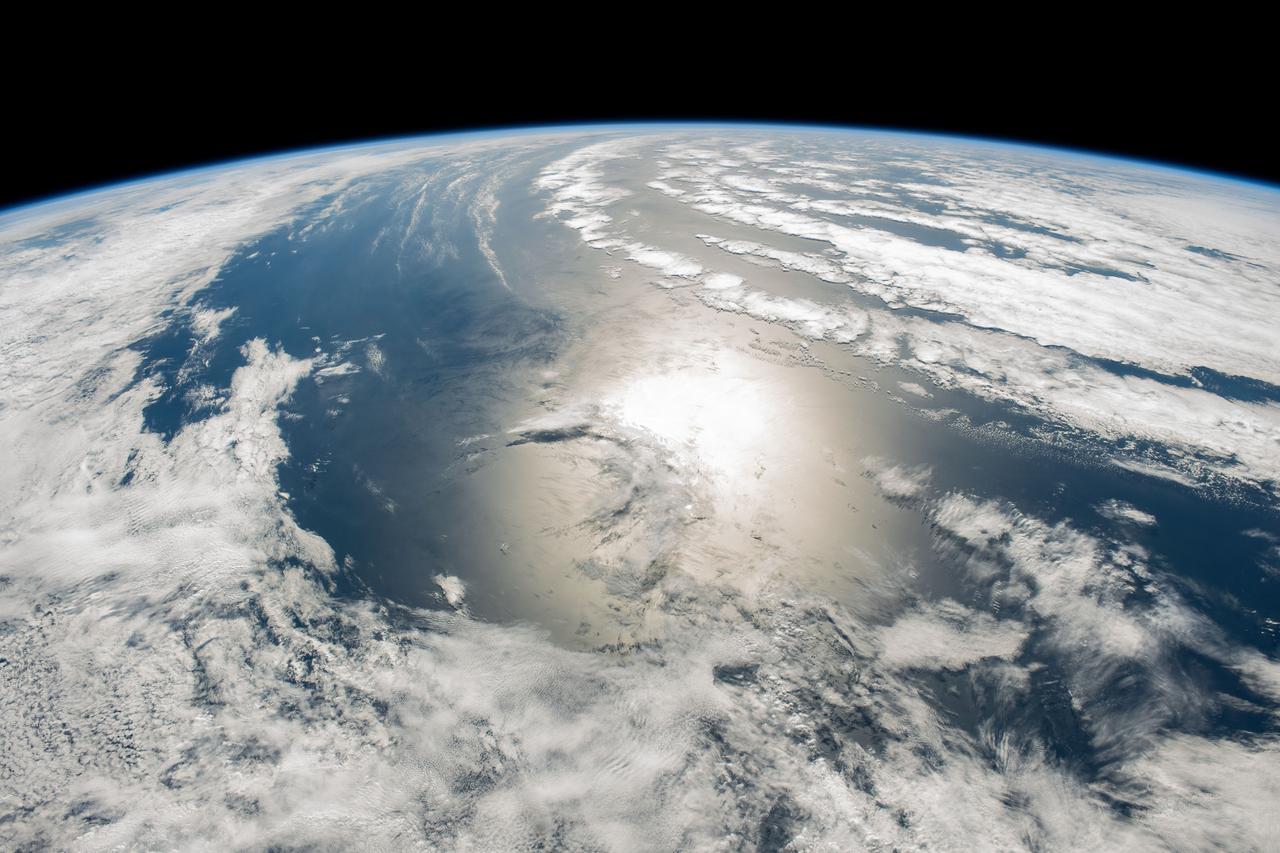
iss070e024002 (Nov. 13, 2023) --- The sun's glint beams in between a cloudy stretch of the south Atlantic Ocean off the coast of Argentina.
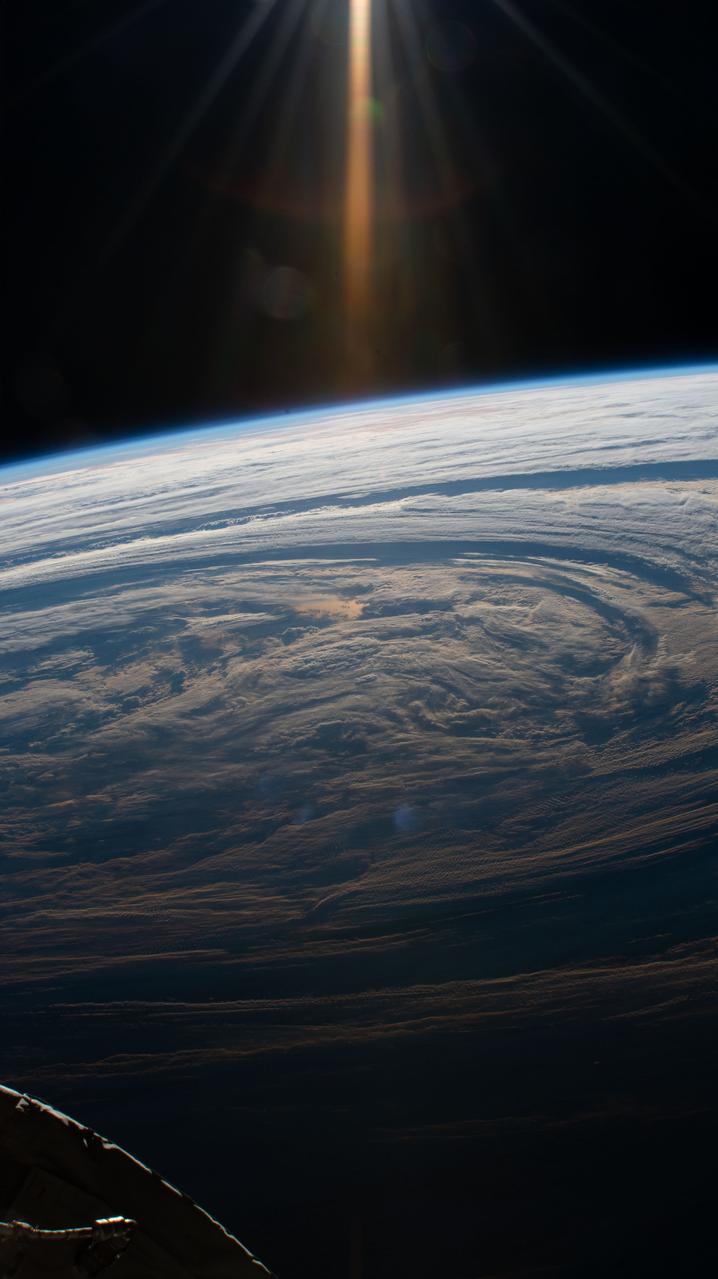
iss059e006522 (March 30, 2019) --- The International Space Station flew 265 miles above this cloudy formation in the south Indian Ocean.
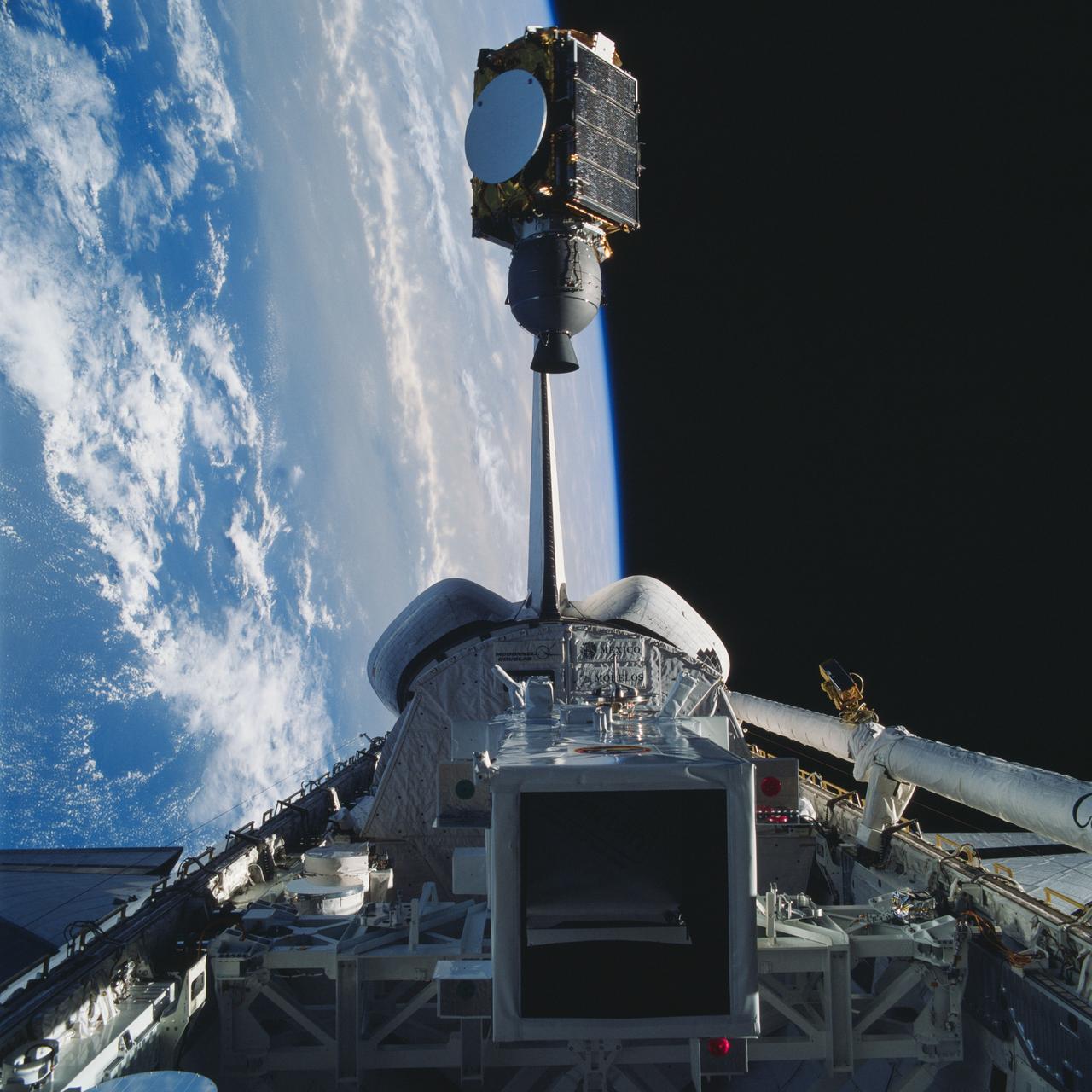
Arabsat communications satellite deploying from Discovery's payload bay. Cloudy Earth's surface can be seen to the left of the frame.
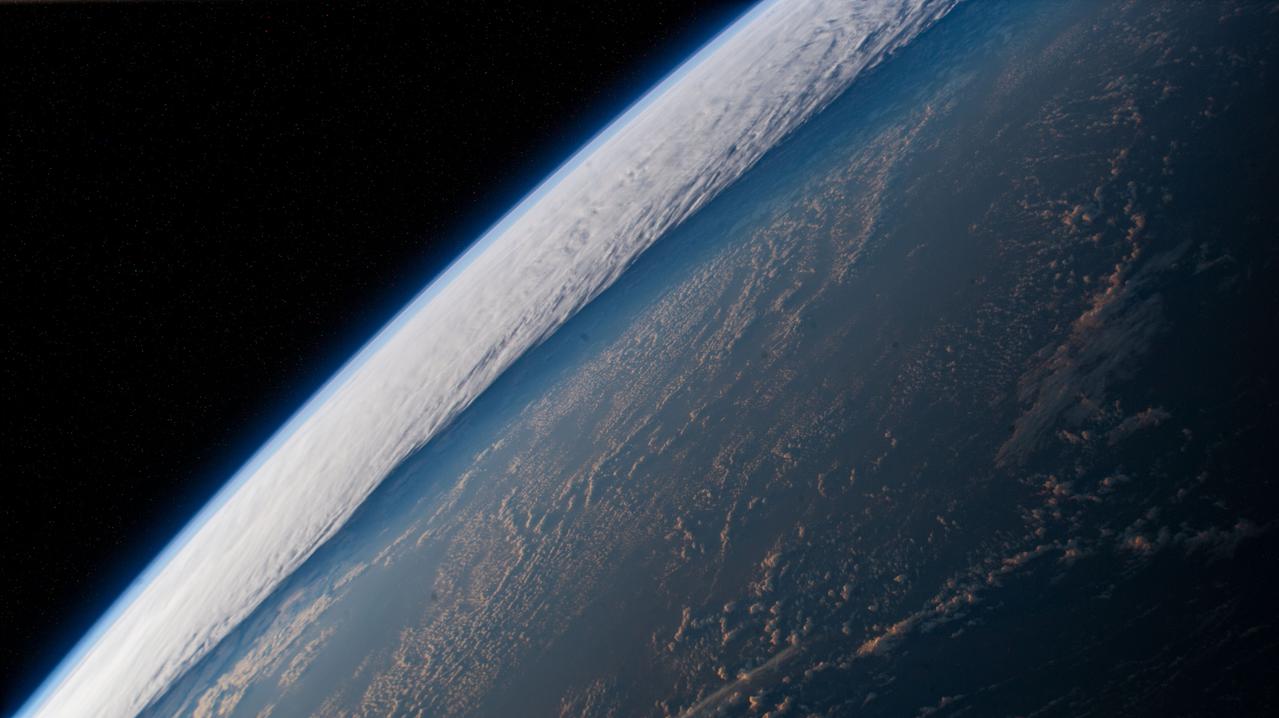
iss066e161043 (March 10, 2022) --- The International Space Station orbits into a dawn 261 miles above a cloudy Pacific Ocean.

This image shows the first-ever map of the surface of an exoplanet, or a planet beyond our solar system. Showing temperature variations across the cloudy tops of a gas giant called HD 189733b, the infrared data is taken by NASA Spitzer Space Telescope.
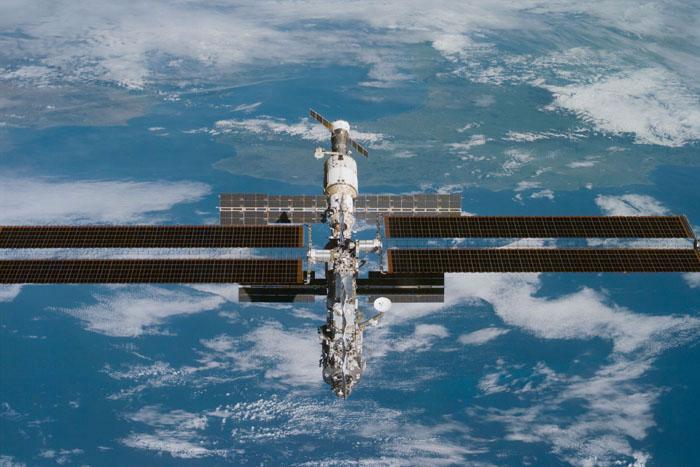
View of the International Space Station (ISS) over a cloudy Earth following undocking at 1:13 p.m. (CST),December 9,2000 during the STS-97 flight.

iss066e161042 (March 10, 2022) --- The International Space Station orbits into a dawn 261 miles above a cloudy Pacific Ocean off the coast of Baja California.
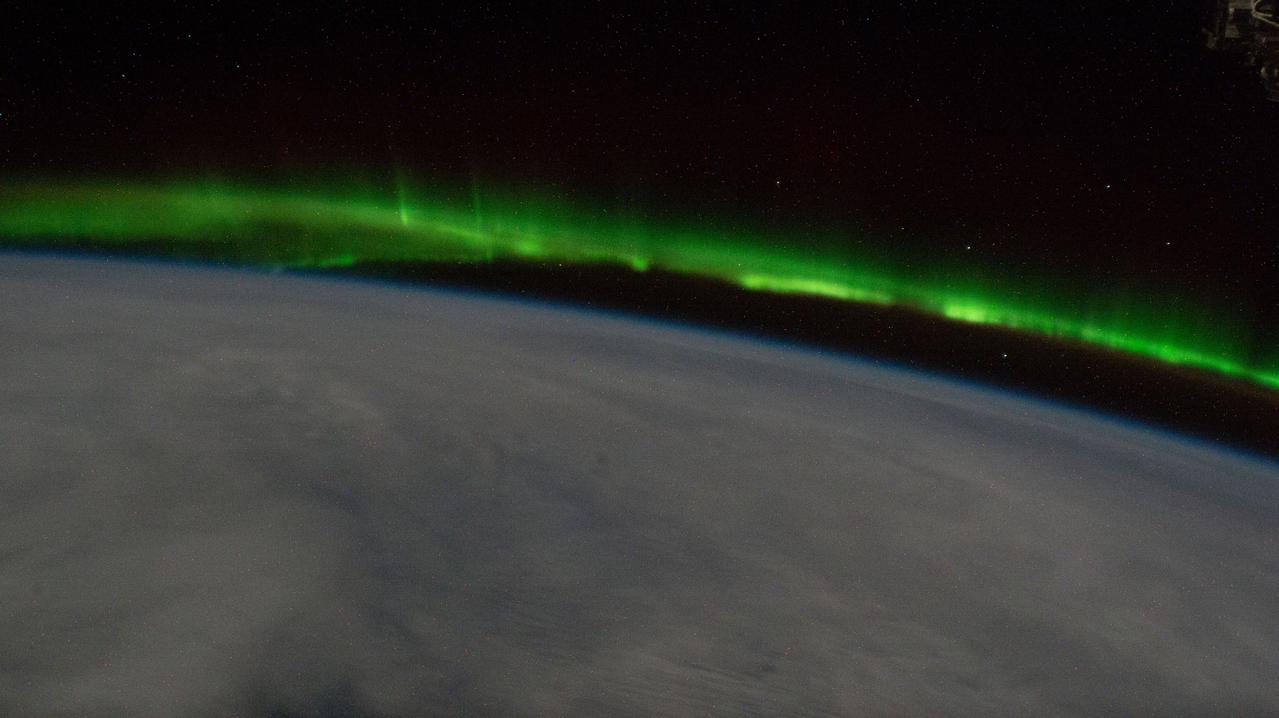
iss067e133437 (June 15, 2022) --- An aurora streams above a cloudy Earth as the International Space Station orbited 268 miles above the south Pacific.
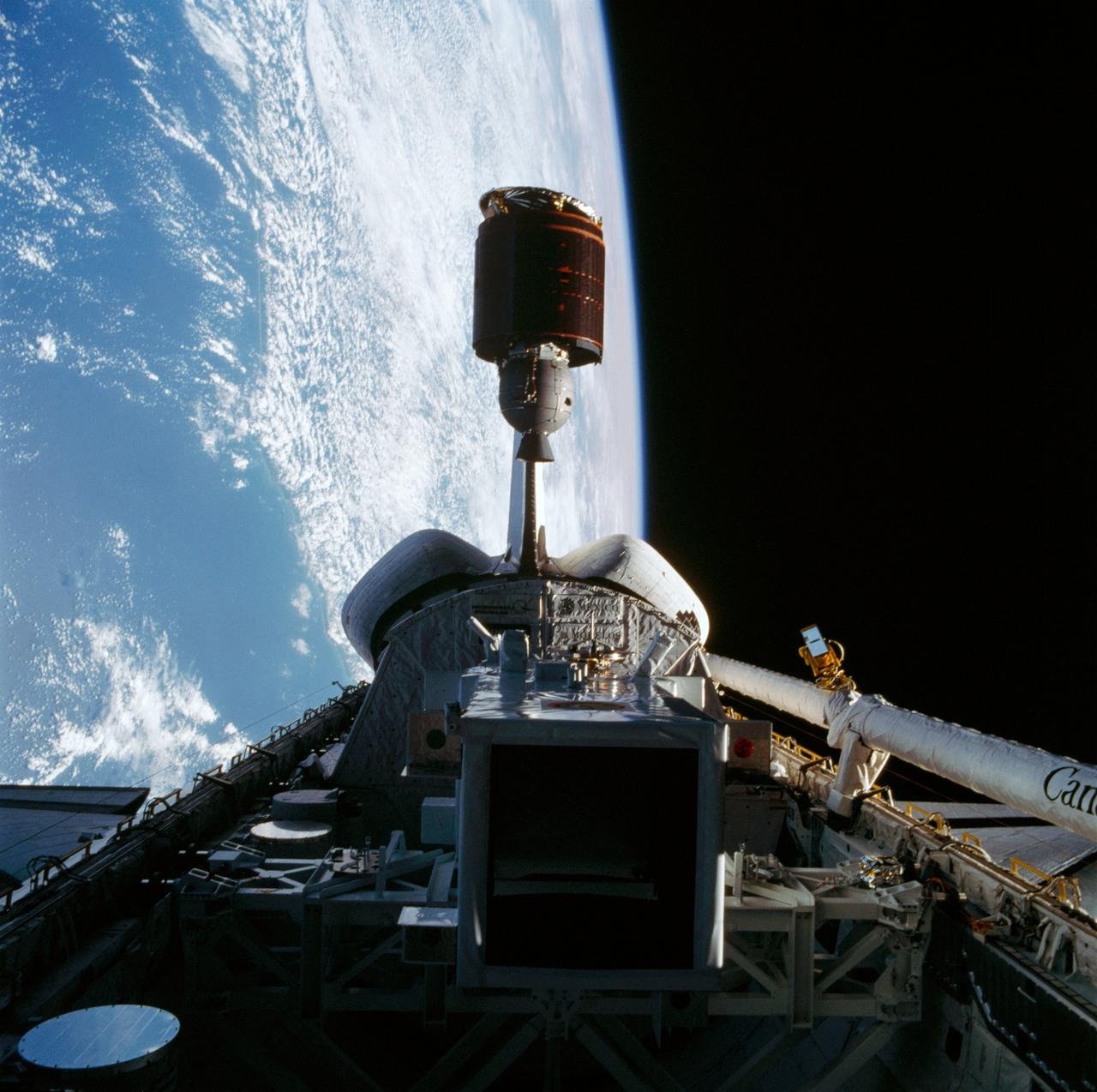
Telstar 3-D communications satellite deploying from Discovery's payload bay. Cloudy Earth's surface can be seen to the left of the frame.
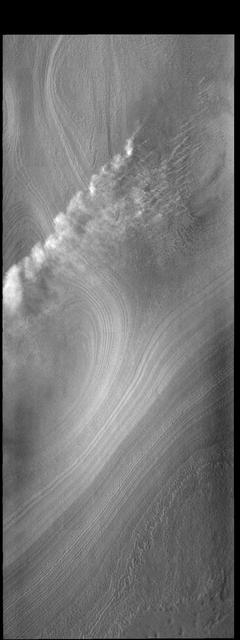
During southern summer, clouds are a common occurrence over the south polar cap. These dust clouds started as small dust devils visible near the top right corner of this VIS image. Orbit Number: 74905 Latitude: -86.5764 Longitude: 176.548 Instrument: VIS Captured: 2018-11-02 22:20 https://photojournal.jpl.nasa.gov/catalog/PIA22900
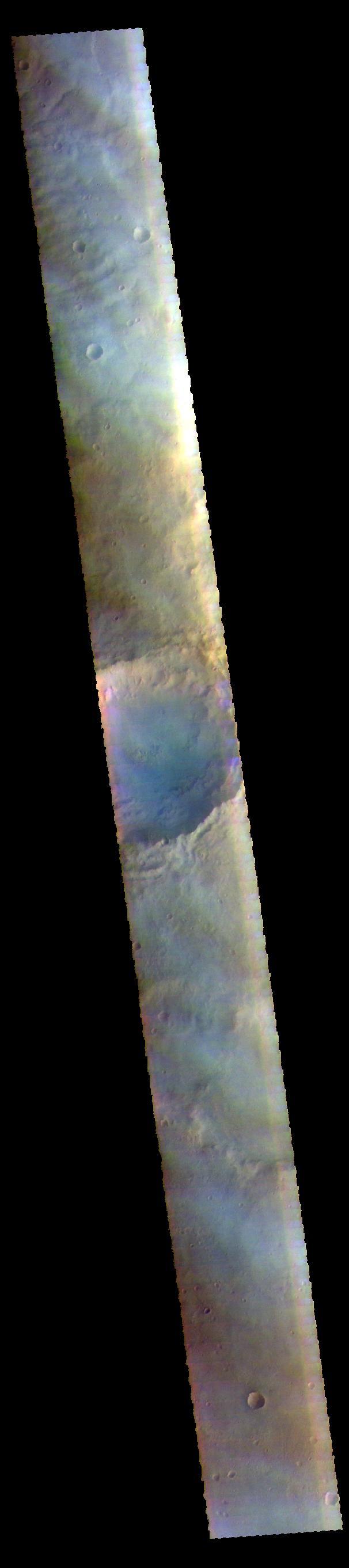
The THEMIS VIS camera contains 5 filters. The data from different filters can be combined in multiple ways to create a false color image. These false color images may reveal subtle variations of the surface not easily identified in a single band image. The faint bluish white tone in this image is actually clouds. Images like this help in understanding ongoing atmospheric changes on Mars. Clouds on Mars are created by dust lifted from the surface or ice haze at altitude. This image is located in Noachis Terra. Orbit Number: 58705 Latitude: -28.157 Longitude: 7.04417 Instrument: VIS Captured: 2015-03-09 12:08 http://photojournal.jpl.nasa.gov/catalog/PIA20075
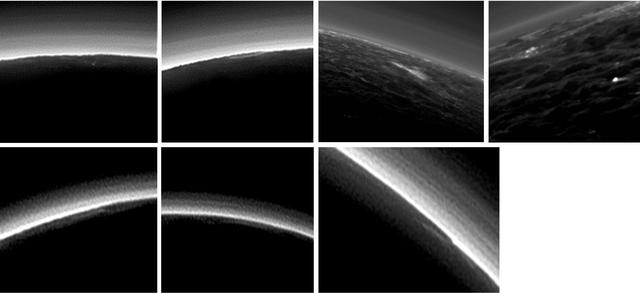
Pluto's present, hazy atmosphere is almost entirely free of clouds, though scientists from NASA's New Horizons mission have identified some cloud candidates after examining images taken by the New Horizons Long Range Reconnaissance Imager and Multispectral Visible Imaging Camera, during the spacecraft's July 2015 flight through the Pluto system. All are low-lying, isolated small features -- no broad cloud decks or fields -- and while none of the features can be confirmed with stereo imaging, scientists say they are suggestive of possible, rare condensation clouds. http://photojournal.jpl.nasa.gov/catalog/PIA21127

Splotchy water ice clouds obscure the surface in this image from NASA Mars Odyssey spacecraft, however, most of Mars was in a relatively clear period when this image was acquired.
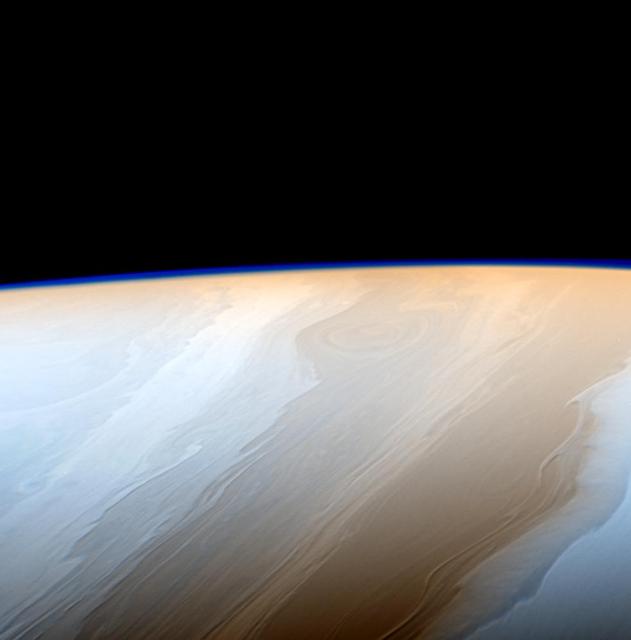
Clouds on Saturn take on the appearance of strokes from a cosmic brush thanks to the wavy way that fluids interact in Saturn's atmosphere. Neighboring bands of clouds move at different speeds and directions depending on their latitudes. This generates turbulence where bands meet and leads to the wavy structure along the interfaces. Saturn's upper atmosphere generates the faint haze seen along the limb of the planet in this image. This false color view is centered on 46 degrees north latitude on Saturn. The images were taken with the Cassini spacecraft narrow-angle camera on May 18, 2017 using a combination of spectral filters which preferentially admit wavelengths of near-infrared light. The image filter centered at 727 nanometers was used for red in this image; the filter centered at 750 nanometers was used for blue. (The green color channel was simulated using an average of the two filters.) The view was obtained at a distance of approximately 750,000 miles (1.2 million kilometers) from Saturn. Image scale is about 4 miles (7 kilometers) per pixel. https://photojournal.jpl.nasa.gov/catalog/PIA21341
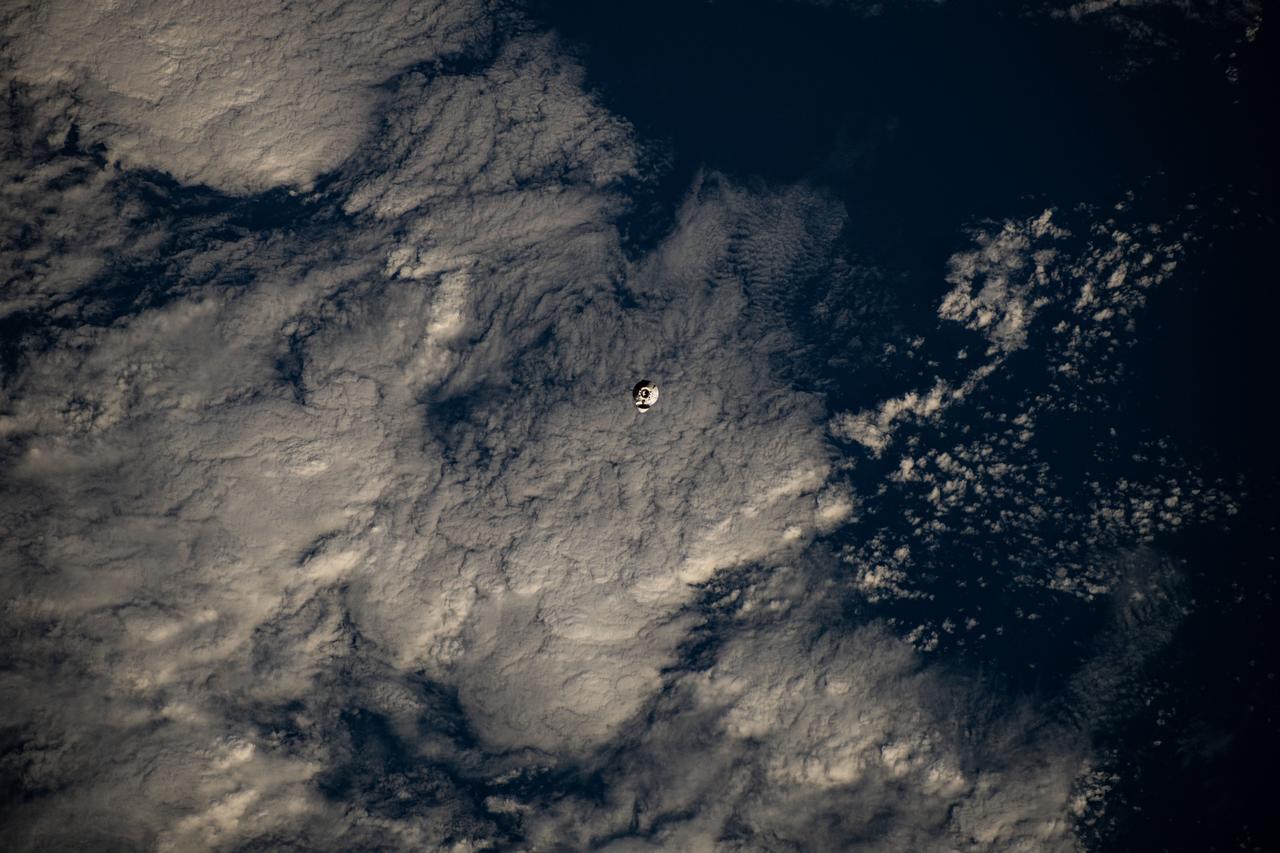
iss072e145206 (Nov. 5, 2024) --- The SpaceX Dragon cargo spacecraft is pictured approaching the International Space Station as both spacecraft were orbiting 255 miles above a cloudy Pacific Ocean southwest of Ecuador's Galápagos Islands.
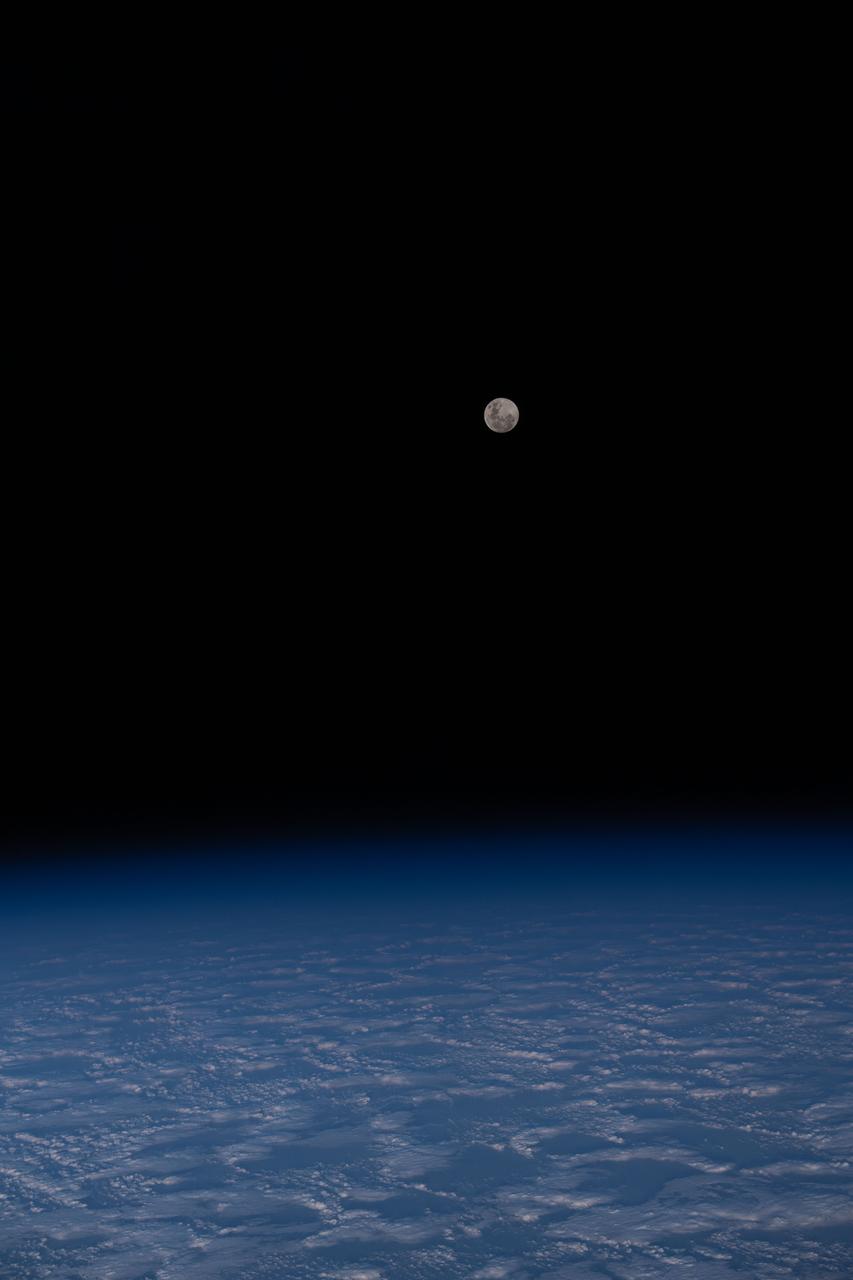
iss070e014820 (Oct. 28, 2023) --- The Full Moon is pictured from the International Space Station as it orbited 271 miles above a cloudy south Indian Ocean half-way between Australia and Antarctica.

iss071e693961 (Sept. 15, 2024) --- An aurora crowns Earth's horizon in this photograph from the International Space Station as it orbited 265 miles above a cloudy Pacific Ocean southeast of the Kuril Islands.
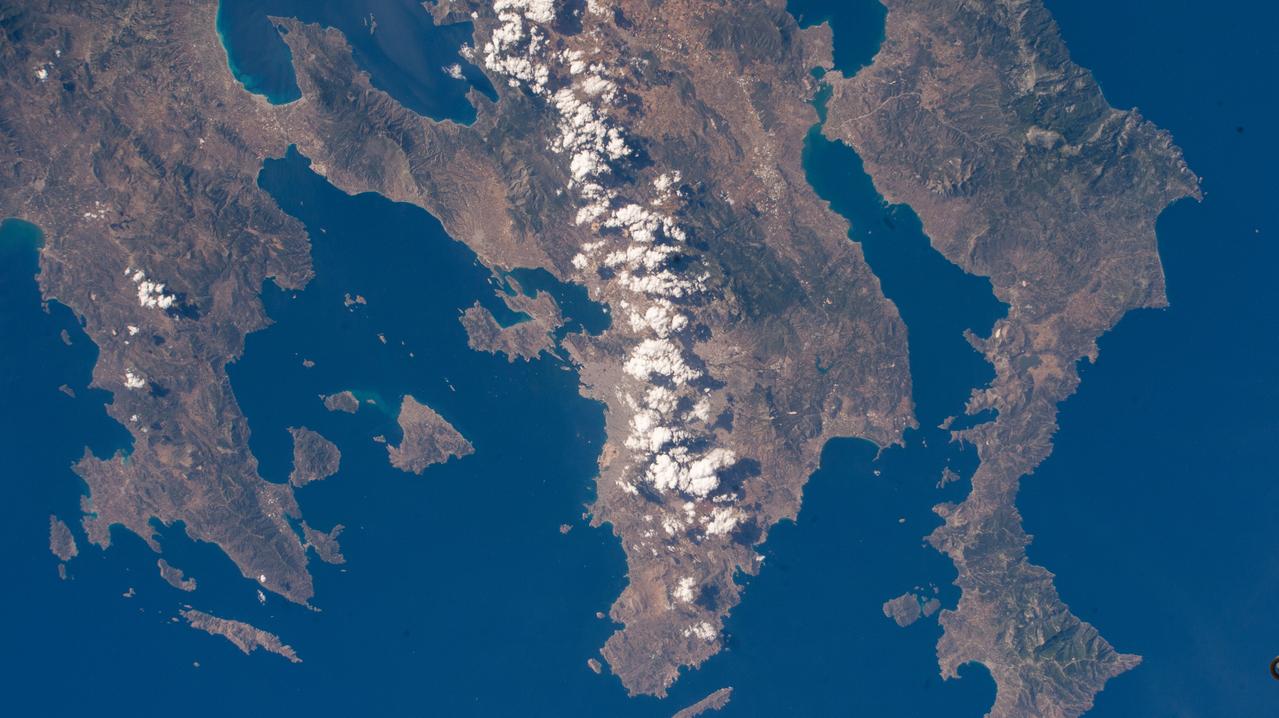
iss071e112065 (May 23, 2024) --- A partly cloudy Athens, Greece (center), on the Saronic Gulf, is pictured from the International Space Station as it orbited 259 miles above the Aegean Sea.
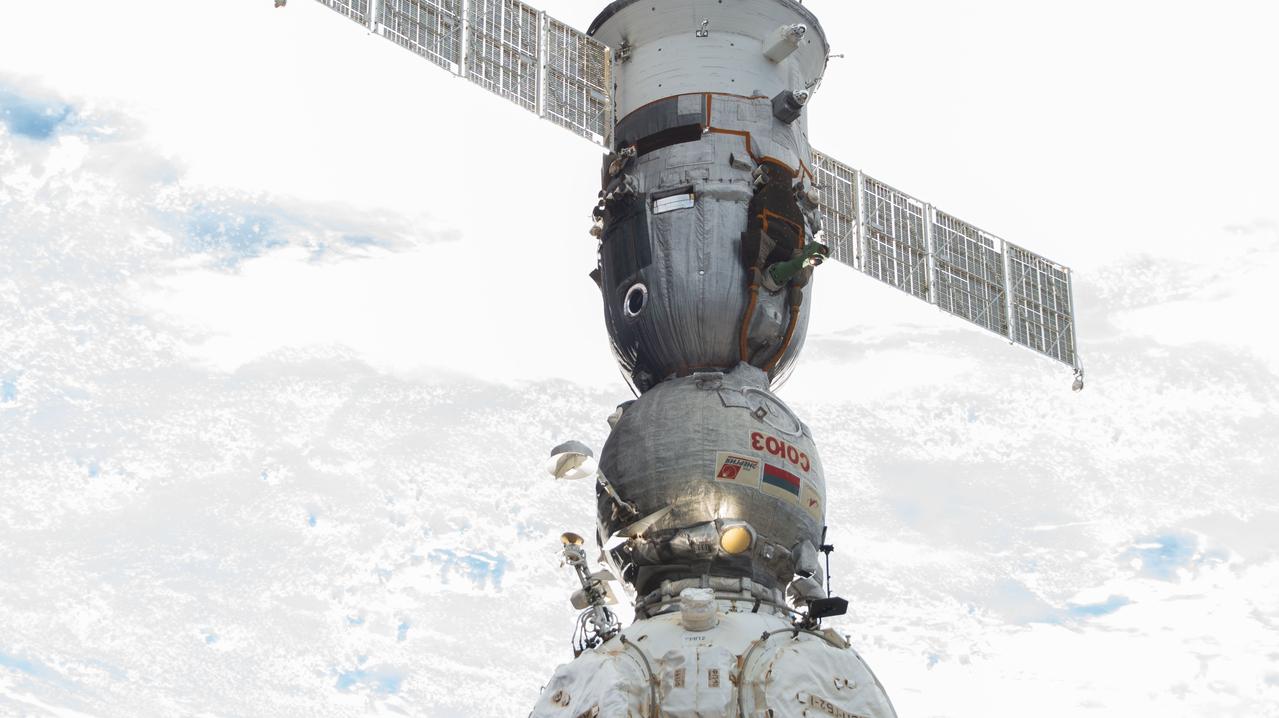
iss069e061002 (Aug. 16, 2023) --- The Soyuz MS-23 crew ship is pictured docked to the Prichal docking module as the International Space Station orbited 262 miles above a cloudy Nigeria on the African continent.

iss065e002960 (April 24, 2021) --- The sun's glint beams off a cloudy Atlantic Ocean 264 miles below as the SpaceX Crew Dragon Endeavour approached the International Space Station.
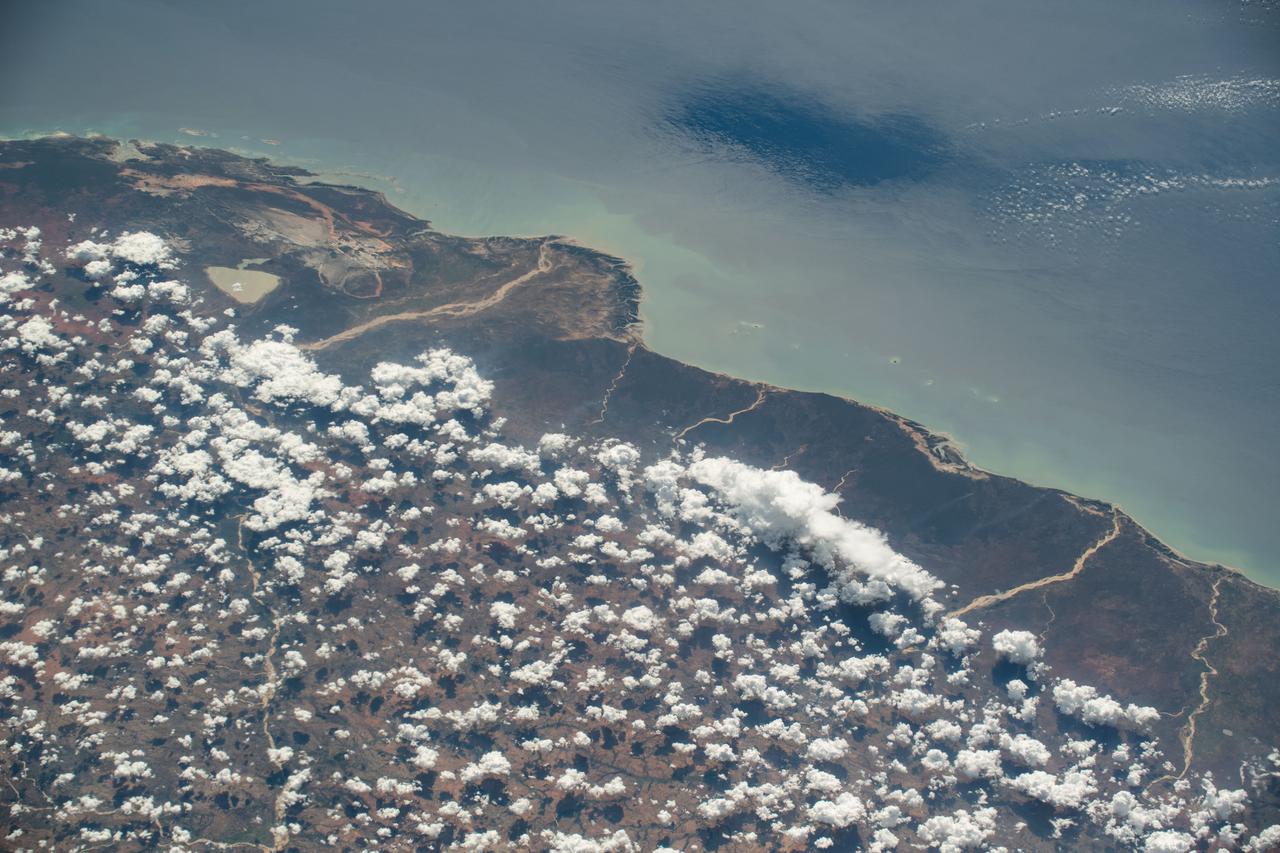
iss070e025919 (Nov. 16, 2023) --- The partly cloudy coast of southwestern Madagascar on the Mozambique Channel is pictured from the International Space Station as it orbited 264 miles above the island nation.
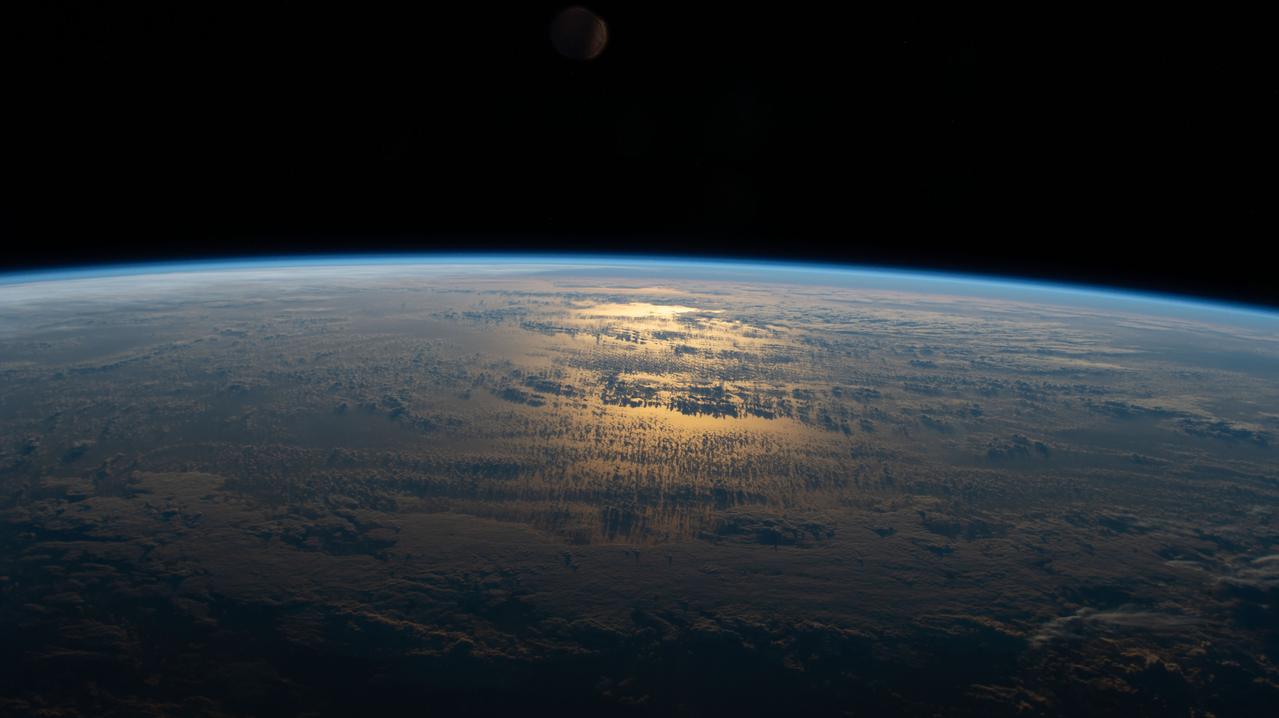
iss063e050668 (July 18, 2020) --- The sun's glint beams off a partly cloudy South Pacific as the International Space Station's orbital track took it halfway between Australia and South America.
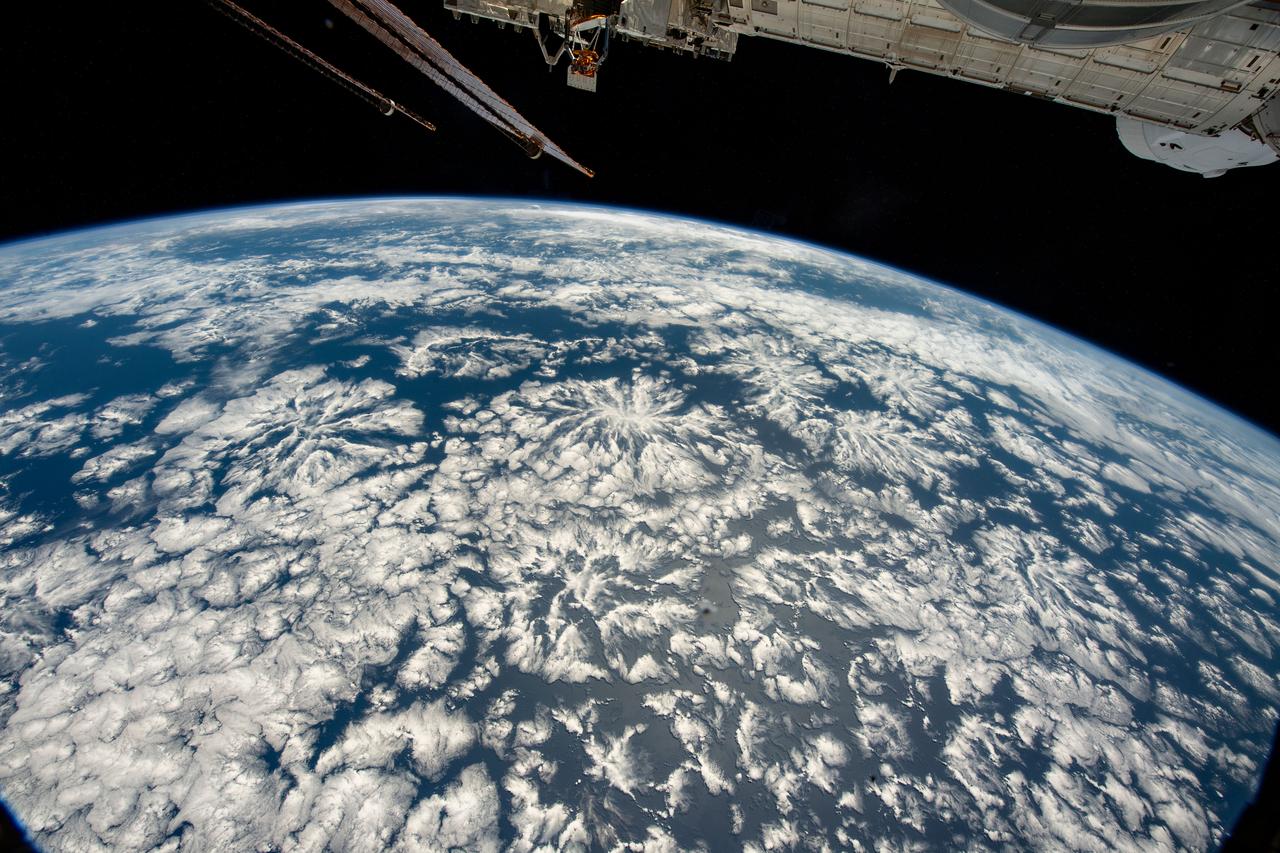
iss067e220400 (July 31, 2022) --- A partly cloudy Pacific Ocean is pictured from the International Space Station as it orbited 259 miles above off the coast of Peru in South America.
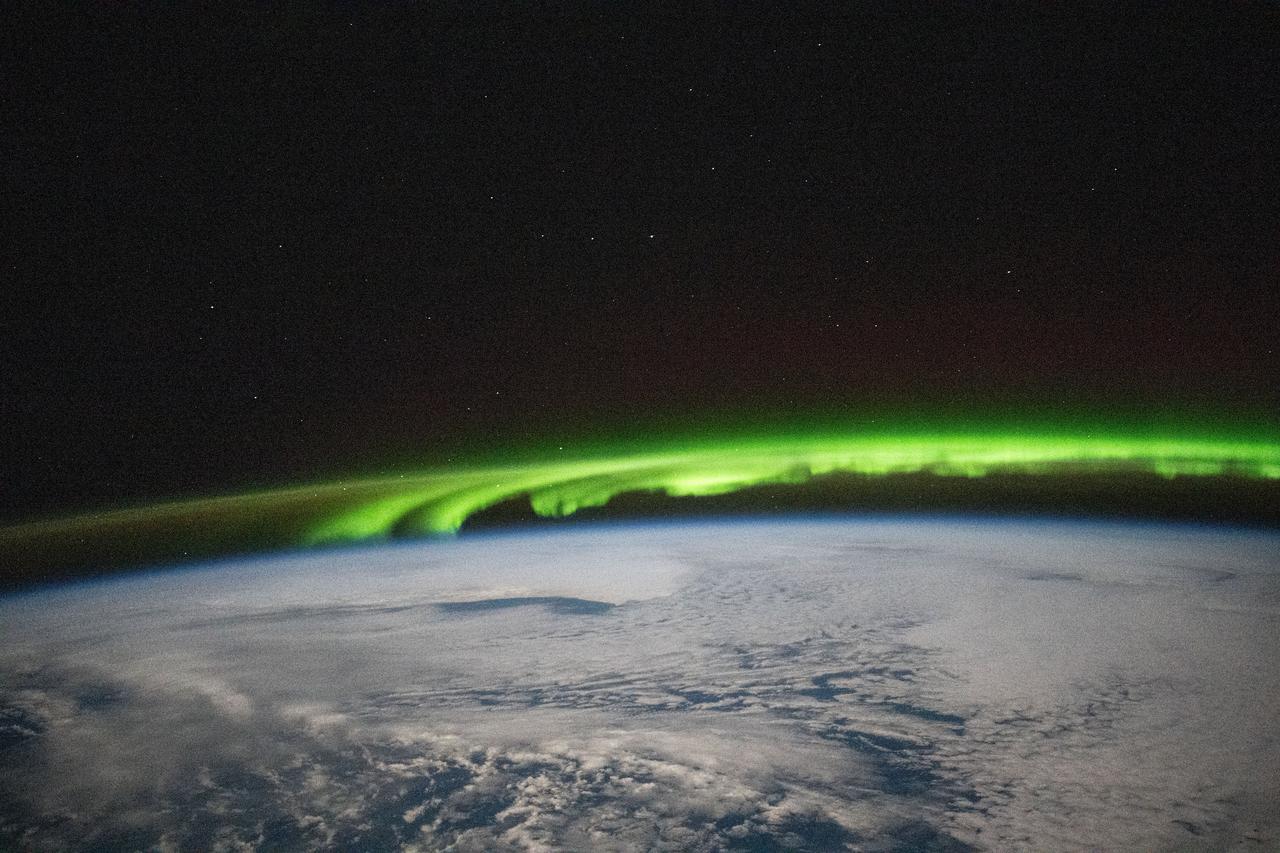
iss072e188141 (Nov. 15, 2024) --- A bright green aurora borealis streams above Earth's surface as the International Space Station orbited 269 miles above a cloudy North Pacific Ocean south of Alaska's Aleutian Islands.
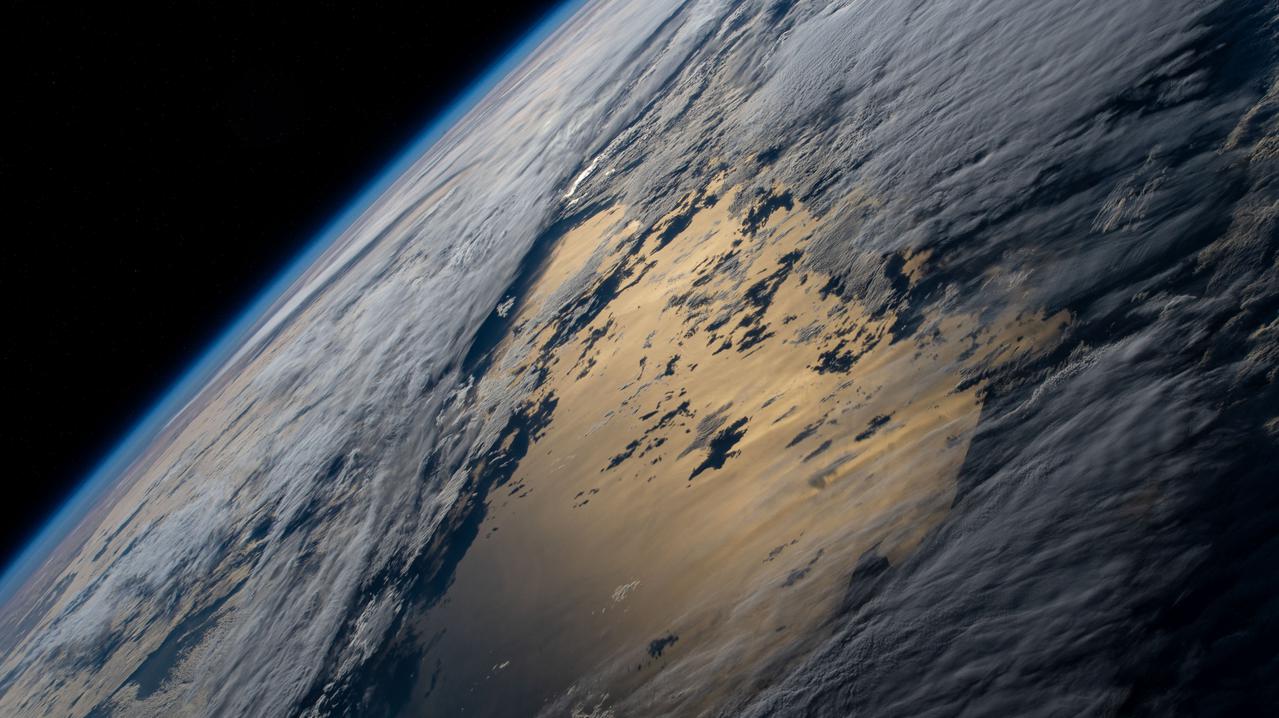
iss064e029010 (Feb. 4, 2021) --- This view of the Earth's horizon looks across a cloudy Pacific Ocean as the International Space Station orbited 271 miles above off the coast of southern Chile in South America.
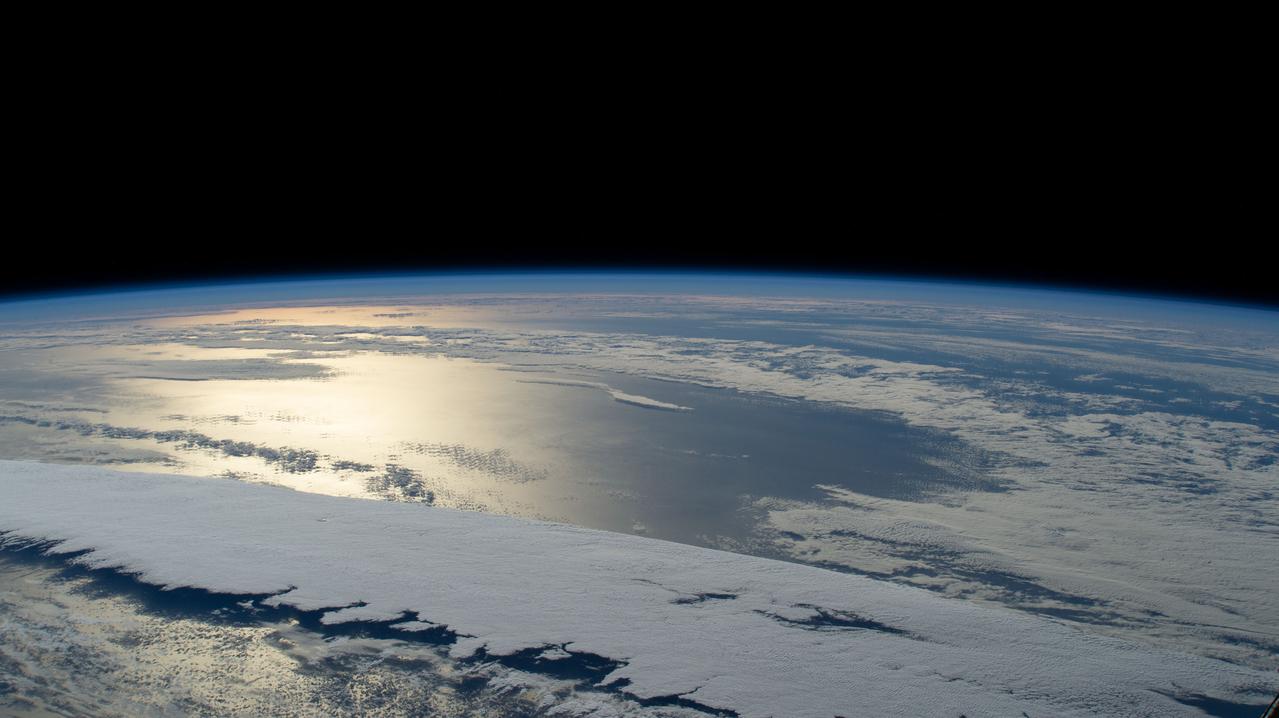
iss068e036653 (Jan. 1, 2022) --- The sun's glint beams off a partly cloudy Pacific Ocean in this photograph from the International Space Station as it orbited 260 miles above and northwest of Midway Atoll.
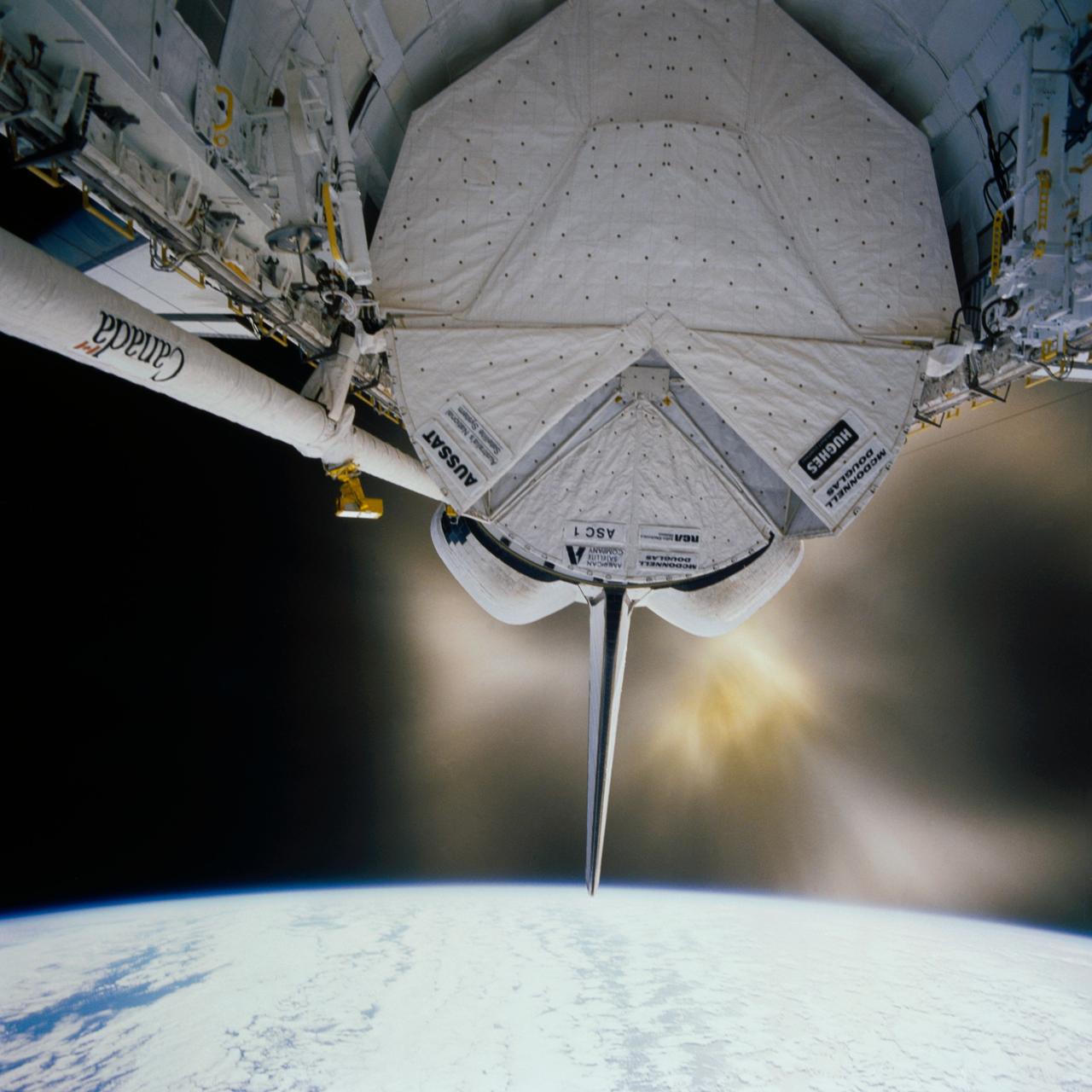
View of a single engine orbital maneuvering system (OMS) firing on the Discovery. The payload bay is open and the protective canisters for the AUSSAT communications satellite (open) and the ASC-1 are visible. A cloudy Earth's horizon can be seen above the orbiter.
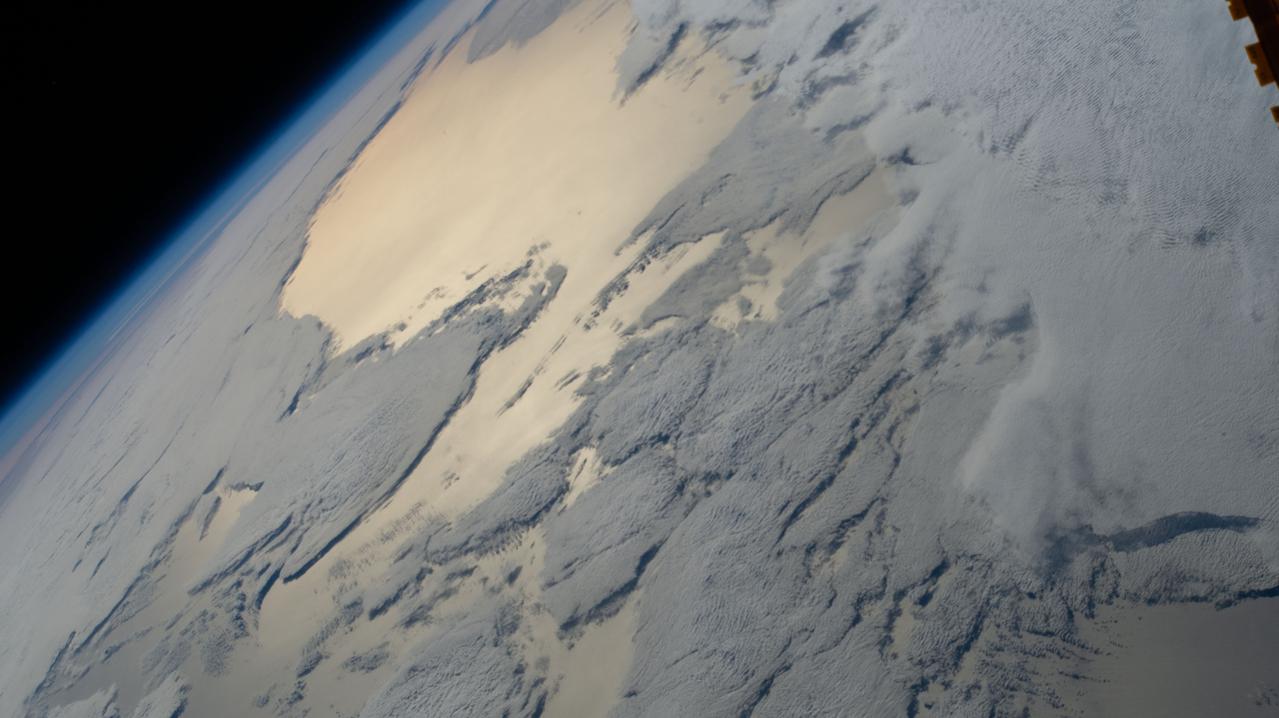
iss064e029006 (Feb. 4, 2021) --- This view of the Earth's horizon looks across a cloudy Atlantic Ocean as the International Space Station orbited 271 miles above off the coast of southern Argentina in South America.
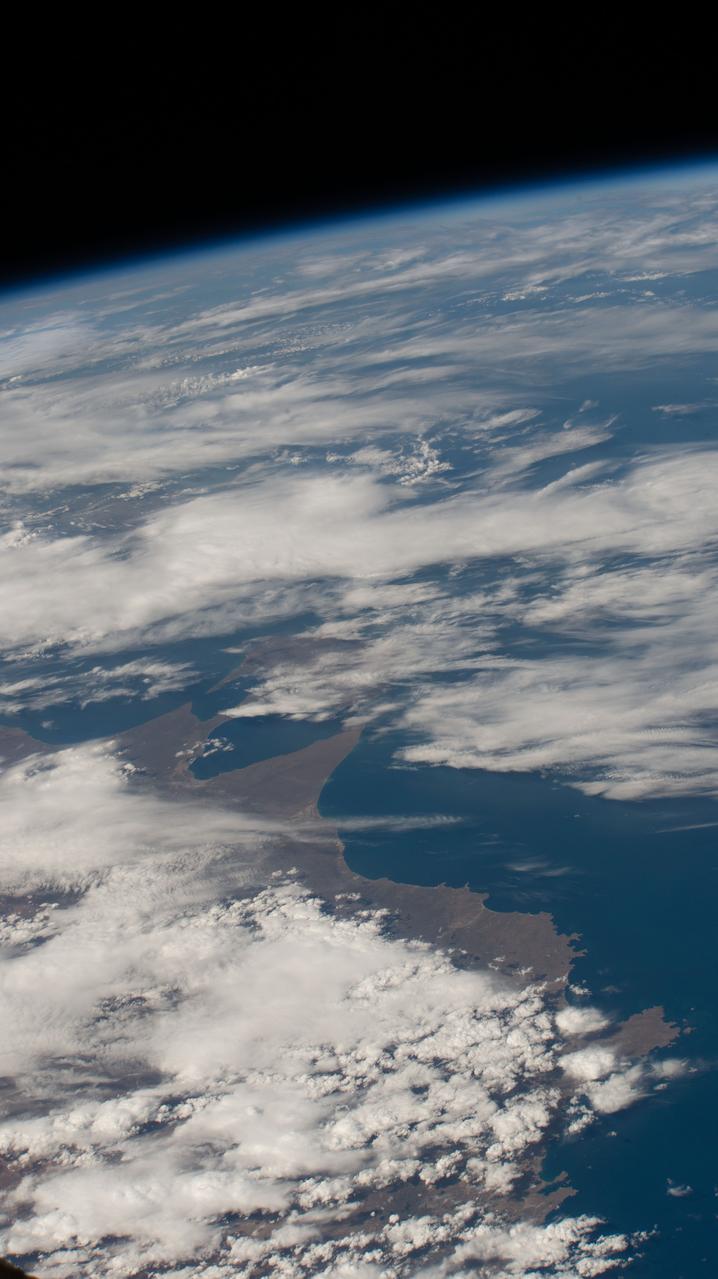
iss064e004461 (Nov. 13, 2020) --- A cloudy Chubut Province in Argentina on the Atlantic coast is pictured from the International Space Station as it orbited 270 miles above the South American nation.
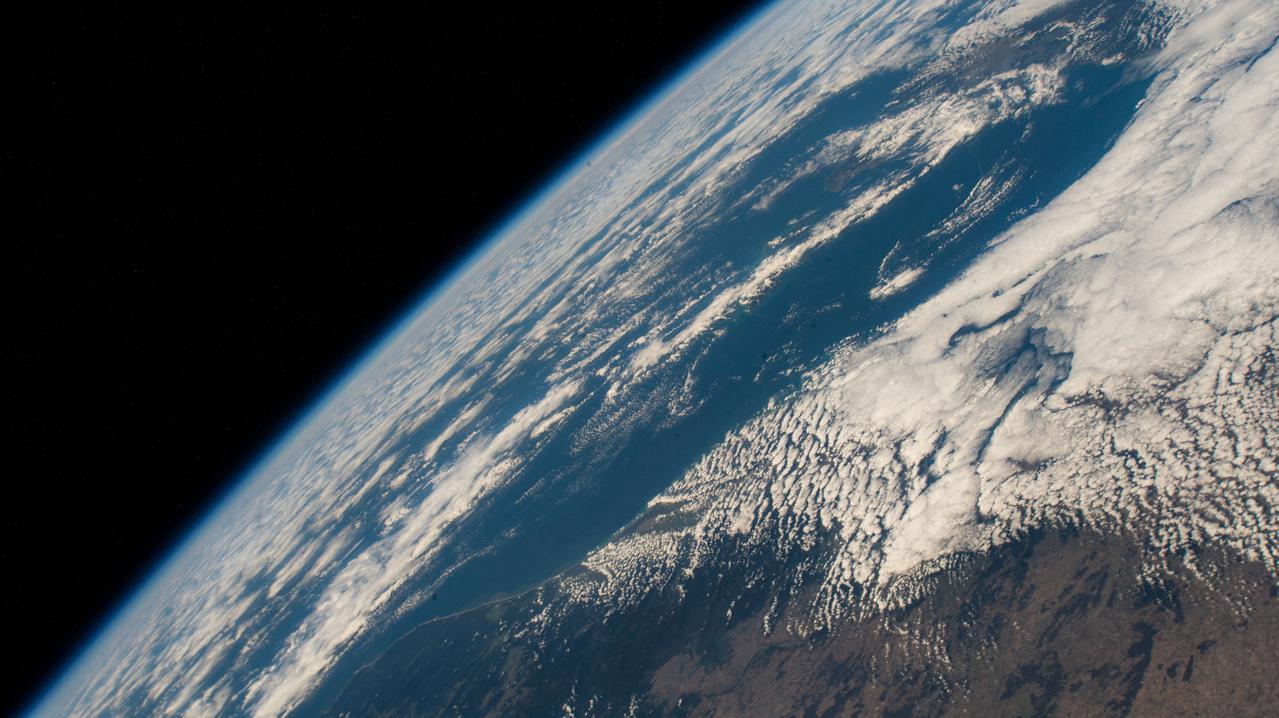
iss066e161292 (March 11, 2022) --- The cloudy, southeast coast of Australia is pictured from the International Space Station as it orbited 264 miles above Adelaide, New South Wales.
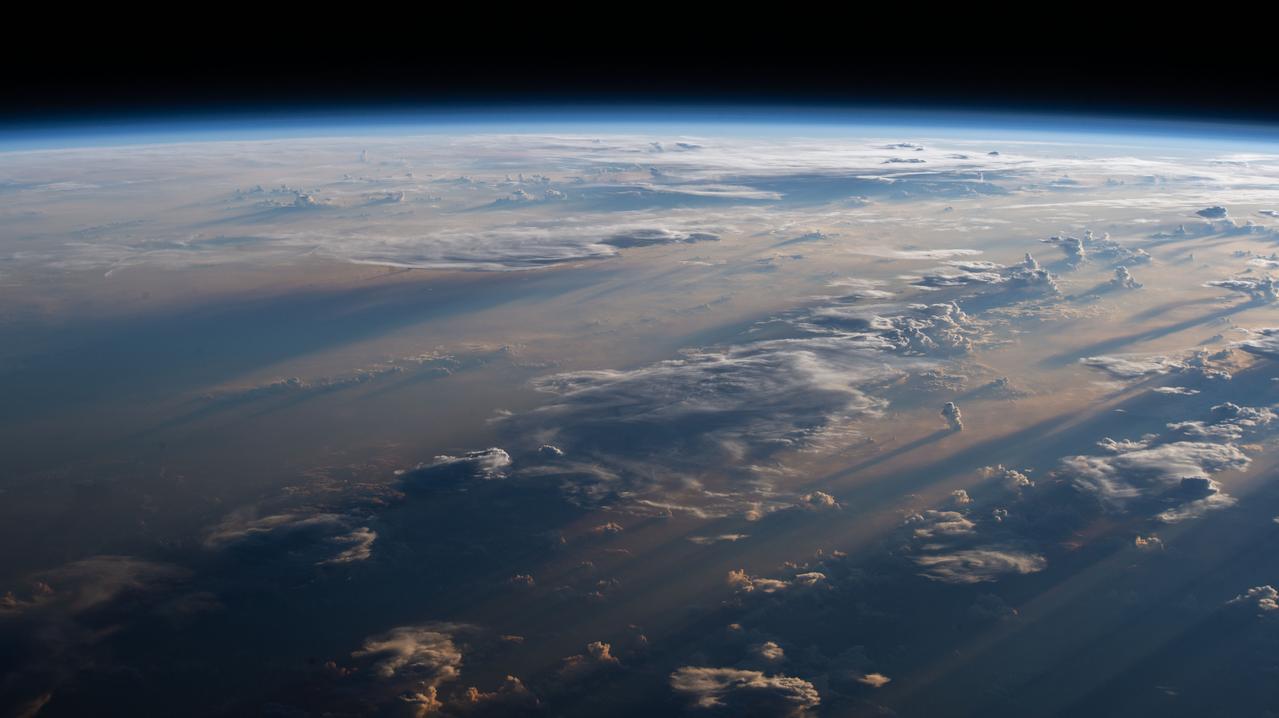
iss063e076166 (Aug. 19, 2020) --- Sunrise casts long shadows over a cloudy Philippine Sea as the International Space Station orbited off the coast of the Philippines northeast of Manila.
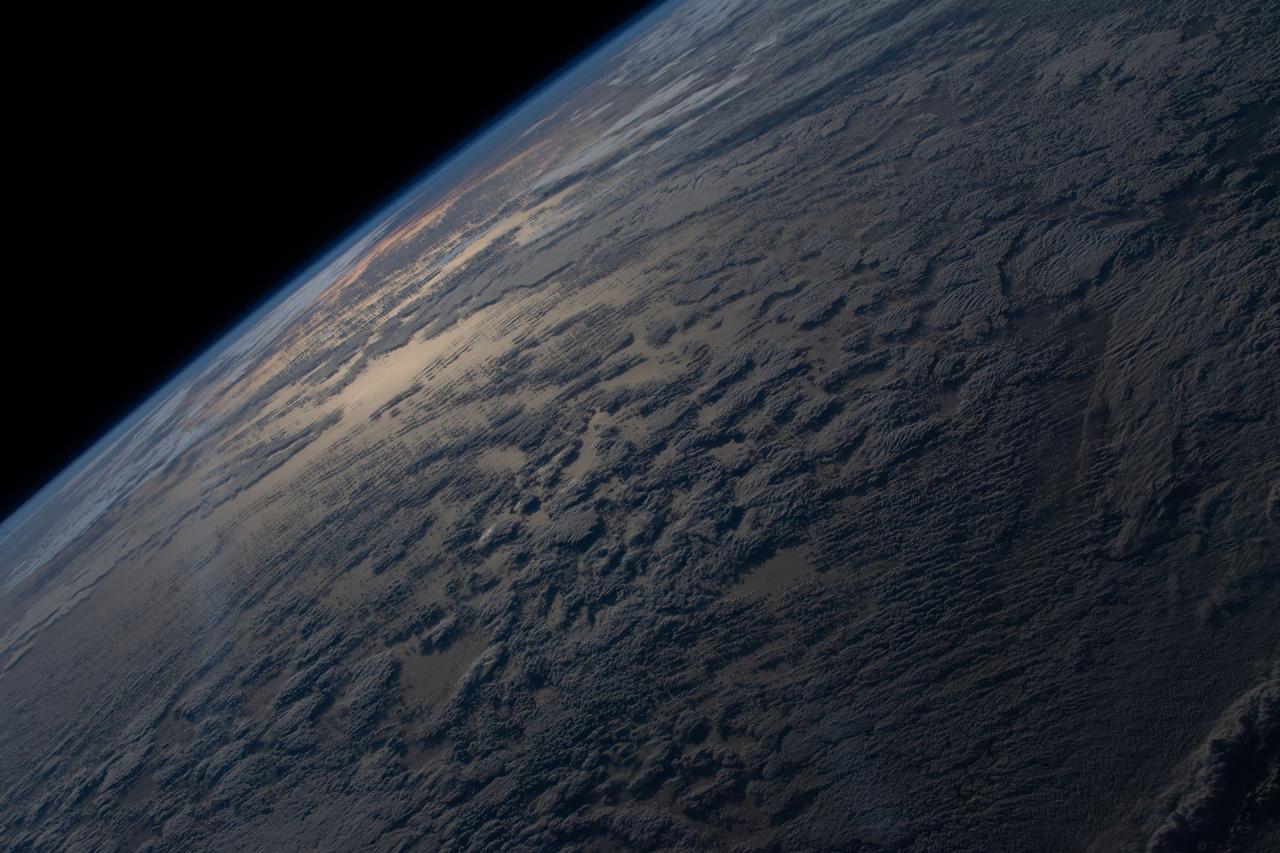
iss067e036267 (May 7, 2022) --- The sun's glint beams off a partly cloudy, southern Atlantic Ocean is this photograph from the International Space Station as it orbited 272 miles above the Earth.
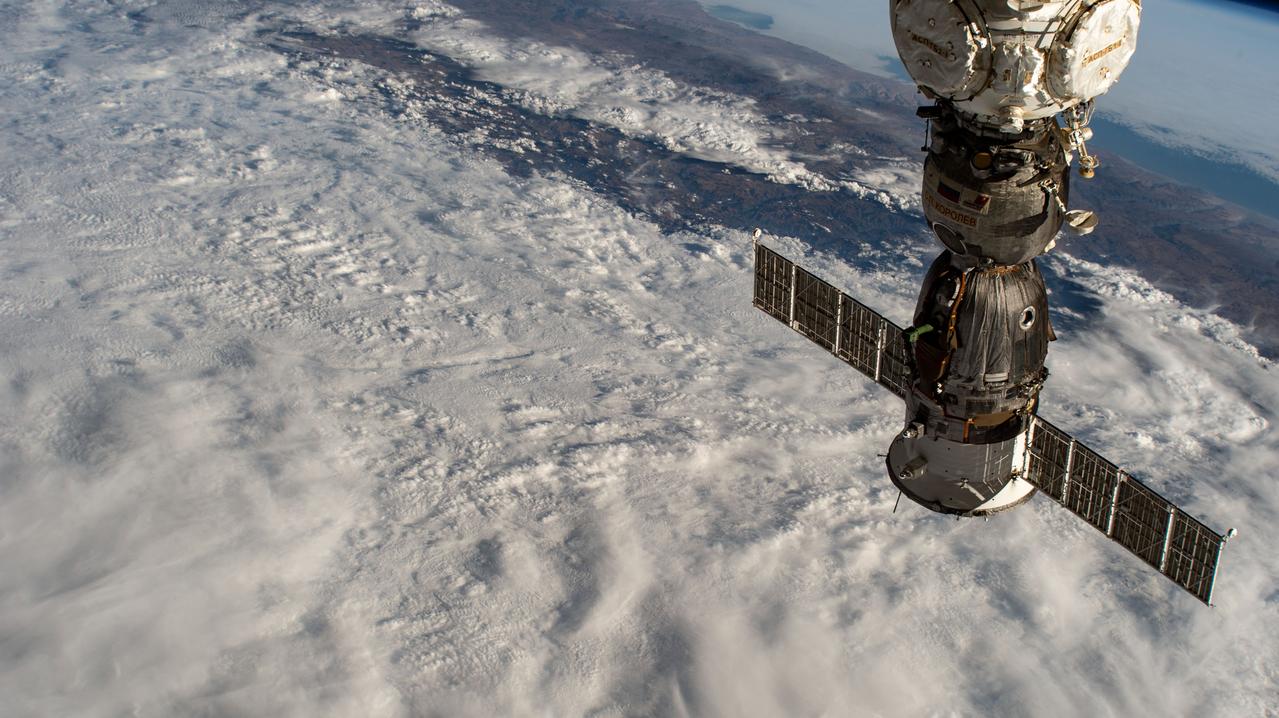
iss067e362299 (Sept. 15, 2022) --- The Soyuz MS-21 crew ship is pictured attached to the Prichal docking module as the International Space Station orbited 260 miles above a cloudy Peru on the South American continent.
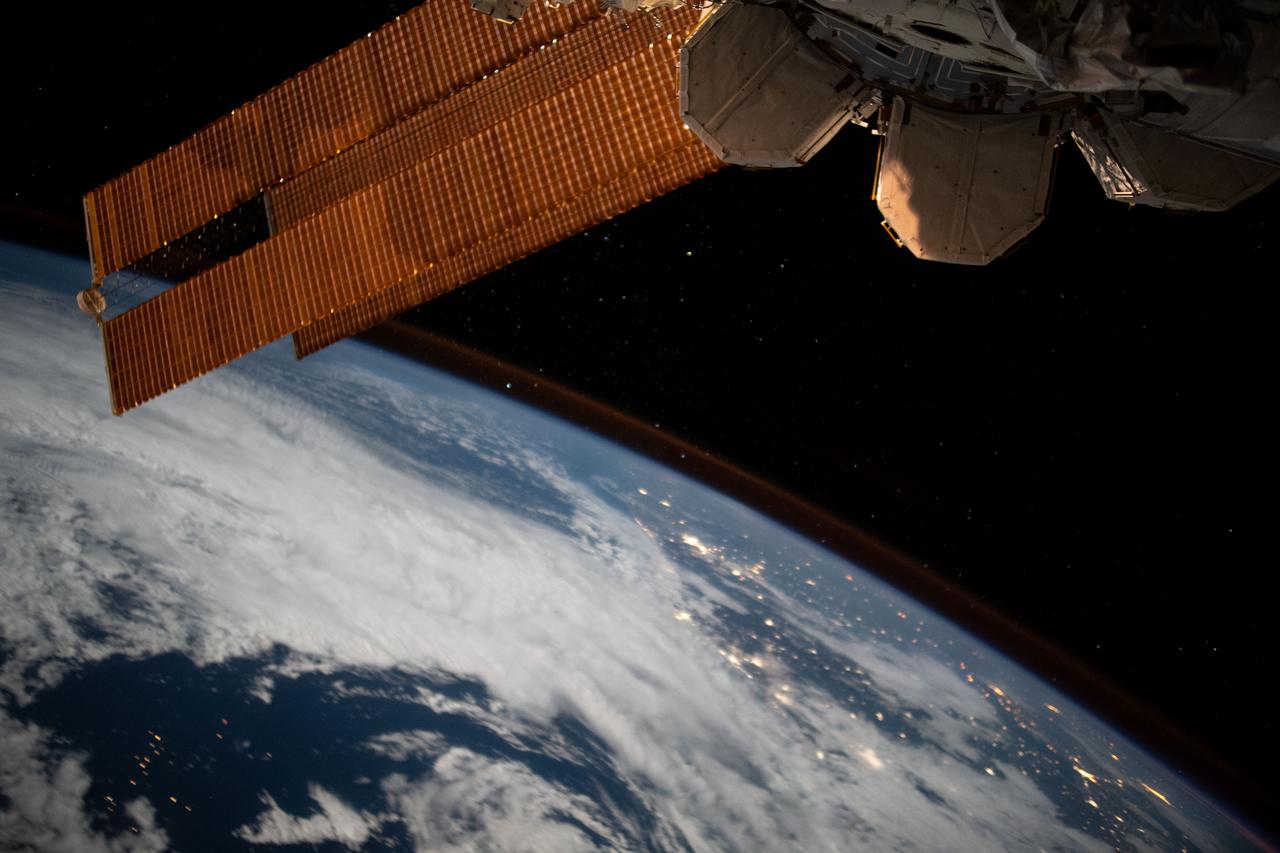
iss067e255755 (Aug. 10, 2022) --- The city lights of Brazil sparkle underneath cloudy skies and a dim atmospheric glow as the International Space Station orbited 263 miles above the Atlantic Ocean off the coast of the South American nation.
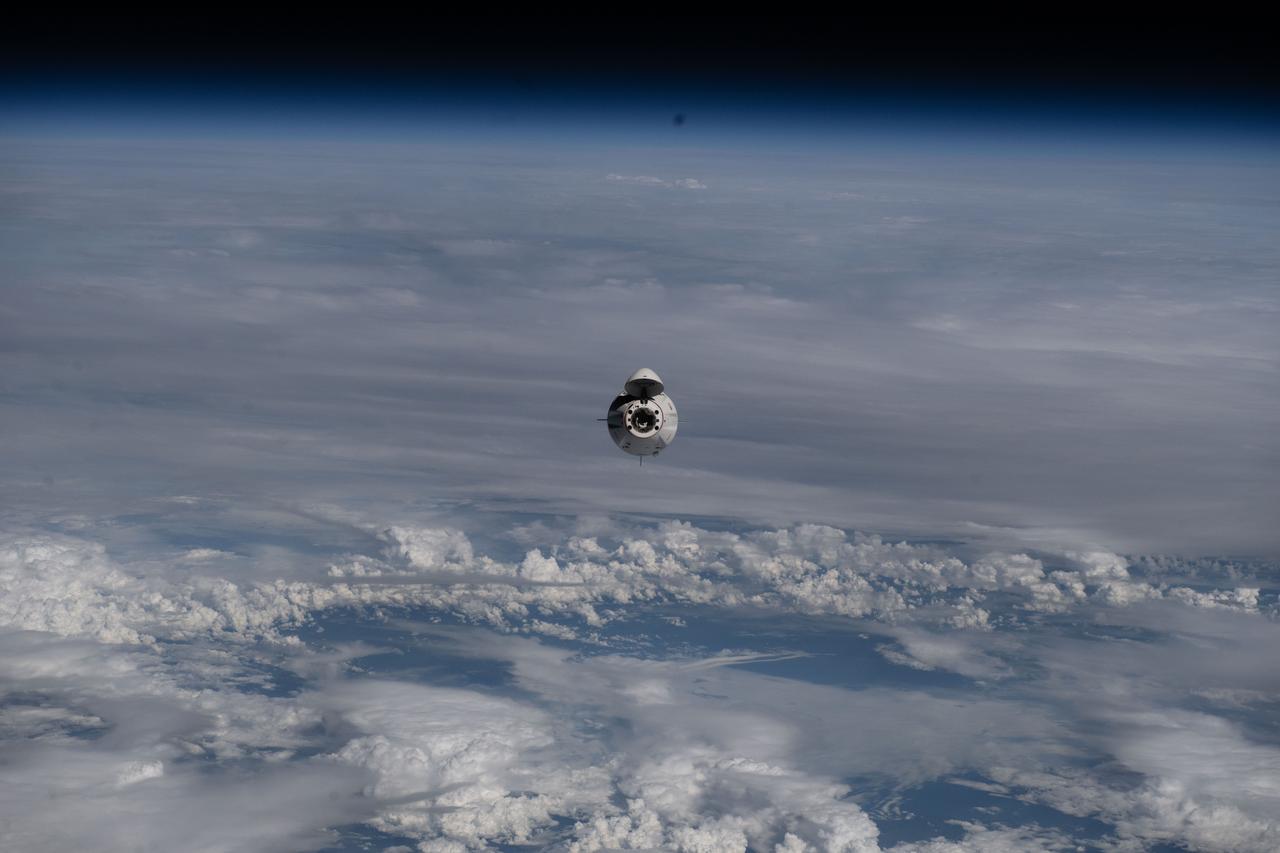
iss073e0505071 (Aug. 2, 2025) --- The SpaceX Dragon crew spacecraft ferrying NASA's Crew-11 mission approaches the International Space Station as both spacecraft soared 262 miles above a cloudy northeastern China.
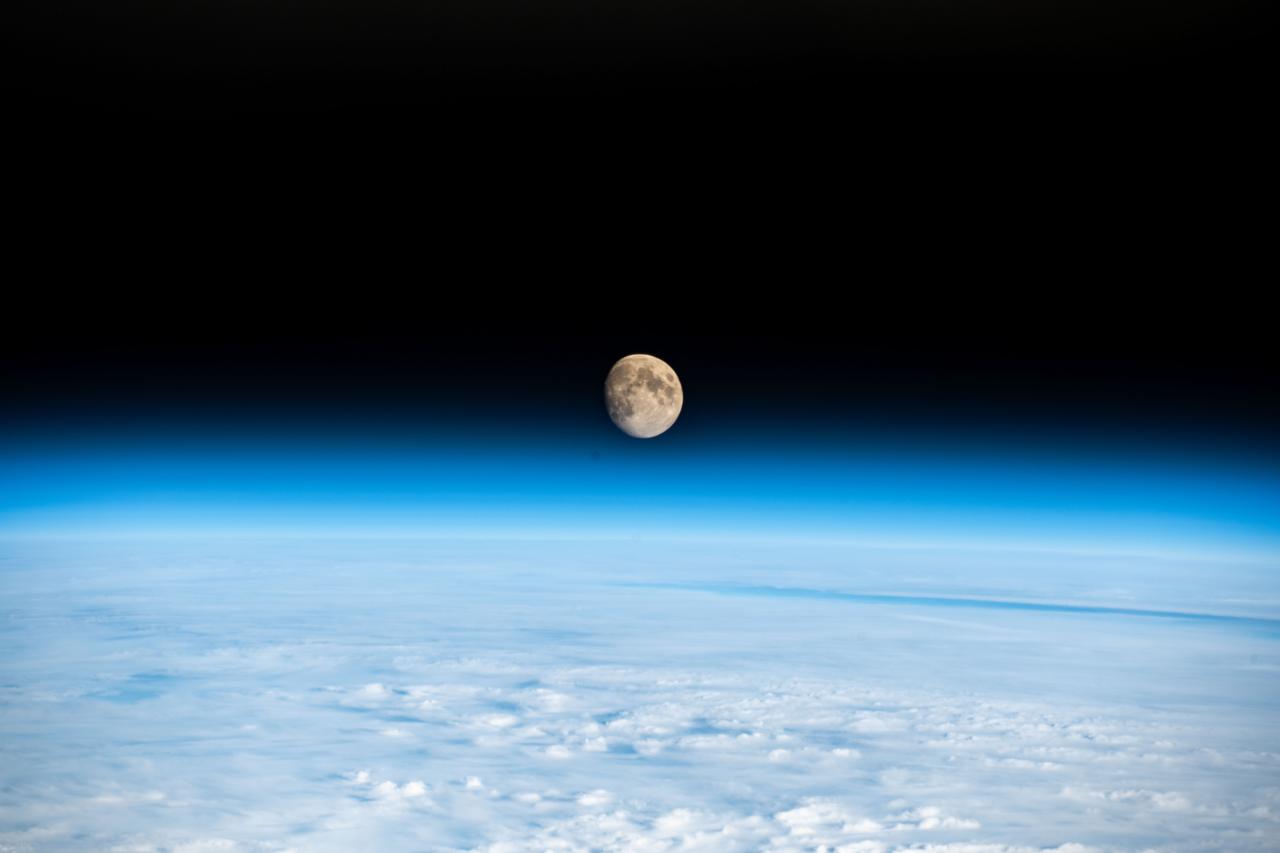
iss070e097393 (Feb. 21, 2024) --- The waxing gibbous Moon is pictured above the Earth's horizon in this photograph from the International Space Station as it orbited 262 miles above a cloudy Western Europe.
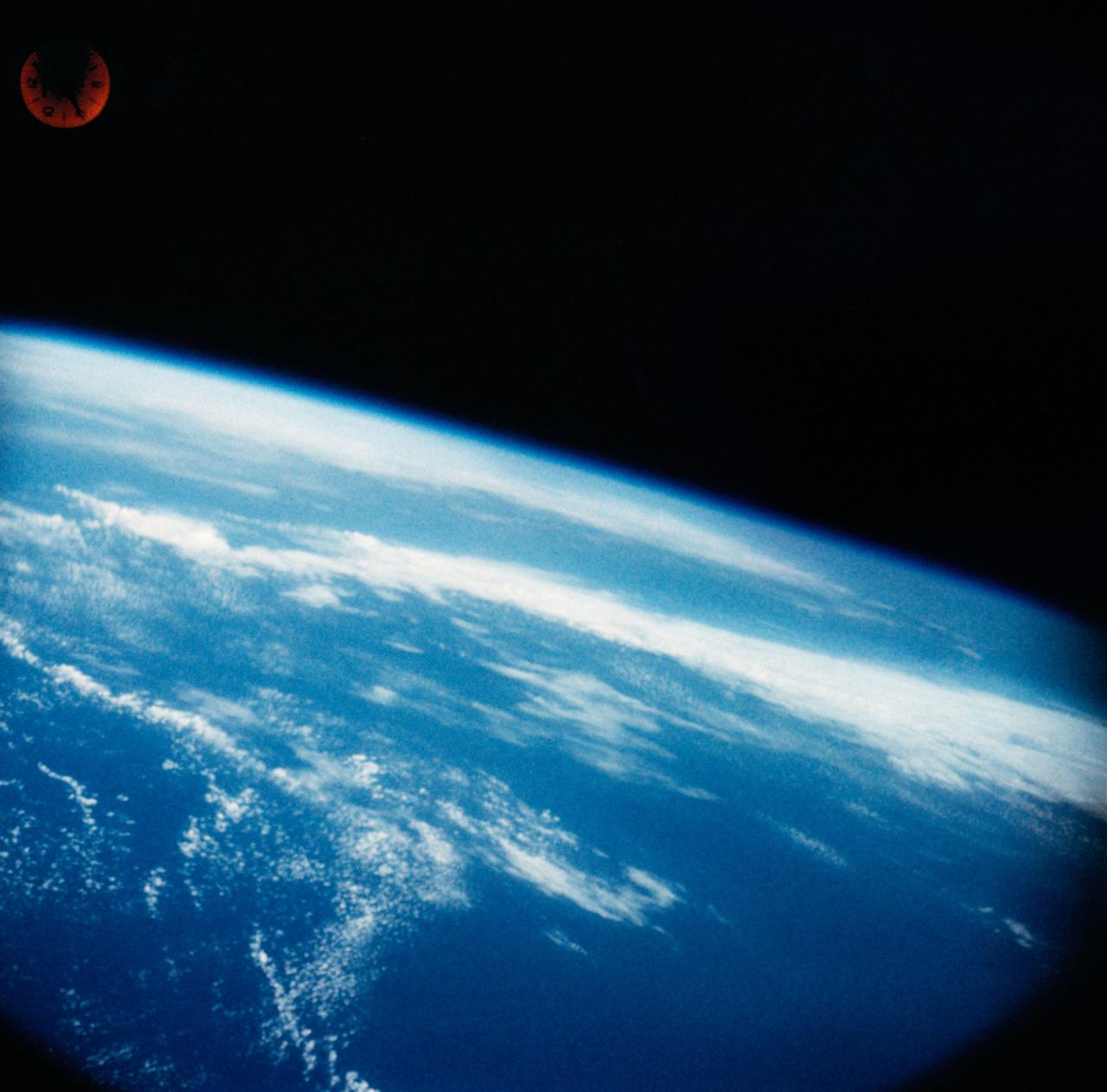
S61-01918 (5 May 1961) --- Mercury-Redstone 3 (MR-3) spaceflight Earth observations of a cloudy Earth surface. Photo credit: NASA or National Aeronautics and Space Administration
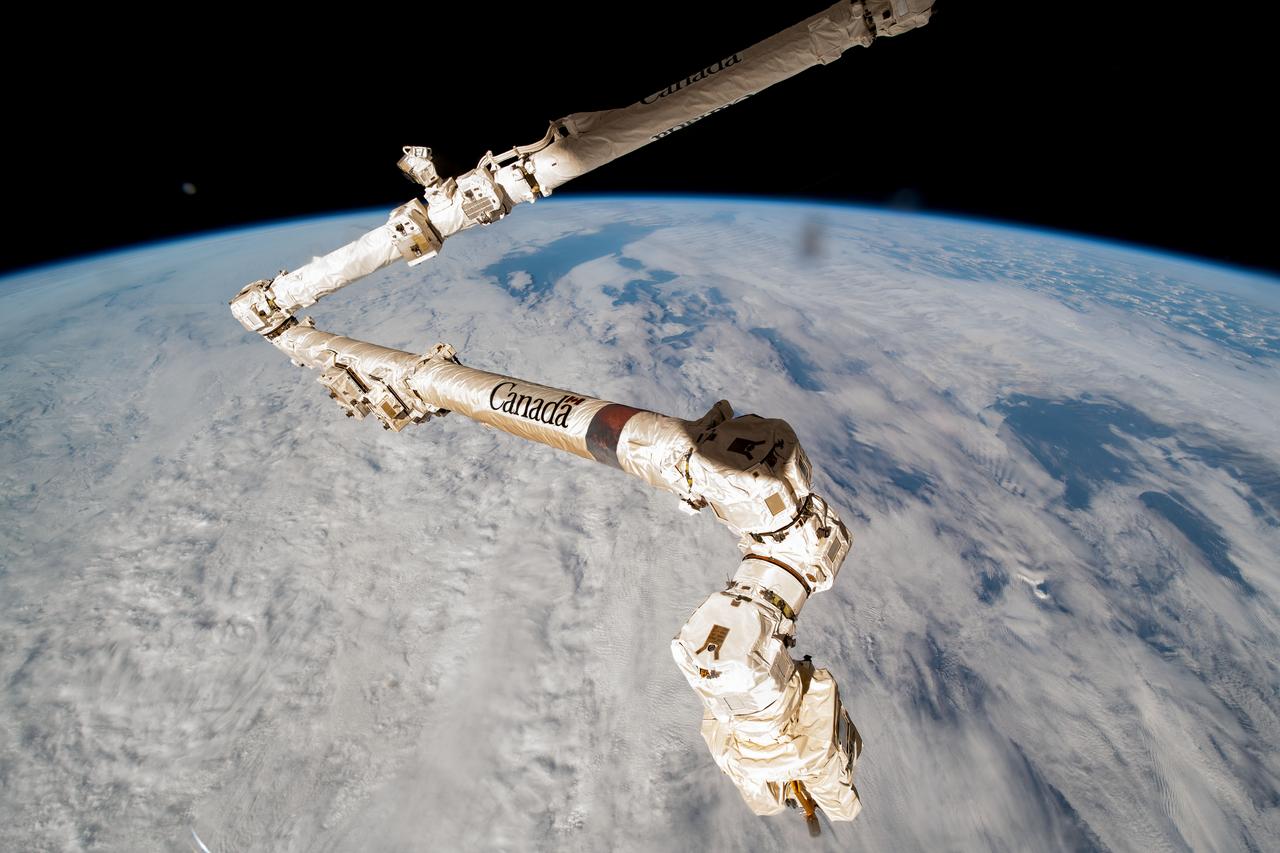
iss068e071305 (March 6, 2023) --- The Canadarm2 robotic arm extends from the International Space Station as it orbited 258 miles above a cloudy East China Sea off the coast of Shanghai, China's largest city.

iss067e034448 (May 4, 2022) --- The southern tip of Baja California and the western coast of Mexico are pictured from the International Space Station as it orbited 259 miles above a cloudy Pacific Ocean.
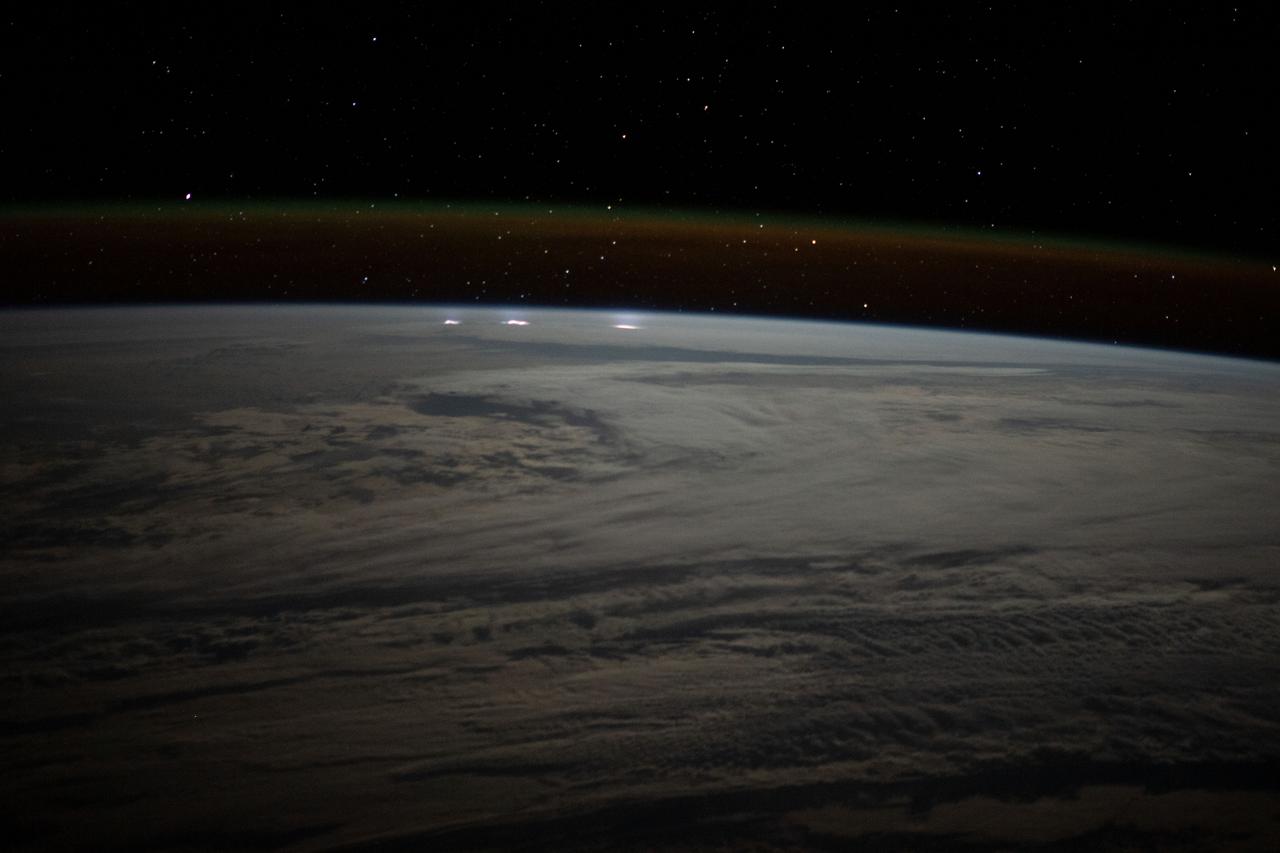
iss067e270871 (Aug. 17, 2022) --- A cloudy, south Indian Ocean between Africa and Antarctica, with lightning storms near the horizon beneath the atmospheric glow, is pictured from the International Space Station as it orbited 271 miles above
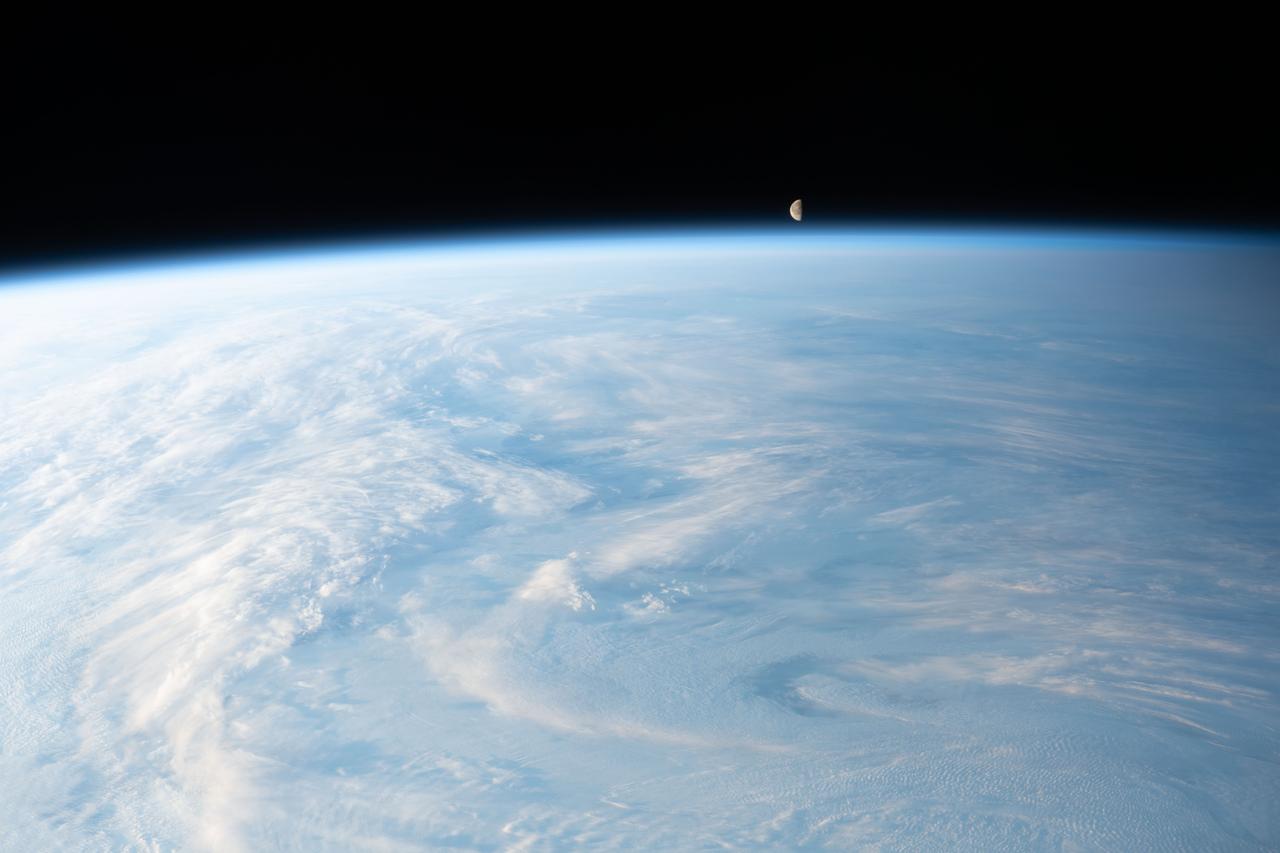
iss070e035253 (Dec. 4, 2023) --- The waning gibbous Moon is pictured just above Earth's horizon in this photograph from the International Space Station as it orbited 262 miles above a cloudy central Asia.
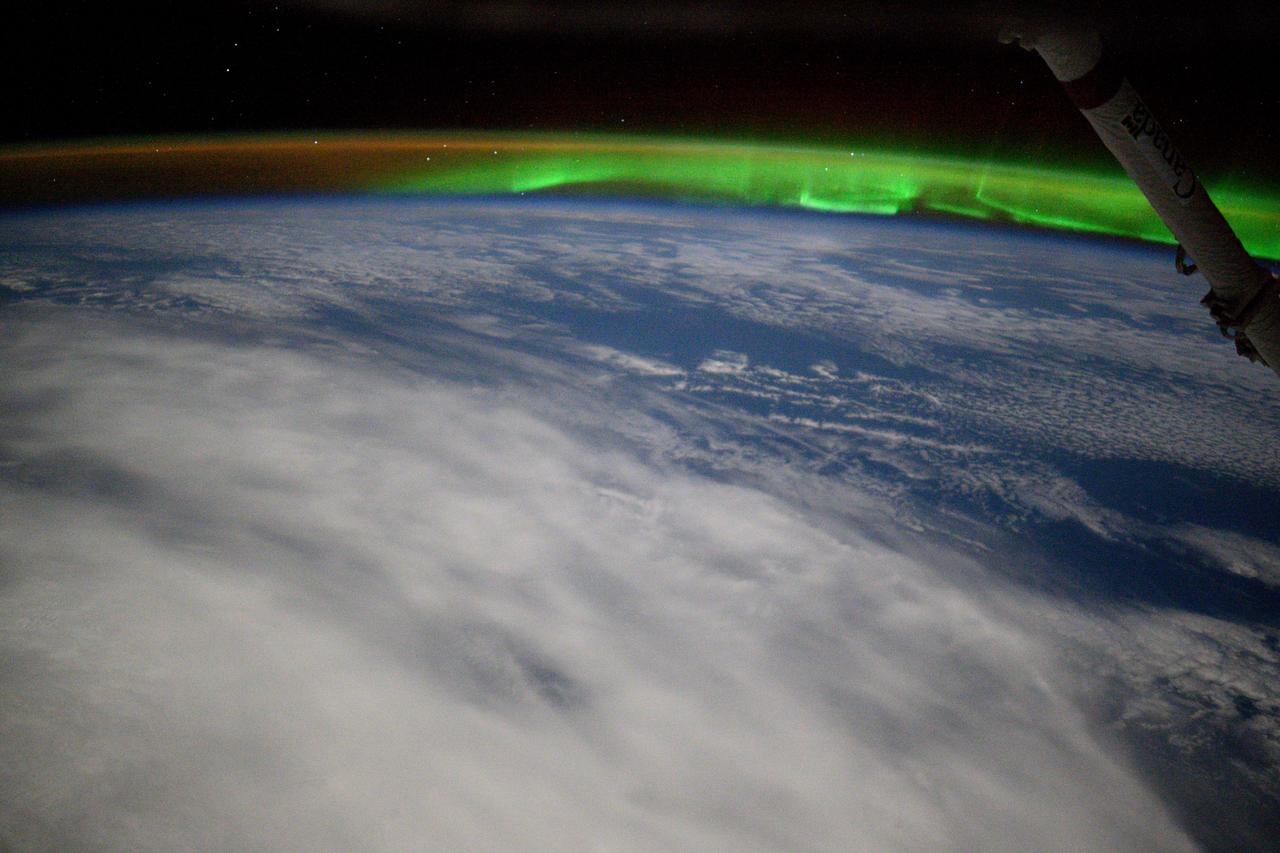
iss071e117686 (May 25, 2024) --- An aurora and an atmospheric glow crown Earth's horizon in this photograph from the International Space Station as it orbited 263 miles above a cloudy Indian Ocean southeast of Africa.
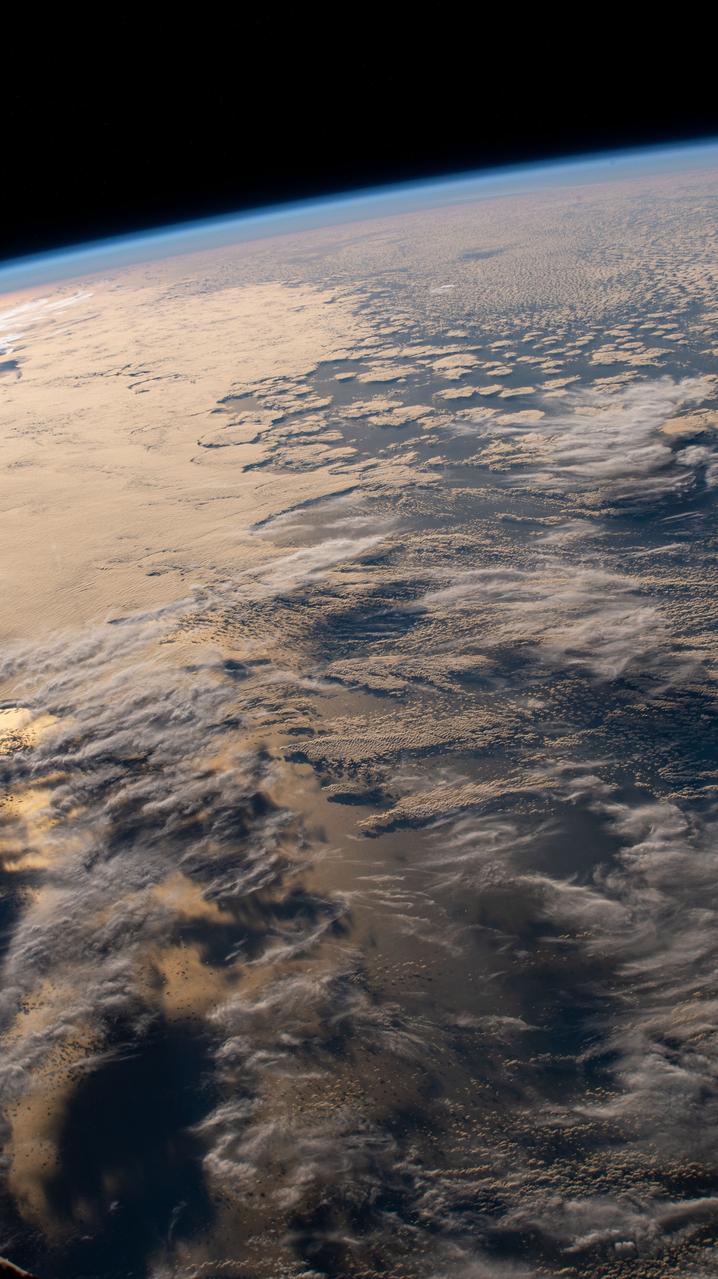
iss064e004315 (Nov. 13, 2020) --- Cloudy seas are pictured from the International Space Station as it orbited 260 miles above the Pacific Ocean about 1,100 miles due south of the Hawaiian island chain.
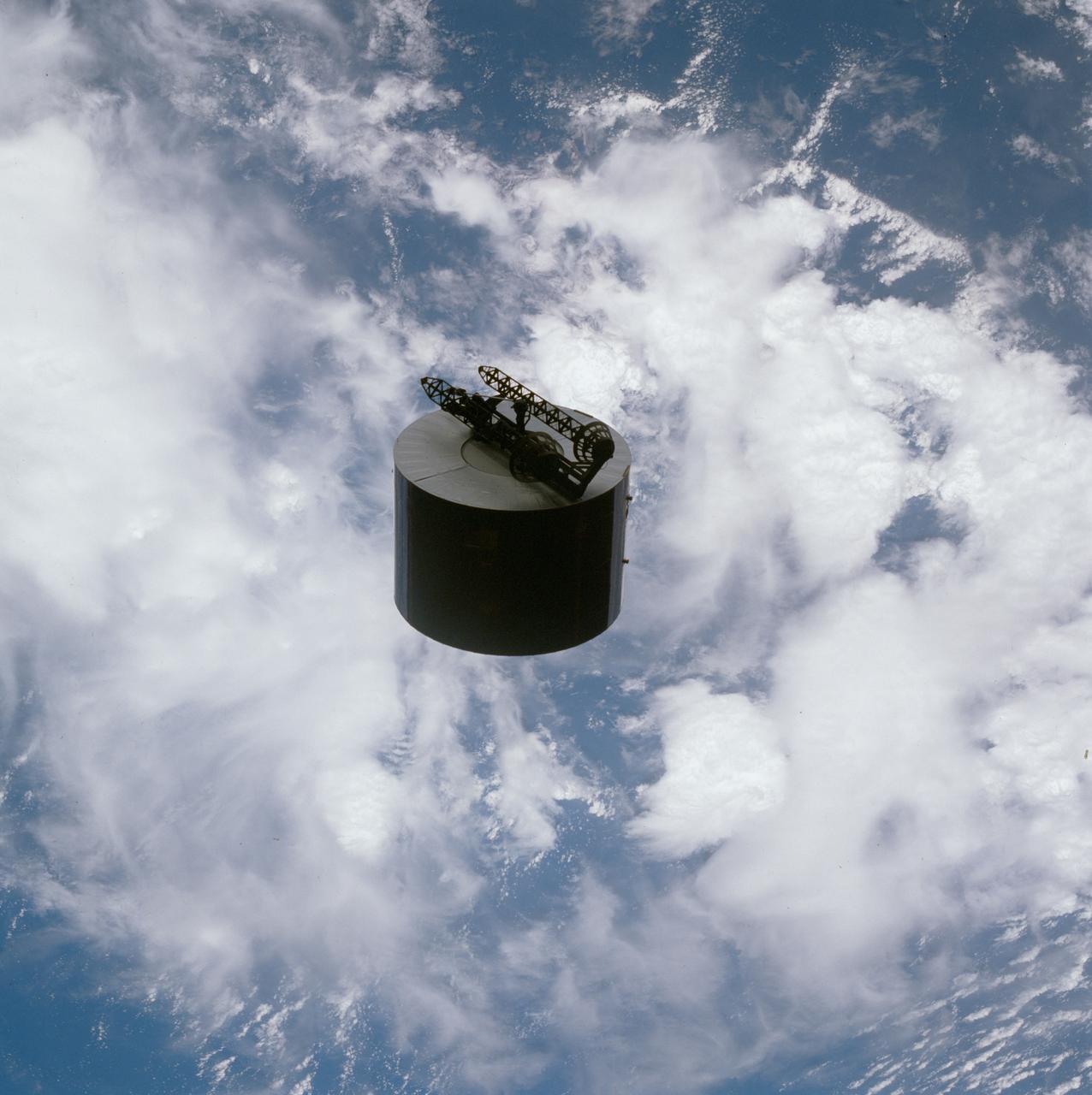
51D-32-013 (12 April 1985) --- A view of the Syncom IV (LEASAT) framed against a cloudy earth's surface after its deployment from the shuttle Discovery.
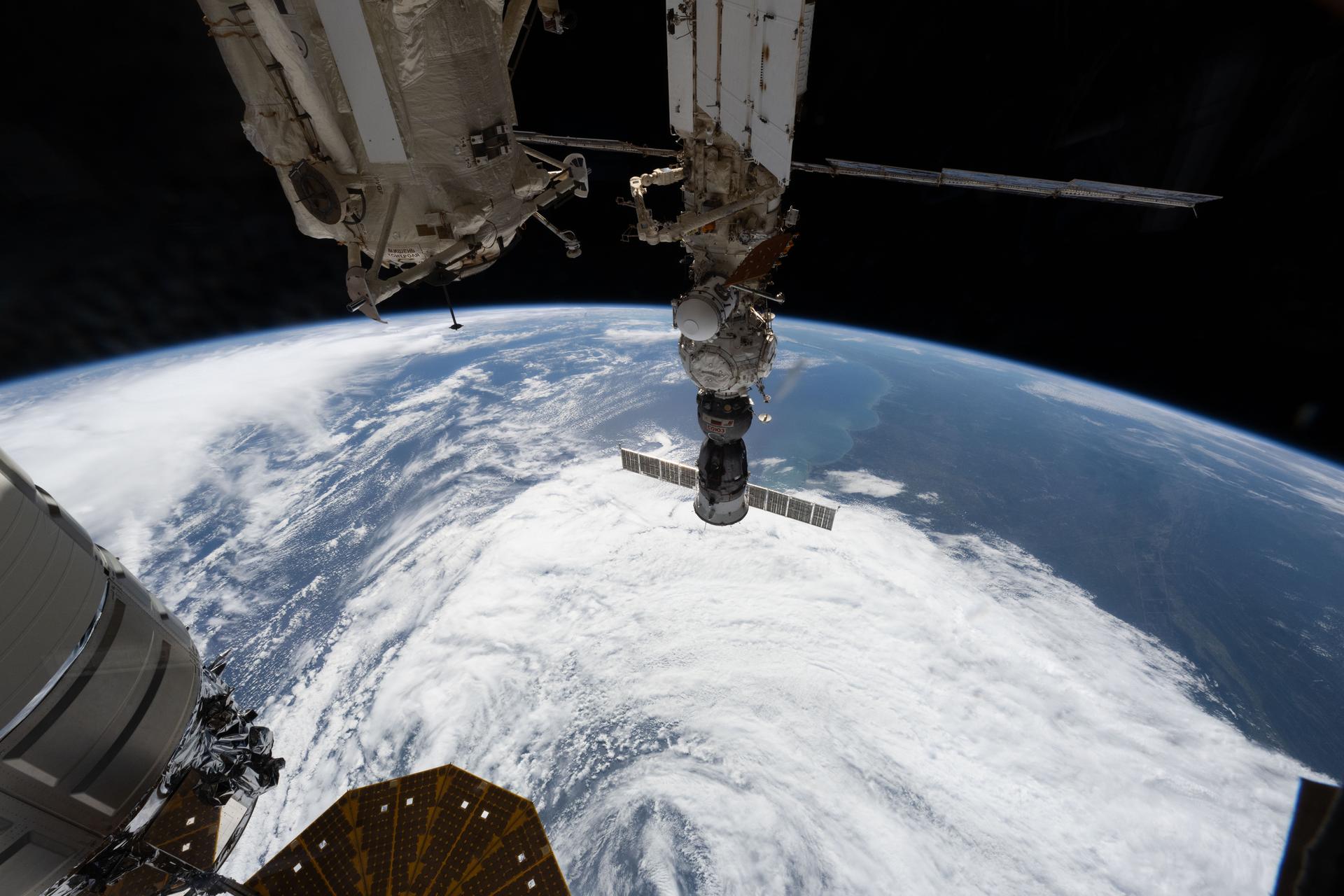
iss075e0153938 (Sept. 28, 20267) --- At center, the Soyuz MS-29 crew spacecraft is pictured docked to the Prichal module as the International Space Station orbited 263 miles above a cloudy southern Europe. Credit: ESA/Sophie Adenot

Jupiter's banded appearance is created by the cloud-forming "weather layer." In this composite image, the image on the left show's Jupiter's thermal energy being emitted in infrared light, with dark cloudy bands appearing as silhouettes against Jupiter's thermal glow. The image on the right shows Jupiter's appearance in visible light, with white cloudy "zones" and the relatively cloud-free "belts" appearing as red-brown colors. The composite was created using infrared data collected by the Gemini North telescope (left) and a visible-light image taken by NASA's Hubble Space Telescope. Both images were created from data captured on Jan. 11, 2017. https://photojournal.jpl.nasa.gov/catalog/PIA24818
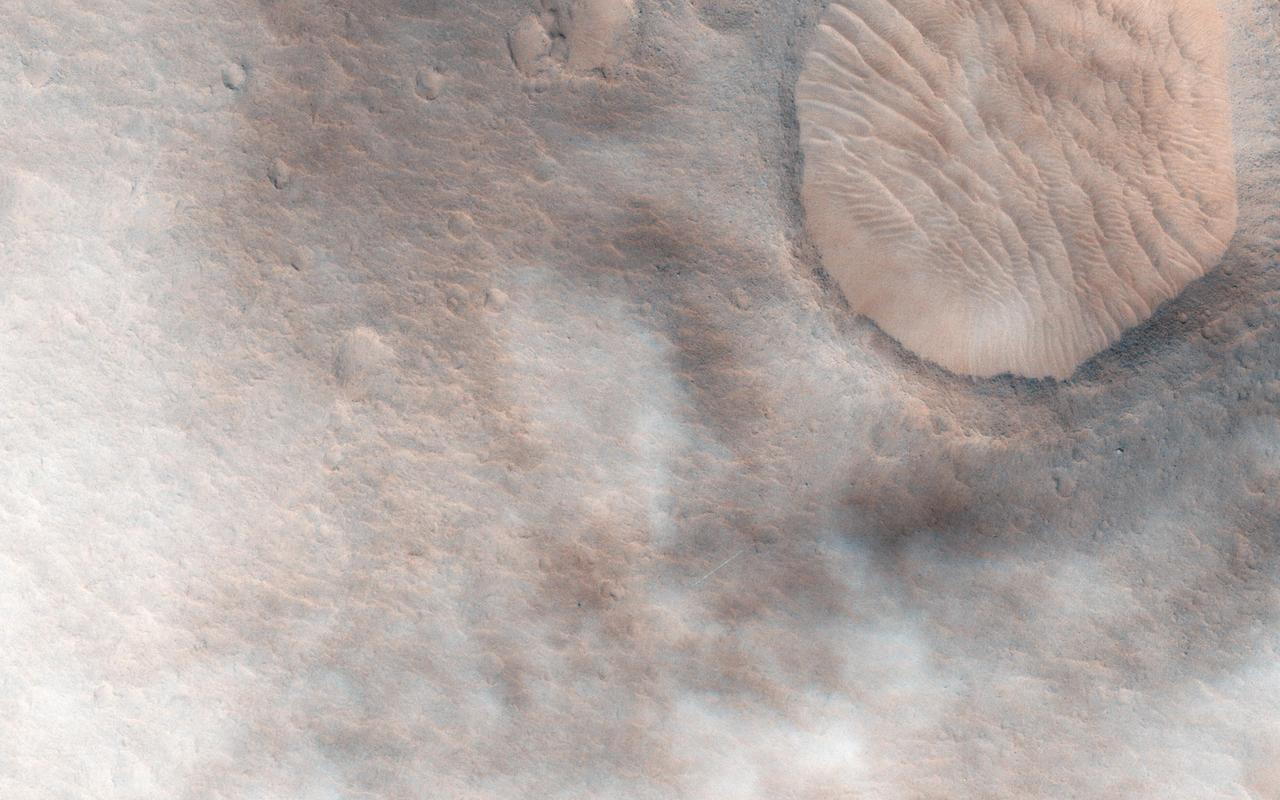
This observation from NASA Mars Reconnaissance Orbite shows a candidate 2018 European Space Agency ExoMars landing site in Hypanis Vallis. Instead of imaging ancient fluvial deposits (thought to be the remnants of a delta feed lake), the image shows patchy concentrations of dust clouds. These clouds are part of the annually occurring Acidalia storm track, a regional dust storm system that originates in the Acidalia-Chryse-Kasei region and propagates southward into equatorial Valles Marineris and beyond. While this image is only partially obscured by dust, many others captured around this time frame were completely dominated by think clouds of dust. For example, this image in Capri Chasma was rendered useless for geology and will have to be reacquired. Landing by the ExoMars rover in these kinds of atmospheric conditions would be complicated. That mission is set to touchdown on Mars in January 2019, hopefully with clear skies. HiRISE will continue to image Hypanis Vallis and other interesting sites on Mars despite the changing weather. http://photojournal.jpl.nasa.gov/catalog/PIA19846
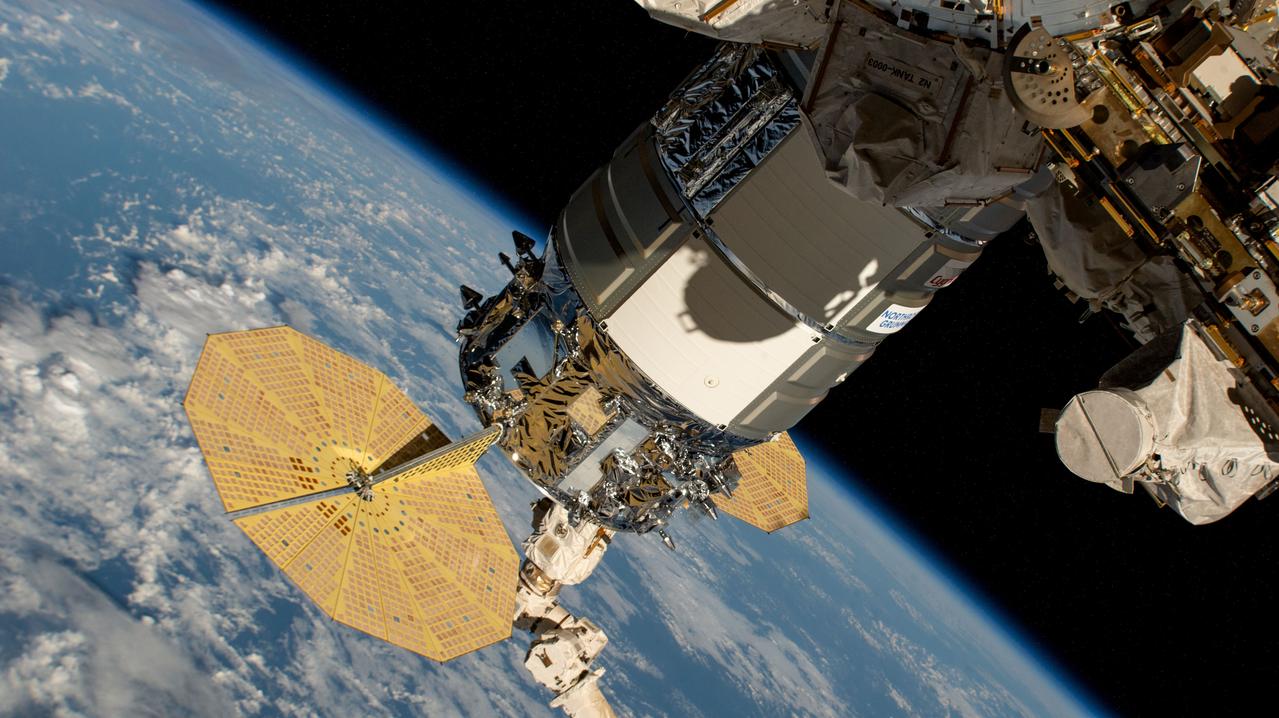
iss071e439629 (Aug. 6, 2024) --- Still in the grips of the Canadarm2 robotic arm, the Northrop Grumman Cygnus space freighter is pictured attached to the Unity module's Earth-facing port. The International Space Station was orbiting 262 miles above a cloudy Pacific Ocean halfway between the U.S. island of Hawaii and the island nation of the Republic of Kiribati at the time of this photograph.

iss066e024000 (Oct. 31, 2021) --- A cloudy north Pacific Ocean south of Alaska is pictured from the International Space Station as it orbited 263 miles above. At center top, is the Kibo laboratory module's external pallet that houses a variety of experiments and hardware exposed to the harsh environment of microgravity.
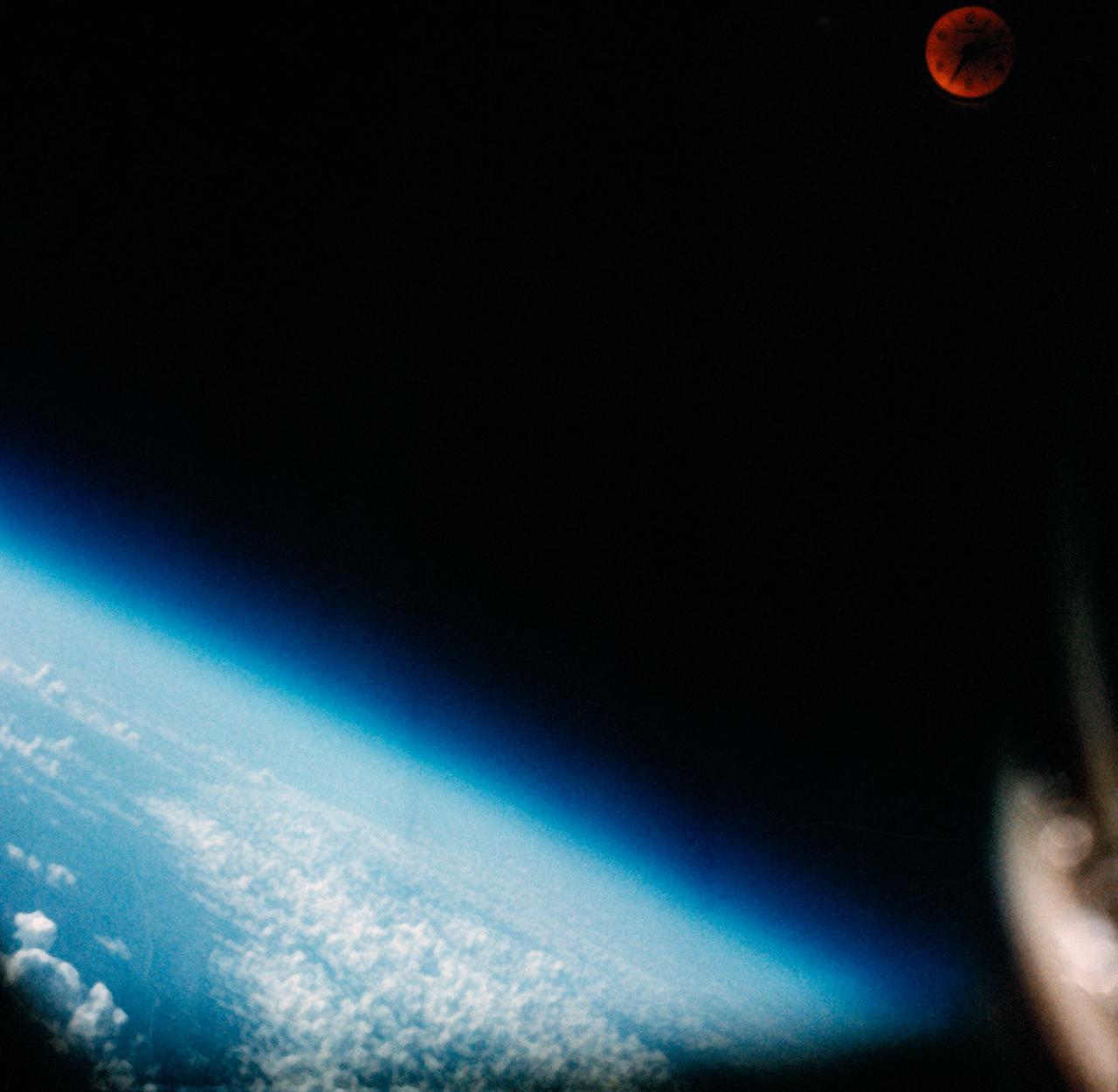
S61-01914 (5 May 1961) --- Mercury-Redstone 3 (MR-3) spaceflight Earth observations of a cloudy Earth surface. There is a gleam from the light reflected off the capsule window in the lower right side of the frame. Photo credit: NASA or National Aeronautics and Space Administration
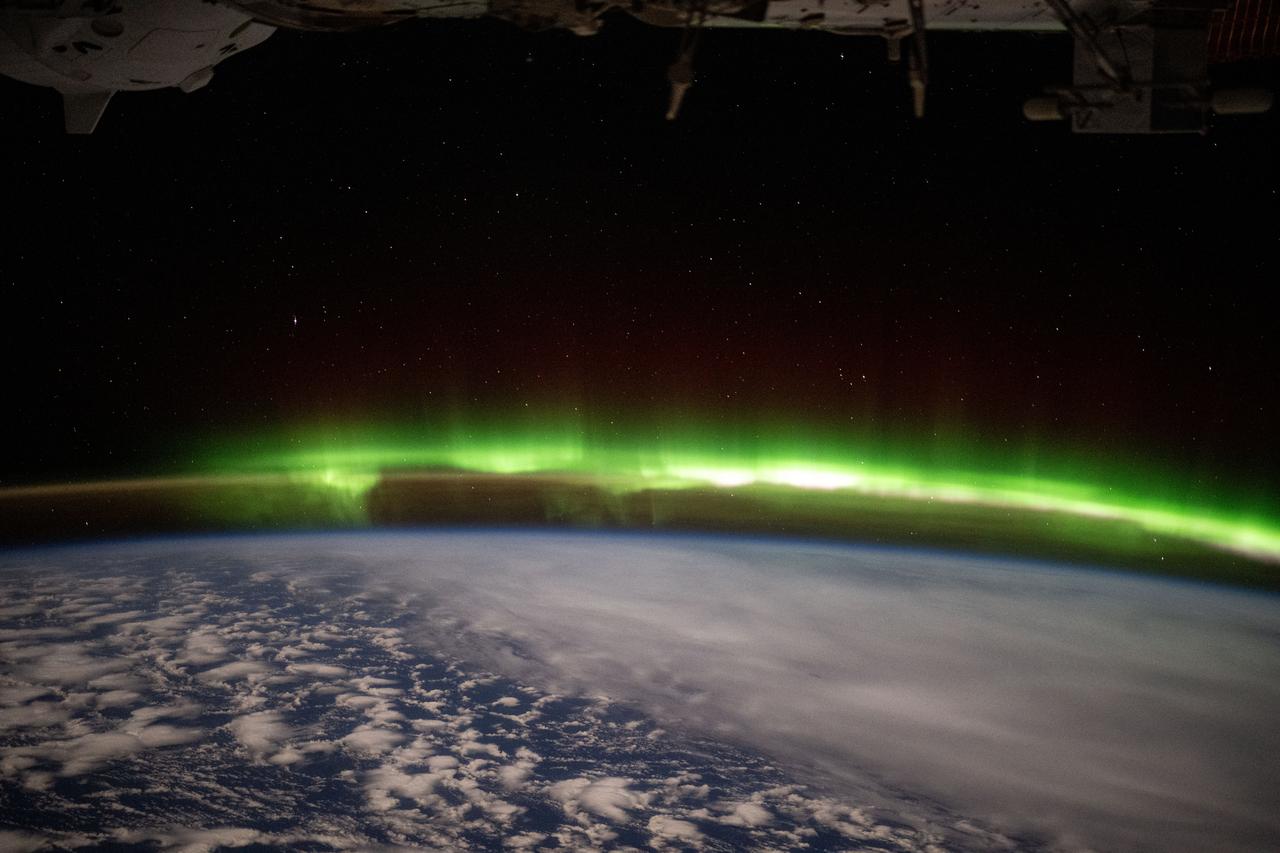
iss073e0246858 (June 9, 2025) --- A bright green aurora australis streams above Earth's horizon blanketing the atmospheric glow in this photograph from the International Space Station as it orbited 269 miles above a cloudy southern Indian Ocean midway between South Africa and Antarctica.
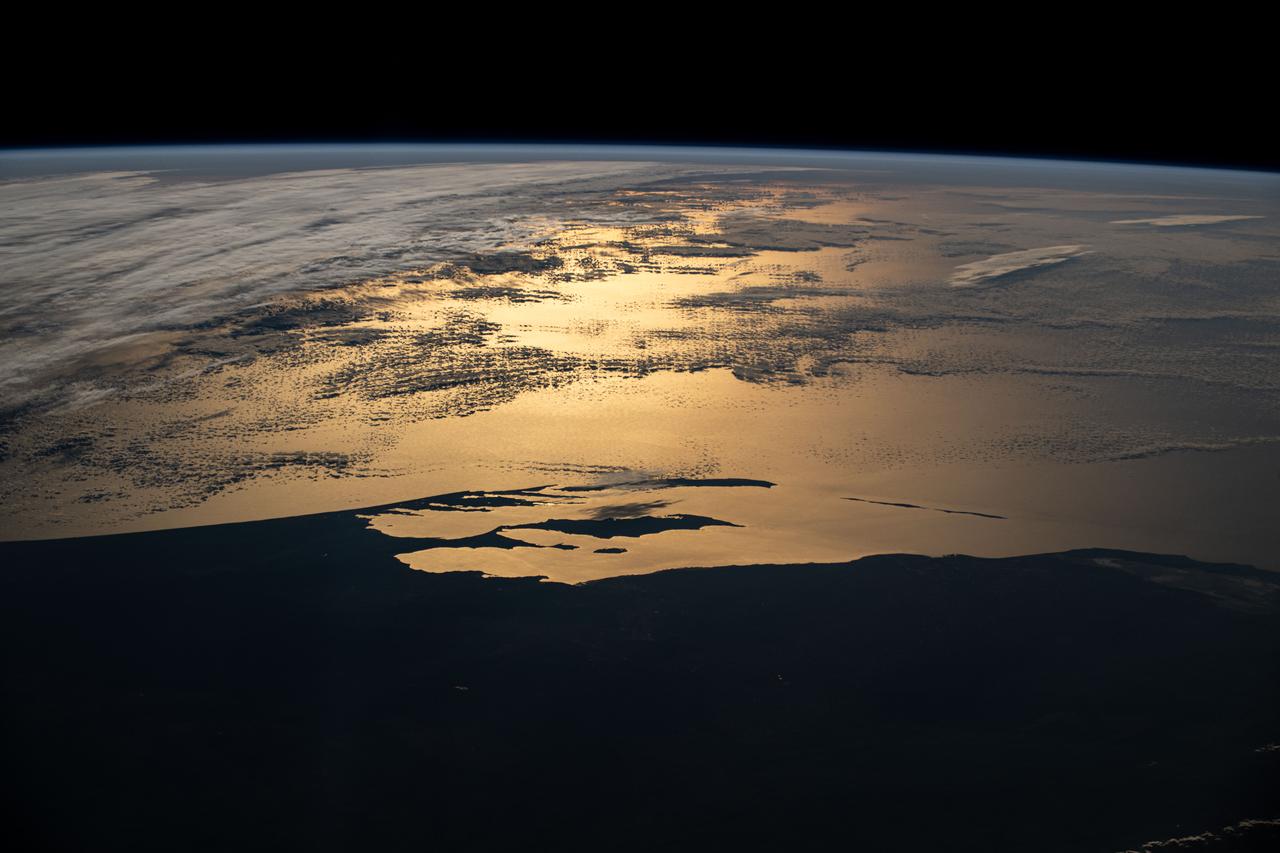
iss072e145182 (Nov. 5, 2024) --- Western Australia's silhouetted coastline contrasts with the sun's golden-hued glint beaming off a partly cloudy Indian Ocean in this photograph from the International Space Station as it orbited 265 miles above the island continent during an orbital sunset.

iss054e012391 (Jan. 1, 2018) --- Despite the cloudiness during this nighttime photograph taken by Expedition 54 crew members aboard the International Space Station, the Caribbean islands of (from top left to bottom right) Puerto Rico, Cuba, Haiti and the Dominican Republic are seen from an altitude of 250 miles.
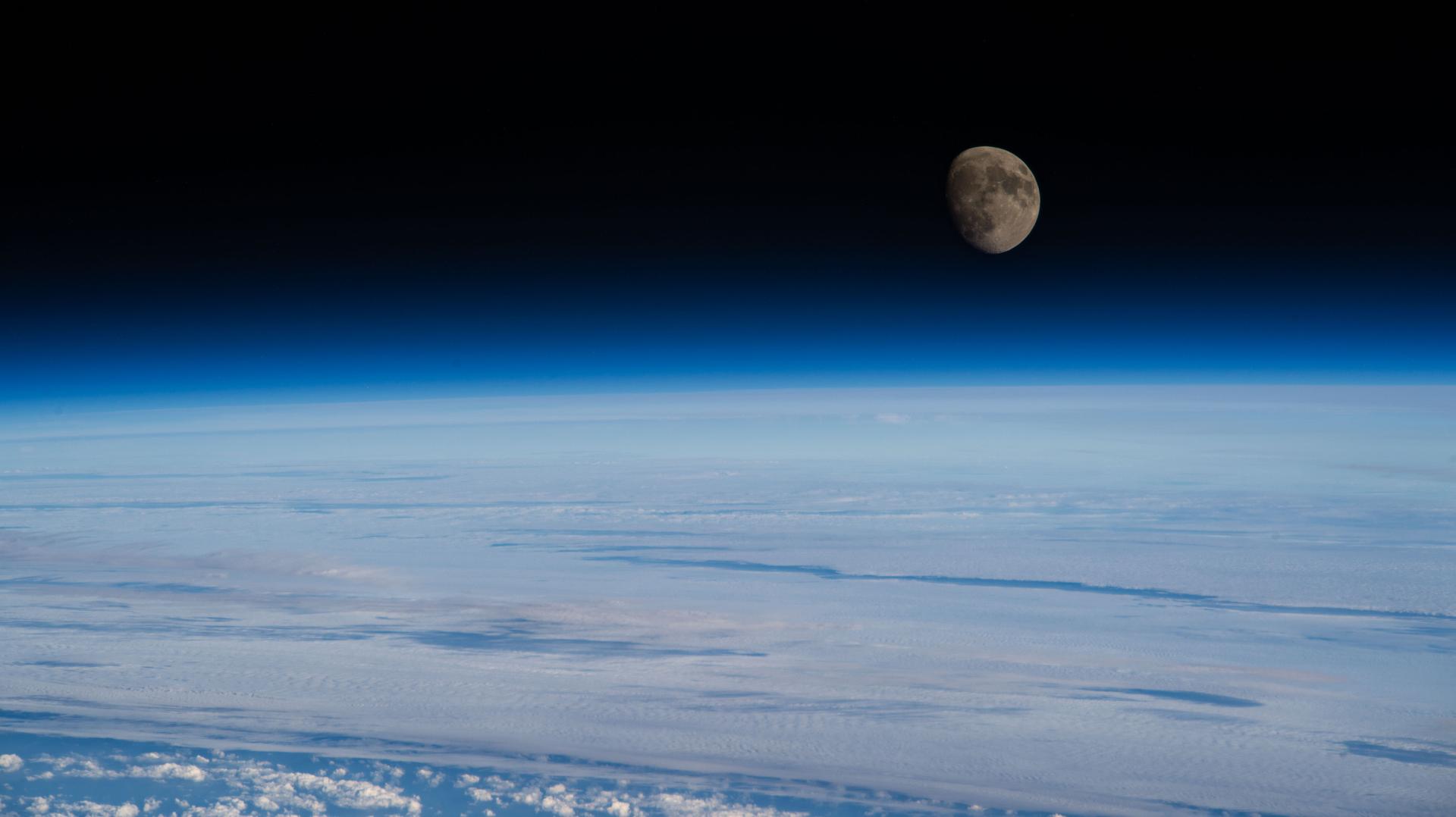
iss073e0819960 (Oct. 3, 2025) --- The waxing gibbous Moon rises above Earth’s blue atmosphere in this photograph taken from the International Space Station as it orbited 263 miles above a cloudy Atlantic Ocean off the coast of Quebec, Canada.
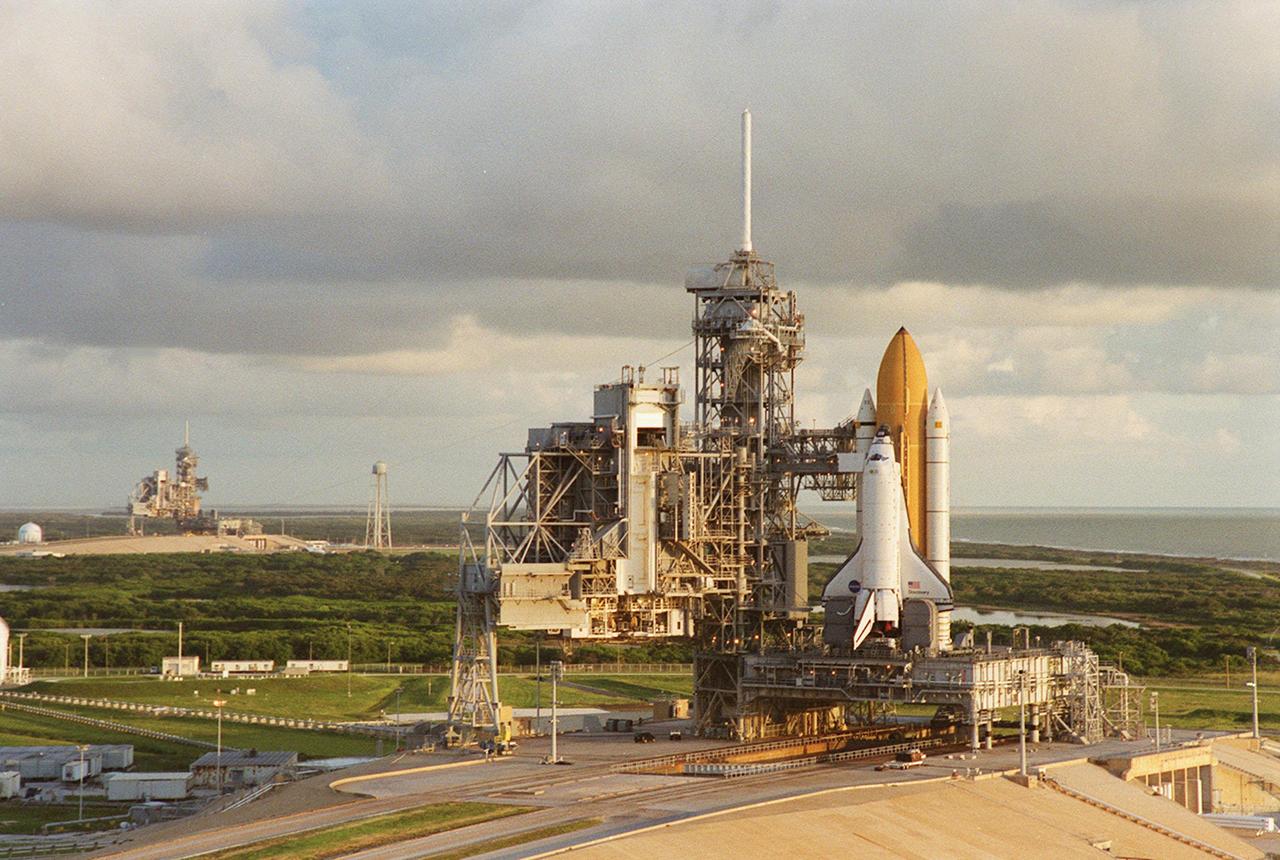
Cloudy skies form a backdrop for Launch Pads 39B (left) and 39A (foreground). Space Shuttle Discovery waits on top of the pad for its launch Oct. 5 to the International Space Station. Between the pads can be seen the 300,000-gallon water tank that provides water for the sound suppression system during launch.
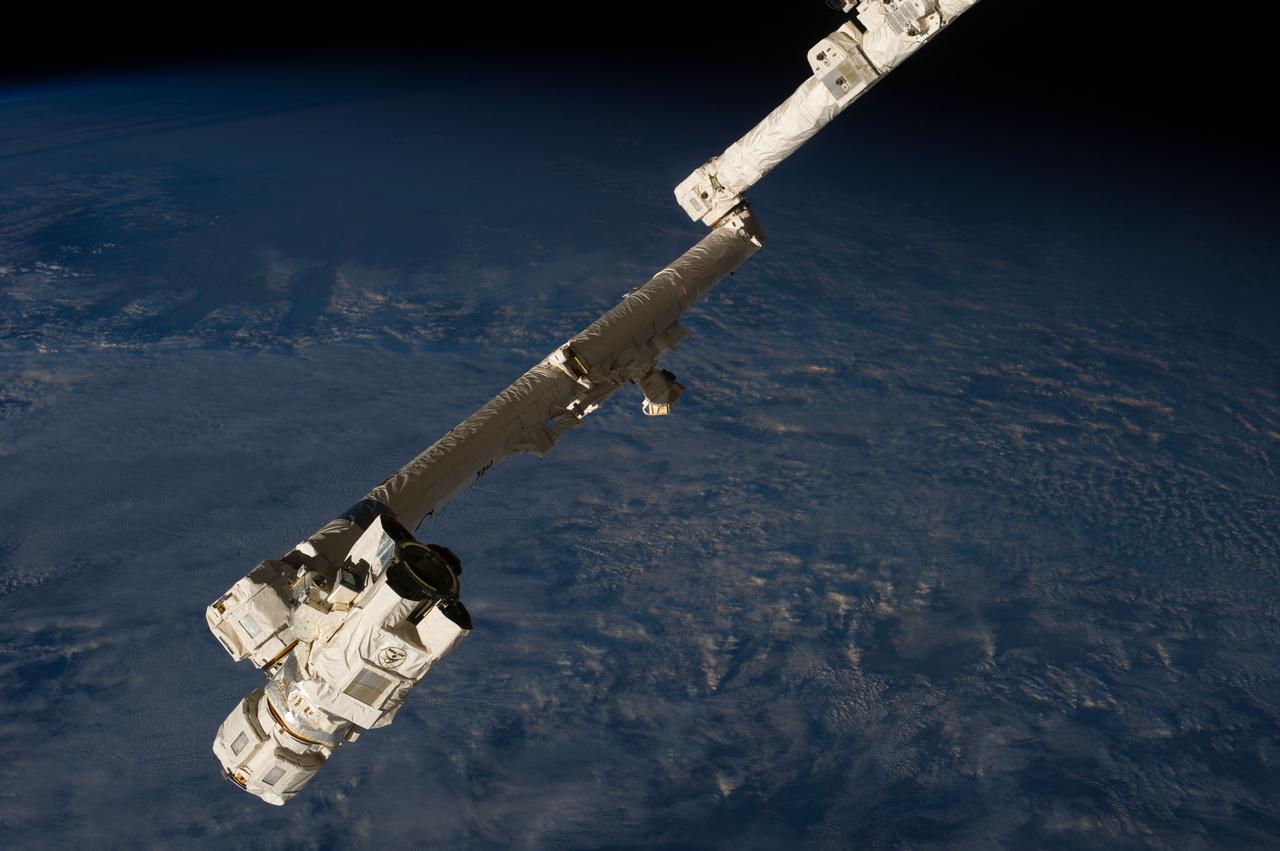
View of Space Station Remote Manipulator System (SSRMS) extended arm with a dark,cloudy Earth in the background. Photo was taken by an Expedition 36 crew member on board the International Space Station (ISS). Per Twitter message: #CanadaArm2 poised and ready to support capture of #HTV4 in just a couple weeks.
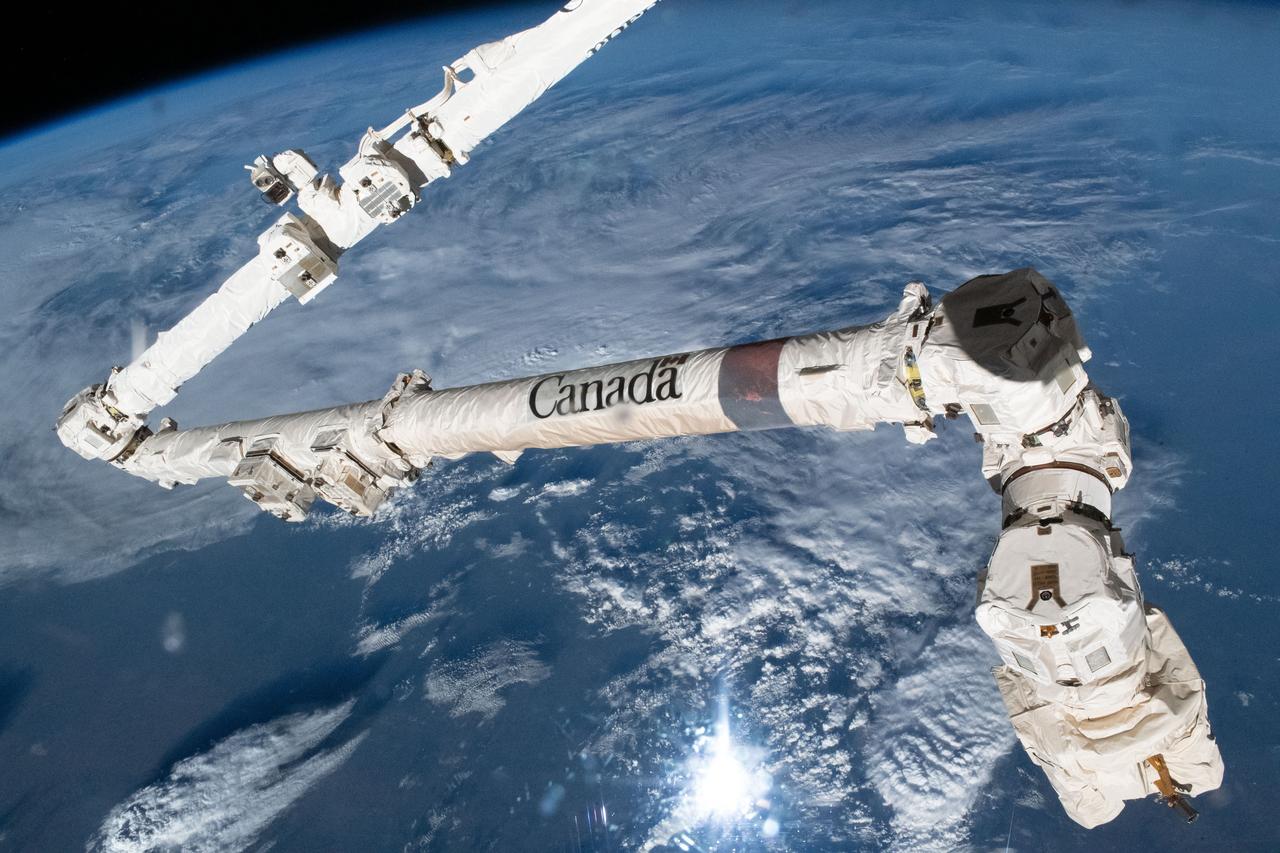
iss069e090130 (Sept. 19, 2023) --- The Canadian Space Agency's major contribution to the International Space Station, the 57.7-foot-long Canadarm2 robotic arm, which can maneuver spacecraft, science payloads, and spacewalking astronauts, is pictured as the orbital lab soared 259 miles above a cloudy Texas.
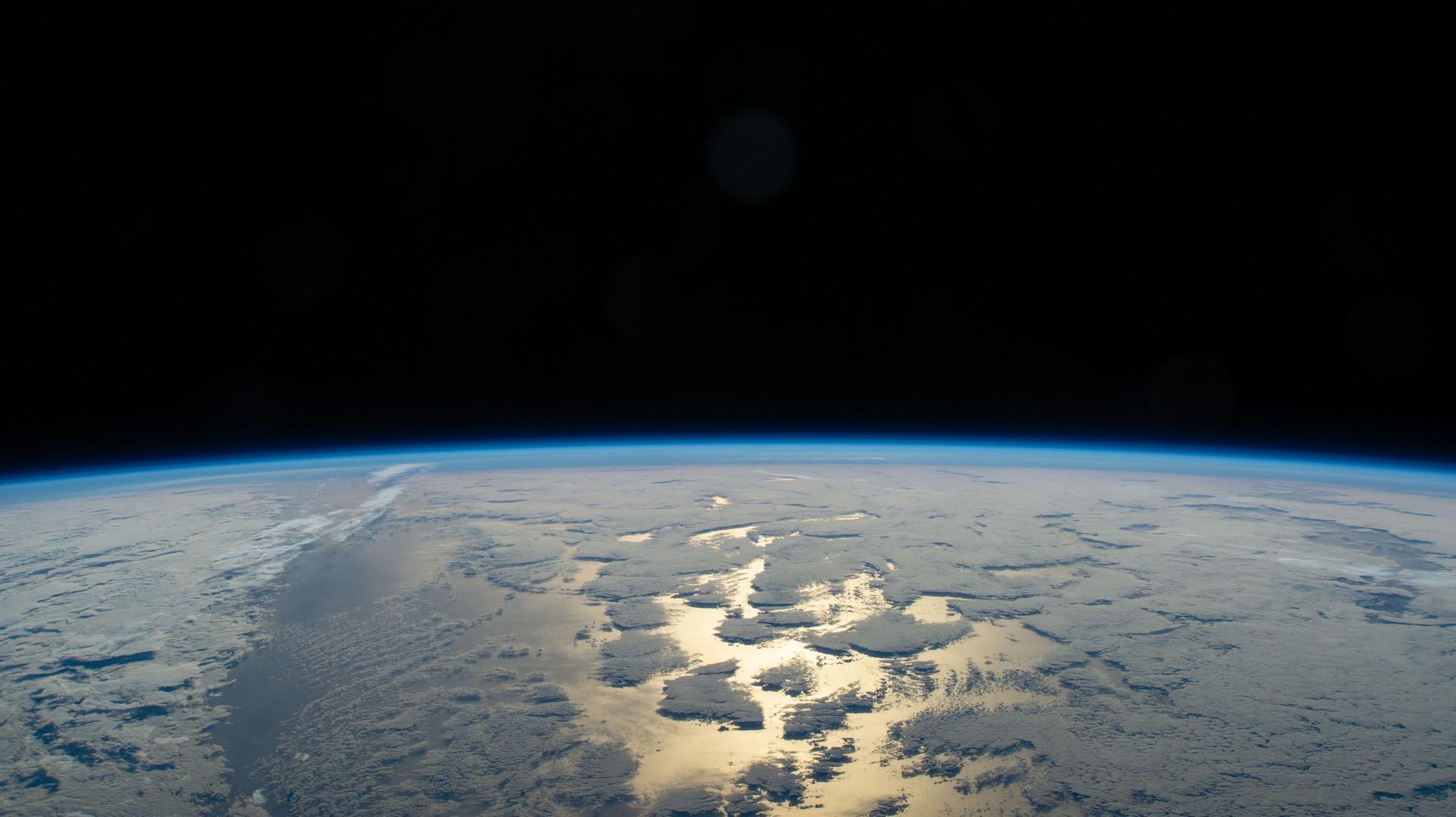
iss074e0089803 (Jan. 16, 2026) --- Earth's thin blue atmosphere traces the planet's horizon as the sun's glint beams off a partly cloudy Pacific Ocean west of Chile on the South American continent. The International Space Station was orbiting 271 miles above Earth at the time of this photograph.
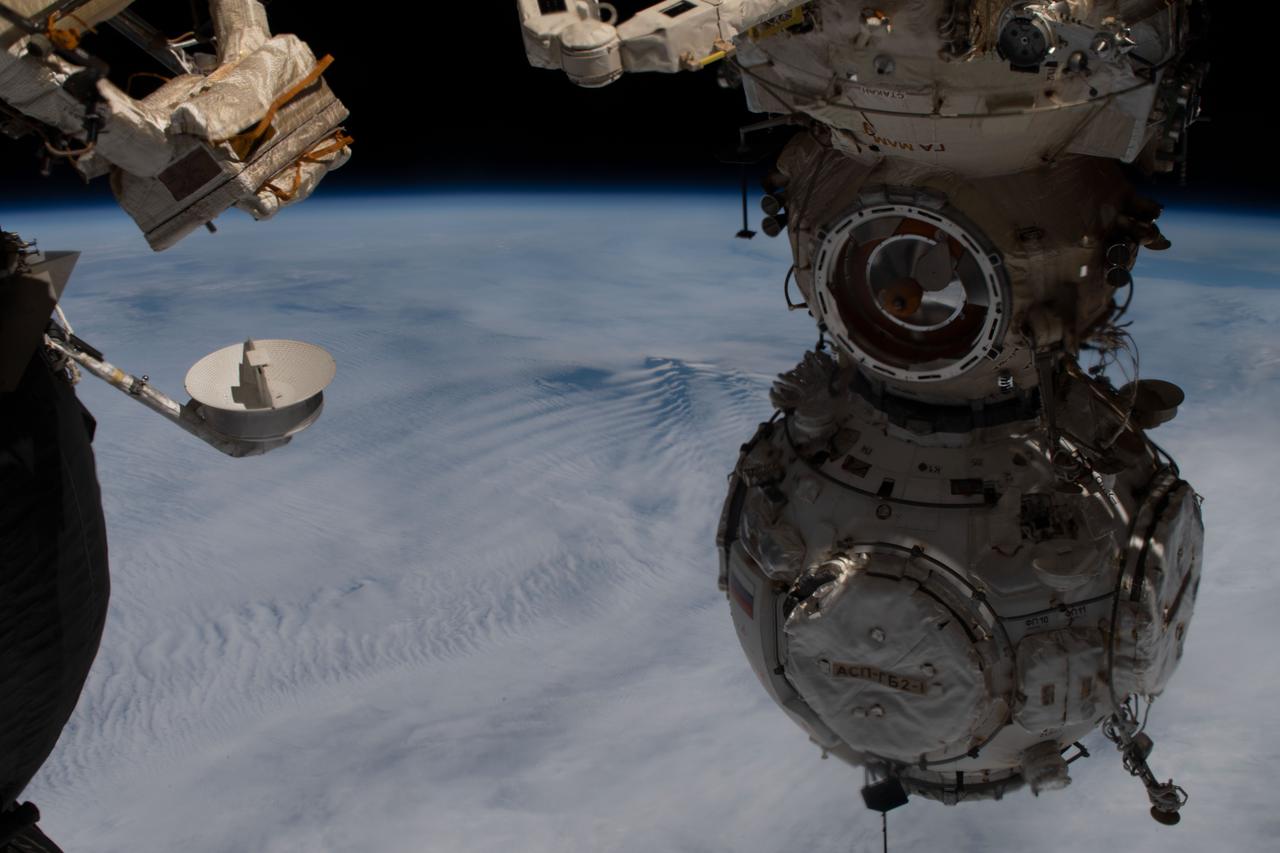
iss068e039258 (Jan. 8, 2023) --- The Prichal docking module is attached to the Nauka multipurpose laboratory module, both recent additions to the International Space Station from Roscosmos, in this photograph from the orbiting lab as it soared 266 miles above a cloudy southern Indian Ocean.
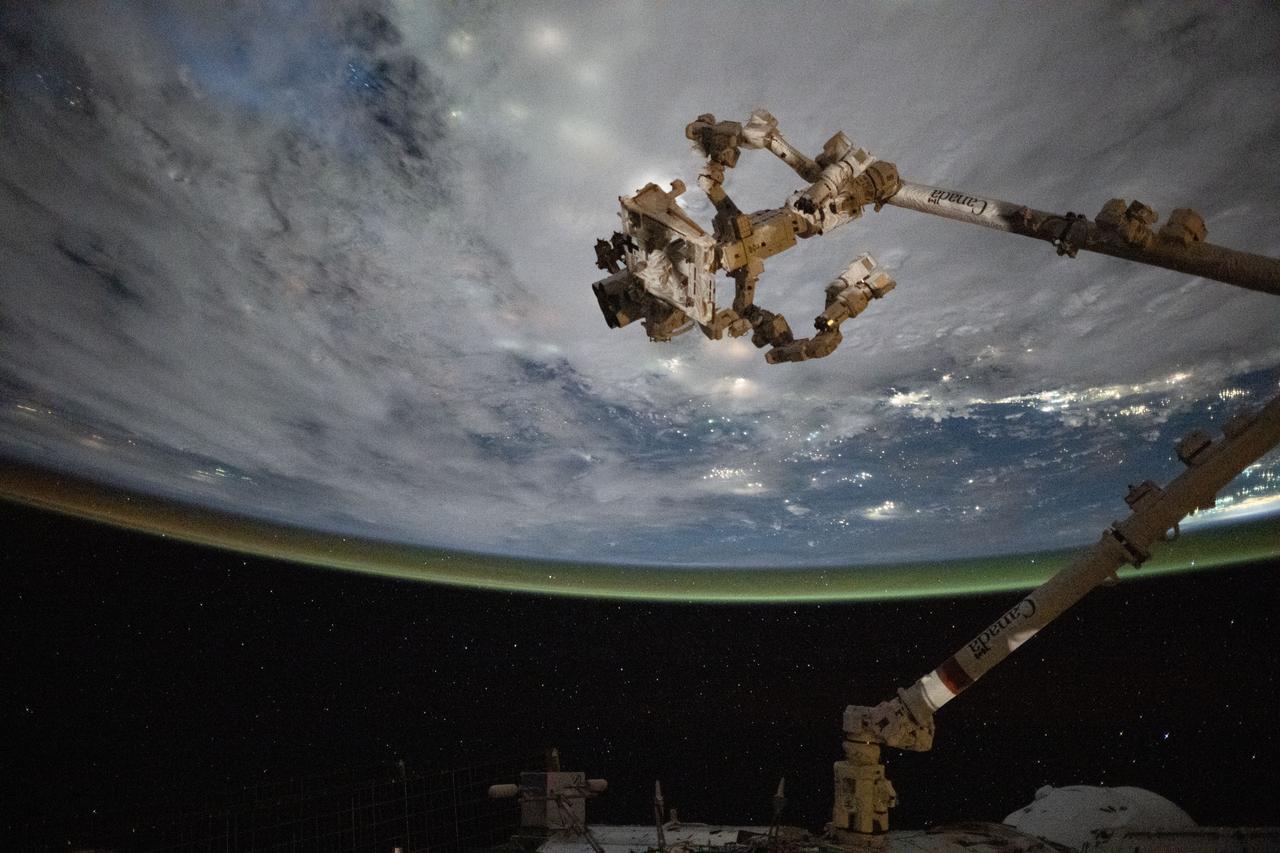
iss073e0695937 (Sept. 1, 2025) --- The Canadarm2 robotic arm with Dextre, its fine-tuned robotic hand attached, is pictured extending from the International Space Station as it orbited 258 miles above the coast of Cambodia on a cloudy Gulf of Thailand.