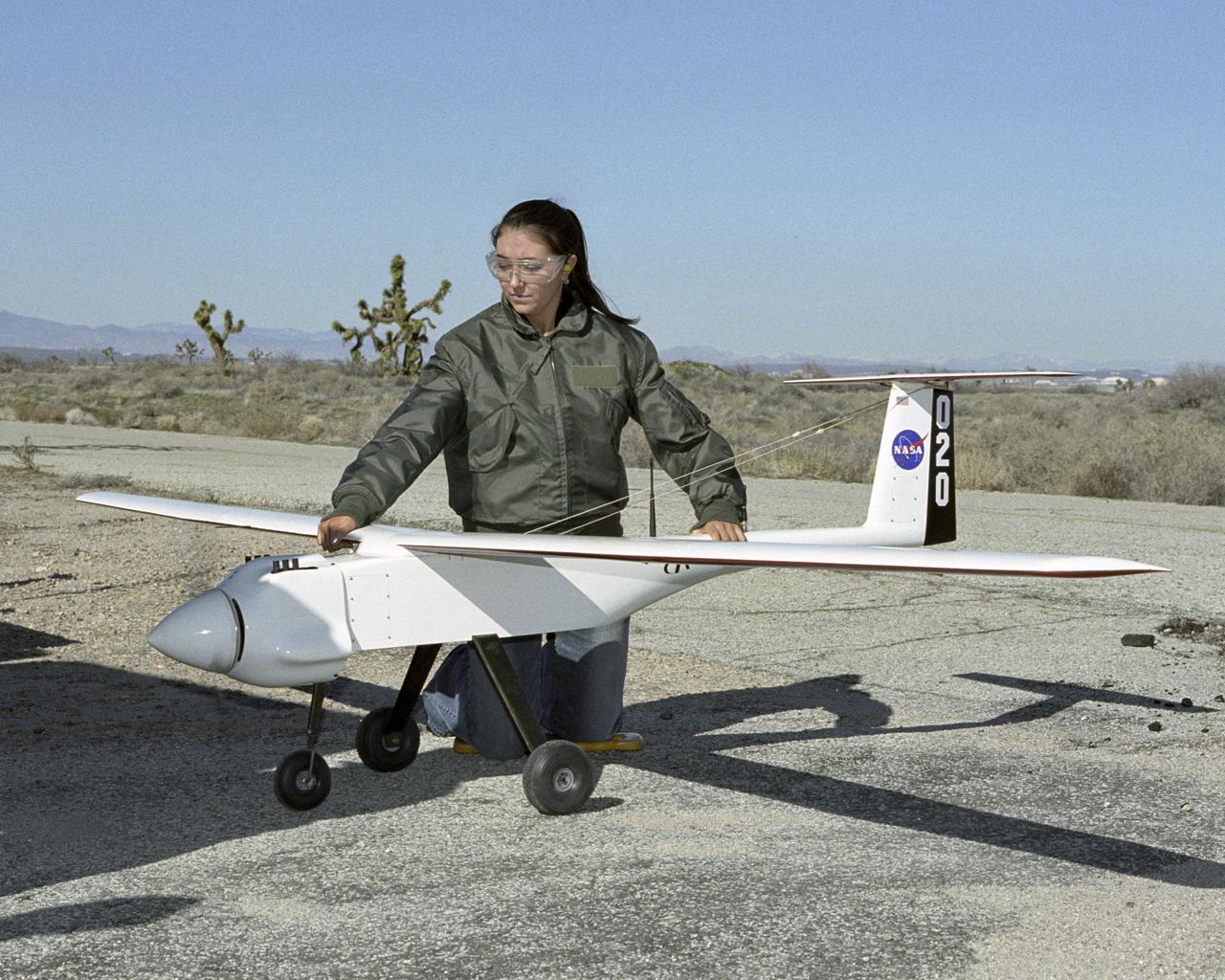
NASA Dryden Operations co-op student Shannon Kolensky holds one of the APV-3 UAVs flown in the Networked UAV Teaming Experiment steady during an engine runup.

NASA’s Air Operations Co-Lead Don Reed briefs the air ops team during Underway Recovery Test 9 (URT-9) aboard the USS John P. Murtha. During the weeklong test, NASA’s Landing and Recovery team is performing their final mission certification ahead of Artemis I.
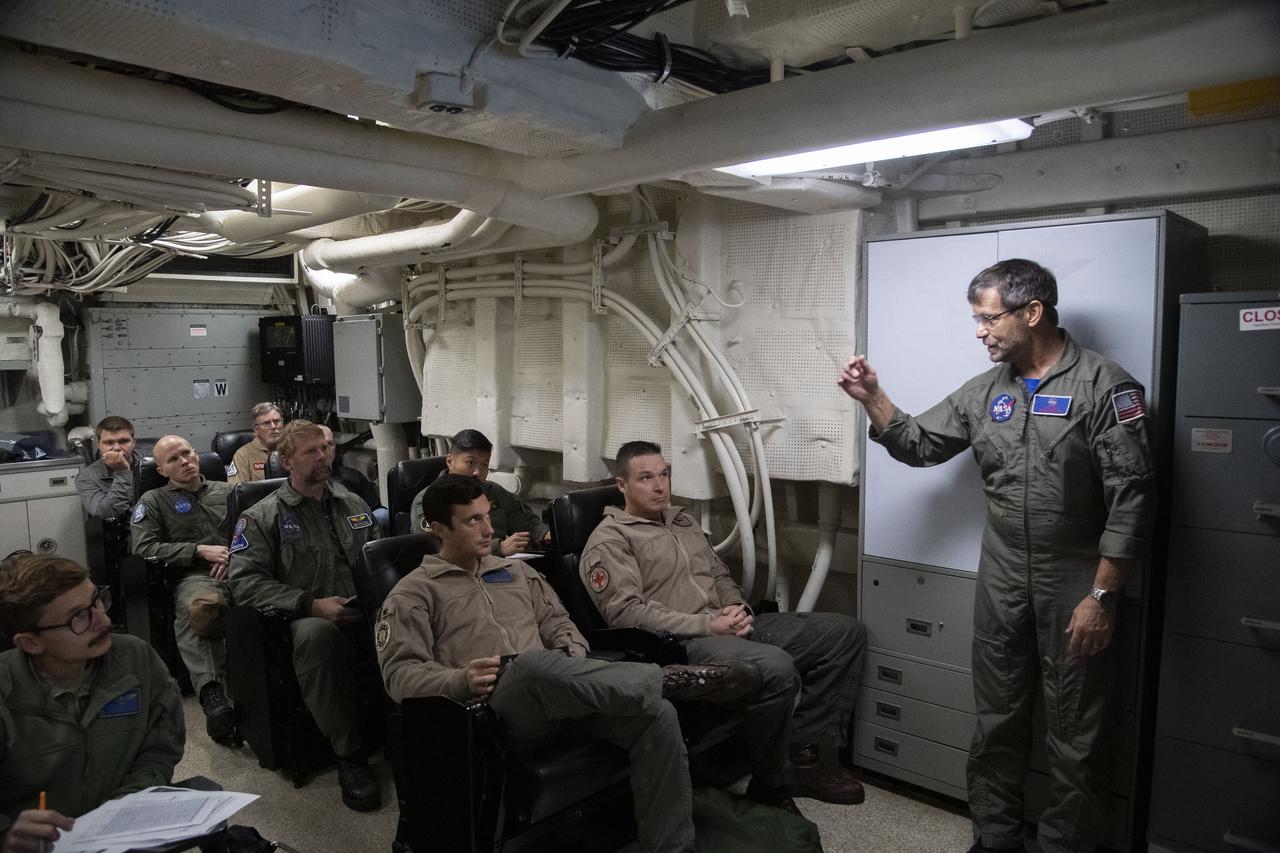
NASA’s Air Operations Co-Lead Don Reed briefs the air ops team during Underway Recovery Test 9 (URT-9) aboard the USS John P. Murtha. During the weeklong test, NASA’s Landing and Recovery team is performing their final mission certification ahead of Artemis I.
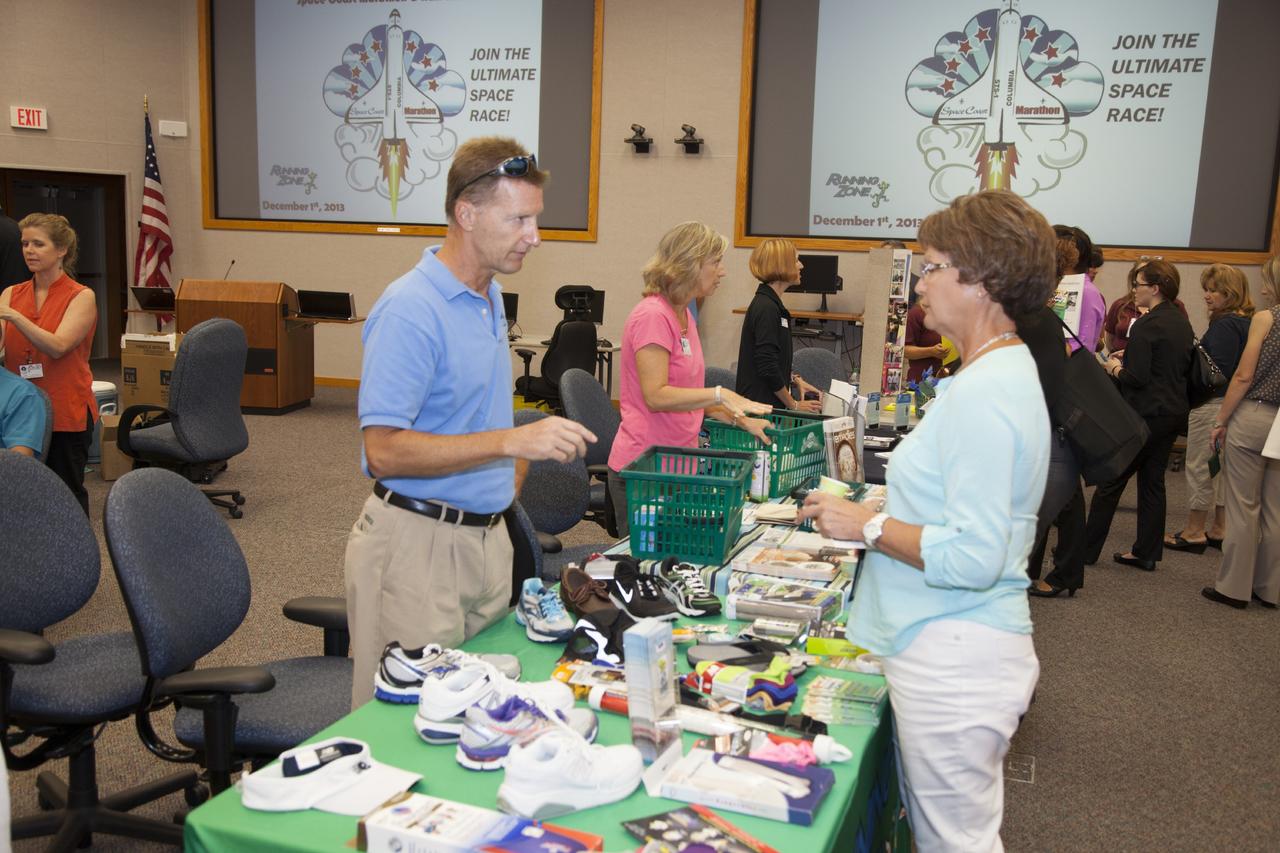
CAPE CANAVERAL, Fla. – Mark Hiebert, of the Running Zone, talks to a Kennedy worker during the National Employee Health and Fitness Day event in the Operations and Checkout Building's Mission Briefing Room. Employees also had the opportunity to be tested for diabetes, enter a raffle for prizes and get a five-minute massage. Other venders shown in the background are Sunseed Co-op’s Marcia Cooney, center, and Bridget Griffin from the YMCA of Titusville. Photo credit: NASA/Daniel Casper

NASA Kennedy Space Center's Sam Ball, third from left, speaks during the Energy Action Day employee event held in NASA Kennedy Space Center's Space Station Processing Facility. Part of Energy Awareness Month, the event featured subject matter experts in the area of solar energy, its connections to the space program and options for residential solar power. From left to right are Nick Murdock, energy and water program manager at Kennedy; Chuck Tatro of NASA's Launch Services Program; Ball; Anuj Chokshi of FPL; Bill McMullen of Southern Power; John Sherwin of the Florida Solar Energy Center in Cocoa; and Lorraine Koss of the Brevard County Solar Co-op.
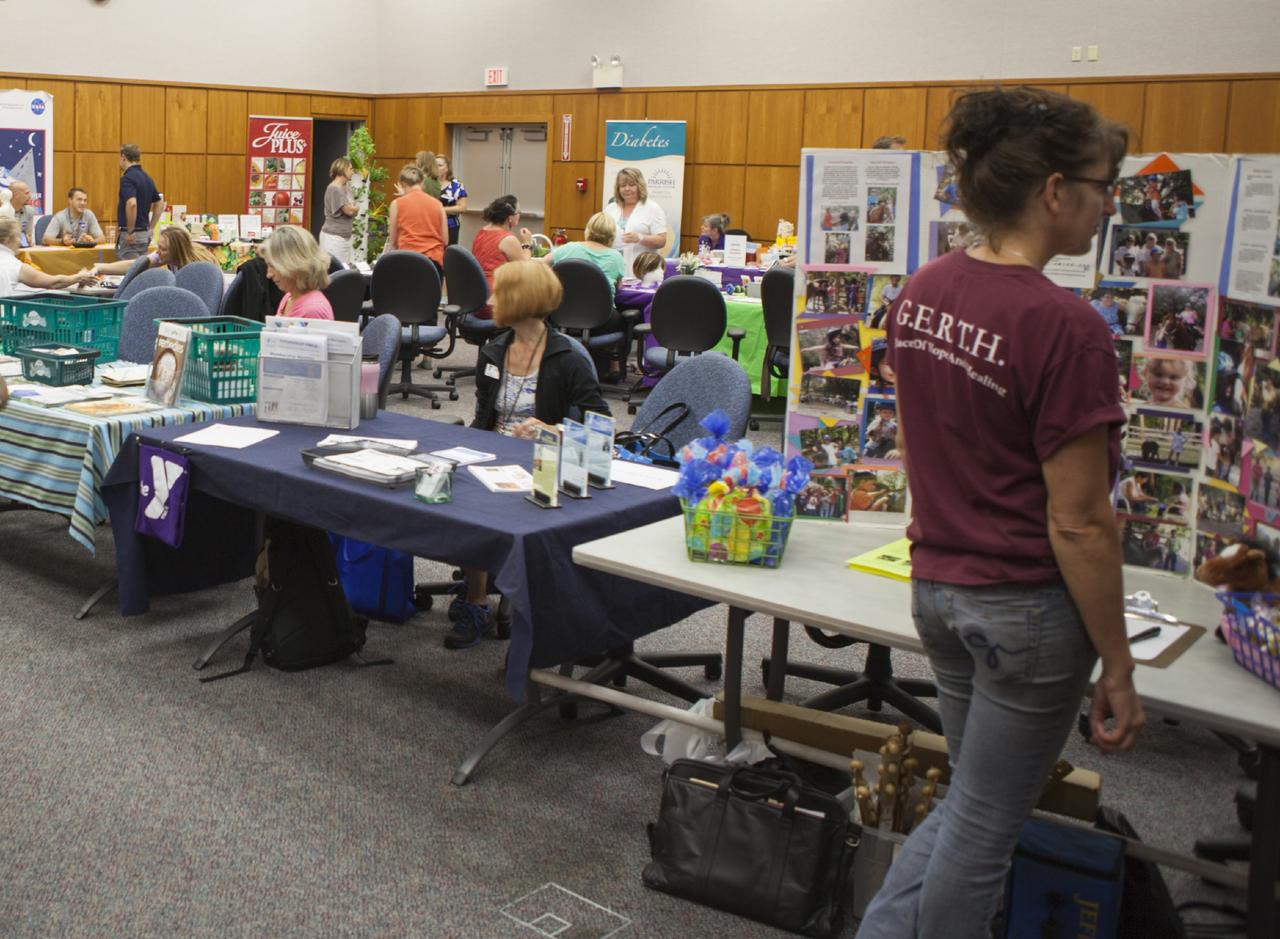
CAPE CANAVERAL, Fla. – Linnea Applegate, right, of Grace Equine Rescue and Therapy for Humans, or GERTH, organizes her booth during the National Employee Health and Fitness Day event in the Operations and Checkout Building's Mission Briefing Room. GERTH is a nonprofit organization in Cocoa, Fla., that brings horses, children and adults together in a safe, nurturing and healing environment to promote therapeutic healing. Other vendors shown in the background include Bridget Griffin of the YMCA of Titusville, center, and Sunseed Co-op’s Marcia Cooney, in pink. Photo credit: NASA/Daniel Casper
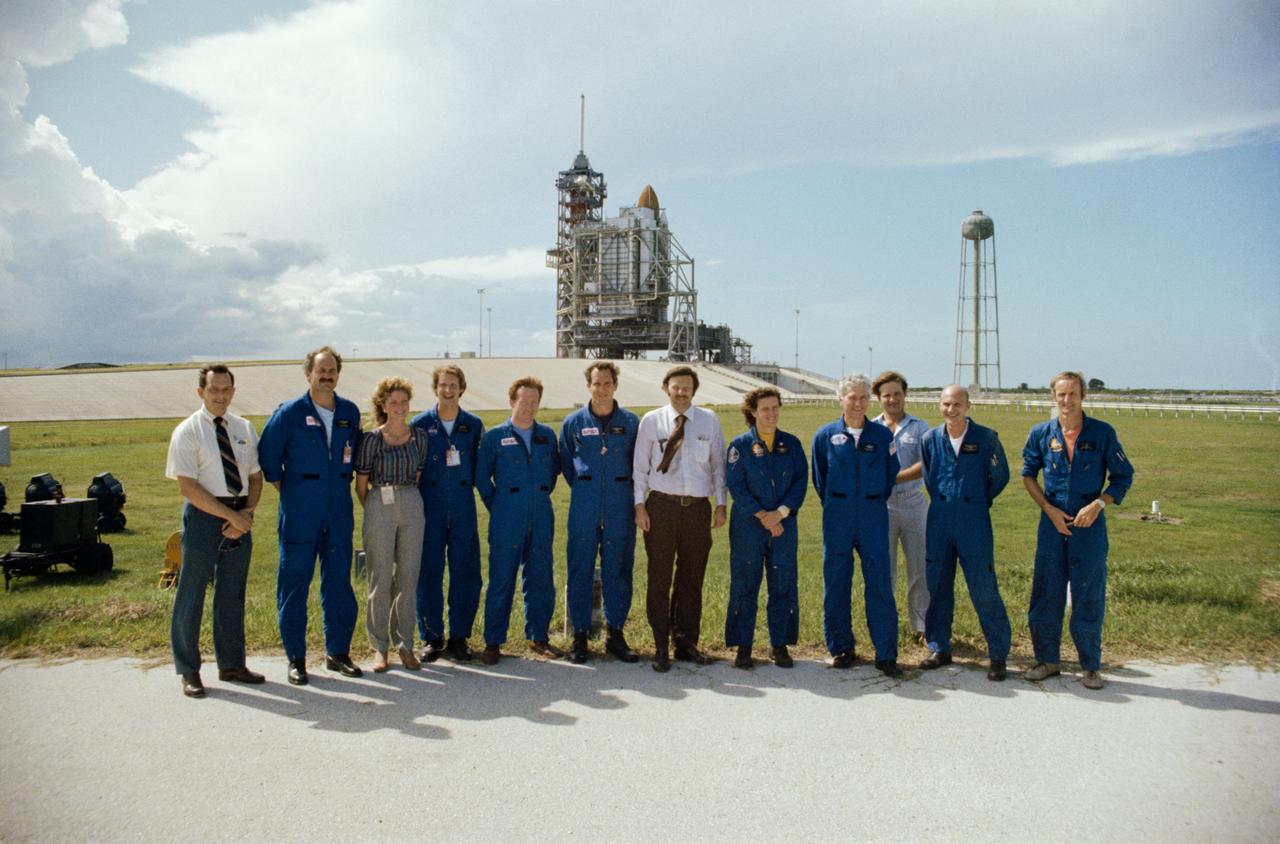
S82-32201 (29 May 1982) --- Members of the JSC astronaut corps, vehicle integration test team (VITT) and other personnel pose for a photograph at the completion of a countdown demonstration test (CDDT) at Launch Pad 39A, Kennedy Space Center (KSC). The participants are, from the left, Wilbur J. Etbauer, engineer with the VITT; mission specialist-astronaut James D. Van Hoften; Terri Stanford, engineer from JSC's flight operations directorate; mission specialist-astronaut Steven A. Hawley; astronaut Richard N. Richards; astronaut Michael J. Smith; Richard W. Nygren, head of the VITT; mission specialist-astronaut Kathryn D. Sullivan; astronaut Henry W. Hartsfield Jr., STS-4 pilot; Mark Haynes, a co-op student participating with the VITT; astronaut Thomas K. Mattingly II, STS-4 commander; and astronaut Donald E. Williams. Photo credit: NASA

NASA and contractor employees who were working at NASA’s Kennedy Space Center in Florida during the Apollo 11 launch gathered for a group photo on the observation deck of Operations and Support Building II on July 11, 2019. From left, along with their titles from 50 years ago, are Richard Sharum, NASA civil servant; Edward Wilson, security officer for Wackenhut Corporation; Sue Gross, secretary to the deputy procurement officer; Emery Lamar, NASA Kennedy co-op student in Apollo Spacecraft Electrical Division; James Scotti, material clerk with Bendix Corporation; Suzanne Stuckey, secretary for telemetry; Andrew Pritchard, contractor with McGregor-Warner; Ken Poimboeuf, Design Engineering Directorate; and Grady McCorquodale, Launch Control Center engineer with Boeing. Not pictured are Richard Cota, civil servant in the Engineering Directorate; and Victor Kurjack, data courier.
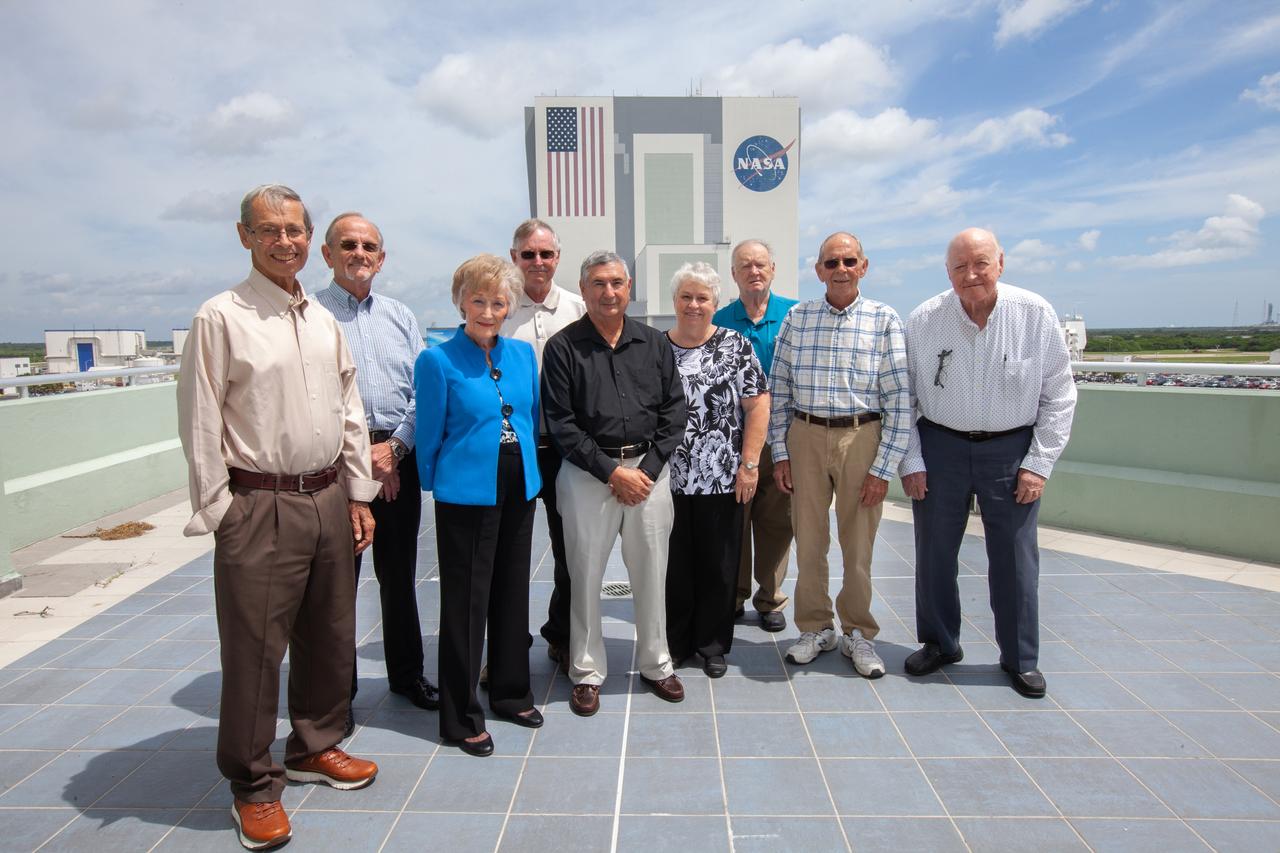
NASA and contractor employees who were working at NASA’s Kennedy Space Center in Florida during the Apollo 11 launch gathered for a group photo on the observation deck of Operations and Support Building II on July 11, 2019. From left, along with their titles from 50 years ago, are Richard Sharum, NASA civil servant; Edward Wilson, security officer for Wackenhut Corporation; Sue Gross, secretary to the deputy procurement officer; Emery Lamar, NASA Kennedy co-op student in Apollo Spacecraft Electrical Division; James Scotti, material clerk with Bendix Corporation; Suzanne Stuckey, secretary for telemetry; Andrew Pritchard, contractor with McGregor-Warner; Ken Poimboeuf, Design Engineering Directorate; and Grady McCorquodale, Launch Control Center engineer with Boeing. Not pictured are Richard Cota, civil servant in the Engineering Directorate; and Victor Kurjack, data courier.
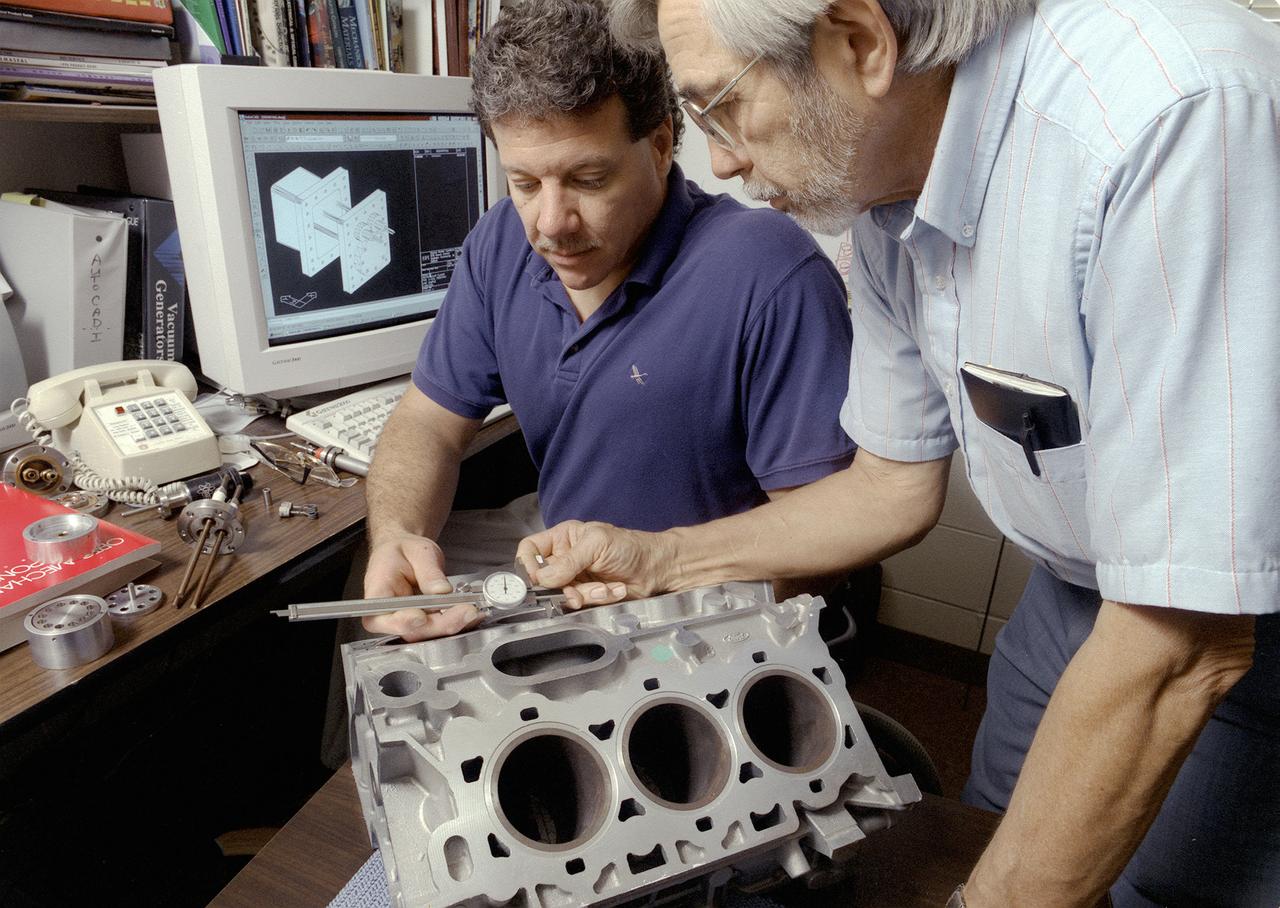
Don Sirois, an Auburn University research associate, and Bruce Strom, a mechanical engineering Co-Op Student, are evaluating the dimensional characteristics of an aluminum automobile engine casting. More accurate metal casting processes may reduce the weight of some cast metal products used in automobiles, such as engines. Research in low gravity has taken an important first step toward making metal products used in homes, automobiles, and aircraft less expensive, safer, and more durable. Auburn University and industry are partnering with NASA to develop one of the first accurate computer model predictions of molten metals and molding materials used in a manufacturing process called casting. Ford Motor Company's casting plant in Cleveland, Ohio is using NASA-sponsored computer modeling information to improve the casting process of automobile and light-truck engine blocks.
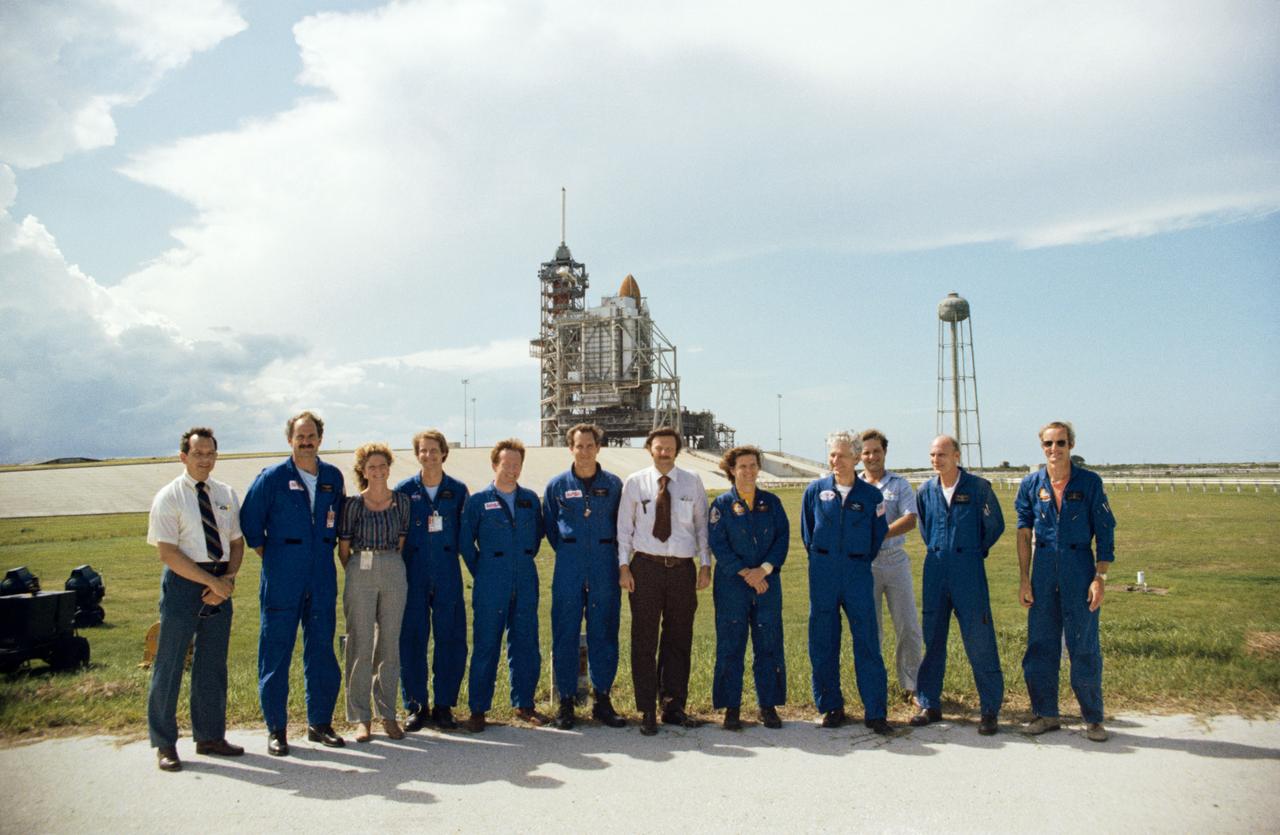
S82-32200 (29 May 1982) --- Members of the JSC astronaut corps, STS-4 vehicle integration test team (VITT) and other personnel pose for a photograph at the completion of a countdown demonstration test (CDDT) at Launch Pad 39A, Kennedy Space Center (KSC). The participants are, from the left, Wilbur J. Etbauer, engineer with the VITT; mission specialist-astronaut James D. van Hoften; Terry Stanford, engineer from JSC's flight operations directorate; mission specialist-astronaut Steven A. Hawley; astronaut Richard N. Richards; astronaut Michael J. Smith; Richard W. Nygren, head of the VITT; mission specialist-astronaut Kathryn D. Sullivan; astronaut Henry W. Hartsfield Jr.,STS-4 pilot; Mary Haynes, a co-op student participating with the VITT; astronaut Thomas K. Mattingly II, STS-4 commander; and astronaut Donald E. Williams. Photo credit: NASA
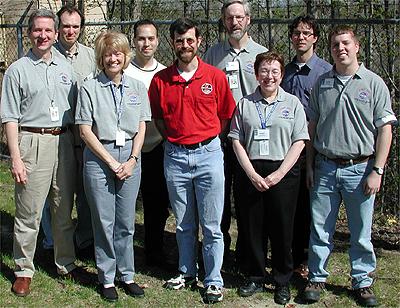
The first NASA Dropping In a Microgravity Environment (DIME) student competition pilot project came to a conclusion at the Glenn Research Center in April 2001. The competition involved high-school student teams who developed the concept for a microgravity experiment and prepared an experiment proposal. The two student teams - COSI Academy, sponsored by the Columbus Center of Science and Industry, and another team from Cincinnati, Ohio's Sycamore High School, designed a microgravity experiment, fabricated the experimental apparatus, and visited NASA Glenn to operate their experiment in the 2.2 Second Drop Tower. NASA and contractor personnel who conducted the DIME activity with the students. Shown (L-R) are: Daniel Dietrich (NASA) mentor for Sycamore High School team), Carol Hodanbosi (National Center for Microgravity Research; DIME staff), Jose Carrion (GRC Akima, drop tower technician), Dennis Stocker (NASA; DIME staff), Richard DeLombard (NASA; DIME staff), Sandi Thompson (NSMR sabbatical teacher; DIME staff), Peter Sunderland (NCMR, mentor for COSI Academy student team), Adam Malcolm (NASA co-op student; DIME staff). This image is from a digital still camera; higher resolution is not available.
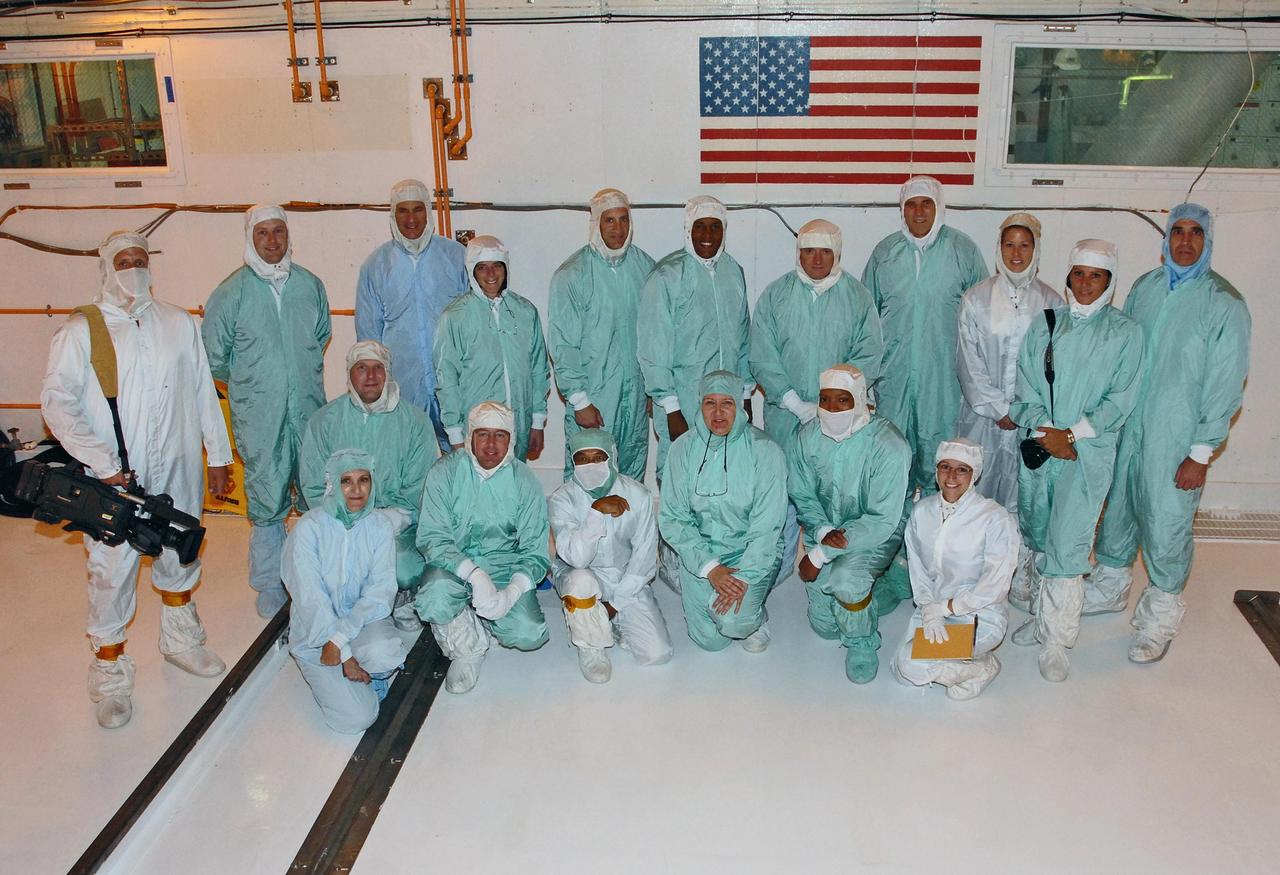
KENNEDY SPACE CENTER, FLA. -- The STS-118 crew breaks for a photo with the Endeavour team and key personnel during payload familiarization. Kneeling in front are Eve Stavros, Boeing flow manager for the mission; Dave Brashinger, with NASA; Paul Boehm, EVA trainer; S. Adam Niev, with NASA Electrical; Louise Kleba, with the KSC payload VITT office; Lance Rogers, a NASA summer co-op; and Jackie Kagey, an EVA trainer. Standing in the back, from left, are photographer Cory Huston; Darren Welsh, EVA trainer; Jack Keifenheim, with NASA Engineering; Mission Specialist Barbara R. Morgan, Pilot Charlie Hobaugh, Mission Specialist Alvin Drew, Commander Scott Kelly, and Mission Specialists Dave Williams and Tracy Caldwell, Lisa Alonso, a NASA summer intern; and (far right) Mission Specialist Rick Mastracchio. Morgan joined NASA's Teacher in Space program in 1985 and was selected as an astronaut in 1998. Williams represents the Canadian Space Agency. The 22nd shuttle flight to the International Space Station, the STS-118 mission will continue space station construction by delivering a third starboard truss segment, S5, and other payloads such as the SPACEHAB module and the external stowage platform 3. Photo credit: NASA/George Shelton
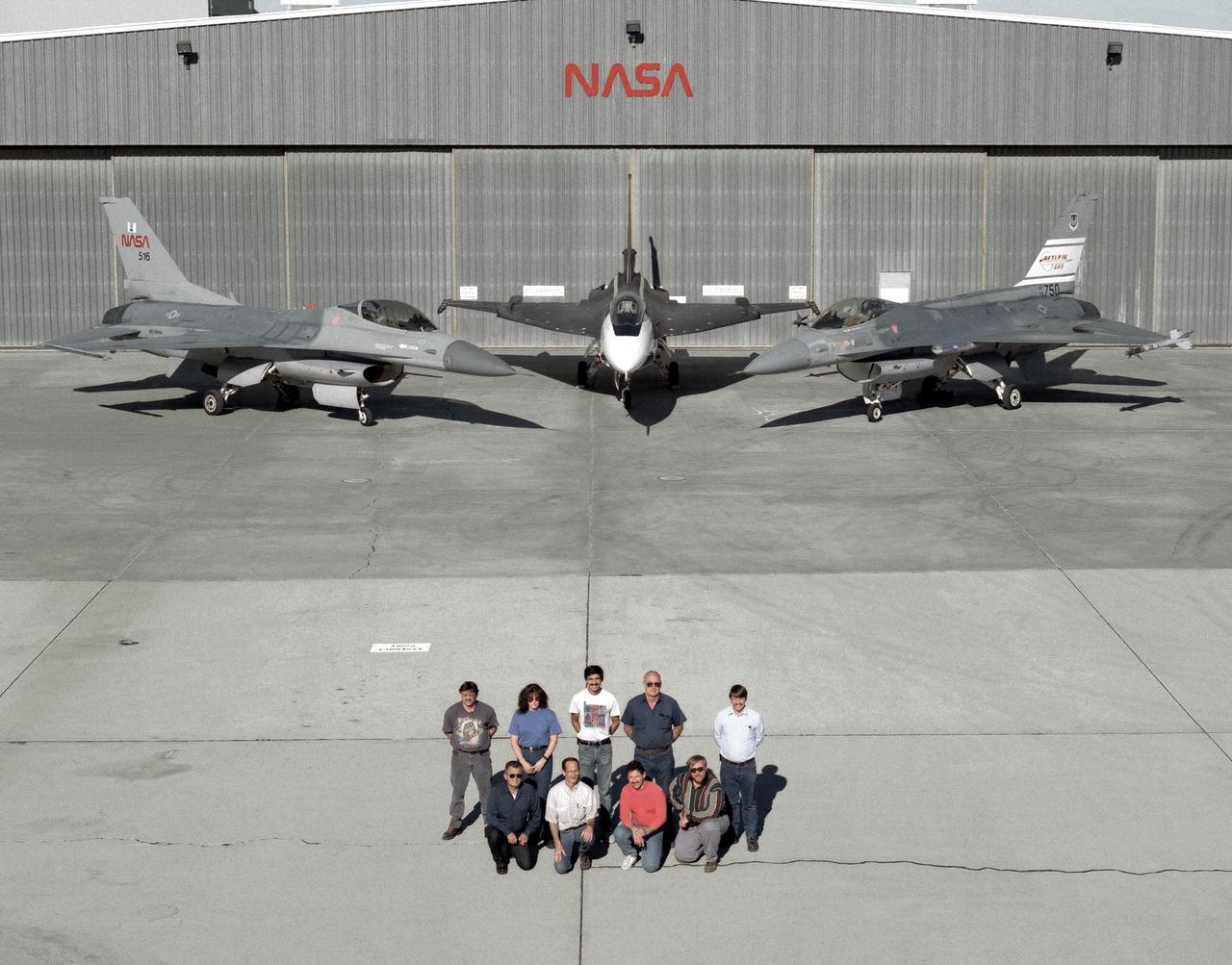
The support crew for the F-16A, the F-16XL no. 1, and the F-16 AFTI are, top row, left to right: Randy Weaver; mechanic, Susan Ligon; mechanic, Bob Garcia; Crew Chief, Rich Kelly; mechanic, Dale Edminister; Avionics Technician. Bottom row, left to right, Art Cope; mechanic, John Huffman; Avionics Technician, Jaime Garcia; Avionics Technician, Don Griffith, Avionics Tech. Co-op student. The F-16A (NASA 516), the only civil registered F-16 in existence, was transferred to Dryden from Langley, and was primarily used in engine tests and for parts. It was subsequently transfered from Dryden. The single-seat F-16XL no. 1 (NASA 849) was most recently used in the Cranked-Arrow Wing Aerodynamics Project (CAWAP) to test boundary layer pressures and distribution. Previously it had been used in a program to investigate the characteristics of sonic booms for NASA's High Speed Research Program. Data from the program will be used in the development of a high speed civilian transport. During the series of sonic boom research flights, the F-16XL was used to probe the shock waves being generated by a NASA SR-71 and record their shape and intensity. The Advanced Fighter Technology Integration (AFTI) F-16 was used to develop and demonstrate technologies to improve navigation and a pilot's ability to find and destroy enemy ground targets day or night, including adverse weather. Earlier research in the joint NASA-Air Force AFTI F-16 program demonstrated voice actuated controls, helmet-mounted sighting and integration of forward-mounted canards with the standard flight control system to achieve uncoupled flight.
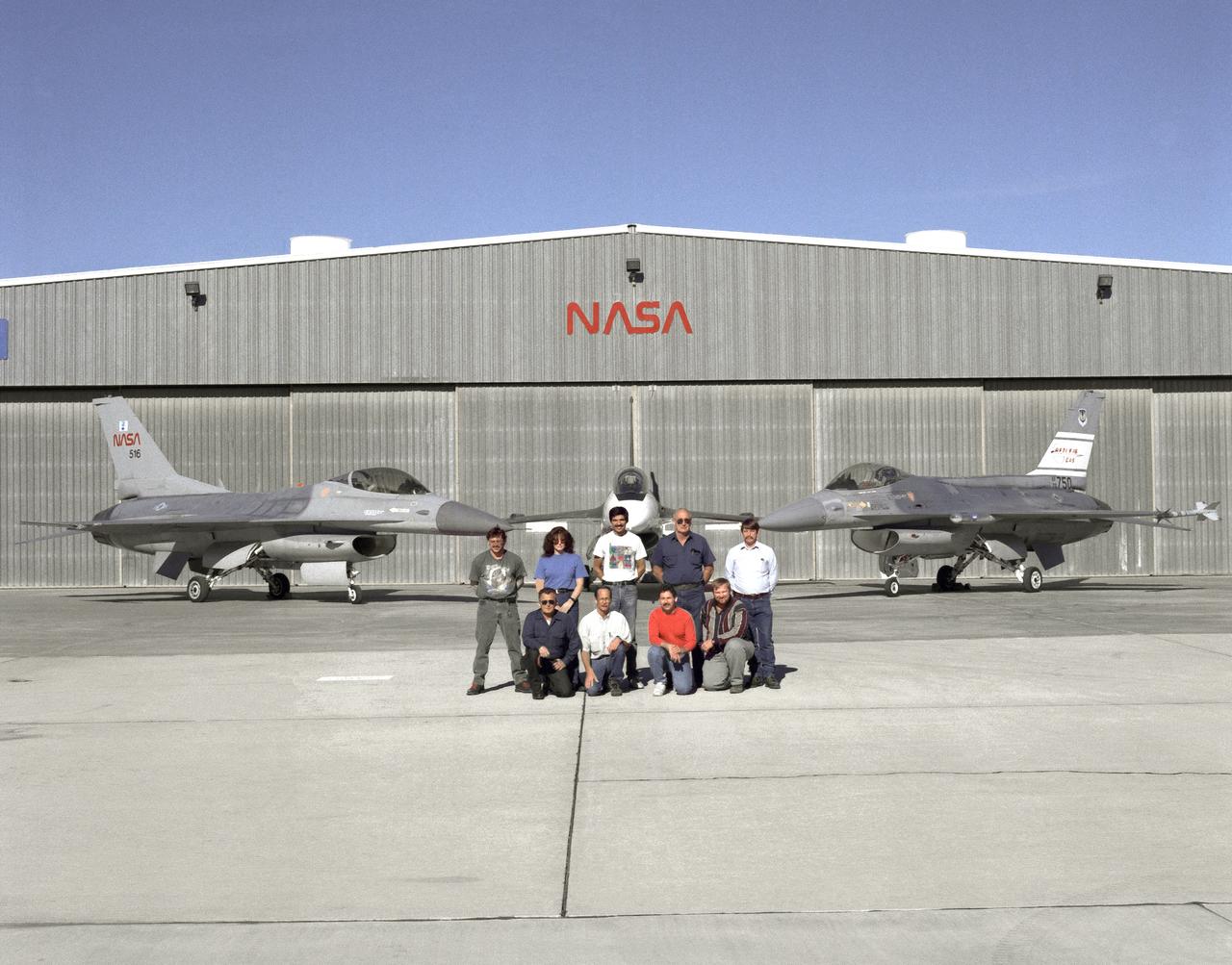
The support crew for the F-16A, the F-16XL no. 1, and the F-16 AFTI are, top row, left to right: Randy Weaver; mechanic, Susan Ligon; mechanic, Bob Garcia; Crew Chief, Rich Kelly; mechanic, Dale Edminister; Avionics Technician. Bottom row, left to right, Art Cope; mechanic, John Huffman; Avionics Technician, Jaime Garcia; Avionics Technician, Don Griffith, Avionics Tech. Co-op student. The F-16A (NASA 516), the only civil registered F-16 in existence, was transferred to Dryden from Langley, and was primarily used in engine tests and for parts. It was subsequently transfered from Dryden. The single-seat F-16XL no. 1 (NASA 849) was most recently used in the Cranked-Arrow Wing Aerodynamics Project (CAWAP) to test boundary layer pressures and distribution. Previously it had been used in a program to investigate the characteristics of sonic booms for NASA's High Speed Research Program. Data from the program will be used in the development of a high speed civilian transport. During the series of sonic boom research flights, the F-16XL was used to probe the shock waves being generated by a NASA SR-71 and record their shape and intensity. The Advanced Fighter Technology Integration (AFTI) F-16 was used to develop and demonstrate technologies to improve navigation and a pilot's ability to find and destroy enemy ground targets day or night, including adverse weather. Earlier research in the joint NASA-Air Force AFTI F-16 program demonstrated voice actuated controls, helmet-mounted sighting and integration of forward-mounted canards with the standard flight control system to achieve uncoupled flight.
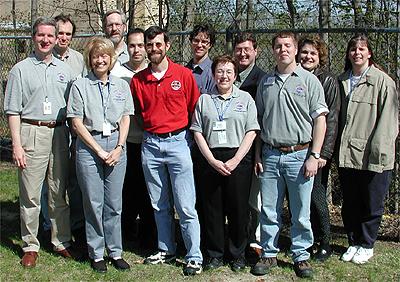
The first NASA Dropping In a Microgravity Environment (DIME) student competition pilot project came to a conclusion at the Glenn Research Center in April 2001. The competition involved high-school student teams who developed the concept for a microgravity experiment and prepared an experiment proposal. The two student teams - COSI Academy, sponsored by the Columbus Center of Science and Industry, and another team from Cincinnati, Ohio's Sycamore High School, designed a microgravity experiment, fabricated the experimental apparatus, and visited NASA Glenn to operate their experiment in the 2.2 Second Drop Tower. NASA and contractor personnel who conducted the DIME activity with the students. Shown (L-R) are: Eric Baumann (NASA, 2.2-second Drop Tower Facility manager), Daniel Dietrich (NASA) mentor for Sycamore High School team), Carol Hodanbosi (National Center for Microgravity Research; DIME staff), Richard DeLombard (NASA; DIME staff), Jose Carrion (GRC Akima, drop tower technician), Dennis Stocker (NASA; DIME staff), Peter Sunderland (NCMR, mentor for COSI Academy student team), Sandi Thompson (NSMR sabbatical teacher; DIME staff), Dan Woodard (MASA Microgravity Outreach Program Manager), Adam Malcolm (NASA co-op student; DIME staff), Carla Rosenberg (NCMR; DIME staff), and Twila Schneider (Infinity Technology; NASA Microgravity Research program contractor). This image is from a digital still camera; higher resolution is not available.