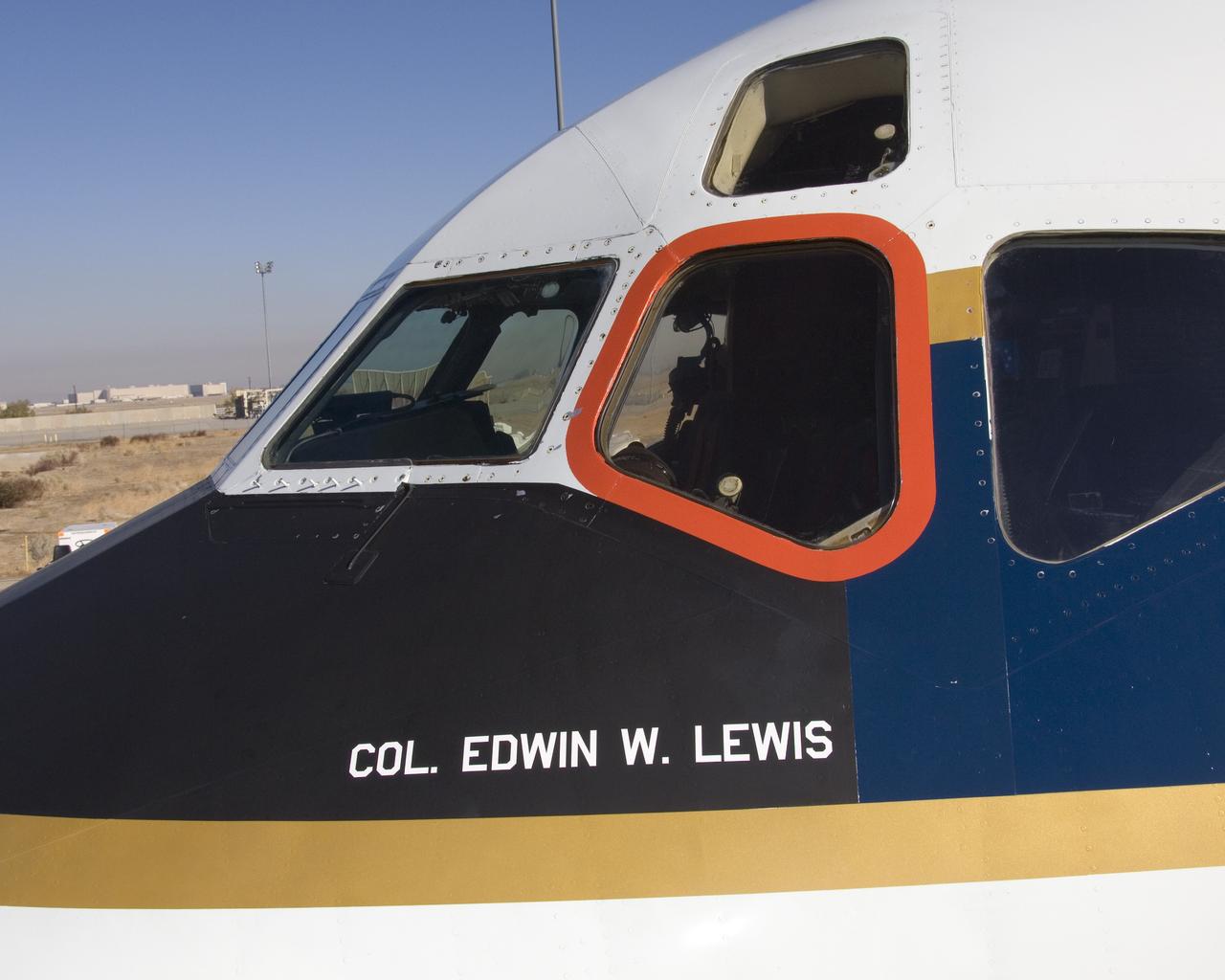
NASA's modified DC-8 now carries the name of the late Edwin W. Lewis below its cockpit window, a tribute to his 18 years piloting the unique science laboratory.
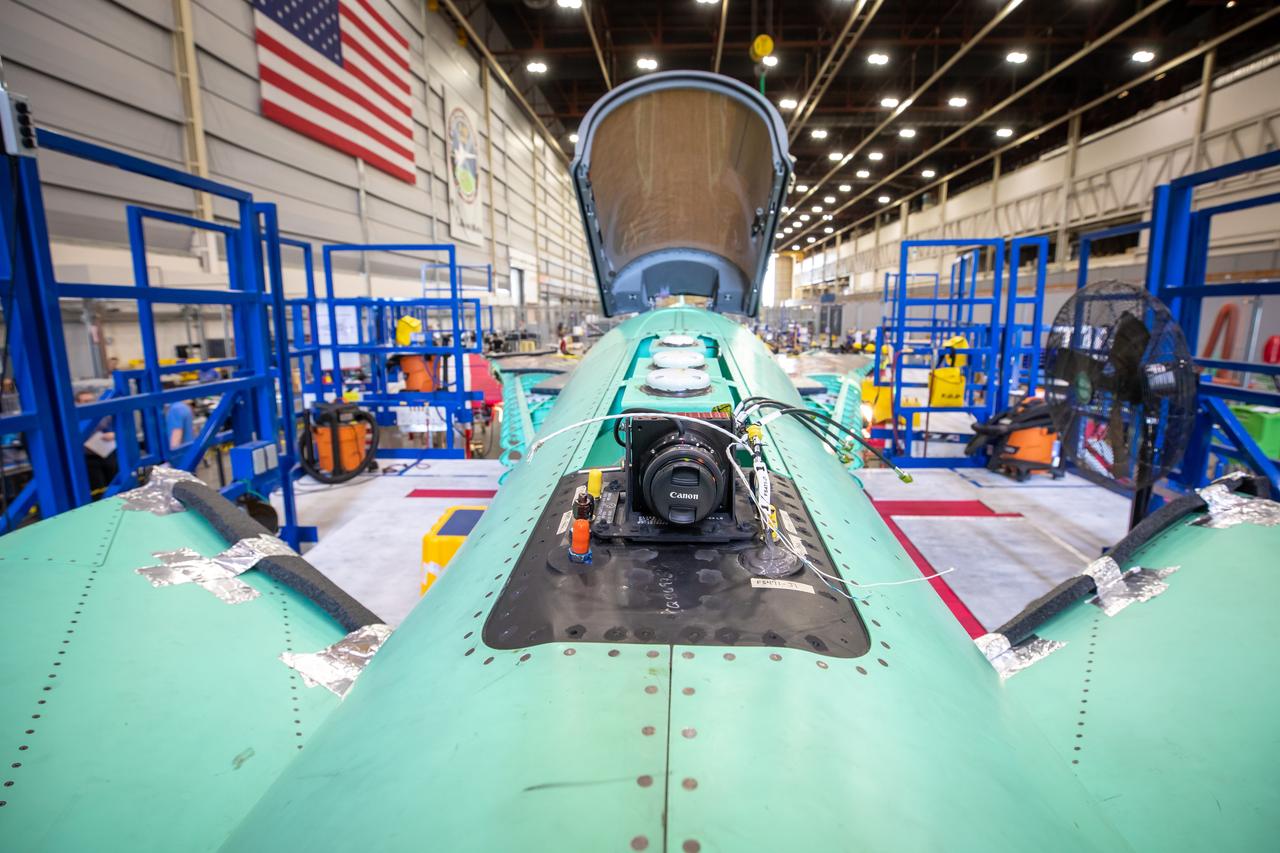
Event: Horizontal Stabilator Install A close up of the camera from the X-59’s eXternal Vision System. This camera is on the top of the X-59, but there will also be one on the belly of the aircraft. This visuals from this camera will be displayed on a 4K monitor for the pilot. As part of the supersonic shaping technology, the X-plane will not have a forward-facing window in the cockpit.
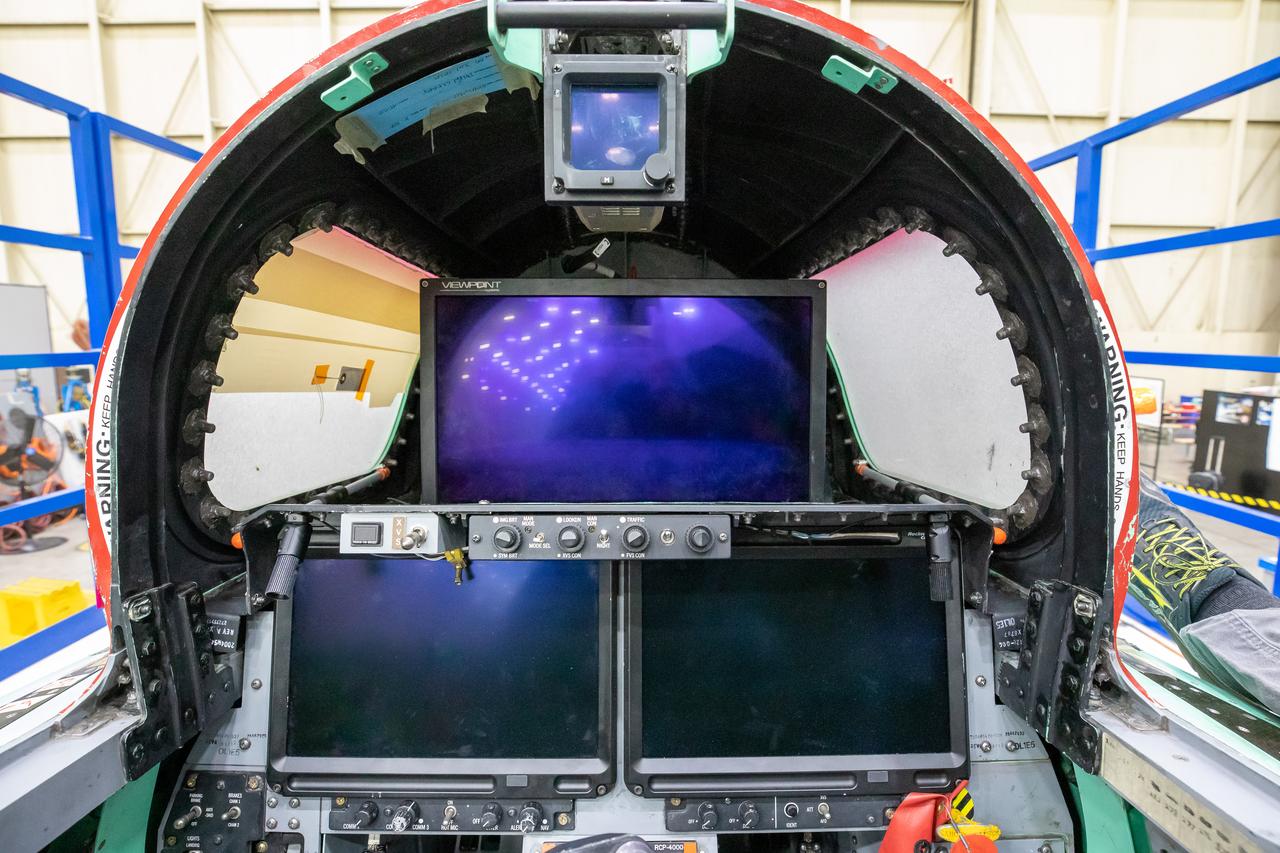
This image shows the forward view of the X-59’s cockpit with the canopy open. The aircraft will not have a forward-facing window and will use an eXternal Vision System (XVS) made up of a high definition 4K monitor (located in the center) and two monitors below to help the pilots safely fly through the skies.
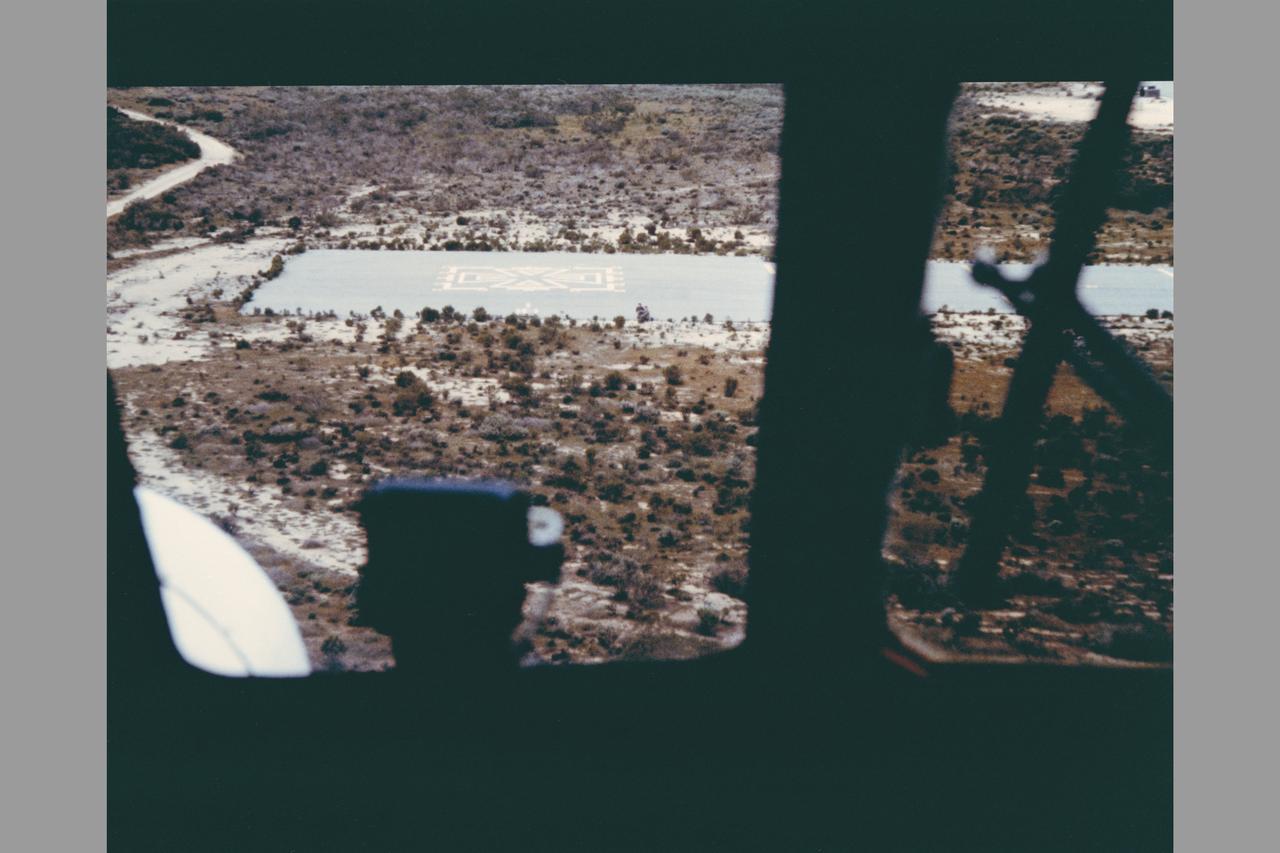
composite art Beacon Landing System Project (BL5). airborne landing senes - out the window (cockpit)
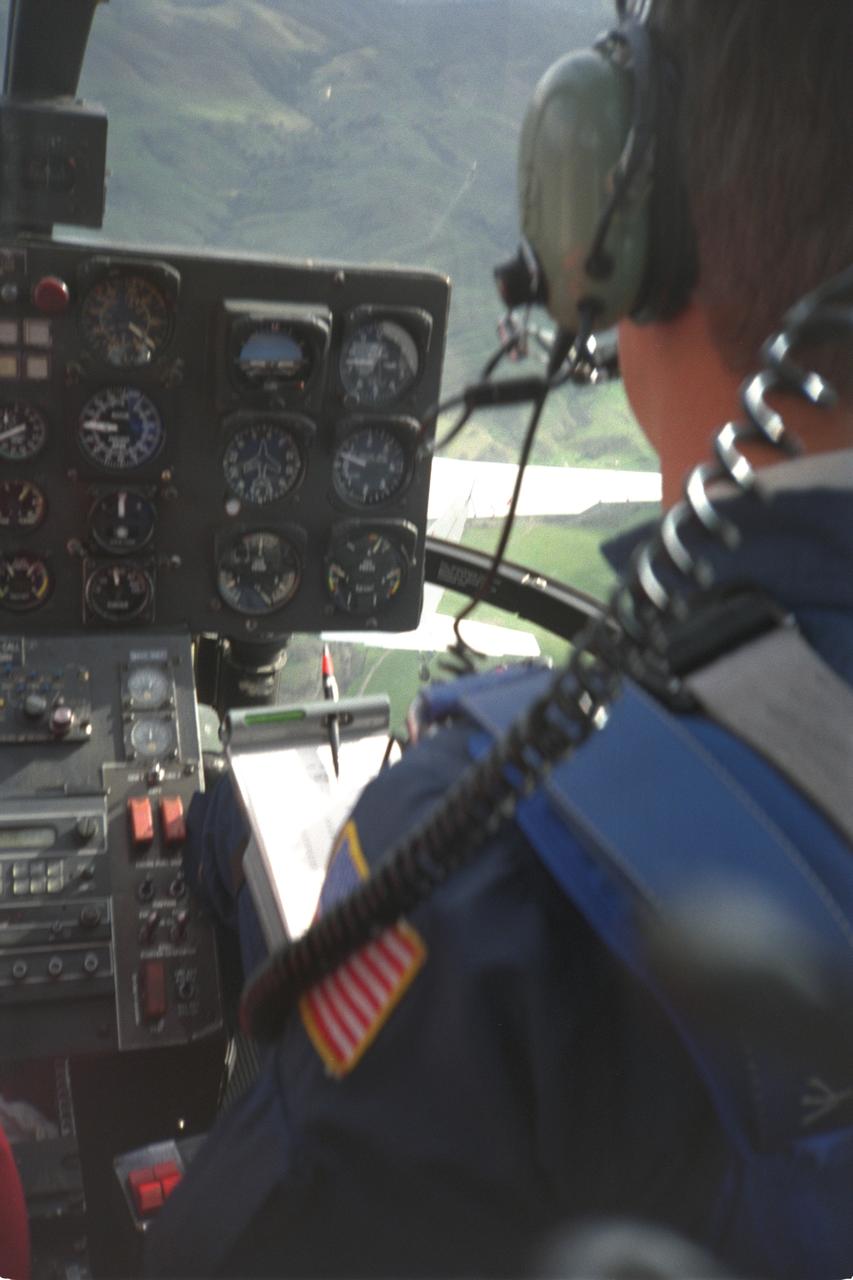
BO-105 helicopter pilot & cockpit during in flight rotorcraft acoustics program Distance Versus Noise Calibration over Livermore - Central Valley, CA. The YO-3A flying the acoustics test can just be seen through cockpit window.
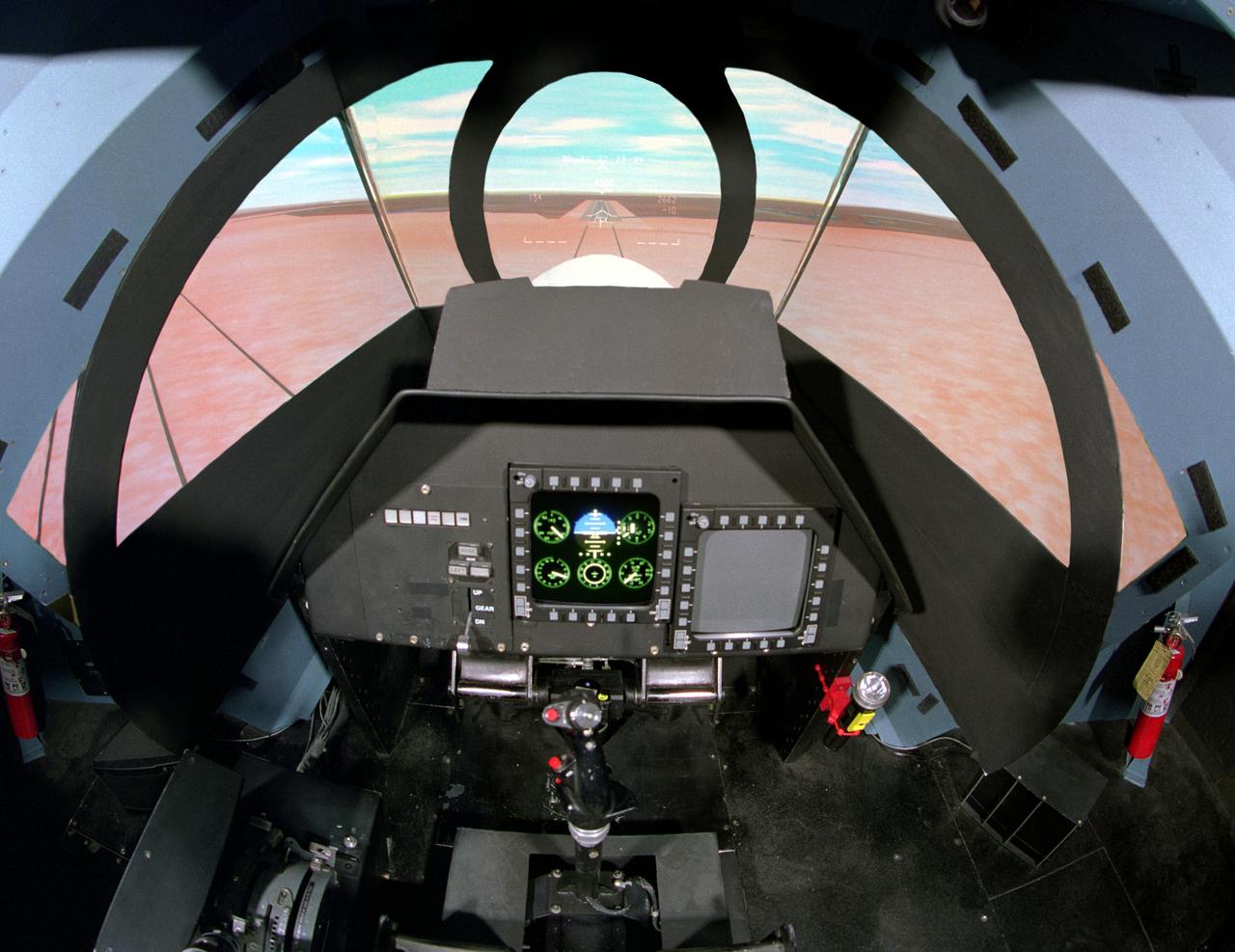
NASA Ames Vertical Motion Simulator (VMS): F-cab SIMFR (Simulation Frequency Response) Project; Pilots cockpit and out-the-window (OTW) view
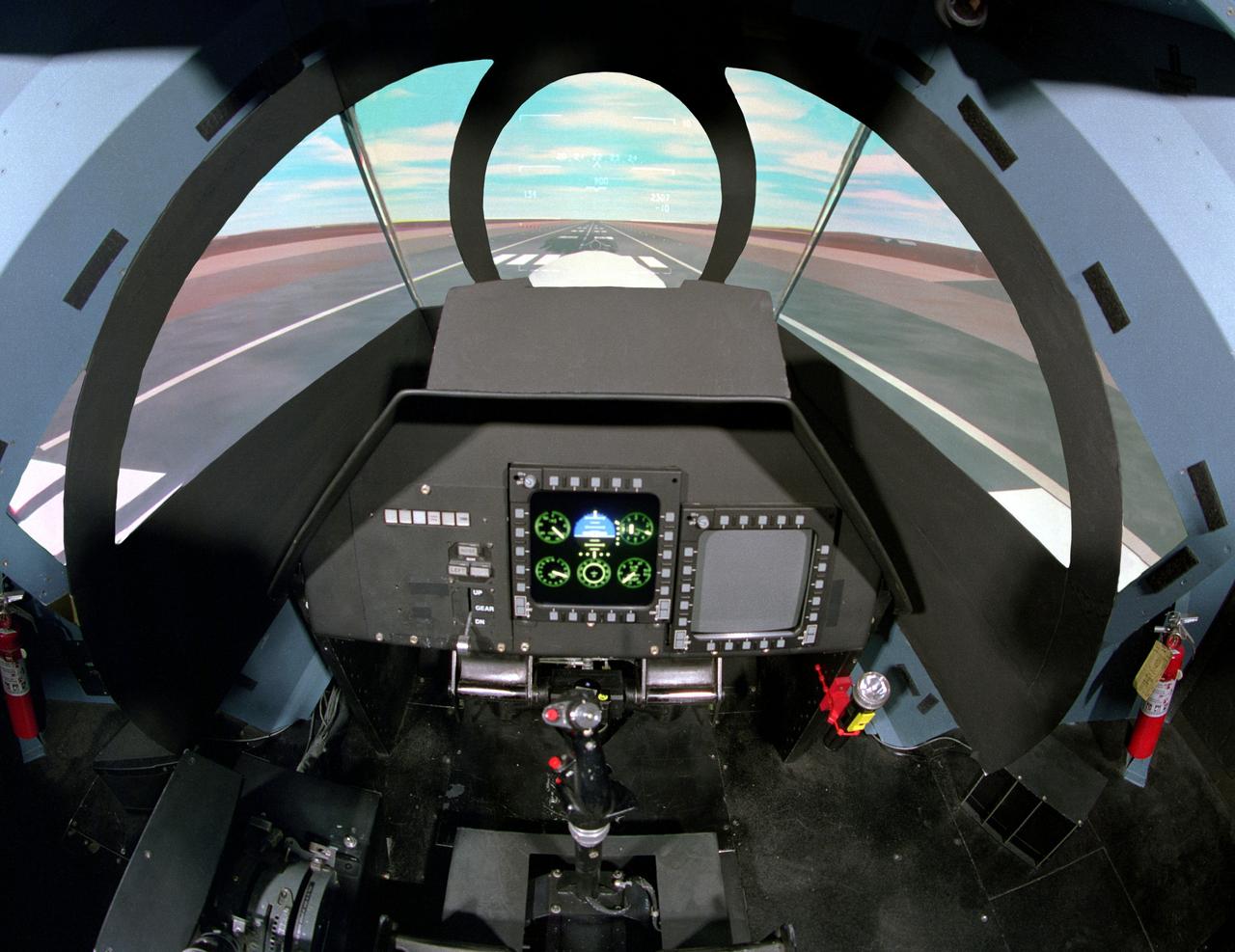
NASA Ames Vertical Motion Simulator (VMS)VMS: F-cab SIMFR (Simulation Frequency Response) Project; Pilots cockpit and out-th-window (OTW) view
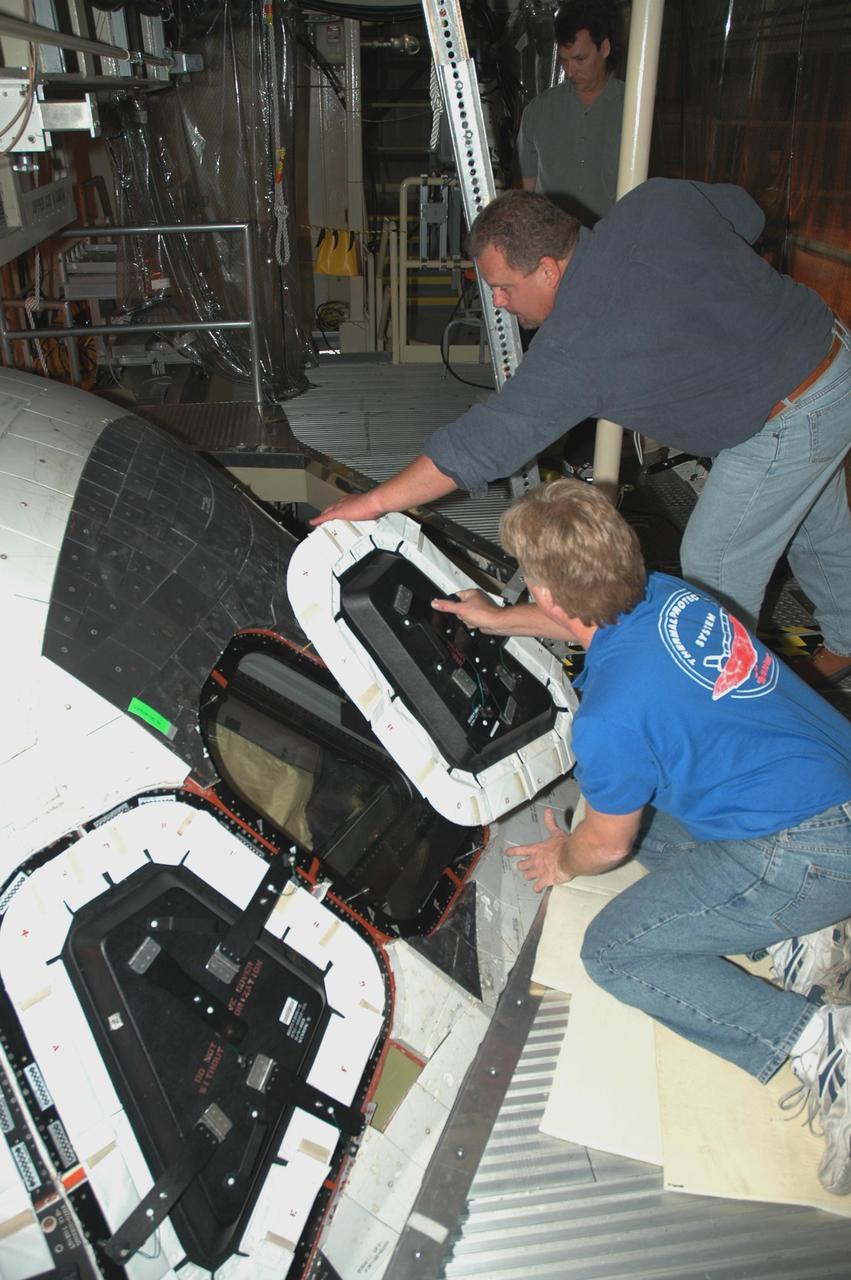
KENNEDY SPACE CENTER, FLA. - In NASA Kennedy Space Center's Orbiter Processing Facility bay 3, United Space Alliance shuttle technicians remove the hard cover from a window on Space Shuttle Discovery to enable STS-121 crew members to inspect the window from the cockpit. Launch of Space Shuttle Discovery on mission STS-121, the second return-to-flight mission, is scheduled no earlier than May.
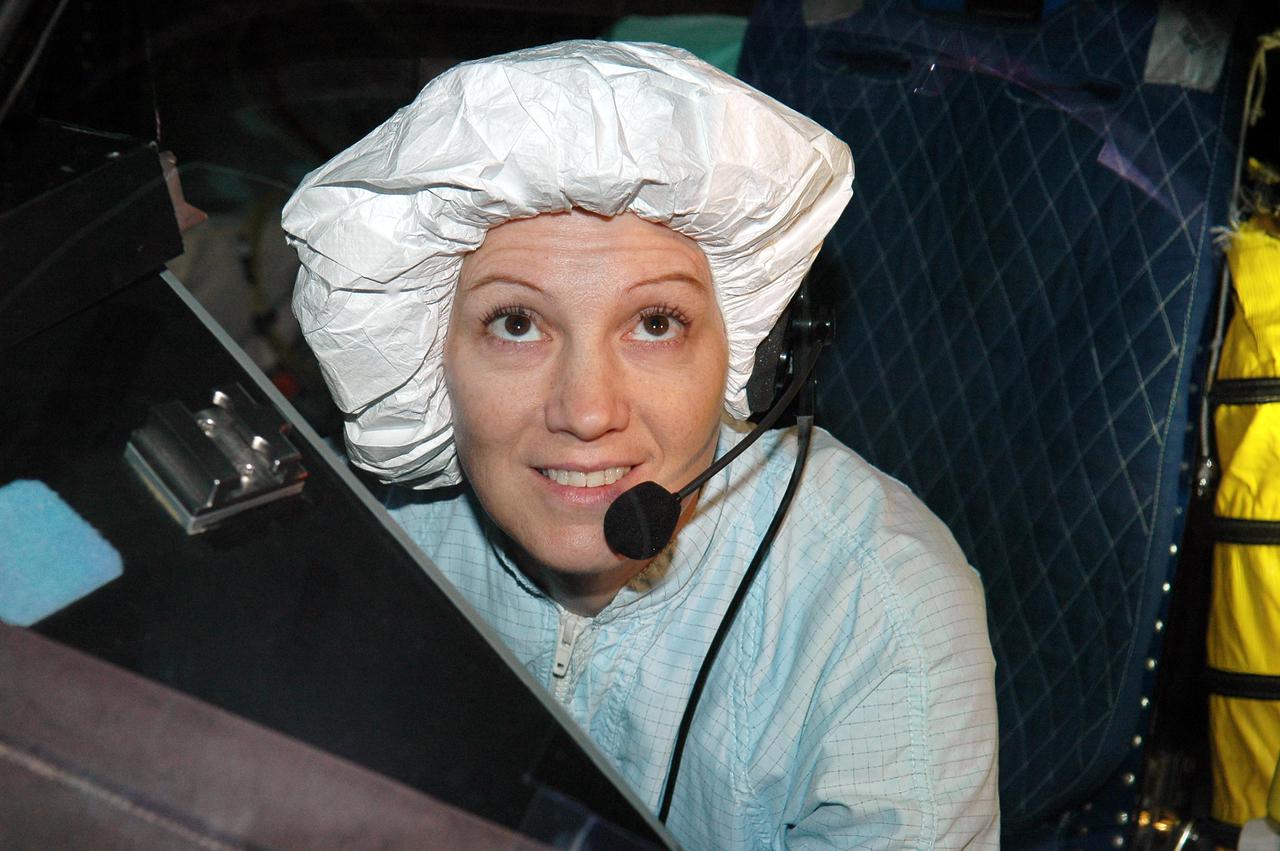
KENNEDY SPACE CENTER, FLA. - In the Orbiter Processing Facility, STS-114 Mission Commander Eileen Collins inspects the window in Discovery’s cockpit. The crew is at Kennedy for Crew Equipment Interface Test activities. During CEIT, the crew has an opportunity to get a hands-on look at the payloads with which they’ll be working on orbit. The Return to Flight mission STS-114 will carry a replacement Control Moment Gyroscope and the Multi-Purpose Logistics Module Raffaello, filled with supplies for the International Space Station. Launch of STS-114 has a launch window of May 12 to June 3.
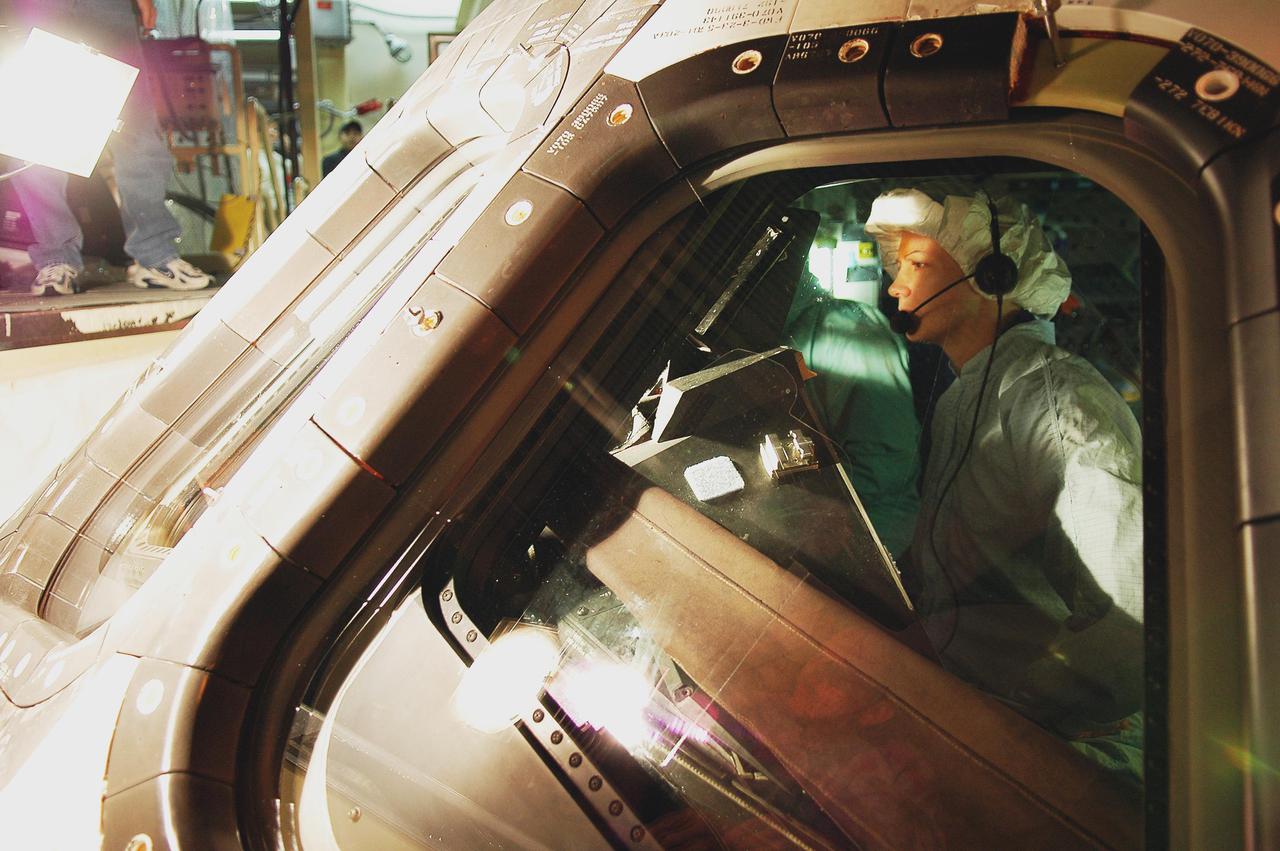
KENNEDY SPACE CENTER, FLA. - In the Orbiter Processing Facility, STS-114 Mission Commander Eileen Collins checks the window in Discovery’s cockpit. Behind her sits Pilot James Kelly. The crew is at Kennedy for Crew Equipment Interface Test activities. During CEIT, the crew has an opportunity to get a hands-on look at the payloads with which they’ll be working on orbit. The Return to Flight mission STS-114 will carry a replacement Control Moment Gyroscope and the Multi-Purpose Logistics Module Raffaello, filled with supplies for the International Space Station. Launch of STS-114 has a launch window of May 12 to June 3.
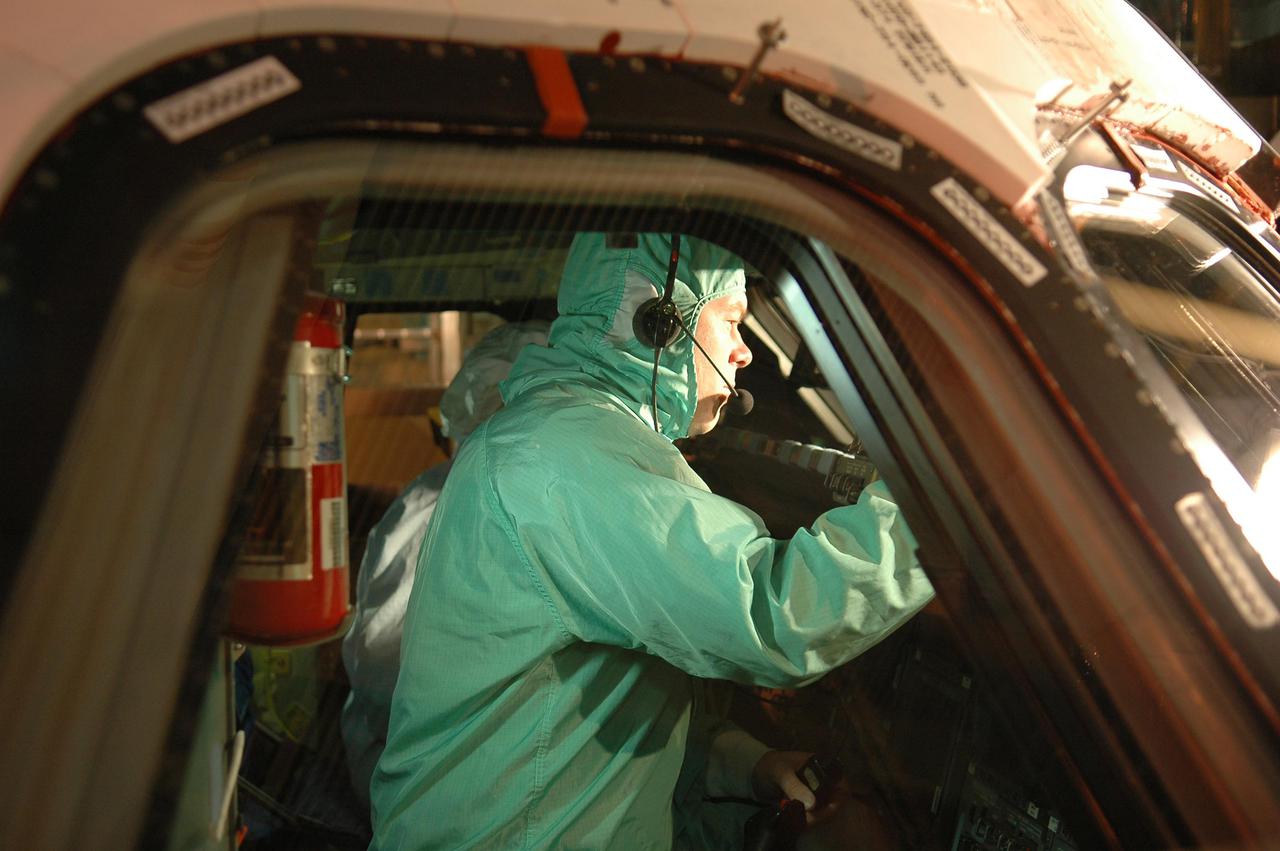
KENNEDY SPACE CENTER, FLA. - In the Orbiter Processing Facility, STS-114 Pilot James Kelly examines the window in Discovery’s cockpit. The crew is at Kennedy for Crew Equipment Interface Test activities. During CEIT, the crew has an opportunity to get a hands-on look at the payloads with which they’ll be working on orbit. The Return to Flight mission STS-114 will carry a replacement Control Moment Gyroscope and the Multi-Purpose Logistics Module Raffaello, filled with supplies for the International Space Station. Launch of STS-114 has a launch window of May 12 to June 3.
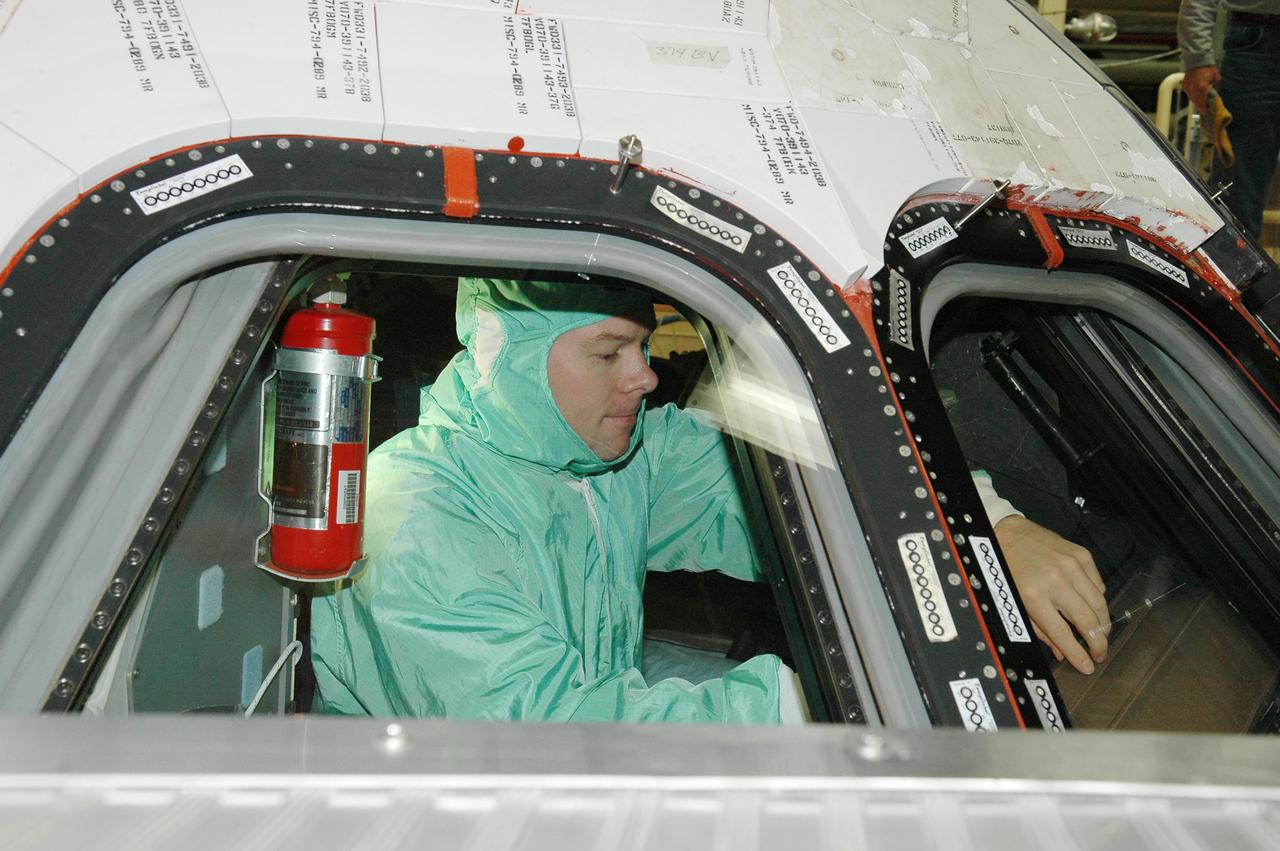
KENNEDY SPACE CENTER, FLA. - In the Orbiter Processing Facility, STS-114 Pilot James Kelly inspects the window in Discovery’s cockpit. The crew is at Kennedy for Crew Equipment Interface Test activities. During CEIT, the crew has an opportunity to get a hands-on look at the payloads with which they’ll be working on orbit. The Return to Flight mission STS-114 will carry a replacement Control Moment Gyroscope and the Multi-Purpose Logistics Module Raffaello, filled with supplies for the International Space Station. Launch of STS-114 has a launch window of May 12 to June 3.
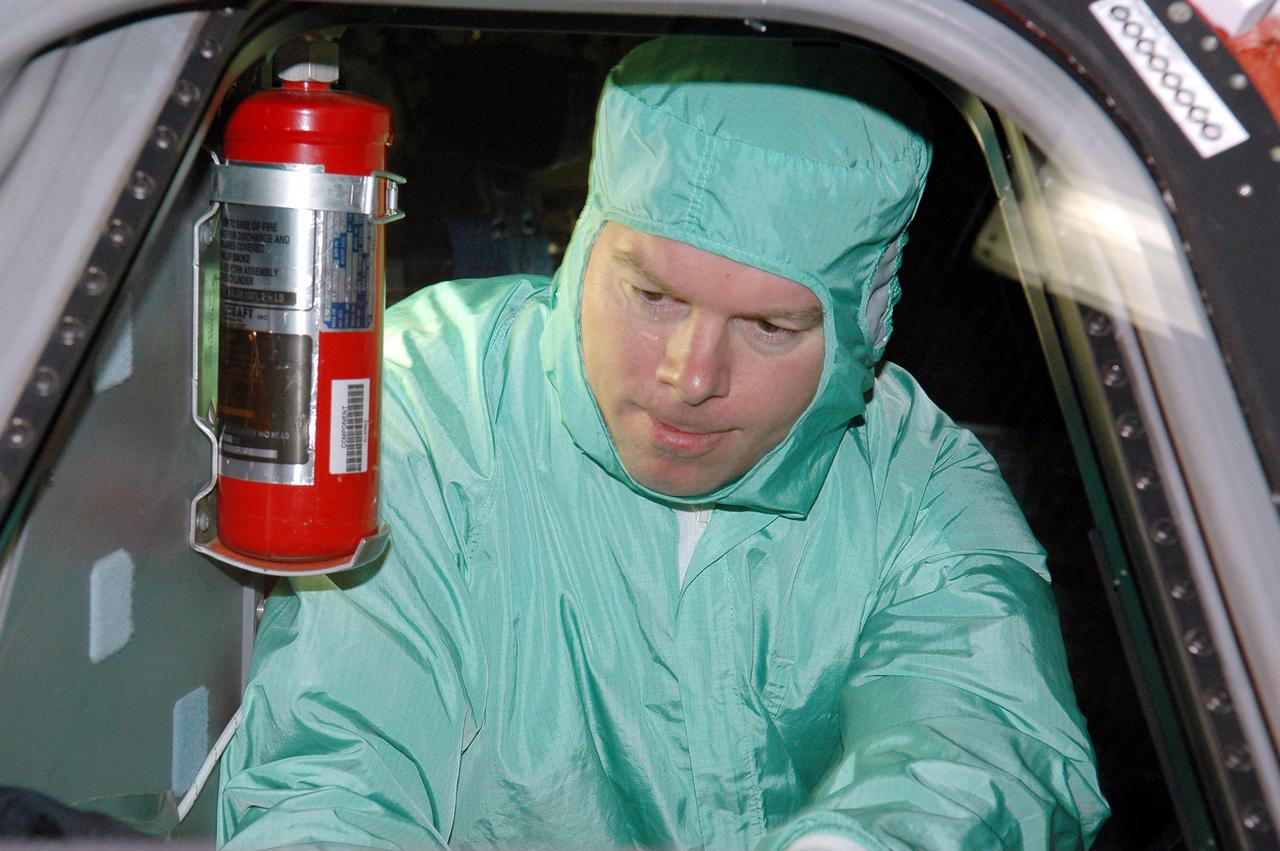
KENNEDY SPACE CENTER, FLA. - In the Orbiter Processing Facility, STS-114 Pilot James Kelly inspects the window in Discovery’s cockpit. The crew is at Kennedy for Crew Equipment Interface Test activities. During CEIT, the crew has an opportunity to get a hands-on look at the payloads with which they’ll be working on orbit. The Return to Flight mission STS-114 will carry a replacement Control Moment Gyroscope and the Multi-Purpose Logistics Module Raffaello, filled with supplies for the International Space Station. Launch of STS-114 has a launch window of May 12 to June 3.
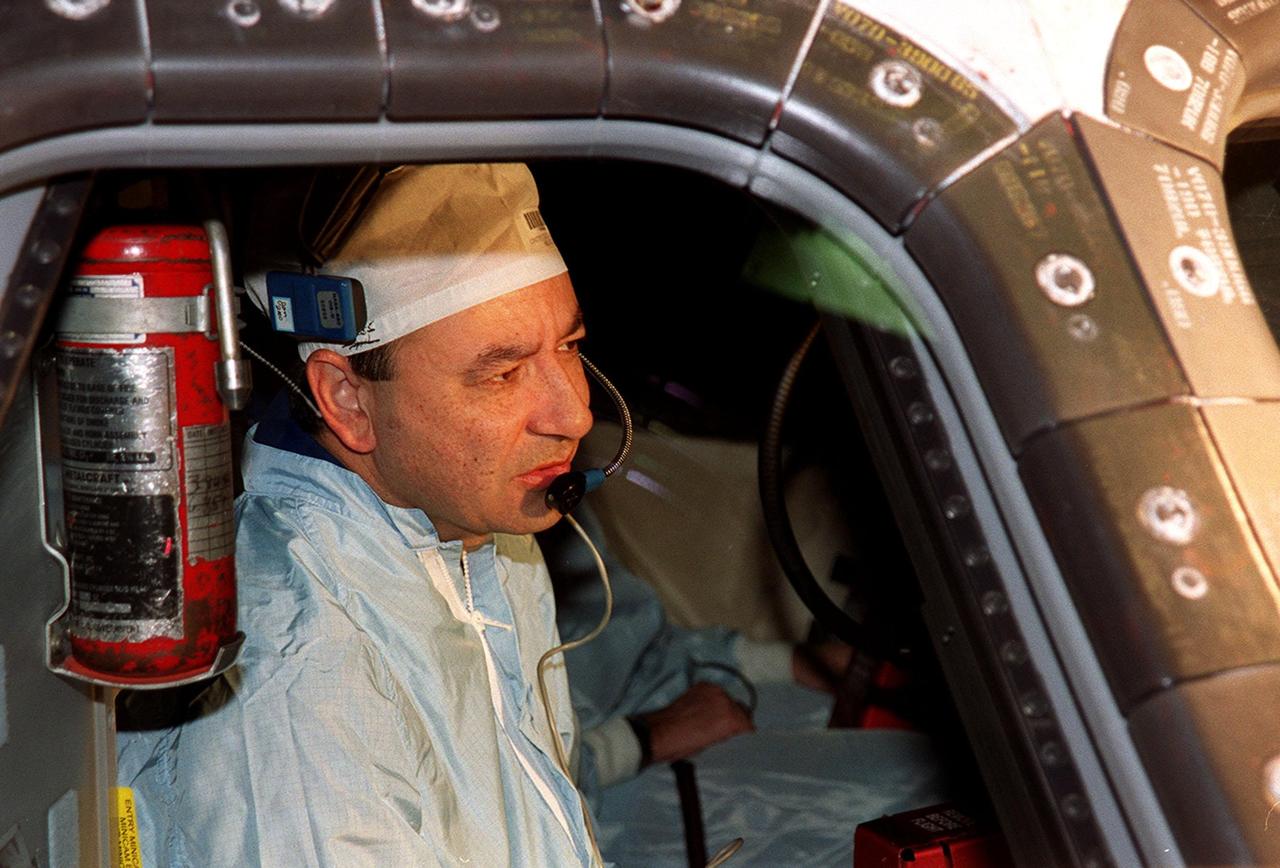
KENNEDY SPACE CENTER, FLA. -- In Orbiter Processing Facility bay 3, STS-98 Pilot Mark Polansky inspects the window in the cockpit of Atlantis. He and the rest of the crew are at KSC for Crew Equipment Interface Test activities. Launch on mission STS-98 is scheduled for Jan. 18, 2001. It will be transporting the U.S. Lab, Destiny, to the International Space Station with five system racks already installed inside of the module. After delivery of electronics in the lab, electrically powered attitude control for Control Moment Gyroscopes will be activated
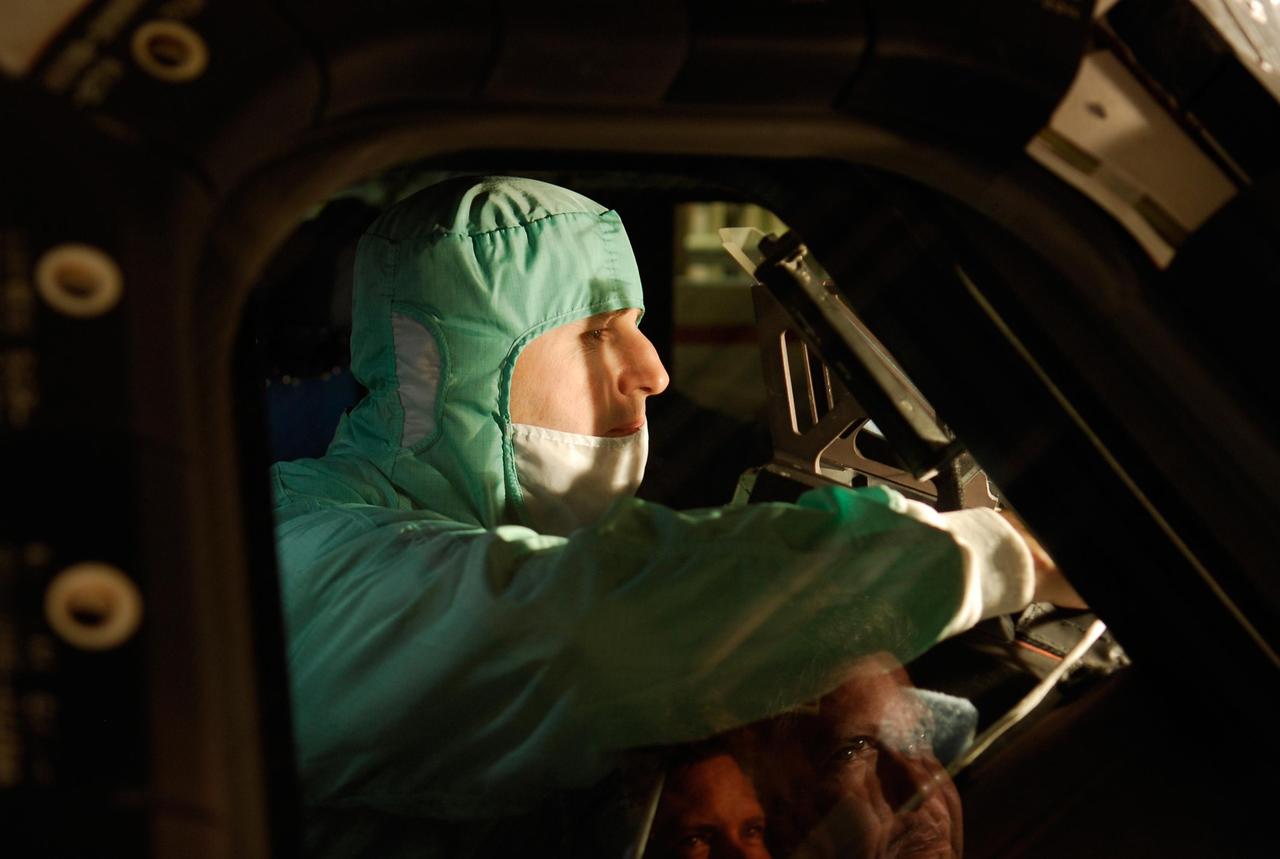
KENNEDY SPACE CENTER, FLA. -- During a crew equipment interface test in the Orbiter Processing Facility bay 3 at NASA's Kennedy Space Center, STS-124 Pilot Kenneth Ham checks the cockpit window in space shuttle Discovery. The shuttle will transport the Kibo Japanese Experiment Module - Pressurized Module (JEM-PM) and the Japanese Remote Manipulator System (JEM-RMS) to the International Space Station to complete the Kibo laboratory. The launch of Discovery is targeted for April 24. Photo credit: NASA/Kim Shiflett
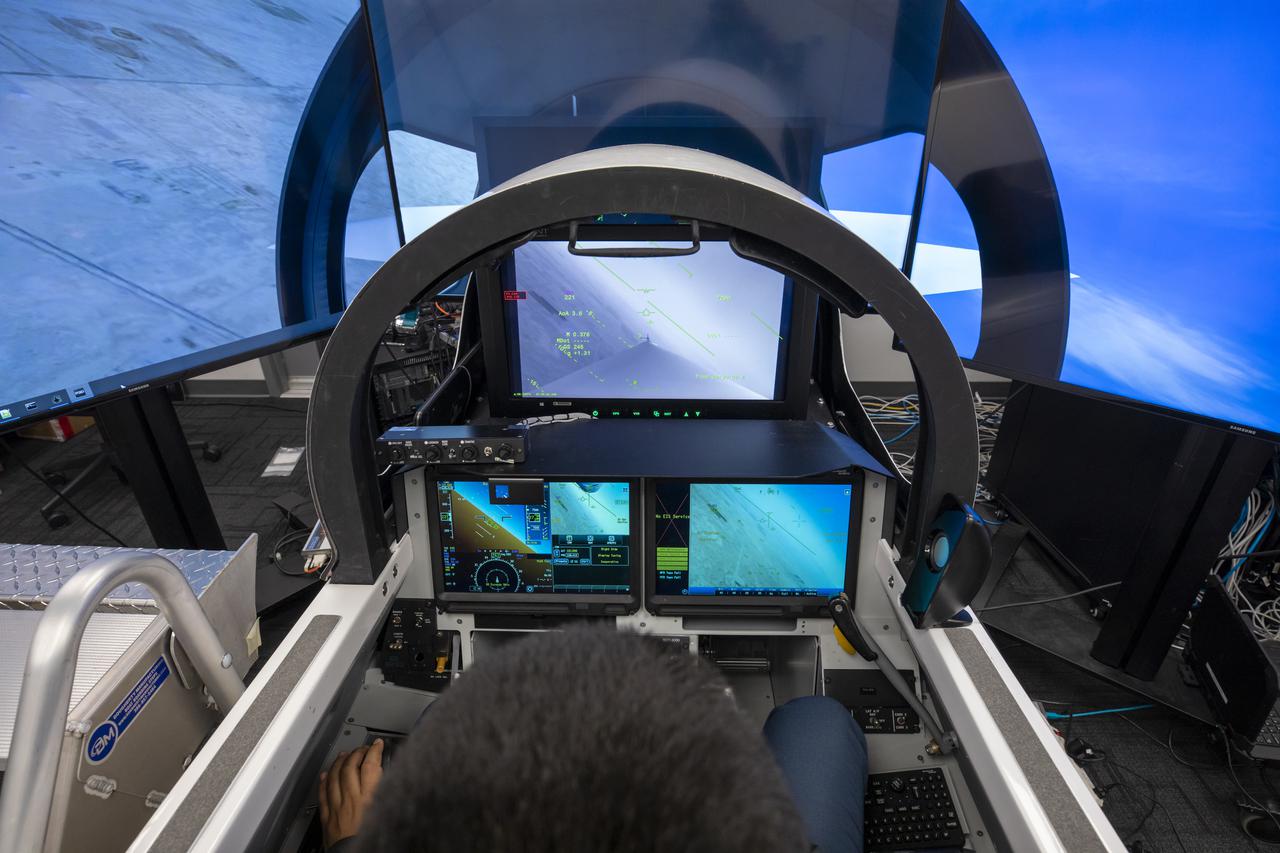
This image shows a close up of the cockpit view of the eXternal Vision System that will be placed in the X-59. Instead of a front facing window, the pilot will use these monitors for forward facing visibility. Lockheed Martin Photography By Garry Tice 1011 Lockheed Way, Palmdale, Ca. 93599 Event: X-59 SIL Round 2 Date: 6/10/2021
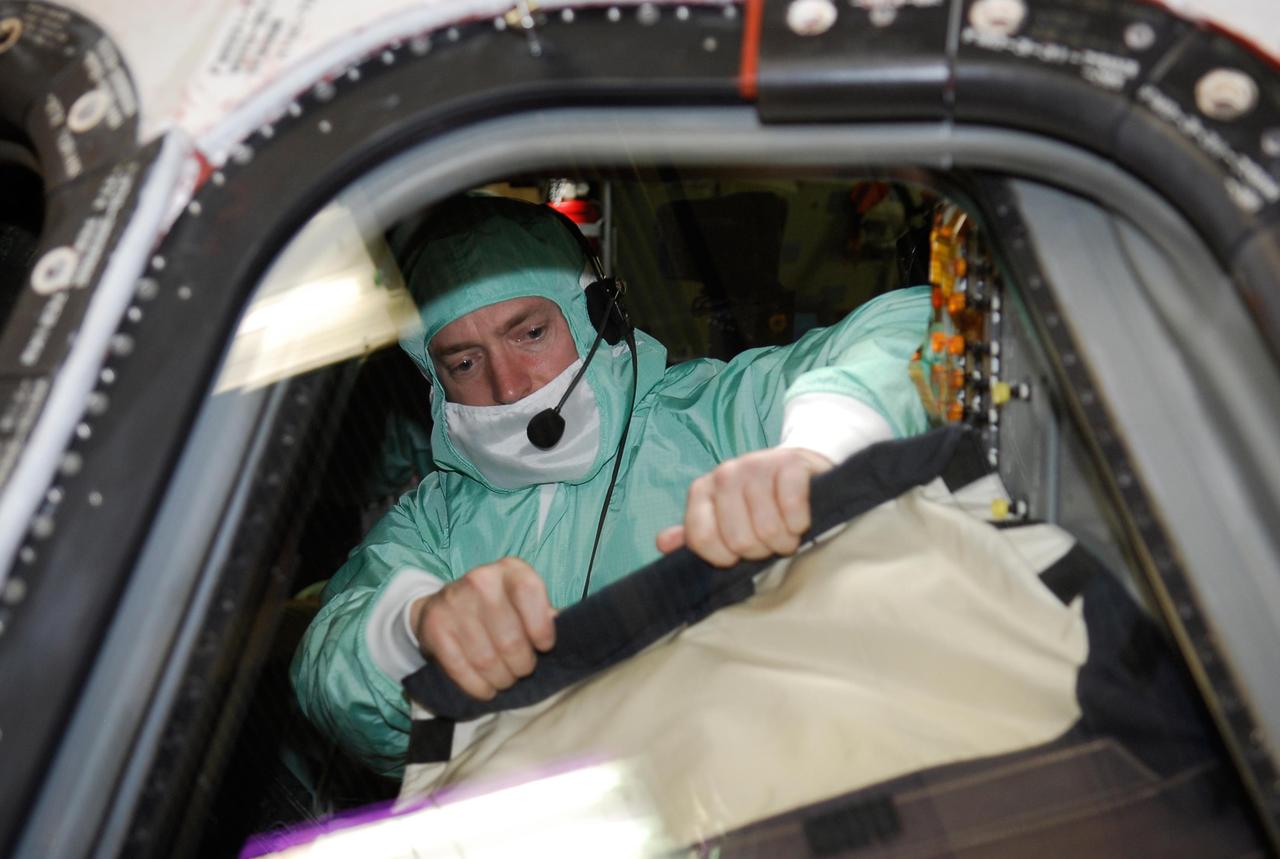
KENNEDY SPACE CENTER, FLA. -- During a crew equipment interface test in the Orbiter Processing Facility bay 3 at NASA's Kennedy Space Center, STS-124 Commander Mark Kelly closely examines a window in the cockpit of space shuttle Discovery. The shuttle will transport the Kibo Japanese Experiment Module - Pressurized Module (JEM-PM) and the Japanese Remote Manipulator System (JEM-RMS) to the International Space Station to complete the Kibo laboratory. The launch of Discovery is targeted for April 24. Photo credit: NASA/Kim Shiflett
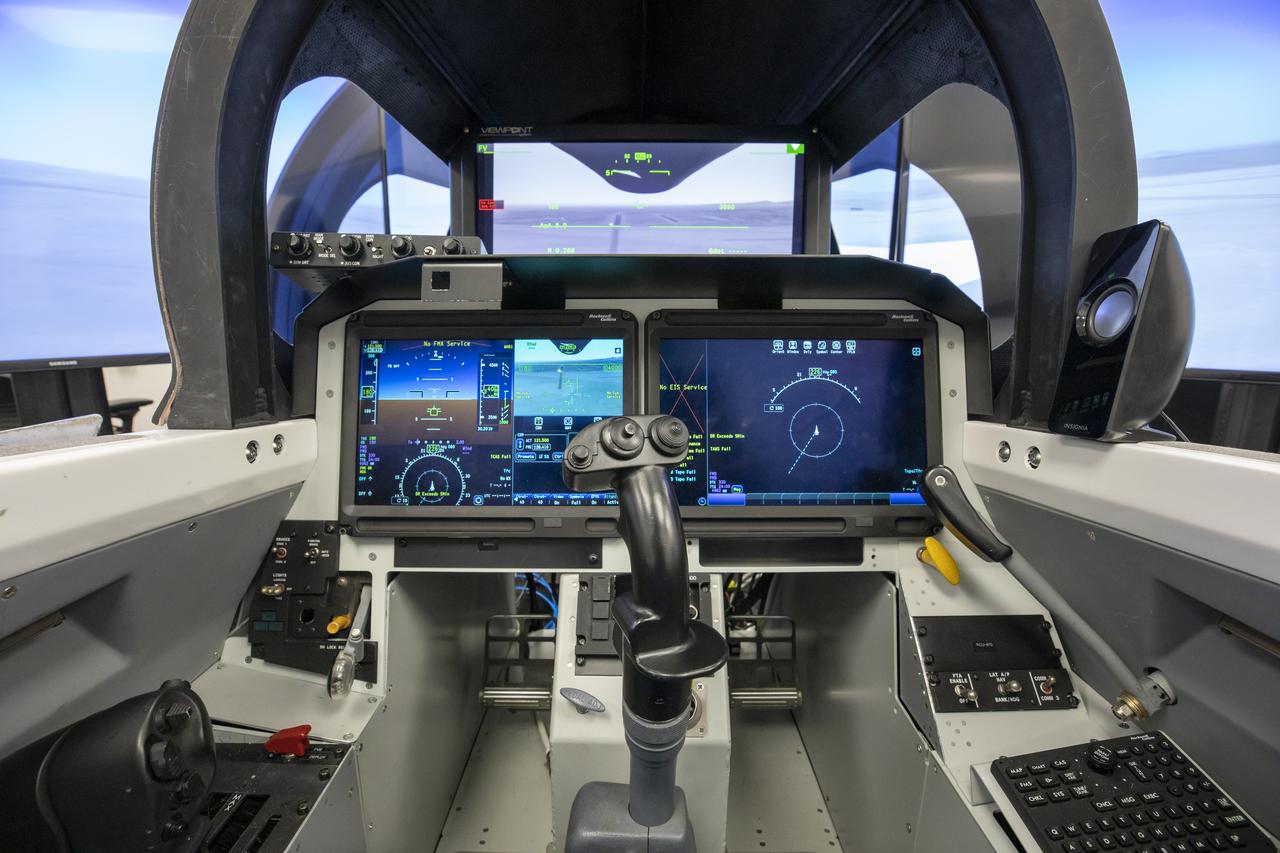
This image shows a close up of the cockpit view of the eXternal Vision System that will be placed in the X-59. Instead of a front facing window, the pilot will use these monitors for forward facing visibility. Lockheed Martin Photography By Garry Tice 1011 Lockheed Way, Palmdale, Ca. 93599 Event: X-59 SIL Round 2 Date: 6/10/2021
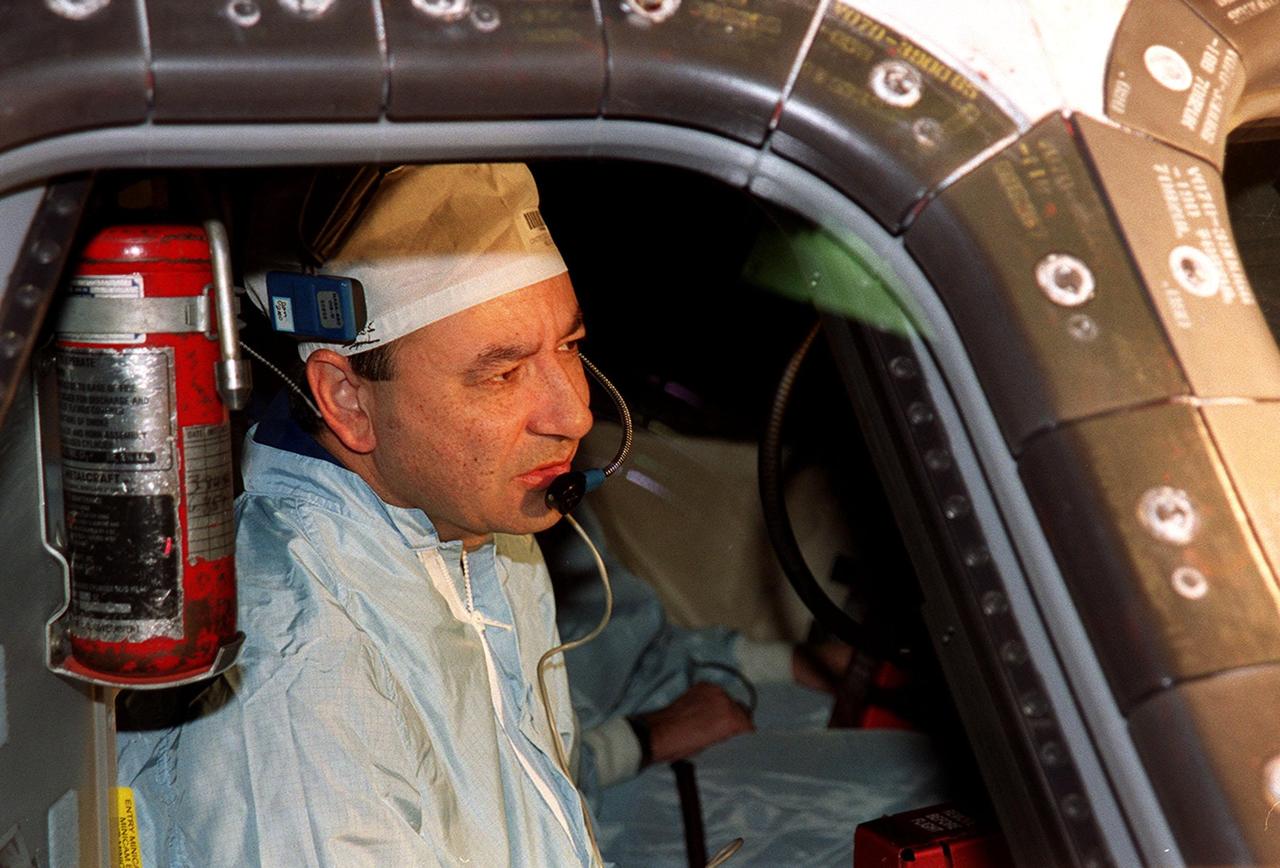
KENNEDY SPACE CENTER, FLA. -- In Orbiter Processing Facility bay 3, STS-98 Pilot Mark Polansky inspects the window in the cockpit of Atlantis. He and the rest of the crew are at KSC for Crew Equipment Interface Test activities. Launch on mission STS-98 is scheduled for Jan. 18, 2001. It will be transporting the U.S. Lab, Destiny, to the International Space Station with five system racks already installed inside of the module. After delivery of electronics in the lab, electrically powered attitude control for Control Moment Gyroscopes will be activated
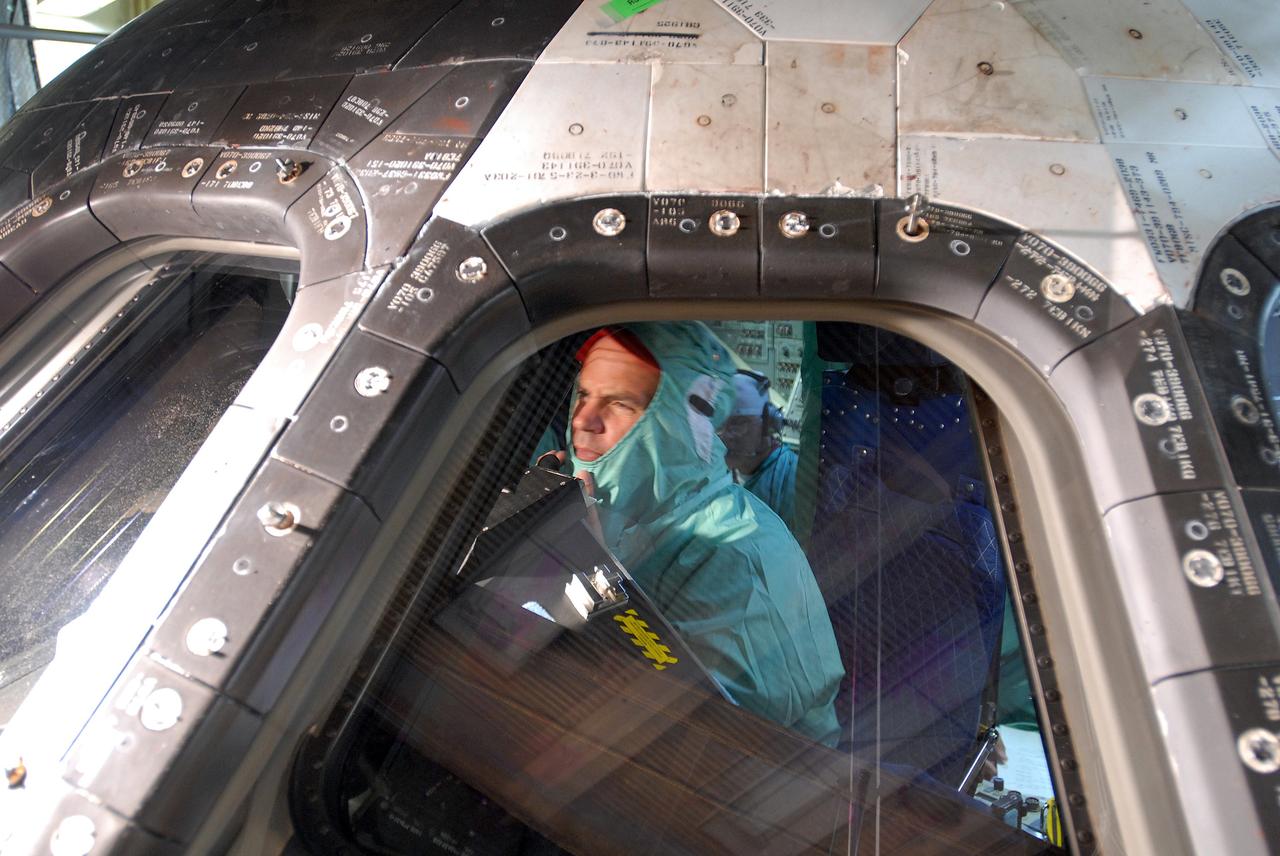
CAPE CANAVERAL, Fla. – In Orbiter Processing Facility 3 at NASA's Kennedy Space Center in Florida, STS-128 mission Commander Rick Sturckow checks out the cockpit window of space shuttle Discovery. The crew is at Kennedy for a crew equipment interface test, or CEIT, which provides hands-on training and observation of shuttle and flight hardware. The STS-128 flight will carry science and storage racks to the International Space Station on Discovery. Launch is targeted for Aug. 7. Photo credit: NASA/Jim Grossmann
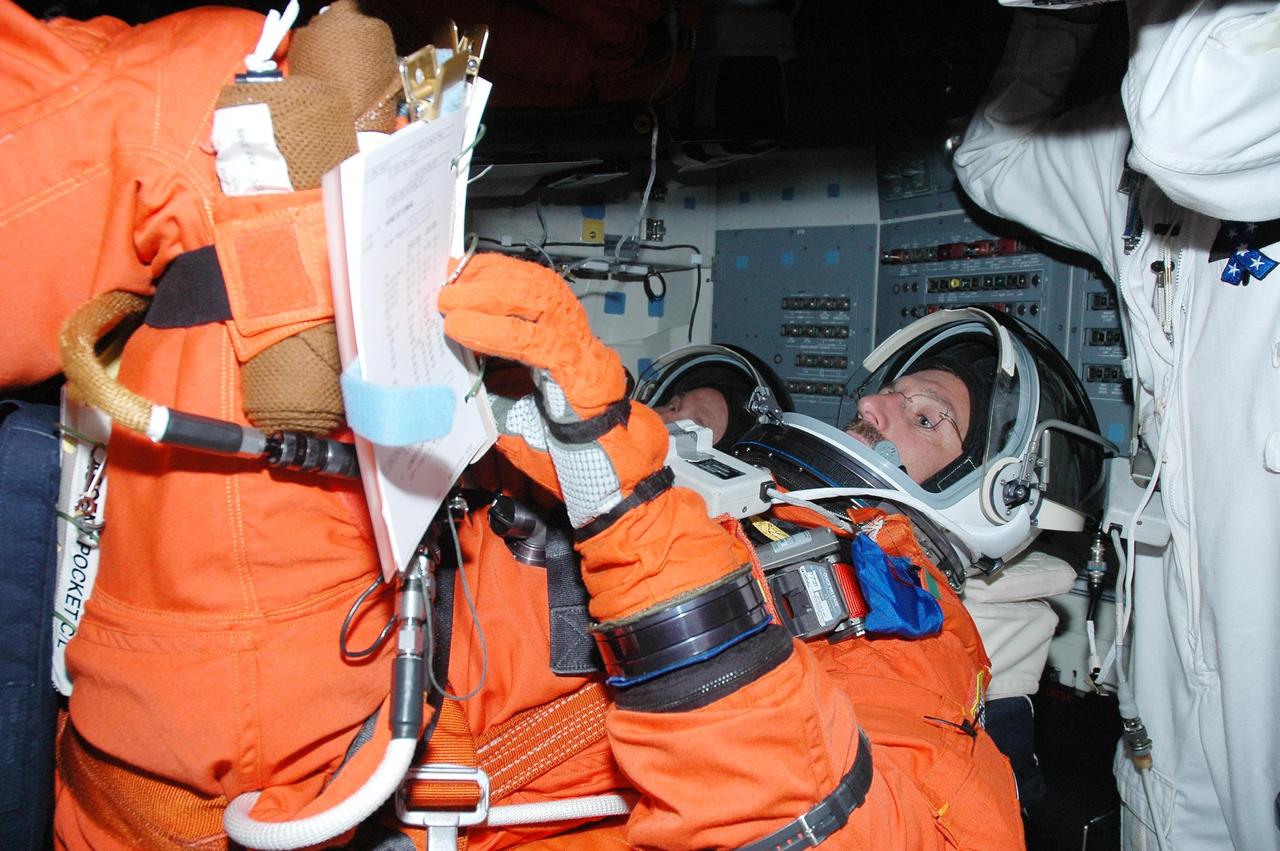
KENNEDY SPACE CENTER, FLA. - Inside Atlantis' cockpit, STS-115 Mission Specialists Daniel Burbank (front) and Steven MacLean, are taking part in a simulated launch countdown, the culmination of Terminal Countdown Demonstration Test activities. The TCDT is a prelaunch preparation for the mission that is scheduled to lift off in a window opening Aug. 27. During their 11-day mission to the International Space Station, the STS-115 crew will continue construction of the station and attach the payload elements, the Port 3/4 truss segment with its two large solar arrays.
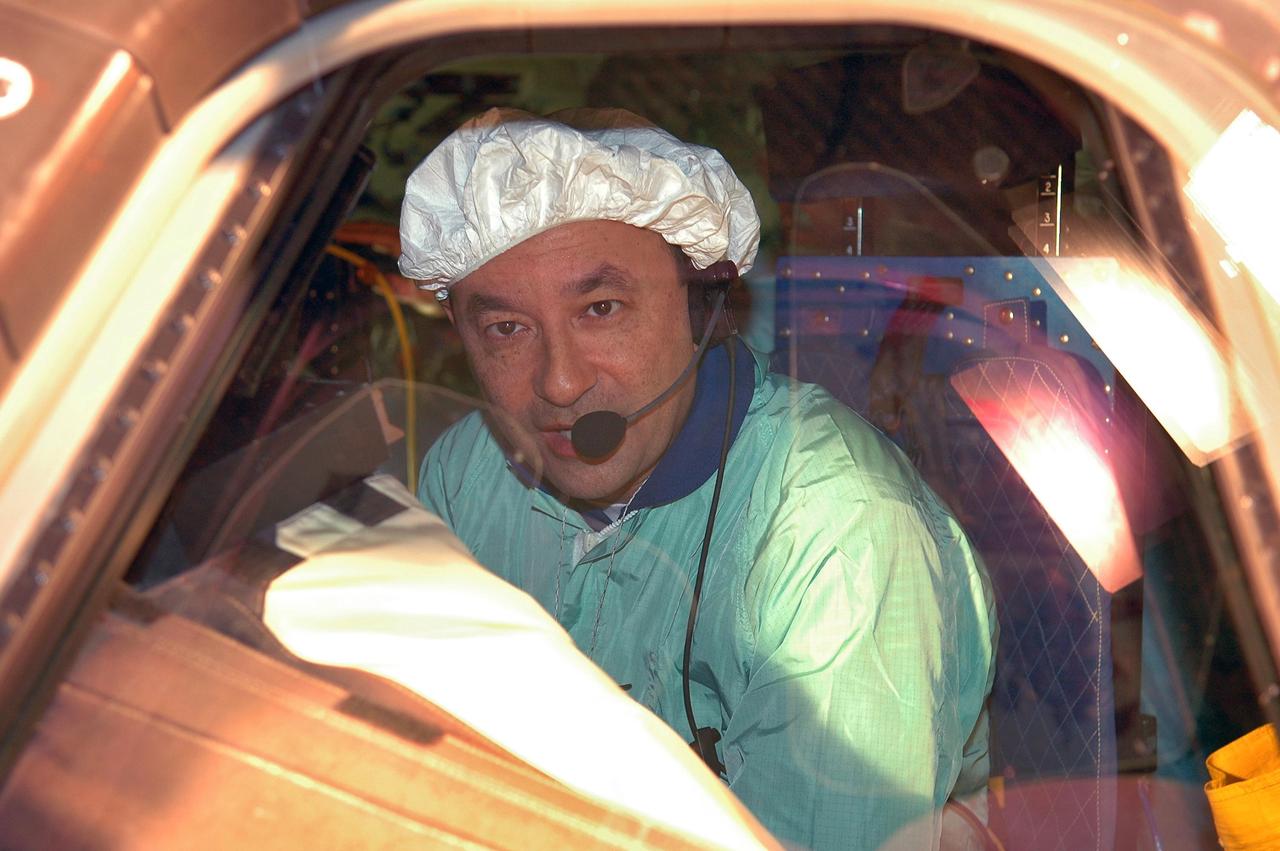
KENNEDY SPACE CENTER, FLA. - In the Orbiter Processing Facility, STS-116 Commander Mark Polansky checks the cockpit window of Discovery as part of a Crew Equipment Interface Test (CEIT). A CEIT allows astronauts to become familiar with equipment and hardware they will use on the mission. STS-116 will be mission No. 20 to the International Space Station and construction flight 12A.1. The mission payload is the SPACEHAB module, the P5 integrated truss structure and other key components. Launch is scheduled for no earlier than Dec. 7. Photo credit: NASA/Kim Shiflett

KENNEDY SPACE CENTER, FLA. -- During crew equipment interface test activities at KSC, STS-118 Commander Scott Kelly checks for sharp edges on the port cockpit window of orbiter Endeavour, which is in Orbiter Processing Facility bay 3. The STS-118 mission will be delivering the third starboard truss segment, the ITS S5, to the International Space Station, as well as the SPACEHAB single cargo module filled with supplies and equipment. Launch aboard Space Shuttle Endeavour is targeted for Aug. 9. Photo credit: NASA/Kim Shiflett
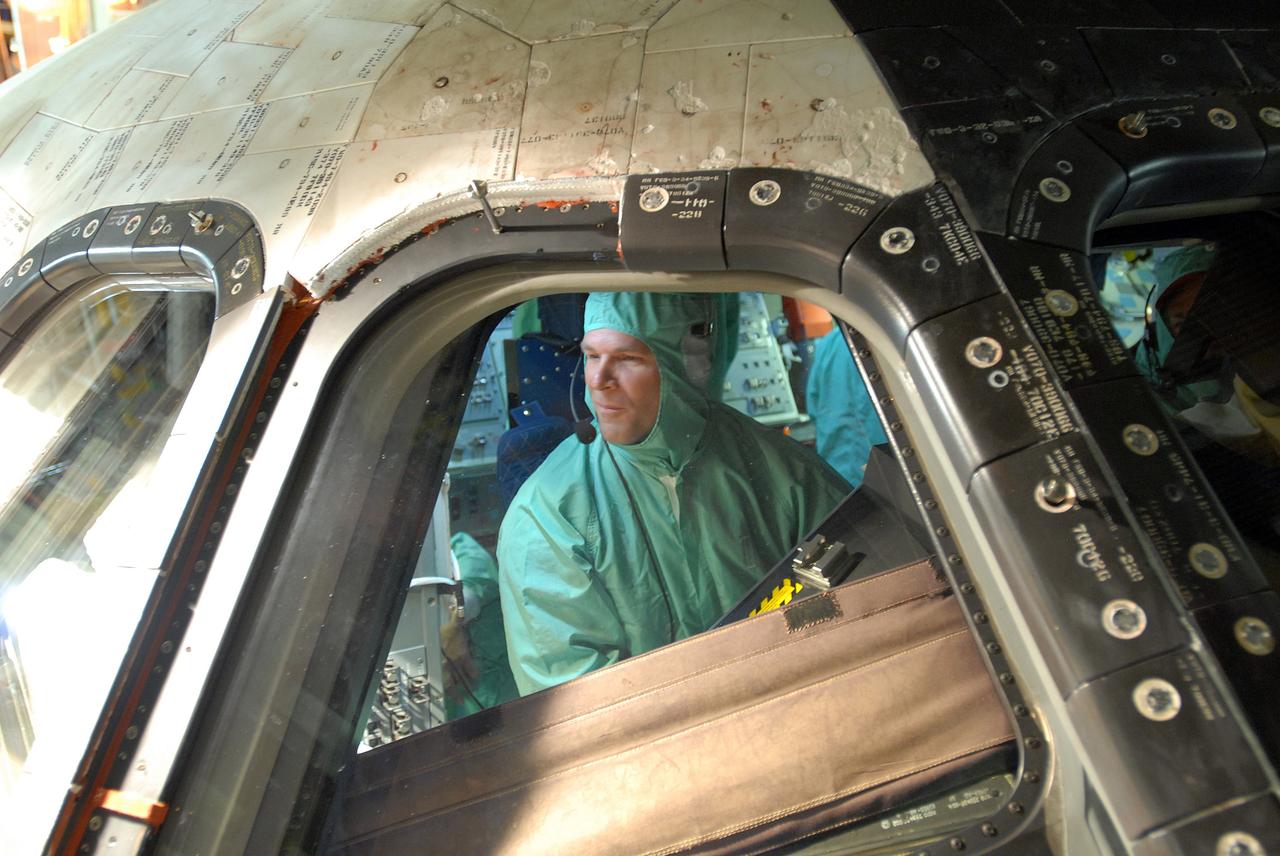
CAPE CANAVERAL, Fla. – In Orbiter Processing Facility 3 at NASA's Kennedy Space Center in Florida, STS-128 Pilot Kevin Ford checks out the cockpit windows of space shuttle Discovery. The crew is at Kennedy for a crew equipment interface test, or CEIT, which provides hands-on training and observation of shuttle and flight hardware. The STS-128 flight will carry science and storage racks to the International Space Station on Discovery. Launch is targeted for Aug. 7. Photo credit: NASA/Jim Grossmann
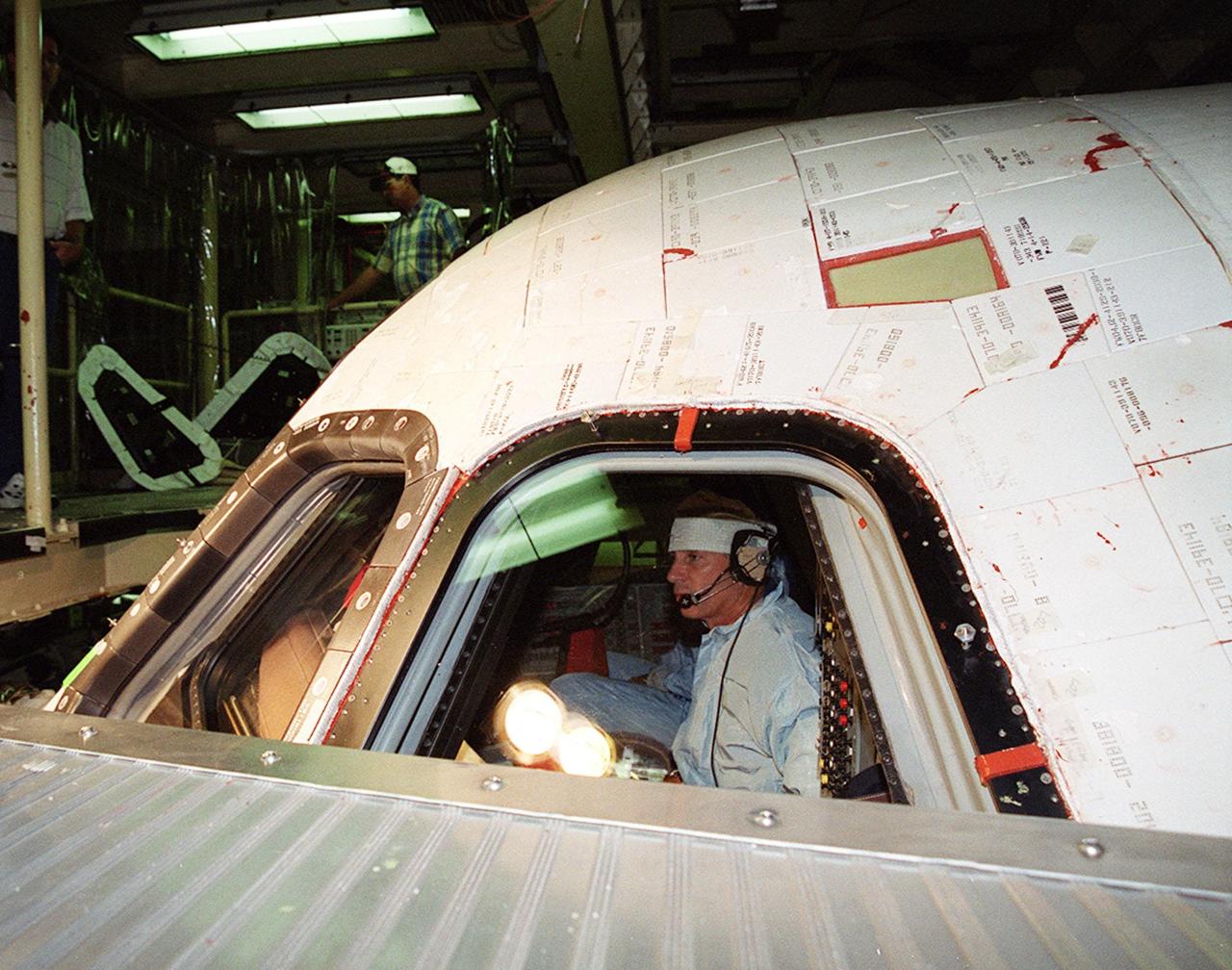
KENNEDY SPACE CENTER, FLA. -- In Orbiter Processing Facility bay 3, STS-98 Commander Ken Cockrell conducts window inspection, checking for leaks, in the cockpit of Atlantis. He and the rest of the crew are at KSC for Crew Equipment Interface Test activities. Launch on mission STS-98 is scheduled for Jan. 18, 2001. It will be transporting the U.S. Lab, Destiny, to the International Space Station with five system racks already installed inside of the module. After delivery of electronics in the lab, electrically powered attitude control for Control Moment Gyroscopes will be activated
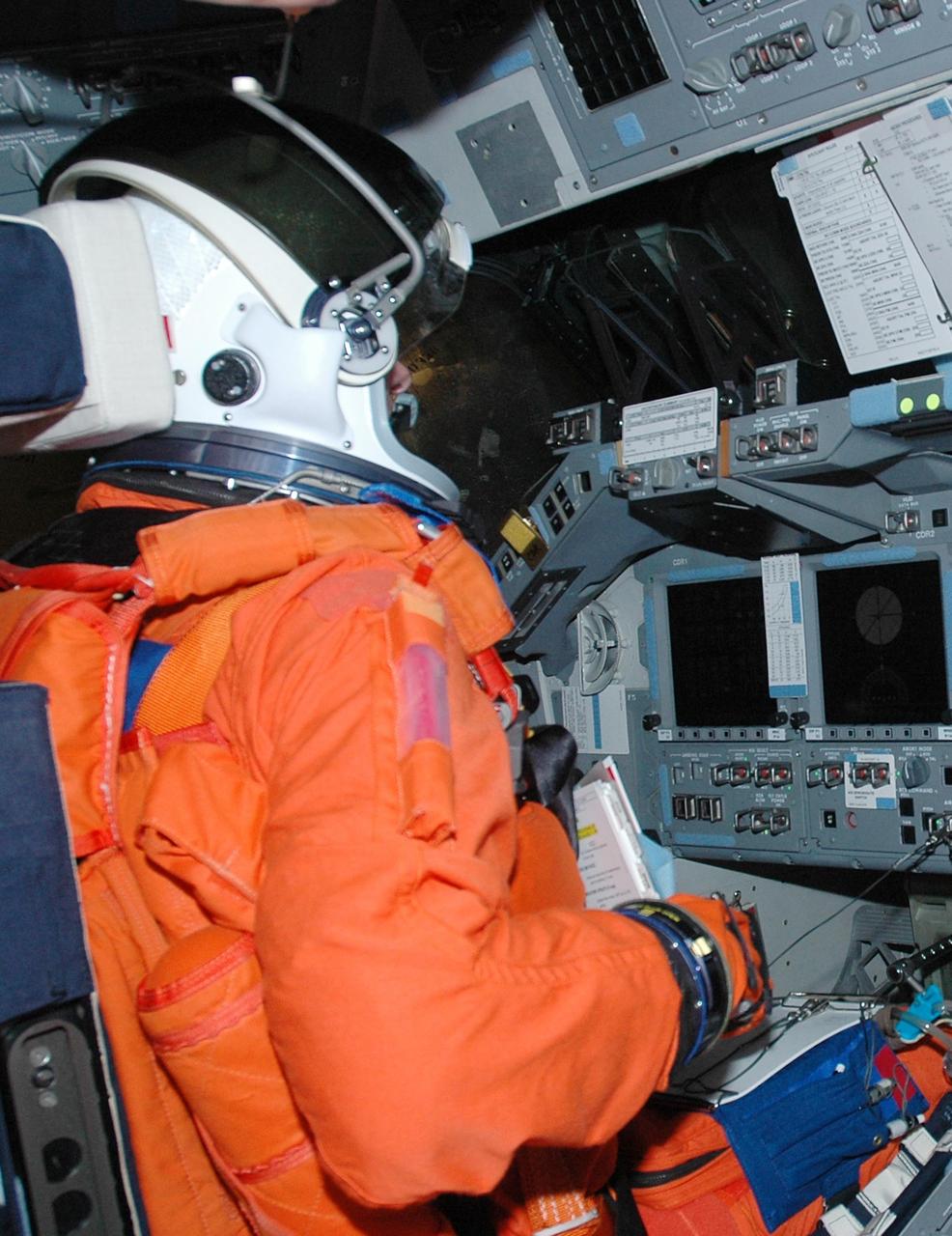
KENNEDY SPACE CENTER, FLA. - Inside Atlantis' cockpit, STS-115 Commander Brent Jett is taking part in a simulated launch countdown, the culmination of Terminal Countdown Demonstration Test activities. The TCDT is a prelaunch preparation for the mission that is scheduled to lift off in a window opening Aug. 27. During their 11-day mission to the International Space Station, the STS-115 crew will continue construction of the station and attach the payload elements, the Port 3/4 truss segment with its two large solar arrays.
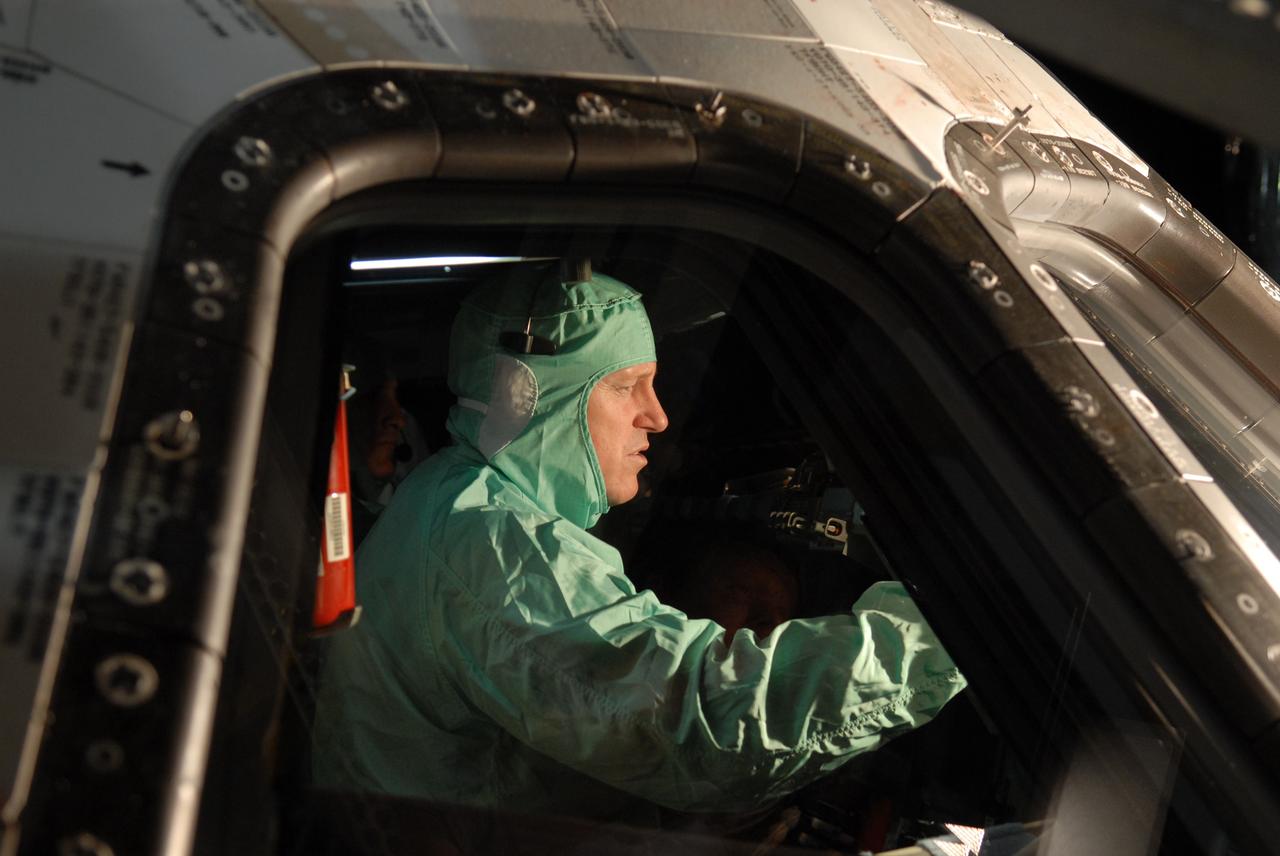
CAPE CANAVERAL, Fla. – In NASA Kennedy Space Center's Orbiter Processing Facility 1, STS-129 Pilot Barry Wilmore checks the cockpit window in space shuttle Atlantis. The crew is at Kennedy for a Crew Equipment Interface Test, which provides hands-on training and observation of shuttle and flight hardware. Atlantis' STS-129 mission is targeted to launch Nov. 12. Photo credit: NASA/Jim Grossmann
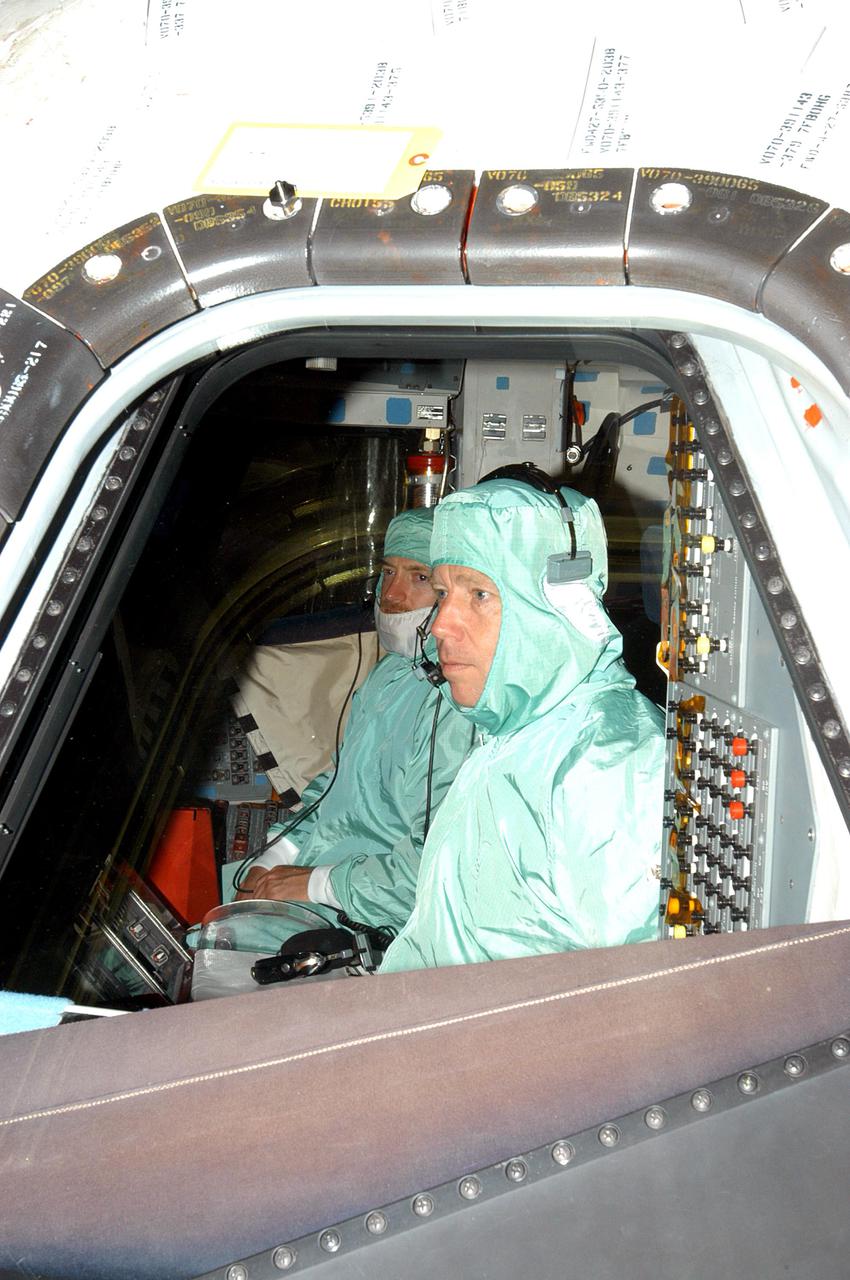
KENNEDY SPACE CENTER, FLA. - In Orbiter Processing Facility bay 1, STS-121 Mission Commander Steven W. Lindsey (right) and Pilot Mark E. Kelly inspect the windows in Atlantis' cockpit. The STS-121 crew is at KSC to participate in the Crew Equipment Interface Test (CEIT). During CEIT, the crew has an opportunity to get a hands-on look at the orbiter and equipment they will be working with on their mission. STS-121, the second Return to Flight mission, is scheduled to launch aboard Atlantis in July.
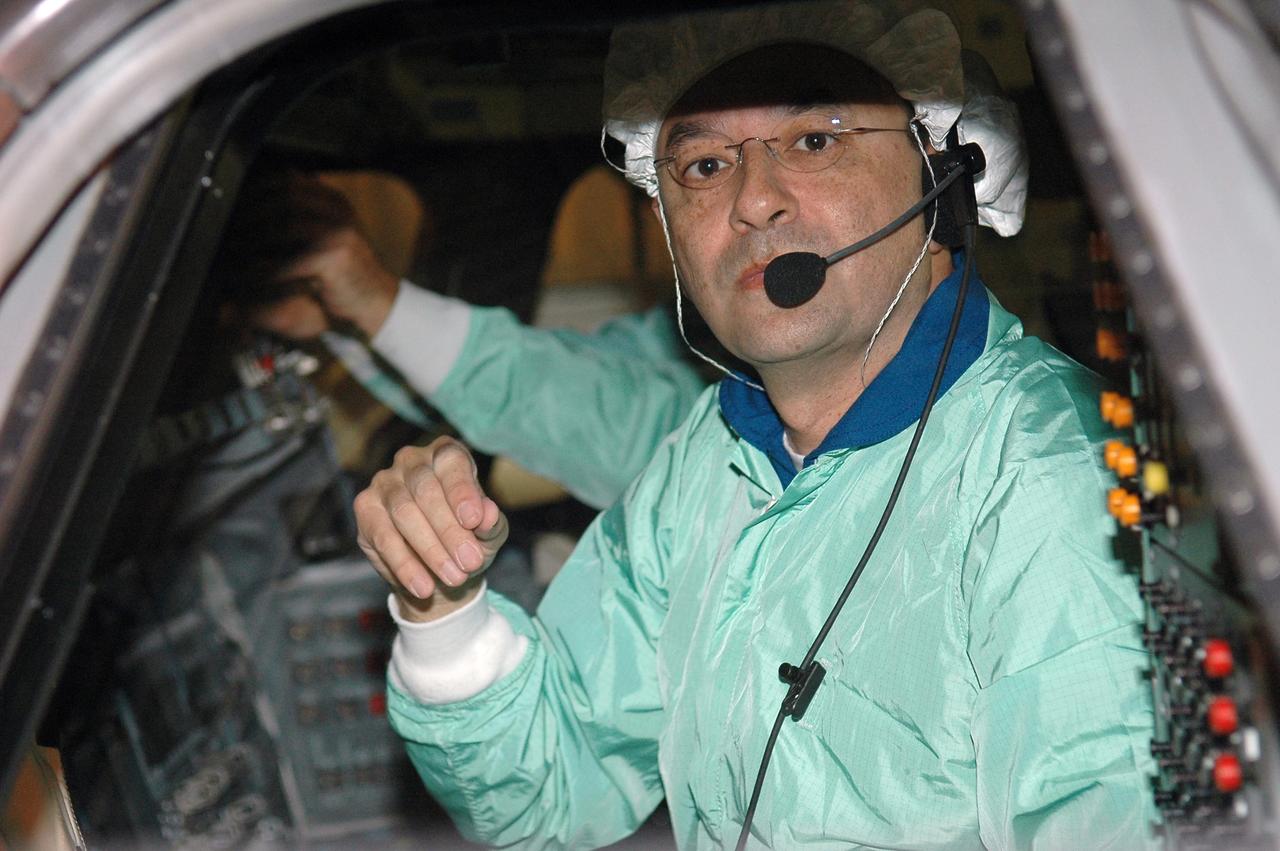
KENNEDY SPACE CENTER, FLA. - In the Orbiter Processing Facility, STS-116 Commander Mark Polansky checks the cockpit window as part of a Crew Equipment Interface Test (CEIT). A CEIT allows astronauts to become familiar with equipment and hardware they will use on the mission. STS-116 will be mission No. 20 to the International Space Station and construction flight 12A.1. The mission payload is the SPACEHAB module, the P5 integrated truss structure and other key components. Launch is scheduled for no earlier than Dec. 7. Photo credit: NASA/Kim Shiflett
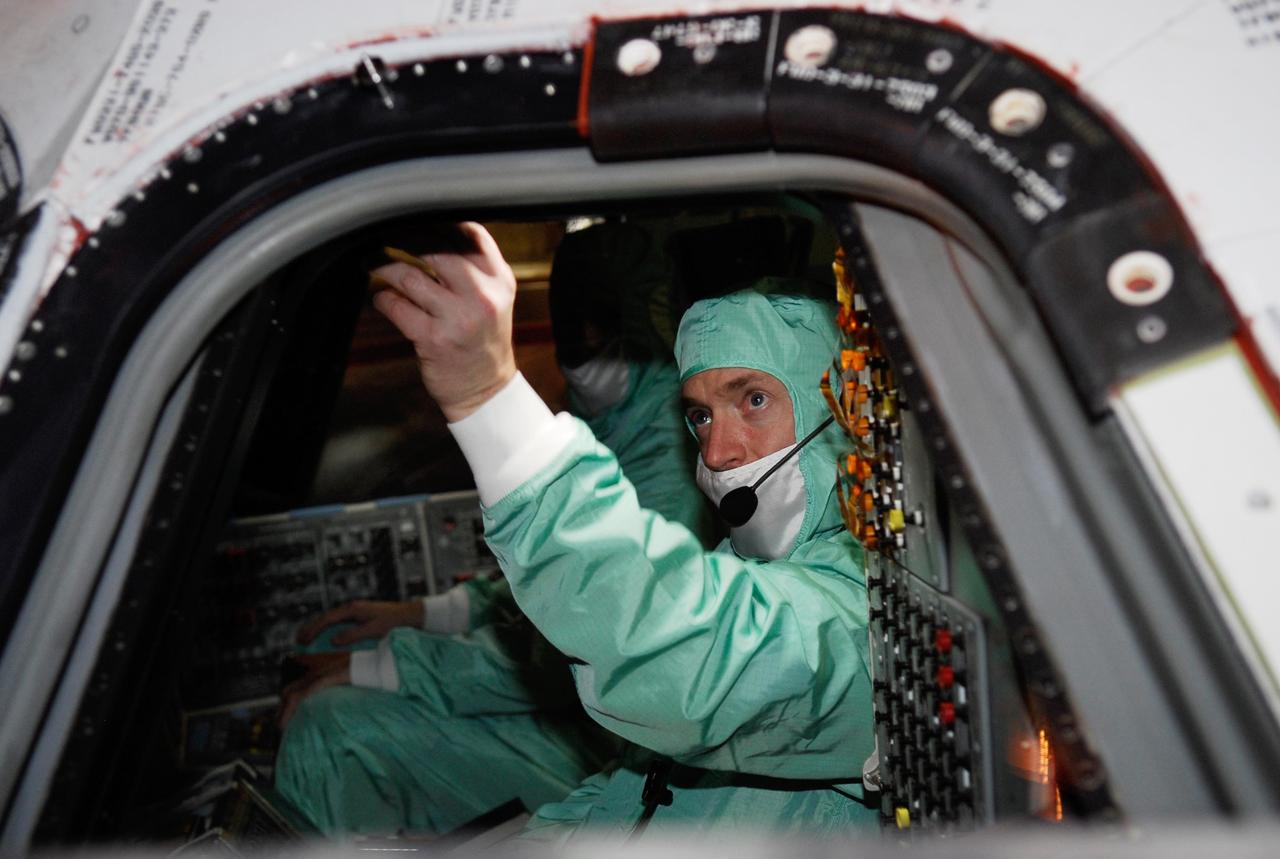
KENNEDY SPACE CENTER, FLA. -- During a crew equipment interface test in the Orbiter Processing Facility bay 3 at NASA's Kennedy Space Center, STS-124 Commander Mark Kelly checks the area around the window in the cockpit of space shuttle Discovery. The shuttle will transport the Kibo Japanese Experiment Module - Pressurized Module (JEM-PM) and the Japanese Remote Manipulator System (JEM-RMS) to the International Space Station to complete the Kibo laboratory. The launch of Discovery is targeted for April 24. Photo credit: NASA/Kim Shiflett
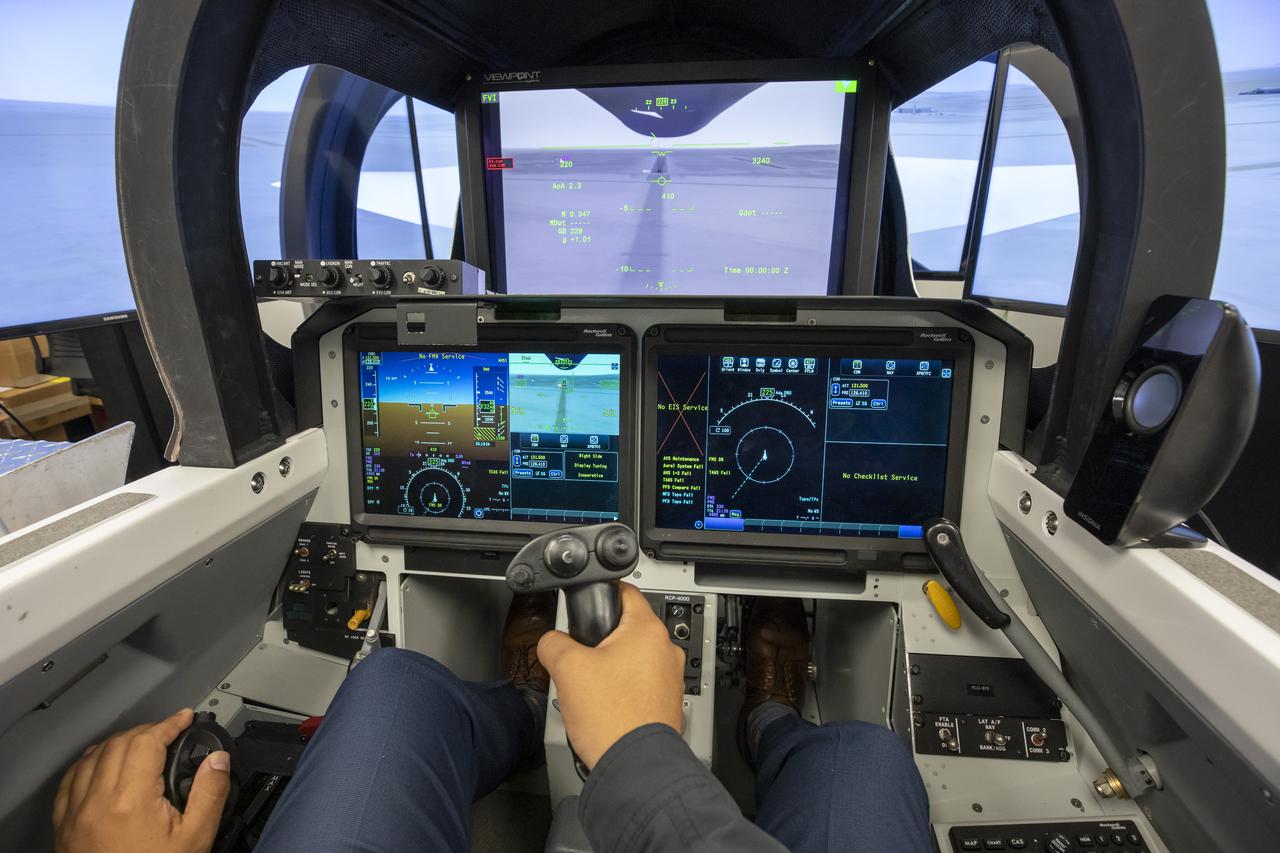
This image shows a close up of the cockpit view of the eXternal Vision System that will be placed in the X-59. Instead of a front facing window, the pilot will use these monitors for forward facing visibility. Lockheed Martin Photography By Garry Tice 1011 Lockheed Way, Palmdale, Ca. 93599 Event: X-59 SIL Round 2 Date: 6/10/2021
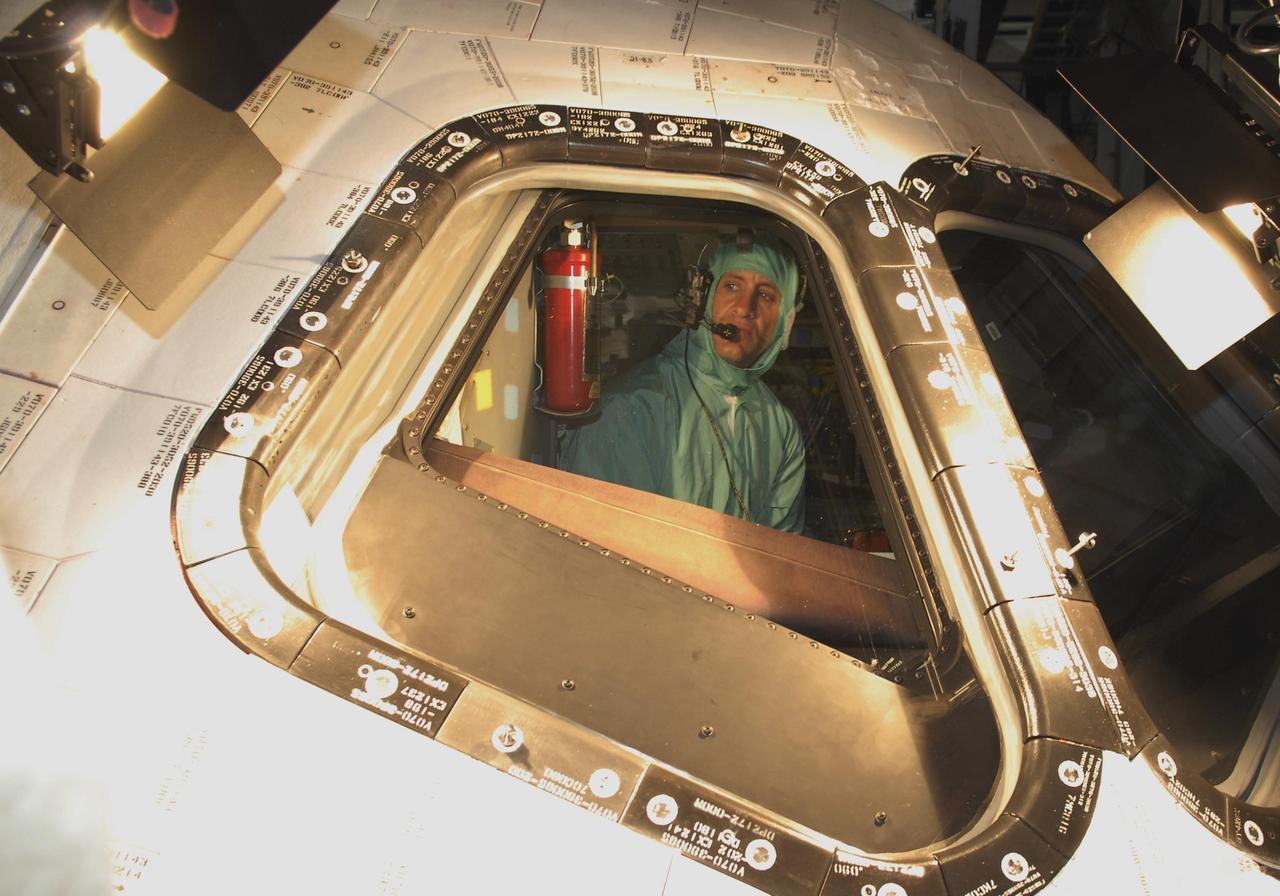
KENNEDY SPACE CENTER, FLA. -- During crew equipment interface test activities at KSC, STS-118 Pilot Charles Hobaugh looks out the starboard cockpit window of orbiter Endeavour, which is in Orbiter Processing Facility bay 3. The STS-118 mission will be delivering the third starboard truss segment, the ITS S5, to the International Space Station, as well as the SPACEHAB single cargo module filled with supplies and equipment. Launch aboard Space Shuttle Endeavour is targeted for Aug. 9. Photo credit: NASA/Kim Shiflett
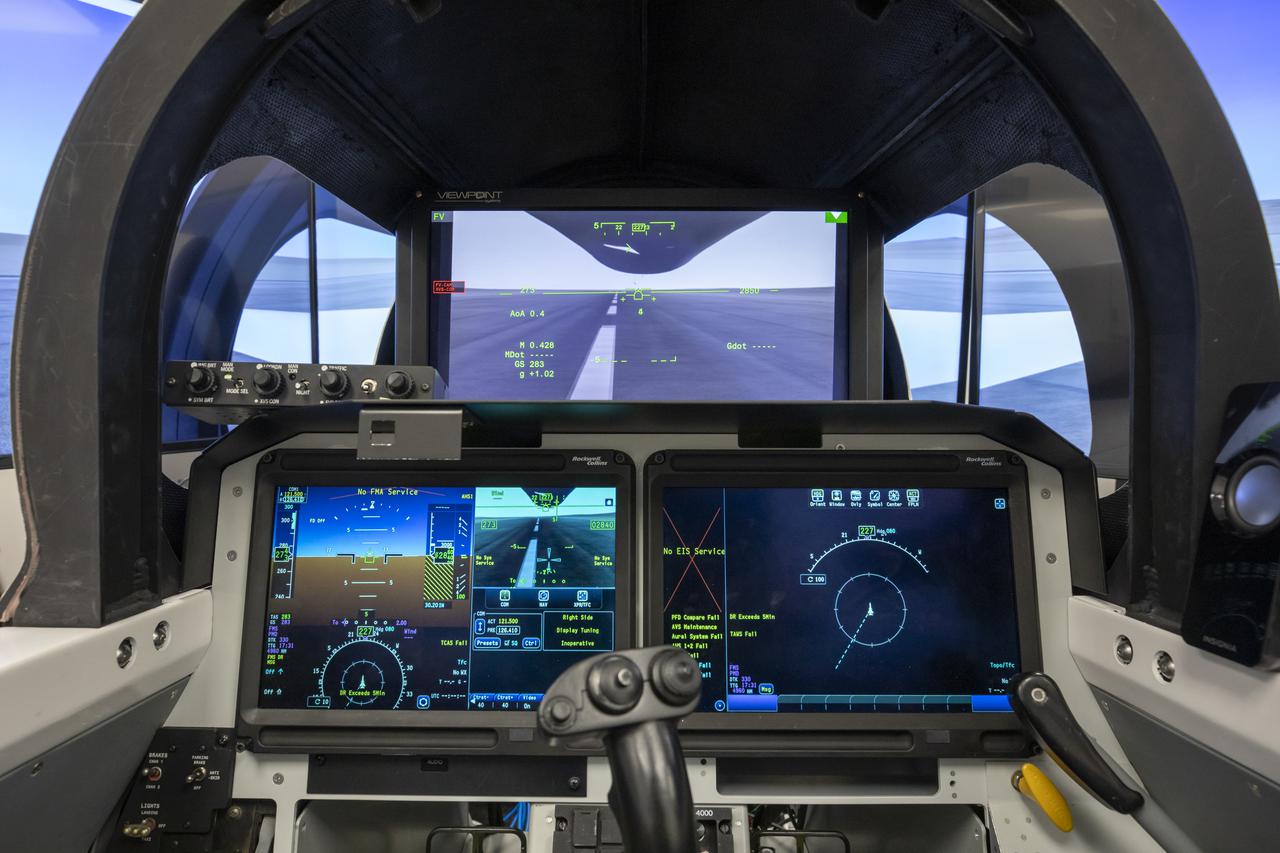
This image shows a close up of the cockpit view of the eXternal Vision System that will be placed in the X-59. Instead of a front facing window, the pilot will use these monitors for forward facing visibility. Lockheed Martin Photography By Garry Tice 1011 Lockheed Way, Palmdale, Ca. 93599 Event: X-59 SIL Round 2 Date: 6/10/2021
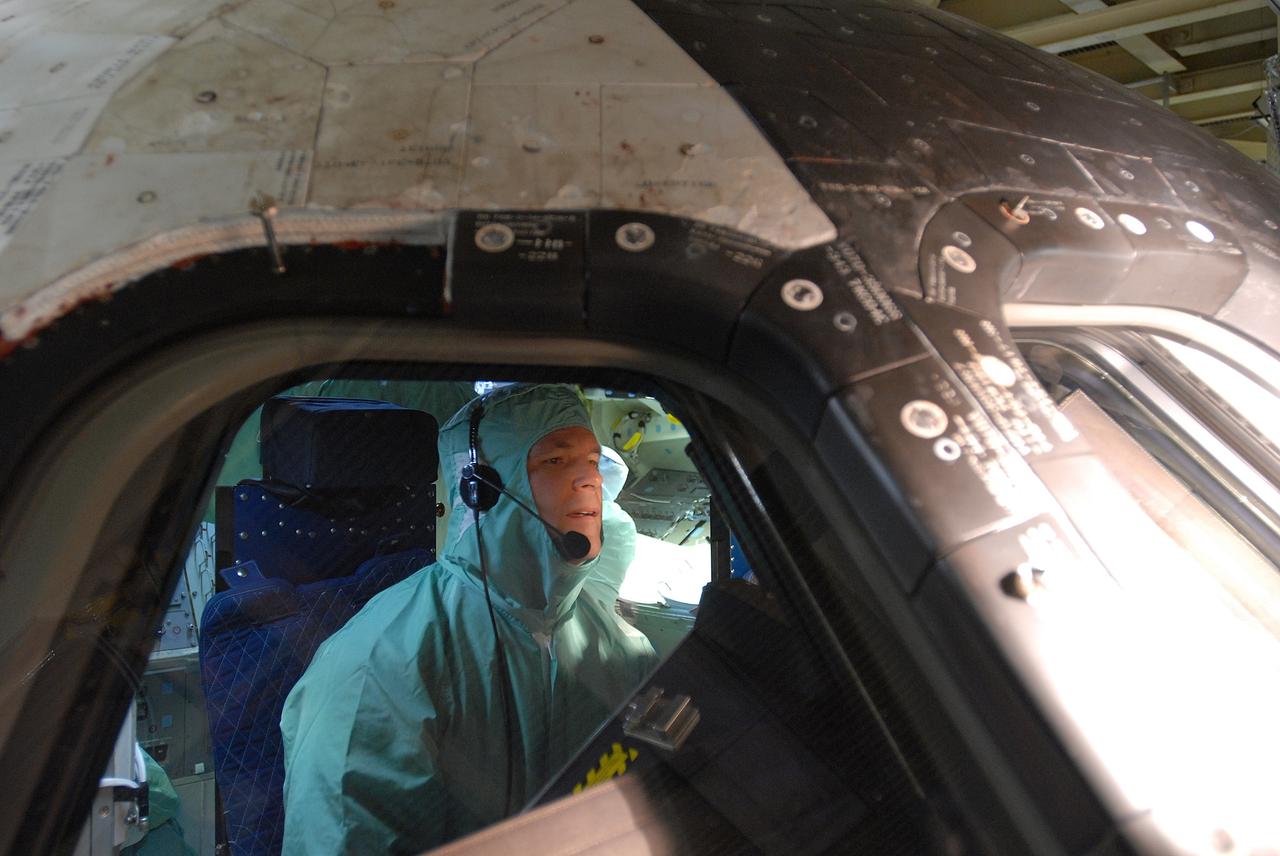
CAPE CANAVERAL, Fla. – In Orbiter Processing Facility 3 at NASA's Kennedy Space Center in Florida, STS-128 mission Pilot Kevin Ford checks out the cockpit window of space shuttle Discovery. The crew is at Kennedy for a crew equipment interface test, or CEIT, which provides hands-on training and observation of shuttle and flight hardware. The STS-128 flight will carry science and storage racks to the International Space Station on Discovery. Launch is targeted for Aug. 7. Photo credit: NASA/Jim Grossmann
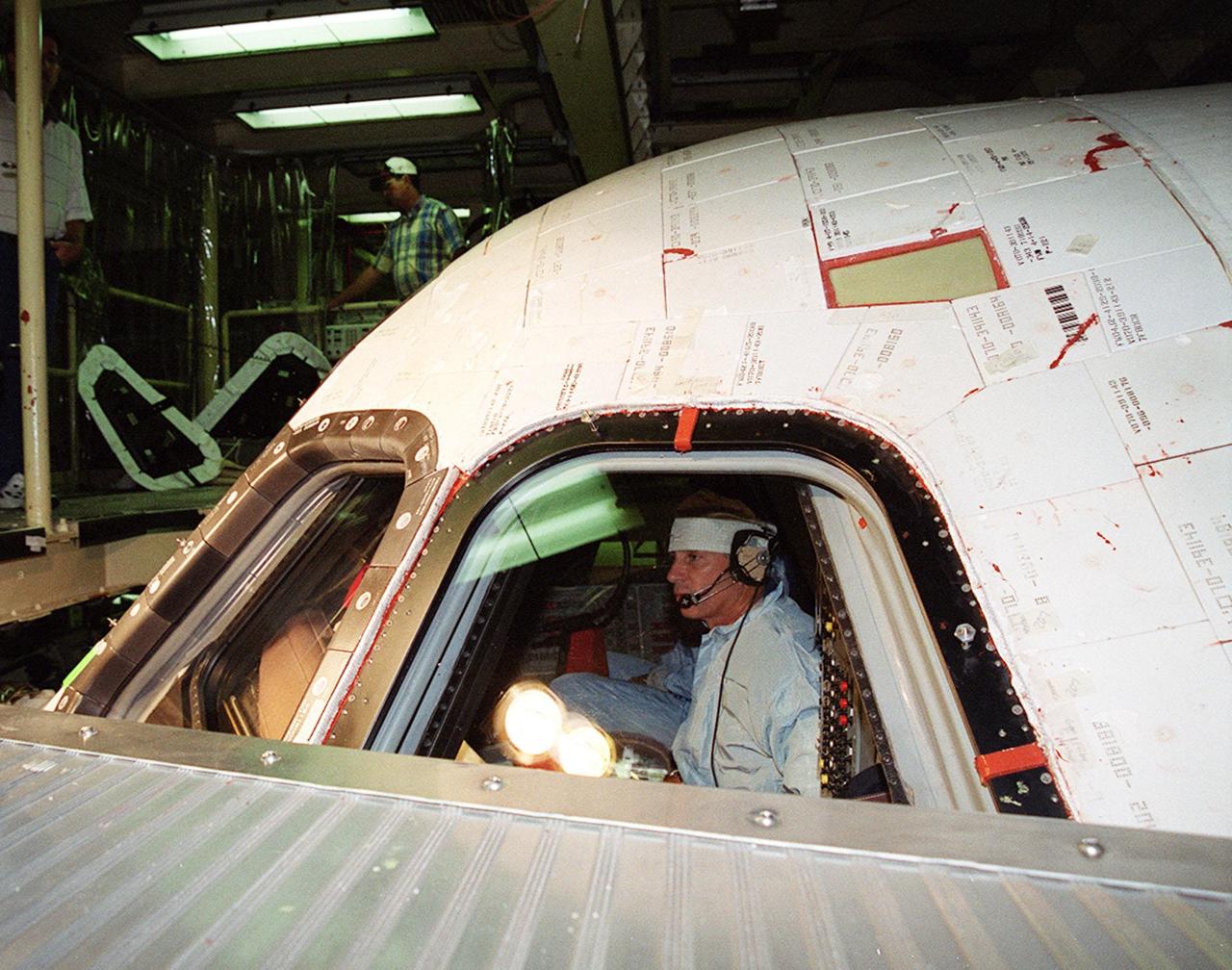
KENNEDY SPACE CENTER, FLA. -- In Orbiter Processing Facility bay 3, STS-98 Commander Ken Cockrell conducts window inspection, checking for leaks, in the cockpit of Atlantis. He and the rest of the crew are at KSC for Crew Equipment Interface Test activities. Launch on mission STS-98 is scheduled for Jan. 18, 2001. It will be transporting the U.S. Lab, Destiny, to the International Space Station with five system racks already installed inside of the module. After delivery of electronics in the lab, electrically powered attitude control for Control Moment Gyroscopes will be activated

KENNEDY SPACE CENTER, FLA. - In the Orbiter Processing Facility, STS-116 Pilot William Oefelein checks the cockpit window of Discovery as part of a Crew Equipment Interface Test (CEIT). A CEIT allows astronauts to become familiar with equipment and hardware they will use on the mission. STS-116 will be mission No. 20 to the International Space Station and construction flight 12A.1. The mission payload is the SPACEHAB module, the P5 integrated truss structure and other key components. Launch is scheduled for no earlier than Dec. 7. Photo credit: NASA/Kim Shiflett
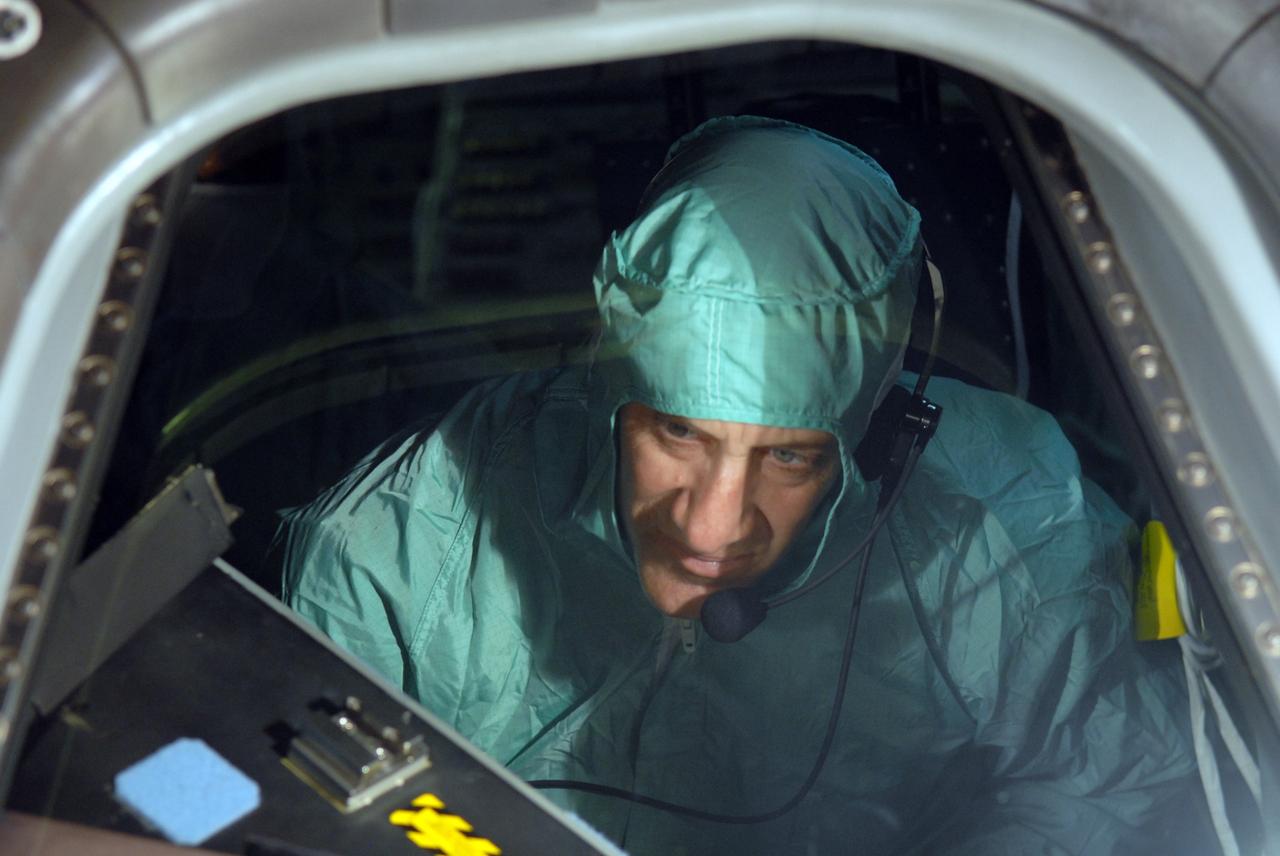
CAPE CANAVERAL, Fla. – In NASA Kennedy Space Center's Orbiter Processing Facility 1, STS-129 Commander Charles Hobaugh checks the cockpit window in space shuttle Atlantis. The crew is at Kennedy for a Crew Equipment Interface Test, which provides hands-on training and observation of shuttle and flight hardware. Atlantis' STS-129 mission is targeted to launch Nov. 12. Photo credit: NASA/Jim Grossmann
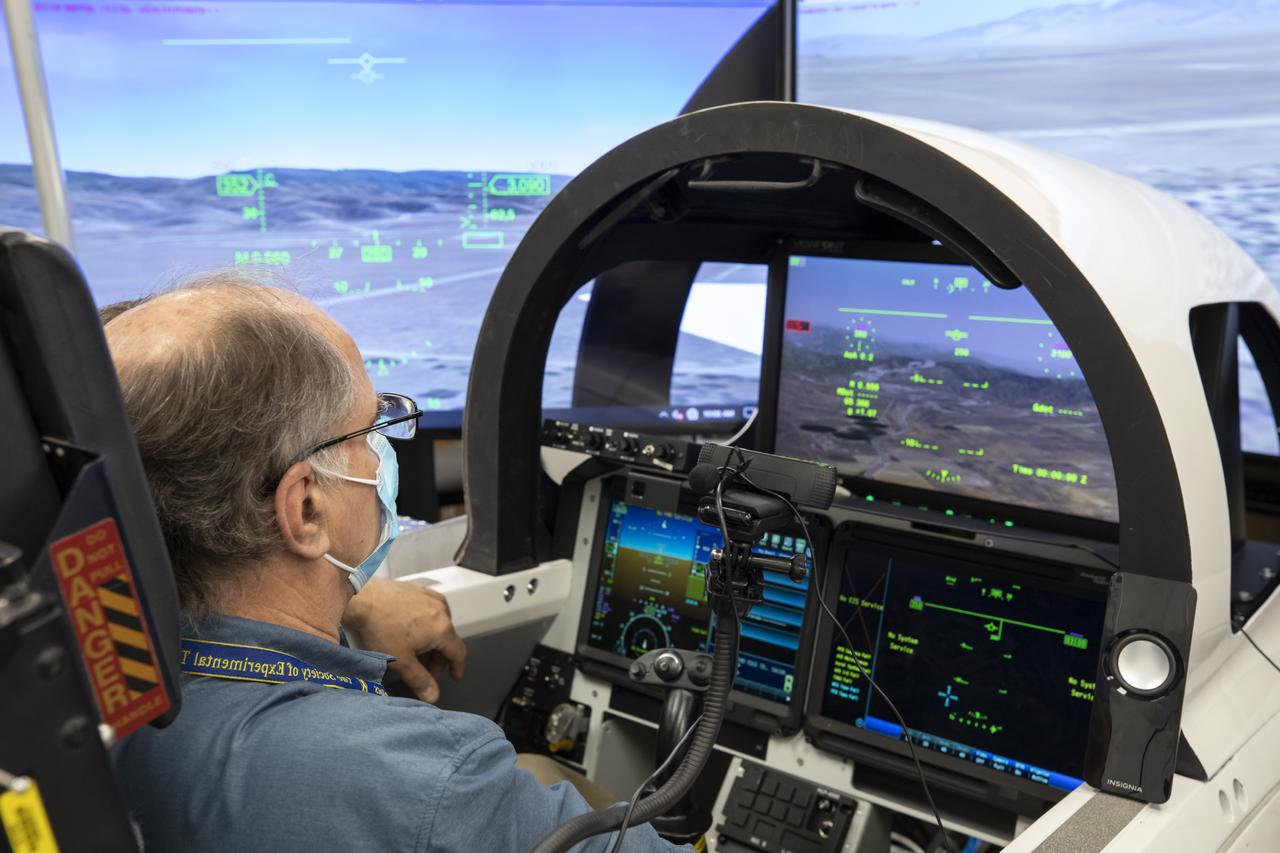
This image shows a close up of the cockpit view of the eXternal Vision System that will be placed in the X-59. Instead of a front facing window, the pilot will use these monitors for forward facing visibility. Lockheed Martin Photography By Garry Tice 1011 Lockheed Way, Palmdale, Ca. 93599 Event: X-59 SIL Date: 6/08/2021
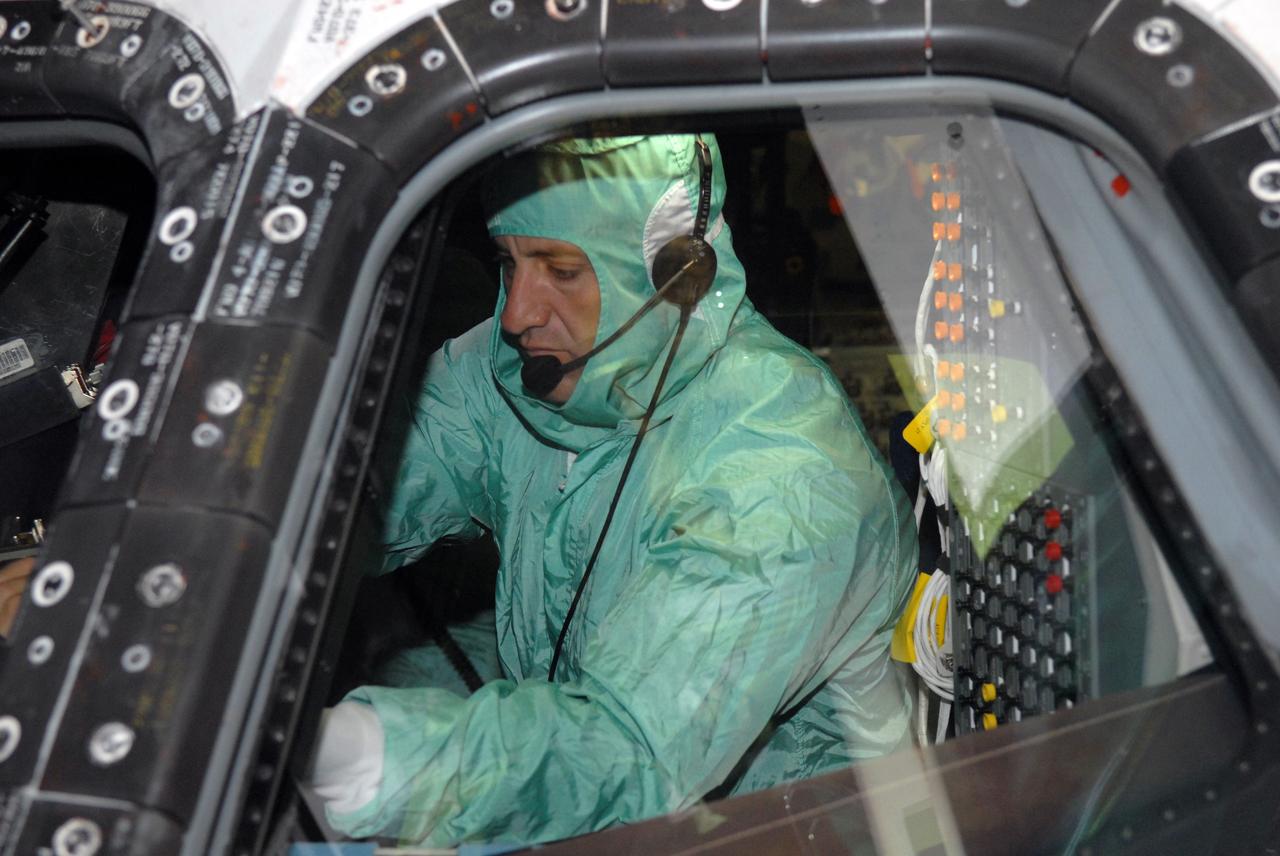
CAPE CANAVERAL, Fla. – In NASA Kennedy Space Center's Orbiter Processing Facility 1, STS-129 Commander Charles Hobaugh checks the cockpit window in space shuttle Atlantis. The crew is at Kennedy for a Crew Equipment Interface Test, which provides hands-on training and observation of shuttle and flight hardware. Atlantis' STS-129 mission is targeted to launch Nov. 12. Photo credit: NASA/Jim Grossmann
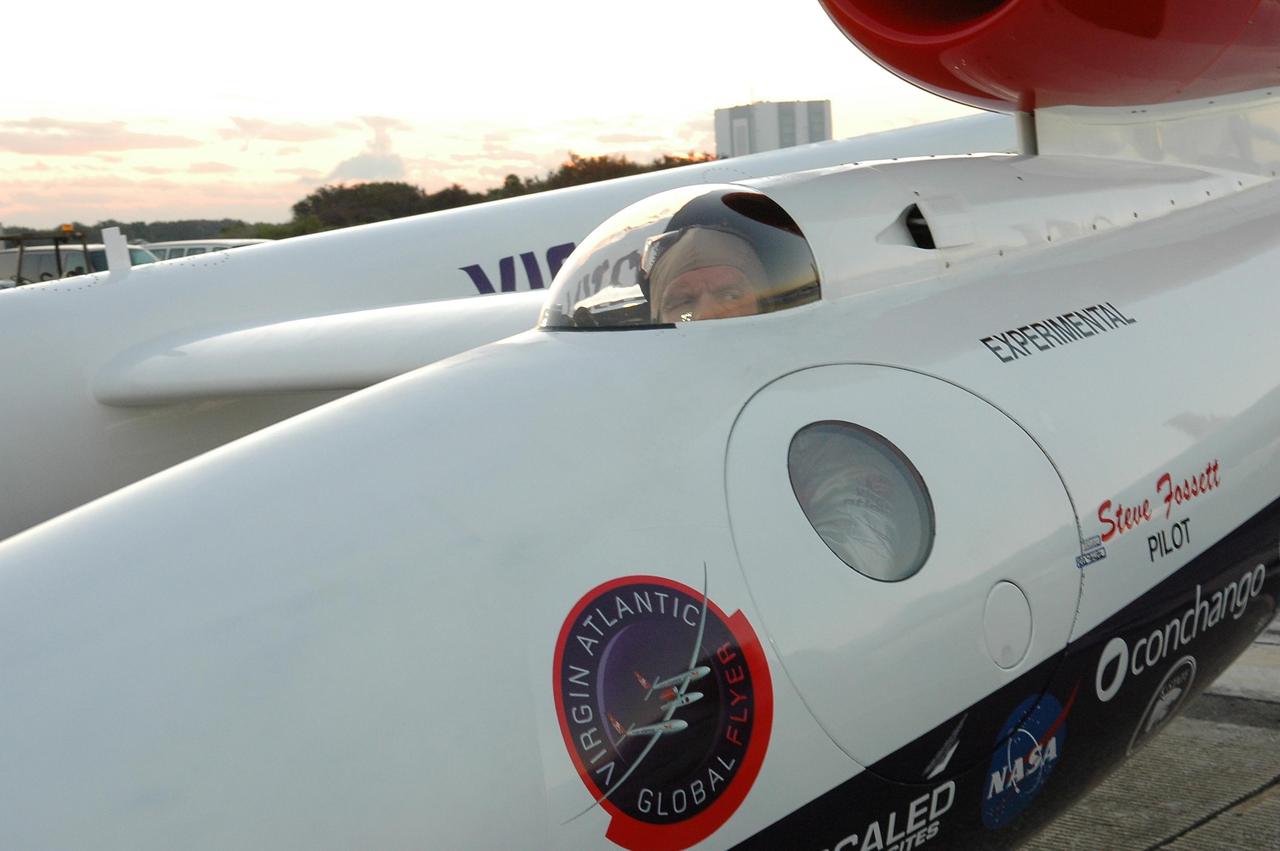
KENNEDY SPACE CENTER, FLA. - At NASA Kennedy Space Center’s Shuttle Landing Facility, the door is closed on the Virgin Atlantic GlobalFlyer as pilot Steve Fossett looks out the cockpit window. Fossett will pilot the GlobalFlyer on a record-breaking attempt by flying solo, non-stop without refueling, to surpass the current record for the longest flight of any aircraft. This is the second attempt in two days after a fuel leak was detected Feb. 7. The expected time of takeoff is 7 a.m. Photo credit: NASA/Kim Shiflett
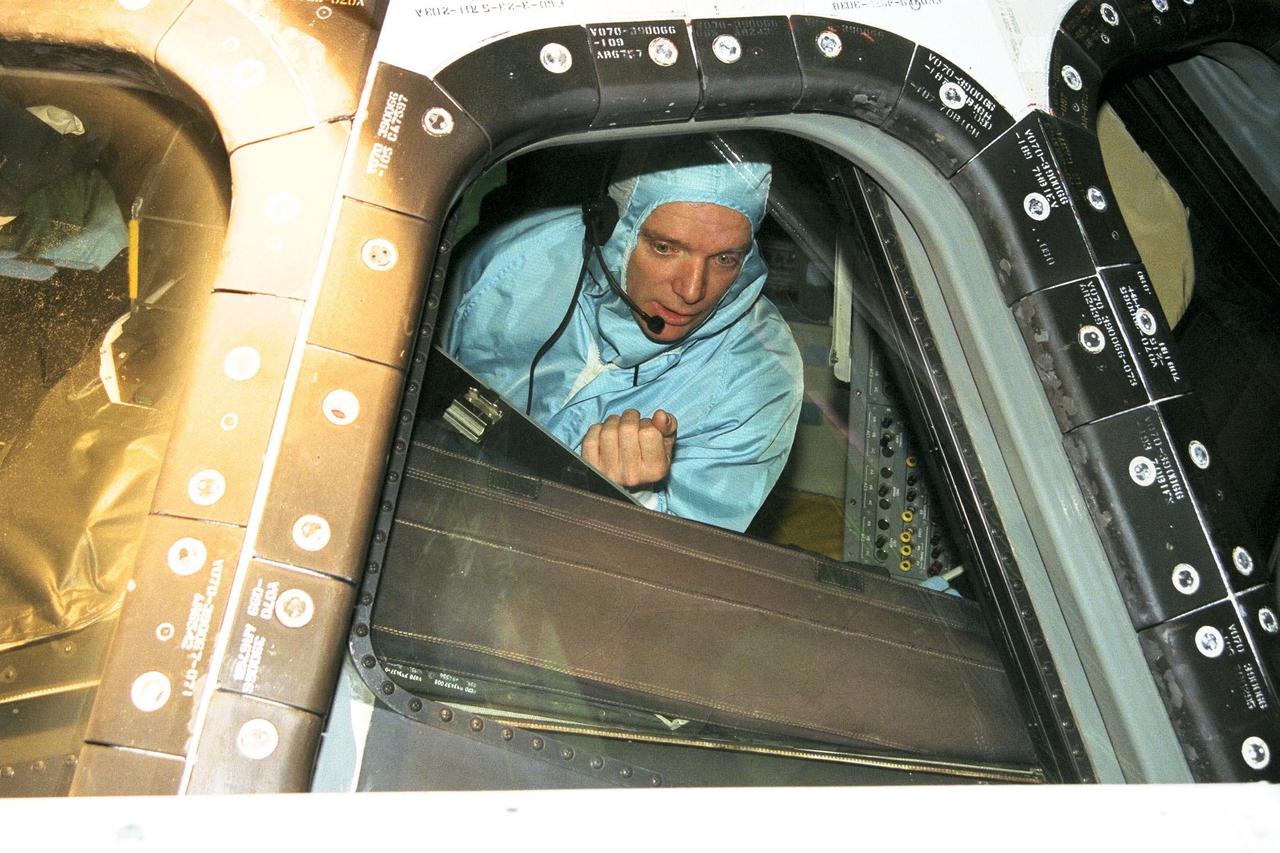
STS-91 Commander Charles Precourt inspects the windows of the cockpit from inside of the orbiter Discovery during the Crew Equipment Interface Test, or CEIT, in KSC's Orbiter Processing Facility Bay 2. During CEIT, the crew have an opportunity to get a hands-on look at the payloads with which they'll be working on-orbit. The STS-91 crew are scheduled to launch aboard the Shuttle Discovery for the ninth and final docking with the Russian Space Station Mir from KSC's Launch Pad 39A on May 28 at 8:05 EDT
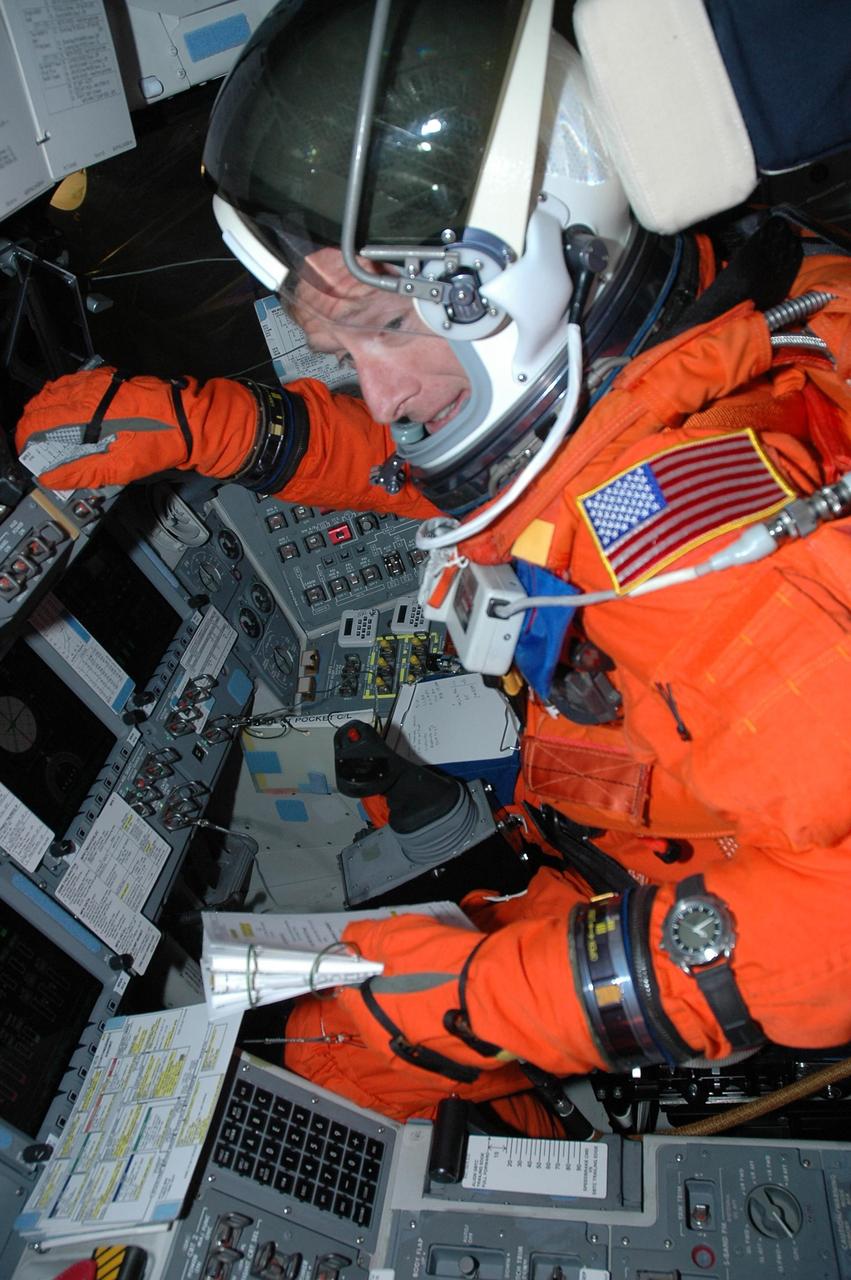
KENNEDY SPACE CENTER, FLA. - Inside Atlantis' cockpit, STS-115 Pilot Christopher Ferguson is taking part in a simulated launch countdown, the culmination of Terminal Countdown Demonstration Test activities. The TCDT is a prelaunch preparation for the mission that is scheduled to lift off in a window opening Aug. 27. During their 11-day mission to the International Space Station, the STS-115 crew will continue construction of the station and attach the payload elements, the Port 3/4 truss segment with its two large solar arrays.
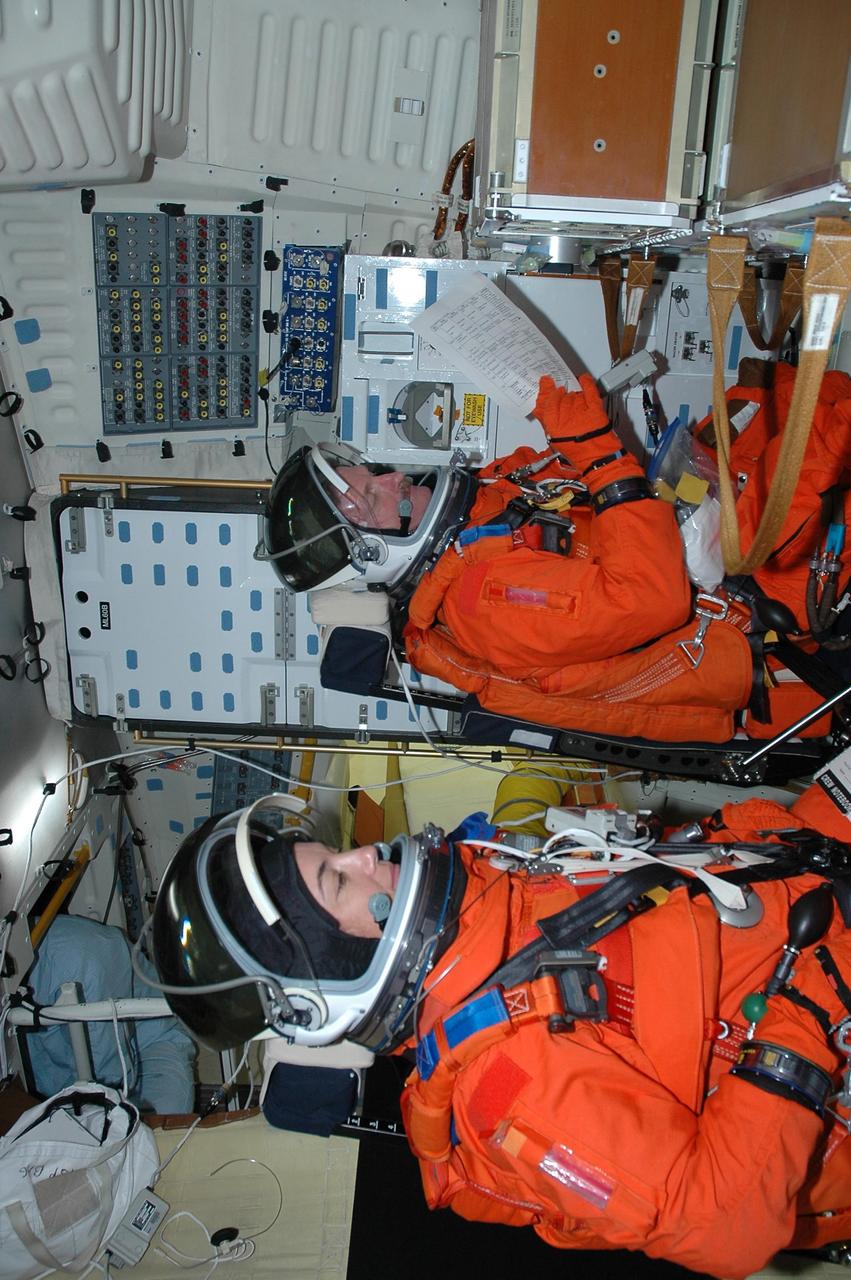
KENNEDY SPACE CENTER, FLA. - Inside Atlantis' cockpit, STS-115 Mission Specialists Heidemarie Stefanyshyn-Piper and Joseph Tanner are taking part in a simulated launch countdown, the culmination of Terminal Countdown Demonstration Test activities. The TCDT is a prelaunch preparation for the mission that is scheduled to lift off in a window opening Aug. 27. During their 11-day mission to the International Space Station, the STS-115 crew will continue construction of the station and attach the payload elements, the Port 3/4 truss segment with its two large solar arrays.
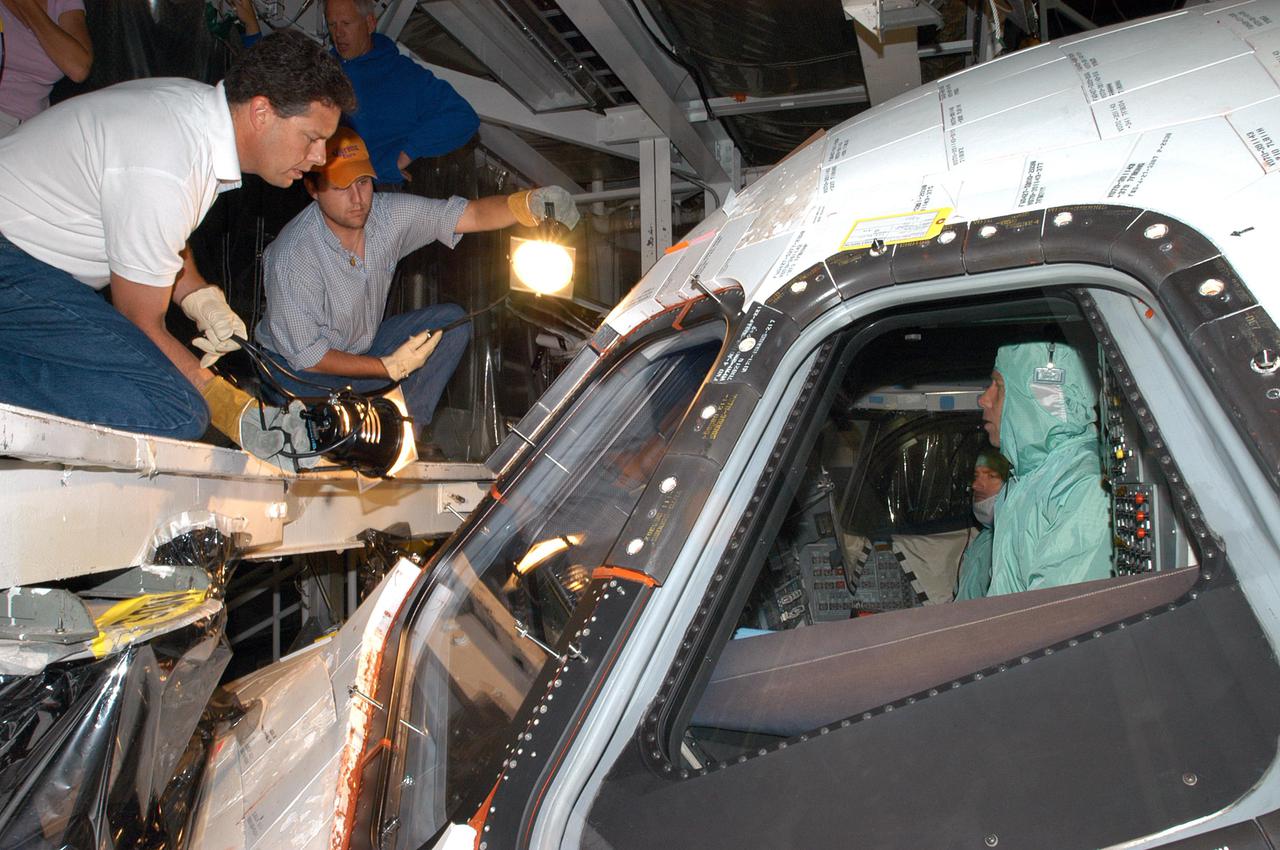
KENNEDY SPACE CENTER, FLA. - In Orbiter Processing Facility bay 1, United Space Alliance technicians help STS-121 Mission Commander Steven W. Lindsey (right) and Pilot Mark E. Kelly with an inspection of the windows in Atlantis' cockpit. The STS-121 crew is at KSC to participate in the Crew Equipment Interface Test (CEIT). During CEIT, the crew has an opportunity to get a hands-on look at the orbiter and equipment they will be working with on their mission. STS-121, the second Return to Flight mission, is scheduled to launch aboard Atlantis in July.
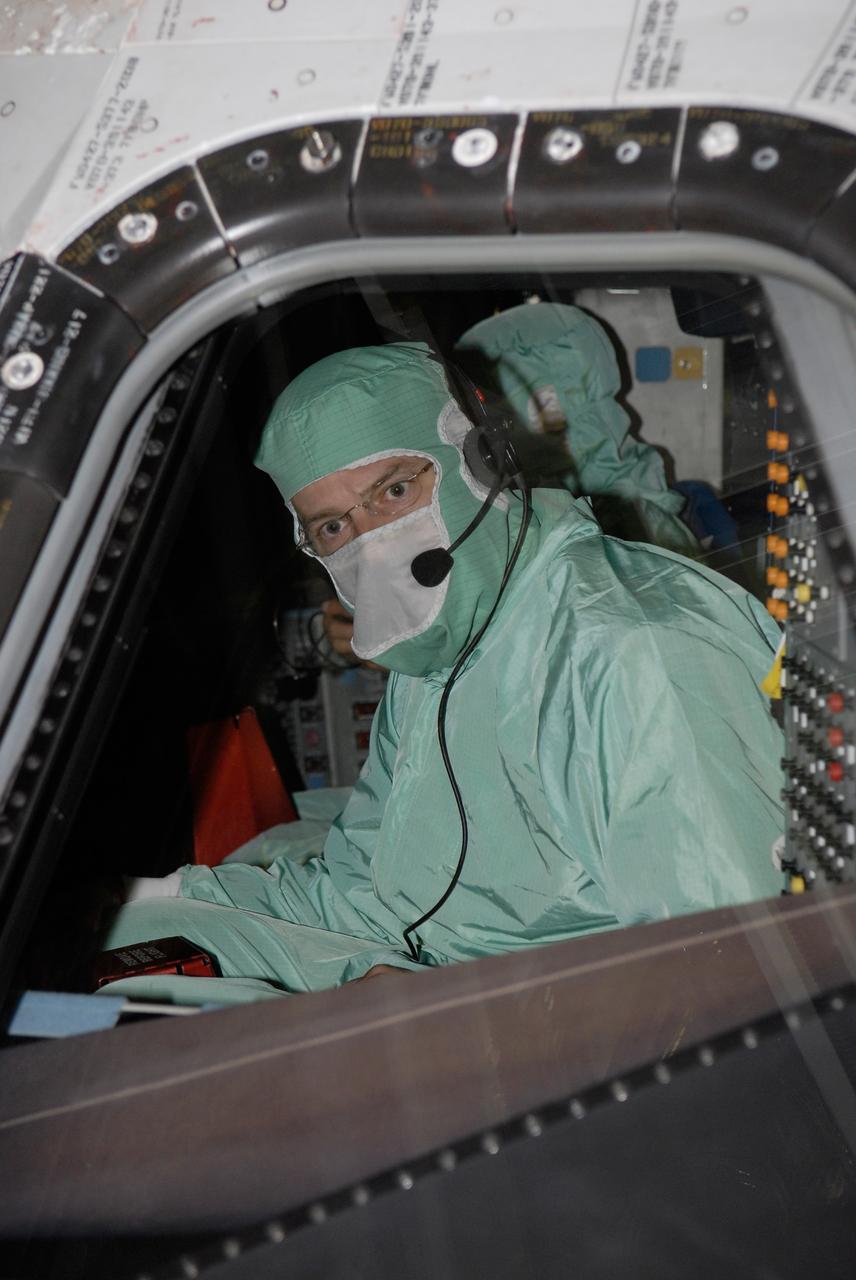
CAPE CANAVERAL, Fla. – In the Orbiter Processing Facility at NASA's Kennedy Space Center, STS-125 Commander Scott Altman examines the cockpit window on space shuttle Atlantis. The inspection is part of the crew equipment interface test, which provides hands-on experience with hardware and equipment for the mission. Atlantis is targeted to launch Oct. 8 on the STS-125 mission to service the Hubble Space Telescope. The mission crew will perform history-making, on-orbit “surgery” on two important science instruments aboard the telescope. After capturing the telescope, two teams of spacewalking astronauts will perform the repairs during five planned spacewalks. Photo credit: NASA/Kim Shiflett
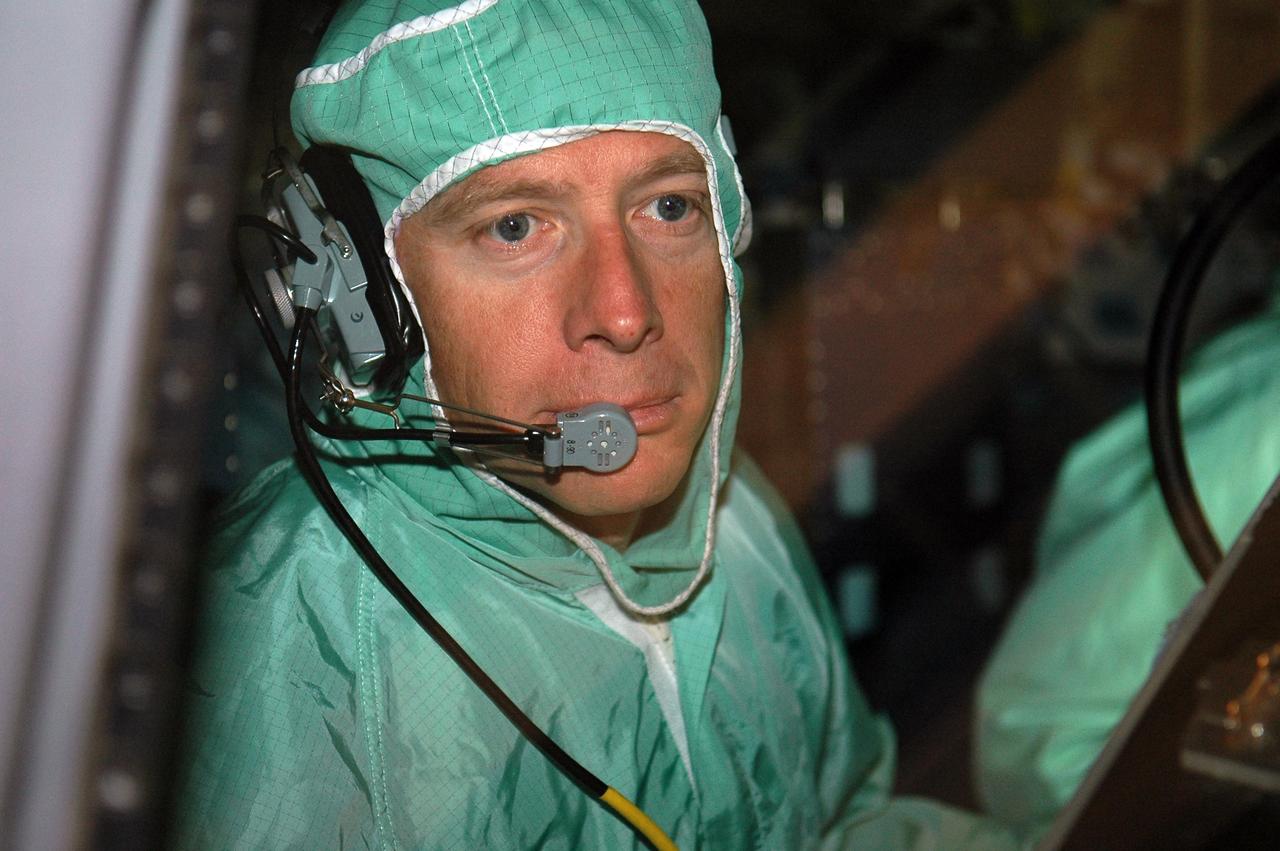
KENNEDY SPACE CENTER, FLA. - In the Orbiter Processing Facility, STS-115 Pilot Christopher Ferguson inspects the window of the cockpit in the orbiter Atlantis. The crew is at KSC for Crew Equipment Interface Test activities, which involve equipment familiarization and inspection, a routine part of astronaut training and launch preparations. The STS-115 mission will deliver the second port truss segment, the P3/P4 truss, to the International Space Station. The crew will attach the P3 to the first port truss segment, the P1 truss, as well as deploy solar array set 2A and 4A. Launch on Space Shuttle Atlantis is scheduled for late August. Photo credit: NASA/Kim Shiflett
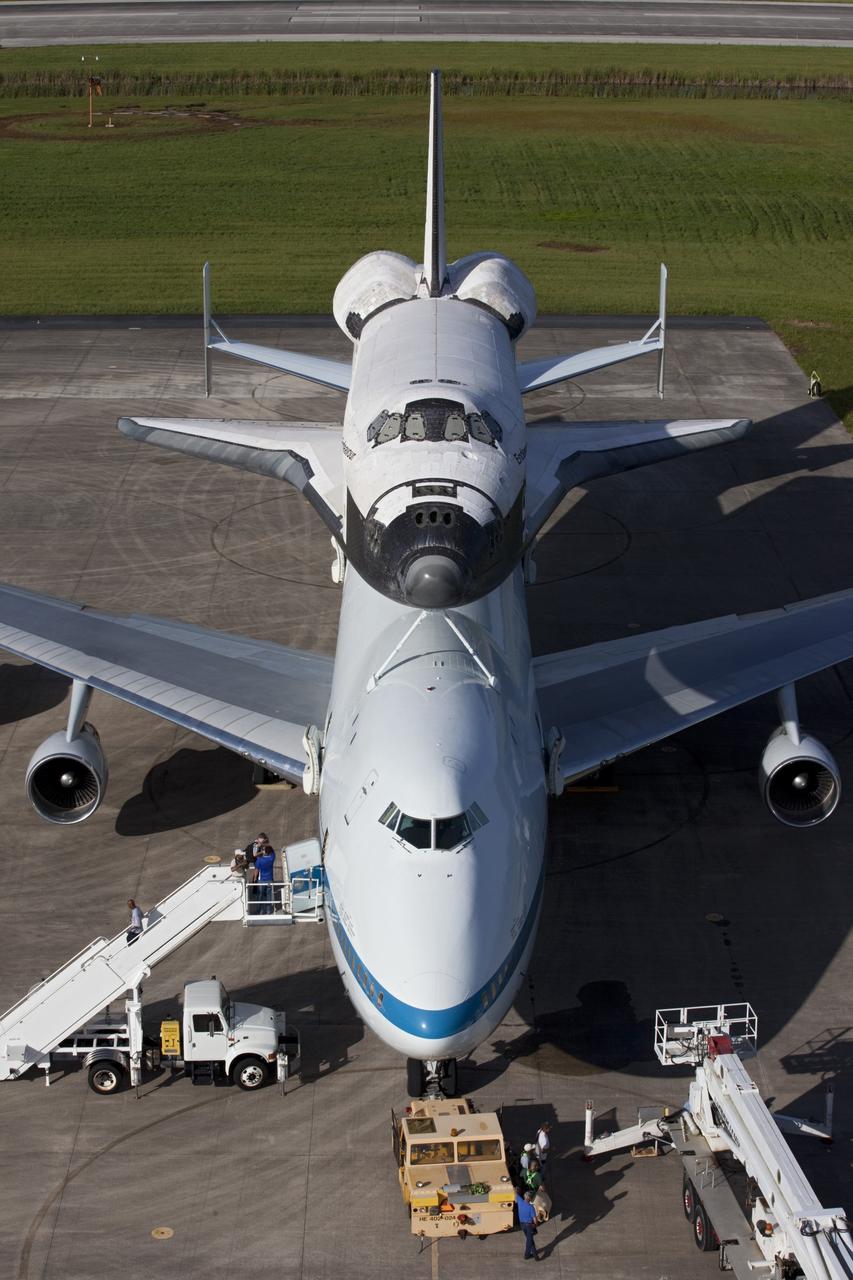
CAPE CANAVERAL, Fla. – Preparations are under way to uncover the cockpit windows on space shuttle Endeavour for an employee photo opportunity at the Shuttle Landing Facility at NASA's Kennedy Space Center in Florida. Endeavour is balanced and secured atop NASA's Shuttle Carrier Aircraft, or SCA. The SCA, a modified 747 jetliner, will fly Endeavour to Los Angeles where it will be placed on public display at the California Science Center. This is the final ferry flight scheduled in the Space Shuttle Program era. For more information on the shuttles' transition and retirement, visit http://www.nasa.gov/transition. Photo credit: NASA/Kim Shiflett
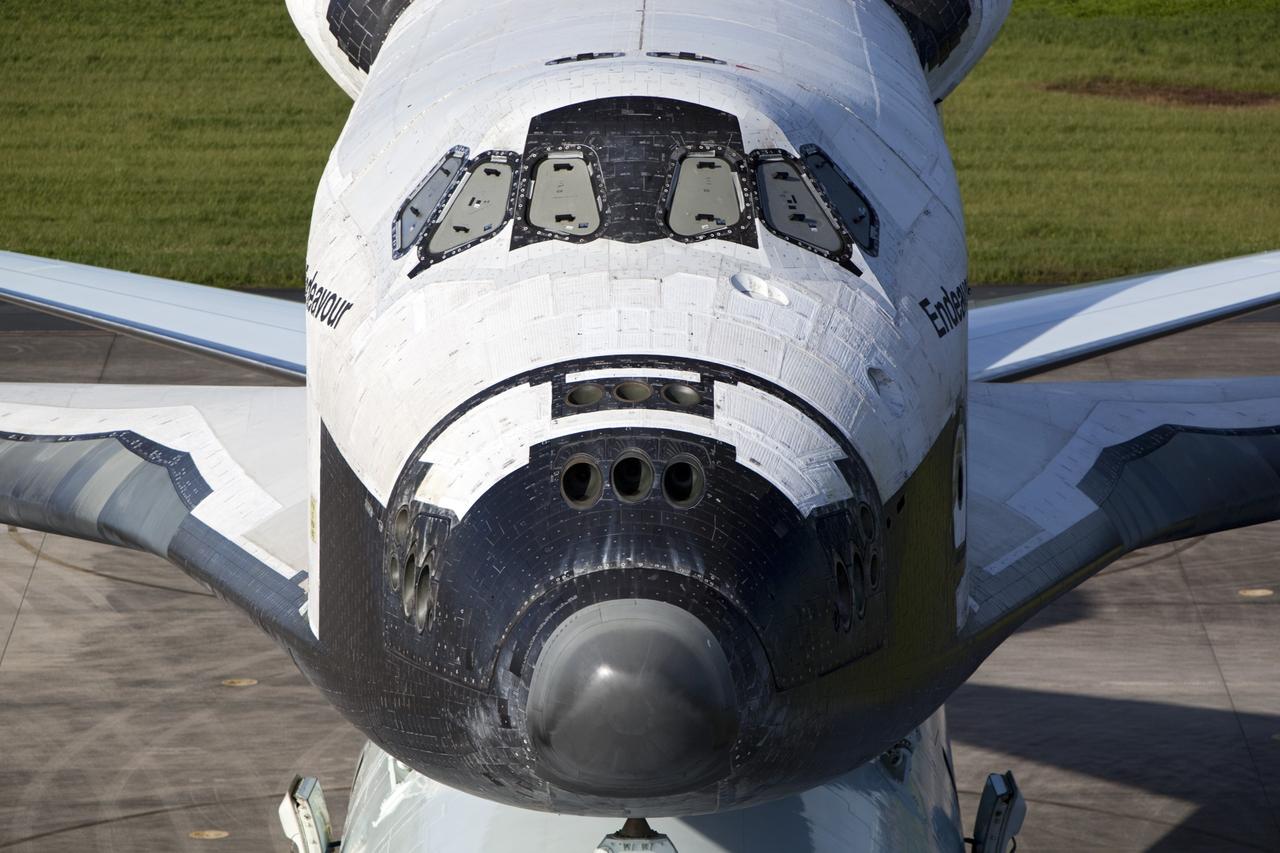
CAPE CANAVERAL, Fla. – Preparations are under way to uncover the cockpit windows on space shuttle Endeavour for an employee photo opportunity at the Shuttle Landing Facility at NASA's Kennedy Space Center in Florida. Endeavour is balanced and secured atop NASA's Shuttle Carrier Aircraft, or SCA. The SCA, a modified 747 jetliner, will fly Endeavour to Los Angeles where it will be placed on public display at the California Science Center. This is the final ferry flight scheduled in the Space Shuttle Program era. For more information on the shuttles' transition and retirement, visit http://www.nasa.gov/transition. Photo credit: NASA/Dimitri Gerondidakis
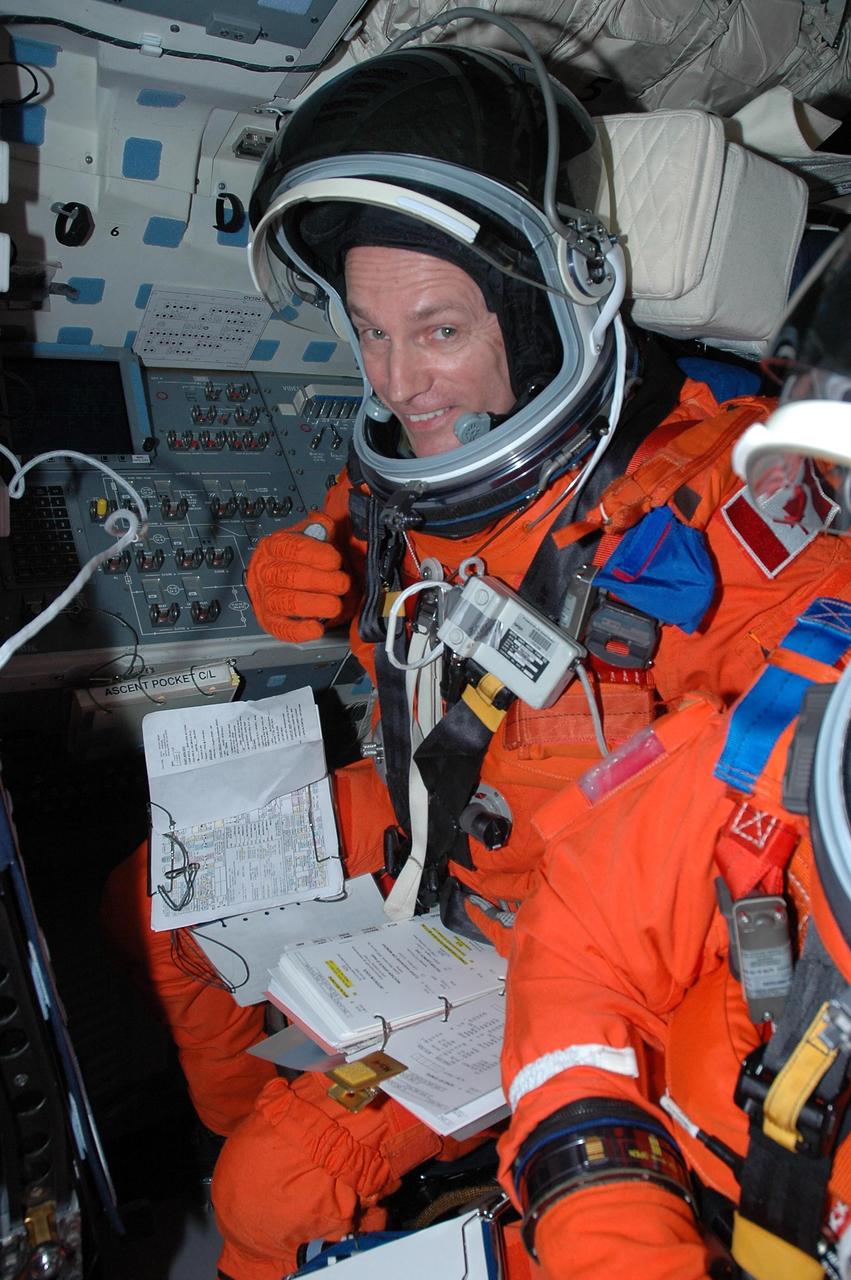
KENNEDY SPACE CENTER, FLA. - Inside Atlantis' cockpit, STS-115 Mission Specialist Steven MacLean is taking part in a simulated launch countdown, the culmination of Terminal Countdown Demonstration Test activities. MacLean is with the Canadian Space Agency. The TCDT is a prelaunch preparation for the mission that is scheduled to lift off in a window opening Aug. 27. During their 11-day mission to the International Space Station, the STS-115 crew will continue construction of the station and attach the payload elements, the Port 3/4 truss segment with its two large solar arrays.
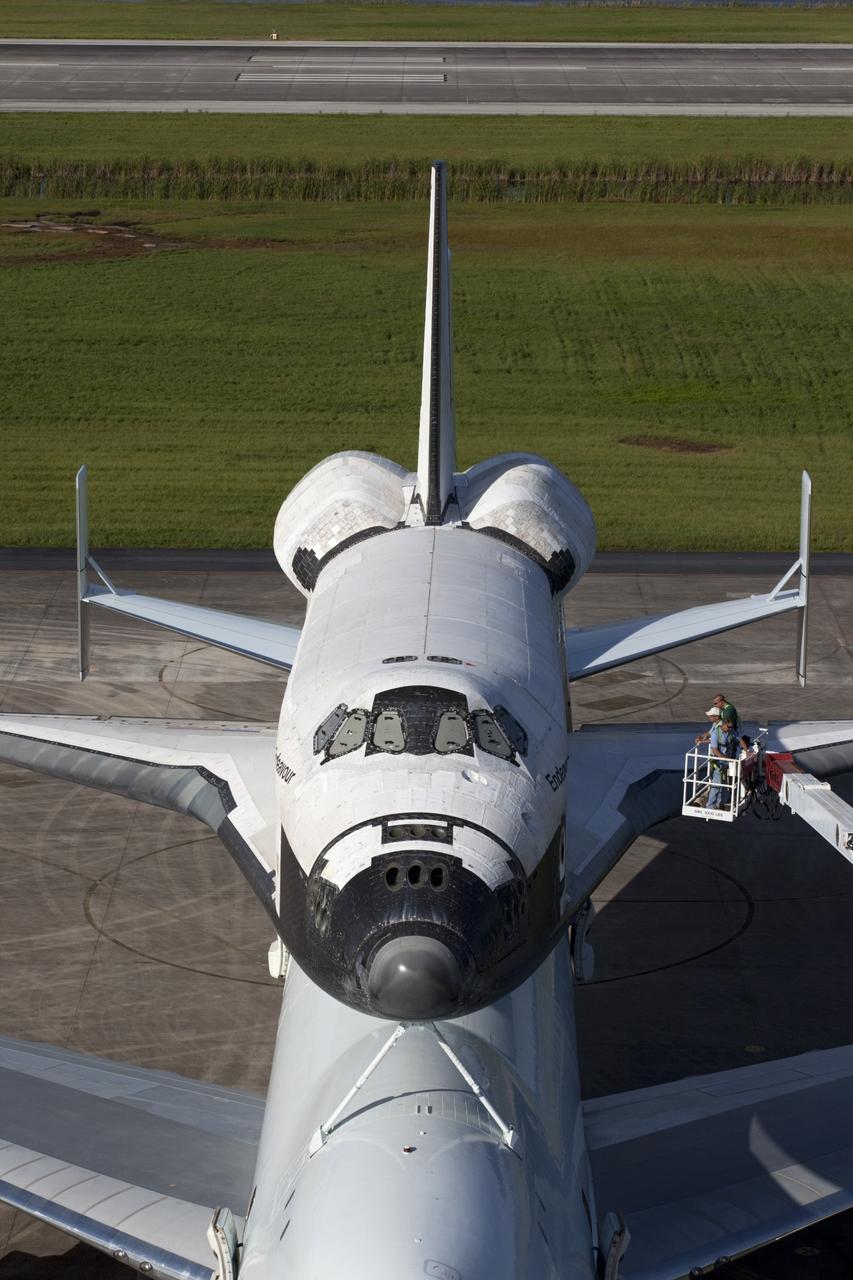
CAPE CANAVERAL, Fla. – United Space Alliance technicians prepare to uncover the cockpit windows on space shuttle Endeavour for an employee photo opportunity at the Shuttle Landing Facility at NASA's Kennedy Space Center in Florida. Endeavour is balanced and secured atop NASA's Shuttle Carrier Aircraft, or SCA. The SCA, a modified 747 jetliner, will fly Endeavour to Los Angeles where it will be placed on public display at the California Science Center. This is the final ferry flight scheduled in the Space Shuttle Program era. For more information on the shuttles' transition and retirement, visit http://www.nasa.gov/transition. Photo credit: NASA/Kim Shiflett
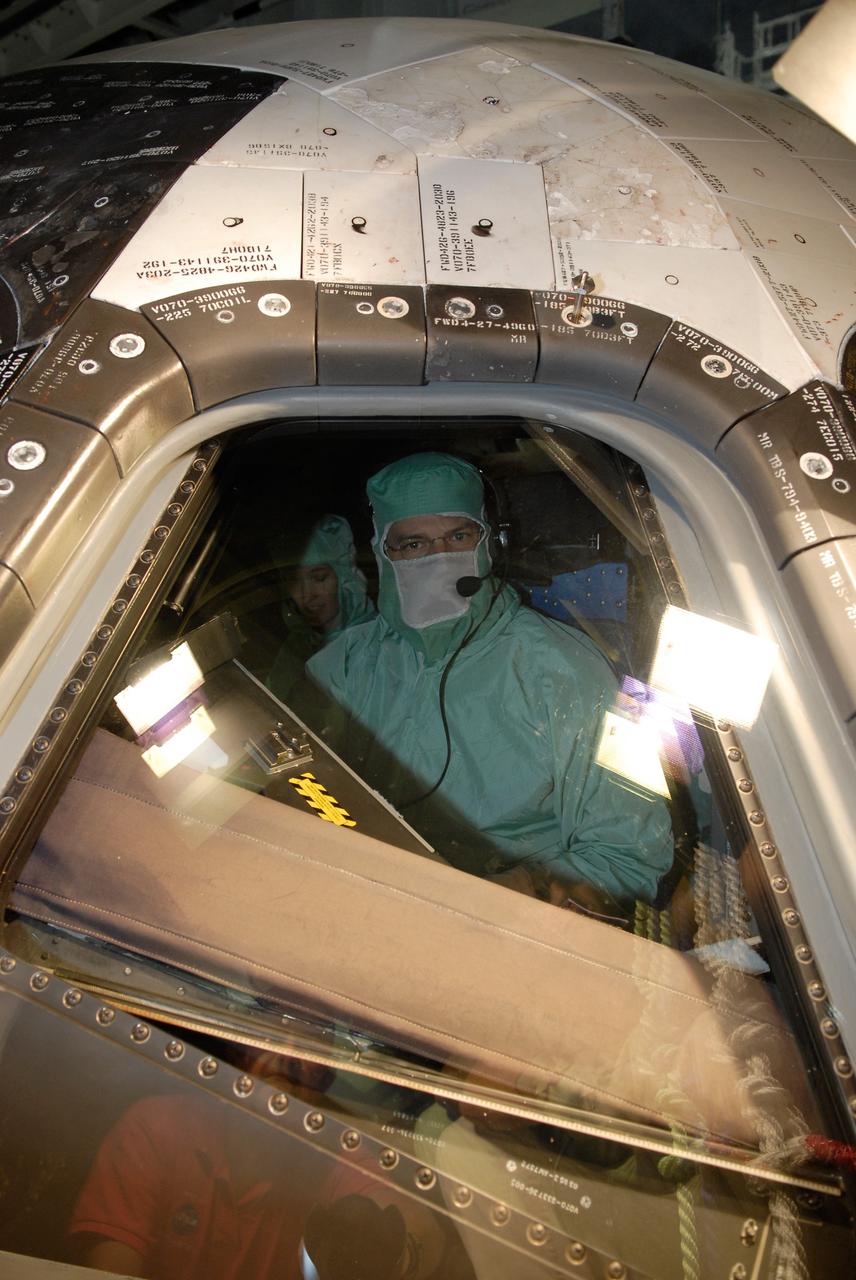
CAPE CANAVERAL, Fla. – In the Orbiter Processing Facility at NASA's Kennedy Space Center, STS-125 Commander Scott Altman examines the cockpit window on space shuttle Atlantis, checking for sharp edges. The inspection is part of the crew equipment interface test, which provides hands-on experience with hardware and equipment for the mission. Atlantis is targeted to launch Oct. 8 on the STS-125 mission to service the Hubble Space Telescope. The mission crew will perform history-making, on-orbit “surgery” on two important science instruments aboard the telescope. After capturing the telescope, two teams of spacewalking astronauts will perform the repairs during five planned spacewalks. Photo credit: NASA/Kim Shiflett
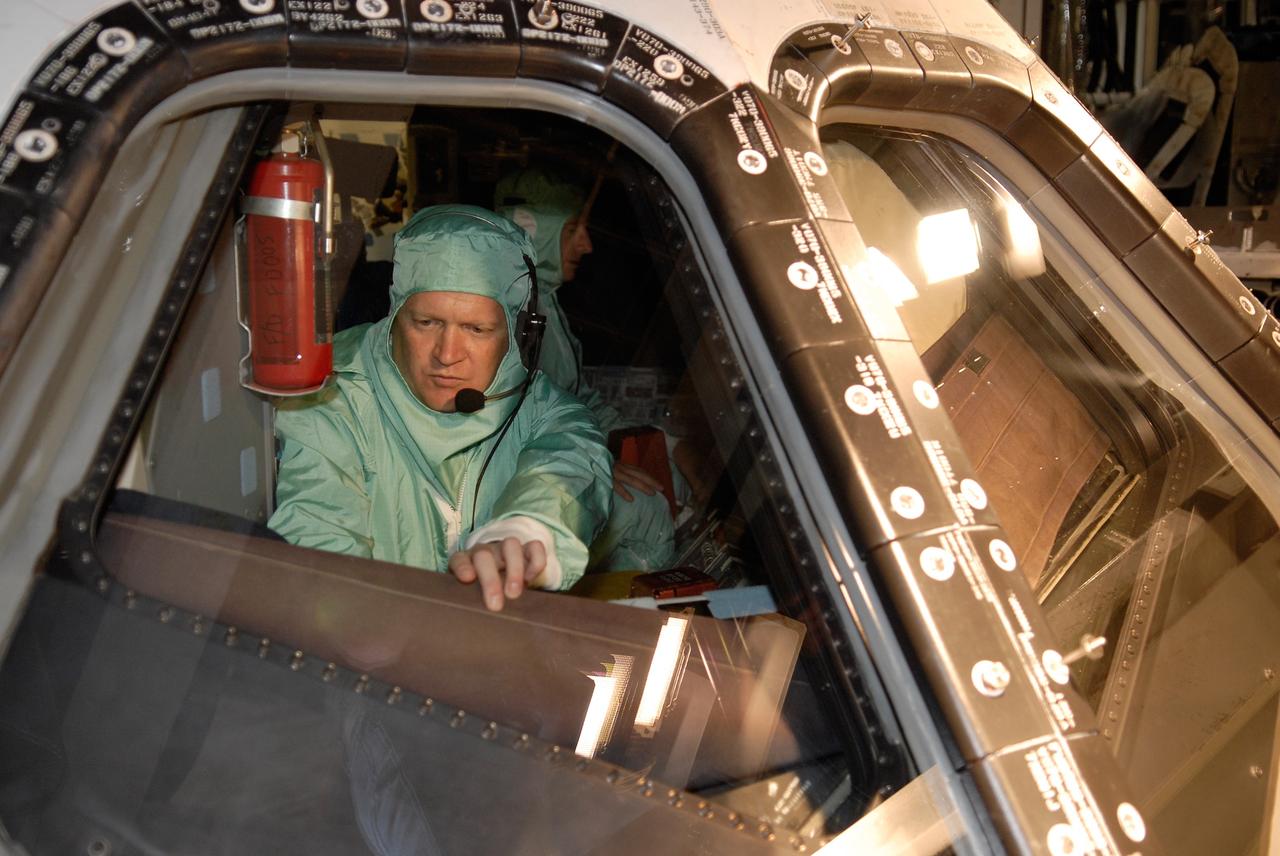
CAPE CANAVERAL, Fla. – In Orbiter Processing Facility 2 at NASA's Kennedy Space Center, STS-126 Pilot Eric Boe inspects the cockpit window of space shuttle Endeavour. Members of space shuttle Endeavour's STS-126 crew are at Kennedy to participate in a crew equipment interface test, or CEIT. The CEIT provides experience handling tools, equipment and hardware they will use on the mission. Endeavour will deliver a multi-purpose logistics module to the International Space Station on the STS-126 mission. Launch is targeted for Nov. 10. Photo credit: NASA/Kim Shiflett
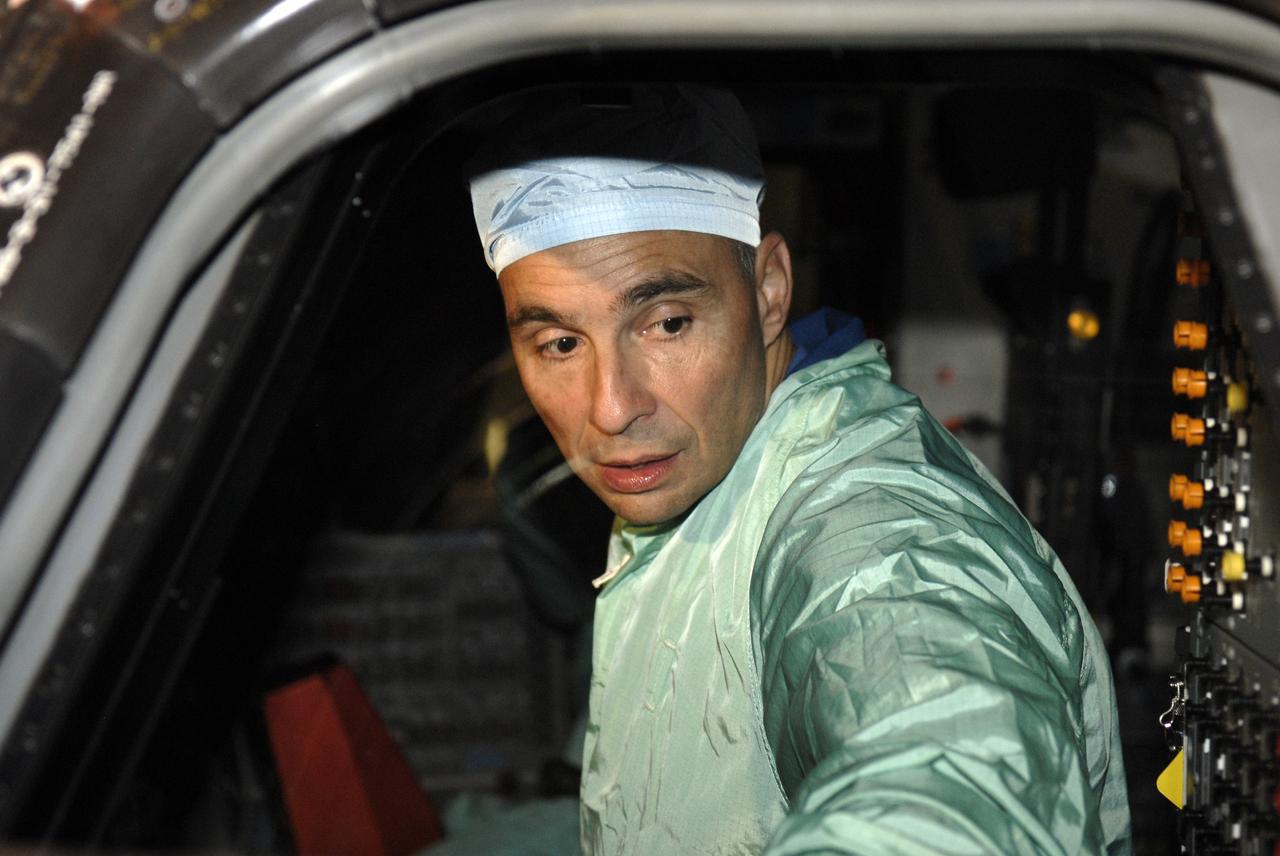
CAPE CANAVERAL, Fla. -- In the Orbiter Processing Facility at NASA's Kennedy Space Center in Florida, STS-119 Commander Lee Archambault checks the cockpit window of space shuttle Discovery. He and other crew members are at Kennedy for a Crew Equipment Interface Test that provides experience handling tools, equipment and hardware they will use on the mission. On the STS-119 mission, space shuttle Discovery will carry the S6 truss segment to complete the 361-foot-long backbone of the International Space Station. The truss includes the fourth pair of solar array wings and electronics that convert sunlight to power for the orbiting laboratory. Discovery is targeted for launch on Feb. 12, 2009. Photo credit: NASA/Kim Shiflett

CAPE CANAVERAL, Fla. -- In the Orbiter Processing Facility at NASA's Kennedy Space Center in Florida, STS-119 Pilot Tony Antonelli checks the cockpit window of space shuttle Discovery. He and other crew members are at Kennedy for a Crew Equipment Interface Test that provides experience handling tools, equipment and hardware they will use on the mission. On the STS-119 mission, space shuttle Discovery will carry the S6 truss segment to complete the 361-foot-long backbone of the International Space Station. The truss includes the fourth pair of solar array wings and electronics that convert sunlight to power for the orbiting laboratory. Discovery is targeted for launch on Feb. 12, 2009. Photo credit: NASA/Kim Shiflett
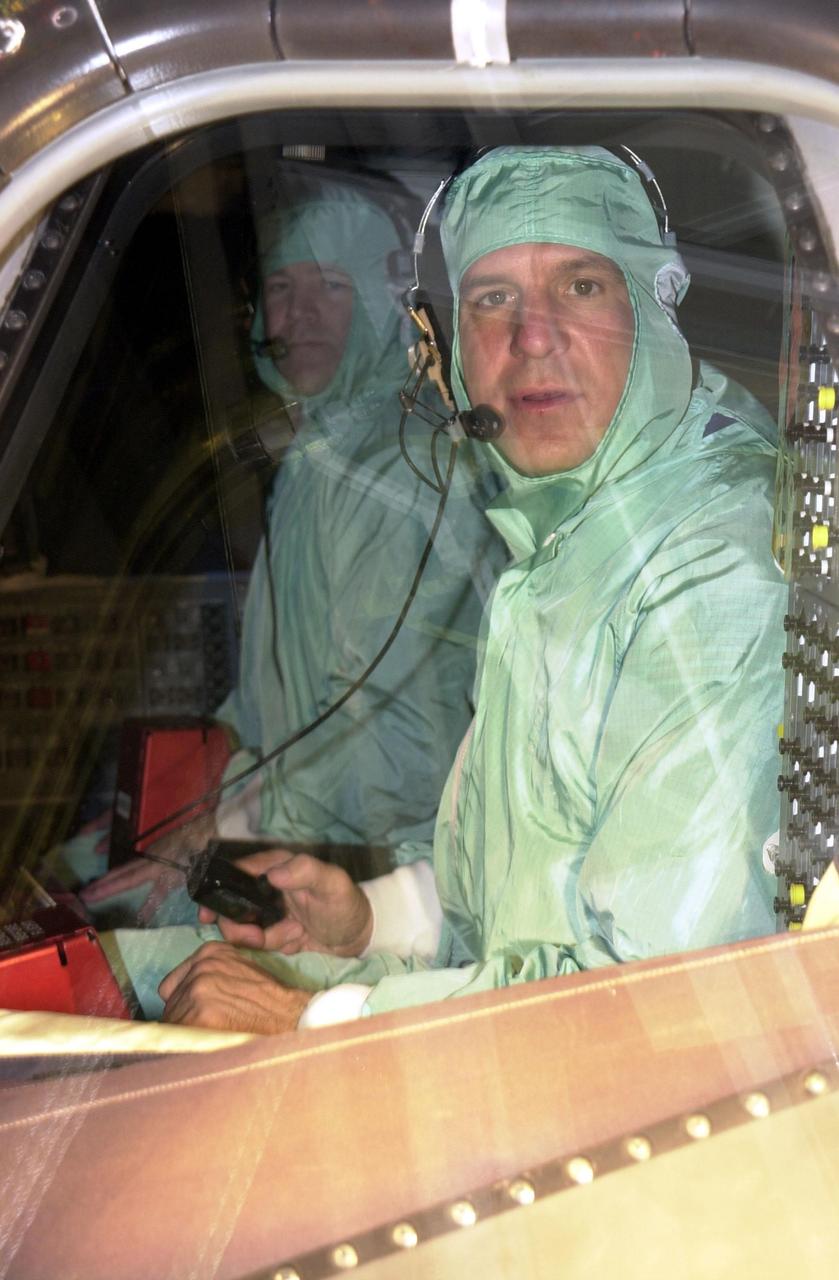
KENNEDY SPACE CENTER, FLA. -- In the Orbiter Processing Facility, STS-110 Commander Michael Bloomfield checks out a window in the cockpit of Atlantis during Crew Equipment Integration Test activities. The mission, 13th assembly flight to the International Space Station, includes the Integrated Truss Structure S0. The ITS S0 is the center segment on the Space Station, part of the 300-foot (91-meter) truss attached to the U.S. Lab. By assembly completion, four more truss segments will attach to either side of the S0 truss. STS-110 is scheduled to launch April 4, 2002
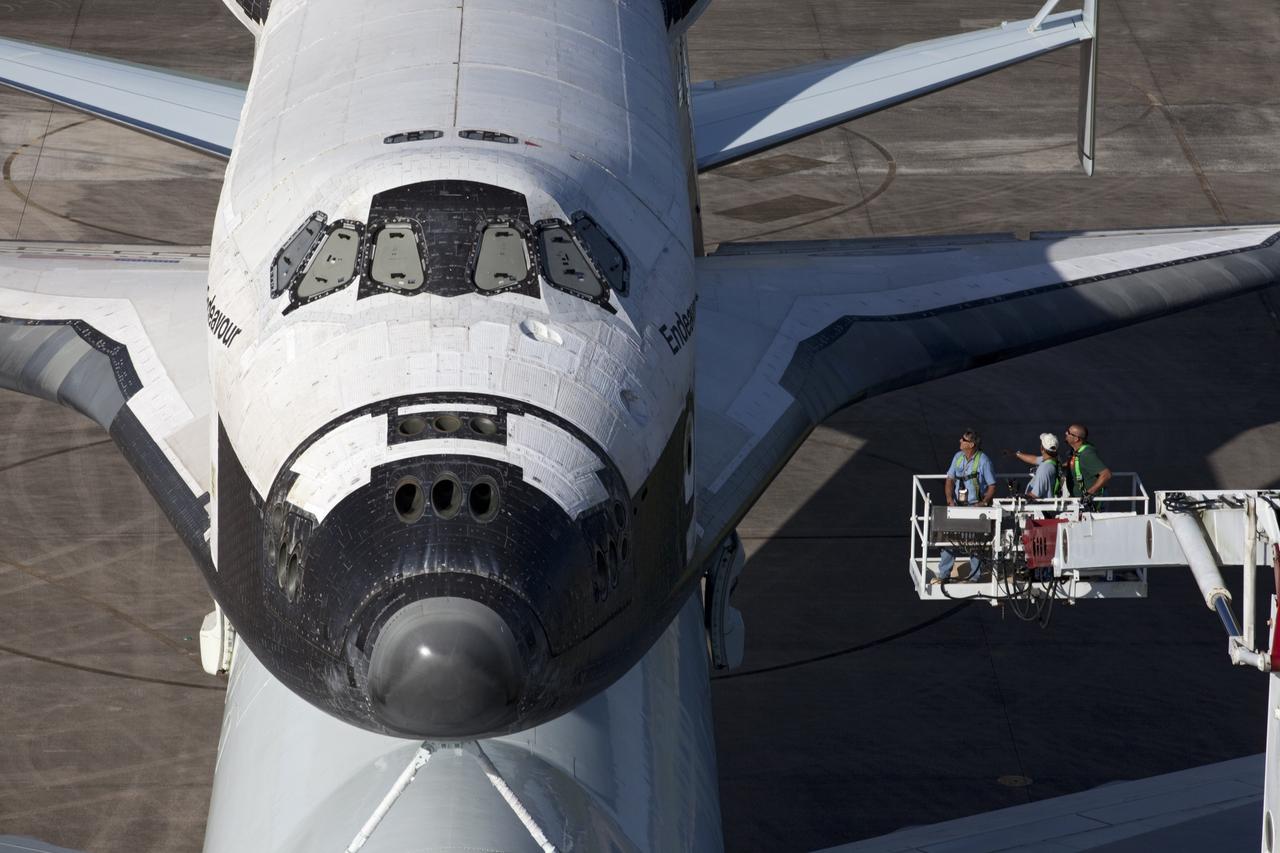
CAPE CANAVERAL, Fla. – United Space Alliance technicians prepare to uncover the cockpit windows on space shuttle Endeavour for an employee photo opportunity at the Shuttle Landing Facility at NASA's Kennedy Space Center in Florida. Endeavour is balanced and secured atop NASA's Shuttle Carrier Aircraft, or SCA. The SCA, a modified 747 jetliner, will fly Endeavour to Los Angeles where it will be placed on public display at the California Science Center. This is the final ferry flight scheduled in the Space Shuttle Program era. For more information on the shuttles' transition and retirement, visit http://www.nasa.gov/transition. Photo credit: NASA/Kim Shiflett
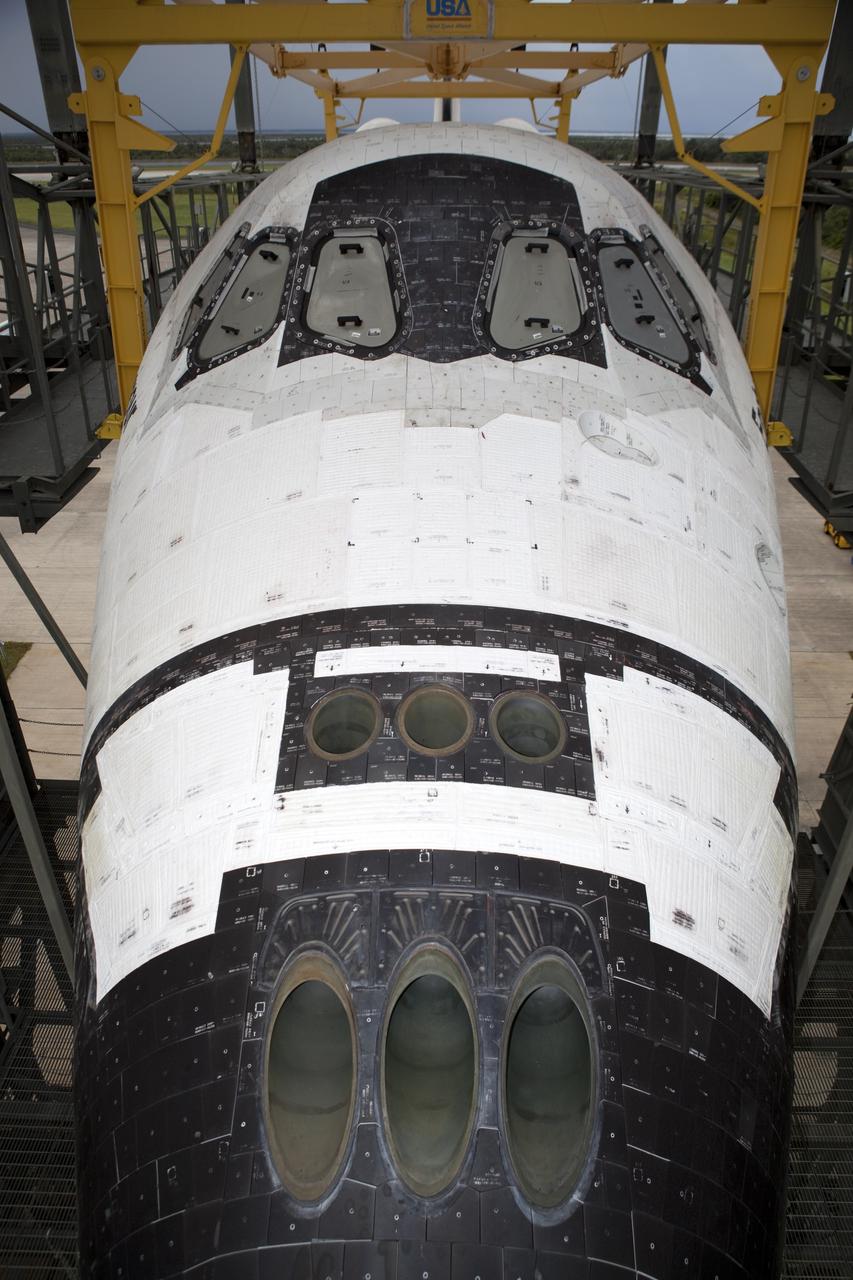
CAPE CANAVERAL, Fla. – Space shuttle Endeavour is hoisted above the ground by the mate-demate device at the Shuttle Landing Facility at NASA's Kennedy Space Center in Florida. Its cockpit windows have been covered to protect them during the shuttle's upcoming ferry flight. The shuttle will be positioned and connected atop NASA's Shuttle Carrier Aircraft, or SCA, with the aid of the device. The SCA, a modified 747 jetliner, will fly Endeavour to Los Angeles where it will be placed on public display at the California Science Center. This is the final ferry flight scheduled in the Space Shuttle Program era. For more information on the shuttles' transition and retirement, visit http://www.nasa.gov/transition. Photo credit: NASA/Dimitri Gerondidakis
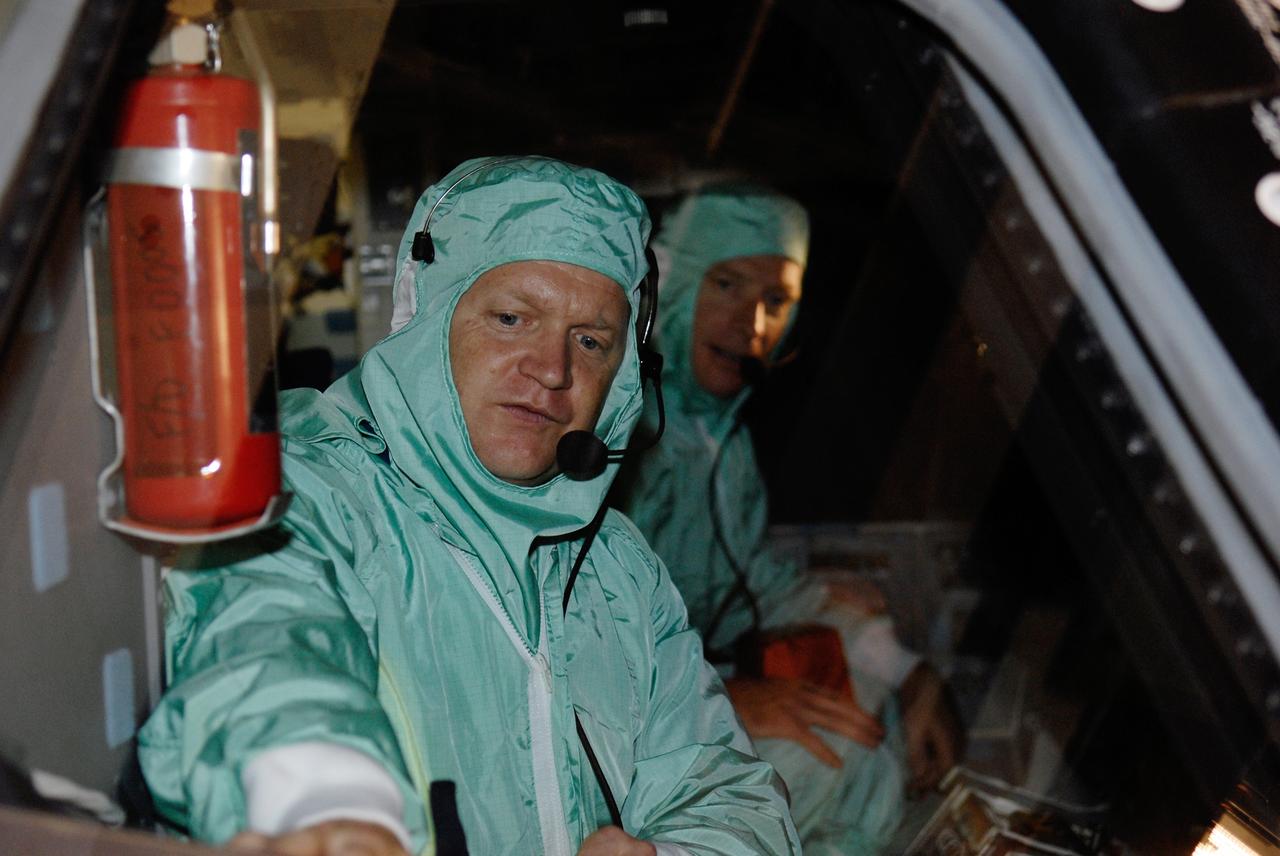
CAPE CANAVERAL, Fla. – In Orbiter Processing Facility 2 at NASA's Kennedy Space Center, STS-126 Pilot Eric Boe inspects the cockpit window of space shuttle Endeavour. Behind him is Commander Chris Ferguson. Members of space shuttle Endeavour's STS-126 crew are at Kennedy to participate in a crew equipment interface test, or CEIT. The CEIT provides experience handling tools, equipment and hardware they will use on the mission. Endeavour will deliver a multi-purpose logistics module to the International Space Station on the STS-126 mission. Launch is targeted for Nov. 10. Photo credit: NASA/Kim Shiflett
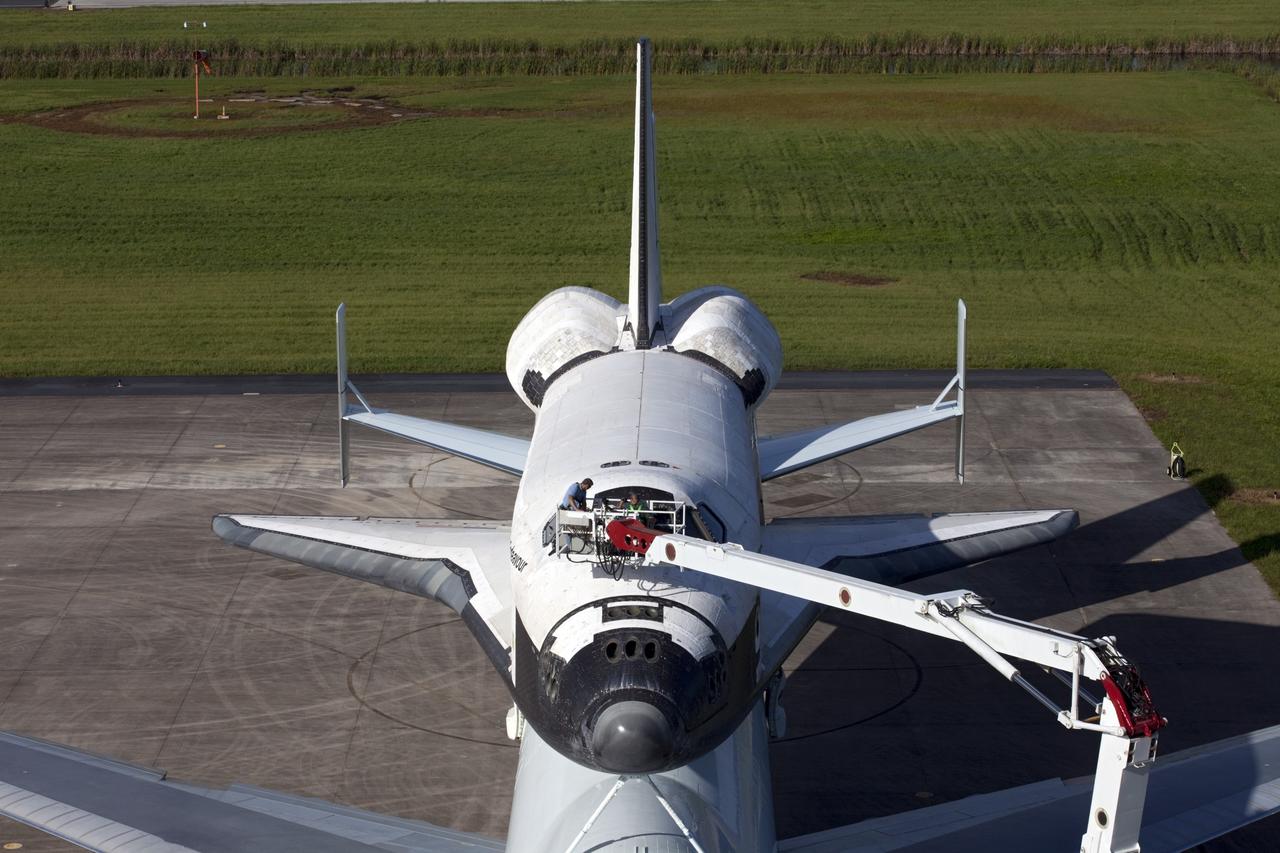
CAPE CANAVERAL, Fla. – United Space Alliance technicians uncover the cockpit windows on space shuttle Endeavour for an employee photo opportunity at the Shuttle Landing Facility at NASA's Kennedy Space Center in Florida. Endeavour is balanced and secured atop NASA's Shuttle Carrier Aircraft, or SCA. The SCA, a modified 747 jetliner, will fly Endeavour to Los Angeles where it will be placed on public display at the California Science Center. This is the final ferry flight scheduled in the Space Shuttle Program era. For more information on the shuttles' transition and retirement, visit http://www.nasa.gov/transition. Photo credit: NASA/Kim Shiflett
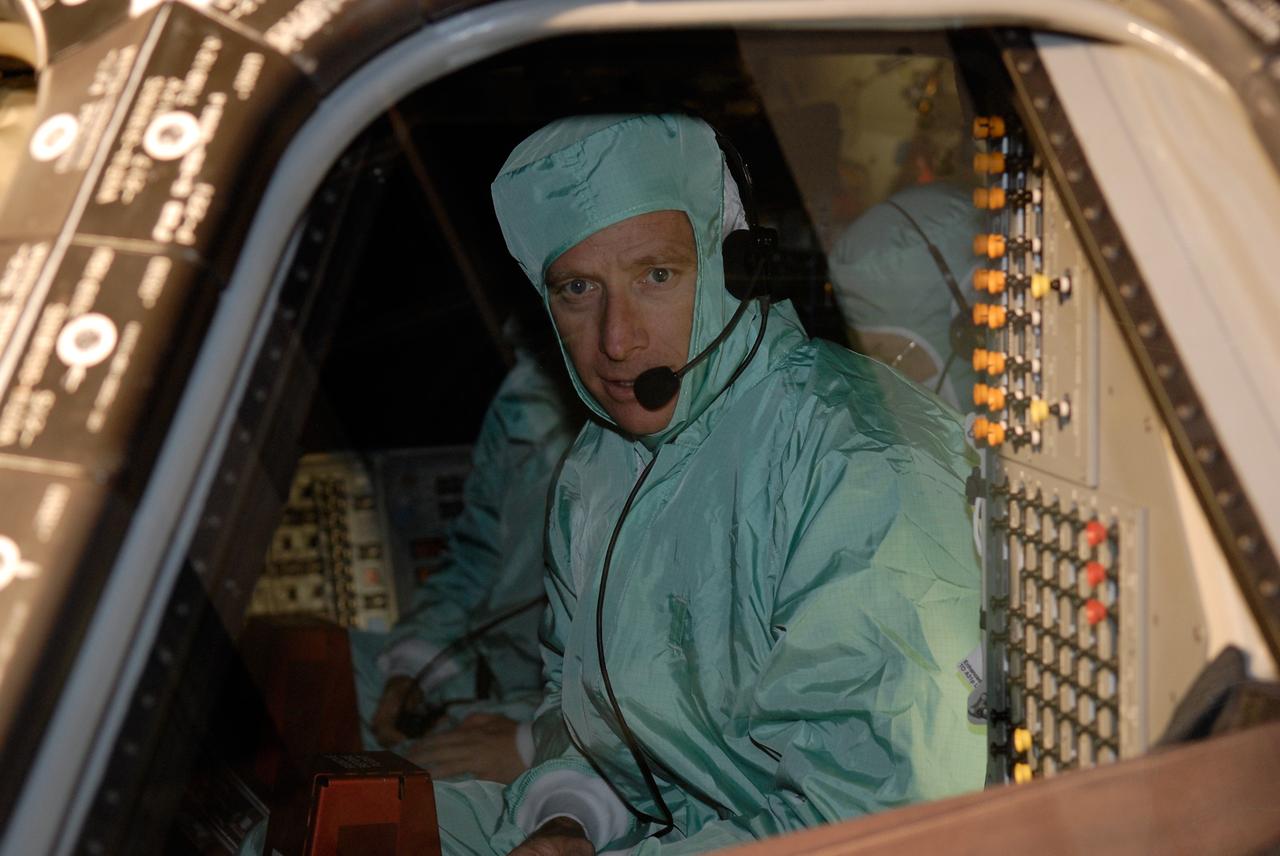
CAPE CANAVERAL, Fla. – In Orbiter Processing Facility 2 at NASA's Kennedy Space Center, STS-126 Commander Chris Ferguson inspects the cockpit window of space shuttle Endeavour. Members of space shuttle Endeavour's STS-126 crew are at Kennedy to participate in a crew equipment interface test, or CEIT. The CEIT provides experience handling tools, equipment and hardware they will use on the mission. Endeavour will deliver a multi-purpose logistics module to the International Space Station on the STS-126 mission. Launch is targeted for Nov. 10. Photo credit: NASA/Kim Shiflett
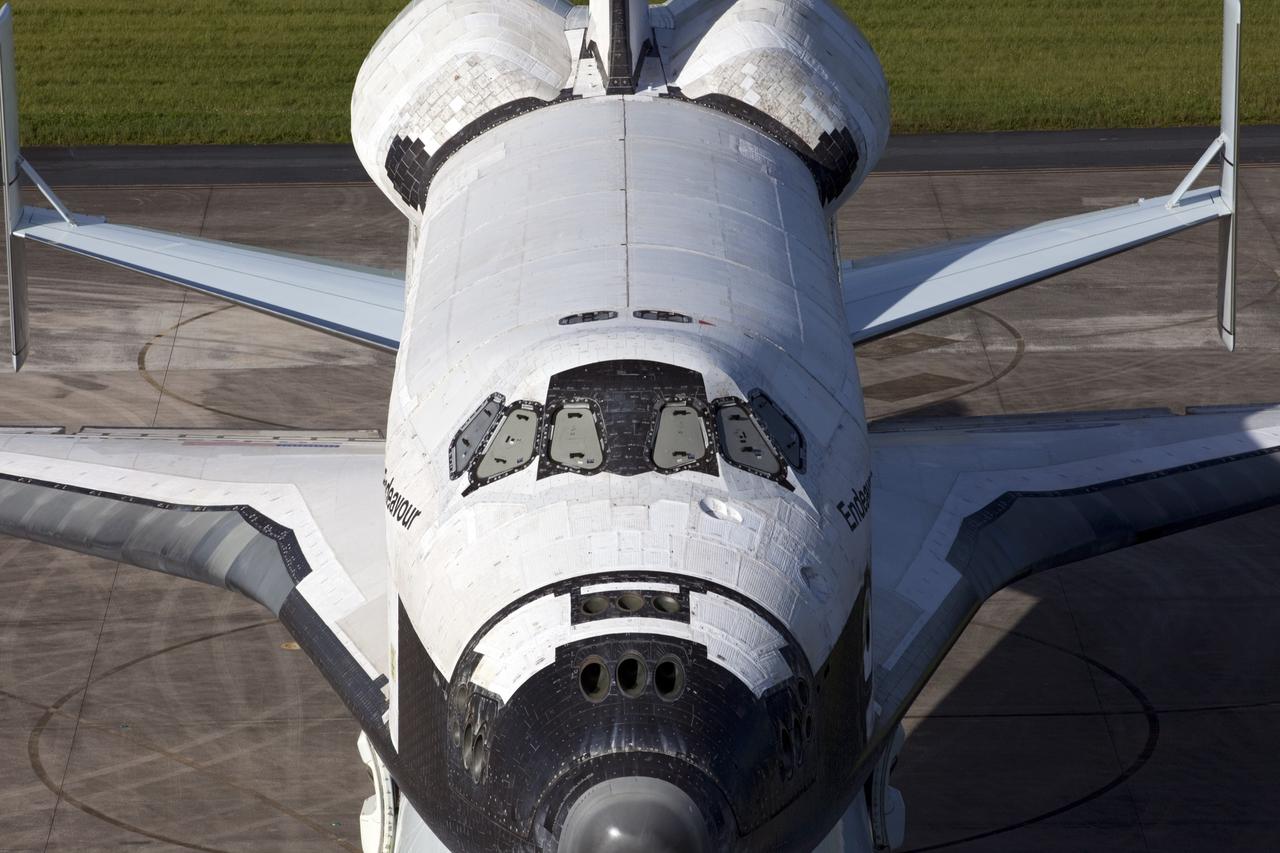
CAPE CANAVERAL, Fla. – Preparations are under way to uncover the cockpit windows on space shuttle Endeavour for an employee photo opportunity at the Shuttle Landing Facility at NASA's Kennedy Space Center in Florida. Endeavour is balanced and secured atop NASA's Shuttle Carrier Aircraft, or SCA. The SCA, a modified 747 jetliner, will fly Endeavour to Los Angeles where it will be placed on public display at the California Science Center. This is the final ferry flight scheduled in the Space Shuttle Program era. For more information on the shuttles' transition and retirement, visit http://www.nasa.gov/transition. Photo credit: NASA/Kim Shiflett
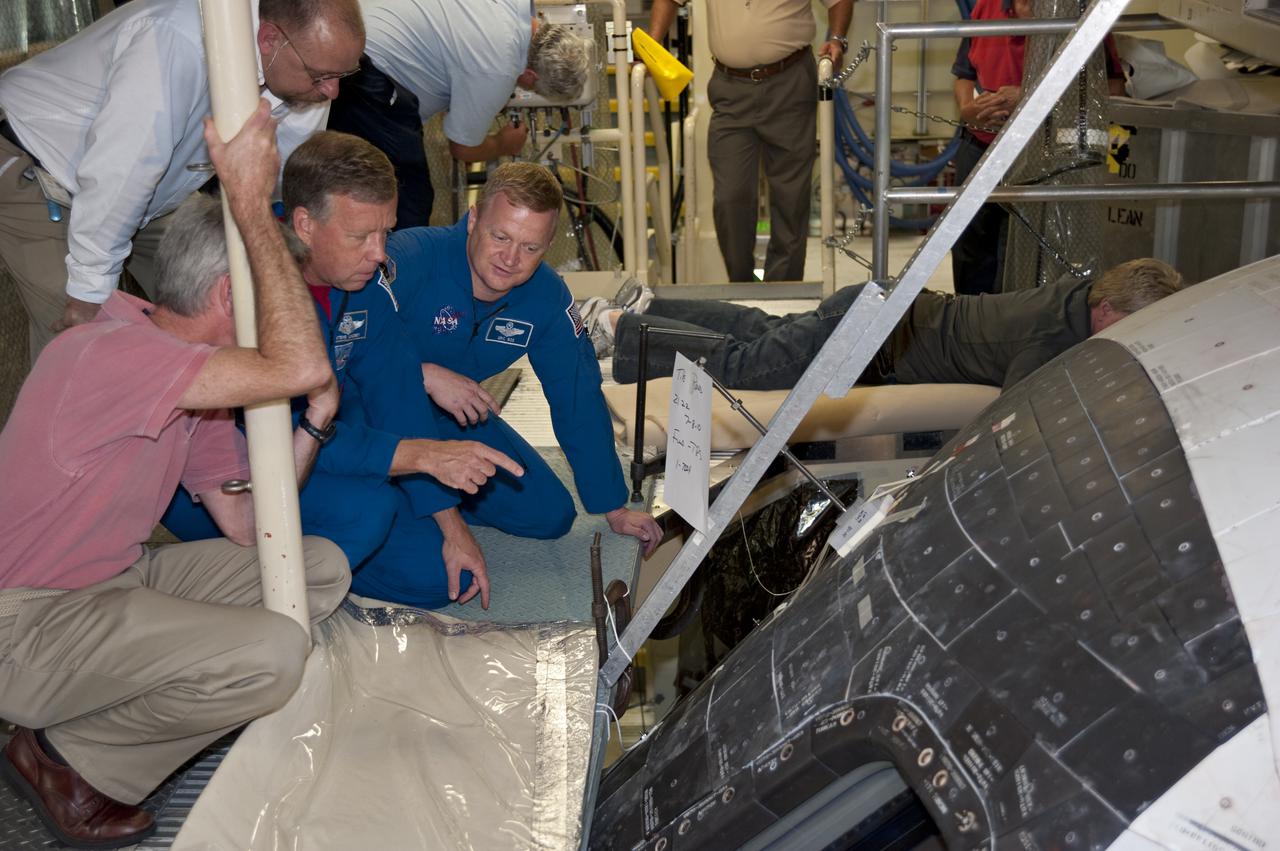
CAPE CANAVERAL, Fla. -- In Orbiter Processing Facility-3 at NASA's Kennedy Space Center in Florida, STS-133 Commander Steve Lindsey and Pilot Eric Boe get a 'birds-eye' view through the window into the shuttle's cockpit. The astronauts are at Kennedy for the Crew Equipment Interface Test, or CEIT, which provides the crew with hands-on training and observation of shuttle and flight hardware for their mission to the International Space Station. Launch of the STS-133 mission on space shuttle Discovery is targeted for Nov. 1 at 4:33 p.m. EDT. Photo credit: NASA_Kim Shiflett
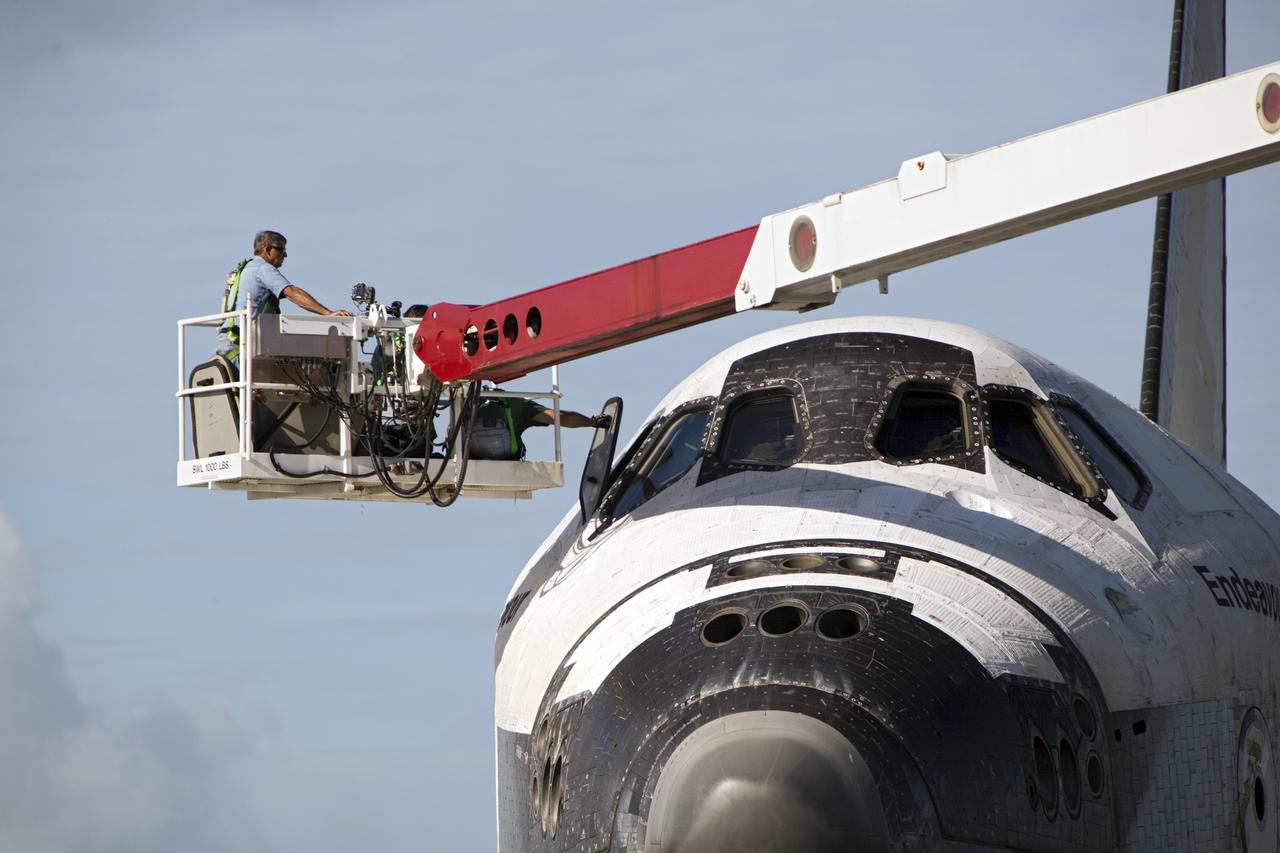
CAPE CANAVERAL, Fla. – United Space Alliance technicians uncover the cockpit windows on space shuttle Endeavour for an employee photo opportunity at the Shuttle Landing Facility at NASA's Kennedy Space Center in Florida. Endeavour is balanced and secured atop NASA's Shuttle Carrier Aircraft, or SCA. The SCA, a modified 747 jetliner, will fly Endeavour to Los Angeles where it will be placed on public display at the California Science Center. This is the final ferry flight scheduled in the Space Shuttle Program era. For more information on the shuttles' transition and retirement, visit http://www.nasa.gov/transition. Photo credit: NASA/Dimitri Gerondidakis

KENNEDY SPACE CENTER, FLA. - In the Orbiter Processing Facility, STS-115 Pilot Christopher Ferguson inspects the window of the cockpit in the orbiter Atlantis. The crew is at KSC for Crew Equipment Interface Test activities, which involve equipment familiarization and inspection, a routine part of astronaut training and launch preparations. The STS-115 mission will deliver the second port truss segment, the P3/P4 truss, to the International Space Station. The crew will attach the P3 to the first port truss segment, the P1 truss, as well as deploy solar array set 2A and 4A. Launch on Space Shuttle Atlantis is scheduled for late August. Photo credit: NASA/Kim Shiflett
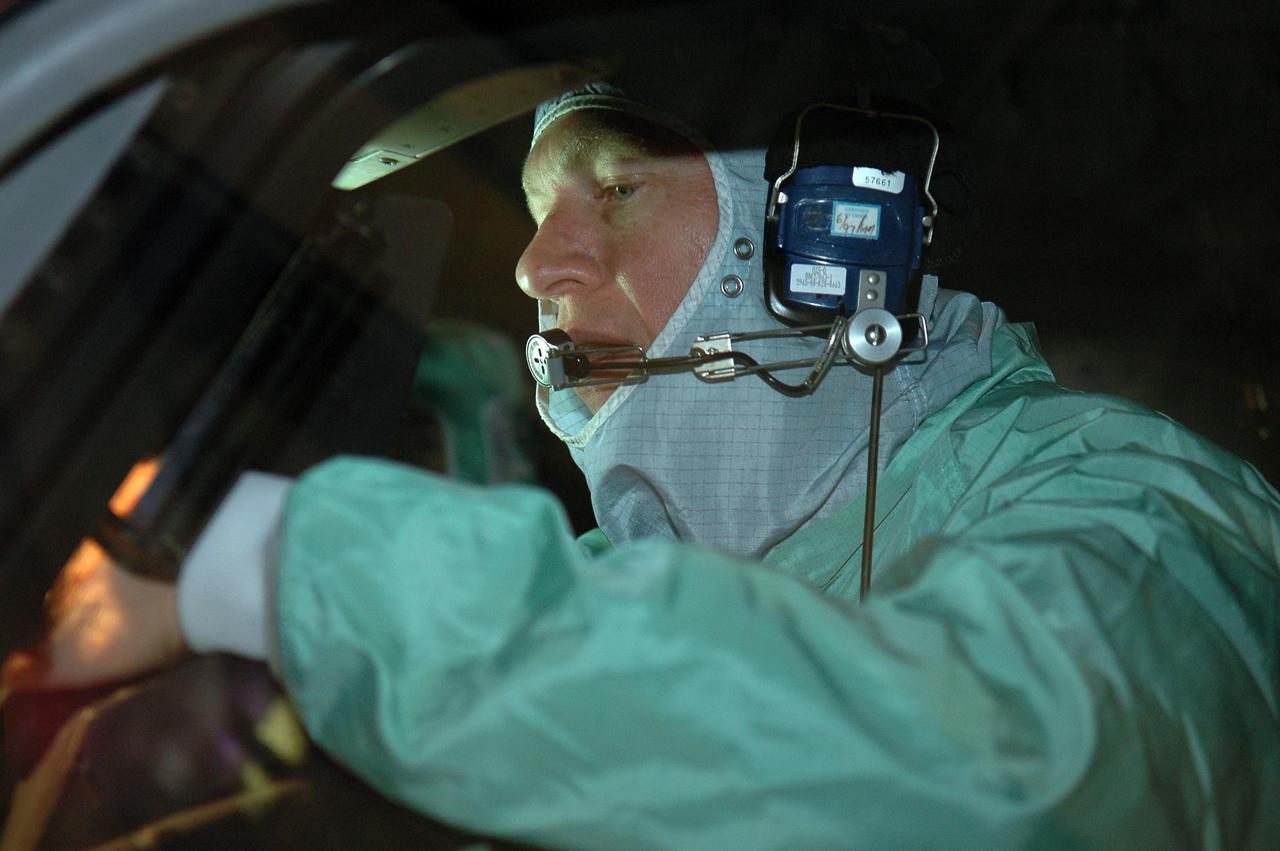
KENNEDY SPACE CENTER, FLA. - In the Orbiter Processing Facility, STS-115 Commander Brent Jett inspects the window of the cockpit in the orbiter Atlantis. The crew is at KSC for Crew Equipment Interface Test activities, which involve equipment familiarization and inspection, a routine part of astronaut training and launch preparations. The STS-115 mission will deliver the second port truss segment, the P3/P4 truss, to the International Space Station. The crew will attach the P3 to the first port truss segment, the P1 truss, as well as deploy solar array set 2A and 4A. Launch on Space Shuttle Atlantis is scheduled for late August. Photo credit: NASA/Kim Shiflett
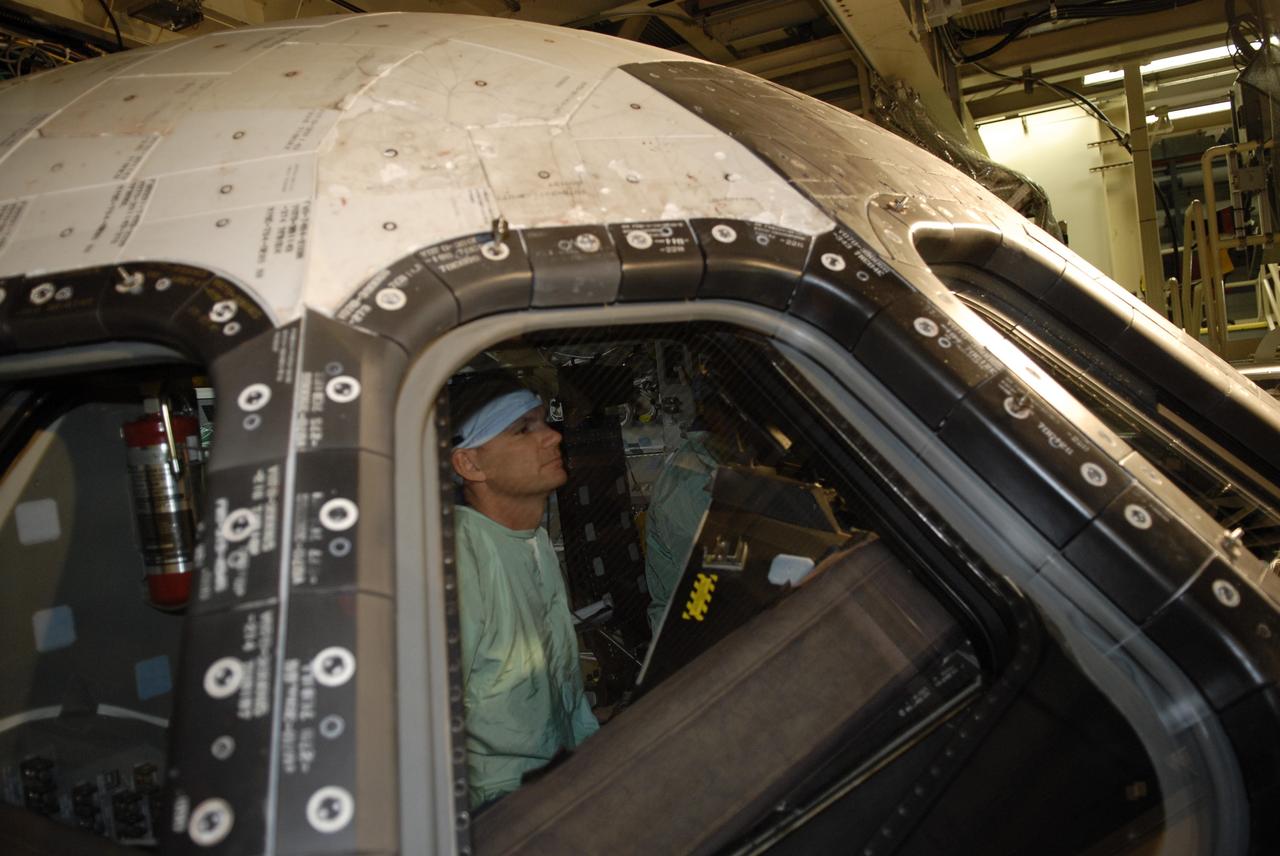
CAPE CANAVERAL, Fla. -- In the Orbiter Processing Facility at NASA's Kennedy Space Center in Florida, STS-119 Pilot Tony Antonelli checks the cockpit window of space shuttle Discovery. He and other crew members are at Kennedy for a Crew Equipment Interface Test that provides experience handling tools, equipment and hardware they will use on the mission. On the STS-119 mission, space shuttle Discovery will carry the S6 truss segment to complete the 361-foot-long backbone of the International Space Station. The truss includes the fourth pair of solar array wings and electronics that convert sunlight to power for the orbiting laboratory. Discovery is targeted for launch on Feb. 12, 2009. Photo credit: NASA/Kim Shiflett
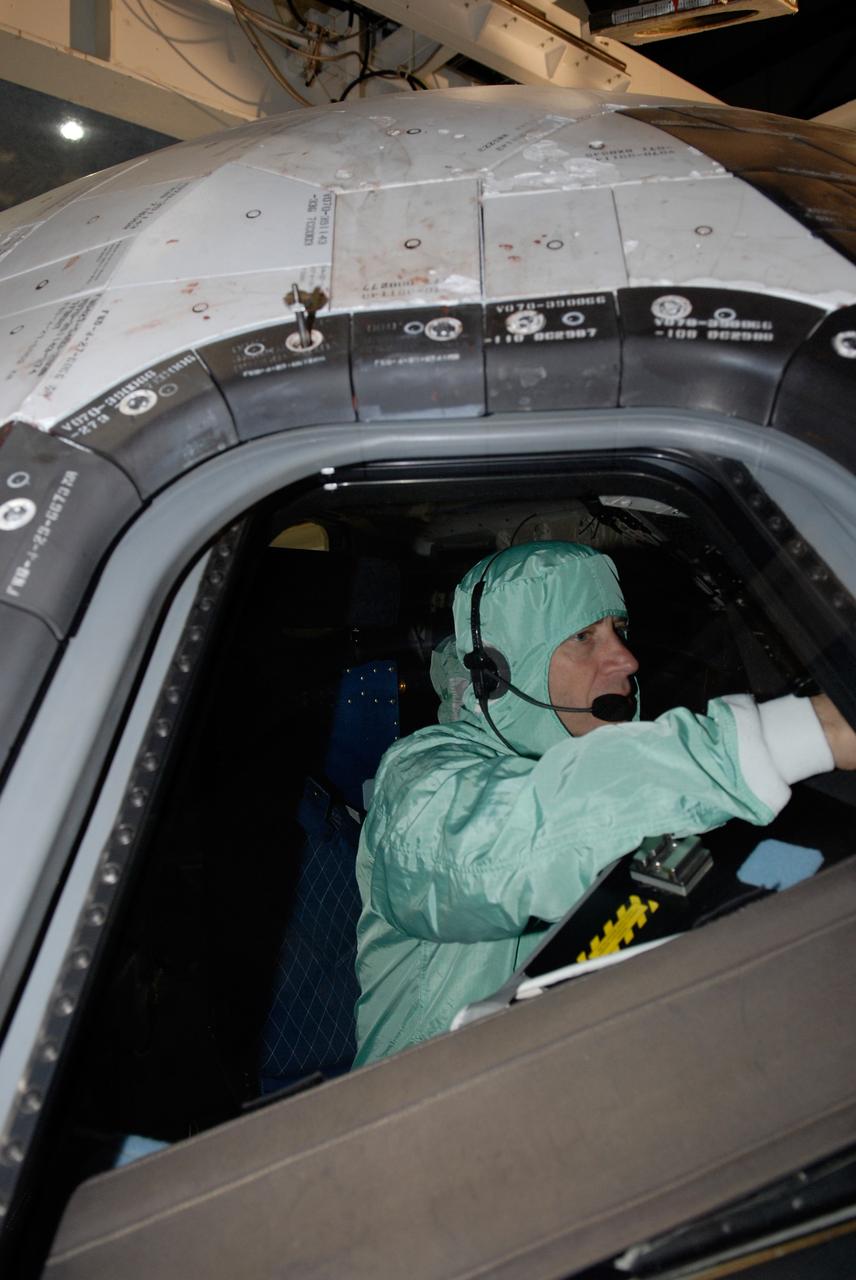
CAPE CANAVERAL, Fla. – In the Orbiter Processing Facility at NASA's Kennedy Space Center, STS-125 Pilot Gregory C. Johnson examines the cockpit window on space shuttle Atlantis, checking for sharp edges. The inspection is part of the crew equipment interface test, which provides hands-on experience with hardware and equipment for the mission. Atlantis is targeted to launch Oct. 8 on the STS-125 mission to service the Hubble Space Telescope. The mission crew will perform history-making, on-orbit “surgery” on two important science instruments aboard the telescope. After capturing the telescope, two teams of spacewalking astronauts will perform the repairs during five planned spacewalks. Photo credit: NASA/Kim Shiflett
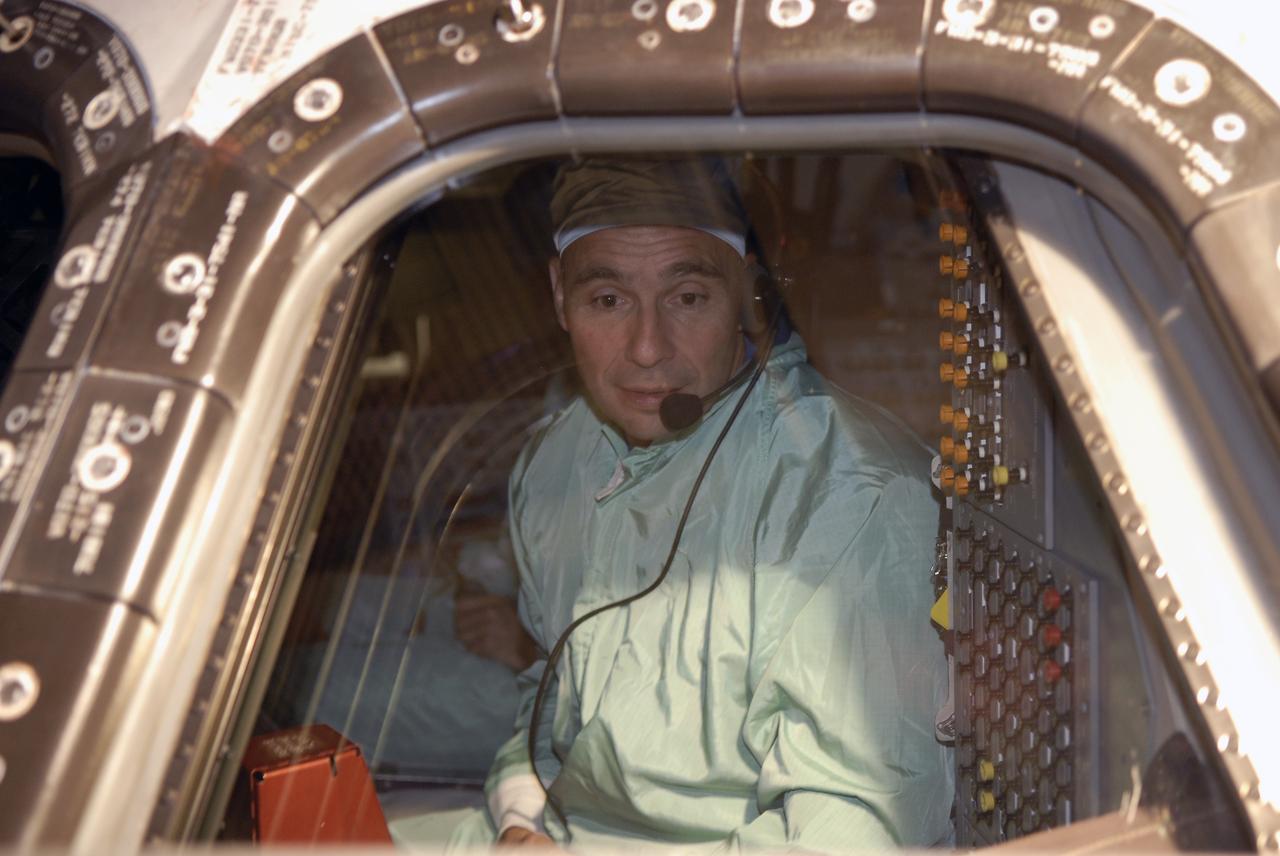
CAPE CANAVERAL, Fla. -- In the Orbiter Processing Facility at NASA's Kennedy Space Center in Florida, STS-119 Commander Lee Archambault checks the cockpit window of space shuttle Discovery. He and other crew members are at Kennedy for a Crew Equipment Interface Test that provides experience handling tools, equipment and hardware they will use on the mission. On the STS-119 mission, space shuttle Discovery will carry the S6 truss segment to complete the 361-foot-long backbone of the International Space Station. The truss includes the fourth pair of solar array wings and electronics that convert sunlight to power for the orbiting laboratory. Discovery is targeted for launch on Feb. 12, 2009. Photo credit: NASA/Kim Shiflett
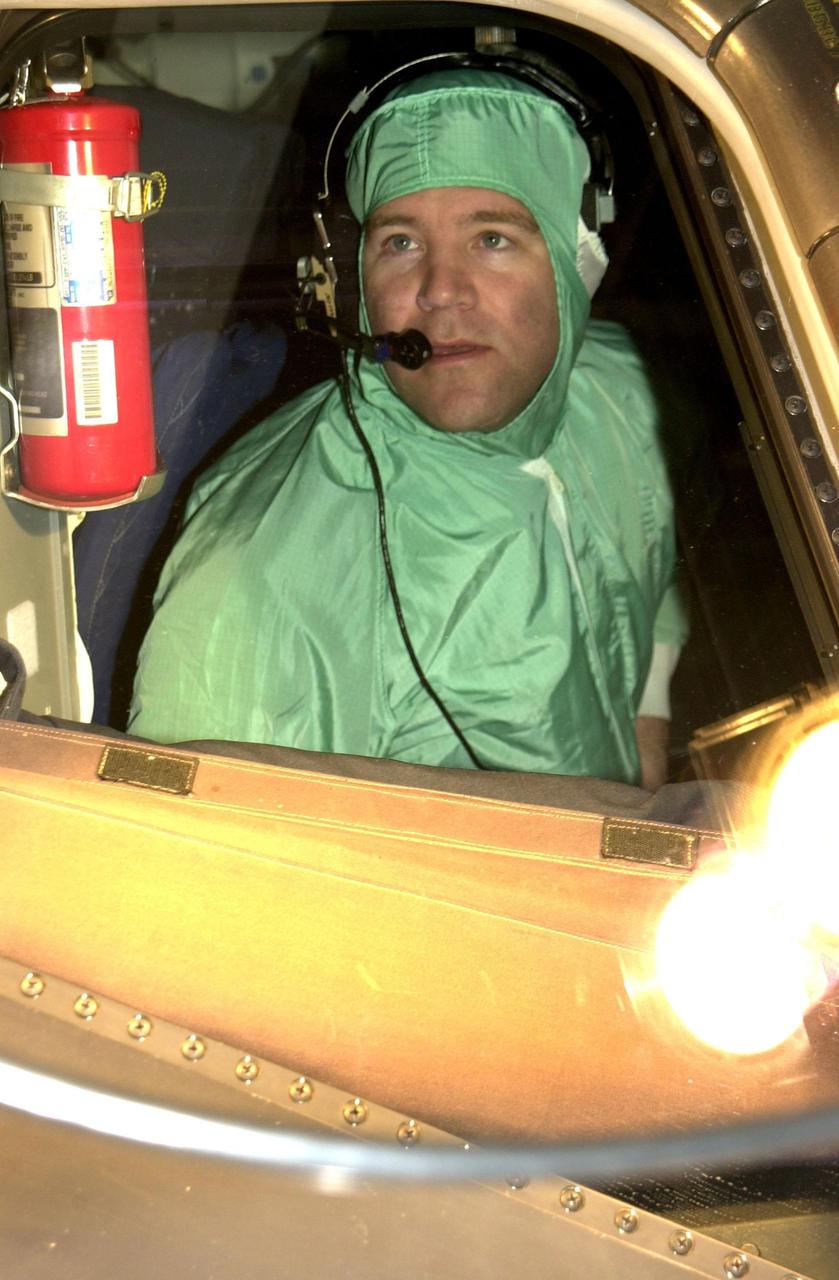
KENNEDY SPACE CENTER, FLA. -- In the Orbiter Processing Facility, STS-110 Pilot Stephen Frick checks a window in the cockpit of Atlantis during Crew Equipment Integration Test activities. The mission, 13th assembly flight to the International Space Station, includes the Integrated Truss Structure S0. The ITS S0 is the center segment on the Space Station, part of the 300-foot (91-meter) truss attached to the U.S. Lab. By assembly completion, four more truss segments will attach to either side of the S0 truss. STS-110 is scheduled to launch April 4, 2002
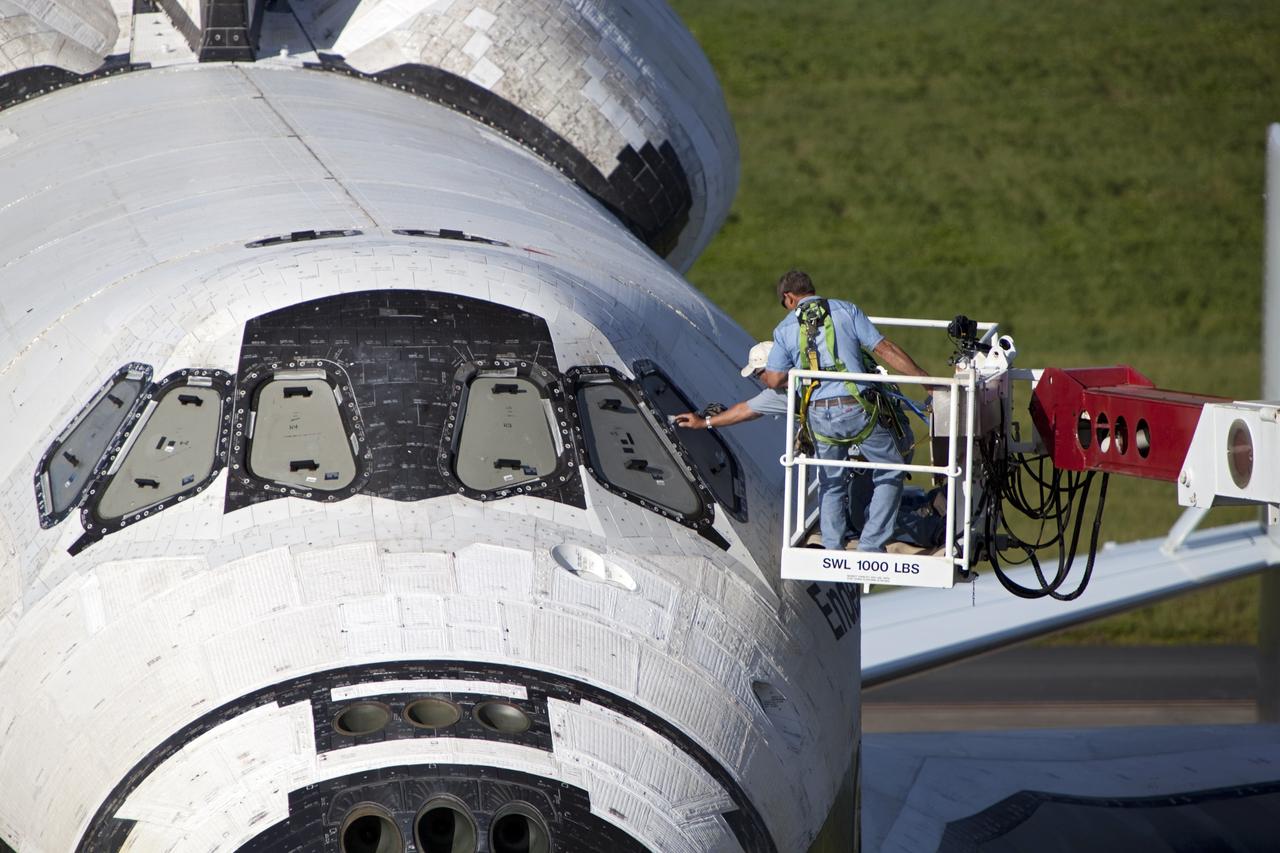
CAPE CANAVERAL, Fla. – United Space Alliance technicians uncover the cockpit windows on space shuttle Endeavour for an employee photo opportunity at the Shuttle Landing Facility at NASA's Kennedy Space Center in Florida. Endeavour is balanced and secured atop NASA's Shuttle Carrier Aircraft, or SCA. The SCA, a modified 747 jetliner, will fly Endeavour to Los Angeles where it will be placed on public display at the California Science Center. This is the final ferry flight scheduled in the Space Shuttle Program era. For more information on the shuttles' transition and retirement, visit http://www.nasa.gov/transition. Photo credit: NASA/Dimitri Gerondidakis
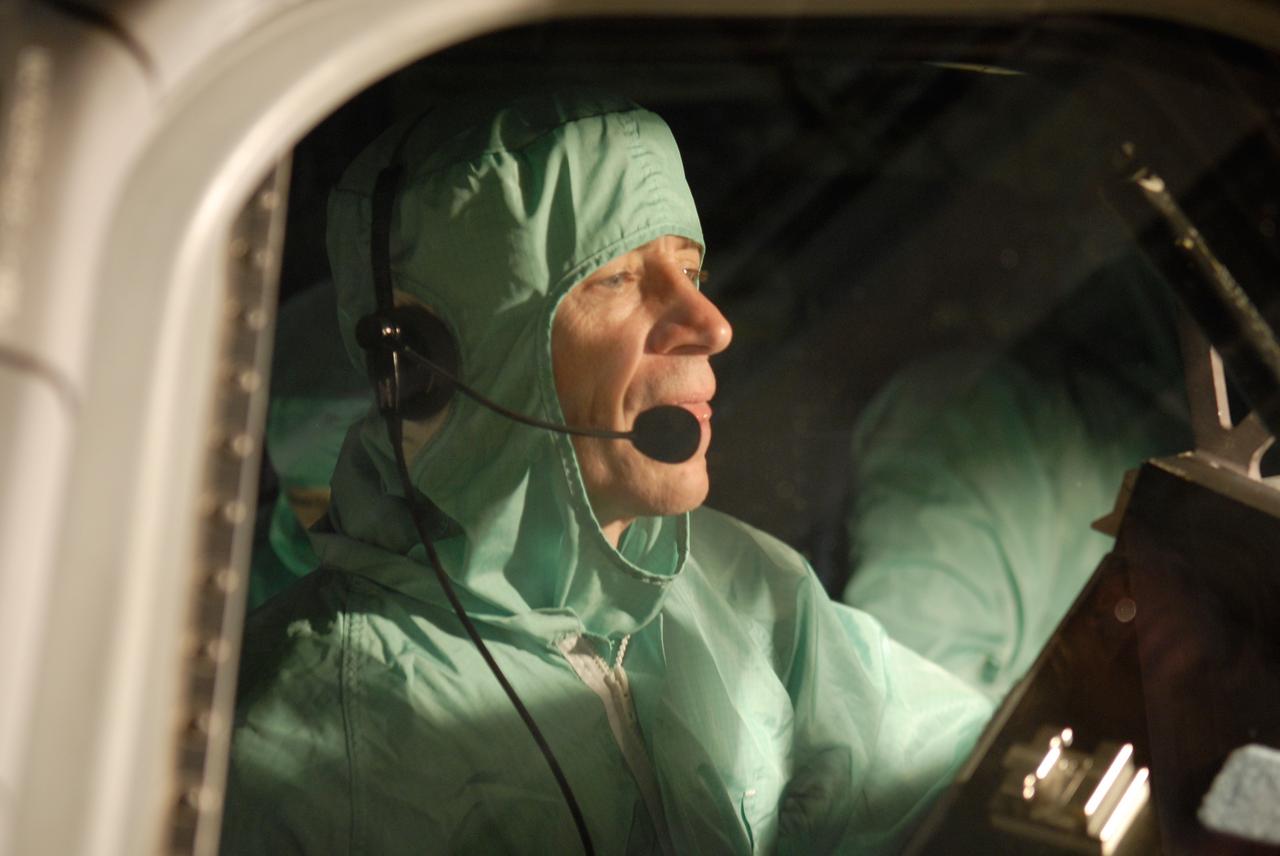
CAPE CANAVERAL, Fla. – In the Orbiter Processing Facility at NASA's Kennedy Space Center, STS-125 Pilot Gregory C. Johnson examines the cockpit window on space shuttle Atlantis, checking for sharp edges. The inspection is part of the crew equipment interface test, which provides hands-on experience with hardware and equipment for the mission. Atlantis is targeted to launch Oct. 8 on the STS-125 mission to service the Hubble Space Telescope. The mission crew will perform history-making, on-orbit “surgery” on two important science instruments aboard the telescope. After capturing the telescope, two teams of spacewalking astronauts will perform the repairs during five planned spacewalks. Photo credit: NASA/Kim Shiflett
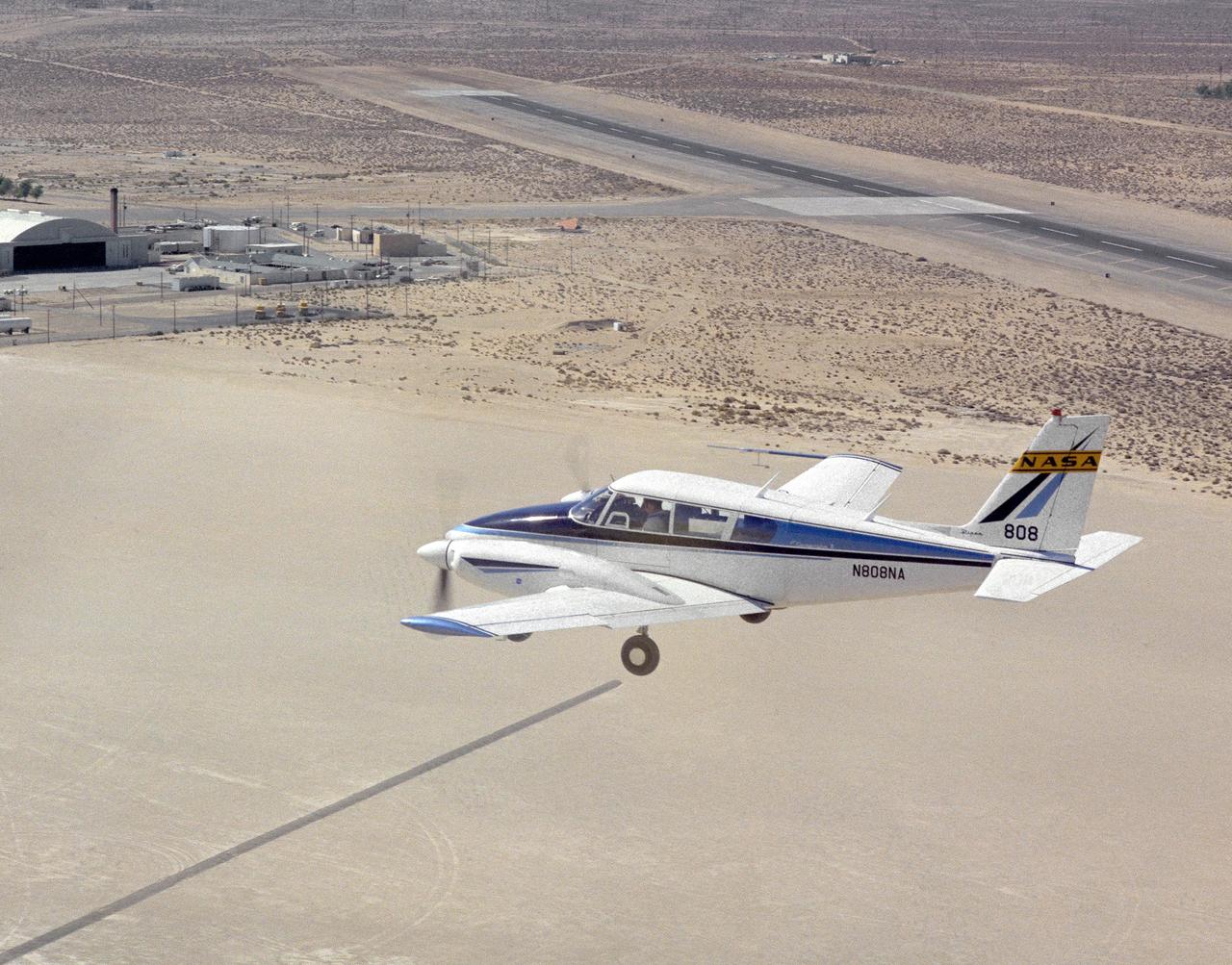
Dryden Flight Research Center's Piper PA-30 Twin Commanche, which helped validate the RPRV concept, descends to a remotely controlled landing on Rogers Dry Lake, unassisted by the onboard pilot. A Piper PA-30 Twin Commanche, known as NASA 808, was used at the NASA Dryden Flight Research Center as a rugged workhorse in a variety of research projects associated with both general aviation and military projects. In the early 1970s, the PA-30, serial number 301498, was used to test a flight technique used to fly Remotely Piloted Research Vehicles (RPRV's). The technique was first tested with the cockpit windows of the light aircraft blacked out while the pilot flew the aircraft utilizing a television monitor which gave him a "pilot's eye" view ahead of the aircraft. Later pilots flew the aircraft from a ground cockpit, a procedure used with all RPRV's. TV and two-way telemetry allow the pilot to be in constant control of the aircraft. The apparatus mounted over the cockpit is a special fish eye lens camera, used to obtain images that are transmitted to the ground based cockpit. This project paved the way for sophisticated, highly successful research programs involving high risk spin, stall, and flight control conditions, such as the HiMAT and the subscale F-15 remotely piloted vehicles. Over the years, NASA 808 has also been used for spin and stall research related to general aviation aircraft and also research to alleviate wake vortices behind large jetliners.
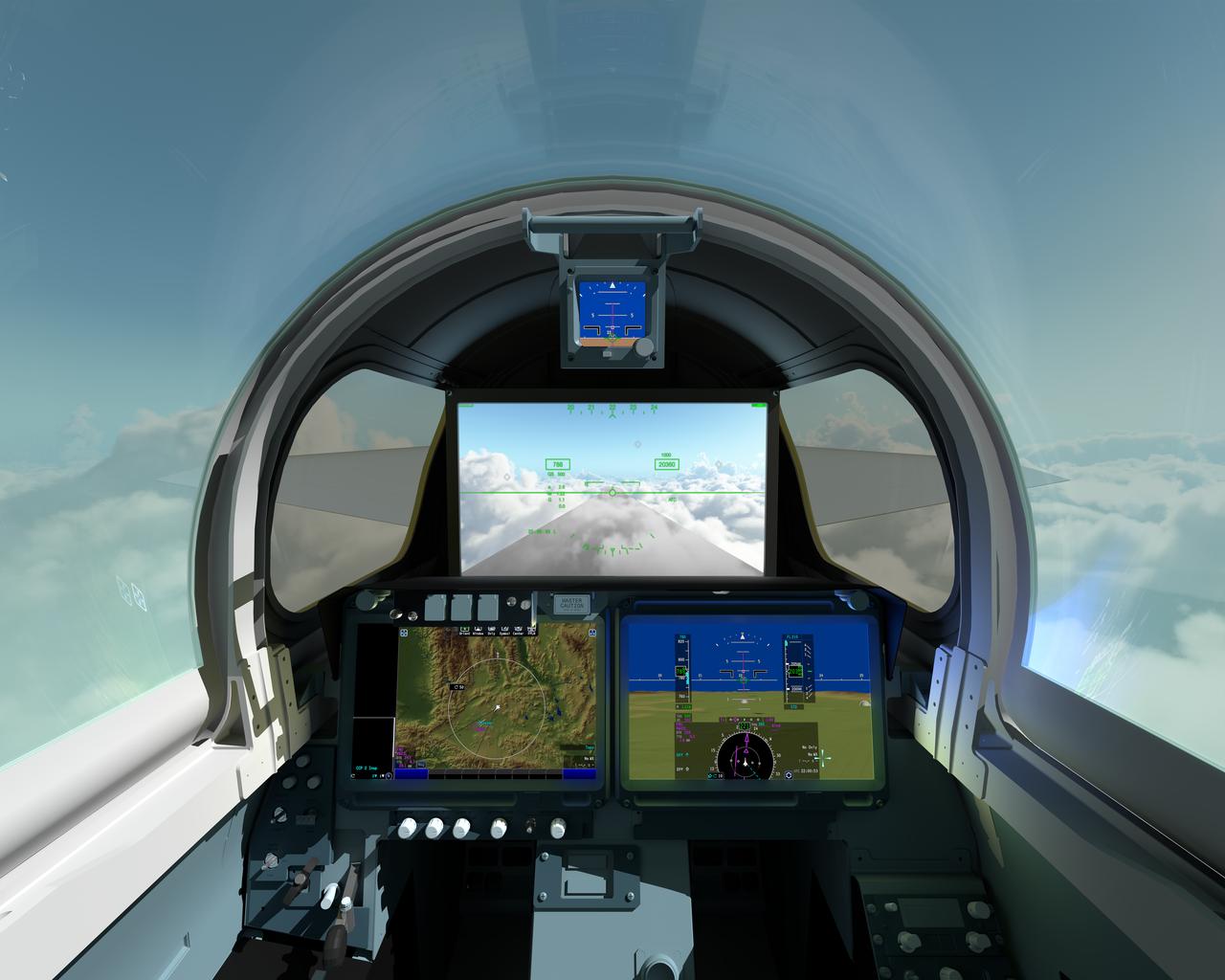
The pilot of NASAÕs X-59 Quiet SuperSonic Technology, or QueSST, aircraft will navigate the skies in a cockpit unlike any other. There wonÕt be a forward-facing window. ThatÕs right; itÕs actually a 4K monitor that serves as the central window and allows the pilot to safely see traffic in his or her flight path, and provides additional visual aids for airport approaches, landings and takeoffs. The 4K monitor, which is part of the aircraftÕs eXternal Visibility System, or XVS, displays stitched images from two cameras outside the aircraft combined with terrain data from an advanced computing system. The two portals and traditional canopy are real windows however, and help the pilot see the horizon. The displays below the XVS will provide a variety of aircraft systems and trajectory data for the pilot to safely fly. The XVS is one of several innovative solutions to help ensure the X-59Õs design shape reduces a sonic boom to a gentle thump heard by people on the ground. Though not intended to ever carry passengers, the X-59 boom-suppressing technology and community response data could help lift current bans on supersonic flight over land and enable a new generation of quiet supersonic commercial aircraft.
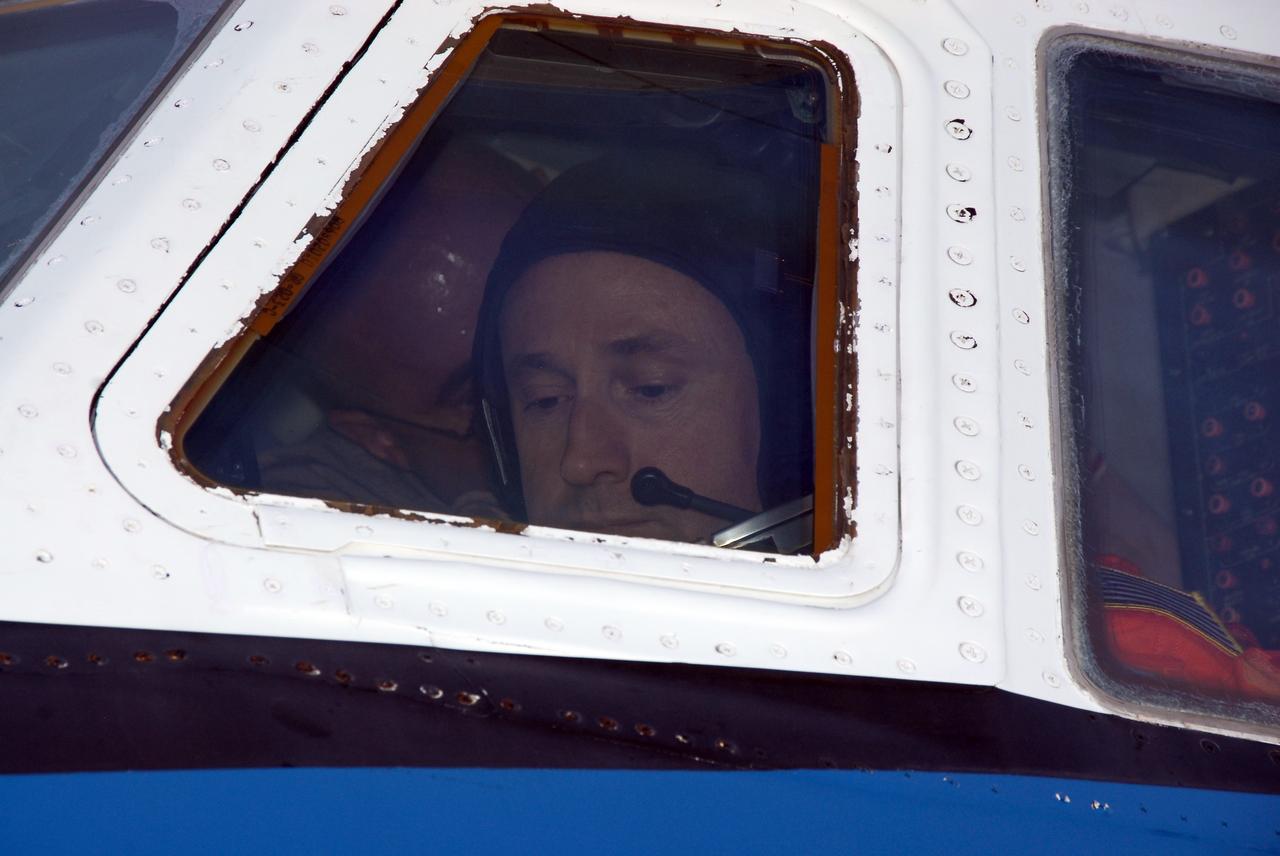
CAPE CANAVERAL, Fla. -- STS-124 Pilot Ken Ham is seen through the cockpit window of NASA's Shuttle Training Aircraft, or STA, before taxiing to the runway at the NASA Kennedy Space Center Shuttle Landing Facility to practice space shuttle landings. The STA is a Grumman American Aviation-built Gulf Stream II jet that was modified to simulate an orbiter's cockpit, motion and visual cues, and handling qualities. In flight, the STA duplicates the orbiter's atmospheric descent trajectory from approximately 35,000 feet altitude to landing on a runway. Because the orbiter is unpowered during re-entry and landing, its high-speed glide must be perfectly executed the first time. The crew for space shuttle Discovery's STS-124 mission is at Kennedy for a full launch dress rehearsal, known as the terminal countdown demonstration test, or TCDT. Providing astronauts and ground crews with an opportunity to participate in various simulated countdown activities, TCDT includes equipment familiarization and emergency training. Discovery's launch is targeted for May 31. Photo credit: NASA/Kim Shiflett
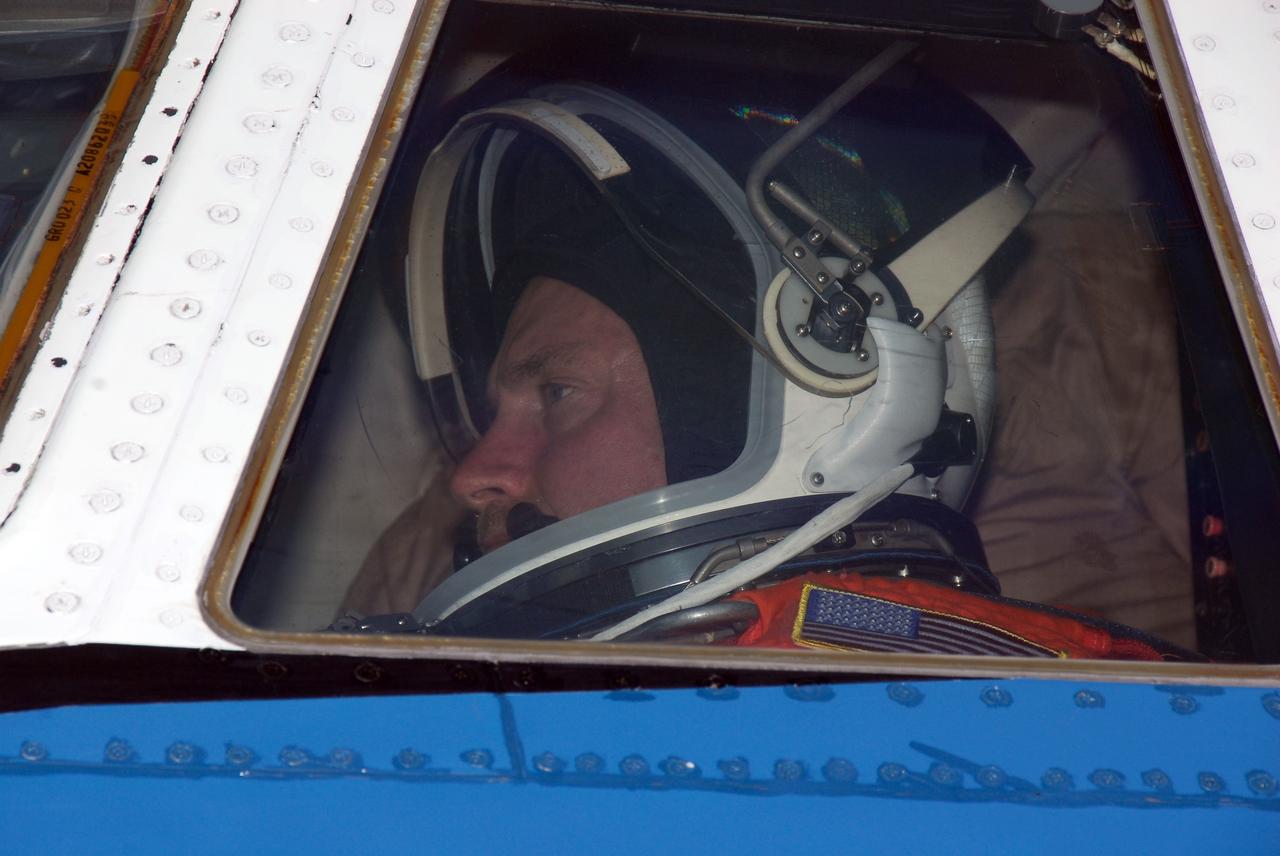
CAPE CANAVERAL, Fla. -- STS-124 Commander Mark Kelly is seen through the cockpit window of NASA's Shuttle Training Aircraft, or STA, before taxiing to the runway at the NASA Kennedy Space Center Shuttle Landing Facility to practice space shuttle landings. The STA is a Grumman American Aviation-built Gulf Stream II jet that was modified to simulate an orbiter's cockpit, motion and visual cues, and handling qualities. In flight, the STA duplicates the orbiter's atmospheric descent trajectory from approximately 35,000 feet altitude to landing on a runway. Because the orbiter is unpowered during re-entry and landing, its high-speed glide must be perfectly executed the first time. The crew for space shuttle Discovery's STS-124 mission is at Kennedy for a full launch dress rehearsal, known as the terminal countdown demonstration test, or TCDT. Providing astronauts and ground crews with an opportunity to participate in various simulated countdown activities, TCDT includes equipment familiarization and emergency training. Discovery's launch is targeted for May 31. Photo credit: NASA/Kim Shiflett
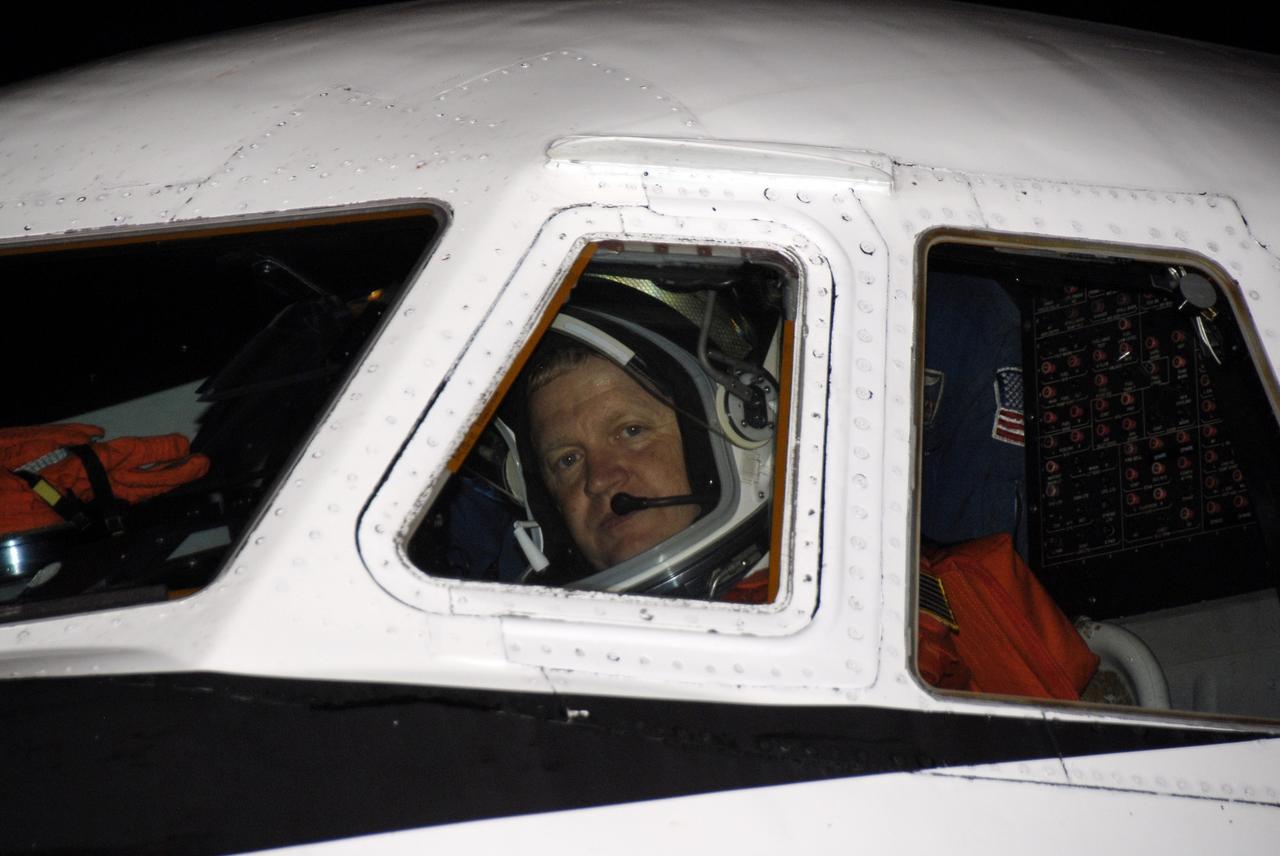
CAPE CANAVERAL, Fla. - At the Shuttle Landing Facility at NASA's Kennedy Space Center in Florida, STS-126 Pilot Eric Boe peers out the cockpit window of the Shuttle Training Aircraft, or STA, before taking off to practice shuttle landings. The STA is a Grumman American Aviation-built Gulf Stream II jet that was modified to simulate a shuttle’s cockpit, motion and visual cues, and handling qualities. In flight, the aircraft duplicates the shuttle’s atmospheric descent trajectory from approximately 35,000 feet to landing. The practice is part of the Terminal Countdown Demonstration Test, which includes equipment familiarization, emergency exit procedures and a simulated launch countdown. On the STS-126 mission, space shuttle Endeavour's crew will deliver equipment and supplies to the International Space Station in preparation for expansion from a three- to six-person resident crew aboard the complex. The mission also will include four spacewalks to service the station’s Solar Alpha Rotary Joints. Endeavour is targeted to launch Nov. 14. Photo credit: NASA/Kim Shiflett
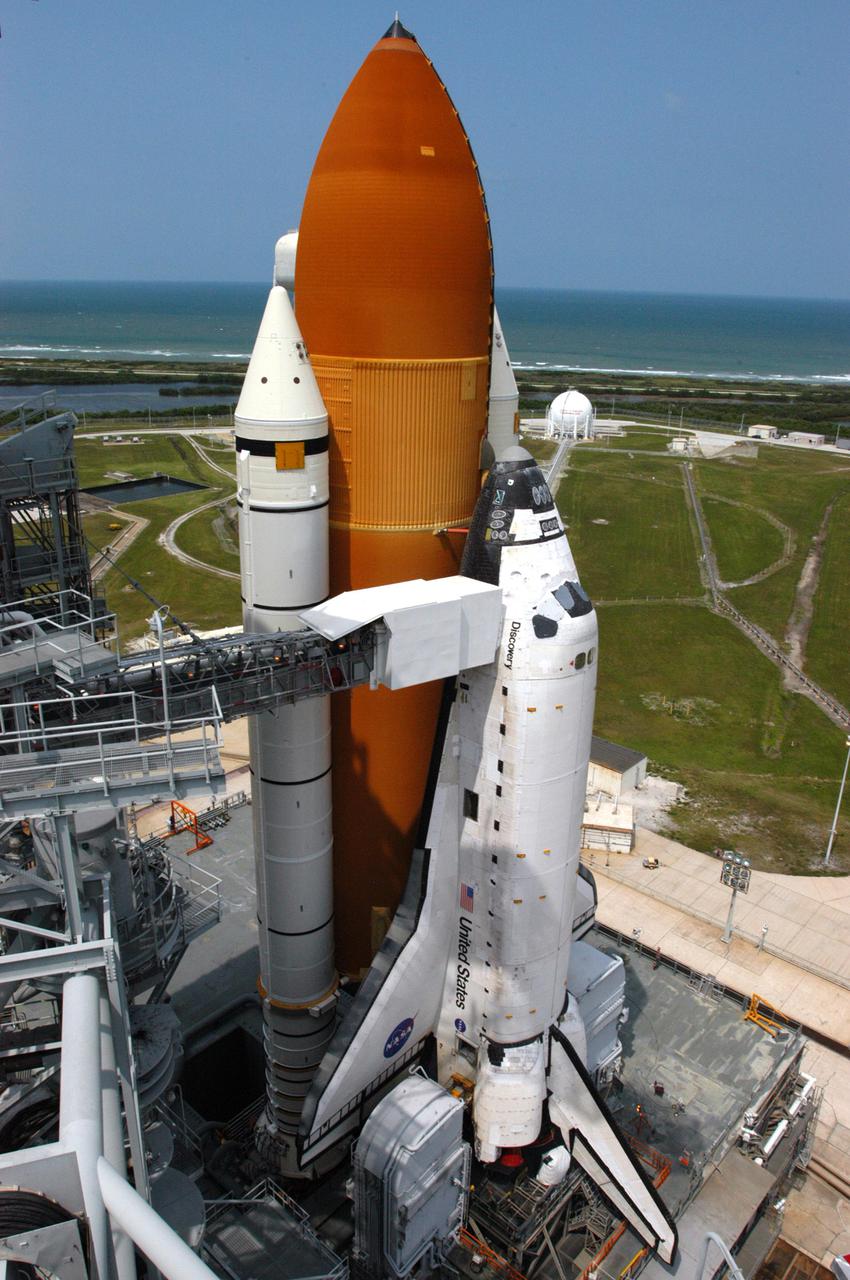
KENNEDY SPACE CENTER, FLA. - On Launch Pad 39B, Space Shuttle Discovery is revealed after rollback of the Rotating Service Structure. The Orbiter Access Arm can be seen extended to the cockpit. Discovery will be rolled back to the Vehicle Assembly Building. Once inside the VAB, Discovery will be demated from its External Tank and lifted into the transfer aisle. On or about June 7, Discovery will be lifted and attached to its new tank and Solid Rocket Boosters, which are already in the VAB. Only the 15th rollback in Space Shuttle Program history, the 4.2-mile journey allows additional modifications to be made to the External Tank prior to a safe Return to Flight. Discovery is expected to be rolled back to the launch pad in mid-June for Return to Flight mission STS-114. The launch window extends from July 13 to July 31.
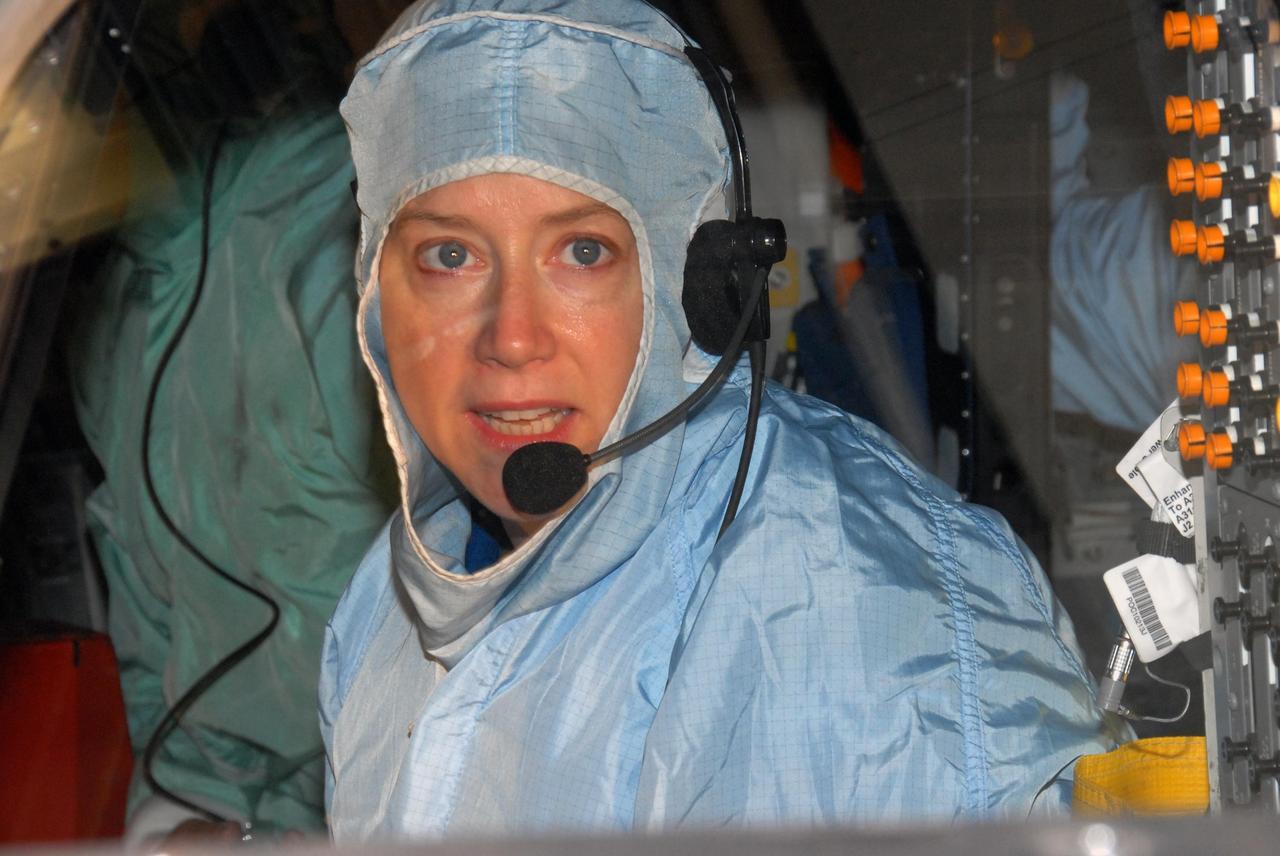
KENNEDY SPACE CENTER, FLA. - In the Orbiter Processing Facility bay 3, STS-120 Commander Pamela A. Melroy sits in the orbiter Discovery to inspect the cockpit windows. The STS-120 crew is at Kennedy for a crew equipment interface test, or CEIT, which includes harness training, inspection of the thermal protection system and camera operation for planned extravehicular activities, or EVAs. The STS-120 mission will deliver the Harmony module, christened after a school contest, which will provide attachment points for European and Japanese laboratory modules on the International Space Station. Known in technical circles as Node 2, it is similar to the six-sided Unity module that links the U.S. and Russian sections of the station. Built in Italy for the United States, Harmony will be the first new U.S. pressurized component to be added. The STS-120 mission is targeted to launch on Oct. 20. Photo credit: NASA/George Shelton
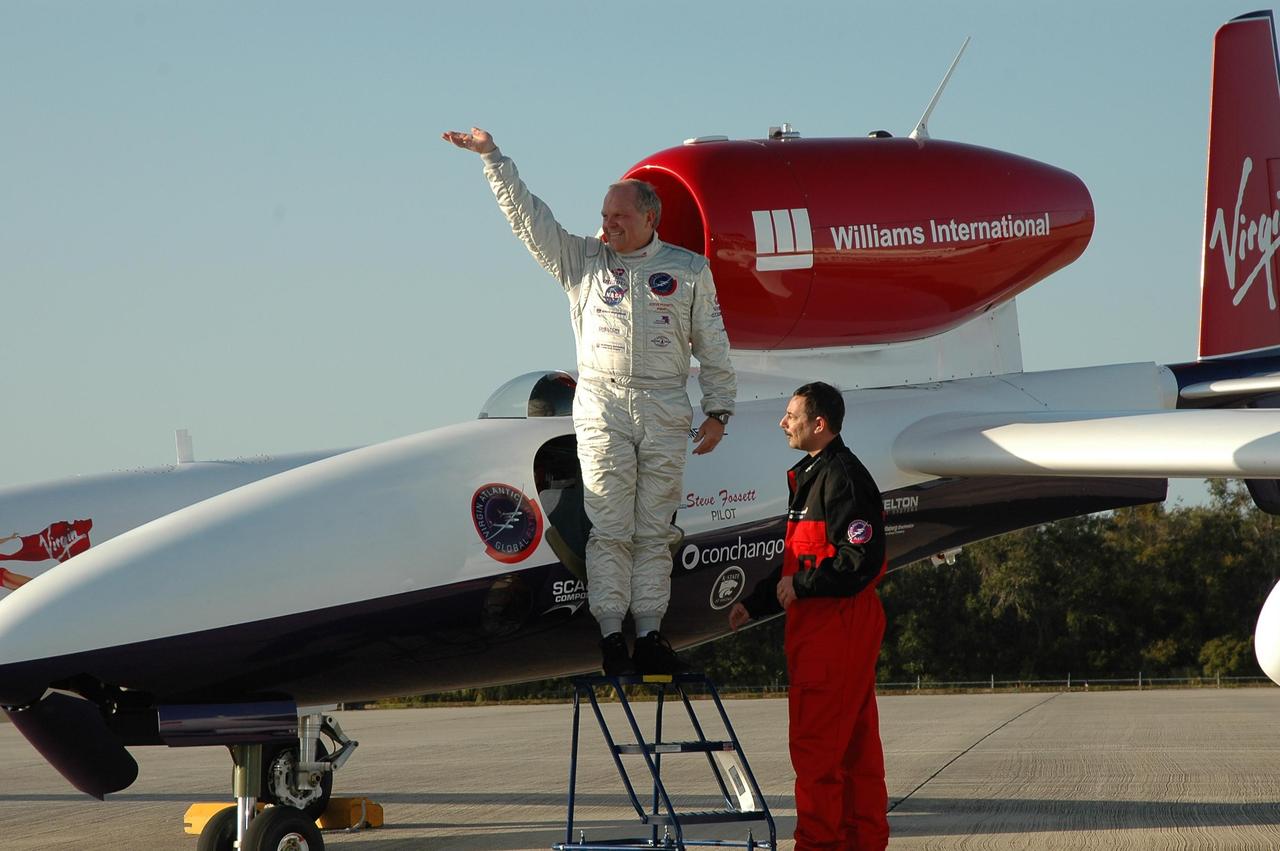
KENNEDY SPACE CENTER, FLA. - Pilot Steve Fossett waves as he leaves the cockpit of the Virgin Atlantic Airways GlobalFlyer aircraft, which he landed at NASA Kennedy Space Center’s Shuttle Landing Facility. The aircraft is being relocated from Salina, Kan., to the Shuttle Landing Facility to begin preparations for an attempt to set a new world record for the longest flight made by any aircraft. An exact takeoff date for the record-setting flight has not been determined and is contingent on weather and jet-stream conditions. The window for the attempt opens in mid-January, making the flight possible anytime between then and the end of February. NASA agreed to let Virgin Atlantic Airways use Kennedy's Shuttle Landing Facility as a takeoff site. The facility use is part of a pilot program to expand runway access for non-NASA activities.
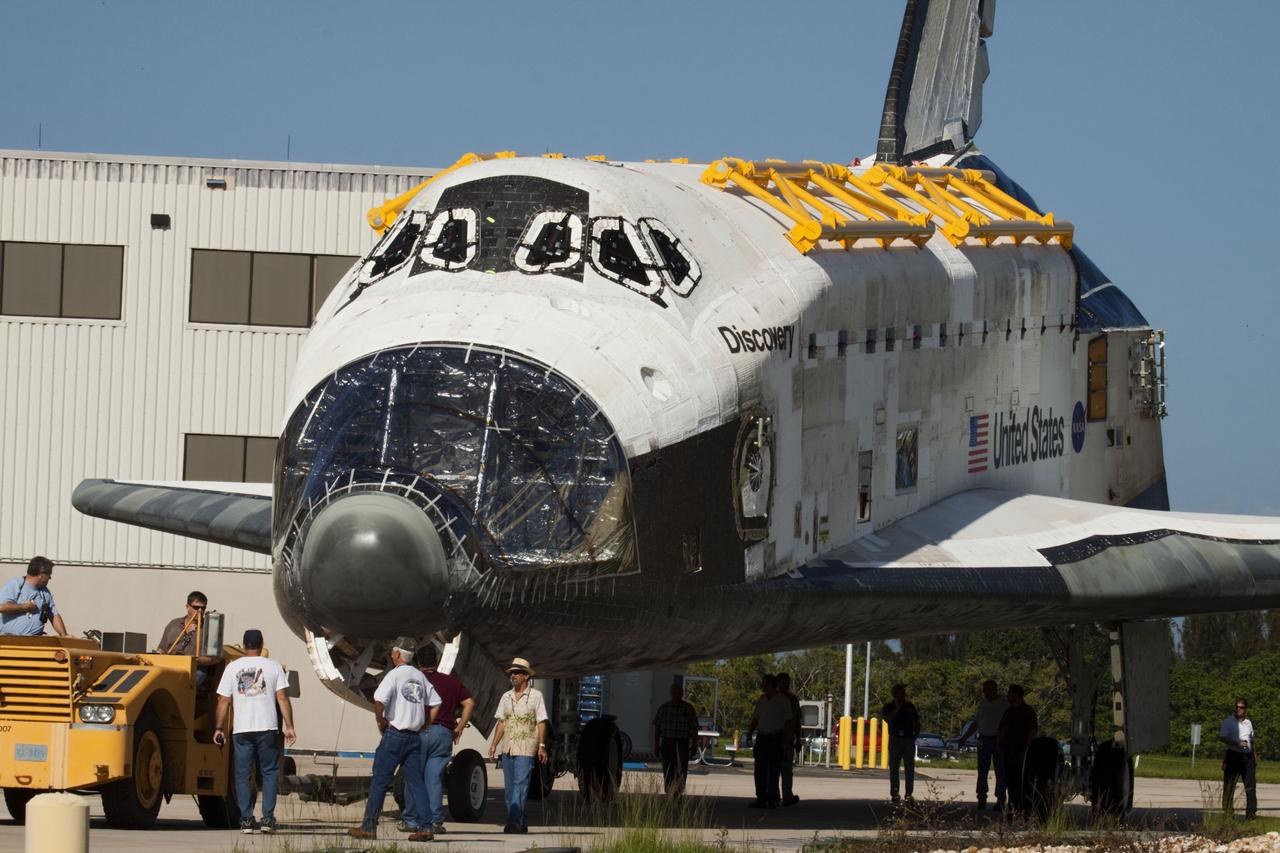
CAPE CANAVERAL, Fla. -- At NASA's Kennedy Space Center in Florida, space shuttle Discovery -- its nose encased in protective plastic, its cockpit windows covered, and strongbacks attached to its payload bay doors -- rolls out of Orbiter Processing Facility-2, or OPF-2, on its move to the Vehicle Assembly Building, or VAB. Discovery will be stored inside the VAB for approximately one month while shuttle Atlantis undergoes processing in OPF-2 following its final mission, STS-135. Discovery flew its 39th and final mission, STS-133, in February and March 2011, and currently is being prepared for public display at the Smithsonian's National Air and Space Museum Steven F. Udvar-Hazy Center in Virginia. For more information about Discovery's Transition and Retirement, visit www.nasa.gov/mission_pages/shuttle/launch/discovery_rss_collection_archive_1.html. Photo credit: NASA/Ken Thornsley
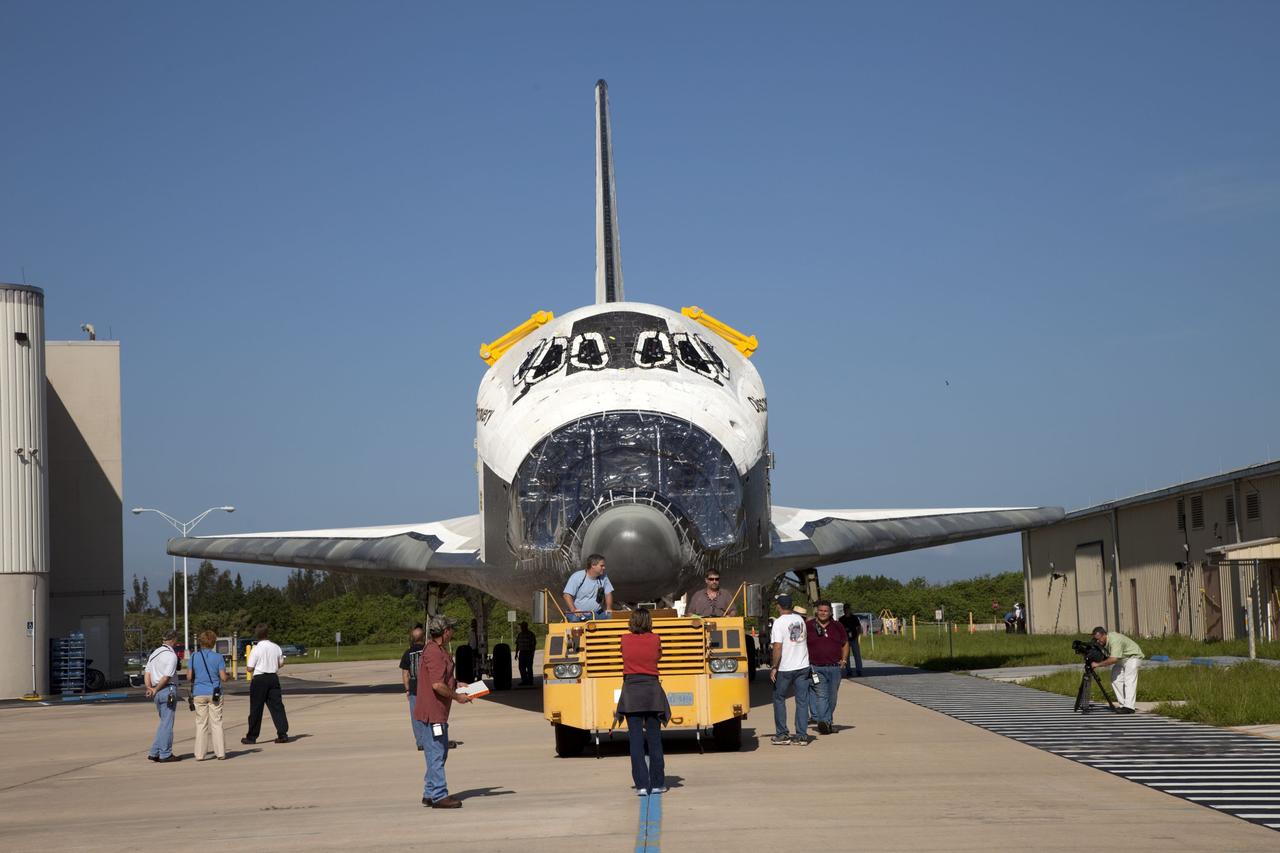
CAPE CANAVERAL, Fla. -- At NASA's Kennedy Space Center in Florida, space shuttle Discovery -- its nose encased in protective plastic, its cockpit windows covered, and strongbacks attached to its payload bay doors -- rolls past the Thermal Protection System Facility, at right, on its way from Orbiter Processing Facility-2, or OPF-2, to the Vehicle Assembly Building, or VAB. Discovery will be stored inside the VAB for approximately one month while shuttle Atlantis undergoes processing in OPF-2 following its final mission, STS-135. Discovery flew its 39th and final mission, STS-133, in February and March 2011, and currently is being prepared for public display at the Smithsonian's National Air and Space Museum Steven F. Udvar-Hazy Center in Virginia. For more information about Discovery's Transition and Retirement, visit www.nasa.gov/mission_pages/shuttle/launch/discovery_rss_collection_archive_1.html. Photo credit: NASA/Frankie Martin
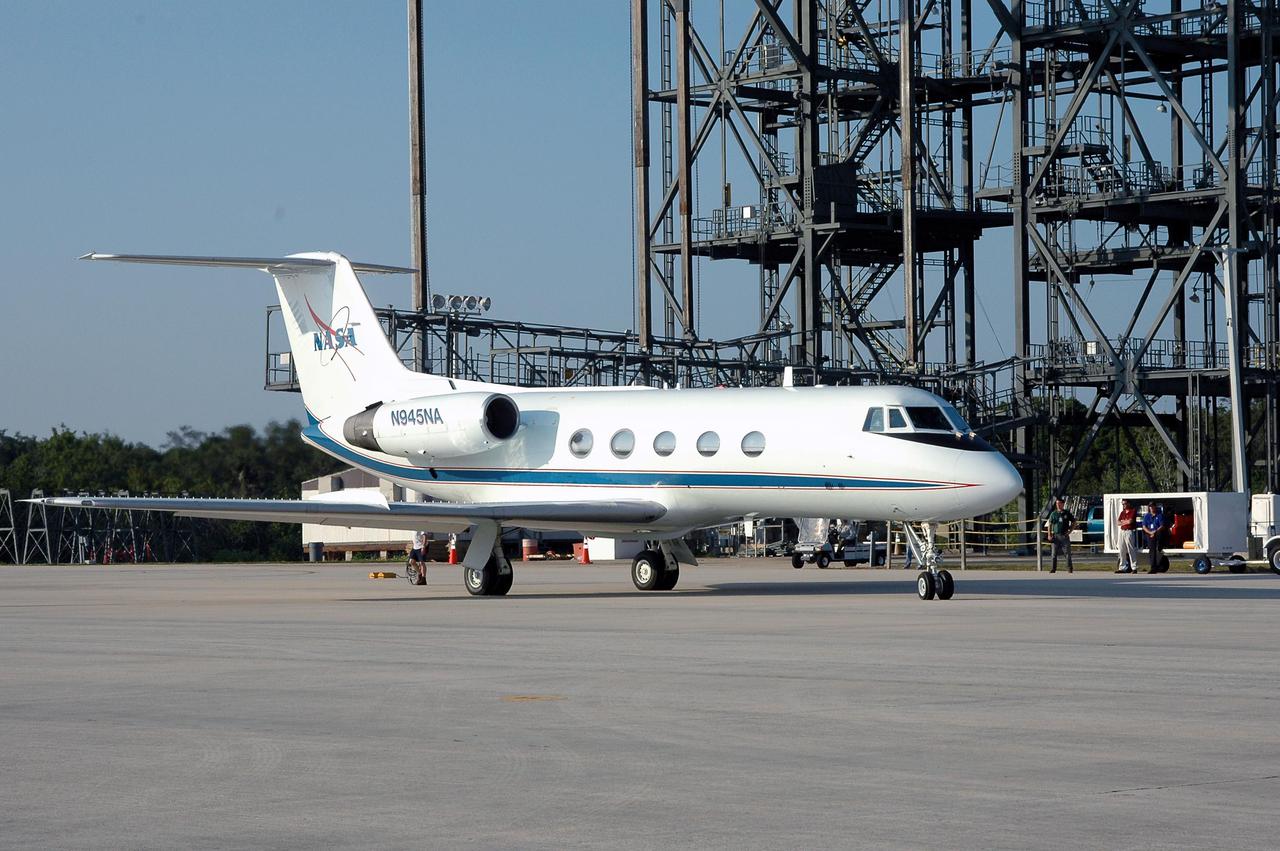
KENNEDY SPACE CENTER, FLA. - A Shuttle Training Aircraft (STA) is ready for STS-114 Commander Eileen Collins to begin practice landing the orbiter. The STA is a modified Grumman American Aviation-built Gulfstream II executive jet that was modified to simulate an orbiter’s cockpit, motion and visual cues, and handling qualities. In flight, the STA duplicates the orbiter’s atmospheric descent trajectory from approximately 35,000 feet altitude to landing on a runway. The orbiter differs in at least one major aspect from conventional aircraft; it is unpowered during re-entry and landing so its high-speed glide must be perfectly executed the first time. There is no go-around capability. The orbiter touchdown speed is 213 to 226 miles per hour. There are two STAs, based in Houston. STS-114 is the first Return to Flight mission, scheduled to launch July 13 in a window that extends through July 31.
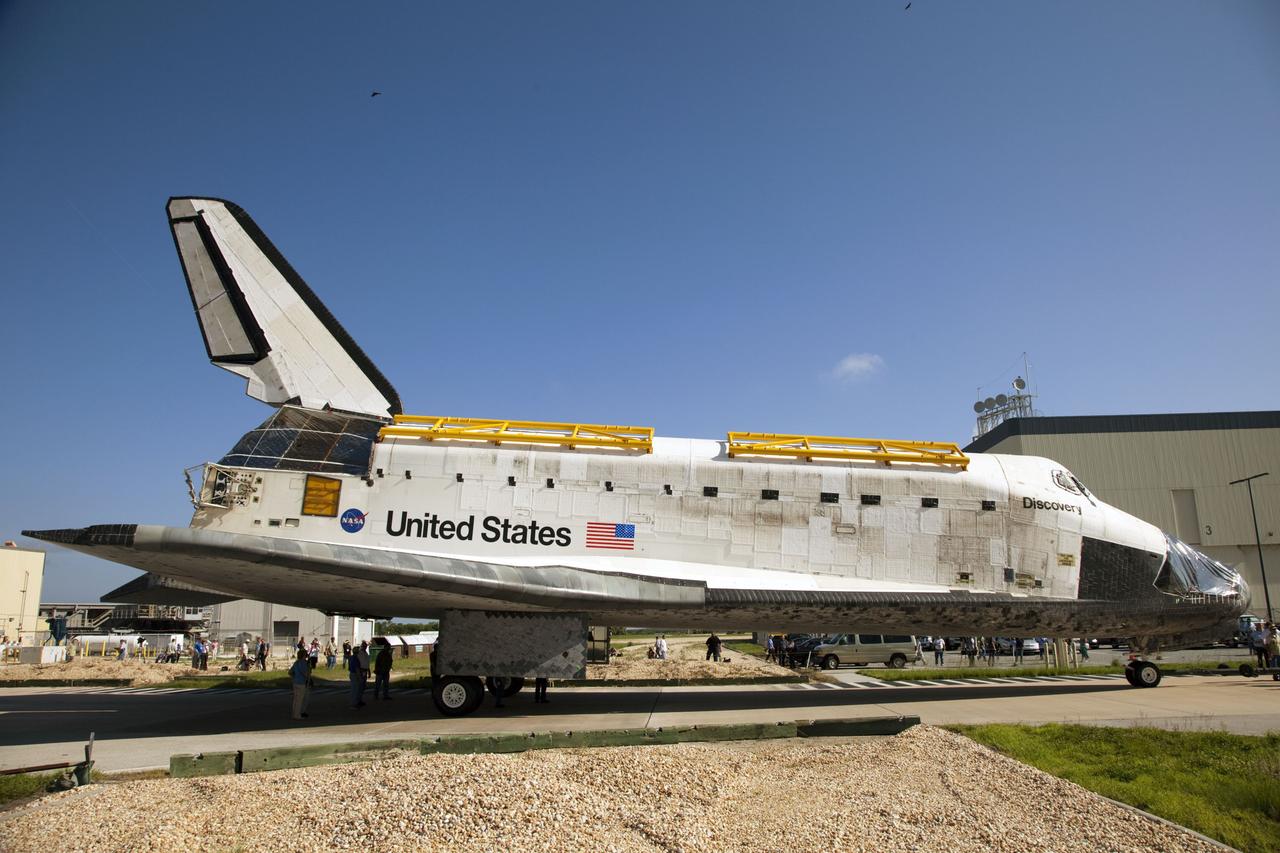
CAPE CANAVERAL, Fla. -- At NASA's Kennedy Space Center in Florida, space shuttle Discovery -- its nose encased in protective plastic, its cockpit windows covered, and strongbacks attached to its payload bay doors -- rolls past Orbiter Processing Facility-3, or OPF-3, at right, on its way from OPF-2 to the Vehicle Assembly Building, or VAB. Discovery will be stored inside the VAB for approximately one month while shuttle Atlantis undergoes processing in OPF-2 following its final mission, STS-135. Discovery flew its 39th and final mission, STS-133, in February and March 2011, and currently is being prepared for public display at the Smithsonian's National Air and Space Museum Steven F. Udvar-Hazy Center in Virginia. For more information about Discovery's Transition and Retirement, visit www.nasa.gov/mission_pages/shuttle/launch/discovery_rss_collection_archive_1.html. Photo credit: NASA/Frankie Martin
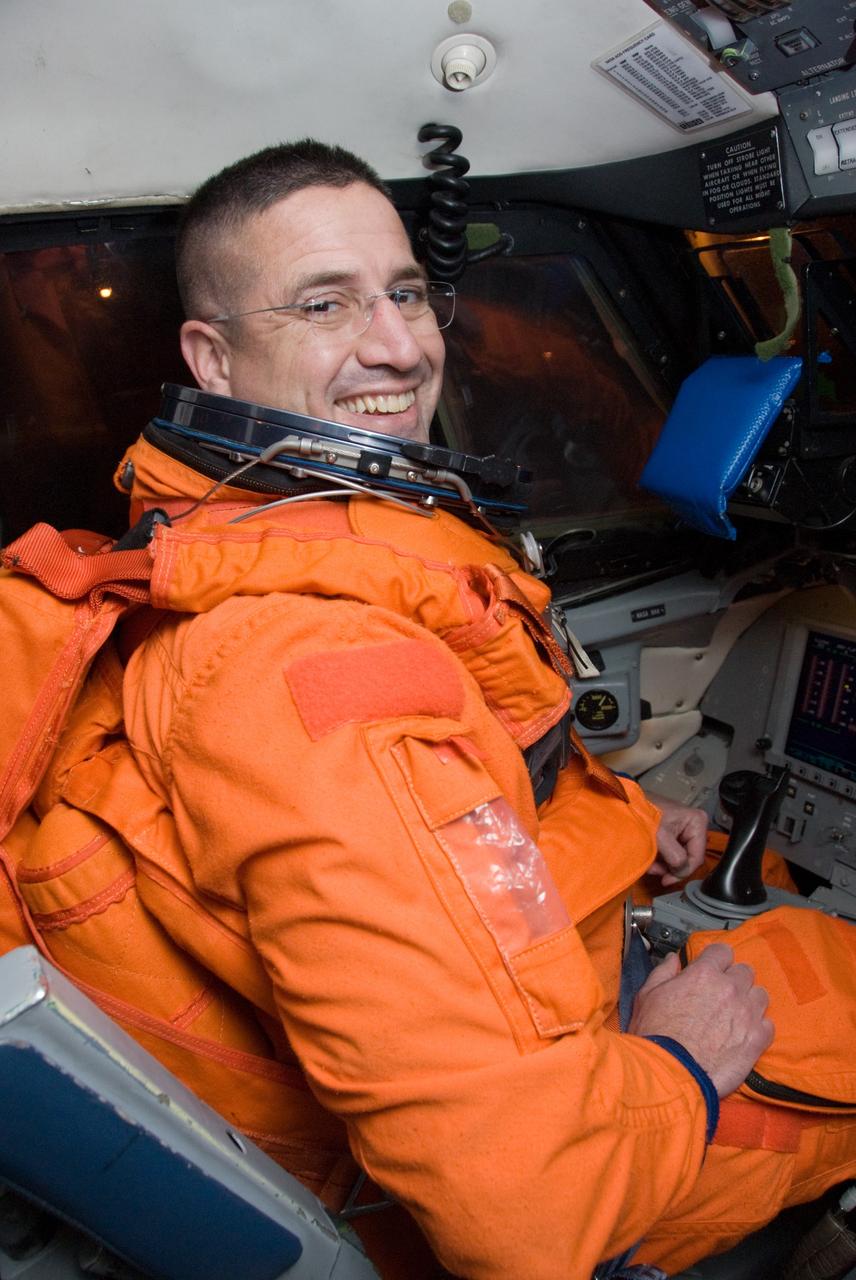
CAPE CANAVERAL, Fla. - At the Shuttle Landing Facility at NASA's Kennedy Space Center in Florida, STS-130 Commander George Zamka gets settled in the cockpit of a Shuttle Training Aircraft to practice landings in preparation for space shuttle Endeavour's STS-130 mission. The Shuttle Training Aircraft is a Gulfstream II jet, modified to handle like the space shuttle. The crew members of Endeavour's upcoming mission are at Kennedy for training related to their launch dress rehearsal, the Terminal Countdown Demonstration Test. The primary payload on STS-130 is the International Space Station's Node 3, Tranquility, a pressurized module that will provide room for many of the station's life support systems. Attached to one end of Tranquility is a cupola, a unique work area with six windows on its sides and one on top. Endeavour's launch is targeted for Feb. 7. For information on the STS-130 mission and crew, visit http://www.nasa.gov/mission_pages/shuttle/shuttlemissions/sts130/index.html. Photo credit: NASA/Kim Shiflett
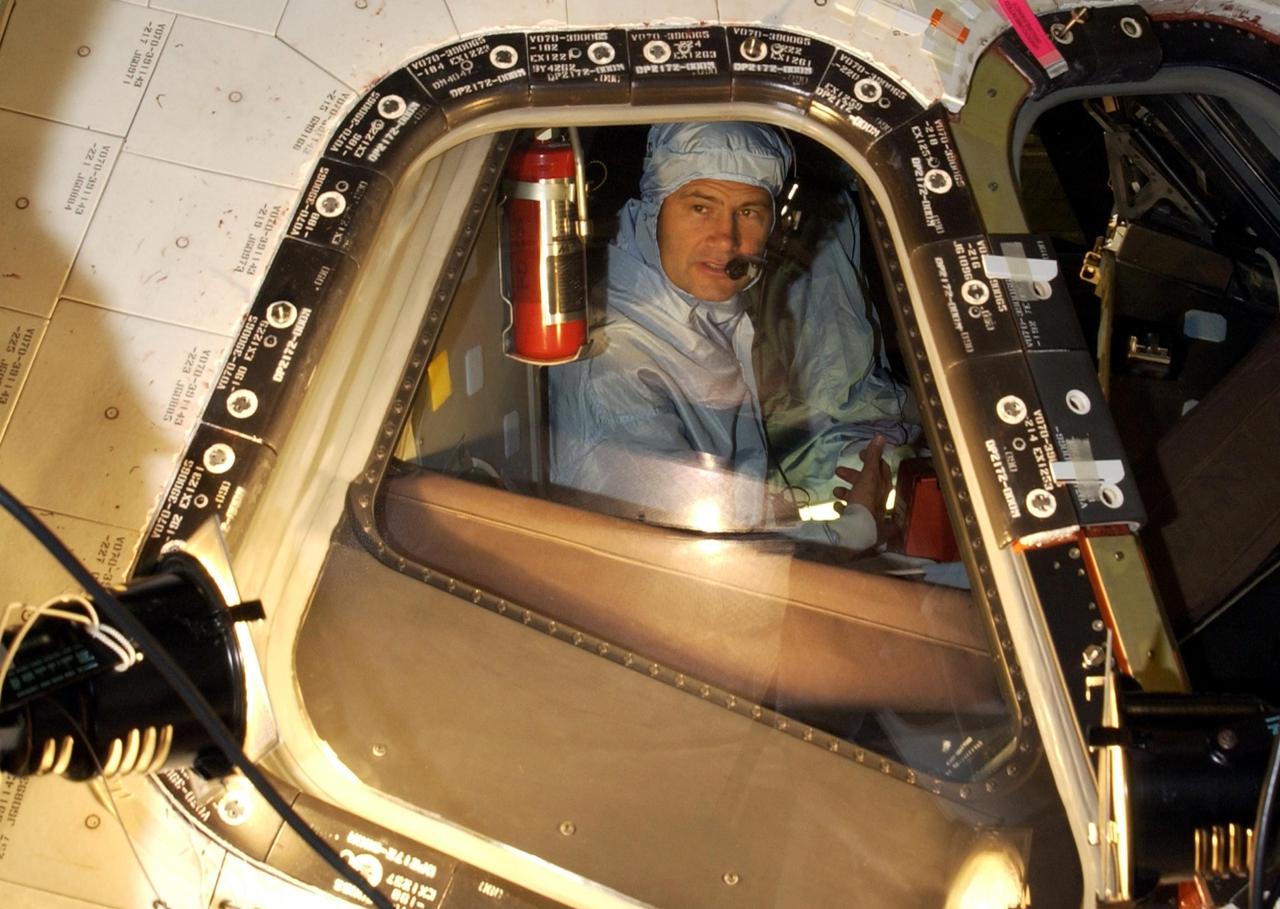
KENNEDY SPACE CENTER, FLA. -- STS-113 Pilot Paul Lockhart checks the cockpit window from inside Endeavour. The check is part of Crew Equipment Interface Test activities, which include familiarization with equipment for the mission. The primary payloads on mission STS-113 are the first port truss segment, P1 Truss, to be attached to the central truss segment, S0, on the International Space Station, and the Crew and Equipment Translation Aid (CETA) Cart B that can be used by spacewalkers to move along the truss with equipment. Once delivered, the P1 truss will remain stowed until flight 12A.1. The mission will also deliver the Expedition 6 crew to the Station and return Expedition 5 to Earth. Space Shuttle Endeavour is scheduled to launch Nov. 10 on the 11-day mission.
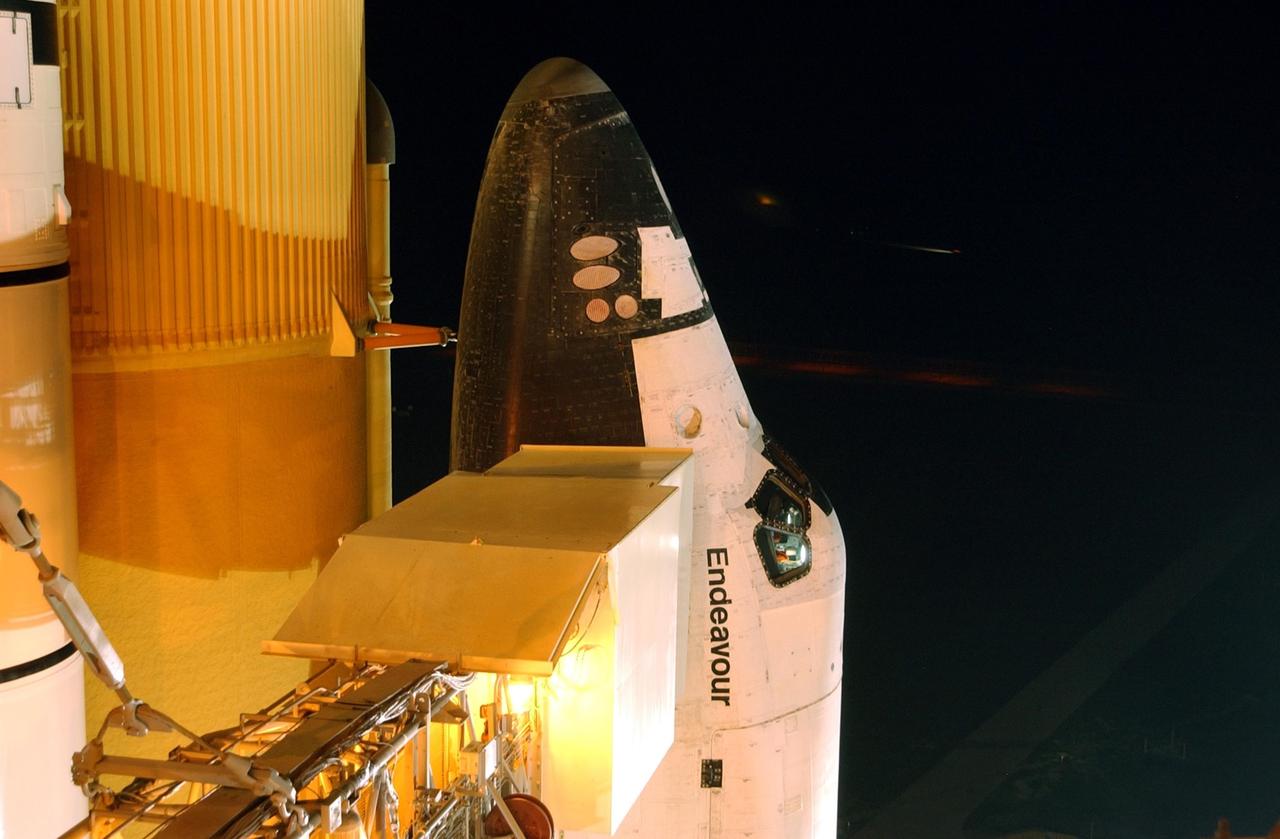
KENNEDY SPACE CENTER, FLA. - This closeup of Space Shuttle Endeavour shows the cockpit windows just above the name. Extending to the side is the environmental chamber known as the White Room, at the end of the orbiter access arm. STS-111 is the second Utilization Flight to the International Space Station, carrying the Multi-Purpose Logistics Module Leonardo, the Mobile Base System (MBS), and a replacement wrist/roll joint for the Canadarm 2. Also onboard Space Shuttle Endeavour is the Expedition 5 crew who will replace Expedition 4 on board the Station. The MBS will be installed on the Mobile Transporter to complete the Canadian Mobile Servicing System, or MSS. The mechanical arm will then have the capability to "inchworm" from the U.S. Lab Destiny to the MSS and travel along the truss to work sites. Expedition 4 crew members will return to Earth with the STS-111 crew on Endeavour. Launch is scheduled for 7:44 p.m. EDT, May 30, 2002
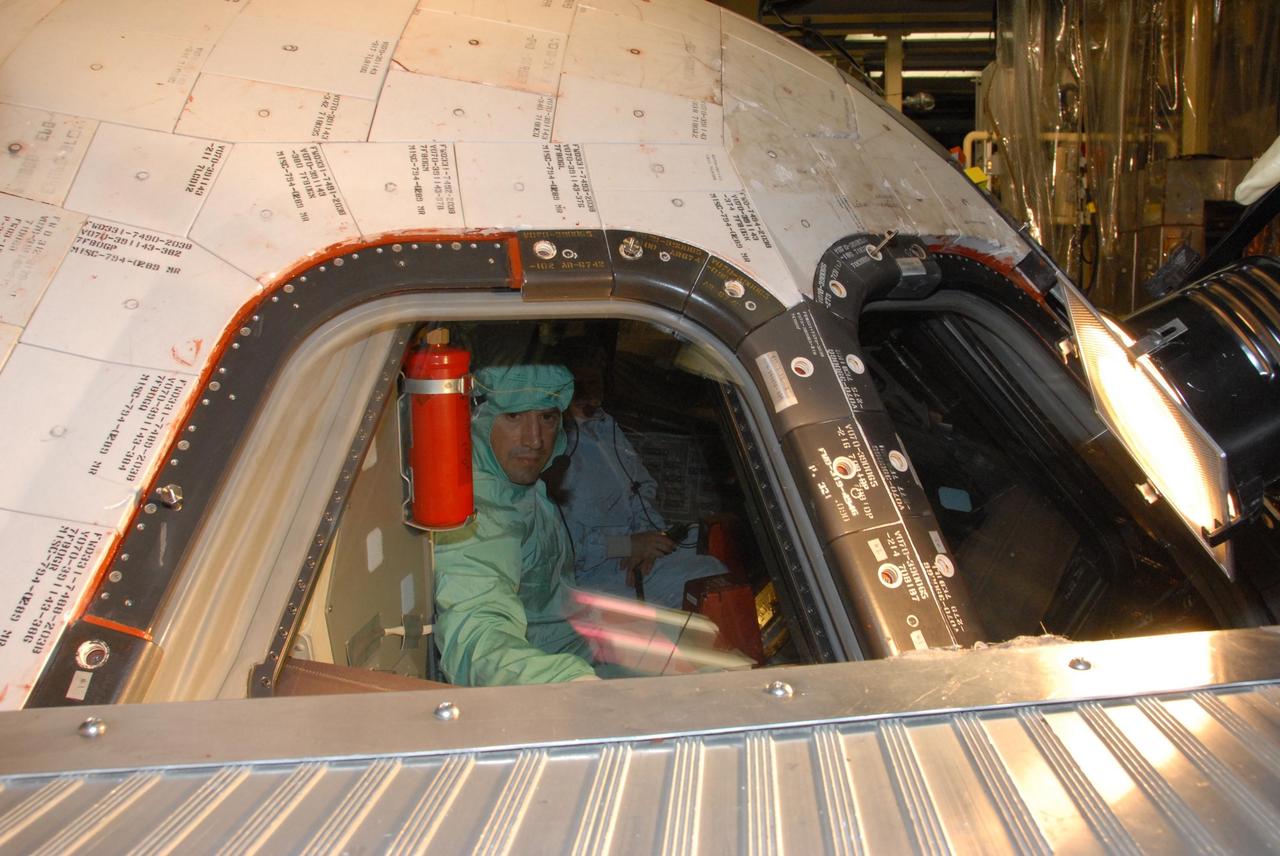
KENNEDY SPACE CENTER, FLA. - In the Orbiter Processing Facility bay 3, STS-120 Pilot George D. Zamka makes a close inspection of the cockpit window on the orbiter Discovery. Seated next to him is Commander Pamela A. Melroy. The STS-120 crew is at Kennedy for a crew equipment interface test, or CEIT, which includes harness training, inspection of the thermal protection system and camera operation for planned extravehicular activities, or EVAs. The STS-120 mission will deliver the Harmony module, christened after a school contest, which will provide attachment points for European and Japanese laboratory modules on the International Space Station. Known in technical circles as Node 2, it is similar to the six-sided Unity module that links the U.S. and Russian sections of the station. Built in Italy for the United States, Harmony will be the first new U.S. pressurized component to be added. The STS-120 mission is targeted to launch on Oct. 20. NASA/George Shelton
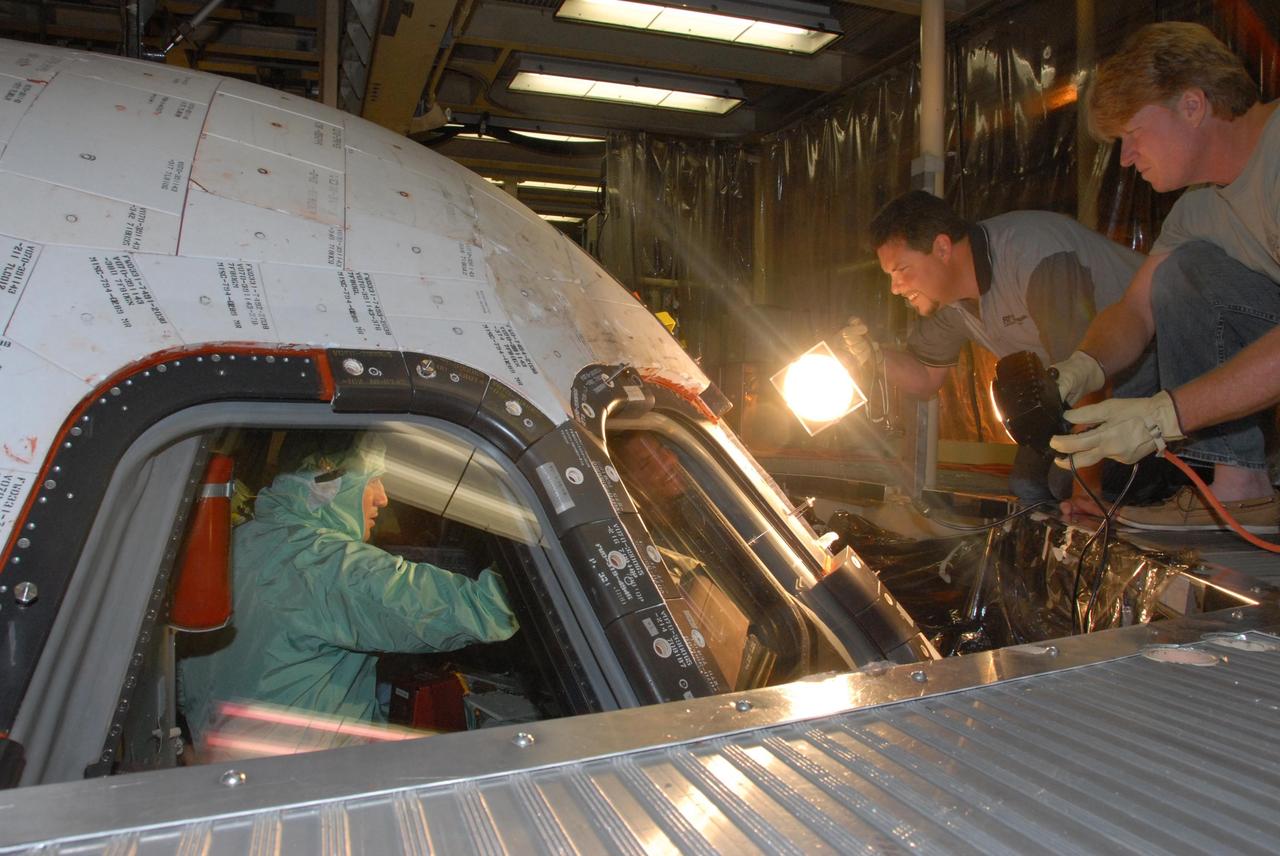
KENNEDY SPACE CENTER, FLA. - In the Orbiter Processing Facility bay 3, STS-120 Commander Pamela A. Melroy makes a close inspection of the cockpit window on the orbiter Discovery. The STS-120 crew is at Kennedy for a crew equipment interface test, or CEIT, which includes harness training, inspection of the thermal protection system and camera operation for planned extravehicular activities, or EVAs. The STS-120 mission will deliver the Harmony module, christened after a school contest, which will provide attachment points for European and Japanese laboratory modules on the International Space Station. Known in technical circles as Node 2, it is similar to the six-sided Unity module that links the U.S. and Russian sections of the station. Built in Italy for the United States, Harmony will be the first new U.S. pressurized component to be added. The STS-120 mission is targeted to launch on Oct. 20. Photo credit: NASA/George Shelton
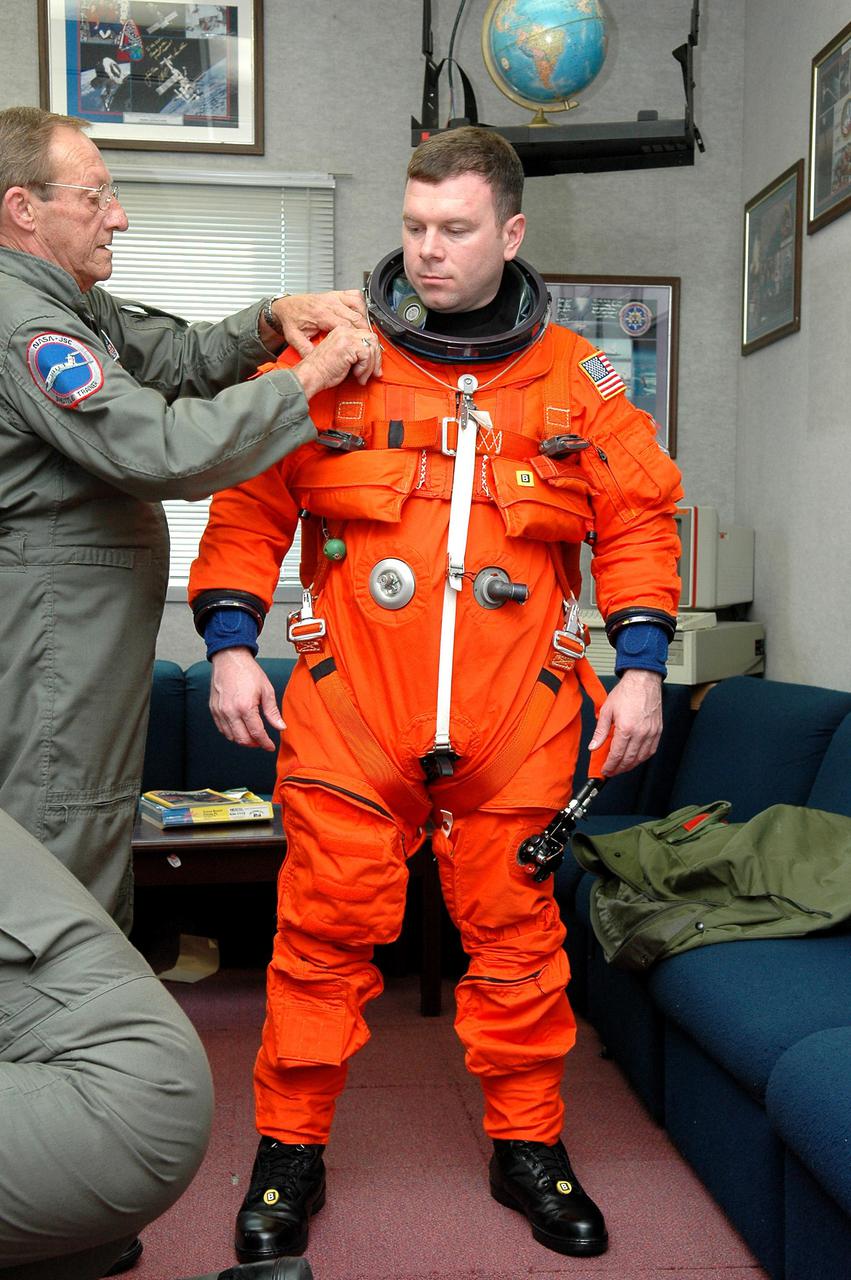
KENNEDY SPACE CENTER, FLA. - STS-114 Pilot James Kelly suits up for practice flights on a Shuttle Training Aircraft (STA) used by Shuttle flight crews to practice landing the orbiter. The STA is a modified Grumman American Aviation-built Gulfstream II executive jet that was modified to simulate an orbiter’s cockpit, motion and visual cues, and handling qualities. In flight, the STA duplicates the orbiter’s atmospheric descent trajectory from approximately 35,000 feet altitude to landing on a runway. The orbiter differs in at least one major aspect from conventional aircraft; it is unpowered during re-entry and landing so its high-speed glide must be perfectly executed the first time. There is no go-around capability. The orbiter touchdown speed is 213 to 226 miles per hour. There are two STAs, based in Houston. STS-114 is the first Return to Flight mission, scheduled to launch July 13 in a window that extends through July 31.
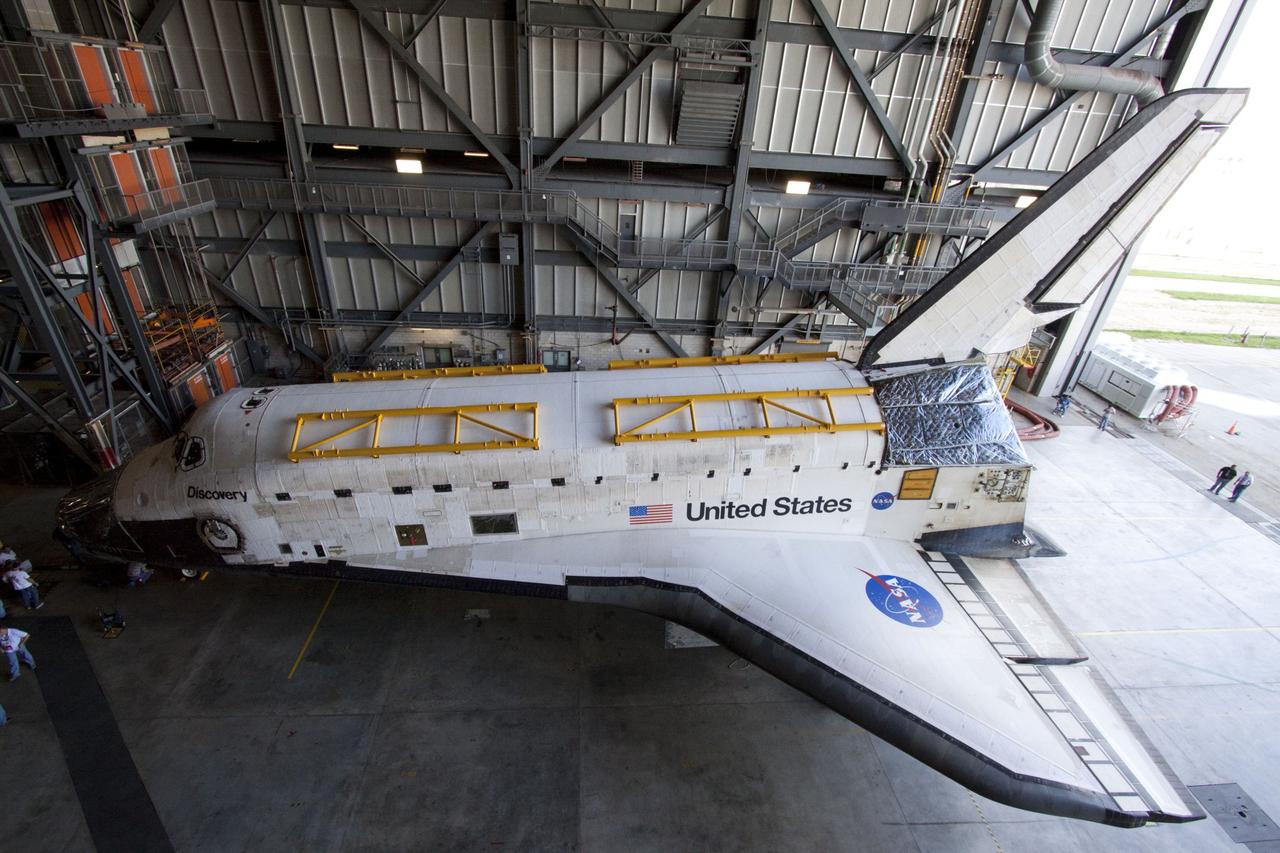
CAPE CANAVERAL, Fla. -- At NASA's Kennedy Space Center in Florida, space shuttle Discovery -- its nose encased in protective plastic, its cockpit windows covered, and strongbacks attached to its payload bay doors -- finds shelter in the Vehicle Assembly Building, or VAB, after rolling from Orbiter Processing Facility-2, or OPF-2. Discovery will be stored inside the VAB for approximately one month while shuttle Atlantis undergoes processing in OPF-2 following its final mission, STS-135. Discovery flew its 39th and final mission, STS-133, in February and March 2011, and currently is being prepared for public display at the Smithsonian's National Air and Space Museum Steven F. Udvar-Hazy Center in Virginia. For more information about Discovery's Transition and Retirement, visit www.nasa.gov/mission_pages/shuttle/launch/discovery_rss_collection_archive_1.html. Photo credit: NASA/Ken Thornsley
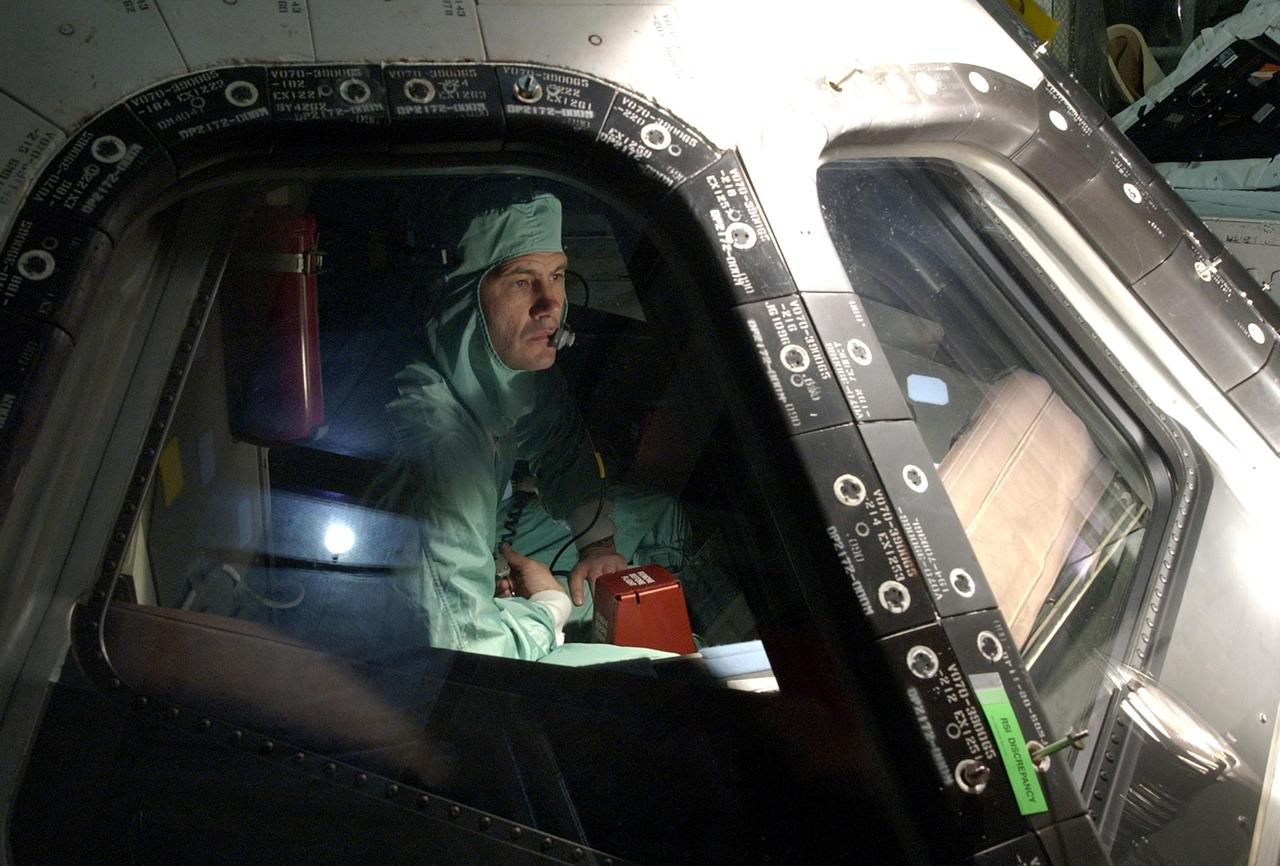
KENNEDY SPACE CENTER, FLA. -- In the Orbiter Processing Facility, STS-111 Pilot Paul Lockhart inspects the window of Endeavour's cockpit. He and other crew members are taking part in a Crew Equipment Interface Test in preparation for launch. Mission STS-111 will carry to the International Space Station the Multipurpose Logistics Module (MPLM), filled with experiment racks and three stowage and resupply racks, and the Mobile Base System (MBS), which will attach to the Mobile Transporter and complete the Canadian Mobile Servicing System, or MSS. The Station's mechanical arm will then have the capability to "inchworm" from the U.S. Lab to the MSS and travel along the truss to work sites on the Station. Launch of Endeavour on mission STS-111 is scheduled for May 30, 2002
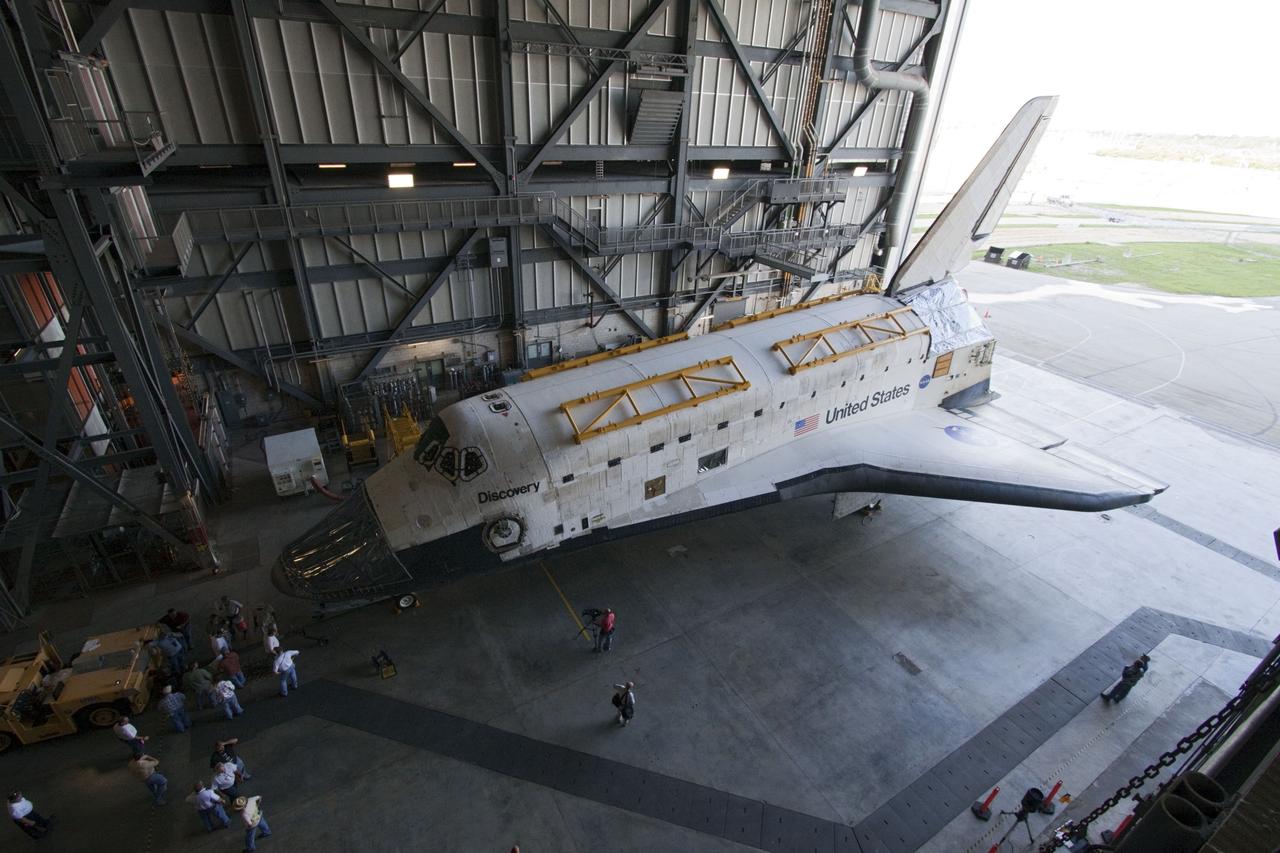
CAPE CANAVERAL, Fla. -- At NASA's Kennedy Space Center in Florida, space shuttle Discovery -- its nose encased in protective plastic, its cockpit windows covered, and strongbacks attached to its payload bay doors -- is welcomed into the Vehicle Assembly Building, or VAB, after its roll from Orbiter Processing Facility-2, or OPF-2. Discovery will be stored inside the VAB for approximately one month while shuttle Atlantis undergoes processing in OPF-2 following its final mission, STS-135. Discovery flew its 39th and final mission, STS-133, in February and March 2011, and currently is being prepared for public display at the Smithsonian's National Air and Space Museum Steven F. Udvar-Hazy Center in Virginia. For more information about Discovery's Transition and Retirement, visit www.nasa.gov/mission_pages/shuttle/launch/discovery_rss_collection_archive_1.html. Photo credit: NASA/Ken Thornsley
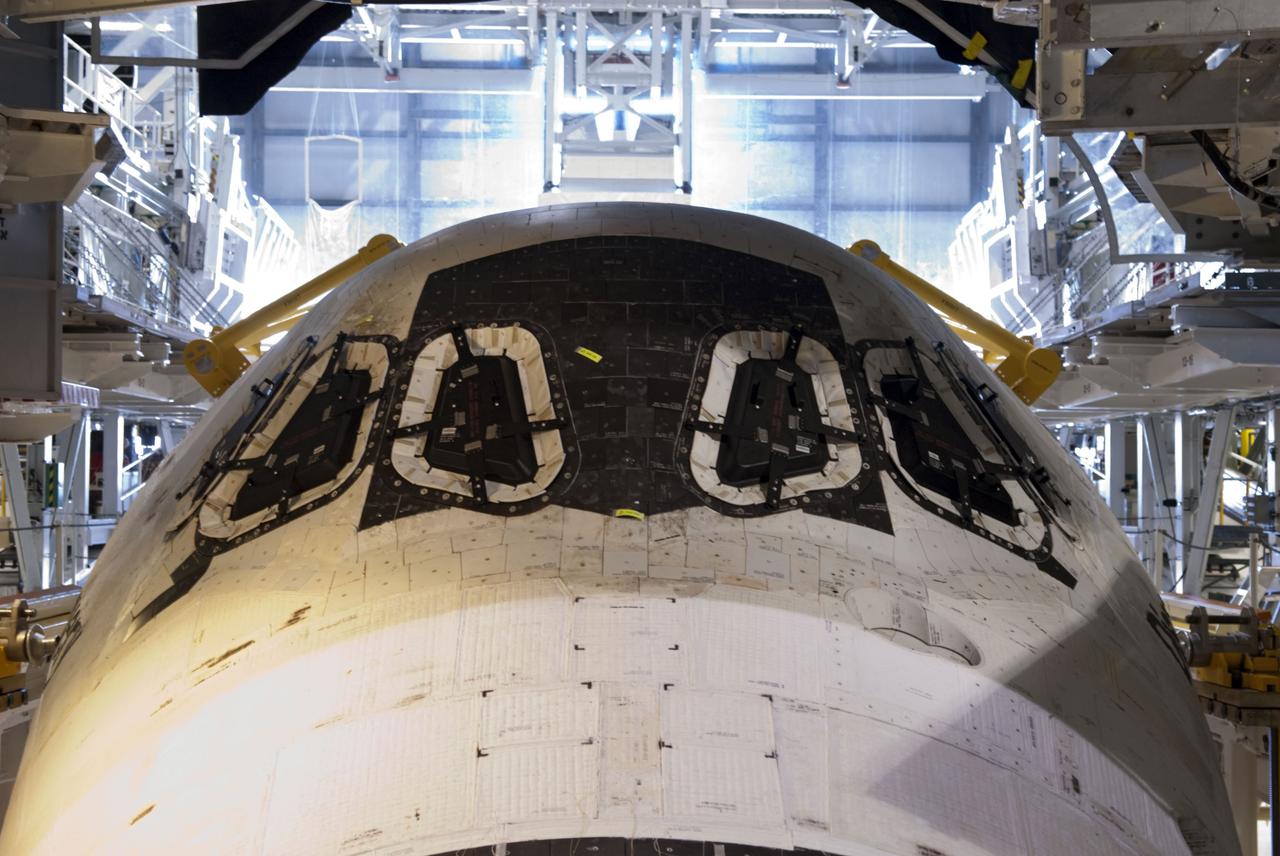
CAPE CANAVERAL, Fla. -- In Orbiter Processing Facility-2, or OPF-2, at NASA's Kennedy Space Center in Florida, the cockpit windows on space shuttle Discovery are covered and secured for its move to the Vehicle Assembly Building, or VAB. Discovery will be stored inside the VAB for approximately one month while shuttle Atlantis undergoes processing in OPF-2 following its final mission, STS-135. Discovery flew its 39th and final mission, STS-133, in February and March 2011, and currently is being prepared for public display at the Smithsonian's National Air and Space Museum Steven F. Udvar-Hazy Center in Virginia. For more information about Discovery's Transition and Retirement, visit www.nasa.gov/mission_pages/shuttle/launch/discovery_rss_collection_archive_1.html. Photo credit: NASA/Jim Grossmann

KENNEDY SPACE CENTER, FLA. - In the Orbiter Processing Facility bay 3, STS-120 Commander Pamela A. Melroy makes a close inspection of the cockpit window on the orbiter Discovery. The STS-120 crew is at Kennedy for a crew equipment interface test, or CEIT, which includes harness training, inspection of the thermal protection system and camera operation for planned extravehicular activities, or EVAs. The STS-120 mission will deliver the Harmony module, christened after a school contest, which will provide attachment points for European and Japanese laboratory modules on the International Space Station. Known in technical circles as Node 2, it is similar to the six-sided Unity module that links the U.S. and Russian sections of the station. Built in Italy for the United States, Harmony will be the first new U.S. pressurized component to be added. The STS-120 mission is targeted to launch on Oct. 20. Photo credit: NASA/George Shelton
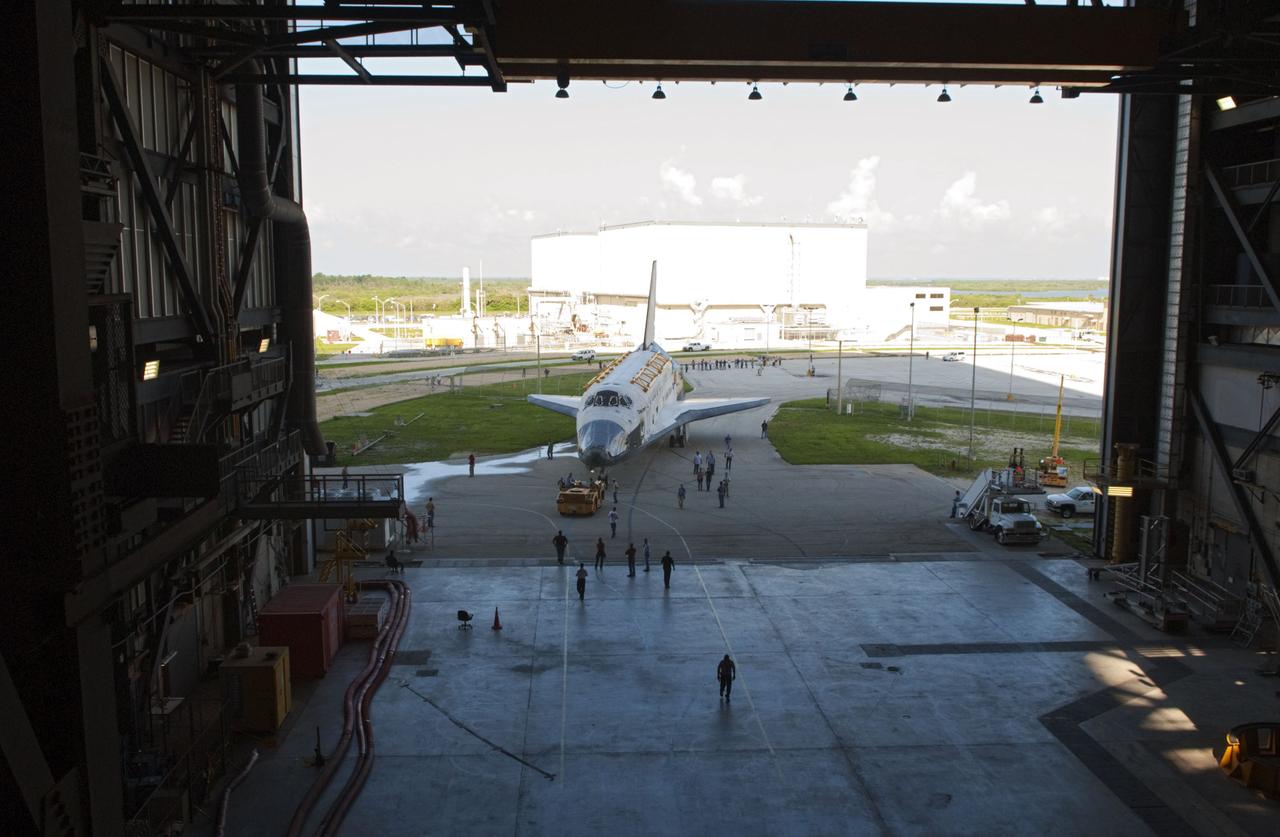
CAPE CANAVERAL, Fla. -- At NASA's Kennedy Space Center in Florida, space shuttle Discovery -- its nose encased in protective plastic, its cockpit windows covered, and strongbacks attached to its payload bay doors -- has arrived at the door of the Vehicle Assembly Building, or VAB, from Orbiter Processing Facility-2, or OPF-2, in the background. Discovery will be stored inside the VAB for approximately one month while shuttle Atlantis undergoes processing in OPF-2 following its final mission, STS-135. Discovery flew its 39th and final mission, STS-133, in February and March 2011, and currently is being prepared for public display at the Smithsonian's National Air and Space Museum Steven F. Udvar-Hazy Center in Virginia. For more information about Discovery's Transition and Retirement, visit www.nasa.gov/mission_pages/shuttle/launch/discovery_rss_collection_archive_1.html. Photo credit: NASA/Jim Grossmann
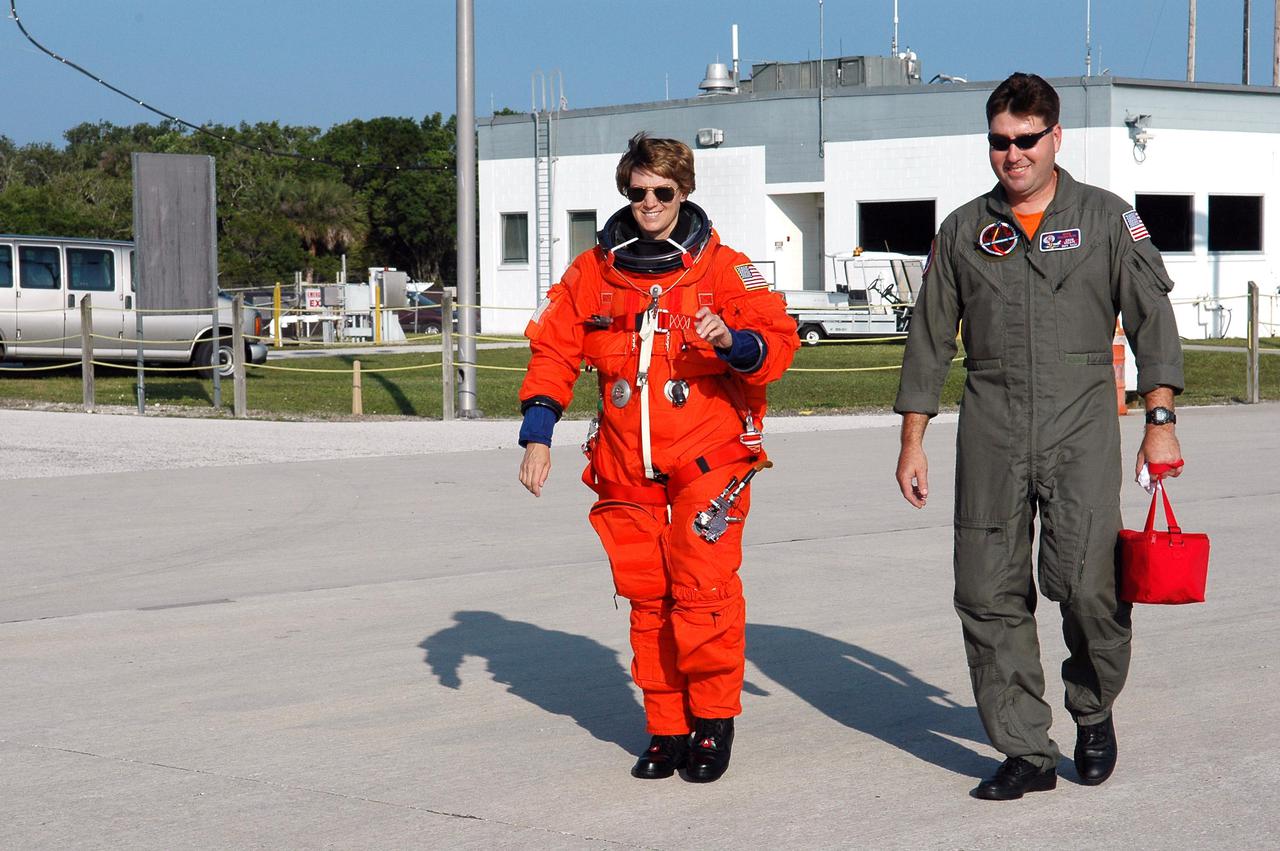
KENNEDY SPACE CENTER, FLA. - STS-114 Commander Eileen Collins walks across the Shuttle Landing Facility to a Shuttle Training Aircraft (STA) to practice landing the orbiter. The STA is a modified Grumman American Aviation-built Gulfstream II executive jet that was modified to simulate an orbiter’s cockpit, motion and visual cues, and handling qualities. In flight, the STA duplicates the orbiter’s atmospheric descent trajectory from approximately 35,000 feet altitude to landing on a runway. The orbiter differs in at least one major aspect from conventional aircraft; it is unpowered during re-entry and landing so its high-speed glide must be perfectly executed the first time. There is no go-around capability. The orbiter touchdown speed is 213 to 226 miles per hour. There are two STAs, based in Houston. STS-114 is the first Return to Flight mission, scheduled to launch July 13 in a window that extends through July 31.
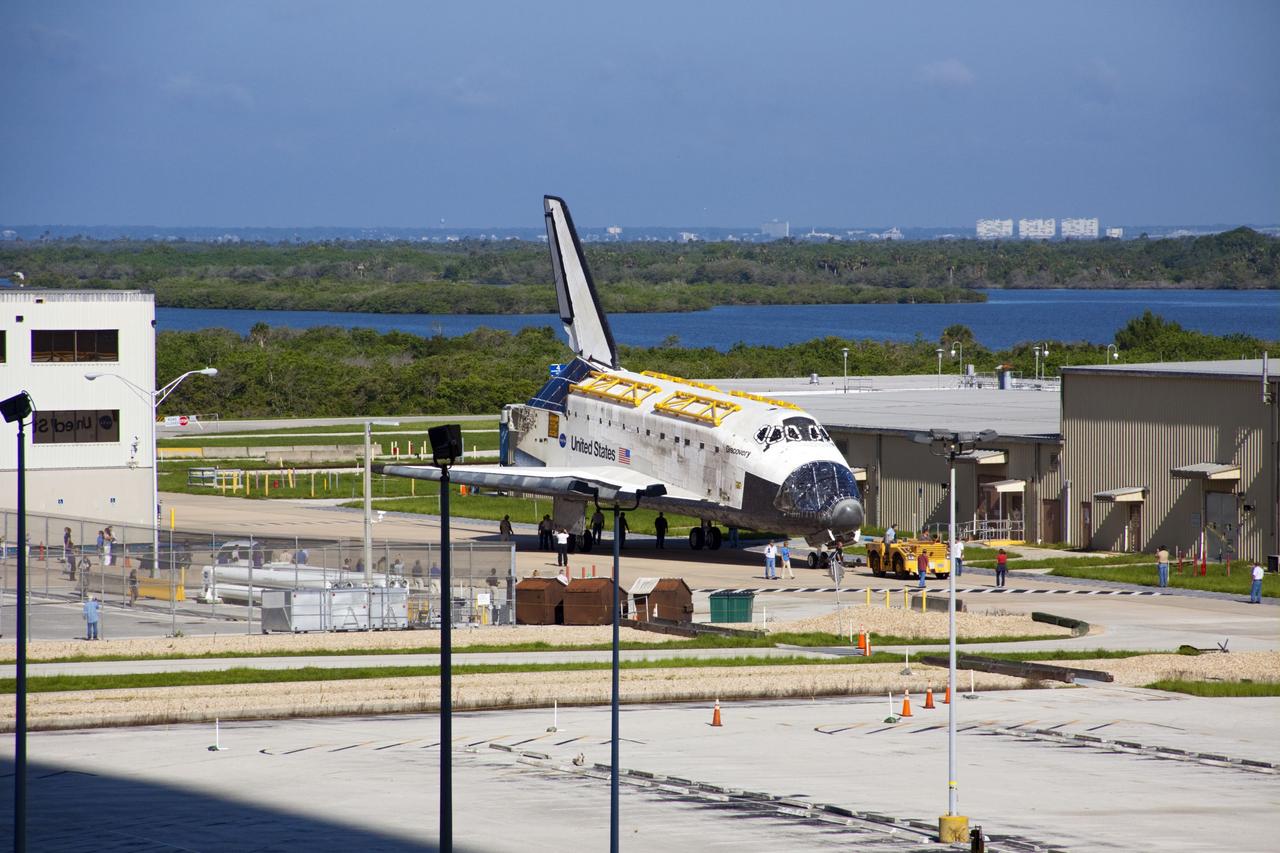
CAPE CANAVERAL, Fla. -- At NASA's Kennedy Space Center in Florida, space shuttle Discovery -- its nose encased in protective plastic, its cockpit windows covered, and strongbacks attached to its payload bay doors -- rolls past the Thermal Protection System Facility, at right, on its way from Orbiter Processing Facility-2, or OPF-2, to the Vehicle Assembly Building, or VAB. Discovery will be stored inside the VAB for approximately one month while shuttle Atlantis undergoes processing in OPF-2 following its final mission, STS-135. Discovery flew its 39th and final mission, STS-133, in February and March 2011, and currently is being prepared for public display at the Smithsonian's National Air and Space Museum Steven F. Udvar-Hazy Center in Virginia. For more information about Discovery's Transition and Retirement, visit www.nasa.gov/mission_pages/shuttle/launch/discovery_rss_collection_archive_1.html. Photo credit: NASA/Jim Grossmann
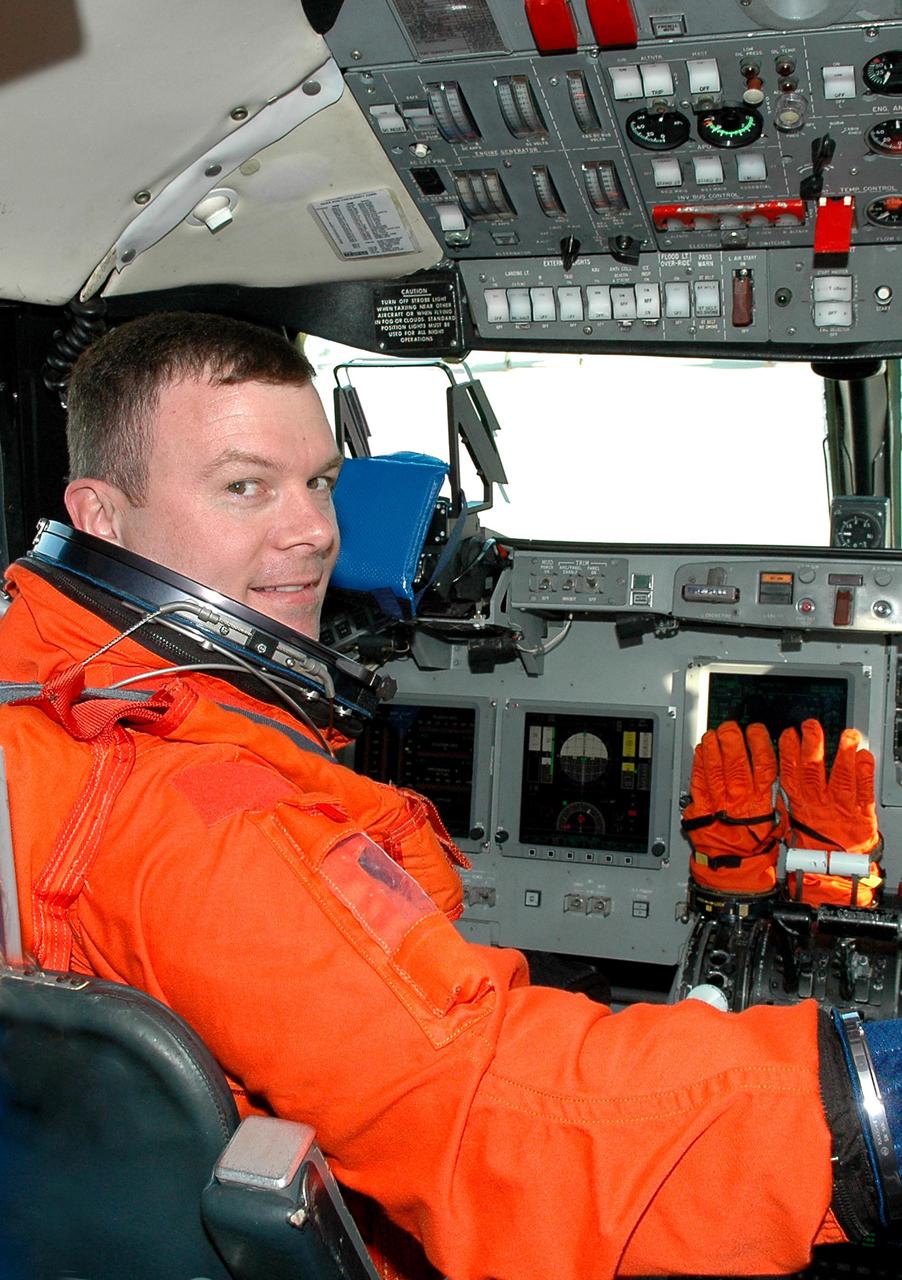
KENNEDY SPACE CENTER, FLA. - STS-114 Pilot James Kelly settles into the command seat of a Shuttle Training Aircraft (STA) to practice landing the orbiter. The STA is a modified Grumman American Aviation-built Gulfstream II executive jet that was modified to simulate an orbiter’s cockpit, motion and visual cues, and handling qualities. In flight, the STA duplicates the orbiter’s atmospheric descent trajectory from approximately 35,000 feet altitude to landing on a runway. The orbiter differs in at least one major aspect from conventional aircraft; it is unpowered during re-entry and landing so its high-speed glide must be perfectly executed the first time. There is no go-around capability. The orbiter touchdown speed is 213 to 226 miles per hour. There are two STAs, based in Houston. STS-114 is the first Return to Flight mission, scheduled to launch July 13 in a window that extends through July 31.
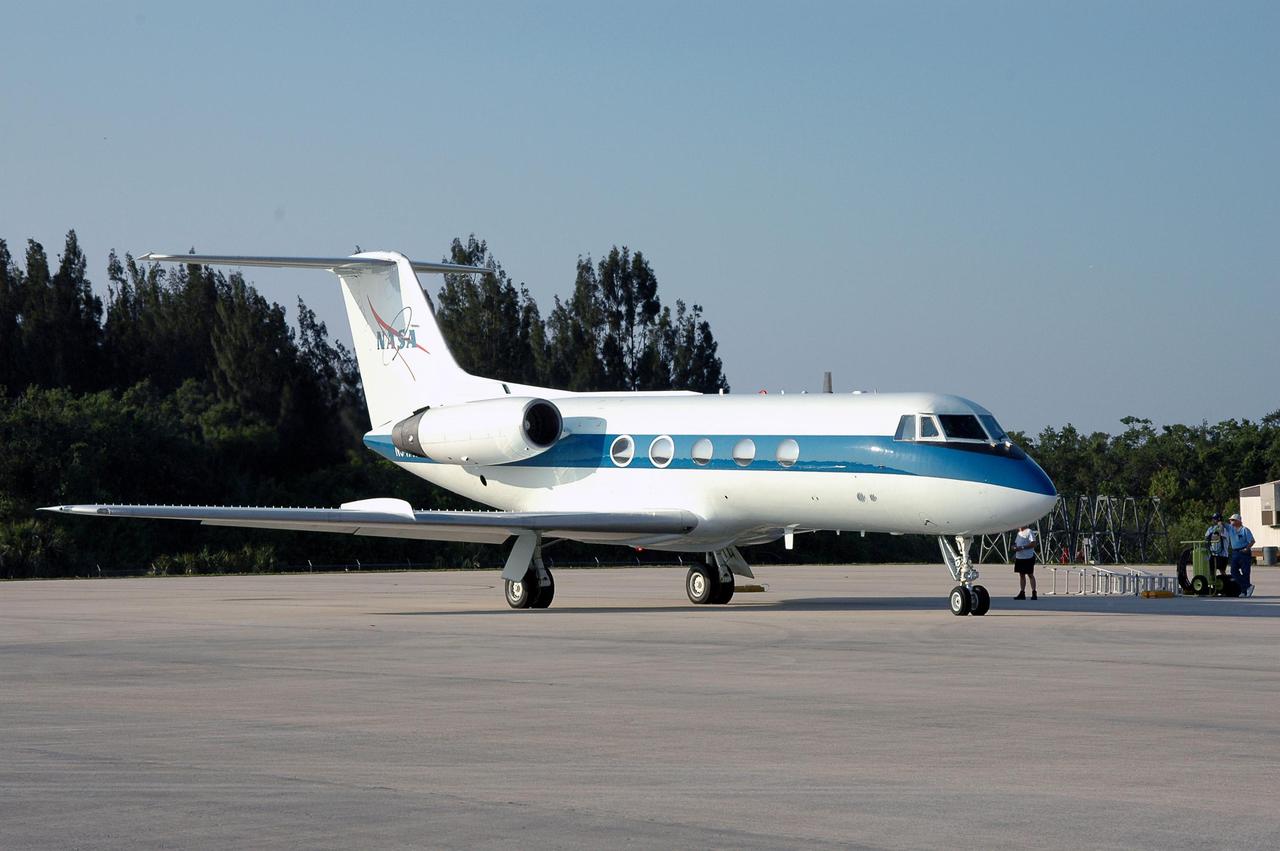
KENNEDY SPACE CENTER, FLA. - A Shuttle Training Aircraft (STA) is ready for STS-114 Pilot James Kelly to begin practice landing the orbiter. The STA is a modified Grumman American Aviation-built Gulfstream II executive jet that was modified to simulate an orbiter’s cockpit, motion and visual cues, and handling qualities. In flight, the STA duplicates the orbiter’s atmospheric descent trajectory from approximately 35,000 feet altitude to landing on a runway. The orbiter differs in at least one major aspect from conventional aircraft; it is unpowered during re-entry and landing so its high-speed glide must be perfectly executed the first time. There is no go-around capability. The orbiter touchdown speed is 213 to 226 miles per hour. There are two STAs, based in Houston. STS-114 is the first Return to Flight mission, scheduled to launch July 13 in a window that extends through July 31.
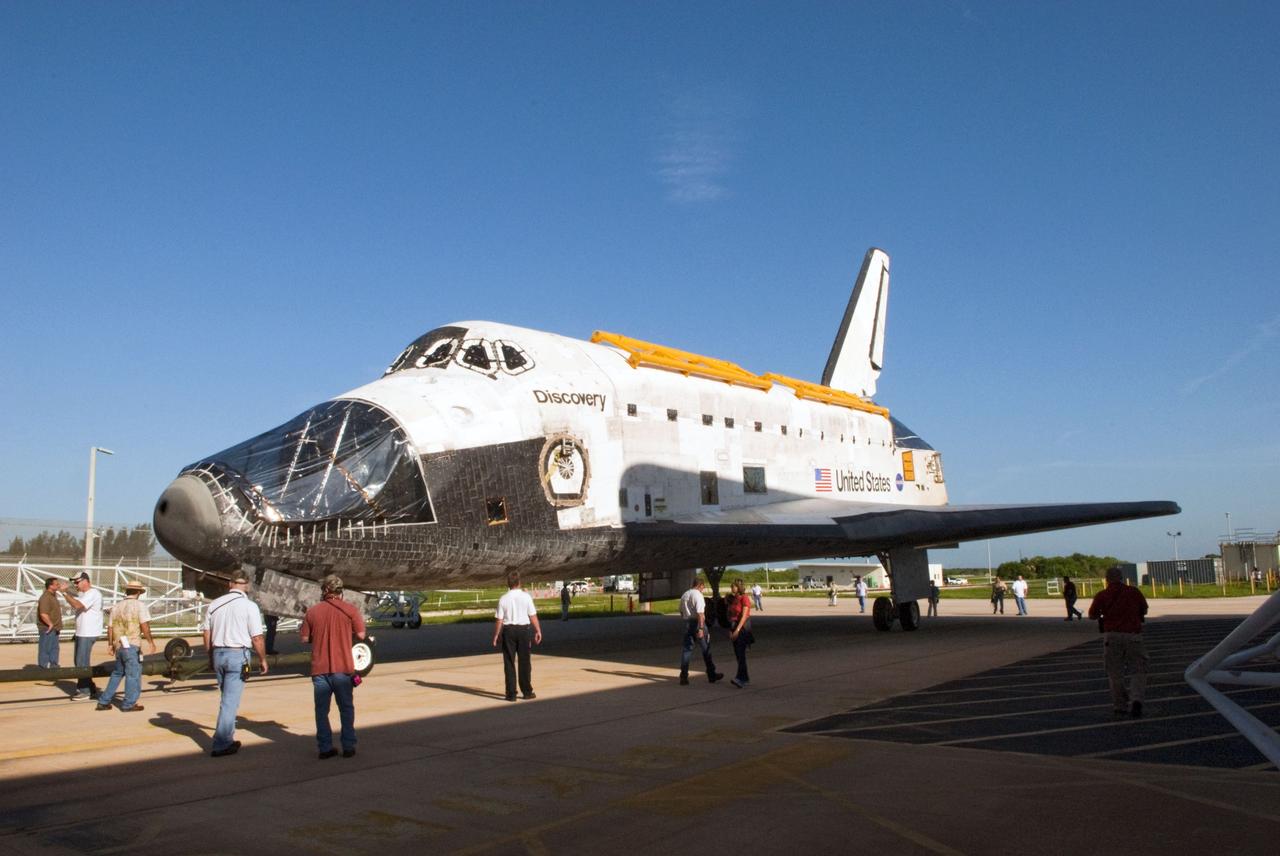
CAPE CANAVERAL, Fla. -- At NASA's Kennedy Space Center in Florida, space shuttle Discovery ventures out in public seemingly "undressed" -- its nose encased in protective plastic, its cockpit windows covered, and strongbacks attached to its payload bay doors. The shuttle is rolling from Orbiter Processing Facility-2, or OPF-2, to the Vehicle Assembly Building, or VAB. Discovery will be stored inside the VAB for approximately one month while shuttle Atlantis undergoes processing in OPF-2 following its final mission, STS-135. Discovery flew its 39th and final mission, STS-133, in February and March 2011, and currently is being prepared for public display at the Smithsonian's National Air and Space Museum Steven F. Udvar-Hazy Center in Virginia. For more information about Discovery's Transition and Retirement, visit www.nasa.gov/mission_pages/shuttle/launch/discovery_rss_collection_archive_1.html. Photo credit: NASA/Jim Grossmann