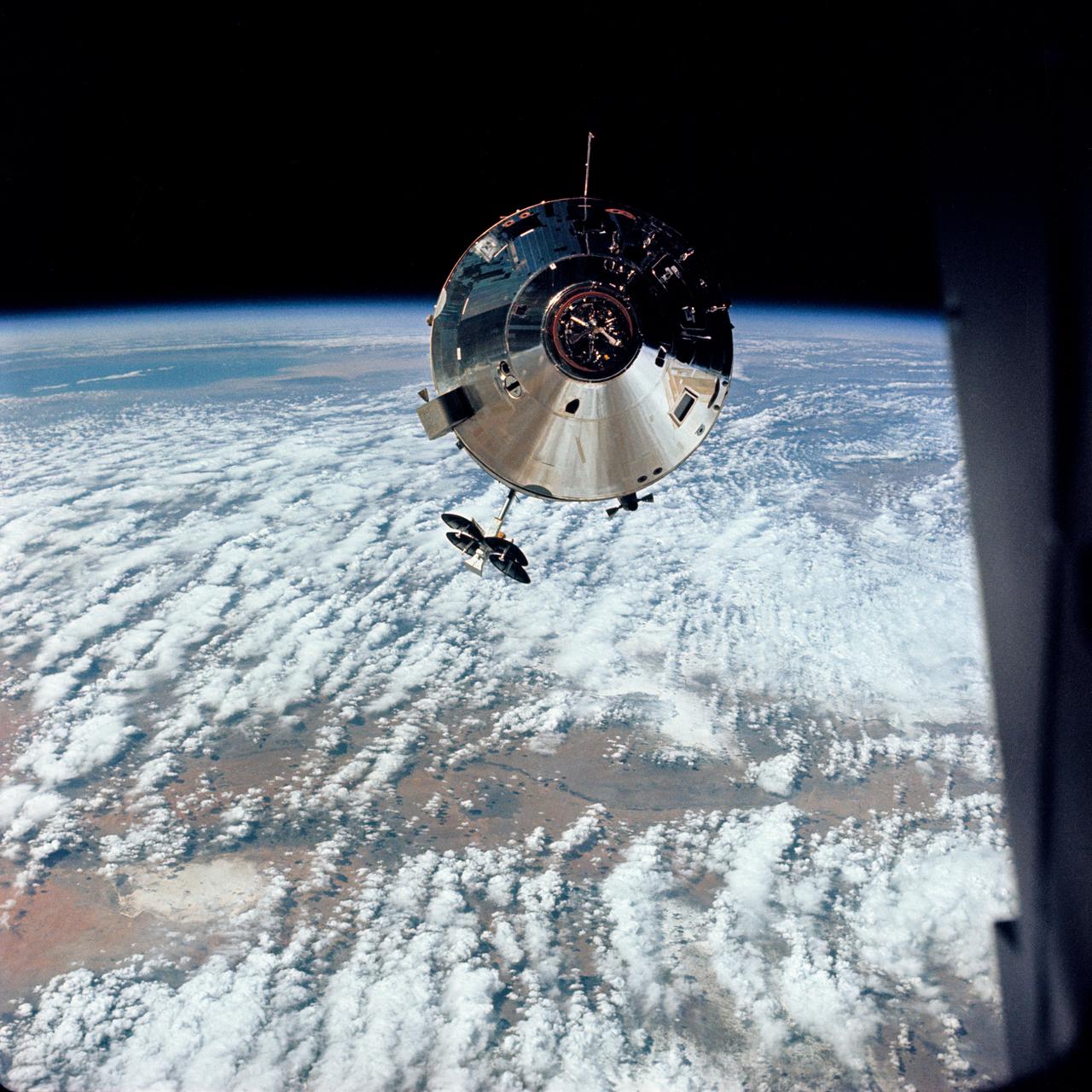
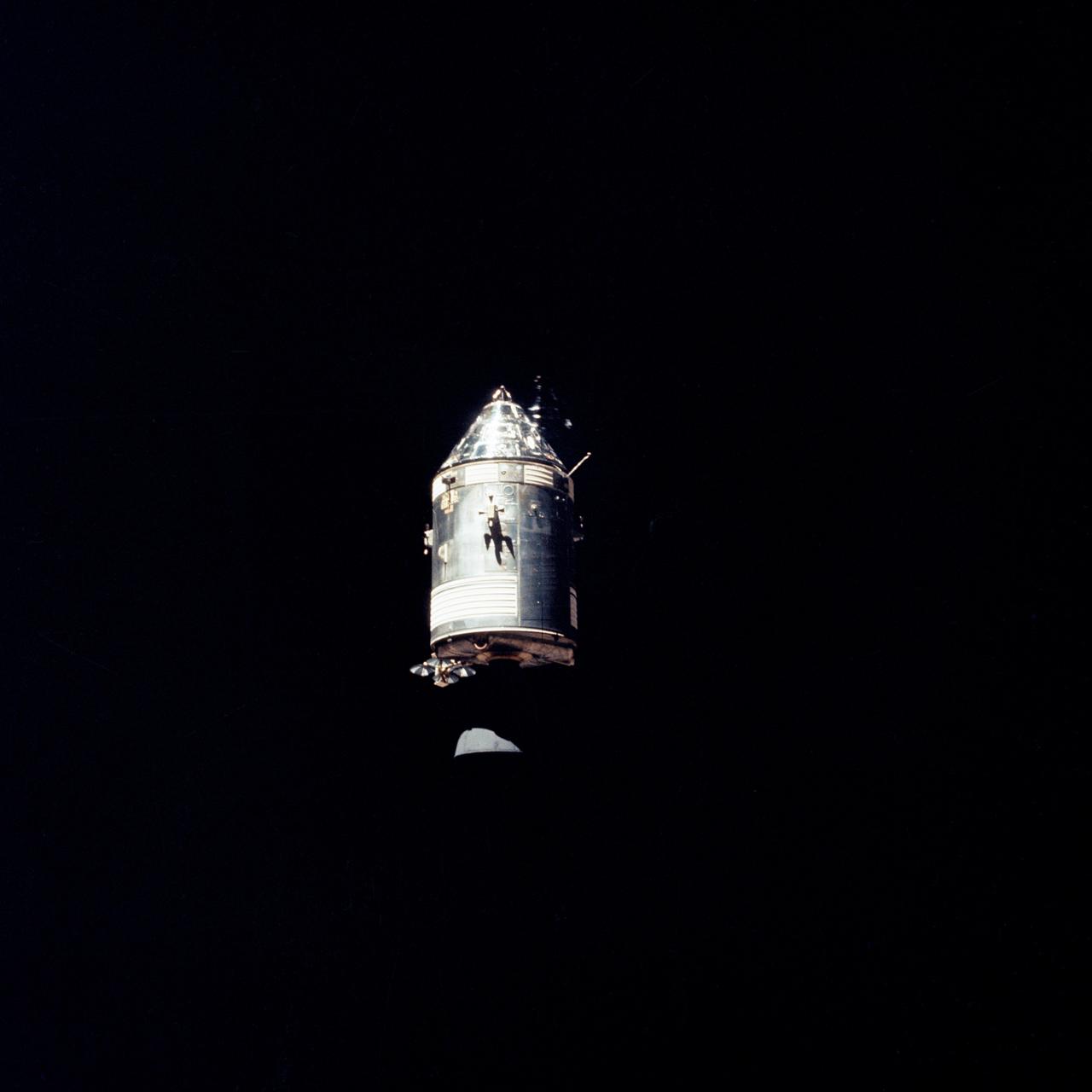
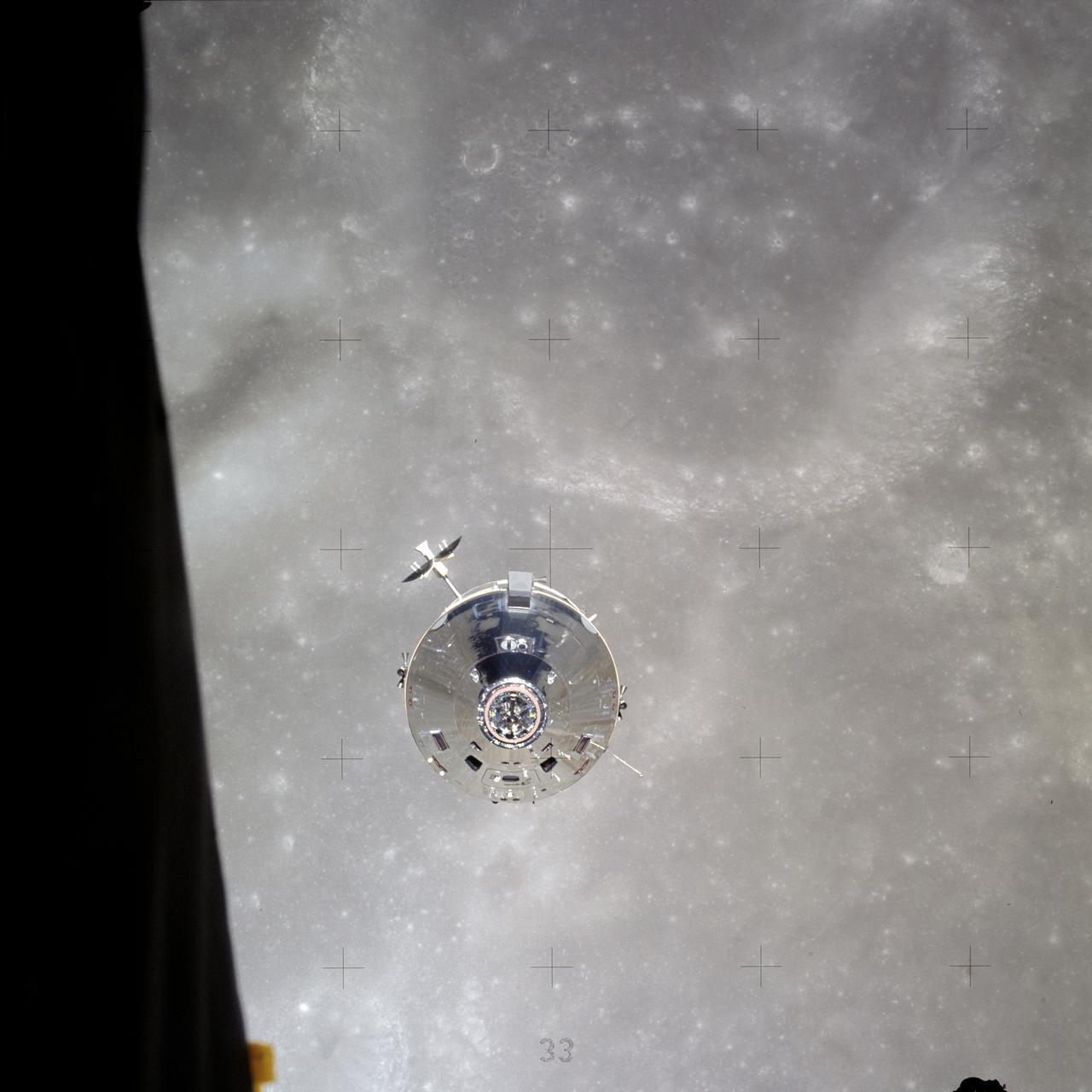
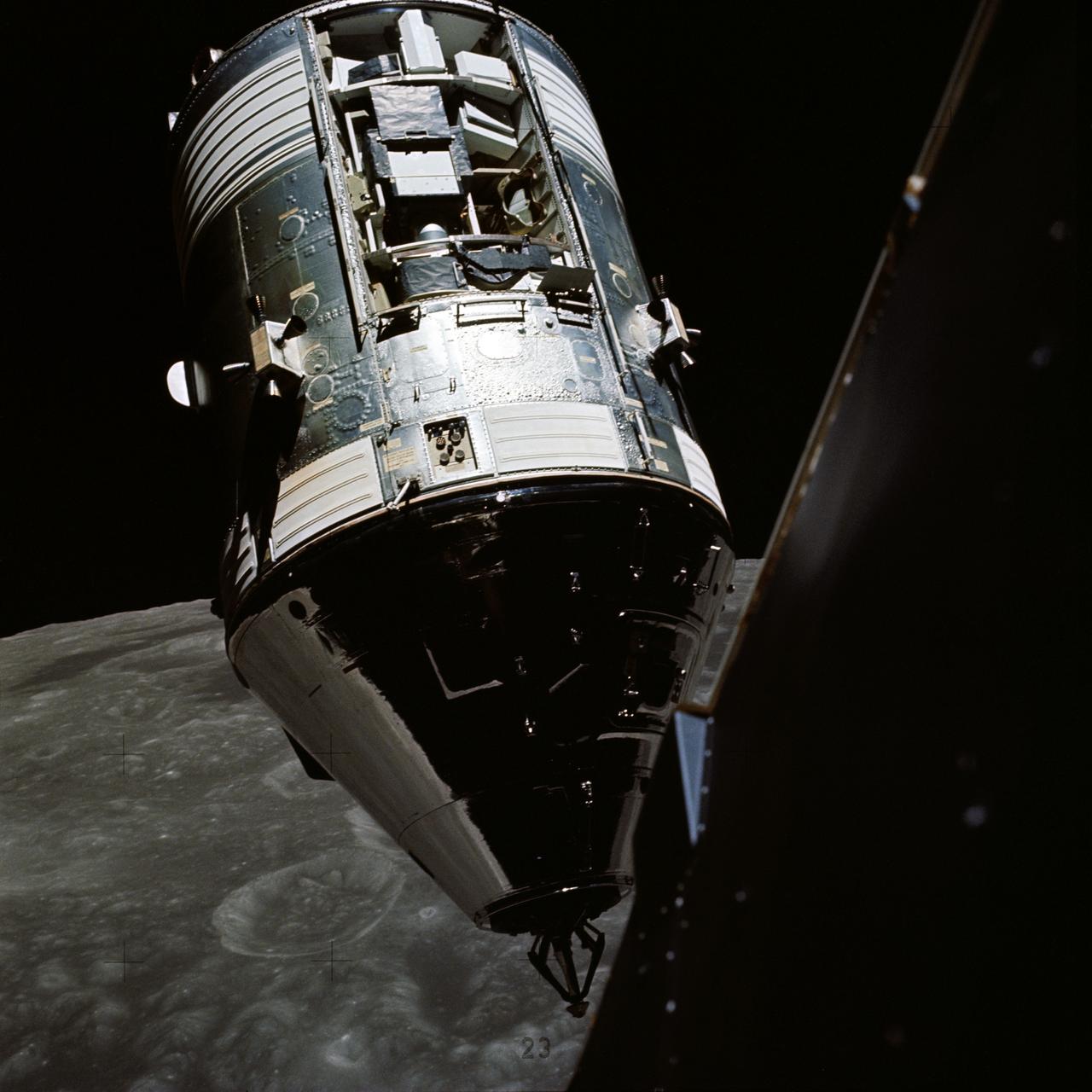
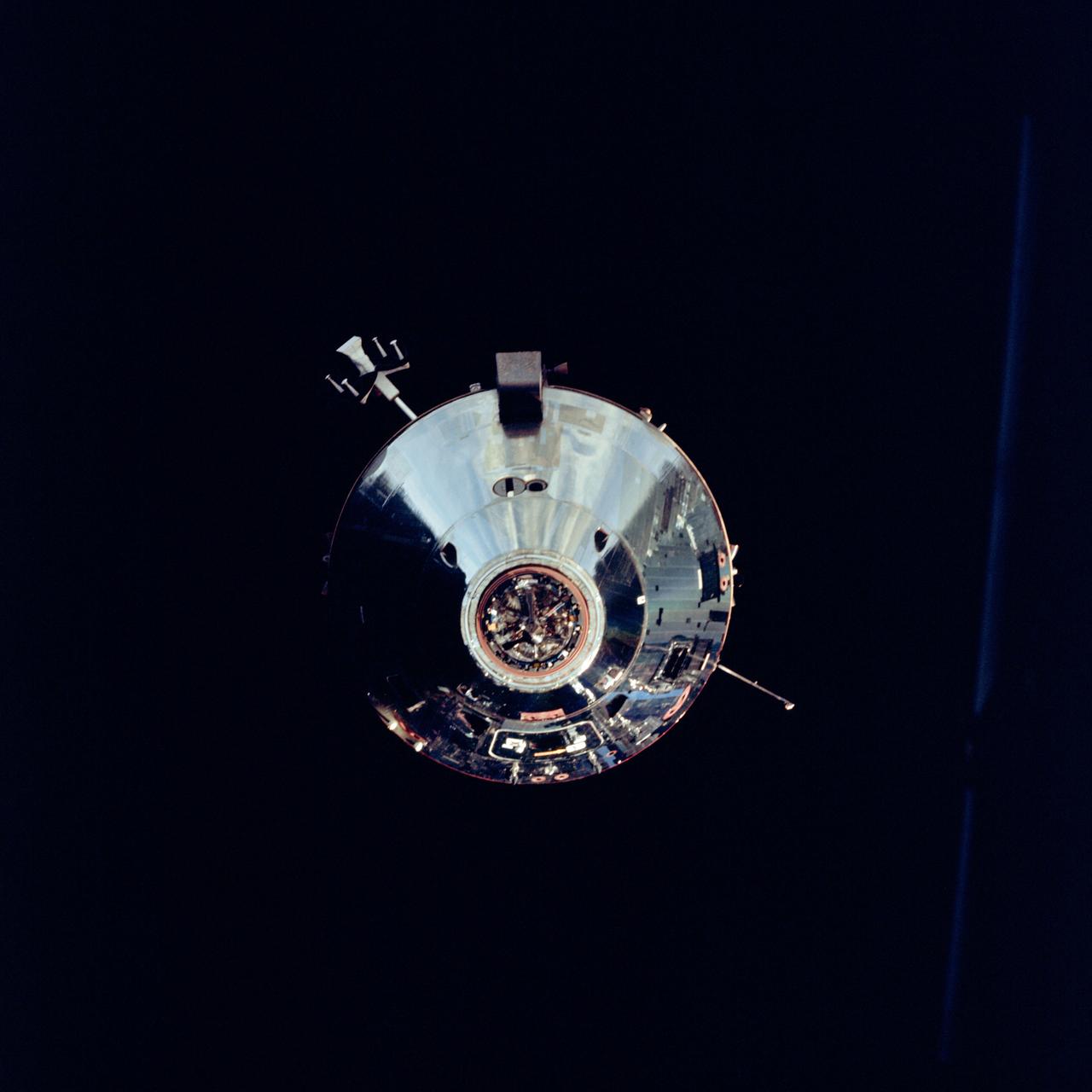
The Apollo 9 Command/Service Modules photographed from the Lunar Module,"Spider",on the fifth day of the Apollo 9 earth-orbital mission. Docking mechanism is visible in nose of the Command Module,"Gumdrop". Object jutting out from the Service Module aft bulkhead is the high-gain S-Band antenna. Film magazine was F, film type was SO-368 Ektachrome with 0.460 - 0.710 micrometers film / filter transmittance response and haze filter,80mm lens.
Apollo 9 Mission image - Command Module
High Oblique photograph (taken over New Mexico) of the Apollo 9 Command/Service Modules taken from the Lunar Module,"Spider",on the fifth day of the Apollo 9 earth-orbital mission. Docking mechanism is visible in nose of the Command Module,"Gumdrop". Object jutting out from the Service Module aft bulkhead is the high-gain S-Band antenna. Film magazine was F, film type was SO-368 Ektachrome with 0.460 - 0.710 micrometers film / filter transmittance response and haze filter,80mm lens. Cloud cover over the Earth is 70%.
Apollo 9 Mission image - Command Module
AS07-04-1583 (11-22 Oct. 1968) --- Astronaut Donn F. Eisele, Apollo 7 command pilot, is photographed during the Apollo 7 mission.
Apollo 7 Mission,Command Module Pilot Donn F. Eisele
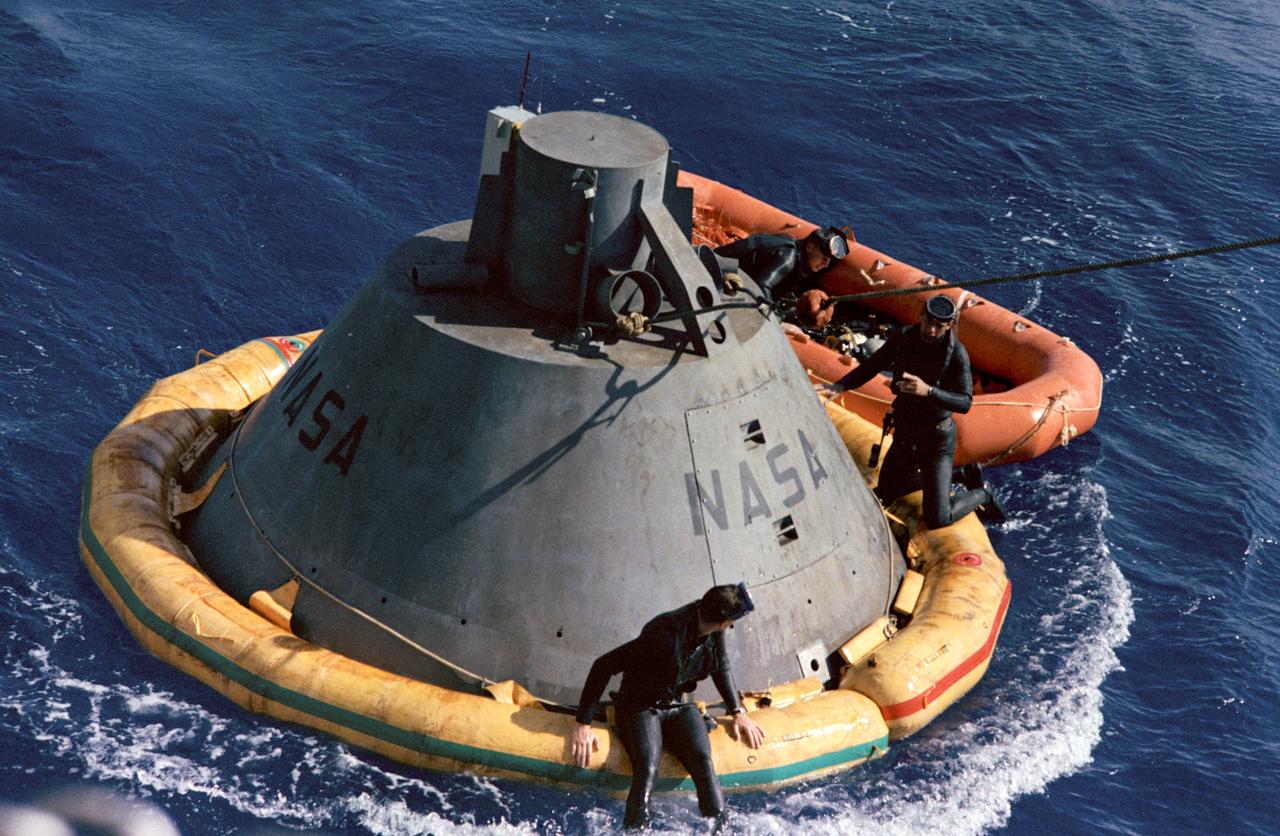
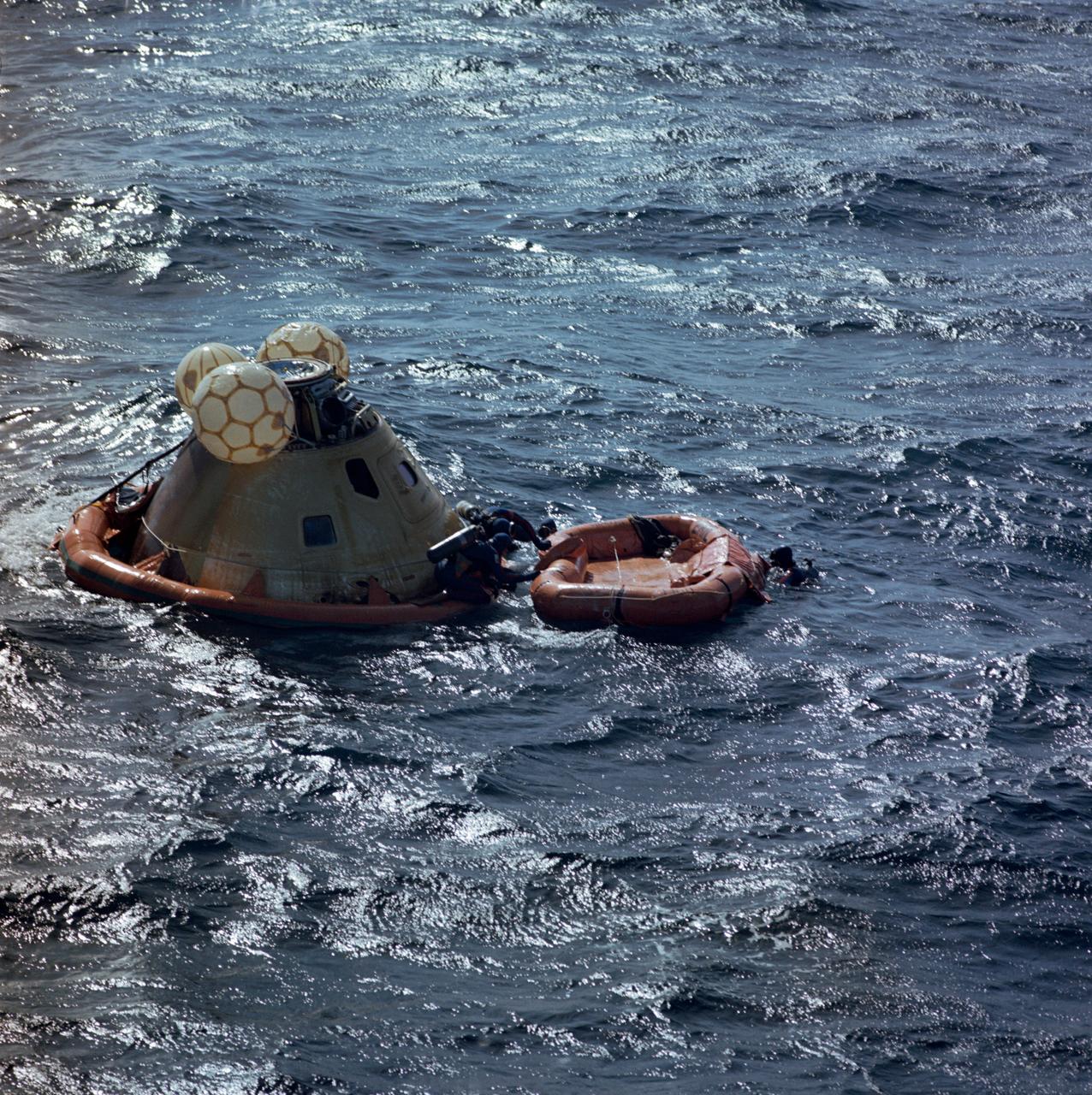
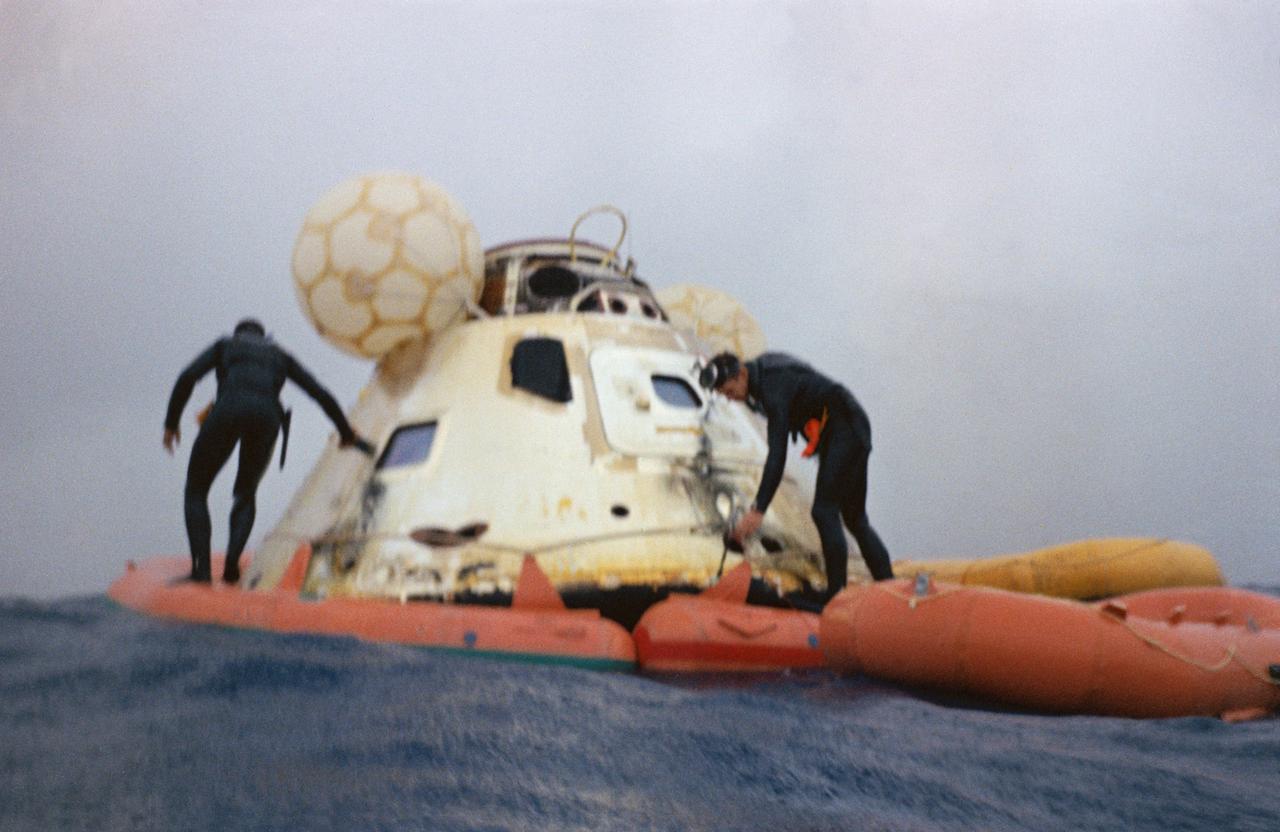
Apollo command module boilerplate floats in the Atlantic Ocean during a practice recovery exercise. Frogmen in a liferaft and on the flotation collar secure the command module boilerplate for hoisting onto a nearby recovery ship. The exercise was conducted in preparation for the forthcoming Apollo-Saturn 201 (AS-201) mission.
Frogmen on Apollo command module boilerplate flotation collar during recovery
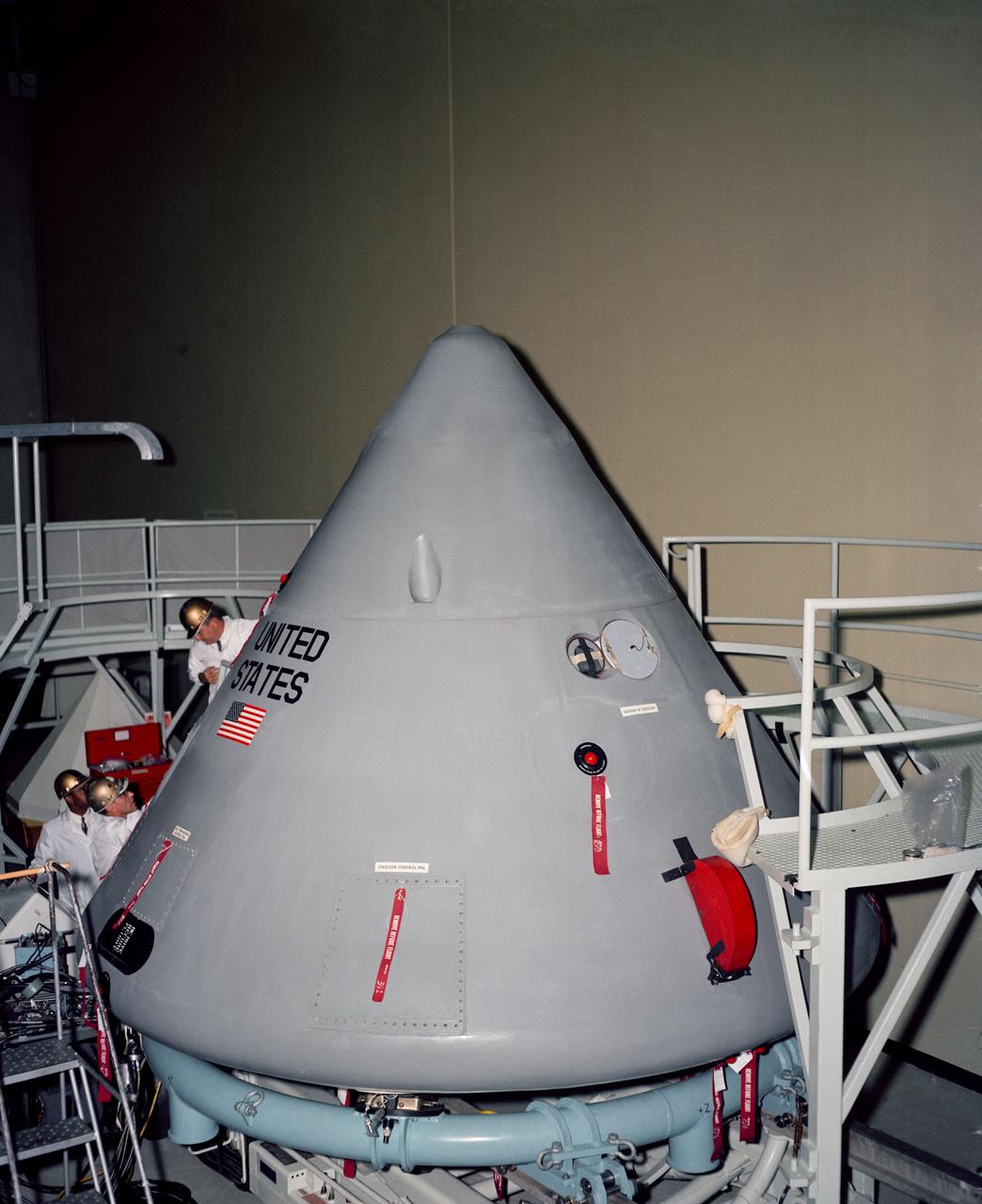
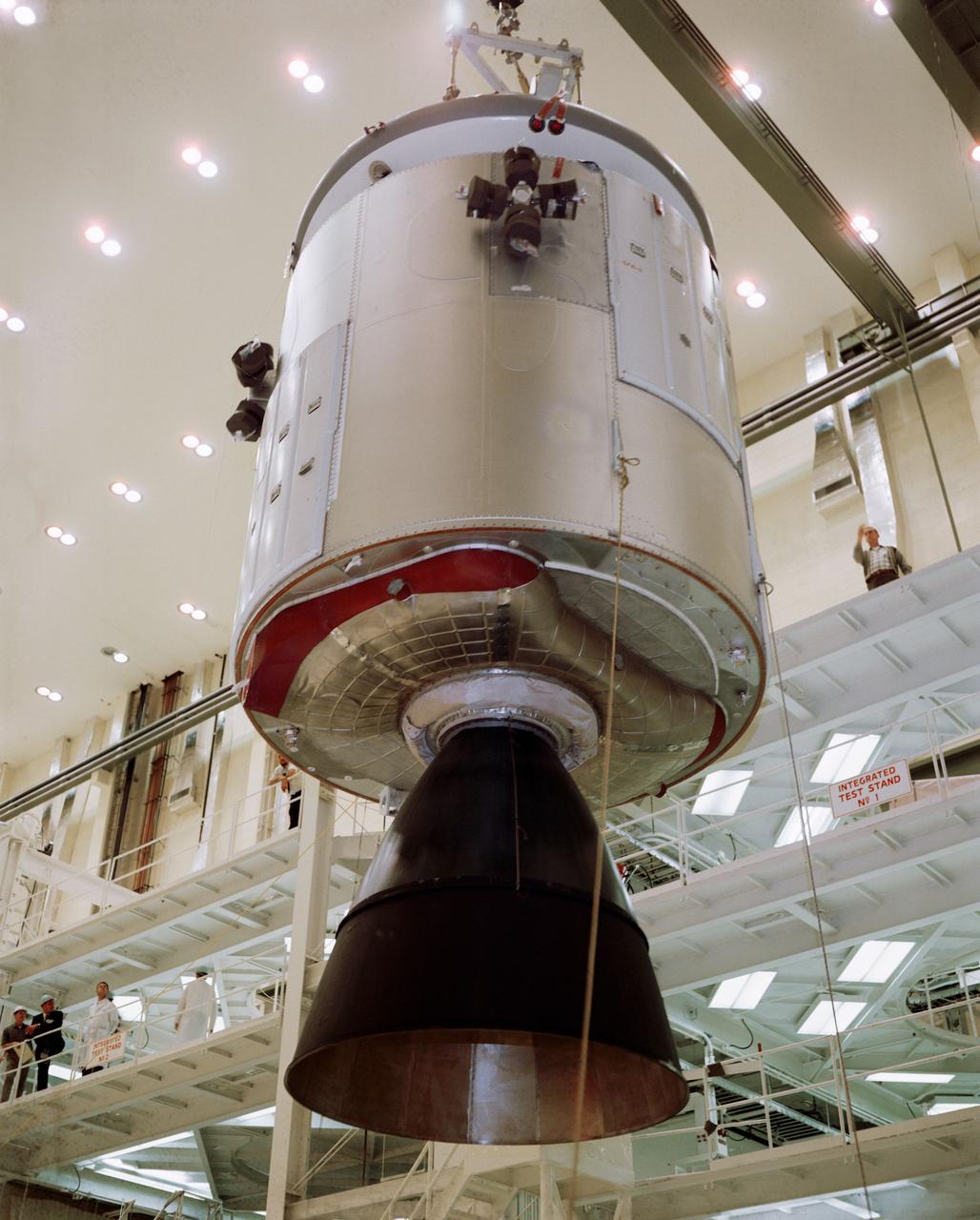
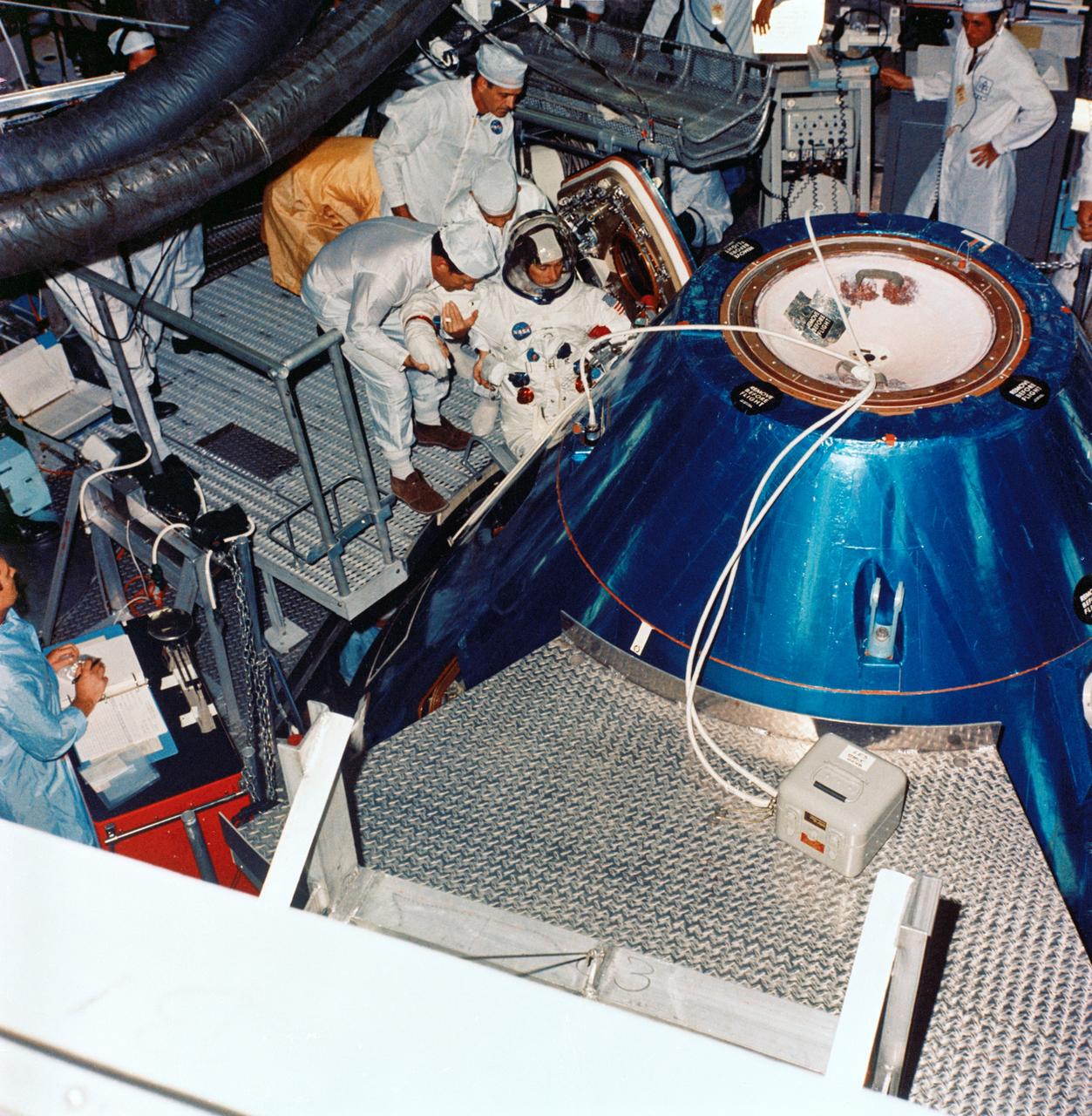
S66-53655 (1966) --- High angle view of Apollo Spacecraft 012 Command Module looking toward +Z axis during pre-shipping operations in south air lock of Systems Integration and Checkout Facility.
COMMAND MODULE - APOLLO-SPACECRAFT (A/S) - NORTH AMERICAN AVIATION (NAA), CA
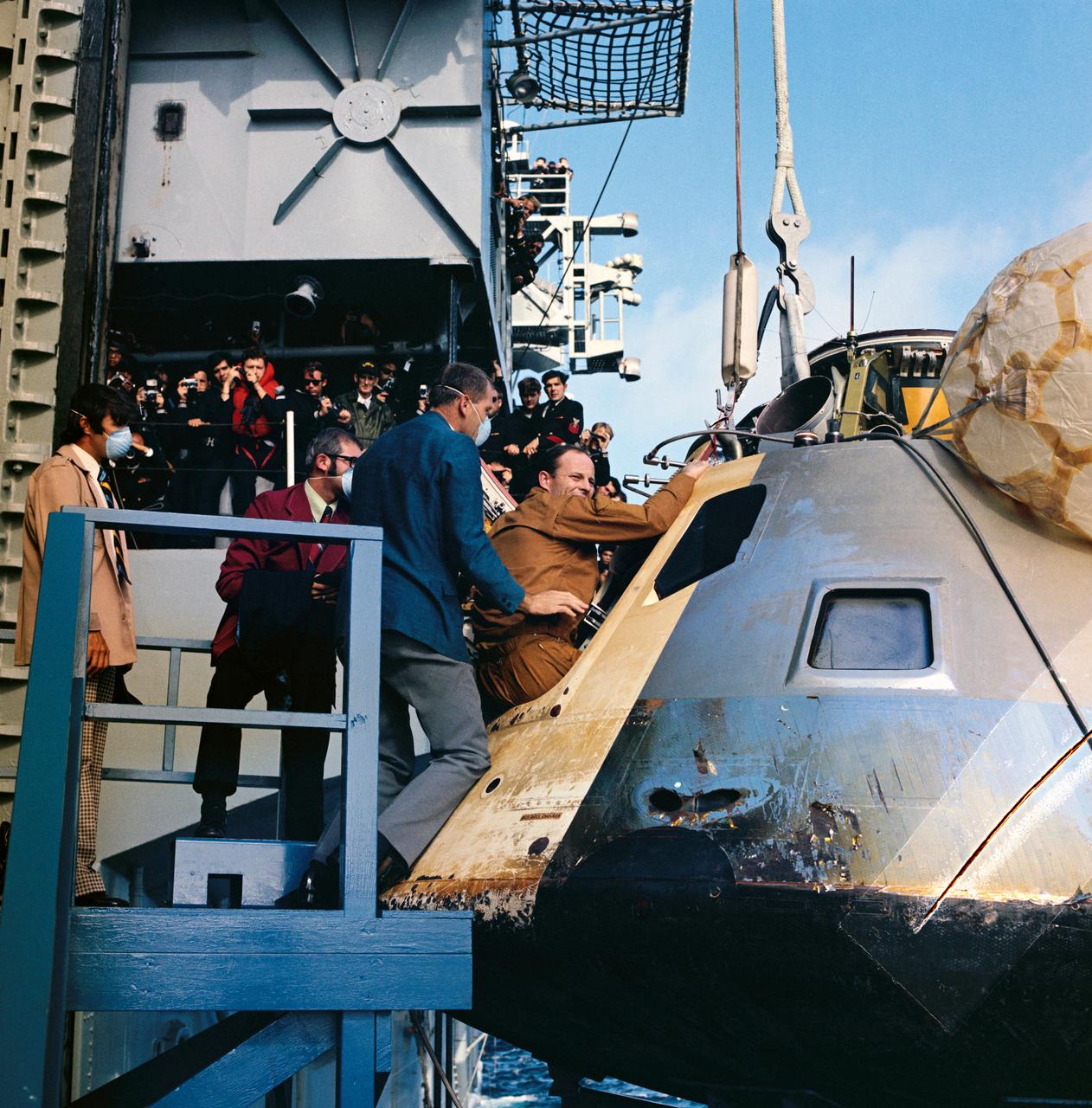
S73-36435 (25 Sept. 1973) --- Astronaut Jack R. Lousma, Skylab 3 pilot, egresses the Skylab 3 Command Module aboard the prime recovery ship, USS New Orleans, during recovery operations in the Pacific Ocean. Astronauts Lousma; Alan L. Bean, commander; and Owen L. Garriott, science pilot, had just completed a successful 59-day visit to the Skylab space station in Earth orbit. The Skylab 3 spacecraft splashed down in the Pacific about 230 miles southwest of San Diego, California.  Photo credit: NASA
ASTRONAUT LOUSMA, JACK - EGRESS - SKYLAB 3 COMMAND MODULE - PACIFIC
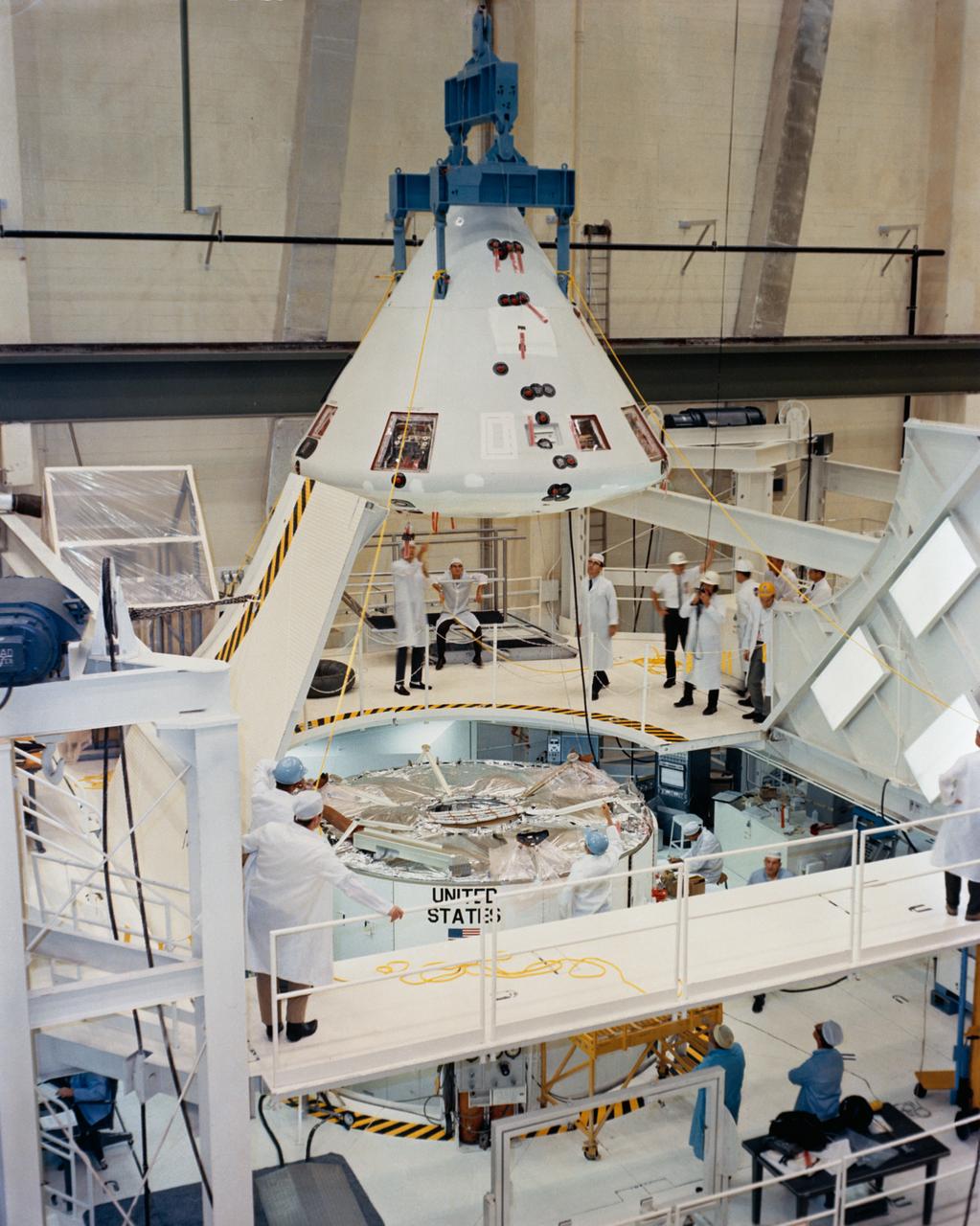
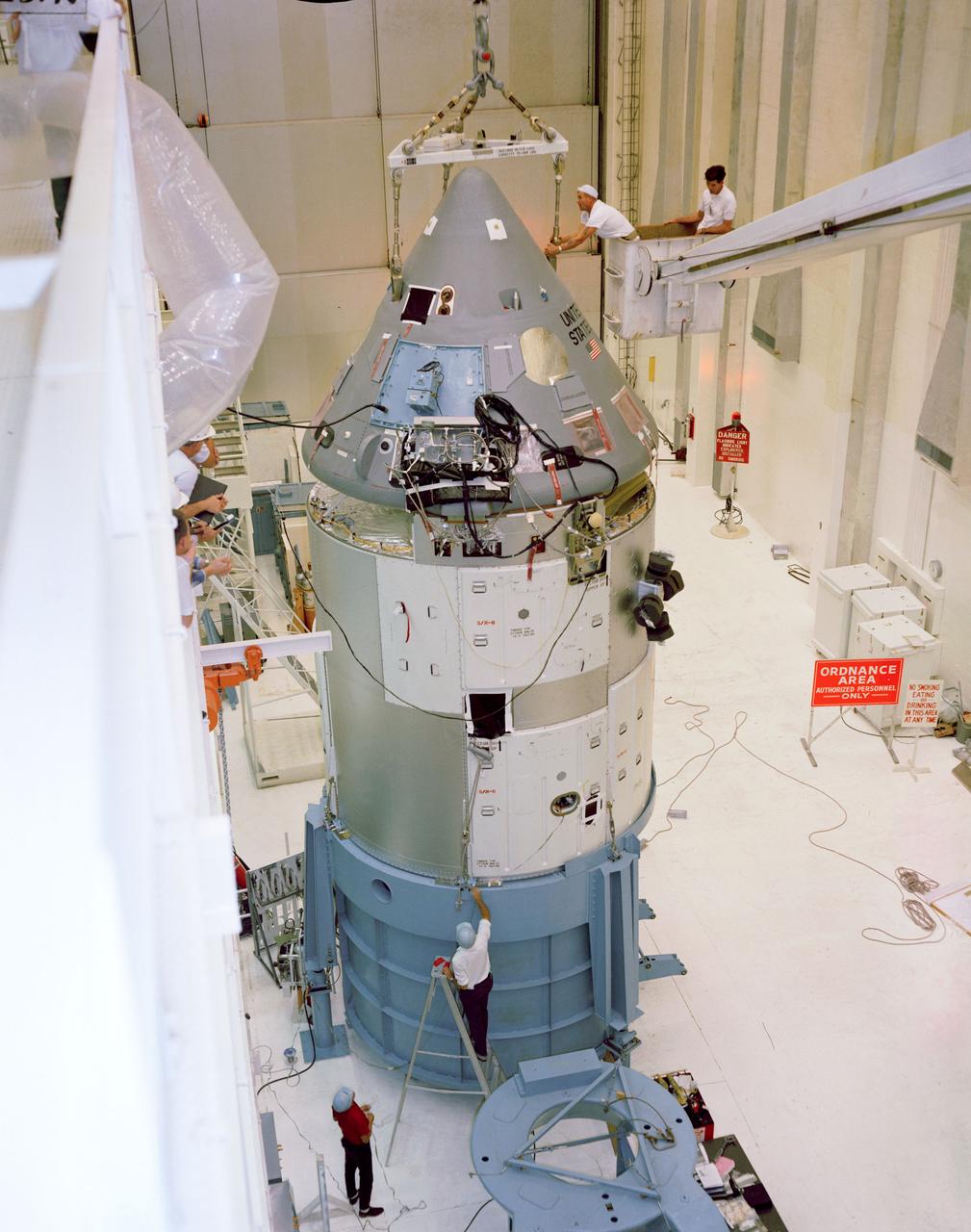
S68-17301 (6 Dec. 1967) --- Apollo Spacecraft 020 Command Module is hoisted into position for mating with Service Module in the Kennedy Space Center's Manned Spacecraft Operations Building. Spacecraft 020 will be flown on the Apollo 6 (Spacecraft 020/Saturn 502) unmanned, Earth-orbital space mission.
Apollo Spacecraft 020 Command Module readied for mating with Service Module
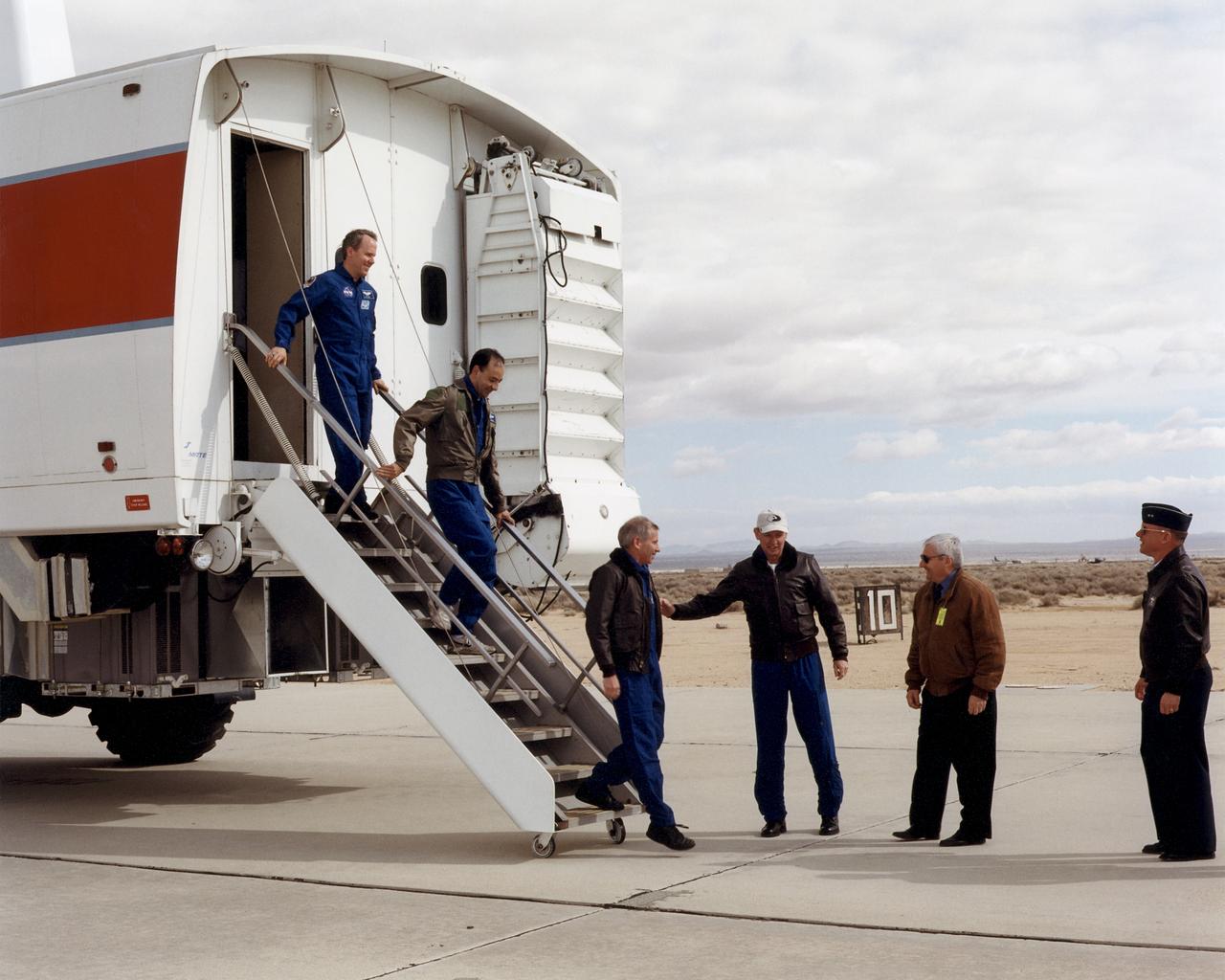
L to R: STS-98 Mission Specialist Thomas Jones, Pilot Mark Polansky, and Commander Kenneth Cockrell greet STS-92 Commander Brian Duffy, Dryden Center Director Kevin Petersen, and AFFTC Commander Major General Richard Reynolds after landing on the runway at Edwards Air Force Base, California, where NASA's Dryden Flight Research Center is located.
L to R: STS-98 Mission Specialist Thomas Jones, Pilot Mark Polansky, and Commander Kenneth Cockrell greet STS-92 Commander Brian Duffy, Dryden Center Director Kevin Petersen, and AFFTC Commander Major General Richard Reynolds
AS14-66-9344 (February 1971) --- The Apollo Command and Service Modules (CSM) are photographed against a black sky background from the Lunar Module (LM) above the moon. While astronauts Alan B. Shepard Jr., commander, and Edgar D. Mitchell, lunar module pilot, descended in the LM "Antares" to explore the Fra Mauro region of the moon, astronaut Stuart A. Roosa , command module pilot, remained with the CSM "Kitty Hawk" in lunar orbit.
Apollo Command/Service Modules photographed against black sky
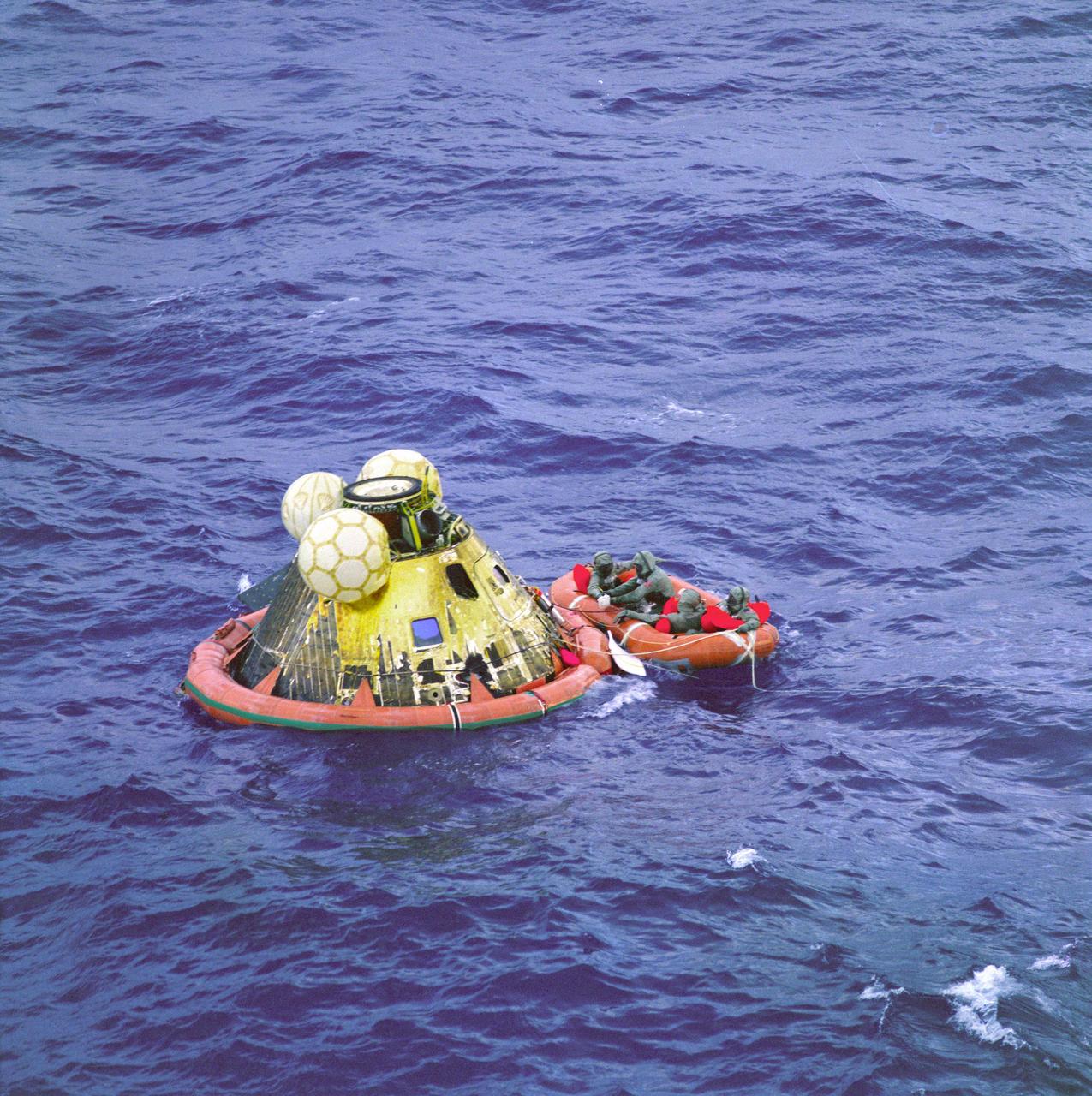
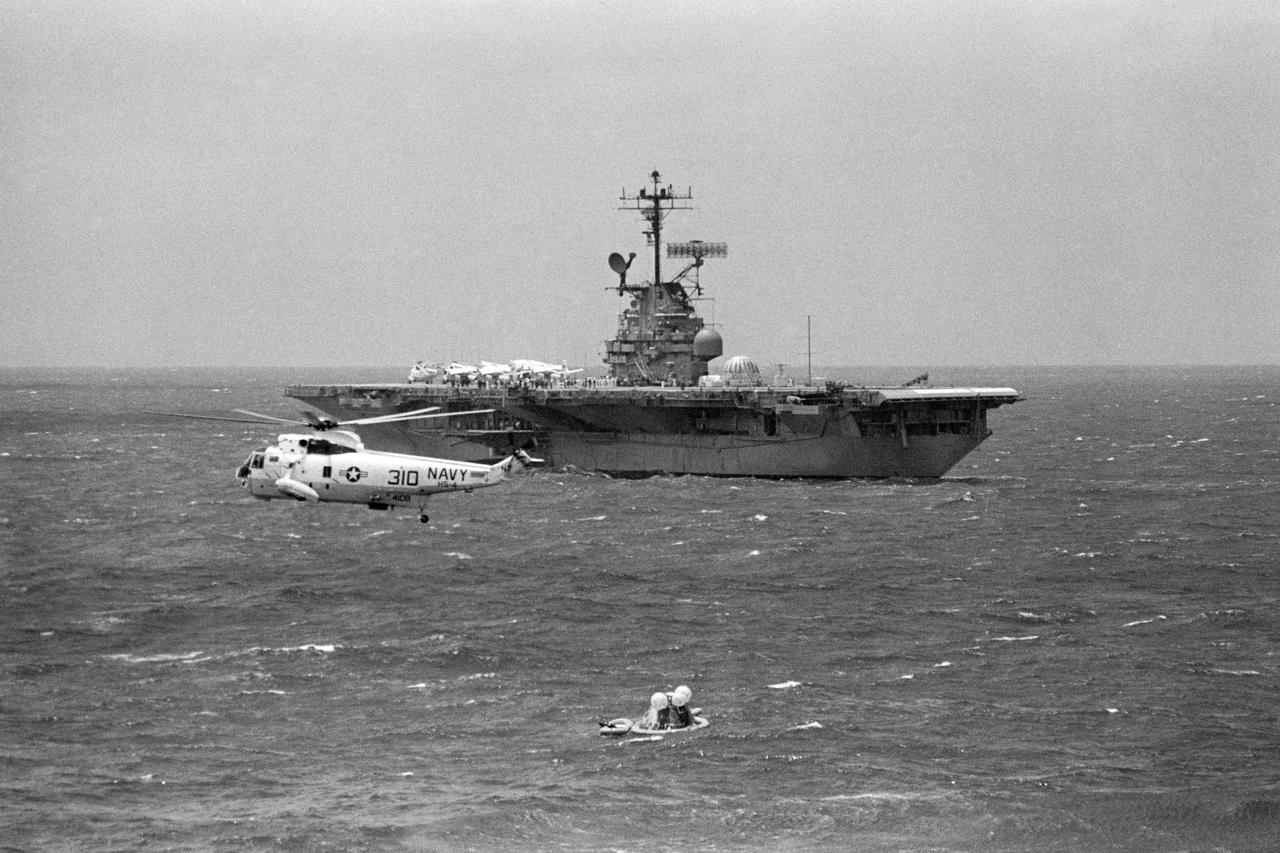
The Apollo 11 command module Columbia with astronauts Neil Armstrong, Michael Collins, and Buzz Aldrin aboard splashed down at 11:49 a.m. CDT, July 24, 1969, about 812 nautical miles southwest of Hawaii and only 12 nautical miles from the USS Hornet.
372772main_GPN-2000-001212_full
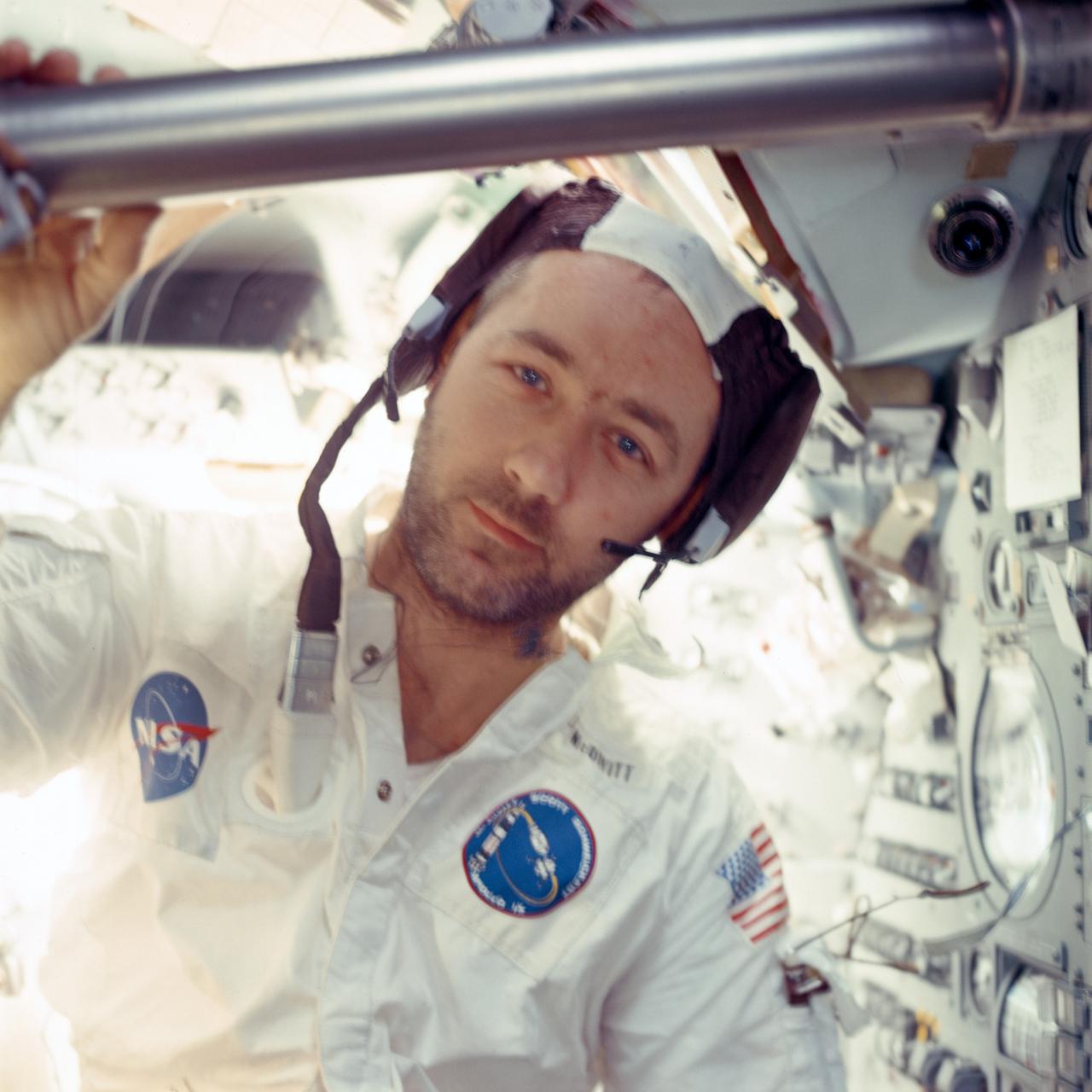
AS09-20-3154 (3-13 March 1969) --- This close-up view of astronaut James A. McDivitt shows several days' beard growth. The Apollo 9 mission commander was onboard the Lunar Module (LM) "Spider" in Earth orbit, near the end of the flight. He was joined on the mission by astronauts David R. Scott, command module pilot, and Russell L. Schweickart, lunar module pilot. Schweickart took this picture while Scott remained in the Command Module (CM) "Gumdrop." In Earth orbit, the three tested the transposition and docking systems of the lunar module and command module. On a scheduled lunar landing mission later this year, a team of three astronauts and ground controllers will use what this crew and its support staff have learned in handling the systems of the two spacecraft.
Astronaut James McDivitt photographed inside Command Module during Apollo 9
AS16-113-18282 (23 April 1972) --- The Apollo Command and Service Modules (CSM) "Casper" approaches the Lunar Module (LM) "Orion", from which this photograph was made. The two spacecraft are about to make their final rendezvous of the mission, on April 23, 1972. Astronauts John W. Young, commander, and Charles M. Duke Jr., lunar module pilot, aboard the LM, were returning to the CSM, in lunar orbit, after three successful days on the lunar surface. Astronaut Thomas K. (Ken) Mattingly II, command module pilot, remained with the CSM in lunar orbit, while Young and Duke descended in the LM to explore the Descartes region of the moon.
View of the Apollo 16 Command/Service Module from the Lunar module in orbit
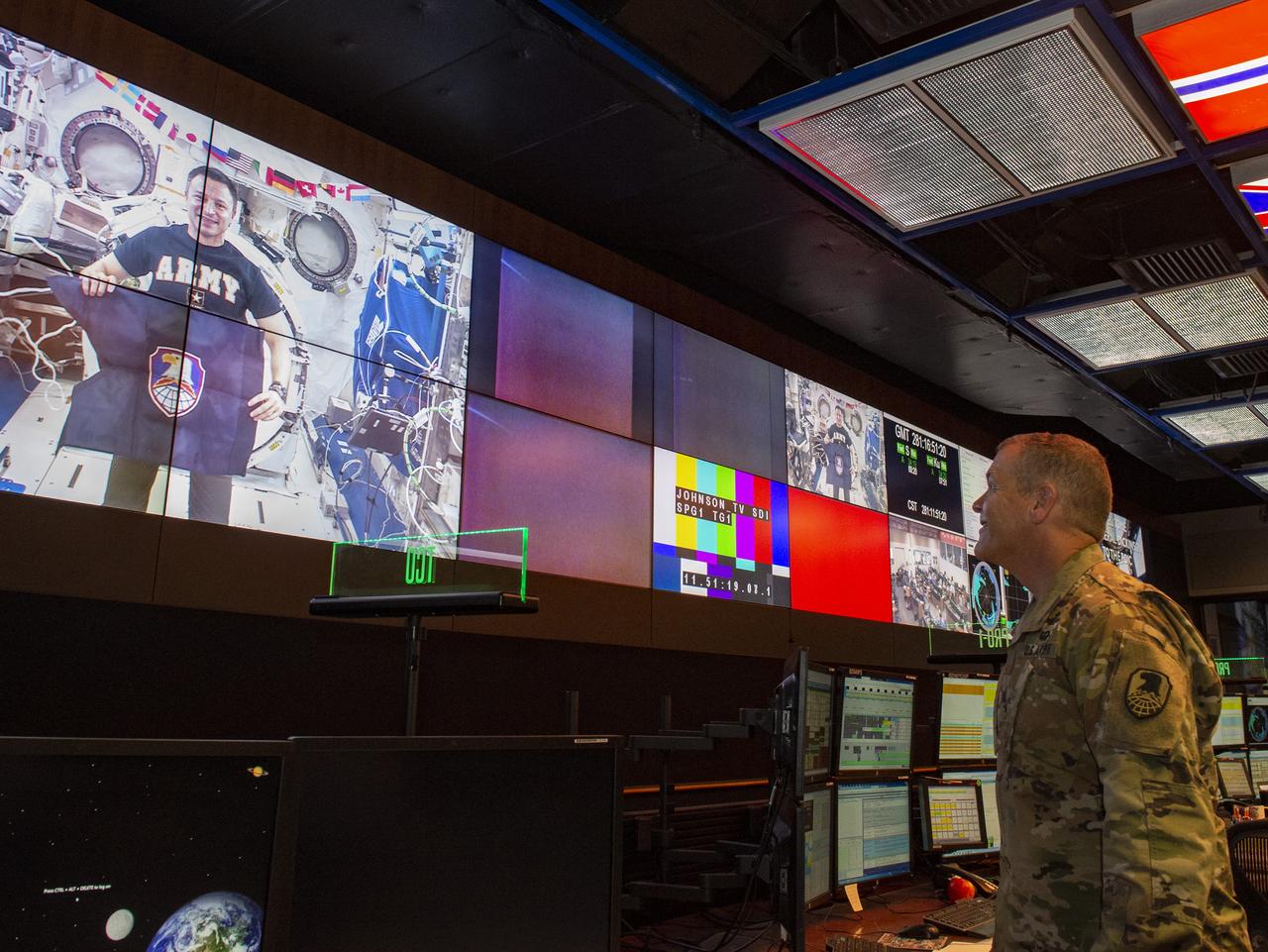
Army Lt. Gen. James Dickinson, right, commanding general of the U.S. Army Space and Missile Defense Command, speaks with NASA astronaut and current International Space Station crew member Andrew Morgan, an Army colonel, during an Oct. 8 downlink to the Payload Operations Integration Center at NASA’s Marshall Space Flight Center.
Army Lt. Gen. James Dickinson, right, commanding general of the
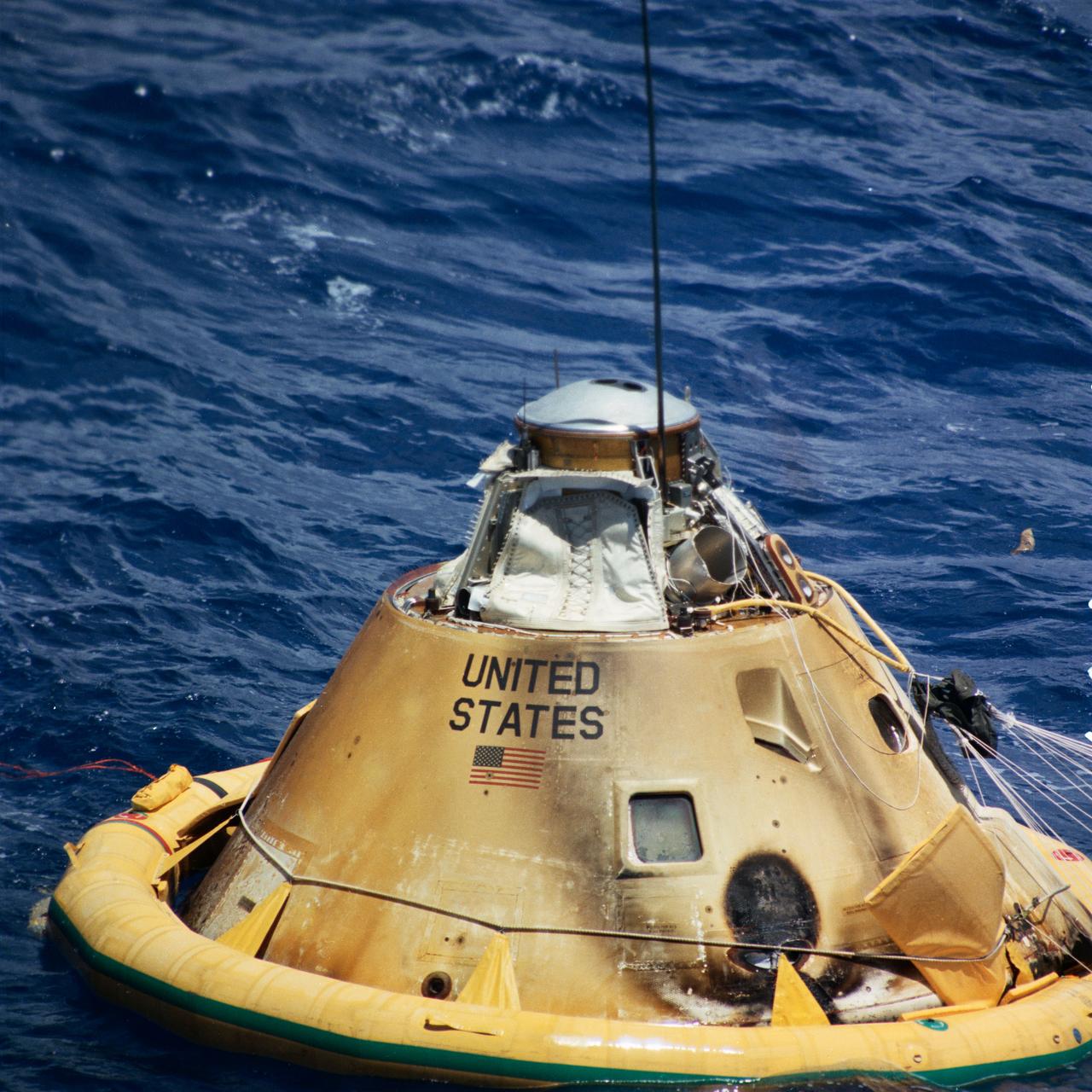
S70-15530 (17 April 1970) --- Crew men aboard the USS Iwo Jima, prime recovery ship for the Apollo 13 mission, hoist the Command Module (CM) aboard ship.  The Apollo 13 crew men, astronauts James A. Lovell Jr., John L. Swigert Jr. and Fred W. Haise Jr., were already aboard the Iwo Jima when this photograph was taken.  The CM, with the three tired crew men aboard, splashed down at 12:07:44 p.m. (CST), April 17, 1970, only about four miles from the recovery vessel in the South Pacific Ocean.
Apollo 13 Command Module recovery after splashdown
This 70mm frame, showintg the Apollo 17 Command/Service Modules (CSM) backdropped against the Taurus-Littrow landing site, was exposed from the lunar module (LM) prior to the LM's touchdown on the lunar surface.
Apollo 17 Command/Service Modules backdropped against lunar landing site
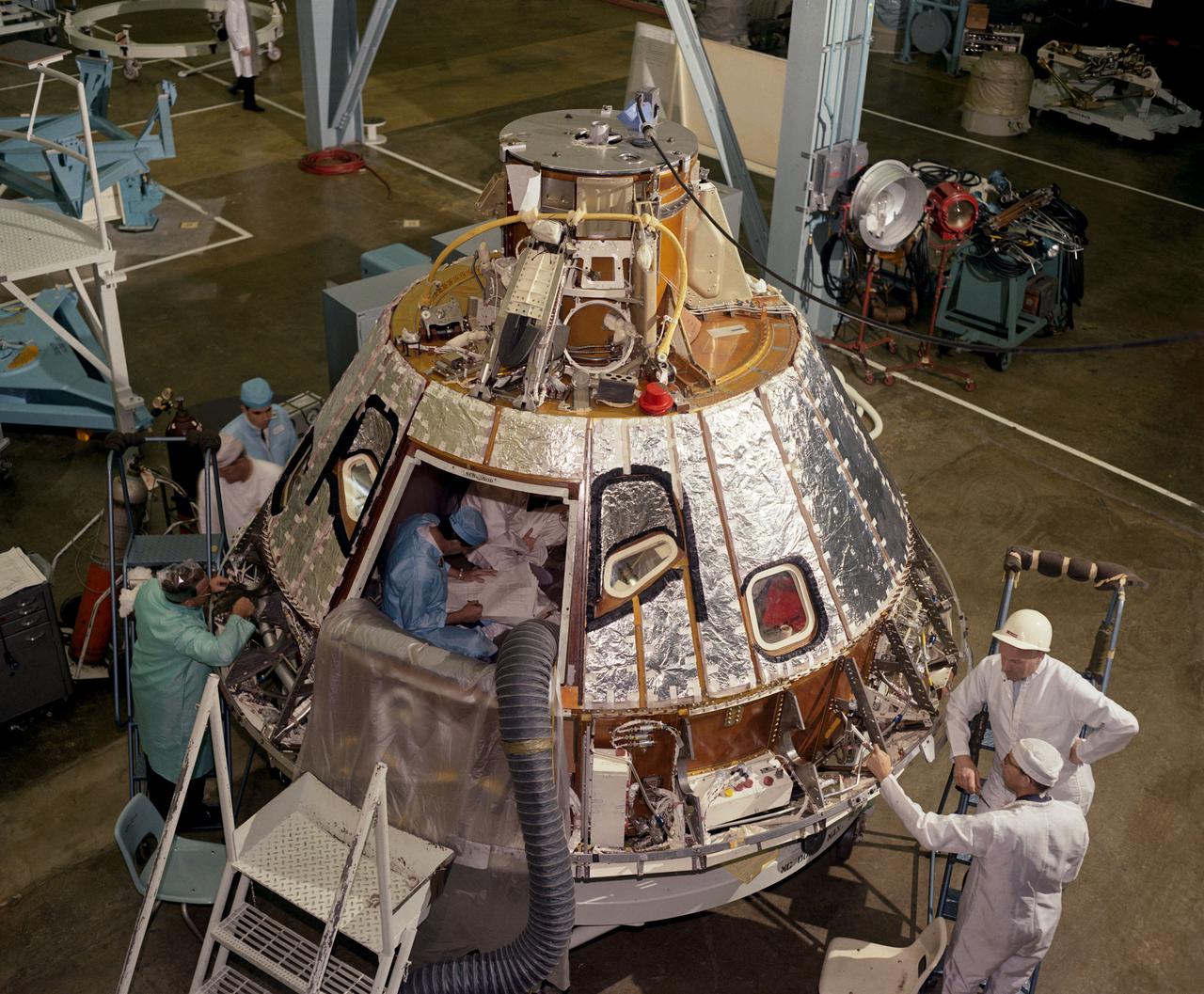
S66-41851 (1966) --- High angle view of Spacecraft 012 Command Module, looking toward -Z axis, during preparation for installation of the crew compartment heat shield, showing mechanics working on aft bay.
SPACECRAFT (S/C)-012 - COMMAND MODULE (CM) - HEAT SHIELD INSTALLATION
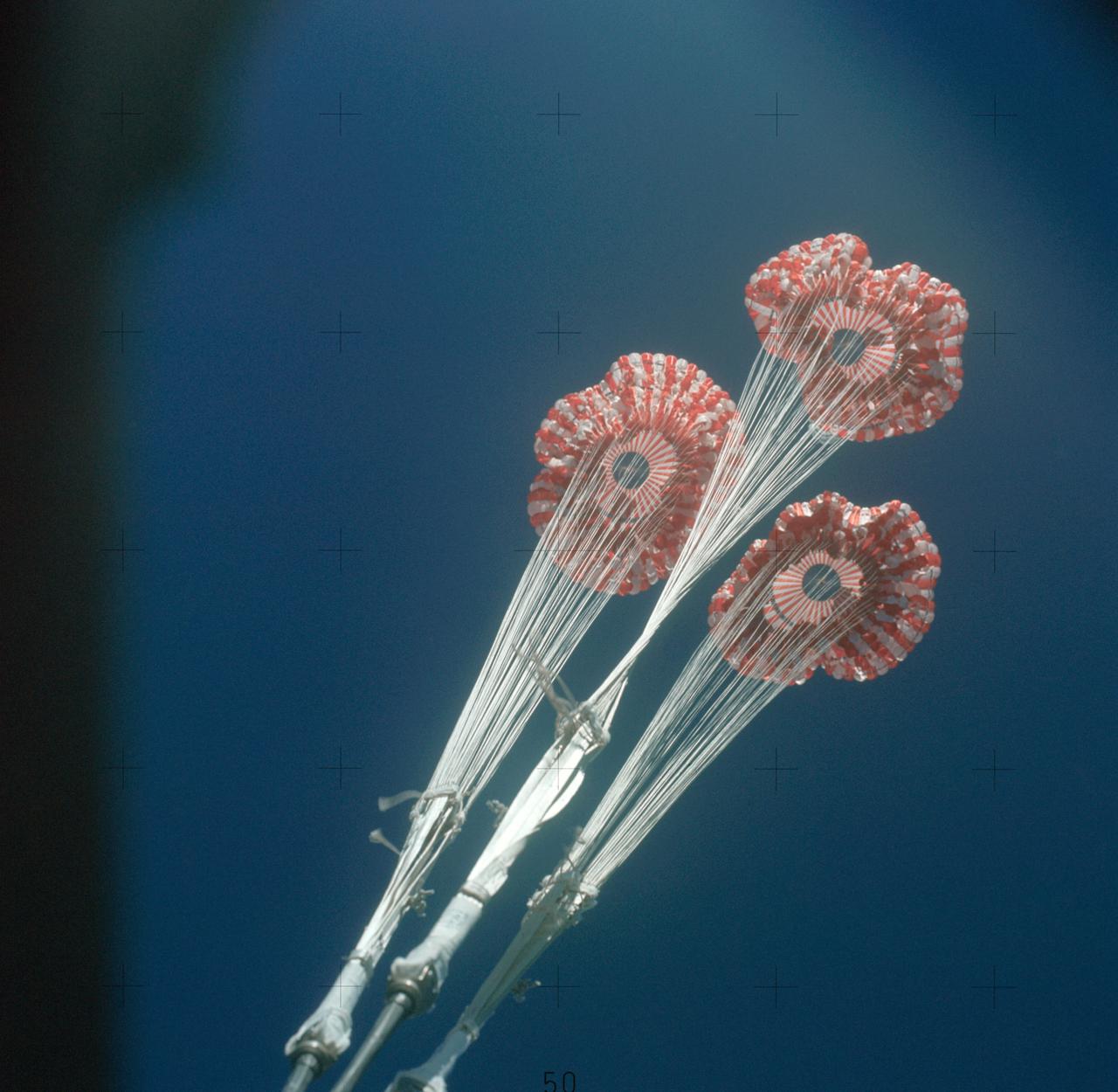
SL3-114-1760 (25 Sept. 1973) --? An excellent view of the three main ring sail parachutes of the Skylab 3 command module as they unfurl during descent to a successful splashdown in the Pacific Ocean. This picture was taken by a hand-held 70mm Hasselblad camera, looking up through a window of the command module. These parachutes open at approximately 10,000 feet altitude. Aboard the CM were astronauts Alan L. Bean, Owen K. Garriott and Jack R. Lousma, who had just completed a 59-day visit to the Skylab space station in Earth orbit. Photo credit: NASA
View of the parachutes of Skylab 3 command module during splashdown
S73-36423 (25 Sept. 1973) --- The Skylab 3 Command Module, with astronauts Alan L. Bean, Owen K. Garriott and Jack R. Lousma still inside, is hoisted aboard the prime recovery ship, USS New Orleans, during recovery operations in the Pacific Ocean. The three crewmen had just completed a successful 59-day visit to the Skylab space station in Earth orbit. The Command Module splashed down in the Pacific about 230 miles southwest of San Diego, California. Earlier in the recovery operations a team of U.S. Navy swimmers attached the flotation collar to the spacecraft to improve its buoyancy. Photo credit: NASA
Skylab 3 Command Module is hoisted aboard prime recovery ship
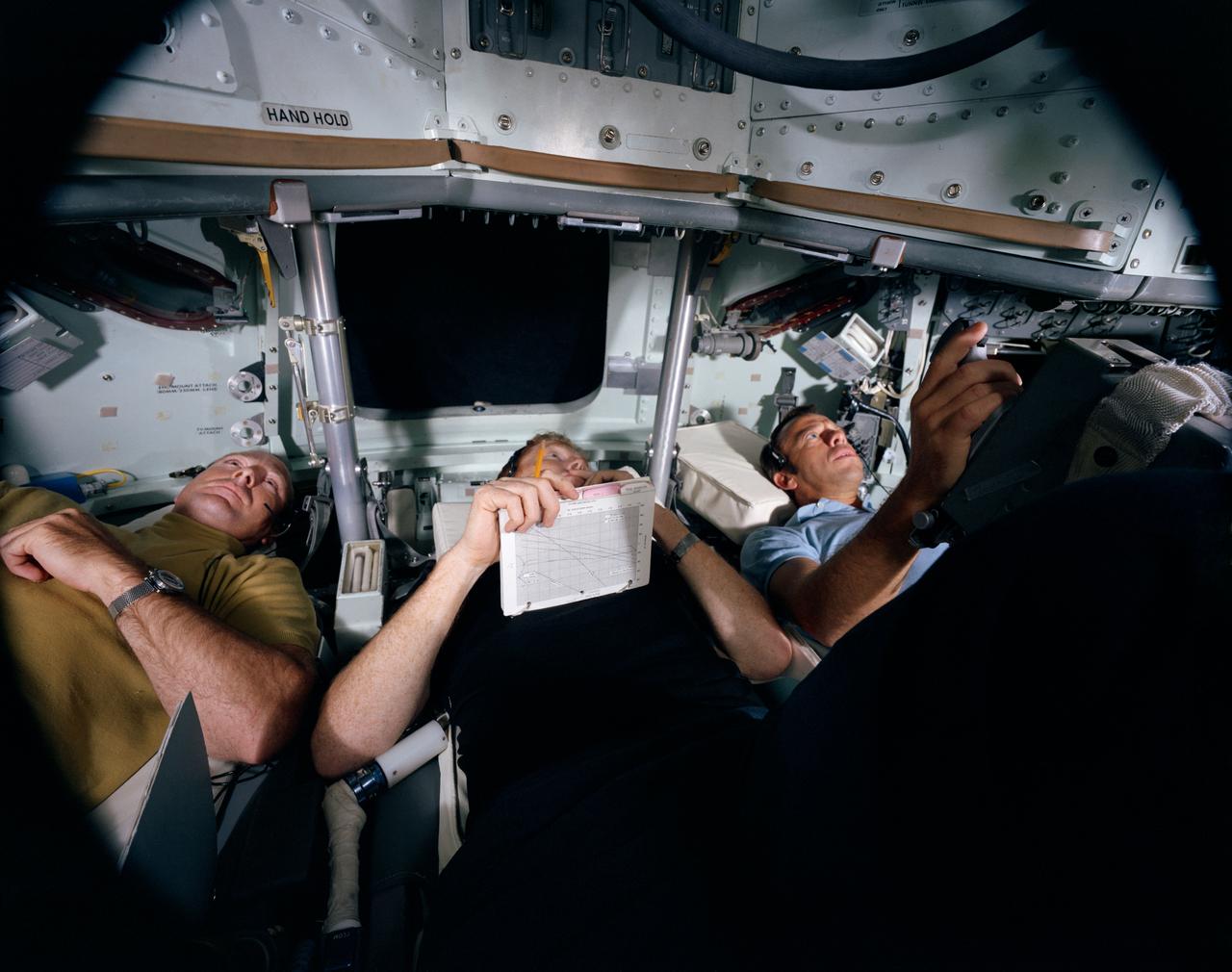
S70-45580 (July 1970) --- The members of the prime crew of the Apollo 14 lunar landing mission participate in Command Module (CM) simulation training at the Kennedy Space Center (KSC). Left to right are astronauts Edgar D. Mitchell, lunar module pilot; Stuart A. Roosa, command module pilot; and Alan B. Shepard Jr., commander.
View of Apollo 14 crewmen in Command Module simulation training
A/S 202 Command Module (C/M) attached to flotation collar.     RECOVERY AREA, CENTRAL PACIFIC OCEAN
APOLLO/SATURN (A/S) 202 - RECOVERY
AS15-88-11974 (30 July 1971) --- A view of the Apollo 15 Command and Service Modules (CSM) in lunar orbit as photographed from the Lunar Module (LM) just after rendezvous. The lunar nearside is in the background. This view is looking southeast into the Sea of Fertility. The crater Taruntius is at the right center edge of the picture.
View of the Apollo 15 Command/Service Module in lunar orbit
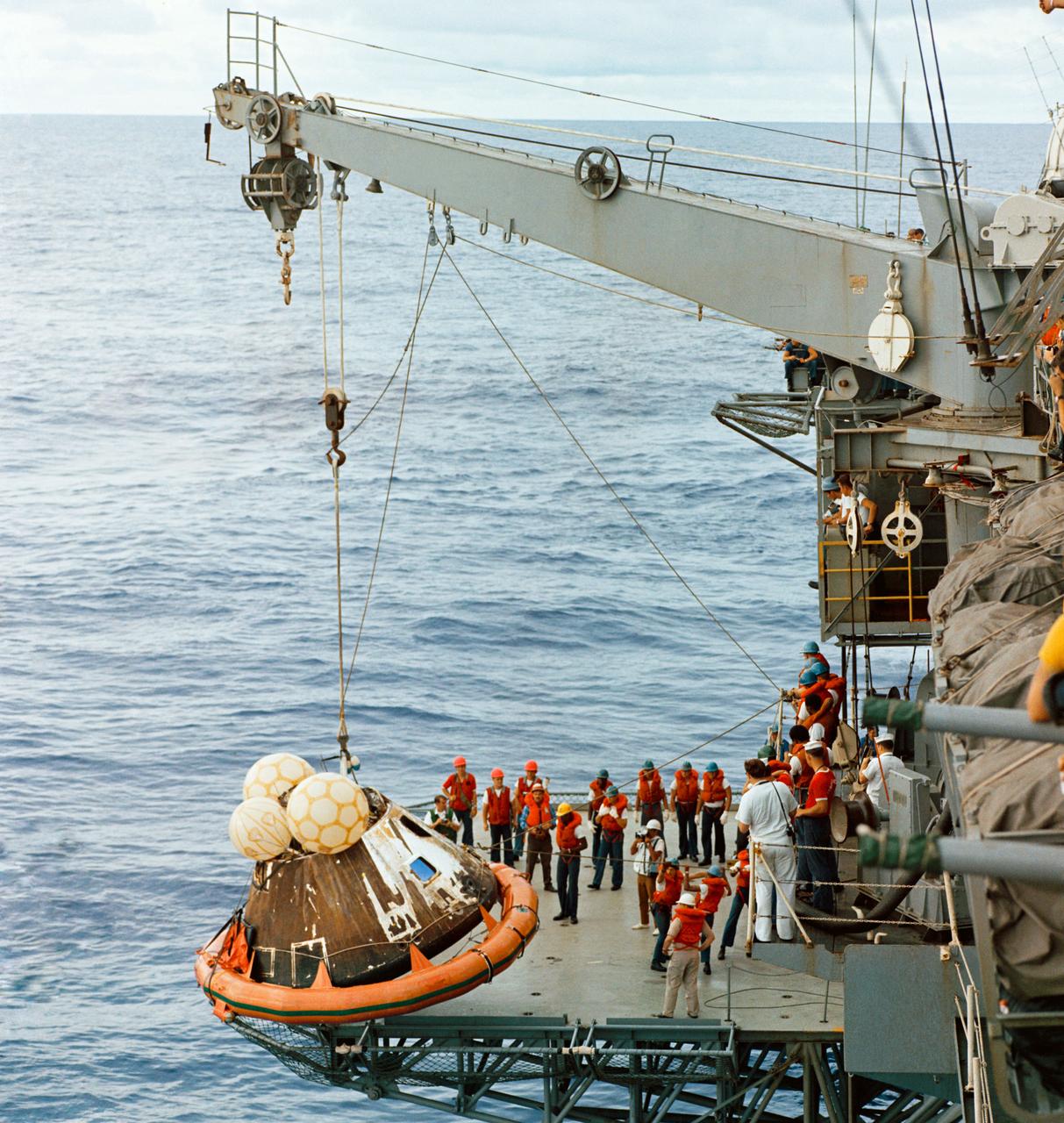
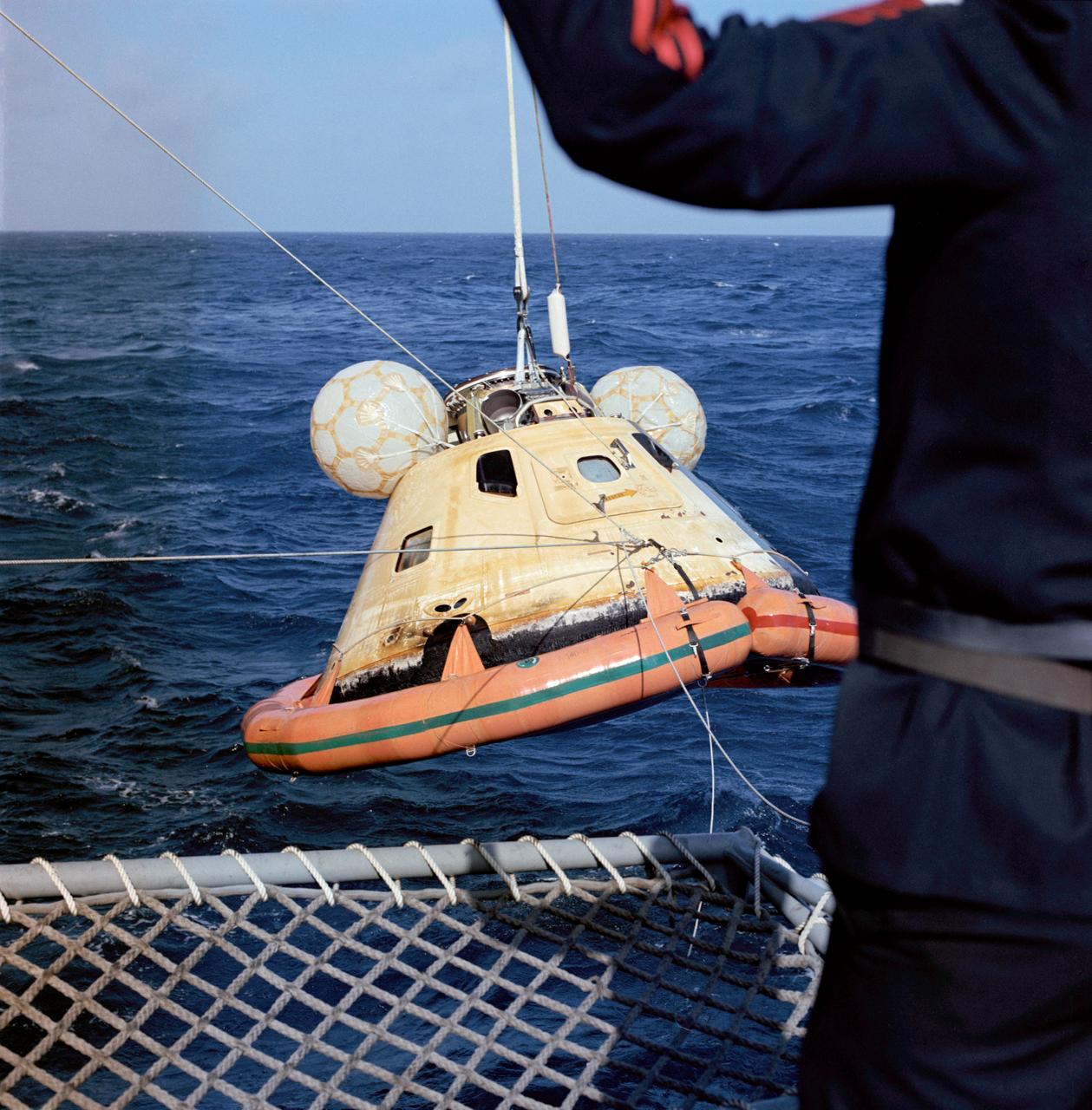
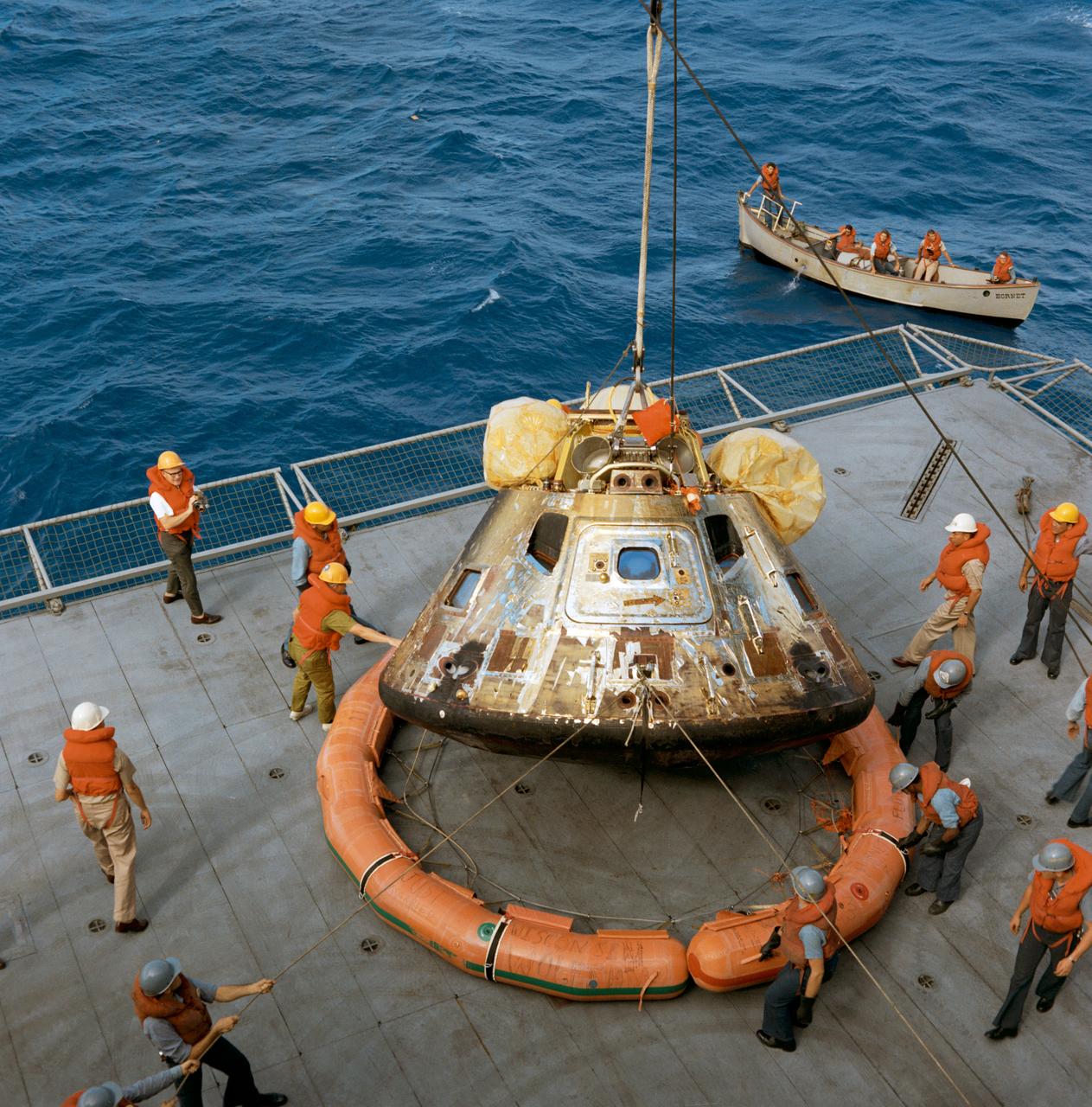
The Apollo 11 spacecraft Command Module is photographed being lowered to the deck of the U.S.S. Hornet, prime recovery ship for the historic lunar landing mission. Note the flotation ring attached by Navy divers has been removed from the capsule.
Apollo 11 spacecraft Command Module hoisted aboard U.S.S. Hornet
U.S.S. Hornet, prime recovery vessel for the Apollo 12 lunar landing mission, moves toward the Apollo 12 Command Module to retrieve the spacecraft. A helicopter from the recovery ship, which took part in the recovery operations, hovers over the scene of the splashdown.
U.S.S. Hornet moves toward the Apollo 12 Command Module to retrieve it
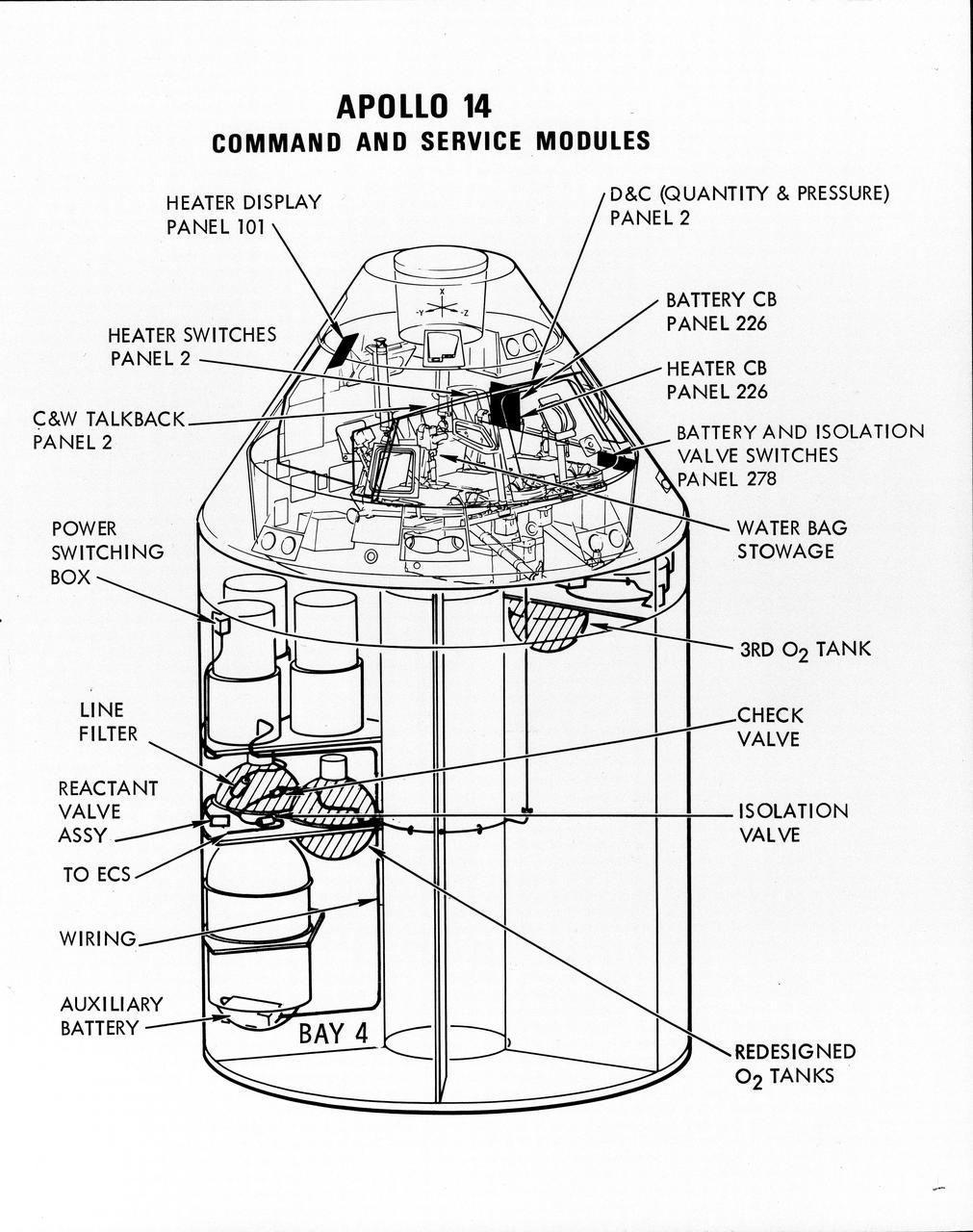
S71-16823 (January 1971) --- A line drawing illustrating a cutaway view of the Apollo 14 Command and Service Modules, showing the engineering changes in the CSM which were recommended by the Apollo 13 Review Board. (The Apollo 13 abort was caused by a short circuit and wiring overheating in one of the SM cryogenic oxygen tanks.) The major changes to the Apollo 14 CSM include adding a third cryogenic oxygen tank installed in a heretofore empty bay (in sector one) of the SM, addition of an auxiliary battery in the SM as a backup in case of fuel cell failure, and removal of destratification fans in the cryogenic oxygen tanks and removal of thermostat switches from the oxygen tank heater circuits. Provision for stowage of an emergency five-gallon supply of drinking water has been added to the CM.
Line drawing of Apollo 14 Command/Service Modules
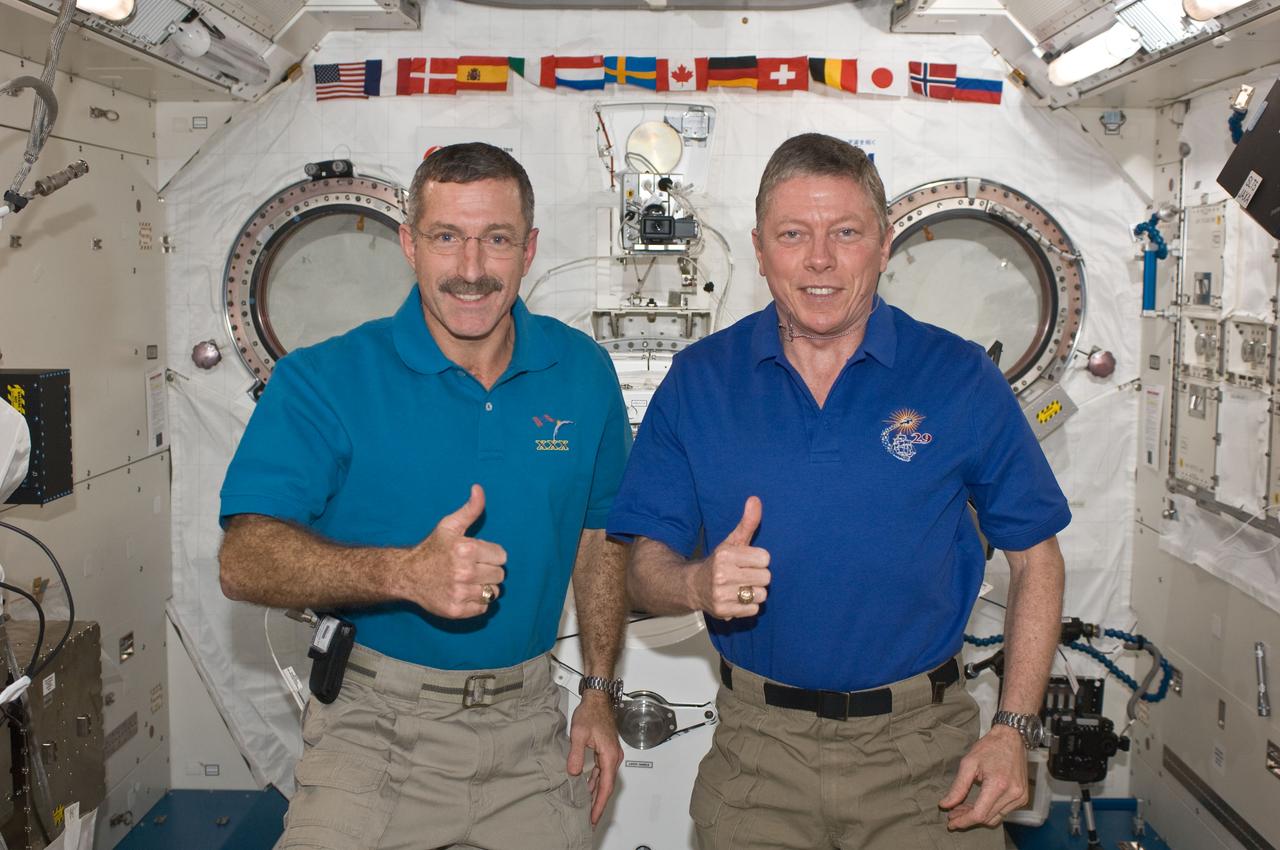
ISS029-E-043183 (20 Nov. 2011) --- NASA astronauts Dan Burbank (left), Expedition 30 commander; and Mike Fossum, Expedition 29 commander, pose for a photo in the International Space Station?s Kibo laboratory following the ceremony of Changing-of-Command from Expedition 29 to Expedition 30.
Change of Command
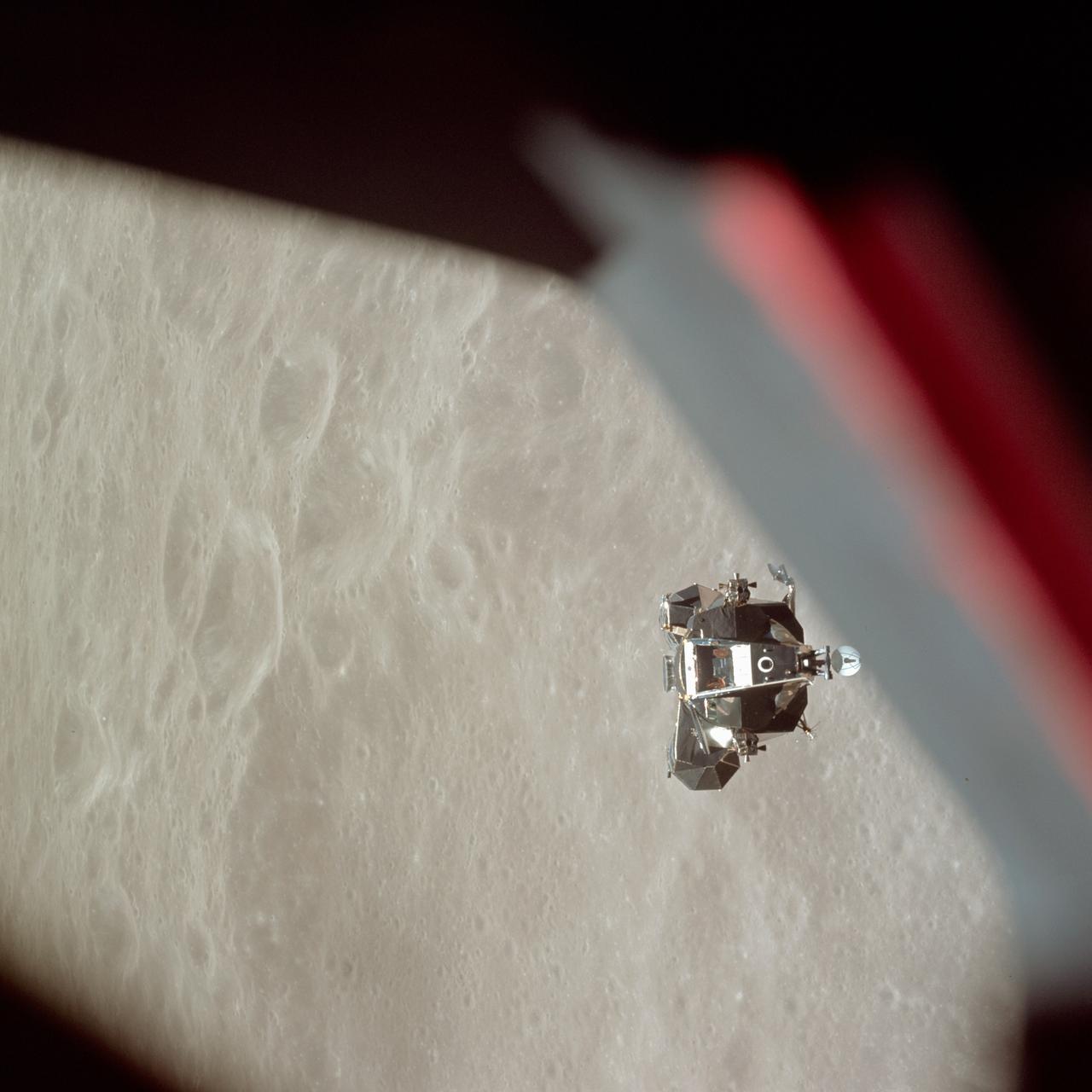
AS10-34-5112 (26 May 1969) --- The ascent stage of the Apollo 10 Lunar Module (LM) is photographed from the Command Module prior to docking in lunar orbit. The LM is approaching the Command and Service Modules from below. The LM descent stage had already been jettisoned. The lunar surface in the background is near, but beyond the eastern limb of the moon as viewed from Earth (about 120 degrees east longitude). The red/blue diagonal line is the spacecraft window.
Ascent stage of Apollo 10 Lunar Module seen from Command module
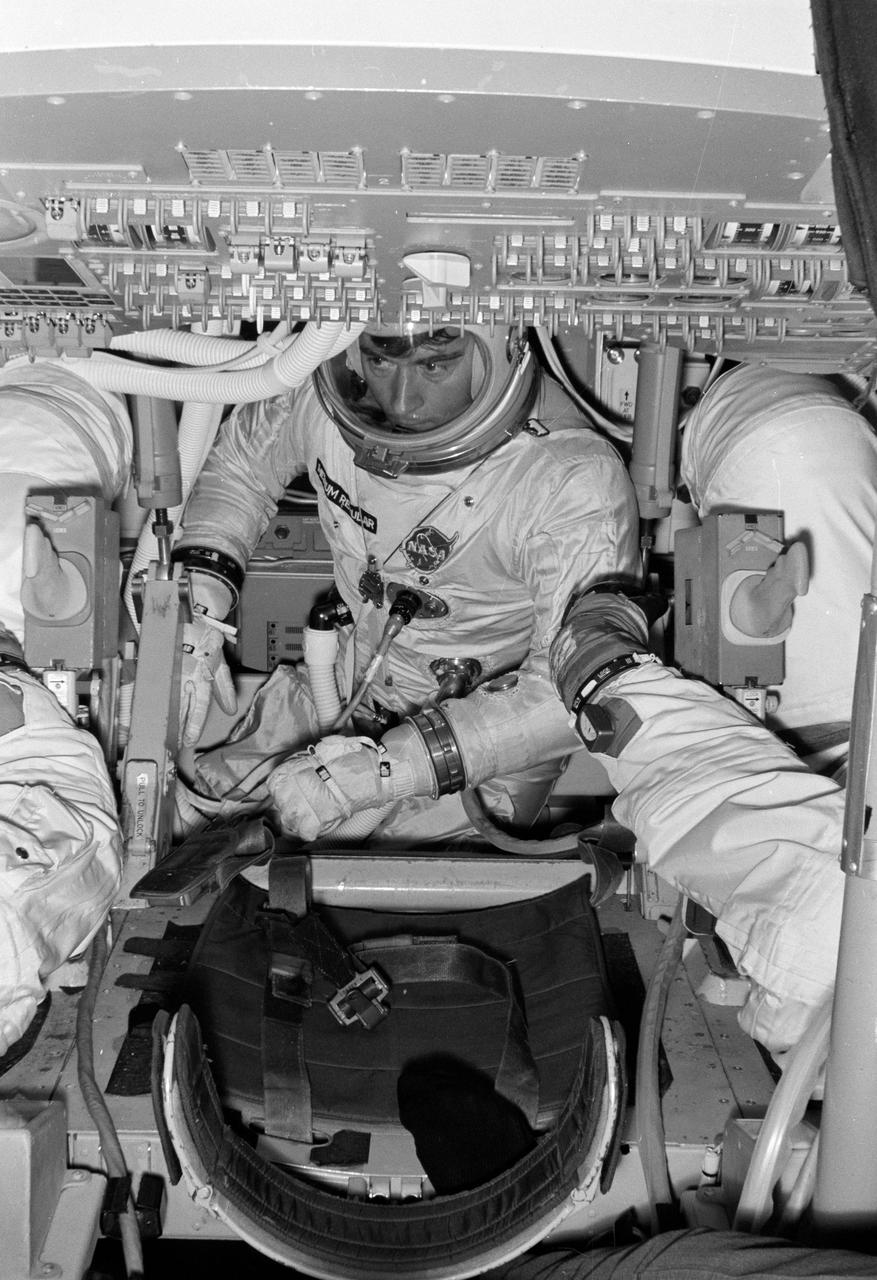
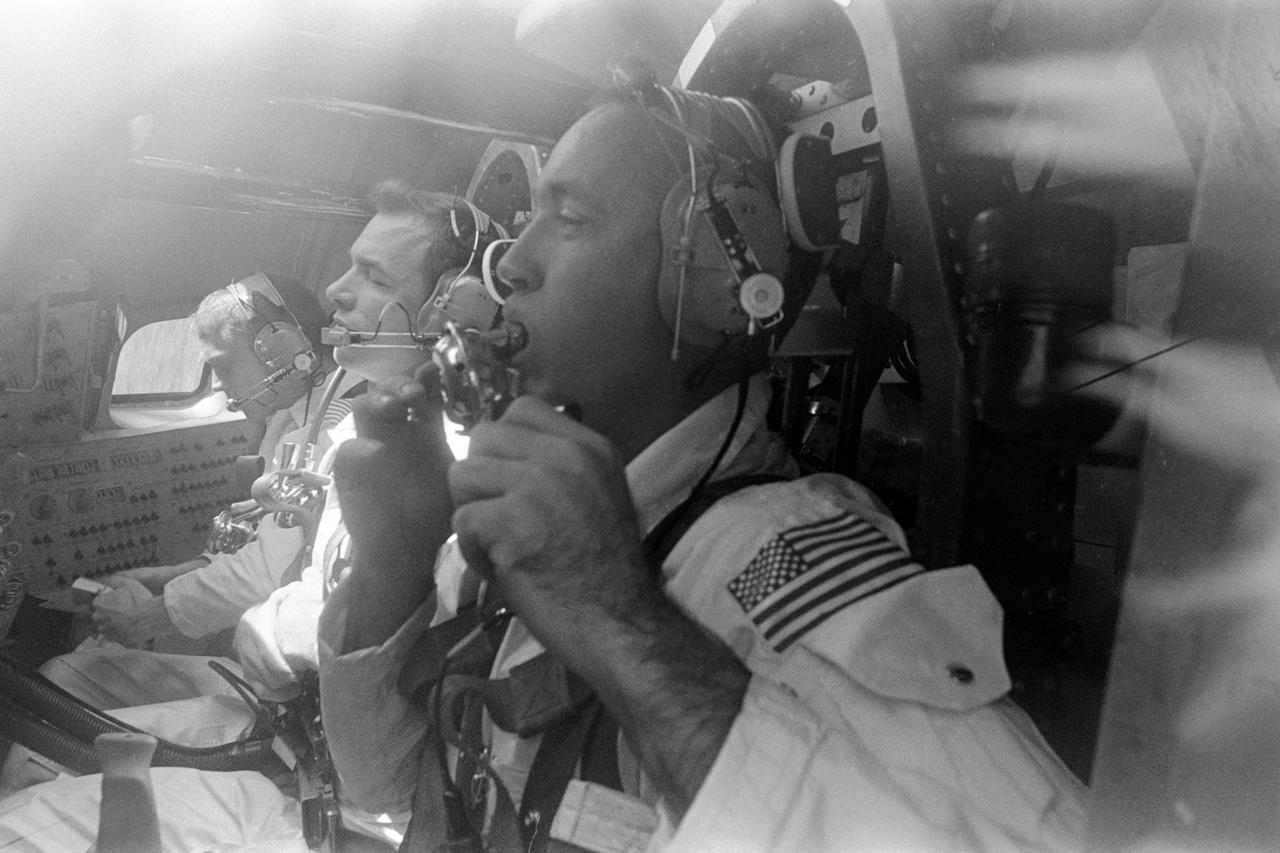
S68-15979 (15 Jan. 1968) --- Astronaut John W. Young, command module pilot, inside the Command Module Simulator in Building 5 during an Apollo Simulation. Out of view are astronaut Thomas P. Stafford (on the left), commander; and astronaut Eugene A. Cernan (on the right), lunar module pilot.
Astronaut John Young in Command Module Simulator during Apollo Simulation
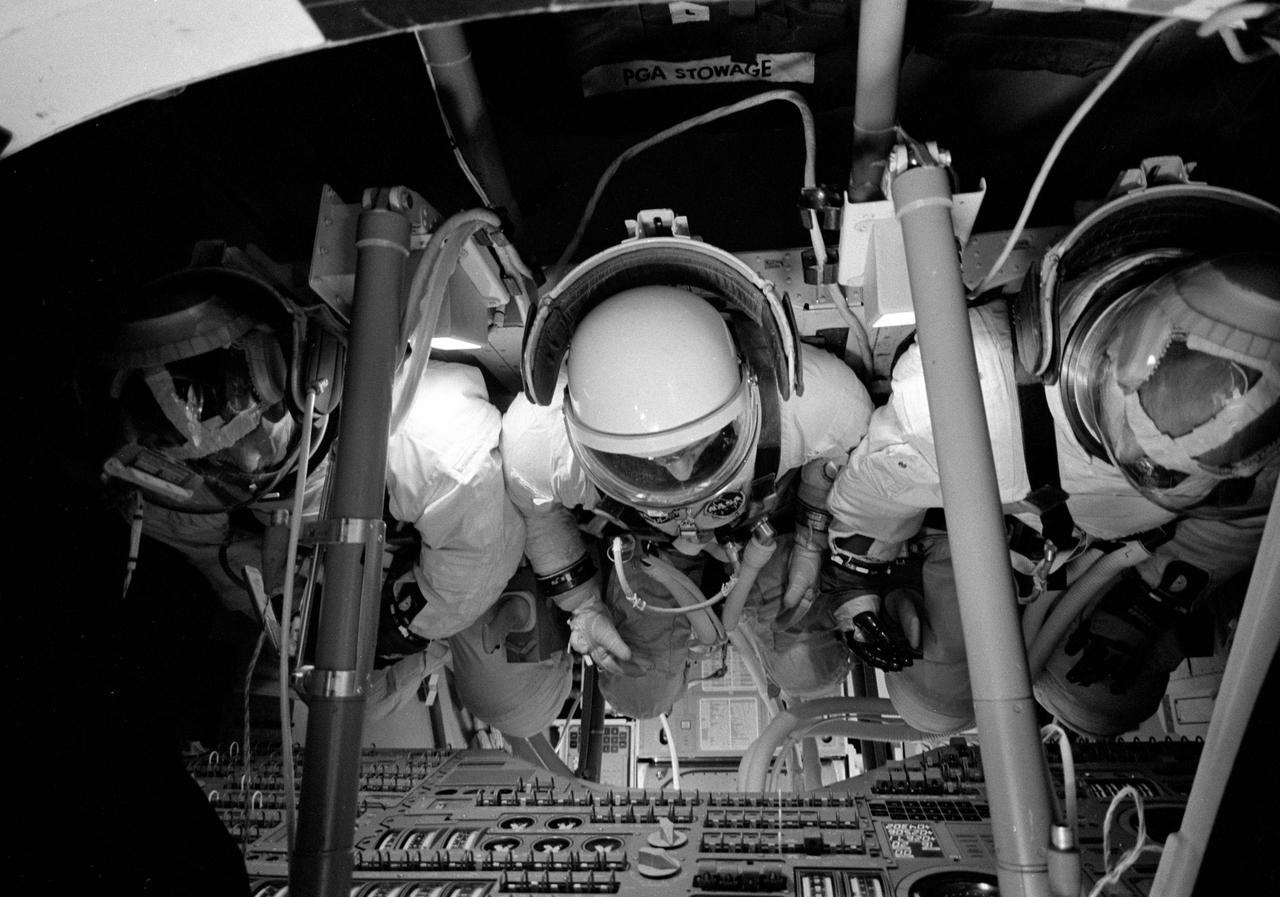
S68-15952 (15 Jan. 1968) --- Three astronauts inside the Command Module Simulator in Building 5 during an Apollo Simulation. Left to right, are astronauts Thomas P. Stafford, commander; John W. Young, command module pilot; and Eugene A. Cernan, lunar module pilot.
Three astronauts inside Command Module Simulator during Apollo Simulation
S73-36401 (25 Sept. 1973) --- A team of U.S. Navy swimmers assists with the recovery of the Skylab 3 Command Module following its splashdown in the Pacific Ocean about 230 miles southwest of San Diego, California. The swimmers had just attached a flotation collar to the spacecraft to improve its buoyancy. Aboard the Command Module were astronauts Alan L. Bean, Owen K. Garriott and Jack R. Lousma, who had just completed a successful 59-day visit to the Skylab space station in Earth orbit. Minutes later the Command Module with the three crewmen still inside was hoisted aboard the prime recovery ship, the USS New Orleans. Photo credit: NASA
Navy Swimmers Assist - Recovery of Skylab (SL)-3 Command Module (CM) - Pacific
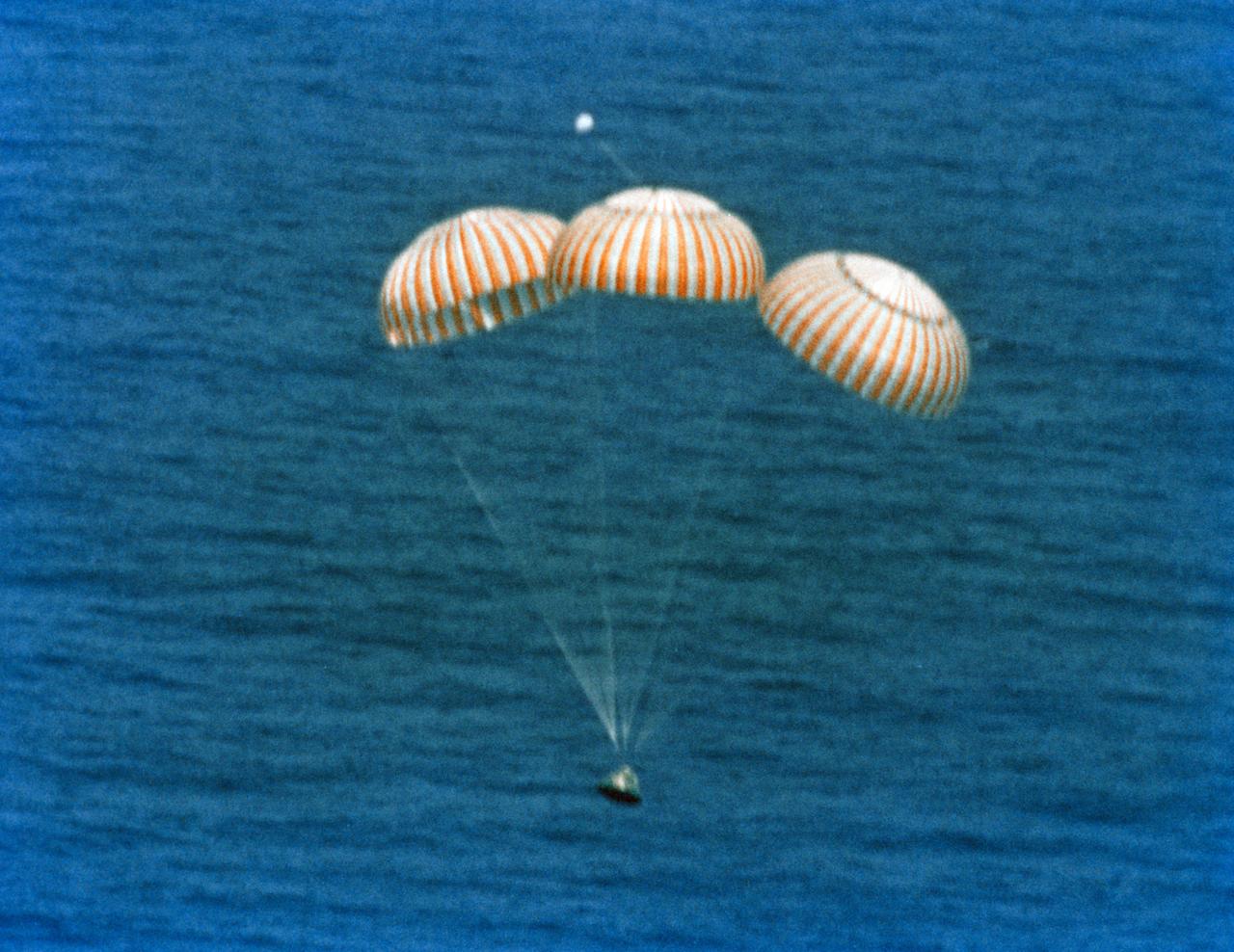
S75-29719 (24 July 1975) --- The ASTP Apollo Command Module, with astronauts Thomas P. Stafford, Vance D. Brand and Donald K. Slayton aboard, nears a touchdown in the Central Pacific Ocean to conclude the historic joint U.S.-USSR Apollo-Soyuz Test Project docking mission in Earth orbit. The spacecraft splashed down in the Hawaiian Islands area at 4:18 p.m. (CDT), July 24, 1975.
ASTP Apollo Command Module nears touchdown in Central Pacific
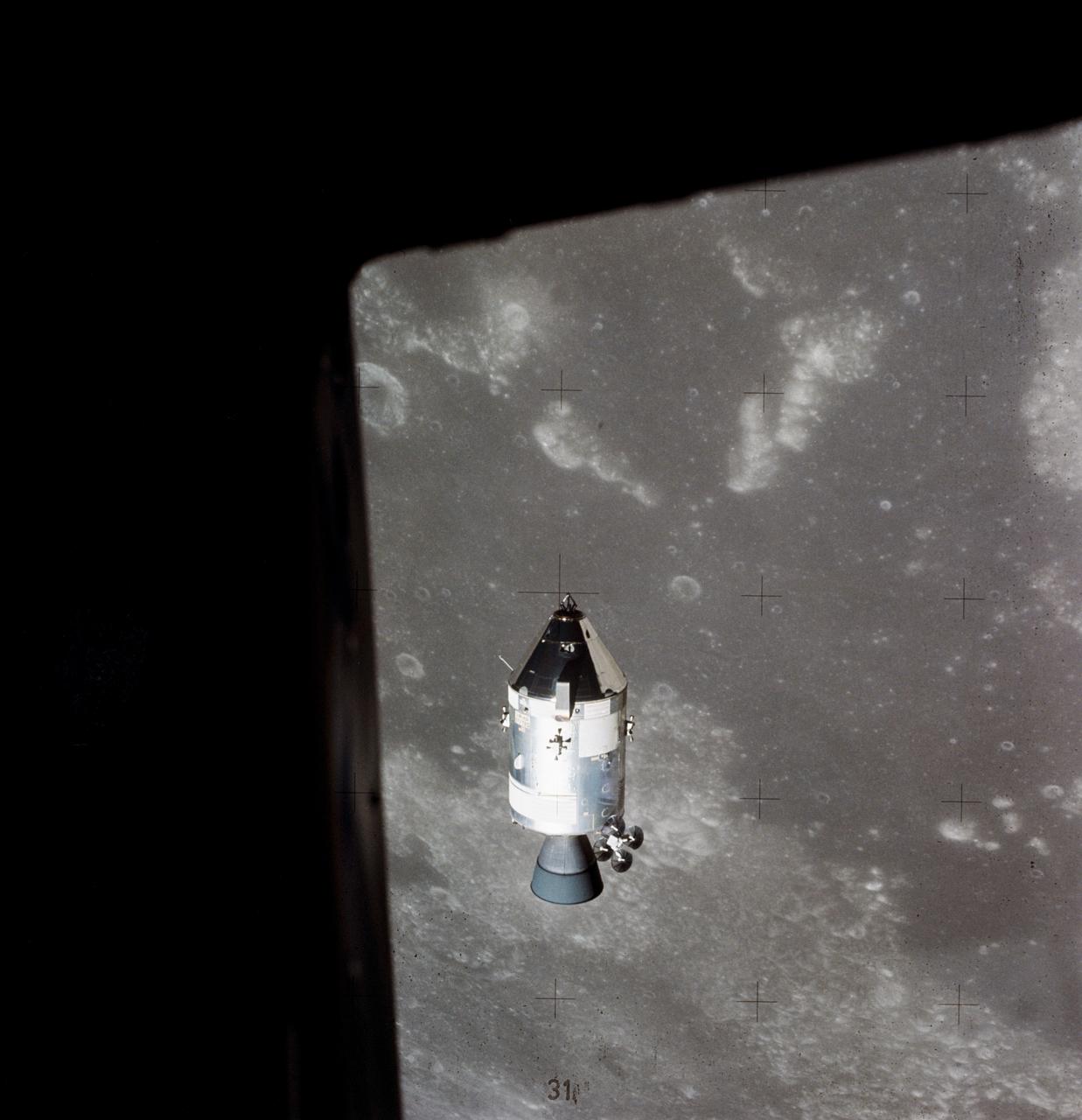
AS11-37-5445   (20 July 1969) --- The Apollo 11 Command and Service Modules (CSM) are photographed from the Lunar Module (LM) in lunar orbit during the Apollo 11 lunar landing mission.  The lunar surface below is in the north central Sea of Fertility.  The coordinates of the center of the picture are 51 degrees east longitude and 1 degree north latitude.  About half of the crater Taruntius G is visible in the lower left corner of the picture.  Part of Taruntius H can be seen at lower right.
Apollo 11 Command/Service modules photographed from Lunar Module in orbit
AS09-20-3064 (6 March 1969) --- Excellent view of the docked Apollo 9 Command and Service Modules (CSM) and Lunar Module (LM), with Earth in the background, during astronaut David R. Scott's stand-up extravehicular activity (EVA), on the fourth day of the Apollo 9 Earth-orbital mission. Scott, command module pilot, is standing in the open hatch of the Command Module (CM). Astronaut Russell L. Schweickart, lunar module pilot, took this photograph of Scott from the porch of the LM. Inside the LM was astronaut James A. McDivitt, Apollo 9 commander.
View of docked Apollo 9 Command/Service Module and Lunar Module
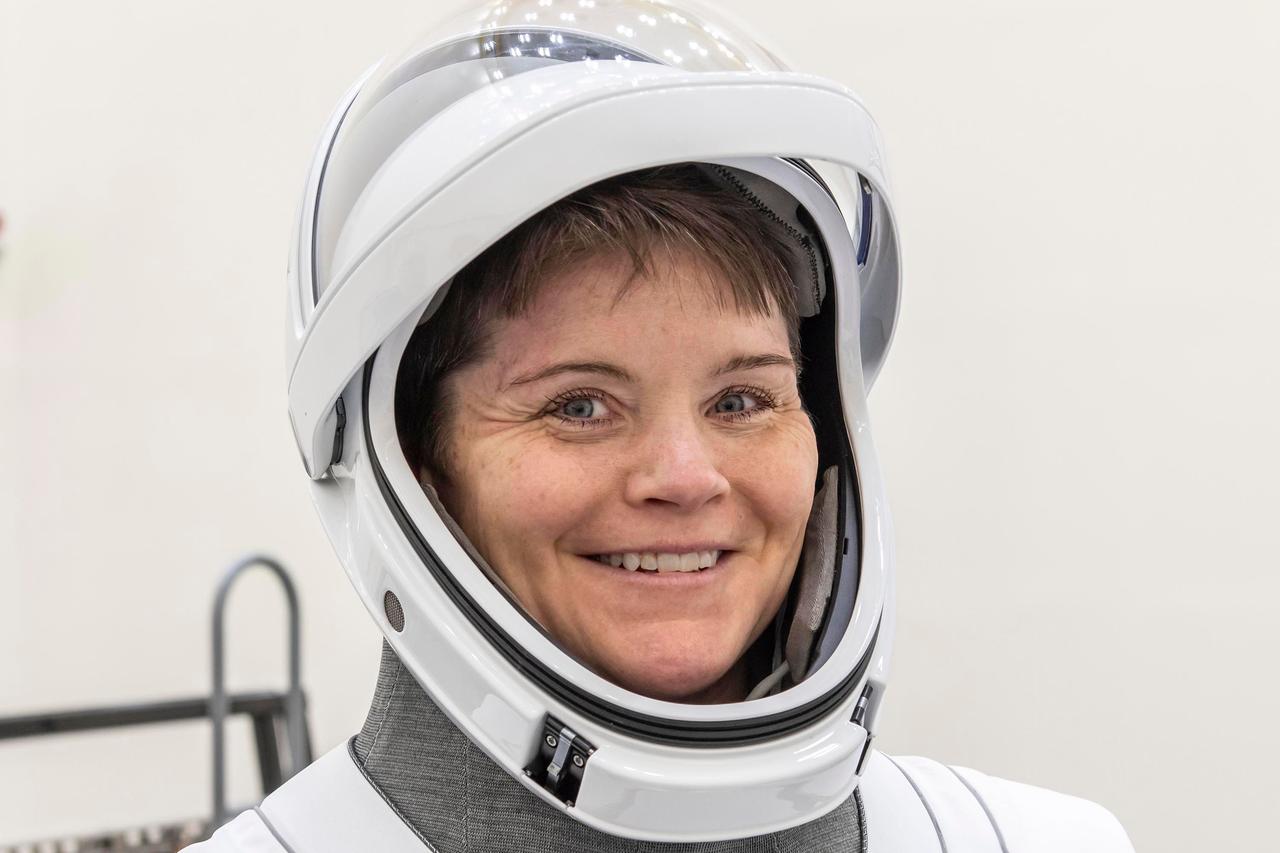
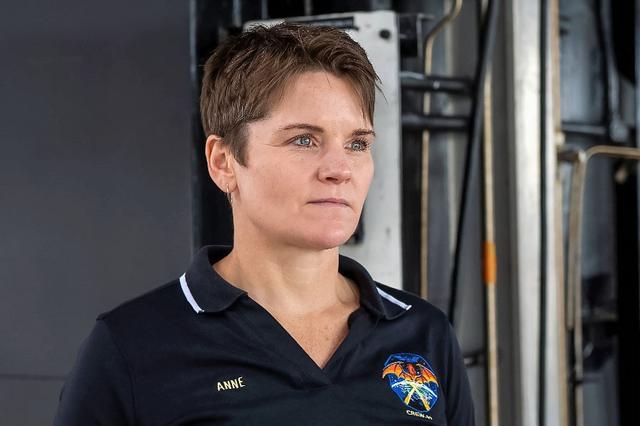
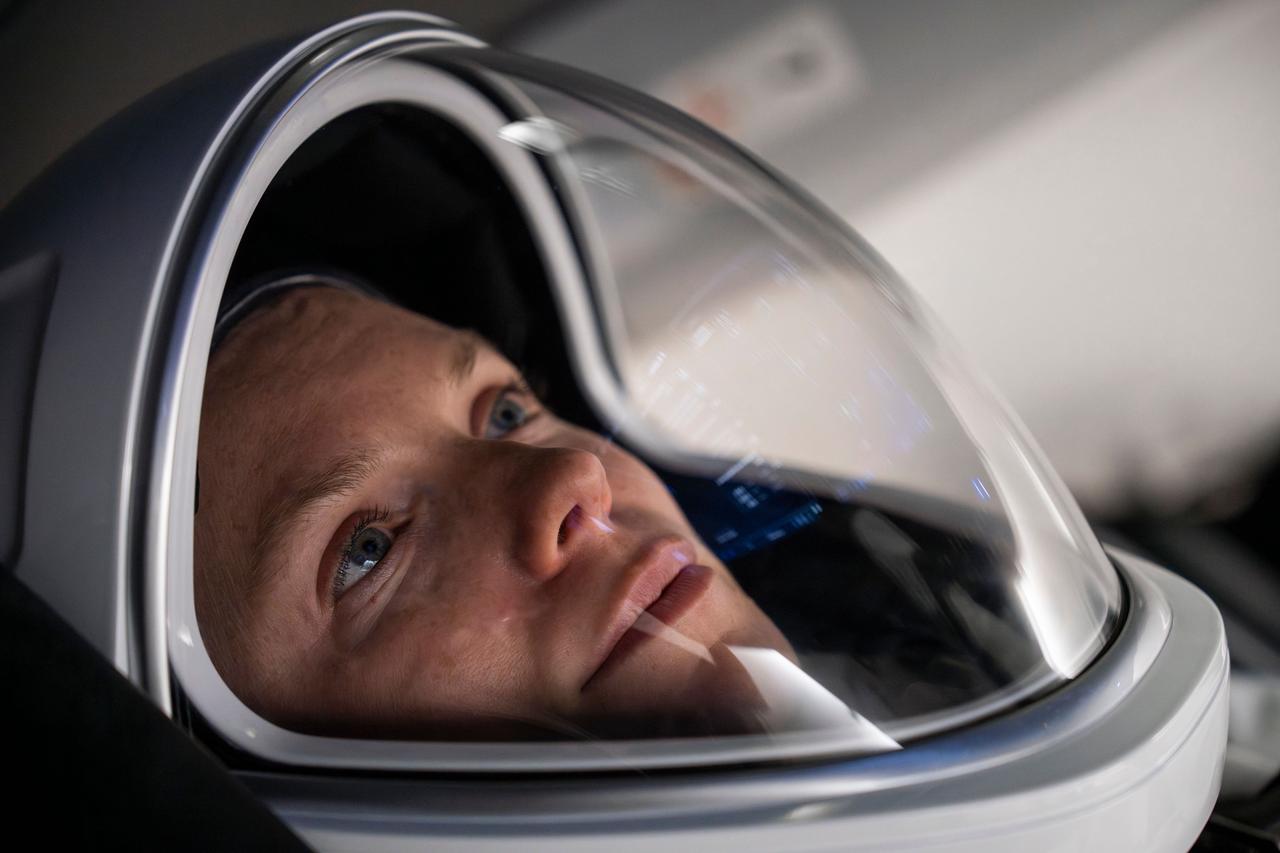
jsc2025e012271 - (February 17, 2025) --- NASA’s SpaceX Crew-10 Commander Anne McClain smiles in her flight suit at NASA's Kennedy Space Center in Florida.
NASA’s SpaceX Crew-10 Commander Anne McClain
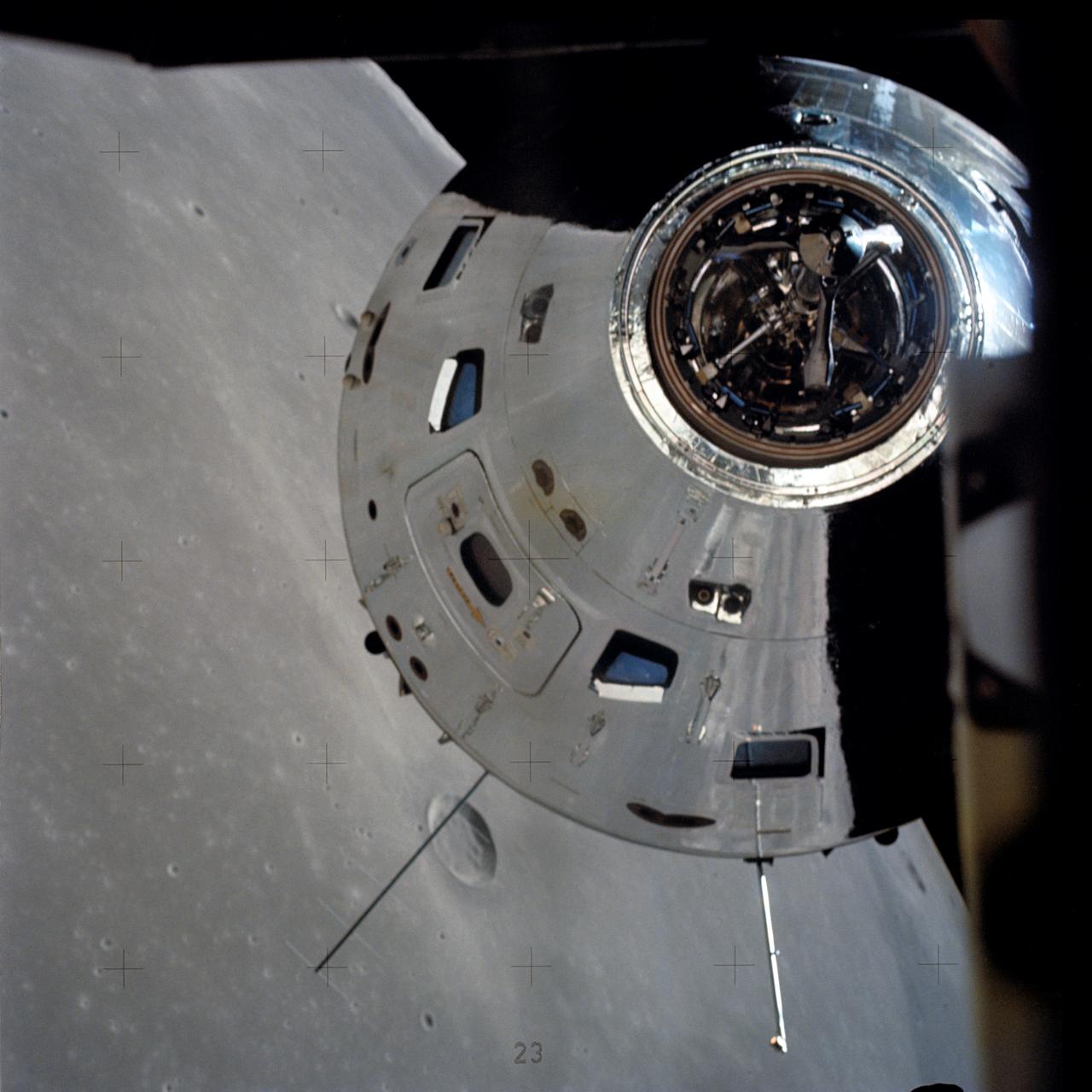
AS17-145-22273 (7-19 Dec. 1972) --- In this view, taken from the Lunar Module (LM), the Command and Service Module (CSM) are seen preparing to rendezvous with the LM. Note the reflection of the lunar surface on the CSM. The CSM, is piloted by Ronald E. Evans; while astronauts Eugene A. Cernan, commander; and Harrison W. Schmitt, lunar module pilot, are onboard the LM, following their extravehicular activities (EVA) on the moon's surface. While astronauts Cernan and Schmitt descended in the LM "Challenger" to explore the Taurus-Littrow region of the moon, astronaut Evans remained with the CSM "America" in lunar orbit.
Apollo 17 Command/Service modules photographed from lunar module in orbit
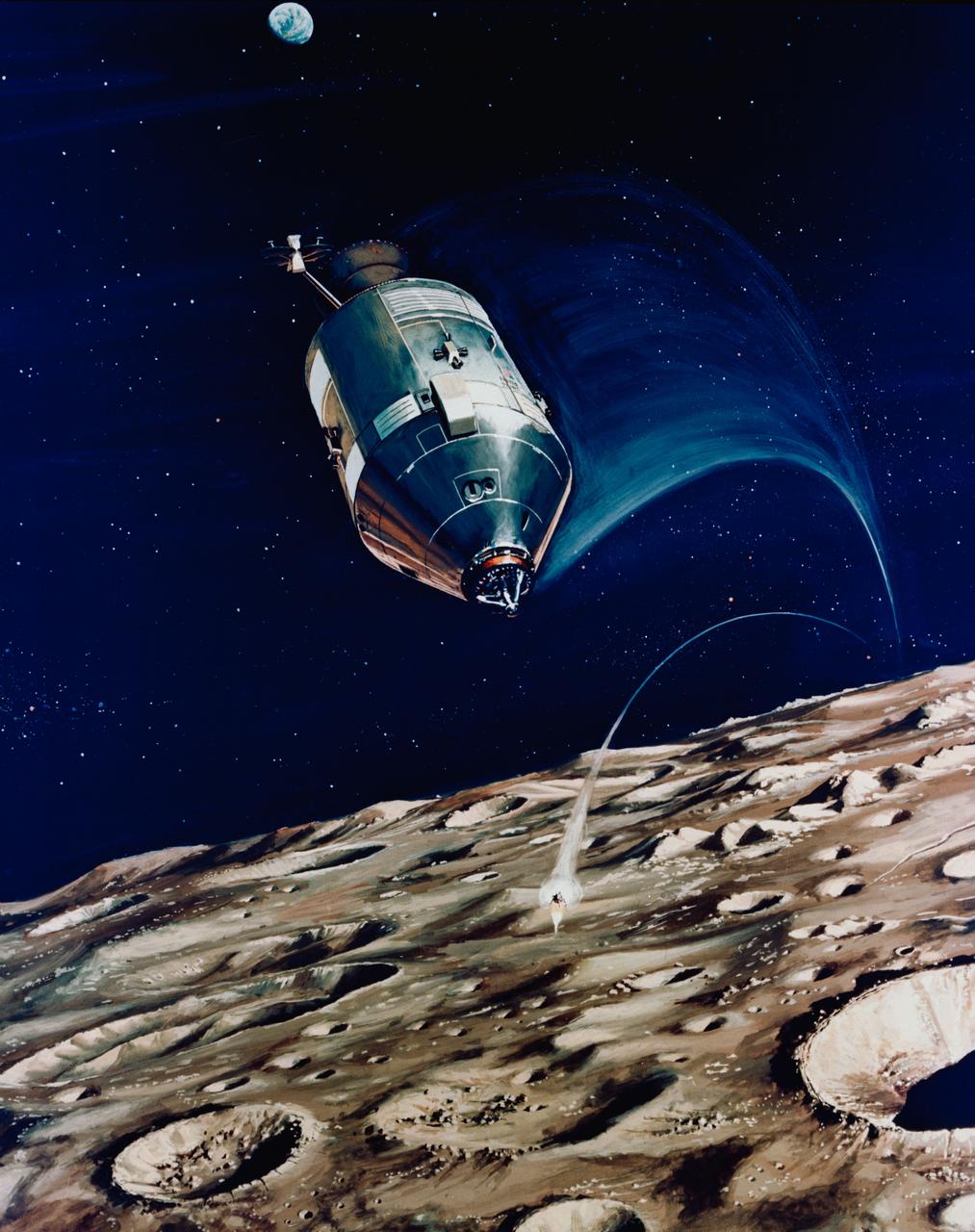
S71-16574 (11 Jan. 1971) --- An artist's concept depicting the Apollo 14 Command and Service Modules (CSM) circling the moon as the Lunar Module (LM) heads toward a lunar landing. While astronaut Stuart A. Roosa, command module pilot, remains with the CSM in lunar orbit, astronauts Alan B. Shepard Jr., commander; and Edgar D. Mitchell, lunar module pilot, will descend in the LM to explore an area in the rugged Fra Mauro highlands.
Artist's concept of Apollo 14 Command/Service Modules circling Moon
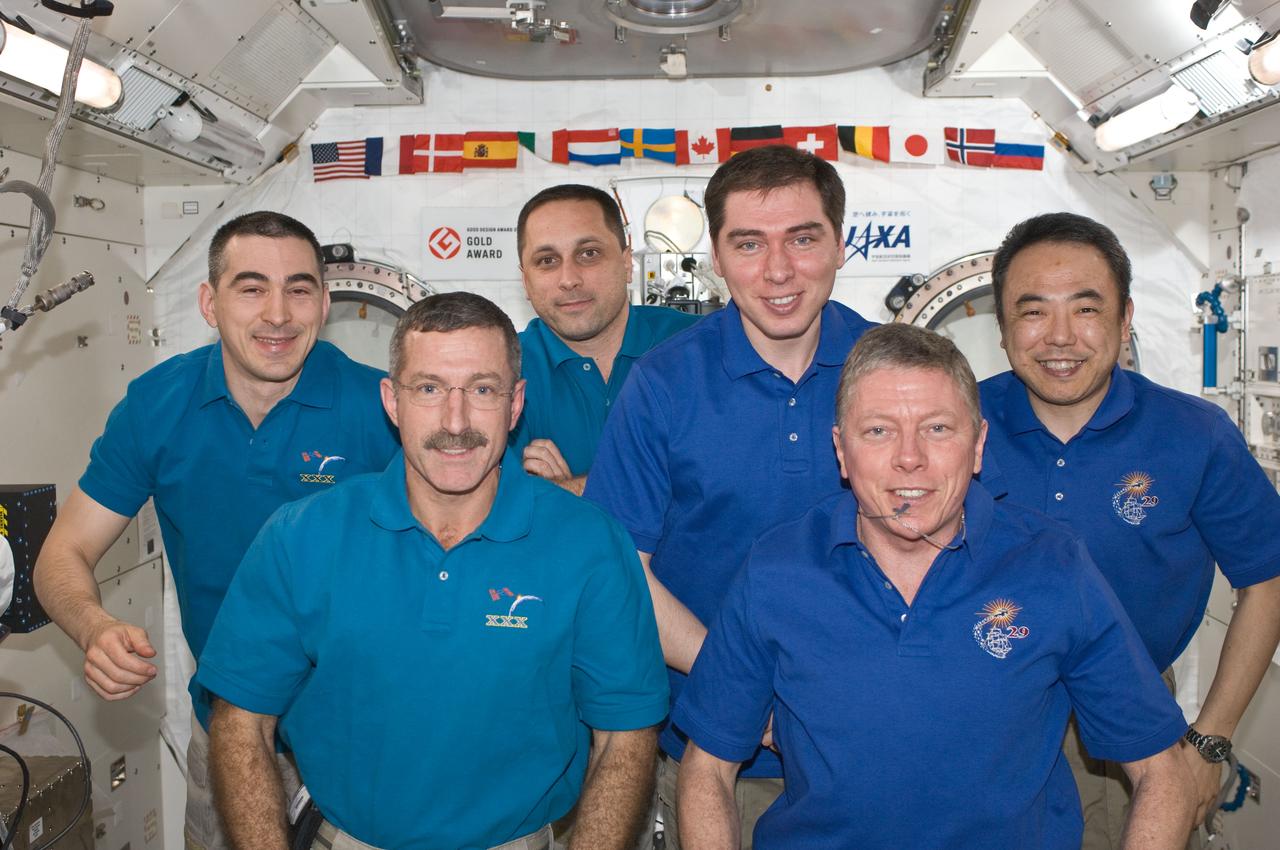
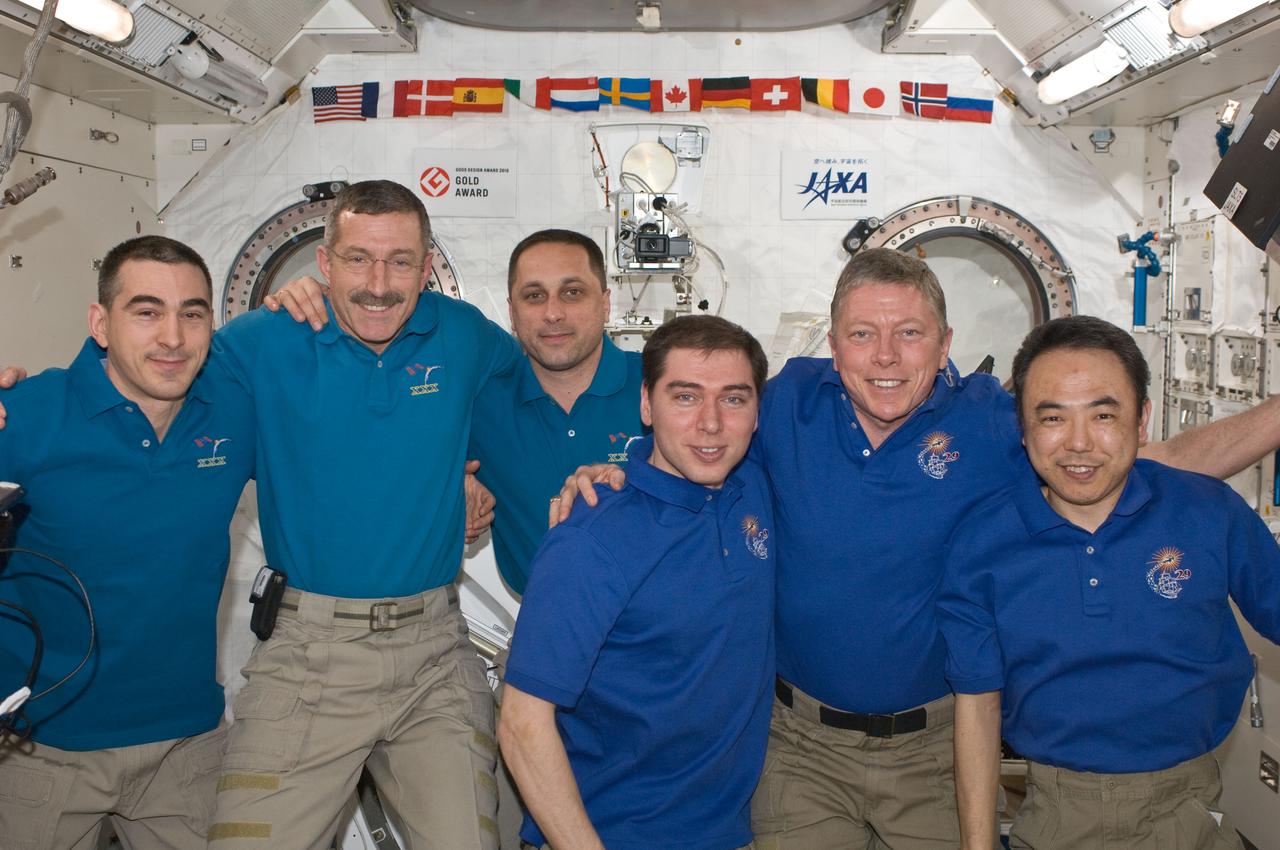
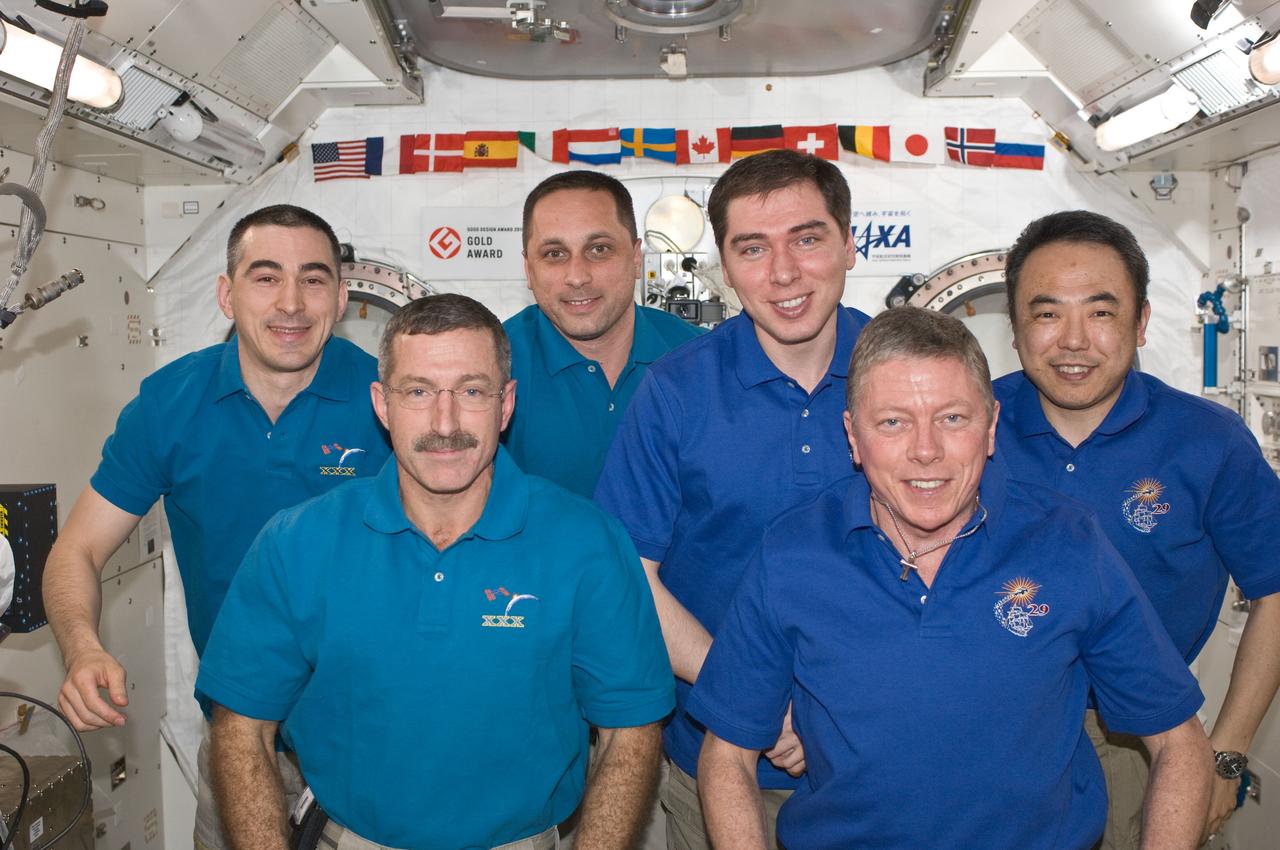
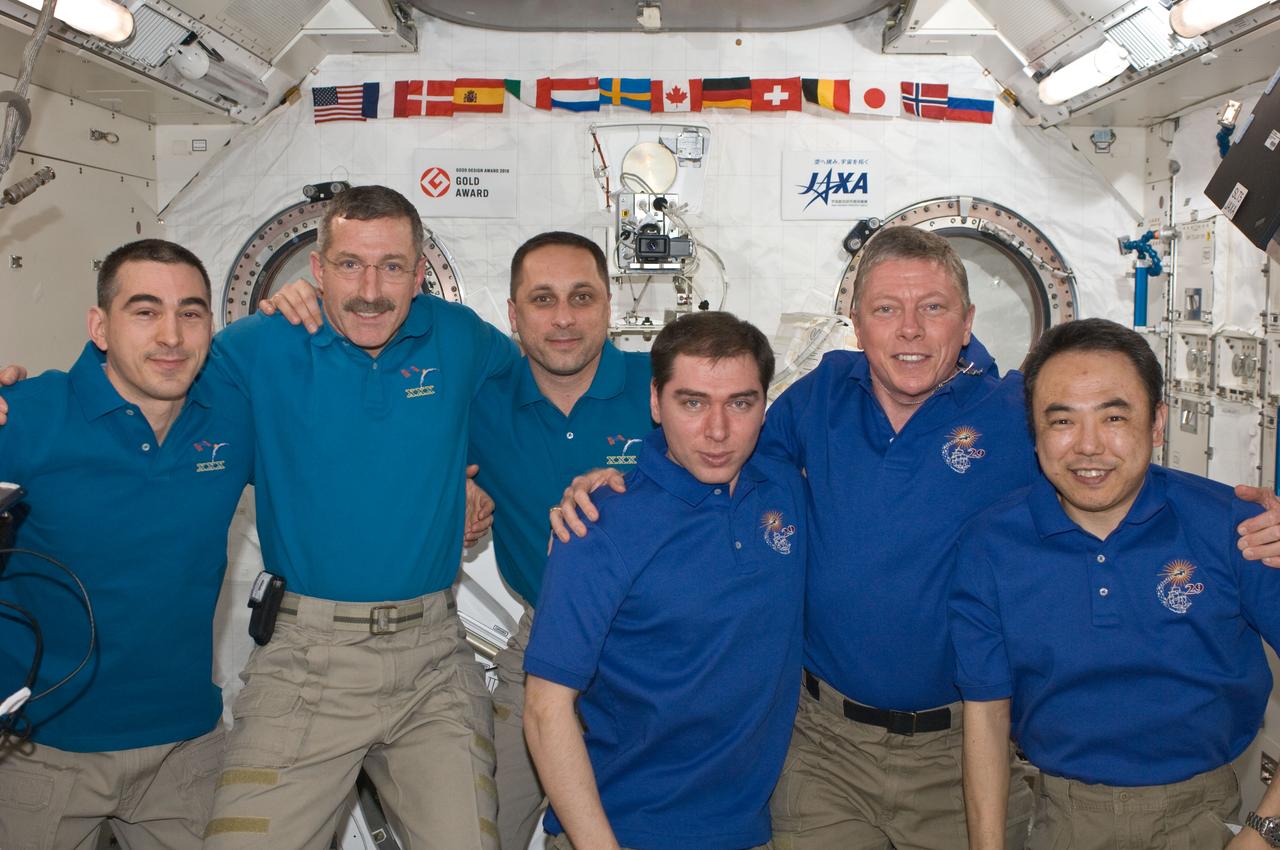
ISS029-E-043144 (20 Nov. 2011) --- Expedition 28/29 and Expedition 29/30 crew members pose for a group portrait in the International Space Station?s Kibo laboratory following the ceremony of Changing-of-Command from Expedition 29 to Expedition 30. Pictured from the left are Russian cosmonaut Anatoly Ivanishin, Expedition 30 flight engineer; NASA astronaut Dan Burbank, Expedition 30 commander; Anton Shkaplerov, Expedition 30 flight engineer; Russian cosmonaut Sergei Volkov, Expedition 29 flight engineer; NASA astronaut Mike Fossum, Expedition 29 commander; and Japan Aerospace Exploration Agency astronaut Satoshi Furukawa, Expedition 29 flight engineer.
Change of Command
ISS029-E-043148 (20 Nov. 2011) --- Expedition 28/29 and Expedition 29/30 crew members pose for a group portrait in the International Space Station?s Kibo laboratory following the ceremony of Changing-of-Command from Expedition 29 to Expedition 30. Pictured from the left are Russian cosmonaut Anatoly Ivanishin, Expedition 30 flight engineer; NASA astronaut Dan Burbank, Expedition 30 commander; Anton Shkaplerov, Expedition 30 flight engineer; Russian cosmonaut Sergei Volkov, Expedition 29 flight engineer; NASA astronaut Mike Fossum, Expedition 29 commander; and Japan Aerospace Exploration Agency astronaut Satoshi Furukawa, Expedition 29 flight engineer.
Change of Command
ISS029-E-043136 (20 Nov. 2011) --- Expedition 28/29 and Expedition 29/30 crew members pose for a group portrait in the International Space Station?s Kibo laboratory following the ceremony of Changing-of-Command from Expedition 29 to Expedition 30. Pictured on the front row are NASA astronauts Dan Burbank (left), Expedition 30 commander; and Mike Fossum, Expedition 29 commander. Pictured from the left (back row) are Russian cosmonauts Anatoly Ivanishin, and Anton Shkaplerov, both Expedition 30 flight engineers; and Sergei Volkov, Expedition 29 flight engineer; along with Japan Aerospace Exploration Agency astronaut Satoshi Furukawa, Expedition 29 flight engineer.
Change of Command
ISS029-E-043133 (20 Nov. 2011) --- Expedition 28/29 and Expedition 29/30 crew members pose for a group portrait in the International Space Station?s Kibo laboratory following the ceremony of Changing-of-Command from Expedition 29 to Expedition 30. Pictured on the front row are NASA astronauts Dan Burbank (left), Expedition 30 commander; and Mike Fossum, Expedition 29 commander. Pictured from the left (back row) are Russian cosmonauts Anatoly Ivanishin, and Anton Shkaplerov, both Expedition 30 flight engineers; and Sergei Volkov, Expedition 29 flight engineer; along with Japan Aerospace Exploration Agency astronaut Satoshi Furukawa, Expedition 29 flight engineer.
Change of Command
S68-40875 (5 July 1968) --- Astronaut John W. Young, Apollo 7 backup command module pilot, ingresses Apollo Spacecraft 101 Command Module during simulated altitude runs at the Kennedy Space Center's Pad 34.
Astronaut John Young ingresses Apollo spacecraft command module in training
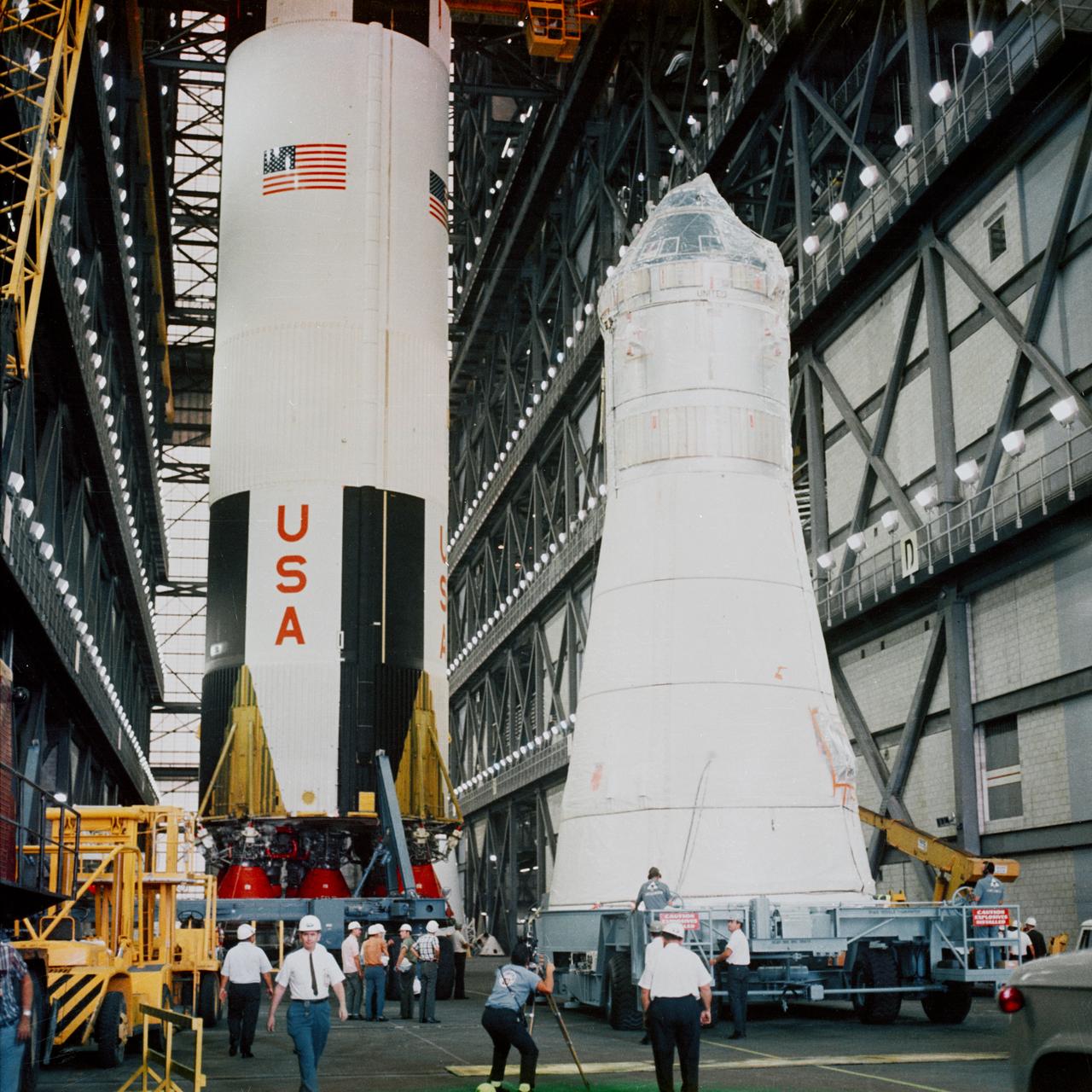
Apollo Spacecraft 104 Command/Service Module and Lunar Module 3 arrive at the Vehicle Assembly Building (VAB) for mating atop the Saturn 504 launch vehicle. The Saturn 504 stack is out of view. The Saturn V first (S-IC) stage in left background is scheduled for a later flight.
Apollo spacecraft Command/Service Module and Lunar Module 3 arrive at VAB
U.S. Navy frogmen attach a flotation collar to the Apollo 7 command module during recovery operations in the Atlantic. The Apollo 7 spacecraft splashed down at 7:11 a.m., October 22, 1968, approximately 200 nautical miles south-southwest of Bermuda.
Navy frogmen attach flotation collar to Apollo 7 command module
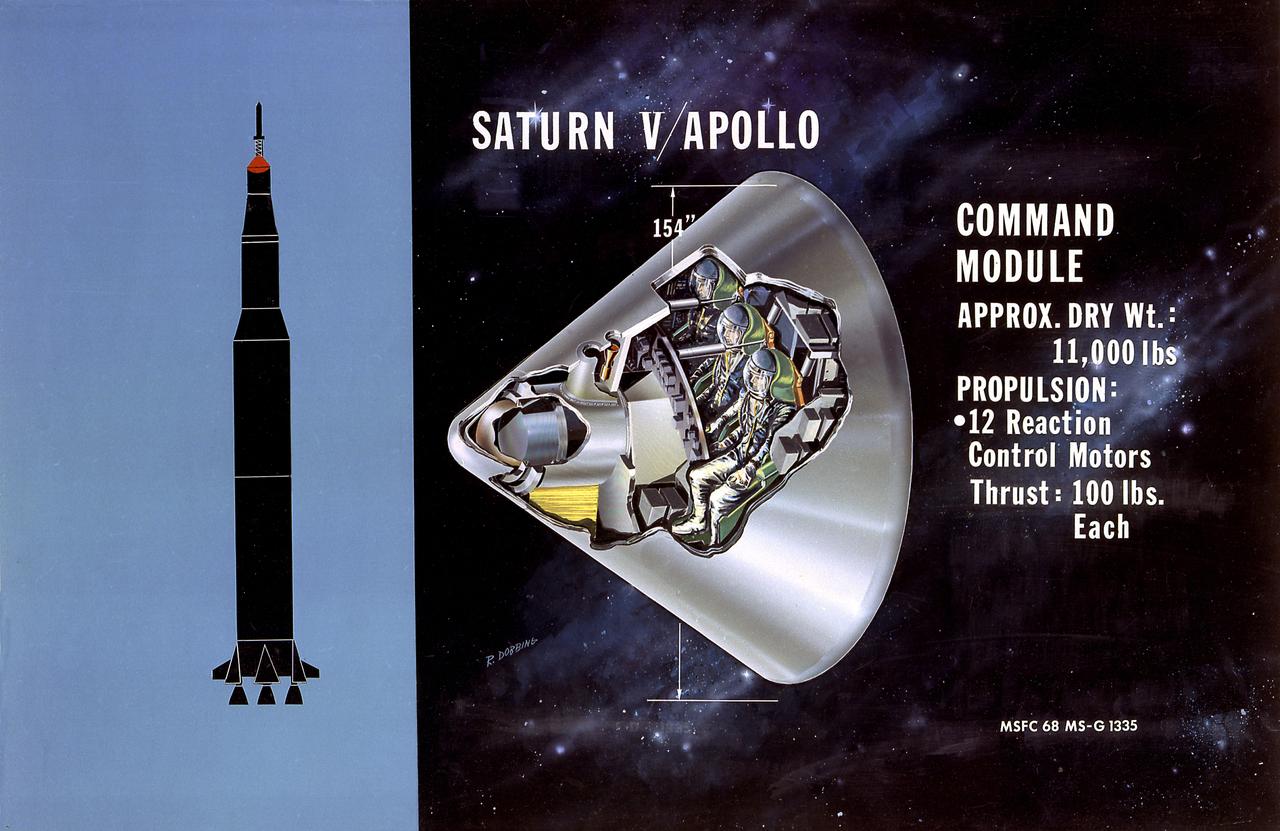
This is a cutaway illustration of the Saturn V command module (CM) configuration. The CM was crammed with some of the most complex equipment ever sent into space at the time. The three astronaut couches were surrounded by instrument panels, navigation gear, radios, life-support systems, and small engines to keep it stable during reentry. The entire cone, 11 feet long and 13 feet in diameter, was protected by a charring heat shield. The 6.5 ton CM was all that was finally left of the 3,000-ton Saturn V vehicle that lifted off on the journey to the Moon.
Saturn Apollo Program
S68-54850 (5 Nov. 1968) --- The prime crew of the Apollo 9 (Spacecraft 104/Lunar Module 3/Saturn 504) space mission are seen inside an Apollo command module boilerplate during water egress training activity in the Gulf of Mexico. From foreground, are astronauts James A. McDivitt, commander; David R. Scott, command module pilot; and Russell L. Schweickart, lunar module pilot.
Apollo 9 prime crew inside Apollo command module boilerplate during training
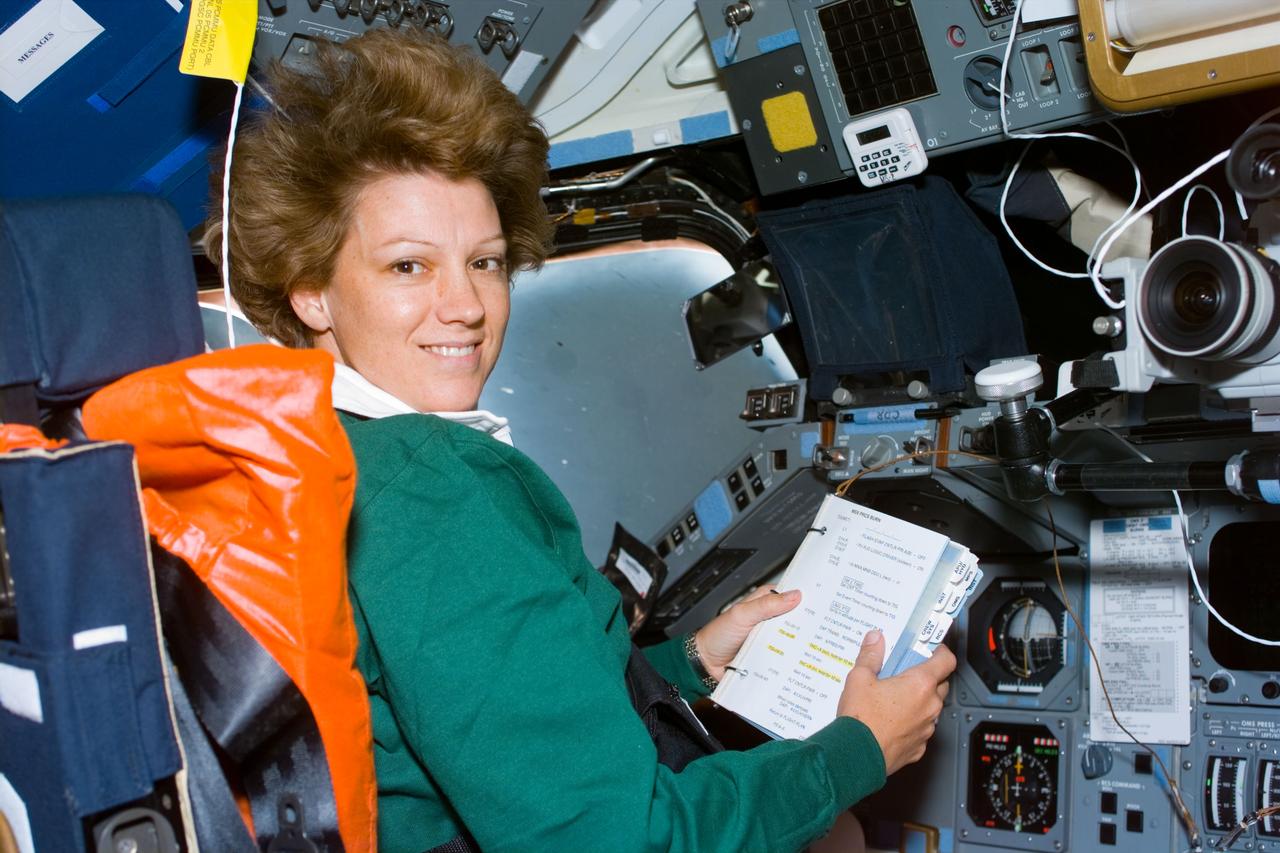
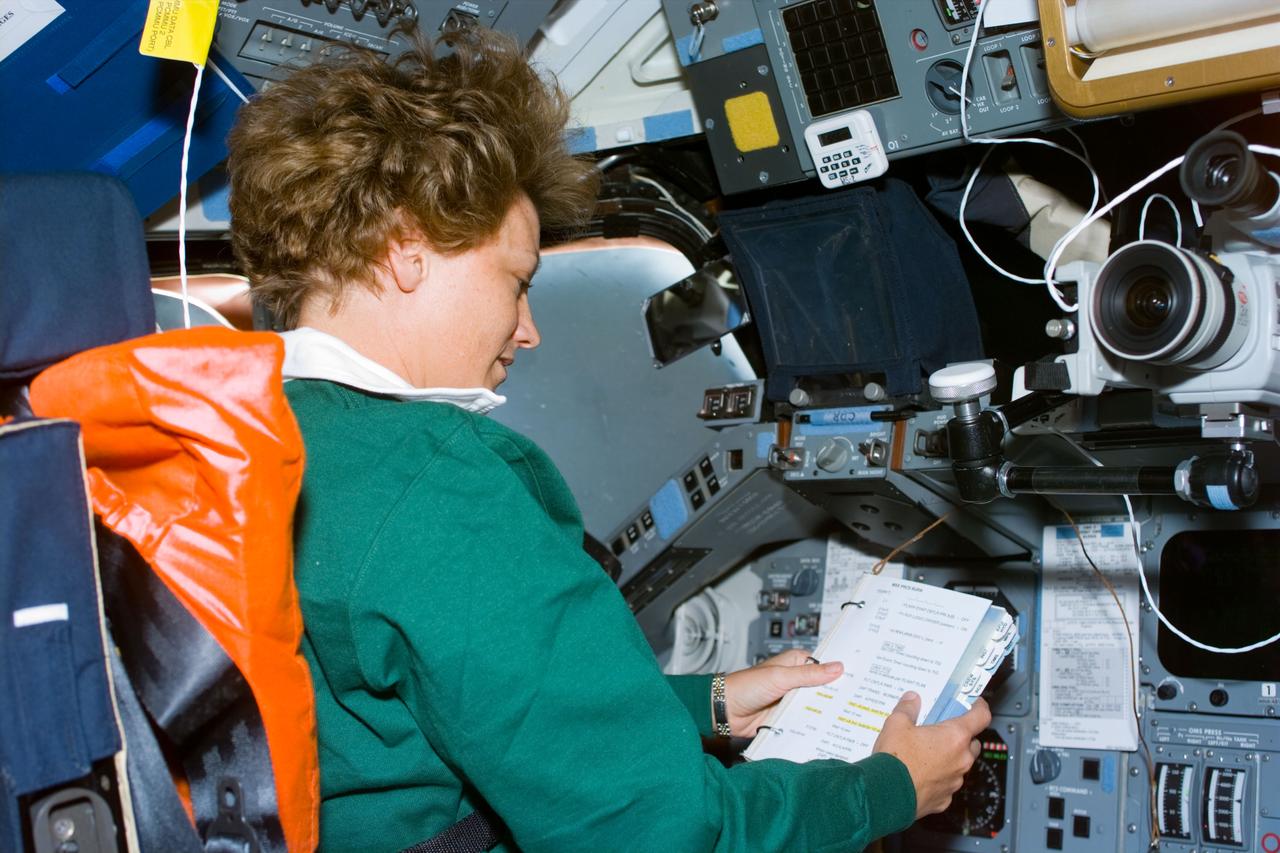
S93-E-5033 (23 July 1999) --- Astronaut Eileen M. Collins, mission commander, looks over a procedures checklist at the commander's station on the forward flight deck of the Space Shuttle Columbia on Flight Day 1.  The most important event of this day was the deployment of the Chandra X-Ray Observatory, the world's most powerful X-Ray telescope.  The photo was recorded with an electronic still camera (ESC).
Commander Collins seated in the flight deck commander's station
S93-E-5031 (23 July 1999) --- Astronaut Eileen M. Collins, mission commander,  looks over a procedures checklist at the  commander's station on the forward flight deck of the Space Shuttle Columbia on Flight Day 1.  The most  important event of this day was the  deployment of the Chandra X-Ray Observatory, the world's most powerful  X-Ray telescope.  The photo was recorded with an electronic still camera (ESC).
Commander Collins seated in the flight deck commander's station
S67-15717 (1967) --- Apollo Spacecraft 012 Command/Service Module is moved from H-134 to east stokes for mating to the Saturn Lunar Module Adapter No. 05 in the Manned Spacecraft Operations Building. S/C 012 will be flown on the Apollo/Saturn 204 mission.
COMMAND MODULE (C/M) - SPACECRAFT (S/C) 012 C/M - APOLLO/SATURN (A/S) 204 PREPARATIONS - CAPE
S67-15704 (3 Jan. 1967) --- Transfer of Apollo Spacecraft 012 Command/Service Module (CSM) for mating with the Saturn Lunar Module (LM) Adapter No.05 in the Manned Spacecraft Operations Building. Spacecraft 012 will be flown on the Apollo/Saturn 1 (204) mission.  Photo credit: NASA
APOLLO-SATURN (A/S)-204 - SPACECRAFT (S/C)- 012 COMMAND SERVICE MODULE (CSM) - A/S MATING - CAPE
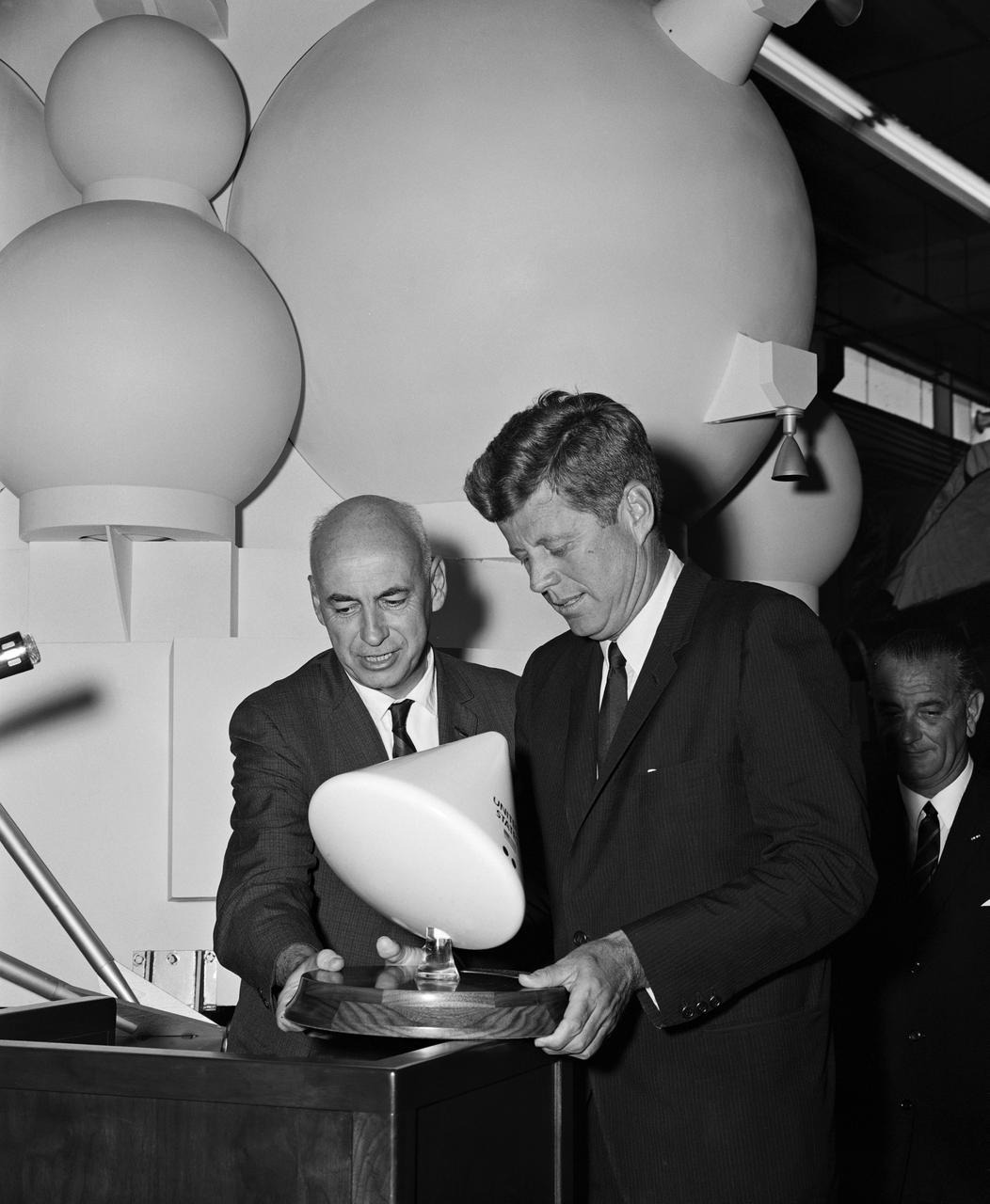
Dr. Robert R. Gilruth (left), director of what is now NASA’s Johnson Space Center, and President John F. Kennedy look at a small model of the Apollo Command Module on September 1, 1962.
Kennedy-Gilruth
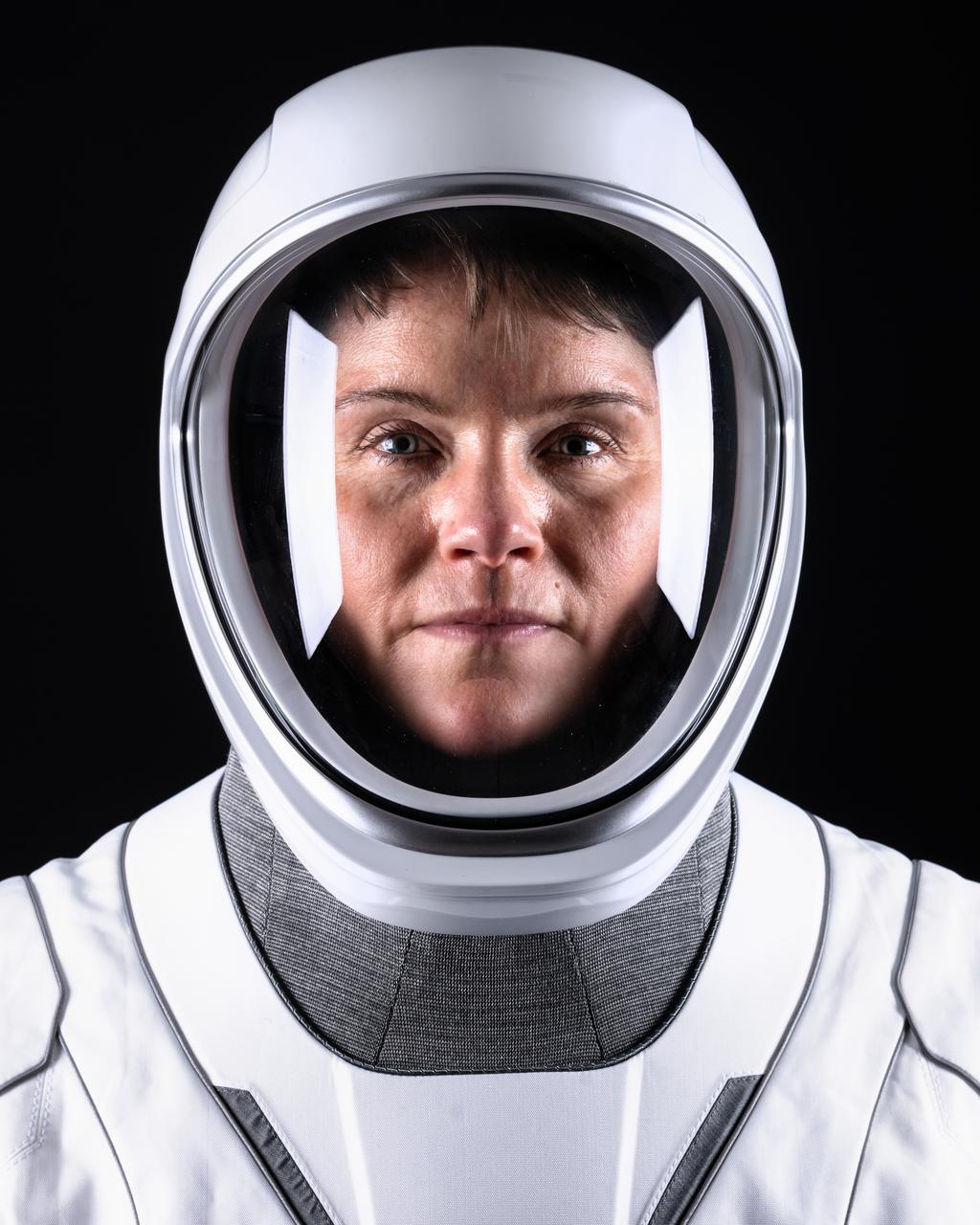
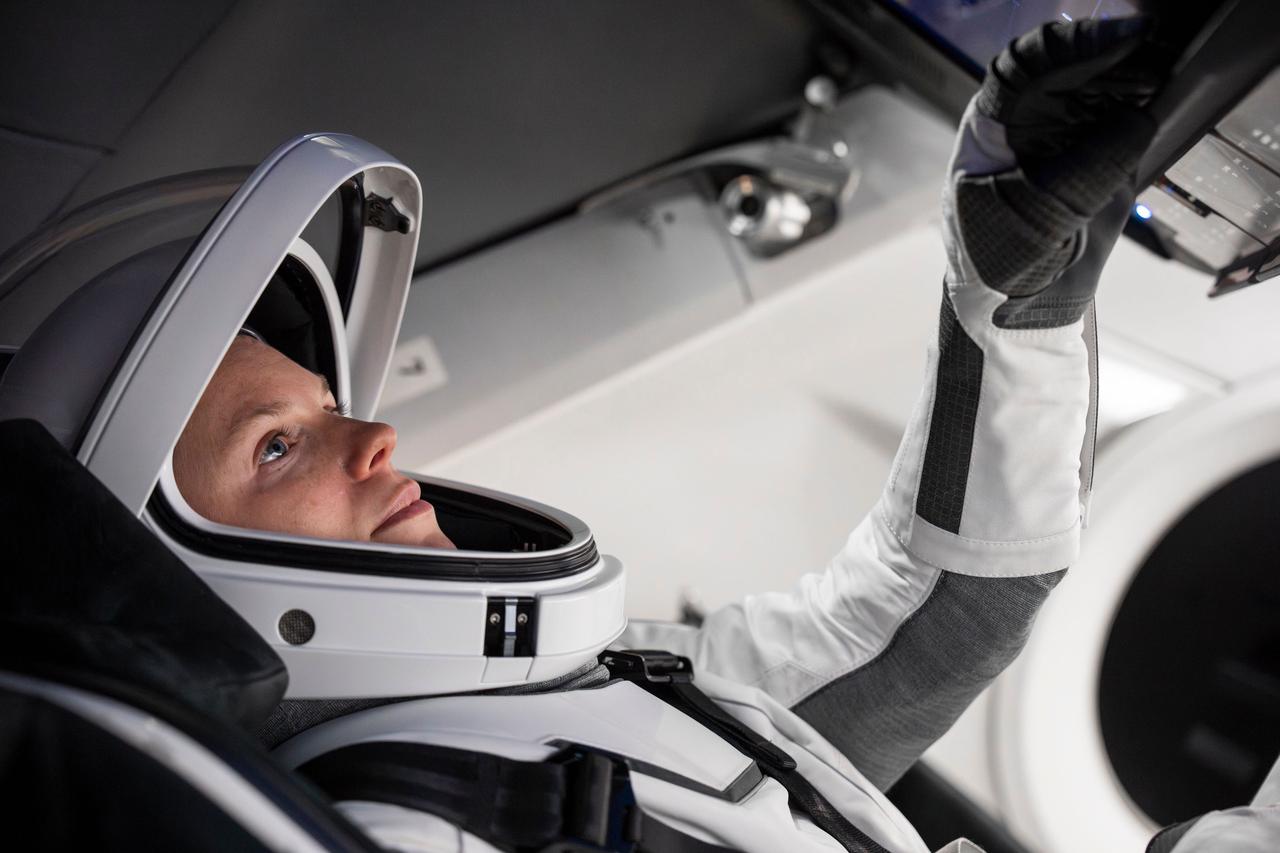
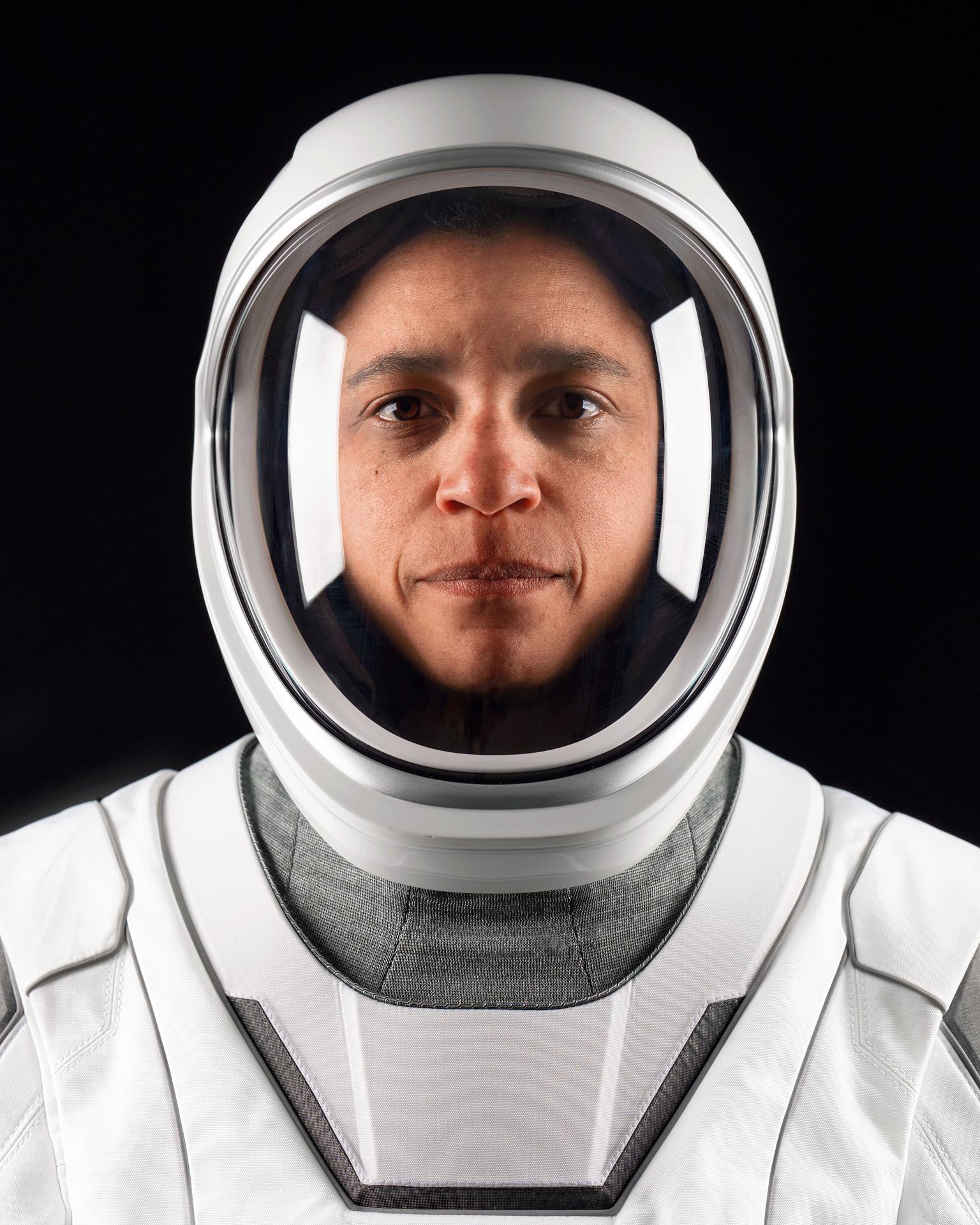
jsc2025e015859 (March 7, 2025) --- NASA’s SpaceX Crew-10 Commander Anne McClain poses for a portrait in her pressure suit at the SpaceX facility in Hawthorne, California. Credit: SpaceX
NASA’s SpaceX Crew-10 Commander Anne McClain
jsc2024e080755 (Dec. 13, 2024) --- NASA’s SpaceX Crew-10 Commander Anne McClain is pictured at the launch tower at Launch Complex 39A at NASA's Kennedy Space Center in Florida. Credit: SpaceX
SpaceX Crew-10 Commander Anne McClain
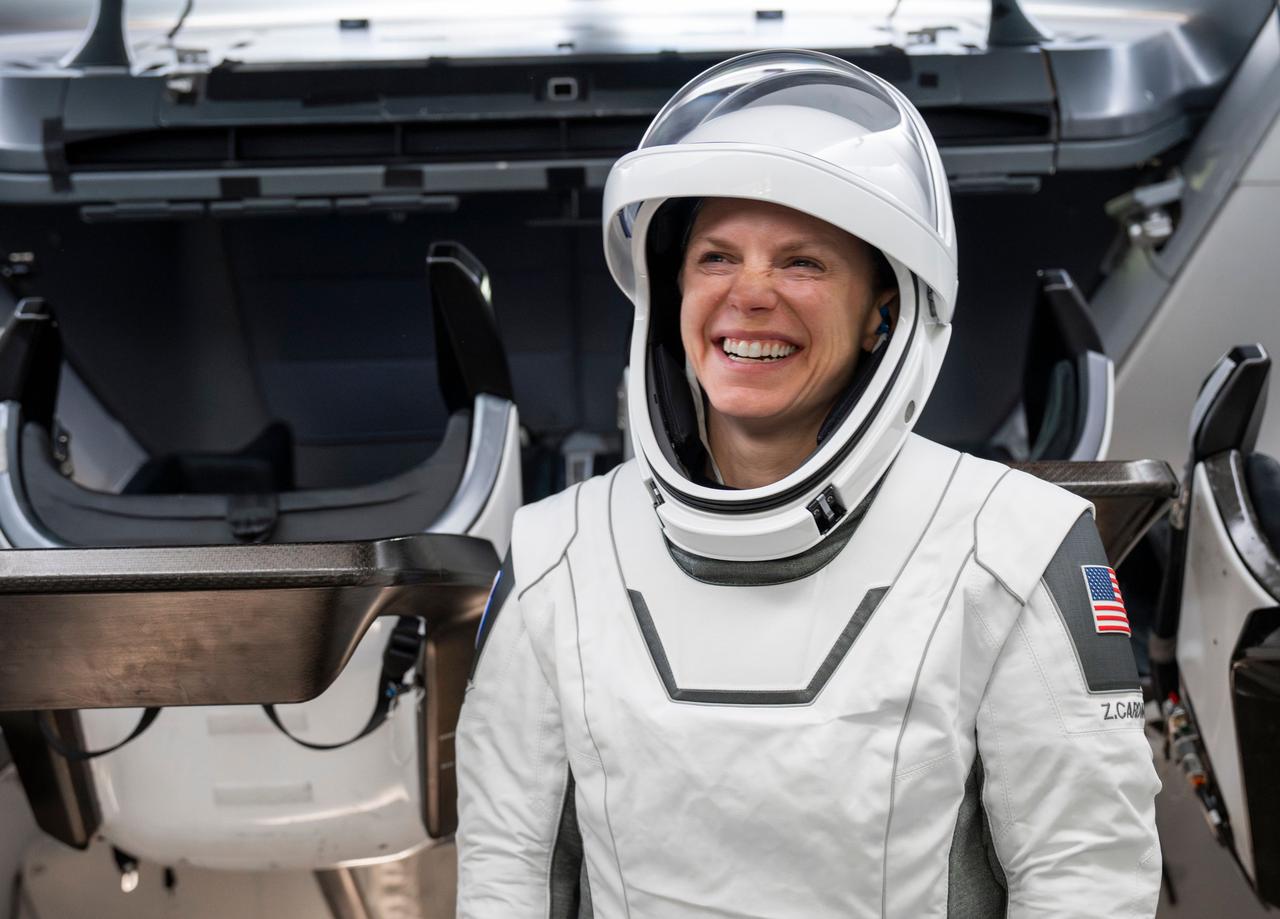
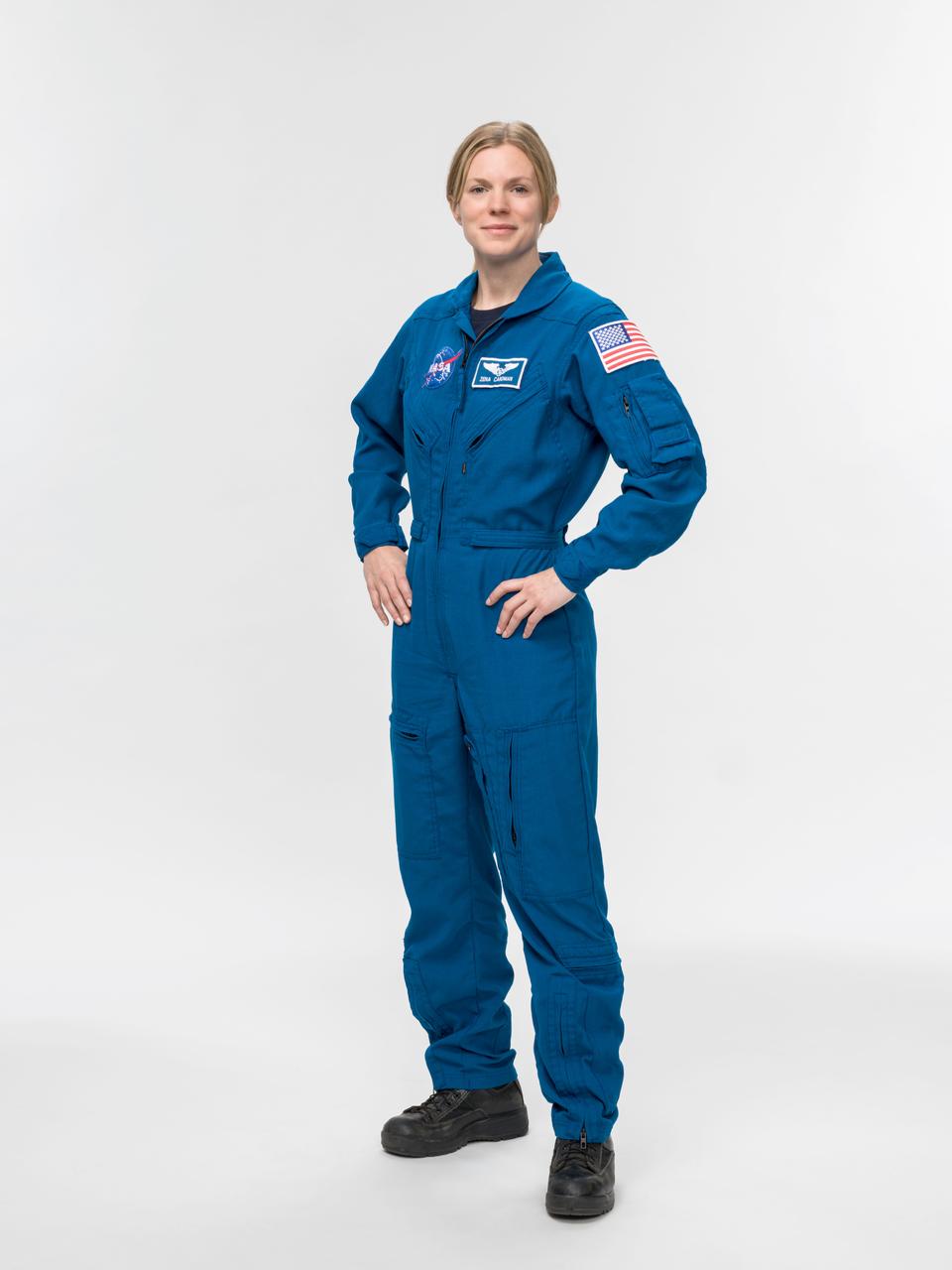
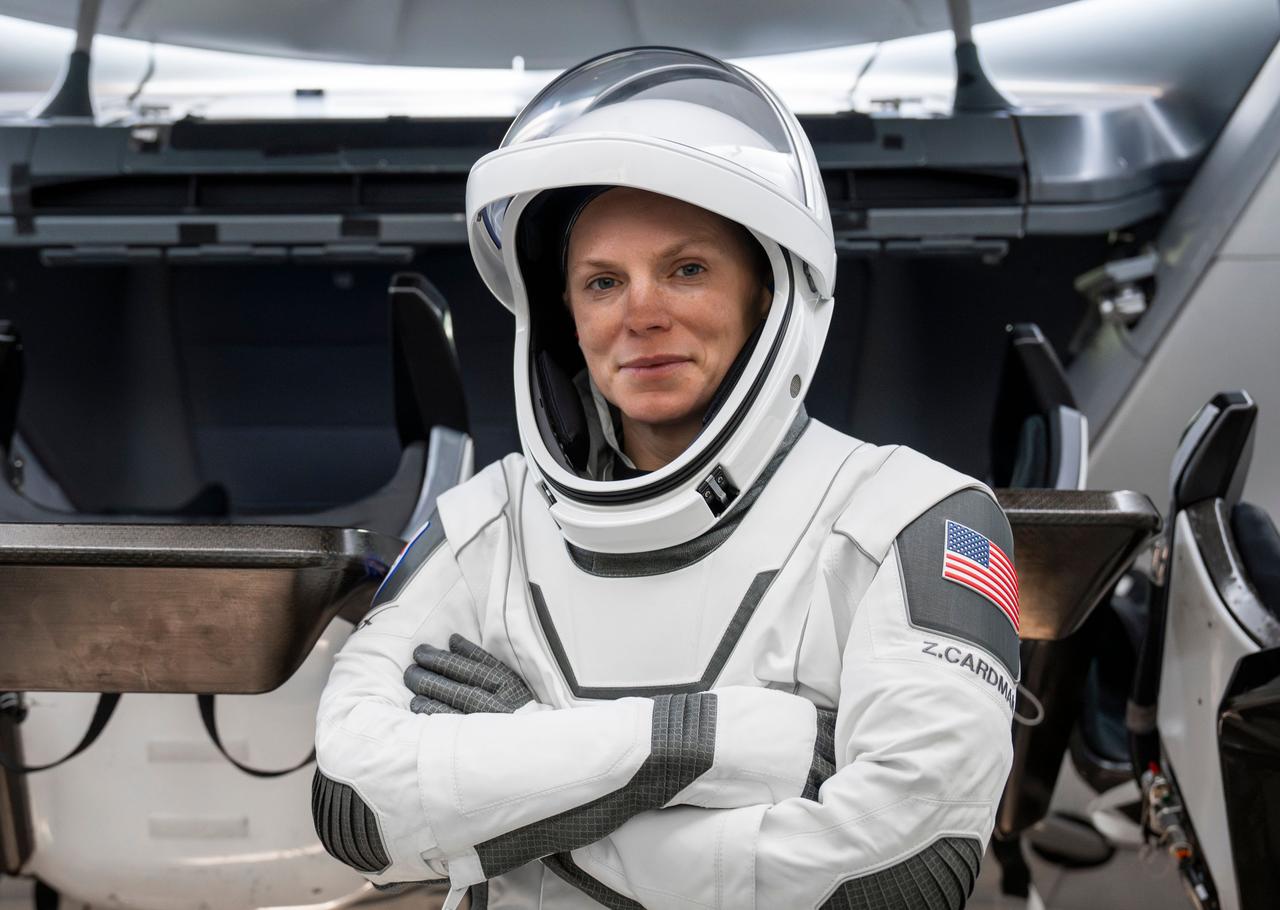
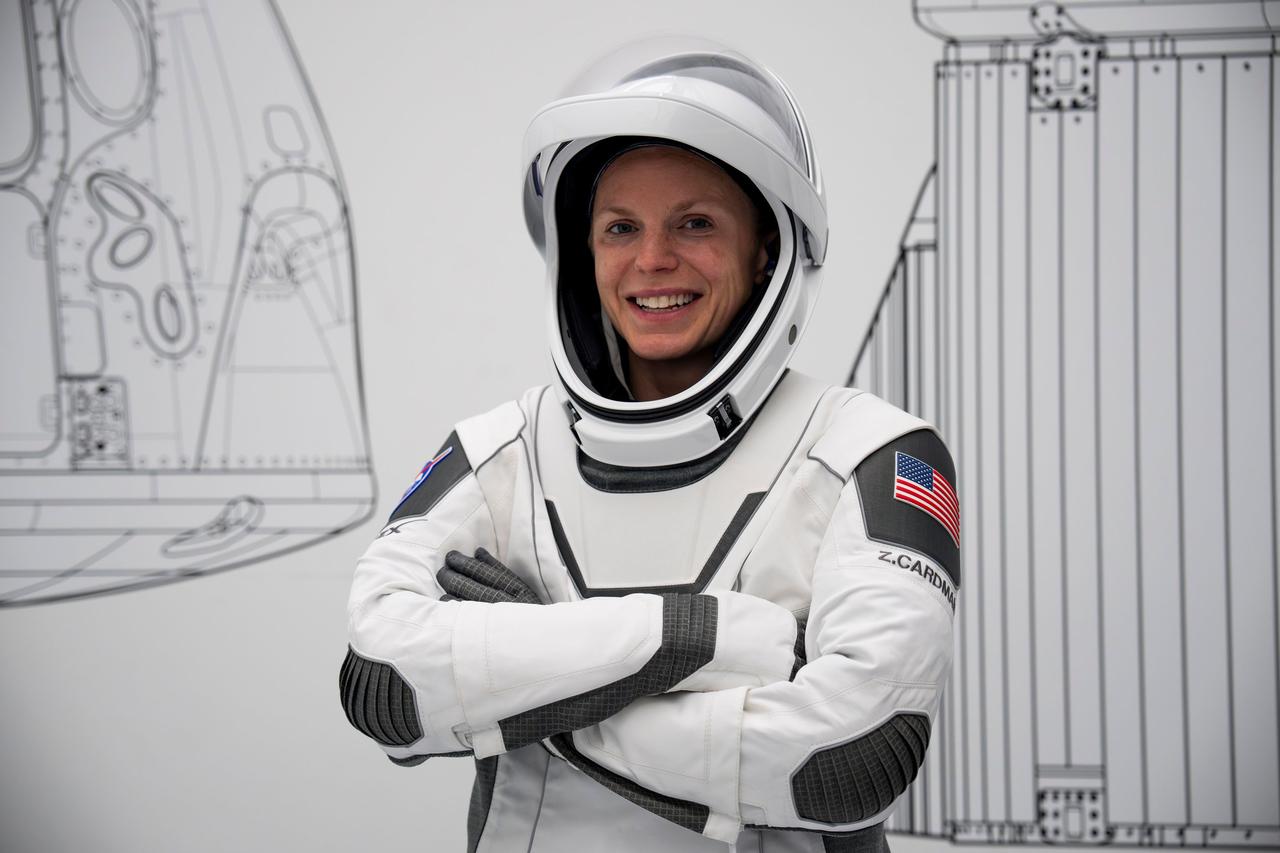
jsc2024e050130 (June 23, 2024) --- NASA’s SpaceX Crew-9 Commander Zena Cardman is pictured smiling in her flight suit during training at SpaceX headquarters in Hawthorne, California. Credit: SpaceX
NASA’s SpaceX Crew-9 Commander Zena Cardman
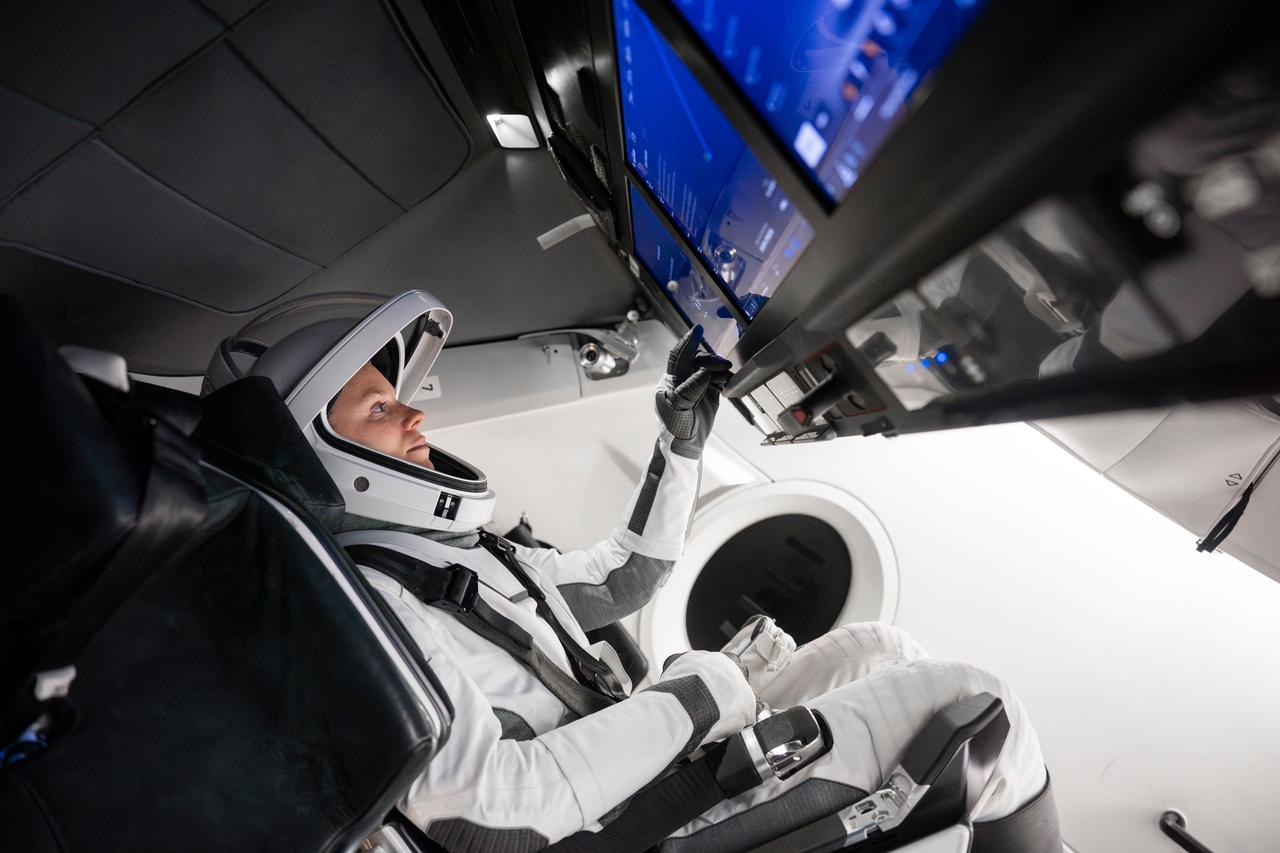
jsc2024e050127 (June 23, 2024) --- NASA’s SpaceX Crew-9 Commander Zena Cardman trains inside a Dragon mockup crew vehicle at SpaceX headquarters in Hawthorne, California. Credit: SpaceX
NASA’s SpaceX Crew-9 Commander Zena Cardman
jsc2024e050129 (June 23, 2024) --- NASA’s SpaceX Crew-9 Commander Zena Cardman is pictured inside a Dragon mockup crew vehicle at SpaceX headquarters in Hawthorne, California. Credit: SpaceX
NASA’s SpaceX Crew-9 Commander Zena Cardman
jsc2024e050131 (June 23, 2024) --- NASA’s SpaceX Crew-9 Commander Zena Cardman poses for a photo in her flight suit at SpaceX headquarters in Hawthorne, California. Credit: SpaceX
NASA’s SpaceX Crew-9 Commander Zena Cardman
jsc2024e050128 (June 23, 2024) --- NASA’s SpaceX Crew-9 Commander Zena Cardman focuses on her training inside a Dragon mockup crew vehicle at SpaceX headquarters in Hawthorne, California. Credit: SpaceX
NASA’s SpaceX Crew-9 Commander Zena Cardman
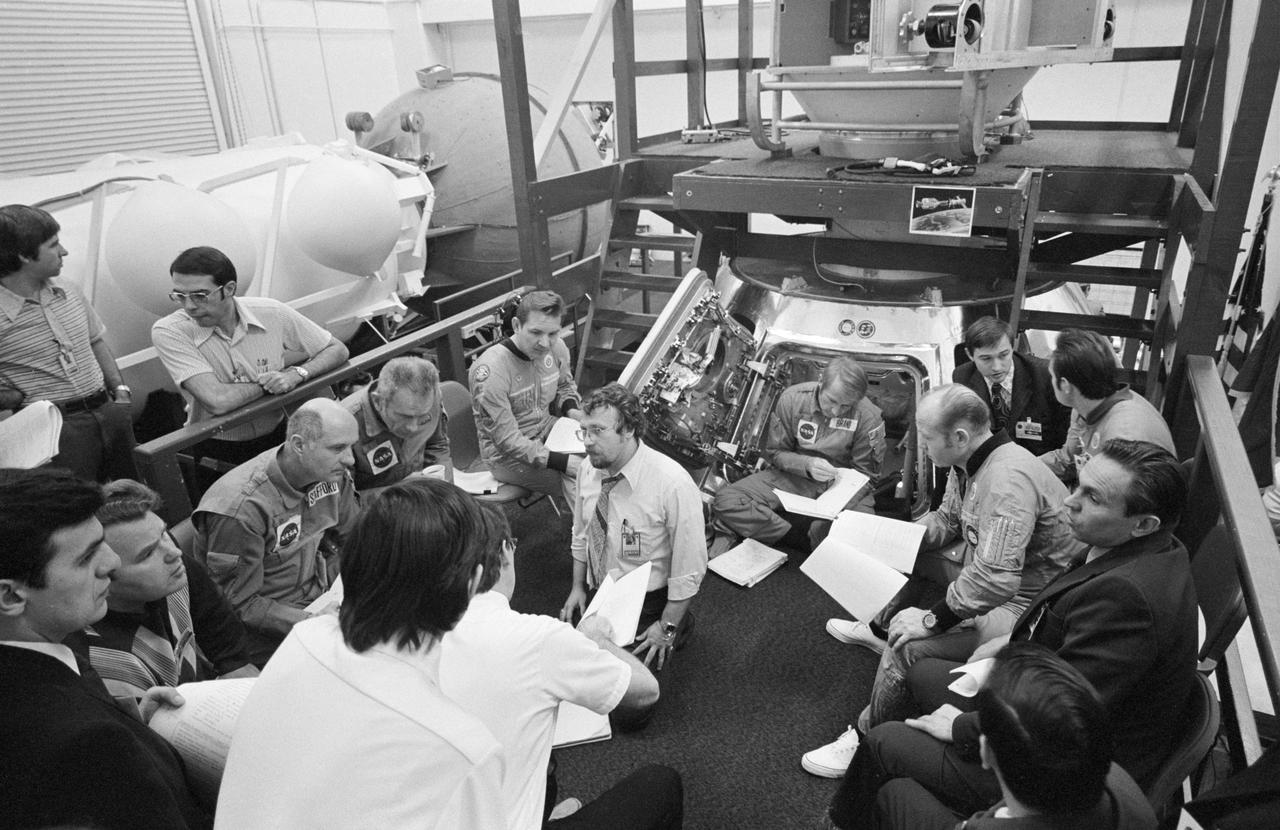
S75-21599 (12 Feb. 1975) --- Six Apollo-Soyuz Test Project crewmen participate in joint crew training in Building 35 at the Johnson Space Center. They are (wearing flight suits), left to right, astronaut Thomas P. Stafford, commander of the American ASTP prime crew; astronaut Donald K. Slayton, docking module pilot on Stafford?s crew; cosmonaut Valeriy N. Kubasov, engineer on the Soviet ASTP first (prime) crew; astronaut Vance D. Brand, command module pilot on Stafford?s crew; cosmonaut Aleksey A. Leonov, commander of the Soviet ASTP first (prime) crew; and cosmonaut Vladimir A. Dzhanibekov, commander of the Soviet ASTP third (backup) crew. Brand is seated next to the hatch of the Apollo Command Module trainer. This picture was taken during a ?walk-through? of the first day?s activities in Earth orbit. The other men are interpreters and training personnel.
Simulations- ASTP Command Module
jsc2023e067699_alt (Oct. 27, 2023) --- NASA astronaut and SpaceX Crew-11 Commander Zena Cardman poses for a portrait at NASA's Johnson Space Center in Houston. Texas.
NASA astronaut and SpaceX Crew-11 Commander Zena Cardman
jsc2023e067715_alt (Oct. 27, 2023) --- NASA astronaut and SpaceX Crew-11 Commander Zena Cardman poses for a portrait at NASA's Johnson Space Center in Houston. Texas.
NASA astronaut and SpaceX Crew-11 Commander Zena Cardman
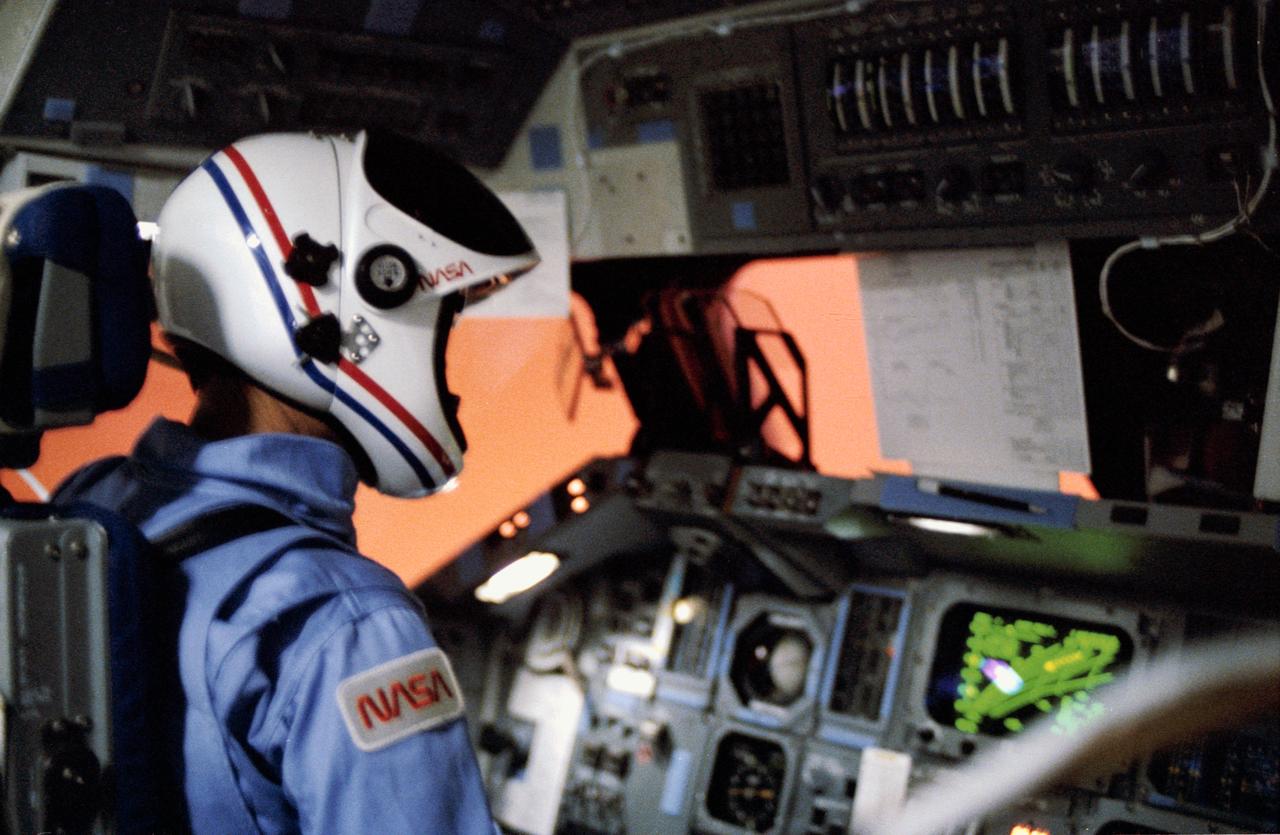
STS007-31-1614 & S83-35775 (24 June 1983) ---   Astronaut Robert L. Crippen is seen at the commander’s station of the Space Shuttle Challenger as it passes through the Earth’s atmosphere on re-entry.  The friction results in a pinkish glow visible through the forward windows on the flight deck.  The scene was exposed with a 35mm camera.
Commander Crippen at Forward Flight Deck Commanders Station
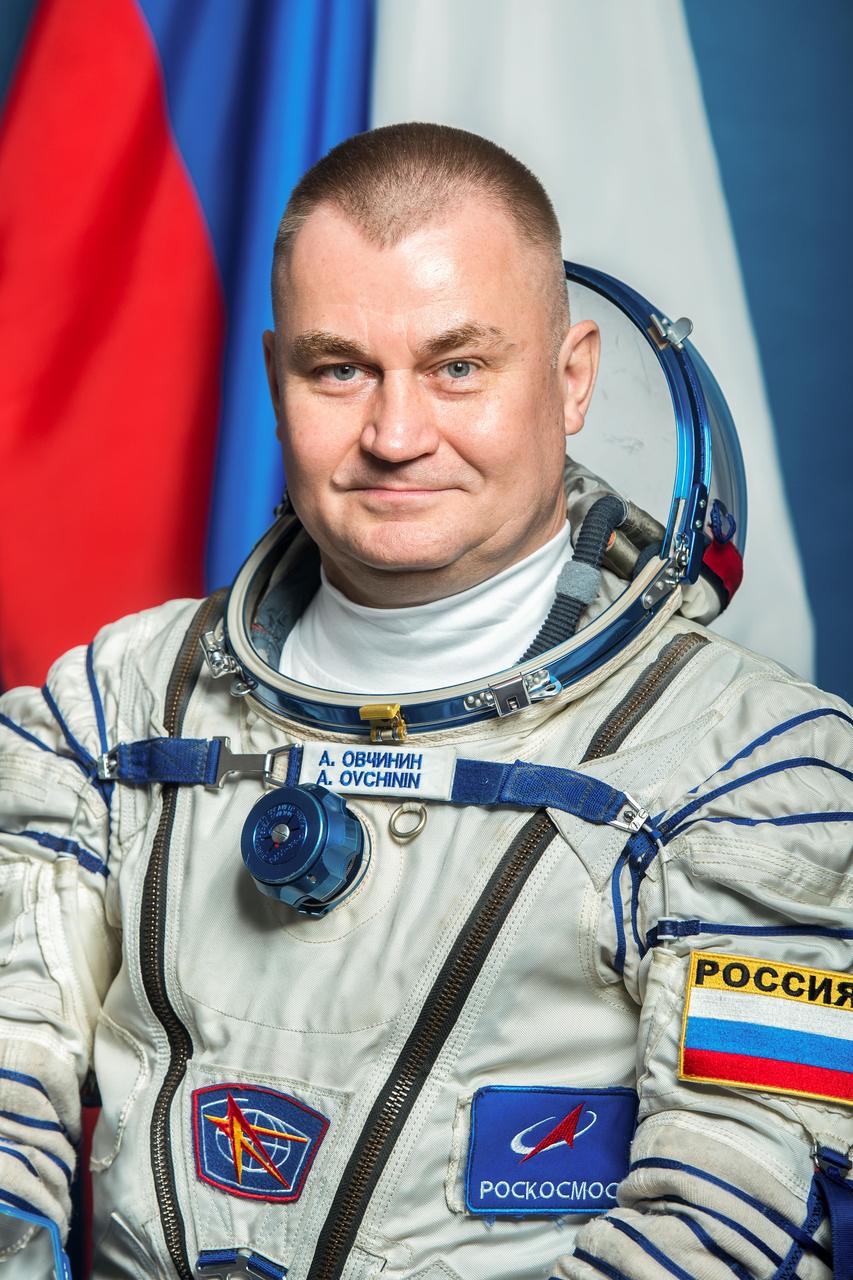
jsc2023e052795 (April 20, 2023) --- Roscosmos cosmonaut and Soyuz MS-26 Commander Alexey Ovchinin poses for a crew portrait at the Gagarin Cosmonaut Training Center. Credit: GCTC/Andrey Shelepin
Soyuz MS-26 Commander Alexey Ovchinin poses for a crew portrait
AS17-145-22254 (14 Dec. 1972) --- An excellent view of the Apollo 17 Command and Service Modules (CSM) photographed from the Lunar Module (LM) "Challenger" during rendezvous and docking maneuvers in lunar orbit. The LM ascent stage, with astronauts Eugene A. Cernan and Harrison H. Schmitt aboard, had just returned from the Taurus-Littrow landing site on the lunar surface. Astronaut Ronald E. Evans remained with the CSM in lunar orbit. Note the exposed Scientific Instrument Module (SIM) Bay in Sector 1 of the Service Module (SM). Three experiments are carried in the SIM bay: S-209 lunar sounder, S-171 infrared scanning spectrometer, and the S-169 far-ultraviolet spectrometer. Also mounted in the SIM bay are the panoramic camera, mapping camera and laser altimeter used in service module photographic tasks. A portion of the LM is on the right.
Apollo 17 Command/Service modules photographed from lunar module in orbit
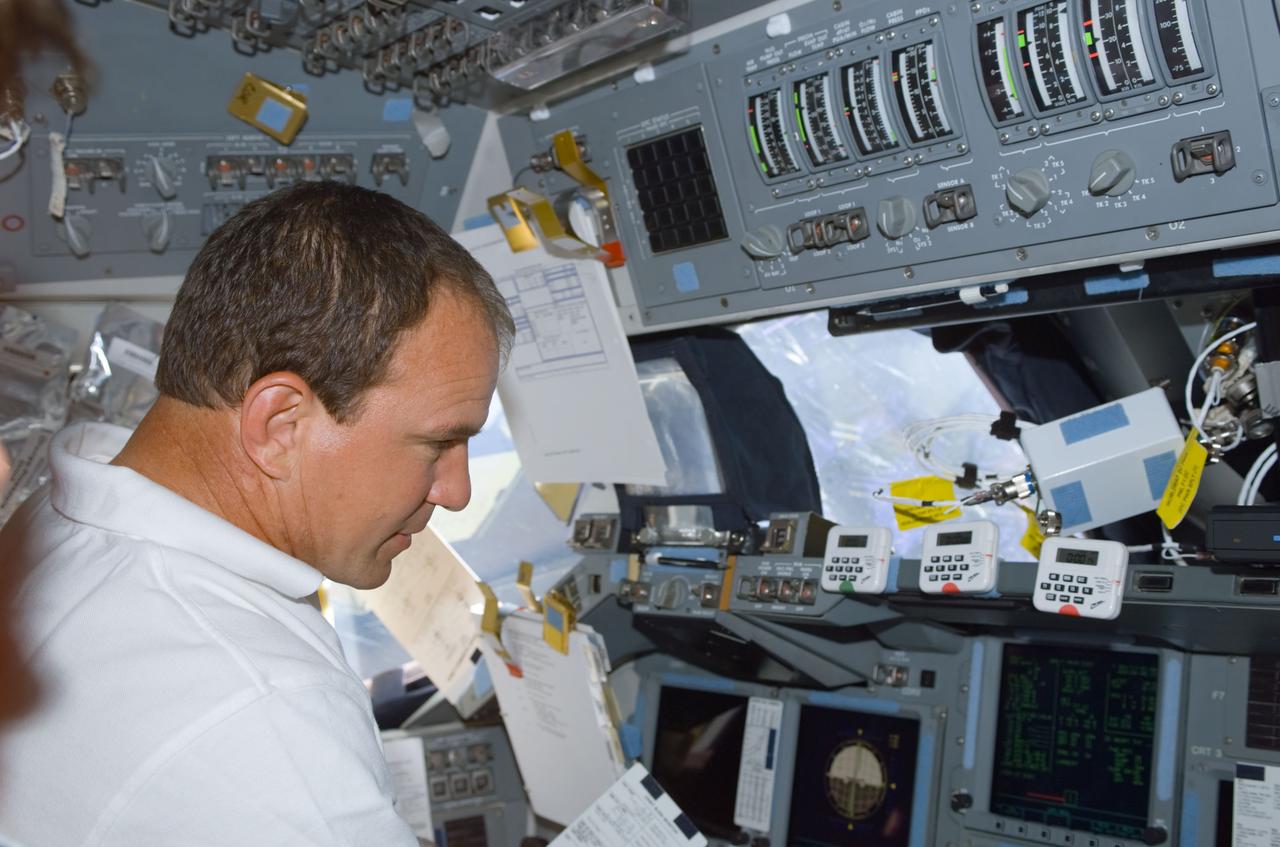
STS110-E-5067 (9 April 2002) --- Astronaut Michael J. Bloomfield, STS-110 mission commander, occupying the commander’s station, checks data on the cockpit displays on the forward flight deck of the Space Shuttle Atlantis. The image was taken with a digital still camera.
Commander Bloomfield works at the commander's workstation on the flight deck during STS-110
STS106-352-009 (8-20 September 2000) --- Astronaut Terrence W. Wilcutt, STS-106 mission commander, performs a firing of the reaction control system on the flight deck of the Space Shuttle Atlantis. Earth’s horizon is visible through the commander’s window.
Commander Wilcutt works at the commander's workstation during STS-106
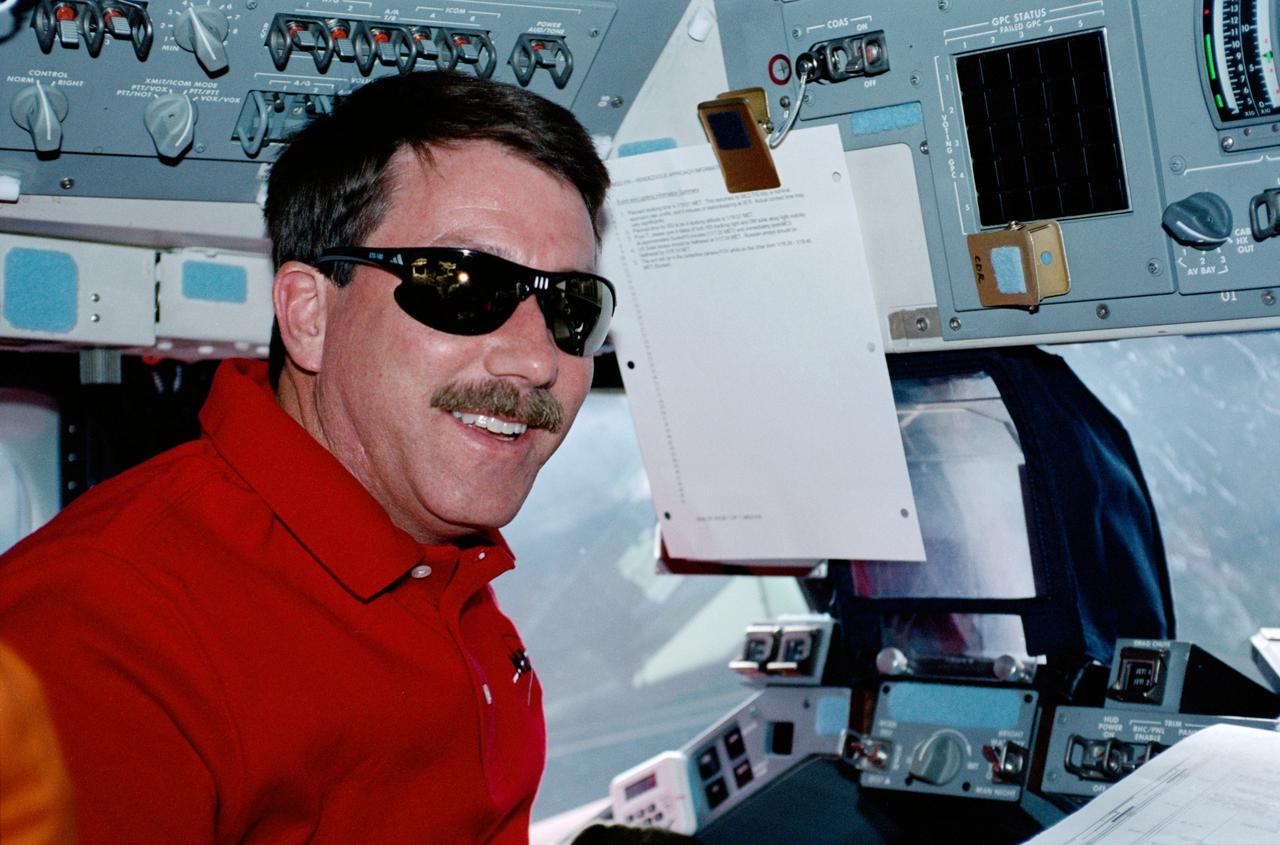
STS100-303-004 (19 April-1 May 2001) --- Astronaut Kent V. Rominger, STS-100 commander, looks over a procedures checklist at the commander's station on the forward flight deck of the Earth-orbiting Space Shuttle Endeavour.
Commander Rominger at the commander's workstation in Endeavour during STS-100
AS10-27-3873 (22 May 1969) --- The Apollo 10 Command and Service Modules (CSM) are photographed from the Lunar Module (LM) after CSM/LM separation in lunar orbit. The CSM was about 175 statute miles east of Smyth's Sea and was above the rough terrain which is typical of the lunar far side. The eastward oblique view of the lunar surface is centered near 105 degrees east longitude and 1 degree north latitude. The horizon is approximately 600 kilometers (374 statute miles) away. Numerous bright craters and the absence of shadows show that the sun was almost directly overhead when this photograph was taken.
Apollo 10 Command/Service Modules seen from Lunar Module after separation
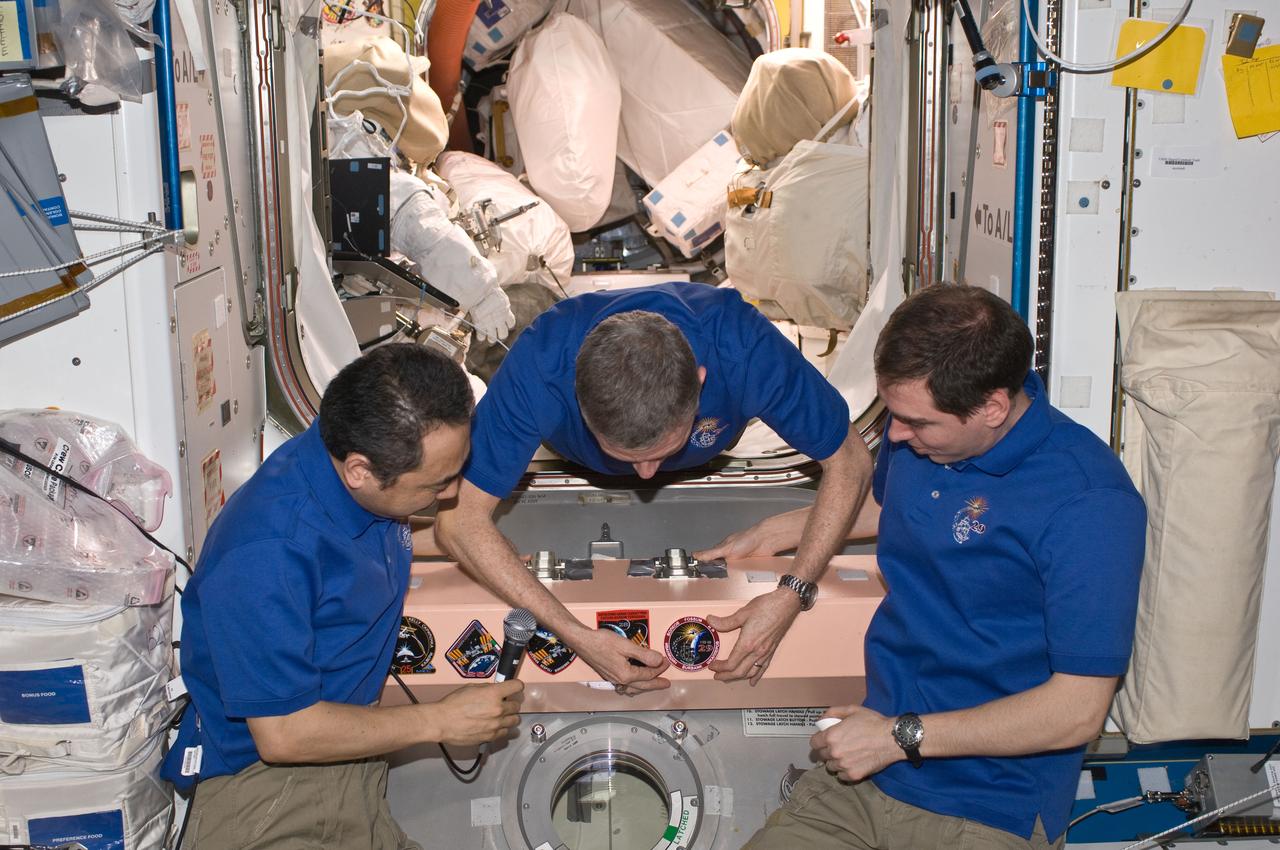
ISS029-E-043205 (20 Nov. 2011) --- In the Unity node, Expedition 29 crew members pose for a photo after adding the Expedition 29 patch to the growing collection of insignias representing crews who have worked on the International Space Station. Pictured are NASA astronaut Mike Fossum (center), commander; Japan Aerospace Exploration Agency astronaut Satoshi Furukawa (left) and Russian cosmonaut Sergei Volkov, both flight engineers.
Change of Command
ISS029-E-043204 (20 Nov. 2011) --- In the Unity node, Expedition 29 crew members add the Expedition 29 patch to the growing collection of insignias representing crews who have worked on the International Space Station. Pictured are NASA astronaut Mike Fossum (center), commander; Japan Aerospace Exploration Agency astronaut Satoshi Furukawa (left) and Russian cosmonaut Sergei Volkov, both flight engineers.
Change of Command
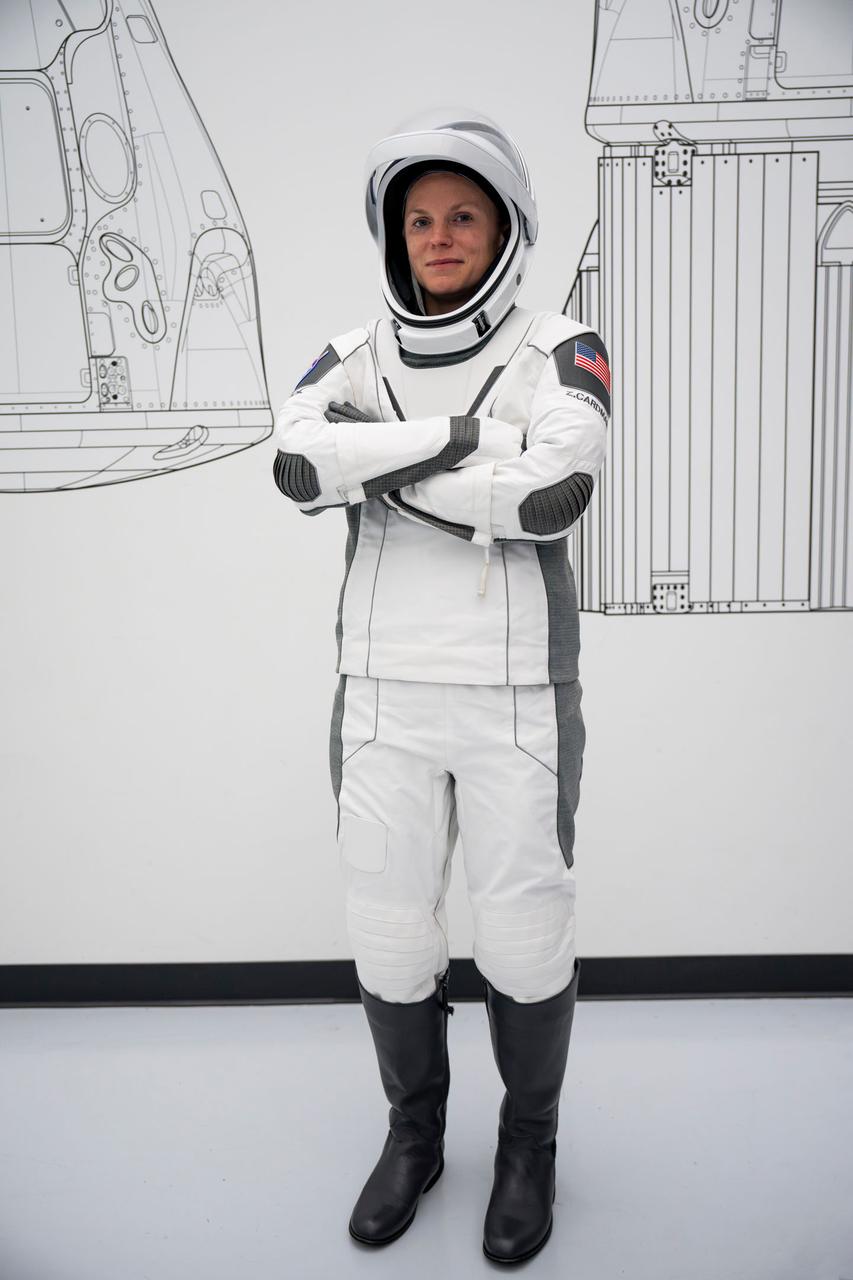
jsc2024e052331 (June 23, 2024) --- SpaceX Crew-9 Commander Zena Cardman of NASA's Commercial Crew Program poses for a portrait in her flight suit at SpaceX headquarters in Hawthorne, California. Credit: SpaceX
SpaceX Crew-9 Commander Zena Cardman
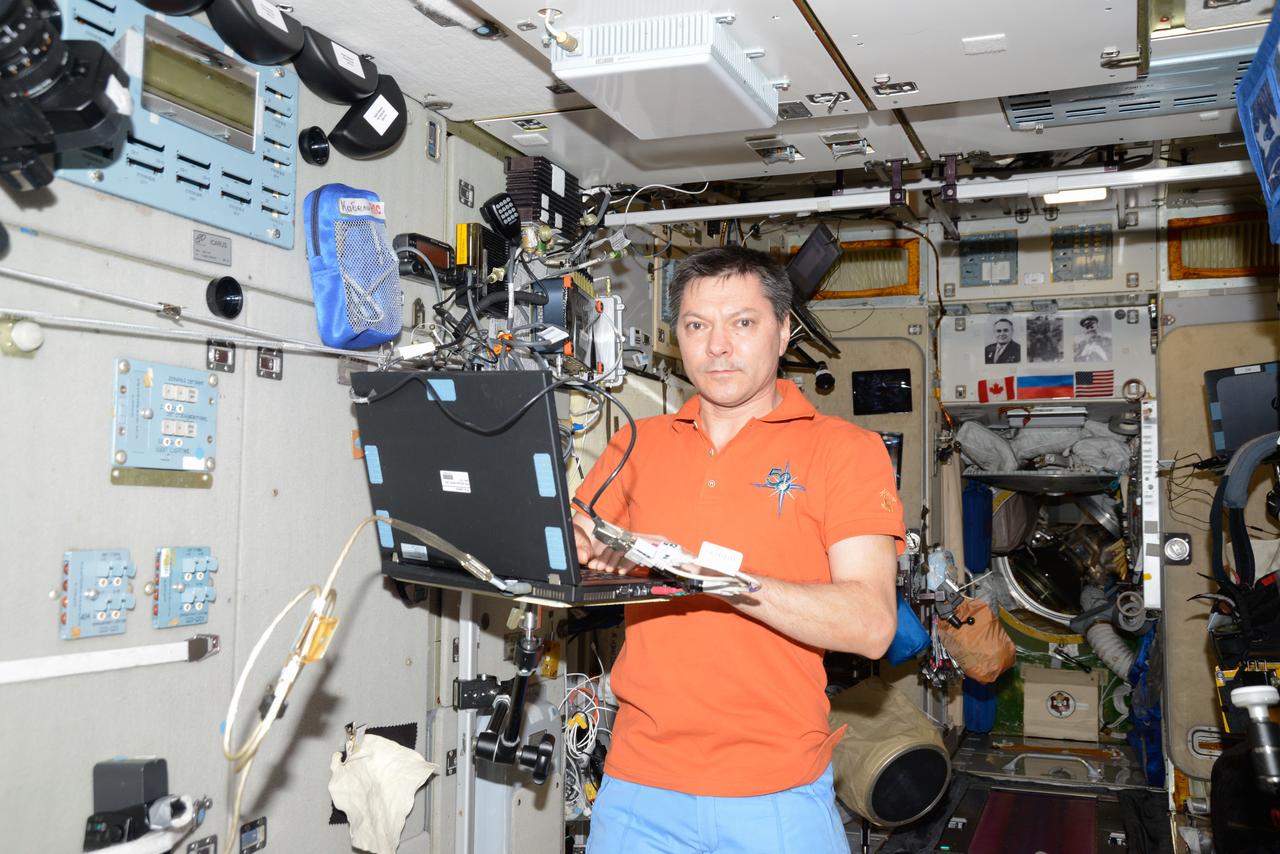
iss058e007788 (Jan. 30, 2019) --- Expedition 58 Commander Oleg Kononenko of Roscosmos is pictured in the Zvezda service module at the end of the work day wrapping up science operations on a laptop computer. Credit: Roscosmos
Expedition 58 Commander Oleg Kononenko of Roscosmos
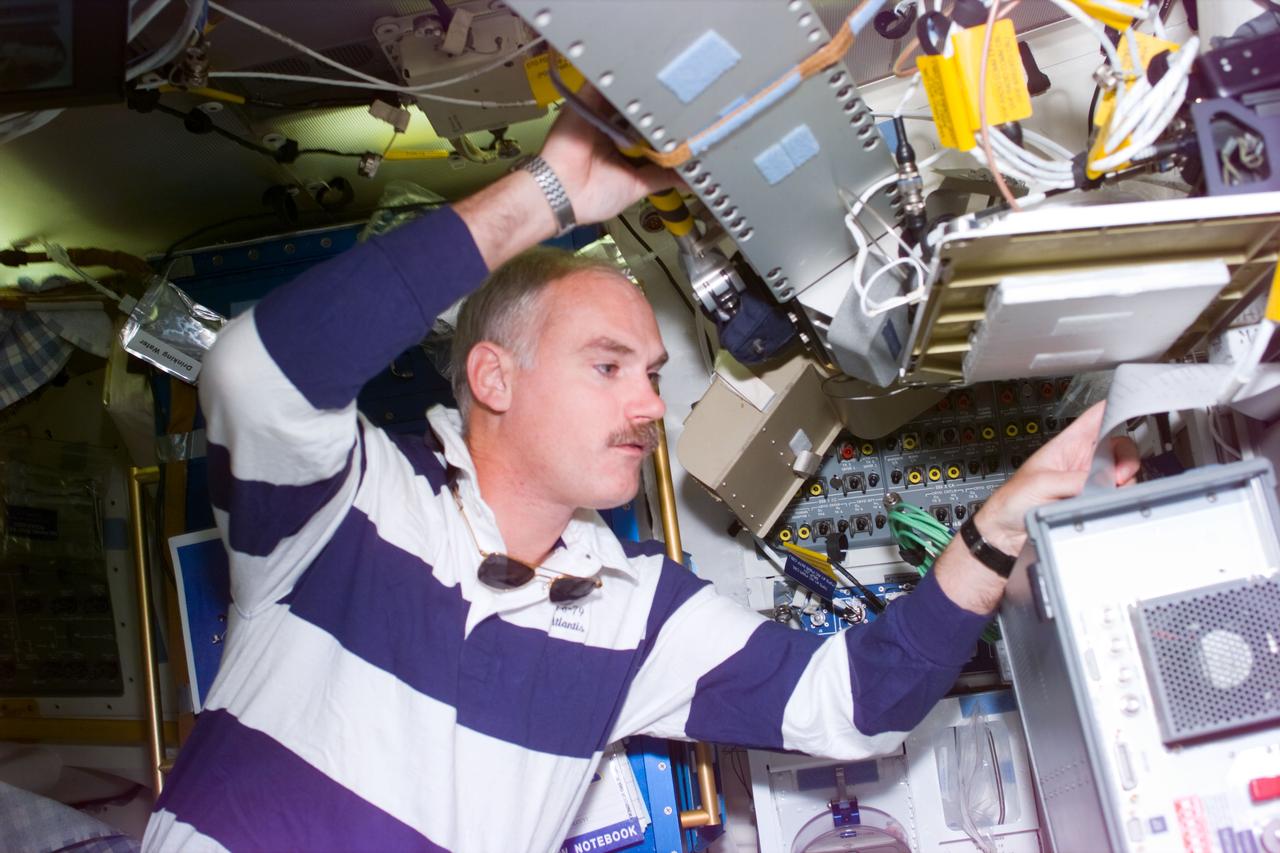
STS79-E-5022 (18 September 1996) --- William F. Readdy, mission commander, checks on Spacehab prior to preparing for Day 4 docking of the Space Shuttle Atlantis with Russia's Mir Space Station, on flight day 3.
Mission commander Readdy on middeck
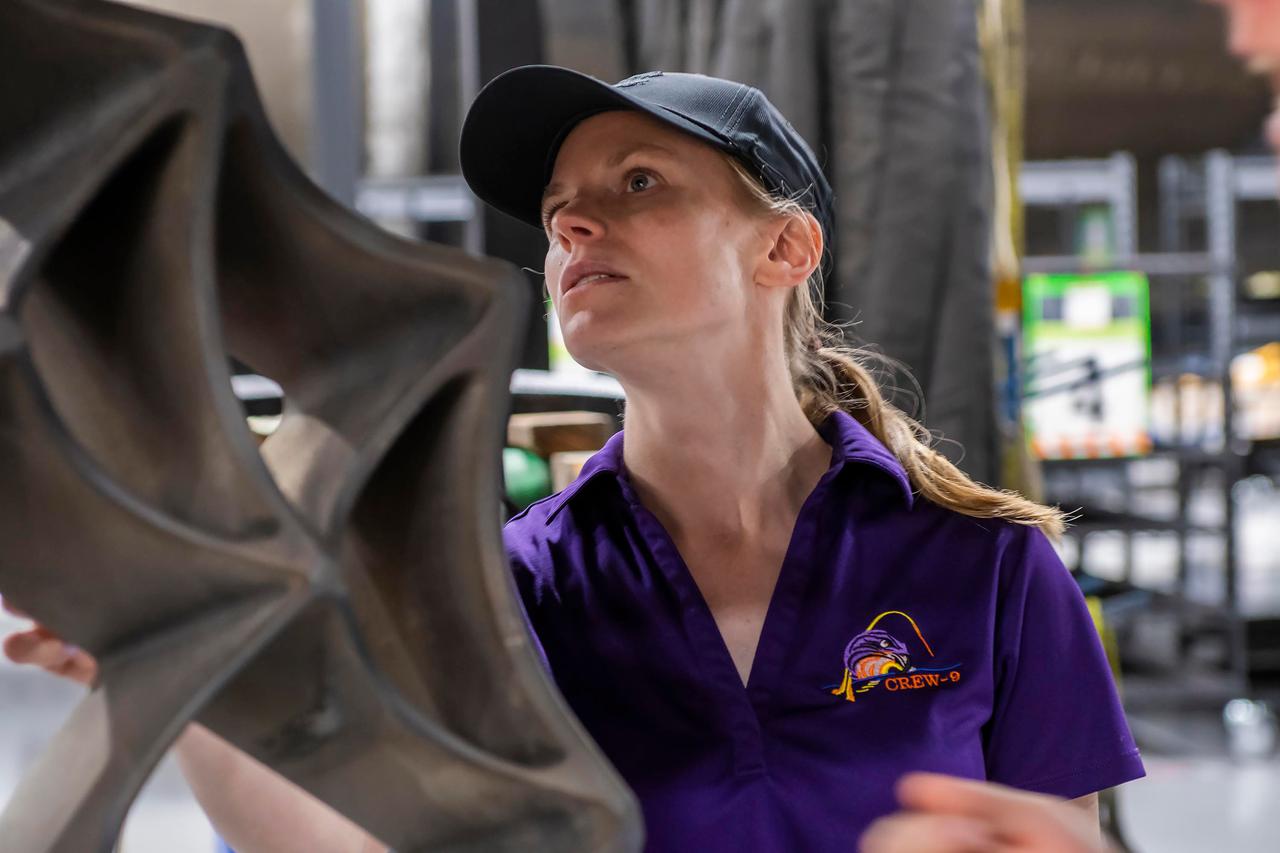
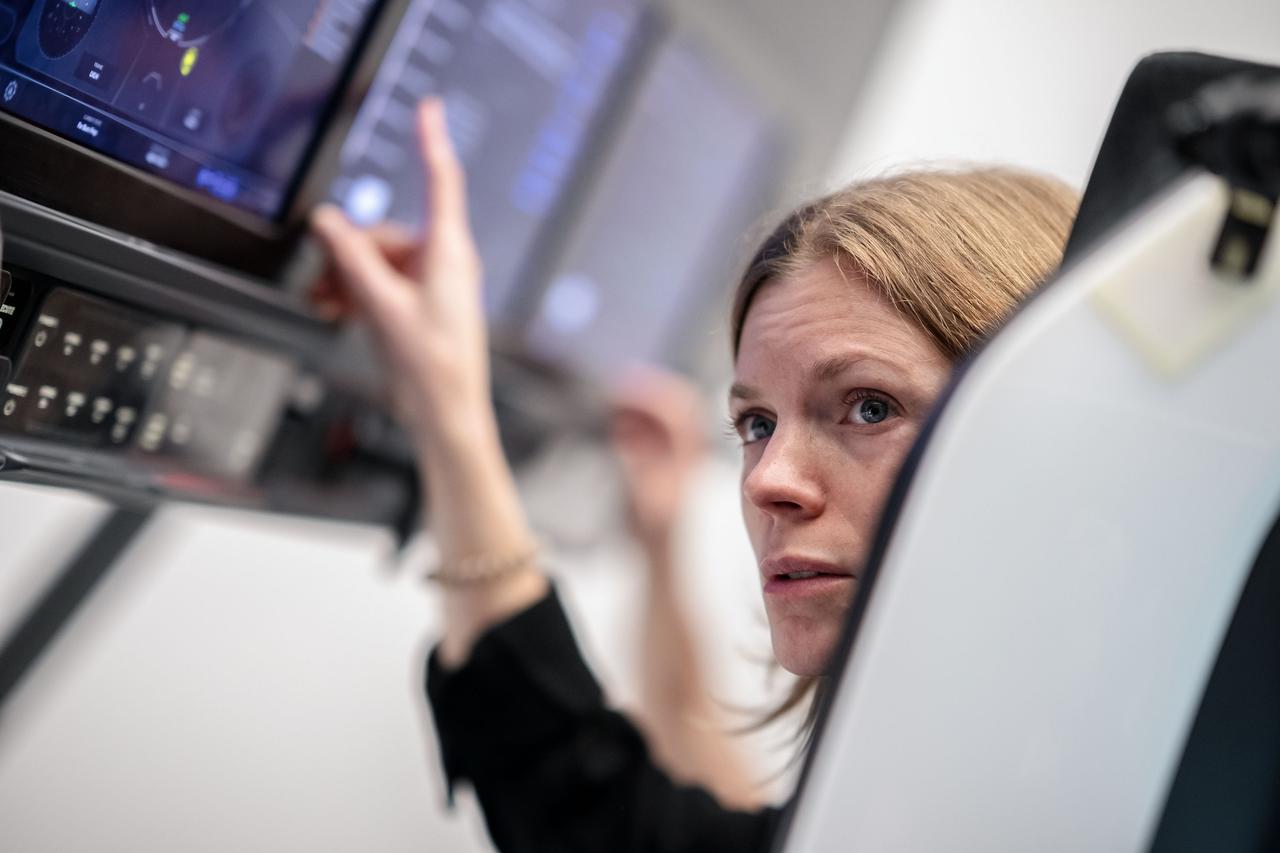
jsc2024e050142 (May 13, 2024) --- NASA’s SpaceX Crew-9 Commander Zena Cardman checks out a grid fin on a Falcon 9 first-stage booster at SpaceX’s HangarX facility at NASA's Kennedy Space Center in Florida. Credit: SpaceX
NASA’s SpaceX Crew-9 Commander Zena Cardman
jsc2024e052323 (July 22, 2024) --- NASA’s SpaceX Crew-9 Commander Zena Cardman smiles as she gets better acquainted with the Dragon spacecraft, which will take them to the International Space Station no earlier than mid-August. Credit: SpaceX
SpaceX Crew-9 Commander Zena Cardman
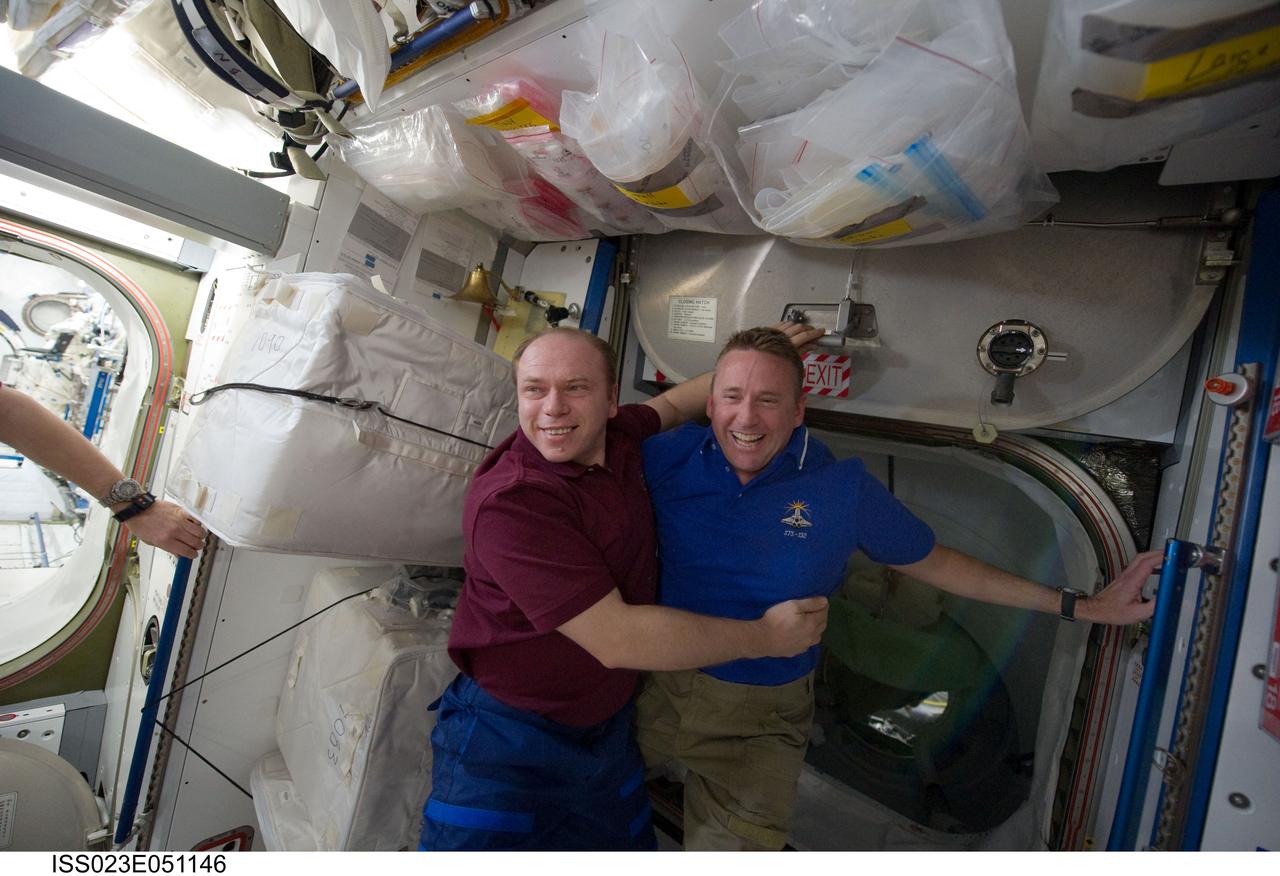
ISS023-E-051146 (23 May 2010) --- Russian cosmonaut Oleg Kotov (left), Expedition 23 commander; and NASA astronaut Ken Ham, STS-132 commander, are pictured during a farewell ceremony in the Harmony node of the International Space Station while space shuttle Atlantis remains docked with the station.
Commanders Kotov and Ham Bid Farewell
STS79-E-5058 (19 September 1996) --- During operations to catch up with Russia's Mir Space Station, astronaut William F. Readdy, mission commander, commands the Space Shuttle Atlantis from the left hand station on the forward flight deck, during Flight Day 4.
Commander Readdy after rendezvous with Mir
jsc2025e064528 (June 23, 2024) --- NASA’s SpaceX Crew-11 commander and NASA astronaut Zena Cardman poses for a photo during a training session at SpaceX facilities in Hawthorne, California. Credit SpaceX
NASA’s SpaceX Crew-11 commander and NASA astronaut Zena Cardman
jsc2025e064527 (June 23, 2024) --- NASA’s SpaceX Crew-11 commander and NASA astronaut Zena Cardman poses for a photo during a training session at SpaceX facilities in Hawthorne, California. Credit SpaceX
NASA’s SpaceX Crew-11 commander and NASA astronaut Zena Cardman
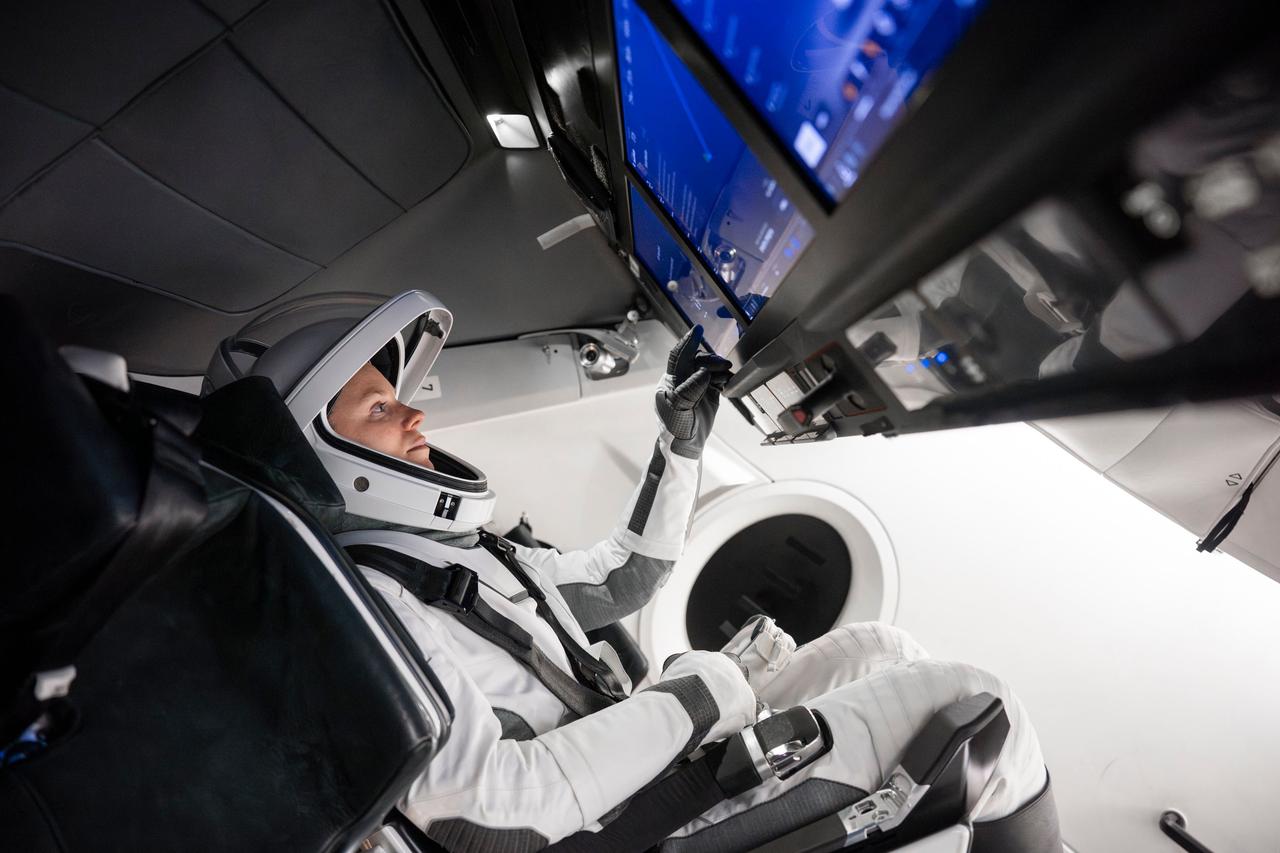
jsc2025e064523 (June 23, 2024) --- NASA’s SpaceX Crew-11 commander and NASA astronaut Zena Cardman is pictured training inside a mockup of a Dragon cockpit at SpaceX facilities in Hawthorne, California. Credit: SpaceX
NASA’s SpaceX Crew-11 commander and NASA astronaut Zena Cardman
jsc2025e064523 (June 23, 2025) --- NASA’s SpaceX Crew-11 commander and NASA astronaut Zena Cardman is pictured training inside a mockup of a Dragon cockpit at SpaceX facilities in Hawthorne, California. Credit: SpaceX
NASA’s SpaceX Crew-11 commander and NASA astronaut Zena Cardman
jsc2025e064525 (June 23, 2024) --- NASA’s SpaceX Crew-11 commander and NASA astronaut Zena Cardman poses for a photo during a training session at SpaceX facilities in Hawthorne, California. Credit SpaceX
NASA’s SpaceX Crew-11 commander and NASA astronaut Zena Cardman
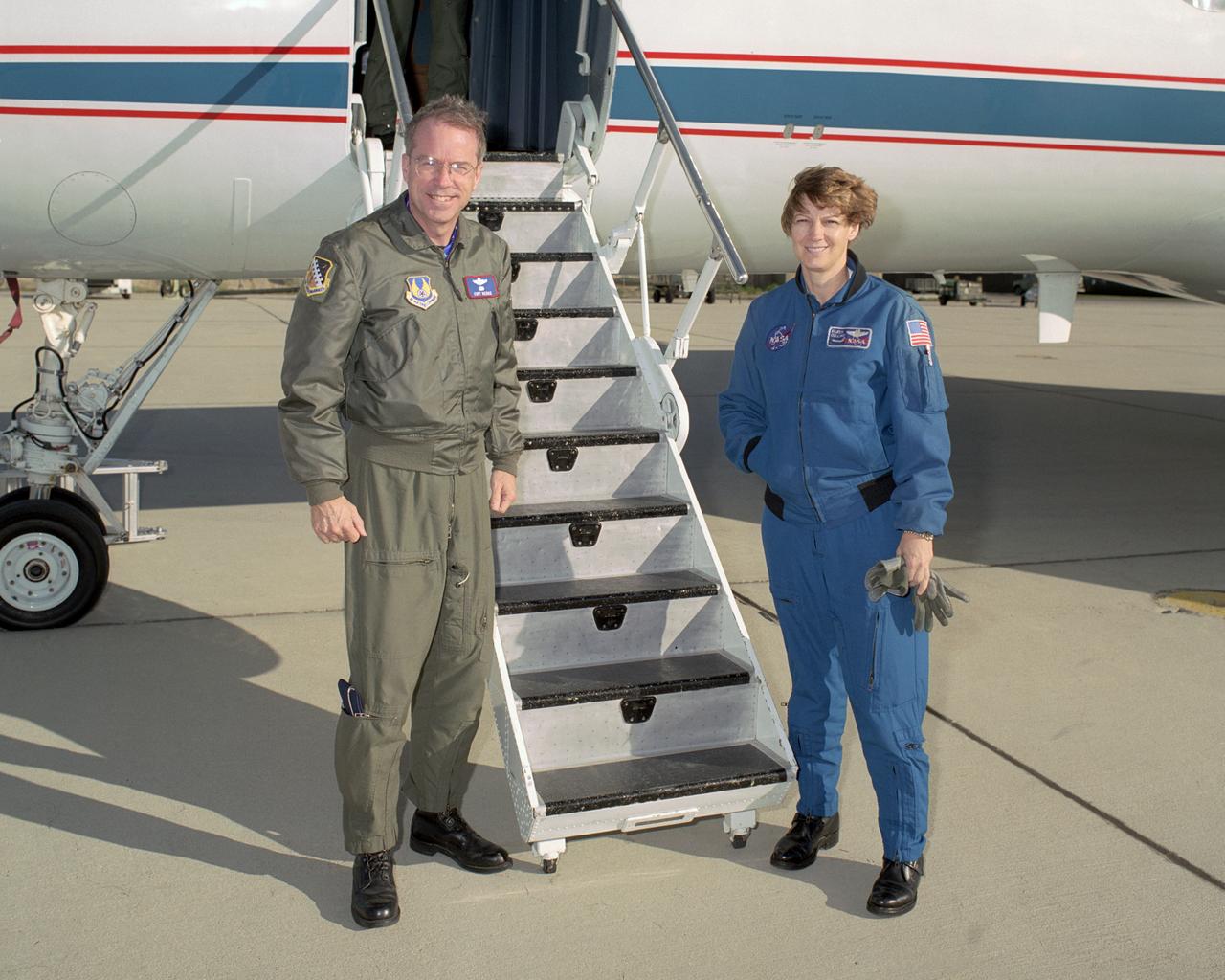
Brig. Gen. Curtis Bedke, commander of the Air Force Flight Test Center at Edwards Air Force Base, received some first-hand insight on how to fly a Space Shuttle approach and landing, courtesy of NASA astronaut and STS-114 mission commander Eileen Collins. The series of proficiency flights in NASA's modified Grumman Gulfstream-II Shuttle Training Aircraft were in preparation for the STS-114 mission with the shuttle Discovery. Although NASA's Kennedy Space Center in Florida is the primary landing site for Space Shuttle missions, flight crews also practice the shuttle's steep approach and landing at Edwards in case weather or other situations preclude a landing at the Florida site and force a diversion to Edwards AFB.
AFFTC commander Brig. Gen. Curtis Bedke experienced a Shuttle approach and landing in NASA's Shuttle Training Aircraft from STS-114 commander Eileen Collins
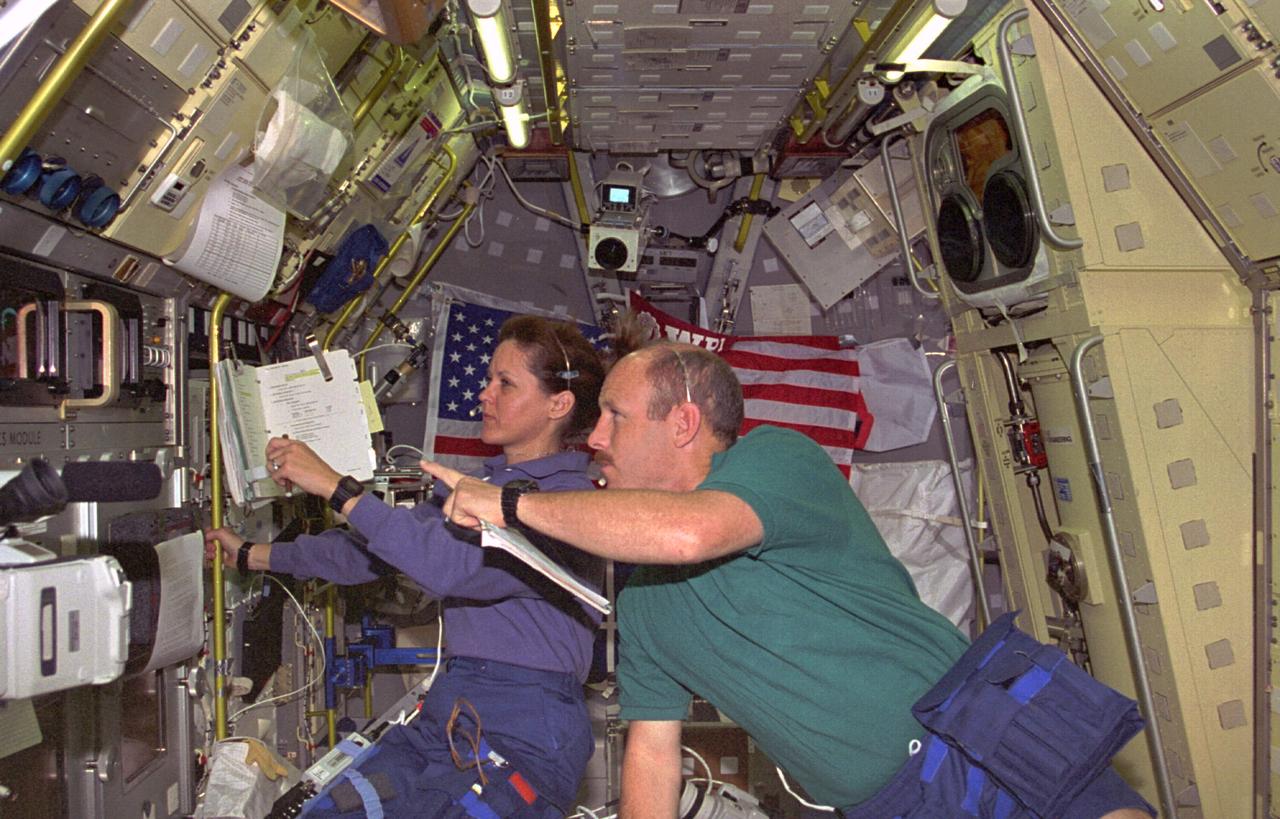
STS073-229-014 (20 October - 5 November 1995) --- Astronauts Kathryn C. Thornton, STS-73 payload commander, and Kenneth D. Bowersox, mission commander, observe a liquid drop's activity at the Drop Physics Module (DPM) in the science module aboard the Earth-orbiting Space Shuttle Columbia.  The drop is partially visible at the center of the left edge of the frame.  The two were joined by three other NASA astronauts and two guest researchers for almost 16-days of in-orbit research in support of the U.S. Microgravity Laboratory (USML-2) mission.
DPM, Payload Commander Kathy Thornton and Commander Ken Bowersox in Spacelab
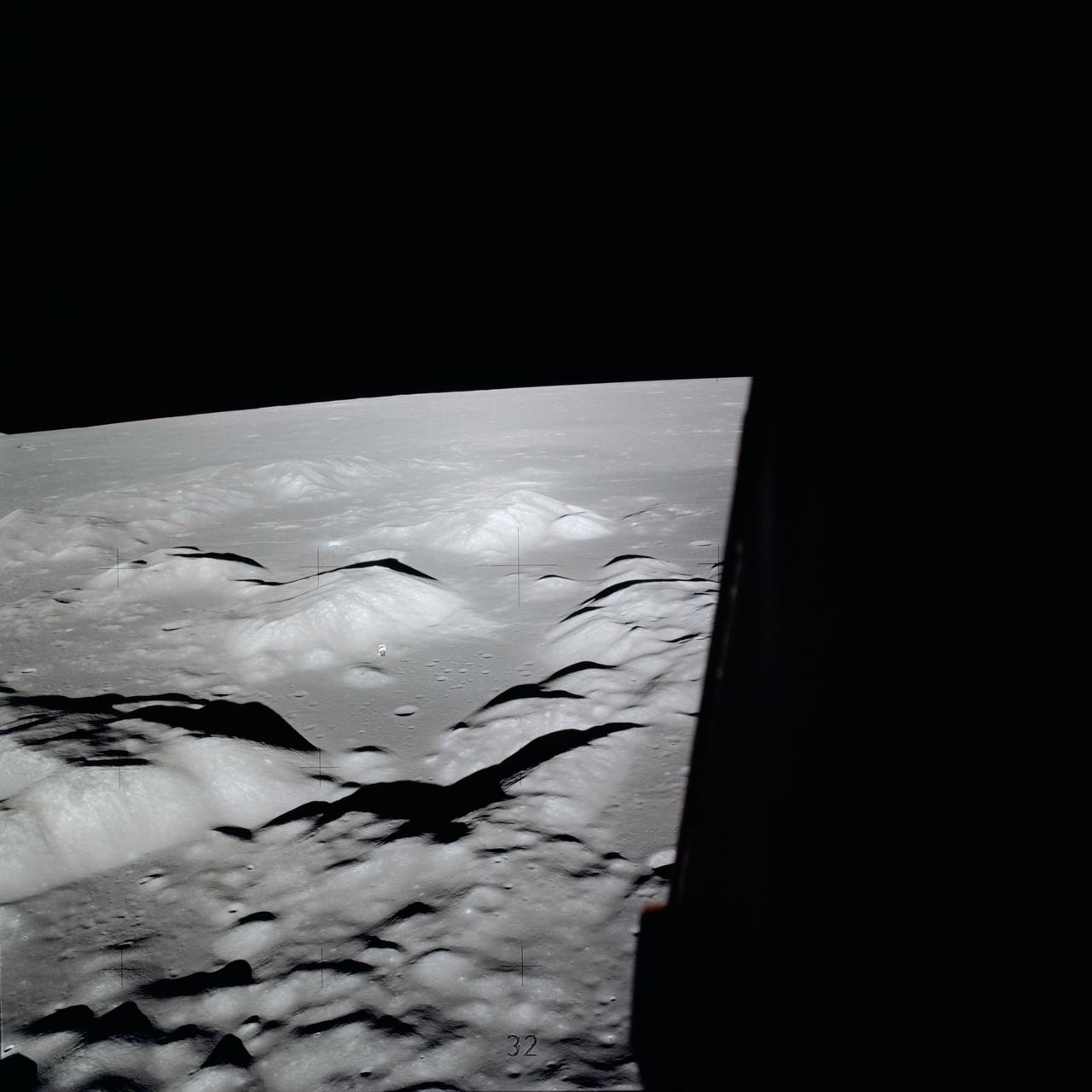
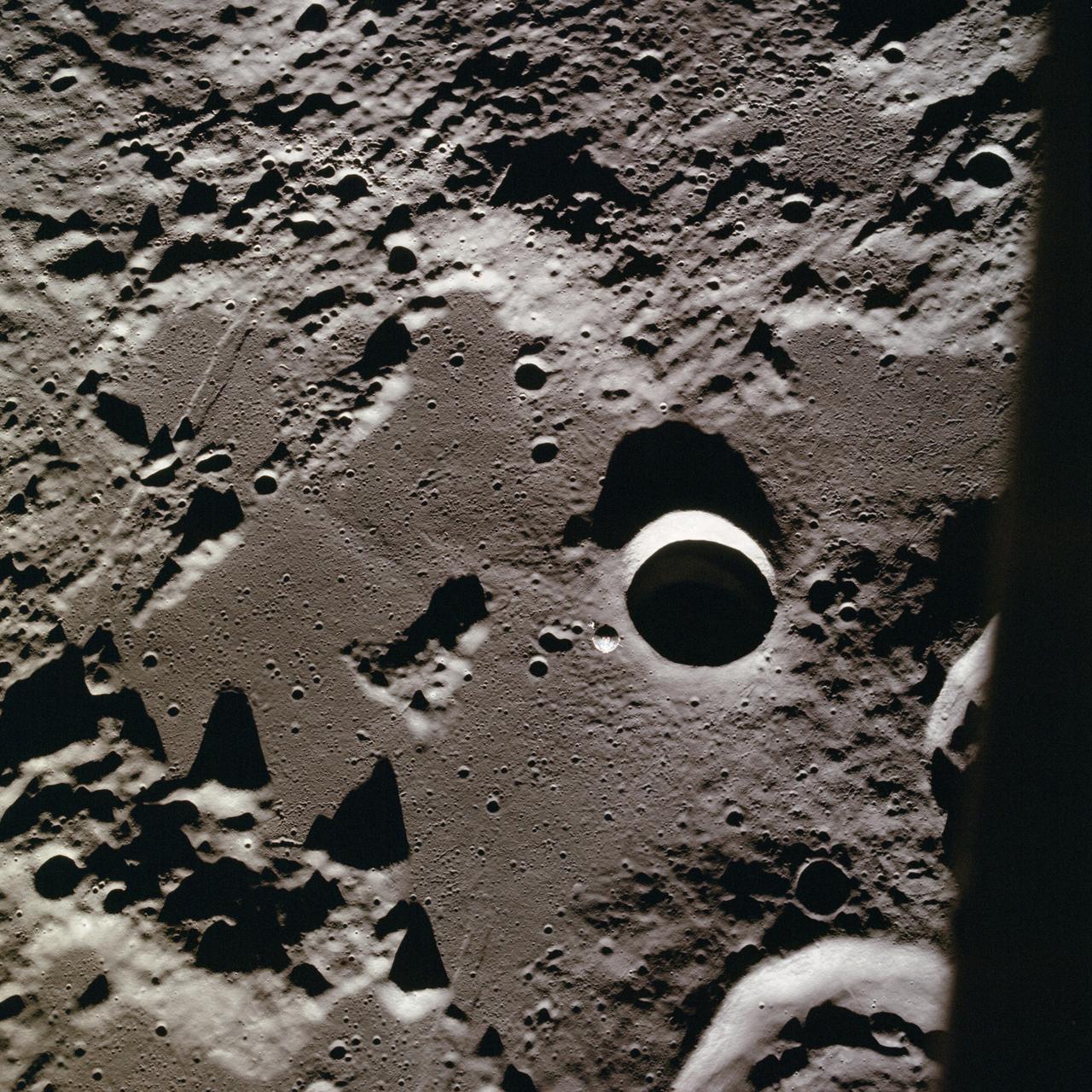
AS11-37-5448 (July 1969) --- The Apollo 11 Command and Service Modules (CSM) (tiny dot near quarter sized crater, center), with astronaut Michael Collins, command module pilot, aboard. The view overlooking the western Sea of Tranquility was photographed from the Lunar Module (LM). Astronauts Neil A. Armstrong, commander, and Edwin E. Aldrin Jr., lunar module pilot, manned the LM and made their historic lunar landing on July 20, 1969. Coordinates of the center of the terrain in the photograph are 18.5 degrees longitude and .5 degrees north latitude.
Apollo 11 Mission image - CSM over the Sea of Tranquility
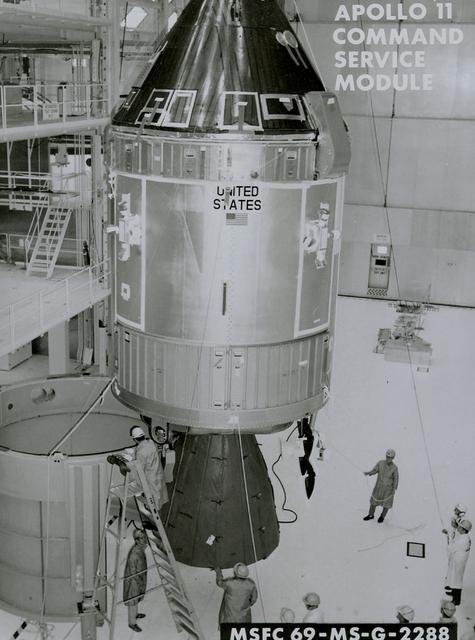
A close-up view of the Apollo 11 command service module ready to be mated with the spacecraft LEM adapter of the third stage. The towering 363-foot Saturn V was a multi-stage, multi-engine launch vehicle standing taller than the Statue of Liberty. Altogether, the Saturn V engines produced as much power as 85 Hoover Dams.
Saturn Apollo Program
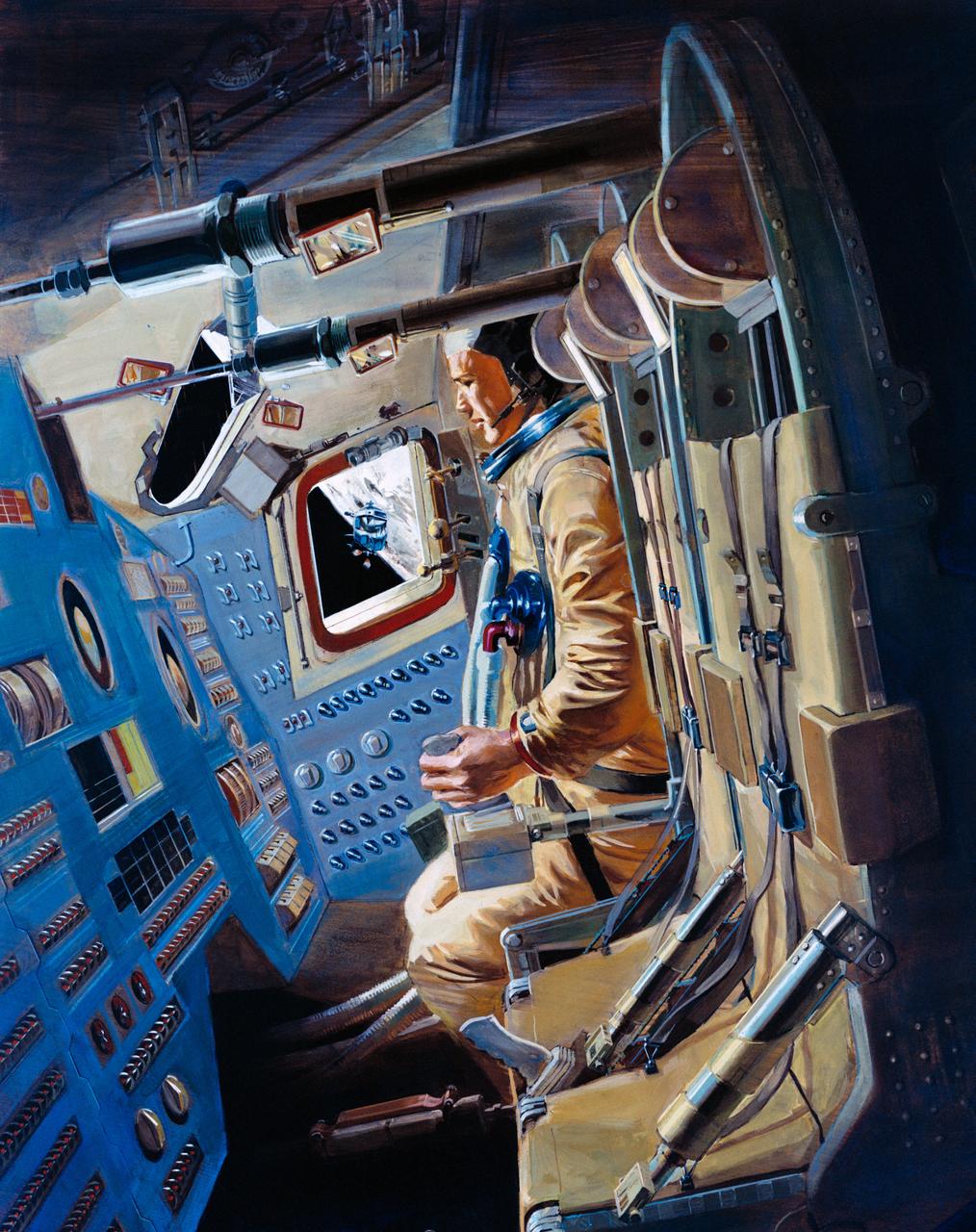
S69-58005 (10 Nov. 1969) --- An artist's concept of the Apollo 12 Command Module's (CM) interior, with the command module pilot at the controls. The Apollo 12 Lunar Module (LM) and a portion of the lunar surface are seen out of the window. Astronaut Richard F. Gordon Jr. will maneuver the Apollo 12 Command and Service Modules (CSM) in lunar orbit while astronauts Charles Conrad Jr., commander, and Alan L. Bean, lunar module pilot, explore the moon.
APOLLO XII - ART CONCEPT - COMMAND MODULE
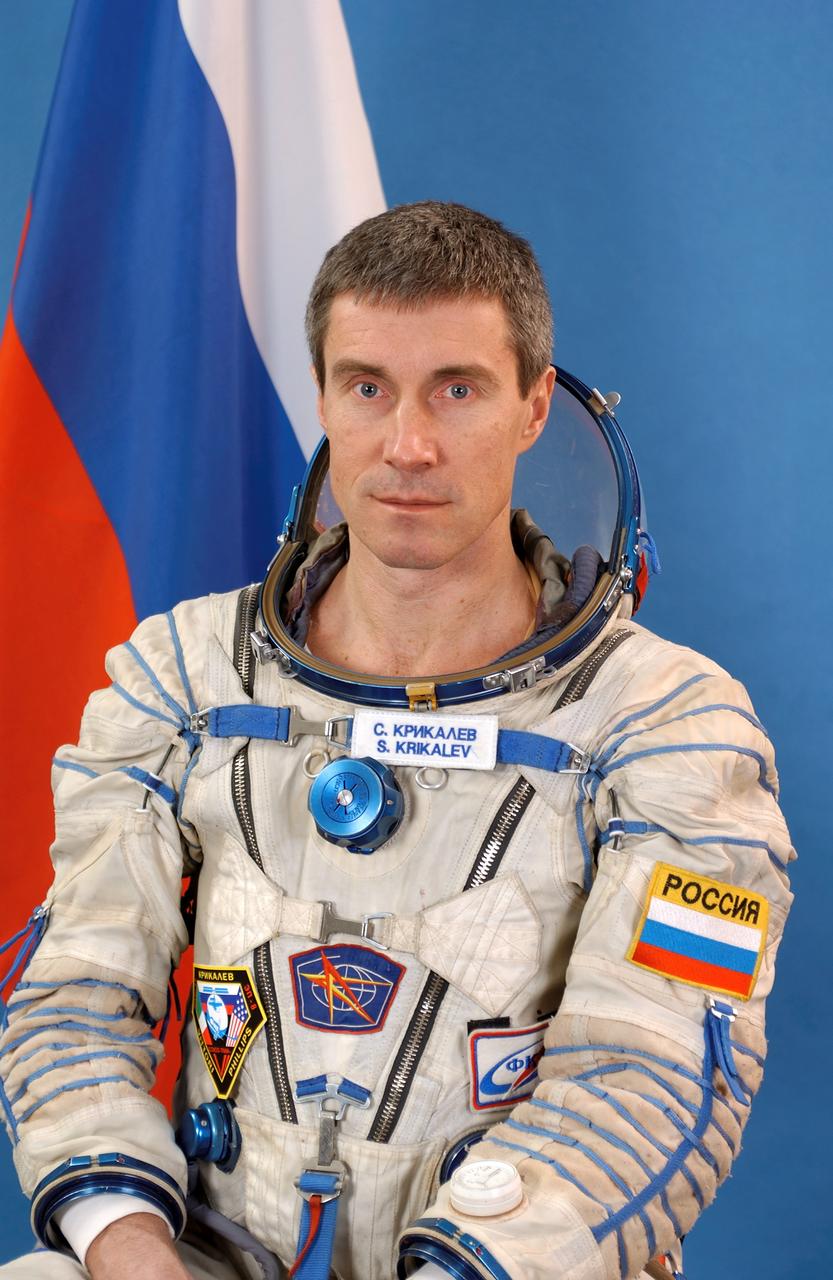
JSC2005-E-13488 (March 2005) --- Cosmonaut Sergei Krikalev, Russia's Federal Space Agency, Expedition 11 commander, Soyuz commander.
Cosmonaut Sergei Krikalev, Russia's Federal Space Agency, Expedition 11 commander, Soyuz commander.
ISS021-E-022397 (8 Nov. 2009) --- European Space Agency astronaut Frank De Winne, Expedition 21 commander, holds a stowage bag containing various beverages in the Unity node of the International Space Station.
Commander De Wine poses for a photo
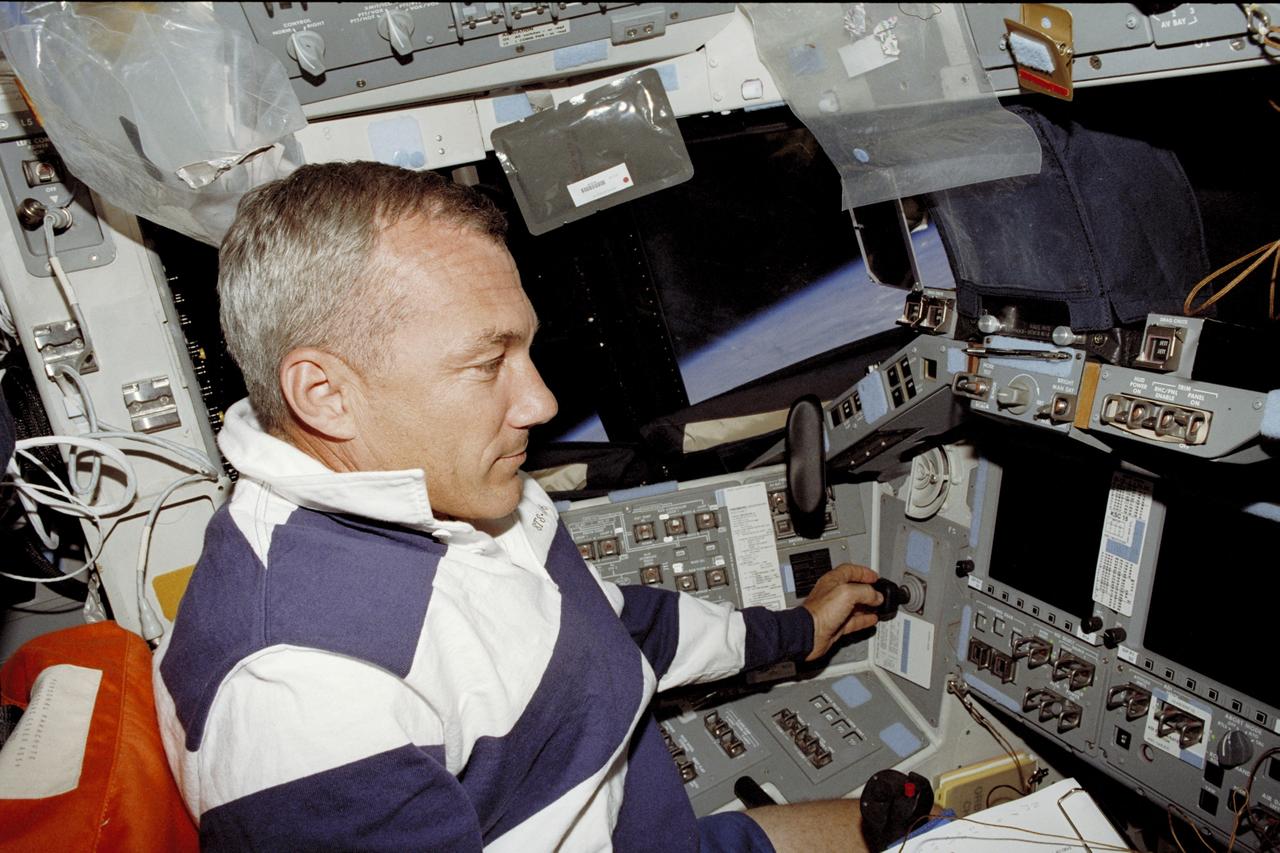
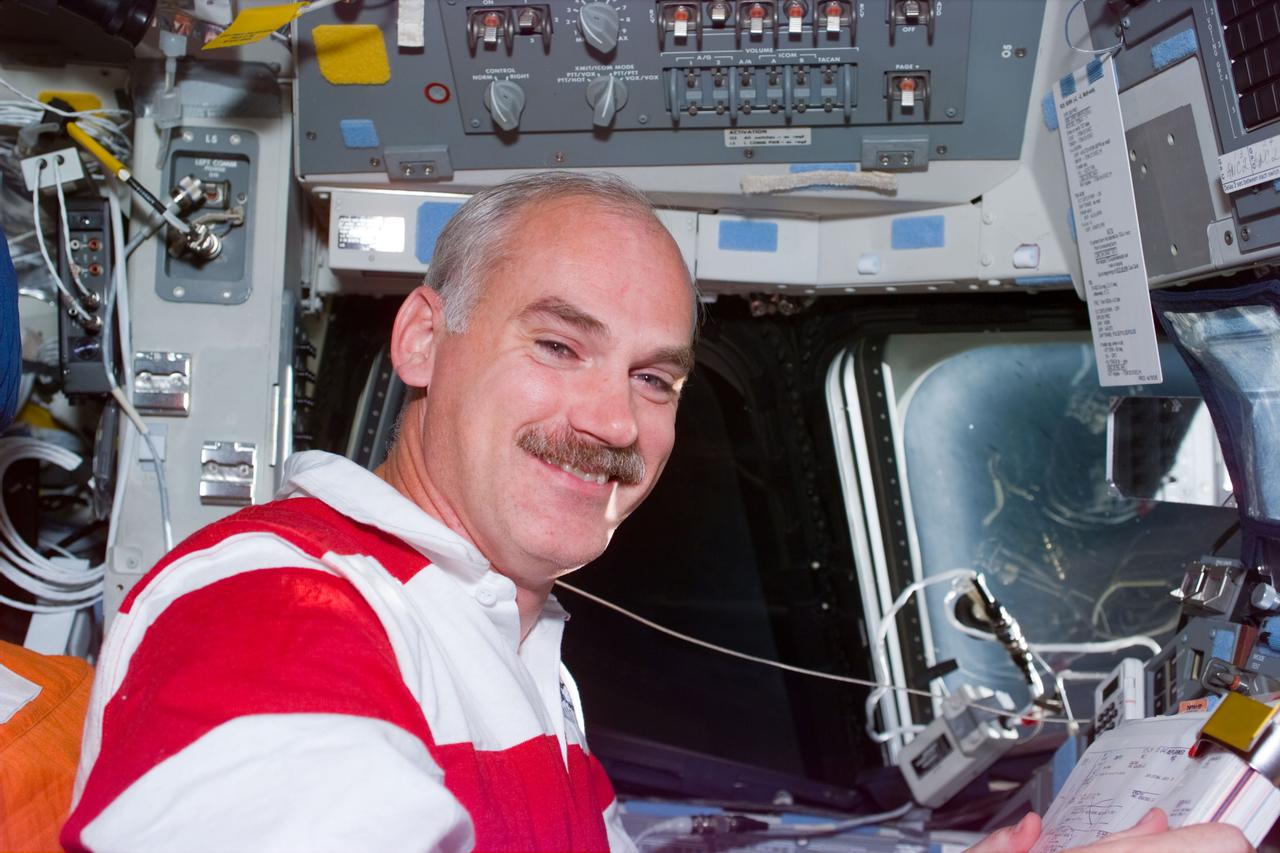
STS009-128-858 (28 Nov-8 Dec 1983) --- Astronaut John W. Young takes notes in the commander?s station on the flight deck of the Columbia.  The cathode ray tube (CRT) among the forward panels displays the orbiter?s position in relation to the Earth on its monitor.  Astronaut Brewster H. Shaw Jr., pilot, took this photograph.
Astronaut Young at the commander's station
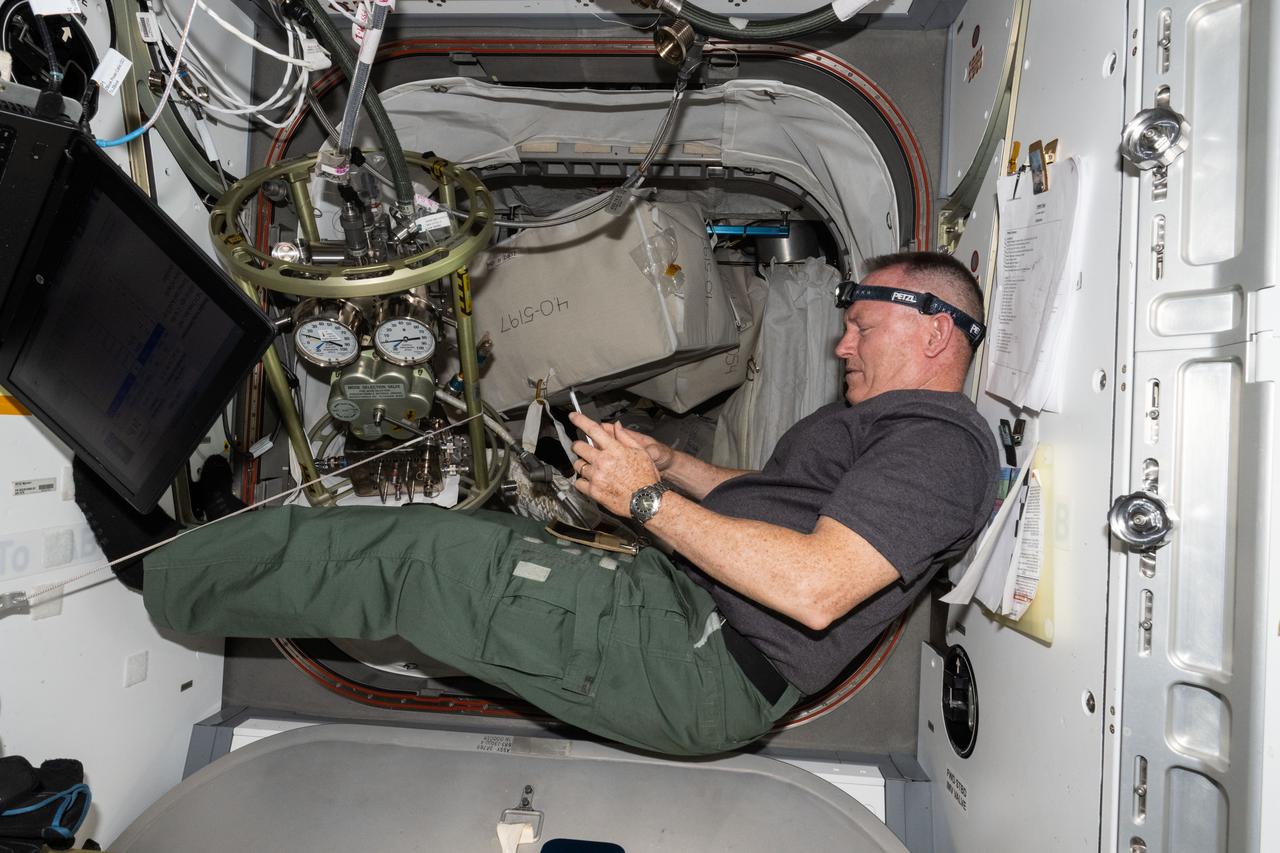
iss071e318564 (July 10, 2024) --- NASA astronaut and Boeing's Crew Flight Test Commander Butch Wilmore reviews procedures on a computer tablet for life support maintenance work aboard the International Space Station.
NASA astronaut and Boeing's Crew Flight Test Commander Butch Wilmore
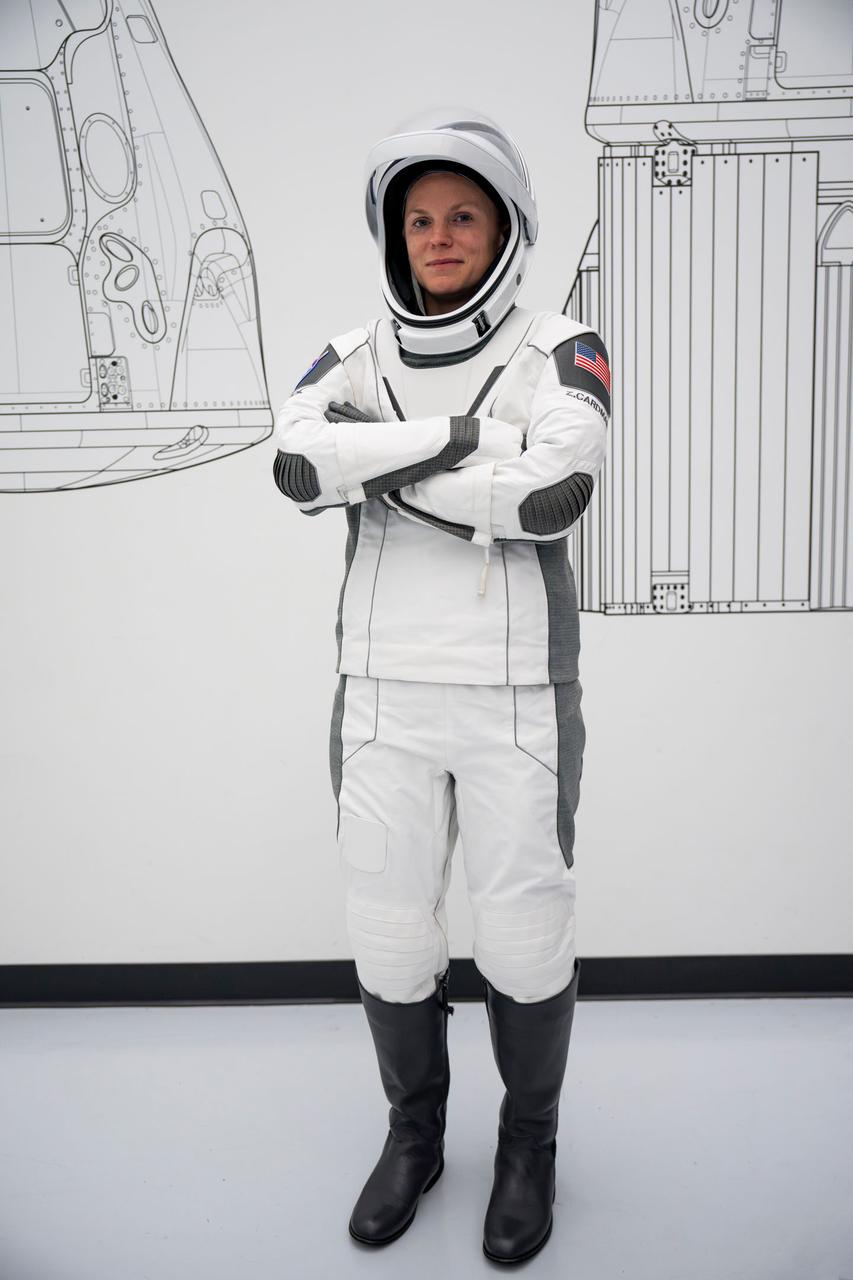
jsc2025e060299 (May 19, 2025) --- NASA astronaut Zena Cardman, commander of NASA’s SpaceX Crew-11 mission to the International Space Station, poses for a portrait in his pressure suit at SpaceX headquarters in Hawthorne, California. Credit: SpaceX
NASA astronaut Zena Cardman, commander of NASA’s SpaceX Crew-11 mission
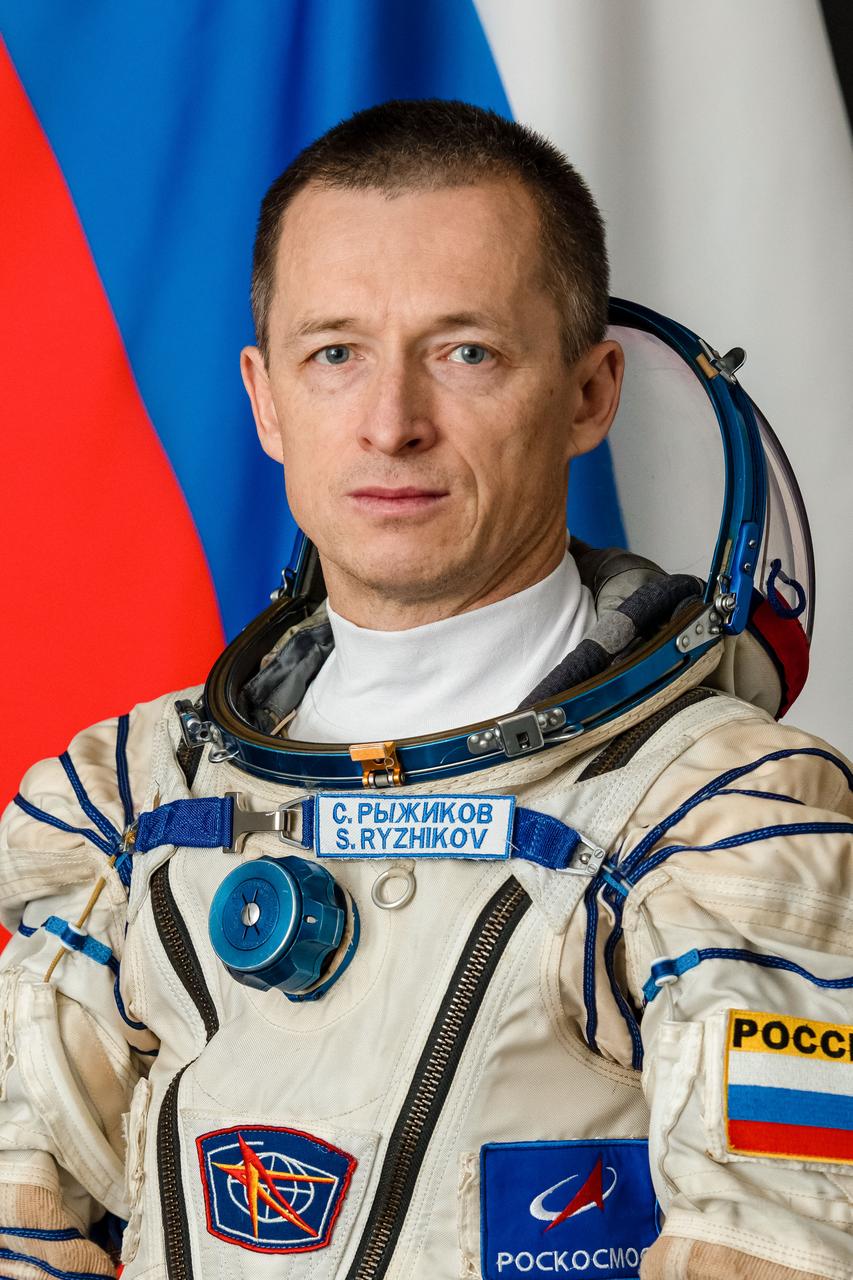
jsc2025e033526 (April 23, 2025) --- Roscosmos cosmonaut and Soyuz MS-27 Commander Sergey Ryzhikov poses for a portrait in his Sokol launch and entry suit at the Gagarin Cosmonaut Training Center in Star City, Russia.
Roscosmos cosmonaut and Soyuz MS-27 Commander Sergey Ryzhikov
jsc2025e034088 (Dec. 4, 2024) --- NASA astronaut Zena Cardman, commander of NASA’s SpaceX Crew-11 mission, trains for her mission at a SpaceX facility in Hawthorne, California, ahead of her flight to the International Space Station.
NASA astronaut Zena Cardman, commander of NASA’s SpaceX Crew-11 mission
jsc2025e033531 (Jan. 16, 2025) --- Roscosmos cosmonaut and Soyuz MS-27 Backup Commander Sergey Kud-Sverchkov  poses for a portrait in his Sokol launch and entry suit at the Gagarin Cosmonaut Training Center in Star City, Russia.
Roscosmos cosmonaut and Soyuz MS-27 Backup Commander Sergey Kud-Sverchkov
jsc2025e034096 (Feb. 3, 2025) --- Roscosmos cosmonaut and Soyuz MS-27 Commander Sergey Ryzhikov poses for a portrait in his Sokol launch and entry suit at the Gagarin Cosmonaut Training Center in Star City, Russia
Roscosmos cosmonaut and Soyuz MS-27 Commander Sergey Ryzhikov
S134-E-005608 (16 May 2011) --- Astronaut Mark Kelly, STS-134 commander, gets down to work soon after Endeavour reaches Earth orbit. Kelly is seated at the commander's station on the shuttle's forward flight deck. Five other veteran crew members are joining the commander on a 16-day mission, much of which will be devoted to work on the International Space Station.  Photo credit: NASA
View of STS-134 Commander Kelly on the Flight Deck
STS79-E-5090 (19 September 1996) --- Cosmonaut Valeri G. Korzun, Mir-22 commander, greets his American counterpart - astronaut William F. Readdy in the tunnel connecting the Space Shuttle Atlantis to Russia's Mir Space Station, during Flight Day 4.  This mission marks the fourth such reunion involving astronauts and cosmonauts during the Shuttle era and the fifth overall, going back to the historic Apollo-Soyuz Test Project (ASTP) in 1975.
Greeting between STS-79 commander and Mir 22 commander after docking
iss058e002448 (Jan. 9, 2019) --- Expedition 58 Commander Oleg Kononenko of Roscosmos is pictured inside the Pirs docking compartment during operations to install gear for the VIZIR earth observation experiment. The study tests the technology of automated coordinate referencing of images of the Earth’s surface, and space, taken by crew members using “free-floating” photography equipment in weightlessness. Credit: Roscosmos
Expedition 58 Commander Oleg Kononenko of Roscosmos
ISS044E086857 (09/05/2015) --- Cosmonaut Gennady Padalka (center in red shirt) handed command of the International Space Station to NASA astronaut Scott Kelly (front left with microphone) on Sept. 5, 2015. In the background the rest of the space station crew was on hand (from left to right): ESA(European Space Agency) astronaut Andreas Mogensen (back),  Russian cosmonauts Mikhail Kornienko, Sergey Volkov and Oleg Kononenko, Kazakh cosmonaut Aidyn Aimbetov, Japan Aerospace Exploration Agency (JAXA) astronaut Kimiya Yui and NASA astronaut Kjell Lindgren.
Change of Command ceremony