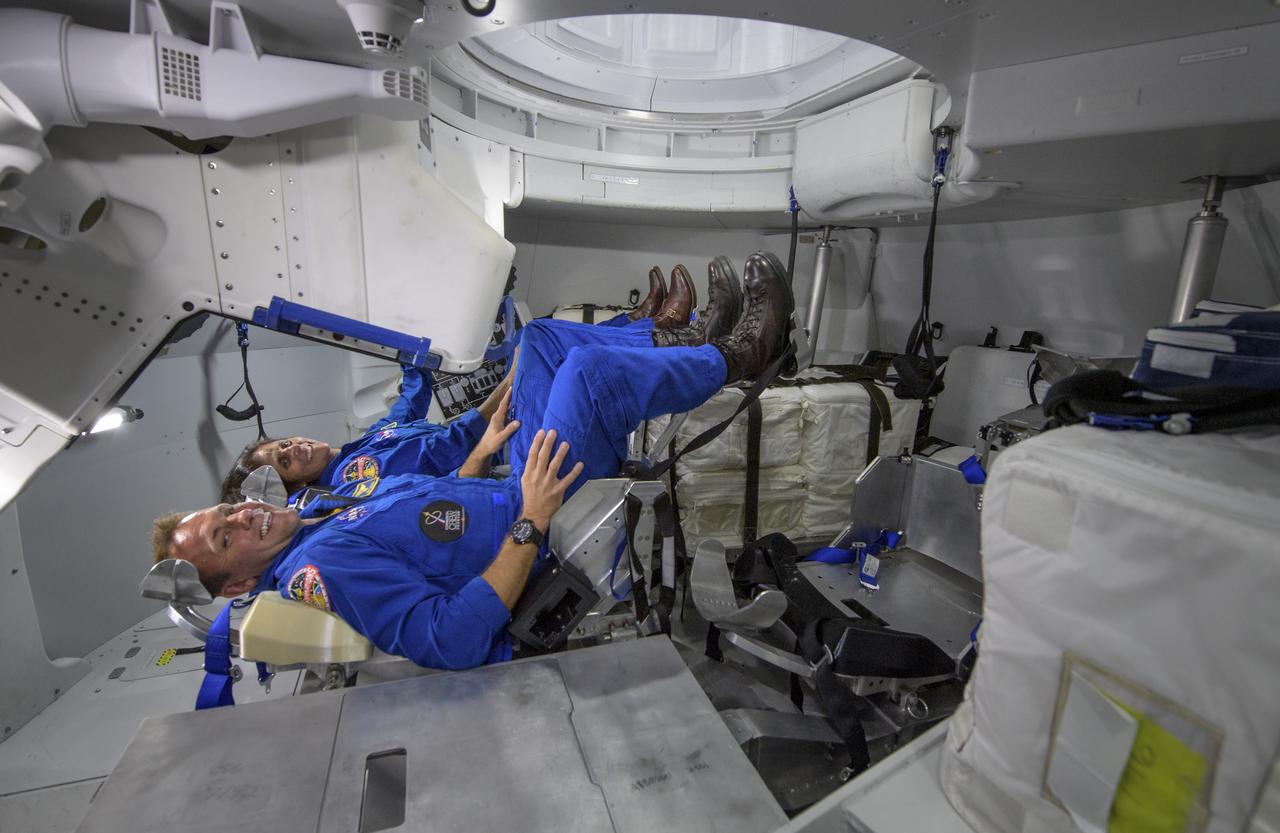
NASA astronauts Josh Cassada, foreground, and Suni Williams pose for a photograph inside of the Boeing Mockup Trainer at NASA’s Johnson Space Center in Houston, Texas on Aug. 2, 2018 ahead of the commercial crew flight assignments announcement Aug. 3. The pair was assigned to launch aboard Boeing’s CST-100 Starliner on the company’s first operational mission to the International Space Station in partnership with NASA’s Commercial Crew Program. Photo Credit: (NASA/Bill Ingalls)

NASA astronauts Victor Glover and Mike Hopkins, assigned to fly on the first operational mission of SpaceX’s Crew Dragon, pose inside a mockup of the spacecraft at NASA’s Johnson Space Center in Houston, Texas on Aug. 2, 2018 ahead of the agency’s announcement of their commercial crew assignment Aug. 3. Nine U.S. astronauts were selected for commercial crew flight assignments on the first test flights and operational missions for Boeing’s CST-100 Starliner and SpaceX’s Crew Dragon. Photo Credit: (NASA/Bill Ingalls)
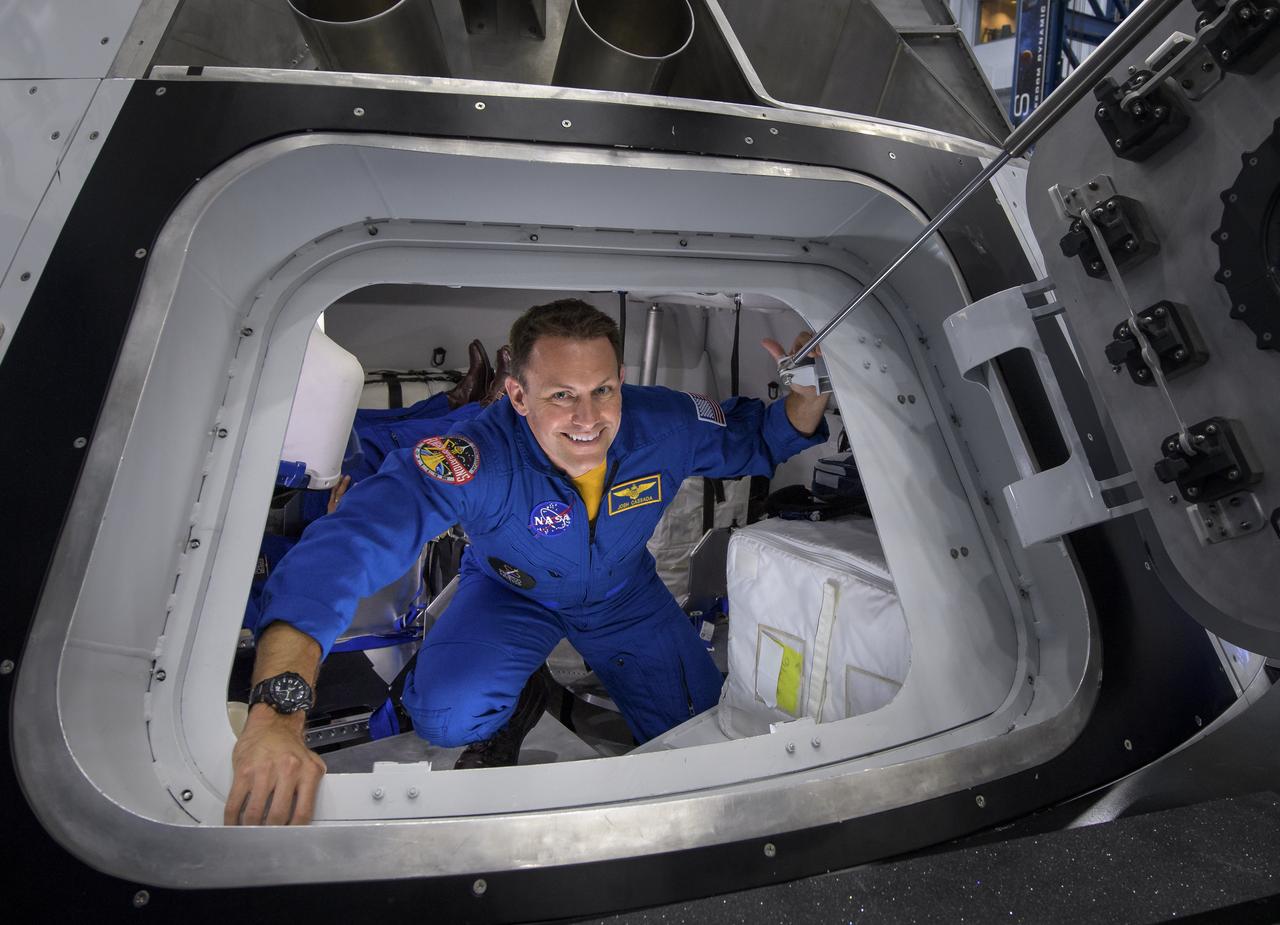
NASA astronaut Josh Cassada stops to pose for photograph as he exits the Boeing Mockup Trainer at NASA’s Johnson Space Center in Houston, Texas on Aug. 2, 2018 ahead of the commercial crew flight assignments announcement Aug. 3. Cassada, and NASA astronaut Suni Williams were assigned to launch aboard Boeing’s CST-100 Starliner on the company’s first operational mission to the International Space Station in partnership with NASA’s Commercial Crew Program. Photo Credit: (NASA/Bill Ingalls)
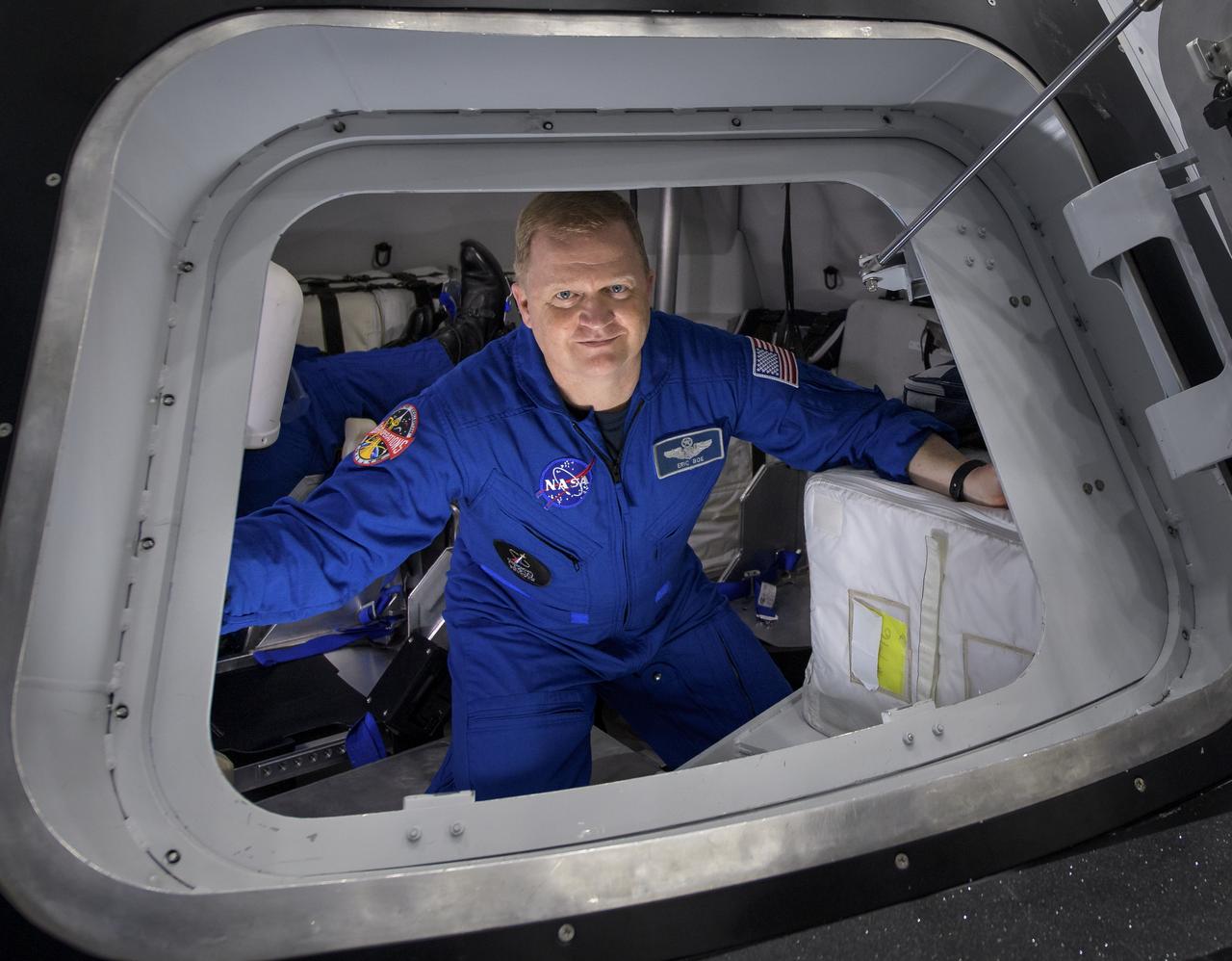
NASA astronaut Eric Boe poses for a photograph as he exits the Boeing Mockup Trainer at NASA’s Johnson Space Center in Houston, Texas on Aug. 2, 2018 ahead of the commercial crew flight assignments announcement Aug. 3. Boe, along with NASA astronaut Nicole Aunapu Mann and Boeing astronaut Chris Ferguson were assigned to launch aboard Boeing’s CST-100 Starliner on the company’s Crew Flight Test targeted for mid-2019 in partnership with NASA’s Commercial Crew Program. Photo Credit: (NASA/Bill Ingalls)

NASA astronauts Bob Behnken, left, and Doug Hurley, assigned to fly on the first test flight of SpaceX’s Crew Dragon, pose inside a mockup of the spacecraft at NASA’s Johnson Space Center in Houston, Texas on Aug. 2, 2018 ahead of the agency’s announcement of their commercial crew assignment Aug. 3. Nine U.S. astronauts were selected for commercial crew flight assignments on the first test flights and operational missions for Boeing’s CST-100 Starliner and SpaceX’s Crew Dragon. Photo Credit: (NASA/Bill Ingalls)
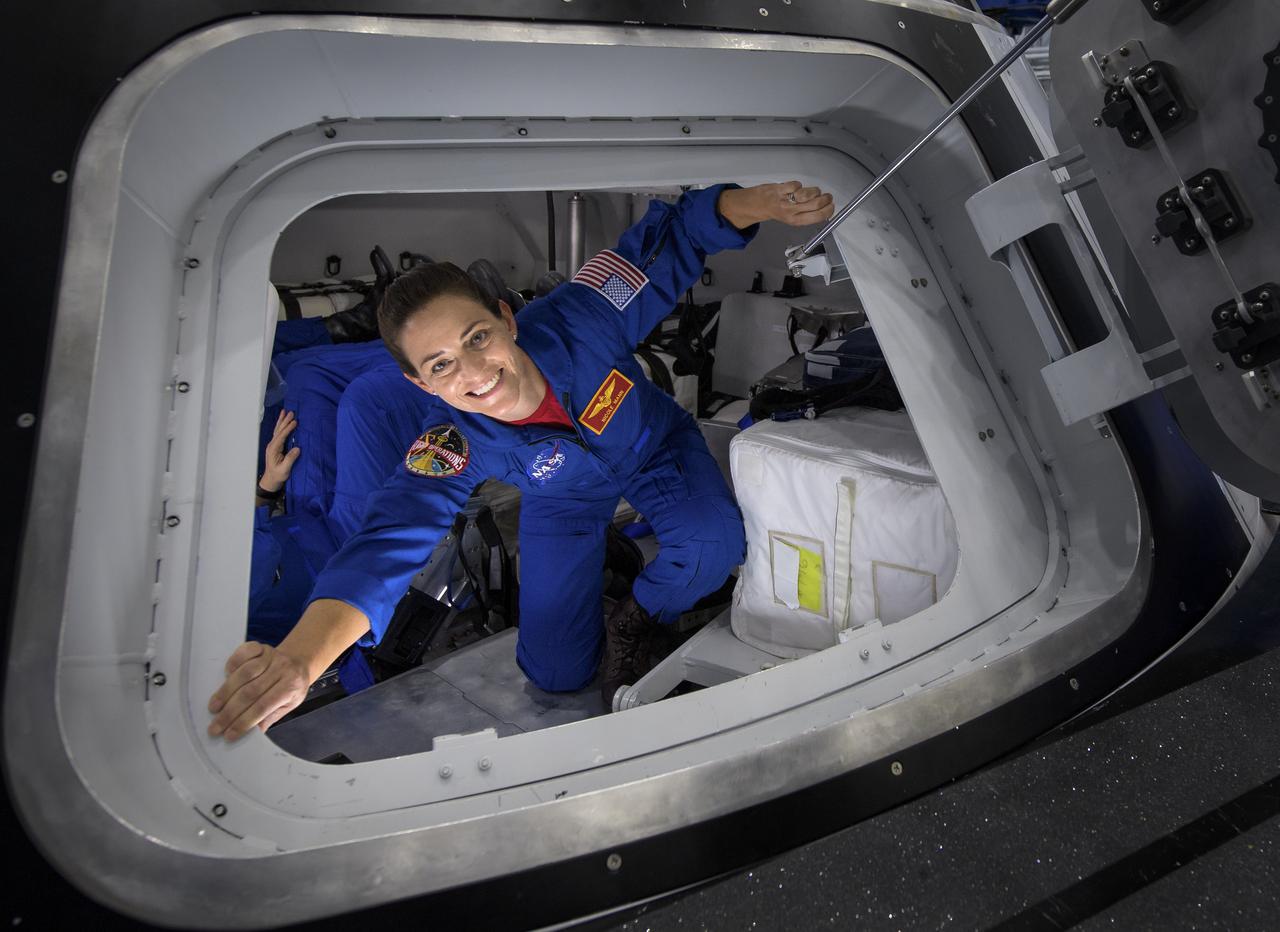
NASA astronaut Nicole Mann poses for a photograph as she exits the Boeing Mockup Trainer at NASA’s Johnson Space Center in Houston, Texas on Aug. 2, 2018 ahead of the commercial crew flight assignments announcement Aug. 3. Mann, along with NASA astronaut Eric Boe and Boeing astronaut Chris Ferguson were assigned to launch aboard Boeing’s CST-100 Starliner on the company’s Crew Flight Test targeted for mid-2019 in partnership with NASA’s Commercial Crew Program. Photo Credit: (NASA/Bill Ingalls)
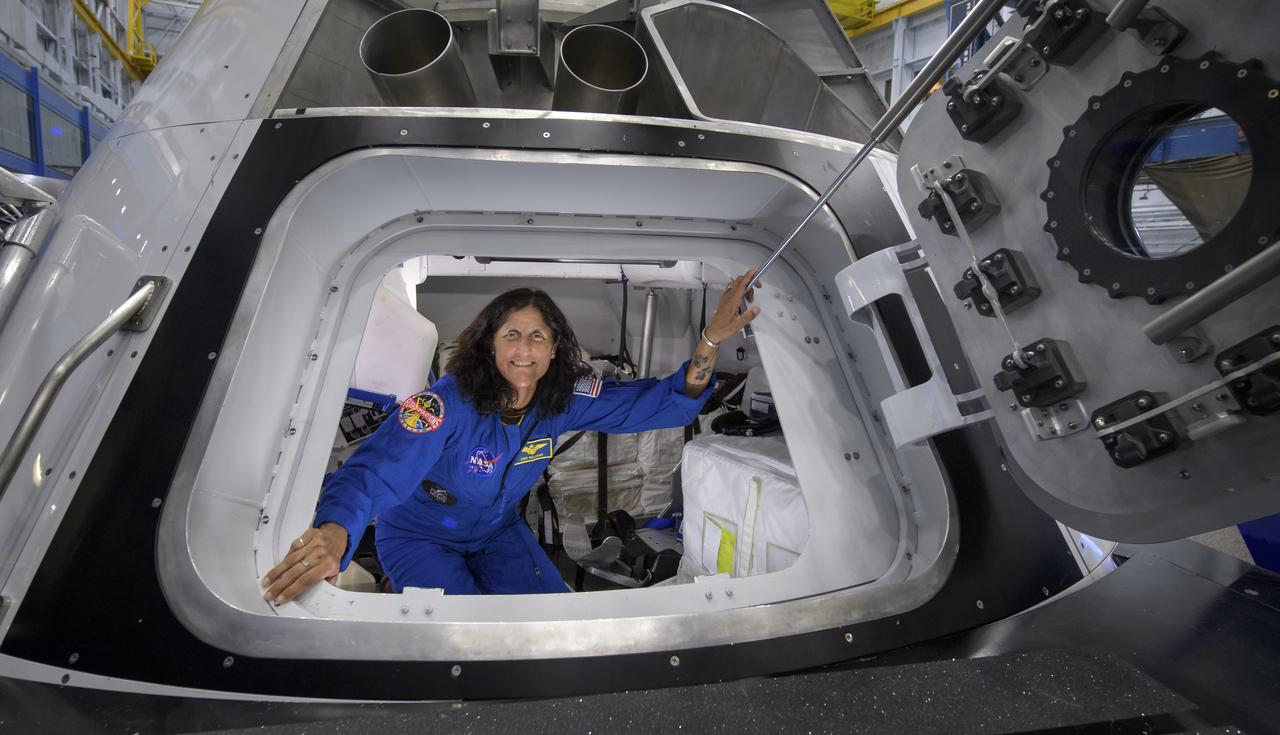
NASA astronaut Suni Williams stops to pose for photograph as she exits the Boeing Mockup Trainer at NASA’s Johnson Space Center in Houston, Texas on Aug. 2, 2018 ahead of the commercial crew flight assignments announcement Aug. 3. Williams and NASA astronaut Josh Cassada were assigned to launch aboard Boeing’s CST-100 Starliner on the company’s first operational mission to the International Space Station in partnership with NASA’s Commercial Crew Program. Photo Credit: (NASA/Bill Ingalls)
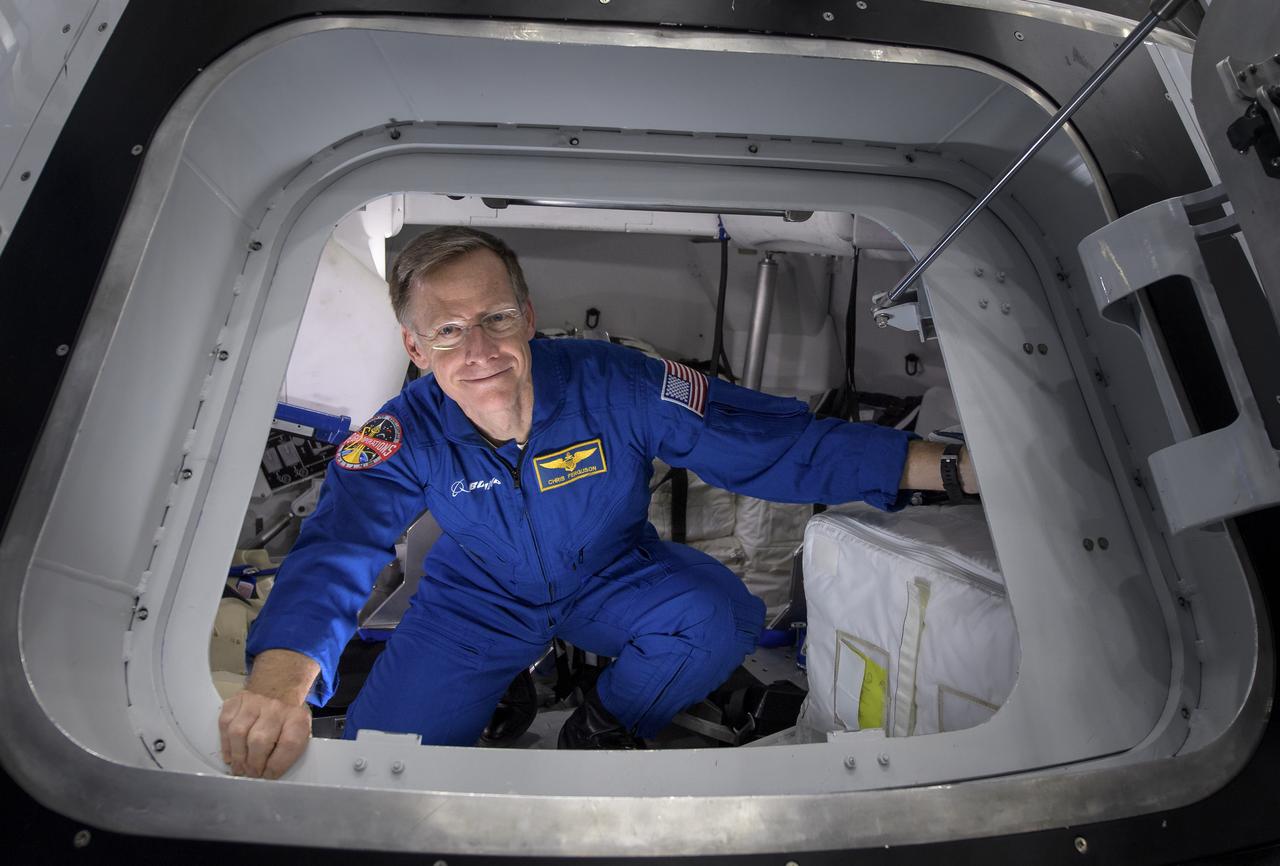
Boeing astronaut Chris Ferguson poses for a photograph as he exits the Boeing Mockup Trainer at NASA’s Johnson Space Center in Houston, Texas on Aug. 2, 2018 ahead of the commercial crew flight assignments announcement Aug. 3. Ferguson, along with NASA astronauts Eric Boe and Nicole Aunapu Mann were assigned to launch aboard Boeing’s CST-100 Starliner on the company’s Crew Flight Test targeted for mid-2019 in partnership with NASA’s Commercial Crew Program. Photo Credit: (NASA/Bill Ingalls)

NASA astronauts Bob Behnken, left, and Doug Hurley, assigned to fly on the first test flight of SpaceX’s Crew Dragon, pose inside a mockup of the spacecraft at NASA’s Johnson Space Center in Houston, Texas on Aug. 2, 2018 ahead of the agency’s announcement of their commercial crew assignment Aug. 3. Nine U.S. astronauts were selected for commercial crew flight assignments on the first test flights and operational missions for Boeing’s CST-100 Starliner and SpaceX’s Crew Dragon. Photo Credit: (NASA/Bill Ingalls)
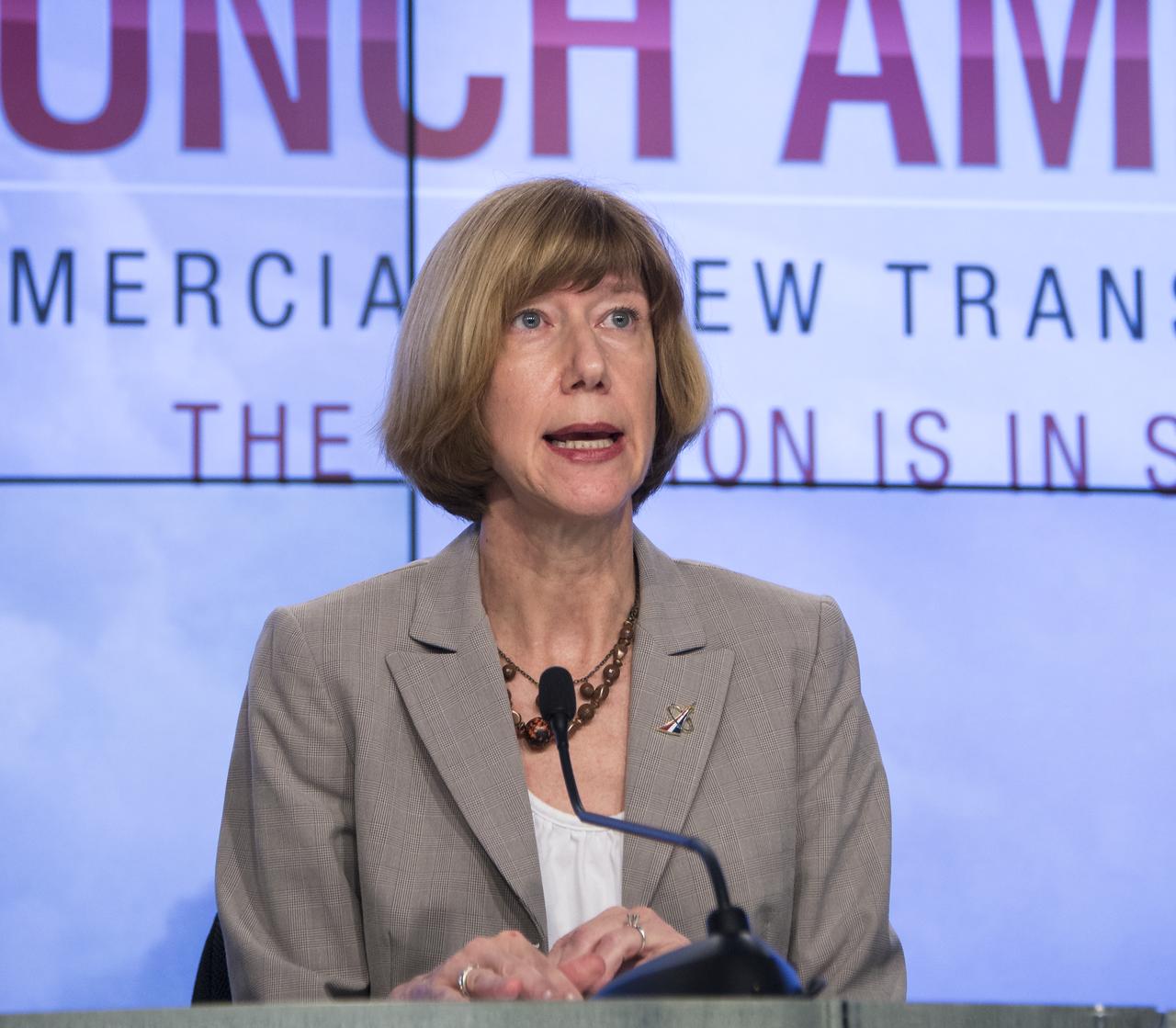
Kathy Lueders, program manager of NASA's Commercial Crew Program, speaks during a news conference where it was announced that Boeing and SpaceX have been selected to transport U.S. crews to and from the International Space Station using the Boeing CST-100 and the SpaceX Crew Dragon spacecraft, at NASA’s Kennedy Space Center in Cape Canaveral, Fla. on Tuesday, Sept. 16, 2014. These Commercial Crew Transportation Capability (CCtCap) contracts are designed to complete the NASA certification for a human space transportation system capable of carrying people into orbit. Once certification is complete, NASA plans to use these systems to transport astronauts to the space station and return them safely to Earth. Photo Credit: (NASA/Bill Ingalls)
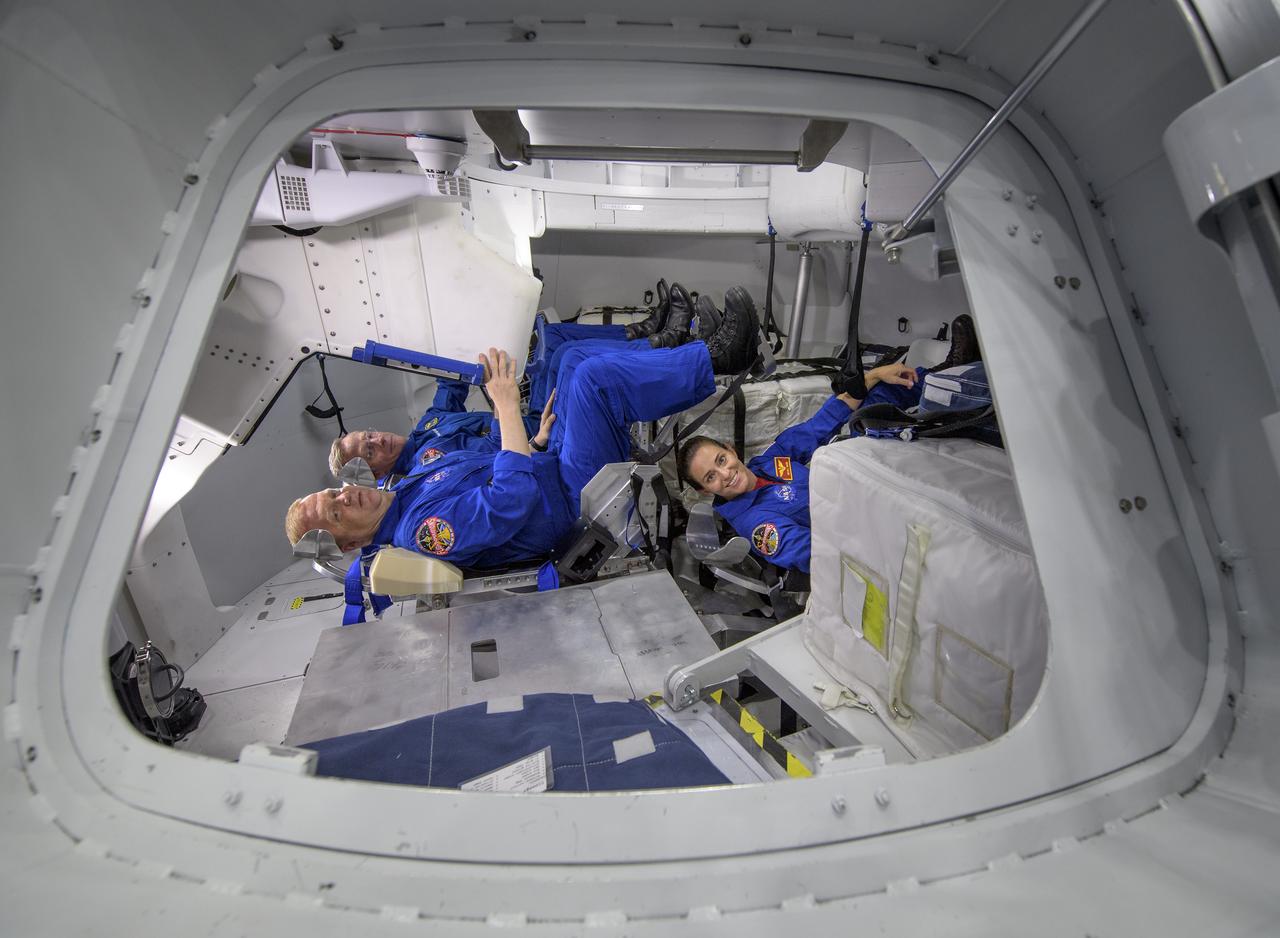
NASA astronauts Eric Boe, foreground left, and Nicole Mann, foreground right, along with Boeing astronaut Chris Ferguson, background, pose for a photograph inside the Boeing Mockup Trainer at NASA’s Johnson Space Center in Houston, Texas on Aug. 2, 2018 ahead of the commercial crew flight assignments announcement Aug. 3. The three were assigned to launch aboard Boeing’s CST-100 Starliner on the company’s Crew Flight Test targeted for mid-2019 in partnership with NASA’s Commercial Crew Program. Photo Credit: (NASA/Bill Ingalls)
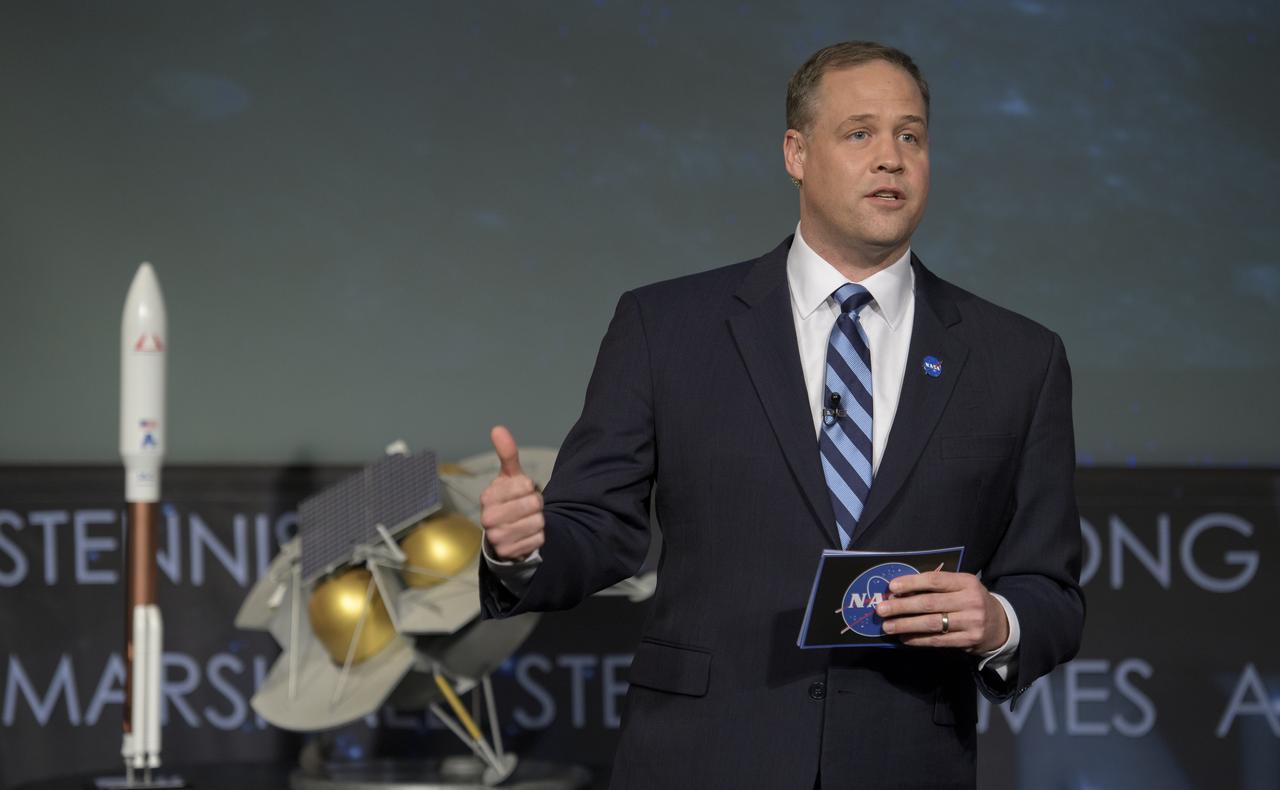
NASA Administrator Jim Bridenstine announces the nine U.S. companies that are eligible to bid on NASA delivery services to the lunar surface through Commercial Lunar Payload Services (CLPS) contracts, Thursday, Nov. 29, 2018 at NASA Headquarters in Washington. The companies will be able to bid on delivering science and technology payloads for NASA, including payload integration and operations, launching from Earth and landing on the surface of the Moon. NASA expects to be one of many customers that will use these commercial landing services. Photo Credit: (NASA/Bill Ingalls)
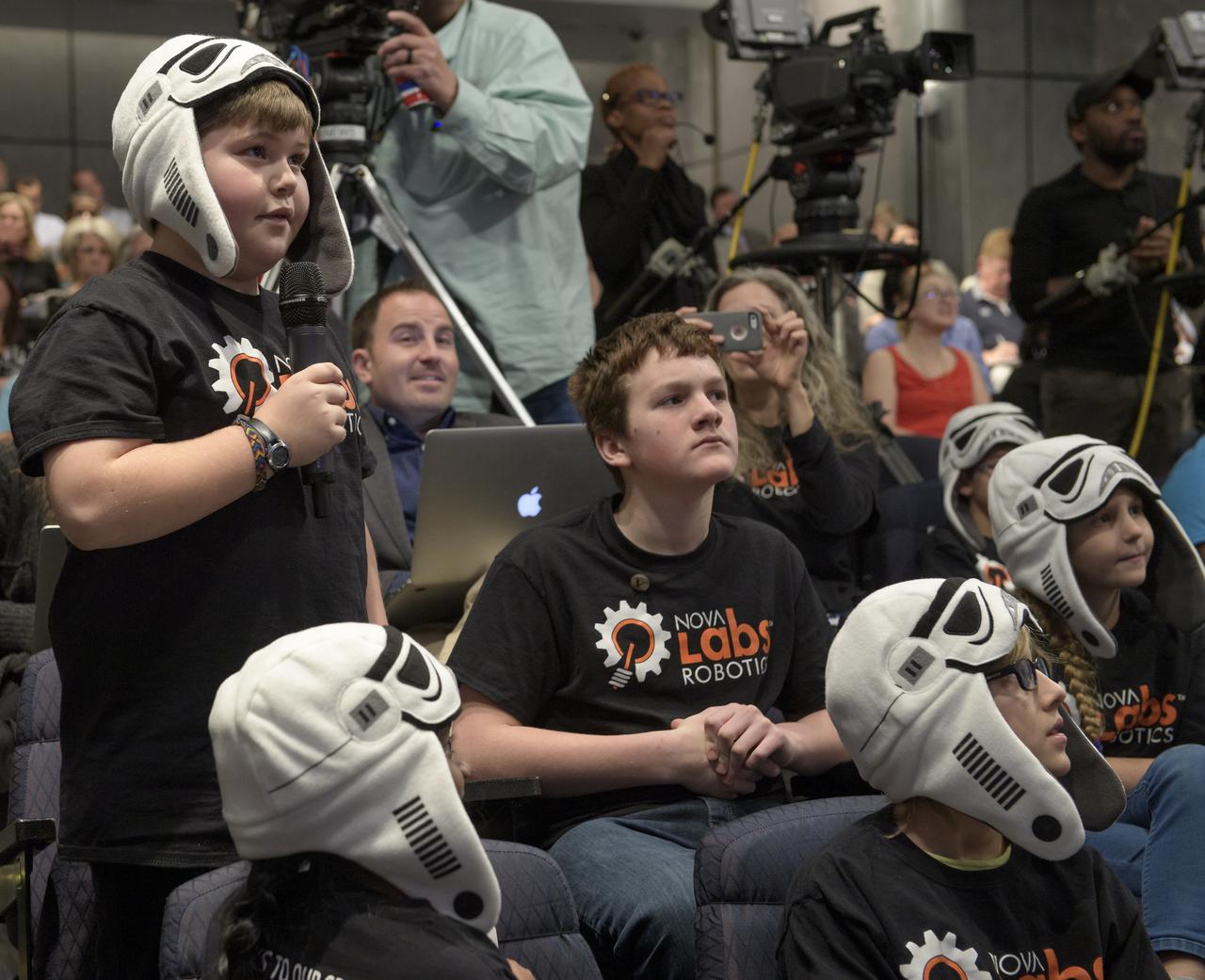
A Nova Labs Robotics "BrainStorm Troopers" team member from Reston, Virginia asks a question during an Commercial Lunar Payload Services (CLPS) announcement, Thursday, Nov. 29, 2018 at NASA Headquarters in Washington. Nine companies will be able to bid on delivering science and technology payloads for NASA, including payload integration and operations, launching from Earth and landing on the surface of the Moon. NASA expects to be one of many customers that will use these commercial landing services. Photo Credit: (NASA/Bill Ingalls)
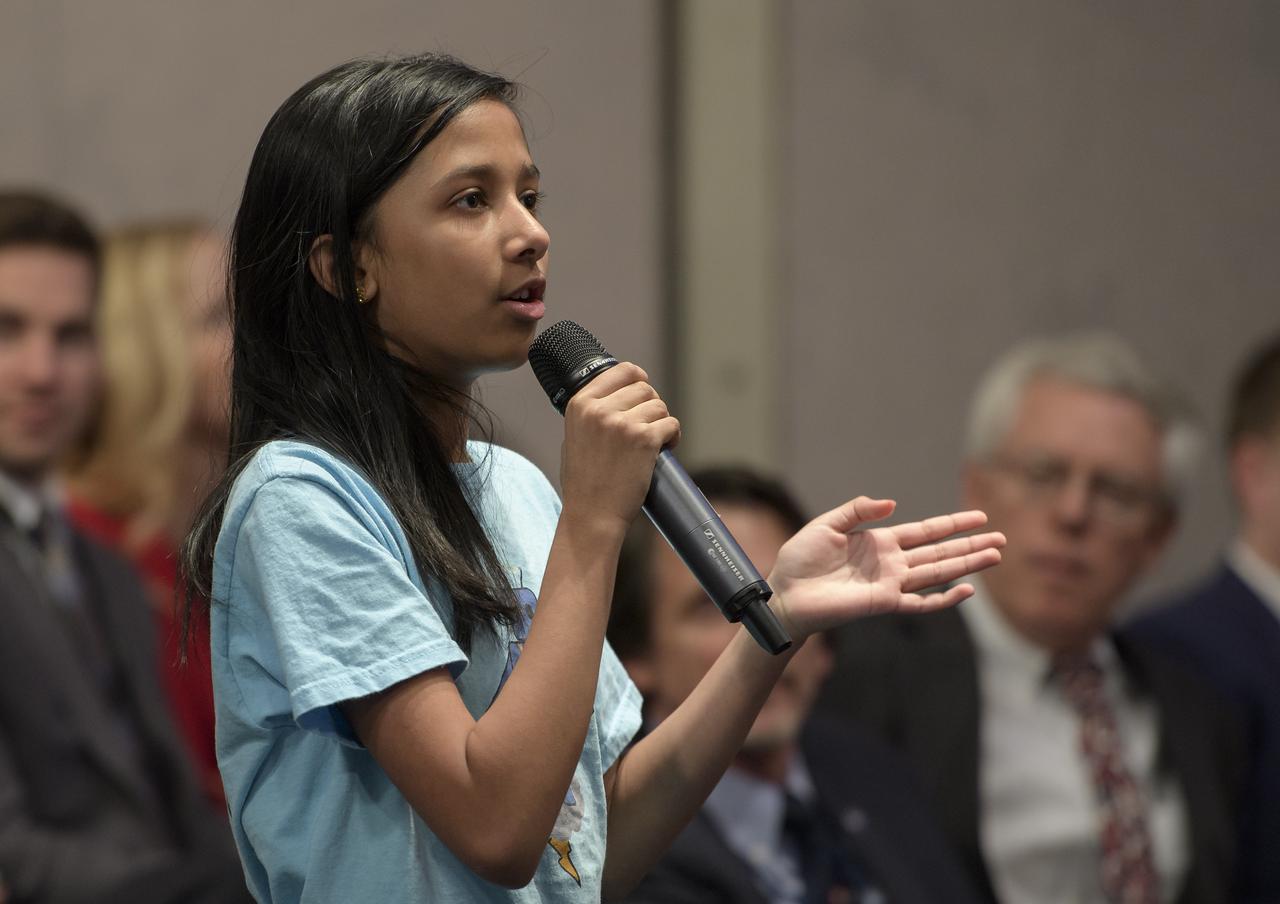
A Cascades Thunderbots "Robotics for Youth" team member from Sterling, Virginia asks a question during an Commercial Lunar Payload Services (CLPS) announcement, Thursday, Nov. 29, 2018 at NASA Headquarters in Washington. Nine companies will be able to bid on delivering science and technology payloads for NASA, including payload integration and operations, launching from Earth and landing on the surface of the Moon. NASA expects to be one of many customers that will use these commercial landing services. Photo Credit: (NASA/Bill Ingalls)
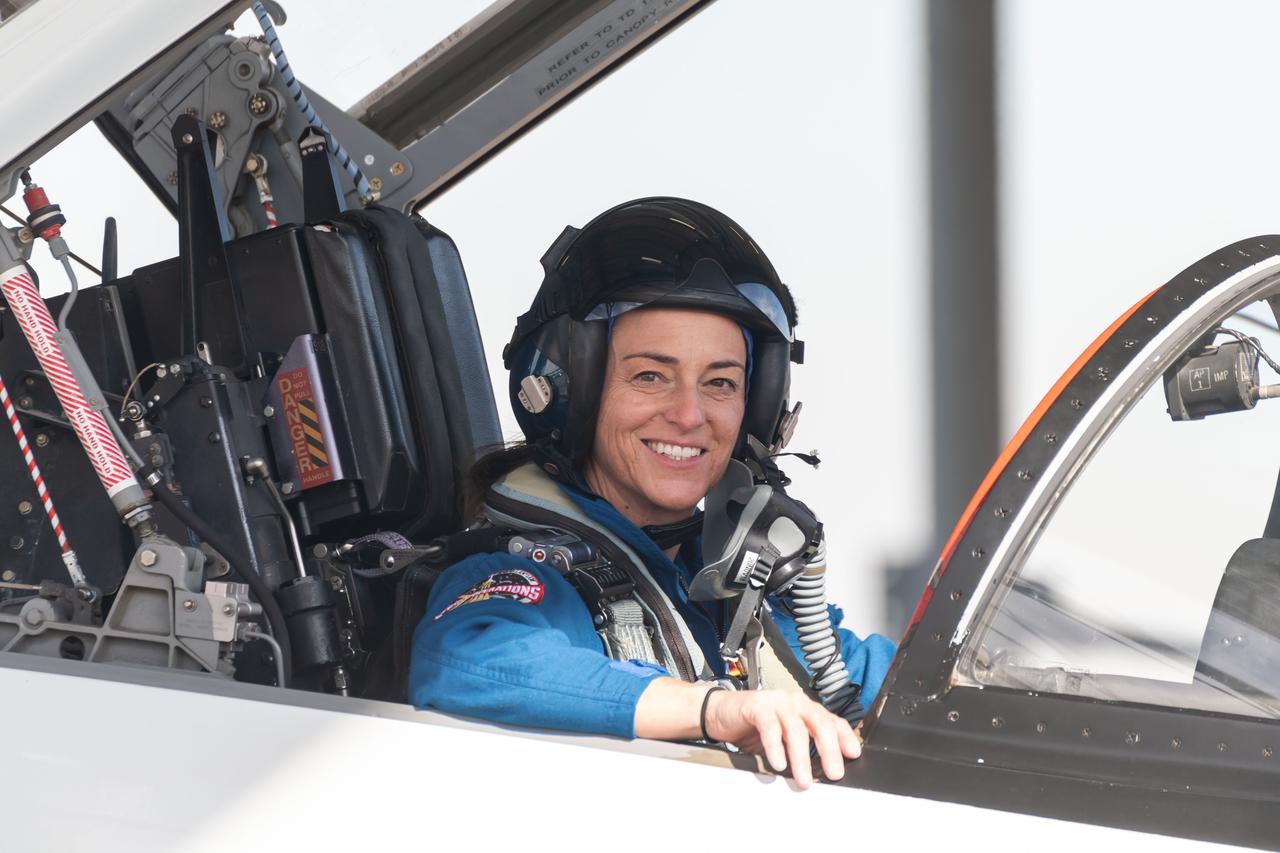
Nicole Mann sits in a T-38 in preparation for Commercial Crew Program astronaut training at NASA's Johnson Space Center.
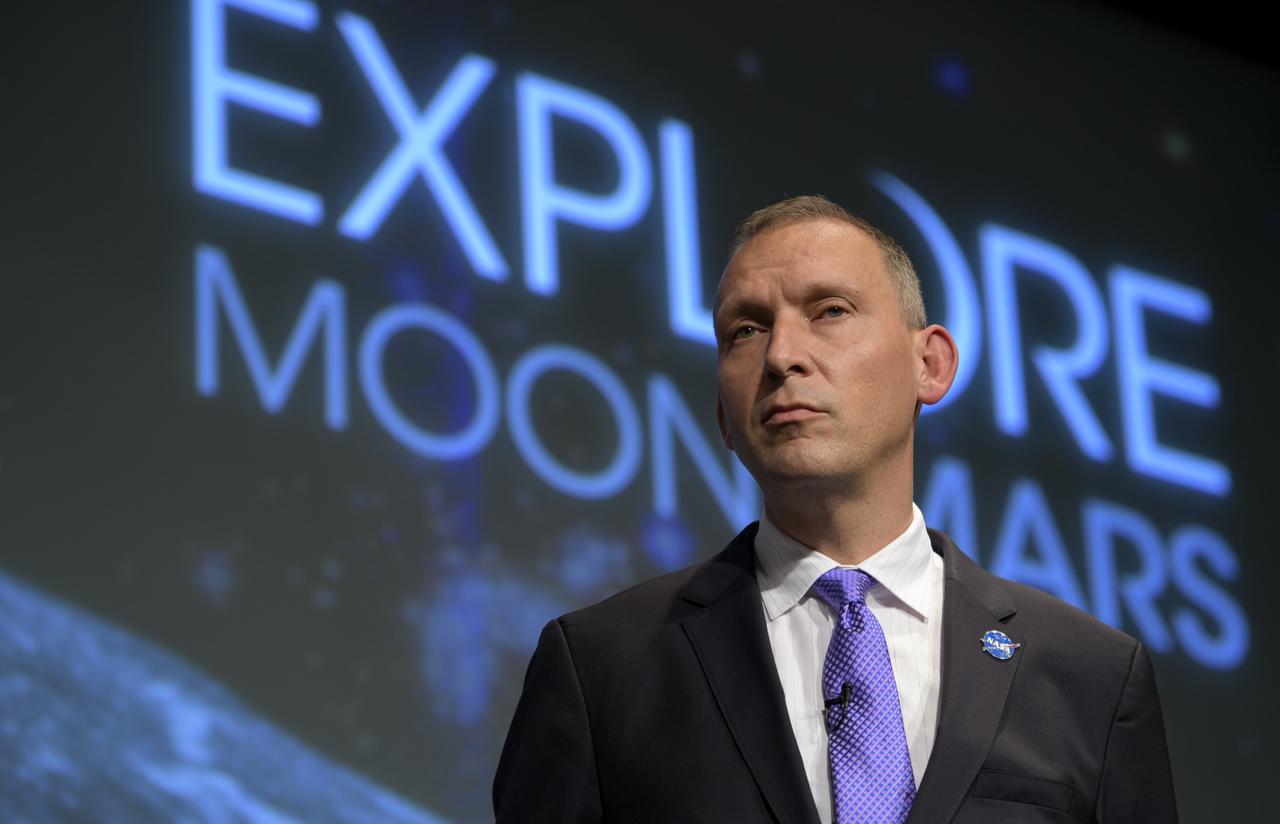
NASA Associate Administrator for the Science Mission Directorate, Thomas Zurbuchen, answers questions during an event where nine U.S. companies where named as eligible to bid on NASA delivery services to the lunar surface through Commercial Lunar Payload Services (CLPS) contracts, Thursday, Nov. 29, 2018 at NASA Headquarters in Washington. The companies will be able to bid on delivering science and technology payloads for NASA, including payload integration and operations, launching from Earth and landing on the surface of the Moon. NASA expects to be one of many customers that will use these commercial landing services. Photo Credit: (NASA/Bill Ingalls)
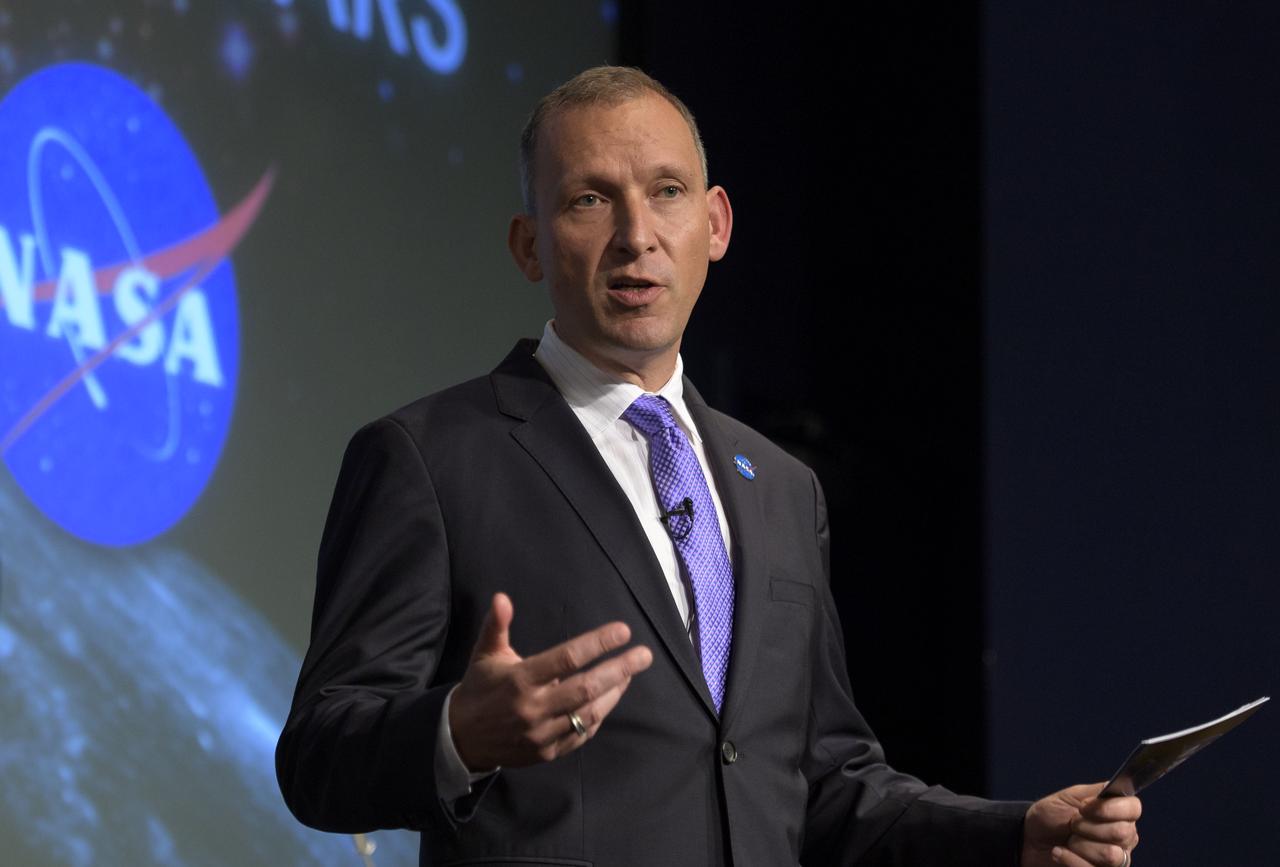
NASA Associate Administrator for the Science Mission Directorate, Thomas Zurbuchen, answers questions during an event where nine U.S. companies where named as eligible to bid on NASA delivery services to the lunar surface through Commercial Lunar Payload Services (CLPS) contracts, Thursday, Nov. 29, 2018 at NASA Headquarters in Washington. The companies will be able to bid on delivering science and technology payloads for NASA, including payload integration and operations, launching from Earth and landing on the surface of the Moon. NASA expects to be one of many customers that will use these commercial landing services. Photo Credit: (NASA/Bill Ingalls)
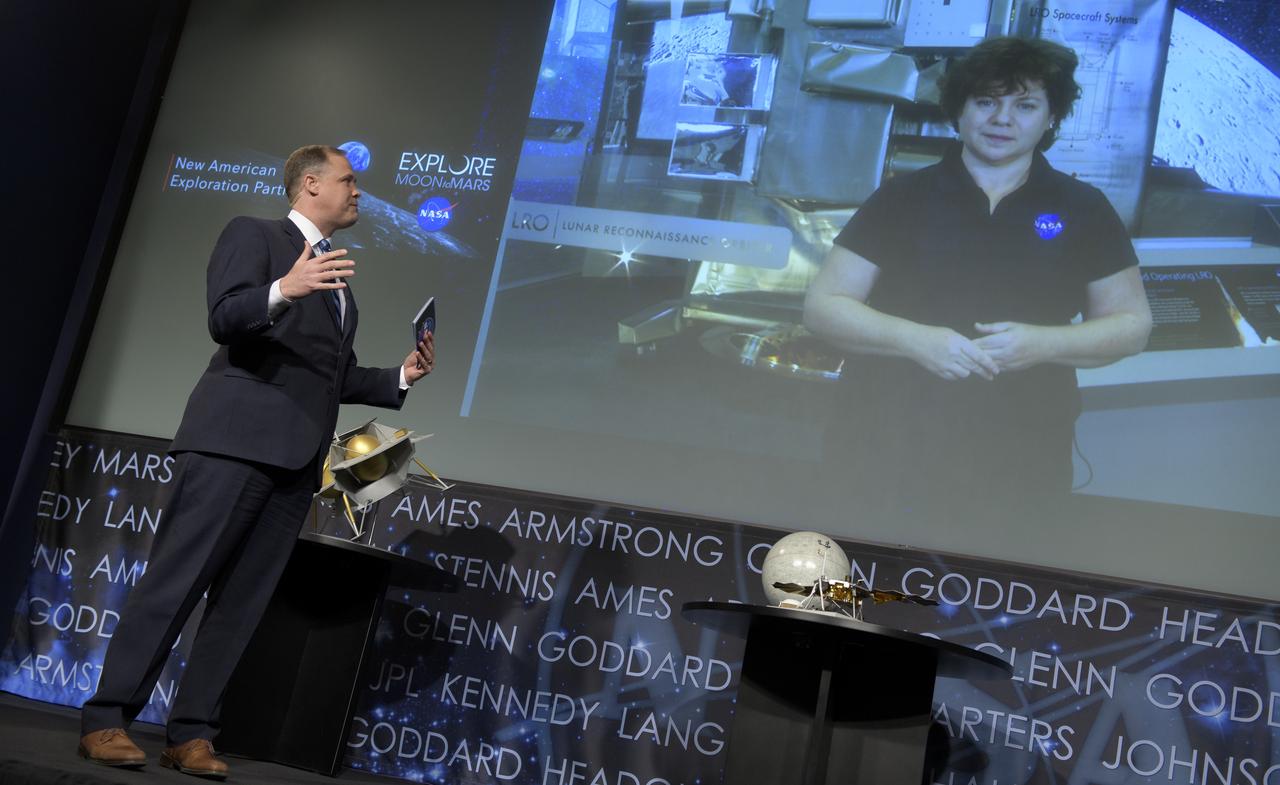
NASA Administrator Jim Bridenstine talks with Barbara Cohen, associate project scientist for the Lunar Reconnaissance Orbiter at NASA’s Goddard Space Flight Center in Greenbelt, Maryland during a event where it was announced that nine U.S. companies are eligible to bid on NASA delivery services to the lunar surface through Commercial Lunar Payload Services (CLPS) contracts, Thursday, Nov. 29, 2018 at NASA Headquarters in Washington. The companies will be able to bid on delivering science and technology payloads for NASA, including payload integration and operations, launching from Earth and landing on the surface of the Moon. NASA expects to be one of many customers that will use these commercial landing services. Photo Credit: (NASA/Bill Ingalls)
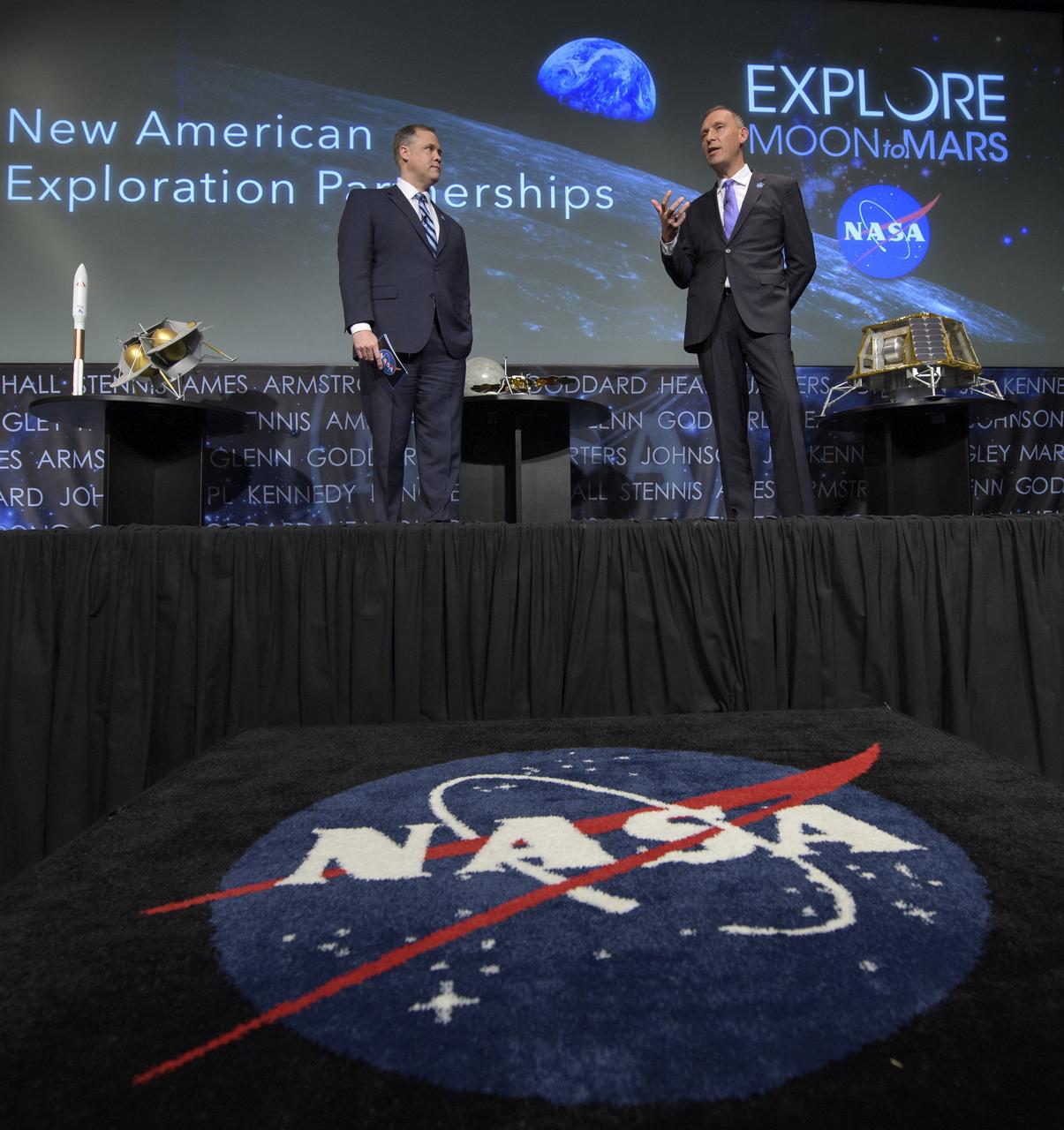
NASA Administrator Jim Bridenstine, left, and NASA Associate Administrator for the Science Mission Directorate, Thomas Zurbuchen, answer questions during an event where nine U.S. companies where named as eligible to bid on NASA delivery services to the lunar surface through Commercial Lunar Payload Services (CLPS) contracts, Thursday, Nov. 29, 2018 at NASA Headquarters in Washington. The companies will be able to bid on delivering science and technology payloads for NASA, including payload integration and operations, launching from Earth and landing on the surface of the Moon. NASA expects to be one of many customers that will use these commercial landing services. Photo Credit: (NASA/Bill Ingalls)
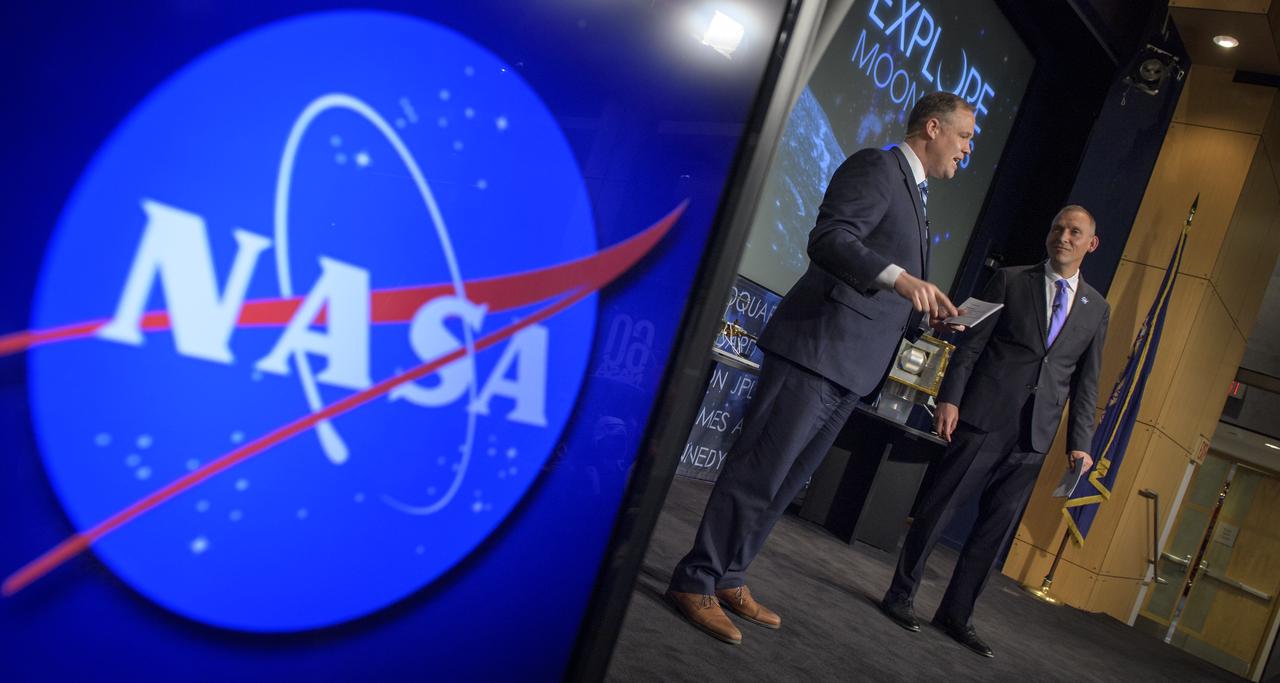
NASA Administrator Jim Bridenstine, left, and NASA Associate Administrator for the Science Mission Directorate, Thomas Zurbuchen, answer questions during an event where nine U.S. companies where named as eligible to bid on NASA delivery services to the lunar surface through Commercial Lunar Payload Services (CLPS) contracts, Thursday, Nov. 29, 2018 at NASA Headquarters in Washington. The companies will be able to bid on delivering science and technology payloads for NASA, including payload integration and operations, launching from Earth and landing on the surface of the Moon. NASA expects to be one of many customers that will use these commercial landing services. Photo Credit: (NASA/Bill Ingalls)
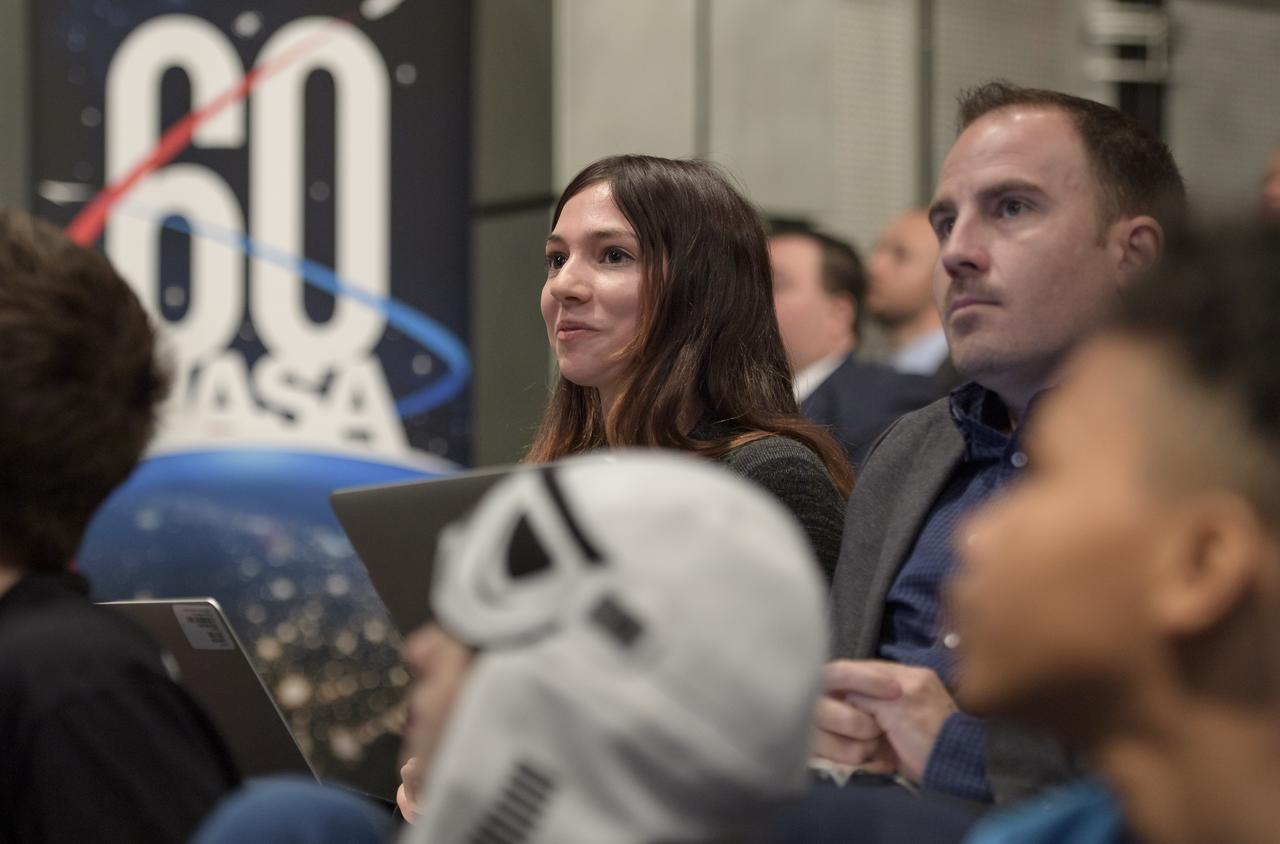
Thalia Patrinos, and Jason Townsend from NASA's Social Media Teamm monitor questions coming in from social media during an event where nine U.S. companies where named as eligible to bid on NASA delivery services to the lunar surface through Commercial Lunar Payload Services (CLPS) contracts, Thursday, Nov. 29, 2018 at NASA Headquarters in Washington. The companies will be able to bid on delivering science and technology payloads for NASA, including payload integration and operations, launching from Earth and landing on the surface of the Moon. NASA expects to be one of many customers that will use these commercial landing services. Photo Credit: (NASA/Bill Ingalls)
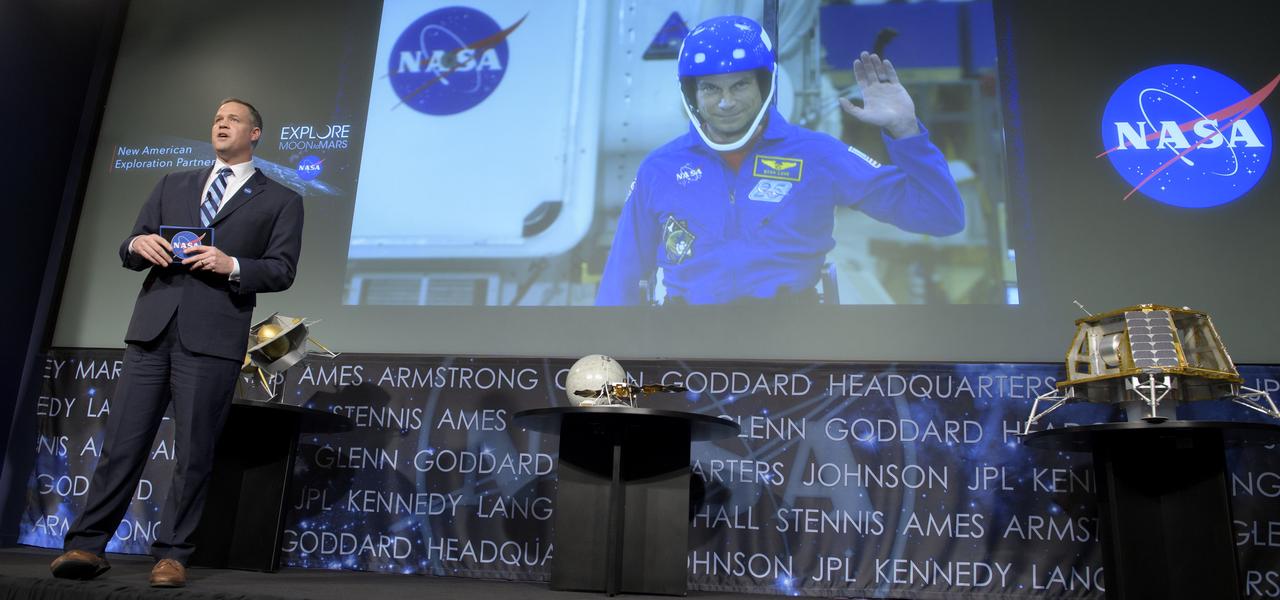
NASA Administrator Jim Bridenstine talks via satellite with NASA astronaut Stan Love from NASA’s Johnson Space Center in Houston during an event where it was announced that nine U.S. companies are eligible to bid on NASA delivery services to the lunar surface through Commercial Lunar Payload Services (CLPS) contracts, Thursday, Nov. 29, 2018 at NASA Headquarters in Washington. The companies will be able to bid on delivering science and technology payloads for NASA, including payload integration and operations, launching from Earth and landing on the surface of the Moon. NASA expects to be one of many customers that will use these commercial landing services. Photo Credit: (NASA/Bill Ingalls)
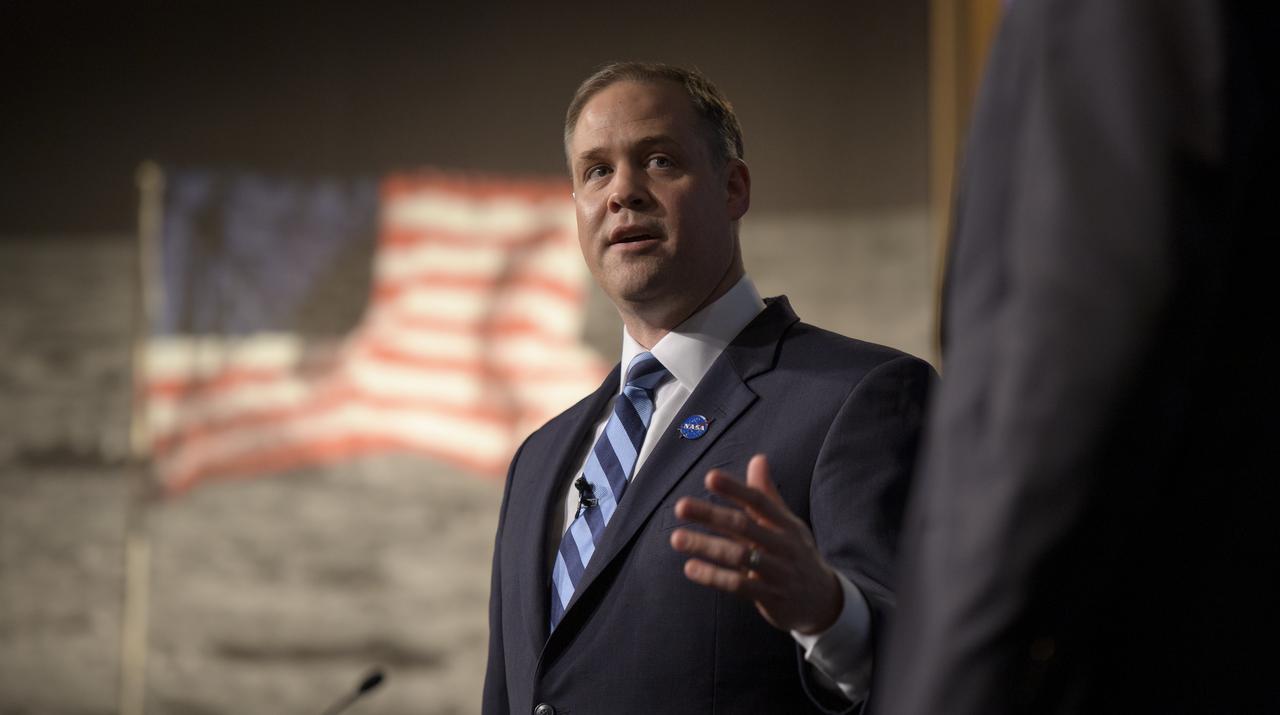
NASA Administrator Jim Bridenstine answers questions during an event where nine U.S. companies where named as eligible to bid on NASA delivery services to the lunar surface through Commercial Lunar Payload Services (CLPS) contracts, Thursday, Nov. 29, 2018 at NASA Headquarters in Washington. The companies will be able to bid on delivering science and technology payloads for NASA, including payload integration and operations, launching from Earth and landing on the surface of the Moon. NASA expects to be one of many customers that will use these commercial landing services. Photo Credit: (NASA/Bill Ingalls)
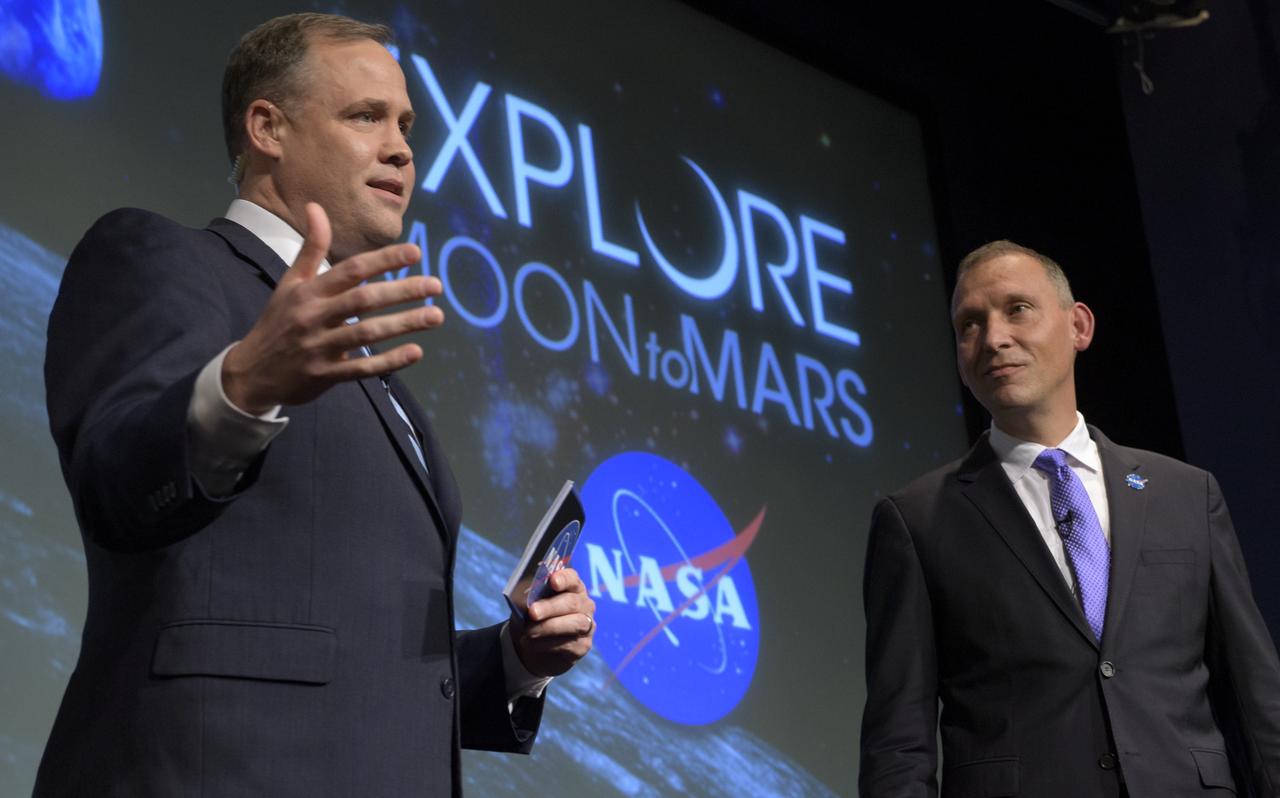
NASA Administrator Jim Bridenstine, left, and NASA Associate Administrator for the Science Mission Directorate, Thomas Zurbuchen, answer questions during an event where nine U.S. companies where named as eligible to bid on NASA delivery services to the lunar surface through Commercial Lunar Payload Services (CLPS) contracts, Thursday, Nov. 29, 2018 at NASA Headquarters in Washington. The companies will be able to bid on delivering science and technology payloads for NASA, including payload integration and operations, launching from Earth and landing on the surface of the Moon. NASA expects to be one of many customers that will use these commercial landing services. Photo Credit: (NASA/Bill Ingalls)
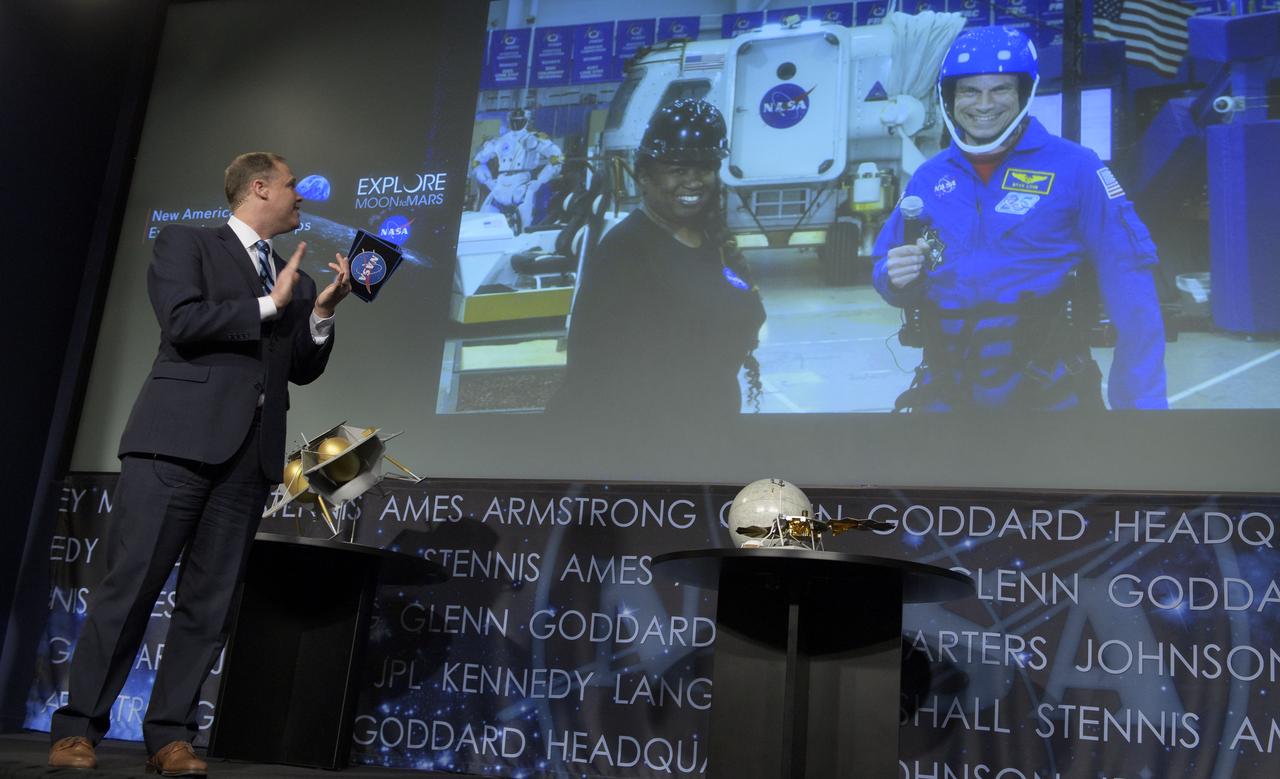
NASA Administrator Jim Bridenstine talks via satellite with Andrea Mosie, Apollo sample laboratory manager, and NASA astronaut Stan Love from NASA’s Johnson Space Center in Houston during a event where it was announced that nine U.S. companies are eligible to bid on NASA delivery services to the lunar surface through Commercial Lunar Payload Services (CLPS) contracts, Thursday, Nov. 29, 2018 at NASA Headquarters in Washington. The companies will be able to bid on delivering science and technology payloads for NASA, including payload integration and operations, launching from Earth and landing on the surface of the Moon. NASA expects to be one of many customers that will use these commercial landing services. Photo Credit: (NASA/Bill Ingalls)
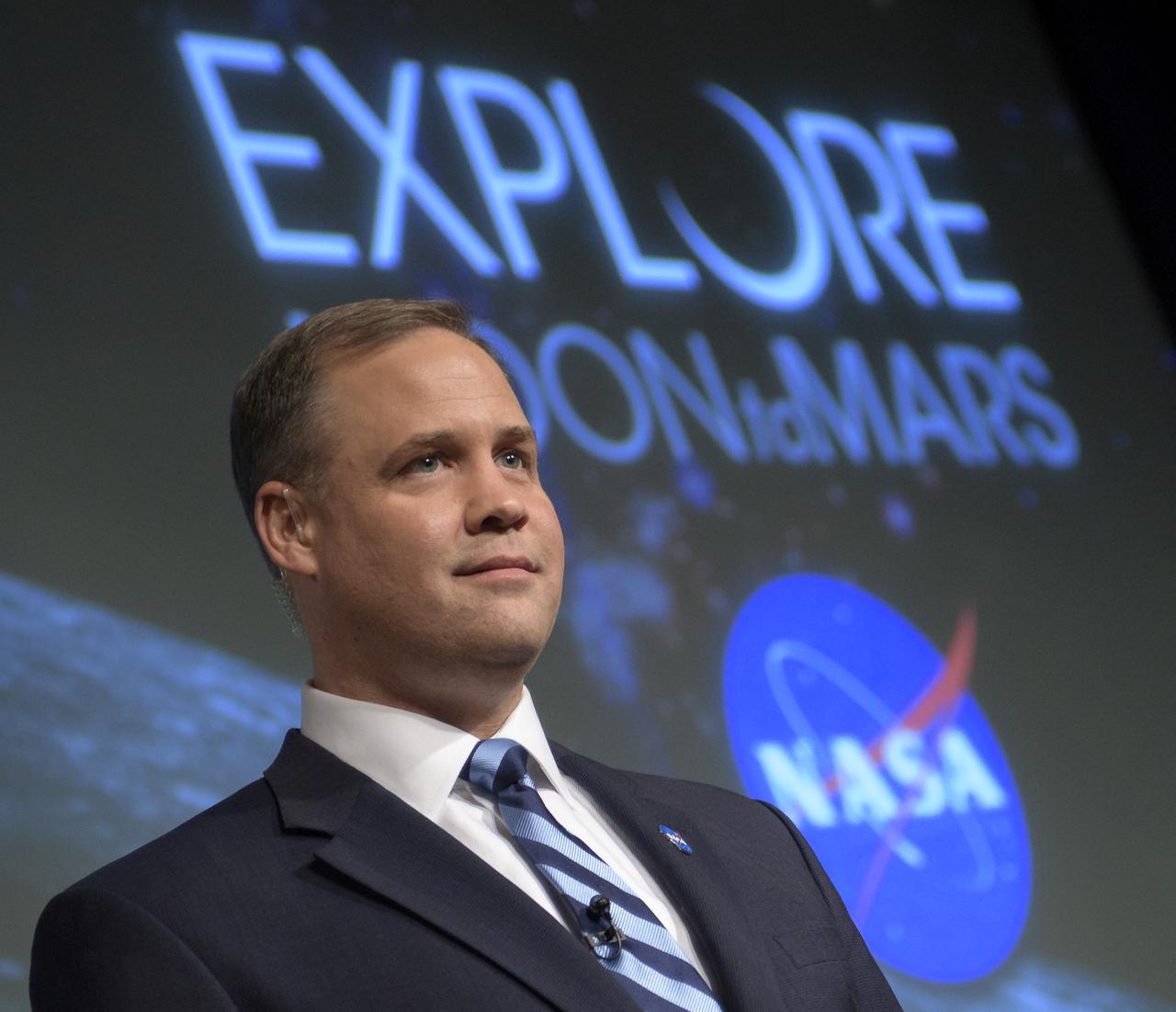
NASA Administrator Jim Bridenstine answers questions during an event where nine U.S. companies where named as eligible to bid on NASA delivery services to the lunar surface through Commercial Lunar Payload Services (CLPS) contracts, Thursday, Nov. 29, 2018 at NASA Headquarters in Washington. The companies will be able to bid on delivering science and technology payloads for NASA, including payload integration and operations, launching from Earth and landing on the surface of the Moon. NASA expects to be one of many customers that will use these commercial landing services. Photo Credit: (NASA/Bill Ingalls)
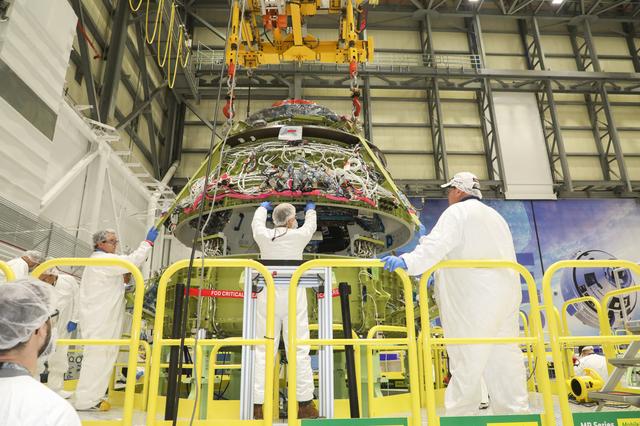
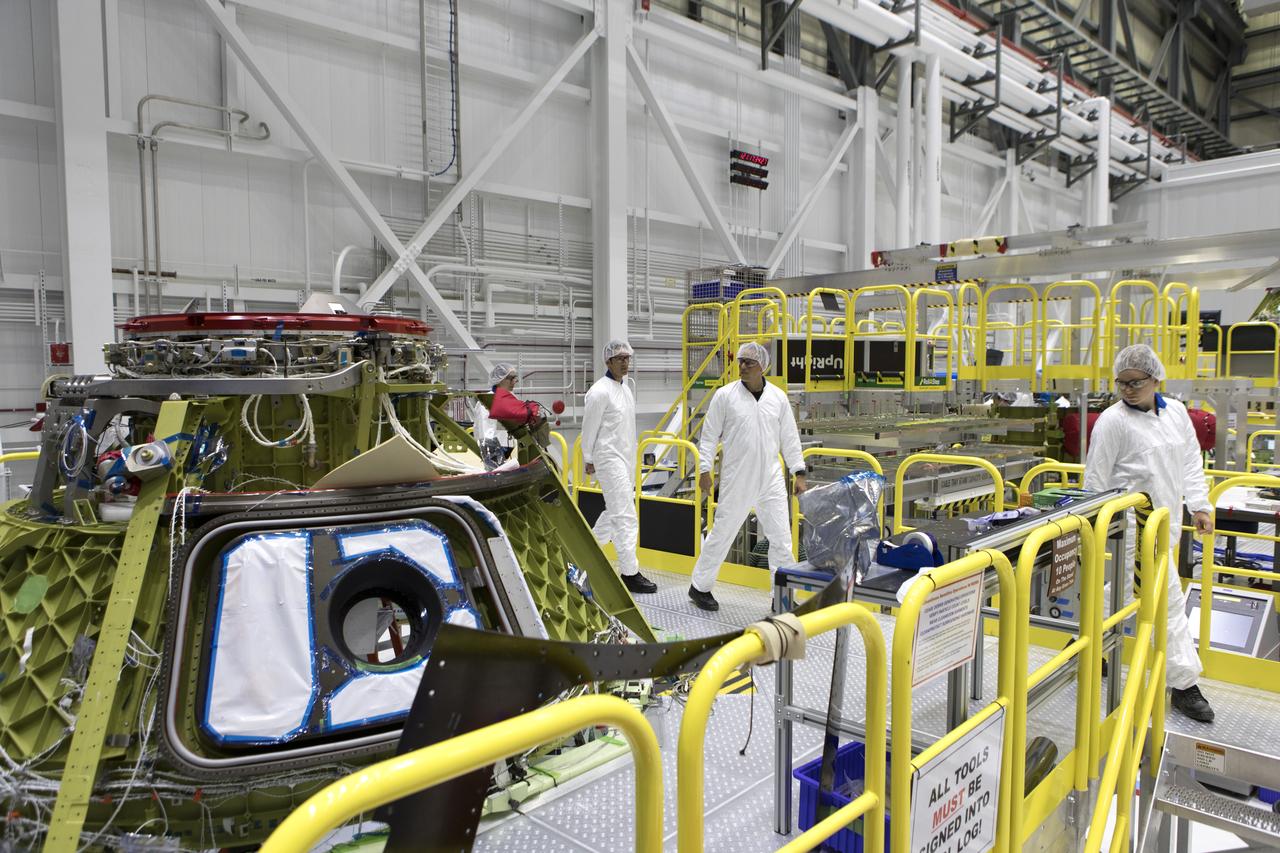
Technicians at Boeing’s Commercial Crew and Cargo Processing Facility (C3PF) at NASA’s Kennedy Space Center in Florida mate the two domes that comprise the main pressure vessel of Boeing’s Orbital Flight Test CST-100 Starliner. This is one of the last major assembly milestones before final outfitting and closeouts as Starliner prepares for its first mission, the uncrewed test flight later this summer. Boeing’s uncrewed Orbital Flight Test is part of NASA’s Commercial Crew Program, which is working with Boeing to return human spaceflight launches to the space station from U.S. soil.
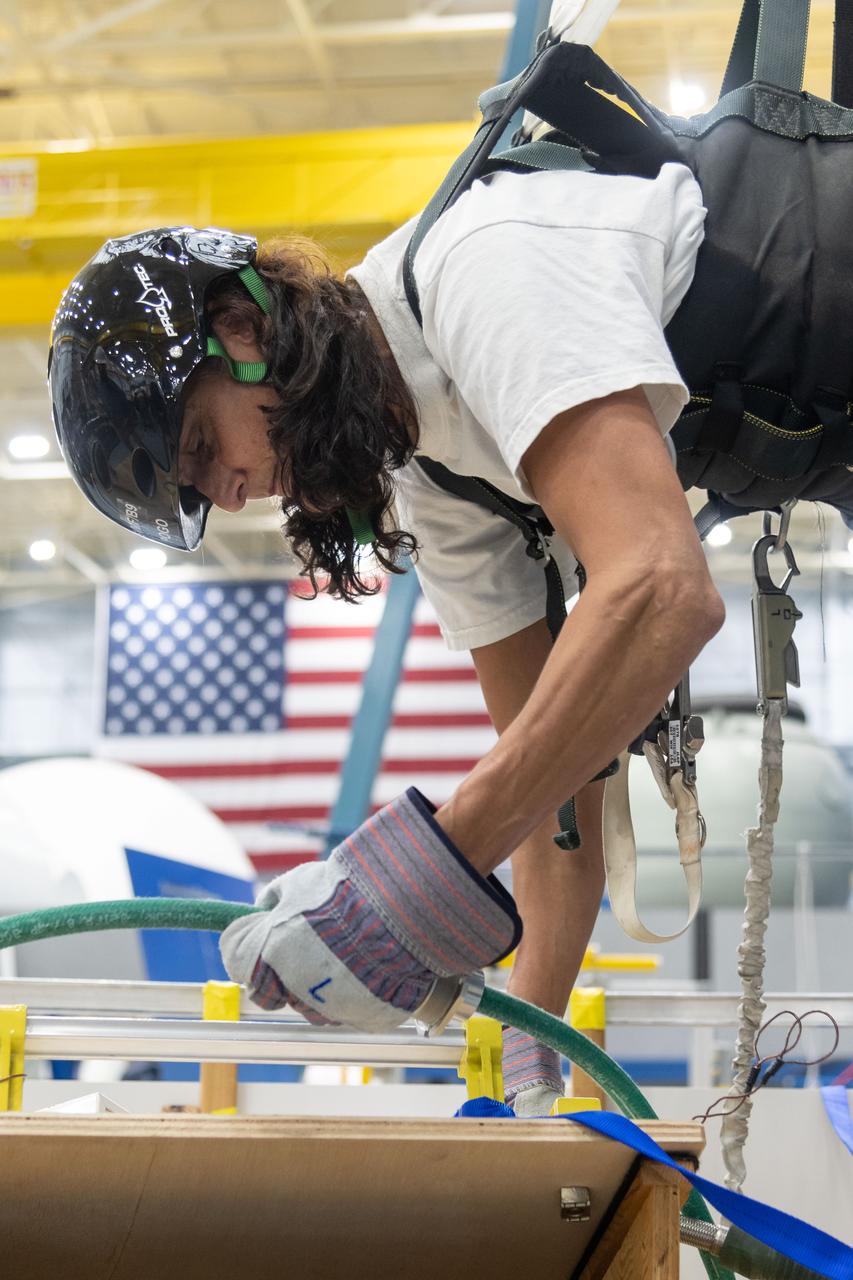
Commercial Crew Program (CCP) astronaut Suni Williams in ISS EVA POGO training in SVMF POGO.

Commercial Crew Program (CCP) astronaut Suni Williams in ISS EVA POGO training in SVMF POGO.
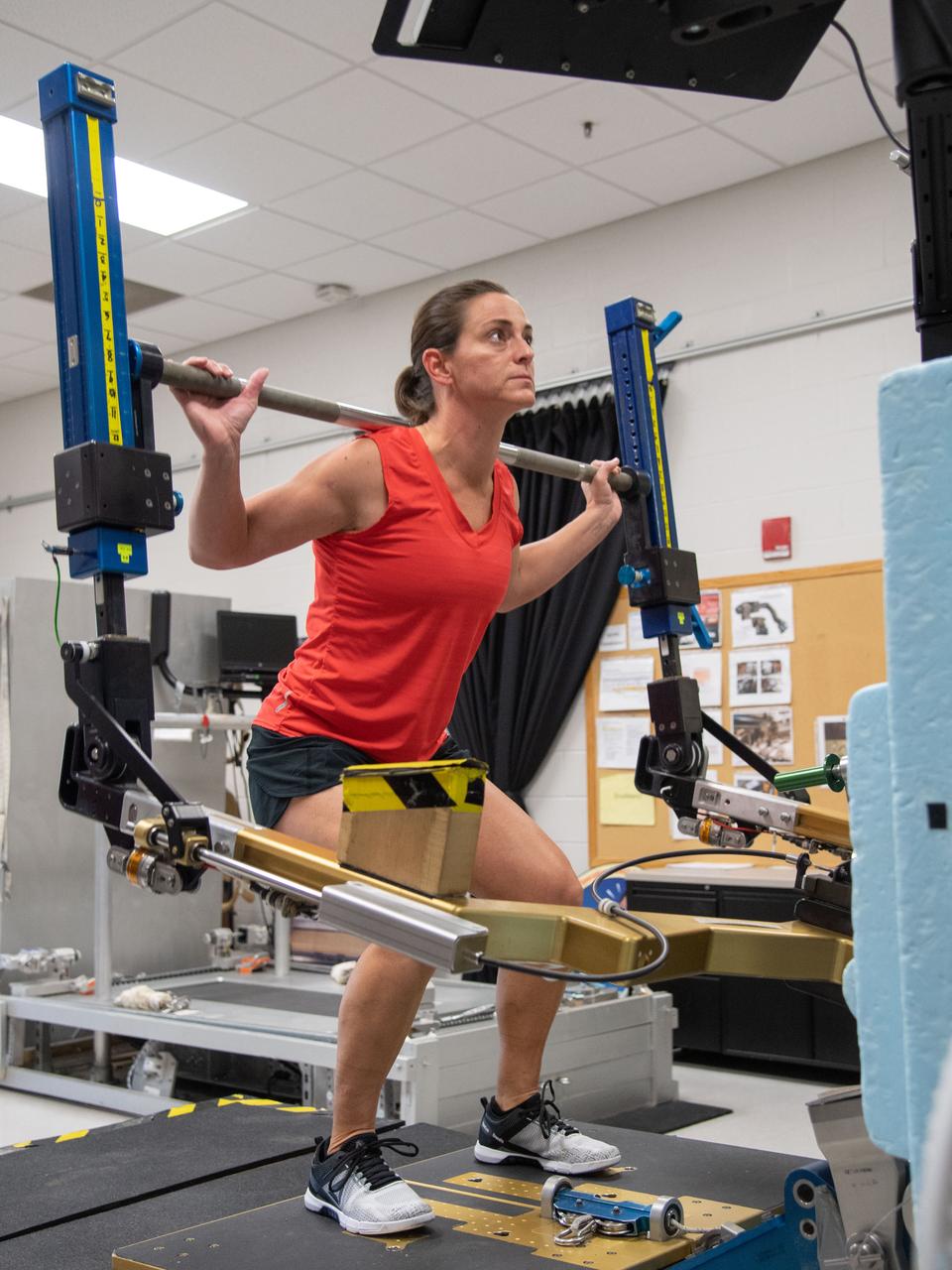
Commercial Crew Program astronaut and Boeing Crew Flight Test crew member Nicole Mann in ARED PT #1 training.
Commercial Crew Program (CCP) astronaut Suni Williams in ISS EVA POGO training in SVMF POGO.
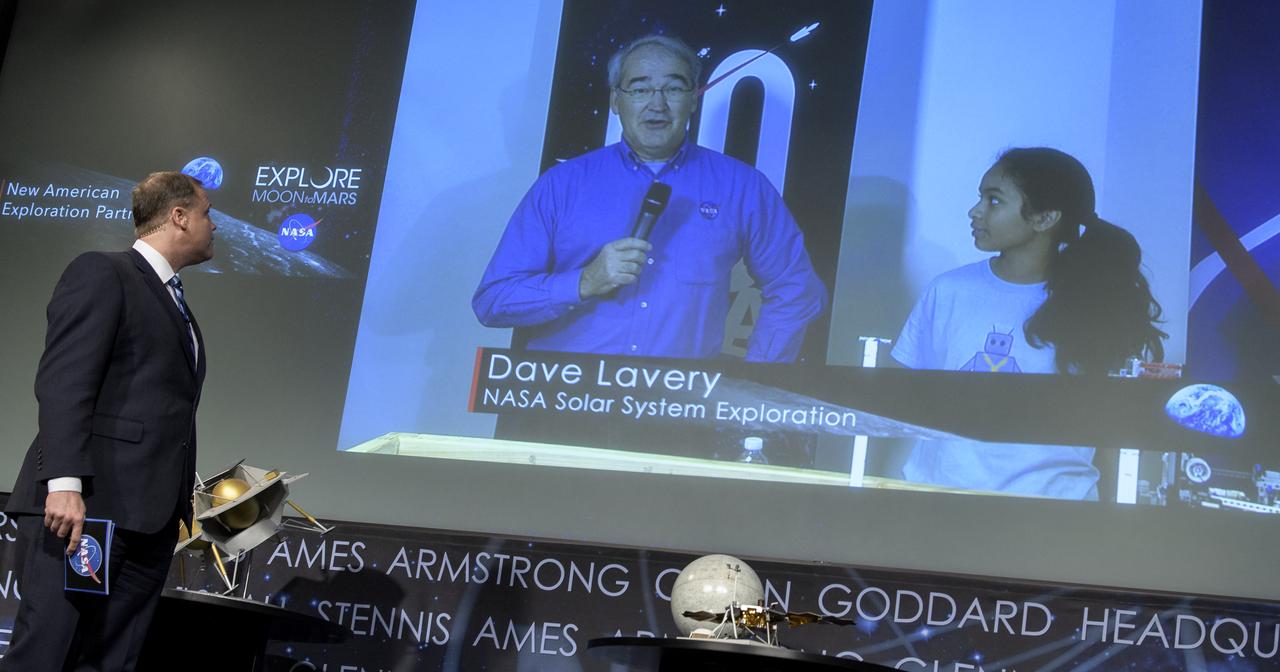
NASA Administrator Jim Bridenstine talks with Dave Lavery, Program Executive for Solar System Exploration, and Dishaa Bhat, 14, from Mary Henderson Middle School in Falls Church, Virginia, during a event where it was announced that nine U.S. companies are eligible to bid on NASA delivery services to the lunar surface through Commercial Lunar Payload Services (CLPS) contracts, Thursday, Nov. 29, 2018 at NASA Headquarters in Washington. The companies will be able to bid on delivering science and technology payloads for NASA, including payload integration and operations, launching from Earth and landing on the surface of the Moon. NASA expects to be one of many customers that will use these commercial landing services. Photo Credit: (NASA/Bill Ingalls)
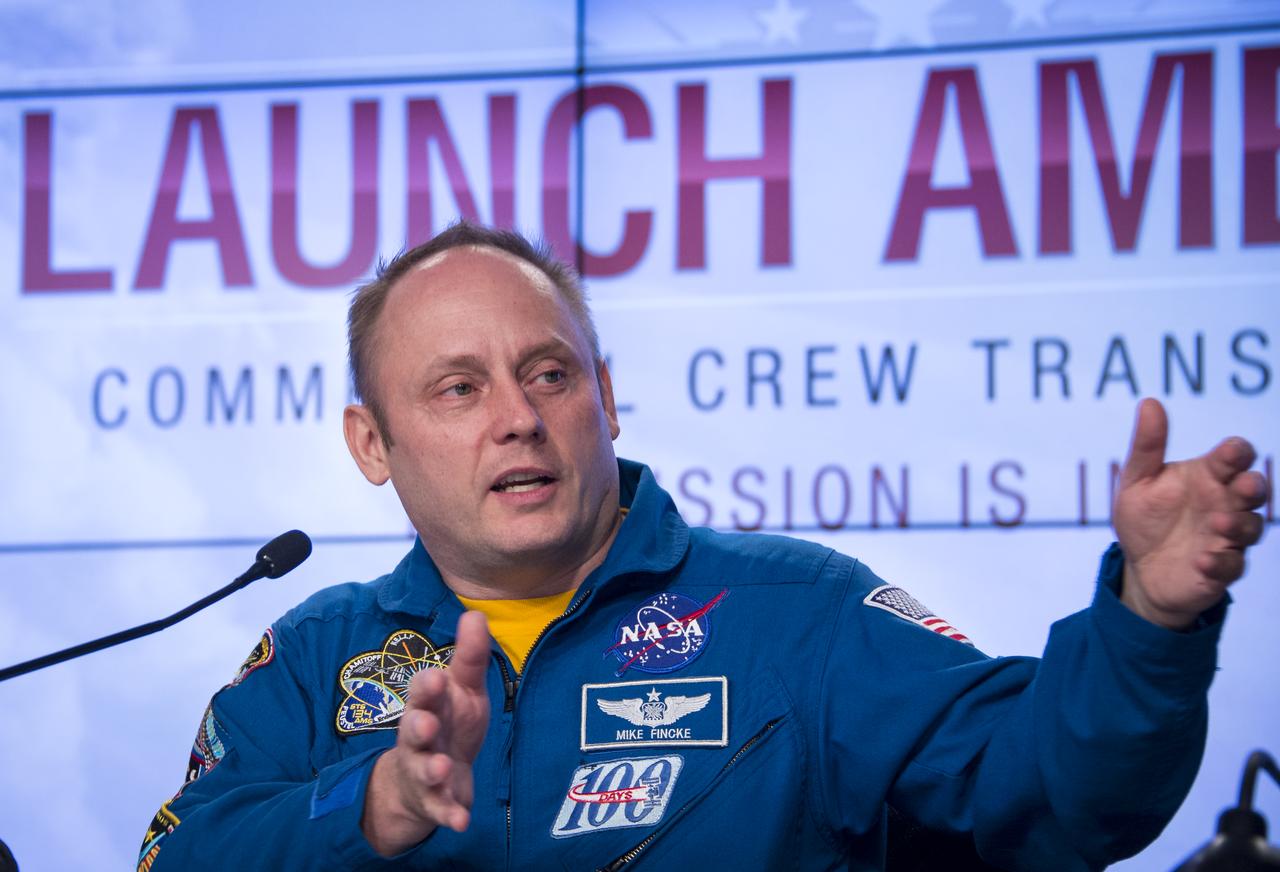
Astronaut Mike Fincke, a former commander of the International Space Station, speaks during a news conference where it was announced that Boeing and SpaceX have been selected to transport U.S. crews to and from the International Space Station using the Boeing CST-100 and the SpaceX Crew Dragon spacecraft, at NASA’s Kennedy Space Center in Cape Canaveral, Fla. on Tuesday, Sept. 16, 2014. These Commercial Crew Transportation Capability (CCtCap) contracts are designed to complete the NASA certification for a human space transportation system capable of carrying people into orbit. Once certification is complete, NASA plans to use these systems to transport astronauts to the space station and return them safely to Earth. Photo Credit: (NASA/Bill Ingalls)
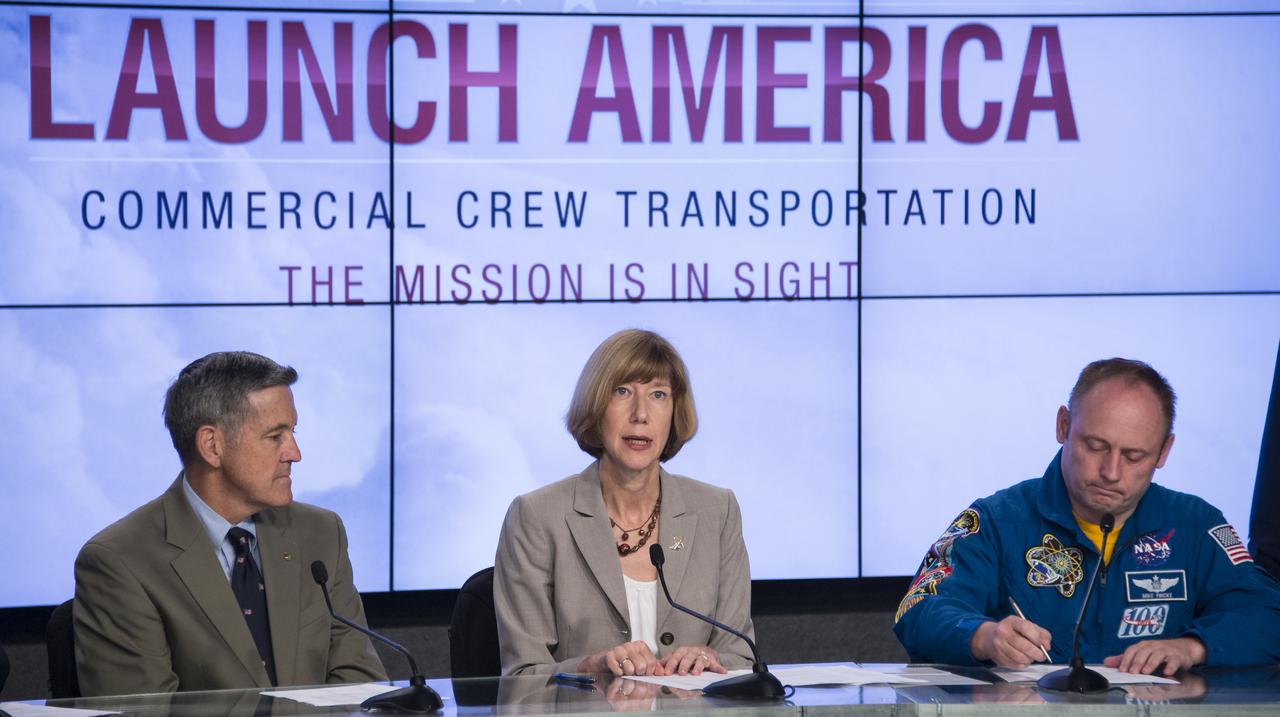
Kathy Lueders, program manager of NASA's Commercial Crew Program, speaks, as Former astronaut Bob Cabana, director of NASA's Kennedy Space Center in Florida, left, and Astronaut Mike Fincke, a former commander of the International Space Station look on during a news conference where it was announced that Boeing and SpaceX have been selected to transport U.S. crews to and from the International Space Station using the Boeing CST-100 and the SpaceX Crew Dragon spacecraft, at NASA’s Kennedy Space Center in Cape Canaveral, Fla. on Tuesday, Sept. 16, 2014. These Commercial Crew Transportation Capability (CCtCap) contracts are designed to complete the NASA certification for a human space transportation system capable of carrying people into orbit. Once certification is complete, NASA plans to use these systems to transport astronauts to the space station and return them safely to Earth. Photo Credit: (NASA/Bill Ingalls)
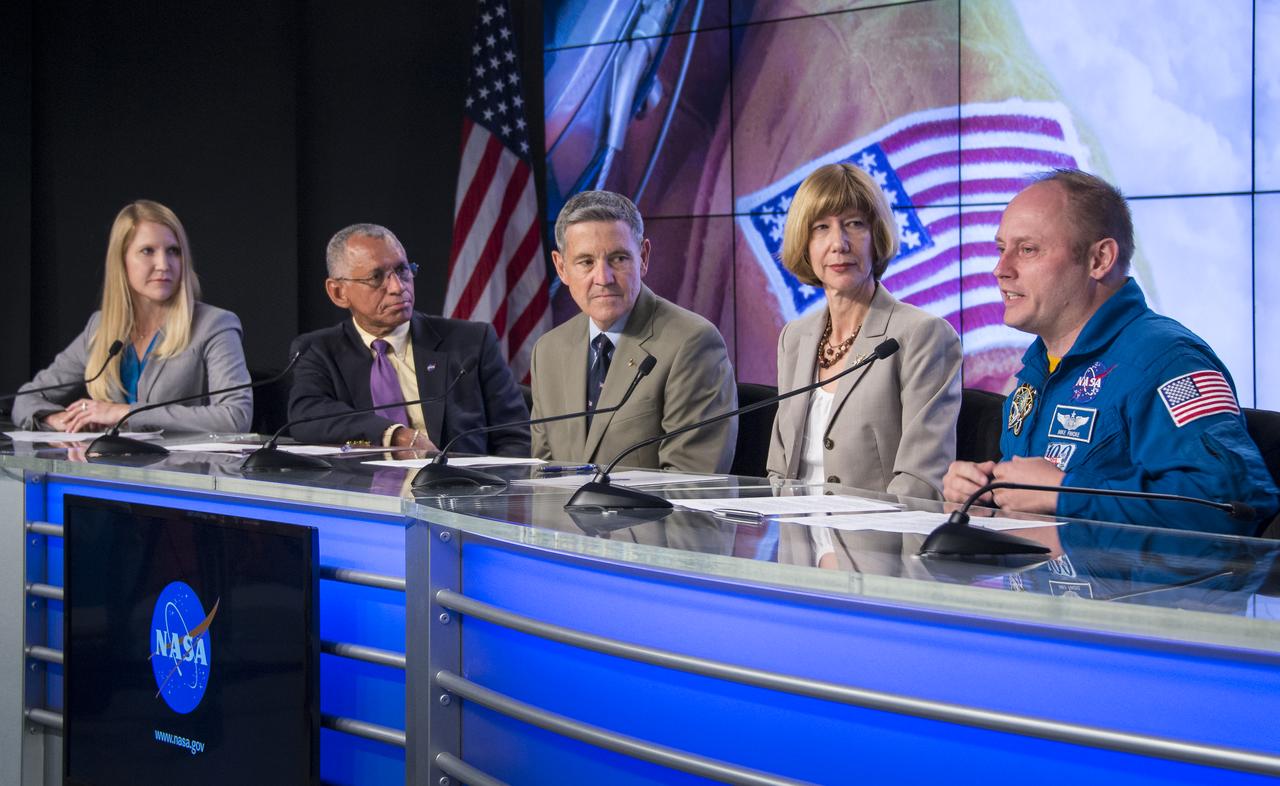
From left, NASA Public Affairs Officer Stephanie Schierholz, NASA Administrator Charles Bolden, Former astronaut Bob Cabana, director of NASA's Kennedy Space Center in Florida, Kathy Lueders, program manager of NASA's Commercial Crew Program, and Astronaut Mike Fincke, a former commander of the International Space Station, are seen during a news conference where it was announced that Boeing and SpaceX have been selected to transport U.S. crews to and from the International Space Station using the Boeing CST-100 and the SpaceX Crew Dragon spacecraft, at NASA’s Kennedy Space Center in Cape Canaveral, Fla. on Tuesday, Sept. 16, 2014. These Commercial Crew Transportation Capability (CCtCap) contracts are designed to complete the NASA certification for a human space transportation system capable of carrying people into orbit. Once certification is complete, NASA plans to use these systems to transport astronauts to the space station and return them safely to Earth. Photo Credit: (NASA/Bill Ingalls)
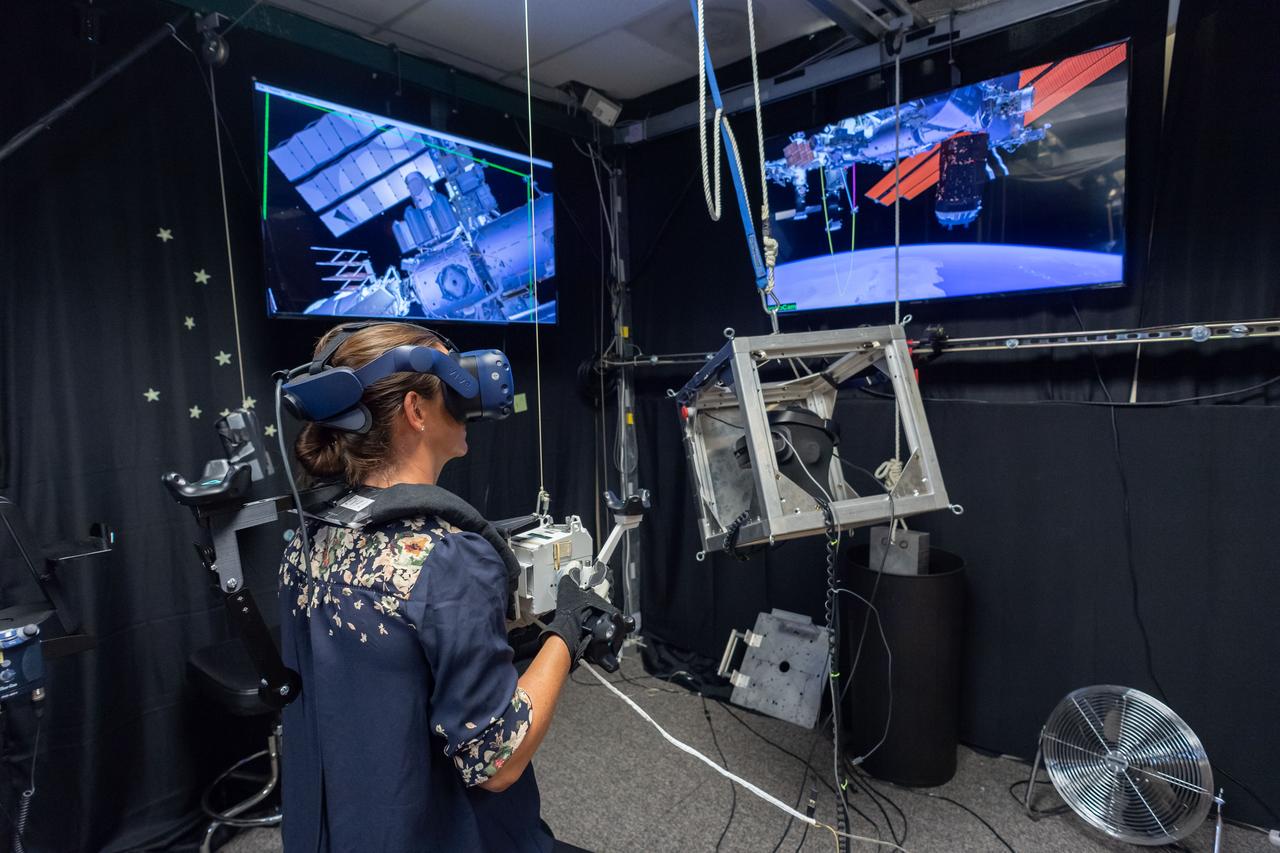
Commercial Crew Program astronaut and Boeing Crew Flight Test crew member Nicole Mann in SAFER Skills training in VR Lab.
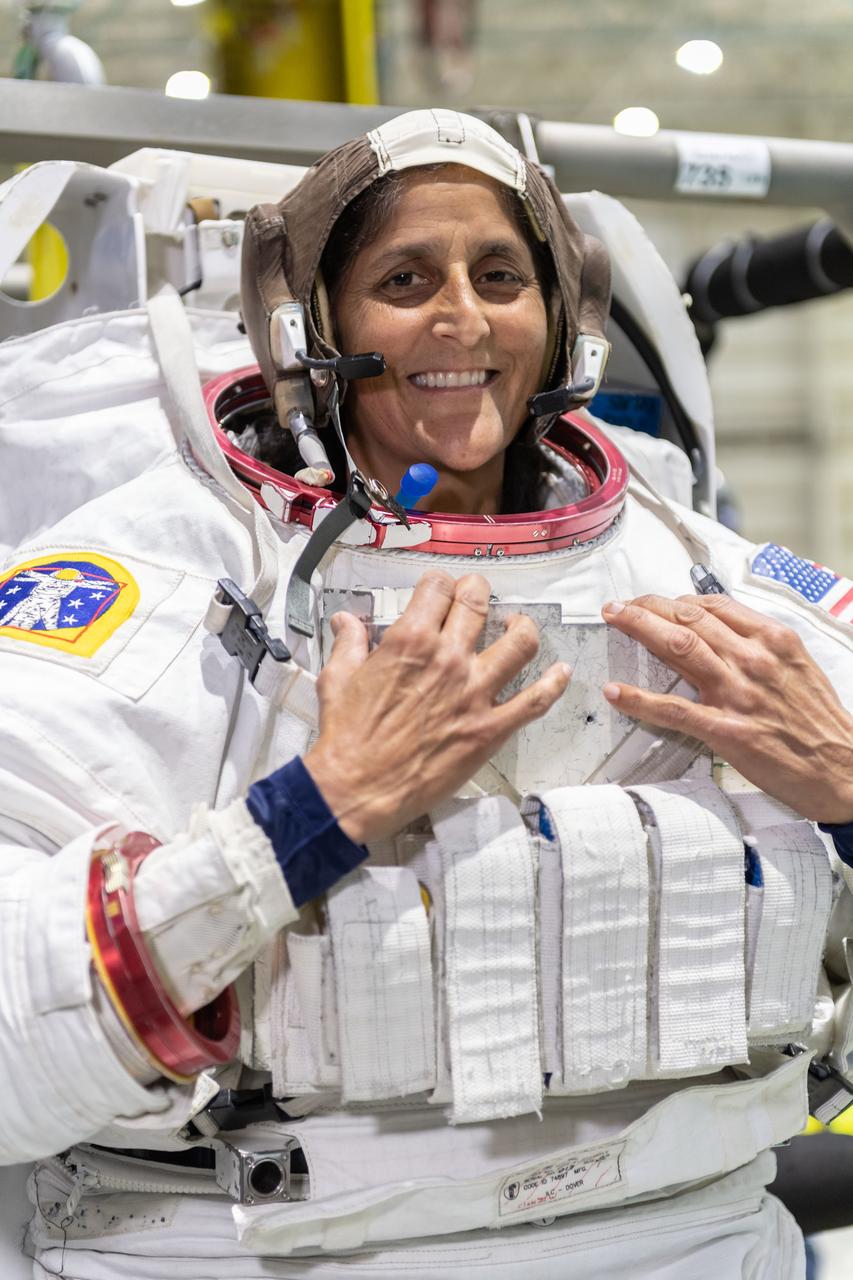
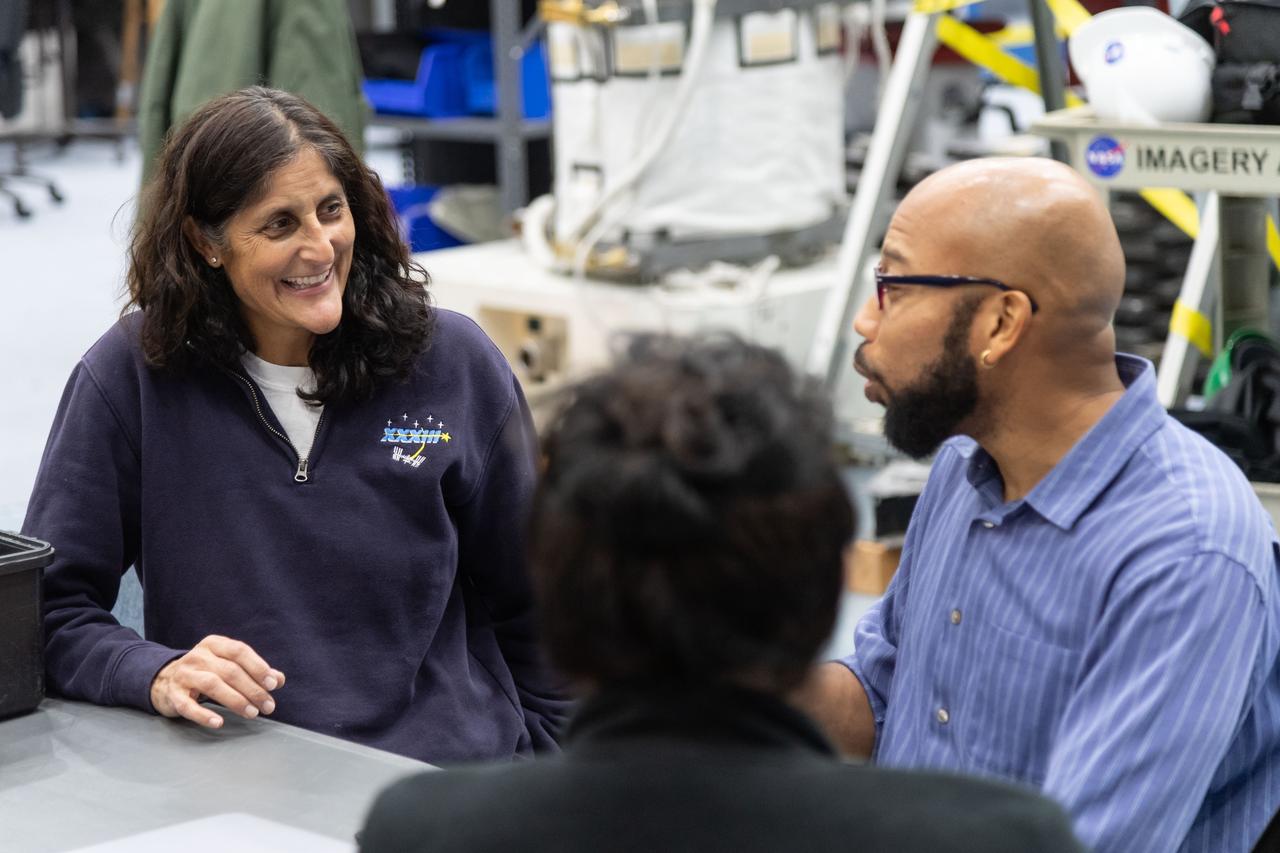
Commercial Crew Program astronaut training with Boeing PCM crew members Suni Williams & Josh Cassada during ISS EVA Maintenance 1 training at the NBL.

Commercial Crew Program astronaut training with Boeing PCM crew members Suni Williams & Josh Cassada during ISS EVA Maintenance 1 training at the NBL.
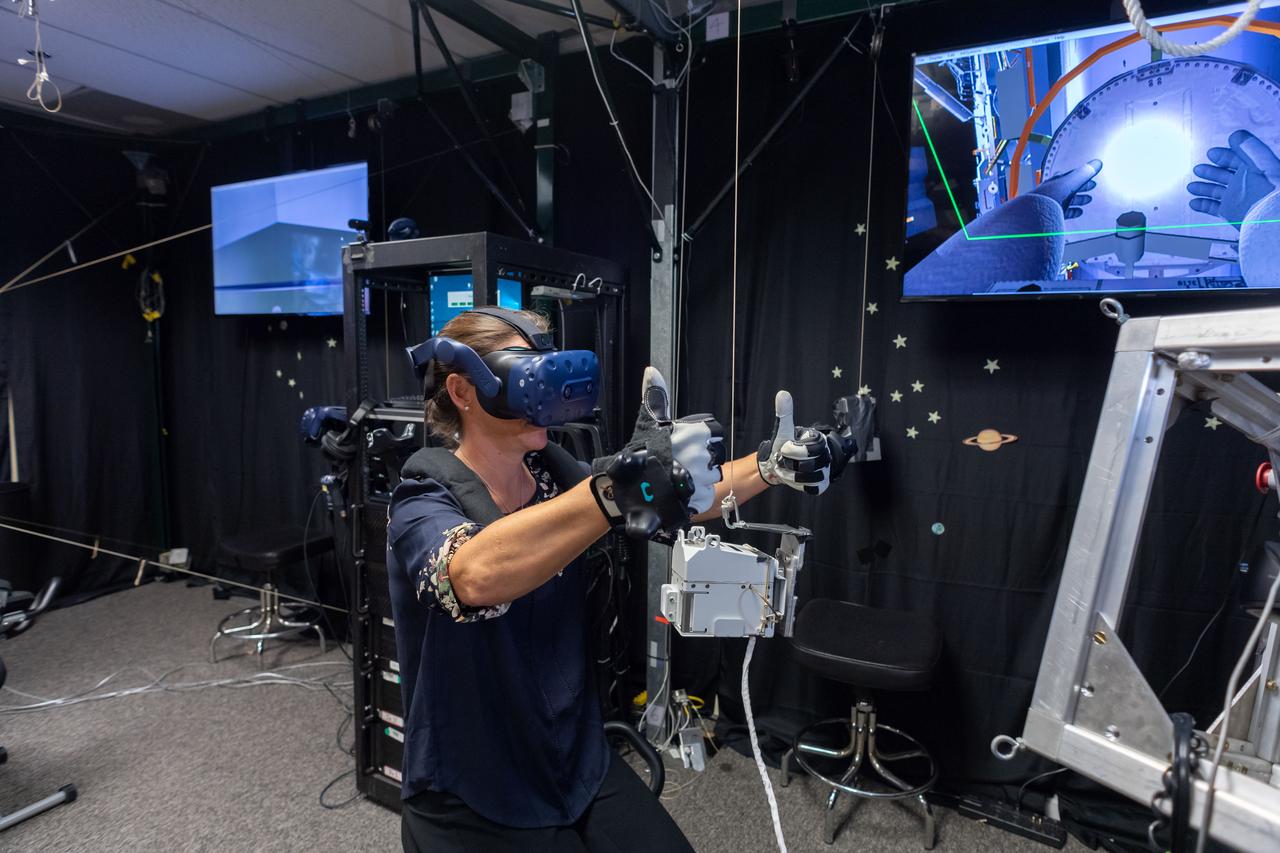
Commercial Crew Program astronaut and Boeing Crew Flight Test crew member Nicole Mann in SAFER Skills training in VR Lab.

Commercial Crew Program astronaut training with Boeing PCM crew members Suni Williams & Josh Cassada during ISS EVA Maintenance 1 training at the NBL.
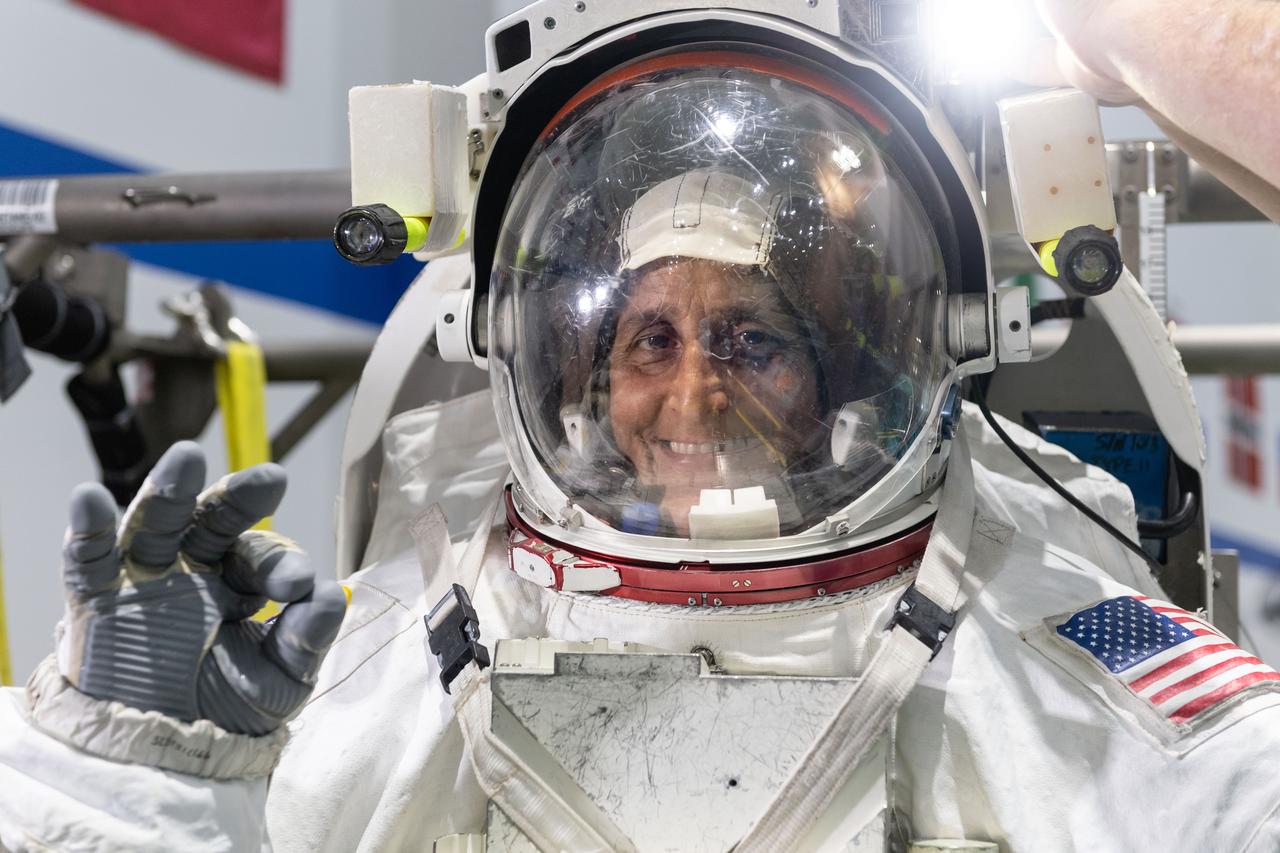
Commercial Crew Program astronaut training with Boeing PCM crew members Suni Williams & Josh Cassada during ISS EVA Maintenance 1 training at the NBL.
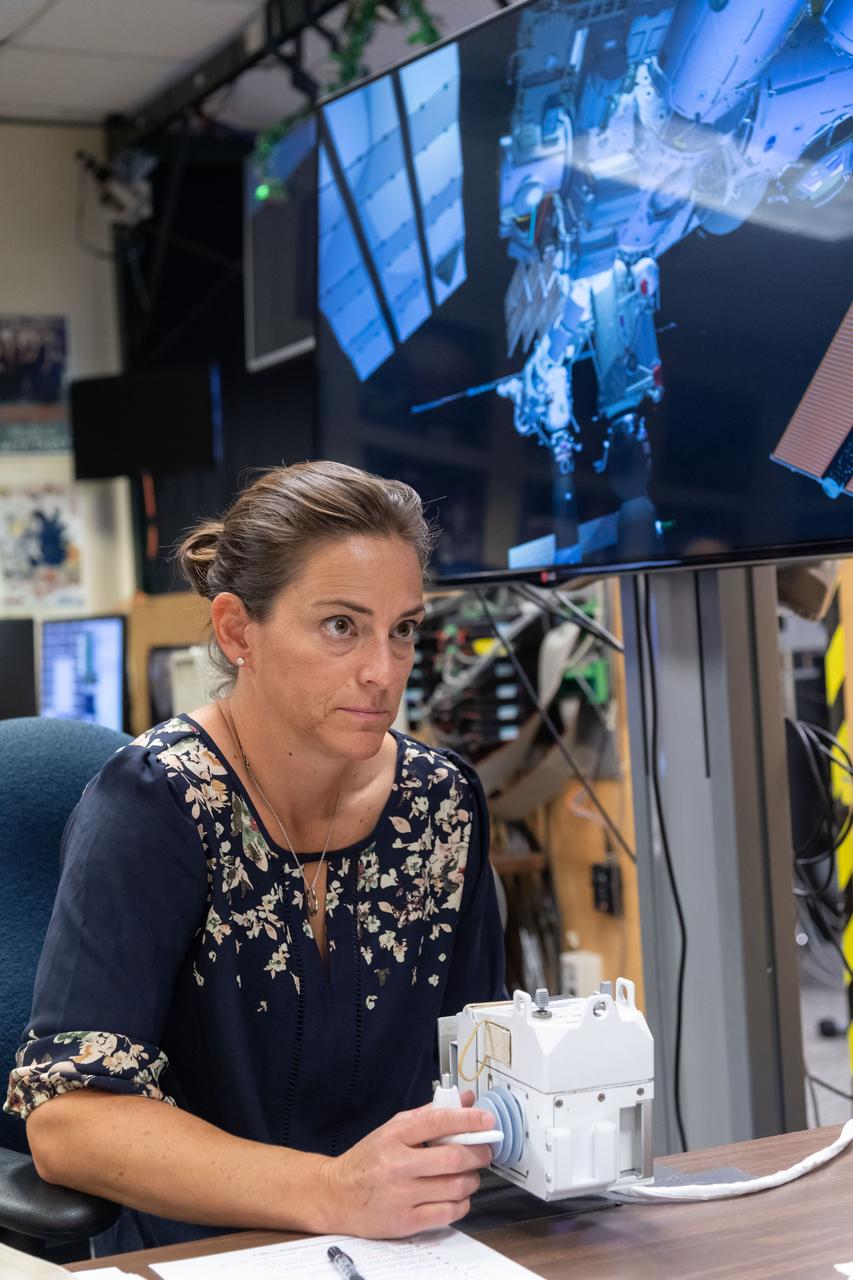
Commercial Crew Program astronaut and Boeing Crew Flight Test crew member Nicole Mann in SAFER Skills training in VR Lab.

Commercial Crew Program astronaut training with Boeing PCM crew members Suni Williams & Josh Cassada during ISS EVA Maintenance 1 training at the NBL.

Commercial Crew Program astronaut training with Boeing PCM crew members Suni Williams & Josh Cassada during ISS EVA Maintenance 1 training at the NBL.
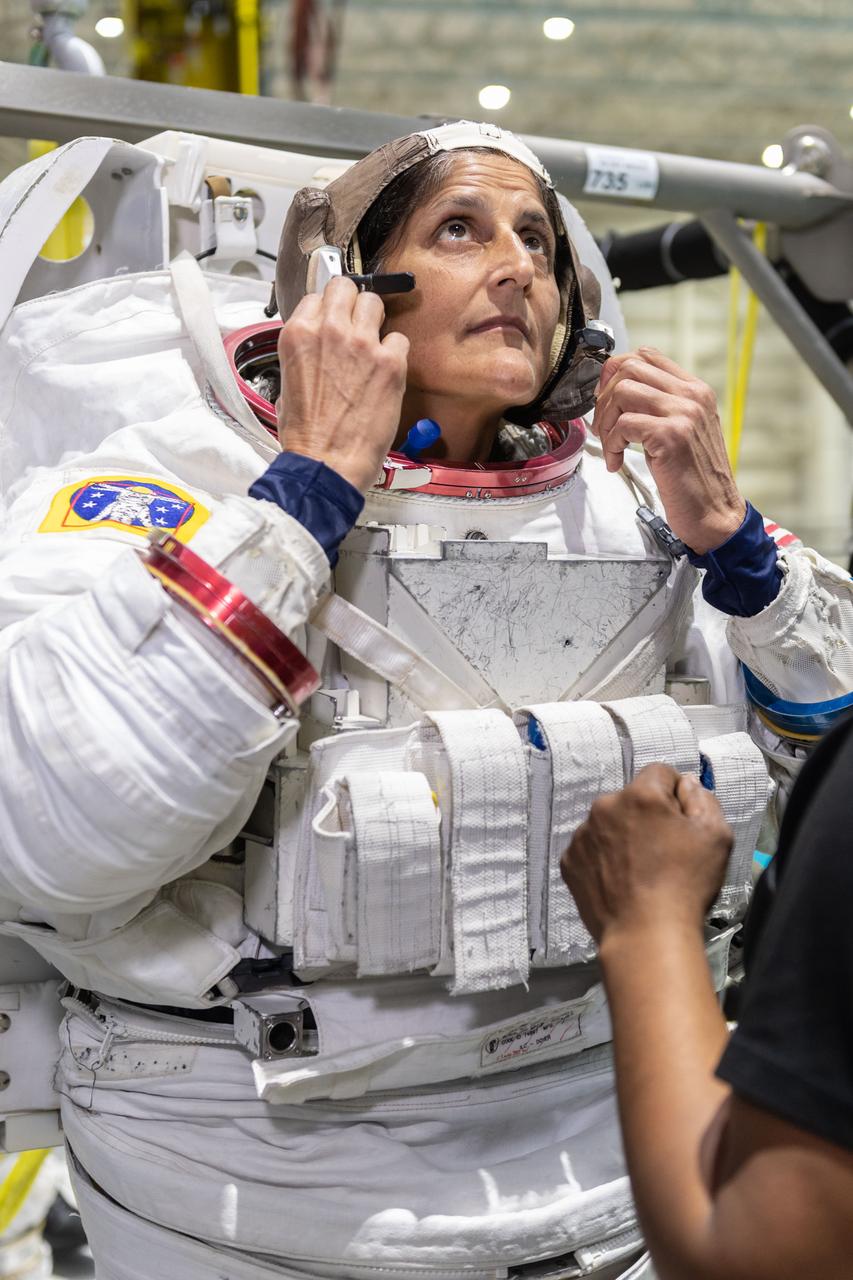
Commercial Crew Program astronaut training with Boeing PCM crew members Suni Williams & Josh Cassada during ISS EVA Maintenance 1 training at the NBL.
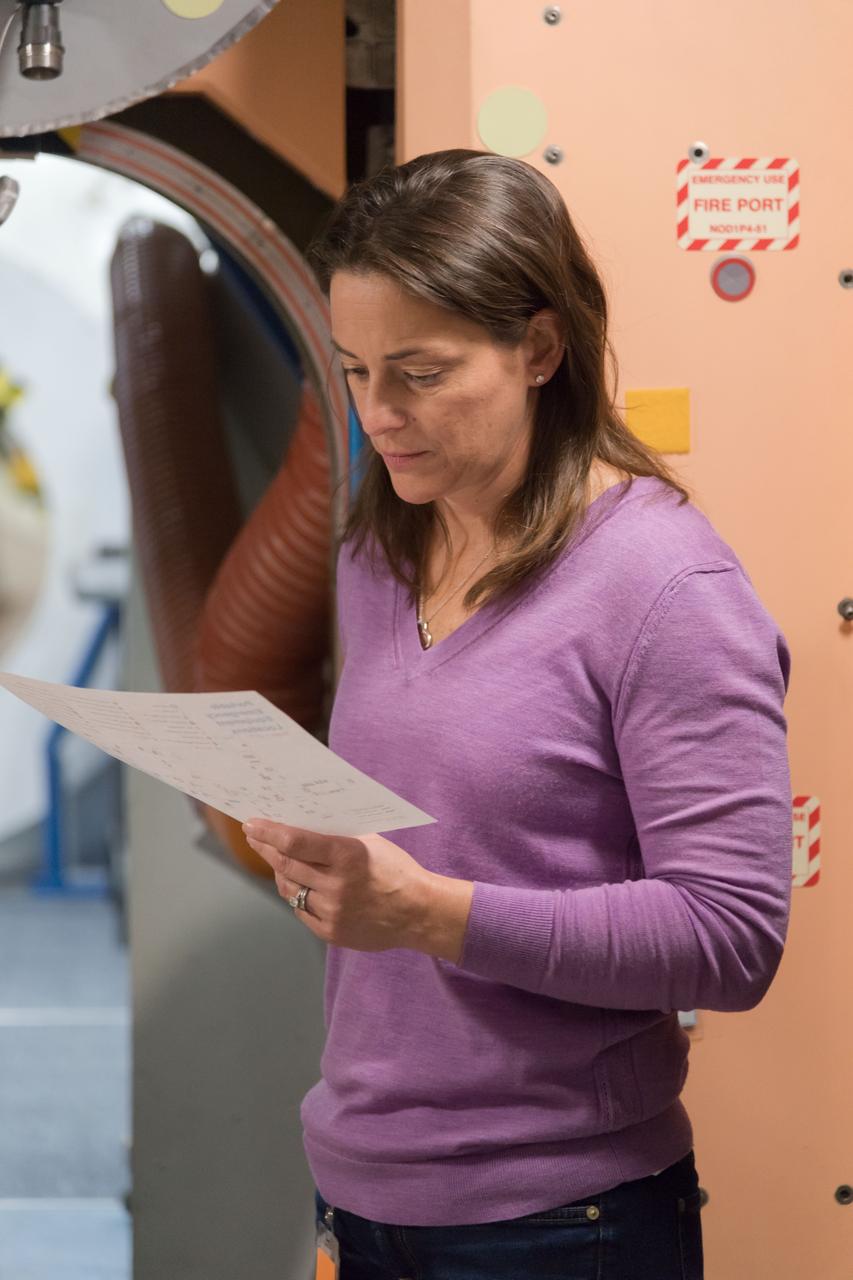
Boeing Commercial Crew Flight Test (CFT) Emergency Vehicle Familiarization training with Chris Ferguson, Nicole Mann, Barry Wilmore and Mike Fincke.
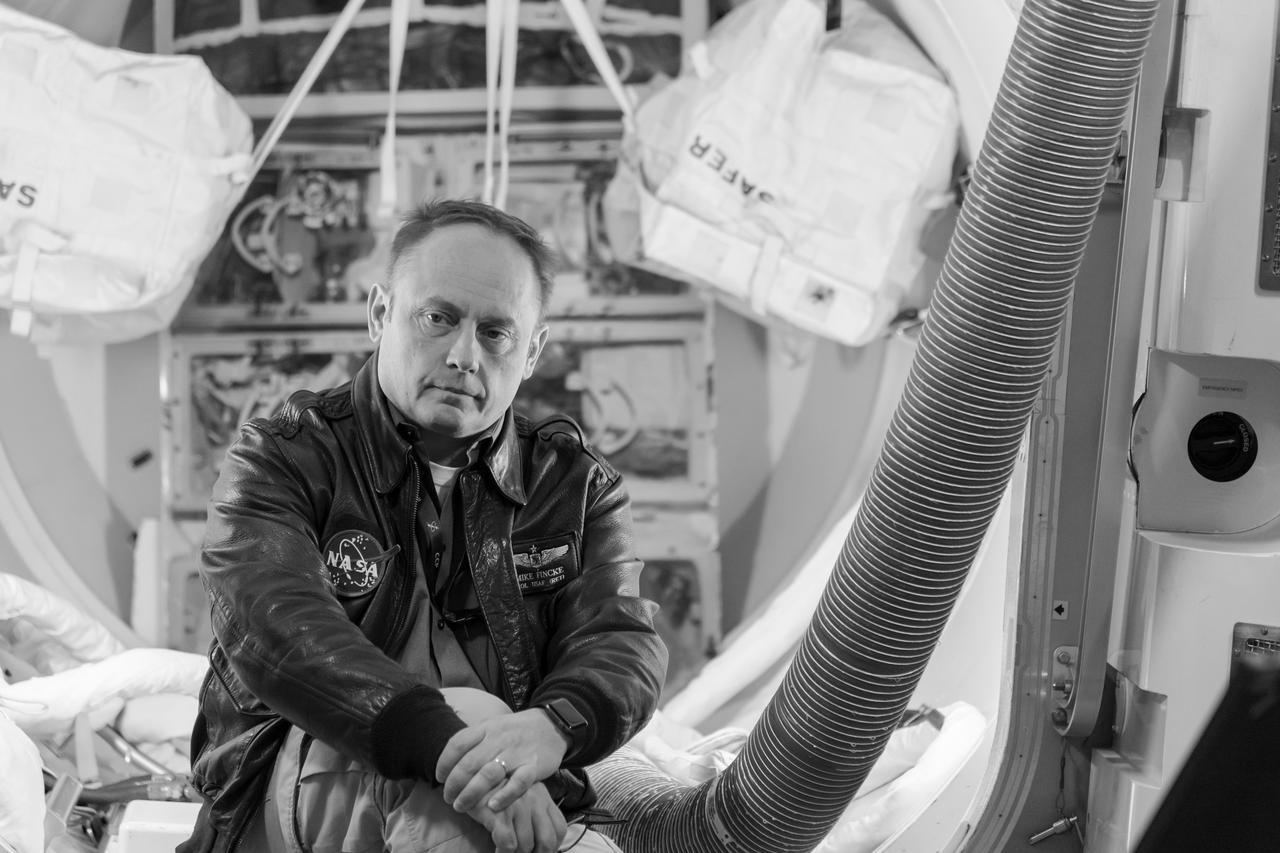
Boeing Commercial Crew Flight Test (CFT) Emergency Vehicle Familiarization training with Chris Ferguson, Nicole Mann, Barry Wilmore and Mike Fincke.
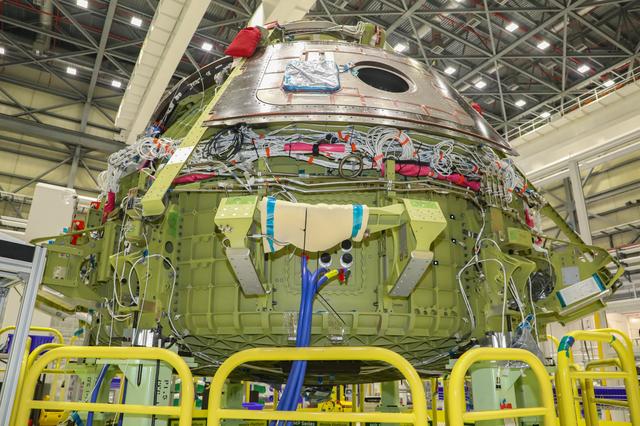
On March 11, Boeing mated the upper and lower domes of its CST-100 Starliner spacecraft slated to fly in the company’s Orbital Flight Test (OFT). The mate was completed at Boeing’s Commercial Crew and Cargo Processing Facility at NASA’s Kennedy Space Center in Florida. Starliner uses an innovative weldless design where the main structure is made of two domes, each spin-formed and machined from a solid piece of aerospace-grade aluminum. The two domes then undergo outfitting with avionics, cooling systems, wire harnesses, fuel and life support lines, and other critical systems before being mated together. This is one of the last major milestones ahead of final processing and closeouts for flight. OFT is Boeing’s uncrewed flight test of Starliner and part of NASA’s Commercial Crew Program, which will return human spaceflight launches into low-Earth orbit from U.S. soil.
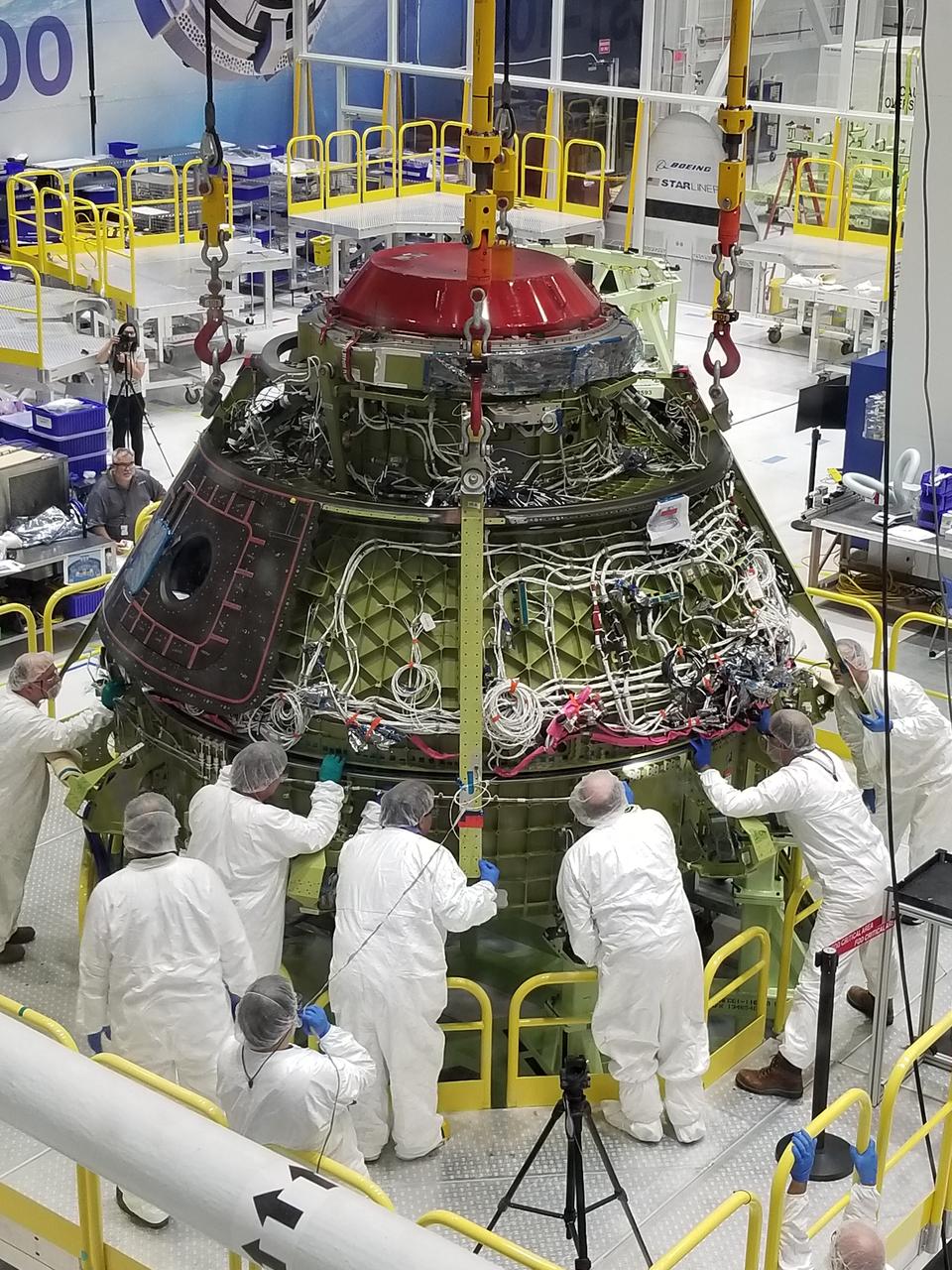
Boeing technicians meticulously lower its CST-100 Starliner’s upper dome to the lower dome before bolting and sealing the pressure vessel on March 11. This is the Starliner spacecraft slated to fly in the company’s Orbital Flight Test (OFT). The mate was completed at Boeing’s Commercial Crew and Cargo Processing Facility at NASA’s Kennedy Space Center in Florida. Starliner uses an innovative weldless design where the main structure is made of two domes, each spin-formed and machined from a solid piece of aerospace-grade aluminum. The two domes then undergo outfitting with avionics, cooling systems, wire harnesses, fuel and life support lines, and other critical systems before being mated together. This is one of the last major milestones ahead of final processing and closeouts for flight. OFT is Boeing’s uncrewed flight test of Starliner and part of NASA’s Commercial Crew Program, which will return human spaceflight launches into low-Earth orbit from U.S. soil.
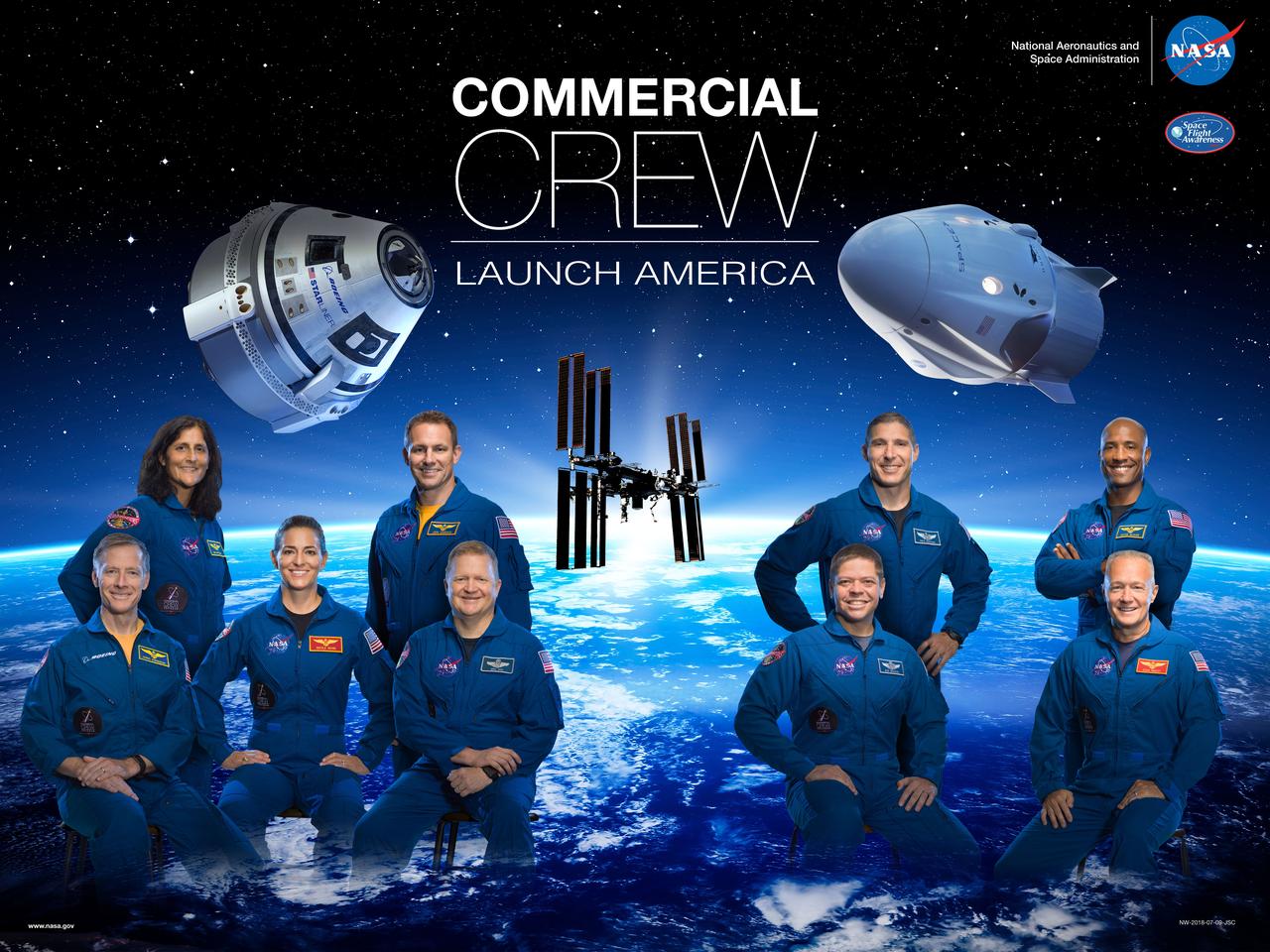
jsc2018e067825 (Aug. 2, 2018) --- The Commercial Crew Launch America poster highlights the astronauts assigned to the first test flights of American-made, commercial spacecraft to and from the International Space Station. The team of five astronauts on the left is assigned to Boeing's CST-100 Starliner Commercial Crew vehicle and consists of (front row from left) Chris Ferguson, Nicole Mann and Eric Boe. In the back row (from left) are Suni Williams and Josh Cassada. The team of four astronauts on the right is assigned to SpaceX's Dragon Commercial Crew vehicle and consists of (front row from left) Bob Behnken and Doug Hurley. In the back row (from left) are Mike Hopkins and Victor Glover.
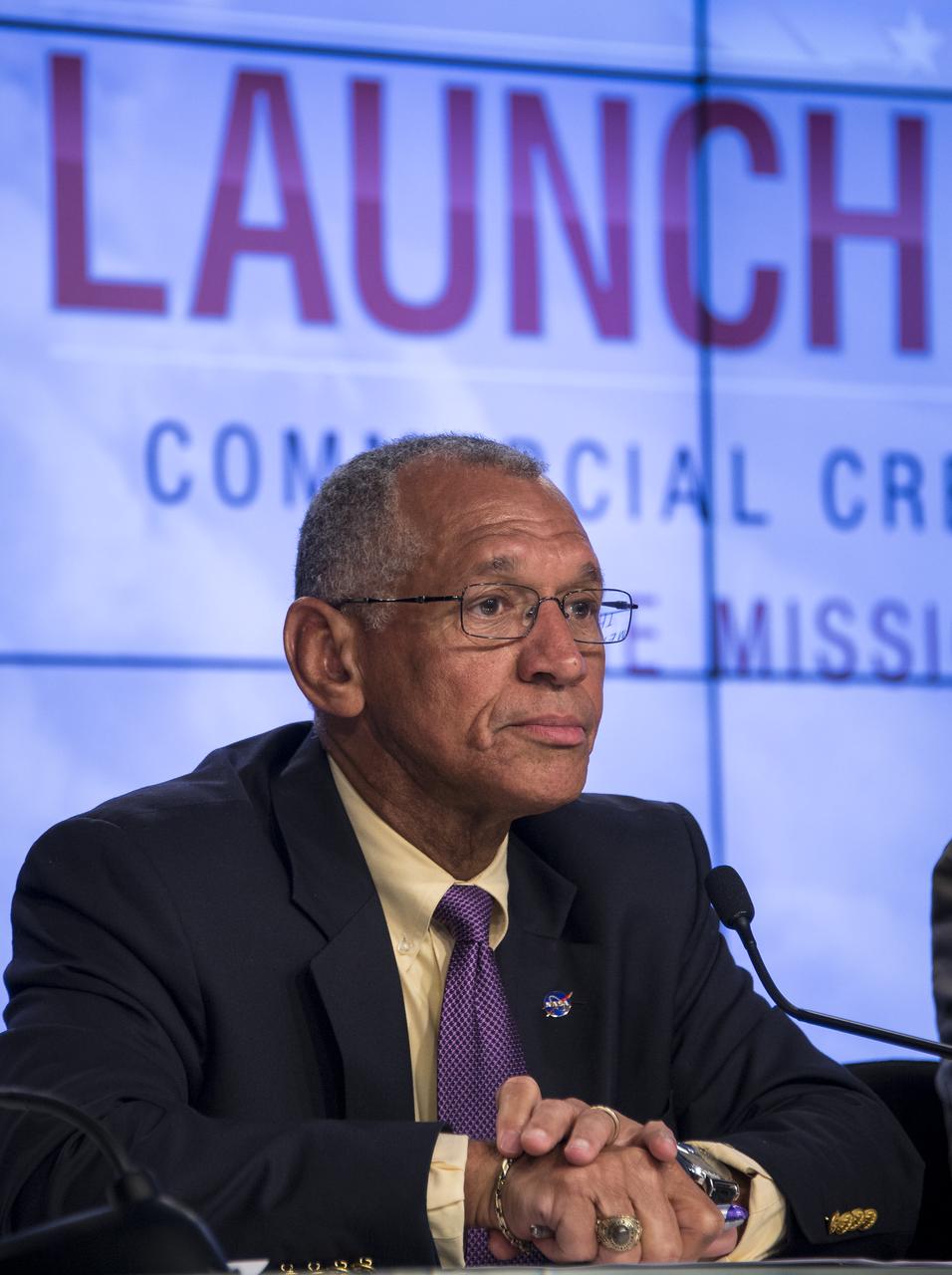
NASA Administrator Charles Bolden listens to a reporter’s question after he announced the agency’s selection of Boeing and SpaceX to transport U.S. crews to and from the International Space Station using the Boeing CST-100 and the SpaceX Crew Dragon spacecraft, at NASA’s Kennedy Space Center in Cape Canaveral, Fla. on Tuesday, Sept. 16, 2014. These Commercial Crew Transportation Capability (CCtCap) contracts are designed to complete the NASA certification for a human space transportation system capable of carrying people into orbit. Once certification is complete, NASA plans to use these systems to transport astronauts to the space station and return them safely to Earth. Photo Credit: (NASA/Bill Ingalls)

NASA Press Officer Felicia Chou, introduces a pre-recorded video announcement by NASA Administrator Jim Bridenstine about the companies selected to provide the first commercial lunar landers, Friday, May 31, 2019, at Goddard Space Flight Center in Md. Intuitive Machines, Astrobotic, and Orbit Beyond have been selected to provide the first lunar landers for the Artemis program's lunar surface exploration. Photo credit: (NASA/Aubrey Gemignani)
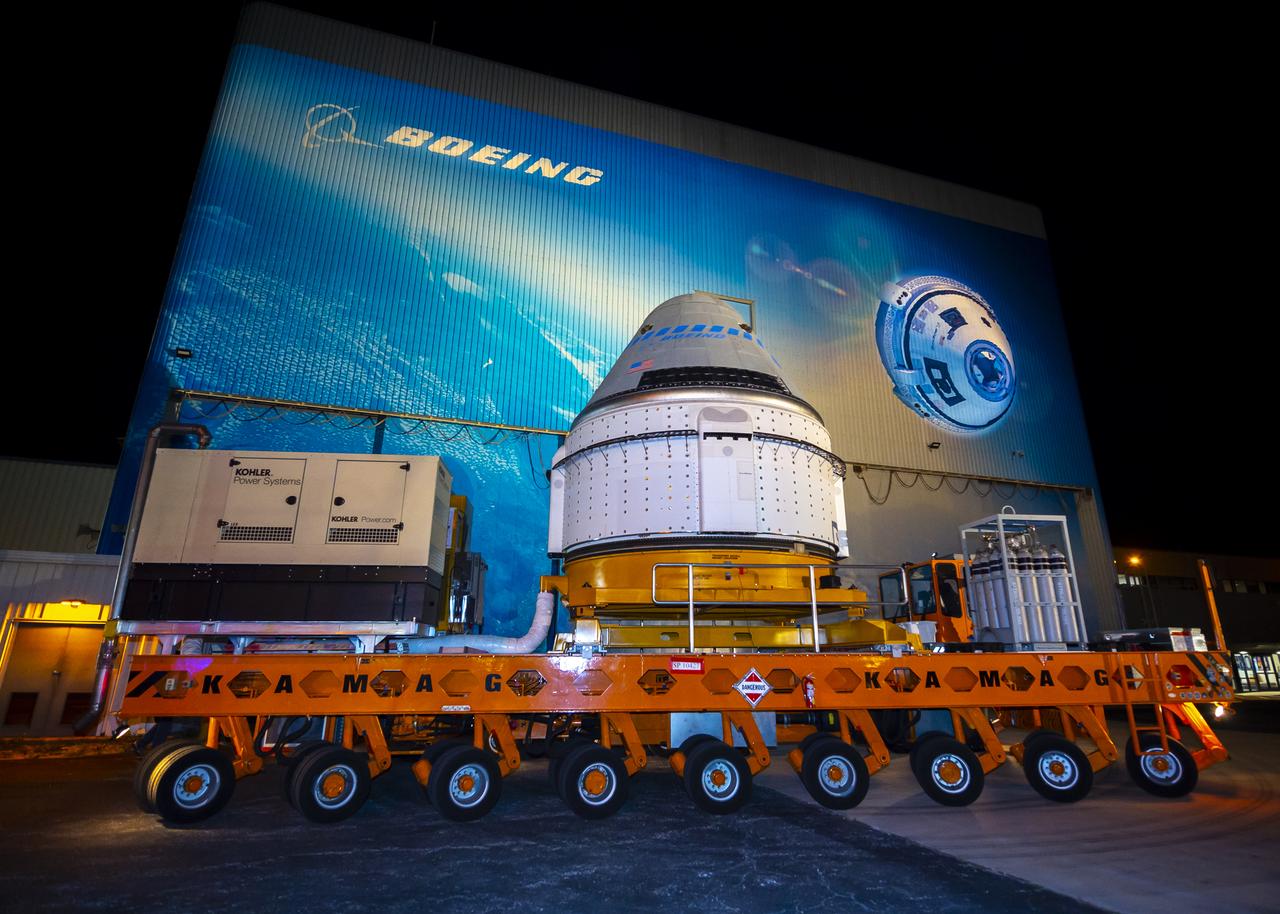
The Boeing CST-100 Starliner spacecraft rolls out from the company’s Commercial Crew and Cargo Processing Facility at NASA’s Kennedy Space Center in Florida on Nov. 21, 2019. The spacecraft will make the trip to Space Launch Complex 41 at Cape Canaveral Air Force Station where it will be secured atop a United Launch Alliance Atlas V rocket for Boeing’s Orbital Flight Test to the International Space Station for NASA’s Commercial Crew Program.
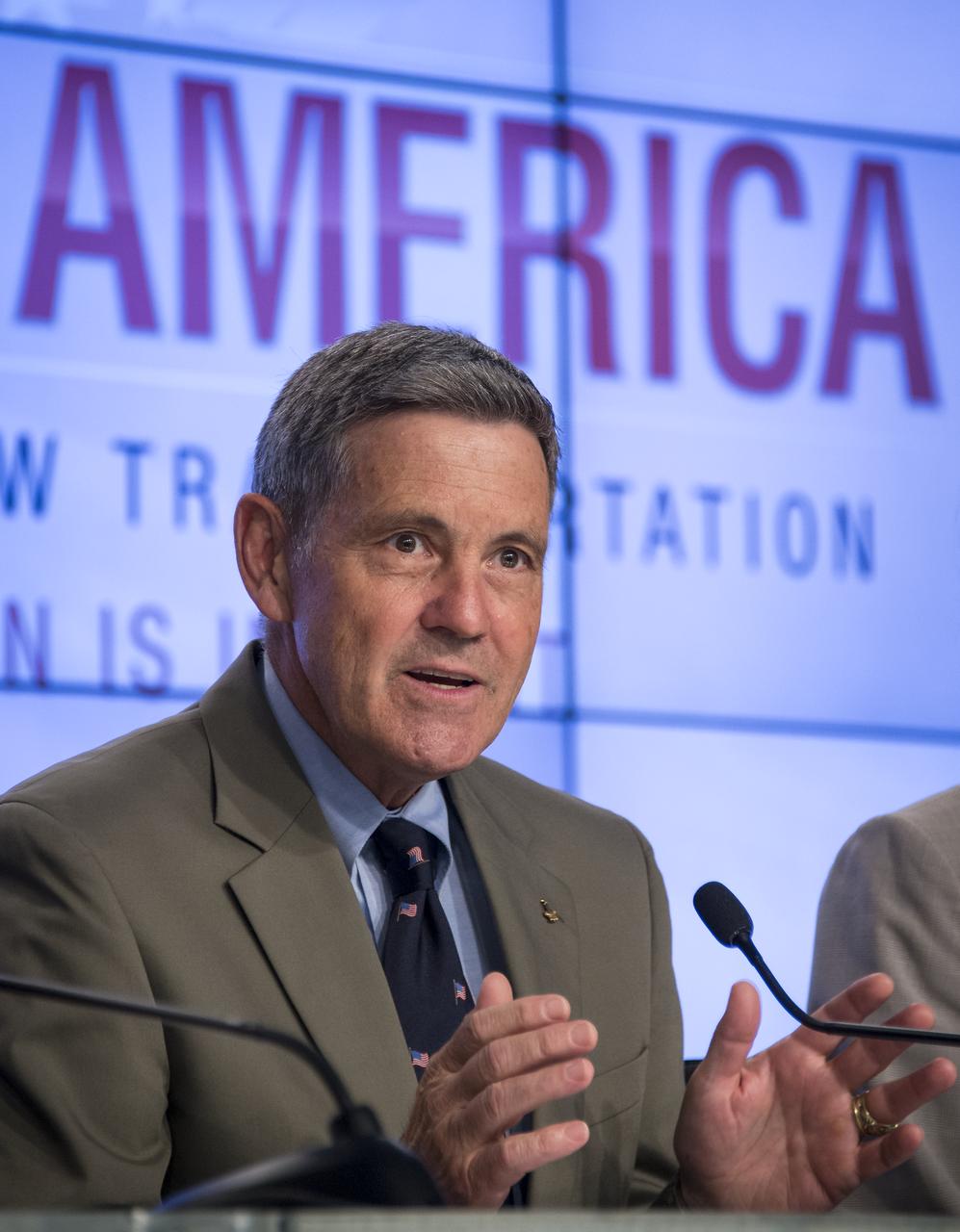
Former astronaut Bob Cabana, director of NASA's Kennedy Space Center in Florida, speaks during a news conference where it was announced that Boeing and SpaceX have been selected to transport U.S. crews to and from the International Space Station using the Boeing CST-100 and the SpaceX Crew Dragon spacecraft, at NASA’s Kennedy Space Center in Cape Canaveral, Fla. on Tuesday, Sept. 16, 2014. These Commercial Crew Transportation Capability (CCtCap) contracts are designed to complete the NASA certification for a human space transportation system capable of carrying people into orbit. Once certification is complete, NASA plans to use these systems to transport astronauts to the space station and return them safely to Earth. Photo Credit: (NASA/Bill Ingalls)
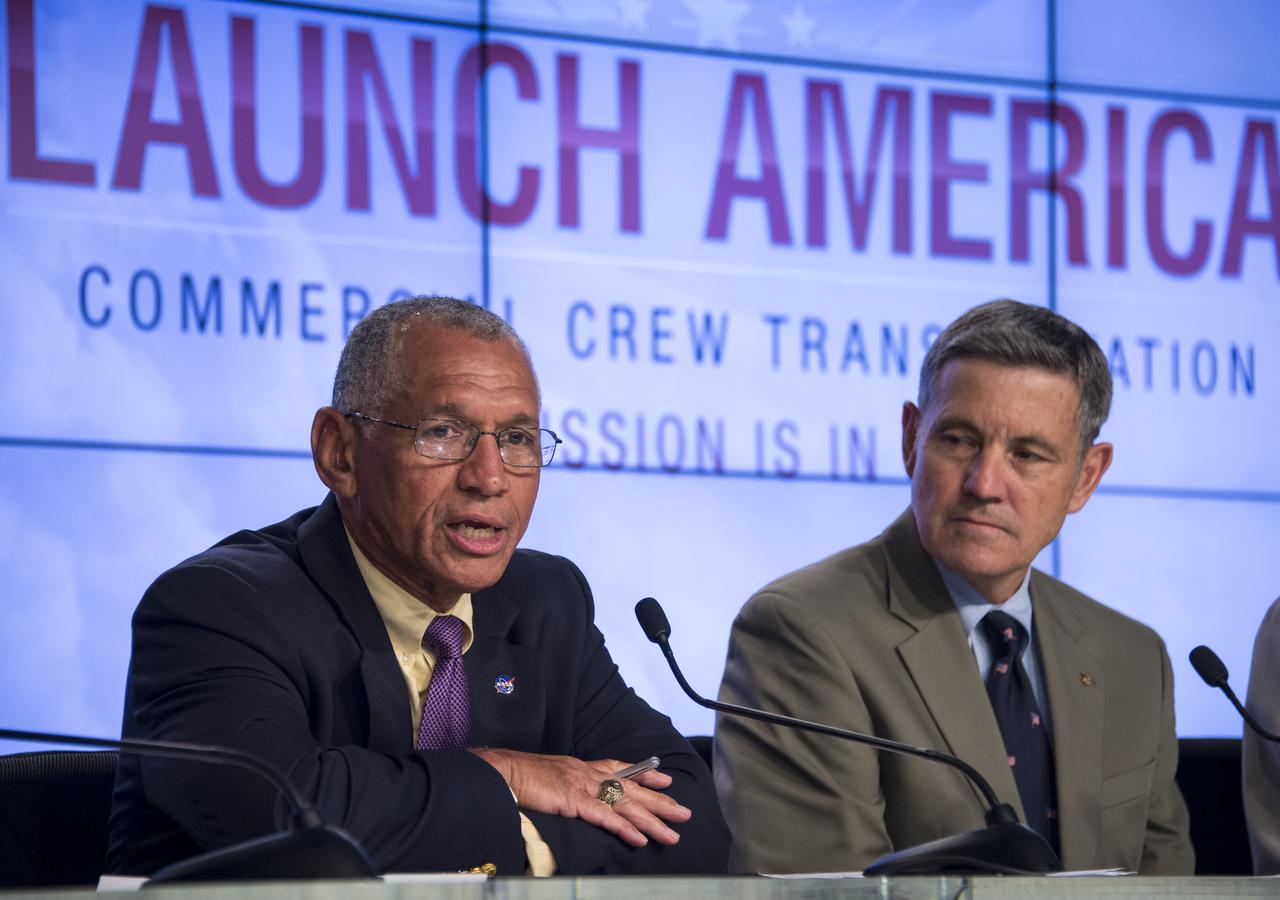
NASA Administrator Charles Bolden, left, announces the agency’s selection of Boeing and SpaceX to transport U.S. crews to and from the International Space Station using the Boeing CST-100 and the SpaceX Crew Dragon spacecraft as Former astronaut Bob Cabana, director of NASA's Kennedy Space Center in Florida looks on at NASA’s Kennedy Space Center in Cape Canaveral, Fla. on Tuesday, Sept. 16, 2014. These Commercial Crew Transportation Capability (CCtCap) contracts are designed to complete the NASA certification for a human space transportation system capable of carrying people into orbit. Once certification is complete, NASA plans to use these systems to transport astronauts to the space station and return them safely to Earth. Photo Credit: (NASA/Bill Ingalls)

NASA Administrator Jim Bridenstine, left, and NASA Associate Administrator for the Science Mission Directorate Thomas Zurbuchen, right, pose for a photograph with the representatives of the nine U.S. companies that are eligible to bid on NASA delivery services to the lunar surface through Commercial Lunar Payload Services (CLPS) contracts, Thursday, Nov. 29, 2018 at NASA Headquarters in Washington. The representatives of the companies are: Steve Altemus, President and CEO of Intuitive Machines; 2nd from left, Sean Mahoney, CEO, Masten Space Systems Inc; Eric Salwan, Director of Commercial Business Development, Firefly Aerospace; Jennifer Jensen, Vice President, National Security & Space, Draper; Joe Landon, VP of Advanced Programs, Commercial Civil Space, Lockheed Martin Space; Steve Bailey, Deep Space Systems Inc; Daven Maharaj, Chief Operating Officer, Moon Express Inc; John Thornton, CEO, Astrobotic Technology Inc; and Jeff Patton, Chief Engineering Advisor, Orbit Beyond Inc, 2nd from right. Photo Credit: (NASA/Bill Ingalls)
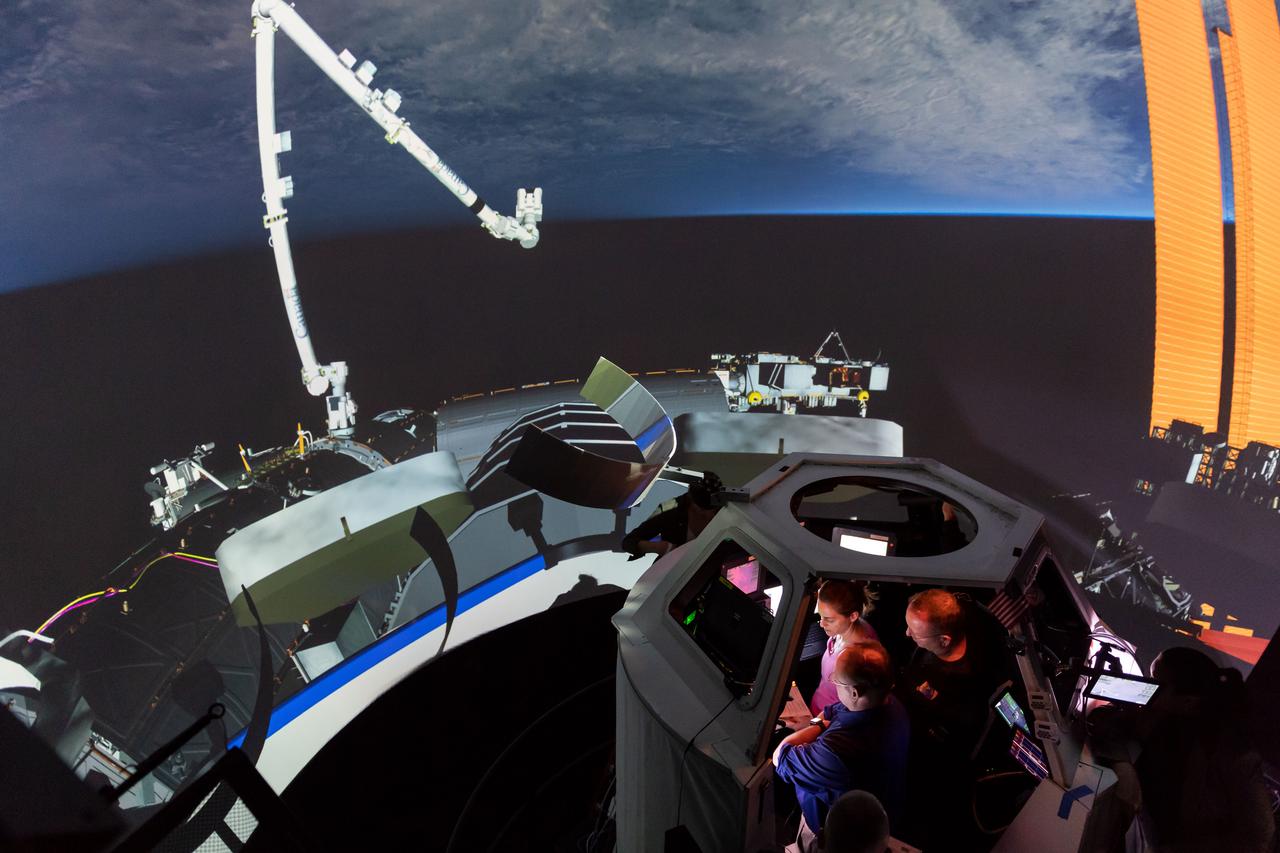
Commercial Crew Program astronauts Mike Fincke, Nicole Mann and Barry "Butch" Wilmore in Free Flyer Track & Capture Sim training in SES Alpha Cupola.
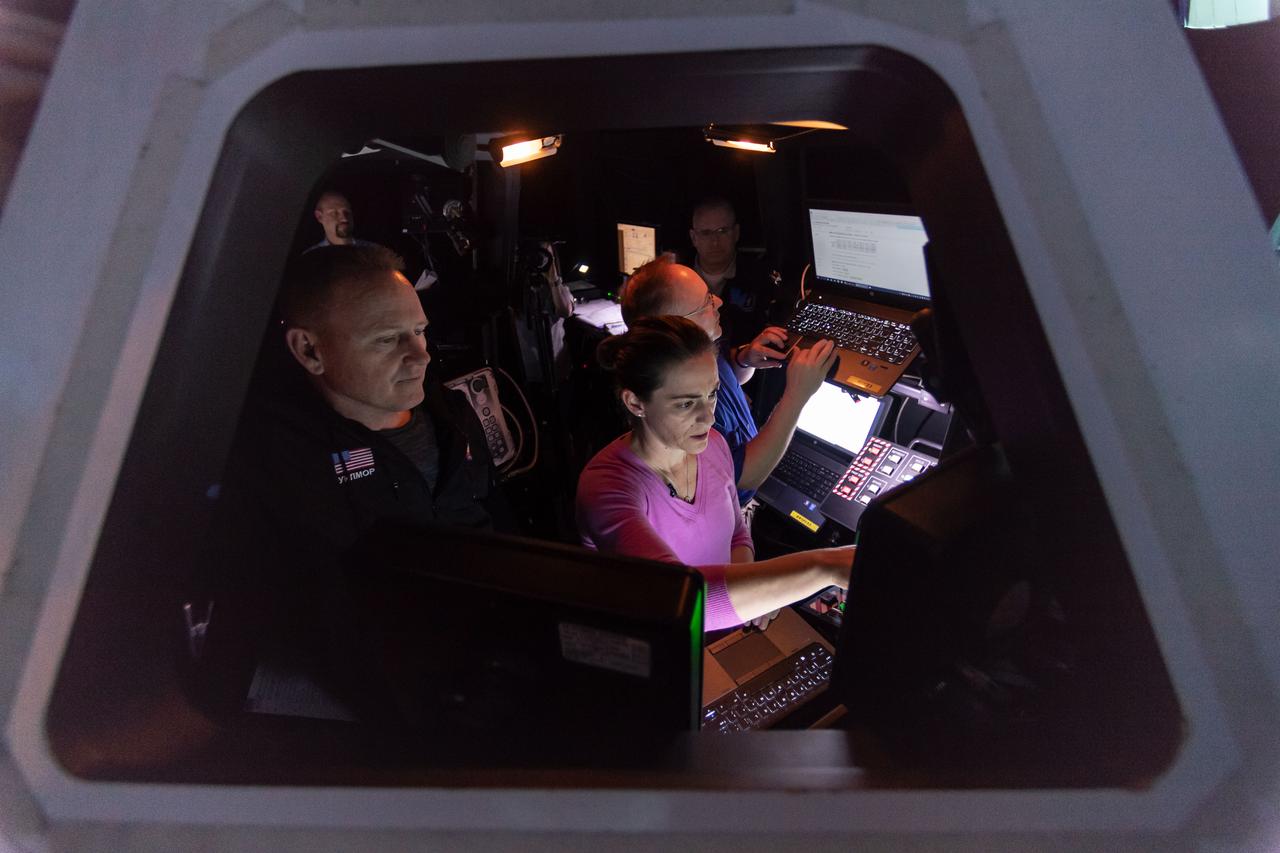
Commercial Crew Program astronauts Mike Fincke, Nicole Mann and Barry "Butch" Wilmore in Free Flyer Track & Capture Sim training in SES Alpha Cupola.
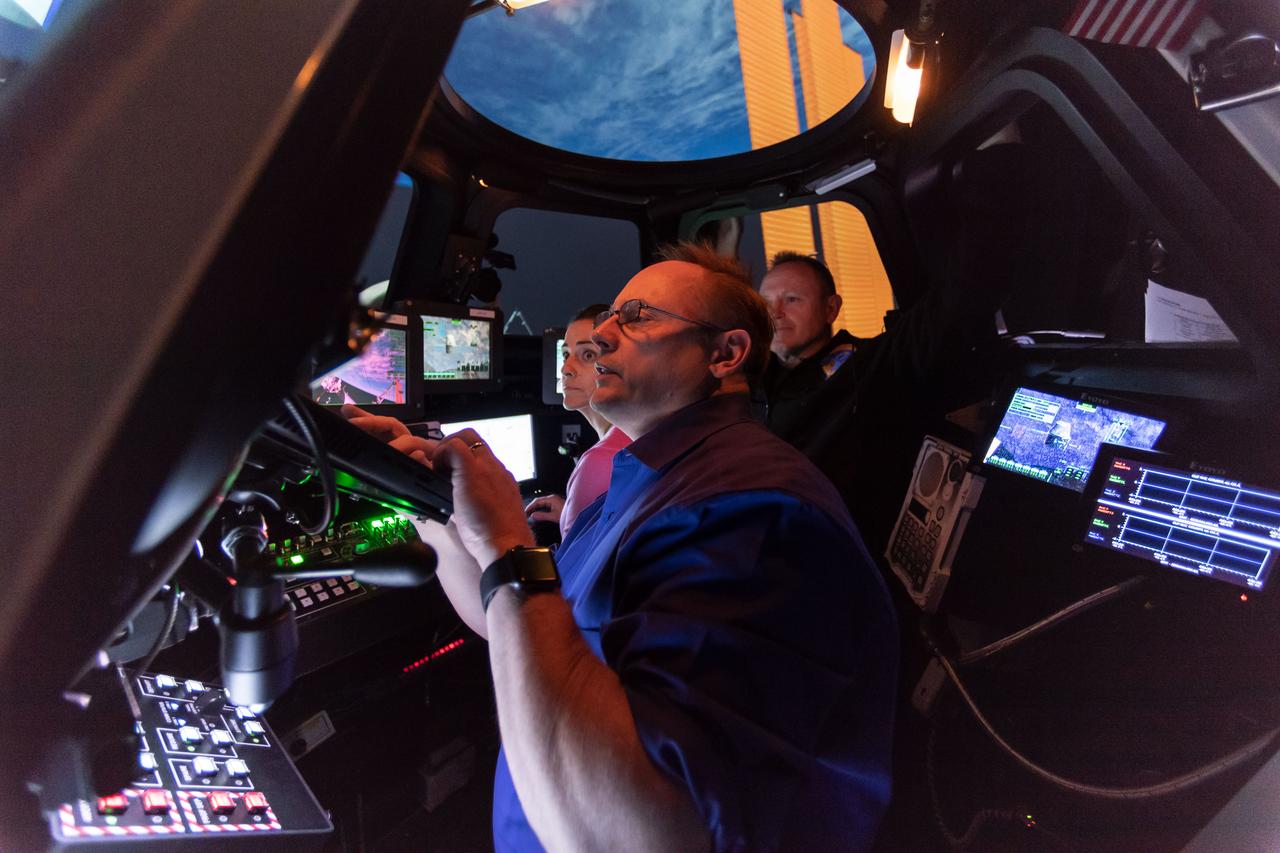
Commercial Crew Program astronauts Mike Fincke, Nicole Mann and Barry "Butch" Wilmore in Free Flyer Track & Capture Sim training in SES Alpha Cupola.

Nine U.S. astronauts selected for commercial crew flight assignments are directed for a group photograph by NASA photographer Robert Markowitz on Aug. 2, 2018 ahead of the announcement Aug. 3, at NASA’s Johnson Space Center in Houston, Texas. From left NASA astronauts Suni Williams, Josh Cassada, Eric Boe, Nicole Mann, Boeing astronaut Chris Ferguson, NASA astronauts Doug Hurley, Bob Behnken, Mike Hopkins and Victor Glover were assigned to the first test flights and operational missions for Boeing’s CST-100 Starliner and SpaceX’s Crew Dragon. Photo Credit: (NASA/Bill Ingalls)
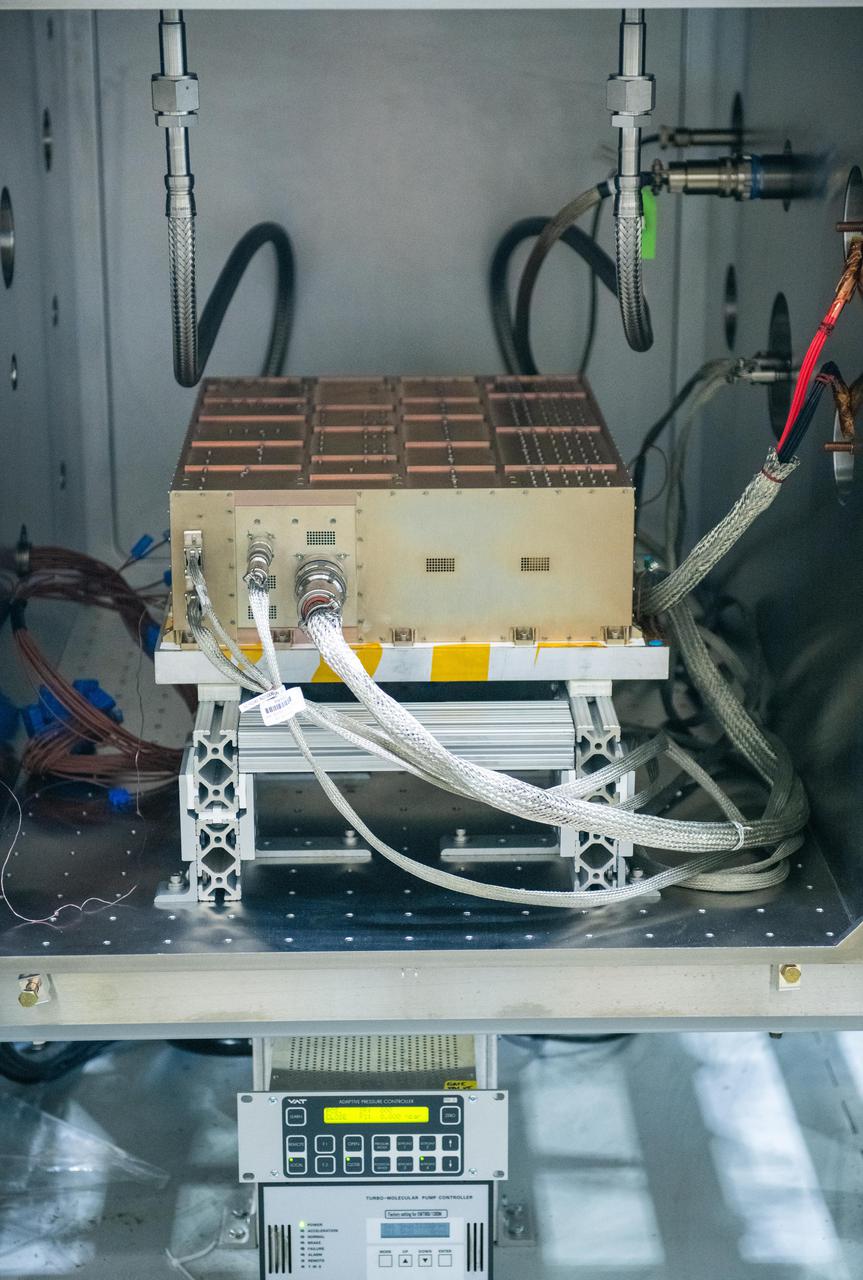
NASA Evolutionary Xenon Thruster - Commercial, NEXT-C Flight Power Processing Unit, PPU
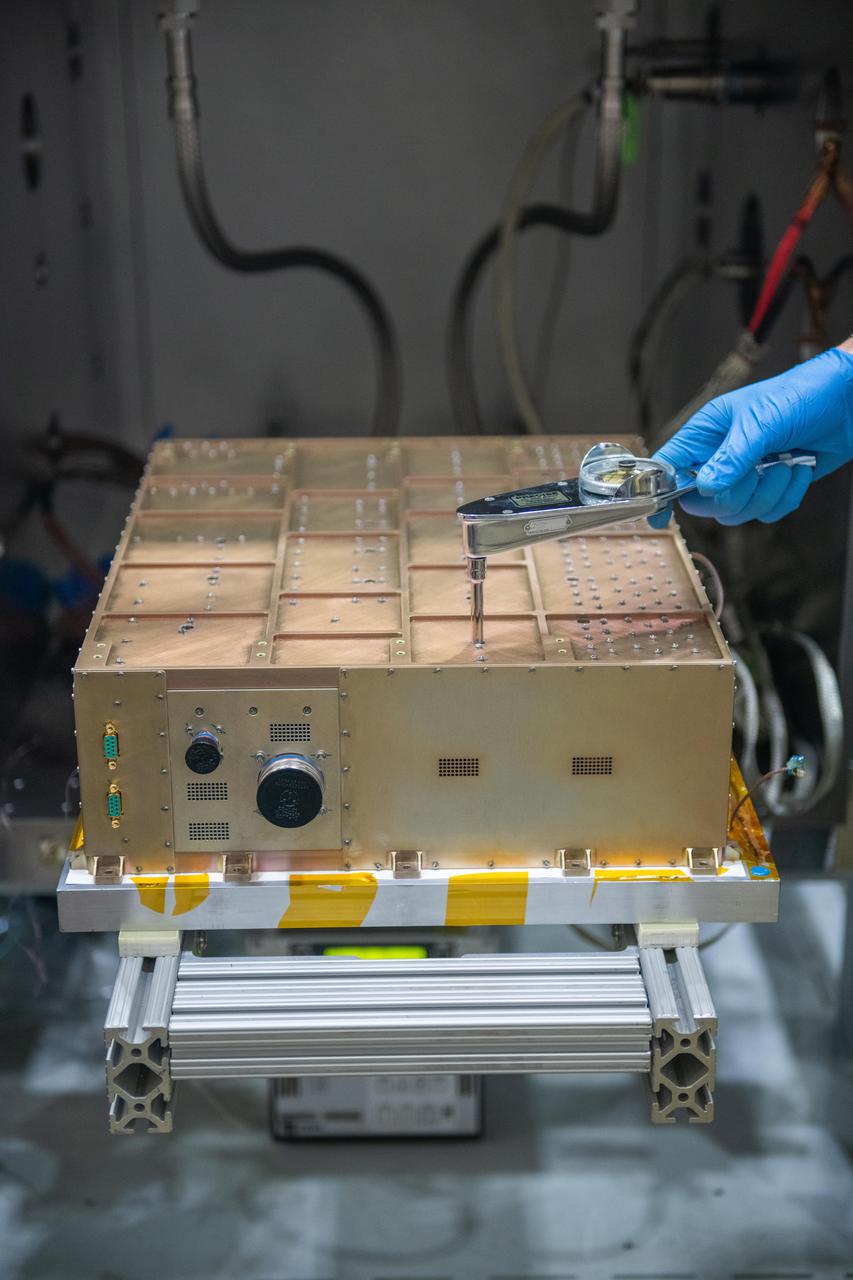
NASA Evolutionary Xenon Thruster - Commercial, NEXT-C Flight Power Processing Unit, PPU
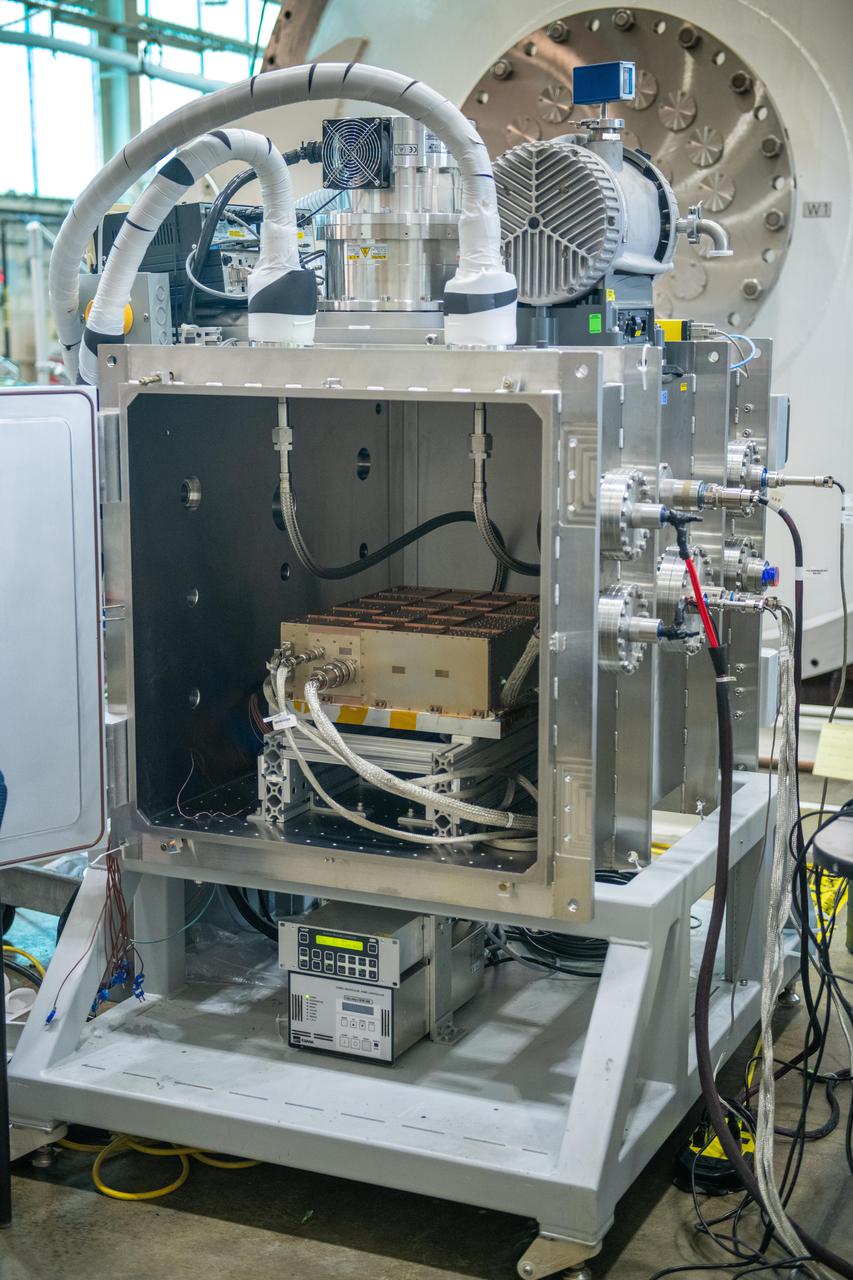
NASA Evolutionary Xenon Thruster - Commercial, NEXT-C Flight Power Processing Unit, PPU
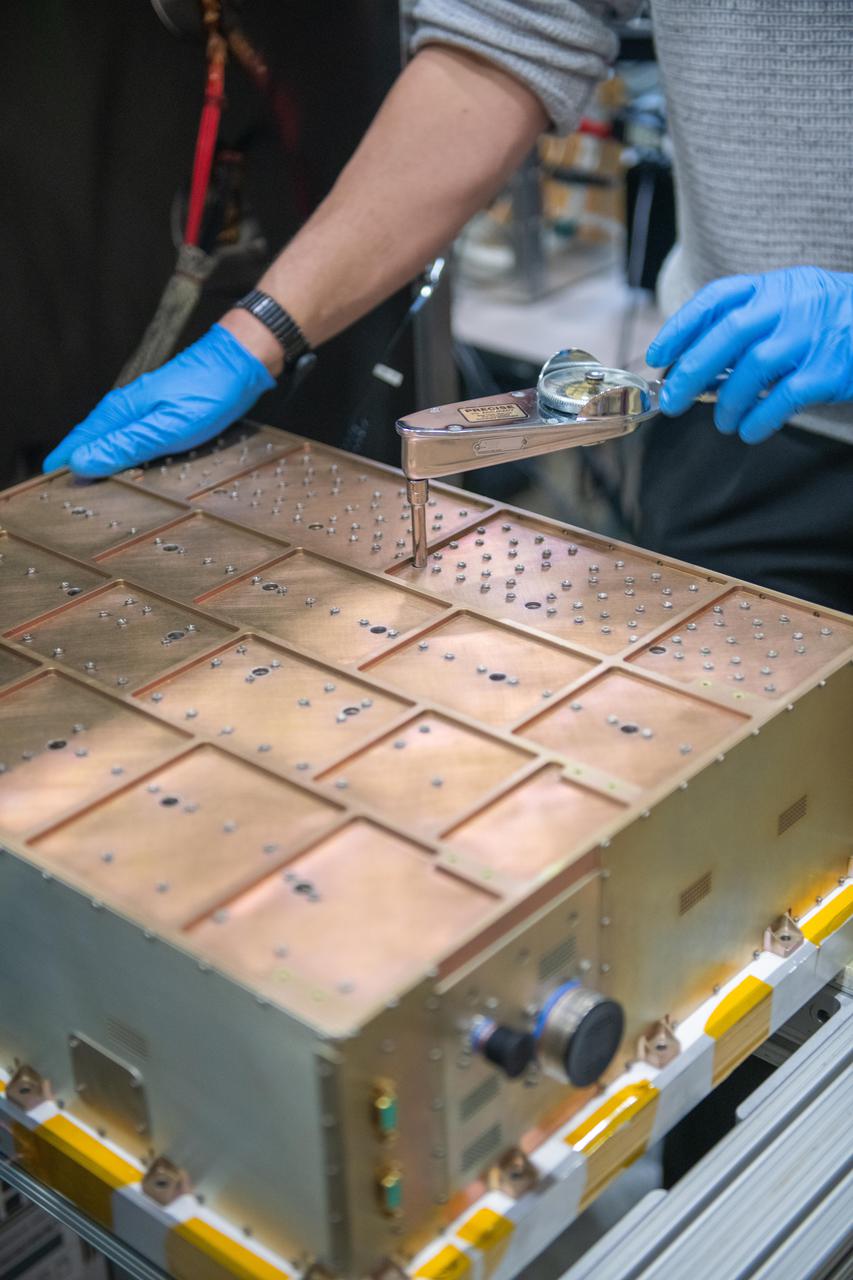
NASA Evolutionary Xenon Thruster - Commercial, NEXT-C Flight Power Processing Unit, PPU

NASA Evolutionary Xenon Thruster - Commercial, NEXT-C Flight Power Processing Unit, PPU
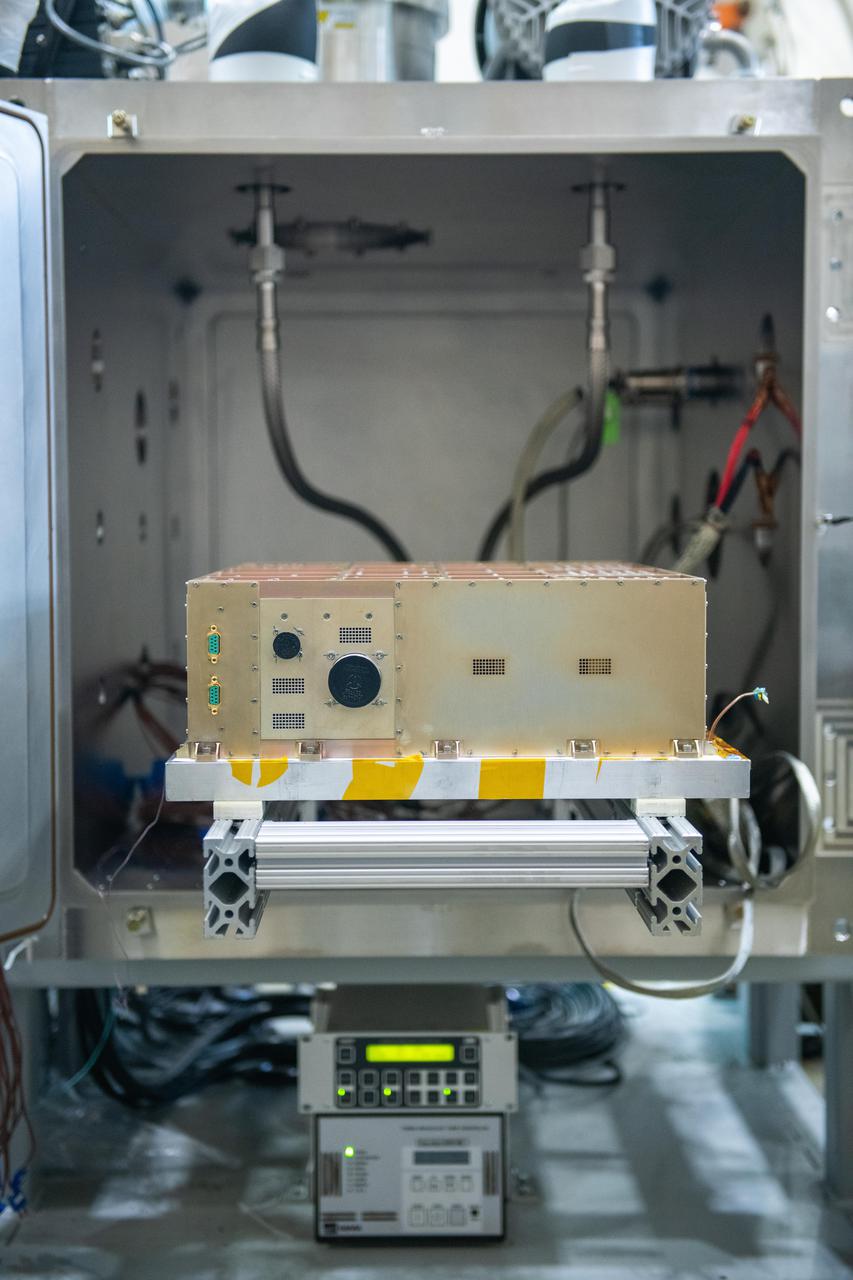
NASA Evolutionary Xenon Thruster - Commercial, NEXT-C Flight Power Processing Unit, PPU
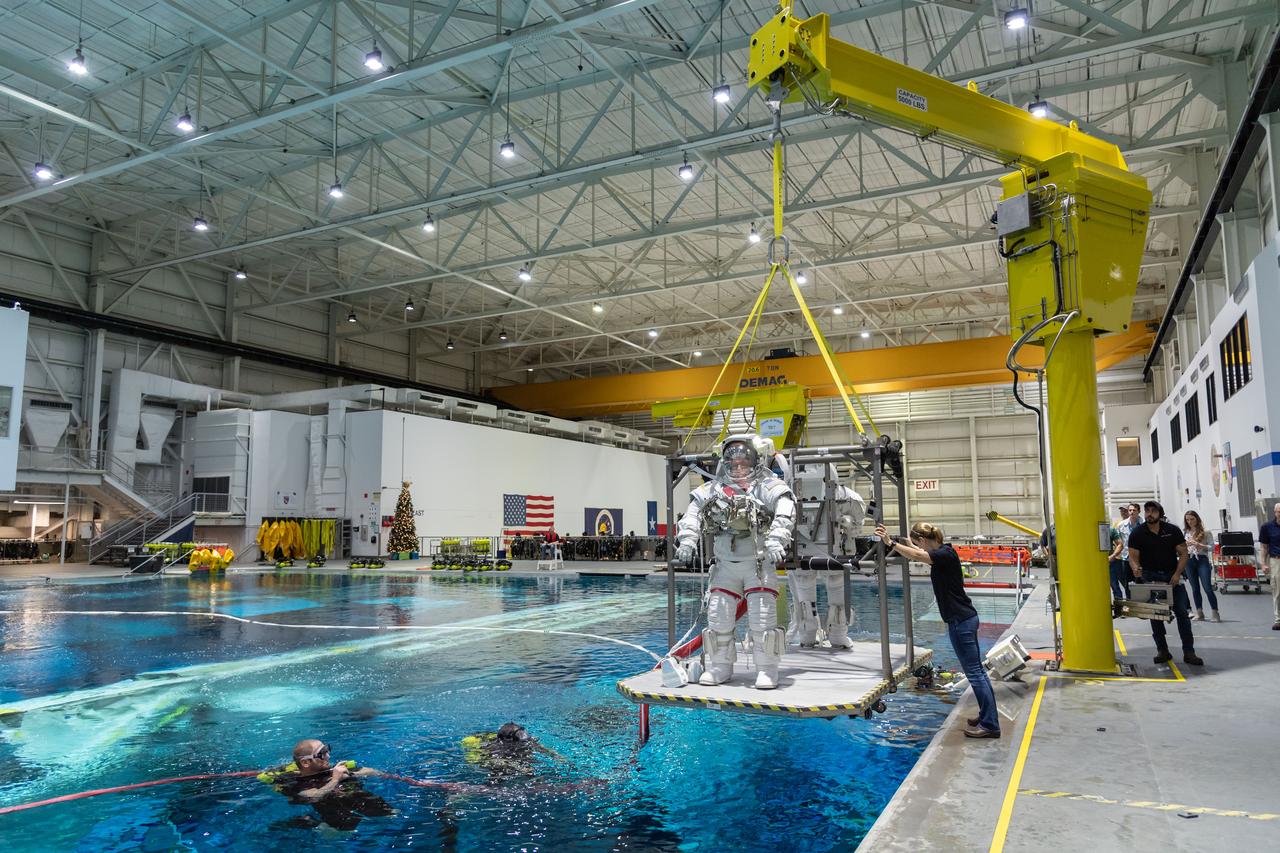
Commercial Crew Program astronaut Barry "Butch" Wilmore in EVA suitup at NBL with Expedition 62 cosmonaut Nikolai Tikhonov during Expedition 62 ISS EVA Maintenance 2 training.
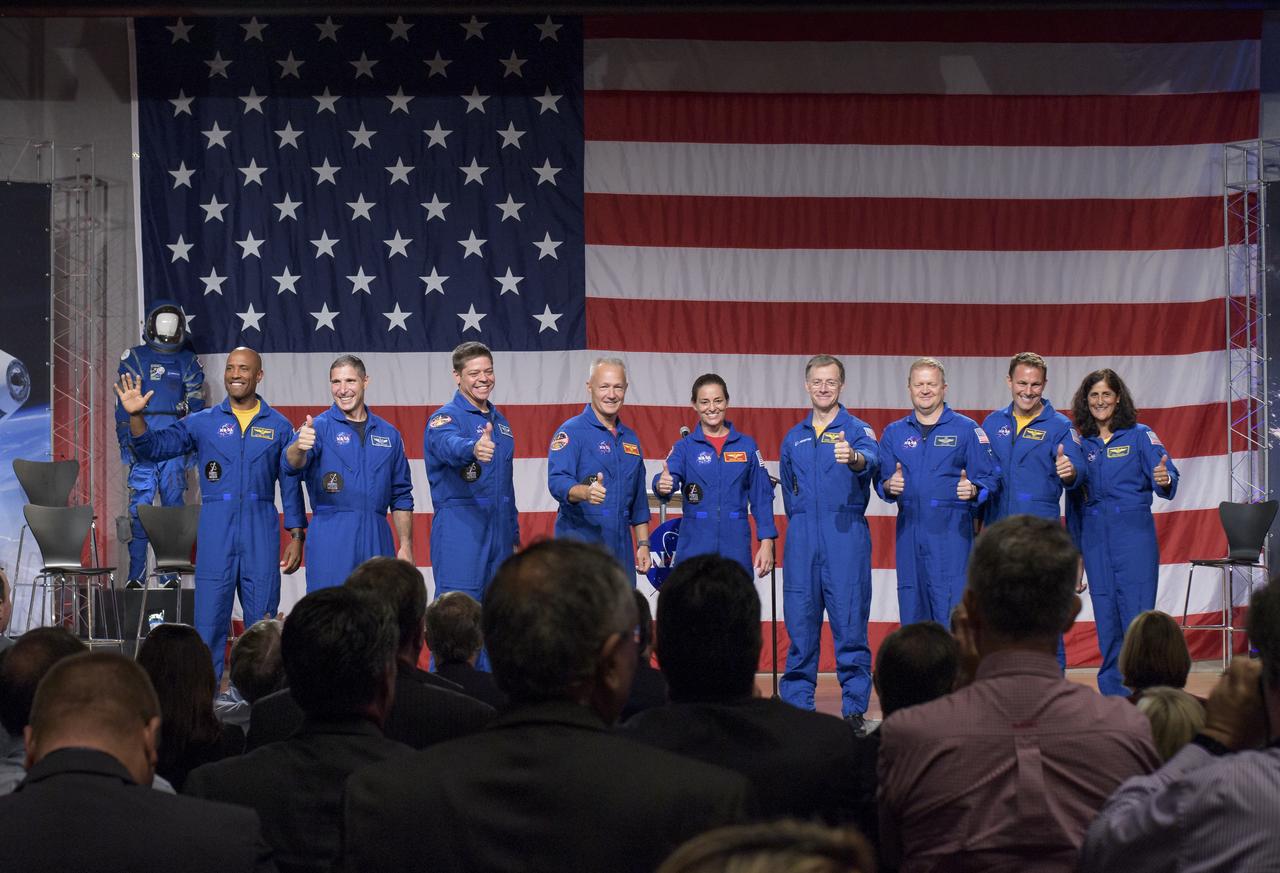
The first U.S. astronauts who will fly on American-made, commercial spacecraft to and from the International Space Station, wave after being announced, Friday, Aug. 3, 2018 at NASA's Johnson Space Center in Houston, Texas. The astronauts are, from left to right: Victor Glover, Mike Hopkins, Bob Behnken, Doug Hurley, Nicole Aunapu Mann, Chris Ferguson, Eric Boe, Josh Cassada, and Suni Williams. The agency assigned the nine astronauts to crew the first flight tests and missions of the Boeing CST-100 Starliner and SpaceX Crew Dragon. Photo Credit: (NASA/Bill Ingalls)
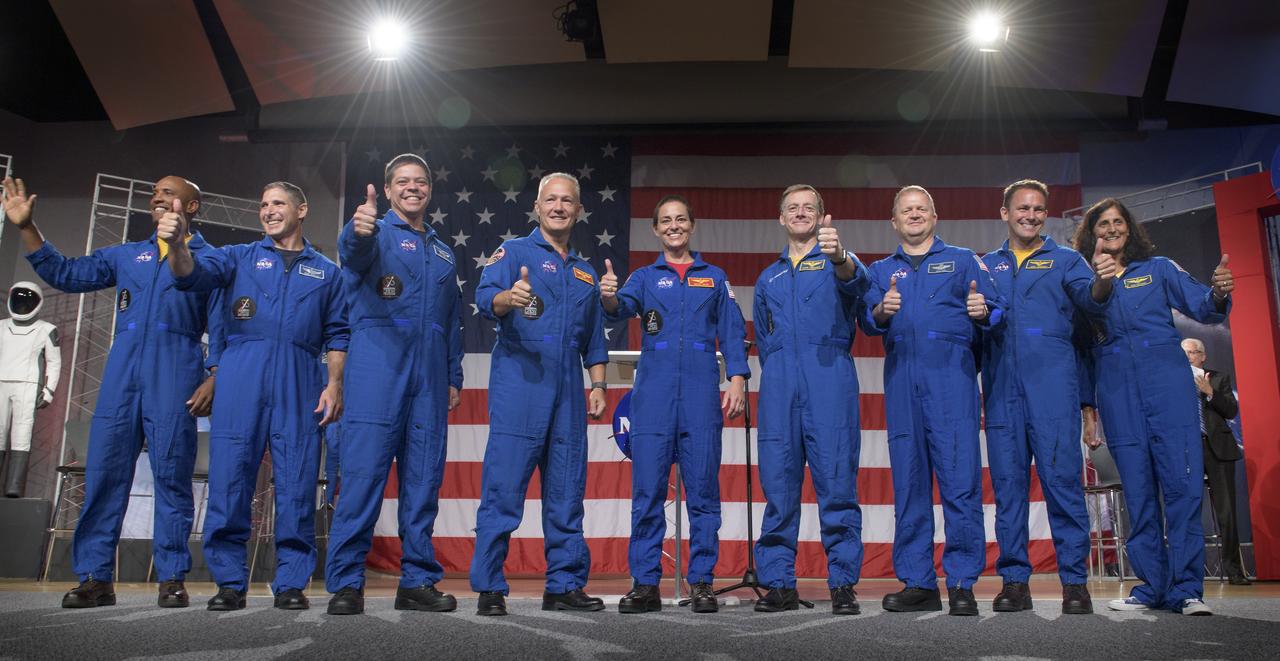
The first U.S. astronauts who will fly on American-made, commercial spacecraft to and from the International Space Station, wave after being announced, Friday, Aug. 3, 2018 at NASA's Johnson Space Center in Houston, Texas. The astronauts are, from left to right: Victor Glover, Mike Hopkins, Bob Behnken, Doug Hurley, Nicole Aunapu Mann, Chris Ferguson, Eric Boe, Josh Cassada, and Suni Williams. The agency assigned the nine astronauts to crew the first flight tests and missions of the Boeing CST-100 Starliner and SpaceX Crew Dragon. Photo Credit: (NASA/Bill Ingalls)

Commercial Crew Program (CCP) SpaceX Merlin Engine Gas Generator (GG) Baffle Assessment, Mr. Brian Richardson (background), and Mr. Chad Eberhart (foreground)
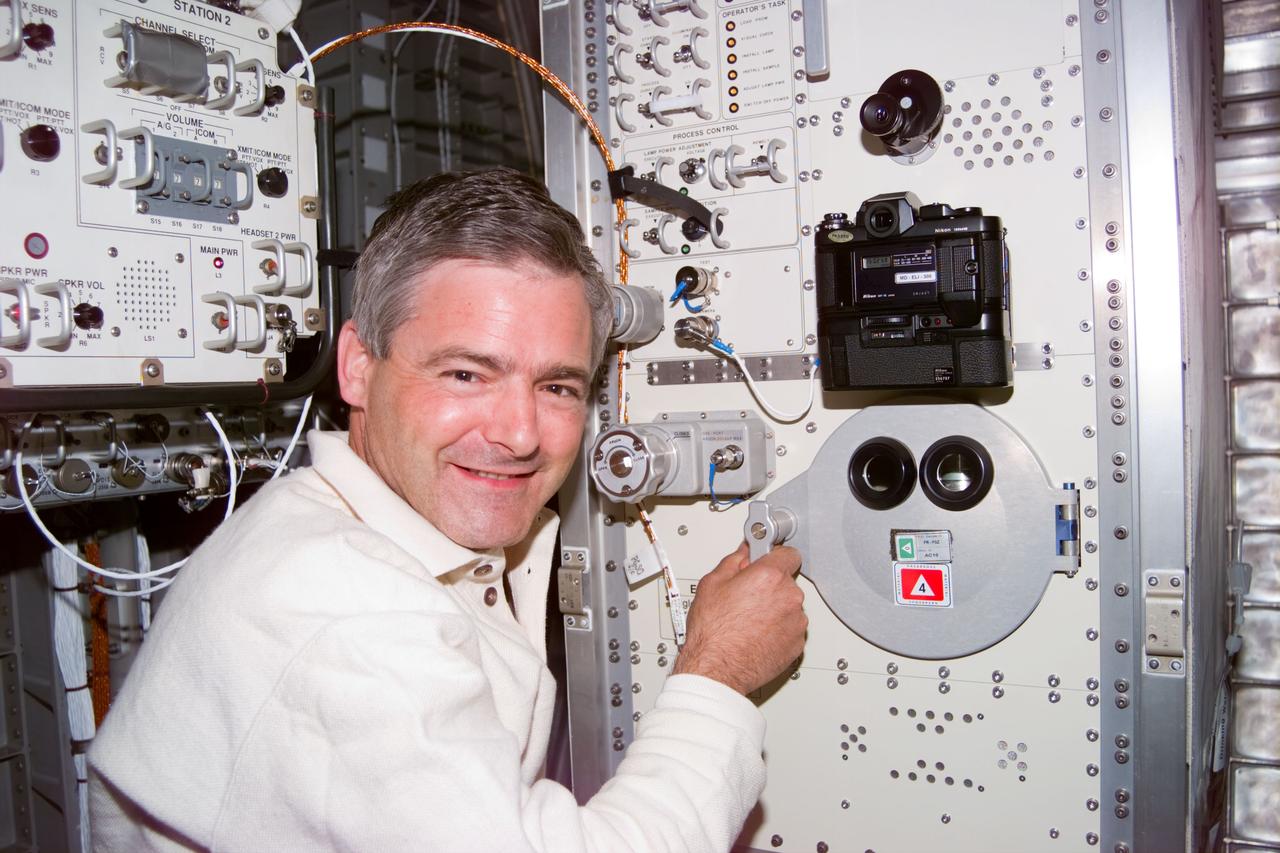
S77-E-5094 (25 May 1996) --- Astronaut Marc Garneau, mission specialist representing the Canadian Space Agency (CSA), stands at the Commercial Float Zone Furnace (CFZF) in the Spacehab Module onboard the Earth-orbiting Space Shuttle Endeavour.
The 2017 class of astronaut candidates tour Boeing's Commercial Crew and Cargo Facility at NASA's Kennedy Space Center in Florida on May 1. They are at the center for a familiarization tour of facilities, including the Neil Armstrong Operations and Checkout Building high bay; the Launch Control Center, Launch Complex 39B, and the Vehicle Assembly Building. They also toured United Launch Alliance's Space Launch Complex 41 at Cape Canaveral Air Force Station, and SpaceX's Launch Complex 39A at Kennedy. The candidates will spend about two years getting to know the space station systems and learning how to spacewalk, speak Russian, control the International Space Station's robotic arm and fly T-38s, before they're eligible to be assigned to a mission.
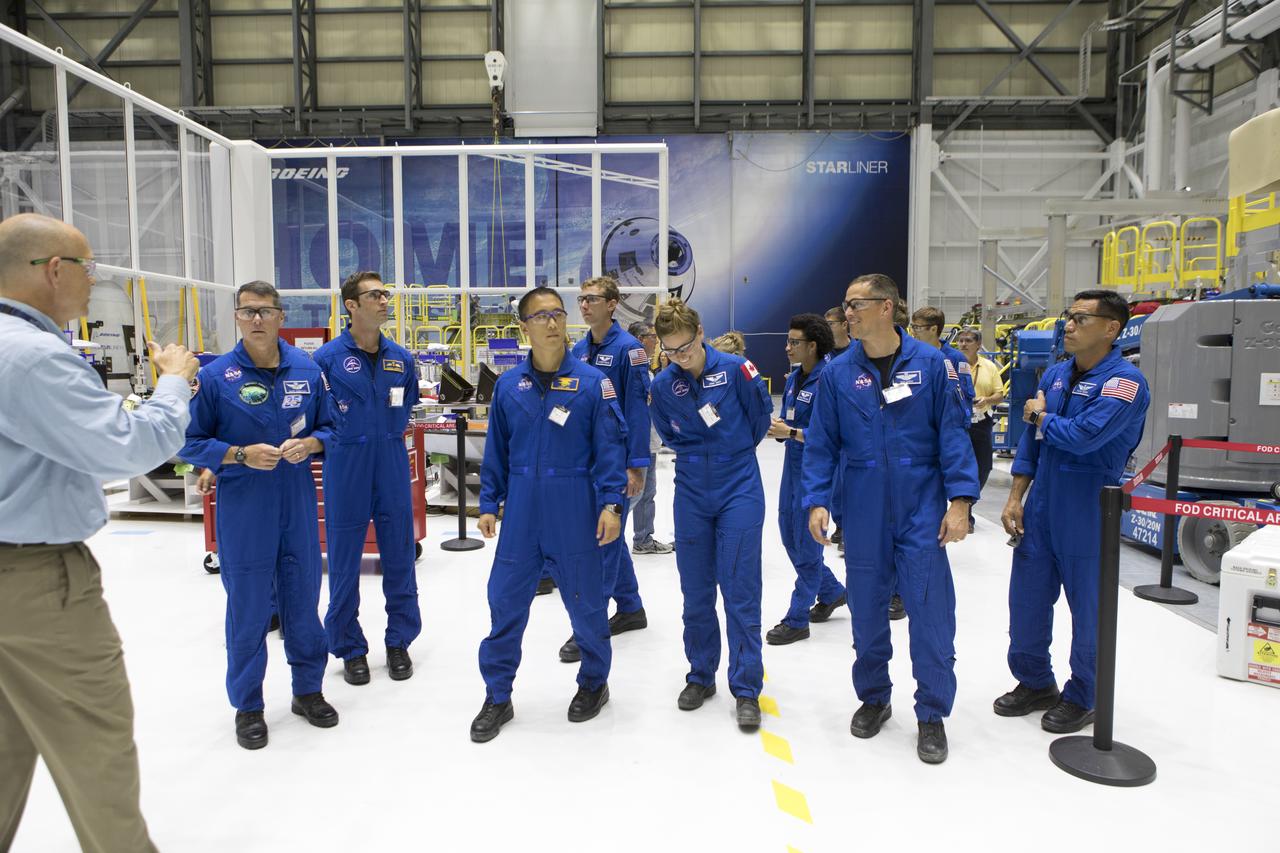
The 2017 class of astronaut candidates tour Boeing's Commercial Crew and Cargo Facility at NASA's Kennedy Space Center in Florida on May 1. They are at the center for a familiarization tour of facilities, including the Neil Armstrong Operations and Checkout Building high bay; the Launch Control Center, Launch Complex 39B, and the Vehicle Assembly Building. They also toured United Launch Alliance's Space Launch Complex 41 at Cape Canaveral Air Force Station, and SpaceX's Launch Complex 39A at Kennedy. The candidates will spend about two years getting to know the space station systems and learning how to spacewalk, speak Russian, control the International Space Station's robotic arm and fly T-38s, before they're eligible to be assigned to a mission.
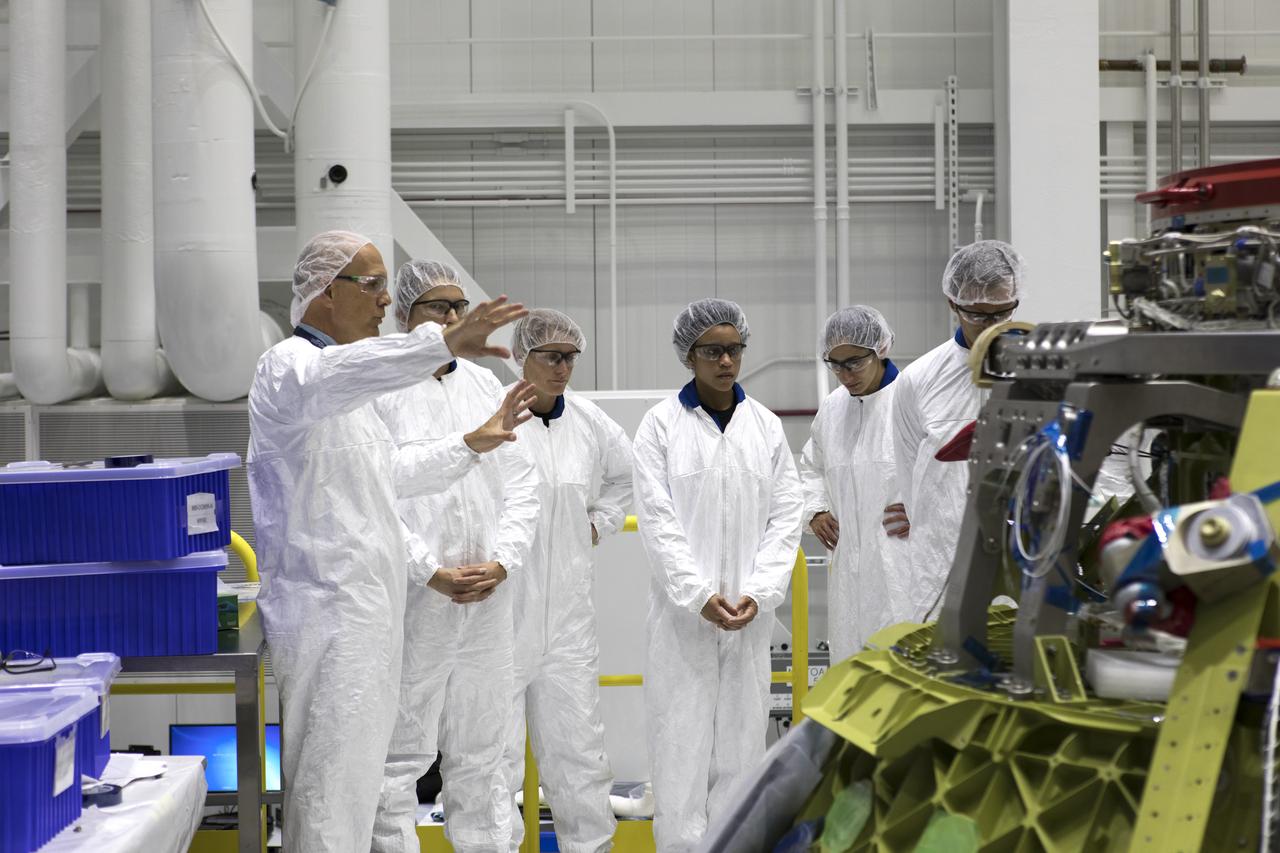
The 2017 class of astronaut candidates tour Boeing's Commercial Crew and Cargo Facility at NASA's Kennedy Space Center in Florida on May 1. They are at the center for a familiarization tour of facilities, including the Neil Armstrong Operations and Checkout Building high bay; the Launch Control Center, Launch Complex 39B, and the Vehicle Assembly Building. They also toured United Launch Alliance's Space Launch Complex 41 at Cape Canaveral Air Force Station, and SpaceX's Launch Complex 39A at Kennedy. The candidates will spend about two years getting to know the space station systems and learning how to spacewalk, speak Russian, control the International Space Station's robotic arm and fly T-38s, before they're eligible to be assigned to a mission.
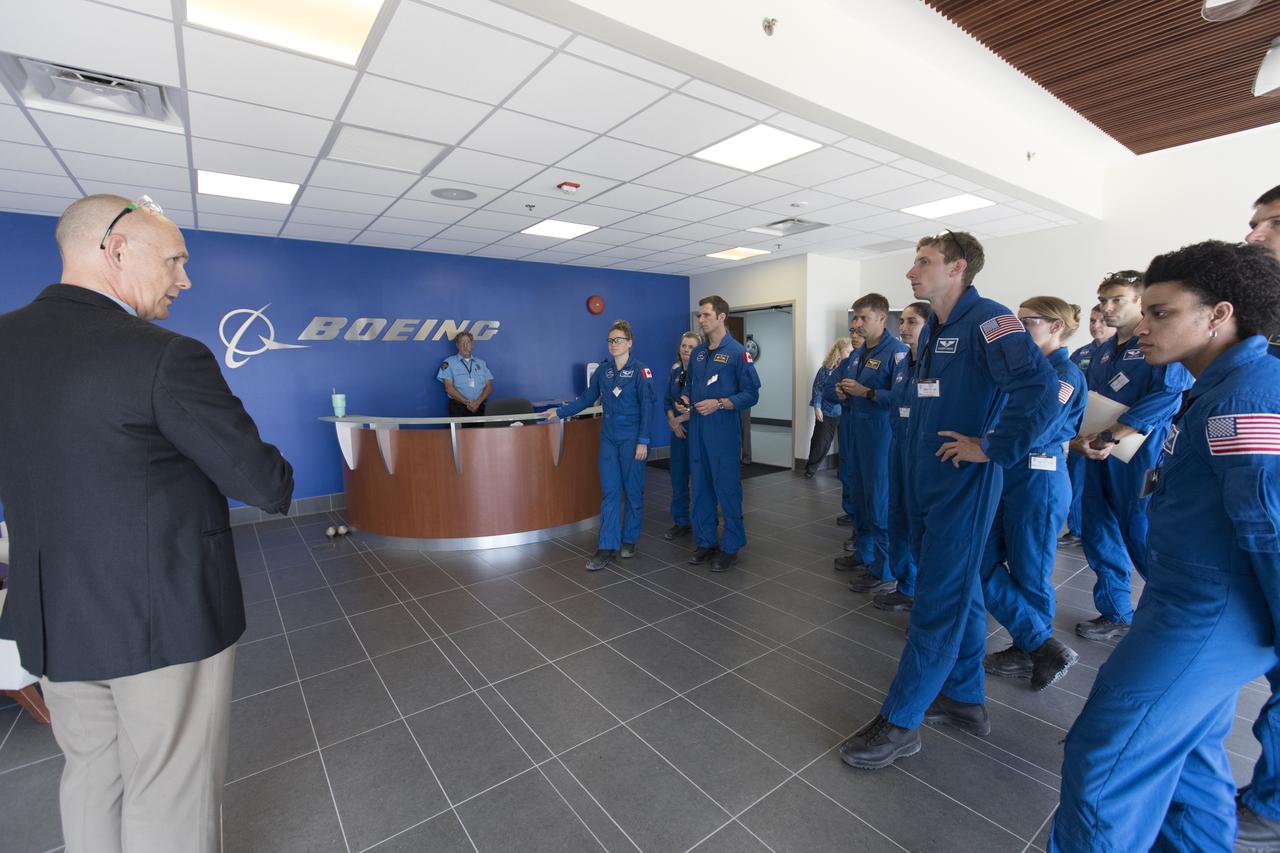
The 2017 class of astronaut candidates arrive at Boeing's Commercial Crew and Cargo Facility at NASA's Kennedy Space Center in Florida on May 1. They are at the center for a familiarization tour of facilities, including the Neil Armstrong Operations and Checkout Building high bay; the Launch Control Center, Launch Complex 39B, and the Vehicle Assembly Building. They also toured United Launch Alliance's Space Launch Complex 41 at Cape Canaveral Air Force Station, and SpaceX's Launch Complex 39A at Kennedy. The candidates will spend about two years getting to know the space station systems and learning how to spacewalk, speak Russian, control the International Space Station's robotic arm and fly T-38s, before they're eligible to be assigned to a mission.

NASA announces the agency’s five-part plan to open the International Space Station to expanded commercial and marketing activities and private astronaut missions to the station and enable additional commercial destinations in low-Earth orbit, Friday, June 7, 2019 at the Nasdaq MarketSite in New York City. NASA will continue to maintain human presence and research in low-Earth orbit, and the long-term goal is to achieve a robust economy from which NASA can purchase services at a lower cost. Photo Credit: (NASA/Bill Ingalls)
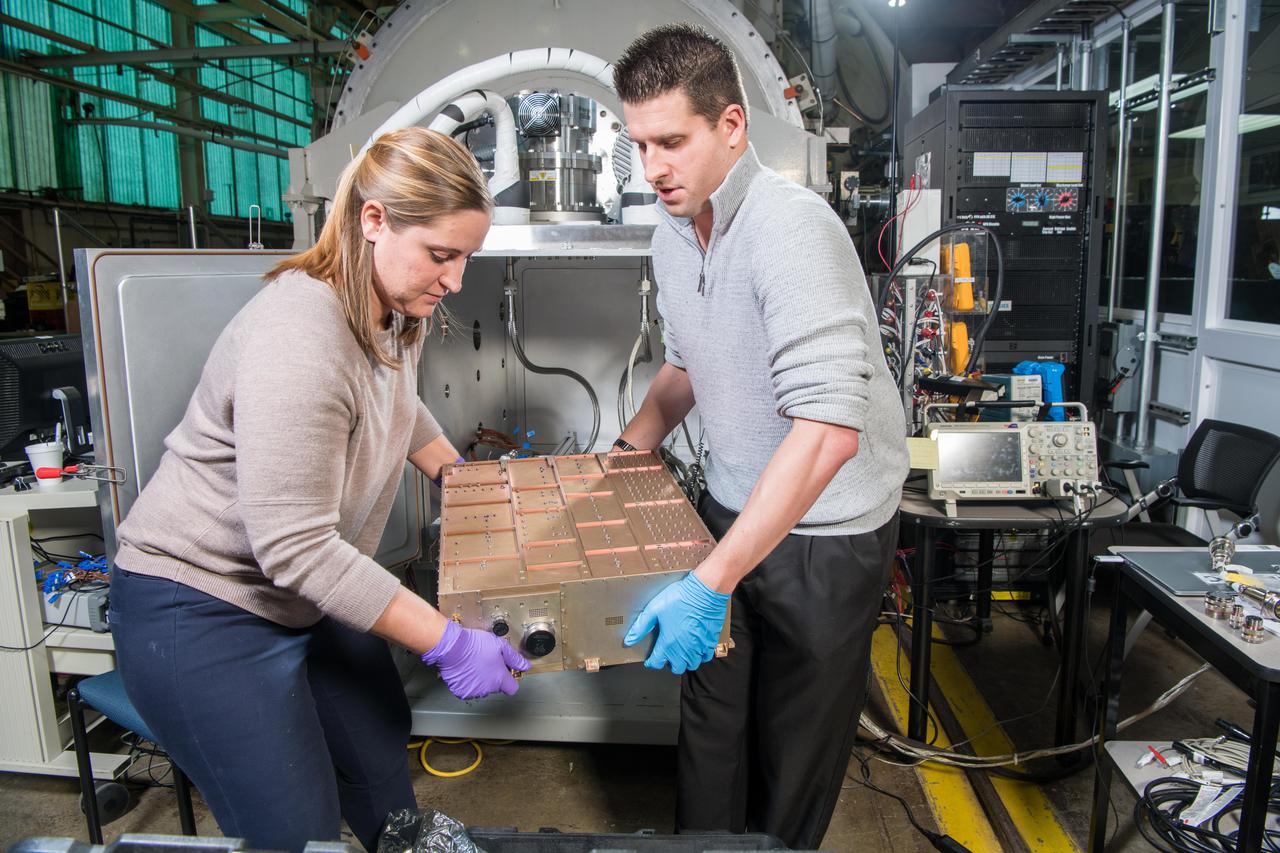
NASA Evolutionary Xenon Thruster - Commercial, NEXT-C Flight Power Processing Unit, PPU
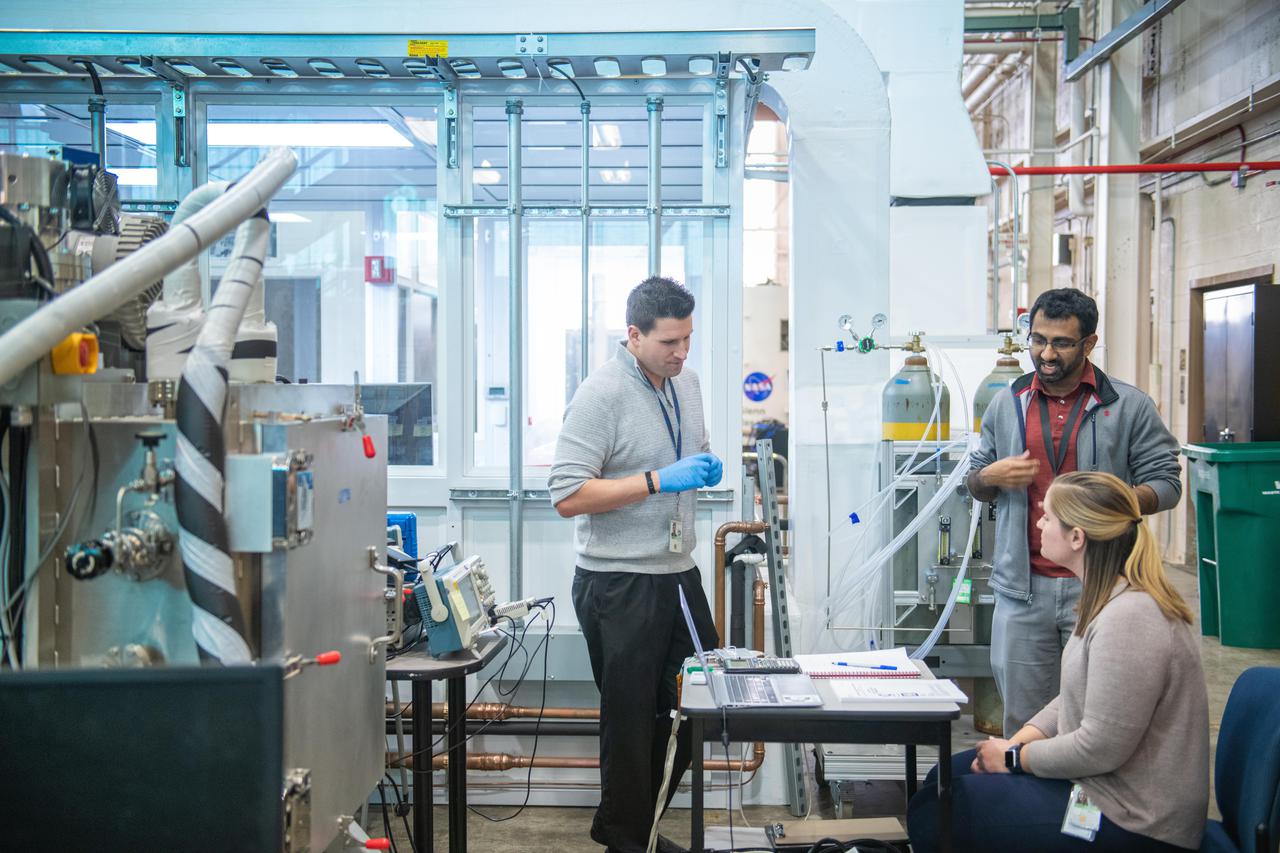
NASA Evolutionary Xenon Thruster - Commercial, NEXT-C Flight Power Processing Unit, PPU
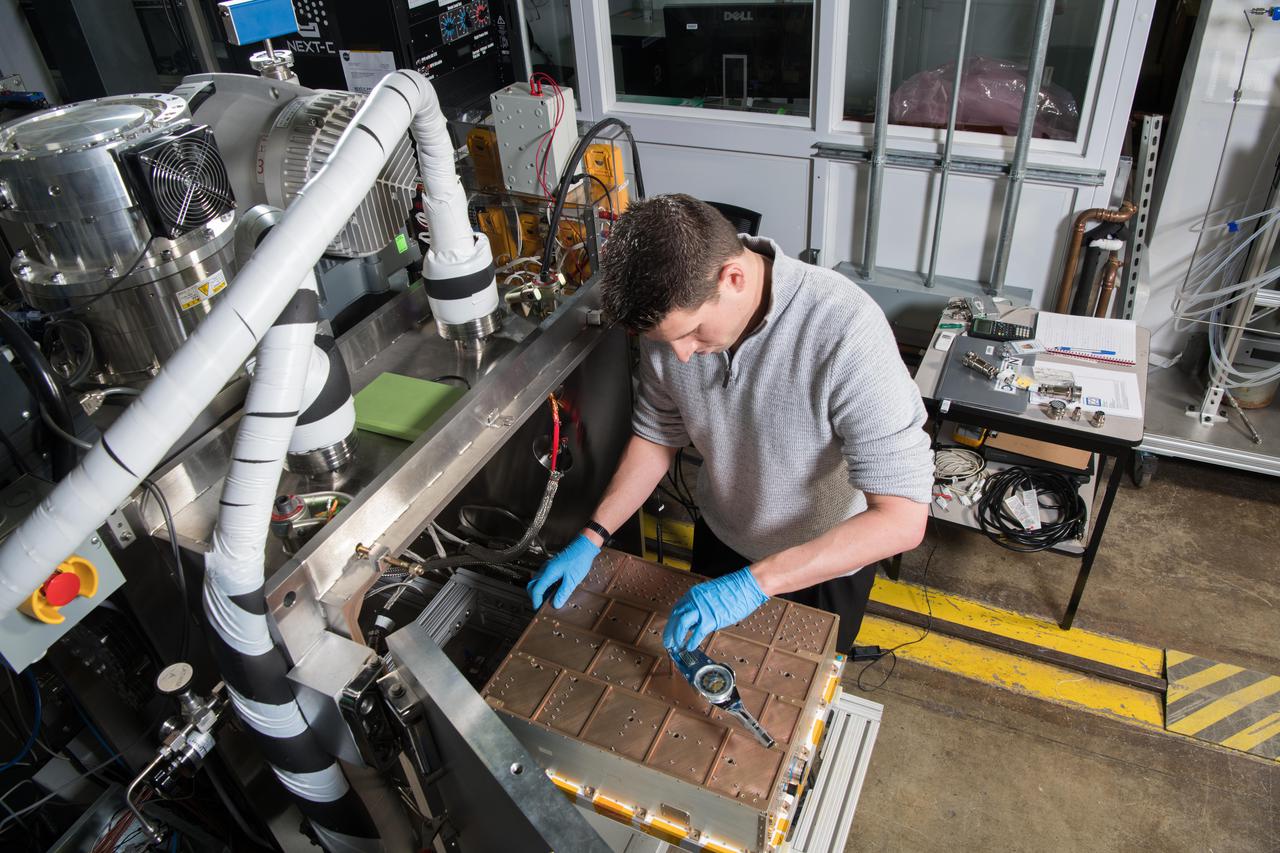
NASA Evolutionary Xenon Thruster - Commercial, NEXT-C Flight Power Processing Unit, PPU
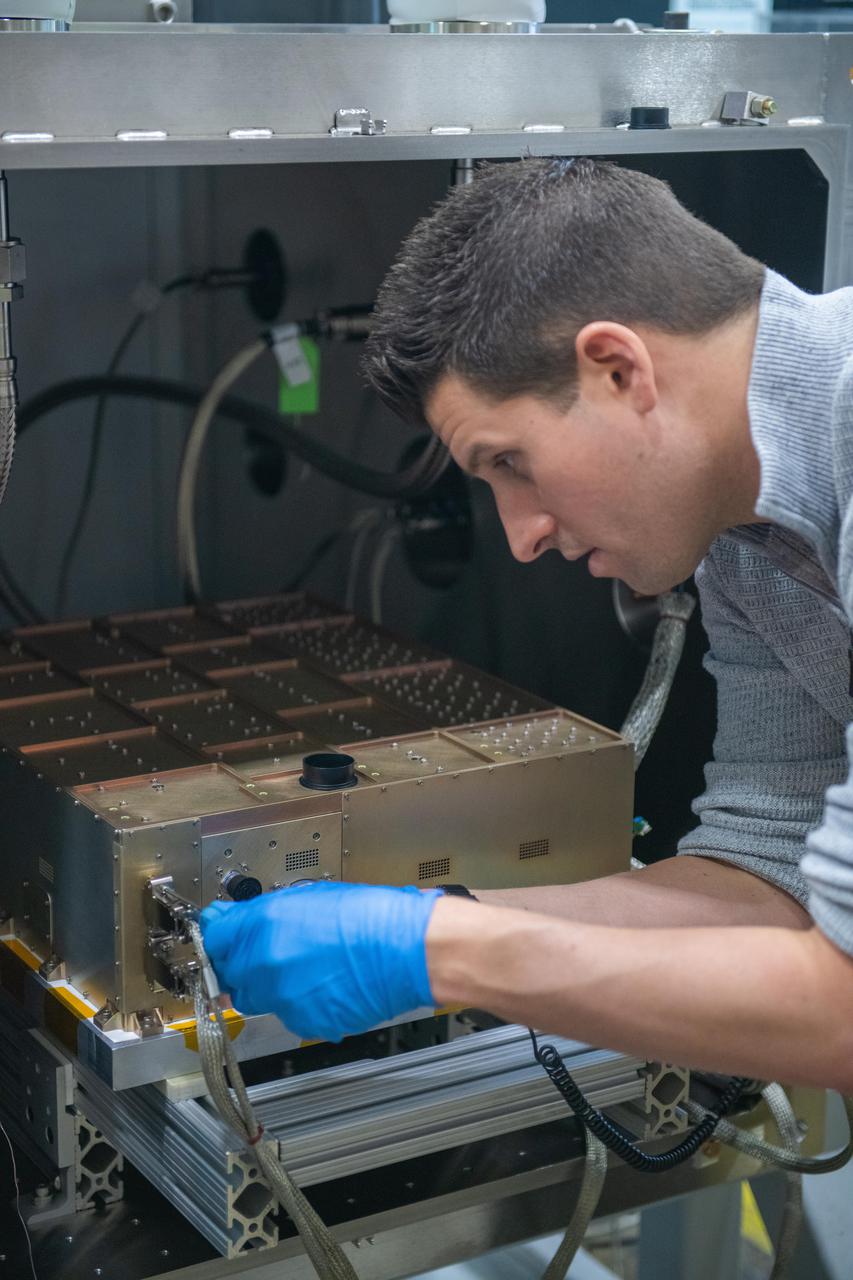
NASA Evolutionary Xenon Thruster - Commercial, NEXT-C Flight Power Processing Unit, PPU
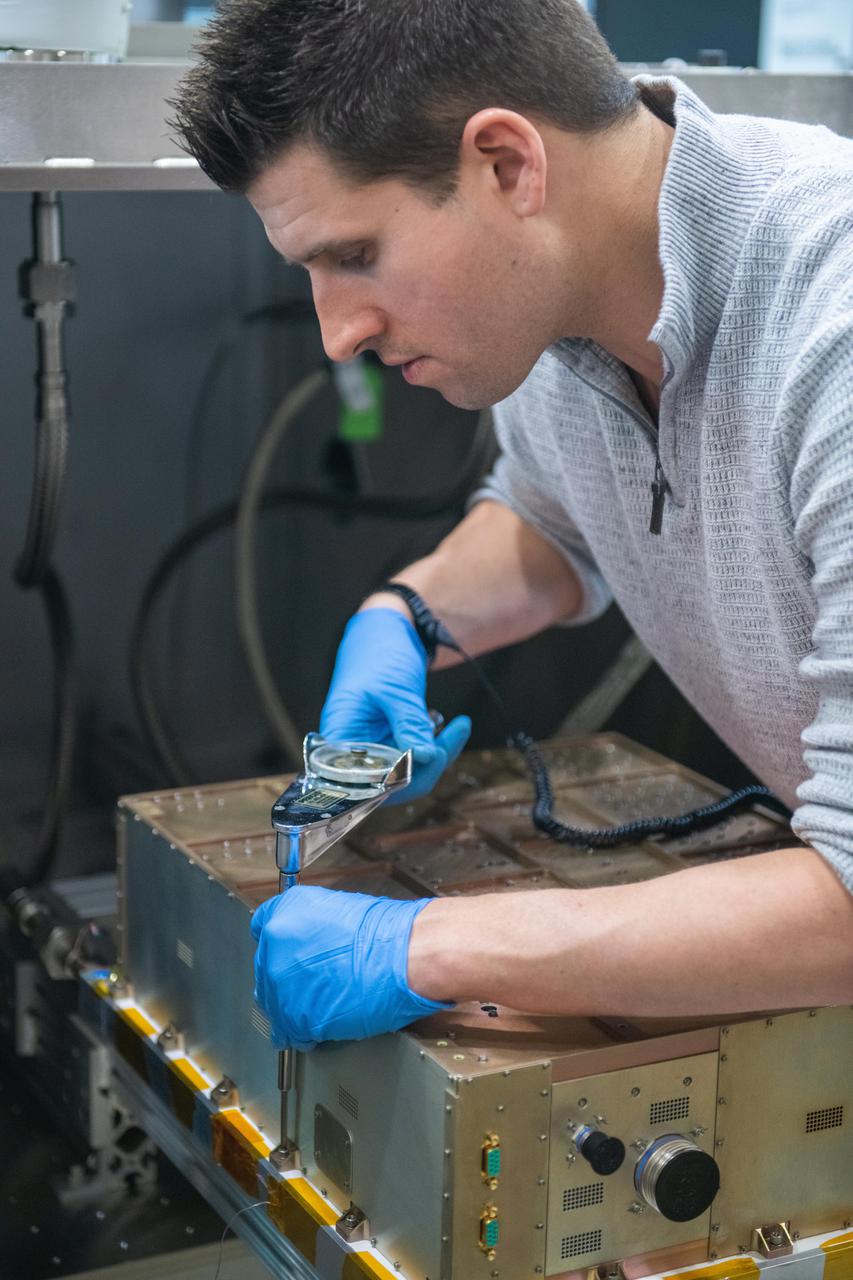
NASA Evolutionary Xenon Thruster - Commercial, NEXT-C Flight Power Processing Unit, PPU

NASA Evolutionary Xenon Thruster - Commercial, NEXT-C Flight Power Processing Unit, PPU
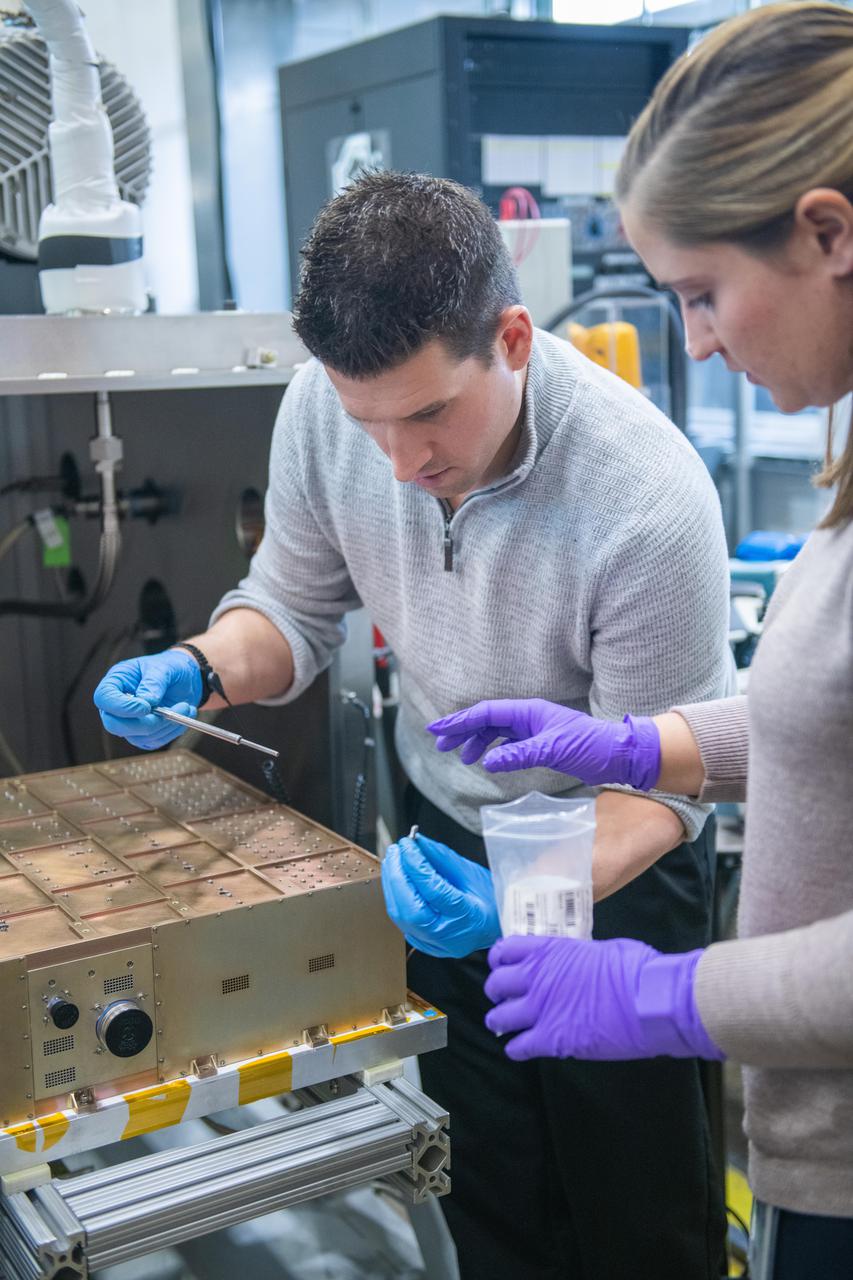
NASA Evolutionary Xenon Thruster - Commercial, NEXT-C Flight Power Processing Unit, PPU
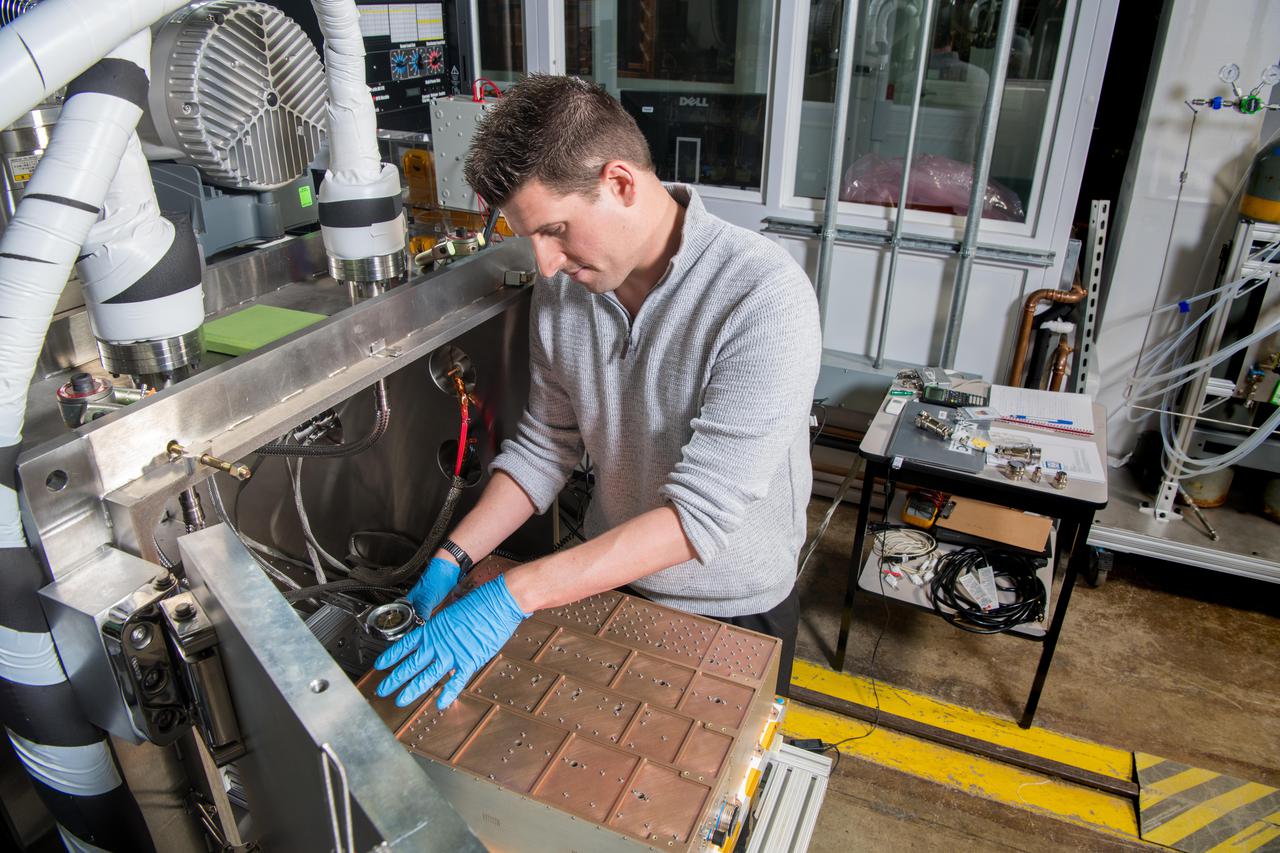
NASA Evolutionary Xenon Thruster - Commercial, NEXT-C Flight Power Processing Unit, PPU

NASA Evolutionary Xenon Thruster - Commercial, NEXT-C Flight Power Processing Unit, PPU

A Nasdaq moderator, center, talks with NASA Director of Commercial Spaceflight Development Phil McAlister, left, ISS National Lab Vice President and Chief Operating Officer Ken Shields, NASA Advisory Council Regulatory and Policy Committee Chair Mike Gold, and NASA Deputy Chief Financial Officer for Integration Doug Comstock, right, during a live social media event shortly after NASA announced a five-part plan to open the International Space Station to expanded commercial and marketing activities and private astronaut missions to the station and enable additional commercial destinations in low-Earth orbit, Friday, June 7, 2019 at the Nasdaq MarketSite in New York City. NASA will continue to maintain human presence and research in low-Earth orbit, and the long-term goal is to achieve a robust economy from which NASA can purchase services at a lower cost. Photo Credit: (NASA/Bill Ingalls)

A Nasdaq moderator, center, talks with NASA Director of Commercial Spaceflight Development Phil McAlister, left, ISS National Lab Vice President and Chief Operating Officer Ken Shields, NASA Advisory Council Regulatory and Policy Committee Chair Mike Gold, and NASA Deputy Chief Financial Officer for Integration Doug Comstock, right, during a live social media event shortly after NASA announced a five-part plan to open the International Space Station to expanded commercial and marketing activities and private astronaut missions to the station and enable additional commercial destinations in low-Earth orbit, Friday, June 7, 2019 at the Nasdaq MarketSite in New York City. NASA will continue to maintain human presence and research in low-Earth orbit, and the long-term goal is to achieve a robust economy from which NASA can purchase services at a lower cost. Photo Credit: (NASA/Bill Ingalls)
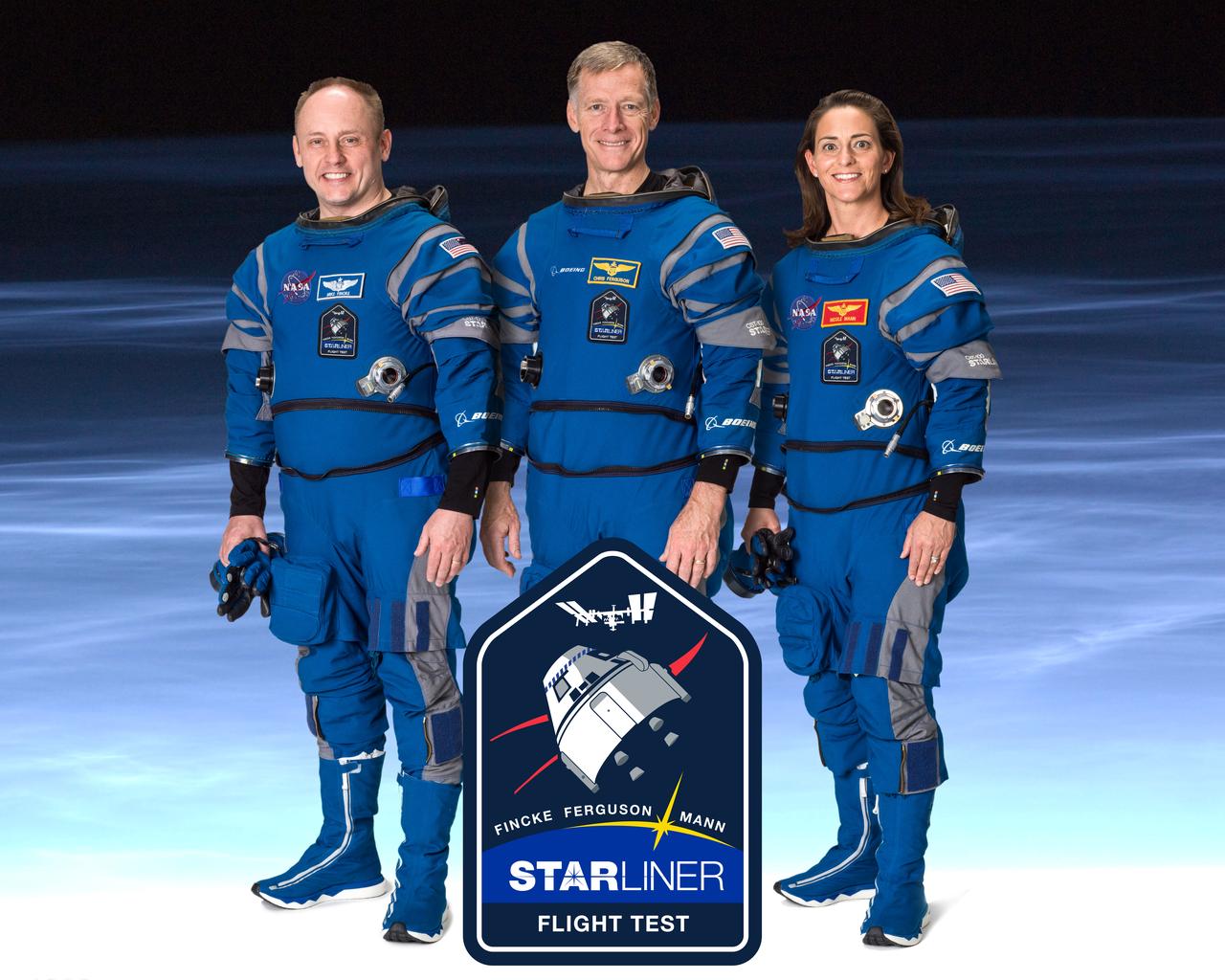
From left to right, NASA astronaut Mike Fincke, Boeing astronaut Chris Ferguson, and NASA astronaut Nicole Mann pose for the official crew portrait for Boeing’s Crew Flight Test to the International Space Station, part of NASA’s Commercial Crew Program.
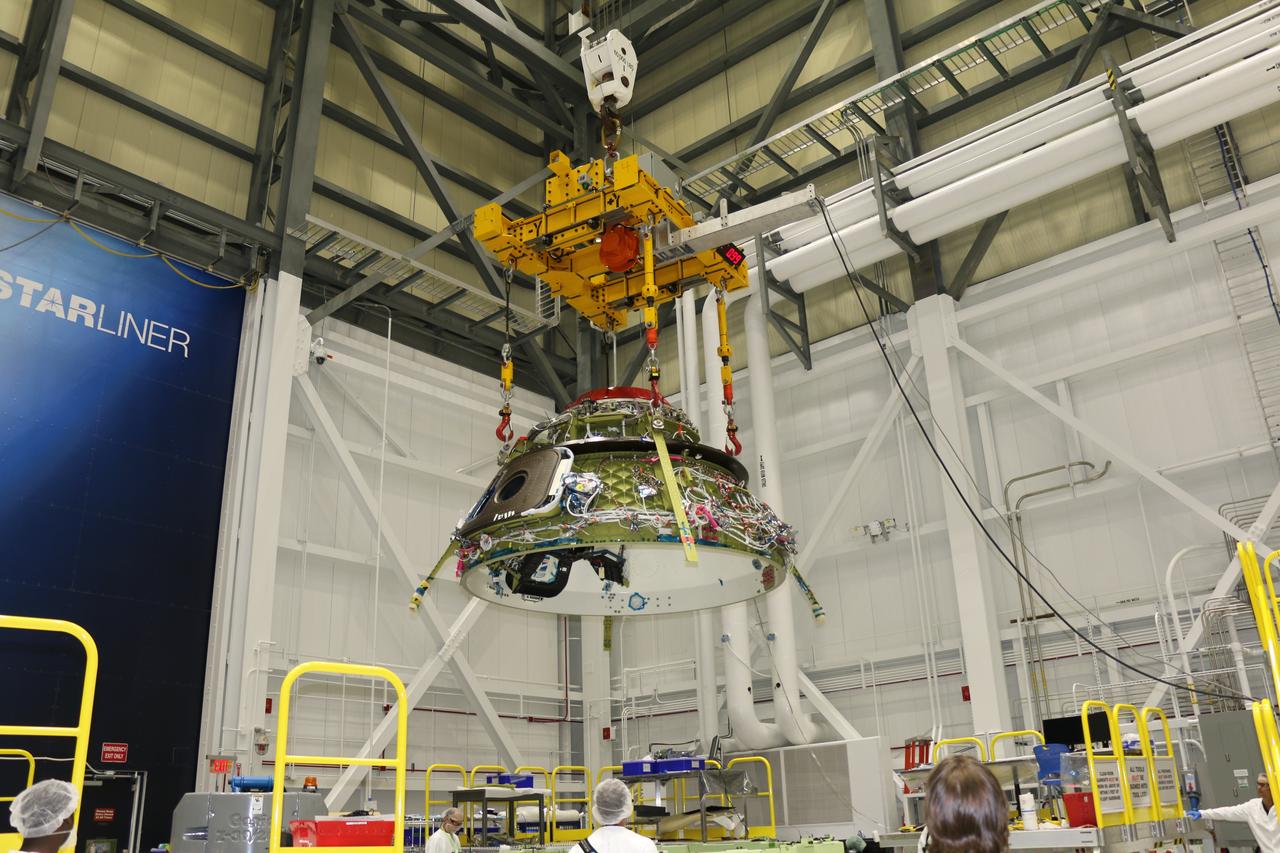
The upper and lower domes of the Boeing CST-100 Starliner Spacecraft 2 Crew Flight Test Vehicle were mated June 19, 2018, inside the Commercial Crew and Cargo Processing Facility (C3PF) at Kennedy Space Center in Florida. The Starliner will launch astronauts on a United Launch Alliance Atlas V rocket to the International Space Station as part of NASA’s Commercial Crew Program.
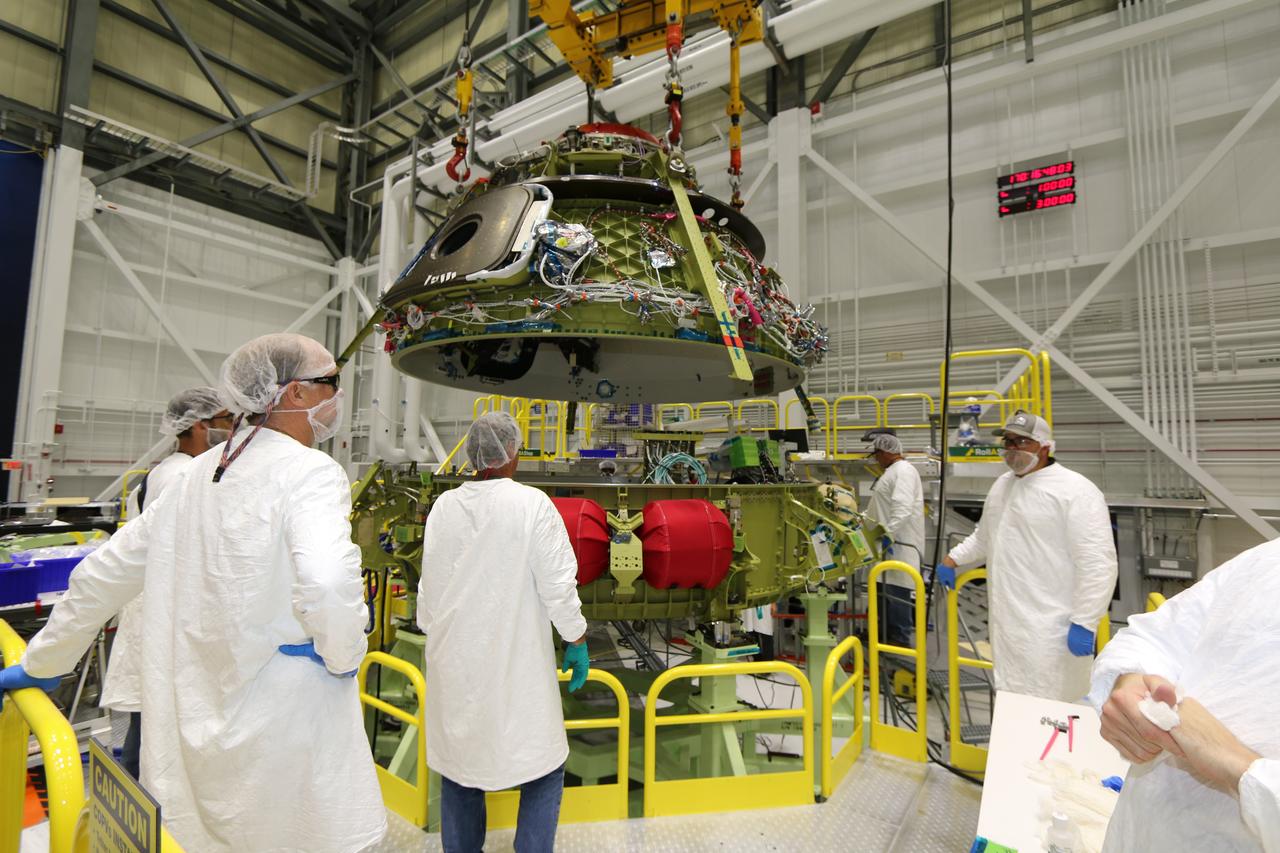
The upper and lower domes of the Boeing CST-100 Starliner Spacecraft 2 Crew Flight Test Vehicle were mated June 19, 2018, inside the Commercial Crew and Cargo Processing Facility (C3PF) at Kennedy Space Center in Florida. The Starliner will launch astronauts on a United Launch Alliance Atlas V rocket to the International Space Station as part of NASA’s Commercial Crew Program.
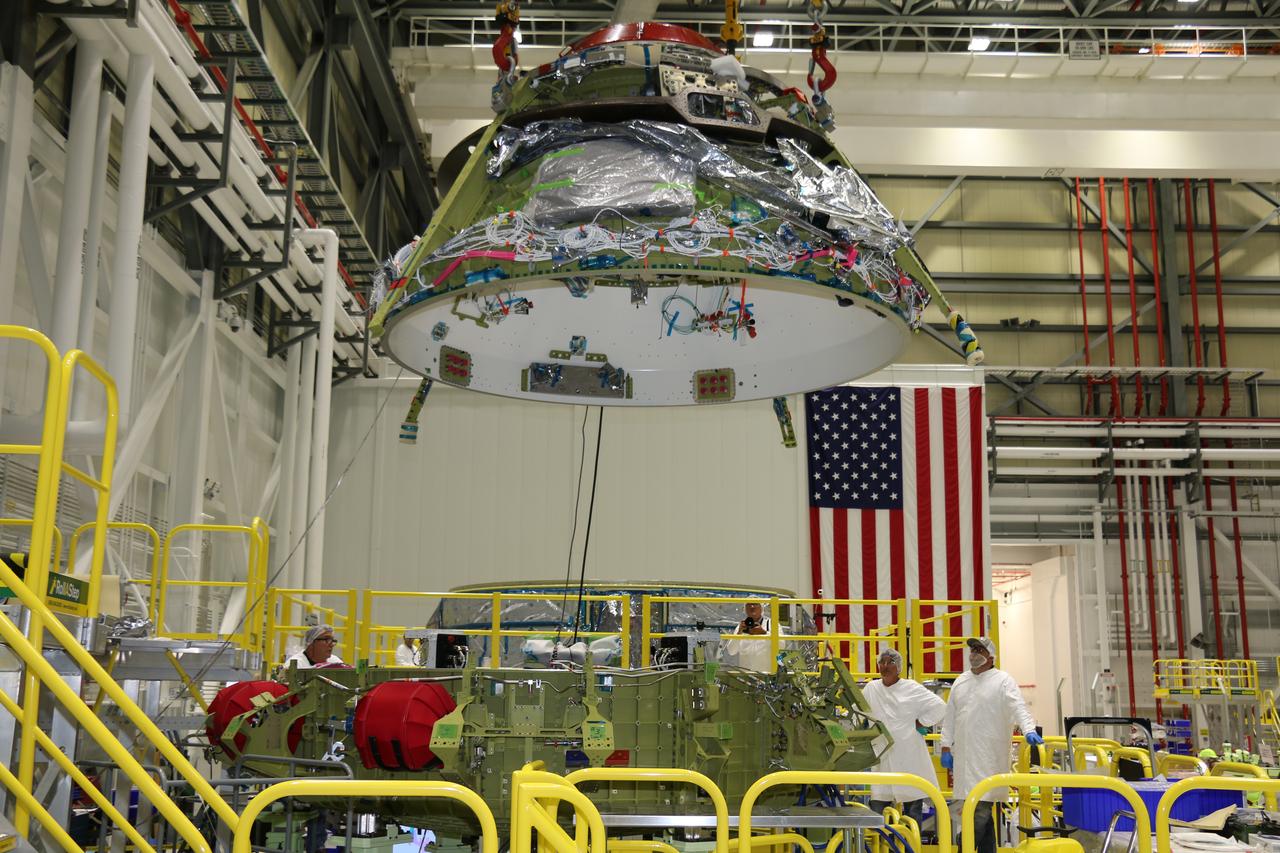
The upper and lower domes of the Boeing CST-100 Starliner Spacecraft 2 Crew Flight Test Vehicle were mated June 19, 2018, inside the Commercial Crew and Cargo Processing Facility (C3PF) at Kennedy Space Center in Florida. The Starliner will launch astronauts on a United Launch Alliance Atlas V rocket to the International Space Station as part of NASA’s Commercial Crew Program.
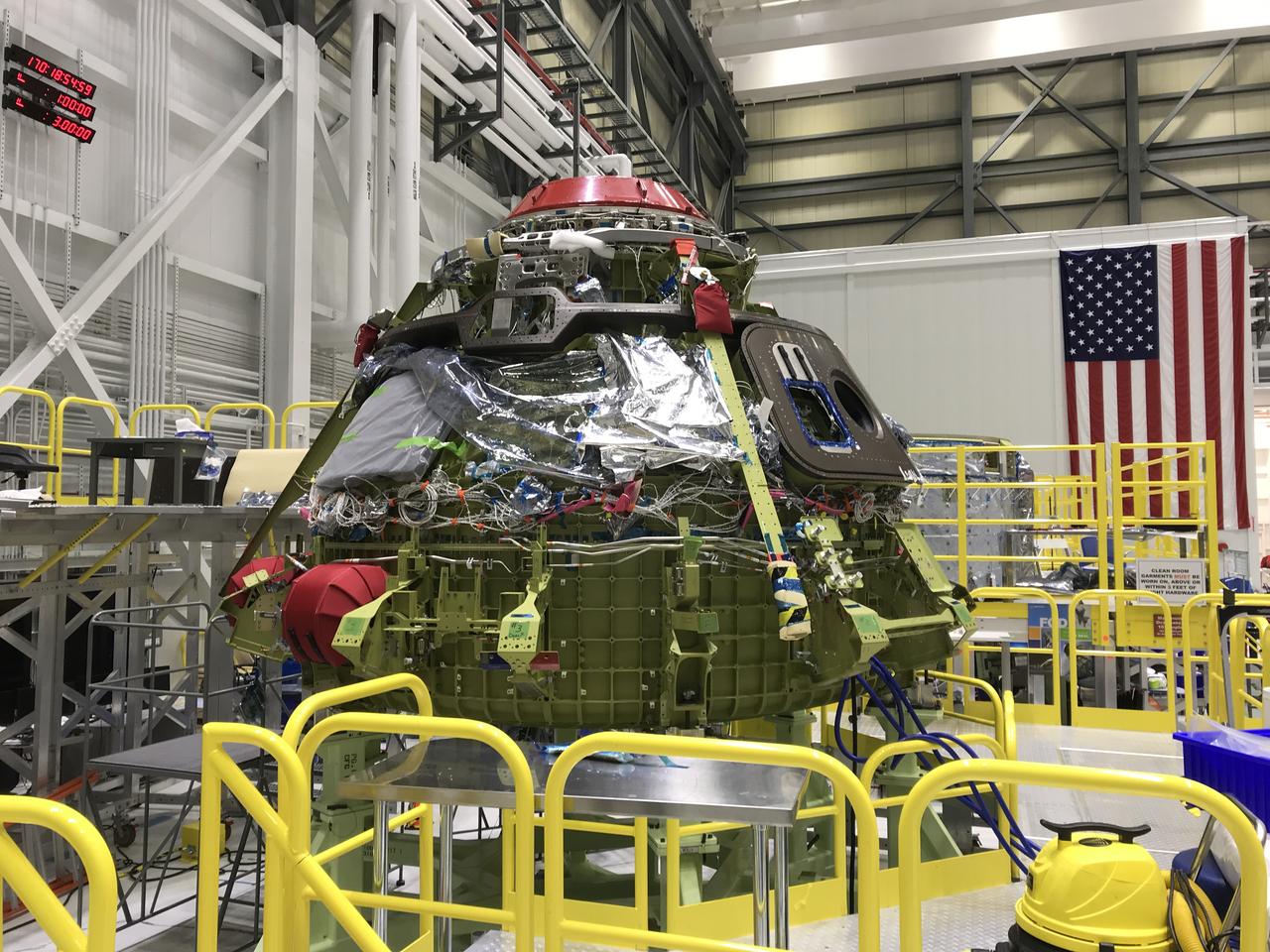
The upper and lower domes of the Boeing CST-100 Starliner Spacecraft 2 Crew Flight Test Vehicle were mated June 19, 2018, inside the Commercial Crew and Cargo Processing Facility (C3PF) at Kennedy Space Center in Florida. The Starliner will launch astronauts on a United Launch Alliance Atlas V rocket to the International Space Station as part of NASA’s Commercial Crew Program.

The first U.S. astronauts who will fly on American-made, commercial spacecraft to and from the International Space Station, wave after being announced, Friday, Aug. 3, 2018 at NASA's Johnson Space Center in Houston, Texas. Astronauts Bob Behnken, left, Victor Glover, Doug Hurley, and Mike Hopkins will fly SpaceX's Crew Dragon flights, and astronauts Eric Boe, Suni Williams, Chris Ferguson, Josh Cassada, and Nicole Aunapu Mann, right, will fly on Boeing's CST-100 Starliner. Photo Credit: (NASA/Bill Ingalls)

NASA astronaut Luke Delaney visits the Vehicle Assembly Building at the agency’s Kennedy Space Center in Florida on Tuesday, May 12, 2026, and views the agency’s Artemis III SLS (Space Launch System) core stage. Artemis III will launch astronauts to low Earth orbit aboard the Orion spacecraft on top of SLS to test rendezvous and docking capabilities between Orion and commercial spacecraft needed to land Artemis IV astronauts on the Moon in 2028.

NASA astronaut Jessica Watkins visits the Vehicle Assembly Building at the agency’s Kennedy Space Center in Florida on Tuesday, May 12, 2026, and views the agency’s Artemis III SLS (Space Launch System) core stage. Artemis III will launch astronauts to low Earth orbit aboard the Orion spacecraft on top of SLS to test rendezvous and docking capabilities between Orion and commercial spacecraft needed to land Artemis IV astronauts on the Moon in 2028.

CSA (Canadian Space Agency) astronaut Joshua Kutryk visits the Vehicle Assembly Building at the agency’s Kennedy Space Center in Florida on Tuesday, May 12, 2026, and views the agency’s Artemis III SLS (Space Launch System) core stage. Artemis III will launch astronauts to low Earth orbit aboard the Orion spacecraft on top of SLS to test rendezvous and docking capabilities between Orion and commercial spacecraft needed to land Artemis IV astronauts on the Moon in 2028.

The Nasdaq MarketSite tower displays a congratulatory message to NASA as the agency announces a five-part plan to open the International Space Station to expanded commercial and marketing activities and private astronaut missions to the station and enable additional commercial destinations in low-Earth orbit, Friday, June 7, 2019 at Nasdaq MarketSite in New York City. NASA will continue to maintain human presence and research in low-Earth orbit, and the long-term goal is to achieve a robust economy from which NASA can purchase services at a lower cost. Photo Credit: (NASA/Bill Ingalls)

NASA Chief Financial Officer Jeff DeWit gives remarks during a briefing where NASA announced the agency’s five-part plan to open the International Space Station to expanded commercial and marketing activities and private astronaut missions to the station and enable additional commercial destinations in low-Earth orbit, Friday, June 7, 2019 at the Nasdaq MarketSite in New York City. NASA will continue to maintain human presence and research in low-Earth orbit, and the long-term goal is to achieve a robust economy from which NASA can purchase services at a lower cost. Photo Credit: (NASA/Bill Ingalls)

NASA Associate Administrator for the Human Exploration and Operations Directorate William Gerstenmaier gives remarks during a briefing where NASA announced the agency’s five-part plan to open the International Space Station to expanded commercial and marketing activities and private astronaut missions to the station and enable additional commercial destinations in low-Earth orbit, Friday, June 7, 2019 at the Nasdaq MarketSite in New York City. NASA will continue to maintain human presence and research in low-Earth orbit, and the long-term goal is to achieve a robust economy from which NASA can purchase services at a lower cost. Photo Credit: (NASA/Bill Ingalls)

NASA astronaut Christina Koch onboard the International Space Station gives remarks in a video during a briefing where NASA announced the agency’s five-part plan to open the International Space Station to expanded commercial and marketing activities and private astronaut missions to the station and enable additional commercial destinations in low-Earth orbit, Friday, June 7, 2019 at the Nasdaq MarketSite in New York City. NASA will continue to maintain human presence and research in low-Earth orbit, and the long-term goal is to achieve a robust economy from which NASA can purchase services at a lower cost. Photo Credit: (NASA/Bill Ingalls)