
NASA astronauts Victor Glover and Mike Hopkins, assigned to fly on the first operational mission of SpaceX’s Crew Dragon, pose inside a mockup of the spacecraft at NASA’s Johnson Space Center in Houston, Texas on Aug. 2, 2018 ahead of the agency’s announcement of their commercial crew assignment Aug. 3. Nine U.S. astronauts were selected for commercial crew flight assignments on the first test flights and operational missions for Boeing’s CST-100 Starliner and SpaceX’s Crew Dragon. Photo Credit: (NASA/Bill Ingalls)

NASA astronauts Bob Behnken, left, and Doug Hurley, assigned to fly on the first test flight of SpaceX’s Crew Dragon, pose inside a mockup of the spacecraft at NASA’s Johnson Space Center in Houston, Texas on Aug. 2, 2018 ahead of the agency’s announcement of their commercial crew assignment Aug. 3. Nine U.S. astronauts were selected for commercial crew flight assignments on the first test flights and operational missions for Boeing’s CST-100 Starliner and SpaceX’s Crew Dragon. Photo Credit: (NASA/Bill Ingalls)

NASA astronauts Bob Behnken, left, and Doug Hurley, assigned to fly on the first test flight of SpaceX’s Crew Dragon, pose inside a mockup of the spacecraft at NASA’s Johnson Space Center in Houston, Texas on Aug. 2, 2018 ahead of the agency’s announcement of their commercial crew assignment Aug. 3. Nine U.S. astronauts were selected for commercial crew flight assignments on the first test flights and operational missions for Boeing’s CST-100 Starliner and SpaceX’s Crew Dragon. Photo Credit: (NASA/Bill Ingalls)
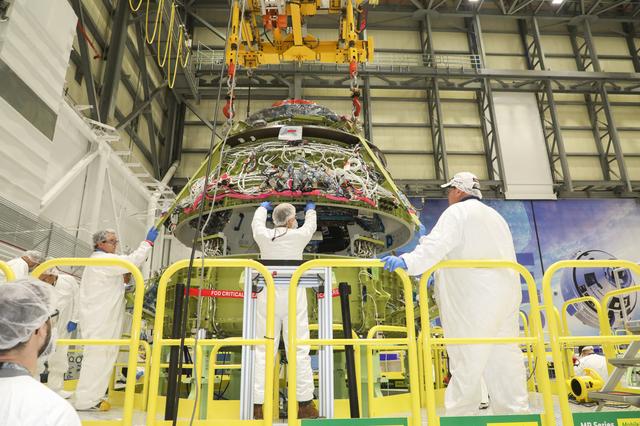
Technicians at Boeing’s Commercial Crew and Cargo Processing Facility (C3PF) at NASA’s Kennedy Space Center in Florida mate the two domes that comprise the main pressure vessel of Boeing’s Orbital Flight Test CST-100 Starliner. This is one of the last major assembly milestones before final outfitting and closeouts as Starliner prepares for its first mission, the uncrewed test flight later this summer. Boeing’s uncrewed Orbital Flight Test is part of NASA’s Commercial Crew Program, which is working with Boeing to return human spaceflight launches to the space station from U.S. soil.
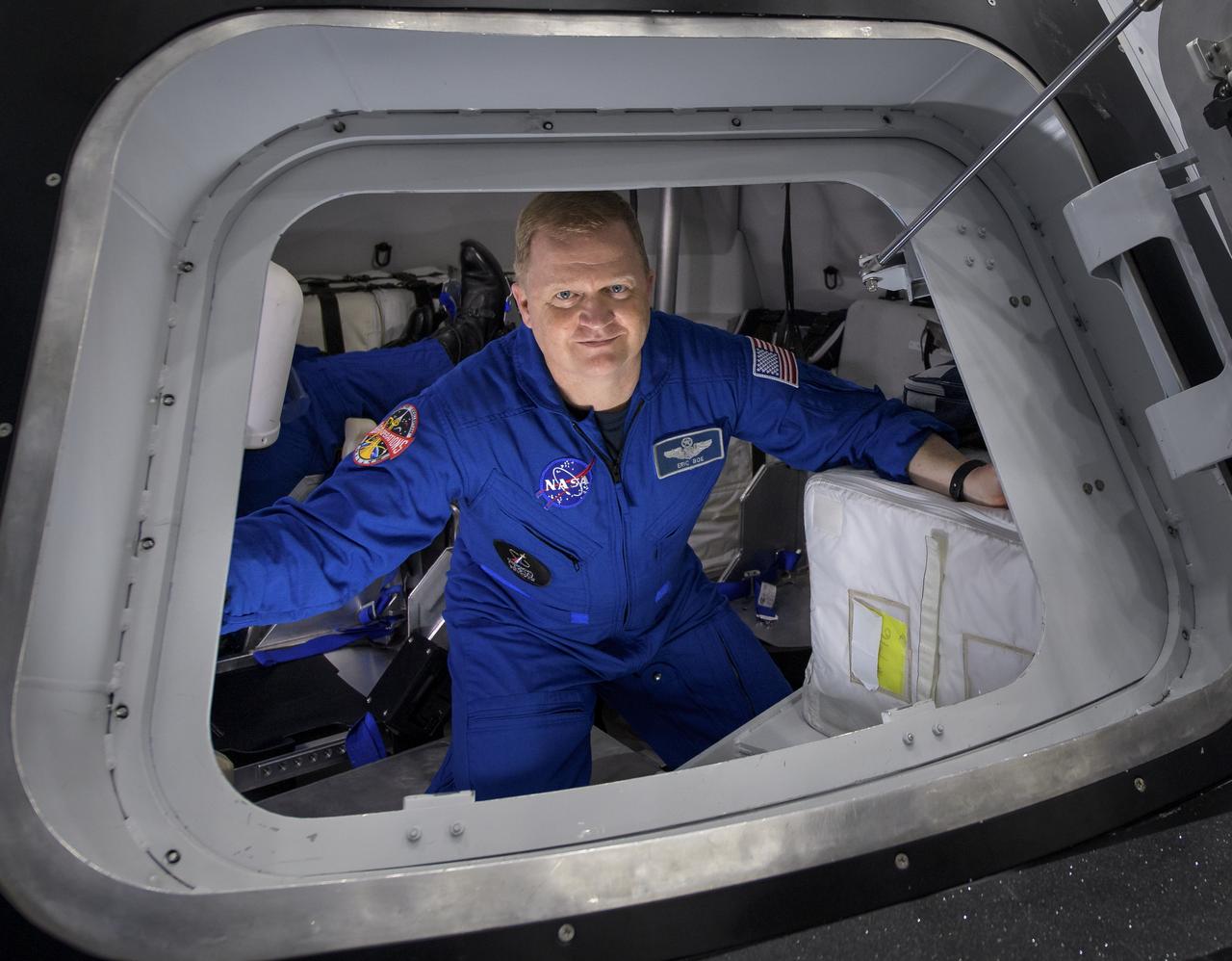
NASA astronaut Eric Boe poses for a photograph as he exits the Boeing Mockup Trainer at NASA’s Johnson Space Center in Houston, Texas on Aug. 2, 2018 ahead of the commercial crew flight assignments announcement Aug. 3. Boe, along with NASA astronaut Nicole Aunapu Mann and Boeing astronaut Chris Ferguson were assigned to launch aboard Boeing’s CST-100 Starliner on the company’s Crew Flight Test targeted for mid-2019 in partnership with NASA’s Commercial Crew Program. Photo Credit: (NASA/Bill Ingalls)
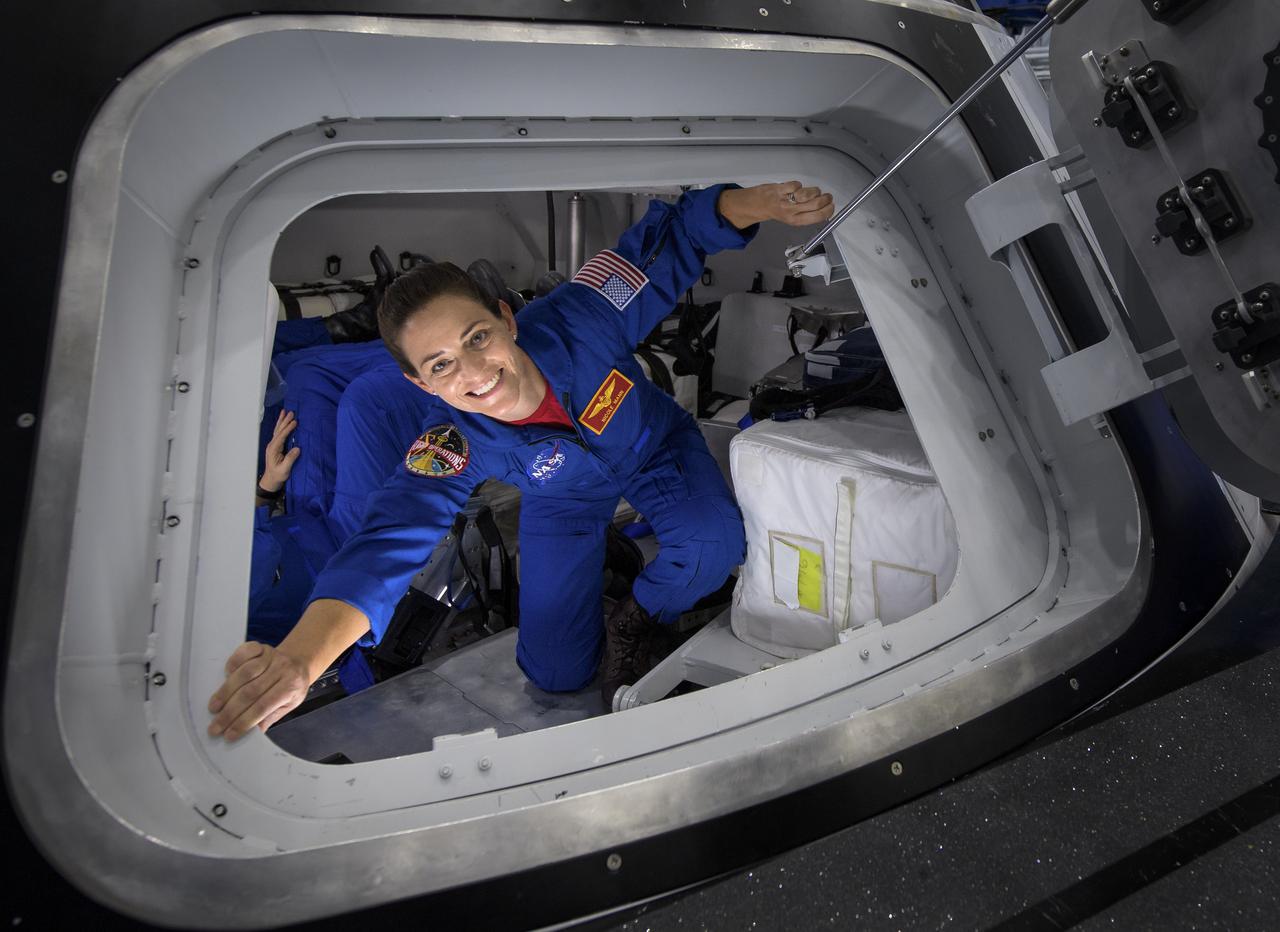
NASA astronaut Nicole Mann poses for a photograph as she exits the Boeing Mockup Trainer at NASA’s Johnson Space Center in Houston, Texas on Aug. 2, 2018 ahead of the commercial crew flight assignments announcement Aug. 3. Mann, along with NASA astronaut Eric Boe and Boeing astronaut Chris Ferguson were assigned to launch aboard Boeing’s CST-100 Starliner on the company’s Crew Flight Test targeted for mid-2019 in partnership with NASA’s Commercial Crew Program. Photo Credit: (NASA/Bill Ingalls)
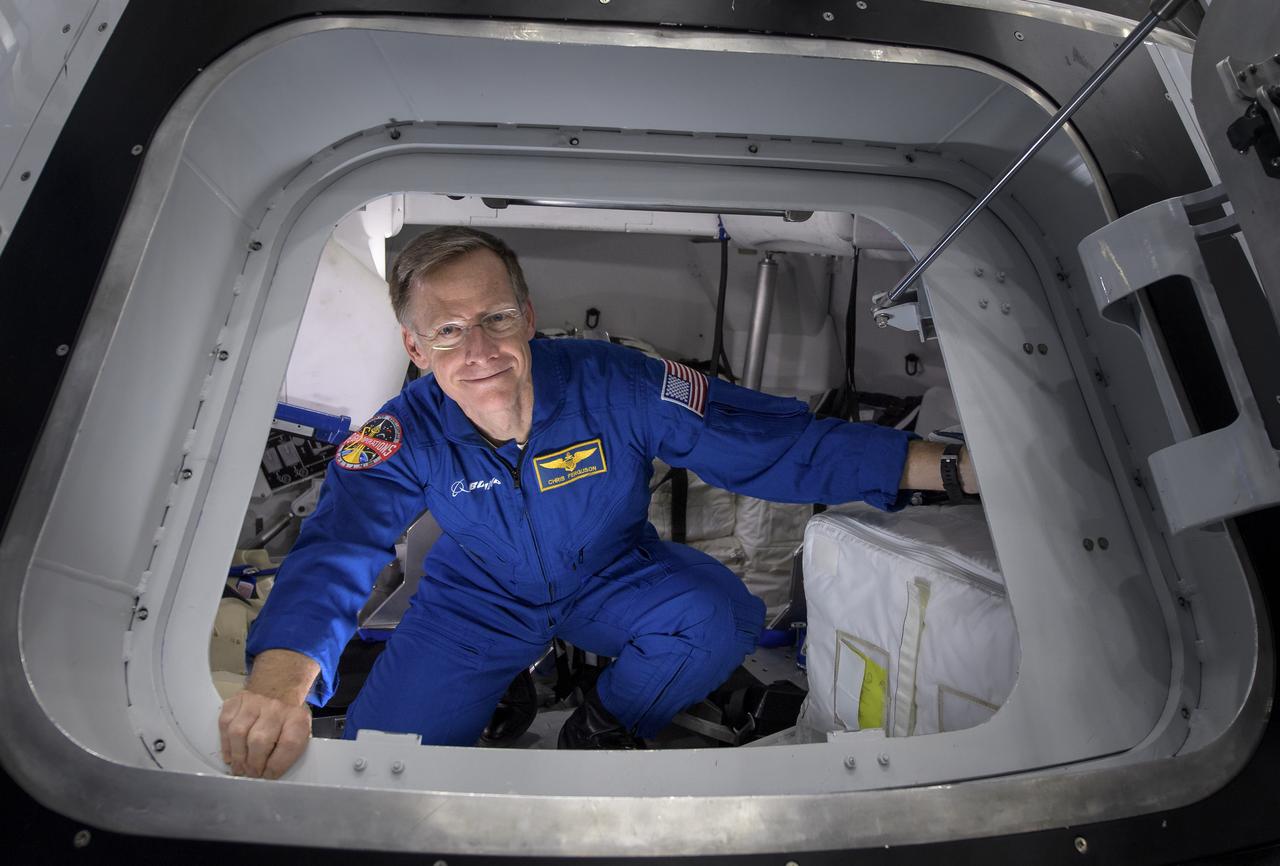
Boeing astronaut Chris Ferguson poses for a photograph as he exits the Boeing Mockup Trainer at NASA’s Johnson Space Center in Houston, Texas on Aug. 2, 2018 ahead of the commercial crew flight assignments announcement Aug. 3. Ferguson, along with NASA astronauts Eric Boe and Nicole Aunapu Mann were assigned to launch aboard Boeing’s CST-100 Starliner on the company’s Crew Flight Test targeted for mid-2019 in partnership with NASA’s Commercial Crew Program. Photo Credit: (NASA/Bill Ingalls)
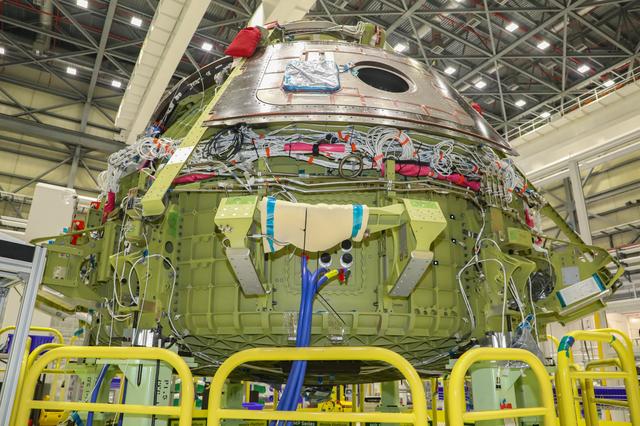
On March 11, Boeing mated the upper and lower domes of its CST-100 Starliner spacecraft slated to fly in the company’s Orbital Flight Test (OFT). The mate was completed at Boeing’s Commercial Crew and Cargo Processing Facility at NASA’s Kennedy Space Center in Florida. Starliner uses an innovative weldless design where the main structure is made of two domes, each spin-formed and machined from a solid piece of aerospace-grade aluminum. The two domes then undergo outfitting with avionics, cooling systems, wire harnesses, fuel and life support lines, and other critical systems before being mated together. This is one of the last major milestones ahead of final processing and closeouts for flight. OFT is Boeing’s uncrewed flight test of Starliner and part of NASA’s Commercial Crew Program, which will return human spaceflight launches into low-Earth orbit from U.S. soil.
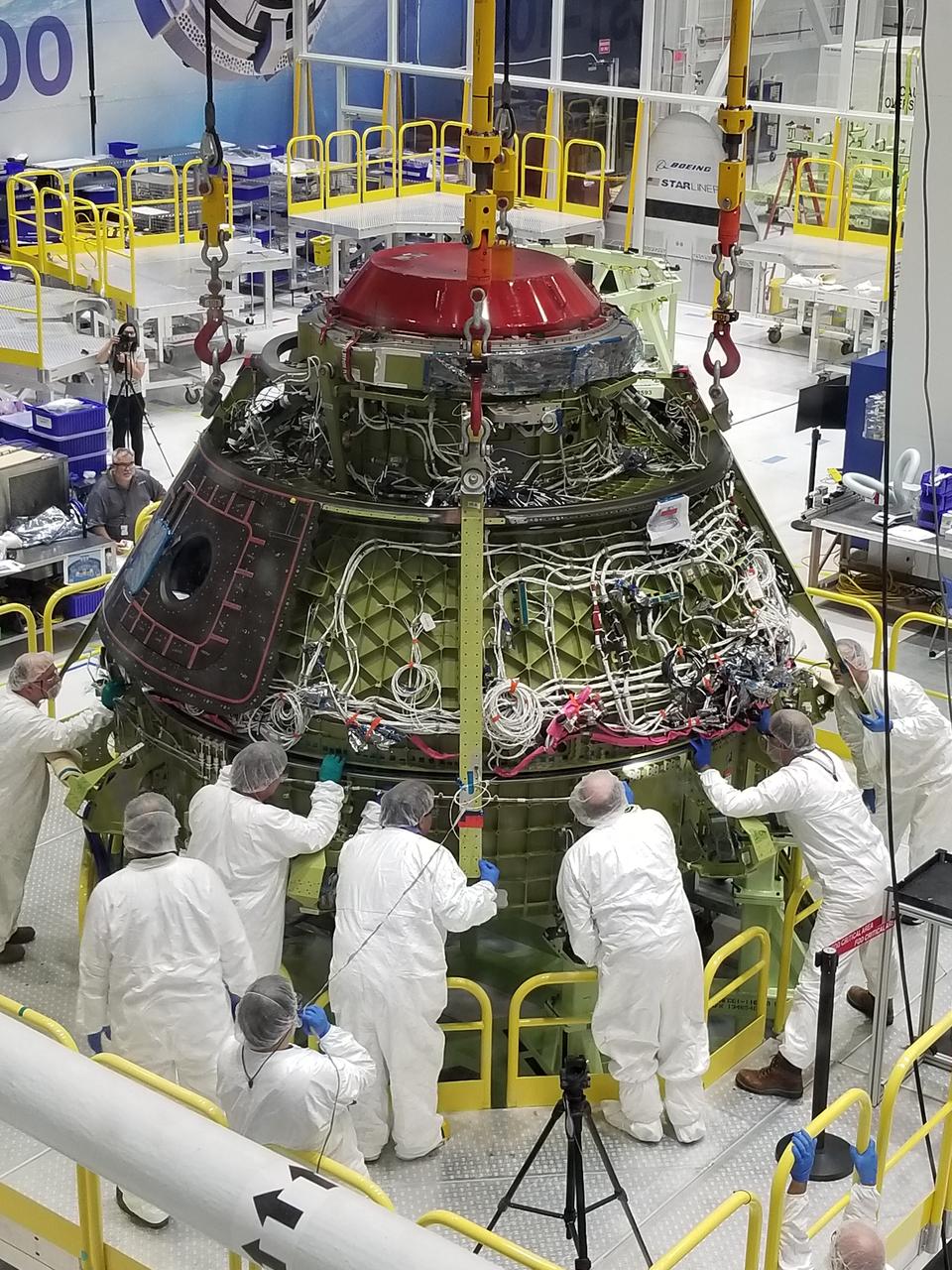
Boeing technicians meticulously lower its CST-100 Starliner’s upper dome to the lower dome before bolting and sealing the pressure vessel on March 11. This is the Starliner spacecraft slated to fly in the company’s Orbital Flight Test (OFT). The mate was completed at Boeing’s Commercial Crew and Cargo Processing Facility at NASA’s Kennedy Space Center in Florida. Starliner uses an innovative weldless design where the main structure is made of two domes, each spin-formed and machined from a solid piece of aerospace-grade aluminum. The two domes then undergo outfitting with avionics, cooling systems, wire harnesses, fuel and life support lines, and other critical systems before being mated together. This is one of the last major milestones ahead of final processing and closeouts for flight. OFT is Boeing’s uncrewed flight test of Starliner and part of NASA’s Commercial Crew Program, which will return human spaceflight launches into low-Earth orbit from U.S. soil.
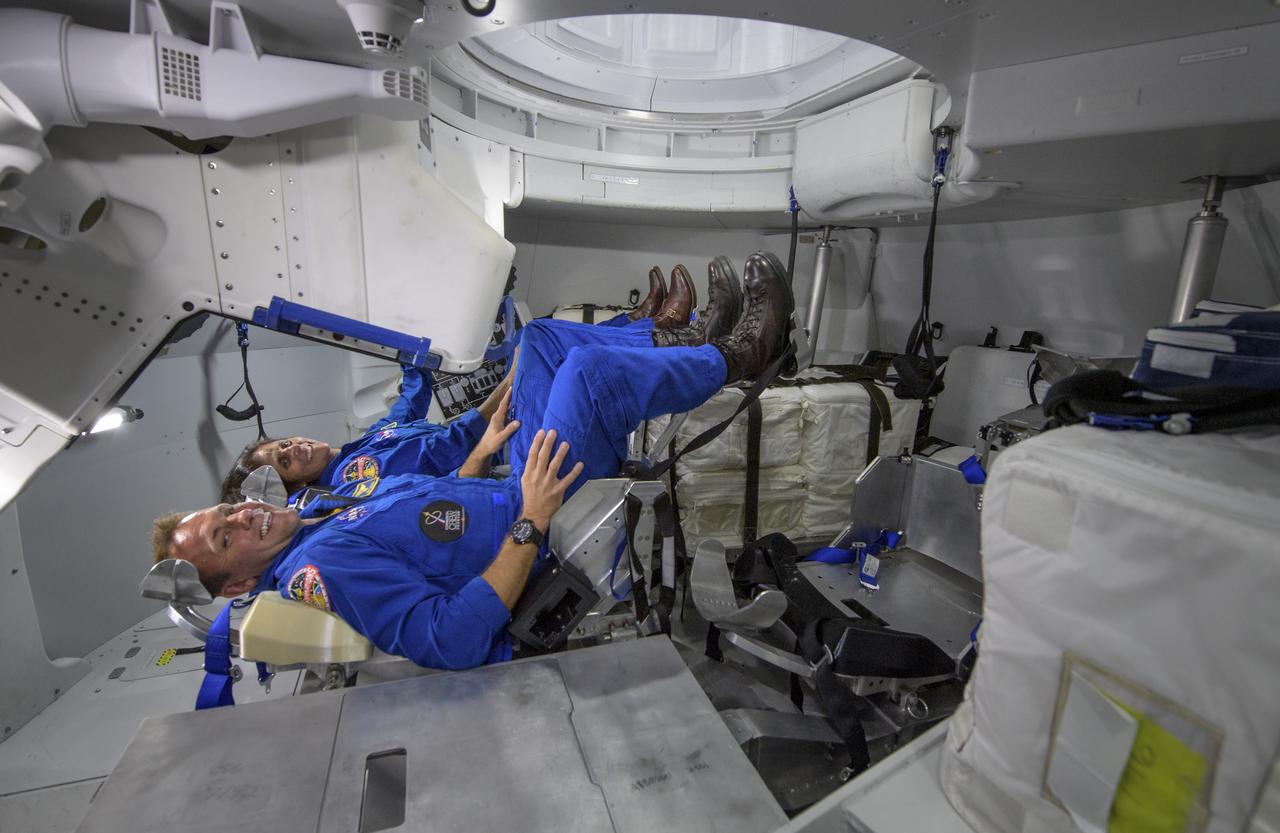
NASA astronauts Josh Cassada, foreground, and Suni Williams pose for a photograph inside of the Boeing Mockup Trainer at NASA’s Johnson Space Center in Houston, Texas on Aug. 2, 2018 ahead of the commercial crew flight assignments announcement Aug. 3. The pair was assigned to launch aboard Boeing’s CST-100 Starliner on the company’s first operational mission to the International Space Station in partnership with NASA’s Commercial Crew Program. Photo Credit: (NASA/Bill Ingalls)
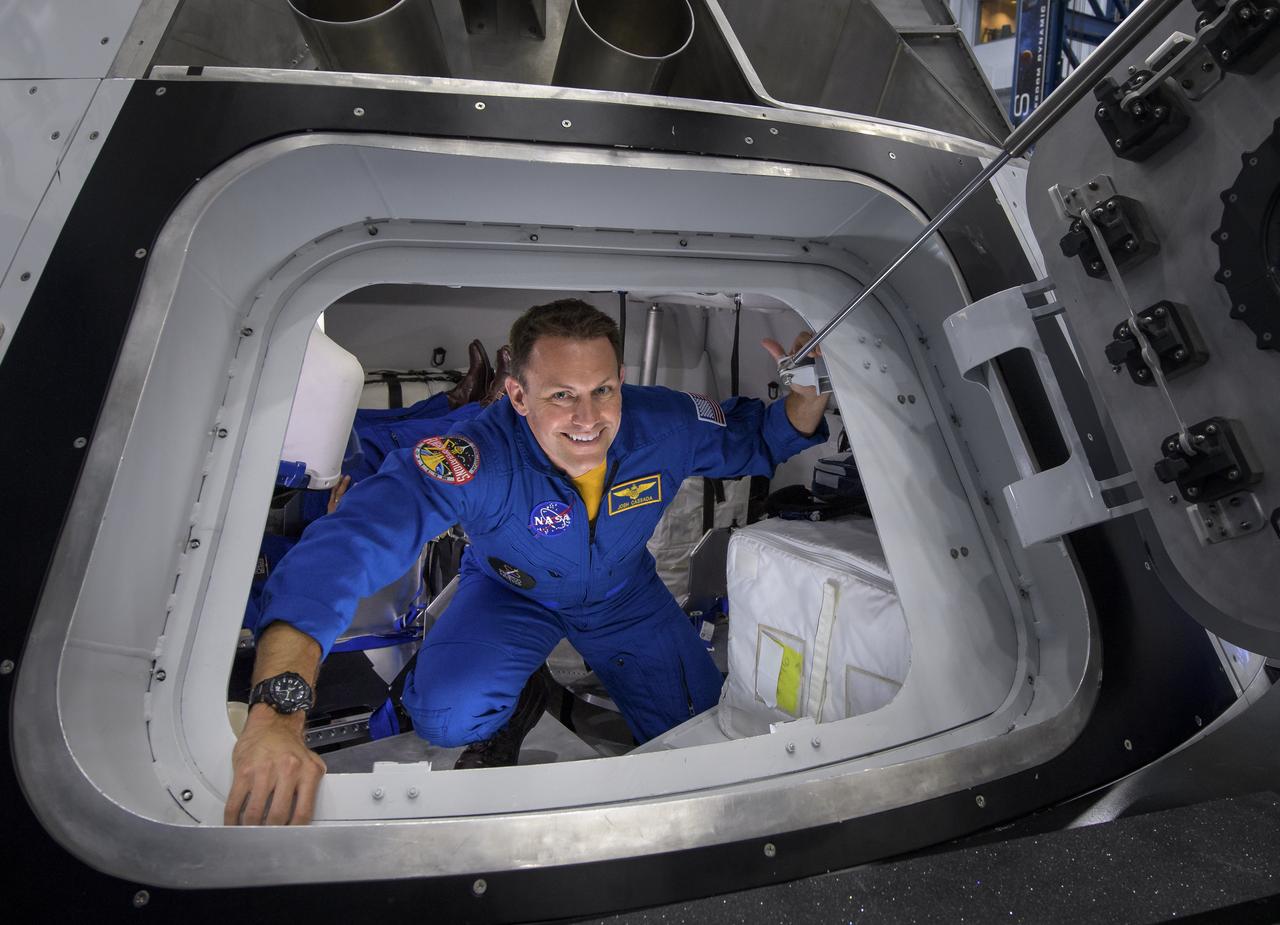
NASA astronaut Josh Cassada stops to pose for photograph as he exits the Boeing Mockup Trainer at NASA’s Johnson Space Center in Houston, Texas on Aug. 2, 2018 ahead of the commercial crew flight assignments announcement Aug. 3. Cassada, and NASA astronaut Suni Williams were assigned to launch aboard Boeing’s CST-100 Starliner on the company’s first operational mission to the International Space Station in partnership with NASA’s Commercial Crew Program. Photo Credit: (NASA/Bill Ingalls)
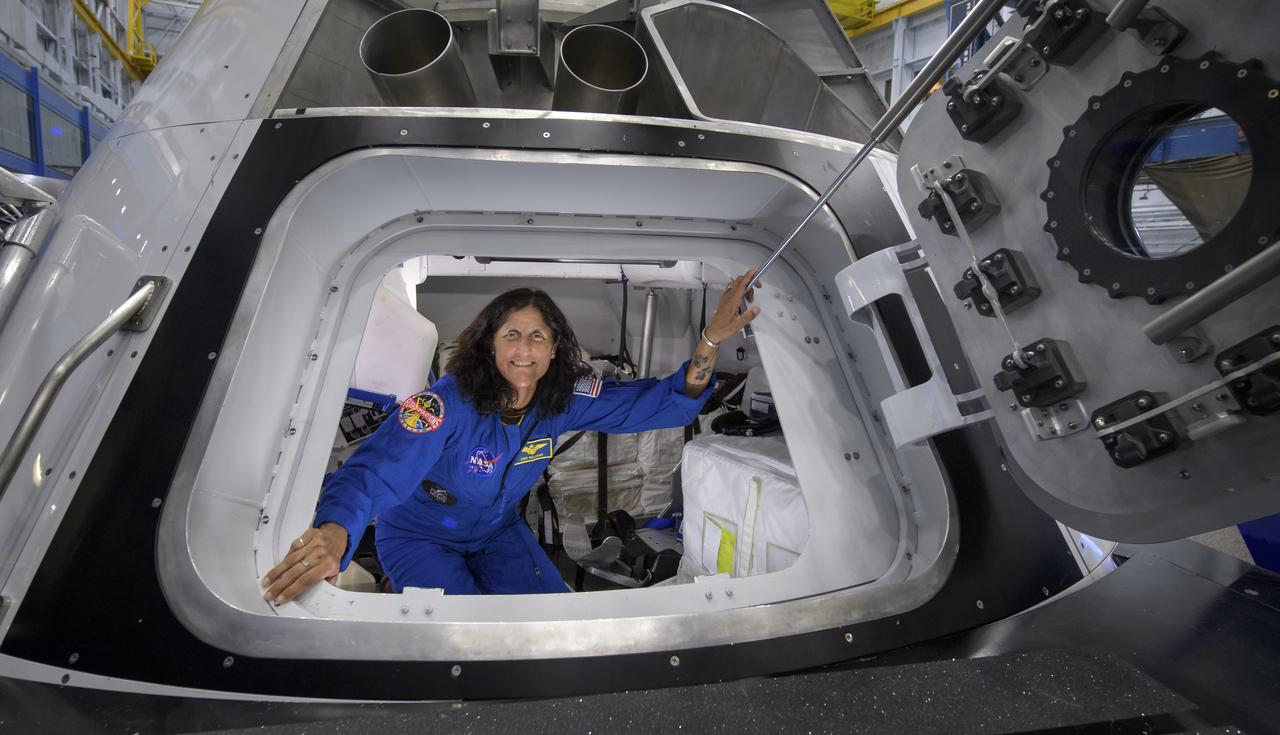
NASA astronaut Suni Williams stops to pose for photograph as she exits the Boeing Mockup Trainer at NASA’s Johnson Space Center in Houston, Texas on Aug. 2, 2018 ahead of the commercial crew flight assignments announcement Aug. 3. Williams and NASA astronaut Josh Cassada were assigned to launch aboard Boeing’s CST-100 Starliner on the company’s first operational mission to the International Space Station in partnership with NASA’s Commercial Crew Program. Photo Credit: (NASA/Bill Ingalls)
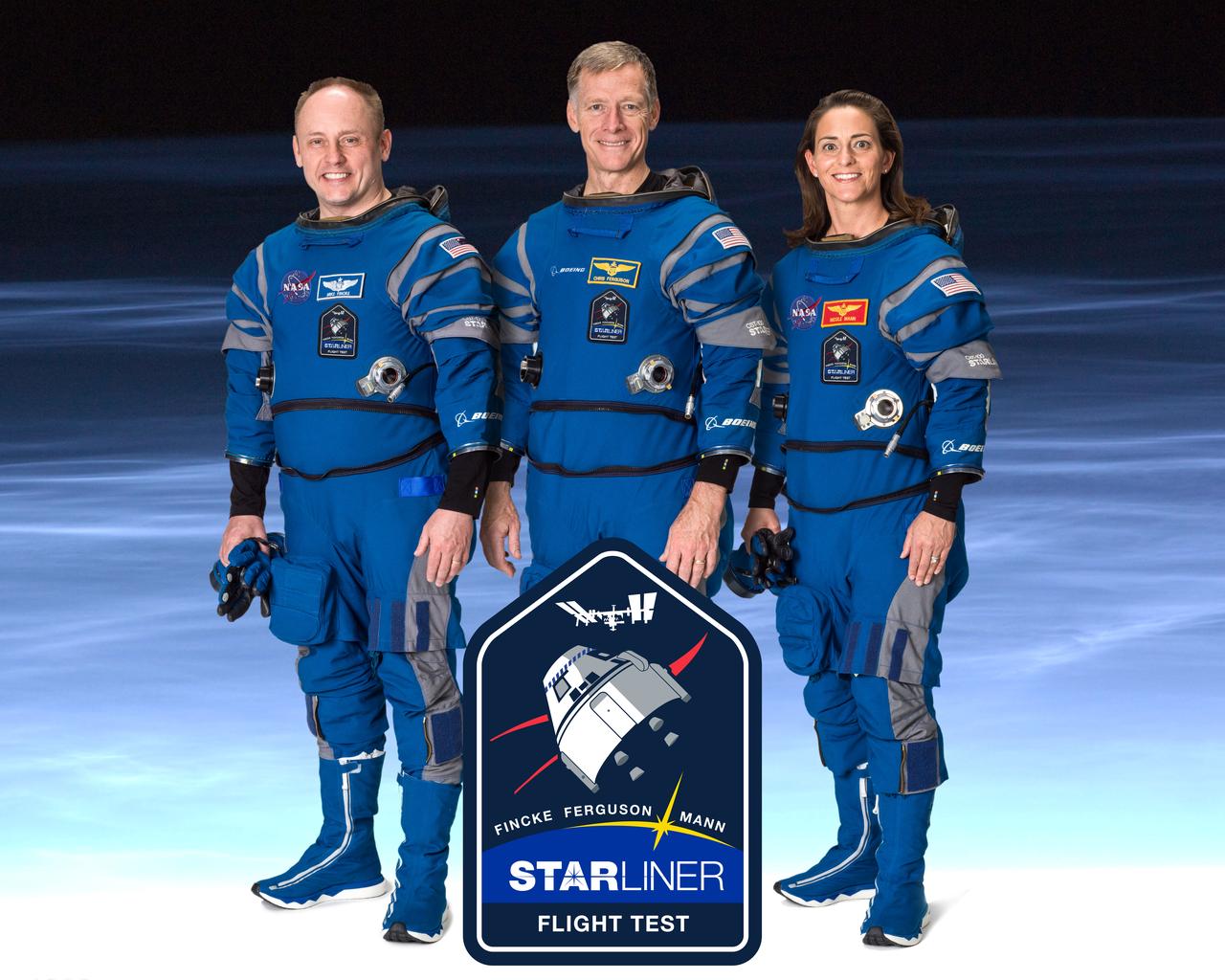
From left to right, NASA astronaut Mike Fincke, Boeing astronaut Chris Ferguson, and NASA astronaut Nicole Mann pose for the official crew portrait for Boeing’s Crew Flight Test to the International Space Station, part of NASA’s Commercial Crew Program.
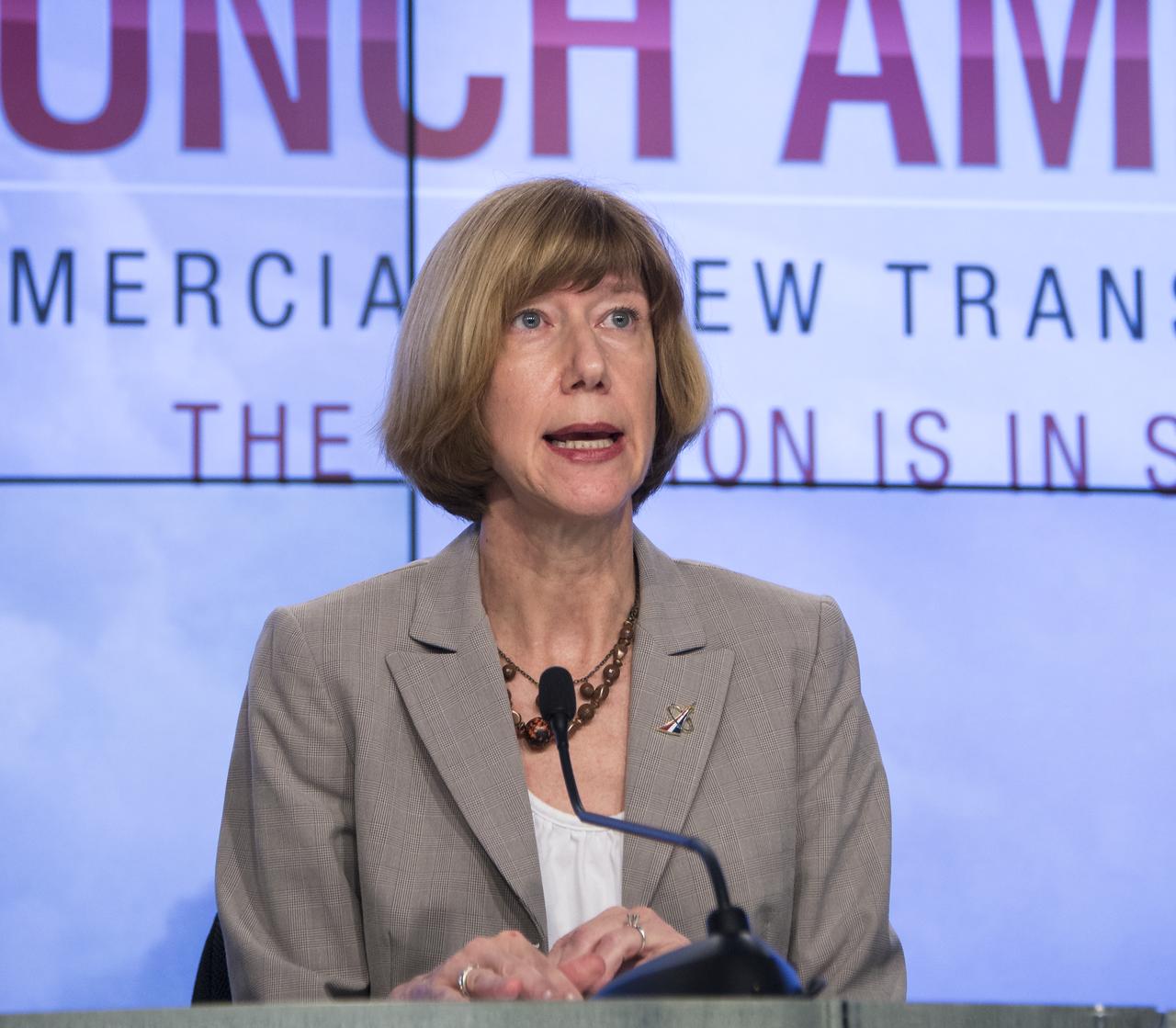
Kathy Lueders, program manager of NASA's Commercial Crew Program, speaks during a news conference where it was announced that Boeing and SpaceX have been selected to transport U.S. crews to and from the International Space Station using the Boeing CST-100 and the SpaceX Crew Dragon spacecraft, at NASA’s Kennedy Space Center in Cape Canaveral, Fla. on Tuesday, Sept. 16, 2014. These Commercial Crew Transportation Capability (CCtCap) contracts are designed to complete the NASA certification for a human space transportation system capable of carrying people into orbit. Once certification is complete, NASA plans to use these systems to transport astronauts to the space station and return them safely to Earth. Photo Credit: (NASA/Bill Ingalls)
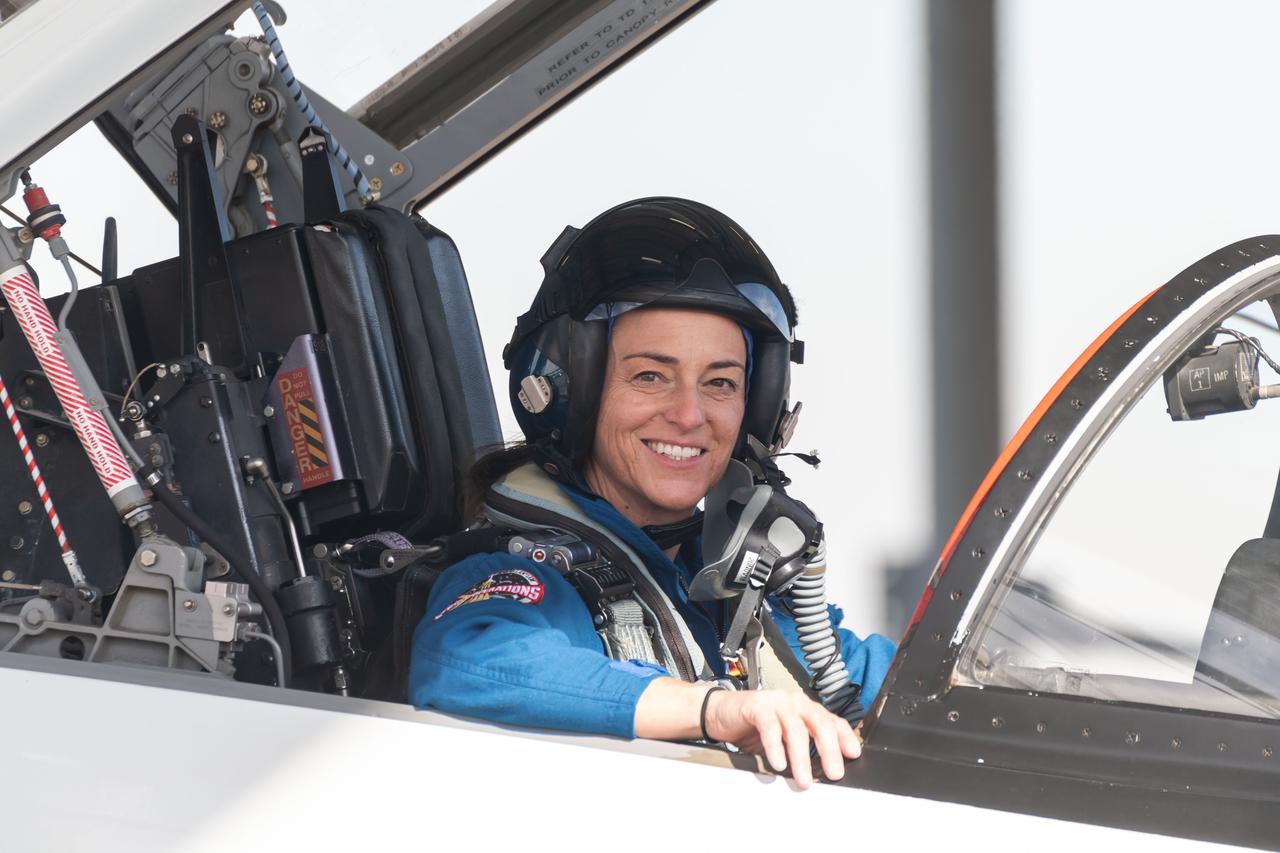
Nicole Mann sits in a T-38 in preparation for Commercial Crew Program astronaut training at NASA's Johnson Space Center.
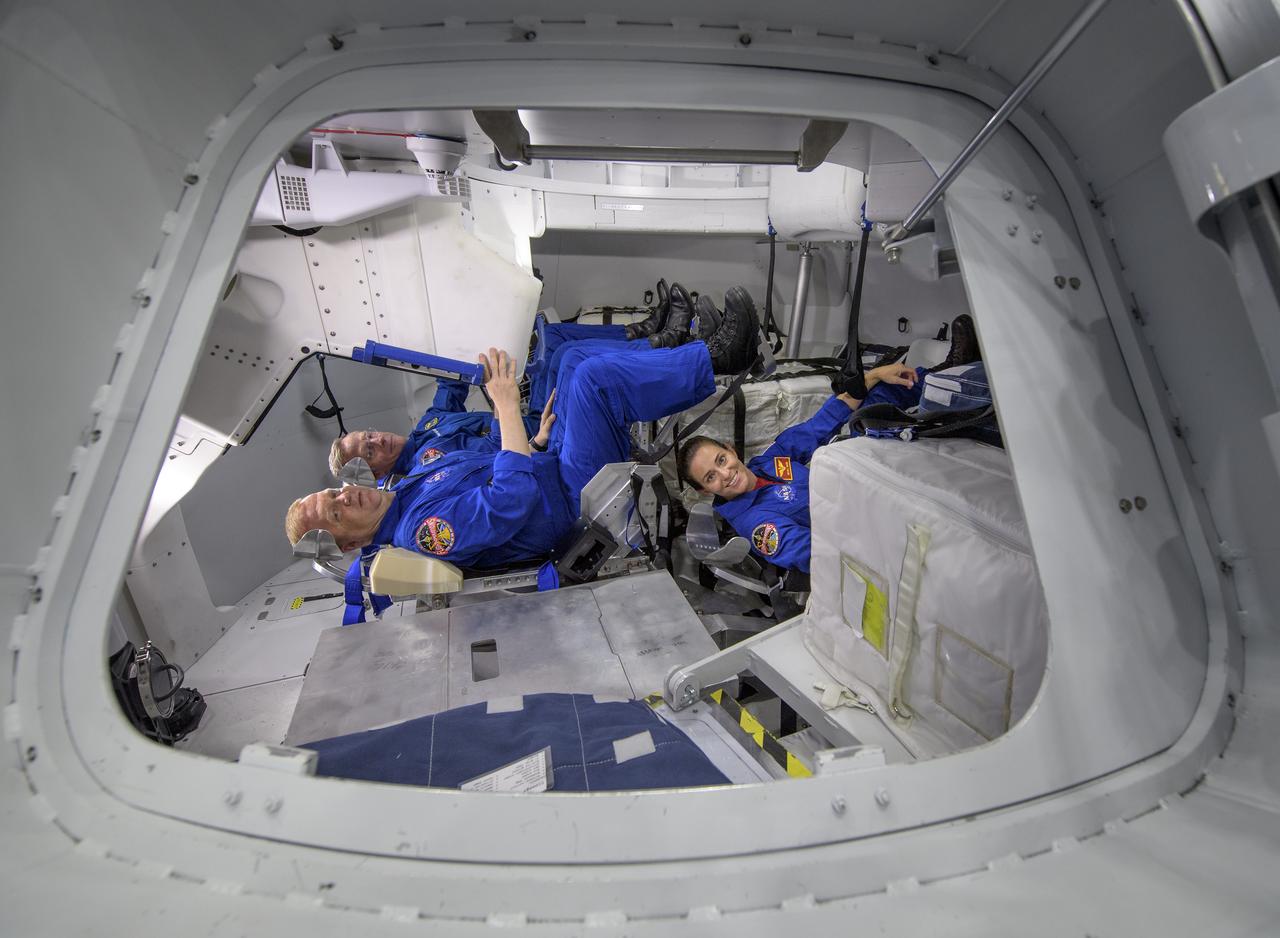
NASA astronauts Eric Boe, foreground left, and Nicole Mann, foreground right, along with Boeing astronaut Chris Ferguson, background, pose for a photograph inside the Boeing Mockup Trainer at NASA’s Johnson Space Center in Houston, Texas on Aug. 2, 2018 ahead of the commercial crew flight assignments announcement Aug. 3. The three were assigned to launch aboard Boeing’s CST-100 Starliner on the company’s Crew Flight Test targeted for mid-2019 in partnership with NASA’s Commercial Crew Program. Photo Credit: (NASA/Bill Ingalls)
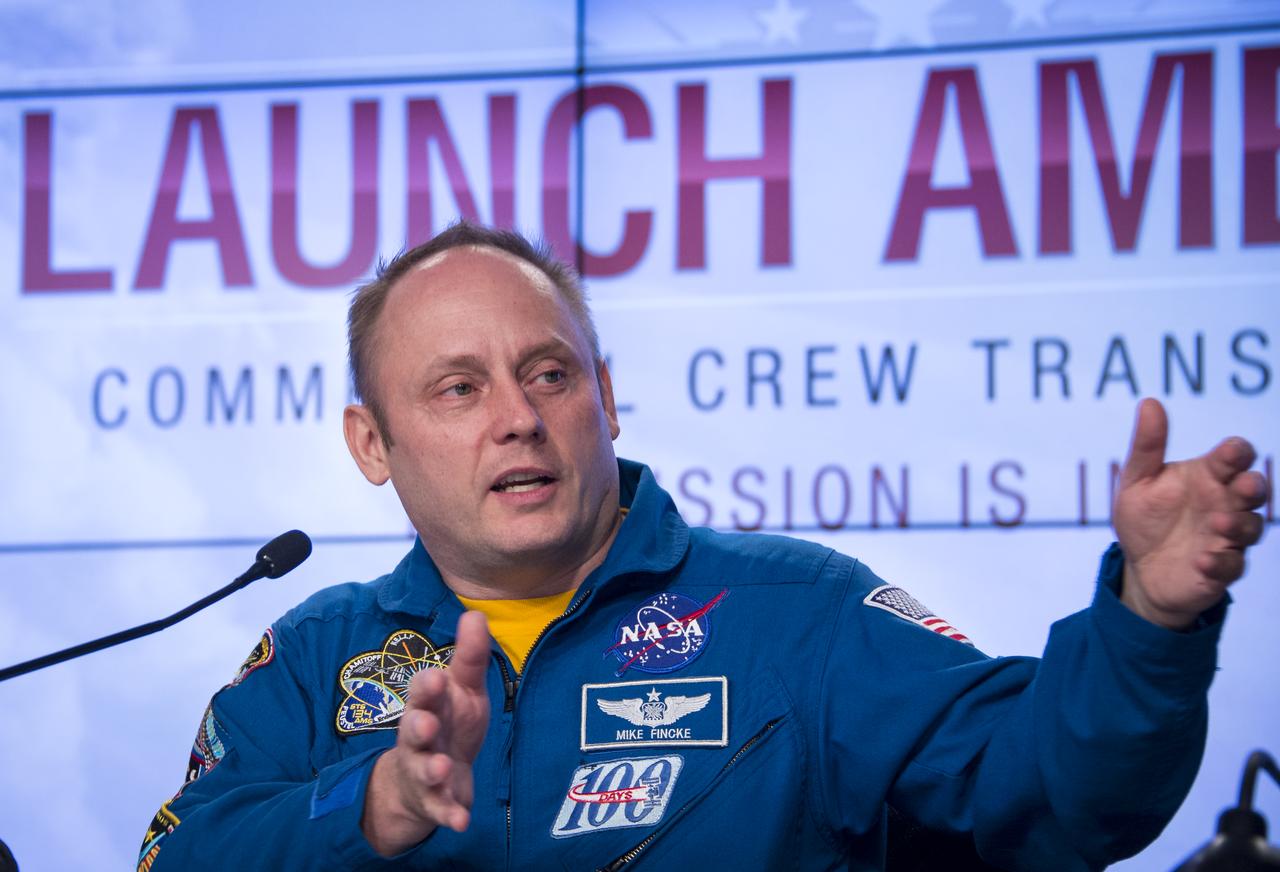
Astronaut Mike Fincke, a former commander of the International Space Station, speaks during a news conference where it was announced that Boeing and SpaceX have been selected to transport U.S. crews to and from the International Space Station using the Boeing CST-100 and the SpaceX Crew Dragon spacecraft, at NASA’s Kennedy Space Center in Cape Canaveral, Fla. on Tuesday, Sept. 16, 2014. These Commercial Crew Transportation Capability (CCtCap) contracts are designed to complete the NASA certification for a human space transportation system capable of carrying people into orbit. Once certification is complete, NASA plans to use these systems to transport astronauts to the space station and return them safely to Earth. Photo Credit: (NASA/Bill Ingalls)
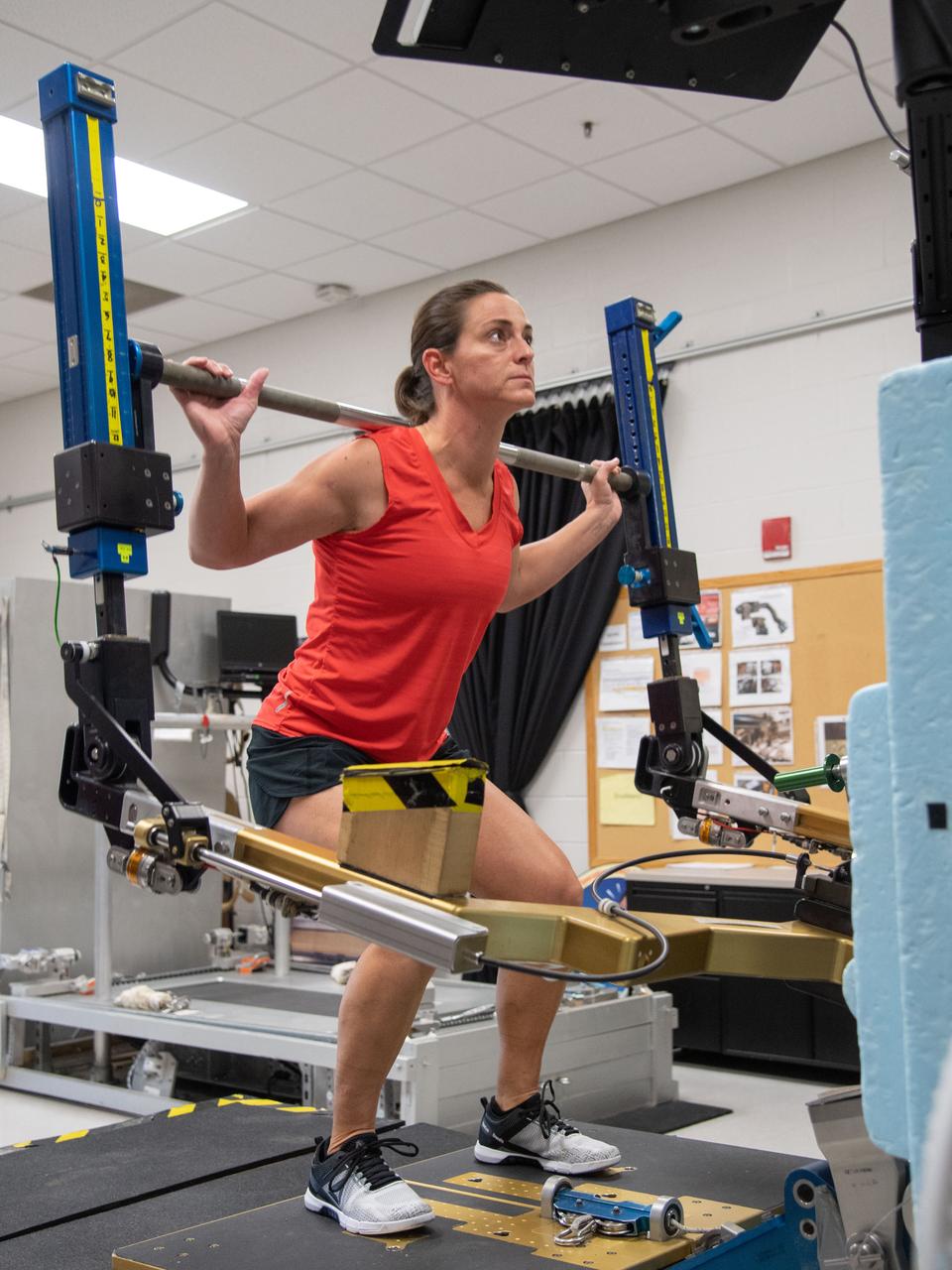
Commercial Crew Program astronaut and Boeing Crew Flight Test crew member Nicole Mann in ARED PT #1 training.
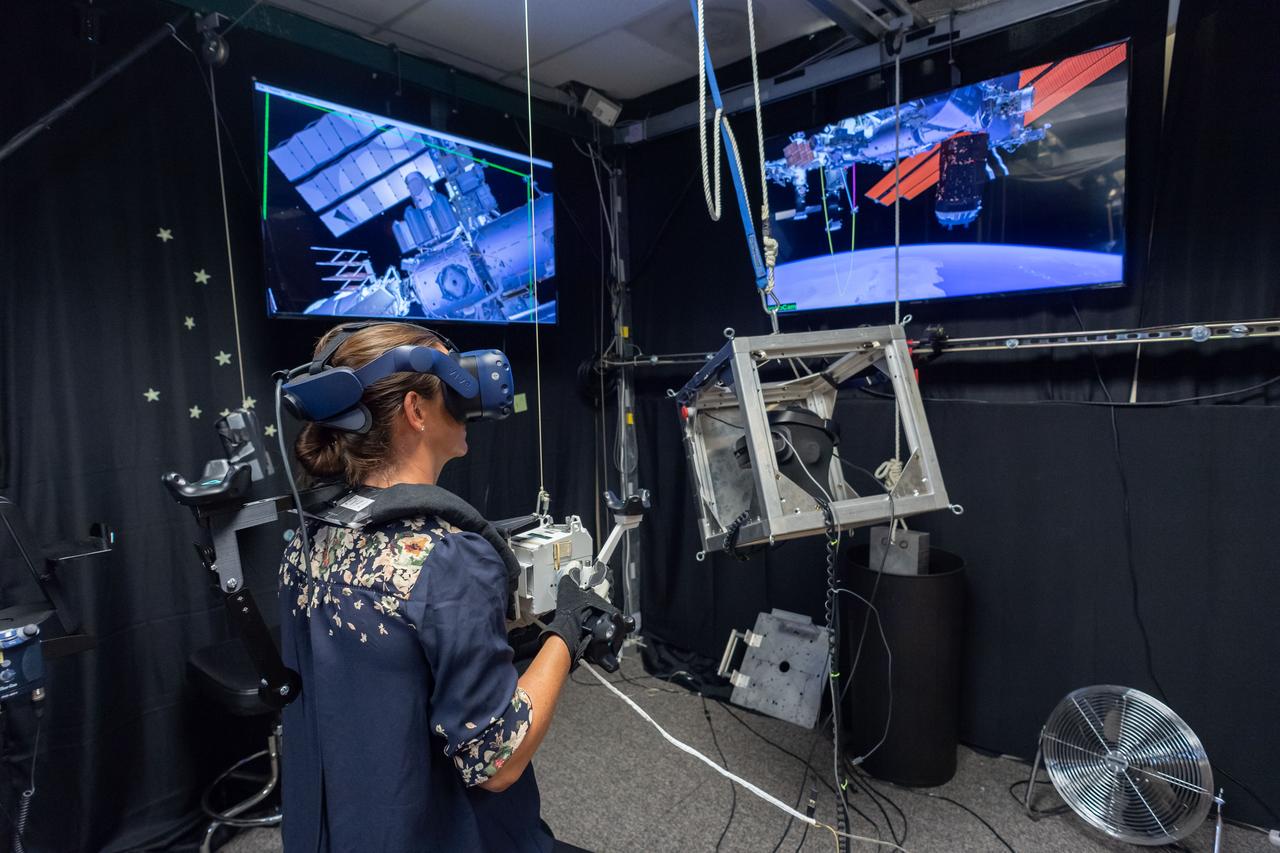
Commercial Crew Program astronaut and Boeing Crew Flight Test crew member Nicole Mann in SAFER Skills training in VR Lab.
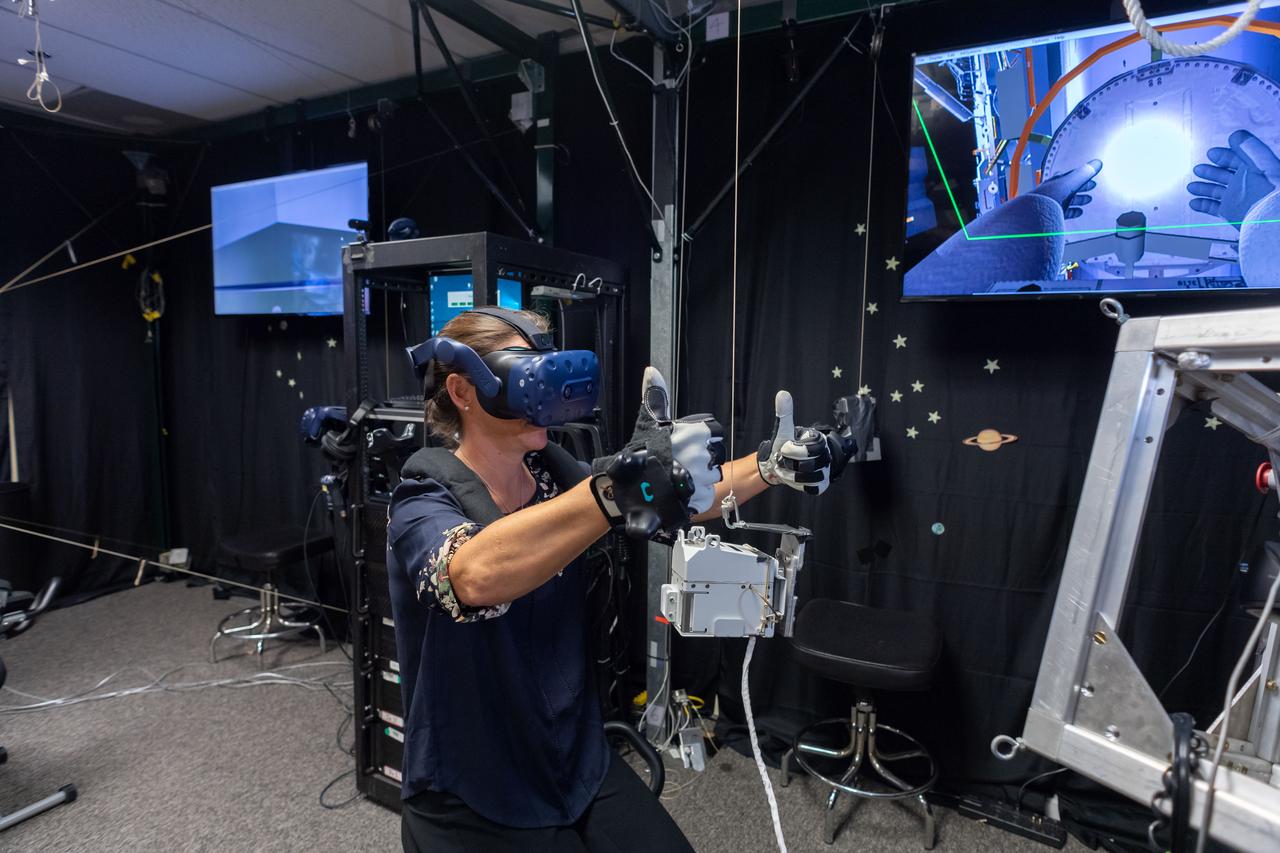
Commercial Crew Program astronaut and Boeing Crew Flight Test crew member Nicole Mann in SAFER Skills training in VR Lab.
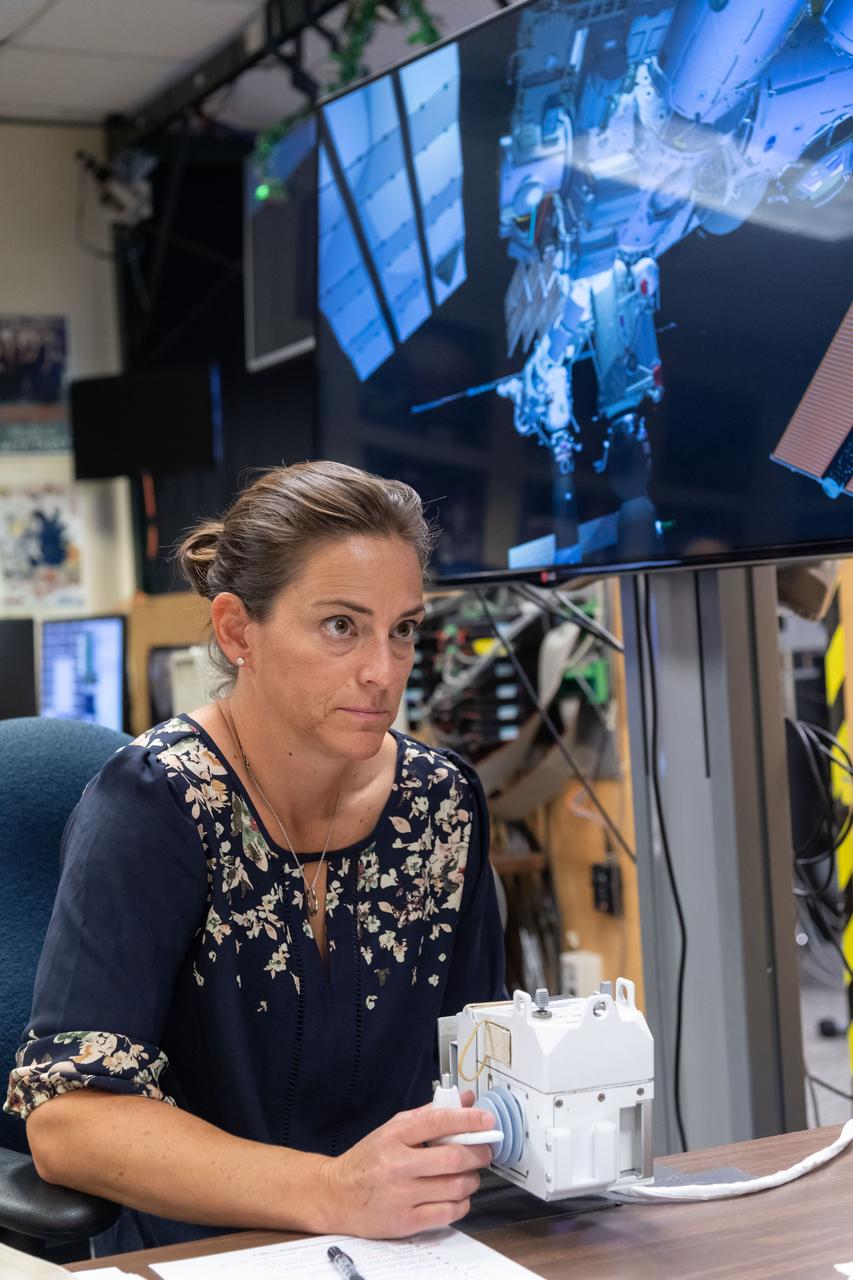
Commercial Crew Program astronaut and Boeing Crew Flight Test crew member Nicole Mann in SAFER Skills training in VR Lab.
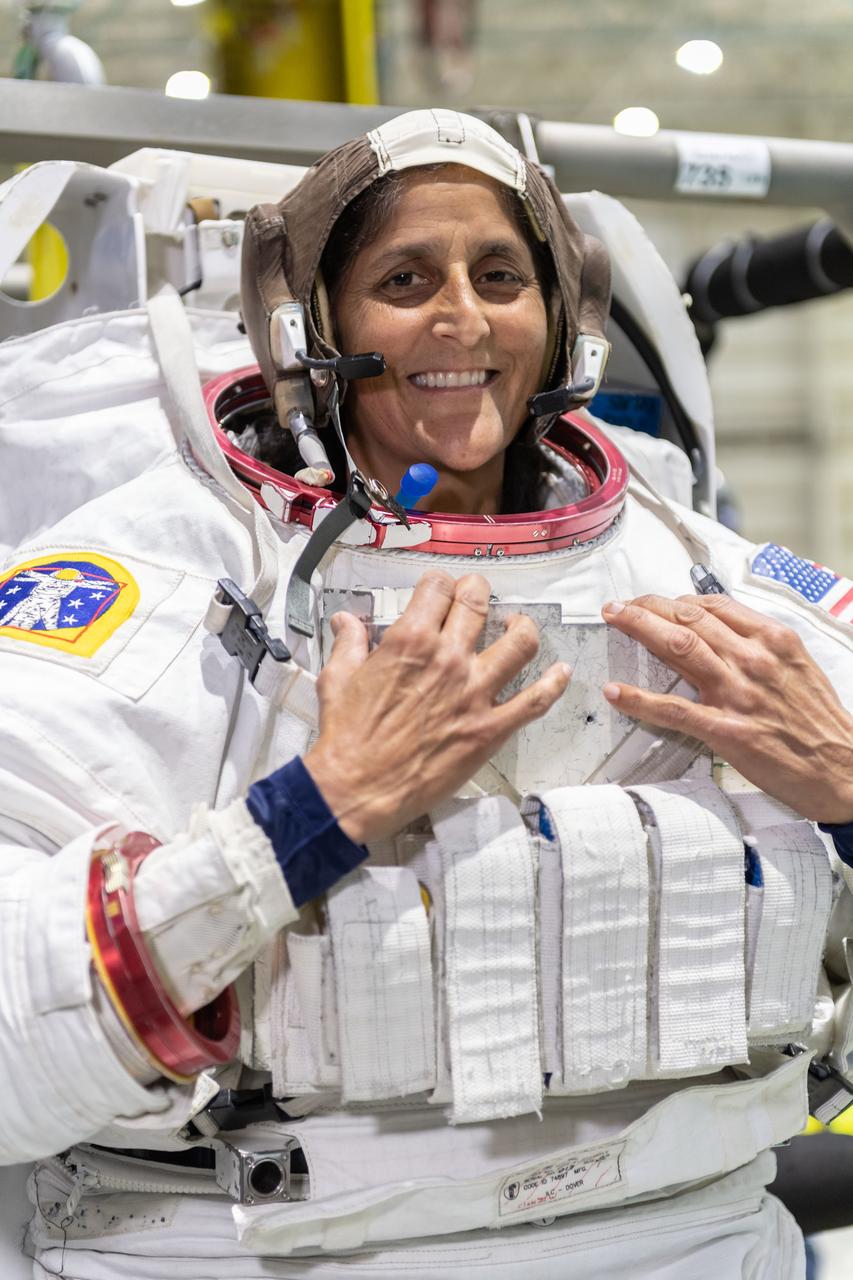
Commercial Crew Program astronaut training with Boeing PCM crew members Suni Williams & Josh Cassada during ISS EVA Maintenance 1 training at the NBL.

Commercial Crew Program astronaut training with Boeing PCM crew members Suni Williams & Josh Cassada during ISS EVA Maintenance 1 training at the NBL.

Commercial Crew Program astronaut training with Boeing PCM crew members Suni Williams & Josh Cassada during ISS EVA Maintenance 1 training at the NBL.
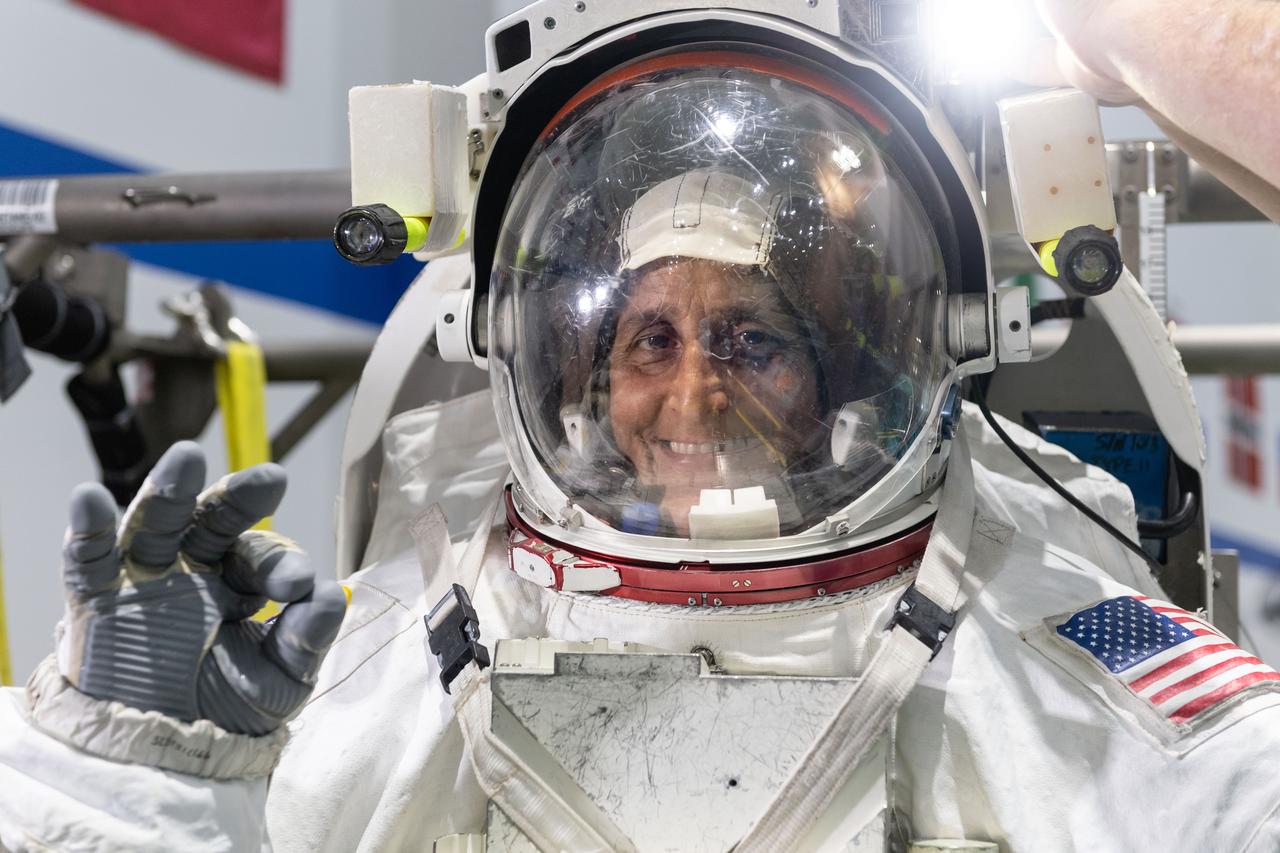
Commercial Crew Program astronaut training with Boeing PCM crew members Suni Williams & Josh Cassada during ISS EVA Maintenance 1 training at the NBL.

Commercial Crew Program astronaut training with Boeing PCM crew members Suni Williams & Josh Cassada during ISS EVA Maintenance 1 training at the NBL.

Commercial Crew Program astronaut training with Boeing PCM crew members Suni Williams & Josh Cassada during ISS EVA Maintenance 1 training at the NBL.
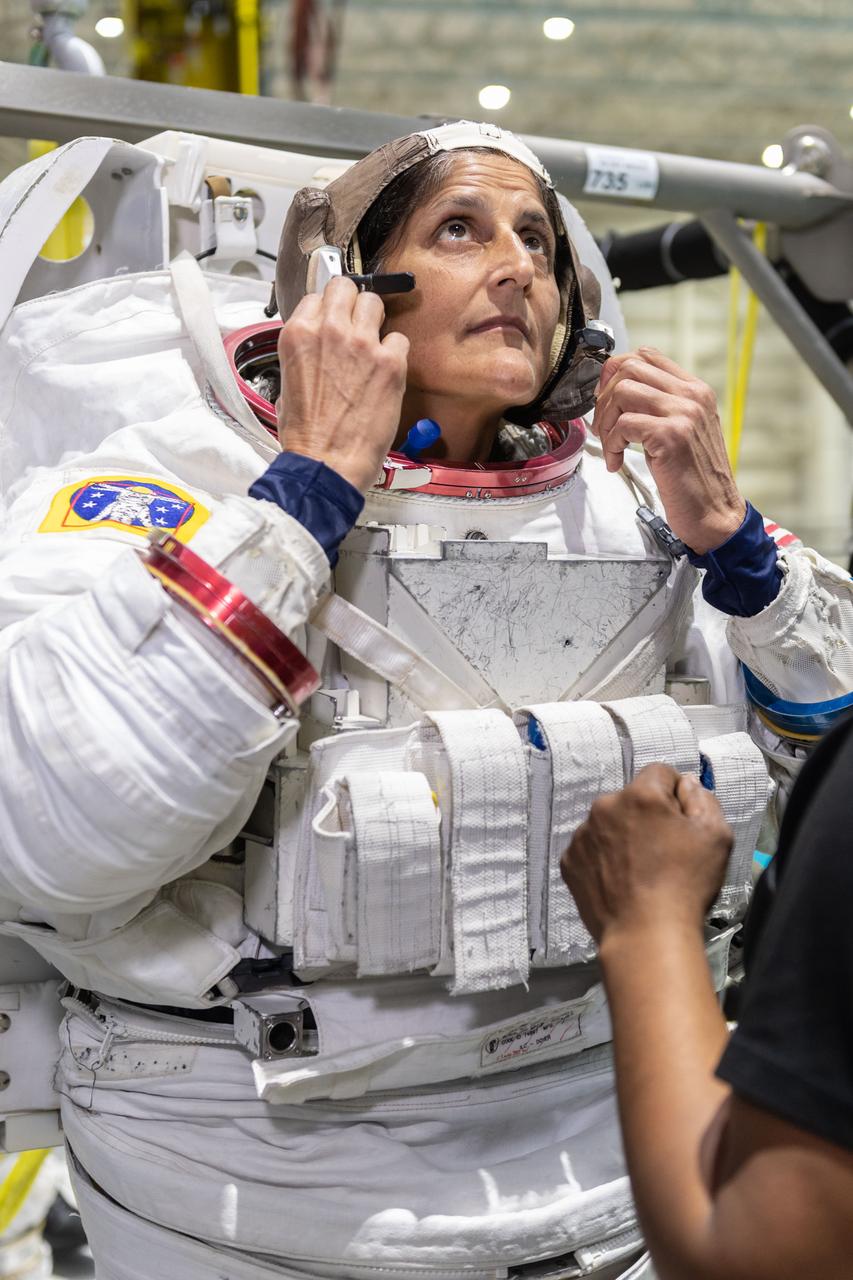
Commercial Crew Program astronaut training with Boeing PCM crew members Suni Williams & Josh Cassada during ISS EVA Maintenance 1 training at the NBL.
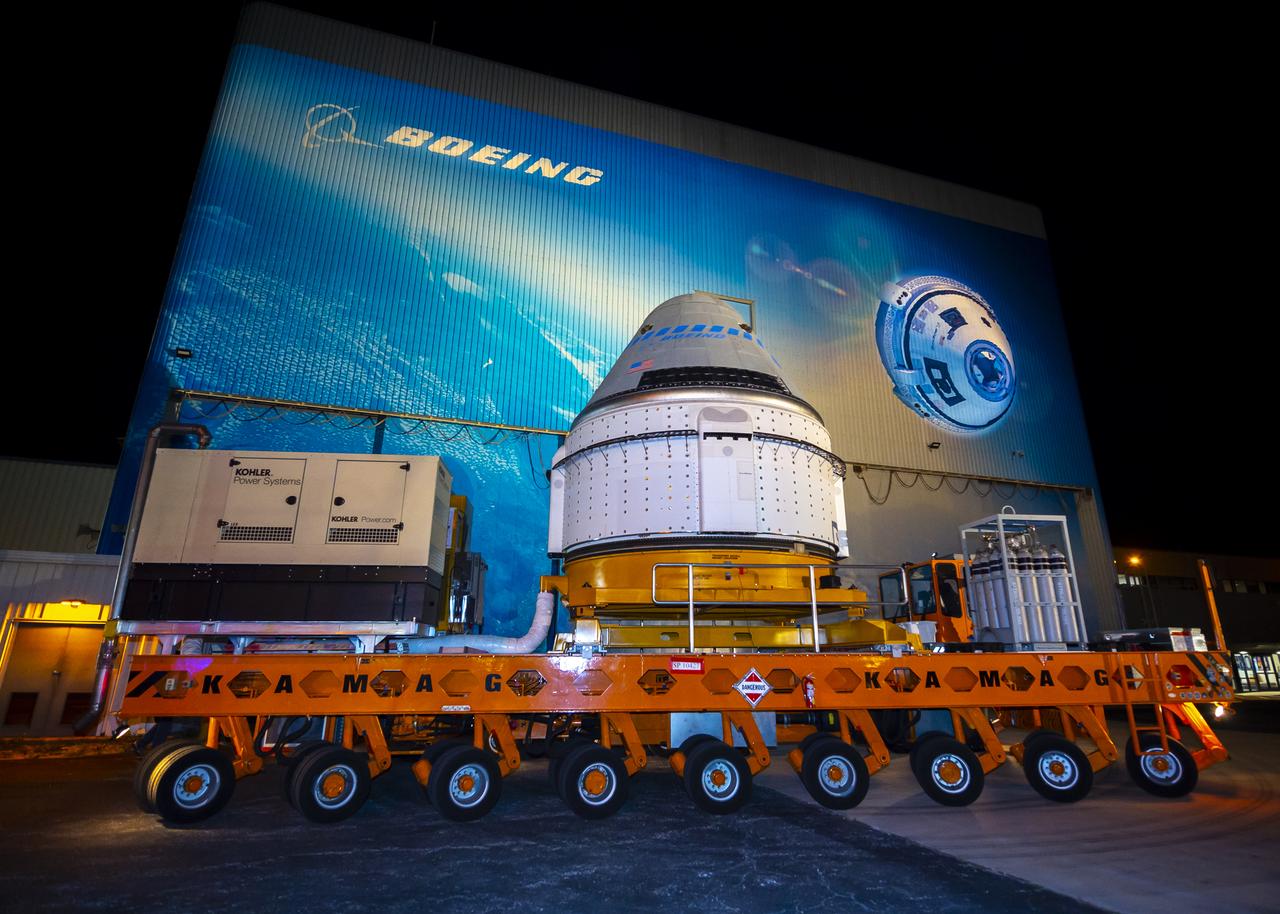
The Boeing CST-100 Starliner spacecraft rolls out from the company’s Commercial Crew and Cargo Processing Facility at NASA’s Kennedy Space Center in Florida on Nov. 21, 2019. The spacecraft will make the trip to Space Launch Complex 41 at Cape Canaveral Air Force Station where it will be secured atop a United Launch Alliance Atlas V rocket for Boeing’s Orbital Flight Test to the International Space Station for NASA’s Commercial Crew Program.
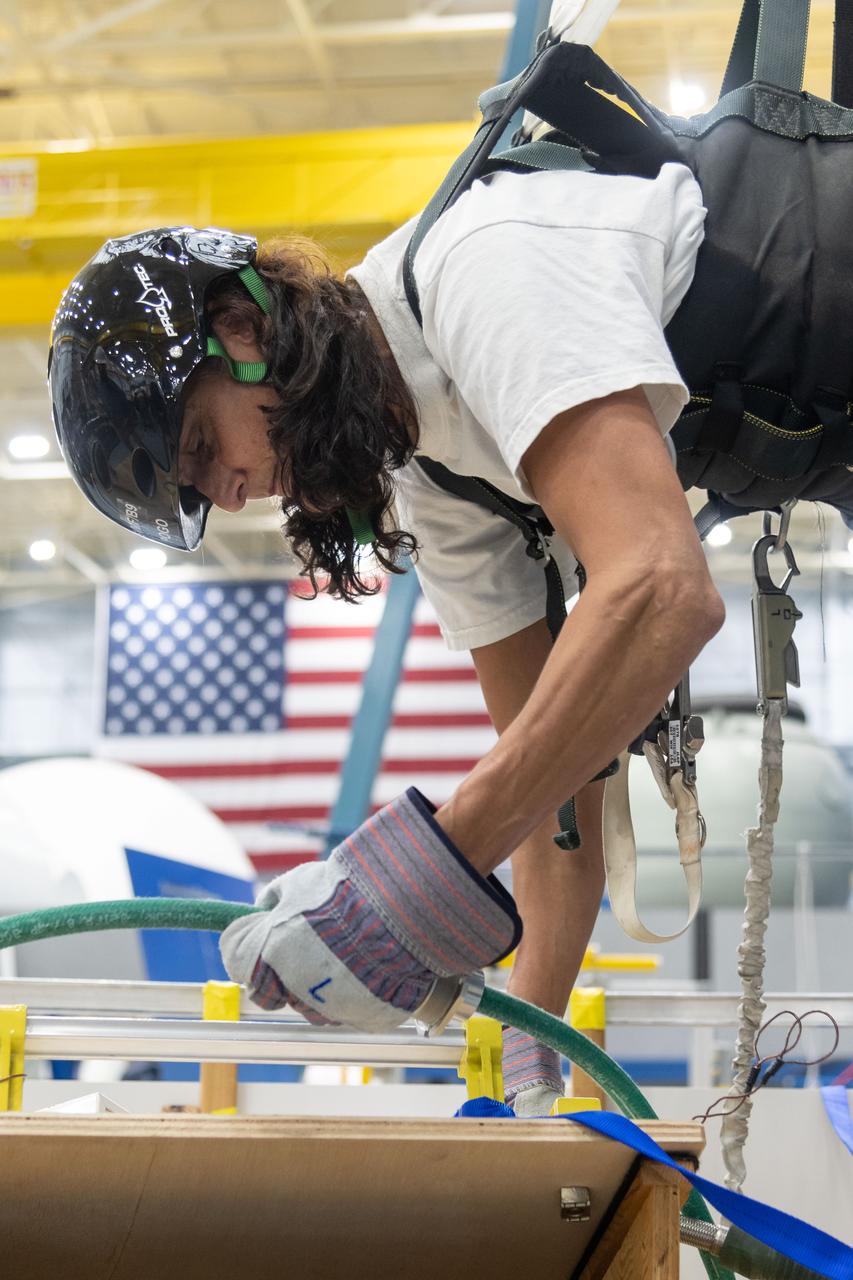
Commercial Crew Program (CCP) astronaut Suni Williams in ISS EVA POGO training in SVMF POGO.

Commercial Crew Program (CCP) astronaut Suni Williams in ISS EVA POGO training in SVMF POGO.
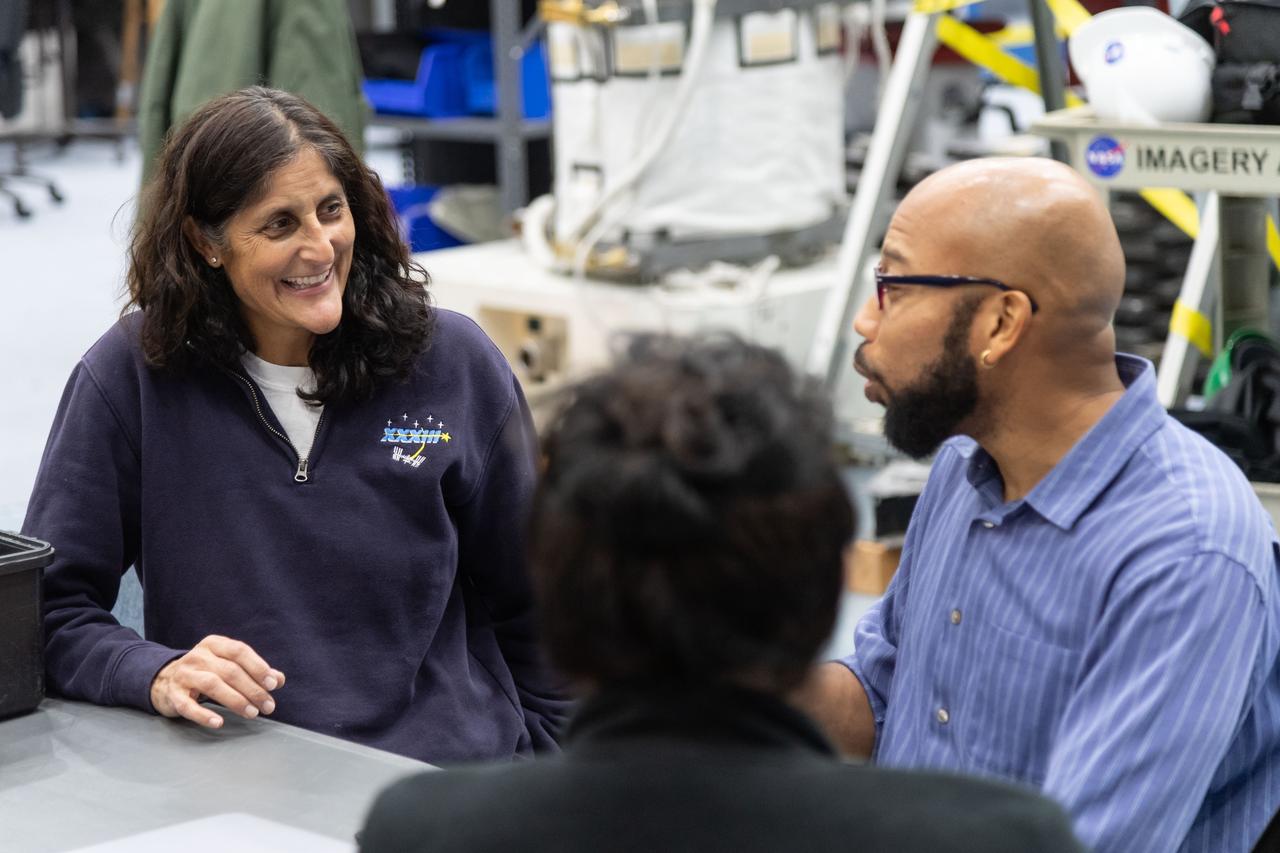
Commercial Crew Program (CCP) astronaut Suni Williams in ISS EVA POGO training in SVMF POGO.
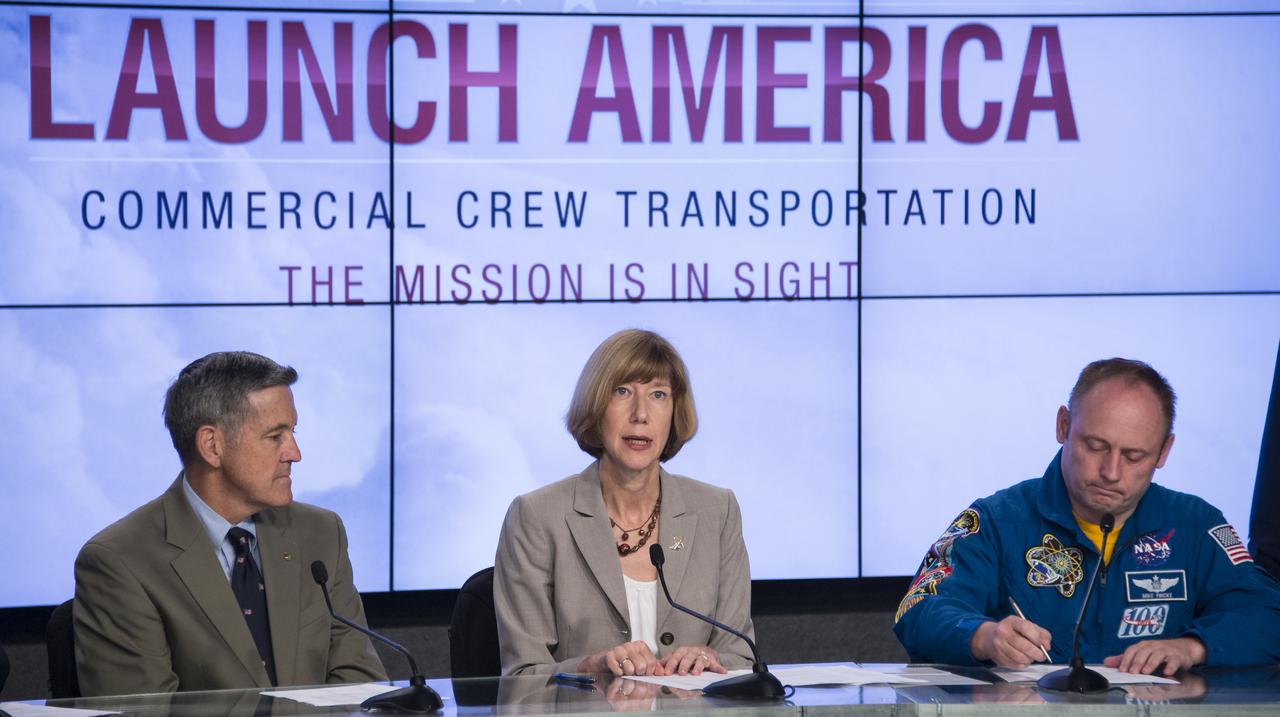
Kathy Lueders, program manager of NASA's Commercial Crew Program, speaks, as Former astronaut Bob Cabana, director of NASA's Kennedy Space Center in Florida, left, and Astronaut Mike Fincke, a former commander of the International Space Station look on during a news conference where it was announced that Boeing and SpaceX have been selected to transport U.S. crews to and from the International Space Station using the Boeing CST-100 and the SpaceX Crew Dragon spacecraft, at NASA’s Kennedy Space Center in Cape Canaveral, Fla. on Tuesday, Sept. 16, 2014. These Commercial Crew Transportation Capability (CCtCap) contracts are designed to complete the NASA certification for a human space transportation system capable of carrying people into orbit. Once certification is complete, NASA plans to use these systems to transport astronauts to the space station and return them safely to Earth. Photo Credit: (NASA/Bill Ingalls)
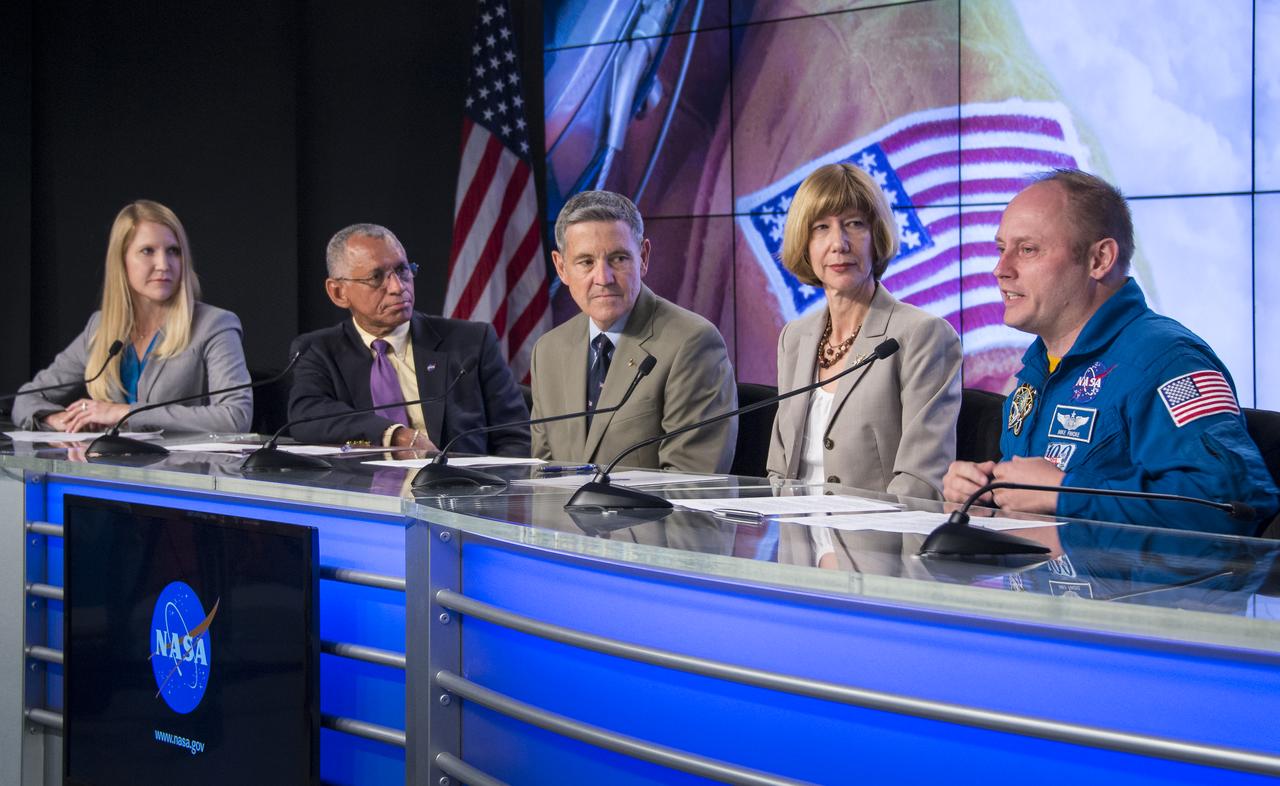
From left, NASA Public Affairs Officer Stephanie Schierholz, NASA Administrator Charles Bolden, Former astronaut Bob Cabana, director of NASA's Kennedy Space Center in Florida, Kathy Lueders, program manager of NASA's Commercial Crew Program, and Astronaut Mike Fincke, a former commander of the International Space Station, are seen during a news conference where it was announced that Boeing and SpaceX have been selected to transport U.S. crews to and from the International Space Station using the Boeing CST-100 and the SpaceX Crew Dragon spacecraft, at NASA’s Kennedy Space Center in Cape Canaveral, Fla. on Tuesday, Sept. 16, 2014. These Commercial Crew Transportation Capability (CCtCap) contracts are designed to complete the NASA certification for a human space transportation system capable of carrying people into orbit. Once certification is complete, NASA plans to use these systems to transport astronauts to the space station and return them safely to Earth. Photo Credit: (NASA/Bill Ingalls)
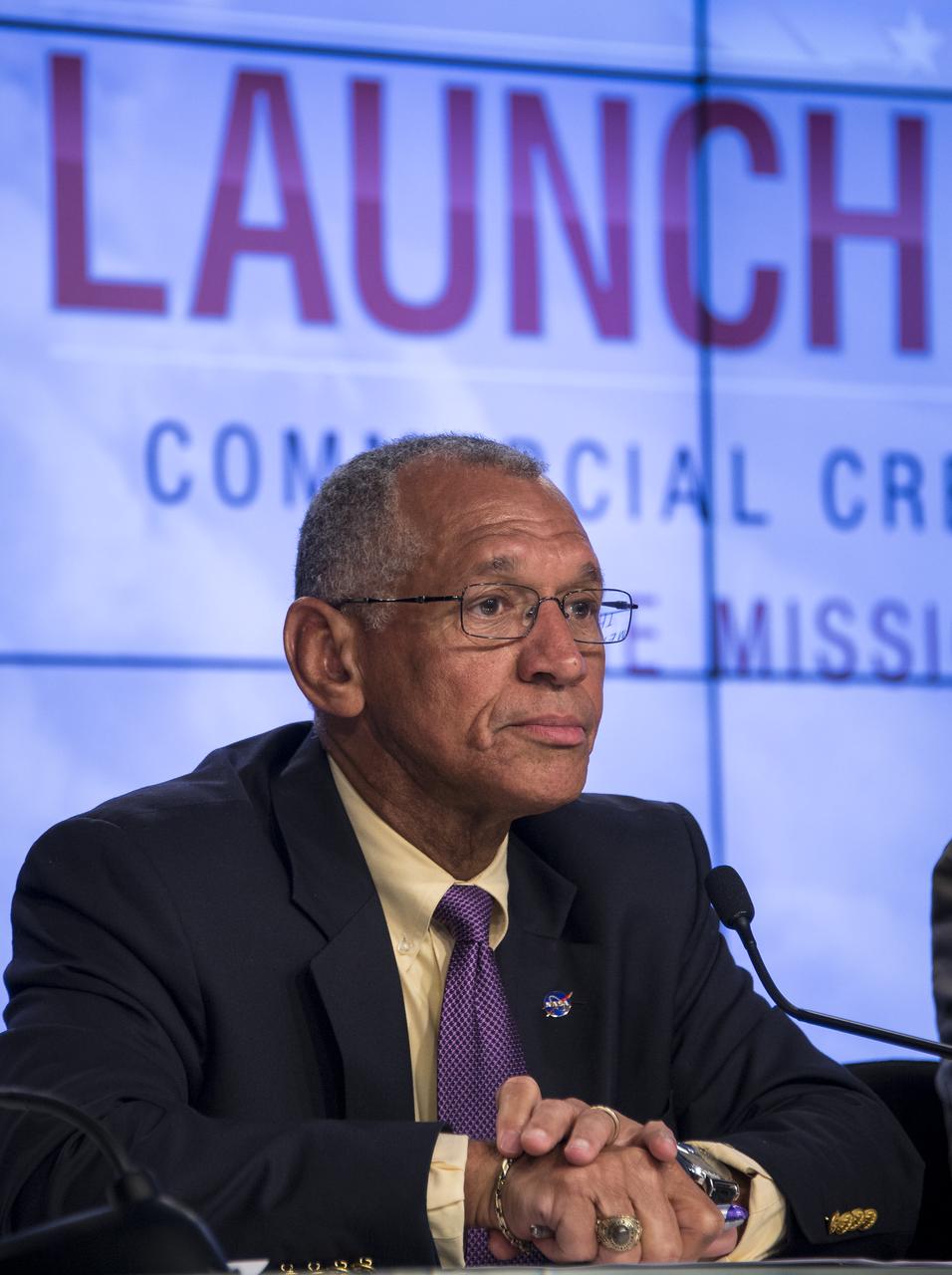
NASA Administrator Charles Bolden listens to a reporter’s question after he announced the agency’s selection of Boeing and SpaceX to transport U.S. crews to and from the International Space Station using the Boeing CST-100 and the SpaceX Crew Dragon spacecraft, at NASA’s Kennedy Space Center in Cape Canaveral, Fla. on Tuesday, Sept. 16, 2014. These Commercial Crew Transportation Capability (CCtCap) contracts are designed to complete the NASA certification for a human space transportation system capable of carrying people into orbit. Once certification is complete, NASA plans to use these systems to transport astronauts to the space station and return them safely to Earth. Photo Credit: (NASA/Bill Ingalls)
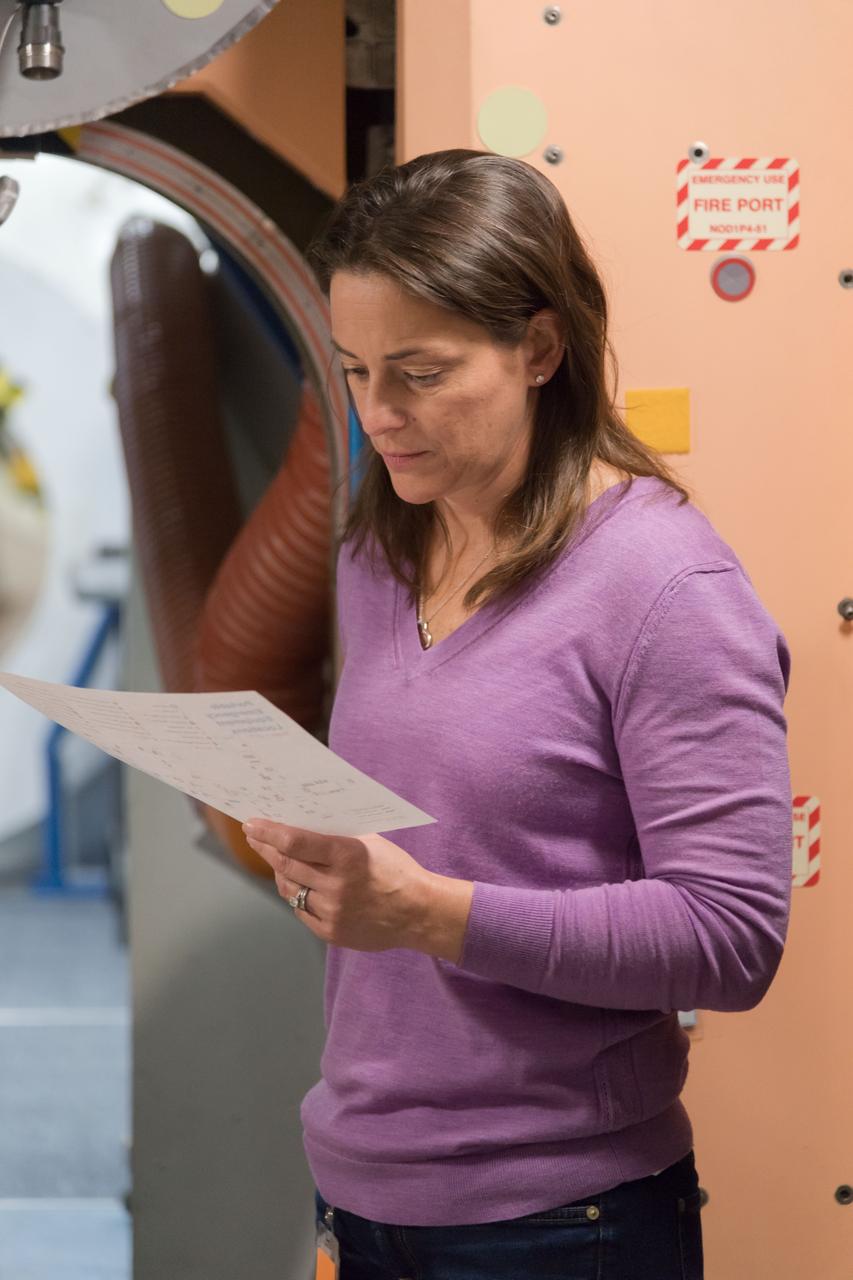
Boeing Commercial Crew Flight Test (CFT) Emergency Vehicle Familiarization training with Chris Ferguson, Nicole Mann, Barry Wilmore and Mike Fincke.
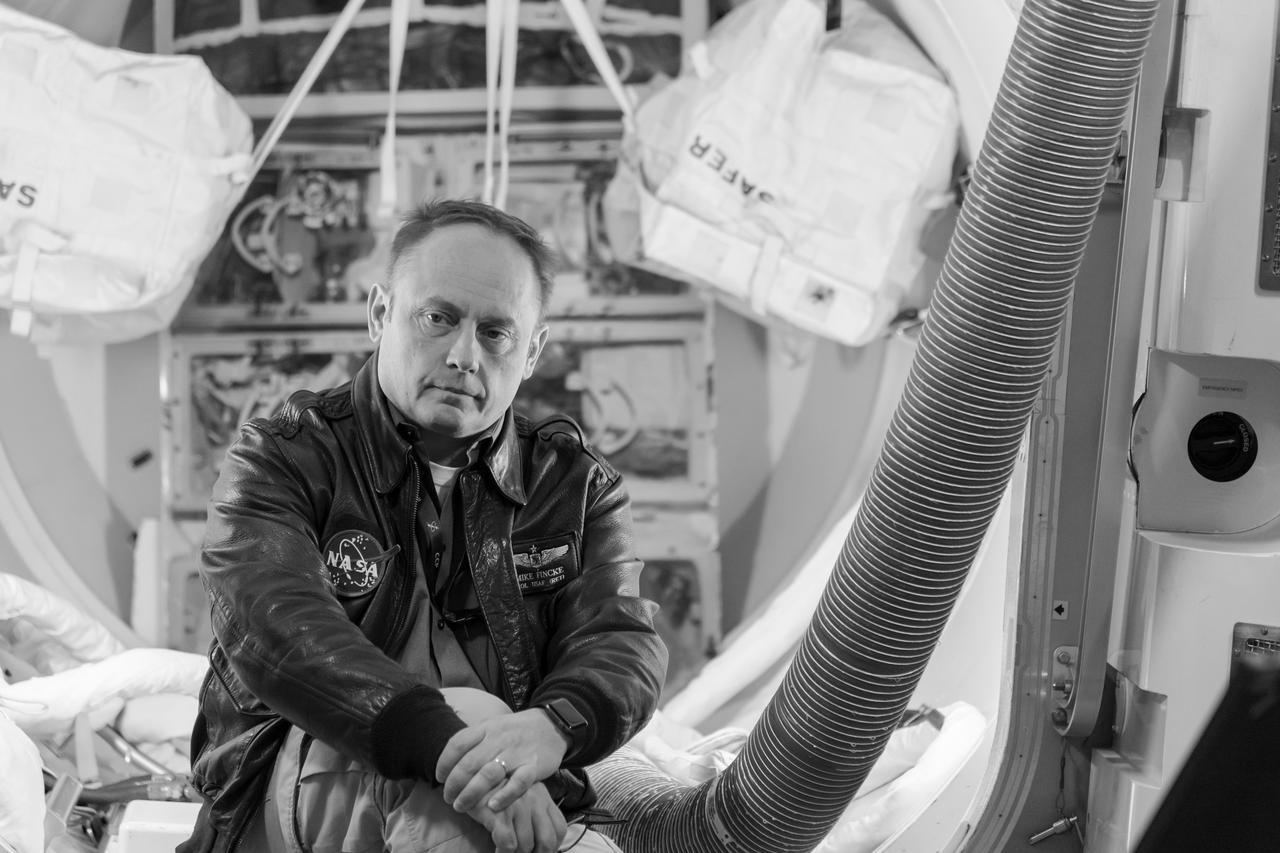
Boeing Commercial Crew Flight Test (CFT) Emergency Vehicle Familiarization training with Chris Ferguson, Nicole Mann, Barry Wilmore and Mike Fincke.
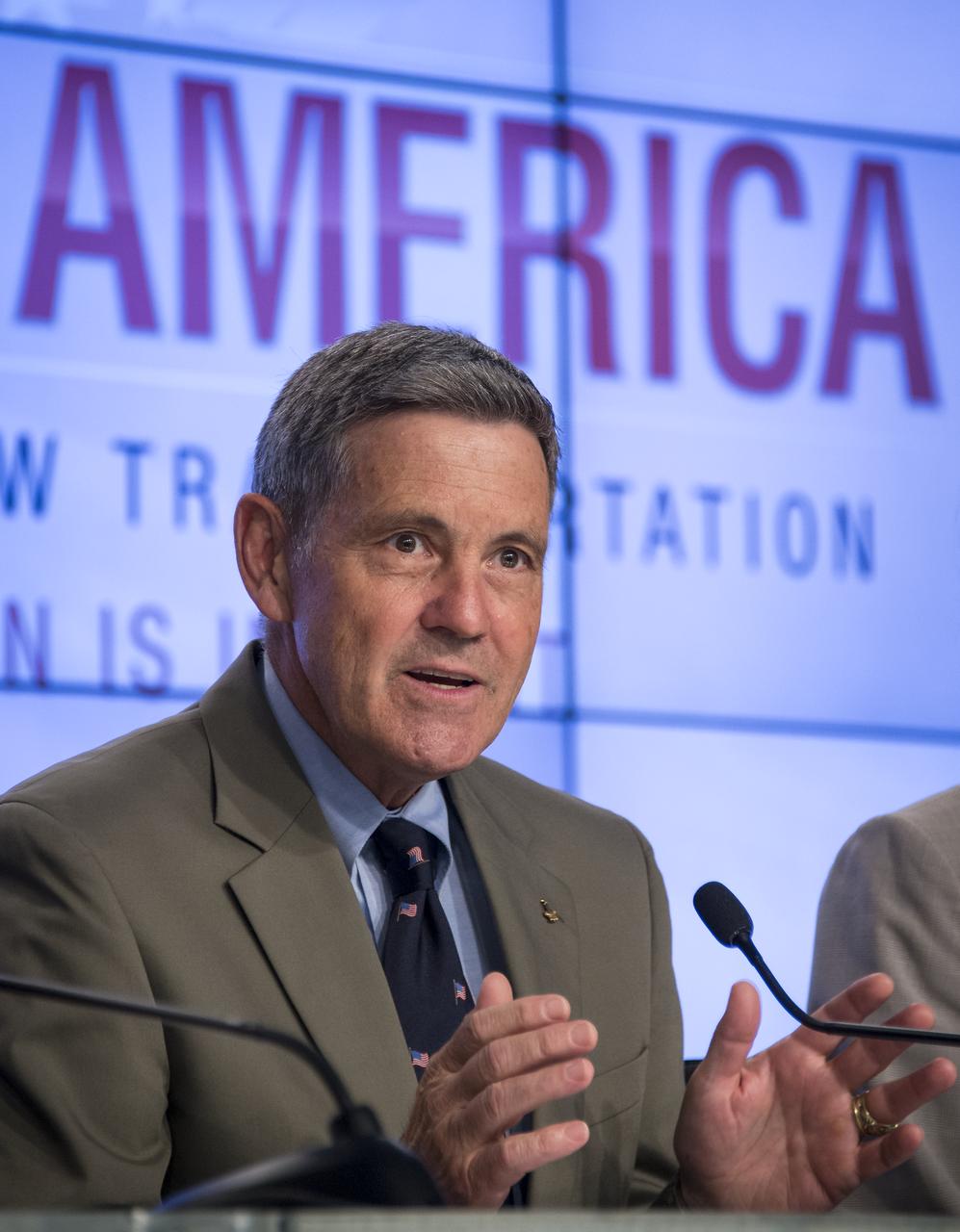
Former astronaut Bob Cabana, director of NASA's Kennedy Space Center in Florida, speaks during a news conference where it was announced that Boeing and SpaceX have been selected to transport U.S. crews to and from the International Space Station using the Boeing CST-100 and the SpaceX Crew Dragon spacecraft, at NASA’s Kennedy Space Center in Cape Canaveral, Fla. on Tuesday, Sept. 16, 2014. These Commercial Crew Transportation Capability (CCtCap) contracts are designed to complete the NASA certification for a human space transportation system capable of carrying people into orbit. Once certification is complete, NASA plans to use these systems to transport astronauts to the space station and return them safely to Earth. Photo Credit: (NASA/Bill Ingalls)
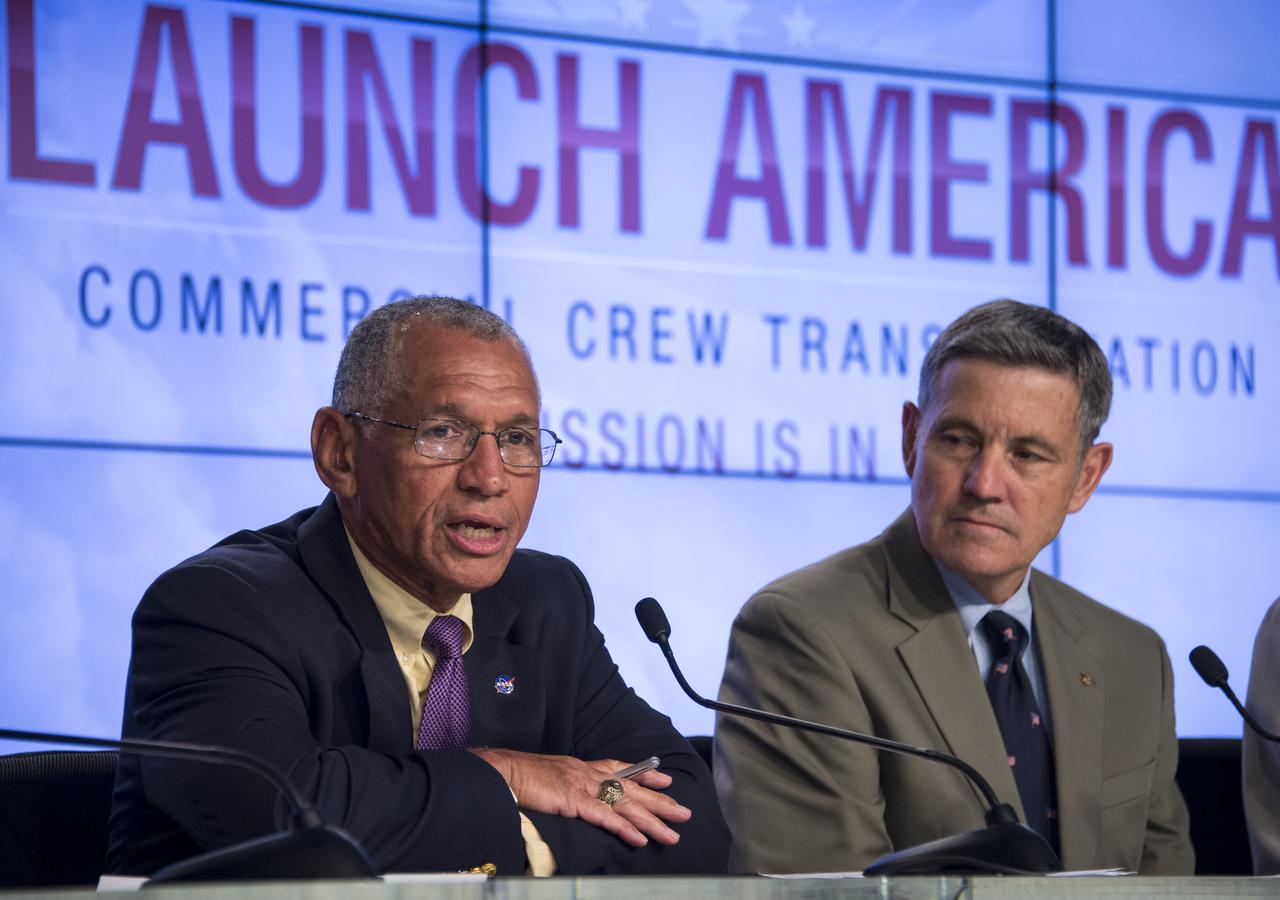
NASA Administrator Charles Bolden, left, announces the agency’s selection of Boeing and SpaceX to transport U.S. crews to and from the International Space Station using the Boeing CST-100 and the SpaceX Crew Dragon spacecraft as Former astronaut Bob Cabana, director of NASA's Kennedy Space Center in Florida looks on at NASA’s Kennedy Space Center in Cape Canaveral, Fla. on Tuesday, Sept. 16, 2014. These Commercial Crew Transportation Capability (CCtCap) contracts are designed to complete the NASA certification for a human space transportation system capable of carrying people into orbit. Once certification is complete, NASA plans to use these systems to transport astronauts to the space station and return them safely to Earth. Photo Credit: (NASA/Bill Ingalls)
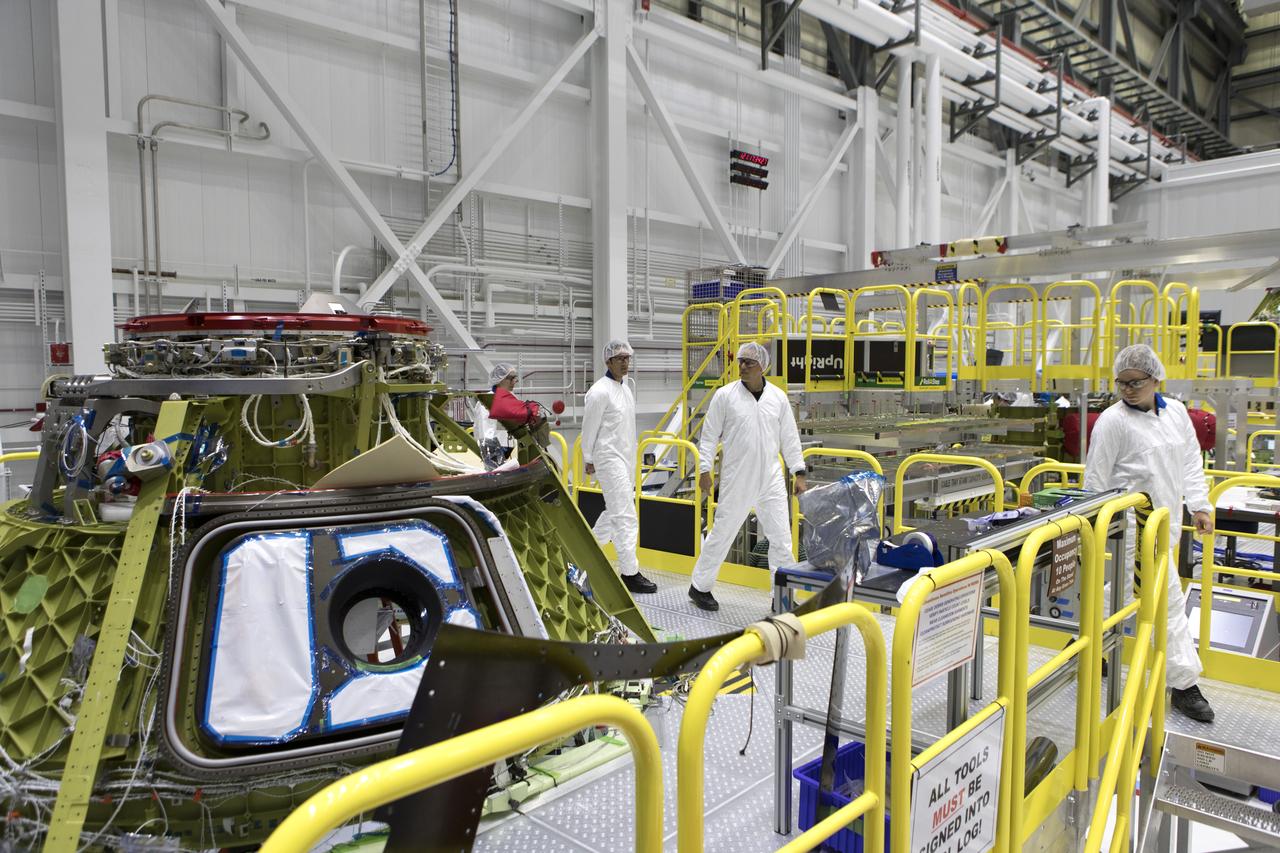
The 2017 class of astronaut candidates tour Boeing's Commercial Crew and Cargo Facility at NASA's Kennedy Space Center in Florida on May 1. They are at the center for a familiarization tour of facilities, including the Neil Armstrong Operations and Checkout Building high bay; the Launch Control Center, Launch Complex 39B, and the Vehicle Assembly Building. They also toured United Launch Alliance's Space Launch Complex 41 at Cape Canaveral Air Force Station, and SpaceX's Launch Complex 39A at Kennedy. The candidates will spend about two years getting to know the space station systems and learning how to spacewalk, speak Russian, control the International Space Station's robotic arm and fly T-38s, before they're eligible to be assigned to a mission.
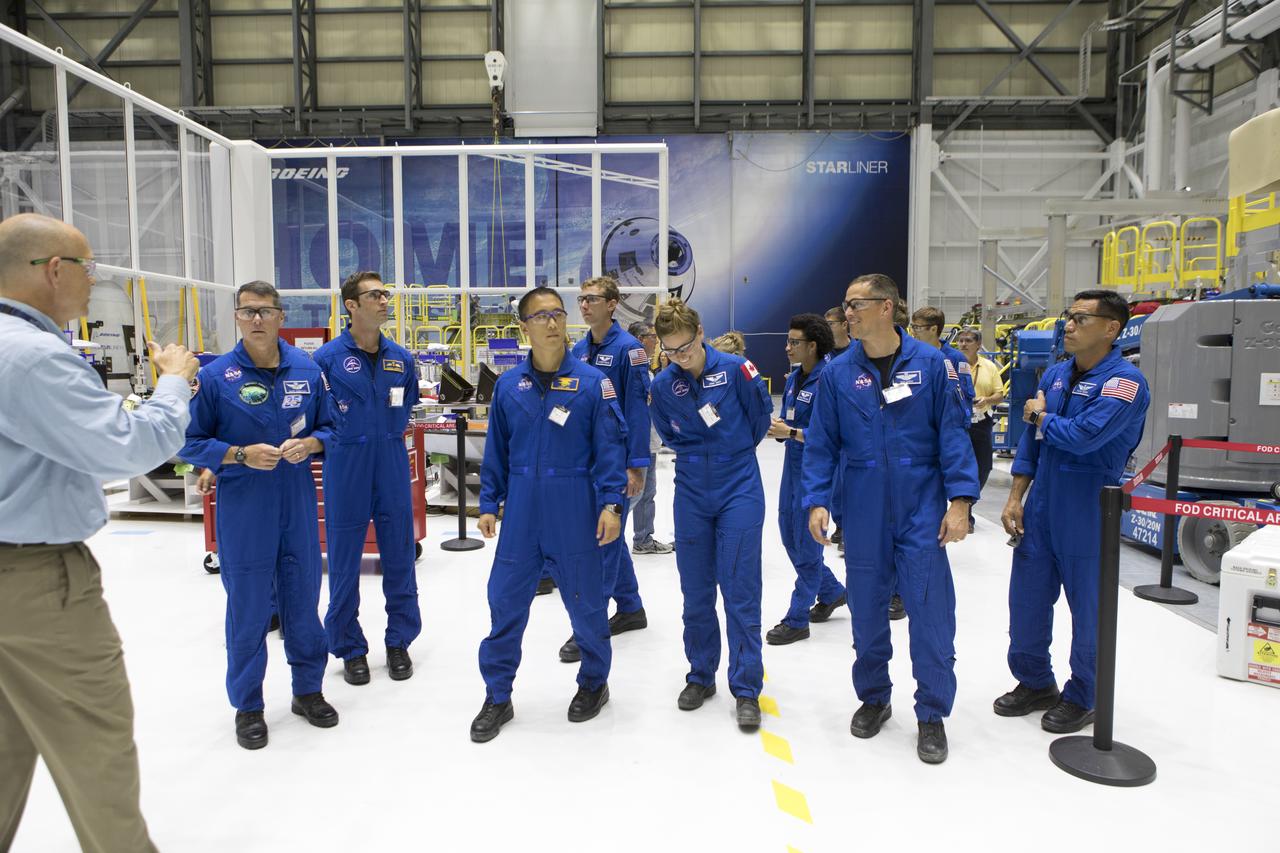
The 2017 class of astronaut candidates tour Boeing's Commercial Crew and Cargo Facility at NASA's Kennedy Space Center in Florida on May 1. They are at the center for a familiarization tour of facilities, including the Neil Armstrong Operations and Checkout Building high bay; the Launch Control Center, Launch Complex 39B, and the Vehicle Assembly Building. They also toured United Launch Alliance's Space Launch Complex 41 at Cape Canaveral Air Force Station, and SpaceX's Launch Complex 39A at Kennedy. The candidates will spend about two years getting to know the space station systems and learning how to spacewalk, speak Russian, control the International Space Station's robotic arm and fly T-38s, before they're eligible to be assigned to a mission.
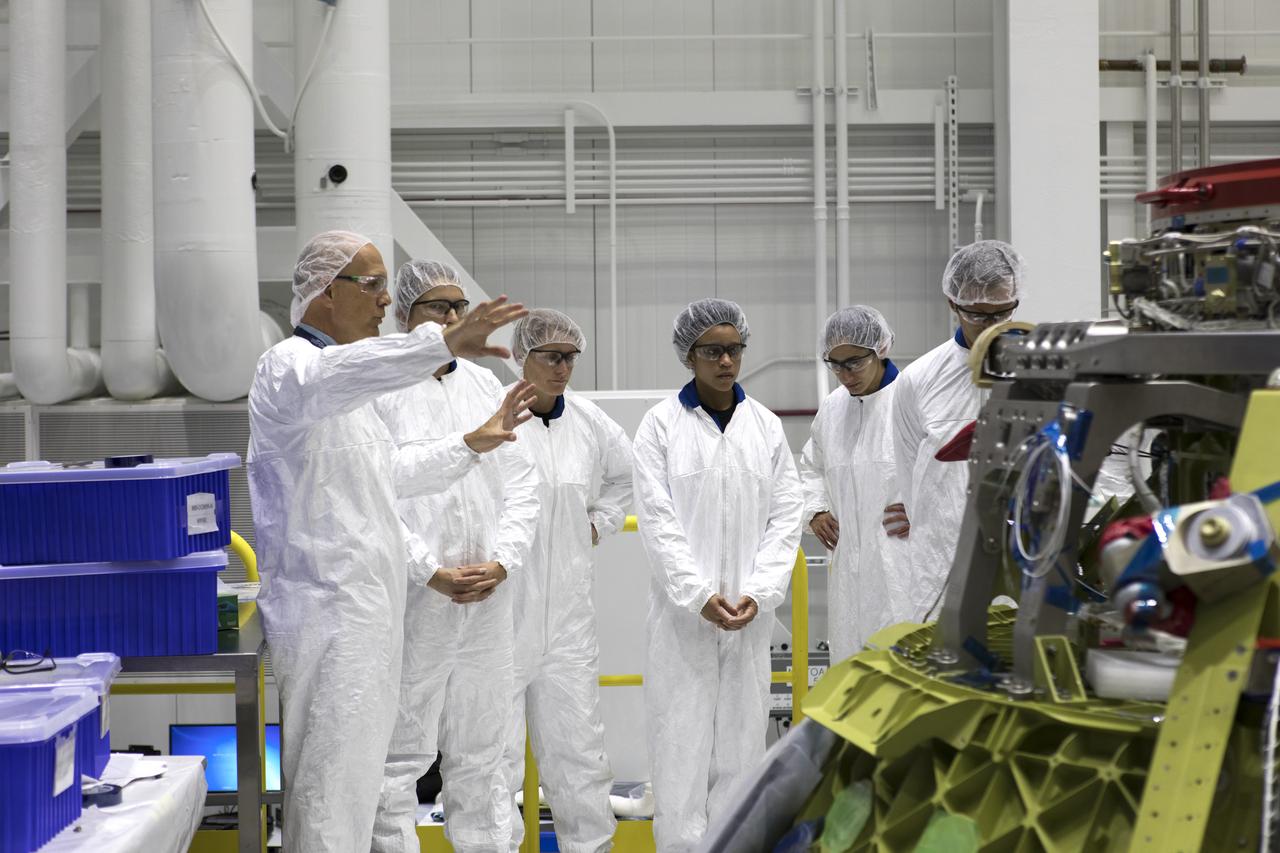
The 2017 class of astronaut candidates tour Boeing's Commercial Crew and Cargo Facility at NASA's Kennedy Space Center in Florida on May 1. They are at the center for a familiarization tour of facilities, including the Neil Armstrong Operations and Checkout Building high bay; the Launch Control Center, Launch Complex 39B, and the Vehicle Assembly Building. They also toured United Launch Alliance's Space Launch Complex 41 at Cape Canaveral Air Force Station, and SpaceX's Launch Complex 39A at Kennedy. The candidates will spend about two years getting to know the space station systems and learning how to spacewalk, speak Russian, control the International Space Station's robotic arm and fly T-38s, before they're eligible to be assigned to a mission.
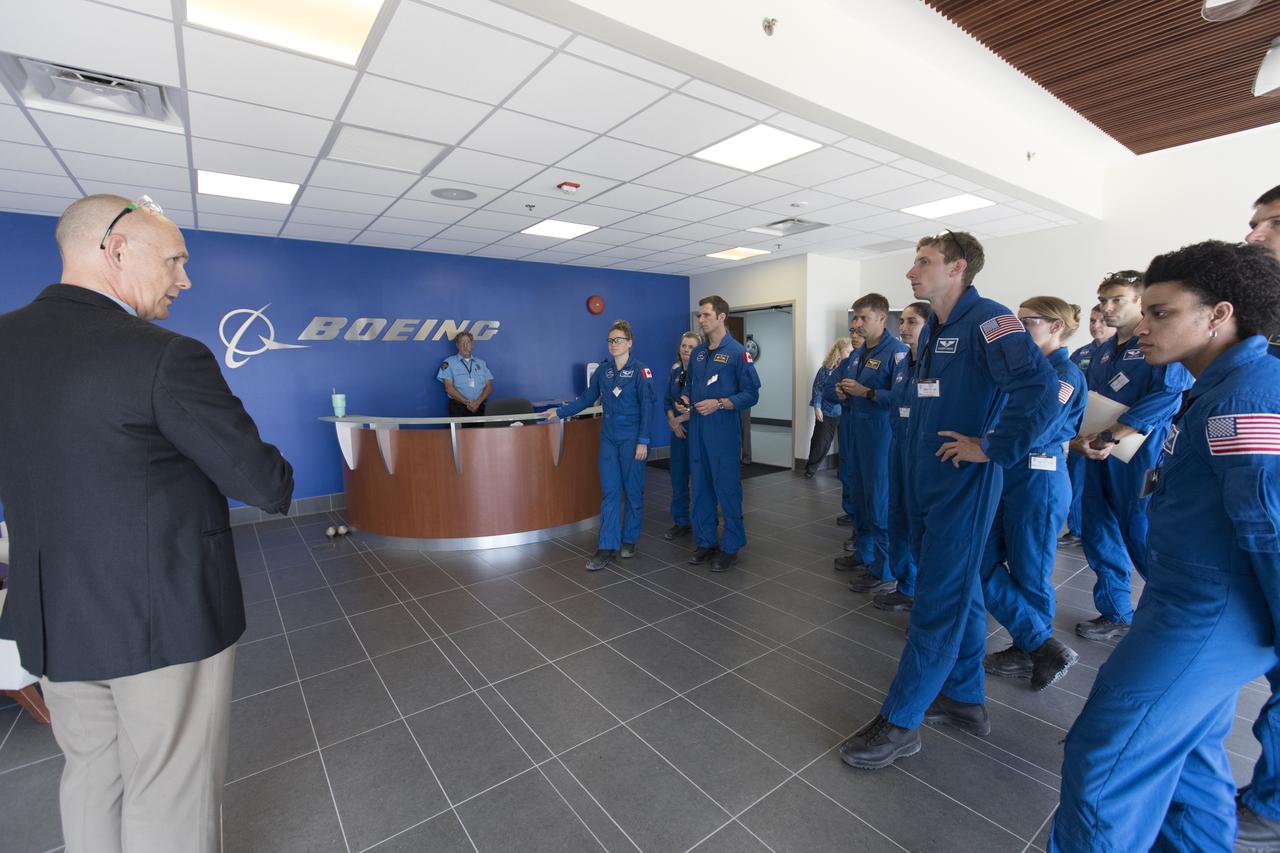
The 2017 class of astronaut candidates arrive at Boeing's Commercial Crew and Cargo Facility at NASA's Kennedy Space Center in Florida on May 1. They are at the center for a familiarization tour of facilities, including the Neil Armstrong Operations and Checkout Building high bay; the Launch Control Center, Launch Complex 39B, and the Vehicle Assembly Building. They also toured United Launch Alliance's Space Launch Complex 41 at Cape Canaveral Air Force Station, and SpaceX's Launch Complex 39A at Kennedy. The candidates will spend about two years getting to know the space station systems and learning how to spacewalk, speak Russian, control the International Space Station's robotic arm and fly T-38s, before they're eligible to be assigned to a mission.

Nine U.S. astronauts selected for commercial crew flight assignments are directed for a group photograph by NASA photographer Robert Markowitz on Aug. 2, 2018 ahead of the announcement Aug. 3, at NASA’s Johnson Space Center in Houston, Texas. From left NASA astronauts Suni Williams, Josh Cassada, Eric Boe, Nicole Mann, Boeing astronaut Chris Ferguson, NASA astronauts Doug Hurley, Bob Behnken, Mike Hopkins and Victor Glover were assigned to the first test flights and operational missions for Boeing’s CST-100 Starliner and SpaceX’s Crew Dragon. Photo Credit: (NASA/Bill Ingalls)
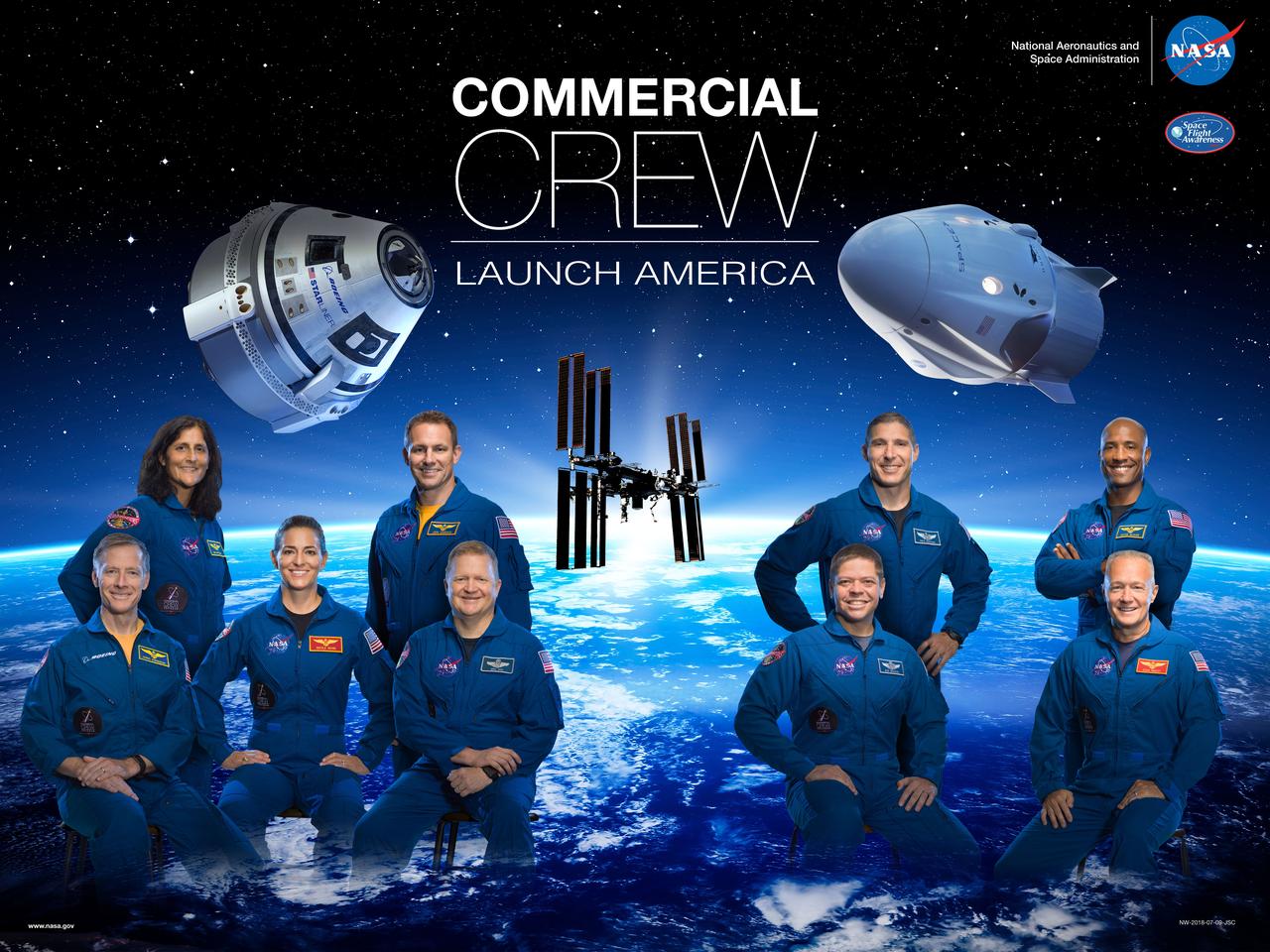
jsc2018e067825 (Aug. 2, 2018) --- The Commercial Crew Launch America poster highlights the astronauts assigned to the first test flights of American-made, commercial spacecraft to and from the International Space Station. The team of five astronauts on the left is assigned to Boeing's CST-100 Starliner Commercial Crew vehicle and consists of (front row from left) Chris Ferguson, Nicole Mann and Eric Boe. In the back row (from left) are Suni Williams and Josh Cassada. The team of four astronauts on the right is assigned to SpaceX's Dragon Commercial Crew vehicle and consists of (front row from left) Bob Behnken and Doug Hurley. In the back row (from left) are Mike Hopkins and Victor Glover.
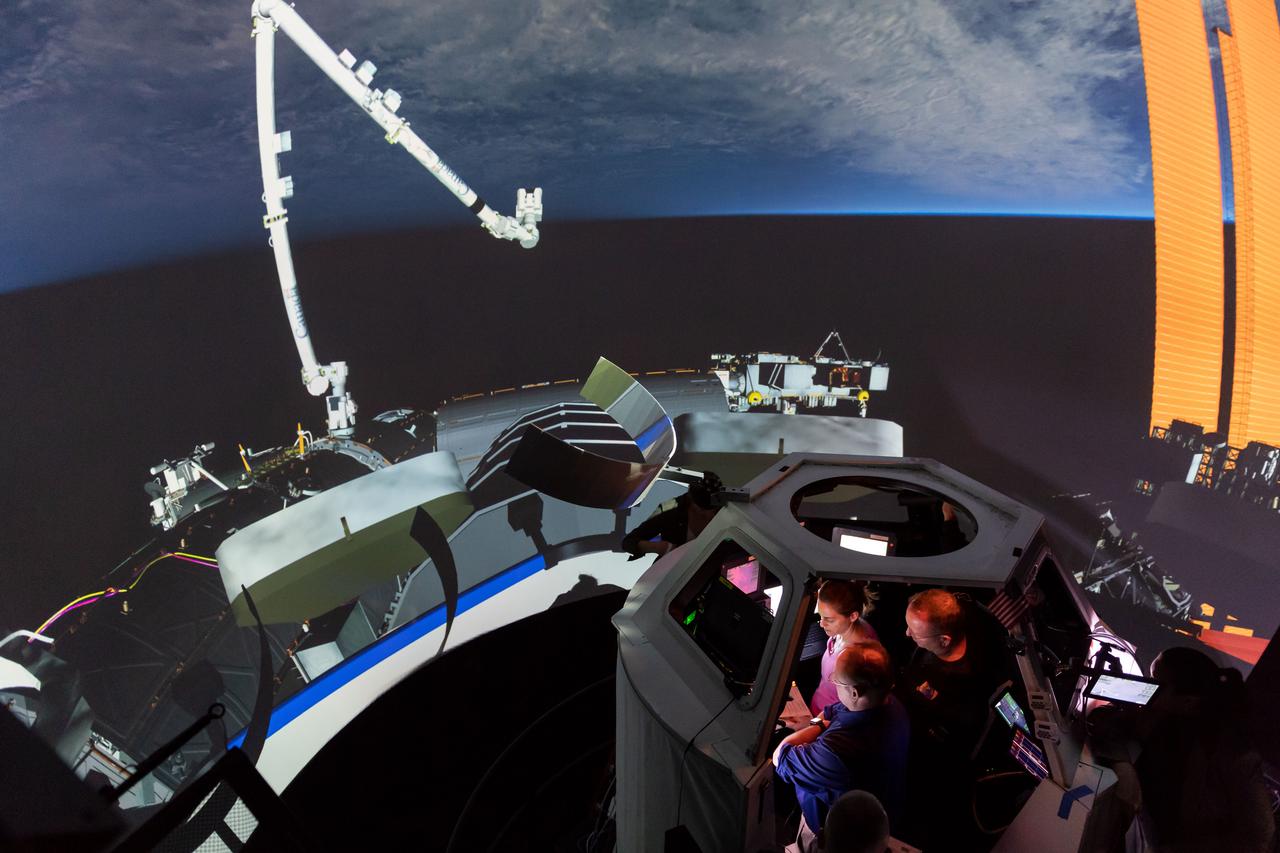
Commercial Crew Program astronauts Mike Fincke, Nicole Mann and Barry "Butch" Wilmore in Free Flyer Track & Capture Sim training in SES Alpha Cupola.
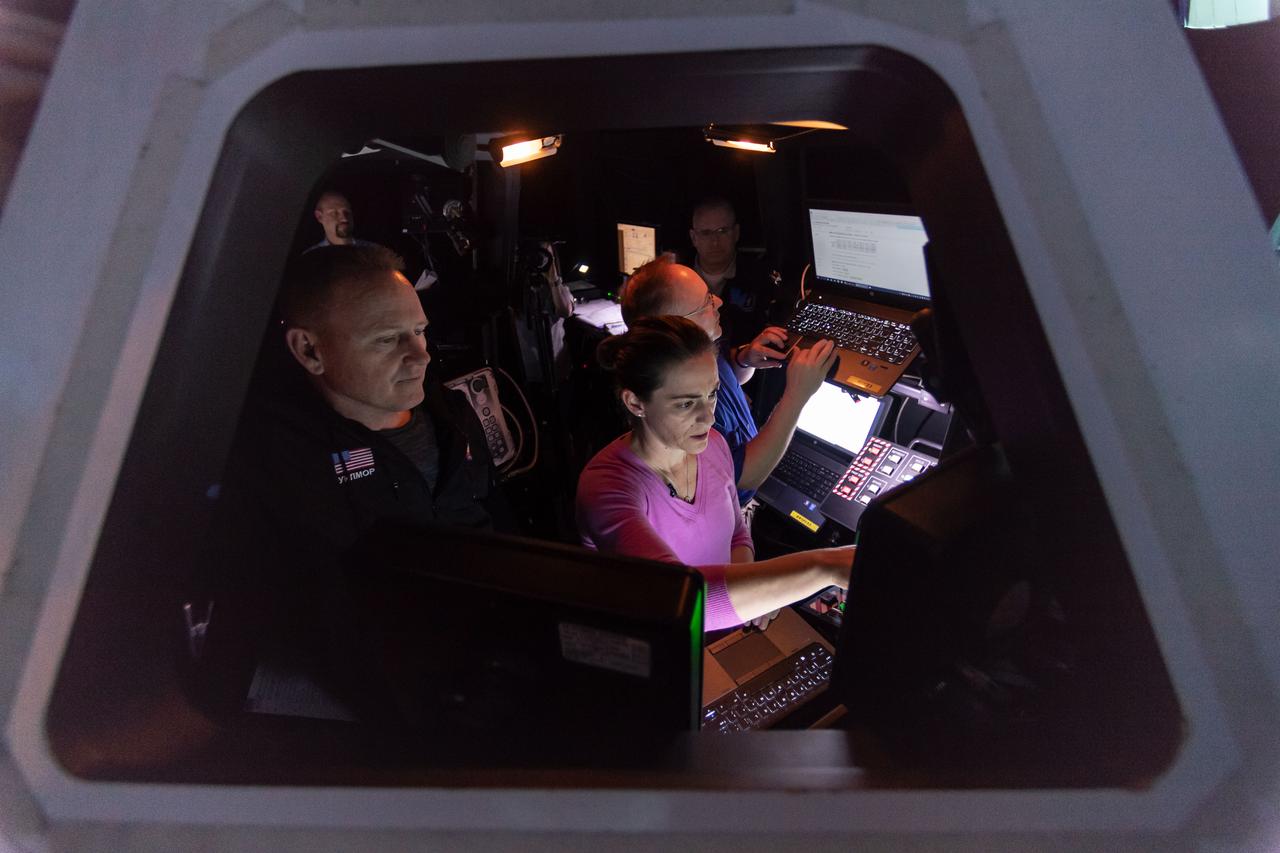
Commercial Crew Program astronauts Mike Fincke, Nicole Mann and Barry "Butch" Wilmore in Free Flyer Track & Capture Sim training in SES Alpha Cupola.
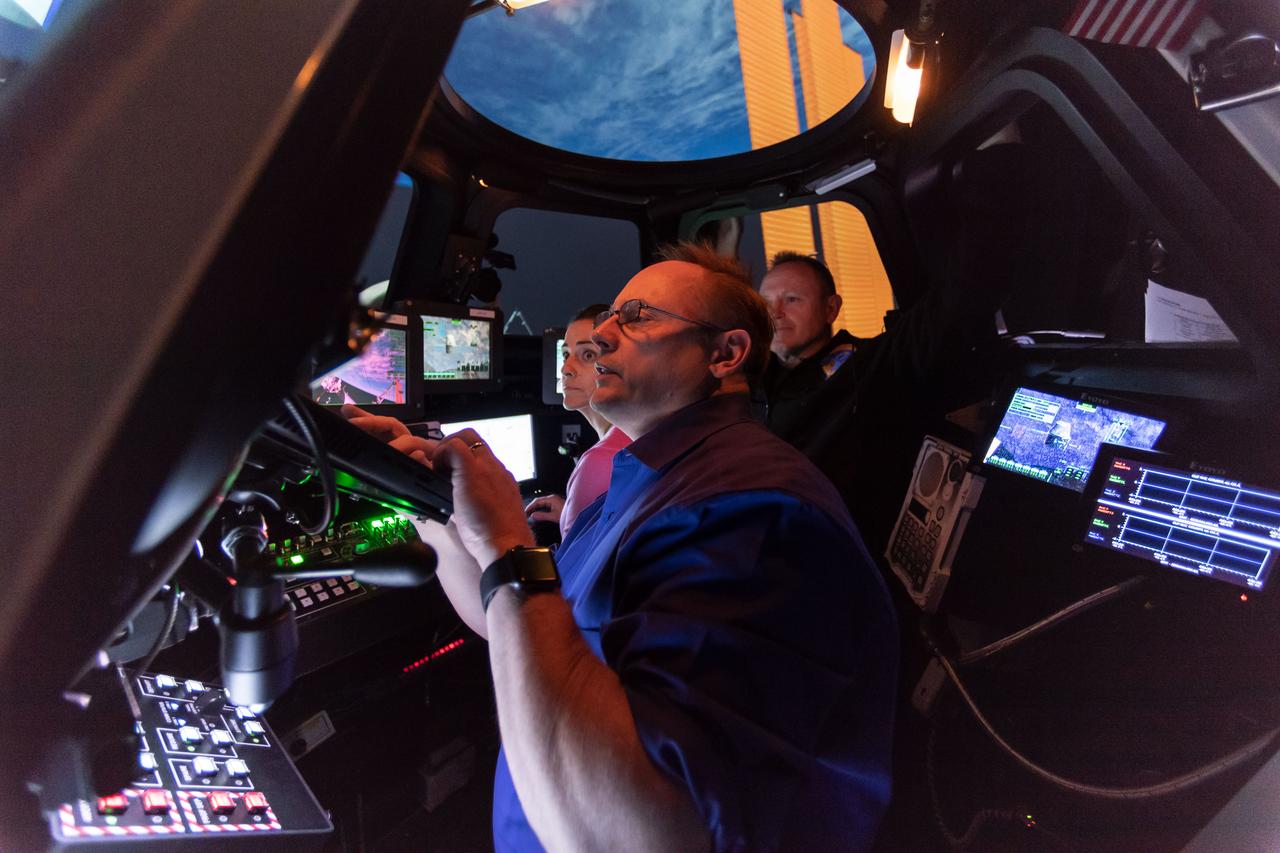
Commercial Crew Program astronauts Mike Fincke, Nicole Mann and Barry "Butch" Wilmore in Free Flyer Track & Capture Sim training in SES Alpha Cupola.
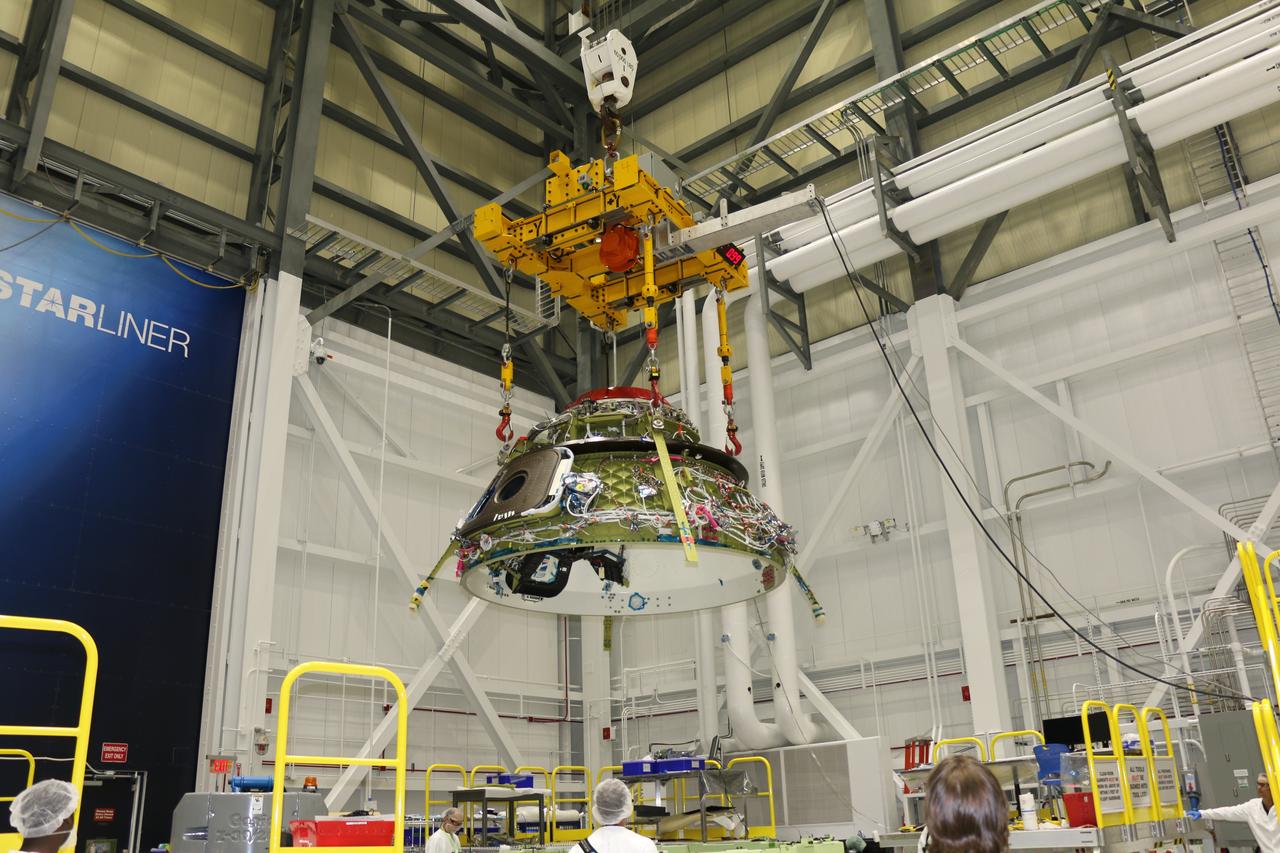
The upper and lower domes of the Boeing CST-100 Starliner Spacecraft 2 Crew Flight Test Vehicle were mated June 19, 2018, inside the Commercial Crew and Cargo Processing Facility (C3PF) at Kennedy Space Center in Florida. The Starliner will launch astronauts on a United Launch Alliance Atlas V rocket to the International Space Station as part of NASA’s Commercial Crew Program.
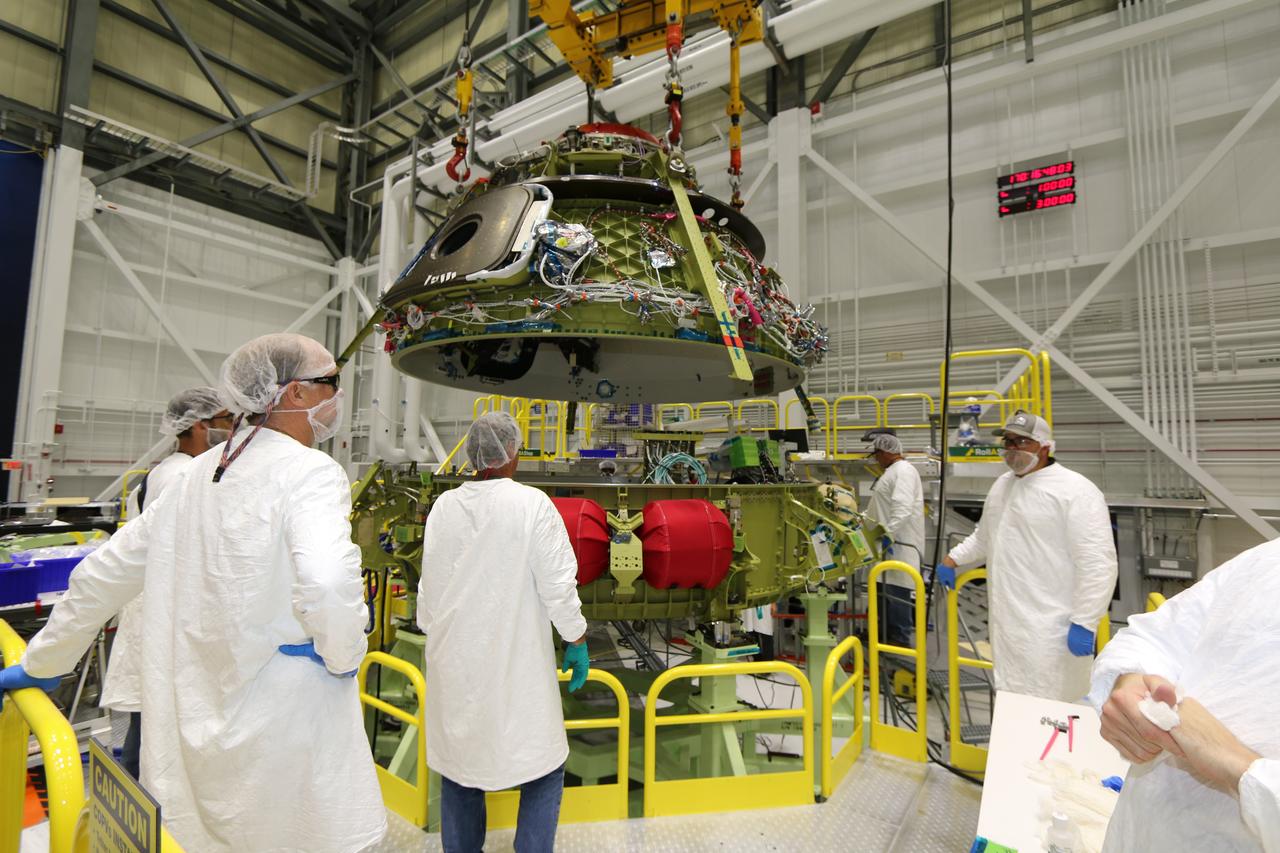
The upper and lower domes of the Boeing CST-100 Starliner Spacecraft 2 Crew Flight Test Vehicle were mated June 19, 2018, inside the Commercial Crew and Cargo Processing Facility (C3PF) at Kennedy Space Center in Florida. The Starliner will launch astronauts on a United Launch Alliance Atlas V rocket to the International Space Station as part of NASA’s Commercial Crew Program.
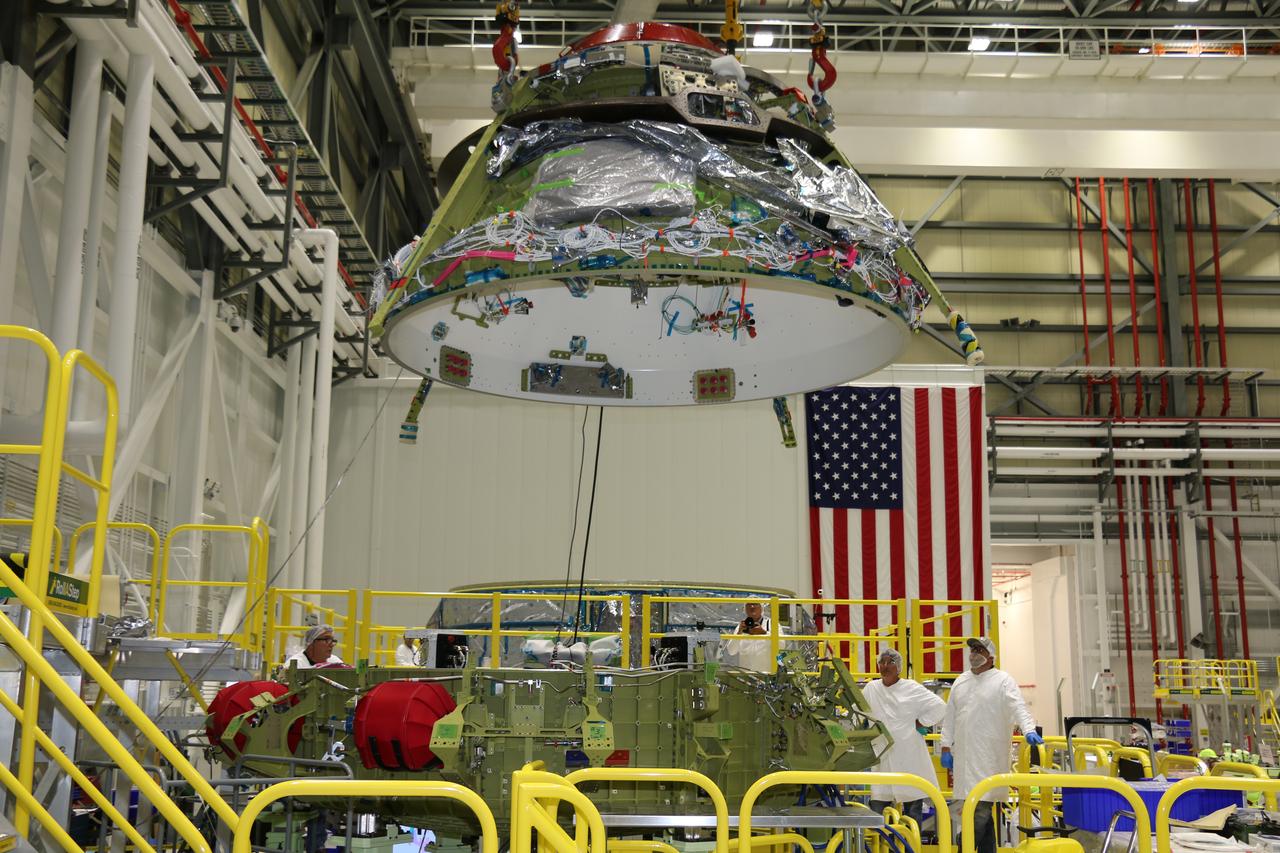
The upper and lower domes of the Boeing CST-100 Starliner Spacecraft 2 Crew Flight Test Vehicle were mated June 19, 2018, inside the Commercial Crew and Cargo Processing Facility (C3PF) at Kennedy Space Center in Florida. The Starliner will launch astronauts on a United Launch Alliance Atlas V rocket to the International Space Station as part of NASA’s Commercial Crew Program.
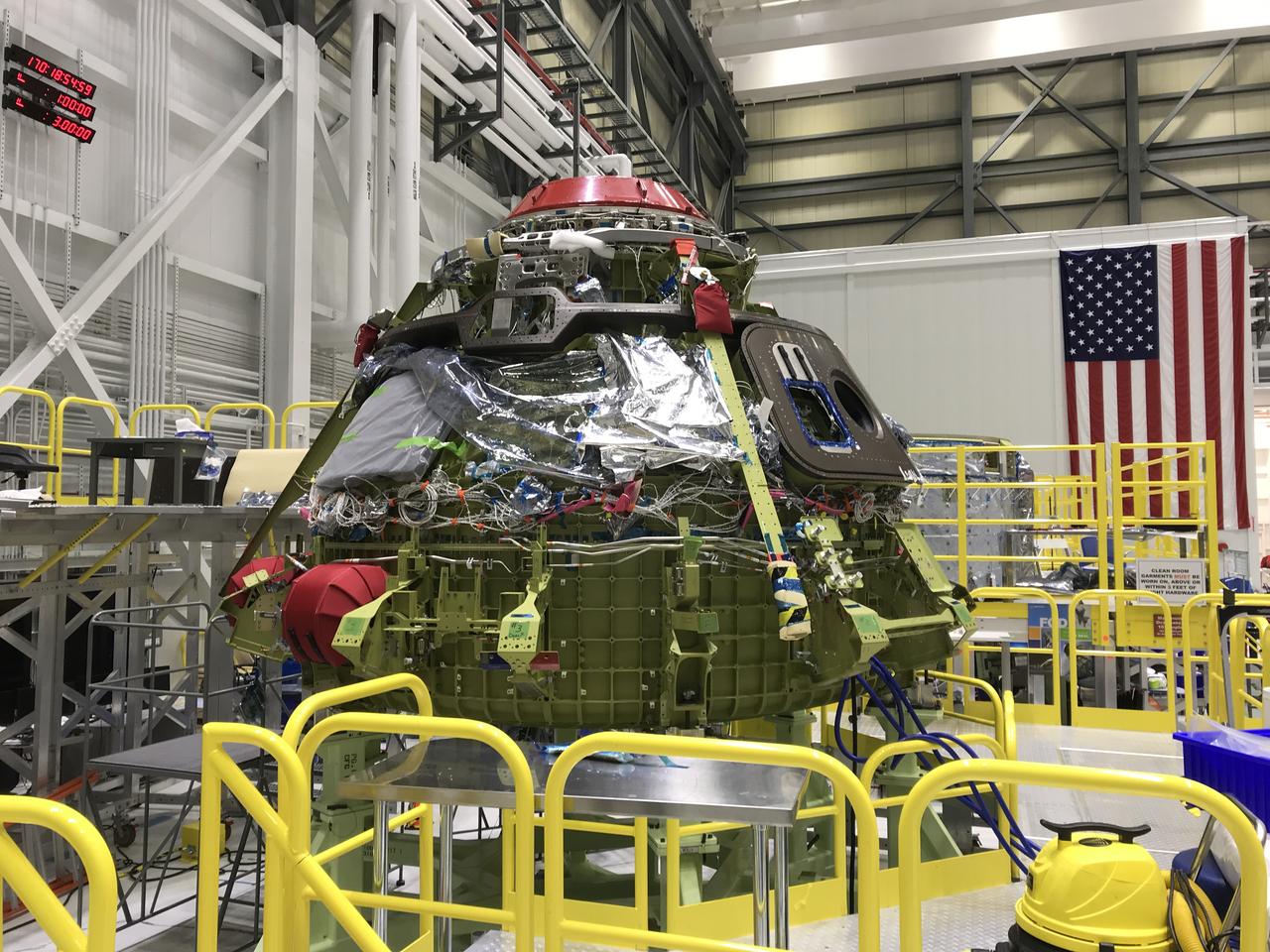
The upper and lower domes of the Boeing CST-100 Starliner Spacecraft 2 Crew Flight Test Vehicle were mated June 19, 2018, inside the Commercial Crew and Cargo Processing Facility (C3PF) at Kennedy Space Center in Florida. The Starliner will launch astronauts on a United Launch Alliance Atlas V rocket to the International Space Station as part of NASA’s Commercial Crew Program.
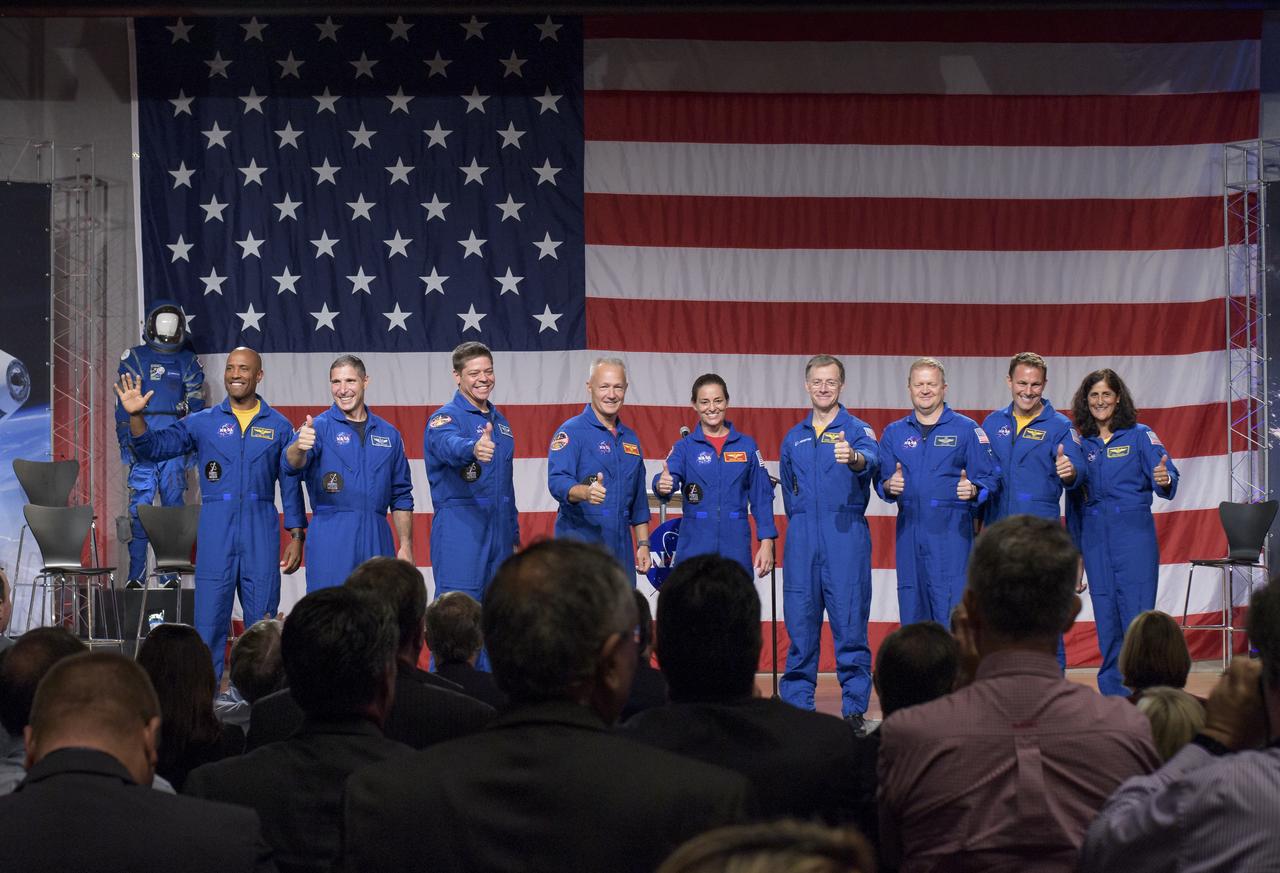
The first U.S. astronauts who will fly on American-made, commercial spacecraft to and from the International Space Station, wave after being announced, Friday, Aug. 3, 2018 at NASA's Johnson Space Center in Houston, Texas. The astronauts are, from left to right: Victor Glover, Mike Hopkins, Bob Behnken, Doug Hurley, Nicole Aunapu Mann, Chris Ferguson, Eric Boe, Josh Cassada, and Suni Williams. The agency assigned the nine astronauts to crew the first flight tests and missions of the Boeing CST-100 Starliner and SpaceX Crew Dragon. Photo Credit: (NASA/Bill Ingalls)
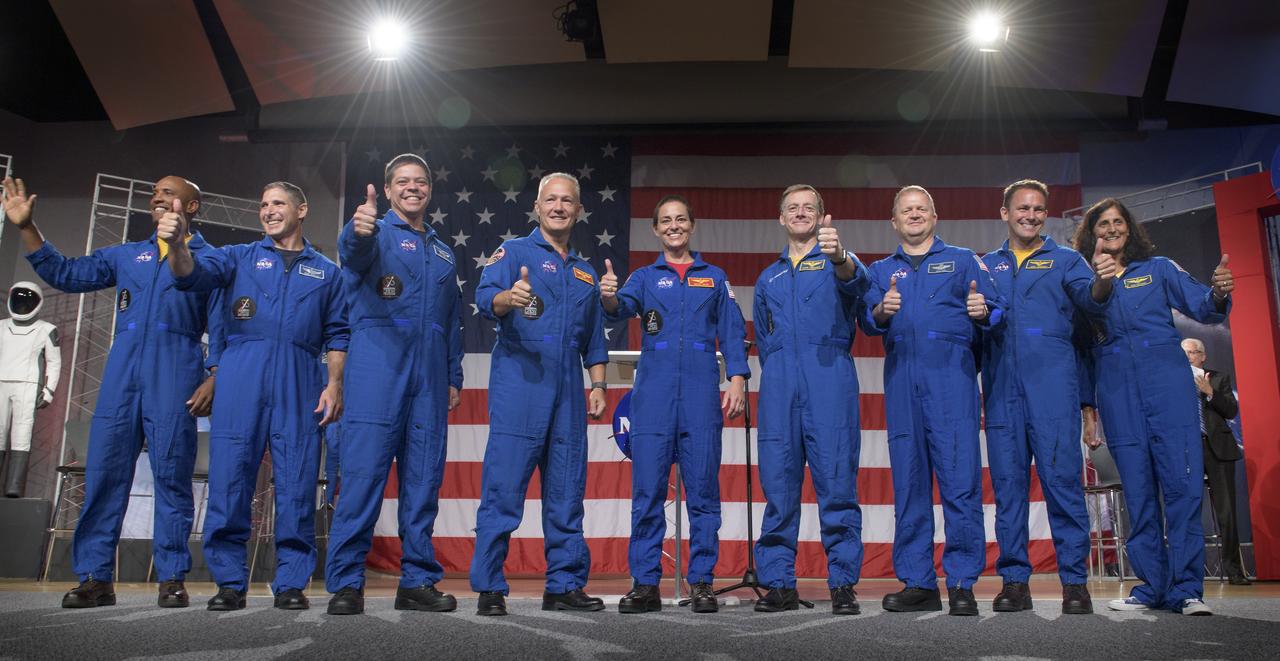
The first U.S. astronauts who will fly on American-made, commercial spacecraft to and from the International Space Station, wave after being announced, Friday, Aug. 3, 2018 at NASA's Johnson Space Center in Houston, Texas. The astronauts are, from left to right: Victor Glover, Mike Hopkins, Bob Behnken, Doug Hurley, Nicole Aunapu Mann, Chris Ferguson, Eric Boe, Josh Cassada, and Suni Williams. The agency assigned the nine astronauts to crew the first flight tests and missions of the Boeing CST-100 Starliner and SpaceX Crew Dragon. Photo Credit: (NASA/Bill Ingalls)
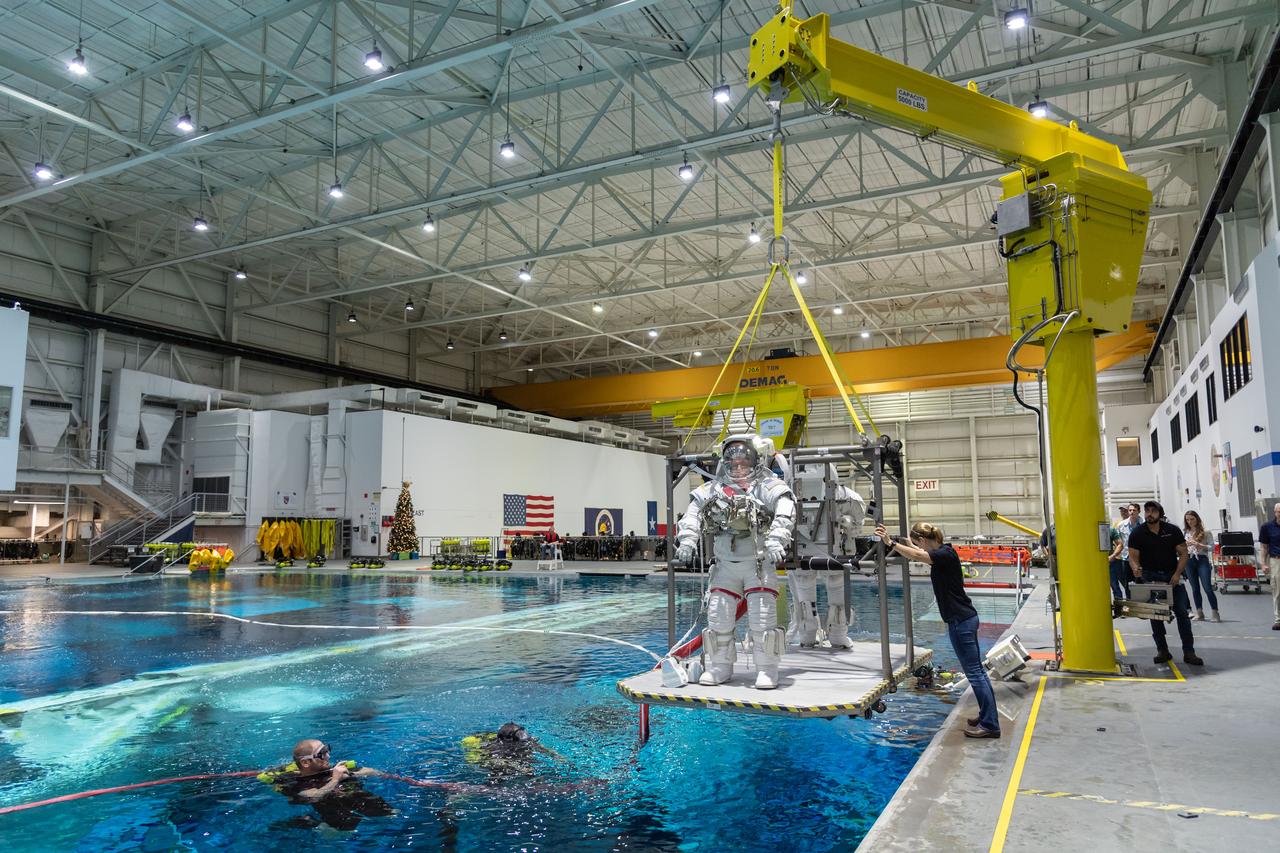
Commercial Crew Program astronaut Barry "Butch" Wilmore in EVA suitup at NBL with Expedition 62 cosmonaut Nikolai Tikhonov during Expedition 62 ISS EVA Maintenance 2 training.

jsc2024e052331 (June 23, 2024) --- SpaceX Crew-9 Commander Zena Cardman of NASA's Commercial Crew Program poses for a portrait in her flight suit at SpaceX headquarters in Hawthorne, California. Credit: SpaceX
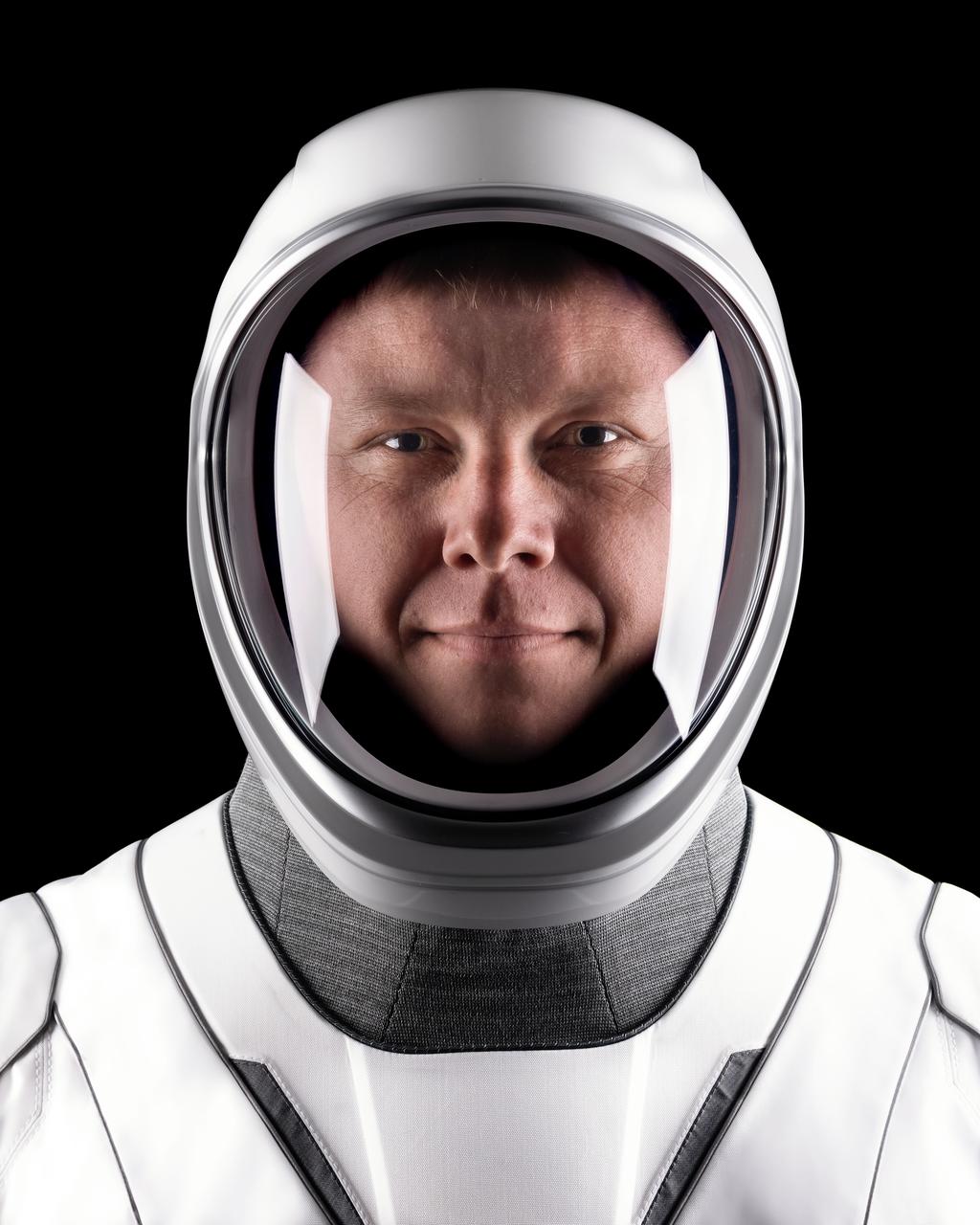
jsc2024e052334 (June 23, 2024) --- SpaceX Crew-9 Mission Specialist Aleksandr Gorbunov of NASA's Commercial Crew Program poses for a portrait in his flight suit at SpaceX headquarters in Hawthorne, California. Credit: SpaceX
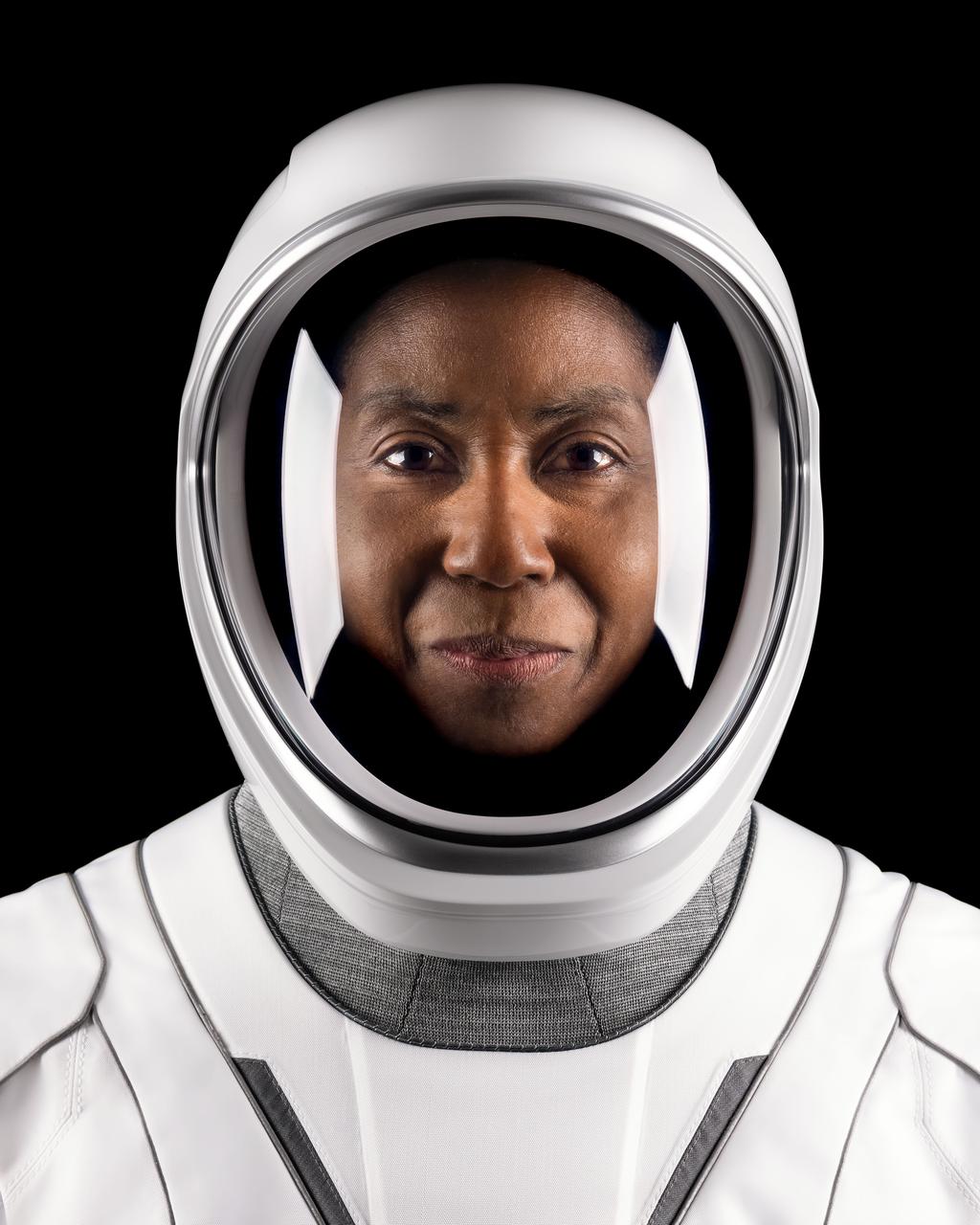
jsc2024e052333 (June 23, 2024) --- SpaceX Crew-9 Mission Specialist Stephanie Wilson of NASA's Commercial Crew Program poses for a portrait in her flight suit at SpaceX headquarters in Hawthorne, California. Credit: SpaceX
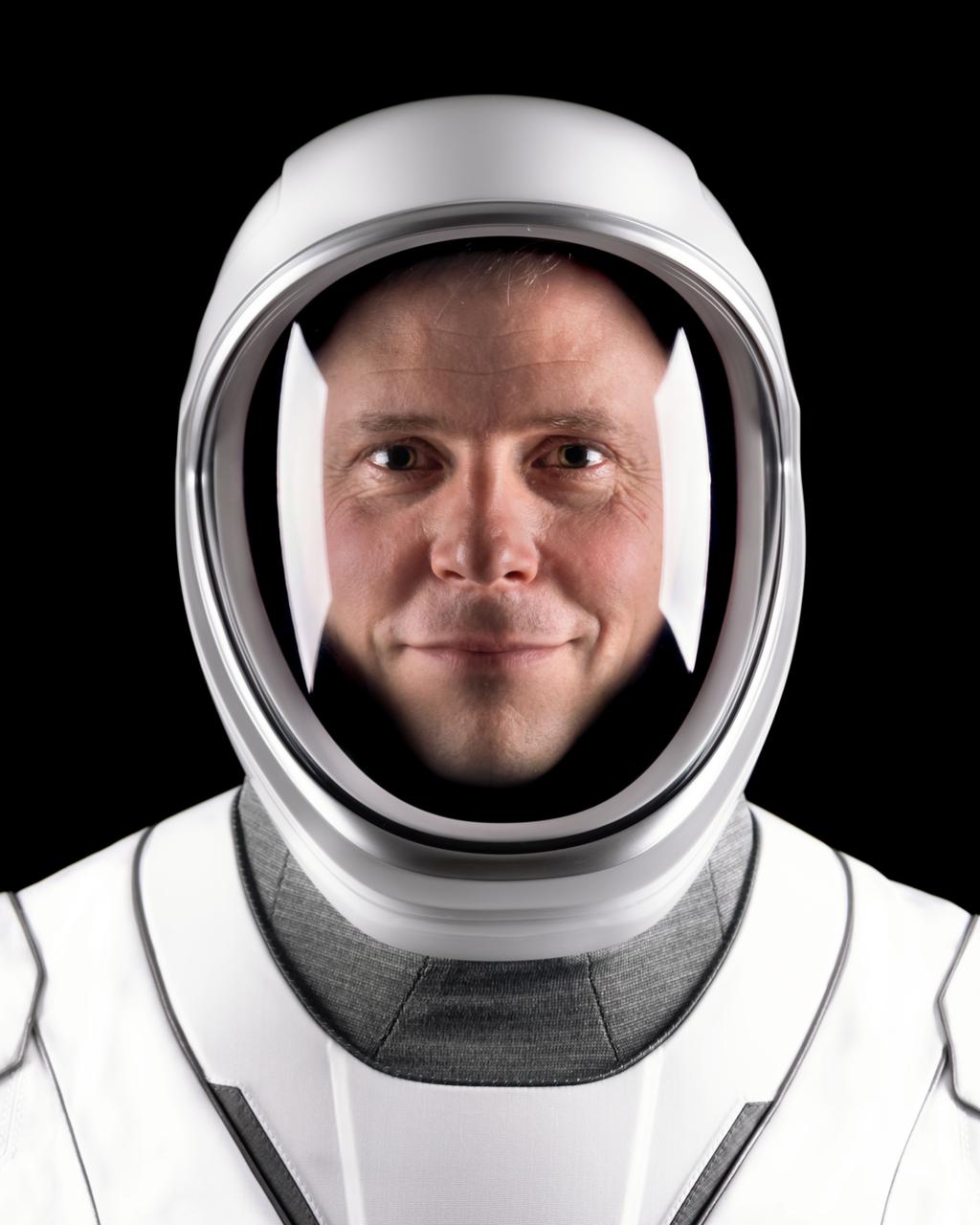
jsc2024e052332 (June 23, 2024) --- SpaceX Crew-9 Pilot Nick Hague of NASA's Commercial Crew Program poses for a portrait in his flight suit at SpaceX headquarters in Hawthorne, California. Credit: SpaceX

Commercial Crew Program (CCP) SpaceX Merlin Engine Gas Generator (GG) Baffle Assessment, Mr. Brian Richardson (background), and Mr. Chad Eberhart (foreground)
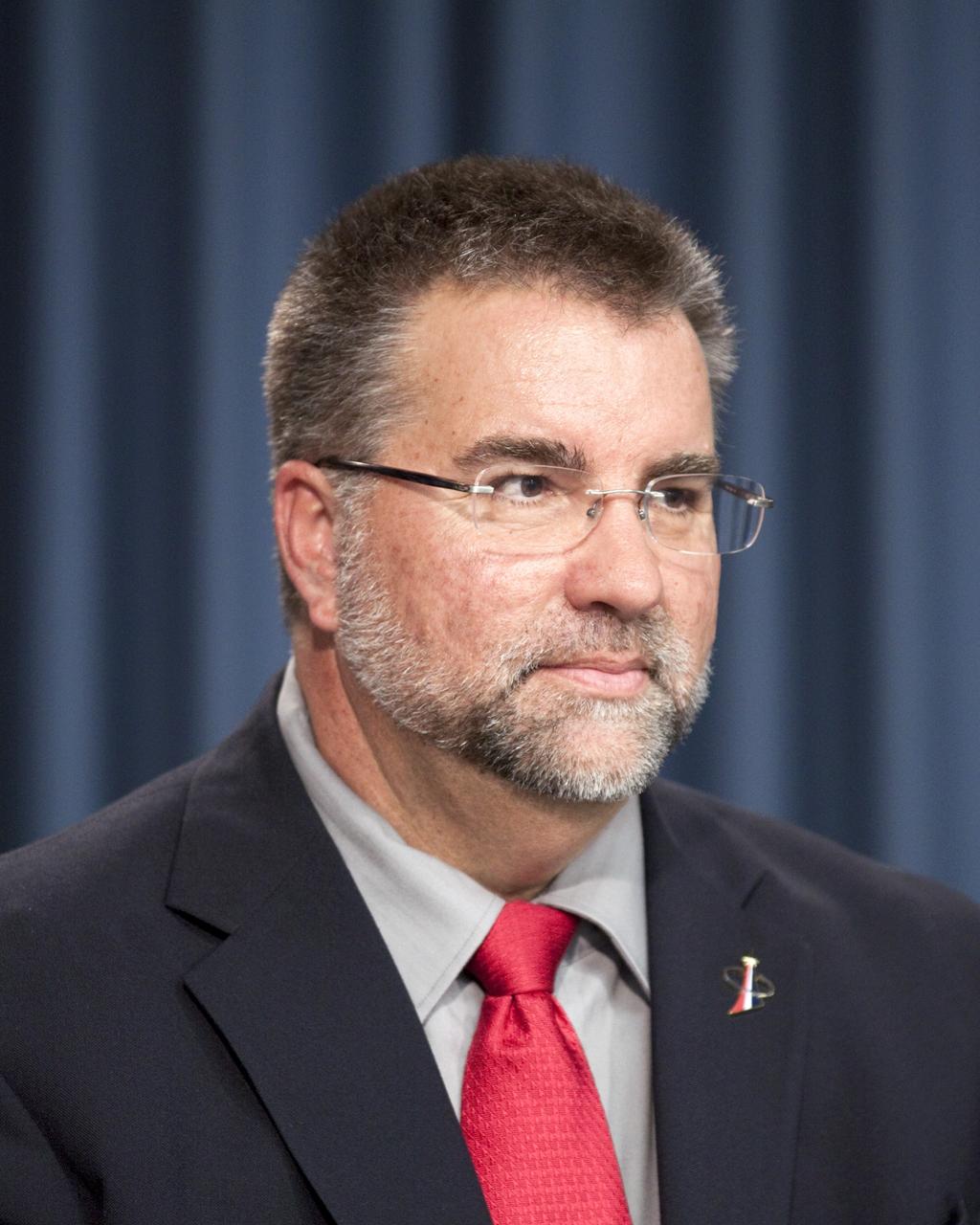
CAPE CANAVERAL, Fla. -- At a news conference NASA officials and industry partners discuss progress of the agency's Commercial Crew Program. Among those participating in the briefing is Ed Mango, NASA Commercial Crew Program manager. Through CCP, NASA is facilitating the development of U.S. commercial crew space transportation capabilities to achieve safe, reliable and cost-effective access to and from low-Earth orbit for potential future government and commercial customers. For more information, visit http://www.nasa.gov/commercialcrew Photo credit: NASA/Kim Shiflett
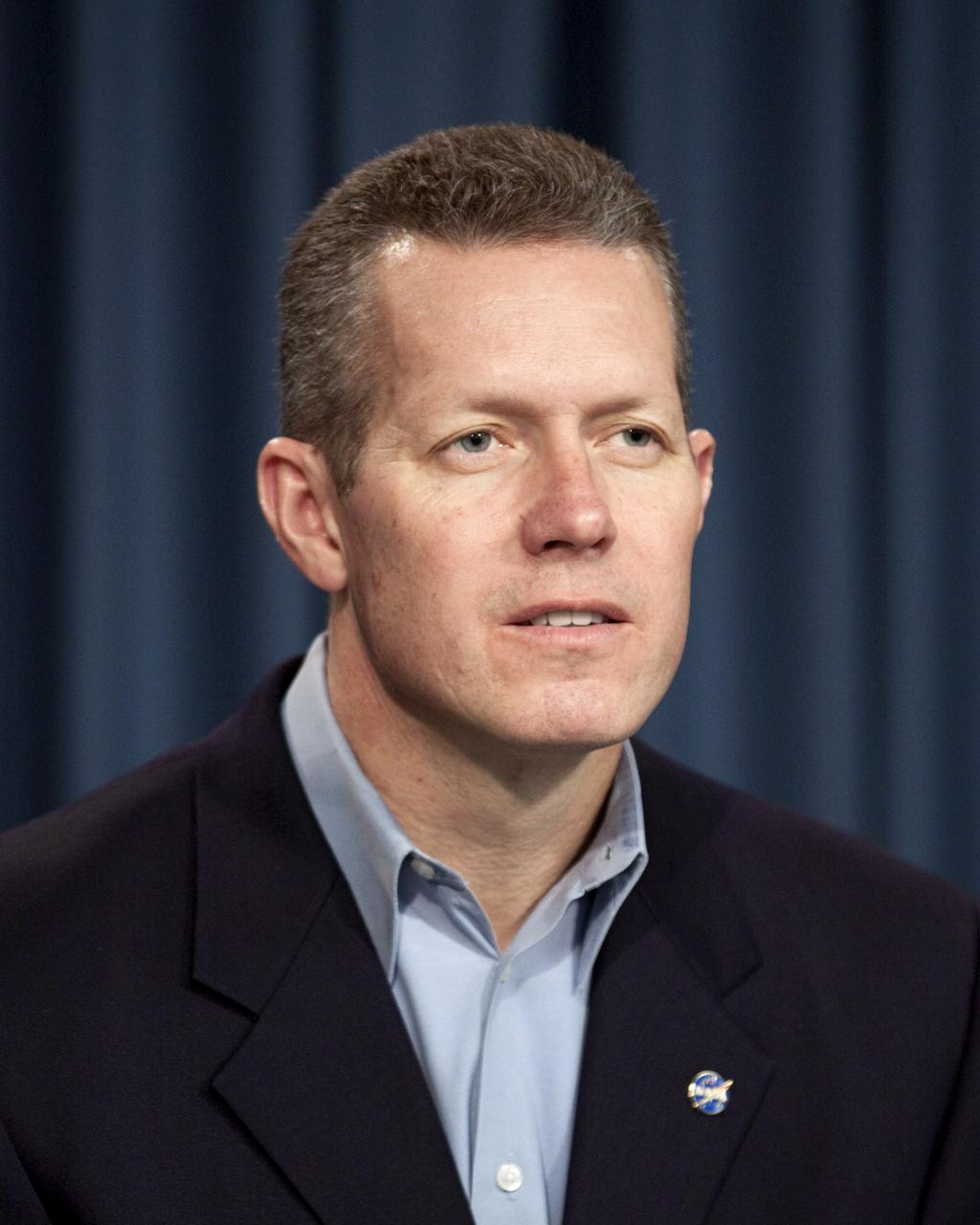
CAPE CANAVERAL, Fla. -- At a news conference NASA officials and industry partners discuss progress of the agency's Commercial Crew Program. Among those participating in the briefing is Phil McAlister, NASA Commercial Spaceflight Development director. Through CCP, NASA is facilitating the development of U.S. commercial crew space transportation capabilities to achieve safe, reliable and cost-effective access to and from low-Earth orbit for potential future government and commercial customers. For more information, visit http://www.nasa.gov/commercialcrew Photo credit: NASA/Kim Shiflett
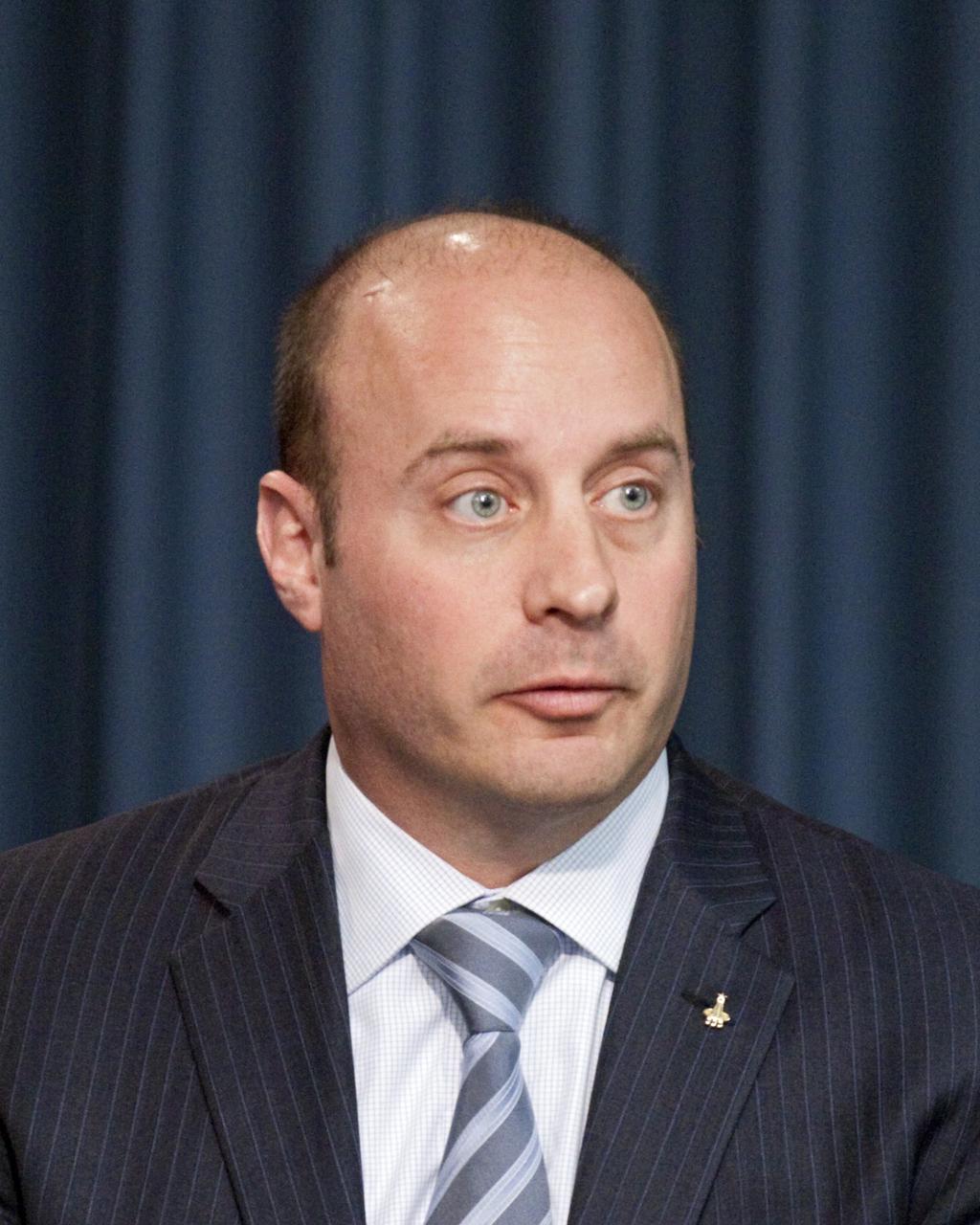
CAPE CANAVERAL, Fla. -- At a news conference NASA officials and industry partners discuss progress of the agency's Commercial Crew Program. Among those participating in the briefing is Garrett Reisman, Space Exploration Technologies SpaceX Commercial Crew project manager. Through CCP, NASA is facilitating the development of U.S. commercial crew space transportation capabilities to achieve safe, reliable and cost-effective access to and from low-Earth orbit for potential future government and commercial customers. For more information, visit http://www.nasa.gov/commercialcrew Photo credit: NASA/Kim Shiflett

The first U.S. astronauts who will fly on American-made, commercial spacecraft to and from the International Space Station, wave after being announced, Friday, Aug. 3, 2018 at NASA's Johnson Space Center in Houston, Texas. Astronauts Bob Behnken, left, Victor Glover, Doug Hurley, and Mike Hopkins will fly SpaceX's Crew Dragon flights, and astronauts Eric Boe, Suni Williams, Chris Ferguson, Josh Cassada, and Nicole Aunapu Mann, right, will fly on Boeing's CST-100 Starliner. Photo Credit: (NASA/Bill Ingalls)
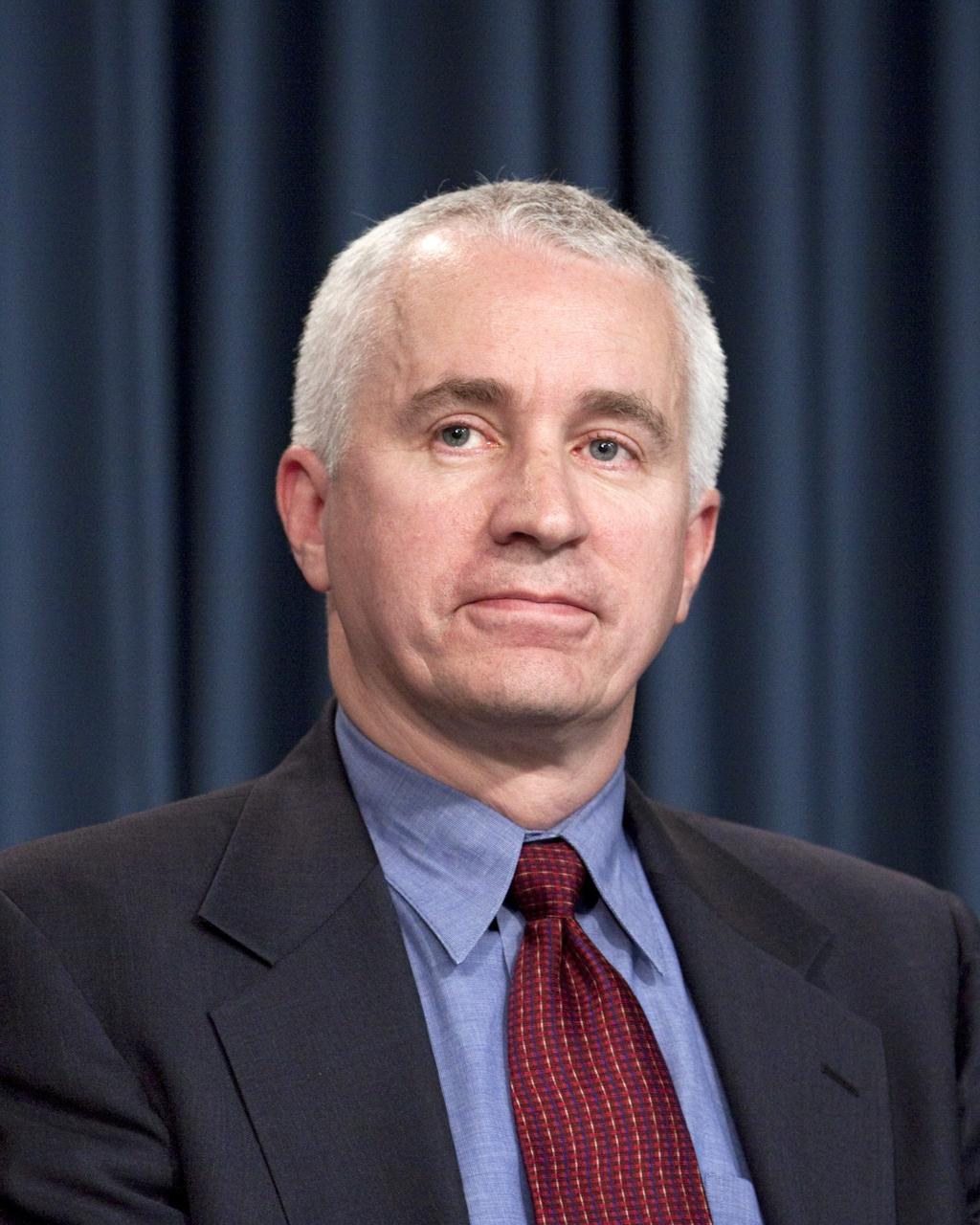
CAPE CANAVERAL, Fla. -- At a news conference NASA officials and industry partners discuss progress of the agency's Commercial Crew Program. Among those participating in the briefing is Rob Meyerson, Blue Origin president and program manager. Through CCP, NASA is facilitating the development of U.S. commercial crew space transportation capabilities to achieve safe, reliable and cost-effective access to and from low-Earth orbit for potential future government and commercial customers. For more information, visit http://www.nasa.gov/commercialcrew Photo credit: NASA/Kim Shiflett
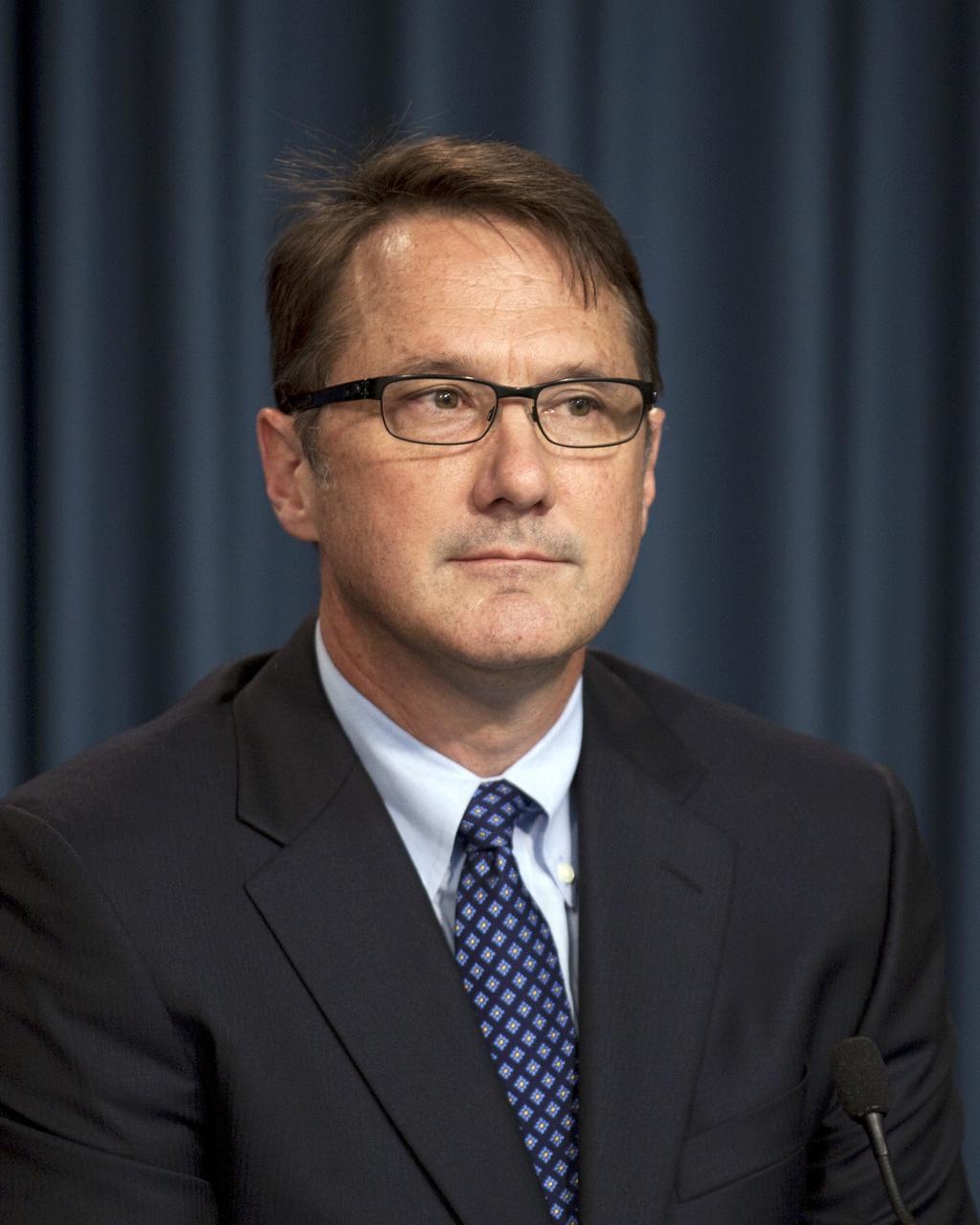
CAPE CANAVERAL, Fla. -- At a news conference NASA officials and industry partners discuss progress of the agency's Commercial Crew Program. Among those participating in the briefing is John Mulholland, The Boeing Company Commercial Programs Space Exploration vice president and program manager. Through CCP, NASA is facilitating the development of U.S. commercial crew space transportation capabilities to achieve safe, reliable and cost-effective access to and from low-Earth orbit for potential future government and commercial customers. For more information, visit http://www.nasa.gov/commercialcrew Photo credit: NASA/Kim Shiflett
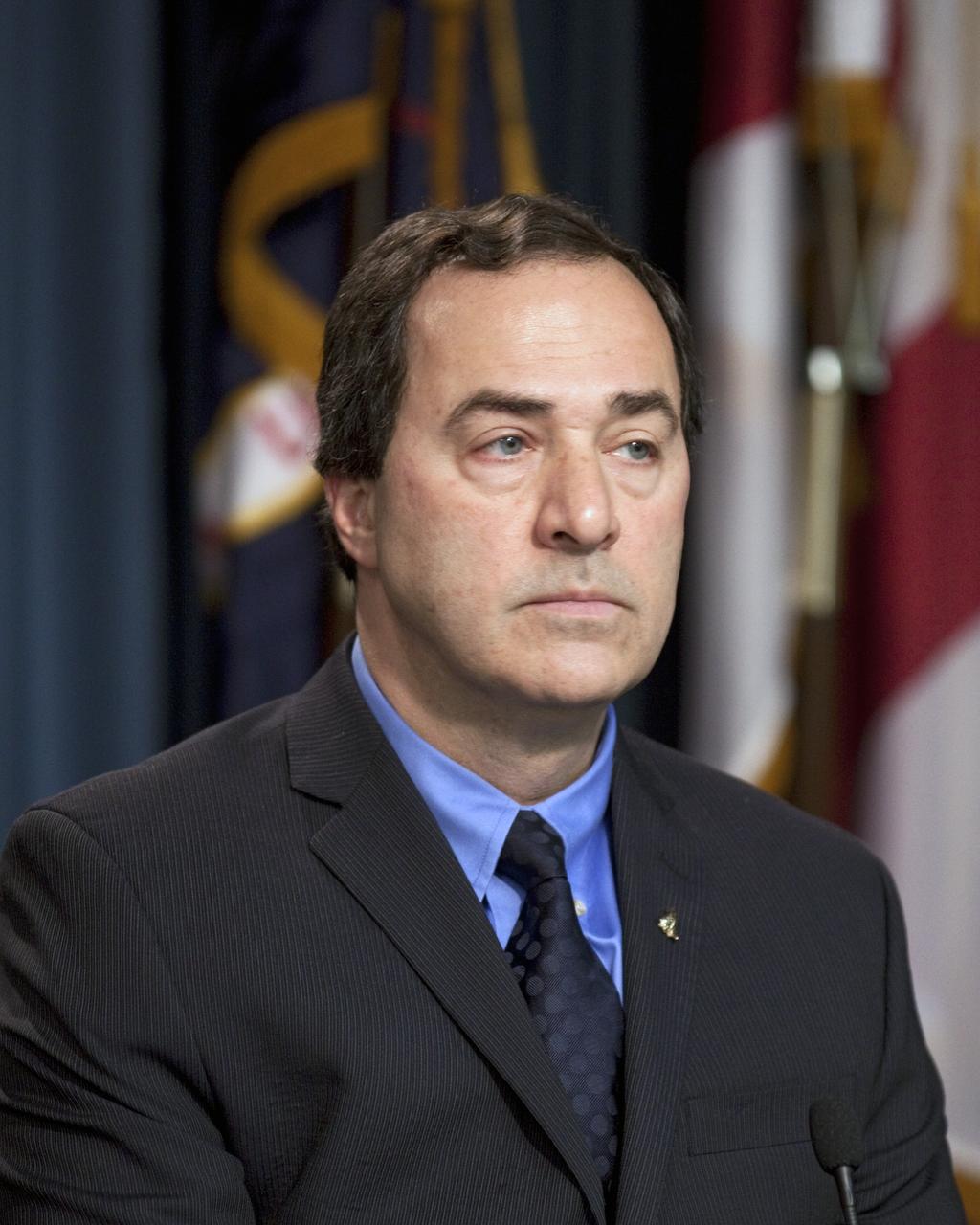
CAPE CANAVERAL, Fla. -- At a news conference NASA officials and industry partners discuss progress of the agency's Commercial Crew Program. Among those participating in the briefing is Mark Sirangelo, Sierra Nevada Corp. vice president and SNC Space Systems chairman. Through CCP, NASA is facilitating the development of U.S. commercial crew space transportation capabilities to achieve safe, reliable and cost-effective access to and from low-Earth orbit for potential future government and commercial customers. For more information, visit http://www.nasa.gov/commercialcrew Photo credit: NASA/Kim Shiflett
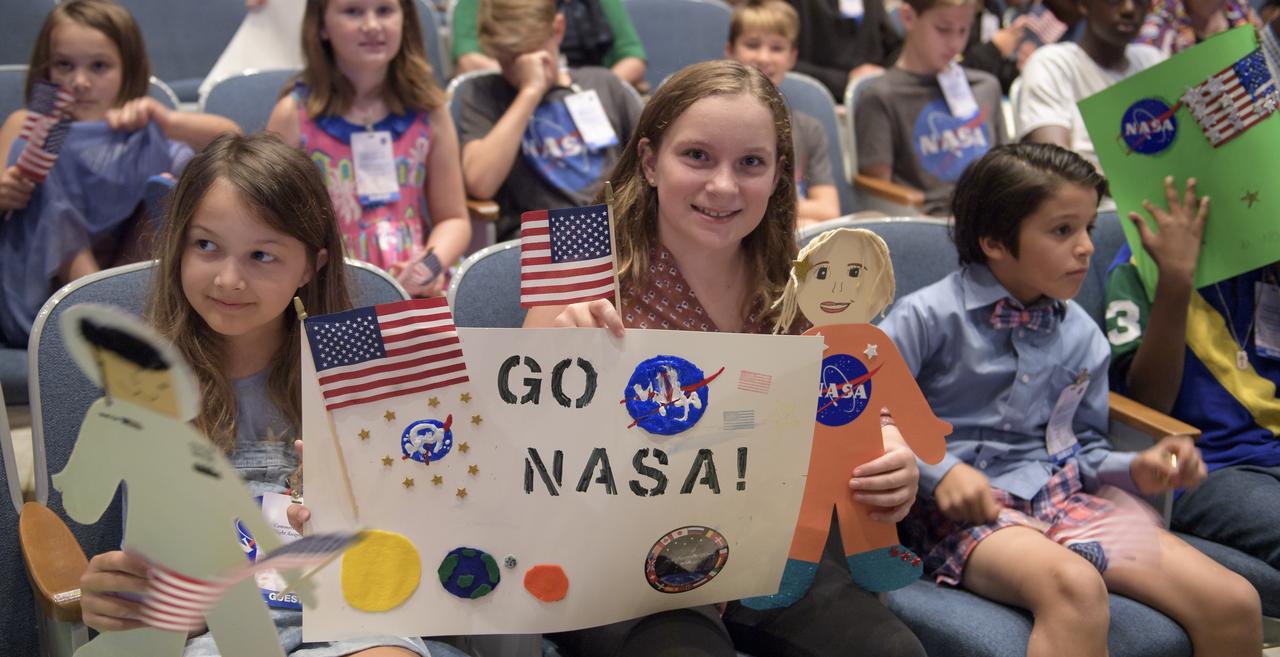
Local area school children are seen during a NASA event announcing the astronauts assigned to crew the first flight tests and missions of the Boeing CST-100 Starliner and SpaceX Crew Dragon, Friday, Aug. 3, 2018 at NASA’s Johnson Space Center in Houston, Texas. Photo Credit: (NASA/Bill Ingalls)
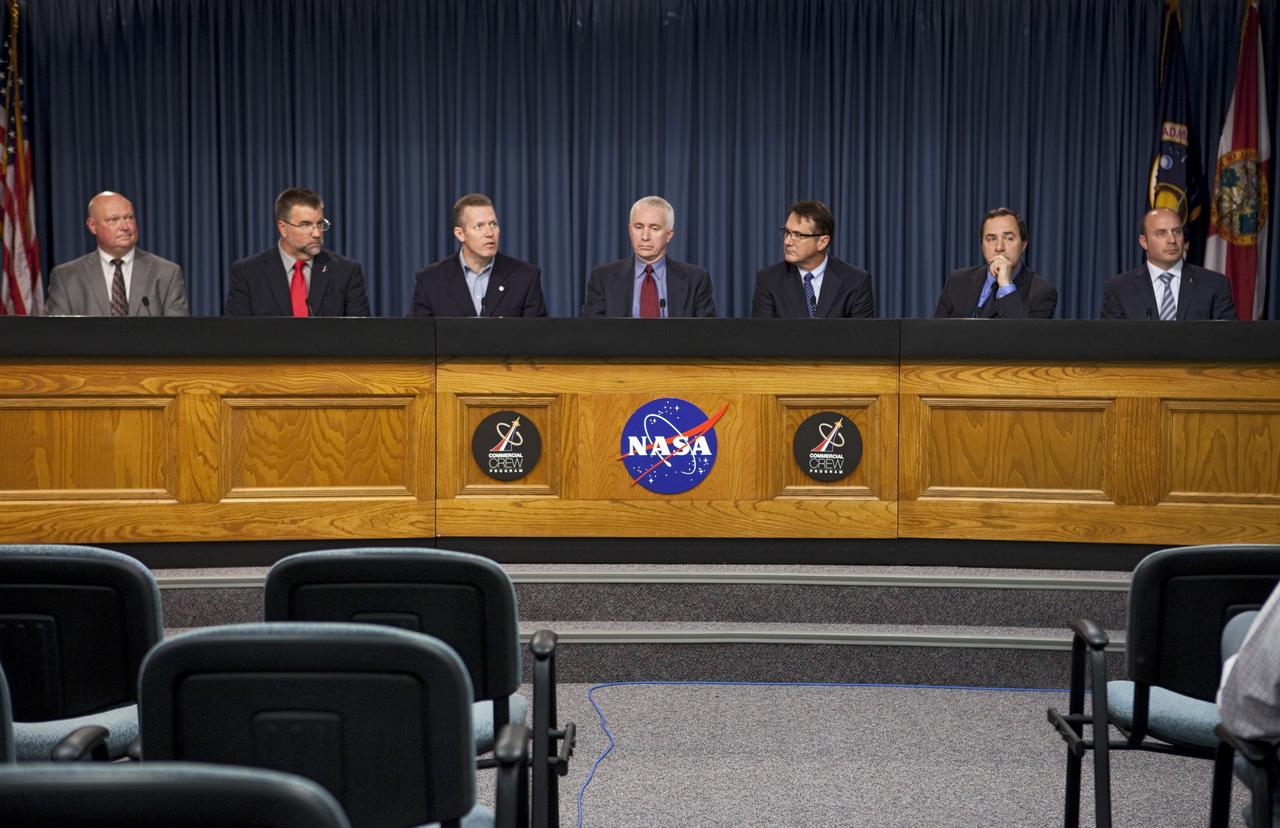
CAPE CANAVERAL, Fla. -- At a news conference NASA officials and industry partners discuss progress of the agency's Commercial Crew Program CCP. Participating in the briefing, from the left are, Mike Curie, NASA Public Affairs, Ed Mango, NASA Commercial Crew Program manager, Phil McAlister, NASA Commercial Spaceflight Development director, Rob Meyerson, Blue Origin president and program manager, John Mulholland, The Boeing Company Commercial Programs Space Exploration vice president and program manager, Mark Sirangelo, Sierra Nevada Corp. vice president and SNC Space Systems chairman and Garrett Reisman, Space Exploration Technologies SpaceX Commercial Crew project manager. Through CCP, NASA is facilitating the development of U.S. commercial crew space transportation capabilities to achieve safe, reliable and cost-effective access to and from low-Earth orbit for potential future government and commercial customers. For more information, visit http://www.nasa.gov/commercialcrew Photo credit: NASA/Kim Shiflett

A technician works on the interior structure of the SpaceX Crew Dragon spacecraft at the company's facility in Hawthorne, California. SpaceX is developing its Crew Dragon in partnership with NASA’s Commercial Crew Program to carry astronauts to and from the International Space Station.
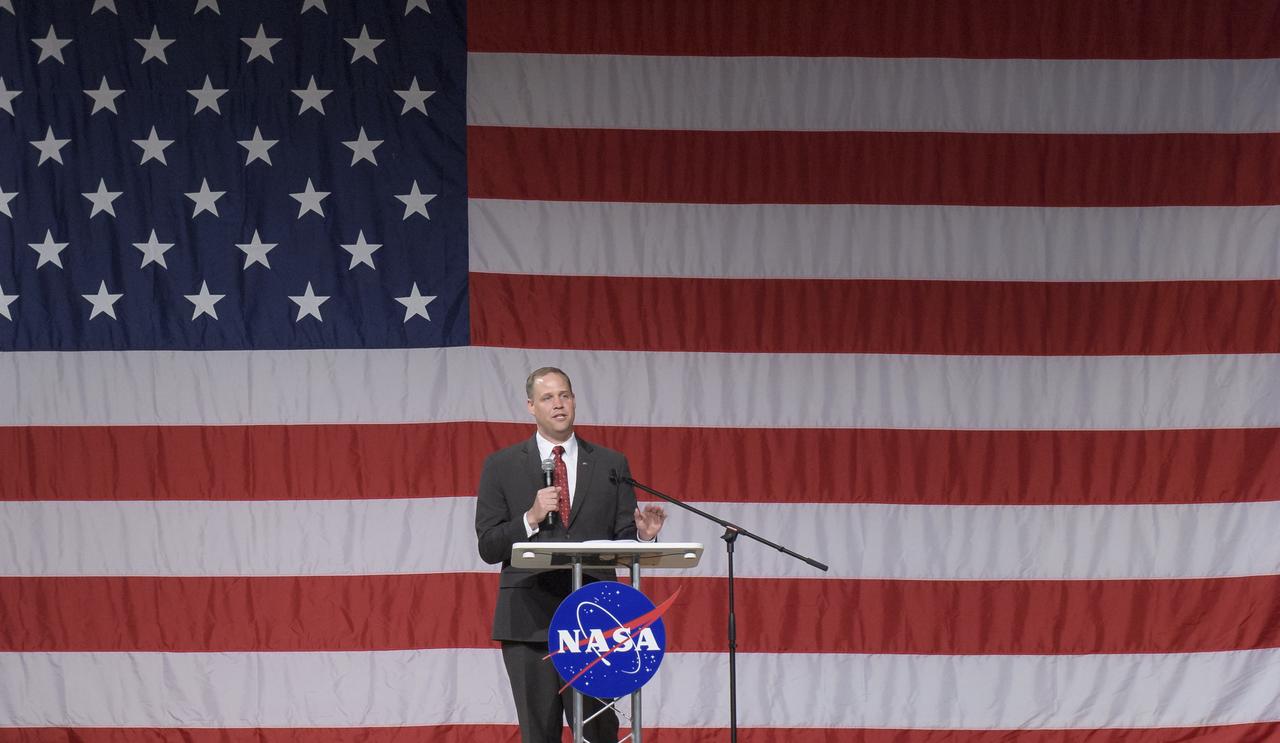
NASA Administrator Jim Bridenstine gives remarks during a NASA event announcing the astronauts assigned to crew the first flight tests and missions of the Boeing CST-100 Starliner and SpaceX Crew Dragon, Friday, Aug. 3, 2018 at NASA’s Johnson Space Center in Houston, Texas. Photo Credit: (NASA/Bill Ingalls)
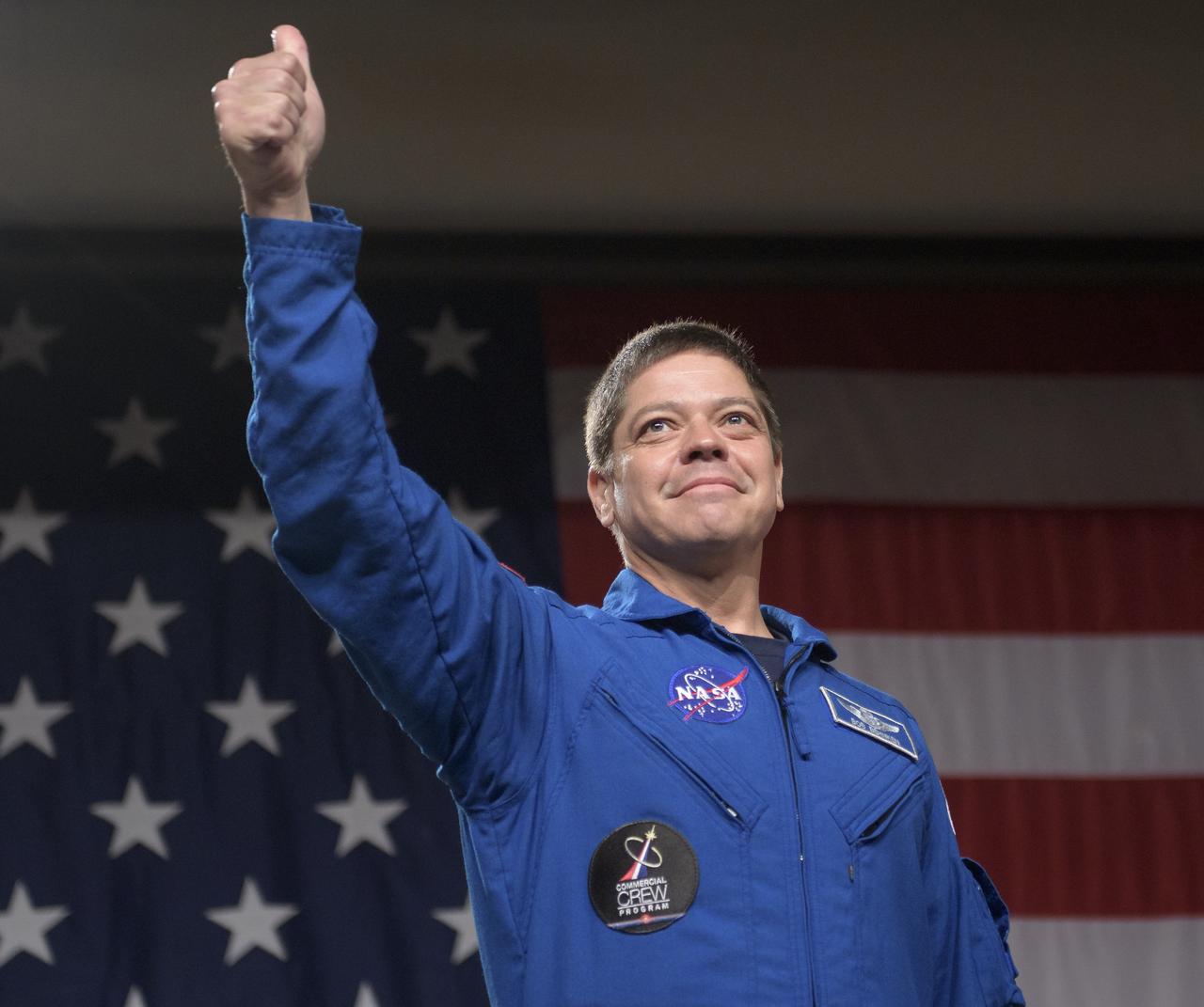
NASA astronaut Bob Behnken is seen during a NASA event where it was announced that he, and NASA astronaut Doug Hurley are assigned to SpaceX’s Crew Dragon Demo-2 flight to the International Space Station, Friday, Aug. 3, 2018 at NASA’s Johnson Space Center in Houston, Texas. Astronauts assigned to crew the first flight tests and missions of the Boeing CST-100 Starliner and SpaceX Crew Dragon where announced during the event. Photo Credit: (NASA/Bill Ingalls)

NASA astronaut Nicole Aunapu Mann is seen during a NASA event where it was announced that she, NASA astronaut Eric Boe, and Boeing astronaut Chris Ferguson are assigned to the Boeing CST-100 Starliner Crew Test Flight to the International Space Station, Friday, Aug. 3, 2018 at NASA’s Johnson Space Center in Houston, Texas. Astronauts assigned to crew the first flight tests and missions of the Boeing CST-100 Starliner and SpaceX Crew Dragon where announced during the event. Photo Credit: (NASA/Bill Ingalls)
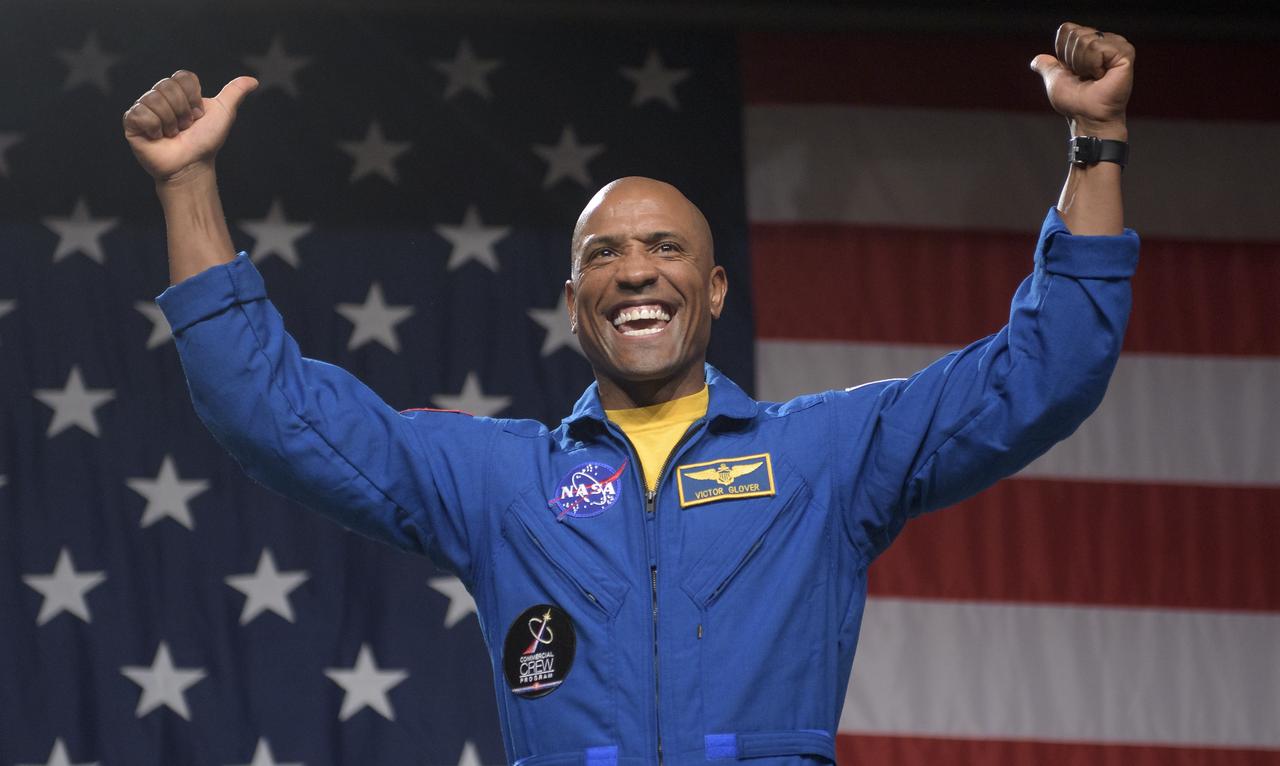
NASA astronaut Victor Glover is seen during a NASA event where it was announced that he, and NASA astronaut Mike Hopkins are assigned to the first mission to the International Space Station onboard SpaceX’s Crew Dragon, Friday, Aug. 3, 2018 at NASA’s Johnson Space Center in Houston, Texas. Astronauts assigned to crew the first flight tests and missions of the Boeing CST-100 Starliner and SpaceX Crew Dragon where announced during the event. Photo Credit: (NASA/Bill Ingalls)
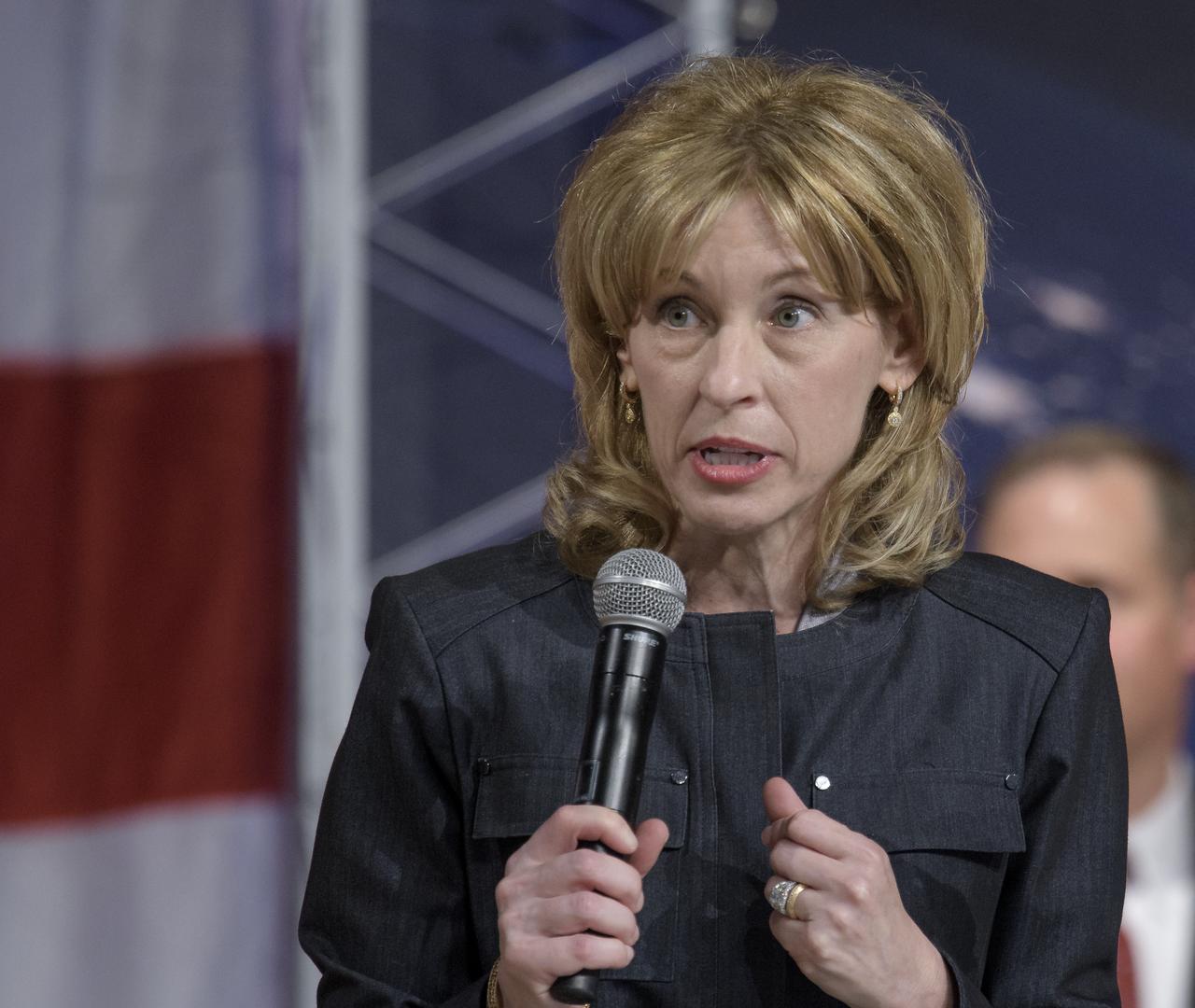
Boeing Defense, Space and Security President and CEO Leanne Caret gives remarks during a NASA event announcing the astronauts assigned to crew the first flight tests and missions of the Boeing CST-100 Starliner and SpaceX Crew Dragon, Friday, Aug. 3, 2018 at NASA’s Johnson Space Center in Houston, Texas. Photo Credit: (NASA/Bill Ingalls)
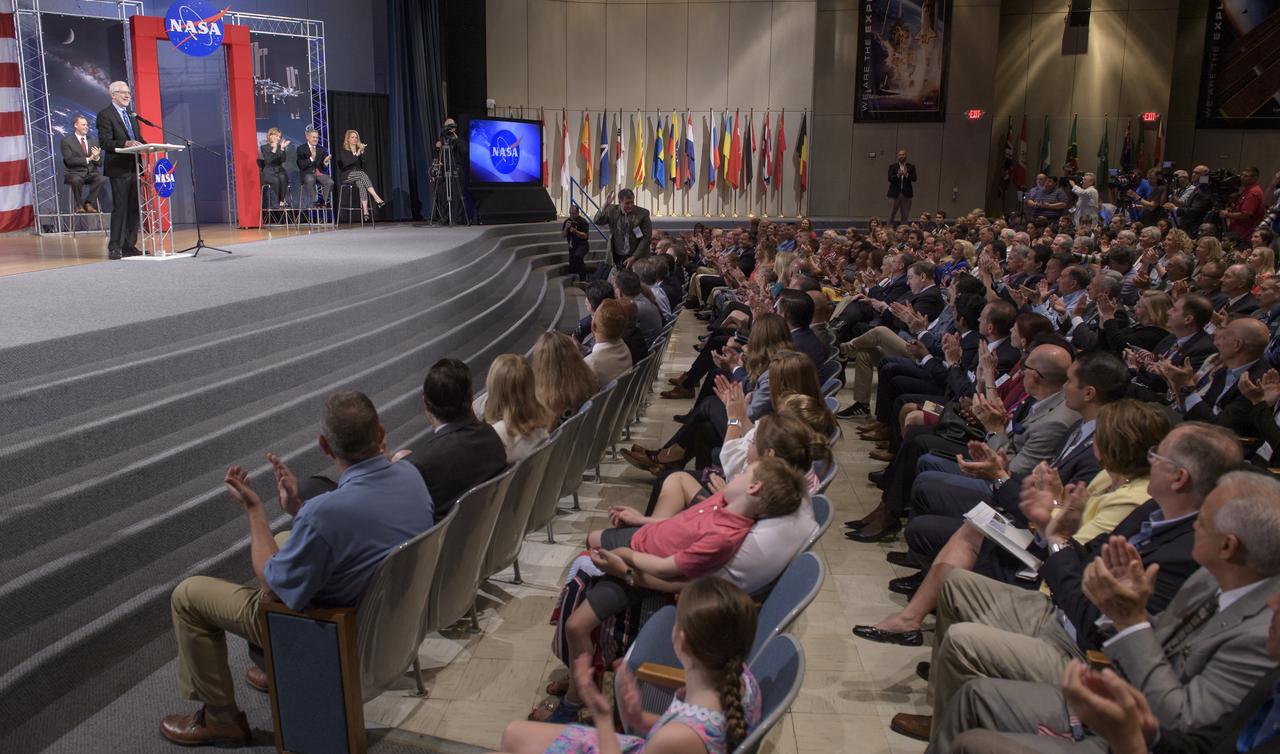
NASA Johnson Space Center Director Mark Geyer gives remarks during a NASA event announcing the astronauts assigned to crew the first flight tests and missions of the Boeing CST-100 Starliner and SpaceX Crew Dragon, Friday, Aug. 3, 2018 at NASA’s Johnson Space Center in Houston, Texas. Photo Credit: (NASA/Bill Ingalls)
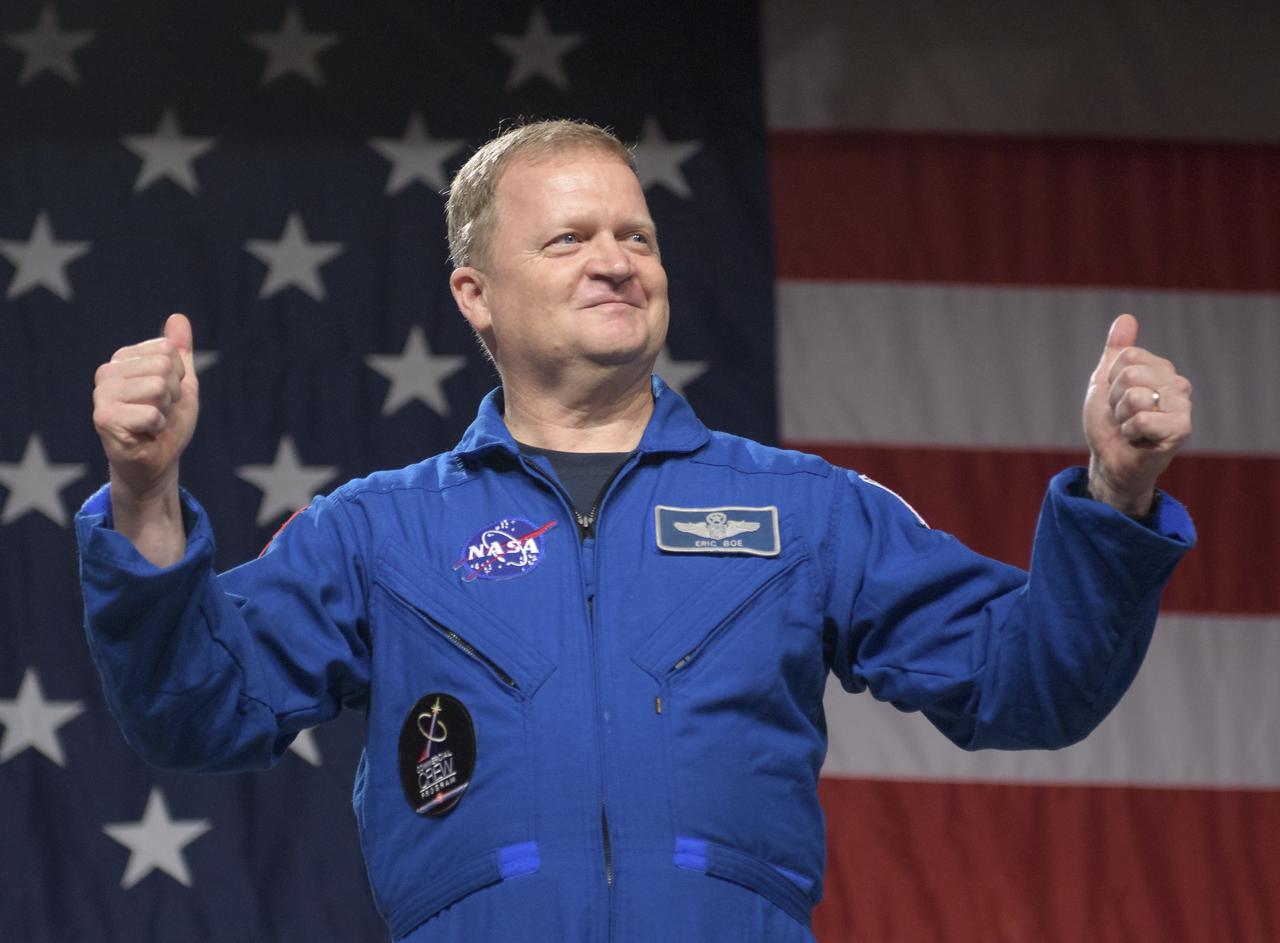
NASA astronaut Eric Boe is seen during a NASA event where it was announced that he, Boeing astronaut Chris Ferguson, and NASA astronaut Nicole Aunapu Mann are assigned to the Boeing CST-100 Starliner Crew Test Flight to the International Space Station, Friday, Aug. 3, 2018 at NASA’s Johnson Space Center in Houston, Texas. Astronauts assigned to crew the first flight tests and missions of the Boeing CST-100 Starliner and SpaceX Crew Dragon where announced during the event. Photo Credit: (NASA/Bill Ingalls)
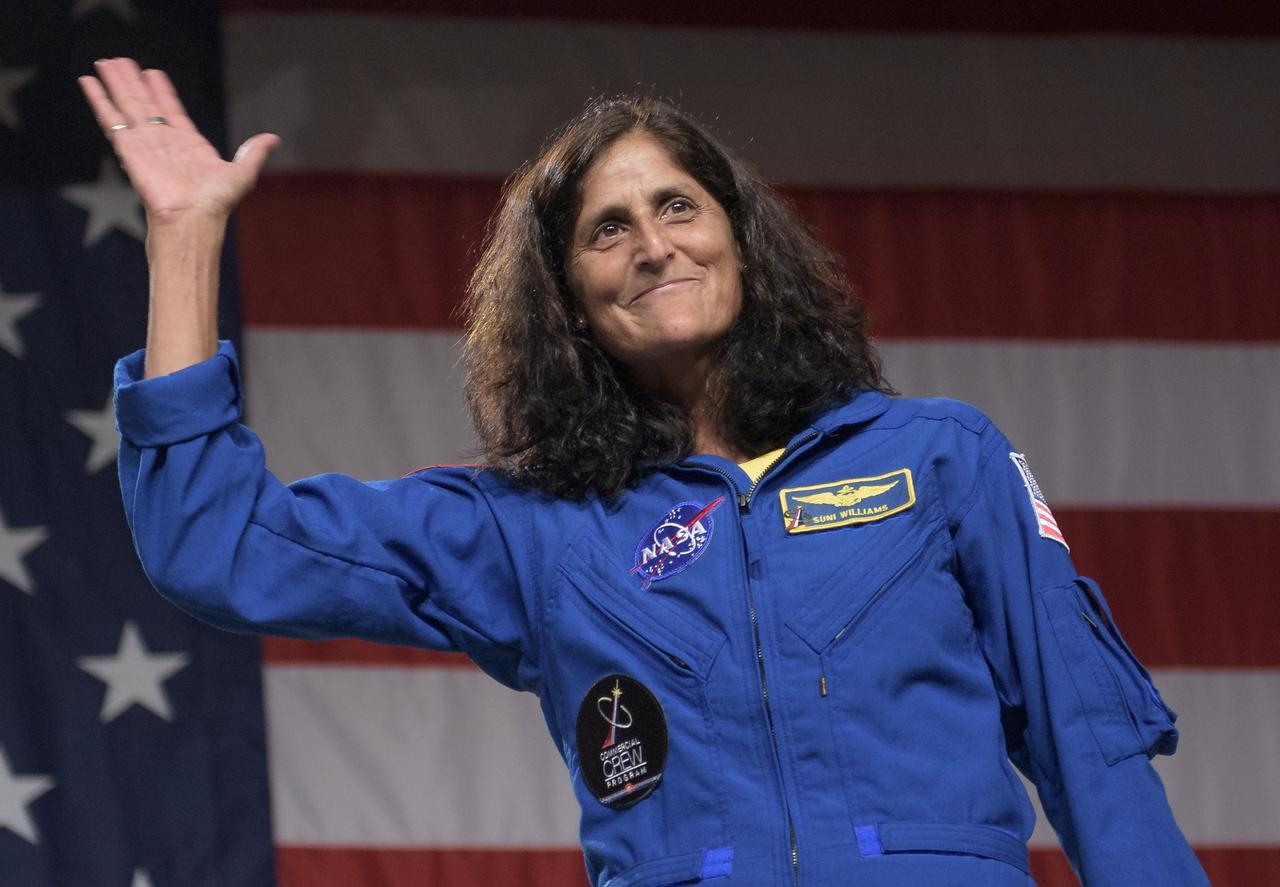
NASA astronaut Suni Williams is seen during a NASA event where it was announced that she, and NASA astronaut Josh Cassada are assigned to the first mission to the International Space Station onboard Boeing’s CST-100 Starliner, Friday, Aug. 3, 2018 at NASA’s Johnson Space Center in Houston, Texas. Astronauts assigned to crew the first flight tests and missions of the Boeing CST-100 Starliner and SpaceX Crew Dragon where announced during the event. Photo Credit: (NASA/Bill Ingalls)
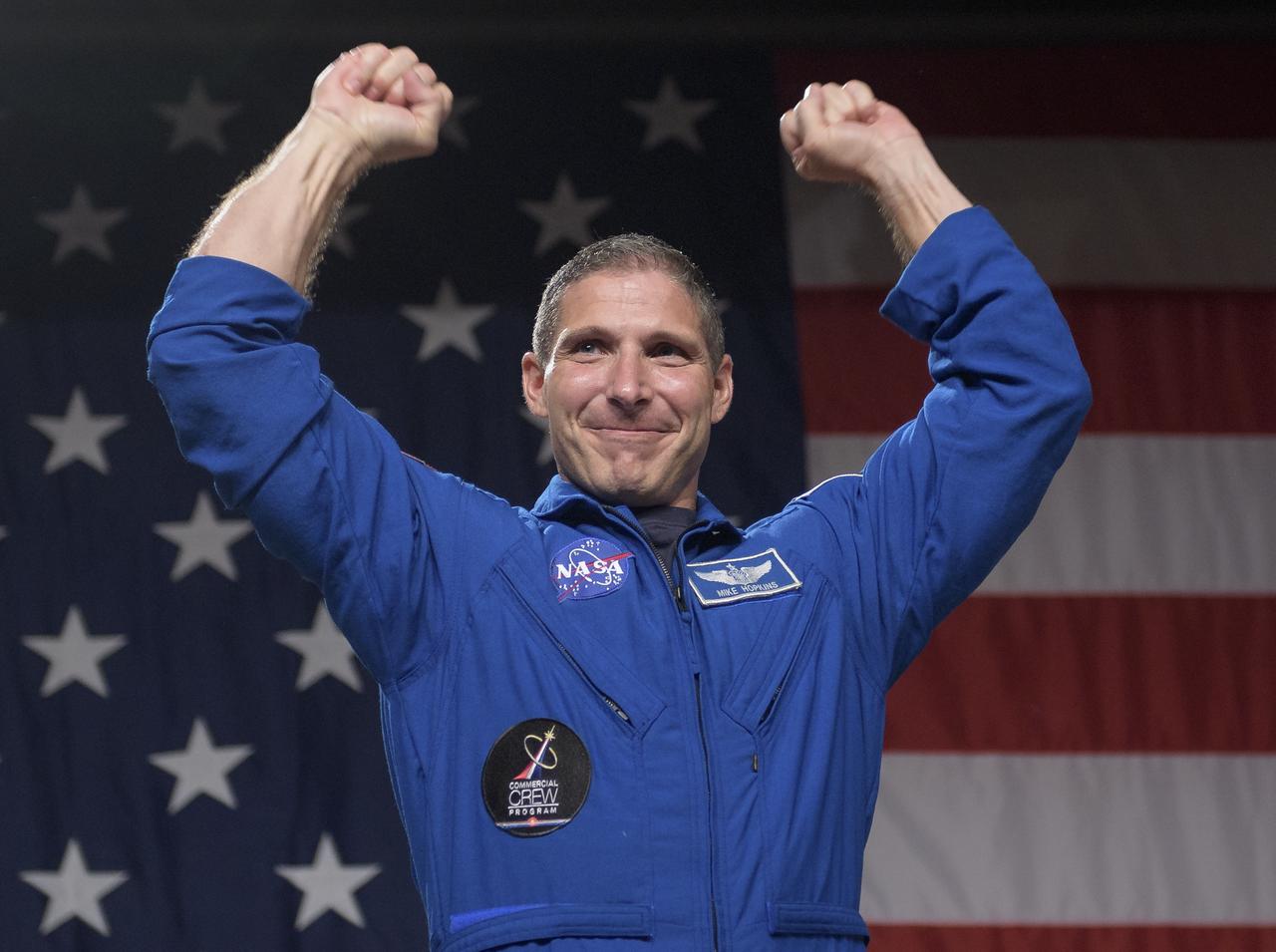
NASA astronaut Mike Hopkins is seen during a NASA event where it was announced that he, and NASA astronaut Victor Glover are assigned to the first mission to the International Space Station onboard SpaceX’s Crew Dragon, Friday, Aug. 3, 2018 at NASA’s Johnson Space Center in Houston, Texas. Astronauts assigned to crew the first flight tests and missions of the Boeing CST-100 Starliner and SpaceX Crew Dragon where announced during the event. Photo Credit: (NASA/Bill Ingalls)

SpaceX President and Chief Operation Officer Gwynne Shotwell gives remarks during a NASA event announcing the astronauts assigned to crew the first flight tests and missions of the Boeing CST-100 Starliner and SpaceX Crew Dragon, Friday, Aug. 3, 2018 at NASA’s Johnson Space Center in Houston, Texas. Photo Credit: (NASA/Bill Ingalls)
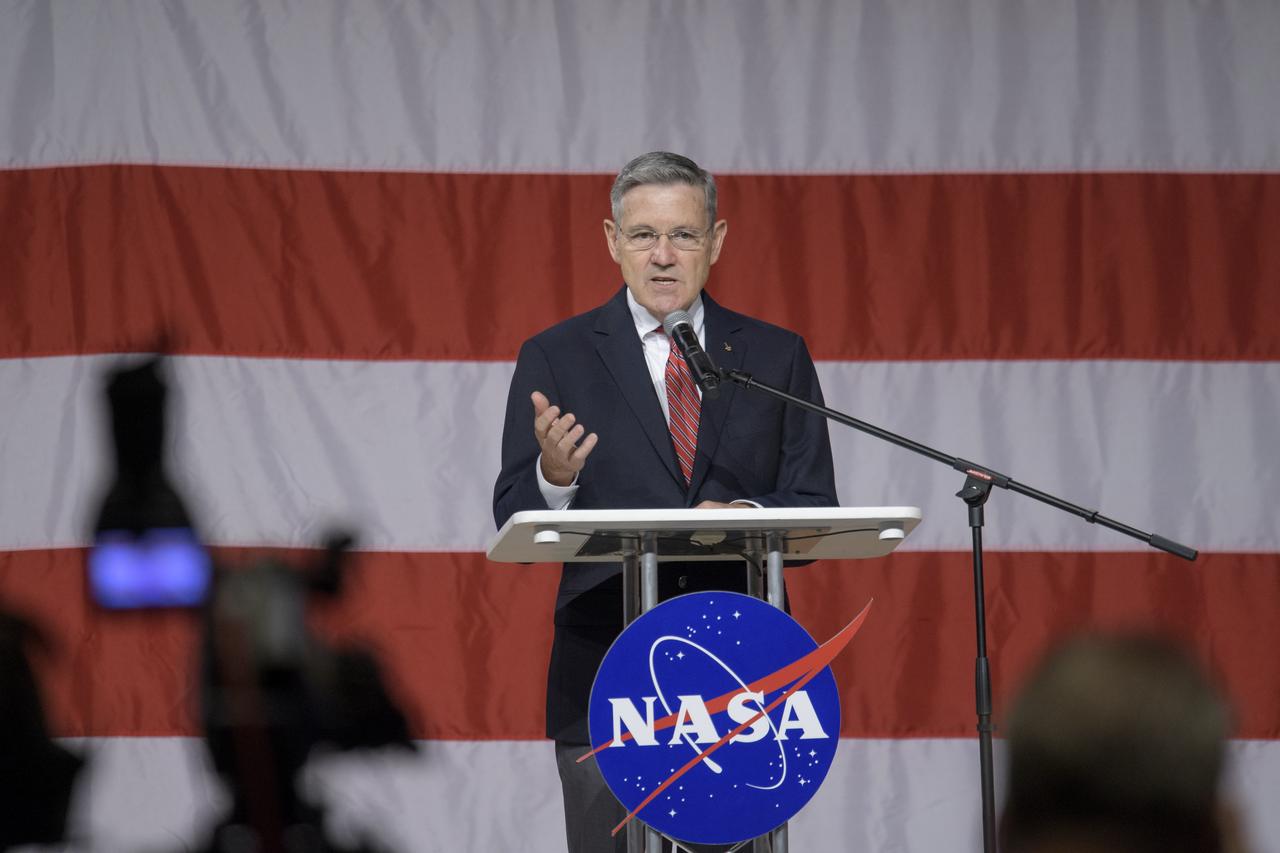
NASA Kennedy Space Center Director Bob Cabana gives remarks during a NASA event announcing the astronauts assigned to crew the first flight tests and missions of the Boeing CST-100 Starliner and SpaceX Crew Dragon, Friday, Aug. 3, 2018 at NASA’s Johnson Space Center in Houston, Texas. Photo Credit: (NASA/Bill Ingalls)
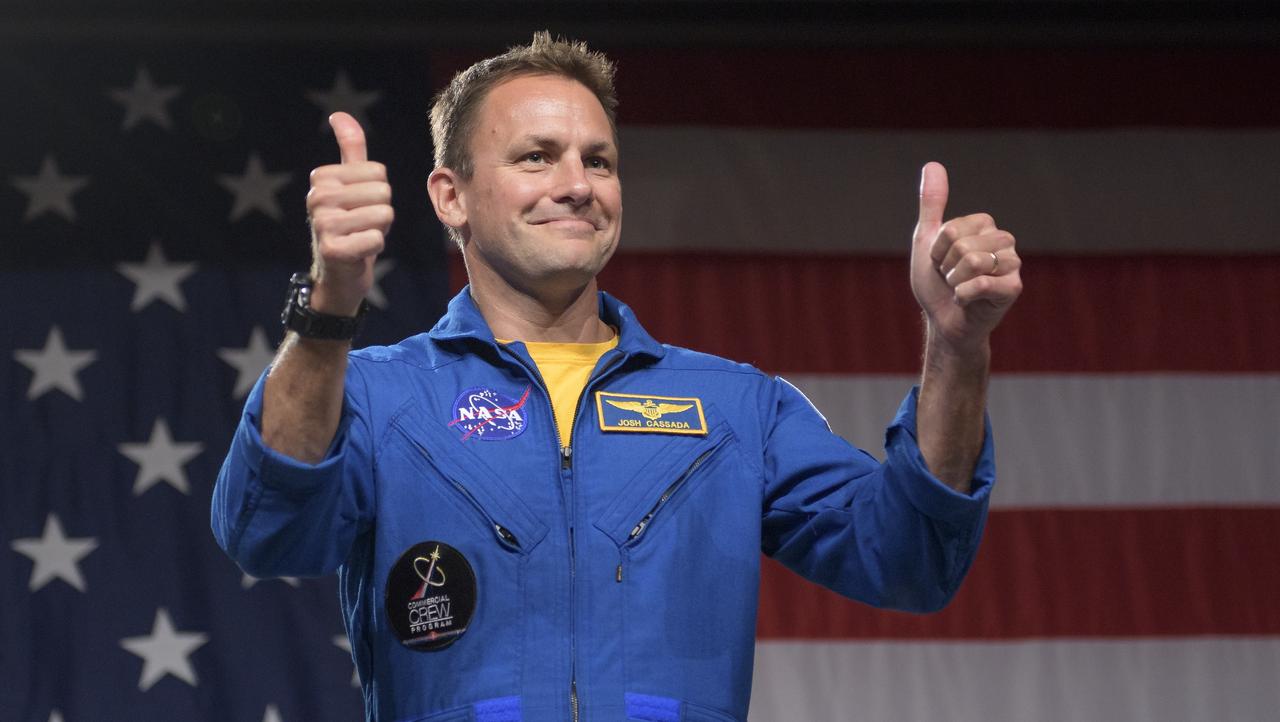
NASA astronaut Josh Cassada is seen during a NASA event where it was announced that he, and NASA astronaut Suni Williams are assigned to the first mission to the International Space Station onboard Boeing’s CST-100 Starliner, Friday, Aug. 3, 2018 at NASA’s Johnson Space Center in Houston, Texas. Astronauts assigned to crew the first flight tests and missions of the Boeing CST-100 Starliner and SpaceX Crew Dragon where announced during the event. Photo Credit: (NASA/Bill Ingalls)
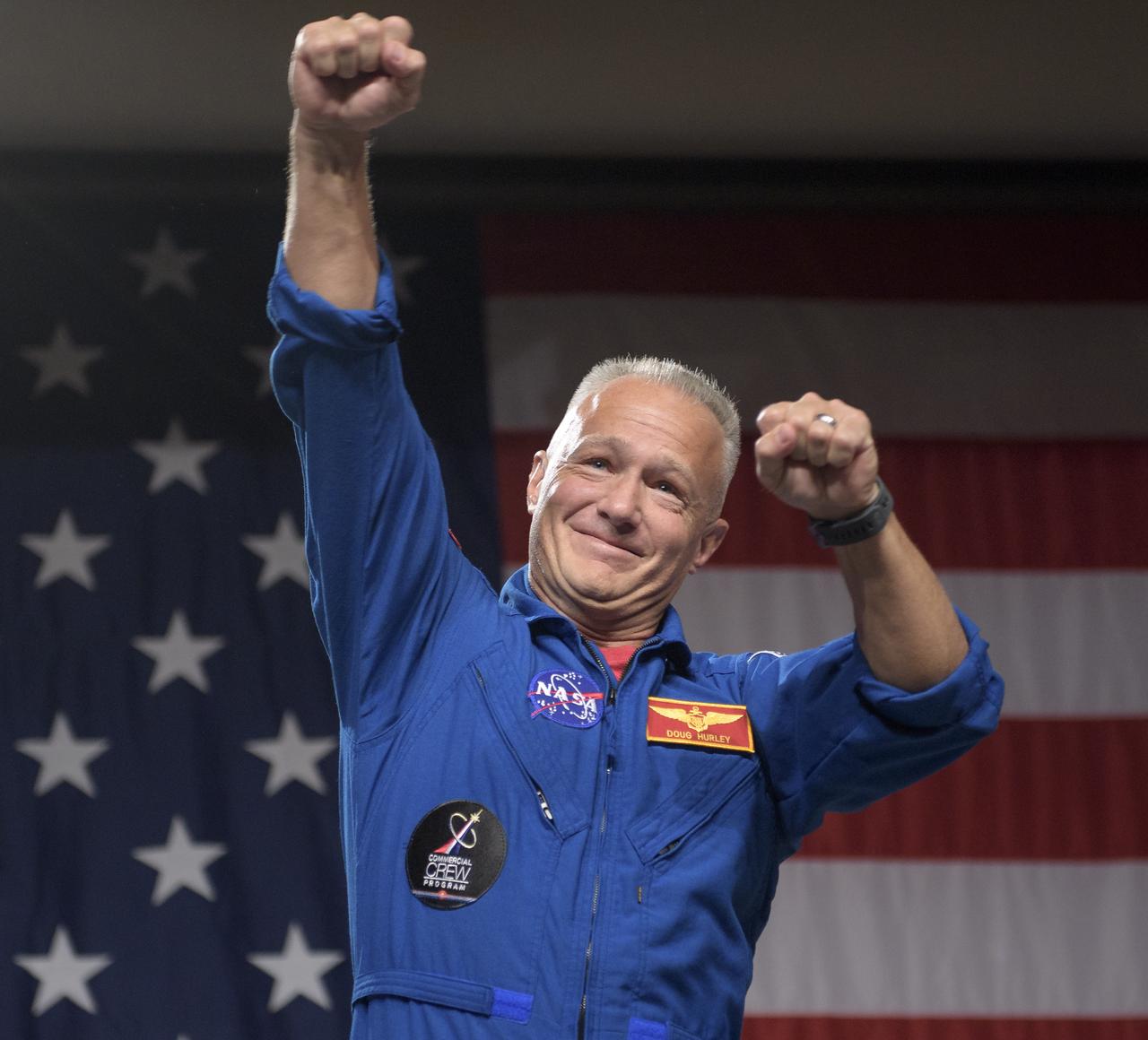
NASA astronaut Doug Hurley is seen during a NASA event where it was announced that he, and NASA astronaut Bob Behnken are assigned to SpaceX’s Crew Dragon Demo-2 flight to the International Space Station, Friday, Aug. 3, 2018 at NASA’s Johnson Space Center in Houston, Texas. Astronauts assigned to crew the first flight tests and missions of the Boeing CST-100 Starliner and SpaceX Crew Dragon where announced during the event. Photo Credit: (NASA/Bill Ingalls)
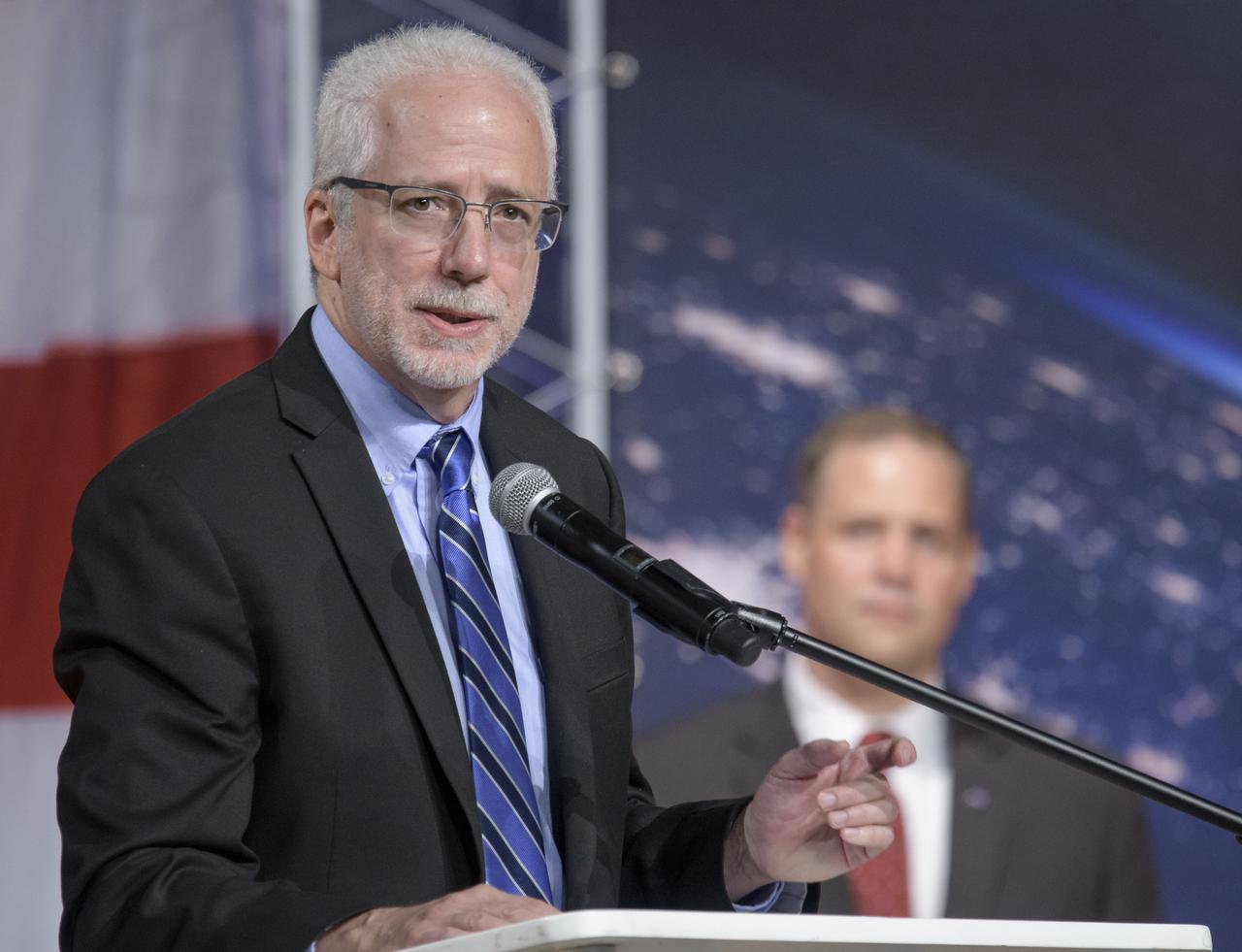
NASA Johnson Space Center Director Mark Geyer gives remarks during a NASA event announcing the astronauts assigned to crew the first flight tests and missions of the Boeing CST-100 Starliner and SpaceX Crew Dragon, Friday, Aug. 3, 2018 at NASA’s Johnson Space Center in Houston, Texas. Photo Credit: (NASA/Bill Ingalls)
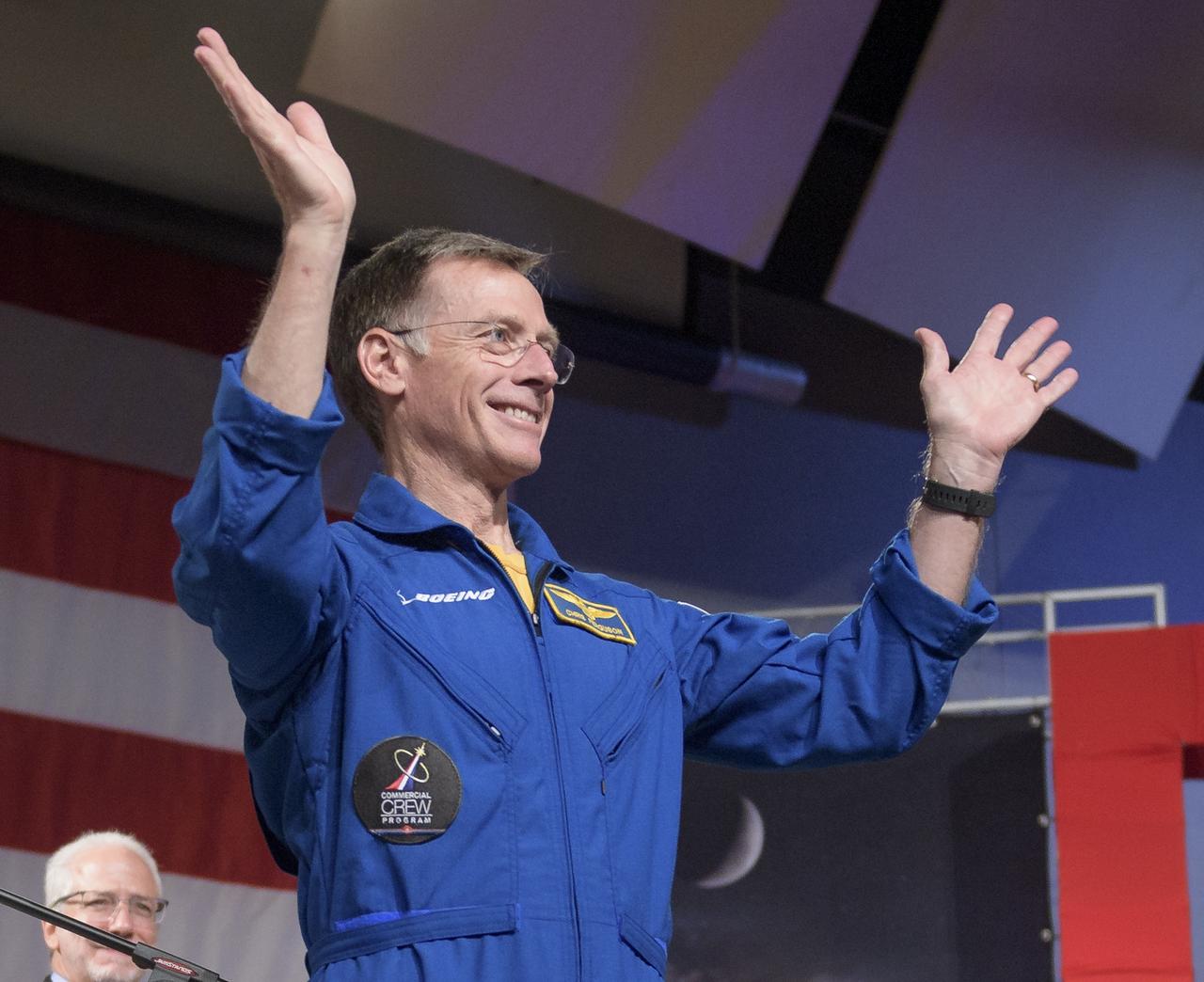
Boeing astronaut Chris Ferguson is seen during a NASA event where it was announced that he, NASA astronaut Eric Boe, and NASA astronaut Nicole Aunapu Mann are assigned to the Boeing CST-100 Starliner Crew Test Flight to the International Space Station, Friday, Aug. 3, 2018 at NASA’s Johnson Space Center in Houston, Texas. Astronauts assigned to crew the first flight tests and missions of the Boeing CST-100 Starliner and SpaceX Crew Dragon where announced during the event. Photo Credit: (NASA/Bill Ingalls)

The SpaceX spacesuit that will be worn by astronauts aboard its Crew Dragon spacecraft (in the background) during missions to and from the International Space Station. SpaceX is developing its Crew Dragon spacecraft and Falcon 9 rocket in partnership with NASA’s Commercial Crew Program to carry astronauts to and from the space station.
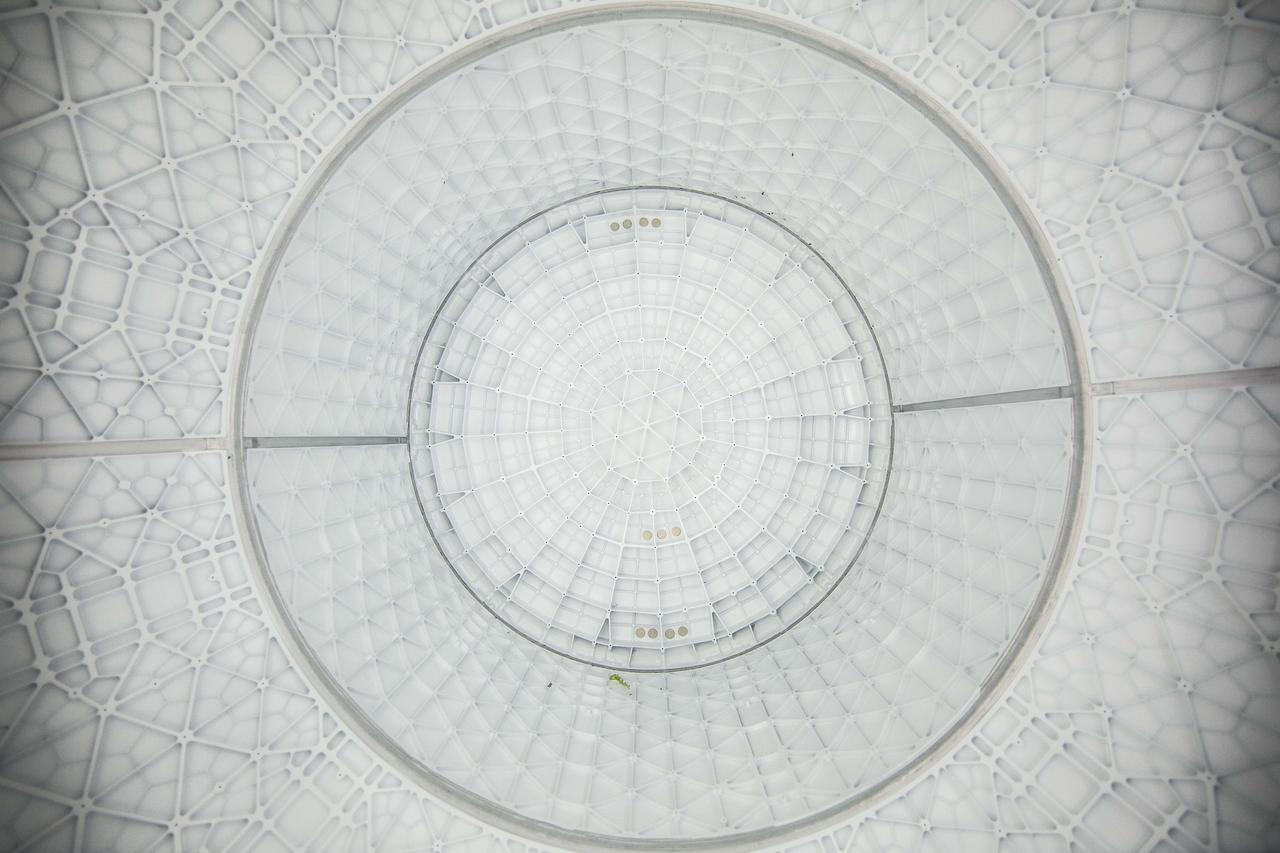
The interior structure of the SpaceX Crew Dragon spacecraft at the company's facility in Hawthorne, California. SpaceX is developing its Crew Dragon spacecraft and Falcon 9 rocket in partnership with NASA’s Commercial Crew Program to carry astronauts to and from the International Space Station.

Marshall team members participate in SpaceX booster review meeting for the Commercial Crew Program. The Commercial Crew Program is primarily based at NASA’s Kennedy Space Center in Florida, the space agency’s premier launch site. About 350 people are working in the Commercial Crew Program for NASA, with almost half involved in the work at other NASA centers, including Marshall and Johnson Space Center in Houston.
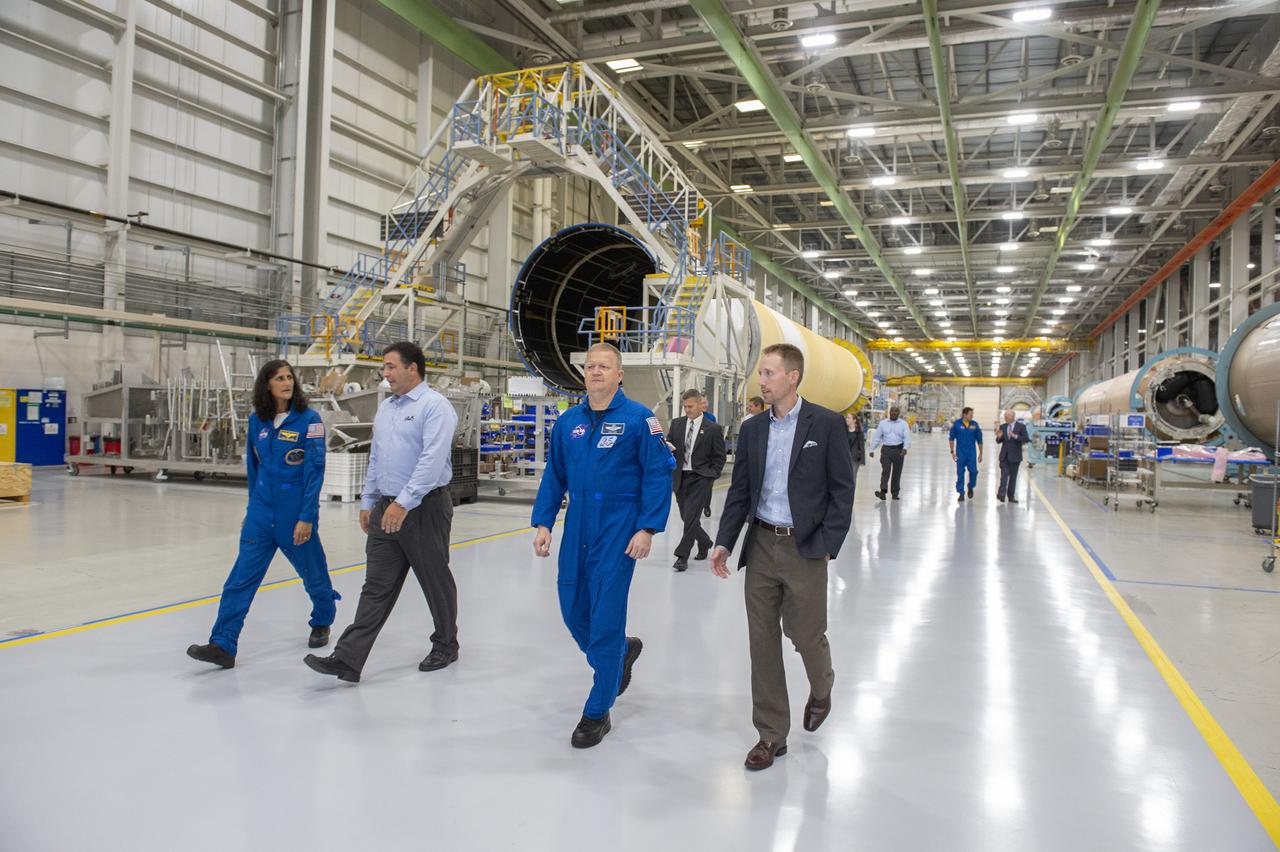
Commercial Crew astronauts toured the United Launch Alliance factory in Decatur, Alabama, on July 17, 2018. They viewed hardware to be used for upcoming commercial crew missions. At far left is Suni Williams, second from right is Eric Boe. Behind them, at right, is Josh Cassada.
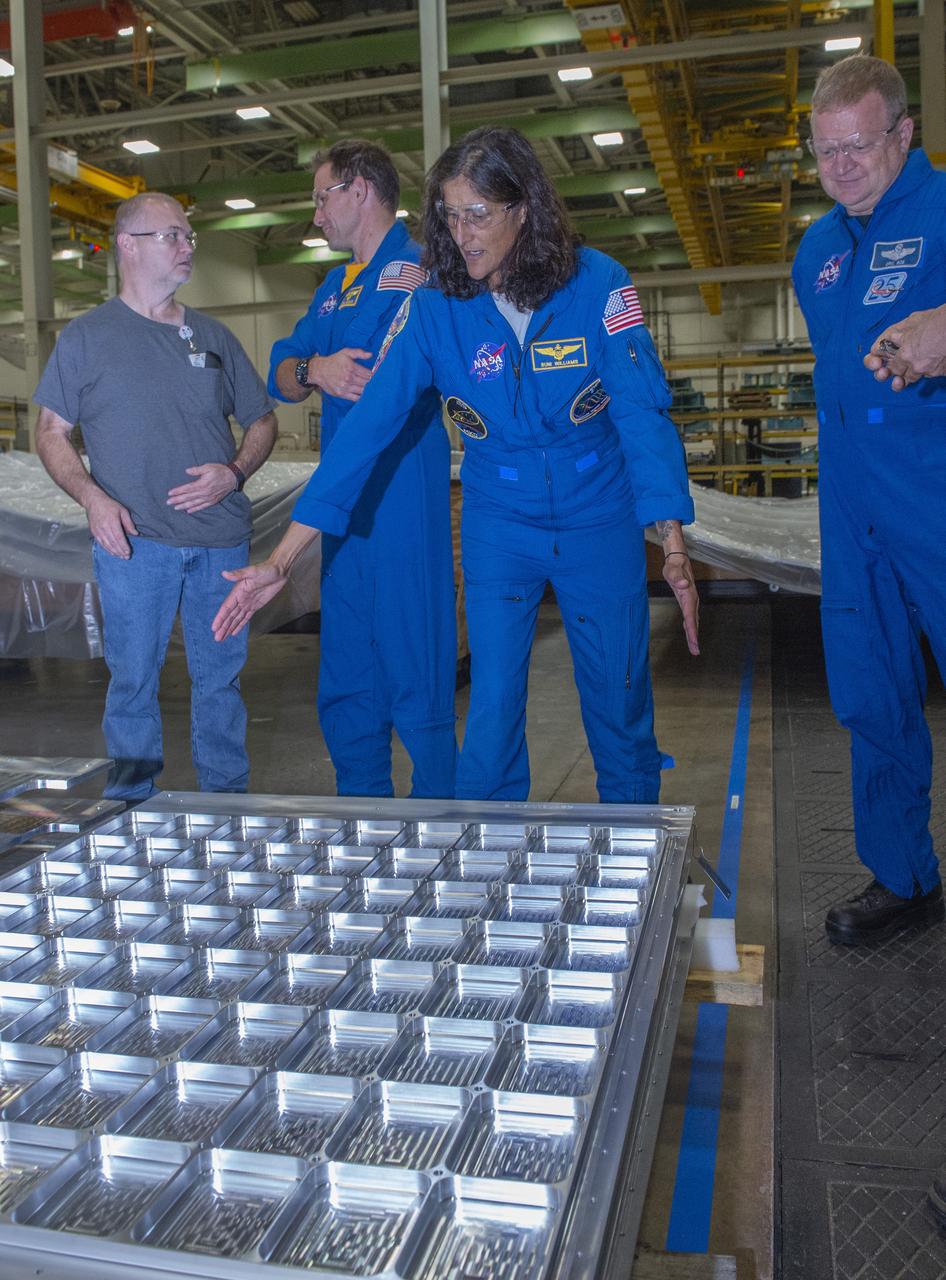
Commercial Crew astronauts toured the United Launch Alliance factory in Decatur, Alabama, on July 17, 2018. Viewing hardware to be used for upcoming commercial crew missions are, second from left, Josh Cassada, Suni Williams and Eric Boe.
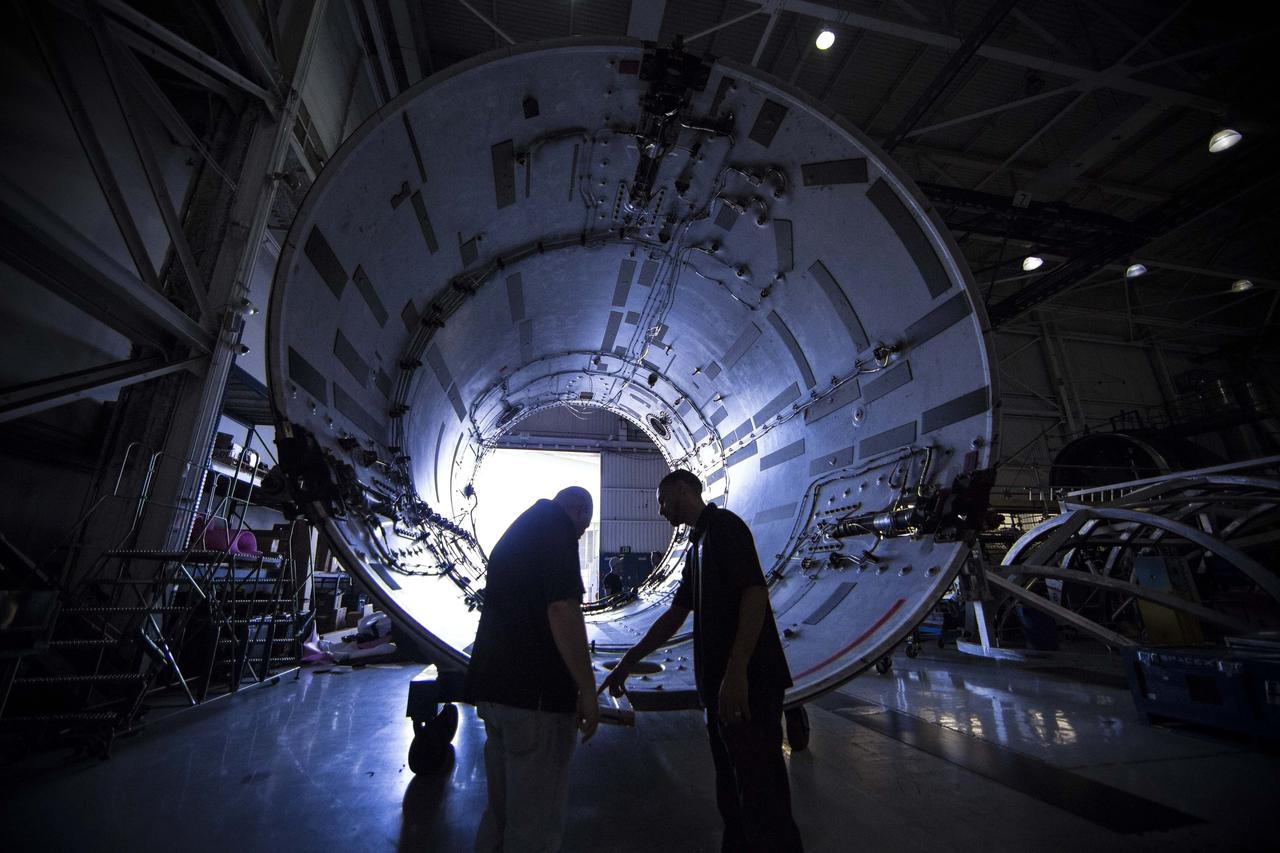
The inter-stage of a SpaceX Falcon 9 rocket inside the company's manufacturing facility. SpaceX is developing its Crew Dragon spacecraft and Falcon 9 rocket in partnership with NASA's Commercial Crew Program to carry astronauts to and from the International Space Station.
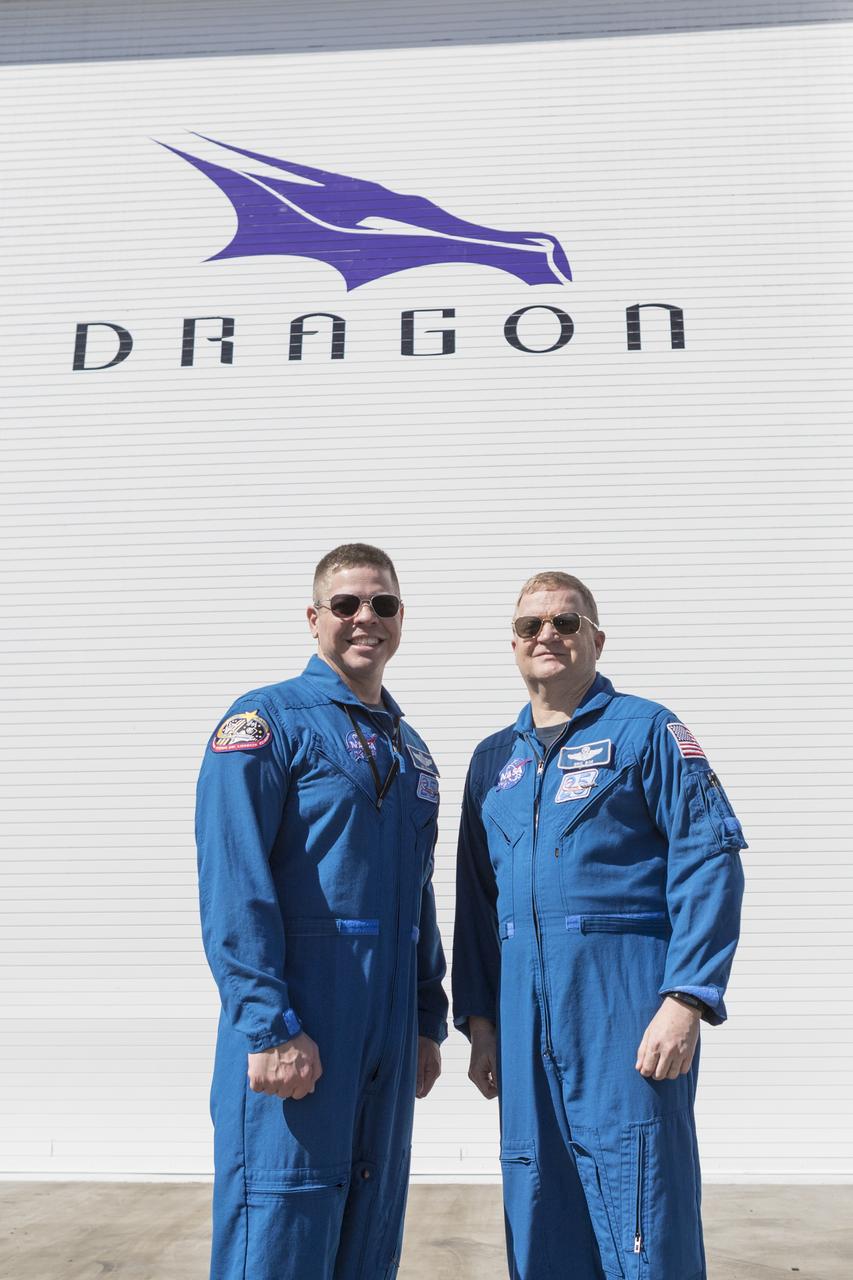
Astronauts Bob Behnken, left, and Eric Boe are outside the SpaceX facility in Hawthorne, California. SpaceX is developing its Crew Dragon spacecraft and Falcon 9 rocket in partnership with NASA’s Commercial Crew Program to carry astronauts to and from the International Space Station.
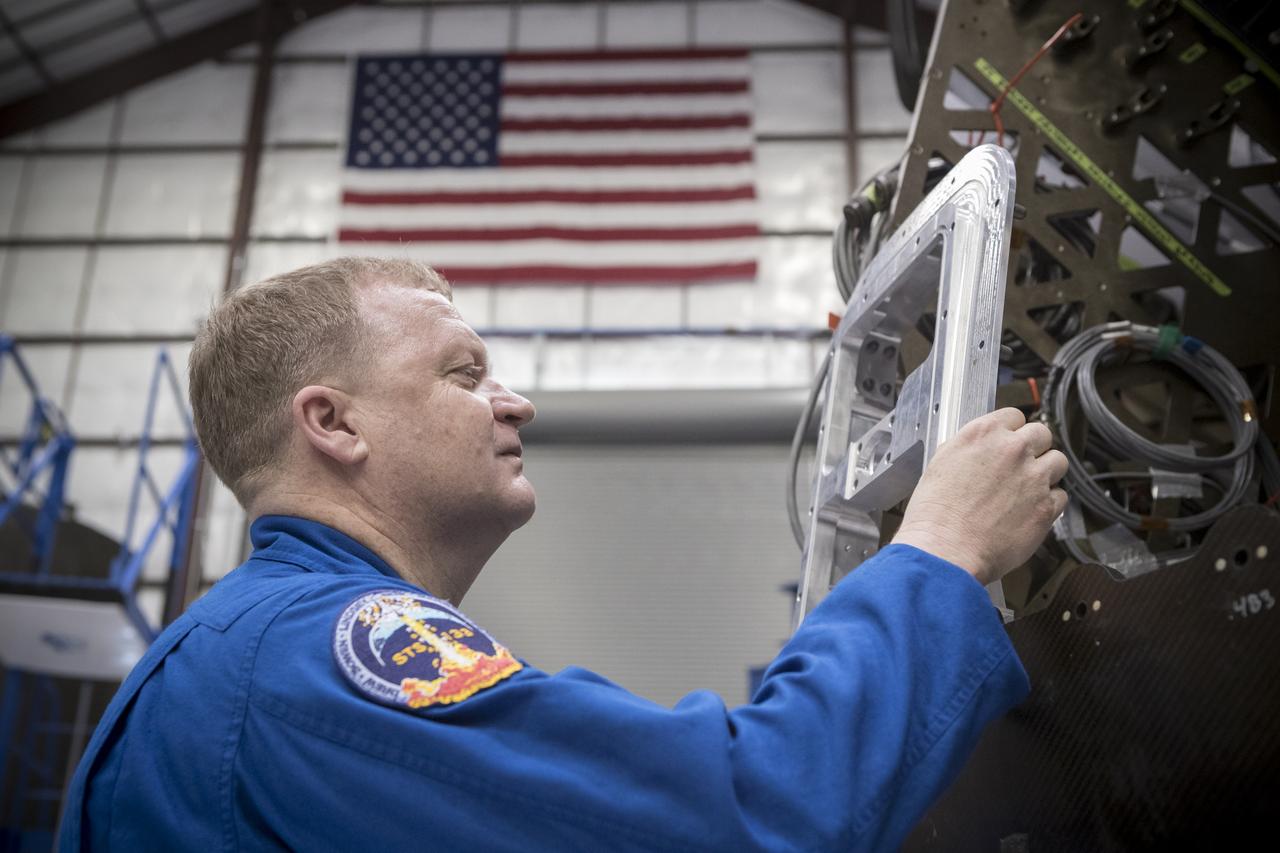
Astronaut Eric Boe examines hardware during a tour of the SpaceX facility in Hawthorne, California. SpaceX is developing its Crew Dragon spacecraft and Falcon 9 rocket in partnership with NASA’s Commercial Crew Program to carry astronauts to and from the International Space Station.

A SpaceX Merlin engine is on a test stand at the company's facility in McGregor, Texas. SpaceX is developing its Crew Dragon spacecraft and Falcon 9 rocket in partnership with NASA’s Commercial Crew Program to carry astronauts to and from the International Space Station.

A SpaceX SuperDraco engine is hot-fired at the company's test facility in McGregor, Texas. SpaceX is developing its Crew Dragon spacecraft and Falcon 9 rocket in partnership with NASA’s Commercial Crew Program to carry astronauts to and from the International Space Station.
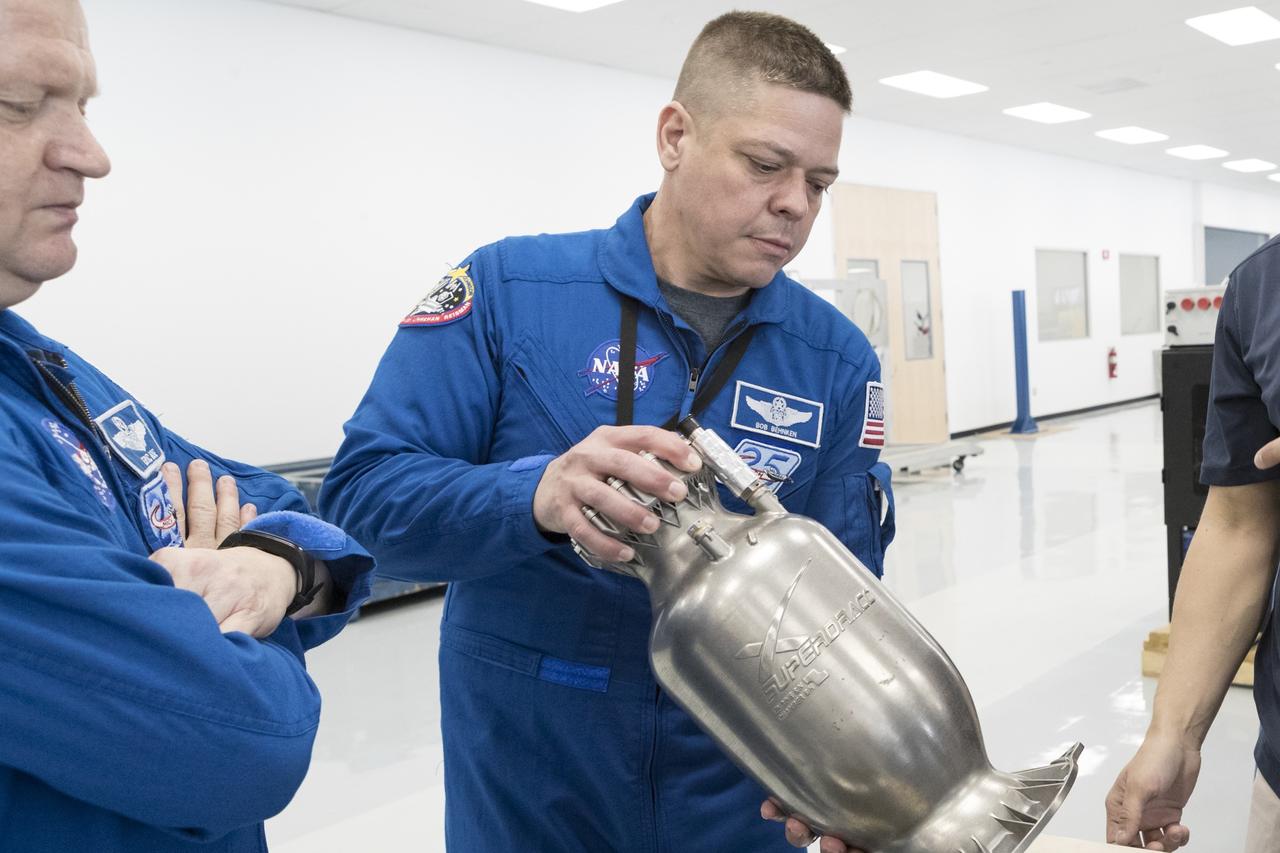
Astronaut Bob Behnken examines a SuperDraco engine during a tour of the SpaceX facility in Hawthorne, California. SpaceX is developing its Crew Dragon spacecraft and Falcon 9 rocket in partnership with NASA’s Commercial Crew Program to carry astronauts to and from the International Space Station.
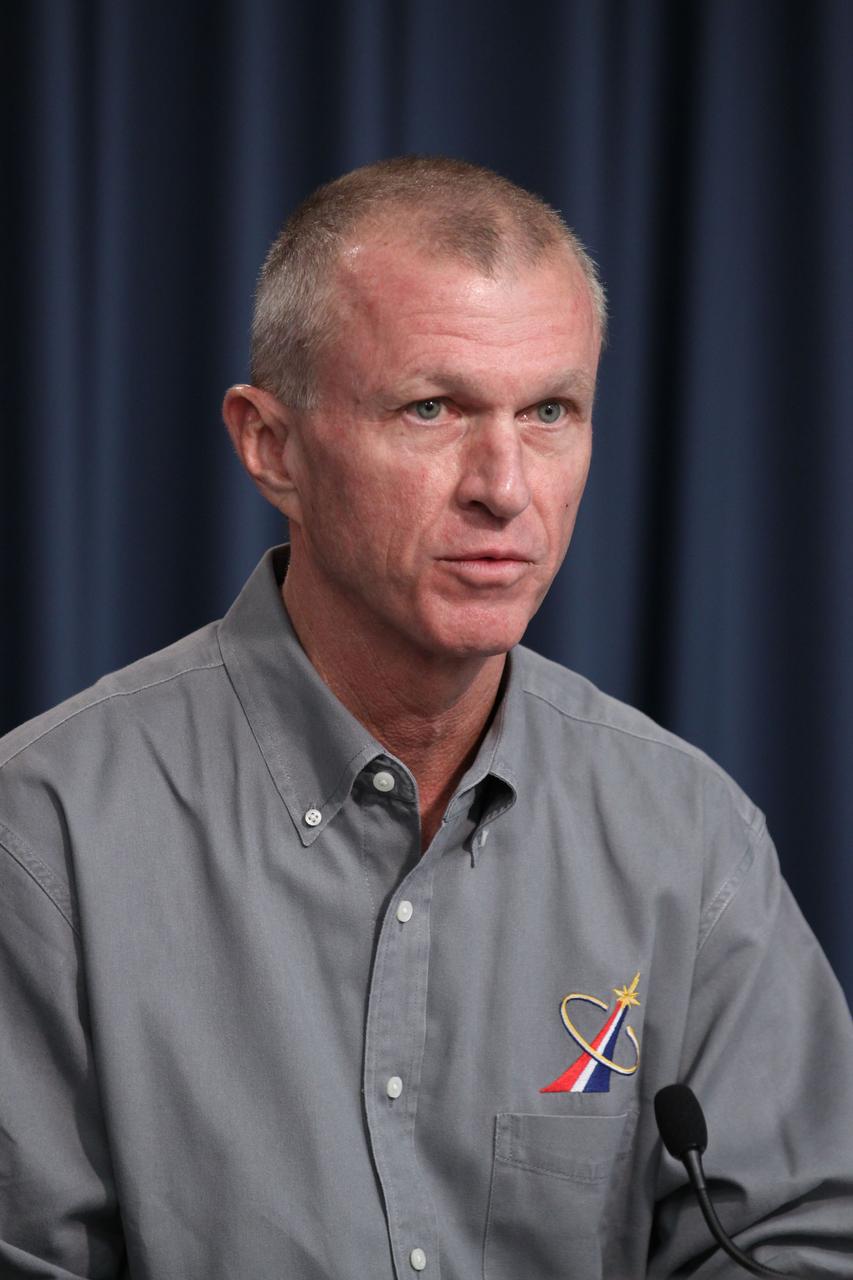
CAPE CANAVERAL, Fla. -- NASA Commercial Crew Program Deputy Manager Brent Jett talks to commercial spaceflight industry representatives about the agency's plans for certifying commercially developed spacecraft and launch systems in support of crewed missions to the International Space Station around the middle of the decade. To learn more about CCP, visit www.nasa.gov/commercialcrew. Photo credit: NASA/Kim Shiflett
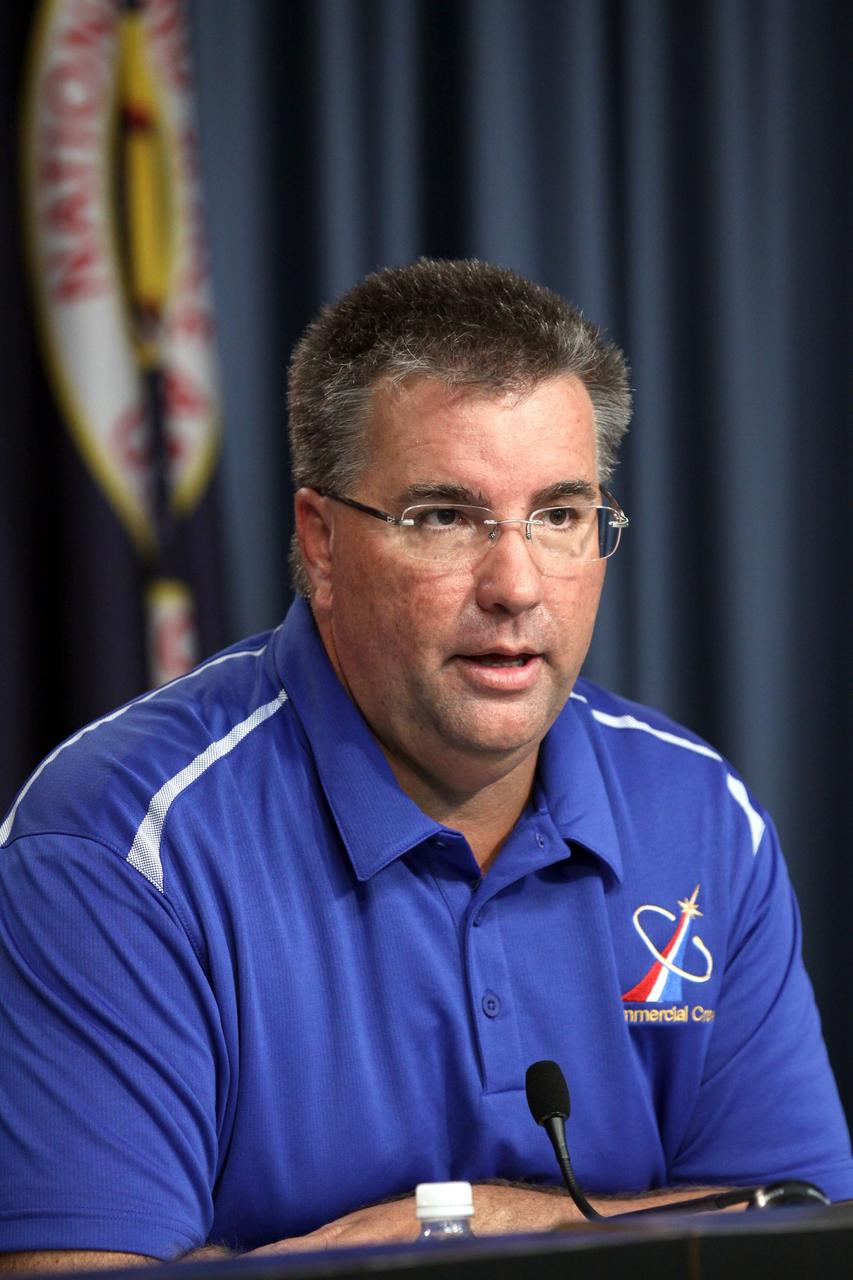
CAPE CANAVERAL, Fla. -- NASA Commercial Crew Program Manager Ed Mango talks to commercial spaceflight industry representatives about the agency's plans for certifying commercially developed spacecraft and launch systems in support of crewed missions to the International Space Station around the middle of the decade. To learn more about CCP, visit www.nasa.gov/commercialcrew. Photo credit: NASA/Kim Shiflett
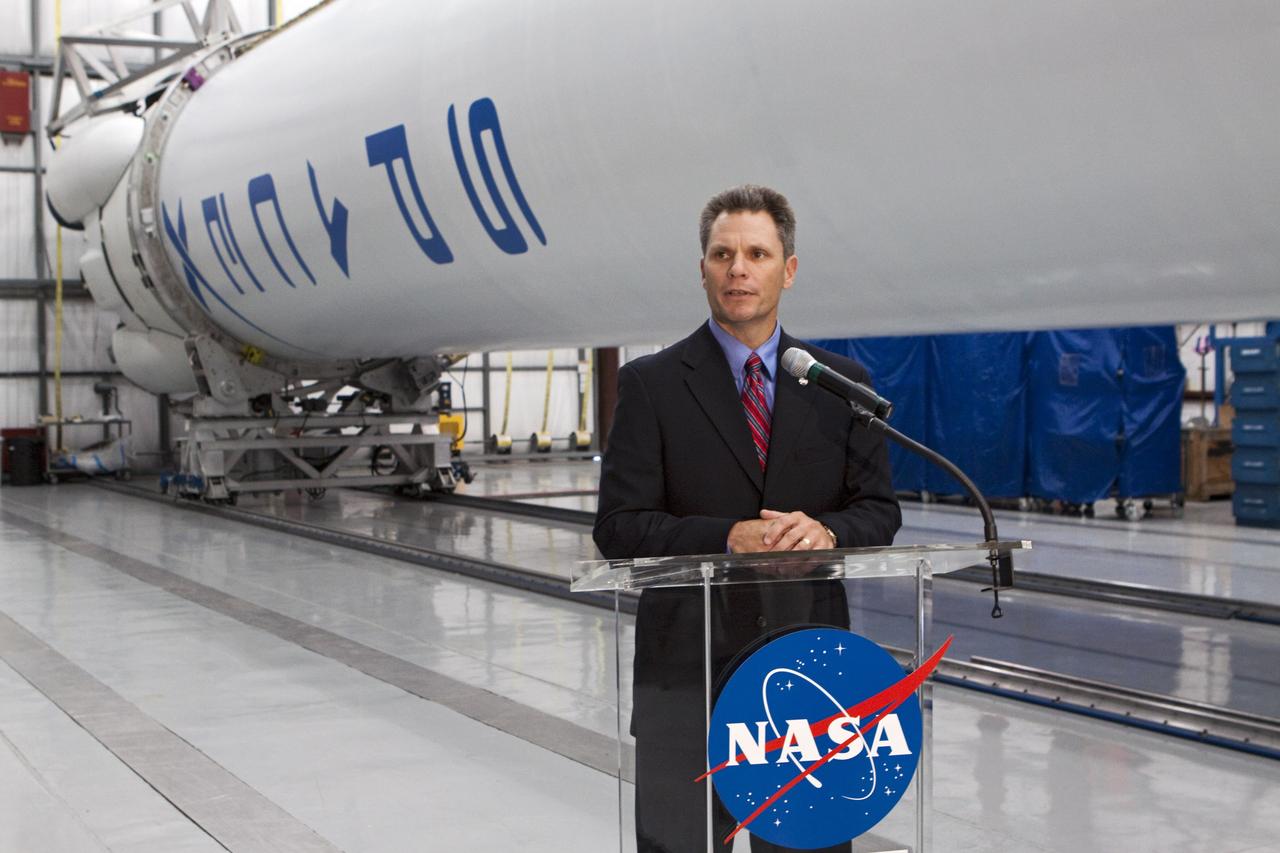
CAPE CANAVERAL, Fla. -- Inside the Space Exploration Technologies, or SpaceX, processing facility near NASA’s Kennedy Space Center in Florida, Scott Thurston, partner integration office manager with the Commercial Crew Program, talks to the media prior to an announcement from NASA Administrator Charles Bolden about new milestones in the nation’s commercial space initiatives. Bolden announced that SpaceX has completed its Space Act Agreement with NASA for Commercial Orbital Transportation Services. SpaceX is scheduled to launch the first of its 12 contracted cargo flights to the space station from Cape Canaveral this October, under NASA’s Commercial Resupply Services Program. Bolden also announced NASA partner Sierra Nevada Corp. has conducted its first milestone under the agency’s recently announced Commercial Crew Integrated Capability initiative. The milestone, a program implementation plan review, marks an important first step in Sierra Nevada’s efforts to develop a crew transportation system with its Dream Chaser spacecraft. Through NASA’s commercial space initiatives and programs, the agency is providing investments to stimulate the American commercial space industry. Photo credit: NASA/Kim Shiflett

SpaceX President and Chief Operation Officer Gwynne Shotwell receives an American flag from NASA Administrator Jim Bridenstine during a NASA event announcing the astronauts assigned to crew the first flight tests and missions of the Boeing CST-100 Starliner and SpaceX Crew Dragon, Friday, Aug. 3, 2018 at NASA’s Johnson Space Center in Houston, Texas. The flag is to be flown to the International Space Station onboard SpaceX’s Demo-2 crew flight test and retrieved later during the SpaceX Crew Dragon first mission to station. Photo Credit: (NASA/Bill Ingalls)