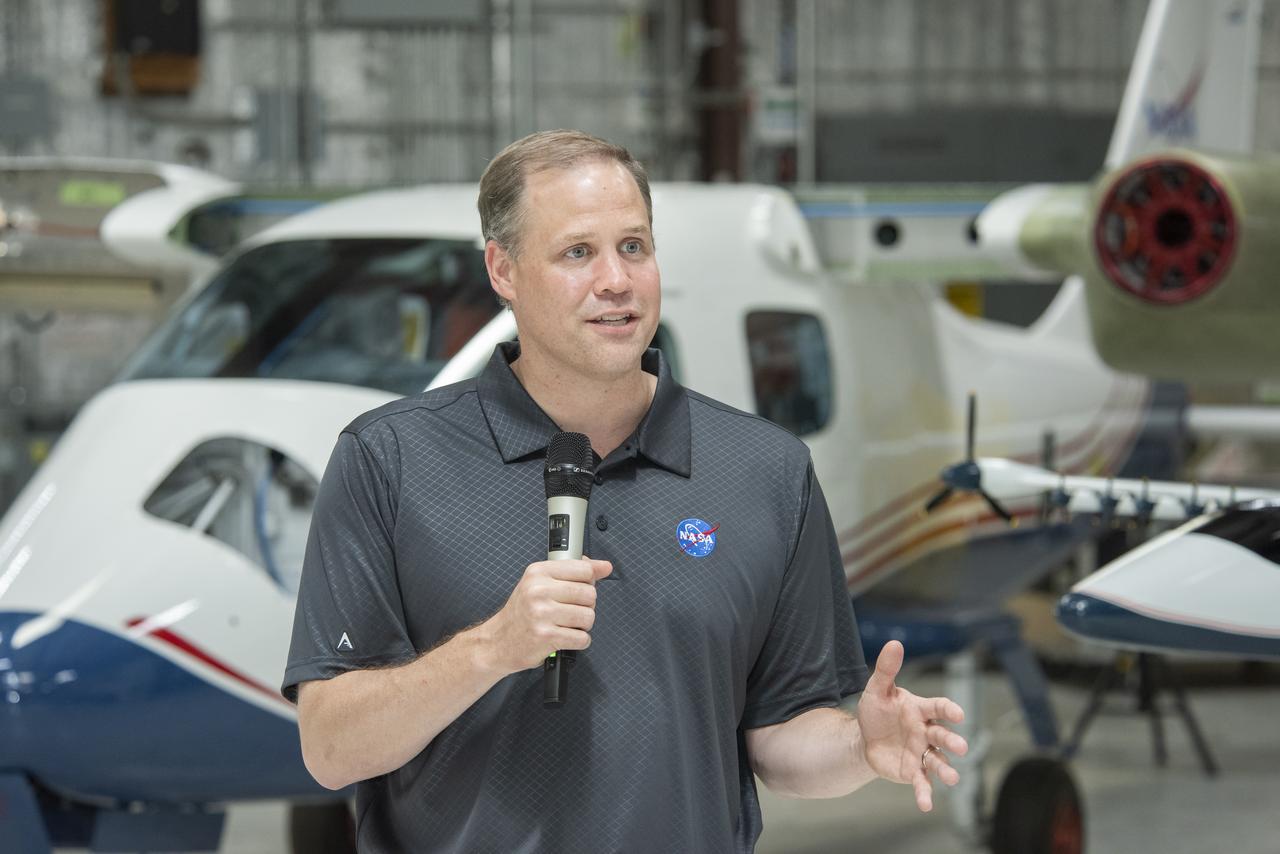
NASA Administrator Bridenstine talks to press at Scaled Composites hangar at Mojave Air & Space Port in California. He talks about X-planes and their future and the Flight Opportunities program as well as commercial space partnerships with the agency.
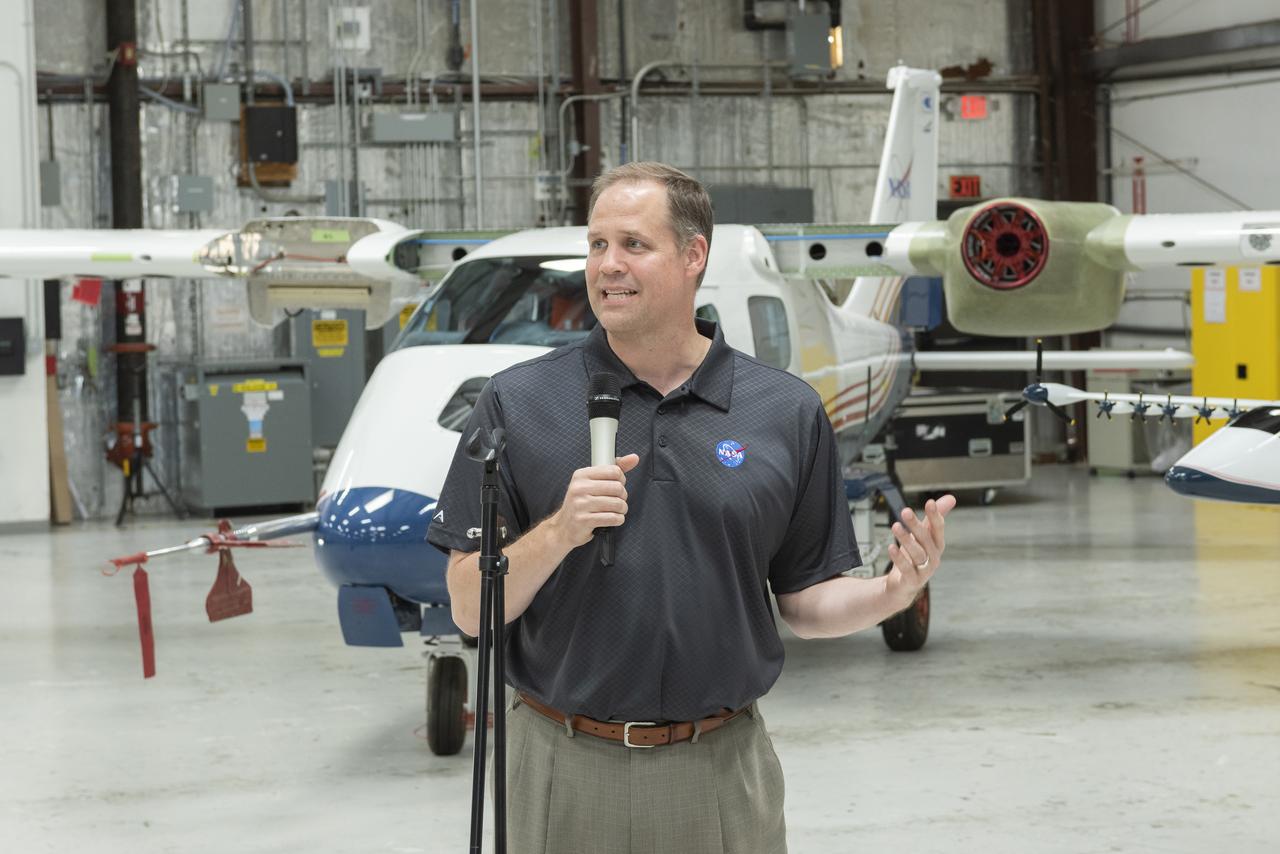
NASA Administrator Bridenstine talks to press at Scaled Composites hangar at Mojave Air & Space Port in California. He talks about X-planes and their future and the Flight Opportunities program as well as commercial space partnerships with the agency.

Reggie Alexander, manager of the Marshall Space Flight Center’s Partnerships and Formulation Office, is interviewed by a member of the MSFC Public Affairs Office. The Partnerships Formulation Office supports commercial development of future human landing systems
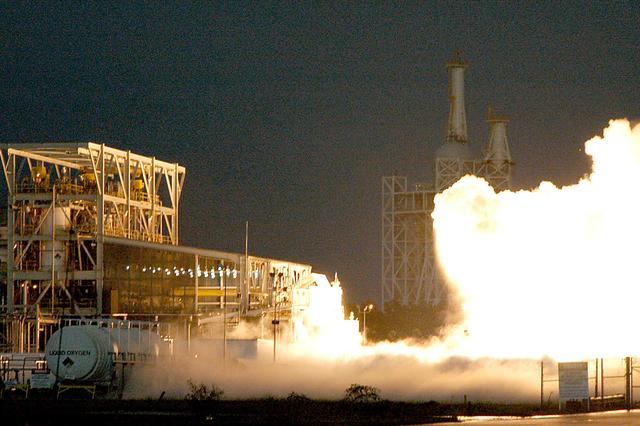
NASA conducted a Sept. 28 test of an Aerojet AJ26 flight engine that will power the first stage of Orbital Sciences Corporation's Taurus II space launch vehicle, continuing progress in a key commercial space transport partnership. Orbital is scheduled to begin commercial cargo flights to the International Space Station in 2012.
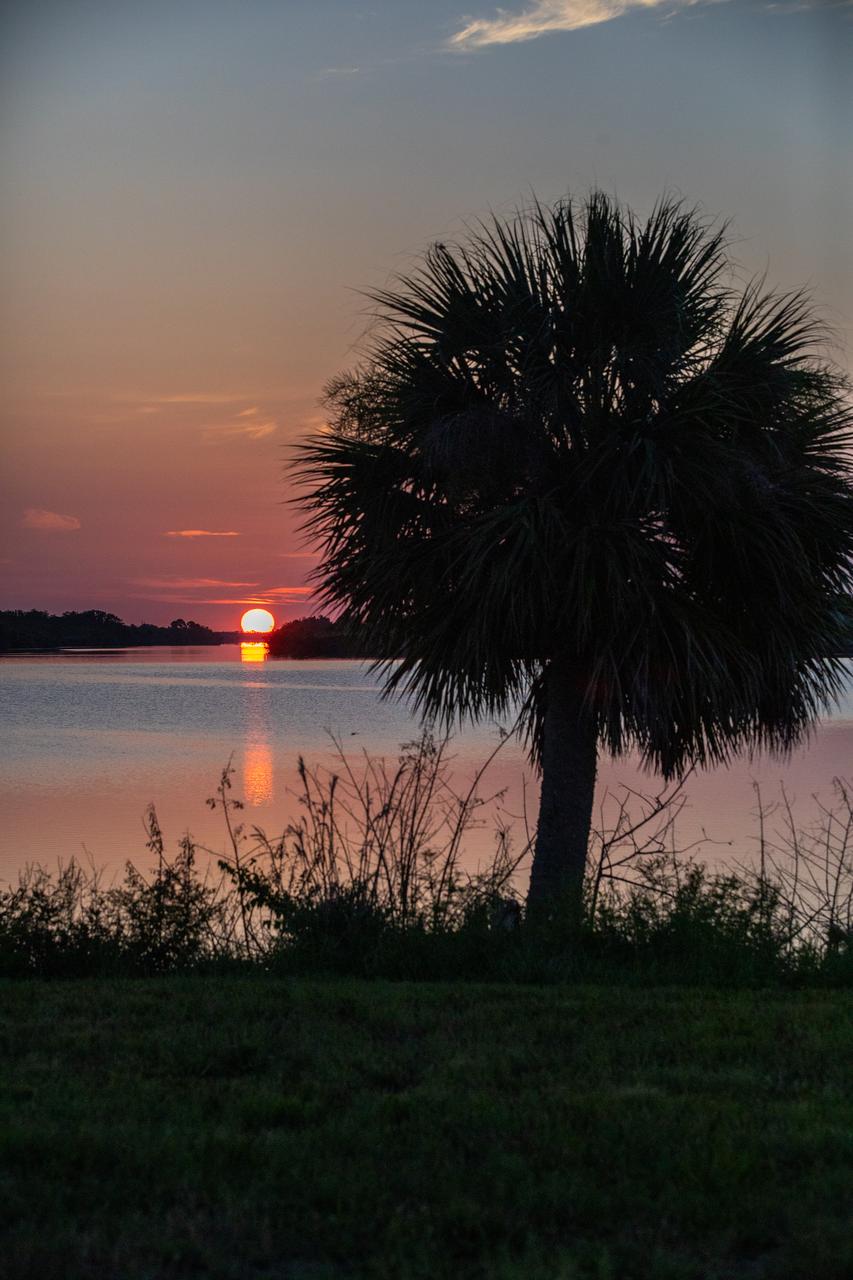
A sunrise over NASA’s Kennedy Space Center in Florida is captured on July 15, 2020. A multi-user spaceport, Kennedy has partnerships with both government and commercial entities, providing the facilities and infrastructure necessary for venturing to space.

A technician works on the interior structure of the SpaceX Crew Dragon spacecraft at the company's facility in Hawthorne, California. SpaceX is developing its Crew Dragon in partnership with NASA’s Commercial Crew Program to carry astronauts to and from the International Space Station.

The SpaceX spacesuit that will be worn by astronauts aboard its Crew Dragon spacecraft (in the background) during missions to and from the International Space Station. SpaceX is developing its Crew Dragon spacecraft and Falcon 9 rocket in partnership with NASA’s Commercial Crew Program to carry astronauts to and from the space station.
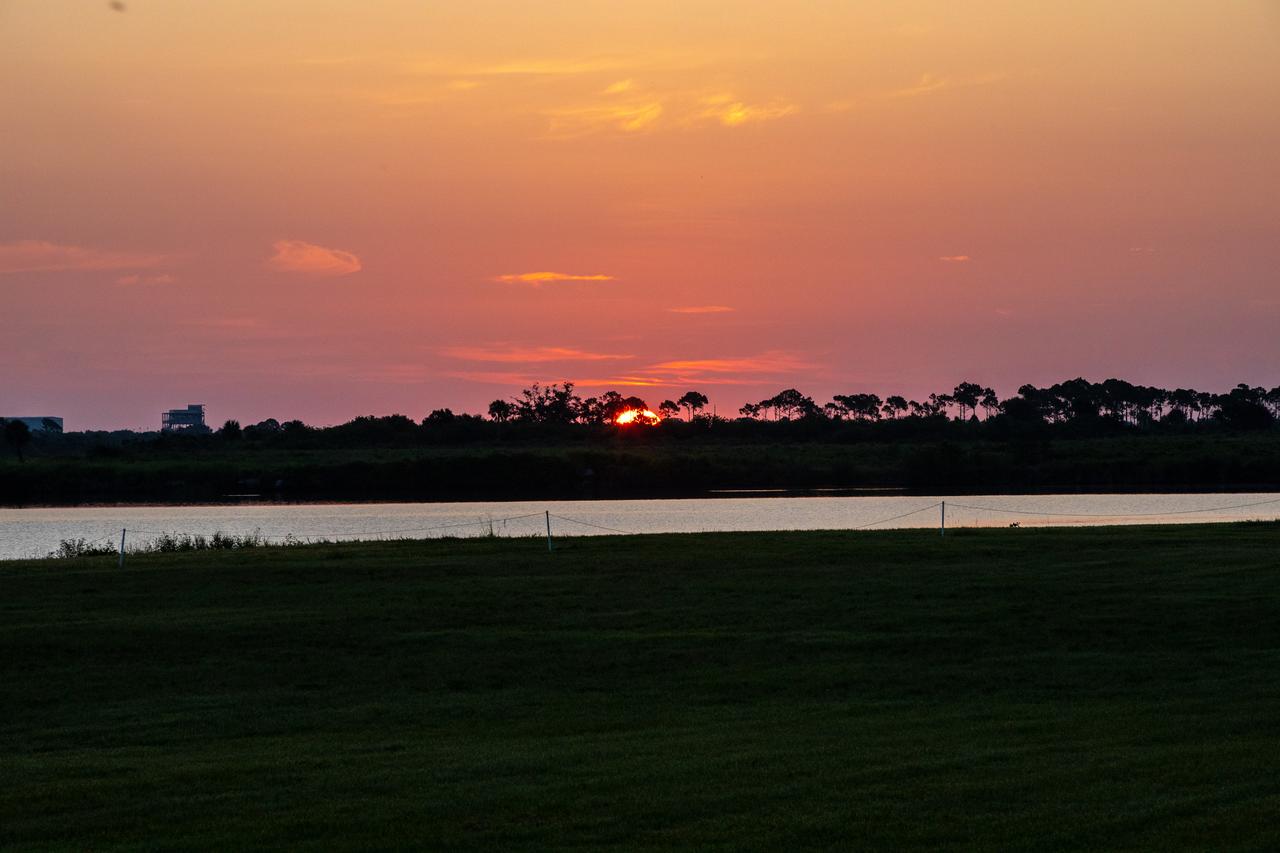
The Sun just begins to rise over NASA’s Kennedy Space Center in Florida on July 15, 2020. A multi-user spaceport, Kennedy has partnerships with both government and commercial entities, providing the facilities and infrastructure necessary for venturing to space.
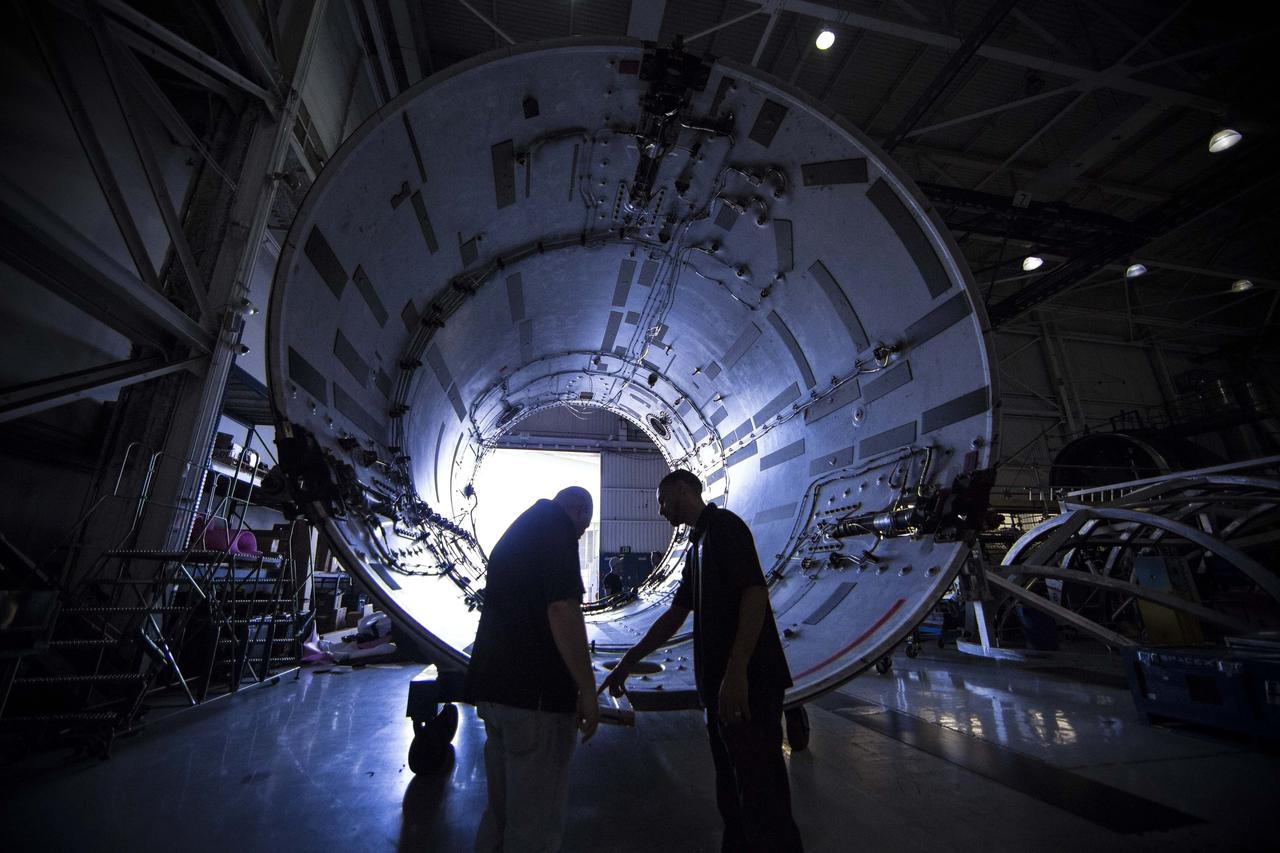
The inter-stage of a SpaceX Falcon 9 rocket inside the company's manufacturing facility. SpaceX is developing its Crew Dragon spacecraft and Falcon 9 rocket in partnership with NASA's Commercial Crew Program to carry astronauts to and from the International Space Station.
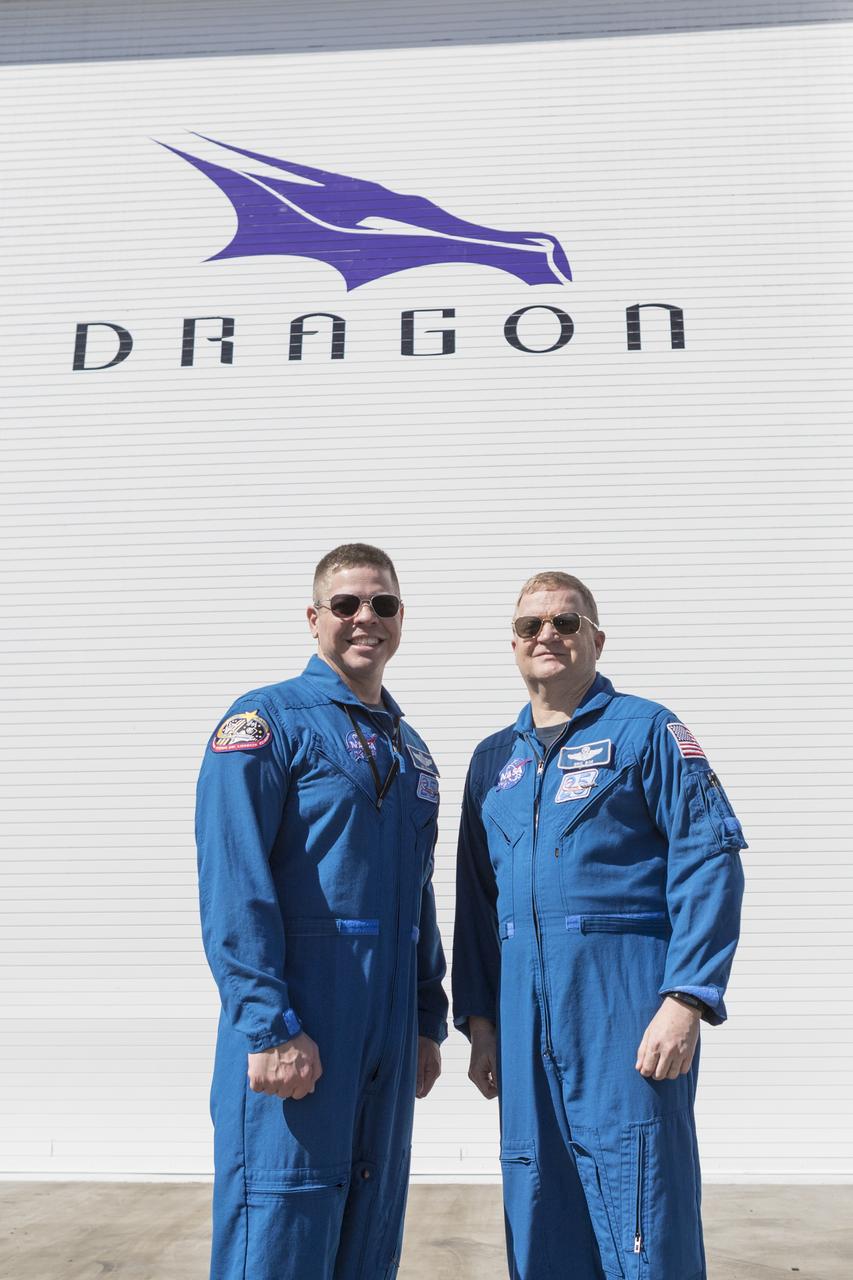
Astronauts Bob Behnken, left, and Eric Boe are outside the SpaceX facility in Hawthorne, California. SpaceX is developing its Crew Dragon spacecraft and Falcon 9 rocket in partnership with NASA’s Commercial Crew Program to carry astronauts to and from the International Space Station.
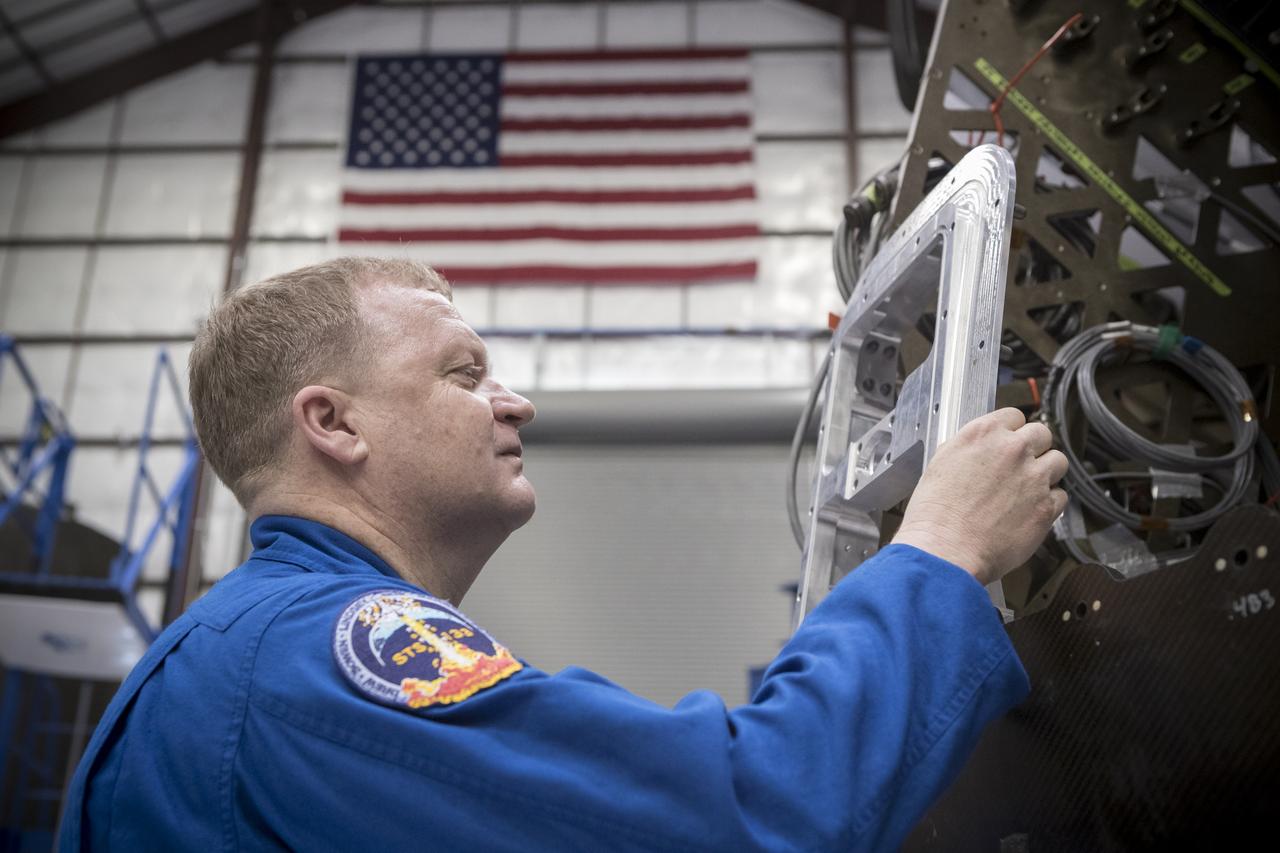
Astronaut Eric Boe examines hardware during a tour of the SpaceX facility in Hawthorne, California. SpaceX is developing its Crew Dragon spacecraft and Falcon 9 rocket in partnership with NASA’s Commercial Crew Program to carry astronauts to and from the International Space Station.

A SpaceX Merlin engine is on a test stand at the company's facility in McGregor, Texas. SpaceX is developing its Crew Dragon spacecraft and Falcon 9 rocket in partnership with NASA’s Commercial Crew Program to carry astronauts to and from the International Space Station.
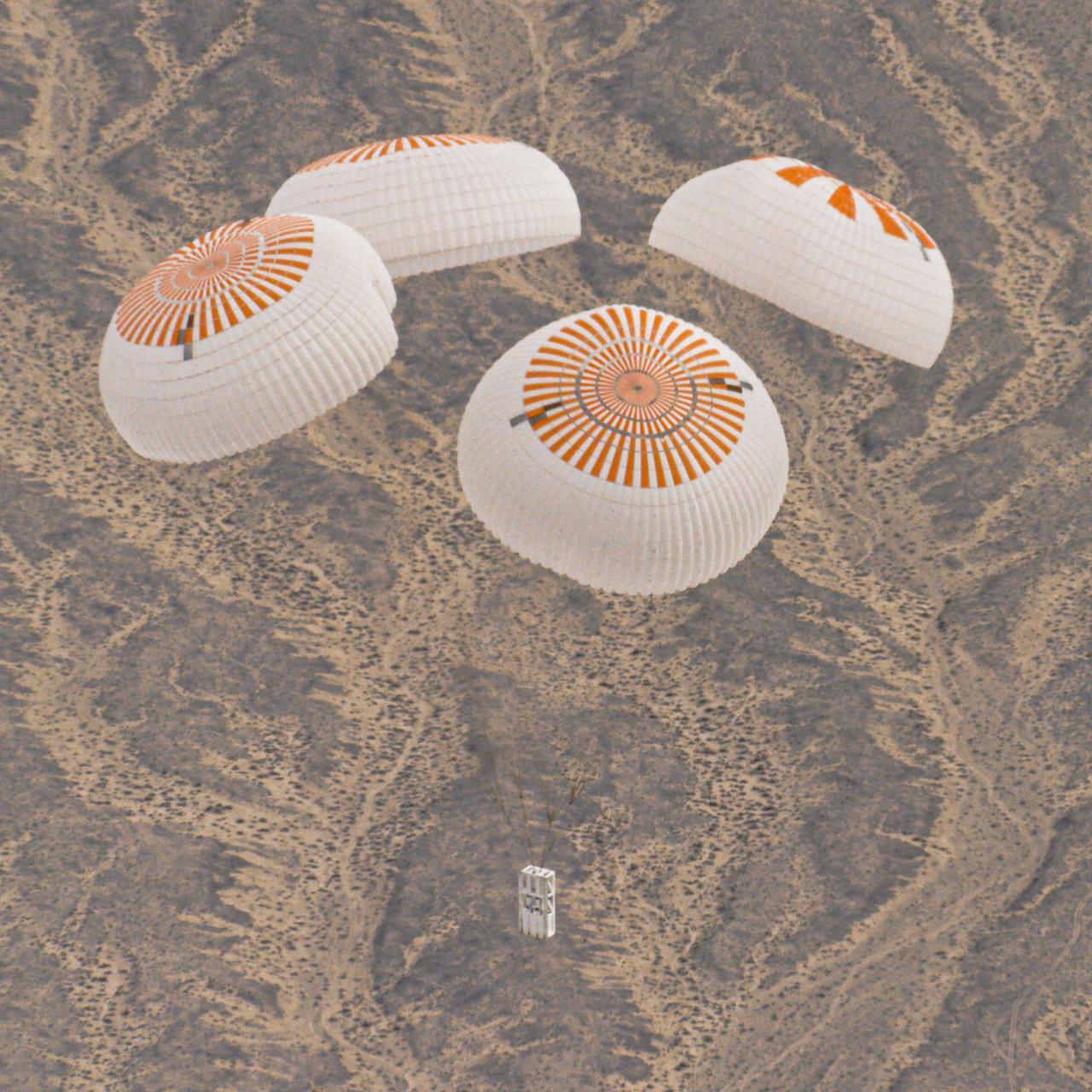
SpaceX completed the 7th successful system test of the Crew Dragon spacecraft’s upgraded Mark 3 parachutes in the western U.S. in December 2019. The parachutes will provide a safe landing on Earth for astronauts returning from the International Space Station in partnership with NASA’s Commercial Crew Program.

A SpaceX SuperDraco engine is hot-fired at the company's test facility in McGregor, Texas. SpaceX is developing its Crew Dragon spacecraft and Falcon 9 rocket in partnership with NASA’s Commercial Crew Program to carry astronauts to and from the International Space Station.
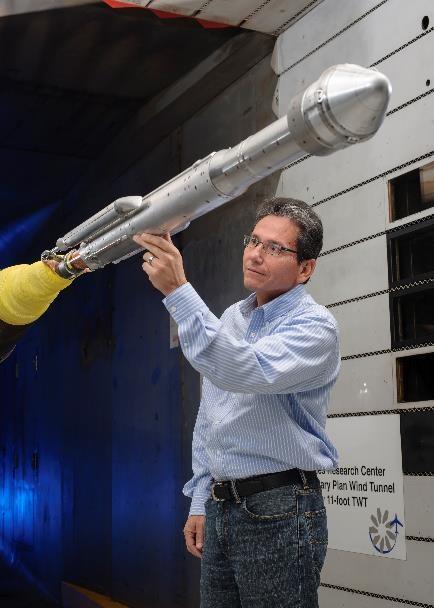
An engineer works with a model of a United Launch Alliance Atlas V rocket with a Boeing CST-100 Starliner capsule inside a wind tunnel at NASA's Ames Research Center in California. The Starliner/Atlas V system is under development by Boeing and ULA in partnership with NASA's Commercial Crew Program to launch astronauts to the International Space Station.
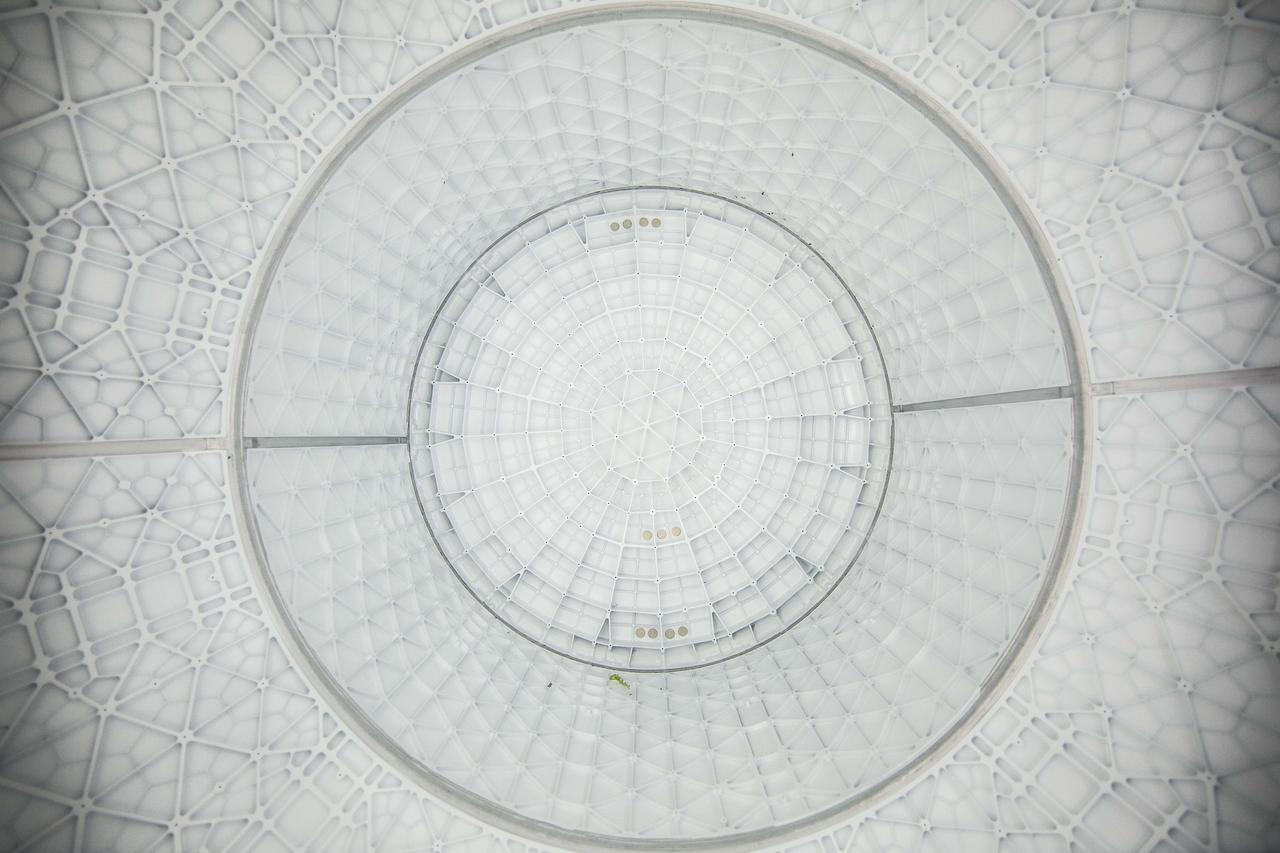
The interior structure of the SpaceX Crew Dragon spacecraft at the company's facility in Hawthorne, California. SpaceX is developing its Crew Dragon spacecraft and Falcon 9 rocket in partnership with NASA’s Commercial Crew Program to carry astronauts to and from the International Space Station.
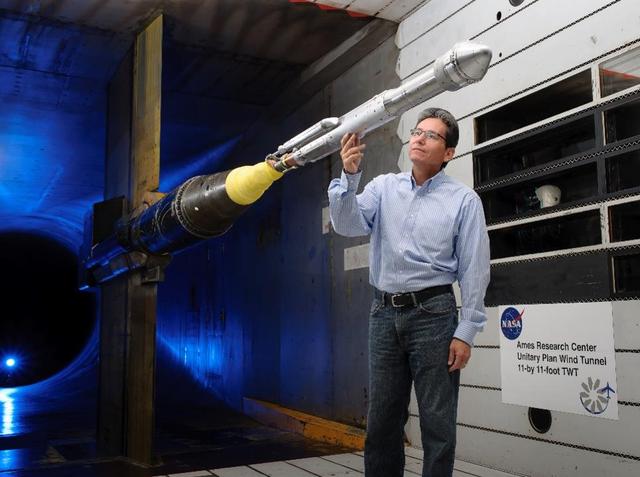
An engineer works with a model of a United Launch Alliance Atlas V rocket with a Boeing CST-100 Starliner capsule inside a wind tunnel at NASA's Ames Research Center in California. The Starliner/Atlas V system is under development by Boeing and ULA in partnership with NASA's Commercial Crew Program to launch astronauts to the International Space Station.
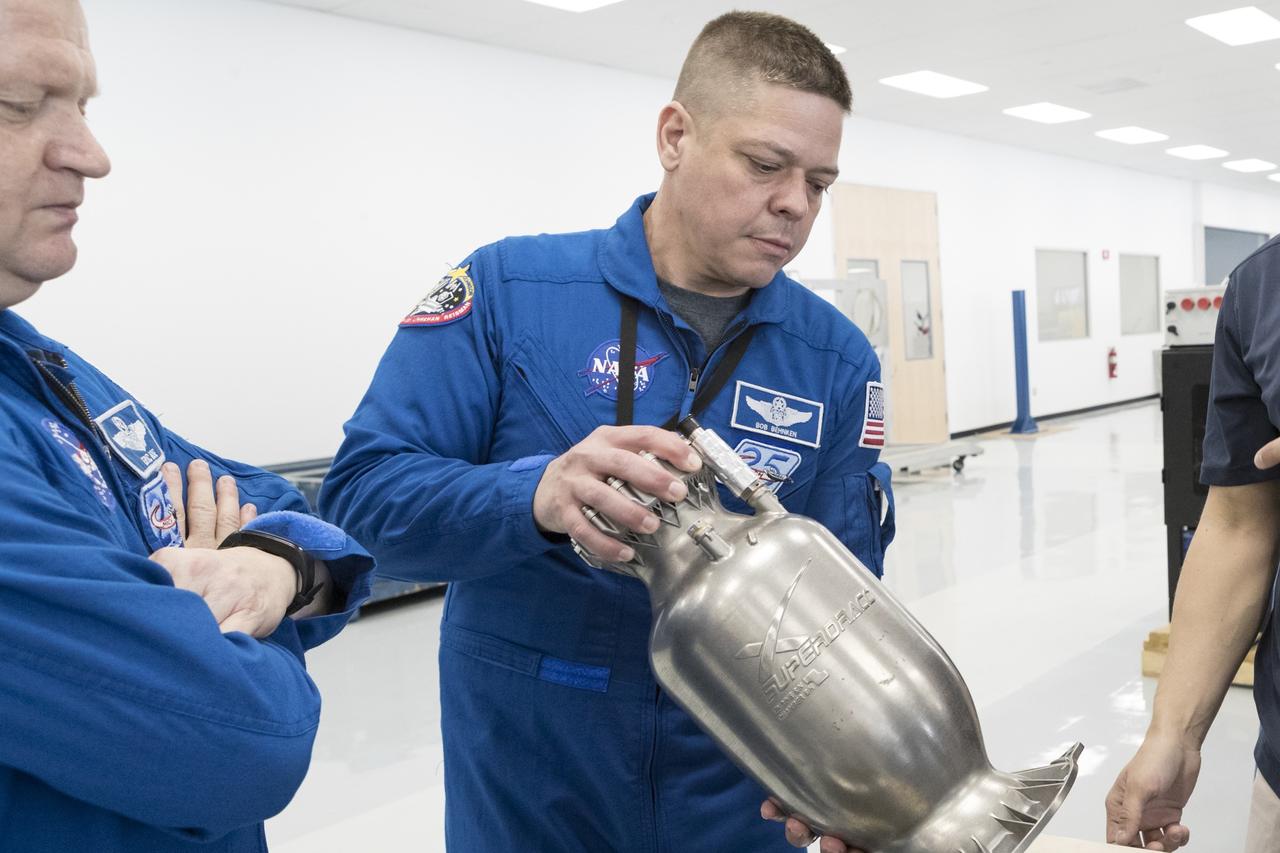
Astronaut Bob Behnken examines a SuperDraco engine during a tour of the SpaceX facility in Hawthorne, California. SpaceX is developing its Crew Dragon spacecraft and Falcon 9 rocket in partnership with NASA’s Commercial Crew Program to carry astronauts to and from the International Space Station.
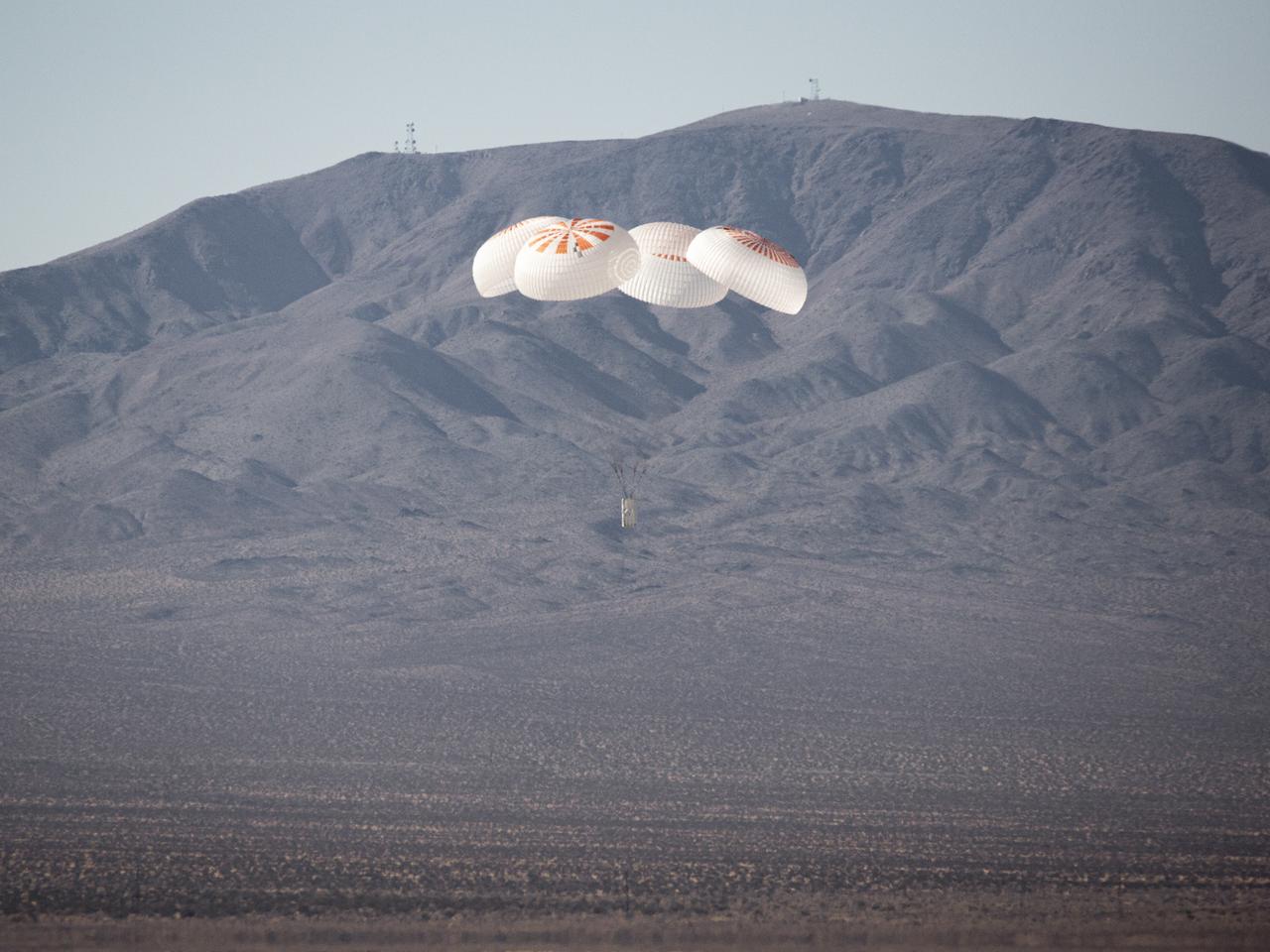
SpaceX completed the 7th successful system test of the Crew Dragon spacecraft’s upgraded Mark 3 parachutes in the western U.S. in December 2019. The parachutes will provide a safe landing on Earth for astronauts returning from the International Space Station in partnership with NASA’s Commercial Crew Program.
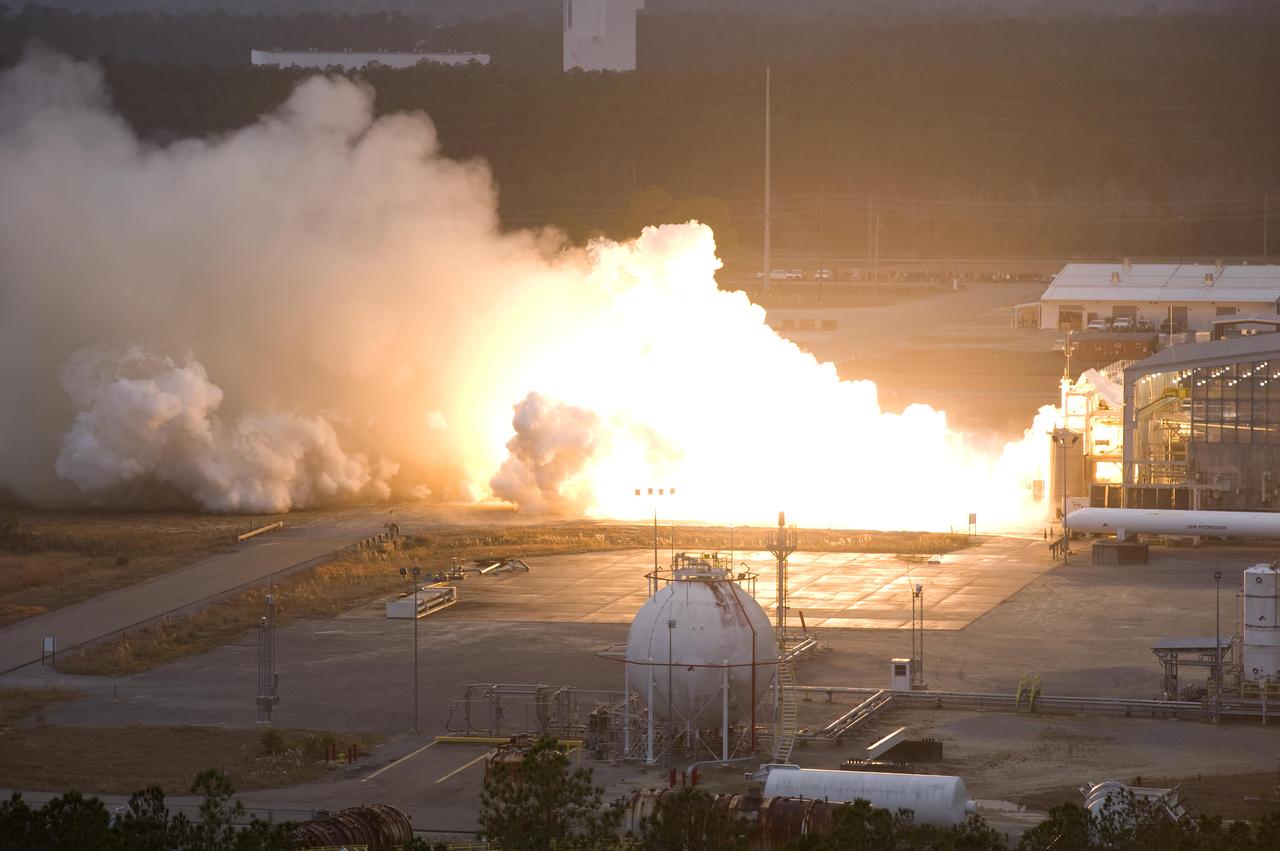
John C. Stennis Space Center engineers conduct a 55-second test fire of Aerojet's liquid-fuel AJ26 rocket engine that will power the first stage of Orbital Sciences Corporation's Taurus II space launch vehicle. The Dec. 17, 2010 test was conducted on the E-1 Test Stand at Stennis in support of NASA's Commercial Transportation Services partnerships to enable commercial cargo flights to the International Space Station. Orbital is under contract with NASA to provide eight cargo missions to the space station through 2015.
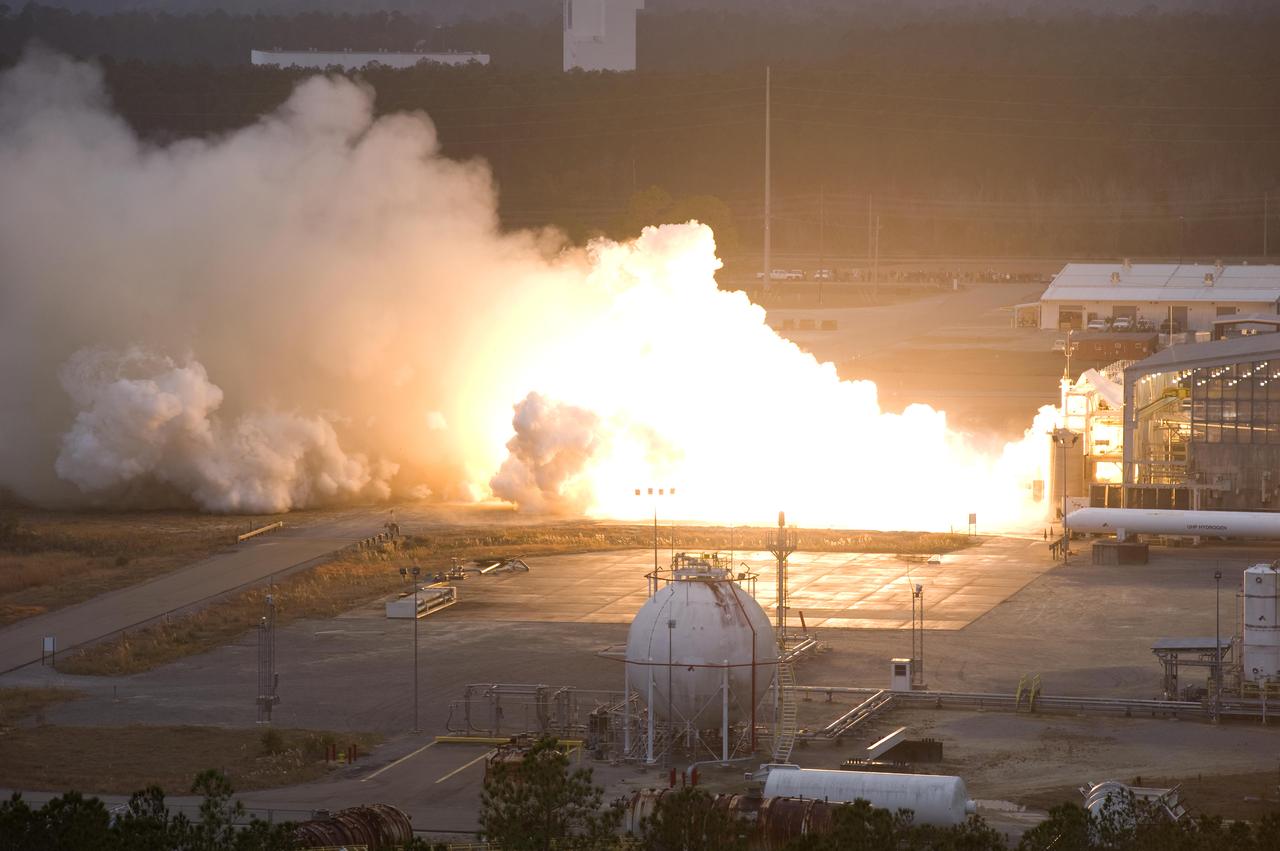
John C. Stennis Space Center engineers conduct a 55-second test fire of Aerojet's liquid-fuel AJ26 rocket engine that will power the first stage of Orbital Sciences Corporation's Taurus II space launch vehicle. The Dec. 17, 2010 test was conducted on the E-1 Test Stand at Stennis in support of NASA's Commercial Transportation Services partnerships to enable commercial cargo flights to the International Space Station. Orbital is under contract with NASA to provide eight cargo missions to the space station through 2015.
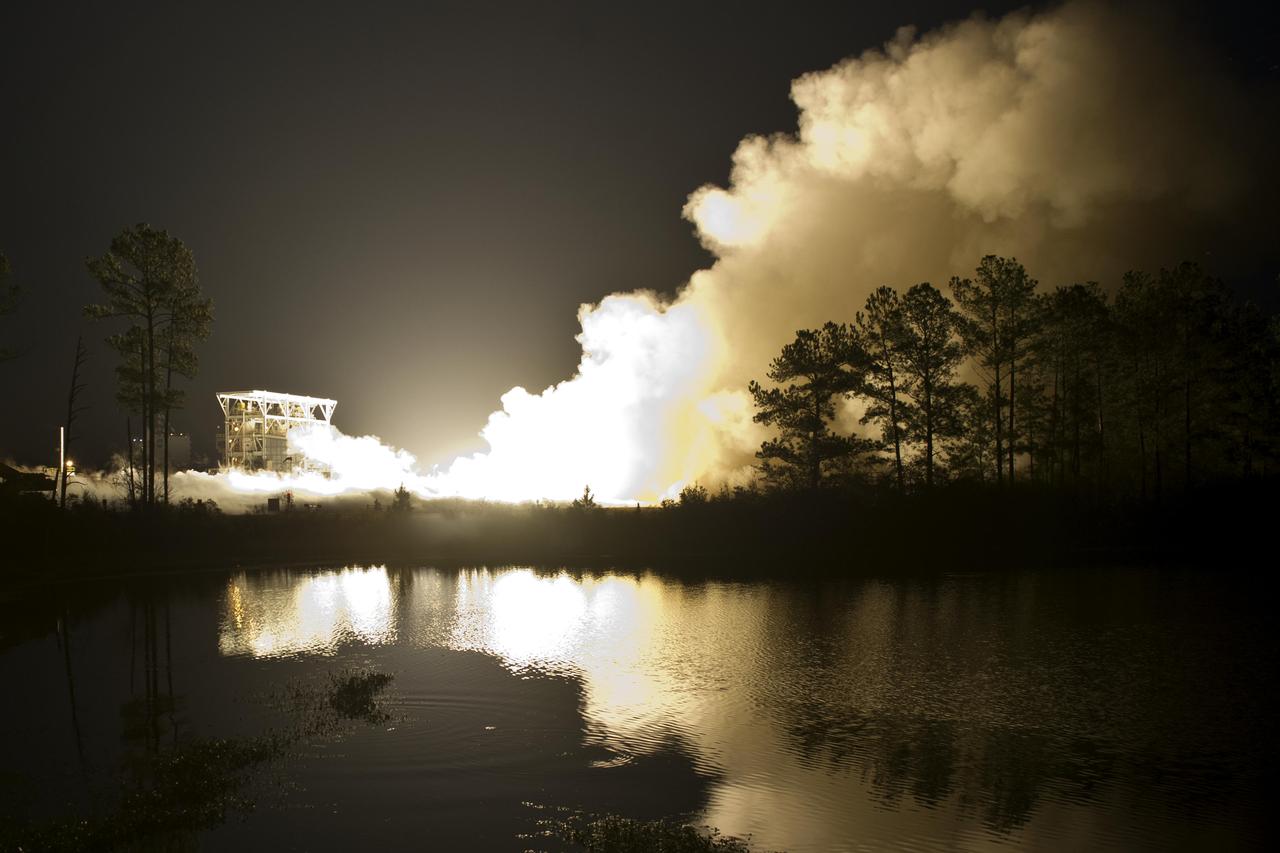
Stennis Space Center test-fired Aerojet AJ26 flight engine No. 8 on Dec. 15, continuing a commercial partnership with Orbital Services Corporation. Orbital has partnered with NASA to provide commercial cargo flights to the International Space Station. The AJ26 engines tested at Stennis will power the company's Taurus II space launch vehicle on the flights.
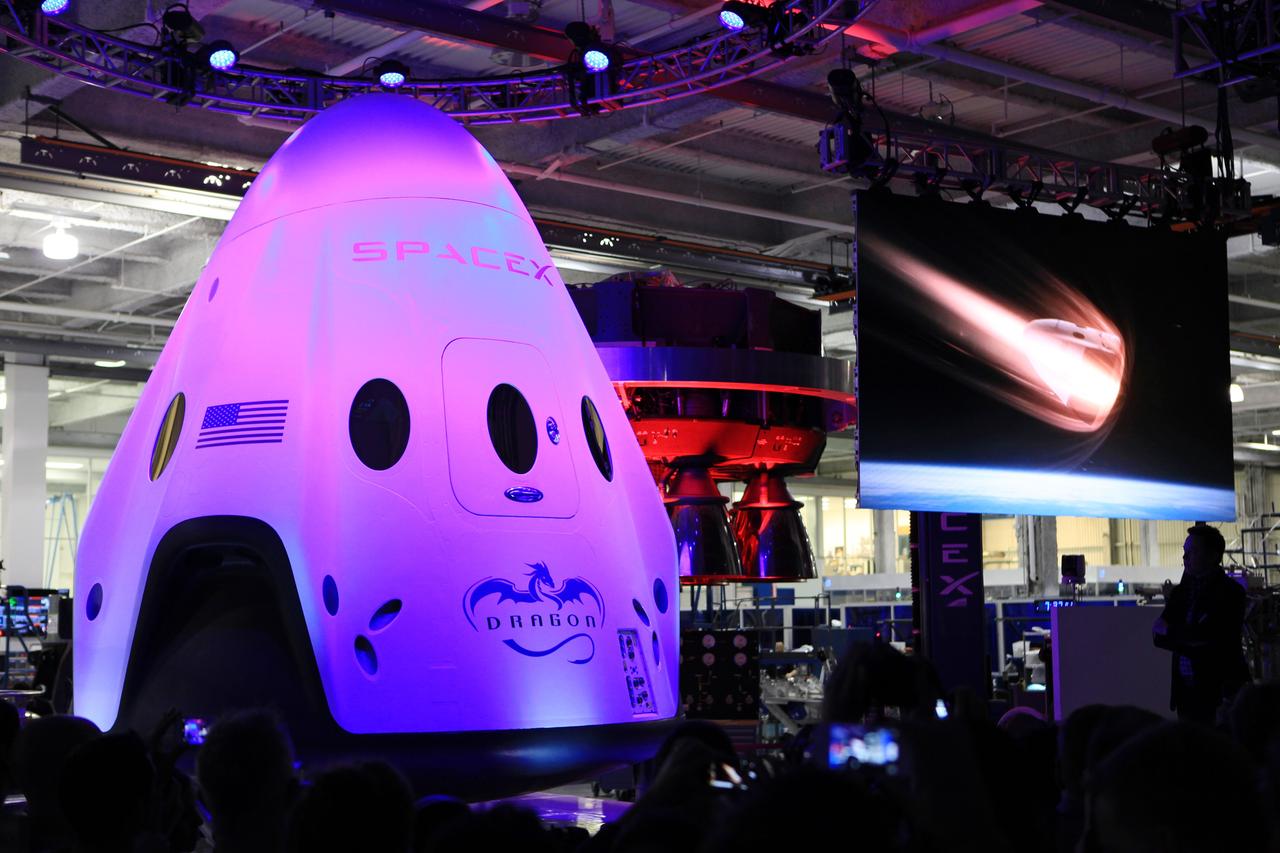
HAWTHORNE, Calif. - Animation showing the Dragon V2 spacecraft re-entering Earth's atmosphere plays beside the space during an unveiling ceremony inside SpaceX headquarters in Hawthorne, Calif. The spacecraft is designed to carry people into Earth's orbit and was developed in partnership with NASA's Commercial Crew Program under the Commercial Crew Integrated Capability agreement. SpaceX is one of NASA's commercial partners working to develop a new generation of U.S. spacecraft and rockets capable of transporting humans to and from Earth's orbit from American soil. Ultimately, NASA intends to use such commercial systems to fly U.S. astronauts to and from the International Space Station. Photo credit: NASA/Dimitri Gerondidakis
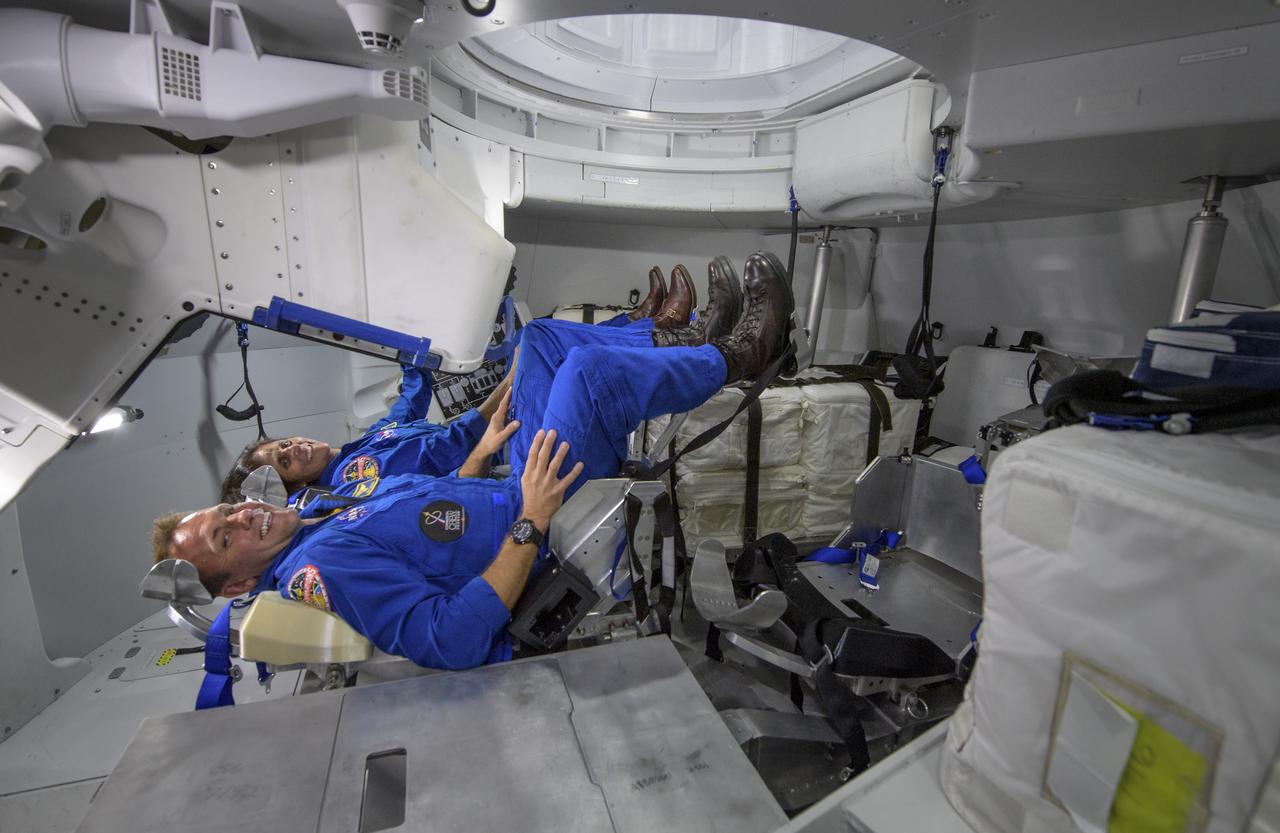
NASA astronauts Josh Cassada, foreground, and Suni Williams pose for a photograph inside of the Boeing Mockup Trainer at NASA’s Johnson Space Center in Houston, Texas on Aug. 2, 2018 ahead of the commercial crew flight assignments announcement Aug. 3. The pair was assigned to launch aboard Boeing’s CST-100 Starliner on the company’s first operational mission to the International Space Station in partnership with NASA’s Commercial Crew Program. Photo Credit: (NASA/Bill Ingalls)
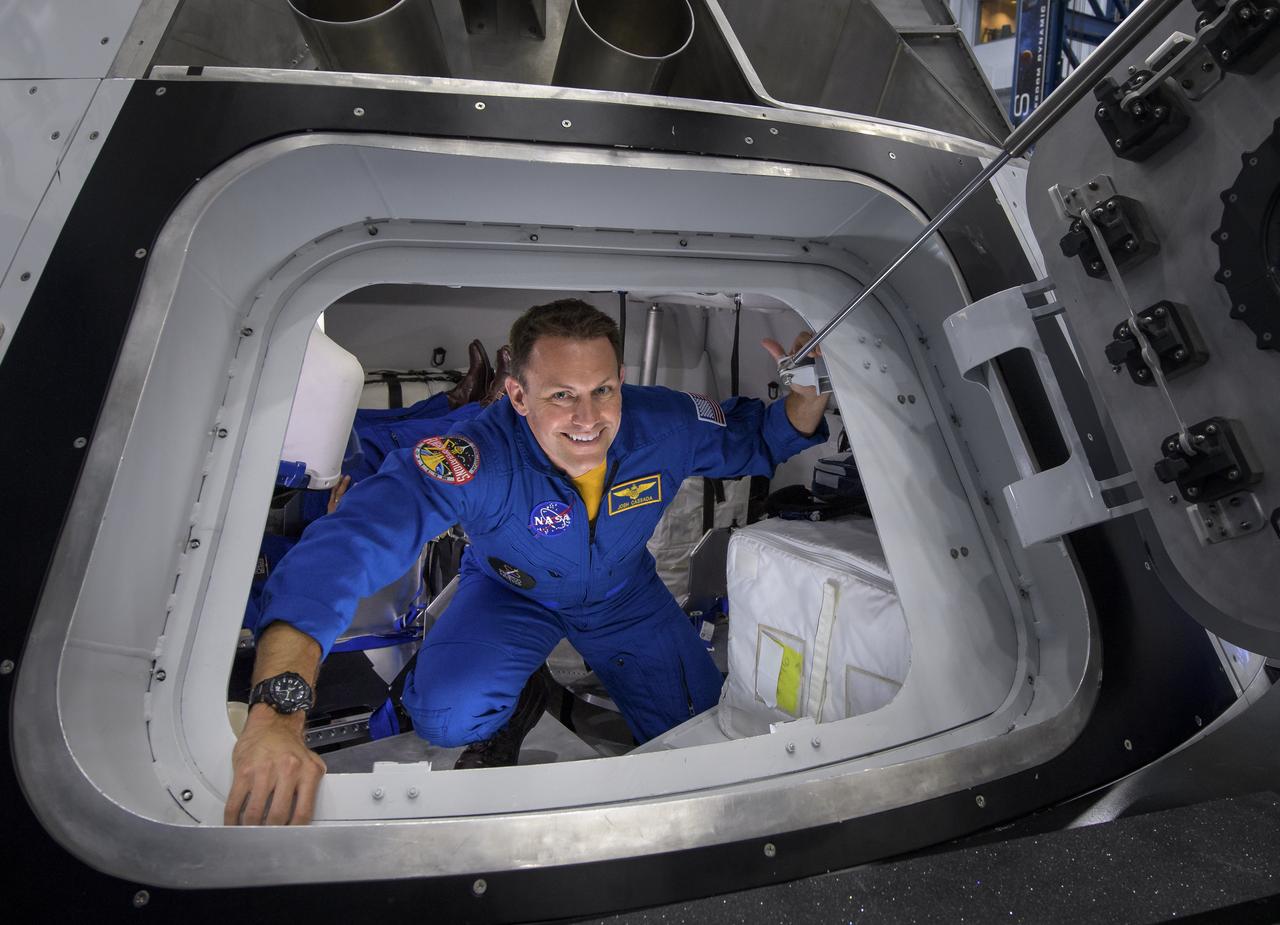
NASA astronaut Josh Cassada stops to pose for photograph as he exits the Boeing Mockup Trainer at NASA’s Johnson Space Center in Houston, Texas on Aug. 2, 2018 ahead of the commercial crew flight assignments announcement Aug. 3. Cassada, and NASA astronaut Suni Williams were assigned to launch aboard Boeing’s CST-100 Starliner on the company’s first operational mission to the International Space Station in partnership with NASA’s Commercial Crew Program. Photo Credit: (NASA/Bill Ingalls)
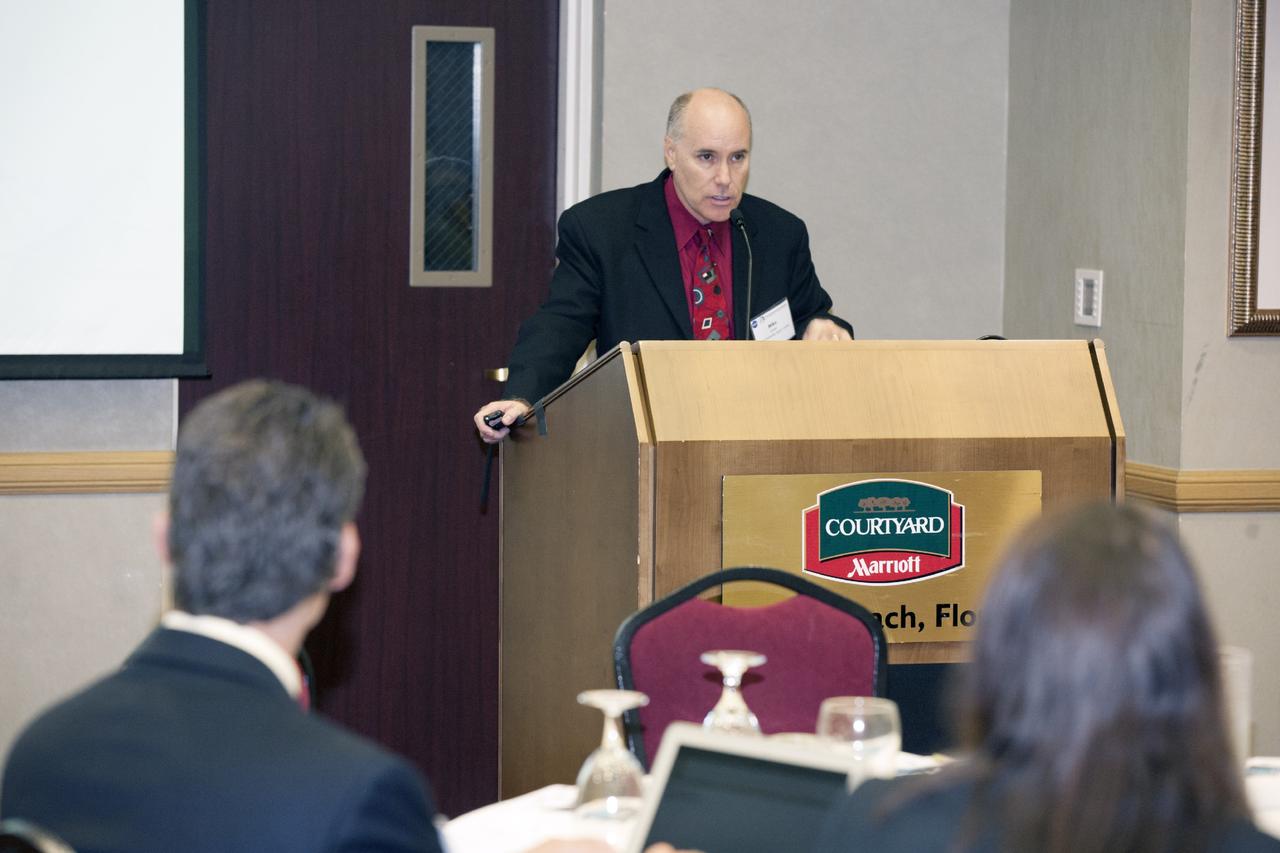
CAPE CANAVERAL, Fla. – Mike Lester, Research and Technology Partnership manager at NASA's Kennedy Space Center in Florida, discusses technology transfer with attendees at the Technology Transfer Forum of the Economic Development Commission of Florida's Space Coast. A goal of the session was to showcase ways commercial businesses can work with NASA to develop technology and apply existing technology to commercial uses. Photo credit: NASA/Glenn Benson
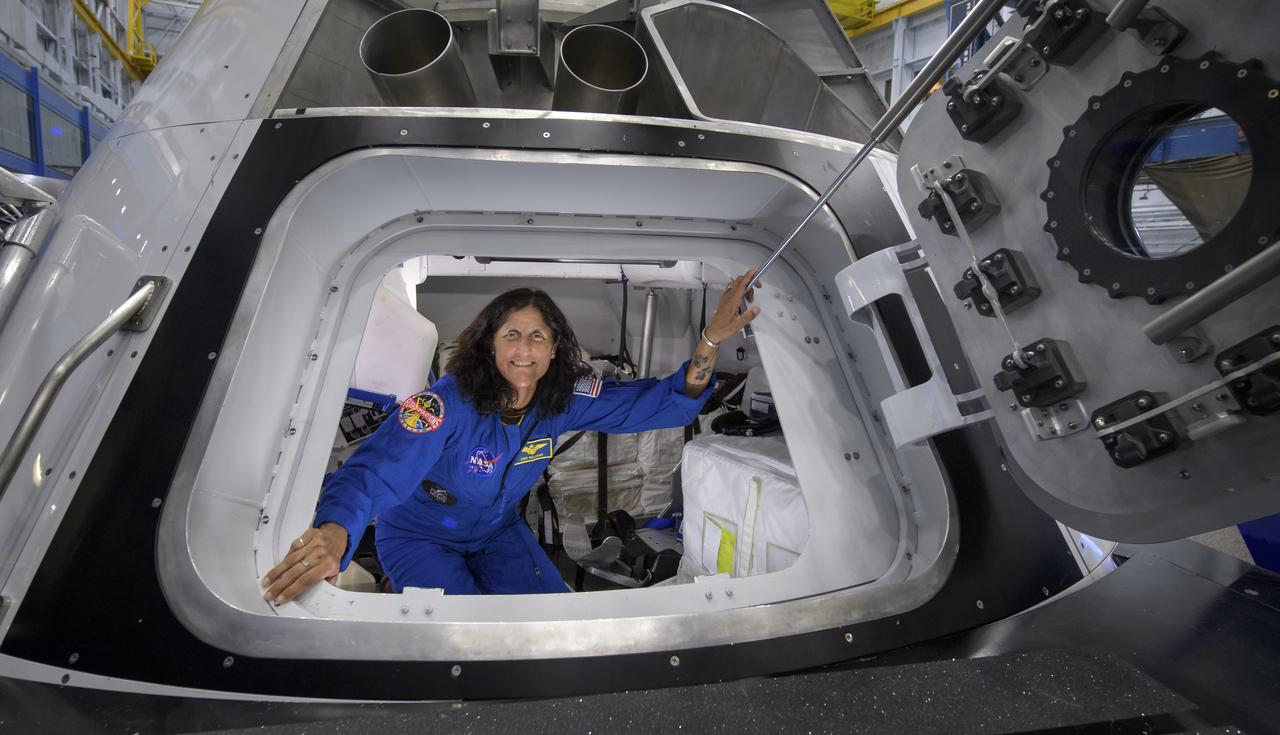
NASA astronaut Suni Williams stops to pose for photograph as she exits the Boeing Mockup Trainer at NASA’s Johnson Space Center in Houston, Texas on Aug. 2, 2018 ahead of the commercial crew flight assignments announcement Aug. 3. Williams and NASA astronaut Josh Cassada were assigned to launch aboard Boeing’s CST-100 Starliner on the company’s first operational mission to the International Space Station in partnership with NASA’s Commercial Crew Program. Photo Credit: (NASA/Bill Ingalls)
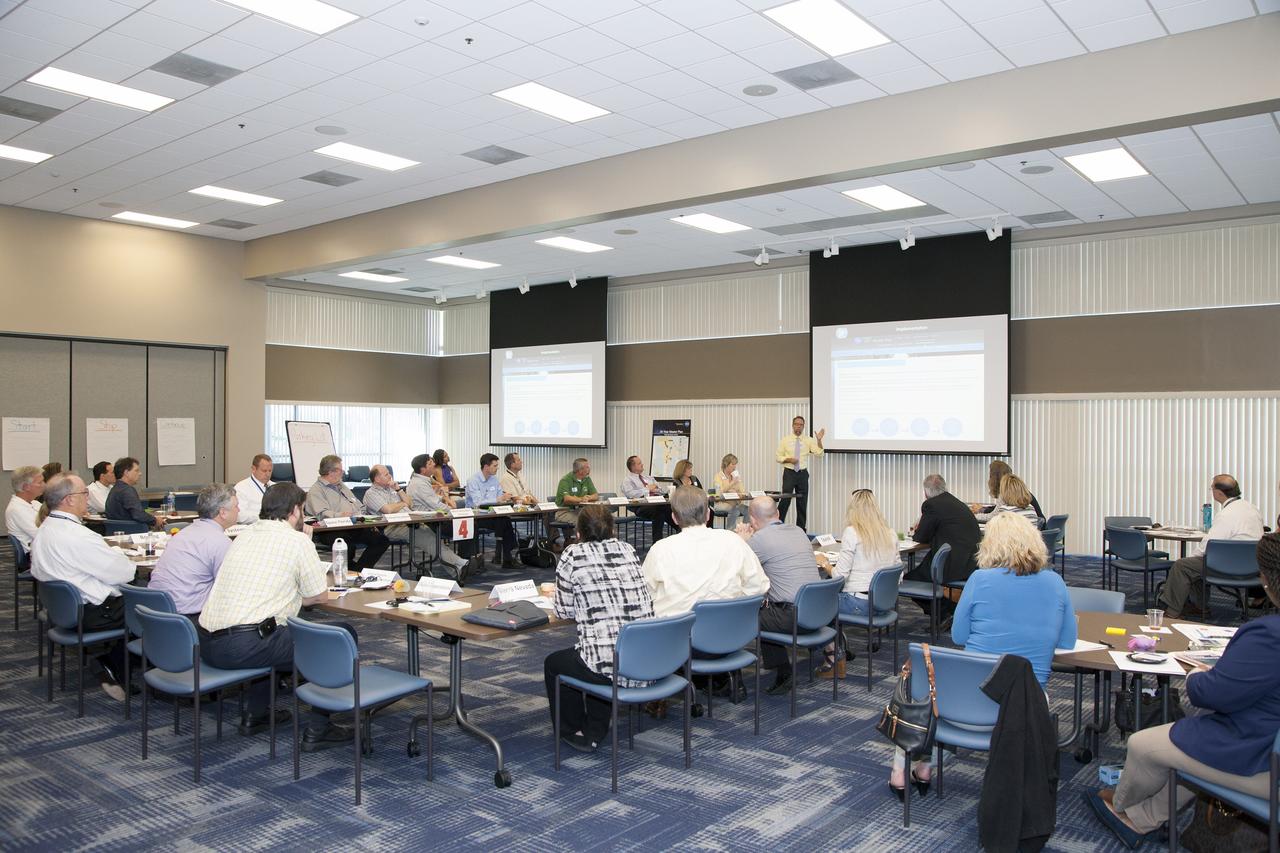
CAPE CANAVERAL, Fla. -- At the Kennedy Space Center in Florida, Trey Carlson, the spaceport's master planner, describes how the Center Planning and Development Directorate CPD is working to help transform Kennedy into a multi-user spaceport through partnerships and resource planning. The event was first of what is planned to be quarterly meetings between NASA's industry partners and representatives of Kennedy's CPD, Safety and Mission Assurance, International Space Station Ground Processing, Chief Financial officer and Ground Processing and Ground Systems Development and Operations directorates. Center Planning and Development is the “front door” for partnerships with NASA’s Kennedy Space Center. Kennedy is now developing the world’s premier spaceport for government and commercial space industries using comprehensive resource planning and partnerships. Photo credit: NASA/Daniel Casper
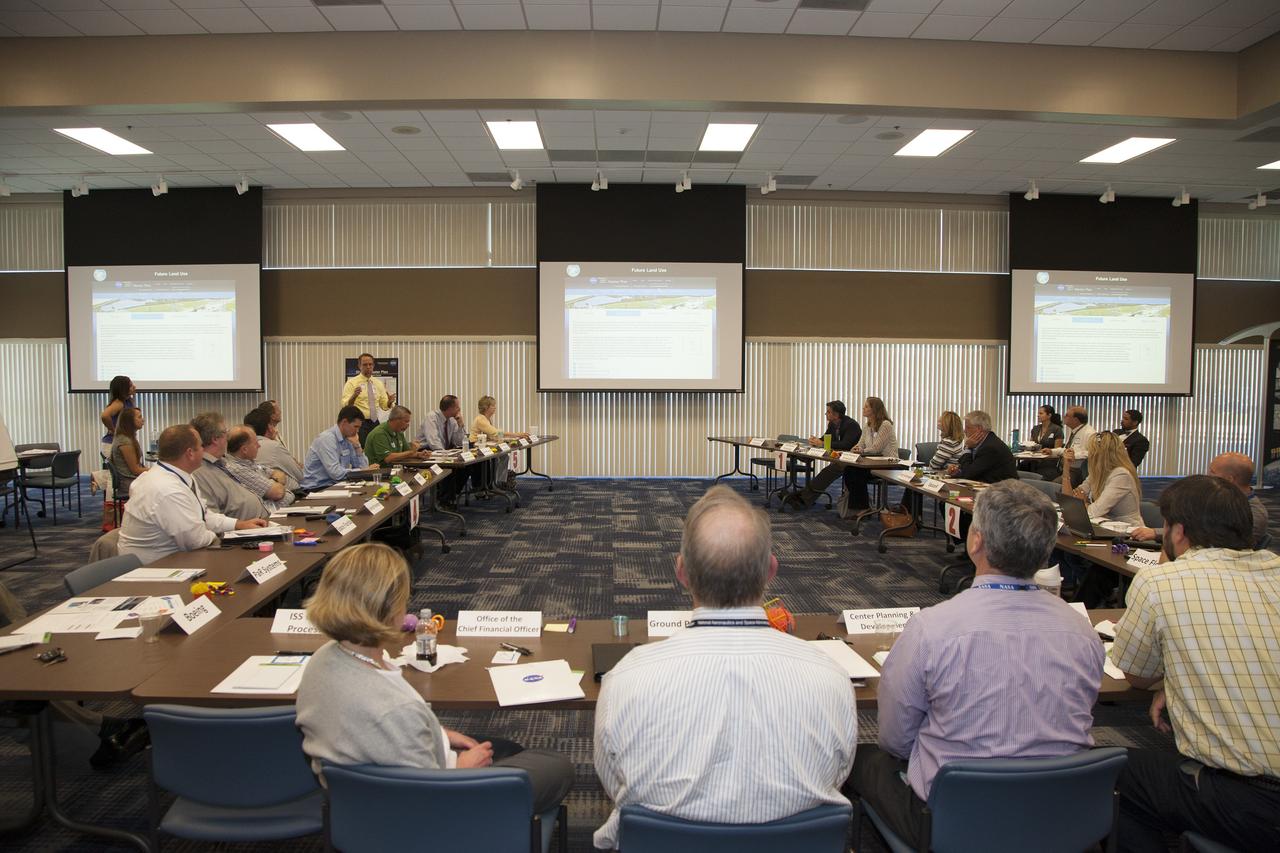
CAPE CANAVERAL, Fla. -- At the Kennedy Space Center in Florida, Trey Carlson, the spaceport's master planner, describes how the Center Planning and Development Directorate CPD is working to help transform Kennedy into a multi-user spaceport through partnerships and resource planning. The event was first of what is planned to be quarterly meetings between NASA's industry partners and representatives of Kennedy's CPD, Safety and Mission Assurance, International Space Station Ground Processing, Chief Financial officer and Ground Processing and Ground Systems Development and Operations directorates. Center Planning and Development is the “front door” for partnerships with NASA’s Kennedy Space Center. Kennedy is now developing the world’s premier spaceport for government and commercial space industries using comprehensive resource planning and partnerships. Photo credit: NASA/Daniel Casper
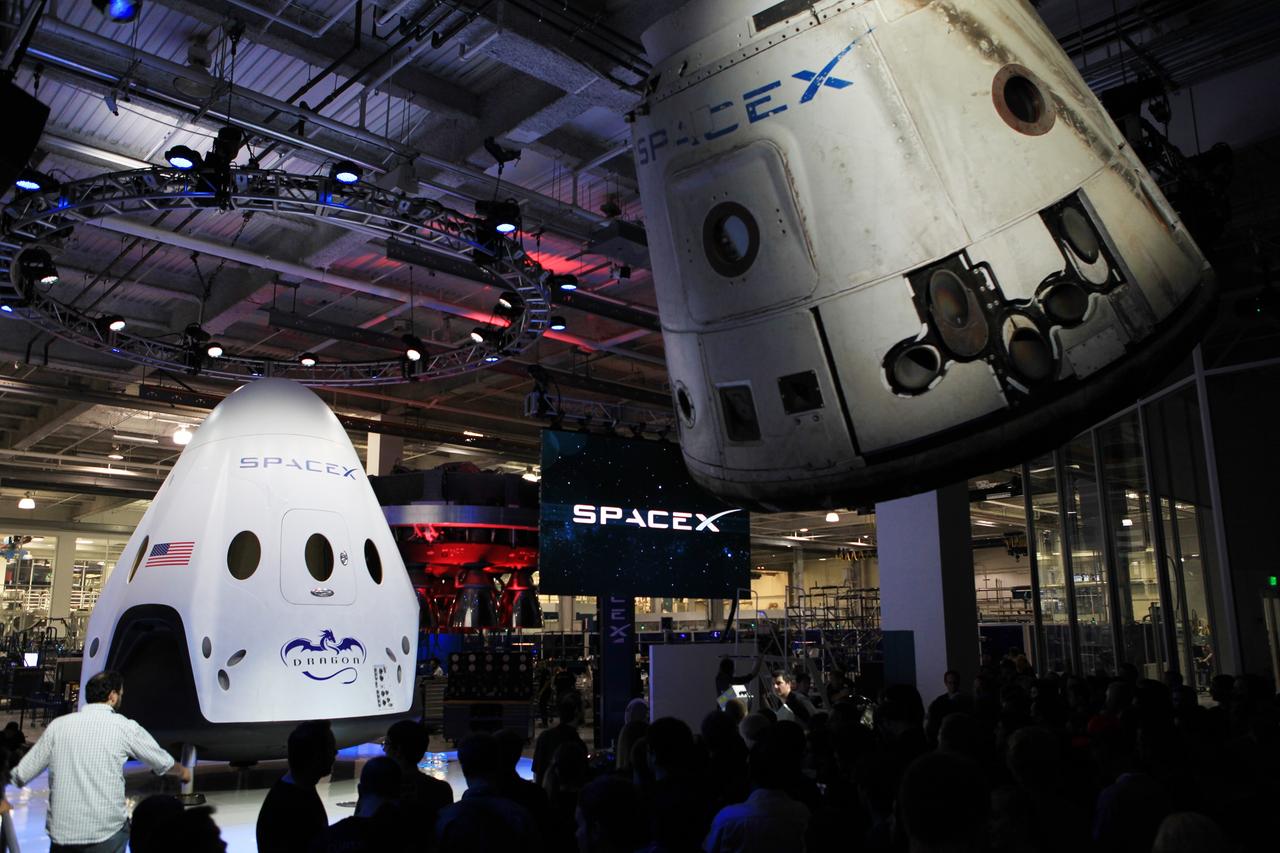
HAWTHORNE, Calif. - The Dragon V2 stands on a stage inside SpaceX headquarters in Hawthorne, Calif., near a suspended cargo-carrying Dragon spacecraft that flew a previous mission. The new spacecraft, the Dragon V2, is designed to carry people into Earth's orbit and was developed in partnership with NASA's Commercial Crew Program under the Commercial Crew Integrated Capability agreement. SpaceX is one of NASA's commercial partners working to develop a new generation of U.S. spacecraft and rockets capable of transporting humans to and from Earth's orbit from American soil. Ultimately, NASA intends to use such commercial systems to fly U.S. astronauts to and from the International Space Station. Photo credit: NASA/Dimitri Gerondidakis
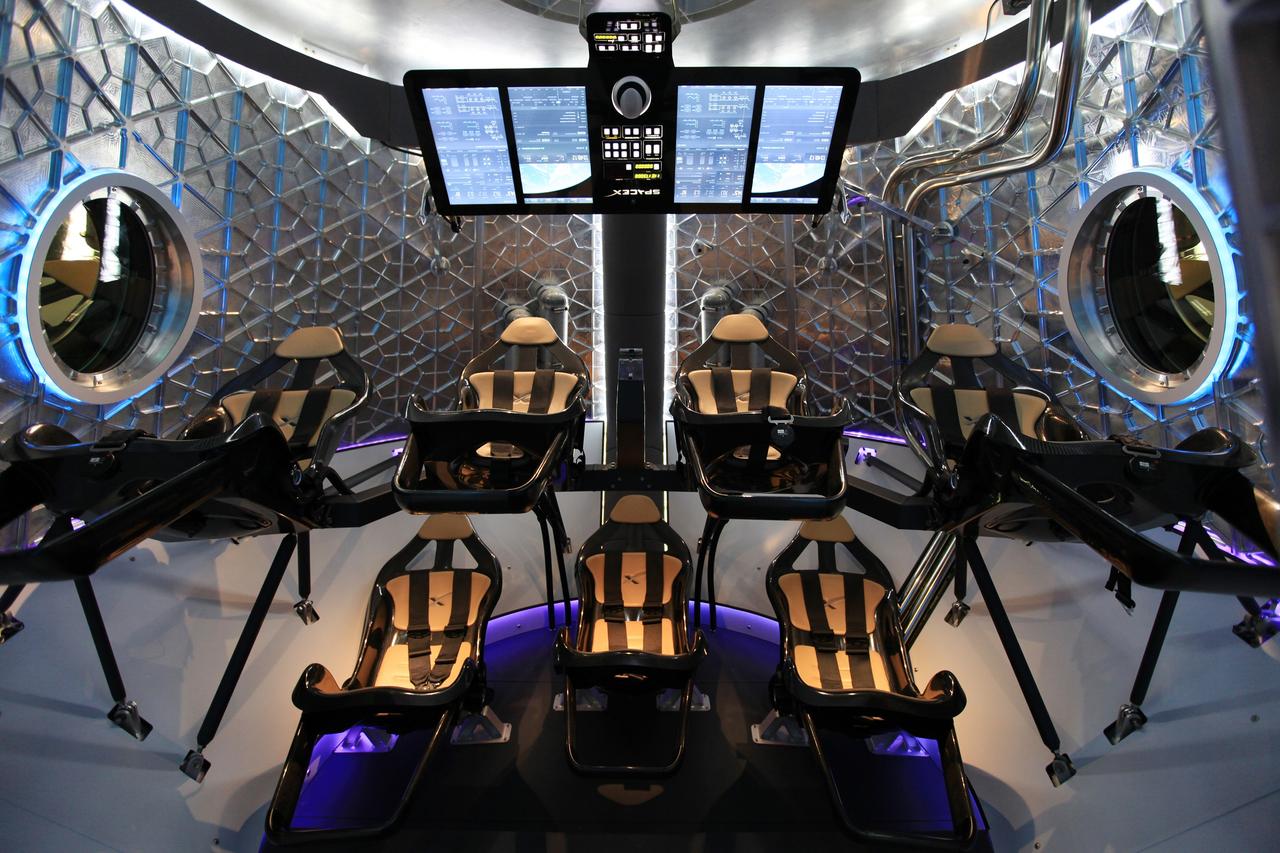
HAWTHORNE, Calif. - A look through the open hatch of the Dragon V2 reveals the layout and interior of the seven-crew capacity spacecraft. SpaceX unveiled the new spacecraft during a ceremony at its headquarters in Hawthorne, Calif. The Dragon V2 is designed to carry people into Earth's orbit and was developed in partnership with NASA's Commercial Crew Program under the Commercial Crew Integrated Capability agreement. SpaceX is one of NASA's commercial partners working to develop a new generation of U.S. spacecraft and rockets capable of transporting humans to and from Earth's orbit from American soil. Ultimately, NASA intends to use such commercial systems to fly U.S. astronauts to and from the International Space Station. Photo credit: NASA/Dimitri Gerondidakis
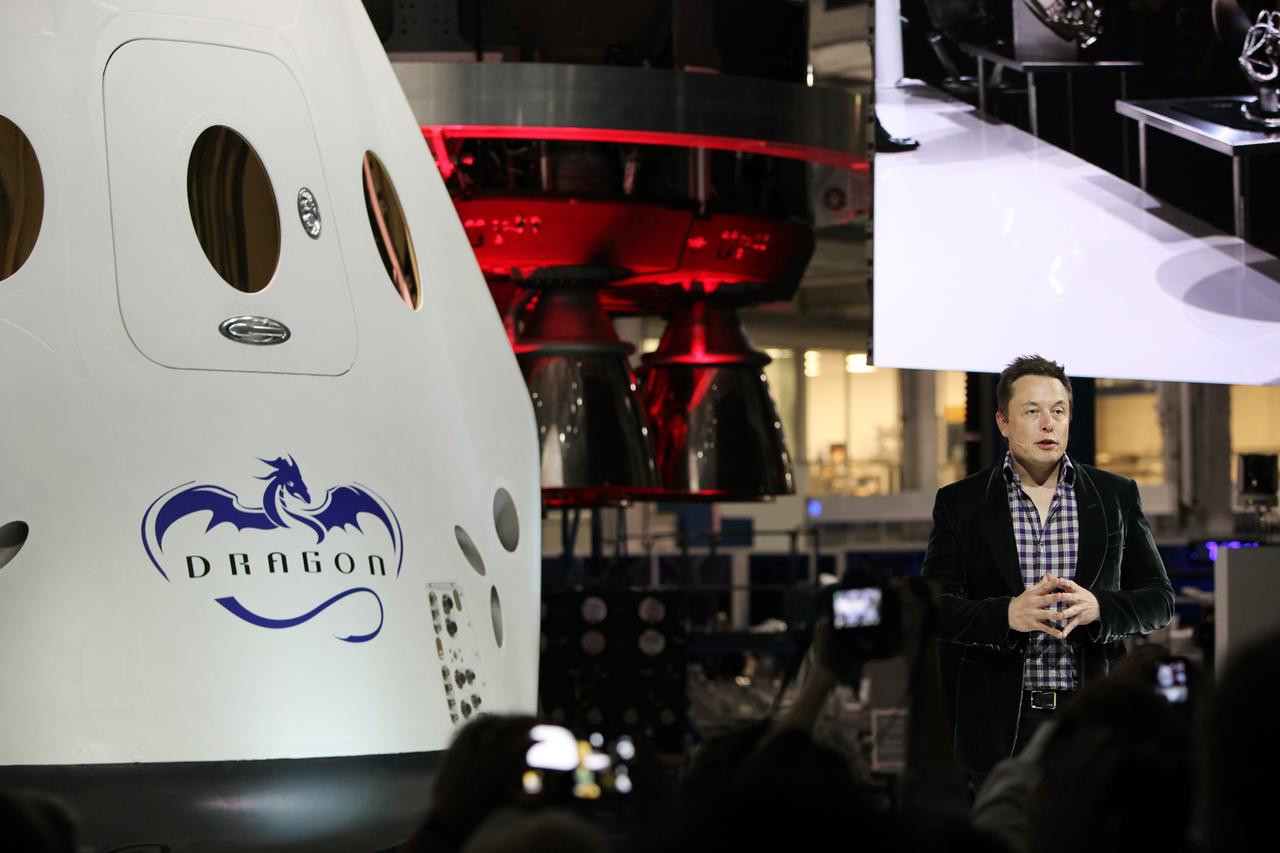
HAWTHORNE, Calif. - SpaceX CEO and founder Elon Musk discusses the Dragon V2 during an unveiling ceremony for the new spacecraft inside SpaceX headquarters in Hawthorne, Calif. The spacecraft is designed to carry people into Earth's orbit and was developed in partnership with NASA's Commercial Crew Program under the Commercial Crew Integrated Capability agreement. SpaceX is one of NASA's commercial partners working to develop a new generation of U.S. spacecraft and rockets capable of transporting humans to and from Earth's orbit from American soil. Ultimately, NASA intends to use such commercial systems to fly U.S. astronauts to and from the International Space Station. Photo credit: NASA/Dimitri Gerondidakis
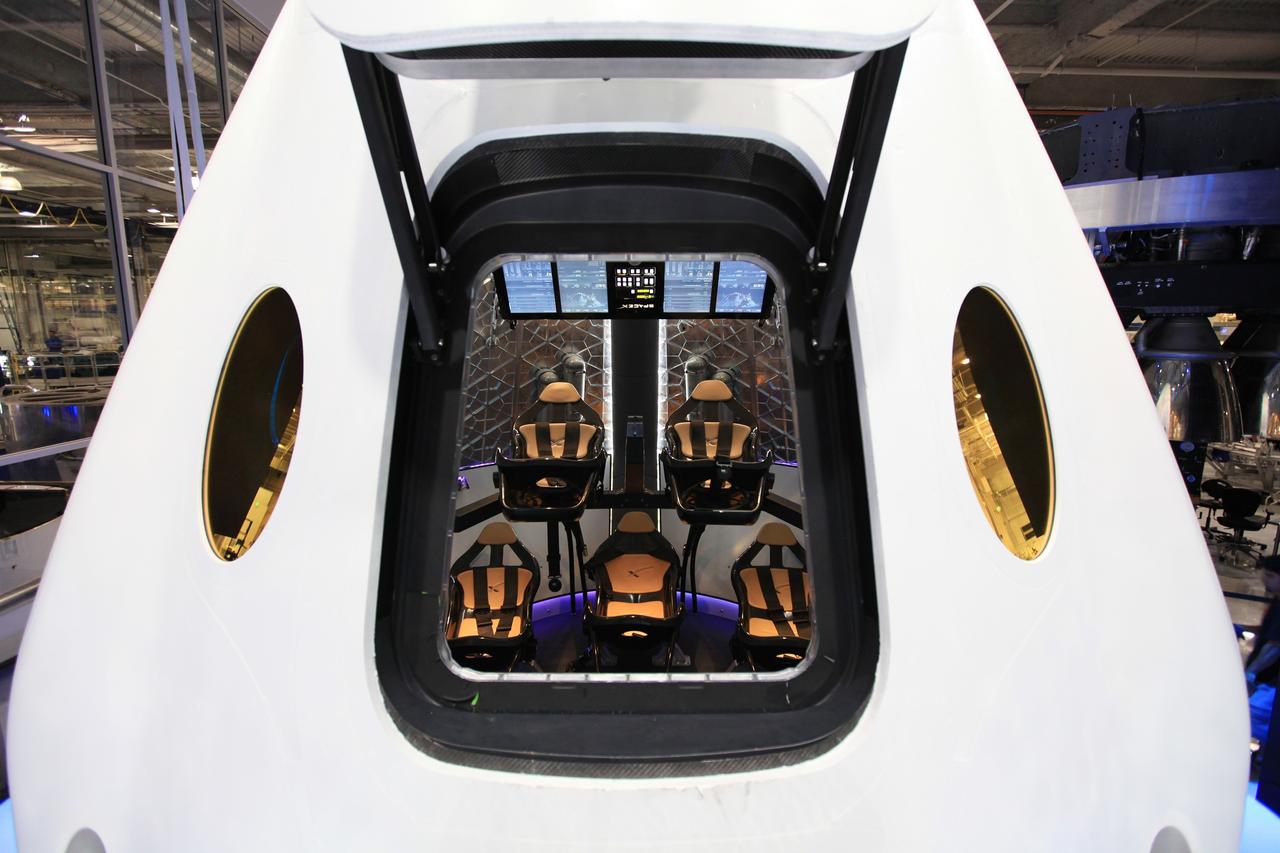
HAWTHORNE, Calif. - A look through the open hatch of the Dragon V2 reveals the layout and interior of the seven-crew capacity spacecraft. SpaceX unveiled the new spacecraft during a ceremony at its headquarters in Hawthorne, Calif. The Dragon V2 is designed to carry people into Earth's orbit and was developed in partnership with NASA's Commercial Crew Program under the Commercial Crew Integrated Capability agreement. SpaceX is one of NASA's commercial partners working to develop a new generation of U.S. spacecraft and rockets capable of transporting humans to and from Earth's orbit from American soil. Ultimately, NASA intends to use such commercial systems to fly U.S. astronauts to and from the International Space Station. Photo credit: NASA/Dimitri Gerondidakis
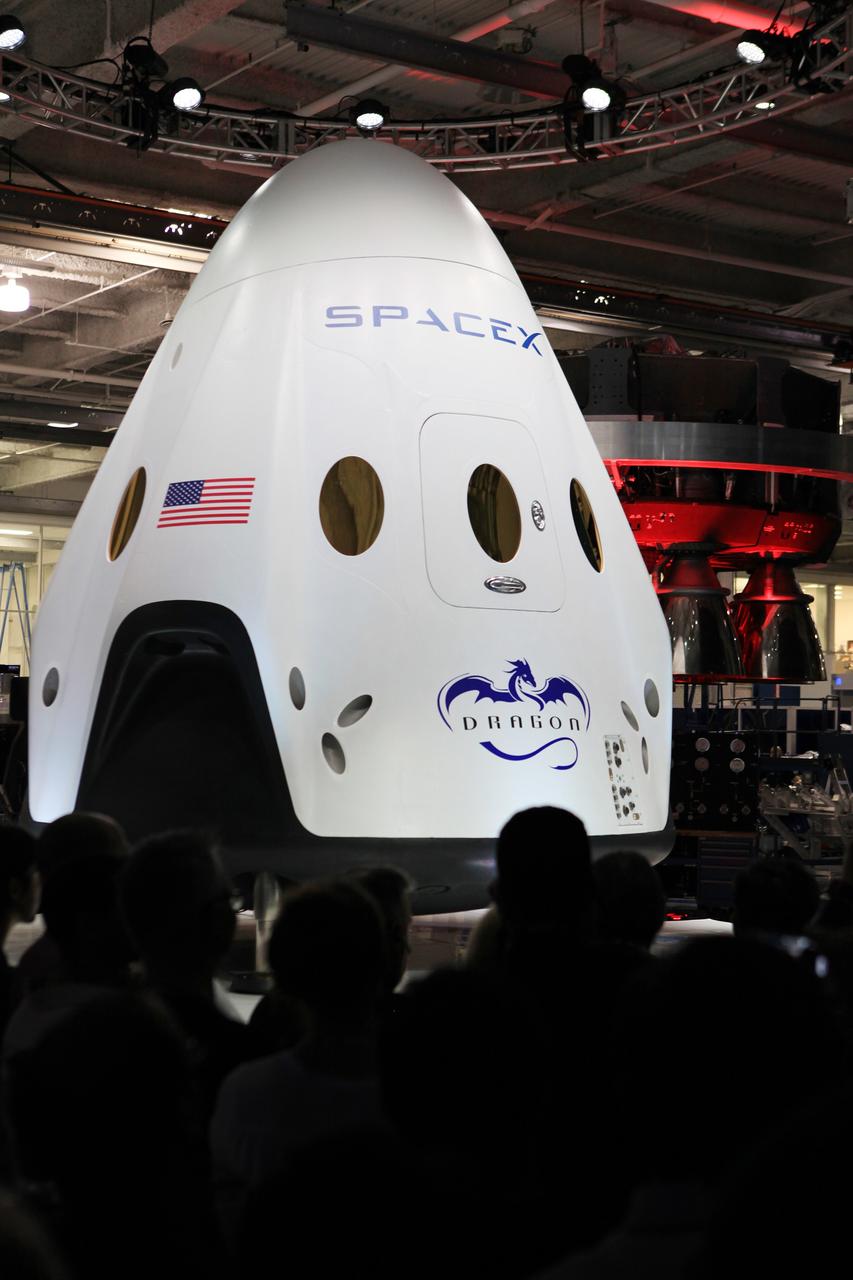
HAWTHORNE, Calif. - HAWTHORNE, Calif. - The Dragon V2 stands on a stage inside SpaceX headquarters in Hawthorne, Calif., during its unveiling ceremony. The spacecraft is designed to carry people into Earth's orbit and was developed in partnership with NASA's Commercial Crew Program under the Commercial Crew Integrated Capability agreement. SpaceX is one of NASA's commercial partners working to develop a new generation of U.S. spacecraft and rockets capable of transporting humans to and from Earth's orbit from American soil. Ultimately, NASA intends to use such commercial systems to fly U.S. astronauts to and from the International Space Station. Photo credit: NASA/Dimitri Gerondidakis
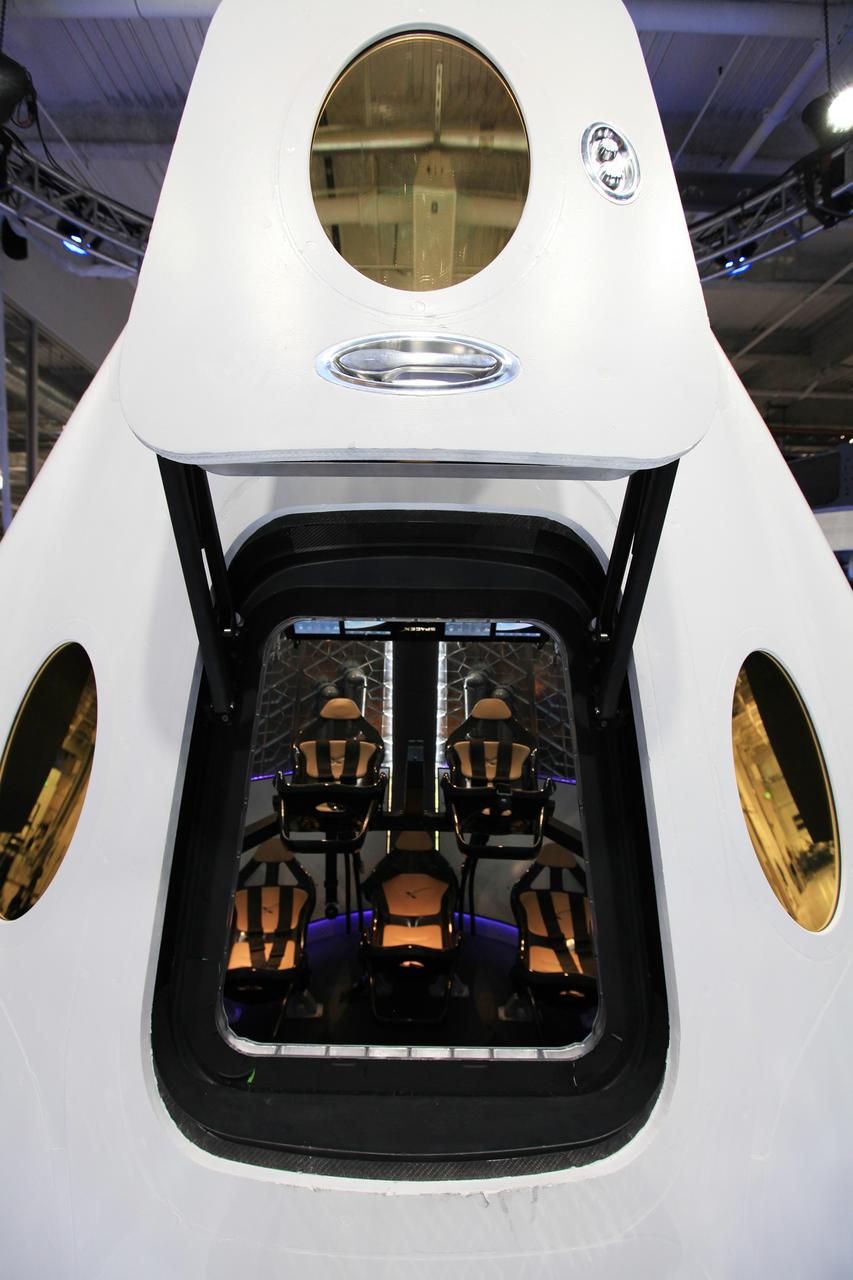
HAWTHORNE, Calif. - A look through the open hatch of the Dragon V2 reveals the layout and interior of the seven-crew capacity spacecraft. SpaceX unveiled the new spacecraft during a ceremony at its headquarters in Hawthorne, Calif. The Dragon V2 is designed to carry people into Earth's orbit and was developed in partnership with NASA's Commercial Crew Program under the Commercial Crew Integrated Capability agreement. SpaceX is one of NASA's commercial partners working to develop a new generation of U.S. spacecraft and rockets capable of transporting humans to and from Earth's orbit from American soil. Ultimately, NASA intends to use such commercial systems to fly U.S. astronauts to and from the International Space Station. Photo credit: NASA/Dimitri Gerondidakis

HAWTHORNE, Calif. - The Dragon V2 stands on a stage inside SpaceX headquarters in Hawthorne, Calif., during its unveiling. The spacecraft is designed to carry people into Earth's orbit and was developed in partnership with NASA's Commercial Crew Program under the Commercial Crew Integrated Capability agreement. SpaceX is one of NASA's commercial partners working to develop a new generation of U.S. spacecraft and rockets capable of transporting humans to and from Earth's orbit from American soil. Ultimately, NASA intends to use such commercial systems to fly U.S. astronauts to and from the International Space Station. Photo credit: NASA/Dimitri Gerondidakis

HAWTHORNE, Calif. - The Dragon V2 stands on a stage inside SpaceX headquarters in Hawthorne, Calif., prior to its unveiling. The spacecraft is designed to carry people into Earth's orbit and was developed in partnership with NASA's Commercial Crew Program under the Commercial Crew Integrated Capability agreement. SpaceX is one of NASA's commercial partners working to develop a new generation of U.S. spacecraft and rockets capable of transporting humans to and from Earth's orbit from American soil. Ultimately, NASA intends to use such commercial systems to fly U.S. astronauts to and from the International Space Station. Photo credit: NASA/Dimitri Gerondidakis
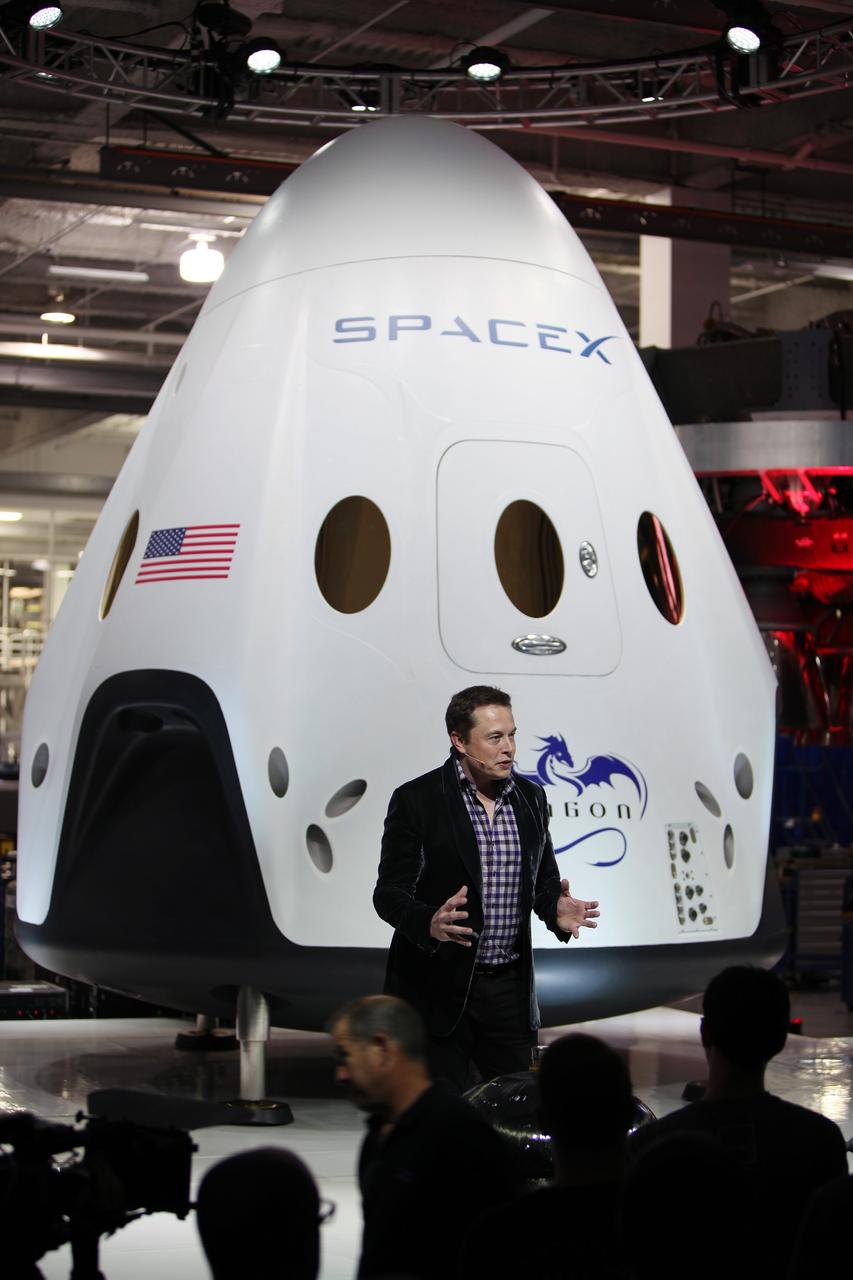
HAWTHORNE, Calif. - HAWTHORNE, Calif. - SpaceX CEO and founder Elon Musk unveils the Dragon V2 during a ceremony for the new spacecraft inside SpaceX headquarters in Hawthorne, Calif. The spacecraft is designed to carry people into Earth's orbit and was developed in partnership with NASA's Commercial Crew Program under the Commercial Crew Integrated Capability agreement. SpaceX is one of NASA's commercial partners working to develop a new generation of U.S. spacecraft and rockets capable of transporting humans to and from Earth's orbit from American soil. Ultimately, NASA intends to use such commercial systems to fly U.S. astronauts to and from the International Space Station. Photo credit: NASA/Dimitri Gerondidakis
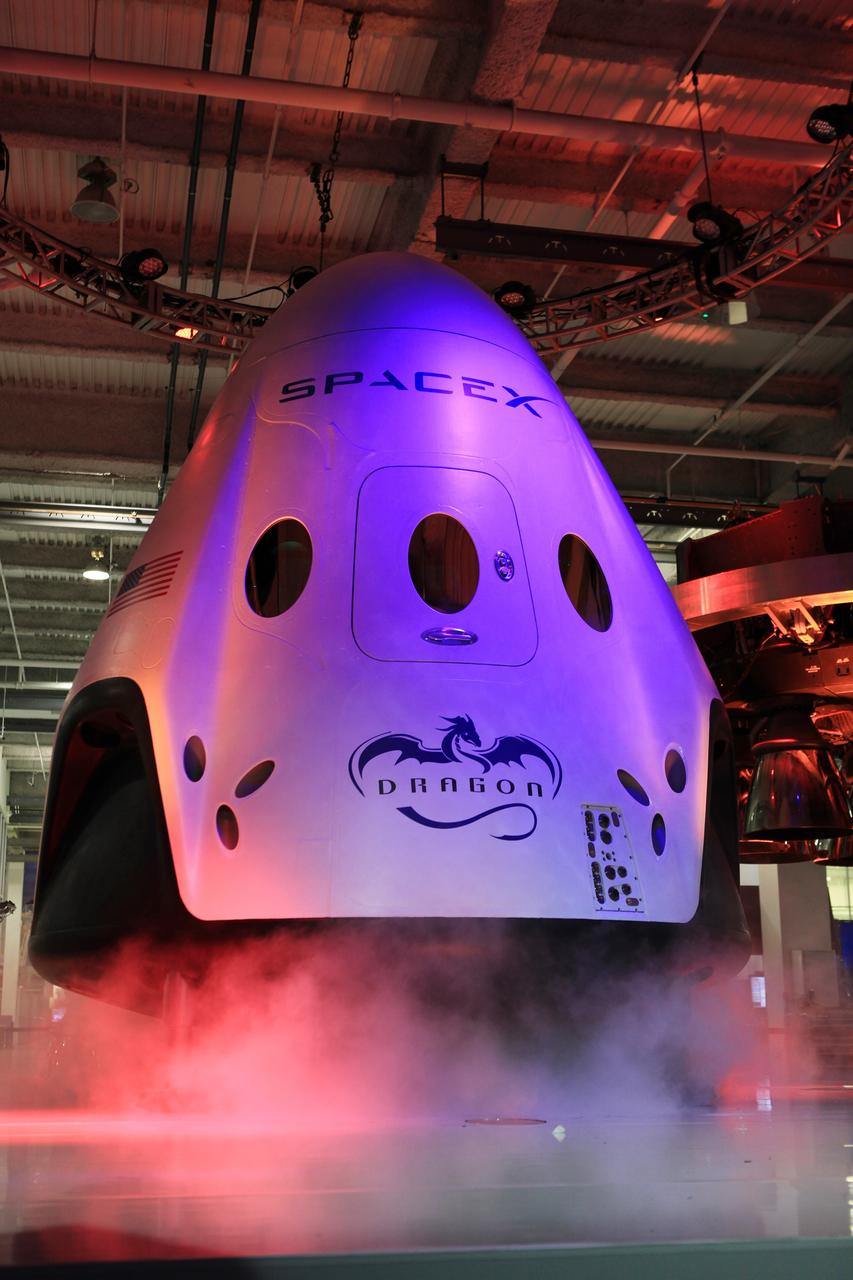
HAWTHORNE, Calif. - The Dragon V2 stands on a stage inside SpaceX headquarters in Hawthorne, Calif., during its unveiling. The spacecraft is designed to carry people into Earth's orbit and was developed in partnership with NASA's Commercial Crew Program under the Commercial Crew Integrated Capability agreement. SpaceX is one of NASA's commercial partners working to develop a new generation of U.S. spacecraft and rockets capable of transporting humans to and from Earth's orbit from American soil. Ultimately, NASA intends to use such commercial systems to fly U.S. astronauts to and from the International Space Station. Photo credit: NASA/Dimitri Gerondidakis
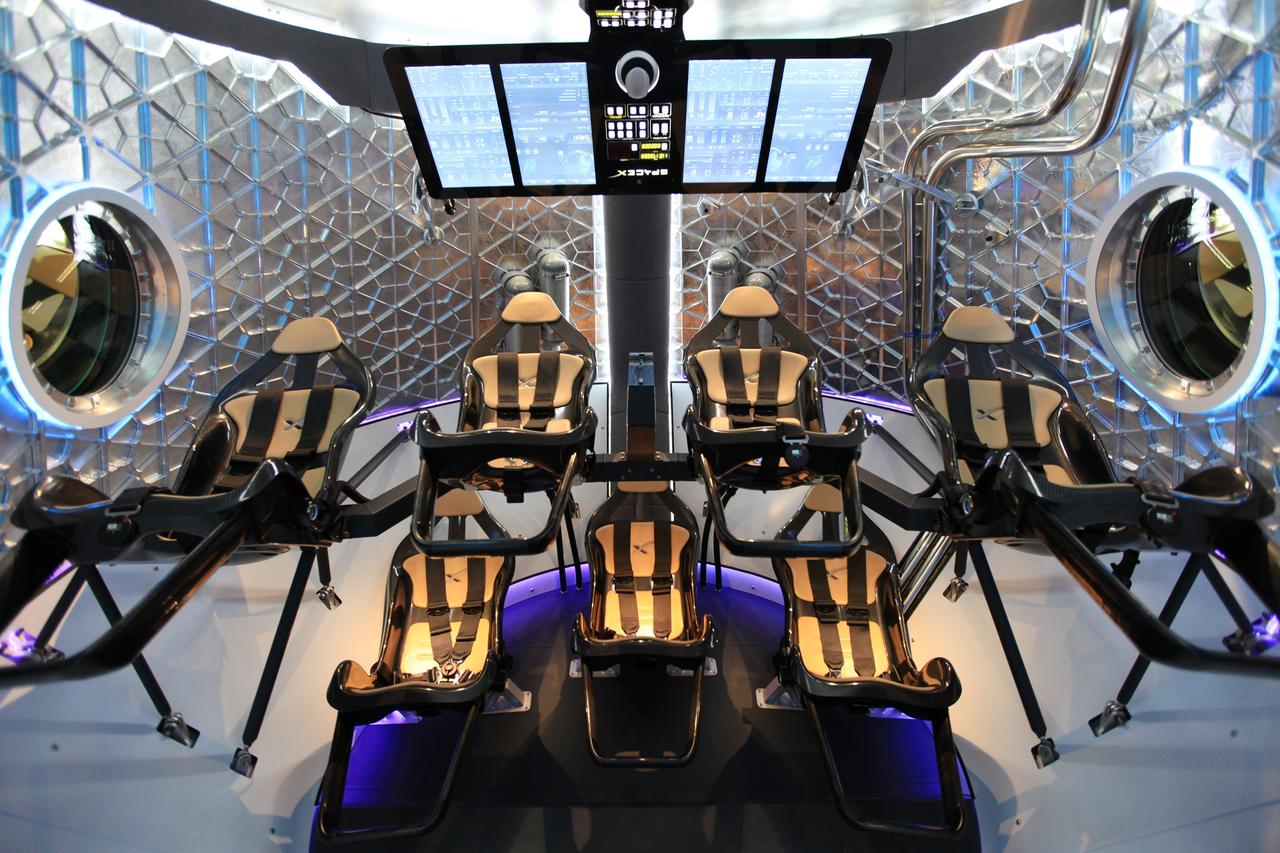
HAWTHORNE, Calif. - A look through the open hatch of the Dragon V2 reveals the layout and interior of the seven-crew capacity spacecraft. SpaceX unveiled the new spacecraft during a ceremony at its headquarters in Hawthorne, Calif. The Dragon V2 is designed to carry people into Earth's orbit and was developed in partnership with NASA's Commercial Crew Program under the Commercial Crew Integrated Capability agreement. SpaceX is one of NASA's commercial partners working to develop a new generation of U.S. spacecraft and rockets capable of transporting humans to and from Earth's orbit from American soil. Ultimately, NASA intends to use such commercial systems to fly U.S. astronauts to and from the International Space Station. Photo credit: NASA/Dimitri Gerondidakis
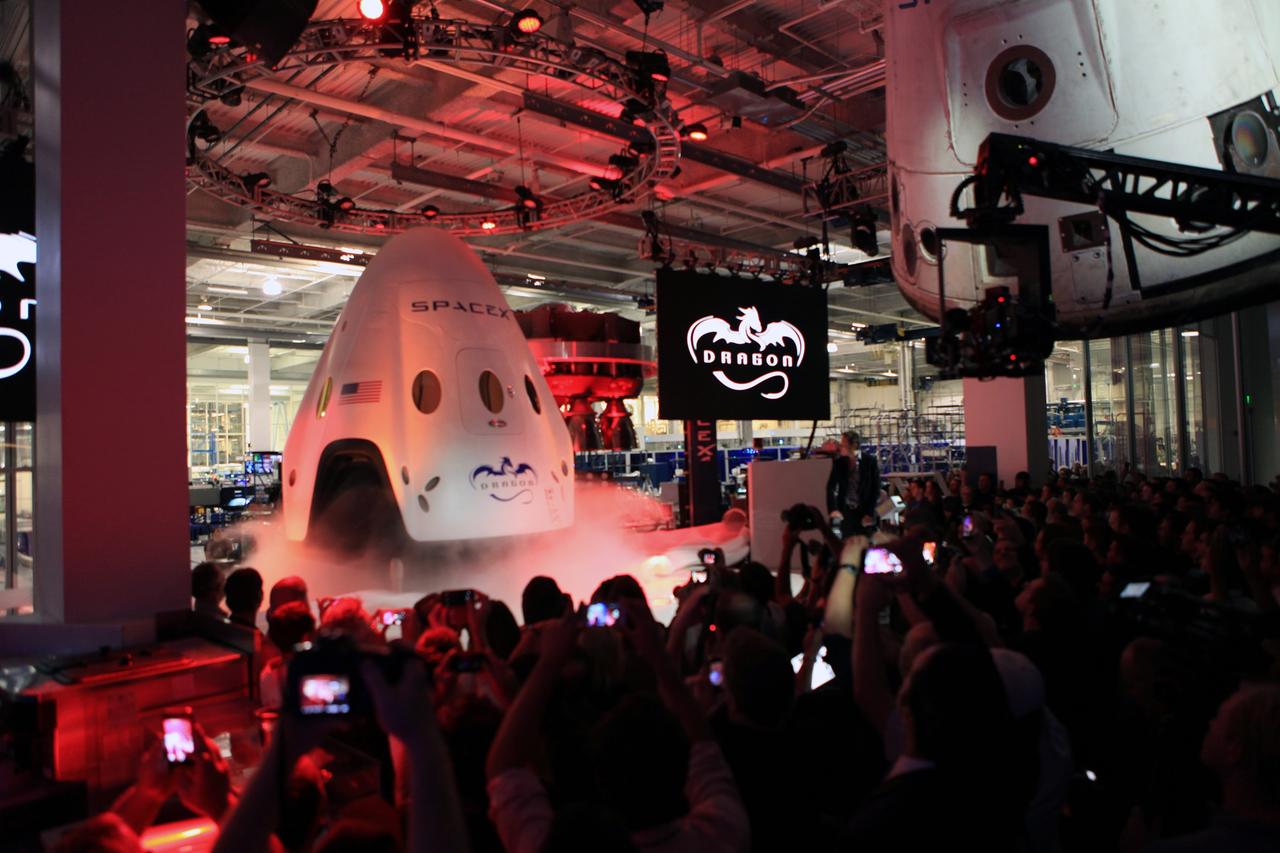
HAWTHORNE, Calif. - SpaceX CEO and founder Elon Musk unveils the Dragon V2 inside SpaceX headquarters in Hawthorne, Calif. The spacecraft is designed to carry people into Earth's orbit and was developed in partnership with NASA's Commercial Crew Program under the Commercial Crew Integrated Capability agreement. SpaceX is one of NASA's commercial partners working to develop a new generation of U.S. spacecraft and rockets capable of transporting humans to and from Earth's orbit from American soil. Ultimately, NASA intends to use such commercial systems to fly U.S. astronauts to and from the International Space Station. Photo credit: NASA/Dimitri Gerondidakis
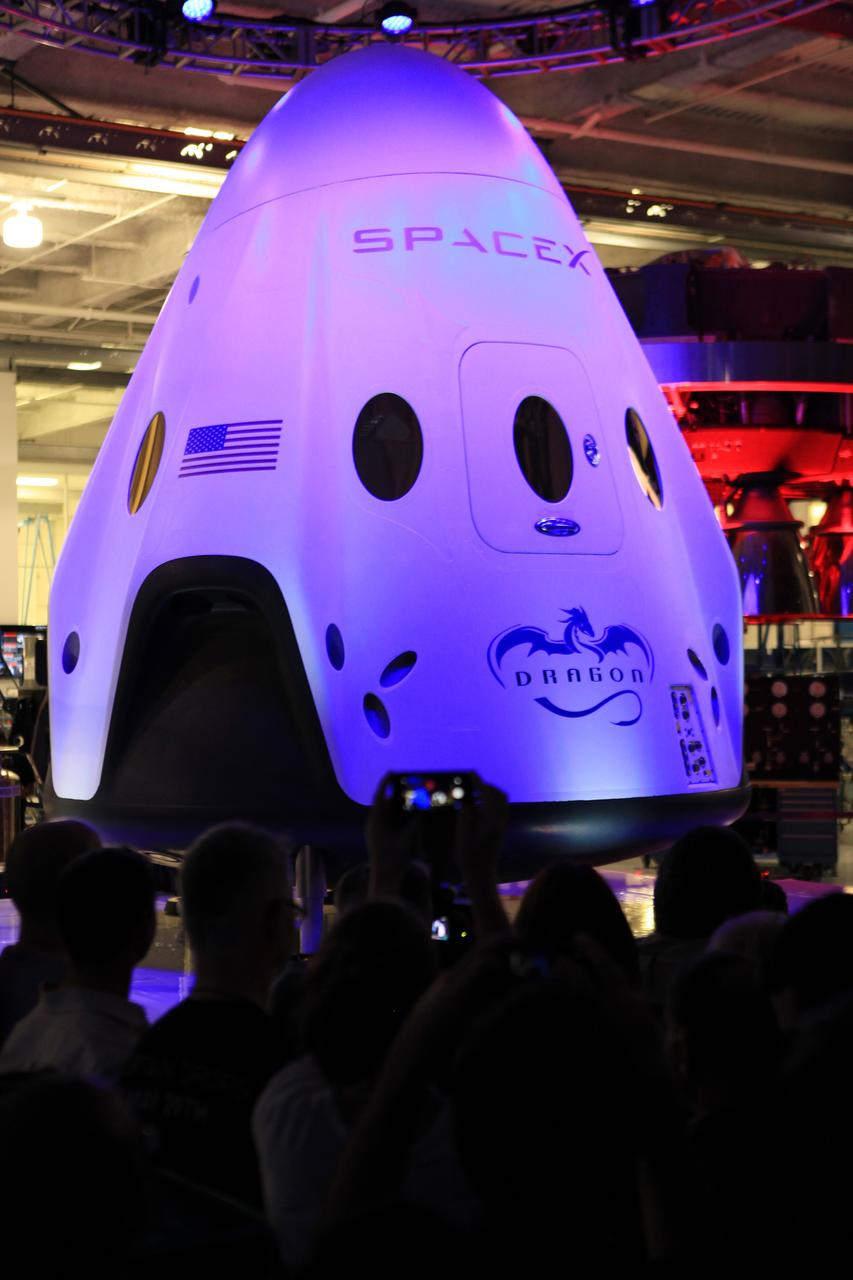
HAWTHORNE, Calif. - The Dragon V2 stands on a stage inside SpaceX headquarters in Hawthorne, Calif., during its unveiling ceremony. The spacecraft is designed to carry people into Earth's orbit and was developed in partnership with NASA's Commercial Crew Program under the Commercial Crew Integrated Capability agreement. SpaceX is one of NASA's commercial partners working to develop a new generation of U.S. spacecraft and rockets capable of transporting humans to and from Earth's orbit from American soil. Ultimately, NASA intends to use such commercial systems to fly U.S. astronauts to and from the International Space Station. Photo credit: NASA/Dimitri Gerondidakis
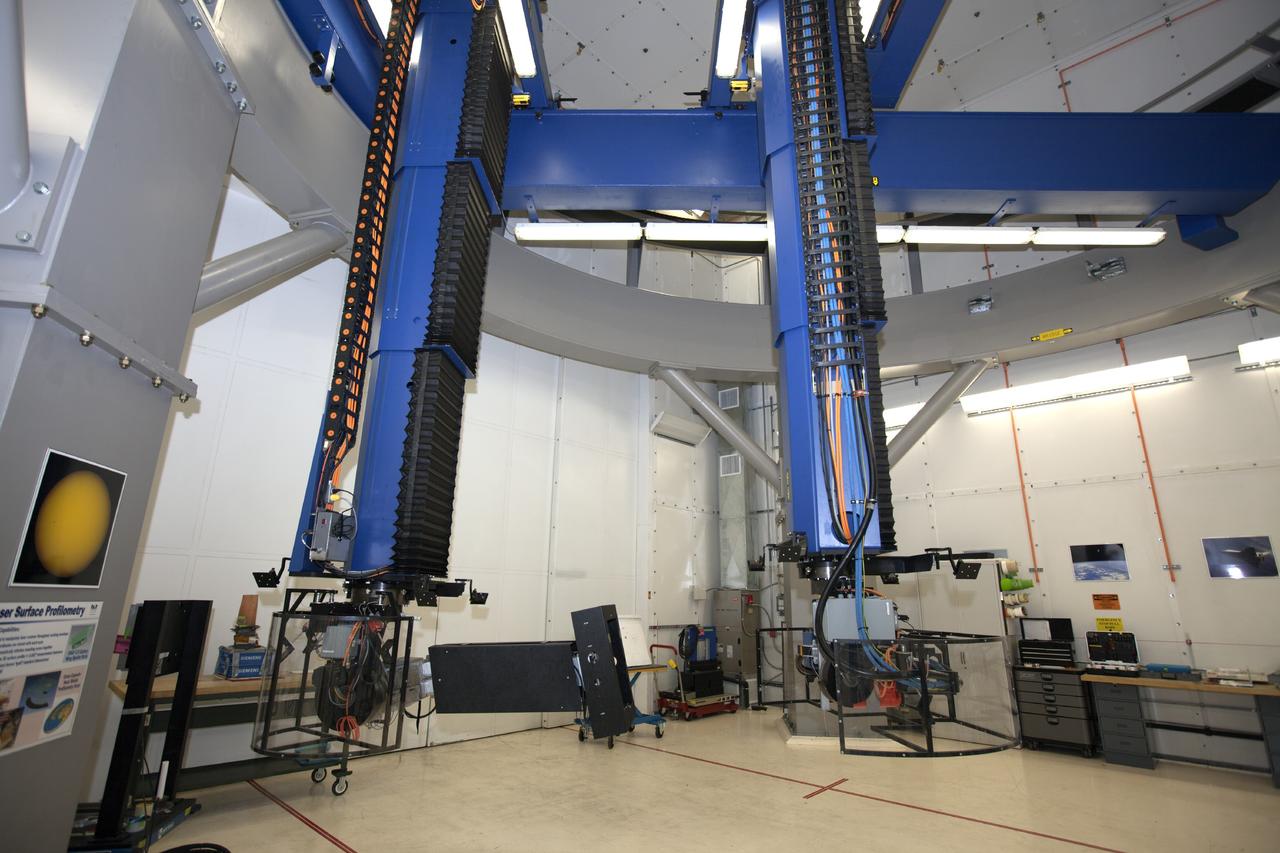
CAPE CANAVERAL, Fla. – In Hangar N at Cape Canaveral Air Force Station, an 11-axis robotic X-ray system takes images of hardware for evaluation. The activity is part of work performed by PaR Systems, Inc. under a partnership agreement with NASA. NASA's Kennedy Space Center in Florida recently established a partnership agreement with PaR Systems, Inc. of Shoreview, Minn., for operation of the Hangar N facility and its nondestructive testing and evaluation equipment. As the spaceport transitions from a historically government-only launch facility to a multi-user spaceport for both federal and commercial customers, partnerships between the space agency and other organizations will be a key element in that effort. Hangar N is located at Cape Canaveral Air Force Station adjacent to Kennedy and houses a unique inventory of test and evaluation equipment and the capability for current and future mission spaceflight support. Photo credit: NASA/ Dimitri Gerondidakis
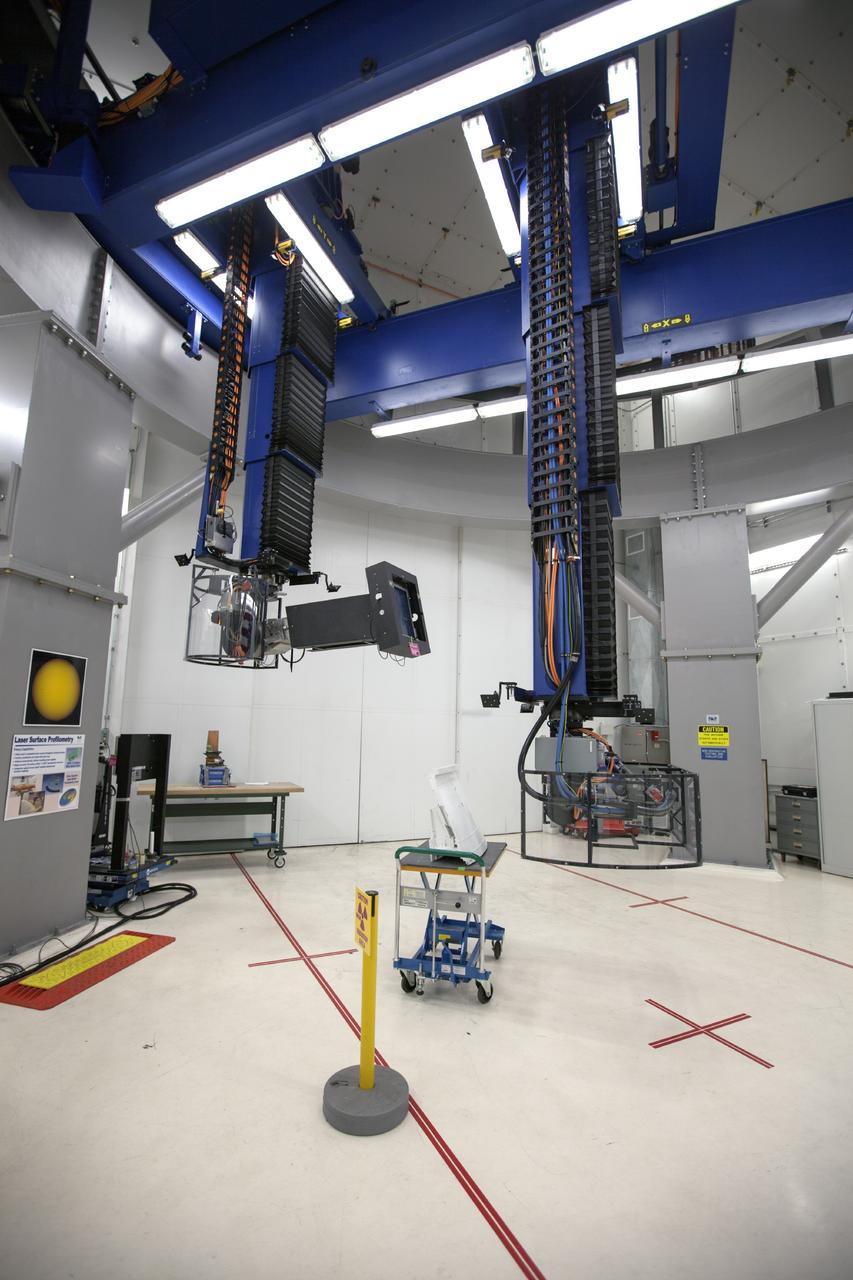
CAPE CANAVERAL, Fla. – In Hangar N at Cape Canaveral Air Force Station, an 11-axis robotic X-ray system takes images of hardware for evaluation. The activity is part of work performed by PaR Systems, Inc. under a partnership agreement with NASA. NASA's Kennedy Space Center in Florida recently established a partnership agreement with PaR Systems, Inc. of Shoreview, Minn., for operation of the Hangar N facility and its nondestructive testing and evaluation equipment. As the spaceport transitions from a historically government-only launch facility to a multi-user spaceport for both federal and commercial customers, partnerships between the space agency and other organizations will be a key element in that effort. Hangar N is located at Cape Canaveral Air Force Station adjacent to Kennedy and houses a unique inventory of test and evaluation equipment and the capability for current and future mission spaceflight support. Photo credit: NASA/ Dimitri Gerondidakis
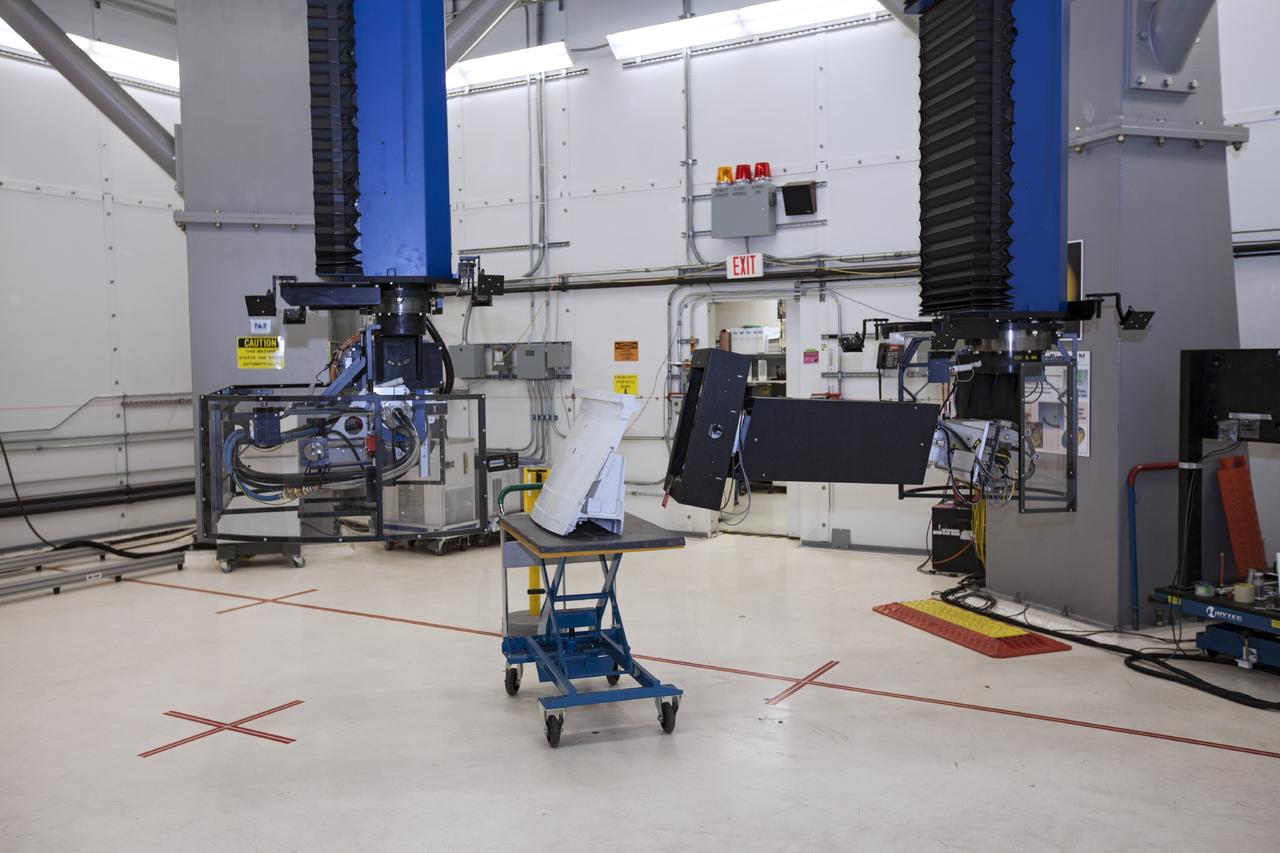
CAPE CANAVERAL, Fla. – In Hangar N at Cape Canaveral Air Force Station, an 11-axis robotic X-ray system takes images of hardware for evaluation. The activity is part of work performed by PaR Systems, Inc. under a partnership agreement with NASA. NASA's Kennedy Space Center in Florida recently established a partnership agreement with PaR Systems, Inc. of Shoreview, Minn., for operation of the Hangar N facility and its nondestructive testing and evaluation equipment. As the spaceport transitions from a historically government-only launch facility to a multi-user spaceport for both federal and commercial customers, partnerships between the space agency and other organizations will be a key element in that effort. Hangar N is located at Cape Canaveral Air Force Station adjacent to Kennedy and houses a unique inventory of test and evaluation equipment and the capability for current and future mission spaceflight support. Photo credit: NASA/ Dimitri Gerondidakis
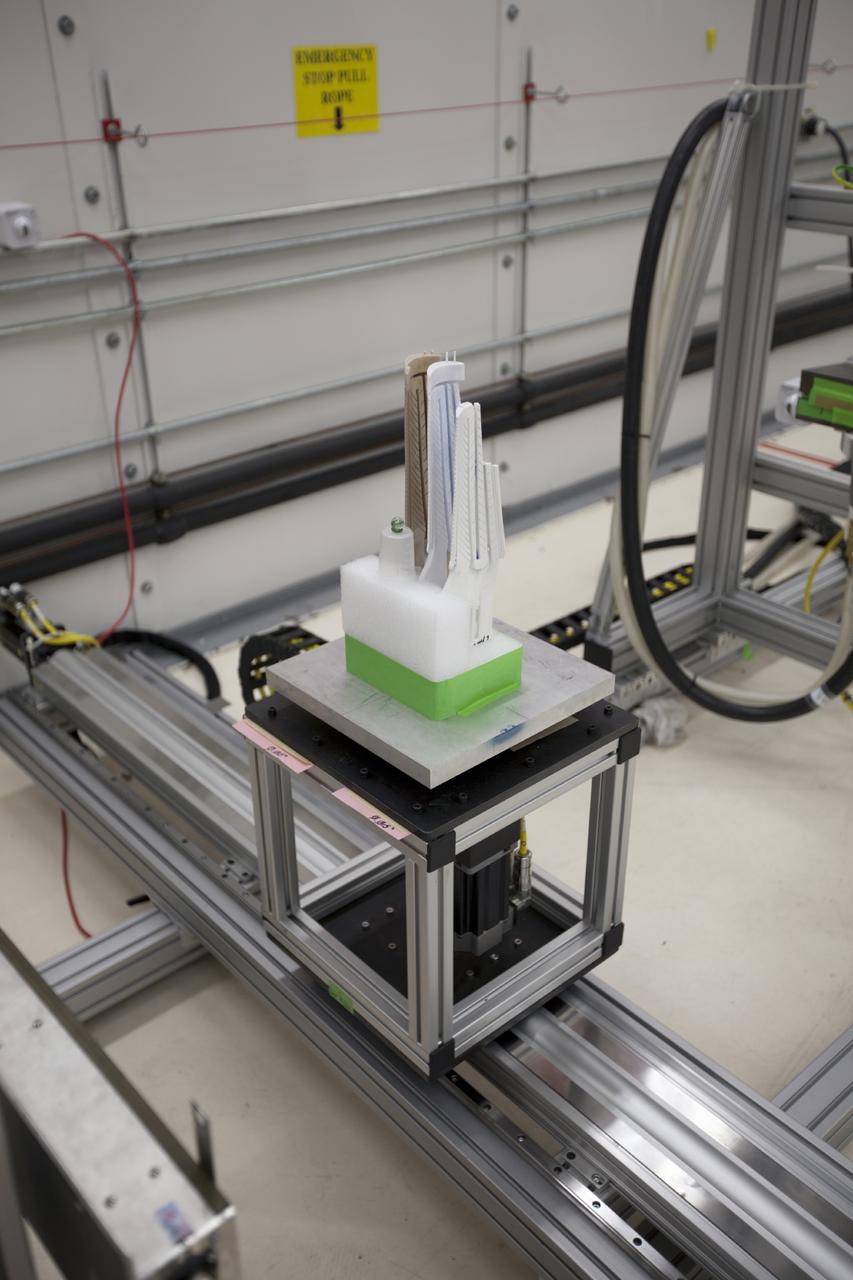
CAPE CANAVERAL, Fla. – In Hangar N at Cape Canaveral Air Force Station, ceramic materials are positioned for Advanced Partial Angle Computed Tomography testing. The activity is part of work performed by PaR Systems, Inc. under a partnership agreement with NASA. NASA's Kennedy Space Center in Florida recently established a partnership agreement with PaR Systems, Inc. of Shoreview, Minn., for operation of the Hangar N facility and its nondestructive testing and evaluation equipment. As the spaceport transitions from a historically government-only launch facility to a multi-user spaceport for both federal and commercial customers, partnerships between the space agency and other organizations will be a key element in that effort. Hangar N is located at Cape Canaveral Air Force Station adjacent to Kennedy and houses a unique inventory of test and evaluation equipment and the capability for current and future mission spaceflight support. Photo credit: NASA/ Dimitri Gerondidakis
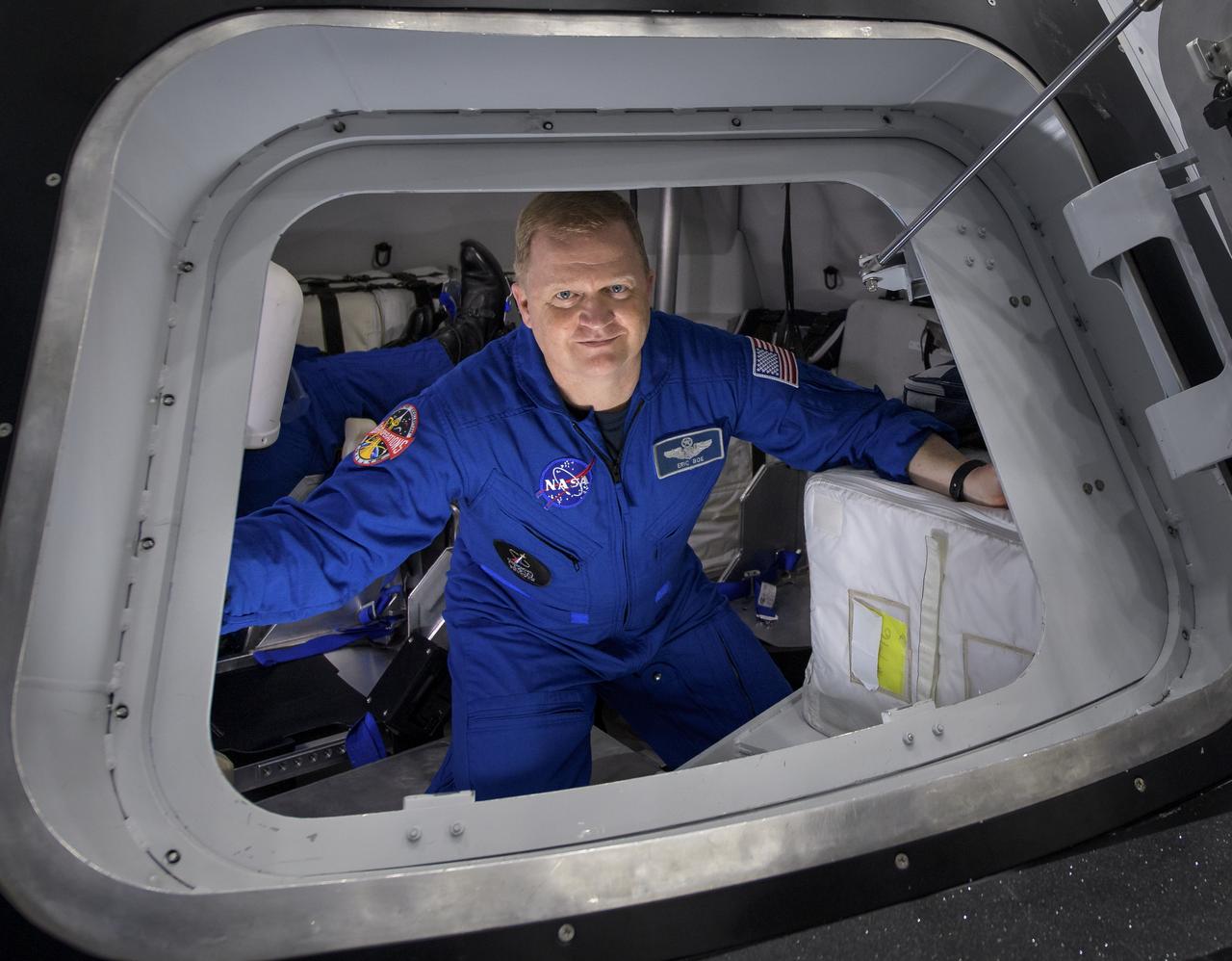
NASA astronaut Eric Boe poses for a photograph as he exits the Boeing Mockup Trainer at NASA’s Johnson Space Center in Houston, Texas on Aug. 2, 2018 ahead of the commercial crew flight assignments announcement Aug. 3. Boe, along with NASA astronaut Nicole Aunapu Mann and Boeing astronaut Chris Ferguson were assigned to launch aboard Boeing’s CST-100 Starliner on the company’s Crew Flight Test targeted for mid-2019 in partnership with NASA’s Commercial Crew Program. Photo Credit: (NASA/Bill Ingalls)
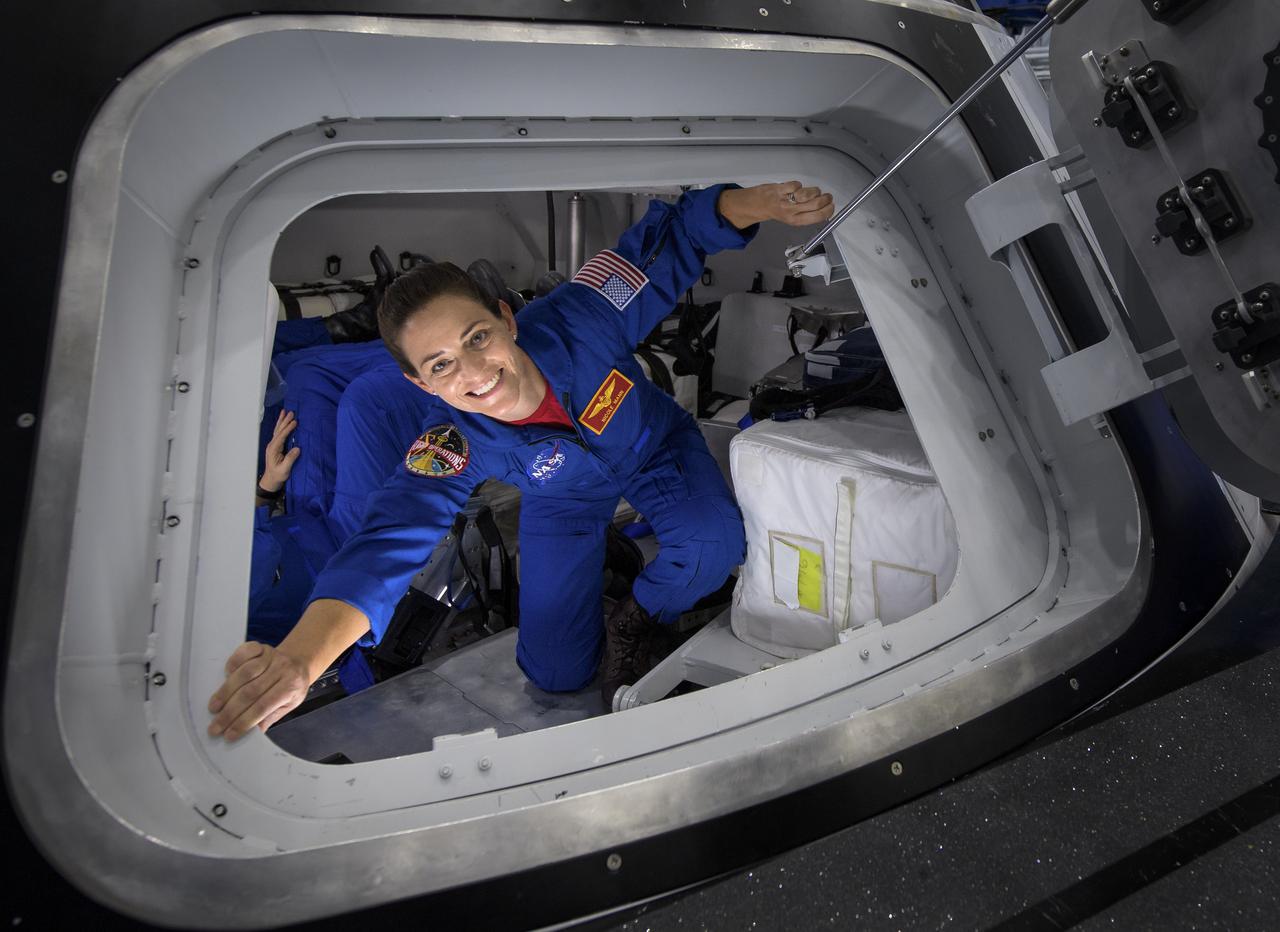
NASA astronaut Nicole Mann poses for a photograph as she exits the Boeing Mockup Trainer at NASA’s Johnson Space Center in Houston, Texas on Aug. 2, 2018 ahead of the commercial crew flight assignments announcement Aug. 3. Mann, along with NASA astronaut Eric Boe and Boeing astronaut Chris Ferguson were assigned to launch aboard Boeing’s CST-100 Starliner on the company’s Crew Flight Test targeted for mid-2019 in partnership with NASA’s Commercial Crew Program. Photo Credit: (NASA/Bill Ingalls)

NASA astronaut Barry "Butch" Wilmore, at left, tours Boeing's Commercial Crew and Cargo Processing Facility (C3PF) on Oct. 25, 2018, at NASA's Kennedy Space Center in Florida. Boeing's CST-100 Starliner will launch on its first uncrewed flight test on a United Launch Alliance Atlas V rocket. The Starliner is being developed and manufactured in partnership with NASA's Commercial Crew Program to return human spaceflight capabilities to the U.S.
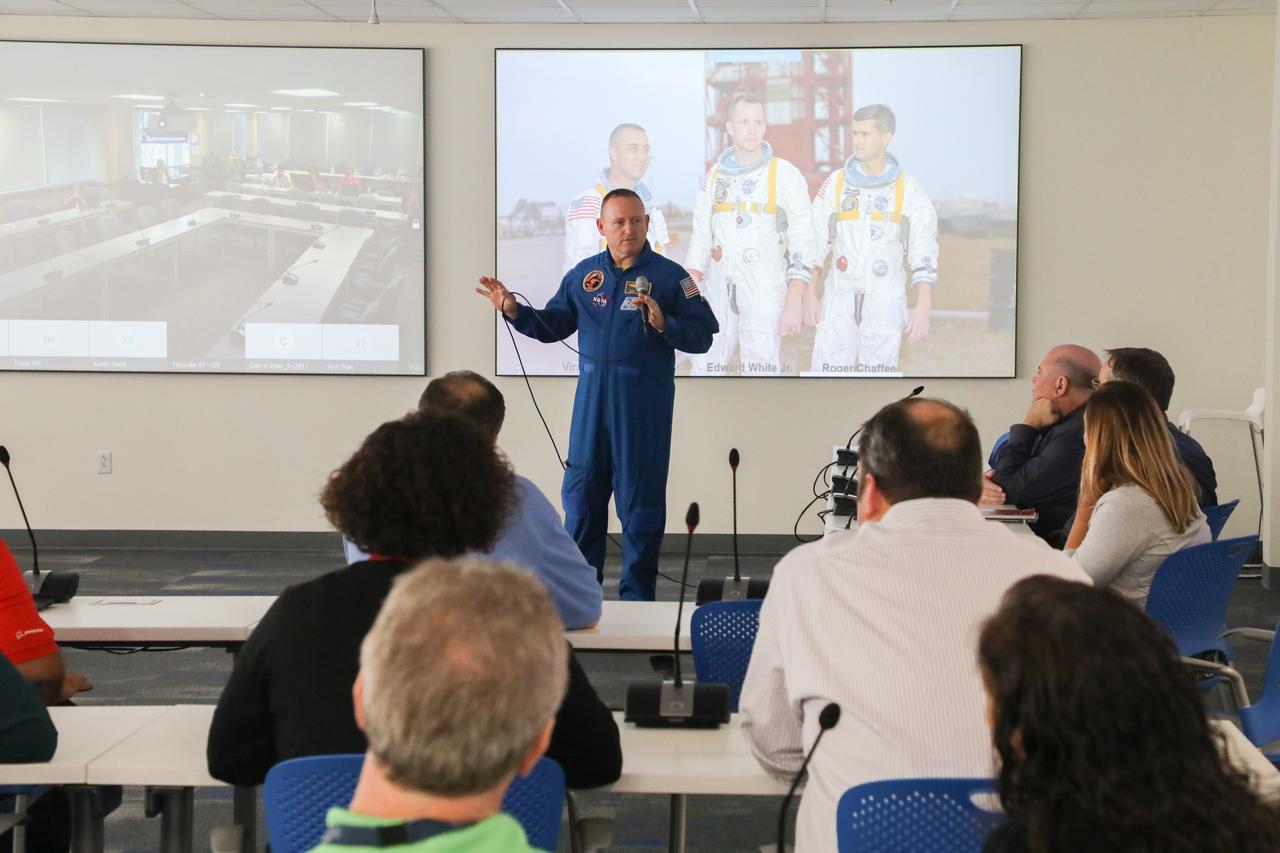
NASA astronaut Barry "Butch" Wilmore, speaks to workers during a tour of Boeing's Commercial Crew and Cargo Processing Facility (C3PF) on Oct. 25, 2018, at NASA's Kennedy Space Center in Florida. Boeing's CST-100 Starliner will launch on its first uncrewed flight test on a United Launch Alliance Atlas V rocket. The Starliner is being developed and manufactured in partnership with NASA's Commercial Crew Program to return human spaceflight capabilities to the U.S.
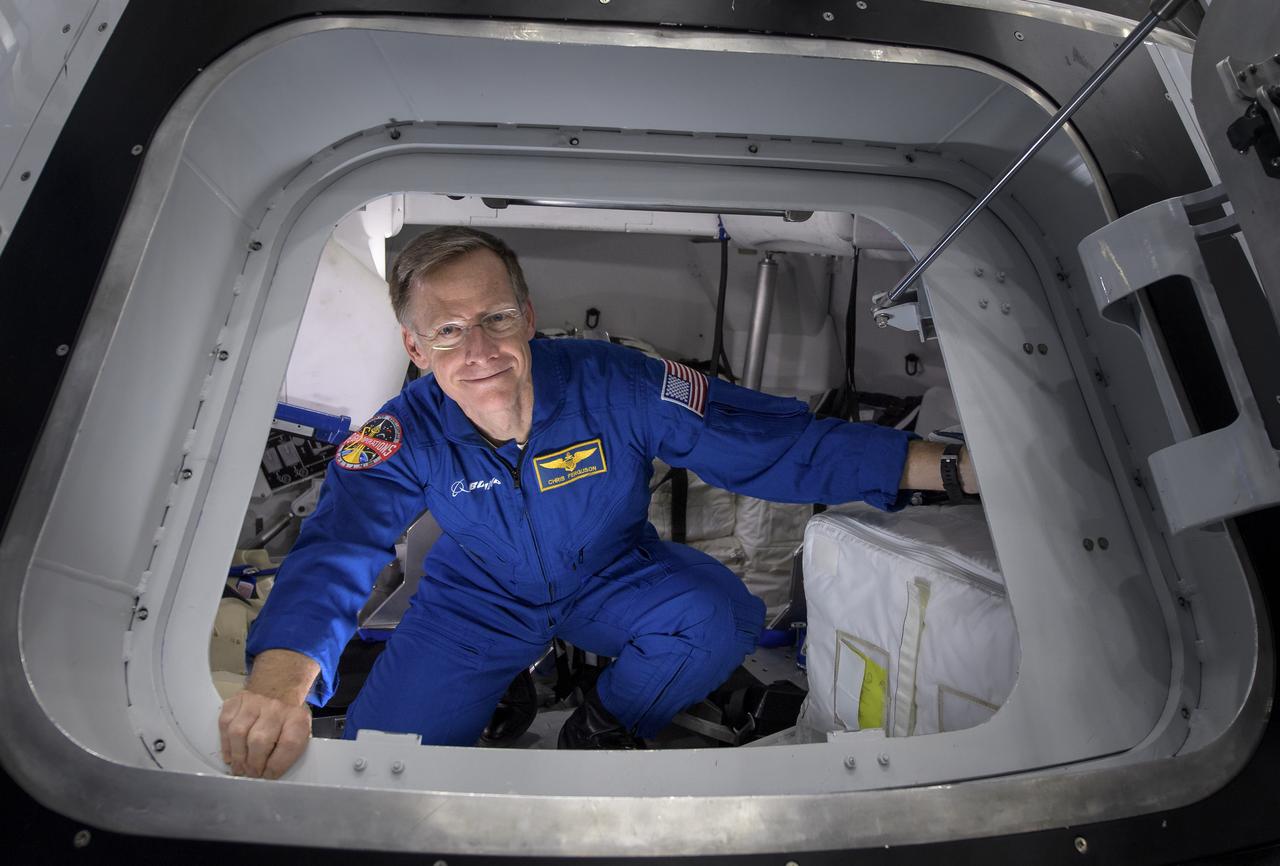
Boeing astronaut Chris Ferguson poses for a photograph as he exits the Boeing Mockup Trainer at NASA’s Johnson Space Center in Houston, Texas on Aug. 2, 2018 ahead of the commercial crew flight assignments announcement Aug. 3. Ferguson, along with NASA astronauts Eric Boe and Nicole Aunapu Mann were assigned to launch aboard Boeing’s CST-100 Starliner on the company’s Crew Flight Test targeted for mid-2019 in partnership with NASA’s Commercial Crew Program. Photo Credit: (NASA/Bill Ingalls)
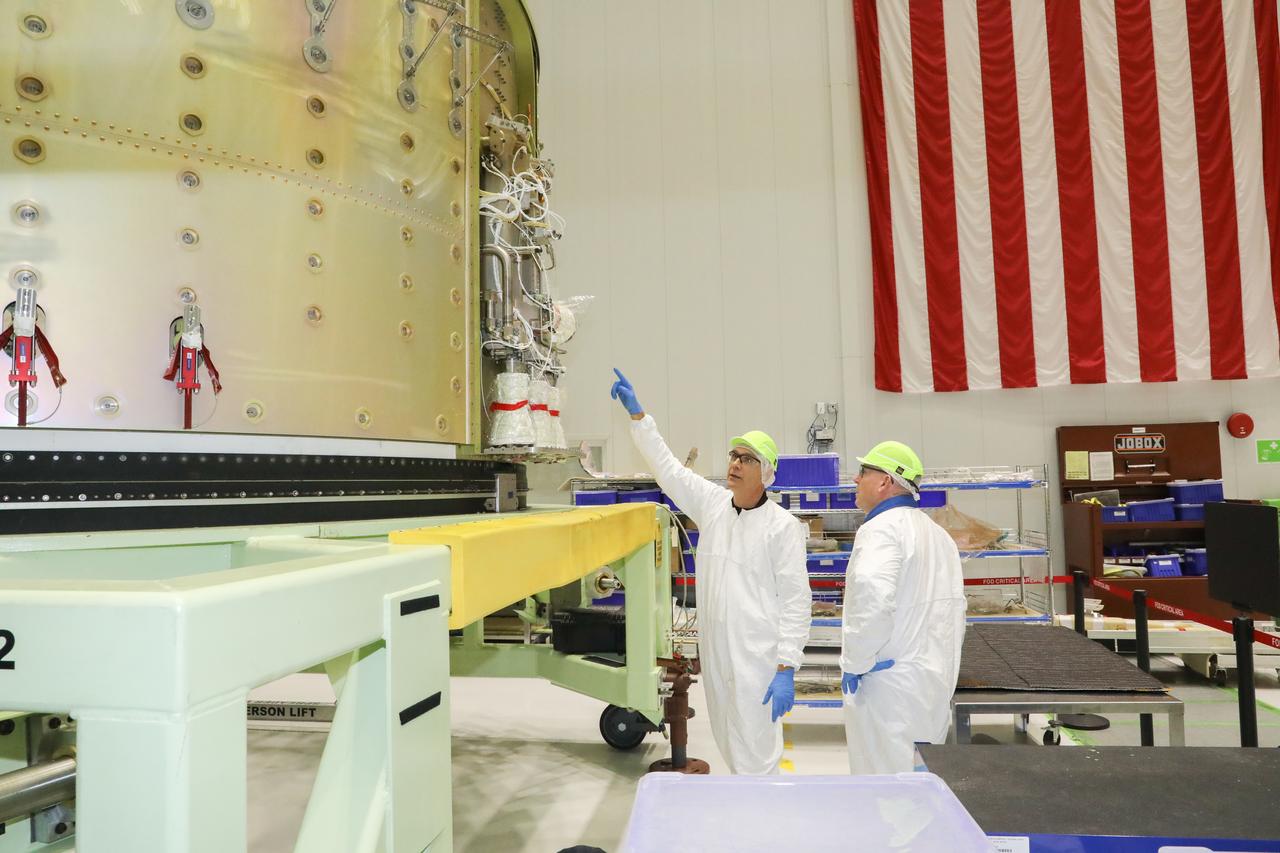
NASA astronaut Barry "Butch" Wilmore, at right, tours Boeing's Commercial Crew and Cargo Processing Facility (C3PF) on Oct. 25, 2018, at NASA's Kennedy Space Center in Florida. Boeing's CST-100 Starliner will launch on its first uncrewed flight test on a United Launch Alliance Atlas V rocket. The Starliner is being developed and manufactured in partnership with NASA's Commercial Crew Program to return human spaceflight capabilities to the U.S.
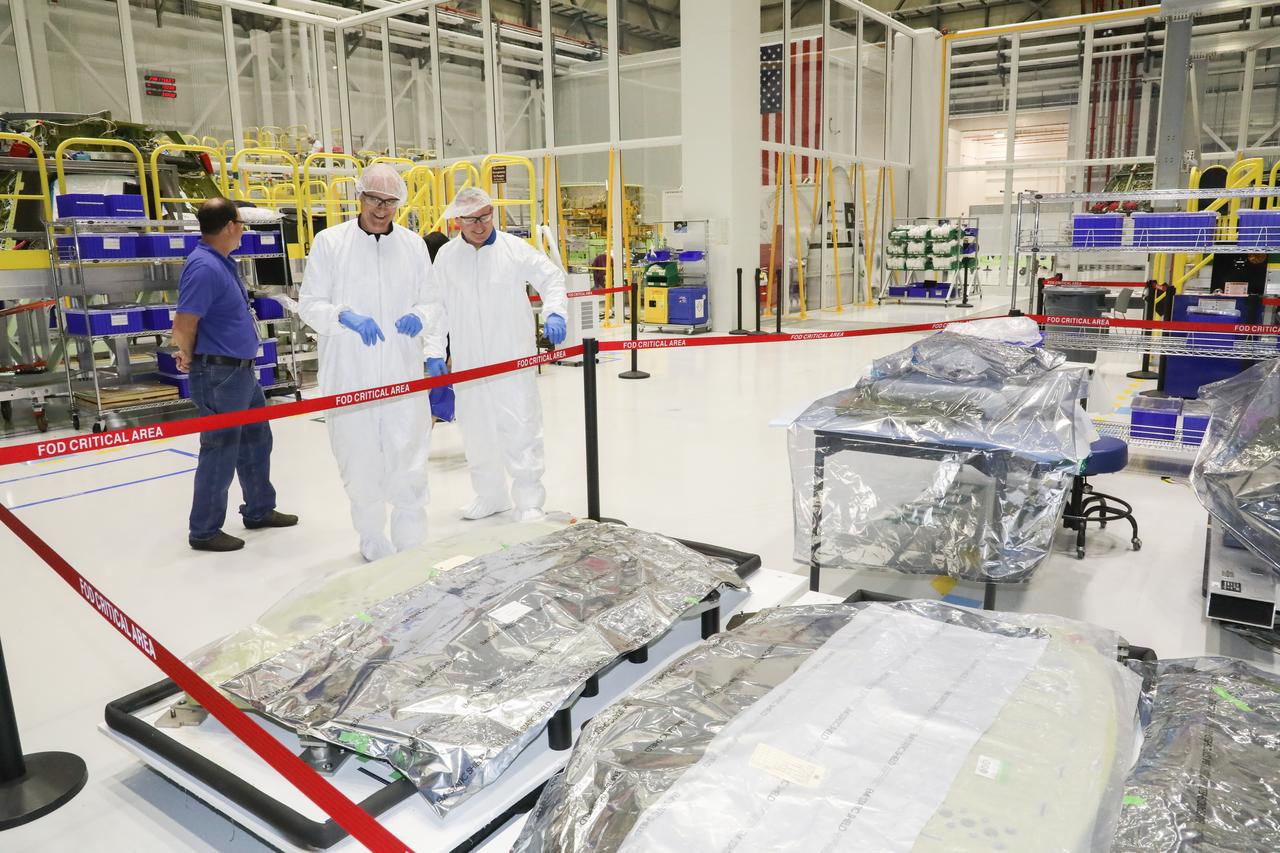
NASA astronaut Barry "Butch" Wilmore, center, tours Boeing's Commercial Crew and Cargo Processing Facility (C3PF) on Oct. 25, 2018, at NASA's Kennedy Space Center in Florida. Boeing's CST-100 Starliner will launch on its first uncrewed flight test on a United Launch Alliance Atlas V rocket. The Starliner is being developed and manufactured in partnership with NASA's Commercial Crew Program to return human spaceflight capabilities to the U.S.
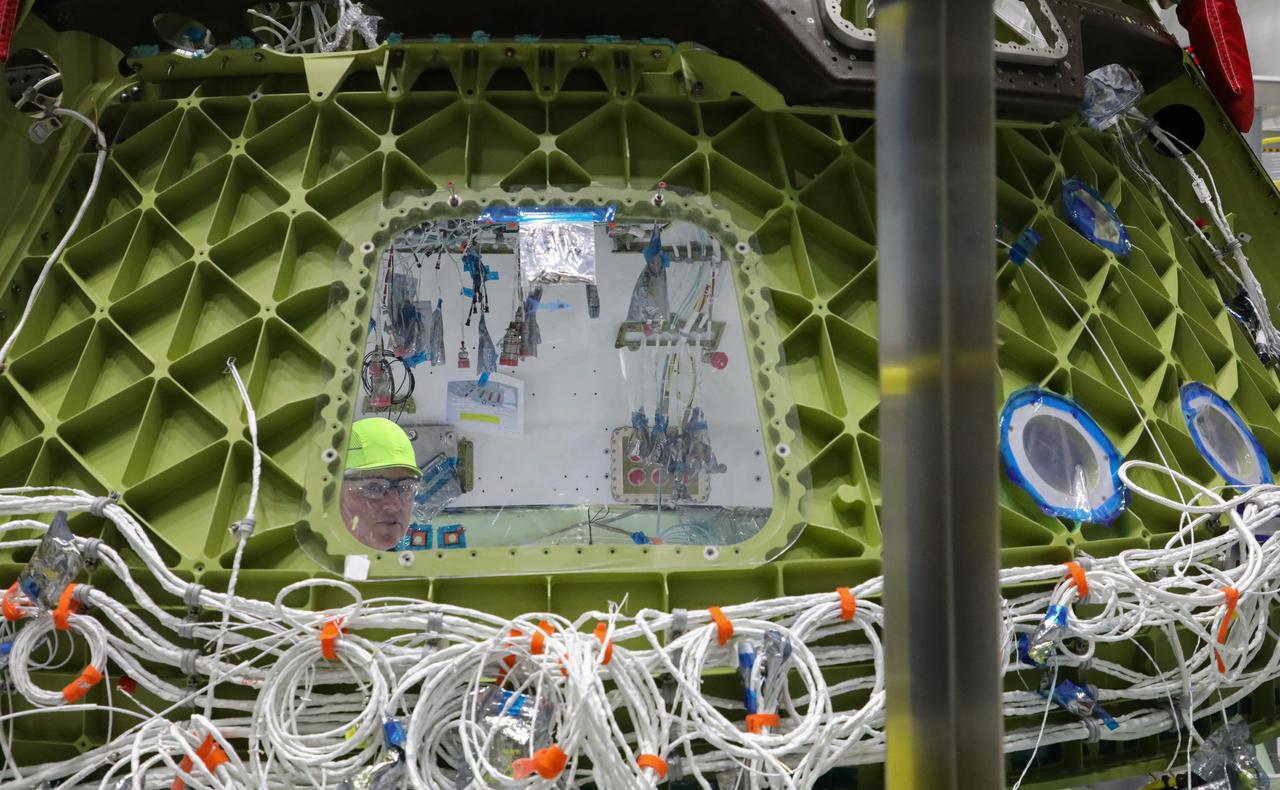
NASA astronaut Barry "Butch" Wilmore, center, tours Boeing's Commercial Crew and Cargo Processing Facility (C3PF) on Oct. 25, 2018, at NASA's Kennedy Space Center in Florida. Wilmore is looking over Boeing's CST-100 Starliner that will launch on its first uncrewed flight test on a United Launch Alliance Atlas V rocket. The Starliner is being developed and manufactured in partnership with NASA's Commercial Crew Program to return human spaceflight capabilities to the U.S.
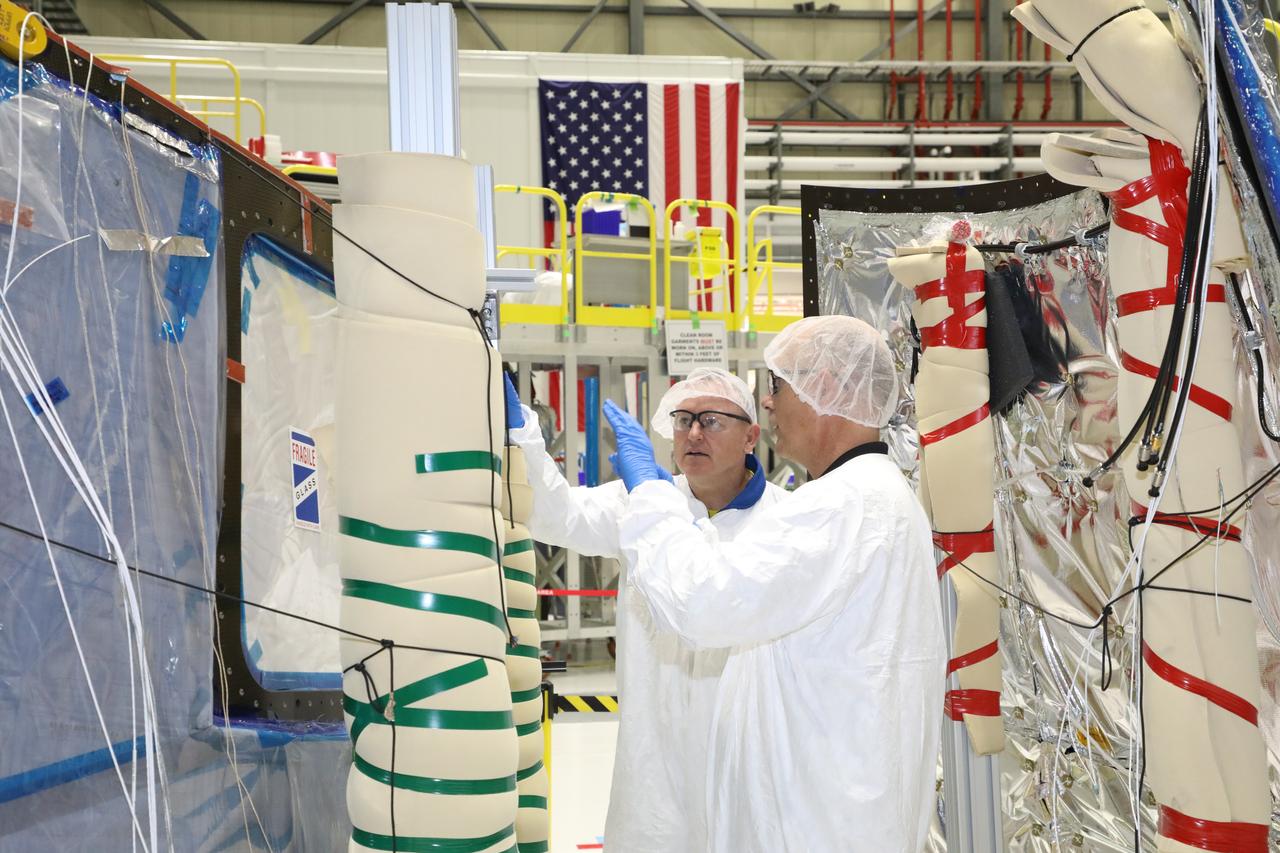
NASA astronaut Barry "Butch" Wilmore, at left, tours Boeing's Commercial Crew and Cargo Processing Facility (C3PF) on Oct. 25, 2018, at NASA's Kennedy Space Center in Florida. Boeing's CST-100 Starliner will launch on its first uncrewed flight test on a United Launch Alliance Atlas V rocket. The Starliner is being developed and manufactured in partnership with NASA's Commercial Crew Program to return human spaceflight capabilities to the U.S.
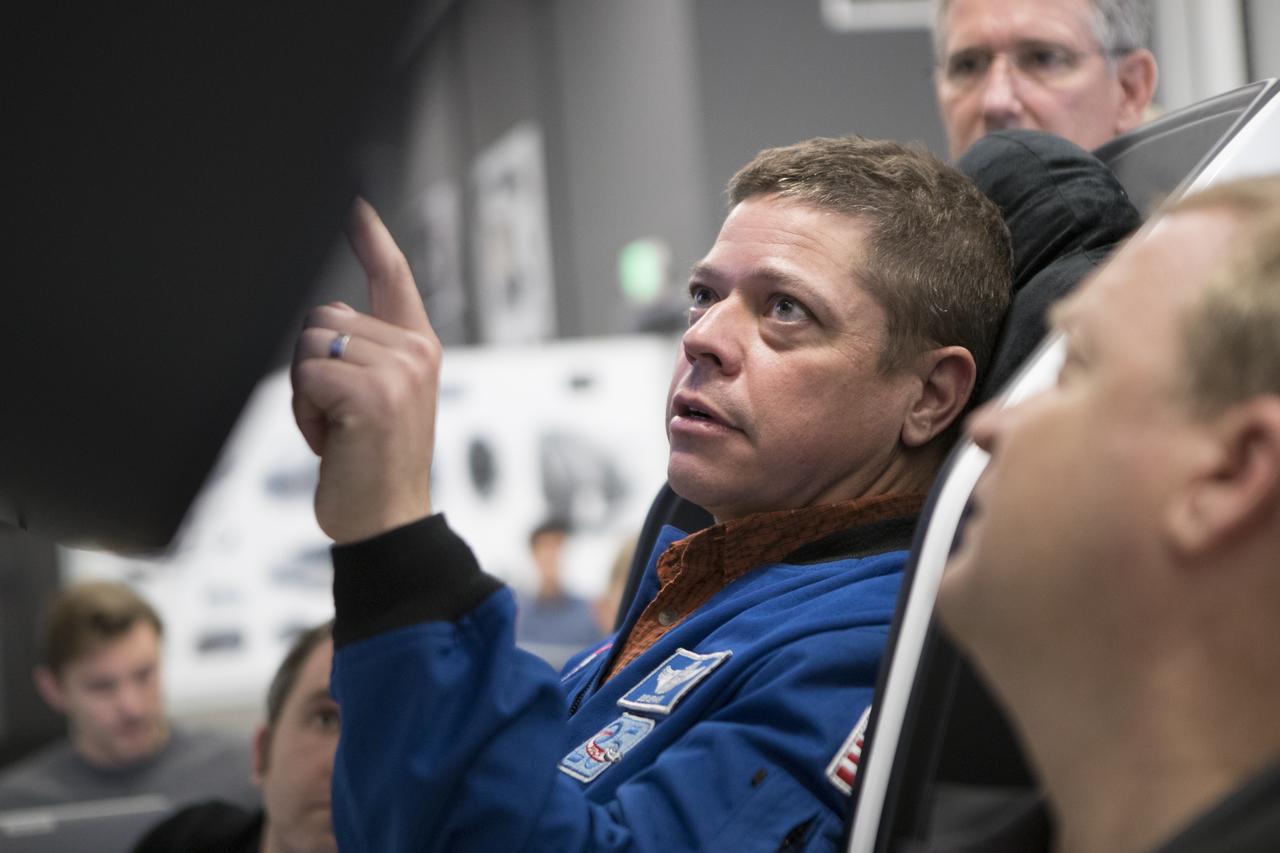
During a tour of SpaceX headquarters in Hawthorne, California, commercial crew astronauts Bob Behnken, left, and Eric Boe participate in joint test team training using mockup components of the Crew Dragon on Feb. 23, 2017. Mike Good, program manager for Crew Operations and Testing at Johnson Space Center in Houston, is in the background. Crew Dragon is being developed and manufactured in partnership with NASA's Commercial Crew Program to return human spaceflight capabilities to the U.S.

NASA astronaut Barry "Butch" Wilmore, center, tours Boeing's Commercial Crew and Cargo Processing Facility (C3PF) on Oct. 25, 2018, at NASA's Kennedy Space Center in Florida. Boeing's CST-100 Starliner will launch on its first uncrewed flight test on a United Launch Alliance Atlas V rocket. The Starliner is being developed and manufactured in partnership with NASA's Commercial Crew Program to return human spaceflight capabilities to the U.S.
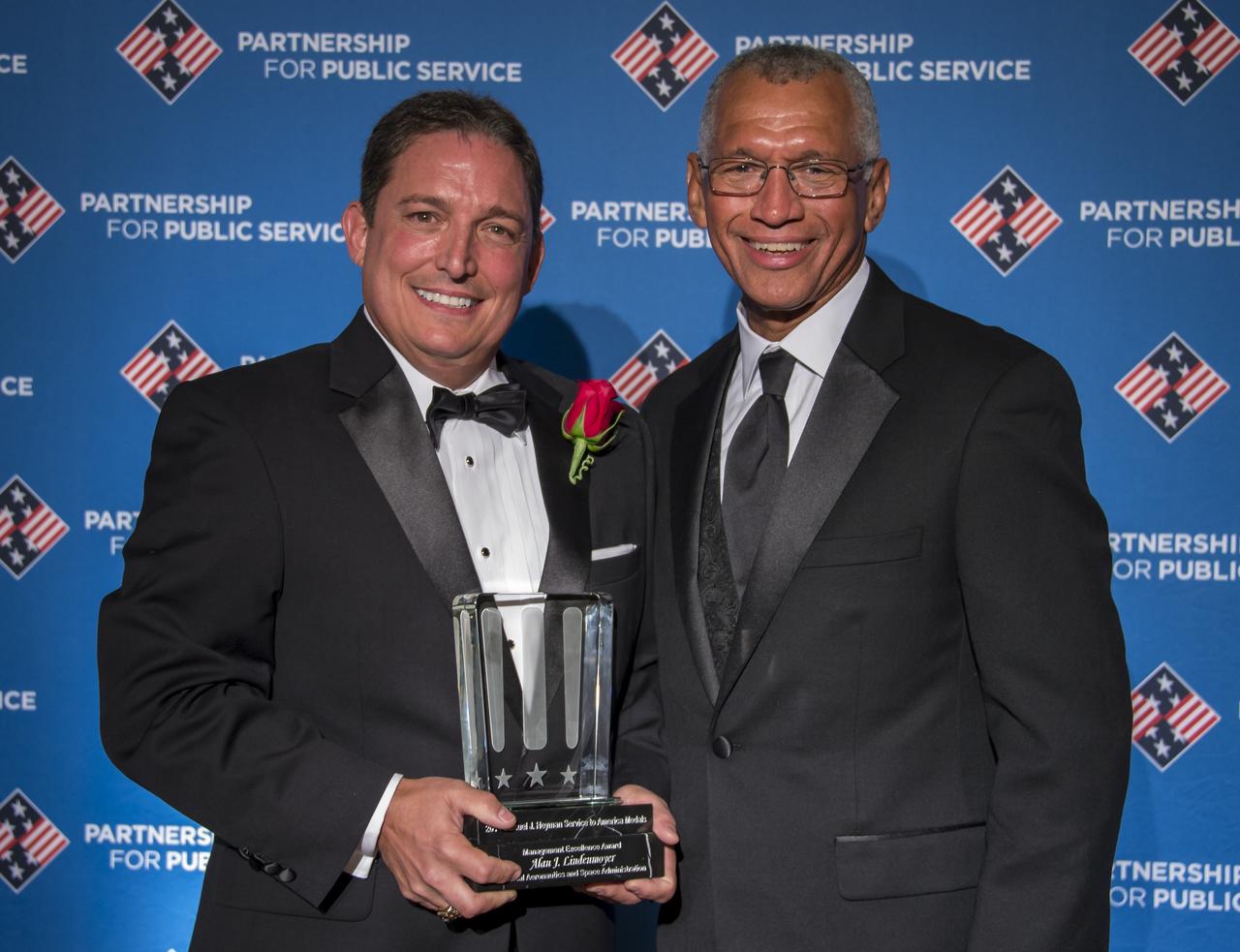
Alan J. Lindenmoyer, program manager, Commercial Crew and Cargo Program NASA, Johnson Space Center, Houston, Texas, left, poses for a photograph with Charles Bolden, NASA Administrator, shortly after Bolden presented Lindenmoyer the 2014 Samuel J. Heyman Service to America Medal by the Partnership for Public Service, Monday, Sept. 22, 2014 at the Andrew Mellon Auditorium in Washington. Lindenmoyer was recognized for transforming NASA’s space travel programs, helping the U.S. continue important space research while reducing taxpayer costs and stimulating the commercial space industry. Photo Credit: (NASA/Bill Ingalls)

NASA John C. Stennis Space Center employee Dustan Ladner (left) assists tanker driver David Velasco in transferring RP-1 fuel to a 20,000-gallon underground tank at the E-1 Test Stand during a March 30 delivery. The rocket propellant will be used for testing Aerojet AJ26 rocket engines beginning this summer. Stennis is testing the engines for Orbital Sciences Corporation, which has partnered with NASA to provide eight supply missions to the International Space Station through 2015. The partnership is part of NASA's Commercial Orbital Transportation Services initiative to work closer with companies to provide commercial space transport once the space shuttle is retired later this year.

Kennedy Space Center employee Chris Johnson, left, and Jamie Winfield of INFICON work with MSolo (Mass Spectrometer Observing Lunar Operations) test hardware at Kennedy Space Center in Florida on July 13, 2021. MSolo is a commercial off-the-shelf mass spectrometer modified by the team at Kennedy to work in the harsh, rigorous conditions of the Moon. MSolo is heading to the Moon on four of NASA’s Commercial Lunar Payload Services initiative or CLPS missions, including the Polar Resources Ice Mining Experiment-1 (PRIME-1) and NASA’s Volatiles Investigating Polar Exploration Rover, or VIPER. Kennedy is working in partnership with INFICON, of Syracuse, New York, to develop the mass spectrometer.
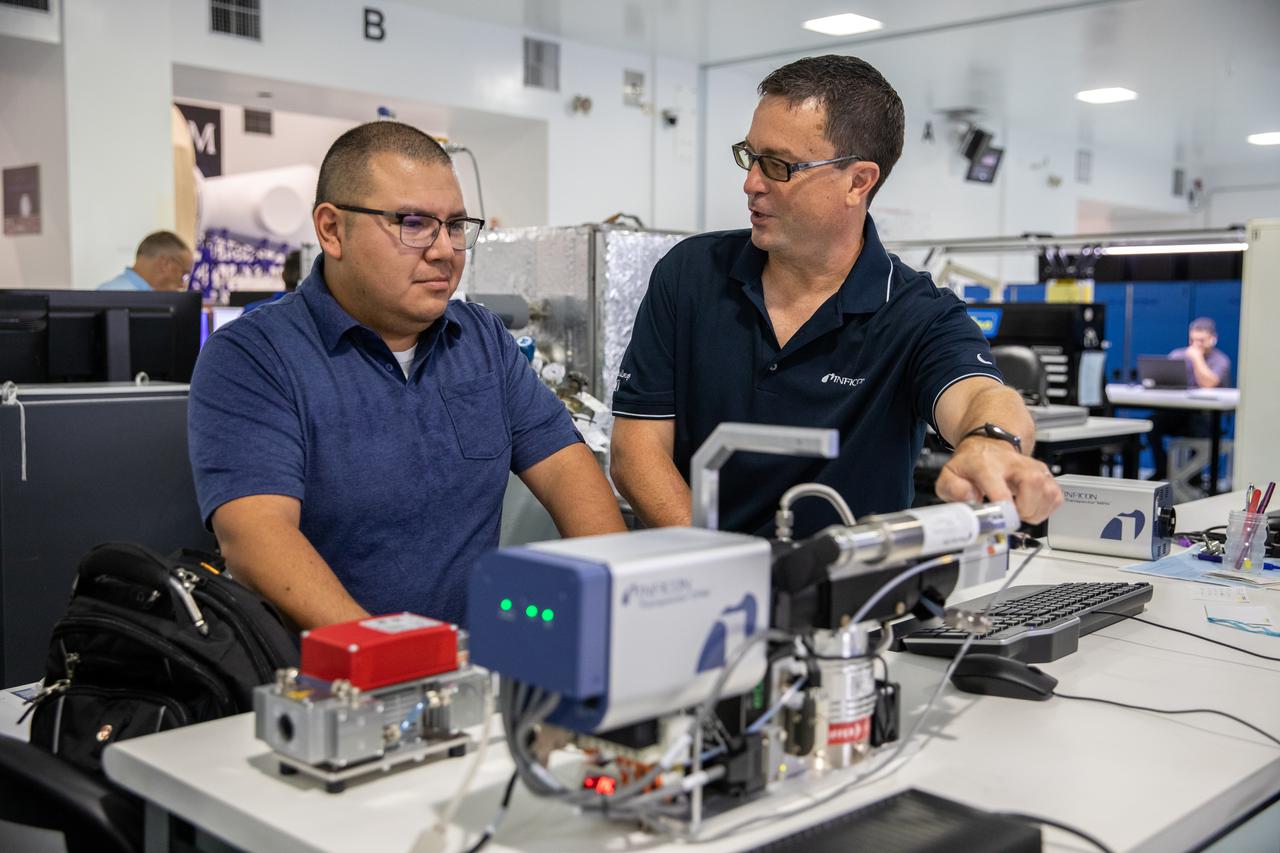
Kennedy Space Center employee Roberto Aguilar Ayala, left, and Ken Wright of INFICON work with MSolo (Mass Spectrometer Observing Lunar Operations) test hardware at Kennedy Space Center in Florida on July 13, 2021. MSolo is a commercial off-the-shelf mass spectrometer modified by the team at Kennedy to work in the harsh, rigorous conditions of the Moon. MSolo is heading to the Moon on four of NASA’s Commercial Lunar Payload Services initiative or CLPS missions, including the Polar Resources Ice Mining Experiment-1 (PRIME-1) and NASA’s Volatiles Investigating Polar Exploration Rover, or VIPER. Kennedy is working in partnership with INFICON, of Syracuse, New York, to develop the mass spectrometer.
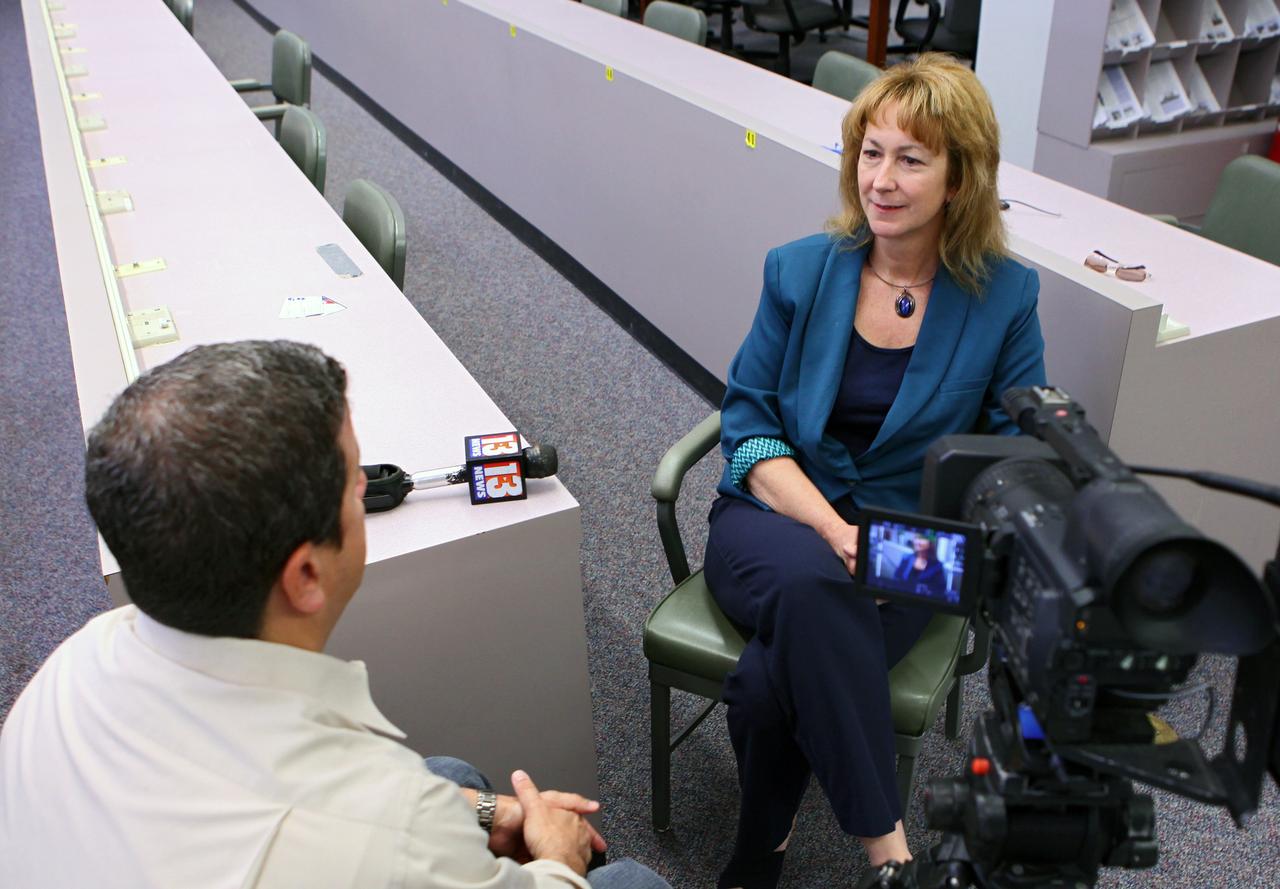
CAPE CANAVERAL, Fla. -- To start the new year, Joyce M. Riquelme from Kennedy's Center Planning and Development Office discusses the space center's direction with TV news reporter Greg Pallone of Channel 13 in Orlando.The office's purpose is to develop the world’s premier spaceport, meeting government and commercial space industry needs through comprehensive resource planning and the formation of partnerships to ensure the economic vitality of Kennedy Space Center. Photo credit: NASA/Kim Shiflett
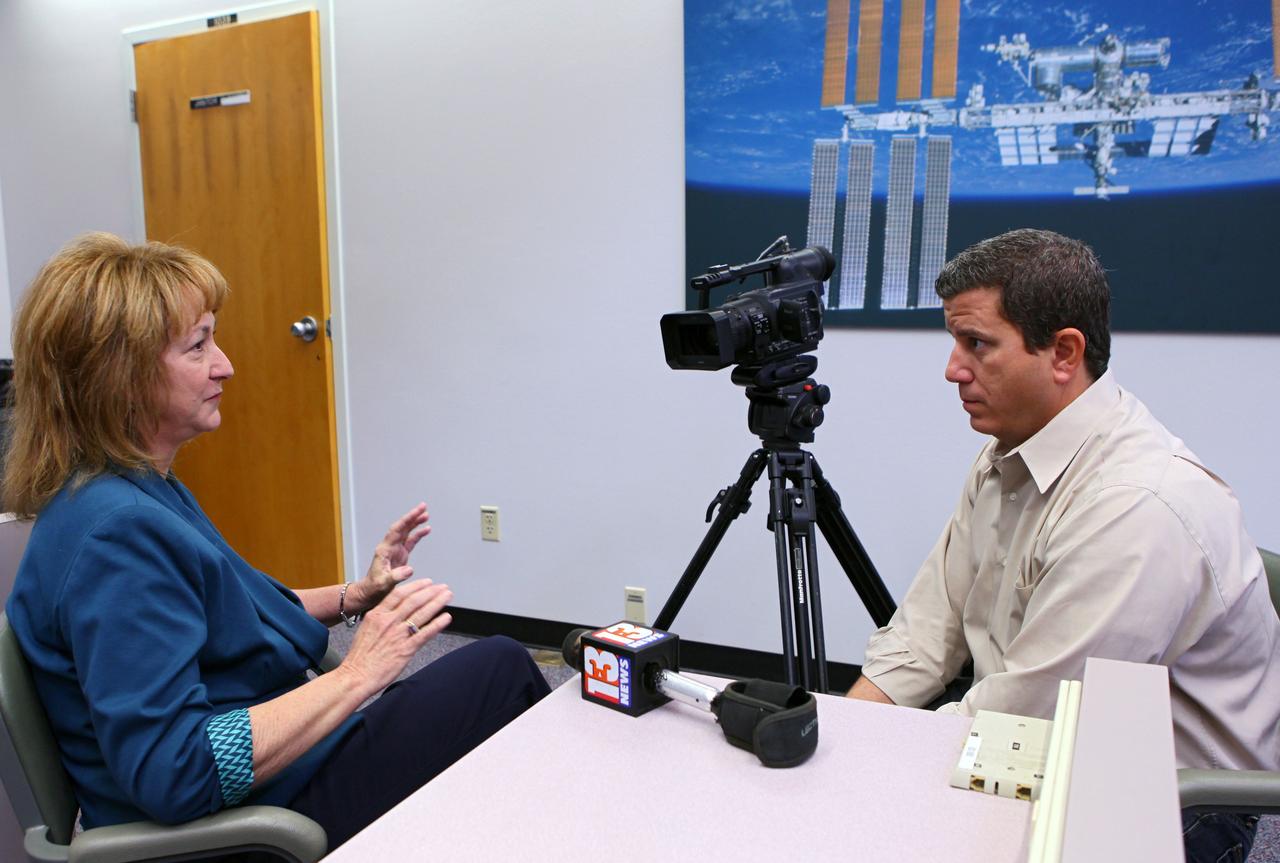
CAPE CANAVERAL, Fla. -- To start the new year, Joyce M. Riquelme from Kennedy's Center Planning and Development Office discusses the space center's direction with TV news reporter Greg Pallone of Channel 13 in Orlando.The office's purpose is to develop the world’s premier spaceport, meeting government and commercial space industry needs through comprehensive resource planning and the formation of partnerships to ensure the economic vitality of Kennedy Space Center. Photo credit: NASA/Kim Shiflett
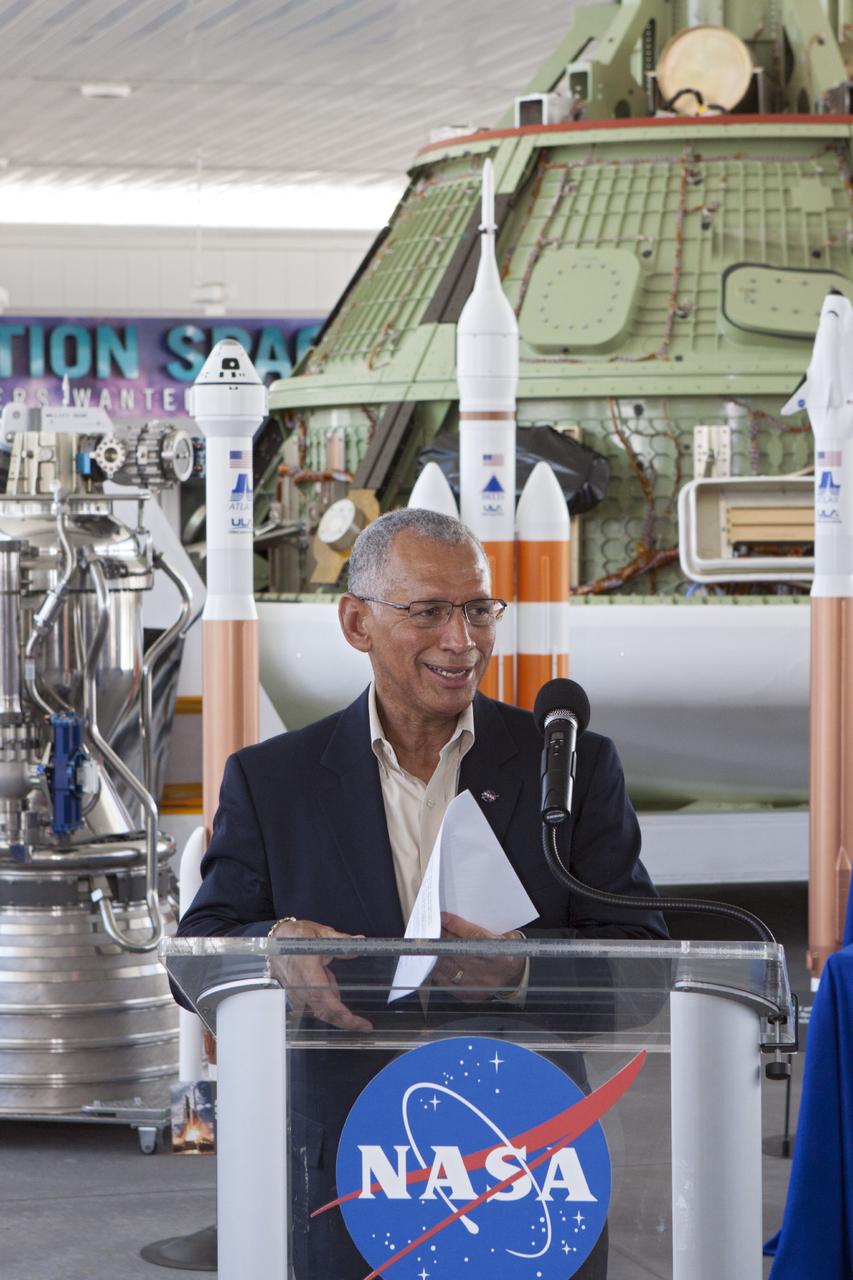
CAPE CANAVERAL, Fla. -- NASA Administrator Charles Bolden announces the prospect of a new agency partnership at a news conference at the Kennedy Space Center Visitor Complex in Florida. NASA has selected Space Florida, the aerospace economic development agency for the state of Florida, for negotiations toward a partnership agreement to maintain and operate the historic Shuttle Landing Facility, or SLF. NASA issued a request for information to industry in 2012 to identify new and innovative ways to use the facility for current and future commercial and government mission activities. Space Florida's proposal is aligned closely with Kennedy's vision for creating a multiuser spaceport. The SLF, specially designed for space shuttles returning to Kennedy, opened for flights in 1976. The concrete runway is 15,000 feet long and 300 feet wide. The SLF is capable of handling all types and sizes of aircraft and horizontal launch and landing vehicles. For more information on Space Florida, visit http://www.spaceflorida.gov. Photo credit: NASA/Jim Grossmann
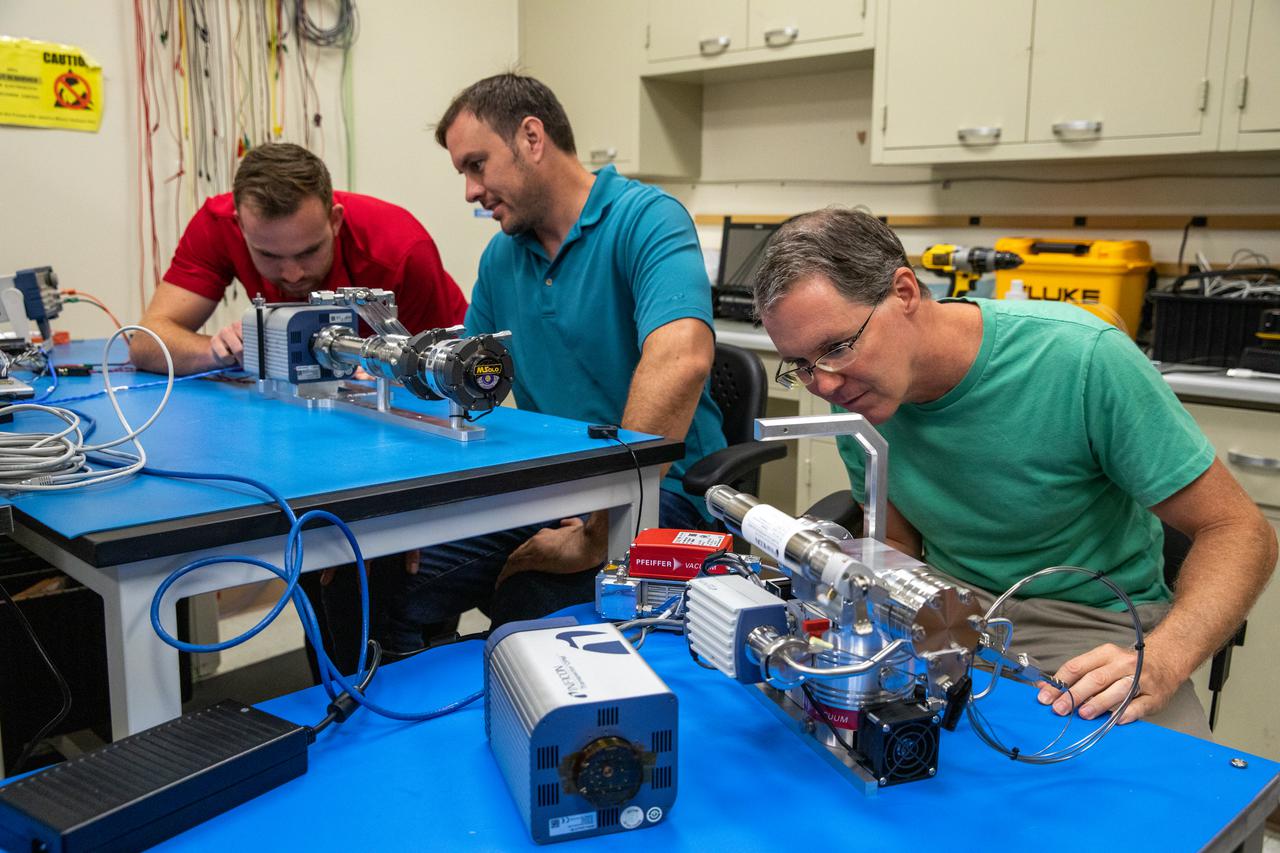
From left to right, Kennedy Space Center employees Stefan Tomovic, Beau Peacock, and Chris Bond work with MSolo (Mass Spectrometer Observing Lunar Operations) test hardware at the Florida spaceport on July 13, 2021. MSolo is a commercial off-the-shelf mass spectrometer modified by the team at Kennedy to work in the harsh, rigorous conditions of the Moon. MSolo is heading to the Moon on four of NASA’s Commercial Lunar Payload Services initiative or CLPS missions, including the Polar Resources Ice Mining Experiment-1 (PRIME-1) and NASA’s Volatiles Investigating Polar Exploration Rover, or VIPER. Kennedy is working in partnership with INFICON, of Syracuse, New York, to develop the mass spectrometer.
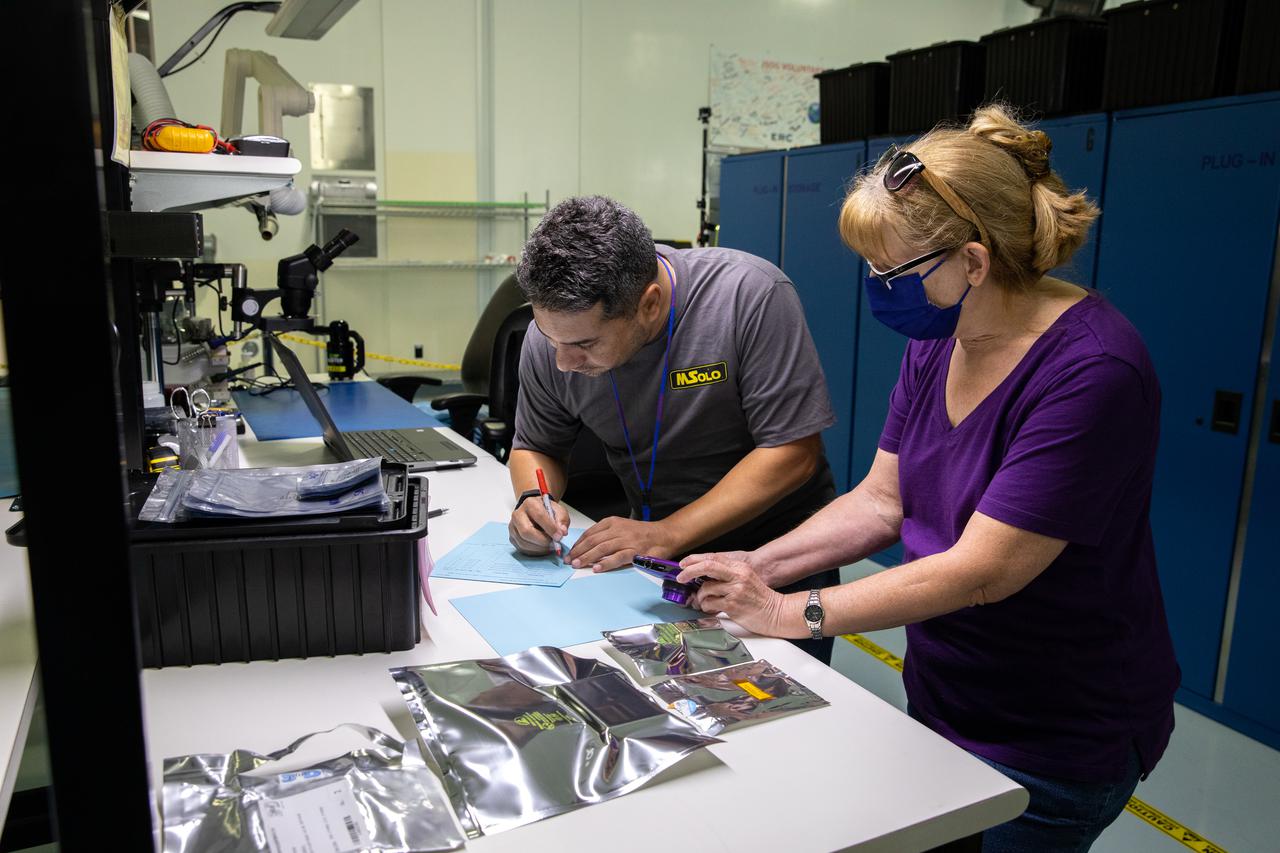
Kennedy Space Center employees Alex Decamargo, left, and JoAnn Robinson work with MSolo (Mass Spectrometer Observing Lunar Operations) flight hardware at the Florida spaceport on July 13, 2021. MSolo is a commercial off-the-shelf mass spectrometer modified by the team at Kennedy to work in the harsh, rigorous conditions of the Moon. MSolo is heading to the Moon on four of NASA’s Commercial Lunar Payload Services initiative or CLPS missions, including the Polar Resources Ice Mining Experiment-1 (PRIME-1) and NASA’s Volatiles Investigating Polar Exploration Rover, or VIPER. Kennedy is working in partnership with INFICON, of Syracuse, New York, to develop the mass spectrometer.
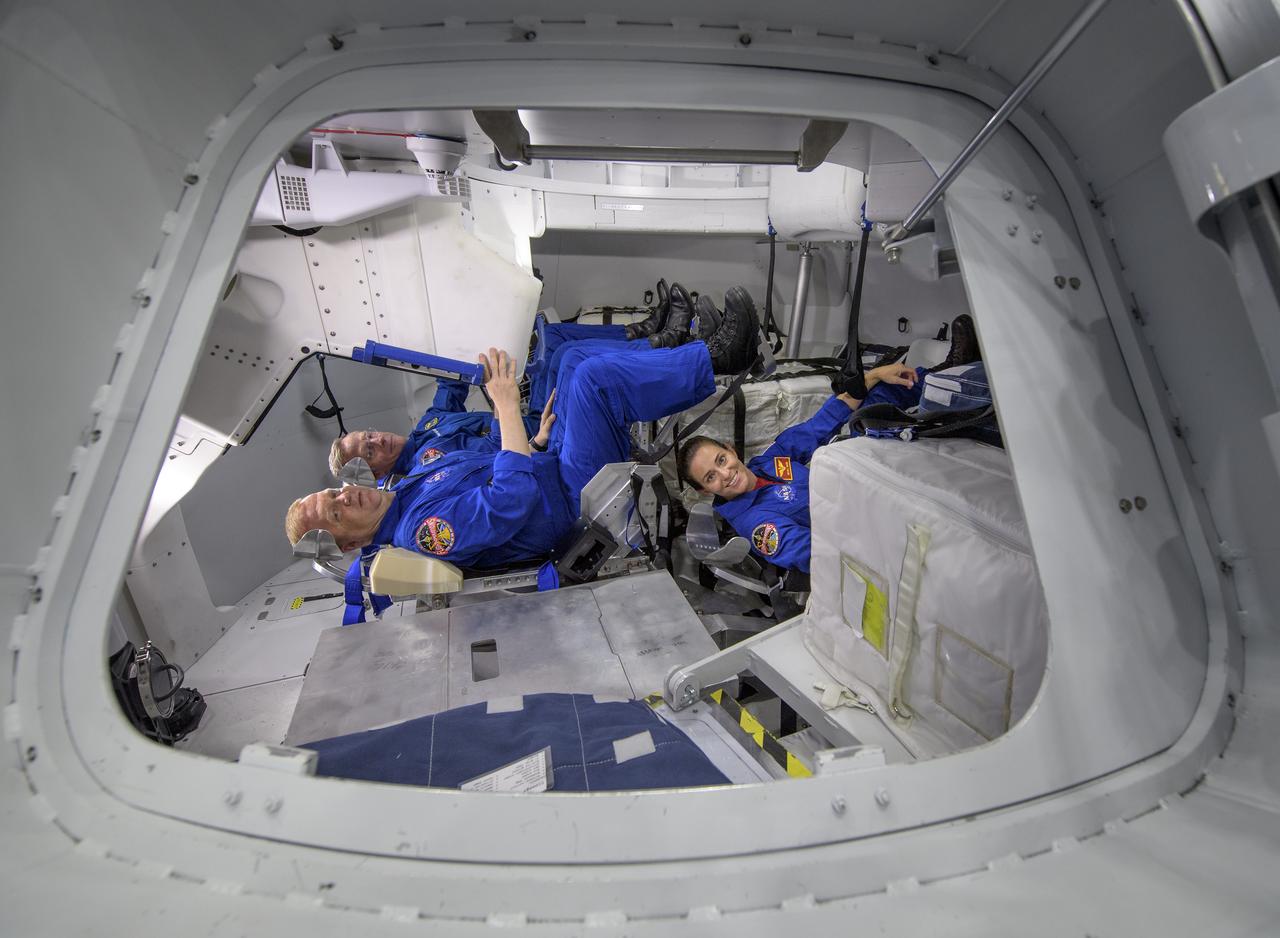
NASA astronauts Eric Boe, foreground left, and Nicole Mann, foreground right, along with Boeing astronaut Chris Ferguson, background, pose for a photograph inside the Boeing Mockup Trainer at NASA’s Johnson Space Center in Houston, Texas on Aug. 2, 2018 ahead of the commercial crew flight assignments announcement Aug. 3. The three were assigned to launch aboard Boeing’s CST-100 Starliner on the company’s Crew Flight Test targeted for mid-2019 in partnership with NASA’s Commercial Crew Program. Photo Credit: (NASA/Bill Ingalls)
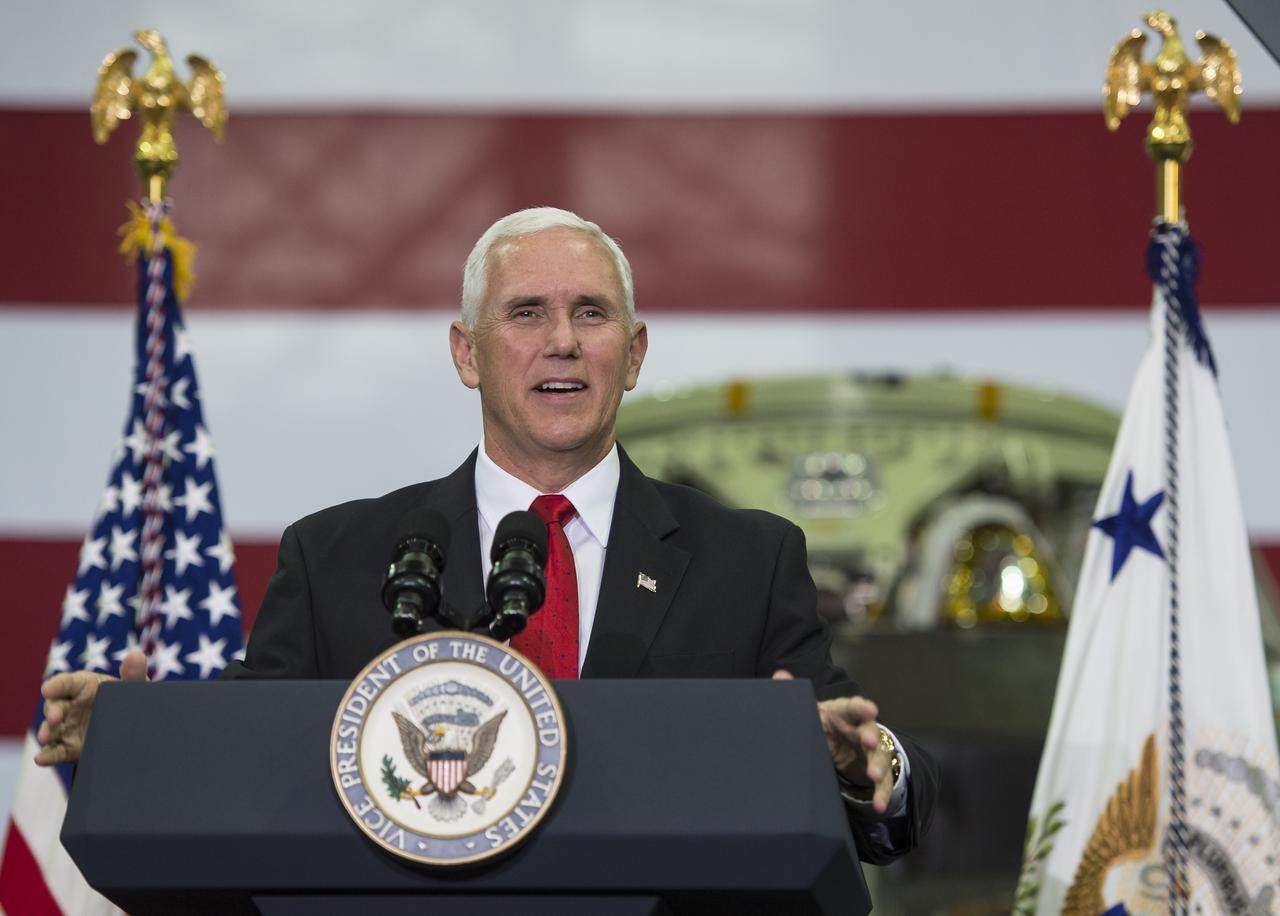
Vice President Mike Pence addresses NASA employees, Thursday, July 6, 2017, at the Vehicle Assembly Building at NASA’s Kennedy Space Center (KSC) in Cape Canaveral, Florida. The Vice President thanked employees for advancing American leadership in space, before going on a tour of the center that highlighted the public-private partnerships at KSC, as both NASA and commercial companies prepare to launch American astronauts from the multi-user spaceport. Photo Credit: (NASA/Aubrey Gemignani)
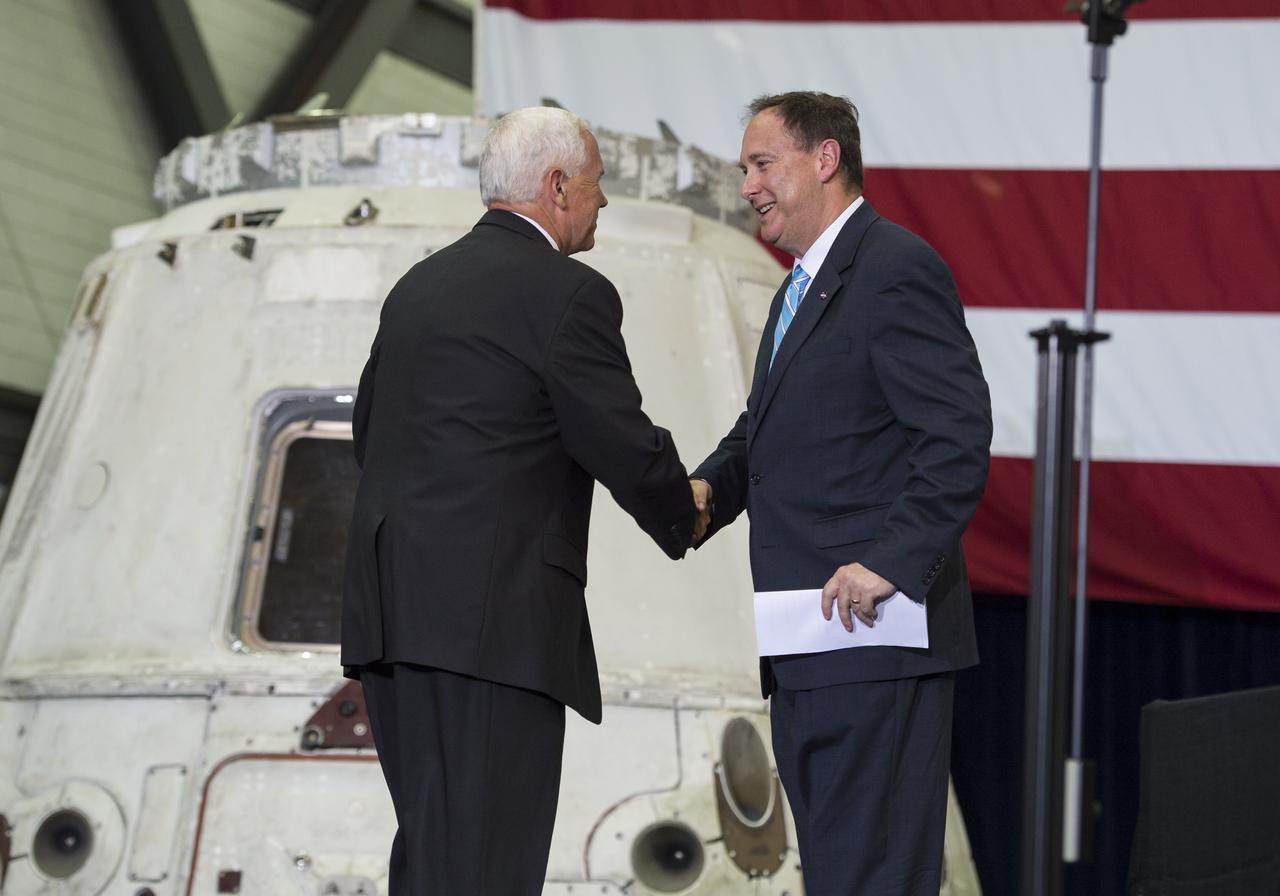
Vice President Mike Pence shakes hands with Acting NASA Administrator Robert Lightfoot before addressing NASA employees, Thursday, July 6, 2017, at the Vehicle Assembly Building at NASA’s Kennedy Space Center (KSC) in Cape Canaveral, Florida. The Vice President thanked employees for advancing American leadership in space, before going on a tour of the center that highlighted the public-private partnerships at KSC, as both NASA and commercial companies prepare to launch American astronauts from the multi-user spaceport. Photo Credit: (NASA/Aubrey Gemignani)
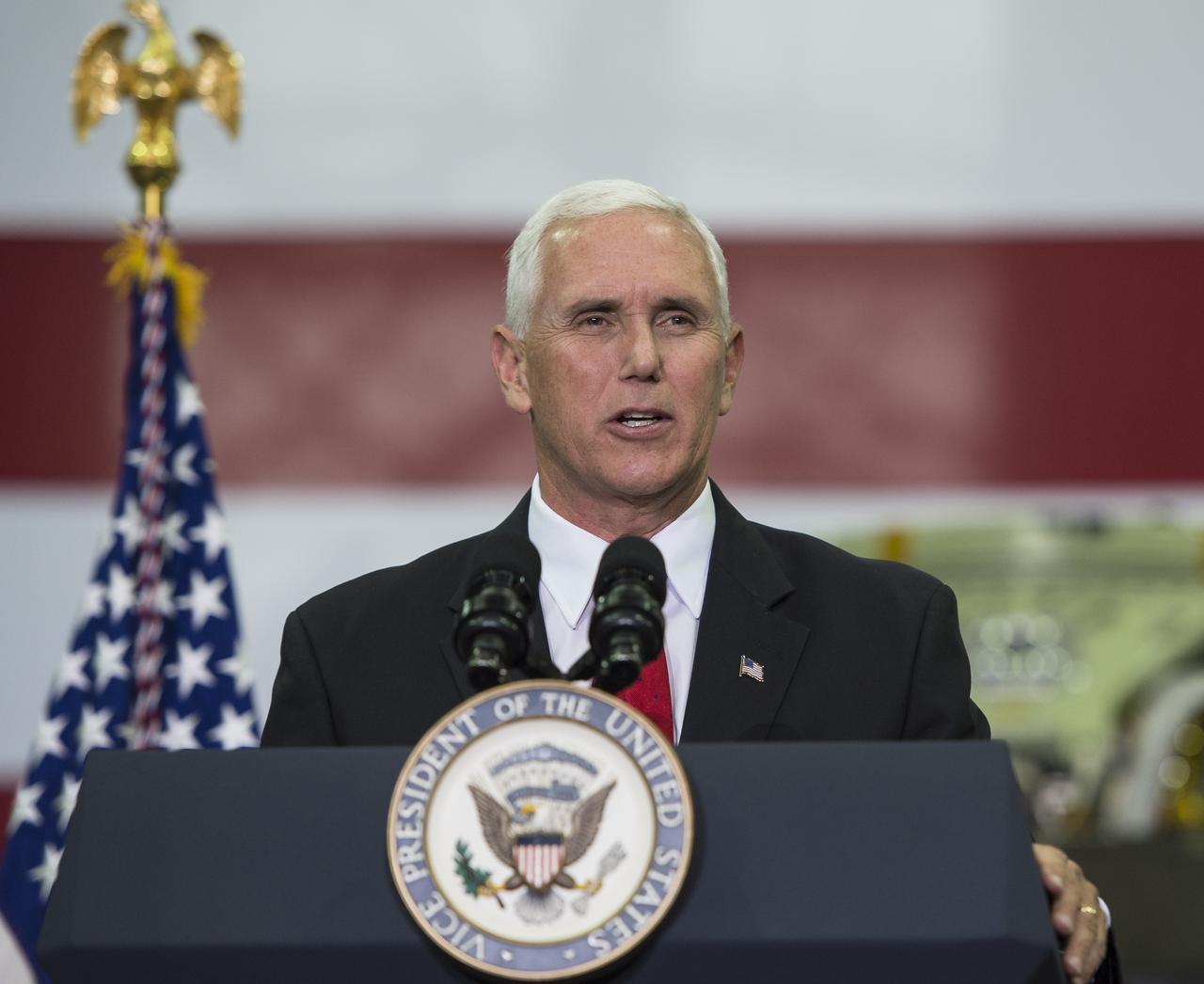
Vice President Mike Pence addresses NASA employees, Thursday, July 6, 2017, at the Vehicle Assembly Building at NASA’s Kennedy Space Center (KSC) in Cape Canaveral, Florida. The Vice President thanked employees for advancing American leadership in space, before going on a tour of the center that highlighted the public-private partnerships at KSC, as both NASA and commercial companies prepare to launch American astronauts from the multi-user spaceport. Photo Credit: (NASA/Aubrey Gemignani)
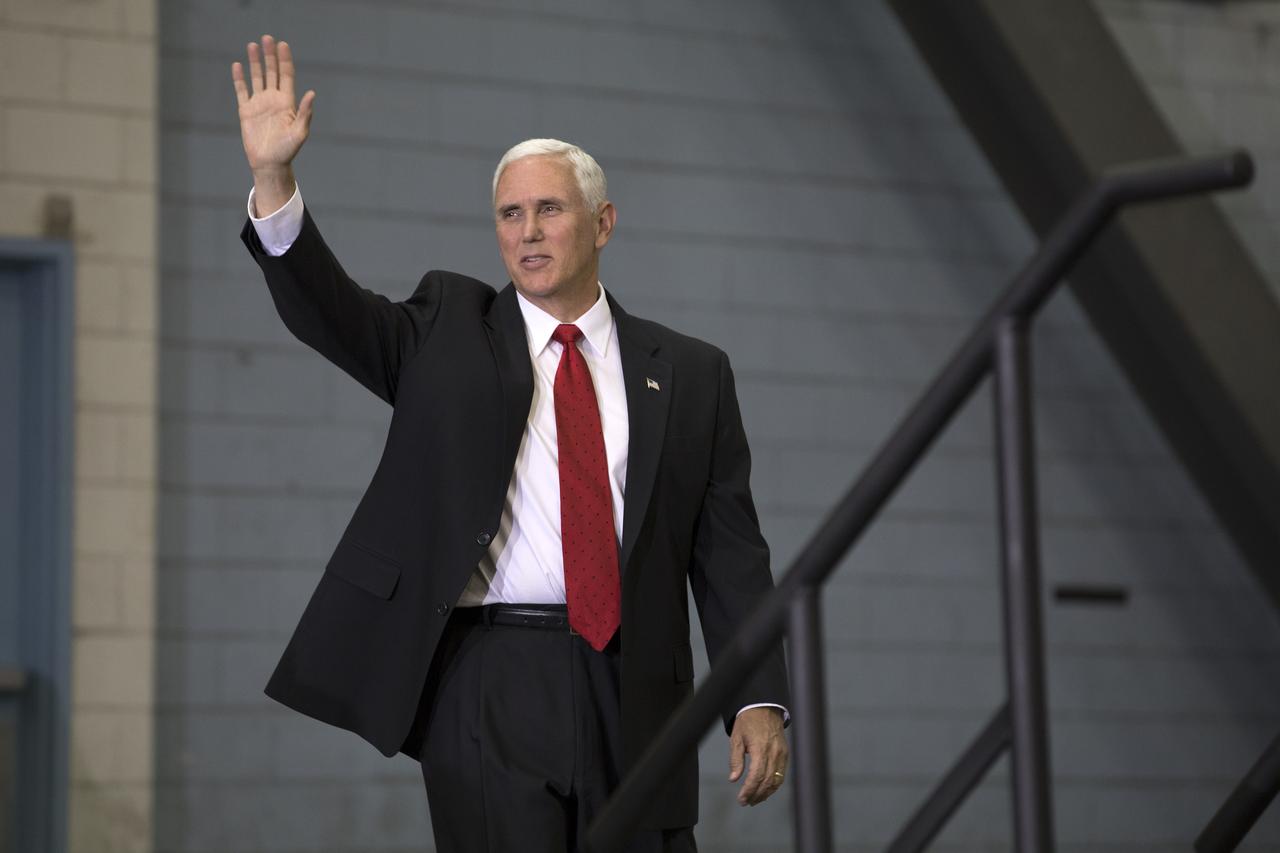
Vice President Mike Pence arrives at the Vehicle Assembly Building at NASA's Kennedy Space Center in Florida. During his visit, Pence spoke inside the iconic building, where he thanked employees for advancing American leadership in space. The Vice President also toured several facilities highlighting the public-private partnerships at Kennedy, as both NASA and commercial companies prepare to launch American astronauts from the multi-user spaceport.
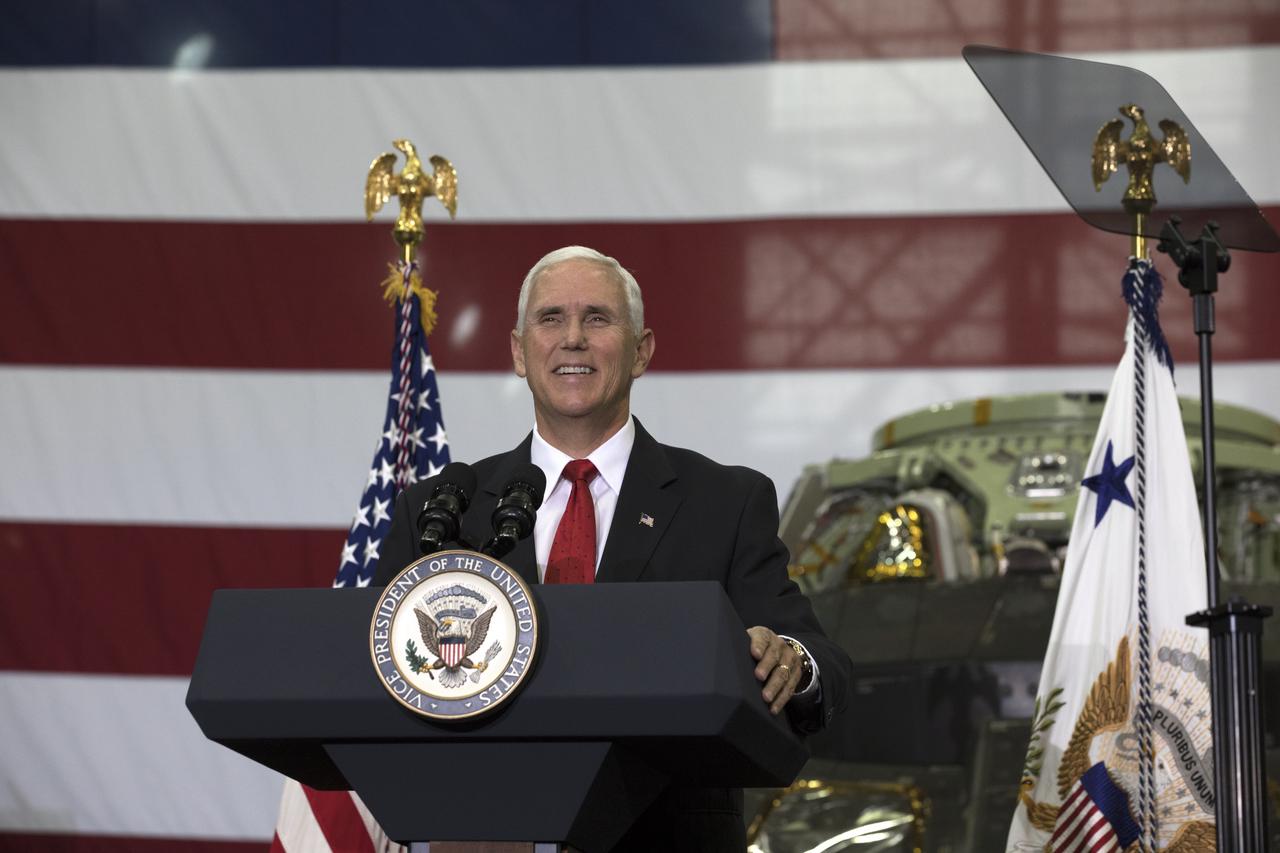
Vice President Mike Pence speaks before an audience of NASA leaders, U.S. and Florida government officials, and employees inside the Vehicle Assembly Building at NASA's Kennedy Space Center in Florida. Pence thanked employees for advancing American leadership in space. During his visit to Kennedy, the Vice President also toured several facilities highlighting the public-private partnerships, as both NASA and commercial companies prepare to launch American astronauts from the multi-user spaceport.
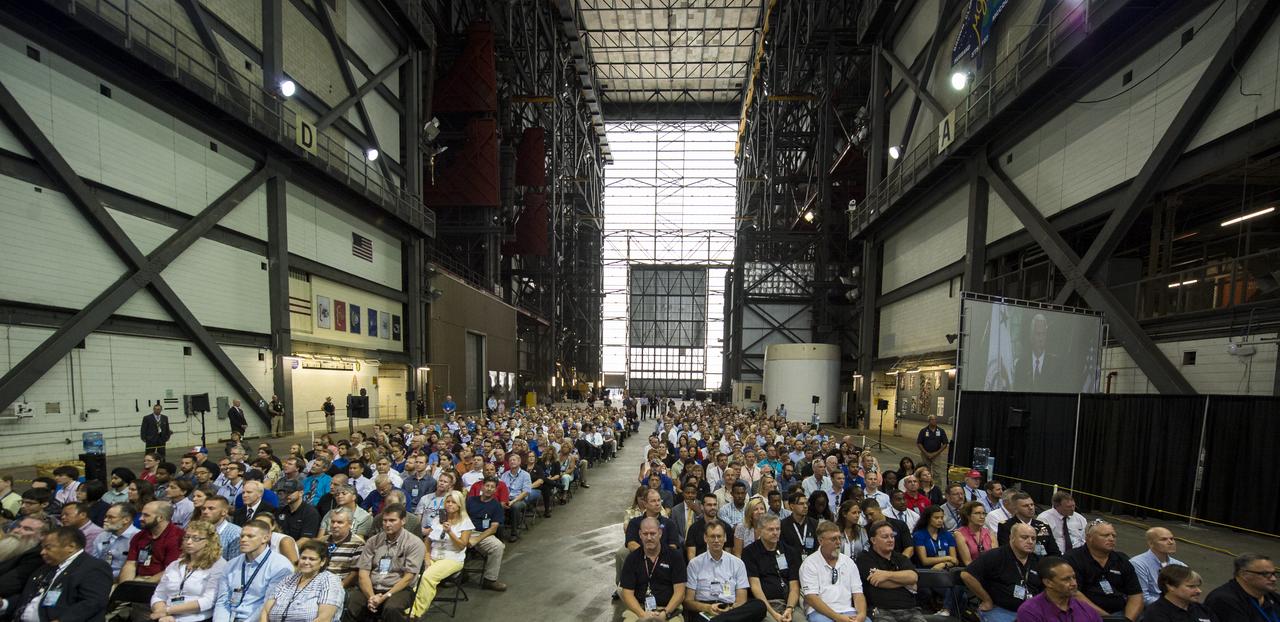
Vice President Mike Pence, as seen on the monitor at right, addresses NASA employees, Thursday, July 6, 2017, at the Vehicle Assembly Building at NASA’s Kennedy Space Center (KSC) in Cape Canaveral, Florida. The Vice President thanked employees for advancing American leadership in space, before going on a tour of the center that highlighted the public-private partnerships at KSC, as both NASA and commercial companies prepare to launch American astronauts from the multi-user spaceport. Photo Credit: (NASA/Aubrey Gemignani)
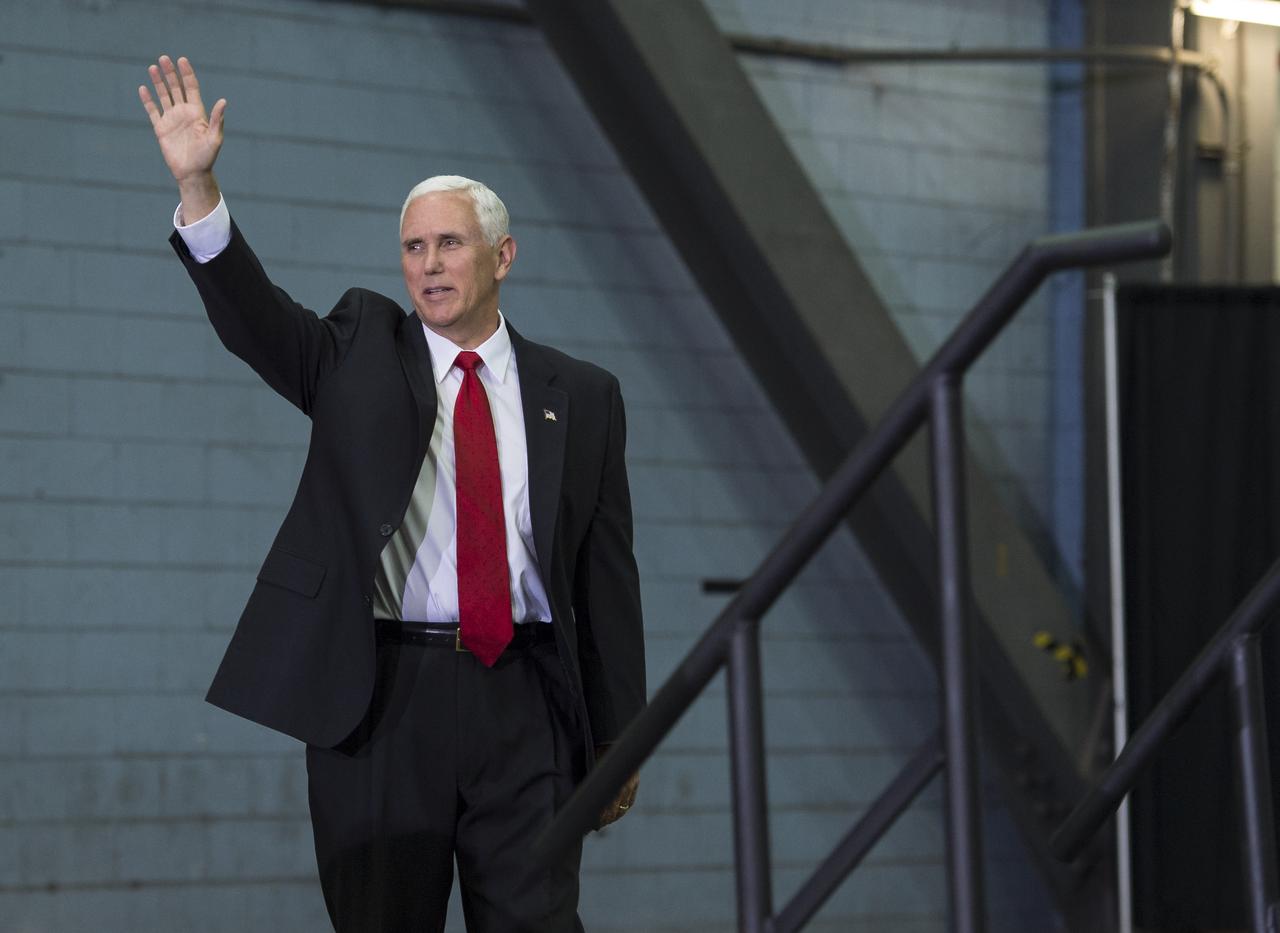
Vice President Mike Pence waves before addressing NASA employees, Thursday, July 6, 2017, at the Vehicle Assembly Building at NASA’s Kennedy Space Center (KSC) in Cape Canaveral, Florida. The Vice President thanked employees for advancing American leadership in space, before going on a tour of the center that highlighted the public-private partnerships at KSC, as both NASA and commercial companies prepare to launch American astronauts from the multi-user spaceport. Photo Credit: (NASA/Aubrey Gemignani)
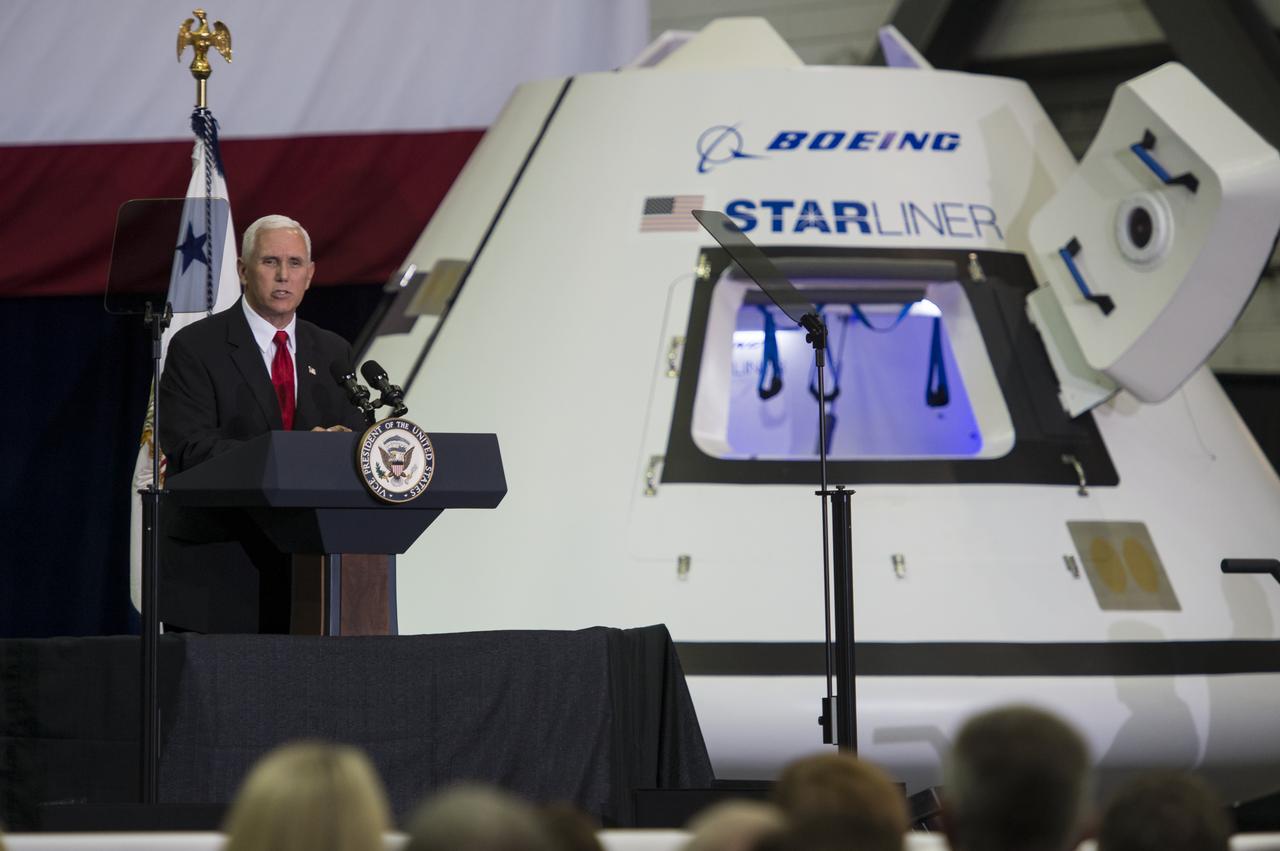
Vice President Mike Pence addresses NASA employees in front of a mockup of Boeing's Starliner capsule, Thursday, July 6, 2017, at the Vehicle Assembly Building at NASA’s Kennedy Space Center (KSC) in Cape Canaveral, Florida. The Vice President thanked employees for advancing American leadership in space, before going on a tour of the center that highlighted the public-private partnerships at KSC, as both NASA and commercial companies prepare to launch American astronauts from the multi-user spaceport. Photo Credit: (NASA/Aubrey Gemignani)
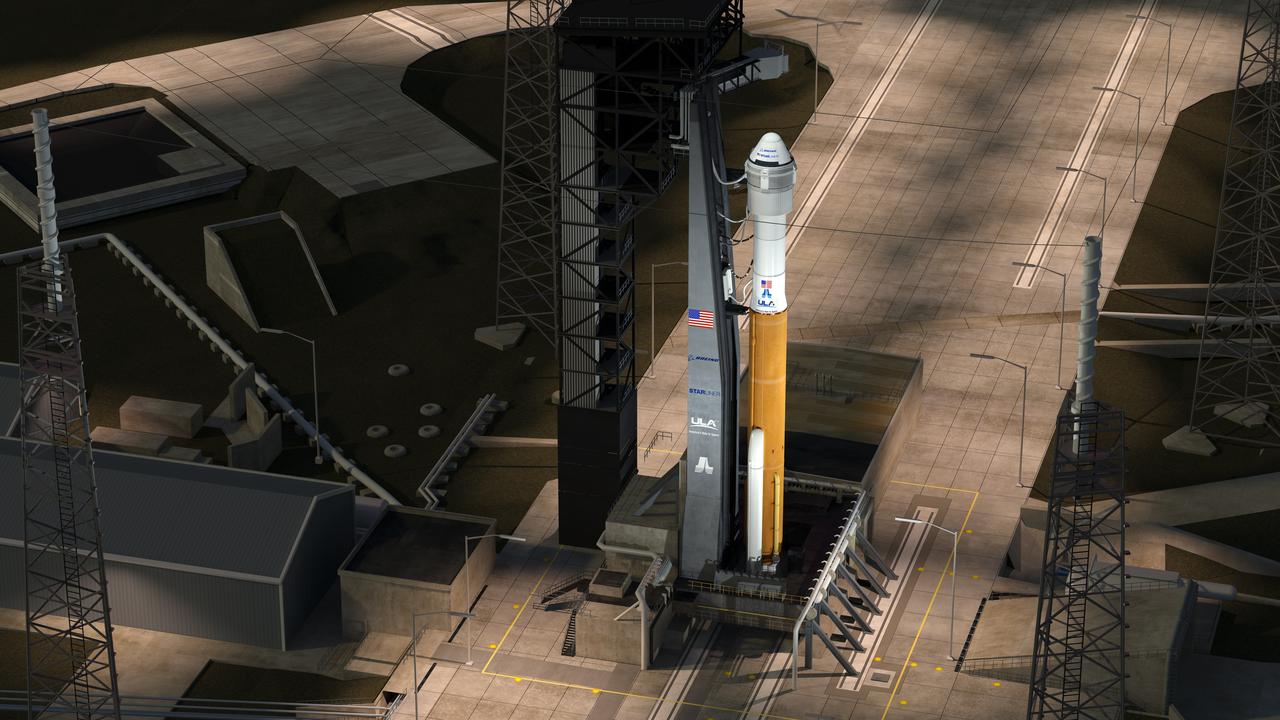
This artist concept shows a United Launch Alliance Atlas V rocket with a Boeing CST-100 Starliner capsule at Space Launch Complex-41 at Cape Canaveral Air Force Station in Florida. The Starliner/Atlas V system is under development by Boeing and ULA in partnership with NASA's Commercial Crew Program to launch astronauts to the International Space Station.
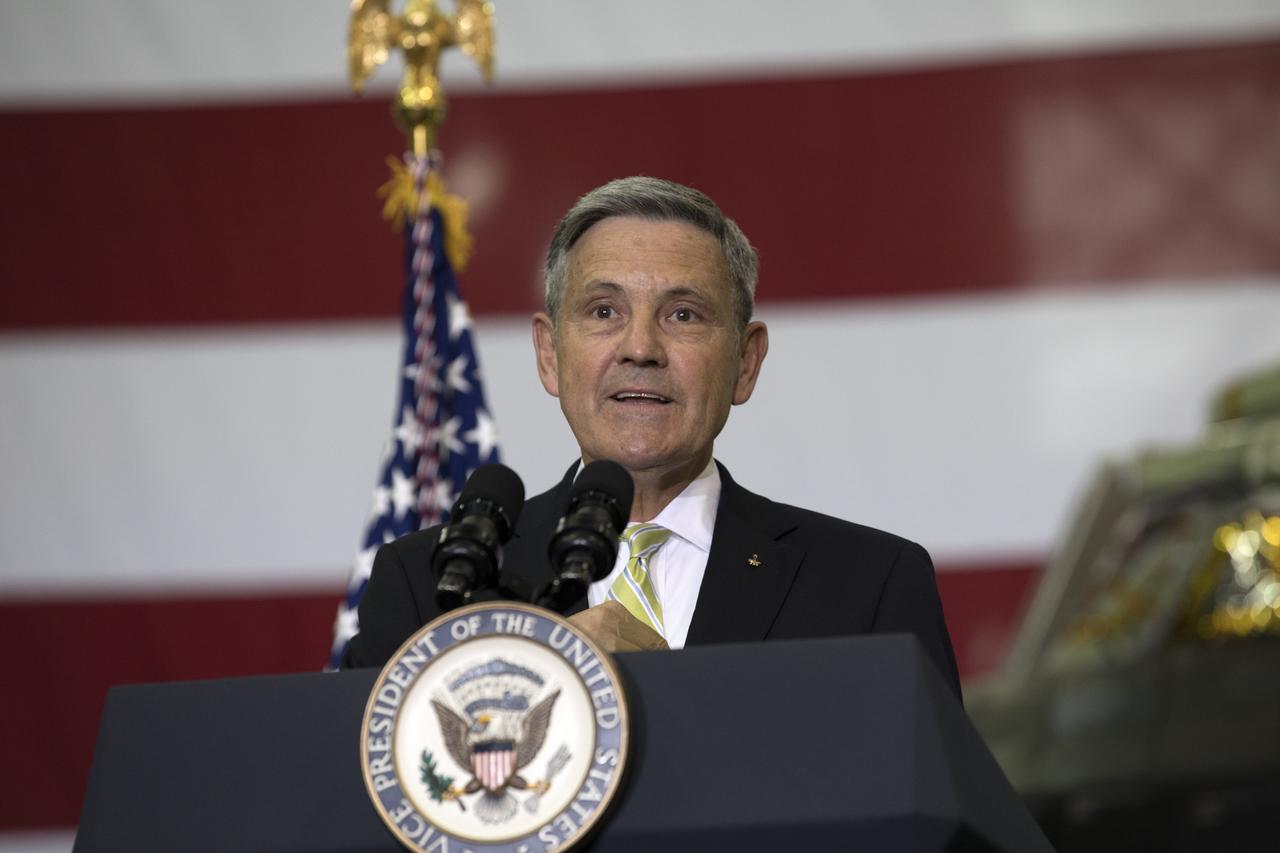
NASA Kennedy Space Center Director Robert Cabana addresses agency leaders, U.S. and Florida government officials, and employees inside the Vehicle Assembly Building during a visit by Vice President Mike Pence. Pence thanked employees for advancing American leadership in space. During his visit to Kennedy, the Vice President also toured several facilities highlighting the public-private partnerships, as both NASA and commercial companies prepare to launch American astronauts from the multi-user spaceport.
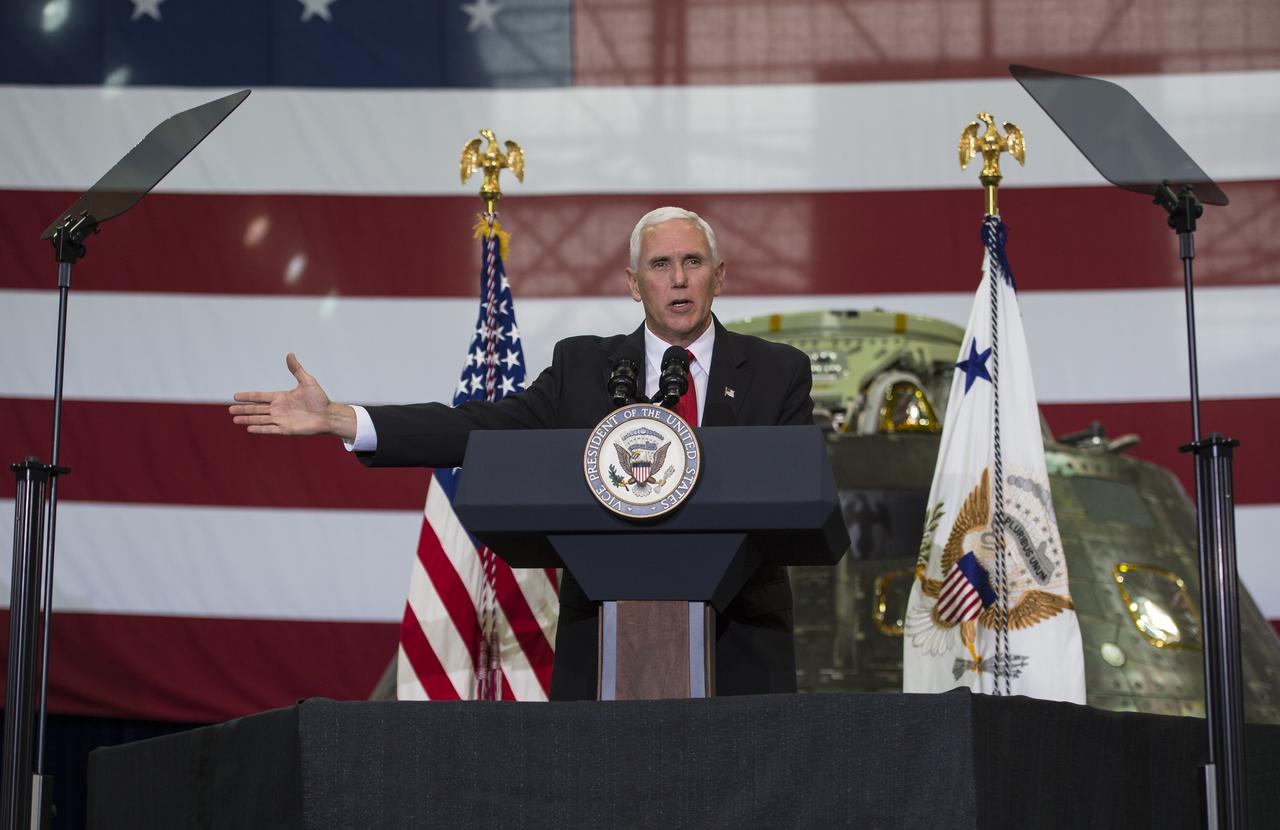
Vice President Mike Pence addresses NASA employees, Thursday, July 6, 2017, at the Vehicle Assembly Building at NASA’s Kennedy Space Center (KSC) in Cape Canaveral, Florida. The Vice President thanked employees for advancing American leadership in space, before going on a tour of the center that highlighted the public-private partnerships at KSC, as both NASA and commercial companies prepare to launch American astronauts from the multi-user spaceport. Photo Credit: (NASA/Aubrey Gemignani)
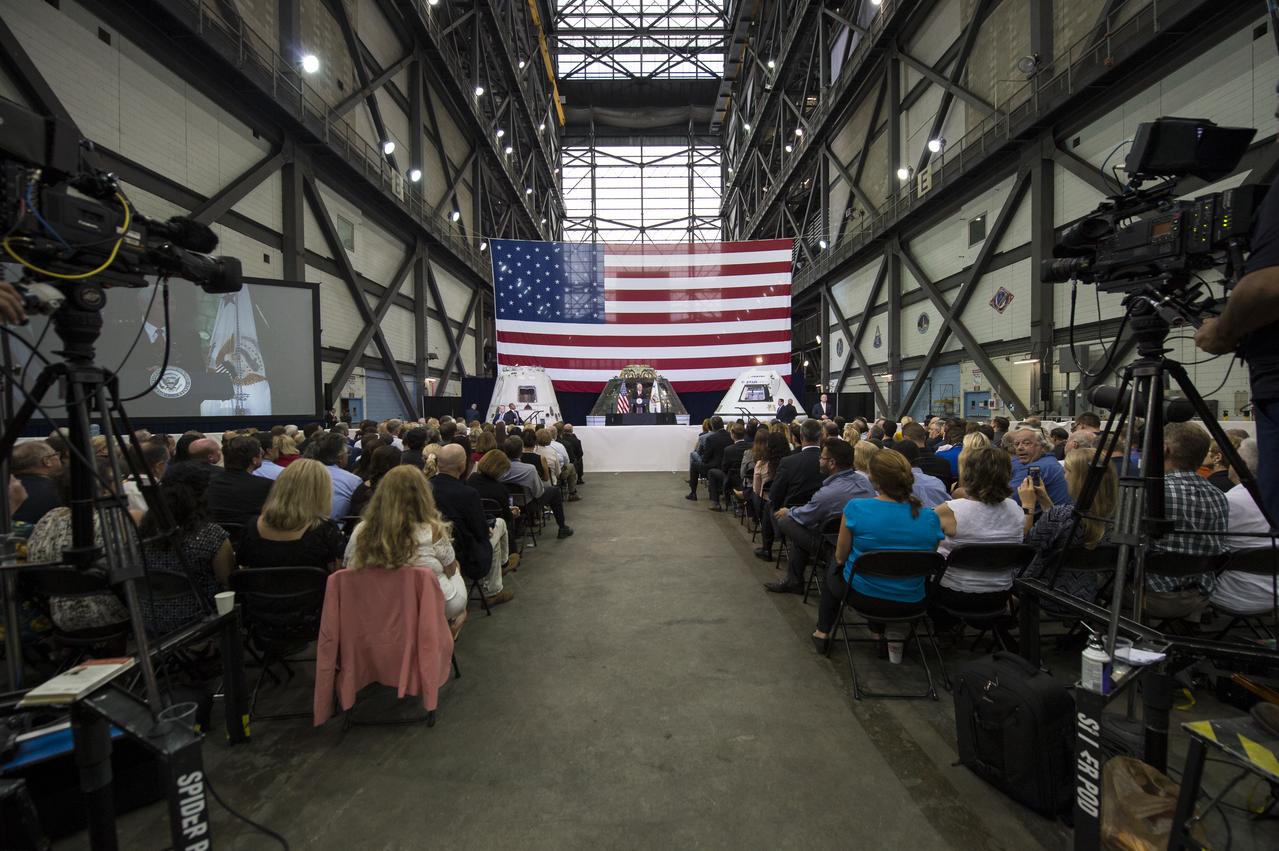
Vice President Mike Pence addresses NASA employees, Thursday, July 6, 2017, at the Vehicle Assembly Building at NASA’s Kennedy Space Center (KSC) in Cape Canaveral, Florida. The Vice President thanked employees for advancing American leadership in space, before going on a tour of the center that highlighted the public-private partnerships at KSC, as both NASA and commercial companies prepare to launch American astronauts from the multi-user spaceport. Photo Credit: (NASA/Aubrey Gemignani)
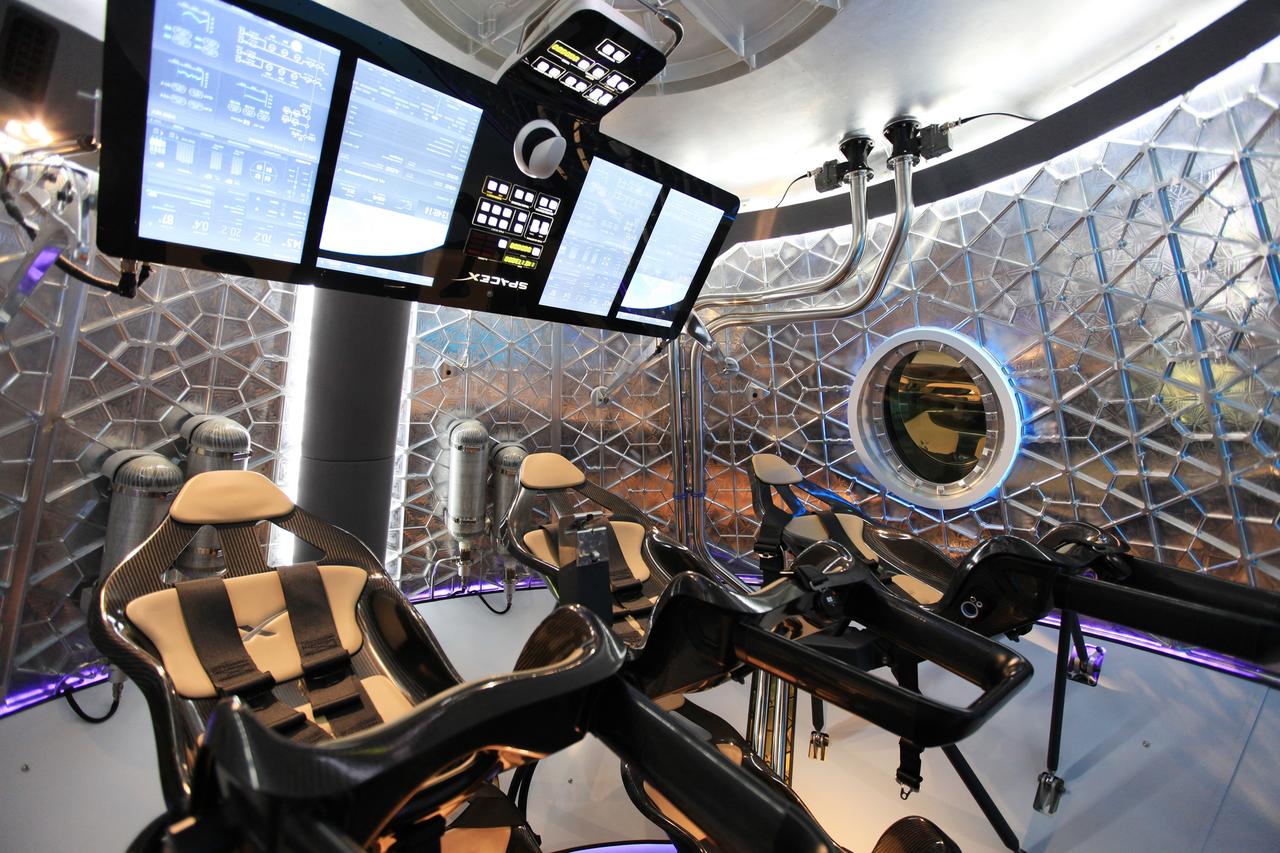
HAWTHORNE, Calif. - The Dragon V2 spacecraft's seating arrangement with the control panel swung up to allow crewmembers to get into their seats. Once the crew is in place, the control panel swings down and locks in launch position. SpaceX unveiled the new spacecraft during a ceremony at its headquarters in Hawthorne, Calif. The Dragon V2 is designed to carry people into Earth's orbit and was developed in partnership with NASA's Commercial Crew Program under the Commercial Crew Integrated Capability agreement. SpaceX is one of NASA's commercial partners working to develop a new generation of U.S. spacecraft and rockets capable of transporting humans to and from Earth's orbit from American soil. Ultimately, NASA intends to use such commercial systems to fly U.S. astronauts to and from the International Space Station. Photo credit: NASA/Dimitri Gerondidakis
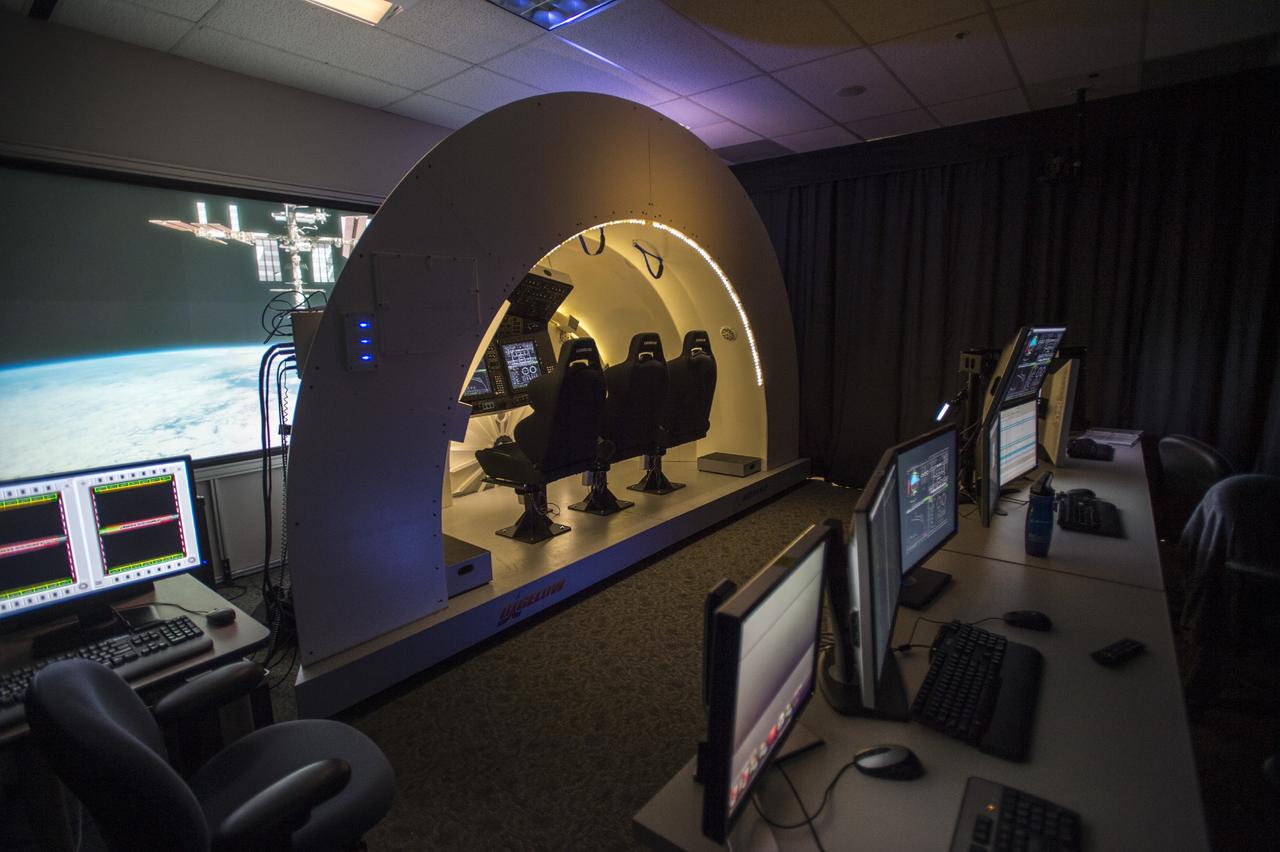
HOUSTON – A simulator of The Boeing Company's CST-100 spacecraft stands ready to begin evaluations of potential designs and software functions in a room at the company's Houston location. The CST-100 is under development in partnership between the company and NASA's Commercial Crew Program, or CCP. The spacecraft is designed to fly to low-Earth orbit and potentially dock with the International Space Station, which is seen on the screen in front of the simulator. Photo credit: The Boeing Company
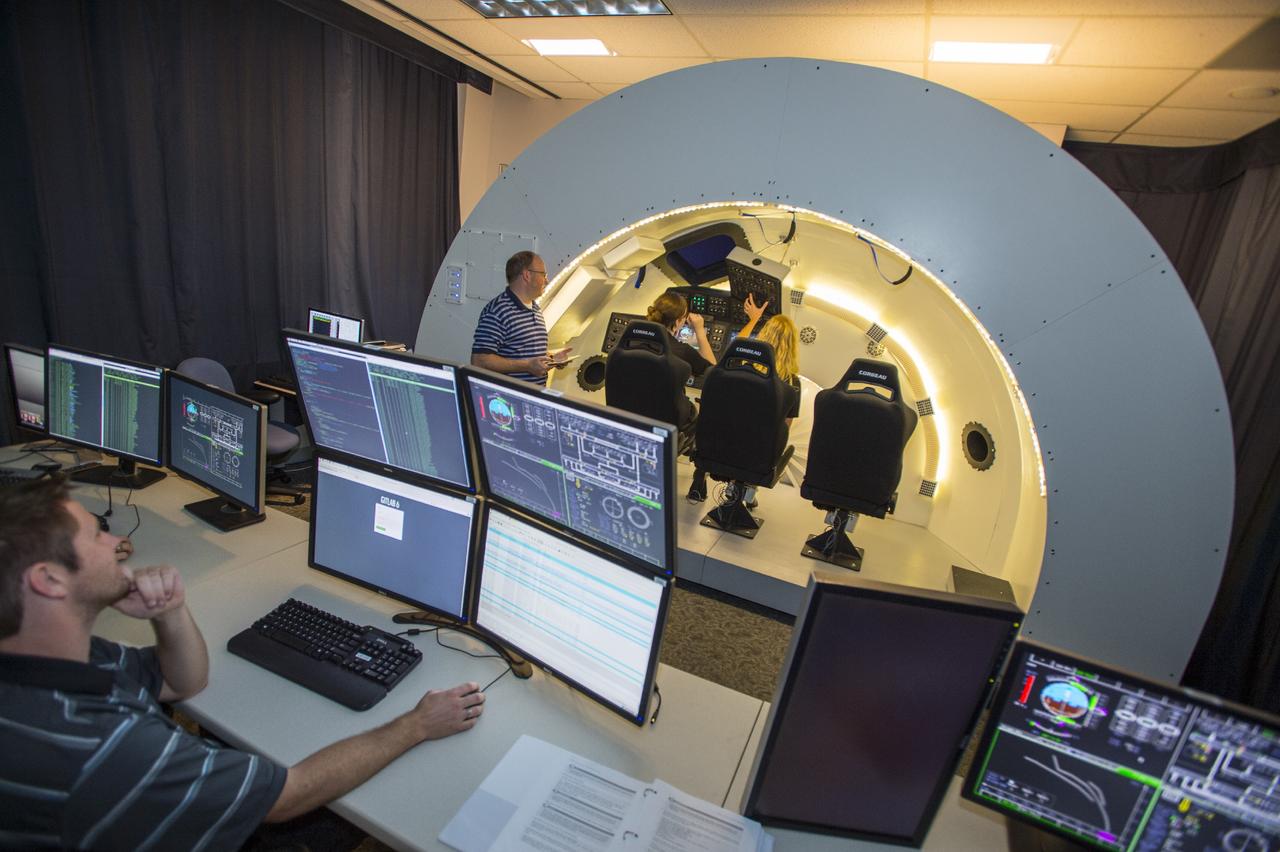
HOUSTON – Engineers and managers work inside a simulator of The Boeing Company's CST-100 spacecraft during evaluations of potential designs and software functions in a room at the company's Houston location. The CST-100 is under development in partnership between the company and NASA's Commercial Crew Program, or CCP. The spacecraft is designed to fly to low-Earth orbit and potentially dock with the International Space Station. Photo credit: The Boeing Company
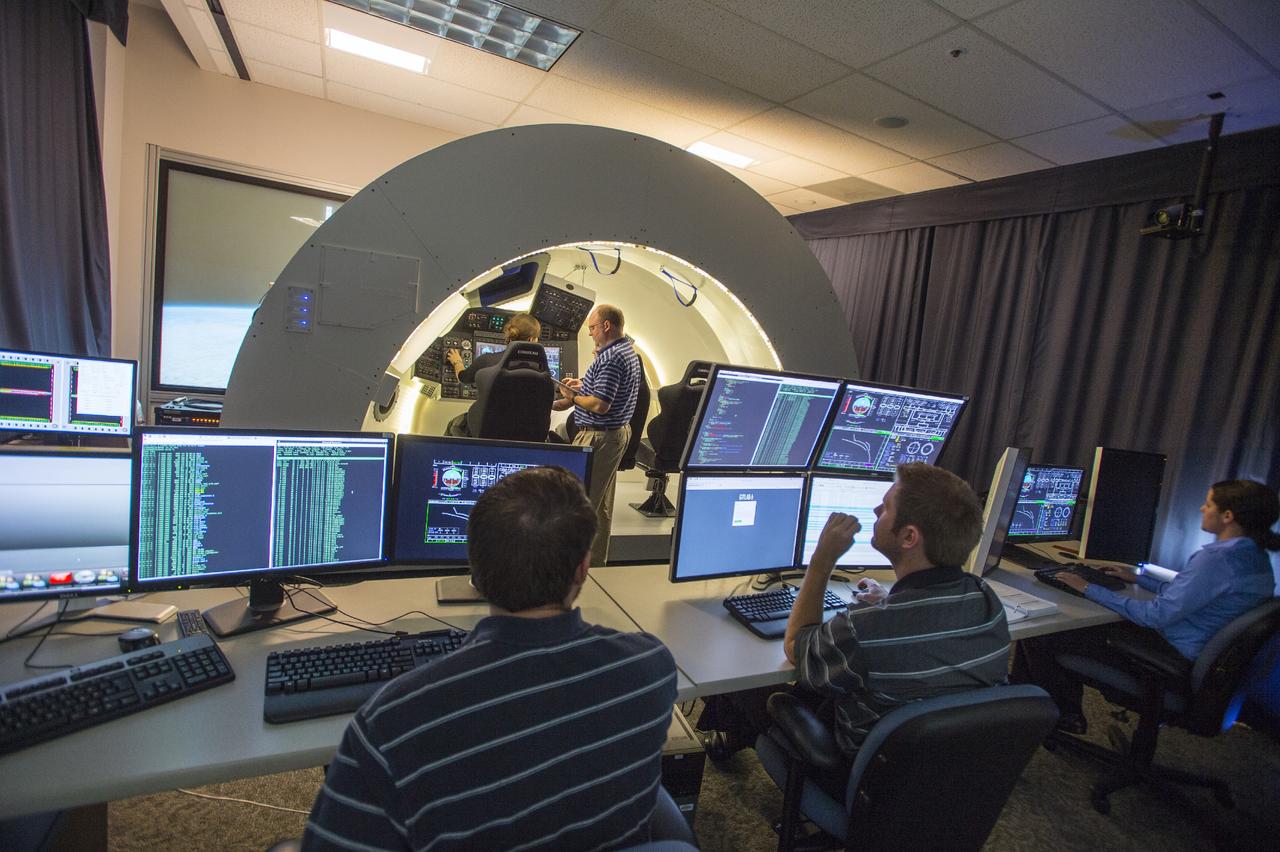
HOUSTON – Engineers and managers work inside a simulator of The Boeing Company's CST-100 spacecraft during evaluations of potential designs and software functions in a room at the company's Houston location. The CST-100 is under development in partnership between the company and NASA's Commercial Crew Program, or CCP. The spacecraft is designed to fly to low-Earth orbit and potentially dock with the International Space Station, which is seen on the screen in front of the simulator. Photo credit: The Boeing Company
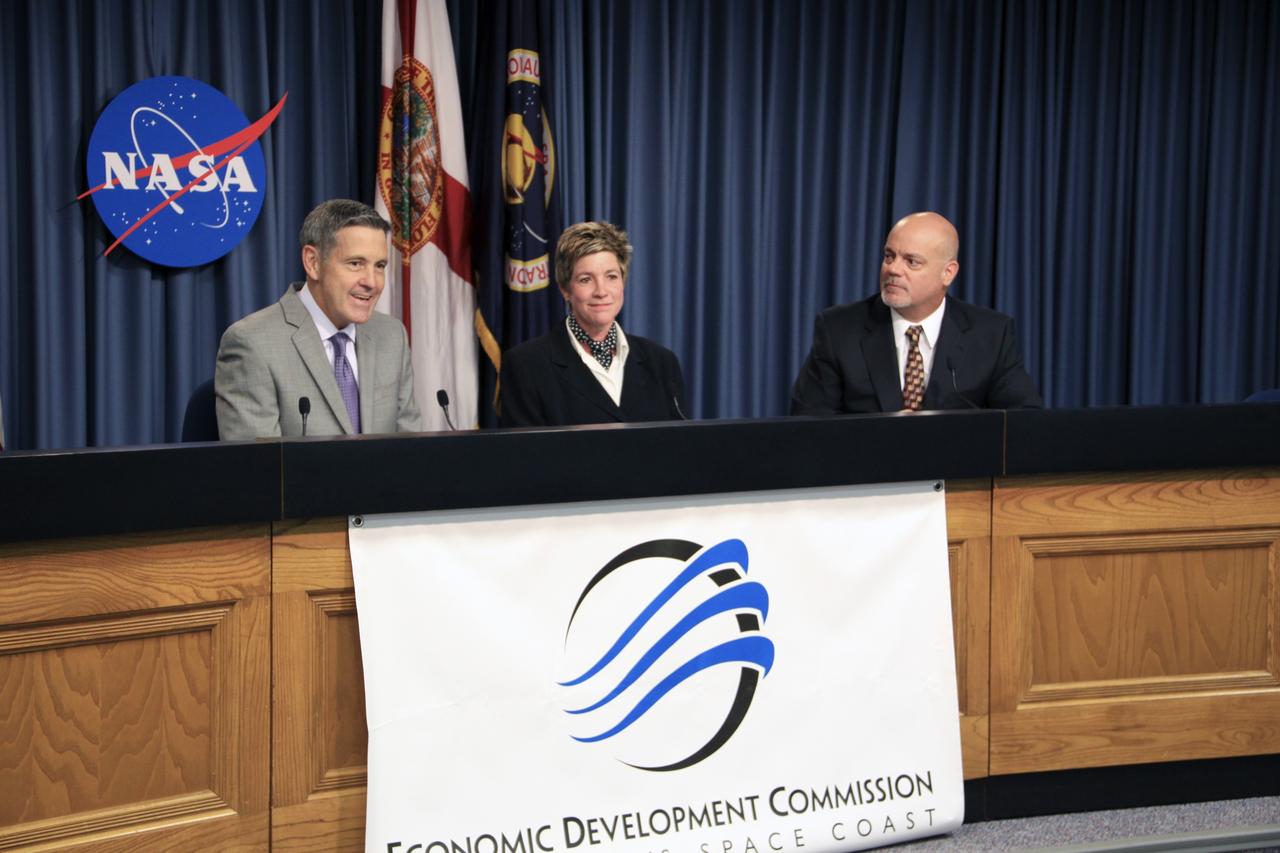
CAPE CANAVERAL, Fla. -- In the Press Site auditorium at NASA's Kennedy Space Center in Florida, managers from NASA and the Economic Development Commission (EDC) of Florida’s Space Coast discuss a new five-year Space Act Agreement reaffirming the partnership of the two organizations. From left are Kennedy Space Center Director Robert Cabana, EDC President and CEO Lynda Weatherman, and Chairman of the Board of the EDC Bob Whelen. The agreement calls for NASA and EDC senior leadership to meet regularly to discuss economic development matters of mutual interest. Managers from Kennedy’s Center Planning and Development Office will work with the EDC on potential business partnerships and meet with business leaders and committees to address space-related and high-tech economic development. EDC officials will assist NASA with disseminating information about potential partnership opportunities, as well as space-related and high-tech economic development, and increase awareness of Kennedy’s Engineering and Technology Directorate collaboration initiatives. They also will promote the commercial use of underutilized facilities at Kennedy. NASA and the EDC entered into their first economic cooperation agreement in 2005. For more information about the Economic Development Commission (EDC) of Florida’s Space Coast, visit http://www.spacecoastedc.org/. Photo credit: NASA/Jim Grossmann
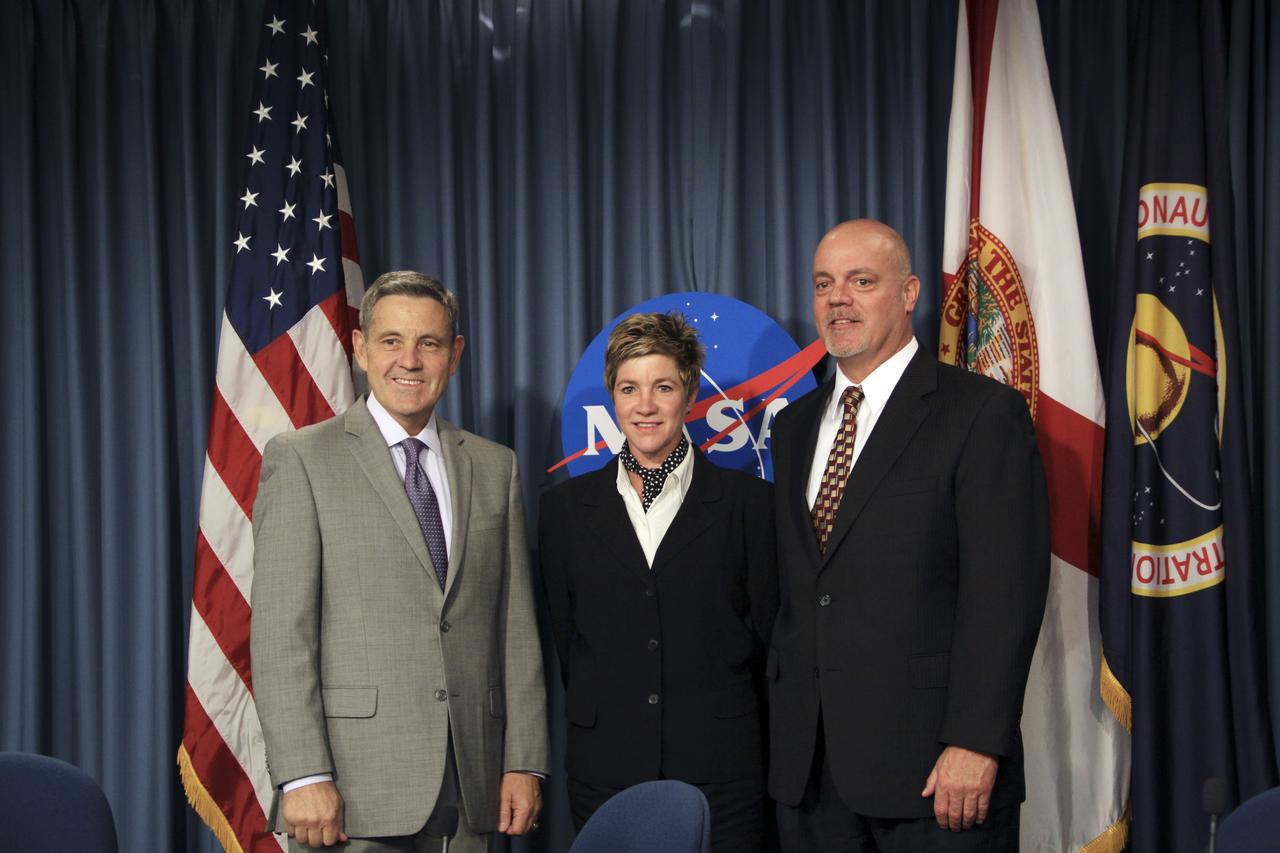
CAPE CANAVERAL, Fla. -- In the Press Site auditorium at NASA's Kennedy Space Center in Florida, managers from NASA and the Economic Development Commission (EDC) of Florida’s Space Coast pose for a portrait following the signing of a new five-year Space Act Agreement reaffirming the partnership of the two organizations. From left are Kennedy Space Center Director Robert Cabana, EDC President and CEO Lynda Weatherman, and Chairman of the Board of the EDC Bob Whelen. The agreement calls for NASA and EDC senior leadership to meet regularly to discuss economic development matters of mutual interest. Managers from Kennedy’s Center Planning and Development Office will work with the EDC on potential business partnerships and meet with business leaders and committees to address space-related and high-tech economic development. EDC officials will assist NASA with disseminating information about potential partnership opportunities, as well as space-related and high-tech economic development, and increase awareness of Kennedy’s Engineering and Technology Directorate collaboration initiatives. They also will promote the commercial use of underutilized facilities at Kennedy. NASA and the EDC entered into their first economic cooperation agreement in 2005. For more information about the Economic Development Commission (EDC) of Florida’s Space Coast, visit http://www.spacecoastedc.org/. Photo credit: NASA/Jim Grossmann
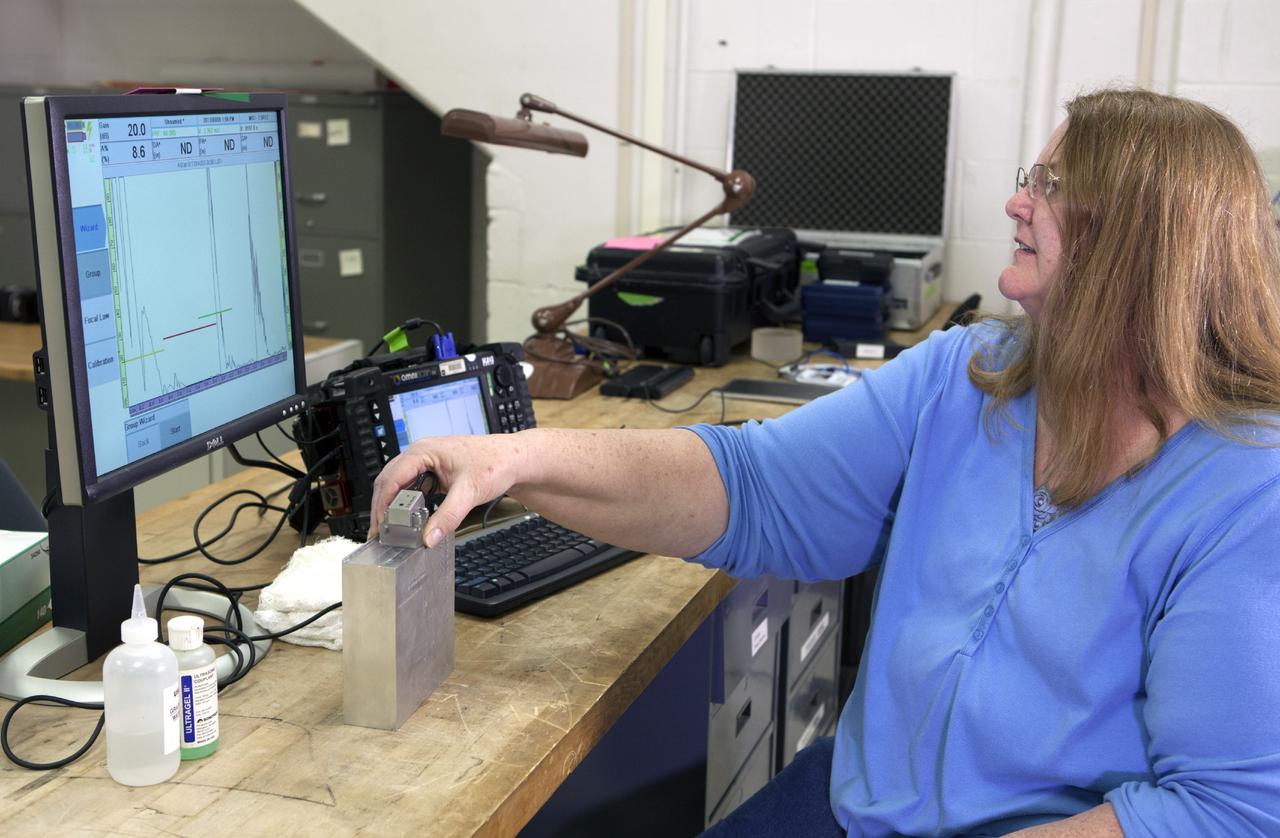
CAPE CANAVERAL, Fla. – In Hangar N at Cape Canaveral Air Force Station, PaR Systems, Inc. operations engineer Lu Bell conducts a phase array ultrasonic inspection. NASA's Kennedy Space Center in Florida recently established a partnership agreement with PaR Systems, Inc. of Shoreview, Minn., for operation of the Hangar N facility and its nondestructive testing and evaluation equipment. As the spaceport transitions from a historically government-only launch facility to a multi-user spaceport for both federal and commercial customers, partnerships between the space agency and other organizations will be a key element in that effort. Hangar N is located at Cape Canaveral Air Force Station adjacent to Kennedy and houses a unique inventory of test and evaluation equipment and the capability for current and future mission spaceflight support. Photo credit: NASA/ Dimitri Gerondidakis
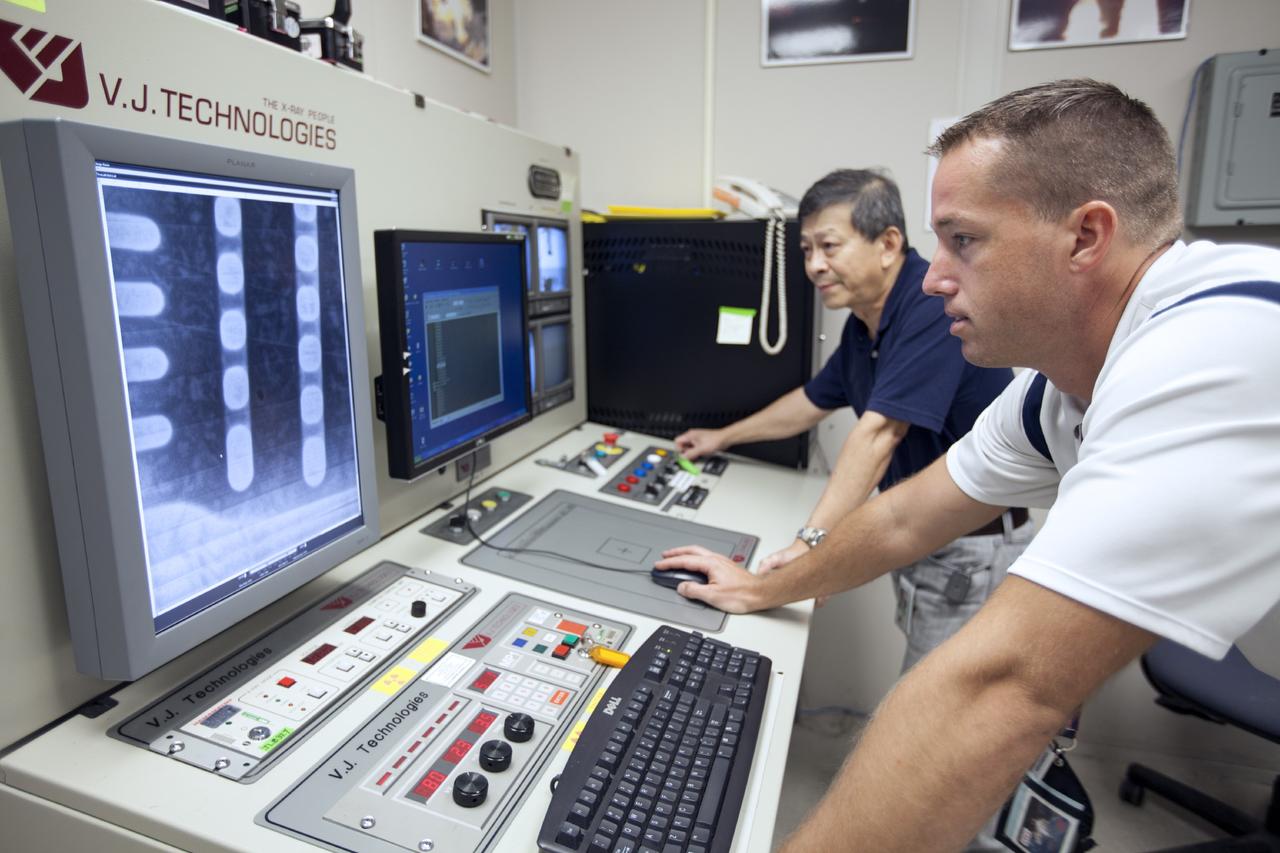
CAPE CANAVERAL, Fla. – In Hangar N at Cape Canaveral Air Force Station, PaR Systems, Inc. development engineer Wayne Cheng, left, and operations engineer Jeff Elston operate the controller for a robotic system used in nondestructive testing. The 11-axis robotic system takes X-ray images of hardware for evaluation. NASA's Kennedy Space Center in Florida recently established a partnership agreement with PaR Systems, Inc. of Shoreview, Minn., for operation of the Hangar N facility and its nondestructive testing and evaluation equipment. As the spaceport transitions from a historically government-only launch facility to a multi-user spaceport for both federal and commercial customers, partnerships between the space agency and other organizations will be a key element in that effort. Hangar N is located at Cape Canaveral Air Force Station adjacent to Kennedy and houses a unique inventory of test and evaluation equipment and the capability for current and future mission spaceflight support. Photo credit: NASA/ Dimitri Gerondidakis
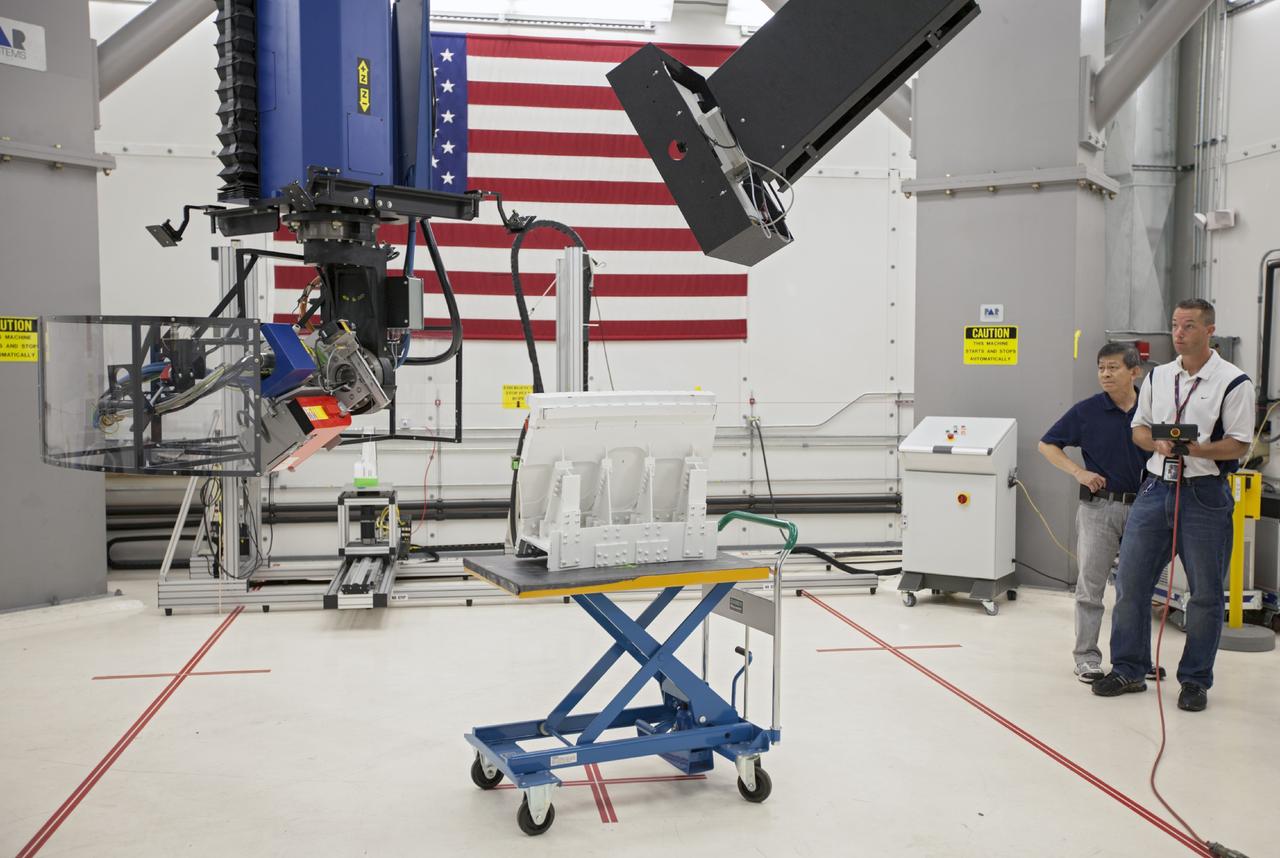
CAPE CANAVERAL, Fla. – In Hangar N at Cape Canaveral Air Force Station, PaR Systems, Inc. development engineer Wayne Cheng, left, and operations engineer Jeff Elston operate a robotic system used in nondestructive testing. The 11-axis robotic system takes X-ray images of hardware for evaluation. NASA's Kennedy Space Center in Florida recently established a partnership agreement with PaR Systems, Inc. of Shoreview, Minn., for operation of the Hangar N facility and its nondestructive testing and evaluation equipment. As the spaceport transitions from a historically government-only launch facility to a multi-user spaceport for both federal and commercial customers, partnerships between the space agency and other organizations will be a key element in that effort. Hangar N is located at Cape Canaveral Air Force Station adjacent to Kennedy and houses a unique inventory of test and evaluation equipment and the capability for current and future mission spaceflight support. Photo credit: NASA/ Dimitri Gerondidakis
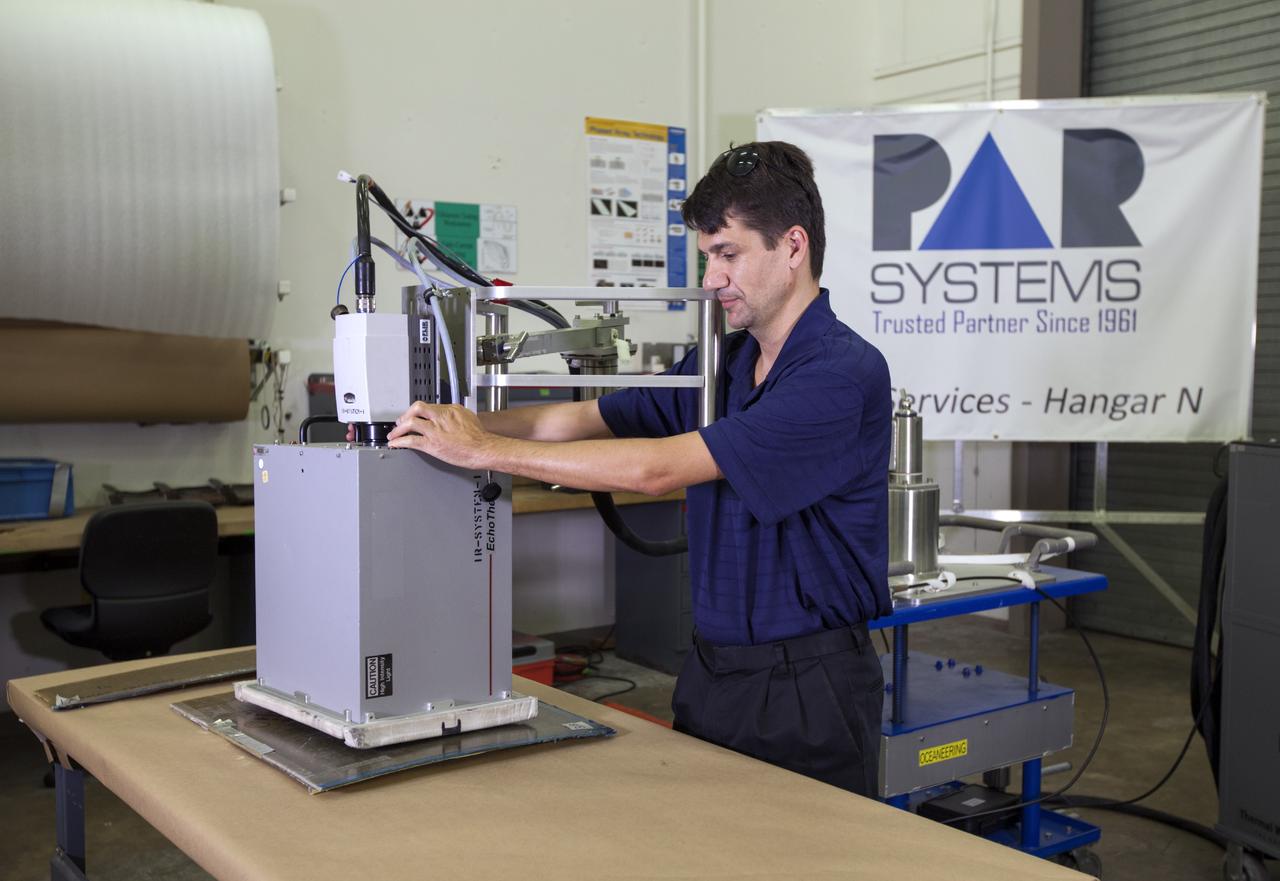
CAPE CANAVERAL, Fla. – In Hangar N at Cape Canaveral Air Force Station, PaR Systems, Inc. development engineer Bence Bertha sets up a flash thermography system. The equipment is used for inspecting hardware with thermal analysis. NASA's Kennedy Space Center in Florida recently established a partnership agreement with PaR Systems, Inc. of Shoreview, Minn., for operation of the Hangar N facility and its nondestructive testing and evaluation equipment. As the spaceport transitions from a historically government-only launch facility to a multi-user spaceport for both federal and commercial customers, partnerships between the space agency and other organizations will be a key element in that effort. Hangar N is located at Cape Canaveral Air Force Station adjacent to Kennedy and houses a unique inventory of test and evaluation equipment and the capability for current and future mission spaceflight support. Photo credit: NASA/ Dimitri Gerondidakis
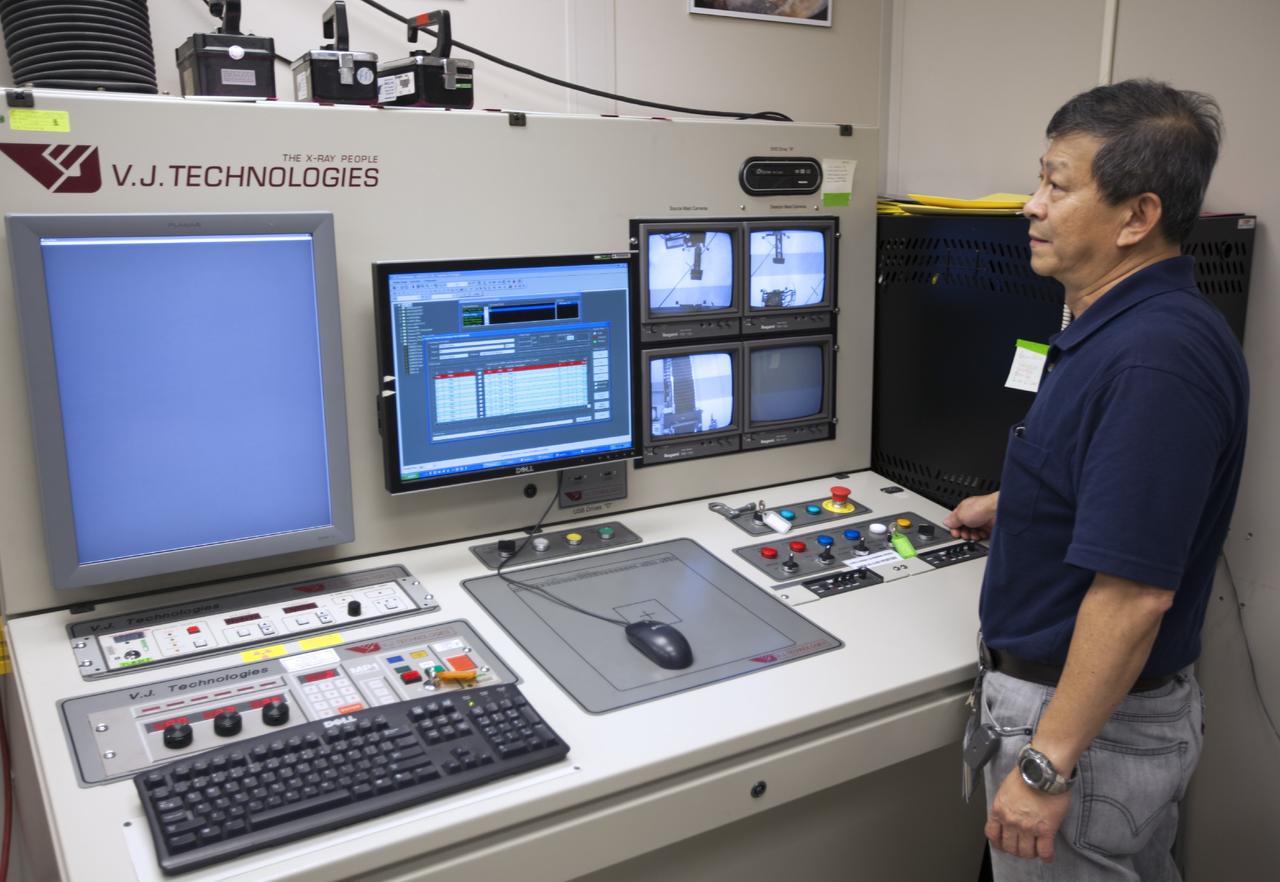
CAPE CANAVERAL, Fla. – In Hangar N at Cape Canaveral Air Force Station, PaR Systems, Inc. development engineer Wayne Cheng operates the controller for a robotic system used in nondestructive testing. The 11-axis robotic system takes X-ray images of hardware for evaluation. NASA's Kennedy Space Center in Florida recently established a partnership agreement with PaR Systems, Inc. of Shoreview, Minn., for operation of the Hangar N facility and its nondestructive testing and evaluation equipment. As the spaceport transitions from a historically government-only launch facility to a multi-user spaceport for both federal and commercial customers, partnerships between the space agency and other organizations will be a key element in that effort. Hangar N is located at Cape Canaveral Air Force Station adjacent to Kennedy and houses a unique inventory of test and evaluation equipment and the capability for current and future mission spaceflight support. Photo credit: NASA/ Dimitri Gerondidakis
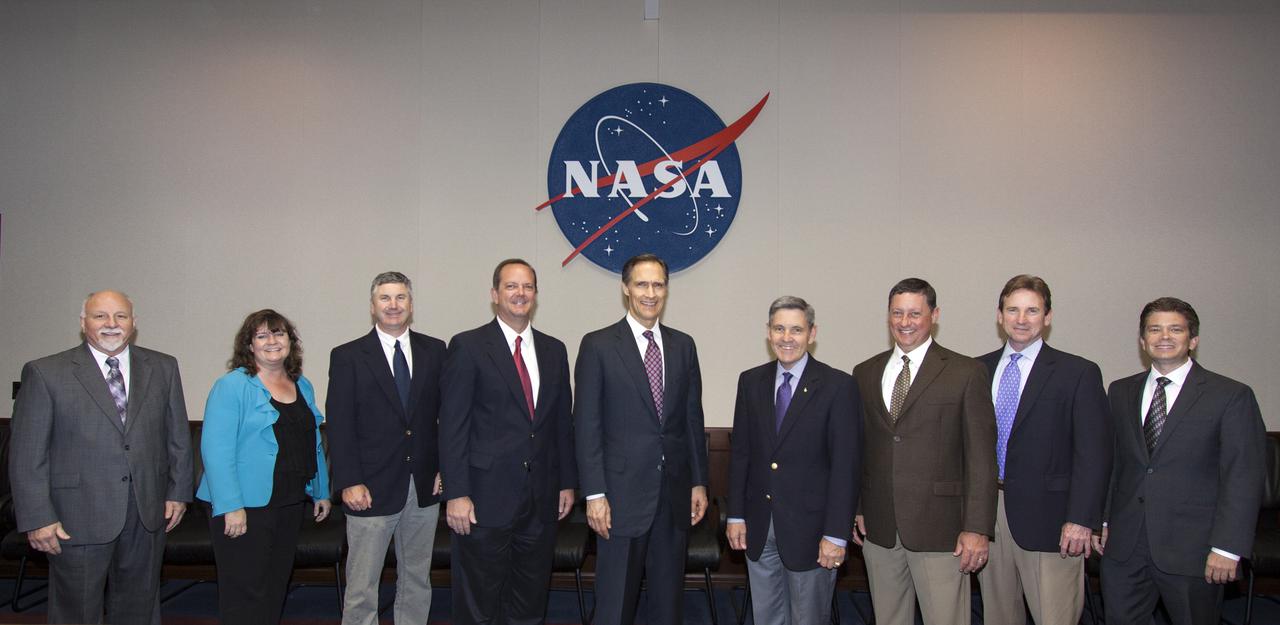
CAPE CANAVERAL, Fla. -- Kennedy Space Center Director Bob Cabana, met with representatives of PaR Systems Inc. NASA recently established a partnership agreement with PaR to operate of the Hangar N facility and its nondestructive testing equipment. Participating were, from the left, Cliff Hausmann, Technical Integration manager in NASA's Program Control and Integration Office, Amy Houts-Gilfriche, Partnership Development manager in NASA's Center Planning and Development Directorate, Scott Colloredo of NASA's Systems Engineering and Integration Division, Tom Engler, deputy director of Center Planning and Development, Brian Behm, president of the Robotics Division of PaR Systems, Tony Corak, manager, of Non-destructive Testing Services for PaR Systems, Dale Ketcham of Space Florida, and Robert Salonen, director of Business Development for the Economic Development Commission of Florida's Space Coast. As the spaceport transitions from a historically government-only launch facility to a multiuser spaceport for both federal and commercial customers, partnerships with other organizations will be a key element in that effort. Hangar N is located at Cape Canaveral Air Force Station adjacent to Kennedy. The facility's unique inventory of nondestructive test and evaluation NDE equipment and the capability for current and future mission spaceflight support was an asset NASA wanted to retain. Photo credit: NASA_Jim Grossmann
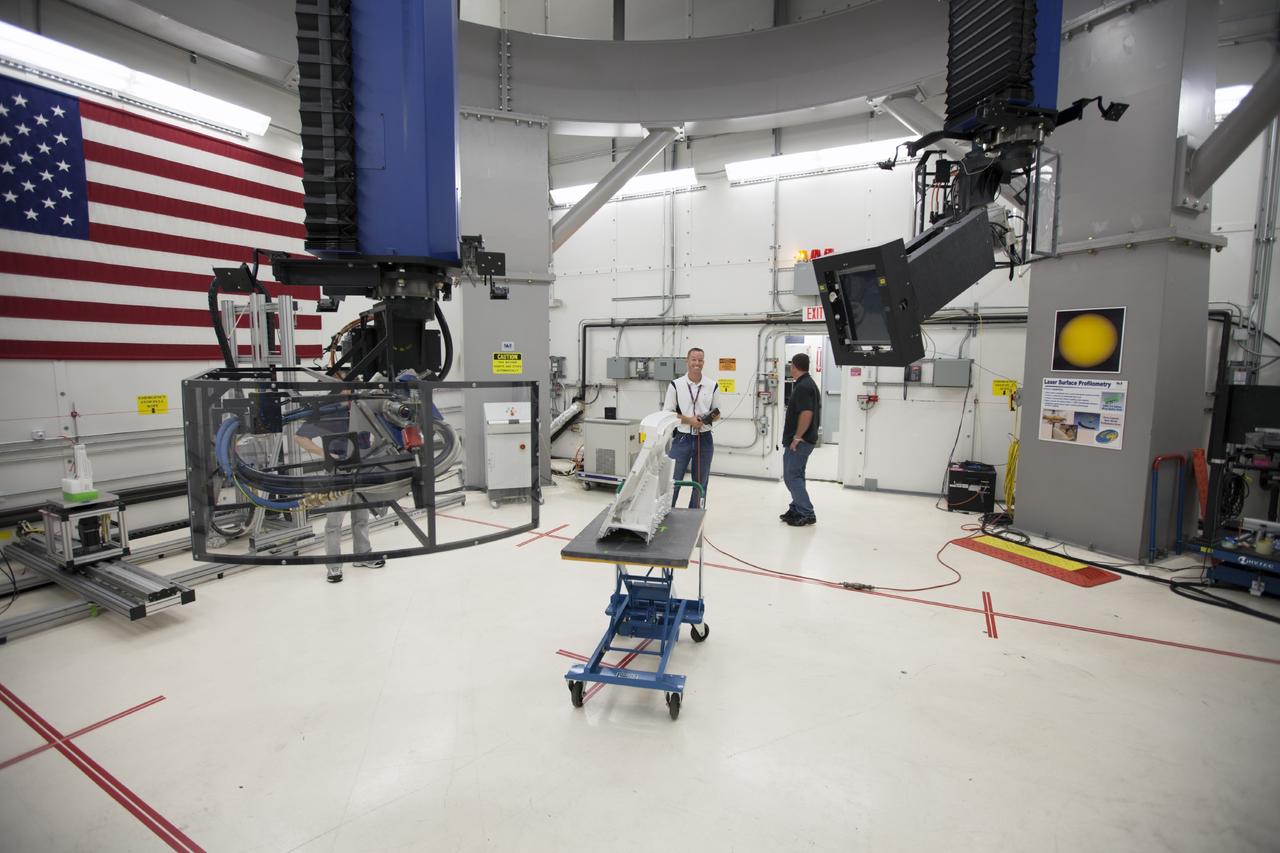
CAPE CANAVERAL, Fla. – In Hangar N at Cape Canaveral Air Force Station, PaR Systems, Inc. operations engineer Jeff Elston, left, and Tony Corak, manager of NDT Services for PaR Systems, operate an 11-axis robotic X-ray system which takes images of hardware for evaluation. The activity is part of work performed by PaR Systems, Inc. under a partnership agreement with NASA. NASA's Kennedy Space Center in Florida recently established a partnership agreement with PaR Systems, Inc. of Shoreview, Minn., for operation of the Hangar N facility and its nondestructive testing and evaluation equipment. As the spaceport transitions from a historically government-only launch facility to a multi-user spaceport for both federal and commercial customers, partnerships between the space agency and other organizations will be a key element in that effort. Hangar N is located at Cape Canaveral Air Force Station adjacent to Kennedy and houses a unique inventory of test and evaluation equipment and the capability for current and future mission spaceflight support. Photo credit: NASA/ Dimitri Gerondidakis
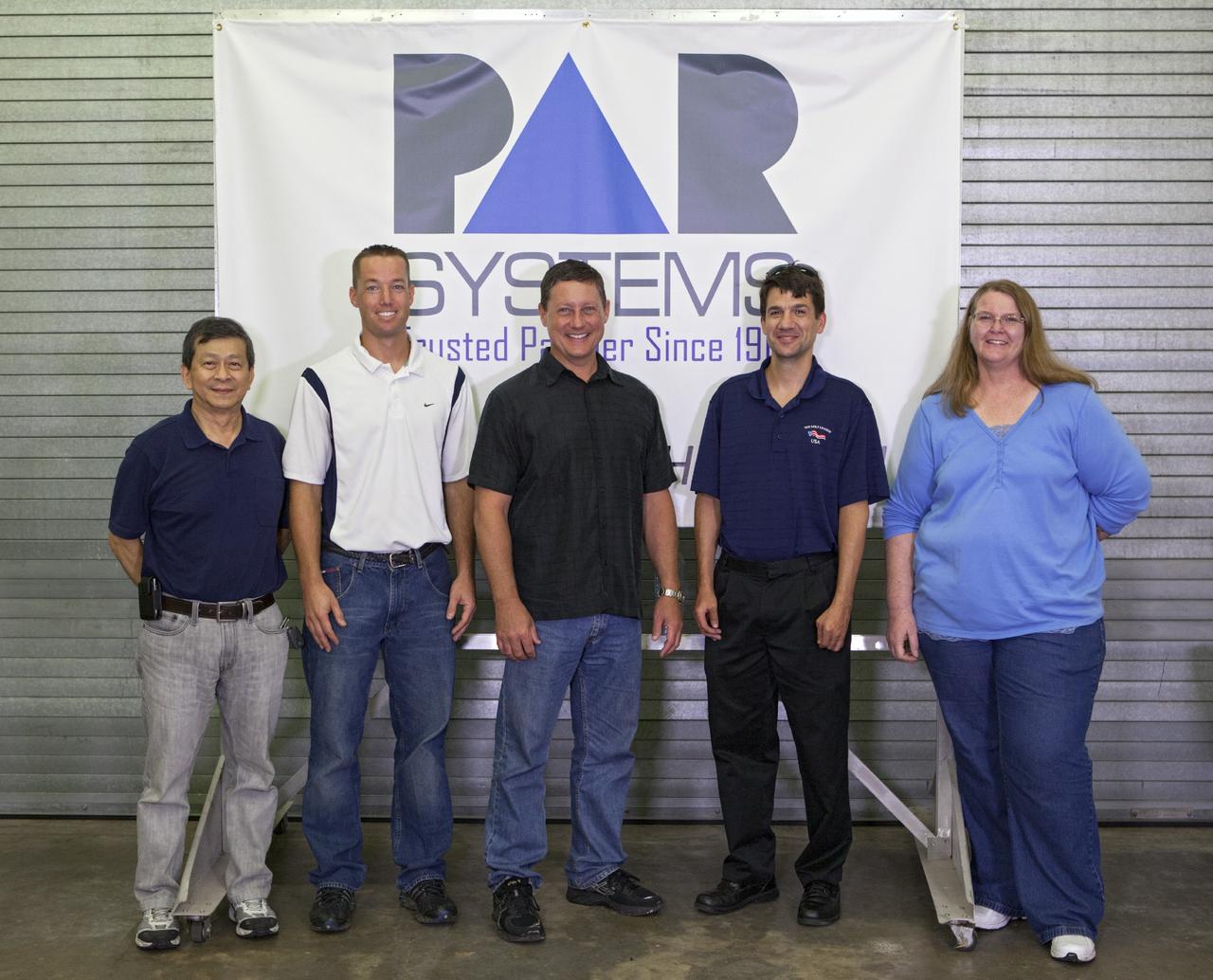
CAPE CANAVERAL, Fla. – In Hangar N at Cape Canaveral Air Force Station, PaR Systems, Inc. employees are performing nondestructive testing NDT work under a partnership agreement with NASA. From the left are: development engineer Wayne Cheng, operations engineer Jeff Elston, manager of NDT Services Tony Corak, development engineer Bence Bertha and operations engineer Lu Bell. NASA's Kennedy Space Center in Florida recently established a partnership agreement with PaR Systems, Inc. of Shoreview, Minn., for operation of the Hangar N facility and its nondestructive testing and evaluation equipment. As the spaceport transitions from a historically government-only launch facility to a multi-user spaceport for both federal and commercial customers, partnerships between the space agency and other organizations will be a key element in that effort. Hangar N is located at Cape Canaveral Air Force Station adjacent to Kennedy and houses a unique inventory of test and evaluation equipment and the capability for current and future mission spaceflight support. Photo credit: NASA/ Dimitri Gerondidakis
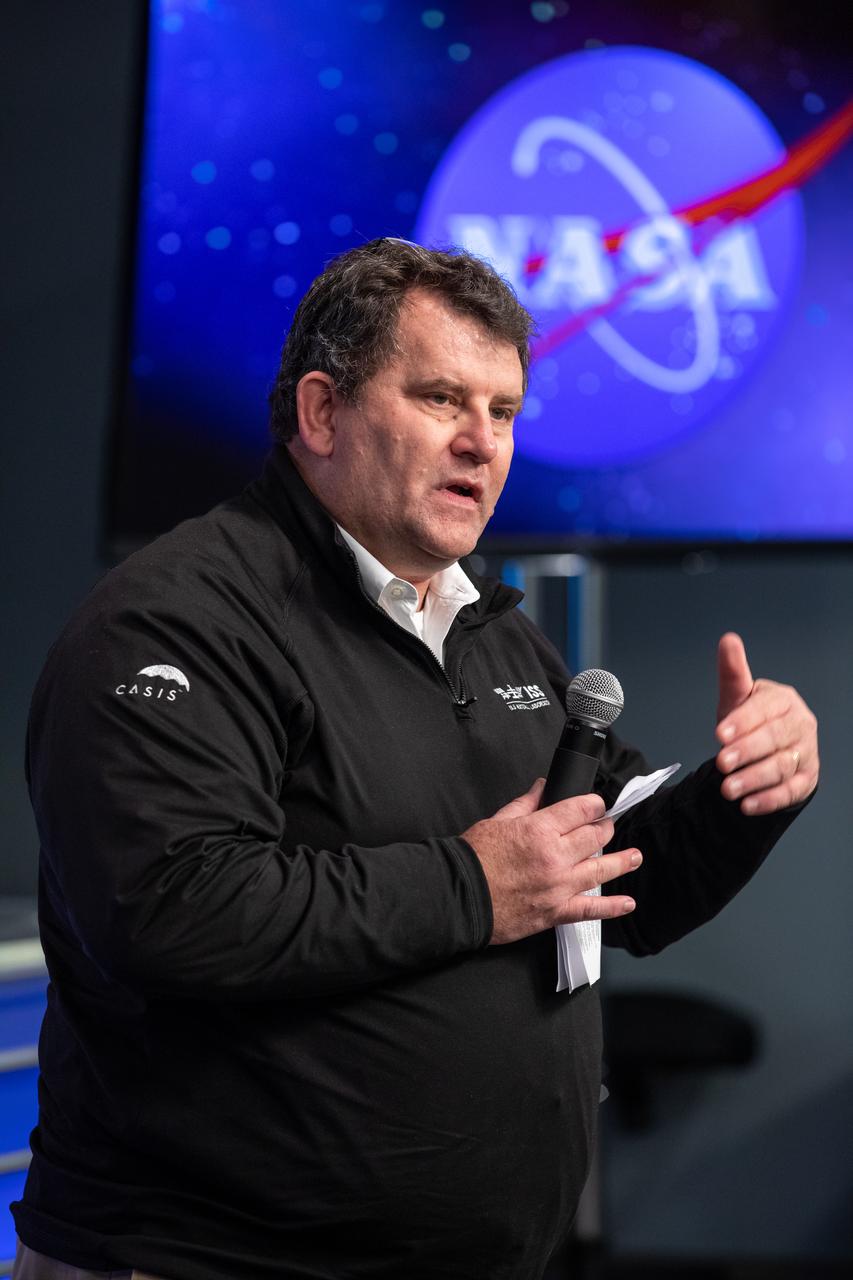
A What’s On Board Briefing for SpaceX’s 19th Commercial Resupply Services (CRS-19) mission for NASA to the International Space Station took place on Dec. 3, 2019, at the agency’s Kennedy Space Center in Florida. Michael Roberts, interim chief scientist for the International Space Station U.S. National Laboratory, discusses the lab’s work in advancing science in space, and in developing partnerships that drive industrialization through microgravity research. The SpaceX Falcon 9 rocket and Dragon cargo module are scheduled to launch on Dec. 4, 2019, from Space Launch Complex 40 on Cape Canaveral Air Force Station in Florida.
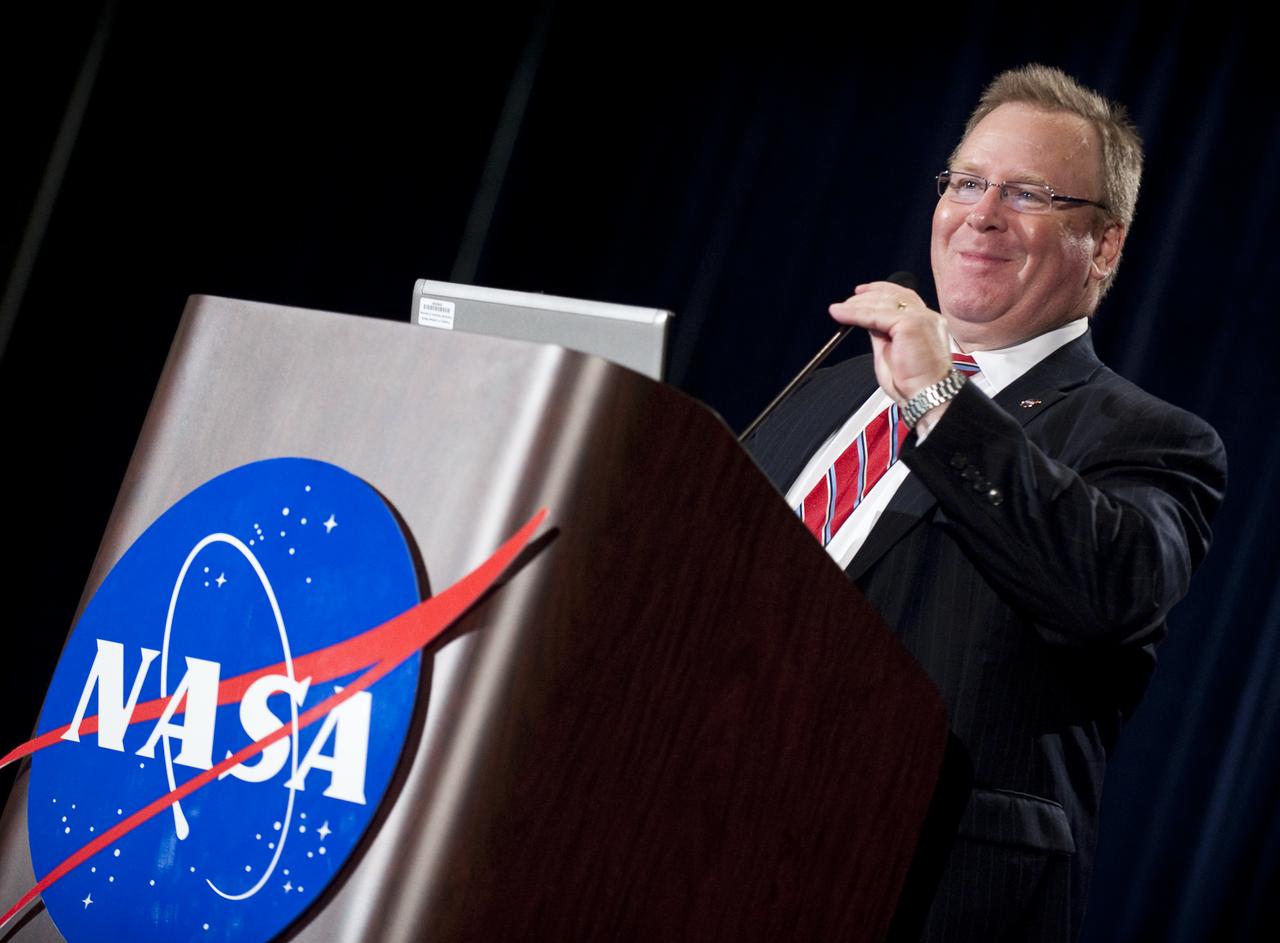
NASA's Partnership, Innovation & Commercial Space Director Doug Comstock speaks during the NASA New Space Technology Industry Forum being held at the University of Maryland in College Park on Tuesday, July 13, 2010. During the two-day event, speakers are focusing on the president's fiscal year 2011 budget request for NASA's new Space Technology Program. Representatives from industry, academia and the federal government are in attendance to discuss strategy, development and implementation of NASA's proposed new technology-enabled exploration. Photo Credit: (NASA/Bill Ingalls)
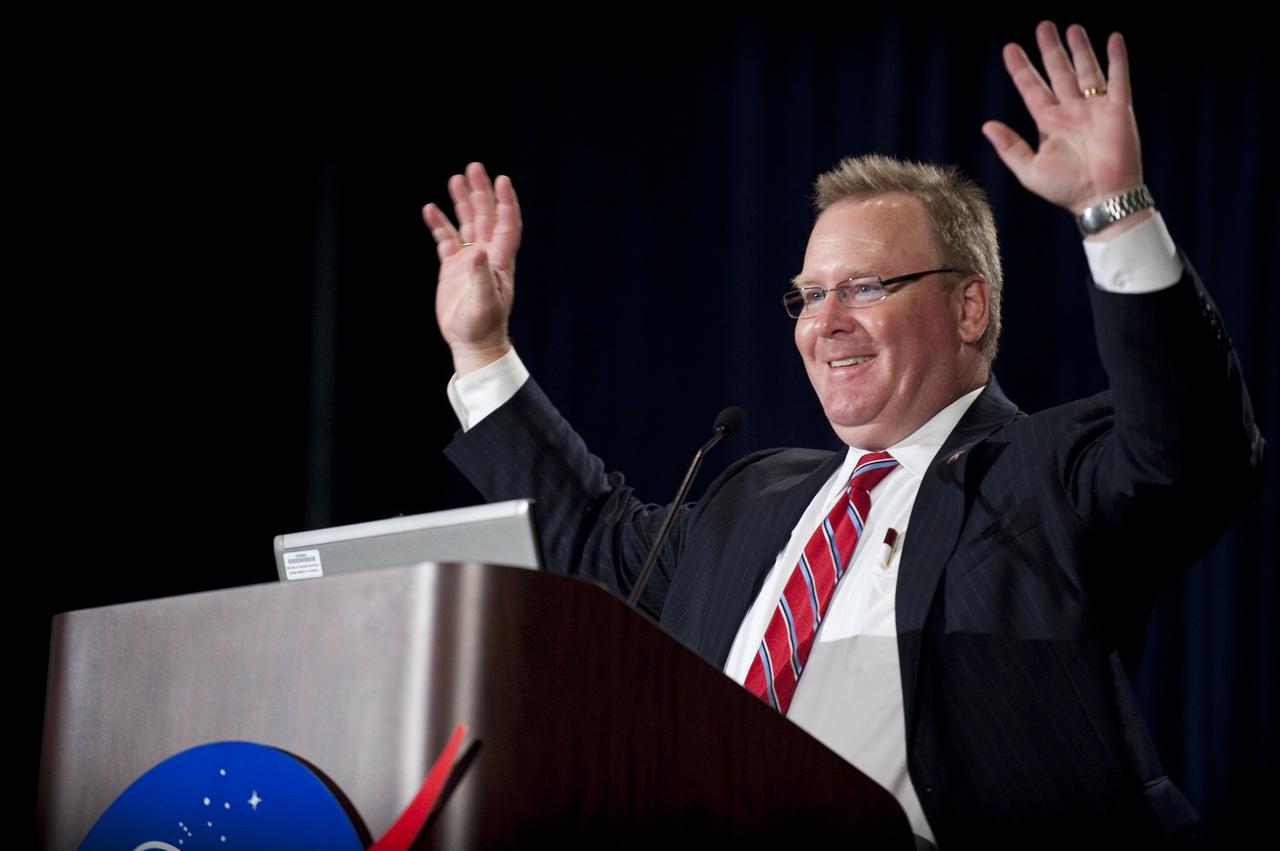
NASA's Partnership, Innovation & Commercial Space Director Doug Comstock speaks during the NASA New Space Technology Industry Forum being held at the University of Maryland in College Park on Tuesday, July 13, 2010. During the two-day event, speakers are focusing on the president's fiscal year 2011 budget request for NASA's new Space Technology Program. Representatives from industry, academia and the federal government are in attendance to discuss strategy, development and implementation of NASA's proposed new technology-enabled exploration. Photo Credit: (NASA/Bill Ingalls)
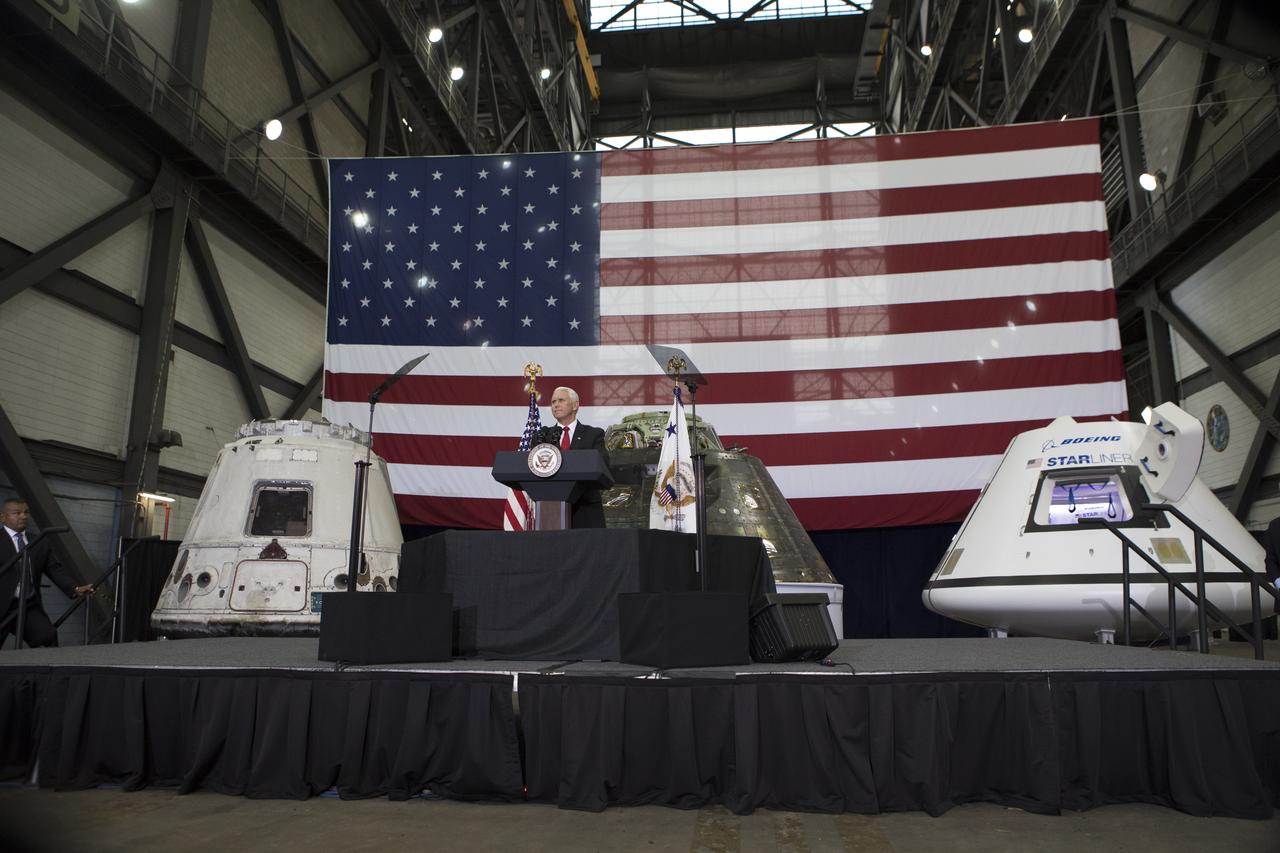
Vice President Mike Pence speaks before an audience of NASA leaders, U.S. and Florida government officials, and employees inside the Vehicle Assembly Building at NASA's Kennedy Space Center in Florida. Pence thanked employees for advancing American leadership in space. Behind the podium are, from the left, a flown SpaceX Dragon capsule, the Orion spacecraft flown on Exploration Flight test-1 in 2014, and a mockup of Boeing's CST-100 Starliner. During his visit to Kennedy, the Vice President also toured several facilities highlighting the public-private partnerships, as both NASA and commercial companies prepare to launch American astronauts from the multi-user spaceport.
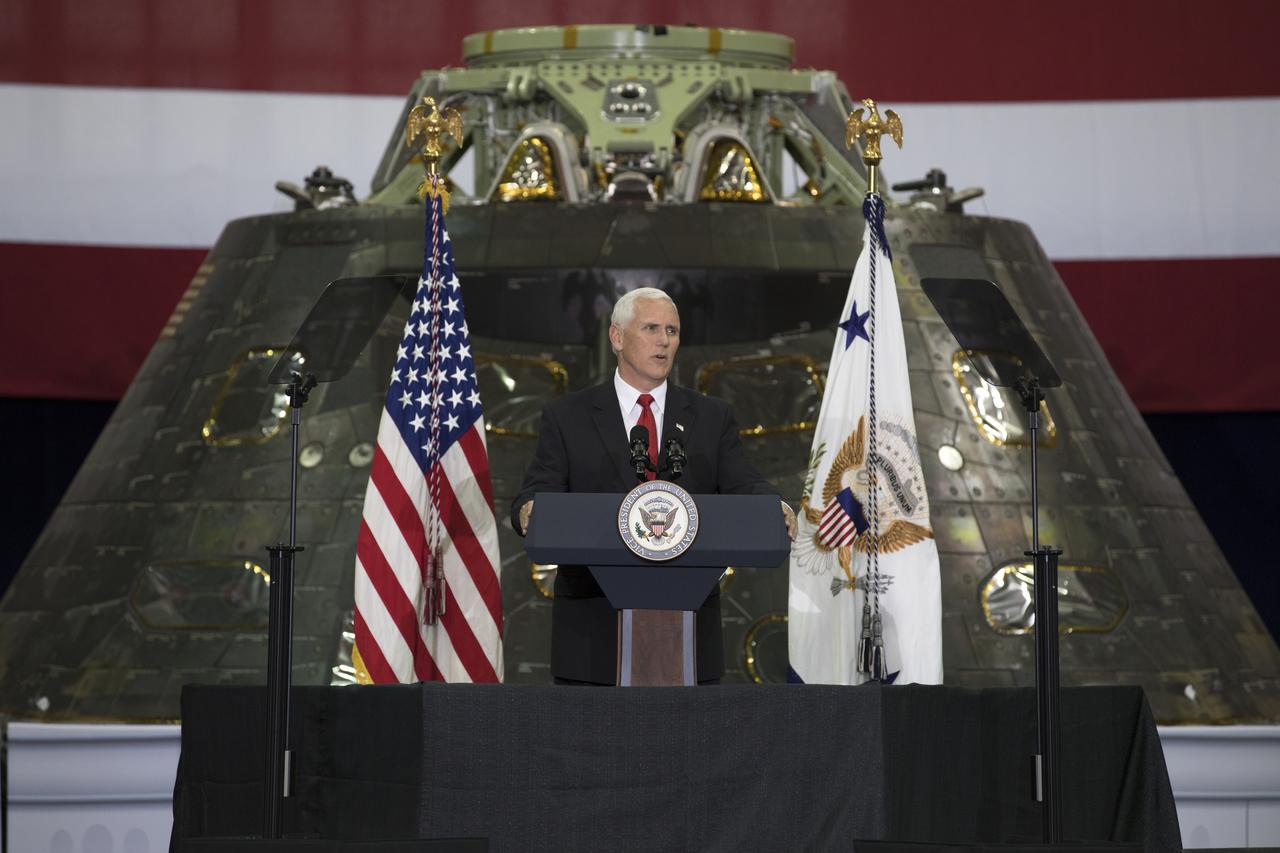
Vice President Mike Pence speaks before an audience of NASA leaders, U.S. and Florida government officials, and employees inside the Vehicle Assembly Building at NASA's Kennedy Space Center in Florida. Pence thanked employees for advancing American leadership in space. Behind the podium is the Orion spacecraft flown on Exploration Flight test-1 in 2014. During his visit to Kennedy, the Vice President also toured several facilities highlighting the public-private partnerships, as both NASA and commercial companies prepare to launch American astronauts from the multi-user spaceport.
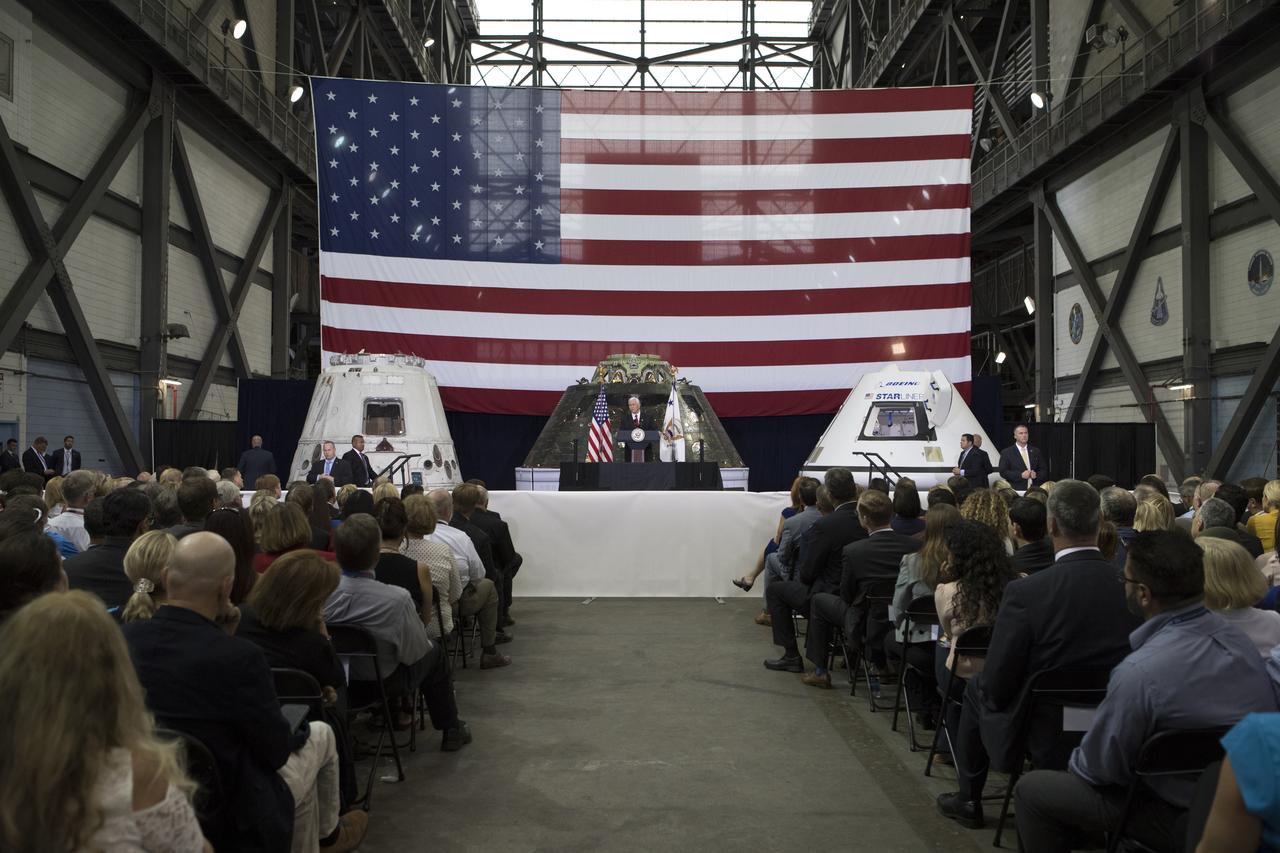
Vice President Mike Pence speaks before an audience of NASA leaders, U.S. and Florida government officials, and employees inside the Vehicle Assembly Building at NASA's Kennedy Space Center in Florida. Pence thanked employees for advancing American leadership in space. Behind the podium are, from the left, a flown SpaceX Dragon capsule, the Orion spacecraft flown on Exploration Flight test-1 in 2014, and a mockup of Boeing's CST-100 Starliner. During his visit to Kennedy, the Vice President also toured several facilities highlighting the public-private partnerships, as both NASA and commercial companies prepare to launch American astronauts from the multi-user spaceport.
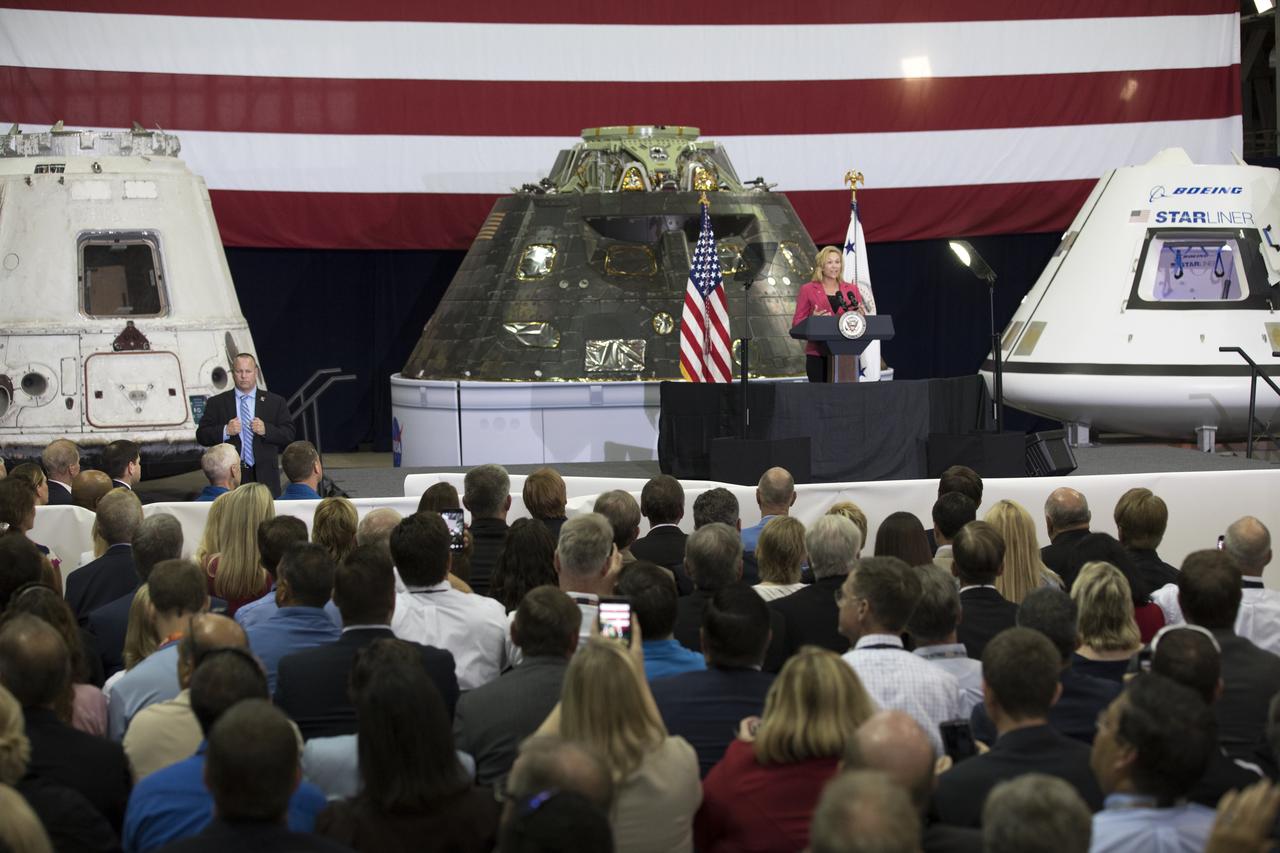
NASA Kennedy Space Center Deputy Director Janet Petro addresses agency leaders, U.S. and Florida government officials and employees inside the Vehicle Assembly Building during a visit by Vice President Mike Pence. Pence thanked employees for advancing American leadership in space. Behind the podium are, from the left, a flown SpaceX Dragon capsule, the Orion spacecraft flown on Exploration Flight test-1 in 2014, and a mockup of Boeing's CST-100 Starliner. During his visit to Kennedy, the Vice President also toured several facilities highlighting the public-private partnerships, as both NASA and commercial companies prepare to launch American astronauts from the multi-user spaceport.