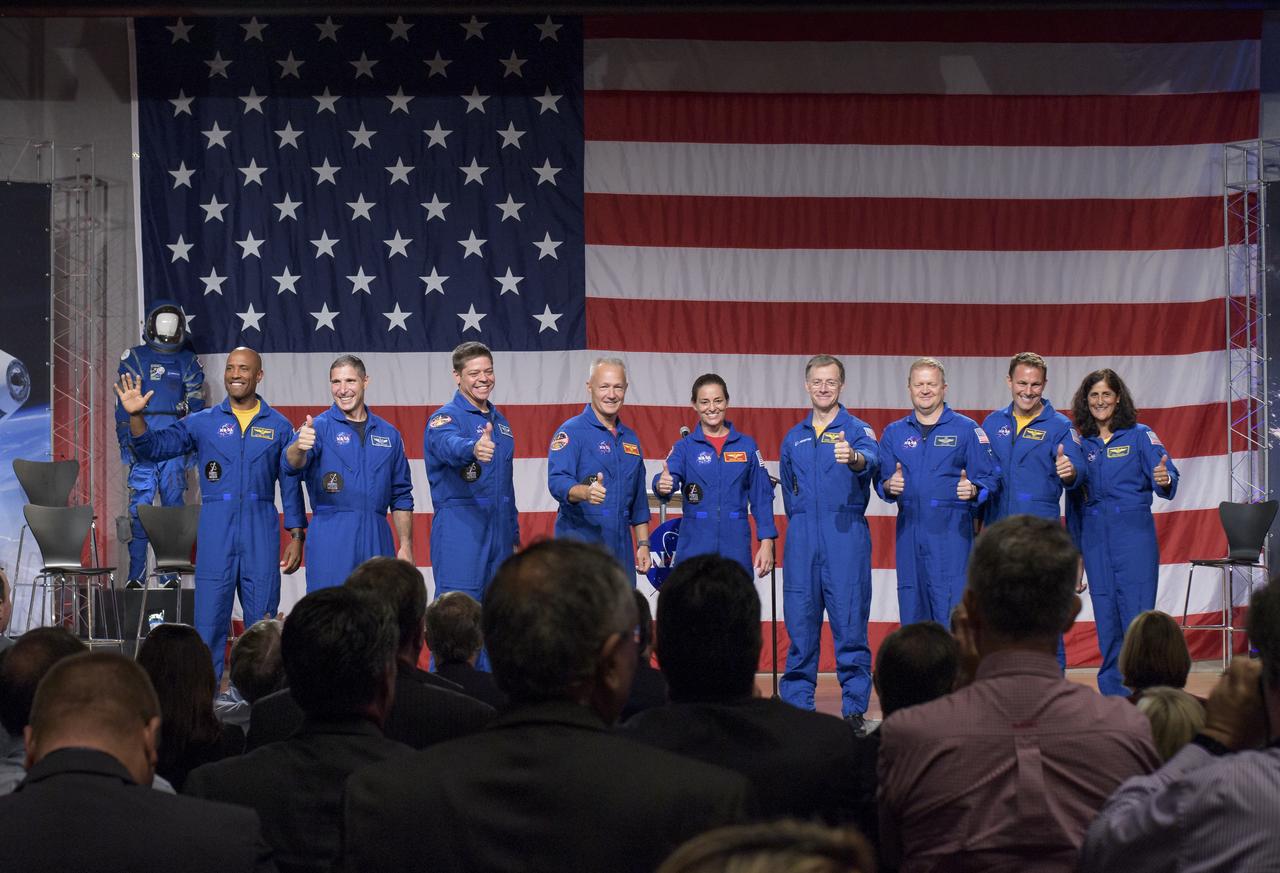
The first U.S. astronauts who will fly on American-made, commercial spacecraft to and from the International Space Station, wave after being announced, Friday, Aug. 3, 2018 at NASA's Johnson Space Center in Houston, Texas. The astronauts are, from left to right: Victor Glover, Mike Hopkins, Bob Behnken, Doug Hurley, Nicole Aunapu Mann, Chris Ferguson, Eric Boe, Josh Cassada, and Suni Williams. The agency assigned the nine astronauts to crew the first flight tests and missions of the Boeing CST-100 Starliner and SpaceX Crew Dragon. Photo Credit: (NASA/Bill Ingalls)

The first U.S. astronauts who will fly on American-made, commercial spacecraft to and from the International Space Station, wave after being announced, Friday, Aug. 3, 2018 at NASA's Johnson Space Center in Houston, Texas. Astronauts Bob Behnken, left, Victor Glover, Doug Hurley, and Mike Hopkins will fly SpaceX's Crew Dragon flights, and astronauts Eric Boe, Suni Williams, Chris Ferguson, Josh Cassada, and Nicole Aunapu Mann, right, will fly on Boeing's CST-100 Starliner. Photo Credit: (NASA/Bill Ingalls)
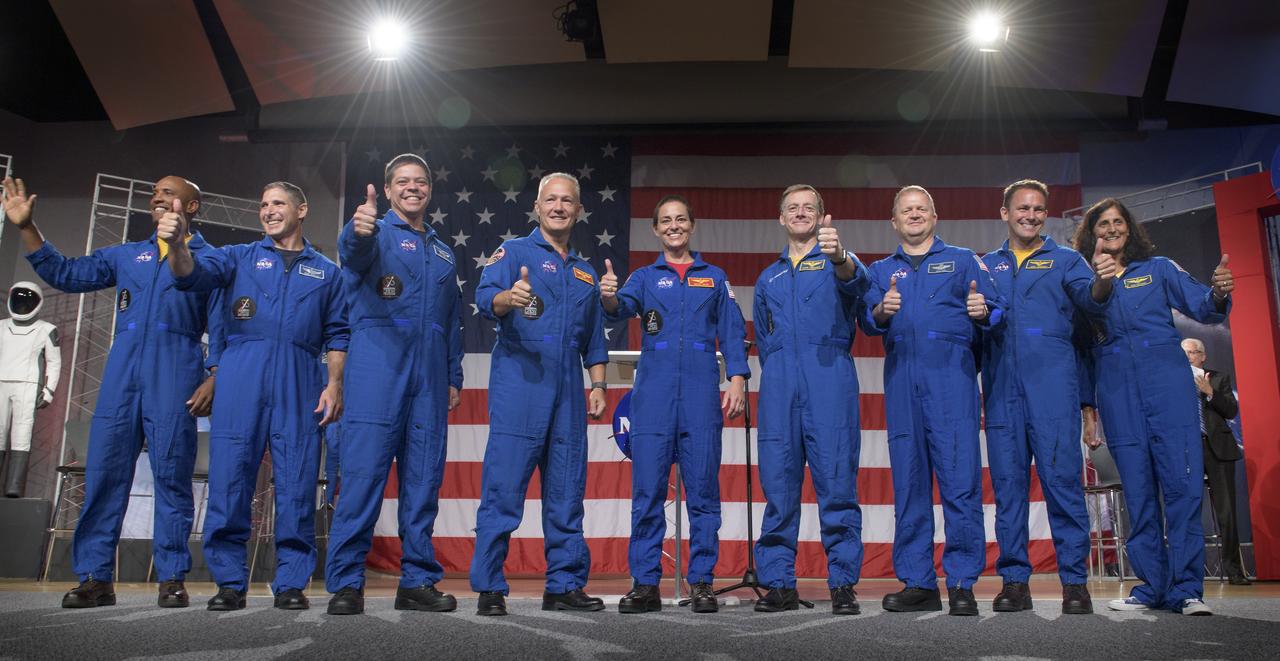
The first U.S. astronauts who will fly on American-made, commercial spacecraft to and from the International Space Station, wave after being announced, Friday, Aug. 3, 2018 at NASA's Johnson Space Center in Houston, Texas. The astronauts are, from left to right: Victor Glover, Mike Hopkins, Bob Behnken, Doug Hurley, Nicole Aunapu Mann, Chris Ferguson, Eric Boe, Josh Cassada, and Suni Williams. The agency assigned the nine astronauts to crew the first flight tests and missions of the Boeing CST-100 Starliner and SpaceX Crew Dragon. Photo Credit: (NASA/Bill Ingalls)
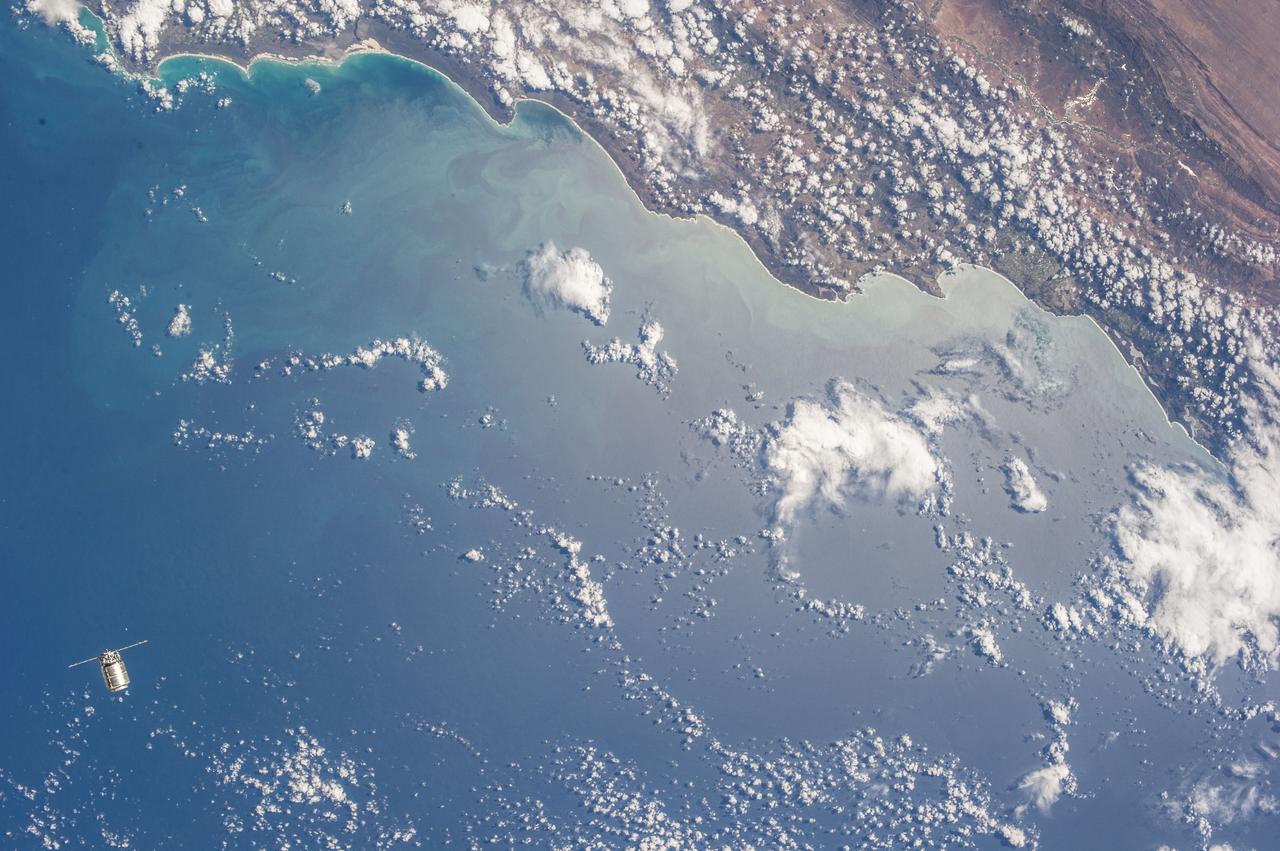
Very distant view of the approach of the first Cygnus commercial cargo spacecraft built by Orbital Sciences Corp to the International Space Station(ISS) with the Earth in the background. Per Twitter message: #Cygnus, approaching us from below as we pass the coast of South Africa.
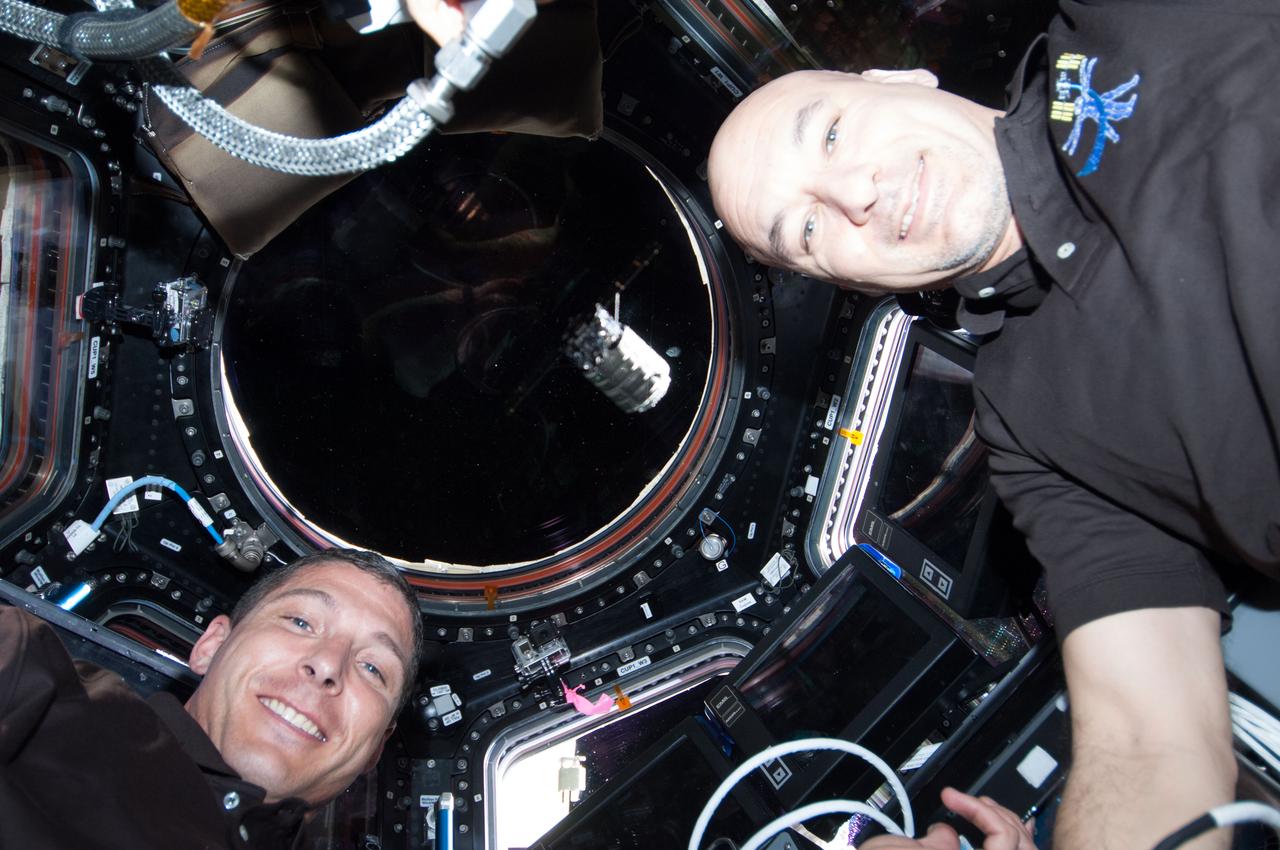
ISS037-E-003935 (29 Sept. 2013) --- NASA astronaut Michael Hopkins (left) and European Space Agency astronaut Luca Parmitano, both Expedition 37 flight engineers, pose for a photo near the windows in the International Space Station?s Cupola during rendezvous, capture and docking operations with the first Cygnus commercial cargo spacecraft (visible at center frame) built by Orbital Sciences Corp. The two spacecraft converged at 7:01 a.m. EDT on Sept. 29, 2013.
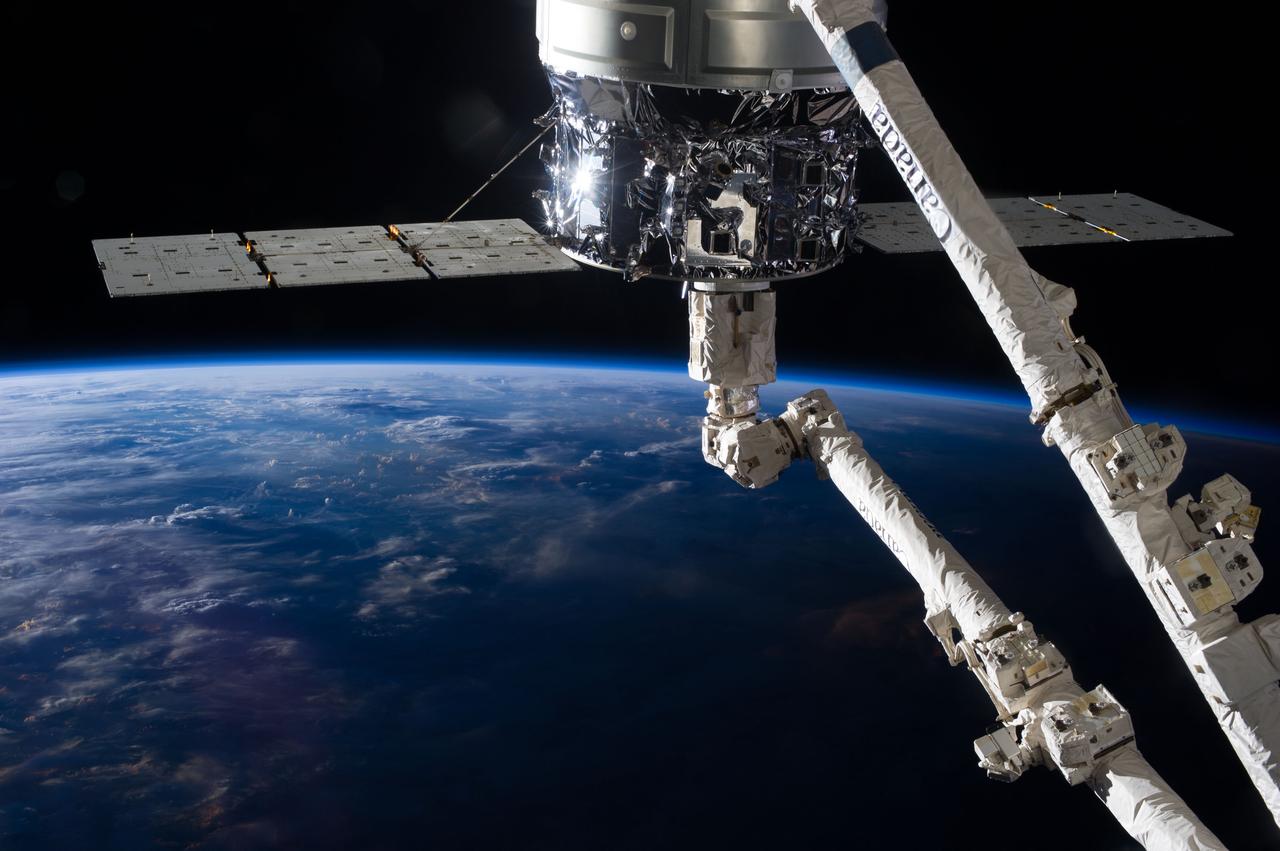
View of the first Cygnus commercial cargo spacecraft built by Orbital Sciences Corp attached to the end of the robotic arm (AKA Canadarm2) and docked the Node 2 module of the ISS. Per Twitter message: Sunrise on #Cygnus and #Canadarm2.
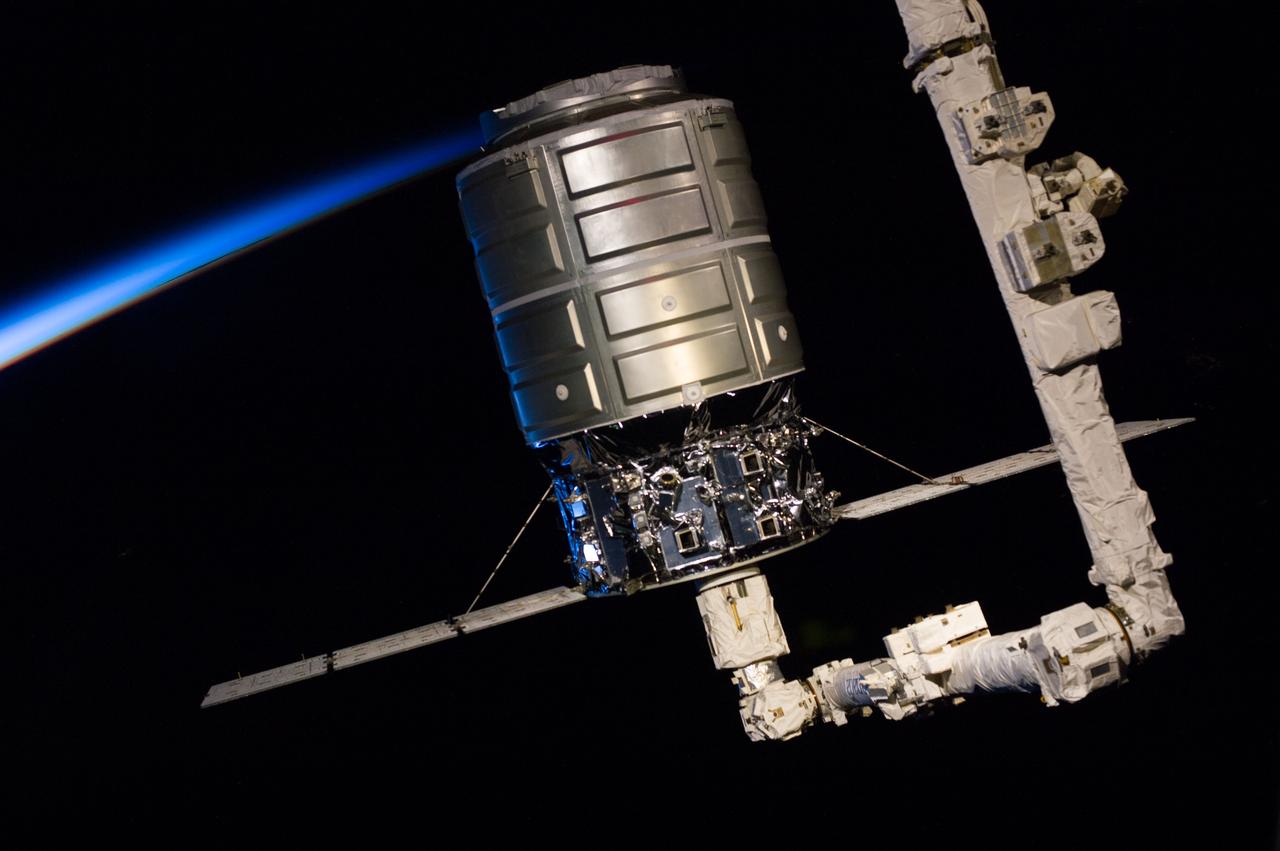
"View of the capture of the first Cygnus commercial cargo spacecraft built by Orbital Sciences Corp attached to the end of the robotic arm (AKA Canadarm2) on the International Space Station after the two spacecraft converged at 7:01 a.m. EDT on Sept. 29, 2013. " Also sent as Twitter message.
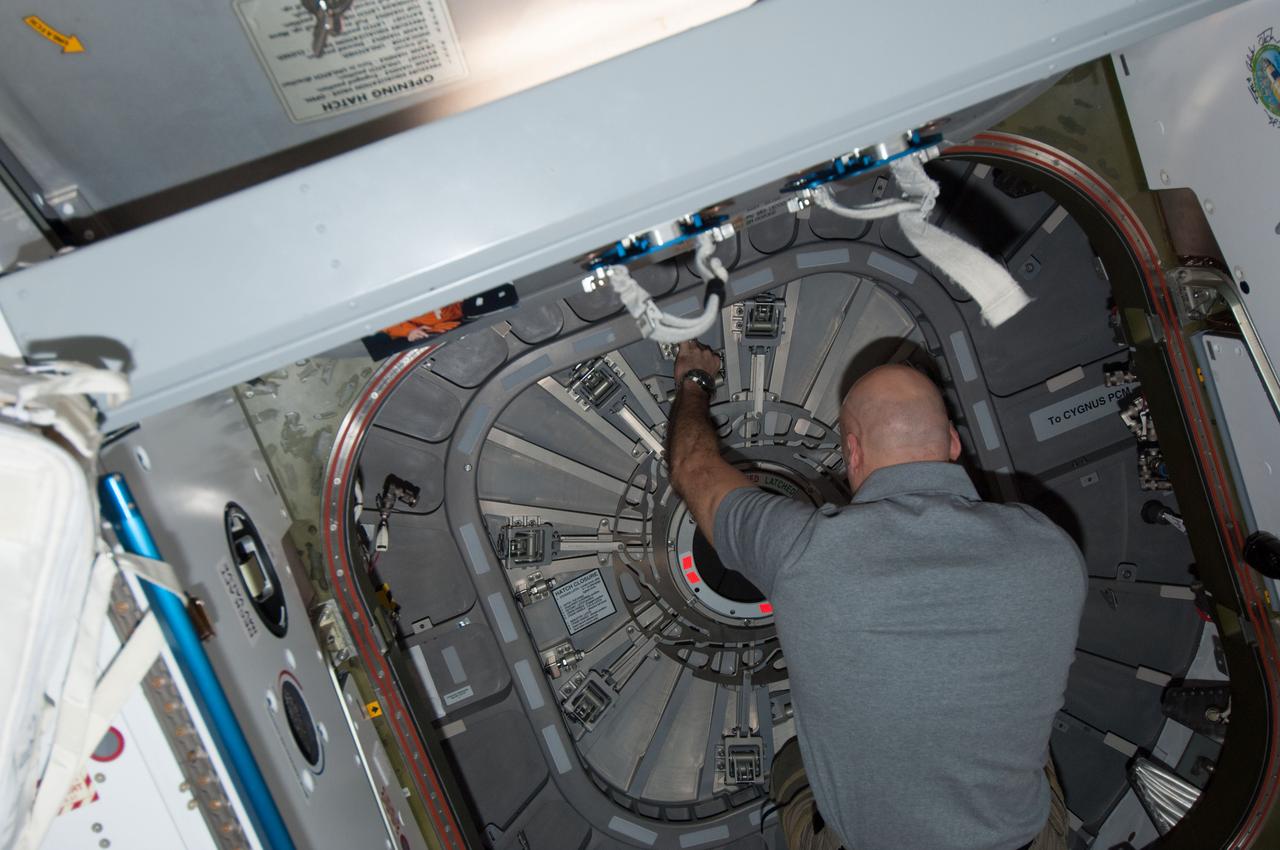
ISS037-E-016750 (21 Oct. 2013) --- European Space Agency astronaut Luca Parmitano, Expedition 37 flight engineer, closes the hatch between the International Space Station’s Harmony node and the Orbital Sciences’ Cygnus commercial cargo spacecraft in preparation for its release after completing a successful demonstration mission to the space station. Cygnus delivered 1,300 pounds of gear on Sept. 29 when it arrived and was captured by Canadarm2 and berthed to the Harmony node.
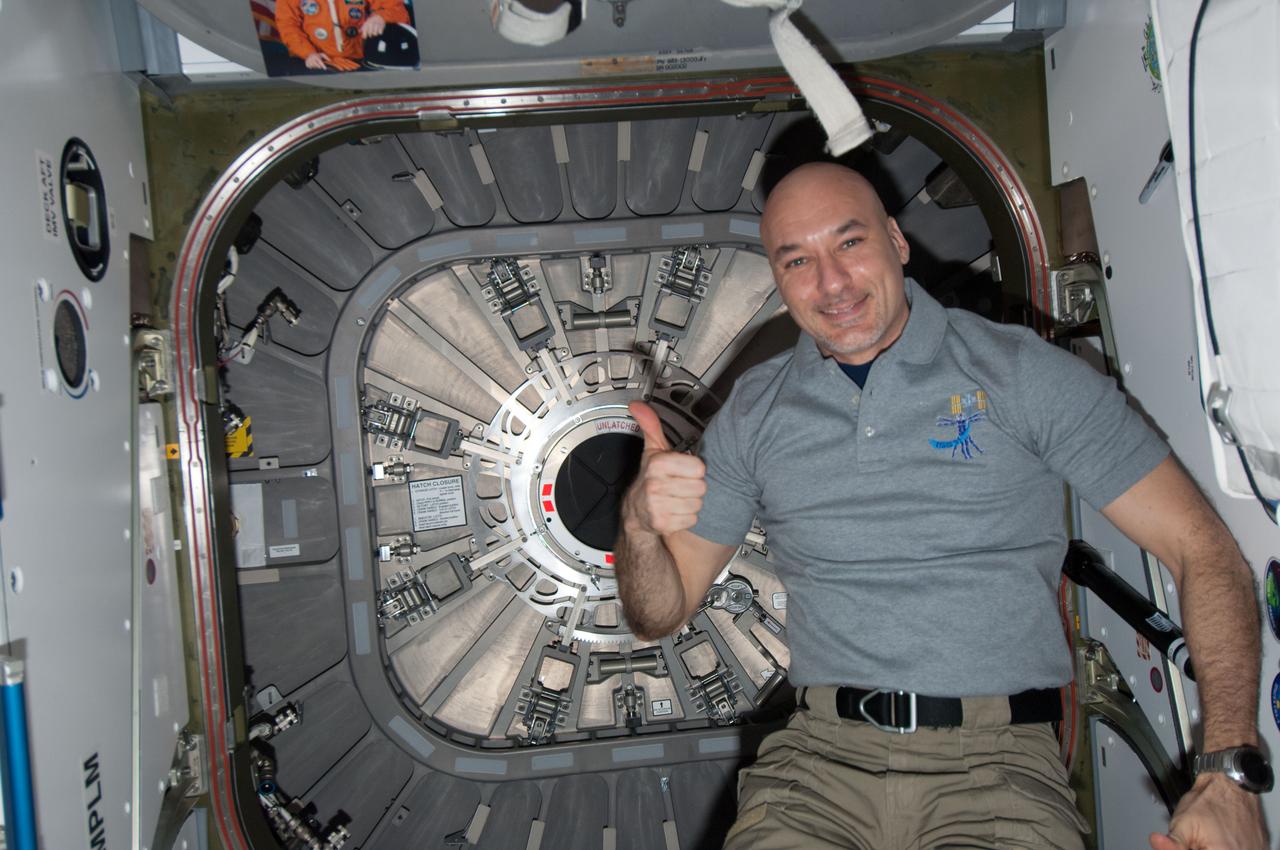
ISS037-E-016758 (21 Oct. 2013) --- European Space Agency astronaut Luca Parmitano, Expedition 37 flight engineer, gives a thumbs up signal after closing the hatch between the International Space Station’s Harmony node and the Orbital Sciences’ Cygnus commercial cargo spacecraft in preparation for its release after completing a successful demonstration mission to the space station. Cygnus delivered 1,300 pounds of gear on Sept. 29 when it arrived and was captured by Canadarm2 and berthed to the Harmony node.
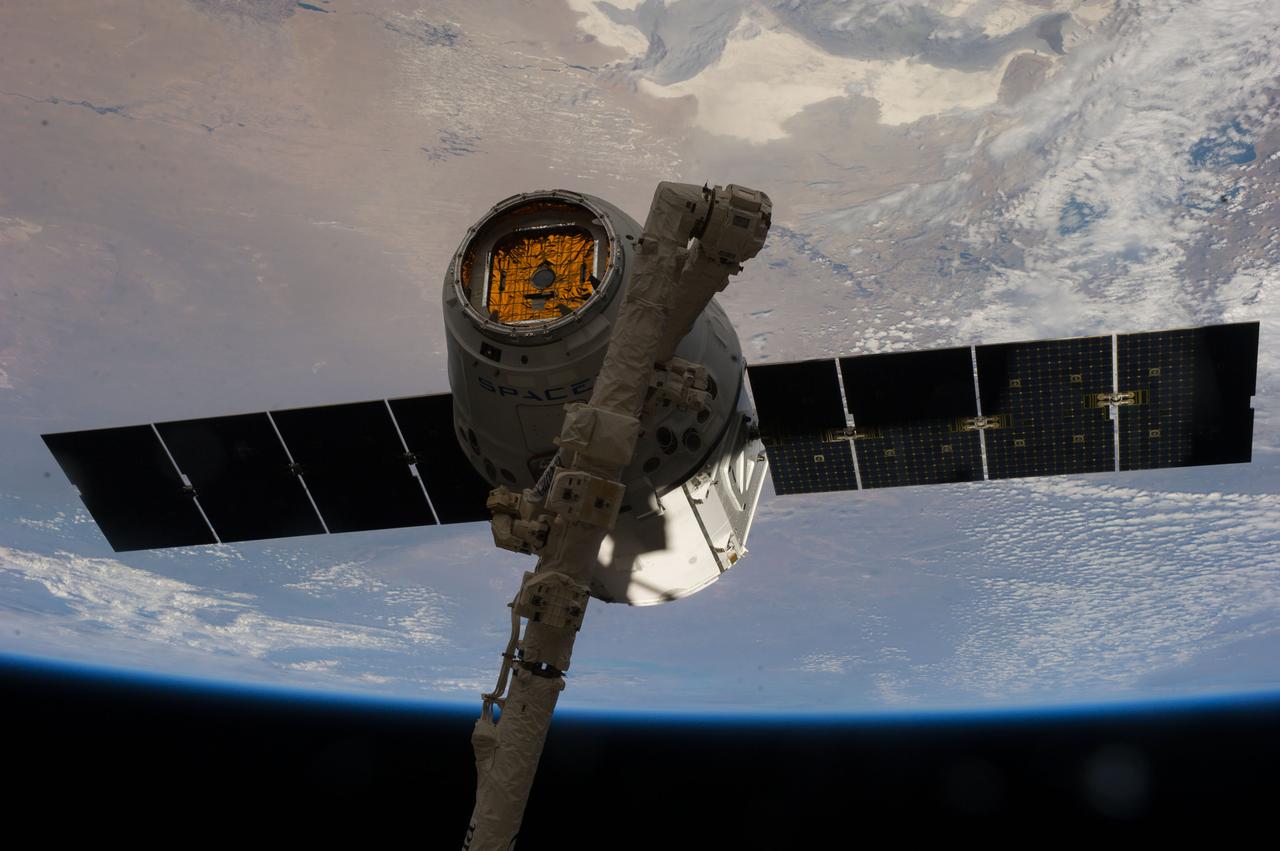
View of the SpaceX Dragon Commercial Resupply Services-3 (CRS-3) spacecraft grappled by the Canadarm2 Space Station Remote Manipulator System (SSRMS) during Expedition 39. Image was released by released by flight engineer 3 (FE3) on Instagram.
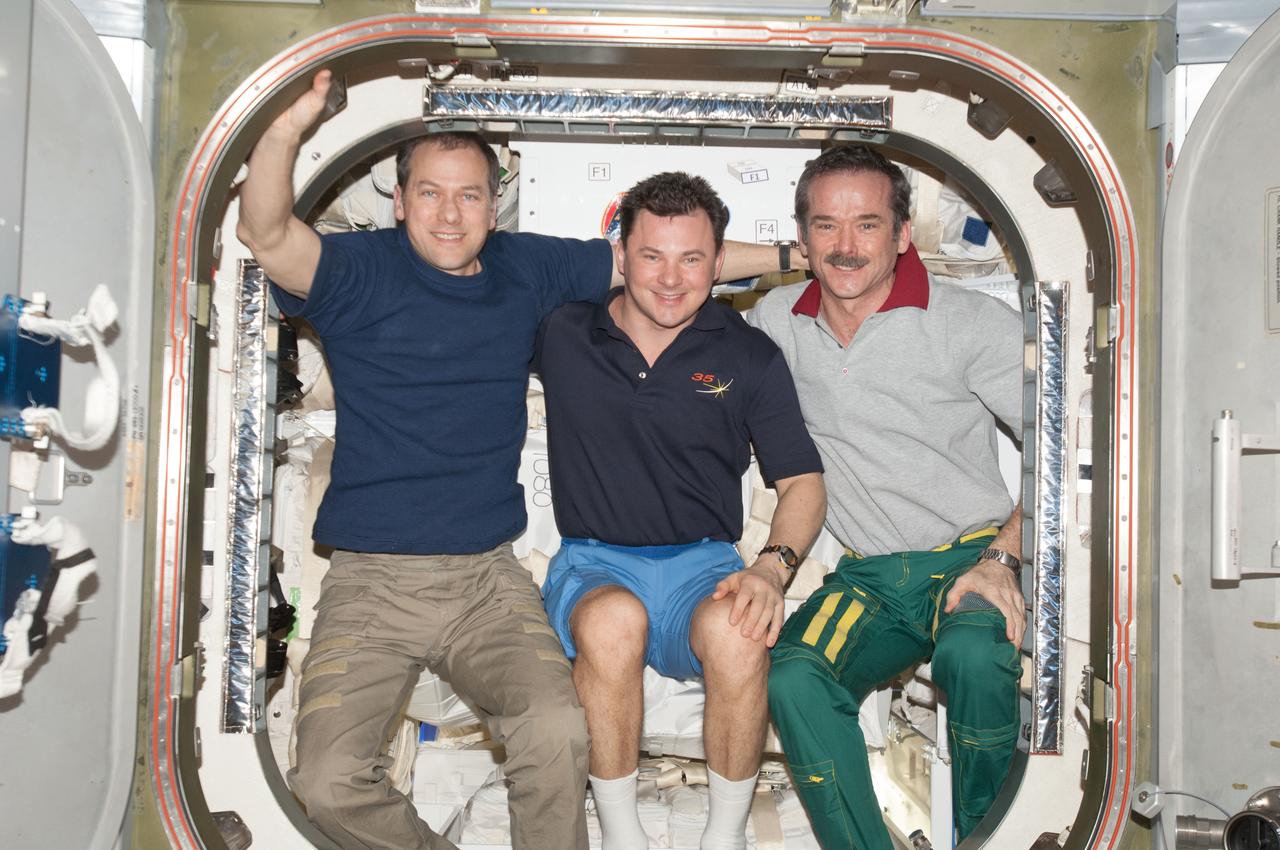
Expedition 35 flight engineer (FE) Tom Marshburn, FE Roman Romanenko, and commander Chris Hadfield pose for a photo in the SpaceX Dragon Commercial Resupply Services-2 (CRS-2) spacecraft. Romanenko is a Roscosmos cosmonaut and Hadfield is a Canadian Space Agency (CSA) astronaut.
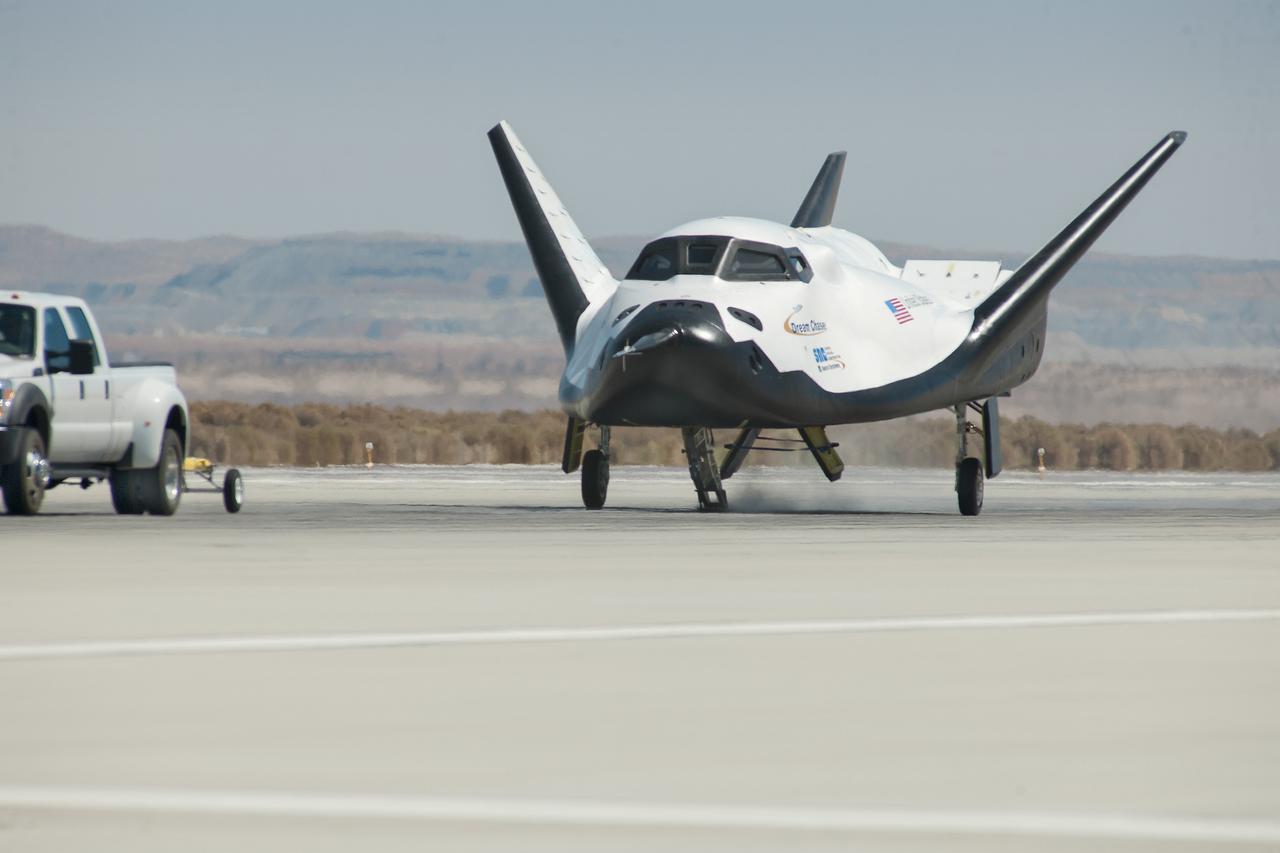
Edwards, Calif. – ED13-0266-066- A pickup truck releases the Sierra Nevada Corporation, or SNC, Dream Chaser flight vehicle during a 60 mile per hour tow test to validate the spacecraft's brakes on taxi and runways at NASA's Dryden Flight Research Center at Edwards Air Force Base in California. Ground testing at 10, 20, 40 and 60 miles per hour is helping the company validate the performance of the spacecraft's braking and landing systems prior to captive-carry and free-flight tests scheduled for later this year. SNC is continuing the development of its Dream Chaser spacecraft under the agency's Commercial Crew Development Round 2, or CCDev2, and Commercial Crew Integrated Capability, or CCiCap, phases, which are intended to lead to the availability of commercial human spaceflight services for government and commercial customers. To learn more about CCP and its industry partners, visit www.nasa.gov/commercialcrew. Image credit: NASA/Ken Ulbrich
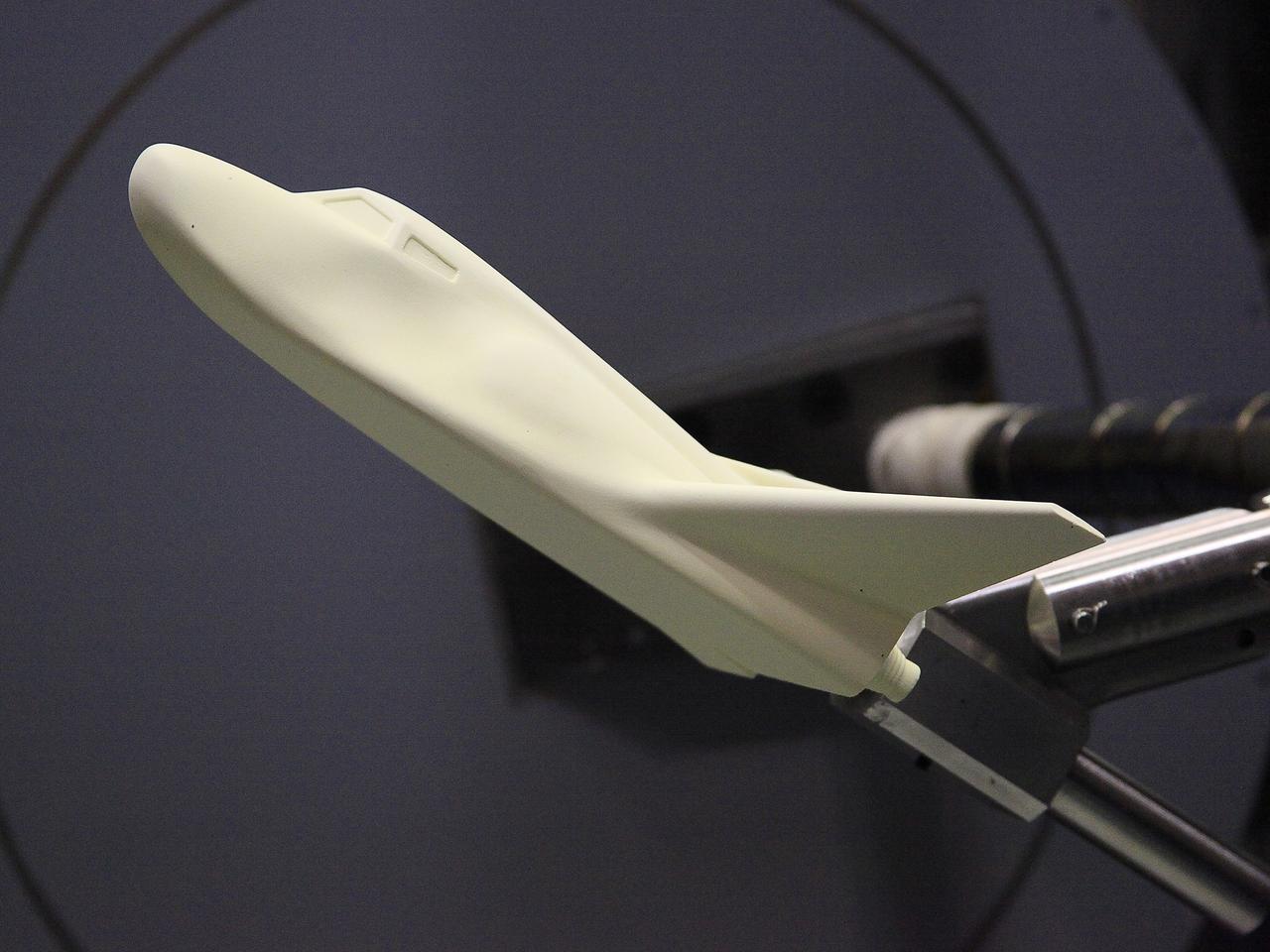
HAMPTON, Va. –A 10-inch long ceramic model of the Sierra Nevada Corporation, or SNC, Dream Chaser spacecraft is prepared for high-speed wind tunnel tests at NASA's Langley Research Center in Hampton, Va. The tests measure how much heat the winged vehicle would experience during ascent and re-entry through the atmosphere, including the spacecraft's lower- and upper-body flaps, elevons and a rudder. They're also helping the company obtain necessary data for the material selection and design of the spacecraft's thermal protection system. SNC is continuing the development of its Dream Chaser spacecraft under the agency's Commercial Crew Integrated Capability, or CCiCap, initiative, which is intended to lead to the availability of commercial human spaceflight services for government and commercial customers. To learn more about CCP and its industry partners, visit www.nasa.gov/commercialcrew. Image credit: NASA/David Bowman
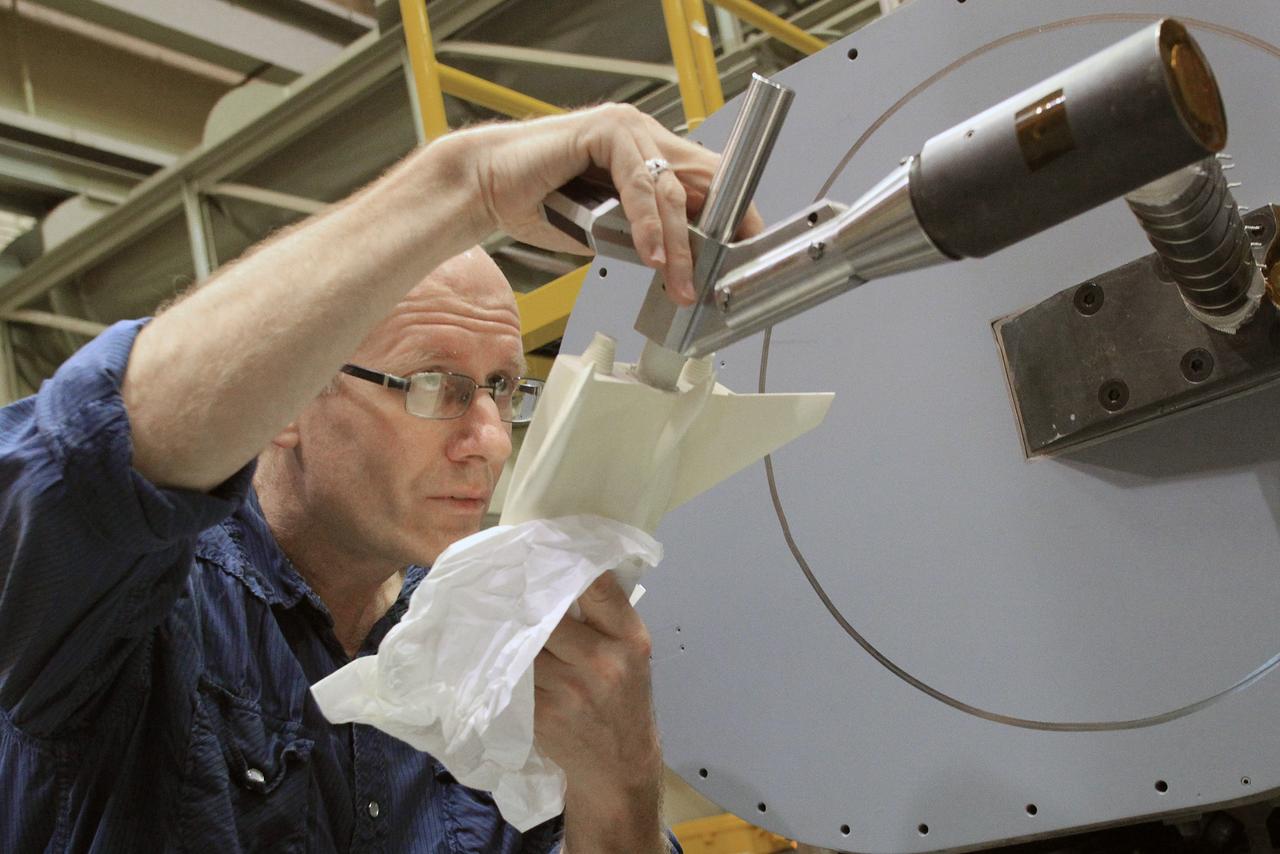
HAMPTON, Va. –A 10-inch long ceramic model of the Sierra Nevada Corporation, or SNC, Dream Chaser spacecraft is prepared for high-speed wind tunnel tests at NASA's Langley Research Center in Hampton, Va. The tests measure how much heat the winged vehicle would experience during ascent and re-entry through the atmosphere, including the spacecraft's lower- and upper-body flaps, elevons and a rudder. They're also helping the company obtain necessary data for the material selection and design of the spacecraft's thermal protection system. SNC is continuing the development of its Dream Chaser spacecraft under the agency's Commercial Crew Integrated Capability, or CCiCap, initiative, which is intended to lead to the availability of commercial human spaceflight services for government and commercial customers. To learn more about CCP and its industry partners, visit www.nasa.gov/commercialcrew. Image credit: NASA/David Bowman
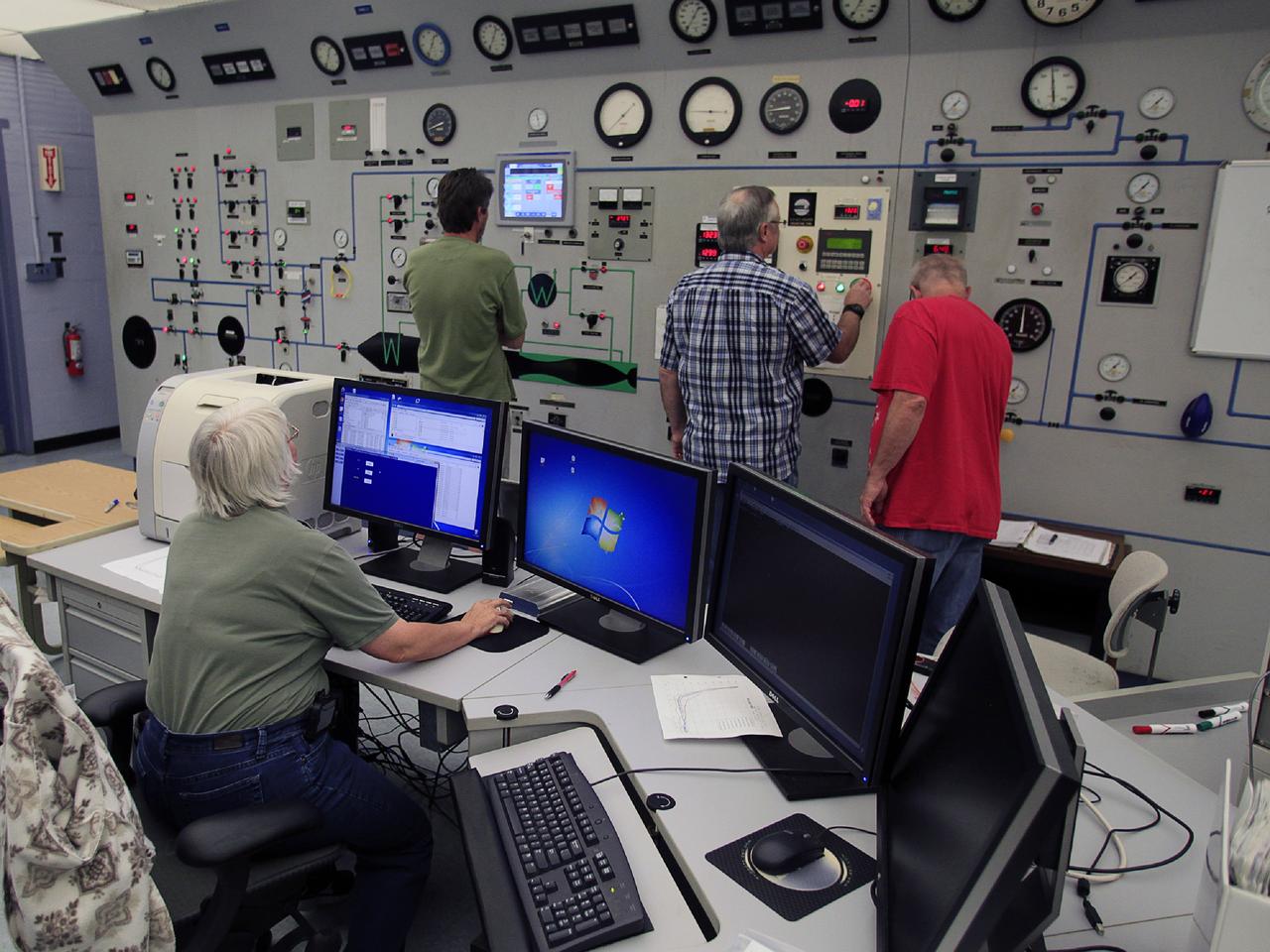
HAMPTON, Va. –Engineers monitor high-speed wind tunnel testing of a 10-inch long ceramic model of the Sierra Nevada Corporation, or SNC, Dream Chaser spacecraft at NASA's Langley Research Center in Hampton, Va. The tests measure how much heat the winged vehicle would experience during ascent and re-entry through the atmosphere, including the spacecraft's lower- and upper-body flaps, elevons and a rudder. They're also helping the company obtain necessary data for the material selection and design of the spacecraft's thermal protection system. SNC is continuing the development of its Dream Chaser spacecraft under the agency's Commercial Crew Integrated Capability, or CCiCap, initiative, which is intended to lead to the availability of commercial human spaceflight services for government and commercial customers. To learn more about CCP and its industry partners, visit www.nasa.gov/commercialcrew. Image credit: NASA/David Bowman
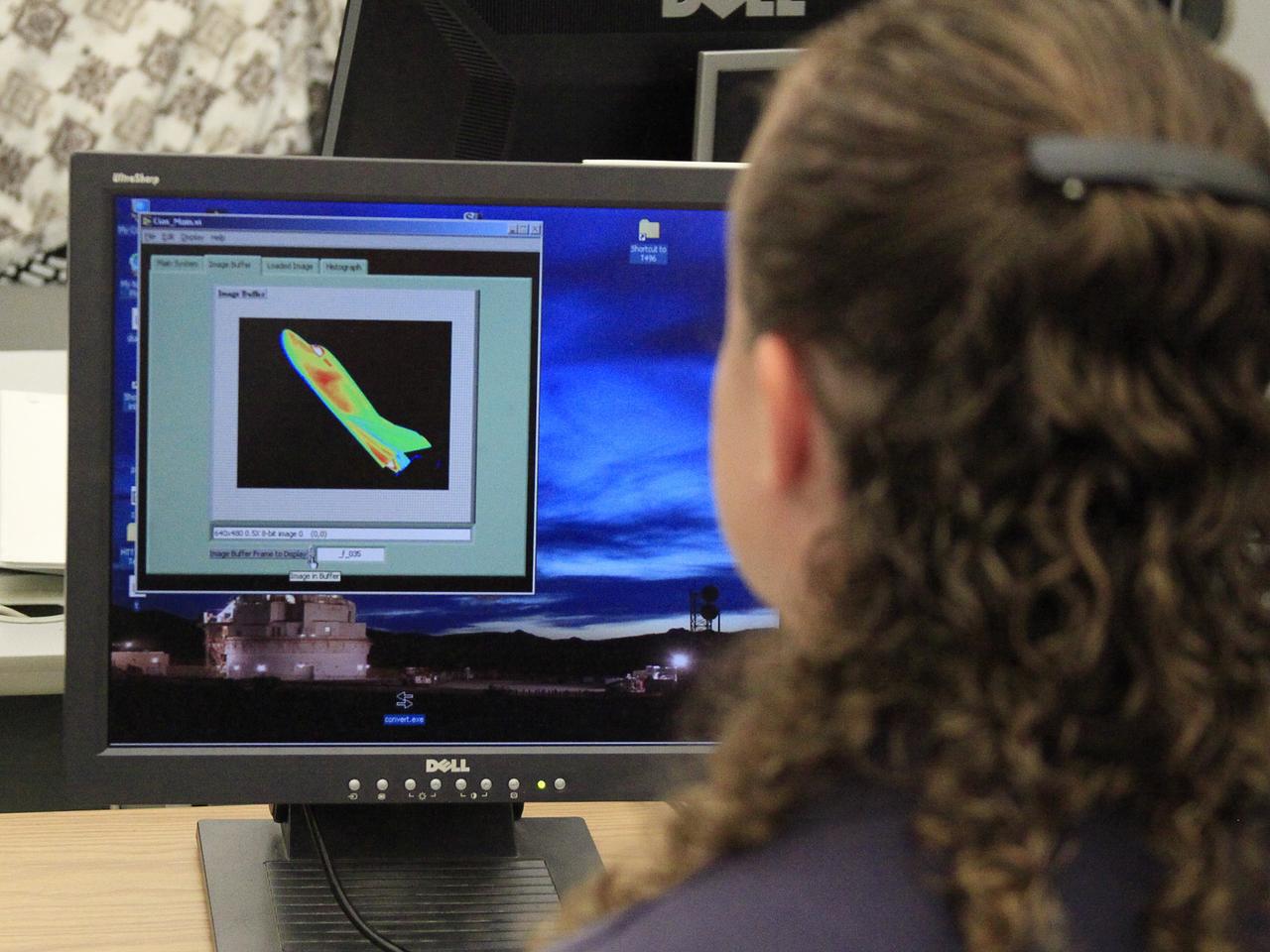
HAMPTON, Va. –An engineer monitors high-speed wind tunnel testing of a 10-inch long ceramic model of the Sierra Nevada Corporation, or SNC, Dream Chaser spacecraft at NASA's Langley Research Center in Hampton, Va. The tests measure how much heat the winged vehicle would experience during ascent and re-entry through the atmosphere, including the spacecraft's lower- and upper-body flaps, elevons and a rudder. They're also helping the company obtain necessary data for the material selection and design of the spacecraft's thermal protection system. SNC is continuing the development of its Dream Chaser spacecraft under the agency's Commercial Crew Integrated Capability, or CCiCap, initiative, which is intended to lead to the availability of commercial human spaceflight services for government and commercial customers. To learn more about CCP and its industry partners, visit www.nasa.gov/commercialcrew. Image credit: NASA/David Bowman
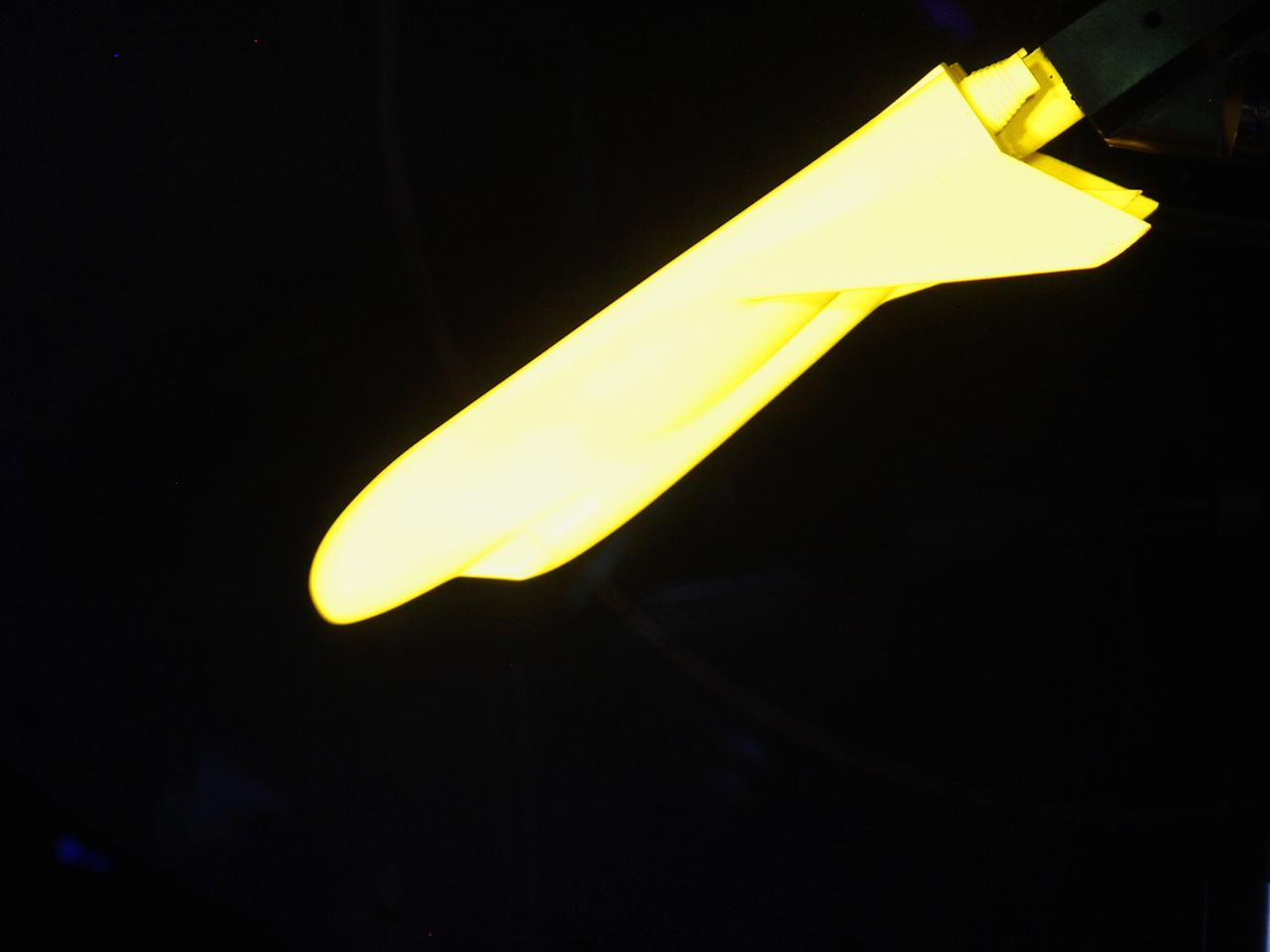
HAMPTON, Va. –A 10-inch long ceramic model of the Sierra Nevada Corporation, or SNC, Dream Chaser spacecraft undergoes high-speed wind tunnel tests at NASA's Langley Research Center in Hampton, Va. The tests measure how much heat the winged vehicle would experience during ascent and re-entry through the atmosphere, including the spacecraft's lower- and upper-body flaps, elevons and a rudder. They're also helping the company obtain necessary data for the material selection and design of the spacecraft's thermal protection system. SNC is continuing the development of its Dream Chaser spacecraft under the agency's Commercial Crew Integrated Capability, or CCiCap, initiative, which is intended to lead to the availability of commercial human spaceflight services for government and commercial customers. To learn more about CCP and its industry partners, visit www.nasa.gov/commercialcrew. Image credit: NASA/David Bowman
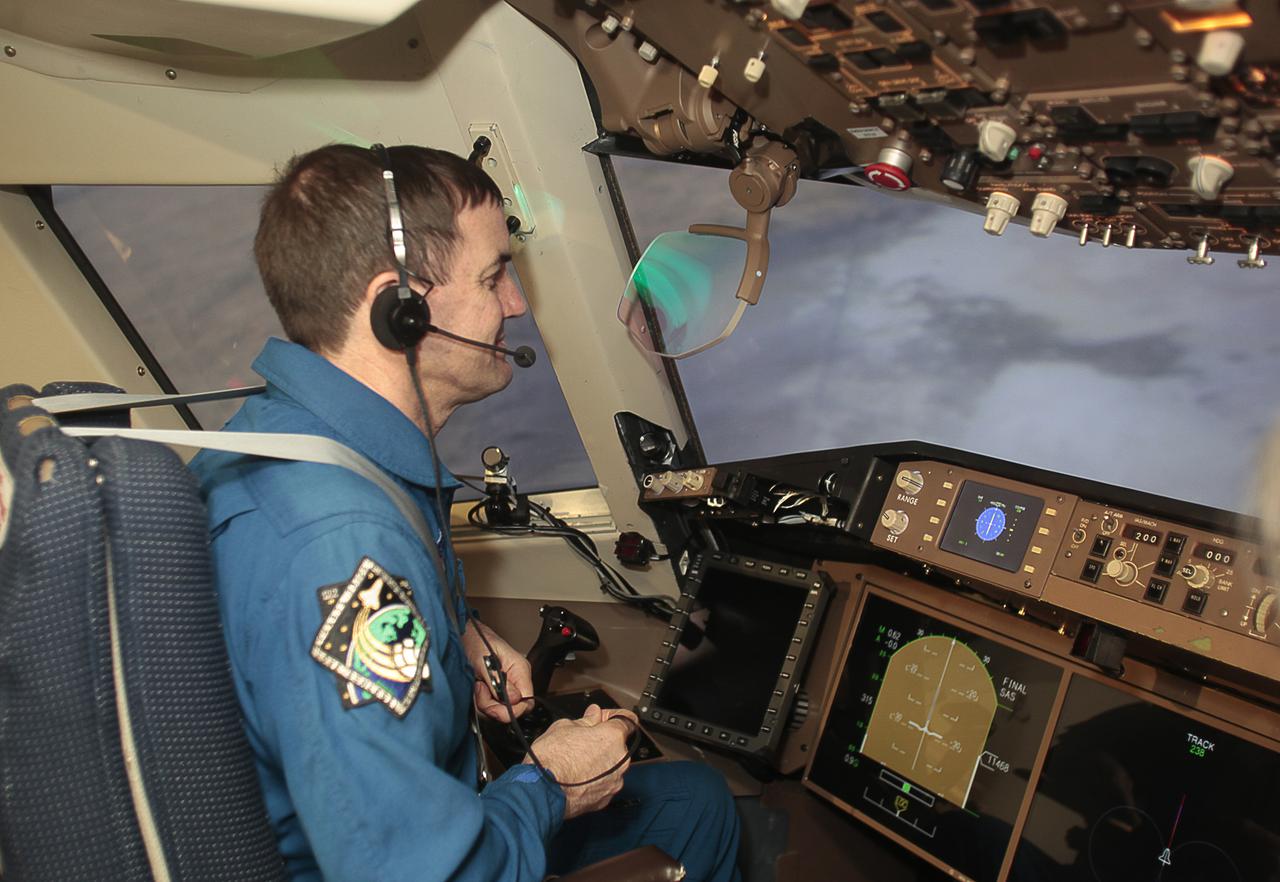
HAMPTON, Va. – At NASA's Langley Research Center in Hampton, Va., astronaut Rex Walheim flies simulations of a Dream Chaser approach and landing to help evaluate the spacecraft's subsonic handling in support of the agency's Commercial Crew Program, or CCP, efforts. The simulation makes use of the Synthetic Vision and Enhanced Vision systems in the center's Cockpit Motion Facility. SNC is one of three companies working with CCP during the agency's Commercial Crew Integrated Capability, or CCiCap, initiative, which is intended to lead to the availability of commercial human spaceflight services for government and commercial customers. To learn more about CCP and its industry partners, visit www.nasa.gov_commercialcrew. Image credit: NASA_David C. Bowman
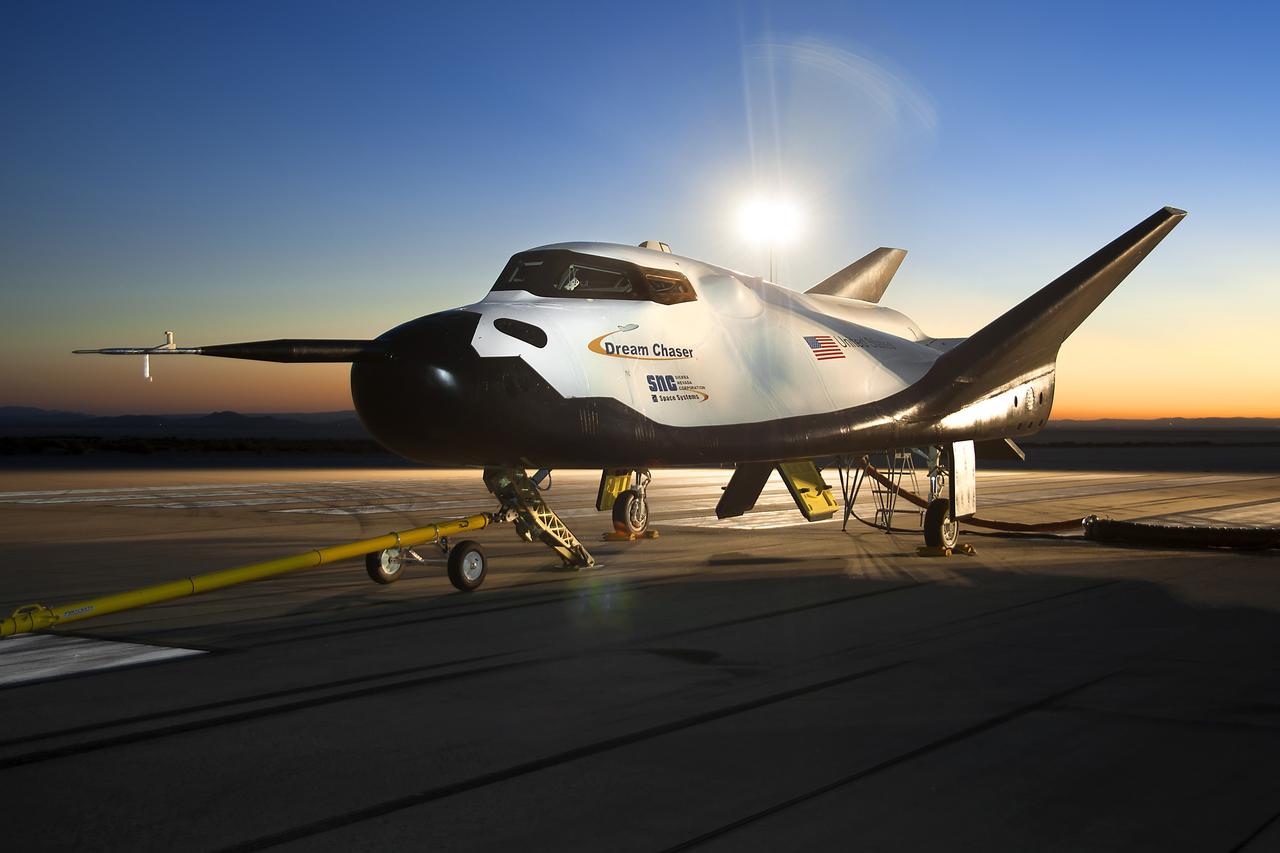
Edwards, Calif. – ED13-0266-023- The Sierra Nevada Corporation, or SNC, Dream Chaser flight vehicle is prepared for 60 mile per hour tow tests on taxi and runways at NASA's Dryden Flight Research Center at Edwards Air Force Base in California. Ground testing at 10, 20, 40 and 60 miles per hour is helping the company validate the performance of the spacecraft's braking and landing systems prior to captive-carry and free-flight tests scheduled for later this year. SNC is continuing the development of its Dream Chaser spacecraft under the agency's Commercial Crew Development Round 2, or CCDev2, and Commercial Crew Integrated Capability, or CCiCap, phases, which are intended to lead to the availability of commercial human spaceflight services for government and commercial customers. To learn more about CCP and its industry partners, visit www.nasa.gov/commercialcrew. Image credit: NASA/Ken Ulbrich
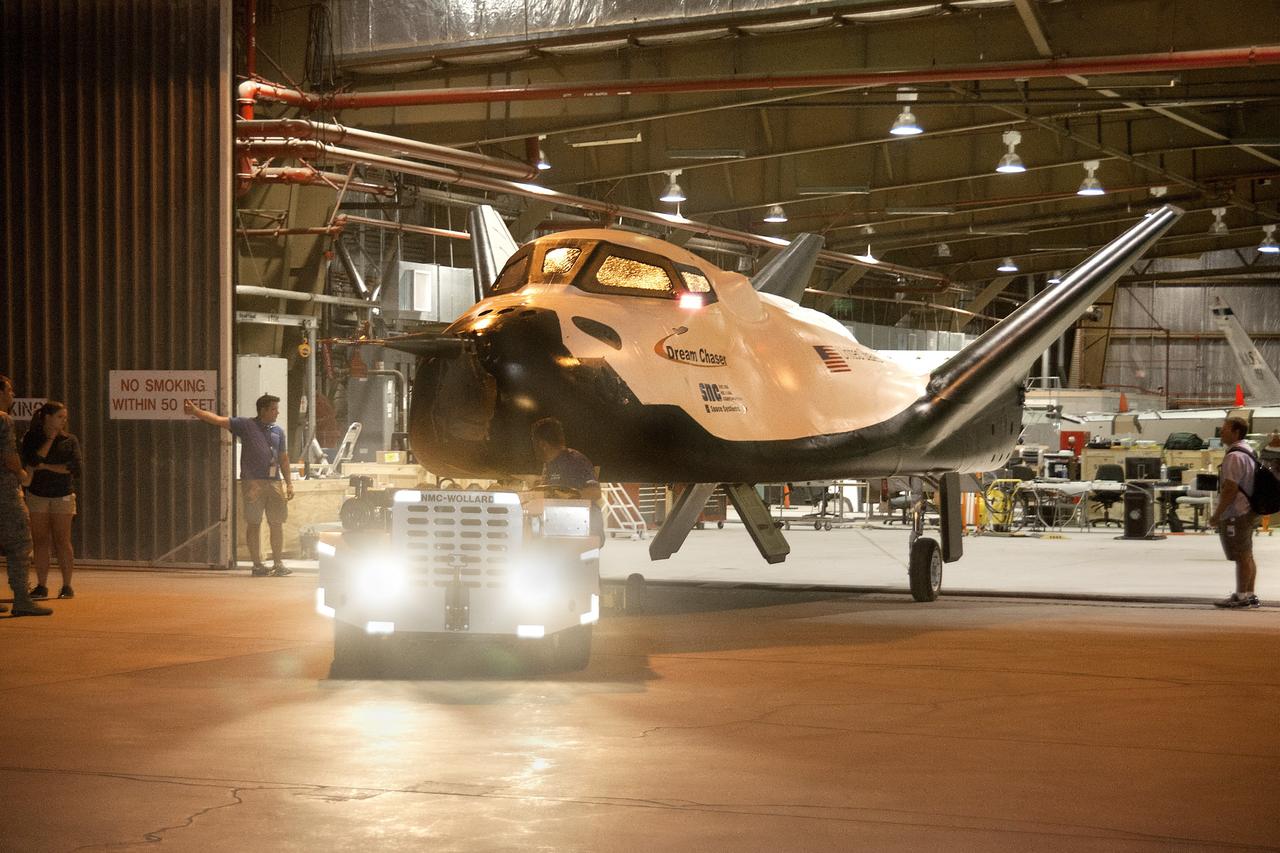
Edwards, Calif. – ED13-0266-004- The Sierra Nevada Corporation, or SNC, Dream Chaser flight vehicle pulls out of a hangar at NASA's Dryden Flight Research Center in California in preparation for tow tests. Ground testing at 10, 20, 40 and 60 miles per hour is helping the company validate the performance of the spacecraft's braking and landing systems prior to captive-carry and free-flight tests scheduled for later this year. SNC is continuing the development of its Dream Chaser spacecraft under the agency's Commercial Crew Development Round 2, or CCDev2, and Commercial Crew Integrated Capability, or CCiCap, phases, which are intended to lead to the availability of commercial human spaceflight services for government and commercial customers. To learn more about CCP and its industry partners, visit www.nasa.gov/commercialcrew. Image credit: NASA/Ken Ulbrich
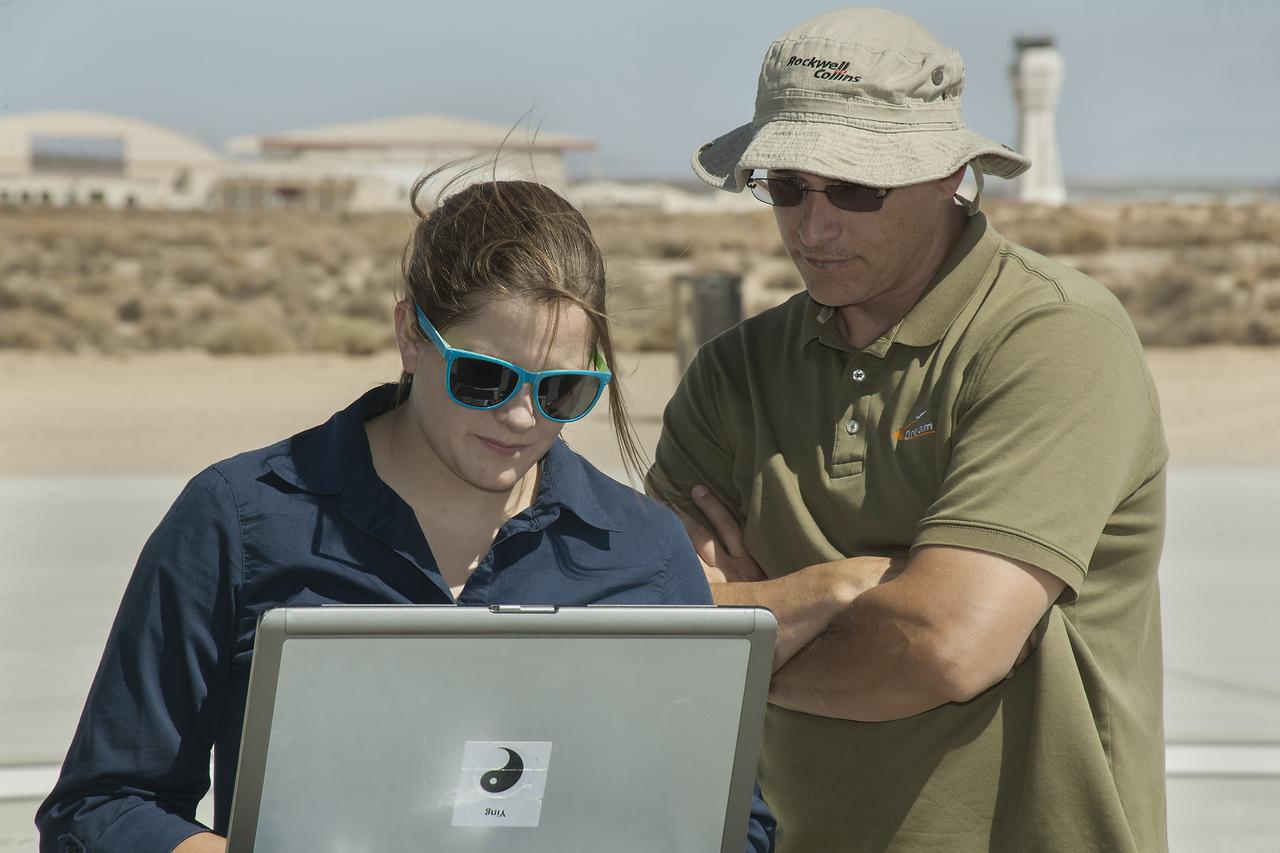
Edwards, Calif. – ED13-0266-056- Sierra Nevada Corporation, or SNC, team members monitor the company's Dream Chaser flight vehicle systems during 60 mph tow testing on taxi and runways at NASA's Dryden Flight Research Center at Edwards Air Force Base in California. Ground testing at 10, 20, 40 and 60 miles per hour is helping the company validate the performance of the spacecraft's braking and landing systems prior to captive-carry and free-flight tests scheduled for later this year. SNC is continuing the development of its Dream Chaser spacecraft under the agency's Commercial Crew Development Round 2, or CCDev2, and Commercial Crew Integrated Capability, or CCiCap, phases, which are intended to lead to the availability of commercial human spaceflight services for government and commercial customers. To learn more about CCP and its industry partners, visit www.nasa.gov/commercialcrew. Image credit: NASA/Ken Ulbrich
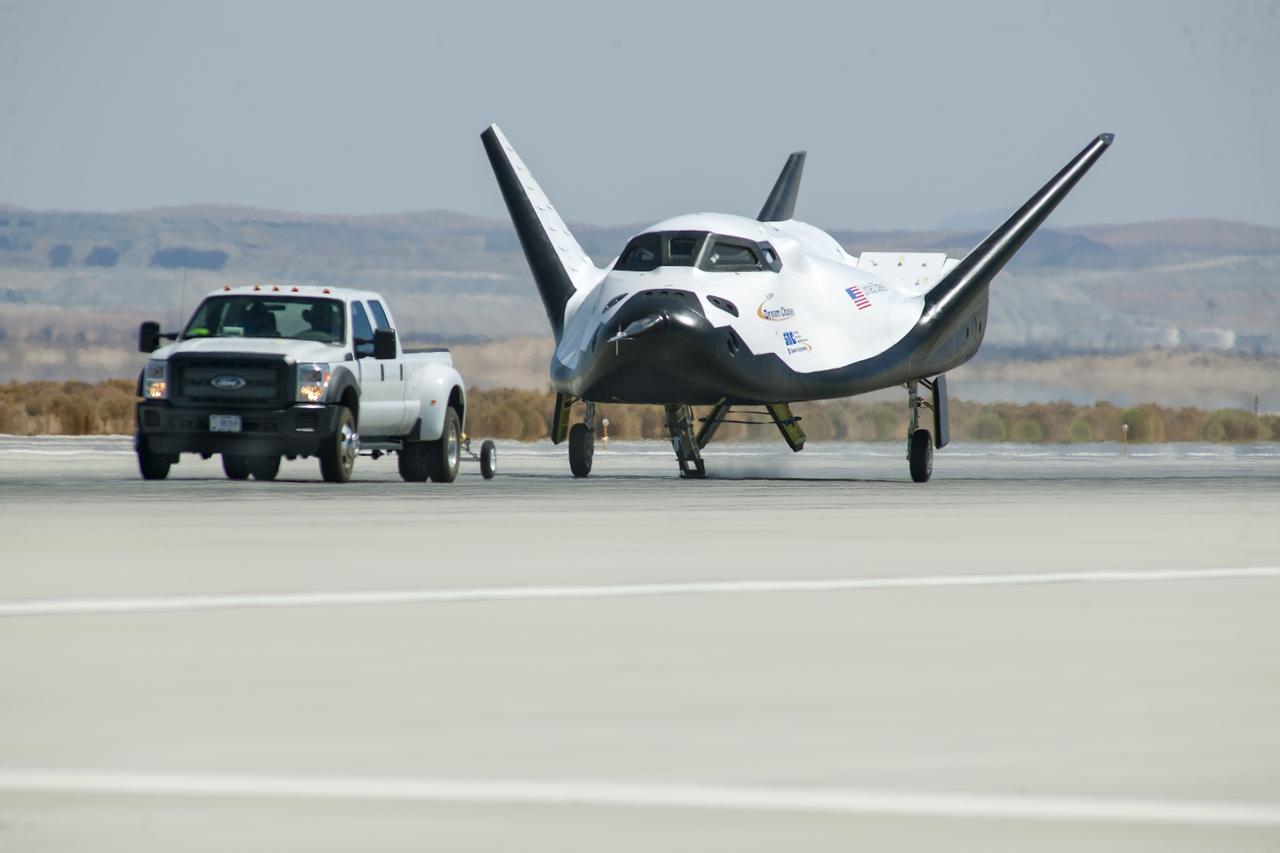
Edwards, Calif. – ED13-0266-047- A pickup truck pulls the Sierra Nevada Corporation, or SNC, Dream Chaser flight vehicle through 60 mile per hour tow tests on taxi and runways at NASA's Dryden Flight Research Center at Edwards Air Force Base in California. Ground testing at 10, 20, 40 and 60 miles per hour is helping the company validate the performance of the spacecraft's braking and landing systems prior to captive-carry and free-flight tests scheduled for later this year. SNC is continuing the development of its Dream Chaser spacecraft under the agency's Commercial Crew Development Round 2, or CCDev2, and Commercial Crew Integrated Capability, or CCiCap, phases, which are intended to lead to the availability of commercial human spaceflight services for government and commercial customers. To learn more about CCP and its industry partners, visit www.nasa.gov/commercialcrew. Image credit: NASA/Ken Ulbrich
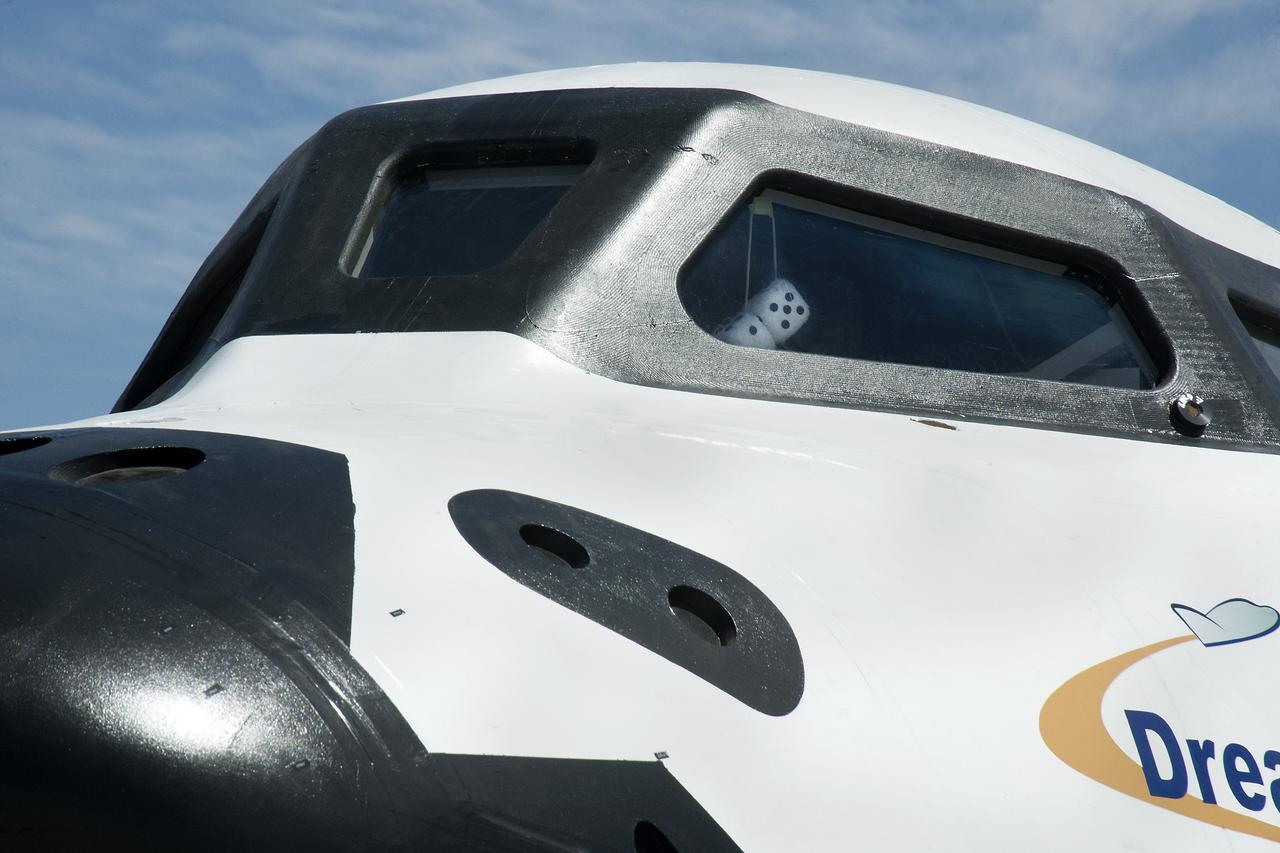
Edwards, Calif. – ED13-0266-074- Sierra Nevada Corporation's, or SNC's, Dream Chaser flight vehicle sports a pair of fuzzy dice during 60 mph tow tests at NASA's Dryden Flight Research Center in California. Ground testing at 10, 20, 40 and 60 miles per hour is helping the company validate the performance of the spacecraft's braking and landing systems prior to captive-carry and free-flight tests scheduled for later this year. SNC is continuing the development of its Dream Chaser spacecraft under the agency's Commercial Crew Development Round 2, or CCDev2, and Commercial Crew Integrated Capability, or CCiCap, phases, which are intended to lead to the availability of commercial human spaceflight services for government and commercial customers. To learn more about CCP and its industry partners, visit www.nasa.gov/commercialcrew. Image credit: NASA/Ken Ulbrich
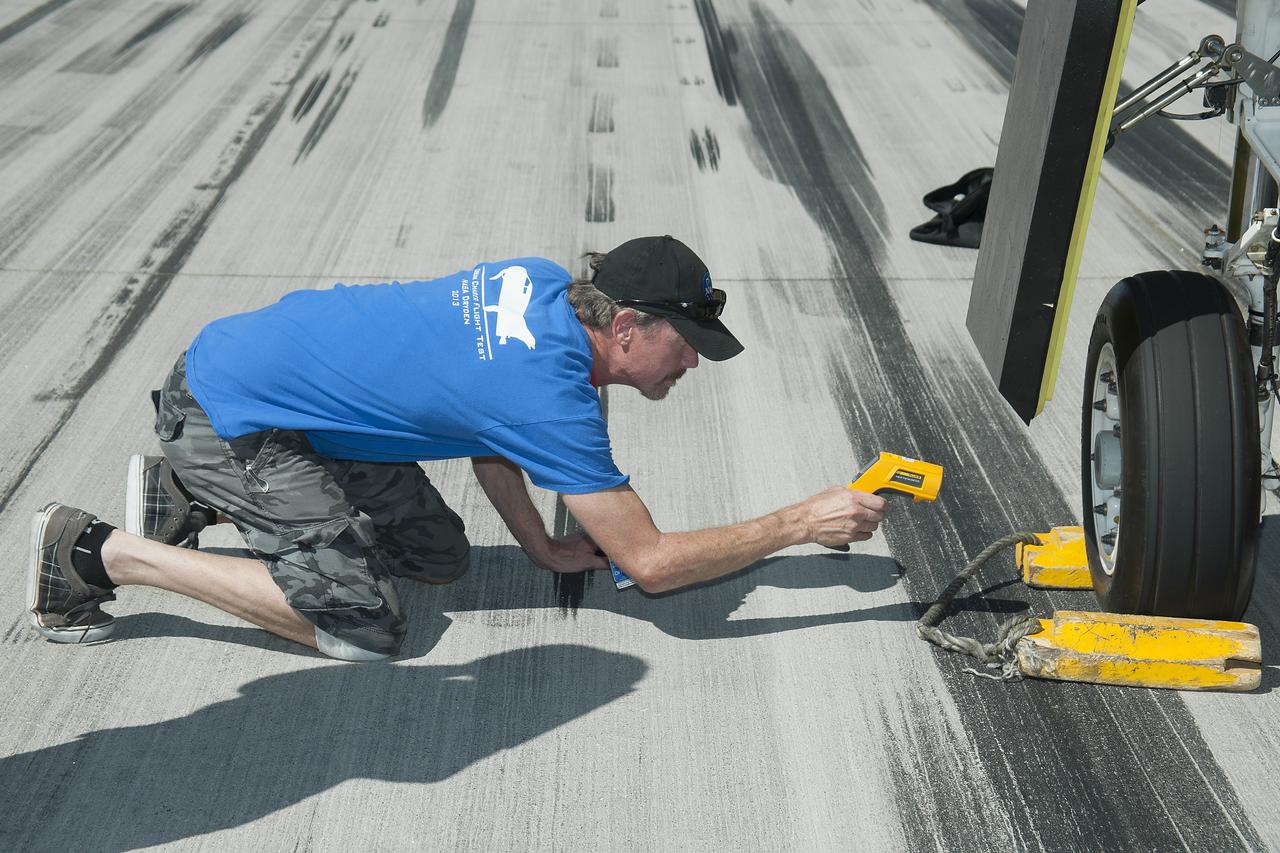
Edwards, Calif. – ED13-0266-060- A Sierra Nevada Corporation, or SNC, team member checks the company's Dream Chaser flight vehicle systems following a 60 mph tow test on taxi and runways at NASA's Dryden Flight Research Center at Edwards Air Force Base in California. Ground testing at 10, 20, 40 and 60 miles per hour is helping the company validate the performance of the spacecraft's braking and landing systems prior to captive-carry and free-flight tests scheduled for later this year. SNC is continuing the development of its Dream Chaser spacecraft under the agency's Commercial Crew Development Round 2, or CCDev2, and Commercial Crew Integrated Capability, or CCiCap, phases, which are intended to lead to the availability of commercial human spaceflight services for government and commercial customers. To learn more about CCP and its industry partners, visit www.nasa.gov/commercialcrew. Image credit: NASA/Ken Ulbrich
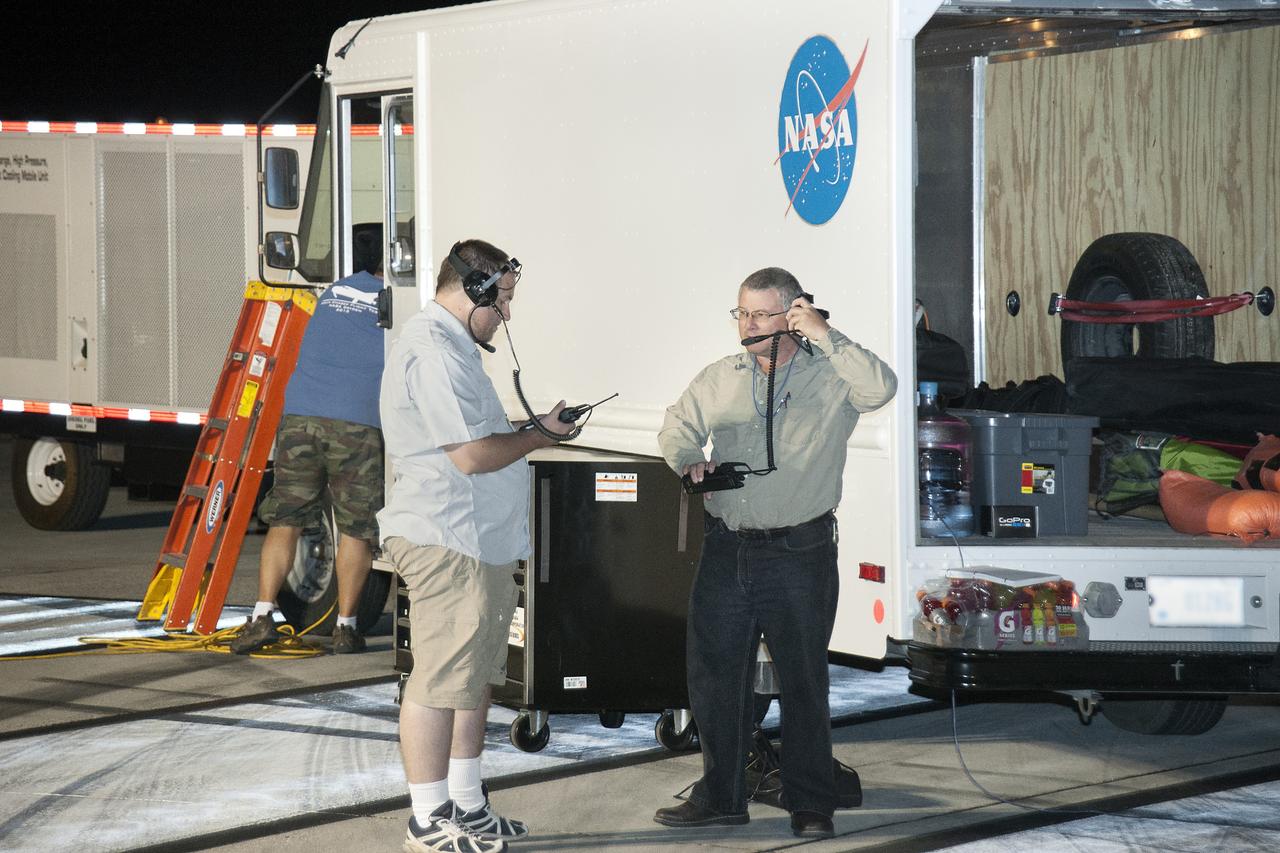
Edwards, Calif. – ED13-0266-012- Technicians prepare for 60 mph tow tests of Sierra Nevada Corporation's, or SNC's, Dream Chaser flight vehicle on taxi and runways at NASA's Dryden Flight Research Center at Edwards Air Force Base in California. Ground testing at 10, 20, 40 and 60 miles per hour is helping the company validate the performance of the spacecraft's braking and landing systems prior to captive-carry and free-flight tests scheduled for later this year. SNC is continuing the development of its Dream Chaser spacecraft under the agency's Commercial Crew Development Round 2, or CCDev2, and Commercial Crew Integrated Capability, or CCiCap, phases, which are intended to lead to the availability of commercial human spaceflight services for government and commercial customers. To learn more about CCP and its industry partners, visit www.nasa.gov/commercialcrew. Image credit: NASA/Ken Ulbrich
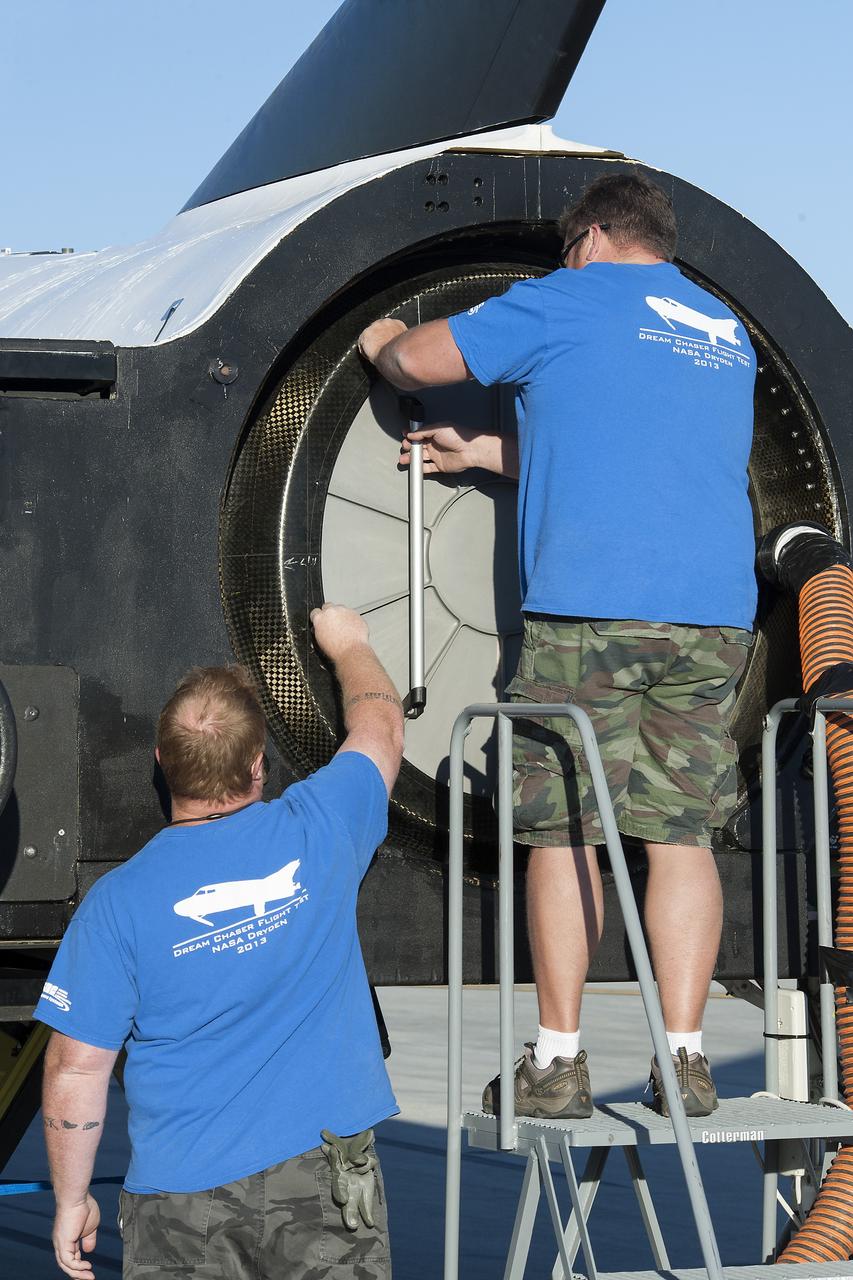
Edwards, Calif. – ED13-0266-046- Sierra Nevada Corporation, or SNC, team members prepare for 60 mph tow tests of the company's Dream Chaser flight vehicle on taxi and runways at NASA's Dryden Flight Research Center at Edwards Air Force Base in California. Ground testing at 10, 20, 40 and 60 miles per hour is helping the company validate the performance of the spacecraft's braking and landing systems prior to captive-carry and free-flight tests scheduled for later this year. SNC is continuing the development of its Dream Chaser spacecraft under the agency's Commercial Crew Development Round 2, or CCDev2, and Commercial Crew Integrated Capability, or CCiCap, phases, which are intended to lead to the availability of commercial human spaceflight services for government and commercial customers. To learn more about CCP and its industry partners, visit www.nasa.gov/commercialcrew. Image credit: NASA/Ken Ulbrich
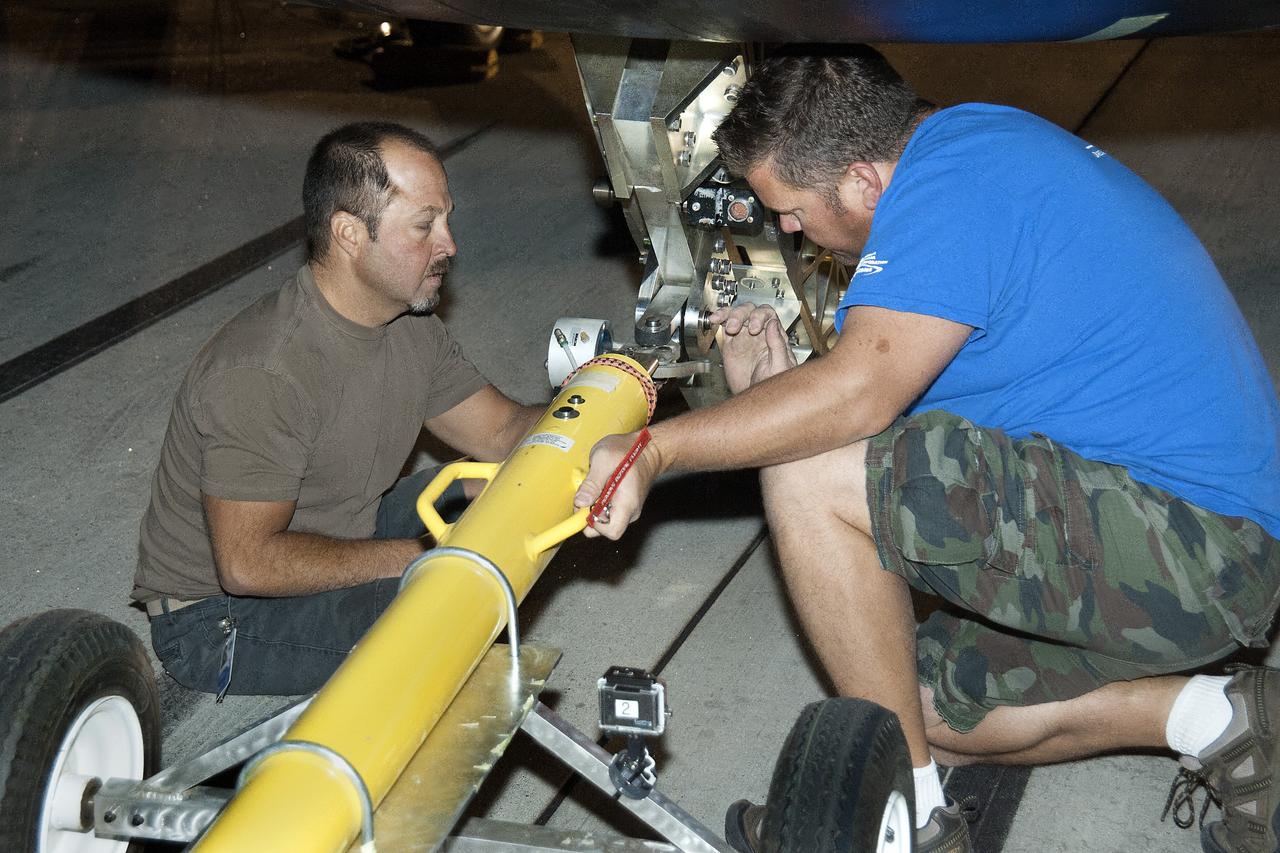
Edwards, Calif. – ED13-0266-016- Sierra Nevada Corporation, or SNC, team members prepare for 60 mph tow tests of the company's Dream Chaser flight vehicle on taxi and runways at NASA's Dryden Flight Research Center at Edwards Air Force Base in California. Ground testing at 10, 20, 40 and 60 miles per hour is helping the company validate the performance of the spacecraft's braking and landing systems prior to captive-carry and free-flight tests scheduled for later this year. SNC is continuing the development of its Dream Chaser spacecraft under the agency's Commercial Crew Development Round 2, or CCDev2, and Commercial Crew Integrated Capability, or CCiCap, phases, which are intended to lead to the availability of commercial human spaceflight services for government and commercial customers. To learn more about CCP and its industry partners, visit www.nasa.gov/commercialcrew. Image credit: NASA/Ken Ulbrich

Edwards, Calif. – ED13-0266-070- Sierra Nevada Corporation, or SNC, team members check the company's Dream Chaser flight vehicle systems following a 60 mph tow test on taxi and runways at NASA's Dryden Flight Research Center at Edwards Air Force Base in California. Ground testing at 10, 20, 40 and 60 miles per hour is helping the company validate the performance of the spacecraft's braking and landing systems prior to captive-carry and free-flight tests scheduled for later this year. SNC is continuing the development of its Dream Chaser spacecraft under the agency's Commercial Crew Development Round 2, or CCDev2, and Commercial Crew Integrated Capability, or CCiCap, phases, which are intended to lead to the availability of commercial human spaceflight services for government and commercial customers. To learn more about CCP and its industry partners, visit www.nasa.gov/commercialcrew. Image credit: NASA/Ken Ulbrich
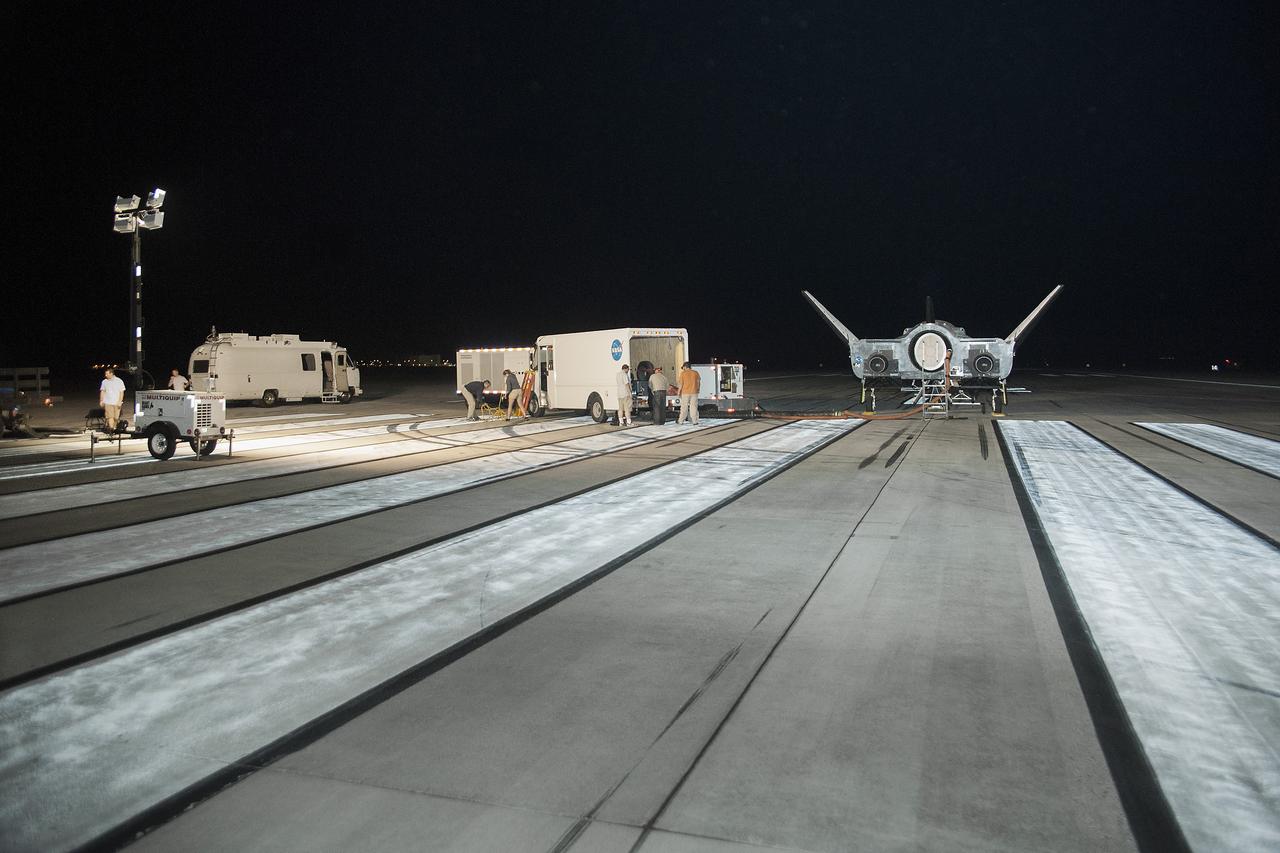
Edwards, Calif. – ED13-0266-010- The Sierra Nevada Corporation, or SNC, Dream Chaser flight vehicle is prepared for 60 mph tow tests on taxi and runways at NASA's Dryden Flight Research Center at Edwards Air Force Base in California. Ground testing at 10, 20, 40 and 60 miles per hour is helping the company validate the performance of the spacecraft's braking and landing systems prior to captive-carry and free-flight tests scheduled for later this year. SNC is continuing the development of its Dream Chaser spacecraft under the agency's Commercial Crew Development Round 2, or CCDev2, and Commercial Crew Integrated Capability, or CCiCap, phases, which are intended to lead to the availability of commercial human spaceflight services for government and commercial customers. To learn more about CCP and its industry partners, visit www.nasa.gov/commercialcrew. Image credit: NASA/Ken Ulbrich
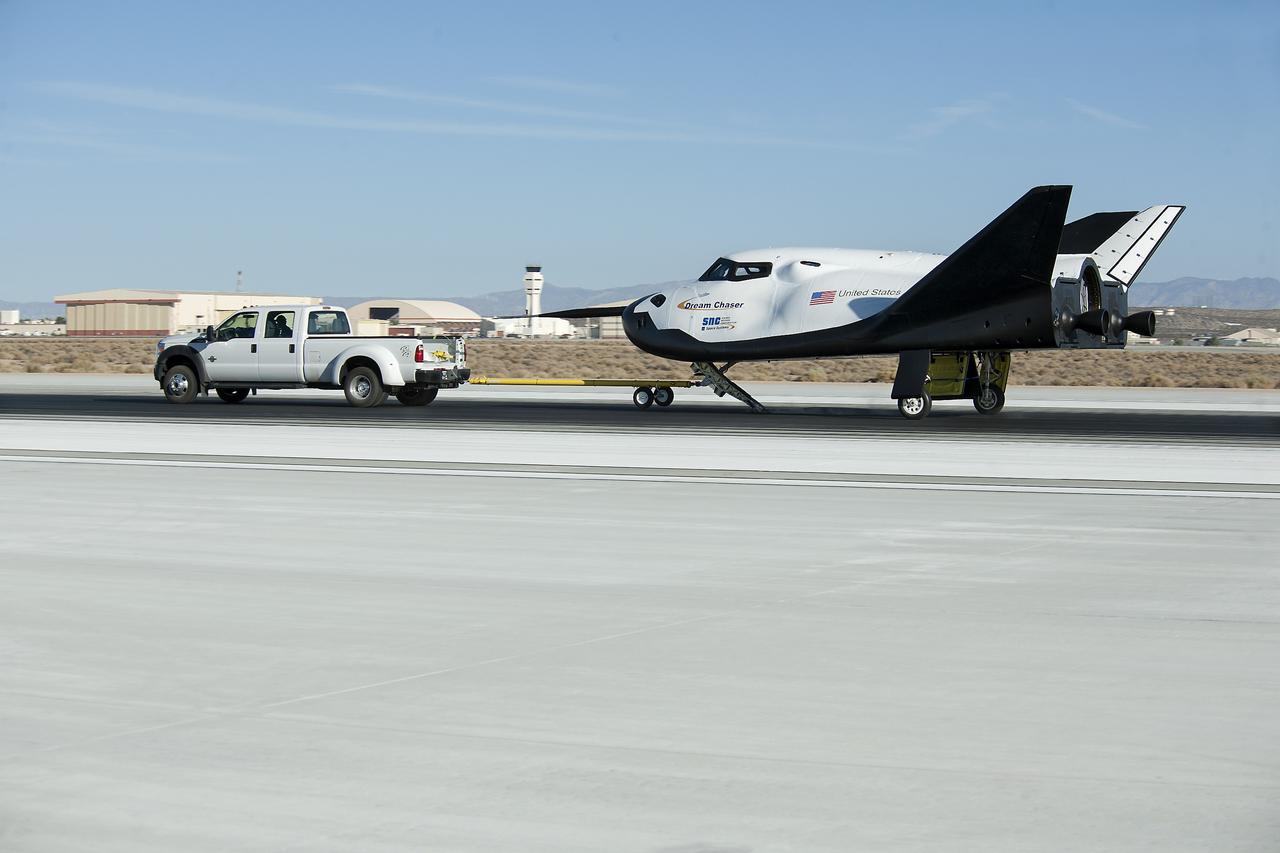
Edwards, Calif. – ED13-0266-049- A pickup truck pulls the Sierra Nevada Corporation, or SNC, Dream Chaser flight vehicle through 60 mile per hour tow tests on taxi and runways at NASA's Dryden Flight Research Center at Edwards Air Force Base in California. Ground testing at 10, 20, 40 and 60 miles per hour is helping the company validate the performance of the spacecraft's braking and landing systems prior to captive-carry and free-flight tests scheduled for later this year. SNC is continuing the development of its Dream Chaser spacecraft under the agency's Commercial Crew Development Round 2, or CCDev2, and Commercial Crew Integrated Capability, or CCiCap, phases, which are intended to lead to the availability of commercial human spaceflight services for government and commercial customers. To learn more about CCP and its industry partners, visit www.nasa.gov/commercialcrew. Image credit: NASA/Ken Ulbrich
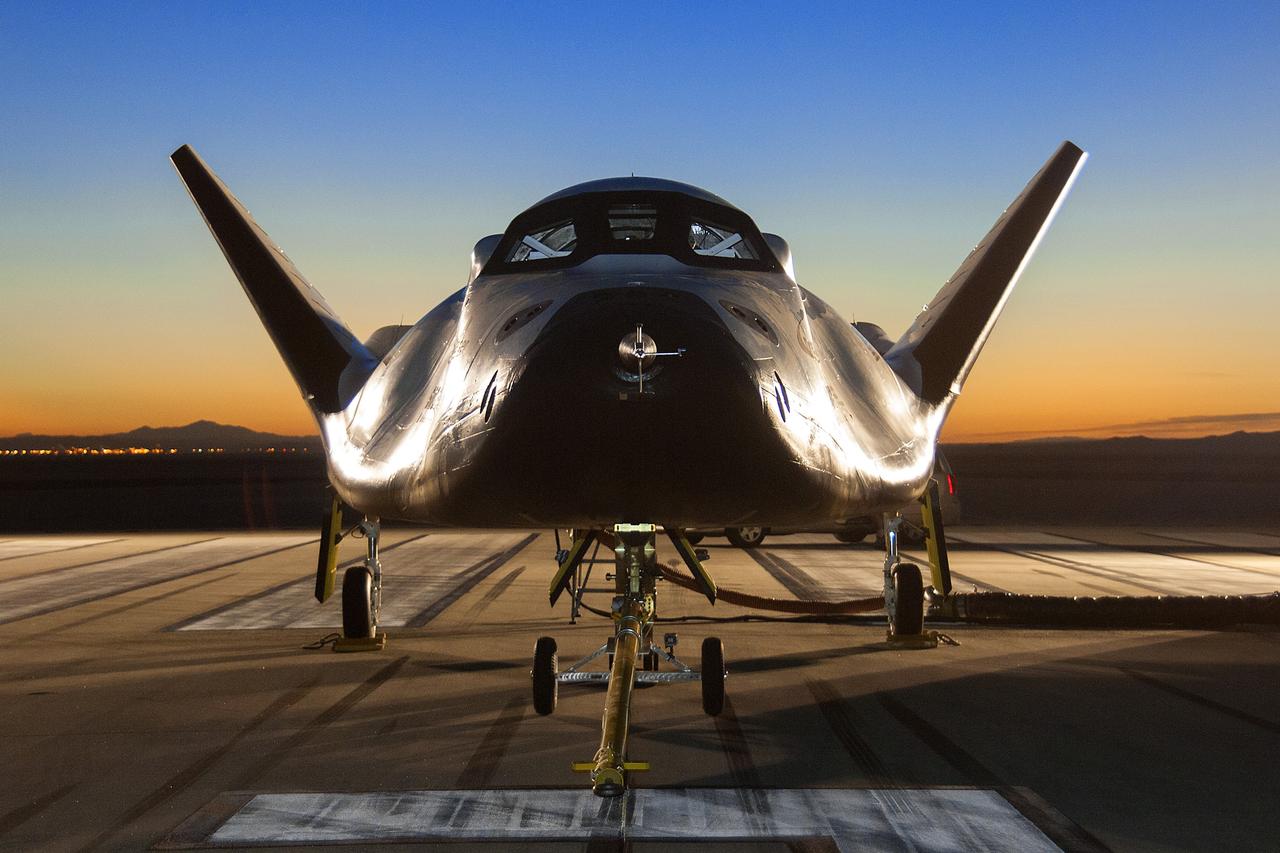
Edwards, Calif. – ED13-0266-022- The Sierra Nevada Corporation, or SNC, Dream Chaser flight vehicle is prepared for 60 mile per hour tow tests on taxi and runways at NASA's Dryden Flight Research Center at Edwards Air Force Base in California. Ground testing at 10, 20, 40 and 60 miles per hour is helping the company validate the performance of the spacecraft's braking and landing systems prior to captive-carry and free-flight tests scheduled for later this year. SNC is continuing the development of its Dream Chaser spacecraft under the agency's Commercial Crew Development Round 2, or CCDev2, and Commercial Crew Integrated Capability, or CCiCap, phases, which are intended to lead to the availability of commercial human spaceflight services for government and commercial customers. To learn more about CCP and its industry partners, visit www.nasa.gov/commercialcrew. Image credit: NASA/Ken Ulbrich
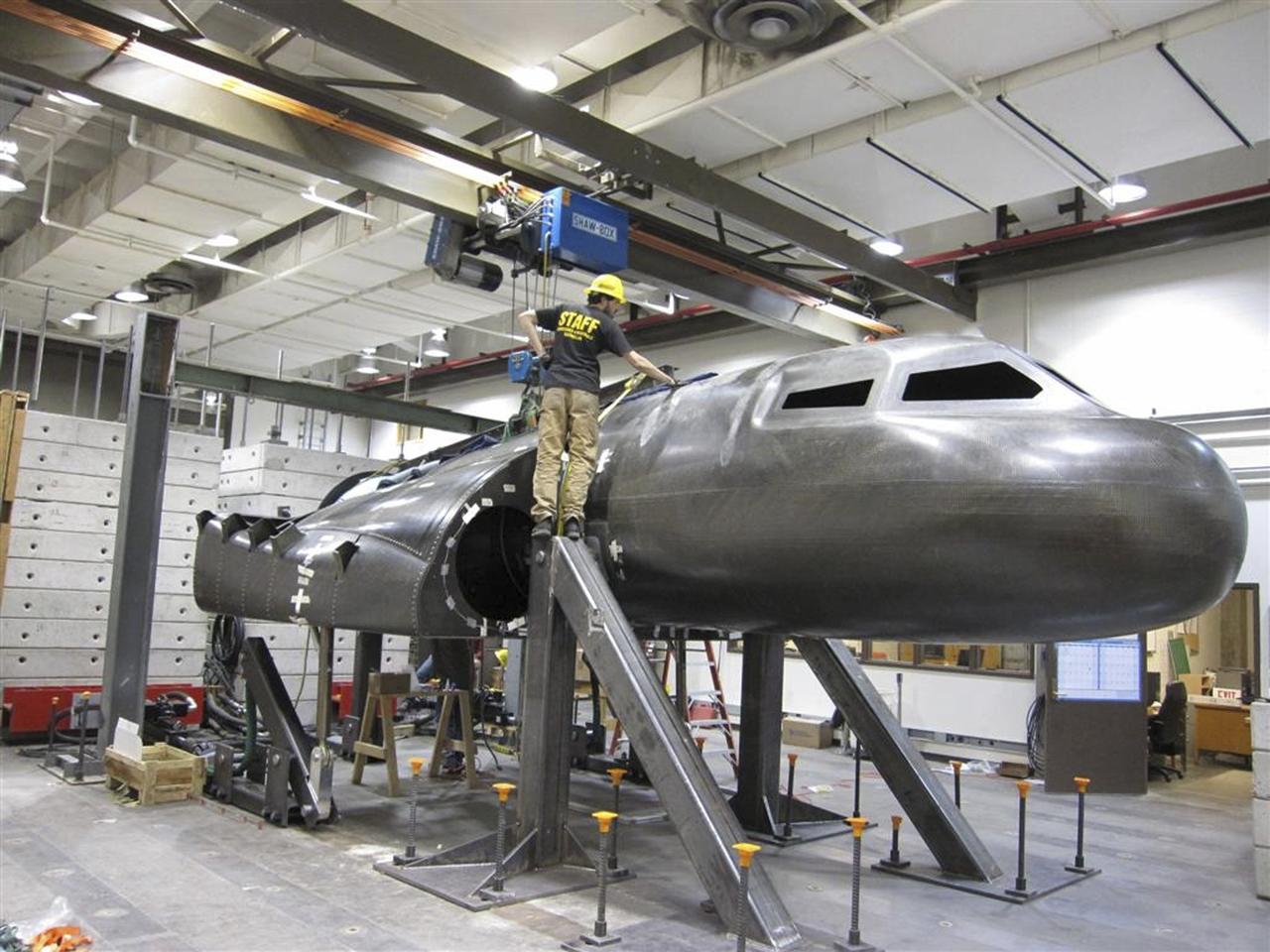
BOULDER, Colo. – A Sierra Nevada Corp. team member examines the company's structural test article for the Dream Chaser spacecraft in the University of Colorado at Boulder’s Facility for Advanced Spatial Technology. The university is one of Sierra Nevada’s partners on the design and development of the Dream Chaser orbital crew vehicle. Dream Chaser is one of five systems NASA invested in during Commercial Crew Development Round 1 CCDev1 activities in order to aid in the innovation and development of American-led commercial capabilities for crew transportation and rescue services to and from the International Space Station and other low Earth orbit destinations. In 2011, NASA's Commercial Crew Program CCP entered into another funded Space Act Agreement with Sierra Nevada for the second round of commercial crew development CCDev2) so the company could further develop its Dream Chaser spacecraft for NASA transportation services. For information about CCP, visit www.nasa.gov/commercialcrew. Photo credit: Sierra Nevada Corp.
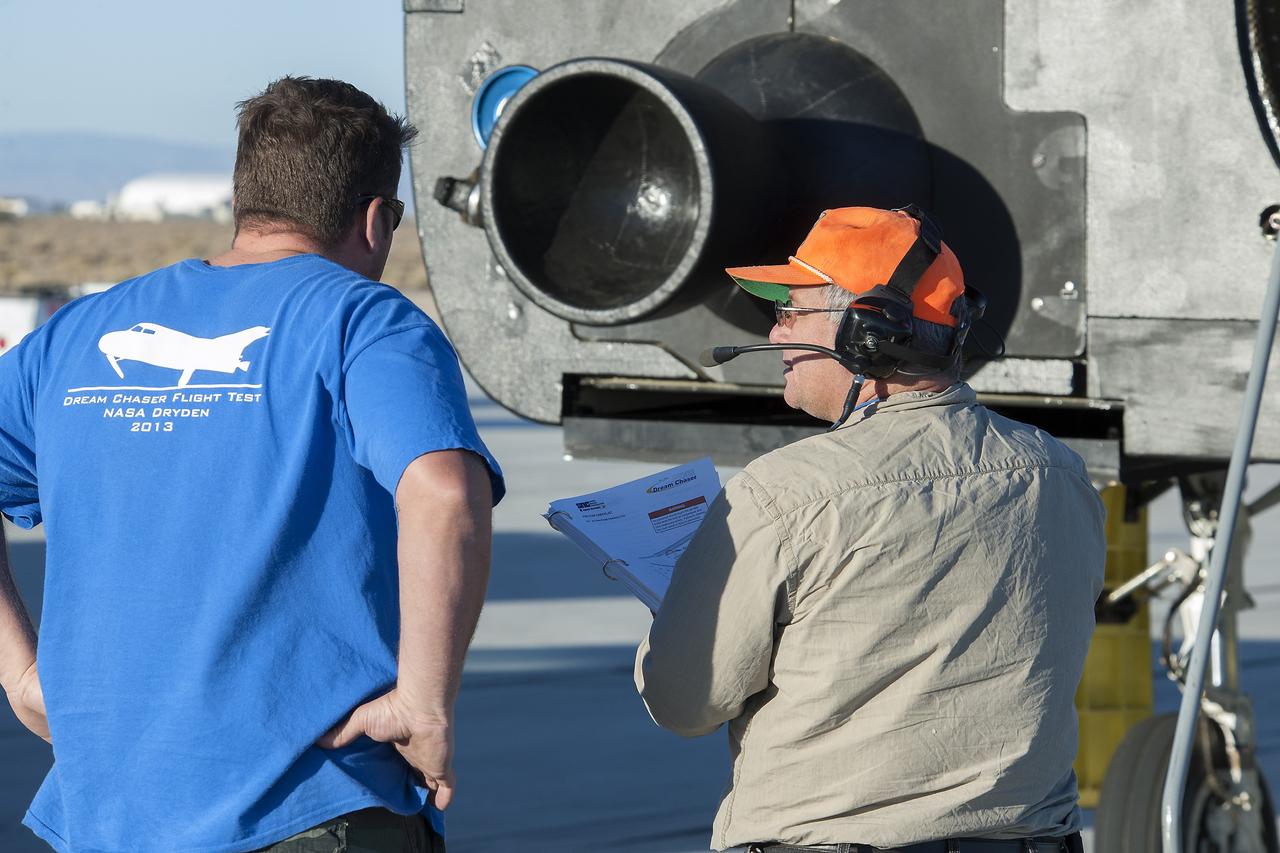
Edwards, Calif. – ED13-0266-045- Sierra Nevada Corporation, or SNC, team members prepare for 60 mph tow tests of the company's Dream Chaser flight vehicle on taxi and runways at NASA's Dryden Flight Research Center at Edwards Air Force Base in California. Ground testing at 10, 20, 40 and 60 miles per hour is helping the company validate the performance of the spacecraft's braking and landing systems prior to captive-carry and free-flight tests scheduled for later this year. SNC is continuing the development of its Dream Chaser spacecraft under the agency's Commercial Crew Development Round 2, or CCDev2, and Commercial Crew Integrated Capability, or CCiCap, phases, which are intended to lead to the availability of commercial human spaceflight services for government and commercial customers. To learn more about CCP and its industry partners, visit www.nasa.gov/commercialcrew. Image credit: NASA/Ken Ulbrich
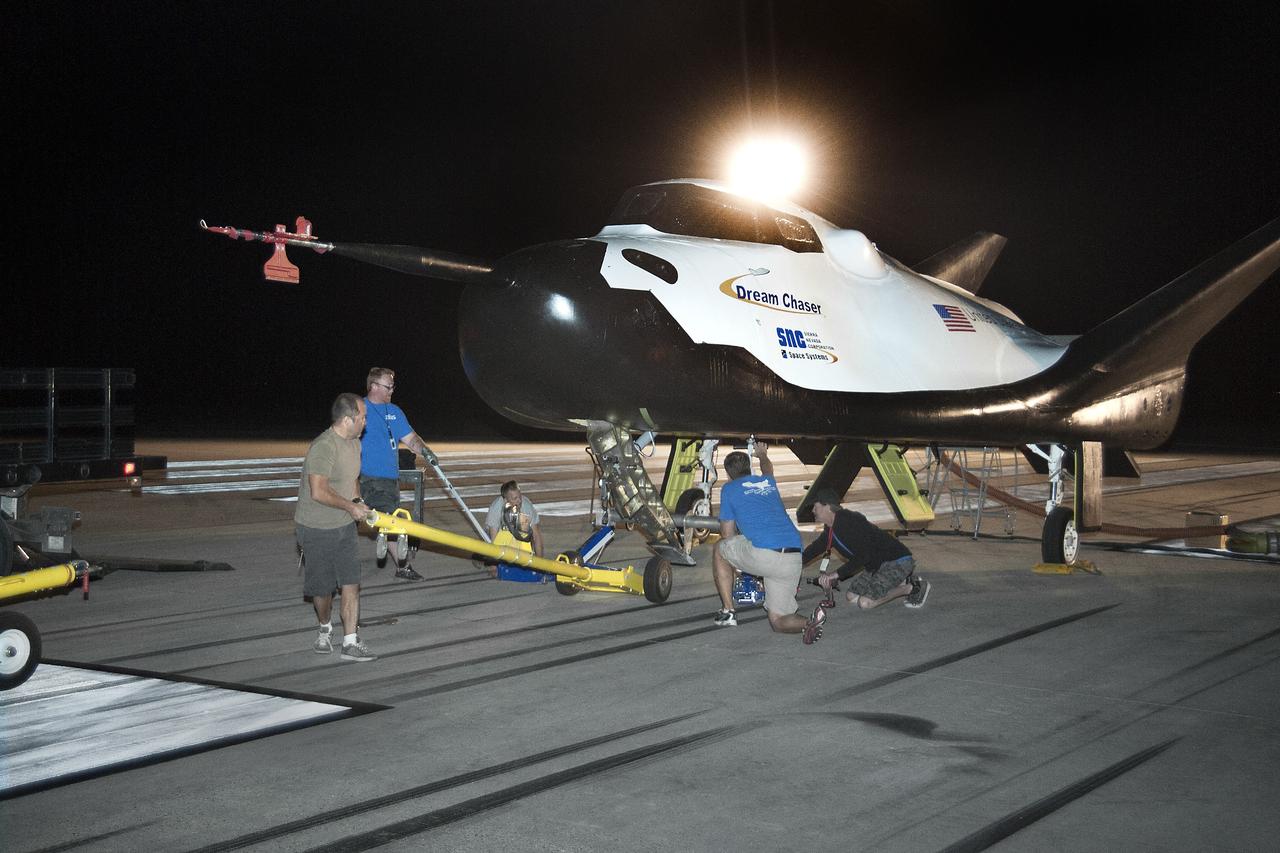
Edwards, Calif. – ED13-0266-013- Sierra Nevada Corporation, or SNC, team members prepare for 60 mph tow tests of the company's Dream Chaser flight vehicle on taxi and runways at NASA's Dryden Flight Research Center at Edwards Air Force Base in California. Ground testing at 10, 20, 40 and 60 miles per hour is helping the company validate the performance of the spacecraft's braking and landing systems prior to captive-carry and free-flight tests scheduled for later this year. SNC is continuing the development of its Dream Chaser spacecraft under the agency's Commercial Crew Development Round 2, or CCDev2, and Commercial Crew Integrated Capability, or CCiCap, phases, which are intended to lead to the availability of commercial human spaceflight services for government and commercial customers. To learn more about CCP and its industry partners, visit www.nasa.gov/commercialcrew. Image credit: NASA/Ken Ulbrich
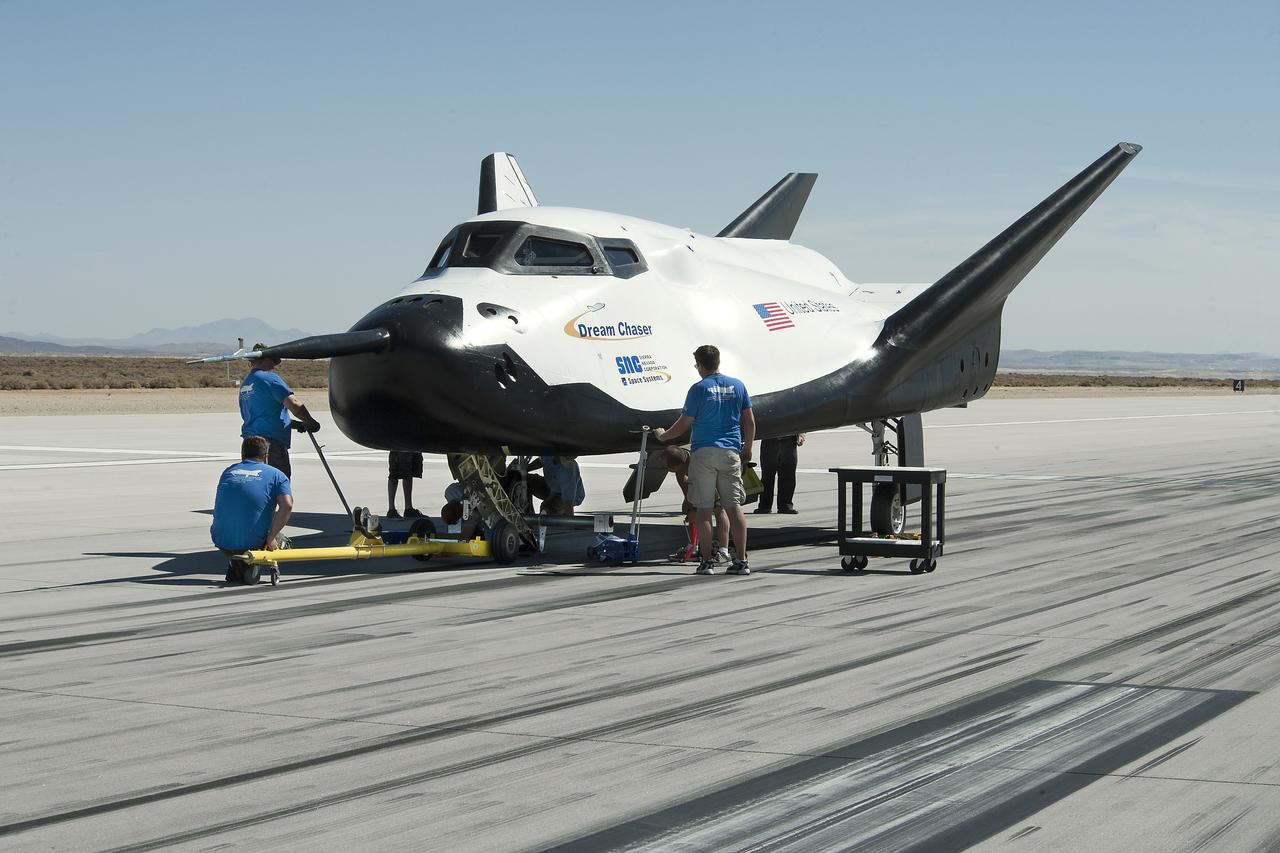
Edwards, Calif. – ED13-0266-054- Sierra Nevada Corporation, or SNC, team members check the company's Dream Chaser flight vehicle systems following a 60 mph tow test on taxi and runways at NASA's Dryden Flight Research Center at Edwards Air Force Base in California. Ground testing at 10, 20, 40 and 60 miles per hour is helping the company validate the performance of the spacecraft's braking and landing systems prior to captive-carry and free-flight tests scheduled for later this year. SNC is continuing the development of its Dream Chaser spacecraft under the agency's Commercial Crew Development Round 2, or CCDev2, and Commercial Crew Integrated Capability, or CCiCap, phases, which are intended to lead to the availability of commercial human spaceflight services for government and commercial customers. To learn more about CCP and its industry partners, visit www.nasa.gov/commercialcrew. Image credit: NASA/Ken Ulbrich
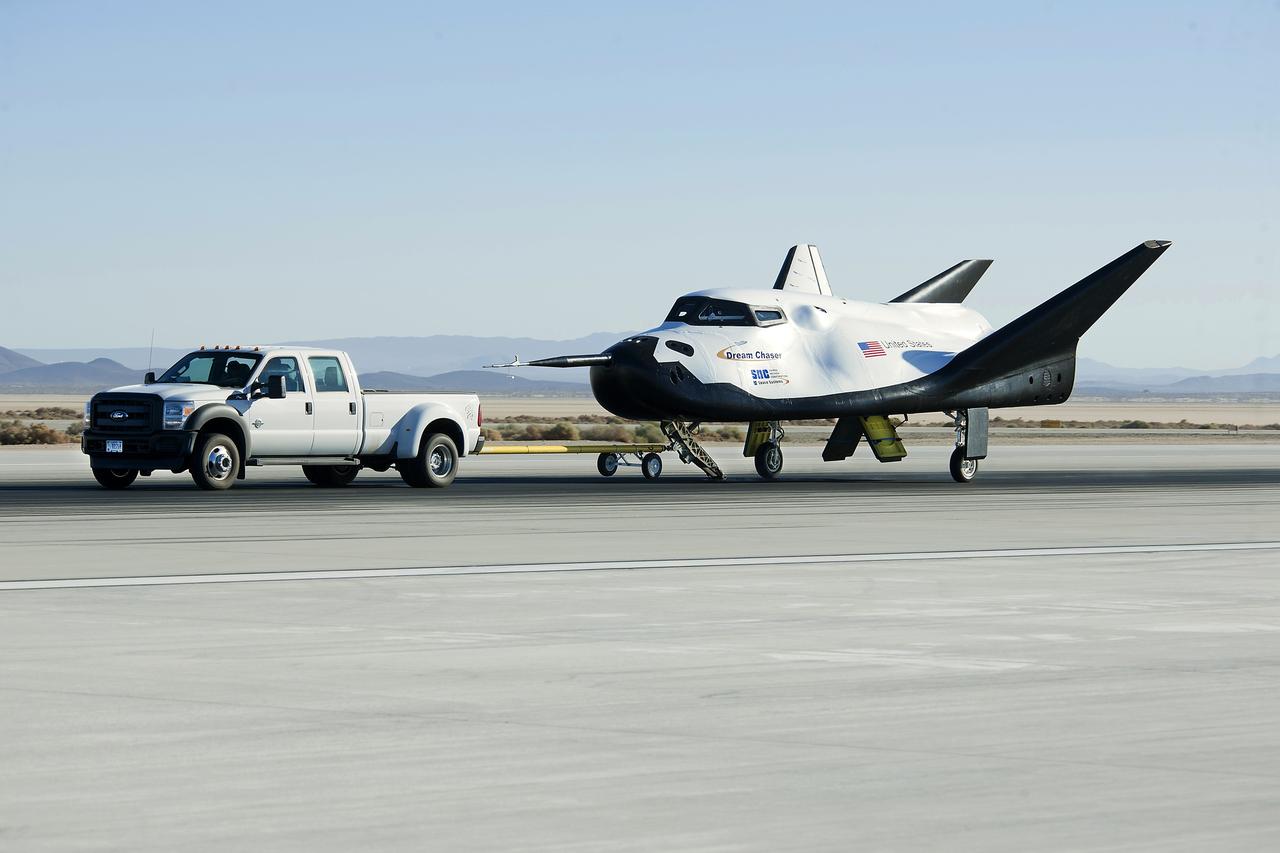
Edwards, Calif. – ED13-0266-047- A pickup truck pulls the Sierra Nevada Corporation, or SNC, Dream Chaser flight vehicle through 60 mile per hour tow tests on taxi and runways at NASA's Dryden Flight Research Center at Edwards Air Force Base in California. Ground testing at 10, 20, 40 and 60 miles per hour is helping the company validate the performance of the spacecraft's braking and landing systems prior to captive-carry and free-flight tests scheduled for later this year. SNC is continuing the development of its Dream Chaser spacecraft under the agency's Commercial Crew Development Round 2, or CCDev2, and Commercial Crew Integrated Capability, or CCiCap, phases, which are intended to lead to the availability of commercial human spaceflight services for government and commercial customers. To learn more about CCP and its industry partners, visit www.nasa.gov/commercialcrew. Image credit: NASA/Ken Ulbrich
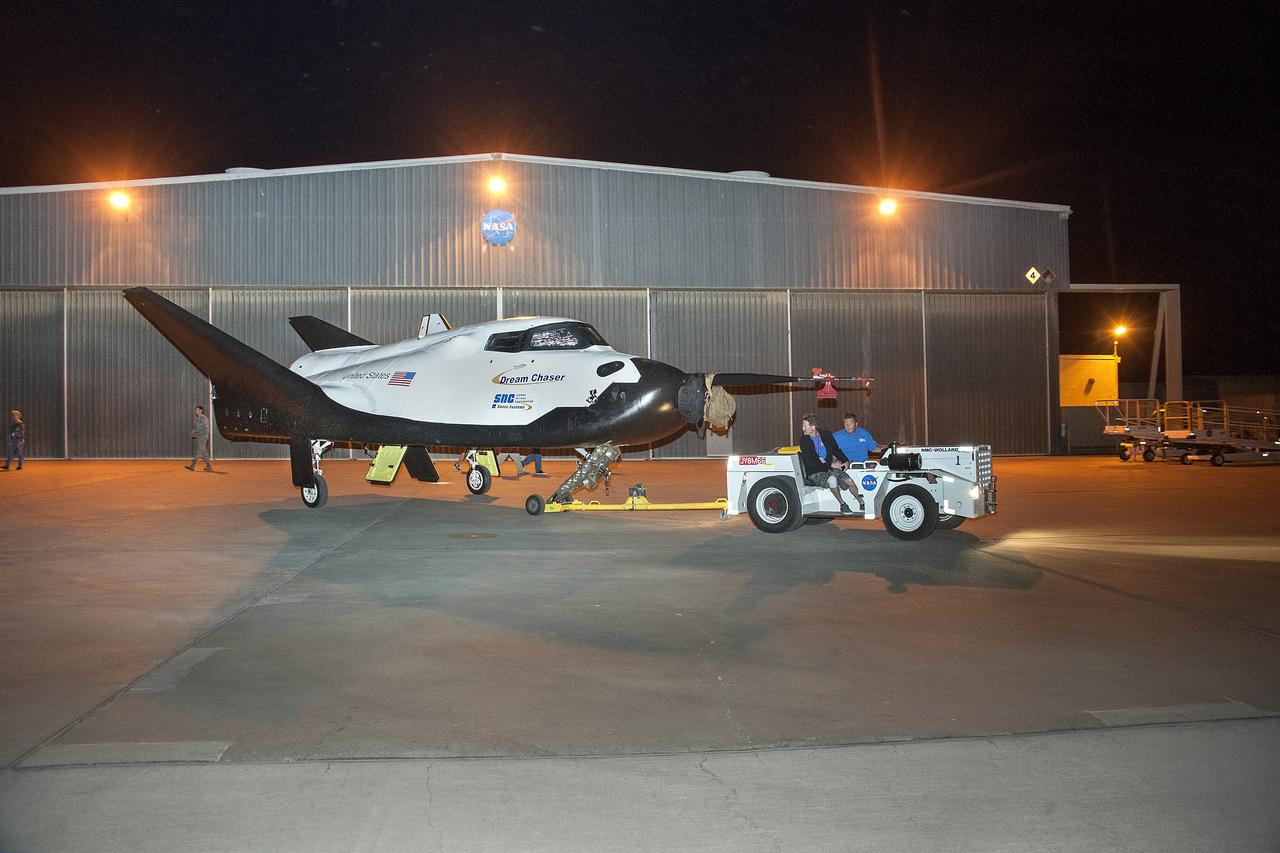
Edwards, Calif. – ED13-0266-008- The Sierra Nevada Corporation, or SNC, Dream Chaser flight vehicle is prepared for 60 mph tow tests on taxi and runways at NASA's Dryden Flight Research Center at Edwards Air Force Base in California. Ground testing at 10, 20, 40 and 60 miles per hour is helping the company validate the performance of the spacecraft's braking and landing systems prior to captive-carry and free-flight tests scheduled for later this year. SNC is continuing the development of its Dream Chaser spacecraft under the agency's Commercial Crew Development Round 2, or CCDev2, and Commercial Crew Integrated Capability, or CCiCap, phases, which are intended to lead to the availability of commercial human spaceflight services for government and commercial customers. To learn more about CCP and its industry partners, visit www.nasa.gov/commercialcrew. Image credit: NASA/Ken Ulbrich
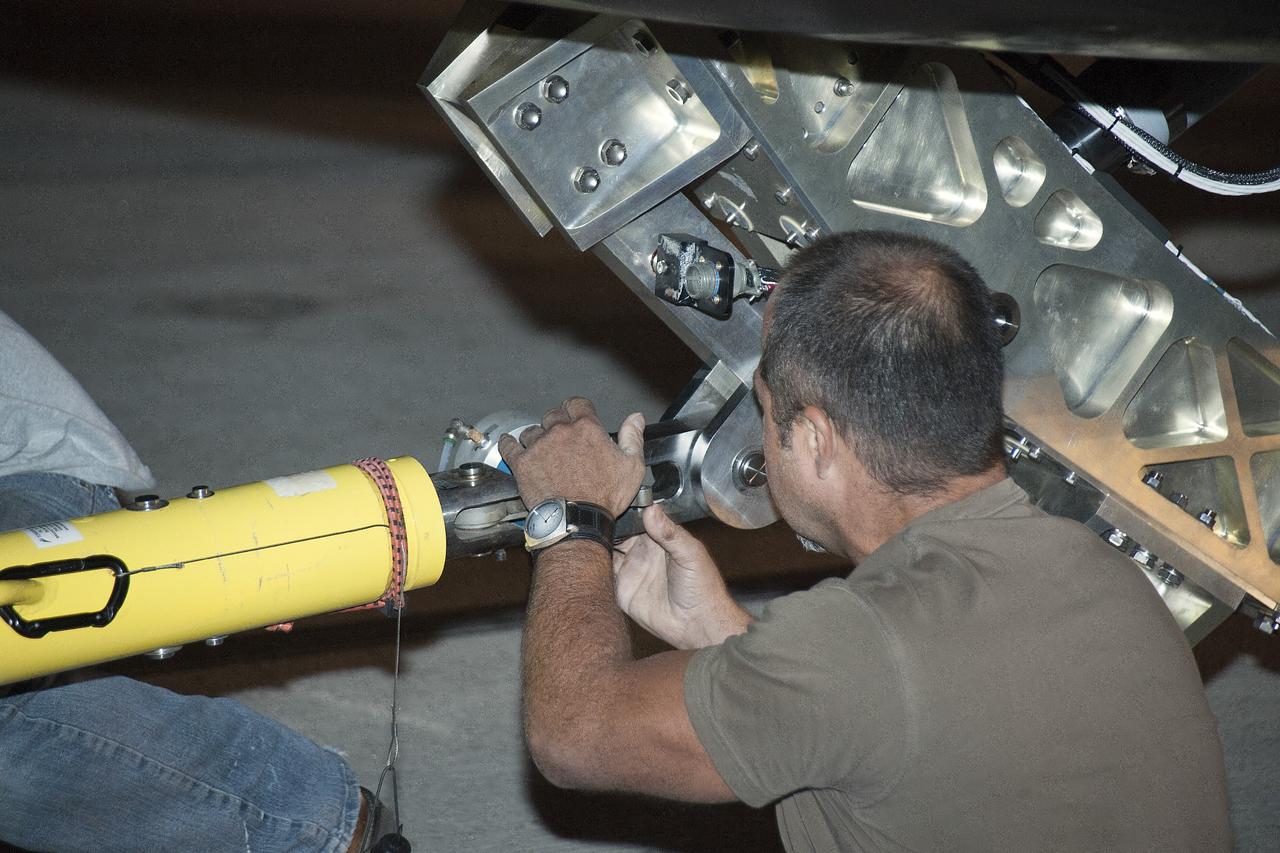
Edwards, Calif. – ED13-0266-021- A Sierra Nevada Corporation, or SNC, team member prepares for 60 mph tow tests of the company's Dream Chaser flight vehicle on taxi and runways at NASA's Dryden Flight Research Center at Edwards Air Force Base in California. Ground testing at 10, 20, 40 and 60 miles per hour is helping the company validate the performance of the spacecraft's braking and landing systems prior to captive-carry and free-flight tests scheduled for later this year. SNC is continuing the development of its Dream Chaser spacecraft under the agency's Commercial Crew Development Round 2, or CCDev2, and Commercial Crew Integrated Capability, or CCiCap, phases, which are intended to lead to the availability of commercial human spaceflight services for government and commercial customers. To learn more about CCP and its industry partners, visit www.nasa.gov/commercialcrew. Image credit: NASA/Ken Ulbrich
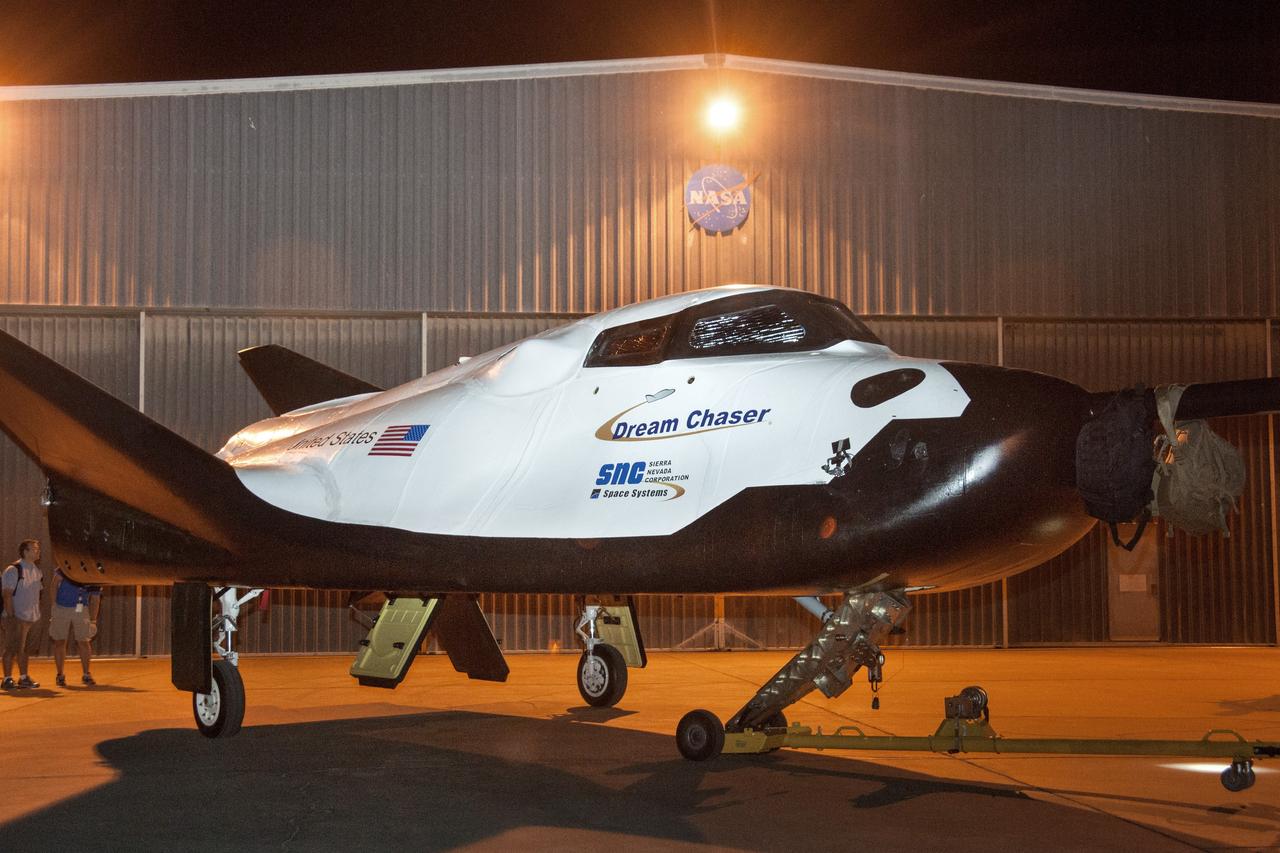
Edwards, Calif. – ED13-0266-007- The Sierra Nevada Corporation, or SNC, Dream Chaser flight vehicle is prepared for 60 mph tow tests on taxi and runways at NASA's Dryden Flight Research Center at Edwards Air Force Base in California. Ground testing at 10, 20, 40 and 60 miles per hour is helping the company validate the performance of the spacecraft's braking and landing systems prior to captive-carry and free-flight tests scheduled for later this year. SNC is continuing the development of its Dream Chaser spacecraft under the agency's Commercial Crew Development Round 2, or CCDev2, and Commercial Crew Integrated Capability, or CCiCap, phases, which are intended to lead to the availability of commercial human spaceflight services for government and commercial customers. To learn more about CCP and its industry partners, visit www.nasa.gov/commercialcrew. Image credit: NASA/Ken Ulbrich
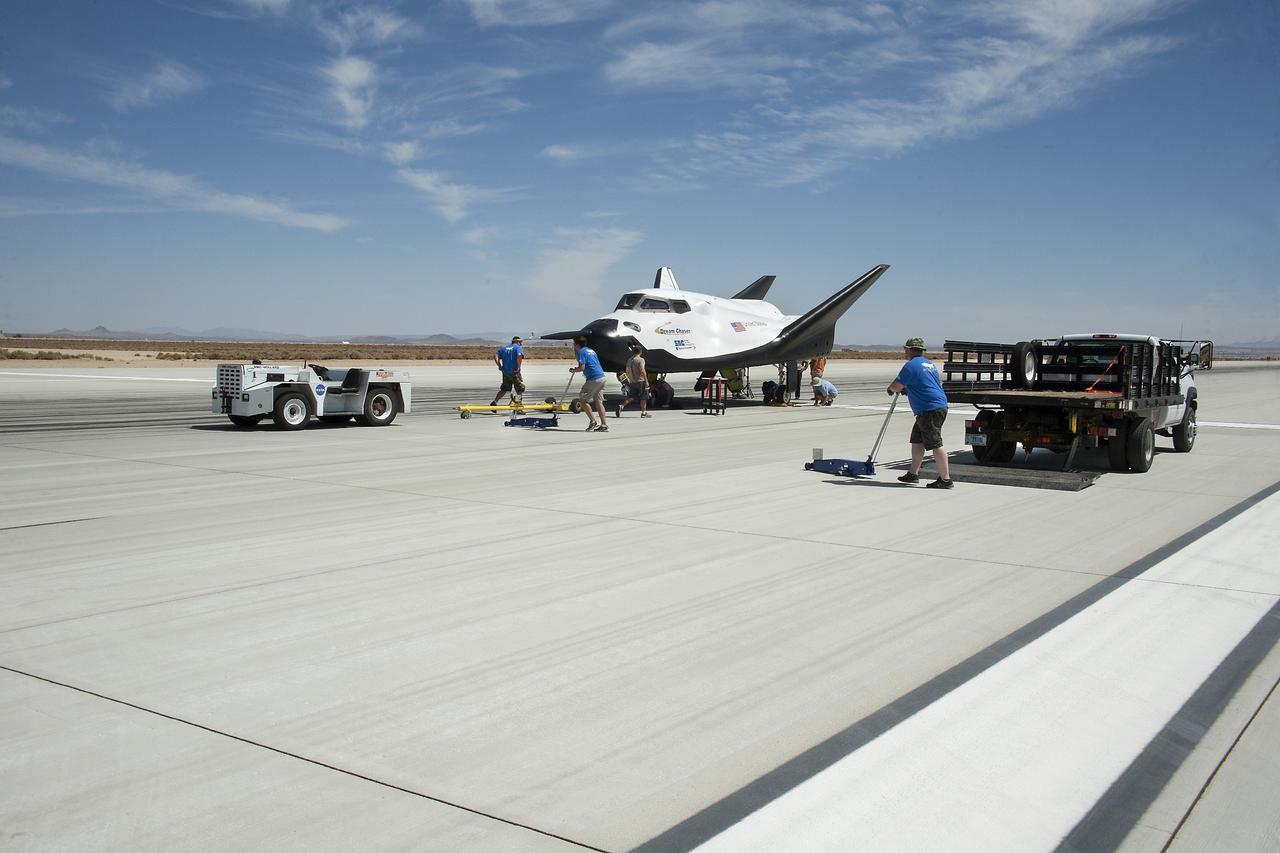
Edwards, Calif. – ED13-0266-069- Sierra Nevada Corporation, or SNC, team members check the company's Dream Chaser flight vehicle systems following a 60 mph tow test on taxi and runways at NASA's Dryden Flight Research Center at Edwards Air Force Base in California. Ground testing at 10, 20, 40 and 60 miles per hour is helping the company validate the performance of the spacecraft's braking and landing systems prior to captive-carry and free-flight tests scheduled for later this year. SNC is continuing the development of its Dream Chaser spacecraft under the agency's Commercial Crew Development Round 2, or CCDev2, and Commercial Crew Integrated Capability, or CCiCap, phases, which are intended to lead to the availability of commercial human spaceflight services for government and commercial customers. To learn more about CCP and its industry partners, visit www.nasa.gov/commercialcrew. Image credit: NASA/Ken Ulbrich
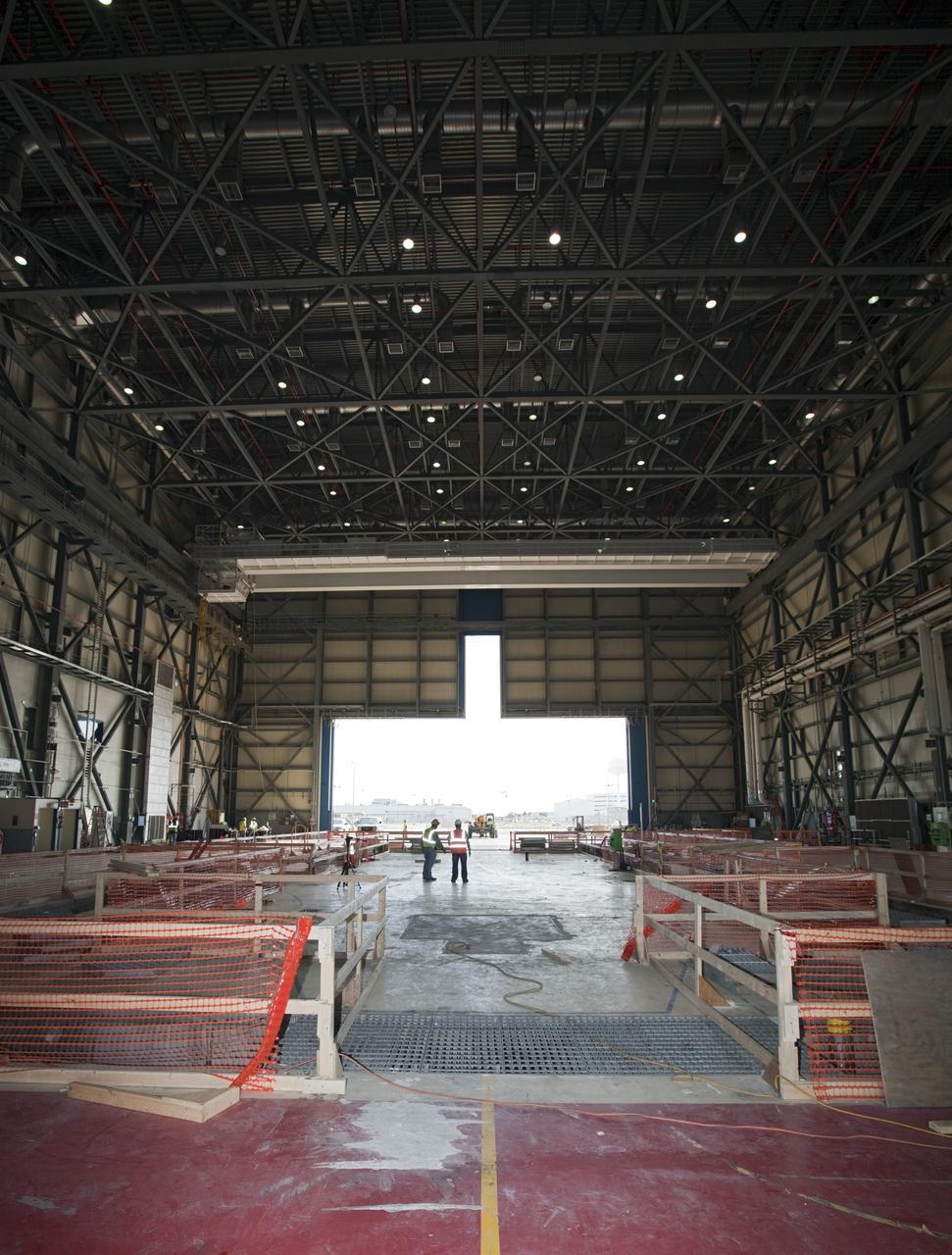
CAPE CANAVERAL, Fla. -- The Commercial Crew and Cargo Processing Facility, or C3PF, at NASA's Kennedy Space Center in Florida is going through major renovations to support the manufacturing of The Boeing Company's CST-100 spacecraft. Known throughout the space shuttle era as Orbiter Processing Facilty-3, or OPF-3, the facility's orbiter-specific platforms were removed recently to make room for a clean-floor factory-like facility. The modernization will allow Boeing to process its new fleet of low-Earth-orbit bound spacecraft, which is under development in collaboration with NASA's Commercial Crew Program, or CCP. Boeing is leasing the excess government facility for next-generation commercial activities through a land-use agreement with Space Florida. To learn more about CCP and its industry partners, visit www.nasa.gov/commercialcrew. Photo credit: Dimitri Gerondidakis
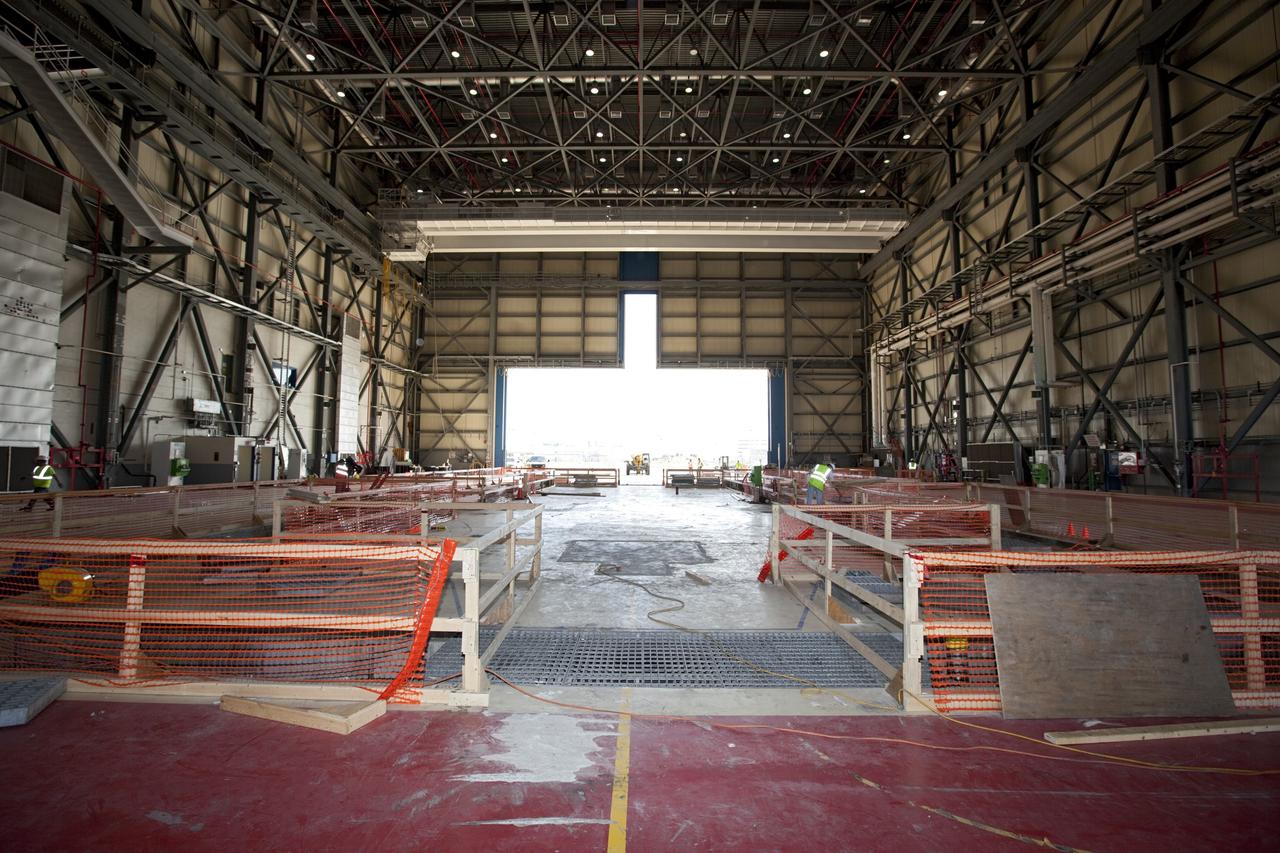
CAPE CANAVERAL, Fla. -- The Commercial Crew and Cargo Processing Facility, or C3PF, at NASA's Kennedy Space Center in Florida is going through major renovations to support the manufacturing of The Boeing Company's CST-100 spacecraft. Known throughout the space shuttle era as Orbiter Processing Facilty-3, or OPF-3, the facility's orbiter-specific platforms were removed recently to make room for a clean-floor factory-like facility. The modernization will allow Boeing to process its new fleet of low-Earth-orbit bound spacecraft, which is under development in collaboration with NASA's Commercial Crew Program, or CCP. Boeing is leasing the excess government facility for next-generation commercial activities through a land-use agreement with Space Florida. To learn more about CCP and its industry partners, visit www.nasa.gov/commercialcrew. Photo credit: Dimitri Gerondidakis
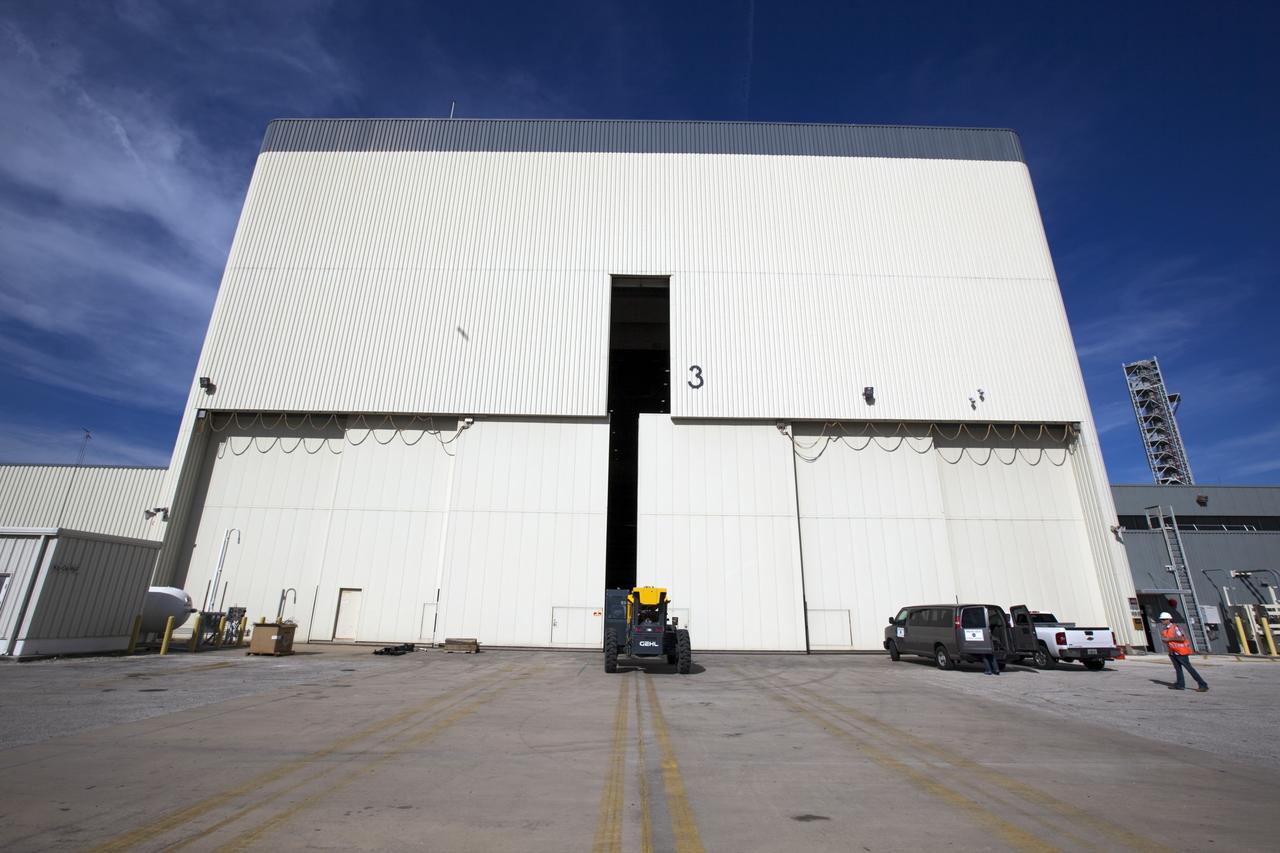
CAPE CANAVERAL, Fla. -- The Commercial Crew and Cargo Processing Facility, or C3PF, at NASA's Kennedy Space Center in Florida is going through major renovations to support the manufacturing of The Boeing Company's CST-100 spacecraft. Known throughout the space shuttle era as Orbiter Processing Facilty-3, or OPF-3, the facility's orbiter-specific platforms were removed recently to make room for a clean-floor factory-like facility. The modernization will allow Boeing to process its new fleet of low-Earth-orbit bound spacecraft, which is under development in collaboration with NASA's Commercial Crew Program, or CCP. Boeing is leasing the excess government facility for next-generation commercial activities through a land-use agreement with Space Florida. To learn more about CCP and its industry partners, visit www.nasa.gov/commercialcrew. Photo credit: Dimitri Gerondidakis
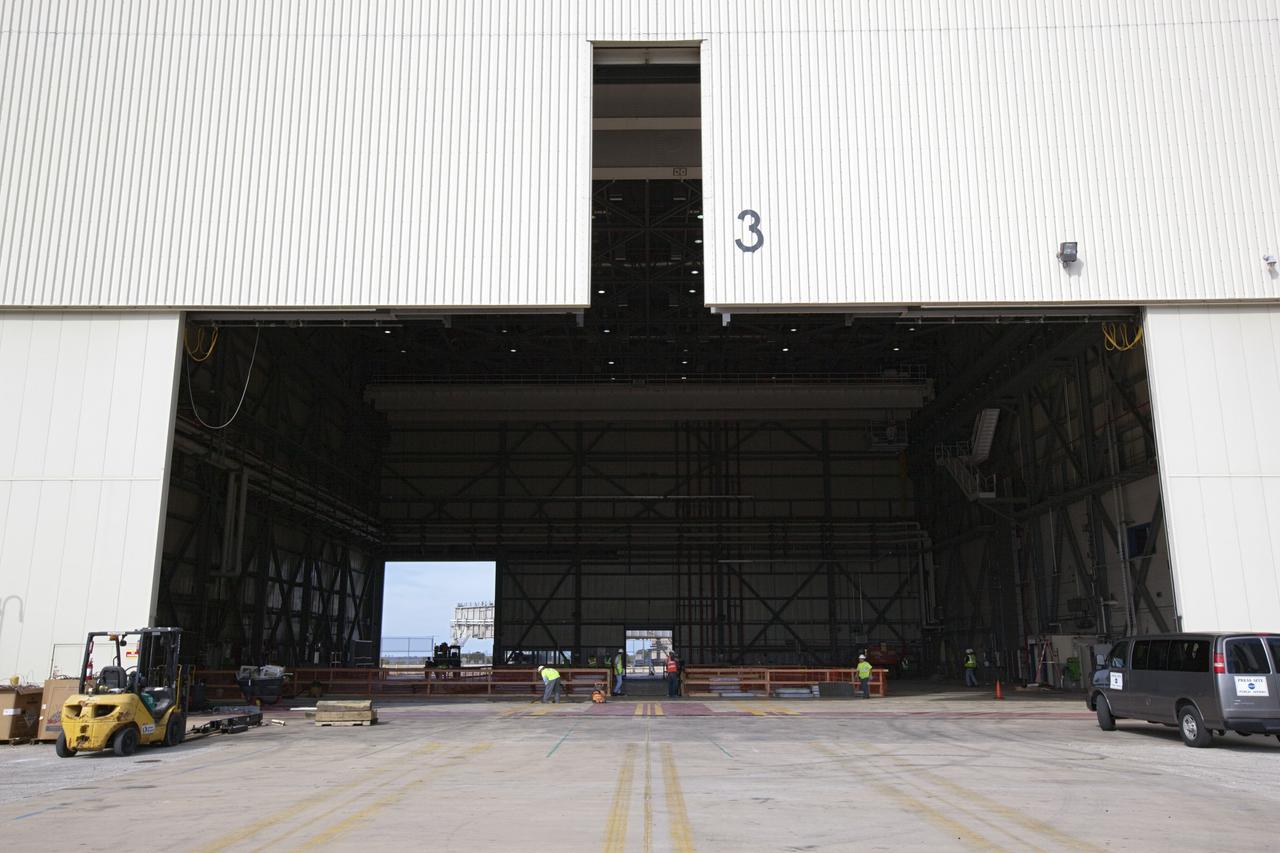
CAPE CANAVERAL, Fla. -- The Commercial Crew and Cargo Processing Facility, or C3PF, at NASA's Kennedy Space Center in Florida is going through major renovations to support the manufacturing of The Boeing Company's CST-100 spacecraft. Known throughout the space shuttle era as Orbiter Processing Facilty-3, or OPF-3, the facility's orbiter-specific platforms were removed recently to make room for a clean-floor factory-like facility. The modernization will allow Boeing to process its new fleet of low-Earth-orbit bound spacecraft, which is under development in collaboration with NASA's Commercial Crew Program, or CCP. Boeing is leasing the excess government facility for next-generation commercial activities through a land-use agreement with Space Florida. To learn more about CCP and its industry partners, visit www.nasa.gov/commercialcrew. Photo credit: Dimitri Gerondidakis
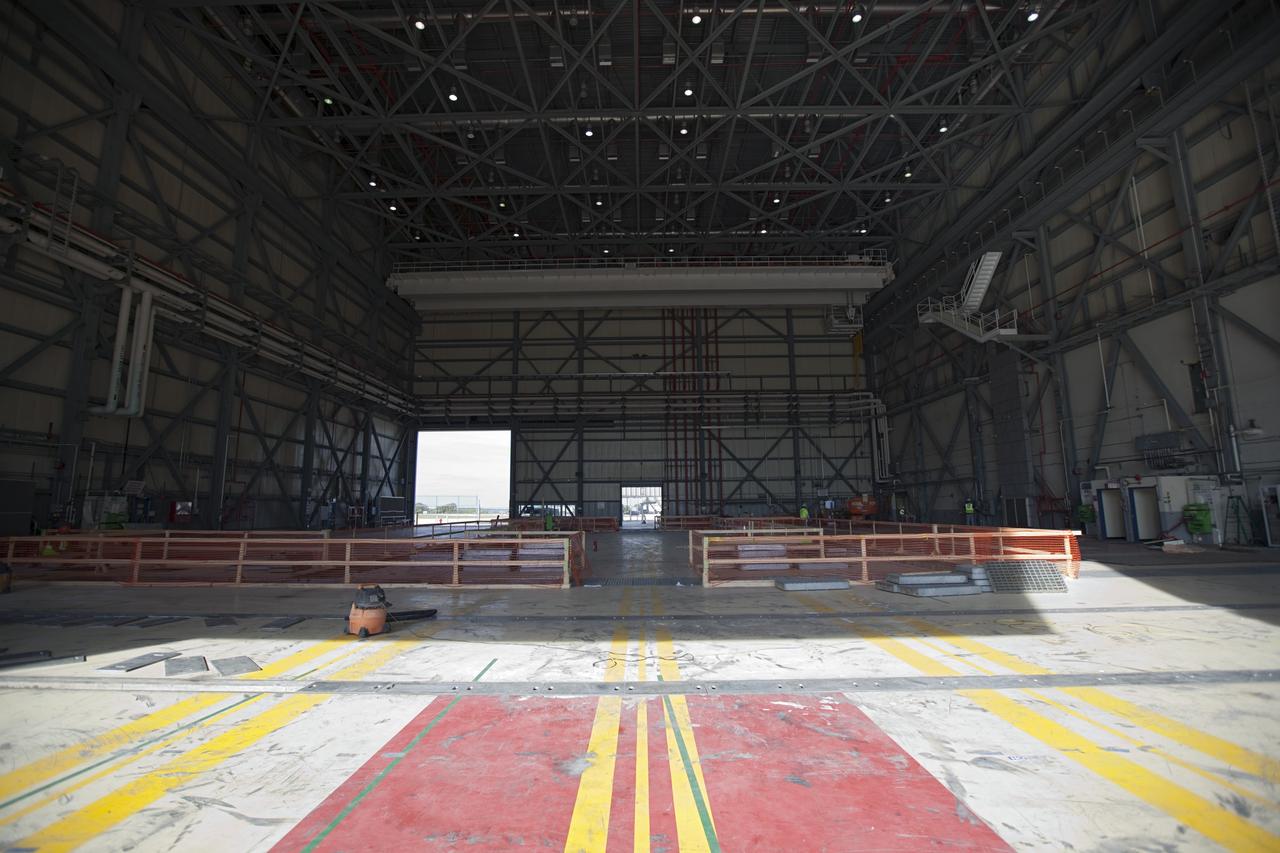
CAPE CANAVERAL, Fla. -- The Commercial Crew and Cargo Processing Facility, or C3PF, at NASA's Kennedy Space Center in Florida is going through major renovations to support the manufacturing of The Boeing Company's CST-100 spacecraft. Known throughout the space shuttle era as Orbiter Processing Facilty-3, or OPF-3, the facility's orbiter-specific platforms were removed recently to make room for a clean-floor factory-like facility. The modernization will allow Boeing to process its new fleet of low-Earth-orbit bound spacecraft, which is under development in collaboration with NASA's Commercial Crew Program, or CCP. Boeing is leasing the excess government facility for next-generation commercial activities through a land-use agreement with Space Florida. To learn more about CCP and its industry partners, visit www.nasa.gov/commercialcrew. Photo credit: Dimitri Gerondidakis
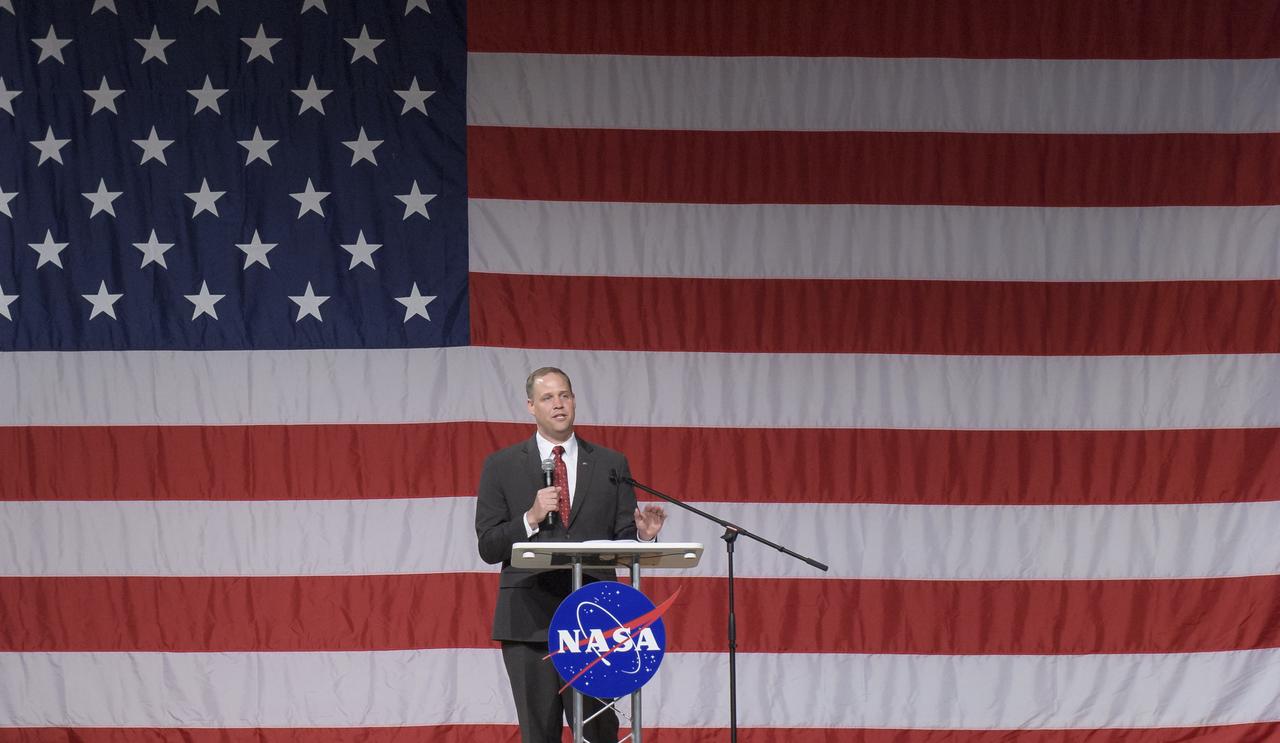
NASA Administrator Jim Bridenstine gives remarks during a NASA event announcing the astronauts assigned to crew the first flight tests and missions of the Boeing CST-100 Starliner and SpaceX Crew Dragon, Friday, Aug. 3, 2018 at NASA’s Johnson Space Center in Houston, Texas. Photo Credit: (NASA/Bill Ingalls)
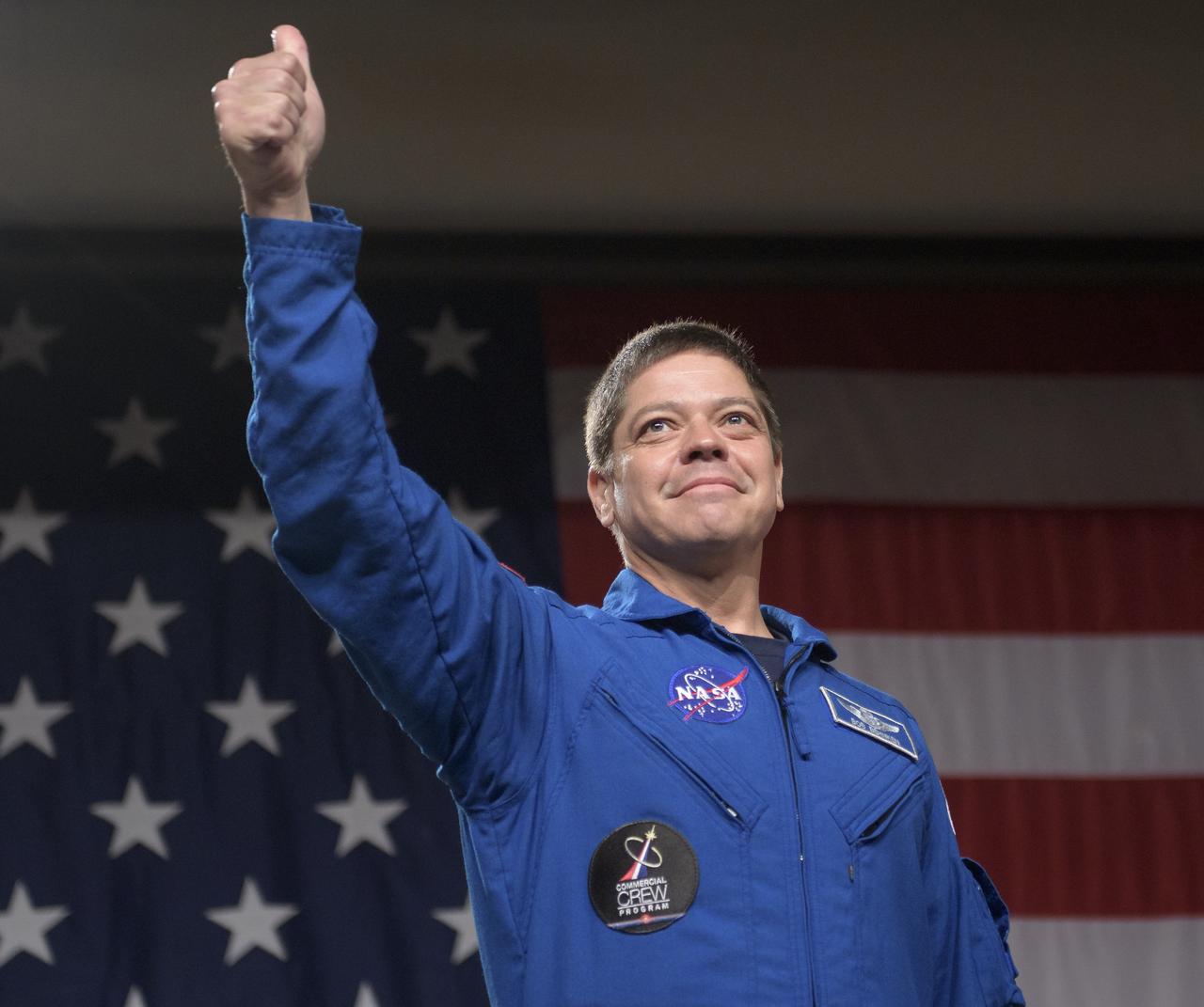
NASA astronaut Bob Behnken is seen during a NASA event where it was announced that he, and NASA astronaut Doug Hurley are assigned to SpaceX’s Crew Dragon Demo-2 flight to the International Space Station, Friday, Aug. 3, 2018 at NASA’s Johnson Space Center in Houston, Texas. Astronauts assigned to crew the first flight tests and missions of the Boeing CST-100 Starliner and SpaceX Crew Dragon where announced during the event. Photo Credit: (NASA/Bill Ingalls)

NASA astronaut Nicole Aunapu Mann is seen during a NASA event where it was announced that she, NASA astronaut Eric Boe, and Boeing astronaut Chris Ferguson are assigned to the Boeing CST-100 Starliner Crew Test Flight to the International Space Station, Friday, Aug. 3, 2018 at NASA’s Johnson Space Center in Houston, Texas. Astronauts assigned to crew the first flight tests and missions of the Boeing CST-100 Starliner and SpaceX Crew Dragon where announced during the event. Photo Credit: (NASA/Bill Ingalls)
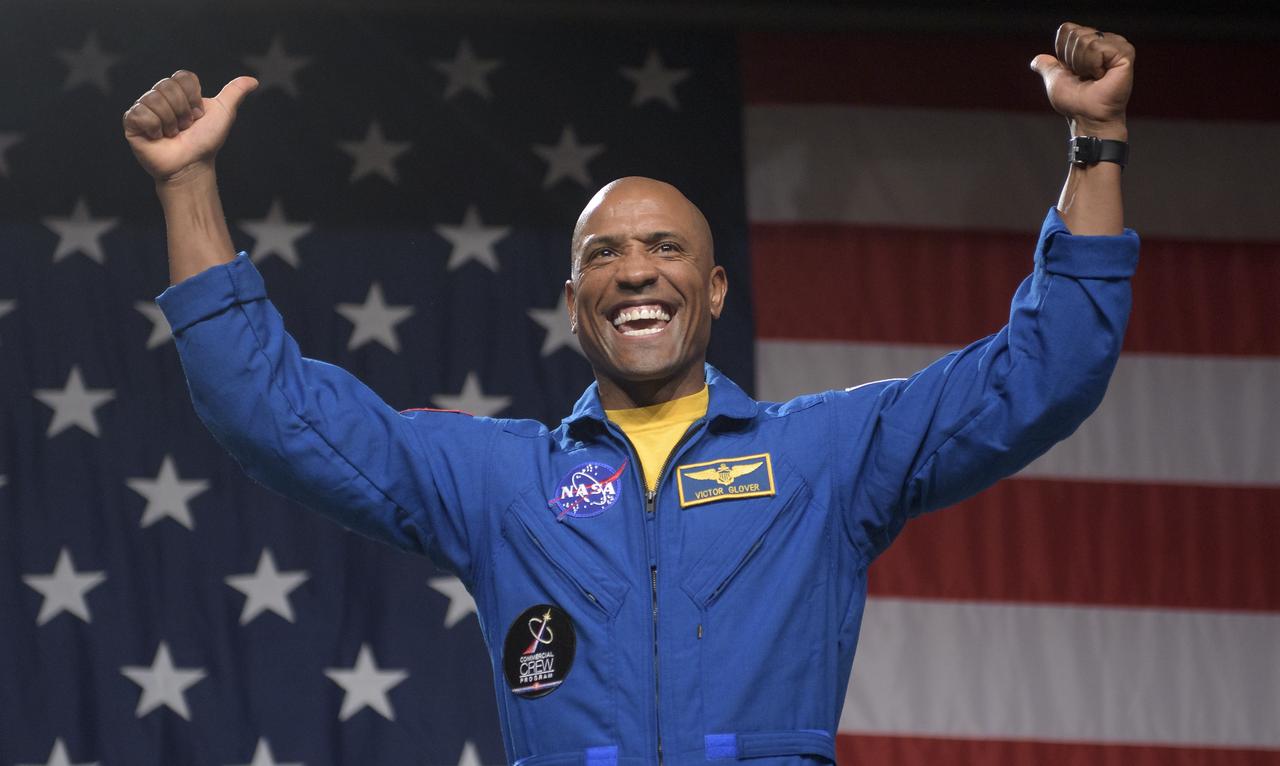
NASA astronaut Victor Glover is seen during a NASA event where it was announced that he, and NASA astronaut Mike Hopkins are assigned to the first mission to the International Space Station onboard SpaceX’s Crew Dragon, Friday, Aug. 3, 2018 at NASA’s Johnson Space Center in Houston, Texas. Astronauts assigned to crew the first flight tests and missions of the Boeing CST-100 Starliner and SpaceX Crew Dragon where announced during the event. Photo Credit: (NASA/Bill Ingalls)

NASA Administrator Jim Bridenstine, far right, talks to astronauts assigned to crew the first flight tests and missions of the Boeing CST-100 Starliner and SpaceX Crew Dragon, Friday, Aug. 3, 2018 at NASA’s Johnson Space Center in Houston, Texas. Astronauts Bob Behnken, left, Victor Glover, Doug Hurley, and Mike Hopkins will fly SpaceX's Crew Dragon flights, and astronauts Eric Boe, Suni Williams, Chris Ferguson, Josh Cassada, and Nicole Aunapu Mann, right, will fly on Boeing's CST-100 Starliner. Photo Credit: (NASA/Bill Ingalls)

Boeing Defense, Space and Security President and CEO Leanne Caret gives remarks during a NASA event announcing the astronauts assigned to crew the first flight tests and missions of the Boeing CST-100 Starliner and SpaceX Crew Dragon, Friday, Aug. 3, 2018 at NASA’s Johnson Space Center in Houston, Texas. Photo Credit: (NASA/Bill Ingalls)
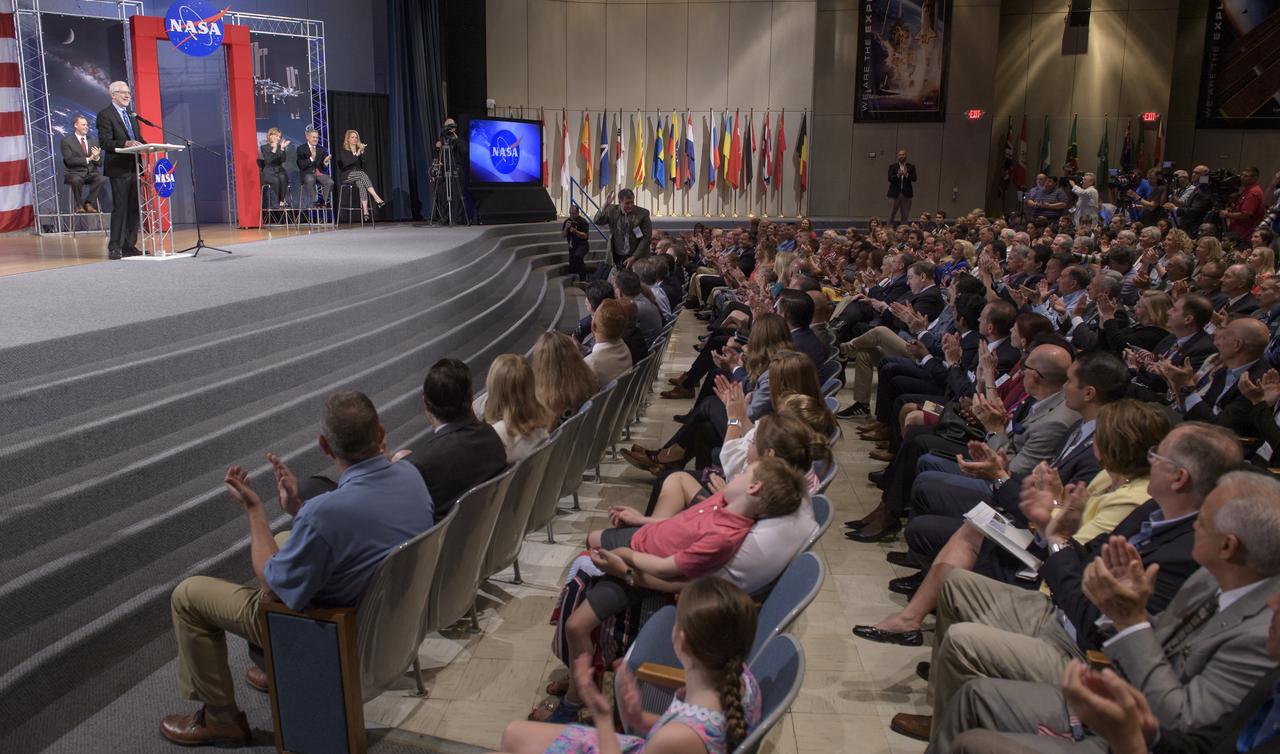
NASA Johnson Space Center Director Mark Geyer gives remarks during a NASA event announcing the astronauts assigned to crew the first flight tests and missions of the Boeing CST-100 Starliner and SpaceX Crew Dragon, Friday, Aug. 3, 2018 at NASA’s Johnson Space Center in Houston, Texas. Photo Credit: (NASA/Bill Ingalls)
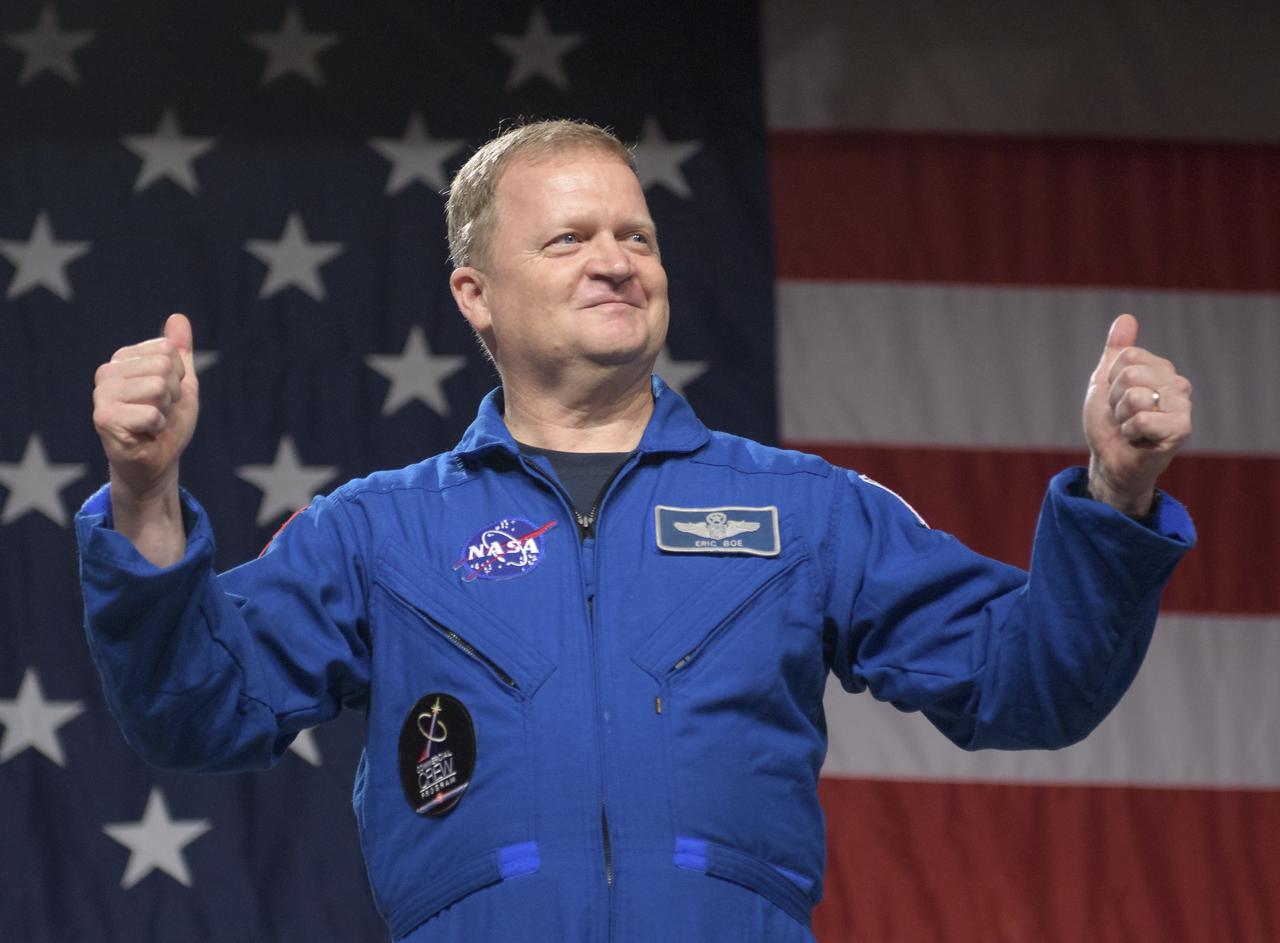
NASA astronaut Eric Boe is seen during a NASA event where it was announced that he, Boeing astronaut Chris Ferguson, and NASA astronaut Nicole Aunapu Mann are assigned to the Boeing CST-100 Starliner Crew Test Flight to the International Space Station, Friday, Aug. 3, 2018 at NASA’s Johnson Space Center in Houston, Texas. Astronauts assigned to crew the first flight tests and missions of the Boeing CST-100 Starliner and SpaceX Crew Dragon where announced during the event. Photo Credit: (NASA/Bill Ingalls)
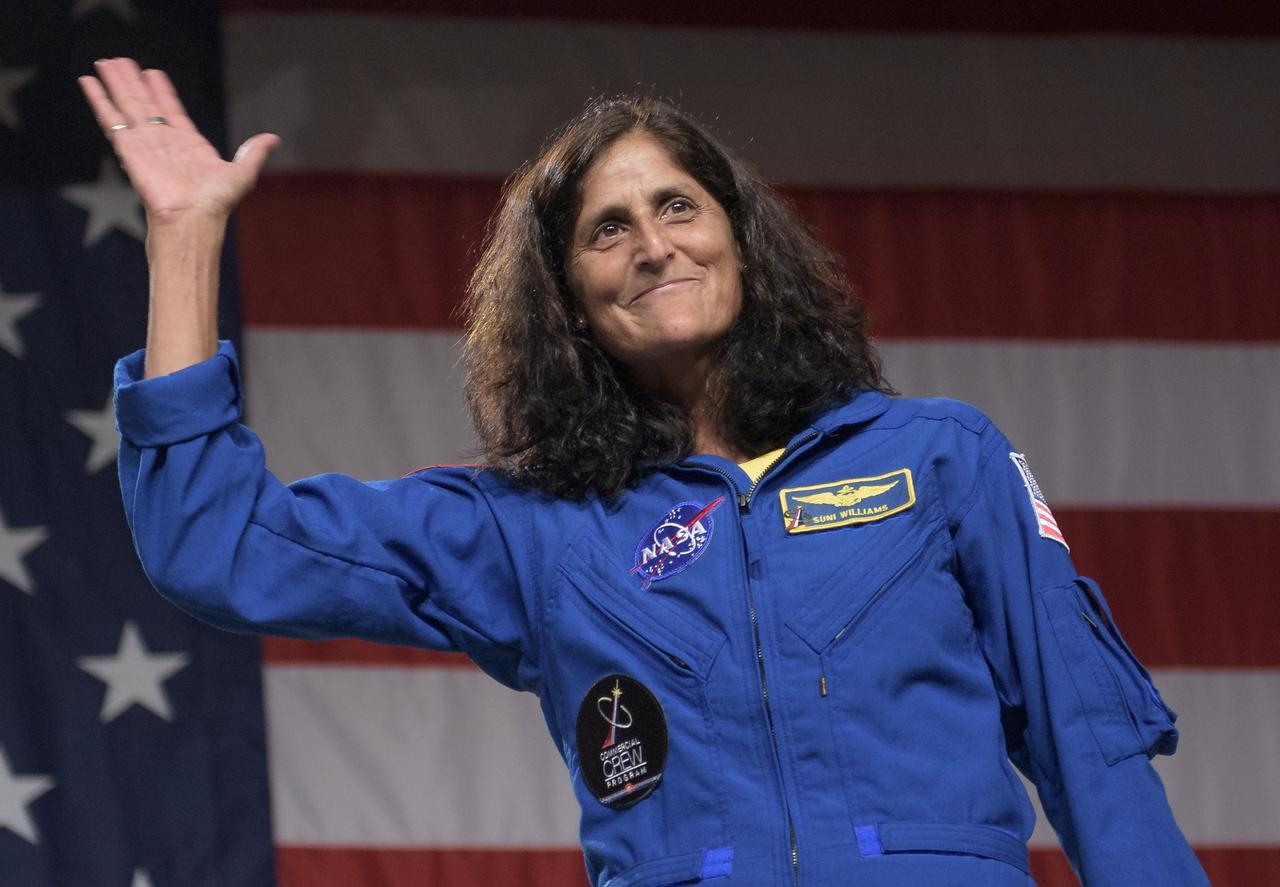
NASA astronaut Suni Williams is seen during a NASA event where it was announced that she, and NASA astronaut Josh Cassada are assigned to the first mission to the International Space Station onboard Boeing’s CST-100 Starliner, Friday, Aug. 3, 2018 at NASA’s Johnson Space Center in Houston, Texas. Astronauts assigned to crew the first flight tests and missions of the Boeing CST-100 Starliner and SpaceX Crew Dragon where announced during the event. Photo Credit: (NASA/Bill Ingalls)
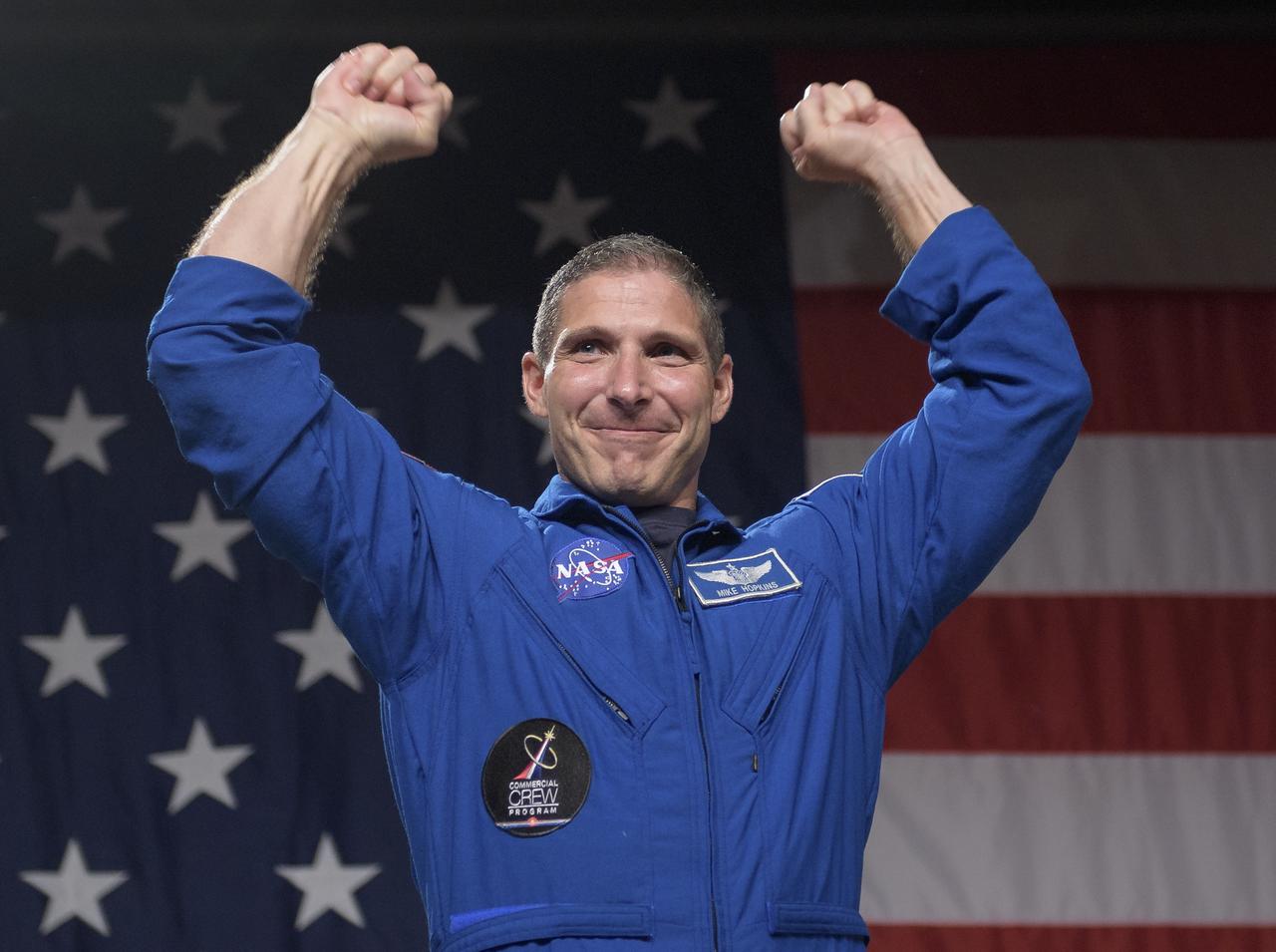
NASA astronaut Mike Hopkins is seen during a NASA event where it was announced that he, and NASA astronaut Victor Glover are assigned to the first mission to the International Space Station onboard SpaceX’s Crew Dragon, Friday, Aug. 3, 2018 at NASA’s Johnson Space Center in Houston, Texas. Astronauts assigned to crew the first flight tests and missions of the Boeing CST-100 Starliner and SpaceX Crew Dragon where announced during the event. Photo Credit: (NASA/Bill Ingalls)

SpaceX President and Chief Operation Officer Gwynne Shotwell gives remarks during a NASA event announcing the astronauts assigned to crew the first flight tests and missions of the Boeing CST-100 Starliner and SpaceX Crew Dragon, Friday, Aug. 3, 2018 at NASA’s Johnson Space Center in Houston, Texas. Photo Credit: (NASA/Bill Ingalls)
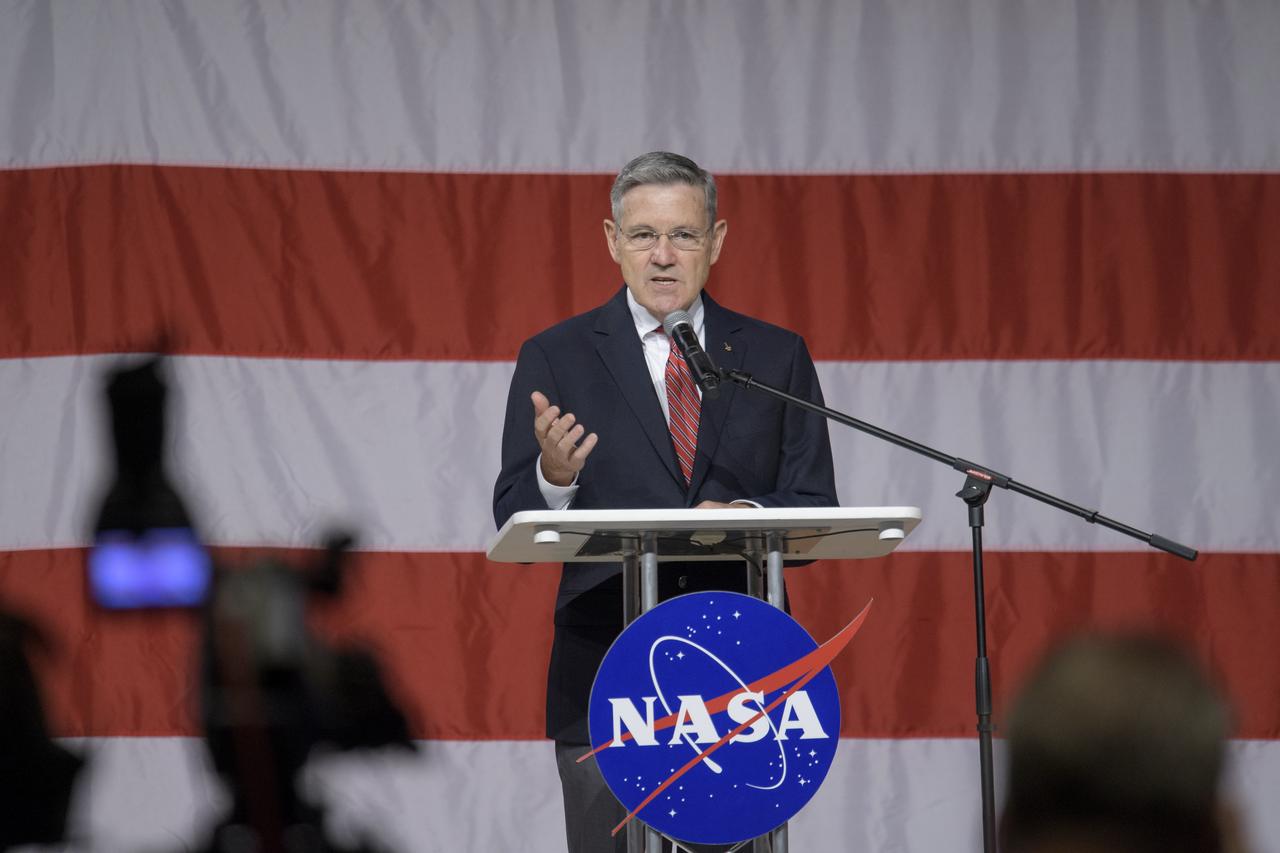
NASA Kennedy Space Center Director Bob Cabana gives remarks during a NASA event announcing the astronauts assigned to crew the first flight tests and missions of the Boeing CST-100 Starliner and SpaceX Crew Dragon, Friday, Aug. 3, 2018 at NASA’s Johnson Space Center in Houston, Texas. Photo Credit: (NASA/Bill Ingalls)
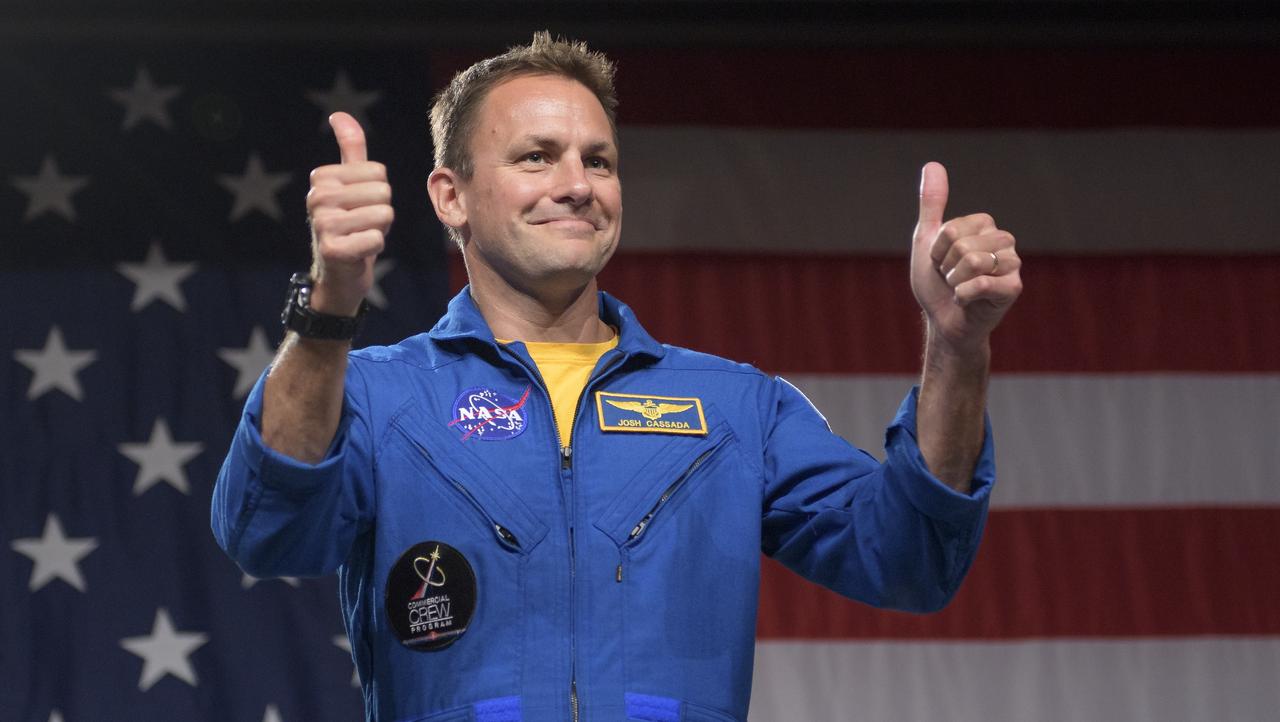
NASA astronaut Josh Cassada is seen during a NASA event where it was announced that he, and NASA astronaut Suni Williams are assigned to the first mission to the International Space Station onboard Boeing’s CST-100 Starliner, Friday, Aug. 3, 2018 at NASA’s Johnson Space Center in Houston, Texas. Astronauts assigned to crew the first flight tests and missions of the Boeing CST-100 Starliner and SpaceX Crew Dragon where announced during the event. Photo Credit: (NASA/Bill Ingalls)
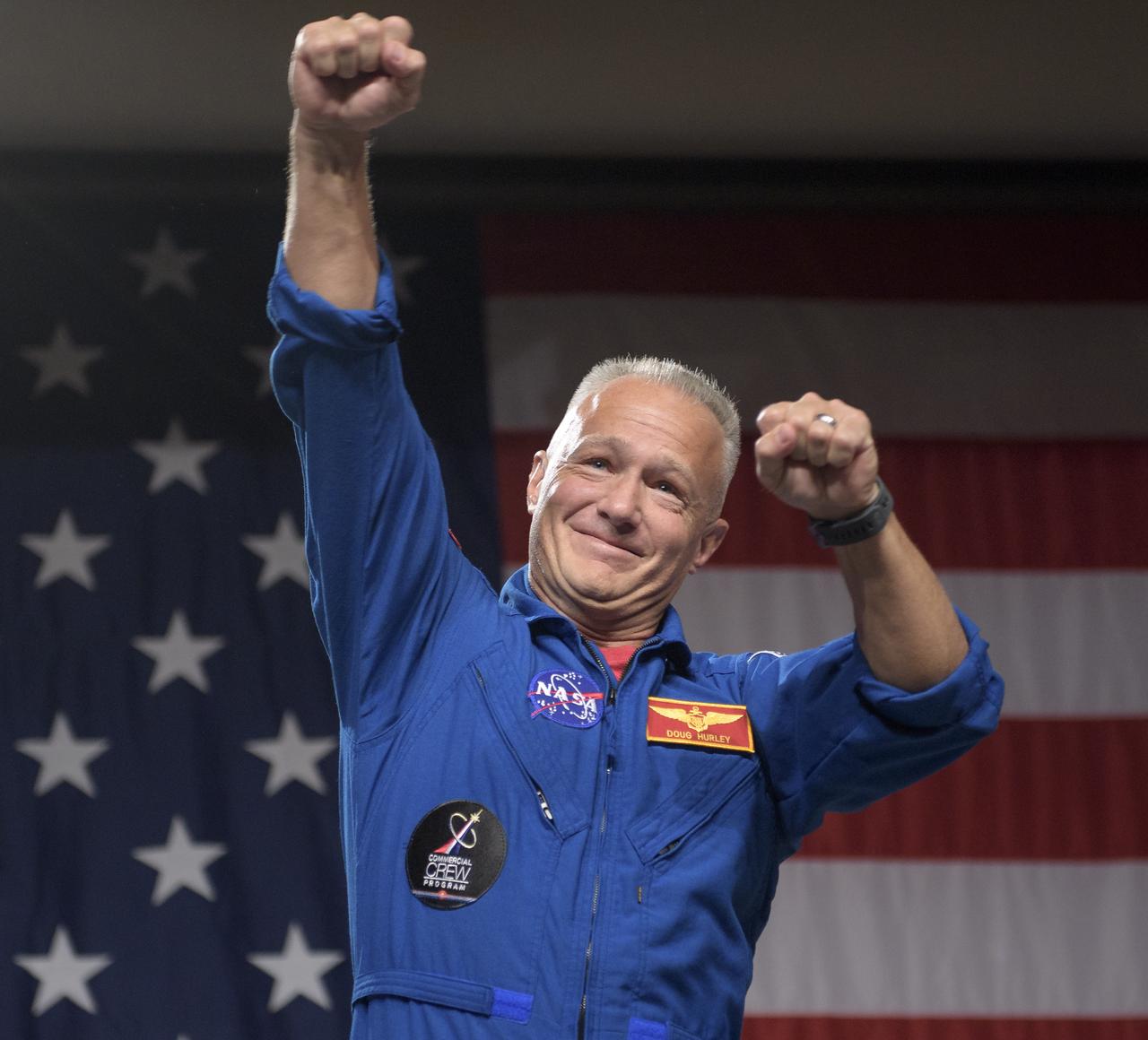
NASA astronaut Doug Hurley is seen during a NASA event where it was announced that he, and NASA astronaut Bob Behnken are assigned to SpaceX’s Crew Dragon Demo-2 flight to the International Space Station, Friday, Aug. 3, 2018 at NASA’s Johnson Space Center in Houston, Texas. Astronauts assigned to crew the first flight tests and missions of the Boeing CST-100 Starliner and SpaceX Crew Dragon where announced during the event. Photo Credit: (NASA/Bill Ingalls)
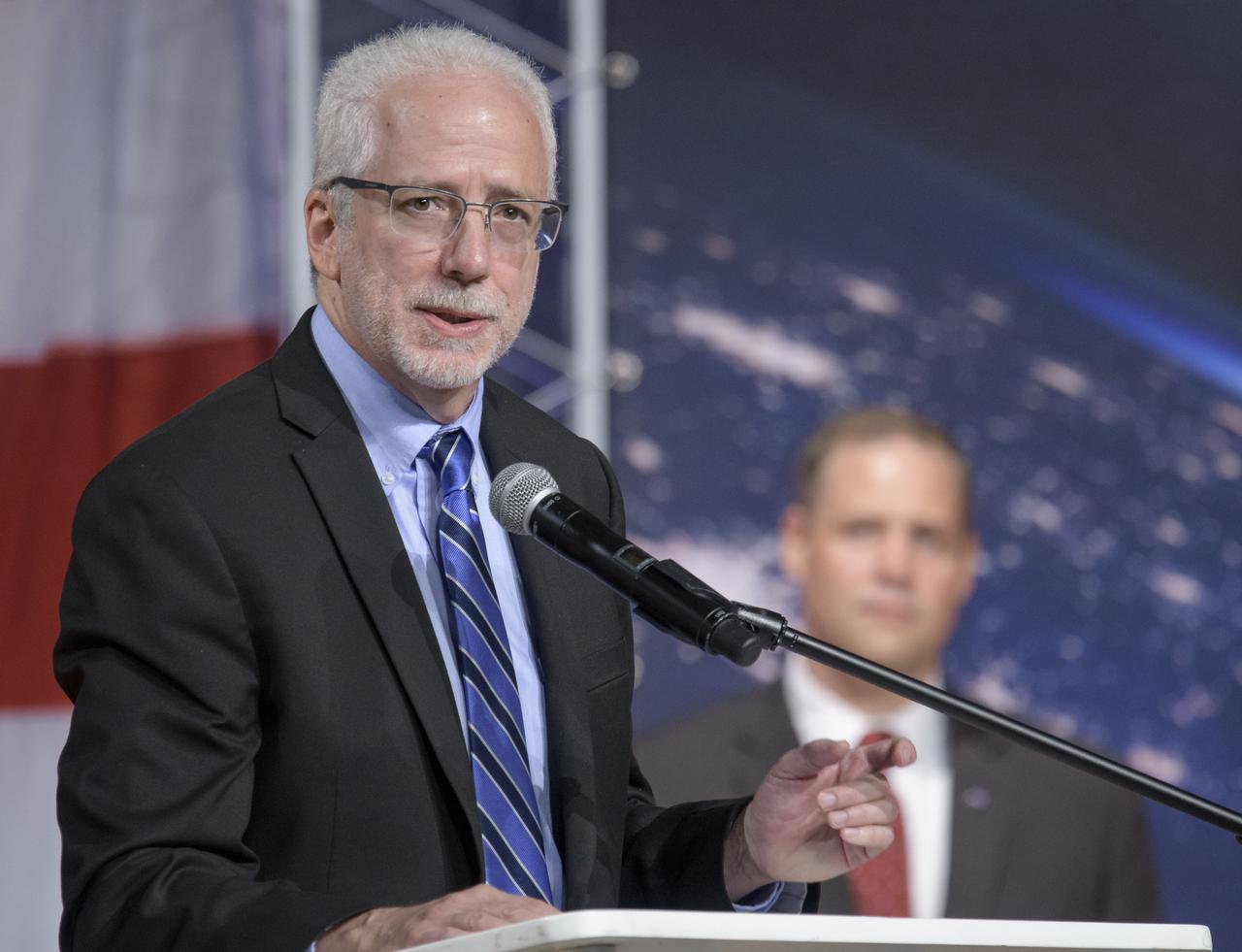
NASA Johnson Space Center Director Mark Geyer gives remarks during a NASA event announcing the astronauts assigned to crew the first flight tests and missions of the Boeing CST-100 Starliner and SpaceX Crew Dragon, Friday, Aug. 3, 2018 at NASA’s Johnson Space Center in Houston, Texas. Photo Credit: (NASA/Bill Ingalls)
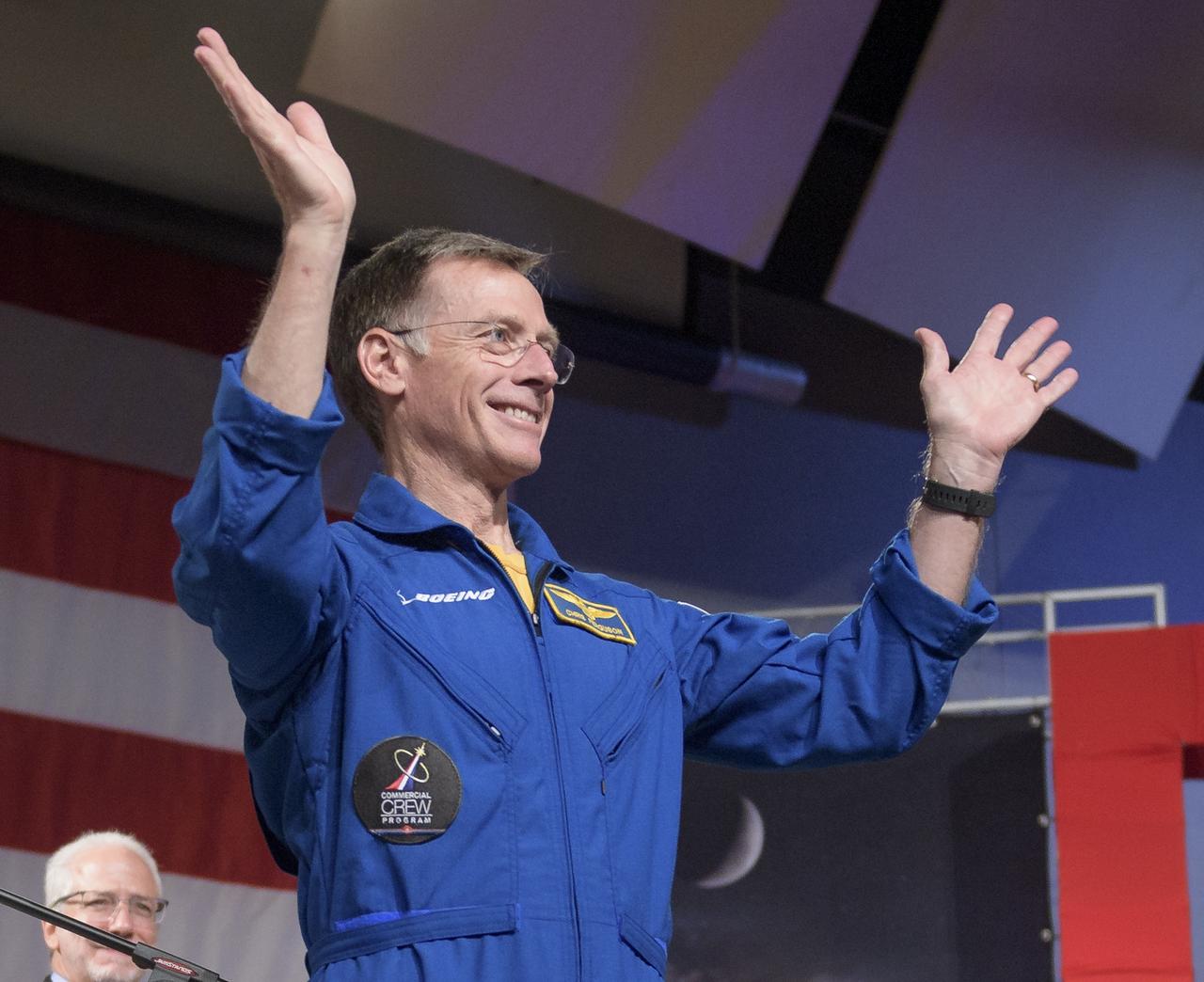
Boeing astronaut Chris Ferguson is seen during a NASA event where it was announced that he, NASA astronaut Eric Boe, and NASA astronaut Nicole Aunapu Mann are assigned to the Boeing CST-100 Starliner Crew Test Flight to the International Space Station, Friday, Aug. 3, 2018 at NASA’s Johnson Space Center in Houston, Texas. Astronauts assigned to crew the first flight tests and missions of the Boeing CST-100 Starliner and SpaceX Crew Dragon where announced during the event. Photo Credit: (NASA/Bill Ingalls)

SpaceX President and Chief Operation Officer Gwynne Shotwell receives an American flag from NASA Administrator Jim Bridenstine during a NASA event announcing the astronauts assigned to crew the first flight tests and missions of the Boeing CST-100 Starliner and SpaceX Crew Dragon, Friday, Aug. 3, 2018 at NASA’s Johnson Space Center in Houston, Texas. The flag is to be flown to the International Space Station onboard SpaceX’s Demo-2 crew flight test and retrieved later during the SpaceX Crew Dragon first mission to station. Photo Credit: (NASA/Bill Ingalls)
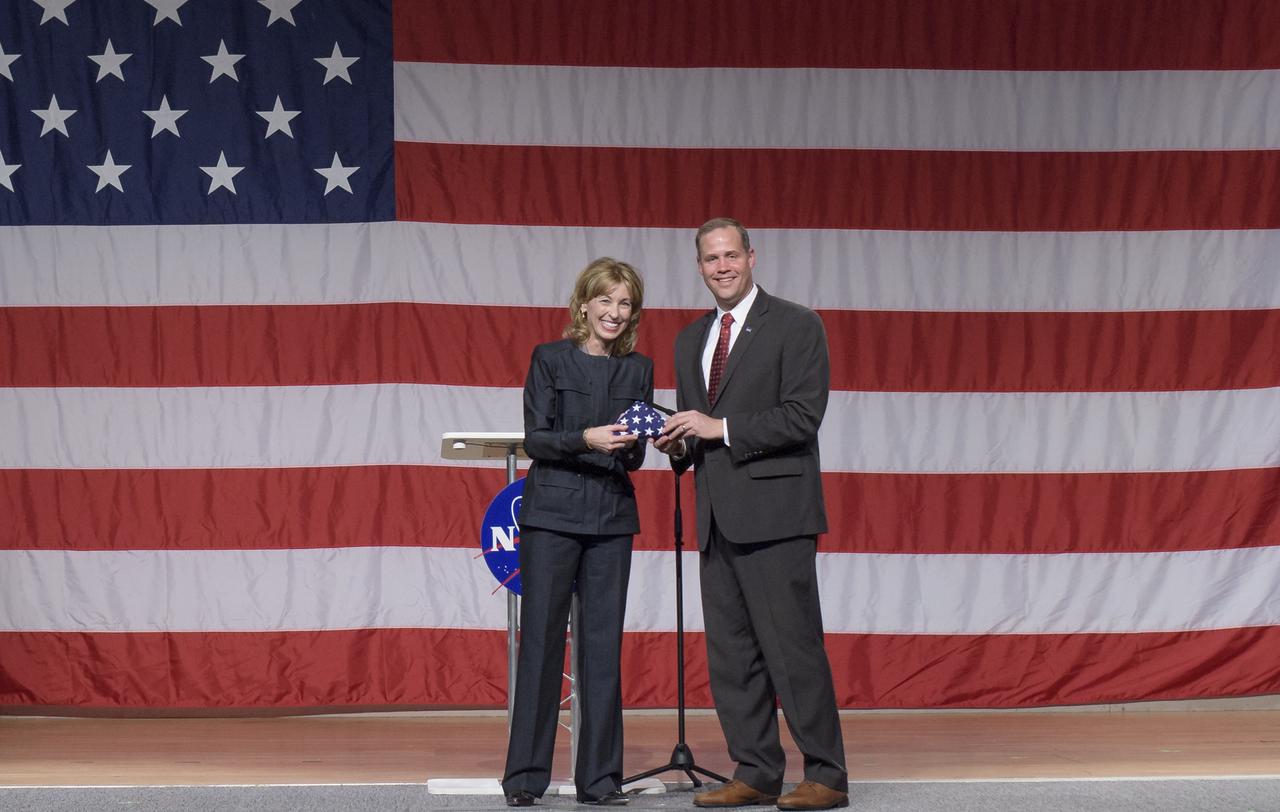
Boeing Defense, Space and Security President and CEO Leanne Caret receives an American flag from NASA Administrator Jim Bridenstine during a NASA event announcing the astronauts assigned to crew the first flight tests and missions of the Boeing CST-100 Starliner and SpaceX Crew Dragon, Friday, Aug. 3, 2018 at NASA’s Johnson Space Center in Houston, Texas. The flag is to be flown to the International Space Station onboard the test flight of Starliner and retrieved later during the first mission of the Starliner. Photo Credit: (NASA/Bill Ingalls)
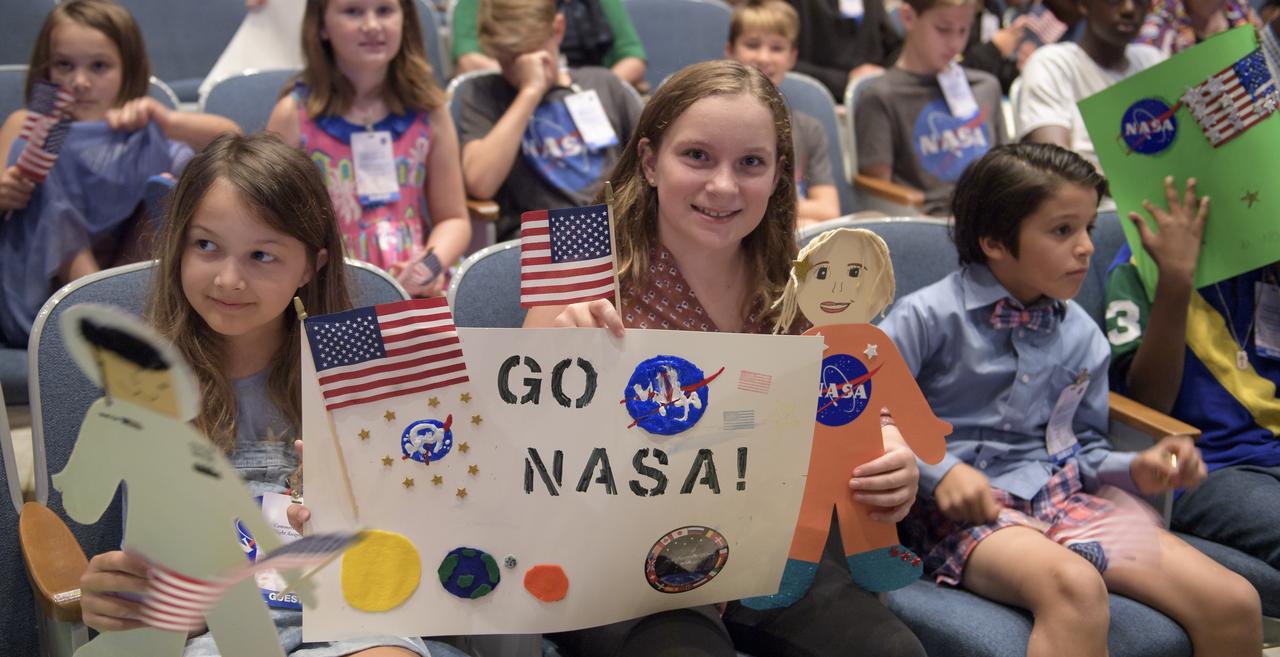
Local area school children are seen during a NASA event announcing the astronauts assigned to crew the first flight tests and missions of the Boeing CST-100 Starliner and SpaceX Crew Dragon, Friday, Aug. 3, 2018 at NASA’s Johnson Space Center in Houston, Texas. Photo Credit: (NASA/Bill Ingalls)
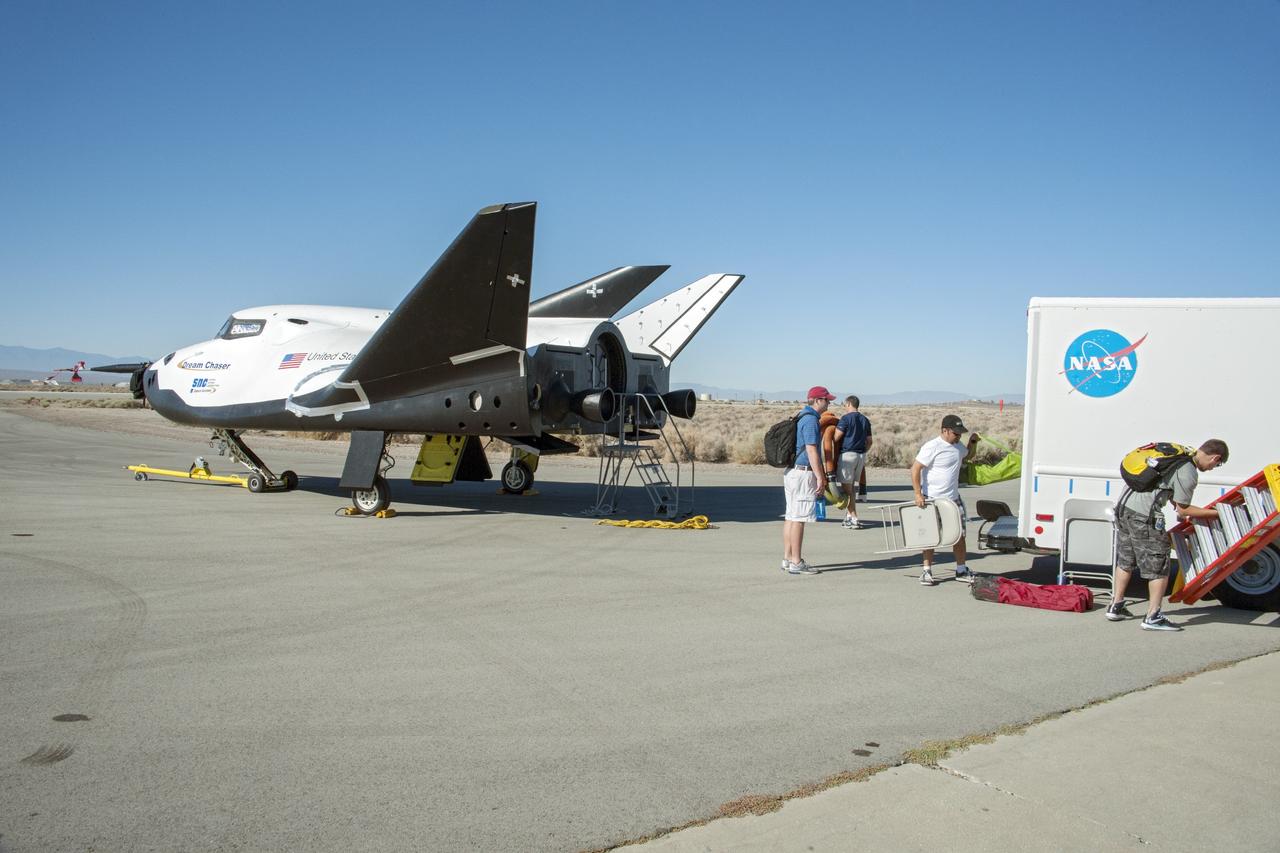
Edwards, Calif. – ED13-0215-016 - Sierra Nevada Corporation SNC Space Systems' team members prepare to tow the Dream Chaser flight vehicle along a concrete runway at NASA's Dryden Flight Research Center in California for range and taxi tow tests. The ground testing will validate the performance of the spacecraft's nose skid, brakes, tires and other systems prior to captive-carry and free-flight tests scheduled for later this year. SNC is one of three companies working with NASA's Commercial Crew Program, or CCP, during the agency's Commercial Crew Integrated Capability, or CCiCap, initiative, which is intended to lead to the availability of commercial human spaceflight services for government and commercial customers. To learn more about CCP and its industry partners, visit www.nasa.gov/commercialcrew. Image credit: NASA/Ken Ulbrich
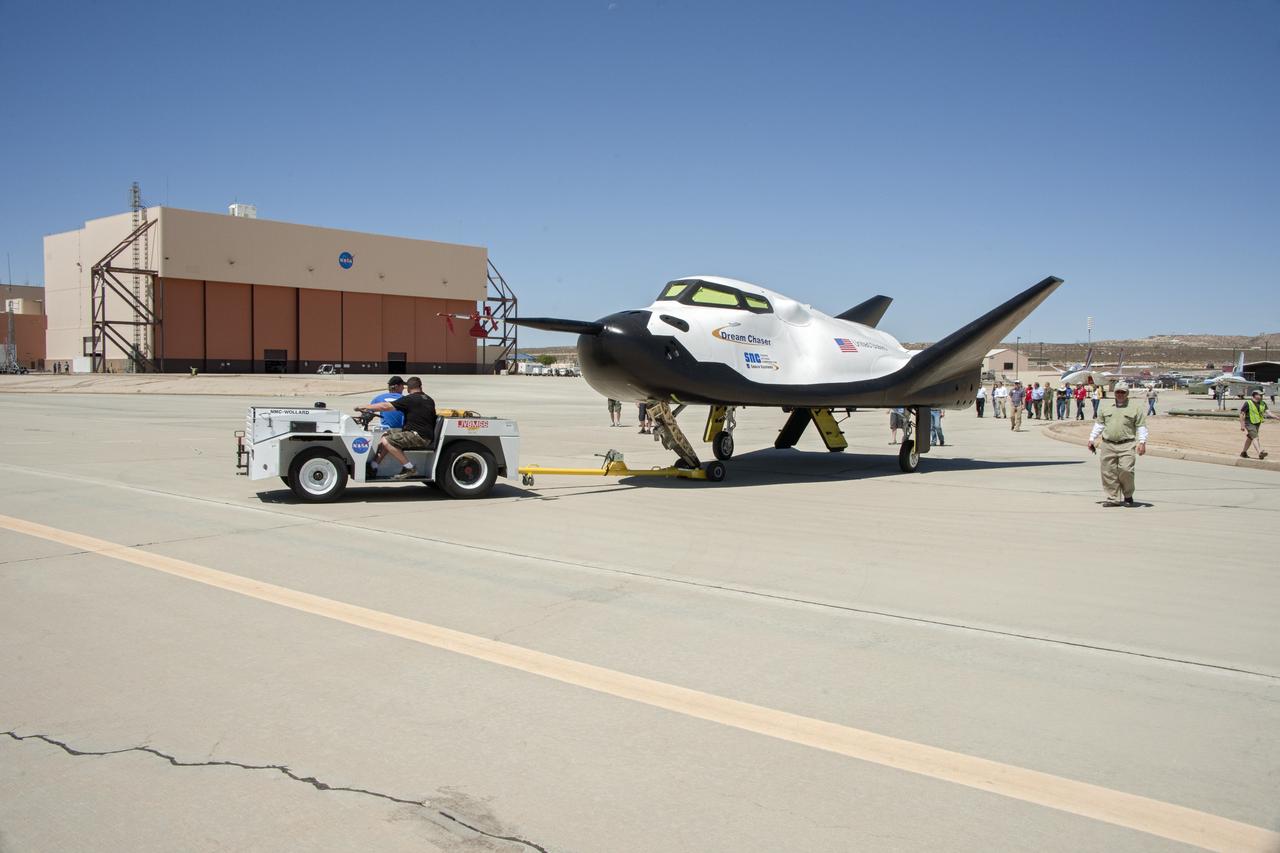
Edwards, Calif. – ED13-164-34 - Sierra Nevada Corporation SNC Space Systems' team members tow the Dream Chaser flight vehicle out to a concrete runway at NASA's Dryden Flight Research Center in California for range and taxi tow tests. The ground testing will validate the performance of the spacecraft's nose skid, brakes, tires and other systems prior to captive-carry and free-flight tests scheduled for later this year. SNC is one of three companies working with NASA's Commercial Crew Program, or CCP, during the agency's Commercial Crew Integrated Capability, or CCiCap, initiative, which is intended to lead to the availability of commercial human spaceflight services for government and commercial customers. To learn more about CCP and its industry partners, visit www.nasa.gov/commercialcrew. Image credit: NASA/Ken Ulbrich
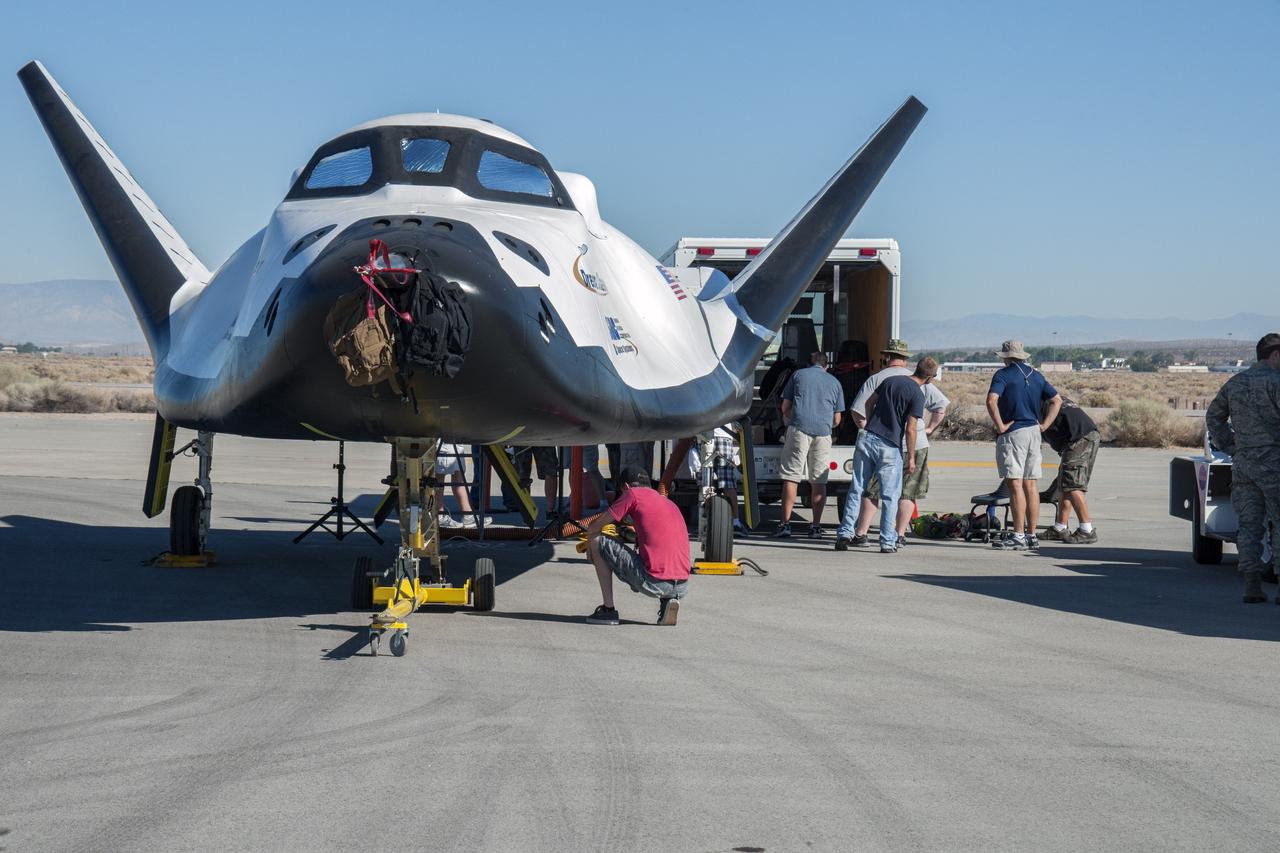
Edwards, Calif. – ED13-0215-024 - Sierra Nevada Corporation SNC Space Systems' team members prepare to tow the Dream Chaser flight vehicle along a concrete runway at NASA's Dryden Flight Research Center in California for range and taxi tow tests. The ground testing will validate the performance of the spacecraft's nose skid, brakes, tires and other systems prior to captive-carry and free-flight tests scheduled for later this year. SNC is one of three companies working with NASA's Commercial Crew Program, or CCP, during the agency's Commercial Crew Integrated Capability, or CCiCap, initiative, which is intended to lead to the availability of commercial human spaceflight services for government and commercial customers. To learn more about CCP and its industry partners, visit www.nasa.gov/commercialcrew. Image credit: NASA/Ken Ulbrich
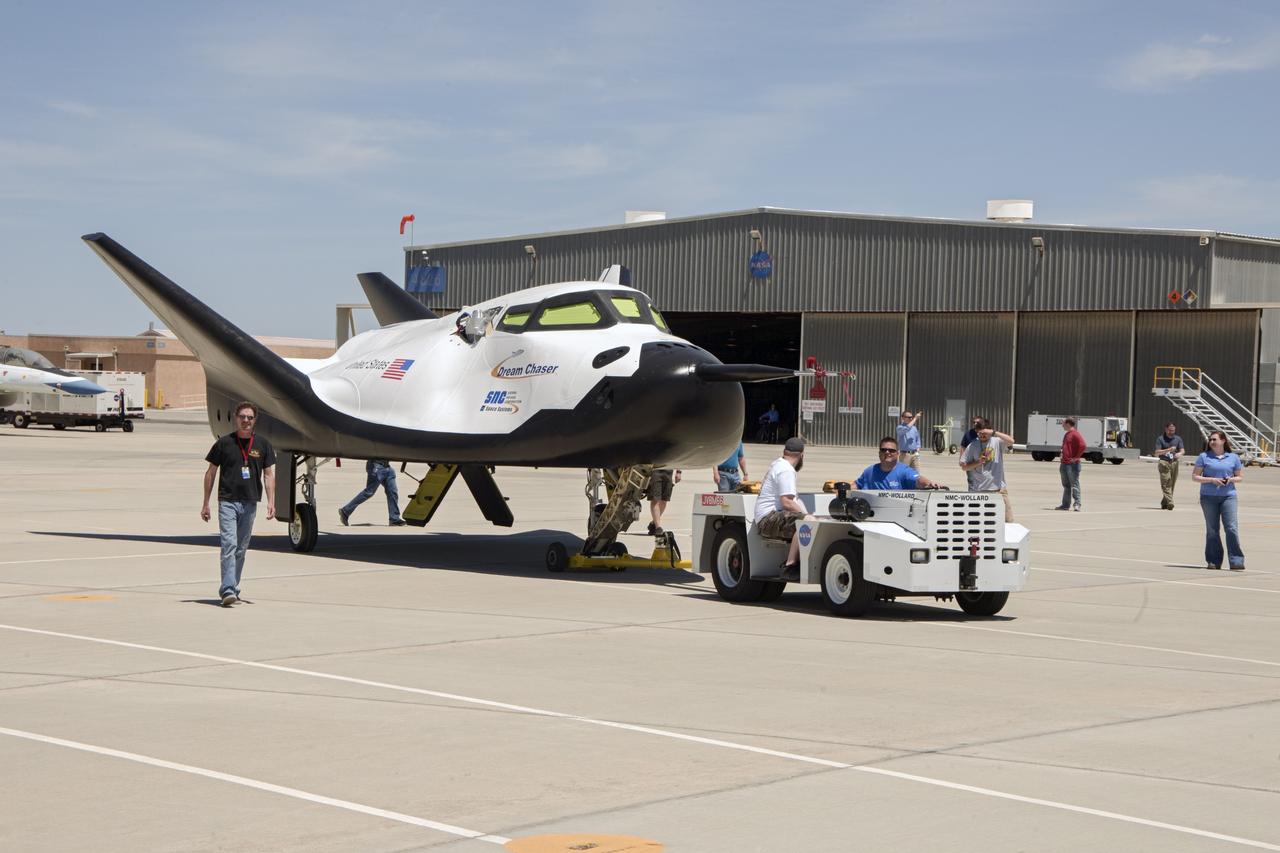
Edwards, Calif. – ED13-161-35 - Sierra Nevada Corporation SNC Space Systems' team members tow the Dream Chaser flight vehicle out to a concrete runway at NASA's Dryden Flight Research Center in California for range and taxi tow tests. The ground testing will validate the performance of the spacecraft's nose skid, brakes, tires and other systems prior to captive-carry and free-flight tests scheduled for later this year. SNC is one of three companies working with NASA's Commercial Crew Program, or CCP, during the agency's Commercial Crew Integrated Capability, or CCiCap, initiative, which is intended to lead to the availability of commercial human spaceflight services for government and commercial customers. To learn more about CCP and its industry partners, visit www.nasa.gov/commercialcrew. Image credit: NASA/Ken Ulbrich
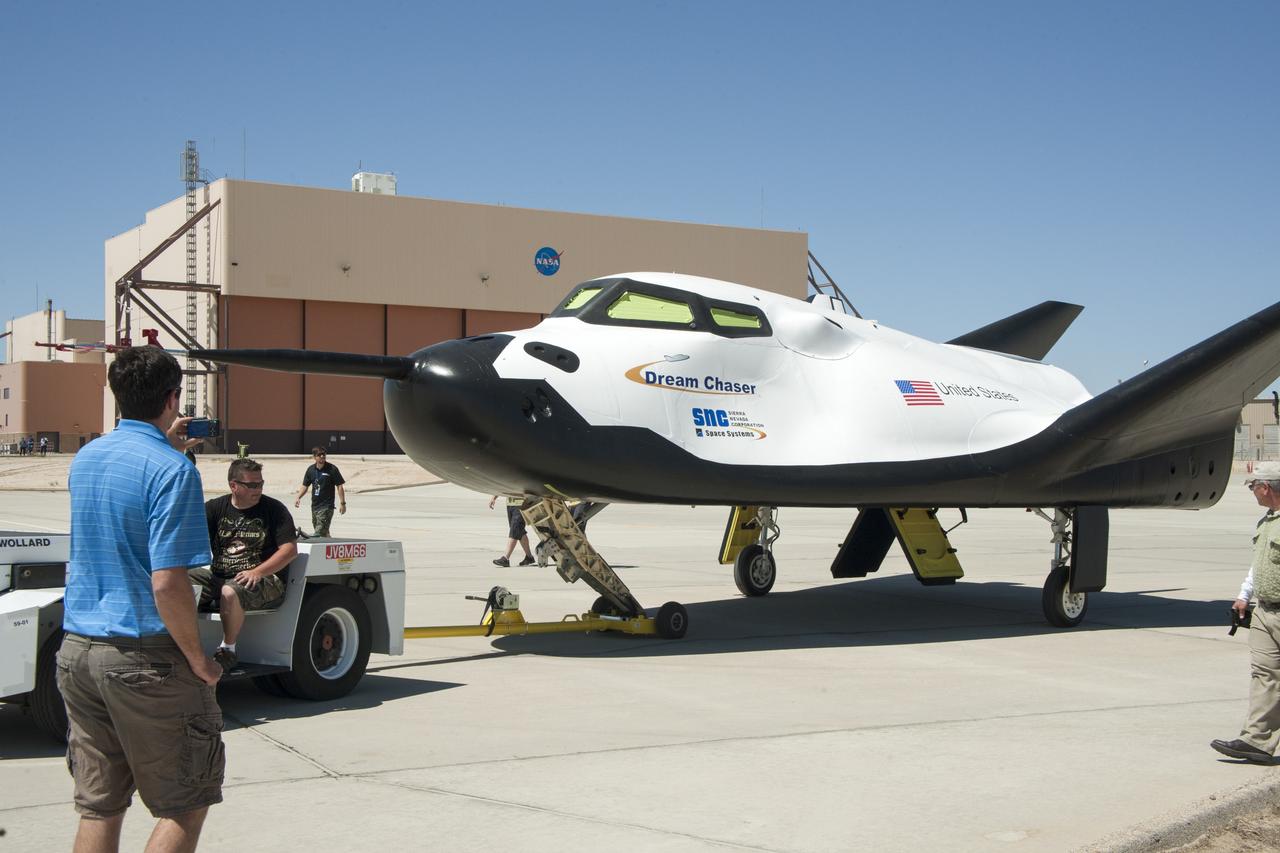
Edwards, Calif. – ED13-164-32 - Sierra Nevada Corporation SNC Space Systems' team members tow the Dream Chaser flight vehicle out to a concrete runway at NASA's Dryden Flight Research Center in California for range and taxi tow tests. The ground testing will validate the performance of the spacecraft's nose skid, brakes, tires and other systems prior to captive-carry and free-flight tests scheduled for later this year. SNC is one of three companies working with NASA's Commercial Crew Program, or CCP, during the agency's Commercial Crew Integrated Capability, or CCiCap, initiative, which is intended to lead to the availability of commercial human spaceflight services for government and commercial customers. To learn more about CCP and its industry partners, visit www.nasa.gov/commercialcrew. Image credit: NASA/Ken Ulbrich
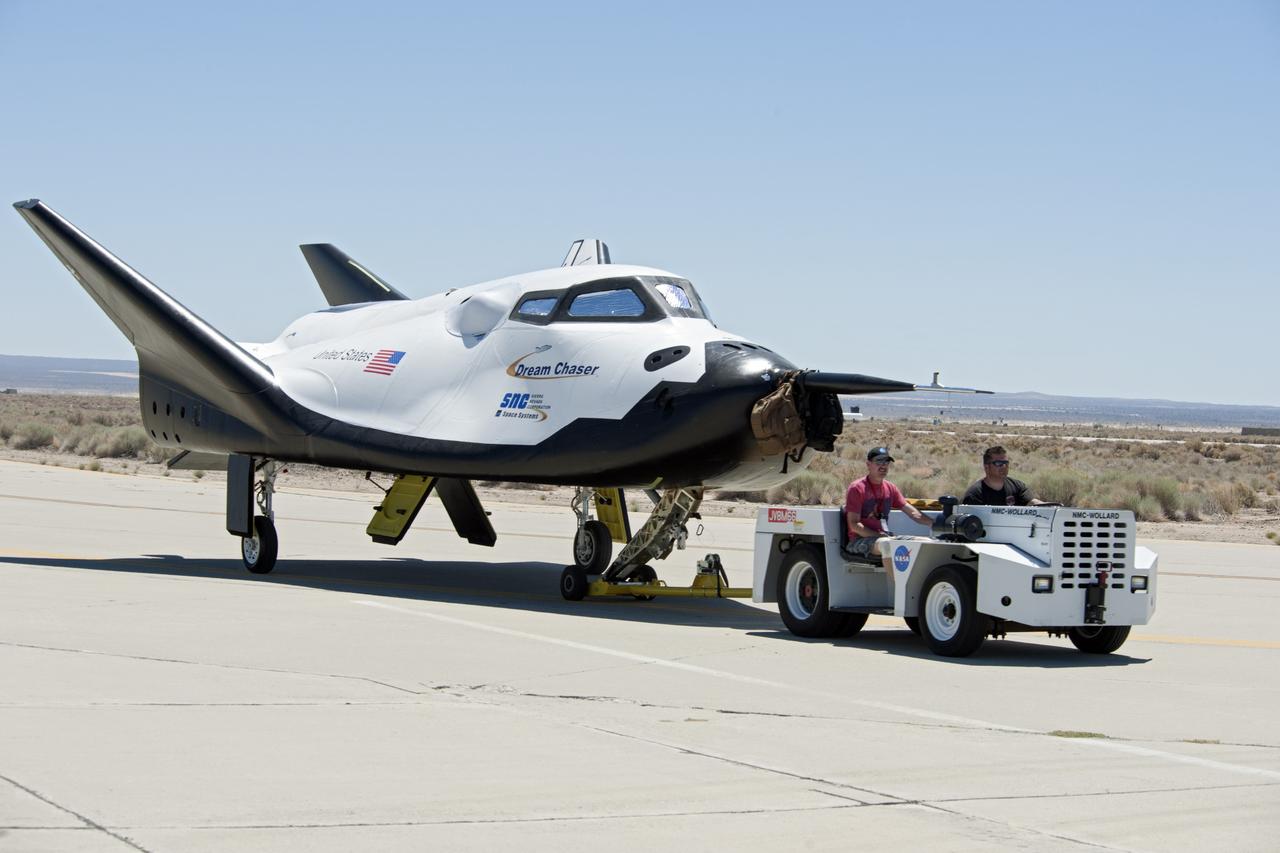
Edwards, Calif. – ED13-0215-072 - Sierra Nevada Corporation SNC Space Systems' team members tow the Dream Chaser flight vehicle along a concrete runway at NASA's Dryden Flight Research Center in California for range and taxi tow tests. The ground testing will validate the performance of the spacecraft's nose skid, brakes, tires and other systems prior to captive-carry and free-flight tests scheduled for later this year. SNC is one of three companies working with NASA's Commercial Crew Program, or CCP, during the agency's Commercial Crew Integrated Capability, or CCiCap, initiative, which is intended to lead to the availability of commercial human spaceflight services for government and commercial customers. To learn more about CCP and its industry partners, visit www.nasa.gov/commercialcrew. Image credit: NASA/Ken Ulbrich
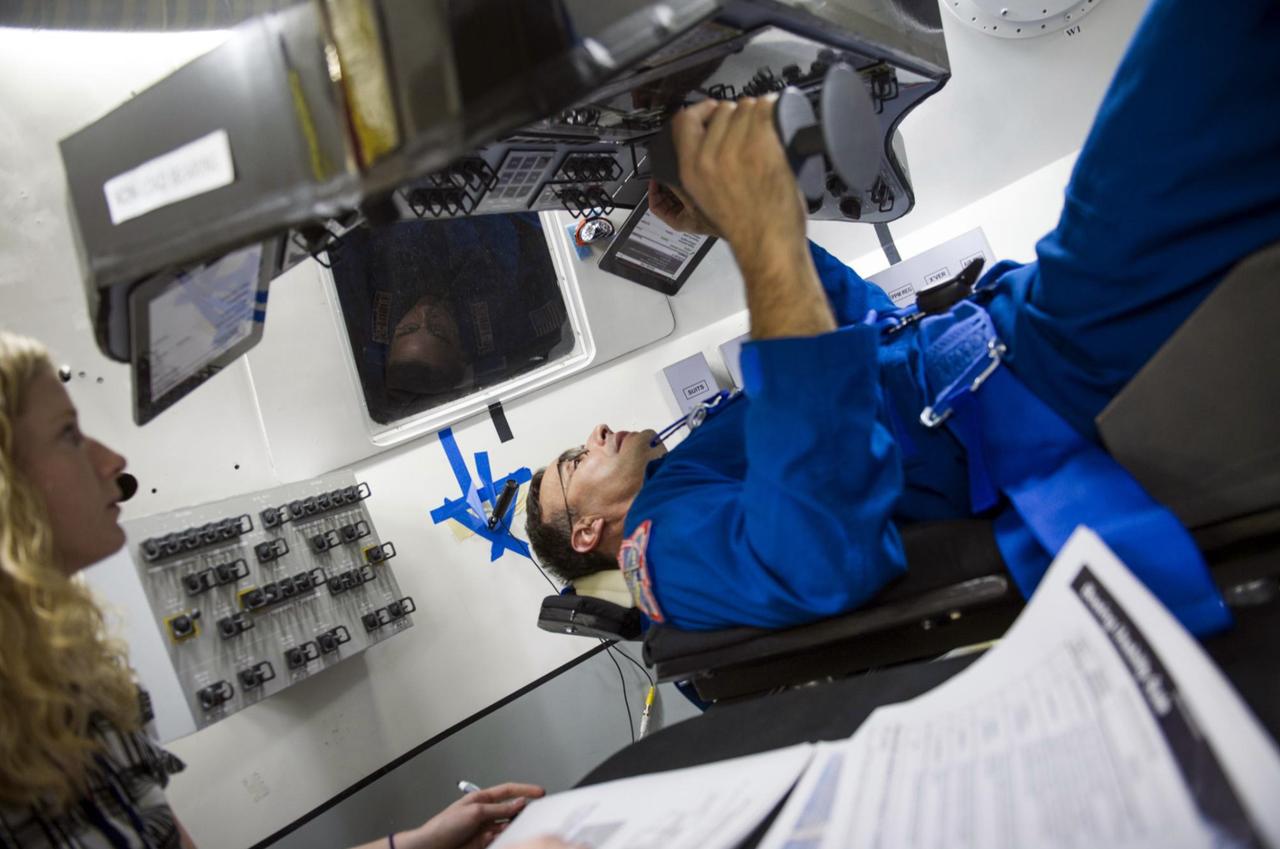
HOUSTON -- NASA Astronaut Lee Archambault performs an evaluation of reach and visibility of controls and displays during an end-of-year interior layout evaluation of The Boeing Company's CST-100 spacecraft. The evaluation at Boeing's Houston Product Support Center in Texas was part of the company's ongoing work supporting its funded Space Act Agreement with NASA's Commercial Crew Program, or CCP, during the Commercial Crew Integrated Capability, or CCiCap, initiative. CCP is intended to lead to the availability of commercial human spaceflight services for government and commercial customers to low-Earth orbit. Future development and certification initiatives eventually will lead to the availability of human spaceflight services for NASA to send its astronauts to the International Space Station, where critical research is taking place daily. For more information about CCP, go to http://www.nasa.gov/commercialcrew. Photo credit: Boeing
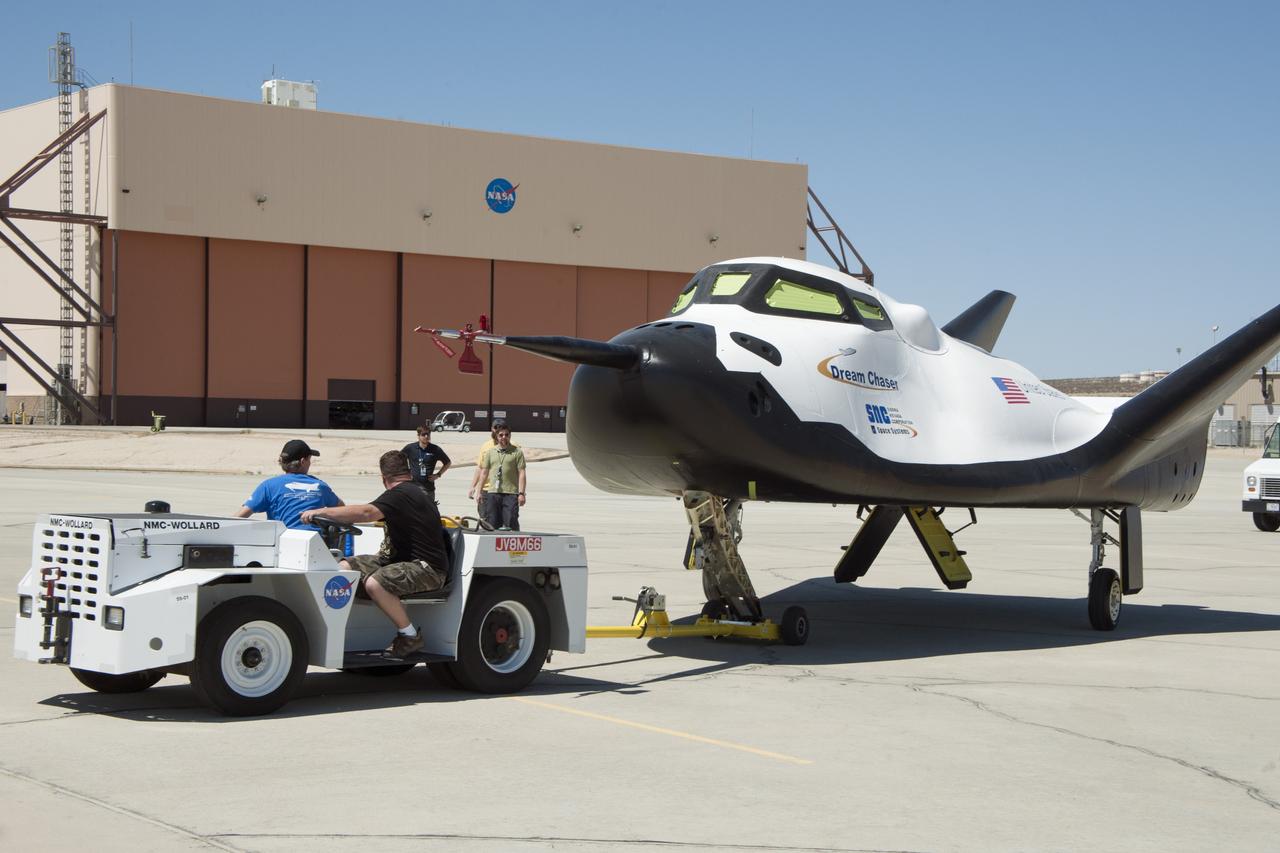
Edwards, Calif. – ED13-164-33 - Sierra Nevada Corporation SNC Space Systems' team members tow the Dream Chaser flight vehicle out to a concrete runway at NASA's Dryden Flight Research Center in California for range and taxi tow tests. The ground testing will validate the performance of the spacecraft's nose skid, brakes, tires and other systems prior to captive-carry and free-flight tests scheduled for later this year. SNC is one of three companies working with NASA's Commercial Crew Program, or CCP, during the agency's Commercial Crew Integrated Capability, or CCiCap, initiative, which is intended to lead to the availability of commercial human spaceflight services for government and commercial customers. To learn more about CCP and its industry partners, visit www.nasa.gov/commercialcrew. Image credit: NASA/Ken Ulbrich
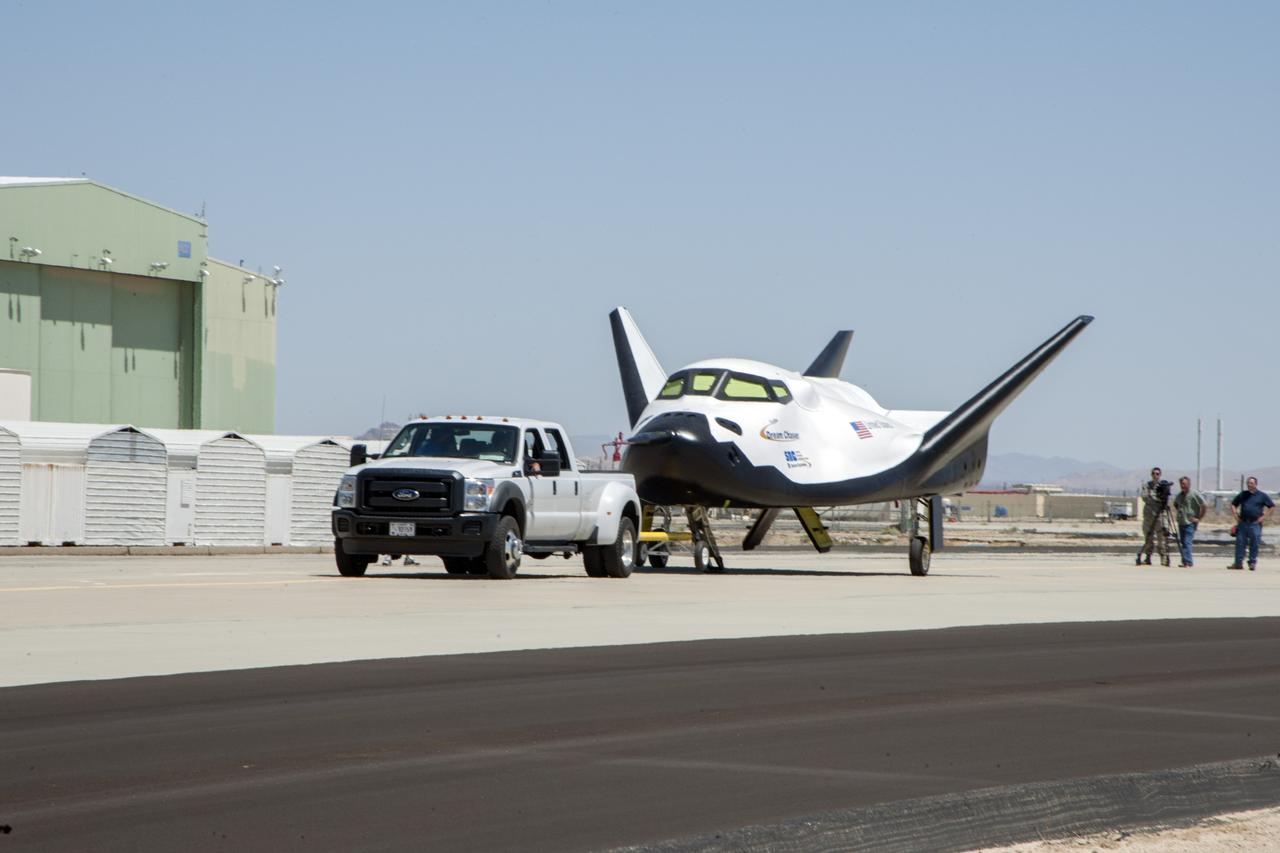
Edwards, Calif. – ED13-164-34 - Sierra Nevada Corporation SNC Space Systems' team members tow the Dream Chaser flight vehicle out to a concrete runway at NASA's Dryden Flight Research Center in California for range and taxi tow tests. The ground testing will validate the performance of the spacecraft's nose skid, brakes, tires and other systems prior to captive-carry and free-flight tests scheduled for later this year. SNC is one of three companies working with NASA's Commercial Crew Program, or CCP, during the agency's Commercial Crew Integrated Capability, or CCiCap, initiative, which is intended to lead to the availability of commercial human spaceflight services for government and commercial customers. To learn more about CCP and its industry partners, visit www.nasa.gov/commercialcrew. Image credit: NASA/Ken Ulbrich
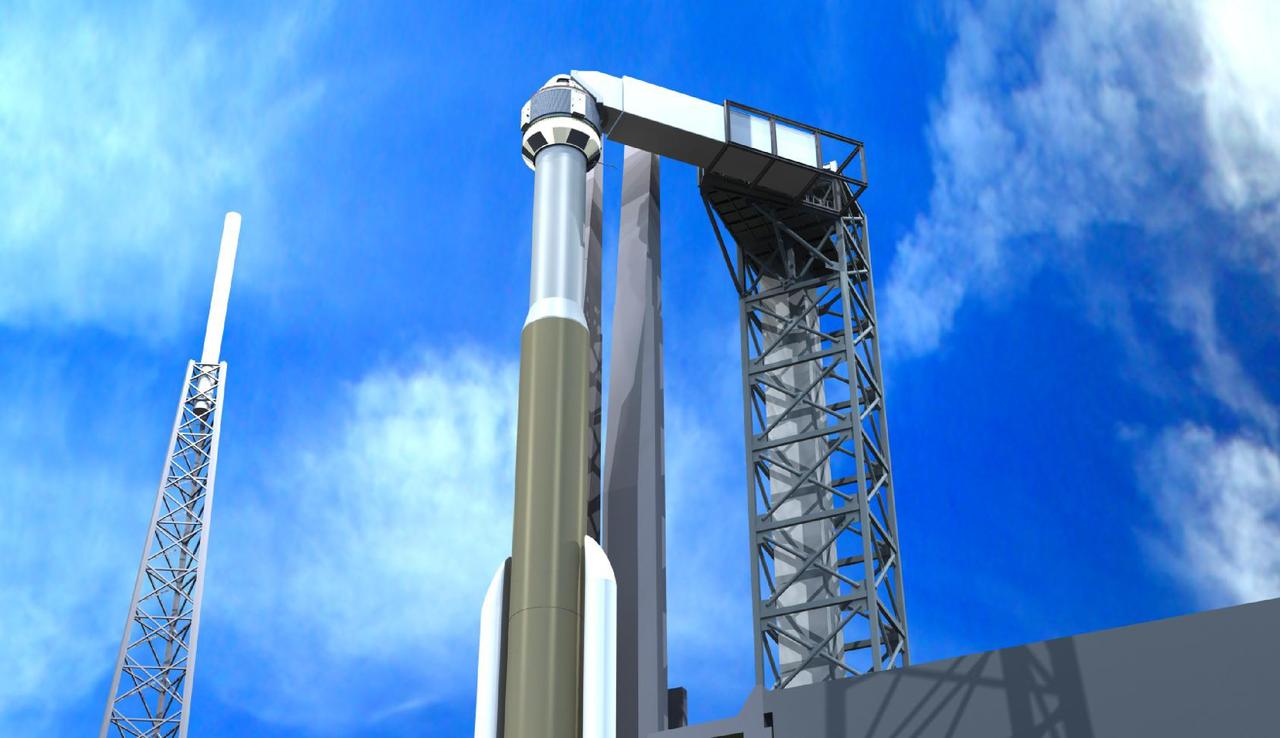
CAPE CANAVERAL, Fla. -- This is an artist's concept of The Boeing Company's CST-100 spacecraft and United Launch Alliance, or ULA, Atlas V rocket at Space Launch Complex 41 on Cape Canaveral Air Force Station in Florida. The integrated system is being developed in collaboration with NASA's Commercial Crew Program during the Commercial Crew Integrated Capability, or CCiCap, initiative. Image credit: Boeing
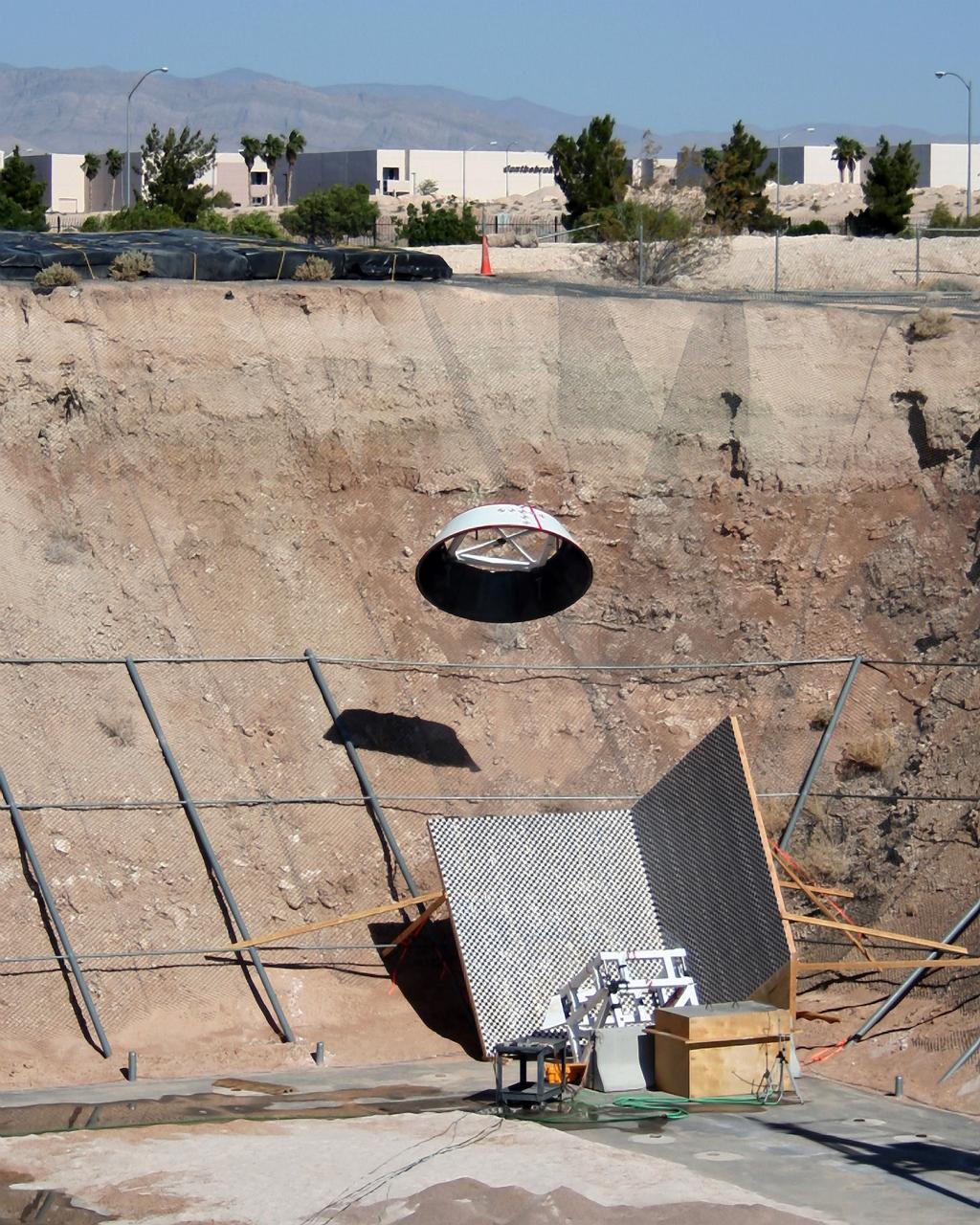
LAS VEGAS -- The Boeing Company tests the forward heat shield FHS jettison system of its CST-100 spacecraft at the Bigelow Aerospace facility in Las Vegas as part of an agreement with NASA's Commercial Crew Program CCP during Commercial Crew Development Round 2 CCDev2) activities. The FHS will protect the spacecraft's parachutes, rendezvous-and-docking sensor packages, and docking mechanism during ascent and re-entry. During a mission to low Earth orbit, the shield will be jettisoned after re-entry heating, allowing the spacecraft's air bags to deploy for a safe landing. In 2011, NASA selected Boeing for CCDev2 to mature the design and development of a crew transportation system with the overall goal of accelerating a United States-led capability to the International Space Station. The goal of CCP is to drive down the cost of space travel as well as open up space to more people than ever before by balancing industry’s own innovative capabilities with NASA's 50 years of human spaceflight experience. Six other aerospace companies also were selected to mature launch vehicle and spacecraft designs under CCDev2, including Alliant Techsystems Inc. ATK, Excalibur Almaz Inc., Blue Origin, Sierra Nevada Corp. SNC, Space Exploration Technologies SpaceX, and United Launch Alliance ULA. For more information, visit www.nasa.gov/commercialcrew. Image credit: Boeing The Ground Systems Development and Operations Program is developing the necessary ground systems, infrastructure and operational approaches required to safely process, assemble, transport and launch the next generation of rockets and spacecraft in support of NASA’s exploration objectives. Future work also will replace the antiquated communications, power and vehicle access resources with modern efficient systems. Some of the utilities and systems slated for replacement have been used since the VAB opened in 1965. For more information, visit http://www.nasa.gov/exploration/systems/ground/index.html Photo credit: Boeing
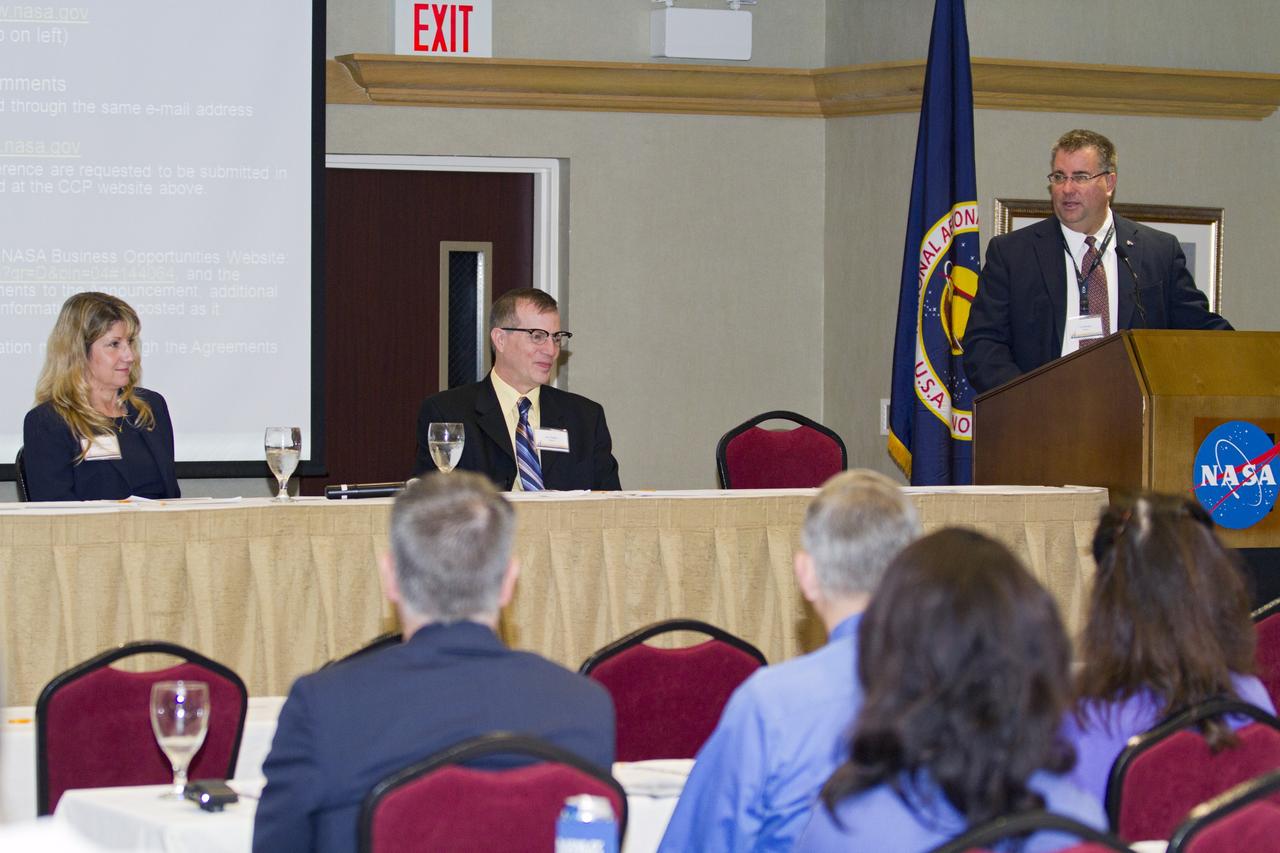
COCOA BEACH, Fla. -- Ed Mango, program manager for NASA's Commercial Crew Program CCP, talks to industry partners and stakeholders during a preproposal conference at the Courtyard Marriott in Cocoa Beach, Fla. At left, are Cheryl McPhillips, the NASA Participant Evaluation Panel PEP chair for the Commercial Crew Program CCP, and Lee Pagel, the NASA PEP deputy. The meeting focused on information related to NASA's release of the Commercial Crew Integrated Capability CCiCap Announcement for Proposals on Feb. 7. More than 50 people from 25 aerospace companies attended the conference to find out what the space agency would be looking for in terms of milestones, funding, schedules, strategies, safety cultures, business modules and eventual flight certification standards of integrated crew space transportation systems. The goal of the CCiCap is to develop an indigenous U.S. transportation system that can safely, affordably and routinely fly to low Earth orbit destinations, including the International Space Station. Proposals are due March 23 and NASA plans to award multiple Space Act Agreements, valued from $300 million to $500 million each, toward the development of fully integrated commercial crew transportation systems in the summer of 2012. For more information, visit www.nasa.gov/commercialcrew Photo credit: Kim Shiflett The Ground Systems Development and Operations Program is developing the necessary ground systems, infrastructure and operational approaches required to safely process, assemble, transport and launch the next generation of rockets and spacecraft in support of NASA’s exploration objectives. Future work also will replace the antiquated communications, power and vehicle access resources with modern efficient systems. Some of the utilities and systems slated for replacement have been used since the VAB opened in 1965. For more information, visit http://www.nasa.gov/exploration/systems/ground/index.html Photo credit: NASA/Kim Shiflett
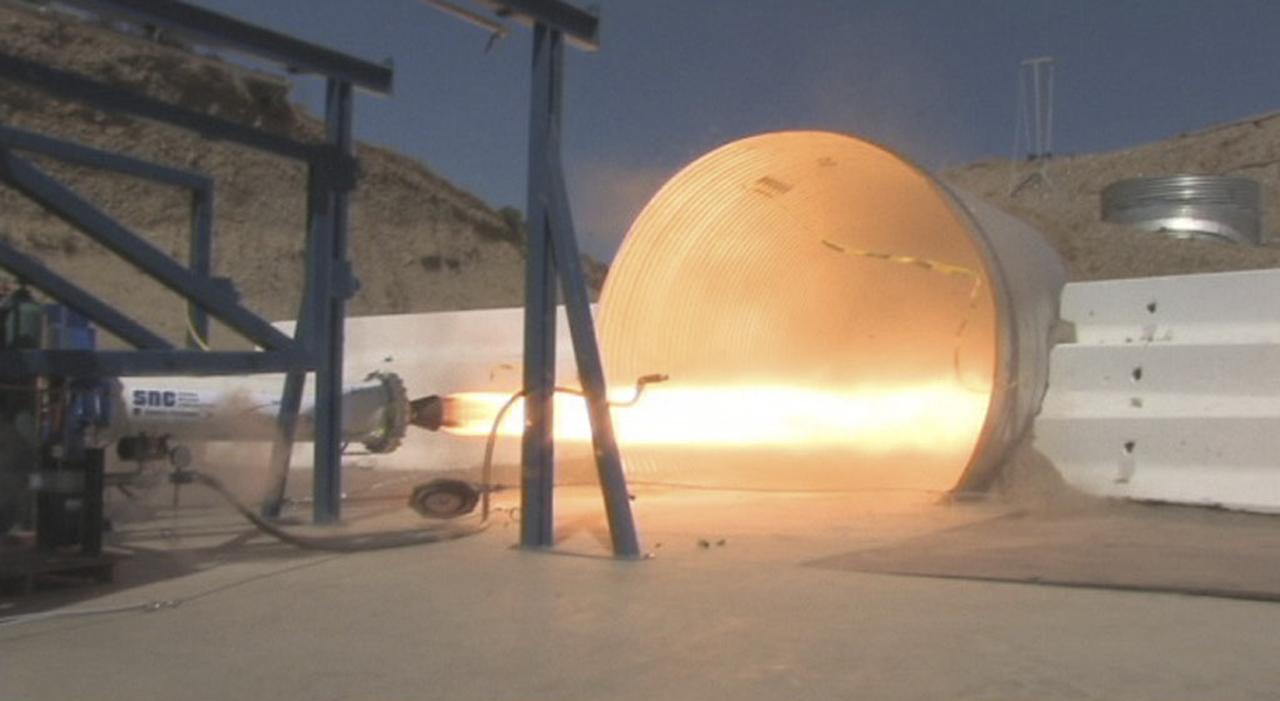
POWAY, Calif. – During NASA's Commercial Crew Development Round 1 CCDev1 activities, the rocket motor under development by Sierra Nevada Corp. for its Dream Chaser spacecraft successfully fires at the company's rocket test facility located near San Diego. NASA team members reviewed the motor's system and then watched it fire three times in one day, including one firing under vacuum ignition conditions. The tests, which simulated a complete nominal mission profile, demonstrated the multiple restart capability of Sierra Nevada's hybrid rocket. Two of the company's designed and developed hybrid rocket motors will be used as the main propulsion system on the Dream Chaser after launching aboard an Atlas V rocket. Dream Chaser is one of five systems NASA invested in during CCDev1 in order to aid in the innovation and development of American-led commercial capabilities for crew transportation and rescue services to and from the International Space Station and other low Earth orbit destinations. In 2011, NASA's Commercial Crew Program CCP entered into another funded Space Act Agreement with Sierra Nevada for the second round of commercial crew development CCDev2) so the company could further develop its Dream Chaser spacecraft for NASA transportation services. For information about CCP, visit www.nasa.gov/commercialcrew. Photo credit: Sierra Nevada Corp.
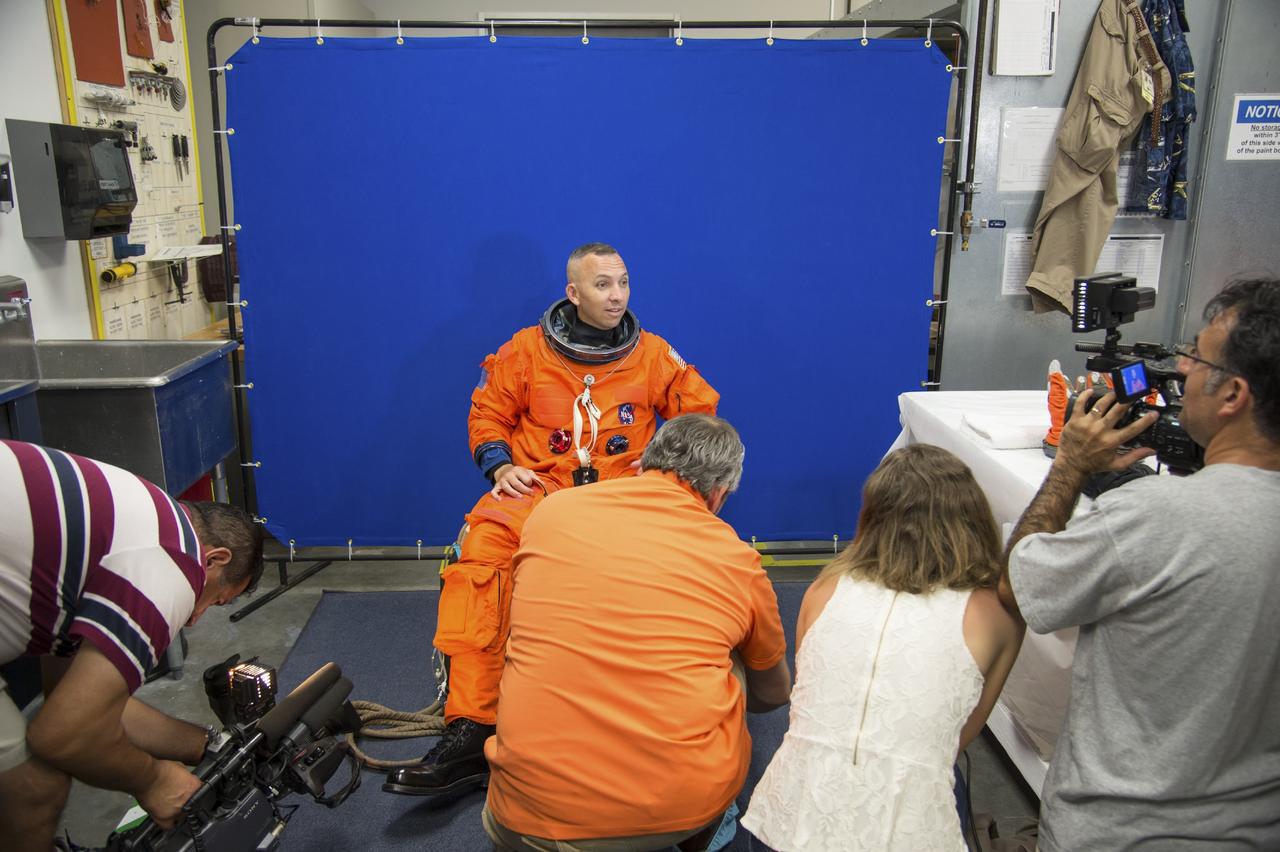
HOUSTON - JSC2013e068329 - NASA astronaut Randy Bresnik is interviewed by the media before he enters The Boeing Company's CST-100 spacecraft for a fit check evaluation at the company's Houston Product Support Center. Bresnik's fit check will help evaluate a crew's maneuverability in the spacecraft and test communications. Boeing's CST-100 is being designed to transport crew members or a mix of crew and cargo to low-Earth-orbit destinations. The evaluation is part of the ongoing work supporting Boeing's funded Space Act Agreement with NASA's Commercial Crew Program, or CCP, during the agency's Commercial Crew Integrated Capability, or CCiCap, initiative. CCiCap is intended to make commercial human spaceflight services available for government and commercial customers. To learn more about CCP, visit http://www.nasa.gov/commercialcrew. Photo credit: NASA/Robert Markowitz
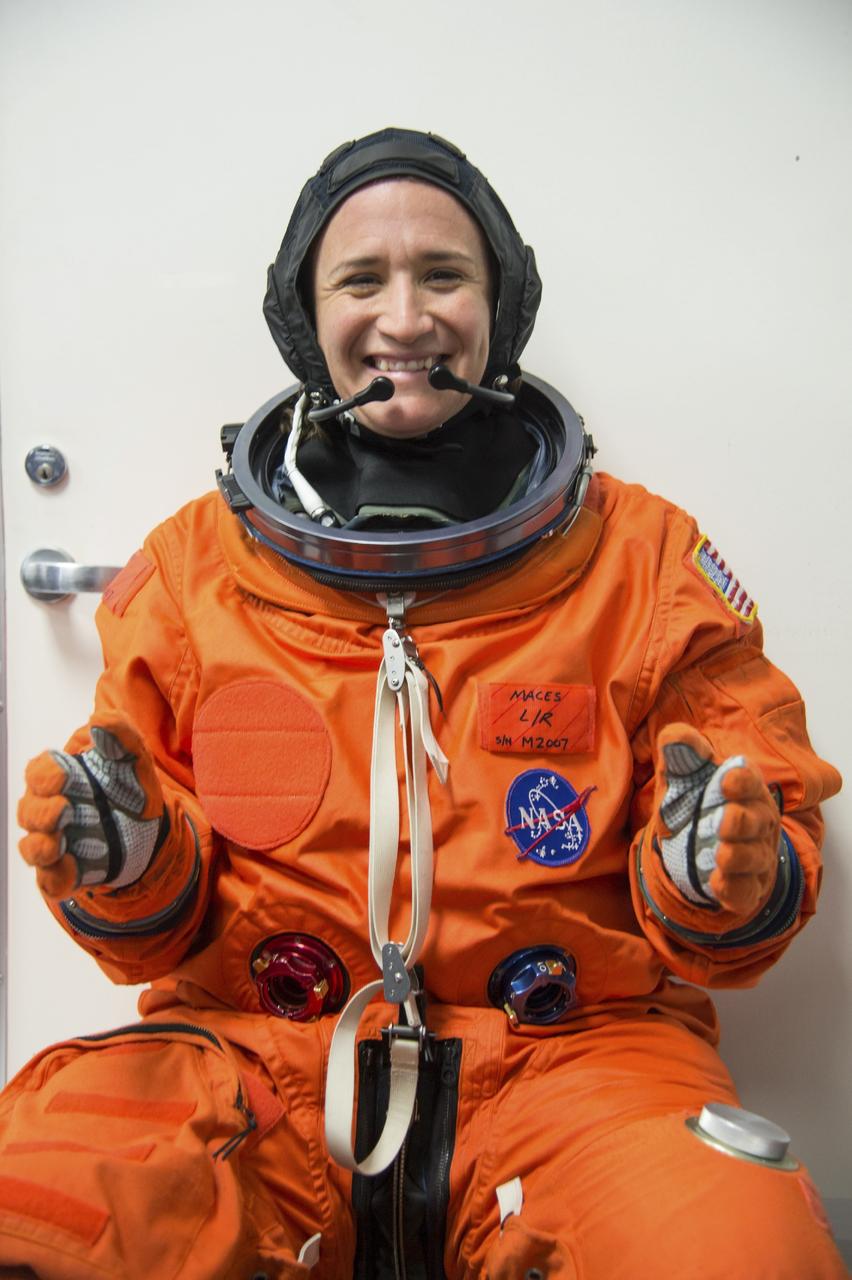
HOUSTON - JSC2013e068260 - NASA astronaut Serena Aunon suits up for a fit check evaluation of The Boeing Company's CST-100 spacecraft at the company's Houston Product Support Center. Aunon's fit check will help evaluate a crew's maneuverability in the spacecraft and test communications. Boeing's CST-100 is being designed to transport crew members or a mix of crew and cargo to low-Earth-orbit destinations. The evaluation is part of the ongoing work supporting Boeing's funded Space Act Agreement with NASA's Commercial Crew Program, or CCP, during the agency's Commercial Crew Integrated Capability, or CCiCap, initiative. CCiCap is intended to make commercial human spaceflight services available for government and commercial customers. To learn more about CCP, visit http://www.nasa.gov/commercialcrew. Photo credit: NASA/Robert Markowitz
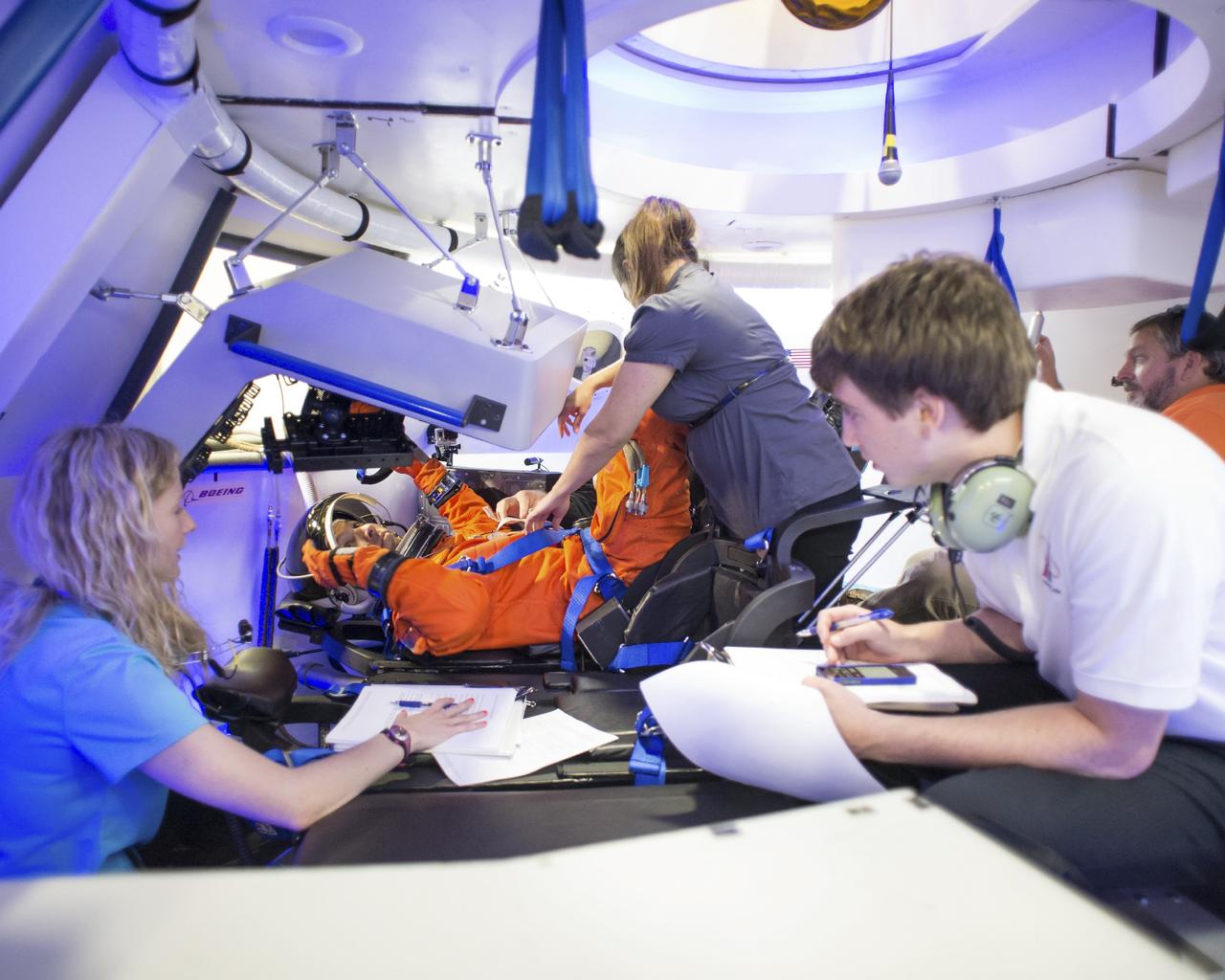
HOUSTON - JSC2013e068344 - NASA astronaut Randy Bresnik gets into position in The Boeing Company's CST-100 spacecraft for a fit check evaluation at the company's Houston Product Support Center. Bresnik's fit check will help evaluate a crew's maneuverability in the spacecraft and test communications. Boeing's CST-100 is being designed to transport crew members or a mix of crew and cargo to low-Earth-orbit destinations. The evaluation is part of the ongoing work supporting Boeing's funded Space Act Agreement with NASA's Commercial Crew Program, or CCP, during the agency's Commercial Crew Integrated Capability, or CCiCap, initiative. CCiCap is intended to make commercial human spaceflight services available for government and commercial customers. To learn more about CCP, visit http://www.nasa.gov/commercialcrew. Photo credit: NASA/Robert Markowitz
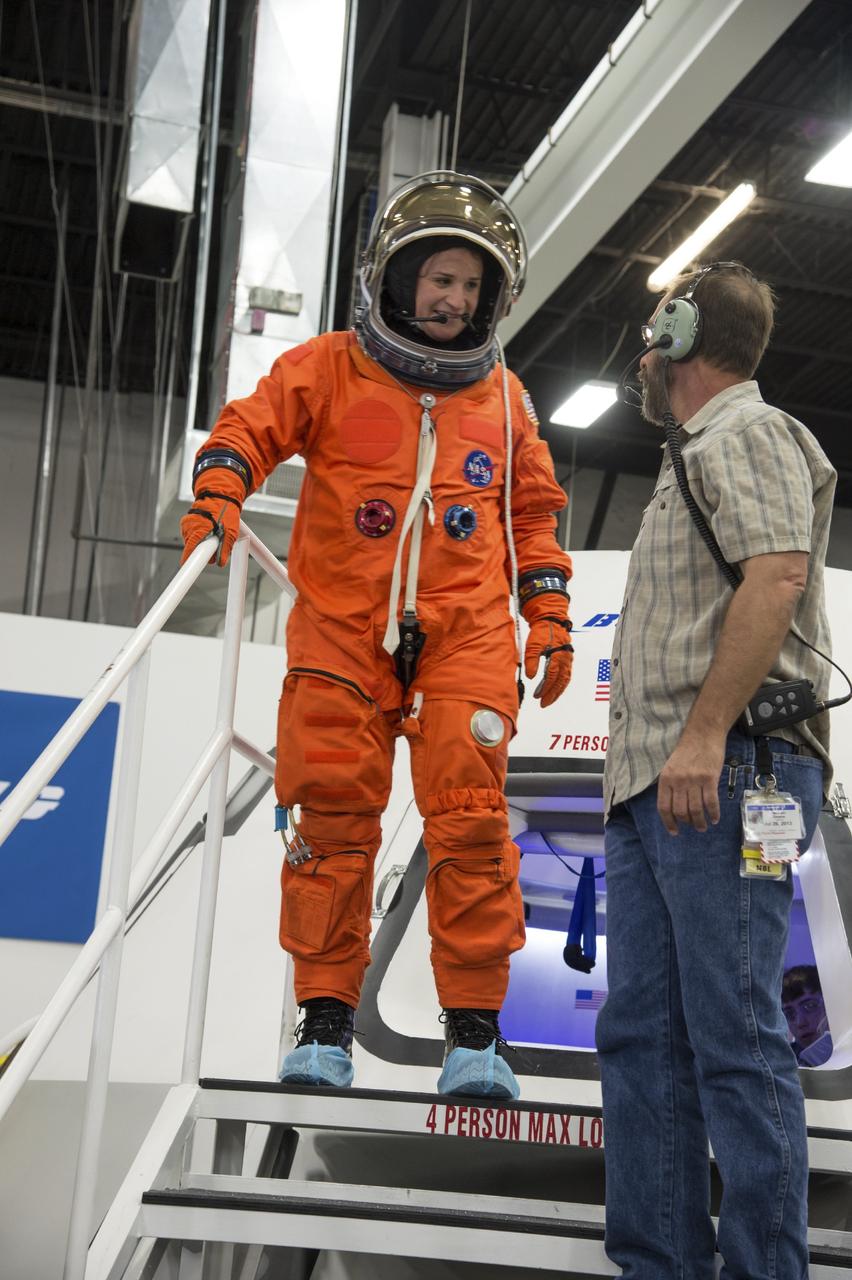
HOUSTON - JSC2013e068317 - NASA astronaut Serena Aunon exits The Boeing Company's CST-100 spacecraft following a fit check evaluation at the company's Houston Product Support Center. Aunon's fit check will help evaluate a crew's maneuverability in the spacecraft and test communications. Boeing's CST-100 is being designed to transport crew members or a mix of crew and cargo to low-Earth-orbit destinations. The evaluation is part of the ongoing work supporting Boeing's funded Space Act Agreement with NASA's Commercial Crew Program, or CCP, during the agency's Commercial Crew Integrated Capability, or CCiCap, initiative. CCiCap is intended to make commercial human spaceflight services available for government and commercial customers. To learn more about CCP, visit http://www.nasa.gov/commercialcrew. Photo credit: NASA/Robert Markowitz
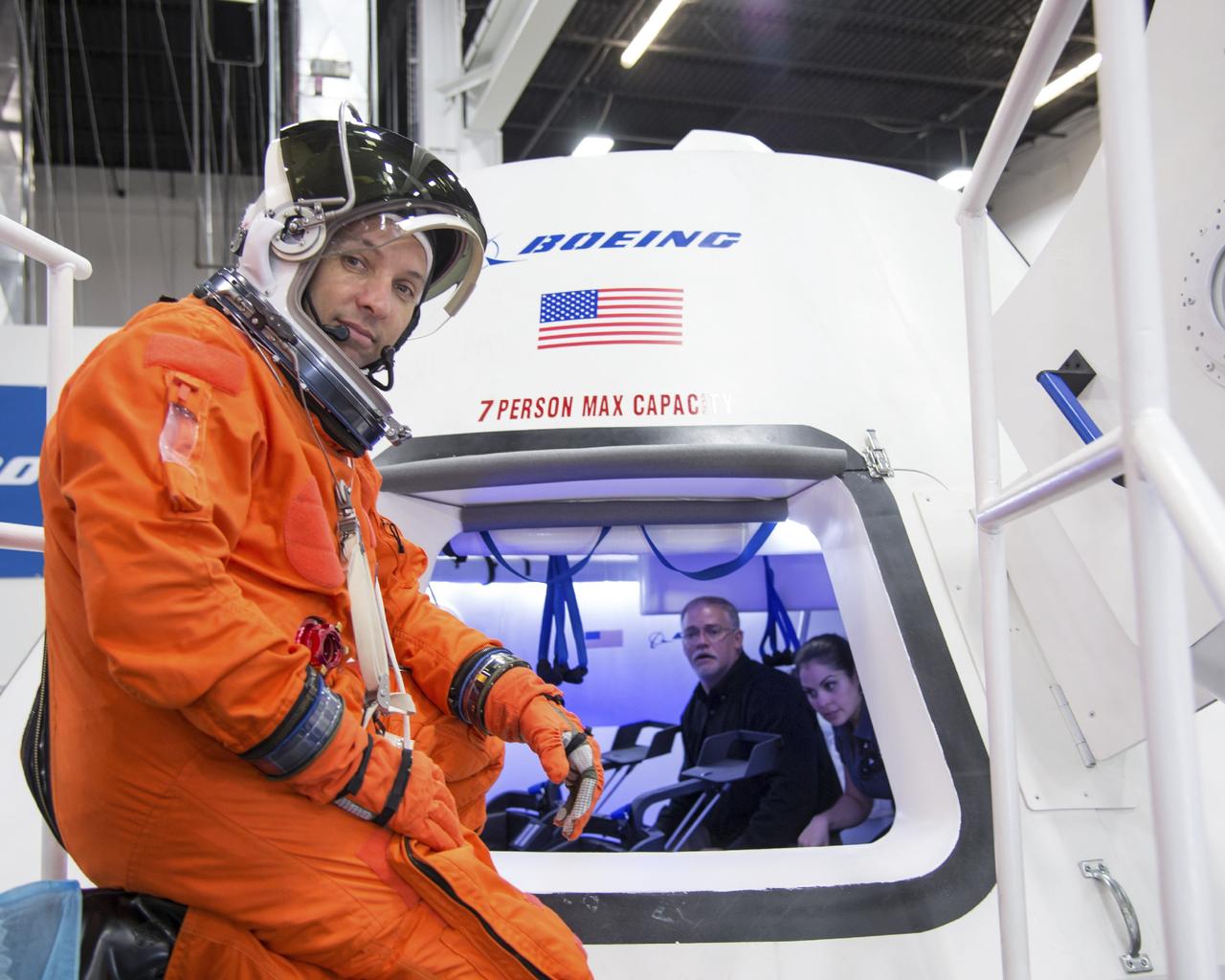
HOUSTON - JSC2013e068333 - NASA astronaut Randy Bresnik prepares to enter The Boeing Company's CST-100 spacecraft for a fit check evaluation at the company's Houston Product Support Center. Bresnik's fit check will help evaluate a crew's maneuverability in the spacecraft and test communications. Boeing's CST-100 is being designed to transport crew members or a mix of crew and cargo to low-Earth-orbit destinations. The evaluation is part of the ongoing work supporting Boeing's funded Space Act Agreement with NASA's Commercial Crew Program, or CCP, during the agency's Commercial Crew Integrated Capability, or CCiCap, initiative. CCiCap is intended to make commercial human spaceflight services available for government and commercial customers. To learn more about CCP, visit http://www.nasa.gov/commercialcrew. Photo credit: NASA/Robert Markowitz
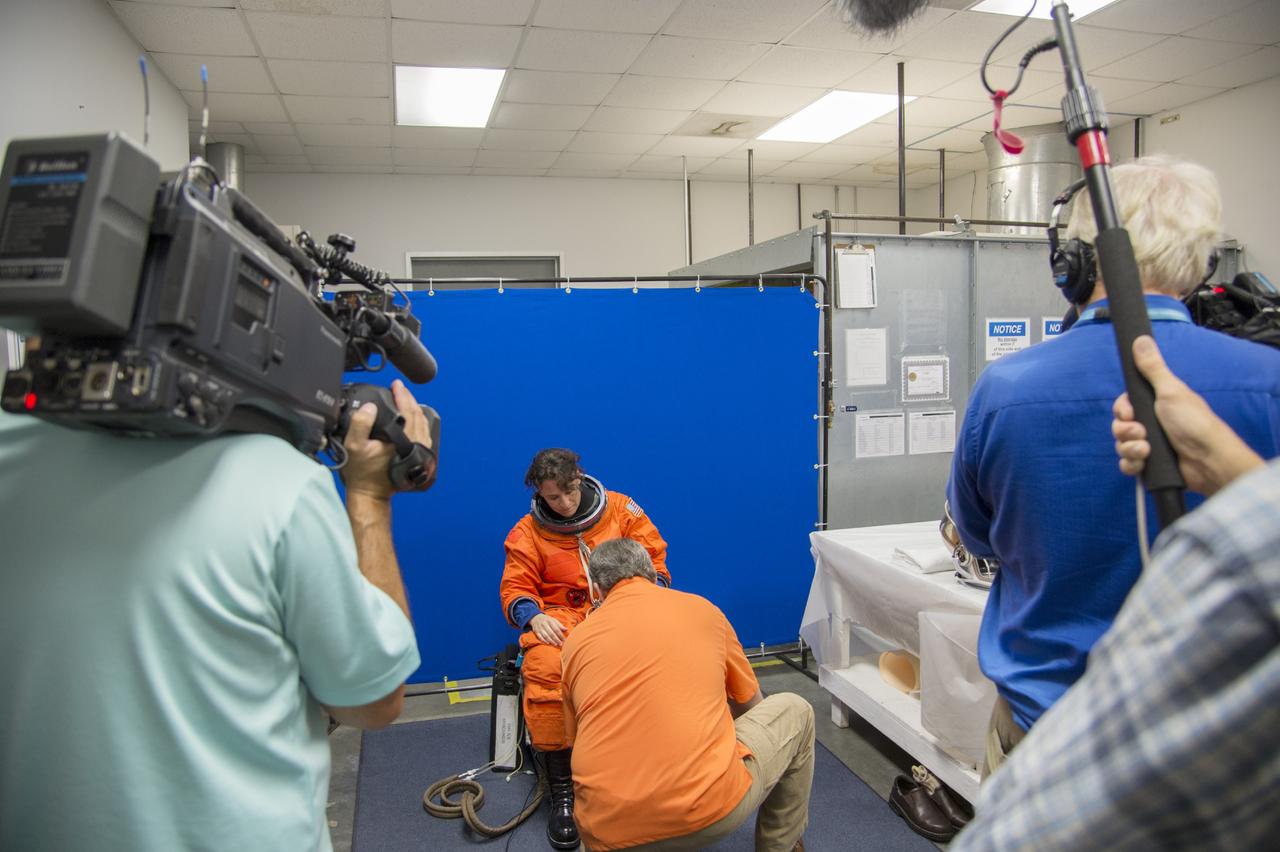
HOUSTON - NASA astronaut Serena Aunon puts on her orange launch-and-entry suit for a fit check evaluation of The Boeing Company's CST-100 spacecraft at the company's Houston Product Support Center. Aunon's fit check will help evaluate a crew's maneuverability in the spacecraft and test communications. Boeing's CST-100 is being designed to transport crew members or a mix of crew and cargo to low-Earth-orbit destinations. The evaluation is part of the ongoing work supporting Boeing's funded Space Act Agreement with NASA's Commercial Crew Program, or CCP, during the agency's Commercial Crew Integrated Capability, or CCiCap, initiative. CCiCap is intended to make commercial human spaceflight services available for government and commercial customers. To learn more about CCP, visit http://www.nasa.gov/commercialcrew. Photo credit: NASA/Robert Markowitz
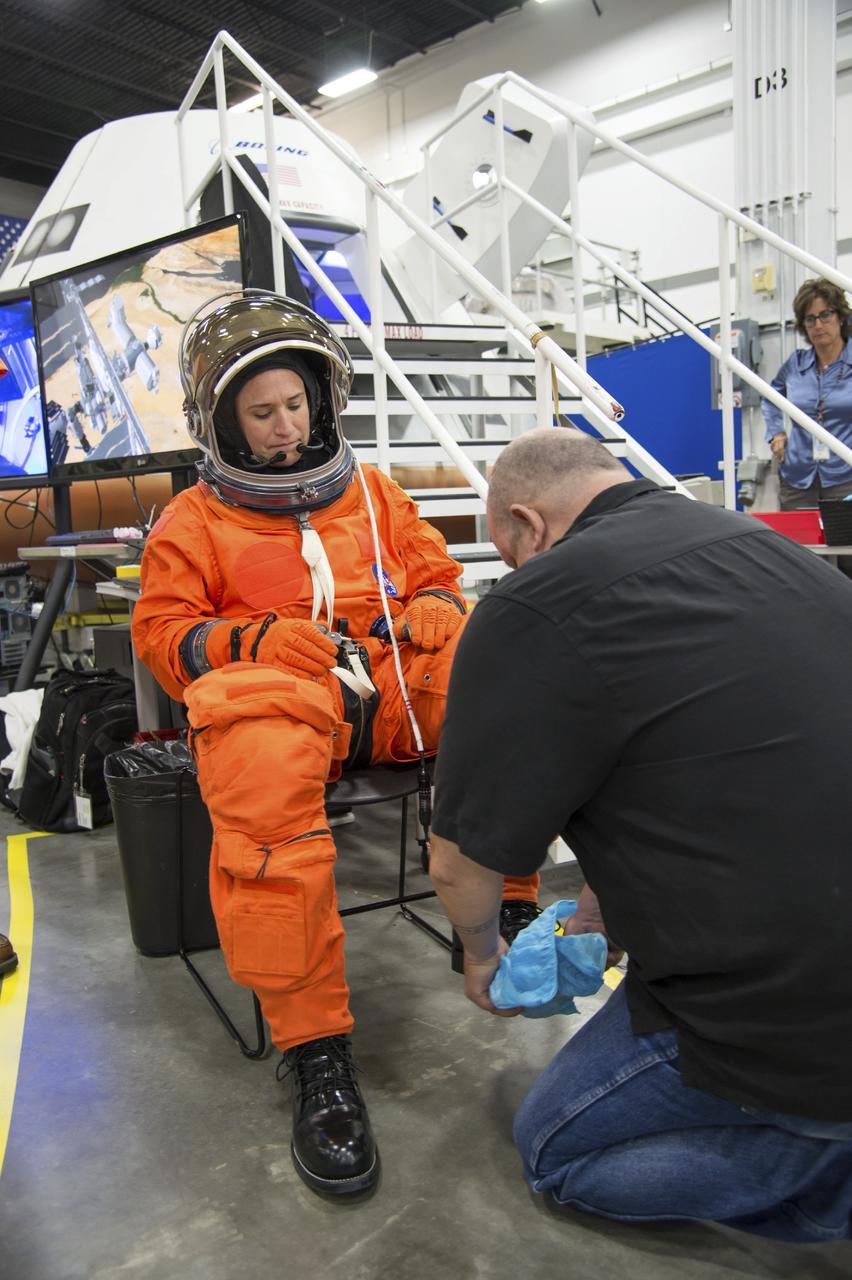
HOUSTON - JSC2013e068264 - NASA astronaut Serena Aunon's boots are covered before she enters The Boeing Company's CST-100 spacecraft for a fit check evaluation at the company's Houston Product Support Center. Aunon's fit check will help evaluate a crew's maneuverability in the spacecraft and test communications. Boeing's CST-100 is being designed to transport crew members or a mix of crew and cargo to low-Earth-orbit destinations. The evaluation is part of the ongoing work supporting Boeing's funded Space Act Agreement with NASA's Commercial Crew Program, or CCP, during the agency's Commercial Crew Integrated Capability, or CCiCap, initiative. CCiCap is intended to make commercial human spaceflight services available for government and commercial customers. To learn more about CCP, visit http://www.nasa.gov/commercialcrew. Photo credit: NASA/Robert Markowitz
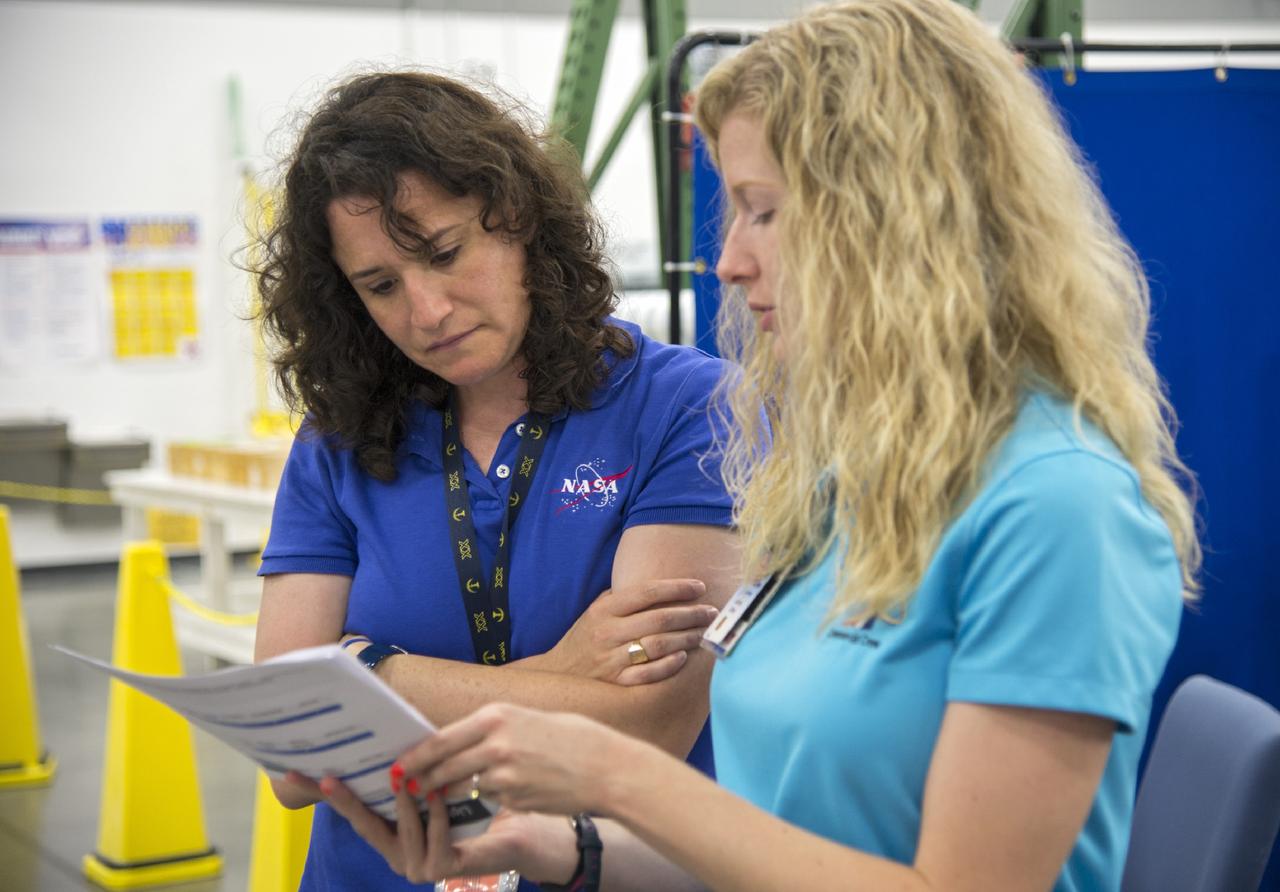
HOUSTON - NASA astronaut Serena Aunon and Andrea Gilkey, a human factors engineer with The Boeing Company, tag up before Aunon puts on her orange launch-and-entry suit for a fit check evaluation of the CST-100 spacecraft at the company's Houston Product Support Center. Aunon's fit check will help evaluate a crew's maneuverability in the spacecraft and test communications. Boeing's CST-100 is being designed to transport crew members or a mix of crew and cargo to low-Earth-orbit destinations, including the International Space Station. The evaluation is part of the ongoing work supporting Boeing's funded Space Act Agreement with NASA's Commercial Crew Program, or CCP, during the agency's Commercial Crew Integrated Capability, or CCiCap, initiative. CCiCap is intended to make commercial human spaceflight services available for government and commercial customers. To learn more about CCP, visit http://www.nasa.gov/commercialcrew. Photo credit: NASA/Robert Markowitz
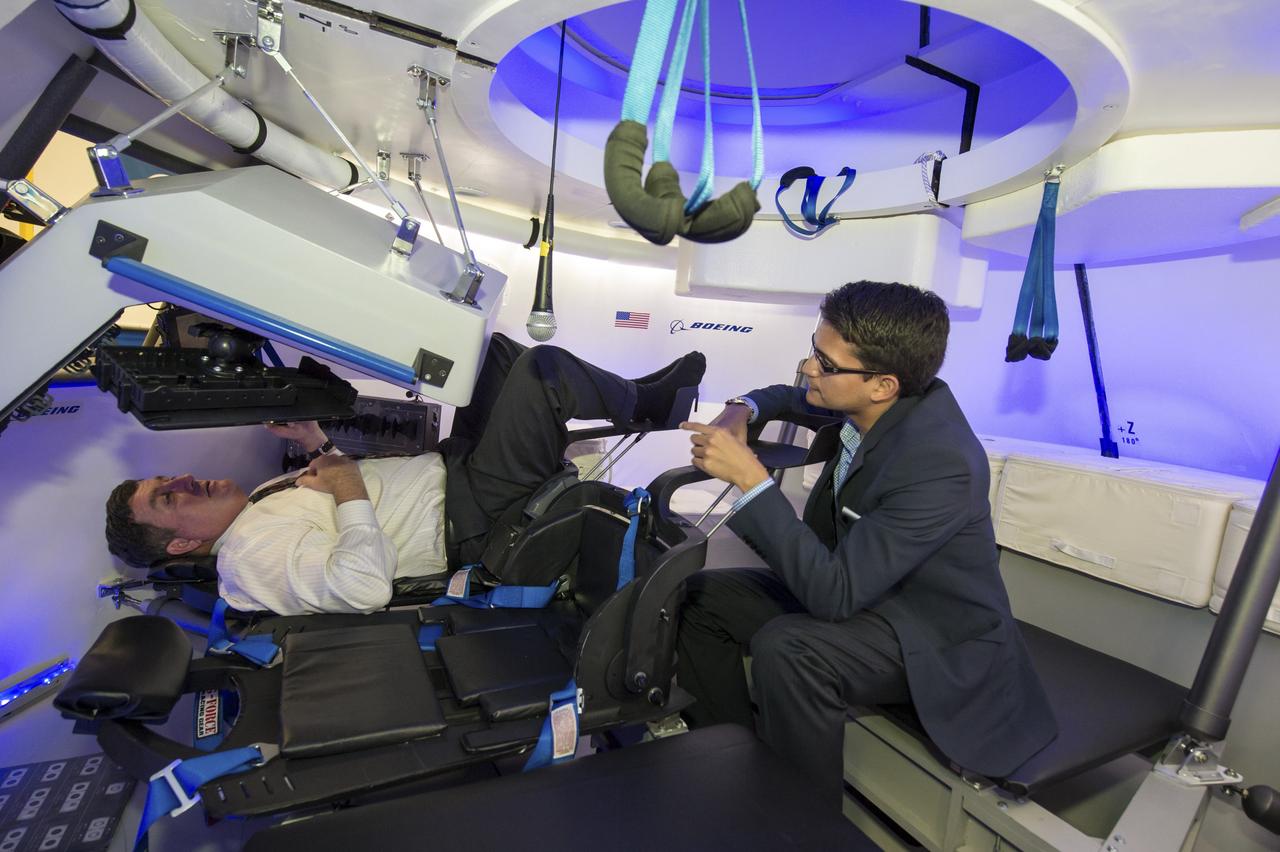
HOUSTON -- JSC-2013-E076056 -- Kirk Shireman, deputy director of NASA's Johnson Space Center, takes the controls of The Boeing Company's mock-up CST-100 spacecraft at the company's Houston Product Support Center. Helping Shireman inside the fully outfitted test version of the CST-100 is Tony Castilleja, a mechanical engineer working on the Boeing project. Boeing showcased its work on a fully outfitted test version of the spacecraft to Bolden and Johnson management. Boeing's CST-100 is designed to transport a mix of crew and cargo to low-Earth-orbit destinations. Boeing is one of three aerospace industry partners working with NASA's Commercial Crew Program, or CCP, during the Commercial Crew Integrated Capability, or CCiCap, initiative, which is intended to make commercial human spaceflight services available for government and commercial customers. To learn more about CCP, visit www.nasa.gov/commercialcrew. Photo credit: NASA/James Blair
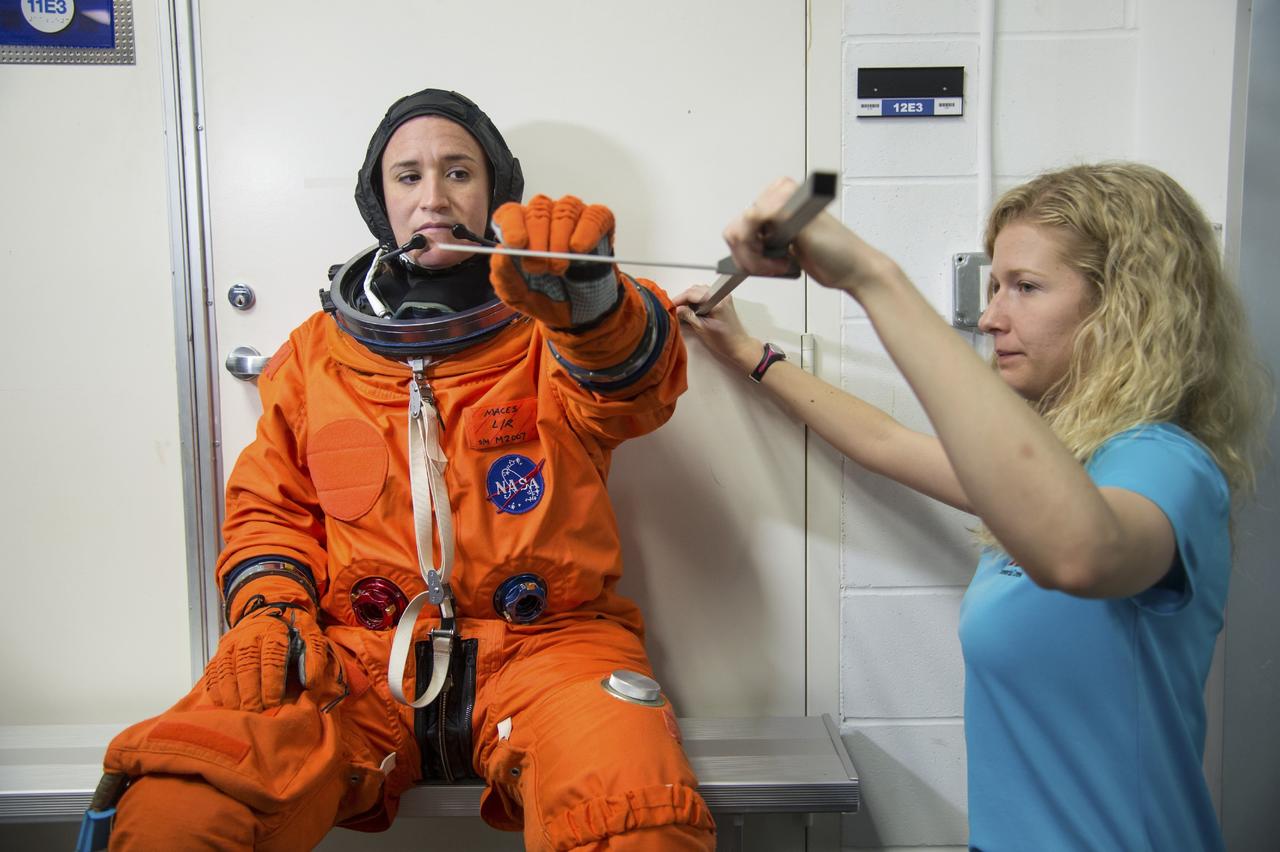
HOUSTON - JSC2013e068259 - NASA astronaut Serena Aunon prepares for a fit check evaluation of The Boeing Company's CST-100 spacecraft at the company's Houston Product Support Center. Assisting her is Andrea Gilkey, a human factors engineer with The Boeing Company. Aunon's fit check will help evaluate a crew's maneuverability in the spacecraft and test communications. Boeing's CST-100 is being designed to transport crew members or a mix of crew and cargo to low-Earth-orbit destinations. The evaluation is part of the ongoing work supporting Boeing's funded Space Act Agreement with NASA's Commercial Crew Program, or CCP, during the agency's Commercial Crew Integrated Capability, or CCiCap, initiative. CCiCap is intended to make commercial human spaceflight services available for government and commercial customers. To learn more about CCP, visit http://www.nasa.gov/commercialcrew. Photo credit: NASA/Robert Markowitz
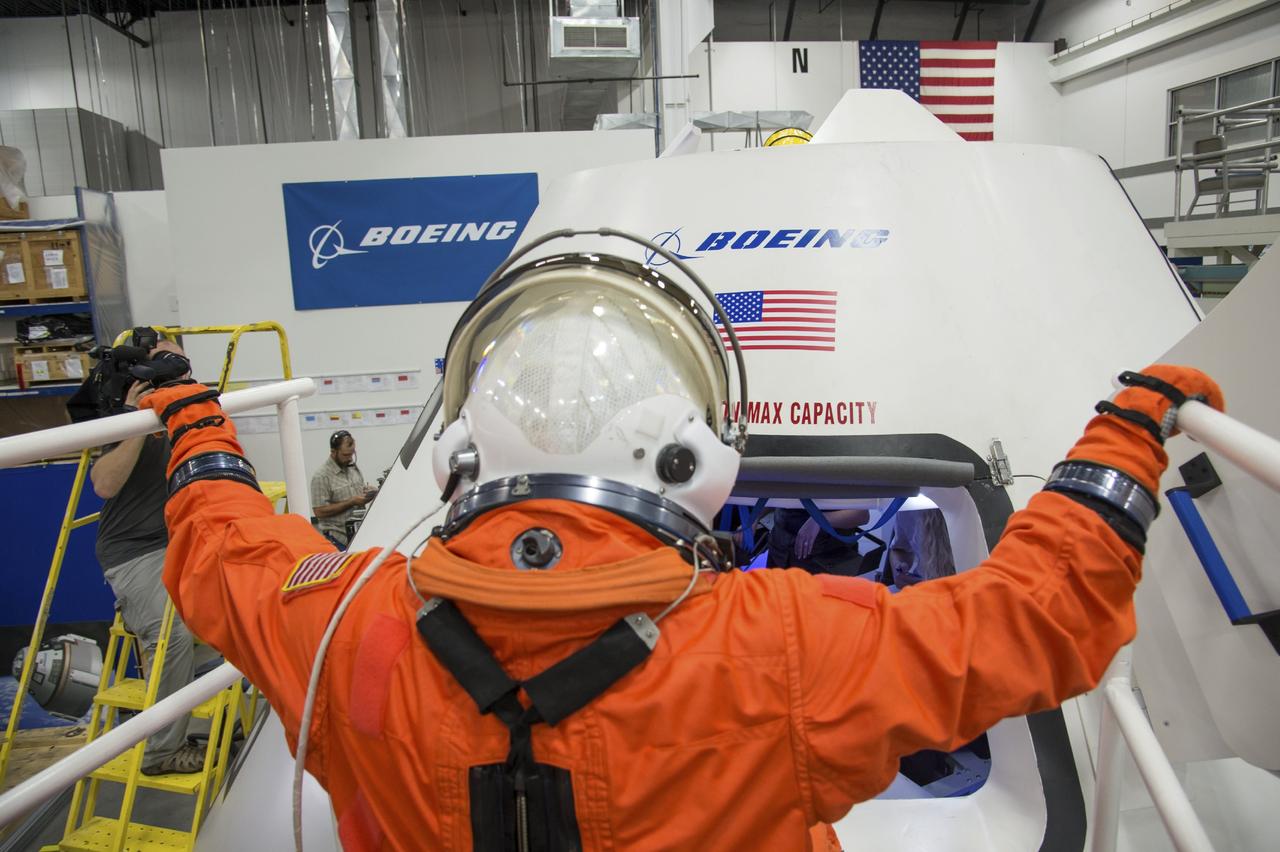
HOUSTON - JSC2013e068269 - NASA astronaut Serena Aunon prepares to enter The Boeing Company's CST-100 spacecraft for a fit check evaluation at the company's Houston Product Support Center. Aunon's fit check will help evaluate a crew's maneuverability in the spacecraft and test communications. Boeing's CST-100 is being designed to transport crew members or a mix of crew and cargo to low-Earth-orbit destinations. The evaluation is part of the ongoing work supporting Boeing's funded Space Act Agreement with NASA's Commercial Crew Program, or CCP, during the agency's Commercial Crew Integrated Capability, or CCiCap, initiative. CCiCap is intended to make commercial human spaceflight services available for government and commercial customers. To learn more about CCP, visit http://www.nasa.gov/commercialcrew. Photo credit: NASA/Robert Markowitz
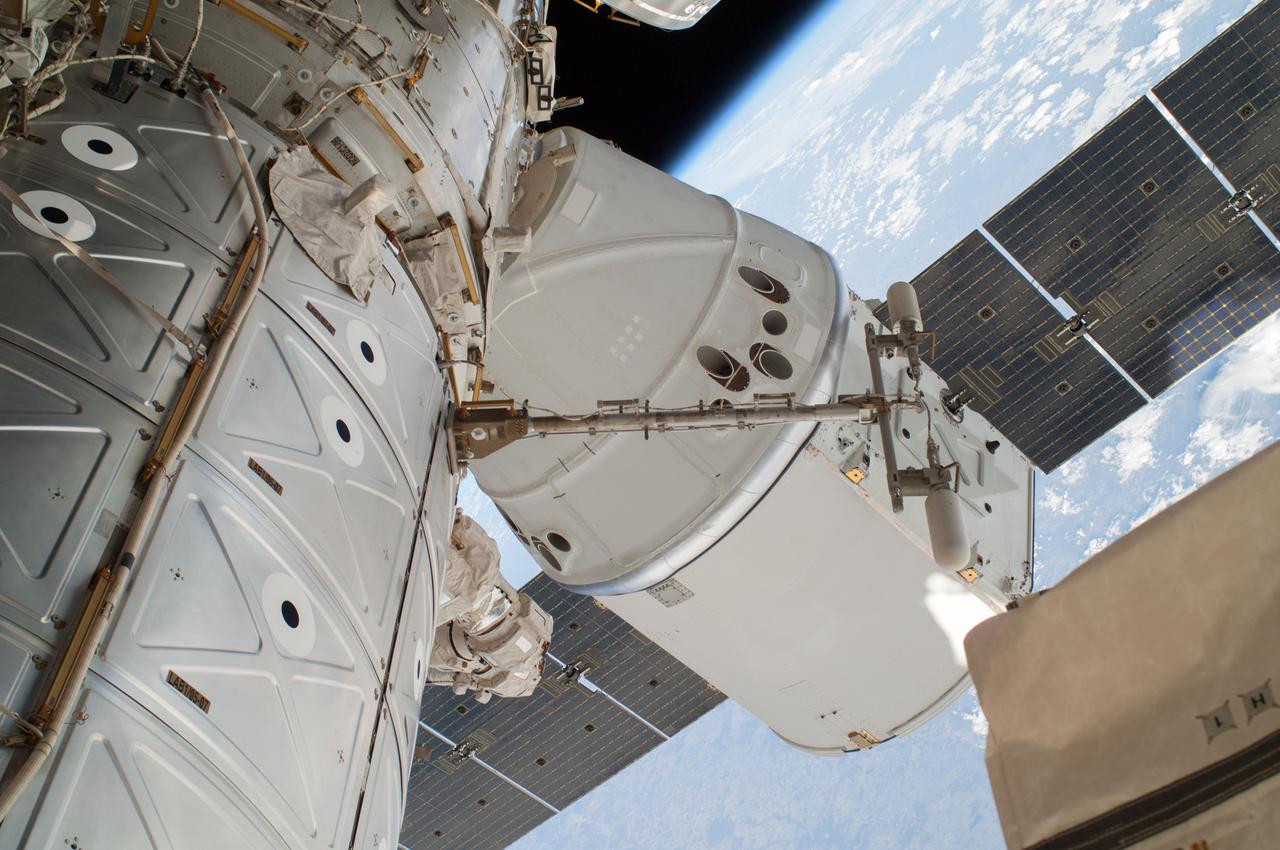
View of the SpaceX Dragon Commercial Resupply Services-3 (CRS-3) spacecraft and portions of the Destiny U.S. Laboratory and Harmony Node 2 taken against a backdrop of Earth and space by Extravehicular crewmember 1 (EV1) during Extravehicular Activity 26 (EVA 26).
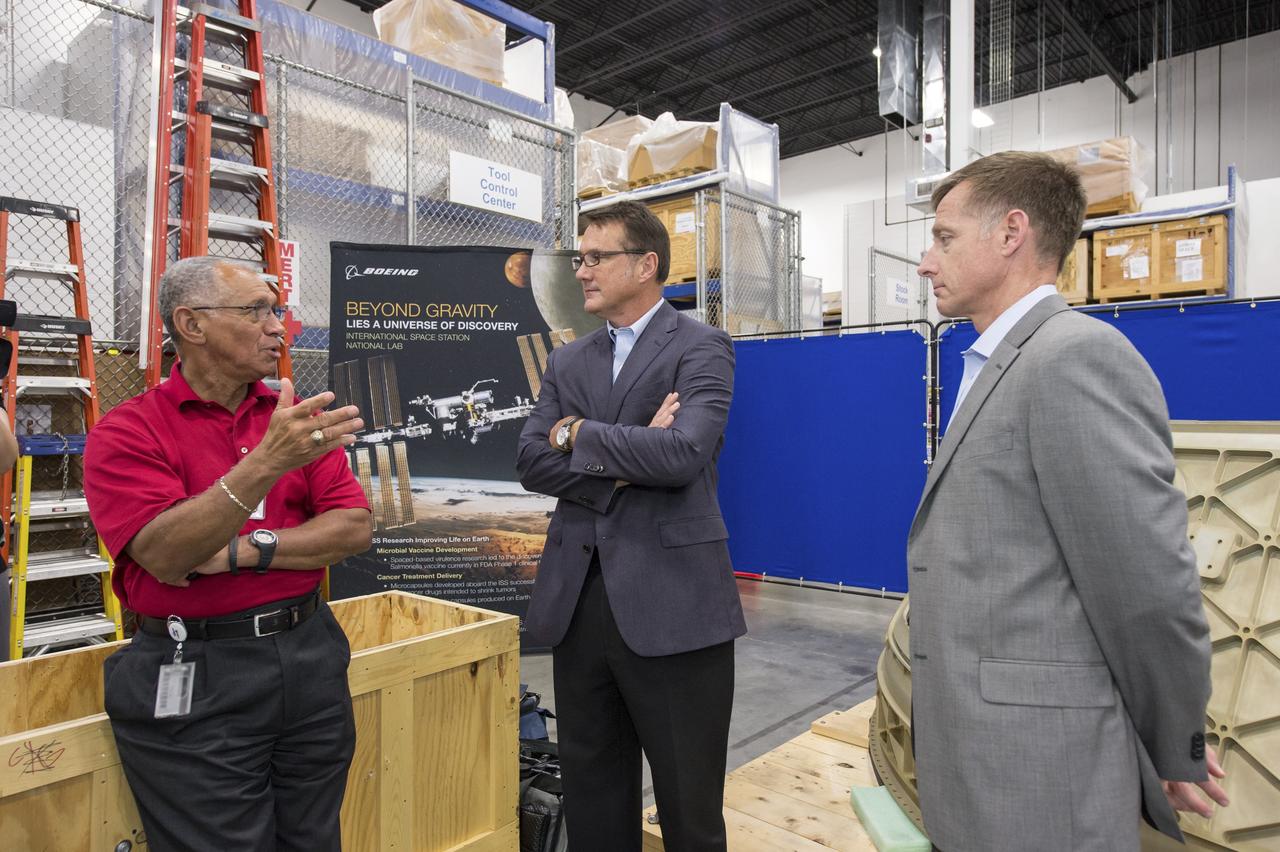
HOUSTON -- JSC-2013-E076054 -- NASA Administrator Charlie Bolden, left, talks to The Boeing Company's Vice President and Program Manager of Commercial Programs John Mulholland, center, and Director of Crew and Mission Operations Chris Ferguson at the company's Houston Product Support Center near Johnson Space Center. Boeing showcased its work on a fully outfitted test version of the CST-100 spacecraft to Bolden and Johnson management. Boeing's CST-100 is designed to transport a mix of crew and cargo to low-Earth-orbit destinations. Boeing is one of three aerospace industry partners working with NASA's Commercial Crew Program, or CCP, during the Commercial Crew Integrated Capability, or CCiCap, initiative, which is intended to make commercial human spaceflight services available for government and commercial customers. To learn more about CCP, visit www.nasa.gov/commercialcrew. Photo credit: NASA/James Blair
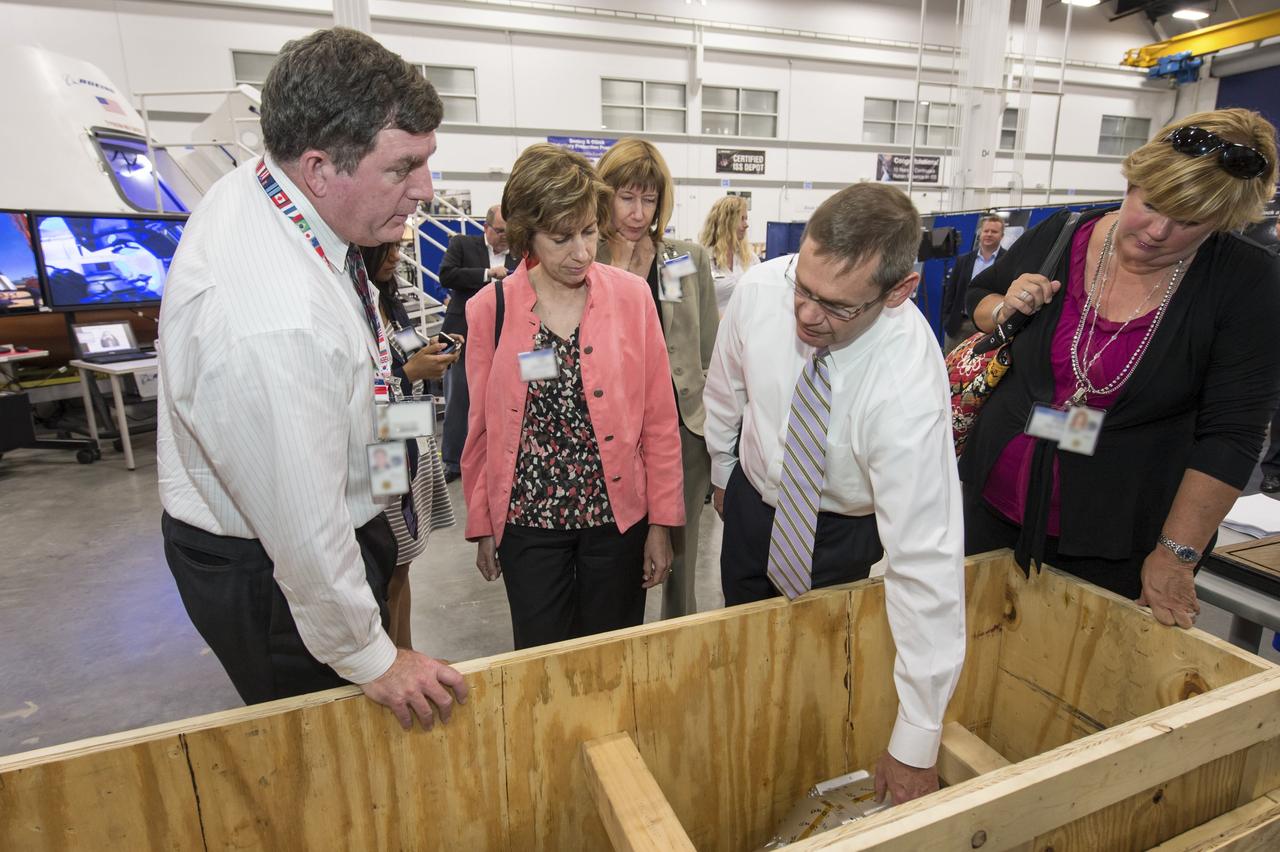
HOUSTON -- JSC-2013-E076043 -- John Elbon, The Boeing Company's vice president of Space Exploration, second right, shows off a wind tunnel model of the CST-100 spacecraft to Johnson Space Center management at the company's Houston Product Support Center. From left, are Kirk Shireman, Johnson's deputy director, Ellen Ochoa, Johnson's director, Kathy Lueders, deputy director of NASA's Commercial Crew Program, Elbon, and Melanie Saunders, Johnson's associate director. Boeing's CST-100 is designed to transport a mix of crew and cargo to low-Earth-orbit destinations. Boeing is one of three aerospace industry partners working with NASA's Commercial Crew Program, or CCP, during the Commercial Crew Integrated Capability, or CCiCap, initiative, which is intended to make commercial human spaceflight services available for government and commercial customers. To learn more about CCP, visit www.nasa.gov/commercialcrew. Photo credit: NASA/James Blair
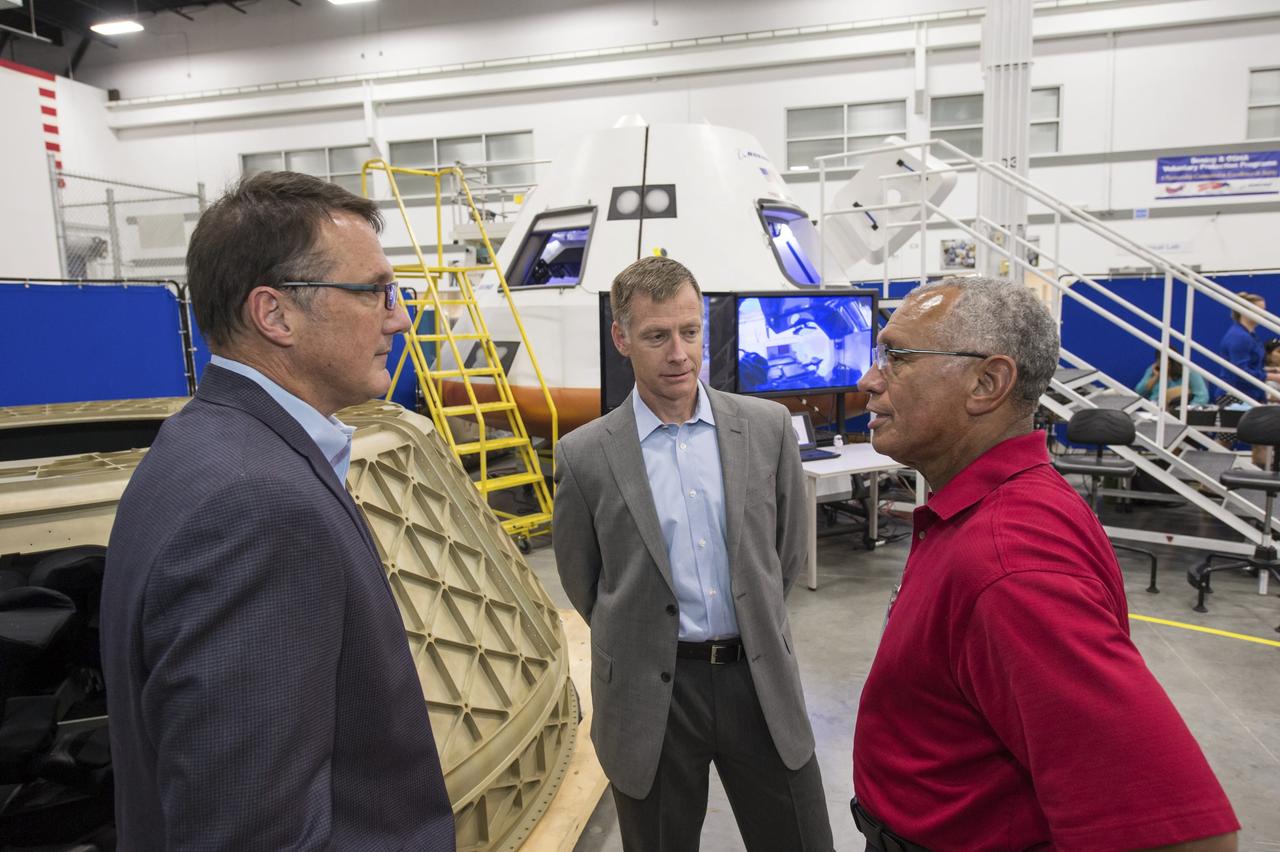
HOUSTON -- JSC-2013-E076048 -- NASA Administrator Charlie Bolden, right, talks to The Boeing Company's Vice President and Program Manager of Commercial Programs John Mulholland, left, and Director of Crew and Mission Operations Chris Ferguson at the company's Houston Product Support Center near Johnson Space Center. Boeing showcased its work on a fully outfitted test version of the CST-100 spacecraft to Bolden and Johnson management. Boeing's CST-100 is designed to transport a mix of crew and cargo to low-Earth-orbit destinations. Boeing is one of three aerospace industry partners working with NASA's Commercial Crew Program, or CCP, during the Commercial Crew Integrated Capability, or CCiCap, initiative, which is intended to make commercial human spaceflight services available for government and commercial customers. To learn more about CCP, visit www.nasa.gov/commercialcrew. Photo credit: NASA/James Blair
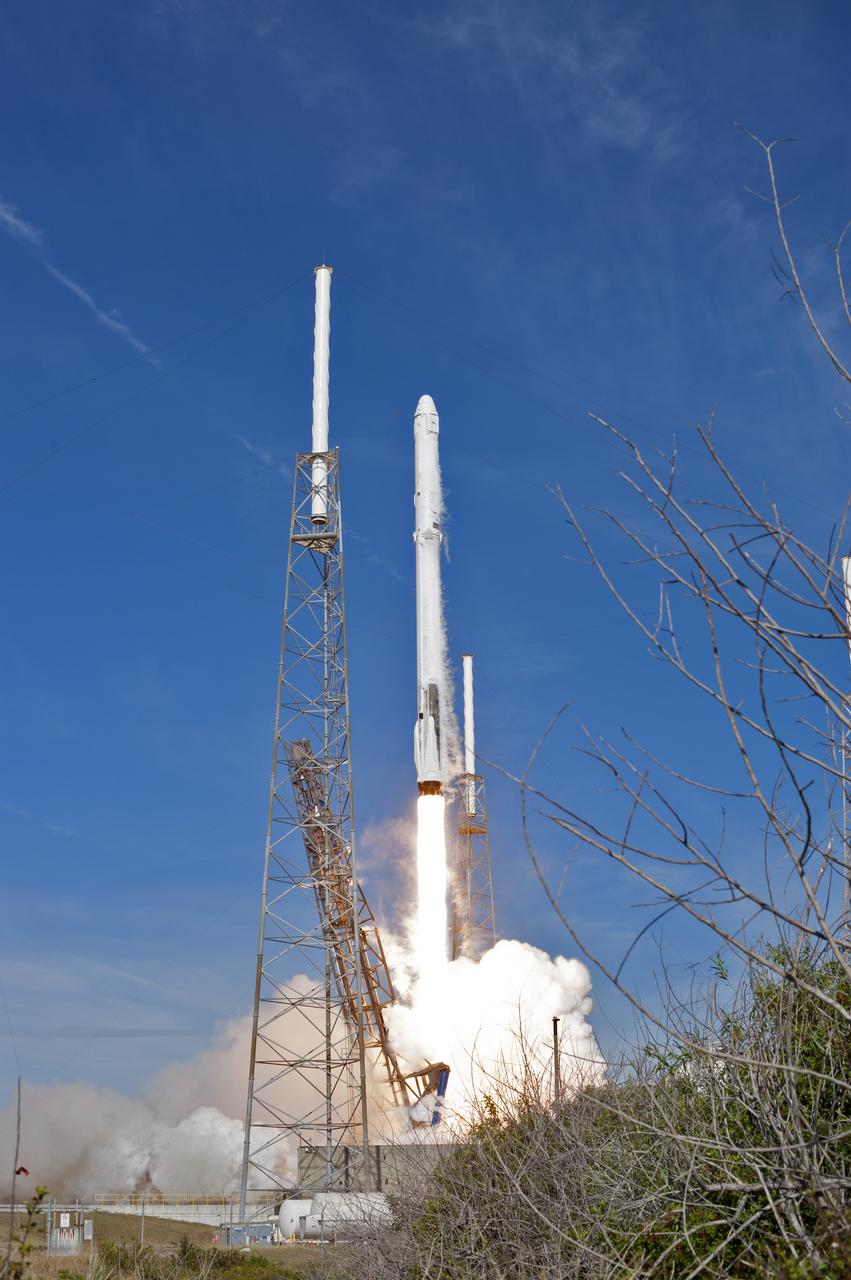
The two-stage Falcon 9 launch vehicle lifts off Space Launch Complex 40 at Cape Canaveral Air Force Station carrying the Dragon resupply spacecraft to the International Space Station. Liftoff was at 10:36 a.m. EST. On its 13th commercial resupply services mission to the International Space Station, Dragon will bring up supplies, equipment and new science experiments for technology research. The SpaceX Dragon spacecraft will deliver about 4,800 pounds of cargo and material to support science investigations aboard the space station.
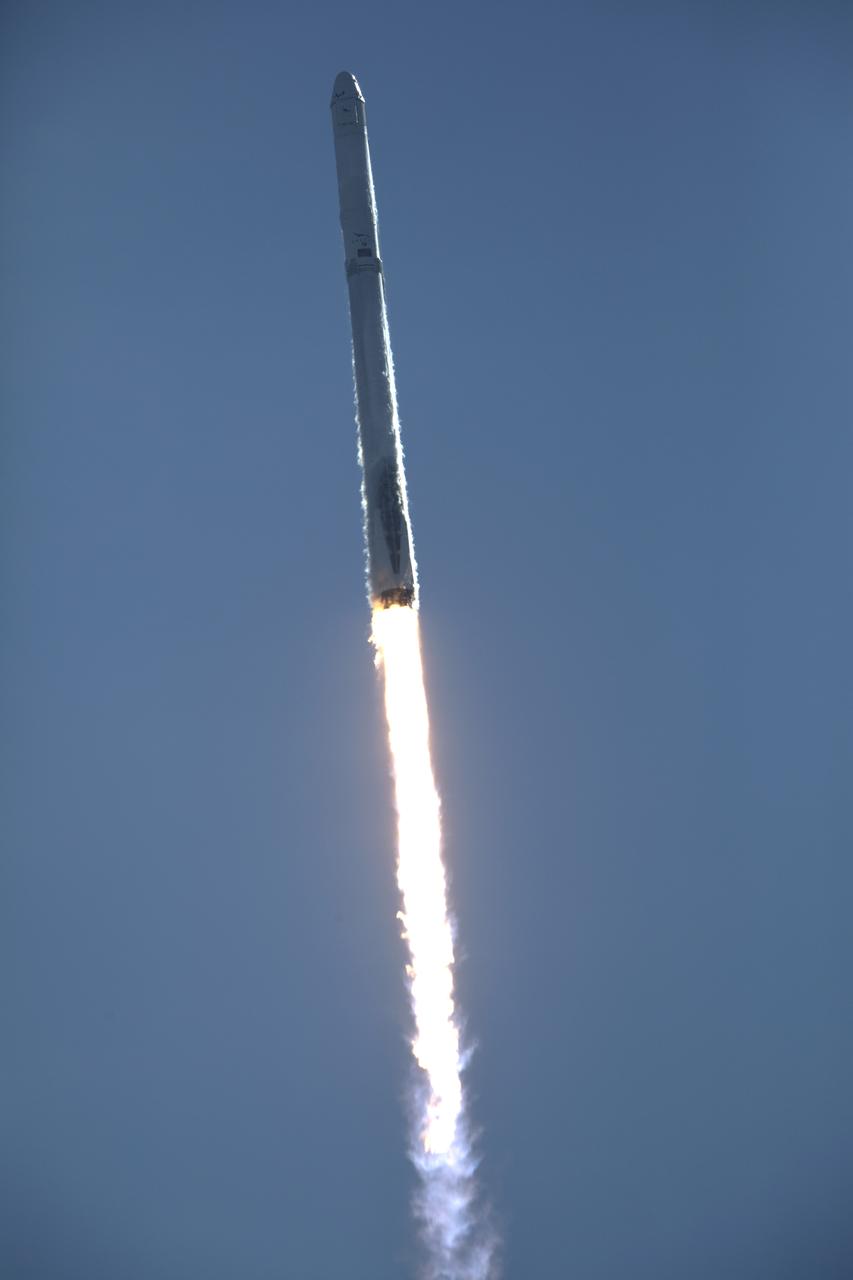
The two-stage Falcon 9 launch vehicle lifts off Space Launch Complex 40 at Cape Canaveral Air Force Station carrying the Dragon resupply spacecraft to the International Space Station. Liftoff was at 10:36 a.m. EST. On its 13th commercial resupply services mission to the International Space Station, Dragon will bring up supplies, equipment and new science experiments for technology research. The SpaceX Dragon spacecraft will deliver about 4,800 pounds of cargo and material to support science investigations aboard the space station.
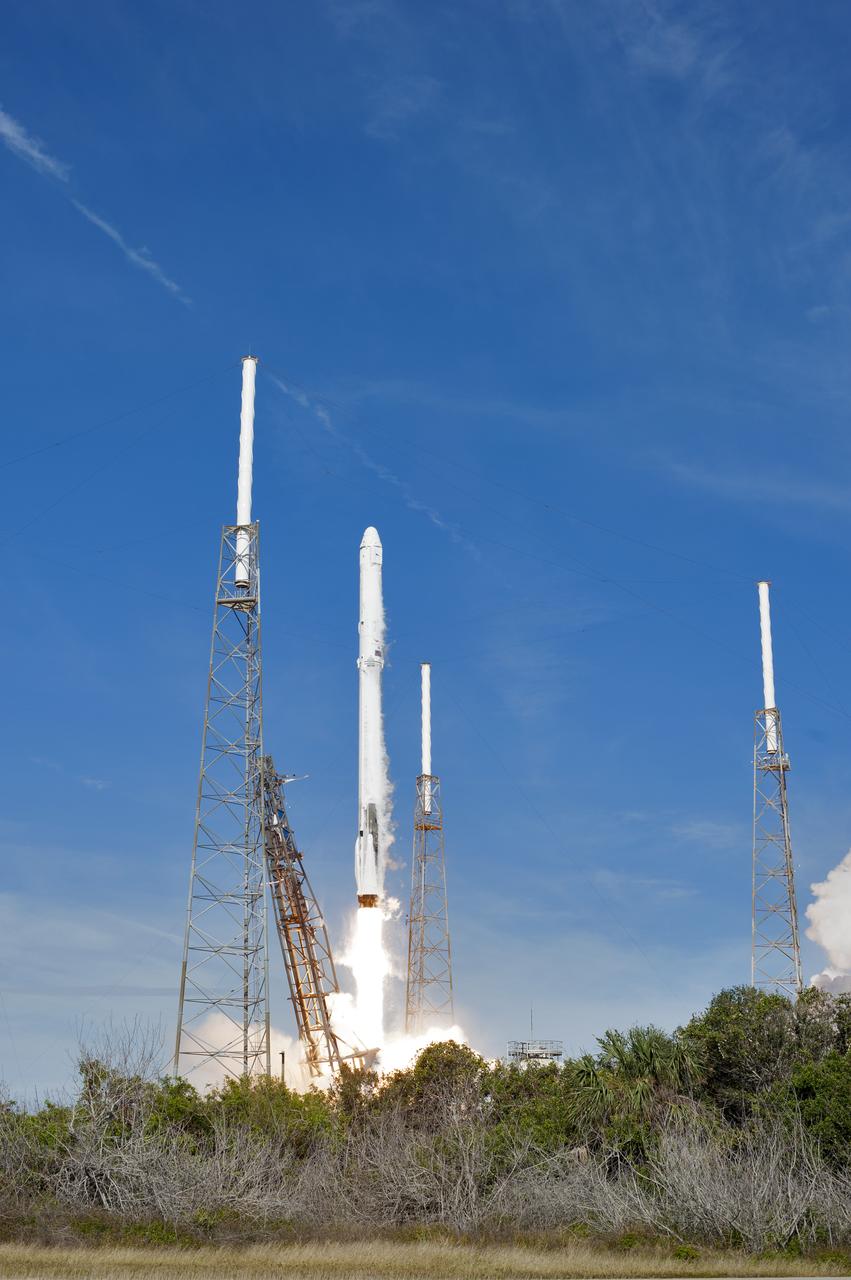
The two-stage Falcon 9 launch vehicle lifts off Space Launch Complex 40 at Cape Canaveral Air Force Station carrying the Dragon resupply spacecraft to the International Space Station. Liftoff was at 10:36 a.m. EST. On its 13th commercial resupply services mission to the International Space Station, Dragon will bring up supplies, equipment and new science experiments for technology research. The SpaceX Dragon spacecraft will deliver about 4,800 pounds of cargo and material to support science investigations aboard the space station.
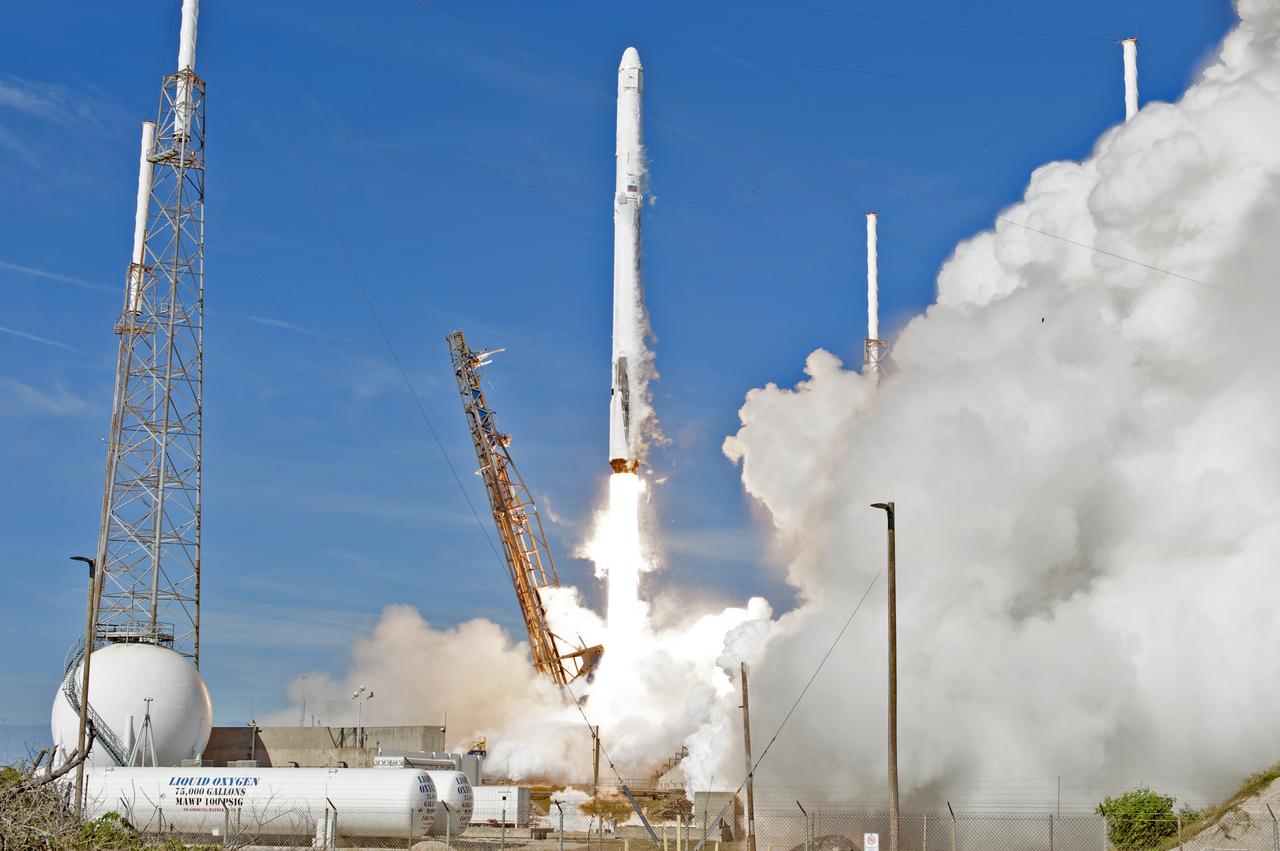
The two-stage Falcon 9 launch vehicle lifts off Space Launch Complex 40 at Cape Canaveral Air Force Station carrying the Dragon resupply spacecraft to the International Space Station. Liftoff was at 10:36 a.m. EST. On its 13th commercial resupply services mission to the International Space Station, Dragon will bring up supplies, equipment and new science experiments for technology research. The SpaceX Dragon spacecraft will deliver about 4,800 pounds of cargo and material to support science investigations aboard the space station.
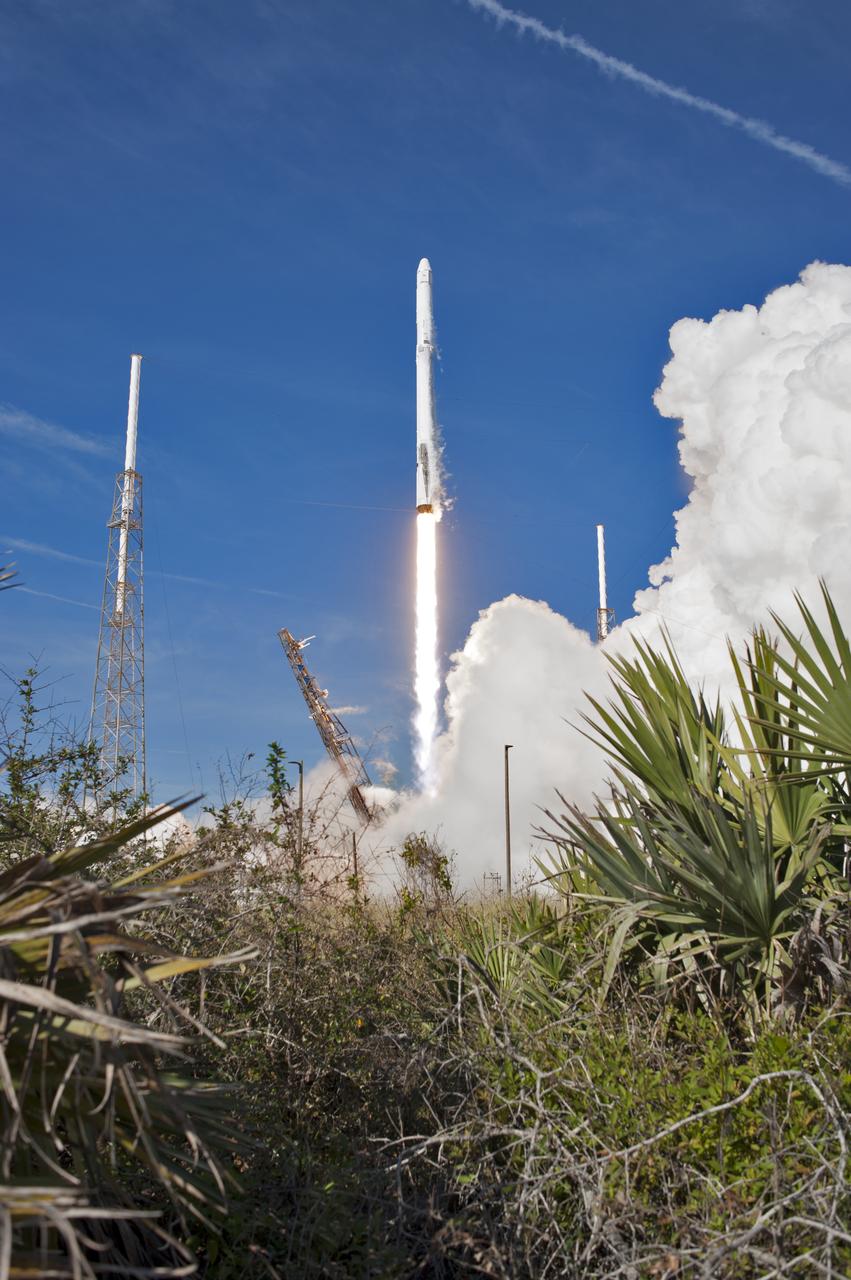
The two-stage Falcon 9 launch vehicle lifts off Space Launch Complex 40 at Cape Canaveral Air Force Station carrying the Dragon resupply spacecraft to the International Space Station. Liftoff was at 10:36 a.m. EST. On its 13th commercial resupply services mission to the International Space Station, Dragon will bring up supplies, equipment and new science experiments for technology research. The SpaceX Dragon spacecraft will deliver about 4,800 pounds of cargo and material to support science investigations aboard the space station.
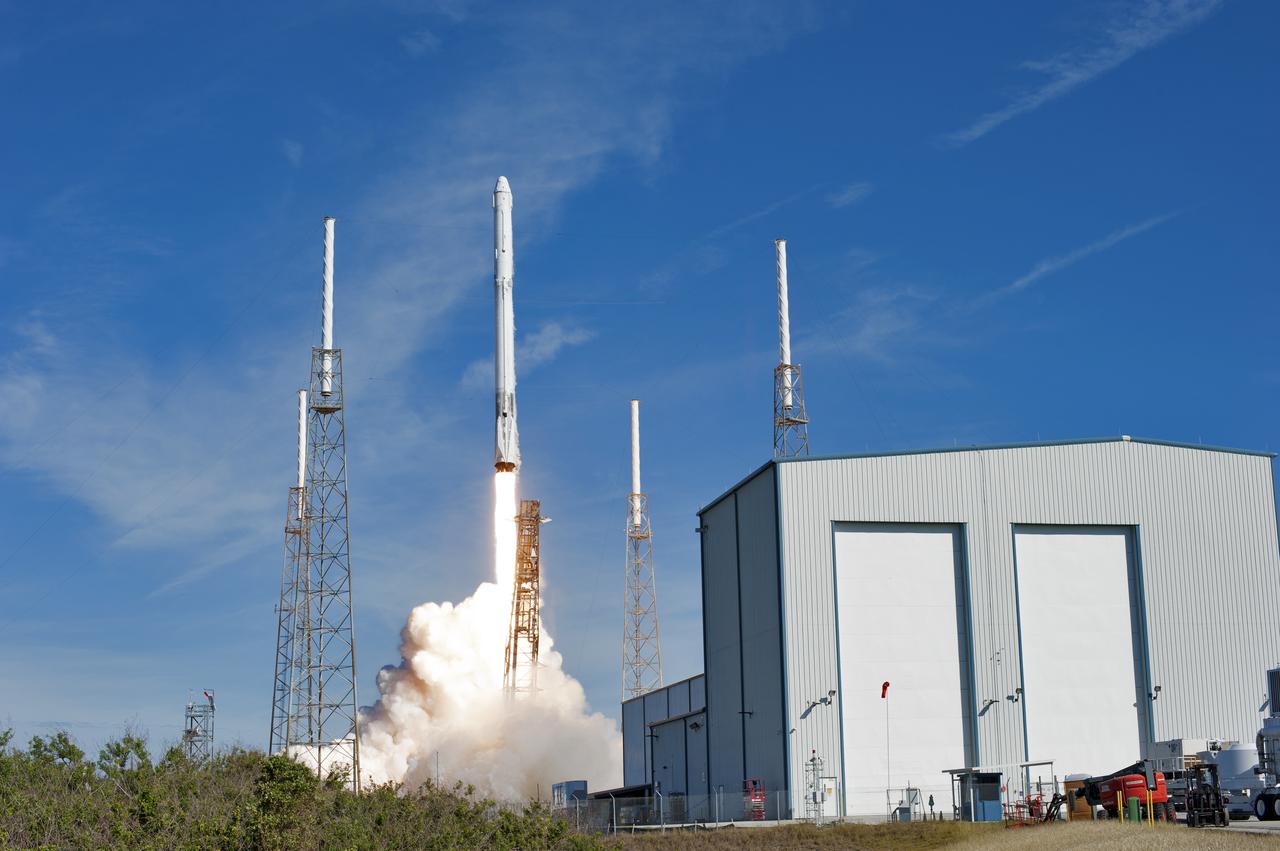
The two-stage Falcon 9 launch vehicle lifts off Space Launch Complex 40 at Cape Canaveral Air Force Station carrying the Dragon resupply spacecraft to the International Space Station. Liftoff was at 10:36 a.m. EST. On its 13th commercial resupply services mission to the International Space Station, Dragon will bring up supplies, equipment and new science experiments for technology research. The SpaceX Dragon spacecraft will deliver about 4,800 pounds of cargo and material to support science investigations aboard the space station.
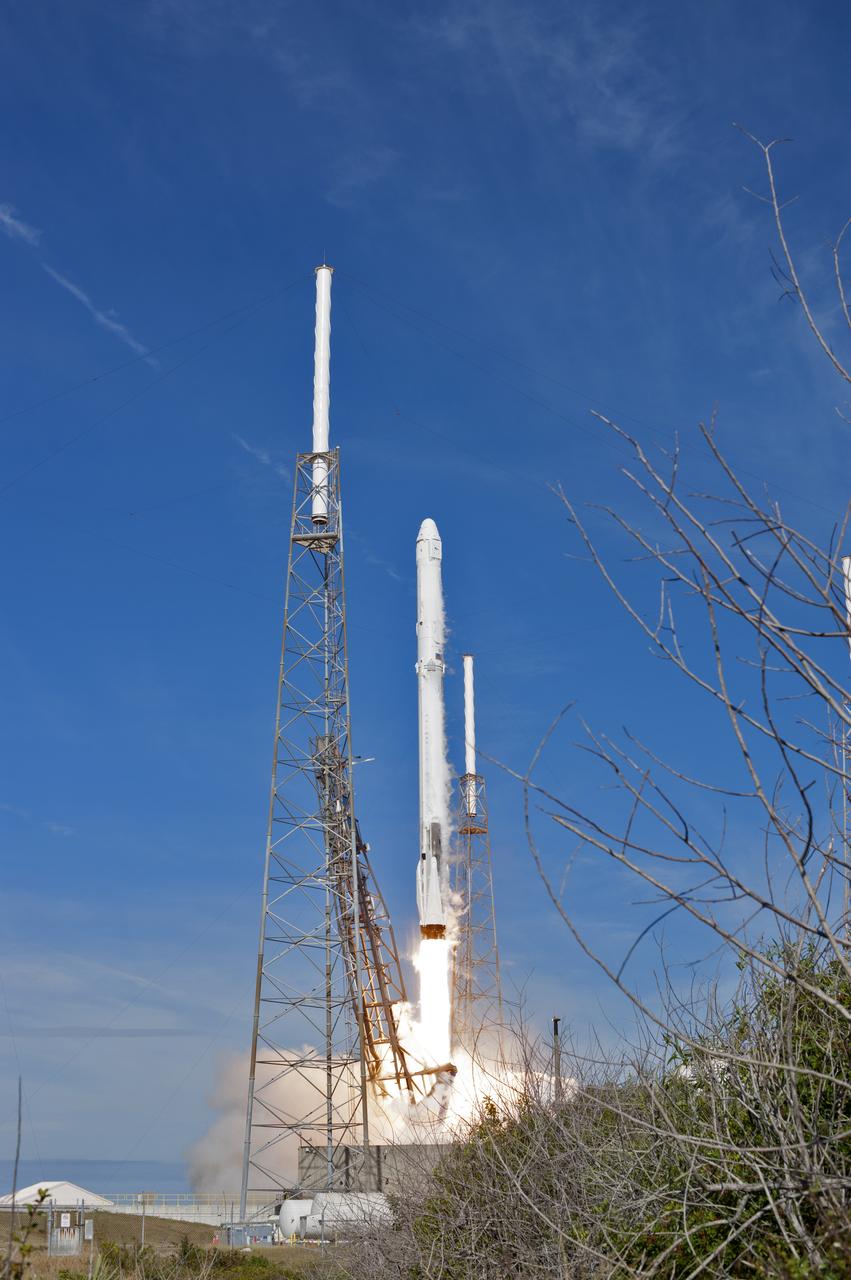
The two-stage Falcon 9 launch vehicle lifts off Space Launch Complex 40 at Cape Canaveral Air Force Station carrying the Dragon resupply spacecraft to the International Space Station. Liftoff was at 10:36 a.m. EST. On its 13th commercial resupply services mission to the International Space Station, Dragon will bring up supplies, equipment and new science experiments for technology research. The SpaceX Dragon spacecraft will deliver about 4,800 pounds of cargo and material to support science investigations aboard the space station.
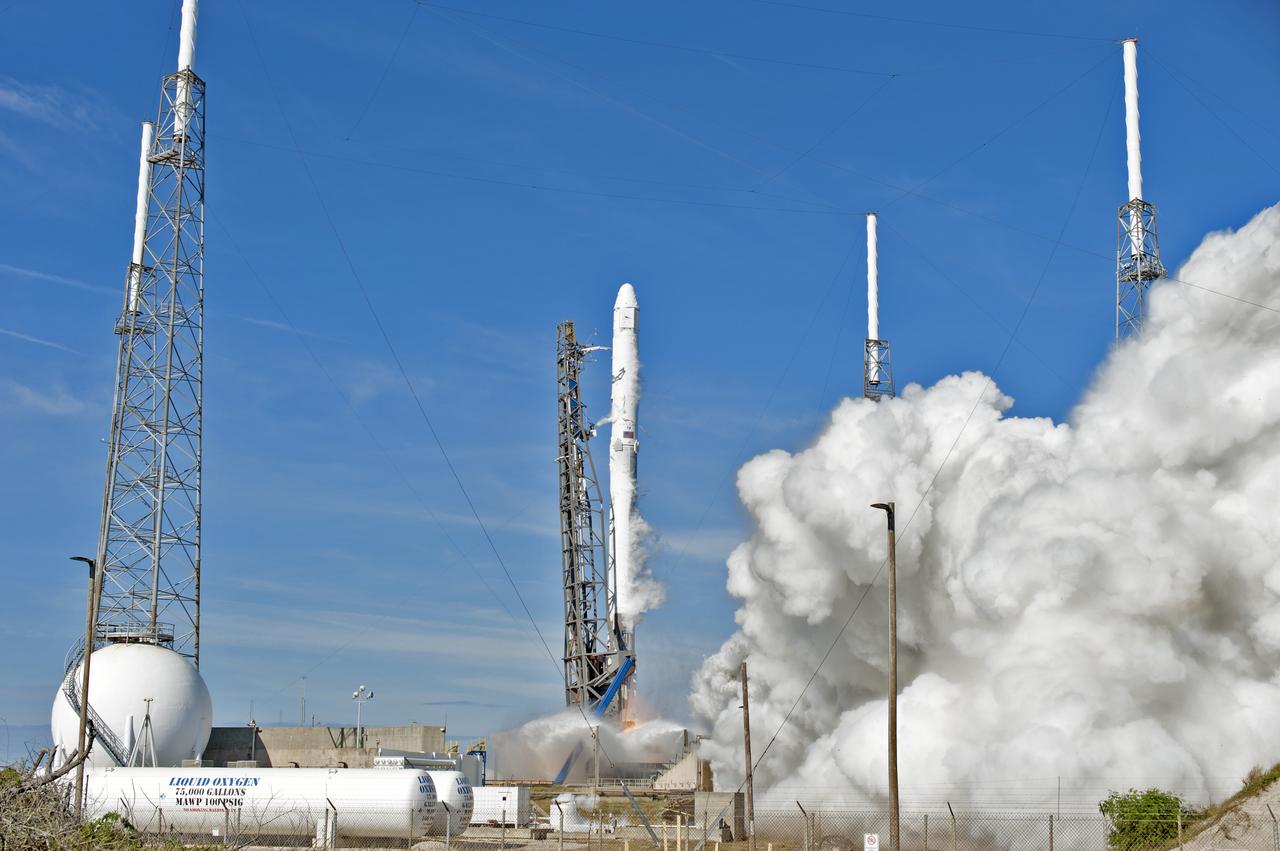
The two-stage Falcon 9 launch vehicle lifts off Space Launch Complex 40 at Cape Canaveral Air Force Station carrying the Dragon resupply spacecraft to the International Space Station. Liftoff was at 10:36 a.m. EST. On its 13th commercial resupply services mission to the International Space Station, Dragon will bring up supplies, equipment and new science experiments for technology research. The SpaceX Dragon spacecraft will deliver about 4,800 pounds of cargo and material to support science investigations aboard the space station.