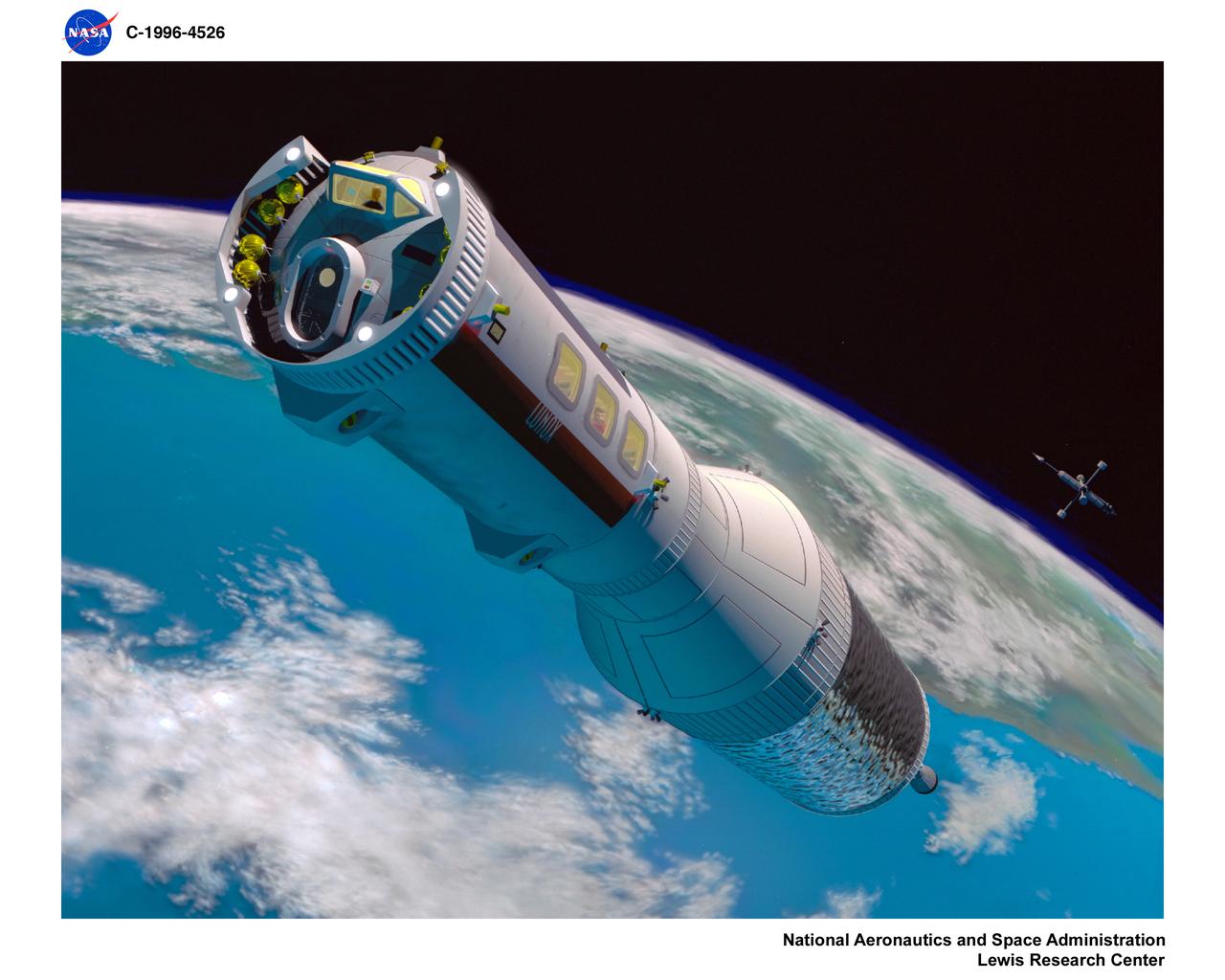
24 HOUR LUNAR COMMUTER SHUTTLE
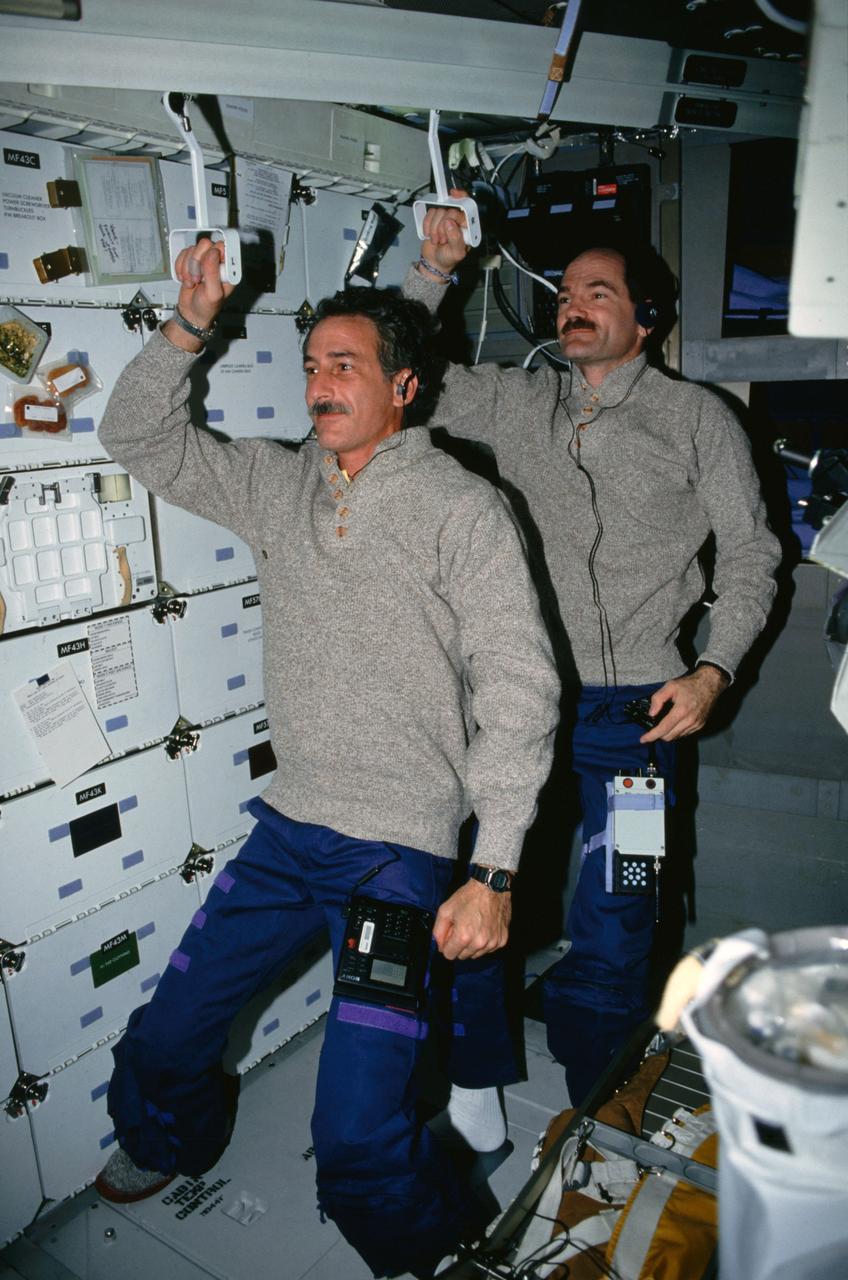
STS035-10-005 (2-10 Dec 1990) --- STS-35 Mission Specialist (MS) Jeffrey A. Hoffman (front) and Pilot Guy S. Gardner, holding Development Test Objective (DTO) 634 trash compactor handles to the ceiling, "commute" to work on the middeck of Columbia, Orbiter Vehicle (OV) 102. Just below Hoffman's right elbow in locker MF43G DTO 634, Trash Compaction and Retention System Demonstration, trash compactor with a geared mechanism that allows manual compaction of wet and dry trash is visible. Also in the view are the stowed treadmill on the middeck floor and the starboard side sleep station.
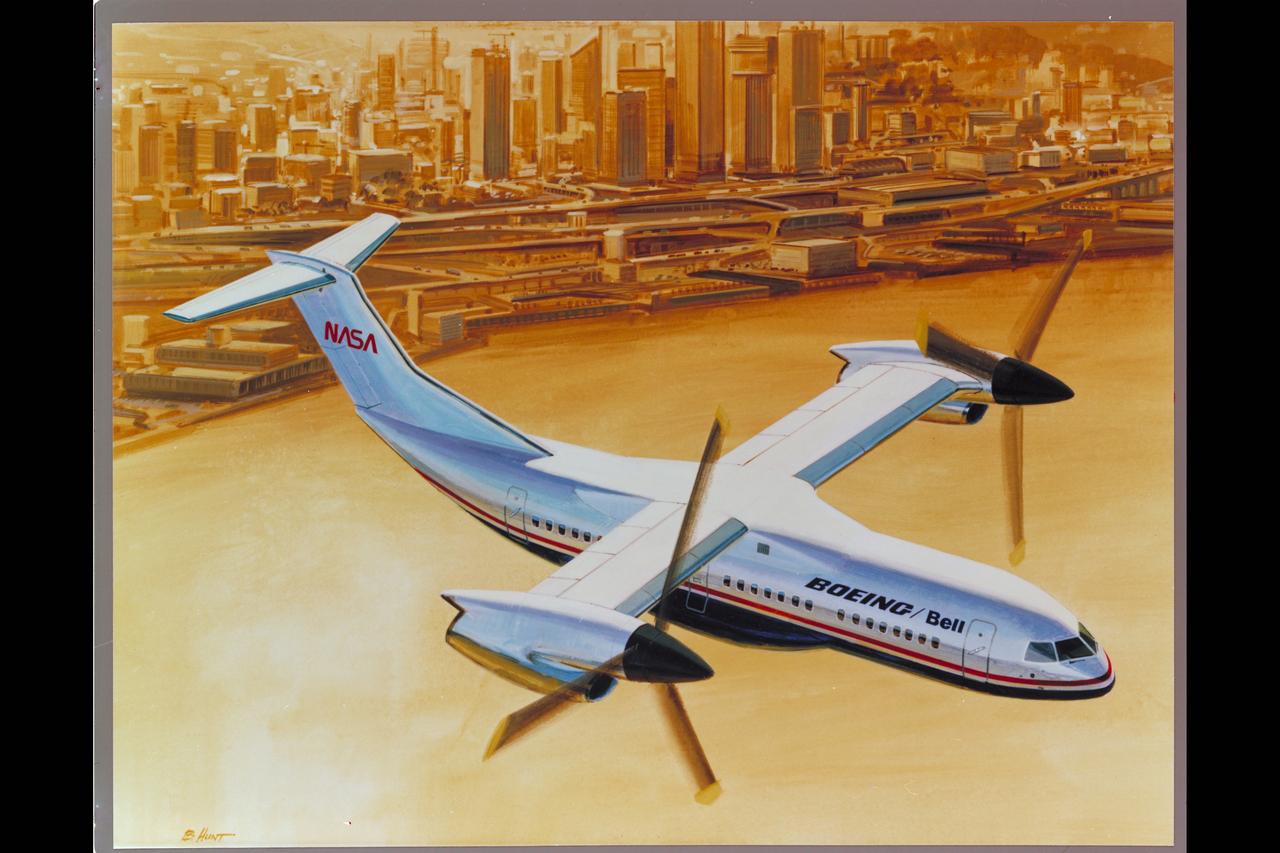
Civil Tilt Rotor Commuter Aircraft concepts by Boeing/Bell
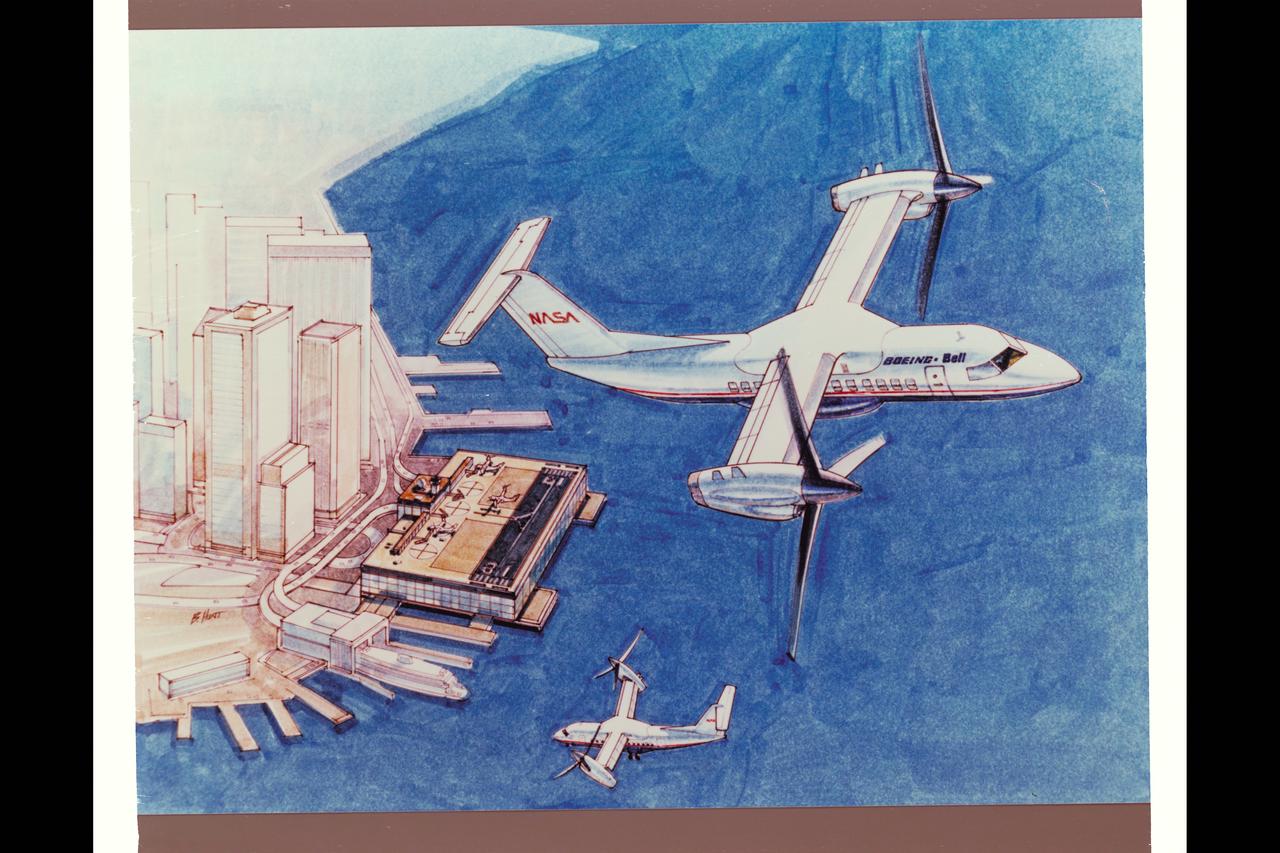
Civil Tilt Rotor Commuter Aircraft concepts by Boeing/Bell
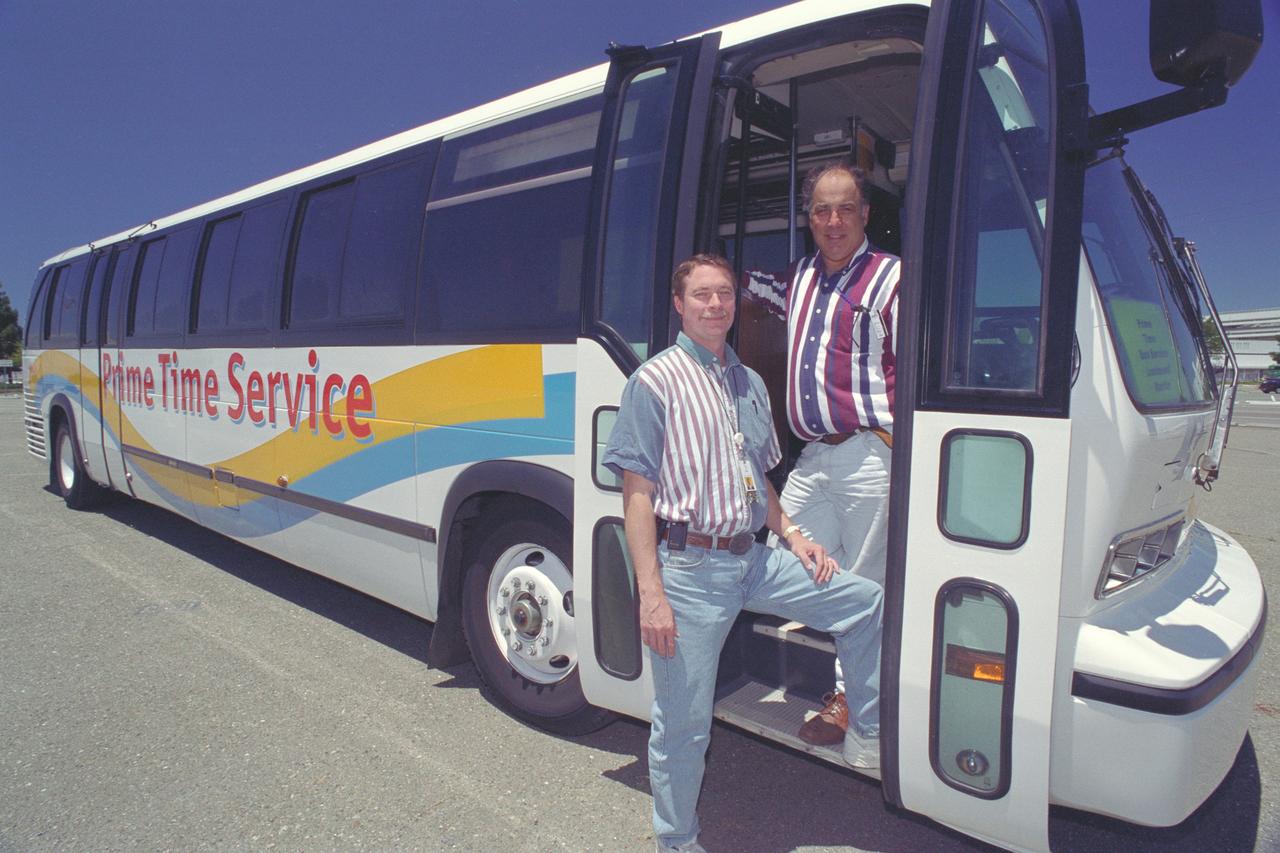
Lockheed Bus 'Prime Time' with drivers Danial Dague & Gary Zaharias. Ames Alternative Commute Program (AACP)
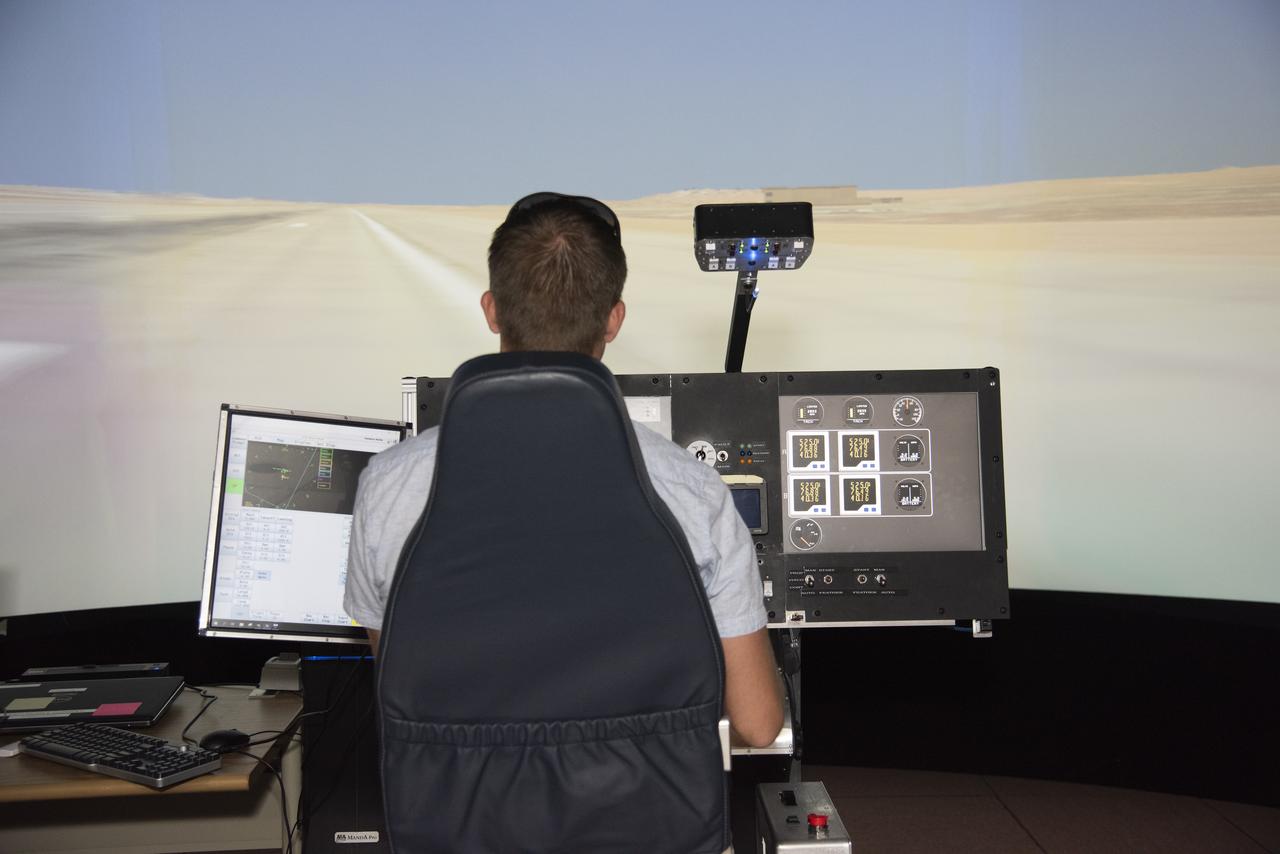
NASA's 2017 astronaut candidate Matthew Dominick practices flying in the X-57 aircraft simulator at Armstrong Flight Research Center in Southern California. Starting with the fuselage of a Tecnam P20067T, the X-57 Maxwell electric propulsion airplane is being built from ideas being researched that could lead to the development of electric propulsion-powered aircraft, which would be quieter, more efficient and environmentally friendly than today's commuter aircraft.
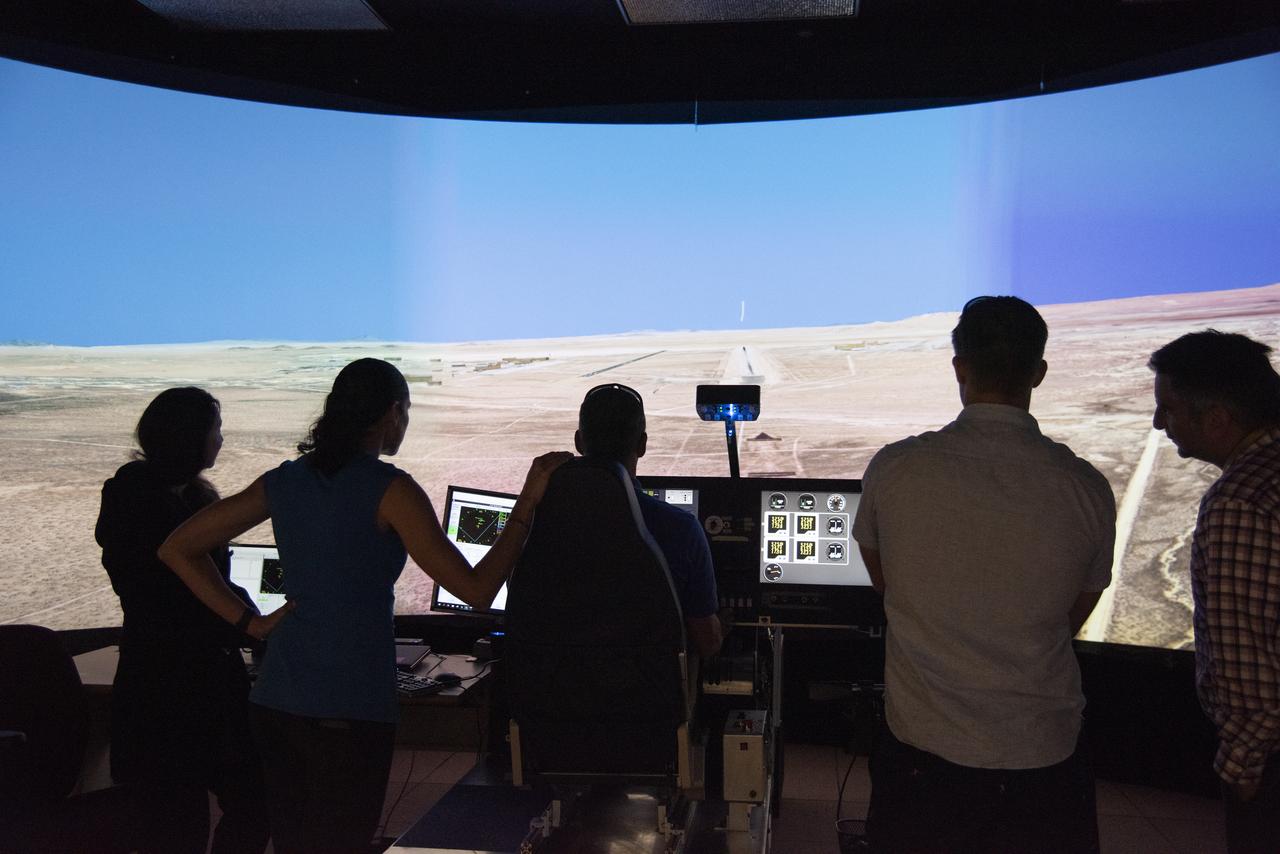
NASA's 2017 astronaut candidates toured aircraft hangar at Armstrong Flight Research Center, in Southern California. After tour of aircraft hangar and briefing on the use of aircraft for flight research, the astronauts practiced flying the X-57 simulator. Starting with the fuselage of a Tecnam P20067T, the X-57 Maxwell electric propulsion airplane is being built and could lead to the development of electric propulsion-powered aircraft, which would be quieter, more efficient and environmentally friendly than today's commuter aircraft.
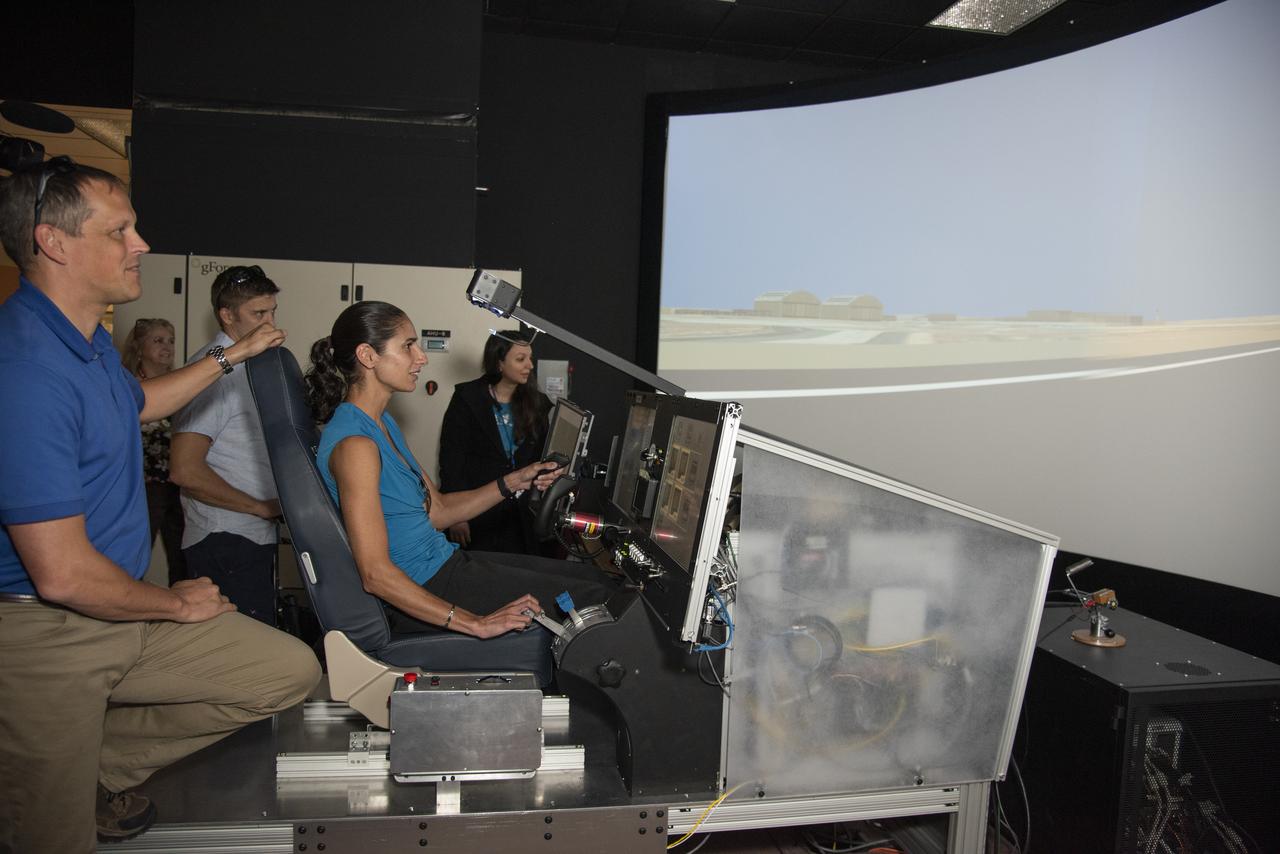
NASA's 2017 astronaut candidates (L to R) Bob Hines, Matthew Dominick and Jasmin Moghbeli practice flying in X-57 aircraft simulator at Armstrong Flight Research Center in Southern California. Starting with the fuselage of a Tecnam P20067T, the X-57 Maxwell electric propulsion airplane is being built from ideas being researched that could lead to the development of electric propulsion-powered aircraft, which would be quieter, more efficient and environmentally friendly than today's commuter aircraft.
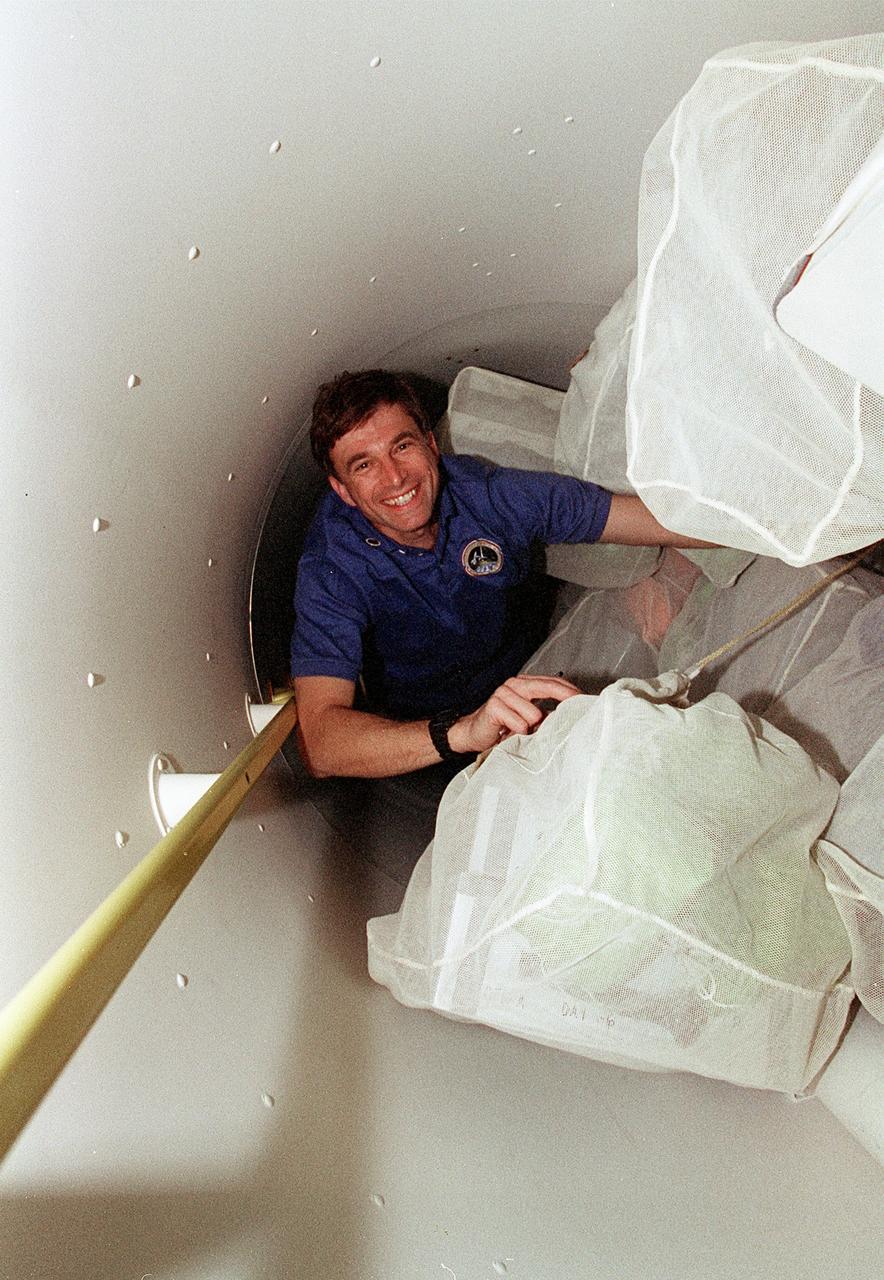
STS076-345-012 (22 - 31 March 1996) --- During the first few hours of the mission, astronaut Ronald M. Sega checks over stowed bags filled with food supplies in the STS-76 tunnel. The payload commander was one of six NASA astronauts aboard the Space Shuttle Atlantis, which later docked with Russia's Mir Space Station. The crew used a tunnel to commute to the Spacehab module and, later, to the Mir via its Docking Module (DM).
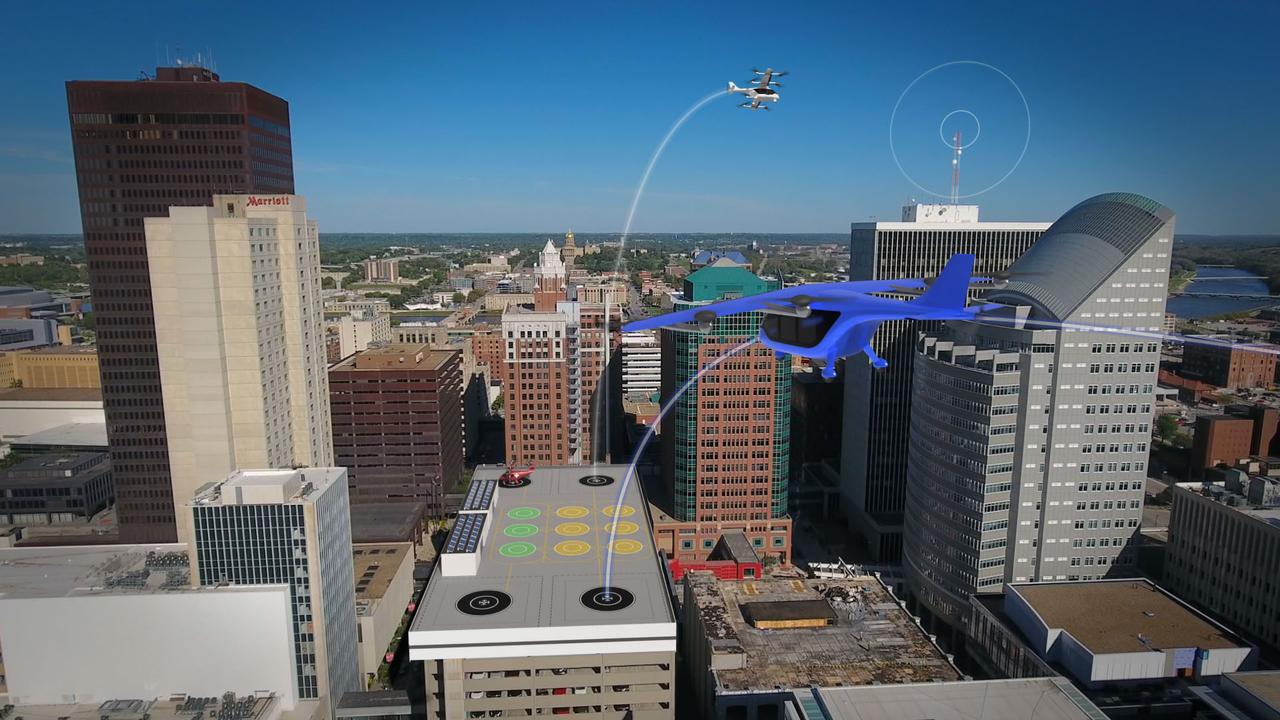
Several projects supporting NASA's Advanced Air Mobility, or AAM mission, are working on different elements to help make AAM a reality. The team is researching how the addition of AAM could cut traffic commutes, make travel more sustainable, and make road trips shorter. With the addition of AAM, we would be using another dimension in the sky for travel below traditional aircraft and above cars, buses, or trains below.
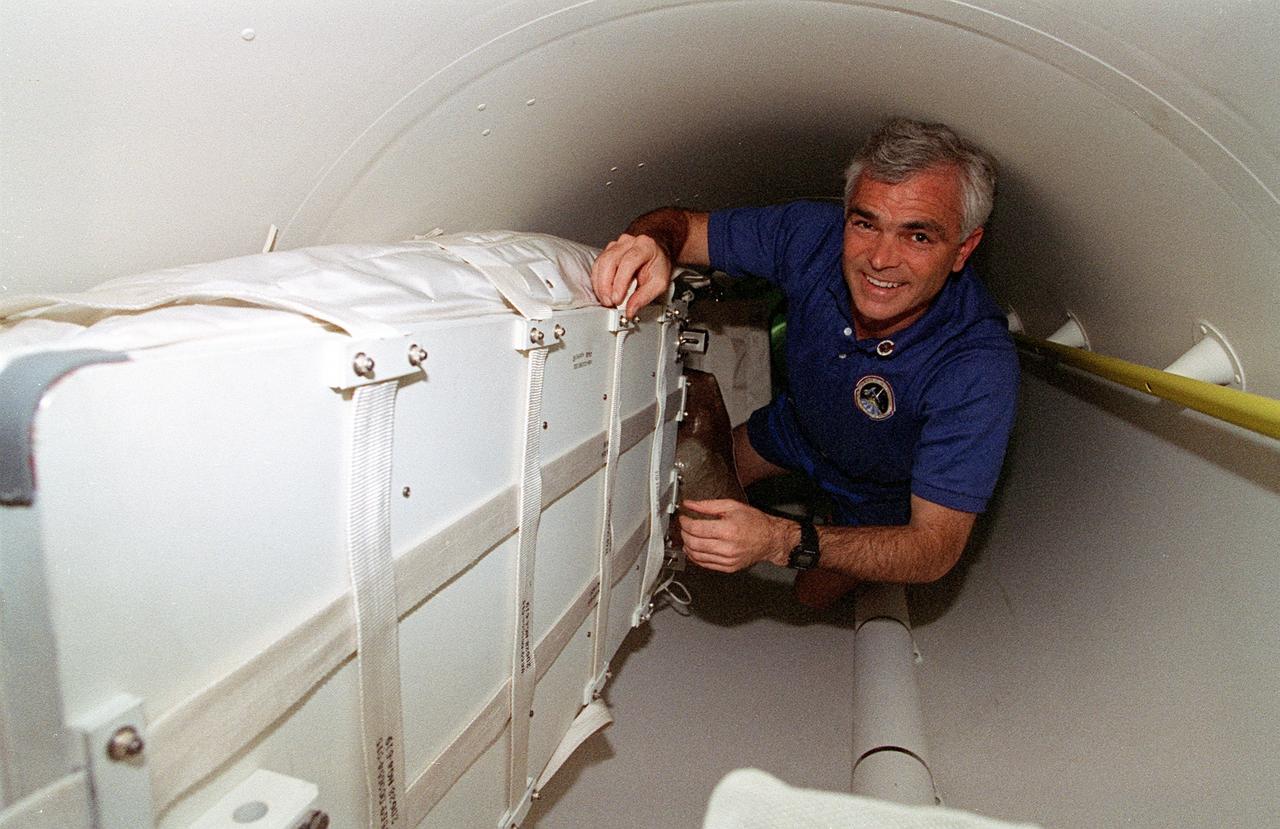
STS076-345-014 (22-31 March 1996) --- During the first few hours of the mission, astronaut Michael R. (Rich) Clifford checks over stowed bags filled Extravehicular Activity (EVA) supplies in the STS-76 tunnel. The mission specialist, one of six NASA astronauts aboard the Space Shuttle Atlantis, later helped move the bags to Atlantis' airlock. Atlantis later docked with Russia's Mir Space Station. The crew used a tunnel to commute to the Spacehab module and, later, to the Mir via its Docking Module (DM).
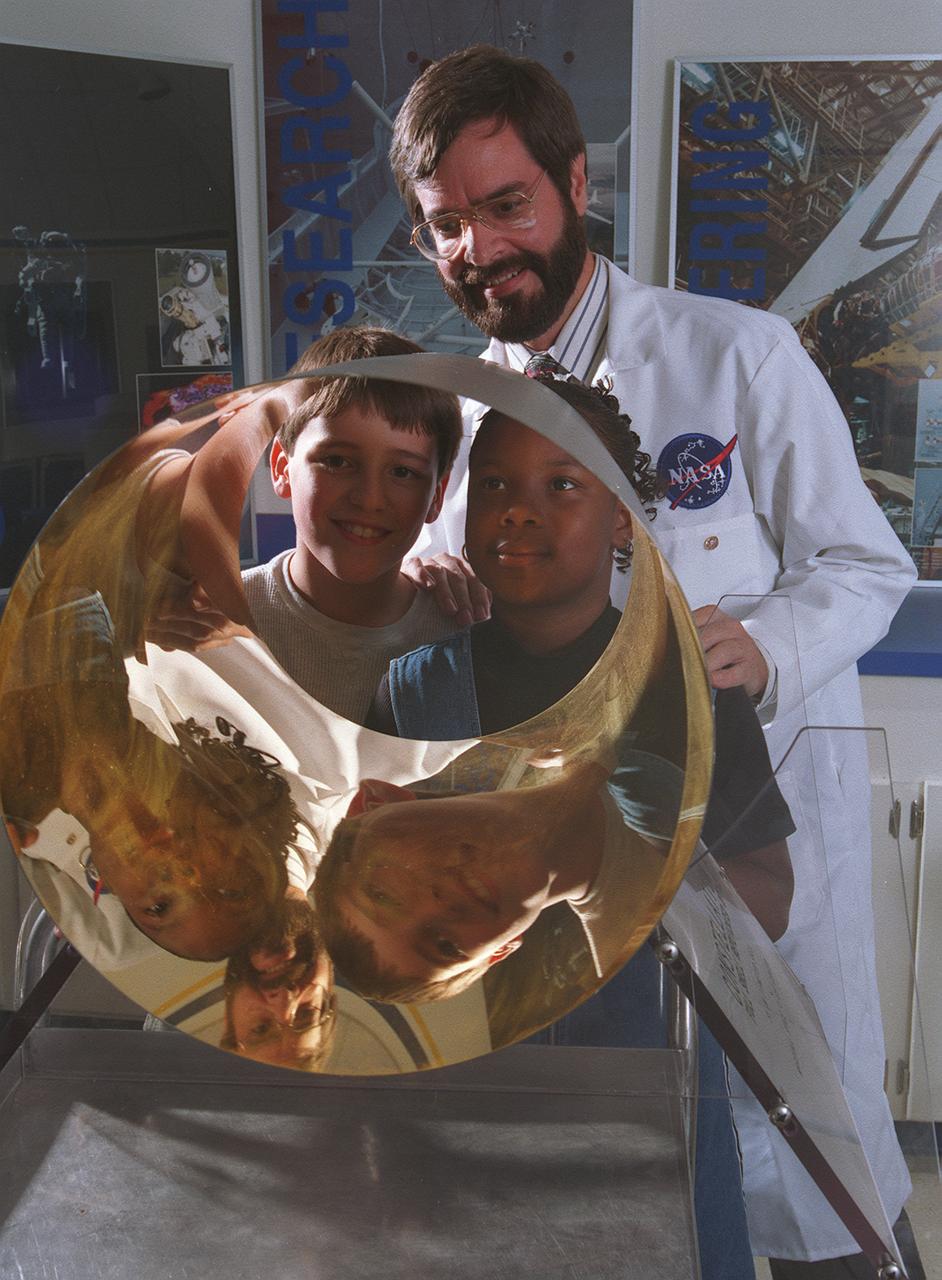
Through Marshall Space Flight Center (MSFC) Education Department, over 400 MSFC employees have volunteered to support educational program during regular work hours. Project LASER (Learning About Science, Engineering, and Research) provides support for mentor/tutor requests, education tours, classroom presentations, and curriculum development. This program is available to teachers and students living within commuting distance of the NASA/MSFC in Huntsville, Alabama (approximately 50-miles radius). This image depicts students viewing their reflections in an x-ray mirror with Marshall optic engineer Vince Huegele at the Discovery Laboratory, which is an onsite MSFC laboratory facility that provides hands-on educational workshop sessions for teachers and students learning activities.
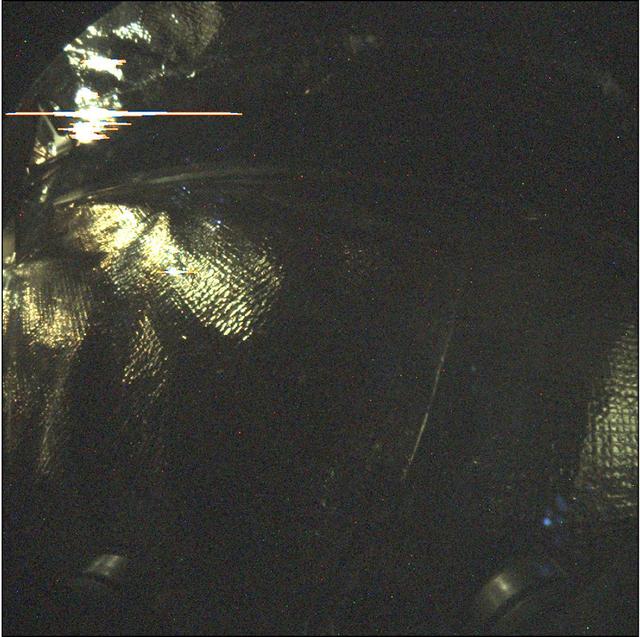
This long-exposure image (24 seconds) was taken by Instrument Context Camera (ICC) of NASA's InSight Mars lander. The image shows some of the interior features of the backshell that encapsulates the spacecraft. The backshell carries the parachute and several components used during later stages of entry, descent, and landing. Along with the heatshield, the backshell protects NASA's InSight Mars lander during its commute to and entry into the Martian atmosphere. The annotations in this image call out discernable components in the backshell -- the heatshield blanket, harness tie-downs, and cover bolts for the ICC. The heat shield blanket provides thermal protection from the hot and cold temperature swings encountered during cruise, and the high heat that will occur during Mars atmospheric entry. The tie-downs are used to secure harnesses (or other objects) so they do not move around inside the aeroshell while in flight. The ICC cover bolts secure a protective transparent window to the camera during cruise and entry, descent and landing. The cover is opened after landing and is not visible during surface operations. This image has been stretched to bring out details in the dimly lit scene. The illumination of the components on the inside of the backshell comes from sunlight entering around the edges of cutouts in the backshell to accommodate steering thrusters. An annotated image is available at https://photojournal.jpl.nasa.gov/catalog/PIA22647
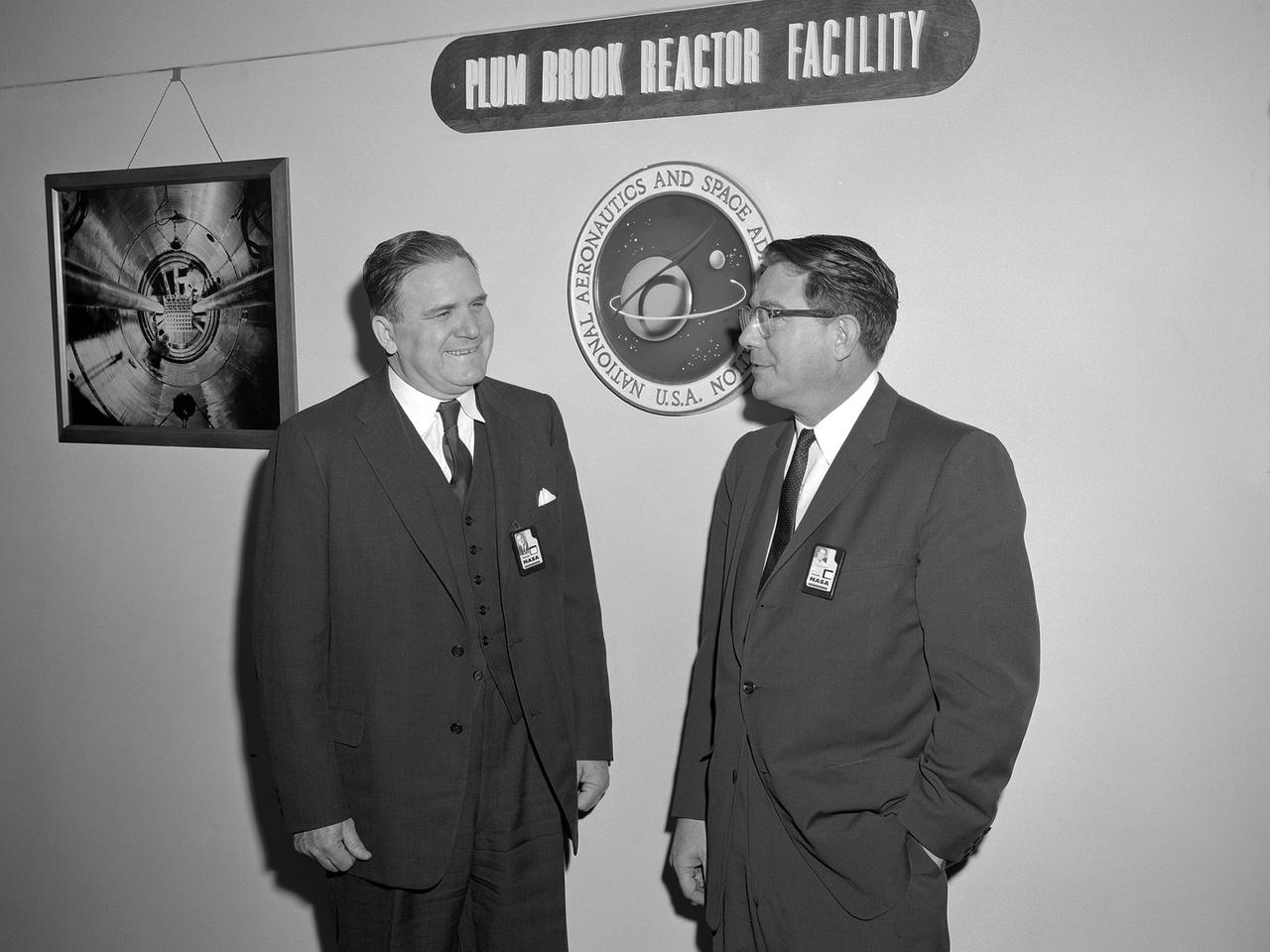
National Aeronautics and Space Administration (NASA) Administrator James Webb toured the new Plum Brook Reactor Facility in December 1961 with Abe Silverstein, the newly appointed Director of the Lewis Research Center. The 60-megawatt test reactor was built on 500 acres of the former Plum Brook Ordnance Works in Sandusky, Ohio. After nearly five years of construction, the facility went critical for the first time in June 1961. In late 1957 Hugh Dryden requested Silverstein’s assistance in creating the new space agency. After several months of commuting, Silverstein transferred to Headquarters in May 1958. Silverstein was a critical member of a team that devised a fiscal year 1960 budget and began planning missions. When NASA officially began operation on October 1, 1958, Silverstein was third in command. He directed mission planning, spacecraft design, launch operations, manned space missions, and unmanned probes. James Webb, named NASA administrator on January 7, 1961, sought to have those working on Apollo at the NASA centers report to a new Headquarters program office, not to the head of the Apollo Program. Silverstein requested to be appointed to the vacant center director position in Cleveland. He officially returned as director of the Lewis Research Center on November 1, 1961.
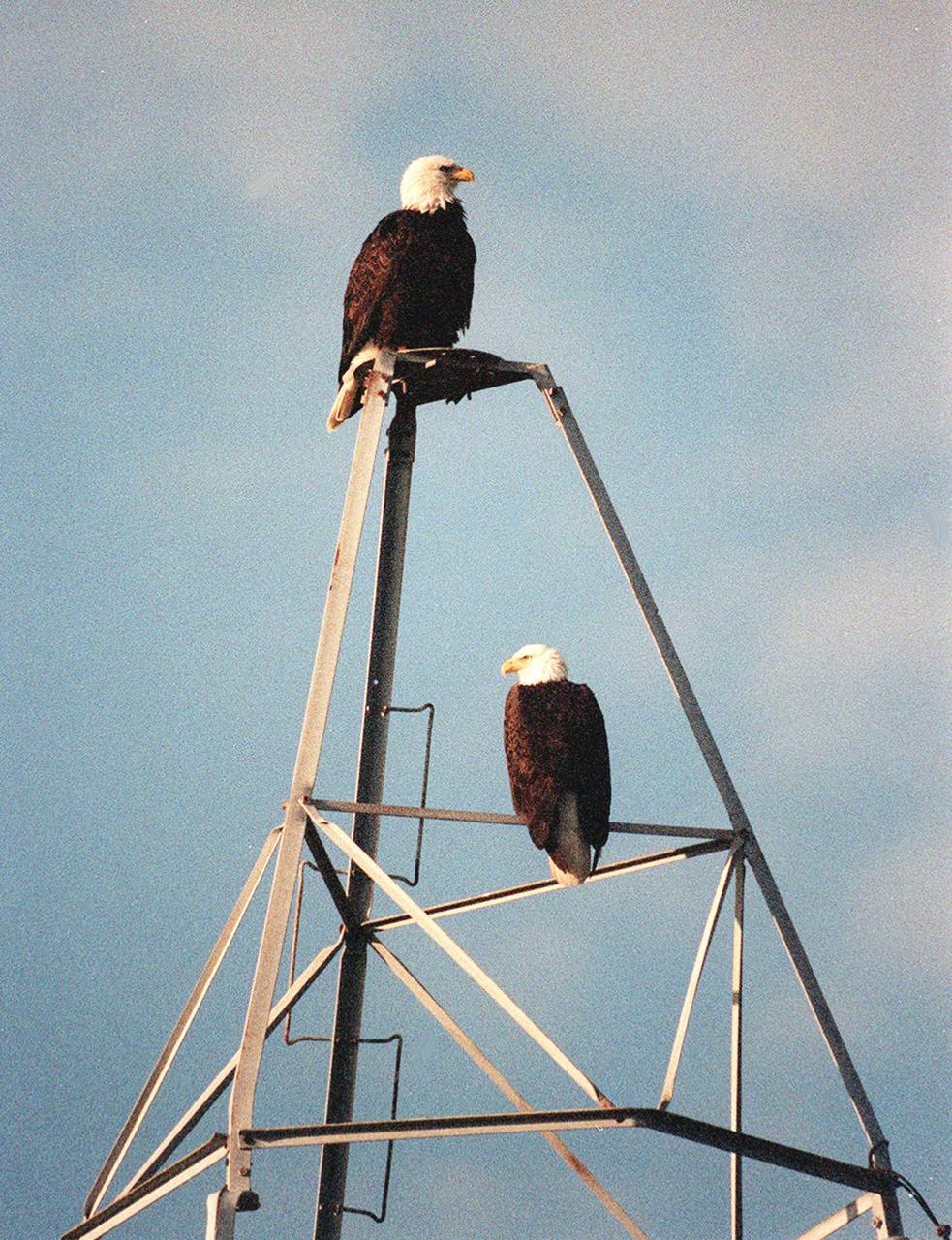
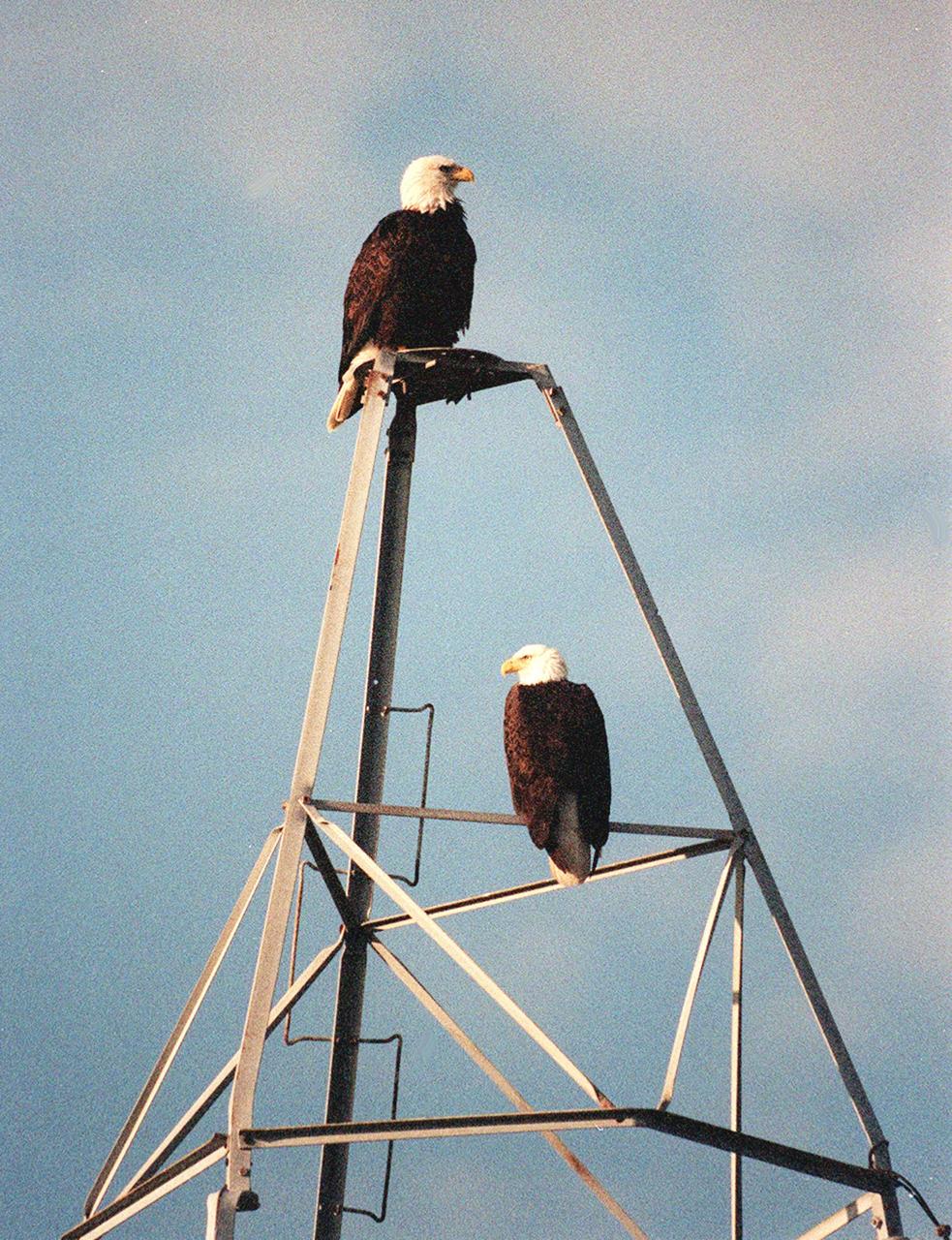
A pair of Florida bald eagles take advantage of a tower to rest and view the landscape near the intersection of the NASA Causeway and Kennedy Parkway North at Kennedy Space Center. This pair of eagles nests near Kennedy Parkway and is seen frequently by KSC commuters and visitors. The Southern Bald Eagle ranges throughout Florida and along the coasts of California, Texas, Louisiana and the south Atlantic states. Bald Eagles are listed as endangered in the U.S., except in five states where they are listed as threatened. The number of nesting pairs of the southern race once numbered several thousand; recent estimates are only 350-375. Most southern Florida eagles nesting at KSC arrive during late summer and leave for the north in late spring. They move to nest sites in October and November and lay one to three eggs. The young fledge from February to April. . Kennedy Space Center shares a boundary with the Merritt Island National Wildlife Refuge, which encompasses 92,000 acres that are a habitat for more than 331 species of birds, 31 mammals, 117 fishes, and 65 amphibians and reptiles. The marshes and open water of the refuge provide wintering areas for 23 species of migratory waterfowl, as well as a year-round home for great blue herons, great egrets, wood storks, cormorants, brown pelicans and other species of marsh and shore birds, as well as a variety of insects
A pair of Florida bald eagles take advantage of a tower to rest and view the landscape near the intersection of the NASA Causeway and Kennedy Parkway North at Kennedy Space Center. This pair of eagles nests near Kennedy Parkway and is seen frequently by KSC commuters and visitors. The Southern Bald Eagle ranges throughout Florida and along the coasts of California, Texas, Louisiana and the south Atlantic states. Bald Eagles are listed as endangered in the U.S., except in five states where they are listed as threatened. The number of nesting pairs of the southern race once numbered several thousand; recent estimates are only 350-375. Most southern Florida eagles nesting at KSC arrive during late summer and leave for the north in late spring. They move to nest sites in October and November and lay one to three eggs. The young fledge from February to April. . Kennedy Space Center shares a boundary with the Merritt Island National Wildlife Refuge, which encompasses 92,000 acres that are a habitat for more than 331 species of birds, 31 mammals, 117 fishes, and 65 amphibians and reptiles. The marshes and open water of the refuge provide wintering areas for 23 species of migratory waterfowl, as well as a year-round home for great blue herons, great egrets, wood storks, cormorants, brown pelicans and other species of marsh and shore birds, as well as a variety of insects
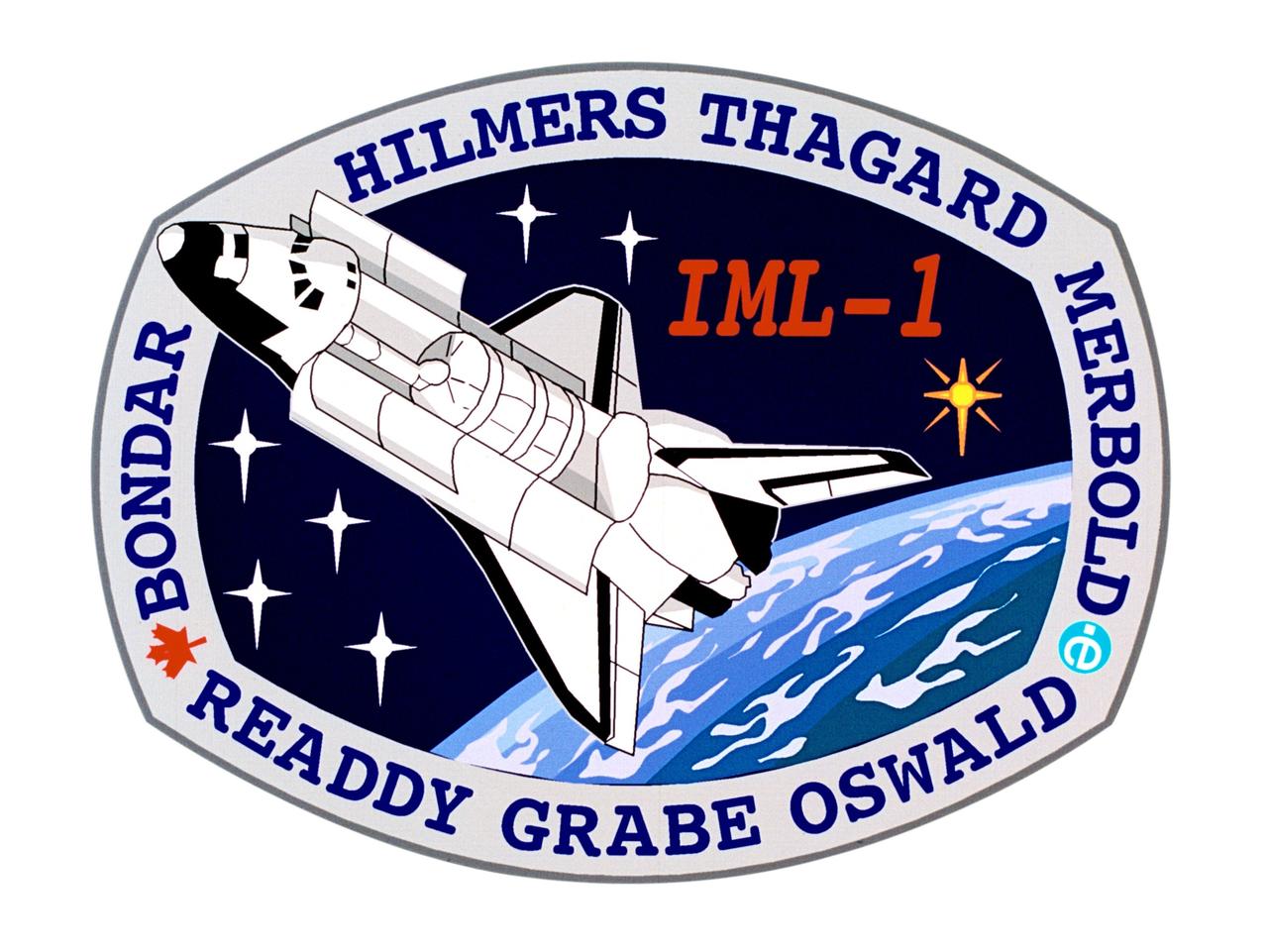
STS042-S-001 (October 1991) --- Designed by the crew members, the International Microgravity Lab-1 (IML-1) insignia depicts the orbiter with the Spacelab Module aboard. The spacecraft is oriented in a quiescent, tail-to-Earth, gravity-gradient attitude to best support the various microgravity payloads and experiments. The international composition of the crew is depicted by symbols representing both the Canadian Space Agency (CSA) and the European Space Agency (ESA). The number 42 is represented by six white stars -- four on one side of the orbiter and two on the other. The single gold star above Earth's horizon honors the memory of astronaut Manley L. (Sonny) Carter, who was killed earlier this year in a commuter plane crash. A crew spokesperson stated that Carter "...was our crew mate, colleague and friend." Blue letters set against white give the surnames of the five astronauts and two payload specialists for the flight. The NASA insignia design for space shuttle flights is reserved for use by the astronauts and for other official use as the NASA Administrator may authorize. Public availability has been approved only in the form of illustrations by the various news media. When and if there is any change in this policy, which is not anticipated, it will be publicly announced. Photo credit: NASA