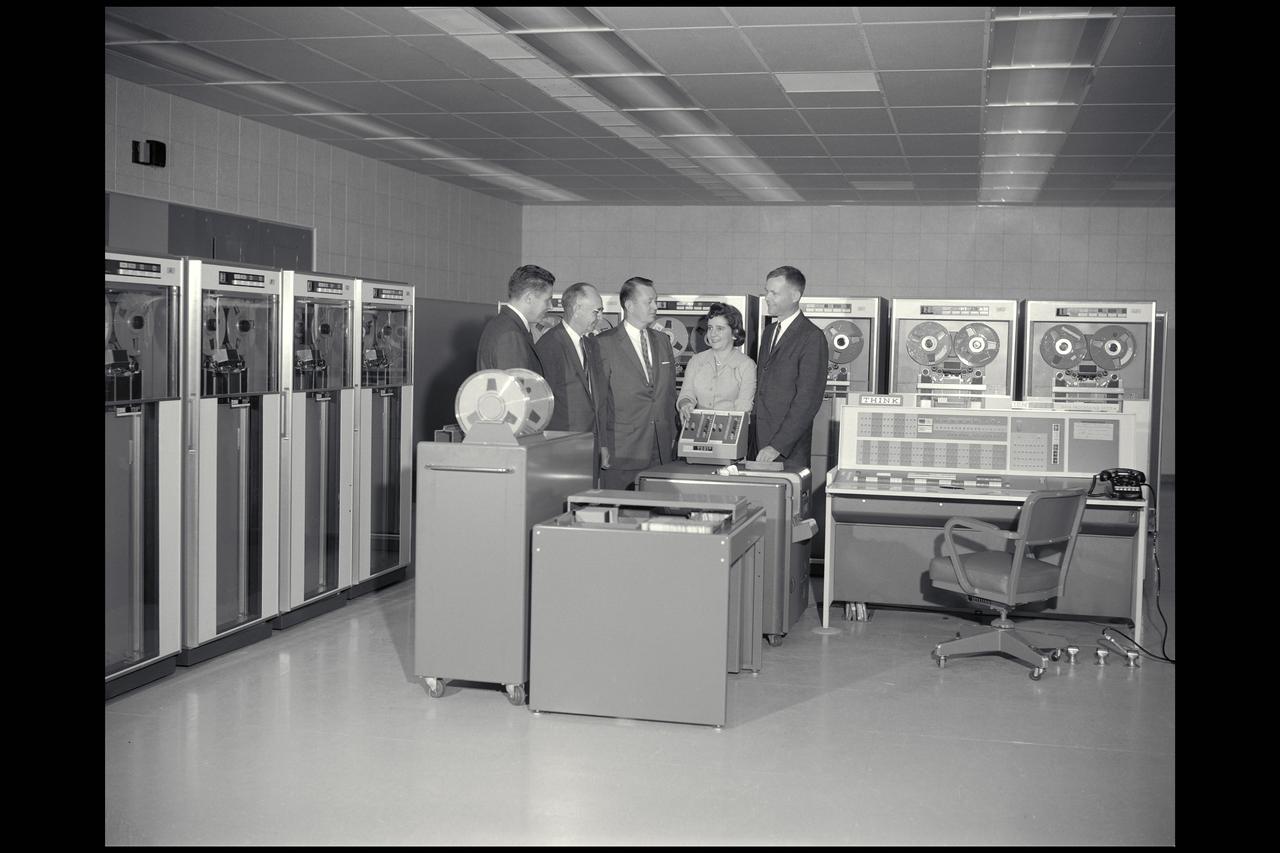
IBM 7090 computer and personnel: L-R: R Smith, IBM; Smith DeFrance, Ames; H Funk, IBM; Marcie Chartz Smith, Ames; D Swartz, IBM; discuss installation of computer at Ames.
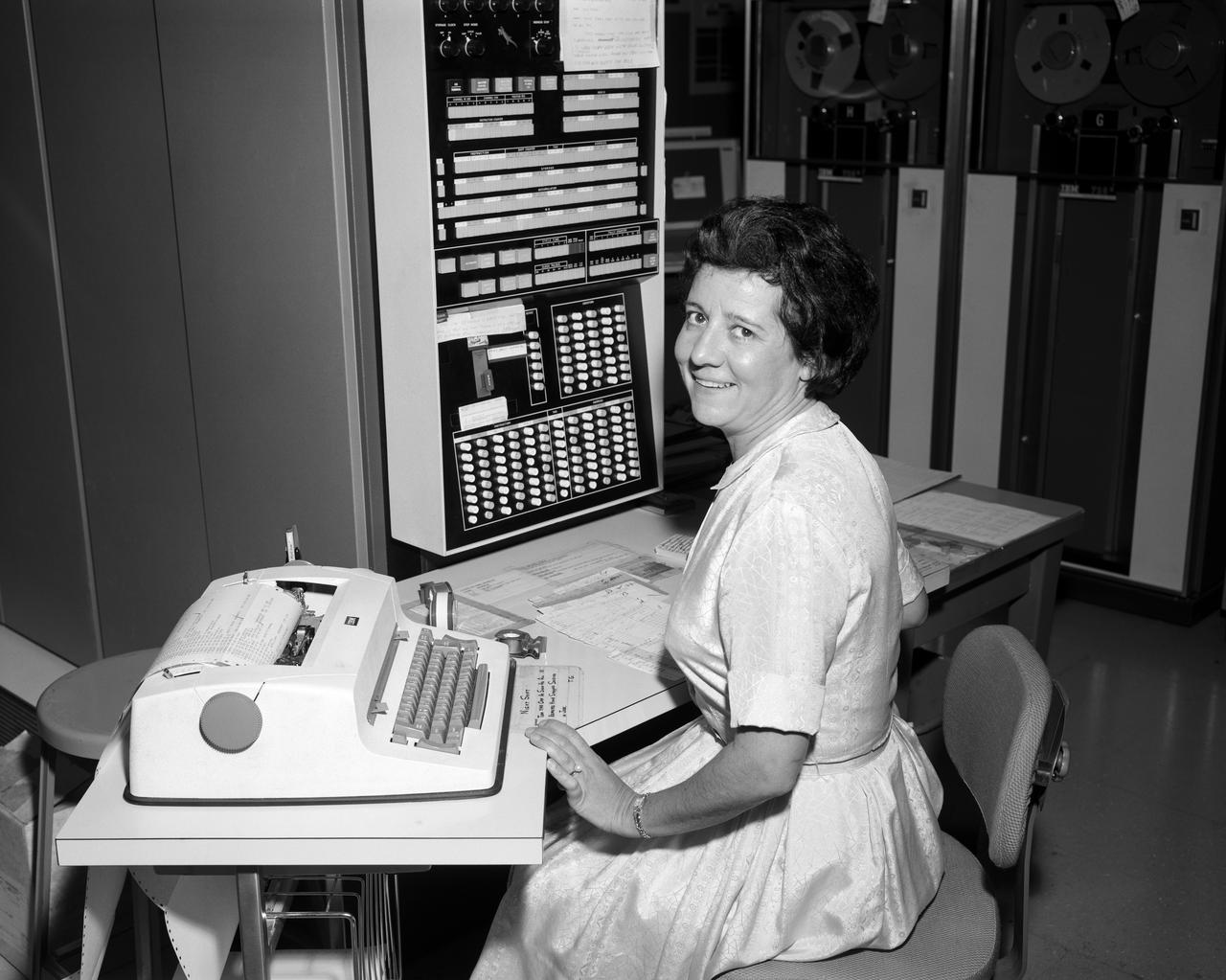
NASA Ames Computer Division, Smith (Weidlich). Candid: Marcia Smith Operating the IBM #740 Computer, Room #119-A, Building N-233.
Computers' at work in 16ft wind tunnel - calculating test data
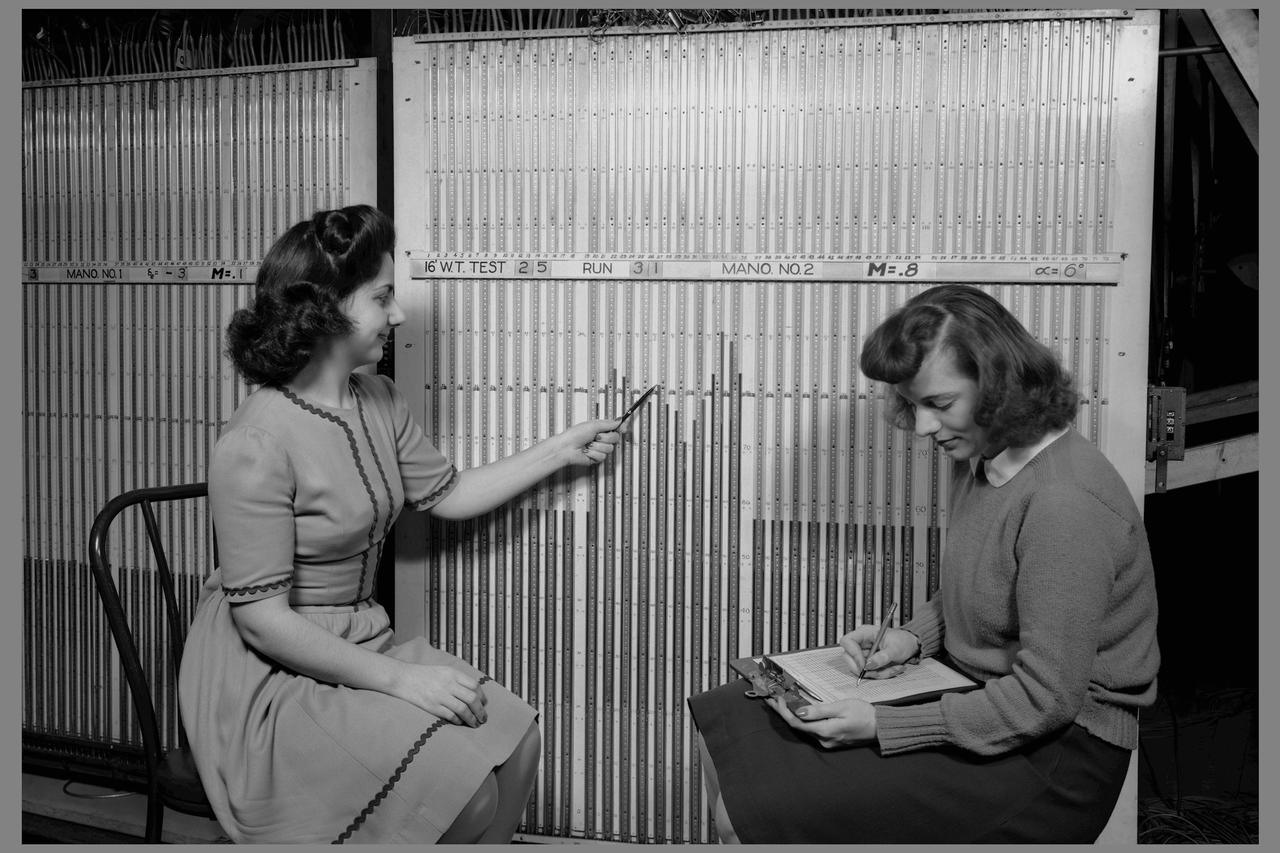
Computers' at work in 16ft wind tunnel - calculating test data - reading manometer board
Computers' at work in 16ft wind tunnel - calculating test data
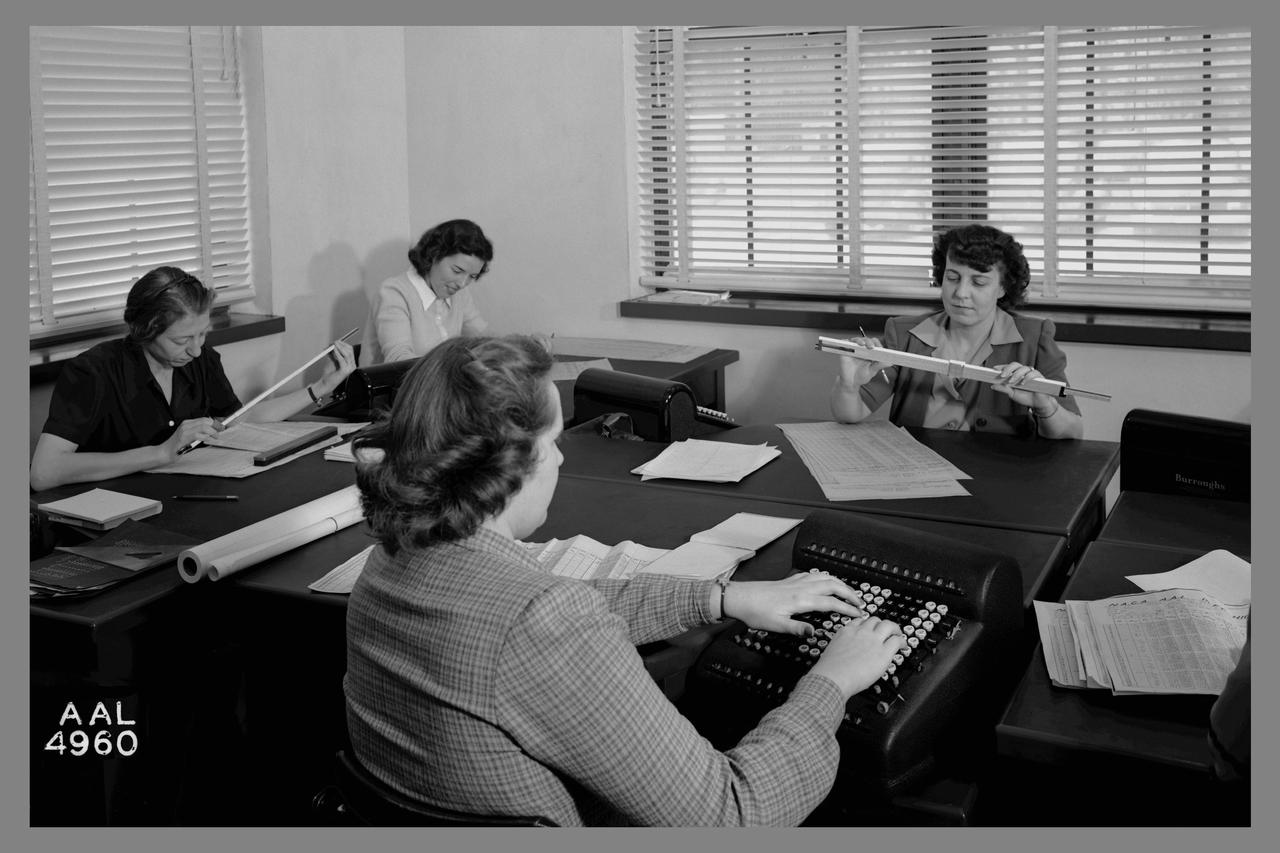
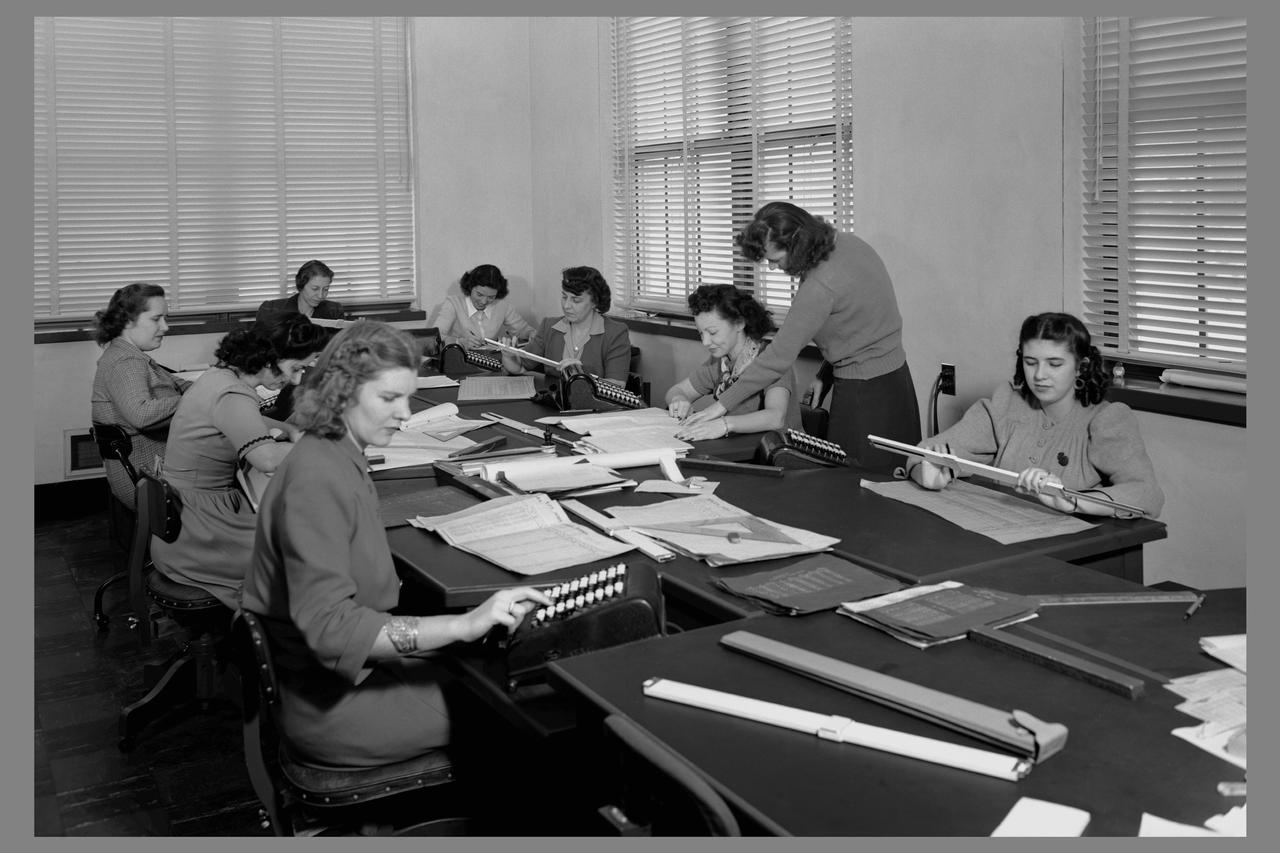
Langley's human computers at work in 1947. The female presence at Langley, who performed mathematical computations for male staff. Bell computers.
Langley's human computers at work in 1947. The female presence at Langley, who performed mathematical computations for male staff. Bell computers.
Langley's human computers at work in 1947. The female presence at Langley, who performed mathematical computations for male staff. Bell computers.
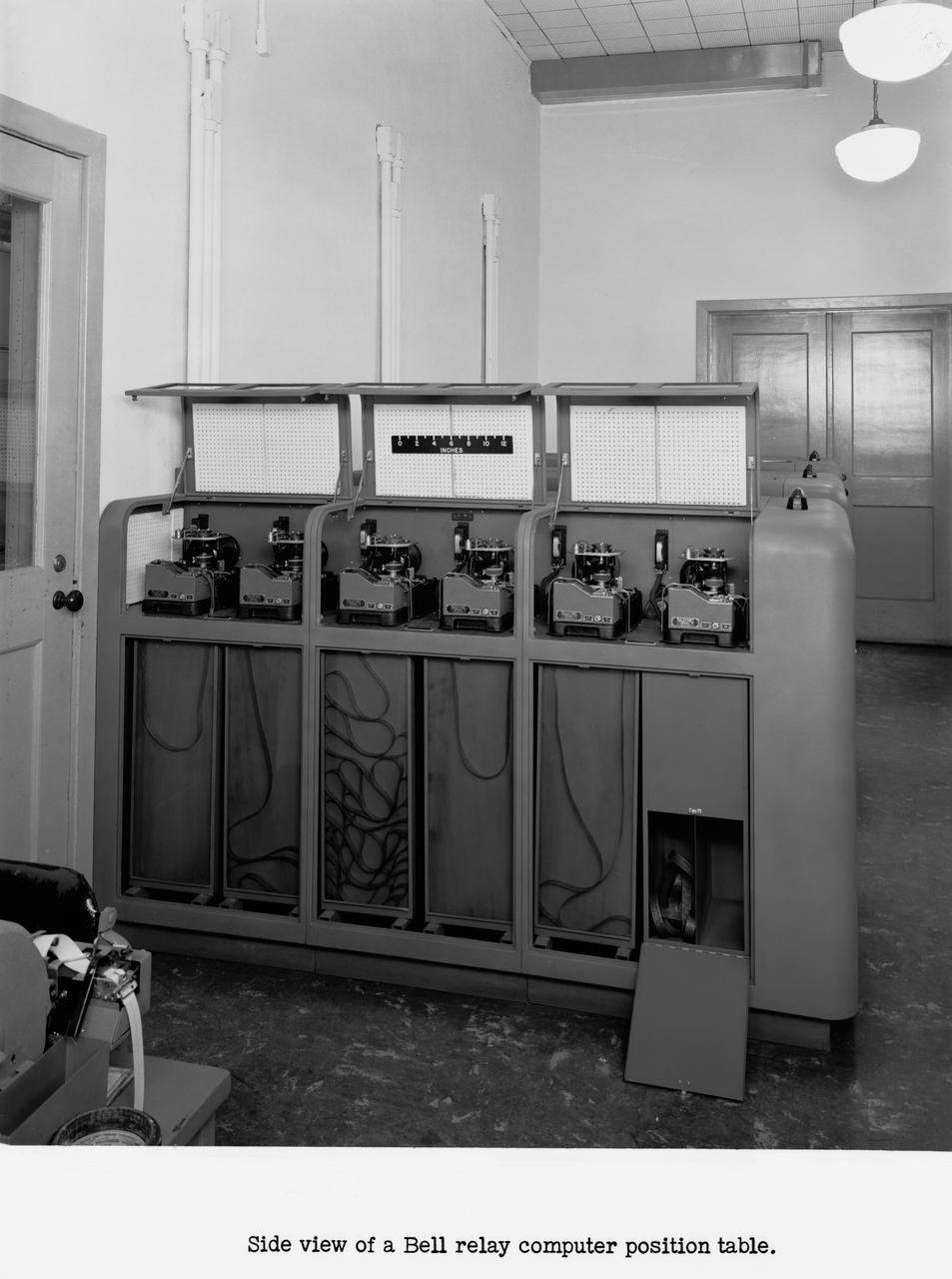
Langley's human computers at work in 1947. The female presence at Langley, who performed mathematical computations for male staff. Bell computers.
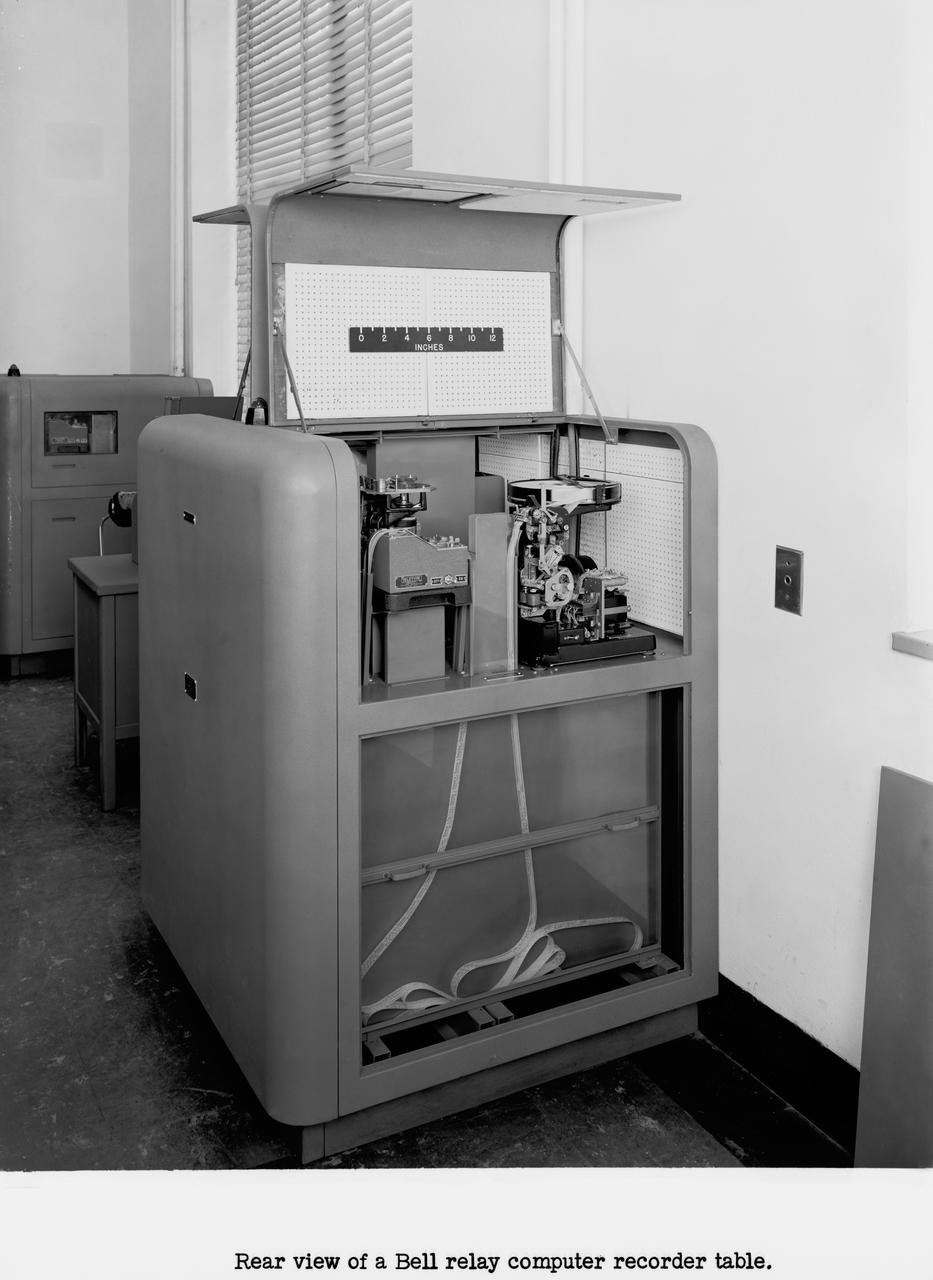
Langley's human computers at work in 1947. The female presence at Langley, who performed mathematical computations for male staff. Bell computers.
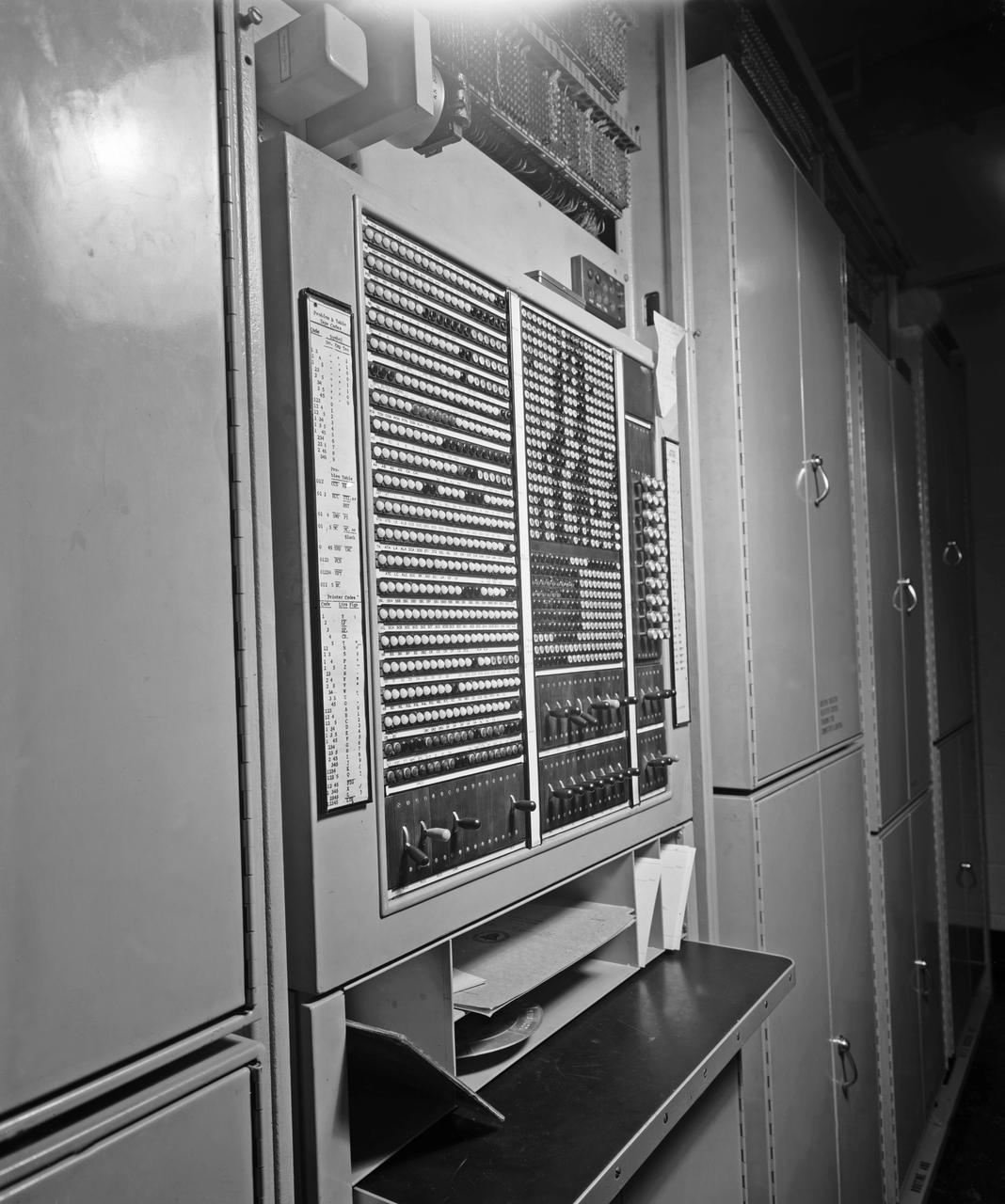
Langley's human computers at work in 1947. The female presence at Langley, who performed mathematical computations for male staff. Bell computers.
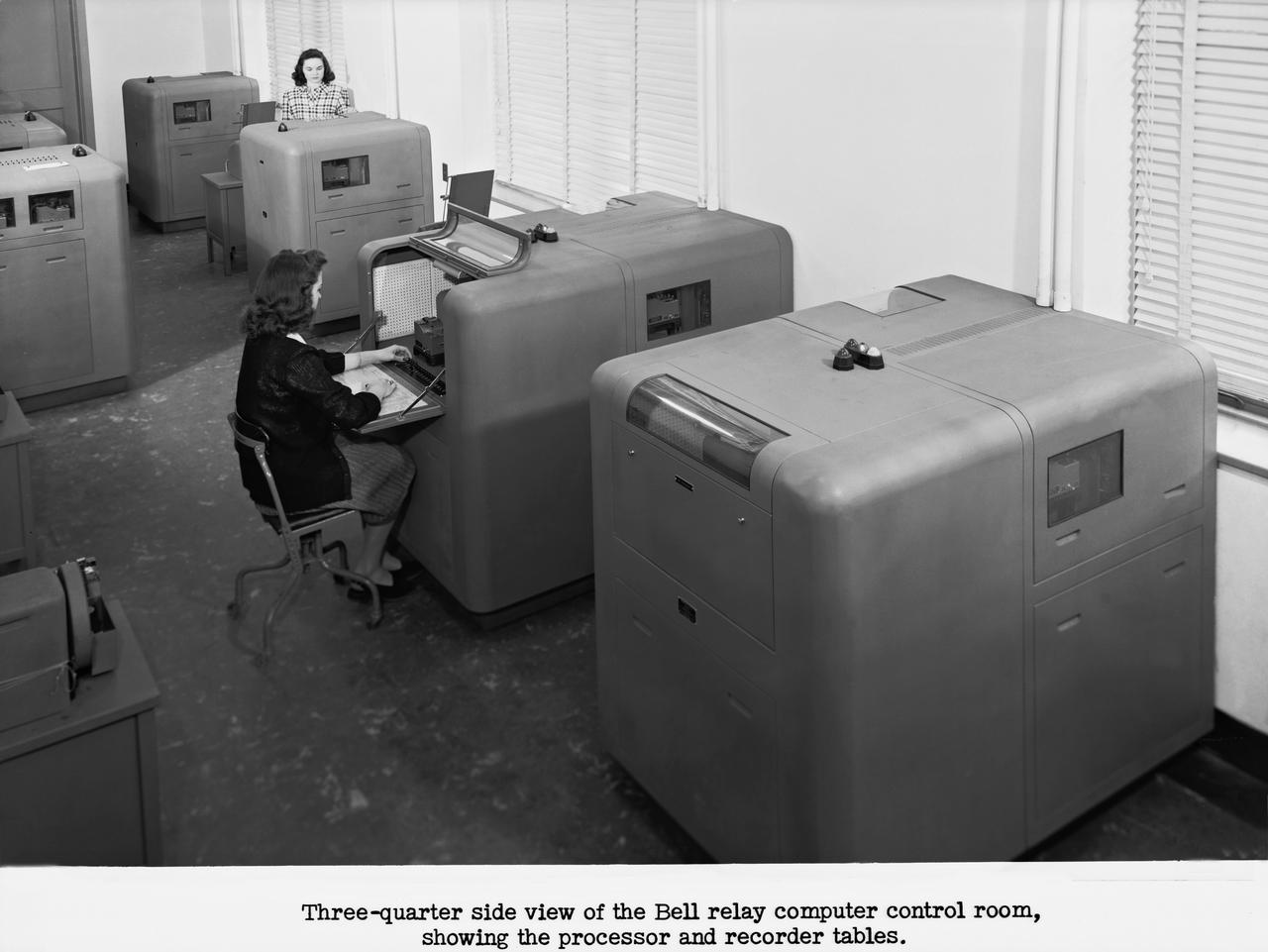
Langley's human computers at work in 1947. The female presence at Langley, who performed mathematical computations for male staff. Bell computers.
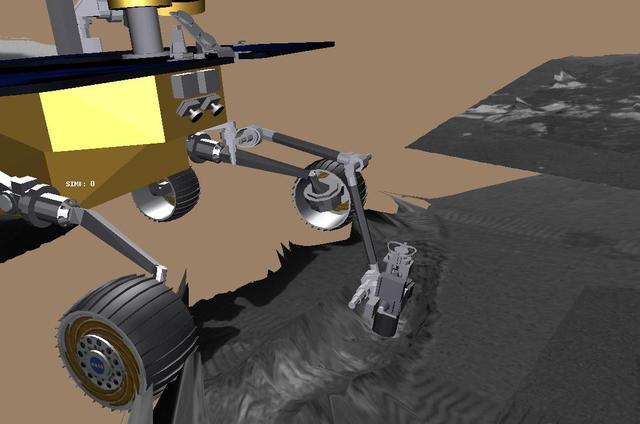
Grooving in Trenchtown computer animation
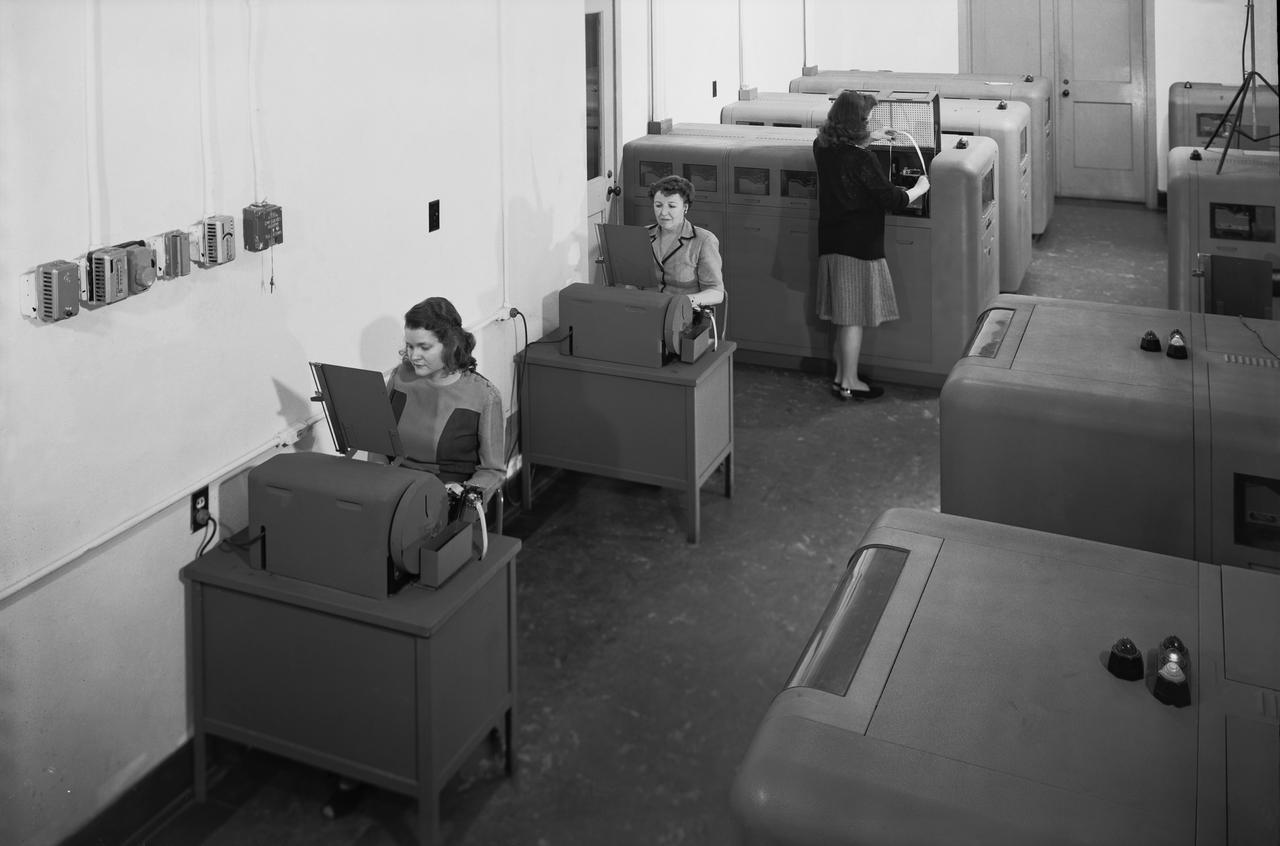
Langley's human computers at work in 1947. The female presence at Langley, who performed mathematical computations for male staff. -- Photograph published in Winds of Change, 75th Anniversary NASA publication (page 48), by James Schultz.
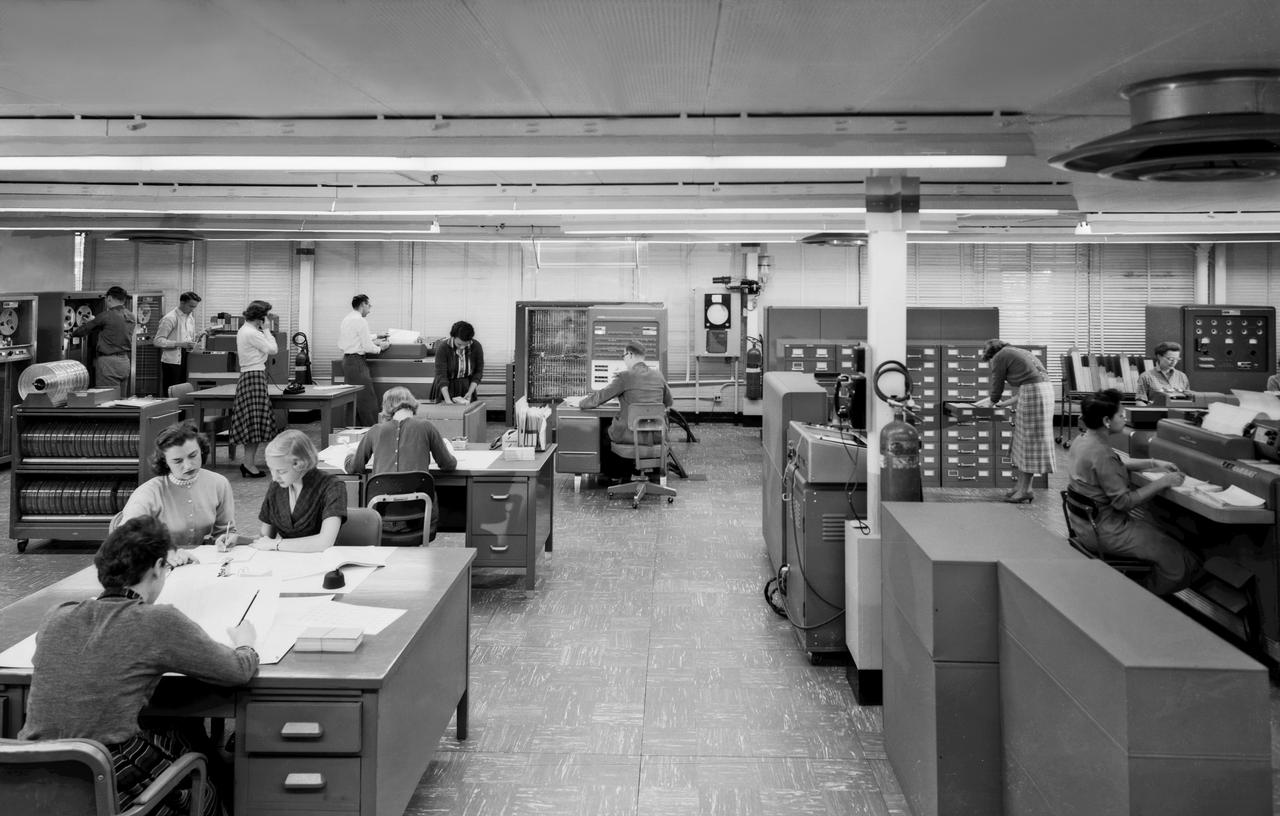
IBM 704 Computer Operations People on the photo are: Woman in the front with her back to the camera is Jean Ruddle Migneault. She provided the names for the rest of the staff in the photo. Kathy Christian Young, Mary Talmage Kaylor, Willie Terrell Ruffin (computer operator not mathematician), Joyce Alston Clemens, Lou Mayo Ladson, Rachel Richardson Mayo, Sadie Livingston Boyer , Joann Shipp Buschman worked in hangar in West Area, Shelva Blevins Stroud (programmer in data reduction), Jackie Kilby, Rita Englebert, Harriet Seals Winestein, Lillian Boney, Jane Thompson Kemper, Helen Thompson ( math aide) Jane and Helen were daughters of Floyd Thompson, center director.
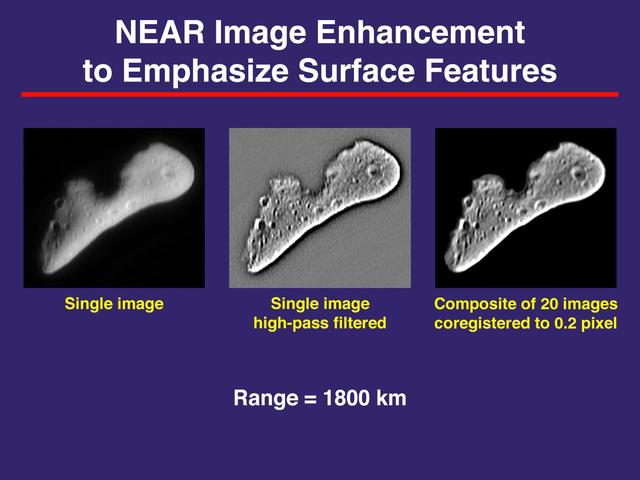
Eros Details Enhanced by Computer Processing
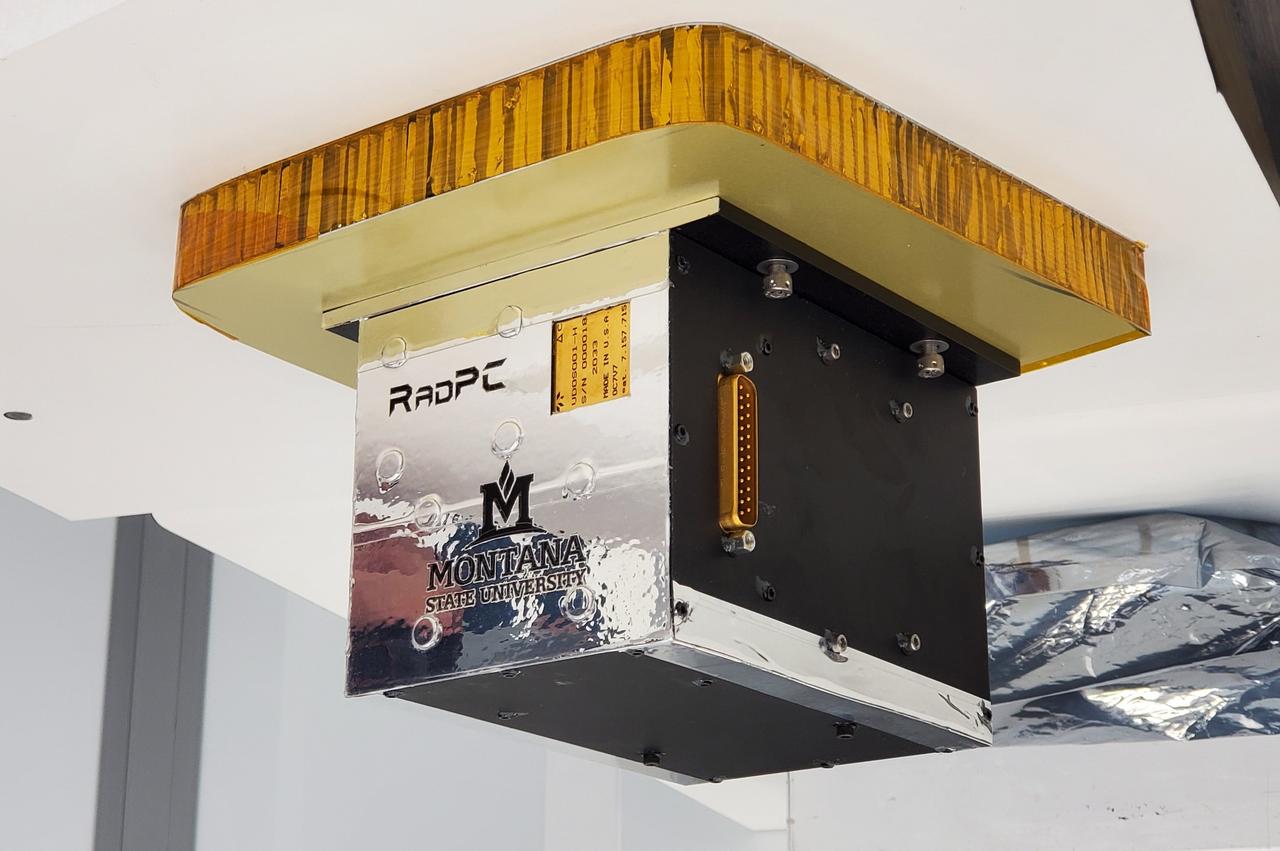
A technology demonstration flying aboard the next delivery for NASA’s CLPS (Commercial Lunar Payload Services) initiative could help mitigate radiation effects on computers in space. Radiation Tolerant Computer, or RadPC, is one of 10 payloads set to be carried to the Moon by the Blue Ghost 1 lunar lander in 2025. Developed by Montana State University in Bozeman, RadPC is designed designed to demonstrate computer recovery from faults caused by single-event effects of ionizing radiation. Investigations and demonstrations, such as RadPC, launched on CLPS flights will help NASA study Earth’s nearest neighbor under Artemis and pave the way for future crewed missions on the Moon. NASA’s Marshall Space Flight Center in Huntsville, Alabama, manages the development for seven of the 10 CLPS payloads that will be carried on Firefly’s Blue Ghost lunar lander.
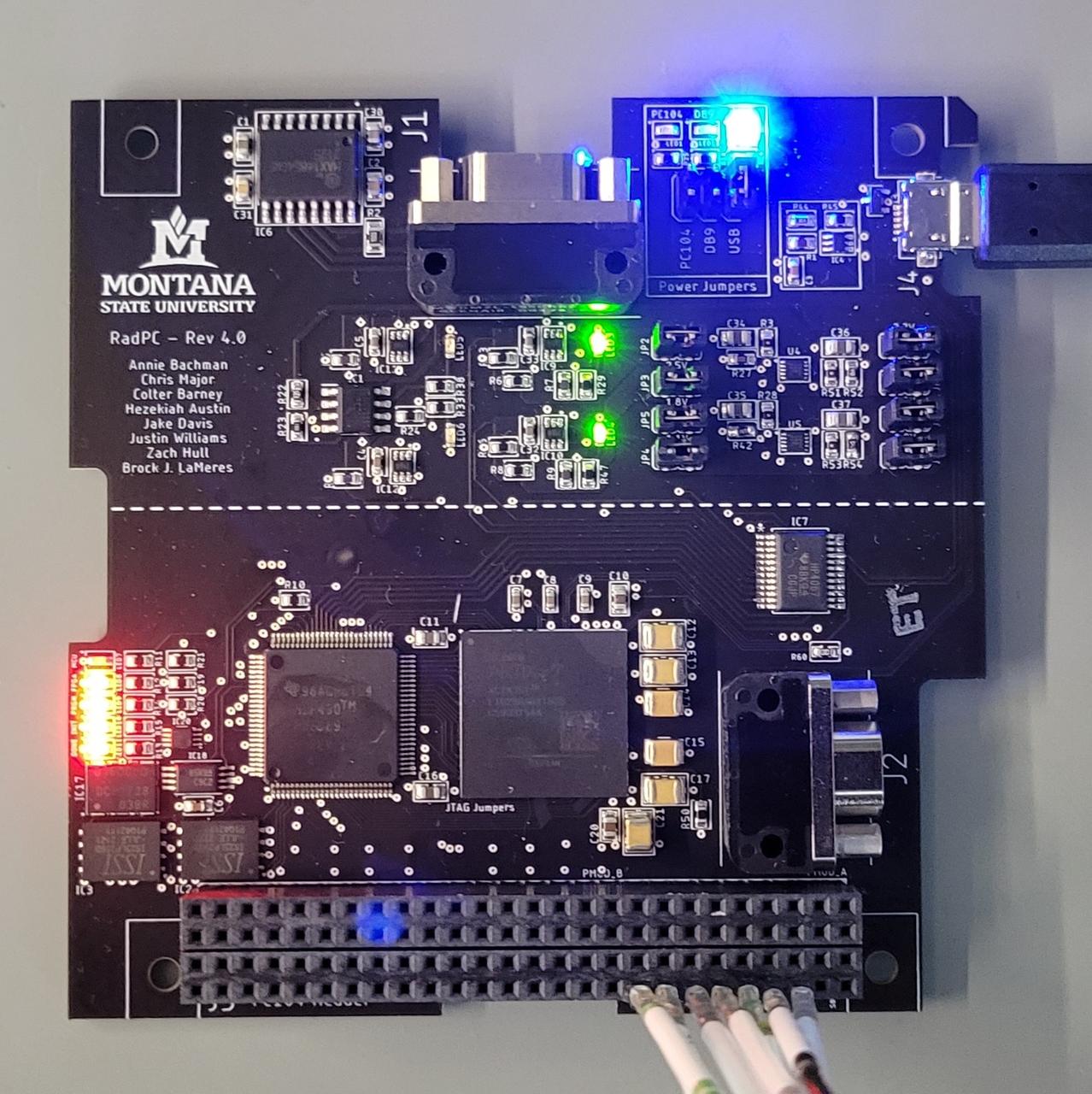
A technology demonstration flying aboard the next delivery for NASA’s CLPS (Commercial Lunar Payload Services) initiative could help mitigate radiation effects on computers in space. Radiation Tolerant Computer, or RadPC, is one of 10 payloads set to be carried to the Moon by the Blue Ghost 1 lunar lander in 2025. Developed by Montana State University in Bozeman, RadPC is designed designed to demonstrate computer recovery from faults caused by single-event effects of ionizing radiation. Investigations and demonstrations, such as RadPC, launched on CLPS flights will help NASA study Earth’s nearest neighbor under Artemis and pave the way for future crewed missions on the Moon. NASA’s Marshall Space Flight Center in Huntsville, Alabama, manages the development for seven of the 10 CLPS payloads that will be carried on Firefly’s Blue Ghost lunar lander.
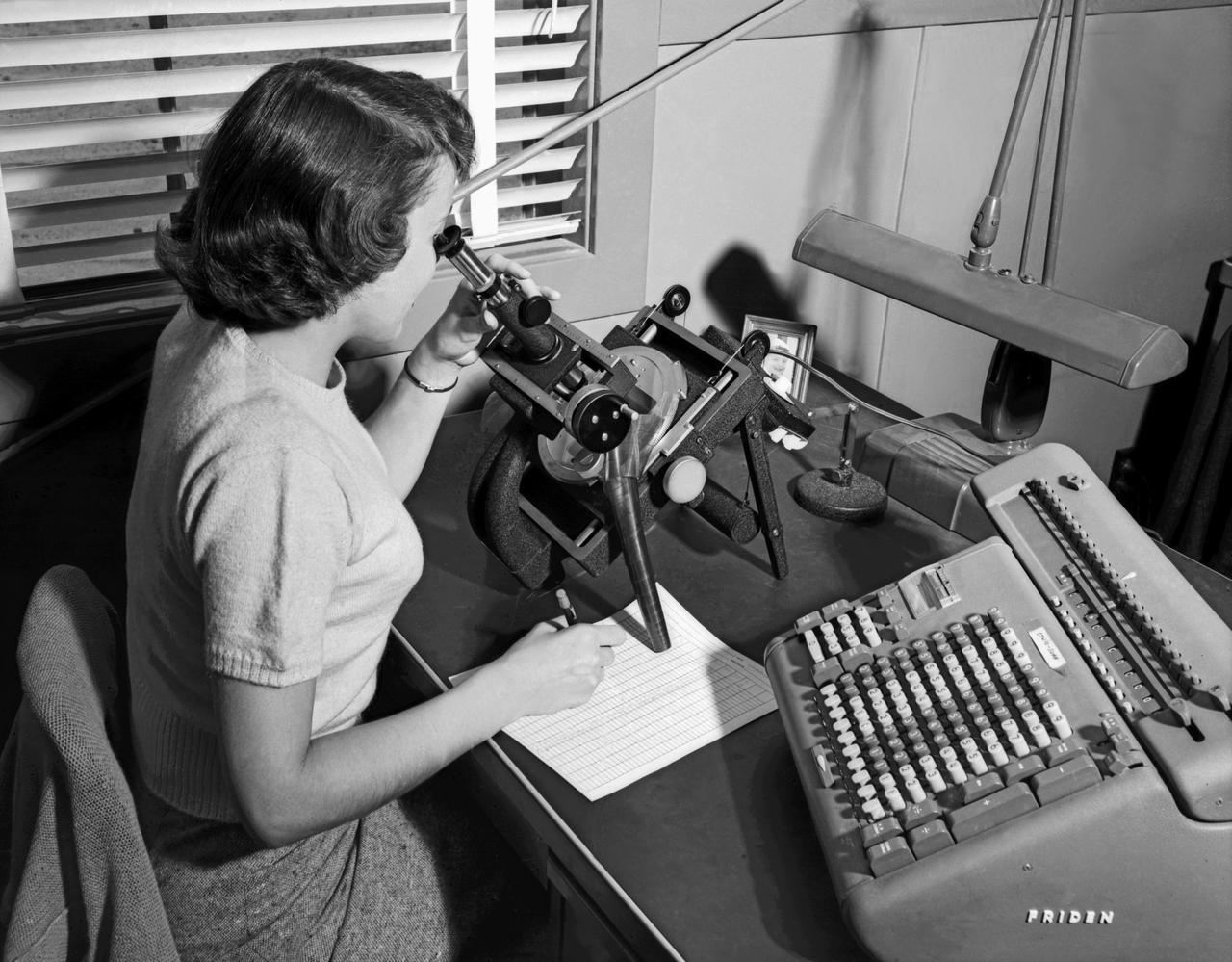
Langely Women Computer with X-4 with Friden machine. Publicity photo from Muroc California, showing female support personnel with equipment. Langley Computer with Friden machine.

The F-8 Digital Fly-By-Wire aircraft had its hydro-mechanical control systems replaced by an Apollo Guidance Computer for the first such control system to fly.

Looking for a faster computer? How about an optical computer that processes data streams simultaneously and works with the speed of light? In space, NASA researchers have formed optical thin-film. By turning these thin-films into very fast optical computer components, scientists could improve computer tasks, such as pattern recognition. Dr. Hossin Abdeldayem, physicist at NASA/Marshall Space Flight Center (MSFC) in Huntsville, Al, is working with lasers as part of an optical system for pattern recognition. These systems can be used for automated fingerprinting, photographic scarning and the development of sophisticated artificial intelligence systems that can learn and evolve. Photo credit: NASA/Marshall Space Flight Center (MSFC)
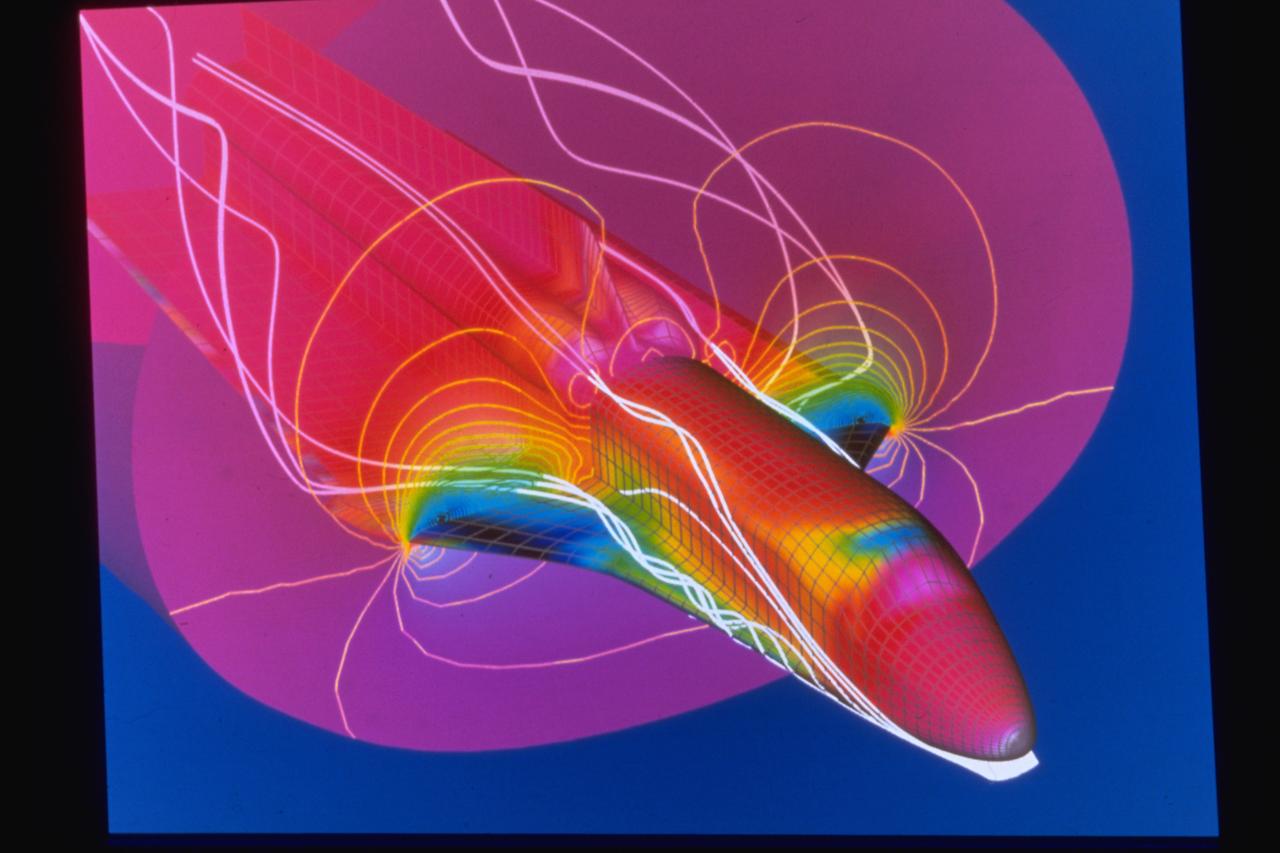
Computational Fluid Dynamics look at Space Shuttle flow
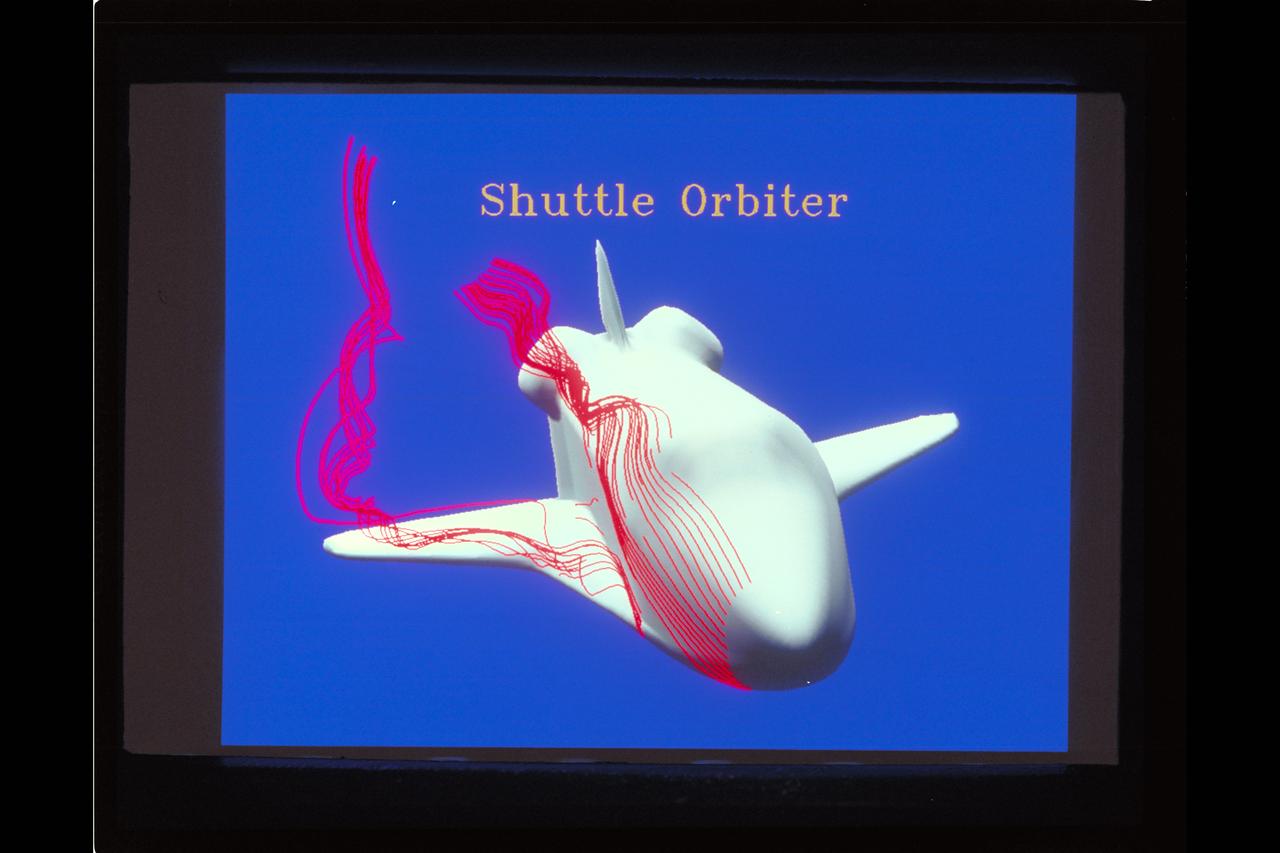
Computational Fluid Dynamics (CFD) Space Shuttle flow field
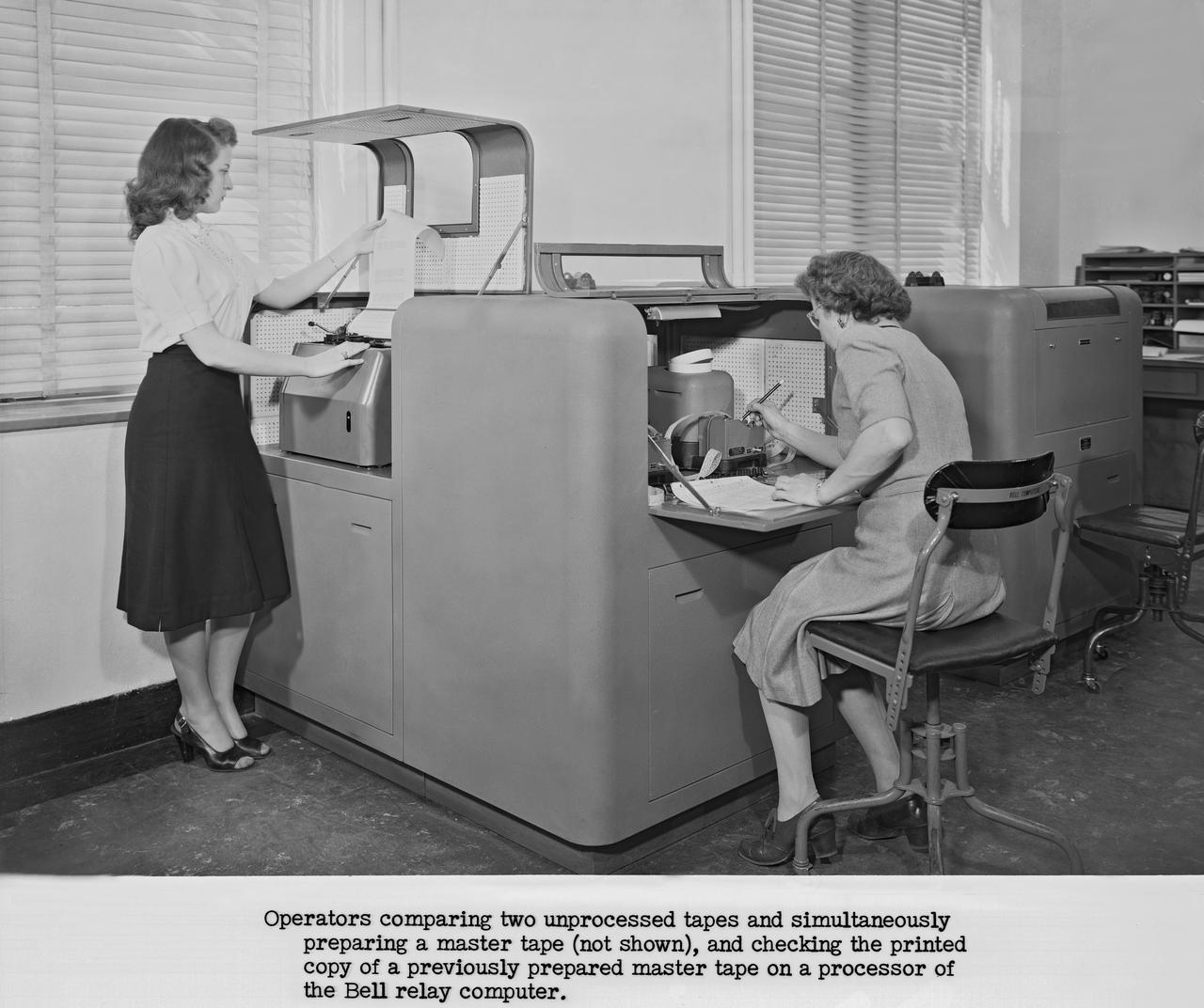
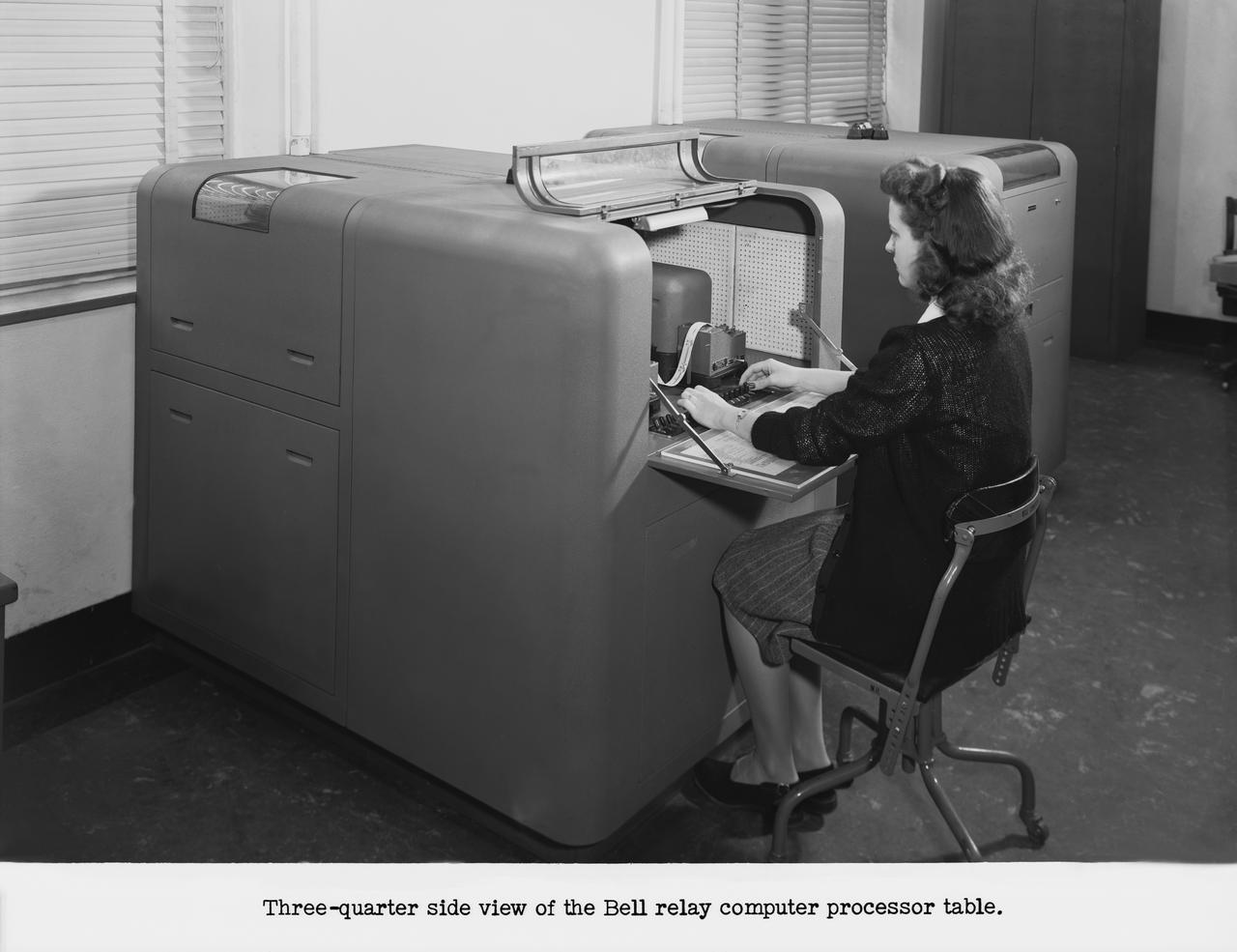
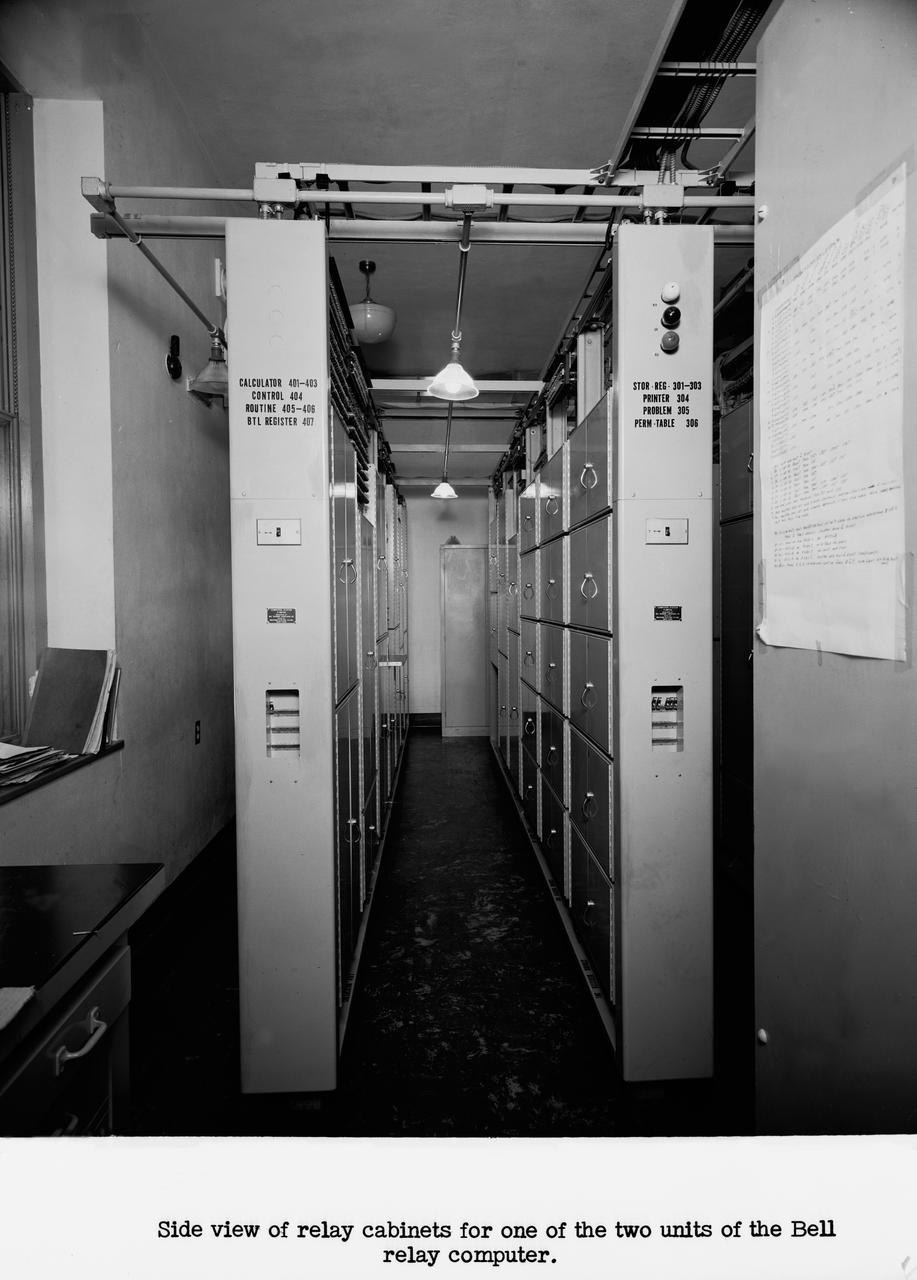
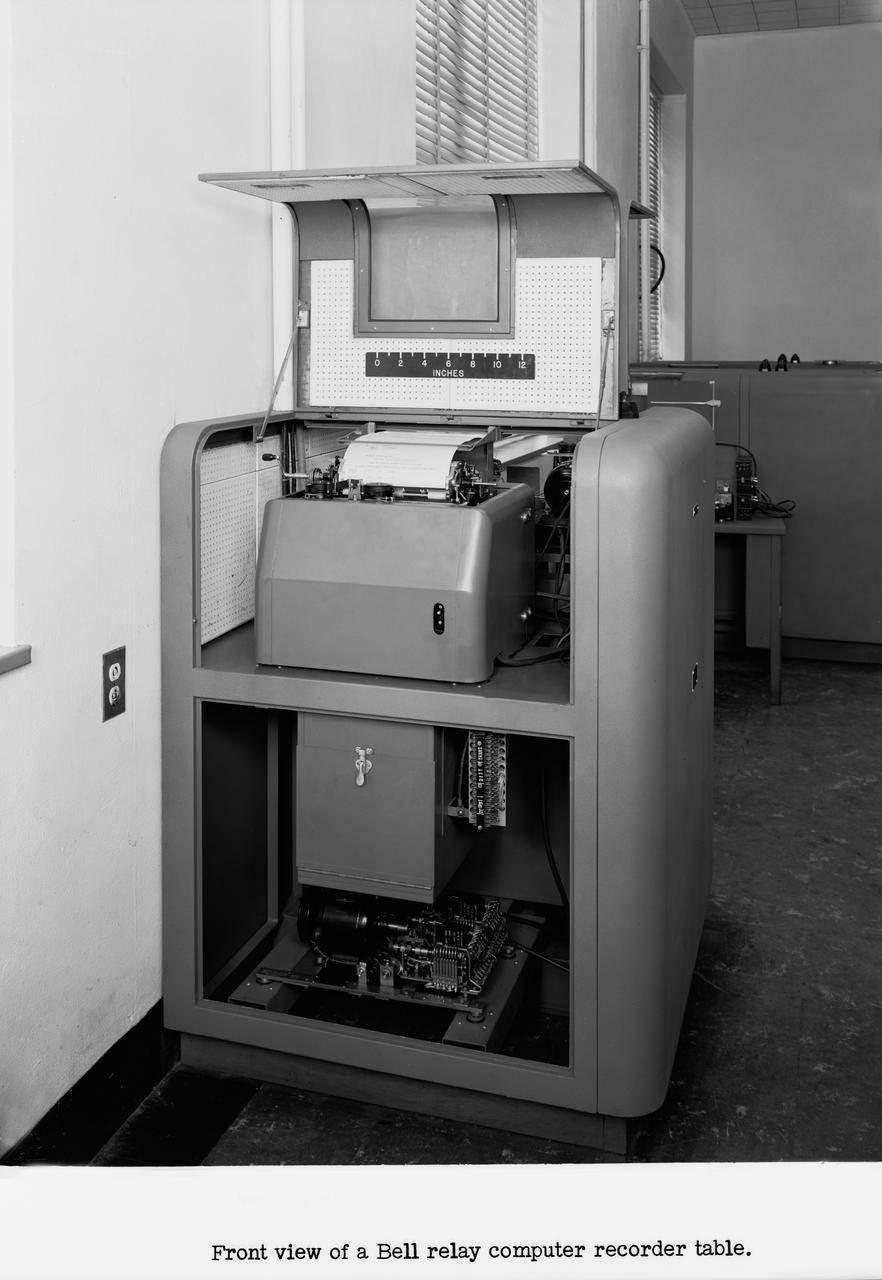
Publicity Photos of Bell Computing Machines at 19 Foot Pressure Tunnel Mrs. Doris Rudd Porter Baron photographed in the photos.
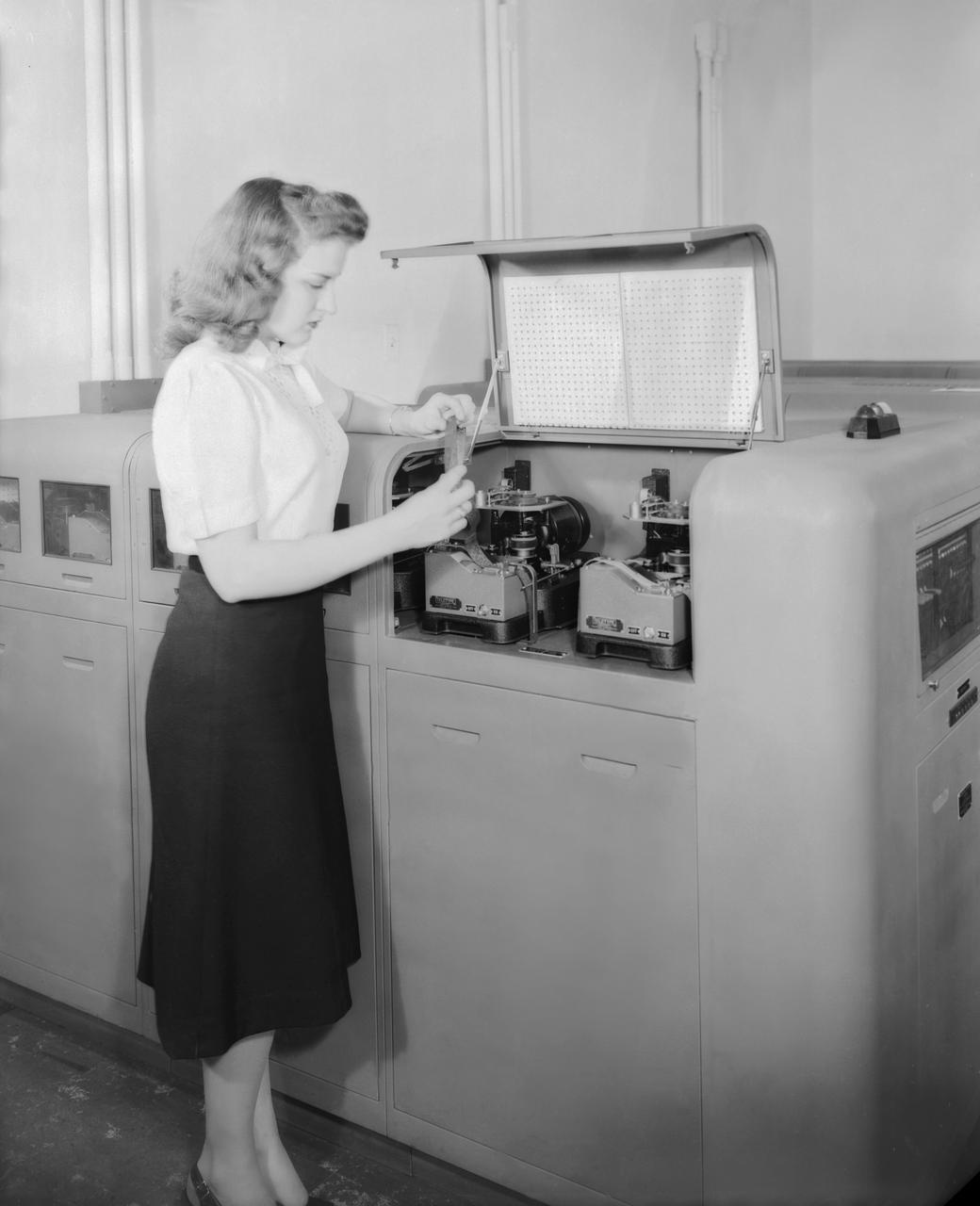
Publicity Photos of Bell Computing Machines at 19 Foot Pressure Tunnel Mrs. Doris Rudd Porter Baron photographed in the photos.
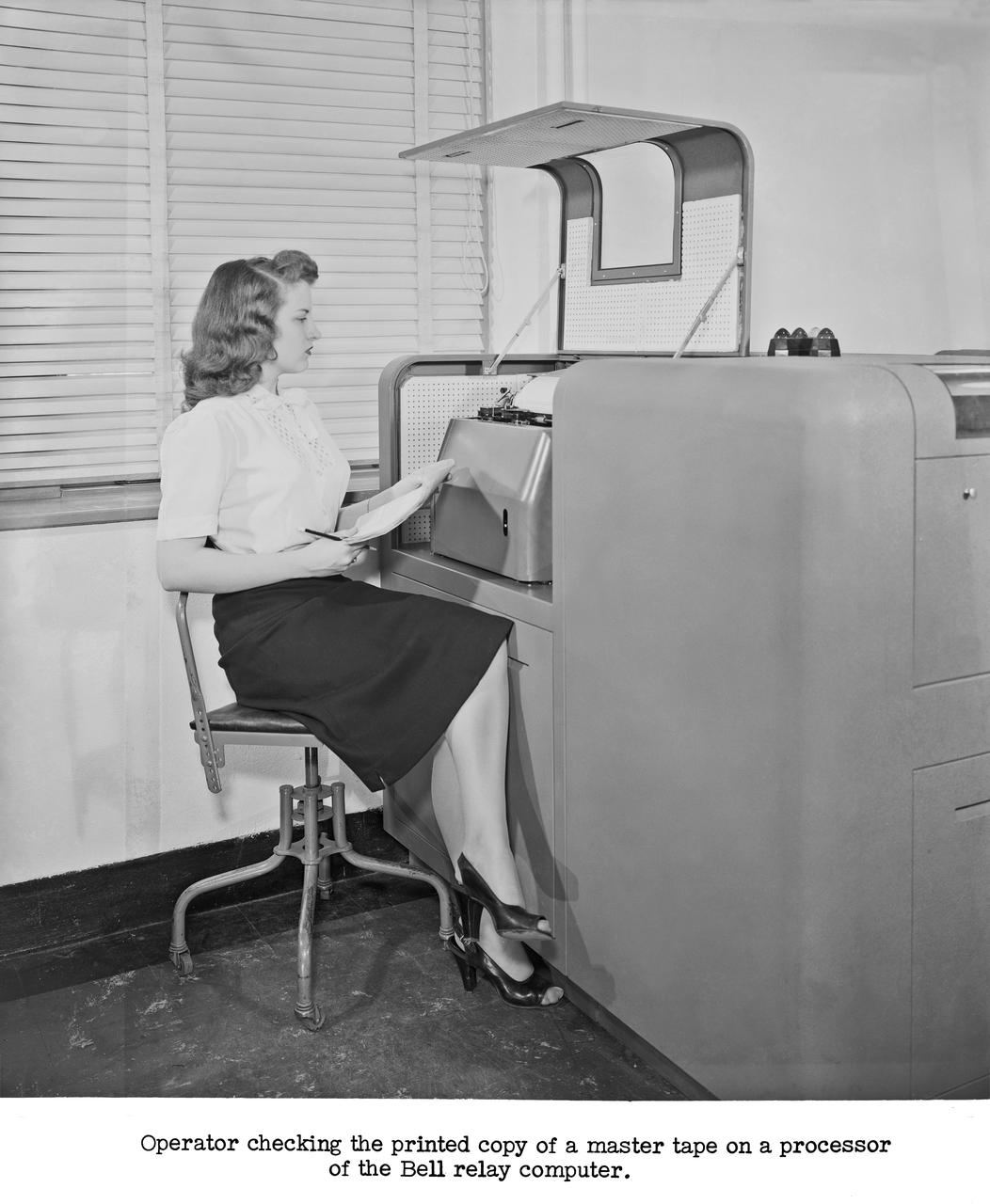
Publicity Photos of Bell Computing Machines at 19 Foot Pressure Tunnel Mrs. Doris Rudd Porter Baron photographed in the photos.
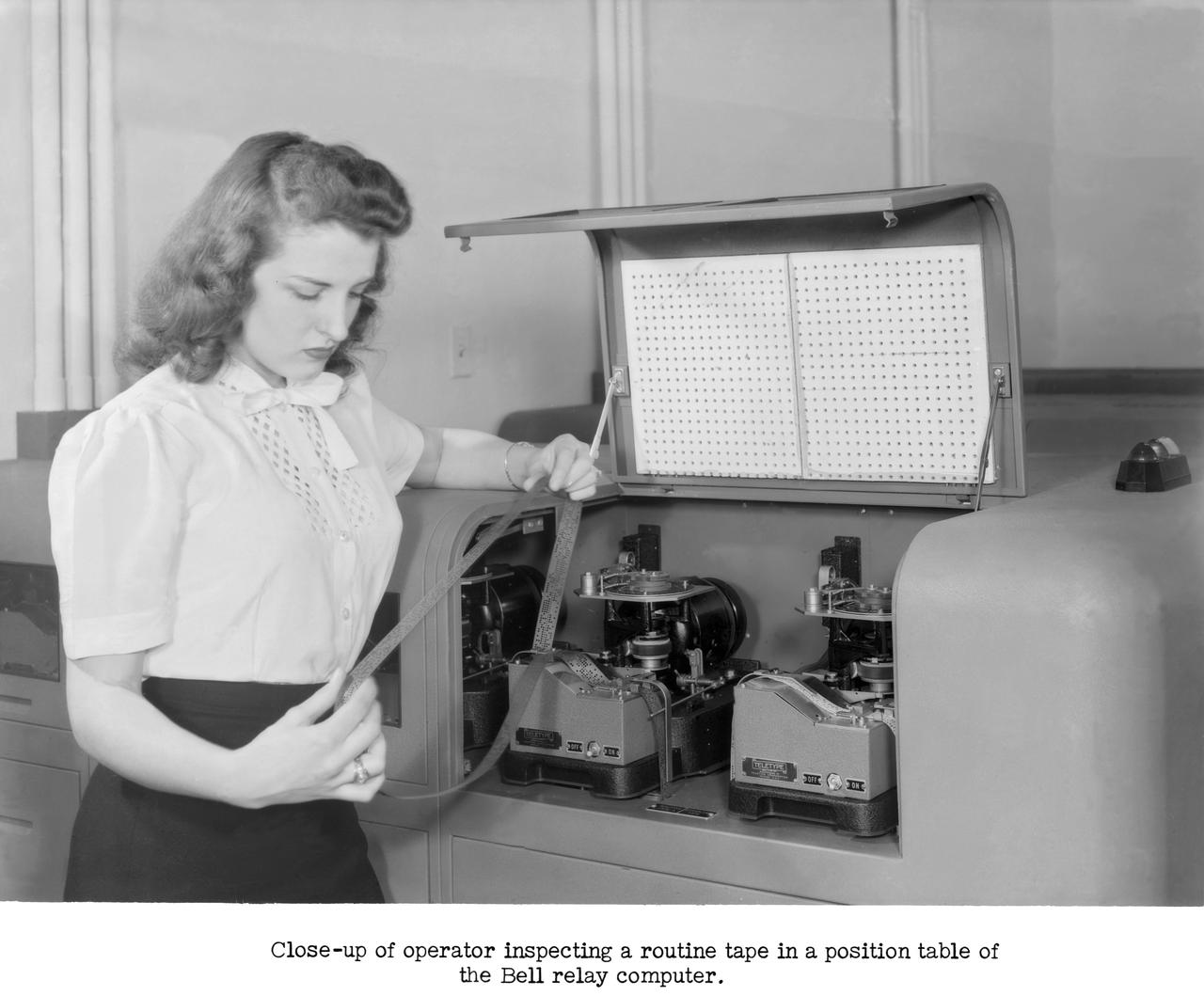
Publicity Photos of Bell Computing Machines at 19 Foot Pressure Tunnel Mrs. Doris Rudd Porter Baron photographed in the photos.
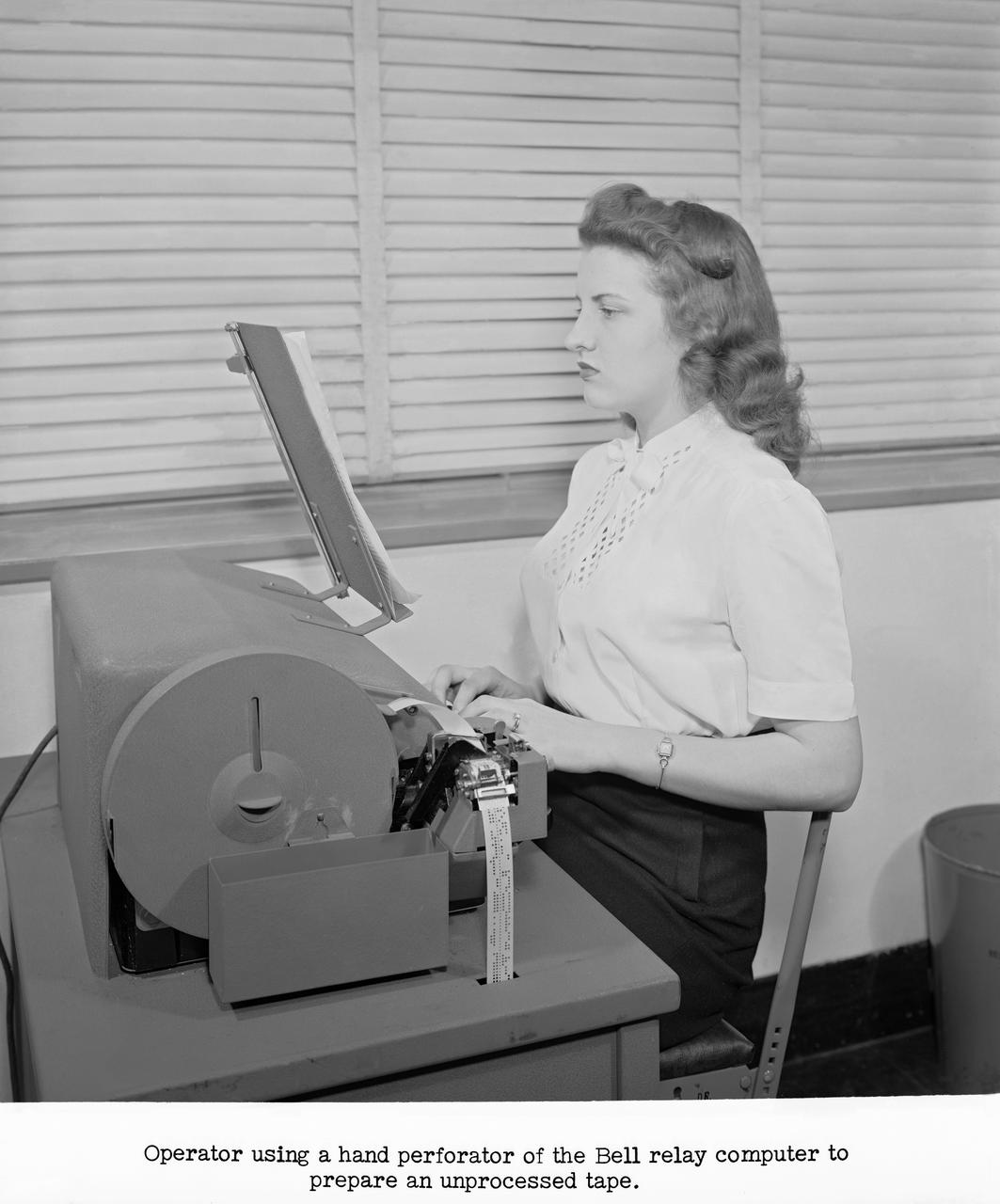
Publicity Photos of Bell Computing Machines at 19 Foot Pressure Tunnel Mrs. Doris Rudd Porter Baron photographed in the photos.
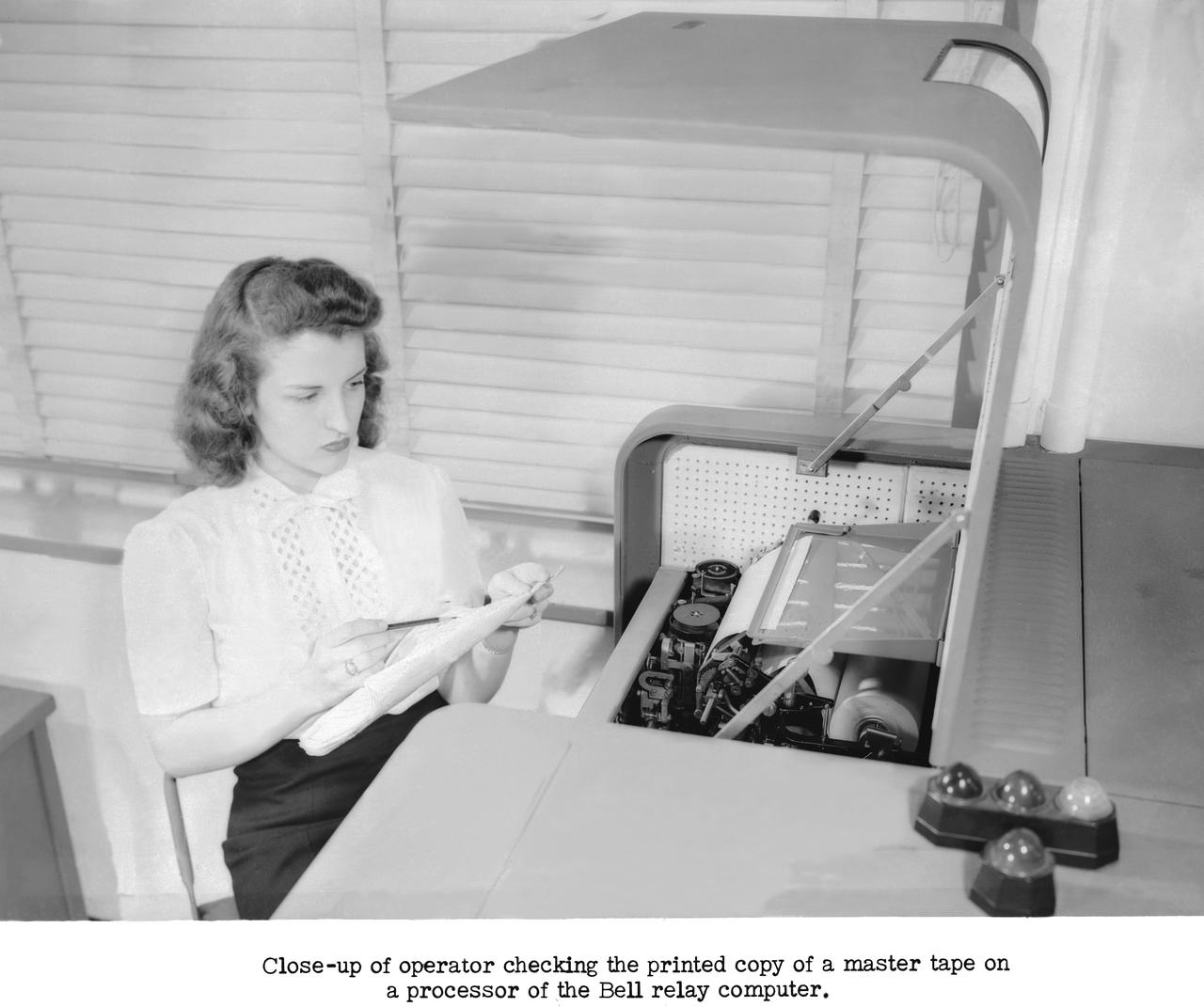
Publicity Photos of Bell Computing Machines at 19 Foot Pressure Tunnel Mrs. Doris Rudd Porter Baron photographed in the photos.
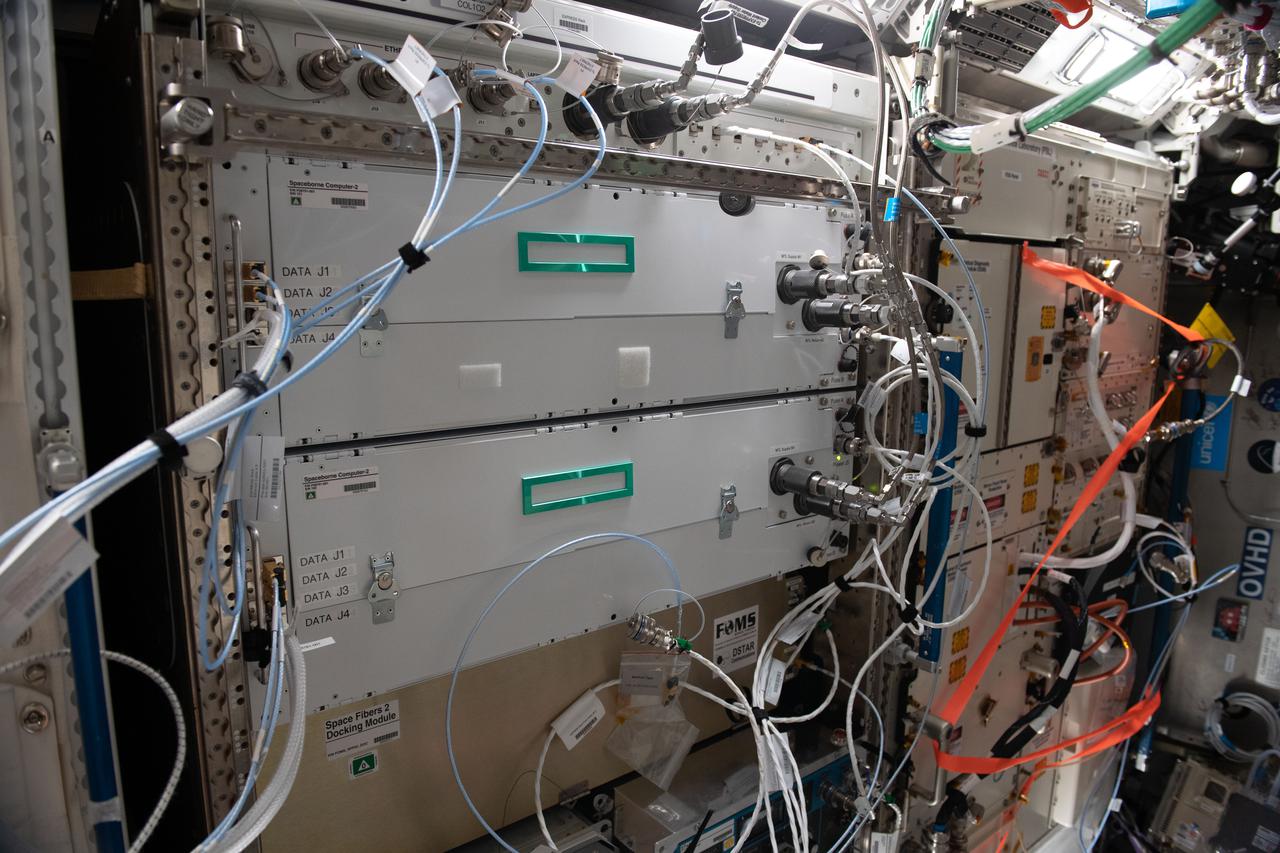
View taken of Spaceborne Computer 2 in Columbus module. Spaceborne Computer-2 High Performance Commercial Off-The-Shelf (COTS) Computer System on the ISS (Spaceborne Computer-2) builds upon the successes of Spaceborne Computer, exploring how commercial off-the-shelf computer systems can advance exploration by processing data significantly faster in space with edge computing and artificial intelligence (AI) capabilities. Spaceborne Computer-2 further tests additional techniques for recovering or mitigating errors in the extreme environment of unprotected solar radiation, galactic cosmic radiation (GCR) and other events.
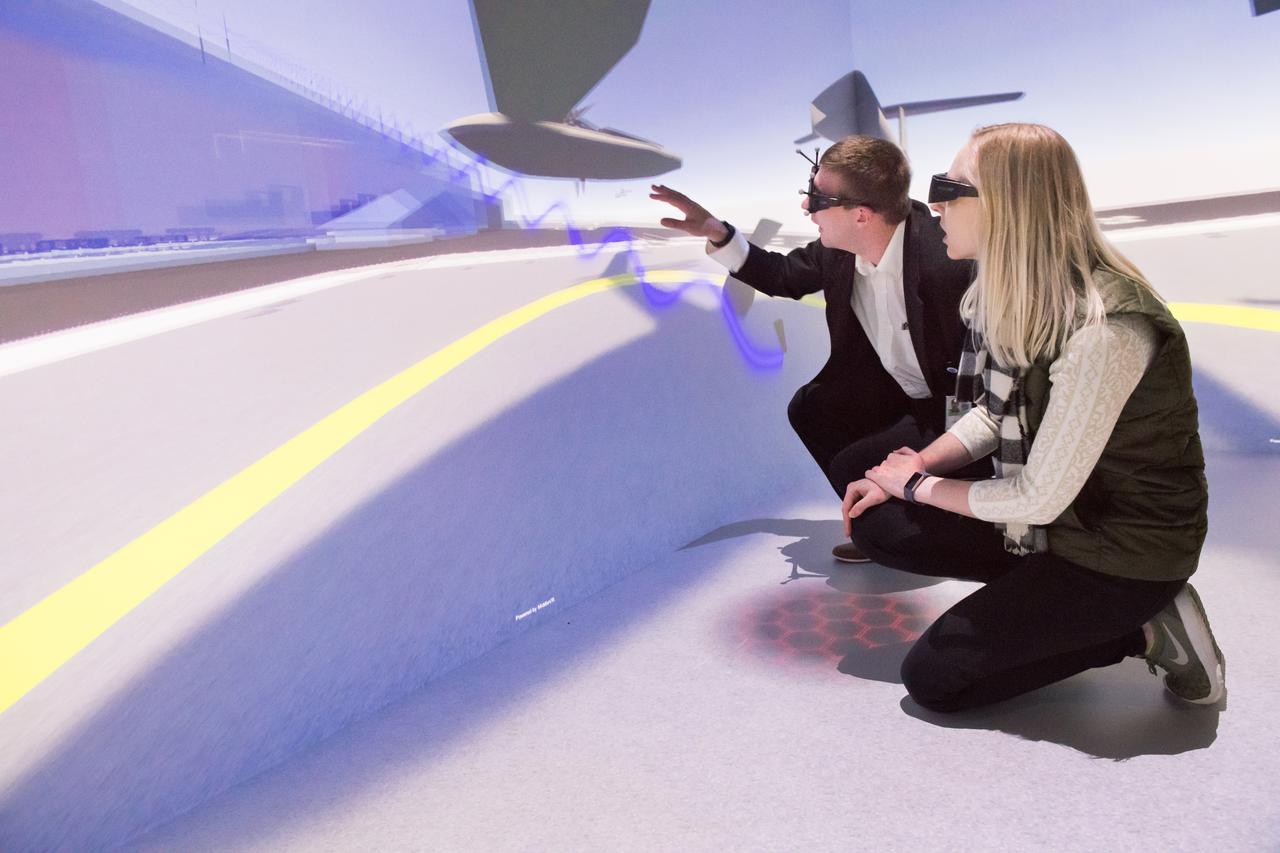
Computer Automatic Virtual Environment, CAVE Tours to Mark the 30th Anniversary of the Graphics and Visualization Lab, GVIS
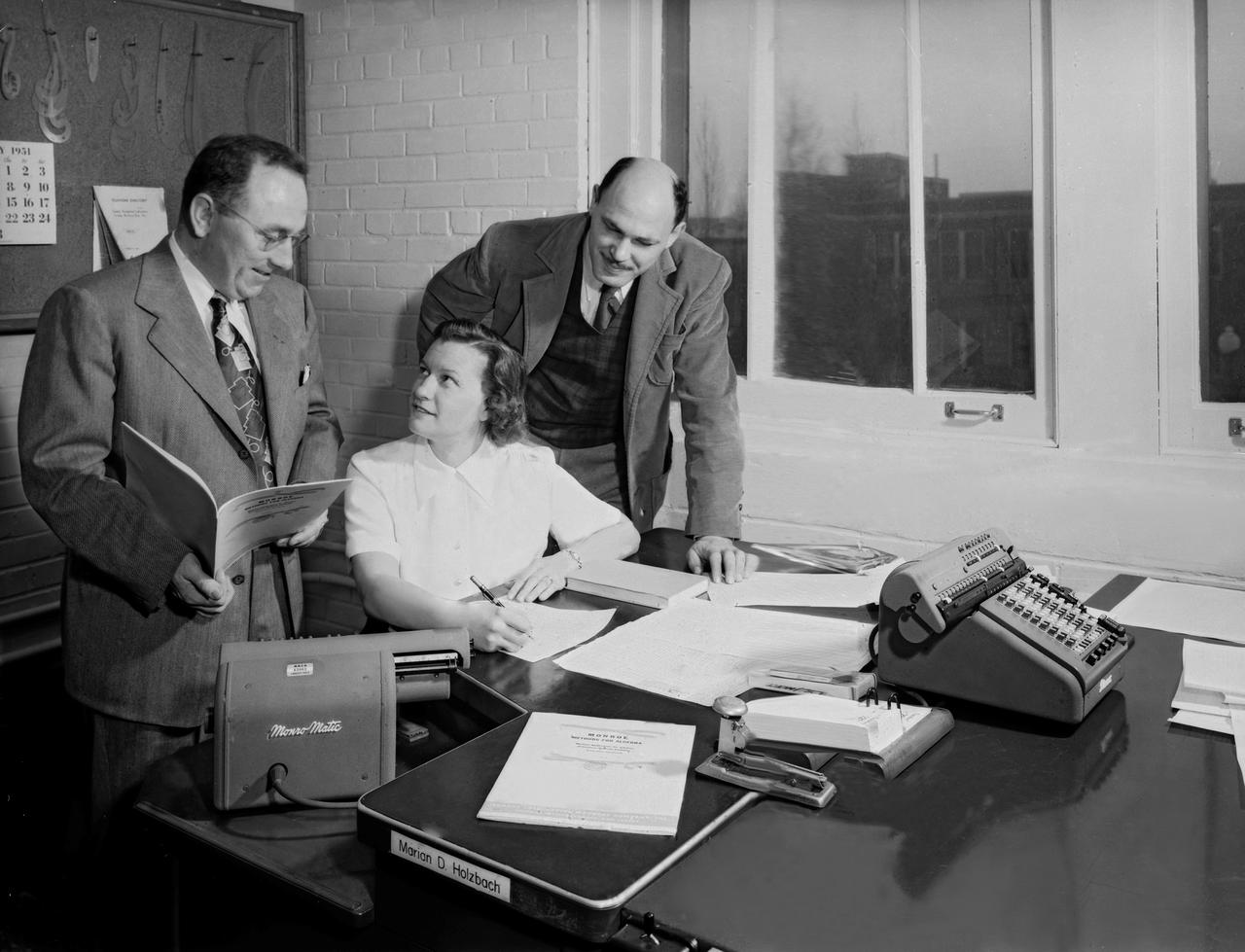
NACA Laboratory Computers Help Compile Handbook: ''Monroe Methods for Algebra, " a new booklet describing short-cuts that can be used in solving frequently-used algebraic formulas with a calculating machine, is undergoing its first trial at the hands of Laboratory computers. Several Monro-matics were purchased recently by NACA. NACA Air Scoop August 17,1951 Page 4. People on the photos re W.H. Rankins, David M. Goldenbaum and Marian D. Holzbach
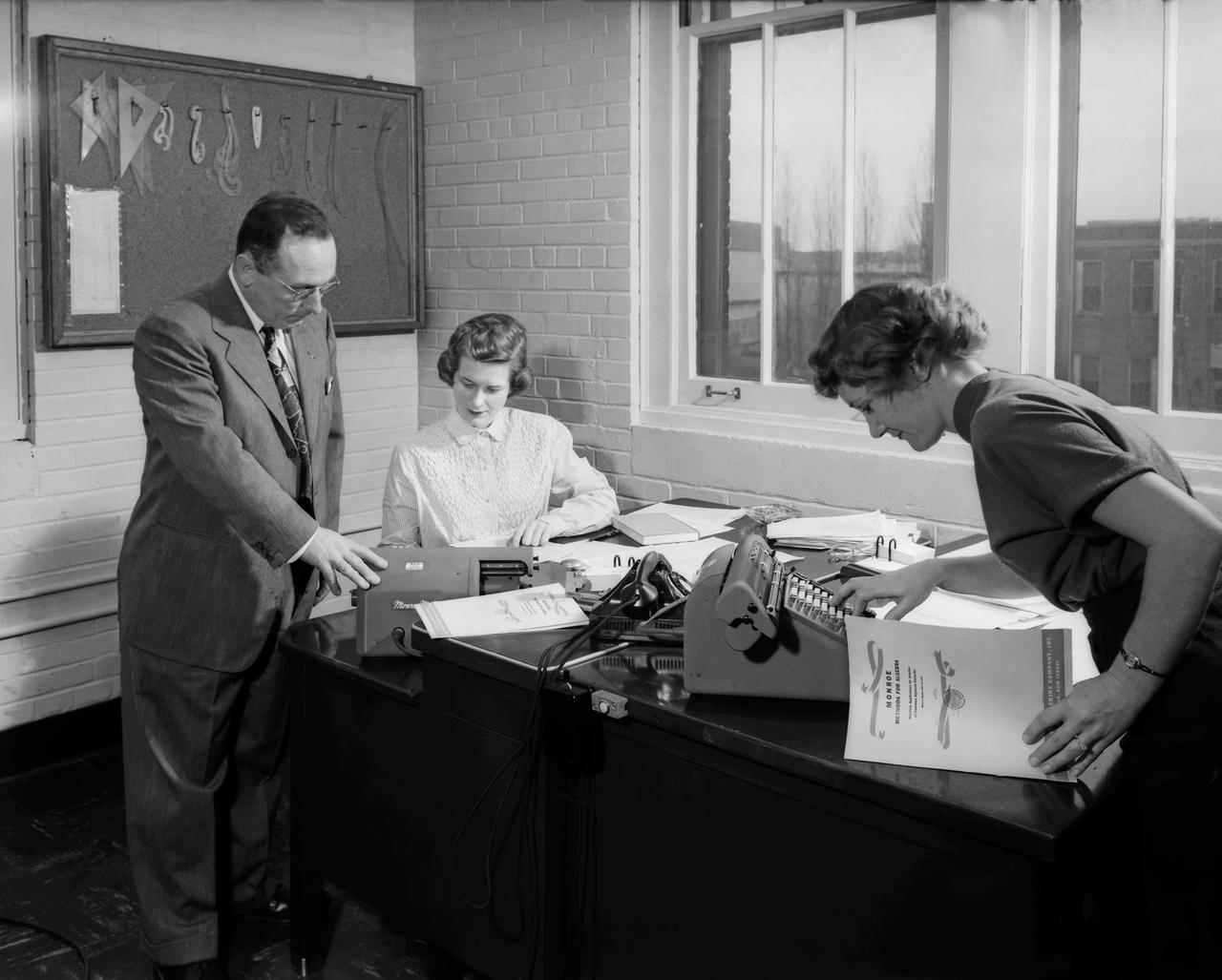
NACA Laboratory Computers Help Compile Handbook: ''Monroe Methods for Algebra, " a new booklet describing short-cuts that can be used in solving frequently-used algebraic formulas with a calculating machine, is undergoing its first trial at the hands of Laboratory computers. Several Monro-matics were purchased recently by NACA. In photo are W.H. Rankins discusses the "Monroe Methods for Algebra" with Gladys Storey (seated) and Ferne Gapcynski, both of 16 foot Hight Speed Tunnel. NACA Air Scoop August 17,1951 Page 4.
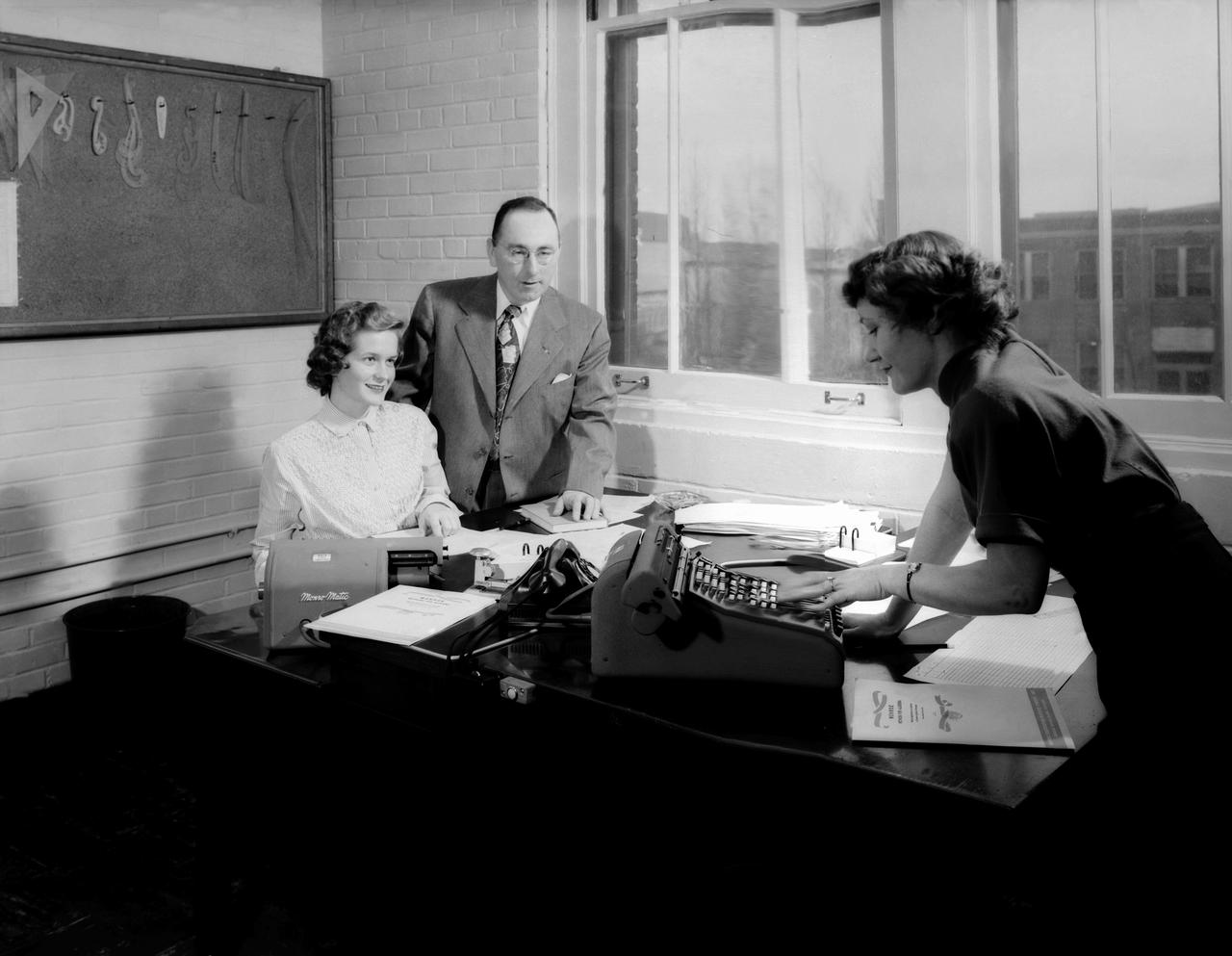
NACA Laboratory Computers Help Compile Handbook: ''Monroe Methods for Algebra, " a new booklet describing short-cuts that can be used in solving frequently-used algebraic formulas with a calculating machine, is undergoing its first trial at thehands of Laboratory computers. Several Monro-matics were purchased recently by NACA. In photo are W.H. Rankins discusses the "Monroe Methods for Algebra" with Gladys Storey (seated) and Ferne Gapcynski, both of 16 foot Hight Speed Tunnel. NACA Air Scoop August 17,1951 Page 4.
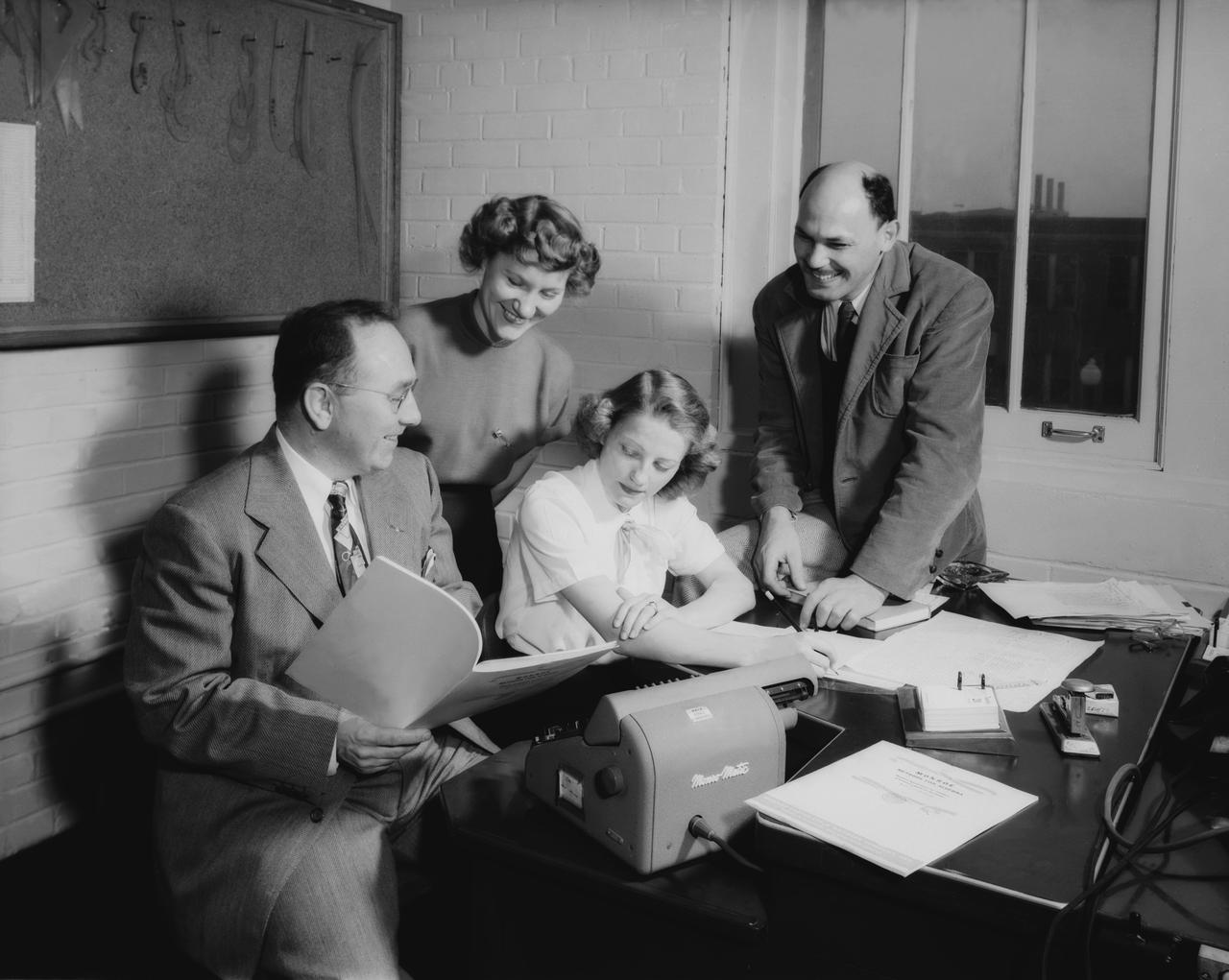
NACA Laboratory Computers Help Compile Handbook: ''Monroe Methods for Algebra, " a new booklet describing short-cuts that can be used in solving frequently-used algebraic formulas with a calculating machine, is undergoing its first trial at the hands of Laboratory computers. Several Monro-matics were purchased recently by NACA. NACA Air Scoop August 17,1951 Page 4.
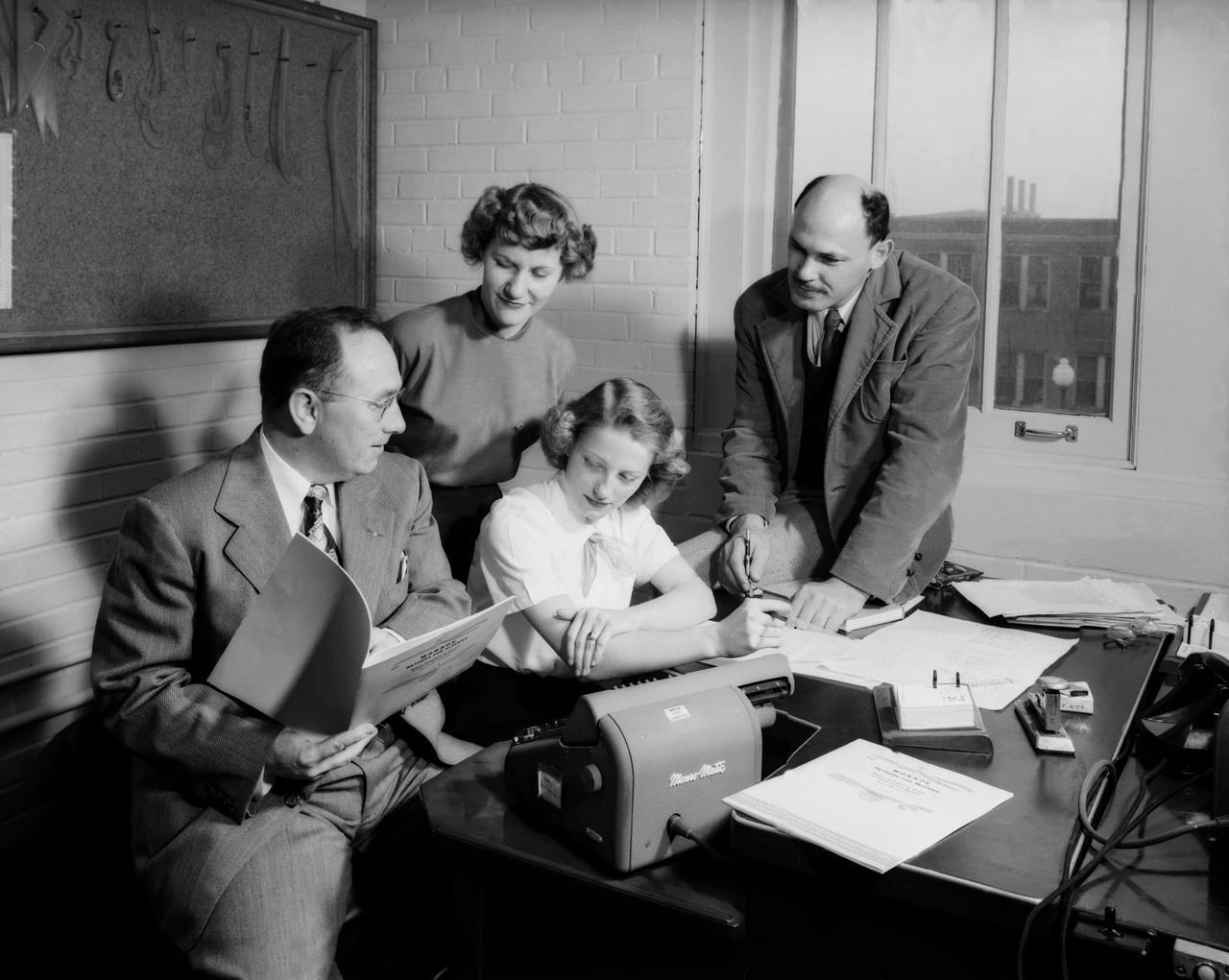
NACA Laboratory Computers Help Compile Handbook: ''Monroe Methods for Algebra, " a new booklet describing short-cuts that can be used in solving frequently-used algebraic formulas with a calculating machine, is undergoing its first trial at the hands of Laboratory computers. Several Monro-matics were purchased recently by NACA. NACA Air Scoop August 17,1951 Page 4.
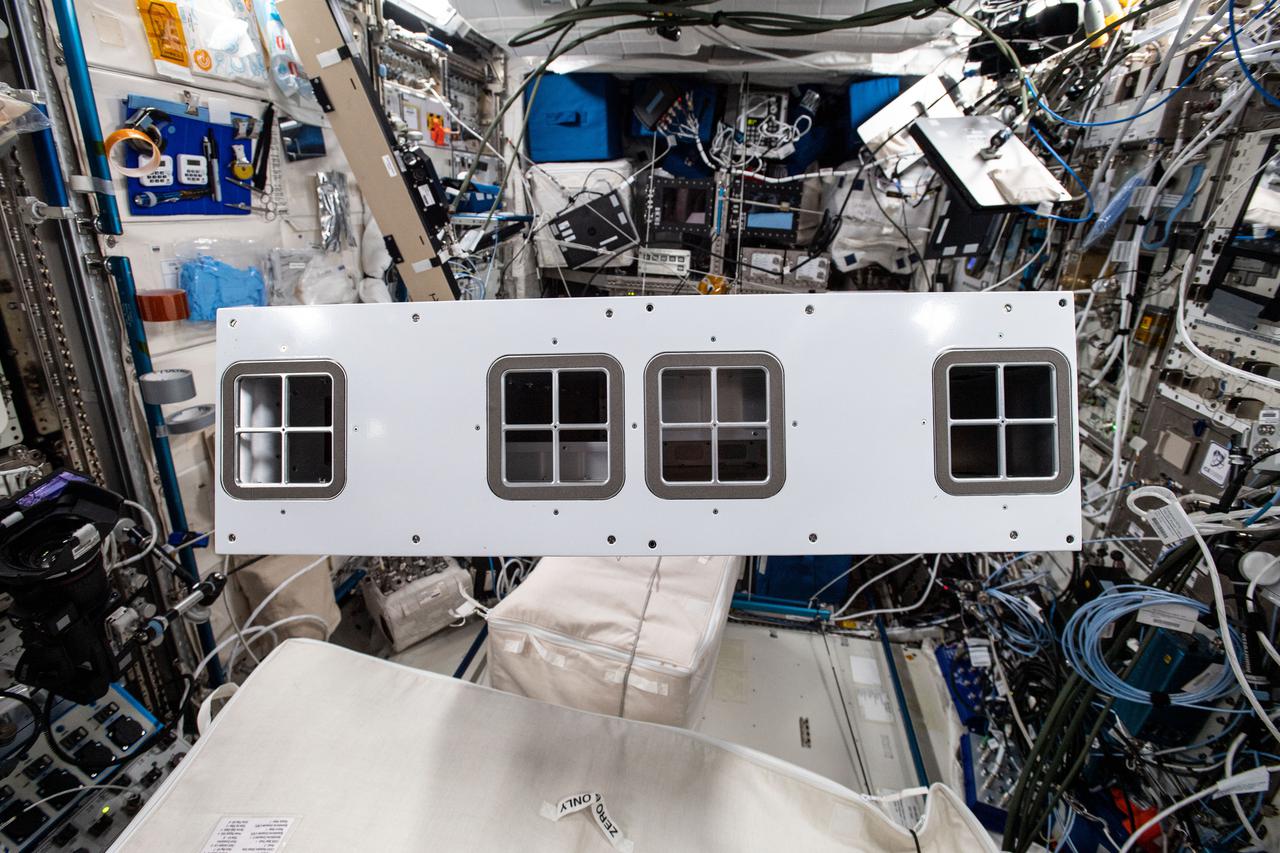
iss065e009485 4/29/2021 --- A view of the Spaceborne Computer-2 High Performance Commercial Off-The-Shelf (COTS) Computer System on the ISS (Spaceborne Computer-2) aboard the International Space Station (ISS). The study explores how space exploration can be advanced by the use of the commercial off-the-shelf computer systems. Spaceborne Computer-2 further tests additional techniques for recovering or mitigating errors in the extreme environment of unprotected solar radiation, galactic cosmic radiation (GCR) and other events.
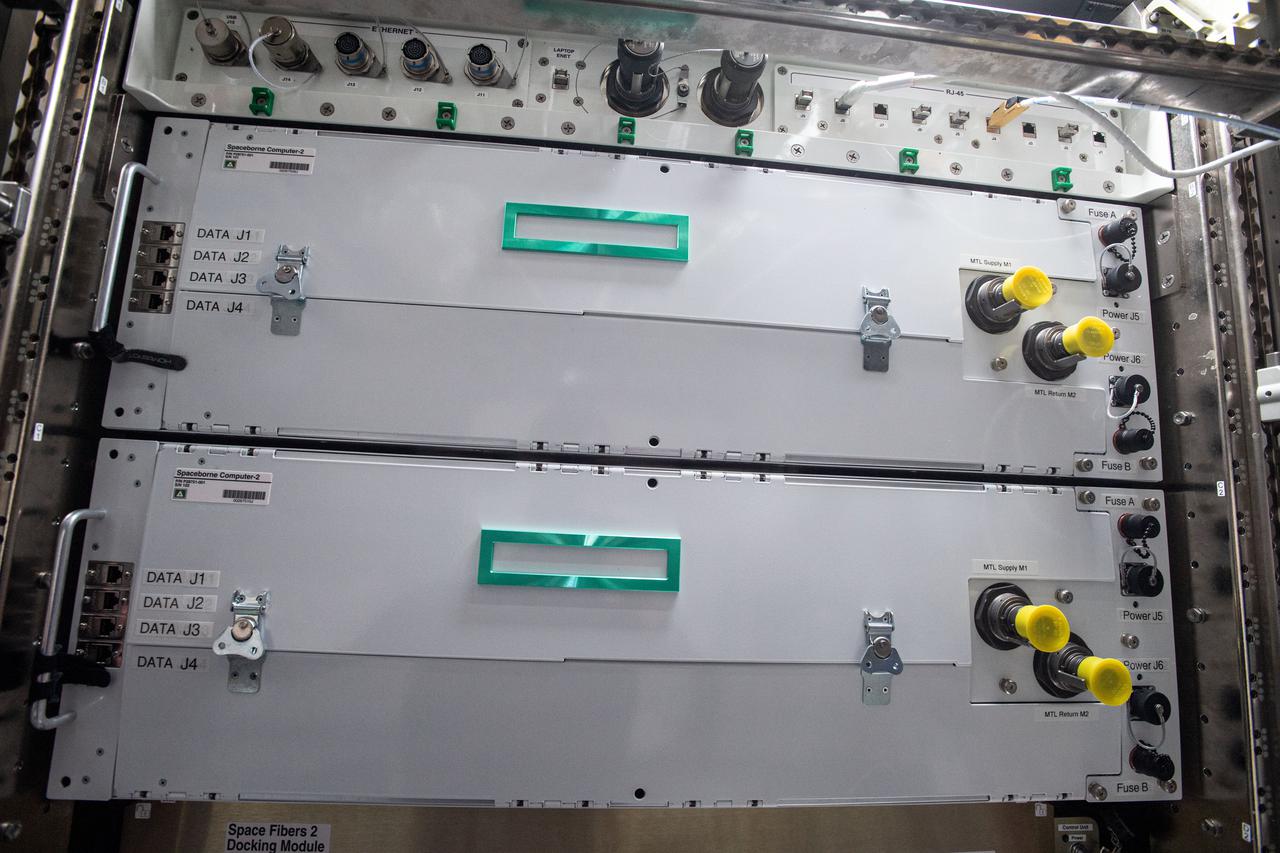
iss065e009492 4/29/2021 --- A view of the Spaceborne Computer-2 High Performance Commercial Off-The-Shelf (COTS) Computer System on the ISS (Spaceborne Computer-2) aboard the International Space Station (ISS). The study explores how space exploration can be advanced by the use of the commercial off-the-shelf computer systems. Spaceborne Computer-2 further tests additional techniques for recovering or mitigating errors in the extreme environment of unprotected solar radiation, galactic cosmic radiation (GCR) and other events.
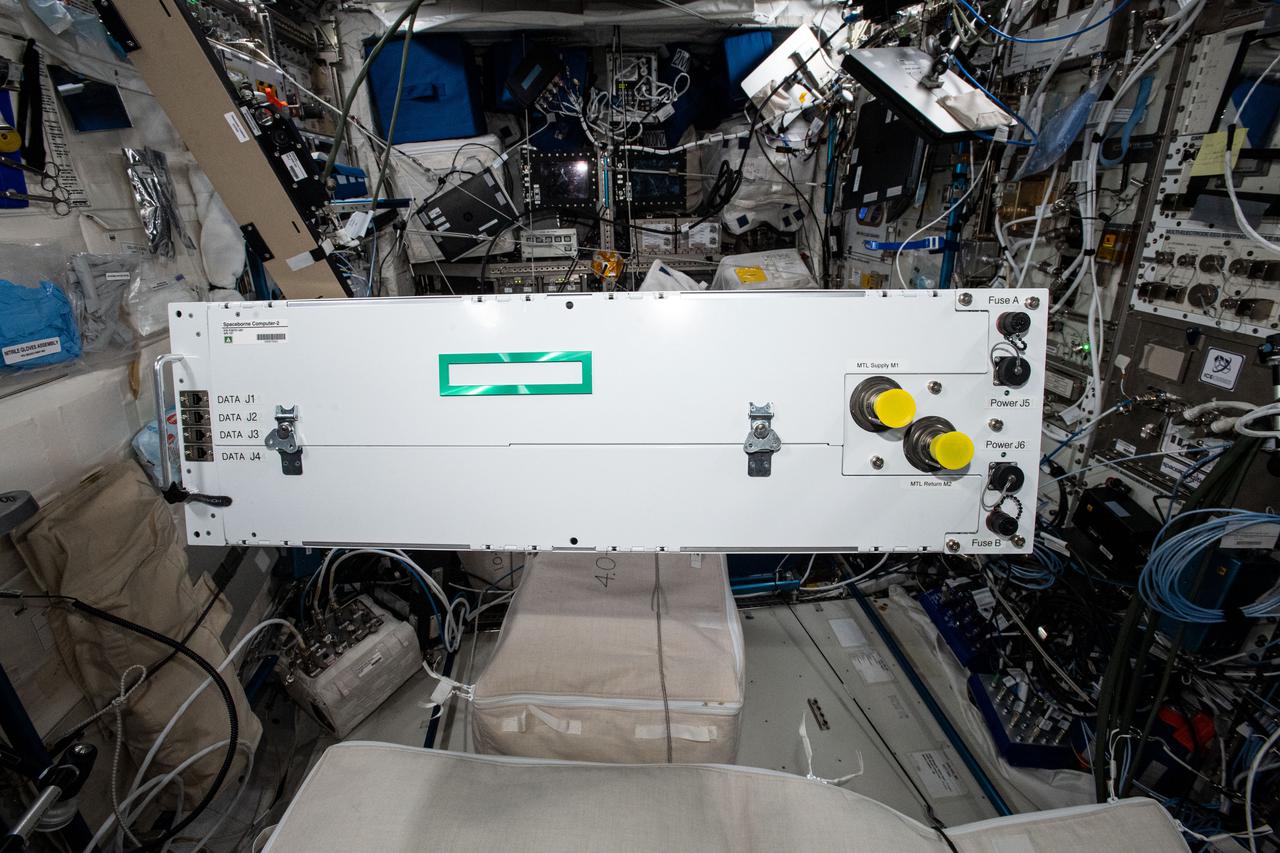
iss065e009467 4/29/2021 --- A view of the Spaceborne Computer-2 High Performance Commercial Off-The-Shelf (COTS) Computer System on the ISS (Spaceborne Computer-2) aboard the International Space Station (ISS). The study explores how space exploration can be advanced by the use of the commercial off-the-shelf computer systems. Spaceborne Computer-2 further tests additional techniques for recovering or mitigating errors in the extreme environment of unprotected solar radiation, galactic cosmic radiation (GCR) and other events.
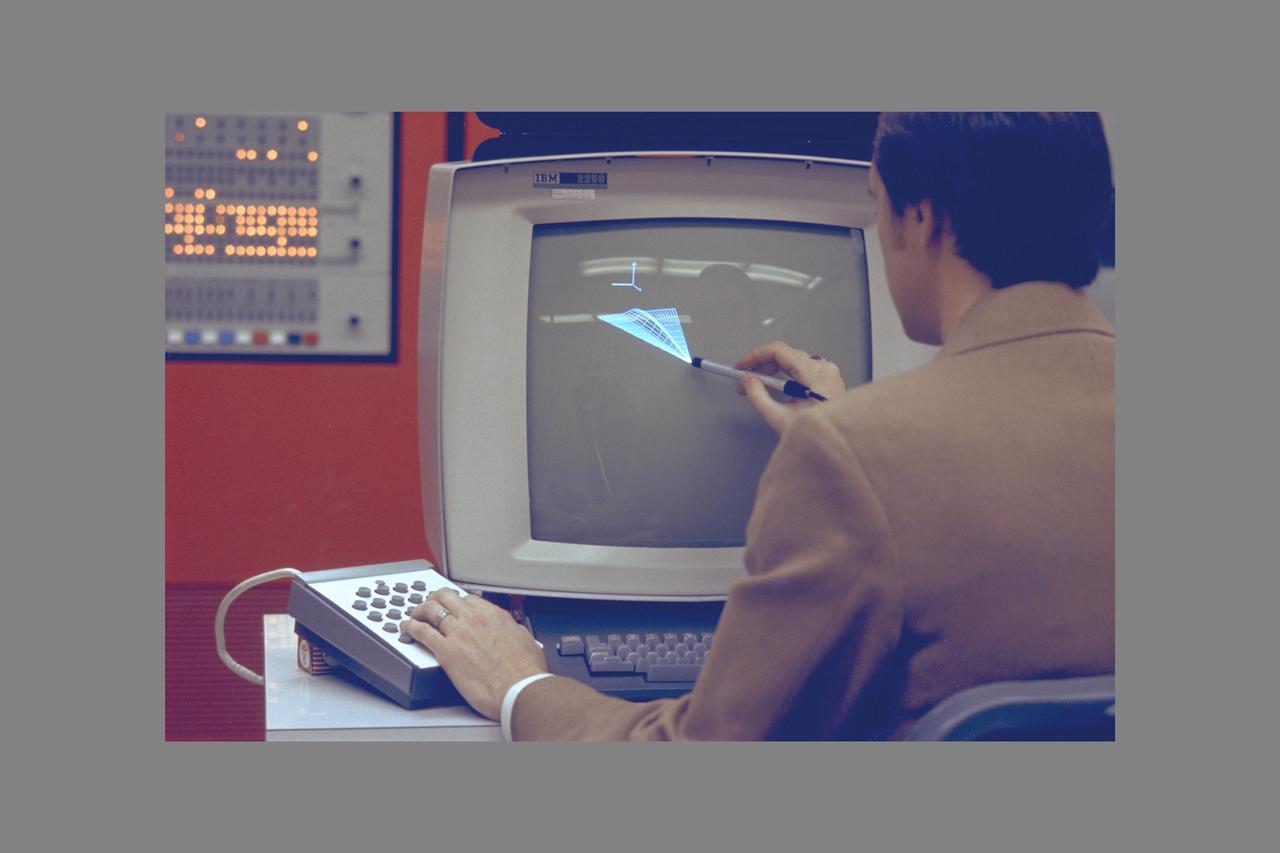
Dr. Paul Kutler, Computational Fluid Dynamics, at IBM terminal - developing ways to better predict the flow of air at high speeds around aerodynamic bodies.
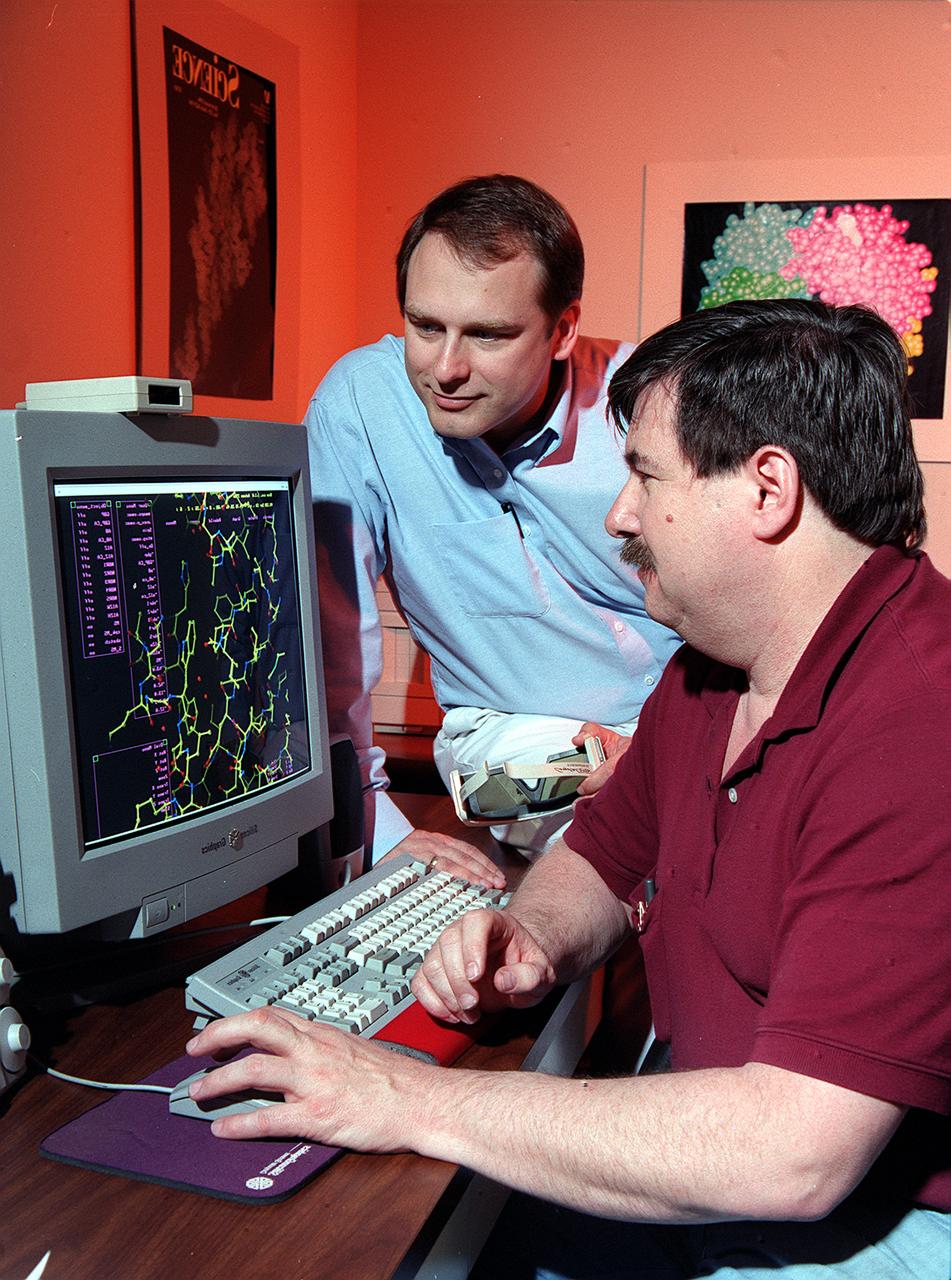
Dr. Marc Pusey (seated) and Dr. Craig Kundrot use computers to analyze x-ray maps and generate three-dimensional models of protein structures. With this information, scientists at Marshall Space Flight Center can learn how proteins are made and how they work. The computer screen depicts a proten structure as a ball-and-stick model. Other models depict the actual volume occupied by the atoms, or the ribbon-like structures that are crucial to a protein's function.
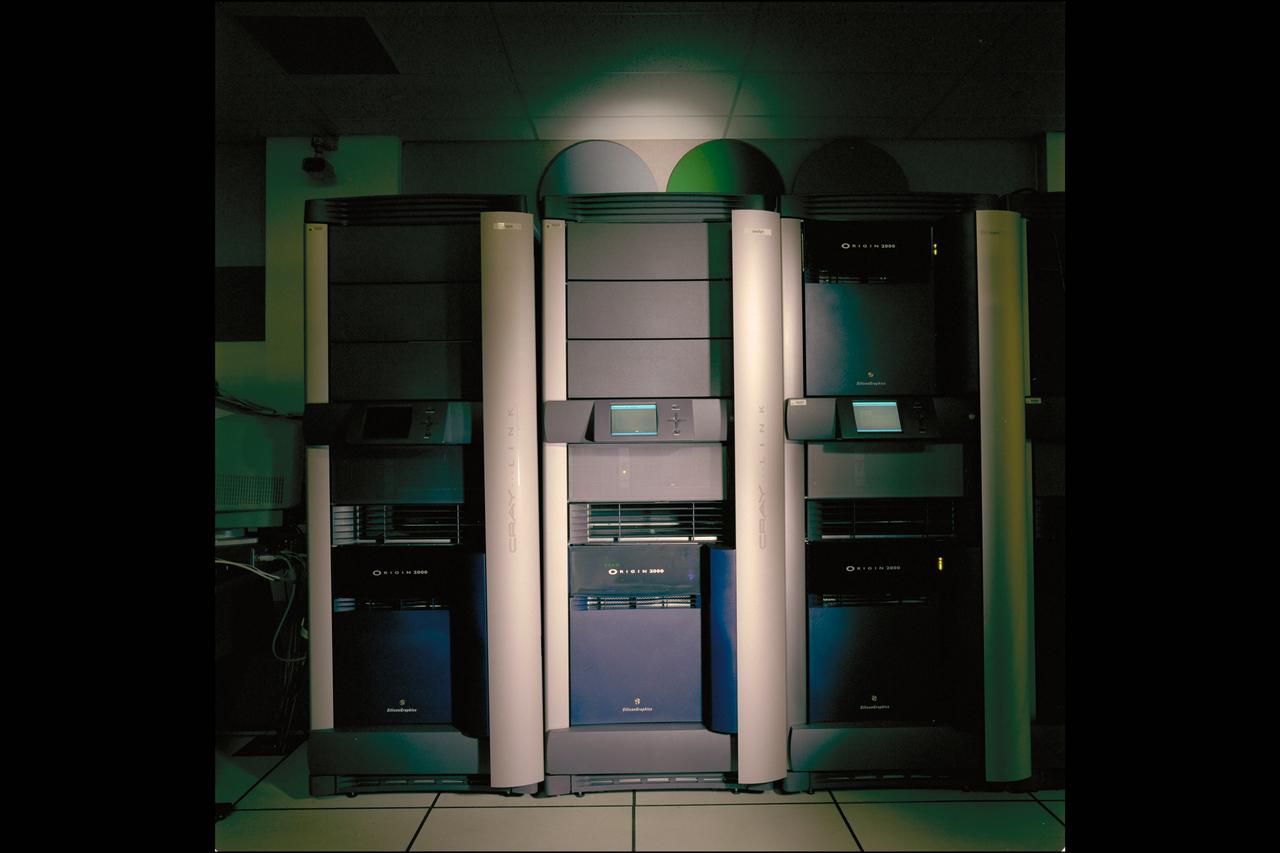
NAS Origin 2000 Computer System - 8 processors 'EVELYN' station
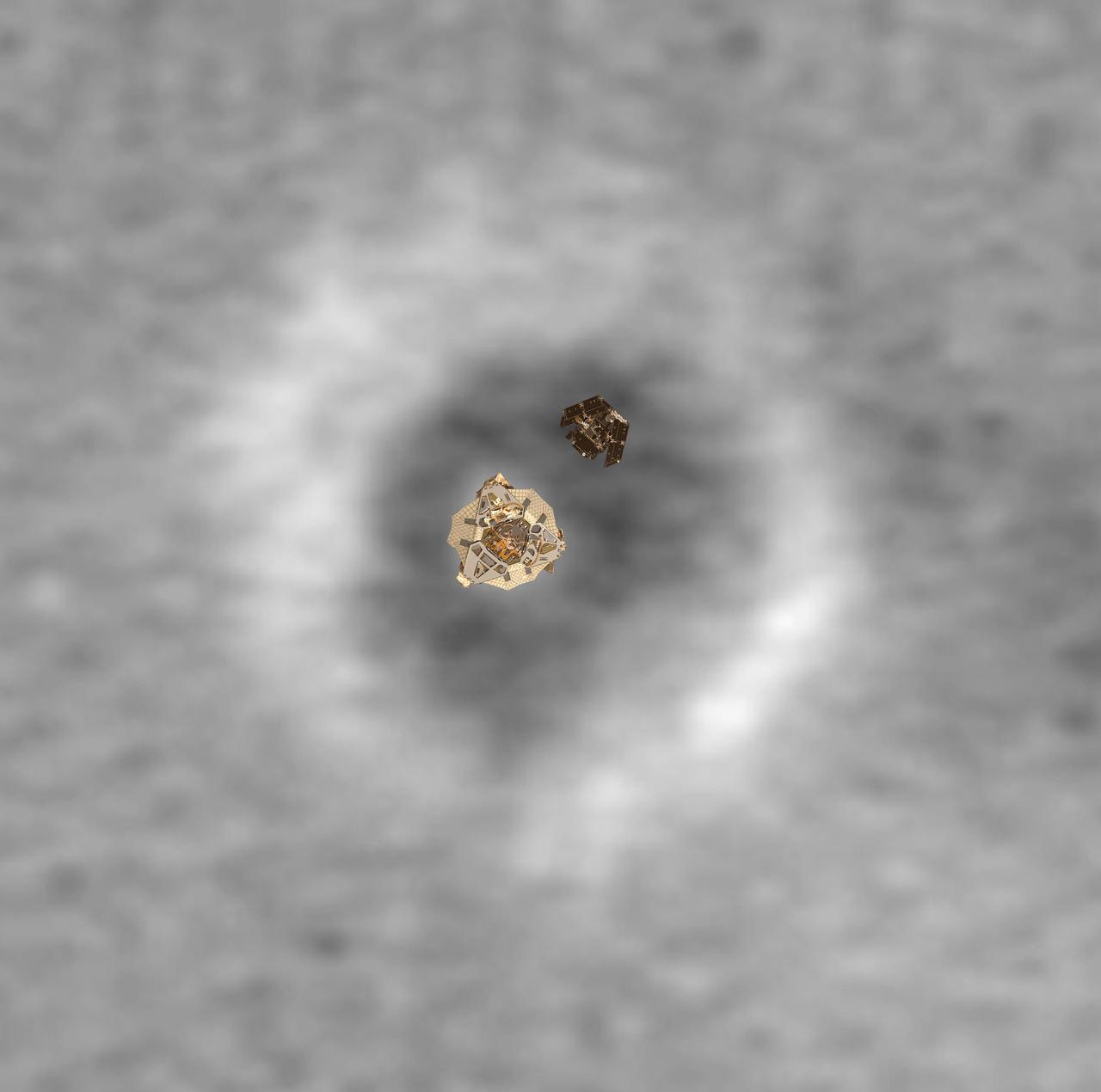
Top View of a Computer Graphic Model of the Opportunity Lander and Rover
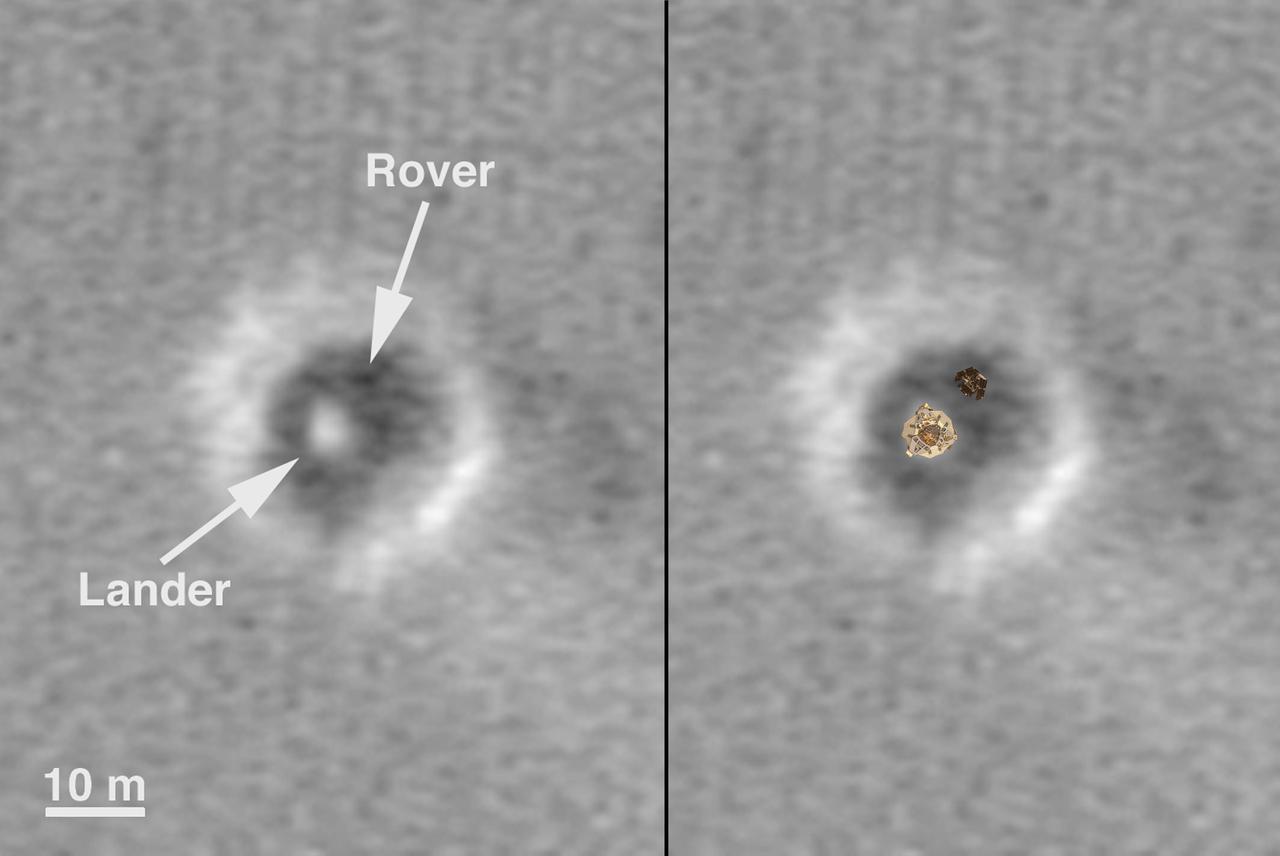
Comparison of a Computer Graphic Model of the Opportunity Lander and Rover with MOC Orbital Image
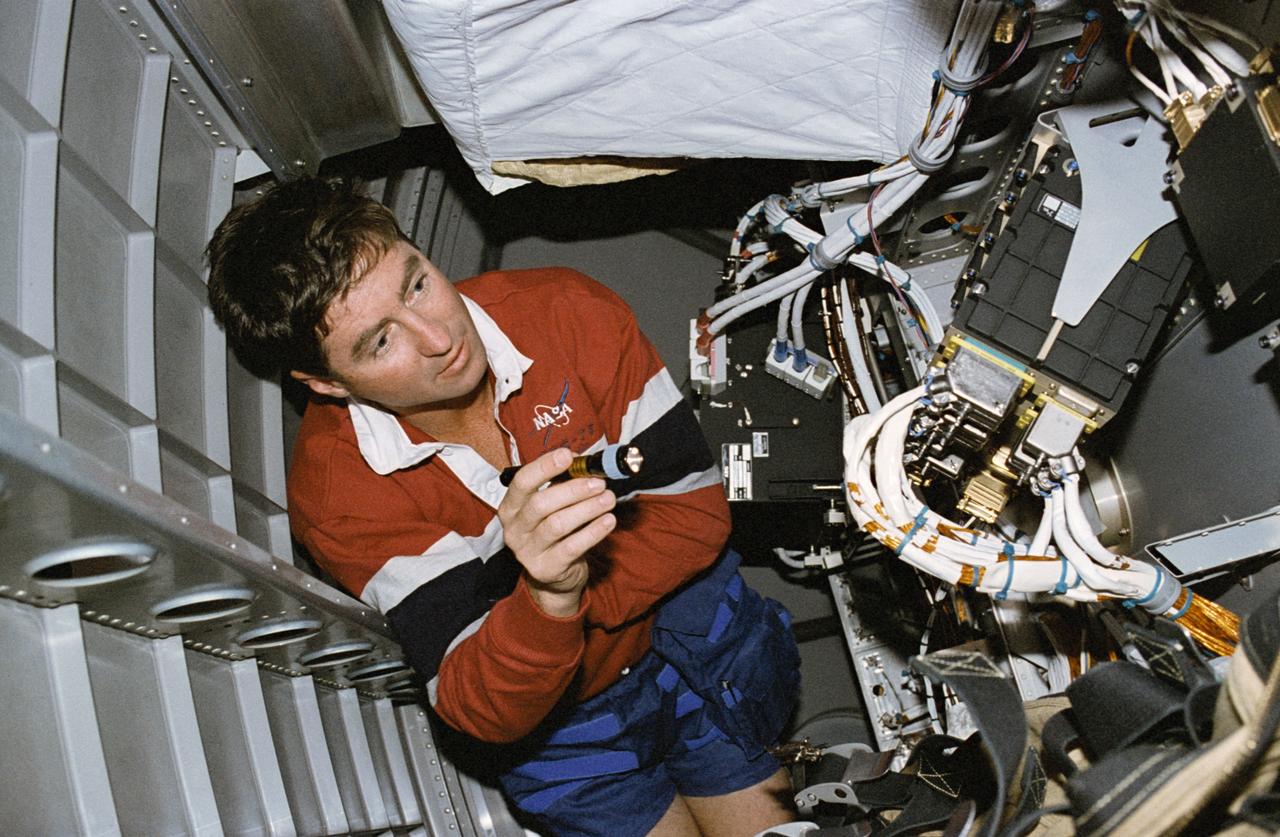
STS078-432-009 (20 June-7 July 1996) --- Among the inflight maintenance (IFM) chores that were handled by the crew members during their almost 17 days in space aboard the space shuttle Columbia was one that involved going into the bay beneath the floor of the Life and Microgravity Spacelab (LMS-1) Science Module. Astronaut Terence T. (Tom) Henricks, mission commander, shines a tiny flashlight onto some cables related to LMS-1 supported computer systems. As in the case of the other IFM chores, Henricks' efforts were successful. He was joined by four other NASA astronauts and two international payload specialists for the space shuttle duration record-setting mission.
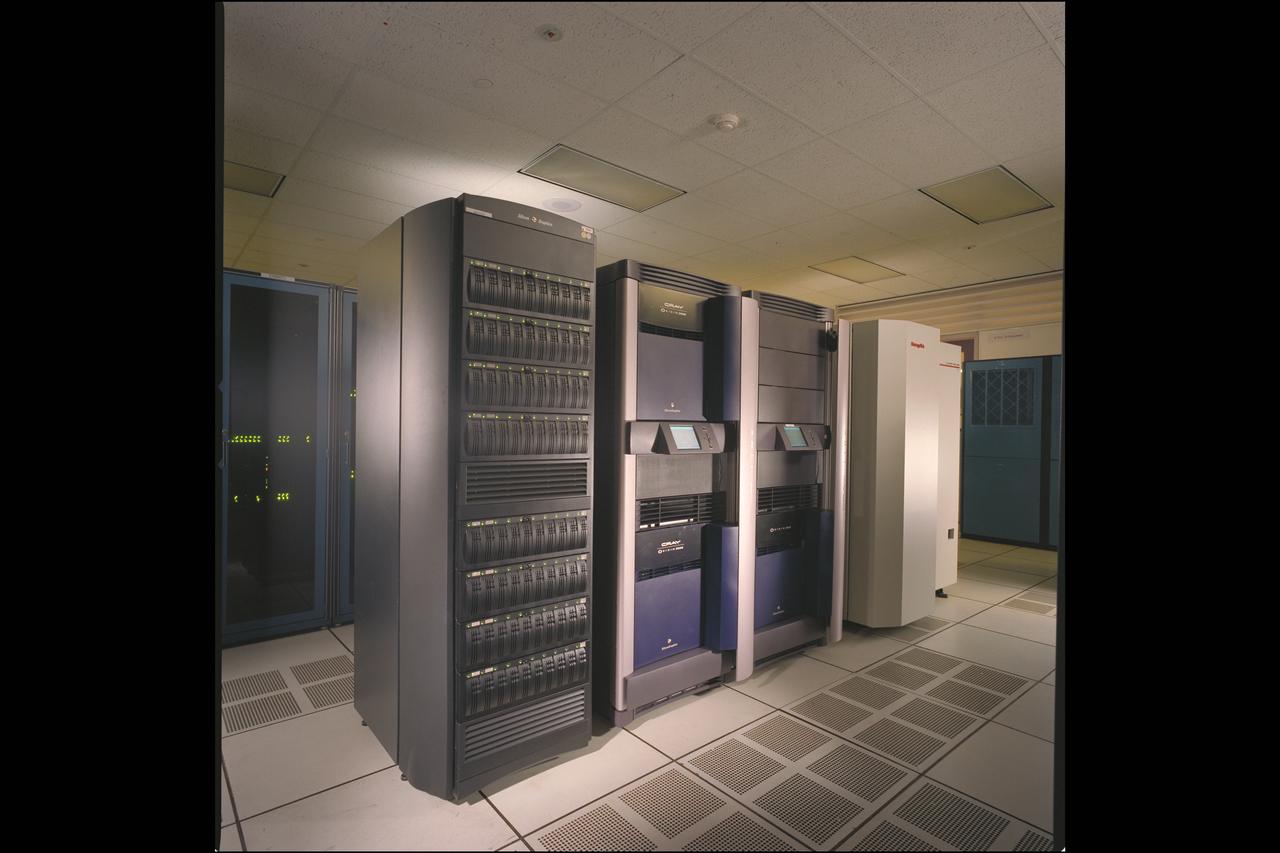
NAS Origin 2000 Computer System - Data Assimilation Office (DAO) storage (Gatun, Raid and Silo)
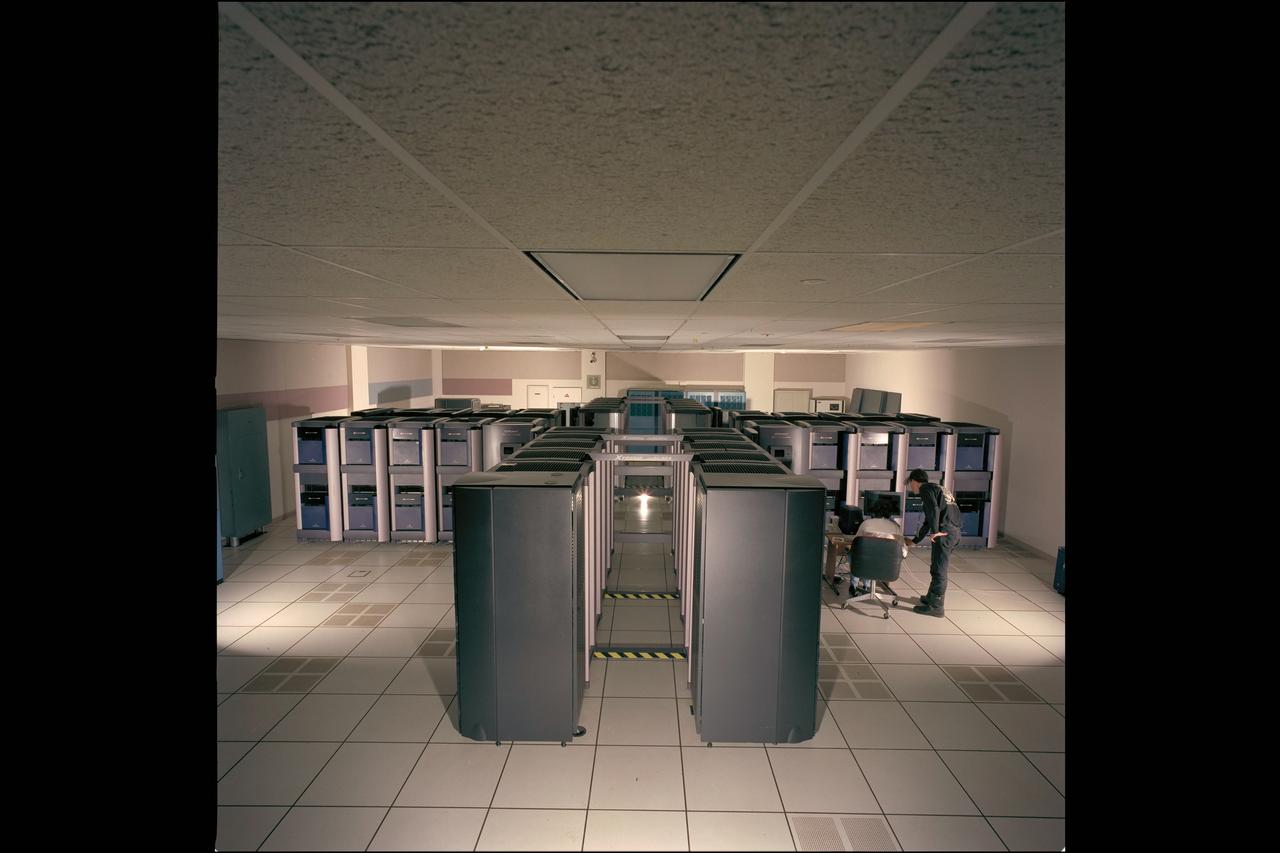
NAS Origin 2000 Computer System - 512 Processors ('LOMAX') station with Karl Schilke and Rita Williams
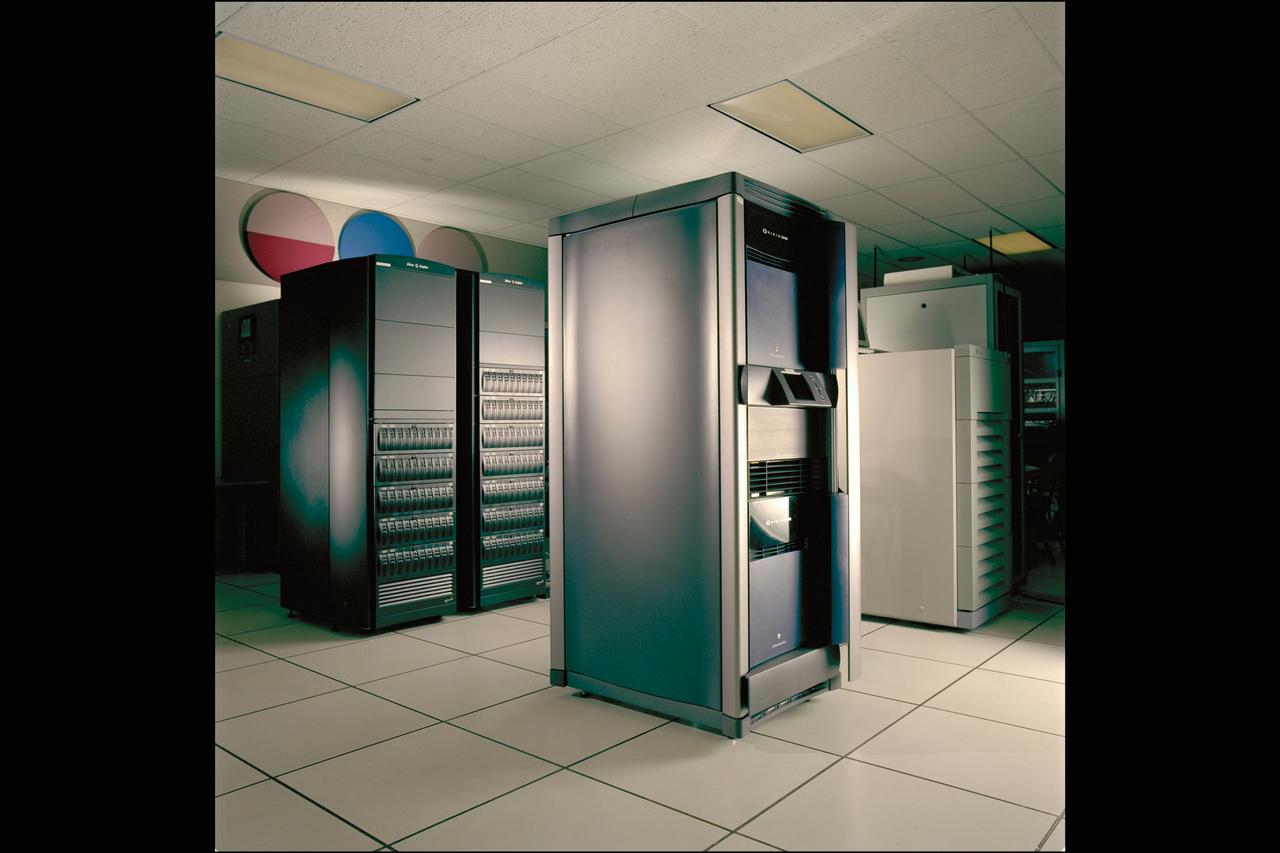
NAS Origin 2000 Computer System - 'LOU and RAID' Array New Mass Storage System AC99-0195-
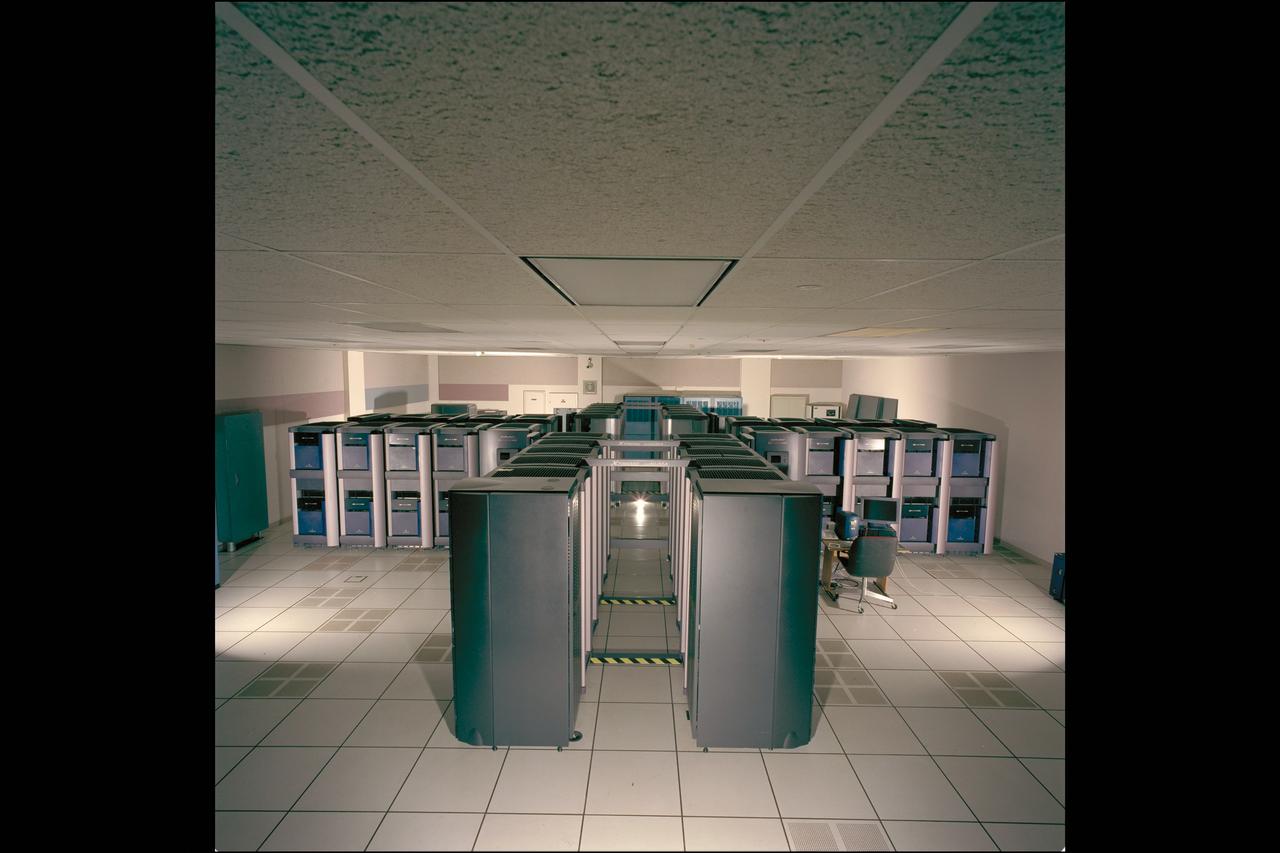
NAS Origin 2000 Computer System - 512 Processors ('LOMAX') station with Karl Schilke and Rita Williams
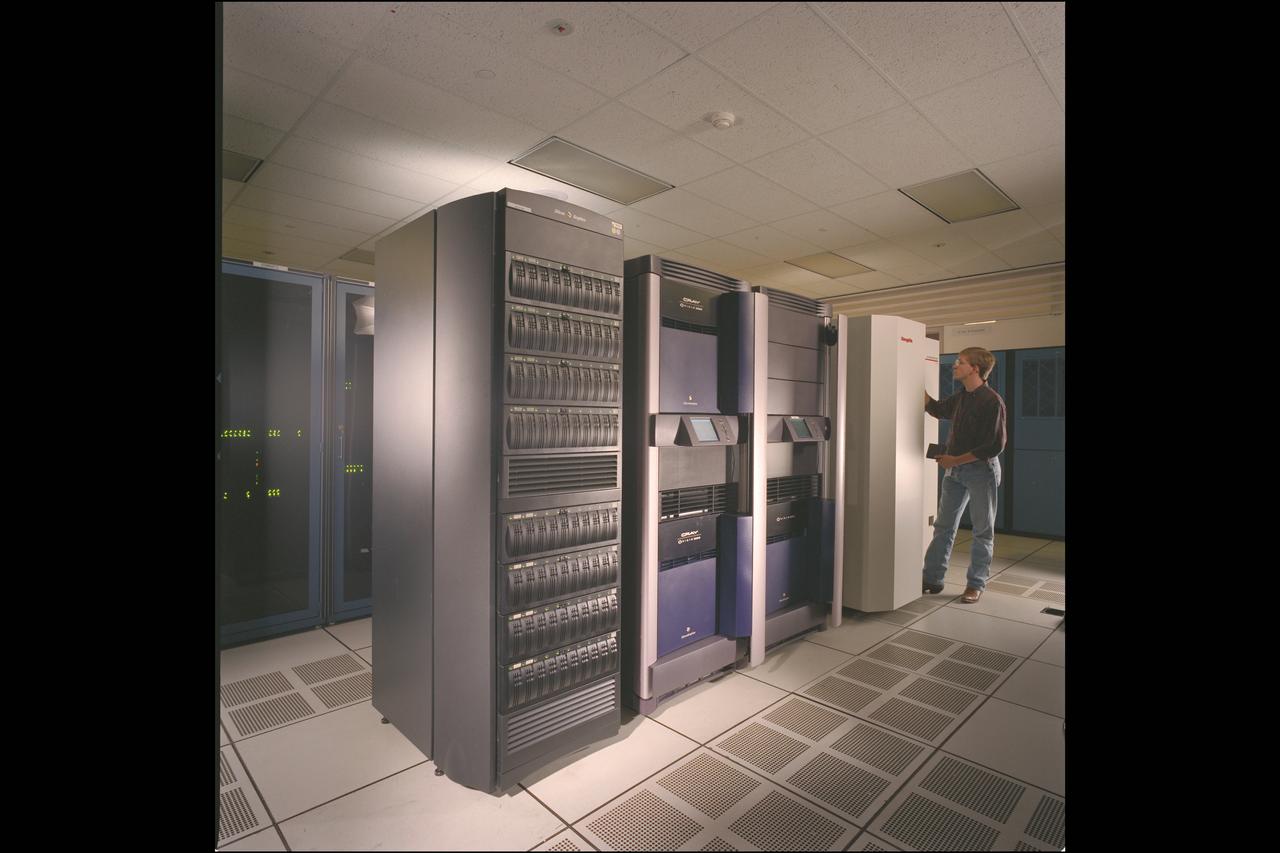
NAS Origin 2000 Computer System - Data Assimilation Office (DAO) storage (Gatun, Raid and Silo) with James Jones
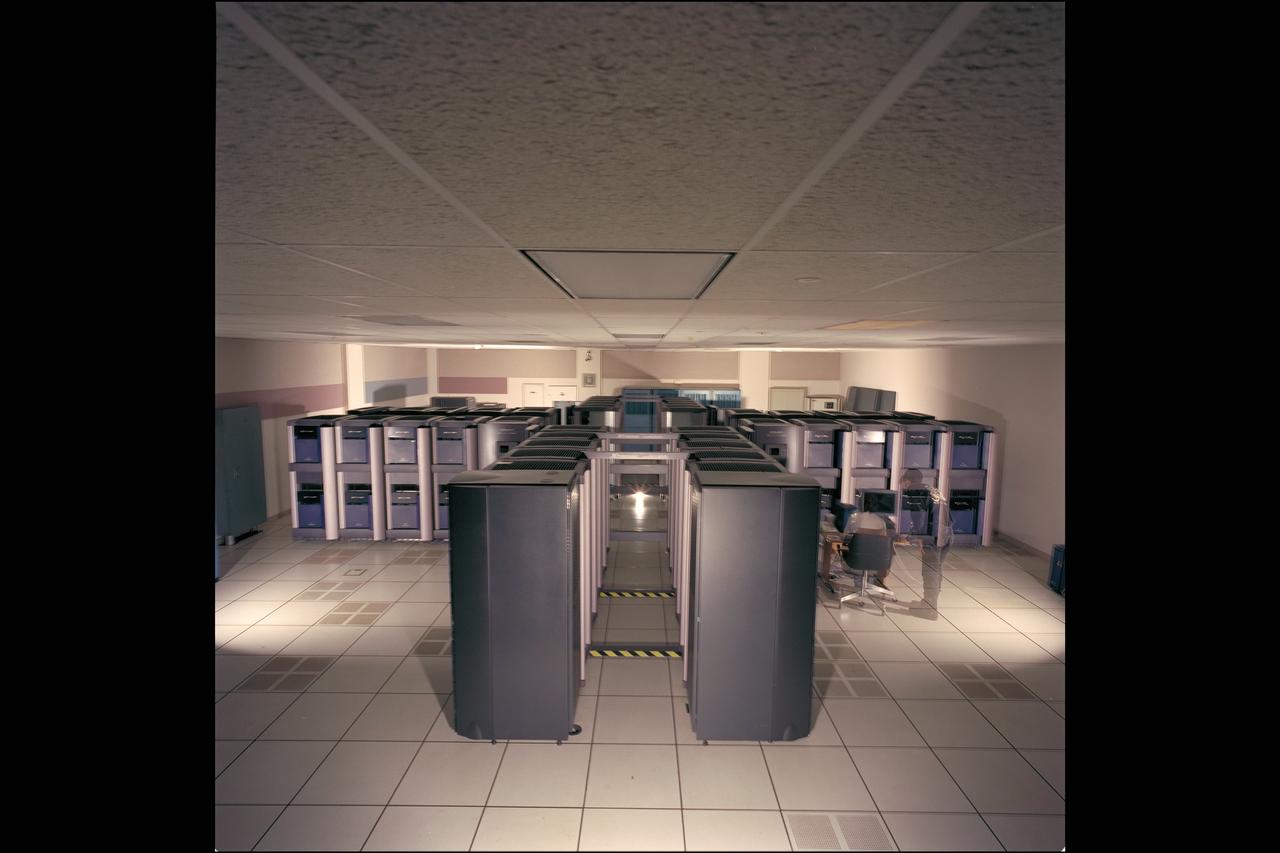
NAS Origin 2000 Computer System - 512 Processors ('LOMAX') station with Karl Schilke and Rita Williams
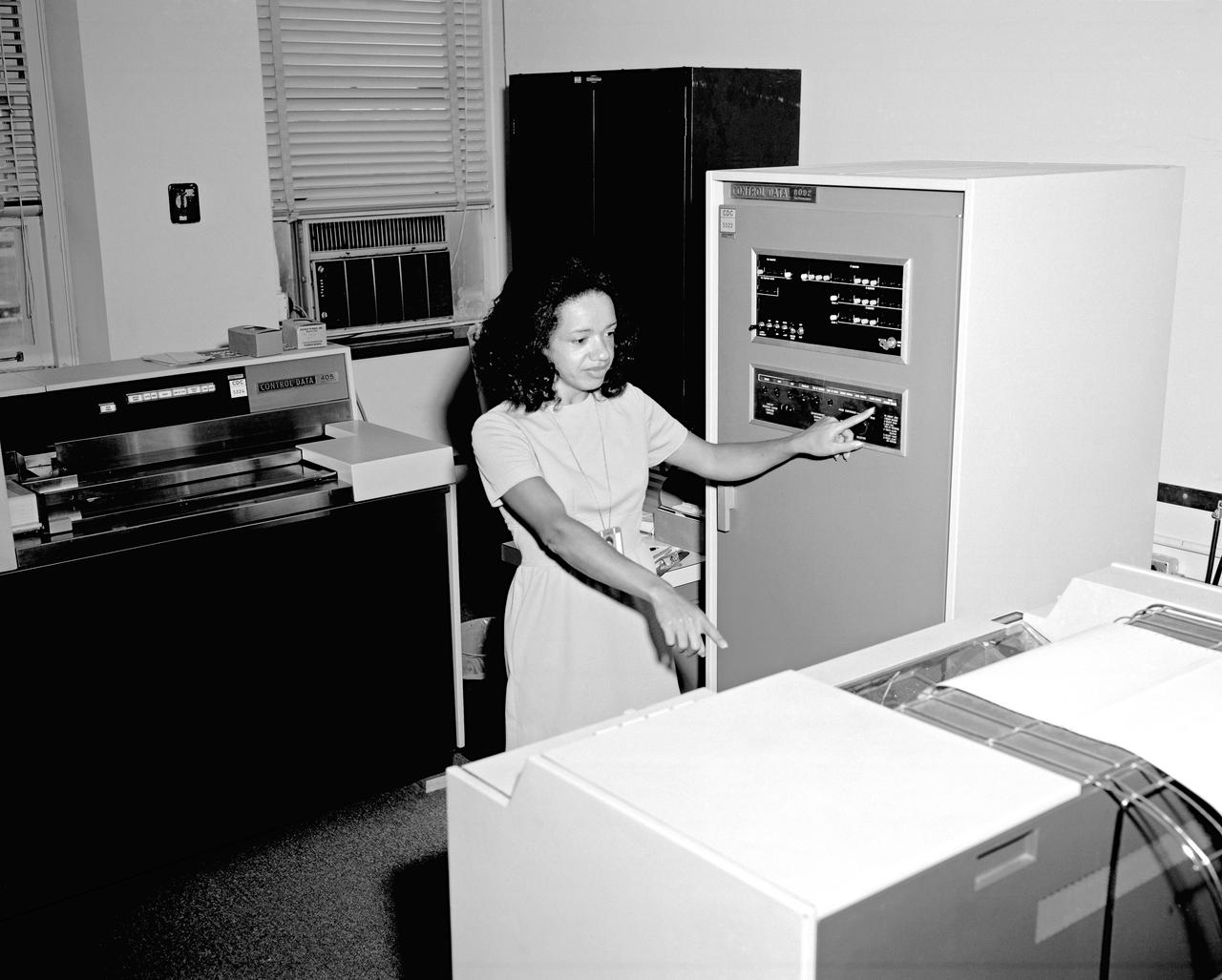
Christine Darden in computer room
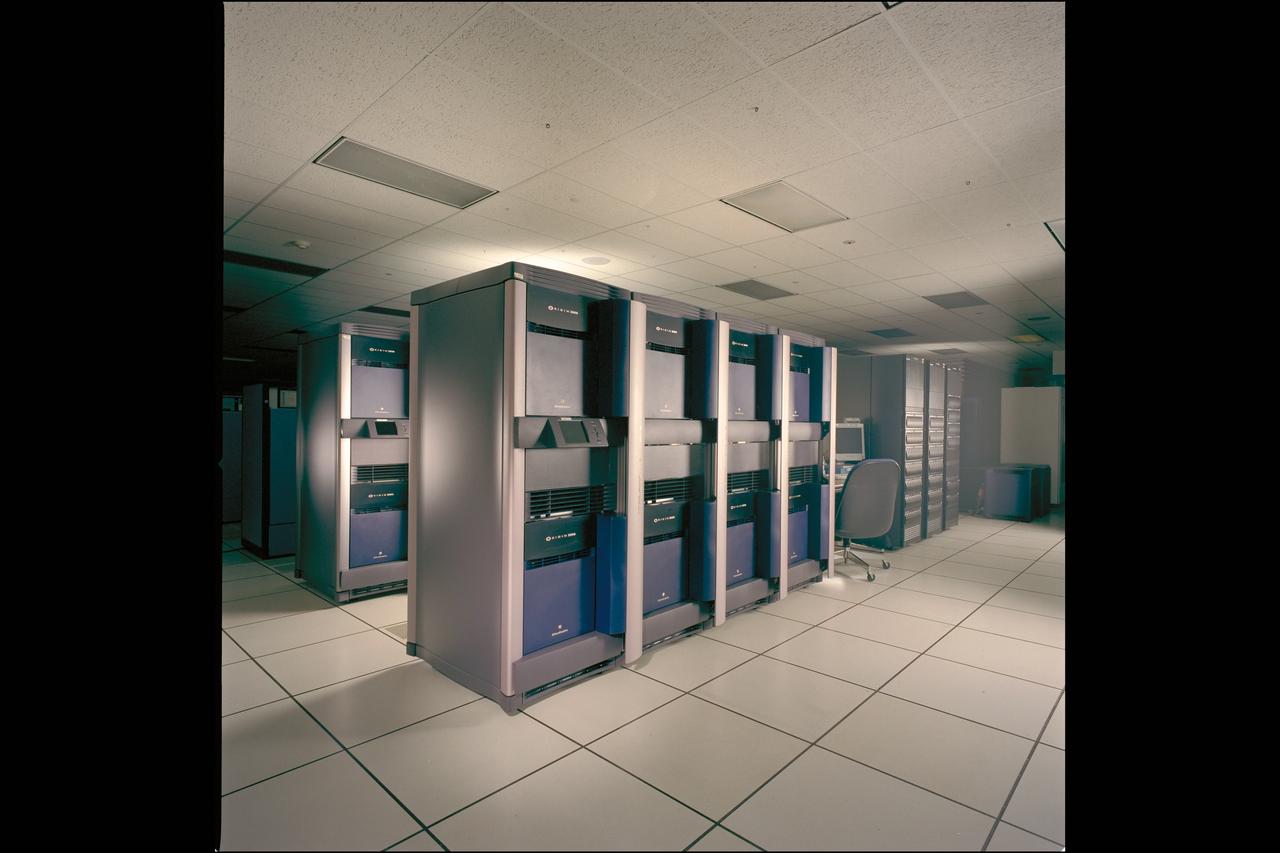
NAS Origin 2000 Computer System - Data Assimilation Office (DAO) cluster (nicknamed Sunrise, Jim PFO, Jim PF1 and Raids)
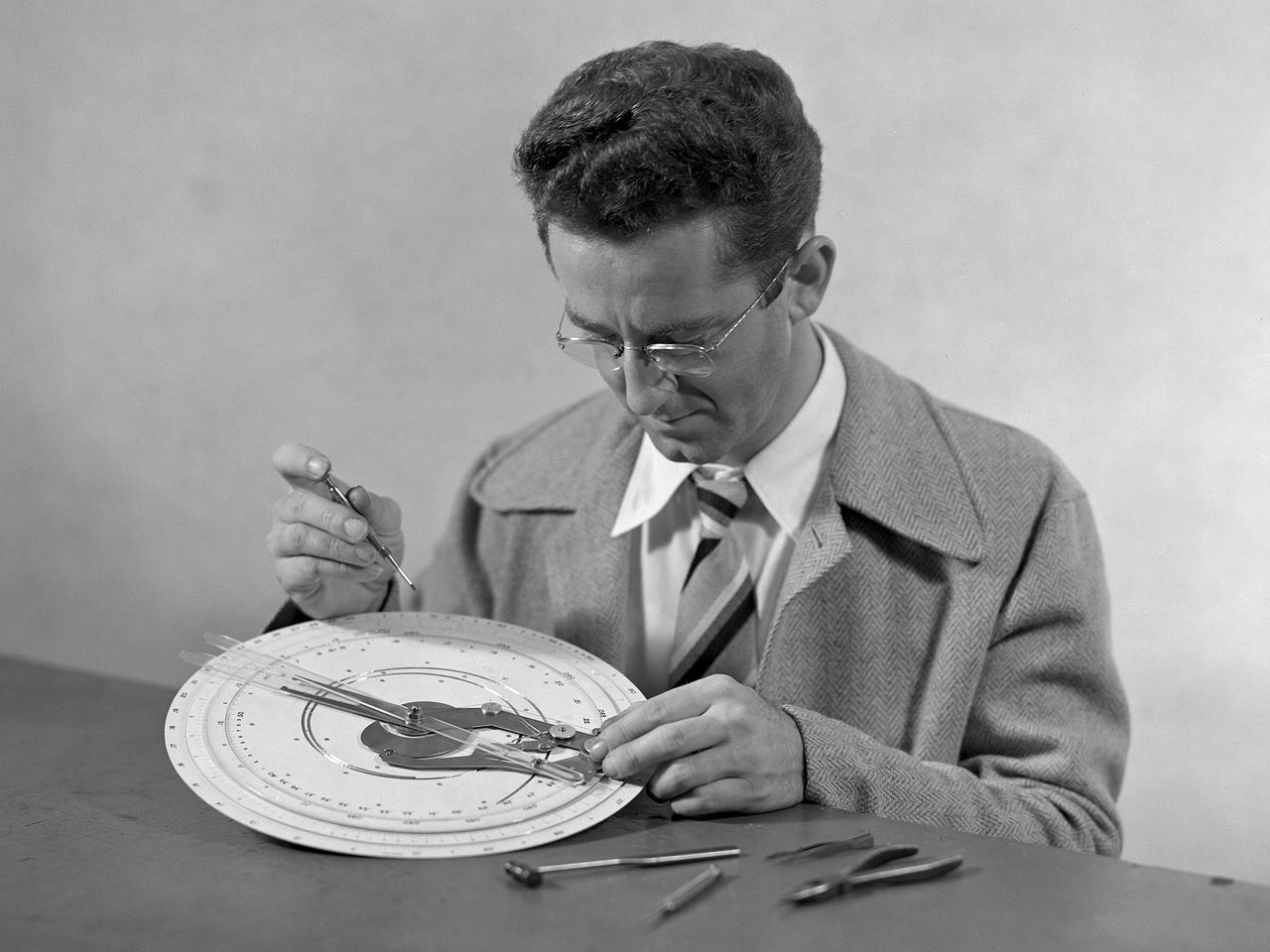
Technician at work adjusting an unidentified mechanical computing device.
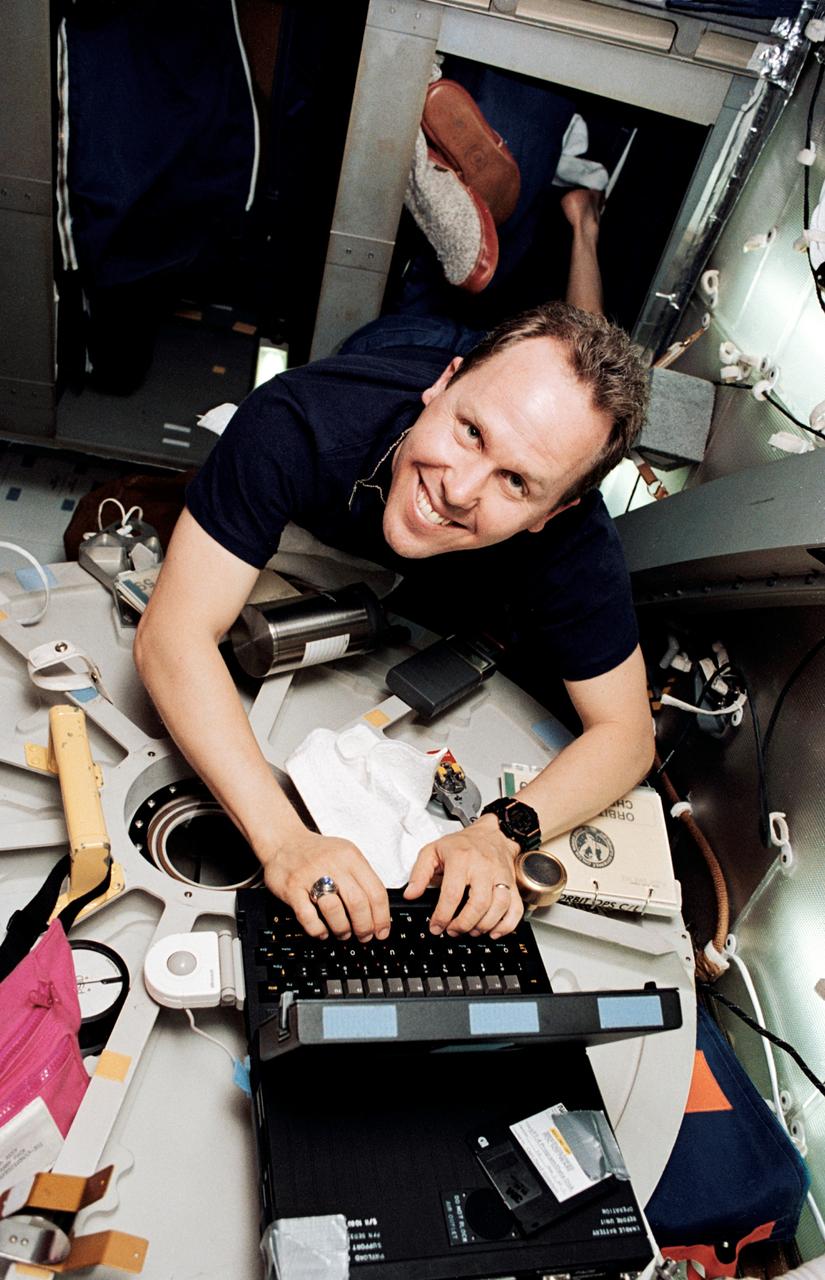
STS059-10-011 (9-20 April 1994) --- Astronaut Thomas D. Jones appears to have climbed out of bed right into his work in this onboard 35mm frame. Actually, Jones had anchored himself in the bunk facility while working on one of the onboard computers which transfered data to the ground via modem. The mission specialist was joined in space by five other NASA astronauts for a week and a half of support to the Space Radar Laboratory (SRL-1)/STS-59 mission.
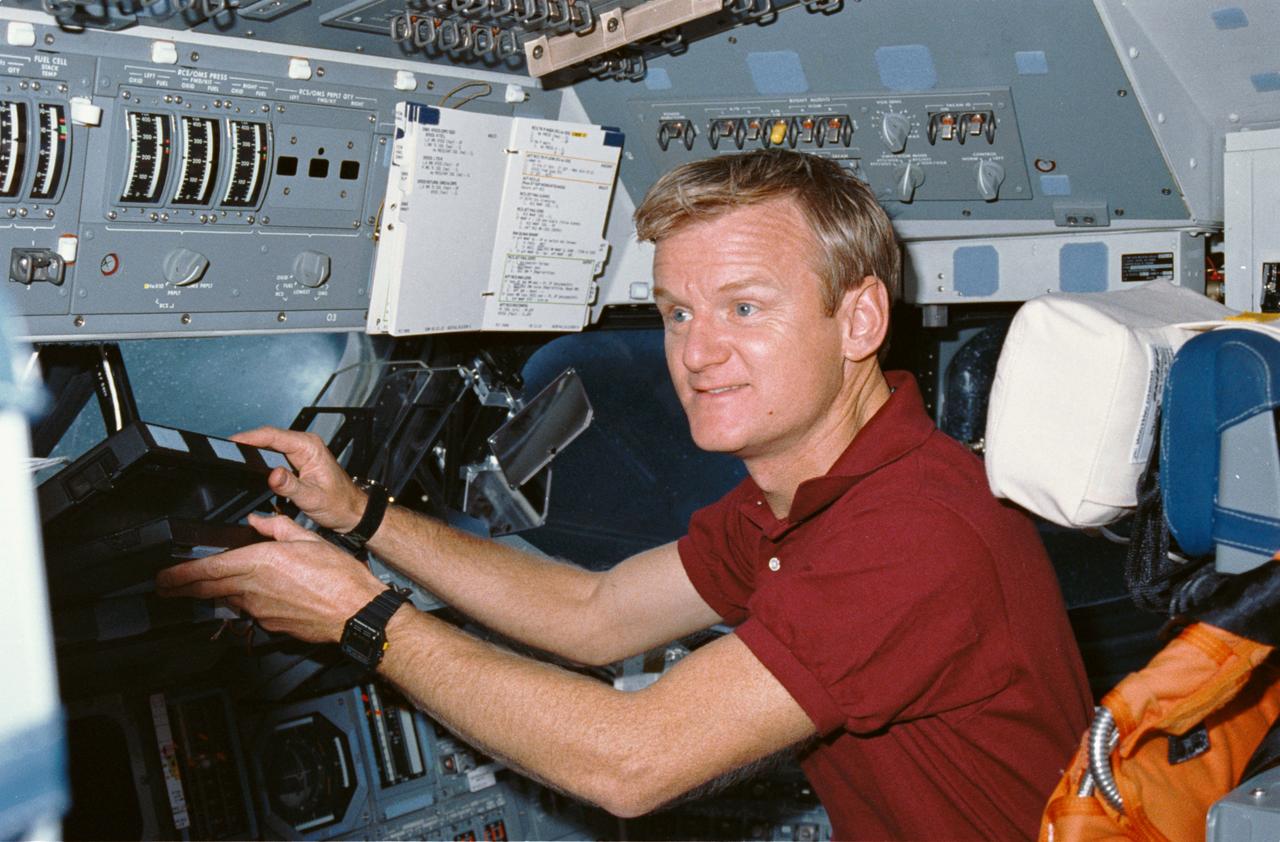
STS036-03-027 (3 March 1990) --- STS-36 Pilot John H. Casper reaches for the shuttle portable onboard computer (SPOC), a laptop computer, while at the pilots station on the forward flight deck of Atlantis, Orbiter Vehicle (OV) 104. Casper, seated in the pilot’s seat, lifts the SPOC from the forward window ledge. Appearing around him are forward crew compartment windows, the head up display (HUD), the flight mirror assembly, and a checklist attached to control panel O3. Casper and four other astronauts spent four days, 10 hours and 19 minutes aboard the spacecraft for a Department of Defense (DOD) devoted mission.
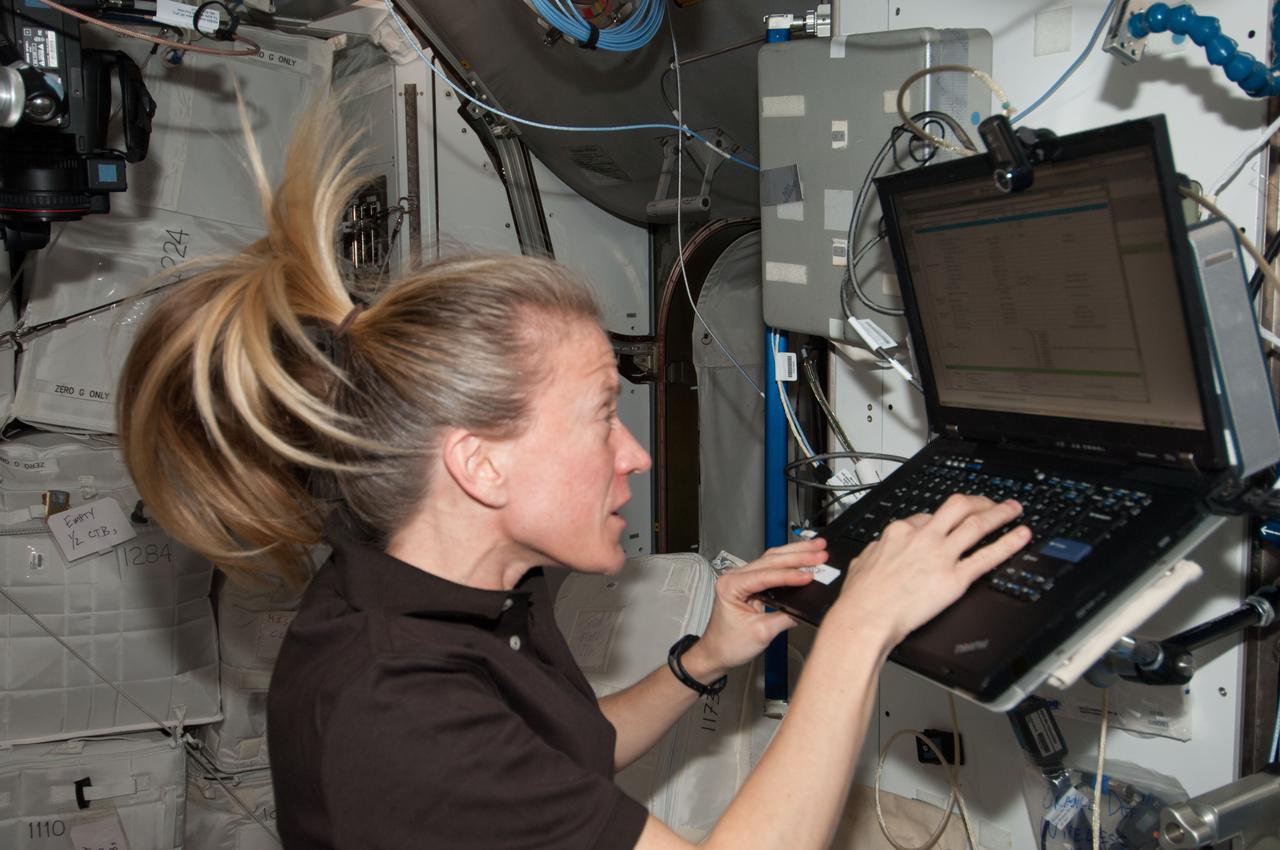
ISS037-E-004299 (29 Sept. 2013) --- NASA astronaut Karen Nyberg, Expedition 37 flight engineer, uses a payload and general support computer (PGSC) in the Harmony node of the International Space Station.
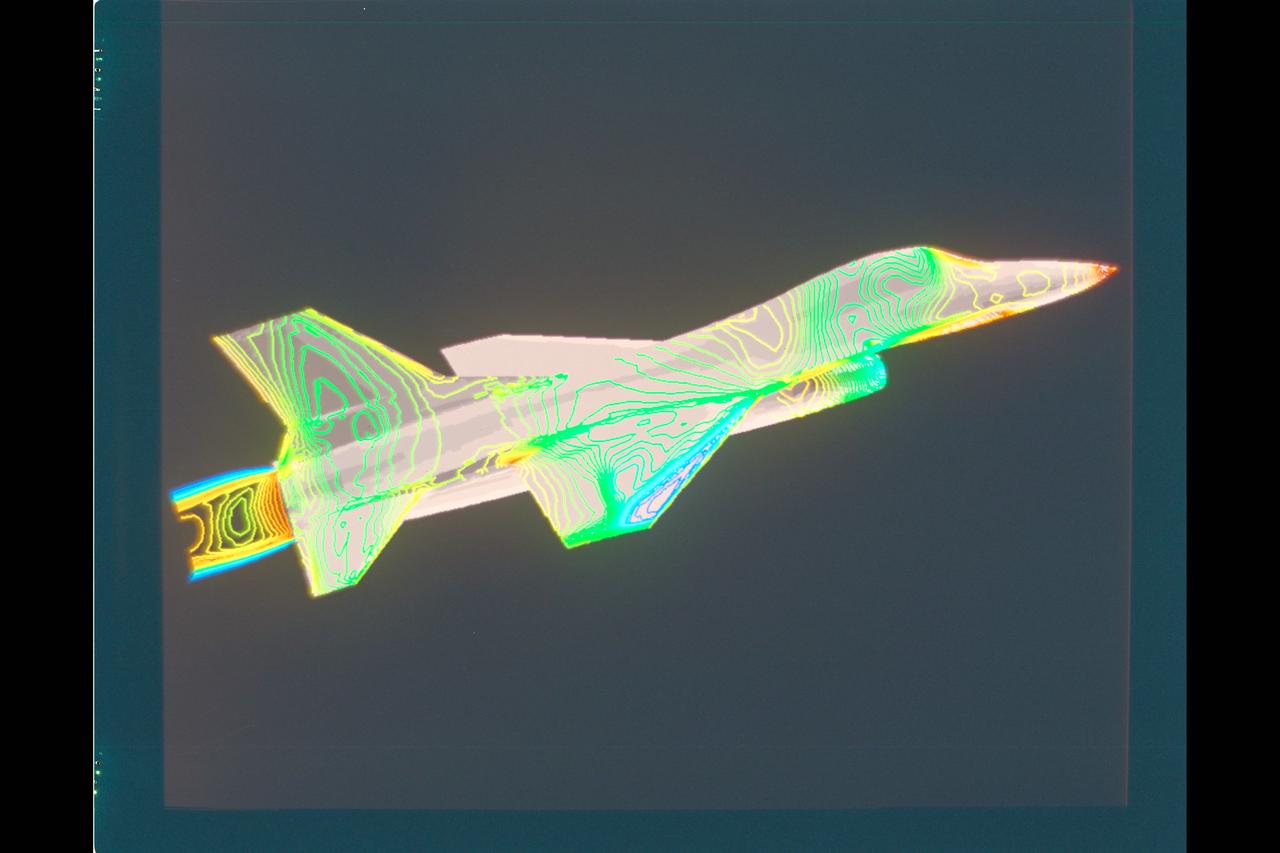
Computational Fluid Dynamics (CFD) F-16A flow field grid
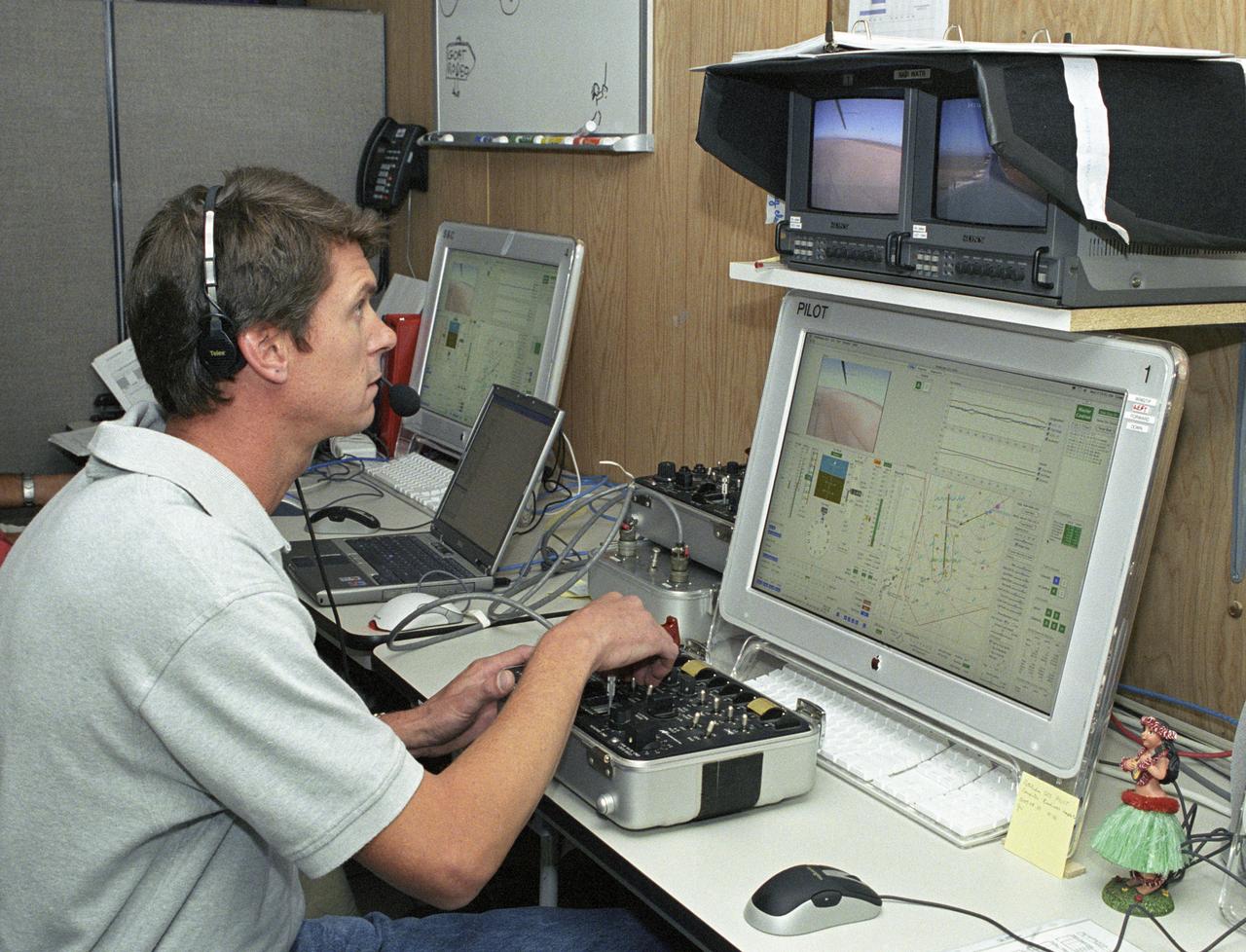
AeroVironment pilot Wyatt Sadler controls the Pathfinder-Plus flying wing from a small console, video and computer monitors in the ground station.
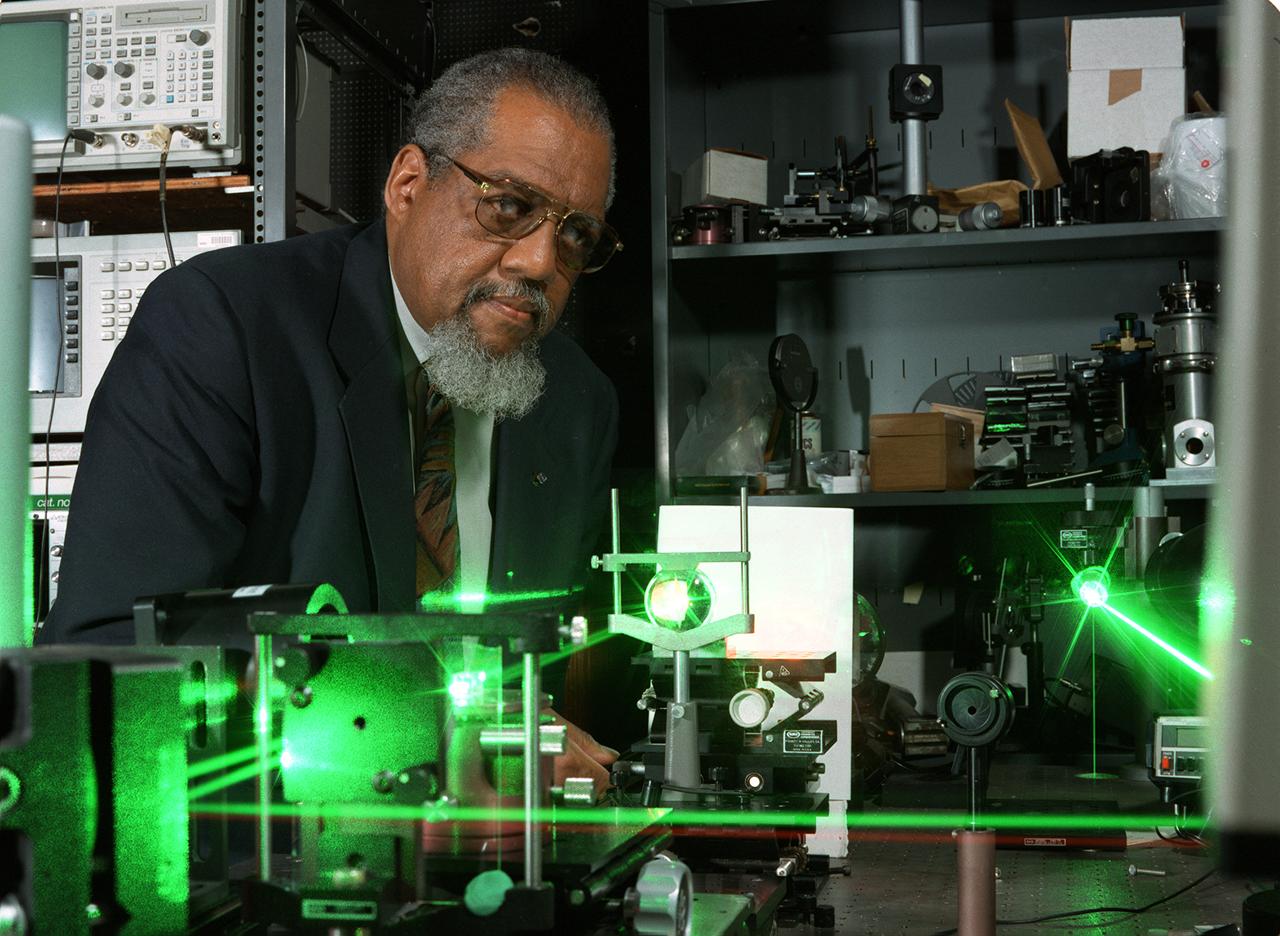
NASA research Dr. Donald Frazier uses a blue laser shining through a quartz window into a special mix of chemicals to generate a polymer film on the inside quartz surface. As the chemicals respond to the laser light, they adhere to the glass surface, forming opticl films. Dr. Frazier and Dr. Mark S. Paley developed the process in the Space Sciences Laboratory at NASA's Marshall Space Flight Center in Huntsville, AL. Working aboard the Space Shuttle, a science team led by Dr. Frazier formed thin-films potentially useful in optical computers with fewer impurities than those formed on Earth. Patterns of these films can be traced onto the quartz surface. In the optical computers on the future, these films could replace electronic circuits and wires, making the systems more efficient and cost-effective, as well as lighter and more compact. Photo credit: NASA/Marshall Space Flight Center
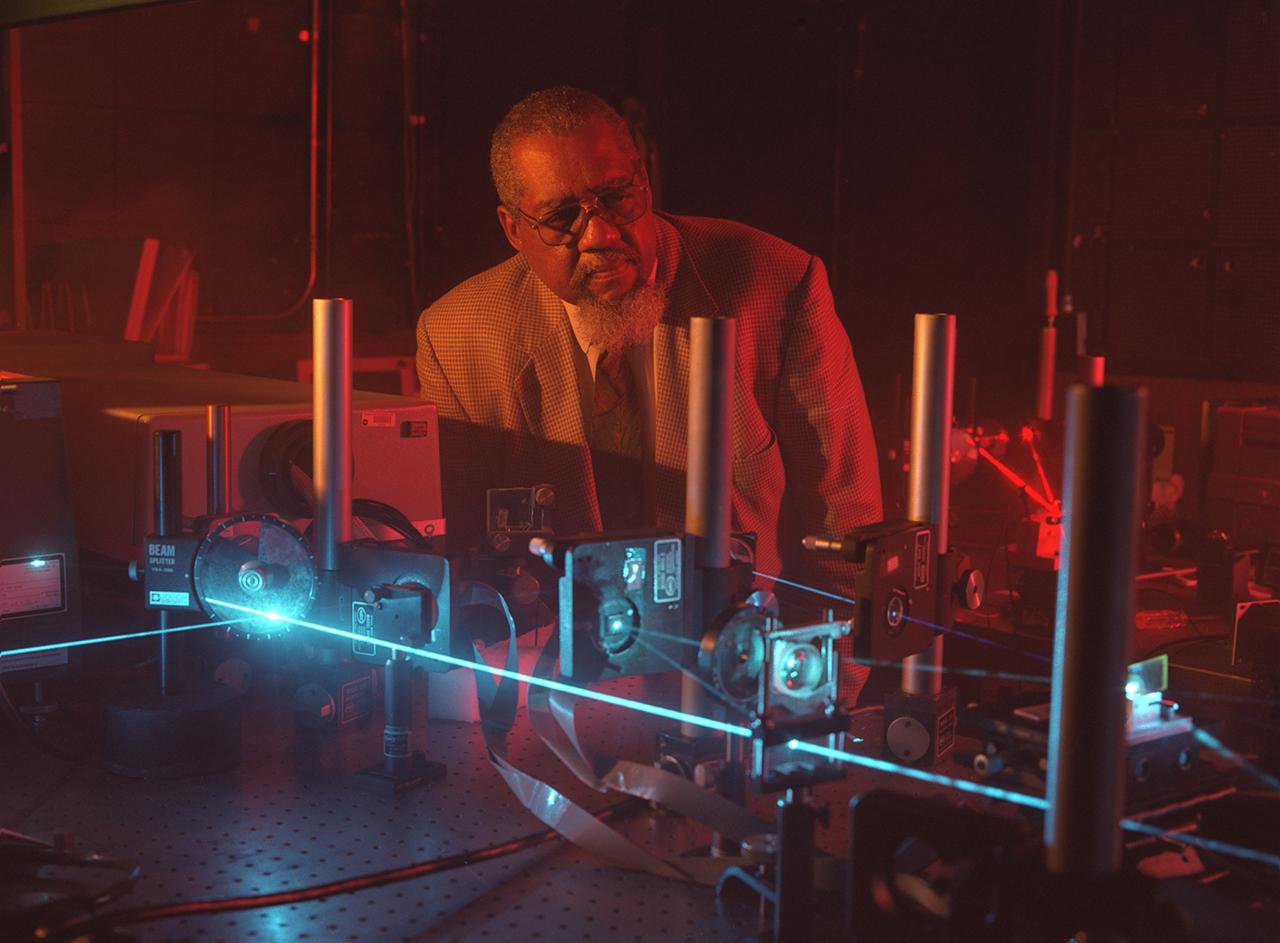
NASA researcher Dr. Donald Frazier uses a blue laser shining through a quartz window into a special mix of chemicals to generate a polymer film on the inside quartz surface. As the chemicals respond to the laser light, they adhere to the glass surface, forming optical films. Dr. Frazier and Dr. Mark S. Paley developed the process in the Space Sciences Laboratory at NASA's Marshall Space Flight Center in Huntsville, AL. Working aboard the Space Shuttle, a science team led by Dr. Frazier formed thin-films potentially useful in optical computers with fewer impurities than those formed on Earth. Patterns of these films can be traced onto the quartz surface. In the optical computers of the future, thee films could replace electronic circuits and wires, making the systems more efficient and cost-effective, as well as lighter and more compact. Photo credit: NASA/Marshall Space Flight Center
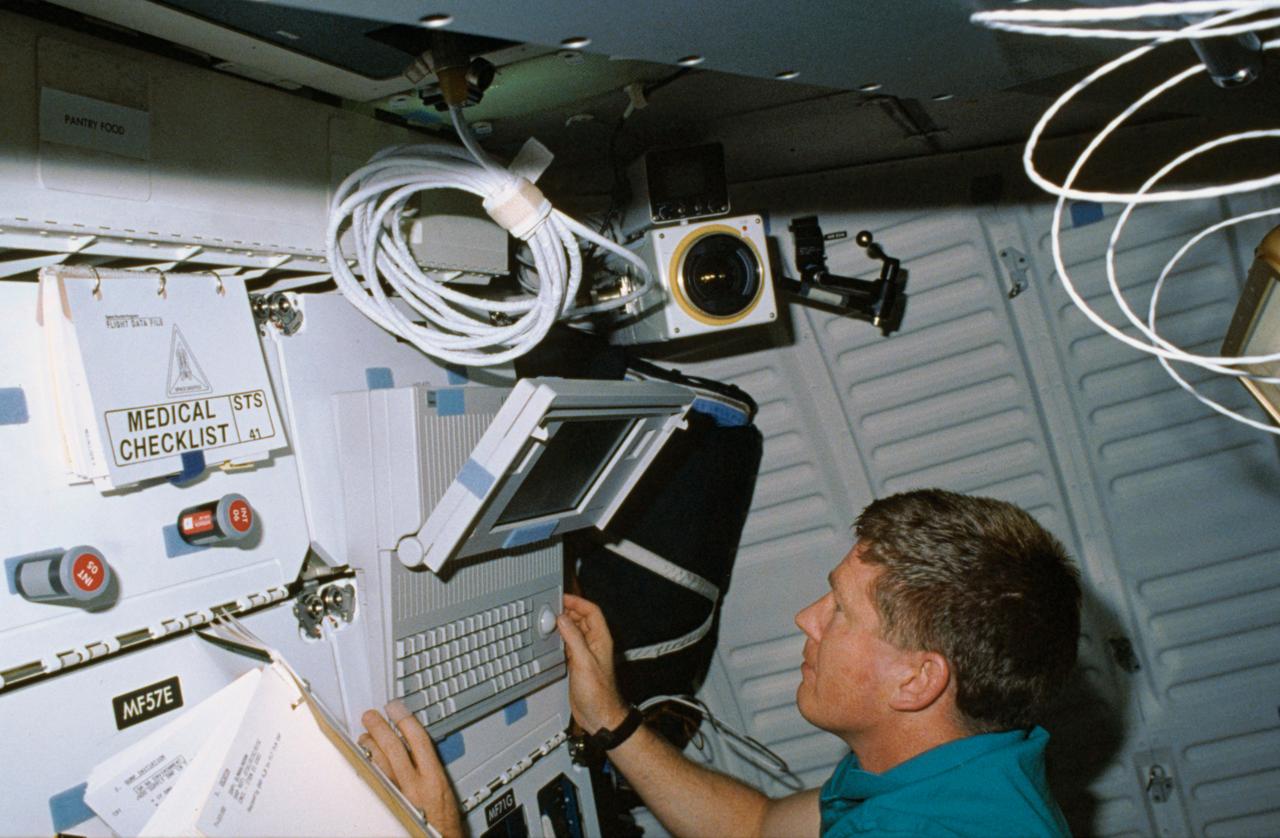
STS-41 Mission Specialist (MS) William M. Shepherd uses Detailed Test Objective (DTO) Space Station Cursor Control Device Evaluation MACINTOSH portable computer on the middeck of Discovery, Orbiter Vehicle (OV) 103. The computer is velcroed to forward lockers MF71C and MF71E. Surrounding Shepherd are checklists, the field sequential (FS) crew cabin camera, and a lighting fixture.
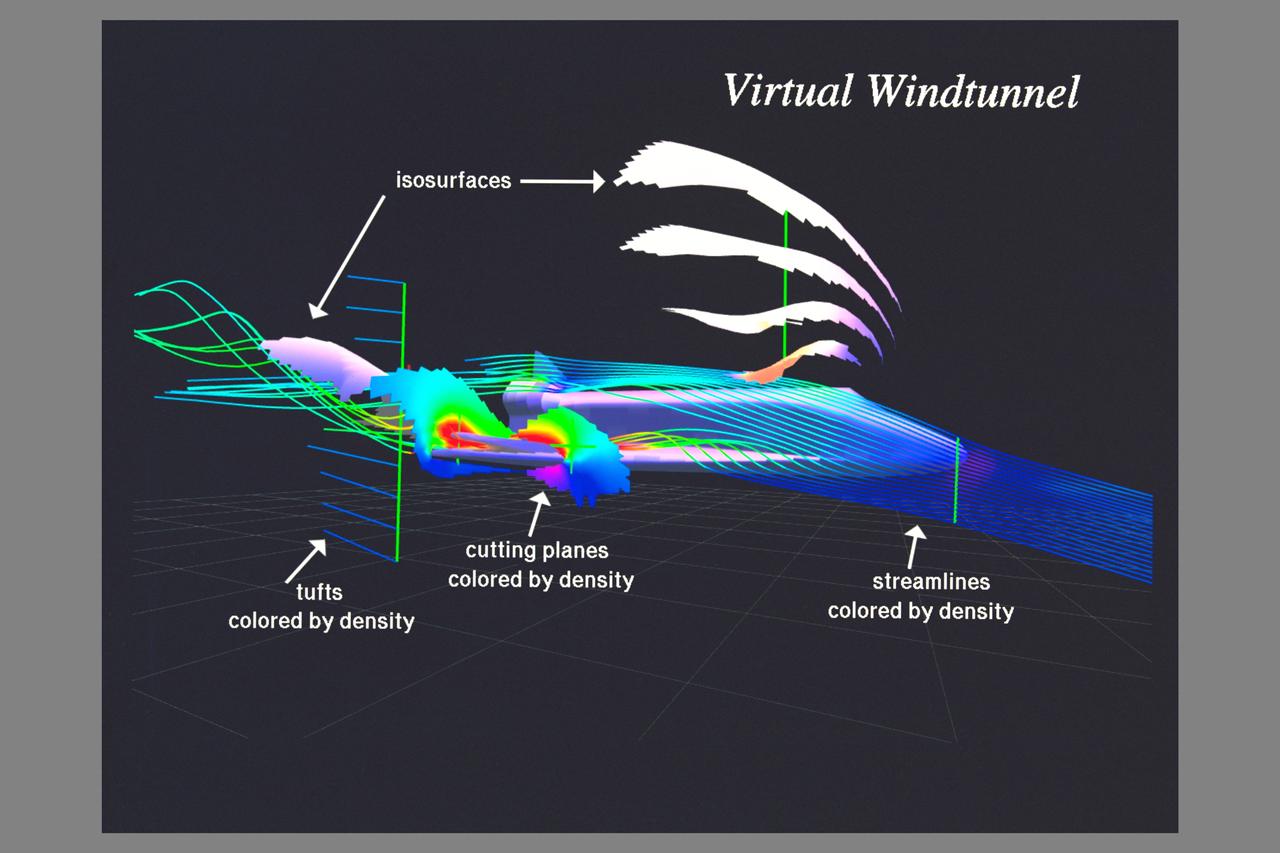
Computational Fluid Dynamics (CFD) image of Space Shuttle Pressure Flow using Virtual Wind Tunnel
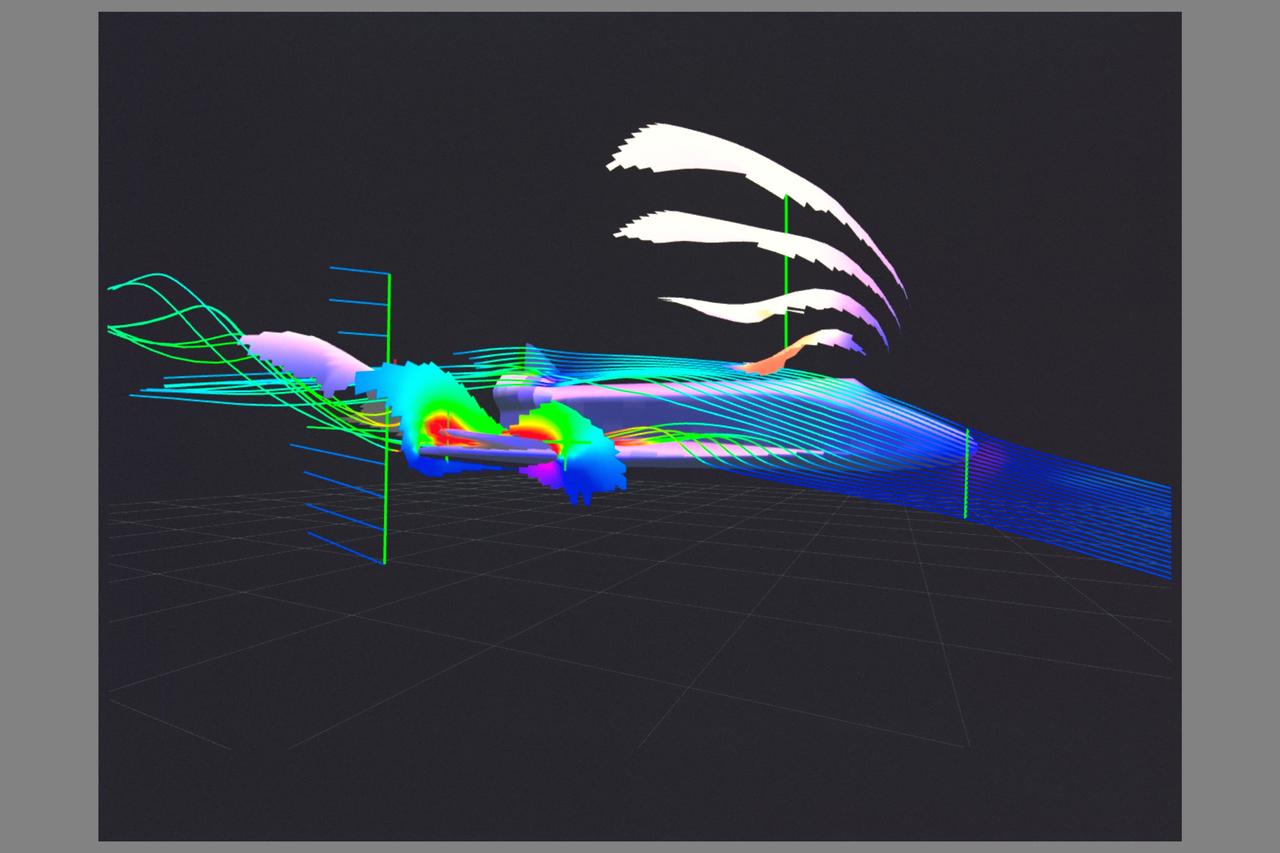
Computational Fluid Dynamics (CFD) image of Space Shuttle Pressure Flow using Virtual Wind Tunnel
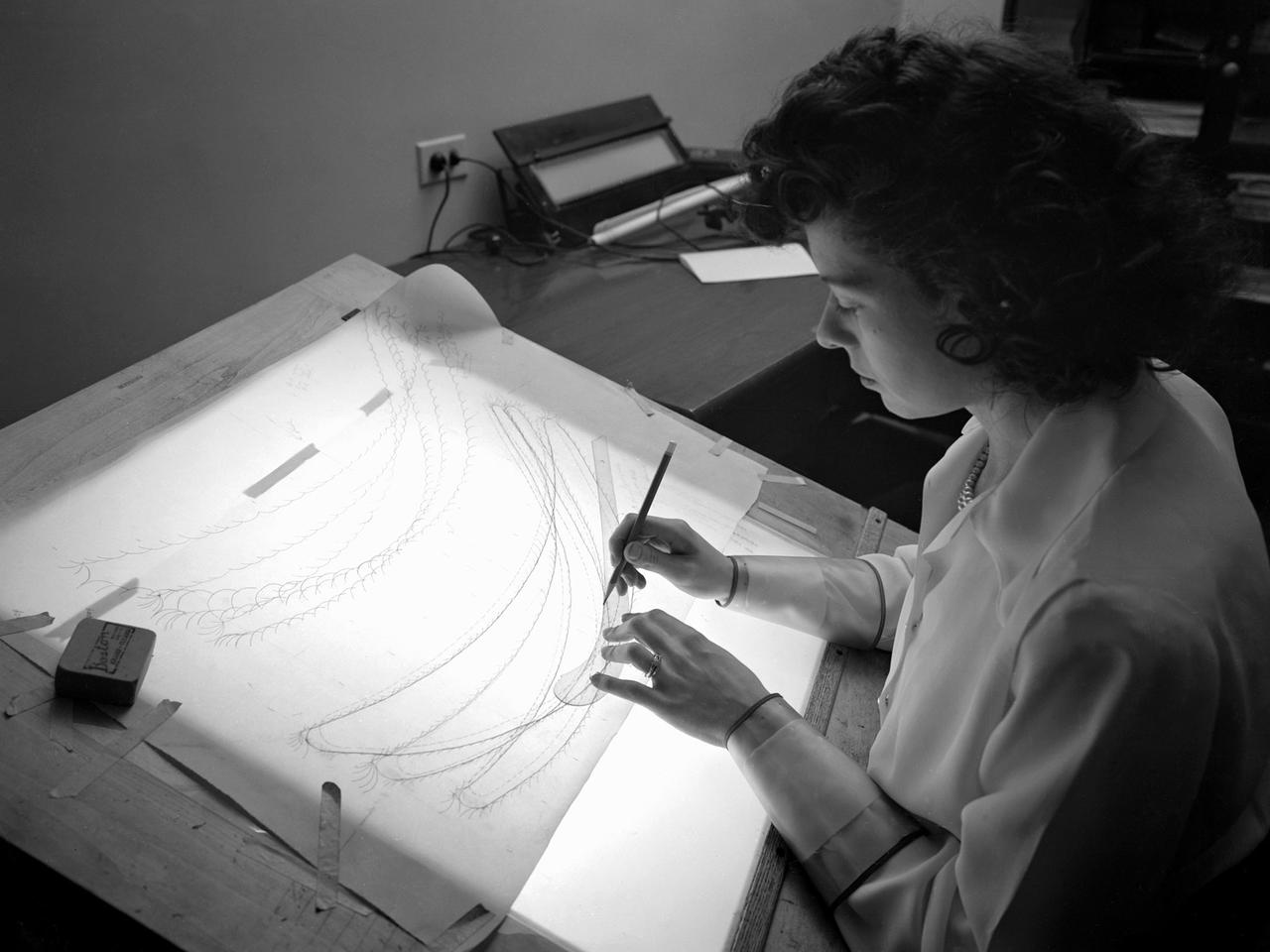
A female computer plotting compressor data in the Engine Research Building at the NACA’s Lewis Flight Propulsion Laboratory. The Computing Section was introduced during World War II to relieve short-handed research engineers of some of the tedious data-taking work. The computers made the initial computations and plotted the data graphically. The researcher then analyzed the data and either summarized the findings in a report or made modifications or ran the test again. With the introduction of mechanical computer systems in the 1950s the female computers learned how to encode the punch cards. As the data processing capabilities increased, fewer female computers were needed. Many left on their own to start families, while others earned mathematical degrees and moved into advanced positions.
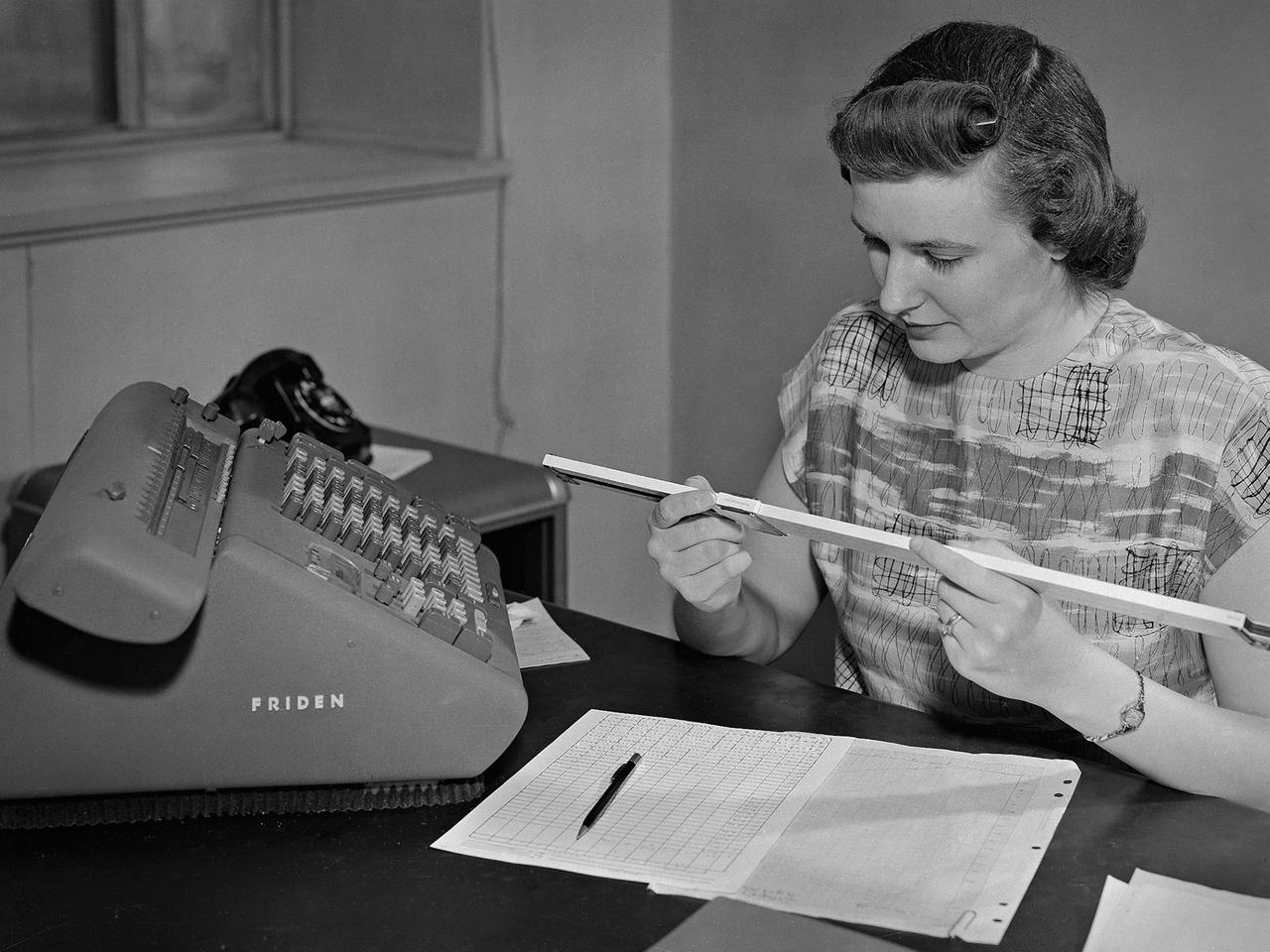
A female computer at the National Advisory Committee for Aeronautics (NACA) Lewis Flight Propulsion Laboratory with a slide rule and Friden adding machine to make computations. The computer staff was introduced during World War II to relieve short-handed research engineers of some of the tedious computational work. The Computing Section was staffed by “computers,” young female employees, who often worked overnight when most of the tests were run. The computers obtained test data from the manometers and other instruments, made the initial computations, and plotted the data graphically. Researchers then analyzed the data and summarized the findings in a report or made modifications and ran the test again. There were over 400 female employees at the laboratory in 1944, including 100 computers. The use of computers was originally planned only for the duration of the war. The system was so successful that it was extended into the 1960s. The computers and analysts were located in the Altitude Wind Tunnel Shop and Office Building office wing during the 1940s and transferred to the new 8- by 6-Foot Supersonic Wind Tunnel in 1948.
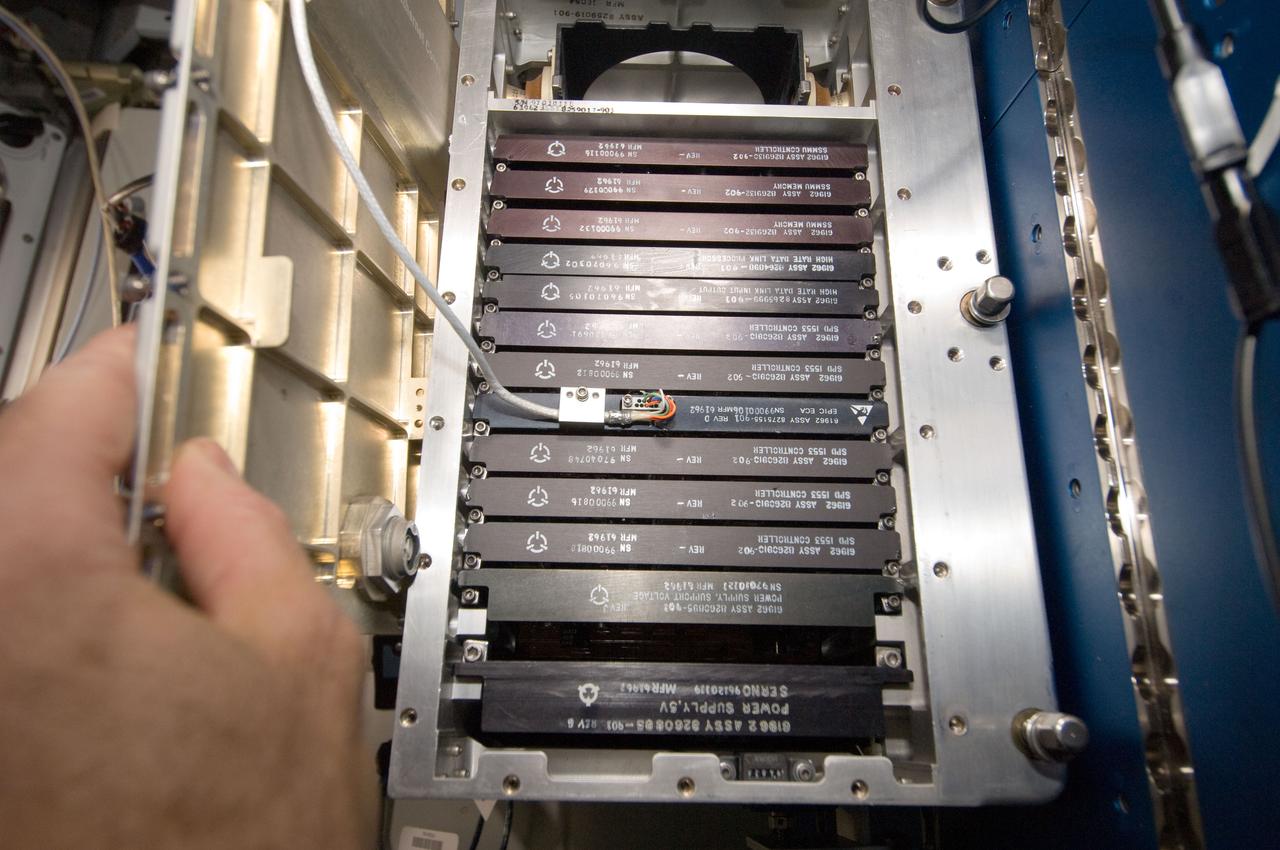
ISS030-E-017776 (29 Dec. 2011) --- Working in chorus with the International Space Station team in Houston?s Mission Control Center, this astronaut and his Expedition 30 crewmates on the station install a set of Enhanced Processor and Integrated Communications (EPIC) computer cards in one of seven primary computers onboard. The upgrade will allow more experiments to operate simultaneously, and prepare for the arrival of commercial cargo ships later this year.
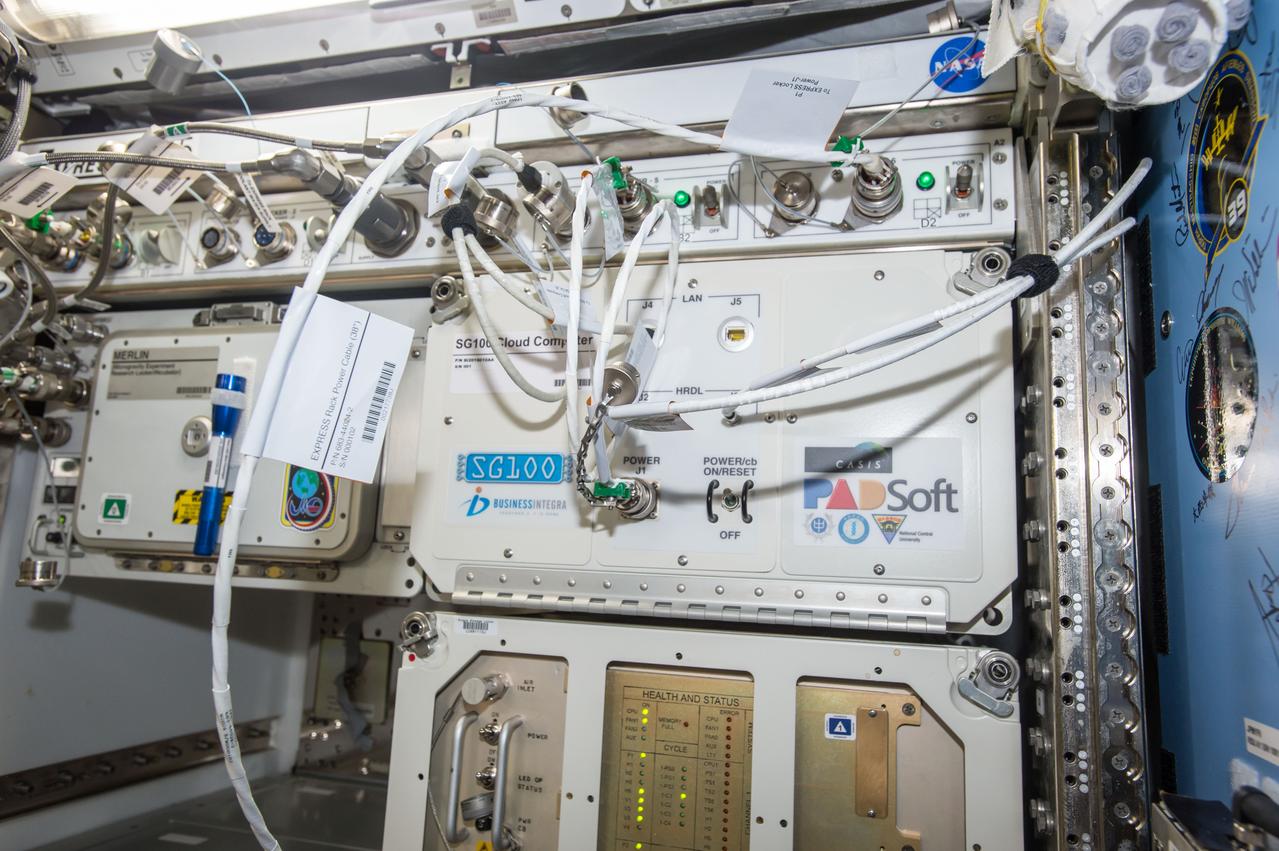
iss051e045046 (5/17/2017) --- The SG100 Cloud Computing Payload, shown here installed in the Kibo Japanese Pressurized Module (JPM) aboard the International Space Station (ISS), tests a space-rated, single-board computer designed to allow engineers, scientists and researchers to perform significant amounts of onboard analysis prior to downlink to the ground.
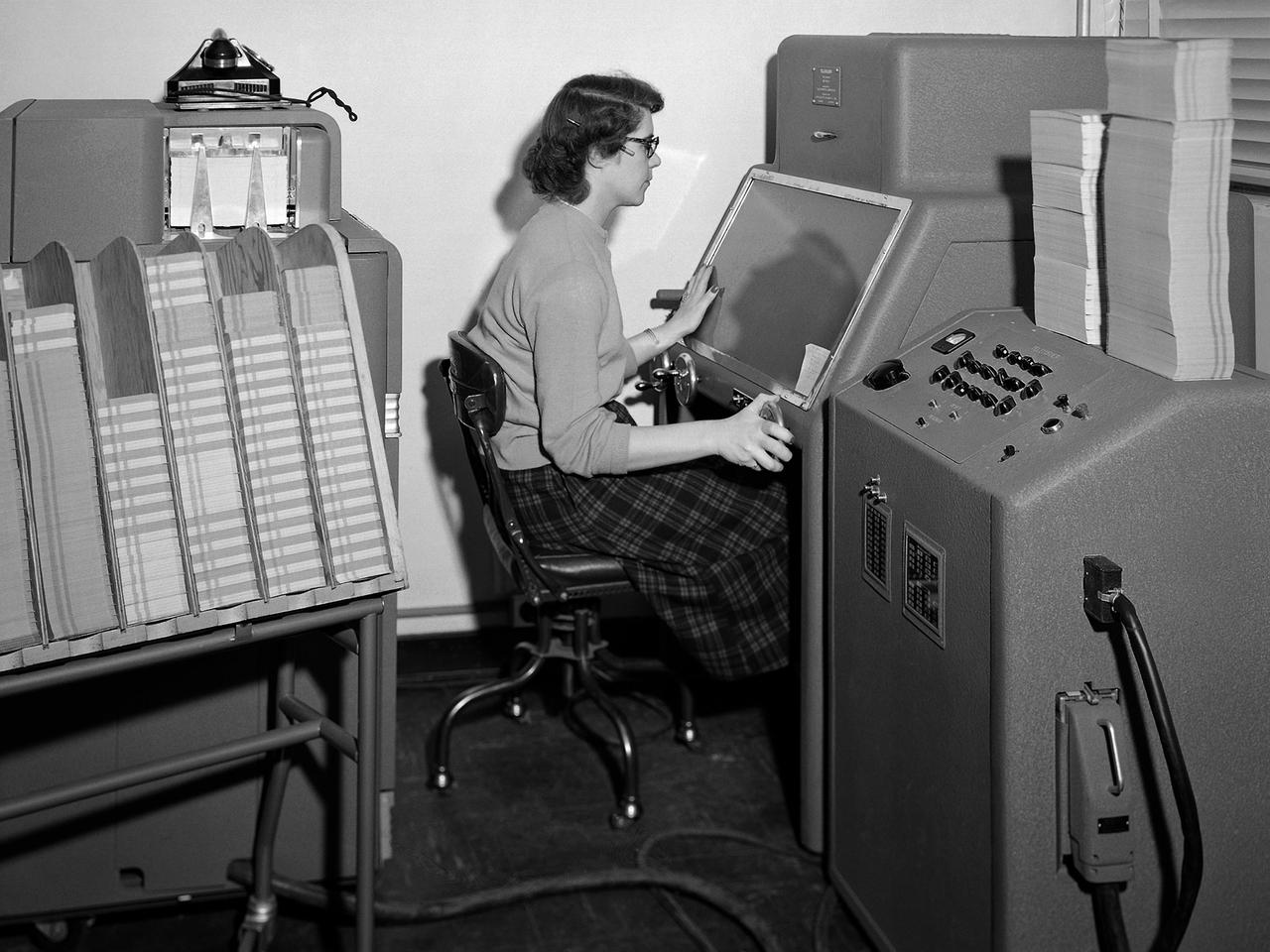
A staff member from the Computing Section at the National Advisory Committee for Aeronautics (NACA) Lewis Flight Propulsion Laboratory operates an International Business Machines (IBM) telereader at the 8- by 6-Foot Supersonic Wind Tunnel. The telereader was used to measure recorded data from motion picture film or oscillographs. The machine could perform 50 measurements per minute. The component to her right is a telerecordex that was used convert the telereader measurements into decimal form and record the data on computer punch cards. During test runs in the 8- by 6-foot tunnel, or the other large test facilities, pressure sensors on the test article were connected to mercury-filled manometer tubes located below the test section. The mercury would rise or fall in relation to the pressure fluctuations in the test section. Initially, female staff members, known as “computers,” transcribed all the measurements by hand. The process became automated with the introduction of the telereader and other data reduction equipment in the early 1950s. The Computer Section staff members were still needed to operate the machines. The Computing Section was introduced during World War II to relieve short-handed research engineers of some of the tedious work. The computers made the initial computations and plotted the data graphically. The researcher then analyzed the data and either summarized the findings in a report or made modifications or ran the test again. The computers and analysts were located in the Altitude Wind Tunnel Shop and Office Building office wing during the 1940s. They were transferred to the new facility when the 8- by 6-Foot tunnel began operations in 1948.
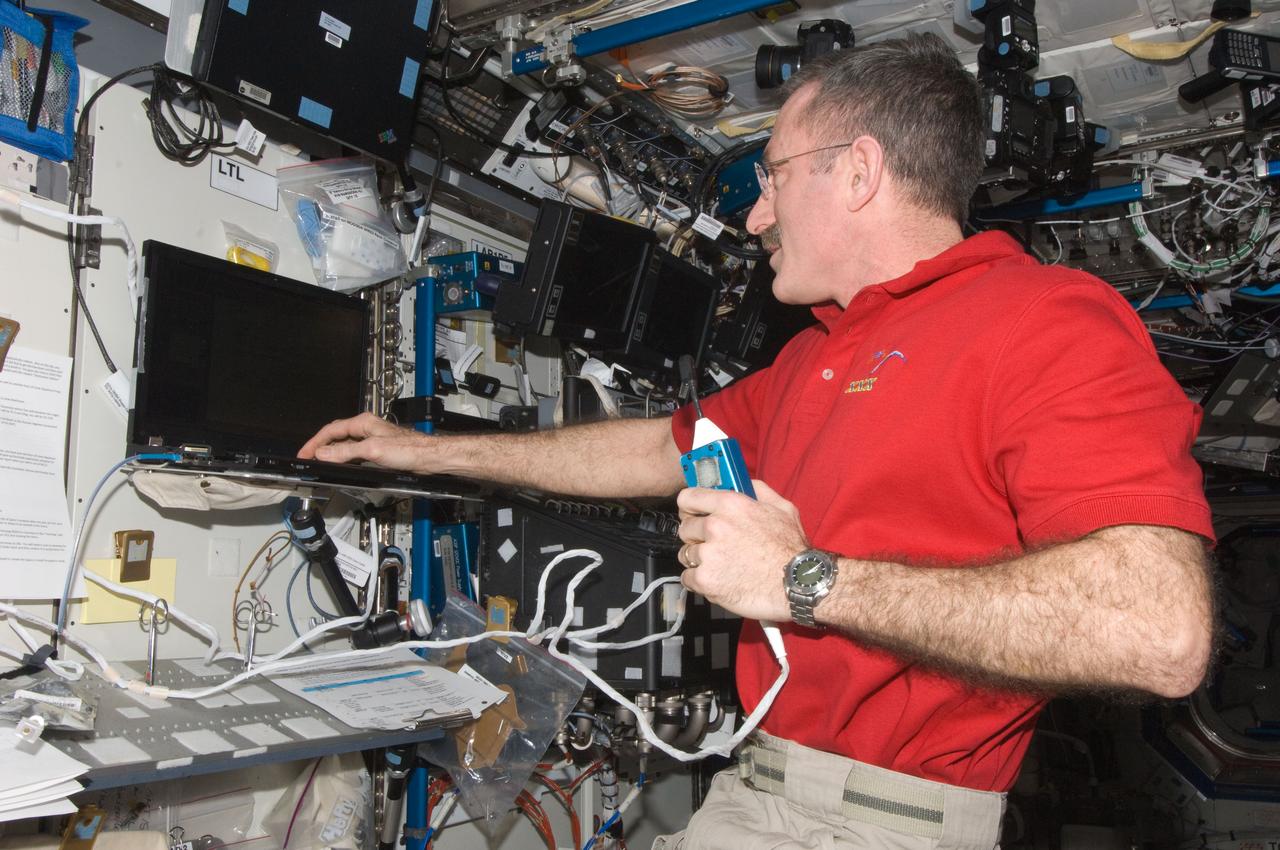
ISS030-E-267797 (25 April 2012) --- NASA astronaut Dan Burbank, Expedition 30 commander, holds a microphone while using a computer in the Destiny laboratory of the International Space Station.

S120-E-007903 (1 Nov. 2007) --- Astronaut Doug Wheelock, STS-120 mission specialist, uses a computer on the middeck of Space Shuttle Discovery while docked with the International Space Station.
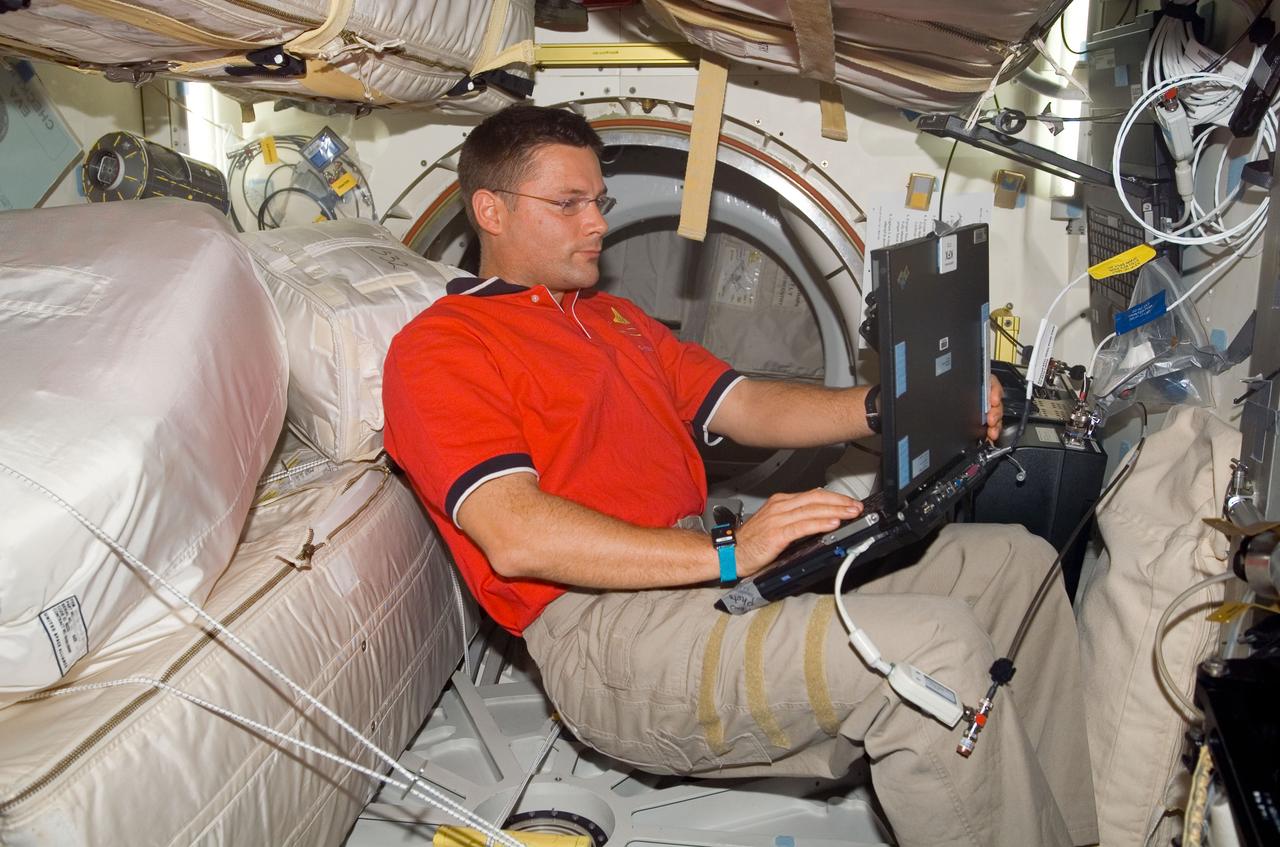
S120-E-007899 (1 Nov. 2007) --- Astronaut Doug Wheelock, STS-120 mission specialist, uses a computer on the middeck of Space Shuttle Discovery while docked with the International Space Station.
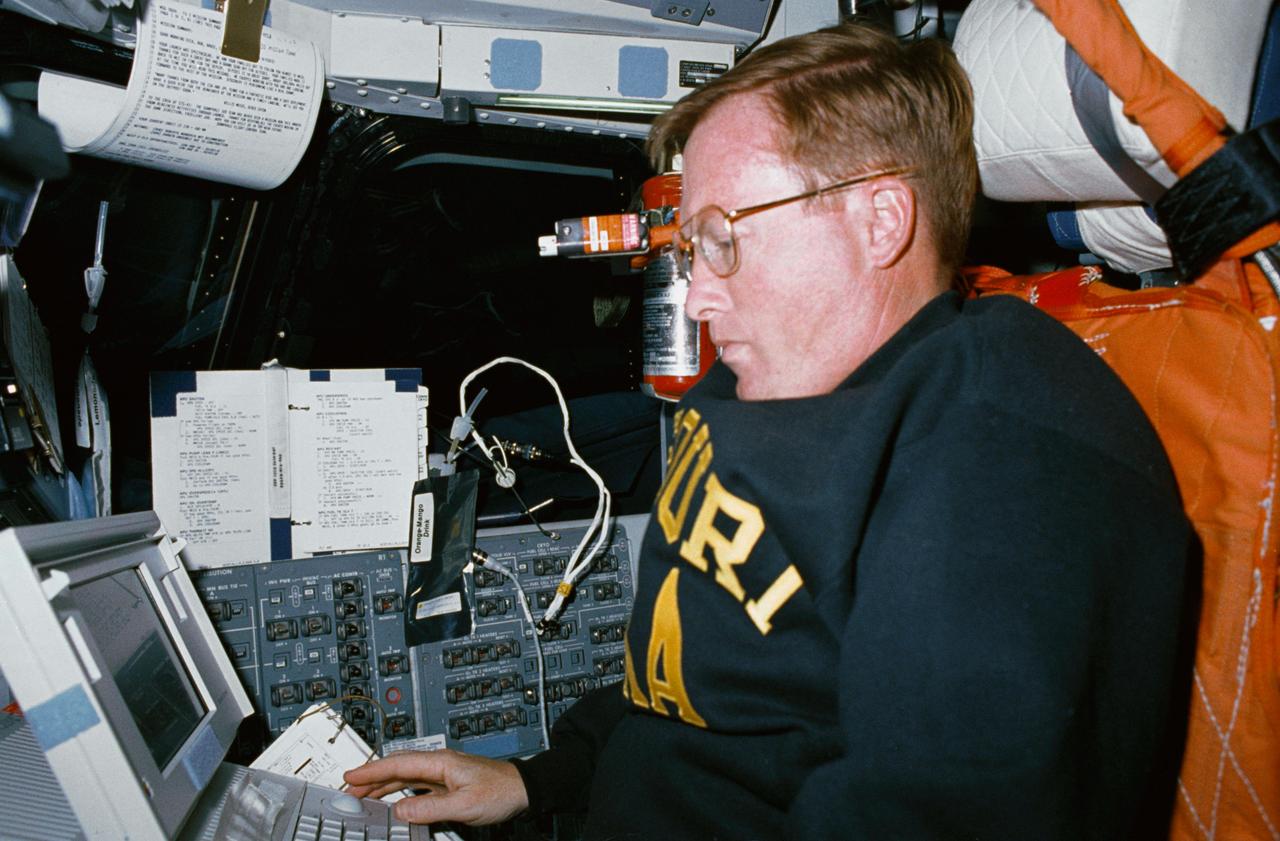
STS041-01-002 (6-10 Oct 1990) --- Astronaut Richard N. Richards, STS 41 mission commander, "borrows" the pilot's station to utilize a Shuttle portable onboard computer during the four-day flight. The photo was made with a 35mm camera.
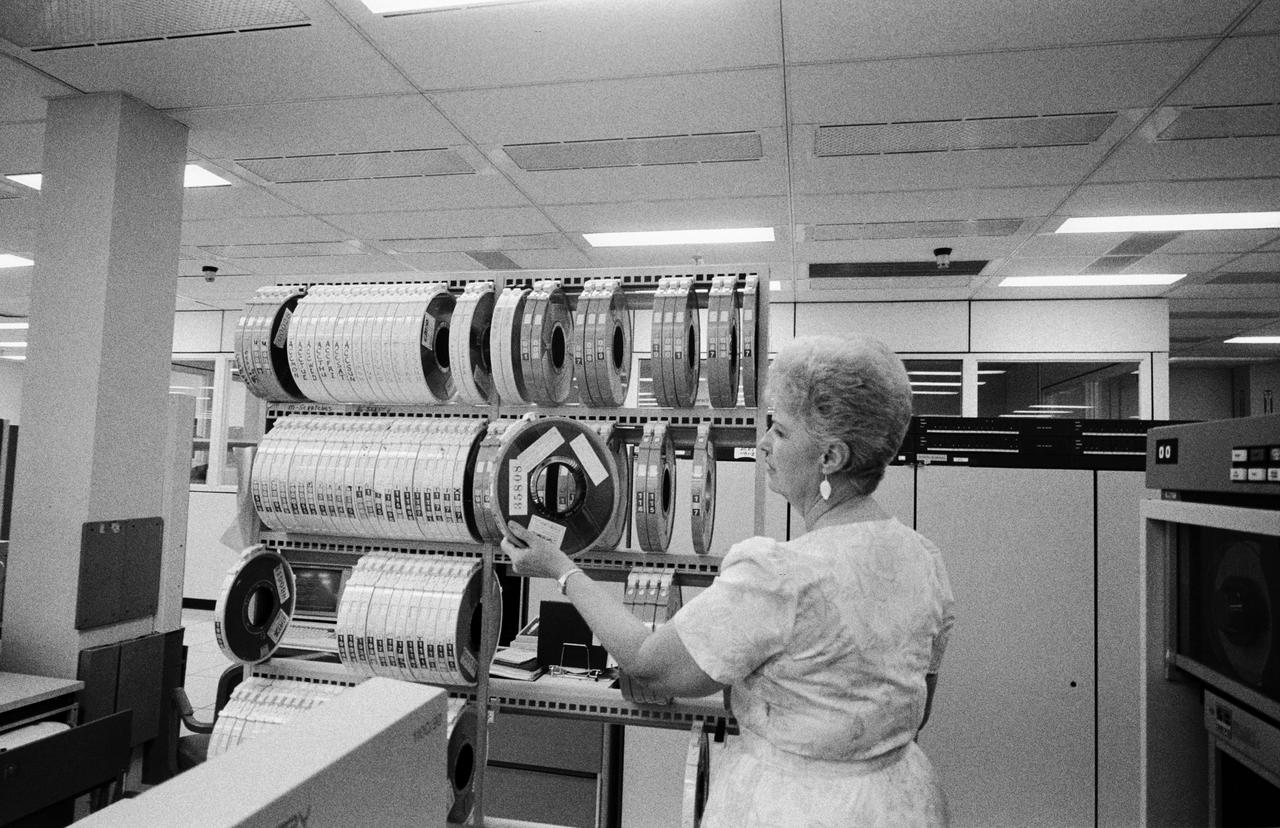
S86-30336 (4 April 1986) --- Larue Forbes of CSC retrieves one of the MADS tapes for inputting into a nearby computer in the central data office.
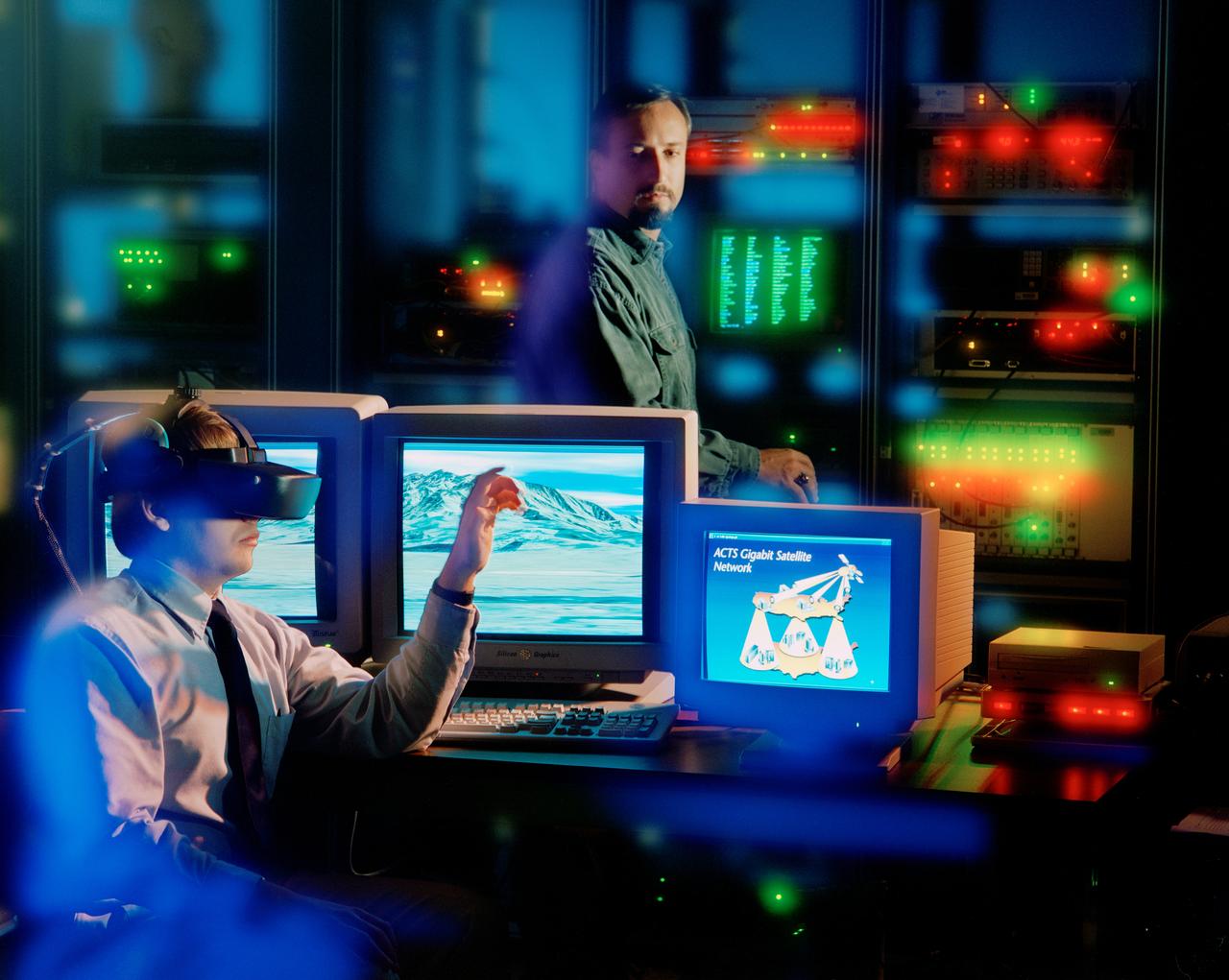
CRAY AND SP-2 COMPUTERS
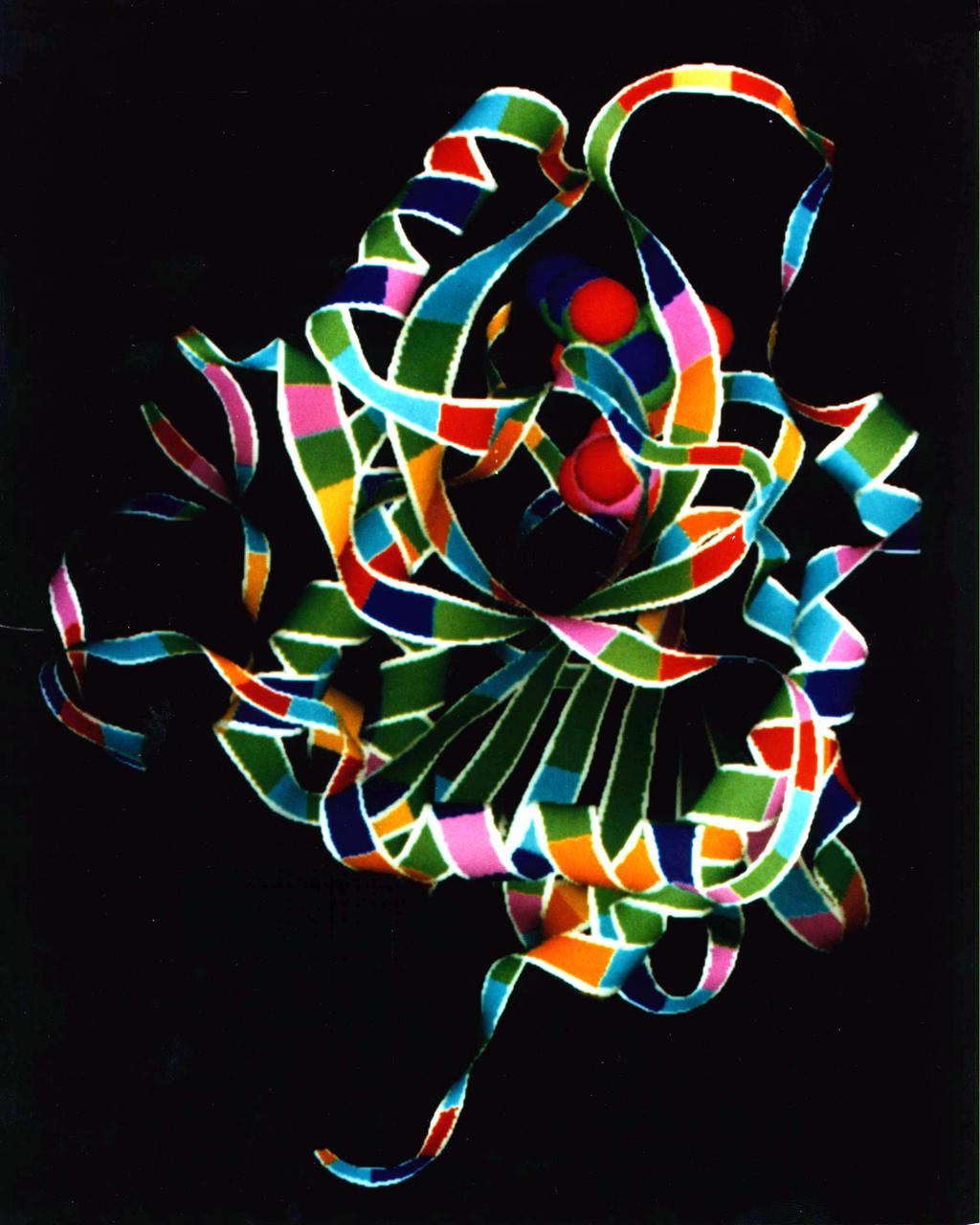
Purine Nucleoside Phosphorylase (PNP) is an important target enzyme for the design of anti-cancer and immunosuppressive drugs. Bacterial PNP, which is slightly different from the human enzyme, is used to synthesize chemotherapuautic agents. Knowledge of the three-dimensional structure of the bacterial PNP molecule is useful in efforts to engineer different types of PNP enzymes, that can be used to produce new chemotherapeutic agents. This picture shows a computer model of bacterial PNP, which looks a lot like a display of colorful ribbons. Principal Investigator was Charles Bugg.
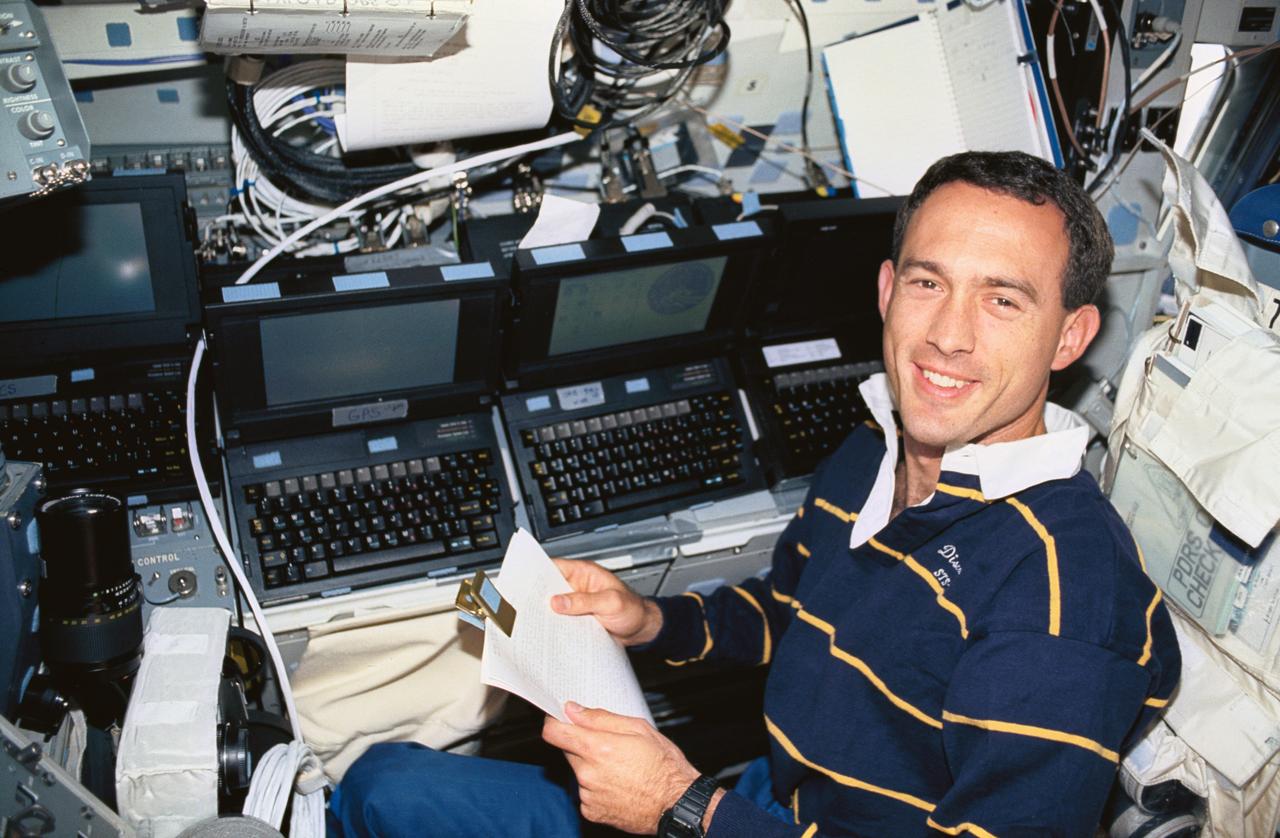
STS051-16-028 (12-22 Sept 1993) --- On Discovery's middeck, astronaut James H. Newman, mission specialist, works with an array of computers, including one devoted to Global Positioning System (GPS) operations, a general portable onboard computer displaying a tracking map, a portable audio data modem and another payload and general support computer. Newman was joined by four other NASA astronauts for almost ten full days in space.
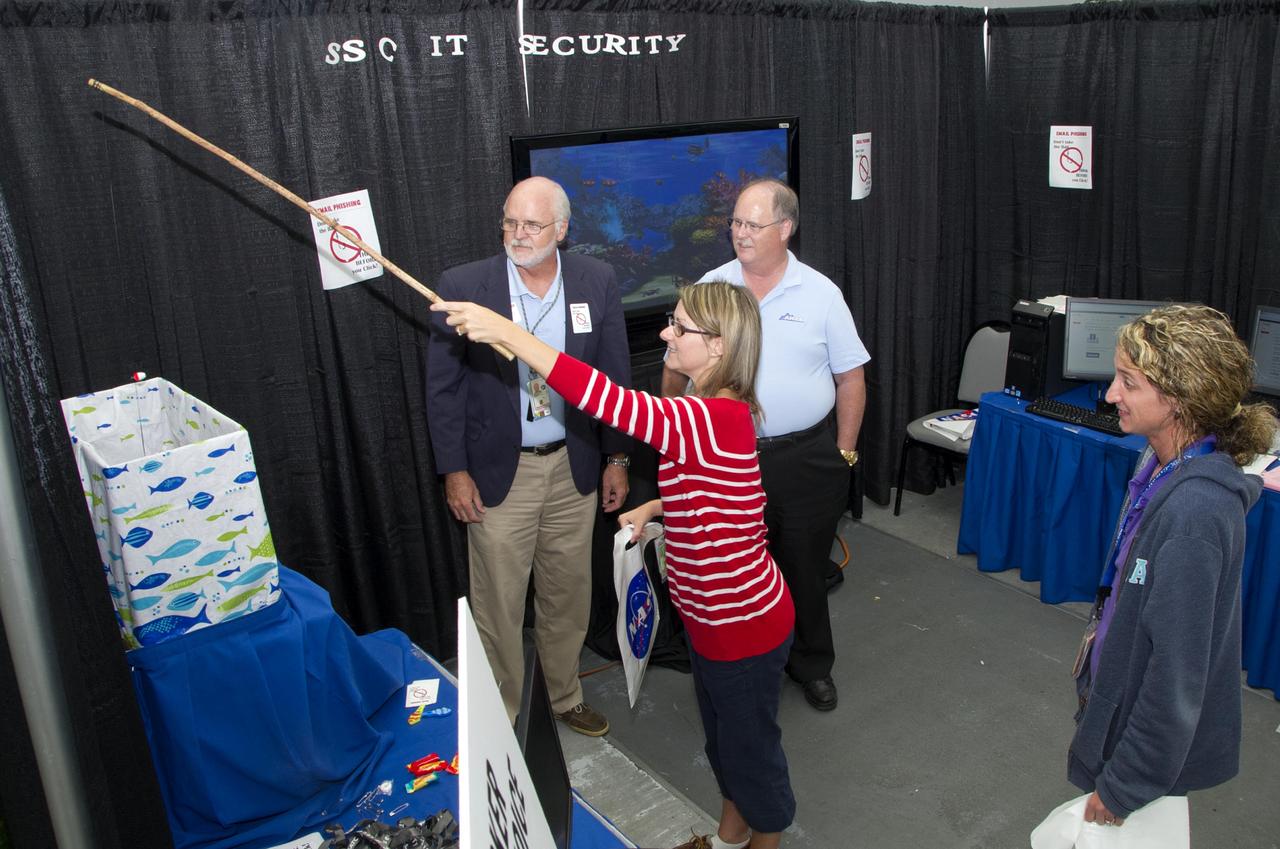
Jaci Mize of the National Oceanic and Atmospheric Administration at Stennis Space Center learns about 'phishing,' a favorite ploy used by hackers to gain sensitive information from unsuspecting computer users, during the eighth annual Information Technology Expo held June 2, 2012,1 at the rocket engine test facility.
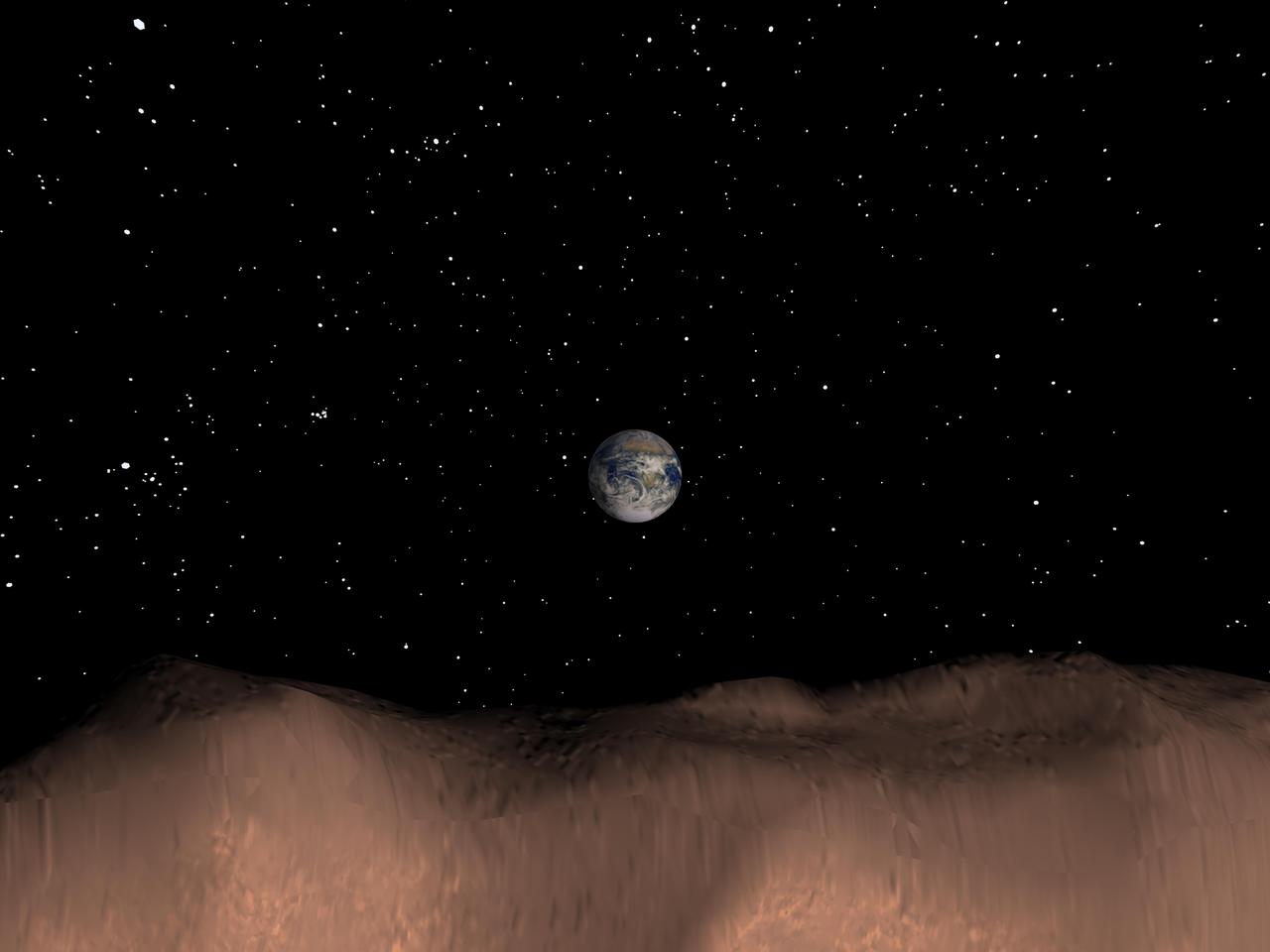
This computer generated image depicts a view of Earth as seen from the surface of the asteroid Toutatis on Nov 29th 1996. A 2.5 degree field-of-view synthetic computer camera was used for this simulation. Toutatis is visible on this date as a twelfth magnitude object in the night sky in the constellation of Virgo and could be viewed with a medium sized telescope. Toutatis currently approaches Earth once every four years and, on Nov. 29th, 1996 will be 5.2 million kilometers away (approx. 3.3 million miles). In approximately 8 years, on Sept. 29th, 2004, it will be less than 1.6 million kilometers from Earth. This is only 4 times the distance to the moon, and is the closest approach predicted for any known asteroid or comet during the next 60 years. http://photojournal.jpl.nasa.gov/catalog/PIA00515
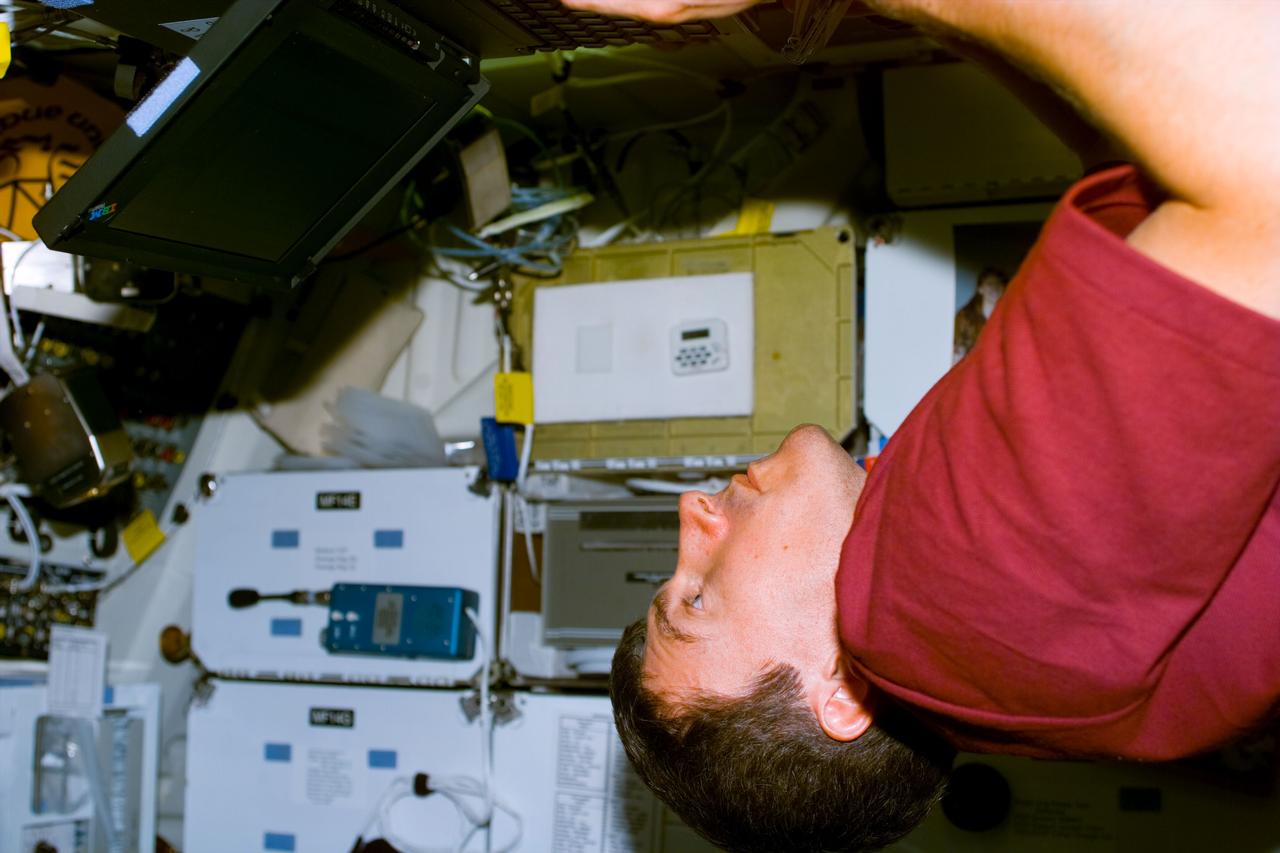
S88-E-5041 (12-06-98) --- Sergei Krikalev, mission specialist representing the Russian Space Agency (RSA), works on a laptop computer on Endeavour's middeck. The scene was photographed shortly after the successful mating of Unity with the shuttle's docking system.
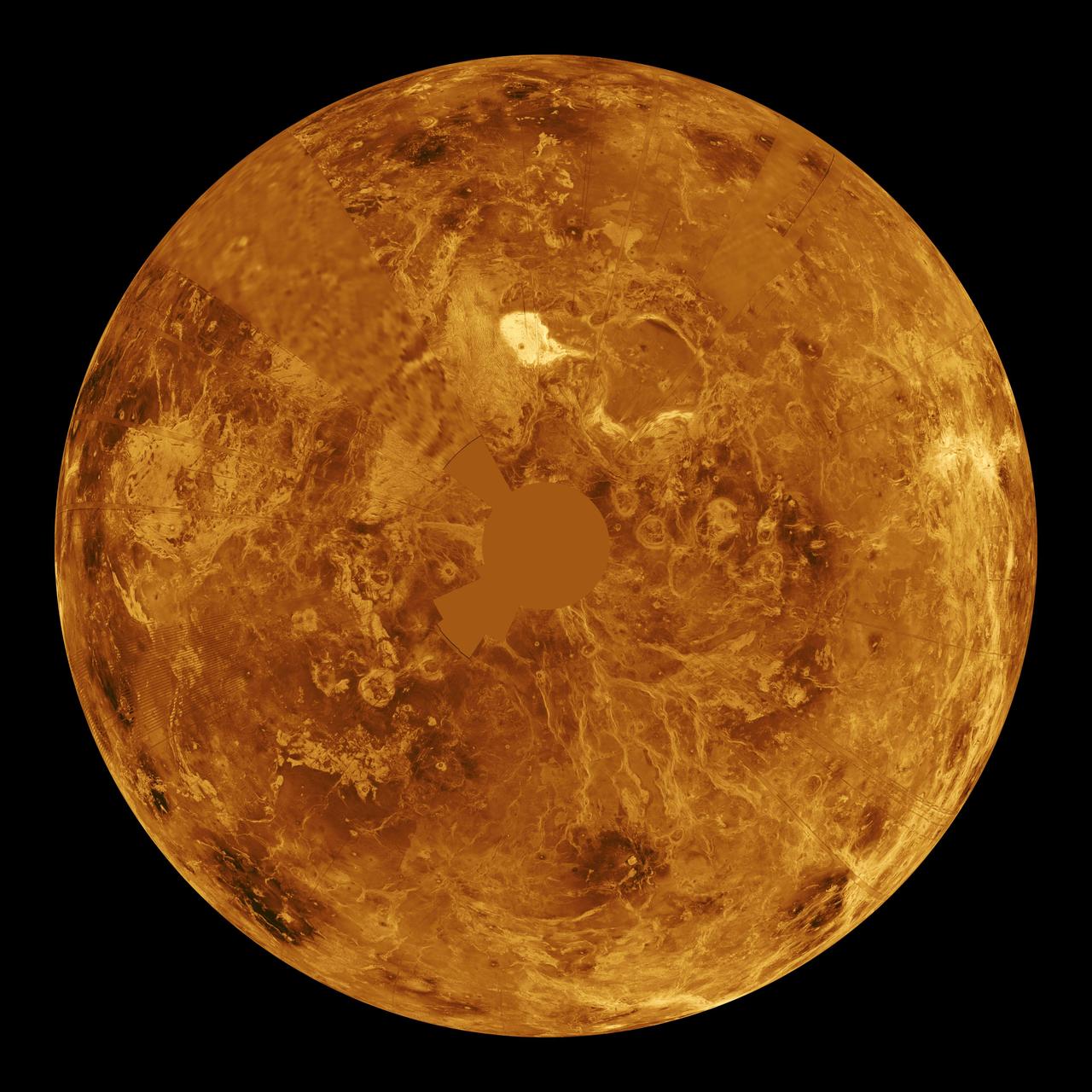
The northern hemisphere is displayed in this global view of the surface of Venus. NASA Magellan synthetic aperture radar mosaics from the first cycle of Magellan mapping were mapped onto a computer-simulated globe to create this image. http://photojournal.jpl.nasa.gov/catalog/PIA00252
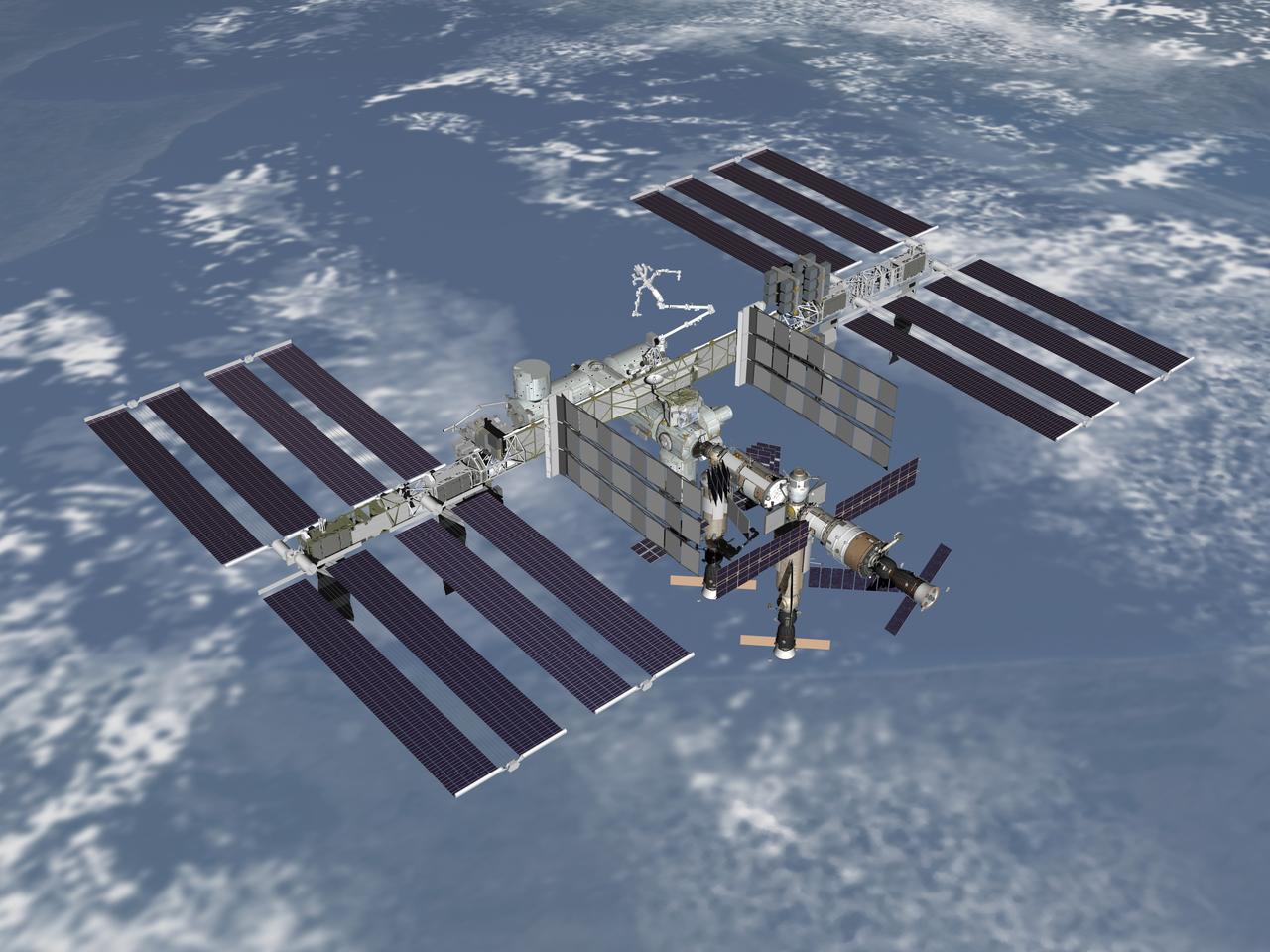
JSC2006-E-25648 (October 2006) --- Computer-generated scene showing a high-angle wide view (port-aft) of the International Space Station, after assembly work is completed.
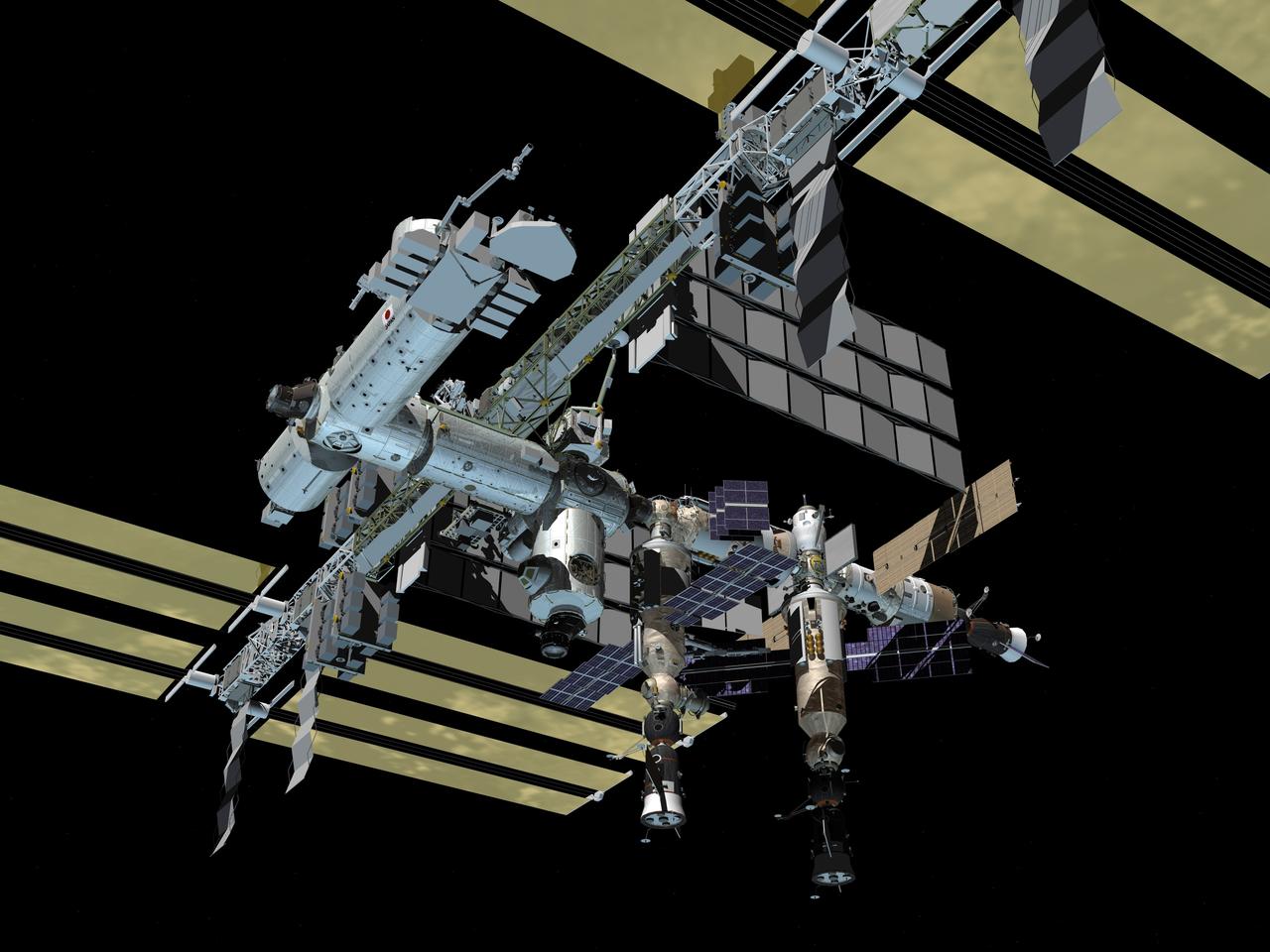
JSC2006-E-25658 (October 2006) --- Computer-generated scene showing a low-angle medium close view (port-forward) of the International Space Station, after assembly work is completed.
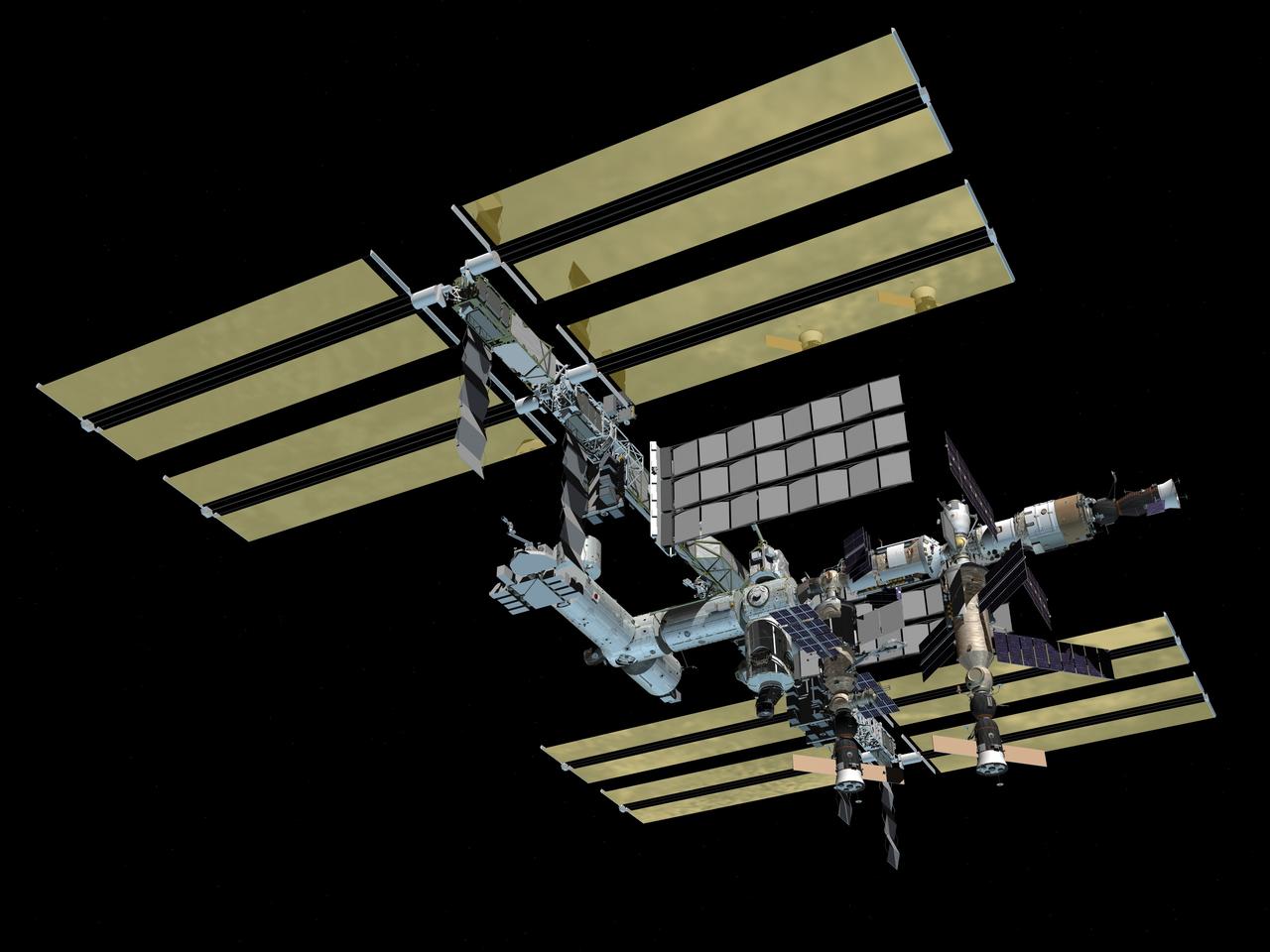
JSC2006-E-25656 (October 2006) --- Computer-generated scene showing a low-angle wide view (port-aft) of the International Space Station, after assembly work is completed.
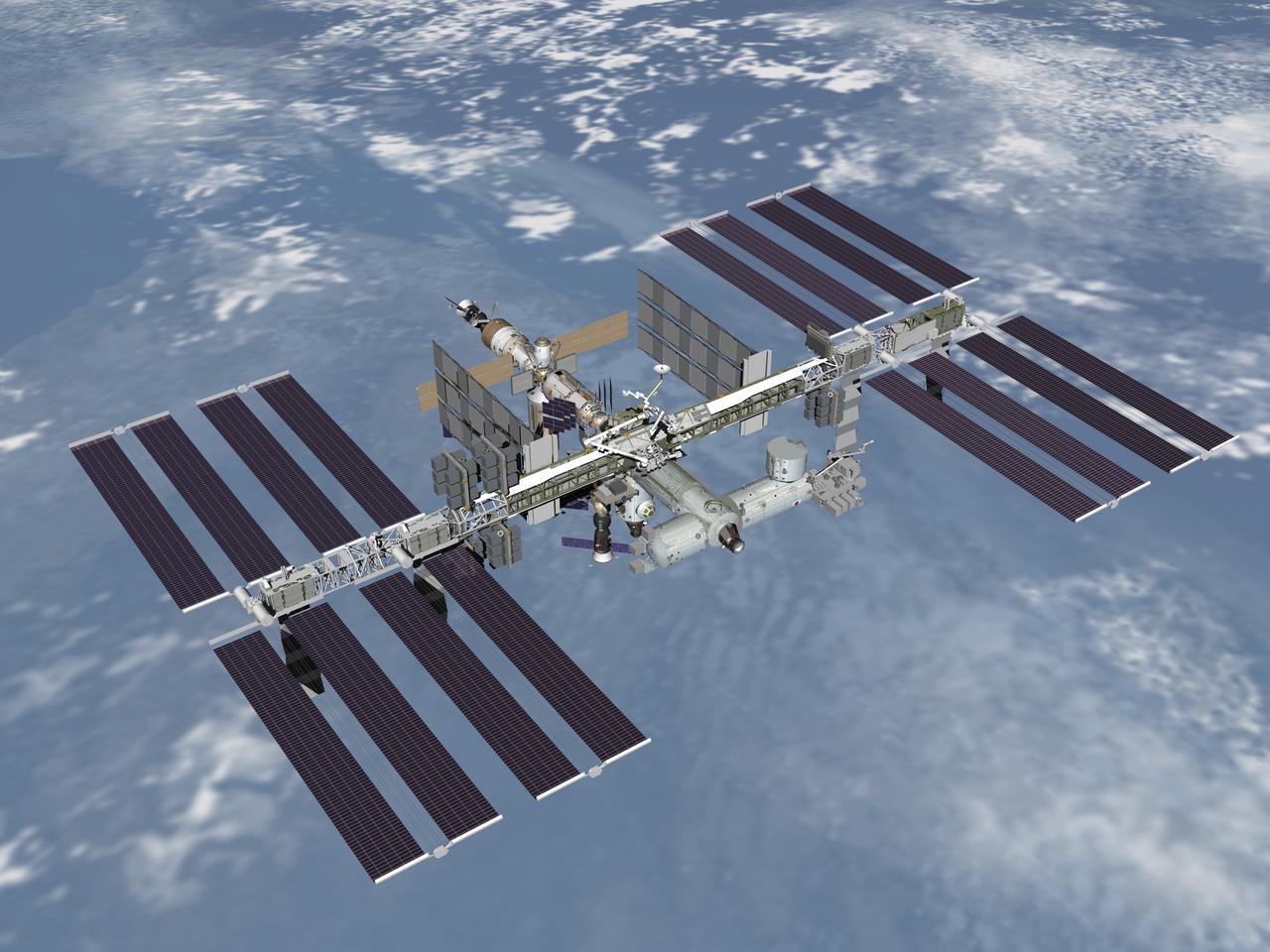
JSC2006-E-25645 (October 2006) --- Computer-generated scene showing a high-angle wide view (starboard-forward) of the International Space Station, after assembly work is completed.
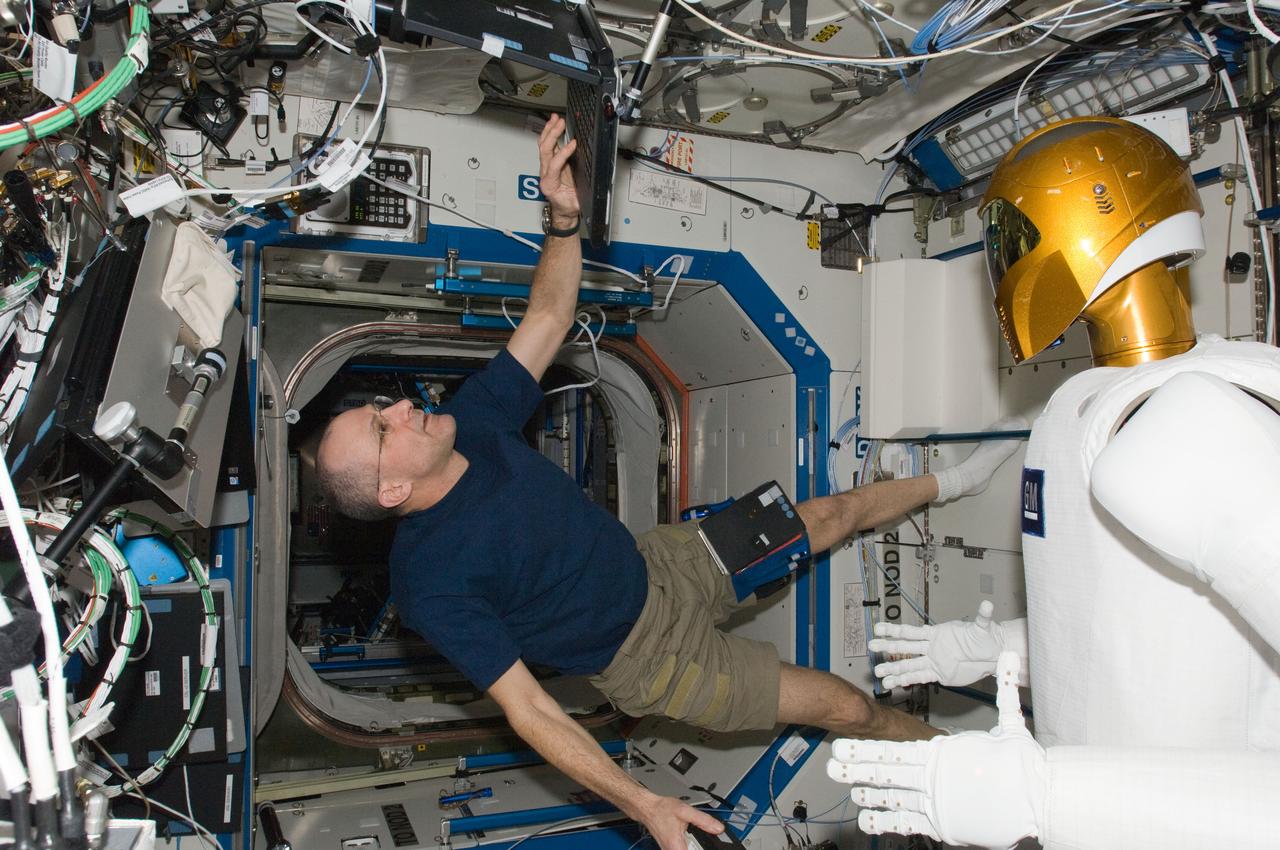
ISS030-E-142862 (13 March 2012) --- NASA astronaut Don Pettit, Expedition 30 flight engineer, enters data in a computer while working with Robonaut 2 humanoid robot in the Destiny laboratory of the International Space Station.

JSC2006-E-25654 (October 2006) --- Computer-generated scene showing a low-angle wide view (port-forward) of the International Space Station, after assembly work is completed.
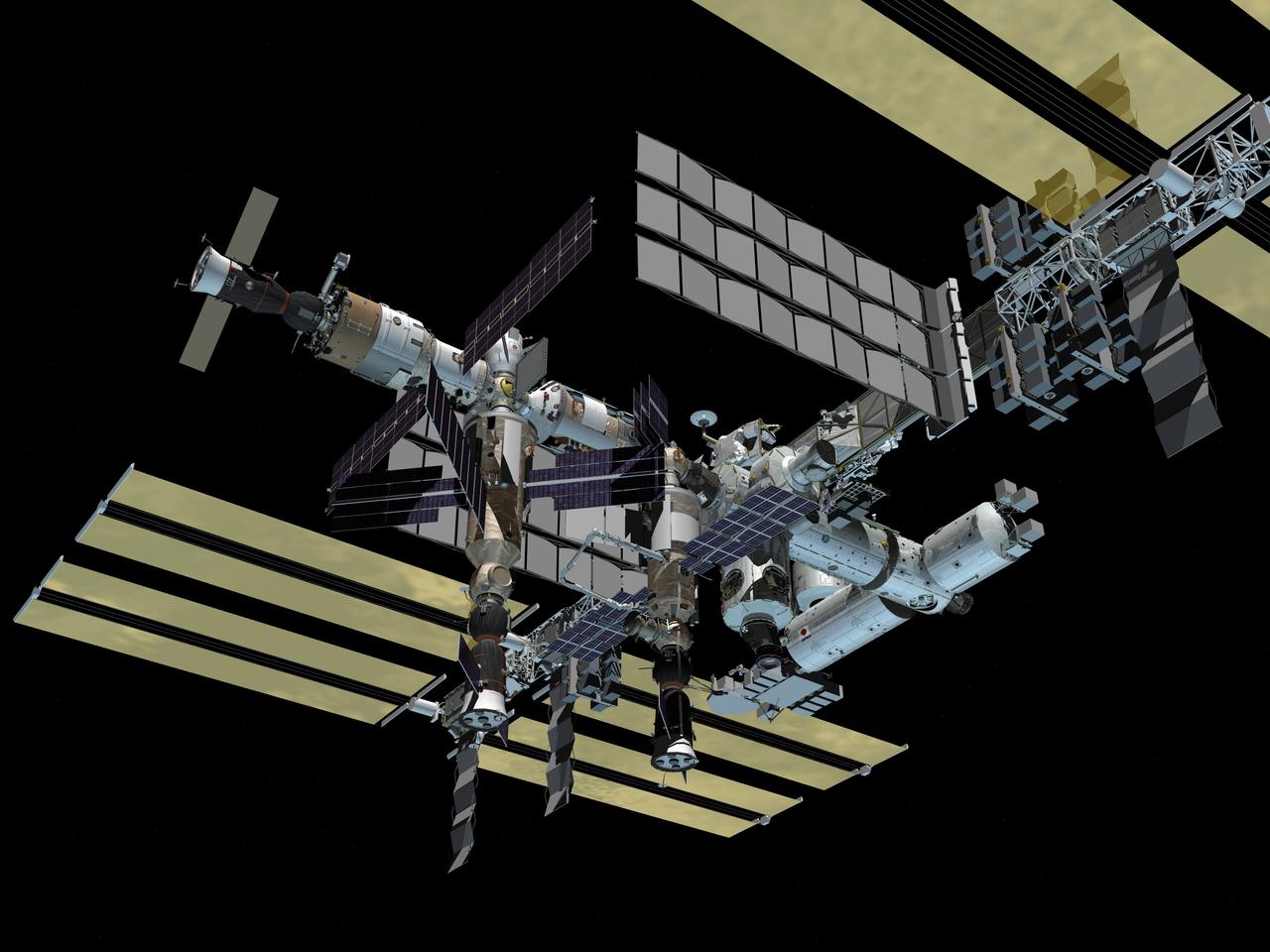
JSC2006-E-25659 (October 2006) --- Computer-generated scene showing a low-angle medium close view (starboard-aft) of the International Space Station, after assembly work is completed.
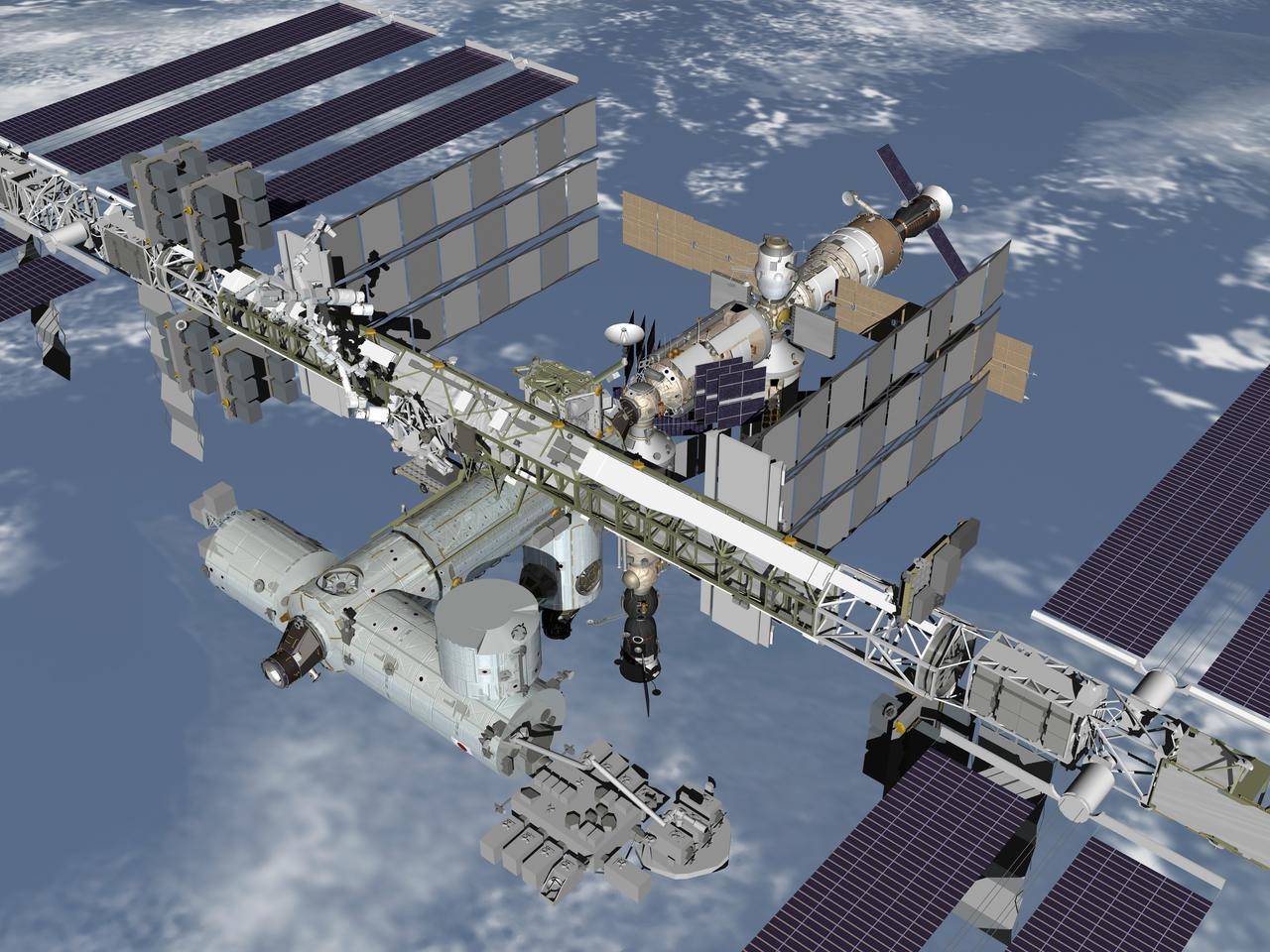
JSC2006-E-25650 (October 2006) --- Computer-generated scene showing a high-angle close view (port-forward) of the International Space Station, after assembly work is completed.
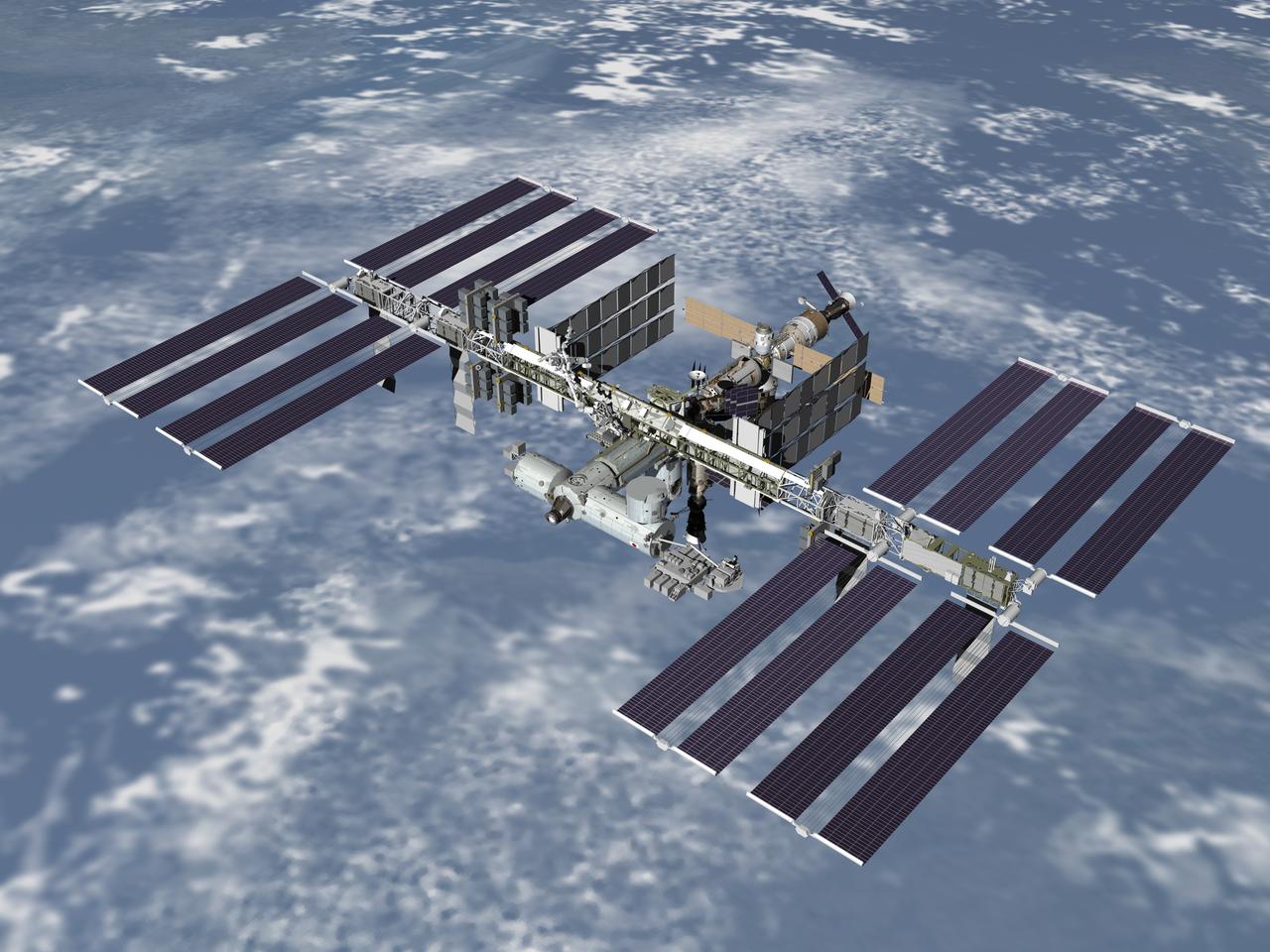
JSC2006-E-25646 (October 2006) --- Computer-generated scene showing a high-angle wide view (port-forward) of the International Space Station, after assembly work is completed.
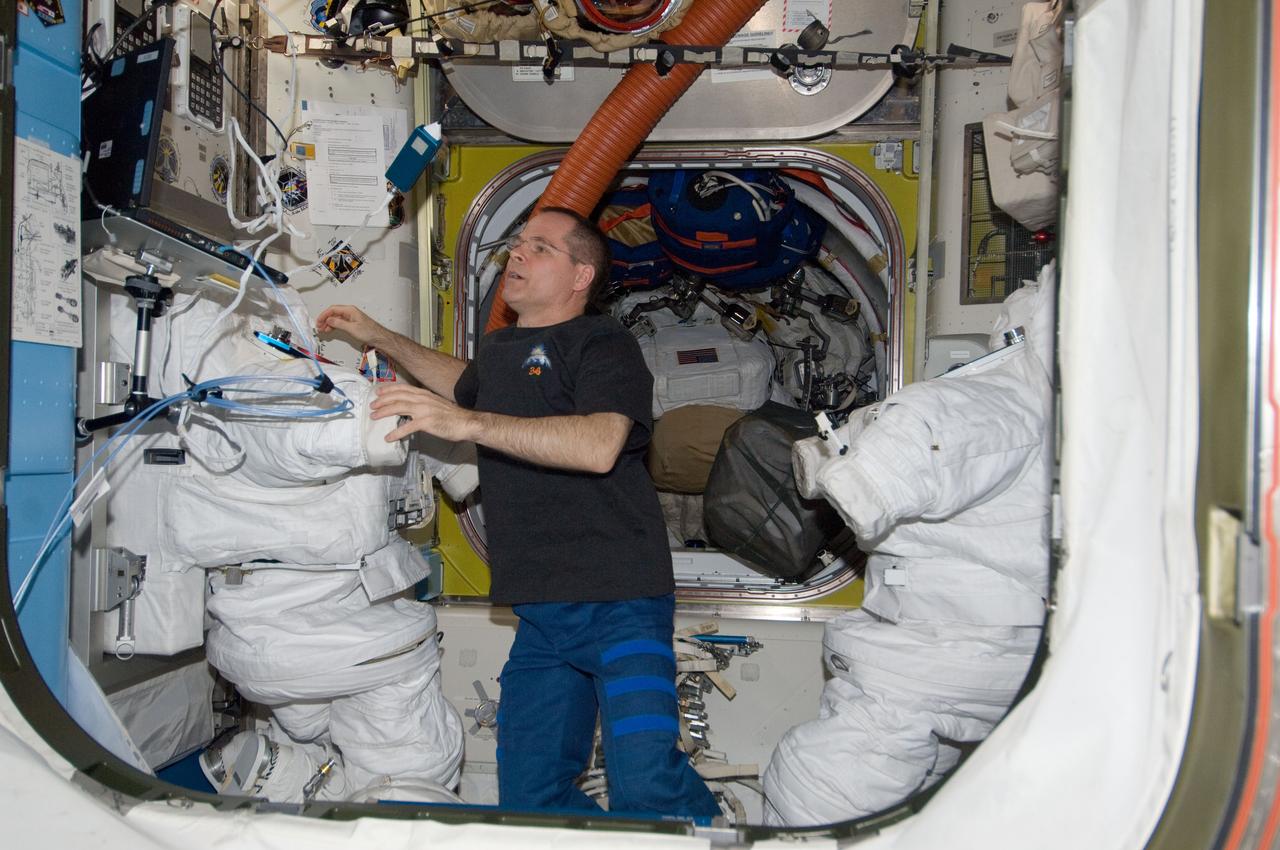
ISS034-E-005616 (5 Dec. 2012) --- NASA astronaut Kevin Ford, Expedition 34 commander, uses a computer near two Extravehicular Mobility Unit (EMU) spacesuits in the Quest airlock of the International Space Station.
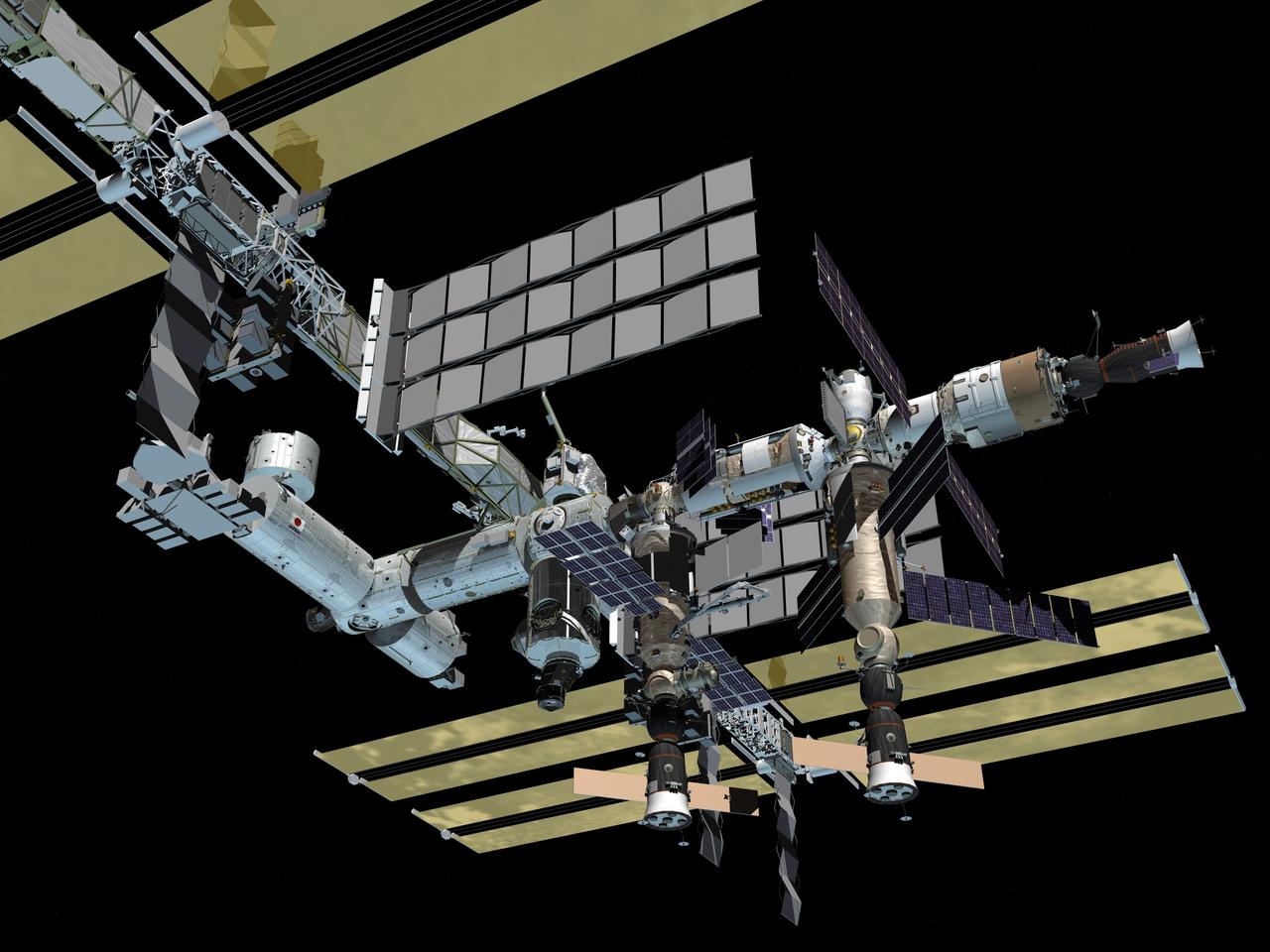
JSC2006-E-25660 (October 2006) --- Computer-generated scene showing a low-angle medium close view (port-aft) of the International Space Station, after assembly work is completed.
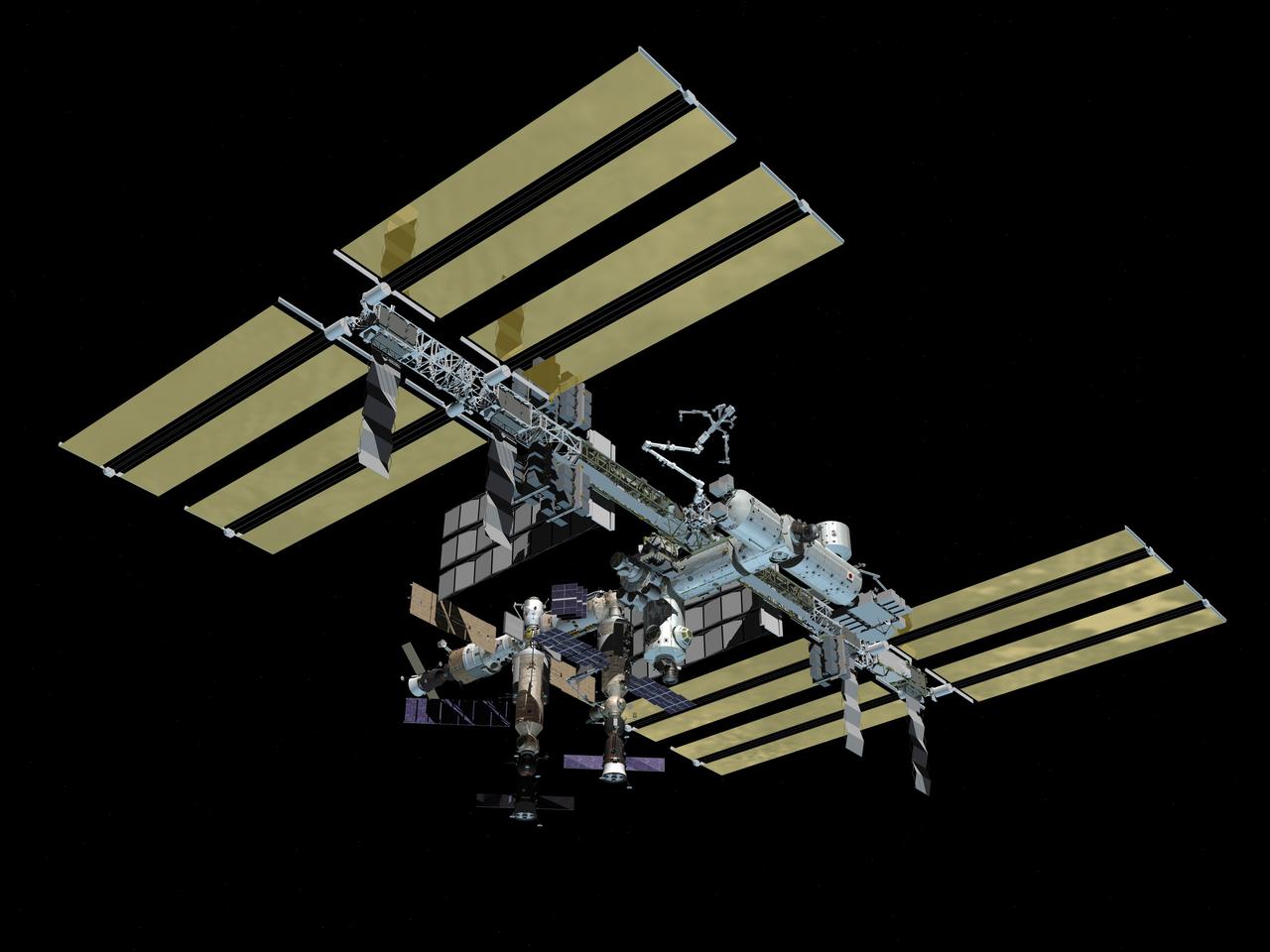
JSC2006-E-25653 (October 2006) --- Computer-generated scene showing a low-angle wide view (starboard-forward) of the International Space Station, after assembly work is completed.

JSC2006-E-25652 (October 2006) --- Computer-generated scene showing a high-angle close view (port-aft) of the International Space Station, after assembly work is completed.
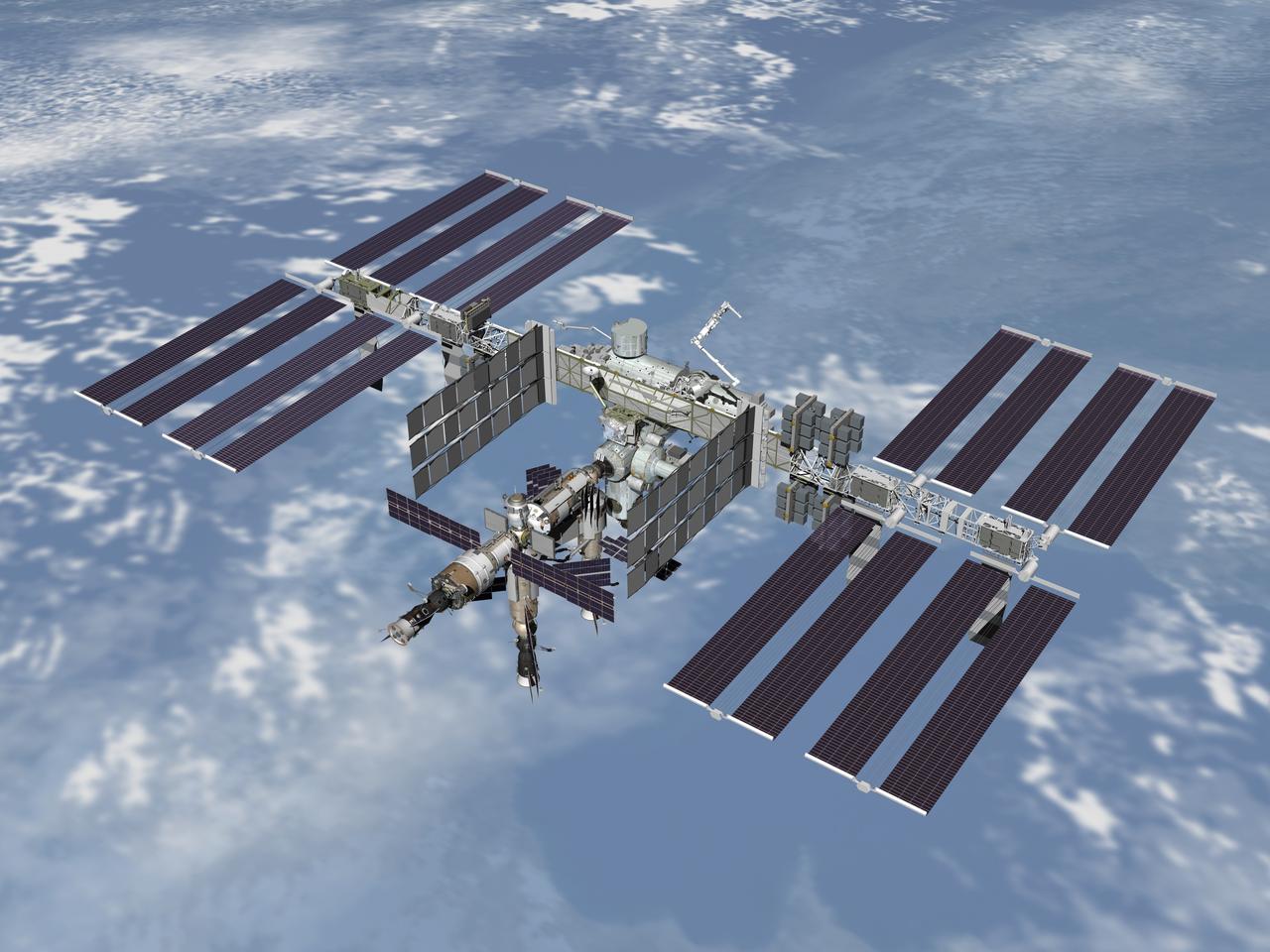
JSC2006-E-25647 (October 2006) --- Computer-generated scene showing a high-angle wide view (starboard-aft) of the International Space Station, after assembly work is completed.
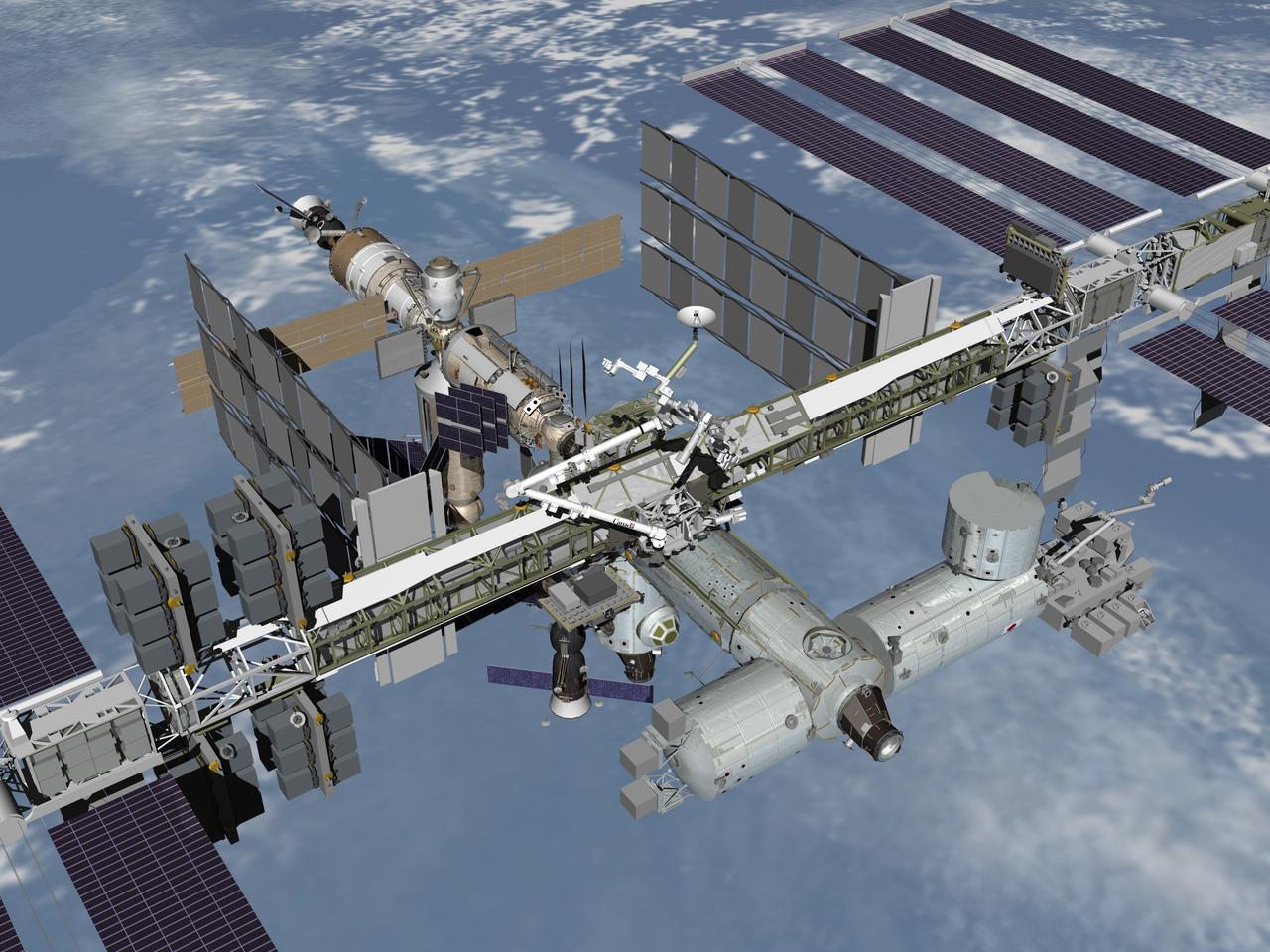
JSC2006-E-25649 (October 2006) --- Computer-generated scene showing a high-angle medium close view (starboard-forward) of the International Space Station, after assembly work is completed.
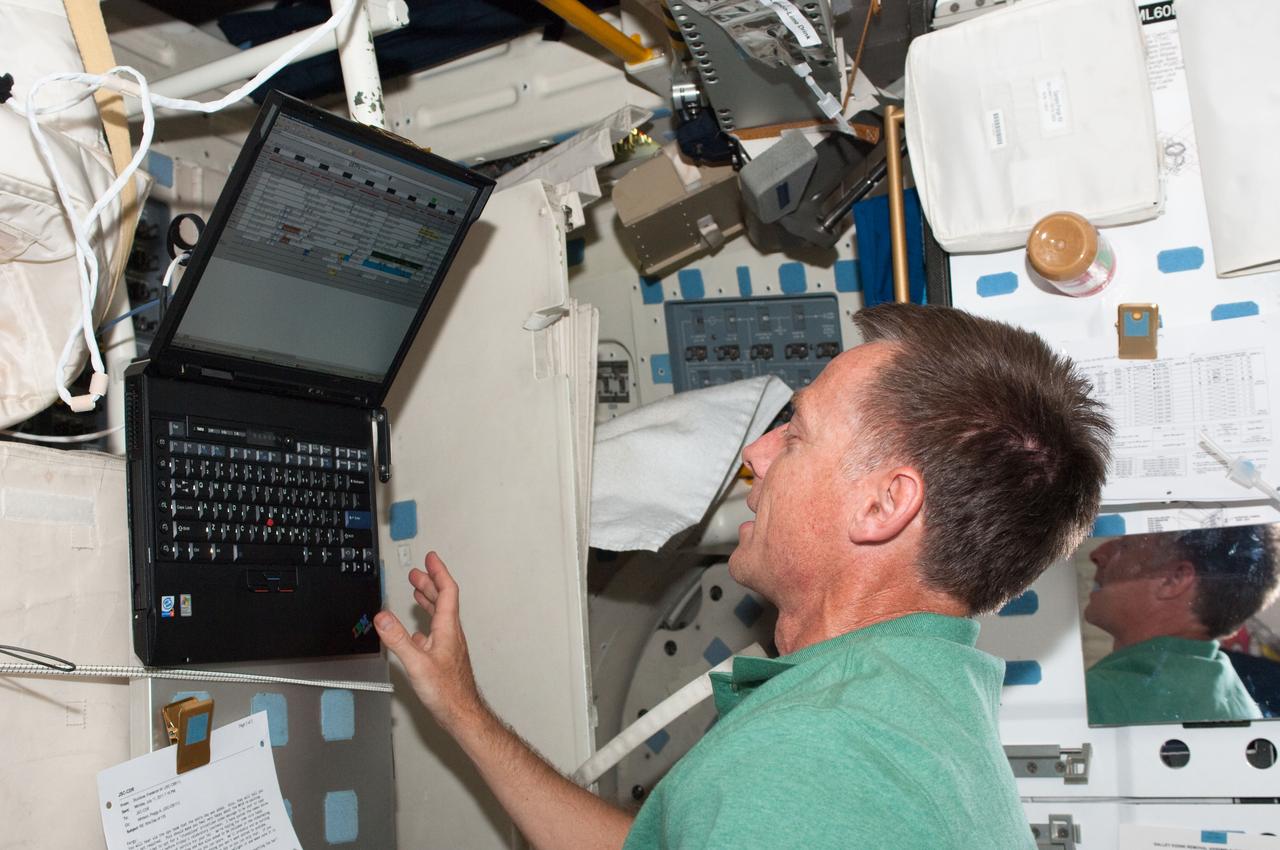
S135-E-007705 (13 July 2011) --- NASA astronaut Chris Ferguson, STS-135 commander, inputs data on a computer on Atlantis' middeck during the sixth day in space for him and three crewmates. Photo credit: NASA
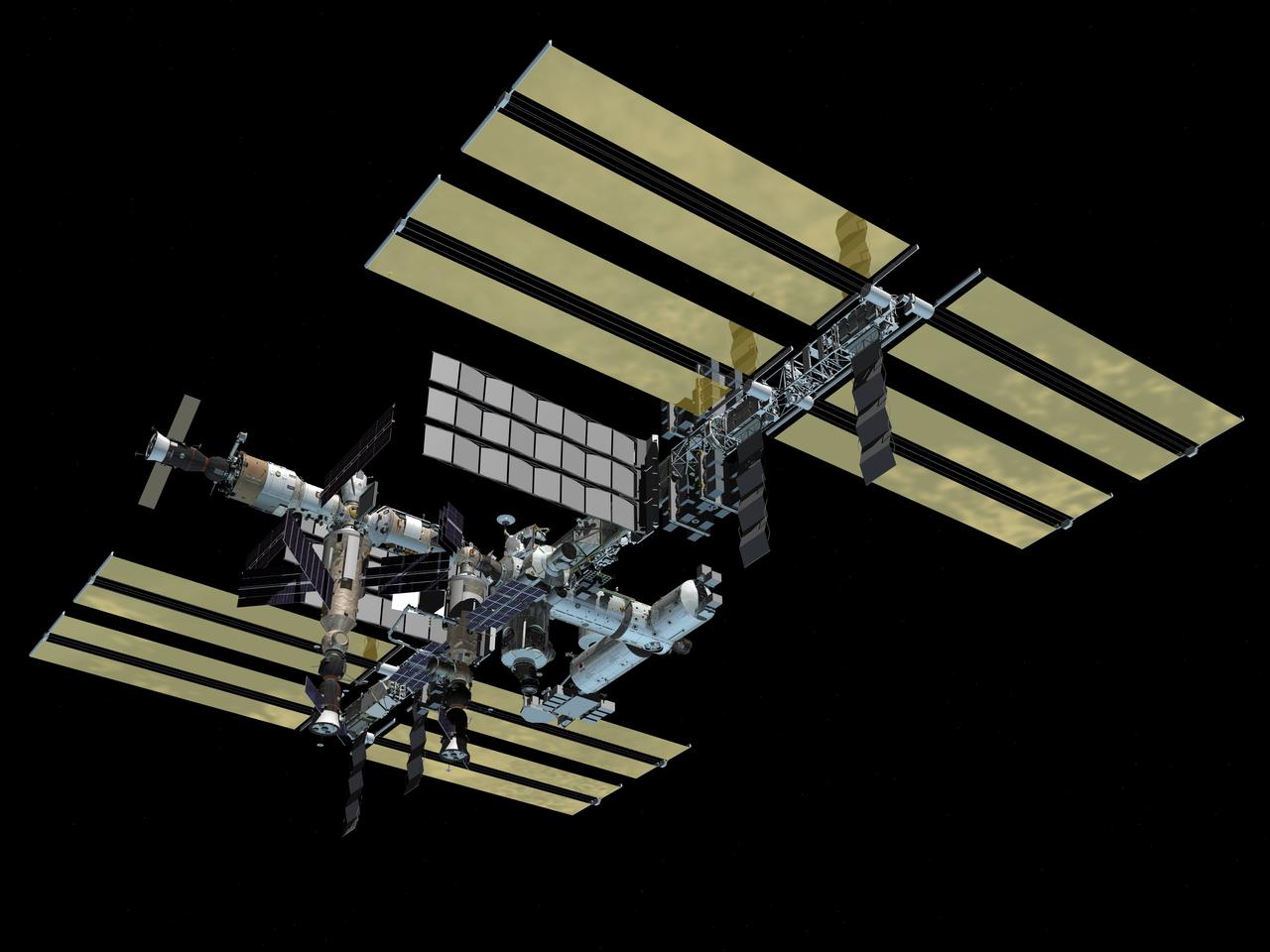
JSC2006-E-25655 (October 2006) --- Computer-generated scene showing a low-angle wide view (starboard-aft) of the International Space Station, after assembly work is completed.
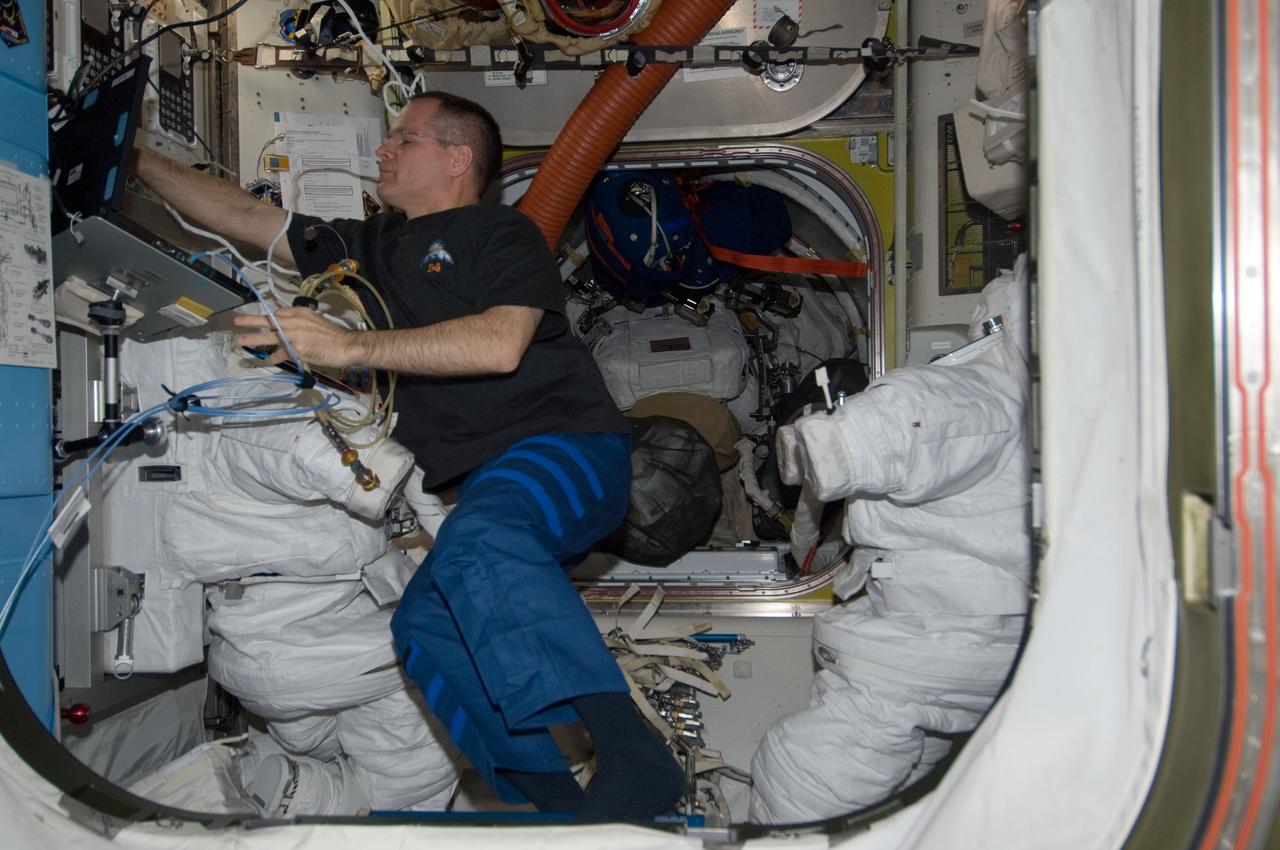
ISS034-E-005621 (5 Dec. 2012) --- NASA astronaut Kevin Ford, Expedition 34 commander, uses a computer near two Extravehicular Mobility Unit (EMU) spacesuits in the Quest airlock of the International Space Station.
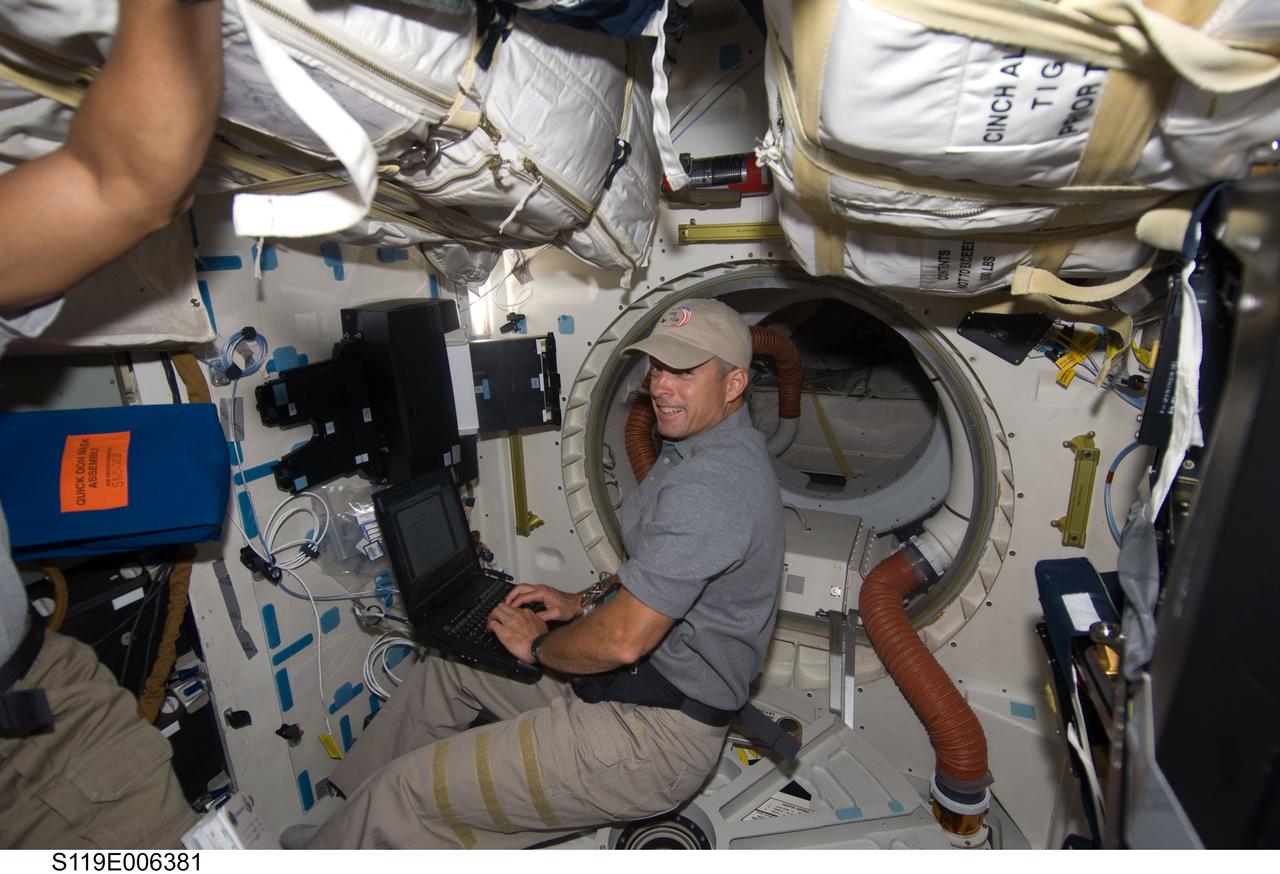
S119-E-006381 (17 March 2009) --- Astronaut Steve Swanson, STS-119 mission specialist, uses a computer on the middeck of Space Shuttle Discovery during flight day three activities.