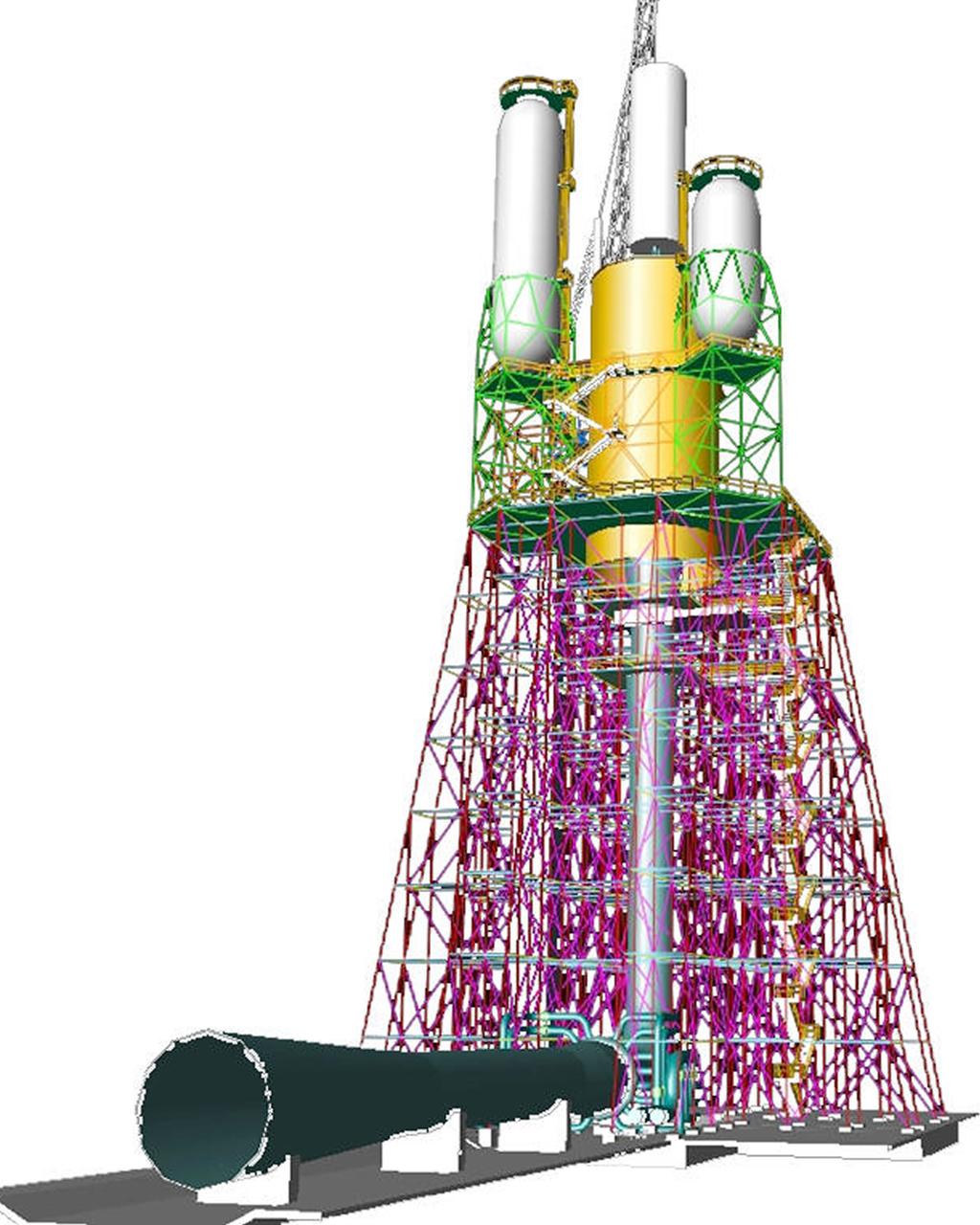
This engineer's concept drawing of the A-3 Test Stand shows the 300-foot-tall structure's open steel frame and large exhaust diffuser.
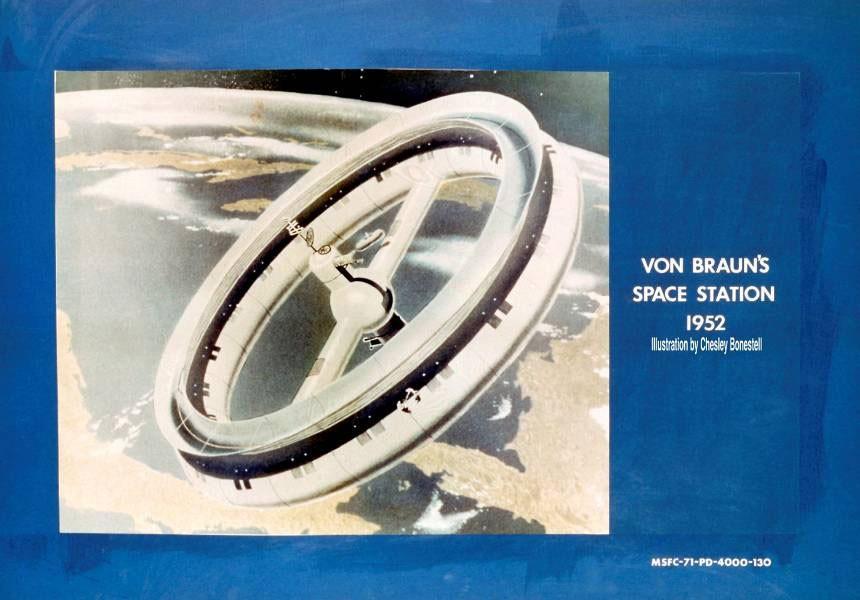
Concept drawing
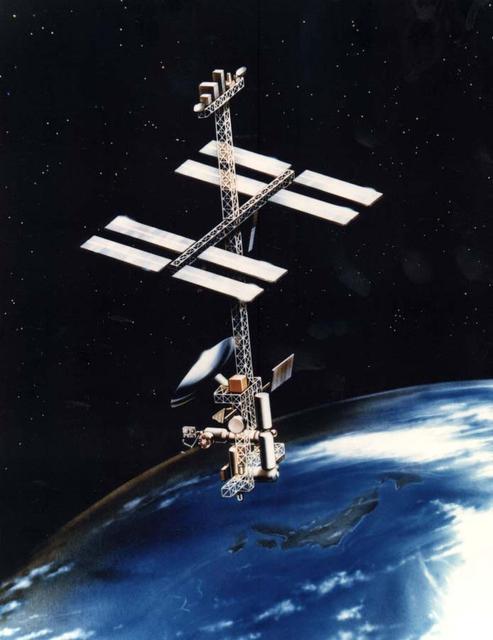
Concept drawing
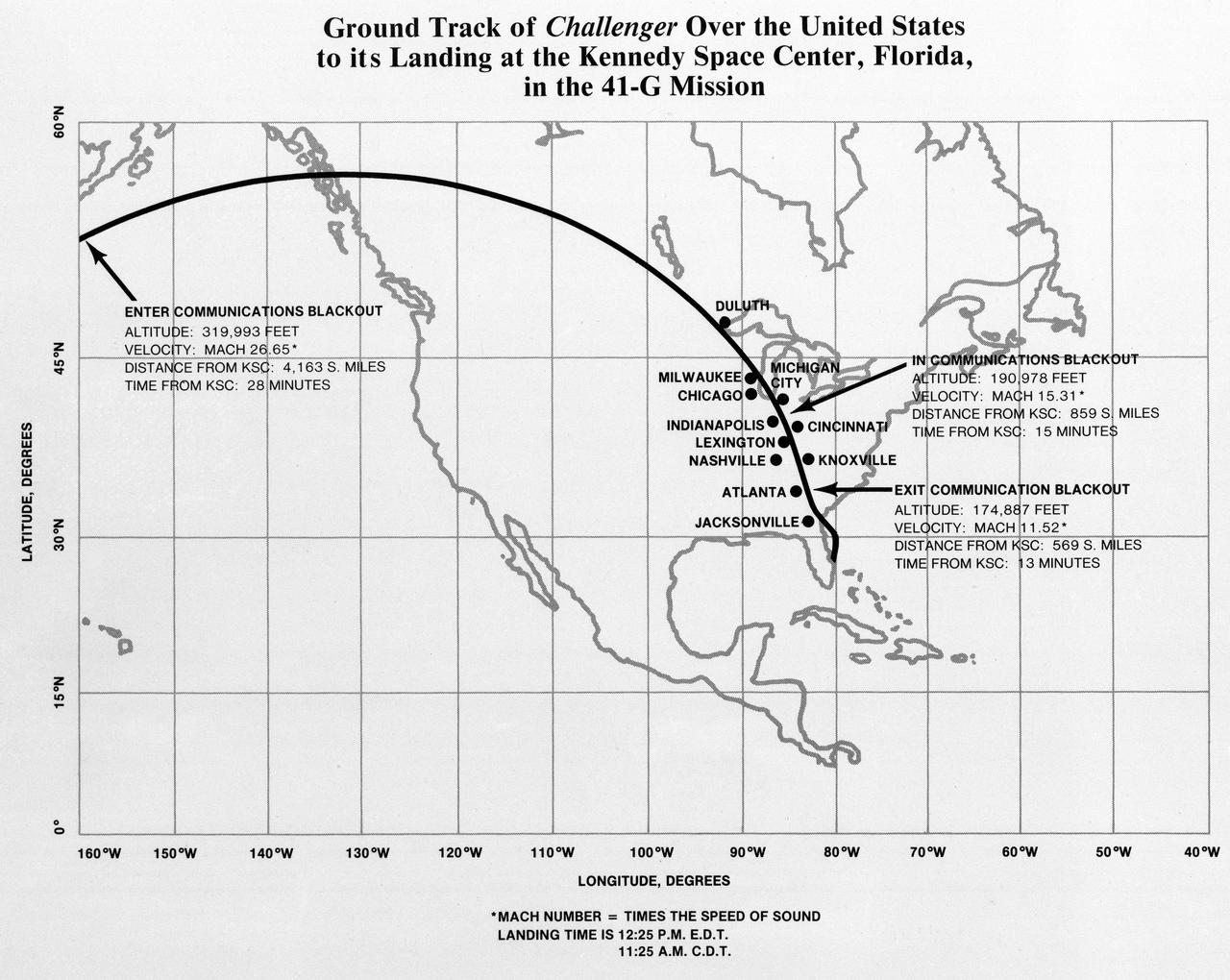
Art drawing of ground track over U.S. of landing for STS-41G. 1. ART CONCEPTS - STS-41G MAP (LANDING) KSC, FL
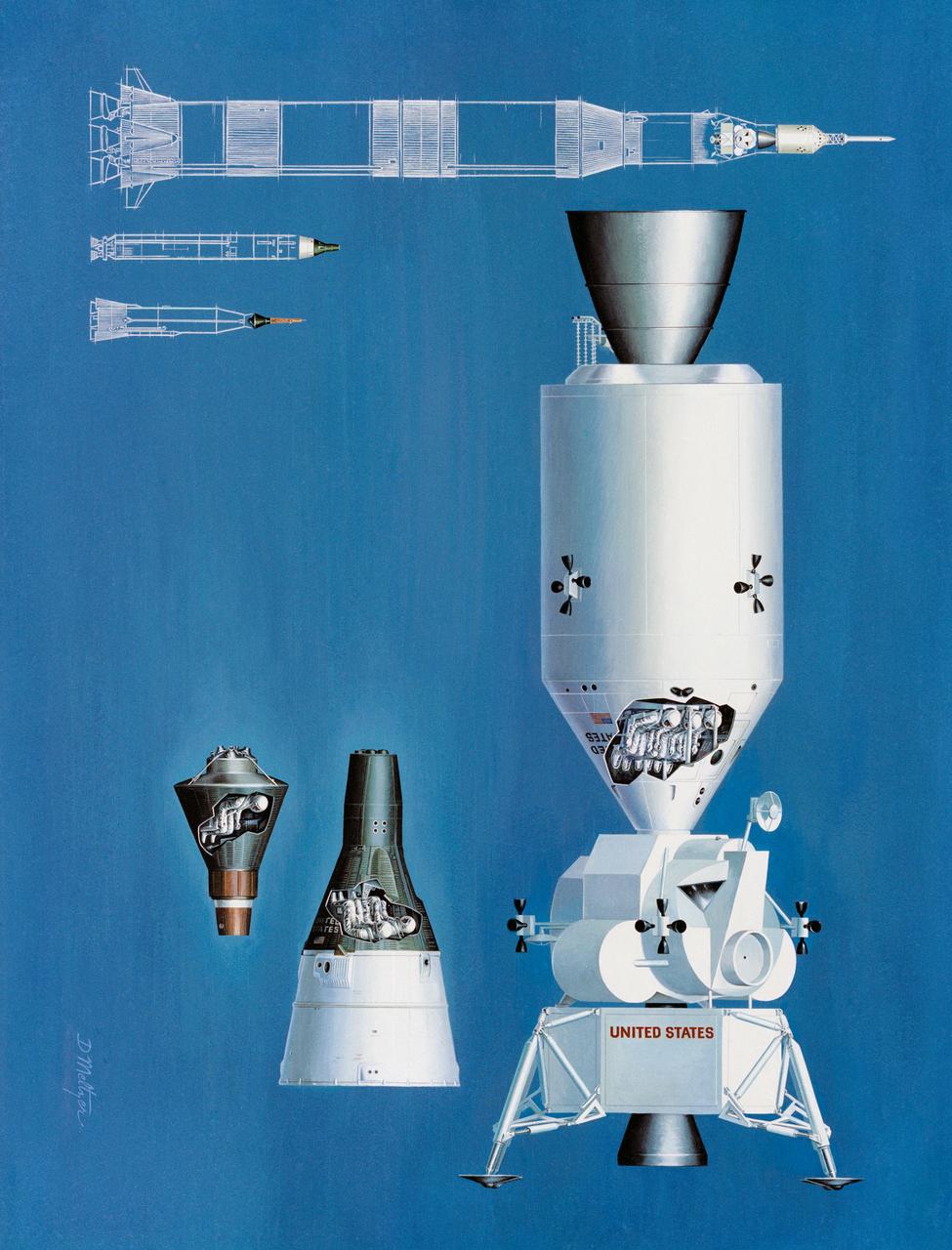
S64-22331 (1964) --- Artist concept illustrating the relative sizes of the one-man Mercury spacecraft, the two-man Gemini spacecraft, and the three-man Apollo spacecraft. Also shows line drawing of launch vehicles to show their relative size in relation to each other. Photo credit: NASA
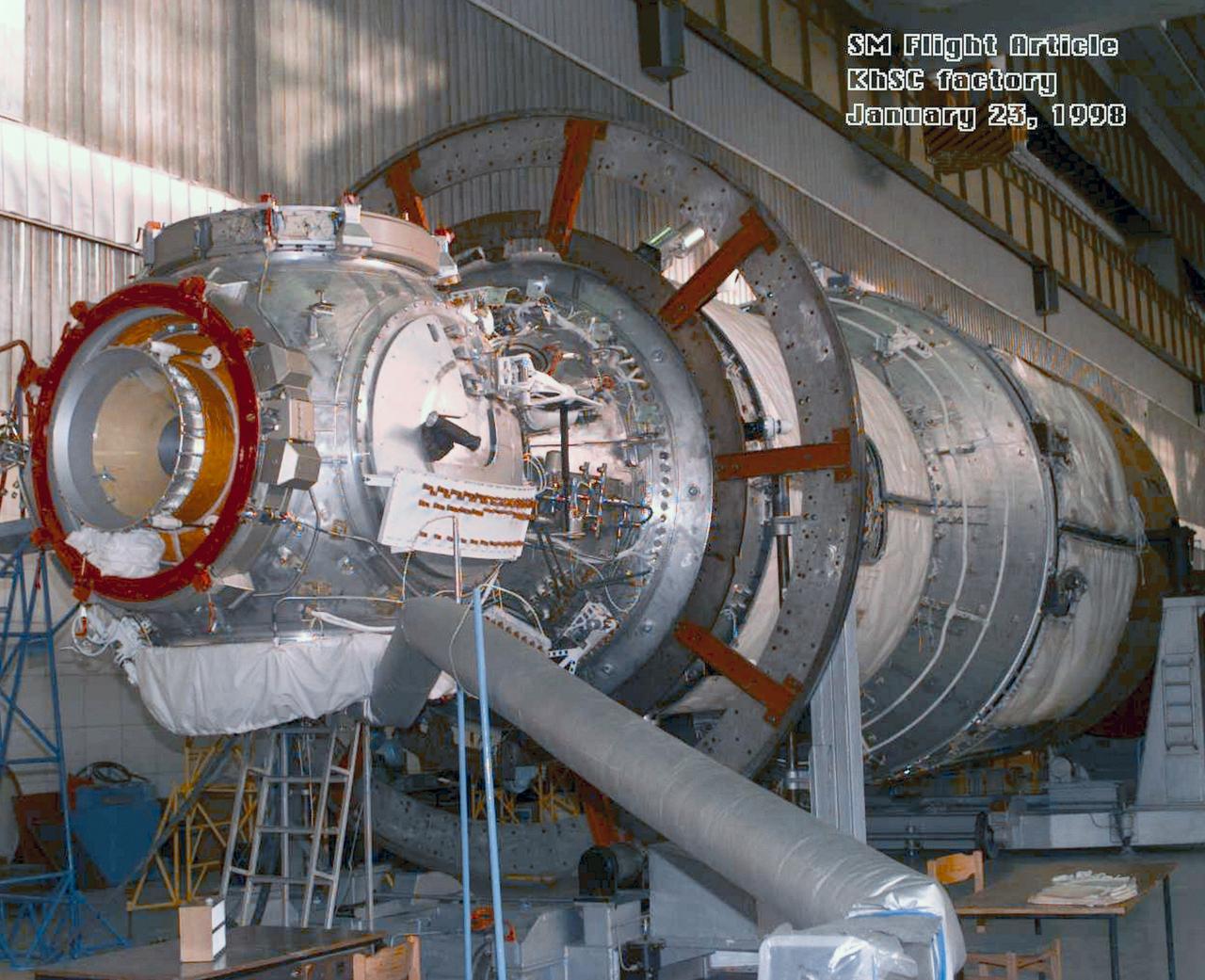
S98-04906 (23 Jan. 1998) --- A three-quarter frontal view of the flight article of the Service Module (SM) for the International Space Station (ISS). The first fully Russian contribution to ISS, the SM will provide early power, propulsion, life support, communications and living quarters for the station. It will be the third station element to be launched and join the United States-funded, Russian-built Functional Cargo Block (FGB) and the United States connecting module Node 1 in orbit.
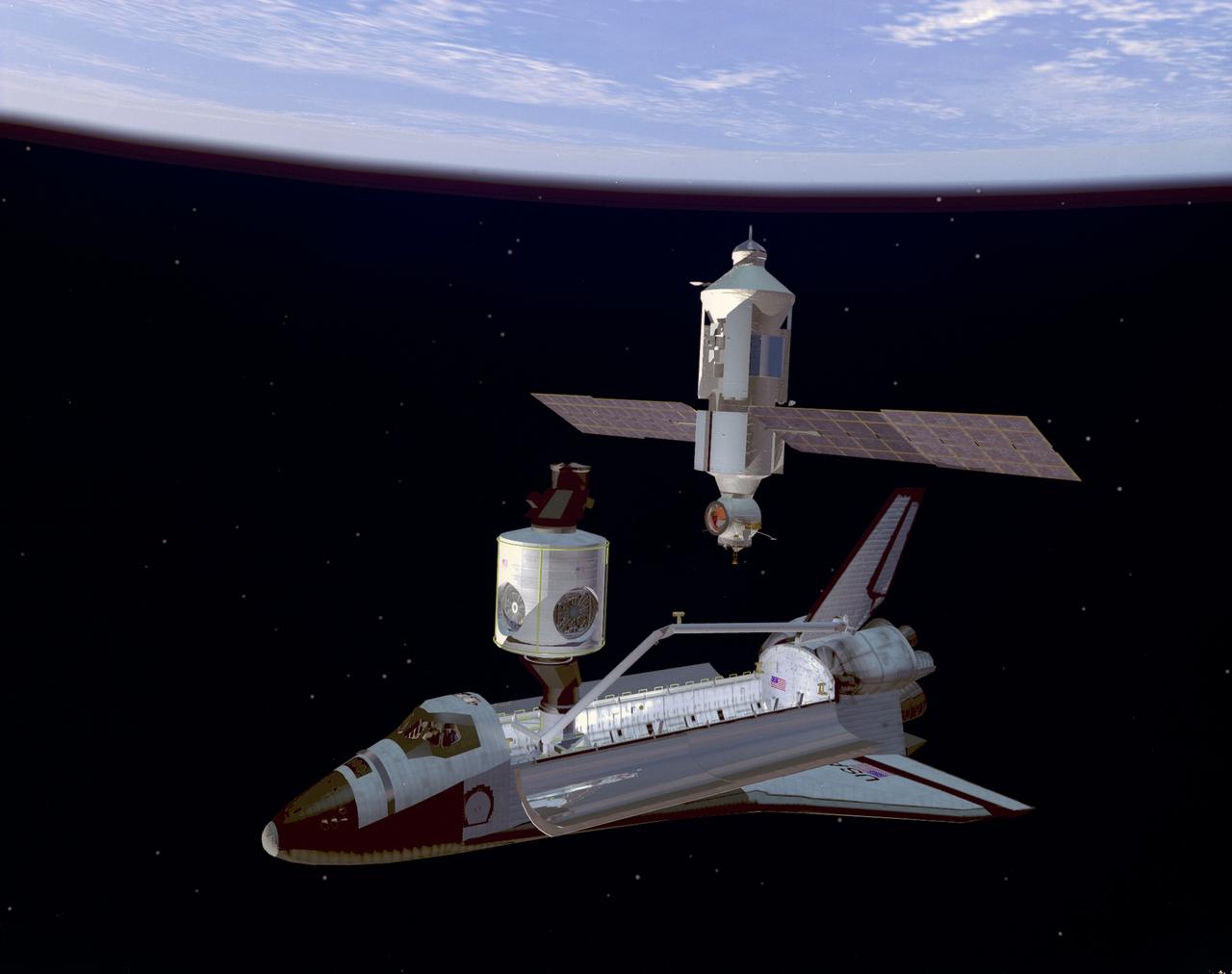
S98-04904 (21 July 1997) --- The Space Shuttle Endeavour prepares to capture the Functional Cargo Block (FGB) using the shuttle's mechanical arm in this artist's depiction of the first Space Shuttle assembly flight for the International Space Station (ISS), mission STS-88 scheduled to launch in December 1998. The shuttle will carry the first United States-built component for the station, a connecting module called Node 1 or Unity, and attach it to the already orbiting FGB, which supplies early electrical power and propulsion. The FGB, Zarya, will have been launched about two weeks earlier on a Russian Proton rocket from the Baikonur Cosmodrome, Kazahkstan. Once the FGB is captured using the mechanical arm, astronaut Nancy J. Currie will maneuver the arm to dock the FGB to the conical mating adapter at the top of Node 1 in the Shuttle's cargo bay. In ensuing days, three Extravehicular Activity?s (EVA) by astronauts Jerry L. Ross and James H. Newman will be performed to make power, data and utility connections between the two modules.
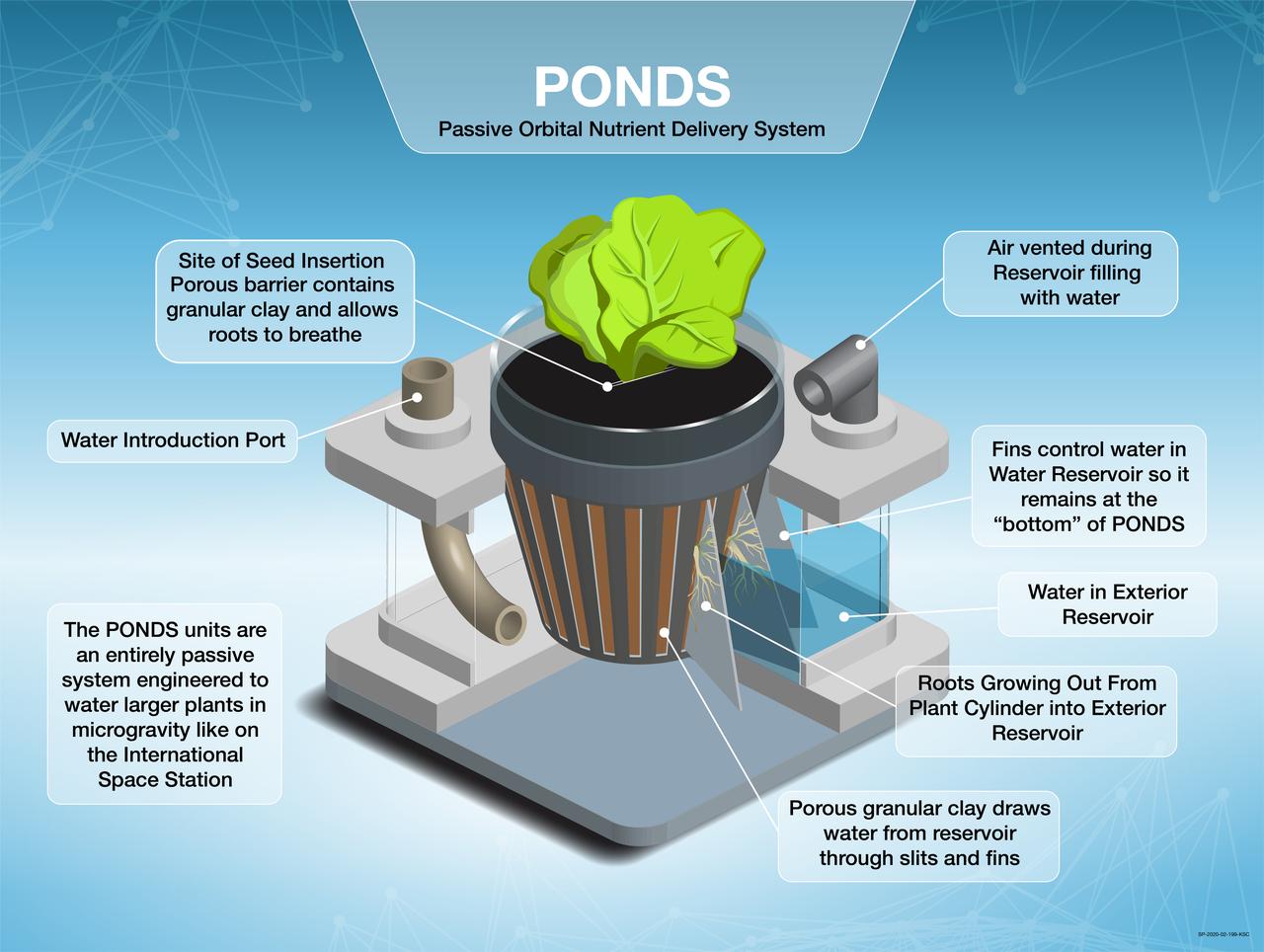
Infographic illustrating the Passive Orbital Nutrient Delivery System (PONDS) plant growth unit. The PONDS units are an entirely passive system – meaning no electricity, no pumps and no moving parts – and the basic concept involves using a free-standing reservoir of water that plants can draw from when needed, cutting down on time astronauts would spend watering plants during the growth interval.
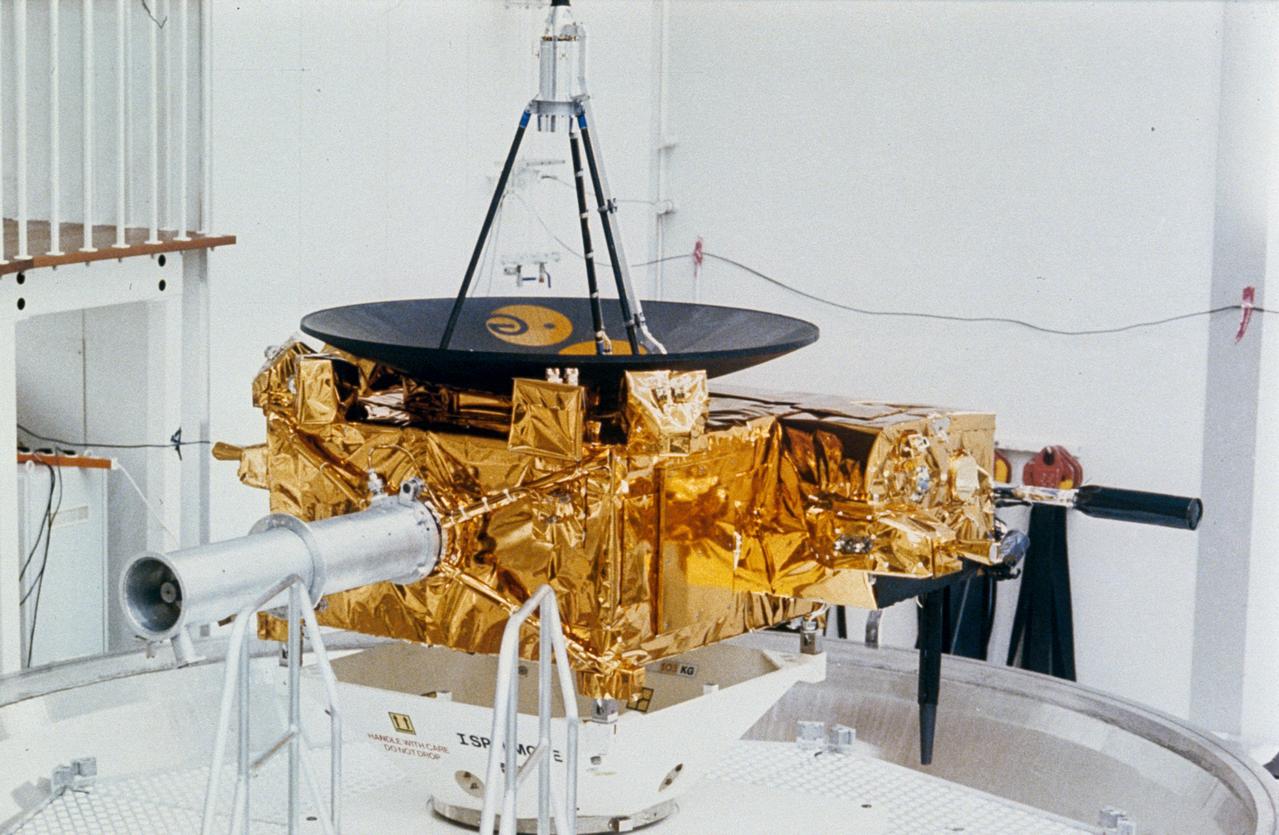
S90-45985 (May 1990) --- The Ulysses spacecraft undergoes testing at the vacuum spin-balancing facility in ESTEC. Careful balancing is required in order to ensure that the high gain antenna, which is aligned with the spacecraft spin axis, can be accurately pointed toward Earth throughout the mission. It will be flown to Kennedy Space Center (KSC) for further processing before being on loaded to Discovery's cargo bay. The Space Shuttle crew of STS-41 will send it off to its long-awaited mission.
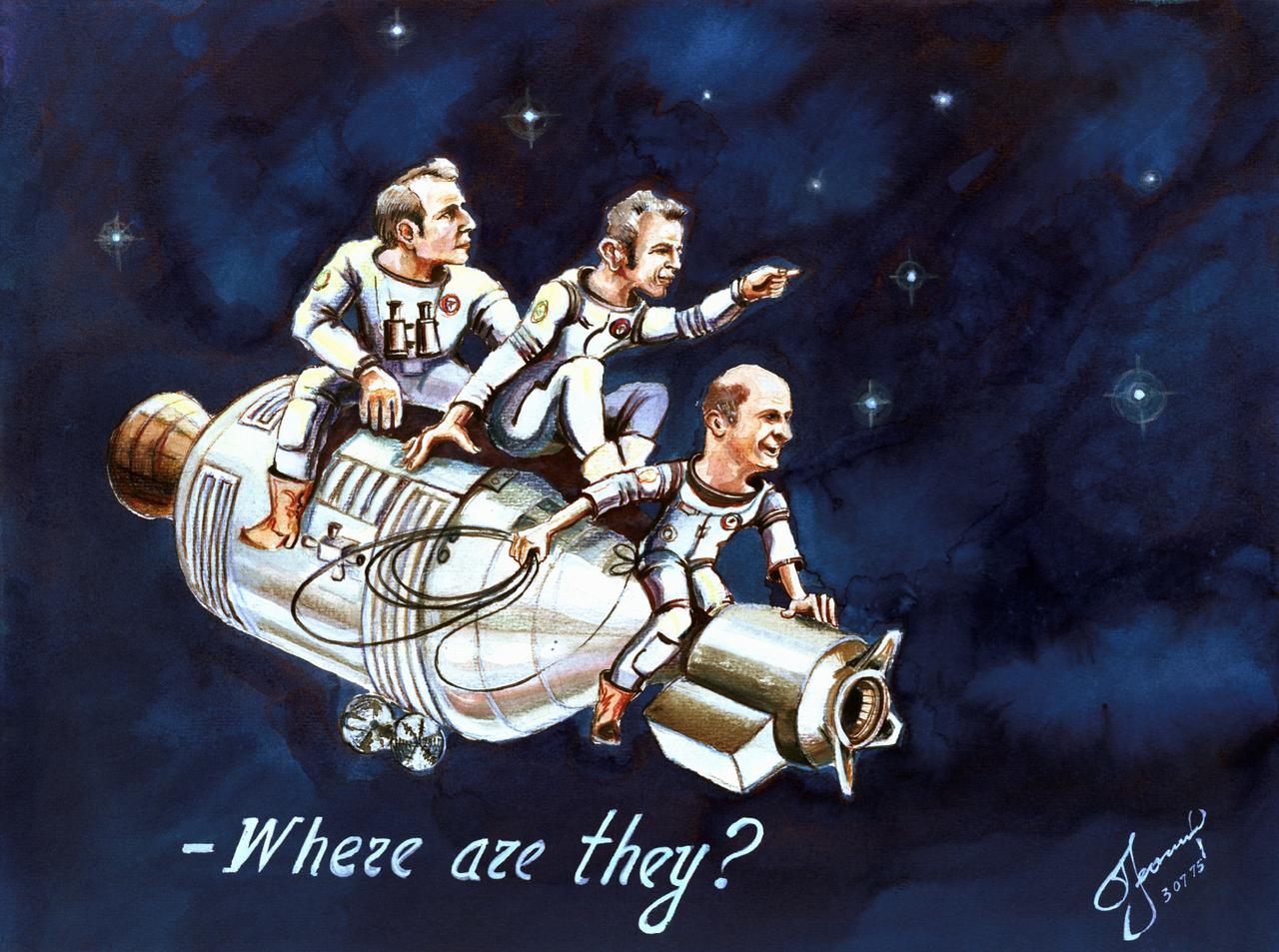
S75-28504 (17 July 1975) --- The American ASTP crewmen search the skies for the Soviet Soyuz spacecraft in this humorous artwork by cosmonaut Aleksey A. Leonov. Astronauts Vance D. Brand, Donald K. Slayton and Thomas P. Stafford (left to right) sit astride the Apollo spacecraft and Docking Module ready to lasso Soyuz. The cartoon humorously depicts the approaching historic event of an American spacecraft rendezvousing and docking in Earth orbit with a USSR spacecraft, scheduled today (July 17, 1975). Aboard Soyuz are Leonov, crew commander, and his fellow cosmonaut, Valeriy N. Kubasov. Stafford is the Apollo crew commander. The U.S. and USSR crewmen will visit each other's spacecraft while the Apollo and Soyuz are docked in Earth orbit for two days. Leonov, an accomplished artist, specializes in paintings on space subjects. He has a number of paintings on public exhibit in his native land.
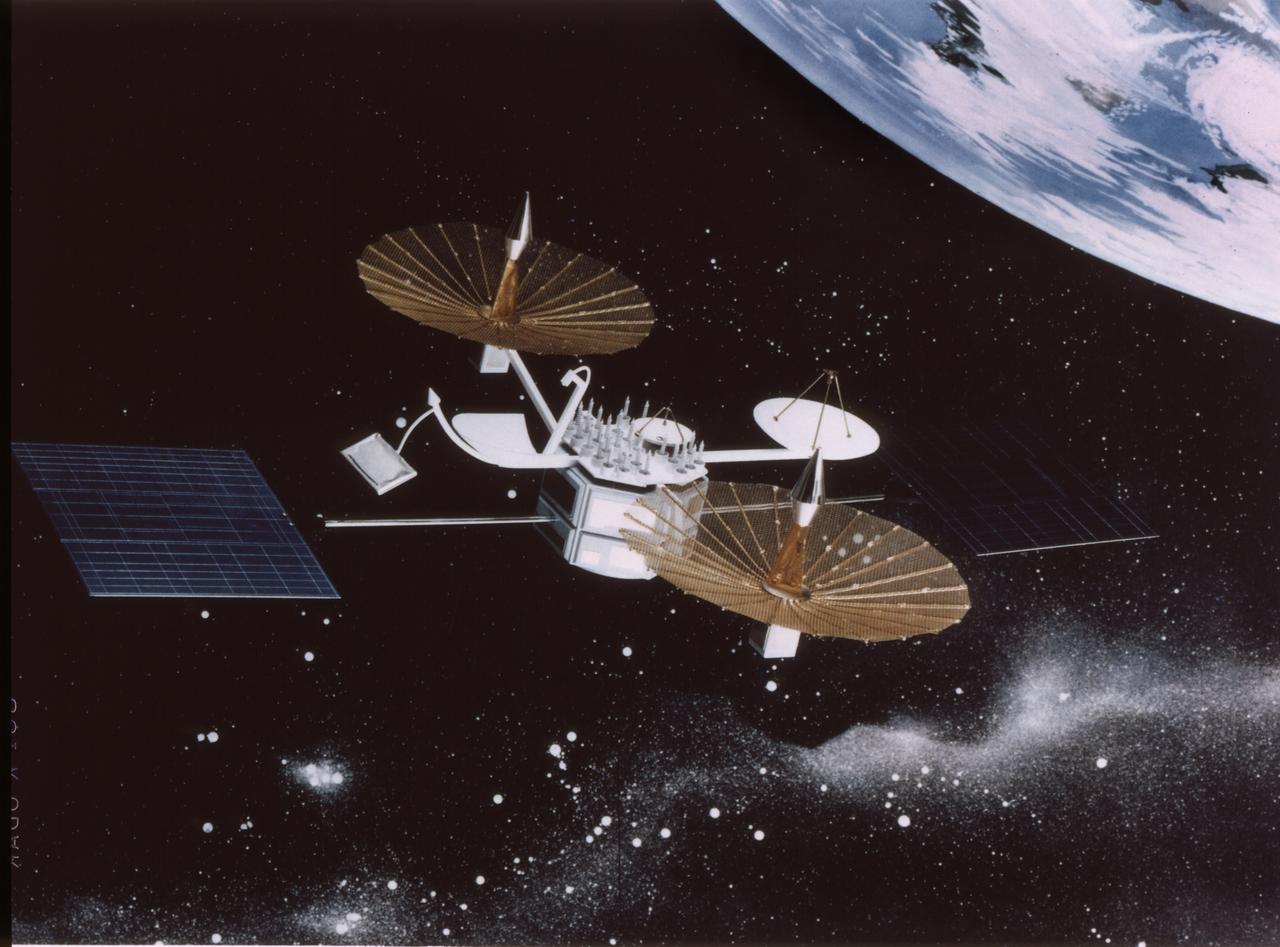
This artist's concept drawing depicts the Tracking and Data Relay Satellite-C (TDRS-C), which was the primary payload of the Space Shuttle Discovery on the STS-26 mission, launched on September 29, 1988. The TDRS system provides almost uninterrupted communications with Earth-orbiting Shuttles and satellites, and had replaced the intermittent coverage provided by globe-encircling ground tracking stations used during the early space program. The TDRS can transmit and receive data, and track a user spacecraft in a low Earth orbit. The deployment of TDRS-G on the STS-70 mission being the latest in the series, NASA has successfully launched six TDRSs.